window.__IS_SSR__=true
window.__INITIAL_STATE__={
"attachmentsReducer": {
"audio_0": {
"type": "attachments",
"id": "audio_0",
"imgSizes": {
"kqedFullSize": {
"file": "https://ww2.kqed.org/news/wp-content/themes/KQED-unified/img/audio_bgs/background0.jpg"
}
}
},
"audio_1": {
"type": "attachments",
"id": "audio_1",
"imgSizes": {
"kqedFullSize": {
"file": "https://ww2.kqed.org/news/wp-content/themes/KQED-unified/img/audio_bgs/background1.jpg"
}
}
},
"audio_2": {
"type": "attachments",
"id": "audio_2",
"imgSizes": {
"kqedFullSize": {
"file": "https://ww2.kqed.org/news/wp-content/themes/KQED-unified/img/audio_bgs/background2.jpg"
}
}
},
"audio_3": {
"type": "attachments",
"id": "audio_3",
"imgSizes": {
"kqedFullSize": {
"file": "https://ww2.kqed.org/news/wp-content/themes/KQED-unified/img/audio_bgs/background3.jpg"
}
}
},
"audio_4": {
"type": "attachments",
"id": "audio_4",
"imgSizes": {
"kqedFullSize": {
"file": "https://ww2.kqed.org/news/wp-content/themes/KQED-unified/img/audio_bgs/background4.jpg"
}
}
},
"placeholder": {
"type": "attachments",
"id": "placeholder",
"imgSizes": {
"thumbnail": {
"file": "https://cdn.kqed.org/wp-content/uploads/2024/12/KQED-Default-Image-816638274-2000x1333-1-160x107.jpg",
"width": 160,
"height": 107,
"mimeType": "image/jpeg"
},
"medium": {
"file": "https://cdn.kqed.org/wp-content/uploads/2024/12/KQED-Default-Image-816638274-2000x1333-1-800x533.jpg",
"width": 800,
"height": 533,
"mimeType": "image/jpeg"
},
"medium_large": {
"file": "https://cdn.kqed.org/wp-content/uploads/2024/12/KQED-Default-Image-816638274-2000x1333-1-768x512.jpg",
"width": 768,
"height": 512,
"mimeType": "image/jpeg"
},
"large": {
"file": "https://cdn.kqed.org/wp-content/uploads/2024/12/KQED-Default-Image-816638274-2000x1333-1-1020x680.jpg",
"width": 1020,
"height": 680,
"mimeType": "image/jpeg"
},
"1536x1536": {
"file": "https://cdn.kqed.org/wp-content/uploads/2024/12/KQED-Default-Image-816638274-2000x1333-1-1536x1024.jpg",
"width": 1536,
"height": 1024,
"mimeType": "image/jpeg"
},
"fd-lrg": {
"file": "https://cdn.kqed.org/wp-content/uploads/2024/12/KQED-Default-Image-816638274-2000x1333-1-1536x1024.jpg",
"width": 1536,
"height": 1024,
"mimeType": "image/jpeg"
},
"fd-med": {
"file": "https://cdn.kqed.org/wp-content/uploads/2024/12/KQED-Default-Image-816638274-2000x1333-1-1020x680.jpg",
"width": 1020,
"height": 680,
"mimeType": "image/jpeg"
},
"fd-sm": {
"file": "https://cdn.kqed.org/wp-content/uploads/2024/12/KQED-Default-Image-816638274-2000x1333-1-800x533.jpg",
"width": 800,
"height": 533,
"mimeType": "image/jpeg"
},
"post-thumbnail": {
"file": "https://cdn.kqed.org/wp-content/uploads/2024/12/KQED-Default-Image-816638274-2000x1333-1-672x372.jpg",
"width": 672,
"height": 372,
"mimeType": "image/jpeg"
},
"twentyfourteen-full-width": {
"file": "https://cdn.kqed.org/wp-content/uploads/2024/12/KQED-Default-Image-816638274-2000x1333-1-1038x576.jpg",
"width": 1038,
"height": 576,
"mimeType": "image/jpeg"
},
"xxsmall": {
"file": "https://cdn.kqed.org/wp-content/uploads/2024/12/KQED-Default-Image-816638274-2000x1333-1-160x107.jpg",
"width": 160,
"height": 107,
"mimeType": "image/jpeg"
},
"xsmall": {
"file": "https://cdn.kqed.org/wp-content/uploads/2024/12/KQED-Default-Image-816638274-2000x1333-1-672x372.jpg",
"width": 672,
"height": 372,
"mimeType": "image/jpeg"
},
"small": {
"file": "https://cdn.kqed.org/wp-content/uploads/2024/12/KQED-Default-Image-816638274-2000x1333-1-672x372.jpg",
"width": 672,
"height": 372,
"mimeType": "image/jpeg"
},
"xlarge": {
"file": "https://cdn.kqed.org/wp-content/uploads/2024/12/KQED-Default-Image-816638274-2000x1333-1-1020x680.jpg",
"width": 1020,
"height": 680,
"mimeType": "image/jpeg"
},
"full-width": {
"file": "https://cdn.kqed.org/wp-content/uploads/2024/12/KQED-Default-Image-816638274-2000x1333-1-1920x1280.jpg",
"width": 1920,
"height": 1280,
"mimeType": "image/jpeg"
},
"guest-author-32": {
"file": "https://cdn.kqed.org/wp-content/uploads/2025/01/KQED-Default-Image-816638274-1333x1333-1-160x160.jpg",
"width": 32,
"height": 32,
"mimeType": "image/jpeg"
},
"guest-author-50": {
"file": "https://cdn.kqed.org/wp-content/uploads/2025/01/KQED-Default-Image-816638274-1333x1333-1-160x160.jpg",
"width": 50,
"height": 50,
"mimeType": "image/jpeg"
},
"guest-author-64": {
"file": "https://cdn.kqed.org/wp-content/uploads/2025/01/KQED-Default-Image-816638274-1333x1333-1-160x160.jpg",
"width": 64,
"height": 64,
"mimeType": "image/jpeg"
},
"guest-author-96": {
"file": "https://cdn.kqed.org/wp-content/uploads/2025/01/KQED-Default-Image-816638274-1333x1333-1-160x160.jpg",
"width": 96,
"height": 96,
"mimeType": "image/jpeg"
},
"guest-author-128": {
"file": "https://cdn.kqed.org/wp-content/uploads/2025/01/KQED-Default-Image-816638274-1333x1333-1-160x160.jpg",
"width": 128,
"height": 128,
"mimeType": "image/jpeg"
},
"detail": {
"file": "https://cdn.kqed.org/wp-content/uploads/2025/01/KQED-Default-Image-816638274-1333x1333-1-160x160.jpg",
"width": 160,
"height": 160,
"mimeType": "image/jpeg"
},
"kqedFullSize": {
"file": "https://cdn.kqed.org/wp-content/uploads/2024/12/KQED-Default-Image-816638274-2000x1333-1.jpg",
"width": 2000,
"height": 1333
}
}
},
"news_12000027": {
"type": "attachments",
"id": "news_12000027",
"meta": {
"index": "attachments_1716263798",
"site": "news",
"id": "12000027",
"found": true
},
"title": "Schools Cellphones",
"publishDate": 1723577800,
"status": "inherit",
"parent": 11999993,
"modified": 1723584981,
"caption": "Gov. Gavin Newsom is sending letters to every school district in California, calling on them to restrict smartphone use in classrooms.",
"credit": "Derrick Tuskan/AP Photo",
"altTag": null,
"description": null,
"imgSizes": {
"medium": {
"file": "https://cdn.kqed.org/wp-content/uploads/sites/10/2024/08/NewsomCellphonesSchools-800x533.jpg",
"width": 800,
"height": 533,
"mimeType": "image/jpeg"
},
"large": {
"file": "https://cdn.kqed.org/wp-content/uploads/sites/10/2024/08/NewsomCellphonesSchools-1020x680.jpg",
"width": 1020,
"height": 680,
"mimeType": "image/jpeg"
},
"thumbnail": {
"file": "https://cdn.kqed.org/wp-content/uploads/sites/10/2024/08/NewsomCellphonesSchools-160x107.jpg",
"width": 160,
"height": 107,
"mimeType": "image/jpeg"
},
"1536x1536": {
"file": "https://cdn.kqed.org/wp-content/uploads/sites/10/2024/08/NewsomCellphonesSchools-1536x1024.jpg",
"width": 1536,
"height": 1024,
"mimeType": "image/jpeg"
},
"post-thumbnail": {
"file": "https://cdn.kqed.org/wp-content/uploads/sites/10/2024/08/NewsomCellphonesSchools-672x372.jpg",
"width": 672,
"height": 372,
"mimeType": "image/jpeg"
},
"twentyfourteen-full-width": {
"file": "https://cdn.kqed.org/wp-content/uploads/sites/10/2024/08/NewsomCellphonesSchools-1038x576.jpg",
"width": 1038,
"height": 576,
"mimeType": "image/jpeg"
},
"full-width": {
"file": "https://cdn.kqed.org/wp-content/uploads/sites/10/2024/08/NewsomCellphonesSchools-1920x1280.jpg",
"width": 1920,
"height": 1280,
"mimeType": "image/jpeg"
},
"kqedFullSize": {
"file": "https://cdn.kqed.org/wp-content/uploads/sites/10/2024/08/NewsomCellphonesSchools.jpg",
"width": 2000,
"height": 1333
}
},
"isLoading": false,
"fetchFailed": false
},
"news_12000015": {
"type": "attachments",
"id": "news_12000015",
"meta": {
"index": "attachments_1716263798",
"site": "news",
"id": "12000015",
"found": true
},
"title": "10Sandra-fields9_qed",
"publishDate": 1723576632,
"status": "inherit",
"parent": 11999978,
"modified": 1723576698,
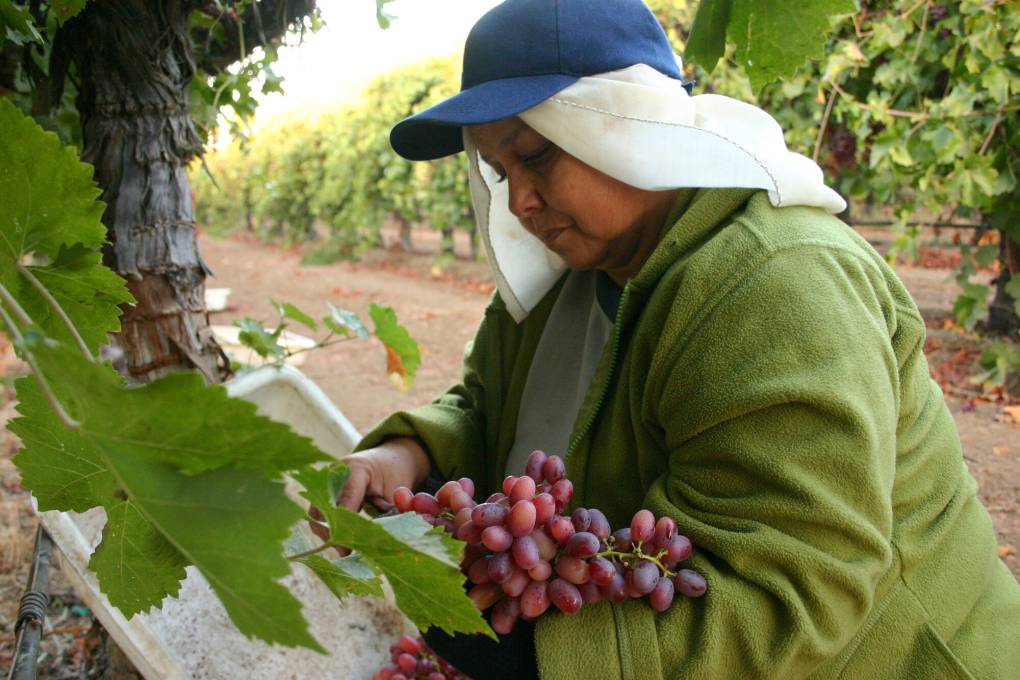
"caption": "SB 1299 would make it easier to win workers’ compensation claims for heat-related illnesses or deaths in the agricultural industry. Opponents say it could lead to unfair costs for employers.",
"credit": "Grace Rubenstein/KQED",
"altTag": null,
"description": null,
"imgSizes": {
"medium": {
"file": "https://cdn.kqed.org/wp-content/uploads/sites/10/2024/08/10Sandra-fields9_qed-800x533.jpg",
"width": 800,
"height": 533,
"mimeType": "image/jpeg"
},
"large": {
"file": "https://cdn.kqed.org/wp-content/uploads/sites/10/2024/08/10Sandra-fields9_qed-1020x680.jpg",
"width": 1020,
"height": 680,
"mimeType": "image/jpeg"
},
"thumbnail": {
"file": "https://cdn.kqed.org/wp-content/uploads/sites/10/2024/08/10Sandra-fields9_qed-160x107.jpg",
"width": 160,
"height": 107,
"mimeType": "image/jpeg"
},
"1536x1536": {
"file": "https://cdn.kqed.org/wp-content/uploads/sites/10/2024/08/10Sandra-fields9_qed-1536x1024.jpg",
"width": 1536,
"height": 1024,
"mimeType": "image/jpeg"
},
"post-thumbnail": {
"file": "https://cdn.kqed.org/wp-content/uploads/sites/10/2024/08/10Sandra-fields9_qed-672x372.jpg",
"width": 672,
"height": 372,
"mimeType": "image/jpeg"
},
"twentyfourteen-full-width": {
"file": "https://cdn.kqed.org/wp-content/uploads/sites/10/2024/08/10Sandra-fields9_qed-1038x576.jpg",
"width": 1038,
"height": 576,
"mimeType": "image/jpeg"
},
"full-width": {
"file": "https://cdn.kqed.org/wp-content/uploads/sites/10/2024/08/10Sandra-fields9_qed-1920x1280.jpg",
"width": 1920,
"height": 1280,
"mimeType": "image/jpeg"
},
"kqedFullSize": {
"file": "https://cdn.kqed.org/wp-content/uploads/sites/10/2024/08/10Sandra-fields9_qed.jpg",
"width": 2000,
"height": 1333
}
},
"isLoading": false,
"fetchFailed": false
},
"news_11999988": {
"type": "attachments",
"id": "news_11999988",
"meta": {
"index": "attachments_1716263798",
"site": "news",
"id": "11999988",
"found": true
},
"title": "California Earthquake Early Warning App",
"publishDate": 1723572548,
"status": "inherit",
"parent": 11999982,
"modified": 1723576682,
"caption": "The nation's first statewide Earthquake Early Warning System, also known as the MyShake app, developed by professor Richard Allen, director of the UC Berkeley Seismological Laboratory, is displayed in Oakland, California, on Oct. 17, 2019.",
"credit": "Yichuan Cao/NurPhoto via Getty Images",
"altTag": null,
"description": null,
"imgSizes": {
"medium": {
"file": "https://cdn.kqed.org/wp-content/uploads/sites/10/2024/08/MyShakeUCBerkeley-800x532.jpg",
"width": 800,
"height": 532,
"mimeType": "image/jpeg"
},
"large": {
"file": "https://cdn.kqed.org/wp-content/uploads/sites/10/2024/08/MyShakeUCBerkeley-1020x679.jpg",
"width": 1020,
"height": 679,
"mimeType": "image/jpeg"
},
"thumbnail": {
"file": "https://cdn.kqed.org/wp-content/uploads/sites/10/2024/08/MyShakeUCBerkeley-160x106.jpg",
"width": 160,
"height": 106,
"mimeType": "image/jpeg"
},
"1536x1536": {
"file": "https://cdn.kqed.org/wp-content/uploads/sites/10/2024/08/MyShakeUCBerkeley-1536x1022.jpg",
"width": 1536,
"height": 1022,
"mimeType": "image/jpeg"
},
"post-thumbnail": {
"file": "https://cdn.kqed.org/wp-content/uploads/sites/10/2024/08/MyShakeUCBerkeley-672x372.jpg",
"width": 672,
"height": 372,
"mimeType": "image/jpeg"
},
"twentyfourteen-full-width": {
"file": "https://cdn.kqed.org/wp-content/uploads/sites/10/2024/08/MyShakeUCBerkeley-1038x576.jpg",
"width": 1038,
"height": 576,
"mimeType": "image/jpeg"
},
"full-width": {
"file": "https://cdn.kqed.org/wp-content/uploads/sites/10/2024/08/MyShakeUCBerkeley-1920x1278.jpg",
"width": 1920,
"height": 1278,
"mimeType": "image/jpeg"
},
"kqedFullSize": {
"file": "https://cdn.kqed.org/wp-content/uploads/sites/10/2024/08/MyShakeUCBerkeley.jpg",
"width": 2000,
"height": 1331
}
},
"isLoading": false,
"fetchFailed": false
},
"news_11998911": {
"type": "attachments",
"id": "news_11998911",
"meta": {
"index": "attachments_1716263798",
"site": "news",
"id": "11998911",
"found": true
},
"title": "240805-Freelancer Labor Protections-AV-KQED",
"publishDate": 1722898532,
"status": "inherit",
"parent": 0,
"modified": 1722903336,
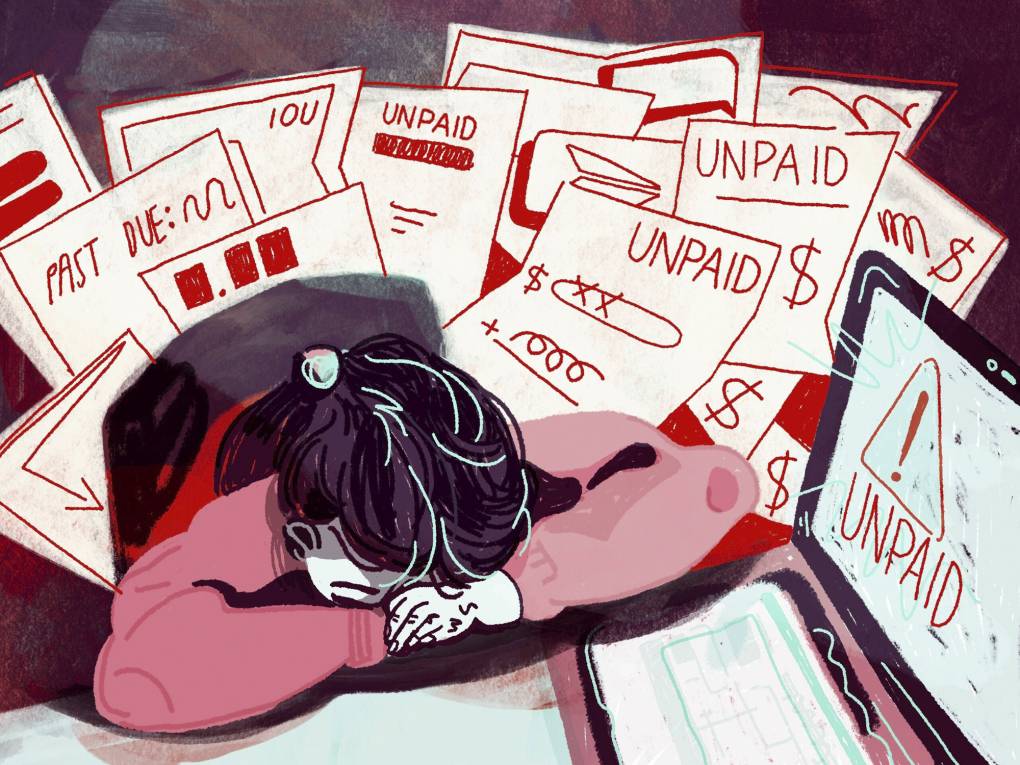
"caption": "Under proposed legislation, state labor authorities or prosecutors could go after employers who don’t pay freelancers by the dates outlined in their contracts, or within 30 days of completing jobs.",
"credit": "Illustration by Anna Vignet/KQED",
"altTag": "An illustration of a person, with head on the table, and piles of unpaid invoices behind them.",
"description": null,
"imgSizes": {
"medium": {
"file": "https://cdn.kqed.org/wp-content/uploads/sites/10/2024/08/240805-Freelancer-Labor-Protections-AV-KQED-800x600.jpg",
"width": 800,
"height": 600,
"mimeType": "image/jpeg"
},
"large": {
"file": "https://cdn.kqed.org/wp-content/uploads/sites/10/2024/08/240805-Freelancer-Labor-Protections-AV-KQED-1020x765.jpg",
"width": 1020,
"height": 765,
"mimeType": "image/jpeg"
},
"thumbnail": {
"file": "https://cdn.kqed.org/wp-content/uploads/sites/10/2024/08/240805-Freelancer-Labor-Protections-AV-KQED-160x120.jpg",
"width": 160,
"height": 120,
"mimeType": "image/jpeg"
},
"1536x1536": {
"file": "https://cdn.kqed.org/wp-content/uploads/sites/10/2024/08/240805-Freelancer-Labor-Protections-AV-KQED-1536x1152.jpg",
"width": 1536,
"height": 1152,
"mimeType": "image/jpeg"
},
"post-thumbnail": {
"file": "https://cdn.kqed.org/wp-content/uploads/sites/10/2024/08/240805-Freelancer-Labor-Protections-AV-KQED-672x372.jpg",
"width": 672,
"height": 372,
"mimeType": "image/jpeg"
},
"twentyfourteen-full-width": {
"file": "https://cdn.kqed.org/wp-content/uploads/sites/10/2024/08/240805-Freelancer-Labor-Protections-AV-KQED-1038x576.jpg",
"width": 1038,
"height": 576,
"mimeType": "image/jpeg"
},
"full-width": {
"file": "https://cdn.kqed.org/wp-content/uploads/sites/10/2024/08/240805-Freelancer-Labor-Protections-AV-KQED-1920x1440.jpg",
"width": 1920,
"height": 1440,
"mimeType": "image/jpeg"
},
"kqedFullSize": {
"file": "https://cdn.kqed.org/wp-content/uploads/sites/10/2024/08/240805-Freelancer-Labor-Protections-AV-KQED.jpg",
"width": 2000,
"height": 1500
}
},
"isLoading": false,
"fetchFailed": false
},
"news_11998355": {
"type": "attachments",
"id": "news_11998355",
"meta": {
"index": "attachments_1716263798",
"site": "news",
"id": "11998355",
"found": true
},
"title": "240729-ParkFireEvacuee-66-BL",
"publishDate": 1722485811,
"status": "inherit",
"parent": 0,
"modified": 1722538871,
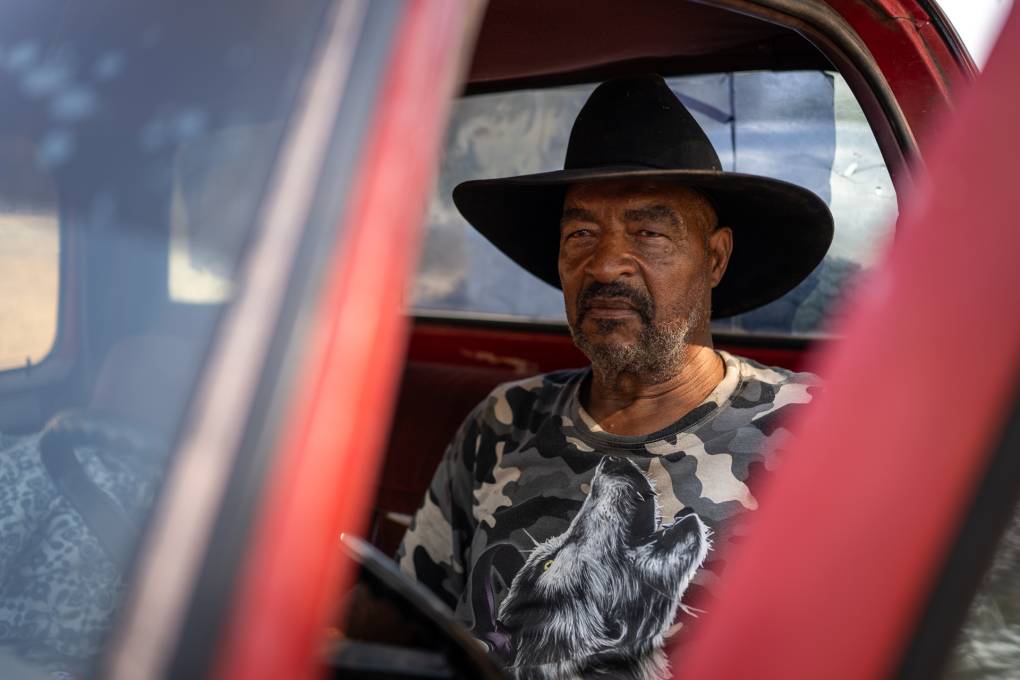
"caption": "Kenneth Gaines sits in the truck he evacuated in at a friend's home in Dales, California. He waits to be allowed entry to his property off Highway 36 near Paynes Creek in Tehama County on July 29, 2024, after the Park Fire swept through the area on July 26.",
"credit": "Beth LaBerge/KQED",
"altTag": null,
"description": null,
"imgSizes": {
"medium": {
"file": "https://cdn.kqed.org/wp-content/uploads/sites/10/2024/07/240729-ParkFireEvacuee-66-BL-800x533.jpg",
"width": 800,
"height": 533,
"mimeType": "image/jpeg"
},
"large": {
"file": "https://cdn.kqed.org/wp-content/uploads/sites/10/2024/07/240729-ParkFireEvacuee-66-BL-1020x680.jpg",
"width": 1020,
"height": 680,
"mimeType": "image/jpeg"
},
"thumbnail": {
"file": "https://cdn.kqed.org/wp-content/uploads/sites/10/2024/07/240729-ParkFireEvacuee-66-BL-160x107.jpg",
"width": 160,
"height": 107,
"mimeType": "image/jpeg"
},
"1536x1536": {
"file": "https://cdn.kqed.org/wp-content/uploads/sites/10/2024/07/240729-ParkFireEvacuee-66-BL-1536x1024.jpg",
"width": 1536,
"height": 1024,
"mimeType": "image/jpeg"
},
"post-thumbnail": {
"file": "https://cdn.kqed.org/wp-content/uploads/sites/10/2024/07/240729-ParkFireEvacuee-66-BL-672x372.jpg",
"width": 672,
"height": 372,
"mimeType": "image/jpeg"
},
"twentyfourteen-full-width": {
"file": "https://cdn.kqed.org/wp-content/uploads/sites/10/2024/07/240729-ParkFireEvacuee-66-BL-1038x576.jpg",
"width": 1038,
"height": 576,
"mimeType": "image/jpeg"
},
"kqedFullSize": {
"file": "https://cdn.kqed.org/wp-content/uploads/sites/10/2024/07/240729-ParkFireEvacuee-66-BL.jpg",
"width": 1920,
"height": 1280
}
},
"isLoading": false,
"fetchFailed": false
},
"news_11336857": {
"type": "attachments",
"id": "news_11336857",
"meta": {
"index": "attachments_1716263798",
"site": "news",
"id": "11336857",
"found": true
},
"title": "ICEDetainee",
"publishDate": 1488241734,
"status": "inherit",
"parent": 11336767,
"modified": 1722550121,
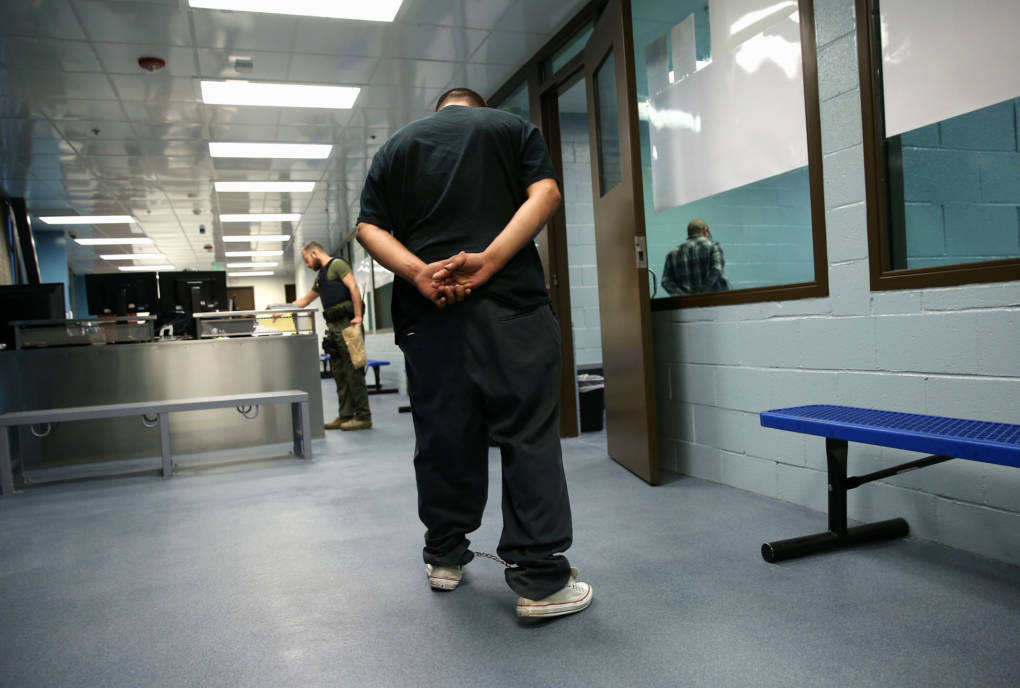
"caption": "An immigrant walks in chains through a U.S. Immigration and Customs Enforcement (ICE) processing center after being detained in 2015.",
"credit": "John Moore/Getty Images",
"altTag": "A person wearing dark-colored clothes and white shoes has their legs bound together with cuffs.",
"description": "An immigrant walks in chains through a U.S. Immigration and Customs Enforcement (ICE), processing center after being detained in 2015. ",
"imgSizes": {
"thumbnail": {
"file": "https://cdn.kqed.org/wp-content/uploads/sites/10/2017/02/ICEDetainee-160x108.jpg",
"width": 160,
"height": 108,
"mimeType": "image/jpeg"
},
"medium": {
"file": "https://cdn.kqed.org/wp-content/uploads/sites/10/2017/02/ICEDetainee-800x540.jpg",
"width": 800,
"height": 540,
"mimeType": "image/jpeg"
},
"large": {
"file": "https://cdn.kqed.org/wp-content/uploads/sites/10/2017/02/ICEDetainee-1020x688.jpg",
"width": 1020,
"height": 688,
"mimeType": "image/jpeg"
},
"fd-lrg": {
"file": "https://cdn.kqed.org/wp-content/uploads/sites/10/2017/02/ICEDetainee-1920x1295.jpg",
"width": 1920,
"height": 1295,
"mimeType": "image/jpeg"
},
"fd-med": {
"file": "https://cdn.kqed.org/wp-content/uploads/sites/10/2017/02/ICEDetainee-1180x796.jpg",
"width": 1180,
"height": 796,
"mimeType": "image/jpeg"
},
"fd-sm": {
"file": "https://cdn.kqed.org/wp-content/uploads/sites/10/2017/02/ICEDetainee-960x648.jpg",
"width": 960,
"height": 648,
"mimeType": "image/jpeg"
},
"post-thumbnail": {
"file": "https://cdn.kqed.org/wp-content/uploads/sites/10/2017/02/ICEDetainee-672x372.jpg",
"width": 672,
"height": 372,
"mimeType": "image/jpeg"
},
"twentyfourteen-full-width": {
"file": "https://cdn.kqed.org/wp-content/uploads/sites/10/2017/02/ICEDetainee-1038x576.jpg",
"width": 1038,
"height": 576,
"mimeType": "image/jpeg"
},
"xxsmall": {
"file": "https://cdn.kqed.org/wp-content/uploads/sites/10/2017/02/ICEDetainee-240x162.jpg",
"width": 240,
"height": 162,
"mimeType": "image/jpeg"
},
"xsmall": {
"file": "https://cdn.kqed.org/wp-content/uploads/sites/10/2017/02/ICEDetainee-375x253.jpg",
"width": 375,
"height": 253,
"mimeType": "image/jpeg"
},
"small": {
"file": "https://cdn.kqed.org/wp-content/uploads/sites/10/2017/02/ICEDetainee-520x351.jpg",
"width": 520,
"height": 351,
"mimeType": "image/jpeg"
},
"xlarge": {
"file": "https://cdn.kqed.org/wp-content/uploads/sites/10/2017/02/ICEDetainee-1180x796.jpg",
"width": 1180,
"height": 796,
"mimeType": "image/jpeg"
},
"full-width": {
"file": "https://cdn.kqed.org/wp-content/uploads/sites/10/2017/02/ICEDetainee-1920x1295.jpg",
"width": 1920,
"height": 1295,
"mimeType": "image/jpeg"
},
"guest-author-32": {
"file": "https://cdn.kqed.org/wp-content/uploads/sites/10/2017/02/ICEDetainee-32x32.jpg",
"width": 32,
"height": 32,
"mimeType": "image/jpeg"
},
"guest-author-50": {
"file": "https://cdn.kqed.org/wp-content/uploads/sites/10/2017/02/ICEDetainee-50x50.jpg",
"width": 50,
"height": 50,
"mimeType": "image/jpeg"
},
"guest-author-64": {
"file": "https://cdn.kqed.org/wp-content/uploads/sites/10/2017/02/ICEDetainee-64x64.jpg",
"width": 64,
"height": 64,
"mimeType": "image/jpeg"
},
"guest-author-96": {
"file": "https://cdn.kqed.org/wp-content/uploads/sites/10/2017/02/ICEDetainee-96x96.jpg",
"width": 96,
"height": 96,
"mimeType": "image/jpeg"
},
"guest-author-128": {
"file": "https://cdn.kqed.org/wp-content/uploads/sites/10/2017/02/ICEDetainee-128x128.jpg",
"width": 128,
"height": 128,
"mimeType": "image/jpeg"
},
"detail": {
"file": "https://cdn.kqed.org/wp-content/uploads/sites/10/2017/02/ICEDetainee-150x150.jpg",
"width": 150,
"height": 150,
"mimeType": "image/jpeg"
},
"kqedFullSize": {
"file": "https://cdn.kqed.org/wp-content/uploads/sites/10/2017/02/ICEDetainee.jpg",
"width": 1920,
"height": 1295
}
},
"isLoading": false,
"fetchFailed": false
},
"news_11998420": {
"type": "attachments",
"id": "news_11998420",
"meta": {
"index": "attachments_1716263798",
"site": "news",
"id": "11998420",
"found": true
},
"title": "240727-ParkFire-029-BL_qed",
"publishDate": 1722539012,
"status": "inherit",
"parent": 11998395,
"modified": 1722967403,
"caption": "The remains of a structure along Highway 36 near Paynes Creek on July 27, 2024, after the Park Fire swept through the area the evening before.",
"credit": "Beth LaBerge/KQED",
"altTag": null,
"description": null,
"imgSizes": {
"medium": {
"file": "https://cdn.kqed.org/wp-content/uploads/sites/10/2024/08/240727-ParkFire-029-BL_qed-800x533.jpg",
"width": 800,
"height": 533,
"mimeType": "image/jpeg"
},
"large": {
"file": "https://cdn.kqed.org/wp-content/uploads/sites/10/2024/08/240727-ParkFire-029-BL_qed-1020x680.jpg",
"width": 1020,
"height": 680,
"mimeType": "image/jpeg"
},
"thumbnail": {
"file": "https://cdn.kqed.org/wp-content/uploads/sites/10/2024/08/240727-ParkFire-029-BL_qed-160x107.jpg",
"width": 160,
"height": 107,
"mimeType": "image/jpeg"
},
"1536x1536": {
"file": "https://cdn.kqed.org/wp-content/uploads/sites/10/2024/08/240727-ParkFire-029-BL_qed-1536x1024.jpg",
"width": 1536,
"height": 1024,
"mimeType": "image/jpeg"
},
"post-thumbnail": {
"file": "https://cdn.kqed.org/wp-content/uploads/sites/10/2024/08/240727-ParkFire-029-BL_qed-672x372.jpg",
"width": 672,
"height": 372,
"mimeType": "image/jpeg"
},
"twentyfourteen-full-width": {
"file": "https://cdn.kqed.org/wp-content/uploads/sites/10/2024/08/240727-ParkFire-029-BL_qed-1038x576.jpg",
"width": 1038,
"height": 576,
"mimeType": "image/jpeg"
},
"full-width": {
"file": "https://cdn.kqed.org/wp-content/uploads/sites/10/2024/08/240727-ParkFire-029-BL_qed-1920x1280.jpg",
"width": 1920,
"height": 1280,
"mimeType": "image/jpeg"
},
"kqedFullSize": {
"file": "https://cdn.kqed.org/wp-content/uploads/sites/10/2024/08/240727-ParkFire-029-BL_qed.jpg",
"width": 2000,
"height": 1333
}
},
"isLoading": false,
"fetchFailed": false
},
"news_11998035": {
"type": "attachments",
"id": "news_11998035",
"meta": {
"index": "attachments_1716263798",
"site": "news",
"id": "11998035",
"found": true
},
"title": "240730-serramontedelrey-1-RETAIL-CROPPED-KQED",
"publishDate": 1722372142,
"status": "inherit",
"parent": 0,
"modified": 1722377061,
"caption": "The Jefferson Union High School District in San Mateo County completed this 122-unit affordable apartment complex for teachers and other school staff in May 2022. As a result, district officials say, it’s been able to significantly reduce staff turnover.",
"credit": "Courtesy of Jefferson Union High School District",
"altTag": null,
"description": null,
"imgSizes": {
"medium": {
"file": "https://cdn.kqed.org/wp-content/uploads/sites/10/2024/07/240730-serramontedelrey-1-RETAIL-CROPPED-KQED-800x533.jpg",
"width": 800,
"height": 533,
"mimeType": "image/jpeg"
},
"large": {
"file": "https://cdn.kqed.org/wp-content/uploads/sites/10/2024/07/240730-serramontedelrey-1-RETAIL-CROPPED-KQED-1020x680.jpg",
"width": 1020,
"height": 680,
"mimeType": "image/jpeg"
},
"thumbnail": {
"file": "https://cdn.kqed.org/wp-content/uploads/sites/10/2024/07/240730-serramontedelrey-1-RETAIL-CROPPED-KQED-160x107.jpg",
"width": 160,
"height": 107,
"mimeType": "image/jpeg"
},
"1536x1536": {
"file": "https://cdn.kqed.org/wp-content/uploads/sites/10/2024/07/240730-serramontedelrey-1-RETAIL-CROPPED-KQED-1536x1024.jpg",
"width": 1536,
"height": 1024,
"mimeType": "image/jpeg"
},
"post-thumbnail": {
"file": "https://cdn.kqed.org/wp-content/uploads/sites/10/2024/07/240730-serramontedelrey-1-RETAIL-CROPPED-KQED-672x372.jpg",
"width": 672,
"height": 372,
"mimeType": "image/jpeg"
},
"twentyfourteen-full-width": {
"file": "https://cdn.kqed.org/wp-content/uploads/sites/10/2024/07/240730-serramontedelrey-1-RETAIL-CROPPED-KQED-1038x576.jpg",
"width": 1038,
"height": 576,
"mimeType": "image/jpeg"
},
"full-width": {
"file": "https://cdn.kqed.org/wp-content/uploads/sites/10/2024/07/240730-serramontedelrey-1-RETAIL-CROPPED-KQED-1920x1280.jpg",
"width": 1920,
"height": 1280,
"mimeType": "image/jpeg"
},
"kqedFullSize": {
"file": "https://cdn.kqed.org/wp-content/uploads/sites/10/2024/07/240730-serramontedelrey-1-RETAIL-CROPPED-KQED.jpg",
"width": 2000,
"height": 1333
}
},
"isLoading": false,
"fetchFailed": false
},
"news_11997404": {
"type": "attachments",
"id": "news_11997404",
"meta": {
"index": "attachments_1716263798",
"site": "news",
"id": "11997404",
"found": true
},
"title": "Screenshot 2024-07-25 at 11.13.46 AM",
"publishDate": 1721931338,
"status": "inherit",
"parent": 11997390,
"modified": 1721931967,
"caption": "The San Joaquin River snakes through the landscape.",
"credit": "Geloy Concepcion/NPR",
"altTag": "A view of a river with trees and other vegetation around.",
"description": null,
"imgSizes": {
"medium": {
"file": "https://cdn.kqed.org/wp-content/uploads/sites/10/2024/07/Screenshot-2024-07-25-at-11.13.46 AM-800x530.png",
"width": 800,
"height": 530,
"mimeType": "image/png"
},
"large": {
"file": "https://cdn.kqed.org/wp-content/uploads/sites/10/2024/07/Screenshot-2024-07-25-at-11.13.46 AM-1020x675.png",
"width": 1020,
"height": 675,
"mimeType": "image/png"
},
"thumbnail": {
"file": "https://cdn.kqed.org/wp-content/uploads/sites/10/2024/07/Screenshot-2024-07-25-at-11.13.46 AM-160x106.png",
"width": 160,
"height": 106,
"mimeType": "image/png"
},
"1536x1536": {
"file": "https://cdn.kqed.org/wp-content/uploads/sites/10/2024/07/Screenshot-2024-07-25-at-11.13.46 AM-1536x1017.png",
"width": 1536,
"height": 1017,
"mimeType": "image/png"
},
"post-thumbnail": {
"file": "https://cdn.kqed.org/wp-content/uploads/sites/10/2024/07/Screenshot-2024-07-25-at-11.13.46 AM-672x372.png",
"width": 672,
"height": 372,
"mimeType": "image/png"
},
"twentyfourteen-full-width": {
"file": "https://cdn.kqed.org/wp-content/uploads/sites/10/2024/07/Screenshot-2024-07-25-at-11.13.46 AM-1038x576.png",
"width": 1038,
"height": 576,
"mimeType": "image/png"
},
"kqedFullSize": {
"file": "https://cdn.kqed.org/wp-content/uploads/sites/10/2024/07/Screenshot-2024-07-25-at-11.13.46 AM.png",
"width": 1740,
"height": 1152
}
},
"isLoading": false,
"fetchFailed": false
},
"news_11997359": {
"type": "attachments",
"id": "news_11997359",
"meta": {
"index": "attachments_1716263798",
"site": "news",
"id": "11997359",
"found": true
},
"title": "California Governor Newsom Announces New Gun Safety Legislation After String Of Mass Shootings In The State",
"publishDate": 1721925466,
"status": "inherit",
"parent": 11997352,
"modified": 1721930296,
"caption": "California Gov. Gavin Newsom speaks during a press conference in Sacramento, California, on Feb. 1, 2023. ",
"credit": "Justin Sullivan/Getty Images",
"altTag": null,
"description": null,
"imgSizes": {
"medium": {
"file": "https://cdn.kqed.org/wp-content/uploads/sites/10/2024/07/GavinNewsomGetty-800x555.jpg",
"width": 800,
"height": 555,
"mimeType": "image/jpeg"
},
"large": {
"file": "https://cdn.kqed.org/wp-content/uploads/sites/10/2024/07/GavinNewsomGetty-1020x708.jpg",
"width": 1020,
"height": 708,
"mimeType": "image/jpeg"
},
"thumbnail": {
"file": "https://cdn.kqed.org/wp-content/uploads/sites/10/2024/07/GavinNewsomGetty-160x111.jpg",
"width": 160,
"height": 111,
"mimeType": "image/jpeg"
},
"1536x1536": {
"file": "https://cdn.kqed.org/wp-content/uploads/sites/10/2024/07/GavinNewsomGetty-1536x1066.jpg",
"width": 1536,
"height": 1066,
"mimeType": "image/jpeg"
},
"post-thumbnail": {
"file": "https://cdn.kqed.org/wp-content/uploads/sites/10/2024/07/GavinNewsomGetty-672x372.jpg",
"width": 672,
"height": 372,
"mimeType": "image/jpeg"
},
"twentyfourteen-full-width": {
"file": "https://cdn.kqed.org/wp-content/uploads/sites/10/2024/07/GavinNewsomGetty-1038x576.jpg",
"width": 1038,
"height": 576,
"mimeType": "image/jpeg"
},
"full-width": {
"file": "https://cdn.kqed.org/wp-content/uploads/sites/10/2024/07/GavinNewsomGetty-1920x1332.jpg",
"width": 1920,
"height": 1332,
"mimeType": "image/jpeg"
},
"kqedFullSize": {
"file": "https://cdn.kqed.org/wp-content/uploads/sites/10/2024/07/GavinNewsomGetty.jpg",
"width": 2000,
"height": 1388
}
},
"isLoading": false,
"fetchFailed": false
},
"news_11997196": {
"type": "attachments",
"id": "news_11997196",
"meta": {
"index": "attachments_1716263798",
"site": "news",
"id": "11997196",
"found": true
},
"title": "Donald TrumpJD Vance",
"publishDate": 1721853839,
"status": "inherit",
"parent": 11997168,
"modified": 1756337631,
"caption": "Then-Republican presidential candidate and former President Donald Trump arrives at a campaign rally in Grand Rapids, Michigan, on July 20, 2024.",
"credit": "Evan Vucci/AP Photo",
"altTag": null,
"description": null,
"imgSizes": {
"medium": {
"file": "https://cdn.kqed.org/wp-content/uploads/sites/10/2024/07/TrumpRallyAP1-800x533.jpg",
"width": 800,
"height": 533,
"mimeType": "image/jpeg"
},
"large": {
"file": "https://cdn.kqed.org/wp-content/uploads/sites/10/2024/07/TrumpRallyAP1-1020x680.jpg",
"width": 1020,
"height": 680,
"mimeType": "image/jpeg"
},
"thumbnail": {
"file": "https://cdn.kqed.org/wp-content/uploads/sites/10/2024/07/TrumpRallyAP1-160x107.jpg",
"width": 160,
"height": 107,
"mimeType": "image/jpeg"
},
"1536x1536": {
"file": "https://cdn.kqed.org/wp-content/uploads/sites/10/2024/07/TrumpRallyAP1-1536x1024.jpg",
"width": 1536,
"height": 1024,
"mimeType": "image/jpeg"
},
"post-thumbnail": {
"file": "https://cdn.kqed.org/wp-content/uploads/sites/10/2024/07/TrumpRallyAP1-672x372.jpg",
"width": 672,
"height": 372,
"mimeType": "image/jpeg"
},
"twentyfourteen-full-width": {
"file": "https://cdn.kqed.org/wp-content/uploads/sites/10/2024/07/TrumpRallyAP1-1038x576.jpg",
"width": 1038,
"height": 576,
"mimeType": "image/jpeg"
},
"full-width": {
"file": "https://cdn.kqed.org/wp-content/uploads/sites/10/2024/07/TrumpRallyAP1-1920x1280.jpg",
"width": 1920,
"height": 1280,
"mimeType": "image/jpeg"
},
"kqedFullSize": {
"file": "https://cdn.kqed.org/wp-content/uploads/sites/10/2024/07/TrumpRallyAP1.jpg",
"width": 2000,
"height": 1333
}
},
"isLoading": false,
"fetchFailed": false
},
"news_11996958": {
"type": "attachments",
"id": "news_11996958",
"meta": {
"index": "attachments_1716263798",
"site": "news",
"id": "11996958",
"found": true
},
"title": "005_KQED_Housing_Berkeley_ShadowStandards_02272020__qed",
"publishDate": 1721764797,
"status": "inherit",
"parent": 11996949,
"modified": 1721841361,
"caption": "The Berkeley City Council on Tuesday put limits on a proposal that would have allowed an unrestricted number of small apartments in single-family and otherwise low-density neighborhoods.",
"credit": "Beth LaBerge/KQED",
"altTag": null,
"description": null,
"imgSizes": {
"medium": {
"file": "https://cdn.kqed.org/wp-content/uploads/sites/10/2024/07/005_KQED_Housing_Berkeley_ShadowStandards_02272020__qed-1-800x533.jpg",
"width": 800,
"height": 533,
"mimeType": "image/jpeg"
},
"large": {
"file": "https://cdn.kqed.org/wp-content/uploads/sites/10/2024/07/005_KQED_Housing_Berkeley_ShadowStandards_02272020__qed-1-1020x680.jpg",
"width": 1020,
"height": 680,
"mimeType": "image/jpeg"
},
"thumbnail": {
"file": "https://cdn.kqed.org/wp-content/uploads/sites/10/2024/07/005_KQED_Housing_Berkeley_ShadowStandards_02272020__qed-1-160x107.jpg",
"width": 160,
"height": 107,
"mimeType": "image/jpeg"
},
"1536x1536": {
"file": "https://cdn.kqed.org/wp-content/uploads/sites/10/2024/07/005_KQED_Housing_Berkeley_ShadowStandards_02272020__qed-1-1536x1024.jpg",
"width": 1536,
"height": 1024,
"mimeType": "image/jpeg"
},
"post-thumbnail": {
"file": "https://cdn.kqed.org/wp-content/uploads/sites/10/2024/07/005_KQED_Housing_Berkeley_ShadowStandards_02272020__qed-1-672x372.jpg",
"width": 672,
"height": 372,
"mimeType": "image/jpeg"
},
"twentyfourteen-full-width": {
"file": "https://cdn.kqed.org/wp-content/uploads/sites/10/2024/07/005_KQED_Housing_Berkeley_ShadowStandards_02272020__qed-1-1038x576.jpg",
"width": 1038,
"height": 576,
"mimeType": "image/jpeg"
},
"full-width": {
"file": "https://cdn.kqed.org/wp-content/uploads/sites/10/2024/07/005_KQED_Housing_Berkeley_ShadowStandards_02272020__qed-1-1920x1280.jpg",
"width": 1920,
"height": 1280,
"mimeType": "image/jpeg"
},
"kqedFullSize": {
"file": "https://cdn.kqed.org/wp-content/uploads/sites/10/2024/07/005_KQED_Housing_Berkeley_ShadowStandards_02272020__qed-1.jpg",
"width": 2000,
"height": 1333
}
},
"isLoading": false,
"fetchFailed": false
}
},
"audioPlayerReducer": {
"postId": "stream_live",
"isPaused": true,
"isPlaying": false,
"pfsActive": false,
"pledgeModalIsOpen": true,
"playerDrawerIsOpen": false,
"liveAudioPlayStartedAt": 0,
"liveAudioPlayContext": ""
},
"authorsReducer": {
"byline_news_11997390": {
"type": "authors",
"id": "byline_news_11997390",
"meta": {
"override": true
},
"slug": "byline_news_11997390",
"name": "Jonaki Mehta, NPR",
"isLoading": false
},
"fjhabvala": {
"type": "authors",
"id": "8659",
"meta": {
"index": "authors_1716337520",
"id": "8659",
"found": true
},
"name": "Farida Jhabvala Romero",
"firstName": "Farida",
"lastName": "Jhabvala Romero",
"slug": "fjhabvala",
"email": "fjhabvala@kqed.org",
"display_author_email": true,
"staff_mastheads": [
"news"
],
"title": "KQED Contributor",
"bio": "Farida Jhabvala Romero is a Labor Correspondent for KQED. She previously covered immigration. Farida was \u003ca href=\"https://www.ccnma.org/2022-most-influential-latina-journalists\">named\u003c/a> one of the 10 Most Influential Latina Journalists in California in 2022 by the California Chicano News Media Association. Her work has won awards from the Society of Professional Journalists (Northern California), as well as a national and regional Edward M. Murrow Award for the collaborative reporting projects “Dangerous Air” and “Graying California.” Before joining KQED, Farida worked as a producer at Radio Bilingüe, a national public radio network. Farida earned her master’s degree in journalism from Stanford University.",
"avatar": "https://secure.gravatar.com/avatar/f9f022d4e2609741874222a1e9d41f48fea74011aa7c615eef91d9a50c944ebe?s=600&d=blank&r=g",
"twitter": "FaridaJhabvala",
"bluesky": null,
"facebook": null,
"instagram": null,
"linkedin": "https://www.linkedin.com/in/faridajhabvala/",
"sites": [
{
"site": "news",
"roles": [
"editor"
]
},
{
"site": "stateofhealth",
"roles": [
"author"
]
},
{
"site": "liveblog",
"roles": [
"author"
]
}
],
"headData": {
"title": "Farida Jhabvala Romero | KQED",
"description": "KQED Contributor",
"ogImgSrc": "https://secure.gravatar.com/avatar/f9f022d4e2609741874222a1e9d41f48fea74011aa7c615eef91d9a50c944ebe?s=600&d=blank&r=g",
"twImgSrc": "https://secure.gravatar.com/avatar/f9f022d4e2609741874222a1e9d41f48fea74011aa7c615eef91d9a50c944ebe?s=600&d=blank&r=g"
},
"isLoading": false,
"link": "/author/fjhabvala"
},
"dventon": {
"type": "authors",
"id": "11088",
"meta": {
"index": "authors_1716337520",
"id": "11088",
"found": true
},
"name": "Danielle Venton",
"firstName": "Danielle",
"lastName": "Venton",
"slug": "dventon",
"email": "dventon@kqed.org",
"display_author_email": true,
"staff_mastheads": [
"science"
],
"title": "Science reporter",
"bio": "Danielle Venton is a reporter for KQED Science. She covers wildfires, space and oceans (though she is prone to sea sickness).\r\n\r\nBefore joining KQED in 2015, Danielle was a staff reporter at KRCB in Sonoma County and a freelancer. She studied science communication at UC Santa Cruz and formerly worked at CERN in Geneva, Switzerland where she wrote about computing. She lives in Sonoma County and enjoys backpacking.",
"avatar": "https://secure.gravatar.com/avatar/ebaf11ee6cfb7bb40329a143d463829e?s=600&d=blank&r=g",
"twitter": "DanielleVenton",
"facebook": null,
"instagram": null,
"linkedin": null,
"sites": [
{
"site": "arts",
"roles": [
"contributor"
]
},
{
"site": "news",
"roles": [
"editor"
]
},
{
"site": "futureofyou",
"roles": [
"editor"
]
},
{
"site": "science",
"roles": [
"editor"
]
},
{
"site": "liveblog",
"roles": [
"contributor"
]
}
],
"headData": {
"title": "Danielle Venton | KQED",
"description": "Science reporter",
"ogImgSrc": "https://secure.gravatar.com/avatar/ebaf11ee6cfb7bb40329a143d463829e?s=600&d=blank&r=g",
"twImgSrc": "https://secure.gravatar.com/avatar/ebaf11ee6cfb7bb40329a143d463829e?s=600&d=blank&r=g"
},
"isLoading": false,
"link": "/author/dventon"
},
"ebaldassari": {
"type": "authors",
"id": "11652",
"meta": {
"index": "authors_1716337520",
"id": "11652",
"found": true
},
"name": "Erin Baldassari",
"firstName": "Erin",
"lastName": "Baldassari",
"slug": "ebaldassari",
"email": "ebaldassari@KQED.org",
"display_author_email": true,
"staff_mastheads": [
"news"
],
"title": "Staff Writer",
"bio": "Erin Baldassari covers housing for KQED. She's a former print journalist and most recently worked as the transportation reporter for the \u003cem>Mercury News\u003c/em> and \u003cem>East Bay Times. \u003c/em>There, she focused on how the Bay Area’s housing shortage has changed the way people move around the region. She also served on the \u003cem>East Bay Times\u003c/em>’ 2017 Pulitzer Prize-winning team for coverage of the Ghost Ship Fire in Oakland. Prior to that, Erin worked as a breaking news and general assignment reporter for a variety of outlets in the Bay Area and the greater Boston area. A Tufts University alumna, Erin grew up in the foothills of the Sierra Nevada mountains and in Sonoma County. She is a life-long KQED listener.",
"avatar": "https://secure.gravatar.com/avatar/660ce35d088ca54ad606d7e941abc652?s=600&d=mm&r=g",
"twitter": "e_baldi",
"facebook": null,
"instagram": null,
"linkedin": null,
"sites": [
{
"site": "news",
"roles": [
"edit_others_posts",
"editor"
]
},
{
"site": "science",
"roles": [
"editor"
]
},
{
"site": "liveblog",
"roles": [
"editor"
]
}
],
"headData": {
"title": "Erin Baldassari | KQED",
"description": "Staff Writer",
"ogImgSrc": "https://secure.gravatar.com/avatar/660ce35d088ca54ad606d7e941abc652?s=600&d=mm&r=g",
"twImgSrc": "https://secure.gravatar.com/avatar/660ce35d088ca54ad606d7e941abc652?s=600&d=mm&r=g"
},
"isLoading": false,
"link": "/author/ebaldassari"
},
"blaberge": {
"type": "authors",
"id": "11667",
"meta": {
"index": "authors_1716337520",
"id": "11667",
"found": true
},
"name": "Beth LaBerge",
"firstName": "Beth",
"lastName": "LaBerge",
"slug": "blaberge",
"email": "blaberge@KQED.org",
"display_author_email": true,
"staff_mastheads": [
"news"
],
"title": "Photographer, News",
"bio": "Beth LaBerge is a visual journalist for \u003ca href=\"https://www.kqed.org/news\">KQED News\u003c/a>.",
"avatar": "https://secure.gravatar.com/avatar/15e224cd55918d1876693b8280954875?s=600&d=blank&r=g",
"twitter": null,
"facebook": null,
"instagram": "https://www.instagram.com/bethlaberge/",
"linkedin": null,
"sites": [
{
"site": "arts",
"roles": [
"editor"
]
},
{
"site": "news",
"roles": [
"editor"
]
},
{
"site": "science",
"roles": [
"editor",
"contributor",
"author"
]
},
{
"site": "liveblog",
"roles": [
"editor"
]
}
],
"headData": {
"title": "Beth LaBerge | KQED",
"description": "Photographer, News",
"ogImgSrc": "https://secure.gravatar.com/avatar/15e224cd55918d1876693b8280954875?s=600&d=blank&r=g",
"twImgSrc": "https://secure.gravatar.com/avatar/15e224cd55918d1876693b8280954875?s=600&d=blank&r=g"
},
"isLoading": false,
"link": "/author/blaberge"
},
"abandlamudi": {
"type": "authors",
"id": "11672",
"meta": {
"index": "authors_1716337520",
"id": "11672",
"found": true
},
"name": "Adhiti Bandlamudi",
"firstName": "Adhiti",
"lastName": "Bandlamudi",
"slug": "abandlamudi",
"email": "abandlamudi@kqed.org",
"display_author_email": false,
"staff_mastheads": [
"news"
],
"title": "KQED Housing Reporter",
"bio": "Adhiti Bandlamudi reports for KQED's Housing desk. She focuses on how housing gets built across the Bay Area. Before joining KQED in 2020, she reported for WUNC in Durham, North Carolina, WABE in Atlanta, Georgia and Capital Public Radio in Sacramento. In 2017, she was awarded a Kroc Fellowship at NPR where she reported on everything from sprinkles to the Golden State Killer's arrest. When she's not reporting, she's baking new recipes in her kitchen or watching movies with friends and family. She's originally from Georgia and has strong opinions about Great British Bake Off.",
"avatar": "https://secure.gravatar.com/avatar/868129c8b257bb99a3500e2c86a65400?s=600&d=mm&r=g",
"twitter": "oddity_adhiti",
"facebook": null,
"instagram": null,
"linkedin": null,
"sites": [
{
"site": "arts",
"roles": [
"author"
]
},
{
"site": "news",
"roles": [
"editor"
]
},
{
"site": "liveblog",
"roles": [
"author"
]
}
],
"headData": {
"title": "Adhiti Bandlamudi | KQED",
"description": "KQED Housing Reporter",
"ogImgSrc": "https://secure.gravatar.com/avatar/868129c8b257bb99a3500e2c86a65400?s=600&d=mm&r=g",
"twImgSrc": "https://secure.gravatar.com/avatar/868129c8b257bb99a3500e2c86a65400?s=600&d=mm&r=g"
},
"isLoading": false,
"link": "/author/abandlamudi"
},
"jservantez": {
"type": "authors",
"id": "11909",
"meta": {
"index": "authors_1716337520",
"id": "11909",
"found": true
},
"name": "Jared Servantez",
"firstName": "Jared",
"lastName": "Servantez",
"slug": "jservantez",
"email": "jservantez@kqed.org",
"display_author_email": true,
"staff_mastheads": [
"news"
],
"title": "KQED Contributor",
"bio": "Jared Servantez is the editor of KQED's Express Desk, leading the newsroom's online breaking news operation. He most recently worked for the Los Angeles Times, where he served as a breaking news editor, the Metro Desk's night editor, and a copy editor. Jared is a graduate of the USC Annenberg School for Communication and Journalism.",
"avatar": "https://secure.gravatar.com/avatar/46e9029cd4e3bc3391184e65511d73e6?s=600&d=mm&r=g",
"twitter": "jservantez",
"facebook": null,
"instagram": null,
"linkedin": null,
"sites": [
{
"site": "news",
"roles": [
"editor"
]
},
{
"site": "science",
"roles": [
"editor",
"author"
]
},
{
"site": "liveblog",
"roles": [
"editor"
]
}
],
"headData": {
"title": "Jared Servantez | KQED",
"description": "KQED Contributor",
"ogImgSrc": "https://secure.gravatar.com/avatar/46e9029cd4e3bc3391184e65511d73e6?s=600&d=mm&r=g",
"twImgSrc": "https://secure.gravatar.com/avatar/46e9029cd4e3bc3391184e65511d73e6?s=600&d=mm&r=g"
},
"isLoading": false,
"link": "/author/jservantez"
},
"kdebenedetti": {
"type": "authors",
"id": "11913",
"meta": {
"index": "authors_1716337520",
"id": "11913",
"found": true
},
"name": "Katie DeBenedetti",
"firstName": "Katie",
"lastName": "DeBenedetti",
"slug": "kdebenedetti",
"email": "kdebenedetti@kqed.org",
"display_author_email": false,
"staff_mastheads": [
"news",
"science"
],
"title": "KQED Contributor",
"bio": "Katie DeBenedetti is a digital reporter covering daily news for the Express Desk. Prior to joining KQED as a culture reporting intern in January 2024, she covered education and city government for the Napa Valley Register.",
"avatar": "https://secure.gravatar.com/avatar/6e31073cb8f7e4214ab03f42771d0f45?s=600&d=blank&r=g",
"twitter": null,
"facebook": null,
"instagram": null,
"linkedin": null,
"sites": [
{
"site": "news",
"roles": [
"author"
]
},
{
"site": "science",
"roles": [
"author"
]
},
{
"site": "liveblog",
"roles": [
"author"
]
}
],
"headData": {
"title": "Katie DeBenedetti | KQED",
"description": "KQED Contributor",
"ogImgSrc": "https://secure.gravatar.com/avatar/6e31073cb8f7e4214ab03f42771d0f45?s=600&d=blank&r=g",
"twImgSrc": "https://secure.gravatar.com/avatar/6e31073cb8f7e4214ab03f42771d0f45?s=600&d=blank&r=g"
},
"isLoading": false,
"link": "/author/kdebenedetti"
}
},
"pagesReducer": {
"news_tag_california": {
"type": "terms",
"id": "news_18538",
"meta": {
"index": "terms_1716263798",
"site": "news",
"id": "18538",
"score": 6.845124
},
"featImg": null,
"name": "California",
"description": null,
"taxonomy": "tag",
"headData": {
"twImgId": null,
"twTitle": null,
"ogTitle": null,
"ogImgId": null,
"twDescription": null,
"description": null,
"title": "California Archives | KQED News",
"ogDescription": null
},
"ttid": 31,
"slug": "california",
"isLoading": false,
"title": "California",
"pageMeta": {
"site": "news",
"WpPageTemplate": "page-topic-editorial",
"currentPage": 134
},
"blocks": [
{
"blockName": "kqed/post-list",
"attrs": {
"layout": "cardArticle2",
"query": "posts/news?tag=california",
"seeMore": false,
"paginated": true,
"page": 134
}
},
{
"blockName": "kqed/ad"
}
]
}
},
"pfsSessionReducer": {},
"postsReducer": {
"stream_live": {
"type": "live",
"id": "stream_live",
"audioUrl": "https://streams.kqed.org/kqedradio",
"title": "Live Stream",
"excerpt": "Live Stream information currently unavailable.",
"link": "/radio",
"featImg": "",
"label": {
"name": "KQED Live",
"link": "/"
}
},
"stream_kqedNewscast": {
"type": "posts",
"id": "stream_kqedNewscast",
"audioUrl": "https://www.kqed.org/.stream/anon/radio/RDnews/newscast.mp3?_=1",
"title": "KQED Newscast",
"featImg": "",
"label": {
"name": "88.5 FM",
"link": "/"
}
},
"news_11999993": {
"type": "posts",
"id": "news_11999993",
"meta": {
"index": "posts_1716263798",
"site": "news",
"id": "11999993",
"score": null,
"sort": [
1723585059000
]
},
"guestAuthors": [],
"slug": "newsom-urges-schools-to-restrict-phones-in-class-many-bay-area-campuses-already-do",
"title": "Newsom Urges Schools to Restrict Phones in Class. Many Bay Area Campuses Already Do",
"publishDate": 1723585059,
"format": "standard",
"headTitle": "Newsom Urges Schools to Restrict Phones in Class. Many Bay Area Campuses Already Do | KQED",
"labelTerm": {
"site": "news"
},
"content": "\u003cp>Class is back in session, and more students might be spending their days phone-free after Gov. Gavin Newsom on Tuesday urged districts to restrict use during school hours.\u003c/p>\n\u003cp>While multiple bills that could affect phone access in schools are considered in the California Legislature, Newsom told leaders that there is “no reason for schools to wait” to limit smartphone use. More Bay Area schools plan to implement restrictions as the new academic year begins this week, but some advocates say a blanket ban is a bad idea.\u003c/p>\n\u003cp>“Reducing phone use in class leads to improved concentration, better academic outcomes, and enhanced social interactions,” Newsom said in his letter on Tuesday, adding that schools and districts that have already rolled out no-phone policies have seen “positive impacts,” including higher test scores and less bullying.\u003c/p>\n\u003cp>Here’s what to know about the efforts so far:\u003c/p>\n\u003cp>[ad fullwidth]\u003c/p>\n\u003ch2>Which Bay Area schools already lock down phones?\u003c/h2>\n\u003cp>San Mateo-Foster City School District began requiring middle school students to put their phones into lockable bags called Yondr pouches during the 2022–23 academic year. The pouch can be unlocked outside the “\u003ca href=\"https://www.overyondr.com/phone-locking-pouch\">phone-free area\u003c/a>,” according to Yondr’s website.\u003c/p>\n\u003cp>Without the distraction of messages and social media notifications, students are talking to each other more and paying attention in class, district spokesperson Diego Perez said.\u003c/p>\n\u003cfigure id=\"attachment_12000041\" class=\"wp-caption aligncenter\" style=\"max-width: 2000px\">\u003cimg loading=\"lazy\" decoding=\"async\" class=\"size-full wp-image-12000041\" src=\"https://cdn.kqed.org/wp-content/uploads/sites/10/2024/08/HighSchoolStudents.jpg\" alt=\"\" width=\"2000\" height=\"1333\" srcset=\"https://cdn.kqed.org/wp-content/uploads/sites/10/2024/08/HighSchoolStudents.jpg 2000w, https://cdn.kqed.org/wp-content/uploads/sites/10/2024/08/HighSchoolStudents-800x533.jpg 800w, https://cdn.kqed.org/wp-content/uploads/sites/10/2024/08/HighSchoolStudents-1020x680.jpg 1020w, https://cdn.kqed.org/wp-content/uploads/sites/10/2024/08/HighSchoolStudents-160x107.jpg 160w, https://cdn.kqed.org/wp-content/uploads/sites/10/2024/08/HighSchoolStudents-1536x1024.jpg 1536w, https://cdn.kqed.org/wp-content/uploads/sites/10/2024/08/HighSchoolStudents-1920x1280.jpg 1920w\" sizes=\"auto, (max-width: 2000px) 100vw, 2000px\">\u003cfigcaption class=\"wp-caption-text\">More Bay Area schools plan to implement restrictions as the new academic year begins this week, but some advocates say a blanket ban is a bad idea. \u003ccite>(Deborah Svoboda/KQED)\u003c/cite>\u003c/figcaption>\u003c/figure>\n\u003cp>“As a teacher, you see students look down into their backpacks … They’ll look up, down, up, down — they’ll find their way to be able to respond to that text,” he said. “Because of the pouches storing the phones away, leaving them in a backpack, we don’t see that anymore.”\u003c/p>\n\u003cp>In the San Mateo Union High School District, San Mateo and Peninsula high schools use the same technology so far. Spokesperson Laura Chalkley said the district’s board of trustees “has expressed an interest in exploring expanding the Yondr program, but there has been no formal discussion” yet.\u003c/p>\n\u003cp>In the East Bay, Mt. Diablo Unified School District is introducing Yondr to two campuses. In April, the district’s board approved the purchase of more than 3,000 pouches for Mt. Diablo and Ygnacio Valley high schools.\u003c/p>\n\u003cp>Tamalpais Union High School District is also considering the pouches. At a board meeting last week, district officials presented on Yondr after piloting an “expanded cellphone policy which requires all teachers to collect cellphones at the start of every class period” during the spring semester last year, according to its agenda.\u003c/p>\n\u003cp>A spokesperson for San Francisco Unified said Tuesday that though campuses require phones to be off and put away during class and passing periods, “students may have mobile communication devices on campus as long as the device is utilized in accordance with law, board policy and any rules that individual schools may impose.”\u003c/p>\n\u003ch2>Could a statewide ban be on the way?\u003c/h2>\n\u003cp>Currently, the state does not have any binding phone restrictions that affect campuses, but in June, Newsom said in a \u003ca href=\"https://www.gov.ca.gov/2024/06/18/governor-newsom-supports-efforts-to-get-smartphones-out-of-schools/\">statement\u003c/a> that he “looks forward to working with the Legislature to restrict the use of smartphones during the school day,” building on a bill he signed in 2019 that permitted districts to regulate phone use.\u003c/p>\n\u003cp>\u003cspan style=\"font-weight: 400\">[aside postID=news_11999471 hero='https://cdn.kqed.org/wp-content/uploads/sites/10/2018/03/RS8759_ucberkeley20140213-1180x786.jpg']\u003c/span>\u003c/p>\n\u003cp>That month, the California Senate Education Committee unanimously approved \u003ca href=\"https://legiscan.com/CA/text/AB3216/id/2965936\">Assembly Bill 3216\u003c/a>, a bill introduced by Rep. Josh Hoover (R-Folsom), which would “require school districts in California to adopt a policy no later than July 1, 2026, that limits or prohibits the use of smartphones by students during the school day.” \u003ca href=\"https://legiscan.com/CA/text/SB1283/id/3000774\">Senate Bill 1283\u003c/a>, introduced by Sen. Henry Stern (D-Los Angeles), would explicitly allow school districts to “limit or prohibit the use by its pupils of social media.”\u003c/p>\n\u003cp>Some advocates say a blanket ban on cellphones is a bad idea.\u003c/p>\n\u003cp>Troy Flint, the chief communications officer for the California School Boards Association, said that there are some “potentially positive uses of cellphone access.”\u003c/p>\n\u003cp>“For communications with their parents in case of emergency, or to monitor their intake of medications that they’re required to have during the day, or, in case of a disaster, in case of a school shooting and other incidents where it’s been documented that cellphones have been helpful.”\u003c/p>\n\u003cp>He said the organization is not against limitations but would “vigorously oppose any bill that proposes a blanket mandate and removes that decision-making power about how to restrict cellphones from local communities.”\u003c/p>\n\u003ch2>Aren’t kids always using the Internet in modern classrooms?\u003c/h2>\n\u003cp>There’s also the question of other technology-based learning.\u003c/p>\n\u003cp>“If kids are using computers three or four classes a day, which are going to have Internet access generally, then what are you accomplishing?” Flint said.\u003c/p>\n\u003cp>\u003cspan style=\"font-weight: 400\">[aside postID=news_11997949 hero='https://cdn.kqed.org/wp-content/uploads/sites/10/2024/07/240730-serramontedelrey-1-RETAIL-CROPPED-KQED-1020x680.jpg']\u003c/span>\u003c/p>\n\u003cp>More districts are becoming “one-to-one,” providing students with devices access to electronic devices as a part of their curriculum, including at the San Mateo-Foster City School District.\u003c/p>\n\u003cp>Perez said that the district distributes Chromebooks on campuses with “layers of security” to ensure they’re used for learning, such as a Lego education program that uses technology to bring the physical brick structures to life.\u003c/p>\n\u003cp>“While they are using technology in the classroom, they’re engaging, and they’re collaborating. The technology is the tool,” Perez said.\u003c/p>\n\u003cp>He said minimizing students’ texting, social media use, and other cellphone distractions on campus makes a big impact, especially after spending so much school time on screens during the pandemic.\u003c/p>\n\u003cp>“Having the ability to minimize those practices and habits on the school grounds helps them to actually engage,” he said. “Then, when you provide a curriculum that brings interest from students, it just makes them want to come to school the following day.”\u003c/p>\n\u003cp>\u003c/p>\n",
"blocks": [],
"excerpt": "While multiple bills are considered in the California Legislature, Newsom said there is “no reason for schools to wait” to limit smartphone use in class.",
"status": "publish",
"parent": 0,
"modified": 1740613312,
"stats": {
"hasAudio": false,
"hasVideo": false,
"hasChartOrMap": false,
"iframeSrcs": [],
"hasGoogleForm": false,
"hasGallery": false,
"hasHearkenModule": false,
"hasPolis": false,
"paragraphCount": 28,
"wordCount": 1065
},
"headData": {
"title": "Newsom Urges Schools to Restrict Phones in Class. Many Bay Area Campuses Already Do | KQED",
"description": "While multiple bills are considered in the California Legislature, Newsom said there is “no reason for schools to wait” to limit smartphone use in class.",
"ogTitle": "",
"ogDescription": "",
"ogImgId": "",
"twTitle": "",
"twDescription": "",
"twImgId": "",
"schema": {
"@context": "https://schema.org",
"@type": "NewsArticle",
"headline": "Newsom Urges Schools to Restrict Phones in Class. Many Bay Area Campuses Already Do",
"datePublished": "2024-08-13T14:37:39-07:00",
"dateModified": "2025-02-26T15:41:52-08:00",
"image": "https://cdn.kqed.org/wp-content/uploads/2020/02/KQED-OG-Image@1x.png",
"isAccessibleForFree": "True",
"publisher": {
"@type": "NewsMediaOrganization",
"@id": "https://www.kqed.org/#organization",
"name": "KQED",
"logo": "https://cdn.kqed.org/wp-content/uploads/2020/02/KQED-OG-Image@1x.png",
"url": "https://www.kqed.org",
"sameAs": [
"https://www.facebook.com/KQED",
"https://twitter.com/KQED",
"https://www.instagram.com/kqed/",
"https://www.tiktok.com/@kqedofficial",
"https://www.linkedin.com/company/kqed",
"https://www.youtube.com/channel/UCeC0IOo7i1P_61zVUWbJ4nw"
]
}
}
},
"sticky": false,
"nprStoryId": "kqed-11999993",
"excludeFromSiteSearch": "Include",
"articleAge": "0",
"path": "/news/11999993/newsom-urges-schools-to-restrict-phones-in-class-many-bay-area-campuses-already-do",
"audioTrackLength": null,
"parsedContent": [
{
"type": "contentString",
"content": "\u003cdiv class=\"post-body\">\u003cp>\u003cp>Class is back in session, and more students might be spending their days phone-free after Gov. Gavin Newsom on Tuesday urged districts to restrict use during school hours.\u003c/p>\n\u003cp>While multiple bills that could affect phone access in schools are considered in the California Legislature, Newsom told leaders that there is “no reason for schools to wait” to limit smartphone use. More Bay Area schools plan to implement restrictions as the new academic year begins this week, but some advocates say a blanket ban is a bad idea.\u003c/p>\n\u003cp>“Reducing phone use in class leads to improved concentration, better academic outcomes, and enhanced social interactions,” Newsom said in his letter on Tuesday, adding that schools and districts that have already rolled out no-phone policies have seen “positive impacts,” including higher test scores and less bullying.\u003c/p>\n\u003cp>Here’s what to know about the efforts so far:\u003c/p>\n\u003cp>\u003c/p>\u003c/div>",
"attributes": {
"named": {},
"numeric": []
}
},
{
"type": "component",
"content": "",
"name": "ad",
"attributes": {
"named": {
"label": "fullwidth"
},
"numeric": [
"fullwidth"
]
}
},
{
"type": "contentString",
"content": "\u003cdiv class=\"post-body\">\u003cp>\u003c/p>\n\u003ch2>Which Bay Area schools already lock down phones?\u003c/h2>\n\u003cp>San Mateo-Foster City School District began requiring middle school students to put their phones into lockable bags called Yondr pouches during the 2022–23 academic year. The pouch can be unlocked outside the “\u003ca href=\"https://www.overyondr.com/phone-locking-pouch\">phone-free area\u003c/a>,” according to Yondr’s website.\u003c/p>\n\u003cp>Without the distraction of messages and social media notifications, students are talking to each other more and paying attention in class, district spokesperson Diego Perez said.\u003c/p>\n\u003cfigure id=\"attachment_12000041\" class=\"wp-caption aligncenter\" style=\"max-width: 2000px\">\u003cimg loading=\"lazy\" decoding=\"async\" class=\"size-full wp-image-12000041\" src=\"https://cdn.kqed.org/wp-content/uploads/sites/10/2024/08/HighSchoolStudents.jpg\" alt=\"\" width=\"2000\" height=\"1333\" srcset=\"https://cdn.kqed.org/wp-content/uploads/sites/10/2024/08/HighSchoolStudents.jpg 2000w, https://cdn.kqed.org/wp-content/uploads/sites/10/2024/08/HighSchoolStudents-800x533.jpg 800w, https://cdn.kqed.org/wp-content/uploads/sites/10/2024/08/HighSchoolStudents-1020x680.jpg 1020w, https://cdn.kqed.org/wp-content/uploads/sites/10/2024/08/HighSchoolStudents-160x107.jpg 160w, https://cdn.kqed.org/wp-content/uploads/sites/10/2024/08/HighSchoolStudents-1536x1024.jpg 1536w, https://cdn.kqed.org/wp-content/uploads/sites/10/2024/08/HighSchoolStudents-1920x1280.jpg 1920w\" sizes=\"auto, (max-width: 2000px) 100vw, 2000px\">\u003cfigcaption class=\"wp-caption-text\">More Bay Area schools plan to implement restrictions as the new academic year begins this week, but some advocates say a blanket ban is a bad idea. \u003ccite>(Deborah Svoboda/KQED)\u003c/cite>\u003c/figcaption>\u003c/figure>\n\u003cp>“As a teacher, you see students look down into their backpacks … They’ll look up, down, up, down — they’ll find their way to be able to respond to that text,” he said. “Because of the pouches storing the phones away, leaving them in a backpack, we don’t see that anymore.”\u003c/p>\n\u003cp>In the San Mateo Union High School District, San Mateo and Peninsula high schools use the same technology so far. Spokesperson Laura Chalkley said the district’s board of trustees “has expressed an interest in exploring expanding the Yondr program, but there has been no formal discussion” yet.\u003c/p>\n\u003cp>In the East Bay, Mt. Diablo Unified School District is introducing Yondr to two campuses. In April, the district’s board approved the purchase of more than 3,000 pouches for Mt. Diablo and Ygnacio Valley high schools.\u003c/p>\n\u003cp>Tamalpais Union High School District is also considering the pouches. At a board meeting last week, district officials presented on Yondr after piloting an “expanded cellphone policy which requires all teachers to collect cellphones at the start of every class period” during the spring semester last year, according to its agenda.\u003c/p>\n\u003cp>A spokesperson for San Francisco Unified said Tuesday that though campuses require phones to be off and put away during class and passing periods, “students may have mobile communication devices on campus as long as the device is utilized in accordance with law, board policy and any rules that individual schools may impose.”\u003c/p>\n\u003ch2>Could a statewide ban be on the way?\u003c/h2>\n\u003cp>Currently, the state does not have any binding phone restrictions that affect campuses, but in June, Newsom said in a \u003ca href=\"https://www.gov.ca.gov/2024/06/18/governor-newsom-supports-efforts-to-get-smartphones-out-of-schools/\">statement\u003c/a> that he “looks forward to working with the Legislature to restrict the use of smartphones during the school day,” building on a bill he signed in 2019 that permitted districts to regulate phone use.\u003c/p>\n\u003cp>\u003cspan style=\"font-weight: 400\">\u003c/p>\u003c/div>",
"attributes": {
"named": {},
"numeric": []
}
},
{
"type": "component",
"content": "",
"name": "aside",
"attributes": {
"named": {
"postid": "news_11999471",
"hero": "https://cdn.kqed.org/wp-content/uploads/sites/10/2018/03/RS8759_ucberkeley20140213-1180x786.jpg",
"label": ""
},
"numeric": []
}
},
{
"type": "contentString",
"content": "\u003cdiv class=\"post-body\">\u003cp>\u003c/span>\u003c/p>\n\u003cp>That month, the California Senate Education Committee unanimously approved \u003ca href=\"https://legiscan.com/CA/text/AB3216/id/2965936\">Assembly Bill 3216\u003c/a>, a bill introduced by Rep. Josh Hoover (R-Folsom), which would “require school districts in California to adopt a policy no later than July 1, 2026, that limits or prohibits the use of smartphones by students during the school day.” \u003ca href=\"https://legiscan.com/CA/text/SB1283/id/3000774\">Senate Bill 1283\u003c/a>, introduced by Sen. Henry Stern (D-Los Angeles), would explicitly allow school districts to “limit or prohibit the use by its pupils of social media.”\u003c/p>\n\u003cp>Some advocates say a blanket ban on cellphones is a bad idea.\u003c/p>\n\u003cp>Troy Flint, the chief communications officer for the California School Boards Association, said that there are some “potentially positive uses of cellphone access.”\u003c/p>\n\u003cp>“For communications with their parents in case of emergency, or to monitor their intake of medications that they’re required to have during the day, or, in case of a disaster, in case of a school shooting and other incidents where it’s been documented that cellphones have been helpful.”\u003c/p>\n\u003cp>He said the organization is not against limitations but would “vigorously oppose any bill that proposes a blanket mandate and removes that decision-making power about how to restrict cellphones from local communities.”\u003c/p>\n\u003ch2>Aren’t kids always using the Internet in modern classrooms?\u003c/h2>\n\u003cp>There’s also the question of other technology-based learning.\u003c/p>\n\u003cp>“If kids are using computers three or four classes a day, which are going to have Internet access generally, then what are you accomplishing?” Flint said.\u003c/p>\n\u003cp>\u003cspan style=\"font-weight: 400\">\u003c/p>\u003c/div>",
"attributes": {
"named": {},
"numeric": []
}
},
{
"type": "component",
"content": "",
"name": "aside",
"attributes": {
"named": {
"postid": "news_11997949",
"hero": "https://cdn.kqed.org/wp-content/uploads/sites/10/2024/07/240730-serramontedelrey-1-RETAIL-CROPPED-KQED-1020x680.jpg",
"label": ""
},
"numeric": []
}
},
{
"type": "contentString",
"content": "\u003cdiv class=\"post-body\">\u003cp>\u003c/span>\u003c/p>\n\u003cp>More districts are becoming “one-to-one,” providing students with devices access to electronic devices as a part of their curriculum, including at the San Mateo-Foster City School District.\u003c/p>\n\u003cp>Perez said that the district distributes Chromebooks on campuses with “layers of security” to ensure they’re used for learning, such as a Lego education program that uses technology to bring the physical brick structures to life.\u003c/p>\n\u003cp>“While they are using technology in the classroom, they’re engaging, and they’re collaborating. The technology is the tool,” Perez said.\u003c/p>\n\u003cp>He said minimizing students’ texting, social media use, and other cellphone distractions on campus makes a big impact, especially after spending so much school time on screens during the pandemic.\u003c/p>\n\u003cp>“Having the ability to minimize those practices and habits on the school grounds helps them to actually engage,” he said. “Then, when you provide a curriculum that brings interest from students, it just makes them want to come to school the following day.”\u003c/p>\n\u003cp>\u003c/p>\n\u003c/div>\u003c/p>",
"attributes": {
"named": {},
"numeric": []
}
}
],
"link": "/news/11999993/newsom-urges-schools-to-restrict-phones-in-class-many-bay-area-campuses-already-do",
"authors": [
"11913"
],
"categories": [
"news_18540",
"news_8"
],
"tags": [
"news_1386",
"news_18538",
"news_22307",
"news_2704",
"news_20013",
"news_16",
"news_4950",
"news_3457"
],
"featImg": "news_12000027",
"label": "news"
},
"news_11999978": {
"type": "posts",
"id": "news_11999978",
"meta": {
"index": "posts_1716263798",
"site": "news",
"id": "11999978",
"score": null,
"sort": [
1723577320000
]
},
"guestAuthors": [],
"slug": "california-farmworkers-call-for-more-employers-to-comply-with-heat-illness-prevention",
"title": "California Farmworkers Call For More Employers to Comply with Heat-Illness Prevention",
"publishDate": 1723577320,
"format": "standard",
"headTitle": "California Farmworkers Call For More Employers to Comply with Heat-Illness Prevention | KQED",
"labelTerm": {
"site": "news"
},
"content": "\u003cp>California \u003ca href=\"https://www.kqed.org/news/tag/farmworkers\">farmworkers\u003c/a> who say they’ve faced dangerously hot worksites spoke Monday in support of a bill that seeks to protect them from extreme heat.\u003c/p>\n\u003cp>The proposed legislation, SB 1299, would make it easier for agricultural laborers to win workers’ compensation claims for heat-related illnesses or deaths. Opponents of the bill, which faces a legislative deadline this week, said it could lead to unfair costs for employers even if they comply with existing worker protections. But supporters hope it will save lives by boosting compliance.\u003c/p>\n\u003cp>Many farmworkers are low-wage immigrants who are reluctant to complain to state authorities about problems at their worksites because they fear losing their jobs. Erika Barros, who experienced heat stroke symptoms in June while picking tomatoes on a day when the temperature surpassed triple digits, didn’t know she had the right to rest breaks in the shade.\u003c/p>\n\u003cp>She said her employer, Ruiz Farm Labor, did not provide any training on heat illness prevention as required by state state law.\u003c/p>\n\u003cp>[ad fullwidth]\u003c/p>\n\u003cp>“Workers have rights when it’s hot, but those rights aren’t good for much if bosses don’t respect them,” Barros, 32, said in Spanish at a press conference in Sacramento. “That’s why I’m here today because I want things to actually change. We don’t want to risk our lives when we go to work.”\u003c/p>\n\u003cp>On Monday, workers in agriculture, fast food, airports and other industries across the U.S. kicked off “Heat Week,” a campaign led by the Service Employees International Union. The union is calling on the Biden Administration to implement recently proposed nationwide protections for both indoor and outdoor workers and on employers to voluntarily do more to keep staffers safe.\u003c/p>\n\u003cp>Nearly 500 workers in the U.S. died from heat-related causes from 2011 to 2022, and almost 34,000 injuries and illnesses resulted in days away from work, according to the U.S. Bureau of Labor Statistics. Workers in agriculture are much \u003ca href=\"https://www.lung.org/blog/climate-change-impacts-farmworkers#:~:text=As%20outdoor%20workers%2C%20they%20are,harmful%20exposures%20to%20wildfire%20smoke.\">more likely\u003c/a> to die from heat-related stress than in other industries, according to research, partly because of the strenuous physical work they often do in direct sun.\u003c/p>\n\u003cfigure id=\"attachment_12000022\" class=\"wp-caption aligncenter\" style=\"max-width: 2000px\">\u003cimg loading=\"lazy\" decoding=\"async\" class=\"size-full wp-image-12000022\" src=\"https://cdn.kqed.org/wp-content/uploads/sites/10/2024/08/oranges-lining-road-2_qed.jpg\" alt=\"\" width=\"2000\" height=\"1333\" srcset=\"https://cdn.kqed.org/wp-content/uploads/sites/10/2024/08/oranges-lining-road-2_qed.jpg 2000w, https://cdn.kqed.org/wp-content/uploads/sites/10/2024/08/oranges-lining-road-2_qed-800x533.jpg 800w, https://cdn.kqed.org/wp-content/uploads/sites/10/2024/08/oranges-lining-road-2_qed-1020x680.jpg 1020w, https://cdn.kqed.org/wp-content/uploads/sites/10/2024/08/oranges-lining-road-2_qed-160x107.jpg 160w, https://cdn.kqed.org/wp-content/uploads/sites/10/2024/08/oranges-lining-road-2_qed-1536x1024.jpg 1536w, https://cdn.kqed.org/wp-content/uploads/sites/10/2024/08/oranges-lining-road-2_qed-1920x1280.jpg 1920w\" sizes=\"(max-width: 2000px) 100vw, 2000px\">\u003cfigcaption class=\"wp-caption-text\">Lindsay, California, is a town of about 12,000 in the heart of the state’s citrus farming belt in Tulare County. \u003ccite>(Kerry Klein/KQED)\u003c/cite>\u003c/figcaption>\u003c/figure>\n\u003cp>After four workers died from heat illnesses in 2005, California became the first state to require employers to offer drinking water, shade and rest breaks at outdoor worksites when the temperature exceeds 80 degrees. However, agricultural laborers \u003ca href=\"https://insideclimatenews.org/news/31122023/california-farmworkers-dying-in-the-heat/#:~:text=According%20to%20the%202022%20annual,exposure%20between%202018%20and%202022.\">still died\u003c/a> or got sick from excessive heat, though how many exactly is hard to pinpoint.\u003c/p>\n\u003cp>About 15% of farmworkers reported employers never provided enough breaks or shade when it was 80 degrees or warmer, according to a \u003ca href=\"https://clc.ucmerced.edu/sites/clc.ucmerced.edu/files/page/documents/fwhs_report_2.2.2383.pdf\">survey\u003c/a> of 1,200 agricultural workers published by UC Merced researchers in 2022.\u003c/p>\n\u003cp>The state agency tasked with enforcing workplace safety rules, the California Division of Occupational Safety and Health, known as Cal/OSHA, has struggled for years with severe understaffing. More than \u003ca href=\"https://www.dir.ca.gov/dosh/DOSH-Recruitment-Hiring.html\">one in three\u003c/a> of the agency’s enforcement positions remained vacant in June.\u003c/p>\n\u003cp>“The enforcement-only approach is not enough, and we have seen it,” said Teresa Romero, president of the United Farm Workers, which is sponsoring SB 1299. “Every year, the UFW receives complaints from workers who are experiencing dangerous, out-of-compliance workplaces during extreme heat. The question has been what to do about it. And we believe that SB 1299 is the best path forward.”\u003c/p>\n\u003cp>The state Senate passed SB 1299 in May, and the state Assembly’s Appropriations Committee is expected to decide on Thursday whether to advance the measure to a full floor vote.\u003c/p>\n\u003cp>It can often be difficult for workers to prove that a heat illness was developed at their job. According to the proposed legislation, authored by state Sen. Dave Cortese (D- San Jose), a farmworkers’ heat-related illness or death would be presumed to have occurred on the job if a worker or a surviving relative proves the employer was not following heat safety regulations. Employers would have an opportunity to rebut claims.\u003c/p>\n\u003cp>[aside postID=news_11999237 hero='https://cdn.kqed.org/wp-content/uploads/sites/10/2024/08/farmlabor20120427_qed-1020x558.jpg']\u003c/p>\n\u003cp>A long list of agricultural and business groups, as well as some insurance carriers, oppose the bill. Bryan Little, who directs employment policy at the California Farm Bureau, worries that the Workers Compensation Appeals Board, rather than experienced inspectors at Cal/OSHA, would decide whether an employer violated heat regulations if SB 1299 becomes law.\u003c/p>\n\u003cp>“People by and large are in compliance and doing the things that the heat prevention standard requires them to do,” said Little, who has led dozens of employer trainings on the state’s heat rules. “A lot of our employers are not always perfect in their compliance, but they’re working very hard at it and training their employees and training the supervisors, and making sure that everyone understands how we protect ourselves.”\u003c/p>\n\u003cp>Heat illness can develop gradually over days, and workers may get sick due to other activities or pre-existing conditions, he added.\u003c/p>\n\u003cp>“It’s a terrible thing when someone suffers from a heart attack in the months between April and September, but that doesn’t mean that every heart attack that someone suffers from is heat-related,” Little said.\u003c/p>\n\u003cp>Barros, a mother of three, said she shivered and felt nauseous — both symptoms of the body overheating — while working in a tomato field in Yolo County on June 6. The temperature reached 105 degrees. She and five co-workers ended up leaving the worksite near Winters after checking in with a supervisor. When they returned to work the next day, Barros said they were fired.\u003c/p>\n\u003cp>Cal/OSHA is \u003ca href=\"https://www.osha.gov/ords/imis/establishment.inspection_detail?id=1755569.015\">investigating\u003c/a> Ruiz Farm Labor over workplace safety. The California Labor Commissioner is also investigating the business for potential retaliation.\u003c/p>\n\u003cp>A Cal/OSHA spokesperson told KQED in a statement that the agency is working to increase hiring and create a new, first-ever agricultural unit to significantly expand enforcement, with new offices planned in Salinas, Bakersfield, Fresno and other communities to better protect workers.\u003c/p>\n\u003cp>Heat inspections by the agency increased last year, as compared to 2021, according to the spokesperson.\u003c/p>\n\u003cp>\u003c/p>\n",
"blocks": [],
"excerpt": "SB 1299 would make it easier to win workers’ compensation claims for heat-related illnesses or deaths in the agricultural industry. Opponents say it could lead to unfair costs for employers.",
"status": "publish",
"parent": 0,
"modified": 1723655473,
"stats": {
"hasAudio": false,
"hasVideo": false,
"hasChartOrMap": false,
"iframeSrcs": [],
"hasGoogleForm": false,
"hasGallery": false,
"hasHearkenModule": false,
"hasPolis": false,
"paragraphCount": 24,
"wordCount": 1069
},
"headData": {
"title": "California Farmworkers Call For More Employers to Comply with Heat-Illness Prevention | KQED",
"description": "SB 1299 would make it easier to win workers’ compensation claims for heat-related illnesses or deaths in the agricultural industry. Opponents say it could lead to unfair costs for employers.",
"ogTitle": "",
"ogDescription": "",
"ogImgId": "",
"twTitle": "",
"twDescription": "",
"twImgId": "",
"schema": {
"@context": "https://schema.org",
"@type": "NewsArticle",
"headline": "California Farmworkers Call For More Employers to Comply with Heat-Illness Prevention",
"datePublished": "2024-08-13T12:28:40-07:00",
"dateModified": "2024-08-14T10:11:13-07:00",
"image": "https://cdn.kqed.org/wp-content/uploads/2020/02/KQED-OG-Image@1x.png",
"isAccessibleForFree": "True",
"publisher": {
"@type": "NewsMediaOrganization",
"@id": "https://www.kqed.org/#organization",
"name": "KQED",
"logo": "https://cdn.kqed.org/wp-content/uploads/2020/02/KQED-OG-Image@1x.png",
"url": "https://www.kqed.org",
"sameAs": [
"https://www.facebook.com/KQED",
"https://twitter.com/KQED",
"https://www.instagram.com/kqed/",
"https://www.tiktok.com/@kqedofficial",
"https://www.linkedin.com/company/kqed",
"https://www.youtube.com/channel/UCeC0IOo7i1P_61zVUWbJ4nw"
]
}
}
},
"audioUrl": "https://traffic.omny.fm/d/clips/0af137ef-751e-4b19-a055-aaef00d2d578/ffca7e9f-6831-4[…]f-aaef00f5a073/67ebc884-ea8b-47af-bce8-b1cc01072890/audio.mp3",
"sticky": false,
"nprStoryId": "kqed-11999978",
"excludeFromSiteSearch": "Include",
"articleAge": "0",
"path": "/news/11999978/california-farmworkers-call-for-more-employers-to-comply-with-heat-illness-prevention",
"audioTrackLength": null,
"parsedContent": [
{
"type": "contentString",
"content": "\u003cdiv class=\"post-body\">\u003cp>\u003cp>California \u003ca href=\"https://www.kqed.org/news/tag/farmworkers\">farmworkers\u003c/a> who say they’ve faced dangerously hot worksites spoke Monday in support of a bill that seeks to protect them from extreme heat.\u003c/p>\n\u003cp>The proposed legislation, SB 1299, would make it easier for agricultural laborers to win workers’ compensation claims for heat-related illnesses or deaths. Opponents of the bill, which faces a legislative deadline this week, said it could lead to unfair costs for employers even if they comply with existing worker protections. But supporters hope it will save lives by boosting compliance.\u003c/p>\n\u003cp>Many farmworkers are low-wage immigrants who are reluctant to complain to state authorities about problems at their worksites because they fear losing their jobs. Erika Barros, who experienced heat stroke symptoms in June while picking tomatoes on a day when the temperature surpassed triple digits, didn’t know she had the right to rest breaks in the shade.\u003c/p>\n\u003cp>She said her employer, Ruiz Farm Labor, did not provide any training on heat illness prevention as required by state state law.\u003c/p>\n\u003cp>\u003c/p>\u003c/div>",
"attributes": {
"named": {},
"numeric": []
}
},
{
"type": "component",
"content": "",
"name": "ad",
"attributes": {
"named": {
"label": "fullwidth"
},
"numeric": [
"fullwidth"
]
}
},
{
"type": "contentString",
"content": "\u003cdiv class=\"post-body\">\u003cp>\u003c/p>\n\u003cp>“Workers have rights when it’s hot, but those rights aren’t good for much if bosses don’t respect them,” Barros, 32, said in Spanish at a press conference in Sacramento. “That’s why I’m here today because I want things to actually change. We don’t want to risk our lives when we go to work.”\u003c/p>\n\u003cp>On Monday, workers in agriculture, fast food, airports and other industries across the U.S. kicked off “Heat Week,” a campaign led by the Service Employees International Union. The union is calling on the Biden Administration to implement recently proposed nationwide protections for both indoor and outdoor workers and on employers to voluntarily do more to keep staffers safe.\u003c/p>\n\u003cp>Nearly 500 workers in the U.S. died from heat-related causes from 2011 to 2022, and almost 34,000 injuries and illnesses resulted in days away from work, according to the U.S. Bureau of Labor Statistics. Workers in agriculture are much \u003ca href=\"https://www.lung.org/blog/climate-change-impacts-farmworkers#:~:text=As%20outdoor%20workers%2C%20they%20are,harmful%20exposures%20to%20wildfire%20smoke.\">more likely\u003c/a> to die from heat-related stress than in other industries, according to research, partly because of the strenuous physical work they often do in direct sun.\u003c/p>\n\u003cfigure id=\"attachment_12000022\" class=\"wp-caption aligncenter\" style=\"max-width: 2000px\">\u003cimg loading=\"lazy\" decoding=\"async\" class=\"size-full wp-image-12000022\" src=\"https://cdn.kqed.org/wp-content/uploads/sites/10/2024/08/oranges-lining-road-2_qed.jpg\" alt=\"\" width=\"2000\" height=\"1333\" srcset=\"https://cdn.kqed.org/wp-content/uploads/sites/10/2024/08/oranges-lining-road-2_qed.jpg 2000w, https://cdn.kqed.org/wp-content/uploads/sites/10/2024/08/oranges-lining-road-2_qed-800x533.jpg 800w, https://cdn.kqed.org/wp-content/uploads/sites/10/2024/08/oranges-lining-road-2_qed-1020x680.jpg 1020w, https://cdn.kqed.org/wp-content/uploads/sites/10/2024/08/oranges-lining-road-2_qed-160x107.jpg 160w, https://cdn.kqed.org/wp-content/uploads/sites/10/2024/08/oranges-lining-road-2_qed-1536x1024.jpg 1536w, https://cdn.kqed.org/wp-content/uploads/sites/10/2024/08/oranges-lining-road-2_qed-1920x1280.jpg 1920w\" sizes=\"(max-width: 2000px) 100vw, 2000px\">\u003cfigcaption class=\"wp-caption-text\">Lindsay, California, is a town of about 12,000 in the heart of the state’s citrus farming belt in Tulare County. \u003ccite>(Kerry Klein/KQED)\u003c/cite>\u003c/figcaption>\u003c/figure>\n\u003cp>After four workers died from heat illnesses in 2005, California became the first state to require employers to offer drinking water, shade and rest breaks at outdoor worksites when the temperature exceeds 80 degrees. However, agricultural laborers \u003ca href=\"https://insideclimatenews.org/news/31122023/california-farmworkers-dying-in-the-heat/#:~:text=According%20to%20the%202022%20annual,exposure%20between%202018%20and%202022.\">still died\u003c/a> or got sick from excessive heat, though how many exactly is hard to pinpoint.\u003c/p>\n\u003cp>About 15% of farmworkers reported employers never provided enough breaks or shade when it was 80 degrees or warmer, according to a \u003ca href=\"https://clc.ucmerced.edu/sites/clc.ucmerced.edu/files/page/documents/fwhs_report_2.2.2383.pdf\">survey\u003c/a> of 1,200 agricultural workers published by UC Merced researchers in 2022.\u003c/p>\n\u003cp>The state agency tasked with enforcing workplace safety rules, the California Division of Occupational Safety and Health, known as Cal/OSHA, has struggled for years with severe understaffing. More than \u003ca href=\"https://www.dir.ca.gov/dosh/DOSH-Recruitment-Hiring.html\">one in three\u003c/a> of the agency’s enforcement positions remained vacant in June.\u003c/p>\n\u003cp>“The enforcement-only approach is not enough, and we have seen it,” said Teresa Romero, president of the United Farm Workers, which is sponsoring SB 1299. “Every year, the UFW receives complaints from workers who are experiencing dangerous, out-of-compliance workplaces during extreme heat. The question has been what to do about it. And we believe that SB 1299 is the best path forward.”\u003c/p>\n\u003cp>The state Senate passed SB 1299 in May, and the state Assembly’s Appropriations Committee is expected to decide on Thursday whether to advance the measure to a full floor vote.\u003c/p>\n\u003cp>It can often be difficult for workers to prove that a heat illness was developed at their job. According to the proposed legislation, authored by state Sen. Dave Cortese (D- San Jose), a farmworkers’ heat-related illness or death would be presumed to have occurred on the job if a worker or a surviving relative proves the employer was not following heat safety regulations. Employers would have an opportunity to rebut claims.\u003c/p>\n\u003cp>\u003c/p>\u003c/div>",
"attributes": {
"named": {},
"numeric": []
}
},
{
"type": "component",
"content": "",
"name": "aside",
"attributes": {
"named": {
"postid": "news_11999237",
"hero": "https://cdn.kqed.org/wp-content/uploads/sites/10/2024/08/farmlabor20120427_qed-1020x558.jpg",
"label": ""
},
"numeric": []
}
},
{
"type": "contentString",
"content": "\u003cdiv class=\"post-body\">\u003cp>\u003c/p>\n\u003cp>A long list of agricultural and business groups, as well as some insurance carriers, oppose the bill. Bryan Little, who directs employment policy at the California Farm Bureau, worries that the Workers Compensation Appeals Board, rather than experienced inspectors at Cal/OSHA, would decide whether an employer violated heat regulations if SB 1299 becomes law.\u003c/p>\n\u003cp>“People by and large are in compliance and doing the things that the heat prevention standard requires them to do,” said Little, who has led dozens of employer trainings on the state’s heat rules. “A lot of our employers are not always perfect in their compliance, but they’re working very hard at it and training their employees and training the supervisors, and making sure that everyone understands how we protect ourselves.”\u003c/p>\n\u003cp>Heat illness can develop gradually over days, and workers may get sick due to other activities or pre-existing conditions, he added.\u003c/p>\n\u003cp>“It’s a terrible thing when someone suffers from a heart attack in the months between April and September, but that doesn’t mean that every heart attack that someone suffers from is heat-related,” Little said.\u003c/p>\n\u003cp>Barros, a mother of three, said she shivered and felt nauseous — both symptoms of the body overheating — while working in a tomato field in Yolo County on June 6. The temperature reached 105 degrees. She and five co-workers ended up leaving the worksite near Winters after checking in with a supervisor. When they returned to work the next day, Barros said they were fired.\u003c/p>\n\u003cp>Cal/OSHA is \u003ca href=\"https://www.osha.gov/ords/imis/establishment.inspection_detail?id=1755569.015\">investigating\u003c/a> Ruiz Farm Labor over workplace safety. The California Labor Commissioner is also investigating the business for potential retaliation.\u003c/p>\n\u003cp>A Cal/OSHA spokesperson told KQED in a statement that the agency is working to increase hiring and create a new, first-ever agricultural unit to significantly expand enforcement, with new offices planned in Salinas, Bakersfield, Fresno and other communities to better protect workers.\u003c/p>\n\u003cp>Heat inspections by the agency increased last year, as compared to 2021, according to the spokesperson.\u003c/p>\n\u003cp>\u003c/p>\n\u003c/div>\u003c/p>",
"attributes": {
"named": {},
"numeric": []
}
}
],
"link": "/news/11999978/california-farmworkers-call-for-more-employers-to-comply-with-heat-illness-prevention",
"authors": [
"8659"
],
"categories": [
"news_457",
"news_8"
],
"tags": [
"news_18538",
"news_34263",
"news_18269",
"news_27626",
"news_18543",
"news_2929",
"news_31551",
"news_32889",
"news_20579",
"news_17708",
"news_19904"
],
"featImg": "news_12000015",
"label": "news"
},
"news_11999982": {
"type": "posts",
"id": "news_11999982",
"meta": {
"index": "posts_1716263798",
"site": "news",
"id": "11999982",
"score": null,
"sort": [
1723575253000
]
},
"guestAuthors": [],
"slug": "recent-california-earthquakes-had-a-few-seconds-warning-in-the-big-one-that-could-save-lives",
"title": "Recent California Earthquakes Had a Few Seconds’ Warning. In the Big One, That Could Save Lives",
"publishDate": 1723575253,
"format": "standard",
"headTitle": "Recent California Earthquakes Had a Few Seconds’ Warning. In the Big One, That Could Save Lives | KQED",
"labelTerm": {
"site": "news"
},
"content": "\u003cp>Unbeknownst to those walking around Pasadena at lunchtime on Monday, rapid, shallow waves rippling up to the Earth’s surface set off urgent warnings to nearby seismic sensors. The waves pinged a nearby\u003ca href=\"https://www.kqed.org/news/tag/earthquake\"> earthquake\u003c/a> processing center as they spread, and seconds later, phones began to buzz.\u003c/p>\n\u003cp>The \u003ca href=\"https://earthquake.usgs.gov/earthquakes/eventpage/ci40699207/executive\">magnitude 4.4 earthquake\u003c/a> centered in northeast Los Angeles was the latest to rattle Southern California in recent days. Early warnings sent straight to people’s phones, once an impossibility, are partly thanks to the UC Berkeley Seismology Lab, which developed the MyShake app in partnership with the U.S. Geological Survey and state officials.\u003c/p>\n\u003cp>Between the shaking in L.A. and a \u003ca href=\"https://earthquake.usgs.gov/earthquakes/eventpage/ci40865184/executive\">magnitude 5.2 quake\u003c/a> near Bakersfield last week, 800,000 devices got early detection notices through MyShake or other platforms.\u003c/p>\n\u003cp>Even that brief warning can be vital for keeping people safe, especially in a larger earthquake.\u003c/p>\n\u003cp>[ad fullwidth]\u003c/p>\n\u003cp>“As we’re talking right now, we can have a massive earthquake, and we have no way of knowing except for this tool, and what it does is it gives you valuable seconds that could potentially save your life,” said Jon Gudel, who works with earthquake early warnings at the California Governor’s Office of Emergency Services.\u003c/p>\n\u003cp>Sensors spanning the West Coast from Baja California to Canada, including \u003ca href=\"https://earthquake.ca.gov/frequently-asked-questions/\">900 in California\u003c/a>, detect the first pressure, or “p,” waves generated by an earthquake, said Angie Lux, a project scientist for the Berkeley Seismology Lab’s earthquake early warning program.\u003c/p>\n\u003cp>When these first p waves, which move fast but are usually weaker than the secondary “s” waves that follow, are picked up by four earthquake sensors, they send data to local processing centers where algorithms developed at Berkeley get to work. Within seconds, an estimated magnitude and level of shaking are generated, and a ShakeAlert message is sent to MyShake, Google and the federal Wireless Emergency Alerts system, which sends push alerts to registered devices in the area.\u003c/p>\n\u003cp>[aside postID=news_11965063 hero='https://cdn.kqed.org/wp-content/uploads/sites/10/2023/07/230701-FRESNO-UNHOUSED-HEAT-MHN-01-KQED-1020x680.jpg']\u003c/p>\n\u003cp>All of this happened within four seconds, though some devices might not have picked up the notification for a few more.\u003c/p>\n\u003cp>“It’s doing everything really, really fast. And the goal is simply to warn as many people who may feel shaking, particularly strong shaking, as much as we can,” she said.\u003c/p>\n\u003cp>Unlike main seismic networks that determine magnitude after a quake, the MyShake app uses a very small sample of data and works very quickly, she said. This means that sometimes, the initial detection might slightly miscalculate the magnitude, but it recalibrates quickly.\u003c/p>\n\u003cp>Getting a warning before an earthquake still feels unusual — Californians have learned from a young age that they’re unpredictable and come on quickly. The idea of an early notification feels impossible — and in some cases, it still is.\u003c/p>\n\u003cp>“If you’re right on top of the epicenter and you are closer than our four closest stations, you will probably not receive a warning before you feel the shifting,” Lux said. That area is called the late alert zone.\u003c/p>\n\u003cp>“Studies that show that this can still be useful to people because sometimes, especially if it’s not as big of an earthquake, sometimes that initial p wave, people kind of feel and they look around and be like, ‘Do you feel that?’ But if you have that alert come in, you’re like, ‘Oh yeah, it is an earthquake.’”\u003c/p>\n\u003cp>The farther from the epicenter you are, the longer the warning time you can usually get. Lux said the instructions for people who get the notification are the same: duck, cover and hold on.\u003c/p>\n\u003cp>“We’ve seen that for many earthquakes, particularly on the West Coast, in California, the people that are injured are injured by things falling on them because they’re trying to get to safety,” Lux said. “It’s really hard to move during an earthquake.”\u003c/p>\n\u003cp>\u003cspan style=\"margin: 0px;padding: 0px\">While the recent string of earthquakes doesn’t mean much in terms of lessening tectonic pressures or subduing the Big One, installing early detection technology on your smartphone and \u003ca href=\"https://www.kqed.org/science/1949019/its-about-time-how-to-get-ready-for-the-next-emergency\" target=\"_blank\" rel=\"noopener\">taking other preparedness measures\u003c/a> like making an emergency kit and coming up with a household plan might make you safer if one does hit.\u003c/span>\u003c/p>\n\u003cp>\u003cem>KQED’s \u003ca href=\"https://www.kqed.org/author/wcruz\">Billy Cruz\u003c/a> contributed to this report.\u003c/em>\u003c/p>\n\u003cp>\u003c/p>\n",
"blocks": [],
"excerpt": "Hundreds of thousands of people received early warnings for Monday’s Los Angeles earthquake and others, thanks in part to the MyShake app developed at UC Berkeley.",
"status": "publish",
"parent": 0,
"modified": 1723577139,
"stats": {
"hasAudio": false,
"hasVideo": false,
"hasChartOrMap": false,
"iframeSrcs": [],
"hasGoogleForm": false,
"hasGallery": false,
"hasHearkenModule": false,
"hasPolis": false,
"paragraphCount": 20,
"wordCount": 759
},
"headData": {
"title": "Recent California Earthquakes Had a Few Seconds’ Warning. In the Big One, That Could Save Lives | KQED",
"description": "Hundreds of thousands of people received early warnings for Monday’s Los Angeles earthquake and others, thanks in part to the MyShake app developed at UC Berkeley.",
"ogTitle": "",
"ogDescription": "",
"ogImgId": "",
"twTitle": "",
"twDescription": "",
"twImgId": "",
"schema": {
"@context": "https://schema.org",
"@type": "NewsArticle",
"headline": "Recent California Earthquakes Had a Few Seconds’ Warning. In the Big One, That Could Save Lives",
"datePublished": "2024-08-13T11:54:13-07:00",
"dateModified": "2024-08-13T12:25:39-07:00",
"image": "https://cdn.kqed.org/wp-content/uploads/2020/02/KQED-OG-Image@1x.png",
"isAccessibleForFree": "True",
"publisher": {
"@type": "NewsMediaOrganization",
"@id": "https://www.kqed.org/#organization",
"name": "KQED",
"logo": "https://cdn.kqed.org/wp-content/uploads/2020/02/KQED-OG-Image@1x.png",
"url": "https://www.kqed.org",
"sameAs": [
"https://www.facebook.com/KQED",
"https://twitter.com/KQED",
"https://www.instagram.com/kqed/",
"https://www.tiktok.com/@kqedofficial",
"https://www.linkedin.com/company/kqed",
"https://www.youtube.com/channel/UCeC0IOo7i1P_61zVUWbJ4nw"
]
}
}
},
"sticky": false,
"nprStoryId": "kqed-11999982",
"excludeFromSiteSearch": "Include",
"articleAge": "0",
"path": "/news/11999982/recent-california-earthquakes-had-a-few-seconds-warning-in-the-big-one-that-could-save-lives",
"audioTrackLength": null,
"parsedContent": [
{
"type": "contentString",
"content": "\u003cdiv class=\"post-body\">\u003cp>\u003cp>Unbeknownst to those walking around Pasadena at lunchtime on Monday, rapid, shallow waves rippling up to the Earth’s surface set off urgent warnings to nearby seismic sensors. The waves pinged a nearby\u003ca href=\"https://www.kqed.org/news/tag/earthquake\"> earthquake\u003c/a> processing center as they spread, and seconds later, phones began to buzz.\u003c/p>\n\u003cp>The \u003ca href=\"https://earthquake.usgs.gov/earthquakes/eventpage/ci40699207/executive\">magnitude 4.4 earthquake\u003c/a> centered in northeast Los Angeles was the latest to rattle Southern California in recent days. Early warnings sent straight to people’s phones, once an impossibility, are partly thanks to the UC Berkeley Seismology Lab, which developed the MyShake app in partnership with the U.S. Geological Survey and state officials.\u003c/p>\n\u003cp>Between the shaking in L.A. and a \u003ca href=\"https://earthquake.usgs.gov/earthquakes/eventpage/ci40865184/executive\">magnitude 5.2 quake\u003c/a> near Bakersfield last week, 800,000 devices got early detection notices through MyShake or other platforms.\u003c/p>\n\u003cp>Even that brief warning can be vital for keeping people safe, especially in a larger earthquake.\u003c/p>\n\u003cp>\u003c/p>\u003c/div>",
"attributes": {
"named": {},
"numeric": []
}
},
{
"type": "component",
"content": "",
"name": "ad",
"attributes": {
"named": {
"label": "fullwidth"
},
"numeric": [
"fullwidth"
]
}
},
{
"type": "contentString",
"content": "\u003cdiv class=\"post-body\">\u003cp>\u003c/p>\n\u003cp>“As we’re talking right now, we can have a massive earthquake, and we have no way of knowing except for this tool, and what it does is it gives you valuable seconds that could potentially save your life,” said Jon Gudel, who works with earthquake early warnings at the California Governor’s Office of Emergency Services.\u003c/p>\n\u003cp>Sensors spanning the West Coast from Baja California to Canada, including \u003ca href=\"https://earthquake.ca.gov/frequently-asked-questions/\">900 in California\u003c/a>, detect the first pressure, or “p,” waves generated by an earthquake, said Angie Lux, a project scientist for the Berkeley Seismology Lab’s earthquake early warning program.\u003c/p>\n\u003cp>When these first p waves, which move fast but are usually weaker than the secondary “s” waves that follow, are picked up by four earthquake sensors, they send data to local processing centers where algorithms developed at Berkeley get to work. Within seconds, an estimated magnitude and level of shaking are generated, and a ShakeAlert message is sent to MyShake, Google and the federal Wireless Emergency Alerts system, which sends push alerts to registered devices in the area.\u003c/p>\n\u003cp>\u003c/p>\u003c/div>",
"attributes": {
"named": {},
"numeric": []
}
},
{
"type": "component",
"content": "",
"name": "aside",
"attributes": {
"named": {
"postid": "news_11965063",
"hero": "https://cdn.kqed.org/wp-content/uploads/sites/10/2023/07/230701-FRESNO-UNHOUSED-HEAT-MHN-01-KQED-1020x680.jpg",
"label": ""
},
"numeric": []
}
},
{
"type": "contentString",
"content": "\u003cdiv class=\"post-body\">\u003cp>\u003c/p>\n\u003cp>All of this happened within four seconds, though some devices might not have picked up the notification for a few more.\u003c/p>\n\u003cp>“It’s doing everything really, really fast. And the goal is simply to warn as many people who may feel shaking, particularly strong shaking, as much as we can,” she said.\u003c/p>\n\u003cp>Unlike main seismic networks that determine magnitude after a quake, the MyShake app uses a very small sample of data and works very quickly, she said. This means that sometimes, the initial detection might slightly miscalculate the magnitude, but it recalibrates quickly.\u003c/p>\n\u003cp>Getting a warning before an earthquake still feels unusual — Californians have learned from a young age that they’re unpredictable and come on quickly. The idea of an early notification feels impossible — and in some cases, it still is.\u003c/p>\n\u003cp>“If you’re right on top of the epicenter and you are closer than our four closest stations, you will probably not receive a warning before you feel the shifting,” Lux said. That area is called the late alert zone.\u003c/p>\n\u003cp>“Studies that show that this can still be useful to people because sometimes, especially if it’s not as big of an earthquake, sometimes that initial p wave, people kind of feel and they look around and be like, ‘Do you feel that?’ But if you have that alert come in, you’re like, ‘Oh yeah, it is an earthquake.’”\u003c/p>\n\u003cp>The farther from the epicenter you are, the longer the warning time you can usually get. Lux said the instructions for people who get the notification are the same: duck, cover and hold on.\u003c/p>\n\u003cp>“We’ve seen that for many earthquakes, particularly on the West Coast, in California, the people that are injured are injured by things falling on them because they’re trying to get to safety,” Lux said. “It’s really hard to move during an earthquake.”\u003c/p>\n\u003cp>\u003cspan style=\"margin: 0px;padding: 0px\">While the recent string of earthquakes doesn’t mean much in terms of lessening tectonic pressures or subduing the Big One, installing early detection technology on your smartphone and \u003ca href=\"https://www.kqed.org/science/1949019/its-about-time-how-to-get-ready-for-the-next-emergency\" target=\"_blank\" rel=\"noopener\">taking other preparedness measures\u003c/a> like making an emergency kit and coming up with a household plan might make you safer if one does hit.\u003c/span>\u003c/p>\n\u003cp>\u003cem>KQED’s \u003ca href=\"https://www.kqed.org/author/wcruz\">Billy Cruz\u003c/a> contributed to this report.\u003c/em>\u003c/p>\n\u003cp>\u003c/p>\n\u003c/div>\u003c/p>",
"attributes": {
"named": {},
"numeric": []
}
}
],
"link": "/news/11999982/recent-california-earthquakes-had-a-few-seconds-warning-in-the-big-one-that-could-save-lives",
"authors": [
"11913"
],
"categories": [
"news_8"
],
"tags": [
"news_18538",
"news_1012",
"news_17826",
"news_24504",
"news_27017",
"news_1631",
"news_17597"
],
"featImg": "news_11999988",
"label": "news"
},
"news_11998844": {
"type": "posts",
"id": "news_11998844",
"meta": {
"index": "posts_1716263798",
"site": "news",
"id": "11998844",
"score": null,
"sort": [
1722952808000
]
},
"guestAuthors": [],
"slug": "many-freelancers-dont-get-paid-on-time-this-california-bill-aims-to-fix-that",
"title": "Many Freelancers Don't Get Paid on Time. This California Bill Aims to Fix That",
"publishDate": 1722952808,
"format": "standard",
"headTitle": "Many Freelancers Don’t Get Paid on Time. This California Bill Aims to Fix That | KQED",
"labelTerm": {
"site": "news"
},
"content": "\u003cp>One of photographer Amanda Hibbert’s clients never paid her for a completed job. Writer Elizabeth Aaron once waited nearly two years for full payment.\u003c/p>\n\u003cp>They are among the hundreds of thousands of freelancers in California with little recourse to fix a recurring problem: late — or no — compensation for their work. A state bill would change that by offering graphic designers, artists, videographers and other professional freelance workers some of the protections that payroll employees command.\u003c/p>\n\u003cp>Under the proposed legislation, state labor authorities or prosecutors could go after employers who don’t pay freelancers by the date outlined in a contract or within 30 days of completing a job. The legislation, \u003ca href=\"https://leginfo.legislature.ca.gov/faces/billNavClient.xhtml?bill_id=202320240SB988\">SB 988\u003c/a>, would not cover gig workers such as app-based drivers.\u003c/p>\n\u003cp>Nobody knows exactly how many people do creative, technical or other freelance jobs. However, the freelancing workforce is growing, and many face long delays in getting paid. California’s proposal requiring timely compensation comes as other states and cities have implemented similar safeguards.\u003c/p>\n\u003cp>“This bill is about basic fairness,” Sen. Scott Wiener (D-San Francisco), the legislation’s author, said. “We are looking to make sure that freelancers are treated fairly, that they get paid, and that they get paid in a timely manner.”\u003c/p>\n\u003cp>[ad fullwidth]\u003c/p>\n\u003cp>About 64 million Americans freelanced last year, \u003ca href=\"https://www.upwork.com/research/freelance-forward-2023-research-report\">according to research by Upwork\u003c/a>, an employment platform. But the U.S. Bureau of Labor Statistics \u003ca href=\"https://www.bls.gov/cps/cpsaat12.htm\">estimates\u003c/a> closer to 10 million people were self-employed in 2023, including freelancers and gig workers. Nearly 30% of these workers live in California, Texas and New York, the bureau’s figures show.\u003c/p>\n\u003cp>A campaign by the National Writers Union and other advocates for freelancers led New York City to first enact a timely payment law covering freelance workers in 2017. By 2023, the city had helped hundreds recover \u003ca href=\"https://www.nyc.gov/assets/dca/downloads/pdf/workers/DCWP-Freelance-Isnt-Free-Act-Five-YearReport-2023.pdf\">$2.9 million\u003c/a>. Los Angeles put similar freelancer protections into effect in July 2023, and earlier this year New York state and Illinois enacted similar laws.\u003c/p>\n\u003cp>Meredith Tannor, a policy director with the Freelancers Union, said that at least 74% of the union’s 750,000 members had experienced delayed payments. Most of their members are in California and New York, she said.\u003c/p>\n\u003cp>Hibbert, who lives in San Francisco, said some clients took over three months to pay for photo shoots, which forced her to dip into savings to cover rent for her work studio and other expenses to keep her one-woman business afloat. Hibbert, who has worked in the industry for 14 years, said a small fashion company abruptly canceled and refused to pay the $3,000 cancellation fee the signed contract stipulated.\u003c/p>\n\u003cp>[aside label=\"Additional labor coverage\" tag=\"labor\"]“Almost everyone has a story of either an incredibly late payment by a client or potentially not getting paid ever,” said Hibbert, the treasurer of the San Francisco chapter of American Photographic Artists, an association that advocates for professional photographers. “And there is no recourse.”\u003c/p>\n\u003cp>In California, the Labor Commissioner’s Office enforces labor pay laws and helps workers collect owed wages. \u003cspan style=\"margin: 0px;padding: 0px\">However, the agency \u003ca href=\"https://www.dir.ca.gov/dlse/faq_independentcontractor.htm\" target=\"_blank\" rel=\"noopener\">lacks jurisdiction\u003c/a> over most independent contractors, including freelancers.\u003c/span> Those workers may hire an attorney and sue clients to try to collect their money, but that’s too expensive and time-consuming for many.\u003c/p>\n\u003cp>SB 988 would allow the labor commissioner or a prosecutor to seek monetary retribution for aggrieved freelancers, including damages up to twice the amount owed at the time payment was due. The bill, which lawmakers must approve by Aug. 31 to send to the governor’s desk, would also require written contracts for freelancer services worth $250 or more over four months.\u003c/p>\n\u003cp>The California Chamber of Commerce initially opposed the measure over concerns that it would allow freelancers to sue clients frivolously, such as when they had been paid on time but lacked a written contract. After Wiener’s office made amendments, the business advocacy group changed its position to “neutral.”\u003c/p>\n\u003cp>Still, additional pay regulations could end up hurting the freedom and flexibility freelance workers cherish, said Senate Minority Leader Brian Jones (R-San Diego), one of three Republicans who voted against advancing SB 988 in May.\u003c/p>\n\u003cp>“Unfortunately, this legislation continues to chip away those opportunities for freelancers and entrepreneurs to make a living to support their families,” Jones said in a statement, adding that he used to work as an independent contractor.\u003c/p>\n\u003cp>For Aaron, an Oakland-based writer and editor, the measure would compel clients to honor their pay commitments. After she finished a project adapting a story into a film script in February 2020, she had to chase the client for 22 months to fully collect her $3,000 fee, she said.\u003c/p>\n\u003cp>“It just got to a point where I felt I was being taken advantage of because so much time had passed,” Aaron, a member of the National Writers Union, said. “It was a setback for me, and it was stressful.”\u003c/p>\n\u003cp>Aaron said she was counting on that money to pay off her credit card debt. The payment delay compounded her financial anxiety at a time when she was losing income because other jobs dried up at the outset of the pandemic. She couldn’t sleep.\u003c/p>\n\u003cp>She said she testified before the state Assembly Labor and Employment Committee in support of SB 988 in June to help other freelancers avoid galling experiences like hers.\u003c/p>\n\u003cp>\u003c/p>\n\u003cp>“If there’s a law, then hopefully that saves a lot of time and energy for freelancers from having to fight so hard for what they deserve, for what [the clients] had agreed to,” Aaron said.\u003c/p>\n\n",
"blocks": [],
"excerpt": "A California bill would require on-time compensation for graphic designers, artists, videographers and other freelance workers, who often face long delays getting paid. It comes as other states and cities have implemented similar safeguards.",
"status": "publish",
"parent": 0,
"modified": 1723755138,
"stats": {
"hasAudio": false,
"hasVideo": false,
"hasChartOrMap": false,
"iframeSrcs": [],
"hasGoogleForm": false,
"hasGallery": false,
"hasHearkenModule": false,
"hasPolis": false,
"paragraphCount": 22,
"wordCount": 959
},
"headData": {
"title": "Many Freelancers Don't Get Paid on Time. This California Bill Aims to Fix That | KQED",
"description": "A California bill would require on-time compensation for graphic designers, artists, videographers and other freelance workers, who often face long delays getting paid. It comes as other states and cities have implemented similar safeguards.",
"ogTitle": "",
"ogDescription": "",
"ogImgId": "",
"twTitle": "",
"twDescription": "",
"twImgId": "",
"schema": {
"@context": "https://schema.org",
"@type": "NewsArticle",
"headline": "Many Freelancers Don't Get Paid on Time. This California Bill Aims to Fix That",
"datePublished": "2024-08-06T07:00:08-07:00",
"dateModified": "2024-08-15T13:52:18-07:00",
"image": "https://cdn.kqed.org/wp-content/uploads/2020/02/KQED-OG-Image@1x.png",
"isAccessibleForFree": "True",
"publisher": {
"@type": "NewsMediaOrganization",
"@id": "https://www.kqed.org/#organization",
"name": "KQED",
"logo": "https://cdn.kqed.org/wp-content/uploads/2020/02/KQED-OG-Image@1x.png",
"url": "https://www.kqed.org",
"sameAs": [
"https://www.facebook.com/KQED",
"https://twitter.com/KQED",
"https://www.instagram.com/kqed/",
"https://www.tiktok.com/@kqedofficial",
"https://www.linkedin.com/company/kqed",
"https://www.youtube.com/channel/UCeC0IOo7i1P_61zVUWbJ4nw"
]
}
}
},
"audioUrl": "https://traffic.omny.fm/d/clips/0af137ef-751e-4b19-a055-aaef00d2d578/ffca7e9f-6831-41c5-bcaf-aaef00f5a073/ac8c4efd-2641-4a6b-b9f2-b1c6010b2eb1/audio.mp3",
"sticky": false,
"nprStoryId": "kqed-11998844",
"templateType": "standard",
"featuredImageType": "standard",
"excludeFromSiteSearch": "Include",
"articleAge": "0",
"path": "/news/11998844/many-freelancers-dont-get-paid-on-time-this-california-bill-aims-to-fix-that",
"audioTrackLength": null,
"parsedContent": [
{
"type": "contentString",
"content": "\u003cdiv class=\"post-body\">\u003cp>\u003cp>One of photographer Amanda Hibbert’s clients never paid her for a completed job. Writer Elizabeth Aaron once waited nearly two years for full payment.\u003c/p>\n\u003cp>They are among the hundreds of thousands of freelancers in California with little recourse to fix a recurring problem: late — or no — compensation for their work. A state bill would change that by offering graphic designers, artists, videographers and other professional freelance workers some of the protections that payroll employees command.\u003c/p>\n\u003cp>Under the proposed legislation, state labor authorities or prosecutors could go after employers who don’t pay freelancers by the date outlined in a contract or within 30 days of completing a job. The legislation, \u003ca href=\"https://leginfo.legislature.ca.gov/faces/billNavClient.xhtml?bill_id=202320240SB988\">SB 988\u003c/a>, would not cover gig workers such as app-based drivers.\u003c/p>\n\u003cp>Nobody knows exactly how many people do creative, technical or other freelance jobs. However, the freelancing workforce is growing, and many face long delays in getting paid. California’s proposal requiring timely compensation comes as other states and cities have implemented similar safeguards.\u003c/p>\n\u003cp>“This bill is about basic fairness,” Sen. Scott Wiener (D-San Francisco), the legislation’s author, said. “We are looking to make sure that freelancers are treated fairly, that they get paid, and that they get paid in a timely manner.”\u003c/p>\n\u003cp>\u003c/p>\u003c/div>",
"attributes": {
"named": {},
"numeric": []
}
},
{
"type": "component",
"content": "",
"name": "ad",
"attributes": {
"named": {
"label": "fullwidth"
},
"numeric": [
"fullwidth"
]
}
},
{
"type": "contentString",
"content": "\u003cdiv class=\"post-body\">\u003cp>\u003c/p>\n\u003cp>About 64 million Americans freelanced last year, \u003ca href=\"https://www.upwork.com/research/freelance-forward-2023-research-report\">according to research by Upwork\u003c/a>, an employment platform. But the U.S. Bureau of Labor Statistics \u003ca href=\"https://www.bls.gov/cps/cpsaat12.htm\">estimates\u003c/a> closer to 10 million people were self-employed in 2023, including freelancers and gig workers. Nearly 30% of these workers live in California, Texas and New York, the bureau’s figures show.\u003c/p>\n\u003cp>A campaign by the National Writers Union and other advocates for freelancers led New York City to first enact a timely payment law covering freelance workers in 2017. By 2023, the city had helped hundreds recover \u003ca href=\"https://www.nyc.gov/assets/dca/downloads/pdf/workers/DCWP-Freelance-Isnt-Free-Act-Five-YearReport-2023.pdf\">$2.9 million\u003c/a>. Los Angeles put similar freelancer protections into effect in July 2023, and earlier this year New York state and Illinois enacted similar laws.\u003c/p>\n\u003cp>Meredith Tannor, a policy director with the Freelancers Union, said that at least 74% of the union’s 750,000 members had experienced delayed payments. Most of their members are in California and New York, she said.\u003c/p>\n\u003cp>Hibbert, who lives in San Francisco, said some clients took over three months to pay for photo shoots, which forced her to dip into savings to cover rent for her work studio and other expenses to keep her one-woman business afloat. Hibbert, who has worked in the industry for 14 years, said a small fashion company abruptly canceled and refused to pay the $3,000 cancellation fee the signed contract stipulated.\u003c/p>\n\u003cp>\u003c/p>\u003c/div>",
"attributes": {
"named": {},
"numeric": []
}
},
{
"type": "component",
"content": "",
"name": "aside",
"attributes": {
"named": {
"label": "Additional labor coverage ",
"tag": "labor"
},
"numeric": []
}
},
{
"type": "contentString",
"content": "\u003cdiv class=\"post-body\">\u003cp>“Almost everyone has a story of either an incredibly late payment by a client or potentially not getting paid ever,” said Hibbert, the treasurer of the San Francisco chapter of American Photographic Artists, an association that advocates for professional photographers. “And there is no recourse.”\u003c/p>\n\u003cp>In California, the Labor Commissioner’s Office enforces labor pay laws and helps workers collect owed wages. \u003cspan style=\"margin: 0px;padding: 0px\">However, the agency \u003ca href=\"https://www.dir.ca.gov/dlse/faq_independentcontractor.htm\" target=\"_blank\" rel=\"noopener\">lacks jurisdiction\u003c/a> over most independent contractors, including freelancers.\u003c/span> Those workers may hire an attorney and sue clients to try to collect their money, but that’s too expensive and time-consuming for many.\u003c/p>\n\u003cp>SB 988 would allow the labor commissioner or a prosecutor to seek monetary retribution for aggrieved freelancers, including damages up to twice the amount owed at the time payment was due. The bill, which lawmakers must approve by Aug. 31 to send to the governor’s desk, would also require written contracts for freelancer services worth $250 or more over four months.\u003c/p>\n\u003cp>The California Chamber of Commerce initially opposed the measure over concerns that it would allow freelancers to sue clients frivolously, such as when they had been paid on time but lacked a written contract. After Wiener’s office made amendments, the business advocacy group changed its position to “neutral.”\u003c/p>\n\u003cp>Still, additional pay regulations could end up hurting the freedom and flexibility freelance workers cherish, said Senate Minority Leader Brian Jones (R-San Diego), one of three Republicans who voted against advancing SB 988 in May.\u003c/p>\n\u003cp>“Unfortunately, this legislation continues to chip away those opportunities for freelancers and entrepreneurs to make a living to support their families,” Jones said in a statement, adding that he used to work as an independent contractor.\u003c/p>\n\u003cp>For Aaron, an Oakland-based writer and editor, the measure would compel clients to honor their pay commitments. After she finished a project adapting a story into a film script in February 2020, she had to chase the client for 22 months to fully collect her $3,000 fee, she said.\u003c/p>\n\u003cp>“It just got to a point where I felt I was being taken advantage of because so much time had passed,” Aaron, a member of the National Writers Union, said. “It was a setback for me, and it was stressful.”\u003c/p>\n\u003cp>Aaron said she was counting on that money to pay off her credit card debt. The payment delay compounded her financial anxiety at a time when she was losing income because other jobs dried up at the outset of the pandemic. She couldn’t sleep.\u003c/p>\n\u003cp>She said she testified before the state Assembly Labor and Employment Committee in support of SB 988 in June to help other freelancers avoid galling experiences like hers.\u003c/p>\n\u003cp>\u003c/p>\n\u003cp>“If there’s a law, then hopefully that saves a lot of time and energy for freelancers from having to fight so hard for what they deserve, for what [the clients] had agreed to,” Aaron said.\u003c/p>\n\n\u003c/div>\u003c/p>",
"attributes": {
"named": {},
"numeric": []
}
}
],
"link": "/news/11998844/many-freelancers-dont-get-paid-on-time-this-california-bill-aims-to-fix-that",
"authors": [
"8659"
],
"categories": [
"news_29992",
"news_8"
],
"tags": [
"news_18538",
"news_30731",
"news_30924",
"news_19904"
],
"featImg": "news_11998911",
"label": "news"
},
"news_11998471": {
"type": "posts",
"id": "news_11998471",
"meta": {
"index": "posts_1716263798",
"site": "news",
"id": "11998471",
"score": null,
"sort": [
1722704420000
]
},
"guestAuthors": [],
"slug": "park-fire-survivor-kenneth-gaines-rebuilds-after-losing-everything-but-his-animals",
"title": "Park Fire Survivor Kenneth Gaines Rebuilds After Losing Everything But His Animals",
"publishDate": 1722704420,
"format": "standard",
"headTitle": "Park Fire Survivor Kenneth Gaines Rebuilds After Losing Everything But His Animals | KQED",
"labelTerm": {
"site": "news"
},
"content": "\u003cp>As Kenneth Gaines drove out of his driveway in his red Chevy Silverado truck around 7 p.m. on July 26, he could see fire glowing in the distance.\u003c/p>\n\u003cp>“I saw the flames, and they jumped the highway,” Gaines, 74, said. “It was less than a mile from my gate.”\u003c/p>\n\u003cp>Gaines evacuated from his 160-acre ranch in Paynes Creek, a census-designated place in Tehama County with a population under 100. It’s been his home for 25 years.\u003c/p>\n\u003cp>The Park Fire rapidly approached. He grabbed his phone and wallet but had no time to collect cherished mementos. He had already rounded his flock of 13 sheep and nine dogs into pens surrounded by space that he cleared of brush.\u003c/p>\n\u003cp>[ad fullwidth]\u003c/p>\n\u003cp>“I didn’t want to leave. I stayed through the Ponderosa Fire,” Gaines, an Oakland native, said, referring to the 2017 wildfire that destroyed 54 buildings, including 32 homes, in neighboring Butte County. He thought, “This is a much bigger fire. It’s moving a lot faster, and it’s moving in my direction.”\u003c/p>\n\u003cp>The Park Fire, \u003ca href=\"https://www.kqed.org/news/11997808/northern-california-man-accused-of-starting-massive-park-fire-charged-with-arson\">allegedly started by a man who pushed a burning car into a gully\u003c/a>, is now the fifth largest in the state’s history. It has \u003ca href=\"https://www.kqed.org/news/11997987/hundreds-of-pge-poles-damaged-in-massive-park-fire-as-crews-work-to-restore-power\">burned over 385,000 acres\u003c/a> — 600 square miles — in Butte and Tehama counties and destroyed at least 192 structures. Hundreds of PG&E power poles and other equipment suffered extensive damage as the fire swept through a vast area of rural Northern California, leaving thousands of people without electricity.\u003c/p>\n\u003cfigure id=\"attachment_11998356\" class=\"wp-caption aligncenter\" style=\"max-width: 1920px\">\u003cimg loading=\"lazy\" decoding=\"async\" class=\"size-full wp-image-11998356\" src=\"https://cdn.kqed.org/wp-content/uploads/sites/10/2024/07/240727-ParkFireEvacuee-007-BL.jpg\" alt=\"\" width=\"1920\" height=\"1280\" srcset=\"https://cdn.kqed.org/wp-content/uploads/sites/10/2024/07/240727-ParkFireEvacuee-007-BL.jpg 1920w, https://cdn.kqed.org/wp-content/uploads/sites/10/2024/07/240727-ParkFireEvacuee-007-BL-800x533.jpg 800w, https://cdn.kqed.org/wp-content/uploads/sites/10/2024/07/240727-ParkFireEvacuee-007-BL-1020x680.jpg 1020w, https://cdn.kqed.org/wp-content/uploads/sites/10/2024/07/240727-ParkFireEvacuee-007-BL-160x107.jpg 160w, https://cdn.kqed.org/wp-content/uploads/sites/10/2024/07/240727-ParkFireEvacuee-007-BL-1536x1024.jpg 1536w\" sizes=\"(max-width: 1920px) 100vw, 1920px\">\u003cfigcaption class=\"wp-caption-text\">Gaines waits for news about his property and livestock in the town of Dales, Tehama County, on July 27, after evacuating his property near Paynes Creek the evening before. \u003ccite>(Beth LaBerge/KQED)\u003c/cite>\u003c/figcaption>\u003c/figure>\n\u003cfigure id=\"attachment_11998358\" class=\"wp-caption aligncenter\" style=\"max-width: 1920px\">\u003cimg loading=\"lazy\" decoding=\"async\" class=\"size-full wp-image-11998358\" src=\"https://cdn.kqed.org/wp-content/uploads/sites/10/2024/07/240727-ParkFireEvacuee-024-BL.jpg\" alt=\"\" width=\"1920\" height=\"1280\" srcset=\"https://cdn.kqed.org/wp-content/uploads/sites/10/2024/07/240727-ParkFireEvacuee-024-BL.jpg 1920w, https://cdn.kqed.org/wp-content/uploads/sites/10/2024/07/240727-ParkFireEvacuee-024-BL-800x533.jpg 800w, https://cdn.kqed.org/wp-content/uploads/sites/10/2024/07/240727-ParkFireEvacuee-024-BL-1020x680.jpg 1020w, https://cdn.kqed.org/wp-content/uploads/sites/10/2024/07/240727-ParkFireEvacuee-024-BL-160x107.jpg 160w, https://cdn.kqed.org/wp-content/uploads/sites/10/2024/07/240727-ParkFireEvacuee-024-BL-1536x1024.jpg 1536w\" sizes=\"(max-width: 1920px) 100vw, 1920px\">\u003cfigcaption class=\"wp-caption-text\">Gaines shows a photo on his phone of his sheep named Gray Boy. \u003ccite>(Beth LaBerge/KQED)\u003c/cite>\u003c/figcaption>\u003c/figure>\n\u003cp>Gaines’ property is situated along Highway 36 in Tehama County, about 150 miles north of Sacramento. Dense forests, open grazing fields and rugged volcanic rock formations mark the rural landscape. In the last week, a KQED photographer spent three days with Gaines as he waited to return to his property.\u003c/p>\n\u003cp>A retired Oakland Unified School District gardener, Gaines, who friends know as Kenny, was inspired to buy his land by fellow Oakland cowboys who purchased land outside the Bay. After seeing an ad for the property in the Oakland Tribune and visiting, Gaines said he fell in love. “I knew exactly where I wanted to be.”\u003c/p>\n\u003cp>The area is known for its hot, dry summers and history of wildfires. The Finley Lake Fire scorched Gaines’ property in 1990, one year after he purchased it. The fire claimed ornate manzanita trees, some that were hundreds of years old, as well as California junipers.\u003c/p>\n\u003cp>“I was heartbroken, but it came back. It opened [the land] up, actually. Because it was really too thick,” Gaines said, referring to the brush that covered his land.\u003c/p>\n\u003cp>Gaines sold his one-bedroom house in the Brookfield Village neighborhood of East Oakland and moved to Paynes Creek in 1999.\u003c/p>\n\u003cp>He spent most of his early years living on a farm in Bakersfield, working alongside his parents to pick cotton and vegetables. His first real paycheck was from working cattle at a nearby ranch.\u003c/p>\n\u003cp>Gaines knew of the potential wildfire dangers and took precautions to keep his animals safe. He trained his sheep to come in when he blew a whistle, and he created defensible space.\u003c/p>\n\u003cp>“I live in a heavily wooded, heavily brushy area. And this is just part of it,” he said. “I like it better than living in Oakland. I have my solitude. I’m right on Battle Creek Canyon. I don’t have to see anybody if I don’t want to. I really don’t have any neighbors. I love it.”\u003c/p>\n\u003cfigure id=\"attachment_11998372\" class=\"wp-caption aligncenter\" style=\"max-width: 1920px\">\u003cimg loading=\"lazy\" decoding=\"async\" class=\"size-full wp-image-11998372\" src=\"https://cdn.kqed.org/wp-content/uploads/sites/10/2024/07/240727-ParkFire-30-BL.jpg\" alt=\"\" width=\"1920\" height=\"1280\" srcset=\"https://cdn.kqed.org/wp-content/uploads/sites/10/2024/07/240727-ParkFire-30-BL.jpg 1920w, https://cdn.kqed.org/wp-content/uploads/sites/10/2024/07/240727-ParkFire-30-BL-800x533.jpg 800w, https://cdn.kqed.org/wp-content/uploads/sites/10/2024/07/240727-ParkFire-30-BL-1020x680.jpg 1020w, https://cdn.kqed.org/wp-content/uploads/sites/10/2024/07/240727-ParkFire-30-BL-160x107.jpg 160w, https://cdn.kqed.org/wp-content/uploads/sites/10/2024/07/240727-ParkFire-30-BL-1536x1024.jpg 1536w\" sizes=\"(max-width: 1920px) 100vw, 1920px\">\u003cfigcaption class=\"wp-caption-text\">A fire burns next to charred ground along Highway 36 near Gaines’ property on July 27 after the Park Fire swept through the area the evening before. \u003ccite>(Beth LaBerge/KQED)\u003c/cite>\u003c/figcaption>\u003c/figure>\n\u003cp>After leaving his property, Gaines went to a trailhead parking lot about 15 miles away. He spent the night in the front seat of his truck, getting what little sleep he could. As he watched the wildfire in the distance, he worried about his animals.\u003c/p>\n\u003cp>Early on July 27, he drove to the police checkpoint three times to see if they would let him enter the mandatory evacuation zone to check on the sheep and dogs. He was denied each time because the fire was still active near his home. After the third visit to the checkpoint, his truck broke down. His close friend, Ken Coates, helped Gaines work on the truck in Coates’ front yard. They watched fire trucks rolling past. That afternoon, a Cal Fire officer told Gaines that his animals had survived but that his home, a single-wide trailer, had not.\u003c/p>\n\u003cfigure id=\"attachment_11998357\" class=\"wp-caption aligncenter\" style=\"max-width: 1920px\">\u003cimg loading=\"lazy\" decoding=\"async\" class=\"size-full wp-image-11998357\" src=\"https://cdn.kqed.org/wp-content/uploads/sites/10/2024/07/240727-ParkFireEvacuee-020-BL.jpg\" alt=\"\" width=\"1920\" height=\"1280\" srcset=\"https://cdn.kqed.org/wp-content/uploads/sites/10/2024/07/240727-ParkFireEvacuee-020-BL.jpg 1920w, https://cdn.kqed.org/wp-content/uploads/sites/10/2024/07/240727-ParkFireEvacuee-020-BL-800x533.jpg 800w, https://cdn.kqed.org/wp-content/uploads/sites/10/2024/07/240727-ParkFireEvacuee-020-BL-1020x680.jpg 1020w, https://cdn.kqed.org/wp-content/uploads/sites/10/2024/07/240727-ParkFireEvacuee-020-BL-160x107.jpg 160w, https://cdn.kqed.org/wp-content/uploads/sites/10/2024/07/240727-ParkFireEvacuee-020-BL-1536x1024.jpg 1536w\" sizes=\"(max-width: 1920px) 100vw, 1920px\">\u003cfigcaption class=\"wp-caption-text\">A Cal Fire officer informs Gaines on July 27 that while his home was destroyed in the Park Fire, his animals survived. \u003ccite>(Beth LaBerge/KQED)\u003c/cite>\u003c/figcaption>\u003c/figure>\n\u003cfigure id=\"attachment_11998361\" class=\"wp-caption aligncenter\" style=\"max-width: 2560px\">\u003cimg loading=\"lazy\" decoding=\"async\" class=\"size-full wp-image-11998361\" src=\"https://cdn.kqed.org/wp-content/uploads/sites/10/2024/07/240728-ParkFireEvacuee-01-BL-scaled.jpg\" alt=\"\" width=\"2560\" height=\"1707\" srcset=\"https://cdn.kqed.org/wp-content/uploads/sites/10/2024/07/240728-ParkFireEvacuee-01-BL-scaled.jpg 2560w, https://cdn.kqed.org/wp-content/uploads/sites/10/2024/07/240728-ParkFireEvacuee-01-BL-800x533.jpg 800w, https://cdn.kqed.org/wp-content/uploads/sites/10/2024/07/240728-ParkFireEvacuee-01-BL-1020x680.jpg 1020w, https://cdn.kqed.org/wp-content/uploads/sites/10/2024/07/240728-ParkFireEvacuee-01-BL-160x107.jpg 160w, https://cdn.kqed.org/wp-content/uploads/sites/10/2024/07/240728-ParkFireEvacuee-01-BL-1536x1024.jpg 1536w, https://cdn.kqed.org/wp-content/uploads/sites/10/2024/07/240728-ParkFireEvacuee-01-BL-2048x1365.jpg 2048w, https://cdn.kqed.org/wp-content/uploads/sites/10/2024/07/240728-ParkFireEvacuee-01-BL-1920x1280.jpg 1920w\" sizes=\"(max-width: 2560px) 100vw, 2560px\">\u003cfigcaption class=\"wp-caption-text\">Gaines works on the truck he evacuated in, which broke down the next day. \u003ccite>(Beth LaBerge/KQED)\u003c/cite>\u003c/figcaption>\u003c/figure>\n\u003cfigure id=\"attachment_11998409\" class=\"wp-caption aligncenter\" style=\"max-width: 1920px\">\u003cimg loading=\"lazy\" decoding=\"async\" class=\"size-full wp-image-11998409\" src=\"https://cdn.kqed.org/wp-content/uploads/sites/10/2024/08/240728-ParkFireEvacuee-03-BL.jpg\" alt=\"\" width=\"1920\" height=\"1280\" srcset=\"https://cdn.kqed.org/wp-content/uploads/sites/10/2024/08/240728-ParkFireEvacuee-03-BL.jpg 1920w, https://cdn.kqed.org/wp-content/uploads/sites/10/2024/08/240728-ParkFireEvacuee-03-BL-800x533.jpg 800w, https://cdn.kqed.org/wp-content/uploads/sites/10/2024/08/240728-ParkFireEvacuee-03-BL-1020x680.jpg 1020w, https://cdn.kqed.org/wp-content/uploads/sites/10/2024/08/240728-ParkFireEvacuee-03-BL-160x107.jpg 160w, https://cdn.kqed.org/wp-content/uploads/sites/10/2024/08/240728-ParkFireEvacuee-03-BL-1536x1024.jpg 1536w\" sizes=\"(max-width: 1920px) 100vw, 1920px\">\u003cfigcaption class=\"wp-caption-text\">Gaines works underneath his truck while Coates assists in Dales, California, near the police checkpoint for the Park Fire mandatory evacuation zone. \u003ccite>(Beth LaBerge/KQED)\u003c/cite>\u003c/figcaption>\u003c/figure>\n\u003cp>Like many of his neighbors, Gaines does not have fire insurance.\u003c/p>\n\u003cp>“What are you going to do? Take the bitter with the sweet,” he said. “Thank God I didn’t get burned up.”\u003c/p>\n\u003cp>Gaines was relieved and saddened but remained resolute.\u003c/p>\n\u003cp>“Even though my place is burnt to cinders, it’s still my place,” he said. “Burn the trees. You can’t burn the land. The trees will come back. The grass will come back. It’ll green up,” he said.\u003c/p>\n\u003cp>When he evacuated, he left behind items like photo albums and a leather carving that won him first prize at the Kern County Art Exposition in the 11th grade.\u003c/p>\n\u003cp>Nearly 60 hours after evacuating, Gaines was escorted by the Tehama County Sheriff’s Search and Rescue team to tend to his livestock. Coates gave him a ride. As they two entered the property, they passed by the charred remains of his single-wide trailer and a truck he had parked in front. Navigating through the hazy, blackened landscape, they reached the pen.\u003c/p>\n\u003cp>He was only allowed 20 minutes on the property to feed his animals, which didn’t leave time to assess damages to the property.\u003c/p>\n\u003cfigure id=\"attachment_11998362\" class=\"wp-caption aligncenter\" style=\"max-width: 1920px\">\u003cimg loading=\"lazy\" decoding=\"async\" class=\"size-full wp-image-11998362\" src=\"https://cdn.kqed.org/wp-content/uploads/sites/10/2024/07/240729-ParkFireEvacuee-06-BL.jpg\" alt=\"\" width=\"1920\" height=\"1280\" srcset=\"https://cdn.kqed.org/wp-content/uploads/sites/10/2024/07/240729-ParkFireEvacuee-06-BL.jpg 1920w, https://cdn.kqed.org/wp-content/uploads/sites/10/2024/07/240729-ParkFireEvacuee-06-BL-800x533.jpg 800w, https://cdn.kqed.org/wp-content/uploads/sites/10/2024/07/240729-ParkFireEvacuee-06-BL-1020x680.jpg 1020w, https://cdn.kqed.org/wp-content/uploads/sites/10/2024/07/240729-ParkFireEvacuee-06-BL-160x107.jpg 160w, https://cdn.kqed.org/wp-content/uploads/sites/10/2024/07/240729-ParkFireEvacuee-06-BL-1536x1024.jpg 1536w\" sizes=\"(max-width: 1920px) 100vw, 1920px\">\u003cfigcaption class=\"wp-caption-text\">Ken Coates drives Gaines through his property to give food and water to his dogs and sheep on July 29. \u003ccite>(Beth LaBerge/KQED)\u003c/cite>\u003c/figcaption>\u003c/figure>\n\u003cfigure id=\"attachment_11998364\" class=\"wp-caption aligncenter\" style=\"max-width: 1878px\">\u003cimg loading=\"lazy\" decoding=\"async\" class=\"size-full wp-image-11998364\" src=\"https://cdn.kqed.org/wp-content/uploads/sites/10/2024/07/240729-ParkFireEvacuee-58-BL.jpg\" alt=\"\" width=\"1878\" height=\"1252\" srcset=\"https://cdn.kqed.org/wp-content/uploads/sites/10/2024/07/240729-ParkFireEvacuee-58-BL.jpg 1878w, https://cdn.kqed.org/wp-content/uploads/sites/10/2024/07/240729-ParkFireEvacuee-58-BL-800x533.jpg 800w, https://cdn.kqed.org/wp-content/uploads/sites/10/2024/07/240729-ParkFireEvacuee-58-BL-1020x680.jpg 1020w, https://cdn.kqed.org/wp-content/uploads/sites/10/2024/07/240729-ParkFireEvacuee-58-BL-160x107.jpg 160w, https://cdn.kqed.org/wp-content/uploads/sites/10/2024/07/240729-ParkFireEvacuee-58-BL-1536x1024.jpg 1536w\" sizes=\"(max-width: 1878px) 100vw, 1878px\">\u003cfigcaption class=\"wp-caption-text\">The charred remains of Gaines’ home and truck on July 29. \u003ccite>(Beth LaBerge/KQED)\u003c/cite>\u003c/figcaption>\u003c/figure>\n\u003cfigure id=\"attachment_11998363\" class=\"wp-caption aligncenter\" style=\"max-width: 1920px\">\u003cimg loading=\"lazy\" decoding=\"async\" class=\"size-full wp-image-11998363\" src=\"https://cdn.kqed.org/wp-content/uploads/sites/10/2024/07/240729-ParkFireEvacuee-09-BL.jpg\" alt=\"\" width=\"1920\" height=\"1280\" srcset=\"https://cdn.kqed.org/wp-content/uploads/sites/10/2024/07/240729-ParkFireEvacuee-09-BL.jpg 1920w, https://cdn.kqed.org/wp-content/uploads/sites/10/2024/07/240729-ParkFireEvacuee-09-BL-800x533.jpg 800w, https://cdn.kqed.org/wp-content/uploads/sites/10/2024/07/240729-ParkFireEvacuee-09-BL-1020x680.jpg 1020w, https://cdn.kqed.org/wp-content/uploads/sites/10/2024/07/240729-ParkFireEvacuee-09-BL-160x107.jpg 160w, https://cdn.kqed.org/wp-content/uploads/sites/10/2024/07/240729-ParkFireEvacuee-09-BL-1536x1024.jpg 1536w\" sizes=\"(max-width: 1920px) 100vw, 1920px\">\u003cfigcaption class=\"wp-caption-text\">Gaines speaks with Tehama County Sheriff’s Search and Rescue team members Garrett Gantenbein (center) and Mick Quirke about the location of the animals on his property. Gaines brought ice chests and other containers filled with water for the animals. \u003ccite>(Beth LaBerge/KQED)\u003c/cite>\u003c/figcaption>\u003c/figure>\n\u003cfigure id=\"attachment_11998365\" class=\"wp-caption aligncenter\" style=\"max-width: 1920px\">\u003cimg loading=\"lazy\" decoding=\"async\" class=\"size-full wp-image-11998365\" src=\"https://cdn.kqed.org/wp-content/uploads/sites/10/2024/07/240729-ParkFireEvacuee-18-BL.jpg\" alt=\"\" width=\"1920\" height=\"1280\" srcset=\"https://cdn.kqed.org/wp-content/uploads/sites/10/2024/07/240729-ParkFireEvacuee-18-BL.jpg 1920w, https://cdn.kqed.org/wp-content/uploads/sites/10/2024/07/240729-ParkFireEvacuee-18-BL-800x533.jpg 800w, https://cdn.kqed.org/wp-content/uploads/sites/10/2024/07/240729-ParkFireEvacuee-18-BL-1020x680.jpg 1020w, https://cdn.kqed.org/wp-content/uploads/sites/10/2024/07/240729-ParkFireEvacuee-18-BL-160x107.jpg 160w, https://cdn.kqed.org/wp-content/uploads/sites/10/2024/07/240729-ParkFireEvacuee-18-BL-1536x1024.jpg 1536w\" sizes=\"(max-width: 1920px) 100vw, 1920px\">\u003cfigcaption class=\"wp-caption-text\">Gaines’ flock of sheep wait to be fed on July 29, after they survived the Park Fire. \u003ccite>(Beth LaBerge/KQED)\u003c/cite>\u003c/figcaption>\u003c/figure>\n\u003cfigure id=\"attachment_11998426\" class=\"wp-caption aligncenter\" style=\"max-width: 1920px\">\u003cimg loading=\"lazy\" decoding=\"async\" class=\"size-full wp-image-11998426\" src=\"https://cdn.kqed.org/wp-content/uploads/sites/10/2024/08/240729-ParkFireEvacuee-80-BL.jpg\" alt=\"\" width=\"1920\" height=\"1280\" srcset=\"https://cdn.kqed.org/wp-content/uploads/sites/10/2024/08/240729-ParkFireEvacuee-80-BL.jpg 1920w, https://cdn.kqed.org/wp-content/uploads/sites/10/2024/08/240729-ParkFireEvacuee-80-BL-800x533.jpg 800w, https://cdn.kqed.org/wp-content/uploads/sites/10/2024/08/240729-ParkFireEvacuee-80-BL-1020x680.jpg 1020w, https://cdn.kqed.org/wp-content/uploads/sites/10/2024/08/240729-ParkFireEvacuee-80-BL-160x107.jpg 160w, https://cdn.kqed.org/wp-content/uploads/sites/10/2024/08/240729-ParkFireEvacuee-80-BL-1536x1024.jpg 1536w\" sizes=\"(max-width: 1920px) 100vw, 1920px\">\u003cfigcaption class=\"wp-caption-text\">Gaines feeds his sheep and dogs on July 29. \u003ccite>(Beth LaBerge/KQED)\u003c/cite>\u003c/figcaption>\u003c/figure>\n\u003cp>Gaines is focused on fixing his truck, finding clothes at Goodwill and buying a generator. He also needs another trailer to live on his property once again.\u003c/p>\n\u003cp>Despite facing yet another wildfire on his land, he declared, ‘‘I’m going to tell them to scatter my ashes there.”\u003c/p>\n\u003cp>\u003cem>If you’d like to help fire victims, \u003c/em>\u003cem>\u003ca href=\"https://www.gofundme.com/c/act/wildfire-relief/california/northern\">here’s a verified list of GoFundMe campaigns\u003c/a>, \u003ca href=\"https://www.gofundme.com/f/help-Kenneth-Gaines-rebuild-after-park-fire\">including Kenneth Gaines\u003c/a>,\u003c/em>\u003cem> for Northern California wildfire relief.\u003cbr>\n\u003c/em>\u003c/p>\n\u003cp>[ad floatright]\u003c/p>\n",
"blocks": [],
"excerpt": "Kenneth Gaines lost nearly everything in the Park Fire, the second time in 34 years that a wildfire has scorched the Oakland native's property. ",
"status": "publish",
"parent": 0,
"modified": 1722712827,
"stats": {
"hasAudio": false,
"hasVideo": false,
"hasChartOrMap": false,
"iframeSrcs": [],
"hasGoogleForm": false,
"hasGallery": false,
"hasHearkenModule": false,
"hasPolis": false,
"paragraphCount": 28,
"wordCount": 1310
},
"headData": {
"title": "Park Fire Survivor Kenneth Gaines Rebuilds After Losing Everything But His Animals | KQED",
"description": "Kenneth Gaines lost nearly everything in the Park Fire, the second time in 34 years that a wildfire has scorched the Oakland native's property. ",
"ogTitle": "",
"ogDescription": "",
"ogImgId": "",
"twTitle": "",
"twDescription": "",
"twImgId": "",
"schema": {
"@context": "https://schema.org",
"@type": "NewsArticle",
"headline": "Park Fire Survivor Kenneth Gaines Rebuilds After Losing Everything But His Animals",
"datePublished": "2024-08-03T10:00:20-07:00",
"dateModified": "2024-08-03T12:20:27-07:00",
"image": "https://cdn.kqed.org/wp-content/uploads/2020/02/KQED-OG-Image@1x.png",
"isAccessibleForFree": "True",
"publisher": {
"@type": "NewsMediaOrganization",
"@id": "https://www.kqed.org/#organization",
"name": "KQED",
"logo": "https://cdn.kqed.org/wp-content/uploads/2020/02/KQED-OG-Image@1x.png",
"url": "https://www.kqed.org",
"sameAs": [
"https://www.facebook.com/KQED",
"https://twitter.com/KQED",
"https://www.instagram.com/kqed/",
"https://www.tiktok.com/@kqedofficial",
"https://www.linkedin.com/company/kqed",
"https://www.youtube.com/channel/UCeC0IOo7i1P_61zVUWbJ4nw"
]
}
}
},
"sticky": false,
"nprStoryId": "kqed-11998471",
"excludeFromSiteSearch": "Include",
"articleAge": "0",
"path": "/news/11998471/park-fire-survivor-kenneth-gaines-rebuilds-after-losing-everything-but-his-animals",
"audioTrackLength": null,
"parsedContent": [
{
"type": "contentString",
"content": "\u003cdiv class=\"post-body\">\u003cp>\u003cp>As Kenneth Gaines drove out of his driveway in his red Chevy Silverado truck around 7 p.m. on July 26, he could see fire glowing in the distance.\u003c/p>\n\u003cp>“I saw the flames, and they jumped the highway,” Gaines, 74, said. “It was less than a mile from my gate.”\u003c/p>\n\u003cp>Gaines evacuated from his 160-acre ranch in Paynes Creek, a census-designated place in Tehama County with a population under 100. It’s been his home for 25 years.\u003c/p>\n\u003cp>The Park Fire rapidly approached. He grabbed his phone and wallet but had no time to collect cherished mementos. He had already rounded his flock of 13 sheep and nine dogs into pens surrounded by space that he cleared of brush.\u003c/p>\n\u003cp>\u003c/p>\u003c/div>",
"attributes": {
"named": {},
"numeric": []
}
},
{
"type": "component",
"content": "",
"name": "ad",
"attributes": {
"named": {
"label": "fullwidth"
},
"numeric": [
"fullwidth"
]
}
},
{
"type": "contentString",
"content": "\u003cdiv class=\"post-body\">\u003cp>\u003c/p>\n\u003cp>“I didn’t want to leave. I stayed through the Ponderosa Fire,” Gaines, an Oakland native, said, referring to the 2017 wildfire that destroyed 54 buildings, including 32 homes, in neighboring Butte County. He thought, “This is a much bigger fire. It’s moving a lot faster, and it’s moving in my direction.”\u003c/p>\n\u003cp>The Park Fire, \u003ca href=\"https://www.kqed.org/news/11997808/northern-california-man-accused-of-starting-massive-park-fire-charged-with-arson\">allegedly started by a man who pushed a burning car into a gully\u003c/a>, is now the fifth largest in the state’s history. It has \u003ca href=\"https://www.kqed.org/news/11997987/hundreds-of-pge-poles-damaged-in-massive-park-fire-as-crews-work-to-restore-power\">burned over 385,000 acres\u003c/a> — 600 square miles — in Butte and Tehama counties and destroyed at least 192 structures. Hundreds of PG&E power poles and other equipment suffered extensive damage as the fire swept through a vast area of rural Northern California, leaving thousands of people without electricity.\u003c/p>\n\u003cfigure id=\"attachment_11998356\" class=\"wp-caption aligncenter\" style=\"max-width: 1920px\">\u003cimg loading=\"lazy\" decoding=\"async\" class=\"size-full wp-image-11998356\" src=\"https://cdn.kqed.org/wp-content/uploads/sites/10/2024/07/240727-ParkFireEvacuee-007-BL.jpg\" alt=\"\" width=\"1920\" height=\"1280\" srcset=\"https://cdn.kqed.org/wp-content/uploads/sites/10/2024/07/240727-ParkFireEvacuee-007-BL.jpg 1920w, https://cdn.kqed.org/wp-content/uploads/sites/10/2024/07/240727-ParkFireEvacuee-007-BL-800x533.jpg 800w, https://cdn.kqed.org/wp-content/uploads/sites/10/2024/07/240727-ParkFireEvacuee-007-BL-1020x680.jpg 1020w, https://cdn.kqed.org/wp-content/uploads/sites/10/2024/07/240727-ParkFireEvacuee-007-BL-160x107.jpg 160w, https://cdn.kqed.org/wp-content/uploads/sites/10/2024/07/240727-ParkFireEvacuee-007-BL-1536x1024.jpg 1536w\" sizes=\"(max-width: 1920px) 100vw, 1920px\">\u003cfigcaption class=\"wp-caption-text\">Gaines waits for news about his property and livestock in the town of Dales, Tehama County, on July 27, after evacuating his property near Paynes Creek the evening before. \u003ccite>(Beth LaBerge/KQED)\u003c/cite>\u003c/figcaption>\u003c/figure>\n\u003cfigure id=\"attachment_11998358\" class=\"wp-caption aligncenter\" style=\"max-width: 1920px\">\u003cimg loading=\"lazy\" decoding=\"async\" class=\"size-full wp-image-11998358\" src=\"https://cdn.kqed.org/wp-content/uploads/sites/10/2024/07/240727-ParkFireEvacuee-024-BL.jpg\" alt=\"\" width=\"1920\" height=\"1280\" srcset=\"https://cdn.kqed.org/wp-content/uploads/sites/10/2024/07/240727-ParkFireEvacuee-024-BL.jpg 1920w, https://cdn.kqed.org/wp-content/uploads/sites/10/2024/07/240727-ParkFireEvacuee-024-BL-800x533.jpg 800w, https://cdn.kqed.org/wp-content/uploads/sites/10/2024/07/240727-ParkFireEvacuee-024-BL-1020x680.jpg 1020w, https://cdn.kqed.org/wp-content/uploads/sites/10/2024/07/240727-ParkFireEvacuee-024-BL-160x107.jpg 160w, https://cdn.kqed.org/wp-content/uploads/sites/10/2024/07/240727-ParkFireEvacuee-024-BL-1536x1024.jpg 1536w\" sizes=\"(max-width: 1920px) 100vw, 1920px\">\u003cfigcaption class=\"wp-caption-text\">Gaines shows a photo on his phone of his sheep named Gray Boy. \u003ccite>(Beth LaBerge/KQED)\u003c/cite>\u003c/figcaption>\u003c/figure>\n\u003cp>Gaines’ property is situated along Highway 36 in Tehama County, about 150 miles north of Sacramento. Dense forests, open grazing fields and rugged volcanic rock formations mark the rural landscape. In the last week, a KQED photographer spent three days with Gaines as he waited to return to his property.\u003c/p>\n\u003cp>A retired Oakland Unified School District gardener, Gaines, who friends know as Kenny, was inspired to buy his land by fellow Oakland cowboys who purchased land outside the Bay. After seeing an ad for the property in the Oakland Tribune and visiting, Gaines said he fell in love. “I knew exactly where I wanted to be.”\u003c/p>\n\u003cp>The area is known for its hot, dry summers and history of wildfires. The Finley Lake Fire scorched Gaines’ property in 1990, one year after he purchased it. The fire claimed ornate manzanita trees, some that were hundreds of years old, as well as California junipers.\u003c/p>\n\u003cp>“I was heartbroken, but it came back. It opened [the land] up, actually. Because it was really too thick,” Gaines said, referring to the brush that covered his land.\u003c/p>\n\u003cp>Gaines sold his one-bedroom house in the Brookfield Village neighborhood of East Oakland and moved to Paynes Creek in 1999.\u003c/p>\n\u003cp>He spent most of his early years living on a farm in Bakersfield, working alongside his parents to pick cotton and vegetables. His first real paycheck was from working cattle at a nearby ranch.\u003c/p>\n\u003cp>Gaines knew of the potential wildfire dangers and took precautions to keep his animals safe. He trained his sheep to come in when he blew a whistle, and he created defensible space.\u003c/p>\n\u003cp>“I live in a heavily wooded, heavily brushy area. And this is just part of it,” he said. “I like it better than living in Oakland. I have my solitude. I’m right on Battle Creek Canyon. I don’t have to see anybody if I don’t want to. I really don’t have any neighbors. I love it.”\u003c/p>\n\u003cfigure id=\"attachment_11998372\" class=\"wp-caption aligncenter\" style=\"max-width: 1920px\">\u003cimg loading=\"lazy\" decoding=\"async\" class=\"size-full wp-image-11998372\" src=\"https://cdn.kqed.org/wp-content/uploads/sites/10/2024/07/240727-ParkFire-30-BL.jpg\" alt=\"\" width=\"1920\" height=\"1280\" srcset=\"https://cdn.kqed.org/wp-content/uploads/sites/10/2024/07/240727-ParkFire-30-BL.jpg 1920w, https://cdn.kqed.org/wp-content/uploads/sites/10/2024/07/240727-ParkFire-30-BL-800x533.jpg 800w, https://cdn.kqed.org/wp-content/uploads/sites/10/2024/07/240727-ParkFire-30-BL-1020x680.jpg 1020w, https://cdn.kqed.org/wp-content/uploads/sites/10/2024/07/240727-ParkFire-30-BL-160x107.jpg 160w, https://cdn.kqed.org/wp-content/uploads/sites/10/2024/07/240727-ParkFire-30-BL-1536x1024.jpg 1536w\" sizes=\"(max-width: 1920px) 100vw, 1920px\">\u003cfigcaption class=\"wp-caption-text\">A fire burns next to charred ground along Highway 36 near Gaines’ property on July 27 after the Park Fire swept through the area the evening before. \u003ccite>(Beth LaBerge/KQED)\u003c/cite>\u003c/figcaption>\u003c/figure>\n\u003cp>After leaving his property, Gaines went to a trailhead parking lot about 15 miles away. He spent the night in the front seat of his truck, getting what little sleep he could. As he watched the wildfire in the distance, he worried about his animals.\u003c/p>\n\u003cp>Early on July 27, he drove to the police checkpoint three times to see if they would let him enter the mandatory evacuation zone to check on the sheep and dogs. He was denied each time because the fire was still active near his home. After the third visit to the checkpoint, his truck broke down. His close friend, Ken Coates, helped Gaines work on the truck in Coates’ front yard. They watched fire trucks rolling past. That afternoon, a Cal Fire officer told Gaines that his animals had survived but that his home, a single-wide trailer, had not.\u003c/p>\n\u003cfigure id=\"attachment_11998357\" class=\"wp-caption aligncenter\" style=\"max-width: 1920px\">\u003cimg loading=\"lazy\" decoding=\"async\" class=\"size-full wp-image-11998357\" src=\"https://cdn.kqed.org/wp-content/uploads/sites/10/2024/07/240727-ParkFireEvacuee-020-BL.jpg\" alt=\"\" width=\"1920\" height=\"1280\" srcset=\"https://cdn.kqed.org/wp-content/uploads/sites/10/2024/07/240727-ParkFireEvacuee-020-BL.jpg 1920w, https://cdn.kqed.org/wp-content/uploads/sites/10/2024/07/240727-ParkFireEvacuee-020-BL-800x533.jpg 800w, https://cdn.kqed.org/wp-content/uploads/sites/10/2024/07/240727-ParkFireEvacuee-020-BL-1020x680.jpg 1020w, https://cdn.kqed.org/wp-content/uploads/sites/10/2024/07/240727-ParkFireEvacuee-020-BL-160x107.jpg 160w, https://cdn.kqed.org/wp-content/uploads/sites/10/2024/07/240727-ParkFireEvacuee-020-BL-1536x1024.jpg 1536w\" sizes=\"(max-width: 1920px) 100vw, 1920px\">\u003cfigcaption class=\"wp-caption-text\">A Cal Fire officer informs Gaines on July 27 that while his home was destroyed in the Park Fire, his animals survived. \u003ccite>(Beth LaBerge/KQED)\u003c/cite>\u003c/figcaption>\u003c/figure>\n\u003cfigure id=\"attachment_11998361\" class=\"wp-caption aligncenter\" style=\"max-width: 2560px\">\u003cimg loading=\"lazy\" decoding=\"async\" class=\"size-full wp-image-11998361\" src=\"https://cdn.kqed.org/wp-content/uploads/sites/10/2024/07/240728-ParkFireEvacuee-01-BL-scaled.jpg\" alt=\"\" width=\"2560\" height=\"1707\" srcset=\"https://cdn.kqed.org/wp-content/uploads/sites/10/2024/07/240728-ParkFireEvacuee-01-BL-scaled.jpg 2560w, https://cdn.kqed.org/wp-content/uploads/sites/10/2024/07/240728-ParkFireEvacuee-01-BL-800x533.jpg 800w, https://cdn.kqed.org/wp-content/uploads/sites/10/2024/07/240728-ParkFireEvacuee-01-BL-1020x680.jpg 1020w, https://cdn.kqed.org/wp-content/uploads/sites/10/2024/07/240728-ParkFireEvacuee-01-BL-160x107.jpg 160w, https://cdn.kqed.org/wp-content/uploads/sites/10/2024/07/240728-ParkFireEvacuee-01-BL-1536x1024.jpg 1536w, https://cdn.kqed.org/wp-content/uploads/sites/10/2024/07/240728-ParkFireEvacuee-01-BL-2048x1365.jpg 2048w, https://cdn.kqed.org/wp-content/uploads/sites/10/2024/07/240728-ParkFireEvacuee-01-BL-1920x1280.jpg 1920w\" sizes=\"(max-width: 2560px) 100vw, 2560px\">\u003cfigcaption class=\"wp-caption-text\">Gaines works on the truck he evacuated in, which broke down the next day. \u003ccite>(Beth LaBerge/KQED)\u003c/cite>\u003c/figcaption>\u003c/figure>\n\u003cfigure id=\"attachment_11998409\" class=\"wp-caption aligncenter\" style=\"max-width: 1920px\">\u003cimg loading=\"lazy\" decoding=\"async\" class=\"size-full wp-image-11998409\" src=\"https://cdn.kqed.org/wp-content/uploads/sites/10/2024/08/240728-ParkFireEvacuee-03-BL.jpg\" alt=\"\" width=\"1920\" height=\"1280\" srcset=\"https://cdn.kqed.org/wp-content/uploads/sites/10/2024/08/240728-ParkFireEvacuee-03-BL.jpg 1920w, https://cdn.kqed.org/wp-content/uploads/sites/10/2024/08/240728-ParkFireEvacuee-03-BL-800x533.jpg 800w, https://cdn.kqed.org/wp-content/uploads/sites/10/2024/08/240728-ParkFireEvacuee-03-BL-1020x680.jpg 1020w, https://cdn.kqed.org/wp-content/uploads/sites/10/2024/08/240728-ParkFireEvacuee-03-BL-160x107.jpg 160w, https://cdn.kqed.org/wp-content/uploads/sites/10/2024/08/240728-ParkFireEvacuee-03-BL-1536x1024.jpg 1536w\" sizes=\"(max-width: 1920px) 100vw, 1920px\">\u003cfigcaption class=\"wp-caption-text\">Gaines works underneath his truck while Coates assists in Dales, California, near the police checkpoint for the Park Fire mandatory evacuation zone. \u003ccite>(Beth LaBerge/KQED)\u003c/cite>\u003c/figcaption>\u003c/figure>\n\u003cp>Like many of his neighbors, Gaines does not have fire insurance.\u003c/p>\n\u003cp>“What are you going to do? Take the bitter with the sweet,” he said. “Thank God I didn’t get burned up.”\u003c/p>\n\u003cp>Gaines was relieved and saddened but remained resolute.\u003c/p>\n\u003cp>“Even though my place is burnt to cinders, it’s still my place,” he said. “Burn the trees. You can’t burn the land. The trees will come back. The grass will come back. It’ll green up,” he said.\u003c/p>\n\u003cp>When he evacuated, he left behind items like photo albums and a leather carving that won him first prize at the Kern County Art Exposition in the 11th grade.\u003c/p>\n\u003cp>Nearly 60 hours after evacuating, Gaines was escorted by the Tehama County Sheriff’s Search and Rescue team to tend to his livestock. Coates gave him a ride. As they two entered the property, they passed by the charred remains of his single-wide trailer and a truck he had parked in front. Navigating through the hazy, blackened landscape, they reached the pen.\u003c/p>\n\u003cp>He was only allowed 20 minutes on the property to feed his animals, which didn’t leave time to assess damages to the property.\u003c/p>\n\u003cfigure id=\"attachment_11998362\" class=\"wp-caption aligncenter\" style=\"max-width: 1920px\">\u003cimg loading=\"lazy\" decoding=\"async\" class=\"size-full wp-image-11998362\" src=\"https://cdn.kqed.org/wp-content/uploads/sites/10/2024/07/240729-ParkFireEvacuee-06-BL.jpg\" alt=\"\" width=\"1920\" height=\"1280\" srcset=\"https://cdn.kqed.org/wp-content/uploads/sites/10/2024/07/240729-ParkFireEvacuee-06-BL.jpg 1920w, https://cdn.kqed.org/wp-content/uploads/sites/10/2024/07/240729-ParkFireEvacuee-06-BL-800x533.jpg 800w, https://cdn.kqed.org/wp-content/uploads/sites/10/2024/07/240729-ParkFireEvacuee-06-BL-1020x680.jpg 1020w, https://cdn.kqed.org/wp-content/uploads/sites/10/2024/07/240729-ParkFireEvacuee-06-BL-160x107.jpg 160w, https://cdn.kqed.org/wp-content/uploads/sites/10/2024/07/240729-ParkFireEvacuee-06-BL-1536x1024.jpg 1536w\" sizes=\"(max-width: 1920px) 100vw, 1920px\">\u003cfigcaption class=\"wp-caption-text\">Ken Coates drives Gaines through his property to give food and water to his dogs and sheep on July 29. \u003ccite>(Beth LaBerge/KQED)\u003c/cite>\u003c/figcaption>\u003c/figure>\n\u003cfigure id=\"attachment_11998364\" class=\"wp-caption aligncenter\" style=\"max-width: 1878px\">\u003cimg loading=\"lazy\" decoding=\"async\" class=\"size-full wp-image-11998364\" src=\"https://cdn.kqed.org/wp-content/uploads/sites/10/2024/07/240729-ParkFireEvacuee-58-BL.jpg\" alt=\"\" width=\"1878\" height=\"1252\" srcset=\"https://cdn.kqed.org/wp-content/uploads/sites/10/2024/07/240729-ParkFireEvacuee-58-BL.jpg 1878w, https://cdn.kqed.org/wp-content/uploads/sites/10/2024/07/240729-ParkFireEvacuee-58-BL-800x533.jpg 800w, https://cdn.kqed.org/wp-content/uploads/sites/10/2024/07/240729-ParkFireEvacuee-58-BL-1020x680.jpg 1020w, https://cdn.kqed.org/wp-content/uploads/sites/10/2024/07/240729-ParkFireEvacuee-58-BL-160x107.jpg 160w, https://cdn.kqed.org/wp-content/uploads/sites/10/2024/07/240729-ParkFireEvacuee-58-BL-1536x1024.jpg 1536w\" sizes=\"(max-width: 1878px) 100vw, 1878px\">\u003cfigcaption class=\"wp-caption-text\">The charred remains of Gaines’ home and truck on July 29. \u003ccite>(Beth LaBerge/KQED)\u003c/cite>\u003c/figcaption>\u003c/figure>\n\u003cfigure id=\"attachment_11998363\" class=\"wp-caption aligncenter\" style=\"max-width: 1920px\">\u003cimg loading=\"lazy\" decoding=\"async\" class=\"size-full wp-image-11998363\" src=\"https://cdn.kqed.org/wp-content/uploads/sites/10/2024/07/240729-ParkFireEvacuee-09-BL.jpg\" alt=\"\" width=\"1920\" height=\"1280\" srcset=\"https://cdn.kqed.org/wp-content/uploads/sites/10/2024/07/240729-ParkFireEvacuee-09-BL.jpg 1920w, https://cdn.kqed.org/wp-content/uploads/sites/10/2024/07/240729-ParkFireEvacuee-09-BL-800x533.jpg 800w, https://cdn.kqed.org/wp-content/uploads/sites/10/2024/07/240729-ParkFireEvacuee-09-BL-1020x680.jpg 1020w, https://cdn.kqed.org/wp-content/uploads/sites/10/2024/07/240729-ParkFireEvacuee-09-BL-160x107.jpg 160w, https://cdn.kqed.org/wp-content/uploads/sites/10/2024/07/240729-ParkFireEvacuee-09-BL-1536x1024.jpg 1536w\" sizes=\"(max-width: 1920px) 100vw, 1920px\">\u003cfigcaption class=\"wp-caption-text\">Gaines speaks with Tehama County Sheriff’s Search and Rescue team members Garrett Gantenbein (center) and Mick Quirke about the location of the animals on his property. Gaines brought ice chests and other containers filled with water for the animals. \u003ccite>(Beth LaBerge/KQED)\u003c/cite>\u003c/figcaption>\u003c/figure>\n\u003cfigure id=\"attachment_11998365\" class=\"wp-caption aligncenter\" style=\"max-width: 1920px\">\u003cimg loading=\"lazy\" decoding=\"async\" class=\"size-full wp-image-11998365\" src=\"https://cdn.kqed.org/wp-content/uploads/sites/10/2024/07/240729-ParkFireEvacuee-18-BL.jpg\" alt=\"\" width=\"1920\" height=\"1280\" srcset=\"https://cdn.kqed.org/wp-content/uploads/sites/10/2024/07/240729-ParkFireEvacuee-18-BL.jpg 1920w, https://cdn.kqed.org/wp-content/uploads/sites/10/2024/07/240729-ParkFireEvacuee-18-BL-800x533.jpg 800w, https://cdn.kqed.org/wp-content/uploads/sites/10/2024/07/240729-ParkFireEvacuee-18-BL-1020x680.jpg 1020w, https://cdn.kqed.org/wp-content/uploads/sites/10/2024/07/240729-ParkFireEvacuee-18-BL-160x107.jpg 160w, https://cdn.kqed.org/wp-content/uploads/sites/10/2024/07/240729-ParkFireEvacuee-18-BL-1536x1024.jpg 1536w\" sizes=\"(max-width: 1920px) 100vw, 1920px\">\u003cfigcaption class=\"wp-caption-text\">Gaines’ flock of sheep wait to be fed on July 29, after they survived the Park Fire. \u003ccite>(Beth LaBerge/KQED)\u003c/cite>\u003c/figcaption>\u003c/figure>\n\u003cfigure id=\"attachment_11998426\" class=\"wp-caption aligncenter\" style=\"max-width: 1920px\">\u003cimg loading=\"lazy\" decoding=\"async\" class=\"size-full wp-image-11998426\" src=\"https://cdn.kqed.org/wp-content/uploads/sites/10/2024/08/240729-ParkFireEvacuee-80-BL.jpg\" alt=\"\" width=\"1920\" height=\"1280\" srcset=\"https://cdn.kqed.org/wp-content/uploads/sites/10/2024/08/240729-ParkFireEvacuee-80-BL.jpg 1920w, https://cdn.kqed.org/wp-content/uploads/sites/10/2024/08/240729-ParkFireEvacuee-80-BL-800x533.jpg 800w, https://cdn.kqed.org/wp-content/uploads/sites/10/2024/08/240729-ParkFireEvacuee-80-BL-1020x680.jpg 1020w, https://cdn.kqed.org/wp-content/uploads/sites/10/2024/08/240729-ParkFireEvacuee-80-BL-160x107.jpg 160w, https://cdn.kqed.org/wp-content/uploads/sites/10/2024/08/240729-ParkFireEvacuee-80-BL-1536x1024.jpg 1536w\" sizes=\"(max-width: 1920px) 100vw, 1920px\">\u003cfigcaption class=\"wp-caption-text\">Gaines feeds his sheep and dogs on July 29. \u003ccite>(Beth LaBerge/KQED)\u003c/cite>\u003c/figcaption>\u003c/figure>\n\u003cp>Gaines is focused on fixing his truck, finding clothes at Goodwill and buying a generator. He also needs another trailer to live on his property once again.\u003c/p>\n\u003cp>Despite facing yet another wildfire on his land, he declared, ‘‘I’m going to tell them to scatter my ashes there.”\u003c/p>\n\u003cp>\u003cem>If you’d like to help fire victims, \u003c/em>\u003cem>\u003ca href=\"https://www.gofundme.com/c/act/wildfire-relief/california/northern\">here’s a verified list of GoFundMe campaigns\u003c/a>, \u003ca href=\"https://www.gofundme.com/f/help-Kenneth-Gaines-rebuild-after-park-fire\">including Kenneth Gaines\u003c/a>,\u003c/em>\u003cem> for Northern California wildfire relief.\u003cbr>\n\u003c/em>\u003c/p>\n\u003cp>\u003c/p>\u003c/div>",
"attributes": {
"named": {},
"numeric": []
}
},
{
"type": "component",
"content": "",
"name": "ad",
"attributes": {
"named": {
"label": "floatright"
},
"numeric": [
"floatright"
]
}
},
{
"type": "contentString",
"content": "\u003cdiv class=\"post-body\">\u003cp>\u003c/p>\n\u003c/div>\u003c/p>",
"attributes": {
"named": {},
"numeric": []
}
}
],
"link": "/news/11998471/park-fire-survivor-kenneth-gaines-rebuilds-after-losing-everything-but-his-animals",
"authors": [
"11667"
],
"categories": [
"news_8"
],
"tags": [
"news_22754",
"news_18538",
"news_24512",
"news_27626",
"news_34332",
"news_2672",
"news_4463"
],
"featImg": "news_11998355",
"label": "news"
},
"news_11998413": {
"type": "posts",
"id": "news_11998413",
"meta": {
"index": "posts_1716263798",
"site": "news",
"id": "11998413",
"score": null,
"sort": [
1722548429000
]
},
"guestAuthors": [],
"slug": "ice-cuts-off-free-calls-to-lawyers-for-immigrant-detainees-in-california",
"title": "ICE Cuts Off Free Calls to Lawyers for Immigrant Detainees in California",
"publishDate": 1722548429,
"format": "standard",
"headTitle": "ICE Cuts Off Free Calls to Lawyers for Immigrant Detainees in California | KQED",
"labelTerm": {
"site": "news"
},
"content": "\u003cp>Authorities on Thursday ended free legal phone calls for \u003ca href=\"https://www.kqed.org/news/tag/immigrant-detainees\">immigrant detainees\u003c/a> fighting deportation cases from two facilities in the southern Central Valley, drawing backlash from advocates who said the move would hurt people’s ability to win release regardless of their ability to pay.\u003c/p>\n\u003cp>Immigrants held at the for-profit detention centers in Bakersfield and nearby McFarland are often hundreds of miles away from their legal services and rely on phone calls to prepare their cases.\u003c/p>\n\u003cp>“Were it not for the ability to reach attorneys, I would not have been able to challenge deportation proceedings and would have been deported to a country where I would have faced great harm and even death,” said Jose Ruben Hernandez Gomez, who was freed from one of the detention centers after being represented by the San Francisco public defender’s office.\u003c/p>\n\u003cp>[ad fullwidth]\u003c/p>\n\u003cp>U.S. Immigration and Customs Enforcement did not immediately return a request for comment on why it has ended the no-cost calls to legal counsel at the Mesa Verde ICE Processing Center in Bakersfield and Golden State Annex in McFarland. The GEO Group, one of the world’s largest private prison companies, operates the two facilities that held more than \u003ca href=\"https://www.ice.gov/detain/detention-management\">350 detainees\u003c/a> as of July.\u003c/p>\n\u003cp>Bree Bernwanger, an attorney with the ACLU of Northern California, said ICE alerted the detainees over the July 4 weekend that free calls to counsel would end on Aug. 1.\u003c/p>\n\u003cp>“ICE has given no explanation for why they are cutting off these calls that have been in place since 2016 and that are crucial to people in custody,” Bernwanger told KQED.\u003c/p>\n\u003cp>The free legal phone calls were the result of a \u003ca href=\"https://www.aclunc.org/our-work/legal-docket/lyon-v-ice-telephone-access-immigration-detainees\">settlement\u003c/a> in a class-action lawsuit filed by the ACLU alleging that inadequate telephone access violated detainees’ right to a full and fair hearing. That settlement has since expired, Bernwanger said.[aside postID=news_11998145 hero='https://cdn.kqed.org/wp-content/uploads/sites/10/2024/07/240730-CITIZENSHIP-FOR-ALL-TH-01-KQED-1020x680.jpg']“Even though the settlement agreement expired, that obligation that ICE has to make sure people in custody can call their lawyers and make phone calls to try to find counsel … doesn’t go away,” she said.\u003c/p>\n\u003cp>A new process to clear legal service providers to receive free phone calls from the ICE detention centers could take months, Bernwenger added.\u003c/p>\n\u003cp>Several studies show that most detained immigrants \u003ca href=\"https://www.aila.org/library/featured-issue-immigration-detention#:~:text=Lastly%2C%20because%20immigration%20detention%20is,release%20or%20long%2Dterm%20protection.\">do not have legal representation\u003c/a>, which hurts their chances of winning their cases.\u003c/p>\n\u003cp>In June, ICE discontinued a separate pandemic-era nationwide program that allowed most of the approximately \u003ca href=\"https://trac.syr.edu/immigration/quickfacts/\">37,000 people\u003c/a> in its custody 520 free minutes per month of phone calls, \u003ca href=\"https://www.dhs.gov/sites/default/files/2023-03/U.S.%20Immigration%20and%20Customs%20Enforcement%20%28ICE%29%20%E2%80%93%20Access%20to%20Due%20Process_0.pdf\">including to family or friends\u003c/a>.\u003c/p>\n\u003cp>Last month, dozens held at Mesa Verde and Golden State Annex relaunched \u003ca href=\"https://sites.google.com/ccijustice.org/mv-gsa-resistance/press/press-releases?authuser=0#h.522bjcji570v\">labor and hunger strikes\u003c/a> to protest the phone call charges as well as long-standing \u003ca href=\"https://www.kqed.org/news/11917597/immigrant-detainees-strike-over-working-conditions-california-regulators-investigate\">$1-a-day wages\u003c/a> and conditions they say violate ICE’s own detention standards, including expired food. Detainees there say they have \u003ca href=\"https://www.kqed.org/news/11923753/ice-overusing-solitary-confinement-in-california-lawmakers-worry\">faced retaliation\u003c/a> for refusing to work or eat while protesting conditions on and off for years.\u003c/p>\n\u003cp>Democratic Rep. Zoe Lofgren (D-San José) blamed Republicans in Congress for declining to keep funding ICE’s nationwide free calls program.\u003c/p>\n\u003cp>“Justice can only properly be served when everyone has access to counsel and relevant evidence, and there are still barriers [like the cost of phone calls] that prevent the system from working equitably,” said Lofgren, a former chair of the House Judiciary Immigration and Citizenship Subcommittee.\u003c/p>\n\u003cp>\u003cem>KQED’s \u003ca href=\"https://www.kqed.org/author/swhitney\">Spencer Whitney\u003c/a> contributed to this report.\u003c/em>\u003c/p>\n\u003cp>\u003c/p>\n",
"blocks": [],
"excerpt": "Immigrants held at two for-profit detention centers in the southern Central Valley had been granted no-cost legal calls since a 2016 settlement. That ended Thursday, advocates said.",
"status": "publish",
"parent": 0,
"modified": 1738715712,
"stats": {
"hasAudio": false,
"hasVideo": false,
"hasChartOrMap": false,
"iframeSrcs": [],
"hasGoogleForm": false,
"hasGallery": false,
"hasHearkenModule": false,
"hasPolis": false,
"paragraphCount": 16,
"wordCount": 605
},
"headData": {
"title": "ICE Cuts Off Free Calls to Lawyers for Immigrant Detainees in California | KQED",
"description": "Immigrants held at two for-profit detention centers in the southern Central Valley had been granted no-cost legal calls since a 2016 settlement. That ended Thursday, advocates said.",
"ogTitle": "",
"ogDescription": "",
"ogImgId": "",
"twTitle": "",
"twDescription": "",
"twImgId": "",
"schema": {
"@context": "https://schema.org",
"@type": "NewsArticle",
"headline": "ICE Cuts Off Free Calls to Lawyers for Immigrant Detainees in California",
"datePublished": "2024-08-01T14:40:29-07:00",
"dateModified": "2025-02-04T16:35:12-08:00",
"image": "https://cdn.kqed.org/wp-content/uploads/2020/02/KQED-OG-Image@1x.png",
"isAccessibleForFree": "True",
"publisher": {
"@type": "NewsMediaOrganization",
"@id": "https://www.kqed.org/#organization",
"name": "KQED",
"logo": "https://cdn.kqed.org/wp-content/uploads/2020/02/KQED-OG-Image@1x.png",
"url": "https://www.kqed.org",
"sameAs": [
"https://www.facebook.com/KQED",
"https://twitter.com/KQED",
"https://www.instagram.com/kqed/",
"https://www.tiktok.com/@kqedofficial",
"https://www.linkedin.com/company/kqed",
"https://www.youtube.com/channel/UCeC0IOo7i1P_61zVUWbJ4nw"
]
}
}
},
"sticky": false,
"nprStoryId": "kqed-11998413",
"excludeFromSiteSearch": "Include",
"articleAge": "0",
"path": "/news/11998413/ice-cuts-off-free-calls-to-lawyers-for-immigrant-detainees-in-california",
"audioTrackLength": null,
"parsedContent": [
{
"type": "contentString",
"content": "\u003cdiv class=\"post-body\">\u003cp>\u003cp>Authorities on Thursday ended free legal phone calls for \u003ca href=\"https://www.kqed.org/news/tag/immigrant-detainees\">immigrant detainees\u003c/a> fighting deportation cases from two facilities in the southern Central Valley, drawing backlash from advocates who said the move would hurt people’s ability to win release regardless of their ability to pay.\u003c/p>\n\u003cp>Immigrants held at the for-profit detention centers in Bakersfield and nearby McFarland are often hundreds of miles away from their legal services and rely on phone calls to prepare their cases.\u003c/p>\n\u003cp>“Were it not for the ability to reach attorneys, I would not have been able to challenge deportation proceedings and would have been deported to a country where I would have faced great harm and even death,” said Jose Ruben Hernandez Gomez, who was freed from one of the detention centers after being represented by the San Francisco public defender’s office.\u003c/p>\n\u003cp>\u003c/p>\u003c/div>",
"attributes": {
"named": {},
"numeric": []
}
},
{
"type": "component",
"content": "",
"name": "ad",
"attributes": {
"named": {
"label": "fullwidth"
},
"numeric": [
"fullwidth"
]
}
},
{
"type": "contentString",
"content": "\u003cdiv class=\"post-body\">\u003cp>\u003c/p>\n\u003cp>U.S. Immigration and Customs Enforcement did not immediately return a request for comment on why it has ended the no-cost calls to legal counsel at the Mesa Verde ICE Processing Center in Bakersfield and Golden State Annex in McFarland. The GEO Group, one of the world’s largest private prison companies, operates the two facilities that held more than \u003ca href=\"https://www.ice.gov/detain/detention-management\">350 detainees\u003c/a> as of July.\u003c/p>\n\u003cp>Bree Bernwanger, an attorney with the ACLU of Northern California, said ICE alerted the detainees over the July 4 weekend that free calls to counsel would end on Aug. 1.\u003c/p>\n\u003cp>“ICE has given no explanation for why they are cutting off these calls that have been in place since 2016 and that are crucial to people in custody,” Bernwanger told KQED.\u003c/p>\n\u003cp>The free legal phone calls were the result of a \u003ca href=\"https://www.aclunc.org/our-work/legal-docket/lyon-v-ice-telephone-access-immigration-detainees\">settlement\u003c/a> in a class-action lawsuit filed by the ACLU alleging that inadequate telephone access violated detainees’ right to a full and fair hearing. That settlement has since expired, Bernwanger said.\u003c/p>\u003c/div>",
"attributes": {
"named": {},
"numeric": []
}
},
{
"type": "component",
"content": "",
"name": "aside",
"attributes": {
"named": {
"postid": "news_11998145",
"hero": "https://cdn.kqed.org/wp-content/uploads/sites/10/2024/07/240730-CITIZENSHIP-FOR-ALL-TH-01-KQED-1020x680.jpg",
"label": ""
},
"numeric": []
}
},
{
"type": "contentString",
"content": "\u003cdiv class=\"post-body\">\u003cp>“Even though the settlement agreement expired, that obligation that ICE has to make sure people in custody can call their lawyers and make phone calls to try to find counsel … doesn’t go away,” she said.\u003c/p>\n\u003cp>A new process to clear legal service providers to receive free phone calls from the ICE detention centers could take months, Bernwenger added.\u003c/p>\n\u003cp>Several studies show that most detained immigrants \u003ca href=\"https://www.aila.org/library/featured-issue-immigration-detention#:~:text=Lastly%2C%20because%20immigration%20detention%20is,release%20or%20long%2Dterm%20protection.\">do not have legal representation\u003c/a>, which hurts their chances of winning their cases.\u003c/p>\n\u003cp>In June, ICE discontinued a separate pandemic-era nationwide program that allowed most of the approximately \u003ca href=\"https://trac.syr.edu/immigration/quickfacts/\">37,000 people\u003c/a> in its custody 520 free minutes per month of phone calls, \u003ca href=\"https://www.dhs.gov/sites/default/files/2023-03/U.S.%20Immigration%20and%20Customs%20Enforcement%20%28ICE%29%20%E2%80%93%20Access%20to%20Due%20Process_0.pdf\">including to family or friends\u003c/a>.\u003c/p>\n\u003cp>Last month, dozens held at Mesa Verde and Golden State Annex relaunched \u003ca href=\"https://sites.google.com/ccijustice.org/mv-gsa-resistance/press/press-releases?authuser=0#h.522bjcji570v\">labor and hunger strikes\u003c/a> to protest the phone call charges as well as long-standing \u003ca href=\"https://www.kqed.org/news/11917597/immigrant-detainees-strike-over-working-conditions-california-regulators-investigate\">$1-a-day wages\u003c/a> and conditions they say violate ICE’s own detention standards, including expired food. Detainees there say they have \u003ca href=\"https://www.kqed.org/news/11923753/ice-overusing-solitary-confinement-in-california-lawmakers-worry\">faced retaliation\u003c/a> for refusing to work or eat while protesting conditions on and off for years.\u003c/p>\n\u003cp>Democratic Rep. Zoe Lofgren (D-San José) blamed Republicans in Congress for declining to keep funding ICE’s nationwide free calls program.\u003c/p>\n\u003cp>“Justice can only properly be served when everyone has access to counsel and relevant evidence, and there are still barriers [like the cost of phone calls] that prevent the system from working equitably,” said Lofgren, a former chair of the House Judiciary Immigration and Citizenship Subcommittee.\u003c/p>\n\u003cp>\u003cem>KQED’s \u003ca href=\"https://www.kqed.org/author/swhitney\">Spencer Whitney\u003c/a> contributed to this report.\u003c/em>\u003c/p>\n\u003cp>\u003c/p>\n\u003c/div>\u003c/p>",
"attributes": {
"named": {},
"numeric": []
}
}
],
"link": "/news/11998413/ice-cuts-off-free-calls-to-lawyers-for-immigrant-detainees-in-california",
"authors": [
"8659"
],
"categories": [
"news_1169",
"news_8"
],
"tags": [
"news_5563",
"news_18538",
"news_21027",
"news_20606",
"news_20202"
],
"featImg": "news_11336857",
"label": "news"
},
"news_11998395": {
"type": "posts",
"id": "news_11998395",
"meta": {
"index": "posts_1716263798",
"site": "news",
"id": "11998395",
"score": null,
"sort": [
1722541120000
]
},
"guestAuthors": [],
"slug": "massive-park-fire-is-on-the-verge-of-becoming-fourth-largest-in-california-history",
"title": "Massive Park Fire Is on the Verge of Becoming 4th Largest in California History",
"publishDate": 1722541120,
"format": "standard",
"headTitle": "Massive Park Fire Is on the Verge of Becoming 4th Largest in California History | KQED",
"labelTerm": {
"site": "news"
},
"content": "\u003cp>The massive \u003ca href=\"https://www.kqed.org/news/tag/park-fire\">Park Fire\u003c/a> burning north of Chico, one of the largest in California’s history, has destroyed at least 483 structures, Cal Fire said Thursday as damage assessment crews continue to comb through the area.\u003c/p>\n\u003cp>Hundreds of homes are among the destruction. The assessments, which are 85% complete, also found 47 damaged structures.\u003c/p>\n\u003cp>Although the blaze grew only slightly overnight, to 392,480 acres, the big concern looking ahead is weather — a heat wave is forecast to bring hotter, drier conditions into the weekend.\u003c/p>\n\u003cp>[ad fullwidth]\u003c/p>\n\u003cp>With temperatures rising into the 100s and daytime humidity levels falling below 20%, Thursday will be the first of several days with increasingly critical fire weather, Cal Fire said. Winds out of the south are expected to be drier, and the fire is likely to grow along its northern edge as gusts lead to more erratic fire behavior.\u003c/p>\n\u003cp>That could push the Park Fire into becoming the fourth-largest wildfire in California history if it grows by 4,000 more acres, surpassing the 396,625 acre \u003ca href=\"https://www.kqed.org/news/11835231/firefighters-battled-blazes-while-their-own-homes-were-threatened\">SCU Lightning Complex Fires\u003c/a> that burned across parts of Santa Clara, Alameda, Contra Costa, Stanislaus and San Joaquin counties in 2020.[aside postID=news_11997987 hero='https://cdn.kqed.org/wp-content/uploads/sites/10/2024/07/240726-ParkFire-112-BL_qed-1020x680.jpg']More than 6,000 \u003ca href=\"https://www.kqed.org/news/11997515/massive-park-fire-rages-crews-fight-save-rural-communities-near-chico\">firefighters\u003c/a>, including help from Utah and Texas, are battling the fire as crews continue to face difficult conditions.\u003c/p>\n\u003cp>Firefighting aircraft “cannot always fly in all the time because of the smoke conditions,” Cal Fire Battalion Chief Mark Brunton said. “But where they can, they are flying; they are doing their water-dropping missions as well as retardant missions through a mobile retardant base that is established.”\u003c/p>\n\u003cp>The massive blaze is now burning in four counties: Tehama, Butte, Shasta and Plumas.\u003c/p>\n\u003cp>On its northern edge, it is encroaching on Lassen National Forest, where winds are expected to pick up Thursday, potentially stoking the well-established fire activity in the Deer Creek and Mill Creek canyons, according to Cal Fire. Those are two of just three creeks left where the threatened Central Valley spring-run Chinook salmon still spawns in the wild, raising \u003ca href=\"https://www.kqed.org/news/11998224/park-fire-jeopardizes-californias-iconic-spring-run-chinook-salmon\">severe concerns from wildlife officials\u003c/a>.\u003c/p>\n\u003cp>There is a chance of thunderstorms on Friday and Saturday, including lightning strikes.\u003c/p>\n\u003cp>\u003cem>KQED’s \u003ca href=\"https://www.kqed.org/author/kmizuguchi\">Keith Mizuguchi\u003c/a> contributed to this report.\u003c/em>\u003c/p>\n\u003cp>\u003c/p>\n",
"blocks": [],
"excerpt": "The California wildfire burning north of Chico has destroyed at least 483 structures, including hundreds of homes, Cal Fire said.",
"status": "publish",
"parent": 0,
"modified": 1727905130,
"stats": {
"hasAudio": false,
"hasVideo": false,
"hasChartOrMap": false,
"iframeSrcs": [],
"hasGoogleForm": false,
"hasGallery": false,
"hasHearkenModule": false,
"hasPolis": false,
"paragraphCount": 12,
"wordCount": 393
},
"headData": {
"title": "Massive Park Fire Is on the Verge of Becoming 4th Largest in California History | KQED",
"description": "The California wildfire burning north of Chico has destroyed at least 483 structures, including hundreds of homes, Cal Fire said.",
"ogTitle": "",
"ogDescription": "",
"ogImgId": "",
"twTitle": "",
"twDescription": "",
"twImgId": "",
"schema": {
"@context": "https://schema.org",
"@type": "NewsArticle",
"headline": "Massive Park Fire Is on the Verge of Becoming 4th Largest in California History",
"datePublished": "2024-08-01T12:38:40-07:00",
"dateModified": "2024-10-02T14:38:50-07:00",
"image": "https://cdn.kqed.org/wp-content/uploads/2020/02/KQED-OG-Image@1x.png",
"isAccessibleForFree": "True",
"publisher": {
"@type": "NewsMediaOrganization",
"@id": "https://www.kqed.org/#organization",
"name": "KQED",
"logo": "https://cdn.kqed.org/wp-content/uploads/2020/02/KQED-OG-Image@1x.png",
"url": "https://www.kqed.org",
"sameAs": [
"https://www.facebook.com/KQED",
"https://twitter.com/KQED",
"https://www.instagram.com/kqed/",
"https://www.tiktok.com/@kqedofficial",
"https://www.linkedin.com/company/kqed",
"https://www.youtube.com/channel/UCeC0IOo7i1P_61zVUWbJ4nw"
]
}
}
},
"sticky": false,
"nprStoryId": "kqed-11998395",
"excludeFromSiteSearch": "Include",
"articleAge": "0",
"path": "/news/11998395/massive-park-fire-is-on-the-verge-of-becoming-fourth-largest-in-california-history",
"audioTrackLength": null,
"parsedContent": [
{
"type": "contentString",
"content": "\u003cdiv class=\"post-body\">\u003cp>\u003cp>The massive \u003ca href=\"https://www.kqed.org/news/tag/park-fire\">Park Fire\u003c/a> burning north of Chico, one of the largest in California’s history, has destroyed at least 483 structures, Cal Fire said Thursday as damage assessment crews continue to comb through the area.\u003c/p>\n\u003cp>Hundreds of homes are among the destruction. The assessments, which are 85% complete, also found 47 damaged structures.\u003c/p>\n\u003cp>Although the blaze grew only slightly overnight, to 392,480 acres, the big concern looking ahead is weather — a heat wave is forecast to bring hotter, drier conditions into the weekend.\u003c/p>\n\u003cp>\u003c/p>\u003c/div>",
"attributes": {
"named": {},
"numeric": []
}
},
{
"type": "component",
"content": "",
"name": "ad",
"attributes": {
"named": {
"label": "fullwidth"
},
"numeric": [
"fullwidth"
]
}
},
{
"type": "contentString",
"content": "\u003cdiv class=\"post-body\">\u003cp>\u003c/p>\n\u003cp>With temperatures rising into the 100s and daytime humidity levels falling below 20%, Thursday will be the first of several days with increasingly critical fire weather, Cal Fire said. Winds out of the south are expected to be drier, and the fire is likely to grow along its northern edge as gusts lead to more erratic fire behavior.\u003c/p>\n\u003cp>That could push the Park Fire into becoming the fourth-largest wildfire in California history if it grows by 4,000 more acres, surpassing the 396,625 acre \u003ca href=\"https://www.kqed.org/news/11835231/firefighters-battled-blazes-while-their-own-homes-were-threatened\">SCU Lightning Complex Fires\u003c/a> that burned across parts of Santa Clara, Alameda, Contra Costa, Stanislaus and San Joaquin counties in 2020.\u003c/p>\u003c/div>",
"attributes": {
"named": {},
"numeric": []
}
},
{
"type": "component",
"content": "",
"name": "aside",
"attributes": {
"named": {
"postid": "news_11997987",
"hero": "https://cdn.kqed.org/wp-content/uploads/sites/10/2024/07/240726-ParkFire-112-BL_qed-1020x680.jpg",
"label": ""
},
"numeric": []
}
},
{
"type": "contentString",
"content": "\u003cdiv class=\"post-body\">\u003cp>More than 6,000 \u003ca href=\"https://www.kqed.org/news/11997515/massive-park-fire-rages-crews-fight-save-rural-communities-near-chico\">firefighters\u003c/a>, including help from Utah and Texas, are battling the fire as crews continue to face difficult conditions.\u003c/p>\n\u003cp>Firefighting aircraft “cannot always fly in all the time because of the smoke conditions,” Cal Fire Battalion Chief Mark Brunton said. “But where they can, they are flying; they are doing their water-dropping missions as well as retardant missions through a mobile retardant base that is established.”\u003c/p>\n\u003cp>The massive blaze is now burning in four counties: Tehama, Butte, Shasta and Plumas.\u003c/p>\n\u003cp>On its northern edge, it is encroaching on Lassen National Forest, where winds are expected to pick up Thursday, potentially stoking the well-established fire activity in the Deer Creek and Mill Creek canyons, according to Cal Fire. Those are two of just three creeks left where the threatened Central Valley spring-run Chinook salmon still spawns in the wild, raising \u003ca href=\"https://www.kqed.org/news/11998224/park-fire-jeopardizes-californias-iconic-spring-run-chinook-salmon\">severe concerns from wildlife officials\u003c/a>.\u003c/p>\n\u003cp>There is a chance of thunderstorms on Friday and Saturday, including lightning strikes.\u003c/p>\n\u003cp>\u003cem>KQED’s \u003ca href=\"https://www.kqed.org/author/kmizuguchi\">Keith Mizuguchi\u003c/a> contributed to this report.\u003c/em>\u003c/p>\n\u003cp>\u003c/p>\n\u003c/div>\u003c/p>",
"attributes": {
"named": {},
"numeric": []
}
}
],
"link": "/news/11998395/massive-park-fire-is-on-the-verge-of-becoming-fourth-largest-in-california-history",
"authors": [
"11909"
],
"categories": [
"news_34165",
"news_8"
],
"tags": [
"news_24350",
"news_18538",
"news_19204",
"news_255",
"news_27626",
"news_34332",
"news_4463"
],
"featImg": "news_11998420",
"label": "news"
},
"news_11997949": {
"type": "posts",
"id": "news_11997949",
"meta": {
"index": "posts_1716263798",
"site": "news",
"id": "11997949",
"score": null,
"sort": [
1722375964000
]
},
"guestAuthors": [],
"slug": "california-schools-keep-losing-teachers-the-state-wants-to-help-build-homes-for-them",
"title": "California Schools Keep Losing Teachers. The State Wants to Help Build Homes for Them",
"publishDate": 1722375964,
"format": "standard",
"headTitle": "California Schools Keep Losing Teachers. The State Wants to Help Build Homes for Them | KQED",
"labelTerm": {
"site": "news"
},
"content": "\u003cp>To stem an outflow of teachers from schools across the state, California’s Department of Education encourages districts to venture into a different business: \u003ca href=\"https://www.kqed.org/news/tag/housing\">housing\u003c/a>.\u003c/p>\n\u003cp>Superintendent Tony Thurmond on Tuesday announced an initiative that aims to establish the department as a go-to resource for districts looking to build homes for teachers on their property. The move comes as the state faces a housing affordability crisis and a shortage of some \u003ca href=\"https://storymaps.arcgis.com/stories/94729ab1648d43b1811c1698a748c136\">2.5 million homes\u003c/a>. School districts lose, on average, \u003ca href=\"https://www.csba.org/-/media/CSBA/Files/Advocacy/LegislativeAdvocacy/ResearchReport.ashx\">12% of their staff\u003c/a> each year to retirements and turnover.\u003c/p>\n\u003cp>“This is a strategy to help allow us to keep our workforce,” Thurmond said. “This is part of a larger plan to make sure that people can afford to live where they work, that they can afford the American dream and to buy a home, and that they have earnings that support them.”\u003c/p>\n\u003cp>The nearly 11,000 school districts across the state control more than 151,000 acres of total property. A 2021 analysis by UC Berkeley and UCLA found that of that land, there are enough developable parcels to support \u003ca href=\"https://www.csba.org/-/media/CSBA/Files/Advocacy/LegislativeAdvocacy/ResearchReport.ashx\">2.3 million new homes\u003c/a> or more than 90% of the state’s estimated shortage.\u003c/p>\n\u003cp>[ad fullwidth]\u003c/p>\n\u003cp>Districts have shown recent success in overcoming \u003ca href=\"https://www.cbsnews.com/sanfrancisco/news/san-jose-unified-teachers-react-affordable-housing-proposal/\">opposition\u003c/a> to affordable housing for teachers. In Menlo Park, voters in 2022 defeated an attempt to \u003ca href=\"https://www.kqed.org/news/11929505/from-menlo-park-to-laguna-beach-residents-turn-to-ballot-box-to-fight-new-california-housing-mandates\">block a teacher housing project\u003c/a> in a single-family neighborhood. And in San Jose, school district leaders voted last week to \u003ca href=\"https://www.mercurynews.com/2024/07/26/1-2-billion-south-bay-school-facilities-bond-headed-for-november-ballot/\">place a $1.2 billion bond\u003c/a> on the November ballot, part of which would fund new teacher housing.\u003c/p>\n\u003cp>Thurmond plans to convene a housing summit on Aug. 14, bringing together members of the construction and building trades, labor unions, school districts and others to identify barriers to housing development and ensure the Department of Education can make it easier for districts to build.\u003c/p>\n\u003cfigure id=\"attachment_11998056\" class=\"wp-caption aligncenter\" style=\"max-width: 1999px\">\u003cimg loading=\"lazy\" decoding=\"async\" class=\"size-full wp-image-11998056\" src=\"https://cdn.kqed.org/wp-content/uploads/sites/10/2024/07/38721084395_0e50d3503f_o_qed.jpg\" alt=\"\" width=\"1999\" height=\"1333\" srcset=\"https://cdn.kqed.org/wp-content/uploads/sites/10/2024/07/38721084395_0e50d3503f_o_qed.jpg 1999w, https://cdn.kqed.org/wp-content/uploads/sites/10/2024/07/38721084395_0e50d3503f_o_qed-800x533.jpg 800w, https://cdn.kqed.org/wp-content/uploads/sites/10/2024/07/38721084395_0e50d3503f_o_qed-1020x680.jpg 1020w, https://cdn.kqed.org/wp-content/uploads/sites/10/2024/07/38721084395_0e50d3503f_o_qed-160x107.jpg 160w, https://cdn.kqed.org/wp-content/uploads/sites/10/2024/07/38721084395_0e50d3503f_o_qed-1536x1024.jpg 1536w, https://cdn.kqed.org/wp-content/uploads/sites/10/2024/07/38721084395_0e50d3503f_o_qed-1920x1280.jpg 1920w\" sizes=\"(max-width: 1999px) 100vw, 1999px\">\u003cfigcaption class=\"wp-caption-text\">State Superintendent Tony Thurmond on Tuesday announced an initiative that aims to establish the Department of Education as a go-to resource for districts looking to build homes for teachers on their property. \u003ccite>(Courtesy of the Thurmond Campaign)\u003c/cite>\u003c/figcaption>\u003c/figure>\n\u003cp>“The school districts have one of the most important parts of being able to create educator housing: They own land,” Thurmond said. “So there’s no need to make a purchase, to acquire land to develop that land.”\u003c/p>\n\u003cp>Districts can use local bonds and \u003ca href=\"https://ahcd.assembly.ca.gov/sites/ahcd.assembly.ca.gov/files/AB%203308_Gabriel_AHCD_ABPCA.pdf\">state tax credits\u003c/a>, some $500 million of which were approved for educator housing as part of the 2020 state budget. And in 2022, the Legislature approved AB 2295, which \u003ca href=\"https://legiscan.com/CA/text/AB2295/id/2609196#:~:text=This%20bill%20would%20deem%20a,objective%20design%20review%20standards%2C%20as\">essentially rezoned\u003c/a> school properties to allow housing.\u003c/p>\n\u003cp>However, despite the additional tax credit funding and legislation, only a \u003ca href=\"https://www.google.com/maps/d/u/0/viewer?mid=1CZW87xekMzSDEidilfGRyzE-QlbosGo&ll=36.526851860206364%2C-120.4401245&z=6\">handful of districts\u003c/a> across the state have completed educator housing projects, though dozens more have \u003ca href=\"https://www.edweek.org/leadership/more-districts-are-building-housing-for-teachers-heres-what-to-know/2023/11\">expressed interest\u003c/a> or are in various stages of the development process, according to the California School Boards Association. Andrew Keller, a senior director with the association, said one big reason is that not enough districts know how to go about building housing.[aside postID=news_11996949 hero='https://cdn.kqed.org/wp-content/uploads/sites/10/2024/07/005_KQED_Housing_Berkeley_ShadowStandards_02272020__qed-1-1020x680.jpg']“Chief among those roadblocks, actually, is the fact that schools aren’t in the housing business,” Keller said. “This is something that’s new to them.”\u003c/p>\n\u003cp>The school board association leads workshops for district staff on approaching and constructing housing on their properties, including connecting them with developers and financial institutions. But uptake has been slow.\u003c/p>\n\u003cp>Thurmond said he was hoping to accelerate that with the new initiative, which will include creating a “scalable blueprint” for districts to use to develop housing and exploring potential legislation that may include allowing school bond funds to go toward housing for families in the district, not just teachers and staff members.\u003c/p>\n\u003cp>Andy Lie, a trustee of the Jefferson Union High School District in San Mateo County, said he’s seen the impact of educator housing firsthand. The district faced a 25% staff turnover before completing a 122-unit apartment complex in May 2022. Since then, the district has had no vacancies, he said.\u003c/p>\n\u003cp>“The staff morale is up,” Lie said. “But most importantly, we can’t give our best to our students if our educators are struggling with housing insecurity.”\u003c/p>\n\u003cp>In Palo Alto, the local educators association is supporting two housing projects that association president Teri Baldwin said would go a long way toward enabling teachers and other school staff to live in the districts where they teach.\u003c/p>\n\u003cp>“Our teachers, especially our newer teachers who are lower on the salary scale, they can’t afford to live close by,” Baldwin said. “As a teacher, you want to be part of your community.”\u003c/p>\n\u003cp>\u003cem>Editor’s Note: An earlier version of this story incorrectly identified Andrew Keller’s title. He is the Senior Director of Executive Office Operations & Strategic Initiatives.\u003c/em>\u003c/p>\n\u003cp>\u003c/p>\n",
"blocks": [],
"excerpt": "The Department of Education is aiming to help districts looking to build homes on their properties as California faces a housing shortage and high teacher turnover.",
"status": "publish",
"parent": 0,
"modified": 1725921764,
"stats": {
"hasAudio": false,
"hasVideo": false,
"hasChartOrMap": false,
"iframeSrcs": [],
"hasGoogleForm": false,
"hasGallery": false,
"hasHearkenModule": false,
"hasPolis": false,
"paragraphCount": 18,
"wordCount": 830
},
"headData": {
"title": "California Schools Keep Losing Teachers. The State Wants to Help Build Homes for Them | KQED",
"description": "The Department of Education is aiming to help districts looking to build homes on their properties as California faces a housing shortage and high teacher turnover.",
"ogTitle": "",
"ogDescription": "",
"ogImgId": "",
"twTitle": "",
"twDescription": "",
"twImgId": "",
"schema": {
"@context": "https://schema.org",
"@type": "NewsArticle",
"headline": "California Schools Keep Losing Teachers. The State Wants to Help Build Homes for Them",
"datePublished": "2024-07-30T14:46:04-07:00",
"dateModified": "2024-09-09T15:42:44-07:00",
"image": "https://cdn.kqed.org/wp-content/uploads/2020/02/KQED-OG-Image@1x.png",
"isAccessibleForFree": "True",
"publisher": {
"@type": "NewsMediaOrganization",
"@id": "https://www.kqed.org/#organization",
"name": "KQED",
"logo": "https://cdn.kqed.org/wp-content/uploads/2020/02/KQED-OG-Image@1x.png",
"url": "https://www.kqed.org",
"sameAs": [
"https://www.facebook.com/KQED",
"https://twitter.com/KQED",
"https://www.instagram.com/kqed/",
"https://www.tiktok.com/@kqedofficial",
"https://www.linkedin.com/company/kqed",
"https://www.youtube.com/channel/UCeC0IOo7i1P_61zVUWbJ4nw"
]
}
}
},
"sticky": false,
"nprStoryId": "kqed-11997949",
"excludeFromSiteSearch": "Include",
"articleAge": "0",
"path": "/news/11997949/california-schools-keep-losing-teachers-the-state-wants-to-help-build-homes-for-them",
"audioTrackLength": null,
"parsedContent": [
{
"type": "contentString",
"content": "\u003cdiv class=\"post-body\">\u003cp>\u003cp>To stem an outflow of teachers from schools across the state, California’s Department of Education encourages districts to venture into a different business: \u003ca href=\"https://www.kqed.org/news/tag/housing\">housing\u003c/a>.\u003c/p>\n\u003cp>Superintendent Tony Thurmond on Tuesday announced an initiative that aims to establish the department as a go-to resource for districts looking to build homes for teachers on their property. The move comes as the state faces a housing affordability crisis and a shortage of some \u003ca href=\"https://storymaps.arcgis.com/stories/94729ab1648d43b1811c1698a748c136\">2.5 million homes\u003c/a>. School districts lose, on average, \u003ca href=\"https://www.csba.org/-/media/CSBA/Files/Advocacy/LegislativeAdvocacy/ResearchReport.ashx\">12% of their staff\u003c/a> each year to retirements and turnover.\u003c/p>\n\u003cp>“This is a strategy to help allow us to keep our workforce,” Thurmond said. “This is part of a larger plan to make sure that people can afford to live where they work, that they can afford the American dream and to buy a home, and that they have earnings that support them.”\u003c/p>\n\u003cp>The nearly 11,000 school districts across the state control more than 151,000 acres of total property. A 2021 analysis by UC Berkeley and UCLA found that of that land, there are enough developable parcels to support \u003ca href=\"https://www.csba.org/-/media/CSBA/Files/Advocacy/LegislativeAdvocacy/ResearchReport.ashx\">2.3 million new homes\u003c/a> or more than 90% of the state’s estimated shortage.\u003c/p>\n\u003cp>\u003c/p>\u003c/div>",
"attributes": {
"named": {},
"numeric": []
}
},
{
"type": "component",
"content": "",
"name": "ad",
"attributes": {
"named": {
"label": "fullwidth"
},
"numeric": [
"fullwidth"
]
}
},
{
"type": "contentString",
"content": "\u003cdiv class=\"post-body\">\u003cp>\u003c/p>\n\u003cp>Districts have shown recent success in overcoming \u003ca href=\"https://www.cbsnews.com/sanfrancisco/news/san-jose-unified-teachers-react-affordable-housing-proposal/\">opposition\u003c/a> to affordable housing for teachers. In Menlo Park, voters in 2022 defeated an attempt to \u003ca href=\"https://www.kqed.org/news/11929505/from-menlo-park-to-laguna-beach-residents-turn-to-ballot-box-to-fight-new-california-housing-mandates\">block a teacher housing project\u003c/a> in a single-family neighborhood. And in San Jose, school district leaders voted last week to \u003ca href=\"https://www.mercurynews.com/2024/07/26/1-2-billion-south-bay-school-facilities-bond-headed-for-november-ballot/\">place a $1.2 billion bond\u003c/a> on the November ballot, part of which would fund new teacher housing.\u003c/p>\n\u003cp>Thurmond plans to convene a housing summit on Aug. 14, bringing together members of the construction and building trades, labor unions, school districts and others to identify barriers to housing development and ensure the Department of Education can make it easier for districts to build.\u003c/p>\n\u003cfigure id=\"attachment_11998056\" class=\"wp-caption aligncenter\" style=\"max-width: 1999px\">\u003cimg loading=\"lazy\" decoding=\"async\" class=\"size-full wp-image-11998056\" src=\"https://cdn.kqed.org/wp-content/uploads/sites/10/2024/07/38721084395_0e50d3503f_o_qed.jpg\" alt=\"\" width=\"1999\" height=\"1333\" srcset=\"https://cdn.kqed.org/wp-content/uploads/sites/10/2024/07/38721084395_0e50d3503f_o_qed.jpg 1999w, https://cdn.kqed.org/wp-content/uploads/sites/10/2024/07/38721084395_0e50d3503f_o_qed-800x533.jpg 800w, https://cdn.kqed.org/wp-content/uploads/sites/10/2024/07/38721084395_0e50d3503f_o_qed-1020x680.jpg 1020w, https://cdn.kqed.org/wp-content/uploads/sites/10/2024/07/38721084395_0e50d3503f_o_qed-160x107.jpg 160w, https://cdn.kqed.org/wp-content/uploads/sites/10/2024/07/38721084395_0e50d3503f_o_qed-1536x1024.jpg 1536w, https://cdn.kqed.org/wp-content/uploads/sites/10/2024/07/38721084395_0e50d3503f_o_qed-1920x1280.jpg 1920w\" sizes=\"(max-width: 1999px) 100vw, 1999px\">\u003cfigcaption class=\"wp-caption-text\">State Superintendent Tony Thurmond on Tuesday announced an initiative that aims to establish the Department of Education as a go-to resource for districts looking to build homes for teachers on their property. \u003ccite>(Courtesy of the Thurmond Campaign)\u003c/cite>\u003c/figcaption>\u003c/figure>\n\u003cp>“The school districts have one of the most important parts of being able to create educator housing: They own land,” Thurmond said. “So there’s no need to make a purchase, to acquire land to develop that land.”\u003c/p>\n\u003cp>Districts can use local bonds and \u003ca href=\"https://ahcd.assembly.ca.gov/sites/ahcd.assembly.ca.gov/files/AB%203308_Gabriel_AHCD_ABPCA.pdf\">state tax credits\u003c/a>, some $500 million of which were approved for educator housing as part of the 2020 state budget. And in 2022, the Legislature approved AB 2295, which \u003ca href=\"https://legiscan.com/CA/text/AB2295/id/2609196#:~:text=This%20bill%20would%20deem%20a,objective%20design%20review%20standards%2C%20as\">essentially rezoned\u003c/a> school properties to allow housing.\u003c/p>\n\u003cp>However, despite the additional tax credit funding and legislation, only a \u003ca href=\"https://www.google.com/maps/d/u/0/viewer?mid=1CZW87xekMzSDEidilfGRyzE-QlbosGo&ll=36.526851860206364%2C-120.4401245&z=6\">handful of districts\u003c/a> across the state have completed educator housing projects, though dozens more have \u003ca href=\"https://www.edweek.org/leadership/more-districts-are-building-housing-for-teachers-heres-what-to-know/2023/11\">expressed interest\u003c/a> or are in various stages of the development process, according to the California School Boards Association. Andrew Keller, a senior director with the association, said one big reason is that not enough districts know how to go about building housing.\u003c/p>\u003c/div>",
"attributes": {
"named": {},
"numeric": []
}
},
{
"type": "component",
"content": "",
"name": "aside",
"attributes": {
"named": {
"postid": "news_11996949",
"hero": "https://cdn.kqed.org/wp-content/uploads/sites/10/2024/07/005_KQED_Housing_Berkeley_ShadowStandards_02272020__qed-1-1020x680.jpg",
"label": ""
},
"numeric": []
}
},
{
"type": "contentString",
"content": "\u003cdiv class=\"post-body\">\u003cp>“Chief among those roadblocks, actually, is the fact that schools aren’t in the housing business,” Keller said. “This is something that’s new to them.”\u003c/p>\n\u003cp>The school board association leads workshops for district staff on approaching and constructing housing on their properties, including connecting them with developers and financial institutions. But uptake has been slow.\u003c/p>\n\u003cp>Thurmond said he was hoping to accelerate that with the new initiative, which will include creating a “scalable blueprint” for districts to use to develop housing and exploring potential legislation that may include allowing school bond funds to go toward housing for families in the district, not just teachers and staff members.\u003c/p>\n\u003cp>Andy Lie, a trustee of the Jefferson Union High School District in San Mateo County, said he’s seen the impact of educator housing firsthand. The district faced a 25% staff turnover before completing a 122-unit apartment complex in May 2022. Since then, the district has had no vacancies, he said.\u003c/p>\n\u003cp>“The staff morale is up,” Lie said. “But most importantly, we can’t give our best to our students if our educators are struggling with housing insecurity.”\u003c/p>\n\u003cp>In Palo Alto, the local educators association is supporting two housing projects that association president Teri Baldwin said would go a long way toward enabling teachers and other school staff to live in the districts where they teach.\u003c/p>\n\u003cp>“Our teachers, especially our newer teachers who are lower on the salary scale, they can’t afford to live close by,” Baldwin said. “As a teacher, you want to be part of your community.”\u003c/p>\n\u003cp>\u003cem>Editor’s Note: An earlier version of this story incorrectly identified Andrew Keller’s title. He is the Senior Director of Executive Office Operations & Strategic Initiatives.\u003c/em>\u003c/p>\n\u003cp>\u003c/p>\n\u003c/div>\u003c/p>",
"attributes": {
"named": {},
"numeric": []
}
}
],
"link": "/news/11997949/california-schools-keep-losing-teachers-the-state-wants-to-help-build-homes-for-them",
"authors": [
"11652"
],
"categories": [
"news_6266",
"news_8"
],
"tags": [
"news_3921",
"news_18538",
"news_25612",
"news_20472",
"news_20013",
"news_1775",
"news_18434",
"news_2044",
"news_23313"
],
"featImg": "news_11998035",
"label": "news"
},
"news_11997390": {
"type": "posts",
"id": "news_11997390",
"meta": {
"index": "posts_1716263798",
"site": "news",
"id": "11997390",
"score": null,
"sort": [
1721941200000
]
},
"guestAuthors": [],
"slug": "step-into-the-past-at-californias-newest-state-park",
"title": "Step Into the Past at California's Newest State Park",
"publishDate": 1721941200,
"format": "standard",
"headTitle": "Step Into the Past at California’s Newest State Park | KQED",
"labelTerm": {
"term": 253,
"site": "news"
},
"content": "\u003cp>At the crack of dawn in California’s Central Valley, birds sing their morning songs and critters chirp unabashedly. In a shady grove next to a river, an owl swoops down from the spindling branches of an oak tree that has stood its ground for centuries.\u003c/p>\n\u003cp>A few feet above the tree’s base, its massive trunk is lined with a white ring, indicating how high the San Joaquin River rose during a flood last year. Dos Rios is \u003cem>supposed\u003c/em> to flood — it’s a floodplain, recently transformed into California’s newest state park.\u003c/p>\n\u003cp>The park opened this summer, emerging among the never-ending rows of agriculture the valley is known for. It’s a lush 2.5 square miles now bursting with hundreds of thousands of native trees, bushes and animals.\u003c/p>\n\u003cp>Dos Rios, named for the Tuolumne and San Joaquin rivers that meet at the edge of the park, is the first new California state park in more than a decade.\u003c/p>\n\u003cp>But it isn’t like most state parks. In addition to bringing much-needed green space to an underserved area, its unusual design uses nature-based climate solutions that reinvigorate native wildlife.\u003c/p>\n\u003cp>[ad fullwidth]\u003c/p>\n\u003cp>By restoring the natural floodplain, the park will also help mitigate flooding that threatens residents in the area.\u003c/p>\n\u003cfigure id=\"attachment_11997401\" class=\"wp-caption aligncenter\" style=\"max-width: 1742px\">\u003ca href=\"https://cdn.kqed.org/wp-content/uploads/sites/10/2024/07/Screenshot-2024-07-25-at-11.13.15%E2%80%AFAM.png\">\u003cimg loading=\"lazy\" decoding=\"async\" class=\"size-full wp-image-11997401\" src=\"https://cdn.kqed.org/wp-content/uploads/sites/10/2024/07/Screenshot-2024-07-25-at-11.13.15%E2%80%AFAM.png\" alt=\"Sunflowers in an oak grove.\" width=\"1742\" height=\"1302\" srcset=\"https://cdn.kqed.org/wp-content/uploads/sites/10/2024/07/Screenshot-2024-07-25-at-11.13.15 AM.png 1742w, https://cdn.kqed.org/wp-content/uploads/sites/10/2024/07/Screenshot-2024-07-25-at-11.13.15 AM-800x598.png 800w, https://cdn.kqed.org/wp-content/uploads/sites/10/2024/07/Screenshot-2024-07-25-at-11.13.15 AM-1020x762.png 1020w, https://cdn.kqed.org/wp-content/uploads/sites/10/2024/07/Screenshot-2024-07-25-at-11.13.15 AM-160x120.png 160w, https://cdn.kqed.org/wp-content/uploads/sites/10/2024/07/Screenshot-2024-07-25-at-11.13.15 AM-1536x1148.png 1536w\" sizes=\"auto, (max-width: 1742px) 100vw, 1742px\">\u003c/a>\u003cfigcaption class=\"wp-caption-text\">Sunflowers flourish near a Dos Rios oak grove. \u003ccite>(Geloy Concepcion/NPR)\u003c/cite>\u003c/figcaption>\u003c/figure>\n\u003ch2>Transforming farm fields back to a floodplain\u003c/h2>\n\u003cp>Dos Rios is like a time machine. Just 15 years ago, this plot of land looked much like its surroundings.\u003c/p>\n\u003cp>“These floodplains were once laser-leveled fields that grew alfalfa, or a rotation of corn and winter wheat, which would be harvested and moved over to where the dairies are to feed the cows,” conservationist Julie Rentner says.\u003c/p>\n\u003cp>Now, the land looks more like it did hundreds of years ago before farms and towns cropped up before the Central Valley became an agricultural hub of America.\u003c/p>\n\u003cfigure id=\"attachment_11997402\" class=\"wp-caption aligncenter\" style=\"max-width: 1290px\">\u003ca href=\"https://cdn.kqed.org/wp-content/uploads/sites/10/2024/07/Screenshot-2024-07-25-at-11.13.33%E2%80%AFAM.png\">\u003cimg loading=\"lazy\" decoding=\"async\" class=\"size-full wp-image-11997402\" src=\"https://cdn.kqed.org/wp-content/uploads/sites/10/2024/07/Screenshot-2024-07-25-at-11.13.33%E2%80%AFAM.png\" alt='A woman stands outside wearing a vest that says \"River Partners.\"' width=\"1290\" height=\"1558\" srcset=\"https://cdn.kqed.org/wp-content/uploads/sites/10/2024/07/Screenshot-2024-07-25-at-11.13.33 AM.png 1290w, https://cdn.kqed.org/wp-content/uploads/sites/10/2024/07/Screenshot-2024-07-25-at-11.13.33 AM-800x966.png 800w, https://cdn.kqed.org/wp-content/uploads/sites/10/2024/07/Screenshot-2024-07-25-at-11.13.33 AM-1020x1232.png 1020w, https://cdn.kqed.org/wp-content/uploads/sites/10/2024/07/Screenshot-2024-07-25-at-11.13.33 AM-160x193.png 160w, https://cdn.kqed.org/wp-content/uploads/sites/10/2024/07/Screenshot-2024-07-25-at-11.13.33 AM-1272x1536.png 1272w\" sizes=\"auto, (max-width: 1290px) 100vw, 1290px\">\u003c/a>\u003cfigcaption class=\"wp-caption-text\">Julie Rentner has had a hand in the formation of Dos Rios since its conception. She’s thrilled to see the park finally open to the public. \u003ccite>(Geloy Concepcion/NPR)\u003c/cite>\u003c/figcaption>\u003c/figure>\n\u003cp>Rentner is president of the nonprofit organization River Partners, which began the process of purchasing the plot from a farming family back in 2008. Since then, her team has been transforming the land to return it to some semblance of the floodplain it naturally was.\u003c/p>\n\u003cp>“Most of the critters here, the willows, the cottonwoods, the mugwort and the gum plants are actually stimulated by occasional flooding,” she says.\u003c/p>\n\u003cp>In the summer months, the San Joaquin and Tuolumne rivers flow lazily around the edges of this park, but in the spring and early summer, when snow melts in the Sierras, the rivers take on a forceful character, rampaging through this land, swelling above their banks and flooding this area.\u003c/p>\n\u003cp>Last year, the rivers rose about 20 feet higher than they are now. At the time, River Partners was giving boat tours through the area as floodwaters brought back animals like river otters, beavers and waterfowl.\u003c/p>\n\u003cfigure id=\"attachment_11997391\" class=\"wp-caption aligncenter\" style=\"max-width: 1920px\">\u003ca href=\"https://cdn.kqed.org/wp-content/uploads/sites/10/2024/07/dosrios-gconcepcion-23-scaled.jpeg\">\u003cimg loading=\"lazy\" decoding=\"async\" class=\"size-full wp-image-11997391\" src=\"https://cdn.kqed.org/wp-content/uploads/sites/10/2024/07/dosrios-gconcepcion-23-scaled.jpeg\" alt=\"A view from an oak grove.\" width=\"1920\" height=\"2560\" srcset=\"https://cdn.kqed.org/wp-content/uploads/sites/10/2024/07/dosrios-gconcepcion-23-scaled.jpeg 1920w, https://cdn.kqed.org/wp-content/uploads/sites/10/2024/07/dosrios-gconcepcion-23-800x1067.jpeg 800w, https://cdn.kqed.org/wp-content/uploads/sites/10/2024/07/dosrios-gconcepcion-23-1020x1360.jpeg 1020w, https://cdn.kqed.org/wp-content/uploads/sites/10/2024/07/dosrios-gconcepcion-23-160x213.jpeg 160w, https://cdn.kqed.org/wp-content/uploads/sites/10/2024/07/dosrios-gconcepcion-23-1152x1536.jpeg 1152w, https://cdn.kqed.org/wp-content/uploads/sites/10/2024/07/dosrios-gconcepcion-23-1536x2048.jpeg 1536w\" sizes=\"auto, (max-width: 1920px) 100vw, 1920px\">\u003c/a>\u003cfigcaption class=\"wp-caption-text\">A view from the Oak Tree Grove, photographed on June 28, 2024, in Dos Rios, located in Modesto. \u003ccite>(Geloy Concepcion/NPR)\u003c/cite>\u003c/figcaption>\u003c/figure>\n\u003ch2>Working with nature to tame floodwater risk\u003c/h2>\n\u003cp>While flooding is now welcome at Dos Rios, for Central Valley farmers and residents, it has long been a demon. It destroys crops and homes.\u003c/p>\n\u003cp>A \u003ca href=\"https://www.spk.usace.army.mil/Portals/12/documents/civil_works/lower_sj_river/final_eis-eir/01_San%20Joaquin%20River%20Basin%20Lower%20San%20Joaquin%20River_CA%20FINAL%20IIFR_EIS_EIR.pdf?ver=2018-02-01-184425-453\">2018 report from the U.S. Army Corps of Engineers\u003c/a> and its state partners says that Stockton, a large metropolitan city about 30 miles north of Dos Rios, faced an “unacceptably high risk of flooding from levee failure.” Dos Rios is meant to be an escape valve before torrents of water threaten levees in nearby places like Stockton.\u003c/p>\n\u003cp>“This place is reducing flood risk for downstream communities by absorbing floodwaters as they pour out of the Sierra Nevadas,” Rentner says.\u003c/p>\n\u003cp>Reengineering Dos Rios involved cutting holes into berms and levees and allowing the rivers to flood instead of attempting to constrain them. The floodwaters then soak into the ground, sparing nearby communities and recharging groundwater. Rentner says these solutions are designed to work \u003cem>with\u003c/em> nature instead of against it.\u003c/p>\n\u003cfigure id=\"attachment_11997405\" class=\"wp-caption aligncenter\" style=\"max-width: 1288px\">\u003ca href=\"https://cdn.kqed.org/wp-content/uploads/sites/10/2024/07/Screenshot-2024-07-25-at-11.13.58%E2%80%AFAM.png\">\u003cimg loading=\"lazy\" decoding=\"async\" class=\"size-full wp-image-11997405\" src=\"https://cdn.kqed.org/wp-content/uploads/sites/10/2024/07/Screenshot-2024-07-25-at-11.13.58%E2%80%AFAM.png\" alt=\"A woman wearing glasses looks out a window.\" width=\"1288\" height=\"1582\" srcset=\"https://cdn.kqed.org/wp-content/uploads/sites/10/2024/07/Screenshot-2024-07-25-at-11.13.58 AM.png 1288w, https://cdn.kqed.org/wp-content/uploads/sites/10/2024/07/Screenshot-2024-07-25-at-11.13.58 AM-800x983.png 800w, https://cdn.kqed.org/wp-content/uploads/sites/10/2024/07/Screenshot-2024-07-25-at-11.13.58 AM-1020x1253.png 1020w, https://cdn.kqed.org/wp-content/uploads/sites/10/2024/07/Screenshot-2024-07-25-at-11.13.58 AM-160x197.png 160w, https://cdn.kqed.org/wp-content/uploads/sites/10/2024/07/Screenshot-2024-07-25-at-11.13.58 AM-1251x1536.png 1251w\" sizes=\"auto, (max-width: 1288px) 100vw, 1288px\">\u003c/a>\u003cfigcaption class=\"wp-caption-text\">Lilia Lomeli-Gil has lived in Grayson for most of her life. She runs the community center there but wants more recreational spaces for the people of Grayson. \u003ccite>(Geloy Concepcion/NPR)\u003c/cite>\u003c/figcaption>\u003c/figure>\n\u003cp>Another community that could benefit from Dos Rios is Grayson, a small, unincorporated area just a few miles west of the park. Lilia Lomeli-Gil, a community leader there, remembers suffering from the devastating floods of 1997. At the time, she lived in Modesto, just east of Dos Rios.\u003c/p>\n\u003cp>“It still brings tears to my eyes,” she says, recalling her house swamped with 3 to 4 feet of water. “We had to start over, we were homeless.”\u003c/p>\n\u003cp>Eventually, Lomeli-Gil and her husband were able to relocate back to Grayson, where she had spent most of her life. Now she says she is relieved that Dos Rios is in Grayson’s backyard — not only because of flood-risk mitigation but also because it’s a new place to recreate.\u003c/p>\n\u003cp>“A place to go barbecue, join other family members,” and it’s a place to appreciate nature for local community members, she says. “I think that emotionally, it’s going to be very good for their mental health.”\u003c/p>\n\u003cp>Grayson is a tiny, 4-by-5-block farming community. Most of the residents are agricultural workers. The community center Lomeli-Gil runs is the only gathering place in town for residents, other than the gas station market next door.\u003c/p>\n\u003cp>“We need more; we need a variety, not just one place,” she says.\u003c/p>\n\u003cfigure id=\"attachment_11997406\" class=\"wp-caption aligncenter\" style=\"max-width: 1738px\">\u003ca href=\"https://cdn.kqed.org/wp-content/uploads/sites/10/2024/07/Screenshot-2024-07-25-at-11.14.07%E2%80%AFAM.png\">\u003cimg loading=\"lazy\" decoding=\"async\" class=\"size-full wp-image-11997406\" src=\"https://cdn.kqed.org/wp-content/uploads/sites/10/2024/07/Screenshot-2024-07-25-at-11.14.07%E2%80%AFAM.png\" alt='Two people look at sign and image of a river that says \"Dos Rios.\"' width=\"1738\" height=\"1150\" srcset=\"https://cdn.kqed.org/wp-content/uploads/sites/10/2024/07/Screenshot-2024-07-25-at-11.14.07 AM.png 1738w, https://cdn.kqed.org/wp-content/uploads/sites/10/2024/07/Screenshot-2024-07-25-at-11.14.07 AM-800x529.png 800w, https://cdn.kqed.org/wp-content/uploads/sites/10/2024/07/Screenshot-2024-07-25-at-11.14.07 AM-1020x675.png 1020w, https://cdn.kqed.org/wp-content/uploads/sites/10/2024/07/Screenshot-2024-07-25-at-11.14.07 AM-160x106.png 160w, https://cdn.kqed.org/wp-content/uploads/sites/10/2024/07/Screenshot-2024-07-25-at-11.14.07 AM-1536x1016.png 1536w\" sizes=\"auto, (max-width: 1738px) 100vw, 1738px\">\u003c/a>\u003cfigcaption class=\"wp-caption-text\">Grayson muralist Jose Muñóz hand-painted this sign welcoming visitors to Dos Rios. \u003ccite>(Geloy Concepcion/NPR)\u003c/cite>\u003c/figcaption>\u003c/figure>\n\u003ch2>A new place to enjoy nature\u003c/h2>\n\u003cp>At 8:30 on a recent Friday morning, Lomeli-Gil had gathered a group of parents, teenagers and young children from Grayson around picnic benches on the edge of an old riverbank at Dos Rios. Like most of the surrounding community, everyone in the group speaks Spanish, so their tour guides, Eduardo Gonzalez and Julian Morin, led the group through a portion of the park in English and Spanish.\u003c/p>\n\u003cp>“We want to continue to increase accessibility to parks; they’re out here for everybody,” Morin says. “Language barriers shouldn’t be why people can’t get out and enjoy state parks and experience everything they have to offer.”\u003c/p>\n\u003cp>Gonzalez leads the group on a walking path that, in a way, divides the past and future of this park: An old almond orchard is on one side, and a lush landscape of bushes, trees, birds and animals on the other.\u003c/p>\n\u003cfigure id=\"attachment_11997407\" class=\"wp-caption aligncenter\" style=\"max-width: 1734px\">\u003ca href=\"https://cdn.kqed.org/wp-content/uploads/sites/10/2024/07/Screenshot-2024-07-25-at-11.14.18%E2%80%AFAM.png\">\u003cimg loading=\"lazy\" decoding=\"async\" class=\"size-full wp-image-11997407\" src=\"https://cdn.kqed.org/wp-content/uploads/sites/10/2024/07/Screenshot-2024-07-25-at-11.14.18%E2%80%AFAM.png\" alt=\"Several people walk outside near a river.\" width=\"1734\" height=\"1158\" srcset=\"https://cdn.kqed.org/wp-content/uploads/sites/10/2024/07/Screenshot-2024-07-25-at-11.14.18 AM.png 1734w, https://cdn.kqed.org/wp-content/uploads/sites/10/2024/07/Screenshot-2024-07-25-at-11.14.18 AM-800x534.png 800w, https://cdn.kqed.org/wp-content/uploads/sites/10/2024/07/Screenshot-2024-07-25-at-11.14.18 AM-1020x681.png 1020w, https://cdn.kqed.org/wp-content/uploads/sites/10/2024/07/Screenshot-2024-07-25-at-11.14.18 AM-160x107.png 160w, https://cdn.kqed.org/wp-content/uploads/sites/10/2024/07/Screenshot-2024-07-25-at-11.14.18 AM-1536x1026.png 1536w\" sizes=\"auto, (max-width: 1734px) 100vw, 1734px\">\u003c/a>\u003cfigcaption class=\"wp-caption-text\">Eduardo Gonzalez and Julian Morin lead Grayson community members on a tour of Dos Rios in late June. \u003ccite>(Geloy Concepcion/NPR)\u003c/cite>\u003c/figcaption>\u003c/figure>\n\u003cp>In Spanish, Gonzalez says, “Twelve years ago, this was \u003cem>all \u003c/em>pure orchard, and [River Partners] removed them.” Pointing to the other side of the path, where birds are chirping loudly, he says, “And they began to plant more native plants that were here before agriculture.”\u003c/p>\n\u003cp>He tells the group that, like the rest of the park, that almond orchard will eventually become a campground or a place for families to gather. The park will also offer family events like group campfires and stargazing nights. When school is in session, the park plans to organize educational visits for students.\u003c/p>\n\u003ch2>Opening up the land to Indigenous people as a place to gather plants\u003c/h2>\n\u003cp>The Dos Rios team has also consulted with Indigenous tribes about how this new park can benefit their communities. Austin Stevenot, the San Joaquin field manager for River Partners, first came across the organization a few years ago when they invited his extended family to visit the park.\u003c/p>\n\u003cp>Stevenot and his family are members of the Northern Sierra Miwok tribe. Stevenot consulted his mother and aunts, founding members of the California Indian Basketweavers’ Association. They put together planting palettes of native plants — like a mood board for plants — that would be beneficial to the habitat but also for Indigenous medicinal and cultural practices.\u003c/p>\n\u003cp>“All the things we were like, ‘It would be great to gather this here!’”\u003c/p>\n\u003cfigure id=\"attachment_11997408\" class=\"wp-caption aligncenter\" style=\"max-width: 1282px\">\u003ca href=\"https://cdn.kqed.org/wp-content/uploads/sites/10/2024/07/Screenshot-2024-07-25-at-11.14.30%E2%80%AFAM.png\">\u003cimg loading=\"lazy\" decoding=\"async\" class=\"size-full wp-image-11997408\" src=\"https://cdn.kqed.org/wp-content/uploads/sites/10/2024/07/Screenshot-2024-07-25-at-11.14.30%E2%80%AFAM.png\" alt=\"A headshot of a man wearing a dark colored hat and shirt.\" width=\"1282\" height=\"1608\" srcset=\"https://cdn.kqed.org/wp-content/uploads/sites/10/2024/07/Screenshot-2024-07-25-at-11.14.30 AM.png 1282w, https://cdn.kqed.org/wp-content/uploads/sites/10/2024/07/Screenshot-2024-07-25-at-11.14.30 AM-800x1003.png 800w, https://cdn.kqed.org/wp-content/uploads/sites/10/2024/07/Screenshot-2024-07-25-at-11.14.30 AM-1020x1279.png 1020w, https://cdn.kqed.org/wp-content/uploads/sites/10/2024/07/Screenshot-2024-07-25-at-11.14.30 AM-160x201.png 160w, https://cdn.kqed.org/wp-content/uploads/sites/10/2024/07/Screenshot-2024-07-25-at-11.14.30 AM-1225x1536.png 1225w\" sizes=\"auto, (max-width: 1282px) 100vw, 1282px\">\u003c/a>\u003cfigcaption class=\"wp-caption-text\">Austin Stevenot helped design the Native Use Garden at Dos Rios. He hopes the entire park will one day be a place where tribal members can go to gather plants for cultural practices. \u003ccite>(Geloy Concepcion/NPR)\u003c/cite>\u003c/figcaption>\u003c/figure>\n\u003cp>Stevenot brought members of local tribes to plant native shrubs like Valley Sedge, which is used for basket weaving or mugwort, used as a natural bug repellent. Now, a 3-acre Native Use Garden is blooming at Dos Rios.\u003c/p>\n\u003cp>A century ago, he says, his people were forcibly removed from their ancestral village, about 60 miles from here. So it means a lot to him to have a piece of this land his family and other Indigenous people can use as their own.\u003c/p>\n\u003cp>“It looks like a big weed patch right now. But there’s a lot here. There’s a lot of meaning here,” he says.\u003c/p>\n\u003cp>Though removing plants from public lands is typically illegal, \u003ca href=\"https://www.law.cornell.edu/cfr/text/36/2.6\">a 2016 rule\u003c/a> permits parks to enter into plant-gathering agreements with Native American tribes. Stevenot says tribal members can reach out to the park to inquire about accessing the Native Use Garden now. Still, their goal is for the park to eventually implement a formal permitting process for tribal members to gather anywhere in Dos Rios.\u003c/p>\n\u003cp>“We need thousands more acres just like this,” he says. “Not just not for just water, not for habitat, but for the people of the land, for the people that were here long before anybody else.”\u003c/p>\n\u003cfigure id=\"attachment_11997409\" class=\"wp-caption aligncenter\" style=\"max-width: 1736px\">\u003ca href=\"https://cdn.kqed.org/wp-content/uploads/sites/10/2024/07/Screenshot-2024-07-25-at-11.14.37%E2%80%AFAM.png\">\u003cimg loading=\"lazy\" decoding=\"async\" class=\"size-full wp-image-11997409\" src=\"https://cdn.kqed.org/wp-content/uploads/sites/10/2024/07/Screenshot-2024-07-25-at-11.14.37%E2%80%AFAM.png\" alt=\"Plants in a field.\" width=\"1736\" height=\"1302\" srcset=\"https://cdn.kqed.org/wp-content/uploads/sites/10/2024/07/Screenshot-2024-07-25-at-11.14.37 AM.png 1736w, https://cdn.kqed.org/wp-content/uploads/sites/10/2024/07/Screenshot-2024-07-25-at-11.14.37 AM-800x600.png 800w, https://cdn.kqed.org/wp-content/uploads/sites/10/2024/07/Screenshot-2024-07-25-at-11.14.37 AM-1020x765.png 1020w, https://cdn.kqed.org/wp-content/uploads/sites/10/2024/07/Screenshot-2024-07-25-at-11.14.37 AM-160x120.png 160w, https://cdn.kqed.org/wp-content/uploads/sites/10/2024/07/Screenshot-2024-07-25-at-11.14.37 AM-1536x1152.png 1536w\" sizes=\"auto, (max-width: 1736px) 100vw, 1736px\">\u003c/a>\u003cfigcaption class=\"wp-caption-text\">The Native Use Garden is a place where tribal members can gather native plants for ceremonial use and other cultural practices with permission from Dos Rios staff. \u003ccite>(Geloy Concepcion/NPR)\u003c/cite>\u003c/figcaption>\u003c/figure>\n\u003ch2>’10 more Dos Rioses’ in the next 10 years\u003c/h2>\n\u003cp>Dos Rios holds great promise for the Central Valley — it provides new recreational space, restores native habitat, protects against flood damage and recharges dwindling groundwater in the Central Valley. But it’s only about 2 1/2 square miles in a vast region dominated by agricultural farms, and even restoring that much land has been no easy task.\u003c/p>\n\u003cp>“Here in the Central Valley, we have a history of fighting over water, really being at odds with the environmental movement,” Julie Rentner says. But she adds that over the years, the community surrounding Dos Rios has shown great excitement about its multiple benefits.\u003c/p>\n\u003cfigure id=\"attachment_11997411\" class=\"wp-caption aligncenter\" style=\"max-width: 1736px\">\u003ca href=\"https://cdn.kqed.org/wp-content/uploads/sites/10/2024/07/Screenshot-2024-07-25-at-11.14.48%E2%80%AFAM.png\">\u003cimg loading=\"lazy\" decoding=\"async\" class=\"size-full wp-image-11997411\" src=\"https://cdn.kqed.org/wp-content/uploads/sites/10/2024/07/Screenshot-2024-07-25-at-11.14.48%E2%80%AFAM.png\" alt=\"A man holds a plant outside.\" width=\"1736\" height=\"1292\" srcset=\"https://cdn.kqed.org/wp-content/uploads/sites/10/2024/07/Screenshot-2024-07-25-at-11.14.48 AM.png 1736w, https://cdn.kqed.org/wp-content/uploads/sites/10/2024/07/Screenshot-2024-07-25-at-11.14.48 AM-800x595.png 800w, https://cdn.kqed.org/wp-content/uploads/sites/10/2024/07/Screenshot-2024-07-25-at-11.14.48 AM-1020x759.png 1020w, https://cdn.kqed.org/wp-content/uploads/sites/10/2024/07/Screenshot-2024-07-25-at-11.14.48 AM-160x119.png 160w, https://cdn.kqed.org/wp-content/uploads/sites/10/2024/07/Screenshot-2024-07-25-at-11.14.48 AM-1536x1143.png 1536w\" sizes=\"auto, (max-width: 1736px) 100vw, 1736px\">\u003c/a>\u003cfigcaption class=\"wp-caption-text\">Stevenot rubs the leaves of a mugwort plant, which he explains has ceremonial uses and also works as a mosquito repellant. \u003ccite>(Geloy Concepcion/NPR)\u003c/cite>\u003c/figcaption>\u003c/figure>\n\u003cp>“You talk to anybody in this neighborhood, and you realize, oh my gosh, we all want the same things,” she says. “We want clean, healthy communities to live in. We want beautiful places to be able to take our kids and grandkids.”\u003c/p>\n\u003cp>And she says California’s state government is on board with more projects like Dos Rios, as evidenced by Gov. Gavin Newsom’s 2020 executive order, which has been dubbed the “\u003ca href=\"https://www.californianature.ca.gov/\">30 x 30\u003c/a>” initiative because it aims to conserve 30% of California’s lands and coastal waters by the year 2030. “And that encouraged us to think, how do you scale all of this?”\u003c/p>\n\u003cp>[ad floatright]\u003c/p>\n\u003cp>Rentner is optimistic. “We’ve done the planning, we’ve done the mapping,” she says, “We’re thinking about doing 10 more Dos Rioses just in the next decade. Maybe more.”\u003c/p>\n\u003cfigure id=\"attachment_11997412\" class=\"wp-caption aligncenter\" style=\"max-width: 1286px\">\u003ca href=\"https://cdn.kqed.org/wp-content/uploads/sites/10/2024/07/Screenshot-2024-07-25-at-11.15.08%E2%80%AFAM.png\">\u003cimg loading=\"lazy\" decoding=\"async\" class=\"size-full wp-image-11997412\" src=\"https://cdn.kqed.org/wp-content/uploads/sites/10/2024/07/Screenshot-2024-07-25-at-11.15.08%E2%80%AFAM.png\" alt=\"An oak tree.\" width=\"1286\" height=\"1614\" srcset=\"https://cdn.kqed.org/wp-content/uploads/sites/10/2024/07/Screenshot-2024-07-25-at-11.15.08 AM.png 1286w, https://cdn.kqed.org/wp-content/uploads/sites/10/2024/07/Screenshot-2024-07-25-at-11.15.08 AM-800x1004.png 800w, https://cdn.kqed.org/wp-content/uploads/sites/10/2024/07/Screenshot-2024-07-25-at-11.15.08 AM-1020x1280.png 1020w, https://cdn.kqed.org/wp-content/uploads/sites/10/2024/07/Screenshot-2024-07-25-at-11.15.08 AM-160x201.png 160w, https://cdn.kqed.org/wp-content/uploads/sites/10/2024/07/Screenshot-2024-07-25-at-11.15.08 AM-1224x1536.png 1224w\" sizes=\"auto, (max-width: 1286px) 100vw, 1286px\">\u003c/a>\u003cfigcaption class=\"wp-caption-text\">A centuries-old oak tree bears white rings that indicate how high floodwaters rose last spring. \u003ccite>(Geloy Concepcion/NPR)\u003c/cite>\u003c/figcaption>\u003c/figure>\n\n",
"blocks": [],
"excerpt": "California's newest state park, Dos Rios (Central Valley), just opened this summer — and a visit is like stepping into a time machine as its creators reimagine what a state park can be.",
"status": "publish",
"parent": 0,
"modified": 1738793930,
"stats": {
"hasAudio": false,
"hasVideo": false,
"hasChartOrMap": false,
"iframeSrcs": [],
"hasGoogleForm": false,
"hasGallery": false,
"hasHearkenModule": false,
"hasPolis": false,
"paragraphCount": 43,
"wordCount": 2009
},
"headData": {
"title": "Step Into the Past at California's Newest State Park | KQED",
"description": "California's newest state park, Dos Rios (Central Valley), just opened this summer — and a visit is like stepping into a time machine as its creators reimagine what a state park can be.",
"ogTitle": "",
"ogDescription": "",
"ogImgId": "",
"twTitle": "",
"twDescription": "",
"twImgId": "",
"schema": {
"@context": "https://schema.org",
"@type": "NewsArticle",
"headline": "Step Into the Past at California's Newest State Park",
"datePublished": "2024-07-25T14:00:00-07:00",
"dateModified": "2025-02-05T14:18:50-08:00",
"image": "https://cdn.kqed.org/wp-content/uploads/2020/02/KQED-OG-Image@1x.png",
"isAccessibleForFree": "True",
"publisher": {
"@type": "NewsMediaOrganization",
"@id": "https://www.kqed.org/#organization",
"name": "KQED",
"logo": "https://cdn.kqed.org/wp-content/uploads/2020/02/KQED-OG-Image@1x.png",
"url": "https://www.kqed.org",
"sameAs": [
"https://www.facebook.com/KQED",
"https://twitter.com/KQED",
"https://www.instagram.com/kqed/",
"https://www.tiktok.com/@kqedofficial",
"https://www.linkedin.com/company/kqed",
"https://www.youtube.com/channel/UCeC0IOo7i1P_61zVUWbJ4nw"
]
}
}
},
"sourceUrl": "https://www.npr.org/",
"sticky": false,
"nprByline": "Jonaki Mehta, NPR",
"nprStoryId": "nx-s1-5049899",
"nprHtmlLink": "https://www.npr.org/2024/07/25/nx-s1-5049899/california-state-park-dos-rios-flooding-climate-change",
"nprRetrievedStory": "1",
"nprPubDate": "2024-07-25T05:00:00-04:00",
"nprStoryDate": "2024-07-25T05:00:00-04:00",
"nprLastModifiedDate": "2024-07-25T05:02:36.599-04:00",
"nprAudio": "https://ondemand.npr.org/anon.npr-mp3/npr/atc/2024/07/20240724_atc_california_s_newest_state_park_is_like_a_time_machine.mp3?size=7931656&d=495679&e=nx-s1-5049899",
"excludeFromSiteSearch": "Include",
"showOnAuthorArchivePages": "No",
"articleAge": "0",
"path": "/news/11997390/step-into-the-past-at-californias-newest-state-park",
"audioUrl": "https://ondemand.npr.org/anon.npr-mp3/npr/atc/2024/07/20240724_atc_california_s_newest_state_park_is_like_a_time_machine.mp3?size=7931656&d=495679&e=nx-s1-5049899",
"audioTrackLength": null,
"parsedContent": [
{
"type": "contentString",
"content": "\u003cdiv class=\"post-body\">\u003cp>\u003cp>At the crack of dawn in California’s Central Valley, birds sing their morning songs and critters chirp unabashedly. In a shady grove next to a river, an owl swoops down from the spindling branches of an oak tree that has stood its ground for centuries.\u003c/p>\n\u003cp>A few feet above the tree’s base, its massive trunk is lined with a white ring, indicating how high the San Joaquin River rose during a flood last year. Dos Rios is \u003cem>supposed\u003c/em> to flood — it’s a floodplain, recently transformed into California’s newest state park.\u003c/p>\n\u003cp>The park opened this summer, emerging among the never-ending rows of agriculture the valley is known for. It’s a lush 2.5 square miles now bursting with hundreds of thousands of native trees, bushes and animals.\u003c/p>\n\u003cp>Dos Rios, named for the Tuolumne and San Joaquin rivers that meet at the edge of the park, is the first new California state park in more than a decade.\u003c/p>\n\u003cp>But it isn’t like most state parks. In addition to bringing much-needed green space to an underserved area, its unusual design uses nature-based climate solutions that reinvigorate native wildlife.\u003c/p>\n\u003cp>\u003c/p>\u003c/div>",
"attributes": {
"named": {},
"numeric": []
}
},
{
"type": "component",
"content": "",
"name": "ad",
"attributes": {
"named": {
"label": "fullwidth"
},
"numeric": [
"fullwidth"
]
}
},
{
"type": "contentString",
"content": "\u003cdiv class=\"post-body\">\u003cp>\u003c/p>\n\u003cp>By restoring the natural floodplain, the park will also help mitigate flooding that threatens residents in the area.\u003c/p>\n\u003cfigure id=\"attachment_11997401\" class=\"wp-caption aligncenter\" style=\"max-width: 1742px\">\u003ca href=\"https://cdn.kqed.org/wp-content/uploads/sites/10/2024/07/Screenshot-2024-07-25-at-11.13.15%E2%80%AFAM.png\">\u003cimg loading=\"lazy\" decoding=\"async\" class=\"size-full wp-image-11997401\" src=\"https://cdn.kqed.org/wp-content/uploads/sites/10/2024/07/Screenshot-2024-07-25-at-11.13.15%E2%80%AFAM.png\" alt=\"Sunflowers in an oak grove.\" width=\"1742\" height=\"1302\" srcset=\"https://cdn.kqed.org/wp-content/uploads/sites/10/2024/07/Screenshot-2024-07-25-at-11.13.15 AM.png 1742w, https://cdn.kqed.org/wp-content/uploads/sites/10/2024/07/Screenshot-2024-07-25-at-11.13.15 AM-800x598.png 800w, https://cdn.kqed.org/wp-content/uploads/sites/10/2024/07/Screenshot-2024-07-25-at-11.13.15 AM-1020x762.png 1020w, https://cdn.kqed.org/wp-content/uploads/sites/10/2024/07/Screenshot-2024-07-25-at-11.13.15 AM-160x120.png 160w, https://cdn.kqed.org/wp-content/uploads/sites/10/2024/07/Screenshot-2024-07-25-at-11.13.15 AM-1536x1148.png 1536w\" sizes=\"auto, (max-width: 1742px) 100vw, 1742px\">\u003c/a>\u003cfigcaption class=\"wp-caption-text\">Sunflowers flourish near a Dos Rios oak grove. \u003ccite>(Geloy Concepcion/NPR)\u003c/cite>\u003c/figcaption>\u003c/figure>\n\u003ch2>Transforming farm fields back to a floodplain\u003c/h2>\n\u003cp>Dos Rios is like a time machine. Just 15 years ago, this plot of land looked much like its surroundings.\u003c/p>\n\u003cp>“These floodplains were once laser-leveled fields that grew alfalfa, or a rotation of corn and winter wheat, which would be harvested and moved over to where the dairies are to feed the cows,” conservationist Julie Rentner says.\u003c/p>\n\u003cp>Now, the land looks more like it did hundreds of years ago before farms and towns cropped up before the Central Valley became an agricultural hub of America.\u003c/p>\n\u003cfigure id=\"attachment_11997402\" class=\"wp-caption aligncenter\" style=\"max-width: 1290px\">\u003ca href=\"https://cdn.kqed.org/wp-content/uploads/sites/10/2024/07/Screenshot-2024-07-25-at-11.13.33%E2%80%AFAM.png\">\u003cimg loading=\"lazy\" decoding=\"async\" class=\"size-full wp-image-11997402\" src=\"https://cdn.kqed.org/wp-content/uploads/sites/10/2024/07/Screenshot-2024-07-25-at-11.13.33%E2%80%AFAM.png\" alt='A woman stands outside wearing a vest that says \"River Partners.\"' width=\"1290\" height=\"1558\" srcset=\"https://cdn.kqed.org/wp-content/uploads/sites/10/2024/07/Screenshot-2024-07-25-at-11.13.33 AM.png 1290w, https://cdn.kqed.org/wp-content/uploads/sites/10/2024/07/Screenshot-2024-07-25-at-11.13.33 AM-800x966.png 800w, https://cdn.kqed.org/wp-content/uploads/sites/10/2024/07/Screenshot-2024-07-25-at-11.13.33 AM-1020x1232.png 1020w, https://cdn.kqed.org/wp-content/uploads/sites/10/2024/07/Screenshot-2024-07-25-at-11.13.33 AM-160x193.png 160w, https://cdn.kqed.org/wp-content/uploads/sites/10/2024/07/Screenshot-2024-07-25-at-11.13.33 AM-1272x1536.png 1272w\" sizes=\"auto, (max-width: 1290px) 100vw, 1290px\">\u003c/a>\u003cfigcaption class=\"wp-caption-text\">Julie Rentner has had a hand in the formation of Dos Rios since its conception. She’s thrilled to see the park finally open to the public. \u003ccite>(Geloy Concepcion/NPR)\u003c/cite>\u003c/figcaption>\u003c/figure>\n\u003cp>Rentner is president of the nonprofit organization River Partners, which began the process of purchasing the plot from a farming family back in 2008. Since then, her team has been transforming the land to return it to some semblance of the floodplain it naturally was.\u003c/p>\n\u003cp>“Most of the critters here, the willows, the cottonwoods, the mugwort and the gum plants are actually stimulated by occasional flooding,” she says.\u003c/p>\n\u003cp>In the summer months, the San Joaquin and Tuolumne rivers flow lazily around the edges of this park, but in the spring and early summer, when snow melts in the Sierras, the rivers take on a forceful character, rampaging through this land, swelling above their banks and flooding this area.\u003c/p>\n\u003cp>Last year, the rivers rose about 20 feet higher than they are now. At the time, River Partners was giving boat tours through the area as floodwaters brought back animals like river otters, beavers and waterfowl.\u003c/p>\n\u003cfigure id=\"attachment_11997391\" class=\"wp-caption aligncenter\" style=\"max-width: 1920px\">\u003ca href=\"https://cdn.kqed.org/wp-content/uploads/sites/10/2024/07/dosrios-gconcepcion-23-scaled.jpeg\">\u003cimg loading=\"lazy\" decoding=\"async\" class=\"size-full wp-image-11997391\" src=\"https://cdn.kqed.org/wp-content/uploads/sites/10/2024/07/dosrios-gconcepcion-23-scaled.jpeg\" alt=\"A view from an oak grove.\" width=\"1920\" height=\"2560\" srcset=\"https://cdn.kqed.org/wp-content/uploads/sites/10/2024/07/dosrios-gconcepcion-23-scaled.jpeg 1920w, https://cdn.kqed.org/wp-content/uploads/sites/10/2024/07/dosrios-gconcepcion-23-800x1067.jpeg 800w, https://cdn.kqed.org/wp-content/uploads/sites/10/2024/07/dosrios-gconcepcion-23-1020x1360.jpeg 1020w, https://cdn.kqed.org/wp-content/uploads/sites/10/2024/07/dosrios-gconcepcion-23-160x213.jpeg 160w, https://cdn.kqed.org/wp-content/uploads/sites/10/2024/07/dosrios-gconcepcion-23-1152x1536.jpeg 1152w, https://cdn.kqed.org/wp-content/uploads/sites/10/2024/07/dosrios-gconcepcion-23-1536x2048.jpeg 1536w\" sizes=\"auto, (max-width: 1920px) 100vw, 1920px\">\u003c/a>\u003cfigcaption class=\"wp-caption-text\">A view from the Oak Tree Grove, photographed on June 28, 2024, in Dos Rios, located in Modesto. \u003ccite>(Geloy Concepcion/NPR)\u003c/cite>\u003c/figcaption>\u003c/figure>\n\u003ch2>Working with nature to tame floodwater risk\u003c/h2>\n\u003cp>While flooding is now welcome at Dos Rios, for Central Valley farmers and residents, it has long been a demon. It destroys crops and homes.\u003c/p>\n\u003cp>A \u003ca href=\"https://www.spk.usace.army.mil/Portals/12/documents/civil_works/lower_sj_river/final_eis-eir/01_San%20Joaquin%20River%20Basin%20Lower%20San%20Joaquin%20River_CA%20FINAL%20IIFR_EIS_EIR.pdf?ver=2018-02-01-184425-453\">2018 report from the U.S. Army Corps of Engineers\u003c/a> and its state partners says that Stockton, a large metropolitan city about 30 miles north of Dos Rios, faced an “unacceptably high risk of flooding from levee failure.” Dos Rios is meant to be an escape valve before torrents of water threaten levees in nearby places like Stockton.\u003c/p>\n\u003cp>“This place is reducing flood risk for downstream communities by absorbing floodwaters as they pour out of the Sierra Nevadas,” Rentner says.\u003c/p>\n\u003cp>Reengineering Dos Rios involved cutting holes into berms and levees and allowing the rivers to flood instead of attempting to constrain them. The floodwaters then soak into the ground, sparing nearby communities and recharging groundwater. Rentner says these solutions are designed to work \u003cem>with\u003c/em> nature instead of against it.\u003c/p>\n\u003cfigure id=\"attachment_11997405\" class=\"wp-caption aligncenter\" style=\"max-width: 1288px\">\u003ca href=\"https://cdn.kqed.org/wp-content/uploads/sites/10/2024/07/Screenshot-2024-07-25-at-11.13.58%E2%80%AFAM.png\">\u003cimg loading=\"lazy\" decoding=\"async\" class=\"size-full wp-image-11997405\" src=\"https://cdn.kqed.org/wp-content/uploads/sites/10/2024/07/Screenshot-2024-07-25-at-11.13.58%E2%80%AFAM.png\" alt=\"A woman wearing glasses looks out a window.\" width=\"1288\" height=\"1582\" srcset=\"https://cdn.kqed.org/wp-content/uploads/sites/10/2024/07/Screenshot-2024-07-25-at-11.13.58 AM.png 1288w, https://cdn.kqed.org/wp-content/uploads/sites/10/2024/07/Screenshot-2024-07-25-at-11.13.58 AM-800x983.png 800w, https://cdn.kqed.org/wp-content/uploads/sites/10/2024/07/Screenshot-2024-07-25-at-11.13.58 AM-1020x1253.png 1020w, https://cdn.kqed.org/wp-content/uploads/sites/10/2024/07/Screenshot-2024-07-25-at-11.13.58 AM-160x197.png 160w, https://cdn.kqed.org/wp-content/uploads/sites/10/2024/07/Screenshot-2024-07-25-at-11.13.58 AM-1251x1536.png 1251w\" sizes=\"auto, (max-width: 1288px) 100vw, 1288px\">\u003c/a>\u003cfigcaption class=\"wp-caption-text\">Lilia Lomeli-Gil has lived in Grayson for most of her life. She runs the community center there but wants more recreational spaces for the people of Grayson. \u003ccite>(Geloy Concepcion/NPR)\u003c/cite>\u003c/figcaption>\u003c/figure>\n\u003cp>Another community that could benefit from Dos Rios is Grayson, a small, unincorporated area just a few miles west of the park. Lilia Lomeli-Gil, a community leader there, remembers suffering from the devastating floods of 1997. At the time, she lived in Modesto, just east of Dos Rios.\u003c/p>\n\u003cp>“It still brings tears to my eyes,” she says, recalling her house swamped with 3 to 4 feet of water. “We had to start over, we were homeless.”\u003c/p>\n\u003cp>Eventually, Lomeli-Gil and her husband were able to relocate back to Grayson, where she had spent most of her life. Now she says she is relieved that Dos Rios is in Grayson’s backyard — not only because of flood-risk mitigation but also because it’s a new place to recreate.\u003c/p>\n\u003cp>“A place to go barbecue, join other family members,” and it’s a place to appreciate nature for local community members, she says. “I think that emotionally, it’s going to be very good for their mental health.”\u003c/p>\n\u003cp>Grayson is a tiny, 4-by-5-block farming community. Most of the residents are agricultural workers. The community center Lomeli-Gil runs is the only gathering place in town for residents, other than the gas station market next door.\u003c/p>\n\u003cp>“We need more; we need a variety, not just one place,” she says.\u003c/p>\n\u003cfigure id=\"attachment_11997406\" class=\"wp-caption aligncenter\" style=\"max-width: 1738px\">\u003ca href=\"https://cdn.kqed.org/wp-content/uploads/sites/10/2024/07/Screenshot-2024-07-25-at-11.14.07%E2%80%AFAM.png\">\u003cimg loading=\"lazy\" decoding=\"async\" class=\"size-full wp-image-11997406\" src=\"https://cdn.kqed.org/wp-content/uploads/sites/10/2024/07/Screenshot-2024-07-25-at-11.14.07%E2%80%AFAM.png\" alt='Two people look at sign and image of a river that says \"Dos Rios.\"' width=\"1738\" height=\"1150\" srcset=\"https://cdn.kqed.org/wp-content/uploads/sites/10/2024/07/Screenshot-2024-07-25-at-11.14.07 AM.png 1738w, https://cdn.kqed.org/wp-content/uploads/sites/10/2024/07/Screenshot-2024-07-25-at-11.14.07 AM-800x529.png 800w, https://cdn.kqed.org/wp-content/uploads/sites/10/2024/07/Screenshot-2024-07-25-at-11.14.07 AM-1020x675.png 1020w, https://cdn.kqed.org/wp-content/uploads/sites/10/2024/07/Screenshot-2024-07-25-at-11.14.07 AM-160x106.png 160w, https://cdn.kqed.org/wp-content/uploads/sites/10/2024/07/Screenshot-2024-07-25-at-11.14.07 AM-1536x1016.png 1536w\" sizes=\"auto, (max-width: 1738px) 100vw, 1738px\">\u003c/a>\u003cfigcaption class=\"wp-caption-text\">Grayson muralist Jose Muñóz hand-painted this sign welcoming visitors to Dos Rios. \u003ccite>(Geloy Concepcion/NPR)\u003c/cite>\u003c/figcaption>\u003c/figure>\n\u003ch2>A new place to enjoy nature\u003c/h2>\n\u003cp>At 8:30 on a recent Friday morning, Lomeli-Gil had gathered a group of parents, teenagers and young children from Grayson around picnic benches on the edge of an old riverbank at Dos Rios. Like most of the surrounding community, everyone in the group speaks Spanish, so their tour guides, Eduardo Gonzalez and Julian Morin, led the group through a portion of the park in English and Spanish.\u003c/p>\n\u003cp>“We want to continue to increase accessibility to parks; they’re out here for everybody,” Morin says. “Language barriers shouldn’t be why people can’t get out and enjoy state parks and experience everything they have to offer.”\u003c/p>\n\u003cp>Gonzalez leads the group on a walking path that, in a way, divides the past and future of this park: An old almond orchard is on one side, and a lush landscape of bushes, trees, birds and animals on the other.\u003c/p>\n\u003cfigure id=\"attachment_11997407\" class=\"wp-caption aligncenter\" style=\"max-width: 1734px\">\u003ca href=\"https://cdn.kqed.org/wp-content/uploads/sites/10/2024/07/Screenshot-2024-07-25-at-11.14.18%E2%80%AFAM.png\">\u003cimg loading=\"lazy\" decoding=\"async\" class=\"size-full wp-image-11997407\" src=\"https://cdn.kqed.org/wp-content/uploads/sites/10/2024/07/Screenshot-2024-07-25-at-11.14.18%E2%80%AFAM.png\" alt=\"Several people walk outside near a river.\" width=\"1734\" height=\"1158\" srcset=\"https://cdn.kqed.org/wp-content/uploads/sites/10/2024/07/Screenshot-2024-07-25-at-11.14.18 AM.png 1734w, https://cdn.kqed.org/wp-content/uploads/sites/10/2024/07/Screenshot-2024-07-25-at-11.14.18 AM-800x534.png 800w, https://cdn.kqed.org/wp-content/uploads/sites/10/2024/07/Screenshot-2024-07-25-at-11.14.18 AM-1020x681.png 1020w, https://cdn.kqed.org/wp-content/uploads/sites/10/2024/07/Screenshot-2024-07-25-at-11.14.18 AM-160x107.png 160w, https://cdn.kqed.org/wp-content/uploads/sites/10/2024/07/Screenshot-2024-07-25-at-11.14.18 AM-1536x1026.png 1536w\" sizes=\"auto, (max-width: 1734px) 100vw, 1734px\">\u003c/a>\u003cfigcaption class=\"wp-caption-text\">Eduardo Gonzalez and Julian Morin lead Grayson community members on a tour of Dos Rios in late June. \u003ccite>(Geloy Concepcion/NPR)\u003c/cite>\u003c/figcaption>\u003c/figure>\n\u003cp>In Spanish, Gonzalez says, “Twelve years ago, this was \u003cem>all \u003c/em>pure orchard, and [River Partners] removed them.” Pointing to the other side of the path, where birds are chirping loudly, he says, “And they began to plant more native plants that were here before agriculture.”\u003c/p>\n\u003cp>He tells the group that, like the rest of the park, that almond orchard will eventually become a campground or a place for families to gather. The park will also offer family events like group campfires and stargazing nights. When school is in session, the park plans to organize educational visits for students.\u003c/p>\n\u003ch2>Opening up the land to Indigenous people as a place to gather plants\u003c/h2>\n\u003cp>The Dos Rios team has also consulted with Indigenous tribes about how this new park can benefit their communities. Austin Stevenot, the San Joaquin field manager for River Partners, first came across the organization a few years ago when they invited his extended family to visit the park.\u003c/p>\n\u003cp>Stevenot and his family are members of the Northern Sierra Miwok tribe. Stevenot consulted his mother and aunts, founding members of the California Indian Basketweavers’ Association. They put together planting palettes of native plants — like a mood board for plants — that would be beneficial to the habitat but also for Indigenous medicinal and cultural practices.\u003c/p>\n\u003cp>“All the things we were like, ‘It would be great to gather this here!’”\u003c/p>\n\u003cfigure id=\"attachment_11997408\" class=\"wp-caption aligncenter\" style=\"max-width: 1282px\">\u003ca href=\"https://cdn.kqed.org/wp-content/uploads/sites/10/2024/07/Screenshot-2024-07-25-at-11.14.30%E2%80%AFAM.png\">\u003cimg loading=\"lazy\" decoding=\"async\" class=\"size-full wp-image-11997408\" src=\"https://cdn.kqed.org/wp-content/uploads/sites/10/2024/07/Screenshot-2024-07-25-at-11.14.30%E2%80%AFAM.png\" alt=\"A headshot of a man wearing a dark colored hat and shirt.\" width=\"1282\" height=\"1608\" srcset=\"https://cdn.kqed.org/wp-content/uploads/sites/10/2024/07/Screenshot-2024-07-25-at-11.14.30 AM.png 1282w, https://cdn.kqed.org/wp-content/uploads/sites/10/2024/07/Screenshot-2024-07-25-at-11.14.30 AM-800x1003.png 800w, https://cdn.kqed.org/wp-content/uploads/sites/10/2024/07/Screenshot-2024-07-25-at-11.14.30 AM-1020x1279.png 1020w, https://cdn.kqed.org/wp-content/uploads/sites/10/2024/07/Screenshot-2024-07-25-at-11.14.30 AM-160x201.png 160w, https://cdn.kqed.org/wp-content/uploads/sites/10/2024/07/Screenshot-2024-07-25-at-11.14.30 AM-1225x1536.png 1225w\" sizes=\"auto, (max-width: 1282px) 100vw, 1282px\">\u003c/a>\u003cfigcaption class=\"wp-caption-text\">Austin Stevenot helped design the Native Use Garden at Dos Rios. He hopes the entire park will one day be a place where tribal members can go to gather plants for cultural practices. \u003ccite>(Geloy Concepcion/NPR)\u003c/cite>\u003c/figcaption>\u003c/figure>\n\u003cp>Stevenot brought members of local tribes to plant native shrubs like Valley Sedge, which is used for basket weaving or mugwort, used as a natural bug repellent. Now, a 3-acre Native Use Garden is blooming at Dos Rios.\u003c/p>\n\u003cp>A century ago, he says, his people were forcibly removed from their ancestral village, about 60 miles from here. So it means a lot to him to have a piece of this land his family and other Indigenous people can use as their own.\u003c/p>\n\u003cp>“It looks like a big weed patch right now. But there’s a lot here. There’s a lot of meaning here,” he says.\u003c/p>\n\u003cp>Though removing plants from public lands is typically illegal, \u003ca href=\"https://www.law.cornell.edu/cfr/text/36/2.6\">a 2016 rule\u003c/a> permits parks to enter into plant-gathering agreements with Native American tribes. Stevenot says tribal members can reach out to the park to inquire about accessing the Native Use Garden now. Still, their goal is for the park to eventually implement a formal permitting process for tribal members to gather anywhere in Dos Rios.\u003c/p>\n\u003cp>“We need thousands more acres just like this,” he says. “Not just not for just water, not for habitat, but for the people of the land, for the people that were here long before anybody else.”\u003c/p>\n\u003cfigure id=\"attachment_11997409\" class=\"wp-caption aligncenter\" style=\"max-width: 1736px\">\u003ca href=\"https://cdn.kqed.org/wp-content/uploads/sites/10/2024/07/Screenshot-2024-07-25-at-11.14.37%E2%80%AFAM.png\">\u003cimg loading=\"lazy\" decoding=\"async\" class=\"size-full wp-image-11997409\" src=\"https://cdn.kqed.org/wp-content/uploads/sites/10/2024/07/Screenshot-2024-07-25-at-11.14.37%E2%80%AFAM.png\" alt=\"Plants in a field.\" width=\"1736\" height=\"1302\" srcset=\"https://cdn.kqed.org/wp-content/uploads/sites/10/2024/07/Screenshot-2024-07-25-at-11.14.37 AM.png 1736w, https://cdn.kqed.org/wp-content/uploads/sites/10/2024/07/Screenshot-2024-07-25-at-11.14.37 AM-800x600.png 800w, https://cdn.kqed.org/wp-content/uploads/sites/10/2024/07/Screenshot-2024-07-25-at-11.14.37 AM-1020x765.png 1020w, https://cdn.kqed.org/wp-content/uploads/sites/10/2024/07/Screenshot-2024-07-25-at-11.14.37 AM-160x120.png 160w, https://cdn.kqed.org/wp-content/uploads/sites/10/2024/07/Screenshot-2024-07-25-at-11.14.37 AM-1536x1152.png 1536w\" sizes=\"auto, (max-width: 1736px) 100vw, 1736px\">\u003c/a>\u003cfigcaption class=\"wp-caption-text\">The Native Use Garden is a place where tribal members can gather native plants for ceremonial use and other cultural practices with permission from Dos Rios staff. \u003ccite>(Geloy Concepcion/NPR)\u003c/cite>\u003c/figcaption>\u003c/figure>\n\u003ch2>’10 more Dos Rioses’ in the next 10 years\u003c/h2>\n\u003cp>Dos Rios holds great promise for the Central Valley — it provides new recreational space, restores native habitat, protects against flood damage and recharges dwindling groundwater in the Central Valley. But it’s only about 2 1/2 square miles in a vast region dominated by agricultural farms, and even restoring that much land has been no easy task.\u003c/p>\n\u003cp>“Here in the Central Valley, we have a history of fighting over water, really being at odds with the environmental movement,” Julie Rentner says. But she adds that over the years, the community surrounding Dos Rios has shown great excitement about its multiple benefits.\u003c/p>\n\u003cfigure id=\"attachment_11997411\" class=\"wp-caption aligncenter\" style=\"max-width: 1736px\">\u003ca href=\"https://cdn.kqed.org/wp-content/uploads/sites/10/2024/07/Screenshot-2024-07-25-at-11.14.48%E2%80%AFAM.png\">\u003cimg loading=\"lazy\" decoding=\"async\" class=\"size-full wp-image-11997411\" src=\"https://cdn.kqed.org/wp-content/uploads/sites/10/2024/07/Screenshot-2024-07-25-at-11.14.48%E2%80%AFAM.png\" alt=\"A man holds a plant outside.\" width=\"1736\" height=\"1292\" srcset=\"https://cdn.kqed.org/wp-content/uploads/sites/10/2024/07/Screenshot-2024-07-25-at-11.14.48 AM.png 1736w, https://cdn.kqed.org/wp-content/uploads/sites/10/2024/07/Screenshot-2024-07-25-at-11.14.48 AM-800x595.png 800w, https://cdn.kqed.org/wp-content/uploads/sites/10/2024/07/Screenshot-2024-07-25-at-11.14.48 AM-1020x759.png 1020w, https://cdn.kqed.org/wp-content/uploads/sites/10/2024/07/Screenshot-2024-07-25-at-11.14.48 AM-160x119.png 160w, https://cdn.kqed.org/wp-content/uploads/sites/10/2024/07/Screenshot-2024-07-25-at-11.14.48 AM-1536x1143.png 1536w\" sizes=\"auto, (max-width: 1736px) 100vw, 1736px\">\u003c/a>\u003cfigcaption class=\"wp-caption-text\">Stevenot rubs the leaves of a mugwort plant, which he explains has ceremonial uses and also works as a mosquito repellant. \u003ccite>(Geloy Concepcion/NPR)\u003c/cite>\u003c/figcaption>\u003c/figure>\n\u003cp>“You talk to anybody in this neighborhood, and you realize, oh my gosh, we all want the same things,” she says. “We want clean, healthy communities to live in. We want beautiful places to be able to take our kids and grandkids.”\u003c/p>\n\u003cp>And she says California’s state government is on board with more projects like Dos Rios, as evidenced by Gov. Gavin Newsom’s 2020 executive order, which has been dubbed the “\u003ca href=\"https://www.californianature.ca.gov/\">30 x 30\u003c/a>” initiative because it aims to conserve 30% of California’s lands and coastal waters by the year 2030. “And that encouraged us to think, how do you scale all of this?”\u003c/p>\n\u003cp>\u003c/p>\u003c/div>",
"attributes": {
"named": {},
"numeric": []
}
},
{
"type": "component",
"content": "",
"name": "ad",
"attributes": {
"named": {
"label": "floatright"
},
"numeric": [
"floatright"
]
}
},
{
"type": "contentString",
"content": "\u003cdiv class=\"post-body\">\u003cp>\u003c/p>\n\u003cp>Rentner is optimistic. “We’ve done the planning, we’ve done the mapping,” she says, “We’re thinking about doing 10 more Dos Rioses just in the next decade. Maybe more.”\u003c/p>\n\u003cfigure id=\"attachment_11997412\" class=\"wp-caption aligncenter\" style=\"max-width: 1286px\">\u003ca href=\"https://cdn.kqed.org/wp-content/uploads/sites/10/2024/07/Screenshot-2024-07-25-at-11.15.08%E2%80%AFAM.png\">\u003cimg loading=\"lazy\" decoding=\"async\" class=\"size-full wp-image-11997412\" src=\"https://cdn.kqed.org/wp-content/uploads/sites/10/2024/07/Screenshot-2024-07-25-at-11.15.08%E2%80%AFAM.png\" alt=\"An oak tree.\" width=\"1286\" height=\"1614\" srcset=\"https://cdn.kqed.org/wp-content/uploads/sites/10/2024/07/Screenshot-2024-07-25-at-11.15.08 AM.png 1286w, https://cdn.kqed.org/wp-content/uploads/sites/10/2024/07/Screenshot-2024-07-25-at-11.15.08 AM-800x1004.png 800w, https://cdn.kqed.org/wp-content/uploads/sites/10/2024/07/Screenshot-2024-07-25-at-11.15.08 AM-1020x1280.png 1020w, https://cdn.kqed.org/wp-content/uploads/sites/10/2024/07/Screenshot-2024-07-25-at-11.15.08 AM-160x201.png 160w, https://cdn.kqed.org/wp-content/uploads/sites/10/2024/07/Screenshot-2024-07-25-at-11.15.08 AM-1224x1536.png 1224w\" sizes=\"auto, (max-width: 1286px) 100vw, 1286px\">\u003c/a>\u003cfigcaption class=\"wp-caption-text\">A centuries-old oak tree bears white rings that indicate how high floodwaters rose last spring. \u003ccite>(Geloy Concepcion/NPR)\u003c/cite>\u003c/figcaption>\u003c/figure>\n\n\u003c/div>\u003c/p>",
"attributes": {
"named": {},
"numeric": []
}
}
],
"link": "/news/11997390/step-into-the-past-at-californias-newest-state-park",
"authors": [
"byline_news_11997390"
],
"categories": [
"news_34165",
"news_19906",
"news_8",
"news_356"
],
"tags": [
"news_18538",
"news_255",
"news_3431",
"news_1419"
],
"affiliates": [
"news_253"
],
"featImg": "news_11997404",
"label": "news_253"
},
"news_11997352": {
"type": "posts",
"id": "news_11997352",
"meta": {
"index": "posts_1716263798",
"site": "news",
"id": "11997352",
"score": null,
"sort": [
1721925657000
]
},
"guestAuthors": [],
"slug": "newsom-orders-state-agencies-to-dismantle-homeless-encampments-across-california",
"title": "Newsom Orders State Agencies to Dismantle Homeless Encampments Across California",
"publishDate": 1721925657,
"format": "standard",
"headTitle": "Newsom Orders State Agencies to Dismantle Homeless Encampments Across California | KQED",
"labelTerm": {
"site": "news"
},
"content": "\u003cp>\u003cem>Updated at 2:30 p.m.\u003c/em>\u003c/p>\n\u003cp>Gov. Gavin Newsom issued an executive order on Thursday directing state officials to \u003ca href=\"https://www.kqed.org/forum/2010101906457/bay-area-cities-increase-encampment-sweeps-after-supreme-court-grants-pass-ruling\">dismantle homeless encampments\u003c/a> from public areas and urging cities to take similar action, about a month after a Supreme Court decision expanding local governments’ authority to remove unhoused people from the streets.\u003c/p>\n\u003cp>“This executive order directs state agencies to move urgently to address dangerous encampments while supporting and assisting the individuals living in them,” Newsom said in a statement. “There are simply no more excuses. It’s time for everyone to do their part.”\u003c/p>\n\u003cp>The order directs state agencies to adopt policies similar to the California Department of Transportation’s encampment policy, under which officials prioritize clearing encampments that pose “an imminent threat to life, health, safety or infrastructure;” provide at least 48 hours’ notice to encampment residents; request outreach and assistance from service providers; and store personal property for at least 60 days.\u003c/p>\n\u003cp>Newsom also encouraged local governments to do the same and to use state funding to clear encampments and provide care.\u003c/p>\n\u003cp>[ad fullwidth]\u003c/p>\n\u003cp>Since taking office in 2019, Newsom has directed about $24 billion to address the housing crisis, with almost $1 billion doled out through the state’s Encampment Resolution Funding grant program, which cities can use to clear encampments and place people into shelters.\u003c/p>\n\u003cp>Despite that spending, \u003ca href=\"https://www.kqed.org/news/11982237/california-audit-questions-state-homelessness-spending-san-jose\">California’s unhoused population has increased\u003c/a>, with the state accounting for a third of the country’s unhoused population and half of its unsheltered homeless residents.\u003c/p>\n\u003cp>Homeless rights advocacy organizations said Newsom’s decision would be harmful to people living in those encampments.[aside postID=news_11997219 hero='https://cdn.kqed.org/wp-content/uploads/sites/10/2024/07/240710-MillbraeCityHall-01-BL_qed-1020x573.jpg']“Poverty is violent, and constantly sweeping folks does nothing to solve homelessness,” said Lukas Illa, an organizer with San Francisco’s Coalition on Homelessness. “There is no recognition of people’s humanity in the scope of this authorization — on these mass sweeps across California.”\u003c/p>\n\u003cp>Local government leaders have justified the sweeps by pointing to risks to public safety posed by encampments. Last week, San Francisco Mayor London Breed said the city would begin \u003ca href=\"https://www.kqed.org/news/11996234/sf-mayor-says-very-aggressive-encampment-sweeps-will-start-in-august\">issuing citations and other penalties\u003c/a> to people who refuse offers of shelter.\u003c/p>\n\u003cp>“Those citations can get progressive, and they could lead to a misdemeanor if people refuse services,” she said. “We are going to make them so uncomfortable on the streets of San Francisco that they have to take our offer. That really is the goal of what we’re trying to accomplish.”\u003c/p>\n\u003cp>Harold Duffey, Oakland’s acting homeless administrator, said Thursday on KQED’s Forum that cities should have more authority to protect public property.\u003c/p>\n\u003cp>“We are seeing the destruction of modern-day infrastructure — you can look and see an encampment right next to a power line with propane tanks,” Duffey said. “We don’t criminalize homelessness, but being unhoused does not give you an excuse to break the law.”\u003c/p>\n\u003cp>On Tuesday, Oakland officials \u003ca href=\"https://www.kqed.org/news/11996898/oakland-sweeps-beach-encampment-where-unhoused-residents-sued-to-stay-put\">cleared a small encampment\u003c/a> from a beach near the Bay Bridge whose residents had sued to prevent their eviction in \u003ca href=\"https://www.kqed.org/news/11993380/unhoused-oakland-residents-eviction-battle-is-early-test-of-supreme-court-ruling\">an early test\u003c/a> of the Supreme Court’s decision in \u003ca href=\"https://www.kqed.org/news/11983492/how-a-pivotal-case-on-homelessness-could-redefine-policies-in-california-and-the-nation\">City of Grants Pass, Oregon v. Johnson\u003c/a>. That decision gave cities more power to regulate encampments on sidewalks and public property, overturning a lower court’s ruling that found local laws fining or jailing people for sleeping outside in the absence of any viable alternative shelter amounted to cruel and unusual punishment.\u003c/p>\n\u003cp>Justice Neil Gorsuch, who wrote the high court’s majority opinion, said a “handful of federal judges” could not instruct cities on “how best to handle a pressing social question like homelessness.”\u003c/p>\n\u003cp>The League of California Cities and the Bay Area Council, a business organization, both lauded Newsom’s executive order.\u003c/p>\n\u003cp>“Cities throughout the state are already enforcing their laws against unsafe encampments consistent with the clarity in the Grants Pass ruling created, and we are pleased to see the governor joining cities in these efforts,” said Jason Rhine, director of legislative affairs for the League of California Cities. “However, safely clearing encampments with dignity is only one part of the solution to address our state’s affordable housing and homelessness crisis.”\u003c/p>\n\u003cp>Since July 2021, cities and state agencies have cleared more than 11,000 encampments and removed almost 250,000 cubic yards of debris from public areas and streets, according to the governor’s office.\u003c/p>\n\u003cp>Still, housing advocates point to research showing that encampment sweeps are often costly to local governments and don’t often result in unhoused people finding permanent housing. According to a \u003ca href=\"https://www.nlc.org/resource/an-overview-of-homeless-encampments/\">2022 National League of Cities study\u003c/a>, California can only offer year-round beds to about 21% of its unhoused residents.\u003cstrong> \u003c/strong>\u003c/p>\n\u003cp>“The state and local governments are giving a nurse a band-aid and expecting her to fix a broken leg, and then getting upset when the leg is still broken,” said Edie Irons, a spokesperson for the homelessness policy organization All Home. “The only solutions that work are the ones that experts are repeatedly saying are necessary: real affordable housing [and] preventing homelessness before it starts.”\u003c/p>\n\u003cp>\u003cem>KQED’s \u003ca href=\"https://www.kqed.org/author/sjohnson\">Sydney Johnson\u003c/a> contributed to this report. \u003c/em>\u003c/p>\n\u003cp>\u003c/p>\n",
"blocks": [],
"excerpt": "In light of a recent Supreme Court decision, Gov. Gavin Newsom directed state agencies to remove homeless encampments from streets and other public areas.",
"status": "publish",
"parent": 0,
"modified": 1740527464,
"stats": {
"hasAudio": false,
"hasVideo": false,
"hasChartOrMap": false,
"iframeSrcs": [],
"hasGoogleForm": false,
"hasGallery": false,
"hasHearkenModule": false,
"hasPolis": false,
"paragraphCount": 22,
"wordCount": 910
},
"headData": {
"title": "Newsom Orders State Agencies to Dismantle Homeless Encampments Across California | KQED",
"description": "In light of a recent Supreme Court decision, Gov. Gavin Newsom directed state agencies to remove homeless encampments from streets and other public areas.",
"ogTitle": "",
"ogDescription": "",
"ogImgId": "",
"twTitle": "",
"twDescription": "",
"twImgId": "",
"schema": {
"@context": "https://schema.org",
"@type": "NewsArticle",
"headline": "Newsom Orders State Agencies to Dismantle Homeless Encampments Across California",
"datePublished": "2024-07-25T09:40:57-07:00",
"dateModified": "2025-02-25T15:51:04-08:00",
"image": "https://cdn.kqed.org/wp-content/uploads/2020/02/KQED-OG-Image@1x.png",
"isAccessibleForFree": "True",
"publisher": {
"@type": "NewsMediaOrganization",
"@id": "https://www.kqed.org/#organization",
"name": "KQED",
"logo": "https://cdn.kqed.org/wp-content/uploads/2020/02/KQED-OG-Image@1x.png",
"url": "https://www.kqed.org",
"sameAs": [
"https://www.facebook.com/KQED",
"https://twitter.com/KQED",
"https://www.instagram.com/kqed/",
"https://www.tiktok.com/@kqedofficial",
"https://www.linkedin.com/company/kqed",
"https://www.youtube.com/channel/UCeC0IOo7i1P_61zVUWbJ4nw"
]
}
}
},
"sticky": false,
"nprStoryId": "kqed-11997352",
"excludeFromSiteSearch": "Include",
"articleAge": "0",
"path": "/news/11997352/newsom-orders-state-agencies-to-dismantle-homeless-encampments-across-california",
"audioTrackLength": null,
"parsedContent": [
{
"type": "contentString",
"content": "\u003cdiv class=\"post-body\">\u003cp>\u003cp>\u003cem>Updated at 2:30 p.m.\u003c/em>\u003c/p>\n\u003cp>Gov. Gavin Newsom issued an executive order on Thursday directing state officials to \u003ca href=\"https://www.kqed.org/forum/2010101906457/bay-area-cities-increase-encampment-sweeps-after-supreme-court-grants-pass-ruling\">dismantle homeless encampments\u003c/a> from public areas and urging cities to take similar action, about a month after a Supreme Court decision expanding local governments’ authority to remove unhoused people from the streets.\u003c/p>\n\u003cp>“This executive order directs state agencies to move urgently to address dangerous encampments while supporting and assisting the individuals living in them,” Newsom said in a statement. “There are simply no more excuses. It’s time for everyone to do their part.”\u003c/p>\n\u003cp>The order directs state agencies to adopt policies similar to the California Department of Transportation’s encampment policy, under which officials prioritize clearing encampments that pose “an imminent threat to life, health, safety or infrastructure;” provide at least 48 hours’ notice to encampment residents; request outreach and assistance from service providers; and store personal property for at least 60 days.\u003c/p>\n\u003cp>Newsom also encouraged local governments to do the same and to use state funding to clear encampments and provide care.\u003c/p>\n\u003cp>\u003c/p>\u003c/div>",
"attributes": {
"named": {},
"numeric": []
}
},
{
"type": "component",
"content": "",
"name": "ad",
"attributes": {
"named": {
"label": "fullwidth"
},
"numeric": [
"fullwidth"
]
}
},
{
"type": "contentString",
"content": "\u003cdiv class=\"post-body\">\u003cp>\u003c/p>\n\u003cp>Since taking office in 2019, Newsom has directed about $24 billion to address the housing crisis, with almost $1 billion doled out through the state’s Encampment Resolution Funding grant program, which cities can use to clear encampments and place people into shelters.\u003c/p>\n\u003cp>Despite that spending, \u003ca href=\"https://www.kqed.org/news/11982237/california-audit-questions-state-homelessness-spending-san-jose\">California’s unhoused population has increased\u003c/a>, with the state accounting for a third of the country’s unhoused population and half of its unsheltered homeless residents.\u003c/p>\n\u003cp>Homeless rights advocacy organizations said Newsom’s decision would be harmful to people living in those encampments.\u003c/p>\u003c/div>",
"attributes": {
"named": {},
"numeric": []
}
},
{
"type": "component",
"content": "",
"name": "aside",
"attributes": {
"named": {
"postid": "news_11997219",
"hero": "https://cdn.kqed.org/wp-content/uploads/sites/10/2024/07/240710-MillbraeCityHall-01-BL_qed-1020x573.jpg",
"label": ""
},
"numeric": []
}
},
{
"type": "contentString",
"content": "\u003cdiv class=\"post-body\">\u003cp>“Poverty is violent, and constantly sweeping folks does nothing to solve homelessness,” said Lukas Illa, an organizer with San Francisco’s Coalition on Homelessness. “There is no recognition of people’s humanity in the scope of this authorization — on these mass sweeps across California.”\u003c/p>\n\u003cp>Local government leaders have justified the sweeps by pointing to risks to public safety posed by encampments. Last week, San Francisco Mayor London Breed said the city would begin \u003ca href=\"https://www.kqed.org/news/11996234/sf-mayor-says-very-aggressive-encampment-sweeps-will-start-in-august\">issuing citations and other penalties\u003c/a> to people who refuse offers of shelter.\u003c/p>\n\u003cp>“Those citations can get progressive, and they could lead to a misdemeanor if people refuse services,” she said. “We are going to make them so uncomfortable on the streets of San Francisco that they have to take our offer. That really is the goal of what we’re trying to accomplish.”\u003c/p>\n\u003cp>Harold Duffey, Oakland’s acting homeless administrator, said Thursday on KQED’s Forum that cities should have more authority to protect public property.\u003c/p>\n\u003cp>“We are seeing the destruction of modern-day infrastructure — you can look and see an encampment right next to a power line with propane tanks,” Duffey said. “We don’t criminalize homelessness, but being unhoused does not give you an excuse to break the law.”\u003c/p>\n\u003cp>On Tuesday, Oakland officials \u003ca href=\"https://www.kqed.org/news/11996898/oakland-sweeps-beach-encampment-where-unhoused-residents-sued-to-stay-put\">cleared a small encampment\u003c/a> from a beach near the Bay Bridge whose residents had sued to prevent their eviction in \u003ca href=\"https://www.kqed.org/news/11993380/unhoused-oakland-residents-eviction-battle-is-early-test-of-supreme-court-ruling\">an early test\u003c/a> of the Supreme Court’s decision in \u003ca href=\"https://www.kqed.org/news/11983492/how-a-pivotal-case-on-homelessness-could-redefine-policies-in-california-and-the-nation\">City of Grants Pass, Oregon v. Johnson\u003c/a>. That decision gave cities more power to regulate encampments on sidewalks and public property, overturning a lower court’s ruling that found local laws fining or jailing people for sleeping outside in the absence of any viable alternative shelter amounted to cruel and unusual punishment.\u003c/p>\n\u003cp>Justice Neil Gorsuch, who wrote the high court’s majority opinion, said a “handful of federal judges” could not instruct cities on “how best to handle a pressing social question like homelessness.”\u003c/p>\n\u003cp>The League of California Cities and the Bay Area Council, a business organization, both lauded Newsom’s executive order.\u003c/p>\n\u003cp>“Cities throughout the state are already enforcing their laws against unsafe encampments consistent with the clarity in the Grants Pass ruling created, and we are pleased to see the governor joining cities in these efforts,” said Jason Rhine, director of legislative affairs for the League of California Cities. “However, safely clearing encampments with dignity is only one part of the solution to address our state’s affordable housing and homelessness crisis.”\u003c/p>\n\u003cp>Since July 2021, cities and state agencies have cleared more than 11,000 encampments and removed almost 250,000 cubic yards of debris from public areas and streets, according to the governor’s office.\u003c/p>\n\u003cp>Still, housing advocates point to research showing that encampment sweeps are often costly to local governments and don’t often result in unhoused people finding permanent housing. According to a \u003ca href=\"https://www.nlc.org/resource/an-overview-of-homeless-encampments/\">2022 National League of Cities study\u003c/a>, California can only offer year-round beds to about 21% of its unhoused residents.\u003cstrong> \u003c/strong>\u003c/p>\n\u003cp>“The state and local governments are giving a nurse a band-aid and expecting her to fix a broken leg, and then getting upset when the leg is still broken,” said Edie Irons, a spokesperson for the homelessness policy organization All Home. “The only solutions that work are the ones that experts are repeatedly saying are necessary: real affordable housing [and] preventing homelessness before it starts.”\u003c/p>\n\u003cp>\u003cem>KQED’s \u003ca href=\"https://www.kqed.org/author/sjohnson\">Sydney Johnson\u003c/a> contributed to this report. \u003c/em>\u003c/p>\n\u003cp>\u003c/p>\n\u003c/div>\u003c/p>",
"attributes": {
"named": {},
"numeric": []
}
}
],
"link": "/news/11997352/newsom-orders-state-agencies-to-dismantle-homeless-encampments-across-california",
"authors": [
"11672"
],
"categories": [
"news_6266",
"news_8"
],
"tags": [
"news_3921",
"news_18538",
"news_27626",
"news_16",
"news_21214",
"news_4020",
"news_1775",
"news_29607"
],
"featImg": "news_11997359",
"label": "news"
},
"news_11997168": {
"type": "posts",
"id": "news_11997168",
"meta": {
"index": "posts_1716263798",
"site": "news",
"id": "11997168",
"score": null,
"sort": [
1721854416000
]
},
"guestAuthors": [],
"slug": "california-largely-won-its-climate-fight-with-trump-round-2-could-be-tougher",
"title": "California Largely Won Its Climate Fight With Trump. Round 2 Could Be Tougher",
"publishDate": 1721854416,
"format": "standard",
"headTitle": "California Largely Won Its Climate Fight With Trump. Round 2 Could Be Tougher | KQED",
"labelTerm": {
"site": "news"
},
"content": "\u003cp>California has arguably never had so much climate momentum, enjoying a moment of alignment between its strong environmental goals and federal policy after battling with the Trump administration.\u003c/p>\n\u003cp>However, \u003ca href=\"https://www.kqed.org/news/11993747/if-trump-wins-climate\">a second term\u003c/a> for former President Donald Trump — a Trump vs. California 2.0 — would almost certainly be a vicious legal rematch between the most populous state in the nation and an administration intent on weakening its regulations and protections.\u003c/p>\n\u003cp>California and the Trump administration were constantly fighting in court and in the headlines, with the state participating in almost 100 lawsuits against the U.S. during his presidency, \u003ca href=\"https://attorneysgeneral.org/multistate-lawsuits-vs-the-federal-government/\">according to a tracker\u003c/a> developed by a Marquette University political scientist.\u003c/p>\n\u003cp>In hindsight, the state’s laws and policies \u003ca href=\"https://www.kqed.org/science/1956379/on-the-environment-trump-is-getting-trounced-in-the-courts-at-least-so-far\">emerged relatively unscathed\u003c/a>. However, during a second Trump term, the administration could be more successful in hampering California’s climate and environmental policies.\u003c/p>\n\u003cp>[ad fullwidth]\u003c/p>\n\u003cp>For one, Trump staffers are likely to be more focused and competent than they were the first time around. Secondly, the legal landscape has changed as Trump-appointed judges sit on benches everywhere, from the Supreme Court to local districts.\u003c/p>\n\u003cp>Mary Nichols, former head of the California Air Resources Board, was one of \u003ca href=\"https://www.theatlantic.com/politics/archive/2018/10/trumps-coming-showdown-with-californias-queen-of-green/571051/\">the chief architects\u003c/a> of California’s ultimately successful legal battle against the Trump administration’s efforts to dismantle the state’s strict auto-emissions standards.\u003c/p>\n\u003cp>The state was helped, Nichols said, by the fact that many Trump appointees “took a long time to figure out how to do as much damage as they wanted to do.”\u003c/p>\n\u003cp>The state often beat them on the grounds that they hadn’t followed correct procedures. But during a second Trump administration, “they’ve already said they’re going to be much more prepared this time around to move very quickly, to start to dismantle everything they can possibly dismantle. So, it will be hard.”\u003c/p>\n\u003cp>On the other hand, with Vice President Kamala Harris poised as the Democratic standard bearer, the Golden State could see one of its own leading the White House. Raised in the Bay Area before she went on to serve as San Francisco district attorney and California attorney general, Harris has spent much of her career working on environmental and climate issues. A Harris administration could help the state meet its goals and perhaps \u003ca href=\"https://www.latimes.com/environment/story/2024-07-23/environmentalists-ecstatic-over-kamala-harris-candidacy\">give it additional momentum\u003c/a>.\u003c/p>\n\u003ch2>The legal landscape has changed\u003c/h2>\n\u003cp>No matter who the next person to enter the White House is, California’s legal chessboard has changed.\u003c/p>\n\u003cp>“The danger, of course, is the Supreme Court,” Nichols said, “which, in his first term, Trump succeeded in skewing very far to the right and particularly far in the direction of supporting an attack on any type of regulatory activity.”\u003c/p>\n\u003cp>Notably, in June, the \u003ca href=\"https://www.mercurynews.com/2024/06/28/landmark-supreme-court-ruling-in-chevron-case-could-curb-environmental-protections-in-california/\">court overturned\u003c/a> a 1984 Supreme Court decision known as the Chevron doctrine. That long-standing precedent said judges in lower courts should defer to the expertise of federal agencies, like the Environmental Protection Agency, when the laws passed by Congress are vague.[aside postID=news_11993386 hero='https://cdn.kqed.org/wp-content/uploads/sites/10/2024/07/ThompsonFireOrovilleAP1-1020x680.jpg']That decision fits into a larger pattern, said \u003ca href=\"https://law.ucla.edu/faculty/faculty-profiles/ann-e-carlson\">Ann Carlson\u003c/a>, an environmental law professor at UCLA and former chief counsel and acting administrator of the National Highway Traffic Safety Administration, under the Biden-Harris administration.\u003c/p>\n\u003cp>“The Supreme Court in the past year and a half or so has taken up four separate environmental cases and has struck down environmental regulations in every one of them, and they’ve done so on different grounds,” Carlson said.\u003c/p>\n\u003cp>The basis of those decisions — what’s known as the major questions doctrine — could be a bigger threat to California’s ability to regulate itself than any individual decision, such as the Chevron doctrine, she said.\u003c/p>\n\u003cp>“The basic idea from the court is that if a regulation transforms the economy in a significant way, and Congress hasn’t directly told the agency to issue that regulation, then the agency lacks the power to do that,” Carlson said.\u003c/p>\n\u003cp>In 2022, the court used this doctrine to \u003ca href=\"https://www.hsph.harvard.edu/news/features/the-supreme-court-curbed-epas-power-to-regulate-carbon-emissions-from-power-plants-what-comes-next/#:~:text=July%2019%2C%202022%20%E2%80%93%20In%20late,sources%20that%20emit%20less%20carbon\">invalidate the Clean Power Plan\u003c/a> (despite it already being scuttled by the Trump administration). It was used to \u003ca href=\"https://nortonrosefulbright.com/en-us/knowledge/publications/81586721/us-supreme-court-decisions-stay-osha-ets-uphold-cms-vaccine-mandate\">invalidate vaccine mandates\u003c/a> for corporations and businesses under the Occupational Safety and Health Administration. The court also used it to \u003ca href=\"https://www.law.upenn.edu/live/news/15982-questions-remain-on-major-questions-doctrine\">strike down\u003c/a> President Biden’s student loan forgiveness program.\u003c/p>\n\u003cp>“So this is a doctrine that they’ve been employing a lot to invalidate big regulatory programs issued by the Biden administration,” Carlson said.\u003c/p>\n\u003cp>A petition for the court to \u003ca href=\"https://www.eenews.net/articles/scotus-bait-legal-battle-over-calif-waiver-begins/\">take up a case challenging\u003c/a> California’s ability to set its own extra-tough vehicle emissions standards is still pending. Under that authority, California has enacted the Advanced Clean Cars Program and will \u003ca href=\"https://www.kqed.org/news/54794/carb-vehicle-emissions-rules\">push automakers to sell\u003c/a> an increasing number of electric vehicles in the state. The state considers this key to meeting not only its climate goals but also its clean air requirements.\u003c/p>\n\u003cp>Regardless of who is the next president, “there’s big legal threats right now to California’s ability to regulate,” Carlson said. “And then if Trump were to succeed and be elected president, there will be big political threats to California’s authority to regulate.”\u003c/p>\n\u003cp>Nichols, the former head of the California Air Resources Board, worries that the legal threats will make state officials wary of carrying out lawsuits. “Are we so afraid of being taken to court or going to court that we end up, you know, not standing up for things that we should be standing up for?”\u003c/p>\n\u003cp>California is likely to continue to face challenges at the Supreme Court, she said, but the state’s prospects will depend on the individual cases.\u003c/p>\n\u003cp>“I’m not convinced that this Supreme Court is just out to screw California or that they really want to, you know, prevent electric cars,” Nichols said. “We’re not automatically screwed. But it doesn’t mean that it’s not going to be harder than it was the last time around.”\u003c/p>\n\u003ch2>Whatever happens in November\u003c/h2>\n\u003cp>Ignoring the political horse race for a moment, Californians would do well to consider the fact that climate change is real, being felt by residents of the state every day and that burning fossil fuel is the primary driver of global heating.\u003c/p>\n\u003cp>“We are on the edge of existential crisis,” Carlson said. “We cannot afford to wait any longer to attack the problem as vigorously as possible.”\u003c/p>\n\u003cp>[ad floatright]\u003c/p>\n",
"blocks": [],
"excerpt": "California has arguably never had so much momentum on its climate goals. However, a second term for former President Donald Trump would almost certainly be a vicious legal rematch.",
"status": "publish",
"parent": 0,
"modified": 1727905146,
"stats": {
"hasAudio": false,
"hasVideo": false,
"hasChartOrMap": false,
"iframeSrcs": [],
"hasGoogleForm": false,
"hasGallery": false,
"hasHearkenModule": false,
"hasPolis": false,
"paragraphCount": 26,
"wordCount": 1115
},
"headData": {
"title": "California Largely Won Its Climate Fight With Trump. Round 2 Could Be Tougher | KQED",
"description": "California has arguably never had so much momentum on its climate goals. However, a second term for former President Donald Trump would almost certainly be a vicious legal rematch.",
"ogTitle": "",
"ogDescription": "",
"ogImgId": "",
"twTitle": "",
"twDescription": "",
"twImgId": "",
"schema": {
"@context": "https://schema.org",
"@type": "NewsArticle",
"headline": "California Largely Won Its Climate Fight With Trump. Round 2 Could Be Tougher",
"datePublished": "2024-07-24T13:53:36-07:00",
"dateModified": "2024-10-02T14:39:06-07:00",
"image": "https://cdn.kqed.org/wp-content/uploads/2020/02/KQED-OG-Image@1x.png",
"isAccessibleForFree": "True",
"publisher": {
"@type": "NewsMediaOrganization",
"@id": "https://www.kqed.org/#organization",
"name": "KQED",
"logo": "https://cdn.kqed.org/wp-content/uploads/2020/02/KQED-OG-Image@1x.png",
"url": "https://www.kqed.org",
"sameAs": [
"https://www.facebook.com/KQED",
"https://twitter.com/KQED",
"https://www.instagram.com/kqed/",
"https://www.tiktok.com/@kqedofficial",
"https://www.linkedin.com/company/kqed",
"https://www.youtube.com/channel/UCeC0IOo7i1P_61zVUWbJ4nw"
]
}
}
},
"sticky": false,
"nprStoryId": "kqed-11997168",
"excludeFromSiteSearch": "Include",
"articleAge": "0",
"path": "/news/11997168/california-largely-won-its-climate-fight-with-trump-round-2-could-be-tougher",
"audioTrackLength": null,
"parsedContent": [
{
"type": "contentString",
"content": "\u003cdiv class=\"post-body\">\u003cp>\u003cp>California has arguably never had so much climate momentum, enjoying a moment of alignment between its strong environmental goals and federal policy after battling with the Trump administration.\u003c/p>\n\u003cp>However, \u003ca href=\"https://www.kqed.org/news/11993747/if-trump-wins-climate\">a second term\u003c/a> for former President Donald Trump — a Trump vs. California 2.0 — would almost certainly be a vicious legal rematch between the most populous state in the nation and an administration intent on weakening its regulations and protections.\u003c/p>\n\u003cp>California and the Trump administration were constantly fighting in court and in the headlines, with the state participating in almost 100 lawsuits against the U.S. during his presidency, \u003ca href=\"https://attorneysgeneral.org/multistate-lawsuits-vs-the-federal-government/\">according to a tracker\u003c/a> developed by a Marquette University political scientist.\u003c/p>\n\u003cp>In hindsight, the state’s laws and policies \u003ca href=\"https://www.kqed.org/science/1956379/on-the-environment-trump-is-getting-trounced-in-the-courts-at-least-so-far\">emerged relatively unscathed\u003c/a>. However, during a second Trump term, the administration could be more successful in hampering California’s climate and environmental policies.\u003c/p>\n\u003cp>\u003c/p>\u003c/div>",
"attributes": {
"named": {},
"numeric": []
}
},
{
"type": "component",
"content": "",
"name": "ad",
"attributes": {
"named": {
"label": "fullwidth"
},
"numeric": [
"fullwidth"
]
}
},
{
"type": "contentString",
"content": "\u003cdiv class=\"post-body\">\u003cp>\u003c/p>\n\u003cp>For one, Trump staffers are likely to be more focused and competent than they were the first time around. Secondly, the legal landscape has changed as Trump-appointed judges sit on benches everywhere, from the Supreme Court to local districts.\u003c/p>\n\u003cp>Mary Nichols, former head of the California Air Resources Board, was one of \u003ca href=\"https://www.theatlantic.com/politics/archive/2018/10/trumps-coming-showdown-with-californias-queen-of-green/571051/\">the chief architects\u003c/a> of California’s ultimately successful legal battle against the Trump administration’s efforts to dismantle the state’s strict auto-emissions standards.\u003c/p>\n\u003cp>The state was helped, Nichols said, by the fact that many Trump appointees “took a long time to figure out how to do as much damage as they wanted to do.”\u003c/p>\n\u003cp>The state often beat them on the grounds that they hadn’t followed correct procedures. But during a second Trump administration, “they’ve already said they’re going to be much more prepared this time around to move very quickly, to start to dismantle everything they can possibly dismantle. So, it will be hard.”\u003c/p>\n\u003cp>On the other hand, with Vice President Kamala Harris poised as the Democratic standard bearer, the Golden State could see one of its own leading the White House. Raised in the Bay Area before she went on to serve as San Francisco district attorney and California attorney general, Harris has spent much of her career working on environmental and climate issues. A Harris administration could help the state meet its goals and perhaps \u003ca href=\"https://www.latimes.com/environment/story/2024-07-23/environmentalists-ecstatic-over-kamala-harris-candidacy\">give it additional momentum\u003c/a>.\u003c/p>\n\u003ch2>The legal landscape has changed\u003c/h2>\n\u003cp>No matter who the next person to enter the White House is, California’s legal chessboard has changed.\u003c/p>\n\u003cp>“The danger, of course, is the Supreme Court,” Nichols said, “which, in his first term, Trump succeeded in skewing very far to the right and particularly far in the direction of supporting an attack on any type of regulatory activity.”\u003c/p>\n\u003cp>Notably, in June, the \u003ca href=\"https://www.mercurynews.com/2024/06/28/landmark-supreme-court-ruling-in-chevron-case-could-curb-environmental-protections-in-california/\">court overturned\u003c/a> a 1984 Supreme Court decision known as the Chevron doctrine. That long-standing precedent said judges in lower courts should defer to the expertise of federal agencies, like the Environmental Protection Agency, when the laws passed by Congress are vague.\u003c/p>\u003c/div>",
"attributes": {
"named": {},
"numeric": []
}
},
{
"type": "component",
"content": "",
"name": "aside",
"attributes": {
"named": {
"postid": "news_11993386",
"hero": "https://cdn.kqed.org/wp-content/uploads/sites/10/2024/07/ThompsonFireOrovilleAP1-1020x680.jpg",
"label": ""
},
"numeric": []
}
},
{
"type": "contentString",
"content": "\u003cdiv class=\"post-body\">\u003cp>That decision fits into a larger pattern, said \u003ca href=\"https://law.ucla.edu/faculty/faculty-profiles/ann-e-carlson\">Ann Carlson\u003c/a>, an environmental law professor at UCLA and former chief counsel and acting administrator of the National Highway Traffic Safety Administration, under the Biden-Harris administration.\u003c/p>\n\u003cp>“The Supreme Court in the past year and a half or so has taken up four separate environmental cases and has struck down environmental regulations in every one of them, and they’ve done so on different grounds,” Carlson said.\u003c/p>\n\u003cp>The basis of those decisions — what’s known as the major questions doctrine — could be a bigger threat to California’s ability to regulate itself than any individual decision, such as the Chevron doctrine, she said.\u003c/p>\n\u003cp>“The basic idea from the court is that if a regulation transforms the economy in a significant way, and Congress hasn’t directly told the agency to issue that regulation, then the agency lacks the power to do that,” Carlson said.\u003c/p>\n\u003cp>In 2022, the court used this doctrine to \u003ca href=\"https://www.hsph.harvard.edu/news/features/the-supreme-court-curbed-epas-power-to-regulate-carbon-emissions-from-power-plants-what-comes-next/#:~:text=July%2019%2C%202022%20%E2%80%93%20In%20late,sources%20that%20emit%20less%20carbon\">invalidate the Clean Power Plan\u003c/a> (despite it already being scuttled by the Trump administration). It was used to \u003ca href=\"https://nortonrosefulbright.com/en-us/knowledge/publications/81586721/us-supreme-court-decisions-stay-osha-ets-uphold-cms-vaccine-mandate\">invalidate vaccine mandates\u003c/a> for corporations and businesses under the Occupational Safety and Health Administration. The court also used it to \u003ca href=\"https://www.law.upenn.edu/live/news/15982-questions-remain-on-major-questions-doctrine\">strike down\u003c/a> President Biden’s student loan forgiveness program.\u003c/p>\n\u003cp>“So this is a doctrine that they’ve been employing a lot to invalidate big regulatory programs issued by the Biden administration,” Carlson said.\u003c/p>\n\u003cp>A petition for the court to \u003ca href=\"https://www.eenews.net/articles/scotus-bait-legal-battle-over-calif-waiver-begins/\">take up a case challenging\u003c/a> California’s ability to set its own extra-tough vehicle emissions standards is still pending. Under that authority, California has enacted the Advanced Clean Cars Program and will \u003ca href=\"https://www.kqed.org/news/54794/carb-vehicle-emissions-rules\">push automakers to sell\u003c/a> an increasing number of electric vehicles in the state. The state considers this key to meeting not only its climate goals but also its clean air requirements.\u003c/p>\n\u003cp>Regardless of who is the next president, “there’s big legal threats right now to California’s ability to regulate,” Carlson said. “And then if Trump were to succeed and be elected president, there will be big political threats to California’s authority to regulate.”\u003c/p>\n\u003cp>Nichols, the former head of the California Air Resources Board, worries that the legal threats will make state officials wary of carrying out lawsuits. “Are we so afraid of being taken to court or going to court that we end up, you know, not standing up for things that we should be standing up for?”\u003c/p>\n\u003cp>California is likely to continue to face challenges at the Supreme Court, she said, but the state’s prospects will depend on the individual cases.\u003c/p>\n\u003cp>“I’m not convinced that this Supreme Court is just out to screw California or that they really want to, you know, prevent electric cars,” Nichols said. “We’re not automatically screwed. But it doesn’t mean that it’s not going to be harder than it was the last time around.”\u003c/p>\n\u003ch2>Whatever happens in November\u003c/h2>\n\u003cp>Ignoring the political horse race for a moment, Californians would do well to consider the fact that climate change is real, being felt by residents of the state every day and that burning fossil fuel is the primary driver of global heating.\u003c/p>\n\u003cp>“We are on the edge of existential crisis,” Carlson said. “We cannot afford to wait any longer to attack the problem as vigorously as possible.”\u003c/p>\n\u003cp>\u003c/p>\u003c/div>",
"attributes": {
"named": {},
"numeric": []
}
},
{
"type": "component",
"content": "",
"name": "ad",
"attributes": {
"named": {
"label": "floatright"
},
"numeric": [
"floatright"
]
}
},
{
"type": "contentString",
"content": "\u003cdiv class=\"post-body\">\u003cp>\u003c/p>\n\u003c/div>\u003c/p>",
"attributes": {
"named": {},
"numeric": []
}
}
],
"link": "/news/11997168/california-largely-won-its-climate-fight-with-trump-round-2-could-be-tougher",
"authors": [
"11088"
],
"categories": [
"news_34165",
"news_8"
],
"tags": [
"news_18538",
"news_19204",
"news_255",
"news_1323",
"news_20023",
"news_31830",
"news_27626",
"news_61",
"news_17968"
],
"featImg": "news_11997196",
"label": "news"
},
"news_11996949": {
"type": "posts",
"id": "news_11996949",
"meta": {
"index": "posts_1716263798",
"site": "news",
"id": "11996949",
"score": null,
"sort": [
1721841888000
]
},
"guestAuthors": [],
"slug": "berkeley-council-scales-down-major-housing-reform-of-single-family-zoning",
"title": "Berkeley Council Scales Down Major Housing Reform of Single-Family Zoning",
"publishDate": 1721841888,
"format": "standard",
"headTitle": "Berkeley Council Scales Down Major Housing Reform of Single-Family Zoning | KQED",
"labelTerm": {
"site": "news"
},
"content": "\u003cp>After a contentious and, at times, unruly five-hour meeting, the Berkeley City Council voted Tuesday night to scale down a proposal to \u003ca href=\"https://www.kqed.org/news/11996229/berkeley-first-city-to-sanctify-single-family-zoning-considers-historic-reversal-allowing-small-apartments\">add small apartment buildings\u003c/a> in most single-family neighborhoods.\u003c/p>\n\u003cp>Berkeley Mayor Jesse Arreguín had called the original \u003ca href=\"https://berkeleyca.gov/sites/default/files/documents/2024-07-23%20Special%20Item%2001%20Zoning%20Ordinance%20and%20General.pdf\">Middle Housing proposal\u003c/a> “one of the largest residential up-zonings in the state of California.” It would have allowed up to three-story apartment buildings with an unlimited number of units, which, in practice, might have ranged from two apartments to a dozen or more per lot, depending on the size of the property.\u003c/p>\n\u003cp>Instead, the proposal the council unanimously advanced Tuesday imposes density limits. For a typical 5,000-square-foot lot, it would permit five to seven units per property, with neighborhoods currently zoned as single-family on the lower end and areas that already allow greater density permitting more units.\u003c/p>\n\u003cp>Councilmember Ben Bartlett, representing a district with more existing apartment buildings, questioned whether the new proposal would achieve \u003ca href=\"https://www.berkeleyside.org/2021/02/24/berkeley-denounces-racist-history-of-single-family-zoning-begins-2-year-process-to-change-general-plan\">the stated goal\u003c/a> of the Middle Housing plan: rewriting the racist legacy of single-family zoning.\u003c/p>\n\u003cp>[ad fullwidth]\u003c/p>\n\u003cp>\u003cspan style=\"font-weight: 400\">In 1916, Berkeley became the first city in the country to adopt single-family zoning. \u003c/span>\u003ca href=\"https://wwnorton.com/books/the-color-of-law/\">\u003cspan style=\"font-weight: 400\">Research\u003c/span>\u003c/a>\u003cspan style=\"font-weight: 400\"> has shown that jurisdictions with more single-family-only neighborhoods also have higher degrees of \u003c/span>\u003ca href=\"https://belonging.berkeley.edu/single-family-zoning-california-statewide-analysis\">\u003cspan style=\"font-weight: 400\">racial segregation\u003c/span>\u003c/a>\u003cspan style=\"font-weight: 400\">.\u003c/span>\u003c/p>\n\u003cp>“I’m just wondering what we’re doing here,” Bartlett said. “It looks like what we’re doing here today is maintaining the status quo and exempting the very-resourced neighborhoods from integrating.”\u003c/p>\n\u003cp>The amended proposal exempts the city’s wealthier hills neighborhoods — where white residents make up \u003ca href=\"https://www.berkeleyside.org/2022/07/17/berkeley-population-demographics-housing-census-2020-maps\">70% of the population\u003c/a>, compared with roughly 50% of the population citywide — until the fire department can evaluate the area’s evacuation routes, which is expected later this year.[aside postID=news_11996888 hero='https://cdn.kqed.org/wp-content/uploads/sites/10/2024/07/IMG_1717-1020x680.jpg']The decision followed impassioned pleas from many hills residents on Tuesday urging the council to resist adding more housing to the area, which is largely in high fire-hazard zones. Several pointed to memories of the deadly \u003ca href=\"https://www.caloes.ca.gov/wp-content/uploads/Fire-Rescue/Documents/US-Fire-Admin-East-Bay-Hills-Fire-Report.pdf\">1991 Tunnel Fire\u003c/a>, which killed 25 people, injured 150 others and destroyed more than 3,300 homes and buildings.\u003c/p>\n\u003cp>“Let’s not sugarcoat the stakes here,” hills resident Russ Mitchell said. “There could be burning bodies … and if the Planning Commission and City Council passes this [proposal], all that mayhem will be on your shoulders.”\u003c/p>\n\u003cp>Other opponents of the proposal said adding market-rate housing to lower-income neighborhoods without setting some of those units as affordable housing would further accelerate gentrification, as developers would be more likely to build in areas where property values are lowest.\u003c/p>\n\u003cp>“The African American small property owners will be further harmed by painful gentrification,” said Deborah Matthews of the community advocacy group South Berkeley Now. Matthews urged the council to delay passage of the proposal until more work could be done to support lower-income homeowners. “We must provide those who have experienced redlining the same leverage to upgrade their homes … and not just have the properties go to new speculators.”\u003c/p>\n\u003cp>However, newly elected Councilmember Cecilia Lunaparra countered those concerns, saying that not adding housing was already pushing out residents of color. Over the past half-century, the portion of Black residents in Berkeley has steadily declined, dropping from 23% of the population \u003ca href=\"http://www.bayareacensus.ca.gov/cities/Berkeley70.htm\">in 1970\u003c/a> to less than 8% \u003ca href=\"https://www.census.gov/quickfacts/fact/table/berkeleycitycalifornia,US/PST045223\">in 2020\u003c/a>, according to the census.\u003c/p>\n\u003cp>“Our current policies are actively worsening gentrification. Our status quo is actively displacing our poorer residents,” Lunaparra said, adding that by limiting the supply of new housing, “we are artificially increasing the prices of homes across the city, benefiting landlords and homeowners.”\u003c/p>\n\u003cp>Jordan Klein, director of planning and development in Berkeley, noted it was unlikely the proposed policy change would result in rampant redevelopment. Over the past six years, the city received only 25 applications for middle-housing projects — developments ranging from two to 10 units. Given that the proposed new rules would make those projects easier to build, he said staff conservatively estimated the proposal would result in up to 1,700 new units over eight years.[aside postID=news_11996898 hero='https://cdn.kqed.org/wp-content/uploads/sites/10/2024/07/038_KQED_WoodStreetOaklandCalTrans_09082022_qed-1020x680.jpg']“I don’t anticipate we’re going to see a flood of projects,” he said. New development will hinge on whether homeowners want to sell or build upon their properties, he said, and are already constrained by high land and materials costs that make the projects \u003ca href=\"https://ternercenter.berkeley.edu/research-and-policy/making-missing-middle-pencil-the-math-behind-small-scale-housing-development-2024/\">less financially feasible\u003c/a> than other forms of housing. “It’s more likely to be a trickle of new projects.”\u003c/p>\n\u003cp>Councilmember Rashi Kesarwani, who has championed the proposal, said that while not expected to dramatically remake the city’s neighborhoods, it was nevertheless significant.\u003c/p>\n\u003cp>“We need to give middle- and moderate-income people more housing options that are affordable by design,” Kesarwani said. “We need to give teachers, firefighters, seniors who are on fixed incomes, and kids who grew up here a chance to live here as adults.”\u003c/p>\n\u003cp>Tuesday’s vote was not the final one; it provided direction to city staff to draft a proposed ordinance, which could come back to the council for adoption as early as this fall. In the meantime, the council asked staff to assist them in holding more town hall meetings on the topic, as well as provide greater detail on a range of questions about the limits of the proposal and its impacts.\u003c/p>\n\u003cp>“We’re going to have workshops,” Arreguín said. “There’s going to be an opportunity for more input.”\u003c/p>\n\u003cp>\u003ci>\u003cspan style=\"font-weight: 400\">Editor’s Note: An earlier version of this story repeated an error that originated in academic research used to inform the reporting. A proposed Black-owned dancehall was not seeking to move into the Elmwood neighborhood, but rather \u003c/span>\u003c/i>\u003ca href=\"https://www.google.com/books/edition/Proceedings_of_the_National_Conference_o/DcUUvqEa4JgC?hl=en&gbpv=1&dq=%22Districting+Progress+and+Procedure+in+California%22+cheney&pg=PA183&printsec=frontcover\">\u003ci>\u003cspan style=\"font-weight: 400\">another neighborhood\u003c/span>\u003c/i>\u003c/a>\u003ci>\u003cspan style=\"font-weight: 400\"> in Berkeley. \u003c/span>\u003c/i>\u003c/p>\n\u003cp>\u003c/p>\n",
"blocks": [],
"excerpt": "The Berkeley City Council on Tuesday put limits on a proposal that would have allowed an unrestricted number of small apartments in single-family and otherwise low-density neighborhoods.",
"status": "publish",
"parent": 0,
"modified": 1752788902,
"stats": {
"hasAudio": false,
"hasVideo": false,
"hasChartOrMap": false,
"iframeSrcs": [],
"hasGoogleForm": false,
"hasGallery": false,
"hasHearkenModule": false,
"hasPolis": false,
"paragraphCount": 20,
"wordCount": 1019
},
"headData": {
"title": "Berkeley Council Scales Down Major Housing Reform of Single-Family Zoning | KQED",
"description": "The Berkeley City Council on Tuesday put limits on a proposal that would have allowed an unrestricted number of small apartments in single-family and otherwise low-density neighborhoods.",
"ogTitle": "",
"ogDescription": "",
"ogImgId": "",
"twTitle": "",
"twDescription": "",
"twImgId": "",
"schema": {
"@context": "https://schema.org",
"@type": "NewsArticle",
"headline": "Berkeley Council Scales Down Major Housing Reform of Single-Family Zoning",
"datePublished": "2024-07-24T10:24:48-07:00",
"dateModified": "2025-07-17T14:48:22-07:00",
"image": "https://cdn.kqed.org/wp-content/uploads/2020/02/KQED-OG-Image@1x.png",
"isAccessibleForFree": "True",
"publisher": {
"@type": "NewsMediaOrganization",
"@id": "https://www.kqed.org/#organization",
"name": "KQED",
"logo": "https://cdn.kqed.org/wp-content/uploads/2020/02/KQED-OG-Image@1x.png",
"url": "https://www.kqed.org",
"sameAs": [
"https://www.facebook.com/KQED",
"https://twitter.com/KQED",
"https://www.instagram.com/kqed/",
"https://www.tiktok.com/@kqedofficial",
"https://www.linkedin.com/company/kqed",
"https://www.youtube.com/channel/UCeC0IOo7i1P_61zVUWbJ4nw"
]
}
}
},
"primaryCategory": {
"termId": 8,
"slug": "news",
"name": "News"
},
"sticky": false,
"nprStoryId": "kqed-11996949",
"templateType": "standard",
"featuredImageType": "standard",
"excludeFromSiteSearch": "Include",
"articleAge": "0",
"path": "/news/11996949/berkeley-council-scales-down-major-housing-reform-of-single-family-zoning",
"audioTrackLength": null,
"parsedContent": [
{
"type": "contentString",
"content": "\u003cdiv class=\"post-body\">\u003cp>\u003cp>After a contentious and, at times, unruly five-hour meeting, the Berkeley City Council voted Tuesday night to scale down a proposal to \u003ca href=\"https://www.kqed.org/news/11996229/berkeley-first-city-to-sanctify-single-family-zoning-considers-historic-reversal-allowing-small-apartments\">add small apartment buildings\u003c/a> in most single-family neighborhoods.\u003c/p>\n\u003cp>Berkeley Mayor Jesse Arreguín had called the original \u003ca href=\"https://berkeleyca.gov/sites/default/files/documents/2024-07-23%20Special%20Item%2001%20Zoning%20Ordinance%20and%20General.pdf\">Middle Housing proposal\u003c/a> “one of the largest residential up-zonings in the state of California.” It would have allowed up to three-story apartment buildings with an unlimited number of units, which, in practice, might have ranged from two apartments to a dozen or more per lot, depending on the size of the property.\u003c/p>\n\u003cp>Instead, the proposal the council unanimously advanced Tuesday imposes density limits. For a typical 5,000-square-foot lot, it would permit five to seven units per property, with neighborhoods currently zoned as single-family on the lower end and areas that already allow greater density permitting more units.\u003c/p>\n\u003cp>Councilmember Ben Bartlett, representing a district with more existing apartment buildings, questioned whether the new proposal would achieve \u003ca href=\"https://www.berkeleyside.org/2021/02/24/berkeley-denounces-racist-history-of-single-family-zoning-begins-2-year-process-to-change-general-plan\">the stated goal\u003c/a> of the Middle Housing plan: rewriting the racist legacy of single-family zoning.\u003c/p>\n\u003cp>\u003c/p>\u003c/div>",
"attributes": {
"named": {},
"numeric": []
}
},
{
"type": "component",
"content": "",
"name": "ad",
"attributes": {
"named": {
"label": "fullwidth"
},
"numeric": [
"fullwidth"
]
}
},
{
"type": "contentString",
"content": "\u003cdiv class=\"post-body\">\u003cp>\u003c/p>\n\u003cp>\u003cspan style=\"font-weight: 400\">In 1916, Berkeley became the first city in the country to adopt single-family zoning. \u003c/span>\u003ca href=\"https://wwnorton.com/books/the-color-of-law/\">\u003cspan style=\"font-weight: 400\">Research\u003c/span>\u003c/a>\u003cspan style=\"font-weight: 400\"> has shown that jurisdictions with more single-family-only neighborhoods also have higher degrees of \u003c/span>\u003ca href=\"https://belonging.berkeley.edu/single-family-zoning-california-statewide-analysis\">\u003cspan style=\"font-weight: 400\">racial segregation\u003c/span>\u003c/a>\u003cspan style=\"font-weight: 400\">.\u003c/span>\u003c/p>\n\u003cp>“I’m just wondering what we’re doing here,” Bartlett said. “It looks like what we’re doing here today is maintaining the status quo and exempting the very-resourced neighborhoods from integrating.”\u003c/p>\n\u003cp>The amended proposal exempts the city’s wealthier hills neighborhoods — where white residents make up \u003ca href=\"https://www.berkeleyside.org/2022/07/17/berkeley-population-demographics-housing-census-2020-maps\">70% of the population\u003c/a>, compared with roughly 50% of the population citywide — until the fire department can evaluate the area’s evacuation routes, which is expected later this year.\u003c/p>\u003c/div>",
"attributes": {
"named": {},
"numeric": []
}
},
{
"type": "component",
"content": "",
"name": "aside",
"attributes": {
"named": {
"postid": "news_11996888",
"hero": "https://cdn.kqed.org/wp-content/uploads/sites/10/2024/07/IMG_1717-1020x680.jpg",
"label": ""
},
"numeric": []
}
},
{
"type": "contentString",
"content": "\u003cdiv class=\"post-body\">\u003cp>The decision followed impassioned pleas from many hills residents on Tuesday urging the council to resist adding more housing to the area, which is largely in high fire-hazard zones. Several pointed to memories of the deadly \u003ca href=\"https://www.caloes.ca.gov/wp-content/uploads/Fire-Rescue/Documents/US-Fire-Admin-East-Bay-Hills-Fire-Report.pdf\">1991 Tunnel Fire\u003c/a>, which killed 25 people, injured 150 others and destroyed more than 3,300 homes and buildings.\u003c/p>\n\u003cp>“Let’s not sugarcoat the stakes here,” hills resident Russ Mitchell said. “There could be burning bodies … and if the Planning Commission and City Council passes this [proposal], all that mayhem will be on your shoulders.”\u003c/p>\n\u003cp>Other opponents of the proposal said adding market-rate housing to lower-income neighborhoods without setting some of those units as affordable housing would further accelerate gentrification, as developers would be more likely to build in areas where property values are lowest.\u003c/p>\n\u003cp>“The African American small property owners will be further harmed by painful gentrification,” said Deborah Matthews of the community advocacy group South Berkeley Now. Matthews urged the council to delay passage of the proposal until more work could be done to support lower-income homeowners. “We must provide those who have experienced redlining the same leverage to upgrade their homes … and not just have the properties go to new speculators.”\u003c/p>\n\u003cp>However, newly elected Councilmember Cecilia Lunaparra countered those concerns, saying that not adding housing was already pushing out residents of color. Over the past half-century, the portion of Black residents in Berkeley has steadily declined, dropping from 23% of the population \u003ca href=\"http://www.bayareacensus.ca.gov/cities/Berkeley70.htm\">in 1970\u003c/a> to less than 8% \u003ca href=\"https://www.census.gov/quickfacts/fact/table/berkeleycitycalifornia,US/PST045223\">in 2020\u003c/a>, according to the census.\u003c/p>\n\u003cp>“Our current policies are actively worsening gentrification. Our status quo is actively displacing our poorer residents,” Lunaparra said, adding that by limiting the supply of new housing, “we are artificially increasing the prices of homes across the city, benefiting landlords and homeowners.”\u003c/p>\n\u003cp>Jordan Klein, director of planning and development in Berkeley, noted it was unlikely the proposed policy change would result in rampant redevelopment. Over the past six years, the city received only 25 applications for middle-housing projects — developments ranging from two to 10 units. Given that the proposed new rules would make those projects easier to build, he said staff conservatively estimated the proposal would result in up to 1,700 new units over eight years.\u003c/p>\u003c/div>",
"attributes": {
"named": {},
"numeric": []
}
},
{
"type": "component",
"content": "",
"name": "aside",
"attributes": {
"named": {
"postid": "news_11996898",
"hero": "https://cdn.kqed.org/wp-content/uploads/sites/10/2024/07/038_KQED_WoodStreetOaklandCalTrans_09082022_qed-1020x680.jpg",
"label": ""
},
"numeric": []
}
},
{
"type": "contentString",
"content": "\u003cdiv class=\"post-body\">\u003cp>“I don’t anticipate we’re going to see a flood of projects,” he said. New development will hinge on whether homeowners want to sell or build upon their properties, he said, and are already constrained by high land and materials costs that make the projects \u003ca href=\"https://ternercenter.berkeley.edu/research-and-policy/making-missing-middle-pencil-the-math-behind-small-scale-housing-development-2024/\">less financially feasible\u003c/a> than other forms of housing. “It’s more likely to be a trickle of new projects.”\u003c/p>\n\u003cp>Councilmember Rashi Kesarwani, who has championed the proposal, said that while not expected to dramatically remake the city’s neighborhoods, it was nevertheless significant.\u003c/p>\n\u003cp>“We need to give middle- and moderate-income people more housing options that are affordable by design,” Kesarwani said. “We need to give teachers, firefighters, seniors who are on fixed incomes, and kids who grew up here a chance to live here as adults.”\u003c/p>\n\u003cp>Tuesday’s vote was not the final one; it provided direction to city staff to draft a proposed ordinance, which could come back to the council for adoption as early as this fall. In the meantime, the council asked staff to assist them in holding more town hall meetings on the topic, as well as provide greater detail on a range of questions about the limits of the proposal and its impacts.\u003c/p>\n\u003cp>“We’re going to have workshops,” Arreguín said. “There’s going to be an opportunity for more input.”\u003c/p>\n\u003cp>\u003ci>\u003cspan style=\"font-weight: 400\">Editor’s Note: An earlier version of this story repeated an error that originated in academic research used to inform the reporting. A proposed Black-owned dancehall was not seeking to move into the Elmwood neighborhood, but rather \u003c/span>\u003c/i>\u003ca href=\"https://www.google.com/books/edition/Proceedings_of_the_National_Conference_o/DcUUvqEa4JgC?hl=en&gbpv=1&dq=%22Districting+Progress+and+Procedure+in+California%22+cheney&pg=PA183&printsec=frontcover\">\u003ci>\u003cspan style=\"font-weight: 400\">another neighborhood\u003c/span>\u003c/i>\u003c/a>\u003ci>\u003cspan style=\"font-weight: 400\"> in Berkeley. \u003c/span>\u003c/i>\u003c/p>\n\u003cp>\u003c/p>\n\u003c/div>\u003c/p>",
"attributes": {
"named": {},
"numeric": []
}
}
],
"link": "/news/11996949/berkeley-council-scales-down-major-housing-reform-of-single-family-zoning",
"authors": [
"11652"
],
"categories": [
"news_6266",
"news_8"
],
"tags": [
"news_3921",
"news_129",
"news_18538",
"news_27626",
"news_1775",
"news_27208",
"news_25372"
],
"featImg": "news_11996958",
"label": "news"
}
},
"podcastsReducer": {
"isFetching": false,
"fetchFailed": false,
"hasFetched": false,
"podcasts": {}
},
"radioProgramsReducer": {
"isFetching": false,
"fetchFailed": false,
"hasFetched": false,
"radioPrograms": {}
},
"programsReducer": {
"all-things-considered": {
"id": "all-things-considered",
"title": "All Things Considered",
"info": "Every weekday, \u003cem>All Things Considered\u003c/em> hosts Robert Siegel, Audie Cornish, Ari Shapiro, and Kelly McEvers present the program's trademark mix of news, interviews, commentaries, reviews, and offbeat features. Michel Martin hosts on the weekends.",
"airtime": "MON-FRI 1pm-2pm, 4:30pm-6:30pm\u003cbr />SAT-SUN 5pm-6pm",
"imageSrc": "https://cdn.kqed.org/wp-content/uploads/2024/04/All-Things-Considered-Podcast-Tile-360x360-1.jpg",
"officialWebsiteLink": "https://www.npr.org/programs/all-things-considered/",
"meta": {
"site": "news",
"source": "npr"
},
"link": "/radio/program/all-things-considered"
},
"american-suburb-podcast": {
"id": "american-suburb-podcast",
"title": "American Suburb: The Podcast",
"tagline": "The flip side of gentrification, told through one town",
"info": "Gentrification is changing cities across America, forcing people from neighborhoods they have long called home. Call them the displaced. Now those priced out of the Bay Area are looking for a better life in an unlikely place. American Suburb follows this migration to one California town along the Delta, 45 miles from San Francisco. But is this once sleepy suburb ready for them?",
"imageSrc": "https://cdn.kqed.org/wp-content/uploads/2024/04/American-Suburb-Podcast-Tile-703x703-1.jpg",
"officialWebsiteLink": "/news/series/american-suburb-podcast",
"meta": {
"site": "news",
"source": "kqed",
"order": 19
},
"link": "/news/series/american-suburb-podcast/",
"subscribe": {
"npr": "https://rpb3r.app.goo.gl/RBrW",
"apple": "https://itunes.apple.com/WebObjects/MZStore.woa/wa/viewPodcast?mt=2&id=1287748328",
"tuneIn": "https://tunein.com/radio/American-Suburb-p1086805/",
"rss": "https://ww2.kqed.org/news/series/american-suburb-podcast/feed/podcast",
"google": "https://podcasts.google.com/feed/aHR0cHM6Ly9mZWVkcy5tZWdhcGhvbmUuZm0vS1FJTkMzMDExODgxNjA5"
}
},
"baycurious": {
"id": "baycurious",
"title": "Bay Curious",
"tagline": "Exploring the Bay Area, one question at a time",
"info": "KQED’s new podcast, Bay Curious, gets to the bottom of the mysteries — both profound and peculiar — that give the Bay Area its unique identity. And we’ll do it with your help! You ask the questions. You decide what Bay Curious investigates. And you join us on the journey to find the answers.",
"imageSrc": "https://cdn.kqed.org/wp-content/uploads/2024/04/Bay-Curious-Podcast-Tile-703x703-1.jpg",
"imageAlt": "KQED Bay Curious",
"officialWebsiteLink": "/news/series/baycurious",
"meta": {
"site": "news",
"source": "kqed",
"order": 3
},
"link": "/podcasts/baycurious",
"subscribe": {
"apple": "https://podcasts.apple.com/us/podcast/bay-curious/id1172473406",
"npr": "https://www.npr.org/podcasts/500557090/bay-curious",
"rss": "https://ww2.kqed.org/news/category/bay-curious-podcast/feed/podcast",
"amazon": "https://music.amazon.com/podcasts/9a90d476-aa04-455d-9a4c-0871ed6216d4/bay-curious",
"stitcher": "https://www.stitcher.com/podcast/kqed/bay-curious",
"spotify": "https://open.spotify.com/show/6O76IdmhixfijmhTZLIJ8k"
}
},
"bbc-world-service": {
"id": "bbc-world-service",
"title": "BBC World Service",
"info": "The day's top stories from BBC News compiled twice daily in the week, once at weekends.",
"airtime": "MON-FRI 9pm-10pm, TUE-FRI 1am-2am",
"imageSrc": "https://cdn.kqed.org/wp-content/uploads/2024/04/BBC-World-Service-Podcast-Tile-360x360-1.jpg",
"officialWebsiteLink": "https://www.bbc.co.uk/sounds/play/live:bbc_world_service",
"meta": {
"site": "news",
"source": "BBC World Service"
},
"link": "/radio/program/bbc-world-service",
"subscribe": {
"apple": "https://itunes.apple.com/us/podcast/global-news-podcast/id135067274?mt=2",
"tuneIn": "https://tunein.com/radio/BBC-World-Service-p455581/",
"rss": "https://podcasts.files.bbci.co.uk/p02nq0gn.rss"
}
},
"californiareport": {
"id": "californiareport",
"title": "The California Report",
"tagline": "California, day by day",
"info": "KQED’s statewide radio news program providing daily coverage of issues, trends and public policy decisions.",
"imageSrc": "https://cdn.kqed.org/wp-content/uploads/2024/04/The-California-Report-Podcast-Tile-703x703-1.jpg",
"imageAlt": "KQED The California Report",
"officialWebsiteLink": "/californiareport",
"meta": {
"site": "news",
"source": "kqed",
"order": 8
},
"link": "/californiareport",
"subscribe": {
"apple": "https://podcasts.apple.com/us/podcast/kqeds-the-california-report/id79681292",
"amazon": "https://music.amazon.com/podcasts/26099305-72af-4542-9dde-ac1807fe36d5/kqed-s-the-california-report",
"npr": "https://www.npr.org/podcasts/432285393/the-california-report",
"stitcher": "https://www.stitcher.com/podcast/kqedfm-kqeds-the-california-report-podcast-8838",
"rss": "https://ww2.kqed.org/news/tag/tcram/feed/podcast"
}
},
"californiareportmagazine": {
"id": "californiareportmagazine",
"title": "The California Report Magazine",
"tagline": "Your state, your stories",
"info": "Every week, The California Report Magazine takes you on a road trip for the ears: to visit the places and meet the people who make California unique. The in-depth storytelling podcast from the California Report.",
"airtime": "FRI 4:30pm-5pm, 6:30pm-7pm, 11pm-11:30pm",
"imageSrc": "https://cdn.kqed.org/wp-content/uploads/2024/04/The-California-Report-Magazine-Podcast-Tile-703x703-1.jpg",
"imageAlt": "KQED The California Report Magazine",
"officialWebsiteLink": "/californiareportmagazine",
"meta": {
"site": "news",
"source": "kqed",
"order": 10
},
"link": "/californiareportmagazine",
"subscribe": {
"apple": "https://podcasts.apple.com/us/podcast/the-california-report-magazine/id1314750545",
"google": "https://podcasts.google.com/feed/aHR0cHM6Ly9mZWVkcy5tZWdhcGhvbmUuZm0vS1FJTkM3NjkwNjk1OTAz",
"npr": "https://www.npr.org/podcasts/564733126/the-california-report-magazine",
"stitcher": "https://www.stitcher.com/podcast/kqed/the-california-report-magazine",
"rss": "https://ww2.kqed.org/news/tag/tcrmag/feed/podcast"
}
},
"city-arts": {
"id": "city-arts",
"title": "City Arts & Lectures",
"info": "A one-hour radio program to hear celebrated writers, artists and thinkers address contemporary ideas and values, often discussing the creative process. Please note: tapes or transcripts are not available",
"imageSrc": "https://ww2.kqed.org/radio/wp-content/uploads/sites/50/2018/05/cityartsandlecture-300x300.jpg",
"officialWebsiteLink": "https://www.cityarts.net/",
"airtime": "SUN 1pm-2pm, TUE 10pm, WED 1am",
"meta": {
"site": "news",
"source": "City Arts & Lectures"
},
"link": "https://www.cityarts.net",
"subscribe": {
"tuneIn": "https://tunein.com/radio/City-Arts-and-Lectures-p692/",
"rss": "https://www.cityarts.net/feed/"
}
},
"closealltabs": {
"id": "closealltabs",
"title": "Close All Tabs",
"tagline": "Your irreverent guide to the trends redefining our world",
"info": "Close All Tabs breaks down how digital culture shapes our world through thoughtful insights and irreverent humor.",
"imageSrc": "https://cdn.kqed.org/wp-content/uploads/2025/02/CAT_2_Tile-scaled.jpg",
"imageAlt": "KQED Close All Tabs",
"officialWebsiteLink": "/podcasts/closealltabs",
"meta": {
"site": "news",
"source": "kqed",
"order": 1
},
"link": "/podcasts/closealltabs",
"subscribe": {
"apple": "https://podcasts.apple.com/us/podcast/close-all-tabs/id214663465",
"rss": "https://feeds.megaphone.fm/KQINC6993880386",
"amazon": "https://music.amazon.com/podcasts/92d9d4ac-67a3-4eed-b10a-fb45d45b1ef2/close-all-tabs",
"spotify": "https://open.spotify.com/show/6LAJFHnGK1pYXYzv6SIol6?si=deb0cae19813417c"
}
},
"code-switch-life-kit": {
"id": "code-switch-life-kit",
"title": "Code Switch / Life Kit",
"info": "\u003cem>Code Switch\u003c/em>, which listeners will hear in the first part of the hour, has fearless and much-needed conversations about race. Hosted by journalists of color, the show tackles the subject of race head-on, exploring how it impacts every part of society — from politics and pop culture to history, sports and more.\u003cbr />\u003cbr />\u003cem>Life Kit\u003c/em>, which will be in the second part of the hour, guides you through spaces and feelings no one prepares you for — from finances to mental health, from workplace microaggressions to imposter syndrome, from relationships to parenting. The show features experts with real world experience and shares their knowledge. Because everyone needs a little help being human.\u003cbr />\u003cbr />\u003ca href=\"https://www.npr.org/podcasts/510312/codeswitch\">\u003cem>Code Switch\u003c/em> offical site and podcast\u003c/a>\u003cbr />\u003ca href=\"https://www.npr.org/lifekit\">\u003cem>Life Kit\u003c/em> offical site and podcast\u003c/a>\u003cbr />",
"airtime": "SUN 9pm-10pm",
"imageSrc": "https://cdn.kqed.org/wp-content/uploads/2024/04/Code-Switch-Life-Kit-Podcast-Tile-360x360-1.jpg",
"meta": {
"site": "radio",
"source": "npr"
},
"link": "/radio/program/code-switch-life-kit",
"subscribe": {
"apple": "https://podcasts.apple.com/podcast/1112190608?mt=2&at=11l79Y&ct=nprdirectory",
"google": "https://podcasts.google.com/feed/aHR0cHM6Ly93d3cubnByLm9yZy9yc3MvcG9kY2FzdC5waHA_aWQ9NTEwMzEy",
"spotify": "https://open.spotify.com/show/3bExJ9JQpkwNhoHvaIIuyV",
"rss": "https://feeds.npr.org/510312/podcast.xml"
}
},
"commonwealth-club": {
"id": "commonwealth-club",
"title": "Commonwealth Club of California Podcast",
"info": "The Commonwealth Club of California is the nation's oldest and largest public affairs forum. As a non-partisan forum, The Club brings to the public airwaves diverse viewpoints on important topics. The Club's weekly radio broadcast - the oldest in the U.S., dating back to 1924 - is carried across the nation on public radio stations and is now podcasting. Our website archive features audio of our recent programs, as well as selected speeches from our long and distinguished history. This podcast feed is usually updated twice a week and is always un-edited.",
"airtime": "THU 10pm, FRI 1am",
"imageSrc": "https://cdn.kqed.org/wp-content/uploads/2024/04/Commonwealth-Club-Podcast-Tile-360x360-1.jpg",
"officialWebsiteLink": "https://www.commonwealthclub.org/podcasts",
"meta": {
"site": "news",
"source": "Commonwealth Club of California"
},
"link": "/radio/program/commonwealth-club",
"subscribe": {
"apple": "https://itunes.apple.com/us/podcast/commonwealth-club-of-california-podcast/id976334034?mt=2",
"google": "https://podcasts.google.com/feed/aHR0cDovL3d3dy5jb21tb253ZWFsdGhjbHViLm9yZy9hdWRpby9wb2RjYXN0L3dlZWtseS54bWw",
"tuneIn": "https://tunein.com/radio/Commonwealth-Club-of-California-p1060/"
}
},
"forum": {
"id": "forum",
"title": "Forum",
"tagline": "The conversation starts here",
"info": "KQED’s live call-in program discussing local, state, national and international issues, as well as in-depth interviews.",
"airtime": "MON-FRI 9am-11am, 10pm-11pm",
"imageSrc": "https://cdn.kqed.org/wp-content/uploads/2024/04/Forum-Podcast-Tile-703x703-1.jpg",
"imageAlt": "KQED Forum with Mina Kim and Alexis Madrigal",
"officialWebsiteLink": "/forum",
"meta": {
"site": "news",
"source": "kqed",
"order": 9
},
"link": "/forum",
"subscribe": {
"apple": "https://podcasts.apple.com/us/podcast/kqeds-forum/id73329719",
"google": "https://podcasts.google.com/feed/aHR0cHM6Ly9mZWVkcy5tZWdhcGhvbmUuZm0vS1FJTkM5NTU3MzgxNjMz",
"npr": "https://www.npr.org/podcasts/432307980/forum",
"stitcher": "https://www.stitcher.com/podcast/kqedfm-kqeds-forum-podcast",
"rss": "https://feeds.megaphone.fm/KQINC9557381633"
}
},
"freakonomics-radio": {
"id": "freakonomics-radio",
"title": "Freakonomics Radio",
"info": "Freakonomics Radio is a one-hour award-winning podcast and public-radio project hosted by Stephen Dubner, with co-author Steve Levitt as a regular guest. It is produced in partnership with WNYC.",
"imageSrc": "https://ww2.kqed.org/news/wp-content/uploads/sites/10/2018/05/freakonomicsRadio.png",
"officialWebsiteLink": "http://freakonomics.com/",
"airtime": "SUN 1am-2am, SAT 3pm-4pm",
"meta": {
"site": "radio",
"source": "WNYC"
},
"link": "/radio/program/freakonomics-radio",
"subscribe": {
"npr": "https://rpb3r.app.goo.gl/4s8b",
"apple": "https://itunes.apple.com/us/podcast/freakonomics-radio/id354668519",
"tuneIn": "https://tunein.com/podcasts/WNYC-Podcasts/Freakonomics-Radio-p272293/",
"rss": "https://feeds.feedburner.com/freakonomicsradio"
}
},
"fresh-air": {
"id": "fresh-air",
"title": "Fresh Air",
"info": "Hosted by Terry Gross, \u003cem>Fresh Air from WHYY\u003c/em> is the Peabody Award-winning weekday magazine of contemporary arts and issues. One of public radio's most popular programs, Fresh Air features intimate conversations with today's biggest luminaries.",
"airtime": "MON-FRI 7pm-8pm",
"imageSrc": "https://cdn.kqed.org/wp-content/uploads/2024/04/Fresh-Air-Podcast-Tile-360x360-1.jpg",
"officialWebsiteLink": "https://www.npr.org/programs/fresh-air/",
"meta": {
"site": "radio",
"source": "npr"
},
"link": "/radio/program/fresh-air",
"subscribe": {
"npr": "https://rpb3r.app.goo.gl/4s8b",
"apple": "https://itunes.apple.com/WebObjects/MZStore.woa/wa/viewPodcast?s=143441&mt=2&id=214089682&at=11l79Y&ct=nprdirectory",
"tuneIn": "https://tunein.com/radio/Fresh-Air-p17/",
"rss": "https://feeds.npr.org/381444908/podcast.xml"
}
},
"here-and-now": {
"id": "here-and-now",
"title": "Here & Now",
"info": "A live production of NPR and WBUR Boston, in collaboration with stations across the country, Here & Now reflects the fluid world of news as it's happening in the middle of the day, with timely, in-depth news, interviews and conversation. Hosted by Robin Young, Jeremy Hobson and Tonya Mosley.",
"airtime": "MON-THU 11am-12pm",
"imageSrc": "https://cdn.kqed.org/wp-content/uploads/2024/04/Here-And-Now-Podcast-Tile-360x360-1.jpg",
"officialWebsiteLink": "http://www.wbur.org/hereandnow",
"meta": {
"site": "news",
"source": "npr"
},
"link": "/radio/program/here-and-now",
"subsdcribe": {
"apple": "https://itunes.apple.com/WebObjects/MZStore.woa/wa/viewPodcast?mt=2&id=426698661",
"tuneIn": "https://tunein.com/radio/Here--Now-p211/",
"rss": "https://feeds.npr.org/510051/podcast.xml"
}
},
"hidden-brain": {
"id": "hidden-brain",
"title": "Hidden Brain",
"info": "Shankar Vedantam uses science and storytelling to reveal the unconscious patterns that drive human behavior, shape our choices and direct our relationships.",
"imageSrc": "https://ww2.kqed.org/radio/wp-content/uploads/sites/50/2018/05/hiddenbrain.jpg",
"officialWebsiteLink": "https://www.npr.org/series/423302056/hidden-brain",
"airtime": "SUN 7pm-8pm",
"meta": {
"site": "news",
"source": "NPR"
},
"link": "/radio/program/hidden-brain",
"subscribe": {
"apple": "https://itunes.apple.com/us/podcast/hidden-brain/id1028908750?mt=2",
"tuneIn": "https://tunein.com/podcasts/Science-Podcasts/Hidden-Brain-p787503/",
"rss": "https://feeds.npr.org/510308/podcast.xml"
}
},
"how-i-built-this": {
"id": "how-i-built-this",
"title": "How I Built This with Guy Raz",
"info": "Guy Raz dives into the stories behind some of the world's best known companies. How I Built This weaves a narrative journey about innovators, entrepreneurs and idealists—and the movements they built.",
"imageSrc": "https://ww2.kqed.org/news/wp-content/uploads/sites/10/2018/05/howIBuiltThis.png",
"officialWebsiteLink": "https://www.npr.org/podcasts/510313/how-i-built-this",
"airtime": "SUN 7:30pm-8pm",
"meta": {
"site": "news",
"source": "npr"
},
"link": "/radio/program/how-i-built-this",
"subscribe": {
"npr": "https://rpb3r.app.goo.gl/3zxy",
"apple": "https://itunes.apple.com/us/podcast/how-i-built-this-with-guy-raz/id1150510297?mt=2",
"tuneIn": "https://tunein.com/podcasts/Arts--Culture-Podcasts/How-I-Built-This-p910896/",
"rss": "https://feeds.npr.org/510313/podcast.xml"
}
},
"hyphenacion": {
"id": "hyphenacion",
"title": "Hyphenación",
"tagline": "Where conversation and cultura meet",
"info": "What kind of no sabo word is Hyphenación? For us, it’s about living within a hyphenation. Like being a third-gen Mexican-American from the Texas border now living that Bay Area Chicano life. Like Xorje! Each week we bring together a couple of hyphenated Latinos to talk all about personal life choices: family, careers, relationships, belonging … everything is on the table. ",
"imageSrc": "https://cdn.kqed.org/wp-content/uploads/2025/03/Hyphenacion_FinalAssets_PodcastTile.png",
"imageAlt": "KQED Hyphenación",
"officialWebsiteLink": "/podcasts/hyphenacion",
"meta": {
"site": "news",
"source": "kqed",
"order": 15
},
"link": "/podcasts/hyphenacion",
"subscribe": {
"apple": "https://podcasts.apple.com/us/podcast/hyphenaci%C3%B3n/id1191591838",
"spotify": "https://open.spotify.com/show/2p3Fifq96nw9BPcmFdIq0o?si=39209f7b25774f38",
"youtube": "https://www.youtube.com/c/kqedarts",
"amazon": "https://music.amazon.com/podcasts/6c3dd23c-93fb-4aab-97ba-1725fa6315f1/hyphenaci%C3%B3n",
"rss": "https://feeds.megaphone.fm/KQINC2275451163"
}
},
"jerrybrown": {
"id": "jerrybrown",
"title": "The Political Mind of Jerry Brown",
"tagline": "Lessons from a lifetime in politics",
"info": "The Political Mind of Jerry Brown brings listeners the wisdom of the former Governor, Mayor, and presidential candidate. Scott Shafer interviewed Brown for more than 40 hours, covering the former governor's life and half-century in the political game – and Brown has some lessons he'd like to share. ",
"imageSrc": "https://cdn.kqed.org/wp-content/uploads/2024/04/The-Political-Mind-of-Jerry-Brown-Podcast-Tile-703x703-1.jpg",
"imageAlt": "KQED The Political Mind of Jerry Brown",
"officialWebsiteLink": "/podcasts/jerrybrown",
"meta": {
"site": "news",
"source": "kqed",
"order": 18
},
"link": "/podcasts/jerrybrown",
"subscribe": {
"npr": "https://www.npr.org/podcasts/790253322/the-political-mind-of-jerry-brown",
"apple": "https://itunes.apple.com/us/podcast/id1492194549",
"rss": "https://ww2.kqed.org/news/series/jerrybrown/feed/podcast/",
"tuneIn": "http://tun.in/pjGcK",
"stitcher": "https://www.stitcher.com/podcast/kqed/the-political-mind-of-jerry-brown",
"spotify": "https://open.spotify.com/show/54C1dmuyFyKMFttY6X2j6r?si=K8SgRCoISNK6ZbjpXrX5-w",
"amazon": "https://music.amazon.com/podcasts/44420f75-3b0e-4301-ab3b-16da6b09e543/the-political-mind-of-jerry-brown"
}
},
"latino-usa": {
"id": "latino-usa",
"title": "Latino USA",
"airtime": "MON 1am-2am, SUN 6pm-7pm",
"info": "Latino USA, the radio journal of news and culture, is the only national, English-language radio program produced from a Latino perspective.",
"imageSrc": "https://ww2.kqed.org/radio/wp-content/uploads/sites/50/2018/04/latinoUsa.jpg",
"officialWebsiteLink": "http://latinousa.org/",
"meta": {
"site": "news",
"source": "npr"
},
"link": "/radio/program/latino-usa",
"subscribe": {
"npr": "https://rpb3r.app.goo.gl/xtTd",
"apple": "https://itunes.apple.com/WebObjects/MZStore.woa/wa/viewPodcast?s=143441&mt=2&id=79681317&at=11l79Y&ct=nprdirectory",
"tuneIn": "https://tunein.com/radio/Latino-USA-p621/",
"rss": "https://feeds.npr.org/510016/podcast.xml"
}
},
"marketplace": {
"id": "marketplace",
"title": "Marketplace",
"info": "Our flagship program, helmed by Kai Ryssdal, examines what the day in money delivered, through stories, conversations, newsworthy numbers and more. Updated Monday through Friday at about 3:30 p.m. PT.",
"airtime": "MON-FRI 4pm-4:30pm, MON-WED 6:30pm-7pm",
"imageSrc": "https://cdn.kqed.org/wp-content/uploads/2024/04/Marketplace-Podcast-Tile-360x360-1.jpg",
"officialWebsiteLink": "https://www.marketplace.org/",
"meta": {
"site": "news",
"source": "American Public Media"
},
"link": "/radio/program/marketplace",
"subscribe": {
"apple": "https://itunes.apple.com/WebObjects/MZStore.woa/wa/viewPodcast?s=143441&mt=2&id=201853034&at=11l79Y&ct=nprdirectory",
"tuneIn": "https://tunein.com/radio/APM-Marketplace-p88/",
"rss": "https://feeds.publicradio.org/public_feeds/marketplace-pm/rss/rss"
}
},
"masters-of-scale": {
"id": "masters-of-scale",
"title": "Masters of Scale",
"info": "Masters of Scale is an original podcast in which LinkedIn co-founder and Greylock Partner Reid Hoffman sets out to describe and prove theories that explain how great entrepreneurs take their companies from zero to a gazillion in ingenious fashion.",
"airtime": "Every other Wednesday June 12 through October 16 at 8pm (repeats Thursdays at 2am)",
"imageSrc": "https://cdn.kqed.org/wp-content/uploads/2024/04/Masters-of-Scale-Podcast-Tile-360x360-1.jpg",
"officialWebsiteLink": "https://mastersofscale.com/",
"meta": {
"site": "radio",
"source": "WaitWhat"
},
"link": "/radio/program/masters-of-scale",
"subscribe": {
"apple": "http://mastersofscale.app.link/",
"rss": "https://rss.art19.com/masters-of-scale"
}
},
"mindshift": {
"id": "mindshift",
"title": "MindShift",
"tagline": "A podcast about the future of learning and how we raise our kids",
"info": "The MindShift podcast explores the innovations in education that are shaping how kids learn. Hosts Ki Sung and Katrina Schwartz introduce listeners to educators, researchers, parents and students who are developing effective ways to improve how kids learn. We cover topics like how fed-up administrators are developing surprising tactics to deal with classroom disruptions; how listening to podcasts are helping kids develop reading skills; the consequences of overparenting; and why interdisciplinary learning can engage students on all ends of the traditional achievement spectrum. This podcast is part of the MindShift education site, a division of KQED News. KQED is an NPR/PBS member station based in San Francisco. You can also visit the MindShift website for episodes and supplemental blog posts or tweet us \u003ca href=\"https://twitter.com/MindShiftKQED\">@MindShiftKQED\u003c/a> or visit us at \u003ca href=\"/mindshift\">MindShift.KQED.org\u003c/a>",
"imageSrc": "https://cdn.kqed.org/wp-content/uploads/2024/04/Mindshift-Podcast-Tile-703x703-1.jpg",
"imageAlt": "KQED MindShift: How We Will Learn",
"officialWebsiteLink": "/mindshift/",
"meta": {
"site": "news",
"source": "kqed",
"order": 12
},
"link": "/podcasts/mindshift",
"subscribe": {
"apple": "https://podcasts.apple.com/us/podcast/mindshift-podcast/id1078765985",
"google": "https://podcasts.google.com/feed/aHR0cHM6Ly9mZWVkcy5tZWdhcGhvbmUuZm0vS1FJTkM1NzY0NjAwNDI5",
"npr": "https://www.npr.org/podcasts/464615685/mind-shift-podcast",
"stitcher": "https://www.stitcher.com/podcast/kqed/stories-teachers-share",
"spotify": "https://open.spotify.com/show/0MxSpNYZKNprFLCl7eEtyx"
}
},
"morning-edition": {
"id": "morning-edition",
"title": "Morning Edition",
"info": "\u003cem>Morning Edition\u003c/em> takes listeners around the country and the world with multi-faceted stories and commentaries every weekday. Hosts Steve Inskeep, David Greene and Rachel Martin bring you the latest breaking news and features to prepare you for the day.",
"airtime": "MON-FRI 3am-9am",
"imageSrc": "https://cdn.kqed.org/wp-content/uploads/2024/04/Morning-Edition-Podcast-Tile-360x360-1.jpg",
"officialWebsiteLink": "https://www.npr.org/programs/morning-edition/",
"meta": {
"site": "news",
"source": "npr"
},
"link": "/radio/program/morning-edition"
},
"onourwatch": {
"id": "onourwatch",
"title": "On Our Watch",
"tagline": "Deeply-reported investigative journalism",
"info": "For decades, the process for how police police themselves has been inconsistent – if not opaque. In some states, like California, these proceedings were completely hidden. After a new police transparency law unsealed scores of internal affairs files, our reporters set out to examine these cases and the shadow world of police discipline. On Our Watch brings listeners into the rooms where officers are questioned and witnesses are interrogated to find out who this system is really protecting. Is it the officers, or the public they've sworn to serve?",
"imageSrc": "https://cdn.kqed.org/wp-content/uploads/2024/04/On-Our-Watch-Podcast-Tile-703x703-1.jpg",
"imageAlt": "On Our Watch from NPR and KQED",
"officialWebsiteLink": "/podcasts/onourwatch",
"meta": {
"site": "news",
"source": "kqed",
"order": 11
},
"link": "/podcasts/onourwatch",
"subscribe": {
"apple": "https://podcasts.apple.com/podcast/id1567098962",
"google": "https://podcasts.google.com/feed/aHR0cHM6Ly9mZWVkcy5ucHIub3JnLzUxMDM2MC9wb2RjYXN0LnhtbD9zYz1nb29nbGVwb2RjYXN0cw",
"npr": "https://rpb3r.app.goo.gl/onourwatch",
"spotify": "https://open.spotify.com/show/0OLWoyizopu6tY1XiuX70x",
"tuneIn": "https://tunein.com/radio/On-Our-Watch-p1436229/",
"stitcher": "https://www.stitcher.com/show/on-our-watch",
"rss": "https://feeds.npr.org/510360/podcast.xml"
}
},
"on-the-media": {
"id": "on-the-media",
"title": "On The Media",
"info": "Our weekly podcast explores how the media 'sausage' is made, casts an incisive eye on fluctuations in the marketplace of ideas, and examines threats to the freedom of information and expression in America and abroad. For one hour a week, the show tries to lift the veil from the process of \"making media,\" especially news media, because it's through that lens that we see the world and the world sees us",
"airtime": "SUN 2pm-3pm, MON 12am-1am",
"imageSrc": "https://ww2.kqed.org/radio/wp-content/uploads/sites/50/2018/04/onTheMedia.png",
"officialWebsiteLink": "https://www.wnycstudios.org/shows/otm",
"meta": {
"site": "news",
"source": "wnyc"
},
"link": "/radio/program/on-the-media",
"subscribe": {
"apple": "https://itunes.apple.com/us/podcast/on-the-media/id73330715?mt=2",
"tuneIn": "https://tunein.com/radio/On-the-Media-p69/",
"rss": "http://feeds.wnyc.org/onthemedia"
}
},
"pbs-newshour": {
"id": "pbs-newshour",
"title": "PBS NewsHour",
"info": "Analysis, background reports and updates from the PBS NewsHour putting today's news in context.",
"airtime": "MON-FRI 3pm-4pm",
"imageSrc": "https://cdn.kqed.org/wp-content/uploads/2024/04/PBS-News-Hour-Podcast-Tile-360x360-1.jpg",
"officialWebsiteLink": "https://www.pbs.org/newshour/",
"meta": {
"site": "news",
"source": "pbs"
},
"link": "/radio/program/pbs-newshour",
"subscribe": {
"apple": "https://itunes.apple.com/us/podcast/pbs-newshour-full-show/id394432287?mt=2",
"tuneIn": "https://tunein.com/radio/PBS-NewsHour---Full-Show-p425698/",
"rss": "https://www.pbs.org/newshour/feeds/rss/podcasts/show"
}
},
"perspectives": {
"id": "perspectives",
"title": "Perspectives",
"tagline": "KQED's series of daily listener commentaries since 1991",
"info": "KQED's series of daily listener commentaries since 1991.",
"imageSrc": "https://cdn.kqed.org/wp-content/uploads/2025/01/Perspectives_Tile_Final.jpg",
"imageAlt": "KQED Perspectives",
"officialWebsiteLink": "/perspectives/",
"meta": {
"site": "radio",
"source": "kqed",
"order": 14
},
"link": "/perspectives",
"subscribe": {
"apple": "https://podcasts.apple.com/us/podcast/id73801135",
"npr": "https://www.npr.org/podcasts/432309616/perspectives",
"rss": "https://ww2.kqed.org/perspectives/category/perspectives/feed/",
"google": "https://podcasts.google.com/feed/aHR0cHM6Ly93dzIua3FlZC5vcmcvcGVyc3BlY3RpdmVzL2NhdGVnb3J5L3BlcnNwZWN0aXZlcy9mZWVkLw"
}
},
"planet-money": {
"id": "planet-money",
"title": "Planet Money",
"info": "The economy explained. Imagine you could call up a friend and say, Meet me at the bar and tell me what's going on with the economy. Now imagine that's actually a fun evening.",
"airtime": "SUN 3pm-4pm",
"imageSrc": "https://ww2.kqed.org/radio/wp-content/uploads/sites/50/2018/04/planetmoney.jpg",
"officialWebsiteLink": "https://www.npr.org/sections/money/",
"meta": {
"site": "news",
"source": "npr"
},
"link": "/radio/program/planet-money",
"subscribe": {
"npr": "https://rpb3r.app.goo.gl/M4f5",
"apple": "https://itunes.apple.com/us/podcast/planet-money/id290783428?mt=2",
"tuneIn": "https://tunein.com/podcasts/Business--Economics-Podcasts/Planet-Money-p164680/",
"rss": "https://feeds.npr.org/510289/podcast.xml"
}
},
"politicalbreakdown": {
"id": "politicalbreakdown",
"title": "Political Breakdown",
"tagline": "Politics from a personal perspective",
"info": "Political Breakdown is a new series that explores the political intersection of California and the nation. Each week hosts Scott Shafer and Marisa Lagos are joined with a new special guest to unpack politics -- with personality — and offer an insider’s glimpse at how politics happens.",
"airtime": "THU 6:30pm-7pm",
"imageSrc": "https://cdn.kqed.org/wp-content/uploads/2024/04/Political-Breakdown-2024-Podcast-Tile-703x703-1.jpg",
"imageAlt": "KQED Political Breakdown",
"officialWebsiteLink": "/podcasts/politicalbreakdown",
"meta": {
"site": "radio",
"source": "kqed",
"order": 5
},
"link": "/podcasts/politicalbreakdown",
"subscribe": {
"apple": "https://podcasts.apple.com/us/podcast/political-breakdown/id1327641087",
"amazon": "https://music.amazon.com/podcasts/e0c2d153-ad36-4c8d-901d-f1da6a724824/political-breakdown",
"npr": "https://www.npr.org/podcasts/572155894/political-breakdown",
"stitcher": "https://www.stitcher.com/podcast/kqed/political-breakdown",
"spotify": "https://open.spotify.com/show/07RVyIjIdk2WDuVehvBMoN",
"rss": "https://ww2.kqed.org/news/tag/political-breakdown/feed/podcast"
}
},
"possible": {
"id": "possible",
"title": "Possible",
"info": "Possible is hosted by entrepreneur Reid Hoffman and writer Aria Finger. Together in Possible, Hoffman and Finger lead enlightening discussions about building a brighter collective future. The show features interviews with visionary guests like Trevor Noah, Sam Altman and Janette Sadik-Khan. Possible paints an optimistic portrait of the world we can create through science, policy, business, art and our shared humanity. It asks: What if everything goes right for once? How can we get there? Each episode also includes a short fiction story generated by advanced AI GPT-4, serving as a thought-provoking springboard to speculate how humanity could leverage technology for good.",
"airtime": "SUN 2pm",
"imageSrc": "https://cdn.kqed.org/wp-content/uploads/2024/04/Possible-Podcast-Tile-360x360-1.jpg",
"officialWebsiteLink": "https://www.possible.fm/",
"meta": {
"site": "news",
"source": "Possible"
},
"link": "/radio/program/possible",
"subscribe": {
"apple": "https://podcasts.apple.com/us/podcast/possible/id1677184070",
"spotify": "https://open.spotify.com/show/730YpdUSNlMyPQwNnyjp4k"
}
},
"pri-the-world": {
"id": "pri-the-world",
"title": "PRI's The World: Latest Edition",
"info": "Each weekday, host Marco Werman and his team of producers bring you the world's most interesting stories in an hour of radio that reminds us just how small our planet really is.",
"airtime": "MON-FRI 2pm-3pm",
"imageSrc": "https://cdn.kqed.org/wp-content/uploads/2024/04/The-World-Podcast-Tile-360x360-1.jpg",
"officialWebsiteLink": "https://www.pri.org/programs/the-world",
"meta": {
"site": "news",
"source": "PRI"
},
"link": "/radio/program/pri-the-world",
"subscribe": {
"apple": "https://itunes.apple.com/us/podcast/pris-the-world-latest-edition/id278196007?mt=2",
"tuneIn": "https://tunein.com/podcasts/News--Politics-Podcasts/PRIs-The-World-p24/",
"rss": "http://feeds.feedburner.com/pri/theworld"
}
},
"radiolab": {
"id": "radiolab",
"title": "Radiolab",
"info": "A two-time Peabody Award-winner, Radiolab is an investigation told through sounds and stories, and centered around one big idea. In the Radiolab world, information sounds like music and science and culture collide. Hosted by Jad Abumrad and Robert Krulwich, the show is designed for listeners who demand skepticism, but appreciate wonder. WNYC Studios is the producer of other leading podcasts including Freakonomics Radio, Death, Sex & Money, On the Media and many more.",
"airtime": "SUN 12am-1am, SAT 2pm-3pm",
"imageSrc": "https://ww2.kqed.org/radio/wp-content/uploads/sites/50/2018/04/radiolab1400.png",
"officialWebsiteLink": "https://www.wnycstudios.org/shows/radiolab/",
"meta": {
"site": "science",
"source": "WNYC"
},
"link": "/radio/program/radiolab",
"subscribe": {
"apple": "https://itunes.apple.com/us/podcast/radiolab/id152249110?mt=2",
"tuneIn": "https://tunein.com/radio/RadioLab-p68032/",
"rss": "https://feeds.wnyc.org/radiolab"
}
},
"reveal": {
"id": "reveal",
"title": "Reveal",
"info": "Created by The Center for Investigative Reporting and PRX, Reveal is public radios first one-hour weekly radio show and podcast dedicated to investigative reporting. Credible, fact based and without a partisan agenda, Reveal combines the power and artistry of driveway moment storytelling with data-rich reporting on critically important issues. The result is stories that inform and inspire, arming our listeners with information to right injustices, hold the powerful accountable and improve lives.Reveal is hosted by Al Letson and showcases the award-winning work of CIR and newsrooms large and small across the nation. In a radio and podcast market crowded with choices, Reveal focuses on important and often surprising stories that illuminate the world for our listeners.",
"airtime": "SAT 4pm-5pm",
"imageSrc": "https://ww2.kqed.org/radio/wp-content/uploads/sites/50/2018/04/reveal300px.png",
"officialWebsiteLink": "https://www.revealnews.org/episodes/",
"meta": {
"site": "news",
"source": "npr"
},
"link": "/radio/program/reveal",
"subscribe": {
"apple": "https://itunes.apple.com/us/podcast/reveal/id886009669",
"tuneIn": "https://tunein.com/radio/Reveal-p679597/",
"rss": "http://feeds.revealradio.org/revealpodcast"
}
},
"rightnowish": {
"id": "rightnowish",
"title": "Rightnowish",
"tagline": "Art is where you find it",
"info": "Rightnowish digs into life in the Bay Area right now… ish. Journalist Pendarvis Harshaw takes us to galleries painted on the sides of liquor stores in West Oakland. We'll dance in warehouses in the Bayview, make smoothies with kids in South Berkeley, and listen to classical music in a 1984 Cutlass Supreme in Richmond. Every week, Pen talks to movers and shakers about how the Bay Area shapes what they create, and how they shape the place we call home.",
"imageSrc": "https://cdn.kqed.org/wp-content/uploads/2024/04/Rightnowish-Podcast-Tile-500x500-1.jpg",
"imageAlt": "KQED Rightnowish with Pendarvis Harshaw",
"officialWebsiteLink": "/podcasts/rightnowish",
"meta": {
"site": "arts",
"source": "kqed",
"order": 16
},
"link": "/podcasts/rightnowish",
"subscribe": {
"npr": "https://www.npr.org/podcasts/721590300/rightnowish",
"rss": "https://ww2.kqed.org/arts/programs/rightnowish/feed/podcast",
"apple": "https://podcasts.apple.com/us/podcast/rightnowish/id1482187648",
"stitcher": "https://www.stitcher.com/podcast/kqed/rightnowish",
"google": "https://podcasts.google.com/feed/aHR0cHM6Ly9mZWVkcy5tZWdhcGhvbmUuZm0vS1FJTkMxMjU5MTY3NDc4",
"spotify": "https://open.spotify.com/show/7kEJuafTzTVan7B78ttz1I"
}
},
"science-friday": {
"id": "science-friday",
"title": "Science Friday",
"info": "Science Friday is a weekly science talk show, broadcast live over public radio stations nationwide. Each week, the show focuses on science topics that are in the news and tries to bring an educated, balanced discussion to bear on the scientific issues at hand. Panels of expert guests join host Ira Flatow, a veteran science journalist, to discuss science and to take questions from listeners during the call-in portion of the program.",
"airtime": "FRI 11am-1pm",
"imageSrc": "https://cdn.kqed.org/wp-content/uploads/2024/04/Science-Friday-Podcast-Tile-360x360-1.jpg",
"officialWebsiteLink": "https://www.wnycstudios.org/shows/science-friday",
"meta": {
"site": "news",
"source": "npr"
},
"link": "/radio/program/science-friday",
"subscribe": {
"apple": "https://itunes.apple.com/WebObjects/MZStore.woa/wa/viewPodcast?s=143441&mt=2&id=73329284&at=11l79Y&ct=nprdirectory",
"tuneIn": "https://tunein.com/radio/Science-Friday-p394/",
"rss": "http://feeds.wnyc.org/science-friday"
}
},
"snap-judgment": {
"id": "snap-judgment",
"title": "Snap Judgment",
"tagline": "Real stories with killer beats",
"info": "The Snap Judgment radio show and podcast mixes real stories with killer beats to produce cinematic, dramatic radio. Snap's musical brand of storytelling dares listeners to see the world through the eyes of another. This is storytelling... with a BEAT!! Snap first aired on public radio stations nationwide in July 2010. Today, Snap Judgment airs on over 450 public radio stations and is brought to the airwaves by KQED & PRX.",
"airtime": "SAT 1pm-2pm, 9pm-10pm",
"imageSrc": "https://cdn.kqed.org/wp-content/uploads/2024/05/Snap-Judgment-Podcast-Tile-703x703-1.jpg",
"imageAlt": "KQED Snap Judgment",
"officialWebsiteLink": "https://snapjudgment.org",
"meta": {
"site": "arts",
"source": "kqed",
"order": 4
},
"link": "https://snapjudgment.org",
"subscribe": {
"apple": "https://podcasts.apple.com/us/podcast/snap-judgment/id283657561",
"npr": "https://www.npr.org/podcasts/449018144/snap-judgment",
"stitcher": "https://www.pandora.com/podcast/snap-judgment/PC:241?source=stitcher-sunset",
"spotify": "https://open.spotify.com/show/3Cct7ZWmxHNAtLgBTqjC5v",
"rss": "https://snap.feed.snapjudgment.org/"
}
},
"soldout": {
"id": "soldout",
"title": "SOLD OUT: Rethinking Housing in America",
"tagline": "A new future for housing",
"info": "Sold Out: Rethinking Housing in America",
"imageSrc": "https://cdn.kqed.org/wp-content/uploads/2024/04/Sold-Out-Podcast-Tile-703x703-1.jpg",
"imageAlt": "KQED Sold Out: Rethinking Housing in America",
"officialWebsiteLink": "/podcasts/soldout",
"meta": {
"site": "news",
"source": "kqed",
"order": 13
},
"link": "/podcasts/soldout",
"subscribe": {
"npr": "https://www.npr.org/podcasts/911586047/s-o-l-d-o-u-t-a-new-future-for-housing",
"apple": "https://podcasts.apple.com/us/podcast/introducing-sold-out-rethinking-housing-in-america/id1531354937",
"rss": "https://feeds.megaphone.fm/soldout",
"spotify": "https://open.spotify.com/show/38dTBSk2ISFoPiyYNoKn1X",
"stitcher": "https://www.stitcher.com/podcast/kqed/sold-out-rethinking-housing-in-america",
"tunein": "https://tunein.com/radio/SOLD-OUT-Rethinking-Housing-in-America-p1365871/"
}
},
"spooked": {
"id": "spooked",
"title": "Spooked",
"tagline": "True-life supernatural stories",
"info": "",
"imageSrc": "https://cdn.kqed.org/wp-content/uploads/2024/10/Spooked-Podcast-Tile-703x703-1.jpg",
"imageAlt": "KQED Spooked",
"officialWebsiteLink": "https://spookedpodcast.org/",
"meta": {
"site": "news",
"source": "kqed",
"order": 7
},
"link": "https://spookedpodcast.org/",
"subscribe": {
"apple": "https://podcasts.apple.com/us/podcast/spooked/id1279361017",
"npr": "https://www.npr.org/podcasts/549547848/snap-judgment-presents-spooked",
"spotify": "https://open.spotify.com/show/76571Rfl3m7PLJQZKQIGCT",
"rss": "https://feeds.simplecast.com/TBotaapn"
}
},
"tech-nation": {
"id": "tech-nation",
"title": "Tech Nation Radio Podcast",
"info": "Tech Nation is a weekly public radio program, hosted by Dr. Moira Gunn. Founded in 1993, it has grown from a simple interview show to a multi-faceted production, featuring conversations with noted technology and science leaders, and a weekly science and technology-related commentary.",
"airtime": "FRI 10pm",
"imageSrc": "https://cdn.kqed.org/wp-content/uploads/2024/04/Tech-Nation-Radio-Podcast-Tile-360x360-1.jpg",
"officialWebsiteLink": "http://technation.podomatic.com/",
"meta": {
"site": "science",
"source": "Tech Nation Media"
},
"link": "/radio/program/tech-nation",
"subscribe": {
"rss": "https://technation.podomatic.com/rss2.xml"
}
},
"ted-radio-hour": {
"id": "ted-radio-hour",
"title": "TED Radio Hour",
"info": "The TED Radio Hour is a journey through fascinating ideas, astonishing inventions, fresh approaches to old problems, and new ways to think and create.",
"airtime": "SUN 3pm-4pm, SAT 10pm-11pm",
"imageSrc": "https://ww2.kqed.org/radio/wp-content/uploads/sites/50/2018/04/tedRadioHour.jpg",
"officialWebsiteLink": "https://www.npr.org/programs/ted-radio-hour/?showDate=2018-06-22",
"meta": {
"site": "news",
"source": "npr"
},
"link": "/radio/program/ted-radio-hour",
"subscribe": {
"npr": "https://rpb3r.app.goo.gl/8vsS",
"apple": "https://itunes.apple.com/WebObjects/MZStore.woa/wa/viewPodcast?s=143441&mt=2&id=523121474&at=11l79Y&ct=nprdirectory",
"tuneIn": "https://tunein.com/radio/TED-Radio-Hour-p418021/",
"rss": "https://feeds.npr.org/510298/podcast.xml"
}
},
"thebay": {
"id": "thebay",
"title": "The Bay",
"tagline": "Local news to keep you rooted",
"info": "Host Devin Katayama walks you through the biggest story of the day with reporters and newsmakers.",
"imageSrc": "https://cdn.kqed.org/wp-content/uploads/2024/04/The-Bay-Podcast-Tile-703x703-1.jpg",
"imageAlt": "KQED The Bay",
"officialWebsiteLink": "/podcasts/thebay",
"meta": {
"site": "radio",
"source": "kqed",
"order": 2
},
"link": "/podcasts/thebay",
"subscribe": {
"apple": "https://podcasts.apple.com/us/podcast/the-bay/id1350043452",
"amazon": "https://music.amazon.com/podcasts/d800ea4c-7a2c-42f2-b861-edaf78a5db0b/the-bay",
"npr": "https://www.npr.org/podcasts/586725995/the-bay",
"stitcher": "https://www.stitcher.com/podcast/kqed/the-bay",
"spotify": "https://open.spotify.com/show/4BIKBKIujizLHlIlBNaAqQ",
"rss": "https://feeds.megaphone.fm/KQINC8259786327"
}
},
"thelatest": {
"id": "thelatest",
"title": "The Latest",
"tagline": "Trusted local news in real time",
"info": "",
"imageSrc": "https://cdn.kqed.org/wp-content/uploads/2025/05/The-Latest-2025-Podcast-Tile-703x703-1.jpg",
"imageAlt": "KQED The Latest",
"officialWebsiteLink": "/thelatest",
"meta": {
"site": "news",
"source": "kqed",
"order": 6
},
"link": "/thelatest",
"subscribe": {
"apple": "https://podcasts.apple.com/us/podcast/the-latest-from-kqed/id1197721799",
"npr": "https://www.npr.org/podcasts/1257949365/the-latest-from-k-q-e-d",
"spotify": "https://open.spotify.com/show/5KIIXMgM9GTi5AepwOYvIZ?si=bd3053fec7244dba",
"rss": "https://feeds.megaphone.fm/KQINC9137121918"
}
},
"theleap": {
"id": "theleap",
"title": "The Leap",
"tagline": "What if you closed your eyes, and jumped?",
"info": "Stories about people making dramatic, risky changes, told by award-winning public radio reporter Judy Campbell.",
"imageSrc": "https://cdn.kqed.org/wp-content/uploads/2024/04/The-Leap-Podcast-Tile-703x703-1.jpg",
"imageAlt": "KQED The Leap",
"officialWebsiteLink": "/podcasts/theleap",
"meta": {
"site": "news",
"source": "kqed",
"order": 17
},
"link": "/podcasts/theleap",
"subscribe": {
"apple": "https://podcasts.apple.com/us/podcast/the-leap/id1046668171",
"npr": "https://www.npr.org/podcasts/447248267/the-leap",
"stitcher": "https://www.stitcher.com/podcast/kqed/the-leap",
"spotify": "https://open.spotify.com/show/3sSlVHHzU0ytLwuGs1SD1U",
"rss": "https://ww2.kqed.org/news/programs/the-leap/feed/podcast"
}
},
"the-moth-radio-hour": {
"id": "the-moth-radio-hour",
"title": "The Moth Radio Hour",
"info": "Since its launch in 1997, The Moth has presented thousands of true stories, told live and without notes, to standing-room-only crowds worldwide. Moth storytellers stand alone, under a spotlight, with only a microphone and a roomful of strangers. The storyteller and the audience embark on a high-wire act of shared experience which is both terrifying and exhilarating. Since 2008, The Moth podcast has featured many of our favorite stories told live on Moth stages around the country. For information on all of our programs and live events, visit themoth.org.",
"airtime": "SAT 8pm-9pm and SUN 11am-12pm",
"imageSrc": "https://ww2.kqed.org/radio/wp-content/uploads/sites/50/2018/04/theMoth.jpg",
"officialWebsiteLink": "https://themoth.org/",
"meta": {
"site": "arts",
"source": "prx"
},
"link": "/radio/program/the-moth-radio-hour",
"subscribe": {
"apple": "https://itunes.apple.com/us/podcast/the-moth-podcast/id275699983?mt=2",
"tuneIn": "https://tunein.com/radio/The-Moth-p273888/",
"rss": "http://feeds.themoth.org/themothpodcast"
}
},
"the-new-yorker-radio-hour": {
"id": "the-new-yorker-radio-hour",
"title": "The New Yorker Radio Hour",
"info": "The New Yorker Radio Hour is a weekly program presented by the magazine's editor, David Remnick, and produced by WNYC Studios and The New Yorker. Each episode features a diverse mix of interviews, profiles, storytelling, and an occasional burst of humor inspired by the magazine, and shaped by its writers, artists, and editors. This isn't a radio version of a magazine, but something all its own, reflecting the rich possibilities of audio storytelling and conversation. Theme music for the show was composed and performed by Merrill Garbus of tUnE-YArDs.",
"airtime": "SAT 10am-11am",
"imageSrc": "https://cdn.kqed.org/wp-content/uploads/2024/04/The-New-Yorker-Podcast-Tile-360x360-1.jpg",
"officialWebsiteLink": "https://www.wnycstudios.org/shows/tnyradiohour",
"meta": {
"site": "arts",
"source": "WNYC"
},
"link": "/radio/program/the-new-yorker-radio-hour",
"subscribe": {
"apple": "https://itunes.apple.com/us/podcast/id1050430296",
"tuneIn": "https://tunein.com/podcasts/WNYC-Podcasts/New-Yorker-Radio-Hour-p803804/",
"rss": "https://feeds.feedburner.com/newyorkerradiohour"
}
},
"the-sam-sanders-show": {
"id": "the-sam-sanders-show",
"title": "The Sam Sanders Show",
"info": "One of public radio's most dynamic voices, Sam Sanders helped launch The NPR Politics Podcast and hosted NPR's hit show It's Been A Minute. Now, the award-winning host returns with something brand new, The Sam Sanders Show. Every week, Sam Sanders and friends dig into the culture that shapes our lives: what's driving the biggest trends, how artists really think, and even the memes you can't stop scrolling past. Sam is beloved for his way of unpacking the world and bringing you up close to fresh currents and engaging conversations. The Sam Sanders Show is smart, funny and always a good time.",
"airtime": "FRI 12-1pm AND SAT 11am-12pm",
"imageSrc": "https://cdn.kqed.org/wp-content/uploads/2025/11/The-Sam-Sanders-Show-Podcast-Tile-400x400-1.jpg",
"officialWebsiteLink": "https://www.kcrw.com/shows/the-sam-sanders-show/latest",
"meta": {
"site": "arts",
"source": "KCRW"
},
"link": "https://www.kcrw.com/shows/the-sam-sanders-show/latest",
"subscribe": {
"rss": "https://feed.cdnstream1.com/zjb/feed/download/ac/28/59/ac28594c-e1d0-4231-8728-61865cdc80e8.xml"
}
},
"the-splendid-table": {
"id": "the-splendid-table",
"title": "The Splendid Table",
"info": "\u003cem>The Splendid Table\u003c/em> hosts our nation's conversations about cooking, sustainability and food culture.",
"imageSrc": "https://cdn.kqed.org/wp-content/uploads/2024/04/The-Splendid-Table-Podcast-Tile-360x360-1.jpg",
"officialWebsiteLink": "https://www.splendidtable.org/",
"airtime": "SUN 10-11 pm",
"meta": {
"site": "radio",
"source": "npr"
},
"link": "/radio/program/the-splendid-table"
},
"this-american-life": {
"id": "this-american-life",
"title": "This American Life",
"info": "This American Life is a weekly public radio show, heard by 2.2 million people on more than 500 stations. Another 2.5 million people download the weekly podcast. It is hosted by Ira Glass, produced in collaboration with Chicago Public Media, delivered to stations by PRX The Public Radio Exchange, and has won all of the major broadcasting awards.",
"airtime": "SAT 12pm-1pm, 7pm-8pm",
"imageSrc": "https://ww2.kqed.org/radio/wp-content/uploads/sites/50/2018/04/thisAmericanLife.png",
"officialWebsiteLink": "https://www.thisamericanlife.org/",
"meta": {
"site": "news",
"source": "wbez"
},
"link": "/radio/program/this-american-life",
"subscribe": {
"apple": "https://itunes.apple.com/WebObjects/MZStore.woa/wa/viewPodcast?s=143441&mt=2&id=201671138&at=11l79Y&ct=nprdirectory",
"rss": "https://www.thisamericanlife.org/podcast/rss.xml"
}
},
"tinydeskradio": {
"id": "tinydeskradio",
"title": "Tiny Desk Radio",
"info": "We're bringing the best of Tiny Desk to the airwaves, only on public radio.",
"airtime": "SUN 8pm and SAT 9pm",
"imageSrc": "https://cdn.kqed.org/wp-content/uploads/2025/04/300x300-For-Member-Station-Logo-Tiny-Desk-Radio-@2x.png",
"officialWebsiteLink": "https://www.npr.org/series/g-s1-52030/tiny-desk-radio",
"meta": {
"site": "news",
"source": "npr"
},
"link": "/radio/program/tinydeskradio",
"subscribe": {
"rss": "https://feeds.npr.org/g-s1-52030/rss.xml"
}
},
"wait-wait-dont-tell-me": {
"id": "wait-wait-dont-tell-me",
"title": "Wait Wait... Don't Tell Me!",
"info": "Peter Sagal and Bill Kurtis host the weekly NPR News quiz show alongside some of the best and brightest news and entertainment personalities.",
"airtime": "SUN 10am-11am, SAT 11am-12pm, SAT 6pm-7pm",
"imageSrc": "https://cdn.kqed.org/wp-content/uploads/2024/04/Wait-Wait-Podcast-Tile-300x300-1.jpg",
"officialWebsiteLink": "https://www.npr.org/programs/wait-wait-dont-tell-me/",
"meta": {
"site": "news",
"source": "npr"
},
"link": "/radio/program/wait-wait-dont-tell-me",
"subscribe": {
"npr": "https://rpb3r.app.goo.gl/Xogv",
"apple": "https://itunes.apple.com/WebObjects/MZStore.woa/wa/viewPodcast?s=143441&mt=2&id=121493804&at=11l79Y&ct=nprdirectory",
"tuneIn": "https://tunein.com/radio/Wait-Wait-Dont-Tell-Me-p46/",
"rss": "https://feeds.npr.org/344098539/podcast.xml"
}
},
"weekend-edition-saturday": {
"id": "weekend-edition-saturday",
"title": "Weekend Edition Saturday",
"info": "Weekend Edition Saturday wraps up the week's news and offers a mix of analysis and features on a wide range of topics, including arts, sports, entertainment, and human interest stories. The two-hour program is hosted by NPR's Peabody Award-winning Scott Simon.",
"airtime": "SAT 5am-10am",
"imageSrc": "https://cdn.kqed.org/wp-content/uploads/2024/04/Weekend-Edition-Podcast-Tile-360x360-1.jpg",
"officialWebsiteLink": "https://www.npr.org/programs/weekend-edition-saturday/",
"meta": {
"site": "news",
"source": "npr"
},
"link": "/radio/program/weekend-edition-saturday"
},
"weekend-edition-sunday": {
"id": "weekend-edition-sunday",
"title": "Weekend Edition Sunday",
"info": "Weekend Edition Sunday features interviews with newsmakers, artists, scientists, politicians, musicians, writers, theologians and historians. The program has covered news events from Nelson Mandela's 1990 release from a South African prison to the capture of Saddam Hussein.",
"airtime": "SUN 5am-10am",
"imageSrc": "https://cdn.kqed.org/wp-content/uploads/2024/04/Weekend-Edition-Podcast-Tile-360x360-1.jpg",
"officialWebsiteLink": "https://www.npr.org/programs/weekend-edition-sunday/",
"meta": {
"site": "news",
"source": "npr"
},
"link": "/radio/program/weekend-edition-sunday"
}
},
"racesReducer": {},
"racesGenElectionReducer": {},
"racesGenElection2026Reducer": {},
"radioSchedulesReducer": {},
"listsReducer": {
"posts/news?tag=california": {
"isFetching": false,
"latestQuery": {
"from": 1596,
"size": 12
},
"vitalsOnly": false,
"totalRequested": 12,
"isLoading": false,
"isLoadingMore": true,
"total": {
"value": 2773,
"relation": "eq"
},
"items": [
"news_11999993",
"news_11999978",
"news_11999982",
"news_11998844",
"news_11998471",
"news_11998413",
"news_11998395",
"news_11997949",
"news_11997390",
"news_11997352",
"news_11997168",
"news_11996949"
],
"complete": true
}
},
"recallGuideReducer": {
"intros": {},
"policy": {},
"candidates": {}
},
"savedArticleReducer": {
"articles": [],
"status": {}
},
"newslettersReducer": {
"isFetching": false,
"fetchFailed": false,
"hasFetched": false,
"newsletters": {},
"isSubscribing": false,
"isUnsubscribing": false,
"subscribedNewsletters": {}
},
"termsReducer": {
"about": {
"name": "About",
"type": "terms",
"id": "about",
"slug": "about",
"link": "/about",
"taxonomy": "site"
},
"arts": {
"name": "Arts & Culture",
"grouping": [
"arts",
"pop",
"trulyca"
],
"description": "KQED Arts provides daily in-depth coverage of the Bay Area's music, art, film, performing arts, literature and arts news, as well as cultural commentary and criticism.",
"type": "terms",
"id": "arts",
"slug": "arts",
"link": "/arts",
"taxonomy": "site"
},
"artschool": {
"name": "Art School",
"parent": "arts",
"type": "terms",
"id": "artschool",
"slug": "artschool",
"link": "/artschool",
"taxonomy": "site"
},
"bayareabites": {
"name": "KQED food",
"grouping": [
"food",
"bayareabites",
"checkplease"
],
"parent": "food",
"type": "terms",
"id": "bayareabites",
"slug": "bayareabites",
"link": "/food",
"taxonomy": "site"
},
"bayareahiphop": {
"name": "Bay Area Hiphop",
"type": "terms",
"id": "bayareahiphop",
"slug": "bayareahiphop",
"link": "/bayareahiphop",
"taxonomy": "site"
},
"campaign21": {
"name": "Campaign 21",
"type": "terms",
"id": "campaign21",
"slug": "campaign21",
"link": "/campaign21",
"taxonomy": "site"
},
"careers": {
"name": "Careers",
"type": "terms",
"id": "careers",
"slug": "careers",
"link": "/careers",
"taxonomy": "site"
},
"checkplease": {
"name": "KQED food",
"grouping": [
"food",
"bayareabites",
"checkplease"
],
"parent": "food",
"type": "terms",
"id": "checkplease",
"slug": "checkplease",
"link": "/food",
"taxonomy": "site"
},
"education": {
"name": "Education",
"grouping": [
"education"
],
"type": "terms",
"id": "education",
"slug": "education",
"link": "/education",
"taxonomy": "site"
},
"elections": {
"name": "Elections",
"type": "terms",
"id": "elections",
"slug": "elections",
"link": "/elections",
"taxonomy": "site"
},
"events": {
"name": "Events",
"type": "terms",
"id": "events",
"slug": "events",
"link": "/events",
"taxonomy": "site"
},
"event": {
"name": "Event",
"alias": "events",
"type": "terms",
"id": "event",
"slug": "event",
"link": "/event",
"taxonomy": "site"
},
"filmschoolshorts": {
"name": "Film School Shorts",
"type": "terms",
"id": "filmschoolshorts",
"slug": "filmschoolshorts",
"link": "/filmschoolshorts",
"taxonomy": "site"
},
"food": {
"name": "KQED food",
"grouping": [
"food",
"bayareabites",
"checkplease"
],
"type": "terms",
"id": "food",
"slug": "food",
"link": "/food",
"taxonomy": "site"
},
"forum": {
"name": "Forum",
"relatedContentQuery": "posts/forum?",
"parent": "news",
"type": "terms",
"id": "forum",
"slug": "forum",
"link": "/forum",
"taxonomy": "site"
},
"futureofyou": {
"name": "Future of You",
"grouping": [
"science",
"futureofyou"
],
"parent": "science",
"type": "terms",
"id": "futureofyou",
"slug": "futureofyou",
"link": "/futureofyou",
"taxonomy": "site"
},
"jpepinheart": {
"name": "KQED food",
"relatedContentQuery": "posts/food,bayareabites,checkplease",
"parent": "food",
"type": "terms",
"id": "jpepinheart",
"slug": "jpepinheart",
"link": "/food",
"taxonomy": "site"
},
"liveblog": {
"name": "Live Blog",
"type": "terms",
"id": "liveblog",
"slug": "liveblog",
"link": "/liveblog",
"taxonomy": "site"
},
"livetv": {
"name": "Live TV",
"parent": "tv",
"type": "terms",
"id": "livetv",
"slug": "livetv",
"link": "/livetv",
"taxonomy": "site"
},
"lowdown": {
"name": "The Lowdown",
"relatedContentQuery": "posts/lowdown?",
"parent": "news",
"type": "terms",
"id": "lowdown",
"slug": "lowdown",
"link": "/lowdown",
"taxonomy": "site"
},
"mindshift": {
"name": "Mindshift",
"parent": "news",
"description": "MindShift explores the future of education by highlighting the innovative – and sometimes counterintuitive – ways educators and parents are helping all children succeed.",
"type": "terms",
"id": "mindshift",
"slug": "mindshift",
"link": "/mindshift",
"taxonomy": "site"
},
"news": {
"name": "News",
"grouping": [
"news",
"forum"
],
"type": "terms",
"id": "news",
"slug": "news",
"link": "/news",
"taxonomy": "site"
},
"newsletters": {
"name": "newsletters",
"type": "terms",
"id": "newsletters",
"slug": "newsletters",
"link": "/newsletters",
"taxonomy": "site"
},
"perspectives": {
"name": "Perspectives",
"parent": "radio",
"type": "terms",
"id": "perspectives",
"slug": "perspectives",
"link": "/perspectives",
"taxonomy": "site"
},
"podcasts": {
"name": "Podcasts",
"type": "terms",
"id": "podcasts",
"slug": "podcasts",
"link": "/podcasts",
"taxonomy": "site"
},
"pop": {
"name": "Pop",
"parent": "arts",
"type": "terms",
"id": "pop",
"slug": "pop",
"link": "/pop",
"taxonomy": "site"
},
"pressroom": {
"name": "Pressroom",
"type": "terms",
"id": "pressroom",
"slug": "pressroom",
"link": "/pressroom",
"taxonomy": "site"
},
"quest": {
"name": "Quest",
"parent": "science",
"type": "terms",
"id": "quest",
"slug": "quest",
"link": "/quest",
"taxonomy": "site"
},
"radio": {
"name": "Radio",
"grouping": [
"forum",
"perspectives"
],
"description": "Listen to KQED Public Radio – home of Forum and The California Report – on 88.5 FM in San Francisco, 89.3 FM in Sacramento, 88.3 FM in Santa Rosa and 88.1 FM in Martinez.",
"type": "terms",
"id": "radio",
"slug": "radio",
"link": "/radio",
"taxonomy": "site"
},
"root": {
"name": "KQED",
"image": "https://ww2.kqed.org/app/uploads/2020/02/KQED-OG-Image@1x.png",
"imageWidth": 1200,
"imageHeight": 630,
"headData": {
"title": "KQED | News, Radio, Podcasts, TV | Public Media for Northern California",
"description": "KQED provides public radio, television, and independent reporting on issues that matter to the Bay Area. We’re the NPR and PBS member station for Northern California."
},
"type": "terms",
"id": "root",
"slug": "root",
"link": "/root",
"taxonomy": "site"
},
"science": {
"name": "Science",
"grouping": [
"science",
"futureofyou"
],
"description": "KQED Science brings you award-winning science and environment coverage from the Bay Area and beyond.",
"type": "terms",
"id": "science",
"slug": "science",
"link": "/science",
"taxonomy": "site"
},
"stateofhealth": {
"name": "State of Health",
"parent": "science",
"type": "terms",
"id": "stateofhealth",
"slug": "stateofhealth",
"link": "/stateofhealth",
"taxonomy": "site"
},
"support": {
"name": "Support",
"type": "terms",
"id": "support",
"slug": "support",
"link": "/support",
"taxonomy": "site"
},
"thedolist": {
"name": "The Do List",
"parent": "arts",
"type": "terms",
"id": "thedolist",
"slug": "thedolist",
"link": "/thedolist",
"taxonomy": "site"
},
"trulyca": {
"name": "Truly CA",
"grouping": [
"arts",
"pop",
"trulyca"
],
"parent": "arts",
"type": "terms",
"id": "trulyca",
"slug": "trulyca",
"link": "/trulyca",
"taxonomy": "site"
},
"tv": {
"name": "TV",
"type": "terms",
"id": "tv",
"slug": "tv",
"link": "/tv",
"taxonomy": "site"
},
"voterguide": {
"name": "Voter Guide",
"parent": "elections",
"alias": "elections",
"type": "terms",
"id": "voterguide",
"slug": "voterguide",
"link": "/voterguide",
"taxonomy": "site"
},
"guiaelectoral": {
"name": "Guia Electoral",
"parent": "elections",
"alias": "elections",
"type": "terms",
"id": "guiaelectoral",
"slug": "guiaelectoral",
"link": "/guiaelectoral",
"taxonomy": "site"
},
"news_tag_california": {
"isLoading": true
},
"news_18538": {
"type": "terms",
"id": "news_18538",
"meta": {
"index": "terms_1716263798",
"site": "news",
"id": "18538",
"found": true
},
"relationships": {},
"featImg": null,
"name": "California",
"description": null,
"taxonomy": "tag",
"headData": {
"twImgId": null,
"twTitle": null,
"ogTitle": null,
"ogImgId": null,
"twDescription": null,
"description": null,
"title": "California Archives | KQED News",
"ogDescription": null
},
"ttid": 31,
"slug": "california",
"isLoading": false,
"link": "/news/tag/california"
},
"news_18540": {
"type": "terms",
"id": "news_18540",
"meta": {
"index": "terms_1716263798",
"site": "news",
"id": "18540",
"found": true
},
"relationships": {},
"featImg": null,
"name": "Education",
"description": null,
"taxonomy": "category",
"headData": {
"twImgId": null,
"twTitle": null,
"ogTitle": null,
"ogImgId": null,
"twDescription": null,
"description": null,
"title": "Education Archives | KQED News",
"ogDescription": null
},
"ttid": 2595,
"slug": "education",
"isLoading": false,
"link": "/news/category/education"
},
"news_8": {
"type": "terms",
"id": "news_8",
"meta": {
"index": "terms_1716263798",
"site": "news",
"id": "8",
"found": true
},
"relationships": {},
"featImg": null,
"name": "News",
"description": null,
"taxonomy": "category",
"headData": {
"twImgId": null,
"twTitle": null,
"ogTitle": null,
"ogImgId": null,
"twDescription": null,
"description": null,
"title": "News Archives | KQED News",
"ogDescription": null
},
"ttid": 8,
"slug": "news",
"isLoading": false,
"link": "/news/category/news"
},
"news_1386": {
"type": "terms",
"id": "news_1386",
"meta": {
"index": "terms_1716263798",
"site": "news",
"id": "1386",
"found": true
},
"relationships": {},
"featImg": null,
"name": "Bay Area",
"description": null,
"taxonomy": "tag",
"headData": {
"twImgId": null,
"twTitle": null,
"ogTitle": null,
"ogImgId": null,
"twDescription": null,
"description": null,
"title": "Bay Area Archives | KQED News",
"ogDescription": null
},
"ttid": 1398,
"slug": "bay-area",
"isLoading": false,
"link": "/news/tag/bay-area"
},
"news_22307": {
"type": "terms",
"id": "news_22307",
"meta": {
"index": "terms_1716263798",
"site": "news",
"id": "22307",
"found": true
},
"relationships": {},
"featImg": null,
"name": "california laws",
"description": null,
"taxonomy": "tag",
"headData": {
"twImgId": null,
"twTitle": null,
"ogTitle": null,
"ogImgId": null,
"twDescription": null,
"description": null,
"title": "california laws Archives | KQED News",
"ogDescription": null
},
"ttid": 22324,
"slug": "california-laws",
"isLoading": false,
"link": "/news/tag/california-laws"
},
"news_2704": {
"type": "terms",
"id": "news_2704",
"meta": {
"index": "terms_1716263798",
"site": "news",
"id": "2704",
"found": true
},
"relationships": {},
"featImg": null,
"name": "California Legislature",
"description": null,
"taxonomy": "tag",
"headData": {
"twImgId": null,
"twTitle": null,
"ogTitle": null,
"ogImgId": null,
"twDescription": null,
"description": null,
"title": "California Legislature Archives | KQED News",
"ogDescription": null
},
"ttid": 2722,
"slug": "california-legislature",
"isLoading": false,
"link": "/news/tag/california-legislature"
},
"news_20013": {
"type": "terms",
"id": "news_20013",
"meta": {
"index": "terms_1716263798",
"site": "news",
"id": "20013",
"found": true
},
"relationships": {},
"featImg": null,
"name": "education",
"description": null,
"taxonomy": "tag",
"headData": {
"twImgId": null,
"twTitle": null,
"ogTitle": null,
"ogImgId": null,
"twDescription": null,
"description": null,
"title": "education Archives | KQED News",
"ogDescription": null
},
"ttid": 20030,
"slug": "education",
"isLoading": false,
"link": "/news/tag/education"
},
"news_16": {
"type": "terms",
"id": "news_16",
"meta": {
"index": "terms_1716263798",
"site": "news",
"id": "16",
"found": true
},
"relationships": {},
"featImg": null,
"name": "Gavin Newsom",
"description": null,
"taxonomy": "tag",
"headData": {
"twImgId": null,
"twTitle": null,
"ogTitle": null,
"ogImgId": null,
"twDescription": null,
"description": null,
"title": "Gavin Newsom Archives | KQED News",
"ogDescription": null
},
"ttid": 16,
"slug": "gavin-newsom",
"isLoading": false,
"link": "/news/tag/gavin-newsom"
},
"news_4950": {
"type": "terms",
"id": "news_4950",
"meta": {
"index": "terms_1716263798",
"site": "news",
"id": "4950",
"found": true
},
"relationships": {},
"featImg": null,
"name": "smartphones",
"description": null,
"taxonomy": "tag",
"headData": {
"twImgId": null,
"twTitle": null,
"ogTitle": null,
"ogImgId": null,
"twDescription": null,
"description": null,
"title": "smartphones Archives | KQED News",
"ogDescription": null
},
"ttid": 4969,
"slug": "smartphones",
"isLoading": false,
"link": "/news/tag/smartphones"
},
"news_3457": {
"type": "terms",
"id": "news_3457",
"meta": {
"index": "terms_1716263798",
"site": "news",
"id": "3457",
"found": true
},
"relationships": {},
"name": "Students",
"slug": "students",
"taxonomy": "tag",
"description": null,
"featImg": null,
"headData": {
"title": "Students | KQED News",
"description": null,
"ogTitle": null,
"ogDescription": null,
"ogImgId": null,
"twTitle": null,
"twDescription": null,
"twImgId": null
},
"ttid": 3475,
"isLoading": false,
"link": "/news/tag/students"
},
"news_33738": {
"type": "terms",
"id": "news_33738",
"meta": {
"index": "terms_1716263798",
"site": "news",
"id": "33738",
"found": true
},
"relationships": {},
"featImg": null,
"name": "California",
"description": null,
"taxonomy": "interest",
"headData": {
"twImgId": null,
"twTitle": null,
"ogTitle": null,
"ogImgId": null,
"twDescription": null,
"description": null,
"title": "California Archives | KQED News",
"ogDescription": null
},
"ttid": 33755,
"slug": "california",
"isLoading": false,
"link": "/news/interest/california"
},
"news_33746": {
"type": "terms",
"id": "news_33746",
"meta": {
"index": "terms_1716263798",
"site": "news",
"id": "33746",
"found": true
},
"relationships": {},
"featImg": null,
"name": "Education",
"description": null,
"taxonomy": "interest",
"headData": {
"twImgId": null,
"twTitle": null,
"ogTitle": null,
"ogImgId": null,
"twDescription": null,
"description": null,
"title": "Education Archives | KQED News",
"ogDescription": null
},
"ttid": 33763,
"slug": "education",
"isLoading": false,
"link": "/news/interest/education"
},
"news_33733": {
"type": "terms",
"id": "news_33733",
"meta": {
"index": "terms_1716263798",
"site": "news",
"id": "33733",
"found": true
},
"relationships": {},
"featImg": null,
"name": "News",
"description": null,
"taxonomy": "interest",
"headData": {
"twImgId": null,
"twTitle": null,
"ogTitle": null,
"ogImgId": null,
"twDescription": null,
"description": null,
"title": "News Archives | KQED News",
"ogDescription": null
},
"ttid": 33750,
"slug": "news",
"isLoading": false,
"link": "/news/interest/news"
},
"news_457": {
"type": "terms",
"id": "news_457",
"meta": {
"index": "terms_1716263798",
"site": "news",
"id": "457",
"found": true
},
"relationships": {},
"featImg": null,
"name": "Health",
"description": null,
"taxonomy": "category",
"headData": {
"twImgId": null,
"twTitle": null,
"ogTitle": null,
"ogImgId": null,
"twDescription": null,
"description": null,
"title": "Health Archives | KQED News",
"ogDescription": null
},
"ttid": 16998,
"slug": "health",
"isLoading": false,
"link": "/news/category/health"
},
"news_34263": {
"type": "terms",
"id": "news_34263",
"meta": {
"index": "terms_1716263798",
"site": "news",
"id": "34263",
"found": true
},
"relationships": {},
"name": "Extreme Heat",
"slug": "extreme-heat",
"taxonomy": "tag",
"description": null,
"featImg": null,
"headData": {
"title": "Extreme Heat Archives | KQED News",
"description": null,
"ogTitle": null,
"ogDescription": null,
"ogImgId": null,
"twTitle": null,
"twDescription": null,
"twImgId": null
},
"ttid": 34280,
"isLoading": false,
"link": "/news/tag/extreme-heat"
},
"news_18269": {
"type": "terms",
"id": "news_18269",
"meta": {
"index": "terms_1716263798",
"site": "news",
"id": "18269",
"found": true
},
"relationships": {},
"featImg": null,
"name": "farmworkers",
"description": null,
"taxonomy": "tag",
"headData": {
"twImgId": null,
"twTitle": null,
"ogTitle": null,
"ogImgId": null,
"twDescription": null,
"description": null,
"title": "farmworkers Archives | KQED News",
"ogDescription": null
},
"ttid": 18303,
"slug": "farmworkers",
"isLoading": false,
"link": "/news/tag/farmworkers"
},
"news_27626": {
"type": "terms",
"id": "news_27626",
"meta": {
"index": "terms_1716263798",
"site": "news",
"id": "27626",
"found": true
},
"relationships": {},
"featImg": null,
"name": "featured-news",
"description": null,
"taxonomy": "tag",
"headData": {
"twImgId": null,
"twTitle": null,
"ogTitle": null,
"ogImgId": null,
"twDescription": null,
"description": null,
"title": "featured-news Archives | KQED News",
"ogDescription": null
},
"ttid": 27643,
"slug": "featured-news",
"isLoading": false,
"link": "/news/tag/featured-news"
},
"news_18543": {
"type": "terms",
"id": "news_18543",
"meta": {
"index": "terms_1716263798",
"site": "news",
"id": "18543",
"found": true
},
"relationships": {},
"featImg": null,
"name": "Health",
"description": null,
"taxonomy": "tag",
"headData": {
"twImgId": null,
"twTitle": null,
"ogTitle": null,
"ogImgId": null,
"twDescription": null,
"description": null,
"title": "Health Archives | KQED News",
"ogDescription": null
},
"ttid": 466,
"slug": "health",
"isLoading": false,
"link": "/news/tag/health"
},
"news_2929": {
"type": "terms",
"id": "news_2929",
"meta": {
"index": "terms_1716263798",
"site": "news",
"id": "2929",
"found": true
},
"relationships": {},
"featImg": null,
"name": "heat",
"description": null,
"taxonomy": "tag",
"headData": {
"twImgId": null,
"twTitle": null,
"ogTitle": null,
"ogImgId": null,
"twDescription": null,
"description": null,
"title": "heat Archives | KQED News",
"ogDescription": null
},
"ttid": 2947,
"slug": "heat",
"isLoading": false,
"link": "/news/tag/heat"
},
"news_31551": {
"type": "terms",
"id": "news_31551",
"meta": {
"index": "terms_1716263798",
"site": "news",
"id": "31551",
"found": true
},
"relationships": {},
"featImg": null,
"name": "heat illness",
"description": null,
"taxonomy": "tag",
"headData": {
"twImgId": null,
"twTitle": null,
"ogTitle": null,
"ogImgId": null,
"twDescription": null,
"description": null,
"title": "heat illness Archives | KQED News",
"ogDescription": null
},
"ttid": 31568,
"slug": "heat-illness",
"isLoading": false,
"link": "/news/tag/heat-illness"
},
"news_32889": {
"type": "terms",
"id": "news_32889",
"meta": {
"index": "terms_1716263798",
"site": "news",
"id": "32889",
"found": true
},
"relationships": {},
"featImg": null,
"name": "immigrant farmworkers",
"description": null,
"taxonomy": "tag",
"headData": {
"twImgId": null,
"twTitle": null,
"ogTitle": null,
"ogImgId": null,
"twDescription": null,
"description": null,
"title": "immigrant farmworkers Archives | KQED News",
"ogDescription": null
},
"ttid": 32906,
"slug": "immigrant-farmworkers",
"isLoading": false,
"link": "/news/tag/immigrant-farmworkers"
},
"news_20579": {
"type": "terms",
"id": "news_20579",
"meta": {
"index": "terms_1716263798",
"site": "news",
"id": "20579",
"found": true
},
"relationships": {},
"featImg": null,
"name": "immigrant rights",
"description": null,
"taxonomy": "tag",
"headData": {
"twImgId": null,
"twTitle": null,
"ogTitle": null,
"ogImgId": null,
"twDescription": null,
"description": null,
"title": "immigrant rights Archives | KQED News",
"ogDescription": null
},
"ttid": 20596,
"slug": "immigrant-rights",
"isLoading": false,
"link": "/news/tag/immigrant-rights"
},
"news_17708": {
"type": "terms",
"id": "news_17708",
"meta": {
"index": "terms_1716263798",
"site": "news",
"id": "17708",
"found": true
},
"relationships": {},
"featImg": null,
"name": "immigrants",
"description": null,
"taxonomy": "tag",
"headData": {
"twImgId": null,
"twTitle": null,
"ogTitle": null,
"ogImgId": null,
"twDescription": null,
"description": null,
"title": "immigrants Archives | KQED News",
"ogDescription": null
},
"ttid": 17742,
"slug": "immigrants",
"isLoading": false,
"link": "/news/tag/immigrants"
},
"news_19904": {
"type": "terms",
"id": "news_19904",
"meta": {
"index": "terms_1716263798",
"site": "news",
"id": "19904",
"found": true
},
"relationships": {},
"name": "Labor",
"slug": "labor",
"taxonomy": "tag",
"description": null,
"featImg": null,
"headData": {
"title": "Labor | KQED News",
"description": null,
"ogTitle": null,
"ogDescription": null,
"ogImgId": null,
"twTitle": null,
"twDescription": null,
"twImgId": null
},
"ttid": 19921,
"isLoading": false,
"link": "/news/tag/labor"
},
"news_33748": {
"type": "terms",
"id": "news_33748",
"meta": {
"index": "terms_1716263798",
"site": "news",
"id": "33748",
"found": true
},
"relationships": {},
"featImg": null,
"name": "Immigration",
"description": null,
"taxonomy": "interest",
"headData": {
"twImgId": null,
"twTitle": null,
"ogTitle": null,
"ogImgId": null,
"twDescription": null,
"description": null,
"title": "Immigration Archives | KQED News",
"ogDescription": null
},
"ttid": 33765,
"slug": "immigration",
"isLoading": false,
"link": "/news/interest/immigration"
},
"news_1012": {
"type": "terms",
"id": "news_1012",
"meta": {
"index": "terms_1716263798",
"site": "news",
"id": "1012",
"found": true
},
"relationships": {},
"featImg": null,
"name": "earthquake",
"description": null,
"taxonomy": "tag",
"headData": {
"twImgId": null,
"twTitle": null,
"ogTitle": null,
"ogImgId": null,
"twDescription": null,
"description": null,
"title": "earthquake Archives | KQED News",
"ogDescription": null
},
"ttid": 1022,
"slug": "earthquake",
"isLoading": false,
"link": "/news/tag/earthquake"
},
"news_17826": {
"type": "terms",
"id": "news_17826",
"meta": {
"index": "terms_1716263798",
"site": "news",
"id": "17826",
"found": true
},
"relationships": {},
"featImg": null,
"name": "earthquakes",
"description": null,
"taxonomy": "tag",
"headData": {
"twImgId": null,
"twTitle": null,
"ogTitle": null,
"ogImgId": null,
"twDescription": null,
"description": null,
"title": "earthquakes Archives | KQED News",
"ogDescription": null
},
"ttid": 17860,
"slug": "earthquakes",
"isLoading": false,
"link": "/news/tag/earthquakes"
},
"news_24504": {
"type": "terms",
"id": "news_24504",
"meta": {
"index": "terms_1716263798",
"site": "news",
"id": "24504",
"found": true
},
"relationships": {},
"featImg": null,
"name": "emergency alerts",
"description": null,
"taxonomy": "tag",
"headData": {
"twImgId": null,
"twTitle": null,
"ogTitle": null,
"ogImgId": null,
"twDescription": null,
"description": null,
"title": "emergency alerts Archives | KQED News",
"ogDescription": null
},
"ttid": 24521,
"slug": "emergency-alerts",
"isLoading": false,
"link": "/news/tag/emergency-alerts"
},
"news_27017": {
"type": "terms",
"id": "news_27017",
"meta": {
"index": "terms_1716263798",
"site": "news",
"id": "27017",
"found": true
},
"relationships": {},
"featImg": null,
"name": "emergency preparedness",
"description": null,
"taxonomy": "tag",
"headData": {
"twImgId": null,
"twTitle": null,
"ogTitle": null,
"ogImgId": null,
"twDescription": null,
"description": null,
"title": "emergency preparedness Archives | KQED News",
"ogDescription": null
},
"ttid": 27034,
"slug": "emergency-preparedness",
"isLoading": false,
"link": "/news/tag/emergency-preparedness"
},
"news_1631": {
"type": "terms",
"id": "news_1631",
"meta": {
"index": "terms_1716263798",
"site": "news",
"id": "1631",
"found": true
},
"relationships": {},
"name": "Technology",
"slug": "technology",
"taxonomy": "tag",
"description": null,
"featImg": null,
"headData": {
"title": "Technology | KQED News",
"description": null,
"ogTitle": null,
"ogDescription": null,
"ogImgId": null,
"twTitle": null,
"twDescription": null,
"twImgId": null
},
"ttid": 1643,
"isLoading": false,
"link": "/news/tag/technology"
},
"news_17597": {
"type": "terms",
"id": "news_17597",
"meta": {
"index": "terms_1716263798",
"site": "news",
"id": "17597",
"found": true
},
"relationships": {},
"featImg": null,
"name": "UC Berkeley",
"description": null,
"taxonomy": "tag",
"headData": {
"twImgId": null,
"twTitle": null,
"ogTitle": null,
"ogImgId": null,
"twDescription": null,
"description": null,
"title": "UC Berkeley Archives | KQED News",
"ogDescription": null
},
"ttid": 17631,
"slug": "uc-berkeley",
"isLoading": false,
"link": "/news/tag/uc-berkeley"
},
"news_33742": {
"type": "terms",
"id": "news_33742",
"meta": {
"index": "terms_1716263798",
"site": "news",
"id": "33742",
"found": true
},
"relationships": {},
"featImg": null,
"name": "Berkeley",
"description": null,
"taxonomy": "interest",
"headData": {
"twImgId": null,
"twTitle": null,
"ogTitle": null,
"ogImgId": null,
"twDescription": null,
"description": null,
"title": "Berkeley Archives | KQED News",
"ogDescription": null
},
"ttid": 33759,
"slug": "berkeley",
"isLoading": false,
"link": "/news/interest/berkeley"
},
"news_33732": {
"type": "terms",
"id": "news_33732",
"meta": {
"index": "terms_1716263798",
"site": "news",
"id": "33732",
"found": true
},
"relationships": {},
"featImg": null,
"name": "Technology",
"description": null,
"taxonomy": "interest",
"headData": {
"twImgId": null,
"twTitle": null,
"ogTitle": null,
"ogImgId": null,
"twDescription": null,
"description": null,
"title": "Technology Archives | KQED News",
"ogDescription": null
},
"ttid": 33749,
"slug": "technology",
"isLoading": false,
"link": "/news/interest/technology"
},
"news_29992": {
"type": "terms",
"id": "news_29992",
"meta": {
"index": "terms_1716263798",
"site": "news",
"id": "29992",
"found": true
},
"relationships": {},
"featImg": null,
"name": "Arts",
"description": null,
"taxonomy": "category",
"headData": {
"twImgId": null,
"twTitle": null,
"ogTitle": null,
"ogImgId": null,
"twDescription": null,
"description": null,
"title": "Arts Archives | KQED News",
"ogDescription": null
},
"ttid": 30009,
"slug": "arts",
"isLoading": false,
"link": "/news/category/arts"
},
"news_30731": {
"type": "terms",
"id": "news_30731",
"meta": {
"index": "terms_1716263798",
"site": "news",
"id": "30731",
"found": true
},
"relationships": {},
"featImg": null,
"name": "California Labor Commissioner’s Office",
"description": null,
"taxonomy": "tag",
"headData": {
"twImgId": null,
"twTitle": null,
"ogTitle": null,
"ogImgId": null,
"twDescription": null,
"description": null,
"title": "California Labor Commissioner’s Office Archives | KQED News",
"ogDescription": null
},
"ttid": 30748,
"slug": "california-labor-commissioners-office",
"isLoading": false,
"link": "/news/tag/california-labor-commissioners-office"
},
"news_30924": {
"type": "terms",
"id": "news_30924",
"meta": {
"index": "terms_1716263798",
"site": "news",
"id": "30924",
"found": true
},
"relationships": {},
"featImg": null,
"name": "featured-arts",
"description": null,
"taxonomy": "tag",
"headData": {
"twImgId": null,
"twTitle": null,
"ogTitle": null,
"ogImgId": null,
"twDescription": null,
"description": null,
"title": "featured-arts Archives | KQED News",
"ogDescription": null
},
"ttid": 30941,
"slug": "featured-arts",
"isLoading": false,
"link": "/news/tag/featured-arts"
},
"news_22754": {
"type": "terms",
"id": "news_22754",
"meta": {
"index": "terms_1716263798",
"site": "news",
"id": "22754",
"found": true
},
"relationships": {},
"featImg": null,
"name": "Butte County",
"description": null,
"taxonomy": "tag",
"headData": {
"twImgId": null,
"twTitle": null,
"ogTitle": null,
"ogImgId": null,
"twDescription": null,
"description": null,
"title": "Butte County Archives | KQED News",
"ogDescription": null
},
"ttid": 22771,
"slug": "butte-county",
"isLoading": false,
"link": "/news/tag/butte-county"
},
"news_24512": {
"type": "terms",
"id": "news_24512",
"meta": {
"index": "terms_1716263798",
"site": "news",
"id": "24512",
"found": true
},
"relationships": {},
"featImg": null,
"name": "chico",
"description": null,
"taxonomy": "tag",
"headData": {
"twImgId": null,
"twTitle": null,
"ogTitle": null,
"ogImgId": null,
"twDescription": null,
"description": null,
"title": "chico Archives | KQED News",
"ogDescription": null
},
"ttid": 24529,
"slug": "chico",
"isLoading": false,
"link": "/news/tag/chico"
},
"news_34332": {
"type": "terms",
"id": "news_34332",
"meta": {
"index": "terms_1716263798",
"site": "news",
"id": "34332",
"found": true
},
"relationships": {},
"name": "Park Fire",
"slug": "park-fire",
"taxonomy": "tag",
"description": null,
"featImg": null,
"headData": {
"title": "Park Fire Archives | KQED News",
"description": null,
"ogTitle": null,
"ogDescription": null,
"ogImgId": null,
"twTitle": null,
"twDescription": null,
"twImgId": null
},
"ttid": 34349,
"isLoading": false,
"link": "/news/tag/park-fire"
},
"news_2672": {
"type": "terms",
"id": "news_2672",
"meta": {
"index": "terms_1716263798",
"site": "news",
"id": "2672",
"found": true
},
"relationships": {},
"featImg": null,
"name": "Photography",
"description": "Witness the Bay Area through captivating images and compelling narratives. Explore the latest visually-driven storytelling by KQED and immerse yourself in the heart of our community.",
"taxonomy": "tag",
"headData": {
"twImgId": null,
"twTitle": null,
"ogTitle": null,
"ogImgId": null,
"twDescription": null,
"description": "Witness the Bay Area through captivating images and compelling narratives. Explore the latest visually-driven storytelling by KQED and immerse yourself in the heart of our community.",
"title": "Photography Archives | KQED News",
"ogDescription": null
},
"ttid": 2689,
"slug": "photography",
"isLoading": false,
"link": "/news/tag/photography"
},
"news_4463": {
"type": "terms",
"id": "news_4463",
"meta": {
"index": "terms_1716263798",
"site": "news",
"id": "4463",
"found": true
},
"relationships": {},
"featImg": null,
"name": "wildfires",
"description": null,
"taxonomy": "tag",
"headData": {
"twImgId": null,
"twTitle": null,
"ogTitle": null,
"ogImgId": null,
"twDescription": null,
"description": null,
"title": "wildfires Archives | KQED News",
"ogDescription": null
},
"ttid": 4482,
"slug": "wildfires",
"isLoading": false,
"link": "/news/tag/wildfires"
},
"news_1169": {
"type": "terms",
"id": "news_1169",
"meta": {
"index": "terms_1716263798",
"site": "news",
"id": "1169",
"found": true
},
"relationships": {},
"featImg": null,
"name": "Immigration",
"description": null,
"taxonomy": "category",
"headData": {
"twImgId": null,
"twTitle": null,
"ogTitle": null,
"ogImgId": null,
"twDescription": null,
"description": null,
"title": "Immigration Archives | KQED News",
"ogDescription": null
},
"ttid": 1180,
"slug": "immigration",
"isLoading": false,
"link": "/news/category/immigration"
},
"news_5563": {
"type": "terms",
"id": "news_5563",
"meta": {
"index": "terms_1716263798",
"site": "news",
"id": "5563",
"found": true
},
"relationships": {},
"featImg": null,
"name": "Bakersfield",
"description": null,
"taxonomy": "tag",
"headData": {
"twImgId": null,
"twTitle": null,
"ogTitle": null,
"ogImgId": null,
"twDescription": null,
"description": null,
"title": "Bakersfield Archives | KQED News",
"ogDescription": null
},
"ttid": 5587,
"slug": "bakersfield",
"isLoading": false,
"link": "/news/tag/bakersfield"
},
"news_21027": {
"type": "terms",
"id": "news_21027",
"meta": {
"index": "terms_1716263798",
"site": "news",
"id": "21027",
"found": true
},
"relationships": {},
"featImg": null,
"name": "ICE",
"description": null,
"taxonomy": "tag",
"headData": {
"twImgId": null,
"twTitle": null,
"ogTitle": null,
"ogImgId": null,
"twDescription": null,
"description": null,
"title": "ICE Archives | KQED News",
"ogDescription": null
},
"ttid": 21044,
"slug": "ice",
"isLoading": false,
"link": "/news/tag/ice"
},
"news_20606": {
"type": "terms",
"id": "news_20606",
"meta": {
"index": "terms_1716263798",
"site": "news",
"id": "20606",
"found": true
},
"relationships": {},
"featImg": null,
"name": "immigrant detainees",
"description": null,
"taxonomy": "tag",
"headData": {
"twImgId": null,
"twTitle": null,
"ogTitle": null,
"ogImgId": null,
"twDescription": null,
"description": null,
"title": "immigrant detainees Archives | KQED News",
"ogDescription": null
},
"ttid": 20623,
"slug": "immigrant-detainees",
"isLoading": false,
"link": "/news/tag/immigrant-detainees"
},
"news_20202": {
"type": "terms",
"id": "news_20202",
"meta": {
"index": "terms_1716263798",
"site": "news",
"id": "20202",
"found": true
},
"relationships": {},
"featImg": null,
"name": "immigration",
"description": null,
"taxonomy": "tag",
"headData": {
"twImgId": null,
"twTitle": null,
"ogTitle": null,
"ogImgId": null,
"twDescription": null,
"description": null,
"title": "immigration Archives | KQED News",
"ogDescription": null
},
"ttid": 20219,
"slug": "immigration",
"isLoading": false,
"link": "/news/tag/immigration"
},
"news_34165": {
"type": "terms",
"id": "news_34165",
"meta": {
"index": "terms_1716263798",
"site": "news",
"id": "34165",
"found": true
},
"relationships": {},
"name": "Climate",
"slug": "climate",
"taxonomy": "category",
"description": null,
"featImg": null,
"headData": {
"title": "Climate Archives | KQED News",
"description": null,
"ogTitle": null,
"ogDescription": null,
"ogImgId": null,
"twTitle": null,
"twDescription": null,
"twImgId": null
},
"ttid": 34182,
"isLoading": false,
"link": "/news/category/climate"
},
"news_24350": {
"type": "terms",
"id": "news_24350",
"meta": {
"index": "terms_1716263798",
"site": "news",
"id": "24350",
"found": true
},
"relationships": {},
"featImg": null,
"name": "arson",
"description": null,
"taxonomy": "tag",
"headData": {
"twImgId": null,
"twTitle": null,
"ogTitle": null,
"ogImgId": null,
"twDescription": null,
"description": null,
"title": "arson Archives | KQED News",
"ogDescription": null
},
"ttid": 24367,
"slug": "arson",
"isLoading": false,
"link": "/news/tag/arson"
},
"news_19204": {
"type": "terms",
"id": "news_19204",
"meta": {
"index": "terms_1716263798",
"site": "news",
"id": "19204",
"found": true
},
"relationships": {},
"featImg": null,
"name": "climate",
"description": null,
"taxonomy": "tag",
"headData": {
"twImgId": null,
"twTitle": null,
"ogTitle": null,
"ogImgId": null,
"twDescription": null,
"description": null,
"title": "climate Archives | KQED News",
"ogDescription": null
},
"ttid": 19221,
"slug": "climate",
"isLoading": false,
"link": "/news/tag/climate"
},
"news_255": {
"type": "terms",
"id": "news_255",
"meta": {
"index": "terms_1716263798",
"site": "news",
"id": "255",
"found": true
},
"relationships": {},
"featImg": null,
"name": "climate change",
"description": null,
"taxonomy": "tag",
"headData": {
"twImgId": null,
"twTitle": null,
"ogTitle": null,
"ogImgId": null,
"twDescription": null,
"description": null,
"title": "climate change Archives | KQED News",
"ogDescription": null
},
"ttid": 263,
"slug": "climate-change",
"isLoading": false,
"link": "/news/tag/climate-change"
},
"news_33750": {
"type": "terms",
"id": "news_33750",
"meta": {
"index": "terms_1716263798",
"site": "news",
"id": "33750",
"found": true
},
"relationships": {},
"featImg": null,
"name": "Climate",
"description": null,
"taxonomy": "interest",
"headData": {
"twImgId": null,
"twTitle": null,
"ogTitle": null,
"ogImgId": null,
"twDescription": null,
"description": null,
"title": "Climate Archives | KQED News",
"ogDescription": null
},
"ttid": 33767,
"slug": "climate",
"isLoading": false,
"link": "/news/interest/climate"
},
"news_6266": {
"type": "terms",
"id": "news_6266",
"meta": {
"index": "terms_1716263798",
"site": "news",
"id": "6266",
"found": true
},
"relationships": {},
"featImg": null,
"name": "Housing",
"description": null,
"taxonomy": "category",
"headData": {
"twImgId": null,
"twTitle": null,
"ogTitle": null,
"ogImgId": null,
"twDescription": null,
"description": null,
"title": "Housing Archives | KQED News",
"ogDescription": null
},
"ttid": 6290,
"slug": "housing",
"isLoading": false,
"link": "/news/category/housing"
},
"news_3921": {
"type": "terms",
"id": "news_3921",
"meta": {
"index": "terms_1716263798",
"site": "news",
"id": "3921",
"found": true
},
"relationships": {},
"featImg": null,
"name": "affordable housing",
"description": null,
"taxonomy": "tag",
"headData": {
"twImgId": null,
"twTitle": null,
"ogTitle": null,
"ogImgId": null,
"twDescription": null,
"description": null,
"title": "affordable housing Archives | KQED News",
"ogDescription": null
},
"ttid": 3940,
"slug": "affordable-housing",
"isLoading": false,
"link": "/news/tag/affordable-housing"
},
"news_25612": {
"type": "terms",
"id": "news_25612",
"meta": {
"index": "terms_1716263798",
"site": "news",
"id": "25612",
"found": true
},
"relationships": {},
"featImg": null,
"name": "California Department of Education",
"description": null,
"taxonomy": "tag",
"headData": {
"twImgId": null,
"twTitle": null,
"ogTitle": null,
"ogImgId": null,
"twDescription": null,
"description": null,
"title": "California Department of Education Archives | KQED News",
"ogDescription": null
},
"ttid": 25629,
"slug": "california-department-of-education",
"isLoading": false,
"link": "/news/tag/california-department-of-education"
},
"news_20472": {
"type": "terms",
"id": "news_20472",
"meta": {
"index": "terms_1716263798",
"site": "news",
"id": "20472",
"found": true
},
"relationships": {},
"featImg": null,
"name": "california housing",
"description": null,
"taxonomy": "tag",
"headData": {
"twImgId": null,
"twTitle": null,
"ogTitle": null,
"ogImgId": null,
"twDescription": null,
"description": null,
"title": "california housing Archives | KQED News",
"ogDescription": null
},
"ttid": 20489,
"slug": "california-housing",
"isLoading": false,
"link": "/news/tag/california-housing"
},
"news_1775": {
"type": "terms",
"id": "news_1775",
"meta": {
"index": "terms_1716263798",
"site": "news",
"id": "1775",
"found": true
},
"relationships": {},
"featImg": null,
"name": "housing",
"description": null,
"taxonomy": "tag",
"headData": {
"twImgId": null,
"twTitle": null,
"ogTitle": null,
"ogImgId": null,
"twDescription": null,
"description": null,
"title": "housing Archives | KQED News",
"ogDescription": null
},
"ttid": 1790,
"slug": "housing",
"isLoading": false,
"link": "/news/tag/housing"
},
"news_18434": {
"type": "terms",
"id": "news_18434",
"meta": {
"index": "terms_1716263798",
"site": "news",
"id": "18434",
"found": true
},
"relationships": {},
"featImg": null,
"name": "teacher shortage",
"description": null,
"taxonomy": "tag",
"headData": {
"twImgId": null,
"twTitle": null,
"ogTitle": null,
"ogImgId": null,
"twDescription": null,
"description": null,
"title": "teacher shortage Archives | KQED News",
"ogDescription": null
},
"ttid": 18468,
"slug": "teacher-shortage",
"isLoading": false,
"link": "/news/tag/teacher-shortage"
},
"news_2044": {
"type": "terms",
"id": "news_2044",
"meta": {
"index": "terms_1716263798",
"site": "news",
"id": "2044",
"found": true
},
"relationships": {},
"featImg": null,
"name": "teachers",
"description": null,
"taxonomy": "tag",
"headData": {
"twImgId": null,
"twTitle": null,
"ogTitle": null,
"ogImgId": null,
"twDescription": null,
"description": null,
"title": "teachers Archives | KQED News",
"ogDescription": null
},
"ttid": 2059,
"slug": "teachers",
"isLoading": false,
"link": "/news/tag/teachers"
},
"news_23313": {
"type": "terms",
"id": "news_23313",
"meta": {
"index": "terms_1716263798",
"site": "news",
"id": "23313",
"found": true
},
"relationships": {},
"featImg": null,
"name": "Tony Thurmond",
"description": null,
"taxonomy": "tag",
"headData": {
"twImgId": null,
"twTitle": null,
"ogTitle": null,
"ogImgId": null,
"twDescription": null,
"description": null,
"title": "Tony Thurmond Archives | KQED News",
"ogDescription": null
},
"ttid": 23330,
"slug": "tony-thurmond",
"isLoading": false,
"link": "/news/tag/tony-thurmond"
},
"news_33739": {
"type": "terms",
"id": "news_33739",
"meta": {
"index": "terms_1716263798",
"site": "news",
"id": "33739",
"found": true
},
"relationships": {},
"featImg": null,
"name": "Housing",
"description": null,
"taxonomy": "interest",
"headData": {
"twImgId": null,
"twTitle": null,
"ogTitle": null,
"ogImgId": null,
"twDescription": null,
"description": null,
"title": "Housing Archives | KQED News",
"ogDescription": null
},
"ttid": 33756,
"slug": "housing",
"isLoading": false,
"link": "/news/interest/housing"
},
"news_19906": {
"type": "terms",
"id": "news_19906",
"meta": {
"index": "terms_1716263798",
"site": "news",
"id": "19906",
"found": true
},
"relationships": {},
"featImg": null,
"name": "Environment",
"description": null,
"taxonomy": "category",
"headData": {
"twImgId": null,
"twTitle": null,
"ogTitle": null,
"ogImgId": null,
"twDescription": null,
"description": null,
"title": "Environment Archives | KQED News",
"ogDescription": null
},
"ttid": 19923,
"slug": "environment",
"isLoading": false,
"link": "/news/category/environment"
},
"news_356": {
"type": "terms",
"id": "news_356",
"meta": {
"index": "terms_1716263798",
"site": "news",
"id": "356",
"found": true
},
"relationships": {},
"featImg": null,
"name": "Science",
"description": null,
"taxonomy": "category",
"headData": {
"twImgId": null,
"twTitle": null,
"ogTitle": null,
"ogImgId": null,
"twDescription": null,
"description": null,
"title": "Science Archives | KQED News",
"ogDescription": null
},
"ttid": 364,
"slug": "science",
"isLoading": false,
"link": "/news/category/science"
},
"news_3431": {
"type": "terms",
"id": "news_3431",
"meta": {
"index": "terms_1716263798",
"site": "news",
"id": "3431",
"found": true
},
"relationships": {},
"name": "Flooding",
"slug": "flooding",
"taxonomy": "tag",
"description": null,
"featImg": null,
"headData": {
"title": "Flooding | KQED News",
"description": null,
"ogTitle": null,
"ogDescription": null,
"ogImgId": null,
"twTitle": null,
"twDescription": null,
"twImgId": null
},
"ttid": 3449,
"isLoading": false,
"link": "/news/tag/flooding"
},
"news_1419": {
"type": "terms",
"id": "news_1419",
"meta": {
"index": "terms_1716263798",
"site": "news",
"id": "1419",
"found": true
},
"relationships": {},
"featImg": null,
"name": "state parks",
"description": null,
"taxonomy": "tag",
"headData": {
"twImgId": null,
"twTitle": null,
"ogTitle": null,
"ogImgId": null,
"twDescription": null,
"description": null,
"title": "state parks Archives | KQED News",
"ogDescription": null
},
"ttid": 1431,
"slug": "state-parks",
"isLoading": false,
"link": "/news/tag/state-parks"
},
"news_253": {
"type": "terms",
"id": "news_253",
"meta": {
"index": "terms_1716263798",
"site": "news",
"id": "253",
"found": true
},
"relationships": {},
"featImg": null,
"name": "NPR",
"description": null,
"taxonomy": "affiliate",
"headData": {
"twImgId": null,
"twTitle": null,
"ogTitle": null,
"ogImgId": null,
"twDescription": null,
"description": "KQED is the NPR station for the Bay Area, providing award-winning news, programming, and community engagement.",
"title": "NPR Archives - Get the Latest News and Reports from California | KQED",
"ogDescription": null
},
"ttid": 7083,
"slug": "npr",
"isLoading": false,
"link": "/news/affiliate/npr"
},
"news_21214": {
"type": "terms",
"id": "news_21214",
"meta": {
"index": "terms_1716263798",
"site": "news",
"id": "21214",
"found": true
},
"relationships": {},
"featImg": null,
"name": "homeless encampments",
"description": null,
"taxonomy": "tag",
"headData": {
"twImgId": null,
"twTitle": null,
"ogTitle": null,
"ogImgId": null,
"twDescription": null,
"description": null,
"title": "homeless encampments Archives | KQED News",
"ogDescription": null
},
"ttid": 21231,
"slug": "homeless-encampments",
"isLoading": false,
"link": "/news/tag/homeless-encampments"
},
"news_4020": {
"type": "terms",
"id": "news_4020",
"meta": {
"index": "terms_1716263798",
"site": "news",
"id": "4020",
"found": true
},
"relationships": {},
"name": "Homelessness",
"slug": "homelessness",
"taxonomy": "tag",
"description": null,
"featImg": null,
"headData": {
"title": "Homelessness | KQED News",
"description": null,
"ogTitle": null,
"ogDescription": null,
"ogImgId": null,
"twTitle": null,
"twDescription": null,
"twImgId": null,
"metaRobotsNoIndex": "index"
},
"ttid": 4039,
"isLoading": false,
"link": "/news/tag/homelessness"
},
"news_29607": {
"type": "terms",
"id": "news_29607",
"meta": {
"index": "terms_1716263798",
"site": "news",
"id": "29607",
"found": true
},
"relationships": {},
"featImg": null,
"name": "unhoused",
"description": null,
"taxonomy": "tag",
"headData": {
"twImgId": null,
"twTitle": null,
"ogTitle": null,
"ogImgId": null,
"twDescription": null,
"description": null,
"title": "unhoused Archives | KQED News",
"ogDescription": null
},
"ttid": 29624,
"slug": "unhoused",
"isLoading": false,
"link": "/news/tag/unhoused"
},
"news_1323": {
"type": "terms",
"id": "news_1323",
"meta": {
"index": "terms_1716263798",
"site": "news",
"id": "1323",
"found": true
},
"relationships": {},
"featImg": null,
"name": "Donald Trump",
"description": null,
"taxonomy": "tag",
"headData": {
"twImgId": null,
"twTitle": null,
"ogTitle": null,
"ogImgId": null,
"twDescription": null,
"description": null,
"title": "Donald Trump Archives | KQED News",
"ogDescription": null
},
"ttid": 1335,
"slug": "donald-trump",
"isLoading": false,
"link": "/news/tag/donald-trump"
},
"news_20023": {
"type": "terms",
"id": "news_20023",
"meta": {
"index": "terms_1716263798",
"site": "news",
"id": "20023",
"found": true
},
"relationships": {},
"featImg": null,
"name": "environment",
"description": null,
"taxonomy": "tag",
"headData": {
"twImgId": null,
"twTitle": null,
"ogTitle": null,
"ogImgId": null,
"twDescription": null,
"description": null,
"title": "environment Archives | KQED News",
"ogDescription": null
},
"ttid": 20040,
"slug": "environment",
"isLoading": false,
"link": "/news/tag/environment"
},
"news_31830": {
"type": "terms",
"id": "news_31830",
"meta": {
"index": "terms_1716263798",
"site": "news",
"id": "31830",
"found": true
},
"relationships": {},
"featImg": null,
"name": "environmental pollution",
"description": null,
"taxonomy": "tag",
"headData": {
"twImgId": null,
"twTitle": null,
"ogTitle": null,
"ogImgId": null,
"twDescription": null,
"description": null,
"title": "environmental pollution Archives | KQED News",
"ogDescription": null
},
"ttid": 31847,
"slug": "environmental-pollution",
"isLoading": false,
"link": "/news/tag/environmental-pollution"
},
"news_61": {
"type": "terms",
"id": "news_61",
"meta": {
"index": "terms_1716263798",
"site": "news",
"id": "61",
"found": true
},
"relationships": {},
"name": "Kamala Harris",
"slug": "kamala-harris",
"taxonomy": "tag",
"description": "Browse all our stories on Vice President Kamala Harris, including archive coverage of her accomplishments — and controversies — during her time in Bay Area and California politics before 2020.\r\n\r\nThe Oakland-born, Berkeley-raised Harris was San Francisco district attorney from 2004–10, California attorney general from 2011–17 and United States senator for California from 2017–21. In 2020, she became the first woman, the first Black woman and the first South Asian woman to be elected to vice president.",
"featImg": null,
"headData": {
"title": "Kamala Harris Archives | KQED News",
"description": "Browse all our stories on Vice President Kamala Harris, including archive coverage of her accomplishments — and controversies — during her time in Bay Area and California politics before 2020. The Oakland-born, Berkeley-raised Harris was San Francisco district attorney from 2004–10, California attorney general from 2011–17 and United States senator for California from 2017–21. In 2020, she became the first woman, the first Black woman and the first South Asian woman to be elected to vice president.",
"ogTitle": null,
"ogDescription": null,
"ogImgId": null,
"twTitle": null,
"twDescription": null,
"twImgId": null
},
"ttid": 62,
"isLoading": false,
"link": "/news/tag/kamala-harris"
},
"news_17968": {
"type": "terms",
"id": "news_17968",
"meta": {
"index": "terms_1716263798",
"site": "news",
"id": "17968",
"found": true
},
"relationships": {},
"name": "Politics",
"slug": "politics",
"taxonomy": "tag",
"description": null,
"featImg": null,
"headData": {
"title": "Politics | KQED News",
"description": null,
"ogTitle": null,
"ogDescription": null,
"ogImgId": null,
"twTitle": null,
"twDescription": null,
"twImgId": null
},
"ttid": 18002,
"isLoading": false,
"link": "/news/tag/politics"
},
"news_33734": {
"type": "terms",
"id": "news_33734",
"meta": {
"index": "terms_1716263798",
"site": "news",
"id": "33734",
"found": true
},
"relationships": {},
"featImg": null,
"name": "Local Politics",
"description": null,
"taxonomy": "interest",
"headData": {
"twImgId": null,
"twTitle": null,
"ogTitle": null,
"ogImgId": null,
"twDescription": null,
"description": null,
"title": "Local Politics Archives | KQED News",
"ogDescription": null
},
"ttid": 33751,
"slug": "local-politics",
"isLoading": false,
"link": "/news/interest/local-politics"
},
"news_129": {
"type": "terms",
"id": "news_129",
"meta": {
"index": "terms_1716263798",
"site": "news",
"id": "129",
"found": true
},
"relationships": {},
"featImg": null,
"name": "Berkeley",
"description": null,
"taxonomy": "tag",
"headData": {
"twImgId": null,
"twTitle": null,
"ogTitle": null,
"ogImgId": null,
"twDescription": null,
"description": null,
"title": "Berkeley Archives | KQED News",
"ogDescription": null
},
"ttid": 133,
"slug": "berkeley",
"isLoading": false,
"link": "/news/tag/berkeley"
},
"news_27208": {
"type": "terms",
"id": "news_27208",
"meta": {
"index": "terms_1716263798",
"site": "news",
"id": "27208",
"found": true
},
"relationships": {},
"featImg": null,
"name": "housing affordability",
"description": null,
"taxonomy": "tag",
"headData": {
"twImgId": null,
"twTitle": null,
"ogTitle": null,
"ogImgId": null,
"twDescription": null,
"description": null,
"title": "housing affordability Archives | KQED News",
"ogDescription": null
},
"ttid": 27225,
"slug": "housing-affordability",
"isLoading": false,
"link": "/news/tag/housing-affordability"
},
"news_25372": {
"type": "terms",
"id": "news_25372",
"meta": {
"index": "terms_1716263798",
"site": "news",
"id": "25372",
"found": true
},
"relationships": {},
"featImg": null,
"name": "zoning",
"description": null,
"taxonomy": "tag",
"headData": {
"twImgId": null,
"twTitle": null,
"ogTitle": null,
"ogImgId": null,
"twDescription": null,
"description": null,
"title": "zoning Archives | KQED News",
"ogDescription": null
},
"ttid": 25389,
"slug": "zoning",
"isLoading": false,
"link": "/news/tag/zoning"
}
},
"userPermissionsReducer": {
"wpLoggedIn": false
},
"eventsReducer": {},
"fssReducer": {},
"tvDailyScheduleReducer": {},
"tvWeeklyScheduleReducer": {},
"tvPrimetimeScheduleReducer": {},
"tvMonthlyScheduleReducer": {},
"userAccountReducer": {
"user": {
"email": null,
"emailStatus": "EMAIL_UNVALIDATED",
"loggedStatus": "LOGGED_OUT",
"loggingChecked": false,
"articles": [],
"firstName": null,
"lastName": null,
"phoneNumber": null,
"fetchingMembership": false,
"membershipError": false,
"memberships": [
{
"id": null,
"startDate": null,
"firstName": null,
"lastName": null,
"familyNumber": null,
"memberNumber": null,
"memberSince": null,
"expirationDate": null,
"pfsEligible": false,
"isSustaining": false,
"membershipLevel": "Prospect",
"membershipStatus": "Non Member",
"lastGiftDate": null,
"renewalDate": null,
"lastDonationAmount": null
}
]
},
"authModal": {
"isOpen": false,
"view": "LANDING_VIEW"
},
"error": null
},
"youthMediaReducer": {},
"checkPleaseReducer": {
"filterData": {
"region": {
"key": "Restaurant Region",
"filters": [
"Any Region"
]
},
"cuisine": {
"key": "Restaurant Cuisine",
"filters": [
"Any Cuisine"
]
}
},
"restaurantDataById": {},
"restaurantIdsSorted": [],
"error": null
},
"userAgentReducer": {
"userAgent": "Mozilla/5.0 AppleWebKit/537.36 (KHTML, like Gecko; compatible; ClaudeBot/1.0; +claudebot@anthropic.com)",
"isBot": true
}
}