window.__IS_SSR__=true
window.__INITIAL_STATE__={
"attachmentsReducer": {
"audio_0": {
"type": "attachments",
"id": "audio_0",
"imgSizes": {
"kqedFullSize": {
"file": "https://ww2.kqed.org/news/wp-content/themes/KQED-unified/img/audio_bgs/background0.jpg"
}
}
},
"audio_1": {
"type": "attachments",
"id": "audio_1",
"imgSizes": {
"kqedFullSize": {
"file": "https://ww2.kqed.org/news/wp-content/themes/KQED-unified/img/audio_bgs/background1.jpg"
}
}
},
"audio_2": {
"type": "attachments",
"id": "audio_2",
"imgSizes": {
"kqedFullSize": {
"file": "https://ww2.kqed.org/news/wp-content/themes/KQED-unified/img/audio_bgs/background2.jpg"
}
}
},
"audio_3": {
"type": "attachments",
"id": "audio_3",
"imgSizes": {
"kqedFullSize": {
"file": "https://ww2.kqed.org/news/wp-content/themes/KQED-unified/img/audio_bgs/background3.jpg"
}
}
},
"audio_4": {
"type": "attachments",
"id": "audio_4",
"imgSizes": {
"kqedFullSize": {
"file": "https://ww2.kqed.org/news/wp-content/themes/KQED-unified/img/audio_bgs/background4.jpg"
}
}
},
"placeholder": {
"type": "attachments",
"id": "placeholder",
"imgSizes": {
"thumbnail": {
"file": "https://cdn.kqed.org/wp-content/uploads/2024/12/KQED-Default-Image-816638274-2000x1333-1-160x107.jpg",
"width": 160,
"height": 107,
"mimeType": "image/jpeg"
},
"medium": {
"file": "https://cdn.kqed.org/wp-content/uploads/2024/12/KQED-Default-Image-816638274-2000x1333-1-800x533.jpg",
"width": 800,
"height": 533,
"mimeType": "image/jpeg"
},
"medium_large": {
"file": "https://cdn.kqed.org/wp-content/uploads/2024/12/KQED-Default-Image-816638274-2000x1333-1-768x512.jpg",
"width": 768,
"height": 512,
"mimeType": "image/jpeg"
},
"large": {
"file": "https://cdn.kqed.org/wp-content/uploads/2024/12/KQED-Default-Image-816638274-2000x1333-1-1020x680.jpg",
"width": 1020,
"height": 680,
"mimeType": "image/jpeg"
},
"1536x1536": {
"file": "https://cdn.kqed.org/wp-content/uploads/2024/12/KQED-Default-Image-816638274-2000x1333-1-1536x1024.jpg",
"width": 1536,
"height": 1024,
"mimeType": "image/jpeg"
},
"fd-lrg": {
"file": "https://cdn.kqed.org/wp-content/uploads/2024/12/KQED-Default-Image-816638274-2000x1333-1-1536x1024.jpg",
"width": 1536,
"height": 1024,
"mimeType": "image/jpeg"
},
"fd-med": {
"file": "https://cdn.kqed.org/wp-content/uploads/2024/12/KQED-Default-Image-816638274-2000x1333-1-1020x680.jpg",
"width": 1020,
"height": 680,
"mimeType": "image/jpeg"
},
"fd-sm": {
"file": "https://cdn.kqed.org/wp-content/uploads/2024/12/KQED-Default-Image-816638274-2000x1333-1-800x533.jpg",
"width": 800,
"height": 533,
"mimeType": "image/jpeg"
},
"post-thumbnail": {
"file": "https://cdn.kqed.org/wp-content/uploads/2024/12/KQED-Default-Image-816638274-2000x1333-1-672x372.jpg",
"width": 672,
"height": 372,
"mimeType": "image/jpeg"
},
"twentyfourteen-full-width": {
"file": "https://cdn.kqed.org/wp-content/uploads/2024/12/KQED-Default-Image-816638274-2000x1333-1-1038x576.jpg",
"width": 1038,
"height": 576,
"mimeType": "image/jpeg"
},
"xxsmall": {
"file": "https://cdn.kqed.org/wp-content/uploads/2024/12/KQED-Default-Image-816638274-2000x1333-1-160x107.jpg",
"width": 160,
"height": 107,
"mimeType": "image/jpeg"
},
"xsmall": {
"file": "https://cdn.kqed.org/wp-content/uploads/2024/12/KQED-Default-Image-816638274-2000x1333-1-672x372.jpg",
"width": 672,
"height": 372,
"mimeType": "image/jpeg"
},
"small": {
"file": "https://cdn.kqed.org/wp-content/uploads/2024/12/KQED-Default-Image-816638274-2000x1333-1-672x372.jpg",
"width": 672,
"height": 372,
"mimeType": "image/jpeg"
},
"xlarge": {
"file": "https://cdn.kqed.org/wp-content/uploads/2024/12/KQED-Default-Image-816638274-2000x1333-1-1020x680.jpg",
"width": 1020,
"height": 680,
"mimeType": "image/jpeg"
},
"full-width": {
"file": "https://cdn.kqed.org/wp-content/uploads/2024/12/KQED-Default-Image-816638274-2000x1333-1-1920x1280.jpg",
"width": 1920,
"height": 1280,
"mimeType": "image/jpeg"
},
"guest-author-32": {
"file": "https://cdn.kqed.org/wp-content/uploads/2025/01/KQED-Default-Image-816638274-1333x1333-1-160x160.jpg",
"width": 32,
"height": 32,
"mimeType": "image/jpeg"
},
"guest-author-50": {
"file": "https://cdn.kqed.org/wp-content/uploads/2025/01/KQED-Default-Image-816638274-1333x1333-1-160x160.jpg",
"width": 50,
"height": 50,
"mimeType": "image/jpeg"
},
"guest-author-64": {
"file": "https://cdn.kqed.org/wp-content/uploads/2025/01/KQED-Default-Image-816638274-1333x1333-1-160x160.jpg",
"width": 64,
"height": 64,
"mimeType": "image/jpeg"
},
"guest-author-96": {
"file": "https://cdn.kqed.org/wp-content/uploads/2025/01/KQED-Default-Image-816638274-1333x1333-1-160x160.jpg",
"width": 96,
"height": 96,
"mimeType": "image/jpeg"
},
"guest-author-128": {
"file": "https://cdn.kqed.org/wp-content/uploads/2025/01/KQED-Default-Image-816638274-1333x1333-1-160x160.jpg",
"width": 128,
"height": 128,
"mimeType": "image/jpeg"
},
"detail": {
"file": "https://cdn.kqed.org/wp-content/uploads/2025/01/KQED-Default-Image-816638274-1333x1333-1-160x160.jpg",
"width": 160,
"height": 160,
"mimeType": "image/jpeg"
},
"kqedFullSize": {
"file": "https://cdn.kqed.org/wp-content/uploads/2024/12/KQED-Default-Image-816638274-2000x1333-1.jpg",
"width": 2000,
"height": 1333
}
}
},
"news_12001408": {
"type": "attachments",
"id": "news_12001408",
"meta": {
"index": "attachments_1716263798",
"site": "news",
"id": "12001408",
"found": true
},
"title": "240729-ArraignmentStout-012-BL_qed",
"publishDate": 1724351274,
"status": "inherit",
"parent": 12001405,
"modified": 1724351292,
"caption": "A mug shot of Ronnie Dean Stout II is displayed while Butte County District Attorney Mike Ramsey speaks to the press in Oroville on July 29, 2024, after an arraignment hearing for Stout II, a man officials allege started the Park Fire by pushing a flaming car off a cliff. Stout appeared in a Butte County Superior Court in Oroville and was charged with arson.",
"credit": "Beth LaBerge/KQED",
"altTag": null,
"description": null,
"imgSizes": {
"medium": {
"file": "https://cdn.kqed.org/wp-content/uploads/sites/10/2024/08/240729-ArraignmentStout-012-BL_qed-800x533.jpg",
"width": 800,
"height": 533,
"mimeType": "image/jpeg"
},
"large": {
"file": "https://cdn.kqed.org/wp-content/uploads/sites/10/2024/08/240729-ArraignmentStout-012-BL_qed-1020x680.jpg",
"width": 1020,
"height": 680,
"mimeType": "image/jpeg"
},
"thumbnail": {
"file": "https://cdn.kqed.org/wp-content/uploads/sites/10/2024/08/240729-ArraignmentStout-012-BL_qed-160x107.jpg",
"width": 160,
"height": 107,
"mimeType": "image/jpeg"
},
"1536x1536": {
"file": "https://cdn.kqed.org/wp-content/uploads/sites/10/2024/08/240729-ArraignmentStout-012-BL_qed-1536x1024.jpg",
"width": 1536,
"height": 1024,
"mimeType": "image/jpeg"
},
"post-thumbnail": {
"file": "https://cdn.kqed.org/wp-content/uploads/sites/10/2024/08/240729-ArraignmentStout-012-BL_qed-672x372.jpg",
"width": 672,
"height": 372,
"mimeType": "image/jpeg"
},
"twentyfourteen-full-width": {
"file": "https://cdn.kqed.org/wp-content/uploads/sites/10/2024/08/240729-ArraignmentStout-012-BL_qed-1038x576.jpg",
"width": 1038,
"height": 576,
"mimeType": "image/jpeg"
},
"full-width": {
"file": "https://cdn.kqed.org/wp-content/uploads/sites/10/2024/08/240729-ArraignmentStout-012-BL_qed-1920x1280.jpg",
"width": 1920,
"height": 1280,
"mimeType": "image/jpeg"
},
"kqedFullSize": {
"file": "https://cdn.kqed.org/wp-content/uploads/sites/10/2024/08/240729-ArraignmentStout-012-BL_qed.jpg",
"width": 1999,
"height": 1333
}
},
"isLoading": false,
"fetchFailed": false
},
"news_12001312": {
"type": "attachments",
"id": "news_12001312",
"meta": {
"index": "attachments_1716263798",
"site": "news",
"id": "12001312",
"found": true
},
"title": "Late Afternoon Sun Hits the Architecture and Landscape in and around Bakersfield California",
"publishDate": 1724288402,
"status": "inherit",
"parent": 12001154,
"modified": 1724346373,
"caption": "Valley fever spread after a California music festival in Bakersfield earlier this summer. Experts warn that cases are becoming more common and might be fueled by climate change.",
"credit": "Chris Boswell/iStock via Getty Images",
"altTag": null,
"description": null,
"imgSizes": {
"medium": {
"file": "https://cdn.kqed.org/wp-content/uploads/sites/10/2024/08/Bakersfield1Getty-800x449.jpg",
"width": 800,
"height": 449,
"mimeType": "image/jpeg"
},
"large": {
"file": "https://cdn.kqed.org/wp-content/uploads/sites/10/2024/08/Bakersfield1Getty-1020x573.jpg",
"width": 1020,
"height": 573,
"mimeType": "image/jpeg"
},
"thumbnail": {
"file": "https://cdn.kqed.org/wp-content/uploads/sites/10/2024/08/Bakersfield1Getty-160x90.jpg",
"width": 160,
"height": 90,
"mimeType": "image/jpeg"
},
"1536x1536": {
"file": "https://cdn.kqed.org/wp-content/uploads/sites/10/2024/08/Bakersfield1Getty-1536x862.jpg",
"width": 1536,
"height": 862,
"mimeType": "image/jpeg"
},
"post-thumbnail": {
"file": "https://cdn.kqed.org/wp-content/uploads/sites/10/2024/08/Bakersfield1Getty-672x372.jpg",
"width": 672,
"height": 372,
"mimeType": "image/jpeg"
},
"twentyfourteen-full-width": {
"file": "https://cdn.kqed.org/wp-content/uploads/sites/10/2024/08/Bakersfield1Getty-1038x576.jpg",
"width": 1038,
"height": 576,
"mimeType": "image/jpeg"
},
"full-width": {
"file": "https://cdn.kqed.org/wp-content/uploads/sites/10/2024/08/Bakersfield1Getty-1920x1078.jpg",
"width": 1920,
"height": 1078,
"mimeType": "image/jpeg"
},
"kqedFullSize": {
"file": "https://cdn.kqed.org/wp-content/uploads/sites/10/2024/08/Bakersfield1Getty.jpg",
"width": 2000,
"height": 1123
}
},
"isLoading": false,
"fetchFailed": false
},
"news_12001169": {
"type": "attachments",
"id": "news_12001169",
"meta": {
"index": "attachments_1716263798",
"site": "news",
"id": "12001169",
"found": true
},
"title": "Salinas, CA city sign",
"publishDate": 1724268377,
"status": "inherit",
"parent": 12001167,
"modified": 1724268558,
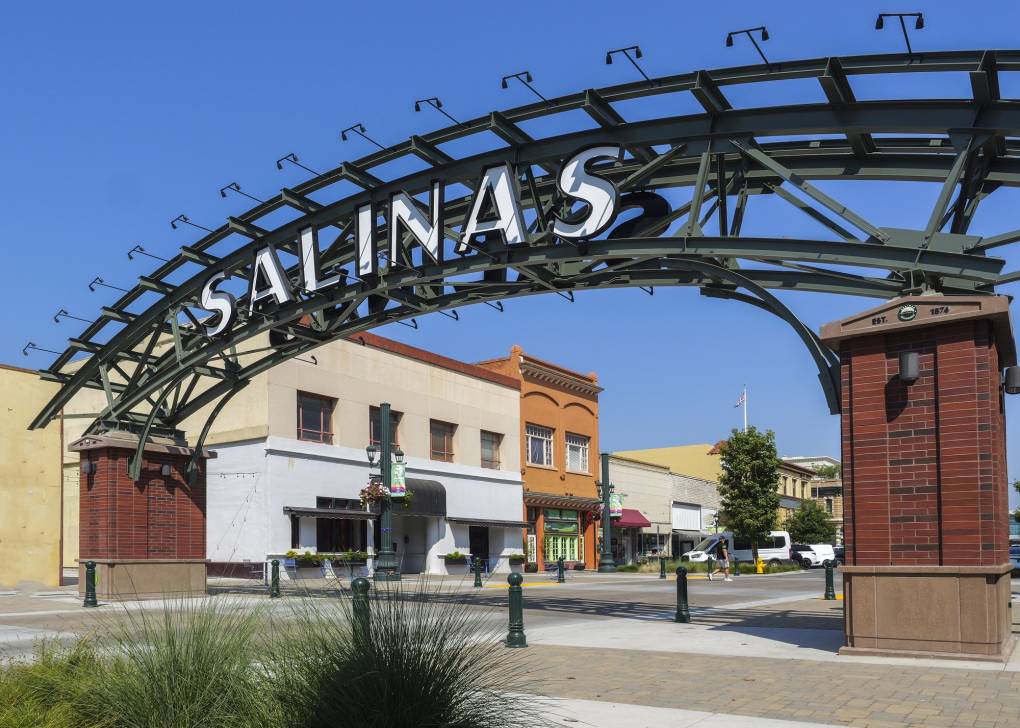
"caption": "As rental costs surge nationwide, few communities have been hit harder than Salinas, a small farmworker town near the Bay Area. Since 2000, rents there have increased sevenfold compared to incomes. On Tuesday, the Salinas City Council advanced a set of tenant protection policies, including rent control.",
"credit": "4kodiak/iStock via Getty Images",
"altTag": null,
"description": null,
"imgSizes": {
"medium": {
"file": "https://cdn.kqed.org/wp-content/uploads/sites/10/2024/08/SalinasCaliforniaGetty1-800x571.jpg",
"width": 800,
"height": 571,
"mimeType": "image/jpeg"
},
"large": {
"file": "https://cdn.kqed.org/wp-content/uploads/sites/10/2024/08/SalinasCaliforniaGetty1-1020x728.jpg",
"width": 1020,
"height": 728,
"mimeType": "image/jpeg"
},
"thumbnail": {
"file": "https://cdn.kqed.org/wp-content/uploads/sites/10/2024/08/SalinasCaliforniaGetty1-160x114.jpg",
"width": 160,
"height": 114,
"mimeType": "image/jpeg"
},
"1536x1536": {
"file": "https://cdn.kqed.org/wp-content/uploads/sites/10/2024/08/SalinasCaliforniaGetty1-1536x1096.jpg",
"width": 1536,
"height": 1096,
"mimeType": "image/jpeg"
},
"post-thumbnail": {
"file": "https://cdn.kqed.org/wp-content/uploads/sites/10/2024/08/SalinasCaliforniaGetty1-672x372.jpg",
"width": 672,
"height": 372,
"mimeType": "image/jpeg"
},
"twentyfourteen-full-width": {
"file": "https://cdn.kqed.org/wp-content/uploads/sites/10/2024/08/SalinasCaliforniaGetty1-1038x576.jpg",
"width": 1038,
"height": 576,
"mimeType": "image/jpeg"
},
"full-width": {
"file": "https://cdn.kqed.org/wp-content/uploads/sites/10/2024/08/SalinasCaliforniaGetty1-1920x1370.jpg",
"width": 1920,
"height": 1370,
"mimeType": "image/jpeg"
},
"kqedFullSize": {
"file": "https://cdn.kqed.org/wp-content/uploads/sites/10/2024/08/SalinasCaliforniaGetty1.jpg",
"width": 2000,
"height": 1427
}
},
"isLoading": false,
"fetchFailed": false
},
"news_12001145": {
"type": "attachments",
"id": "news_12001145",
"meta": {
"index": "attachments_1716263798",
"site": "news",
"id": "12001145",
"found": true
},
"title": "New Minimum Wage Law In California Goes In Effect Raising Workers Pay To 20 Dollars An Hour",
"publishDate": 1724263730,
"status": "inherit",
"parent": 12001133,
"modified": 1724268529,
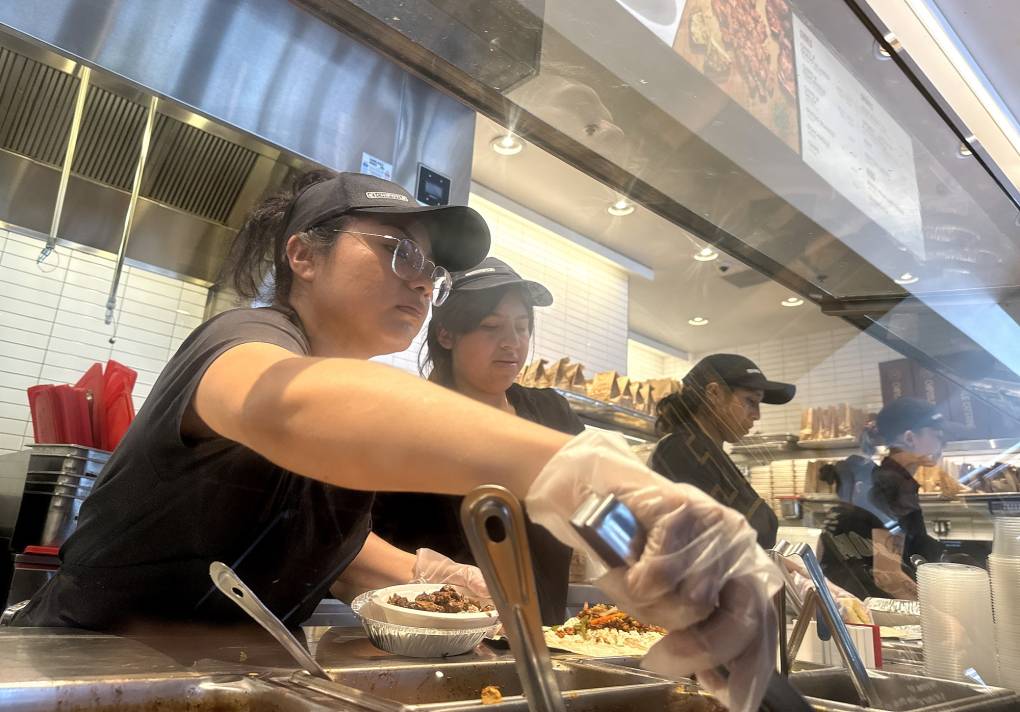
"caption": "Workers fill food orders at a Chipotle restaurant on April 1, 2024, in San Rafael, California. The state's new minimum wage law calls for fast food restaurants with at least 60 locations nationwide to pay employees a minimum of $20 per hour at California stores. On Tuesday, Gov. Gavin Newsom highlighted federal data that shows the industry grew to a record 750,500 jobs in July. Yet, economists say it's still too soon to fully assess the impact of the wage hike from $16 per hour. ",
"credit": "Justin Sullivan/Getty Images",
"altTag": null,
"description": null,
"imgSizes": {
"medium": {
"file": "https://cdn.kqed.org/wp-content/uploads/sites/10/2024/08/FastFoodWorkersGetty1-800x559.jpg",
"width": 800,
"height": 559,
"mimeType": "image/jpeg"
},
"large": {
"file": "https://cdn.kqed.org/wp-content/uploads/sites/10/2024/08/FastFoodWorkersGetty1-1020x712.jpg",
"width": 1020,
"height": 712,
"mimeType": "image/jpeg"
},
"thumbnail": {
"file": "https://cdn.kqed.org/wp-content/uploads/sites/10/2024/08/FastFoodWorkersGetty1-160x112.jpg",
"width": 160,
"height": 112,
"mimeType": "image/jpeg"
},
"1536x1536": {
"file": "https://cdn.kqed.org/wp-content/uploads/sites/10/2024/08/FastFoodWorkersGetty1-1536x1073.jpg",
"width": 1536,
"height": 1073,
"mimeType": "image/jpeg"
},
"post-thumbnail": {
"file": "https://cdn.kqed.org/wp-content/uploads/sites/10/2024/08/FastFoodWorkersGetty1-672x372.jpg",
"width": 672,
"height": 372,
"mimeType": "image/jpeg"
},
"twentyfourteen-full-width": {
"file": "https://cdn.kqed.org/wp-content/uploads/sites/10/2024/08/FastFoodWorkersGetty1-1038x576.jpg",
"width": 1038,
"height": 576,
"mimeType": "image/jpeg"
},
"full-width": {
"file": "https://cdn.kqed.org/wp-content/uploads/sites/10/2024/08/FastFoodWorkersGetty1-1920x1341.jpg",
"width": 1920,
"height": 1341,
"mimeType": "image/jpeg"
},
"kqedFullSize": {
"file": "https://cdn.kqed.org/wp-content/uploads/sites/10/2024/08/FastFoodWorkersGetty1.jpg",
"width": 2000,
"height": 1397
}
},
"isLoading": false,
"fetchFailed": false
},
"news_12001082": {
"type": "attachments",
"id": "news_12001082",
"meta": {
"index": "attachments_1716263798",
"site": "news",
"id": "12001082",
"found": true
},
"title": "2024 Democratic National Convention: Day 2",
"publishDate": 1724210275,
"status": "inherit",
"parent": 12001032,
"modified": 1724260374,
"caption": "California Gov. Gavin Newsom, standing behind Rep. Maxine Waters and Speaker Emerita Nancy Pelosi, joins the California delegation as they cast their votes during the Ceremonial Roll Call of States on the second day of the Democratic National Convention at the United Center on Aug. 20, 2024, in Chicago, Illinois. ",
"credit": "Justin Sullivan/Getty Images",
"altTag": null,
"description": null,
"imgSizes": {
"medium": {
"file": "https://cdn.kqed.org/wp-content/uploads/sites/10/2024/08/GettyImages-2167653829_qed-800x533.jpg",
"width": 800,
"height": 533,
"mimeType": "image/jpeg"
},
"large": {
"file": "https://cdn.kqed.org/wp-content/uploads/sites/10/2024/08/GettyImages-2167653829_qed-1020x680.jpg",
"width": 1020,
"height": 680,
"mimeType": "image/jpeg"
},
"thumbnail": {
"file": "https://cdn.kqed.org/wp-content/uploads/sites/10/2024/08/GettyImages-2167653829_qed-160x107.jpg",
"width": 160,
"height": 107,
"mimeType": "image/jpeg"
},
"1536x1536": {
"file": "https://cdn.kqed.org/wp-content/uploads/sites/10/2024/08/GettyImages-2167653829_qed-1536x1024.jpg",
"width": 1536,
"height": 1024,
"mimeType": "image/jpeg"
},
"post-thumbnail": {
"file": "https://cdn.kqed.org/wp-content/uploads/sites/10/2024/08/GettyImages-2167653829_qed-672x372.jpg",
"width": 672,
"height": 372,
"mimeType": "image/jpeg"
},
"twentyfourteen-full-width": {
"file": "https://cdn.kqed.org/wp-content/uploads/sites/10/2024/08/GettyImages-2167653829_qed-1038x576.jpg",
"width": 1038,
"height": 576,
"mimeType": "image/jpeg"
},
"full-width": {
"file": "https://cdn.kqed.org/wp-content/uploads/sites/10/2024/08/GettyImages-2167653829_qed-1920x1280.jpg",
"width": 1920,
"height": 1280,
"mimeType": "image/jpeg"
},
"kqedFullSize": {
"file": "https://cdn.kqed.org/wp-content/uploads/sites/10/2024/08/GettyImages-2167653829_qed.jpg",
"width": 1999,
"height": 1333
}
},
"isLoading": false,
"fetchFailed": false
},
"news_11754056": {
"type": "attachments",
"id": "news_11754056",
"meta": {
"index": "attachments_1716263798",
"site": "news",
"id": "11754056",
"found": true
},
"parent": 11754005,
"imgSizes": {
"apple_news_ca_landscape_5_5": {
"file": "https://ww2.kqed.org/app/uploads/sites/10/2019/06/Shell-Oil-Refinery-Martinez-1044x783.jpg",
"width": 1044,
"mimeType": "image/jpeg",
"height": 783
},
"apple_news_ca_square_4_0": {
"file": "https://ww2.kqed.org/app/uploads/sites/10/2019/06/Shell-Oil-Refinery-Martinez-470x470.jpg",
"width": 470,
"mimeType": "image/jpeg",
"height": 470
},
"twentyfourteen-full-width": {
"file": "https://ww2.kqed.org/app/uploads/sites/10/2019/06/Shell-Oil-Refinery-Martinez-1038x576.jpg",
"width": 1038,
"mimeType": "image/jpeg",
"height": 576
},
"thumbnail": {
"file": "https://ww2.kqed.org/app/uploads/sites/10/2019/06/Shell-Oil-Refinery-Martinez-160x107.jpg",
"width": 160,
"mimeType": "image/jpeg",
"height": 107
},
"post-thumbnail": {
"file": "https://ww2.kqed.org/app/uploads/sites/10/2019/06/Shell-Oil-Refinery-Martinez-672x372.jpg",
"width": 672,
"mimeType": "image/jpeg",
"height": 372
},
"kqedFullSize": {
"file": "https://ww2.kqed.org/app/uploads/sites/10/2019/06/Shell-Oil-Refinery-Martinez.jpg",
"width": 1920,
"height": 1280
},
"apple_news_ca_landscape_4_7": {
"file": "https://ww2.kqed.org/app/uploads/sites/10/2019/06/Shell-Oil-Refinery-Martinez-632x474.jpg",
"width": 632,
"mimeType": "image/jpeg",
"height": 474
},
"large": {
"file": "https://ww2.kqed.org/app/uploads/sites/10/2019/06/Shell-Oil-Refinery-Martinez-1020x680.jpg",
"width": 1020,
"mimeType": "image/jpeg",
"height": 680
},
"complete_open_graph": {
"file": "https://ww2.kqed.org/app/uploads/sites/10/2019/06/Shell-Oil-Refinery-Martinez-1200x800.jpg",
"width": 1200,
"mimeType": "image/jpeg",
"height": 800
},
"apple_news_ca_landscape_4_0": {
"file": "https://ww2.kqed.org/app/uploads/sites/10/2019/06/Shell-Oil-Refinery-Martinez-536x402.jpg",
"width": 536,
"mimeType": "image/jpeg",
"height": 402
},
"apple_news_ca_portrait_12_9": {
"file": "https://ww2.kqed.org/app/uploads/sites/10/2019/06/Shell-Oil-Refinery-Martinez-1122x1280.jpg",
"width": 1122,
"mimeType": "image/jpeg",
"height": 1280
},
"medium": {
"file": "https://ww2.kqed.org/app/uploads/sites/10/2019/06/Shell-Oil-Refinery-Martinez-800x533.jpg",
"width": 800,
"mimeType": "image/jpeg",
"height": 533
},
"apple_news_ca_portrait_4_0": {
"file": "https://ww2.kqed.org/app/uploads/sites/10/2019/06/Shell-Oil-Refinery-Martinez-354x472.jpg",
"width": 354,
"mimeType": "image/jpeg",
"height": 472
},
"apple_news_ca_portrait_9_7": {
"file": "https://ww2.kqed.org/app/uploads/sites/10/2019/06/Shell-Oil-Refinery-Martinez-840x1120.jpg",
"width": 840,
"mimeType": "image/jpeg",
"height": 1120
},
"apple_news_ca_landscape_12_9": {
"file": "https://ww2.kqed.org/app/uploads/sites/10/2019/06/Shell-Oil-Refinery-Martinez-1832x1280.jpg",
"width": 1832,
"mimeType": "image/jpeg",
"height": 1280
},
"apple_news_ca_square_9_7": {
"file": "https://ww2.kqed.org/app/uploads/sites/10/2019/06/Shell-Oil-Refinery-Martinez-1104x1104.jpg",
"width": 1104,
"mimeType": "image/jpeg",
"height": 1104
},
"apple_news_ca_portrait_4_7": {
"file": "https://ww2.kqed.org/app/uploads/sites/10/2019/06/Shell-Oil-Refinery-Martinez-414x552.jpg",
"width": 414,
"mimeType": "image/jpeg",
"height": 552
},
"apple_news_ca_square_12_9": {
"file": "https://ww2.kqed.org/app/uploads/sites/10/2019/06/Shell-Oil-Refinery-Martinez-1472x1280.jpg",
"width": 1472,
"mimeType": "image/jpeg",
"height": 1280
},
"apple_news_ca_portrait_5_5": {
"file": "https://ww2.kqed.org/app/uploads/sites/10/2019/06/Shell-Oil-Refinery-Martinez-687x916.jpg",
"width": 687,
"mimeType": "image/jpeg",
"height": 916
},
"full-width": {
"file": "https://ww2.kqed.org/app/uploads/sites/10/2019/06/Shell-Oil-Refinery-Martinez-1920x1280.jpg",
"width": 1920,
"mimeType": "image/jpeg",
"height": 1280
},
"apple_news_ca_square_4_7": {
"file": "https://ww2.kqed.org/app/uploads/sites/10/2019/06/Shell-Oil-Refinery-Martinez-550x550.jpg",
"width": 550,
"mimeType": "image/jpeg",
"height": 550
},
"apple_news_ca_landscape_9_7": {
"file": "https://ww2.kqed.org/app/uploads/sites/10/2019/06/Shell-Oil-Refinery-Martinez-1376x1032.jpg",
"width": 1376,
"mimeType": "image/jpeg",
"height": 1032
},
"apple_news_ca_square_5_5": {
"file": "https://ww2.kqed.org/app/uploads/sites/10/2019/06/Shell-Oil-Refinery-Martinez-912x912.jpg",
"width": 912,
"mimeType": "image/jpeg",
"height": 912
}
},
"publishDate": 1560297519,
"modified": 1587605233,
"caption": "The former Shell Oil refinery in Martinez, now owned and operated by New Jersey-based PBF Energy. ",
"description": "The Shell Oil refinery in Martinez.",
"title": "PBF Energy Refinery-Martinez",
"credit": "Justin Sullivan/Getty Images",
"status": "inherit",
"isLoading": false,
"fetchFailed": false
},
"news_12000732": {
"type": "attachments",
"id": "news_12000732",
"meta": {
"index": "attachments_1716263798",
"site": "news",
"id": "12000732",
"found": true
},
"title": "California Ballot Initiatives",
"publishDate": 1724091699,
"status": "inherit",
"parent": 12000706,
"modified": 1724095831,
"caption": "A patient undergoes kidney dialysis at a clinic in Sacramento on Sept. 24, 2018.",
"credit": "Rich Pedroncelli/AP Photo",
"altTag": "Wires and an arm attached with wires to a machine.",
"description": null,
"imgSizes": {
"medium": {
"file": "https://cdn.kqed.org/wp-content/uploads/sites/10/2024/08/092418-Dialysis-Center-AP-CM-800x533.jpg",
"width": 800,
"height": 533,
"mimeType": "image/jpeg"
},
"large": {
"file": "https://cdn.kqed.org/wp-content/uploads/sites/10/2024/08/092418-Dialysis-Center-AP-CM-1020x680.jpg",
"width": 1020,
"height": 680,
"mimeType": "image/jpeg"
},
"thumbnail": {
"file": "https://cdn.kqed.org/wp-content/uploads/sites/10/2024/08/092418-Dialysis-Center-AP-CM-160x107.jpg",
"width": 160,
"height": 107,
"mimeType": "image/jpeg"
},
"1536x1536": {
"file": "https://cdn.kqed.org/wp-content/uploads/sites/10/2024/08/092418-Dialysis-Center-AP-CM-1536x1024.jpg",
"width": 1536,
"height": 1024,
"mimeType": "image/jpeg"
},
"post-thumbnail": {
"file": "https://cdn.kqed.org/wp-content/uploads/sites/10/2024/08/092418-Dialysis-Center-AP-CM-672x372.jpg",
"width": 672,
"height": 372,
"mimeType": "image/jpeg"
},
"twentyfourteen-full-width": {
"file": "https://cdn.kqed.org/wp-content/uploads/sites/10/2024/08/092418-Dialysis-Center-AP-CM-1038x576.jpg",
"width": 1038,
"height": 576,
"mimeType": "image/jpeg"
},
"full-width": {
"file": "https://cdn.kqed.org/wp-content/uploads/sites/10/2024/08/092418-Dialysis-Center-AP-CM-1920x1280.jpg",
"width": 1920,
"height": 1280,
"mimeType": "image/jpeg"
},
"kqedFullSize": {
"file": "https://cdn.kqed.org/wp-content/uploads/sites/10/2024/08/092418-Dialysis-Center-AP-CM.jpg",
"width": 2000,
"height": 1333
}
},
"isLoading": false,
"fetchFailed": false
},
"news_12000524": {
"type": "attachments",
"id": "news_12000524",
"meta": {
"index": "attachments_1716263798",
"site": "news",
"id": "12000524",
"found": true
},
"title": "California-Homeless",
"publishDate": 1723830664,
"status": "inherit",
"parent": 12000513,
"modified": 1723833367,
"caption": "California Gov. Gavin Newsom greets people on July 8, 2024, near the Common Man Roadside Market and Deli in Hooksett, New Hampshire. Newsom issued an executive order Thursday, July 25, to remove homeless encampments in his state.",
"credit": "Steven Senne/AP Photo",
"altTag": null,
"description": null,
"imgSizes": {
"medium": {
"file": "https://cdn.kqed.org/wp-content/uploads/sites/10/2024/08/AP24207558088069-800x533.jpg",
"width": 800,
"height": 533,
"mimeType": "image/jpeg"
},
"large": {
"file": "https://cdn.kqed.org/wp-content/uploads/sites/10/2024/08/AP24207558088069-1020x680.jpg",
"width": 1020,
"height": 680,
"mimeType": "image/jpeg"
},
"thumbnail": {
"file": "https://cdn.kqed.org/wp-content/uploads/sites/10/2024/08/AP24207558088069-160x107.jpg",
"width": 160,
"height": 107,
"mimeType": "image/jpeg"
},
"1536x1536": {
"file": "https://cdn.kqed.org/wp-content/uploads/sites/10/2024/08/AP24207558088069-1536x1024.jpg",
"width": 1536,
"height": 1024,
"mimeType": "image/jpeg"
},
"post-thumbnail": {
"file": "https://cdn.kqed.org/wp-content/uploads/sites/10/2024/08/AP24207558088069-672x372.jpg",
"width": 672,
"height": 372,
"mimeType": "image/jpeg"
},
"twentyfourteen-full-width": {
"file": "https://cdn.kqed.org/wp-content/uploads/sites/10/2024/08/AP24207558088069-1038x576.jpg",
"width": 1038,
"height": 576,
"mimeType": "image/jpeg"
},
"full-width": {
"file": "https://cdn.kqed.org/wp-content/uploads/sites/10/2024/08/AP24207558088069-1920x1280.jpg",
"width": 1920,
"height": 1280,
"mimeType": "image/jpeg"
},
"kqedFullSize": {
"file": "https://cdn.kqed.org/wp-content/uploads/sites/10/2024/08/AP24207558088069.jpg",
"width": 2000,
"height": 1333
}
},
"isLoading": false,
"fetchFailed": false
},
"news_12032496": {
"type": "attachments",
"id": "news_12032496",
"meta": {
"index": "attachments_1716263798",
"site": "news",
"id": "12032496",
"found": true
},
"title": "250320-JAPANESEAMERICANSDENOUNCE-14-BL-KQED",
"publishDate": 1742589406,
"status": "inherit",
"parent": 0,
"modified": 1742589466,
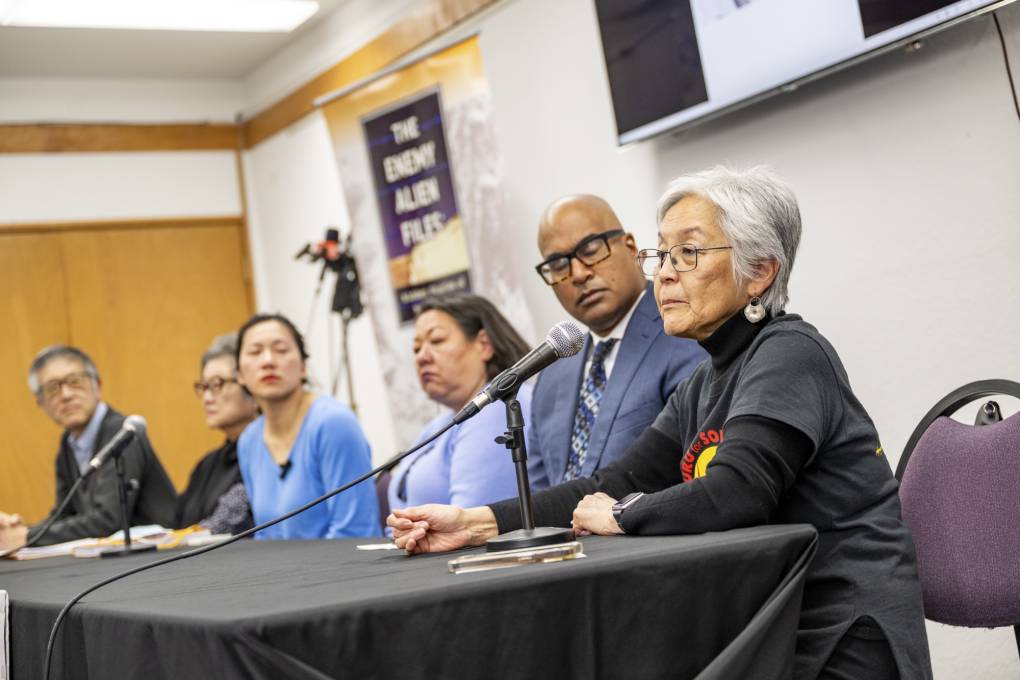
"caption": "Satsuki Ina (right), from Tsuru for Solidarity, speaks at the Japanese Cultural and Community Center in San Francisco on March 20, 2025, during a press conference condemning the use of the Alien Enemies Act to target immigrants.",
"credit": "Beth LaBerge/KQED",
"altTag": null,
"description": null,
"imgSizes": {
"medium": {
"file": "https://cdn.kqed.org/wp-content/uploads/sites/10/2025/03/250320-JAPANESEAMERICANSDENOUNCE-14-BL-KQED-800x533.jpg",
"width": 800,
"height": 533,
"mimeType": "image/jpeg"
},
"large": {
"file": "https://cdn.kqed.org/wp-content/uploads/sites/10/2025/03/250320-JAPANESEAMERICANSDENOUNCE-14-BL-KQED-1020x680.jpg",
"width": 1020,
"height": 680,
"mimeType": "image/jpeg"
},
"thumbnail": {
"file": "https://cdn.kqed.org/wp-content/uploads/sites/10/2025/03/250320-JAPANESEAMERICANSDENOUNCE-14-BL-KQED-160x107.jpg",
"width": 160,
"height": 107,
"mimeType": "image/jpeg"
},
"1536x1536": {
"file": "https://cdn.kqed.org/wp-content/uploads/sites/10/2025/03/250320-JAPANESEAMERICANSDENOUNCE-14-BL-KQED-1536x1024.jpg",
"width": 1536,
"height": 1024,
"mimeType": "image/jpeg"
},
"post-thumbnail": {
"file": "https://cdn.kqed.org/wp-content/uploads/sites/10/2025/03/250320-JAPANESEAMERICANSDENOUNCE-14-BL-KQED-672x372.jpg",
"width": 672,
"height": 372,
"mimeType": "image/jpeg"
},
"twentyfourteen-full-width": {
"file": "https://cdn.kqed.org/wp-content/uploads/sites/10/2025/03/250320-JAPANESEAMERICANSDENOUNCE-14-BL-KQED-1038x576.jpg",
"width": 1038,
"height": 576,
"mimeType": "image/jpeg"
},
"full-width": {
"file": "https://cdn.kqed.org/wp-content/uploads/sites/10/2025/03/250320-JAPANESEAMERICANSDENOUNCE-14-BL-KQED-1920x1280.jpg",
"width": 1920,
"height": 1280,
"mimeType": "image/jpeg"
},
"kqedFullSize": {
"file": "https://cdn.kqed.org/wp-content/uploads/sites/10/2025/03/250320-JAPANESEAMERICANSDENOUNCE-14-BL-KQED.jpg",
"width": 2000,
"height": 1333
}
},
"isLoading": false,
"fetchFailed": false
},
"news_12000242": {
"type": "attachments",
"id": "news_12000242",
"meta": {
"index": "attachments_1716263798",
"site": "news",
"id": "12000242",
"found": true
},
"title": "California Health Officials Warn Of Increase West Nile Activity This Season As Drought And Heat Could Spread Disease",
"publishDate": 1723673428,
"status": "inherit",
"parent": 12000233,
"modified": 1723673565,
"caption": "Contra Costa County Mosquito and Vector Control District technician Josefa Cabada holds a container with mosquito larvae that were found in a retention pond on July 21, 2015, in Bay Point, California. On Wednesday, Santa Clara County reported its first West Nile virus cases, including one death, after another death in Contra Costa County.",
"credit": "Justin Sullivan/Getty Images",
"altTag": null,
"description": null,
"imgSizes": {
"medium": {
"file": "https://cdn.kqed.org/wp-content/uploads/sites/10/2024/08/WestNileGetty-800x536.jpg",
"width": 800,
"height": 536,
"mimeType": "image/jpeg"
},
"large": {
"file": "https://cdn.kqed.org/wp-content/uploads/sites/10/2024/08/WestNileGetty-1020x683.jpg",
"width": 1020,
"height": 683,
"mimeType": "image/jpeg"
},
"thumbnail": {
"file": "https://cdn.kqed.org/wp-content/uploads/sites/10/2024/08/WestNileGetty-160x107.jpg",
"width": 160,
"height": 107,
"mimeType": "image/jpeg"
},
"1536x1536": {
"file": "https://cdn.kqed.org/wp-content/uploads/sites/10/2024/08/WestNileGetty-1536x1029.jpg",
"width": 1536,
"height": 1029,
"mimeType": "image/jpeg"
},
"post-thumbnail": {
"file": "https://cdn.kqed.org/wp-content/uploads/sites/10/2024/08/WestNileGetty-672x372.jpg",
"width": 672,
"height": 372,
"mimeType": "image/jpeg"
},
"twentyfourteen-full-width": {
"file": "https://cdn.kqed.org/wp-content/uploads/sites/10/2024/08/WestNileGetty-1038x576.jpg",
"width": 1038,
"height": 576,
"mimeType": "image/jpeg"
},
"full-width": {
"file": "https://cdn.kqed.org/wp-content/uploads/sites/10/2024/08/WestNileGetty-1920x1286.jpg",
"width": 1920,
"height": 1286,
"mimeType": "image/jpeg"
},
"kqedFullSize": {
"file": "https://cdn.kqed.org/wp-content/uploads/sites/10/2024/08/WestNileGetty.jpg",
"width": 2000,
"height": 1340
}
},
"isLoading": false,
"fetchFailed": false
},
"news_12000187": {
"type": "attachments",
"id": "news_12000187",
"meta": {
"index": "attachments_1716263798",
"site": "news",
"id": "12000187",
"found": true
},
"title": "Sad little child, boy, hugging his mother at home",
"publishDate": 1723665536,
"status": "inherit",
"parent": 12000147,
"modified": 1723665639,
"caption": "A new Bay Area study discovered that child-parent psychotherapy helps young children overcome trauma related to abuse, violence or grief by helping parents respond to their children’s distress in appropriate ways.",
"credit": "Tatyana Tomsickova/iStock",
"altTag": null,
"description": null,
"imgSizes": {
"medium": {
"file": "https://cdn.kqed.org/wp-content/uploads/sites/10/2024/08/iStock-515594796_qed-800x533.jpg",
"width": 800,
"height": 533,
"mimeType": "image/jpeg"
},
"large": {
"file": "https://cdn.kqed.org/wp-content/uploads/sites/10/2024/08/iStock-515594796_qed-1020x680.jpg",
"width": 1020,
"height": 680,
"mimeType": "image/jpeg"
},
"thumbnail": {
"file": "https://cdn.kqed.org/wp-content/uploads/sites/10/2024/08/iStock-515594796_qed-160x107.jpg",
"width": 160,
"height": 107,
"mimeType": "image/jpeg"
},
"1536x1536": {
"file": "https://cdn.kqed.org/wp-content/uploads/sites/10/2024/08/iStock-515594796_qed-1536x1024.jpg",
"width": 1536,
"height": 1024,
"mimeType": "image/jpeg"
},
"post-thumbnail": {
"file": "https://cdn.kqed.org/wp-content/uploads/sites/10/2024/08/iStock-515594796_qed-672x372.jpg",
"width": 672,
"height": 372,
"mimeType": "image/jpeg"
},
"twentyfourteen-full-width": {
"file": "https://cdn.kqed.org/wp-content/uploads/sites/10/2024/08/iStock-515594796_qed-1038x576.jpg",
"width": 1038,
"height": 576,
"mimeType": "image/jpeg"
},
"full-width": {
"file": "https://cdn.kqed.org/wp-content/uploads/sites/10/2024/08/iStock-515594796_qed-1920x1280.jpg",
"width": 1920,
"height": 1280,
"mimeType": "image/jpeg"
},
"kqedFullSize": {
"file": "https://cdn.kqed.org/wp-content/uploads/sites/10/2024/08/iStock-515594796_qed.jpg",
"width": 2000,
"height": 1333
}
},
"isLoading": false,
"fetchFailed": false
},
"news_12000083": {
"type": "attachments",
"id": "news_12000083",
"meta": {
"index": "attachments_1716263798",
"site": "news",
"id": "12000083",
"found": true
},
"title": "Election 2024 Joy and Gloom",
"publishDate": 1723593250,
"status": "inherit",
"parent": 12000078,
"modified": 1723593287,
"caption": "Democratic presidential nominee Vice President Kamala Harris accompanied, left, by her running mate Minnesota Gov. Tim Walz, appear at a campaign event in Philadelphia, Aug. 6, 2024.",
"credit": "Matt Rourke/AP Photo",
"altTag": null,
"description": null,
"imgSizes": {
"medium": {
"file": "https://cdn.kqed.org/wp-content/uploads/sites/10/2024/08/KamalaWalzAP-800x520.jpg",
"width": 800,
"height": 520,
"mimeType": "image/jpeg"
},
"large": {
"file": "https://cdn.kqed.org/wp-content/uploads/sites/10/2024/08/KamalaWalzAP-1020x662.jpg",
"width": 1020,
"height": 662,
"mimeType": "image/jpeg"
},
"thumbnail": {
"file": "https://cdn.kqed.org/wp-content/uploads/sites/10/2024/08/KamalaWalzAP-160x104.jpg",
"width": 160,
"height": 104,
"mimeType": "image/jpeg"
},
"1536x1536": {
"file": "https://cdn.kqed.org/wp-content/uploads/sites/10/2024/08/KamalaWalzAP-1536x998.jpg",
"width": 1536,
"height": 998,
"mimeType": "image/jpeg"
},
"post-thumbnail": {
"file": "https://cdn.kqed.org/wp-content/uploads/sites/10/2024/08/KamalaWalzAP-672x372.jpg",
"width": 672,
"height": 372,
"mimeType": "image/jpeg"
},
"twentyfourteen-full-width": {
"file": "https://cdn.kqed.org/wp-content/uploads/sites/10/2024/08/KamalaWalzAP-1038x576.jpg",
"width": 1038,
"height": 576,
"mimeType": "image/jpeg"
},
"full-width": {
"file": "https://cdn.kqed.org/wp-content/uploads/sites/10/2024/08/KamalaWalzAP-1920x1247.jpg",
"width": 1920,
"height": 1247,
"mimeType": "image/jpeg"
},
"kqedFullSize": {
"file": "https://cdn.kqed.org/wp-content/uploads/sites/10/2024/08/KamalaWalzAP.jpg",
"width": 2000,
"height": 1299
}
},
"isLoading": false,
"fetchFailed": false
}
},
"audioPlayerReducer": {
"postId": "stream_live",
"isPaused": true,
"isPlaying": false,
"pfsActive": false,
"pledgeModalIsOpen": true,
"playerDrawerIsOpen": false,
"liveAudioPlayStartedAt": 0,
"liveAudioPlayContext": ""
},
"authorsReducer": {
"byline_news_12000706": {
"type": "authors",
"id": "byline_news_12000706",
"meta": {
"override": true
},
"slug": "byline_news_12000706",
"name": "Kristen Hwang",
"isLoading": false
},
"byline_news_11979430": {
"type": "authors",
"id": "byline_news_11979430",
"meta": {
"override": true
},
"slug": "byline_news_11979430",
"name": "Jessica Kariisa",
"isLoading": false
},
"gmarzorati": {
"type": "authors",
"id": "227",
"meta": {
"index": "authors_1716337520",
"id": "227",
"found": true
},
"name": "Guy Marzorati",
"firstName": "Guy",
"lastName": "Marzorati",
"slug": "gmarzorati",
"email": "gmarzorati@KQED.org",
"display_author_email": true,
"staff_mastheads": [
"news"
],
"title": "Correspondent",
"bio": "Guy Marzorati is a correspondent on KQED's California Politics and Government Desk, based in San Jose. A graduate of Santa Clara University, Guy joined KQED in 2013. He reports on state and local politics and produces KQED's digital voter guide.",
"avatar": "https://secure.gravatar.com/avatar/e7038b8dbfd55b104369b76b1cd0b9de?s=600&d=blank&r=g",
"twitter": "guymarzorati",
"facebook": null,
"instagram": null,
"linkedin": null,
"sites": [
{
"site": "",
"roles": [
"editor"
]
},
{
"site": "news",
"roles": [
"editor"
]
},
{
"site": "science",
"roles": [
"editor"
]
},
{
"site": "forum",
"roles": [
"editor"
]
},
{
"site": "elections",
"roles": [
"editor"
]
},
{
"site": "liveblog",
"roles": [
"editor"
]
}
],
"headData": {
"title": "Guy Marzorati | KQED",
"description": "Correspondent",
"ogImgSrc": "https://secure.gravatar.com/avatar/e7038b8dbfd55b104369b76b1cd0b9de?s=600&d=blank&r=g",
"twImgSrc": "https://secure.gravatar.com/avatar/e7038b8dbfd55b104369b76b1cd0b9de?s=600&d=blank&r=g"
},
"isLoading": false,
"link": "/author/gmarzorati"
},
"scottshafer": {
"type": "authors",
"id": "255",
"meta": {
"index": "authors_1716337520",
"id": "255",
"found": true
},
"name": "Scott Shafer",
"firstName": "Scott",
"lastName": "Shafer",
"slug": "scottshafer",
"email": "sshafer@kqed.org",
"display_author_email": false,
"staff_mastheads": [
"news"
],
"title": "KQED Contributor",
"bio": "Scott Shafer is a senior editor with the KQED Politics and Government desk. He is co-host of Political Breakdown, the award-winning radio show and podcast with a personal take on the world of politics. Scott came to KQED in 1998 to host the statewide\u003cem> California Report\u003c/em>. Prior to that he had extended stints in politics and government\u003cem>.\u003c/em> He uses that inside experience at KQED in his, reporting, hosting and analysis for the politics desk. Scott collaborated \u003cem>Political Breakdown a\u003c/em>nd on \u003cem>The Political Mind of Jerry Brown, \u003c/em>an eight-part series about the life and extraordinary political career of the former governor. For fun, he plays water polo with the San Francisco Tsunami.",
"avatar": "https://secure.gravatar.com/avatar/a62ebae45b79d7aed1a39a0e3bf68104?s=600&d=blank&r=g",
"twitter": "scottshafer",
"bluesky": null,
"facebook": null,
"instagram": null,
"linkedin": null,
"sites": [
{
"site": "news",
"roles": [
"editor"
]
},
{
"site": "stateofhealth",
"roles": [
"author"
]
},
{
"site": "science",
"roles": [
"author"
]
},
{
"site": "forum",
"roles": [
"subscriber"
]
},
{
"site": "liveblog",
"roles": [
"author"
]
}
],
"headData": {
"title": "Scott Shafer | KQED",
"description": "KQED Contributor",
"ogImgSrc": "https://secure.gravatar.com/avatar/a62ebae45b79d7aed1a39a0e3bf68104?s=600&d=blank&r=g",
"twImgSrc": "https://secure.gravatar.com/avatar/a62ebae45b79d7aed1a39a0e3bf68104?s=600&d=blank&r=g"
},
"isLoading": false,
"link": "/author/scottshafer"
},
"mlagos": {
"type": "authors",
"id": "3239",
"meta": {
"index": "authors_1716337520",
"id": "3239",
"found": true
},
"name": "Marisa Lagos",
"firstName": "Marisa",
"lastName": "Lagos",
"slug": "mlagos",
"email": "mlagos@kqed.org",
"display_author_email": false,
"staff_mastheads": [
"news"
],
"title": "KQED Contributor",
"bio": "Marisa Lagos is a correspondent for KQED’s California Politics and Government Desk and co-hosts the award-winning show and podcast, Political Breakdown. At KQED, Lagos also conducts reporting, analysis and investigations into state, local and national politics for radio, TV, online and onstage. In 2022, she and co-host, Scott Shafer, moderated the only gubernatorial debate in California. In 2020, the \u003ci>Washington Post\u003c/i> named her one of the top political journalists in California; she was nominated for a Peabody and won several other awards for her work investigating the 2017 California wildfires. She has worked at the \u003ci>San Francisco Chronicle\u003c/i>, \u003ci>San Francisco Examiner\u003c/i> and \u003ci>Los Angeles Times\u003c/i>. A UC Santa Barbara graduate, she lives in San Francisco with her two sons and husband.",
"avatar": "https://secure.gravatar.com/avatar/a261a0d3696fc066871ef96b85b5e7d2?s=600&d=blank&r=g",
"twitter": "@mlagos",
"facebook": null,
"instagram": null,
"linkedin": null,
"sites": [
{
"site": "arts",
"roles": [
"author"
]
},
{
"site": "news",
"roles": [
"editor"
]
},
{
"site": "science",
"roles": [
"editor"
]
},
{
"site": "forum",
"roles": [
"author"
]
},
{
"site": "liveblog",
"roles": [
"author"
]
}
],
"headData": {
"title": "Marisa Lagos | KQED",
"description": "KQED Contributor",
"ogImgSrc": "https://secure.gravatar.com/avatar/a261a0d3696fc066871ef96b85b5e7d2?s=600&d=blank&r=g",
"twImgSrc": "https://secure.gravatar.com/avatar/a261a0d3696fc066871ef96b85b5e7d2?s=600&d=blank&r=g"
},
"isLoading": false,
"link": "/author/mlagos"
},
"fjhabvala": {
"type": "authors",
"id": "8659",
"meta": {
"index": "authors_1716337520",
"id": "8659",
"found": true
},
"name": "Farida Jhabvala Romero",
"firstName": "Farida",
"lastName": "Jhabvala Romero",
"slug": "fjhabvala",
"email": "fjhabvala@kqed.org",
"display_author_email": true,
"staff_mastheads": [
"news"
],
"title": "KQED Contributor",
"bio": "Farida Jhabvala Romero is a Labor Correspondent for KQED. She previously covered immigration. Farida was \u003ca href=\"https://www.ccnma.org/2022-most-influential-latina-journalists\">named\u003c/a> one of the 10 Most Influential Latina Journalists in California in 2022 by the California Chicano News Media Association. Her work has won awards from the Society of Professional Journalists (Northern California), as well as a national and regional Edward M. Murrow Award for the collaborative reporting projects “Dangerous Air” and “Graying California.” Before joining KQED, Farida worked as a producer at Radio Bilingüe, a national public radio network. Farida earned her master’s degree in journalism from Stanford University.",
"avatar": "https://secure.gravatar.com/avatar/f9f022d4e2609741874222a1e9d41f48fea74011aa7c615eef91d9a50c944ebe?s=600&d=blank&r=g",
"twitter": "FaridaJhabvala",
"bluesky": null,
"facebook": null,
"instagram": null,
"linkedin": "https://www.linkedin.com/in/faridajhabvala/",
"sites": [
{
"site": "news",
"roles": [
"editor"
]
},
{
"site": "stateofhealth",
"roles": [
"author"
]
},
{
"site": "liveblog",
"roles": [
"author"
]
}
],
"headData": {
"title": "Farida Jhabvala Romero | KQED",
"description": "KQED Contributor",
"ogImgSrc": "https://secure.gravatar.com/avatar/f9f022d4e2609741874222a1e9d41f48fea74011aa7c615eef91d9a50c944ebe?s=600&d=blank&r=g",
"twImgSrc": "https://secure.gravatar.com/avatar/f9f022d4e2609741874222a1e9d41f48fea74011aa7c615eef91d9a50c944ebe?s=600&d=blank&r=g"
},
"isLoading": false,
"link": "/author/fjhabvala"
},
"vrancano": {
"type": "authors",
"id": "11276",
"meta": {
"index": "authors_1716337520",
"id": "11276",
"found": true
},
"name": "Vanessa Rancaño",
"firstName": "Vanessa",
"lastName": "Rancaño",
"slug": "vrancano",
"email": "vrancano@kqed.org",
"display_author_email": false,
"staff_mastheads": [
"news"
],
"title": "Reporter",
"bio": "Vanessa Rancaño is a features reporter for KQED. She’s also covered homelessness and education for the station and reported from the Central Valley. Her work has aired across public radio, from flagship national news shows to longform narrative podcasts. Before taking up a mic, she worked as a freelance print journalist. She’s been recognized with a number of national and regional awards. Vanessa grew up in California's Central Valley. She's a former NPR Kroc Fellow, and a graduate of the UC Berkeley Graduate School of Journalism.",
"avatar": "https://secure.gravatar.com/avatar/b3a383dfb0e7ee1c17568f2cf067904ab654d6e3de9743fc661f3c788ade1bed?s=600&d=blank&r=g",
"twitter": "vanessarancano",
"bluesky": null,
"facebook": null,
"instagram": null,
"linkedin": null,
"sites": [
{
"site": "arts",
"roles": [
"editor"
]
},
{
"site": "news",
"roles": [
"editor"
]
},
{
"site": "liveblog",
"roles": [
"contributor"
]
}
],
"headData": {
"title": "Vanessa Rancaño | KQED",
"description": "Reporter",
"ogImgSrc": "https://secure.gravatar.com/avatar/b3a383dfb0e7ee1c17568f2cf067904ab654d6e3de9743fc661f3c788ade1bed?s=600&d=blank&r=g",
"twImgSrc": "https://secure.gravatar.com/avatar/b3a383dfb0e7ee1c17568f2cf067904ab654d6e3de9743fc661f3c788ade1bed?s=600&d=blank&r=g"
},
"isLoading": false,
"link": "/author/vrancano"
},
"daisynguyen": {
"type": "authors",
"id": "11829",
"meta": {
"index": "authors_1716337520",
"id": "11829",
"found": true
},
"name": "Daisy Nguyen",
"firstName": "Daisy",
"lastName": "Nguyen",
"slug": "daisynguyen",
"email": "daisynguyen@kqed.org",
"display_author_email": true,
"staff_mastheads": [
"news"
],
"title": "KQED Contributor",
"bio": "I have covered early childhood education and child care for KQED since 2022. I focus on policies aimed at increasing access to early care and education and how they shape individual lives. I've been a journalist for more than two decades, with most of that time devoted to covering breaking news throughout California for The Associated Press. I grew up in San Francisco and studied at UC Davis and Columbia University's Graduate School of Journalism. I live in Oakland with my husband and two kids.",
"avatar": "https://secure.gravatar.com/avatar/2da2127c27f7143b53ebd419800fd55f?s=600&d=blank&r=g",
"twitter": null,
"facebook": null,
"instagram": null,
"linkedin": "https://www.linkedin.com/in/daisynguyen/",
"sites": [
{
"site": "news",
"roles": [
"author"
]
},
{
"site": "liveblog",
"roles": [
"author"
]
}
],
"headData": {
"title": "Daisy Nguyen | KQED",
"description": "KQED Contributor",
"ogImgSrc": "https://secure.gravatar.com/avatar/2da2127c27f7143b53ebd419800fd55f?s=600&d=blank&r=g",
"twImgSrc": "https://secure.gravatar.com/avatar/2da2127c27f7143b53ebd419800fd55f?s=600&d=blank&r=g"
},
"isLoading": false,
"link": "/author/daisynguyen"
},
"kdebenedetti": {
"type": "authors",
"id": "11913",
"meta": {
"index": "authors_1716337520",
"id": "11913",
"found": true
},
"name": "Katie DeBenedetti",
"firstName": "Katie",
"lastName": "DeBenedetti",
"slug": "kdebenedetti",
"email": "kdebenedetti@kqed.org",
"display_author_email": false,
"staff_mastheads": [
"news",
"science"
],
"title": "KQED Contributor",
"bio": "Katie DeBenedetti is a digital reporter covering daily news for the Express Desk. Prior to joining KQED as a culture reporting intern in January 2024, she covered education and city government for the Napa Valley Register.",
"avatar": "https://secure.gravatar.com/avatar/6e31073cb8f7e4214ab03f42771d0f45?s=600&d=blank&r=g",
"twitter": null,
"facebook": null,
"instagram": null,
"linkedin": null,
"sites": [
{
"site": "news",
"roles": [
"author"
]
},
{
"site": "science",
"roles": [
"author"
]
},
{
"site": "liveblog",
"roles": [
"author"
]
}
],
"headData": {
"title": "Katie DeBenedetti | KQED",
"description": "KQED Contributor",
"ogImgSrc": "https://secure.gravatar.com/avatar/6e31073cb8f7e4214ab03f42771d0f45?s=600&d=blank&r=g",
"twImgSrc": "https://secure.gravatar.com/avatar/6e31073cb8f7e4214ab03f42771d0f45?s=600&d=blank&r=g"
},
"isLoading": false,
"link": "/author/kdebenedetti"
}
},
"pagesReducer": {
"news_tag_california": {
"type": "terms",
"id": "news_18538",
"meta": {
"index": "terms_1716263798",
"site": "news",
"id": "18538",
"score": 6.8457103
},
"featImg": null,
"name": "California",
"description": null,
"taxonomy": "tag",
"headData": {
"twImgId": null,
"twTitle": null,
"ogTitle": null,
"ogImgId": null,
"twDescription": null,
"description": null,
"title": "California Archives | KQED News",
"ogDescription": null
},
"ttid": 31,
"slug": "california",
"isLoading": false,
"title": "California",
"pageMeta": {
"site": "news",
"WpPageTemplate": "page-topic-editorial",
"currentPage": 133
},
"blocks": [
{
"blockName": "kqed/post-list",
"attrs": {
"layout": "cardArticle2",
"query": "posts/news?tag=california",
"seeMore": false,
"paginated": true,
"page": 133
}
},
{
"blockName": "kqed/ad"
}
]
}
},
"pfsSessionReducer": {},
"postsReducer": {
"stream_live": {
"type": "live",
"id": "stream_live",
"audioUrl": "https://streams.kqed.org/kqedradio",
"title": "Live Stream",
"excerpt": "Live Stream information currently unavailable.",
"link": "/radio",
"featImg": "",
"label": {
"name": "KQED Live",
"link": "/"
}
},
"stream_kqedNewscast": {
"type": "posts",
"id": "stream_kqedNewscast",
"audioUrl": "https://www.kqed.org/.stream/anon/radio/RDnews/newscast.mp3?_=1",
"title": "KQED Newscast",
"featImg": "",
"label": {
"name": "88.5 FM",
"link": "/"
}
},
"news_12001405": {
"type": "posts",
"id": "news_12001405",
"meta": {
"index": "posts_1716263798",
"site": "news",
"id": "12001405",
"score": null,
"sort": [
1724370270000
]
},
"guestAuthors": [],
"slug": "chico-man-pleads-not-guilty-to-starting-californias-massive-park-fire",
"title": "Chico Man Pleads Not Guilty to Starting California’s Massive Park Fire",
"publishDate": 1724370270,
"format": "standard",
"headTitle": "Chico Man Pleads Not Guilty to Starting California’s Massive Park Fire | KQED",
"labelTerm": {
"site": "news"
},
"content": "\u003cp>A Chico man pleaded not guilty to starting \u003ca href=\"https://www.kqed.org/news/11998589/park-fire-is-now-4th-largest-in-california-history-and-growing-amid-dangerous-weather\">California’s fourth largest wildfire\u003c/a>, which has burned more than 429,000 acres across four northern counties since it ignited in July.\u003c/p>\n\u003cp>Ronnie Dean Stout II, 42, was \u003ca href=\"https://www.kqed.org/news/11997808/northern-california-man-accused-of-starting-massive-park-fire-charged-with-arson\">charged with arson\u003c/a> in connection with the Park Fire. He is accused of starting the fire by pushing a flaming car off of a cliff, though he previously told investigators that the car caught fire accidentally and that he fled the area because he was frightened.\u003c/p>\n\u003cp>Stout’s defense attorney told the court that she believed the legal team had sufficient evidence to show he did not intentionally start the fire and requested more time to gather that evidence.\u003c/p>\n\u003cp>Judge Kristen Lucena granted her request, and the next hearing is set for Sept. 19.\u003c/p>\n\u003cp>[ad fullwidth]\u003c/p>\n\u003cp>Stout was arrested early July 25, hours after the fire ignited. According to Butte County District Attorney Mike Ramsey, Stout’s blood alcohol level was above the legal limit at the time, and he was seen behaving as if intoxicated and driving erratically by witnesses on the scene.\u003c/p>\n\u003cp>If found guilty, Stout could face up to 25 years to life under California’s three-strike law due to two previous felony convictions.\u003c/p>\n\u003cp>\u003cspan style=\"font-weight: 400;\">[aside postID=news_11998783 hero='https://cdn.kqed.org/wp-content/uploads/sites/10/2024/08/240726-ParkFire-137-BL_qed-1020x680.jpg']\u003c/span>\u003c/p>\n\u003cp>In 2001, he was convicted of lewd and lascivious acts with a child under the age of 14. The following year, he was sentenced to 20 years in prison for robbery with great bodily injury in Kern County and was released in October 2018.\u003c/p>\n\u003cp>When arrested, Stout was on probation for driving while under the influence of alcohol and has been charged a number of other times dating back to 1995, according to public records.\u003c/p>\n\u003cp>Almost a month after it began, the Park Fire burned 429,460 acres across Butte, Tehama, Shasta and Plumas counties and destroyed more than 630 buildings. It is 61% contained, according to Cal Fire’s most recent status report.\u003c/p>\n\u003cp>\u003cem>North State Public Radio’s Erik Adams contributed to this report.\u003c/em>\u003c/p>\n\u003cp>\u003c/p>\n",
"blocks": [],
"excerpt": "Ronnie Dean Stout II’s defense says it has evidence to show he did not intentionally start the fire, which prosecutors say he ignited by pushing a flaming car off a cliff.",
"status": "publish",
"parent": 0,
"modified": 1724424360,
"stats": {
"hasAudio": false,
"hasVideo": false,
"hasChartOrMap": false,
"iframeSrcs": [],
"hasGoogleForm": false,
"hasGallery": false,
"hasHearkenModule": false,
"hasPolis": false,
"paragraphCount": 13,
"wordCount": 356
},
"headData": {
"title": "Chico Man Pleads Not Guilty to Starting California’s Massive Park Fire | KQED",
"description": "Ronnie Dean Stout II’s defense says it has evidence to show he did not intentionally start the fire, which prosecutors say he ignited by pushing a flaming car off a cliff.",
"ogTitle": "",
"ogDescription": "",
"ogImgId": "",
"twTitle": "",
"twDescription": "",
"twImgId": "",
"schema": {
"@context": "https://schema.org",
"@type": "NewsArticle",
"headline": "Chico Man Pleads Not Guilty to Starting California’s Massive Park Fire",
"datePublished": "2024-08-22T16:44:30-07:00",
"dateModified": "2024-08-23T07:46:00-07:00",
"image": "https://cdn.kqed.org/wp-content/uploads/2020/02/KQED-OG-Image@1x.png",
"isAccessibleForFree": "True",
"publisher": {
"@type": "NewsMediaOrganization",
"@id": "https://www.kqed.org/#organization",
"name": "KQED",
"logo": "https://cdn.kqed.org/wp-content/uploads/2020/02/KQED-OG-Image@1x.png",
"url": "https://www.kqed.org",
"sameAs": [
"https://www.facebook.com/KQED",
"https://twitter.com/KQED",
"https://www.instagram.com/kqed/",
"https://www.tiktok.com/@kqedofficial",
"https://www.linkedin.com/company/kqed",
"https://www.youtube.com/channel/UCeC0IOo7i1P_61zVUWbJ4nw"
]
}
}
},
"sticky": false,
"nprStoryId": "kqed-12001405",
"excludeFromSiteSearch": "Include",
"articleAge": "0",
"path": "/news/12001405/chico-man-pleads-not-guilty-to-starting-californias-massive-park-fire",
"audioTrackLength": null,
"parsedContent": [
{
"type": "contentString",
"content": "\u003cdiv class=\"post-body\">\u003cp>\u003cp>A Chico man pleaded not guilty to starting \u003ca href=\"https://www.kqed.org/news/11998589/park-fire-is-now-4th-largest-in-california-history-and-growing-amid-dangerous-weather\">California’s fourth largest wildfire\u003c/a>, which has burned more than 429,000 acres across four northern counties since it ignited in July.\u003c/p>\n\u003cp>Ronnie Dean Stout II, 42, was \u003ca href=\"https://www.kqed.org/news/11997808/northern-california-man-accused-of-starting-massive-park-fire-charged-with-arson\">charged with arson\u003c/a> in connection with the Park Fire. He is accused of starting the fire by pushing a flaming car off of a cliff, though he previously told investigators that the car caught fire accidentally and that he fled the area because he was frightened.\u003c/p>\n\u003cp>Stout’s defense attorney told the court that she believed the legal team had sufficient evidence to show he did not intentionally start the fire and requested more time to gather that evidence.\u003c/p>\n\u003cp>Judge Kristen Lucena granted her request, and the next hearing is set for Sept. 19.\u003c/p>\n\u003cp>\u003c/p>\u003c/div>",
"attributes": {
"named": {},
"numeric": []
}
},
{
"type": "component",
"content": "",
"name": "ad",
"attributes": {
"named": {
"label": "fullwidth"
},
"numeric": [
"fullwidth"
]
}
},
{
"type": "contentString",
"content": "\u003cdiv class=\"post-body\">\u003cp>\u003c/p>\n\u003cp>Stout was arrested early July 25, hours after the fire ignited. According to Butte County District Attorney Mike Ramsey, Stout’s blood alcohol level was above the legal limit at the time, and he was seen behaving as if intoxicated and driving erratically by witnesses on the scene.\u003c/p>\n\u003cp>If found guilty, Stout could face up to 25 years to life under California’s three-strike law due to two previous felony convictions.\u003c/p>\n\u003cp>\u003cspan style=\"font-weight: 400;\">\u003c/p>\u003c/div>",
"attributes": {
"named": {},
"numeric": []
}
},
{
"type": "component",
"content": "",
"name": "aside",
"attributes": {
"named": {
"postid": "news_11998783",
"hero": "https://cdn.kqed.org/wp-content/uploads/sites/10/2024/08/240726-ParkFire-137-BL_qed-1020x680.jpg",
"label": ""
},
"numeric": []
}
},
{
"type": "contentString",
"content": "\u003cdiv class=\"post-body\">\u003cp>\u003c/span>\u003c/p>\n\u003cp>In 2001, he was convicted of lewd and lascivious acts with a child under the age of 14. The following year, he was sentenced to 20 years in prison for robbery with great bodily injury in Kern County and was released in October 2018.\u003c/p>\n\u003cp>When arrested, Stout was on probation for driving while under the influence of alcohol and has been charged a number of other times dating back to 1995, according to public records.\u003c/p>\n\u003cp>Almost a month after it began, the Park Fire burned 429,460 acres across Butte, Tehama, Shasta and Plumas counties and destroyed more than 630 buildings. It is 61% contained, according to Cal Fire’s most recent status report.\u003c/p>\n\u003cp>\u003cem>North State Public Radio’s Erik Adams contributed to this report.\u003c/em>\u003c/p>\n\u003cp>\u003c/p>\n\u003c/div>\u003c/p>",
"attributes": {
"named": {},
"numeric": []
}
}
],
"link": "/news/12001405/chico-man-pleads-not-guilty-to-starting-californias-massive-park-fire",
"authors": [
"11913"
],
"categories": [
"news_34167",
"news_8"
],
"tags": [
"news_24350",
"news_18538",
"news_17626",
"news_34332",
"news_4463"
],
"featImg": "news_12001408",
"label": "news"
},
"news_12001154": {
"type": "posts",
"id": "news_12001154",
"meta": {
"index": "posts_1716263798",
"site": "news",
"id": "12001154",
"score": null,
"sort": [
1724331631000
]
},
"guestAuthors": [],
"slug": "valley-fever-rises-after-california-music-festival-experts-warn-of-climate-change-link",
"title": "Valley Fever Rises After California Music Festival, Experts Warn of Climate Change Link",
"publishDate": 1724331631,
"format": "standard",
"headTitle": "Valley Fever Rises After California Music Festival, Experts Warn of Climate Change Link | KQED",
"labelTerm": {
"site": "news"
},
"content": "\u003cp>Attendees at this month’s foggy, mild Outside Lands might find it hard to believe that climate change could be affecting concerts, but an early summer music festival in Bakersfield resulted in a handful of cases of an illness that experts believe is spreading more due to the state’s changing weather patterns.\u003c/p>\n\u003cp>Valley fever is a respiratory disease caused by coccidioides or “cocci,” a soil-dwelling fungus found in California and the southwestern U.S. When contaminated soil is disturbed, infectious spores are released into the air and can be inhaled by people and animals. Once inhaled, cocci can infect the lungs, leading to symptoms such as cough, fever, chest pain and fatigue, according to the California Department of Public Health.\u003c/p>\n\u003cp>While valley fever has been present in the western United States for years, its incidence rate is increasing. The number of cases has tripled between 2014 and 2018 and again between 2018 and 2022, according to new research funded by the National Institutes of Health. In the past 20 years, the rate of infection has increased by 800%.\u003c/p>\n\u003cp>[ad fullwidth]\u003c/p>\n\u003cp>By June 2024, more than 5,300 people in California have contracted the disease this year, including five who experienced symptoms after attending Bakersfield’s Lightning in a Bottle festival in May. The California Department of Public Health warned that these cases “occurred among people who traveled through Kern County, California, to attend the outdoor music festival.”\u003c/p>\n\u003cp>Climate and health experts believe that changing climate conditions contribute to the increase.\u003c/p>\n\u003cp>“We’ve had really the perfect conditions for the spread of coccidioides,” said Dr. George Thompson, a professor of medicine at UC Davis Medical Center in Sacramento. “The sort of cycle of precipitation and drought we’ve had really has favored the growth of coccidioides in the soil and then spread during and following periods of drought.”\u003c/p>\n\u003cfigure id=\"attachment_12001283\" class=\"wp-caption alignnone\" style=\"max-width: 1920px\">\u003ca href=\"https://cdn.kqed.org/wp-content/uploads/sites/10/2024/08/Valley-fever.png\">\u003cimg loading=\"lazy\" decoding=\"async\" class=\"size-full wp-image-12001283\" src=\"https://cdn.kqed.org/wp-content/uploads/sites/10/2024/08/Valley-fever.png\" alt=\"Two bar charts shoring valley fever rise in California and the Bay Area since 2022.\" width=\"1920\" height=\"1079\" srcset=\"https://cdn.kqed.org/wp-content/uploads/sites/10/2024/08/Valley-fever.png 1920w, https://cdn.kqed.org/wp-content/uploads/sites/10/2024/08/Valley-fever-800x450.png 800w, https://cdn.kqed.org/wp-content/uploads/sites/10/2024/08/Valley-fever-1020x573.png 1020w, https://cdn.kqed.org/wp-content/uploads/sites/10/2024/08/Valley-fever-160x90.png 160w, https://cdn.kqed.org/wp-content/uploads/sites/10/2024/08/Valley-fever-1536x863.png 1536w\" sizes=\"(max-width: 1920px) 100vw, 1920px\">\u003c/a>\u003cfigcaption class=\"wp-caption-text\">State health officials say California is on track to have more valley fever cases this year than ever before – including a notable uptick in the Bay Area – likely resulting in part from climate change. Source: \u003ca href=\"https://www.cdph.ca.gov/Programs/CID/DCDC/CDPH%20Document%20Library/CocciinCAProvisionalMonthlyReport.pdf\">California Department of Public Health\u003c/a> \u003ccite>(Chart by Kara Newhouse/KQED)\u003c/cite>\u003c/figcaption>\u003c/figure>\n\u003cp>The idea that drought could increase the number of valley fever cases is somewhat counterintuitive since it seems to dampen infection peaks in the short term.\u003c/p>\n\u003cp>However, Alexandra Heaney, an assistant professor of public health at UC San Diego and an author of the recent study, emphasized that her research indicated that drought increases the total number of cases in the long term.\u003c/p>\n\u003cp>“We think that there’s this sort of primary driver, which is wet conditions, followed by dry conditions, [that] leads to an increase in cases,” she said.\u003c/p>\n\u003cp>She and her co-authors hypothesize that wet, rainy periods promote extensive fungus growth, followed by dry spells that allow the fungus to form and release infectious spores into the air. Cocci can also withstand dryer, harsher conditions — allowing it to outlast much of its competition during droughts.\u003c/p>\n\u003cp>Another potential link between drought and valley fever is its impact on rodent populations, which serve as a nutrient source for the fungus. According to a release, Heaney and the team’s research suggests that during droughts, declining rodent populations lead to a “corresponding increase in rodent decomposition” and “may supply the necessary nutrients and moisture for the fungus to survive and spread in drought conditions.”\u003c/p>\n\u003cp>\u003cspan style=\"font-weight: 400;\">[aside postID=news_11998703 hero='https://cdn.kqed.org/wp-content/uploads/sites/10/2024/08/GettyImages-1771553132-1020x682.jpg']\u003c/span>\u003c/p>\n\u003cp>Drought also heightens the risk of wildfires, which can carry and spread infectious spores through smoke.\u003c/p>\n\u003cp>“Fire is going to follow droughts, just like valley fever follows droughts,” Thompson said. He explained that fires can create wind and updrafts that pull soil and particulate matter from the soil up into the air.\u003c/p>\n\u003cp>While the risk of infection remains low for most people, and valley fever is not transmitted from person to person, Heaney said that as climate change continues to alter California’s weather patterns, it could further accelerate the spread of the disease.\u003c/p>\n\u003cp>“Our evidence shows that these severe swings between really wet and really dry conditions tend to actually promote risk for the disease,” Heaney said. “And if this is going to continue to become more common due to climate change, it’s something that might be contributing to the increases we’ve seen and may actually promote increases in the future as well.”\u003c/p>\n\u003cp>\u003cem>KQED’s \u003c/em>\u003ca href=\"https://www.kqed.org/author/rcooke\">\u003cem>Riley Cooke\u003c/em>\u003c/a>\u003cem> contributed to this report.\u003c/em>\u003c/p>\n\u003cp>\u003c/p>\n",
"blocks": [],
"excerpt": "California is on pace to see a record number of valley fever cases this year, with experts pointing to climate change as a key driver behind the disease's spread.",
"status": "publish",
"parent": 0,
"modified": 1724364727,
"stats": {
"hasAudio": false,
"hasVideo": false,
"hasChartOrMap": false,
"iframeSrcs": [],
"hasGoogleForm": false,
"hasGallery": false,
"hasHearkenModule": false,
"hasPolis": false,
"paragraphCount": 19,
"wordCount": 775
},
"headData": {
"title": "Valley Fever Rises After California Music Festival, Experts Warn of Climate Change Link | KQED",
"description": "California is on pace to see a record number of valley fever cases this year, with experts pointing to climate change as a key driver behind the disease's spread.",
"ogTitle": "",
"ogDescription": "",
"ogImgId": "",
"twTitle": "",
"twDescription": "",
"twImgId": "",
"schema": {
"@context": "https://schema.org",
"@type": "NewsArticle",
"headline": "Valley Fever Rises After California Music Festival, Experts Warn of Climate Change Link",
"datePublished": "2024-08-22T06:00:31-07:00",
"dateModified": "2024-08-22T15:12:07-07:00",
"image": "https://cdn.kqed.org/wp-content/uploads/2020/02/KQED-OG-Image@1x.png",
"isAccessibleForFree": "True",
"publisher": {
"@type": "NewsMediaOrganization",
"@id": "https://www.kqed.org/#organization",
"name": "KQED",
"logo": "https://cdn.kqed.org/wp-content/uploads/2020/02/KQED-OG-Image@1x.png",
"url": "https://www.kqed.org",
"sameAs": [
"https://www.facebook.com/KQED",
"https://twitter.com/KQED",
"https://www.instagram.com/kqed/",
"https://www.tiktok.com/@kqedofficial",
"https://www.linkedin.com/company/kqed",
"https://www.youtube.com/channel/UCeC0IOo7i1P_61zVUWbJ4nw"
]
}
}
},
"sticky": false,
"nprStoryId": "kqed-12001154",
"excludeFromSiteSearch": "Include",
"articleAge": "0",
"path": "/news/12001154/valley-fever-rises-after-california-music-festival-experts-warn-of-climate-change-link",
"audioTrackLength": null,
"parsedContent": [
{
"type": "contentString",
"content": "\u003cdiv class=\"post-body\">\u003cp>\u003cp>Attendees at this month’s foggy, mild Outside Lands might find it hard to believe that climate change could be affecting concerts, but an early summer music festival in Bakersfield resulted in a handful of cases of an illness that experts believe is spreading more due to the state’s changing weather patterns.\u003c/p>\n\u003cp>Valley fever is a respiratory disease caused by coccidioides or “cocci,” a soil-dwelling fungus found in California and the southwestern U.S. When contaminated soil is disturbed, infectious spores are released into the air and can be inhaled by people and animals. Once inhaled, cocci can infect the lungs, leading to symptoms such as cough, fever, chest pain and fatigue, according to the California Department of Public Health.\u003c/p>\n\u003cp>While valley fever has been present in the western United States for years, its incidence rate is increasing. The number of cases has tripled between 2014 and 2018 and again between 2018 and 2022, according to new research funded by the National Institutes of Health. In the past 20 years, the rate of infection has increased by 800%.\u003c/p>\n\u003cp>\u003c/p>\u003c/div>",
"attributes": {
"named": {},
"numeric": []
}
},
{
"type": "component",
"content": "",
"name": "ad",
"attributes": {
"named": {
"label": "fullwidth"
},
"numeric": [
"fullwidth"
]
}
},
{
"type": "contentString",
"content": "\u003cdiv class=\"post-body\">\u003cp>\u003c/p>\n\u003cp>By June 2024, more than 5,300 people in California have contracted the disease this year, including five who experienced symptoms after attending Bakersfield’s Lightning in a Bottle festival in May. The California Department of Public Health warned that these cases “occurred among people who traveled through Kern County, California, to attend the outdoor music festival.”\u003c/p>\n\u003cp>Climate and health experts believe that changing climate conditions contribute to the increase.\u003c/p>\n\u003cp>“We’ve had really the perfect conditions for the spread of coccidioides,” said Dr. George Thompson, a professor of medicine at UC Davis Medical Center in Sacramento. “The sort of cycle of precipitation and drought we’ve had really has favored the growth of coccidioides in the soil and then spread during and following periods of drought.”\u003c/p>\n\u003cfigure id=\"attachment_12001283\" class=\"wp-caption alignnone\" style=\"max-width: 1920px\">\u003ca href=\"https://cdn.kqed.org/wp-content/uploads/sites/10/2024/08/Valley-fever.png\">\u003cimg loading=\"lazy\" decoding=\"async\" class=\"size-full wp-image-12001283\" src=\"https://cdn.kqed.org/wp-content/uploads/sites/10/2024/08/Valley-fever.png\" alt=\"Two bar charts shoring valley fever rise in California and the Bay Area since 2022.\" width=\"1920\" height=\"1079\" srcset=\"https://cdn.kqed.org/wp-content/uploads/sites/10/2024/08/Valley-fever.png 1920w, https://cdn.kqed.org/wp-content/uploads/sites/10/2024/08/Valley-fever-800x450.png 800w, https://cdn.kqed.org/wp-content/uploads/sites/10/2024/08/Valley-fever-1020x573.png 1020w, https://cdn.kqed.org/wp-content/uploads/sites/10/2024/08/Valley-fever-160x90.png 160w, https://cdn.kqed.org/wp-content/uploads/sites/10/2024/08/Valley-fever-1536x863.png 1536w\" sizes=\"(max-width: 1920px) 100vw, 1920px\">\u003c/a>\u003cfigcaption class=\"wp-caption-text\">State health officials say California is on track to have more valley fever cases this year than ever before – including a notable uptick in the Bay Area – likely resulting in part from climate change. Source: \u003ca href=\"https://www.cdph.ca.gov/Programs/CID/DCDC/CDPH%20Document%20Library/CocciinCAProvisionalMonthlyReport.pdf\">California Department of Public Health\u003c/a> \u003ccite>(Chart by Kara Newhouse/KQED)\u003c/cite>\u003c/figcaption>\u003c/figure>\n\u003cp>The idea that drought could increase the number of valley fever cases is somewhat counterintuitive since it seems to dampen infection peaks in the short term.\u003c/p>\n\u003cp>However, Alexandra Heaney, an assistant professor of public health at UC San Diego and an author of the recent study, emphasized that her research indicated that drought increases the total number of cases in the long term.\u003c/p>\n\u003cp>“We think that there’s this sort of primary driver, which is wet conditions, followed by dry conditions, [that] leads to an increase in cases,” she said.\u003c/p>\n\u003cp>She and her co-authors hypothesize that wet, rainy periods promote extensive fungus growth, followed by dry spells that allow the fungus to form and release infectious spores into the air. Cocci can also withstand dryer, harsher conditions — allowing it to outlast much of its competition during droughts.\u003c/p>\n\u003cp>Another potential link between drought and valley fever is its impact on rodent populations, which serve as a nutrient source for the fungus. According to a release, Heaney and the team’s research suggests that during droughts, declining rodent populations lead to a “corresponding increase in rodent decomposition” and “may supply the necessary nutrients and moisture for the fungus to survive and spread in drought conditions.”\u003c/p>\n\u003cp>\u003cspan style=\"font-weight: 400;\">\u003c/p>\u003c/div>",
"attributes": {
"named": {},
"numeric": []
}
},
{
"type": "component",
"content": "",
"name": "aside",
"attributes": {
"named": {
"postid": "news_11998703",
"hero": "https://cdn.kqed.org/wp-content/uploads/sites/10/2024/08/GettyImages-1771553132-1020x682.jpg",
"label": ""
},
"numeric": []
}
},
{
"type": "contentString",
"content": "\u003cdiv class=\"post-body\">\u003cp>\u003c/span>\u003c/p>\n\u003cp>Drought also heightens the risk of wildfires, which can carry and spread infectious spores through smoke.\u003c/p>\n\u003cp>“Fire is going to follow droughts, just like valley fever follows droughts,” Thompson said. He explained that fires can create wind and updrafts that pull soil and particulate matter from the soil up into the air.\u003c/p>\n\u003cp>While the risk of infection remains low for most people, and valley fever is not transmitted from person to person, Heaney said that as climate change continues to alter California’s weather patterns, it could further accelerate the spread of the disease.\u003c/p>\n\u003cp>“Our evidence shows that these severe swings between really wet and really dry conditions tend to actually promote risk for the disease,” Heaney said. “And if this is going to continue to become more common due to climate change, it’s something that might be contributing to the increases we’ve seen and may actually promote increases in the future as well.”\u003c/p>\n\u003cp>\u003cem>KQED’s \u003c/em>\u003ca href=\"https://www.kqed.org/author/rcooke\">\u003cem>Riley Cooke\u003c/em>\u003c/a>\u003cem> contributed to this report.\u003c/em>\u003c/p>\n\u003cp>\u003c/p>\n\u003c/div>\u003c/p>",
"attributes": {
"named": {},
"numeric": []
}
}
],
"link": "/news/12001154/valley-fever-rises-after-california-music-festival-experts-warn-of-climate-change-link",
"authors": [
"11913"
],
"categories": [
"news_457",
"news_8"
],
"tags": [
"news_18538",
"news_27626",
"news_18543",
"news_20548"
],
"featImg": "news_12001312",
"label": "news"
},
"news_12001167": {
"type": "posts",
"id": "news_12001167",
"meta": {
"index": "posts_1716263798",
"site": "news",
"id": "12001167",
"score": null,
"sort": [
1724276760000
]
},
"guestAuthors": [],
"slug": "salinas-is-set-to-cap-rent-hikes-a-historic-step-for-monterey-county-and-farmworker-towns",
"title": "Salinas Is Set to Cap Rent Hikes, a Historic Step for Monterey County and Farmworker Towns",
"publishDate": 1724276760,
"format": "standard",
"headTitle": "Salinas Is Set to Cap Rent Hikes, a Historic Step for Monterey County and Farmworker Towns | KQED",
"labelTerm": {
"site": "news"
},
"content": "\u003cp>In a first for Monterey County, the farmworker community of \u003ca href=\"https://www.kqed.org/news/tag/salinas\">Salinas\u003c/a> is poised to cap rent increases and adopt additional renter protections.\u003c/p>\n\u003cp>On Tuesday night, the Salinas City Council voted to move forward with three measures: rent stabilization, just cause for eviction, and tenant anti-harassment ordinances.\u003c/p>\n\u003cp>The movement comes after over a year of organizing by residents in the majority-renter, majority-Latinx city, and it reflects a growing momentum behind tenant-friendly policies both locally and nationally. Vice President Kamala Harris has embraced the cause, vowing at a rally for her presidential campaign to “take on corporate landlords and cap unfair rent increases.”\u003c/p>\n\u003cp>Even as the list of California cities with rent control gets longer, Salinas stands out for its rural nature and heavily immigrant population.\u003c/p>\n\u003cp>[ad fullwidth]\u003c/p>\n\u003cp>“It’s really historic for a city like Salinas to move forward with these protections,” said Suzanne Dershowitz, senior staff attorney with Public Advocates, a legal advocacy organization that’s supporting the effort.\u003c/p>\n\u003cp>Historically, large cities have borne the brunt of the housing crisis, but as it worsens, it’s spread to rural communities.\u003c/p>\n\u003cp>“The struggle for housing has been evident since before the pandemic, the pandemic just intensified that tenfold,” said “xago” Juarez, an organizer with Building Healthy Communities Monterey County who’s been campaigning for renter protections in Salinas. “This is beyond crisis.”\u003c/p>\n\u003cp>Advocates argue the policies would help prevent homelessness and displacement in a city where rents increased more than seven times as much as renter incomes between 2000 and 2022 and where the number of rent-burdened households spiked by nearly 60% over the same period.\u003c/p>\n\u003cp>Over half of households in Salinas rent, and half of those renters spend more than 30% of their income on housing costs. The median rent in Salinas is $2,400, according to Zillow.\u003c/p>\n\u003cp>\u003cspan style=\"font-weight: 400\">[aside postID=news_12000938 hero='https://cdn.kqed.org/wp-content/uploads/sites/10/2024/08/240406-PeskinCampaignKickoff-038-BL_qed-1020x680.jpg']\u003c/span>\u003c/p>\n\u003cp>As cities struggle to rein in housing costs, they increasingly turn to rent caps and other tenant protections. At least 29 cities in California have rent control measures in place, according to a tally by Tenants Together. Only one of those — Oxnard — is a farmworker community.\u003c/p>\n\u003cp>In the Bay Area, measures that would enact rent control or strengthen existing policies are on the ballot in San Anselmo, Larkspur and Berkeley in November. \u003ca href=\"https://www.kqed.org/news/11975969/concord-tenants-claim-victory-with-passage-of-new-renter-protections\">Concord\u003c/a>, Antioch and Fairfax recently adopted rent caps, while efforts to put them on the ballot in Redwood City, Pittsburg and San Pablo failed.\u003c/p>\n\u003cp>\u003ca href=\"https://dornsife.usc.edu/eri/publications/rent-matters/\">Researchers have reached\u003c/a> mixed \u003ca href=\"https://www.urban.org/sites/default/files/publication/99646/rent_control._what_does_the_research_tell_us_about_the_effectiveness_of_local_action_1.pdf\">conclusions on the subject (PDF)\u003c/a>. \u003ca href=\"https://www.gsb.stanford.edu/faculty-research/publications/effects-rent-control-expansion-tenants-landlords-inequality-evidence\">Some studies\u003c/a> find rent control reduces tenant displacement in the short run but deters\u003ca href=\"https://www.sciencedirect.com/science/article/abs/pii/S0166046213000641\"> landlords from investing in maintenance\u003c/a> and drives up rents in the long term; others find \u003ca href=\"https://www.sciencedirect.com/science/article/abs/pii/S0264275115001122\">no impact on housing markets\u003c/a>; some \u003ca href=\"https://www.gsb.stanford.edu/faculty-research/publications/effects-rent-control-expansion-tenants-landlords-inequality-evidence\">find people of color are more likely to benefit\u003c/a>, while others conclude \u003ca href=\"https://ideas.repec.org/a/bpj/bejeap/v11y2011i1n27.html\">white, wealthier people are\u003c/a>.\u003c/p>\n\u003cp>While California cities and counties have the authority to enact rent control laws, the Costa-Hawkins Rental Housing Act prohibits them from imposing rent control on single-family homes, condominiums, properties built after 1995, and new tenants. In November, voters will weigh in on Proposition 33, which would repeal that law and prevent the state from taking actions to limit local rent control in the future.\u003c/p>\n\u003cp>In Salinas, the sustained pressure from residents on city leaders to enact renter protections is especially striking given it’s a largely immigrant community where language barriers, legal and economic status present hurdles to influencing policy.\u003c/p>\n\u003cp>“There’s all these barriers, things that work against them,” Juarez said. “They don’t have the privilege of having their complaints heard.”\u003c/p>\n\u003cp>For two years, Juarez has been helping to teach farmworker families about city government and how to participate in public meetings. “A focus of that work is them recognizing their power as residents, regardless of documentation, citizenship status, education,” he said. “If they live in Salinas, then they belong in Salinas.”\u003c/p>\n\u003cp>The Salinas rent control plan would cap annual rent increases at 2.75% or 75% of the Consumer Price Index, whichever is lower. It would apply to multi-family residences built before Feb. 1, 1995, per state law.\u003c/p>\n\u003cp>The eviction ordinance would strengthen protections for renters who are kicked out for no fault of their own, including if the owner wants to move in, take the unit off the market or remodel it. In the case of fault evictions, the policy would require landlords to provide the equivalent of three months’ rent as relocation assistance, and if they put the property back on the market within five years, they would have to offer it to the evicted tenant first.\u003c/p>\n\u003cp>The third ordinance would expand renters’ protections against harassment by landlords, adding prohibitions against actions like failing to provide maintenance.\u003c/p>\n\u003cp>The Salinas City Council is set to vote on adopting the policies by the end of September.\u003c/p>\n\u003cp>\u003c/p>\n",
"blocks": [],
"excerpt": "Leaders in the majority-renter, majority-Latinx community voted to advance rent stabilization, just cause for eviction and tenant anti-harassment ordinances.",
"status": "publish",
"parent": 0,
"modified": 1738787240,
"stats": {
"hasAudio": false,
"hasVideo": false,
"hasChartOrMap": false,
"iframeSrcs": [],
"hasGoogleForm": false,
"hasGallery": false,
"hasHearkenModule": false,
"hasPolis": false,
"paragraphCount": 23,
"wordCount": 841
},
"headData": {
"title": "Salinas Is Set to Cap Rent Hikes, a Historic Step for Monterey County and Farmworker Towns | KQED",
"description": "Leaders in the majority-renter, majority-Latinx community voted to advance rent stabilization, just cause for eviction and tenant anti-harassment ordinances.",
"ogTitle": "",
"ogDescription": "",
"ogImgId": "",
"twTitle": "",
"twDescription": "",
"twImgId": "",
"schema": {
"@context": "https://schema.org",
"@type": "NewsArticle",
"headline": "Salinas Is Set to Cap Rent Hikes, a Historic Step for Monterey County and Farmworker Towns",
"datePublished": "2024-08-21T14:46:00-07:00",
"dateModified": "2025-02-05T12:27:20-08:00",
"image": "https://cdn.kqed.org/wp-content/uploads/2020/02/KQED-OG-Image@1x.png",
"isAccessibleForFree": "True",
"publisher": {
"@type": "NewsMediaOrganization",
"@id": "https://www.kqed.org/#organization",
"name": "KQED",
"logo": "https://cdn.kqed.org/wp-content/uploads/2020/02/KQED-OG-Image@1x.png",
"url": "https://www.kqed.org",
"sameAs": [
"https://www.facebook.com/KQED",
"https://twitter.com/KQED",
"https://www.instagram.com/kqed/",
"https://www.tiktok.com/@kqedofficial",
"https://www.linkedin.com/company/kqed",
"https://www.youtube.com/channel/UCeC0IOo7i1P_61zVUWbJ4nw"
]
}
}
},
"sticky": false,
"nprStoryId": "kqed-12001167",
"excludeFromSiteSearch": "Include",
"articleAge": "0",
"path": "/news/12001167/salinas-is-set-to-cap-rent-hikes-a-historic-step-for-monterey-county-and-farmworker-towns",
"audioTrackLength": null,
"parsedContent": [
{
"type": "contentString",
"content": "\u003cdiv class=\"post-body\">\u003cp>\u003cp>In a first for Monterey County, the farmworker community of \u003ca href=\"https://www.kqed.org/news/tag/salinas\">Salinas\u003c/a> is poised to cap rent increases and adopt additional renter protections.\u003c/p>\n\u003cp>On Tuesday night, the Salinas City Council voted to move forward with three measures: rent stabilization, just cause for eviction, and tenant anti-harassment ordinances.\u003c/p>\n\u003cp>The movement comes after over a year of organizing by residents in the majority-renter, majority-Latinx city, and it reflects a growing momentum behind tenant-friendly policies both locally and nationally. Vice President Kamala Harris has embraced the cause, vowing at a rally for her presidential campaign to “take on corporate landlords and cap unfair rent increases.”\u003c/p>\n\u003cp>Even as the list of California cities with rent control gets longer, Salinas stands out for its rural nature and heavily immigrant population.\u003c/p>\n\u003cp>\u003c/p>\u003c/div>",
"attributes": {
"named": {},
"numeric": []
}
},
{
"type": "component",
"content": "",
"name": "ad",
"attributes": {
"named": {
"label": "fullwidth"
},
"numeric": [
"fullwidth"
]
}
},
{
"type": "contentString",
"content": "\u003cdiv class=\"post-body\">\u003cp>\u003c/p>\n\u003cp>“It’s really historic for a city like Salinas to move forward with these protections,” said Suzanne Dershowitz, senior staff attorney with Public Advocates, a legal advocacy organization that’s supporting the effort.\u003c/p>\n\u003cp>Historically, large cities have borne the brunt of the housing crisis, but as it worsens, it’s spread to rural communities.\u003c/p>\n\u003cp>“The struggle for housing has been evident since before the pandemic, the pandemic just intensified that tenfold,” said “xago” Juarez, an organizer with Building Healthy Communities Monterey County who’s been campaigning for renter protections in Salinas. “This is beyond crisis.”\u003c/p>\n\u003cp>Advocates argue the policies would help prevent homelessness and displacement in a city where rents increased more than seven times as much as renter incomes between 2000 and 2022 and where the number of rent-burdened households spiked by nearly 60% over the same period.\u003c/p>\n\u003cp>Over half of households in Salinas rent, and half of those renters spend more than 30% of their income on housing costs. The median rent in Salinas is $2,400, according to Zillow.\u003c/p>\n\u003cp>\u003cspan style=\"font-weight: 400\">\u003c/p>\u003c/div>",
"attributes": {
"named": {},
"numeric": []
}
},
{
"type": "component",
"content": "",
"name": "aside",
"attributes": {
"named": {
"postid": "news_12000938",
"hero": "https://cdn.kqed.org/wp-content/uploads/sites/10/2024/08/240406-PeskinCampaignKickoff-038-BL_qed-1020x680.jpg",
"label": ""
},
"numeric": []
}
},
{
"type": "contentString",
"content": "\u003cdiv class=\"post-body\">\u003cp>\u003c/span>\u003c/p>\n\u003cp>As cities struggle to rein in housing costs, they increasingly turn to rent caps and other tenant protections. At least 29 cities in California have rent control measures in place, according to a tally by Tenants Together. Only one of those — Oxnard — is a farmworker community.\u003c/p>\n\u003cp>In the Bay Area, measures that would enact rent control or strengthen existing policies are on the ballot in San Anselmo, Larkspur and Berkeley in November. \u003ca href=\"https://www.kqed.org/news/11975969/concord-tenants-claim-victory-with-passage-of-new-renter-protections\">Concord\u003c/a>, Antioch and Fairfax recently adopted rent caps, while efforts to put them on the ballot in Redwood City, Pittsburg and San Pablo failed.\u003c/p>\n\u003cp>\u003ca href=\"https://dornsife.usc.edu/eri/publications/rent-matters/\">Researchers have reached\u003c/a> mixed \u003ca href=\"https://www.urban.org/sites/default/files/publication/99646/rent_control._what_does_the_research_tell_us_about_the_effectiveness_of_local_action_1.pdf\">conclusions on the subject (PDF)\u003c/a>. \u003ca href=\"https://www.gsb.stanford.edu/faculty-research/publications/effects-rent-control-expansion-tenants-landlords-inequality-evidence\">Some studies\u003c/a> find rent control reduces tenant displacement in the short run but deters\u003ca href=\"https://www.sciencedirect.com/science/article/abs/pii/S0166046213000641\"> landlords from investing in maintenance\u003c/a> and drives up rents in the long term; others find \u003ca href=\"https://www.sciencedirect.com/science/article/abs/pii/S0264275115001122\">no impact on housing markets\u003c/a>; some \u003ca href=\"https://www.gsb.stanford.edu/faculty-research/publications/effects-rent-control-expansion-tenants-landlords-inequality-evidence\">find people of color are more likely to benefit\u003c/a>, while others conclude \u003ca href=\"https://ideas.repec.org/a/bpj/bejeap/v11y2011i1n27.html\">white, wealthier people are\u003c/a>.\u003c/p>\n\u003cp>While California cities and counties have the authority to enact rent control laws, the Costa-Hawkins Rental Housing Act prohibits them from imposing rent control on single-family homes, condominiums, properties built after 1995, and new tenants. In November, voters will weigh in on Proposition 33, which would repeal that law and prevent the state from taking actions to limit local rent control in the future.\u003c/p>\n\u003cp>In Salinas, the sustained pressure from residents on city leaders to enact renter protections is especially striking given it’s a largely immigrant community where language barriers, legal and economic status present hurdles to influencing policy.\u003c/p>\n\u003cp>“There’s all these barriers, things that work against them,” Juarez said. “They don’t have the privilege of having their complaints heard.”\u003c/p>\n\u003cp>For two years, Juarez has been helping to teach farmworker families about city government and how to participate in public meetings. “A focus of that work is them recognizing their power as residents, regardless of documentation, citizenship status, education,” he said. “If they live in Salinas, then they belong in Salinas.”\u003c/p>\n\u003cp>The Salinas rent control plan would cap annual rent increases at 2.75% or 75% of the Consumer Price Index, whichever is lower. It would apply to multi-family residences built before Feb. 1, 1995, per state law.\u003c/p>\n\u003cp>The eviction ordinance would strengthen protections for renters who are kicked out for no fault of their own, including if the owner wants to move in, take the unit off the market or remodel it. In the case of fault evictions, the policy would require landlords to provide the equivalent of three months’ rent as relocation assistance, and if they put the property back on the market within five years, they would have to offer it to the evicted tenant first.\u003c/p>\n\u003cp>The third ordinance would expand renters’ protections against harassment by landlords, adding prohibitions against actions like failing to provide maintenance.\u003c/p>\n\u003cp>The Salinas City Council is set to vote on adopting the policies by the end of September.\u003c/p>\n\u003cp>\u003c/p>\n\u003c/div>\u003c/p>",
"attributes": {
"named": {},
"numeric": []
}
}
],
"link": "/news/12001167/salinas-is-set-to-cap-rent-hikes-a-historic-step-for-monterey-county-and-farmworker-towns",
"authors": [
"11276"
],
"categories": [
"news_6266",
"news_8"
],
"tags": [
"news_3921",
"news_18538",
"news_1775",
"news_20967",
"news_3924",
"news_4889"
],
"featImg": "news_12001169",
"label": "news"
},
"news_12001133": {
"type": "posts",
"id": "news_12001133",
"meta": {
"index": "posts_1716263798",
"site": "news",
"id": "12001133",
"score": null,
"sort": [
1724267463000
]
},
"guestAuthors": [],
"slug": "california-governor-touts-fast-food-job-growth-with-higher-minimum-wage",
"title": "California Governor Touts Fast Food Job Growth With Higher Minimum Wage",
"publishDate": 1724267463,
"format": "standard",
"headTitle": "California Governor Touts Fast Food Job Growth With Higher Minimum Wage | KQED",
"labelTerm": {
"site": "news"
},
"content": "\u003cp>As California considered and then mandated a minimum wage raise at most fast-food restaurants, opponents warned the controversial legislation could be a job killer. On Tuesday, before \u003ca href=\"https://www.kqed.org/news/12001032/at-dnc-roll-call-california-shines-as-harris-seals-nomination\">appearing at the Democratic National Convention\u003c/a>, Gov. Gavin Newsom highlighted new employment data pointing to a different picture: a growing industry.\u003c/p>\n\u003cp>Quick-service restaurants have consistently added thousands of jobs every month this year in California, reaching a record employment total of 750,500 in July, according to \u003ca href=\"https://www.documentcloud.org/documents/25054159-seriesreport-20240820150338_c0f56c\">preliminary data\u003c/a> released by the U.S. Bureau of Labor Statistics. The figures show 11,000 additional fast-food jobs since April, when the wages were hiked to at least $20 per hour.\u003c/p>\n\u003cp>“What’s good for workers is good for business, and as California’s fast food industry continues booming every single month, our workers are finally getting the pay they deserve,” Newsom said in \u003ca href=\"https://www.gov.ca.gov/2024/08/20/icymi-after-raising-minimum-wage-california-has-more-fast-food-jobs-than-ever-before/\">a statement\u003c/a>. “Despite those who pedaled lies about how this would doom the industry, California’s economy and workers are again proving them wrong.”\u003c/p>\n\u003cp>Newsom’s comments are the latest salvo in the closely watched \u003ca href=\"https://www.dir.ca.gov/dlse/Fast-Food-Minimum-Wage-FAQ.htm\">wage bump\u003c/a> for hundreds of thousands of fast-food employees. Newsom signed the increase into law last September. The legislation also created a first-of-its-kind Fast Food Council that allows workers to participate in the development of job standards. The council’s nine voting members can increase the hourly minimum wage by up to 3.5% annually.\u003c/p>\n\u003cp>[ad fullwidth]\u003c/p>\n\u003cp>Critics of the state law, which only applies to chains with more than 60 stores nationwide, argue that employers have cut employee hours and jobs to cope with more expensive payroll costs. They argue that a separate BLS jobs data set is more reliable because it’s \u003ca href=\"https://www.bls.gov/opub/hom/topic/seasonal-adjustment.htm\">adjusted for seasonal\u003c/a> economic influences, and it shows gains of just hundreds of jobs in the industry since April.\u003c/p>\n\u003cp>Most of California’s fast-food employees are adult women of color who previously made close to $16 an hour, the state’s general minimum wage, according to the UC Berkeley Labor Center. Increasing their ability to afford food, rent and other basics will improve their family’s lives and decrease reliance on taxpayer-funded aid programs, the law’s proponents argued.\u003c/p>\n\u003cp>Economists contacted by KQED agreed that more evidence is needed to assess the full impact of the wage increase.\u003c/p>\n\u003cp>Michael Reich, who chairs the Center on Wage and Employment Dynamics at UC Berkeley, said that higher wages could attract more workers to fast-food jobs, which traditionally have high turnover rates. He believes the job figures celebrated by the governor represent the best evidence yet that the industry is growing.\u003c/p>\n\u003cp>\u003cspan style=\"font-weight: 400\">[aside postID=news_11991314 hero='https://cdn.kqed.org/wp-content/uploads/sites/10/2024/06/240509-MENUDO-KING-MD-13-KQED-1020x680.jpg']\u003c/span>\u003c/p>\n\u003cp>“I don’t think minimum wage (increases) kill jobs; I think they kill job vacancies,” Reich said. “When the minimum wage goes up, more workers are attracted to those jobs and they are more likely to stay in them. The numbers do show that wages can be much higher, and yet the business can do well, and workers can do well.”\u003c/p>\n\u003cp>Reich’s preliminary \u003ca href=\"https://irle.berkeley.edu/wp-content/uploads/2024/08/CAs-fast-food-MW-early-evidence.pdf\">research\u003c/a> suggests that McDonald’s restaurants increased hamburger prices by less than 2% in California after the minimum wage increase.\u003c/p>\n\u003cp>Most fast-food restaurant owners are franchisees who pay large corporations such as Wendy’s or Taco Bell to represent their brand. A spokesperson with the International Franchise Association, a trade group representing fast-food franchisees and franchisors, said the net job data is misleading. The organization, which fought the raise, has warned that it would hurt small business owners, workers and consumers.\u003c/p>\n\u003cp>“Every day you see headlines of restaurant closures, employee job losses and hours cut, and rising food prices for consumers,” the spokesperson said in a statement. “Local restaurant owners in California are already struggling to cope with the $20/hour wage, as the Fast Food Council considers additional wage increases. All the while, workers and consumers are feeling the pinch.”\u003c/p>\n\u003cp>Rebekah Paxton, research director for the Employment Policies Institute, a nonprofit research organization funded partly by the restaurant industry, said seasonally adjusted employment bureau figures reflect a more reliable picture. According to that \u003ca href=\"https://fred.stlouisfed.org/series/SMU06000007072259001SA\">BLS data\u003c/a>, fast-food jobs decreased statewide by 2,700 between January and July but increased by about 400 since April.\u003c/p>\n\u003cp>Paxton pointed to her organization’s \u003ca href=\"https://epionline.org/studies/crisis-in-california/#:~:text=A%20majority%20of%20restaurants%20say,or%20consolidated%20positions%20(70%25).\">recent survey\u003c/a> of more than 180 fast-food operators in California, which found most have trimmed staff and cut employee hours while raising consumer prices.\u003c/p>\n\u003cp>“This is certainly not the rosy picture that the governor is portraying,” Paxton said. “Fast-food restaurant employment is stagnating and even going down. There’s a trend that is getting worse as this minimum wage policy continues.”\u003c/p>\n\u003cp>Even with some job losses, the new minimum wage has not materialized the catastrophic impacts on employment opponents predicted so far, said John Logan, the director of labor and employment studies at San Francisco State University.\u003c/p>\n\u003cp>“For the most part, it’s good news for supporters of the legislation. There’s no evidence of a disastrous impact on jobs,” Logan said. “In fact, the signs seem to be that the California fast food sector is continuing to grow.”\u003c/p>\n\u003cp>\u003c/p>\n",
"blocks": [],
"excerpt": "Newsom pointed to new employment data, which he said dispelled gloomy predictions of massive job losses for the industry.",
"status": "publish",
"parent": 0,
"modified": 1740182199,
"stats": {
"hasAudio": false,
"hasVideo": false,
"hasChartOrMap": false,
"iframeSrcs": [],
"hasGoogleForm": false,
"hasGallery": false,
"hasHearkenModule": false,
"hasPolis": false,
"paragraphCount": 20,
"wordCount": 905
},
"headData": {
"title": "California Governor Touts Fast Food Job Growth With Higher Minimum Wage | KQED",
"description": "Newsom pointed to new employment data, which he said dispelled gloomy predictions of massive job losses for the industry.",
"ogTitle": "",
"ogDescription": "",
"ogImgId": "",
"twTitle": "",
"twDescription": "",
"twImgId": "",
"schema": {
"@context": "https://schema.org",
"@type": "NewsArticle",
"headline": "California Governor Touts Fast Food Job Growth With Higher Minimum Wage",
"datePublished": "2024-08-21T12:11:03-07:00",
"dateModified": "2025-02-21T15:56:39-08:00",
"image": "https://cdn.kqed.org/wp-content/uploads/2020/02/KQED-OG-Image@1x.png",
"isAccessibleForFree": "True",
"publisher": {
"@type": "NewsMediaOrganization",
"@id": "https://www.kqed.org/#organization",
"name": "KQED",
"logo": "https://cdn.kqed.org/wp-content/uploads/2020/02/KQED-OG-Image@1x.png",
"url": "https://www.kqed.org",
"sameAs": [
"https://www.facebook.com/KQED",
"https://twitter.com/KQED",
"https://www.instagram.com/kqed/",
"https://www.tiktok.com/@kqedofficial",
"https://www.linkedin.com/company/kqed",
"https://www.youtube.com/channel/UCeC0IOo7i1P_61zVUWbJ4nw"
]
}
}
},
"audioUrl": "https://traffic.omny.fm/d/clips/0af137ef-751e-4b19-a055-aaef00d2d578/ffca7e9f-6831-41c5-bcaf-aaef00f5a073/d7cbad01-c1d0-4bb3-98d5-b1d301099ef4/audio.mp3",
"sticky": false,
"nprStoryId": "kqed-12001133",
"excludeFromSiteSearch": "Include",
"articleAge": "0",
"path": "/news/12001133/california-governor-touts-fast-food-job-growth-with-higher-minimum-wage",
"audioTrackLength": null,
"parsedContent": [
{
"type": "contentString",
"content": "\u003cdiv class=\"post-body\">\u003cp>\u003cp>As California considered and then mandated a minimum wage raise at most fast-food restaurants, opponents warned the controversial legislation could be a job killer. On Tuesday, before \u003ca href=\"https://www.kqed.org/news/12001032/at-dnc-roll-call-california-shines-as-harris-seals-nomination\">appearing at the Democratic National Convention\u003c/a>, Gov. Gavin Newsom highlighted new employment data pointing to a different picture: a growing industry.\u003c/p>\n\u003cp>Quick-service restaurants have consistently added thousands of jobs every month this year in California, reaching a record employment total of 750,500 in July, according to \u003ca href=\"https://www.documentcloud.org/documents/25054159-seriesreport-20240820150338_c0f56c\">preliminary data\u003c/a> released by the U.S. Bureau of Labor Statistics. The figures show 11,000 additional fast-food jobs since April, when the wages were hiked to at least $20 per hour.\u003c/p>\n\u003cp>“What’s good for workers is good for business, and as California’s fast food industry continues booming every single month, our workers are finally getting the pay they deserve,” Newsom said in \u003ca href=\"https://www.gov.ca.gov/2024/08/20/icymi-after-raising-minimum-wage-california-has-more-fast-food-jobs-than-ever-before/\">a statement\u003c/a>. “Despite those who pedaled lies about how this would doom the industry, California’s economy and workers are again proving them wrong.”\u003c/p>\n\u003cp>Newsom’s comments are the latest salvo in the closely watched \u003ca href=\"https://www.dir.ca.gov/dlse/Fast-Food-Minimum-Wage-FAQ.htm\">wage bump\u003c/a> for hundreds of thousands of fast-food employees. Newsom signed the increase into law last September. The legislation also created a first-of-its-kind Fast Food Council that allows workers to participate in the development of job standards. The council’s nine voting members can increase the hourly minimum wage by up to 3.5% annually.\u003c/p>\n\u003cp>\u003c/p>\u003c/div>",
"attributes": {
"named": {},
"numeric": []
}
},
{
"type": "component",
"content": "",
"name": "ad",
"attributes": {
"named": {
"label": "fullwidth"
},
"numeric": [
"fullwidth"
]
}
},
{
"type": "contentString",
"content": "\u003cdiv class=\"post-body\">\u003cp>\u003c/p>\n\u003cp>Critics of the state law, which only applies to chains with more than 60 stores nationwide, argue that employers have cut employee hours and jobs to cope with more expensive payroll costs. They argue that a separate BLS jobs data set is more reliable because it’s \u003ca href=\"https://www.bls.gov/opub/hom/topic/seasonal-adjustment.htm\">adjusted for seasonal\u003c/a> economic influences, and it shows gains of just hundreds of jobs in the industry since April.\u003c/p>\n\u003cp>Most of California’s fast-food employees are adult women of color who previously made close to $16 an hour, the state’s general minimum wage, according to the UC Berkeley Labor Center. Increasing their ability to afford food, rent and other basics will improve their family’s lives and decrease reliance on taxpayer-funded aid programs, the law’s proponents argued.\u003c/p>\n\u003cp>Economists contacted by KQED agreed that more evidence is needed to assess the full impact of the wage increase.\u003c/p>\n\u003cp>Michael Reich, who chairs the Center on Wage and Employment Dynamics at UC Berkeley, said that higher wages could attract more workers to fast-food jobs, which traditionally have high turnover rates. He believes the job figures celebrated by the governor represent the best evidence yet that the industry is growing.\u003c/p>\n\u003cp>\u003cspan style=\"font-weight: 400\">\u003c/p>\u003c/div>",
"attributes": {
"named": {},
"numeric": []
}
},
{
"type": "component",
"content": "",
"name": "aside",
"attributes": {
"named": {
"postid": "news_11991314",
"hero": "https://cdn.kqed.org/wp-content/uploads/sites/10/2024/06/240509-MENUDO-KING-MD-13-KQED-1020x680.jpg",
"label": ""
},
"numeric": []
}
},
{
"type": "contentString",
"content": "\u003cdiv class=\"post-body\">\u003cp>\u003c/span>\u003c/p>\n\u003cp>“I don’t think minimum wage (increases) kill jobs; I think they kill job vacancies,” Reich said. “When the minimum wage goes up, more workers are attracted to those jobs and they are more likely to stay in them. The numbers do show that wages can be much higher, and yet the business can do well, and workers can do well.”\u003c/p>\n\u003cp>Reich’s preliminary \u003ca href=\"https://irle.berkeley.edu/wp-content/uploads/2024/08/CAs-fast-food-MW-early-evidence.pdf\">research\u003c/a> suggests that McDonald’s restaurants increased hamburger prices by less than 2% in California after the minimum wage increase.\u003c/p>\n\u003cp>Most fast-food restaurant owners are franchisees who pay large corporations such as Wendy’s or Taco Bell to represent their brand. A spokesperson with the International Franchise Association, a trade group representing fast-food franchisees and franchisors, said the net job data is misleading. The organization, which fought the raise, has warned that it would hurt small business owners, workers and consumers.\u003c/p>\n\u003cp>“Every day you see headlines of restaurant closures, employee job losses and hours cut, and rising food prices for consumers,” the spokesperson said in a statement. “Local restaurant owners in California are already struggling to cope with the $20/hour wage, as the Fast Food Council considers additional wage increases. All the while, workers and consumers are feeling the pinch.”\u003c/p>\n\u003cp>Rebekah Paxton, research director for the Employment Policies Institute, a nonprofit research organization funded partly by the restaurant industry, said seasonally adjusted employment bureau figures reflect a more reliable picture. According to that \u003ca href=\"https://fred.stlouisfed.org/series/SMU06000007072259001SA\">BLS data\u003c/a>, fast-food jobs decreased statewide by 2,700 between January and July but increased by about 400 since April.\u003c/p>\n\u003cp>Paxton pointed to her organization’s \u003ca href=\"https://epionline.org/studies/crisis-in-california/#:~:text=A%20majority%20of%20restaurants%20say,or%20consolidated%20positions%20(70%25).\">recent survey\u003c/a> of more than 180 fast-food operators in California, which found most have trimmed staff and cut employee hours while raising consumer prices.\u003c/p>\n\u003cp>“This is certainly not the rosy picture that the governor is portraying,” Paxton said. “Fast-food restaurant employment is stagnating and even going down. There’s a trend that is getting worse as this minimum wage policy continues.”\u003c/p>\n\u003cp>Even with some job losses, the new minimum wage has not materialized the catastrophic impacts on employment opponents predicted so far, said John Logan, the director of labor and employment studies at San Francisco State University.\u003c/p>\n\u003cp>“For the most part, it’s good news for supporters of the legislation. There’s no evidence of a disastrous impact on jobs,” Logan said. “In fact, the signs seem to be that the California fast food sector is continuing to grow.”\u003c/p>\n\u003cp>\u003c/p>\n\u003c/div>\u003c/p>",
"attributes": {
"named": {},
"numeric": []
}
}
],
"link": "/news/12001133/california-governor-touts-fast-food-job-growth-with-higher-minimum-wage",
"authors": [
"8659"
],
"categories": [
"news_34551",
"news_8"
],
"tags": [
"news_18538",
"news_19904",
"news_2141",
"news_3733"
],
"featImg": "news_12001145",
"label": "news"
},
"news_12001032": {
"type": "posts",
"id": "news_12001032",
"meta": {
"index": "posts_1716263798",
"site": "news",
"id": "12001032",
"score": null,
"sort": [
1724211835000
]
},
"guestAuthors": [],
"slug": "at-dnc-roll-call-california-shines-as-harris-seals-nomination",
"title": "At DNC Roll Call, California Shines as Harris Seals Nomination",
"publishDate": 1724211835,
"format": "standard",
"headTitle": "At DNC Roll Call, California Shines as Harris Seals Nomination | KQED",
"labelTerm": {
"site": "news"
},
"content": "\u003cp>CHICAGO — The mood inside Chicago’s United Center was electric Tuesday night as California’s Democratic delegation cast their 482 votes for Vice President Kamala Harris, putting her over the edge to clinch the Democratic nomination for president.\u003c/p>\n\u003cp>It was technically a ceremonial vote — Democrats participated in a virtual roll call in early August to nominate Harris and Minnesota Gov. Tim Walz. However, as this is a convention, the party chose to embrace the pomp and circumstance. California Gov. Gavin Newsom and San Francisco Mayor London Breed were on hand to participate in the pageantry, with Newsom giving a short speech before Harris’ home state cast their votes.\u003c/p>\n\u003cp>“California’s the most diverse state in the world’s most diverse democracy. We pride ourselves on living together; we band together and prosper together across everything conceivable and imaginable,” said Newsom, as he stood beside a beaming Rep. Nancy Pelosi, Los Angeles Rep. Maxine Waters and California Secretary of State Shirley Weber. “But the thing we pride ourselves on the most on is that we believe the future happens in California first.”\u003c/p>\n\u003cp>Newsom said he’s watched, for over 20 years, “the future taking shape” as he saw Harris’ career unfold.\u003c/p>\n\u003cp>“I saw that star fighting for criminal justice, racial justice, economic justice and social justice. I saw that star get even brighter as attorney general, as senator and as Vice President of the United States of America,” Newsom said. “Kamala Harris has always done the right thing and championed the voting rights, civil rights, LGBTQ rights. It’s time for us to do the right thing. And that is to elect Kamala Harris as the next president of the United States.”\u003c/p>\n\u003cp>[ad fullwidth]\u003c/p>\n\u003cp>With that, the arena went wild — and Harris and Walz appeared on the jumbotrons from a rally they simultaneously held in Milwaukee.\u003c/p>\n\u003cp>“We are so honored to be your nominees. This is a people-powered campaign, and together, we will chart a new way forward,” Harris declared to raucous cheers.\u003c/p>\n\u003cp>Earlier, just outside the storied arena where Michael Jordan once led the Chicago Bulls, Breed reflected on the enormity of this moment. The mayor has known Harris for decades and credited the vice president for convincing Breed to run for office.\u003c/p>\n\u003cp>“I don’t know how to describe it; everywhere I go, I see Kamala’s images, people wearing their Harris T-shirts,” Breed said. “There’s a lot of energy and excitement for what this moment means and how people are fired up and ready to work hard across this country to make sure she gets elected.”\u003c/p>\n\u003cp>For California delegates like Shay Franco-Clausen, the nomination of the first Black woman on a major presidential ticket was a moment to savor. Franco-Clausen, who is from Harris’ hometown of Oakland, said Black women have been waiting “for 410 years” for this moment.\u003c/p>\n\u003cp>“I feel like there are no words to describe how emotional, how I feel this spirit of hope, how the energy here is really getting me hyped up,” she said.\u003c/p>\n\u003cp>Franco-Clausen broke down in tears as she reflected on the historic nature of Harris’ nomination, saying it is “so personal” and says to the world that Black women can do anything.\u003c/p>\n\u003cp>“As a Black woman, we always have to work 10 times harder just to be seen in any room I am in,” she said. “But I am here because I am my ancestor’s greatest gift. I am my ancestor’s legacy — and my grandmother and great-grandmother were slaves, and they are not able to be here to see me on the floor voting for the first Black woman to be the president of the United States.”\u003c/p>\n\u003cp>Even longtime political figures were impressed by the moment.\u003c/p>\n\u003cp>“The size and the breadth, the diversity of this delegation — look at this delegation,” said former Los Angeles Mayor Antonio Villaraigosa, gesturing toward the dozens of rows of Golden State delegates amassed in front of the convention stage. “This is a delegation that looks like California, that looks like America.”\u003c/p>\n\u003cp>Seated a few rows in front of Villaraigosa, Los Angeles Congresswoman Sydney Kamlager-Dove marveled at the boisterous crowd.\u003c/p>\n\u003cp>“It is so electric to be in this convention hall with all this energy and momentum,” she said. “People are unified for the future, wanting to work together, to mobilize voters, to talk about what is possible for this country — it is amazing.”\u003c/p>\n\u003cp>Aimee Allison, founder and president of She the People, has spent her career working to elect women of color to office. She called Harris’ ascension “an incredible moment.”\u003c/p>\n\u003cp>“In my wildest dreams, I could imagine Kamala Harris, a woman of color of her stature, as president. But the rest of the country wasn’t quite there for most of my professional work,” Allison said. “And now I’m surrounded by thousands of people here in Chicago and millions at home that now see that women of color are so critical to the future of this country. It’s like the joy and the spirit and the heart that we’ve been waiting for.”\u003c/p>\n\u003cp>\u003c/p>\n\u003cp>\u003cem>KQED’s Scott Shafer contributed to this report.\u003c/em>\u003c/p>\n\n",
"blocks": [],
"excerpt": "California Gov. Gavin Newsom closed the roll call vote and delivered the state’s 482 delegates to Vice President Kamala Harris, officially becoming the Democratic party’s presidential nominee.",
"status": "publish",
"parent": 0,
"modified": 1728425334,
"stats": {
"hasAudio": false,
"hasVideo": false,
"hasChartOrMap": false,
"iframeSrcs": [],
"hasGoogleForm": false,
"hasGallery": false,
"hasHearkenModule": false,
"hasPolis": false,
"paragraphCount": 22,
"wordCount": 925
},
"headData": {
"title": "At DNC Roll Call, California Shines as Harris Seals Nomination | KQED",
"description": "California Gov. Gavin Newsom closed the roll call vote and delivered the state’s 482 delegates to Vice President Kamala Harris, officially becoming the Democratic party’s presidential nominee.",
"ogTitle": "",
"ogDescription": "",
"ogImgId": "",
"twTitle": "",
"twDescription": "",
"twImgId": "",
"schema": {
"@context": "https://schema.org",
"@type": "NewsArticle",
"headline": "At DNC Roll Call, California Shines as Harris Seals Nomination",
"datePublished": "2024-08-20T20:43:55-07:00",
"dateModified": "2024-10-08T15:08:54-07:00",
"image": "https://cdn.kqed.org/wp-content/uploads/2020/02/KQED-OG-Image@1x.png",
"isAccessibleForFree": "True",
"publisher": {
"@type": "NewsMediaOrganization",
"@id": "https://www.kqed.org/#organization",
"name": "KQED",
"logo": "https://cdn.kqed.org/wp-content/uploads/2020/02/KQED-OG-Image@1x.png",
"url": "https://www.kqed.org",
"sameAs": [
"https://www.facebook.com/KQED",
"https://twitter.com/KQED",
"https://www.instagram.com/kqed/",
"https://www.tiktok.com/@kqedofficial",
"https://www.linkedin.com/company/kqed",
"https://www.youtube.com/channel/UCeC0IOo7i1P_61zVUWbJ4nw"
]
}
}
},
"sticky": false,
"nprStoryId": "kqed-12001032",
"excludeFromSiteSearch": "Include",
"articleAge": "0",
"path": "/news/12001032/at-dnc-roll-call-california-shines-as-harris-seals-nomination",
"audioTrackLength": null,
"parsedContent": [
{
"type": "contentString",
"content": "\u003cdiv class=\"post-body\">\u003cp>\u003cp>CHICAGO — The mood inside Chicago’s United Center was electric Tuesday night as California’s Democratic delegation cast their 482 votes for Vice President Kamala Harris, putting her over the edge to clinch the Democratic nomination for president.\u003c/p>\n\u003cp>It was technically a ceremonial vote — Democrats participated in a virtual roll call in early August to nominate Harris and Minnesota Gov. Tim Walz. However, as this is a convention, the party chose to embrace the pomp and circumstance. California Gov. Gavin Newsom and San Francisco Mayor London Breed were on hand to participate in the pageantry, with Newsom giving a short speech before Harris’ home state cast their votes.\u003c/p>\n\u003cp>“California’s the most diverse state in the world’s most diverse democracy. We pride ourselves on living together; we band together and prosper together across everything conceivable and imaginable,” said Newsom, as he stood beside a beaming Rep. Nancy Pelosi, Los Angeles Rep. Maxine Waters and California Secretary of State Shirley Weber. “But the thing we pride ourselves on the most on is that we believe the future happens in California first.”\u003c/p>\n\u003cp>Newsom said he’s watched, for over 20 years, “the future taking shape” as he saw Harris’ career unfold.\u003c/p>\n\u003cp>“I saw that star fighting for criminal justice, racial justice, economic justice and social justice. I saw that star get even brighter as attorney general, as senator and as Vice President of the United States of America,” Newsom said. “Kamala Harris has always done the right thing and championed the voting rights, civil rights, LGBTQ rights. It’s time for us to do the right thing. And that is to elect Kamala Harris as the next president of the United States.”\u003c/p>\n\u003cp>\u003c/p>\u003c/div>",
"attributes": {
"named": {},
"numeric": []
}
},
{
"type": "component",
"content": "",
"name": "ad",
"attributes": {
"named": {
"label": "fullwidth"
},
"numeric": [
"fullwidth"
]
}
},
{
"type": "contentString",
"content": "\u003cdiv class=\"post-body\">\u003cp>\u003c/p>\n\u003cp>With that, the arena went wild — and Harris and Walz appeared on the jumbotrons from a rally they simultaneously held in Milwaukee.\u003c/p>\n\u003cp>“We are so honored to be your nominees. This is a people-powered campaign, and together, we will chart a new way forward,” Harris declared to raucous cheers.\u003c/p>\n\u003cp>Earlier, just outside the storied arena where Michael Jordan once led the Chicago Bulls, Breed reflected on the enormity of this moment. The mayor has known Harris for decades and credited the vice president for convincing Breed to run for office.\u003c/p>\n\u003cp>“I don’t know how to describe it; everywhere I go, I see Kamala’s images, people wearing their Harris T-shirts,” Breed said. “There’s a lot of energy and excitement for what this moment means and how people are fired up and ready to work hard across this country to make sure she gets elected.”\u003c/p>\n\u003cp>For California delegates like Shay Franco-Clausen, the nomination of the first Black woman on a major presidential ticket was a moment to savor. Franco-Clausen, who is from Harris’ hometown of Oakland, said Black women have been waiting “for 410 years” for this moment.\u003c/p>\n\u003cp>“I feel like there are no words to describe how emotional, how I feel this spirit of hope, how the energy here is really getting me hyped up,” she said.\u003c/p>\n\u003cp>Franco-Clausen broke down in tears as she reflected on the historic nature of Harris’ nomination, saying it is “so personal” and says to the world that Black women can do anything.\u003c/p>\n\u003cp>“As a Black woman, we always have to work 10 times harder just to be seen in any room I am in,” she said. “But I am here because I am my ancestor’s greatest gift. I am my ancestor’s legacy — and my grandmother and great-grandmother were slaves, and they are not able to be here to see me on the floor voting for the first Black woman to be the president of the United States.”\u003c/p>\n\u003cp>Even longtime political figures were impressed by the moment.\u003c/p>\n\u003cp>“The size and the breadth, the diversity of this delegation — look at this delegation,” said former Los Angeles Mayor Antonio Villaraigosa, gesturing toward the dozens of rows of Golden State delegates amassed in front of the convention stage. “This is a delegation that looks like California, that looks like America.”\u003c/p>\n\u003cp>Seated a few rows in front of Villaraigosa, Los Angeles Congresswoman Sydney Kamlager-Dove marveled at the boisterous crowd.\u003c/p>\n\u003cp>“It is so electric to be in this convention hall with all this energy and momentum,” she said. “People are unified for the future, wanting to work together, to mobilize voters, to talk about what is possible for this country — it is amazing.”\u003c/p>\n\u003cp>Aimee Allison, founder and president of She the People, has spent her career working to elect women of color to office. She called Harris’ ascension “an incredible moment.”\u003c/p>\n\u003cp>“In my wildest dreams, I could imagine Kamala Harris, a woman of color of her stature, as president. But the rest of the country wasn’t quite there for most of my professional work,” Allison said. “And now I’m surrounded by thousands of people here in Chicago and millions at home that now see that women of color are so critical to the future of this country. It’s like the joy and the spirit and the heart that we’ve been waiting for.”\u003c/p>\n\u003cp>\u003c/p>\n\u003cp>\u003cem>KQED’s Scott Shafer contributed to this report.\u003c/em>\u003c/p>\n\n\u003c/div>\u003c/p>",
"attributes": {
"named": {},
"numeric": []
}
}
],
"link": "/news/12001032/at-dnc-roll-call-california-shines-as-harris-seals-nomination",
"authors": [
"3239",
"227"
],
"categories": [
"news_8"
],
"tags": [
"news_18538",
"news_34416",
"news_27626",
"news_34377",
"news_16",
"news_17968"
],
"featImg": "news_12001082",
"label": "news"
},
"news_12001036": {
"type": "posts",
"id": "news_12001036",
"meta": {
"index": "posts_1716263798",
"site": "news",
"id": "12001036",
"score": null,
"sort": [
1724197394000
]
},
"guestAuthors": [],
"slug": "newsom-rejects-air-quality-monitoring-expansion-for-california-refineries",
"title": "Newsom Rejects Air-Quality Monitoring Expansion for California Refineries",
"publishDate": 1724197394,
"format": "standard",
"headTitle": "Newsom Rejects Air-Quality Monitoring Expansion for California Refineries | KQED",
"labelTerm": {
"site": "news"
},
"content": "\u003cp>A bill that would have expanded California’s air-quality monitoring system to include more refineries was vetoed by Gov. \u003ca href=\"https://www.kqed.org/news/tag/gavin-newsom\">Gavin Newsom\u003c/a>, who cited concerns on Monday about local control and high implementation costs in the decision. Groups supporting the bill, however, say these reasons “aren’t supported by the facts.”\u003c/p>\n\u003cp>SB 674, introduced by state Sen. Lena Gonzalez (D-Long Beach), would have expanded the statewide requirement for real-time air monitoring along the fencelines of petroleum refineries to sites producing biofuel and other pollutants. It also would have required that communities near refineries, including at the Chevron Refinery in Richmond, \u003ca href=\"https://www.kqed.org/news/11975650/bay-air-district-hails-decisive-victory-in-battle-to-cut-refinery-pollution\">where air quality has been notoriously poor\u003c/a>, receive a notification when pollutants were above specified thresholds and required efforts to remedy poor conditions.\u003c/p>\n\u003cp>Newsom told state representatives in a letter on Monday that he could not sign the bill, writing that there was no state funding available for reimbursements to the refineries implementing the systems in the event that it might be needed. The program put the cost burden on refineries, who would have paid through a series of fees over multiple years.\u003c/p>\n\u003cp>Two of three air quality districts where the refineries are located, the Bay Area and South Coast Air Quality Management District, which represents Southern California, supported the bill, according to Oscar Espino-Padron, a senior attorney at Earthjustice. He said the entities would have remained “empowered to implement [its] measures and to exercise their discretion to tailor this monitoring program based on when it’s appropriate in their jurisdictions.”\u003c/p>\n\u003cp>[ad fullwidth]\u003c/p>\n\u003cp>“It’s really a setback, not only for air quality but also for community safety,” Espino-Padron told KQED.\u003c/p>\n\u003cp>“These are inherently dangerous operations that are prone to explosions and fires. Communities are being deprived of real-time data about issues that are occurring at refineries and giving them an opportunity to protect their families and take proper precautions.”\u003c/p>\n\u003cp>There are 19 refineries in California, all of which are located in counties that received failing grades for particulate matter pollution on the American Lung Association’s State of the Air Report Card in 2022, according to a Senate floor analysis of the now-killed bill.\u003c/p>\n\u003cp>\u003cspan style=\"font-weight: 400\">[aside postID=news_11996994 hero='https://cdn.kqed.org/wp-content/uploads/sites/10/2024/07/012_KQED_SchnitzerSteelPortofOakland_03082022_qed-1020x679.jpg']\u003c/span>\u003c/p>\n\u003cp>This pollution, which consists of fine particles (PM2.5) and larger ones (PM10), is \u003ca href=\"https://www.kqed.org/news/11975650/bay-air-district-hails-decisive-victory-in-battle-to-cut-refinery-pollution\">associated with a wide range\u003c/a> of lung, heart and other chronic health problems.\u003c/p>\n\u003cp>Communities of color disproportionately live in the areas around the state’s refineries. The Senate floor analysis also stated that, on average, over 70% of people living within 5 miles of the sites are people of color.\u003c/p>\n\u003cp>Around Richmond’s refinery, that percentage is more than 80%.\u003c/p>\n\u003cp>The veto comes a week after the Richmond City Council \u003ca href=\"https://www.kqed.org/news/12000170/richmond-drops-bid-for-chevron-refinery-tax-in-550-million-deal-with-company\">killed a bill for the November ballot\u003c/a> that would have proposed a tax on the Chevron refinery. Instead, city officials reached a more than $500 million settlement agreement with the company. Richmond officials said the agreement was a win in the long-standing fight to get compensation from Chevron for the effects that pollution has on the city’s residents.\u003c/p>\n\u003cp>While Newsom’s decision ended a two-year community effort to increase refineries’ monitoring and reporting requirements, Espino-Padron said Earthjustice would “continue to work on holding this industry accountable and ensuring that communities are protected.”\u003c/p>\n\u003cp>\u003cem>KQED’s \u003ca href=\"https://www.kqed.org/author/shossaini\">Sara Hossaini\u003c/a> contributed to this report.\u003c/em>\u003c/p>\n\u003cp>\u003c/p>\n",
"blocks": [],
"excerpt": "SB 674 would have expanded the statewide requirement for real-time air monitoring along the fence lines of petroleum refineries to sites producing biofuel and other pollutants.",
"status": "publish",
"parent": 0,
"modified": 1738185727,
"stats": {
"hasAudio": false,
"hasVideo": false,
"hasChartOrMap": false,
"iframeSrcs": [],
"hasGoogleForm": false,
"hasGallery": false,
"hasHearkenModule": false,
"hasPolis": false,
"paragraphCount": 16,
"wordCount": 588
},
"headData": {
"title": "Newsom Rejects Air-Quality Monitoring Expansion for California Refineries | KQED",
"description": "SB 674 would have expanded the statewide requirement for real-time air monitoring along the fence lines of petroleum refineries to sites producing biofuel and other pollutants.",
"ogTitle": "",
"ogDescription": "",
"ogImgId": "",
"twTitle": "",
"twDescription": "",
"twImgId": "",
"schema": {
"@context": "https://schema.org",
"@type": "NewsArticle",
"headline": "Newsom Rejects Air-Quality Monitoring Expansion for California Refineries",
"datePublished": "2024-08-20T16:43:14-07:00",
"dateModified": "2025-01-29T13:22:07-08:00",
"image": "https://cdn.kqed.org/wp-content/uploads/2020/02/KQED-OG-Image@1x.png",
"isAccessibleForFree": "True",
"publisher": {
"@type": "NewsMediaOrganization",
"@id": "https://www.kqed.org/#organization",
"name": "KQED",
"logo": "https://cdn.kqed.org/wp-content/uploads/2020/02/KQED-OG-Image@1x.png",
"url": "https://www.kqed.org",
"sameAs": [
"https://www.facebook.com/KQED",
"https://twitter.com/KQED",
"https://www.instagram.com/kqed/",
"https://www.tiktok.com/@kqedofficial",
"https://www.linkedin.com/company/kqed",
"https://www.youtube.com/channel/UCeC0IOo7i1P_61zVUWbJ4nw"
]
}
}
},
"sticky": false,
"nprStoryId": "kqed-12001036",
"excludeFromSiteSearch": "Include",
"articleAge": "0",
"path": "/news/12001036/newsom-rejects-air-quality-monitoring-expansion-for-california-refineries",
"audioTrackLength": null,
"parsedContent": [
{
"type": "contentString",
"content": "\u003cdiv class=\"post-body\">\u003cp>\u003cp>A bill that would have expanded California’s air-quality monitoring system to include more refineries was vetoed by Gov. \u003ca href=\"https://www.kqed.org/news/tag/gavin-newsom\">Gavin Newsom\u003c/a>, who cited concerns on Monday about local control and high implementation costs in the decision. Groups supporting the bill, however, say these reasons “aren’t supported by the facts.”\u003c/p>\n\u003cp>SB 674, introduced by state Sen. Lena Gonzalez (D-Long Beach), would have expanded the statewide requirement for real-time air monitoring along the fencelines of petroleum refineries to sites producing biofuel and other pollutants. It also would have required that communities near refineries, including at the Chevron Refinery in Richmond, \u003ca href=\"https://www.kqed.org/news/11975650/bay-air-district-hails-decisive-victory-in-battle-to-cut-refinery-pollution\">where air quality has been notoriously poor\u003c/a>, receive a notification when pollutants were above specified thresholds and required efforts to remedy poor conditions.\u003c/p>\n\u003cp>Newsom told state representatives in a letter on Monday that he could not sign the bill, writing that there was no state funding available for reimbursements to the refineries implementing the systems in the event that it might be needed. The program put the cost burden on refineries, who would have paid through a series of fees over multiple years.\u003c/p>\n\u003cp>Two of three air quality districts where the refineries are located, the Bay Area and South Coast Air Quality Management District, which represents Southern California, supported the bill, according to Oscar Espino-Padron, a senior attorney at Earthjustice. He said the entities would have remained “empowered to implement [its] measures and to exercise their discretion to tailor this monitoring program based on when it’s appropriate in their jurisdictions.”\u003c/p>\n\u003cp>\u003c/p>\u003c/div>",
"attributes": {
"named": {},
"numeric": []
}
},
{
"type": "component",
"content": "",
"name": "ad",
"attributes": {
"named": {
"label": "fullwidth"
},
"numeric": [
"fullwidth"
]
}
},
{
"type": "contentString",
"content": "\u003cdiv class=\"post-body\">\u003cp>\u003c/p>\n\u003cp>“It’s really a setback, not only for air quality but also for community safety,” Espino-Padron told KQED.\u003c/p>\n\u003cp>“These are inherently dangerous operations that are prone to explosions and fires. Communities are being deprived of real-time data about issues that are occurring at refineries and giving them an opportunity to protect their families and take proper precautions.”\u003c/p>\n\u003cp>There are 19 refineries in California, all of which are located in counties that received failing grades for particulate matter pollution on the American Lung Association’s State of the Air Report Card in 2022, according to a Senate floor analysis of the now-killed bill.\u003c/p>\n\u003cp>\u003cspan style=\"font-weight: 400\">\u003c/p>\u003c/div>",
"attributes": {
"named": {},
"numeric": []
}
},
{
"type": "component",
"content": "",
"name": "aside",
"attributes": {
"named": {
"postid": "news_11996994",
"hero": "https://cdn.kqed.org/wp-content/uploads/sites/10/2024/07/012_KQED_SchnitzerSteelPortofOakland_03082022_qed-1020x679.jpg",
"label": ""
},
"numeric": []
}
},
{
"type": "contentString",
"content": "\u003cdiv class=\"post-body\">\u003cp>\u003c/span>\u003c/p>\n\u003cp>This pollution, which consists of fine particles (PM2.5) and larger ones (PM10), is \u003ca href=\"https://www.kqed.org/news/11975650/bay-air-district-hails-decisive-victory-in-battle-to-cut-refinery-pollution\">associated with a wide range\u003c/a> of lung, heart and other chronic health problems.\u003c/p>\n\u003cp>Communities of color disproportionately live in the areas around the state’s refineries. The Senate floor analysis also stated that, on average, over 70% of people living within 5 miles of the sites are people of color.\u003c/p>\n\u003cp>Around Richmond’s refinery, that percentage is more than 80%.\u003c/p>\n\u003cp>The veto comes a week after the Richmond City Council \u003ca href=\"https://www.kqed.org/news/12000170/richmond-drops-bid-for-chevron-refinery-tax-in-550-million-deal-with-company\">killed a bill for the November ballot\u003c/a> that would have proposed a tax on the Chevron refinery. Instead, city officials reached a more than $500 million settlement agreement with the company. Richmond officials said the agreement was a win in the long-standing fight to get compensation from Chevron for the effects that pollution has on the city’s residents.\u003c/p>\n\u003cp>While Newsom’s decision ended a two-year community effort to increase refineries’ monitoring and reporting requirements, Espino-Padron said Earthjustice would “continue to work on holding this industry accountable and ensuring that communities are protected.”\u003c/p>\n\u003cp>\u003cem>KQED’s \u003ca href=\"https://www.kqed.org/author/shossaini\">Sara Hossaini\u003c/a> contributed to this report.\u003c/em>\u003c/p>\n\u003cp>\u003c/p>\n\u003c/div>\u003c/p>",
"attributes": {
"named": {},
"numeric": []
}
}
],
"link": "/news/12001036/newsom-rejects-air-quality-monitoring-expansion-for-california-refineries",
"authors": [
"11913"
],
"categories": [
"news_457",
"news_8"
],
"tags": [
"news_2928",
"news_1386",
"news_18538",
"news_4223",
"news_16",
"news_18543",
"news_21107",
"news_19960",
"news_26179"
],
"featImg": "news_11754056",
"label": "news"
},
"news_12000706": {
"type": "posts",
"id": "news_12000706",
"meta": {
"index": "posts_1716263798",
"site": "news",
"id": "12000706",
"score": null,
"sort": [
1724164257000
]
},
"guestAuthors": [],
"slug": "will-california-regulate-hedge-funds-in-health-care-lawmakers-will-decide-soon",
"title": "Will California Regulate Hedge Funds in Health Care? Lawmakers Will Decide Soon",
"publishDate": 1724164257,
"format": "standard",
"headTitle": "Will California Regulate Hedge Funds in Health Care? Lawmakers Will Decide Soon | KQED",
"labelTerm": {
"term": 18481,
"site": "news"
},
"content": "\u003cp>California lawmakers are poised to vote for the first time on regulating private equity investments in \u003ca href=\"https://calmatters.org/tag/health-care/\">health care\u003c/a>, but the proposal they will weigh in on carves out exemptions for some of the industry’s biggest players.\u003c/p>\n\u003cp>Heavy lobbying from deep-pocketed health care and investor groups forced Assemblymember Jim Wood to agree to exclude for-profit hospitals — about 20% of hospitals — from oversight.\u003c/p>\n\u003cp>Supporters of the \u003ca href=\"https://digitaldemocracy.calmatters.org/bills/ca_202320240ab3129?slug=CA_202320240AB3129&_gl=1*bxg5ij*_gcl_au*MTc1NzI0OTU3NC4xNzI0MDg3MzQw*_ga*MTczNTMzMjUzMS4xNzI0MDg3MzQw*_ga_5TKXNLE5NK*MTcyNDA4NzM0MC4xLjAuMTcyNDA4NzUzNC42MC4wLjA.*_ga_DX0K9PCWYH*MTcyNDA4NzM0MC4xLjAuMTcyNDA4NzM0MC4wLjAuMA..*_ga_GNY4L81DZE*MTcyNDA4NzM0MC4xLjAuMTcyNDA4NzM0MC4wLjAuMA..\">hotly contested measure\u003c/a> warn that private equity takeovers are already driving increased consolidation, higher prices and less access. Opponents contend that the measure will stifle much-needed investment in health care, leading to service cuts and hospital closures.\u003c/p>\n\u003cp>Wood, a Democrat from Healdsburg, said during a previous committee hearing that no one is more disappointed than he is to have to make concessions, but the bill still has merit.\u003c/p>\n\u003cp>“I’d rather make progress on (private equity) than lose this,” Wood said.\u003c/p>\n\u003cp>[ad fullwidth]\u003c/p>\n\u003cp>The measure attempts to place guardrails on private equity and hedge funds by requiring the attorney general to approve the majority of their health care transactions. The amendments exclude hospitals, dermatology practices, and government-run facilities.\u003c/p>\n\u003cp>The attorney general already has the authority to regulate nonprofit hospital mergers and stipulate conditions intended to protect patient access and cost, such as preventing facilities from eliminating certain services.\u003c/p>\n\u003cp>Even with the exclusions, many types of health businesses, such as nursing homes, dialysis centers and large physician groups, would be regulated, according to \u003ca href=\"https://digitaldemocracy.calmatters.org/bills/ca_202320240ab3129?slug=CA_202320240AB3129&_gl=1*bxg5ij*_gcl_au*MTc1NzI0OTU3NC4xNzI0MDg3MzQw*_ga*MTczNTMzMjUzMS4xNzI0MDg3MzQw*_ga_5TKXNLE5NK*MTcyNDA4NzM0MC4xLjAuMTcyNDA4NzUzNC42MC4wLjA.*_ga_DX0K9PCWYH*MTcyNDA4NzM0MC4xLjAuMTcyNDA4NzM0MC4wLjAuMA..*_ga_GNY4L81DZE*MTcyNDA4NzM0MC4xLjAuMTcyNDA4NzM0MC4wLjAuMA..\">CalMatters’ Digital Democracy project\u003c/a>.\u003c/p>\n\u003cp>More amendments are expected as Wood advocates for the bill in the final weeks of the legislative session. Between April and June, a coalition representing hospitals, investors, some dentists and doctors spent $583,000 lobbying against the measure, according to state financial reporting records. The California Hospital Association, one of the state’s largest political trade associations and a coalition member, independently spent more than $2 million since January on issues it cares about, including opposition to this bill.\u003c/p>\n\u003cp>Its members include the hospitals that are now exempted from the proposal.\u003c/p>\n\u003cp>“California has made significant strides in improving access to affordable health care in recent years, but parts of the health care system remain severely underfunded, harming the ability of many families and communities to access the care they need,” said Ned Wigglesworth, spokesperson for \u003ca href=\"https://protectcommunityhealthcare.org/\">Californians to Protect Community Health Care\u003c/a>, the coalition that opposes the measure.\u003c/p>\n\u003cp>Wood, who is not running for reelection, has staked his political legacy on tackling thorny health care issues. In 2021, he brokered the deal that resulted in the creation of the Office of Health Care Affordability, a new oversight agency tasked with controlling inflationary health costs.\u003c/p>\n\u003cp>Addressing private equity’s incursion into health care has been Wood’s No. 1 priority in his final few weeks as a legislator, his staff said. For the five-term lawmaker, the growing market share of private equity in health care is something to be alarmed about. Mounting evidence nationally suggests \u003ca href=\"https://nihcm.org/publications/the-growth-of-private-equity-in-us-health-care-impact-and-outlook\">private equity acquisitions lead to higher prices\u003c/a> and spending with mixed effects on quality.\u003c/p>\n\u003cp>“There is no oversight at all on private equity in the health care space, period,” Wood said in a hearing last month.\u003c/p>\n\u003ch3>More private equity deals in California health care\u003c/h3>\n\u003cp>His allies say the proposal would not necessarily prevent private equity investments in California health care businesses. For instance, the attorney general’s office generally approved mergers and acquisitions among nonprofit hospitals, said Katie Van Deynze, a lobbyist with Health Access California, which supports the legislation.\u003c/p>\n\u003cp>“In the history of the attorney general…80-90% of mergers have been approved,” Van Deynze said. “The goal has been to maintain access to care.”\u003c/p>\n\u003cp>In health care, private equity firms tend to finance the purchase of hospitals, doctors offices, nursing homes and the like with borrowed money. The acquired entity then becomes responsible for the debt, which private equity firms rationalize can be paid for by increasing efficiency or selling off assets.\u003c/p>\n\u003cp>Investors typically sell the acquired facilities after three to seven years, according to a national advocacy group called the \u003ca href=\"https://pestakeholder.org/issues/healthcare/\">Private Equity Stakeholder Project\u003c/a>. Nationally, private equity has garnered a larger and larger share of health care, investing more than $200 billion in 2021 on acquisitions alone, according to \u003ca href=\"https://www.commonwealthfund.org/publications/explainer/2023/nov/private-equity-role-health-care#:~:text=Private%20equity%20investors%20spent%20more,home%2C%20and%20home%20care%20settings.\">the Commonwealth Fund\u003c/a>.\u003c/p>\n\u003cp>California health care companies — battered by inflation, thinning margins and a sometimes rocky pandemic recovery — have also increasingly turned to private equity investors for an influx of cash.\u003c/p>\n\u003cp>Between 2005 and 2021, private equity deals grew from $1 billion to $20 billion annually, according to a recent policy paper from \u003ca href=\"https://www.chcf.org/wp-content/uploads/2024/05/PrivateEquityPrevalenceImpactPolicy.pdf\">the California Health Care Foundation\u003c/a>. The paper identified 22 hospitals owned by private equity in California. The majority of investments have been in pharmaceuticals and biotechnology.\u003c/p>\n\u003cp>“It is not an emerging issue. It is here, and it is creating challenges for the delivery of health care,” Wood said in a recent hearing.\u003c/p>\n\u003ch3>Hospital sold its land to a private equity firm\u003c/h3>\n\u003cp>In one recent example, a public buyout and an $8 million state loan saved \u003ca href=\"https://www.wsj.com/articles/hospital-deal-gone-bust-puts-real-estate-firm-in-spotlight-11648734104\">Watsonville Community Hospital\u003c/a> from bankruptcy after its for-profit owners sold the hospital’s land to a private equity real estate group, The Wall Street Journal reported. That group, Medical Properties Trust, is also entangled in the \u003ca href=\"https://www.wsj.com/finance/the-private-equity-deal-that-flattened-a-hospital-chain-and-its-landlord-3096747d\">collapse of Steward Health Care System\u003c/a>, a 30-hospital chain primarily on the East Coast owned by another private equity firm that filed for bankruptcy earlier this year.\u003c/p>\n\u003cp>“They take over, and bad things happen. How can you see all of that and not try to keep it from happening to our health care?” Van Deynze said.\u003c/p>\n\u003cp>However, investors and some industry groups take issue with the characterization that private equity investors are inherently bad actors. The group opposing the measure points to recent partnerships like those made between UC Davis and UC Irvine and Lifepoint Rehabilitation, which is backed by investment firm Apollo Global Management, to open new rehab hospitals.[aside tag=\"hospital, medical\" label=\"More Related Stories\"]\u003c/p>\n\u003cp>“A fundamental question we pose…is when does less capital in the marketplace lower prices?” said Marc Aprea, a lobbyist representing the American Investment Council and Children’s Choice Dental, during a committee meeting.\u003c/p>\n\u003cp>Those opposed also argue that the new Office of Health Care Affordability will have some regulatory powers over these transactions. The office has the ability to review how major health transactions impact the market and to request data from the companies, but it does not have the authority to stop a transaction.\u003c/p>\n\u003cp>Wood contends that the same opponents prevented similar regulatory oversight from being granted to the affordability office and that it consequently does not have any power over transactions.\u003c/p>\n\u003cp>“Let’s get the evidence in before we start fashioning any policy solutions,” Wigglesworth with the opposition campaign said.\u003c/p>\n\u003cp>\u003cem>CaMatters data reporter Jeremia Kimelman contributed to this reporting.\u003c/em>\u003c/p>\n\u003cp>[ad floatright]\u003c/p>\n\u003cp>\u003cem>Supported by the California Health Care Foundation (CHCF), which works to ensure that people have access to the care they need, when they need it, at a price they can afford. Visit www.chcf.org to learn more.\u003c/em>\u003c/p>\n\n",
"blocks": [],
"excerpt": "A California Democrat who made a name for himself by taking on the health care industry is carrying a bill to regulate private equity stakes in the sector.",
"status": "publish",
"parent": 0,
"modified": 1724780515,
"stats": {
"hasAudio": false,
"hasVideo": false,
"hasChartOrMap": false,
"iframeSrcs": [],
"hasGoogleForm": false,
"hasGallery": false,
"hasHearkenModule": false,
"hasPolis": false,
"paragraphCount": 32,
"wordCount": 1201
},
"headData": {
"title": "Will California Regulate Hedge Funds in Health Care? Lawmakers Will Decide Soon | KQED",
"description": "A California Democrat who made a name for himself by taking on the health care industry is carrying a bill to regulate private equity stakes in the sector.",
"ogTitle": "",
"ogDescription": "",
"ogImgId": "",
"twTitle": "",
"twDescription": "",
"twImgId": "",
"schema": {
"@context": "https://schema.org",
"@type": "NewsArticle",
"headline": "Will California Regulate Hedge Funds in Health Care? Lawmakers Will Decide Soon",
"datePublished": "2024-08-20T07:30:57-07:00",
"dateModified": "2024-08-27T10:41:55-07:00",
"image": "https://cdn.kqed.org/wp-content/uploads/2020/02/KQED-OG-Image@1x.png",
"isAccessibleForFree": "True",
"publisher": {
"@type": "NewsMediaOrganization",
"@id": "https://www.kqed.org/#organization",
"name": "KQED",
"logo": "https://cdn.kqed.org/wp-content/uploads/2020/02/KQED-OG-Image@1x.png",
"url": "https://www.kqed.org",
"sameAs": [
"https://www.facebook.com/KQED",
"https://twitter.com/KQED",
"https://www.instagram.com/kqed/",
"https://www.tiktok.com/@kqedofficial",
"https://www.linkedin.com/company/kqed",
"https://www.youtube.com/channel/UCeC0IOo7i1P_61zVUWbJ4nw"
]
}
}
},
"sticky": false,
"nprByline": "Kristen Hwang",
"nprStoryId": "kqed-12000706",
"excludeFromSiteSearch": "Include",
"showOnAuthorArchivePages": "No",
"articleAge": "0",
"path": "/news/12000706/will-california-regulate-hedge-funds-in-health-care-lawmakers-will-decide-soon",
"audioTrackLength": null,
"parsedContent": [
{
"type": "contentString",
"content": "\u003cdiv class=\"post-body\">\u003cp>\u003cp>California lawmakers are poised to vote for the first time on regulating private equity investments in \u003ca href=\"https://calmatters.org/tag/health-care/\">health care\u003c/a>, but the proposal they will weigh in on carves out exemptions for some of the industry’s biggest players.\u003c/p>\n\u003cp>Heavy lobbying from deep-pocketed health care and investor groups forced Assemblymember Jim Wood to agree to exclude for-profit hospitals — about 20% of hospitals — from oversight.\u003c/p>\n\u003cp>Supporters of the \u003ca href=\"https://digitaldemocracy.calmatters.org/bills/ca_202320240ab3129?slug=CA_202320240AB3129&_gl=1*bxg5ij*_gcl_au*MTc1NzI0OTU3NC4xNzI0MDg3MzQw*_ga*MTczNTMzMjUzMS4xNzI0MDg3MzQw*_ga_5TKXNLE5NK*MTcyNDA4NzM0MC4xLjAuMTcyNDA4NzUzNC42MC4wLjA.*_ga_DX0K9PCWYH*MTcyNDA4NzM0MC4xLjAuMTcyNDA4NzM0MC4wLjAuMA..*_ga_GNY4L81DZE*MTcyNDA4NzM0MC4xLjAuMTcyNDA4NzM0MC4wLjAuMA..\">hotly contested measure\u003c/a> warn that private equity takeovers are already driving increased consolidation, higher prices and less access. Opponents contend that the measure will stifle much-needed investment in health care, leading to service cuts and hospital closures.\u003c/p>\n\u003cp>Wood, a Democrat from Healdsburg, said during a previous committee hearing that no one is more disappointed than he is to have to make concessions, but the bill still has merit.\u003c/p>\n\u003cp>“I’d rather make progress on (private equity) than lose this,” Wood said.\u003c/p>\n\u003cp>\u003c/p>\u003c/div>",
"attributes": {
"named": {},
"numeric": []
}
},
{
"type": "component",
"content": "",
"name": "ad",
"attributes": {
"named": {
"label": "fullwidth"
},
"numeric": [
"fullwidth"
]
}
},
{
"type": "contentString",
"content": "\u003cdiv class=\"post-body\">\u003cp>\u003c/p>\n\u003cp>The measure attempts to place guardrails on private equity and hedge funds by requiring the attorney general to approve the majority of their health care transactions. The amendments exclude hospitals, dermatology practices, and government-run facilities.\u003c/p>\n\u003cp>The attorney general already has the authority to regulate nonprofit hospital mergers and stipulate conditions intended to protect patient access and cost, such as preventing facilities from eliminating certain services.\u003c/p>\n\u003cp>Even with the exclusions, many types of health businesses, such as nursing homes, dialysis centers and large physician groups, would be regulated, according to \u003ca href=\"https://digitaldemocracy.calmatters.org/bills/ca_202320240ab3129?slug=CA_202320240AB3129&_gl=1*bxg5ij*_gcl_au*MTc1NzI0OTU3NC4xNzI0MDg3MzQw*_ga*MTczNTMzMjUzMS4xNzI0MDg3MzQw*_ga_5TKXNLE5NK*MTcyNDA4NzM0MC4xLjAuMTcyNDA4NzUzNC42MC4wLjA.*_ga_DX0K9PCWYH*MTcyNDA4NzM0MC4xLjAuMTcyNDA4NzM0MC4wLjAuMA..*_ga_GNY4L81DZE*MTcyNDA4NzM0MC4xLjAuMTcyNDA4NzM0MC4wLjAuMA..\">CalMatters’ Digital Democracy project\u003c/a>.\u003c/p>\n\u003cp>More amendments are expected as Wood advocates for the bill in the final weeks of the legislative session. Between April and June, a coalition representing hospitals, investors, some dentists and doctors spent $583,000 lobbying against the measure, according to state financial reporting records. The California Hospital Association, one of the state’s largest political trade associations and a coalition member, independently spent more than $2 million since January on issues it cares about, including opposition to this bill.\u003c/p>\n\u003cp>Its members include the hospitals that are now exempted from the proposal.\u003c/p>\n\u003cp>“California has made significant strides in improving access to affordable health care in recent years, but parts of the health care system remain severely underfunded, harming the ability of many families and communities to access the care they need,” said Ned Wigglesworth, spokesperson for \u003ca href=\"https://protectcommunityhealthcare.org/\">Californians to Protect Community Health Care\u003c/a>, the coalition that opposes the measure.\u003c/p>\n\u003cp>Wood, who is not running for reelection, has staked his political legacy on tackling thorny health care issues. In 2021, he brokered the deal that resulted in the creation of the Office of Health Care Affordability, a new oversight agency tasked with controlling inflationary health costs.\u003c/p>\n\u003cp>Addressing private equity’s incursion into health care has been Wood’s No. 1 priority in his final few weeks as a legislator, his staff said. For the five-term lawmaker, the growing market share of private equity in health care is something to be alarmed about. Mounting evidence nationally suggests \u003ca href=\"https://nihcm.org/publications/the-growth-of-private-equity-in-us-health-care-impact-and-outlook\">private equity acquisitions lead to higher prices\u003c/a> and spending with mixed effects on quality.\u003c/p>\n\u003cp>“There is no oversight at all on private equity in the health care space, period,” Wood said in a hearing last month.\u003c/p>\n\u003ch3>More private equity deals in California health care\u003c/h3>\n\u003cp>His allies say the proposal would not necessarily prevent private equity investments in California health care businesses. For instance, the attorney general’s office generally approved mergers and acquisitions among nonprofit hospitals, said Katie Van Deynze, a lobbyist with Health Access California, which supports the legislation.\u003c/p>\n\u003cp>“In the history of the attorney general…80-90% of mergers have been approved,” Van Deynze said. “The goal has been to maintain access to care.”\u003c/p>\n\u003cp>In health care, private equity firms tend to finance the purchase of hospitals, doctors offices, nursing homes and the like with borrowed money. The acquired entity then becomes responsible for the debt, which private equity firms rationalize can be paid for by increasing efficiency or selling off assets.\u003c/p>\n\u003cp>Investors typically sell the acquired facilities after three to seven years, according to a national advocacy group called the \u003ca href=\"https://pestakeholder.org/issues/healthcare/\">Private Equity Stakeholder Project\u003c/a>. Nationally, private equity has garnered a larger and larger share of health care, investing more than $200 billion in 2021 on acquisitions alone, according to \u003ca href=\"https://www.commonwealthfund.org/publications/explainer/2023/nov/private-equity-role-health-care#:~:text=Private%20equity%20investors%20spent%20more,home%2C%20and%20home%20care%20settings.\">the Commonwealth Fund\u003c/a>.\u003c/p>\n\u003cp>California health care companies — battered by inflation, thinning margins and a sometimes rocky pandemic recovery — have also increasingly turned to private equity investors for an influx of cash.\u003c/p>\n\u003cp>Between 2005 and 2021, private equity deals grew from $1 billion to $20 billion annually, according to a recent policy paper from \u003ca href=\"https://www.chcf.org/wp-content/uploads/2024/05/PrivateEquityPrevalenceImpactPolicy.pdf\">the California Health Care Foundation\u003c/a>. The paper identified 22 hospitals owned by private equity in California. The majority of investments have been in pharmaceuticals and biotechnology.\u003c/p>\n\u003cp>“It is not an emerging issue. It is here, and it is creating challenges for the delivery of health care,” Wood said in a recent hearing.\u003c/p>\n\u003ch3>Hospital sold its land to a private equity firm\u003c/h3>\n\u003cp>In one recent example, a public buyout and an $8 million state loan saved \u003ca href=\"https://www.wsj.com/articles/hospital-deal-gone-bust-puts-real-estate-firm-in-spotlight-11648734104\">Watsonville Community Hospital\u003c/a> from bankruptcy after its for-profit owners sold the hospital’s land to a private equity real estate group, The Wall Street Journal reported. That group, Medical Properties Trust, is also entangled in the \u003ca href=\"https://www.wsj.com/finance/the-private-equity-deal-that-flattened-a-hospital-chain-and-its-landlord-3096747d\">collapse of Steward Health Care System\u003c/a>, a 30-hospital chain primarily on the East Coast owned by another private equity firm that filed for bankruptcy earlier this year.\u003c/p>\n\u003cp>“They take over, and bad things happen. How can you see all of that and not try to keep it from happening to our health care?” Van Deynze said.\u003c/p>\n\u003cp>However, investors and some industry groups take issue with the characterization that private equity investors are inherently bad actors. The group opposing the measure points to recent partnerships like those made between UC Davis and UC Irvine and Lifepoint Rehabilitation, which is backed by investment firm Apollo Global Management, to open new rehab hospitals.\u003c/p>\u003c/div>",
"attributes": {
"named": {},
"numeric": []
}
},
{
"type": "component",
"content": "",
"name": "aside",
"attributes": {
"named": {
"tag": "hospital, medical",
"label": "More Related Stories "
},
"numeric": []
}
},
{
"type": "contentString",
"content": "\u003cdiv class=\"post-body\">\u003cp>\u003c/p>\n\u003cp>“A fundamental question we pose…is when does less capital in the marketplace lower prices?” said Marc Aprea, a lobbyist representing the American Investment Council and Children’s Choice Dental, during a committee meeting.\u003c/p>\n\u003cp>Those opposed also argue that the new Office of Health Care Affordability will have some regulatory powers over these transactions. The office has the ability to review how major health transactions impact the market and to request data from the companies, but it does not have the authority to stop a transaction.\u003c/p>\n\u003cp>Wood contends that the same opponents prevented similar regulatory oversight from being granted to the affordability office and that it consequently does not have any power over transactions.\u003c/p>\n\u003cp>“Let’s get the evidence in before we start fashioning any policy solutions,” Wigglesworth with the opposition campaign said.\u003c/p>\n\u003cp>\u003cem>CaMatters data reporter Jeremia Kimelman contributed to this reporting.\u003c/em>\u003c/p>\n\u003cp>\u003c/p>\u003c/div>",
"attributes": {
"named": {},
"numeric": []
}
},
{
"type": "component",
"content": "",
"name": "ad",
"attributes": {
"named": {
"label": "floatright"
},
"numeric": [
"floatright"
]
}
},
{
"type": "contentString",
"content": "\u003cdiv class=\"post-body\">\u003cp>\u003c/p>\n\u003cp>\u003cem>Supported by the California Health Care Foundation (CHCF), which works to ensure that people have access to the care they need, when they need it, at a price they can afford. Visit www.chcf.org to learn more.\u003c/em>\u003c/p>\n\n\u003c/div>\u003c/p>",
"attributes": {
"named": {},
"numeric": []
}
}
],
"link": "/news/12000706/will-california-regulate-hedge-funds-in-health-care-lawmakers-will-decide-soon",
"authors": [
"byline_news_12000706"
],
"categories": [
"news_31795",
"news_8"
],
"tags": [
"news_18538"
],
"affiliates": [
"news_18481"
],
"featImg": "news_12000732",
"label": "news_18481"
},
"news_12000513": {
"type": "posts",
"id": "news_12000513",
"meta": {
"index": "posts_1716263798",
"site": "news",
"id": "12000513",
"score": null,
"sort": [
1723832273000
]
},
"guestAuthors": [],
"slug": "new-california-laws-aim-to-crack-down-on-retail-theft-voters-could-decide-to-go-further",
"title": "New California Laws Aim to Crack Down on Retail Theft. Voters Could Decide to Go Further",
"publishDate": 1723832273,
"format": "standard",
"headTitle": "New California Laws Aim to Crack Down on Retail Theft. Voters Could Decide to Go Further | KQED",
"labelTerm": {
"site": "news"
},
"content": "\u003cp>\u003cem>Updated 2:50 p.m. Friday\u003c/em>\u003c/p>\n\u003cp>Gov. Gavin Newsom on Friday signed a package of bills \u003ca href=\"https://www.kqed.org/news/11982393/california-assembly-bills-seek-to-curb-retail-theft-maintain-proposition-47\">aimed at cracking down on shoplifting and organized retail theft\u003c/a>, while taking aim at a tough-on-crime measure on the November ballot that the governor said is unfairly punitive in pursuing the same goals.\u003c/p>\n\u003cp>Newsom called organized retail theft and serial theft “the issue that is front and center in the consciousness of so many Californians.”\u003c/p>\n\u003cp>“You see it online, social media, you see it on the nightly news,” Newsom said. “This goes to the heart of the issue and it does it in a thoughtful and judicious way.”\u003c/p>\n\u003cp>Newsom argued the bills are a measured approach that will make it easier for police to arrest shoplifters and disrupt larger retail crime rings. But it’s unclear whether the governor’s action will deter voters from going further and passing Proposition 36, which would increase sentences for theft and drug crimes by rolling back pieces of Proposition 47, a criminal justice reform measure passed by voters a decade ago.\u003c/p>\n\u003cp>[ad fullwidth]\u003c/p>\n\u003cp>On Friday, Newsom launched the opening salvo in the campaign, arguing that Proposition 36 “takes us back to the 1980s, the war on drugs, mass incarceration. It promotes a promise that can’t be delivered.”\u003c/p>\n\u003cp>“Those that support Prop 36, they’ll be accountable for it. I wouldn’t want to be on their side of this,” Newsom added. “It’s such a devastating setback in this state; the impact on poor folks, the impact on Black and brown communities, it’s next level — and it doesn’t address what they’re saying.”\u003c/p>\n\u003cp>Newsom signed 10 bills inside a Home Depot in San José, where he criticized the city’s mayor, Matt Mahan, who has emerged as a leading supporter of Proposition 36.\u003c/p>\n\u003cp>Proposition 36 has gained recent momentum, with a new poll from UC Berkeley’s Institute for Governmental Studies showing that 56% of likely voters support the measure. The proposal, which Republicans and district attorneys have long backed, also drew support from Democratic mayors like Mahan and London Breed in San Francisco. This week, nearly a dozen Democrats in the Legislature threw their support behind the idea.\u003c/p>\n\u003cfigure id=\"attachment_12000577\" class=\"wp-caption aligncenter\" style=\"max-width: 1999px\">\u003cimg loading=\"lazy\" decoding=\"async\" class=\"size-full wp-image-12000577\" src=\"https://cdn.kqed.org/wp-content/uploads/sites/10/2024/08/240409-MAHAN-HOMELESS-JG-01_qed.jpg\" alt=\"\" width=\"1999\" height=\"1333\" srcset=\"https://cdn.kqed.org/wp-content/uploads/sites/10/2024/08/240409-MAHAN-HOMELESS-JG-01_qed.jpg 1999w, https://cdn.kqed.org/wp-content/uploads/sites/10/2024/08/240409-MAHAN-HOMELESS-JG-01_qed-800x533.jpg 800w, https://cdn.kqed.org/wp-content/uploads/sites/10/2024/08/240409-MAHAN-HOMELESS-JG-01_qed-1020x680.jpg 1020w, https://cdn.kqed.org/wp-content/uploads/sites/10/2024/08/240409-MAHAN-HOMELESS-JG-01_qed-160x107.jpg 160w, https://cdn.kqed.org/wp-content/uploads/sites/10/2024/08/240409-MAHAN-HOMELESS-JG-01_qed-1536x1024.jpg 1536w, https://cdn.kqed.org/wp-content/uploads/sites/10/2024/08/240409-MAHAN-HOMELESS-JG-01_qed-1920x1280.jpg 1920w\" sizes=\"(max-width: 1999px) 100vw, 1999px\">\u003cfigcaption class=\"wp-caption-text\">San José Mayor Matt Mahan speaking outside City Hall on April 9, 2024. On Friday, Mahan said, “The criminal penalties that [Newsom] signed into law today that will incarcerate more people, they’re needed, they’re a step in the right direction, but they’re only a first step.” \u003ccite>(Joseph Geha/KQED)\u003c/cite>\u003c/figcaption>\u003c/figure>\n\u003cp>Following Newsom’s comments at the bill signing, Mahan held a press conference in front of San José City Hall, where he argued the new felonies created by Proposition 36 are necessary to compel Californians convicted of theft and drug possession to accept court-ordered treatment.\u003c/p>\n\u003cp>“The criminal penalties that [Newsom] signed into law today that will incarcerate more people, they’re needed, they’re a step in the right direction, but they’re only a first step,” Mahan said. “What we really need is mass treatment.”\u003c/p>\n\u003cp>Many of the bills Newsom signed Friday are based on research suggesting that the \u003ca href=\"https://www.kqed.org/news/11975692/prop-47s-impact-on-californias-criminal-justice-system\">certainty of arrest is a more effective deterrent\u003c/a> to shoplifting than longer sentences.\u003c/p>\n\u003cp>\u003ca href=\"https://leginfo.legislature.ca.gov/faces/billNavClient.xhtml?bill_id=202320240AB2943\">Assembly Bill 2943\u003c/a> would allow police to arrest a suspected shoplifter without directly witnessing the crime, relying instead on sworn statements or video footage. It would also allow law enforcement to bundle related thefts into a grand theft charge if the items’ value surpasses the felony threshold of $950 set by Proposition 47.\u003c/p>\n\u003cp>Another bill in the package, \u003ca href=\"https://leginfo.legislature.ca.gov/faces/billNavClient.xhtml?bill_id=202320240SB905\">Senate Bill 905\u003c/a>, would remove the requirement that prosecutors prove a car was locked to get an auto burglary conviction.\u003c/p>\n\u003cp>Other proposals signed Friday are more directly aimed at large-scale organized retail theft. Newsom signed bills to place sentencing enhancements on large theft operations and extend the life of a regional property crimes task force.\u003c/p>\n\u003cp>\u003cspan style=\"font-weight: 400;\">[aside postID=news_11990587 hero='https://cdn.kqed.org/wp-content/uploads/sites/10/2024/06/GettyImages-1498501086-1020x679.jpg']\u003c/span>\u003c/p>\n\u003cp>“All of these things in this package [are] going to help retailers, law enforcement and district attorneys be able to provide the consequences for the behaviors that we need to make sure that people don’t continue doing this behavior,” said Rachel Michelin, president and CEO of the California Retailers Association.\u003c/p>\n\u003cp>Supporters of Proposition 36 argue that stricter punishments are necessary to prevent shoplifting and drug crimes — and to compel drug users into treatment. Participation in drug courts, which require treatment in exchange for reduced punishment, has dropped significantly since the \u003ca href=\"https://www.kqed.org/news/11975692/prop-47s-impact-on-californias-criminal-justice-system\">passage of Proposition 47\u003c/a>.\u003c/p>\n\u003cp>Proposition 36 would require Californians convicted multiple times of drug possession to complete treatment to potentially avoid prison time. It would also punish shoplifting based on the frequency of the crime, rather than the value of the stolen goods. Under the measure, a third theft offense could be punishable with a felony, regardless of what was stolen.\u003c/p>\n\u003cp>“State leaders have had years to address California’s crime and drug crises, yet little has been done to tackle the root causes,” a spokesperson for the Yes on Proposition 36 campaign said in a statement. “These newly passed legislative bills are half measures, failing to address the fundamental issues of habitual repeat theft, the fentanyl epidemic, and the ongoing homelessness crisis, which remains unaddressed due to the lack of strong incentives for drug treatment.”\u003c/p>\n\u003cp>Many of the high-profile proposals signed by Newsom won bipartisan support in the state Legislature. But the path to the governor’s desk wasn’t simple. In an attempt to blunt support for Proposition 36 and keep it off the ballot, Newsom and legislative leaders inserted language into the retail theft bills that would have nullified them if the ballot measure passed. The governor also worked to craft a competing public safety ballot measure, but could not secure legislative support before the ballot deadline.\u003c/p>\n\u003cp>When the architects of Proposition 36 held firm in their push to place the initiative on the ballot, the poison pill language was removed from the legislative package.\u003c/p>\n\u003cp>\u003c/p>\n",
"blocks": [],
"excerpt": "Gov. Gavin Newsom signed bills targeting shoplifting and organized theft rings as Californians consider a tough-on-crime ballot measure, Proposition 36.",
"status": "publish",
"parent": 0,
"modified": 1730493694,
"stats": {
"hasAudio": false,
"hasVideo": false,
"hasChartOrMap": false,
"iframeSrcs": [],
"hasGoogleForm": false,
"hasGallery": false,
"hasHearkenModule": false,
"hasPolis": false,
"paragraphCount": 24,
"wordCount": 1059
},
"headData": {
"title": "New California Laws Aim to Crack Down on Retail Theft. Voters Could Decide to Go Further | KQED",
"description": "Gov. Gavin Newsom signed bills targeting shoplifting and organized theft rings as Californians consider a tough-on-crime ballot measure, Proposition 36.",
"ogTitle": "",
"ogDescription": "",
"ogImgId": "",
"twTitle": "",
"twDescription": "",
"twImgId": "",
"schema": {
"@context": "https://schema.org",
"@type": "NewsArticle",
"headline": "New California Laws Aim to Crack Down on Retail Theft. Voters Could Decide to Go Further",
"datePublished": "2024-08-16T11:17:53-07:00",
"dateModified": "2024-11-01T13:41:34-07:00",
"image": "https://cdn.kqed.org/wp-content/uploads/2020/02/KQED-OG-Image@1x.png",
"isAccessibleForFree": "True",
"publisher": {
"@type": "NewsMediaOrganization",
"@id": "https://www.kqed.org/#organization",
"name": "KQED",
"logo": "https://cdn.kqed.org/wp-content/uploads/2020/02/KQED-OG-Image@1x.png",
"url": "https://www.kqed.org",
"sameAs": [
"https://www.facebook.com/KQED",
"https://twitter.com/KQED",
"https://www.instagram.com/kqed/",
"https://www.tiktok.com/@kqedofficial",
"https://www.linkedin.com/company/kqed",
"https://www.youtube.com/channel/UCeC0IOo7i1P_61zVUWbJ4nw"
]
}
}
},
"sticky": false,
"nprStoryId": "kqed-12000513",
"excludeFromSiteSearch": "Include",
"articleAge": "0",
"path": "/news/12000513/new-california-laws-aim-to-crack-down-on-retail-theft-voters-could-decide-to-go-further",
"audioTrackLength": null,
"parsedContent": [
{
"type": "contentString",
"content": "\u003cdiv class=\"post-body\">\u003cp>\u003cp>\u003cem>Updated 2:50 p.m. Friday\u003c/em>\u003c/p>\n\u003cp>Gov. Gavin Newsom on Friday signed a package of bills \u003ca href=\"https://www.kqed.org/news/11982393/california-assembly-bills-seek-to-curb-retail-theft-maintain-proposition-47\">aimed at cracking down on shoplifting and organized retail theft\u003c/a>, while taking aim at a tough-on-crime measure on the November ballot that the governor said is unfairly punitive in pursuing the same goals.\u003c/p>\n\u003cp>Newsom called organized retail theft and serial theft “the issue that is front and center in the consciousness of so many Californians.”\u003c/p>\n\u003cp>“You see it online, social media, you see it on the nightly news,” Newsom said. “This goes to the heart of the issue and it does it in a thoughtful and judicious way.”\u003c/p>\n\u003cp>Newsom argued the bills are a measured approach that will make it easier for police to arrest shoplifters and disrupt larger retail crime rings. But it’s unclear whether the governor’s action will deter voters from going further and passing Proposition 36, which would increase sentences for theft and drug crimes by rolling back pieces of Proposition 47, a criminal justice reform measure passed by voters a decade ago.\u003c/p>\n\u003cp>\u003c/p>\u003c/div>",
"attributes": {
"named": {},
"numeric": []
}
},
{
"type": "component",
"content": "",
"name": "ad",
"attributes": {
"named": {
"label": "fullwidth"
},
"numeric": [
"fullwidth"
]
}
},
{
"type": "contentString",
"content": "\u003cdiv class=\"post-body\">\u003cp>\u003c/p>\n\u003cp>On Friday, Newsom launched the opening salvo in the campaign, arguing that Proposition 36 “takes us back to the 1980s, the war on drugs, mass incarceration. It promotes a promise that can’t be delivered.”\u003c/p>\n\u003cp>“Those that support Prop 36, they’ll be accountable for it. I wouldn’t want to be on their side of this,” Newsom added. “It’s such a devastating setback in this state; the impact on poor folks, the impact on Black and brown communities, it’s next level — and it doesn’t address what they’re saying.”\u003c/p>\n\u003cp>Newsom signed 10 bills inside a Home Depot in San José, where he criticized the city’s mayor, Matt Mahan, who has emerged as a leading supporter of Proposition 36.\u003c/p>\n\u003cp>Proposition 36 has gained recent momentum, with a new poll from UC Berkeley’s Institute for Governmental Studies showing that 56% of likely voters support the measure. The proposal, which Republicans and district attorneys have long backed, also drew support from Democratic mayors like Mahan and London Breed in San Francisco. This week, nearly a dozen Democrats in the Legislature threw their support behind the idea.\u003c/p>\n\u003cfigure id=\"attachment_12000577\" class=\"wp-caption aligncenter\" style=\"max-width: 1999px\">\u003cimg loading=\"lazy\" decoding=\"async\" class=\"size-full wp-image-12000577\" src=\"https://cdn.kqed.org/wp-content/uploads/sites/10/2024/08/240409-MAHAN-HOMELESS-JG-01_qed.jpg\" alt=\"\" width=\"1999\" height=\"1333\" srcset=\"https://cdn.kqed.org/wp-content/uploads/sites/10/2024/08/240409-MAHAN-HOMELESS-JG-01_qed.jpg 1999w, https://cdn.kqed.org/wp-content/uploads/sites/10/2024/08/240409-MAHAN-HOMELESS-JG-01_qed-800x533.jpg 800w, https://cdn.kqed.org/wp-content/uploads/sites/10/2024/08/240409-MAHAN-HOMELESS-JG-01_qed-1020x680.jpg 1020w, https://cdn.kqed.org/wp-content/uploads/sites/10/2024/08/240409-MAHAN-HOMELESS-JG-01_qed-160x107.jpg 160w, https://cdn.kqed.org/wp-content/uploads/sites/10/2024/08/240409-MAHAN-HOMELESS-JG-01_qed-1536x1024.jpg 1536w, https://cdn.kqed.org/wp-content/uploads/sites/10/2024/08/240409-MAHAN-HOMELESS-JG-01_qed-1920x1280.jpg 1920w\" sizes=\"(max-width: 1999px) 100vw, 1999px\">\u003cfigcaption class=\"wp-caption-text\">San José Mayor Matt Mahan speaking outside City Hall on April 9, 2024. On Friday, Mahan said, “The criminal penalties that [Newsom] signed into law today that will incarcerate more people, they’re needed, they’re a step in the right direction, but they’re only a first step.” \u003ccite>(Joseph Geha/KQED)\u003c/cite>\u003c/figcaption>\u003c/figure>\n\u003cp>Following Newsom’s comments at the bill signing, Mahan held a press conference in front of San José City Hall, where he argued the new felonies created by Proposition 36 are necessary to compel Californians convicted of theft and drug possession to accept court-ordered treatment.\u003c/p>\n\u003cp>“The criminal penalties that [Newsom] signed into law today that will incarcerate more people, they’re needed, they’re a step in the right direction, but they’re only a first step,” Mahan said. “What we really need is mass treatment.”\u003c/p>\n\u003cp>Many of the bills Newsom signed Friday are based on research suggesting that the \u003ca href=\"https://www.kqed.org/news/11975692/prop-47s-impact-on-californias-criminal-justice-system\">certainty of arrest is a more effective deterrent\u003c/a> to shoplifting than longer sentences.\u003c/p>\n\u003cp>\u003ca href=\"https://leginfo.legislature.ca.gov/faces/billNavClient.xhtml?bill_id=202320240AB2943\">Assembly Bill 2943\u003c/a> would allow police to arrest a suspected shoplifter without directly witnessing the crime, relying instead on sworn statements or video footage. It would also allow law enforcement to bundle related thefts into a grand theft charge if the items’ value surpasses the felony threshold of $950 set by Proposition 47.\u003c/p>\n\u003cp>Another bill in the package, \u003ca href=\"https://leginfo.legislature.ca.gov/faces/billNavClient.xhtml?bill_id=202320240SB905\">Senate Bill 905\u003c/a>, would remove the requirement that prosecutors prove a car was locked to get an auto burglary conviction.\u003c/p>\n\u003cp>Other proposals signed Friday are more directly aimed at large-scale organized retail theft. Newsom signed bills to place sentencing enhancements on large theft operations and extend the life of a regional property crimes task force.\u003c/p>\n\u003cp>\u003cspan style=\"font-weight: 400;\">\u003c/p>\u003c/div>",
"attributes": {
"named": {},
"numeric": []
}
},
{
"type": "component",
"content": "",
"name": "aside",
"attributes": {
"named": {
"postid": "news_11990587",
"hero": "https://cdn.kqed.org/wp-content/uploads/sites/10/2024/06/GettyImages-1498501086-1020x679.jpg",
"label": ""
},
"numeric": []
}
},
{
"type": "contentString",
"content": "\u003cdiv class=\"post-body\">\u003cp>\u003c/span>\u003c/p>\n\u003cp>“All of these things in this package [are] going to help retailers, law enforcement and district attorneys be able to provide the consequences for the behaviors that we need to make sure that people don’t continue doing this behavior,” said Rachel Michelin, president and CEO of the California Retailers Association.\u003c/p>\n\u003cp>Supporters of Proposition 36 argue that stricter punishments are necessary to prevent shoplifting and drug crimes — and to compel drug users into treatment. Participation in drug courts, which require treatment in exchange for reduced punishment, has dropped significantly since the \u003ca href=\"https://www.kqed.org/news/11975692/prop-47s-impact-on-californias-criminal-justice-system\">passage of Proposition 47\u003c/a>.\u003c/p>\n\u003cp>Proposition 36 would require Californians convicted multiple times of drug possession to complete treatment to potentially avoid prison time. It would also punish shoplifting based on the frequency of the crime, rather than the value of the stolen goods. Under the measure, a third theft offense could be punishable with a felony, regardless of what was stolen.\u003c/p>\n\u003cp>“State leaders have had years to address California’s crime and drug crises, yet little has been done to tackle the root causes,” a spokesperson for the Yes on Proposition 36 campaign said in a statement. “These newly passed legislative bills are half measures, failing to address the fundamental issues of habitual repeat theft, the fentanyl epidemic, and the ongoing homelessness crisis, which remains unaddressed due to the lack of strong incentives for drug treatment.”\u003c/p>\n\u003cp>Many of the high-profile proposals signed by Newsom won bipartisan support in the state Legislature. But the path to the governor’s desk wasn’t simple. In an attempt to blunt support for Proposition 36 and keep it off the ballot, Newsom and legislative leaders inserted language into the retail theft bills that would have nullified them if the ballot measure passed. The governor also worked to craft a competing public safety ballot measure, but could not secure legislative support before the ballot deadline.\u003c/p>\n\u003cp>When the architects of Proposition 36 held firm in their push to place the initiative on the ballot, the poison pill language was removed from the legislative package.\u003c/p>\n\u003cp>\u003c/p>\n\u003c/div>\u003c/p>",
"attributes": {
"named": {},
"numeric": []
}
}
],
"link": "/news/12000513/new-california-laws-aim-to-crack-down-on-retail-theft-voters-could-decide-to-go-further",
"authors": [
"227"
],
"categories": [
"news_8"
],
"tags": [
"news_1386",
"news_18538",
"news_17626",
"news_34377",
"news_16",
"news_17968",
"news_3611",
"news_34195",
"news_38",
"news_18541",
"news_21285"
],
"featImg": "news_12000524",
"label": "news"
},
"news_11979430": {
"type": "posts",
"id": "news_11979430",
"meta": {
"index": "posts_1716263798",
"site": "news",
"id": "11979430",
"score": null,
"sort": [
1723825837000
]
},
"guestAuthors": [],
"slug": "the-poet-and-the-silk-girl-a-japanese-american-story-of-love-imprisonment-and-protest",
"title": "'The Poet and the Silk Girl': A Japanese American Story of Love, Imprisonment and Protest",
"publishDate": 1723825837,
"format": "standard",
"headTitle": "‘The Poet and the Silk Girl’: A Japanese American Story of Love, Imprisonment and Protest | KQED",
"labelTerm": {
"term": 26731,
"site": "news"
},
"content": "\u003cp>Satsuki Ina’s parents always urged her to follow rules. They were even more adamant when she was a college student at\u003ca href=\"https://www.kqed.org/news/tag/uc-berkeley\"> UC Berkeley\u003c/a> in the 1960s.\u003c/p>\n\u003cp>“Bad things will happen,” Ina remembers them telling her in an effort to deter her from joining the student protests that rocked the campus at the time.\u003c/p>\n\u003cp>There was a residual fear behind Ina’s parents’ concern. They were both incarcerated by the United States government during World War II, along with over 125,000 other Japanese Americans.\u003c/p>\n\u003cp>[ad fullwidth]\u003c/p>\n\u003cp>They were part of a group that resisted their imprisonment and ultimately decided to renounce their U.S. Citizenship. They told Ina about their resistance for the first time when she was in college. They were afraid that if she protested, she might lose her freedom as they did.\u003c/p>\n\u003cfigure id=\"attachment_11979467\" class=\"wp-caption alignright\" style=\"max-width: 1122px\">\u003ca href=\"https://cdn.kqed.org/wp-content/uploads/sites/10/2024/03/Screenshot-2024-03-14-at-1.09.48-PM.png\">\u003cimg loading=\"lazy\" decoding=\"async\" class=\"size-full wp-image-11979467\" src=\"https://cdn.kqed.org/wp-content/uploads/sites/10/2024/03/Screenshot-2024-03-14-at-1.09.48-PM.png\" alt=\"A vintage photo of an Asian man and women posing as husband and wife. The woman is wearing a wedding gown and the man wears a suit.\" width=\"1122\" height=\"1528\" srcset=\"https://cdn.kqed.org/wp-content/uploads/sites/10/2024/03/Screenshot-2024-03-14-at-1.09.48-PM.png 1122w, https://cdn.kqed.org/wp-content/uploads/sites/10/2024/03/Screenshot-2024-03-14-at-1.09.48-PM-800x1089.png 800w, https://cdn.kqed.org/wp-content/uploads/sites/10/2024/03/Screenshot-2024-03-14-at-1.09.48-PM-1020x1389.png 1020w, https://cdn.kqed.org/wp-content/uploads/sites/10/2024/03/Screenshot-2024-03-14-at-1.09.48-PM-160x218.png 160w\" sizes=\"auto, (max-width: 1122px) 100vw, 1122px\">\u003c/a>\u003cfigcaption class=\"wp-caption-text\">Shizuko and Itaru Ina were married in San Francisco, shortly before the start of WWII. \u003ccite>(Reproduced with permission from Heyday Books)\u003c/cite>\u003c/figcaption>\u003c/figure>\n\u003cp>Now, almost 60 years later, Ina has written a new memoir about her parents’ time in the prison camps called \u003ca href=\"https://www.heydaybooks.com/catalog/the-poet-and-the-silk/\">\u003ci>The Poet and the Silk Girl\u003c/i>\u003c/a>. It uncovers a chapter in their life that, for most of Ina’s life, was shrouded in mystery.\u003c/p>\n\u003cp>Ina gave \u003ca href=\"https://www.kqed.org/californiareportmagazine\">\u003cem>The California Report Magazine\u003c/em>’s\u003c/a> host Sasha Khokha a personal and detailed account of her family’s story.\u003c/p>\n\u003cp>The memoir is based on letters Ina discovered after her father passed away in 1977 and spans the early days of her parents’ love story at the 1939 Golden Gate International Exposition, all the way to their eventual release from the prison camps in 1946.\u003c/p>\n\u003cp>“My mother and I were cleaning out his desk,” Ina tells \u003ci>The California Report Magazine\u003c/i>. “In the back of the bottom drawer was a bundle of letters that were wrapped in string. [My mother] was shocked, and she says, ‘I didn’t know that daddy saved my letters.’”\u003c/p>\n\u003cp>A few days later, her mother gave Ina the letters she had received from Ina’s father while they were imprisoned in separate camps. She never spoke about it again.\u003c/p>\n\u003cp>“When I found them,” Ina says, “I realized that this was a very important communication.” Equipped with the letters and a diary her mother kept throughout her incarceration, Ina was able to fully understand her parents’ story for the first time.\u003c/p>\n\u003ch2>A Golden Gate Love Story\u003c/h2>\n\u003cp>Ina’s parents were both \u003ci>Kibei Nisei\u003c/i>, meaning they were born in the United States and raised in Japan.\u003c/p>\n\u003cp>Her father, Itaru, came back to San Francisco as a teenager, where he graduated from high school. He was a bookkeeper by trade, but his first love was haiku poetry, and he became one of the first Japanese American poets to be published in a Japanese national haiku journal.[aside postID=news_12025052 hero='https://cdn.kqed.org/wp-content/uploads/sites/10/2025/01/20250115_JapaneseAmericanActivism_GC-28-1020x680.jpg']Shizuko, Ina’s mother, came back to the United States to attend high school then went back to Japan. Then, in 1939, in her early 20s, she was selected to represent Japan’s silk industry at a massive international fair in San Francisco called the Golden Gate International Exhibition. The “Silk Girls,” as they were called, became local celebrities in the Bay Area Japanese American community, and their presence at social events was highly sought after.\u003c/p>\n\u003cp>One day, Shizuko’s watch broke, and the watchmaker, who had fixed it for her, invited her to dinner. At that dinner, she met Itaru.\u003c/p>\n\u003cp>“I don’t know if they would say it was love at first sight,” Ina said.\u003c/p>\n\u003cp>“But shortly after that, they were engaged, and my mother went back to Japan to finish up her job, say goodbye to her grandmother, and then came back to San Francisco, Japantown to marry my father.”\u003c/p>\n\u003ch2>‘Enemy Aliens’\u003c/h2>\n\u003cp>Only nine months into their marriage, Pearl Harbor was bombed, and they were ordered to register at Kinmon Hall in San Francisco’s Japantown. There, they received a family number, 14911, by which they would be identified for the rest of their incarceration.\u003c/p>\n\u003cp>Years later, Ina discovered a photo of her mother waiting in line to be registered. “In 1988, her picture was in a calendar that was being published by the National Japanese American Historical Society. They sent me the calendar, and there was the photograph of my mother standing in line waiting to get her number. It turned out that the photograph was taken by \u003ca href=\"https://www.kqed.org/arts/13884545/the-oakland-museums-dorothea-lange-collection-is-now-online\">Dorothea Lange.\u003c/a>”\u003c/p>\n\u003cfigure id=\"attachment_11979460\" class=\"wp-caption aligncenter\" style=\"max-width: 572px\">\u003ca href=\"https://cdn.kqed.org/wp-content/uploads/sites/10/2024/03/PSIL_image_07-2.jpg\">\u003cimg loading=\"lazy\" decoding=\"async\" class=\"size-full wp-image-11979460\" src=\"https://cdn.kqed.org/wp-content/uploads/sites/10/2024/03/PSIL_image_07-2.jpg\" alt=\"A black and white image of an Asian women looking past a crowd outside.\" width=\"572\" height=\"458\" srcset=\"https://cdn.kqed.org/wp-content/uploads/sites/10/2024/03/PSIL_image_07-2.jpg 572w, https://cdn.kqed.org/wp-content/uploads/sites/10/2024/03/PSIL_image_07-2-160x128.jpg 160w\" sizes=\"auto, (max-width: 572px) 100vw, 572px\">\u003c/a>\u003cfigcaption class=\"wp-caption-text\">Shizuko Ina waits in line with others to register for imprisonment at Kinmon Hall in San Francisco Japantown. Famed photographer Dorothea Lange took this photo. \u003ccite>(Reproduced with permission from Heyday Books)\u003c/cite>\u003c/figcaption>\u003c/figure>\n\u003cp>The couple was first sent to Tanforan racetrack in San Bruno, where the smell of the horses that had just been removed still lingered. For Shizuko, who was newly pregnant with Ina’s brother and suffered from morning sickness, it was shocking.\u003c/p>\n\u003cp>“This was a memory that she never forgot. She didn’t talk about the camp experience very much, but she did talk to us kids about how…they were going to be treated as less than human.”\u003c/p>\n\u003cp>People incarcerated at Tanforan could peer through a fence and see people enjoying their weekends. Sometimes, non-incarcerated friends would drop by and throw fruits and vegetables over the barrier. One day, a woman passing by noticed Shizuko, and she could see that she was expecting. She beckoned for Shizuko to come close to the fence and threw a hand-quilted blanket to her.\u003c/p>\n\u003cp>“She said to my mother, ‘I hope this helps.’” Ina says. “She always remembered that.”\u003c/p>\n\u003cp>Ina says that when her mother was ill and dying, she still kept the blanket on her bed to remember “that someone outside cared.’”\u003c/p>\n\u003ch2>Fighting Back\u003c/h2>\n\u003cp>Over the next several months, the family was sent to multiple prison camps. While they were at Topaz prison camp in Utah, they, along with other incarcerated people, were given a form to fill out. It became known as the loyalty questionnaire.\u003c/p>\n\u003cp>The government devised the mandatory questionnaire as a way to start releasing prisoners as the incarceration program was becoming costly and the U.S. Army was in need of more soldiers.\u003c/p>\n\u003cfigure id=\"attachment_11979463\" class=\"wp-caption aligncenter\" style=\"max-width: 598px\">\u003ca href=\"https://cdn.kqed.org/wp-content/uploads/sites/10/2024/03/PSIL_image_26.jpg\">\u003cimg loading=\"lazy\" decoding=\"async\" class=\"size-full wp-image-11979463\" src=\"https://cdn.kqed.org/wp-content/uploads/sites/10/2024/03/PSIL_image_26.jpg\" alt=\"A vintage photograph of a family portait of a man, woman and a young boy and girl.\" width=\"598\" height=\"420\" srcset=\"https://cdn.kqed.org/wp-content/uploads/sites/10/2024/03/PSIL_image_26.jpg 598w, https://cdn.kqed.org/wp-content/uploads/sites/10/2024/03/PSIL_image_26-160x112.jpg 160w\" sizes=\"auto, (max-width: 598px) 100vw, 598px\">\u003c/a>\u003cfigcaption class=\"wp-caption-text\">Satsuki Ina and her brother were born in prison camps. The family would spend four years across six different camps. \u003ccite>(Reproduced with permission from Heyday Books)\u003c/cite>\u003c/figcaption>\u003c/figure>\n\u003cp>But before the government considered releasing people, Ina says, they required prisoners to fill out a questionnaire determining their loyalty. The questionnaire hinged on two yes or no questions. The first asked if Japanese prisoners would forswear their loyalty to the emperor of Japan, and the second asked if they would bear arms on behalf of the United States.\u003c/p>\n\u003cp>“My parents never had loyalty to the Emperor, so they answered no,” Ina says. “Would they bear arms? They answered no. Because my father’s belief was, if you give me my constitutional rights back, I will do whatever you ask me. But until that time, the answer is no.”\u003c/p>\n\u003cp>Ina’s parents were branded as “no-nos” and sent to Tule Lake, the largest of the prison camps, which was specially designated as a camp for the disloyal. They were critical of both the Japanese and American governments, but Ina says that didn’t make them ‘disloyal’ to the United States.\u003c/p>\n\u003cp>“When Japan bombed Pearl Harbor, my parents were helping at the Red Cross and were dismayed that the enemy had bombed their country. So this whole issue of loyalty was an artificially constructed message to minimize any resistance to the incarceration.”\u003c/p>\n\u003cfigure id=\"attachment_11979461\" class=\"wp-caption aligncenter\" style=\"max-width: 864px\">\u003ca href=\"https://cdn.kqed.org/wp-content/uploads/sites/10/2024/03/PSIL_image_18.jpg\">\u003cimg loading=\"lazy\" decoding=\"async\" class=\"size-full wp-image-11979461\" src=\"https://cdn.kqed.org/wp-content/uploads/sites/10/2024/03/PSIL_image_18.jpg\" alt=\"A black and white image of an Asian man's mugshot.\" width=\"864\" height=\"616\" srcset=\"https://cdn.kqed.org/wp-content/uploads/sites/10/2024/03/PSIL_image_18.jpg 864w, https://cdn.kqed.org/wp-content/uploads/sites/10/2024/03/PSIL_image_18-800x570.jpg 800w, https://cdn.kqed.org/wp-content/uploads/sites/10/2024/03/PSIL_image_18-160x114.jpg 160w\" sizes=\"auto, (max-width: 864px) 100vw, 864px\">\u003c/a>\u003cfigcaption class=\"wp-caption-text\">Itaru was placed in a jail within a jail at Tule Lake prison camp. \u003ccite>(Reproduced with permission from Heyday Books)\u003c/cite>\u003c/figcaption>\u003c/figure>\n\u003cp>Itaru and Shizuko were hopeful that they would eventually be found to have just cause for resistance and be freed. But as time went on, that proved not to be the case. Their options became more limited, and they found themselves facing either indefinite incarceration or repatriation to Japan.\u003c/p>\n\u003cp>Like many other Japanese Americans who answered no to the loyalty questions, they were presented with the option to give up their citizenship and be sent to Japan permanently.\u003c/p>\n\u003cp>“They had tried everything to try to maintain their innocence,” Ina says. “So they came to a place where they would renounce their American citizenship, hoping that by going back to Japan…their children would have more opportunity and more possibility of living without harm.”\u003c/p>\n\u003ch2>“They were asking me to not let their story die”\u003c/h2>\n\u003cp>Her parents would eventually be separated, with her mother, brother and baby Satsuki staying in Tule Lake and her father sent to another prison camp in Bismark, North Dakota. The letters that Ina found after her father’s passing were from this time of separation. All their letters were read by Japanese censors who worked for the U.S. government. The censors redacted portions of the letters they didn’t want to communicate, but her parents found ingenious ways to get around the censors by stitching letters into their clothes.\u003c/p>\n\u003cp>“My mother said that my father would shred the bed sheets, and then he would write on these cloth letters and then stitch them inside some part of his clothing. And then he would write her a letter, and [if there was] any reference to repairing his pants, she knew there would be a letter somewhere in there,” Ina says.\u003c/p>\n\u003cfigure id=\"attachment_11979462\" class=\"wp-caption aligncenter\" style=\"max-width: 578px\">\u003ca href=\"https://cdn.kqed.org/wp-content/uploads/sites/10/2024/03/PSIL_image_20-1.jpg\">\u003cimg loading=\"lazy\" decoding=\"async\" class=\"size-full wp-image-11979462\" src=\"https://cdn.kqed.org/wp-content/uploads/sites/10/2024/03/PSIL_image_20-1.jpg\" alt=\"A vintage image of a letter written in Japanese.\" width=\"578\" height=\"748\" srcset=\"https://cdn.kqed.org/wp-content/uploads/sites/10/2024/03/PSIL_image_20-1.jpg 578w, https://cdn.kqed.org/wp-content/uploads/sites/10/2024/03/PSIL_image_20-1-160x207.jpg 160w\" sizes=\"auto, (max-width: 578px) 100vw, 578px\">\u003c/a>\u003cfigcaption class=\"wp-caption-text\">Shizuko and Itaru’s letters were read by Japanese censors who would cut out parts of the letters. \u003ccite>(Reproduced with permission from Heyday Books)\u003c/cite>\u003c/figcaption>\u003c/figure>\n\u003cp>Many of the letters between Ina’s parents were in Japanese, and she had to work with a translator to interpret them. When Ina was a professor at California State University, Sacramento, she found a bilingual Japanese graduate student, and they embarked on the translation journey together. “It was more co-translating because she didn’t have much knowledge about the Japanese American incarceration experience,” Ina remembered.\u003c/p>\n\u003cp>“[The translator] would say, ‘People gathered for dinner in the dining room.’ I would have to say, ‘These were military-style mess halls. These were not bathrooms. These were latrines.’”\u003c/p>\n\u003cp>Together, they translated over 180 diary entries and letters from 1941–46.\u003c/p>\n\u003cp>Ina’s family history has informed her work as a psychotherapist, where she specializes in community trauma, as well as her work as an activist. She’s the co-organizer of the Japanese American social advocacy group Tsuru for Solidarity, where she’s led protests against inhumane policies at the border. In 2019, she and a group of Japanese Americans, including her older brother Kiyoshi, went to the border town Laredo, Texas, to speak with mothers just released from immigration detention centers, where they had been separated from their children. While Kiyoshi was sharing his story of living in an incarceration camp for the earliest years of his life, one of the mothers was moved to tears.\u003c/p>\n\u003cp>“Here’s someone who’s just suffered this horrible separation and loss, and she’s shedding tears for us,” Ina recalls. “To have someone cry for us, it was so healing.”\u003c/p>\n\u003cp>In 2005, Ina produced a documentary with \u003ca href=\"https://www.amazon.com/Silk-Cocoon-Kim-Ina/dp/B00GTU45L0\">PBS\u003c/a> about her parents’ story, but the idea for a book lingered until finally, at 79 years old, her book will be released later this month.\u003c/p>\n\u003cp>“I don’t feel like I had a choice about writing this book,” Ina says. “The way my parents saved their letters and their diaries and their poems, they were asking me to not let their story die.”\u003c/p>\n\u003cp>\u003cem>This story was originally published on March 15, 2024.\u003c/em>\u003c/p>\n\u003cp>[ad floatright]\u003c/p>\n",
"blocks": [],
"excerpt": "Author Satsuki Ina talks about her new book and discusses her parents' love story during the incarceration of Japanese Americans and her work as a trauma therapist.",
"status": "publish",
"parent": 0,
"modified": 1774552162,
"stats": {
"hasAudio": false,
"hasVideo": false,
"hasChartOrMap": false,
"iframeSrcs": [],
"hasGoogleForm": false,
"hasGallery": false,
"hasHearkenModule": false,
"hasPolis": false,
"paragraphCount": 43,
"wordCount": 2028
},
"headData": {
"title": "'The Poet and the Silk Girl': A Japanese American Story of Love, Imprisonment and Protest | KQED",
"description": "Author Satsuki Ina talks about her new book and discusses her parents' love story during the incarceration of Japanese Americans and her work as a trauma therapist.",
"ogTitle": "",
"ogDescription": "",
"ogImgId": "",
"twTitle": "",
"twDescription": "",
"twImgId": "",
"schema": {
"@context": "https://schema.org",
"@type": "NewsArticle",
"headline": "'The Poet and the Silk Girl': A Japanese American Story of Love, Imprisonment and Protest",
"datePublished": "2024-08-16T09:30:37-07:00",
"dateModified": "2026-03-26T12:09:22-07:00",
"image": "https://cdn.kqed.org/wp-content/uploads/2020/02/KQED-OG-Image@1x.png",
"isAccessibleForFree": "True",
"publisher": {
"@type": "NewsMediaOrganization",
"@id": "https://www.kqed.org/#organization",
"name": "KQED",
"logo": "https://cdn.kqed.org/wp-content/uploads/2020/02/KQED-OG-Image@1x.png",
"url": "https://www.kqed.org",
"sameAs": [
"https://www.facebook.com/KQED",
"https://twitter.com/KQED",
"https://www.instagram.com/kqed/",
"https://www.tiktok.com/@kqedofficial",
"https://www.linkedin.com/company/kqed",
"https://www.youtube.com/channel/UCeC0IOo7i1P_61zVUWbJ4nw"
]
}
}
},
"primaryCategory": {
"termId": 8,
"slug": "news",
"name": "News"
},
"audioUrl": "https://www.podtrac.com/pts/redirect.mp3/chrt.fm/track/G6C7C3/traffic.megaphone.fm/KQINC9619480839.mp3?updated=1723825970",
"sticky": false,
"nprByline": "Jessica Kariisa",
"templateType": "standard",
"featuredImageType": "standard",
"excludeFromSiteSearch": "Include",
"showOnAuthorArchivePages": "No",
"articleAge": "0",
"path": "/news/11979430/the-poet-and-the-silk-girl-a-japanese-american-story-of-love-imprisonment-and-protest",
"audioTrackLength": null,
"parsedContent": [
{
"type": "contentString",
"content": "\u003cdiv class=\"post-body\">\u003cp>\u003cp>Satsuki Ina’s parents always urged her to follow rules. They were even more adamant when she was a college student at\u003ca href=\"https://www.kqed.org/news/tag/uc-berkeley\"> UC Berkeley\u003c/a> in the 1960s.\u003c/p>\n\u003cp>“Bad things will happen,” Ina remembers them telling her in an effort to deter her from joining the student protests that rocked the campus at the time.\u003c/p>\n\u003cp>There was a residual fear behind Ina’s parents’ concern. They were both incarcerated by the United States government during World War II, along with over 125,000 other Japanese Americans.\u003c/p>\n\u003cp>\u003c/p>\u003c/div>",
"attributes": {
"named": {},
"numeric": []
}
},
{
"type": "component",
"content": "",
"name": "ad",
"attributes": {
"named": {
"label": "fullwidth"
},
"numeric": [
"fullwidth"
]
}
},
{
"type": "contentString",
"content": "\u003cdiv class=\"post-body\">\u003cp>\u003c/p>\n\u003cp>They were part of a group that resisted their imprisonment and ultimately decided to renounce their U.S. Citizenship. They told Ina about their resistance for the first time when she was in college. They were afraid that if she protested, she might lose her freedom as they did.\u003c/p>\n\u003cfigure id=\"attachment_11979467\" class=\"wp-caption alignright\" style=\"max-width: 1122px\">\u003ca href=\"https://cdn.kqed.org/wp-content/uploads/sites/10/2024/03/Screenshot-2024-03-14-at-1.09.48-PM.png\">\u003cimg loading=\"lazy\" decoding=\"async\" class=\"size-full wp-image-11979467\" src=\"https://cdn.kqed.org/wp-content/uploads/sites/10/2024/03/Screenshot-2024-03-14-at-1.09.48-PM.png\" alt=\"A vintage photo of an Asian man and women posing as husband and wife. The woman is wearing a wedding gown and the man wears a suit.\" width=\"1122\" height=\"1528\" srcset=\"https://cdn.kqed.org/wp-content/uploads/sites/10/2024/03/Screenshot-2024-03-14-at-1.09.48-PM.png 1122w, https://cdn.kqed.org/wp-content/uploads/sites/10/2024/03/Screenshot-2024-03-14-at-1.09.48-PM-800x1089.png 800w, https://cdn.kqed.org/wp-content/uploads/sites/10/2024/03/Screenshot-2024-03-14-at-1.09.48-PM-1020x1389.png 1020w, https://cdn.kqed.org/wp-content/uploads/sites/10/2024/03/Screenshot-2024-03-14-at-1.09.48-PM-160x218.png 160w\" sizes=\"auto, (max-width: 1122px) 100vw, 1122px\">\u003c/a>\u003cfigcaption class=\"wp-caption-text\">Shizuko and Itaru Ina were married in San Francisco, shortly before the start of WWII. \u003ccite>(Reproduced with permission from Heyday Books)\u003c/cite>\u003c/figcaption>\u003c/figure>\n\u003cp>Now, almost 60 years later, Ina has written a new memoir about her parents’ time in the prison camps called \u003ca href=\"https://www.heydaybooks.com/catalog/the-poet-and-the-silk/\">\u003ci>The Poet and the Silk Girl\u003c/i>\u003c/a>. It uncovers a chapter in their life that, for most of Ina’s life, was shrouded in mystery.\u003c/p>\n\u003cp>Ina gave \u003ca href=\"https://www.kqed.org/californiareportmagazine\">\u003cem>The California Report Magazine\u003c/em>’s\u003c/a> host Sasha Khokha a personal and detailed account of her family’s story.\u003c/p>\n\u003cp>The memoir is based on letters Ina discovered after her father passed away in 1977 and spans the early days of her parents’ love story at the 1939 Golden Gate International Exposition, all the way to their eventual release from the prison camps in 1946.\u003c/p>\n\u003cp>“My mother and I were cleaning out his desk,” Ina tells \u003ci>The California Report Magazine\u003c/i>. “In the back of the bottom drawer was a bundle of letters that were wrapped in string. [My mother] was shocked, and she says, ‘I didn’t know that daddy saved my letters.’”\u003c/p>\n\u003cp>A few days later, her mother gave Ina the letters she had received from Ina’s father while they were imprisoned in separate camps. She never spoke about it again.\u003c/p>\n\u003cp>“When I found them,” Ina says, “I realized that this was a very important communication.” Equipped with the letters and a diary her mother kept throughout her incarceration, Ina was able to fully understand her parents’ story for the first time.\u003c/p>\n\u003ch2>A Golden Gate Love Story\u003c/h2>\n\u003cp>Ina’s parents were both \u003ci>Kibei Nisei\u003c/i>, meaning they were born in the United States and raised in Japan.\u003c/p>\n\u003cp>Her father, Itaru, came back to San Francisco as a teenager, where he graduated from high school. He was a bookkeeper by trade, but his first love was haiku poetry, and he became one of the first Japanese American poets to be published in a Japanese national haiku journal.\u003c/p>\u003c/div>",
"attributes": {
"named": {},
"numeric": []
}
},
{
"type": "component",
"content": "",
"name": "aside",
"attributes": {
"named": {
"postid": "news_12025052",
"hero": "https://cdn.kqed.org/wp-content/uploads/sites/10/2025/01/20250115_JapaneseAmericanActivism_GC-28-1020x680.jpg",
"label": ""
},
"numeric": []
}
},
{
"type": "contentString",
"content": "\u003cdiv class=\"post-body\">\u003cp>Shizuko, Ina’s mother, came back to the United States to attend high school then went back to Japan. Then, in 1939, in her early 20s, she was selected to represent Japan’s silk industry at a massive international fair in San Francisco called the Golden Gate International Exhibition. The “Silk Girls,” as they were called, became local celebrities in the Bay Area Japanese American community, and their presence at social events was highly sought after.\u003c/p>\n\u003cp>One day, Shizuko’s watch broke, and the watchmaker, who had fixed it for her, invited her to dinner. At that dinner, she met Itaru.\u003c/p>\n\u003cp>“I don’t know if they would say it was love at first sight,” Ina said.\u003c/p>\n\u003cp>“But shortly after that, they were engaged, and my mother went back to Japan to finish up her job, say goodbye to her grandmother, and then came back to San Francisco, Japantown to marry my father.”\u003c/p>\n\u003ch2>‘Enemy Aliens’\u003c/h2>\n\u003cp>Only nine months into their marriage, Pearl Harbor was bombed, and they were ordered to register at Kinmon Hall in San Francisco’s Japantown. There, they received a family number, 14911, by which they would be identified for the rest of their incarceration.\u003c/p>\n\u003cp>Years later, Ina discovered a photo of her mother waiting in line to be registered. “In 1988, her picture was in a calendar that was being published by the National Japanese American Historical Society. They sent me the calendar, and there was the photograph of my mother standing in line waiting to get her number. It turned out that the photograph was taken by \u003ca href=\"https://www.kqed.org/arts/13884545/the-oakland-museums-dorothea-lange-collection-is-now-online\">Dorothea Lange.\u003c/a>”\u003c/p>\n\u003cfigure id=\"attachment_11979460\" class=\"wp-caption aligncenter\" style=\"max-width: 572px\">\u003ca href=\"https://cdn.kqed.org/wp-content/uploads/sites/10/2024/03/PSIL_image_07-2.jpg\">\u003cimg loading=\"lazy\" decoding=\"async\" class=\"size-full wp-image-11979460\" src=\"https://cdn.kqed.org/wp-content/uploads/sites/10/2024/03/PSIL_image_07-2.jpg\" alt=\"A black and white image of an Asian women looking past a crowd outside.\" width=\"572\" height=\"458\" srcset=\"https://cdn.kqed.org/wp-content/uploads/sites/10/2024/03/PSIL_image_07-2.jpg 572w, https://cdn.kqed.org/wp-content/uploads/sites/10/2024/03/PSIL_image_07-2-160x128.jpg 160w\" sizes=\"auto, (max-width: 572px) 100vw, 572px\">\u003c/a>\u003cfigcaption class=\"wp-caption-text\">Shizuko Ina waits in line with others to register for imprisonment at Kinmon Hall in San Francisco Japantown. Famed photographer Dorothea Lange took this photo. \u003ccite>(Reproduced with permission from Heyday Books)\u003c/cite>\u003c/figcaption>\u003c/figure>\n\u003cp>The couple was first sent to Tanforan racetrack in San Bruno, where the smell of the horses that had just been removed still lingered. For Shizuko, who was newly pregnant with Ina’s brother and suffered from morning sickness, it was shocking.\u003c/p>\n\u003cp>“This was a memory that she never forgot. She didn’t talk about the camp experience very much, but she did talk to us kids about how…they were going to be treated as less than human.”\u003c/p>\n\u003cp>People incarcerated at Tanforan could peer through a fence and see people enjoying their weekends. Sometimes, non-incarcerated friends would drop by and throw fruits and vegetables over the barrier. One day, a woman passing by noticed Shizuko, and she could see that she was expecting. She beckoned for Shizuko to come close to the fence and threw a hand-quilted blanket to her.\u003c/p>\n\u003cp>“She said to my mother, ‘I hope this helps.’” Ina says. “She always remembered that.”\u003c/p>\n\u003cp>Ina says that when her mother was ill and dying, she still kept the blanket on her bed to remember “that someone outside cared.’”\u003c/p>\n\u003ch2>Fighting Back\u003c/h2>\n\u003cp>Over the next several months, the family was sent to multiple prison camps. While they were at Topaz prison camp in Utah, they, along with other incarcerated people, were given a form to fill out. It became known as the loyalty questionnaire.\u003c/p>\n\u003cp>The government devised the mandatory questionnaire as a way to start releasing prisoners as the incarceration program was becoming costly and the U.S. Army was in need of more soldiers.\u003c/p>\n\u003cfigure id=\"attachment_11979463\" class=\"wp-caption aligncenter\" style=\"max-width: 598px\">\u003ca href=\"https://cdn.kqed.org/wp-content/uploads/sites/10/2024/03/PSIL_image_26.jpg\">\u003cimg loading=\"lazy\" decoding=\"async\" class=\"size-full wp-image-11979463\" src=\"https://cdn.kqed.org/wp-content/uploads/sites/10/2024/03/PSIL_image_26.jpg\" alt=\"A vintage photograph of a family portait of a man, woman and a young boy and girl.\" width=\"598\" height=\"420\" srcset=\"https://cdn.kqed.org/wp-content/uploads/sites/10/2024/03/PSIL_image_26.jpg 598w, https://cdn.kqed.org/wp-content/uploads/sites/10/2024/03/PSIL_image_26-160x112.jpg 160w\" sizes=\"auto, (max-width: 598px) 100vw, 598px\">\u003c/a>\u003cfigcaption class=\"wp-caption-text\">Satsuki Ina and her brother were born in prison camps. The family would spend four years across six different camps. \u003ccite>(Reproduced with permission from Heyday Books)\u003c/cite>\u003c/figcaption>\u003c/figure>\n\u003cp>But before the government considered releasing people, Ina says, they required prisoners to fill out a questionnaire determining their loyalty. The questionnaire hinged on two yes or no questions. The first asked if Japanese prisoners would forswear their loyalty to the emperor of Japan, and the second asked if they would bear arms on behalf of the United States.\u003c/p>\n\u003cp>“My parents never had loyalty to the Emperor, so they answered no,” Ina says. “Would they bear arms? They answered no. Because my father’s belief was, if you give me my constitutional rights back, I will do whatever you ask me. But until that time, the answer is no.”\u003c/p>\n\u003cp>Ina’s parents were branded as “no-nos” and sent to Tule Lake, the largest of the prison camps, which was specially designated as a camp for the disloyal. They were critical of both the Japanese and American governments, but Ina says that didn’t make them ‘disloyal’ to the United States.\u003c/p>\n\u003cp>“When Japan bombed Pearl Harbor, my parents were helping at the Red Cross and were dismayed that the enemy had bombed their country. So this whole issue of loyalty was an artificially constructed message to minimize any resistance to the incarceration.”\u003c/p>\n\u003cfigure id=\"attachment_11979461\" class=\"wp-caption aligncenter\" style=\"max-width: 864px\">\u003ca href=\"https://cdn.kqed.org/wp-content/uploads/sites/10/2024/03/PSIL_image_18.jpg\">\u003cimg loading=\"lazy\" decoding=\"async\" class=\"size-full wp-image-11979461\" src=\"https://cdn.kqed.org/wp-content/uploads/sites/10/2024/03/PSIL_image_18.jpg\" alt=\"A black and white image of an Asian man's mugshot.\" width=\"864\" height=\"616\" srcset=\"https://cdn.kqed.org/wp-content/uploads/sites/10/2024/03/PSIL_image_18.jpg 864w, https://cdn.kqed.org/wp-content/uploads/sites/10/2024/03/PSIL_image_18-800x570.jpg 800w, https://cdn.kqed.org/wp-content/uploads/sites/10/2024/03/PSIL_image_18-160x114.jpg 160w\" sizes=\"auto, (max-width: 864px) 100vw, 864px\">\u003c/a>\u003cfigcaption class=\"wp-caption-text\">Itaru was placed in a jail within a jail at Tule Lake prison camp. \u003ccite>(Reproduced with permission from Heyday Books)\u003c/cite>\u003c/figcaption>\u003c/figure>\n\u003cp>Itaru and Shizuko were hopeful that they would eventually be found to have just cause for resistance and be freed. But as time went on, that proved not to be the case. Their options became more limited, and they found themselves facing either indefinite incarceration or repatriation to Japan.\u003c/p>\n\u003cp>Like many other Japanese Americans who answered no to the loyalty questions, they were presented with the option to give up their citizenship and be sent to Japan permanently.\u003c/p>\n\u003cp>“They had tried everything to try to maintain their innocence,” Ina says. “So they came to a place where they would renounce their American citizenship, hoping that by going back to Japan…their children would have more opportunity and more possibility of living without harm.”\u003c/p>\n\u003ch2>“They were asking me to not let their story die”\u003c/h2>\n\u003cp>Her parents would eventually be separated, with her mother, brother and baby Satsuki staying in Tule Lake and her father sent to another prison camp in Bismark, North Dakota. The letters that Ina found after her father’s passing were from this time of separation. All their letters were read by Japanese censors who worked for the U.S. government. The censors redacted portions of the letters they didn’t want to communicate, but her parents found ingenious ways to get around the censors by stitching letters into their clothes.\u003c/p>\n\u003cp>“My mother said that my father would shred the bed sheets, and then he would write on these cloth letters and then stitch them inside some part of his clothing. And then he would write her a letter, and [if there was] any reference to repairing his pants, she knew there would be a letter somewhere in there,” Ina says.\u003c/p>\n\u003cfigure id=\"attachment_11979462\" class=\"wp-caption aligncenter\" style=\"max-width: 578px\">\u003ca href=\"https://cdn.kqed.org/wp-content/uploads/sites/10/2024/03/PSIL_image_20-1.jpg\">\u003cimg loading=\"lazy\" decoding=\"async\" class=\"size-full wp-image-11979462\" src=\"https://cdn.kqed.org/wp-content/uploads/sites/10/2024/03/PSIL_image_20-1.jpg\" alt=\"A vintage image of a letter written in Japanese.\" width=\"578\" height=\"748\" srcset=\"https://cdn.kqed.org/wp-content/uploads/sites/10/2024/03/PSIL_image_20-1.jpg 578w, https://cdn.kqed.org/wp-content/uploads/sites/10/2024/03/PSIL_image_20-1-160x207.jpg 160w\" sizes=\"auto, (max-width: 578px) 100vw, 578px\">\u003c/a>\u003cfigcaption class=\"wp-caption-text\">Shizuko and Itaru’s letters were read by Japanese censors who would cut out parts of the letters. \u003ccite>(Reproduced with permission from Heyday Books)\u003c/cite>\u003c/figcaption>\u003c/figure>\n\u003cp>Many of the letters between Ina’s parents were in Japanese, and she had to work with a translator to interpret them. When Ina was a professor at California State University, Sacramento, she found a bilingual Japanese graduate student, and they embarked on the translation journey together. “It was more co-translating because she didn’t have much knowledge about the Japanese American incarceration experience,” Ina remembered.\u003c/p>\n\u003cp>“[The translator] would say, ‘People gathered for dinner in the dining room.’ I would have to say, ‘These were military-style mess halls. These were not bathrooms. These were latrines.’”\u003c/p>\n\u003cp>Together, they translated over 180 diary entries and letters from 1941–46.\u003c/p>\n\u003cp>Ina’s family history has informed her work as a psychotherapist, where she specializes in community trauma, as well as her work as an activist. She’s the co-organizer of the Japanese American social advocacy group Tsuru for Solidarity, where she’s led protests against inhumane policies at the border. In 2019, she and a group of Japanese Americans, including her older brother Kiyoshi, went to the border town Laredo, Texas, to speak with mothers just released from immigration detention centers, where they had been separated from their children. While Kiyoshi was sharing his story of living in an incarceration camp for the earliest years of his life, one of the mothers was moved to tears.\u003c/p>\n\u003cp>“Here’s someone who’s just suffered this horrible separation and loss, and she’s shedding tears for us,” Ina recalls. “To have someone cry for us, it was so healing.”\u003c/p>\n\u003cp>In 2005, Ina produced a documentary with \u003ca href=\"https://www.amazon.com/Silk-Cocoon-Kim-Ina/dp/B00GTU45L0\">PBS\u003c/a> about her parents’ story, but the idea for a book lingered until finally, at 79 years old, her book will be released later this month.\u003c/p>\n\u003cp>“I don’t feel like I had a choice about writing this book,” Ina says. “The way my parents saved their letters and their diaries and their poems, they were asking me to not let their story die.”\u003c/p>\n\u003cp>\u003cem>This story was originally published on March 15, 2024.\u003c/em>\u003c/p>\n\u003cp>\u003c/p>\u003c/div>",
"attributes": {
"named": {},
"numeric": []
}
},
{
"type": "component",
"content": "",
"name": "ad",
"attributes": {
"named": {
"label": "floatright"
},
"numeric": [
"floatright"
]
}
},
{
"type": "contentString",
"content": "\u003cdiv class=\"post-body\">\u003cp>\u003c/p>\n\u003c/div>\u003c/p>",
"attributes": {
"named": {},
"numeric": []
}
}
],
"link": "/news/11979430/the-poet-and-the-silk-girl-a-japanese-american-story-of-love-imprisonment-and-protest",
"authors": [
"byline_news_11979430"
],
"programs": [
"news_26731"
],
"categories": [
"news_8",
"news_33520"
],
"tags": [
"news_24788",
"news_18538",
"news_2267"
],
"featImg": "news_12032496",
"label": "news_26731"
},
"news_12000233": {
"type": "posts",
"id": "news_12000233",
"meta": {
"index": "posts_1716263798",
"site": "news",
"id": "12000233",
"score": null,
"sort": [
1723673838000
]
},
"guestAuthors": [],
"slug": "1-dead-in-santa-clara-countys-first-human-west-nile-cases-of-the-year",
"title": "1 Dead in Santa Clara County’s 1st Human West Nile Cases of the Year",
"publishDate": 1723673838,
"format": "standard",
"headTitle": "1 Dead in Santa Clara County’s 1st Human West Nile Cases of the Year | KQED",
"labelTerm": {
"site": "news"
},
"content": "\u003cp>Santa Clara County reported its first \u003ca href=\"https://www.kqed.org/news/tag/west-nile-virus\">West Nile virus\u003c/a> death of the year on Wednesday, coming after mosquitos with the disease were found last month.\u003c/p>\n\u003cp>Two human cases of West Nile virus have been reported in the county so far in August, including one immunocompromised person who died at a hospital after experiencing symptoms. The other person is recovering at home after being hospitalized, according to a statement from the Department of Public Health.\u003c/p>\n\u003cp>“The risk of serious illness from West Nile virus is low for most people,” the statement reads. “However, people over 60 years of age and those with certain medical conditions have a higher chance of getting sick and are more likely to develop complications.”\u003c/p>\n\u003cp>[ad fullwidth]\u003c/p>\n\u003cp>There is no known connection between the two individuals, and the department said it is undetermined if the infections were contracted in the county.\u003c/p>\n\u003cp>The last West Nile virus death in Santa Clara County was in 2022, a county spokesperson told KQED.\u003c/p>\n\u003cp>\u003cspan style=\"font-weight: 400\">[aside postID=news_12000161 hero='https://cdn.kqed.org/wp-content/uploads/sites/10/2024/08/021_SanFrancisco_StFrancisER_08262021_qed-1020x680.jpg']\u003c/span>\u003c/p>\n\u003cp>Mosquitoes testing positive for West Nile were reported in parts of San José and unincorporated Santa Clara County on July 19. Since then, the county has found positive mosquitos in 13 zip codes, including in Milpitas.\u003c/p>\n\u003cp>Santa Clara has completed five treatments to reduce mosquito populations in these areas — most recently on Tuesday night, just hours before the announcement of the human cases. Its next treatment is scheduled for Thursday near the Plato Arroyo neighborhood in northeast San José.\u003c/p>\n\u003cp>In the East Bay, Contra Costa County reported its first case and death from the virus this year on July 16.\u003c/p>\n\u003cp>The mosquito-borne disease causes flu-like symptoms in about one in five people it infects. Most people who contract the virus have mild or no symptoms, including fever, headache and body aches, but severe cases can result in neurological effects and death.\u003c/p>\n\u003cp>\u003c/p>\n",
"blocks": [],
"excerpt": "Santa Clara County reported its first West Nile virus cases, including one death after another death in Contra Costa County.",
"status": "publish",
"parent": 0,
"modified": 1726004319,
"stats": {
"hasAudio": false,
"hasVideo": false,
"hasChartOrMap": false,
"iframeSrcs": [],
"hasGoogleForm": false,
"hasGallery": false,
"hasHearkenModule": false,
"hasPolis": false,
"paragraphCount": 12,
"wordCount": 330
},
"headData": {
"title": "1 Dead in Santa Clara County’s 1st Human West Nile Cases of the Year | KQED",
"description": "Santa Clara County reported its first West Nile virus cases, including one death after another death in Contra Costa County.",
"ogTitle": "",
"ogDescription": "",
"ogImgId": "",
"twTitle": "",
"twDescription": "",
"twImgId": "",
"schema": {
"@context": "https://schema.org",
"@type": "NewsArticle",
"headline": "1 Dead in Santa Clara County’s 1st Human West Nile Cases of the Year",
"datePublished": "2024-08-14T15:17:18-07:00",
"dateModified": "2024-09-10T14:38:39-07:00",
"image": "https://cdn.kqed.org/wp-content/uploads/2020/02/KQED-OG-Image@1x.png",
"isAccessibleForFree": "True",
"publisher": {
"@type": "NewsMediaOrganization",
"@id": "https://www.kqed.org/#organization",
"name": "KQED",
"logo": "https://cdn.kqed.org/wp-content/uploads/2020/02/KQED-OG-Image@1x.png",
"url": "https://www.kqed.org",
"sameAs": [
"https://www.facebook.com/KQED",
"https://twitter.com/KQED",
"https://www.instagram.com/kqed/",
"https://www.tiktok.com/@kqedofficial",
"https://www.linkedin.com/company/kqed",
"https://www.youtube.com/channel/UCeC0IOo7i1P_61zVUWbJ4nw"
]
}
}
},
"sticky": false,
"nprStoryId": "kqed-12000233",
"excludeFromSiteSearch": "Include",
"articleAge": "0",
"path": "/news/12000233/1-dead-in-santa-clara-countys-first-human-west-nile-cases-of-the-year",
"audioTrackLength": null,
"parsedContent": [
{
"type": "contentString",
"content": "\u003cdiv class=\"post-body\">\u003cp>\u003cp>Santa Clara County reported its first \u003ca href=\"https://www.kqed.org/news/tag/west-nile-virus\">West Nile virus\u003c/a> death of the year on Wednesday, coming after mosquitos with the disease were found last month.\u003c/p>\n\u003cp>Two human cases of West Nile virus have been reported in the county so far in August, including one immunocompromised person who died at a hospital after experiencing symptoms. The other person is recovering at home after being hospitalized, according to a statement from the Department of Public Health.\u003c/p>\n\u003cp>“The risk of serious illness from West Nile virus is low for most people,” the statement reads. “However, people over 60 years of age and those with certain medical conditions have a higher chance of getting sick and are more likely to develop complications.”\u003c/p>\n\u003cp>\u003c/p>\u003c/div>",
"attributes": {
"named": {},
"numeric": []
}
},
{
"type": "component",
"content": "",
"name": "ad",
"attributes": {
"named": {
"label": "fullwidth"
},
"numeric": [
"fullwidth"
]
}
},
{
"type": "contentString",
"content": "\u003cdiv class=\"post-body\">\u003cp>\u003c/p>\n\u003cp>There is no known connection between the two individuals, and the department said it is undetermined if the infections were contracted in the county.\u003c/p>\n\u003cp>The last West Nile virus death in Santa Clara County was in 2022, a county spokesperson told KQED.\u003c/p>\n\u003cp>\u003cspan style=\"font-weight: 400\">\u003c/p>\u003c/div>",
"attributes": {
"named": {},
"numeric": []
}
},
{
"type": "component",
"content": "",
"name": "aside",
"attributes": {
"named": {
"postid": "news_12000161",
"hero": "https://cdn.kqed.org/wp-content/uploads/sites/10/2024/08/021_SanFrancisco_StFrancisER_08262021_qed-1020x680.jpg",
"label": ""
},
"numeric": []
}
},
{
"type": "contentString",
"content": "\u003cdiv class=\"post-body\">\u003cp>\u003c/span>\u003c/p>\n\u003cp>Mosquitoes testing positive for West Nile were reported in parts of San José and unincorporated Santa Clara County on July 19. Since then, the county has found positive mosquitos in 13 zip codes, including in Milpitas.\u003c/p>\n\u003cp>Santa Clara has completed five treatments to reduce mosquito populations in these areas — most recently on Tuesday night, just hours before the announcement of the human cases. Its next treatment is scheduled for Thursday near the Plato Arroyo neighborhood in northeast San José.\u003c/p>\n\u003cp>In the East Bay, Contra Costa County reported its first case and death from the virus this year on July 16.\u003c/p>\n\u003cp>The mosquito-borne disease causes flu-like symptoms in about one in five people it infects. Most people who contract the virus have mild or no symptoms, including fever, headache and body aches, but severe cases can result in neurological effects and death.\u003c/p>\n\u003cp>\u003c/p>\n\u003c/div>\u003c/p>",
"attributes": {
"named": {},
"numeric": []
}
}
],
"link": "/news/12000233/1-dead-in-santa-clara-countys-first-human-west-nile-cases-of-the-year",
"authors": [
"11913"
],
"categories": [
"news_457",
"news_8"
],
"tags": [
"news_18538",
"news_1153",
"news_1467",
"news_22434",
"news_18543",
"news_19960",
"news_1749",
"news_18188",
"news_21285",
"news_3109"
],
"featImg": "news_12000242",
"label": "news"
},
"news_12000147": {
"type": "posts",
"id": "news_12000147",
"meta": {
"index": "posts_1716263798",
"site": "news",
"id": "12000147",
"score": null,
"sort": [
1723666116000
]
},
"guestAuthors": [],
"slug": "bay-area-study-finds-early-childhood-trauma-therapy-can-prevent-serious-disease",
"title": "Bay Area Study Finds Early Childhood Trauma Therapy Can Prevent Serious Disease",
"publishDate": 1723666116,
"format": "standard",
"headTitle": "Bay Area Study Finds Early Childhood Trauma Therapy Can Prevent Serious Disease | KQED",
"labelTerm": {
"site": "news"
},
"content": "\u003cp>A form of psychotherapy to address early childhood trauma has the potential to prevent serious disease later in life by slowing down the rapid aging of the body’s cells, according to \u003ca href=\"https://journals.sagepub.com/doi/10.1177/09567976241260247\">a study published Wednesday\u003c/a> in the journal \u003cem>Psychological Science\u003c/em>.\u003c/p>\n\u003cp>The study, which focuses on a group of \u003ca href=\"https://www.kqed.org/news/tag/bay-area\">Bay Area\u003c/a> youngsters who received child-parent psychotherapy, shows that the treatment not only has psychological benefits but is making a difference on a biological level, according to a team of researchers at UCSF.\u003c/p>\n\u003cp>“We know that stress is associated with all sorts of health and disease outcomes later in life, and we’ve learned that stress gets under the skin to affect our physiology as early as early childhood,” said Nicki Bush, a psychiatry and pediatrics professor at UCSF.\u003c/p>\n\u003cp>The study’s findings are “just one more bit of strong evidence that shows intervening on trauma early in life can have a really positive impact on children and their families,” she said.\u003c/p>\n\u003cp>[ad fullwidth]\u003c/p>\n\u003cp>Child-parent psychotherapy, also known as CPP, helps young children overcome trauma related to abuse, violence or grief by helping parents respond to their children’s distress in appropriate ways. During sessions, therapists incorporate toys to help children process their traumatic experiences and help parents understand how their children’s behavior is linked to their own exposure to trauma.\u003c/p>\n\u003cp>The goal is to heal the relationship between adult and child and help prevent what psychiatrists call the intergenerational transmission of trauma during a sensitive period of the child’s development.\u003c/p>\n\u003cp>“The brain grows fastest in the first five years of life, and so it’s most malleable [then],” said Alicia Lieberman, who pioneered this form of therapy at UCSF three decades ago. “That’s why it’s so important to make sure that the neural connections that happen [during this time] are associated with protection, with safety, with trust, with growth, with pleasure, with exploration.”\u003c/p>\n\u003cfigure id=\"attachment_12000191\" class=\"wp-caption aligncenter\" style=\"max-width: 2000px\">\u003cimg loading=\"lazy\" decoding=\"async\" class=\"size-full wp-image-12000191\" src=\"https://cdn.kqed.org/wp-content/uploads/sites/10/2024/08/019_KQED_BerkeleyYMCAEricaDavis_11162022_qed.jpg\" alt=\"\" width=\"2000\" height=\"1333\" srcset=\"https://cdn.kqed.org/wp-content/uploads/sites/10/2024/08/019_KQED_BerkeleyYMCAEricaDavis_11162022_qed.jpg 2000w, https://cdn.kqed.org/wp-content/uploads/sites/10/2024/08/019_KQED_BerkeleyYMCAEricaDavis_11162022_qed-800x533.jpg 800w, https://cdn.kqed.org/wp-content/uploads/sites/10/2024/08/019_KQED_BerkeleyYMCAEricaDavis_11162022_qed-1020x680.jpg 1020w, https://cdn.kqed.org/wp-content/uploads/sites/10/2024/08/019_KQED_BerkeleyYMCAEricaDavis_11162022_qed-160x107.jpg 160w, https://cdn.kqed.org/wp-content/uploads/sites/10/2024/08/019_KQED_BerkeleyYMCAEricaDavis_11162022_qed-1536x1024.jpg 1536w, https://cdn.kqed.org/wp-content/uploads/sites/10/2024/08/019_KQED_BerkeleyYMCAEricaDavis_11162022_qed-1920x1280.jpg 1920w\" sizes=\"(max-width: 2000px) 100vw, 2000px\">\u003cfigcaption class=\"wp-caption-text\">Children play during recess in Berkeley on Nov. 16, 2022. \u003ccite>(Beth LaBerge/KQED)\u003c/cite>\u003c/figcaption>\u003c/figure>\n\u003cp>Previous studies have shown that exposure to a greater number of adverse childhood experiences, including physical, emotional and sexual abuse, neglect and domestic violence, may \u003ca href=\"https://www.ncbi.nlm.nih.gov/pmc/articles/PMC9924940/\">accelerate aging in older adults\u003c/a> and that \u003ca href=\"https://www.ncbi.nlm.nih.gov/pmc/articles/PMC5566406/\">exposure to violence speeds up children’s epigenetic clock\u003c/a>.\u003c/p>\n\u003cp>The concept of an epigenetic clock was developed about a decade ago by Steve Horvath, a principal investigator at the Bay Area biotech company Altos Labs, to estimate a person’s biological age by looking at a chemical tag in their DNA called methyl groups.\u003c/p>\n\u003cp>Because child-parent psychotherapy\u003ca href=\"https://childparentpsychotherapy.com/about/research/\"> has been shown\u003c/a> to lower traumatic stress symptoms and behavior problems in children, researchers wanted to see whether the treatment has any effect on the rate at which their bodies are aging.\u003c/p>\n\u003cp>They swabbed the cheeks of a group of children between 2 and 6 years old who received up to 20 weekly child-parent psychotherapy sessions and compared the DNA samples from their saliva to those of another group of children who experienced trauma but didn’t receive the treatment. The study was conducted in San Francisco and Oakland between 2013 and 2015.\u003c/p>\n\u003cp>All the children had epigenetic clocks that ran on average at the same speed when the study began. But after two years, the kids who didn’t receive the therapy had a faster-ticking epigenetic clock than those who received therapy.\u003c/p>\n\u003cp>Researchers say the level of trauma was higher for the children who received the therapy than the kids in the comparison group, which makes the findings even more noteworthy. The majority of participants from both groups were mixed-race or Latin American and from low-income households.\u003c/p>\n\u003cp>“It makes sense that when children are exposed to stress [they’re] working really hard to cope with these environments, but that adaptation can come at a cost because their bodies are working harder,” said the study’s co-author, Allie Sullivan. “That’s when we can potentially see associations with future health problems like chronic disease.”\u003c/p>\n\u003cp>\u003cspan style=\"font-weight: 400\">[aside postID=news_11992142 hero='https://cdn.kqed.org/wp-content/uploads/sites/10/2024/06/image-1020x684.png']\u003c/span>\u003c/p>\n\u003cp>Bush said she hopes evidence that the therapy can slow cellular aging takes away the stigma oftentimes associated with seeking mental and behavioral health support.\u003c/p>\n\u003cp>The study is one of several underway that shows the impact of toxic stress or traumatic stress on the developing body and the impact of “really good interventions” that can reverse or slow down the biological toll of these kinds of stress, said Dr. Rahil Briggs, a child psychologist and national director of \u003ca href=\"https://www.healthysteps.org/\">Healthy Steps\u003c/a>, a program that provides early childhood development support to low-income families.\u003c/p>\n\u003cp>She \u003ca href=\"https://jamanetwork.com/journals/jamanetworkopen/fullarticle/2759759#google_vignette\">cited a study\u003c/a> that found babies whose mothers experienced psychological distress had lower electrical activity in the brain.\u003c/p>\n\u003cp>“We have long known that there’s no health without mental health,” Briggs, who was not involved in the UCSF research, said. “But now we see the link between stress and anxiety and something like severe maternal depression and the actual, physical well-being of the infant or toddler.”\u003c/p>\n\u003cp>She hopes the findings make a convincing case for funding dyadic care as part of a child’s pediatric checkups. Dyadic care is based on the idea that a parent’s or caregiver’s well-being is important for a child’s healthy development.\u003c/p>\n\u003cp>Last year, California \u003ca href=\"https://mcweb.apps.prd.cammis.medi-cal.ca.gov/news/31905\">began covering dyadic services for Medi-Cal patients\u003c/a>. That means doctors can get reimbursed for screening the child and parent for mental and behavioral health problems and referring them to appropriate follow-up care. Children up to 20 years old and their parents qualify for the benefit.\u003c/p>\n\u003cp>Child-parent psychotherapy is also covered under the state’s $4.7 billion Children and Youth Behavioral Health Initiative. A diagnosis is required before treatment can begin.\u003c/p>\n\u003cp>“If you can show that trauma affects biology in a manner we can’t control consciously and that therapy can reverse that biological harm, it gets people to think, ‘Gosh, I may not be concerned about mental health, but I’m compelled to invest in and support policies that would pay for this type of intervention because it’s going to prevent asthma, it’s going to prevent obesity or heart disease down the line,’” Bush said.\u003c/p>\n\u003cp>[ad floatright]\u003c/p>\n",
"blocks": [],
"excerpt": "Child-parent psychotherapy helps young children overcome trauma related to abuse, violence or grief by helping parents respond to their children’s distress in appropriate ways.",
"status": "publish",
"parent": 0,
"modified": 1726598080,
"stats": {
"hasAudio": false,
"hasVideo": false,
"hasChartOrMap": false,
"iframeSrcs": [],
"hasGoogleForm": false,
"hasGallery": false,
"hasHearkenModule": false,
"hasPolis": false,
"paragraphCount": 25,
"wordCount": 1088
},
"headData": {
"title": "Bay Area Study Finds Early Childhood Trauma Therapy Can Prevent Serious Disease | KQED",
"description": "Child-parent psychotherapy helps young children overcome trauma related to abuse, violence or grief by helping parents respond to their children’s distress in appropriate ways.",
"ogTitle": "",
"ogDescription": "",
"ogImgId": "",
"twTitle": "",
"twDescription": "",
"twImgId": "",
"schema": {
"@context": "https://schema.org",
"@type": "NewsArticle",
"headline": "Bay Area Study Finds Early Childhood Trauma Therapy Can Prevent Serious Disease",
"datePublished": "2024-08-14T13:08:36-07:00",
"dateModified": "2024-09-17T11:34:40-07:00",
"image": "https://cdn.kqed.org/wp-content/uploads/2020/02/KQED-OG-Image@1x.png",
"isAccessibleForFree": "True",
"publisher": {
"@type": "NewsMediaOrganization",
"@id": "https://www.kqed.org/#organization",
"name": "KQED",
"logo": "https://cdn.kqed.org/wp-content/uploads/2020/02/KQED-OG-Image@1x.png",
"url": "https://www.kqed.org",
"sameAs": [
"https://www.facebook.com/KQED",
"https://twitter.com/KQED",
"https://www.instagram.com/kqed/",
"https://www.tiktok.com/@kqedofficial",
"https://www.linkedin.com/company/kqed",
"https://www.youtube.com/channel/UCeC0IOo7i1P_61zVUWbJ4nw"
]
}
}
},
"audioUrl": "https://traffic.omny.fm/d/clips/0af137ef-751e-4b19-a055-aaef00d2d578/ffca7e9f-6831-41c5-bcaf-aaef00f5a073/41435a28-0f2a-409f-a2e3-b1d2010a5c1d/audio.mp3",
"sticky": false,
"nprStoryId": "kqed-12000147",
"excludeFromSiteSearch": "Include",
"articleAge": "0",
"path": "/news/12000147/bay-area-study-finds-early-childhood-trauma-therapy-can-prevent-serious-disease",
"audioTrackLength": null,
"parsedContent": [
{
"type": "contentString",
"content": "\u003cdiv class=\"post-body\">\u003cp>\u003cp>A form of psychotherapy to address early childhood trauma has the potential to prevent serious disease later in life by slowing down the rapid aging of the body’s cells, according to \u003ca href=\"https://journals.sagepub.com/doi/10.1177/09567976241260247\">a study published Wednesday\u003c/a> in the journal \u003cem>Psychological Science\u003c/em>.\u003c/p>\n\u003cp>The study, which focuses on a group of \u003ca href=\"https://www.kqed.org/news/tag/bay-area\">Bay Area\u003c/a> youngsters who received child-parent psychotherapy, shows that the treatment not only has psychological benefits but is making a difference on a biological level, according to a team of researchers at UCSF.\u003c/p>\n\u003cp>“We know that stress is associated with all sorts of health and disease outcomes later in life, and we’ve learned that stress gets under the skin to affect our physiology as early as early childhood,” said Nicki Bush, a psychiatry and pediatrics professor at UCSF.\u003c/p>\n\u003cp>The study’s findings are “just one more bit of strong evidence that shows intervening on trauma early in life can have a really positive impact on children and their families,” she said.\u003c/p>\n\u003cp>\u003c/p>\u003c/div>",
"attributes": {
"named": {},
"numeric": []
}
},
{
"type": "component",
"content": "",
"name": "ad",
"attributes": {
"named": {
"label": "fullwidth"
},
"numeric": [
"fullwidth"
]
}
},
{
"type": "contentString",
"content": "\u003cdiv class=\"post-body\">\u003cp>\u003c/p>\n\u003cp>Child-parent psychotherapy, also known as CPP, helps young children overcome trauma related to abuse, violence or grief by helping parents respond to their children’s distress in appropriate ways. During sessions, therapists incorporate toys to help children process their traumatic experiences and help parents understand how their children’s behavior is linked to their own exposure to trauma.\u003c/p>\n\u003cp>The goal is to heal the relationship between adult and child and help prevent what psychiatrists call the intergenerational transmission of trauma during a sensitive period of the child’s development.\u003c/p>\n\u003cp>“The brain grows fastest in the first five years of life, and so it’s most malleable [then],” said Alicia Lieberman, who pioneered this form of therapy at UCSF three decades ago. “That’s why it’s so important to make sure that the neural connections that happen [during this time] are associated with protection, with safety, with trust, with growth, with pleasure, with exploration.”\u003c/p>\n\u003cfigure id=\"attachment_12000191\" class=\"wp-caption aligncenter\" style=\"max-width: 2000px\">\u003cimg loading=\"lazy\" decoding=\"async\" class=\"size-full wp-image-12000191\" src=\"https://cdn.kqed.org/wp-content/uploads/sites/10/2024/08/019_KQED_BerkeleyYMCAEricaDavis_11162022_qed.jpg\" alt=\"\" width=\"2000\" height=\"1333\" srcset=\"https://cdn.kqed.org/wp-content/uploads/sites/10/2024/08/019_KQED_BerkeleyYMCAEricaDavis_11162022_qed.jpg 2000w, https://cdn.kqed.org/wp-content/uploads/sites/10/2024/08/019_KQED_BerkeleyYMCAEricaDavis_11162022_qed-800x533.jpg 800w, https://cdn.kqed.org/wp-content/uploads/sites/10/2024/08/019_KQED_BerkeleyYMCAEricaDavis_11162022_qed-1020x680.jpg 1020w, https://cdn.kqed.org/wp-content/uploads/sites/10/2024/08/019_KQED_BerkeleyYMCAEricaDavis_11162022_qed-160x107.jpg 160w, https://cdn.kqed.org/wp-content/uploads/sites/10/2024/08/019_KQED_BerkeleyYMCAEricaDavis_11162022_qed-1536x1024.jpg 1536w, https://cdn.kqed.org/wp-content/uploads/sites/10/2024/08/019_KQED_BerkeleyYMCAEricaDavis_11162022_qed-1920x1280.jpg 1920w\" sizes=\"(max-width: 2000px) 100vw, 2000px\">\u003cfigcaption class=\"wp-caption-text\">Children play during recess in Berkeley on Nov. 16, 2022. \u003ccite>(Beth LaBerge/KQED)\u003c/cite>\u003c/figcaption>\u003c/figure>\n\u003cp>Previous studies have shown that exposure to a greater number of adverse childhood experiences, including physical, emotional and sexual abuse, neglect and domestic violence, may \u003ca href=\"https://www.ncbi.nlm.nih.gov/pmc/articles/PMC9924940/\">accelerate aging in older adults\u003c/a> and that \u003ca href=\"https://www.ncbi.nlm.nih.gov/pmc/articles/PMC5566406/\">exposure to violence speeds up children’s epigenetic clock\u003c/a>.\u003c/p>\n\u003cp>The concept of an epigenetic clock was developed about a decade ago by Steve Horvath, a principal investigator at the Bay Area biotech company Altos Labs, to estimate a person’s biological age by looking at a chemical tag in their DNA called methyl groups.\u003c/p>\n\u003cp>Because child-parent psychotherapy\u003ca href=\"https://childparentpsychotherapy.com/about/research/\"> has been shown\u003c/a> to lower traumatic stress symptoms and behavior problems in children, researchers wanted to see whether the treatment has any effect on the rate at which their bodies are aging.\u003c/p>\n\u003cp>They swabbed the cheeks of a group of children between 2 and 6 years old who received up to 20 weekly child-parent psychotherapy sessions and compared the DNA samples from their saliva to those of another group of children who experienced trauma but didn’t receive the treatment. The study was conducted in San Francisco and Oakland between 2013 and 2015.\u003c/p>\n\u003cp>All the children had epigenetic clocks that ran on average at the same speed when the study began. But after two years, the kids who didn’t receive the therapy had a faster-ticking epigenetic clock than those who received therapy.\u003c/p>\n\u003cp>Researchers say the level of trauma was higher for the children who received the therapy than the kids in the comparison group, which makes the findings even more noteworthy. The majority of participants from both groups were mixed-race or Latin American and from low-income households.\u003c/p>\n\u003cp>“It makes sense that when children are exposed to stress [they’re] working really hard to cope with these environments, but that adaptation can come at a cost because their bodies are working harder,” said the study’s co-author, Allie Sullivan. “That’s when we can potentially see associations with future health problems like chronic disease.”\u003c/p>\n\u003cp>\u003cspan style=\"font-weight: 400\">\u003c/p>\u003c/div>",
"attributes": {
"named": {},
"numeric": []
}
},
{
"type": "component",
"content": "",
"name": "aside",
"attributes": {
"named": {
"postid": "news_11992142",
"hero": "https://cdn.kqed.org/wp-content/uploads/sites/10/2024/06/image-1020x684.png",
"label": ""
},
"numeric": []
}
},
{
"type": "contentString",
"content": "\u003cdiv class=\"post-body\">\u003cp>\u003c/span>\u003c/p>\n\u003cp>Bush said she hopes evidence that the therapy can slow cellular aging takes away the stigma oftentimes associated with seeking mental and behavioral health support.\u003c/p>\n\u003cp>The study is one of several underway that shows the impact of toxic stress or traumatic stress on the developing body and the impact of “really good interventions” that can reverse or slow down the biological toll of these kinds of stress, said Dr. Rahil Briggs, a child psychologist and national director of \u003ca href=\"https://www.healthysteps.org/\">Healthy Steps\u003c/a>, a program that provides early childhood development support to low-income families.\u003c/p>\n\u003cp>She \u003ca href=\"https://jamanetwork.com/journals/jamanetworkopen/fullarticle/2759759#google_vignette\">cited a study\u003c/a> that found babies whose mothers experienced psychological distress had lower electrical activity in the brain.\u003c/p>\n\u003cp>“We have long known that there’s no health without mental health,” Briggs, who was not involved in the UCSF research, said. “But now we see the link between stress and anxiety and something like severe maternal depression and the actual, physical well-being of the infant or toddler.”\u003c/p>\n\u003cp>She hopes the findings make a convincing case for funding dyadic care as part of a child’s pediatric checkups. Dyadic care is based on the idea that a parent’s or caregiver’s well-being is important for a child’s healthy development.\u003c/p>\n\u003cp>Last year, California \u003ca href=\"https://mcweb.apps.prd.cammis.medi-cal.ca.gov/news/31905\">began covering dyadic services for Medi-Cal patients\u003c/a>. That means doctors can get reimbursed for screening the child and parent for mental and behavioral health problems and referring them to appropriate follow-up care. Children up to 20 years old and their parents qualify for the benefit.\u003c/p>\n\u003cp>Child-parent psychotherapy is also covered under the state’s $4.7 billion Children and Youth Behavioral Health Initiative. A diagnosis is required before treatment can begin.\u003c/p>\n\u003cp>“If you can show that trauma affects biology in a manner we can’t control consciously and that therapy can reverse that biological harm, it gets people to think, ‘Gosh, I may not be concerned about mental health, but I’m compelled to invest in and support policies that would pay for this type of intervention because it’s going to prevent asthma, it’s going to prevent obesity or heart disease down the line,’” Bush said.\u003c/p>\n\u003cp>\u003c/p>\u003c/div>",
"attributes": {
"named": {},
"numeric": []
}
},
{
"type": "component",
"content": "",
"name": "ad",
"attributes": {
"named": {
"label": "floatright"
},
"numeric": [
"floatright"
]
}
},
{
"type": "contentString",
"content": "\u003cdiv class=\"post-body\">\u003cp>\u003c/p>\n\u003c/div>\u003c/p>",
"attributes": {
"named": {},
"numeric": []
}
}
],
"link": "/news/12000147/bay-area-study-finds-early-childhood-trauma-therapy-can-prevent-serious-disease",
"authors": [
"11829"
],
"categories": [
"news_18540",
"news_8"
],
"tags": [
"news_18538",
"news_32102",
"news_32928",
"news_20013",
"news_38",
"news_2138",
"news_922",
"news_676"
],
"featImg": "news_12000187",
"label": "news"
},
"news_12000078": {
"type": "posts",
"id": "news_12000078",
"meta": {
"index": "posts_1716263798",
"site": "news",
"id": "12000078",
"score": null,
"sort": [
1723640455000
]
},
"guestAuthors": [],
"slug": "berkeley-igs-poll",
"title": "Harris-Walz Ticket Rises with California Voters, Berkeley IGS Poll Reveals",
"publishDate": 1723640455,
"format": "standard",
"headTitle": "Harris-Walz Ticket Rises with California Voters, Berkeley IGS Poll Reveals | KQED",
"labelTerm": {
"site": "news"
},
"content": "\u003cp>Even here in California, President Joe Biden’s decision to bow out of his reelection campaign has transformed the 2024 election, according to a new poll from UC Berkeley’s Institute of Governmental Studies (IGS).\u003c/p>\n\u003cp>The survey of likely voters released Wednesday morning shows Vice President Kamala Harris and her running mate, Minnesota Gov. Tim Walz, are making dramatic inroads with voters who were lukewarm about Biden when Harris was his number two.\u003c/p>\n\u003cp>Overall, the IGS poll shows the Harris-Walz ticket leading former President Donald Trump and Ohio Sen. J.D. Vance by 25 points — up from an 18-point advantage in the February IGS poll when Biden topped the ticket. Harris is making big gains across the board, but especially with younger voters, independents and the state’s Black and Latino voters.\u003c/p>\n\u003cp>For example, among voters 18 to 29, for whom Biden was a particularly tough sell, Harris leads Trump by a whopping 73% to 22%. That’s an improvement of 23 percentage points for Harris over Biden.\u003c/p>\n\u003cp>\u003ca href=\"https://cdn.kqed.org/wp-content/uploads/sites/10/2024/08/by-age_final.png\">\u003cimg loading=\"lazy\" decoding=\"async\" class=\"alignnone size-full wp-image-12000364\" src=\"https://cdn.kqed.org/wp-content/uploads/sites/10/2024/08/by-age_final.png\" alt=\"\" width=\"1648\" height=\"1207\" srcset=\"https://cdn.kqed.org/wp-content/uploads/sites/10/2024/08/by-age_final.png 1648w, https://cdn.kqed.org/wp-content/uploads/sites/10/2024/08/by-age_final-800x586.png 800w, https://cdn.kqed.org/wp-content/uploads/sites/10/2024/08/by-age_final-1020x747.png 1020w, https://cdn.kqed.org/wp-content/uploads/sites/10/2024/08/by-age_final-160x117.png 160w, https://cdn.kqed.org/wp-content/uploads/sites/10/2024/08/by-age_final-1536x1125.png 1536w\" sizes=\"(max-width: 1648px) 100vw, 1648px\">\u003c/a>\u003c/p>\n\u003cp>Similarly, Black voters, who supported the Biden-Harris ticket by 58% to 23%, now favor Harris-Walz by 74% to 15%, an uptick of 16 percentage points toward the Democratic nominee. Latino voters also favor Harris by 10 percentage points more than they did Biden. She leads Trump 58% to 34%, compared with Biden’s 48% to 35% edge in the February IGS poll.\u003c/p>\n\u003cp>\u003ca href=\"https://cdn.kqed.org/wp-content/uploads/sites/10/2024/08/Prez-preference-by-race.png\">\u003cimg loading=\"lazy\" decoding=\"async\" class=\"alignnone size-full wp-image-12000405\" src=\"https://cdn.kqed.org/wp-content/uploads/sites/10/2024/08/Prez-preference-by-race.png\" alt=\"\" width=\"1648\" height=\"1100\" srcset=\"https://cdn.kqed.org/wp-content/uploads/sites/10/2024/08/Prez-preference-by-race.png 1648w, https://cdn.kqed.org/wp-content/uploads/sites/10/2024/08/Prez-preference-by-race-800x534.png 800w, https://cdn.kqed.org/wp-content/uploads/sites/10/2024/08/Prez-preference-by-race-1020x681.png 1020w, https://cdn.kqed.org/wp-content/uploads/sites/10/2024/08/Prez-preference-by-race-160x107.png 160w, https://cdn.kqed.org/wp-content/uploads/sites/10/2024/08/Prez-preference-by-race-1536x1025.png 1536w\" sizes=\"(max-width: 1648px) 100vw, 1648px\">\u003c/a>\u003c/p>\n\u003cp>Eric Schickler, co-director of IGS, said Harris is benefitting from voter enthusiasm following Biden’s departure.\u003c/p>\n\u003cp>“It says that there was a pent-up demand among a lot of Democrats and Democratic-leaning voters for another choice, for somebody to unify around,” he said.\u003c/p>\n\u003cp>Not only has Harris improved the Democrats’ position against the Republican presidential ticket, but she’s also enjoying a big jump in her own approval rating. In previous IGS surveys, California voters showed tepid support for Harris. However, in this poll, 58% of all voters view her favorably, while 40% have an unfavorable view.\u003c/p>\n\u003cp>“I think she’s rallied the kind of support of many party members who just hadn’t had a real opinion of her before and hadn’t seen her in action this way,” Schickler said.\u003c/p>\n\u003cp>The bump in support for the Democratic ticket transcends demographics and party registration. Not only do 90% of Democrats support the Harris-Walz ticket — compared to 79% for Biden-Harris in the February IGS poll — but independent or “no party preference” voters have also swung Harris’ way. In the February survey, 25% of independent voters were undecided. Now, just 9% are, and nearly all those who made a decision went for Harris.\u003c/p>\n\u003cp>\u003ca href=\"https://cdn.kqed.org/wp-content/uploads/sites/10/2024/08/by-party.png\">\u003cimg loading=\"lazy\" decoding=\"async\" class=\"alignnone size-full wp-image-12000208\" src=\"https://cdn.kqed.org/wp-content/uploads/sites/10/2024/08/by-party.png\" alt=\"\" width=\"1648\" height=\"1028\" srcset=\"https://cdn.kqed.org/wp-content/uploads/sites/10/2024/08/by-party.png 1648w, https://cdn.kqed.org/wp-content/uploads/sites/10/2024/08/by-party-800x499.png 800w, https://cdn.kqed.org/wp-content/uploads/sites/10/2024/08/by-party-1020x636.png 1020w, https://cdn.kqed.org/wp-content/uploads/sites/10/2024/08/by-party-160x100.png 160w, https://cdn.kqed.org/wp-content/uploads/sites/10/2024/08/by-party-1536x958.png 1536w\" sizes=\"(max-width: 1648px) 100vw, 1648px\">\u003c/a>\u003c/p>\n\u003cp>Trump’s running mate isn’t helping his ticket. By a 2 to 1 margin, voters have an unfavorable view of Vance, whose earlier comments on people without children and “childless cat ladies” have had him in hot water for weeks. By comparison, 56% of voters are “enthusiastic” about Walz and another 25% are “satisfied.”\u003c/p>\n\u003cp>One thing voters agree on across the board: 88% said Biden’s decision to drop out of the race was good for the country, while just 4% think it was bad.\u003c/p>\n\u003cp>Harris’ three-week run of positive coverage, combined with Trump’s inability to tarnish the vice president’s luster, has reportedly left the former president fuming. But Schickler said Republicans are surely preparing to launch negative ads against her.\u003c/p>\n\u003cp>“The Trump campaign will certainly try to heighten fears about Harris, and certainly, her race and gender may be implicated in some of those efforts,” he said. “But at least from what we’ve seen so far, Harris has been quite successful in essentially getting the momentum and the kind of positive energy from this historic candidacy while not raising the kind of backlash that many people fear.”\u003c/p>\n\u003cp>[ad fullwidth]\u003c/p>\n\u003cp>If voter enthusiasm remains high, candidates down the ballot will benefit, Schickler said.\u003c/p>\n\u003cp>“Now that we see Democrats energized, at least on an even footing with Republicans when it comes to (voter) turnout, that could make a decisive difference in the battle to control Congress,” he said.\u003c/p>\n\u003cp>California Democrats hope to flip at least four seats in the U.S. House of Representatives while also defending an open seat in Orange County currently held by Rep. Katie Porter, who lost her bid for the U.S. Senate earlier this year.\u003c/p>\n\u003cp>The Harris campaign said it will begin spelling out a more specific policy agenda beyond what she inherited from Biden. Democrats will meet next week in Chicago for their four-day nominating convention with the wind at their backs.\u003c/p>\n\u003cp>For now.\u003c/p>\n\u003cp>\u003c/p>\n",
"blocks": [],
"excerpt": "Vice President Kamala Harris is making big gains across the board, especially with younger voters, independents and the state’s Black and Latino voters.",
"status": "publish",
"parent": 0,
"modified": 1725490424,
"stats": {
"hasAudio": false,
"hasVideo": false,
"hasChartOrMap": false,
"iframeSrcs": [],
"hasGoogleForm": false,
"hasGallery": false,
"hasHearkenModule": false,
"hasPolis": false,
"paragraphCount": 24,
"wordCount": 806
},
"headData": {
"title": "Harris-Walz Ticket Rises with California Voters, Berkeley IGS Poll Reveals | KQED",
"description": "Vice President Kamala Harris is making big gains across the board, especially with younger voters, independents and the state’s Black and Latino voters.",
"ogTitle": "",
"ogDescription": "",
"ogImgId": "",
"twTitle": "",
"twDescription": "",
"twImgId": "",
"schema": {
"@context": "https://schema.org",
"@type": "NewsArticle",
"headline": "Harris-Walz Ticket Rises with California Voters, Berkeley IGS Poll Reveals",
"datePublished": "2024-08-14T06:00:55-07:00",
"dateModified": "2024-09-04T15:53:44-07:00",
"image": "https://cdn.kqed.org/wp-content/uploads/2020/02/KQED-OG-Image@1x.png",
"isAccessibleForFree": "True",
"publisher": {
"@type": "NewsMediaOrganization",
"@id": "https://www.kqed.org/#organization",
"name": "KQED",
"logo": "https://cdn.kqed.org/wp-content/uploads/2020/02/KQED-OG-Image@1x.png",
"url": "https://www.kqed.org",
"sameAs": [
"https://www.facebook.com/KQED",
"https://twitter.com/KQED",
"https://www.instagram.com/kqed/",
"https://www.tiktok.com/@kqedofficial",
"https://www.linkedin.com/company/kqed",
"https://www.youtube.com/channel/UCeC0IOo7i1P_61zVUWbJ4nw"
]
}
}
},
"audioUrl": "https://traffic.omny.fm/d/clips/0af137ef-751e-4b19-a055-aaef00d2d578/ffca7e9f-6831-41c5-bcaf-aaef00f5a073/9bf64a69-ebe8-402c-8974-b1cc010495ac/audio.mp3",
"sticky": false,
"nprStoryId": "kqed-12000078",
"excludeFromSiteSearch": "Include",
"articleAge": "0",
"path": "/news/12000078/berkeley-igs-poll",
"audioTrackLength": null,
"parsedContent": [
{
"type": "contentString",
"content": "\u003cdiv class=\"post-body\">\u003cp>\u003cp>Even here in California, President Joe Biden’s decision to bow out of his reelection campaign has transformed the 2024 election, according to a new poll from UC Berkeley’s Institute of Governmental Studies (IGS).\u003c/p>\n\u003cp>The survey of likely voters released Wednesday morning shows Vice President Kamala Harris and her running mate, Minnesota Gov. Tim Walz, are making dramatic inroads with voters who were lukewarm about Biden when Harris was his number two.\u003c/p>\n\u003cp>Overall, the IGS poll shows the Harris-Walz ticket leading former President Donald Trump and Ohio Sen. J.D. Vance by 25 points — up from an 18-point advantage in the February IGS poll when Biden topped the ticket. Harris is making big gains across the board, but especially with younger voters, independents and the state’s Black and Latino voters.\u003c/p>\n\u003cp>For example, among voters 18 to 29, for whom Biden was a particularly tough sell, Harris leads Trump by a whopping 73% to 22%. That’s an improvement of 23 percentage points for Harris over Biden.\u003c/p>\n\u003cp>\u003ca href=\"https://cdn.kqed.org/wp-content/uploads/sites/10/2024/08/by-age_final.png\">\u003cimg loading=\"lazy\" decoding=\"async\" class=\"alignnone size-full wp-image-12000364\" src=\"https://cdn.kqed.org/wp-content/uploads/sites/10/2024/08/by-age_final.png\" alt=\"\" width=\"1648\" height=\"1207\" srcset=\"https://cdn.kqed.org/wp-content/uploads/sites/10/2024/08/by-age_final.png 1648w, https://cdn.kqed.org/wp-content/uploads/sites/10/2024/08/by-age_final-800x586.png 800w, https://cdn.kqed.org/wp-content/uploads/sites/10/2024/08/by-age_final-1020x747.png 1020w, https://cdn.kqed.org/wp-content/uploads/sites/10/2024/08/by-age_final-160x117.png 160w, https://cdn.kqed.org/wp-content/uploads/sites/10/2024/08/by-age_final-1536x1125.png 1536w\" sizes=\"(max-width: 1648px) 100vw, 1648px\">\u003c/a>\u003c/p>\n\u003cp>Similarly, Black voters, who supported the Biden-Harris ticket by 58% to 23%, now favor Harris-Walz by 74% to 15%, an uptick of 16 percentage points toward the Democratic nominee. Latino voters also favor Harris by 10 percentage points more than they did Biden. She leads Trump 58% to 34%, compared with Biden’s 48% to 35% edge in the February IGS poll.\u003c/p>\n\u003cp>\u003ca href=\"https://cdn.kqed.org/wp-content/uploads/sites/10/2024/08/Prez-preference-by-race.png\">\u003cimg loading=\"lazy\" decoding=\"async\" class=\"alignnone size-full wp-image-12000405\" src=\"https://cdn.kqed.org/wp-content/uploads/sites/10/2024/08/Prez-preference-by-race.png\" alt=\"\" width=\"1648\" height=\"1100\" srcset=\"https://cdn.kqed.org/wp-content/uploads/sites/10/2024/08/Prez-preference-by-race.png 1648w, https://cdn.kqed.org/wp-content/uploads/sites/10/2024/08/Prez-preference-by-race-800x534.png 800w, https://cdn.kqed.org/wp-content/uploads/sites/10/2024/08/Prez-preference-by-race-1020x681.png 1020w, https://cdn.kqed.org/wp-content/uploads/sites/10/2024/08/Prez-preference-by-race-160x107.png 160w, https://cdn.kqed.org/wp-content/uploads/sites/10/2024/08/Prez-preference-by-race-1536x1025.png 1536w\" sizes=\"(max-width: 1648px) 100vw, 1648px\">\u003c/a>\u003c/p>\n\u003cp>Eric Schickler, co-director of IGS, said Harris is benefitting from voter enthusiasm following Biden’s departure.\u003c/p>\n\u003cp>“It says that there was a pent-up demand among a lot of Democrats and Democratic-leaning voters for another choice, for somebody to unify around,” he said.\u003c/p>\n\u003cp>Not only has Harris improved the Democrats’ position against the Republican presidential ticket, but she’s also enjoying a big jump in her own approval rating. In previous IGS surveys, California voters showed tepid support for Harris. However, in this poll, 58% of all voters view her favorably, while 40% have an unfavorable view.\u003c/p>\n\u003cp>“I think she’s rallied the kind of support of many party members who just hadn’t had a real opinion of her before and hadn’t seen her in action this way,” Schickler said.\u003c/p>\n\u003cp>The bump in support for the Democratic ticket transcends demographics and party registration. Not only do 90% of Democrats support the Harris-Walz ticket — compared to 79% for Biden-Harris in the February IGS poll — but independent or “no party preference” voters have also swung Harris’ way. In the February survey, 25% of independent voters were undecided. Now, just 9% are, and nearly all those who made a decision went for Harris.\u003c/p>\n\u003cp>\u003ca href=\"https://cdn.kqed.org/wp-content/uploads/sites/10/2024/08/by-party.png\">\u003cimg loading=\"lazy\" decoding=\"async\" class=\"alignnone size-full wp-image-12000208\" src=\"https://cdn.kqed.org/wp-content/uploads/sites/10/2024/08/by-party.png\" alt=\"\" width=\"1648\" height=\"1028\" srcset=\"https://cdn.kqed.org/wp-content/uploads/sites/10/2024/08/by-party.png 1648w, https://cdn.kqed.org/wp-content/uploads/sites/10/2024/08/by-party-800x499.png 800w, https://cdn.kqed.org/wp-content/uploads/sites/10/2024/08/by-party-1020x636.png 1020w, https://cdn.kqed.org/wp-content/uploads/sites/10/2024/08/by-party-160x100.png 160w, https://cdn.kqed.org/wp-content/uploads/sites/10/2024/08/by-party-1536x958.png 1536w\" sizes=\"(max-width: 1648px) 100vw, 1648px\">\u003c/a>\u003c/p>\n\u003cp>Trump’s running mate isn’t helping his ticket. By a 2 to 1 margin, voters have an unfavorable view of Vance, whose earlier comments on people without children and “childless cat ladies” have had him in hot water for weeks. By comparison, 56% of voters are “enthusiastic” about Walz and another 25% are “satisfied.”\u003c/p>\n\u003cp>One thing voters agree on across the board: 88% said Biden’s decision to drop out of the race was good for the country, while just 4% think it was bad.\u003c/p>\n\u003cp>Harris’ three-week run of positive coverage, combined with Trump’s inability to tarnish the vice president’s luster, has reportedly left the former president fuming. But Schickler said Republicans are surely preparing to launch negative ads against her.\u003c/p>\n\u003cp>“The Trump campaign will certainly try to heighten fears about Harris, and certainly, her race and gender may be implicated in some of those efforts,” he said. “But at least from what we’ve seen so far, Harris has been quite successful in essentially getting the momentum and the kind of positive energy from this historic candidacy while not raising the kind of backlash that many people fear.”\u003c/p>\n\u003cp>\u003c/p>\u003c/div>",
"attributes": {
"named": {},
"numeric": []
}
},
{
"type": "component",
"content": "",
"name": "ad",
"attributes": {
"named": {
"label": "fullwidth"
},
"numeric": [
"fullwidth"
]
}
},
{
"type": "contentString",
"content": "\u003cdiv class=\"post-body\">\u003cp>\u003c/p>\n\u003cp>If voter enthusiasm remains high, candidates down the ballot will benefit, Schickler said.\u003c/p>\n\u003cp>“Now that we see Democrats energized, at least on an even footing with Republicans when it comes to (voter) turnout, that could make a decisive difference in the battle to control Congress,” he said.\u003c/p>\n\u003cp>California Democrats hope to flip at least four seats in the U.S. House of Representatives while also defending an open seat in Orange County currently held by Rep. Katie Porter, who lost her bid for the U.S. Senate earlier this year.\u003c/p>\n\u003cp>The Harris campaign said it will begin spelling out a more specific policy agenda beyond what she inherited from Biden. Democrats will meet next week in Chicago for their four-day nominating convention with the wind at their backs.\u003c/p>\n\u003cp>For now.\u003c/p>\n\u003cp>\u003c/p>\n\u003c/div>\u003c/p>",
"attributes": {
"named": {},
"numeric": []
}
}
],
"link": "/news/12000078/berkeley-igs-poll",
"authors": [
"255"
],
"categories": [
"news_8"
],
"tags": [
"news_129",
"news_29713",
"news_18538",
"news_27166",
"news_27626",
"news_34377",
"news_717",
"news_61",
"news_17968",
"news_29111",
"news_34373"
],
"featImg": "news_12000083",
"label": "news"
}
},
"podcastsReducer": {
"isFetching": false,
"fetchFailed": false,
"hasFetched": false,
"podcasts": {}
},
"radioProgramsReducer": {
"isFetching": false,
"fetchFailed": false,
"hasFetched": false,
"radioPrograms": {}
},
"programsReducer": {
"all-things-considered": {
"id": "all-things-considered",
"title": "All Things Considered",
"info": "Every weekday, \u003cem>All Things Considered\u003c/em> hosts Robert Siegel, Audie Cornish, Ari Shapiro, and Kelly McEvers present the program's trademark mix of news, interviews, commentaries, reviews, and offbeat features. Michel Martin hosts on the weekends.",
"airtime": "MON-FRI 1pm-2pm, 4:30pm-6:30pm\u003cbr />SAT-SUN 5pm-6pm",
"imageSrc": "https://cdn.kqed.org/wp-content/uploads/2024/04/All-Things-Considered-Podcast-Tile-360x360-1.jpg",
"officialWebsiteLink": "https://www.npr.org/programs/all-things-considered/",
"meta": {
"site": "news",
"source": "npr"
},
"link": "/radio/program/all-things-considered"
},
"american-suburb-podcast": {
"id": "american-suburb-podcast",
"title": "American Suburb: The Podcast",
"tagline": "The flip side of gentrification, told through one town",
"info": "Gentrification is changing cities across America, forcing people from neighborhoods they have long called home. Call them the displaced. Now those priced out of the Bay Area are looking for a better life in an unlikely place. American Suburb follows this migration to one California town along the Delta, 45 miles from San Francisco. But is this once sleepy suburb ready for them?",
"imageSrc": "https://cdn.kqed.org/wp-content/uploads/2024/04/American-Suburb-Podcast-Tile-703x703-1.jpg",
"officialWebsiteLink": "/news/series/american-suburb-podcast",
"meta": {
"site": "news",
"source": "kqed",
"order": 19
},
"link": "/news/series/american-suburb-podcast/",
"subscribe": {
"npr": "https://rpb3r.app.goo.gl/RBrW",
"apple": "https://itunes.apple.com/WebObjects/MZStore.woa/wa/viewPodcast?mt=2&id=1287748328",
"tuneIn": "https://tunein.com/radio/American-Suburb-p1086805/",
"rss": "https://ww2.kqed.org/news/series/american-suburb-podcast/feed/podcast",
"google": "https://podcasts.google.com/feed/aHR0cHM6Ly9mZWVkcy5tZWdhcGhvbmUuZm0vS1FJTkMzMDExODgxNjA5"
}
},
"baycurious": {
"id": "baycurious",
"title": "Bay Curious",
"tagline": "Exploring the Bay Area, one question at a time",
"info": "KQED’s new podcast, Bay Curious, gets to the bottom of the mysteries — both profound and peculiar — that give the Bay Area its unique identity. And we’ll do it with your help! You ask the questions. You decide what Bay Curious investigates. And you join us on the journey to find the answers.",
"imageSrc": "https://cdn.kqed.org/wp-content/uploads/2024/04/Bay-Curious-Podcast-Tile-703x703-1.jpg",
"imageAlt": "KQED Bay Curious",
"officialWebsiteLink": "/news/series/baycurious",
"meta": {
"site": "news",
"source": "kqed",
"order": 3
},
"link": "/podcasts/baycurious",
"subscribe": {
"apple": "https://podcasts.apple.com/us/podcast/bay-curious/id1172473406",
"npr": "https://www.npr.org/podcasts/500557090/bay-curious",
"rss": "https://ww2.kqed.org/news/category/bay-curious-podcast/feed/podcast",
"amazon": "https://music.amazon.com/podcasts/9a90d476-aa04-455d-9a4c-0871ed6216d4/bay-curious",
"stitcher": "https://www.stitcher.com/podcast/kqed/bay-curious",
"spotify": "https://open.spotify.com/show/6O76IdmhixfijmhTZLIJ8k"
}
},
"bbc-world-service": {
"id": "bbc-world-service",
"title": "BBC World Service",
"info": "The day's top stories from BBC News compiled twice daily in the week, once at weekends.",
"airtime": "MON-FRI 9pm-10pm, TUE-FRI 1am-2am",
"imageSrc": "https://cdn.kqed.org/wp-content/uploads/2024/04/BBC-World-Service-Podcast-Tile-360x360-1.jpg",
"officialWebsiteLink": "https://www.bbc.co.uk/sounds/play/live:bbc_world_service",
"meta": {
"site": "news",
"source": "BBC World Service"
},
"link": "/radio/program/bbc-world-service",
"subscribe": {
"apple": "https://itunes.apple.com/us/podcast/global-news-podcast/id135067274?mt=2",
"tuneIn": "https://tunein.com/radio/BBC-World-Service-p455581/",
"rss": "https://podcasts.files.bbci.co.uk/p02nq0gn.rss"
}
},
"californiareport": {
"id": "californiareport",
"title": "The California Report",
"tagline": "California, day by day",
"info": "KQED’s statewide radio news program providing daily coverage of issues, trends and public policy decisions.",
"imageSrc": "https://cdn.kqed.org/wp-content/uploads/2024/04/The-California-Report-Podcast-Tile-703x703-1.jpg",
"imageAlt": "KQED The California Report",
"officialWebsiteLink": "/californiareport",
"meta": {
"site": "news",
"source": "kqed",
"order": 8
},
"link": "/californiareport",
"subscribe": {
"apple": "https://podcasts.apple.com/us/podcast/kqeds-the-california-report/id79681292",
"amazon": "https://music.amazon.com/podcasts/26099305-72af-4542-9dde-ac1807fe36d5/kqed-s-the-california-report",
"npr": "https://www.npr.org/podcasts/432285393/the-california-report",
"stitcher": "https://www.stitcher.com/podcast/kqedfm-kqeds-the-california-report-podcast-8838",
"rss": "https://ww2.kqed.org/news/tag/tcram/feed/podcast"
}
},
"californiareportmagazine": {
"id": "californiareportmagazine",
"title": "The California Report Magazine",
"tagline": "Your state, your stories",
"info": "Every week, The California Report Magazine takes you on a road trip for the ears: to visit the places and meet the people who make California unique. The in-depth storytelling podcast from the California Report.",
"airtime": "FRI 4:30pm-5pm, 6:30pm-7pm, 11pm-11:30pm",
"imageSrc": "https://cdn.kqed.org/wp-content/uploads/2024/04/The-California-Report-Magazine-Podcast-Tile-703x703-1.jpg",
"imageAlt": "KQED The California Report Magazine",
"officialWebsiteLink": "/californiareportmagazine",
"meta": {
"site": "news",
"source": "kqed",
"order": 10
},
"link": "/californiareportmagazine",
"subscribe": {
"apple": "https://podcasts.apple.com/us/podcast/the-california-report-magazine/id1314750545",
"google": "https://podcasts.google.com/feed/aHR0cHM6Ly9mZWVkcy5tZWdhcGhvbmUuZm0vS1FJTkM3NjkwNjk1OTAz",
"npr": "https://www.npr.org/podcasts/564733126/the-california-report-magazine",
"stitcher": "https://www.stitcher.com/podcast/kqed/the-california-report-magazine",
"rss": "https://ww2.kqed.org/news/tag/tcrmag/feed/podcast"
}
},
"city-arts": {
"id": "city-arts",
"title": "City Arts & Lectures",
"info": "A one-hour radio program to hear celebrated writers, artists and thinkers address contemporary ideas and values, often discussing the creative process. Please note: tapes or transcripts are not available",
"imageSrc": "https://ww2.kqed.org/radio/wp-content/uploads/sites/50/2018/05/cityartsandlecture-300x300.jpg",
"officialWebsiteLink": "https://www.cityarts.net/",
"airtime": "SUN 1pm-2pm, TUE 10pm, WED 1am",
"meta": {
"site": "news",
"source": "City Arts & Lectures"
},
"link": "https://www.cityarts.net",
"subscribe": {
"tuneIn": "https://tunein.com/radio/City-Arts-and-Lectures-p692/",
"rss": "https://www.cityarts.net/feed/"
}
},
"closealltabs": {
"id": "closealltabs",
"title": "Close All Tabs",
"tagline": "Your irreverent guide to the trends redefining our world",
"info": "Close All Tabs breaks down how digital culture shapes our world through thoughtful insights and irreverent humor.",
"imageSrc": "https://cdn.kqed.org/wp-content/uploads/2025/02/CAT_2_Tile-scaled.jpg",
"imageAlt": "KQED Close All Tabs",
"officialWebsiteLink": "/podcasts/closealltabs",
"meta": {
"site": "news",
"source": "kqed",
"order": 1
},
"link": "/podcasts/closealltabs",
"subscribe": {
"apple": "https://podcasts.apple.com/us/podcast/close-all-tabs/id214663465",
"rss": "https://feeds.megaphone.fm/KQINC6993880386",
"amazon": "https://music.amazon.com/podcasts/92d9d4ac-67a3-4eed-b10a-fb45d45b1ef2/close-all-tabs",
"spotify": "https://open.spotify.com/show/6LAJFHnGK1pYXYzv6SIol6?si=deb0cae19813417c"
}
},
"code-switch-life-kit": {
"id": "code-switch-life-kit",
"title": "Code Switch / Life Kit",
"info": "\u003cem>Code Switch\u003c/em>, which listeners will hear in the first part of the hour, has fearless and much-needed conversations about race. Hosted by journalists of color, the show tackles the subject of race head-on, exploring how it impacts every part of society — from politics and pop culture to history, sports and more.\u003cbr />\u003cbr />\u003cem>Life Kit\u003c/em>, which will be in the second part of the hour, guides you through spaces and feelings no one prepares you for — from finances to mental health, from workplace microaggressions to imposter syndrome, from relationships to parenting. The show features experts with real world experience and shares their knowledge. Because everyone needs a little help being human.\u003cbr />\u003cbr />\u003ca href=\"https://www.npr.org/podcasts/510312/codeswitch\">\u003cem>Code Switch\u003c/em> offical site and podcast\u003c/a>\u003cbr />\u003ca href=\"https://www.npr.org/lifekit\">\u003cem>Life Kit\u003c/em> offical site and podcast\u003c/a>\u003cbr />",
"airtime": "SUN 9pm-10pm",
"imageSrc": "https://cdn.kqed.org/wp-content/uploads/2024/04/Code-Switch-Life-Kit-Podcast-Tile-360x360-1.jpg",
"meta": {
"site": "radio",
"source": "npr"
},
"link": "/radio/program/code-switch-life-kit",
"subscribe": {
"apple": "https://podcasts.apple.com/podcast/1112190608?mt=2&at=11l79Y&ct=nprdirectory",
"google": "https://podcasts.google.com/feed/aHR0cHM6Ly93d3cubnByLm9yZy9yc3MvcG9kY2FzdC5waHA_aWQ9NTEwMzEy",
"spotify": "https://open.spotify.com/show/3bExJ9JQpkwNhoHvaIIuyV",
"rss": "https://feeds.npr.org/510312/podcast.xml"
}
},
"commonwealth-club": {
"id": "commonwealth-club",
"title": "Commonwealth Club of California Podcast",
"info": "The Commonwealth Club of California is the nation's oldest and largest public affairs forum. As a non-partisan forum, The Club brings to the public airwaves diverse viewpoints on important topics. The Club's weekly radio broadcast - the oldest in the U.S., dating back to 1924 - is carried across the nation on public radio stations and is now podcasting. Our website archive features audio of our recent programs, as well as selected speeches from our long and distinguished history. This podcast feed is usually updated twice a week and is always un-edited.",
"airtime": "THU 10pm, FRI 1am",
"imageSrc": "https://cdn.kqed.org/wp-content/uploads/2024/04/Commonwealth-Club-Podcast-Tile-360x360-1.jpg",
"officialWebsiteLink": "https://www.commonwealthclub.org/podcasts",
"meta": {
"site": "news",
"source": "Commonwealth Club of California"
},
"link": "/radio/program/commonwealth-club",
"subscribe": {
"apple": "https://itunes.apple.com/us/podcast/commonwealth-club-of-california-podcast/id976334034?mt=2",
"google": "https://podcasts.google.com/feed/aHR0cDovL3d3dy5jb21tb253ZWFsdGhjbHViLm9yZy9hdWRpby9wb2RjYXN0L3dlZWtseS54bWw",
"tuneIn": "https://tunein.com/radio/Commonwealth-Club-of-California-p1060/"
}
},
"forum": {
"id": "forum",
"title": "Forum",
"tagline": "The conversation starts here",
"info": "KQED’s live call-in program discussing local, state, national and international issues, as well as in-depth interviews.",
"airtime": "MON-FRI 9am-11am, 10pm-11pm",
"imageSrc": "https://cdn.kqed.org/wp-content/uploads/2024/04/Forum-Podcast-Tile-703x703-1.jpg",
"imageAlt": "KQED Forum with Mina Kim and Alexis Madrigal",
"officialWebsiteLink": "/forum",
"meta": {
"site": "news",
"source": "kqed",
"order": 9
},
"link": "/forum",
"subscribe": {
"apple": "https://podcasts.apple.com/us/podcast/kqeds-forum/id73329719",
"google": "https://podcasts.google.com/feed/aHR0cHM6Ly9mZWVkcy5tZWdhcGhvbmUuZm0vS1FJTkM5NTU3MzgxNjMz",
"npr": "https://www.npr.org/podcasts/432307980/forum",
"stitcher": "https://www.stitcher.com/podcast/kqedfm-kqeds-forum-podcast",
"rss": "https://feeds.megaphone.fm/KQINC9557381633"
}
},
"freakonomics-radio": {
"id": "freakonomics-radio",
"title": "Freakonomics Radio",
"info": "Freakonomics Radio is a one-hour award-winning podcast and public-radio project hosted by Stephen Dubner, with co-author Steve Levitt as a regular guest. It is produced in partnership with WNYC.",
"imageSrc": "https://ww2.kqed.org/news/wp-content/uploads/sites/10/2018/05/freakonomicsRadio.png",
"officialWebsiteLink": "http://freakonomics.com/",
"airtime": "SUN 1am-2am, SAT 3pm-4pm",
"meta": {
"site": "radio",
"source": "WNYC"
},
"link": "/radio/program/freakonomics-radio",
"subscribe": {
"npr": "https://rpb3r.app.goo.gl/4s8b",
"apple": "https://itunes.apple.com/us/podcast/freakonomics-radio/id354668519",
"tuneIn": "https://tunein.com/podcasts/WNYC-Podcasts/Freakonomics-Radio-p272293/",
"rss": "https://feeds.feedburner.com/freakonomicsradio"
}
},
"fresh-air": {
"id": "fresh-air",
"title": "Fresh Air",
"info": "Hosted by Terry Gross, \u003cem>Fresh Air from WHYY\u003c/em> is the Peabody Award-winning weekday magazine of contemporary arts and issues. One of public radio's most popular programs, Fresh Air features intimate conversations with today's biggest luminaries.",
"airtime": "MON-FRI 7pm-8pm",
"imageSrc": "https://cdn.kqed.org/wp-content/uploads/2024/04/Fresh-Air-Podcast-Tile-360x360-1.jpg",
"officialWebsiteLink": "https://www.npr.org/programs/fresh-air/",
"meta": {
"site": "radio",
"source": "npr"
},
"link": "/radio/program/fresh-air",
"subscribe": {
"npr": "https://rpb3r.app.goo.gl/4s8b",
"apple": "https://itunes.apple.com/WebObjects/MZStore.woa/wa/viewPodcast?s=143441&mt=2&id=214089682&at=11l79Y&ct=nprdirectory",
"tuneIn": "https://tunein.com/radio/Fresh-Air-p17/",
"rss": "https://feeds.npr.org/381444908/podcast.xml"
}
},
"here-and-now": {
"id": "here-and-now",
"title": "Here & Now",
"info": "A live production of NPR and WBUR Boston, in collaboration with stations across the country, Here & Now reflects the fluid world of news as it's happening in the middle of the day, with timely, in-depth news, interviews and conversation. Hosted by Robin Young, Jeremy Hobson and Tonya Mosley.",
"airtime": "MON-THU 11am-12pm",
"imageSrc": "https://cdn.kqed.org/wp-content/uploads/2024/04/Here-And-Now-Podcast-Tile-360x360-1.jpg",
"officialWebsiteLink": "http://www.wbur.org/hereandnow",
"meta": {
"site": "news",
"source": "npr"
},
"link": "/radio/program/here-and-now",
"subsdcribe": {
"apple": "https://itunes.apple.com/WebObjects/MZStore.woa/wa/viewPodcast?mt=2&id=426698661",
"tuneIn": "https://tunein.com/radio/Here--Now-p211/",
"rss": "https://feeds.npr.org/510051/podcast.xml"
}
},
"hidden-brain": {
"id": "hidden-brain",
"title": "Hidden Brain",
"info": "Shankar Vedantam uses science and storytelling to reveal the unconscious patterns that drive human behavior, shape our choices and direct our relationships.",
"imageSrc": "https://ww2.kqed.org/radio/wp-content/uploads/sites/50/2018/05/hiddenbrain.jpg",
"officialWebsiteLink": "https://www.npr.org/series/423302056/hidden-brain",
"airtime": "SUN 7pm-8pm",
"meta": {
"site": "news",
"source": "NPR"
},
"link": "/radio/program/hidden-brain",
"subscribe": {
"apple": "https://itunes.apple.com/us/podcast/hidden-brain/id1028908750?mt=2",
"tuneIn": "https://tunein.com/podcasts/Science-Podcasts/Hidden-Brain-p787503/",
"rss": "https://feeds.npr.org/510308/podcast.xml"
}
},
"how-i-built-this": {
"id": "how-i-built-this",
"title": "How I Built This with Guy Raz",
"info": "Guy Raz dives into the stories behind some of the world's best known companies. How I Built This weaves a narrative journey about innovators, entrepreneurs and idealists—and the movements they built.",
"imageSrc": "https://ww2.kqed.org/news/wp-content/uploads/sites/10/2018/05/howIBuiltThis.png",
"officialWebsiteLink": "https://www.npr.org/podcasts/510313/how-i-built-this",
"airtime": "SUN 7:30pm-8pm",
"meta": {
"site": "news",
"source": "npr"
},
"link": "/radio/program/how-i-built-this",
"subscribe": {
"npr": "https://rpb3r.app.goo.gl/3zxy",
"apple": "https://itunes.apple.com/us/podcast/how-i-built-this-with-guy-raz/id1150510297?mt=2",
"tuneIn": "https://tunein.com/podcasts/Arts--Culture-Podcasts/How-I-Built-This-p910896/",
"rss": "https://feeds.npr.org/510313/podcast.xml"
}
},
"hyphenacion": {
"id": "hyphenacion",
"title": "Hyphenación",
"tagline": "Where conversation and cultura meet",
"info": "What kind of no sabo word is Hyphenación? For us, it’s about living within a hyphenation. Like being a third-gen Mexican-American from the Texas border now living that Bay Area Chicano life. Like Xorje! Each week we bring together a couple of hyphenated Latinos to talk all about personal life choices: family, careers, relationships, belonging … everything is on the table. ",
"imageSrc": "https://cdn.kqed.org/wp-content/uploads/2025/03/Hyphenacion_FinalAssets_PodcastTile.png",
"imageAlt": "KQED Hyphenación",
"officialWebsiteLink": "/podcasts/hyphenacion",
"meta": {
"site": "news",
"source": "kqed",
"order": 15
},
"link": "/podcasts/hyphenacion",
"subscribe": {
"apple": "https://podcasts.apple.com/us/podcast/hyphenaci%C3%B3n/id1191591838",
"spotify": "https://open.spotify.com/show/2p3Fifq96nw9BPcmFdIq0o?si=39209f7b25774f38",
"youtube": "https://www.youtube.com/c/kqedarts",
"amazon": "https://music.amazon.com/podcasts/6c3dd23c-93fb-4aab-97ba-1725fa6315f1/hyphenaci%C3%B3n",
"rss": "https://feeds.megaphone.fm/KQINC2275451163"
}
},
"jerrybrown": {
"id": "jerrybrown",
"title": "The Political Mind of Jerry Brown",
"tagline": "Lessons from a lifetime in politics",
"info": "The Political Mind of Jerry Brown brings listeners the wisdom of the former Governor, Mayor, and presidential candidate. Scott Shafer interviewed Brown for more than 40 hours, covering the former governor's life and half-century in the political game – and Brown has some lessons he'd like to share. ",
"imageSrc": "https://cdn.kqed.org/wp-content/uploads/2024/04/The-Political-Mind-of-Jerry-Brown-Podcast-Tile-703x703-1.jpg",
"imageAlt": "KQED The Political Mind of Jerry Brown",
"officialWebsiteLink": "/podcasts/jerrybrown",
"meta": {
"site": "news",
"source": "kqed",
"order": 18
},
"link": "/podcasts/jerrybrown",
"subscribe": {
"npr": "https://www.npr.org/podcasts/790253322/the-political-mind-of-jerry-brown",
"apple": "https://itunes.apple.com/us/podcast/id1492194549",
"rss": "https://ww2.kqed.org/news/series/jerrybrown/feed/podcast/",
"tuneIn": "http://tun.in/pjGcK",
"stitcher": "https://www.stitcher.com/podcast/kqed/the-political-mind-of-jerry-brown",
"spotify": "https://open.spotify.com/show/54C1dmuyFyKMFttY6X2j6r?si=K8SgRCoISNK6ZbjpXrX5-w",
"amazon": "https://music.amazon.com/podcasts/44420f75-3b0e-4301-ab3b-16da6b09e543/the-political-mind-of-jerry-brown"
}
},
"latino-usa": {
"id": "latino-usa",
"title": "Latino USA",
"airtime": "MON 1am-2am, SUN 6pm-7pm",
"info": "Latino USA, the radio journal of news and culture, is the only national, English-language radio program produced from a Latino perspective.",
"imageSrc": "https://ww2.kqed.org/radio/wp-content/uploads/sites/50/2018/04/latinoUsa.jpg",
"officialWebsiteLink": "http://latinousa.org/",
"meta": {
"site": "news",
"source": "npr"
},
"link": "/radio/program/latino-usa",
"subscribe": {
"npr": "https://rpb3r.app.goo.gl/xtTd",
"apple": "https://itunes.apple.com/WebObjects/MZStore.woa/wa/viewPodcast?s=143441&mt=2&id=79681317&at=11l79Y&ct=nprdirectory",
"tuneIn": "https://tunein.com/radio/Latino-USA-p621/",
"rss": "https://feeds.npr.org/510016/podcast.xml"
}
},
"marketplace": {
"id": "marketplace",
"title": "Marketplace",
"info": "Our flagship program, helmed by Kai Ryssdal, examines what the day in money delivered, through stories, conversations, newsworthy numbers and more. Updated Monday through Friday at about 3:30 p.m. PT.",
"airtime": "MON-FRI 4pm-4:30pm, MON-WED 6:30pm-7pm",
"imageSrc": "https://cdn.kqed.org/wp-content/uploads/2024/04/Marketplace-Podcast-Tile-360x360-1.jpg",
"officialWebsiteLink": "https://www.marketplace.org/",
"meta": {
"site": "news",
"source": "American Public Media"
},
"link": "/radio/program/marketplace",
"subscribe": {
"apple": "https://itunes.apple.com/WebObjects/MZStore.woa/wa/viewPodcast?s=143441&mt=2&id=201853034&at=11l79Y&ct=nprdirectory",
"tuneIn": "https://tunein.com/radio/APM-Marketplace-p88/",
"rss": "https://feeds.publicradio.org/public_feeds/marketplace-pm/rss/rss"
}
},
"masters-of-scale": {
"id": "masters-of-scale",
"title": "Masters of Scale",
"info": "Masters of Scale is an original podcast in which LinkedIn co-founder and Greylock Partner Reid Hoffman sets out to describe and prove theories that explain how great entrepreneurs take their companies from zero to a gazillion in ingenious fashion.",
"airtime": "Every other Wednesday June 12 through October 16 at 8pm (repeats Thursdays at 2am)",
"imageSrc": "https://cdn.kqed.org/wp-content/uploads/2024/04/Masters-of-Scale-Podcast-Tile-360x360-1.jpg",
"officialWebsiteLink": "https://mastersofscale.com/",
"meta": {
"site": "radio",
"source": "WaitWhat"
},
"link": "/radio/program/masters-of-scale",
"subscribe": {
"apple": "http://mastersofscale.app.link/",
"rss": "https://rss.art19.com/masters-of-scale"
}
},
"mindshift": {
"id": "mindshift",
"title": "MindShift",
"tagline": "A podcast about the future of learning and how we raise our kids",
"info": "The MindShift podcast explores the innovations in education that are shaping how kids learn. Hosts Ki Sung and Katrina Schwartz introduce listeners to educators, researchers, parents and students who are developing effective ways to improve how kids learn. We cover topics like how fed-up administrators are developing surprising tactics to deal with classroom disruptions; how listening to podcasts are helping kids develop reading skills; the consequences of overparenting; and why interdisciplinary learning can engage students on all ends of the traditional achievement spectrum. This podcast is part of the MindShift education site, a division of KQED News. KQED is an NPR/PBS member station based in San Francisco. You can also visit the MindShift website for episodes and supplemental blog posts or tweet us \u003ca href=\"https://twitter.com/MindShiftKQED\">@MindShiftKQED\u003c/a> or visit us at \u003ca href=\"/mindshift\">MindShift.KQED.org\u003c/a>",
"imageSrc": "https://cdn.kqed.org/wp-content/uploads/2024/04/Mindshift-Podcast-Tile-703x703-1.jpg",
"imageAlt": "KQED MindShift: How We Will Learn",
"officialWebsiteLink": "/mindshift/",
"meta": {
"site": "news",
"source": "kqed",
"order": 12
},
"link": "/podcasts/mindshift",
"subscribe": {
"apple": "https://podcasts.apple.com/us/podcast/mindshift-podcast/id1078765985",
"google": "https://podcasts.google.com/feed/aHR0cHM6Ly9mZWVkcy5tZWdhcGhvbmUuZm0vS1FJTkM1NzY0NjAwNDI5",
"npr": "https://www.npr.org/podcasts/464615685/mind-shift-podcast",
"stitcher": "https://www.stitcher.com/podcast/kqed/stories-teachers-share",
"spotify": "https://open.spotify.com/show/0MxSpNYZKNprFLCl7eEtyx"
}
},
"morning-edition": {
"id": "morning-edition",
"title": "Morning Edition",
"info": "\u003cem>Morning Edition\u003c/em> takes listeners around the country and the world with multi-faceted stories and commentaries every weekday. Hosts Steve Inskeep, David Greene and Rachel Martin bring you the latest breaking news and features to prepare you for the day.",
"airtime": "MON-FRI 3am-9am",
"imageSrc": "https://cdn.kqed.org/wp-content/uploads/2024/04/Morning-Edition-Podcast-Tile-360x360-1.jpg",
"officialWebsiteLink": "https://www.npr.org/programs/morning-edition/",
"meta": {
"site": "news",
"source": "npr"
},
"link": "/radio/program/morning-edition"
},
"onourwatch": {
"id": "onourwatch",
"title": "On Our Watch",
"tagline": "Deeply-reported investigative journalism",
"info": "For decades, the process for how police police themselves has been inconsistent – if not opaque. In some states, like California, these proceedings were completely hidden. After a new police transparency law unsealed scores of internal affairs files, our reporters set out to examine these cases and the shadow world of police discipline. On Our Watch brings listeners into the rooms where officers are questioned and witnesses are interrogated to find out who this system is really protecting. Is it the officers, or the public they've sworn to serve?",
"imageSrc": "https://cdn.kqed.org/wp-content/uploads/2024/04/On-Our-Watch-Podcast-Tile-703x703-1.jpg",
"imageAlt": "On Our Watch from NPR and KQED",
"officialWebsiteLink": "/podcasts/onourwatch",
"meta": {
"site": "news",
"source": "kqed",
"order": 11
},
"link": "/podcasts/onourwatch",
"subscribe": {
"apple": "https://podcasts.apple.com/podcast/id1567098962",
"google": "https://podcasts.google.com/feed/aHR0cHM6Ly9mZWVkcy5ucHIub3JnLzUxMDM2MC9wb2RjYXN0LnhtbD9zYz1nb29nbGVwb2RjYXN0cw",
"npr": "https://rpb3r.app.goo.gl/onourwatch",
"spotify": "https://open.spotify.com/show/0OLWoyizopu6tY1XiuX70x",
"tuneIn": "https://tunein.com/radio/On-Our-Watch-p1436229/",
"stitcher": "https://www.stitcher.com/show/on-our-watch",
"rss": "https://feeds.npr.org/510360/podcast.xml"
}
},
"on-the-media": {
"id": "on-the-media",
"title": "On The Media",
"info": "Our weekly podcast explores how the media 'sausage' is made, casts an incisive eye on fluctuations in the marketplace of ideas, and examines threats to the freedom of information and expression in America and abroad. For one hour a week, the show tries to lift the veil from the process of \"making media,\" especially news media, because it's through that lens that we see the world and the world sees us",
"airtime": "SUN 2pm-3pm, MON 12am-1am",
"imageSrc": "https://ww2.kqed.org/radio/wp-content/uploads/sites/50/2018/04/onTheMedia.png",
"officialWebsiteLink": "https://www.wnycstudios.org/shows/otm",
"meta": {
"site": "news",
"source": "wnyc"
},
"link": "/radio/program/on-the-media",
"subscribe": {
"apple": "https://itunes.apple.com/us/podcast/on-the-media/id73330715?mt=2",
"tuneIn": "https://tunein.com/radio/On-the-Media-p69/",
"rss": "http://feeds.wnyc.org/onthemedia"
}
},
"pbs-newshour": {
"id": "pbs-newshour",
"title": "PBS NewsHour",
"info": "Analysis, background reports and updates from the PBS NewsHour putting today's news in context.",
"airtime": "MON-FRI 3pm-4pm",
"imageSrc": "https://cdn.kqed.org/wp-content/uploads/2024/04/PBS-News-Hour-Podcast-Tile-360x360-1.jpg",
"officialWebsiteLink": "https://www.pbs.org/newshour/",
"meta": {
"site": "news",
"source": "pbs"
},
"link": "/radio/program/pbs-newshour",
"subscribe": {
"apple": "https://itunes.apple.com/us/podcast/pbs-newshour-full-show/id394432287?mt=2",
"tuneIn": "https://tunein.com/radio/PBS-NewsHour---Full-Show-p425698/",
"rss": "https://www.pbs.org/newshour/feeds/rss/podcasts/show"
}
},
"perspectives": {
"id": "perspectives",
"title": "Perspectives",
"tagline": "KQED's series of daily listener commentaries since 1991",
"info": "KQED's series of daily listener commentaries since 1991.",
"imageSrc": "https://cdn.kqed.org/wp-content/uploads/2025/01/Perspectives_Tile_Final.jpg",
"imageAlt": "KQED Perspectives",
"officialWebsiteLink": "/perspectives/",
"meta": {
"site": "radio",
"source": "kqed",
"order": 14
},
"link": "/perspectives",
"subscribe": {
"apple": "https://podcasts.apple.com/us/podcast/id73801135",
"npr": "https://www.npr.org/podcasts/432309616/perspectives",
"rss": "https://ww2.kqed.org/perspectives/category/perspectives/feed/",
"google": "https://podcasts.google.com/feed/aHR0cHM6Ly93dzIua3FlZC5vcmcvcGVyc3BlY3RpdmVzL2NhdGVnb3J5L3BlcnNwZWN0aXZlcy9mZWVkLw"
}
},
"planet-money": {
"id": "planet-money",
"title": "Planet Money",
"info": "The economy explained. Imagine you could call up a friend and say, Meet me at the bar and tell me what's going on with the economy. Now imagine that's actually a fun evening.",
"airtime": "SUN 3pm-4pm",
"imageSrc": "https://ww2.kqed.org/radio/wp-content/uploads/sites/50/2018/04/planetmoney.jpg",
"officialWebsiteLink": "https://www.npr.org/sections/money/",
"meta": {
"site": "news",
"source": "npr"
},
"link": "/radio/program/planet-money",
"subscribe": {
"npr": "https://rpb3r.app.goo.gl/M4f5",
"apple": "https://itunes.apple.com/us/podcast/planet-money/id290783428?mt=2",
"tuneIn": "https://tunein.com/podcasts/Business--Economics-Podcasts/Planet-Money-p164680/",
"rss": "https://feeds.npr.org/510289/podcast.xml"
}
},
"politicalbreakdown": {
"id": "politicalbreakdown",
"title": "Political Breakdown",
"tagline": "Politics from a personal perspective",
"info": "Political Breakdown is a new series that explores the political intersection of California and the nation. Each week hosts Scott Shafer and Marisa Lagos are joined with a new special guest to unpack politics -- with personality — and offer an insider’s glimpse at how politics happens.",
"airtime": "THU 6:30pm-7pm",
"imageSrc": "https://cdn.kqed.org/wp-content/uploads/2024/04/Political-Breakdown-2024-Podcast-Tile-703x703-1.jpg",
"imageAlt": "KQED Political Breakdown",
"officialWebsiteLink": "/podcasts/politicalbreakdown",
"meta": {
"site": "radio",
"source": "kqed",
"order": 5
},
"link": "/podcasts/politicalbreakdown",
"subscribe": {
"apple": "https://podcasts.apple.com/us/podcast/political-breakdown/id1327641087",
"amazon": "https://music.amazon.com/podcasts/e0c2d153-ad36-4c8d-901d-f1da6a724824/political-breakdown",
"npr": "https://www.npr.org/podcasts/572155894/political-breakdown",
"stitcher": "https://www.stitcher.com/podcast/kqed/political-breakdown",
"spotify": "https://open.spotify.com/show/07RVyIjIdk2WDuVehvBMoN",
"rss": "https://ww2.kqed.org/news/tag/political-breakdown/feed/podcast"
}
},
"possible": {
"id": "possible",
"title": "Possible",
"info": "Possible is hosted by entrepreneur Reid Hoffman and writer Aria Finger. Together in Possible, Hoffman and Finger lead enlightening discussions about building a brighter collective future. The show features interviews with visionary guests like Trevor Noah, Sam Altman and Janette Sadik-Khan. Possible paints an optimistic portrait of the world we can create through science, policy, business, art and our shared humanity. It asks: What if everything goes right for once? How can we get there? Each episode also includes a short fiction story generated by advanced AI GPT-4, serving as a thought-provoking springboard to speculate how humanity could leverage technology for good.",
"airtime": "SUN 2pm",
"imageSrc": "https://cdn.kqed.org/wp-content/uploads/2024/04/Possible-Podcast-Tile-360x360-1.jpg",
"officialWebsiteLink": "https://www.possible.fm/",
"meta": {
"site": "news",
"source": "Possible"
},
"link": "/radio/program/possible",
"subscribe": {
"apple": "https://podcasts.apple.com/us/podcast/possible/id1677184070",
"spotify": "https://open.spotify.com/show/730YpdUSNlMyPQwNnyjp4k"
}
},
"pri-the-world": {
"id": "pri-the-world",
"title": "PRI's The World: Latest Edition",
"info": "Each weekday, host Marco Werman and his team of producers bring you the world's most interesting stories in an hour of radio that reminds us just how small our planet really is.",
"airtime": "MON-FRI 2pm-3pm",
"imageSrc": "https://cdn.kqed.org/wp-content/uploads/2024/04/The-World-Podcast-Tile-360x360-1.jpg",
"officialWebsiteLink": "https://www.pri.org/programs/the-world",
"meta": {
"site": "news",
"source": "PRI"
},
"link": "/radio/program/pri-the-world",
"subscribe": {
"apple": "https://itunes.apple.com/us/podcast/pris-the-world-latest-edition/id278196007?mt=2",
"tuneIn": "https://tunein.com/podcasts/News--Politics-Podcasts/PRIs-The-World-p24/",
"rss": "http://feeds.feedburner.com/pri/theworld"
}
},
"radiolab": {
"id": "radiolab",
"title": "Radiolab",
"info": "A two-time Peabody Award-winner, Radiolab is an investigation told through sounds and stories, and centered around one big idea. In the Radiolab world, information sounds like music and science and culture collide. Hosted by Jad Abumrad and Robert Krulwich, the show is designed for listeners who demand skepticism, but appreciate wonder. WNYC Studios is the producer of other leading podcasts including Freakonomics Radio, Death, Sex & Money, On the Media and many more.",
"airtime": "SUN 12am-1am, SAT 2pm-3pm",
"imageSrc": "https://ww2.kqed.org/radio/wp-content/uploads/sites/50/2018/04/radiolab1400.png",
"officialWebsiteLink": "https://www.wnycstudios.org/shows/radiolab/",
"meta": {
"site": "science",
"source": "WNYC"
},
"link": "/radio/program/radiolab",
"subscribe": {
"apple": "https://itunes.apple.com/us/podcast/radiolab/id152249110?mt=2",
"tuneIn": "https://tunein.com/radio/RadioLab-p68032/",
"rss": "https://feeds.wnyc.org/radiolab"
}
},
"reveal": {
"id": "reveal",
"title": "Reveal",
"info": "Created by The Center for Investigative Reporting and PRX, Reveal is public radios first one-hour weekly radio show and podcast dedicated to investigative reporting. Credible, fact based and without a partisan agenda, Reveal combines the power and artistry of driveway moment storytelling with data-rich reporting on critically important issues. The result is stories that inform and inspire, arming our listeners with information to right injustices, hold the powerful accountable and improve lives.Reveal is hosted by Al Letson and showcases the award-winning work of CIR and newsrooms large and small across the nation. In a radio and podcast market crowded with choices, Reveal focuses on important and often surprising stories that illuminate the world for our listeners.",
"airtime": "SAT 4pm-5pm",
"imageSrc": "https://ww2.kqed.org/radio/wp-content/uploads/sites/50/2018/04/reveal300px.png",
"officialWebsiteLink": "https://www.revealnews.org/episodes/",
"meta": {
"site": "news",
"source": "npr"
},
"link": "/radio/program/reveal",
"subscribe": {
"apple": "https://itunes.apple.com/us/podcast/reveal/id886009669",
"tuneIn": "https://tunein.com/radio/Reveal-p679597/",
"rss": "http://feeds.revealradio.org/revealpodcast"
}
},
"rightnowish": {
"id": "rightnowish",
"title": "Rightnowish",
"tagline": "Art is where you find it",
"info": "Rightnowish digs into life in the Bay Area right now… ish. Journalist Pendarvis Harshaw takes us to galleries painted on the sides of liquor stores in West Oakland. We'll dance in warehouses in the Bayview, make smoothies with kids in South Berkeley, and listen to classical music in a 1984 Cutlass Supreme in Richmond. Every week, Pen talks to movers and shakers about how the Bay Area shapes what they create, and how they shape the place we call home.",
"imageSrc": "https://cdn.kqed.org/wp-content/uploads/2024/04/Rightnowish-Podcast-Tile-500x500-1.jpg",
"imageAlt": "KQED Rightnowish with Pendarvis Harshaw",
"officialWebsiteLink": "/podcasts/rightnowish",
"meta": {
"site": "arts",
"source": "kqed",
"order": 16
},
"link": "/podcasts/rightnowish",
"subscribe": {
"npr": "https://www.npr.org/podcasts/721590300/rightnowish",
"rss": "https://ww2.kqed.org/arts/programs/rightnowish/feed/podcast",
"apple": "https://podcasts.apple.com/us/podcast/rightnowish/id1482187648",
"stitcher": "https://www.stitcher.com/podcast/kqed/rightnowish",
"google": "https://podcasts.google.com/feed/aHR0cHM6Ly9mZWVkcy5tZWdhcGhvbmUuZm0vS1FJTkMxMjU5MTY3NDc4",
"spotify": "https://open.spotify.com/show/7kEJuafTzTVan7B78ttz1I"
}
},
"science-friday": {
"id": "science-friday",
"title": "Science Friday",
"info": "Science Friday is a weekly science talk show, broadcast live over public radio stations nationwide. Each week, the show focuses on science topics that are in the news and tries to bring an educated, balanced discussion to bear on the scientific issues at hand. Panels of expert guests join host Ira Flatow, a veteran science journalist, to discuss science and to take questions from listeners during the call-in portion of the program.",
"airtime": "FRI 11am-1pm",
"imageSrc": "https://cdn.kqed.org/wp-content/uploads/2024/04/Science-Friday-Podcast-Tile-360x360-1.jpg",
"officialWebsiteLink": "https://www.wnycstudios.org/shows/science-friday",
"meta": {
"site": "news",
"source": "npr"
},
"link": "/radio/program/science-friday",
"subscribe": {
"apple": "https://itunes.apple.com/WebObjects/MZStore.woa/wa/viewPodcast?s=143441&mt=2&id=73329284&at=11l79Y&ct=nprdirectory",
"tuneIn": "https://tunein.com/radio/Science-Friday-p394/",
"rss": "http://feeds.wnyc.org/science-friday"
}
},
"snap-judgment": {
"id": "snap-judgment",
"title": "Snap Judgment",
"tagline": "Real stories with killer beats",
"info": "The Snap Judgment radio show and podcast mixes real stories with killer beats to produce cinematic, dramatic radio. Snap's musical brand of storytelling dares listeners to see the world through the eyes of another. This is storytelling... with a BEAT!! Snap first aired on public radio stations nationwide in July 2010. Today, Snap Judgment airs on over 450 public radio stations and is brought to the airwaves by KQED & PRX.",
"airtime": "SAT 1pm-2pm, 9pm-10pm",
"imageSrc": "https://cdn.kqed.org/wp-content/uploads/2024/05/Snap-Judgment-Podcast-Tile-703x703-1.jpg",
"imageAlt": "KQED Snap Judgment",
"officialWebsiteLink": "https://snapjudgment.org",
"meta": {
"site": "arts",
"source": "kqed",
"order": 4
},
"link": "https://snapjudgment.org",
"subscribe": {
"apple": "https://podcasts.apple.com/us/podcast/snap-judgment/id283657561",
"npr": "https://www.npr.org/podcasts/449018144/snap-judgment",
"stitcher": "https://www.pandora.com/podcast/snap-judgment/PC:241?source=stitcher-sunset",
"spotify": "https://open.spotify.com/show/3Cct7ZWmxHNAtLgBTqjC5v",
"rss": "https://snap.feed.snapjudgment.org/"
}
},
"soldout": {
"id": "soldout",
"title": "SOLD OUT: Rethinking Housing in America",
"tagline": "A new future for housing",
"info": "Sold Out: Rethinking Housing in America",
"imageSrc": "https://cdn.kqed.org/wp-content/uploads/2024/04/Sold-Out-Podcast-Tile-703x703-1.jpg",
"imageAlt": "KQED Sold Out: Rethinking Housing in America",
"officialWebsiteLink": "/podcasts/soldout",
"meta": {
"site": "news",
"source": "kqed",
"order": 13
},
"link": "/podcasts/soldout",
"subscribe": {
"npr": "https://www.npr.org/podcasts/911586047/s-o-l-d-o-u-t-a-new-future-for-housing",
"apple": "https://podcasts.apple.com/us/podcast/introducing-sold-out-rethinking-housing-in-america/id1531354937",
"rss": "https://feeds.megaphone.fm/soldout",
"spotify": "https://open.spotify.com/show/38dTBSk2ISFoPiyYNoKn1X",
"stitcher": "https://www.stitcher.com/podcast/kqed/sold-out-rethinking-housing-in-america",
"tunein": "https://tunein.com/radio/SOLD-OUT-Rethinking-Housing-in-America-p1365871/"
}
},
"spooked": {
"id": "spooked",
"title": "Spooked",
"tagline": "True-life supernatural stories",
"info": "",
"imageSrc": "https://cdn.kqed.org/wp-content/uploads/2024/10/Spooked-Podcast-Tile-703x703-1.jpg",
"imageAlt": "KQED Spooked",
"officialWebsiteLink": "https://spookedpodcast.org/",
"meta": {
"site": "news",
"source": "kqed",
"order": 7
},
"link": "https://spookedpodcast.org/",
"subscribe": {
"apple": "https://podcasts.apple.com/us/podcast/spooked/id1279361017",
"npr": "https://www.npr.org/podcasts/549547848/snap-judgment-presents-spooked",
"spotify": "https://open.spotify.com/show/76571Rfl3m7PLJQZKQIGCT",
"rss": "https://feeds.simplecast.com/TBotaapn"
}
},
"tech-nation": {
"id": "tech-nation",
"title": "Tech Nation Radio Podcast",
"info": "Tech Nation is a weekly public radio program, hosted by Dr. Moira Gunn. Founded in 1993, it has grown from a simple interview show to a multi-faceted production, featuring conversations with noted technology and science leaders, and a weekly science and technology-related commentary.",
"airtime": "FRI 10pm",
"imageSrc": "https://cdn.kqed.org/wp-content/uploads/2024/04/Tech-Nation-Radio-Podcast-Tile-360x360-1.jpg",
"officialWebsiteLink": "http://technation.podomatic.com/",
"meta": {
"site": "science",
"source": "Tech Nation Media"
},
"link": "/radio/program/tech-nation",
"subscribe": {
"rss": "https://technation.podomatic.com/rss2.xml"
}
},
"ted-radio-hour": {
"id": "ted-radio-hour",
"title": "TED Radio Hour",
"info": "The TED Radio Hour is a journey through fascinating ideas, astonishing inventions, fresh approaches to old problems, and new ways to think and create.",
"airtime": "SUN 3pm-4pm, SAT 10pm-11pm",
"imageSrc": "https://ww2.kqed.org/radio/wp-content/uploads/sites/50/2018/04/tedRadioHour.jpg",
"officialWebsiteLink": "https://www.npr.org/programs/ted-radio-hour/?showDate=2018-06-22",
"meta": {
"site": "news",
"source": "npr"
},
"link": "/radio/program/ted-radio-hour",
"subscribe": {
"npr": "https://rpb3r.app.goo.gl/8vsS",
"apple": "https://itunes.apple.com/WebObjects/MZStore.woa/wa/viewPodcast?s=143441&mt=2&id=523121474&at=11l79Y&ct=nprdirectory",
"tuneIn": "https://tunein.com/radio/TED-Radio-Hour-p418021/",
"rss": "https://feeds.npr.org/510298/podcast.xml"
}
},
"thebay": {
"id": "thebay",
"title": "The Bay",
"tagline": "Local news to keep you rooted",
"info": "Host Devin Katayama walks you through the biggest story of the day with reporters and newsmakers.",
"imageSrc": "https://cdn.kqed.org/wp-content/uploads/2024/04/The-Bay-Podcast-Tile-703x703-1.jpg",
"imageAlt": "KQED The Bay",
"officialWebsiteLink": "/podcasts/thebay",
"meta": {
"site": "radio",
"source": "kqed",
"order": 2
},
"link": "/podcasts/thebay",
"subscribe": {
"apple": "https://podcasts.apple.com/us/podcast/the-bay/id1350043452",
"amazon": "https://music.amazon.com/podcasts/d800ea4c-7a2c-42f2-b861-edaf78a5db0b/the-bay",
"npr": "https://www.npr.org/podcasts/586725995/the-bay",
"stitcher": "https://www.stitcher.com/podcast/kqed/the-bay",
"spotify": "https://open.spotify.com/show/4BIKBKIujizLHlIlBNaAqQ",
"rss": "https://feeds.megaphone.fm/KQINC8259786327"
}
},
"thelatest": {
"id": "thelatest",
"title": "The Latest",
"tagline": "Trusted local news in real time",
"info": "",
"imageSrc": "https://cdn.kqed.org/wp-content/uploads/2025/05/The-Latest-2025-Podcast-Tile-703x703-1.jpg",
"imageAlt": "KQED The Latest",
"officialWebsiteLink": "/thelatest",
"meta": {
"site": "news",
"source": "kqed",
"order": 6
},
"link": "/thelatest",
"subscribe": {
"apple": "https://podcasts.apple.com/us/podcast/the-latest-from-kqed/id1197721799",
"npr": "https://www.npr.org/podcasts/1257949365/the-latest-from-k-q-e-d",
"spotify": "https://open.spotify.com/show/5KIIXMgM9GTi5AepwOYvIZ?si=bd3053fec7244dba",
"rss": "https://feeds.megaphone.fm/KQINC9137121918"
}
},
"theleap": {
"id": "theleap",
"title": "The Leap",
"tagline": "What if you closed your eyes, and jumped?",
"info": "Stories about people making dramatic, risky changes, told by award-winning public radio reporter Judy Campbell.",
"imageSrc": "https://cdn.kqed.org/wp-content/uploads/2024/04/The-Leap-Podcast-Tile-703x703-1.jpg",
"imageAlt": "KQED The Leap",
"officialWebsiteLink": "/podcasts/theleap",
"meta": {
"site": "news",
"source": "kqed",
"order": 17
},
"link": "/podcasts/theleap",
"subscribe": {
"apple": "https://podcasts.apple.com/us/podcast/the-leap/id1046668171",
"npr": "https://www.npr.org/podcasts/447248267/the-leap",
"stitcher": "https://www.stitcher.com/podcast/kqed/the-leap",
"spotify": "https://open.spotify.com/show/3sSlVHHzU0ytLwuGs1SD1U",
"rss": "https://ww2.kqed.org/news/programs/the-leap/feed/podcast"
}
},
"the-moth-radio-hour": {
"id": "the-moth-radio-hour",
"title": "The Moth Radio Hour",
"info": "Since its launch in 1997, The Moth has presented thousands of true stories, told live and without notes, to standing-room-only crowds worldwide. Moth storytellers stand alone, under a spotlight, with only a microphone and a roomful of strangers. The storyteller and the audience embark on a high-wire act of shared experience which is both terrifying and exhilarating. Since 2008, The Moth podcast has featured many of our favorite stories told live on Moth stages around the country. For information on all of our programs and live events, visit themoth.org.",
"airtime": "SAT 8pm-9pm and SUN 11am-12pm",
"imageSrc": "https://ww2.kqed.org/radio/wp-content/uploads/sites/50/2018/04/theMoth.jpg",
"officialWebsiteLink": "https://themoth.org/",
"meta": {
"site": "arts",
"source": "prx"
},
"link": "/radio/program/the-moth-radio-hour",
"subscribe": {
"apple": "https://itunes.apple.com/us/podcast/the-moth-podcast/id275699983?mt=2",
"tuneIn": "https://tunein.com/radio/The-Moth-p273888/",
"rss": "http://feeds.themoth.org/themothpodcast"
}
},
"the-new-yorker-radio-hour": {
"id": "the-new-yorker-radio-hour",
"title": "The New Yorker Radio Hour",
"info": "The New Yorker Radio Hour is a weekly program presented by the magazine's editor, David Remnick, and produced by WNYC Studios and The New Yorker. Each episode features a diverse mix of interviews, profiles, storytelling, and an occasional burst of humor inspired by the magazine, and shaped by its writers, artists, and editors. This isn't a radio version of a magazine, but something all its own, reflecting the rich possibilities of audio storytelling and conversation. Theme music for the show was composed and performed by Merrill Garbus of tUnE-YArDs.",
"airtime": "SAT 10am-11am",
"imageSrc": "https://cdn.kqed.org/wp-content/uploads/2024/04/The-New-Yorker-Podcast-Tile-360x360-1.jpg",
"officialWebsiteLink": "https://www.wnycstudios.org/shows/tnyradiohour",
"meta": {
"site": "arts",
"source": "WNYC"
},
"link": "/radio/program/the-new-yorker-radio-hour",
"subscribe": {
"apple": "https://itunes.apple.com/us/podcast/id1050430296",
"tuneIn": "https://tunein.com/podcasts/WNYC-Podcasts/New-Yorker-Radio-Hour-p803804/",
"rss": "https://feeds.feedburner.com/newyorkerradiohour"
}
},
"the-sam-sanders-show": {
"id": "the-sam-sanders-show",
"title": "The Sam Sanders Show",
"info": "One of public radio's most dynamic voices, Sam Sanders helped launch The NPR Politics Podcast and hosted NPR's hit show It's Been A Minute. Now, the award-winning host returns with something brand new, The Sam Sanders Show. Every week, Sam Sanders and friends dig into the culture that shapes our lives: what's driving the biggest trends, how artists really think, and even the memes you can't stop scrolling past. Sam is beloved for his way of unpacking the world and bringing you up close to fresh currents and engaging conversations. The Sam Sanders Show is smart, funny and always a good time.",
"airtime": "FRI 12-1pm AND SAT 11am-12pm",
"imageSrc": "https://cdn.kqed.org/wp-content/uploads/2025/11/The-Sam-Sanders-Show-Podcast-Tile-400x400-1.jpg",
"officialWebsiteLink": "https://www.kcrw.com/shows/the-sam-sanders-show/latest",
"meta": {
"site": "arts",
"source": "KCRW"
},
"link": "https://www.kcrw.com/shows/the-sam-sanders-show/latest",
"subscribe": {
"rss": "https://feed.cdnstream1.com/zjb/feed/download/ac/28/59/ac28594c-e1d0-4231-8728-61865cdc80e8.xml"
}
},
"the-splendid-table": {
"id": "the-splendid-table",
"title": "The Splendid Table",
"info": "\u003cem>The Splendid Table\u003c/em> hosts our nation's conversations about cooking, sustainability and food culture.",
"imageSrc": "https://cdn.kqed.org/wp-content/uploads/2024/04/The-Splendid-Table-Podcast-Tile-360x360-1.jpg",
"officialWebsiteLink": "https://www.splendidtable.org/",
"airtime": "SUN 10-11 pm",
"meta": {
"site": "radio",
"source": "npr"
},
"link": "/radio/program/the-splendid-table"
},
"this-american-life": {
"id": "this-american-life",
"title": "This American Life",
"info": "This American Life is a weekly public radio show, heard by 2.2 million people on more than 500 stations. Another 2.5 million people download the weekly podcast. It is hosted by Ira Glass, produced in collaboration with Chicago Public Media, delivered to stations by PRX The Public Radio Exchange, and has won all of the major broadcasting awards.",
"airtime": "SAT 12pm-1pm, 7pm-8pm",
"imageSrc": "https://ww2.kqed.org/radio/wp-content/uploads/sites/50/2018/04/thisAmericanLife.png",
"officialWebsiteLink": "https://www.thisamericanlife.org/",
"meta": {
"site": "news",
"source": "wbez"
},
"link": "/radio/program/this-american-life",
"subscribe": {
"apple": "https://itunes.apple.com/WebObjects/MZStore.woa/wa/viewPodcast?s=143441&mt=2&id=201671138&at=11l79Y&ct=nprdirectory",
"rss": "https://www.thisamericanlife.org/podcast/rss.xml"
}
},
"tinydeskradio": {
"id": "tinydeskradio",
"title": "Tiny Desk Radio",
"info": "We're bringing the best of Tiny Desk to the airwaves, only on public radio.",
"airtime": "SUN 8pm and SAT 9pm",
"imageSrc": "https://cdn.kqed.org/wp-content/uploads/2025/04/300x300-For-Member-Station-Logo-Tiny-Desk-Radio-@2x.png",
"officialWebsiteLink": "https://www.npr.org/series/g-s1-52030/tiny-desk-radio",
"meta": {
"site": "news",
"source": "npr"
},
"link": "/radio/program/tinydeskradio",
"subscribe": {
"rss": "https://feeds.npr.org/g-s1-52030/rss.xml"
}
},
"wait-wait-dont-tell-me": {
"id": "wait-wait-dont-tell-me",
"title": "Wait Wait... Don't Tell Me!",
"info": "Peter Sagal and Bill Kurtis host the weekly NPR News quiz show alongside some of the best and brightest news and entertainment personalities.",
"airtime": "SUN 10am-11am, SAT 11am-12pm, SAT 6pm-7pm",
"imageSrc": "https://cdn.kqed.org/wp-content/uploads/2024/04/Wait-Wait-Podcast-Tile-300x300-1.jpg",
"officialWebsiteLink": "https://www.npr.org/programs/wait-wait-dont-tell-me/",
"meta": {
"site": "news",
"source": "npr"
},
"link": "/radio/program/wait-wait-dont-tell-me",
"subscribe": {
"npr": "https://rpb3r.app.goo.gl/Xogv",
"apple": "https://itunes.apple.com/WebObjects/MZStore.woa/wa/viewPodcast?s=143441&mt=2&id=121493804&at=11l79Y&ct=nprdirectory",
"tuneIn": "https://tunein.com/radio/Wait-Wait-Dont-Tell-Me-p46/",
"rss": "https://feeds.npr.org/344098539/podcast.xml"
}
},
"weekend-edition-saturday": {
"id": "weekend-edition-saturday",
"title": "Weekend Edition Saturday",
"info": "Weekend Edition Saturday wraps up the week's news and offers a mix of analysis and features on a wide range of topics, including arts, sports, entertainment, and human interest stories. The two-hour program is hosted by NPR's Peabody Award-winning Scott Simon.",
"airtime": "SAT 5am-10am",
"imageSrc": "https://cdn.kqed.org/wp-content/uploads/2024/04/Weekend-Edition-Podcast-Tile-360x360-1.jpg",
"officialWebsiteLink": "https://www.npr.org/programs/weekend-edition-saturday/",
"meta": {
"site": "news",
"source": "npr"
},
"link": "/radio/program/weekend-edition-saturday"
},
"weekend-edition-sunday": {
"id": "weekend-edition-sunday",
"title": "Weekend Edition Sunday",
"info": "Weekend Edition Sunday features interviews with newsmakers, artists, scientists, politicians, musicians, writers, theologians and historians. The program has covered news events from Nelson Mandela's 1990 release from a South African prison to the capture of Saddam Hussein.",
"airtime": "SUN 5am-10am",
"imageSrc": "https://cdn.kqed.org/wp-content/uploads/2024/04/Weekend-Edition-Podcast-Tile-360x360-1.jpg",
"officialWebsiteLink": "https://www.npr.org/programs/weekend-edition-sunday/",
"meta": {
"site": "news",
"source": "npr"
},
"link": "/radio/program/weekend-edition-sunday"
}
},
"racesReducer": {},
"racesGenElectionReducer": {},
"racesGenElection2026Reducer": {},
"radioSchedulesReducer": {},
"listsReducer": {
"posts/news?tag=california": {
"isFetching": false,
"latestQuery": {
"from": 1584,
"size": 12
},
"vitalsOnly": false,
"totalRequested": 12,
"isLoading": false,
"isLoadingMore": true,
"total": {
"value": 2773,
"relation": "eq"
},
"items": [
"news_12001405",
"news_12001154",
"news_12001167",
"news_12001133",
"news_12001032",
"news_12001036",
"news_12000706",
"news_12000513",
"news_11979430",
"news_12000233",
"news_12000147",
"news_12000078"
],
"complete": true
}
},
"recallGuideReducer": {
"intros": {},
"policy": {},
"candidates": {}
},
"savedArticleReducer": {
"articles": [],
"status": {}
},
"newslettersReducer": {
"isFetching": false,
"fetchFailed": false,
"hasFetched": false,
"newsletters": {},
"isSubscribing": false,
"isUnsubscribing": false,
"subscribedNewsletters": {}
},
"termsReducer": {
"about": {
"name": "About",
"type": "terms",
"id": "about",
"slug": "about",
"link": "/about",
"taxonomy": "site"
},
"arts": {
"name": "Arts & Culture",
"grouping": [
"arts",
"pop",
"trulyca"
],
"description": "KQED Arts provides daily in-depth coverage of the Bay Area's music, art, film, performing arts, literature and arts news, as well as cultural commentary and criticism.",
"type": "terms",
"id": "arts",
"slug": "arts",
"link": "/arts",
"taxonomy": "site"
},
"artschool": {
"name": "Art School",
"parent": "arts",
"type": "terms",
"id": "artschool",
"slug": "artschool",
"link": "/artschool",
"taxonomy": "site"
},
"bayareabites": {
"name": "KQED food",
"grouping": [
"food",
"bayareabites",
"checkplease"
],
"parent": "food",
"type": "terms",
"id": "bayareabites",
"slug": "bayareabites",
"link": "/food",
"taxonomy": "site"
},
"bayareahiphop": {
"name": "Bay Area Hiphop",
"type": "terms",
"id": "bayareahiphop",
"slug": "bayareahiphop",
"link": "/bayareahiphop",
"taxonomy": "site"
},
"campaign21": {
"name": "Campaign 21",
"type": "terms",
"id": "campaign21",
"slug": "campaign21",
"link": "/campaign21",
"taxonomy": "site"
},
"careers": {
"name": "Careers",
"type": "terms",
"id": "careers",
"slug": "careers",
"link": "/careers",
"taxonomy": "site"
},
"checkplease": {
"name": "KQED food",
"grouping": [
"food",
"bayareabites",
"checkplease"
],
"parent": "food",
"type": "terms",
"id": "checkplease",
"slug": "checkplease",
"link": "/food",
"taxonomy": "site"
},
"education": {
"name": "Education",
"grouping": [
"education"
],
"type": "terms",
"id": "education",
"slug": "education",
"link": "/education",
"taxonomy": "site"
},
"elections": {
"name": "Elections",
"type": "terms",
"id": "elections",
"slug": "elections",
"link": "/elections",
"taxonomy": "site"
},
"events": {
"name": "Events",
"type": "terms",
"id": "events",
"slug": "events",
"link": "/events",
"taxonomy": "site"
},
"event": {
"name": "Event",
"alias": "events",
"type": "terms",
"id": "event",
"slug": "event",
"link": "/event",
"taxonomy": "site"
},
"filmschoolshorts": {
"name": "Film School Shorts",
"type": "terms",
"id": "filmschoolshorts",
"slug": "filmschoolshorts",
"link": "/filmschoolshorts",
"taxonomy": "site"
},
"food": {
"name": "KQED food",
"grouping": [
"food",
"bayareabites",
"checkplease"
],
"type": "terms",
"id": "food",
"slug": "food",
"link": "/food",
"taxonomy": "site"
},
"forum": {
"name": "Forum",
"relatedContentQuery": "posts/forum?",
"parent": "news",
"type": "terms",
"id": "forum",
"slug": "forum",
"link": "/forum",
"taxonomy": "site"
},
"futureofyou": {
"name": "Future of You",
"grouping": [
"science",
"futureofyou"
],
"parent": "science",
"type": "terms",
"id": "futureofyou",
"slug": "futureofyou",
"link": "/futureofyou",
"taxonomy": "site"
},
"jpepinheart": {
"name": "KQED food",
"relatedContentQuery": "posts/food,bayareabites,checkplease",
"parent": "food",
"type": "terms",
"id": "jpepinheart",
"slug": "jpepinheart",
"link": "/food",
"taxonomy": "site"
},
"liveblog": {
"name": "Live Blog",
"type": "terms",
"id": "liveblog",
"slug": "liveblog",
"link": "/liveblog",
"taxonomy": "site"
},
"livetv": {
"name": "Live TV",
"parent": "tv",
"type": "terms",
"id": "livetv",
"slug": "livetv",
"link": "/livetv",
"taxonomy": "site"
},
"lowdown": {
"name": "The Lowdown",
"relatedContentQuery": "posts/lowdown?",
"parent": "news",
"type": "terms",
"id": "lowdown",
"slug": "lowdown",
"link": "/lowdown",
"taxonomy": "site"
},
"mindshift": {
"name": "Mindshift",
"parent": "news",
"description": "MindShift explores the future of education by highlighting the innovative – and sometimes counterintuitive – ways educators and parents are helping all children succeed.",
"type": "terms",
"id": "mindshift",
"slug": "mindshift",
"link": "/mindshift",
"taxonomy": "site"
},
"news": {
"name": "News",
"grouping": [
"news",
"forum"
],
"type": "terms",
"id": "news",
"slug": "news",
"link": "/news",
"taxonomy": "site"
},
"newsletters": {
"name": "newsletters",
"type": "terms",
"id": "newsletters",
"slug": "newsletters",
"link": "/newsletters",
"taxonomy": "site"
},
"perspectives": {
"name": "Perspectives",
"parent": "radio",
"type": "terms",
"id": "perspectives",
"slug": "perspectives",
"link": "/perspectives",
"taxonomy": "site"
},
"podcasts": {
"name": "Podcasts",
"type": "terms",
"id": "podcasts",
"slug": "podcasts",
"link": "/podcasts",
"taxonomy": "site"
},
"pop": {
"name": "Pop",
"parent": "arts",
"type": "terms",
"id": "pop",
"slug": "pop",
"link": "/pop",
"taxonomy": "site"
},
"pressroom": {
"name": "Pressroom",
"type": "terms",
"id": "pressroom",
"slug": "pressroom",
"link": "/pressroom",
"taxonomy": "site"
},
"quest": {
"name": "Quest",
"parent": "science",
"type": "terms",
"id": "quest",
"slug": "quest",
"link": "/quest",
"taxonomy": "site"
},
"radio": {
"name": "Radio",
"grouping": [
"forum",
"perspectives"
],
"description": "Listen to KQED Public Radio – home of Forum and The California Report – on 88.5 FM in San Francisco, 89.3 FM in Sacramento, 88.3 FM in Santa Rosa and 88.1 FM in Martinez.",
"type": "terms",
"id": "radio",
"slug": "radio",
"link": "/radio",
"taxonomy": "site"
},
"root": {
"name": "KQED",
"image": "https://ww2.kqed.org/app/uploads/2020/02/KQED-OG-Image@1x.png",
"imageWidth": 1200,
"imageHeight": 630,
"headData": {
"title": "KQED | News, Radio, Podcasts, TV | Public Media for Northern California",
"description": "KQED provides public radio, television, and independent reporting on issues that matter to the Bay Area. We’re the NPR and PBS member station for Northern California."
},
"type": "terms",
"id": "root",
"slug": "root",
"link": "/root",
"taxonomy": "site"
},
"science": {
"name": "Science",
"grouping": [
"science",
"futureofyou"
],
"description": "KQED Science brings you award-winning science and environment coverage from the Bay Area and beyond.",
"type": "terms",
"id": "science",
"slug": "science",
"link": "/science",
"taxonomy": "site"
},
"stateofhealth": {
"name": "State of Health",
"parent": "science",
"type": "terms",
"id": "stateofhealth",
"slug": "stateofhealth",
"link": "/stateofhealth",
"taxonomy": "site"
},
"support": {
"name": "Support",
"type": "terms",
"id": "support",
"slug": "support",
"link": "/support",
"taxonomy": "site"
},
"thedolist": {
"name": "The Do List",
"parent": "arts",
"type": "terms",
"id": "thedolist",
"slug": "thedolist",
"link": "/thedolist",
"taxonomy": "site"
},
"trulyca": {
"name": "Truly CA",
"grouping": [
"arts",
"pop",
"trulyca"
],
"parent": "arts",
"type": "terms",
"id": "trulyca",
"slug": "trulyca",
"link": "/trulyca",
"taxonomy": "site"
},
"tv": {
"name": "TV",
"type": "terms",
"id": "tv",
"slug": "tv",
"link": "/tv",
"taxonomy": "site"
},
"voterguide": {
"name": "Voter Guide",
"parent": "elections",
"alias": "elections",
"type": "terms",
"id": "voterguide",
"slug": "voterguide",
"link": "/voterguide",
"taxonomy": "site"
},
"guiaelectoral": {
"name": "Guia Electoral",
"parent": "elections",
"alias": "elections",
"type": "terms",
"id": "guiaelectoral",
"slug": "guiaelectoral",
"link": "/guiaelectoral",
"taxonomy": "site"
},
"news_tag_california": {
"isLoading": true
},
"news_18538": {
"type": "terms",
"id": "news_18538",
"meta": {
"index": "terms_1716263798",
"site": "news",
"id": "18538",
"found": true
},
"relationships": {},
"featImg": null,
"name": "California",
"description": null,
"taxonomy": "tag",
"headData": {
"twImgId": null,
"twTitle": null,
"ogTitle": null,
"ogImgId": null,
"twDescription": null,
"description": null,
"title": "California Archives | KQED News",
"ogDescription": null
},
"ttid": 31,
"slug": "california",
"isLoading": false,
"link": "/news/tag/california"
},
"news_34167": {
"type": "terms",
"id": "news_34167",
"meta": {
"index": "terms_1716263798",
"site": "news",
"id": "34167",
"found": true
},
"relationships": {},
"name": "Criminal Justice",
"slug": "criminal-justice",
"taxonomy": "category",
"description": null,
"featImg": null,
"headData": {
"title": "Criminal Justice Archives | KQED News",
"description": null,
"ogTitle": null,
"ogDescription": null,
"ogImgId": null,
"twTitle": null,
"twDescription": null,
"twImgId": null
},
"ttid": 34184,
"isLoading": false,
"link": "/news/category/criminal-justice"
},
"news_8": {
"type": "terms",
"id": "news_8",
"meta": {
"index": "terms_1716263798",
"site": "news",
"id": "8",
"found": true
},
"relationships": {},
"featImg": null,
"name": "News",
"description": null,
"taxonomy": "category",
"headData": {
"twImgId": null,
"twTitle": null,
"ogTitle": null,
"ogImgId": null,
"twDescription": null,
"description": null,
"title": "News Archives | KQED News",
"ogDescription": null
},
"ttid": 8,
"slug": "news",
"isLoading": false,
"link": "/news/category/news"
},
"news_24350": {
"type": "terms",
"id": "news_24350",
"meta": {
"index": "terms_1716263798",
"site": "news",
"id": "24350",
"found": true
},
"relationships": {},
"featImg": null,
"name": "arson",
"description": null,
"taxonomy": "tag",
"headData": {
"twImgId": null,
"twTitle": null,
"ogTitle": null,
"ogImgId": null,
"twDescription": null,
"description": null,
"title": "arson Archives | KQED News",
"ogDescription": null
},
"ttid": 24367,
"slug": "arson",
"isLoading": false,
"link": "/news/tag/arson"
},
"news_17626": {
"type": "terms",
"id": "news_17626",
"meta": {
"index": "terms_1716263798",
"site": "news",
"id": "17626",
"found": true
},
"relationships": {},
"featImg": null,
"name": "crime",
"description": null,
"taxonomy": "tag",
"headData": {
"twImgId": null,
"twTitle": null,
"ogTitle": null,
"ogImgId": null,
"twDescription": null,
"description": null,
"title": "crime Archives | KQED News",
"ogDescription": null
},
"ttid": 17660,
"slug": "crime",
"isLoading": false,
"link": "/news/tag/crime"
},
"news_34332": {
"type": "terms",
"id": "news_34332",
"meta": {
"index": "terms_1716263798",
"site": "news",
"id": "34332",
"found": true
},
"relationships": {},
"name": "Park Fire",
"slug": "park-fire",
"taxonomy": "tag",
"description": null,
"featImg": null,
"headData": {
"title": "Park Fire Archives | KQED News",
"description": null,
"ogTitle": null,
"ogDescription": null,
"ogImgId": null,
"twTitle": null,
"twDescription": null,
"twImgId": null
},
"ttid": 34349,
"isLoading": false,
"link": "/news/tag/park-fire"
},
"news_4463": {
"type": "terms",
"id": "news_4463",
"meta": {
"index": "terms_1716263798",
"site": "news",
"id": "4463",
"found": true
},
"relationships": {},
"featImg": null,
"name": "wildfires",
"description": null,
"taxonomy": "tag",
"headData": {
"twImgId": null,
"twTitle": null,
"ogTitle": null,
"ogImgId": null,
"twDescription": null,
"description": null,
"title": "wildfires Archives | KQED News",
"ogDescription": null
},
"ttid": 4482,
"slug": "wildfires",
"isLoading": false,
"link": "/news/tag/wildfires"
},
"news_33738": {
"type": "terms",
"id": "news_33738",
"meta": {
"index": "terms_1716263798",
"site": "news",
"id": "33738",
"found": true
},
"relationships": {},
"featImg": null,
"name": "California",
"description": null,
"taxonomy": "interest",
"headData": {
"twImgId": null,
"twTitle": null,
"ogTitle": null,
"ogImgId": null,
"twDescription": null,
"description": null,
"title": "California Archives | KQED News",
"ogDescription": null
},
"ttid": 33755,
"slug": "california",
"isLoading": false,
"link": "/news/interest/california"
},
"news_33745": {
"type": "terms",
"id": "news_33745",
"meta": {
"index": "terms_1716263798",
"site": "news",
"id": "33745",
"found": true
},
"relationships": {},
"featImg": null,
"name": "Criminal Justice",
"description": null,
"taxonomy": "interest",
"headData": {
"twImgId": null,
"twTitle": null,
"ogTitle": null,
"ogImgId": null,
"twDescription": null,
"description": null,
"title": "Criminal Justice Archives | KQED News",
"ogDescription": null
},
"ttid": 33762,
"slug": "criminal-justice",
"isLoading": false,
"link": "/news/interest/criminal-justice"
},
"news_33733": {
"type": "terms",
"id": "news_33733",
"meta": {
"index": "terms_1716263798",
"site": "news",
"id": "33733",
"found": true
},
"relationships": {},
"featImg": null,
"name": "News",
"description": null,
"taxonomy": "interest",
"headData": {
"twImgId": null,
"twTitle": null,
"ogTitle": null,
"ogImgId": null,
"twDescription": null,
"description": null,
"title": "News Archives | KQED News",
"ogDescription": null
},
"ttid": 33750,
"slug": "news",
"isLoading": false,
"link": "/news/interest/news"
},
"news_457": {
"type": "terms",
"id": "news_457",
"meta": {
"index": "terms_1716263798",
"site": "news",
"id": "457",
"found": true
},
"relationships": {},
"featImg": null,
"name": "Health",
"description": null,
"taxonomy": "category",
"headData": {
"twImgId": null,
"twTitle": null,
"ogTitle": null,
"ogImgId": null,
"twDescription": null,
"description": null,
"title": "Health Archives | KQED News",
"ogDescription": null
},
"ttid": 16998,
"slug": "health",
"isLoading": false,
"link": "/news/category/health"
},
"news_27626": {
"type": "terms",
"id": "news_27626",
"meta": {
"index": "terms_1716263798",
"site": "news",
"id": "27626",
"found": true
},
"relationships": {},
"featImg": null,
"name": "featured-news",
"description": null,
"taxonomy": "tag",
"headData": {
"twImgId": null,
"twTitle": null,
"ogTitle": null,
"ogImgId": null,
"twDescription": null,
"description": null,
"title": "featured-news Archives | KQED News",
"ogDescription": null
},
"ttid": 27643,
"slug": "featured-news",
"isLoading": false,
"link": "/news/tag/featured-news"
},
"news_18543": {
"type": "terms",
"id": "news_18543",
"meta": {
"index": "terms_1716263798",
"site": "news",
"id": "18543",
"found": true
},
"relationships": {},
"featImg": null,
"name": "Health",
"description": null,
"taxonomy": "tag",
"headData": {
"twImgId": null,
"twTitle": null,
"ogTitle": null,
"ogImgId": null,
"twDescription": null,
"description": null,
"title": "Health Archives | KQED News",
"ogDescription": null
},
"ttid": 466,
"slug": "health",
"isLoading": false,
"link": "/news/tag/health"
},
"news_20548": {
"type": "terms",
"id": "news_20548",
"meta": {
"index": "terms_1716263798",
"site": "news",
"id": "20548",
"found": true
},
"relationships": {},
"featImg": null,
"name": "valley fever",
"description": null,
"taxonomy": "tag",
"headData": {
"twImgId": null,
"twTitle": null,
"ogTitle": null,
"ogImgId": null,
"twDescription": null,
"description": null,
"title": "valley fever Archives | KQED News",
"ogDescription": null
},
"ttid": 20565,
"slug": "valley-fever",
"isLoading": false,
"link": "/news/tag/valley-fever"
},
"news_33747": {
"type": "terms",
"id": "news_33747",
"meta": {
"index": "terms_1716263798",
"site": "news",
"id": "33747",
"found": true
},
"relationships": {},
"featImg": null,
"name": "Health",
"description": null,
"taxonomy": "interest",
"headData": {
"twImgId": null,
"twTitle": null,
"ogTitle": null,
"ogImgId": null,
"twDescription": null,
"description": null,
"title": "Health Archives | KQED News",
"ogDescription": null
},
"ttid": 33764,
"slug": "health",
"isLoading": false,
"link": "/news/interest/health"
},
"news_6266": {
"type": "terms",
"id": "news_6266",
"meta": {
"index": "terms_1716263798",
"site": "news",
"id": "6266",
"found": true
},
"relationships": {},
"featImg": null,
"name": "Housing",
"description": null,
"taxonomy": "category",
"headData": {
"twImgId": null,
"twTitle": null,
"ogTitle": null,
"ogImgId": null,
"twDescription": null,
"description": null,
"title": "Housing Archives | KQED News",
"ogDescription": null
},
"ttid": 6290,
"slug": "housing",
"isLoading": false,
"link": "/news/category/housing"
},
"news_3921": {
"type": "terms",
"id": "news_3921",
"meta": {
"index": "terms_1716263798",
"site": "news",
"id": "3921",
"found": true
},
"relationships": {},
"featImg": null,
"name": "affordable housing",
"description": null,
"taxonomy": "tag",
"headData": {
"twImgId": null,
"twTitle": null,
"ogTitle": null,
"ogImgId": null,
"twDescription": null,
"description": null,
"title": "affordable housing Archives | KQED News",
"ogDescription": null
},
"ttid": 3940,
"slug": "affordable-housing",
"isLoading": false,
"link": "/news/tag/affordable-housing"
},
"news_1775": {
"type": "terms",
"id": "news_1775",
"meta": {
"index": "terms_1716263798",
"site": "news",
"id": "1775",
"found": true
},
"relationships": {},
"featImg": null,
"name": "housing",
"description": null,
"taxonomy": "tag",
"headData": {
"twImgId": null,
"twTitle": null,
"ogTitle": null,
"ogImgId": null,
"twDescription": null,
"description": null,
"title": "housing Archives | KQED News",
"ogDescription": null
},
"ttid": 1790,
"slug": "housing",
"isLoading": false,
"link": "/news/tag/housing"
},
"news_20967": {
"type": "terms",
"id": "news_20967",
"meta": {
"index": "terms_1716263798",
"site": "news",
"id": "20967",
"found": true
},
"relationships": {},
"featImg": null,
"name": "Rent",
"description": null,
"taxonomy": "tag",
"headData": {
"twImgId": null,
"twTitle": null,
"ogTitle": null,
"ogImgId": null,
"twDescription": null,
"description": null,
"title": "Rent Archives | KQED News",
"ogDescription": null
},
"ttid": 20984,
"slug": "rent",
"isLoading": false,
"link": "/news/tag/rent"
},
"news_3924": {
"type": "terms",
"id": "news_3924",
"meta": {
"index": "terms_1716263798",
"site": "news",
"id": "3924",
"found": true
},
"relationships": {},
"name": "Rent Control",
"slug": "rent-control",
"taxonomy": "tag",
"description": null,
"featImg": null,
"headData": {
"title": "Rent Control | KQED News",
"description": null,
"ogTitle": null,
"ogDescription": null,
"ogImgId": null,
"twTitle": null,
"twDescription": null,
"twImgId": null
},
"ttid": 3943,
"isLoading": false,
"link": "/news/tag/rent-control"
},
"news_4889": {
"type": "terms",
"id": "news_4889",
"meta": {
"index": "terms_1716263798",
"site": "news",
"id": "4889",
"found": true
},
"relationships": {},
"featImg": null,
"name": "Salinas",
"description": null,
"taxonomy": "tag",
"headData": {
"twImgId": null,
"twTitle": null,
"ogTitle": null,
"ogImgId": null,
"twDescription": null,
"description": null,
"title": "Salinas Archives | KQED News",
"ogDescription": null
},
"ttid": 4908,
"slug": "salinas",
"isLoading": false,
"link": "/news/tag/salinas"
},
"news_33739": {
"type": "terms",
"id": "news_33739",
"meta": {
"index": "terms_1716263798",
"site": "news",
"id": "33739",
"found": true
},
"relationships": {},
"featImg": null,
"name": "Housing",
"description": null,
"taxonomy": "interest",
"headData": {
"twImgId": null,
"twTitle": null,
"ogTitle": null,
"ogImgId": null,
"twDescription": null,
"description": null,
"title": "Housing Archives | KQED News",
"ogDescription": null
},
"ttid": 33756,
"slug": "housing",
"isLoading": false,
"link": "/news/interest/housing"
},
"news_34551": {
"type": "terms",
"id": "news_34551",
"meta": {
"index": "terms_1716263798",
"site": "news",
"id": "34551",
"found": true
},
"relationships": {},
"name": "Labor",
"slug": "labor",
"taxonomy": "category",
"description": "We examine worker safety, workplace regulation, employment trends and union organizing.",
"featImg": null,
"headData": {
"title": "Labor | KQED News",
"description": "We examine worker safety, workplace regulation, employment trends and union organizing.",
"ogTitle": null,
"ogDescription": null,
"ogImgId": null,
"twTitle": null,
"twDescription": null,
"twImgId": null
},
"ttid": 34568,
"isLoading": false,
"link": "/news/category/labor"
},
"news_19904": {
"type": "terms",
"id": "news_19904",
"meta": {
"index": "terms_1716263798",
"site": "news",
"id": "19904",
"found": true
},
"relationships": {},
"name": "Labor",
"slug": "labor",
"taxonomy": "tag",
"description": null,
"featImg": null,
"headData": {
"title": "Labor | KQED News",
"description": null,
"ogTitle": null,
"ogDescription": null,
"ogImgId": null,
"twTitle": null,
"twDescription": null,
"twImgId": null
},
"ttid": 19921,
"isLoading": false,
"link": "/news/tag/labor"
},
"news_2141": {
"type": "terms",
"id": "news_2141",
"meta": {
"index": "terms_1716263798",
"site": "news",
"id": "2141",
"found": true
},
"relationships": {},
"featImg": null,
"name": "minimum wage",
"description": null,
"taxonomy": "tag",
"headData": {
"twImgId": null,
"twTitle": null,
"ogTitle": null,
"ogImgId": null,
"twDescription": null,
"description": null,
"title": "minimum wage Archives | KQED News",
"ogDescription": null
},
"ttid": 2156,
"slug": "minimum-wage",
"isLoading": false,
"link": "/news/tag/minimum-wage"
},
"news_3733": {
"type": "terms",
"id": "news_3733",
"meta": {
"index": "terms_1716263798",
"site": "news",
"id": "3733",
"found": true
},
"relationships": {},
"featImg": null,
"name": "wages",
"description": null,
"taxonomy": "tag",
"headData": {
"twImgId": null,
"twTitle": null,
"ogTitle": null,
"ogImgId": null,
"twDescription": null,
"description": null,
"title": "wages Archives | KQED News",
"ogDescription": null
},
"ttid": 3751,
"slug": "wages",
"isLoading": false,
"link": "/news/tag/wages"
},
"news_34416": {
"type": "terms",
"id": "news_34416",
"meta": {
"index": "terms_1716263798",
"site": "news",
"id": "34416",
"found": true
},
"relationships": {},
"name": "DNC",
"slug": "dnc",
"taxonomy": "tag",
"description": null,
"featImg": null,
"headData": {
"title": "DNC | KQED News",
"description": null,
"ogTitle": null,
"ogDescription": null,
"ogImgId": null,
"twTitle": null,
"twDescription": null,
"twImgId": null
},
"ttid": 34433,
"isLoading": false,
"link": "/news/tag/dnc"
},
"news_34377": {
"type": "terms",
"id": "news_34377",
"meta": {
"index": "terms_1716263798",
"site": "news",
"id": "34377",
"found": true
},
"relationships": {},
"name": "featured-politics",
"slug": "featured-politics",
"taxonomy": "tag",
"description": null,
"featImg": null,
"headData": {
"title": "featured-politics Archives | KQED News",
"description": null,
"ogTitle": null,
"ogDescription": null,
"ogImgId": null,
"twTitle": null,
"twDescription": null,
"twImgId": null
},
"ttid": 34394,
"isLoading": false,
"link": "/news/tag/featured-politics"
},
"news_16": {
"type": "terms",
"id": "news_16",
"meta": {
"index": "terms_1716263798",
"site": "news",
"id": "16",
"found": true
},
"relationships": {},
"featImg": null,
"name": "Gavin Newsom",
"description": null,
"taxonomy": "tag",
"headData": {
"twImgId": null,
"twTitle": null,
"ogTitle": null,
"ogImgId": null,
"twDescription": null,
"description": null,
"title": "Gavin Newsom Archives | KQED News",
"ogDescription": null
},
"ttid": 16,
"slug": "gavin-newsom",
"isLoading": false,
"link": "/news/tag/gavin-newsom"
},
"news_17968": {
"type": "terms",
"id": "news_17968",
"meta": {
"index": "terms_1716263798",
"site": "news",
"id": "17968",
"found": true
},
"relationships": {},
"name": "Politics",
"slug": "politics",
"taxonomy": "tag",
"description": null,
"featImg": null,
"headData": {
"title": "Politics | KQED News",
"description": null,
"ogTitle": null,
"ogDescription": null,
"ogImgId": null,
"twTitle": null,
"twDescription": null,
"twImgId": null
},
"ttid": 18002,
"isLoading": false,
"link": "/news/tag/politics"
},
"news_33734": {
"type": "terms",
"id": "news_33734",
"meta": {
"index": "terms_1716263798",
"site": "news",
"id": "33734",
"found": true
},
"relationships": {},
"featImg": null,
"name": "Local Politics",
"description": null,
"taxonomy": "interest",
"headData": {
"twImgId": null,
"twTitle": null,
"ogTitle": null,
"ogImgId": null,
"twDescription": null,
"description": null,
"title": "Local Politics Archives | KQED News",
"ogDescription": null
},
"ttid": 33751,
"slug": "local-politics",
"isLoading": false,
"link": "/news/interest/local-politics"
},
"news_2928": {
"type": "terms",
"id": "news_2928",
"meta": {
"index": "terms_1716263798",
"site": "news",
"id": "2928",
"found": true
},
"relationships": {},
"featImg": null,
"name": "air quality",
"description": null,
"taxonomy": "tag",
"headData": {
"twImgId": null,
"twTitle": null,
"ogTitle": null,
"ogImgId": null,
"twDescription": null,
"description": null,
"title": "air quality Archives | KQED News",
"ogDescription": null
},
"ttid": 2946,
"slug": "air-quality",
"isLoading": false,
"link": "/news/tag/air-quality"
},
"news_1386": {
"type": "terms",
"id": "news_1386",
"meta": {
"index": "terms_1716263798",
"site": "news",
"id": "1386",
"found": true
},
"relationships": {},
"featImg": null,
"name": "Bay Area",
"description": null,
"taxonomy": "tag",
"headData": {
"twImgId": null,
"twTitle": null,
"ogTitle": null,
"ogImgId": null,
"twDescription": null,
"description": null,
"title": "Bay Area Archives | KQED News",
"ogDescription": null
},
"ttid": 1398,
"slug": "bay-area",
"isLoading": false,
"link": "/news/tag/bay-area"
},
"news_4223": {
"type": "terms",
"id": "news_4223",
"meta": {
"index": "terms_1716263798",
"site": "news",
"id": "4223",
"found": true
},
"relationships": {},
"featImg": null,
"name": "Chevron refinery",
"description": null,
"taxonomy": "tag",
"headData": {
"twImgId": null,
"twTitle": null,
"ogTitle": null,
"ogImgId": null,
"twDescription": null,
"description": null,
"title": "Chevron refinery Archives | KQED News",
"ogDescription": null
},
"ttid": 4242,
"slug": "chevron-refinery",
"isLoading": false,
"link": "/news/tag/chevron-refinery"
},
"news_21107": {
"type": "terms",
"id": "news_21107",
"meta": {
"index": "terms_1716263798",
"site": "news",
"id": "21107",
"found": true
},
"relationships": {},
"featImg": null,
"name": "oil refineries",
"description": null,
"taxonomy": "tag",
"headData": {
"twImgId": null,
"twTitle": null,
"ogTitle": null,
"ogImgId": null,
"twDescription": null,
"description": null,
"title": "oil refineries Archives | KQED News",
"ogDescription": null
},
"ttid": 21124,
"slug": "oil-refineries",
"isLoading": false,
"link": "/news/tag/oil-refineries"
},
"news_19960": {
"type": "terms",
"id": "news_19960",
"meta": {
"index": "terms_1716263798",
"site": "news",
"id": "19960",
"found": true
},
"relationships": {},
"featImg": null,
"name": "public health",
"description": null,
"taxonomy": "tag",
"headData": {
"twImgId": null,
"twTitle": null,
"ogTitle": null,
"ogImgId": null,
"twDescription": null,
"description": null,
"title": "public health Archives | KQED News",
"ogDescription": null
},
"ttid": 19977,
"slug": "public-health",
"isLoading": false,
"link": "/news/tag/public-health"
},
"news_26179": {
"type": "terms",
"id": "news_26179",
"meta": {
"index": "terms_1716263798",
"site": "news",
"id": "26179",
"found": true
},
"relationships": {},
"featImg": null,
"name": "refineries",
"description": null,
"taxonomy": "tag",
"headData": {
"twImgId": null,
"twTitle": null,
"ogTitle": null,
"ogImgId": null,
"twDescription": null,
"description": null,
"title": "refineries Archives | KQED News",
"ogDescription": null
},
"ttid": 26196,
"slug": "refineries",
"isLoading": false,
"link": "/news/tag/refineries"
},
"news_31795": {
"type": "terms",
"id": "news_31795",
"meta": {
"index": "terms_1716263798",
"site": "news",
"id": "31795",
"found": true
},
"relationships": {},
"featImg": null,
"name": "California",
"description": null,
"taxonomy": "category",
"headData": {
"twImgId": null,
"twTitle": null,
"ogTitle": null,
"ogImgId": null,
"twDescription": null,
"description": null,
"title": "California Archives | KQED News",
"ogDescription": null
},
"ttid": 31812,
"slug": "california",
"isLoading": false,
"link": "/news/category/california"
},
"news_18481": {
"type": "terms",
"id": "news_18481",
"meta": {
"index": "terms_1716263798",
"site": "news",
"id": "18481",
"found": true
},
"relationships": {},
"featImg": null,
"name": "CALmatters",
"description": null,
"taxonomy": "affiliate",
"headData": {
"twImgId": null,
"twTitle": null,
"ogTitle": null,
"ogImgId": null,
"twDescription": null,
"description": null,
"title": "CALmatters Archives | KQED Arts",
"ogDescription": null
},
"ttid": 18515,
"slug": "calmatters",
"isLoading": false,
"link": "/news/affiliate/calmatters"
},
"news_3611": {
"type": "terms",
"id": "news_3611",
"meta": {
"index": "terms_1716263798",
"site": "news",
"id": "3611",
"found": true
},
"relationships": {},
"featImg": null,
"name": "Proposition 36",
"description": null,
"taxonomy": "tag",
"headData": {
"twImgId": null,
"twTitle": null,
"ogTitle": null,
"ogImgId": null,
"twDescription": null,
"description": null,
"title": "Proposition 36 Archives | KQED News",
"ogDescription": null
},
"ttid": 3629,
"slug": "proposition-36",
"isLoading": false,
"link": "/news/tag/proposition-36"
},
"news_34195": {
"type": "terms",
"id": "news_34195",
"meta": {
"index": "terms_1716263798",
"site": "news",
"id": "34195",
"found": true
},
"relationships": {},
"name": "retail theft",
"slug": "retail-theft",
"taxonomy": "tag",
"description": null,
"featImg": null,
"headData": {
"title": "retail theft Archives | KQED News",
"description": null,
"ogTitle": null,
"ogDescription": null,
"ogImgId": null,
"twTitle": null,
"twDescription": null,
"twImgId": null
},
"ttid": 34212,
"isLoading": false,
"link": "/news/tag/retail-theft"
},
"news_38": {
"type": "terms",
"id": "news_38",
"meta": {
"index": "terms_1716263798",
"site": "news",
"id": "38",
"found": true
},
"relationships": {},
"featImg": null,
"name": "San Francisco",
"description": null,
"taxonomy": "tag",
"headData": {
"twImgId": null,
"twTitle": null,
"ogTitle": null,
"ogImgId": null,
"twDescription": null,
"description": null,
"title": "San Francisco Archives | KQED News",
"ogDescription": null
},
"ttid": 58,
"slug": "san-francisco",
"isLoading": false,
"link": "/news/tag/san-francisco"
},
"news_18541": {
"type": "terms",
"id": "news_18541",
"meta": {
"index": "terms_1716263798",
"site": "news",
"id": "18541",
"found": true
},
"relationships": {},
"featImg": null,
"name": "San Jose",
"description": null,
"taxonomy": "tag",
"headData": {
"twImgId": null,
"twTitle": null,
"ogTitle": null,
"ogImgId": null,
"twDescription": null,
"description": null,
"title": "San Jose Archives | KQED News",
"ogDescription": null
},
"ttid": 91,
"slug": "san-jose",
"isLoading": false,
"link": "/news/tag/san-jose"
},
"news_21285": {
"type": "terms",
"id": "news_21285",
"meta": {
"index": "terms_1716263798",
"site": "news",
"id": "21285",
"found": true
},
"relationships": {},
"featImg": null,
"name": "South Bay",
"description": null,
"taxonomy": "tag",
"headData": {
"twImgId": null,
"twTitle": null,
"ogTitle": null,
"ogImgId": null,
"twDescription": null,
"description": null,
"title": "South Bay Archives | KQED News",
"ogDescription": null
},
"ttid": 21302,
"slug": "south-bay",
"isLoading": false,
"link": "/news/tag/south-bay"
},
"news_26731": {
"type": "terms",
"id": "news_26731",
"meta": {
"index": "terms_1716263798",
"site": "news",
"id": "26731",
"found": true
},
"relationships": {},
"featImg": null,
"name": "The California Report Magazine",
"description": null,
"taxonomy": "program",
"headData": {
"twImgId": null,
"twTitle": null,
"ogTitle": null,
"ogImgId": null,
"twDescription": null,
"description": null,
"title": "The California Report Magazine Archives | KQED News",
"ogDescription": null
},
"ttid": 26748,
"slug": "the-california-report-magazine",
"isLoading": false,
"link": "/news/program/the-california-report-magazine"
},
"news_33520": {
"type": "terms",
"id": "news_33520",
"meta": {
"index": "terms_1716263798",
"site": "news",
"id": "33520",
"found": true
},
"relationships": {},
"featImg": null,
"name": "Podcast",
"description": null,
"taxonomy": "category",
"headData": {
"twImgId": null,
"twTitle": null,
"ogTitle": null,
"ogImgId": null,
"twDescription": null,
"description": null,
"title": "Podcast Archives | KQED News",
"ogDescription": null
},
"ttid": 33537,
"slug": "podcast",
"isLoading": false,
"link": "/news/category/podcast"
},
"news_24788": {
"type": "terms",
"id": "news_24788",
"meta": {
"index": "terms_1716263798",
"site": "news",
"id": "24788",
"found": true
},
"relationships": {},
"featImg": null,
"name": "Asian American",
"description": null,
"taxonomy": "tag",
"headData": {
"twImgId": null,
"twTitle": null,
"ogTitle": null,
"ogImgId": null,
"twDescription": null,
"description": null,
"title": "Asian American Archives | KQED News",
"ogDescription": null
},
"ttid": 24805,
"slug": "asian-american",
"isLoading": false,
"link": "/news/tag/asian-american"
},
"news_2267": {
"type": "terms",
"id": "news_2267",
"meta": {
"index": "terms_1716263798",
"site": "news",
"id": "2267",
"found": true
},
"relationships": {},
"featImg": null,
"name": "Japanese internment",
"description": null,
"taxonomy": "tag",
"headData": {
"twImgId": null,
"twTitle": null,
"ogTitle": null,
"ogImgId": null,
"twDescription": null,
"description": null,
"title": "Japanese internment Archives | KQED News",
"ogDescription": null
},
"ttid": 2282,
"slug": "japanese-internment",
"isLoading": false,
"link": "/news/tag/japanese-internment"
},
"news_33736": {
"type": "terms",
"id": "news_33736",
"meta": {
"index": "terms_1716263798",
"site": "news",
"id": "33736",
"found": true
},
"relationships": {},
"featImg": null,
"name": "Arts and Culture",
"description": null,
"taxonomy": "interest",
"headData": {
"twImgId": null,
"twTitle": null,
"ogTitle": null,
"ogImgId": null,
"twDescription": null,
"description": null,
"title": "Arts and Culture Archives | KQED News",
"ogDescription": null
},
"ttid": 33753,
"slug": "arts-and-culture",
"isLoading": false,
"link": "/news/interest/arts-and-culture"
},
"news_1153": {
"type": "terms",
"id": "news_1153",
"meta": {
"index": "terms_1716263798",
"site": "news",
"id": "1153",
"found": true
},
"relationships": {},
"featImg": null,
"name": "California Department of Public Health",
"description": null,
"taxonomy": "tag",
"headData": {
"twImgId": null,
"twTitle": null,
"ogTitle": null,
"ogImgId": null,
"twDescription": null,
"description": null,
"title": "California Department of Public Health Archives | KQED News",
"ogDescription": null
},
"ttid": 1164,
"slug": "california-department-of-public-health",
"isLoading": false,
"link": "/news/tag/california-department-of-public-health"
},
"news_1467": {
"type": "terms",
"id": "news_1467",
"meta": {
"index": "terms_1716263798",
"site": "news",
"id": "1467",
"found": true
},
"relationships": {},
"featImg": null,
"name": "Contra Costa County",
"description": null,
"taxonomy": "tag",
"headData": {
"twImgId": null,
"twTitle": null,
"ogTitle": null,
"ogImgId": null,
"twDescription": null,
"description": null,
"title": "Contra Costa County Archives | KQED News",
"ogDescription": null
},
"ttid": 1479,
"slug": "contra-costa-county",
"isLoading": false,
"link": "/news/tag/contra-costa-county"
},
"news_22434": {
"type": "terms",
"id": "news_22434",
"meta": {
"index": "terms_1716263798",
"site": "news",
"id": "22434",
"found": true
},
"relationships": {},
"featImg": null,
"name": "death",
"description": null,
"taxonomy": "tag",
"headData": {
"twImgId": null,
"twTitle": null,
"ogTitle": null,
"ogImgId": null,
"twDescription": null,
"description": null,
"title": "death Archives | KQED News",
"ogDescription": null
},
"ttid": 22451,
"slug": "death",
"isLoading": false,
"link": "/news/tag/death"
},
"news_1749": {
"type": "terms",
"id": "news_1749",
"meta": {
"index": "terms_1716263798",
"site": "news",
"id": "1749",
"found": true
},
"relationships": {},
"featImg": null,
"name": "Santa Clara",
"description": null,
"taxonomy": "tag",
"headData": {
"twImgId": null,
"twTitle": null,
"ogTitle": null,
"ogImgId": null,
"twDescription": null,
"description": null,
"title": "Santa Clara Archives | KQED News",
"ogDescription": null
},
"ttid": 1761,
"slug": "santa-clara",
"isLoading": false,
"link": "/news/tag/santa-clara"
},
"news_18188": {
"type": "terms",
"id": "news_18188",
"meta": {
"index": "terms_1716263798",
"site": "news",
"id": "18188",
"found": true
},
"relationships": {},
"featImg": null,
"name": "Santa Clara County",
"description": null,
"taxonomy": "tag",
"headData": {
"twImgId": null,
"twTitle": null,
"ogTitle": null,
"ogImgId": null,
"twDescription": null,
"description": null,
"title": "Santa Clara County Archives | KQED News",
"ogDescription": null
},
"ttid": 18222,
"slug": "santa-clara-county",
"isLoading": false,
"link": "/news/tag/santa-clara-county"
},
"news_3109": {
"type": "terms",
"id": "news_3109",
"meta": {
"index": "terms_1716263798",
"site": "news",
"id": "3109",
"found": true
},
"relationships": {},
"name": "West Nile",
"slug": "west-nile",
"taxonomy": "tag",
"description": null,
"featImg": null,
"headData": {
"title": "West Nile | KQED News",
"description": null,
"ogTitle": null,
"ogDescription": null,
"ogImgId": null,
"twTitle": null,
"twDescription": null,
"twImgId": null,
"metaRobotsNoIndex": "noindex"
},
"ttid": 3127,
"isLoading": false,
"link": "/news/tag/west-nile"
},
"news_33731": {
"type": "terms",
"id": "news_33731",
"meta": {
"index": "terms_1716263798",
"site": "news",
"id": "33731",
"found": true
},
"relationships": {},
"featImg": null,
"name": "South Bay",
"description": null,
"taxonomy": "interest",
"headData": {
"twImgId": null,
"twTitle": null,
"ogTitle": null,
"ogImgId": null,
"twDescription": null,
"description": null,
"title": "South Bay Archives | KQED News",
"ogDescription": null
},
"ttid": 33748,
"slug": "south-bay",
"isLoading": false,
"link": "/news/interest/south-bay"
},
"news_18540": {
"type": "terms",
"id": "news_18540",
"meta": {
"index": "terms_1716263798",
"site": "news",
"id": "18540",
"found": true
},
"relationships": {},
"featImg": null,
"name": "Education",
"description": null,
"taxonomy": "category",
"headData": {
"twImgId": null,
"twTitle": null,
"ogTitle": null,
"ogImgId": null,
"twDescription": null,
"description": null,
"title": "Education Archives | KQED News",
"ogDescription": null
},
"ttid": 2595,
"slug": "education",
"isLoading": false,
"link": "/news/category/education"
},
"news_32102": {
"type": "terms",
"id": "news_32102",
"meta": {
"index": "terms_1716263798",
"site": "news",
"id": "32102",
"found": true
},
"relationships": {},
"featImg": null,
"name": "early childhood education and care",
"description": null,
"taxonomy": "tag",
"headData": {
"twImgId": null,
"twTitle": null,
"ogTitle": null,
"ogImgId": null,
"twDescription": null,
"description": null,
"title": "early childhood education and care Archives | KQED News",
"ogDescription": null
},
"ttid": 32119,
"slug": "early-childhood-education-and-care",
"isLoading": false,
"link": "/news/tag/early-childhood-education-and-care"
},
"news_32928": {
"type": "terms",
"id": "news_32928",
"meta": {
"index": "terms_1716263798",
"site": "news",
"id": "32928",
"found": true
},
"relationships": {},
"featImg": null,
"name": "early childhood services",
"description": null,
"taxonomy": "tag",
"headData": {
"twImgId": null,
"twTitle": null,
"ogTitle": null,
"ogImgId": null,
"twDescription": null,
"description": null,
"title": "early childhood services Archives | KQED News",
"ogDescription": null
},
"ttid": 32945,
"slug": "early-childhood-services",
"isLoading": false,
"link": "/news/tag/early-childhood-services"
},
"news_20013": {
"type": "terms",
"id": "news_20013",
"meta": {
"index": "terms_1716263798",
"site": "news",
"id": "20013",
"found": true
},
"relationships": {},
"featImg": null,
"name": "education",
"description": null,
"taxonomy": "tag",
"headData": {
"twImgId": null,
"twTitle": null,
"ogTitle": null,
"ogImgId": null,
"twDescription": null,
"description": null,
"title": "education Archives | KQED News",
"ogDescription": null
},
"ttid": 20030,
"slug": "education",
"isLoading": false,
"link": "/news/tag/education"
},
"news_2138": {
"type": "terms",
"id": "news_2138",
"meta": {
"index": "terms_1716263798",
"site": "news",
"id": "2138",
"found": true
},
"relationships": {},
"featImg": null,
"name": "trauma",
"description": null,
"taxonomy": "tag",
"headData": {
"twImgId": null,
"twTitle": null,
"ogTitle": null,
"ogImgId": null,
"twDescription": null,
"description": null,
"title": "trauma Archives | KQED News",
"ogDescription": null
},
"ttid": 2153,
"slug": "trauma",
"isLoading": false,
"link": "/news/tag/trauma"
},
"news_922": {
"type": "terms",
"id": "news_922",
"meta": {
"index": "terms_1716263798",
"site": "news",
"id": "922",
"found": true
},
"relationships": {},
"featImg": null,
"name": "ucsf",
"description": null,
"taxonomy": "tag",
"headData": {
"twImgId": null,
"twTitle": null,
"ogTitle": null,
"ogImgId": null,
"twDescription": null,
"description": null,
"title": "ucsf Archives | KQED News",
"ogDescription": null
},
"ttid": 932,
"slug": "ucsf",
"isLoading": false,
"link": "/news/tag/ucsf"
},
"news_676": {
"type": "terms",
"id": "news_676",
"meta": {
"index": "terms_1716263798",
"site": "news",
"id": "676",
"found": true
},
"relationships": {},
"featImg": null,
"name": "University of San Francisco",
"description": null,
"taxonomy": "tag",
"headData": {
"twImgId": null,
"twTitle": null,
"ogTitle": null,
"ogImgId": null,
"twDescription": null,
"description": null,
"title": "University of San Francisco Archives | KQED News",
"ogDescription": null
},
"ttid": 685,
"slug": "university-of-san-francisco",
"isLoading": false,
"link": "/news/tag/university-of-san-francisco"
},
"news_33746": {
"type": "terms",
"id": "news_33746",
"meta": {
"index": "terms_1716263798",
"site": "news",
"id": "33746",
"found": true
},
"relationships": {},
"featImg": null,
"name": "Education",
"description": null,
"taxonomy": "interest",
"headData": {
"twImgId": null,
"twTitle": null,
"ogTitle": null,
"ogImgId": null,
"twDescription": null,
"description": null,
"title": "Education Archives | KQED News",
"ogDescription": null
},
"ttid": 33763,
"slug": "education",
"isLoading": false,
"link": "/news/interest/education"
},
"news_33729": {
"type": "terms",
"id": "news_33729",
"meta": {
"index": "terms_1716263798",
"site": "news",
"id": "33729",
"found": true
},
"relationships": {},
"featImg": null,
"name": "San Francisco",
"description": null,
"taxonomy": "interest",
"headData": {
"twImgId": null,
"twTitle": null,
"ogTitle": null,
"ogImgId": null,
"twDescription": null,
"description": null,
"title": "San Francisco Archives | KQED News",
"ogDescription": null
},
"ttid": 33746,
"slug": "san-francisco",
"isLoading": false,
"link": "/news/interest/san-francisco"
},
"news_129": {
"type": "terms",
"id": "news_129",
"meta": {
"index": "terms_1716263798",
"site": "news",
"id": "129",
"found": true
},
"relationships": {},
"featImg": null,
"name": "Berkeley",
"description": null,
"taxonomy": "tag",
"headData": {
"twImgId": null,
"twTitle": null,
"ogTitle": null,
"ogImgId": null,
"twDescription": null,
"description": null,
"title": "Berkeley Archives | KQED News",
"ogDescription": null
},
"ttid": 133,
"slug": "berkeley",
"isLoading": false,
"link": "/news/tag/berkeley"
},
"news_29713": {
"type": "terms",
"id": "news_29713",
"meta": {
"index": "terms_1716263798",
"site": "news",
"id": "29713",
"found": true
},
"relationships": {},
"name": "Berkeley IGS Poll",
"slug": "berkeley-igs-poll",
"taxonomy": "tag",
"description": null,
"featImg": null,
"headData": {
"title": "Berkeley IGS Poll | KQED News",
"description": null,
"ogTitle": null,
"ogDescription": null,
"ogImgId": null,
"twTitle": null,
"twDescription": null,
"twImgId": null,
"metaRobotsNoIndex": "noindex"
},
"ttid": 29730,
"isLoading": false,
"link": "/news/tag/berkeley-igs-poll"
},
"news_27166": {
"type": "terms",
"id": "news_27166",
"meta": {
"index": "terms_1716263798",
"site": "news",
"id": "27166",
"found": true
},
"relationships": {},
"featImg": null,
"name": "california voters",
"description": null,
"taxonomy": "tag",
"headData": {
"twImgId": null,
"twTitle": null,
"ogTitle": null,
"ogImgId": null,
"twDescription": null,
"description": null,
"title": "california voters Archives | KQED News",
"ogDescription": null
},
"ttid": 27183,
"slug": "california-voters",
"isLoading": false,
"link": "/news/tag/california-voters"
},
"news_717": {
"type": "terms",
"id": "news_717",
"meta": {
"index": "terms_1716263798",
"site": "news",
"id": "717",
"found": true
},
"relationships": {},
"featImg": null,
"name": "Joe Biden",
"description": null,
"taxonomy": "tag",
"headData": {
"twImgId": null,
"twTitle": null,
"ogTitle": null,
"ogImgId": null,
"twDescription": null,
"description": null,
"title": "Joe Biden Archives | KQED News",
"ogDescription": null
},
"ttid": 726,
"slug": "joe-biden",
"isLoading": false,
"link": "/news/tag/joe-biden"
},
"news_61": {
"type": "terms",
"id": "news_61",
"meta": {
"index": "terms_1716263798",
"site": "news",
"id": "61",
"found": true
},
"relationships": {},
"name": "Kamala Harris",
"slug": "kamala-harris",
"taxonomy": "tag",
"description": "Browse all our stories on Vice President Kamala Harris, including archive coverage of her accomplishments — and controversies — during her time in Bay Area and California politics before 2020.\r\n\r\nThe Oakland-born, Berkeley-raised Harris was San Francisco district attorney from 2004–10, California attorney general from 2011–17 and United States senator for California from 2017–21. In 2020, she became the first woman, the first Black woman and the first South Asian woman to be elected to vice president.",
"featImg": null,
"headData": {
"title": "Kamala Harris Archives | KQED News",
"description": "Browse all our stories on Vice President Kamala Harris, including archive coverage of her accomplishments — and controversies — during her time in Bay Area and California politics before 2020. The Oakland-born, Berkeley-raised Harris was San Francisco district attorney from 2004–10, California attorney general from 2011–17 and United States senator for California from 2017–21. In 2020, she became the first woman, the first Black woman and the first South Asian woman to be elected to vice president.",
"ogTitle": null,
"ogDescription": null,
"ogImgId": null,
"twTitle": null,
"twDescription": null,
"twImgId": null
},
"ttid": 62,
"isLoading": false,
"link": "/news/tag/kamala-harris"
},
"news_29111": {
"type": "terms",
"id": "news_29111",
"meta": {
"index": "terms_1716263798",
"site": "news",
"id": "29111",
"found": true
},
"relationships": {},
"name": "Presidential Election",
"slug": "presidential-election",
"taxonomy": "tag",
"description": null,
"featImg": null,
"headData": {
"title": "Presidential Election Archives | KQED News",
"description": null,
"ogTitle": null,
"ogDescription": null,
"ogImgId": null,
"twTitle": null,
"twDescription": null,
"twImgId": null
},
"ttid": 29128,
"isLoading": false,
"link": "/news/tag/presidential-election"
},
"news_34373": {
"type": "terms",
"id": "news_34373",
"meta": {
"index": "terms_1716263798",
"site": "news",
"id": "34373",
"found": true
},
"relationships": {},
"name": "Tim Walz",
"slug": "tim-walz",
"taxonomy": "tag",
"description": null,
"featImg": null,
"headData": {
"title": "Tim Walz Archives | KQED News",
"description": null,
"ogTitle": null,
"ogDescription": null,
"ogImgId": null,
"twTitle": null,
"twDescription": null,
"twImgId": null
},
"ttid": 34390,
"isLoading": false,
"link": "/news/tag/tim-walz"
},
"news_33742": {
"type": "terms",
"id": "news_33742",
"meta": {
"index": "terms_1716263798",
"site": "news",
"id": "33742",
"found": true
},
"relationships": {},
"featImg": null,
"name": "Berkeley",
"description": null,
"taxonomy": "interest",
"headData": {
"twImgId": null,
"twTitle": null,
"ogTitle": null,
"ogImgId": null,
"twDescription": null,
"description": null,
"title": "Berkeley Archives | KQED News",
"ogDescription": null
},
"ttid": 33759,
"slug": "berkeley",
"isLoading": false,
"link": "/news/interest/berkeley"
}
},
"userPermissionsReducer": {
"wpLoggedIn": false
},
"eventsReducer": {},
"fssReducer": {},
"tvDailyScheduleReducer": {},
"tvWeeklyScheduleReducer": {},
"tvPrimetimeScheduleReducer": {},
"tvMonthlyScheduleReducer": {},
"userAccountReducer": {
"user": {
"email": null,
"emailStatus": "EMAIL_UNVALIDATED",
"loggedStatus": "LOGGED_OUT",
"loggingChecked": false,
"articles": [],
"firstName": null,
"lastName": null,
"phoneNumber": null,
"fetchingMembership": false,
"membershipError": false,
"memberships": [
{
"id": null,
"startDate": null,
"firstName": null,
"lastName": null,
"familyNumber": null,
"memberNumber": null,
"memberSince": null,
"expirationDate": null,
"pfsEligible": false,
"isSustaining": false,
"membershipLevel": "Prospect",
"membershipStatus": "Non Member",
"lastGiftDate": null,
"renewalDate": null,
"lastDonationAmount": null
}
]
},
"authModal": {
"isOpen": false,
"view": "LANDING_VIEW"
},
"error": null
},
"youthMediaReducer": {},
"checkPleaseReducer": {
"filterData": {
"region": {
"key": "Restaurant Region",
"filters": [
"Any Region"
]
},
"cuisine": {
"key": "Restaurant Cuisine",
"filters": [
"Any Cuisine"
]
}
},
"restaurantDataById": {},
"restaurantIdsSorted": [],
"error": null
},
"userAgentReducer": {
"userAgent": "Mozilla/5.0 AppleWebKit/537.36 (KHTML, like Gecko; compatible; ClaudeBot/1.0; +claudebot@anthropic.com)",
"isBot": true
}
}