window.__IS_SSR__=true
window.__INITIAL_STATE__={
"attachmentsReducer": {
"audio_0": {
"type": "attachments",
"id": "audio_0",
"imgSizes": {
"kqedFullSize": {
"file": "https://ww2.kqed.org/news/wp-content/themes/KQED-unified/img/audio_bgs/background0.jpg"
}
}
},
"audio_1": {
"type": "attachments",
"id": "audio_1",
"imgSizes": {
"kqedFullSize": {
"file": "https://ww2.kqed.org/news/wp-content/themes/KQED-unified/img/audio_bgs/background1.jpg"
}
}
},
"audio_2": {
"type": "attachments",
"id": "audio_2",
"imgSizes": {
"kqedFullSize": {
"file": "https://ww2.kqed.org/news/wp-content/themes/KQED-unified/img/audio_bgs/background2.jpg"
}
}
},
"audio_3": {
"type": "attachments",
"id": "audio_3",
"imgSizes": {
"kqedFullSize": {
"file": "https://ww2.kqed.org/news/wp-content/themes/KQED-unified/img/audio_bgs/background3.jpg"
}
}
},
"audio_4": {
"type": "attachments",
"id": "audio_4",
"imgSizes": {
"kqedFullSize": {
"file": "https://ww2.kqed.org/news/wp-content/themes/KQED-unified/img/audio_bgs/background4.jpg"
}
}
},
"placeholder": {
"type": "attachments",
"id": "placeholder",
"imgSizes": {
"thumbnail": {
"file": "https://cdn.kqed.org/wp-content/uploads/2024/12/KQED-Default-Image-816638274-2000x1333-1-160x107.jpg",
"width": 160,
"height": 107,
"mimeType": "image/jpeg"
},
"medium": {
"file": "https://cdn.kqed.org/wp-content/uploads/2024/12/KQED-Default-Image-816638274-2000x1333-1-800x533.jpg",
"width": 800,
"height": 533,
"mimeType": "image/jpeg"
},
"medium_large": {
"file": "https://cdn.kqed.org/wp-content/uploads/2024/12/KQED-Default-Image-816638274-2000x1333-1-768x512.jpg",
"width": 768,
"height": 512,
"mimeType": "image/jpeg"
},
"large": {
"file": "https://cdn.kqed.org/wp-content/uploads/2024/12/KQED-Default-Image-816638274-2000x1333-1-1020x680.jpg",
"width": 1020,
"height": 680,
"mimeType": "image/jpeg"
},
"1536x1536": {
"file": "https://cdn.kqed.org/wp-content/uploads/2024/12/KQED-Default-Image-816638274-2000x1333-1-1536x1024.jpg",
"width": 1536,
"height": 1024,
"mimeType": "image/jpeg"
},
"fd-lrg": {
"file": "https://cdn.kqed.org/wp-content/uploads/2024/12/KQED-Default-Image-816638274-2000x1333-1-1536x1024.jpg",
"width": 1536,
"height": 1024,
"mimeType": "image/jpeg"
},
"fd-med": {
"file": "https://cdn.kqed.org/wp-content/uploads/2024/12/KQED-Default-Image-816638274-2000x1333-1-1020x680.jpg",
"width": 1020,
"height": 680,
"mimeType": "image/jpeg"
},
"fd-sm": {
"file": "https://cdn.kqed.org/wp-content/uploads/2024/12/KQED-Default-Image-816638274-2000x1333-1-800x533.jpg",
"width": 800,
"height": 533,
"mimeType": "image/jpeg"
},
"post-thumbnail": {
"file": "https://cdn.kqed.org/wp-content/uploads/2024/12/KQED-Default-Image-816638274-2000x1333-1-672x372.jpg",
"width": 672,
"height": 372,
"mimeType": "image/jpeg"
},
"twentyfourteen-full-width": {
"file": "https://cdn.kqed.org/wp-content/uploads/2024/12/KQED-Default-Image-816638274-2000x1333-1-1038x576.jpg",
"width": 1038,
"height": 576,
"mimeType": "image/jpeg"
},
"xxsmall": {
"file": "https://cdn.kqed.org/wp-content/uploads/2024/12/KQED-Default-Image-816638274-2000x1333-1-160x107.jpg",
"width": 160,
"height": 107,
"mimeType": "image/jpeg"
},
"xsmall": {
"file": "https://cdn.kqed.org/wp-content/uploads/2024/12/KQED-Default-Image-816638274-2000x1333-1-672x372.jpg",
"width": 672,
"height": 372,
"mimeType": "image/jpeg"
},
"small": {
"file": "https://cdn.kqed.org/wp-content/uploads/2024/12/KQED-Default-Image-816638274-2000x1333-1-672x372.jpg",
"width": 672,
"height": 372,
"mimeType": "image/jpeg"
},
"xlarge": {
"file": "https://cdn.kqed.org/wp-content/uploads/2024/12/KQED-Default-Image-816638274-2000x1333-1-1020x680.jpg",
"width": 1020,
"height": 680,
"mimeType": "image/jpeg"
},
"full-width": {
"file": "https://cdn.kqed.org/wp-content/uploads/2024/12/KQED-Default-Image-816638274-2000x1333-1-1920x1280.jpg",
"width": 1920,
"height": 1280,
"mimeType": "image/jpeg"
},
"guest-author-32": {
"file": "https://cdn.kqed.org/wp-content/uploads/2025/01/KQED-Default-Image-816638274-1333x1333-1-160x160.jpg",
"width": 32,
"height": 32,
"mimeType": "image/jpeg"
},
"guest-author-50": {
"file": "https://cdn.kqed.org/wp-content/uploads/2025/01/KQED-Default-Image-816638274-1333x1333-1-160x160.jpg",
"width": 50,
"height": 50,
"mimeType": "image/jpeg"
},
"guest-author-64": {
"file": "https://cdn.kqed.org/wp-content/uploads/2025/01/KQED-Default-Image-816638274-1333x1333-1-160x160.jpg",
"width": 64,
"height": 64,
"mimeType": "image/jpeg"
},
"guest-author-96": {
"file": "https://cdn.kqed.org/wp-content/uploads/2025/01/KQED-Default-Image-816638274-1333x1333-1-160x160.jpg",
"width": 96,
"height": 96,
"mimeType": "image/jpeg"
},
"guest-author-128": {
"file": "https://cdn.kqed.org/wp-content/uploads/2025/01/KQED-Default-Image-816638274-1333x1333-1-160x160.jpg",
"width": 128,
"height": 128,
"mimeType": "image/jpeg"
},
"detail": {
"file": "https://cdn.kqed.org/wp-content/uploads/2025/01/KQED-Default-Image-816638274-1333x1333-1-160x160.jpg",
"width": 160,
"height": 160,
"mimeType": "image/jpeg"
},
"kqedFullSize": {
"file": "https://cdn.kqed.org/wp-content/uploads/2024/12/KQED-Default-Image-816638274-2000x1333-1.jpg",
"width": 2000,
"height": 1333
}
}
},
"news_12029953": {
"type": "attachments",
"id": "news_12029953",
"meta": {
"index": "attachments_1716263798",
"site": "news",
"id": "12029953",
"found": true
},
"title": "240502-CaliforniaForever-52-BL_qed",
"publishDate": 1741222266,
"status": "inherit",
"parent": 12029950,
"modified": 1741222277,
"caption": "Miniature models of the downtown of Rio Vista sit in a store front on May 2, 2024. On Tuesday, the Rio Vista City Council voted to explore annexing some of California Forever’s land in Solano County. The company is behind a controversial plan to build a city from scratch on farmland.",
"credit": "Beth LaBerge/KQED",
"altTag": null,
"description": null,
"imgSizes": {
"medium": {
"file": "https://cdn.kqed.org/wp-content/uploads/sites/10/2025/03/240502-CaliforniaForever-52-BL_qed-800x533.jpg",
"width": 800,
"height": 533,
"mimeType": "image/jpeg"
},
"large": {
"file": "https://cdn.kqed.org/wp-content/uploads/sites/10/2025/03/240502-CaliforniaForever-52-BL_qed-1020x680.jpg",
"width": 1020,
"height": 680,
"mimeType": "image/jpeg"
},
"thumbnail": {
"file": "https://cdn.kqed.org/wp-content/uploads/sites/10/2025/03/240502-CaliforniaForever-52-BL_qed-160x107.jpg",
"width": 160,
"height": 107,
"mimeType": "image/jpeg"
},
"1536x1536": {
"file": "https://cdn.kqed.org/wp-content/uploads/sites/10/2025/03/240502-CaliforniaForever-52-BL_qed-1536x1024.jpg",
"width": 1536,
"height": 1024,
"mimeType": "image/jpeg"
},
"post-thumbnail": {
"file": "https://cdn.kqed.org/wp-content/uploads/sites/10/2025/03/240502-CaliforniaForever-52-BL_qed-672x372.jpg",
"width": 672,
"height": 372,
"mimeType": "image/jpeg"
},
"twentyfourteen-full-width": {
"file": "https://cdn.kqed.org/wp-content/uploads/sites/10/2025/03/240502-CaliforniaForever-52-BL_qed-1038x576.jpg",
"width": 1038,
"height": 576,
"mimeType": "image/jpeg"
},
"full-width": {
"file": "https://cdn.kqed.org/wp-content/uploads/sites/10/2025/03/240502-CaliforniaForever-52-BL_qed-1920x1280.jpg",
"width": 1920,
"height": 1280,
"mimeType": "image/jpeg"
},
"kqedFullSize": {
"file": "https://cdn.kqed.org/wp-content/uploads/sites/10/2025/03/240502-CaliforniaForever-52-BL_qed.jpg",
"width": 2000,
"height": 1333
}
},
"isLoading": false,
"fetchFailed": false
},
"news_12029800": {
"type": "attachments",
"id": "news_12029800",
"meta": {
"index": "attachments_1716263798",
"site": "news",
"id": "12029800",
"found": true
},
"title": "NOAA1",
"publishDate": 1741197504,
"status": "inherit",
"parent": 12029795,
"modified": 1741197698,
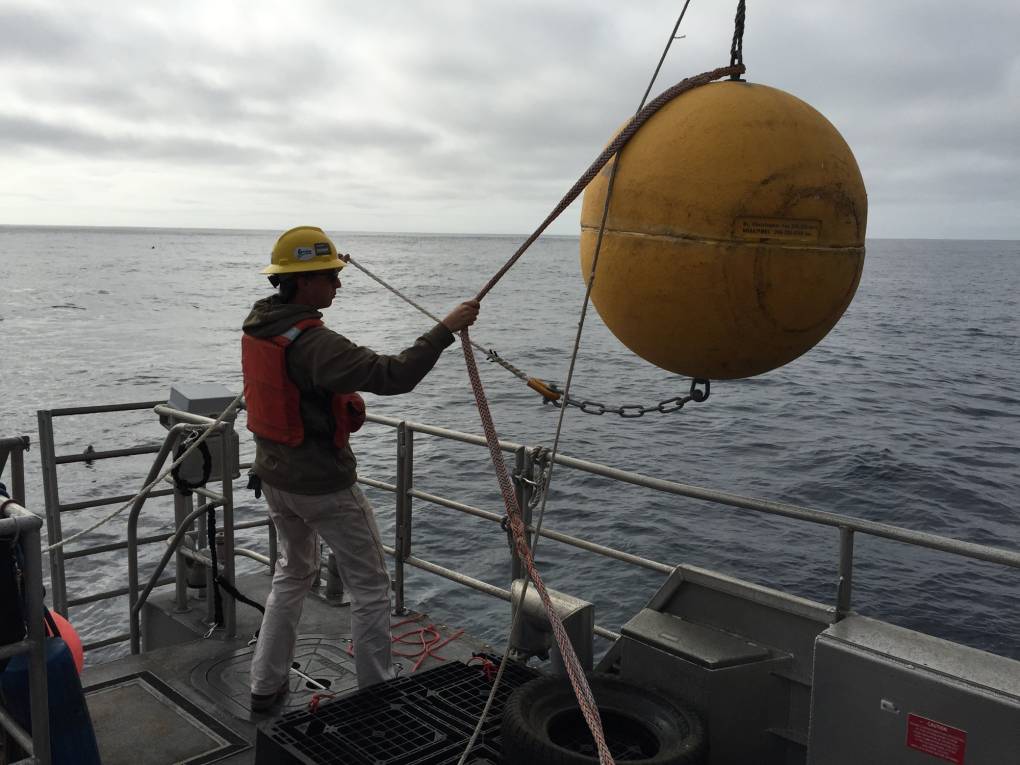
"caption": "A technician with NOAA scientists aboard the R/V Fulmar on Oct. 15, 2015, prepares to deploy an undersea sound-recording station 20 miles off of Pt. Reyes, in the Cordell Bank National Marine Sanctuary",
"credit": "Craig Miller/KQED",
"altTag": null,
"description": null,
"imgSizes": {
"medium": {
"file": "https://cdn.kqed.org/wp-content/uploads/sites/10/2025/03/NOAA1-800x600.jpg",
"width": 800,
"height": 600,
"mimeType": "image/jpeg"
},
"large": {
"file": "https://cdn.kqed.org/wp-content/uploads/sites/10/2025/03/NOAA1-1020x765.jpg",
"width": 1020,
"height": 765,
"mimeType": "image/jpeg"
},
"thumbnail": {
"file": "https://cdn.kqed.org/wp-content/uploads/sites/10/2025/03/NOAA1-160x120.jpg",
"width": 160,
"height": 120,
"mimeType": "image/jpeg"
},
"1536x1536": {
"file": "https://cdn.kqed.org/wp-content/uploads/sites/10/2025/03/NOAA1-1536x1152.jpg",
"width": 1536,
"height": 1152,
"mimeType": "image/jpeg"
},
"post-thumbnail": {
"file": "https://cdn.kqed.org/wp-content/uploads/sites/10/2025/03/NOAA1-672x372.jpg",
"width": 672,
"height": 372,
"mimeType": "image/jpeg"
},
"twentyfourteen-full-width": {
"file": "https://cdn.kqed.org/wp-content/uploads/sites/10/2025/03/NOAA1-1038x576.jpg",
"width": 1038,
"height": 576,
"mimeType": "image/jpeg"
},
"full-width": {
"file": "https://cdn.kqed.org/wp-content/uploads/sites/10/2025/03/NOAA1-1920x1440.jpg",
"width": 1920,
"height": 1440,
"mimeType": "image/jpeg"
},
"kqedFullSize": {
"file": "https://cdn.kqed.org/wp-content/uploads/sites/10/2025/03/NOAA1.jpg",
"width": 2000,
"height": 1500
}
},
"isLoading": false,
"fetchFailed": false
},
"news_12029848": {
"type": "attachments",
"id": "news_12029848",
"meta": {
"index": "attachments_1716263798",
"site": "news",
"id": "12029848",
"found": true
},
"title": "Kindergarten students at Crestmoor Elementary School, march outside for a recess break, in San Bruno, Ca., on Thursday April 19, 2012. The school located in the neighborhood of the 2010 San Bruno gas pipeline explosion is being considered for closure by",
"publishDate": 1741204470,
"status": "inherit",
"parent": 12029822,
"modified": 1741204664,
"caption": "Kindergarten students at a school in the San Bruno Park Elementary School District run outside for recess in San Bruno, California, on April 19, 2012. ",
"credit": "Michael Macor/The San Francisco Chronicle via Getty Images",
"altTag": null,
"description": null,
"imgSizes": {
"medium": {
"file": "https://cdn.kqed.org/wp-content/uploads/sites/10/2025/03/SanBrunoElementaryGetty-800x532.jpg",
"width": 800,
"height": 532,
"mimeType": "image/jpeg"
},
"large": {
"file": "https://cdn.kqed.org/wp-content/uploads/sites/10/2025/03/SanBrunoElementaryGetty-1020x678.jpg",
"width": 1020,
"height": 678,
"mimeType": "image/jpeg"
},
"thumbnail": {
"file": "https://cdn.kqed.org/wp-content/uploads/sites/10/2025/03/SanBrunoElementaryGetty-160x106.jpg",
"width": 160,
"height": 106,
"mimeType": "image/jpeg"
},
"1536x1536": {
"file": "https://cdn.kqed.org/wp-content/uploads/sites/10/2025/03/SanBrunoElementaryGetty-1536x1021.jpg",
"width": 1536,
"height": 1021,
"mimeType": "image/jpeg"
},
"post-thumbnail": {
"file": "https://cdn.kqed.org/wp-content/uploads/sites/10/2025/03/SanBrunoElementaryGetty-672x372.jpg",
"width": 672,
"height": 372,
"mimeType": "image/jpeg"
},
"twentyfourteen-full-width": {
"file": "https://cdn.kqed.org/wp-content/uploads/sites/10/2025/03/SanBrunoElementaryGetty-1038x576.jpg",
"width": 1038,
"height": 576,
"mimeType": "image/jpeg"
},
"full-width": {
"file": "https://cdn.kqed.org/wp-content/uploads/sites/10/2025/03/SanBrunoElementaryGetty-1920x1276.jpg",
"width": 1920,
"height": 1276,
"mimeType": "image/jpeg"
},
"kqedFullSize": {
"file": "https://cdn.kqed.org/wp-content/uploads/sites/10/2025/03/SanBrunoElementaryGetty.jpg",
"width": 2000,
"height": 1329
}
},
"isLoading": false,
"fetchFailed": false
},
"news_12008663": {
"type": "attachments",
"id": "news_12008663",
"meta": {
"index": "attachments_1716263798",
"site": "news",
"id": "12008663",
"found": true
},
"title": "241008-UCB CAMPUS WALKOUT-MD-09-KQED",
"publishDate": 1728431201,
"status": "inherit",
"parent": 12032046,
"modified": 1742415507,
"caption": "A walkout and rally for Gaza and Lebanon at the University of California, Berkeley, on Oct. 8, 2024.",
"credit": "Martin do Nascimento/KQED",
"altTag": null,
"description": null,
"imgSizes": {
"medium": {
"file": "https://cdn.kqed.org/wp-content/uploads/sites/10/2024/10/241008-UCB-CAMPUS-WALKOUT-MD-09-KQED-800x533.jpg",
"width": 800,
"height": 533,
"mimeType": "image/jpeg"
},
"large": {
"file": "https://cdn.kqed.org/wp-content/uploads/sites/10/2024/10/241008-UCB-CAMPUS-WALKOUT-MD-09-KQED-1020x680.jpg",
"width": 1020,
"height": 680,
"mimeType": "image/jpeg"
},
"thumbnail": {
"file": "https://cdn.kqed.org/wp-content/uploads/sites/10/2024/10/241008-UCB-CAMPUS-WALKOUT-MD-09-KQED-160x107.jpg",
"width": 160,
"height": 107,
"mimeType": "image/jpeg"
},
"1536x1536": {
"file": "https://cdn.kqed.org/wp-content/uploads/sites/10/2024/10/241008-UCB-CAMPUS-WALKOUT-MD-09-KQED-1536x1024.jpg",
"width": 1536,
"height": 1024,
"mimeType": "image/jpeg"
},
"post-thumbnail": {
"file": "https://cdn.kqed.org/wp-content/uploads/sites/10/2024/10/241008-UCB-CAMPUS-WALKOUT-MD-09-KQED-672x372.jpg",
"width": 672,
"height": 372,
"mimeType": "image/jpeg"
},
"twentyfourteen-full-width": {
"file": "https://cdn.kqed.org/wp-content/uploads/sites/10/2024/10/241008-UCB-CAMPUS-WALKOUT-MD-09-KQED-1038x576.jpg",
"width": 1038,
"height": 576,
"mimeType": "image/jpeg"
},
"full-width": {
"file": "https://cdn.kqed.org/wp-content/uploads/sites/10/2024/10/241008-UCB-CAMPUS-WALKOUT-MD-09-KQED-1920x1280.jpg",
"width": 1920,
"height": 1280,
"mimeType": "image/jpeg"
},
"kqedFullSize": {
"file": "https://cdn.kqed.org/wp-content/uploads/sites/10/2024/10/241008-UCB-CAMPUS-WALKOUT-MD-09-KQED.jpg",
"width": 2000,
"height": 1333
}
},
"isLoading": false,
"fetchFailed": false
},
"news_12029842": {
"type": "attachments",
"id": "news_12029842",
"meta": {
"index": "attachments_1716263798",
"site": "news",
"id": "12029842",
"found": true
},
"title": "250224-Presidio-20-BL_qed",
"publishDate": 1741203587,
"status": "inherit",
"parent": 12029839,
"modified": 1741203597,
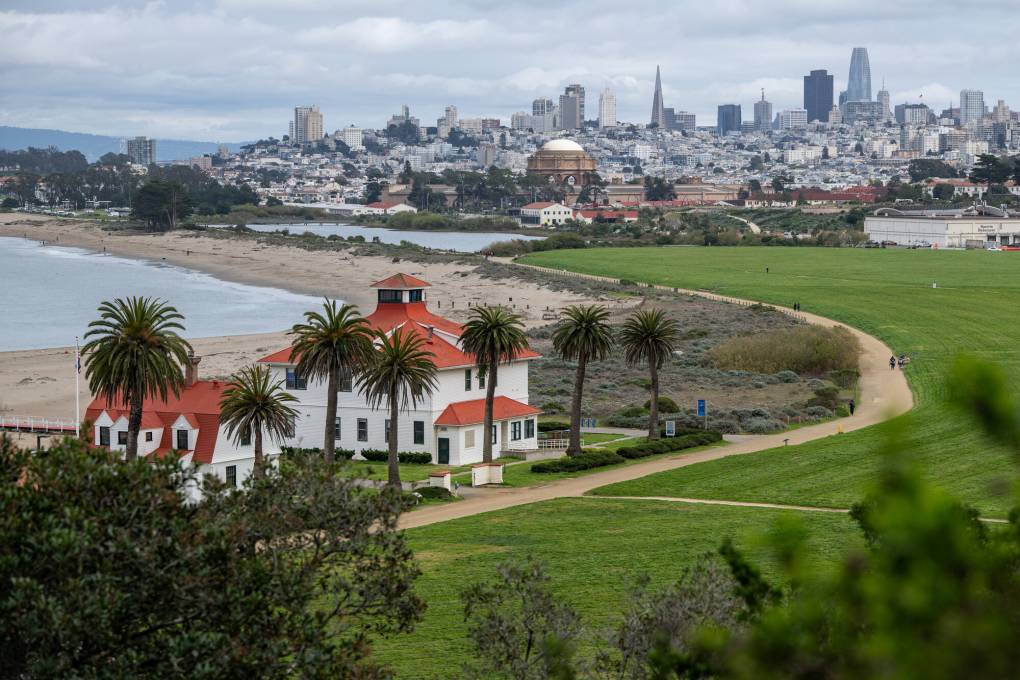
"caption": "A view of Crissy Field in the Presidio, a park and former military outpost, in San Francisco on Feb. 25, 2025.",
"credit": "Beth LaBerge/KQED",
"altTag": null,
"description": null,
"imgSizes": {
"medium": {
"file": "https://cdn.kqed.org/wp-content/uploads/sites/10/2025/03/250224-Presidio-20-BL_qed-800x533.jpg",
"width": 800,
"height": 533,
"mimeType": "image/jpeg"
},
"large": {
"file": "https://cdn.kqed.org/wp-content/uploads/sites/10/2025/03/250224-Presidio-20-BL_qed-1020x680.jpg",
"width": 1020,
"height": 680,
"mimeType": "image/jpeg"
},
"thumbnail": {
"file": "https://cdn.kqed.org/wp-content/uploads/sites/10/2025/03/250224-Presidio-20-BL_qed-160x107.jpg",
"width": 160,
"height": 107,
"mimeType": "image/jpeg"
},
"1536x1536": {
"file": "https://cdn.kqed.org/wp-content/uploads/sites/10/2025/03/250224-Presidio-20-BL_qed-1536x1024.jpg",
"width": 1536,
"height": 1024,
"mimeType": "image/jpeg"
},
"post-thumbnail": {
"file": "https://cdn.kqed.org/wp-content/uploads/sites/10/2025/03/250224-Presidio-20-BL_qed-672x372.jpg",
"width": 672,
"height": 372,
"mimeType": "image/jpeg"
},
"twentyfourteen-full-width": {
"file": "https://cdn.kqed.org/wp-content/uploads/sites/10/2025/03/250224-Presidio-20-BL_qed-1038x576.jpg",
"width": 1038,
"height": 576,
"mimeType": "image/jpeg"
},
"full-width": {
"file": "https://cdn.kqed.org/wp-content/uploads/sites/10/2025/03/250224-Presidio-20-BL_qed-1920x1280.jpg",
"width": 1920,
"height": 1280,
"mimeType": "image/jpeg"
},
"kqedFullSize": {
"file": "https://cdn.kqed.org/wp-content/uploads/sites/10/2025/03/250224-Presidio-20-BL_qed.jpg",
"width": 2000,
"height": 1333
}
},
"isLoading": false,
"fetchFailed": false
},
"news_12029693": {
"type": "attachments",
"id": "news_12029693",
"meta": {
"index": "attachments_1716263798",
"site": "news",
"id": "12029693",
"found": true
},
"title": "Bill Niman and his wife, Nicolette, with their cows in Bolinas, Calif., on January 29, 2009. Bill Niman founded Niman Ranch meat company.",
"publishDate": 1741126372,
"status": "inherit",
"parent": 12029675,
"modified": 1741189336,
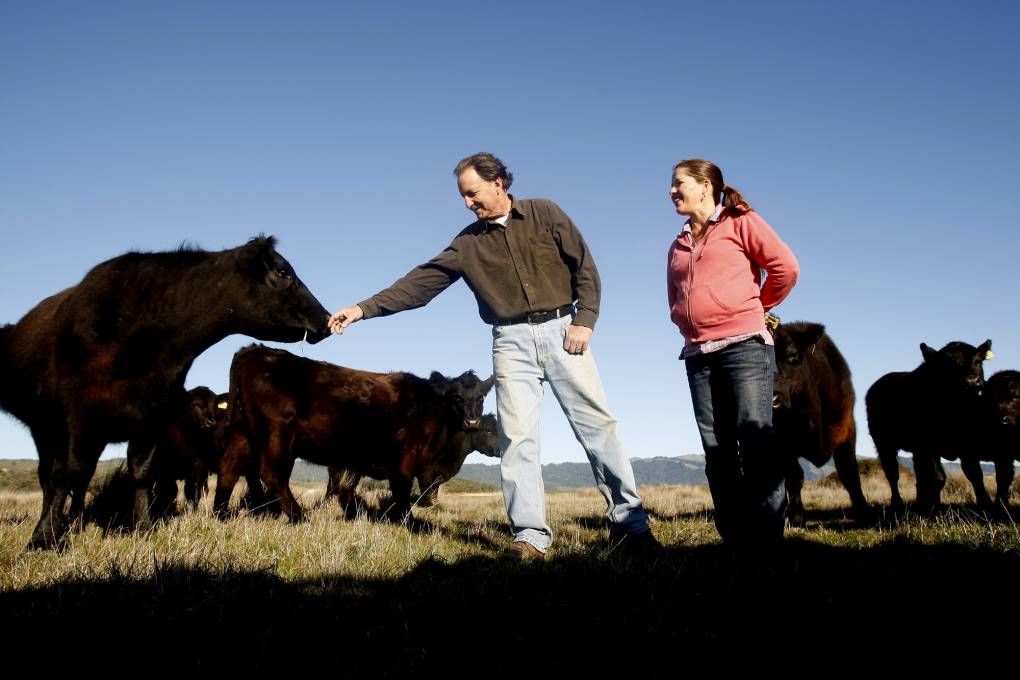
"caption": "Niman Ranch founder Bill Niman and his wife, Nicolette, with their cows in Bolinas, Marin County, on Jan. 29, 2009. The couple filed a lawsuit against the park service, advocating for regenerative farming at Point Reyes Seashore to preserve wildlife and the environment. ",
"credit": "Craig Lee/San Francisco Chronicle via Getty Images",
"altTag": null,
"description": null,
"imgSizes": {
"medium": {
"file": "https://cdn.kqed.org/wp-content/uploads/sites/10/2025/03/NimanRanchGetty-800x533.jpg",
"width": 800,
"height": 533,
"mimeType": "image/jpeg"
},
"large": {
"file": "https://cdn.kqed.org/wp-content/uploads/sites/10/2025/03/NimanRanchGetty-1020x680.jpg",
"width": 1020,
"height": 680,
"mimeType": "image/jpeg"
},
"thumbnail": {
"file": "https://cdn.kqed.org/wp-content/uploads/sites/10/2025/03/NimanRanchGetty-160x107.jpg",
"width": 160,
"height": 107,
"mimeType": "image/jpeg"
},
"1536x1536": {
"file": "https://cdn.kqed.org/wp-content/uploads/sites/10/2025/03/NimanRanchGetty-1536x1024.jpg",
"width": 1536,
"height": 1024,
"mimeType": "image/jpeg"
},
"post-thumbnail": {
"file": "https://cdn.kqed.org/wp-content/uploads/sites/10/2025/03/NimanRanchGetty-672x372.jpg",
"width": 672,
"height": 372,
"mimeType": "image/jpeg"
},
"twentyfourteen-full-width": {
"file": "https://cdn.kqed.org/wp-content/uploads/sites/10/2025/03/NimanRanchGetty-1038x576.jpg",
"width": 1038,
"height": 576,
"mimeType": "image/jpeg"
},
"full-width": {
"file": "https://cdn.kqed.org/wp-content/uploads/sites/10/2025/03/NimanRanchGetty-1920x1280.jpg",
"width": 1920,
"height": 1280,
"mimeType": "image/jpeg"
},
"kqedFullSize": {
"file": "https://cdn.kqed.org/wp-content/uploads/sites/10/2025/03/NimanRanchGetty.jpg",
"width": 2000,
"height": 1333
}
},
"isLoading": false,
"fetchFailed": false
},
"news_12019091": {
"type": "attachments",
"id": "news_12019091",
"meta": {
"index": "attachments_1716263798",
"site": "news",
"id": "12019091",
"found": true
},
"title": "The Park Fire burns along Route 32 northeast of Chico on July 26, 2024.",
"publishDate": 1734641171,
"status": "inherit",
"parent": 0,
"modified": 1734661036,
"caption": "The Park Fire burns along Highway 32 northeast of Chico on July 26, 2024.",
"credit": "Beth LaBerge/KQED",
"altTag": null,
"description": null,
"imgSizes": {
"medium": {
"file": "https://cdn.kqed.org/wp-content/uploads/sites/10/2024/12/15_240726-ParkFire-137-BL-800x533.jpg",
"width": 800,
"height": 533,
"mimeType": "image/jpeg"
},
"large": {
"file": "https://cdn.kqed.org/wp-content/uploads/sites/10/2024/12/15_240726-ParkFire-137-BL-1020x680.jpg",
"width": 1020,
"height": 680,
"mimeType": "image/jpeg"
},
"thumbnail": {
"file": "https://cdn.kqed.org/wp-content/uploads/sites/10/2024/12/15_240726-ParkFire-137-BL-160x107.jpg",
"width": 160,
"height": 107,
"mimeType": "image/jpeg"
},
"1536x1536": {
"file": "https://cdn.kqed.org/wp-content/uploads/sites/10/2024/12/15_240726-ParkFire-137-BL-1536x1024.jpg",
"width": 1536,
"height": 1024,
"mimeType": "image/jpeg"
},
"2048x2048": {
"file": "https://cdn.kqed.org/wp-content/uploads/sites/10/2024/12/15_240726-ParkFire-137-BL-2048x1365.jpg",
"width": 2048,
"height": 1365,
"mimeType": "image/jpeg"
},
"post-thumbnail": {
"file": "https://cdn.kqed.org/wp-content/uploads/sites/10/2024/12/15_240726-ParkFire-137-BL-672x372.jpg",
"width": 672,
"height": 372,
"mimeType": "image/jpeg"
},
"twentyfourteen-full-width": {
"file": "https://cdn.kqed.org/wp-content/uploads/sites/10/2024/12/15_240726-ParkFire-137-BL-1038x576.jpg",
"width": 1038,
"height": 576,
"mimeType": "image/jpeg"
},
"full-width": {
"file": "https://cdn.kqed.org/wp-content/uploads/sites/10/2024/12/15_240726-ParkFire-137-BL-1920x1280.jpg",
"width": 1920,
"height": 1280,
"mimeType": "image/jpeg"
},
"kqedFullSize": {
"file": "https://cdn.kqed.org/wp-content/uploads/sites/10/2024/12/15_240726-ParkFire-137-BL-scaled-e1741107952778.jpg",
"width": 2000,
"height": 1334
}
},
"isLoading": false,
"fetchFailed": false
},
"news_12029481": {
"type": "attachments",
"id": "news_12029481",
"meta": {
"index": "attachments_1716263798",
"site": "news",
"id": "12029481",
"found": true
},
"title": "Amiri Opening_KQED",
"publishDate": 1741037643,
"status": "inherit",
"parent": 12029444,
"modified": 1741038753,
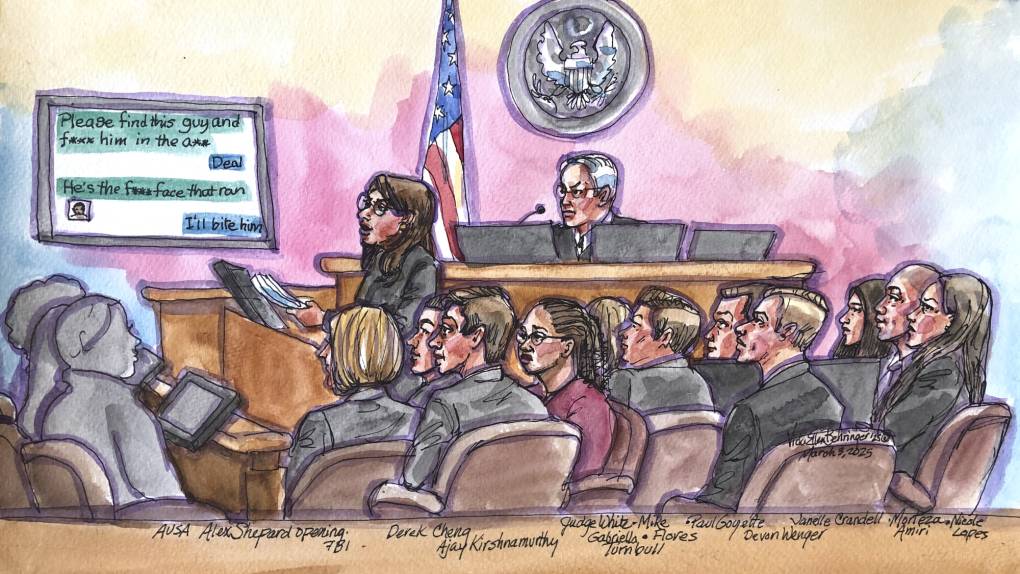
"caption": "The prosecution presents text messages on the first day of the federal trial against Morteza Amiri and Devon Christopher Wenger at the U.S. District Courthouse in Oakland on March 3, 2025. Amiri and Wenger face charges that they conspired to severely injure suspects over a period of three years.",
"credit": "Vicki Behringer for KQED",
"altTag": null,
"description": null,
"imgSizes": {
"medium": {
"file": "https://cdn.kqed.org/wp-content/uploads/sites/10/2025/03/Amiri-Opening_KQED-800x450.jpg",
"width": 800,
"height": 450,
"mimeType": "image/jpeg"
},
"large": {
"file": "https://cdn.kqed.org/wp-content/uploads/sites/10/2025/03/Amiri-Opening_KQED-1020x574.jpg",
"width": 1020,
"height": 574,
"mimeType": "image/jpeg"
},
"thumbnail": {
"file": "https://cdn.kqed.org/wp-content/uploads/sites/10/2025/03/Amiri-Opening_KQED-160x90.jpg",
"width": 160,
"height": 90,
"mimeType": "image/jpeg"
},
"1536x1536": {
"file": "https://cdn.kqed.org/wp-content/uploads/sites/10/2025/03/Amiri-Opening_KQED-1536x864.jpg",
"width": 1536,
"height": 864,
"mimeType": "image/jpeg"
},
"post-thumbnail": {
"file": "https://cdn.kqed.org/wp-content/uploads/sites/10/2025/03/Amiri-Opening_KQED-672x372.jpg",
"width": 672,
"height": 372,
"mimeType": "image/jpeg"
},
"twentyfourteen-full-width": {
"file": "https://cdn.kqed.org/wp-content/uploads/sites/10/2025/03/Amiri-Opening_KQED-1038x576.jpg",
"width": 1038,
"height": 576,
"mimeType": "image/jpeg"
},
"full-width": {
"file": "https://cdn.kqed.org/wp-content/uploads/sites/10/2025/03/Amiri-Opening_KQED-1920x1080.jpg",
"width": 1920,
"height": 1080,
"mimeType": "image/jpeg"
},
"kqedFullSize": {
"file": "https://cdn.kqed.org/wp-content/uploads/sites/10/2025/03/Amiri-Opening_KQED.jpg",
"width": 2000,
"height": 1125
}
},
"isLoading": false,
"fetchFailed": false
},
"news_12029225": {
"type": "attachments",
"id": "news_12029225",
"meta": {
"index": "attachments_1716263798",
"site": "news",
"id": "12029225",
"found": true
},
"title": "Trump Consumer Financial Protection Bureau",
"publishDate": 1740771717,
"status": "inherit",
"parent": 12028122,
"modified": 1740774381,
"caption": "A security officer works inside the Consumer Financial Protection Bureau (CFPB) building headquarters on Monday, Feb. 10, 2025.",
"credit": "Jacquelyn Martin/AP Photo",
"altTag": null,
"description": null,
"imgSizes": {
"medium": {
"file": "https://cdn.kqed.org/wp-content/uploads/sites/10/2025/02/CFPBAP-800x533.jpg",
"width": 800,
"height": 533,
"mimeType": "image/jpeg"
},
"large": {
"file": "https://cdn.kqed.org/wp-content/uploads/sites/10/2025/02/CFPBAP-1020x680.jpg",
"width": 1020,
"height": 680,
"mimeType": "image/jpeg"
},
"thumbnail": {
"file": "https://cdn.kqed.org/wp-content/uploads/sites/10/2025/02/CFPBAP-160x107.jpg",
"width": 160,
"height": 107,
"mimeType": "image/jpeg"
},
"1536x1536": {
"file": "https://cdn.kqed.org/wp-content/uploads/sites/10/2025/02/CFPBAP-1536x1024.jpg",
"width": 1536,
"height": 1024,
"mimeType": "image/jpeg"
},
"post-thumbnail": {
"file": "https://cdn.kqed.org/wp-content/uploads/sites/10/2025/02/CFPBAP-672x372.jpg",
"width": 672,
"height": 372,
"mimeType": "image/jpeg"
},
"twentyfourteen-full-width": {
"file": "https://cdn.kqed.org/wp-content/uploads/sites/10/2025/02/CFPBAP-1038x576.jpg",
"width": 1038,
"height": 576,
"mimeType": "image/jpeg"
},
"full-width": {
"file": "https://cdn.kqed.org/wp-content/uploads/sites/10/2025/02/CFPBAP-1920x1280.jpg",
"width": 1920,
"height": 1280,
"mimeType": "image/jpeg"
},
"kqedFullSize": {
"file": "https://cdn.kqed.org/wp-content/uploads/sites/10/2025/02/CFPBAP.jpg",
"width": 2000,
"height": 1333
}
},
"isLoading": false,
"fetchFailed": false
},
"news_12029327": {
"type": "attachments",
"id": "news_12029327",
"meta": {
"index": "attachments_1716263798",
"site": "news",
"id": "12029327",
"found": true
},
"title": "Farmworkers on farm near Bakersfield",
"publishDate": 1740784110,
"status": "inherit",
"parent": 12029195,
"modified": 1740784995,
"caption": "Farmworkers on a farm near Bakersfield in Kern County, California, on Oct. 22, 2021. ",
"credit": "Citizen of the Planet/UCG/Universal Images Group via Getty Images",
"altTag": null,
"description": null,
"imgSizes": {
"medium": {
"file": "https://cdn.kqed.org/wp-content/uploads/sites/10/2025/02/BakersfieldFarmworkersGetty-800x533.jpg",
"width": 800,
"height": 533,
"mimeType": "image/jpeg"
},
"large": {
"file": "https://cdn.kqed.org/wp-content/uploads/sites/10/2025/02/BakersfieldFarmworkersGetty-1020x680.jpg",
"width": 1020,
"height": 680,
"mimeType": "image/jpeg"
},
"thumbnail": {
"file": "https://cdn.kqed.org/wp-content/uploads/sites/10/2025/02/BakersfieldFarmworkersGetty-160x107.jpg",
"width": 160,
"height": 107,
"mimeType": "image/jpeg"
},
"1536x1536": {
"file": "https://cdn.kqed.org/wp-content/uploads/sites/10/2025/02/BakersfieldFarmworkersGetty-1536x1024.jpg",
"width": 1536,
"height": 1024,
"mimeType": "image/jpeg"
},
"post-thumbnail": {
"file": "https://cdn.kqed.org/wp-content/uploads/sites/10/2025/02/BakersfieldFarmworkersGetty-672x372.jpg",
"width": 672,
"height": 372,
"mimeType": "image/jpeg"
},
"twentyfourteen-full-width": {
"file": "https://cdn.kqed.org/wp-content/uploads/sites/10/2025/02/BakersfieldFarmworkersGetty-1038x576.jpg",
"width": 1038,
"height": 576,
"mimeType": "image/jpeg"
},
"full-width": {
"file": "https://cdn.kqed.org/wp-content/uploads/sites/10/2025/02/BakersfieldFarmworkersGetty-1920x1280.jpg",
"width": 1920,
"height": 1280,
"mimeType": "image/jpeg"
},
"kqedFullSize": {
"file": "https://cdn.kqed.org/wp-content/uploads/sites/10/2025/02/BakersfieldFarmworkersGetty.jpg",
"width": 2000,
"height": 1333
}
},
"isLoading": false,
"fetchFailed": false
},
"news_12029009": {
"type": "attachments",
"id": "news_12029009",
"meta": {
"index": "attachments_1716263798",
"site": "news",
"id": "12029009",
"found": true
},
"title": "20250226_Youth-Vote_DMB_00479",
"publishDate": 1740684079,
"status": "inherit",
"parent": 0,
"modified": 1740701783,
"caption": "Zamahra Winta Clark at Willard Park in Berkeley, on Wednesday, Feb. 26, 2025. Clark is a senior at Berkeley High who organized registration efforts among youth voters in her city and was a first-time youth voter in the 2024 election.",
"credit": "David M. Barreda/KQED",
"altTag": null,
"description": null,
"imgSizes": {
"medium": {
"file": "https://cdn.kqed.org/wp-content/uploads/sites/10/2025/02/20250226_Youth-Vote_DMB_00479-800x534.jpg",
"width": 800,
"height": 534,
"mimeType": "image/jpeg"
},
"large": {
"file": "https://cdn.kqed.org/wp-content/uploads/sites/10/2025/02/20250226_Youth-Vote_DMB_00479-1020x680.jpg",
"width": 1020,
"height": 680,
"mimeType": "image/jpeg"
},
"thumbnail": {
"file": "https://cdn.kqed.org/wp-content/uploads/sites/10/2025/02/20250226_Youth-Vote_DMB_00479-160x107.jpg",
"width": 160,
"height": 107,
"mimeType": "image/jpeg"
},
"1536x1536": {
"file": "https://cdn.kqed.org/wp-content/uploads/sites/10/2025/02/20250226_Youth-Vote_DMB_00479-1536x1025.jpg",
"width": 1536,
"height": 1025,
"mimeType": "image/jpeg"
},
"post-thumbnail": {
"file": "https://cdn.kqed.org/wp-content/uploads/sites/10/2025/02/20250226_Youth-Vote_DMB_00479-672x372.jpg",
"width": 672,
"height": 372,
"mimeType": "image/jpeg"
},
"twentyfourteen-full-width": {
"file": "https://cdn.kqed.org/wp-content/uploads/sites/10/2025/02/20250226_Youth-Vote_DMB_00479-1038x576.jpg",
"width": 1038,
"height": 576,
"mimeType": "image/jpeg"
},
"full-width": {
"file": "https://cdn.kqed.org/wp-content/uploads/sites/10/2025/02/20250226_Youth-Vote_DMB_00479-1920x1281.jpg",
"width": 1920,
"height": 1281,
"mimeType": "image/jpeg"
},
"kqedFullSize": {
"file": "https://cdn.kqed.org/wp-content/uploads/sites/10/2025/02/20250226_Youth-Vote_DMB_00479.jpg",
"width": 2000,
"height": 1334
}
},
"isLoading": false,
"fetchFailed": false
},
"news_12020173": {
"type": "attachments",
"id": "news_12020173",
"meta": {
"index": "attachments_1716263798",
"site": "news",
"id": "12020173",
"found": true
},
"title": "NS1_9754",
"publishDate": 1735853829,
"status": "inherit",
"parent": 12029075,
"modified": 1740767452,
"caption": "California Department of Water Resources staff members (from right) Andy Reising, Snow Surveys and Water Supply Forecasting Unit Manager; Jordan Thoennes, Water Resources Engineer; Manon von Kaenel, Water Resources Engineer; and Angelique Fabbiani-Leon, State Hydrometeorologist, conduct the first media snow survey of the 2025 season at Phillips Station in the Sierra Nevada in El Dorado County, Jan. 2, 2025.",
"credit": "Courtesy Nick Shockey/California Department of Water Resources",
"altTag": null,
"description": null,
"imgSizes": {
"medium": {
"file": "https://cdn.kqed.org/wp-content/uploads/sites/10/2025/01/NS1_9754-800x485.jpg",
"width": 800,
"height": 485,
"mimeType": "image/jpeg"
},
"large": {
"file": "https://cdn.kqed.org/wp-content/uploads/sites/10/2025/01/NS1_9754-1020x619.jpg",
"width": 1020,
"height": 619,
"mimeType": "image/jpeg"
},
"thumbnail": {
"file": "https://cdn.kqed.org/wp-content/uploads/sites/10/2025/01/NS1_9754-160x97.jpg",
"width": 160,
"height": 97,
"mimeType": "image/jpeg"
},
"1536x1536": {
"file": "https://cdn.kqed.org/wp-content/uploads/sites/10/2025/01/NS1_9754-1536x932.jpg",
"width": 1536,
"height": 932,
"mimeType": "image/jpeg"
},
"post-thumbnail": {
"file": "https://cdn.kqed.org/wp-content/uploads/sites/10/2025/01/NS1_9754-672x372.jpg",
"width": 672,
"height": 372,
"mimeType": "image/jpeg"
},
"twentyfourteen-full-width": {
"file": "https://cdn.kqed.org/wp-content/uploads/sites/10/2025/01/NS1_9754-1038x576.jpg",
"width": 1038,
"height": 576,
"mimeType": "image/jpeg"
},
"full-width": {
"file": "https://cdn.kqed.org/wp-content/uploads/sites/10/2025/01/NS1_9754-1920x1164.jpg",
"width": 1920,
"height": 1164,
"mimeType": "image/jpeg"
},
"kqedFullSize": {
"file": "https://cdn.kqed.org/wp-content/uploads/sites/10/2025/01/NS1_9754.jpg",
"width": 2000,
"height": 1213
}
},
"isLoading": false,
"fetchFailed": false
}
},
"audioPlayerReducer": {
"postId": "stream_live",
"isPaused": true,
"isPlaying": false,
"pfsActive": false,
"pledgeModalIsOpen": true,
"playerDrawerIsOpen": false,
"liveAudioPlayStartedAt": 0,
"liveAudioPlayContext": ""
},
"authorsReducer": {
"matthewgreen": {
"type": "authors",
"id": "1263",
"meta": {
"index": "authors_1716337520",
"id": "1263",
"found": true
},
"name": "Matthew Green",
"firstName": "Matthew",
"lastName": "Green",
"slug": "matthewgreen",
"email": "mgreen@kqed.org",
"display_author_email": false,
"staff_mastheads": [],
"title": "KQED Editor/Reporter",
"bio": "Matthew Green is a digital media producer for KQED News. He previously produced \u003ca href=\"http://www.kqed.org/lowdown\">The Lowdown\u003c/a>, KQED’s multimedia news education blog. Matthew's written for numerous Bay Area publications, including the Oakland Tribune and San Francisco Chronicle. He also taught journalism classes at Fremont High School in East Oakland.\r\n\r\nEmail: mgreen@kqed.org; Twitter: @MGreenKQED",
"avatar": "https://secure.gravatar.com/avatar/3bf498d1267ca02c8494f33d8cfc575e?s=600&d=blank&r=g",
"twitter": "MGreenKQED",
"facebook": null,
"instagram": null,
"linkedin": null,
"sites": [
{
"site": "news",
"roles": []
},
{
"site": "lowdown",
"roles": []
},
{
"site": "science",
"roles": []
},
{
"site": "education",
"roles": []
},
{
"site": "quest",
"roles": []
},
{
"site": "liveblog",
"roles": []
}
],
"headData": {
"title": "Matthew Green | KQED",
"description": "KQED Editor/Reporter",
"ogImgSrc": "https://secure.gravatar.com/avatar/3bf498d1267ca02c8494f33d8cfc575e?s=600&d=blank&r=g",
"twImgSrc": "https://secure.gravatar.com/avatar/3bf498d1267ca02c8494f33d8cfc575e?s=600&d=blank&r=g"
},
"isLoading": false,
"link": "/author/matthewgreen"
},
"aemslie": {
"type": "authors",
"id": "3206",
"meta": {
"index": "authors_1716337520",
"id": "3206",
"found": true
},
"name": "Alex Emslie",
"firstName": "Alex",
"lastName": "Emslie",
"slug": "aemslie",
"email": "aemslie@kqed.org",
"display_author_email": true,
"staff_mastheads": [
"news"
],
"title": "KQED Senior Editor",
"bio": "Alex Emslie is senior editor of talent and development at KQED, where he manages dozens of early career journalists and oversees news department internships.\r\n\r\nHe is a former carpenter and proud graduate of City College of San Francisco and San Francisco State University, where he studied journalism and criminal justice before joining KQED in 2013.\r\n\r\nAlex produced investigative journalism focused on \u003ca href=\"https://www.kqed.org/news/11667594/the-trials-of-marvin-mutch-video\">criminal justice\u003c/a> and policing for most of a decade. He has broken major stories about \u003ca href=\"https://www.kqed.org/news/135682/amid-a-series-of-vallejo-police-shootings-one-officers-name-stands-out\">police use of deadly force\u003c/a>, \u003ca href=\"https://www.kqed.org/news/10454955/racist-texts-prompt-sfpd-internal-investigation\">officer misconduct\u003c/a> and \u003ca href=\"https://www.kqed.org/news/11712239/terrorist-or-troll-judge-to-weigh-whether-oakland-man-really-intended-to-attack-bay-area\">other\u003c/a> \u003ca href=\"https://www.kqed.org/news/11221414/hayward-paid-159000-to-husband-of-retired-police-chief-documents-show\">high\u003c/a>-\u003ca href=\"https://www.kqed.org/news/10622762/the-forgotten-tracking-two-homicides-in-san-francisco-public-housing\">profile\u003c/a> \u003ca href=\"https://www.kqed.org/news/11624516/federal-agency-promoted-ranger-just-months-after-his-gun-was-stolen-and-used-in-steinle-killing\">cases\u003c/a>. He co-founded the \u003ca href=\"https://projects.scpr.org/california-reporting-project/\">California Reporting Project\u003c/a> in 2019 to obtain and report on previously confidential police internal investigations. The effort produced well over 100 original stories and changed the course of multiple criminal cases.\r\n\r\nHis work has been recognized with numerous journalism awards, including a national Edward R. Murrow award for several years of \u003ca href=\"https://www.kqed.org/news/11688481/sfpd-officers-in-mario-woods-case-recount-shooting-in-newly-filed-depositions\">reporting\u003c/a> on the San Francisco Police shooting of Mario Woods. His \u003ca href=\"https://www.kqed.org/news/147854/half-of-those-killed-by-san-francisco-police-are-mentally-ill\">reporting\u003c/a> on police killings of people in psychiatric crisis was cited in amicus briefs before the U.S. Supreme Court.\r\n\r\nAlex now enjoys mentoring the next generation of journalists at KQED.",
"avatar": "https://secure.gravatar.com/avatar/e691e65209f20e9da202bd730ead5663?s=600&d=blank&r=g",
"twitter": "SFNewsReporter",
"facebook": null,
"instagram": null,
"linkedin": null,
"sites": [
{
"site": "arts",
"roles": [
"editor"
]
},
{
"site": "news",
"roles": [
"editor"
]
},
{
"site": "mindshift",
"roles": [
"editor"
]
},
{
"site": "stateofhealth",
"roles": [
"editor"
]
},
{
"site": "science",
"roles": [
"administrator"
]
}
],
"headData": {
"title": "Alex Emslie | KQED",
"description": "KQED Senior Editor",
"ogImgSrc": "https://secure.gravatar.com/avatar/e691e65209f20e9da202bd730ead5663?s=600&d=blank&r=g",
"twImgSrc": "https://secure.gravatar.com/avatar/e691e65209f20e9da202bd730ead5663?s=600&d=blank&r=g"
},
"isLoading": false,
"link": "/author/aemslie"
},
"shossaini": {
"type": "authors",
"id": "3214",
"meta": {
"index": "authors_1716337520",
"id": "3214",
"found": true
},
"name": "Sara Hossaini",
"firstName": "Sara",
"lastName": "Hossaini",
"slug": "shossaini",
"email": "shossaini@kqed.org",
"display_author_email": true,
"staff_mastheads": [
"news"
],
"title": "KQED Reporter",
"bio": "Sara Hossaini came to general assignment reporting at KQED in 2013 after two winters reporting at Wyoming Public Radio. She holds a bachelor's degree in broadcast journalism from the University of Nebraska-Lincoln. Her radio romance began after a bitter breakup with documentary film (Ok, maybe it's still complicated). Her first simultaneous jobs in San Francisco were as Associate Producer on a PBS film series through the Center for Asian American Media and as a butler. She likes to trot, plot and make things with her hands.",
"avatar": "https://secure.gravatar.com/avatar/060e9f56b9554e17942e89f413242774?s=600&d=blank&r=g",
"twitter": "mshossaini",
"facebook": null,
"instagram": null,
"linkedin": null,
"sites": [
{
"site": "news",
"roles": [
"author"
]
},
{
"site": "stateofhealth",
"roles": [
"author"
]
}
],
"headData": {
"title": "Sara Hossaini | KQED",
"description": "KQED Reporter",
"ogImgSrc": "https://secure.gravatar.com/avatar/060e9f56b9554e17942e89f413242774?s=600&d=blank&r=g",
"twImgSrc": "https://secure.gravatar.com/avatar/060e9f56b9554e17942e89f413242774?s=600&d=blank&r=g"
},
"isLoading": false,
"link": "/author/shossaini"
},
"fjhabvala": {
"type": "authors",
"id": "8659",
"meta": {
"index": "authors_1716337520",
"id": "8659",
"found": true
},
"name": "Farida Jhabvala Romero",
"firstName": "Farida",
"lastName": "Jhabvala Romero",
"slug": "fjhabvala",
"email": "fjhabvala@kqed.org",
"display_author_email": true,
"staff_mastheads": [
"news"
],
"title": "KQED Contributor",
"bio": "Farida Jhabvala Romero is a Labor Correspondent for KQED. She previously covered immigration. Farida was \u003ca href=\"https://www.ccnma.org/2022-most-influential-latina-journalists\">named\u003c/a> one of the 10 Most Influential Latina Journalists in California in 2022 by the California Chicano News Media Association. Her work has won awards from the Society of Professional Journalists (Northern California), as well as a national and regional Edward M. Murrow Award for the collaborative reporting projects “Dangerous Air” and “Graying California.” Before joining KQED, Farida worked as a producer at Radio Bilingüe, a national public radio network. Farida earned her master’s degree in journalism from Stanford University.",
"avatar": "https://secure.gravatar.com/avatar/f9f022d4e2609741874222a1e9d41f48fea74011aa7c615eef91d9a50c944ebe?s=600&d=blank&r=g",
"twitter": "FaridaJhabvala",
"bluesky": null,
"facebook": null,
"instagram": null,
"linkedin": "https://www.linkedin.com/in/faridajhabvala/",
"sites": [
{
"site": "news",
"roles": [
"editor"
]
},
{
"site": "stateofhealth",
"roles": [
"author"
]
},
{
"site": "liveblog",
"roles": [
"author"
]
}
],
"headData": {
"title": "Farida Jhabvala Romero | KQED",
"description": "KQED Contributor",
"ogImgSrc": "https://secure.gravatar.com/avatar/f9f022d4e2609741874222a1e9d41f48fea74011aa7c615eef91d9a50c944ebe?s=600&d=blank&r=g",
"twImgSrc": "https://secure.gravatar.com/avatar/f9f022d4e2609741874222a1e9d41f48fea74011aa7c615eef91d9a50c944ebe?s=600&d=blank&r=g"
},
"isLoading": false,
"link": "/author/fjhabvala"
},
"dventon": {
"type": "authors",
"id": "11088",
"meta": {
"index": "authors_1716337520",
"id": "11088",
"found": true
},
"name": "Danielle Venton",
"firstName": "Danielle",
"lastName": "Venton",
"slug": "dventon",
"email": "dventon@kqed.org",
"display_author_email": true,
"staff_mastheads": [
"science"
],
"title": "Science reporter",
"bio": "Danielle Venton is a reporter for KQED Science. She covers wildfires, space and oceans (though she is prone to sea sickness).\r\n\r\nBefore joining KQED in 2015, Danielle was a staff reporter at KRCB in Sonoma County and a freelancer. She studied science communication at UC Santa Cruz and formerly worked at CERN in Geneva, Switzerland where she wrote about computing. She lives in Sonoma County and enjoys backpacking.",
"avatar": "https://secure.gravatar.com/avatar/ebaf11ee6cfb7bb40329a143d463829e?s=600&d=blank&r=g",
"twitter": "DanielleVenton",
"facebook": null,
"instagram": null,
"linkedin": null,
"sites": [
{
"site": "arts",
"roles": [
"contributor"
]
},
{
"site": "news",
"roles": [
"editor"
]
},
{
"site": "futureofyou",
"roles": [
"editor"
]
},
{
"site": "science",
"roles": [
"editor"
]
},
{
"site": "liveblog",
"roles": [
"contributor"
]
}
],
"headData": {
"title": "Danielle Venton | KQED",
"description": "Science reporter",
"ogImgSrc": "https://secure.gravatar.com/avatar/ebaf11ee6cfb7bb40329a143d463829e?s=600&d=blank&r=g",
"twImgSrc": "https://secure.gravatar.com/avatar/ebaf11ee6cfb7bb40329a143d463829e?s=600&d=blank&r=g"
},
"isLoading": false,
"link": "/author/dventon"
},
"abandlamudi": {
"type": "authors",
"id": "11672",
"meta": {
"index": "authors_1716337520",
"id": "11672",
"found": true
},
"name": "Adhiti Bandlamudi",
"firstName": "Adhiti",
"lastName": "Bandlamudi",
"slug": "abandlamudi",
"email": "abandlamudi@kqed.org",
"display_author_email": false,
"staff_mastheads": [
"news"
],
"title": "KQED Housing Reporter",
"bio": "Adhiti Bandlamudi reports for KQED's Housing desk. She focuses on how housing gets built across the Bay Area. Before joining KQED in 2020, she reported for WUNC in Durham, North Carolina, WABE in Atlanta, Georgia and Capital Public Radio in Sacramento. In 2017, she was awarded a Kroc Fellowship at NPR where she reported on everything from sprinkles to the Golden State Killer's arrest. When she's not reporting, she's baking new recipes in her kitchen or watching movies with friends and family. She's originally from Georgia and has strong opinions about Great British Bake Off.",
"avatar": "https://secure.gravatar.com/avatar/868129c8b257bb99a3500e2c86a65400?s=600&d=mm&r=g",
"twitter": "oddity_adhiti",
"facebook": null,
"instagram": null,
"linkedin": null,
"sites": [
{
"site": "arts",
"roles": [
"author"
]
},
{
"site": "news",
"roles": [
"editor"
]
},
{
"site": "liveblog",
"roles": [
"author"
]
}
],
"headData": {
"title": "Adhiti Bandlamudi | KQED",
"description": "KQED Housing Reporter",
"ogImgSrc": "https://secure.gravatar.com/avatar/868129c8b257bb99a3500e2c86a65400?s=600&d=mm&r=g",
"twImgSrc": "https://secure.gravatar.com/avatar/868129c8b257bb99a3500e2c86a65400?s=600&d=mm&r=g"
},
"isLoading": false,
"link": "/author/abandlamudi"
},
"eromero": {
"type": "authors",
"id": "11746",
"meta": {
"index": "authors_1716337520",
"id": "11746",
"found": true
},
"name": "Ezra David Romero",
"firstName": "Ezra David",
"lastName": "Romero",
"slug": "eromero",
"email": "eromero@kqed.org",
"display_author_email": true,
"staff_mastheads": [
"news",
"science"
],
"title": "Climate Reporter",
"bio": "Ezra David Romero is a climate reporter for KQED News. He covers the absence and excess of water in the Bay Area — think sea level rise, flooding and drought. For nearly a decade he’s covered how warming temperatures are altering the lives of Californians. He’s reported on farmers worried their pistachio trees aren’t getting enough sleep, families desperate for water, scientists studying dying giant sequoias, and alongside firefighters containing wildfires. His work has appeared on local stations across California and nationally on public radio shows like Morning Edition, Here and Now, All Things Considered and Science Friday. ",
"avatar": "https://secure.gravatar.com/avatar/9c15bb8bab267e058708a9eeaeef16bf?s=600&d=blank&r=g",
"twitter": "ezraromero",
"bluesky": null,
"facebook": null,
"instagram": null,
"linkedin": null,
"sites": [
{
"site": "arts",
"roles": [
"editor"
]
},
{
"site": "news",
"roles": [
"editor"
]
},
{
"site": "science",
"roles": [
"editor"
]
},
{
"site": "liveblog",
"roles": [
"author"
]
}
],
"headData": {
"title": "Ezra David Romero | KQED",
"description": "Climate Reporter",
"ogImgSrc": "https://secure.gravatar.com/avatar/9c15bb8bab267e058708a9eeaeef16bf?s=600&d=blank&r=g",
"twImgSrc": "https://secure.gravatar.com/avatar/9c15bb8bab267e058708a9eeaeef16bf?s=600&d=blank&r=g"
},
"isLoading": false,
"link": "/author/eromero"
},
"jlara": {
"type": "authors",
"id": "11761",
"meta": {
"index": "authors_1716337520",
"id": "11761",
"found": true
},
"name": "Juan Carlos Lara",
"firstName": "Juan Carlos",
"lastName": "Lara",
"slug": "jlara",
"email": "jlara@kqed.org",
"display_author_email": false,
"staff_mastheads": [],
"title": "KQED Contributor",
"bio": null,
"avatar": "https://secure.gravatar.com/avatar/19e2052b9b05657c5ff2af2121846e9c?s=600&d=blank&r=g",
"twitter": null,
"facebook": null,
"instagram": null,
"linkedin": null,
"sites": [
{
"site": "arts",
"roles": [
"editor"
]
},
{
"site": "news",
"roles": [
"editor"
]
},
{
"site": "forum",
"roles": [
"editor"
]
},
{
"site": "liveblog",
"roles": [
"contributor"
]
}
],
"headData": {
"title": "Juan Carlos Lara | KQED",
"description": "KQED Contributor",
"ogImgSrc": "https://secure.gravatar.com/avatar/19e2052b9b05657c5ff2af2121846e9c?s=600&d=blank&r=g",
"twImgSrc": "https://secure.gravatar.com/avatar/19e2052b9b05657c5ff2af2121846e9c?s=600&d=blank&r=g"
},
"isLoading": false,
"link": "/author/jlara"
},
"kdebenedetti": {
"type": "authors",
"id": "11913",
"meta": {
"index": "authors_1716337520",
"id": "11913",
"found": true
},
"name": "Katie DeBenedetti",
"firstName": "Katie",
"lastName": "DeBenedetti",
"slug": "kdebenedetti",
"email": "kdebenedetti@kqed.org",
"display_author_email": false,
"staff_mastheads": [
"news",
"science"
],
"title": "KQED Contributor",
"bio": "Katie DeBenedetti is a digital reporter covering daily news for the Express Desk. Prior to joining KQED as a culture reporting intern in January 2024, she covered education and city government for the Napa Valley Register.",
"avatar": "https://secure.gravatar.com/avatar/6e31073cb8f7e4214ab03f42771d0f45?s=600&d=blank&r=g",
"twitter": null,
"facebook": null,
"instagram": null,
"linkedin": null,
"sites": [
{
"site": "news",
"roles": [
"author"
]
},
{
"site": "science",
"roles": [
"author"
]
},
{
"site": "liveblog",
"roles": [
"author"
]
}
],
"headData": {
"title": "Katie DeBenedetti | KQED",
"description": "KQED Contributor",
"ogImgSrc": "https://secure.gravatar.com/avatar/6e31073cb8f7e4214ab03f42771d0f45?s=600&d=blank&r=g",
"twImgSrc": "https://secure.gravatar.com/avatar/6e31073cb8f7e4214ab03f42771d0f45?s=600&d=blank&r=g"
},
"isLoading": false,
"link": "/author/kdebenedetti"
},
"slim": {
"type": "authors",
"id": "11920",
"meta": {
"index": "authors_1716337520",
"id": "11920",
"found": true
},
"name": "Samantha Lim",
"firstName": "Samantha",
"lastName": "Lim",
"slug": "slim",
"email": "slim@KQED.org",
"display_author_email": false,
"staff_mastheads": [],
"title": "KQED Contributor",
"bio": null,
"avatar": "https://secure.gravatar.com/avatar/82e592e6c15fe1a04d385e8ad0fb0b4e?s=600&d=blank&r=g",
"twitter": null,
"facebook": null,
"instagram": null,
"linkedin": null,
"sites": [
{
"site": "news",
"roles": []
}
],
"headData": {
"title": "Samantha Lim | KQED",
"description": "KQED Contributor",
"ogImgSrc": "https://secure.gravatar.com/avatar/82e592e6c15fe1a04d385e8ad0fb0b4e?s=600&d=blank&r=g",
"twImgSrc": "https://secure.gravatar.com/avatar/82e592e6c15fe1a04d385e8ad0fb0b4e?s=600&d=blank&r=g"
},
"isLoading": false,
"link": "/author/slim"
},
"rcooke": {
"type": "authors",
"id": "11921",
"meta": {
"index": "authors_1716337520",
"id": "11921",
"found": true
},
"name": "Riley Cooke",
"firstName": "Riley",
"lastName": "Cooke",
"slug": "rcooke",
"email": "rcooke@kqed.org",
"display_author_email": true,
"staff_mastheads": [
"news"
],
"title": "KQED Contributor",
"bio": "Riley is a senior at UC Berkeley, where she studies political science and journalism. Her work has appeared in SFGate, NBC Bay Area, Local News Matters and more. She enjoys reporting on politics, housing and homelessness — and using as many em dashes as her editors will allow.",
"avatar": "https://secure.gravatar.com/avatar/792f98c126cc5e270a8a96f77f7224ea?s=600&d=blank&r=g",
"twitter": "rrileycooke",
"facebook": null,
"instagram": null,
"linkedin": null,
"sites": [
{
"site": "arts",
"roles": [
"author"
]
},
{
"site": "news",
"roles": [
"author"
]
}
],
"headData": {
"title": "Riley Cooke | KQED",
"description": "KQED Contributor",
"ogImgSrc": "https://secure.gravatar.com/avatar/792f98c126cc5e270a8a96f77f7224ea?s=600&d=blank&r=g",
"twImgSrc": "https://secure.gravatar.com/avatar/792f98c126cc5e270a8a96f77f7224ea?s=600&d=blank&r=g"
},
"isLoading": false,
"link": "/author/rcooke"
}
},
"pagesReducer": {
"news_tag_california": {
"type": "terms",
"id": "news_18538",
"meta": {
"index": "terms_1716263798",
"site": "news",
"id": "18538",
"score": 6.8457103
},
"featImg": null,
"name": "California",
"description": null,
"taxonomy": "tag",
"headData": {
"twImgId": null,
"twTitle": null,
"ogTitle": null,
"ogImgId": null,
"twDescription": null,
"description": null,
"title": "California Archives | KQED News",
"ogDescription": null
},
"ttid": 31,
"slug": "california",
"isLoading": false,
"title": "California",
"pageMeta": {
"site": "news",
"WpPageTemplate": "page-topic-editorial",
"currentPage": 103
},
"blocks": [
{
"blockName": "kqed/post-list",
"attrs": {
"layout": "cardArticle2",
"query": "posts/news?tag=california",
"seeMore": false,
"paginated": true,
"page": 103
}
},
{
"blockName": "kqed/ad"
}
]
}
},
"pfsSessionReducer": {},
"postsReducer": {
"stream_live": {
"type": "live",
"id": "stream_live",
"audioUrl": "https://streams.kqed.org/kqedradio",
"title": "Live Stream",
"excerpt": "Live Stream information currently unavailable.",
"link": "/radio",
"featImg": "",
"label": {
"name": "KQED Live",
"link": "/"
}
},
"stream_kqedNewscast": {
"type": "posts",
"id": "stream_kqedNewscast",
"audioUrl": "https://www.kqed.org/.stream/anon/radio/RDnews/newscast.mp3?_=1",
"title": "KQED Newscast",
"featImg": "",
"label": {
"name": "88.5 FM",
"link": "/"
}
},
"news_12029950": {
"type": "posts",
"id": "news_12029950",
"meta": {
"index": "posts_1716263798",
"site": "news",
"id": "12029950",
"score": null,
"sort": [
1741275056000
]
},
"guestAuthors": [],
"slug": "rio-vista-explores-annexing-some-california-forevers-land",
"title": "Rio Vista Explores Annexing Some of California Forever's Land",
"publishDate": 1741275056,
"format": "standard",
"headTitle": "Rio Vista Explores Annexing Some of California Forever’s Land | KQED",
"labelTerm": {
"site": "news"
},
"content": "\u003cp>On Tuesday, the Rio Vista City Council voted unanimously to explore annexing some of the land owned by a subsidiary of California Forever, making it the second neighbor to consider expanding its boundaries in the wake of the company’s \u003ca href=\"https://www.kqed.org/news/12000185/this-tech-backed-company-tried-to-disrupt-californias-housing-crisis-it-couldnt\">proposal to build a city from scratch\u003c/a> on nearby farmland.\u003c/p>\n\u003cp>In January, Suisun City’s council took a similar action to consider \u003ca href=\"https://www.suisun.com/Departments/Development-Services/Suisun-City-Expansion-Exploration?utm_medium=email&utm_source=govdelivery\">annexing land\u003c/a> surrounding its borders. Although the directive didn’t specifically mention California Forever, a large portion of unincorporated land to the east of the city is owned by the company’s subsidiary, Flannery Associates.\u003c/p>\n\u003cp>“This decision is about just getting to the table,” Rio Vista Mayor Edwin Okamura said shortly before Tuesday’s vote. “Many of us were content waiting for further studies on the original impacts of the California Forever project before weighing in. Suisun’s bold move requires Rio Vista to take steps to protect our interests.”\u003c/p>\n\u003cp>[ad fullwidth]\u003c/p>\n\u003cp>The council directed staff to start the lengthy process of determining how much land the city could annex, the process for annexation, and how such a move might impact its budget. Included in that process is a request to explore expansion while still maintaining Rio Vista’s character as \u003ca href=\"https://riovista-ca.granicus.com/MetaViewer.php?view_id=1&event_id=2363&meta_id=59354\">“a quaint river town.”\u003c/a>\u003c/p>\n\u003cp>At just \u003ca href=\"https://www.census.gov/quickfacts/fact/table/dixoncitycalifornia,riovistacitycalifornia,suisuncitycitycalifornia,US/PST045224\">6.6 square miles and 4 square miles\u003c/a>, respectively, Rio Vista and neighboring Suisun City are the county’s two smallest cities. Lisa Duke, who was recently appointed to the city council, said she wants to protect the 700-acre open space buffer between Rio Vista and the proposed city.\u003c/p>\n\u003cfigure id=\"attachment_12029957\" class=\"wp-caption aligncenter\" style=\"max-width: 2000px\">\u003cimg loading=\"lazy\" decoding=\"async\" class=\"size-full wp-image-12029957\" src=\"https://cdn.kqed.org/wp-content/uploads/sites/10/2025/03/RioVista1.jpg\" alt=\"\" width=\"2000\" height=\"1346\" srcset=\"https://cdn.kqed.org/wp-content/uploads/sites/10/2025/03/RioVista1.jpg 2000w, https://cdn.kqed.org/wp-content/uploads/sites/10/2025/03/RioVista1-800x538.jpg 800w, https://cdn.kqed.org/wp-content/uploads/sites/10/2025/03/RioVista1-1020x686.jpg 1020w, https://cdn.kqed.org/wp-content/uploads/sites/10/2025/03/RioVista1-160x108.jpg 160w, https://cdn.kqed.org/wp-content/uploads/sites/10/2025/03/RioVista1-1536x1034.jpg 1536w, https://cdn.kqed.org/wp-content/uploads/sites/10/2025/03/RioVista1-1920x1292.jpg 1920w\" sizes=\"auto, (max-width: 2000px) 100vw, 2000px\">\u003cfigcaption class=\"wp-caption-text\">The small town of Rio Vista, located along the Sacramento River and Highway 12, is viewed from the air on May 22, 2023. \u003ccite>(George Rose/Getty Images)\u003c/cite>\u003c/figcaption>\u003c/figure>\n\u003cp>“I wanted to live in a small rural town surrounded by open space, and that’s why I’m here,” she said. “I’m not happy about the position that I’m in tonight, but I was appointed to make the best decisions possible for Rio Vista and the community.”\u003c/p>\n\u003cp>Last year, California Forever, a company \u003ca href=\"https://www.nytimes.com/2023/08/25/business/land-purchases-solano-county.html\">backed by a cadre of Silicon Valley billionaires\u003c/a>, introduced the \u003ca href=\"https://www.kqed.org/news/12000185/this-tech-backed-company-tried-to-disrupt-californias-housing-crisis-it-couldnt\">East Solano Plan\u003c/a>. The ambitious ballot measure asked Solano County voters for permission to build a new city that would eventually support some 400,000 new residents, bring “\u003ca href=\"https://californiaforever.com/economic-impact/\">well-paid\u003c/a>” jobs to Solano and \u003ca href=\"https://californiaforever.com/transportation/\">improve the county’s worn-down infrastructure\u003c/a>. In the years leading up to the company’s announcement, its subsidiary quietly bought more than \u003ca href=\"https://www.abc10.com/article/news/local/vacaville/farmers-refuse-sell-to-flannery-associates/103-e02f38f9-8093-43a5-8dc2-79a9b0a98ed6#:~:text=%E2%80%94%20Flannery%20Associates%2C%20investors%20in%20the,land%20owners%20in%20the%20county.\">60,000 acres of farmland\u003c/a>, making it the \u003ca href=\"https://www.abc10.com/article/news/local/vacaville/farmers-refuse-sell-to-flannery-associates/103-e02f38f9-8093-43a5-8dc2-79a9b0a98ed6#:~:text=%E2%80%94%20Flannery%20Associates%2C%20investors%20in%20the,land%20owners%20in%20the%20county.\">largest private landowner\u003c/a> in the county.\u003c/p>\n\u003cp>Company executives were prepared to present the plan to voters in November but \u003ca href=\"https://www.kqed.org/news/11996747/california-forever-pulls-bid-to-build-new-city-from-this-years-ballot\">pulled the ballot measure\u003c/a> a few months before the election, instead promising to publish an environmental impact report and a development agreement before bringing the measure back to voters in 2026.\u003c/p>\n\u003cp>[aside postID=news_12011148 hero='https://cdn.kqed.org/wp-content/uploads/sites/10/2024/10/231205-SolanoCountyFarmers-68-BL_qed-1020x680.jpg']\u003c/p>\n\u003cp>Since then, officials in neighboring cities have been slowly warming up to negotiating with California Forever.\u003c/p>\n\u003cp>During a Jan. 21 meeting, Suisun City officials directed City Manager Bret Prebula to study whether expanding the city’s limits could broaden its tax base to bolster its dwindling revenues. During public comment, \u003ca href=\"https://www.kcra.com/article/suisun-city-leaders-conspiracy-theories-california-forever/63509835\">opponents of the East Solano Plan cited concerns about a lack of transparency\u003c/a> in the council and agenda, not mentioning California Forever or acknowledging at the outset that this move would require talking to the company’s representatives.\u003c/p>\n\u003cp>“This isn’t about Suisun City trying to do a land grab,” Prebula told KQED. “It’s about us doing it for our own survival and for the future for our residents.”\u003c/p>\n\u003cp>Shortly after the meeting, Fairfield Mayor Catherine Moy and other \u003ca href=\"https://www.dailyrepublic.com/news/moy-city-welcomes-input-from-defense-tech-companies-that-may-be-part-of-california-forever/article_fd5a9ae6-de83-11ef-8942-27748a2b9708.html\">city officials\u003c/a> announced they wanted to work with California Forever to bring defense tech companies to their city.\u003c/p>\n\u003cp>In a statement to KQED, California Forever spokesperson Julia Blystone said the company is “committed to working with all stakeholders to build a stronger Solano County.” If the company receives an invitation to explore annexations from Rio Vista or Suisun City, Blystone said it would “be open to a conversation.”\u003c/p>\n\u003cfigure id=\"attachment_12029959\" class=\"wp-caption aligncenter\" style=\"max-width: 2000px\">\u003cimg loading=\"lazy\" decoding=\"async\" class=\"size-full wp-image-12029959\" src=\"https://cdn.kqed.org/wp-content/uploads/sites/10/2025/03/240502-CaliforniaForever-88-BL_qed.jpg\" alt=\"\" width=\"2000\" height=\"1333\" srcset=\"https://cdn.kqed.org/wp-content/uploads/sites/10/2025/03/240502-CaliforniaForever-88-BL_qed.jpg 2000w, https://cdn.kqed.org/wp-content/uploads/sites/10/2025/03/240502-CaliforniaForever-88-BL_qed-800x533.jpg 800w, https://cdn.kqed.org/wp-content/uploads/sites/10/2025/03/240502-CaliforniaForever-88-BL_qed-1020x680.jpg 1020w, https://cdn.kqed.org/wp-content/uploads/sites/10/2025/03/240502-CaliforniaForever-88-BL_qed-160x107.jpg 160w, https://cdn.kqed.org/wp-content/uploads/sites/10/2025/03/240502-CaliforniaForever-88-BL_qed-1536x1024.jpg 1536w, https://cdn.kqed.org/wp-content/uploads/sites/10/2025/03/240502-CaliforniaForever-88-BL_qed-1920x1280.jpg 1920w\" sizes=\"auto, (max-width: 2000px) 100vw, 2000px\">\u003cfigcaption class=\"wp-caption-text\">Sheep graze on farmland west of Rio Vista on May 2, 2024. \u003ccite>(Beth LaBerge/KQED)\u003c/cite>\u003c/figcaption>\u003c/figure>\n\u003cp>Neither city has specified how much land it would annex or how the move, if ultimately approved, would impact the company’s proposed East Solano Plan. The land is currently within Solano County’s jurisdiction, but a spokesperson for the county did not return a request for comment.\u003c/p>\n\u003cp>In a \u003ca href=\"https://riovista-ca.granicus.com/MetaViewer.php?view_id=1&event_id=2363&meta_id=59354\">report detailing Rio Vista’s options\u003c/a> for annexation, staff said potential benefits could include broadening the city’s tax base, improving infrastructure and retaining the ability to negotiate with California Forever to ensure the East Solano Plan benefits Rio Vista.\u003c/p>\n\u003cp>During her presentation to the council, City Manager Kristina Miller reminded the public that annexation would “take years to complete” and that anywhere in the process, the city could choose to \u003ca href=\"https://riovista-ca.granicus.com/MetaViewer.php?view_id=1&event_id=2363&meta_id=59354\">move in an alternative direction.\u003c/a>\u003c/p>\n\u003cp>A majority of the more than two dozen residents who spoke during public comment encouraged the council to explore annexation, with some speaking in favor of the East Solano Plan’s promises to bring jobs and housing to the county. Sandy Roth, a resident of the city since 2022 who lives in the Trilogy at Rio Vista retirement community, said when she arrived, she said many of the people who do work on her property travel from outside the city.\u003c/p>\n\u003cp>“There’s not housing for people who do the jobs here in town,” she said. “So we think it’s very important that we at least have a seat at the table to change things here.”\u003c/p>\n\u003cfigure id=\"attachment_12029969\" class=\"wp-caption aligncenter\" style=\"max-width: 2000px\">\u003cimg loading=\"lazy\" decoding=\"async\" class=\"size-full wp-image-12029969\" src=\"https://cdn.kqed.org/wp-content/uploads/sites/10/2025/03/240502-CaliforniaForever-99-BL_qed.jpg\" alt=\"\" width=\"2000\" height=\"1333\" srcset=\"https://cdn.kqed.org/wp-content/uploads/sites/10/2025/03/240502-CaliforniaForever-99-BL_qed.jpg 2000w, https://cdn.kqed.org/wp-content/uploads/sites/10/2025/03/240502-CaliforniaForever-99-BL_qed-800x533.jpg 800w, https://cdn.kqed.org/wp-content/uploads/sites/10/2025/03/240502-CaliforniaForever-99-BL_qed-1020x680.jpg 1020w, https://cdn.kqed.org/wp-content/uploads/sites/10/2025/03/240502-CaliforniaForever-99-BL_qed-160x107.jpg 160w, https://cdn.kqed.org/wp-content/uploads/sites/10/2025/03/240502-CaliforniaForever-99-BL_qed-1536x1024.jpg 1536w, https://cdn.kqed.org/wp-content/uploads/sites/10/2025/03/240502-CaliforniaForever-99-BL_qed-1920x1280.jpg 1920w\" sizes=\"auto, (max-width: 2000px) 100vw, 2000px\">\u003cfigcaption class=\"wp-caption-text\">A playground in Rio Vista on May 2, 2024. \u003ccite>(Beth LaBerge/KQED)\u003c/cite>\u003c/figcaption>\u003c/figure>\n\u003cp>Other residents were frustrated that the city’s general plan could change with a potential annexation and that the council was considering working with California Forever after its subsidiary pursued a \u003ca href=\"https://www.kqed.org/news/11970694/california-forever-lawsuit-looms-as-solano-county-farmers-fight-back\">bitter antitrust lawsuit against local farmers\u003c/a> who refused to sell their land. The company \u003ca href=\"https://www.kqed.org/news/12005460/farmers-who-refused-to-sell-land-to-california-forever-settle-suits-against-them\">settled that suit\u003c/a> with a majority of the farmers in September.\u003c/p>\n\u003cp>Sarah Soroken, a local resident and opponent of the East Solano Plan, said she was concerned about the farmland and open space the proposed new city might consume.\u003c/p>\n\u003cp>“I oppose exploring annexation and development of our county’s farmland due to the reality that this will put into process a motion that will cause us to lose so much that we can never get back,” she said. “We could develop smarter within city boundaries with existing infrastructure.”\u003c/p>\n\u003cp>Okamura said he would prefer if the city focused on infill development before expanding outwards. But he worried that if Rio Vista decided to do nothing, both California Forever’s proposed new city and Suisun City could grow to reach Rio Vista’s border, potentially depriving the city of its own growth, economic development opportunities and open space.\u003c/p>\n\u003cp>“In the most aggressive scenario, their project could reach us and pin us between the river and the development,” he said. “That does not necessarily mean that [annexation is] what we need to do, it just means that we’re studying the options that are available.”\u003c/p>\n\u003cp>Prebula said he wants to work with Rio Vista officials as both cities navigate their positions in shaping the East Solano Plan.\u003c/p>\n\u003cp>“It almost seems like a natural path that we would help each other out along the way — we’re the two smallest cities,” he said. “The region benefits broadly if we’re walking together.”\u003c/p>\n\u003cp>https://docs.google.com/forms/d/e/1FAIpQLSfZ-ZKtuSHdeWqxooQwfEcr-oiOpdpJcf2RLZInU7aqjjQlRQ/viewform?embedded=true\u003c/p>\n\u003cp>[ad floatright]\u003c/p>\n",
"blocks": [],
"excerpt": "On Tuesday, the Rio Vista City Council voted to explore annexing some of California Forever’s land in Solano County. The company is behind a controversial plan to build a city from scratch on farmland.",
"status": "publish",
"parent": 0,
"modified": 1741228292,
"stats": {
"hasAudio": false,
"hasVideo": false,
"hasChartOrMap": false,
"iframeSrcs": [],
"hasGoogleForm": true,
"hasGallery": false,
"hasHearkenModule": false,
"hasPolis": false,
"paragraphCount": 28,
"wordCount": 1334
},
"headData": {
"title": "Rio Vista Explores Annexing Some of California Forever's Land | KQED",
"description": "On Tuesday, the Rio Vista City Council voted to explore annexing some of California Forever’s land in Solano County. The company is behind a controversial plan to build a city from scratch on farmland.",
"ogTitle": "",
"ogDescription": "",
"ogImgId": "",
"twTitle": "",
"twDescription": "",
"twImgId": "",
"schema": {
"@context": "https://schema.org",
"@type": "NewsArticle",
"headline": "Rio Vista Explores Annexing Some of California Forever's Land",
"datePublished": "2025-03-06T07:30:56-08:00",
"dateModified": "2025-03-05T18:31:32-08:00",
"image": "https://cdn.kqed.org/wp-content/uploads/2020/02/KQED-OG-Image@1x.png",
"isAccessibleForFree": "True",
"publisher": {
"@type": "NewsMediaOrganization",
"@id": "https://www.kqed.org/#organization",
"name": "KQED",
"logo": "https://cdn.kqed.org/wp-content/uploads/2020/02/KQED-OG-Image@1x.png",
"url": "https://www.kqed.org",
"sameAs": [
"https://www.facebook.com/KQED",
"https://twitter.com/KQED",
"https://www.instagram.com/kqed/",
"https://www.tiktok.com/@kqedofficial",
"https://www.linkedin.com/company/kqed",
"https://www.youtube.com/channel/UCeC0IOo7i1P_61zVUWbJ4nw"
]
}
}
},
"sticky": false,
"templateType": "standard",
"featuredImageType": "standard",
"excludeFromSiteSearch": "Include",
"articleAge": "0",
"path": "/news/12029950/rio-vista-explores-annexing-some-california-forevers-land",
"audioTrackLength": null,
"parsedContent": [
{
"type": "contentString",
"content": "\u003cdiv class=\"post-body\">\u003cp>\u003cp>On Tuesday, the Rio Vista City Council voted unanimously to explore annexing some of the land owned by a subsidiary of California Forever, making it the second neighbor to consider expanding its boundaries in the wake of the company’s \u003ca href=\"https://www.kqed.org/news/12000185/this-tech-backed-company-tried-to-disrupt-californias-housing-crisis-it-couldnt\">proposal to build a city from scratch\u003c/a> on nearby farmland.\u003c/p>\n\u003cp>In January, Suisun City’s council took a similar action to consider \u003ca href=\"https://www.suisun.com/Departments/Development-Services/Suisun-City-Expansion-Exploration?utm_medium=email&utm_source=govdelivery\">annexing land\u003c/a> surrounding its borders. Although the directive didn’t specifically mention California Forever, a large portion of unincorporated land to the east of the city is owned by the company’s subsidiary, Flannery Associates.\u003c/p>\n\u003cp>“This decision is about just getting to the table,” Rio Vista Mayor Edwin Okamura said shortly before Tuesday’s vote. “Many of us were content waiting for further studies on the original impacts of the California Forever project before weighing in. Suisun’s bold move requires Rio Vista to take steps to protect our interests.”\u003c/p>\n\u003cp>\u003c/p>\u003c/div>",
"attributes": {
"named": {},
"numeric": []
}
},
{
"type": "component",
"content": "",
"name": "ad",
"attributes": {
"named": {
"label": "fullwidth"
},
"numeric": [
"fullwidth"
]
}
},
{
"type": "contentString",
"content": "\u003cdiv class=\"post-body\">\u003cp>\u003c/p>\n\u003cp>The council directed staff to start the lengthy process of determining how much land the city could annex, the process for annexation, and how such a move might impact its budget. Included in that process is a request to explore expansion while still maintaining Rio Vista’s character as \u003ca href=\"https://riovista-ca.granicus.com/MetaViewer.php?view_id=1&event_id=2363&meta_id=59354\">“a quaint river town.”\u003c/a>\u003c/p>\n\u003cp>At just \u003ca href=\"https://www.census.gov/quickfacts/fact/table/dixoncitycalifornia,riovistacitycalifornia,suisuncitycitycalifornia,US/PST045224\">6.6 square miles and 4 square miles\u003c/a>, respectively, Rio Vista and neighboring Suisun City are the county’s two smallest cities. Lisa Duke, who was recently appointed to the city council, said she wants to protect the 700-acre open space buffer between Rio Vista and the proposed city.\u003c/p>\n\u003cfigure id=\"attachment_12029957\" class=\"wp-caption aligncenter\" style=\"max-width: 2000px\">\u003cimg loading=\"lazy\" decoding=\"async\" class=\"size-full wp-image-12029957\" src=\"https://cdn.kqed.org/wp-content/uploads/sites/10/2025/03/RioVista1.jpg\" alt=\"\" width=\"2000\" height=\"1346\" srcset=\"https://cdn.kqed.org/wp-content/uploads/sites/10/2025/03/RioVista1.jpg 2000w, https://cdn.kqed.org/wp-content/uploads/sites/10/2025/03/RioVista1-800x538.jpg 800w, https://cdn.kqed.org/wp-content/uploads/sites/10/2025/03/RioVista1-1020x686.jpg 1020w, https://cdn.kqed.org/wp-content/uploads/sites/10/2025/03/RioVista1-160x108.jpg 160w, https://cdn.kqed.org/wp-content/uploads/sites/10/2025/03/RioVista1-1536x1034.jpg 1536w, https://cdn.kqed.org/wp-content/uploads/sites/10/2025/03/RioVista1-1920x1292.jpg 1920w\" sizes=\"auto, (max-width: 2000px) 100vw, 2000px\">\u003cfigcaption class=\"wp-caption-text\">The small town of Rio Vista, located along the Sacramento River and Highway 12, is viewed from the air on May 22, 2023. \u003ccite>(George Rose/Getty Images)\u003c/cite>\u003c/figcaption>\u003c/figure>\n\u003cp>“I wanted to live in a small rural town surrounded by open space, and that’s why I’m here,” she said. “I’m not happy about the position that I’m in tonight, but I was appointed to make the best decisions possible for Rio Vista and the community.”\u003c/p>\n\u003cp>Last year, California Forever, a company \u003ca href=\"https://www.nytimes.com/2023/08/25/business/land-purchases-solano-county.html\">backed by a cadre of Silicon Valley billionaires\u003c/a>, introduced the \u003ca href=\"https://www.kqed.org/news/12000185/this-tech-backed-company-tried-to-disrupt-californias-housing-crisis-it-couldnt\">East Solano Plan\u003c/a>. The ambitious ballot measure asked Solano County voters for permission to build a new city that would eventually support some 400,000 new residents, bring “\u003ca href=\"https://californiaforever.com/economic-impact/\">well-paid\u003c/a>” jobs to Solano and \u003ca href=\"https://californiaforever.com/transportation/\">improve the county’s worn-down infrastructure\u003c/a>. In the years leading up to the company’s announcement, its subsidiary quietly bought more than \u003ca href=\"https://www.abc10.com/article/news/local/vacaville/farmers-refuse-sell-to-flannery-associates/103-e02f38f9-8093-43a5-8dc2-79a9b0a98ed6#:~:text=%E2%80%94%20Flannery%20Associates%2C%20investors%20in%20the,land%20owners%20in%20the%20county.\">60,000 acres of farmland\u003c/a>, making it the \u003ca href=\"https://www.abc10.com/article/news/local/vacaville/farmers-refuse-sell-to-flannery-associates/103-e02f38f9-8093-43a5-8dc2-79a9b0a98ed6#:~:text=%E2%80%94%20Flannery%20Associates%2C%20investors%20in%20the,land%20owners%20in%20the%20county.\">largest private landowner\u003c/a> in the county.\u003c/p>\n\u003cp>Company executives were prepared to present the plan to voters in November but \u003ca href=\"https://www.kqed.org/news/11996747/california-forever-pulls-bid-to-build-new-city-from-this-years-ballot\">pulled the ballot measure\u003c/a> a few months before the election, instead promising to publish an environmental impact report and a development agreement before bringing the measure back to voters in 2026.\u003c/p>\n\u003cp>\u003c/p>\u003c/div>",
"attributes": {
"named": {},
"numeric": []
}
},
{
"type": "component",
"content": "",
"name": "aside",
"attributes": {
"named": {
"postid": "news_12011148",
"hero": "https://cdn.kqed.org/wp-content/uploads/sites/10/2024/10/231205-SolanoCountyFarmers-68-BL_qed-1020x680.jpg",
"label": ""
},
"numeric": []
}
},
{
"type": "contentString",
"content": "\u003cdiv class=\"post-body\">\u003cp>\u003c/p>\n\u003cp>Since then, officials in neighboring cities have been slowly warming up to negotiating with California Forever.\u003c/p>\n\u003cp>During a Jan. 21 meeting, Suisun City officials directed City Manager Bret Prebula to study whether expanding the city’s limits could broaden its tax base to bolster its dwindling revenues. During public comment, \u003ca href=\"https://www.kcra.com/article/suisun-city-leaders-conspiracy-theories-california-forever/63509835\">opponents of the East Solano Plan cited concerns about a lack of transparency\u003c/a> in the council and agenda, not mentioning California Forever or acknowledging at the outset that this move would require talking to the company’s representatives.\u003c/p>\n\u003cp>“This isn’t about Suisun City trying to do a land grab,” Prebula told KQED. “It’s about us doing it for our own survival and for the future for our residents.”\u003c/p>\n\u003cp>Shortly after the meeting, Fairfield Mayor Catherine Moy and other \u003ca href=\"https://www.dailyrepublic.com/news/moy-city-welcomes-input-from-defense-tech-companies-that-may-be-part-of-california-forever/article_fd5a9ae6-de83-11ef-8942-27748a2b9708.html\">city officials\u003c/a> announced they wanted to work with California Forever to bring defense tech companies to their city.\u003c/p>\n\u003cp>In a statement to KQED, California Forever spokesperson Julia Blystone said the company is “committed to working with all stakeholders to build a stronger Solano County.” If the company receives an invitation to explore annexations from Rio Vista or Suisun City, Blystone said it would “be open to a conversation.”\u003c/p>\n\u003cfigure id=\"attachment_12029959\" class=\"wp-caption aligncenter\" style=\"max-width: 2000px\">\u003cimg loading=\"lazy\" decoding=\"async\" class=\"size-full wp-image-12029959\" src=\"https://cdn.kqed.org/wp-content/uploads/sites/10/2025/03/240502-CaliforniaForever-88-BL_qed.jpg\" alt=\"\" width=\"2000\" height=\"1333\" srcset=\"https://cdn.kqed.org/wp-content/uploads/sites/10/2025/03/240502-CaliforniaForever-88-BL_qed.jpg 2000w, https://cdn.kqed.org/wp-content/uploads/sites/10/2025/03/240502-CaliforniaForever-88-BL_qed-800x533.jpg 800w, https://cdn.kqed.org/wp-content/uploads/sites/10/2025/03/240502-CaliforniaForever-88-BL_qed-1020x680.jpg 1020w, https://cdn.kqed.org/wp-content/uploads/sites/10/2025/03/240502-CaliforniaForever-88-BL_qed-160x107.jpg 160w, https://cdn.kqed.org/wp-content/uploads/sites/10/2025/03/240502-CaliforniaForever-88-BL_qed-1536x1024.jpg 1536w, https://cdn.kqed.org/wp-content/uploads/sites/10/2025/03/240502-CaliforniaForever-88-BL_qed-1920x1280.jpg 1920w\" sizes=\"auto, (max-width: 2000px) 100vw, 2000px\">\u003cfigcaption class=\"wp-caption-text\">Sheep graze on farmland west of Rio Vista on May 2, 2024. \u003ccite>(Beth LaBerge/KQED)\u003c/cite>\u003c/figcaption>\u003c/figure>\n\u003cp>Neither city has specified how much land it would annex or how the move, if ultimately approved, would impact the company’s proposed East Solano Plan. The land is currently within Solano County’s jurisdiction, but a spokesperson for the county did not return a request for comment.\u003c/p>\n\u003cp>In a \u003ca href=\"https://riovista-ca.granicus.com/MetaViewer.php?view_id=1&event_id=2363&meta_id=59354\">report detailing Rio Vista’s options\u003c/a> for annexation, staff said potential benefits could include broadening the city’s tax base, improving infrastructure and retaining the ability to negotiate with California Forever to ensure the East Solano Plan benefits Rio Vista.\u003c/p>\n\u003cp>During her presentation to the council, City Manager Kristina Miller reminded the public that annexation would “take years to complete” and that anywhere in the process, the city could choose to \u003ca href=\"https://riovista-ca.granicus.com/MetaViewer.php?view_id=1&event_id=2363&meta_id=59354\">move in an alternative direction.\u003c/a>\u003c/p>\n\u003cp>A majority of the more than two dozen residents who spoke during public comment encouraged the council to explore annexation, with some speaking in favor of the East Solano Plan’s promises to bring jobs and housing to the county. Sandy Roth, a resident of the city since 2022 who lives in the Trilogy at Rio Vista retirement community, said when she arrived, she said many of the people who do work on her property travel from outside the city.\u003c/p>\n\u003cp>“There’s not housing for people who do the jobs here in town,” she said. “So we think it’s very important that we at least have a seat at the table to change things here.”\u003c/p>\n\u003cfigure id=\"attachment_12029969\" class=\"wp-caption aligncenter\" style=\"max-width: 2000px\">\u003cimg loading=\"lazy\" decoding=\"async\" class=\"size-full wp-image-12029969\" src=\"https://cdn.kqed.org/wp-content/uploads/sites/10/2025/03/240502-CaliforniaForever-99-BL_qed.jpg\" alt=\"\" width=\"2000\" height=\"1333\" srcset=\"https://cdn.kqed.org/wp-content/uploads/sites/10/2025/03/240502-CaliforniaForever-99-BL_qed.jpg 2000w, https://cdn.kqed.org/wp-content/uploads/sites/10/2025/03/240502-CaliforniaForever-99-BL_qed-800x533.jpg 800w, https://cdn.kqed.org/wp-content/uploads/sites/10/2025/03/240502-CaliforniaForever-99-BL_qed-1020x680.jpg 1020w, https://cdn.kqed.org/wp-content/uploads/sites/10/2025/03/240502-CaliforniaForever-99-BL_qed-160x107.jpg 160w, https://cdn.kqed.org/wp-content/uploads/sites/10/2025/03/240502-CaliforniaForever-99-BL_qed-1536x1024.jpg 1536w, https://cdn.kqed.org/wp-content/uploads/sites/10/2025/03/240502-CaliforniaForever-99-BL_qed-1920x1280.jpg 1920w\" sizes=\"auto, (max-width: 2000px) 100vw, 2000px\">\u003cfigcaption class=\"wp-caption-text\">A playground in Rio Vista on May 2, 2024. \u003ccite>(Beth LaBerge/KQED)\u003c/cite>\u003c/figcaption>\u003c/figure>\n\u003cp>Other residents were frustrated that the city’s general plan could change with a potential annexation and that the council was considering working with California Forever after its subsidiary pursued a \u003ca href=\"https://www.kqed.org/news/11970694/california-forever-lawsuit-looms-as-solano-county-farmers-fight-back\">bitter antitrust lawsuit against local farmers\u003c/a> who refused to sell their land. The company \u003ca href=\"https://www.kqed.org/news/12005460/farmers-who-refused-to-sell-land-to-california-forever-settle-suits-against-them\">settled that suit\u003c/a> with a majority of the farmers in September.\u003c/p>\n\u003cp>Sarah Soroken, a local resident and opponent of the East Solano Plan, said she was concerned about the farmland and open space the proposed new city might consume.\u003c/p>\n\u003cp>“I oppose exploring annexation and development of our county’s farmland due to the reality that this will put into process a motion that will cause us to lose so much that we can never get back,” she said. “We could develop smarter within city boundaries with existing infrastructure.”\u003c/p>\n\u003cp>Okamura said he would prefer if the city focused on infill development before expanding outwards. But he worried that if Rio Vista decided to do nothing, both California Forever’s proposed new city and Suisun City could grow to reach Rio Vista’s border, potentially depriving the city of its own growth, economic development opportunities and open space.\u003c/p>\n\u003cp>“In the most aggressive scenario, their project could reach us and pin us between the river and the development,” he said. “That does not necessarily mean that [annexation is] what we need to do, it just means that we’re studying the options that are available.”\u003c/p>\n\u003cp>Prebula said he wants to work with Rio Vista officials as both cities navigate their positions in shaping the East Solano Plan.\u003c/p>\n\u003cp>“It almost seems like a natural path that we would help each other out along the way — we’re the two smallest cities,” he said. “The region benefits broadly if we’re walking together.”\u003c/p>\u003c/p>\u003cp>\u003cdiv class='utils-parseShortcode-shortcodes-__shortcodes__shortcodeWrapper'>\n \u003ciframe\n src='https://docs.google.com/forms/d/e/1FAIpQLSfZ-ZKtuSHdeWqxooQwfEcr-oiOpdpJcf2RLZInU7aqjjQlRQ/viewform?embedded=true?embedded=true'\n title='https://docs.google.com/forms/d/e/1FAIpQLSfZ-ZKtuSHdeWqxooQwfEcr-oiOpdpJcf2RLZInU7aqjjQlRQ/viewform?embedded=true'\n width='760' height='500'\n frameborder='0'\n marginheight='0' marginwidth='0'>\u003c/iframe>\u003c/div>\u003c/p>\u003cp>\u003cp>\u003c/p>\u003c/div>",
"attributes": {
"named": {},
"numeric": []
}
},
{
"type": "component",
"content": "",
"name": "ad",
"attributes": {
"named": {
"label": "floatright"
},
"numeric": [
"floatright"
]
}
},
{
"type": "contentString",
"content": "\u003cdiv class=\"post-body\">\u003cp>\u003c/p>\n\u003c/div>\u003c/p>",
"attributes": {
"named": {},
"numeric": []
}
}
],
"link": "/news/12029950/rio-vista-explores-annexing-some-california-forevers-land",
"authors": [
"11672"
],
"categories": [
"news_31795",
"news_6266",
"news_8"
],
"tags": [
"news_3921",
"news_18538",
"news_33689",
"news_1775",
"news_28225"
],
"featImg": "news_12029953",
"label": "news"
},
"news_12029795": {
"type": "posts",
"id": "news_12029795",
"meta": {
"index": "posts_1716263798",
"site": "news",
"id": "12029795",
"score": null,
"sort": [
1741262421000
]
},
"guestAuthors": [],
"slug": "california-scientists-left-adrift-mass-federal-layoffs-noaa",
"title": "‘I’m Heartbroken’: California Scientists Left Adrift by Mass Federal Layoffs at NOAA",
"publishDate": 1741262421,
"format": "standard",
"headTitle": "‘I’m Heartbroken’: California Scientists Left Adrift by Mass Federal Layoffs at NOAA | KQED",
"labelTerm": {
"site": "news"
},
"content": "\u003cp>Many in California’s science community are reeling after last week’s \u003ca href=\"https://www.kqed.org/forum/2010101909033/trump-purge-hits-bay-area-federal-workers\">mass firings\u003c/a> within the National Oceanic and Atmospheric Administration upended workers’ lives and raised dire concerns for the climate agency’s work going forward.\u003c/p>\n\u003cp>At least seven people, including \u003ca href=\"https://www.kqed.org/news/12029178/trumps-mass-layoffs-noaa-cut-into-bay-area-weather-service\">National Weather Service employees\u003c/a> and staff at the National Marine Fisheries Service, or NOAA Fisheries, lost their jobs along the Central Coast.\u003c/p>\n\u003cp>Their stories are similar and heart-wrenching. The early-career federal workers are planning marriages, recently signed mortgages and were saving to buy their first homes. But last Thursday, they got an email saying they were “not fit for continued employment because your ability, knowledge, and/or skills do not fit the agency’s current needs” — many of them before their supervisors even knew.\u003c/p>\n\u003cp>With a 5 p.m. Eastern deadline before they were locked out of their emails and accounts, they scrambled, downloading health information, salary details, performance reports and hard copies of their termination letters.\u003c/p>\n\u003cp>[ad fullwidth]\u003c/p>\n\u003cp>Three employees were fired from NOAA Fisheries’ Monterey office, including a communications specialist and two scientists, according to the researchers. Another fisheries communication expert lost his job in Santa Cruz.\u003c/p>\n\u003cp>“I’m heartbroken,” said Heather Welch, a research biologist at NOAA Fisheries employed to work on the NOAA Climate, Ecosystems and Fisheries Initiative. “That was definitely the job I hoped to retire in.”\u003c/p>\n\u003cp>Welch and her boyfriend bought a house a few months after she started her job in April. Now, she must figure out her next steps and hopes a remote job will fill the financial void.\u003c/p>\n\u003cfigure id=\"attachment_12029803\" class=\"wp-caption aligncenter\" style=\"max-width: 1632px\">\u003cimg loading=\"lazy\" decoding=\"async\" class=\"size-full wp-image-12029803\" src=\"https://cdn.kqed.org/wp-content/uploads/sites/10/2025/03/E8590326-10CD-4544-8AC6-588BF362FDD5.jpg\" alt=\"\" width=\"1632\" height=\"1224\" srcset=\"https://cdn.kqed.org/wp-content/uploads/sites/10/2025/03/E8590326-10CD-4544-8AC6-588BF362FDD5.jpg 1632w, https://cdn.kqed.org/wp-content/uploads/sites/10/2025/03/E8590326-10CD-4544-8AC6-588BF362FDD5-800x600.jpg 800w, https://cdn.kqed.org/wp-content/uploads/sites/10/2025/03/E8590326-10CD-4544-8AC6-588BF362FDD5-1020x765.jpg 1020w, https://cdn.kqed.org/wp-content/uploads/sites/10/2025/03/E8590326-10CD-4544-8AC6-588BF362FDD5-160x120.jpg 160w, https://cdn.kqed.org/wp-content/uploads/sites/10/2025/03/E8590326-10CD-4544-8AC6-588BF362FDD5-1536x1152.jpg 1536w\" sizes=\"auto, (max-width: 1632px) 100vw, 1632px\">\u003cfigcaption class=\"wp-caption-text\">NOAA’s R/V Fulmar on Oct. 15, 2015. California’s science community is reeling after last week’s mass firings at the National Oceanic and Atmospheric Administration, which upended lives and cast a shadow over the agency’s critical climate work. \u003ccite>(Craig Miller/KQED)\u003c/cite>\u003c/figcaption>\u003c/figure>\n\u003cp>“All of a sudden, I’m a lot less mobile,” said Welch, who modeled the migration paths of species like endangered loggerhead turtles and whales with advanced tracking networks. “I can’t move to a different state and take a different job. It’s a tough time to have bought a house, both in terms of mobility and then financially.”\u003c/p>\n\u003cp>She told KQED that two others she works with also lost their jobs — communications specialist Matthew Koller and a physical scientist who could not be reached for comment.\u003c/p>\n\u003cp>“It feels like a breakup of a family, and so it was really sad to walk out that door,” Welch said.\u003c/p>\n\u003cp>[aside postID=news_12029178 hero='https://cdn.kqed.org/wp-content/uploads/sites/10/2025/02/NOAAGetty-1020x680.jpg']\u003c/p>\n\u003cp>Welch said their work flowed into each other. The physical scientist developed forecasts and ocean models for changing ocean temperatures. Welch applied that data, relating it to animals, and turned it into tools for fisheries managers. Koller summarized the work and presented it to the general public.\u003c/p>\n\u003cp>Koller was fired after only four months of service. It took him about a year to land the job.\u003c/p>\n\u003cp>“I was terminated from my position at the exact same time that the training wheels were coming off,” said the 36-year-old, who recently moved to Monterey after graduate school and a fellowship. “It’s very unfortunate to have a career in the federal service cut short after putting in so much time to get this opportunity.”\u003c/p>\n\u003cp>Like the three workers who were \u003ca href=\"https://www.kqed.org/news/12029178/trumps-mass-layoffs-noaa-cut-into-bay-area-weather-service\">fired from the National Weather Service’s Bay Area office\u003c/a> last week — a meteorologist, an administrative support assistant and a facilities technician — the other four NOAA staffers who lost their jobs were probationary employees.\u003c/p>\n\u003cp>Some of them are worried that the cuts are just the beginning of Trump’s attack on climate science, fearing that the decision could have larger ramifications for the California coastline and endangered species.\u003c/p>\n\u003cfigure id=\"attachment_12029854\" class=\"wp-caption alignleft\" style=\"max-width: 800px\">\u003cimg loading=\"lazy\" decoding=\"async\" class=\"size-medium wp-image-12029854\" src=\"https://cdn.kqed.org/wp-content/uploads/sites/10/2025/03/Matthew-Koller-scaled-e1741205337982-800x1067.jpg\" alt=\"\" width=\"800\" height=\"1067\" srcset=\"https://cdn.kqed.org/wp-content/uploads/sites/10/2025/03/Matthew-Koller-scaled-e1741205337982-800x1067.jpg 800w, https://cdn.kqed.org/wp-content/uploads/sites/10/2025/03/Matthew-Koller-scaled-e1741205337982-1020x1360.jpg 1020w, https://cdn.kqed.org/wp-content/uploads/sites/10/2025/03/Matthew-Koller-scaled-e1741205337982-160x213.jpg 160w, https://cdn.kqed.org/wp-content/uploads/sites/10/2025/03/Matthew-Koller-scaled-e1741205337982-1152x1536.jpg 1152w, https://cdn.kqed.org/wp-content/uploads/sites/10/2025/03/Matthew-Koller-scaled-e1741205337982-1536x2048.jpg 1536w, https://cdn.kqed.org/wp-content/uploads/sites/10/2025/03/Matthew-Koller-scaled-e1741205337982.jpg 1920w\" sizes=\"auto, (max-width: 800px) 100vw, 800px\">\u003cfigcaption class=\"wp-caption-text\">Matthew Koller. \u003ccite>(Courtesy of Matthew Koller)\u003c/cite>\u003c/figcaption>\u003c/figure>\n\u003cp>Since most of the workers who lost their jobs had them for short periods of time, Koller feels like the Trump administration is trying to stamp out the next generation of climate science leadership.\u003c/p>\n\u003cp>“The future leaders of NOAA were just cut,” he said. “The people that will eventually become senior scientists and project leads and help set the agency’s policy. It’s just very dispiriting.”\u003c/p>\n\u003cp>Koller also believes the layoffs cut into NOAA’s mission of trying to understand and predict changes in climate, weather, oceans and coast — as well as communicating its findings to the public.\u003c/p>\n\u003cp>“It really hamstrings NOAA’s ability to fulfill that mission,” he said. “We should be investing in those programs and not terminating them because the welfare of all Americans and Californians depend on understanding our environment — and NOAA helps provide that clarity.”\u003c/p>\n\u003cp>In addition to losing his job, Koller is getting married and is concerned that his firing might muddle his August nuptial plans.\u003c/p>\n\u003cp>“Ironically, earlier in the week, I had just put down a deposit for our wedding venue,” he said. “We put down the deposit on Wednesday, and I was unfortunately terminated on Thursday. How do we pay for a wedding without a job?”\u003c/p>\n\u003cp>The local losses are part of the Trump administration’s latest mass culling of the federal workforce, which has resulted in hundreds of firings within NOAA, one of the world’s preeminent climate research institutions. This effort is overseen by the \u003ca href=\"https://www.kqed.org/mindshift/65248/former-trump-commissioner-blasts-doge-education-data-cuts\">Department of Government Efficiency\u003c/a>, or DOGE, the newly formed entity led by billionaire Tesla CEO Elon Musk.\u003c/p>\n\u003cp>Rep. Jared Huffman, a Democrat representing communities from the Golden Gate Bridge to the Oregon border, has criticized the firings as a betrayal of the American people.\u003c/p>\n\u003cp>“If we were looking for a point at which this crazy DOGE exercise really backfired into people’s lives, I think you’ve found it with NOAA,” he said.\u003c/p>\n\u003cp>About 40 miles north of Monterey in Santa Cruz, another NOAA Fisheries science communications specialist is now on the hunt for a new job.\u003c/p>\n\u003cfigure id=\"attachment_12029853\" class=\"wp-caption aligncenter\" style=\"max-width: 1125px\">\u003cimg loading=\"lazy\" decoding=\"async\" class=\"size-full wp-image-12029853\" src=\"https://cdn.kqed.org/wp-content/uploads/sites/10/2025/03/Jerimiah-Oetting.jpg\" alt=\"\" width=\"1125\" height=\"842\" srcset=\"https://cdn.kqed.org/wp-content/uploads/sites/10/2025/03/Jerimiah-Oetting.jpg 1125w, https://cdn.kqed.org/wp-content/uploads/sites/10/2025/03/Jerimiah-Oetting-800x599.jpg 800w, https://cdn.kqed.org/wp-content/uploads/sites/10/2025/03/Jerimiah-Oetting-1020x763.jpg 1020w, https://cdn.kqed.org/wp-content/uploads/sites/10/2025/03/Jerimiah-Oetting-160x120.jpg 160w\" sizes=\"auto, (max-width: 1125px) 100vw, 1125px\">\u003cfigcaption class=\"wp-caption-text\">Jerimiah Oetting holding a Chinook salmon in August 2024, about a week before starting his job with NOAA. Oetting was fishing with family off the coast of Vancouver Island in B.C., where stock is healthy and sustains fishing. \u003ccite>(Courtesy of Jerimiah Oetting)\u003c/cite>\u003c/figcaption>\u003c/figure>\n\u003cp>After stints in public media and federal agencies like the National Park Service, Jerimiah Oetting landed a full-time gig with NOAA in Santa Cruz about six months ago. He wrote about science and fish populations, like salmon and steelhead, for the Southwest Fisheries Science Center, which he said is mandated to increase and keep species of salmon from going extinct.\u003c/p>\n\u003cp>He said he was the only person cut from his building.\u003c/p>\n\u003cp>“I believe in public service, and I think being able to support myself as a public servant and do work that I really care about and love was a dream come true,” he said.\u003c/p>\n\u003cp>Oetting is frustrated that the email he received said he doesn’t have the “skills, abilities, and knowledge” for the job “when clearly I possess those things.” He’s also worried about whether he and his wife can remain in Santa Cruz because the area is one of the most expensive rental markets in the country. His wife is a doctoral student and now the unit’s sole breadwinner.\u003c/p>\n\u003cp>“We’ve saved as much as we can, and that was hopefully eventually going to be a down payment on a house,” he said. “It’s turned into an emergency fund that honestly won’t last us very long.”\u003c/p>\n\u003cp>He’s also concerned that his colleagues still at NOAA could be on the chopping block if the Trump administration goes after climate-related programs and makes more cuts to its workforce.\u003c/p>\n\u003cp>“Now that there’s closure, I’m just focused on the future and righteously angry about what happened,” he said, “but I’m also trying to figure out a way to get involved in any way I can to stop this from happening more.”\u003c/p>\n\u003cp>[ad floatright]\u003c/p>\n",
"blocks": [],
"excerpt": "The Trump administration’s mass firings within the National Oceanic and Atmospheric Administration have hit the Bay Area’s National Weather Service office and fisheries in California.",
"status": "publish",
"parent": 0,
"modified": 1741285727,
"stats": {
"hasAudio": false,
"hasVideo": false,
"hasChartOrMap": false,
"iframeSrcs": [],
"hasGoogleForm": false,
"hasGallery": false,
"hasHearkenModule": false,
"hasPolis": false,
"paragraphCount": 35,
"wordCount": 1399
},
"headData": {
"title": "‘I’m Heartbroken’: California Scientists Left Adrift by Mass Federal Layoffs at NOAA | KQED",
"description": "The Trump administration’s mass firings within the National Oceanic and Atmospheric Administration have hit the Bay Area’s National Weather Service office and fisheries in California.",
"ogTitle": "",
"ogDescription": "",
"ogImgId": "",
"twTitle": "",
"twDescription": "",
"twImgId": "",
"schema": {
"@context": "https://schema.org",
"@type": "NewsArticle",
"headline": "‘I’m Heartbroken’: California Scientists Left Adrift by Mass Federal Layoffs at NOAA",
"datePublished": "2025-03-06T04:00:21-08:00",
"dateModified": "2025-03-06T10:28:47-08:00",
"image": "https://cdn.kqed.org/wp-content/uploads/2020/02/KQED-OG-Image@1x.png",
"isAccessibleForFree": "True",
"publisher": {
"@type": "NewsMediaOrganization",
"@id": "https://www.kqed.org/#organization",
"name": "KQED",
"logo": "https://cdn.kqed.org/wp-content/uploads/2020/02/KQED-OG-Image@1x.png",
"url": "https://www.kqed.org",
"sameAs": [
"https://www.facebook.com/KQED",
"https://twitter.com/KQED",
"https://www.instagram.com/kqed/",
"https://www.tiktok.com/@kqedofficial",
"https://www.linkedin.com/company/kqed",
"https://www.youtube.com/channel/UCeC0IOo7i1P_61zVUWbJ4nw"
]
}
}
},
"sticky": false,
"nprStoryId": "kqed-12029795",
"templateType": "standard",
"featuredImageType": "standard",
"excludeFromSiteSearch": "Include",
"articleAge": "0",
"path": "/news/12029795/california-scientists-left-adrift-mass-federal-layoffs-noaa",
"audioTrackLength": null,
"parsedContent": [
{
"type": "contentString",
"content": "\u003cdiv class=\"post-body\">\u003cp>\u003cp>Many in California’s science community are reeling after last week’s \u003ca href=\"https://www.kqed.org/forum/2010101909033/trump-purge-hits-bay-area-federal-workers\">mass firings\u003c/a> within the National Oceanic and Atmospheric Administration upended workers’ lives and raised dire concerns for the climate agency’s work going forward.\u003c/p>\n\u003cp>At least seven people, including \u003ca href=\"https://www.kqed.org/news/12029178/trumps-mass-layoffs-noaa-cut-into-bay-area-weather-service\">National Weather Service employees\u003c/a> and staff at the National Marine Fisheries Service, or NOAA Fisheries, lost their jobs along the Central Coast.\u003c/p>\n\u003cp>Their stories are similar and heart-wrenching. The early-career federal workers are planning marriages, recently signed mortgages and were saving to buy their first homes. But last Thursday, they got an email saying they were “not fit for continued employment because your ability, knowledge, and/or skills do not fit the agency’s current needs” — many of them before their supervisors even knew.\u003c/p>\n\u003cp>With a 5 p.m. Eastern deadline before they were locked out of their emails and accounts, they scrambled, downloading health information, salary details, performance reports and hard copies of their termination letters.\u003c/p>\n\u003cp>\u003c/p>\u003c/div>",
"attributes": {
"named": {},
"numeric": []
}
},
{
"type": "component",
"content": "",
"name": "ad",
"attributes": {
"named": {
"label": "fullwidth"
},
"numeric": [
"fullwidth"
]
}
},
{
"type": "contentString",
"content": "\u003cdiv class=\"post-body\">\u003cp>\u003c/p>\n\u003cp>Three employees were fired from NOAA Fisheries’ Monterey office, including a communications specialist and two scientists, according to the researchers. Another fisheries communication expert lost his job in Santa Cruz.\u003c/p>\n\u003cp>“I’m heartbroken,” said Heather Welch, a research biologist at NOAA Fisheries employed to work on the NOAA Climate, Ecosystems and Fisheries Initiative. “That was definitely the job I hoped to retire in.”\u003c/p>\n\u003cp>Welch and her boyfriend bought a house a few months after she started her job in April. Now, she must figure out her next steps and hopes a remote job will fill the financial void.\u003c/p>\n\u003cfigure id=\"attachment_12029803\" class=\"wp-caption aligncenter\" style=\"max-width: 1632px\">\u003cimg loading=\"lazy\" decoding=\"async\" class=\"size-full wp-image-12029803\" src=\"https://cdn.kqed.org/wp-content/uploads/sites/10/2025/03/E8590326-10CD-4544-8AC6-588BF362FDD5.jpg\" alt=\"\" width=\"1632\" height=\"1224\" srcset=\"https://cdn.kqed.org/wp-content/uploads/sites/10/2025/03/E8590326-10CD-4544-8AC6-588BF362FDD5.jpg 1632w, https://cdn.kqed.org/wp-content/uploads/sites/10/2025/03/E8590326-10CD-4544-8AC6-588BF362FDD5-800x600.jpg 800w, https://cdn.kqed.org/wp-content/uploads/sites/10/2025/03/E8590326-10CD-4544-8AC6-588BF362FDD5-1020x765.jpg 1020w, https://cdn.kqed.org/wp-content/uploads/sites/10/2025/03/E8590326-10CD-4544-8AC6-588BF362FDD5-160x120.jpg 160w, https://cdn.kqed.org/wp-content/uploads/sites/10/2025/03/E8590326-10CD-4544-8AC6-588BF362FDD5-1536x1152.jpg 1536w\" sizes=\"auto, (max-width: 1632px) 100vw, 1632px\">\u003cfigcaption class=\"wp-caption-text\">NOAA’s R/V Fulmar on Oct. 15, 2015. California’s science community is reeling after last week’s mass firings at the National Oceanic and Atmospheric Administration, which upended lives and cast a shadow over the agency’s critical climate work. \u003ccite>(Craig Miller/KQED)\u003c/cite>\u003c/figcaption>\u003c/figure>\n\u003cp>“All of a sudden, I’m a lot less mobile,” said Welch, who modeled the migration paths of species like endangered loggerhead turtles and whales with advanced tracking networks. “I can’t move to a different state and take a different job. It’s a tough time to have bought a house, both in terms of mobility and then financially.”\u003c/p>\n\u003cp>She told KQED that two others she works with also lost their jobs — communications specialist Matthew Koller and a physical scientist who could not be reached for comment.\u003c/p>\n\u003cp>“It feels like a breakup of a family, and so it was really sad to walk out that door,” Welch said.\u003c/p>\n\u003cp>\u003c/p>\u003c/div>",
"attributes": {
"named": {},
"numeric": []
}
},
{
"type": "component",
"content": "",
"name": "aside",
"attributes": {
"named": {
"postid": "news_12029178",
"hero": "https://cdn.kqed.org/wp-content/uploads/sites/10/2025/02/NOAAGetty-1020x680.jpg",
"label": ""
},
"numeric": []
}
},
{
"type": "contentString",
"content": "\u003cdiv class=\"post-body\">\u003cp>\u003c/p>\n\u003cp>Welch said their work flowed into each other. The physical scientist developed forecasts and ocean models for changing ocean temperatures. Welch applied that data, relating it to animals, and turned it into tools for fisheries managers. Koller summarized the work and presented it to the general public.\u003c/p>\n\u003cp>Koller was fired after only four months of service. It took him about a year to land the job.\u003c/p>\n\u003cp>“I was terminated from my position at the exact same time that the training wheels were coming off,” said the 36-year-old, who recently moved to Monterey after graduate school and a fellowship. “It’s very unfortunate to have a career in the federal service cut short after putting in so much time to get this opportunity.”\u003c/p>\n\u003cp>Like the three workers who were \u003ca href=\"https://www.kqed.org/news/12029178/trumps-mass-layoffs-noaa-cut-into-bay-area-weather-service\">fired from the National Weather Service’s Bay Area office\u003c/a> last week — a meteorologist, an administrative support assistant and a facilities technician — the other four NOAA staffers who lost their jobs were probationary employees.\u003c/p>\n\u003cp>Some of them are worried that the cuts are just the beginning of Trump’s attack on climate science, fearing that the decision could have larger ramifications for the California coastline and endangered species.\u003c/p>\n\u003cfigure id=\"attachment_12029854\" class=\"wp-caption alignleft\" style=\"max-width: 800px\">\u003cimg loading=\"lazy\" decoding=\"async\" class=\"size-medium wp-image-12029854\" src=\"https://cdn.kqed.org/wp-content/uploads/sites/10/2025/03/Matthew-Koller-scaled-e1741205337982-800x1067.jpg\" alt=\"\" width=\"800\" height=\"1067\" srcset=\"https://cdn.kqed.org/wp-content/uploads/sites/10/2025/03/Matthew-Koller-scaled-e1741205337982-800x1067.jpg 800w, https://cdn.kqed.org/wp-content/uploads/sites/10/2025/03/Matthew-Koller-scaled-e1741205337982-1020x1360.jpg 1020w, https://cdn.kqed.org/wp-content/uploads/sites/10/2025/03/Matthew-Koller-scaled-e1741205337982-160x213.jpg 160w, https://cdn.kqed.org/wp-content/uploads/sites/10/2025/03/Matthew-Koller-scaled-e1741205337982-1152x1536.jpg 1152w, https://cdn.kqed.org/wp-content/uploads/sites/10/2025/03/Matthew-Koller-scaled-e1741205337982-1536x2048.jpg 1536w, https://cdn.kqed.org/wp-content/uploads/sites/10/2025/03/Matthew-Koller-scaled-e1741205337982.jpg 1920w\" sizes=\"auto, (max-width: 800px) 100vw, 800px\">\u003cfigcaption class=\"wp-caption-text\">Matthew Koller. \u003ccite>(Courtesy of Matthew Koller)\u003c/cite>\u003c/figcaption>\u003c/figure>\n\u003cp>Since most of the workers who lost their jobs had them for short periods of time, Koller feels like the Trump administration is trying to stamp out the next generation of climate science leadership.\u003c/p>\n\u003cp>“The future leaders of NOAA were just cut,” he said. “The people that will eventually become senior scientists and project leads and help set the agency’s policy. It’s just very dispiriting.”\u003c/p>\n\u003cp>Koller also believes the layoffs cut into NOAA’s mission of trying to understand and predict changes in climate, weather, oceans and coast — as well as communicating its findings to the public.\u003c/p>\n\u003cp>“It really hamstrings NOAA’s ability to fulfill that mission,” he said. “We should be investing in those programs and not terminating them because the welfare of all Americans and Californians depend on understanding our environment — and NOAA helps provide that clarity.”\u003c/p>\n\u003cp>In addition to losing his job, Koller is getting married and is concerned that his firing might muddle his August nuptial plans.\u003c/p>\n\u003cp>“Ironically, earlier in the week, I had just put down a deposit for our wedding venue,” he said. “We put down the deposit on Wednesday, and I was unfortunately terminated on Thursday. How do we pay for a wedding without a job?”\u003c/p>\n\u003cp>The local losses are part of the Trump administration’s latest mass culling of the federal workforce, which has resulted in hundreds of firings within NOAA, one of the world’s preeminent climate research institutions. This effort is overseen by the \u003ca href=\"https://www.kqed.org/mindshift/65248/former-trump-commissioner-blasts-doge-education-data-cuts\">Department of Government Efficiency\u003c/a>, or DOGE, the newly formed entity led by billionaire Tesla CEO Elon Musk.\u003c/p>\n\u003cp>Rep. Jared Huffman, a Democrat representing communities from the Golden Gate Bridge to the Oregon border, has criticized the firings as a betrayal of the American people.\u003c/p>\n\u003cp>“If we were looking for a point at which this crazy DOGE exercise really backfired into people’s lives, I think you’ve found it with NOAA,” he said.\u003c/p>\n\u003cp>About 40 miles north of Monterey in Santa Cruz, another NOAA Fisheries science communications specialist is now on the hunt for a new job.\u003c/p>\n\u003cfigure id=\"attachment_12029853\" class=\"wp-caption aligncenter\" style=\"max-width: 1125px\">\u003cimg loading=\"lazy\" decoding=\"async\" class=\"size-full wp-image-12029853\" src=\"https://cdn.kqed.org/wp-content/uploads/sites/10/2025/03/Jerimiah-Oetting.jpg\" alt=\"\" width=\"1125\" height=\"842\" srcset=\"https://cdn.kqed.org/wp-content/uploads/sites/10/2025/03/Jerimiah-Oetting.jpg 1125w, https://cdn.kqed.org/wp-content/uploads/sites/10/2025/03/Jerimiah-Oetting-800x599.jpg 800w, https://cdn.kqed.org/wp-content/uploads/sites/10/2025/03/Jerimiah-Oetting-1020x763.jpg 1020w, https://cdn.kqed.org/wp-content/uploads/sites/10/2025/03/Jerimiah-Oetting-160x120.jpg 160w\" sizes=\"auto, (max-width: 1125px) 100vw, 1125px\">\u003cfigcaption class=\"wp-caption-text\">Jerimiah Oetting holding a Chinook salmon in August 2024, about a week before starting his job with NOAA. Oetting was fishing with family off the coast of Vancouver Island in B.C., where stock is healthy and sustains fishing. \u003ccite>(Courtesy of Jerimiah Oetting)\u003c/cite>\u003c/figcaption>\u003c/figure>\n\u003cp>After stints in public media and federal agencies like the National Park Service, Jerimiah Oetting landed a full-time gig with NOAA in Santa Cruz about six months ago. He wrote about science and fish populations, like salmon and steelhead, for the Southwest Fisheries Science Center, which he said is mandated to increase and keep species of salmon from going extinct.\u003c/p>\n\u003cp>He said he was the only person cut from his building.\u003c/p>\n\u003cp>“I believe in public service, and I think being able to support myself as a public servant and do work that I really care about and love was a dream come true,” he said.\u003c/p>\n\u003cp>Oetting is frustrated that the email he received said he doesn’t have the “skills, abilities, and knowledge” for the job “when clearly I possess those things.” He’s also worried about whether he and his wife can remain in Santa Cruz because the area is one of the most expensive rental markets in the country. His wife is a doctoral student and now the unit’s sole breadwinner.\u003c/p>\n\u003cp>“We’ve saved as much as we can, and that was hopefully eventually going to be a down payment on a house,” he said. “It’s turned into an emergency fund that honestly won’t last us very long.”\u003c/p>\n\u003cp>He’s also concerned that his colleagues still at NOAA could be on the chopping block if the Trump administration goes after climate-related programs and makes more cuts to its workforce.\u003c/p>\n\u003cp>“Now that there’s closure, I’m just focused on the future and righteously angry about what happened,” he said, “but I’m also trying to figure out a way to get involved in any way I can to stop this from happening more.”\u003c/p>\n\u003cp>\u003c/p>\u003c/div>",
"attributes": {
"named": {},
"numeric": []
}
},
{
"type": "component",
"content": "",
"name": "ad",
"attributes": {
"named": {
"label": "floatright"
},
"numeric": [
"floatright"
]
}
},
{
"type": "contentString",
"content": "\u003cdiv class=\"post-body\">\u003cp>\u003c/p>\n\u003c/div>\u003c/p>",
"attributes": {
"named": {},
"numeric": []
}
}
],
"link": "/news/12029795/california-scientists-left-adrift-mass-federal-layoffs-noaa",
"authors": [
"11746"
],
"categories": [
"news_34551",
"news_8",
"news_13"
],
"tags": [
"news_18538",
"news_34076",
"news_1323",
"news_20466",
"news_27626",
"news_34377",
"news_28199",
"news_19904",
"news_352",
"news_19092",
"news_17968",
"news_3187"
],
"featImg": "news_12029800",
"label": "news"
},
"news_12029822": {
"type": "posts",
"id": "news_12029822",
"meta": {
"index": "posts_1716263798",
"site": "news",
"id": "12029822",
"score": null,
"sort": [
1741221742000
]
},
"guestAuthors": [],
"slug": "2-families-sue-san-bruno-school-district-over-teachers-sexual-abuse-students",
"title": "2 Families Sue San Bruno School District Over Teacher's Sexual Abuse of Students",
"publishDate": 1741221742,
"format": "standard",
"headTitle": "2 Families Sue San Bruno School District Over Teacher’s Sexual Abuse of Students | KQED",
"labelTerm": {
"site": "news"
},
"content": "\u003cp>The families of two San Bruno \u003ca href=\"https://www.kqed.org/educationnews\">elementary school students\u003c/a>, who were molested by their teacher in 2023, are suing the city’s school district for allegedly failing to respond to multiple complaints of inappropriate sexual behavior.\u003c/p>\n\u003cp>The civil lawsuit, filed this week in San Mateo Superior Court, claims that school administrators in the San Bruno Park School District began receiving complaints about teacher Jeremy Pakyin Yeh inappropriately touching female students as early as 2017 but took no action to stop it.\u003c/p>\n\u003cp>The suit comes less than a week after a jury found Yeh, 34, guilty of molesting four female students over a multi-year period, including touching them on their genitals and pulling down one student’s pants while hugging her.\u003c/p>\n\u003cp>On Friday, \u003ca href=\"https://www.mercurynews.com/2025/03/01/san-bruno-school-teacher-convicted-of-molesting-four-students/\">Yeh was convicted\u003c/a> on all 17 counts of felony child molestation. He faces up to 425 years in prison.\u003c/p>\n\u003cp>[ad fullwidth]\u003c/p>\n\u003cp>The two girls represented in the civil lawsuit filed this week were molested by Yeh in 2023 when they were students in his first and second-grade class at Allen Elementary School. In April 2023, shortly after they came forward, \u003ca href=\"https://www.mercurynews.com/2023/04/14/san-bruno-teacher-arrested-on-suspicion-of-sexual-abuse/\">Yeh was arrested\u003c/a> by San Bruno Police on school grounds.\u003c/p>\n\u003cp>“My two clients weren’t abused until 2023, and it was known six years earlier that this guy was bad news,” said Bobby Thompson, an attorney representing the two families. “So they should have never, ever been touched in the first place. It’s so preventable.”\u003c/p>\n\u003cp>He added, “I’ve been doing this for 25 years, and this is one of the most egregious cases I’ve ever had of an administrator dropping the ball.”\u003c/p>\n\u003cp>[aside postID=news_12029333 hero='https://cdn.kqed.org/wp-content/uploads/sites/10/2025/02/20241211-OUSDMergerVote-JY-026_qed-1020x680.jpg']\u003c/p>\n\u003cp>The families of the two other children victimized by Yeh had filed separate civil cases against the district. All four students are referred to anonymously in court documents because they are still minors.\u003c/p>\n\u003cp>In a statement announcing the newest lawsuit, a parent of one of the victims said the school should have prevented their daughter from being harmed.\u003c/p>\n\u003cp>“But they chose to protect this evil man,” the parent said. “We just don’t understand that.”\u003c/p>\n\u003cp>School and district administrators dismissed complaints from the first two girls, who came forward in 2018 and 2022, and even referred to the first student as a liar before disciplining her, prosecutors said during Yeh’s criminal trial.\u003c/p>\n\u003cp>The \u003ca href=\"https://cdn.kqed.org/wp-content/uploads/sites/10/2025/03/Complaint.pdf\">lawsuit filed this week\u003c/a> alleges that administrators “covered up and concealed Jeremy Yeh’s inappropriate and abhorrent conduct, failed to document, investigate, or respond to prevent further incidents of sexual misconduct of minor students, and failed to comply with their mandatory duties to report suspected and known abuse of children to law enforcement and child welfare agencies.”\u003c/p>\n\u003cp>School district officials did not respond to KQED’s multiple requests for comment.\u003c/p>\n\u003cp>“I think that the science is pretty clear that kids don’t make this stuff up. They don’t even have the vocabulary when they’re 6 or 7 to talk about sex or sexual touching in any sort of real way,” Thompson said. “It’s not their job to investigate whether the kid’s telling the truth or not.\u003c/p>\n\u003cp>“It’s their job to report it to the authorities who are trained to do investigations. … And they didn’t do it in this case.”\u003c/p>\n\u003cp>Thompson said his clients are seeking monetary compensation from the district for the preventable trauma they experienced.\u003c/p>\n\u003cp>“Unfortunately, that’s all we can do — is make the school district pay our clients,” he said. “The more money we can make them pay, the bigger the lesson they’re going to learn so this doesn’t happen in the future.”\u003c/p>\n\u003cp>\u003c/p>\n",
"blocks": [],
"excerpt": "The suit comes less than a week after a jury found Jeremy Yeh, a former teacher at Allen Elementary School, guilty of molesting four female students.\r\n",
"status": "publish",
"parent": 0,
"modified": 1741224732,
"stats": {
"hasAudio": false,
"hasVideo": false,
"hasChartOrMap": false,
"iframeSrcs": [],
"hasGoogleForm": false,
"hasGallery": false,
"hasHearkenModule": false,
"hasPolis": false,
"paragraphCount": 20,
"wordCount": 661
},
"headData": {
"title": "2 Families Sue San Bruno School District Over Teacher's Sexual Abuse of Students | KQED",
"description": "The suit comes less than a week after a jury found Jeremy Yeh, a former teacher at Allen Elementary School, guilty of molesting four female students.\r\n",
"ogTitle": "",
"ogDescription": "",
"ogImgId": "",
"twTitle": "",
"twDescription": "",
"twImgId": "",
"schema": {
"@context": "https://schema.org",
"@type": "NewsArticle",
"headline": "2 Families Sue San Bruno School District Over Teacher's Sexual Abuse of Students",
"datePublished": "2025-03-05T16:42:22-08:00",
"dateModified": "2025-03-05T17:32:12-08:00",
"image": "https://cdn.kqed.org/wp-content/uploads/2020/02/KQED-OG-Image@1x.png",
"isAccessibleForFree": "True",
"publisher": {
"@type": "NewsMediaOrganization",
"@id": "https://www.kqed.org/#organization",
"name": "KQED",
"logo": "https://cdn.kqed.org/wp-content/uploads/2020/02/KQED-OG-Image@1x.png",
"url": "https://www.kqed.org",
"sameAs": [
"https://www.facebook.com/KQED",
"https://twitter.com/KQED",
"https://www.instagram.com/kqed/",
"https://www.tiktok.com/@kqedofficial",
"https://www.linkedin.com/company/kqed",
"https://www.youtube.com/channel/UCeC0IOo7i1P_61zVUWbJ4nw"
]
}
}
},
"sticky": false,
"nprStoryId": "kqed-12029822",
"templateType": "standard",
"featuredImageType": "standard",
"excludeFromSiteSearch": "Include",
"articleAge": "0",
"path": "/news/12029822/2-families-sue-san-bruno-school-district-over-teachers-sexual-abuse-students",
"audioTrackLength": null,
"parsedContent": [
{
"type": "contentString",
"content": "\u003cdiv class=\"post-body\">\u003cp>\u003cp>The families of two San Bruno \u003ca href=\"https://www.kqed.org/educationnews\">elementary school students\u003c/a>, who were molested by their teacher in 2023, are suing the city’s school district for allegedly failing to respond to multiple complaints of inappropriate sexual behavior.\u003c/p>\n\u003cp>The civil lawsuit, filed this week in San Mateo Superior Court, claims that school administrators in the San Bruno Park School District began receiving complaints about teacher Jeremy Pakyin Yeh inappropriately touching female students as early as 2017 but took no action to stop it.\u003c/p>\n\u003cp>The suit comes less than a week after a jury found Yeh, 34, guilty of molesting four female students over a multi-year period, including touching them on their genitals and pulling down one student’s pants while hugging her.\u003c/p>\n\u003cp>On Friday, \u003ca href=\"https://www.mercurynews.com/2025/03/01/san-bruno-school-teacher-convicted-of-molesting-four-students/\">Yeh was convicted\u003c/a> on all 17 counts of felony child molestation. He faces up to 425 years in prison.\u003c/p>\n\u003cp>\u003c/p>\u003c/div>",
"attributes": {
"named": {},
"numeric": []
}
},
{
"type": "component",
"content": "",
"name": "ad",
"attributes": {
"named": {
"label": "fullwidth"
},
"numeric": [
"fullwidth"
]
}
},
{
"type": "contentString",
"content": "\u003cdiv class=\"post-body\">\u003cp>\u003c/p>\n\u003cp>The two girls represented in the civil lawsuit filed this week were molested by Yeh in 2023 when they were students in his first and second-grade class at Allen Elementary School. In April 2023, shortly after they came forward, \u003ca href=\"https://www.mercurynews.com/2023/04/14/san-bruno-teacher-arrested-on-suspicion-of-sexual-abuse/\">Yeh was arrested\u003c/a> by San Bruno Police on school grounds.\u003c/p>\n\u003cp>“My two clients weren’t abused until 2023, and it was known six years earlier that this guy was bad news,” said Bobby Thompson, an attorney representing the two families. “So they should have never, ever been touched in the first place. It’s so preventable.”\u003c/p>\n\u003cp>He added, “I’ve been doing this for 25 years, and this is one of the most egregious cases I’ve ever had of an administrator dropping the ball.”\u003c/p>\n\u003cp>\u003c/p>\u003c/div>",
"attributes": {
"named": {},
"numeric": []
}
},
{
"type": "component",
"content": "",
"name": "aside",
"attributes": {
"named": {
"postid": "news_12029333",
"hero": "https://cdn.kqed.org/wp-content/uploads/sites/10/2025/02/20241211-OUSDMergerVote-JY-026_qed-1020x680.jpg",
"label": ""
},
"numeric": []
}
},
{
"type": "contentString",
"content": "\u003cdiv class=\"post-body\">\u003cp>\u003c/p>\n\u003cp>The families of the two other children victimized by Yeh had filed separate civil cases against the district. All four students are referred to anonymously in court documents because they are still minors.\u003c/p>\n\u003cp>In a statement announcing the newest lawsuit, a parent of one of the victims said the school should have prevented their daughter from being harmed.\u003c/p>\n\u003cp>“But they chose to protect this evil man,” the parent said. “We just don’t understand that.”\u003c/p>\n\u003cp>School and district administrators dismissed complaints from the first two girls, who came forward in 2018 and 2022, and even referred to the first student as a liar before disciplining her, prosecutors said during Yeh’s criminal trial.\u003c/p>\n\u003cp>The \u003ca href=\"https://cdn.kqed.org/wp-content/uploads/sites/10/2025/03/Complaint.pdf\">lawsuit filed this week\u003c/a> alleges that administrators “covered up and concealed Jeremy Yeh’s inappropriate and abhorrent conduct, failed to document, investigate, or respond to prevent further incidents of sexual misconduct of minor students, and failed to comply with their mandatory duties to report suspected and known abuse of children to law enforcement and child welfare agencies.”\u003c/p>\n\u003cp>School district officials did not respond to KQED’s multiple requests for comment.\u003c/p>\n\u003cp>“I think that the science is pretty clear that kids don’t make this stuff up. They don’t even have the vocabulary when they’re 6 or 7 to talk about sex or sexual touching in any sort of real way,” Thompson said. “It’s not their job to investigate whether the kid’s telling the truth or not.\u003c/p>\n\u003cp>“It’s their job to report it to the authorities who are trained to do investigations. … And they didn’t do it in this case.”\u003c/p>\n\u003cp>Thompson said his clients are seeking monetary compensation from the district for the preventable trauma they experienced.\u003c/p>\n\u003cp>“Unfortunately, that’s all we can do — is make the school district pay our clients,” he said. “The more money we can make them pay, the bigger the lesson they’re going to learn so this doesn’t happen in the future.”\u003c/p>\n\u003cp>\u003c/p>\n\u003c/div>\u003c/p>",
"attributes": {
"named": {},
"numeric": []
}
}
],
"link": "/news/12029822/2-families-sue-san-bruno-school-district-over-teachers-sexual-abuse-students",
"authors": [
"1263"
],
"categories": [
"news_31795",
"news_18540",
"news_8"
],
"tags": [
"news_1386",
"news_18538",
"news_5559",
"news_17725",
"news_20013",
"news_19954",
"news_20199",
"news_930",
"news_2700",
"news_21285"
],
"featImg": "news_12029848",
"label": "news"
},
"news_12029887": {
"type": "posts",
"id": "news_12029887",
"meta": {
"index": "posts_1716263798",
"site": "news",
"id": "12029887",
"score": null,
"sort": [
1741219540000
]
},
"guestAuthors": [],
"slug": "trump-doj-investigate-university-california-over-antisemitism-allegations",
"title": "Trump DOJ to Investigate University of California Over Antisemitism Allegations",
"publishDate": 1741219540,
"format": "standard",
"headTitle": "Trump DOJ to Investigate University of California Over Antisemitism Allegations | KQED",
"labelTerm": {
"site": "news"
},
"content": "\u003cp>\u003cspan style=\"font-weight: 400\">The U.S. Department of Justice announced Wednesday that it is investigating whether the \u003c/span>\u003ca href=\"https://www.kqed.org/news/tag/university-of-california\">\u003cspan style=\"font-weight: 400\">University of California\u003c/span>\u003c/a>\u003cspan style=\"font-weight: 400\"> allowed antisemitism to create a hostile work environment for Jewish employees. \u003c/span>\u003c/p>\n\u003cp>\u003cspan style=\"font-weight: 400\">The civil investigation is being launched under Title VII of the Civil Rights Act of 1964, which prohibits employment discrimination on the basis of race, color, religion, sex or national origin, and it will assess whether the UC had a “pattern or practice” of such discrimination. \u003c/span>\u003c/p>\n\u003cp>\u003cspan style=\"font-weight: 400\">It comes after the university system, like many schools around the country, saw \u003c/span>\u003ca href=\"https://www.kqed.org/news/12019455/uc-campuses-resolve-discrimination-complaints-stemming-from-gaza-protests\">\u003cspan style=\"font-weight: 400\">widespread pro-Palestinian student protests\u003c/span>\u003c/a>\u003cspan style=\"font-weight: 400\"> last year that tested free speech policies and spurred some allegations of harassment.\u003c/span>\u003c/p>\n\u003cp>\u003cspan style=\"font-weight: 400\">[ad fullwidth] \u003c/span>\u003c/p>\n\u003cp>\u003cspan style=\"font-weight: 400\">“Following the October 7, 2023, Hamas terror attacks in Israel, there has been an outbreak of antisemitic incidents at leading institutions of higher education in America, including at my own alma mater at the UCLA campus of UC,” Leo Terrell, senior counsel to the assistant attorney general for civil rights, said in a statement from the DOJ. “These campuses are also workplaces, and the Jewish faculty and staff employed there deserve a working environment free of antisemitic hostility and hate.”\u003c/span>\u003c/p>\n\u003cp>\u003cspan style=\"font-weight: 400\">The UC said in a statement that it “is unwavering in its commitment to combating antisemitism and protecting everyone’s civil rights.”\u003c/span>\u003c/p>\n\u003cp>\u003cspan style=\"font-weight: 400\">“We continue to take specific steps to foster an environment free of harassment and discrimination for everyone in the university community,” it said.\u003c/span>\u003c/p>\n\u003cfigure id=\"attachment_12016604\" class=\"wp-caption aligncenter\" style=\"max-width: 2000px\">\u003cimg loading=\"lazy\" decoding=\"async\" class=\"size-full wp-image-12016604\" src=\"https://cdn.kqed.org/wp-content/uploads/sites/10/2024/12/230817-UC-BERKELEY-CAMPUS-MD-02_qed.jpg\" alt=\"\" width=\"2000\" height=\"1333\" srcset=\"https://cdn.kqed.org/wp-content/uploads/sites/10/2024/12/230817-UC-BERKELEY-CAMPUS-MD-02_qed.jpg 2000w, https://cdn.kqed.org/wp-content/uploads/sites/10/2024/12/230817-UC-BERKELEY-CAMPUS-MD-02_qed-800x533.jpg 800w, https://cdn.kqed.org/wp-content/uploads/sites/10/2024/12/230817-UC-BERKELEY-CAMPUS-MD-02_qed-1020x680.jpg 1020w, https://cdn.kqed.org/wp-content/uploads/sites/10/2024/12/230817-UC-BERKELEY-CAMPUS-MD-02_qed-160x107.jpg 160w, https://cdn.kqed.org/wp-content/uploads/sites/10/2024/12/230817-UC-BERKELEY-CAMPUS-MD-02_qed-1536x1024.jpg 1536w, https://cdn.kqed.org/wp-content/uploads/sites/10/2024/12/230817-UC-BERKELEY-CAMPUS-MD-02_qed-1920x1280.jpg 1920w\" sizes=\"auto, (max-width: 2000px) 100vw, 2000px\">\u003cfigcaption class=\"wp-caption-text\">The UC Berkeley Campus in Berkeley on Aug. 17, 2023. \u003ccite>(Martin do Nascimento/KQED)\u003c/cite>\u003c/figcaption>\u003c/figure>\n\u003cp>\u003cspan style=\"font-weight: 400\">Last year, a lawsuit filed by Jewish advocacy groups levied similar complaints against UC Berkeley leaders, accusing them of a “grossly inadequate response” to longstanding antisemitic harassment of Jewish students.\u003c/span>\u003c/p>\n\u003cp>\u003cspan style=\"font-weight: 400\">The lawsuit specifically pointed to an incident in which protesters disrupted a dinner at the home of a university dean, \u003c/span>\u003ca href=\"https://www.kqed.org/news/11985245/uc-berkeley-opens-civil-rights-investigation-into-confrontation-at-deans-home\">\u003cspan style=\"font-weight: 400\">leading to a confrontation between the dean and his wife\u003c/span>\u003c/a>\u003cspan style=\"font-weight: 400\"> that was caught on video. \u003c/span>\u003c/p>\n\u003cp>\u003cspan style=\"font-weight: 400\">Meanwhile, student and faculty demonstrators have expressed concern that universities, under pressure from state and federal leaders, will crack down on free speech rights \u003c/span>\u003ca href=\"https://www.kqed.org/news/12001778/students-suspended-over-pro-palestinian-protests-tread-a-fine-line-as-fall-semester-begins-at-bay-area-universities\">\u003cspan style=\"font-weight: 400\">under the guise of fighting antisemitism.\u003c/span>\u003c/a>\u003cspan style=\"font-weight: 400\"> Faculty members \u003c/span>\u003ca href=\"https://www.kqed.org/news/12005478/university-of-california-is-accused-of-trying-to-silence-faculty-speech-about-war-in-gaza\">\u003cspan style=\"font-weight: 400\">filed a labor complaint last year\u003c/span>\u003c/a>\u003cspan style=\"font-weight: 400\"> over allegations that they were being intimidated into silence.\u003c/span>\u003c/p>\n\u003cp>[aside postID=news_12028230 hero='https://cdn.kqed.org/wp-content/uploads/sites/10/2025/02/Panetta1-1020x765.jpeg']\u003c/p>\n\u003cp>\u003cspan style=\"font-weight: 400\">“In these actions, the language of inclusion and safety and civility is being used to justify repression,” Zoe Hamstead, co-chair of the Berkeley Faculty Association, told KQED last year. “It’s being used to militarize our campuses. It’s being used to discipline and criminalize forms of protest and free speech that have been on UC Berkeley campus since at least the free speech movement.”\u003c/span>\u003c/p>\n\u003cp>\u003cspan style=\"font-weight: 400\">State Sen. Scott Wiener (D–San Francisco), who co-chairs the state’s Legislative Jewish Caucus, has previously criticized protests against Israeli military actions in Gaza for, at times, engaging in antisemitism, including \u003c/span>\u003ca href=\"https://www.kqed.org/news/12006193/ucsf-campus-faces-uproar-after-doctor-allegedly-targets-israeli-student-on-social-media\">\u003cspan style=\"font-weight: 400\">calling out a UCSF professor for social media posts\u003c/span>\u003c/a>\u003cspan style=\"font-weight: 400\"> about an Israeli student. That incident led to the professor being placed on leave, and another university employee who spoke up for the professor was fired. \u003c/span>\u003c/p>\n\u003cp>\u003cspan style=\"font-weight: 400\">“There have absolutely been real pervasive issues of antisemitism directed at Jewish students and Jewish faculty at various UC campuses, and we are working very, very hard to try to reduce and eliminate that antisemitism,” Wiener said.\u003c/span>\u003c/p>\n\u003cp>\u003cspan style=\"font-weight: 400\">The state senator has also accused university administrators of not doing enough to address antisemitism concerns and has supported \u003c/span>\u003ca href=\"https://ahed.assembly.ca.gov/system/files/2024-06/sb-1287-analysis-2024-final.pdf\">\u003cspan style=\"font-weight: 400\">legislation meant to make campus leaders more strictly enforce restrictions on campus protests. \u003c/span>\u003c/a>\u003c/p>\n\u003cp>\u003cspan style=\"font-weight: 400\">But Wiener said the DOJ’s announcement rings hollow.\u003c/span>\u003c/p>\n\u003cp>\u003cspan style=\"font-weight: 400\">“The Trump administration has absolutely empowered and fostered antisemites, including some straight-up Nazis,” he said. “And so I don’t trust the Trump administration to protect Jews. This strikes me as grandstanding.”\u003c/span>\u003c/p>\n\u003cp>\u003c/p>\n",
"blocks": [],
"excerpt": "The Department of Justice said it would assess whether the UC had a “pattern or practice” of discrimination by allowing antisemitism to create a hostile work environment.",
"status": "publish",
"parent": 0,
"modified": 1741221903,
"stats": {
"hasAudio": false,
"hasVideo": false,
"hasChartOrMap": false,
"iframeSrcs": [],
"hasGoogleForm": false,
"hasGallery": false,
"hasHearkenModule": false,
"hasPolis": false,
"paragraphCount": 18,
"wordCount": 656
},
"headData": {
"title": "Trump DOJ to Investigate University of California Over Antisemitism Allegations | KQED",
"description": "The Department of Justice said it would assess whether the UC had a “pattern or practice” of discrimination by allowing antisemitism to create a hostile work environment.",
"ogTitle": "",
"ogDescription": "",
"ogImgId": "",
"twTitle": "",
"twDescription": "",
"twImgId": "",
"schema": {
"@context": "https://schema.org",
"@type": "NewsArticle",
"headline": "Trump DOJ to Investigate University of California Over Antisemitism Allegations",
"datePublished": "2025-03-05T16:05:40-08:00",
"dateModified": "2025-03-05T16:45:03-08:00",
"image": "https://cdn.kqed.org/wp-content/uploads/2020/02/KQED-OG-Image@1x.png",
"isAccessibleForFree": "True",
"publisher": {
"@type": "NewsMediaOrganization",
"@id": "https://www.kqed.org/#organization",
"name": "KQED",
"logo": "https://cdn.kqed.org/wp-content/uploads/2020/02/KQED-OG-Image@1x.png",
"url": "https://www.kqed.org",
"sameAs": [
"https://www.facebook.com/KQED",
"https://twitter.com/KQED",
"https://www.instagram.com/kqed/",
"https://www.tiktok.com/@kqedofficial",
"https://www.linkedin.com/company/kqed",
"https://www.youtube.com/channel/UCeC0IOo7i1P_61zVUWbJ4nw"
]
}
}
},
"sticky": false,
"nprStoryId": "kqed-12029887",
"templateType": "standard",
"featuredImageType": "standard",
"excludeFromSiteSearch": "Include",
"articleAge": "0",
"path": "/news/12029887/trump-doj-investigate-university-california-over-antisemitism-allegations",
"audioTrackLength": null,
"parsedContent": [
{
"type": "contentString",
"content": "\u003cdiv class=\"post-body\">\u003cp>\u003cp>\u003cspan style=\"font-weight: 400\">The U.S. Department of Justice announced Wednesday that it is investigating whether the \u003c/span>\u003ca href=\"https://www.kqed.org/news/tag/university-of-california\">\u003cspan style=\"font-weight: 400\">University of California\u003c/span>\u003c/a>\u003cspan style=\"font-weight: 400\"> allowed antisemitism to create a hostile work environment for Jewish employees. \u003c/span>\u003c/p>\n\u003cp>\u003cspan style=\"font-weight: 400\">The civil investigation is being launched under Title VII of the Civil Rights Act of 1964, which prohibits employment discrimination on the basis of race, color, religion, sex or national origin, and it will assess whether the UC had a “pattern or practice” of such discrimination. \u003c/span>\u003c/p>\n\u003cp>\u003cspan style=\"font-weight: 400\">It comes after the university system, like many schools around the country, saw \u003c/span>\u003ca href=\"https://www.kqed.org/news/12019455/uc-campuses-resolve-discrimination-complaints-stemming-from-gaza-protests\">\u003cspan style=\"font-weight: 400\">widespread pro-Palestinian student protests\u003c/span>\u003c/a>\u003cspan style=\"font-weight: 400\"> last year that tested free speech policies and spurred some allegations of harassment.\u003c/span>\u003c/p>\n\u003cp>\u003cspan style=\"font-weight: 400\">\u003c/p>\u003c/div>",
"attributes": {
"named": {},
"numeric": []
}
},
{
"type": "component",
"content": "",
"name": "ad",
"attributes": {
"named": {
"label": "fullwidth"
},
"numeric": [
"fullwidth"
]
}
},
{
"type": "contentString",
"content": "\u003cdiv class=\"post-body\">\u003cp> \u003c/span>\u003c/p>\n\u003cp>\u003cspan style=\"font-weight: 400\">“Following the October 7, 2023, Hamas terror attacks in Israel, there has been an outbreak of antisemitic incidents at leading institutions of higher education in America, including at my own alma mater at the UCLA campus of UC,” Leo Terrell, senior counsel to the assistant attorney general for civil rights, said in a statement from the DOJ. “These campuses are also workplaces, and the Jewish faculty and staff employed there deserve a working environment free of antisemitic hostility and hate.”\u003c/span>\u003c/p>\n\u003cp>\u003cspan style=\"font-weight: 400\">The UC said in a statement that it “is unwavering in its commitment to combating antisemitism and protecting everyone’s civil rights.”\u003c/span>\u003c/p>\n\u003cp>\u003cspan style=\"font-weight: 400\">“We continue to take specific steps to foster an environment free of harassment and discrimination for everyone in the university community,” it said.\u003c/span>\u003c/p>\n\u003cfigure id=\"attachment_12016604\" class=\"wp-caption aligncenter\" style=\"max-width: 2000px\">\u003cimg loading=\"lazy\" decoding=\"async\" class=\"size-full wp-image-12016604\" src=\"https://cdn.kqed.org/wp-content/uploads/sites/10/2024/12/230817-UC-BERKELEY-CAMPUS-MD-02_qed.jpg\" alt=\"\" width=\"2000\" height=\"1333\" srcset=\"https://cdn.kqed.org/wp-content/uploads/sites/10/2024/12/230817-UC-BERKELEY-CAMPUS-MD-02_qed.jpg 2000w, https://cdn.kqed.org/wp-content/uploads/sites/10/2024/12/230817-UC-BERKELEY-CAMPUS-MD-02_qed-800x533.jpg 800w, https://cdn.kqed.org/wp-content/uploads/sites/10/2024/12/230817-UC-BERKELEY-CAMPUS-MD-02_qed-1020x680.jpg 1020w, https://cdn.kqed.org/wp-content/uploads/sites/10/2024/12/230817-UC-BERKELEY-CAMPUS-MD-02_qed-160x107.jpg 160w, https://cdn.kqed.org/wp-content/uploads/sites/10/2024/12/230817-UC-BERKELEY-CAMPUS-MD-02_qed-1536x1024.jpg 1536w, https://cdn.kqed.org/wp-content/uploads/sites/10/2024/12/230817-UC-BERKELEY-CAMPUS-MD-02_qed-1920x1280.jpg 1920w\" sizes=\"auto, (max-width: 2000px) 100vw, 2000px\">\u003cfigcaption class=\"wp-caption-text\">The UC Berkeley Campus in Berkeley on Aug. 17, 2023. \u003ccite>(Martin do Nascimento/KQED)\u003c/cite>\u003c/figcaption>\u003c/figure>\n\u003cp>\u003cspan style=\"font-weight: 400\">Last year, a lawsuit filed by Jewish advocacy groups levied similar complaints against UC Berkeley leaders, accusing them of a “grossly inadequate response” to longstanding antisemitic harassment of Jewish students.\u003c/span>\u003c/p>\n\u003cp>\u003cspan style=\"font-weight: 400\">The lawsuit specifically pointed to an incident in which protesters disrupted a dinner at the home of a university dean, \u003c/span>\u003ca href=\"https://www.kqed.org/news/11985245/uc-berkeley-opens-civil-rights-investigation-into-confrontation-at-deans-home\">\u003cspan style=\"font-weight: 400\">leading to a confrontation between the dean and his wife\u003c/span>\u003c/a>\u003cspan style=\"font-weight: 400\"> that was caught on video. \u003c/span>\u003c/p>\n\u003cp>\u003cspan style=\"font-weight: 400\">Meanwhile, student and faculty demonstrators have expressed concern that universities, under pressure from state and federal leaders, will crack down on free speech rights \u003c/span>\u003ca href=\"https://www.kqed.org/news/12001778/students-suspended-over-pro-palestinian-protests-tread-a-fine-line-as-fall-semester-begins-at-bay-area-universities\">\u003cspan style=\"font-weight: 400\">under the guise of fighting antisemitism.\u003c/span>\u003c/a>\u003cspan style=\"font-weight: 400\"> Faculty members \u003c/span>\u003ca href=\"https://www.kqed.org/news/12005478/university-of-california-is-accused-of-trying-to-silence-faculty-speech-about-war-in-gaza\">\u003cspan style=\"font-weight: 400\">filed a labor complaint last year\u003c/span>\u003c/a>\u003cspan style=\"font-weight: 400\"> over allegations that they were being intimidated into silence.\u003c/span>\u003c/p>\n\u003cp>\u003c/p>\u003c/div>",
"attributes": {
"named": {},
"numeric": []
}
},
{
"type": "component",
"content": "",
"name": "aside",
"attributes": {
"named": {
"postid": "news_12028230",
"hero": "https://cdn.kqed.org/wp-content/uploads/sites/10/2025/02/Panetta1-1020x765.jpeg",
"label": ""
},
"numeric": []
}
},
{
"type": "contentString",
"content": "\u003cdiv class=\"post-body\">\u003cp>\u003c/p>\n\u003cp>\u003cspan style=\"font-weight: 400\">“In these actions, the language of inclusion and safety and civility is being used to justify repression,” Zoe Hamstead, co-chair of the Berkeley Faculty Association, told KQED last year. “It’s being used to militarize our campuses. It’s being used to discipline and criminalize forms of protest and free speech that have been on UC Berkeley campus since at least the free speech movement.”\u003c/span>\u003c/p>\n\u003cp>\u003cspan style=\"font-weight: 400\">State Sen. Scott Wiener (D–San Francisco), who co-chairs the state’s Legislative Jewish Caucus, has previously criticized protests against Israeli military actions in Gaza for, at times, engaging in antisemitism, including \u003c/span>\u003ca href=\"https://www.kqed.org/news/12006193/ucsf-campus-faces-uproar-after-doctor-allegedly-targets-israeli-student-on-social-media\">\u003cspan style=\"font-weight: 400\">calling out a UCSF professor for social media posts\u003c/span>\u003c/a>\u003cspan style=\"font-weight: 400\"> about an Israeli student. That incident led to the professor being placed on leave, and another university employee who spoke up for the professor was fired. \u003c/span>\u003c/p>\n\u003cp>\u003cspan style=\"font-weight: 400\">“There have absolutely been real pervasive issues of antisemitism directed at Jewish students and Jewish faculty at various UC campuses, and we are working very, very hard to try to reduce and eliminate that antisemitism,” Wiener said.\u003c/span>\u003c/p>\n\u003cp>\u003cspan style=\"font-weight: 400\">The state senator has also accused university administrators of not doing enough to address antisemitism concerns and has supported \u003c/span>\u003ca href=\"https://ahed.assembly.ca.gov/system/files/2024-06/sb-1287-analysis-2024-final.pdf\">\u003cspan style=\"font-weight: 400\">legislation meant to make campus leaders more strictly enforce restrictions on campus protests. \u003c/span>\u003c/a>\u003c/p>\n\u003cp>\u003cspan style=\"font-weight: 400\">But Wiener said the DOJ’s announcement rings hollow.\u003c/span>\u003c/p>\n\u003cp>\u003cspan style=\"font-weight: 400\">“The Trump administration has absolutely empowered and fostered antisemites, including some straight-up Nazis,” he said. “And so I don’t trust the Trump administration to protect Jews. This strikes me as grandstanding.”\u003c/span>\u003c/p>\n\u003cp>\u003c/p>\n\u003c/div>\u003c/p>",
"attributes": {
"named": {},
"numeric": []
}
}
],
"link": "/news/12029887/trump-doj-investigate-university-california-over-antisemitism-allegations",
"authors": [
"11761"
],
"categories": [
"news_31795",
"news_8",
"news_13"
],
"tags": [
"news_24276",
"news_18538",
"news_1323",
"news_20013",
"news_34377",
"news_6631",
"news_33333",
"news_17968",
"news_33647",
"news_20058",
"news_17597"
],
"featImg": "news_12008663",
"label": "news"
},
"news_12029839": {
"type": "posts",
"id": "news_12029839",
"meta": {
"index": "posts_1716263798",
"site": "news",
"id": "12029839",
"score": null,
"sort": [
1741217717000
]
},
"guestAuthors": [],
"slug": "san-franciscos-presidio-trust-defends-existence-response-trump-order",
"title": "San Francisco’s Presidio Trust Defends Its Existence in Response to Trump Order",
"publishDate": 1741217717,
"format": "standard",
"headTitle": "San Francisco’s Presidio Trust Defends Its Existence in Response to Trump Order | KQED",
"labelTerm": {
"site": "news"
},
"content": "\u003cp>The federal agency that operates San Francisco’s Presidio defended its existence and appeared to jab at President Trump in a report it was required to file Tuesday, \u003ca href=\"https://www.kqed.org/news/12027864/trump-moves-slash-presidio-trust-agency-runs-historic-sf-park\">two weeks after it was targeted\u003c/a> by a Trump order seeking to shrink the federal government.\u003c/p>\n\u003cp>The \u003ca href=\"https://wp.presidio.gov/wp-content/uploads/2025/03/Presidio-Trust-Submission-to-OMB-March-5-2025.pdf?_ga=2.254291468.52663699.1741197762-1103286321.1737736316\">report filed to the Office of Management and Budget (PDF)\u003c/a> lays out the broad powers and requirements given to the Presidio Trust when it was created by an act of Congress in 1996. In the trust’s defense, it also quotes four board members Trump appointed during his first term in office, and it highlights the public-private partnership’s financial self-sufficiency.\u003c/p>\n\u003cp>“The Presidio Trust is a national treasure, and the Presidio Trust Act is one of the most creative efforts I have seen in government,” said Thomas Fargo, who Trump appointed to the board in 2020.\u003c/p>\n\u003cp>[ad fullwidth]\u003c/p>\n\u003cp>The Presidio Trust’s report is in response to a Feb. 19 executive order from the Trump administration that aimed to all but eliminate four federal agencies. The “Reduction of the Federal Bureaucracy” order called for shrinking agencies that the administration deemed “unnecessary” to “minimize government waste and abuse.”\u003c/p>\n\u003cp>The trust — along with the Inter-American Foundation, the United States African Development Foundation, and the United States Institute of Peace — was ordered to report what its statutory operations were and eliminate its non-statutory functions “to the maximum extent” allowed by that law.\u003c/p>\n\u003cfigure id=\"attachment_12028302\" class=\"wp-caption aligncenter\" style=\"max-width: 2000px\">\u003cimg loading=\"lazy\" decoding=\"async\" class=\"size-full wp-image-12028302\" src=\"https://cdn.kqed.org/wp-content/uploads/sites/10/2025/02/PresidioSFGetty.jpg\" alt=\"\" width=\"2000\" height=\"1359\" srcset=\"https://cdn.kqed.org/wp-content/uploads/sites/10/2025/02/PresidioSFGetty.jpg 2000w, https://cdn.kqed.org/wp-content/uploads/sites/10/2025/02/PresidioSFGetty-800x544.jpg 800w, https://cdn.kqed.org/wp-content/uploads/sites/10/2025/02/PresidioSFGetty-1020x693.jpg 1020w, https://cdn.kqed.org/wp-content/uploads/sites/10/2025/02/PresidioSFGetty-160x109.jpg 160w, https://cdn.kqed.org/wp-content/uploads/sites/10/2025/02/PresidioSFGetty-1536x1044.jpg 1536w, https://cdn.kqed.org/wp-content/uploads/sites/10/2025/02/PresidioSFGetty-1920x1305.jpg 1920w\" sizes=\"auto, (max-width: 2000px) 100vw, 2000px\">\u003cfigcaption class=\"wp-caption-text\">A jogger runs on Crissy Field at Presidio of San Francisco on Feb. 20, 2025, in San Francisco, California. President Donald Trump signed an executive order on Wednesday to eliminate the Presidio Trust, the federal agency that runs and protects the Presidio of San Francisco, a national historic landmark since 1962. \u003ccite>(Justin Sullivan/Getty Images)\u003c/cite>\u003c/figcaption>\u003c/figure>\n\u003cp>The report lists the broad statutory powers written in the Presidio Trust Act, which Speaker Emerita Nancy Pelosi (D–San Francisco) said was written to withstand attacks, whether they came from the federal government or \u003ca href=\"https://www.kqed.org/news/12028300/trump-order-revives-fears-real-estate-push-san-franciscos-presidio\">private sector interests\u003c/a>.\u003c/p>\n\u003cp>“We knew we would be under assault because there were people who just didn’t want something new like that, so we had a strong statutory bill,” she said last month, adding that “statutory” simply means functions that are protected by law. “We knew we were breaking ground, and we were not going to leave it broken. So when [Trump] comes after this and says, ‘We want to review what a bill is,’ he’s going to find a model for the country on that.”\u003c/p>\n\u003cp>The Presidio Trust Act gives the federal agency broad powers over the former Army base, which was rehabilitated into a national park site under the trust’s stewardship. It says that a seven-member board, whose members are selected by the current president and the secretary of the interior when their four-year terms expire, will oversee the powers and management of the trust and that the trust is authorized to appoint and pay employees, including an executive director, as it sees fit.[aside postID=news_12027864 hero='https://cdn.kqed.org/wp-content/uploads/sites/10/2025/02/DSC_1576_qed-1-1020x676.jpg']It also gives the trust blanket power to manage properties within the Presidio.\u003c/p>\n\u003cp>“The Trust may adopt, amend, repeal, and enforce bylaws, rules and regulations governing the manner in which its business may be conducted and the powers vested in it may be exercised, including rules and regulations for the use and management of the property under the Trust’s jurisdiction,” the statute reads.\u003c/p>\n\u003cp>It also says the agency will retain any revenue — which its \u003ca href=\"https://wp.presidio.gov/wp-content/uploads/2024/12/Revised-Fiscal-Year-2025-Budget-November-15-2024-accessible.pdf?_ga=2.176228513.52663699.1741197762-1103286321.1737736316\">2025 interim budget (PDF)\u003c/a> estimates will be around $46 million — and use it to maintain and improve its properties.\u003c/p>\n\u003cp>The Presidio Trust had not received regular appropriations from Congress since 2013, when it was required to become financially independent. Instead, its $138 million budget comes from leasing revenue, donations and private investments.\u003c/p>\n\u003cp>The report says the trust has generated more than $1 billion since 2013. It currently leases 1,400 housing units to over 3,100 San Francisco residents, operates two hotels and a public golf course within its boundaries, and rents rehabilitated historic buildings to more than 300 businesses, like the Walt Disney Museum and Colibri and Dalida restaurants.\u003c/p>\n\u003cp>Trump appointees Carole McNeil and Lynne Benioff praised the way the agency is run, calling it a successful business and trustworthy project.\u003c/p>\n\u003cp>“The transformation of the Presidio from a derelict Army post into a marvelous national park has been remarkable,” Marie Hurabiell, who Trump appointed to the Trust in 2018, said in the report. “It was a pleasure to serve on the board of such a well-run entity.”\u003c/p>\n\u003cp>\u003c/p>\n",
"blocks": [],
"excerpt": "The federal agency that operates San Francisco’s Presidio was required to submit a report on its operations after being targeted by an executive order to shrink several agencies.",
"status": "publish",
"parent": 0,
"modified": 1741227812,
"stats": {
"hasAudio": false,
"hasVideo": false,
"hasChartOrMap": false,
"iframeSrcs": [],
"hasGoogleForm": false,
"hasGallery": false,
"hasHearkenModule": false,
"hasPolis": false,
"paragraphCount": 16,
"wordCount": 809
},
"headData": {
"title": "San Francisco’s Presidio Trust Defends Its Existence in Response to Trump Order | KQED",
"description": "The federal agency that operates San Francisco’s Presidio was required to submit a report on its operations after being targeted by an executive order to shrink several agencies.",
"ogTitle": "",
"ogDescription": "",
"ogImgId": "",
"twTitle": "",
"twDescription": "",
"twImgId": "",
"schema": {
"@context": "https://schema.org",
"@type": "NewsArticle",
"headline": "San Francisco’s Presidio Trust Defends Its Existence in Response to Trump Order",
"datePublished": "2025-03-05T15:35:17-08:00",
"dateModified": "2025-03-05T18:23:32-08:00",
"image": "https://cdn.kqed.org/wp-content/uploads/2020/02/KQED-OG-Image@1x.png",
"isAccessibleForFree": "True",
"publisher": {
"@type": "NewsMediaOrganization",
"@id": "https://www.kqed.org/#organization",
"name": "KQED",
"logo": "https://cdn.kqed.org/wp-content/uploads/2020/02/KQED-OG-Image@1x.png",
"url": "https://www.kqed.org",
"sameAs": [
"https://www.facebook.com/KQED",
"https://twitter.com/KQED",
"https://www.instagram.com/kqed/",
"https://www.tiktok.com/@kqedofficial",
"https://www.linkedin.com/company/kqed",
"https://www.youtube.com/channel/UCeC0IOo7i1P_61zVUWbJ4nw"
]
}
}
},
"sticky": false,
"nprStoryId": "kqed-12029839",
"templateType": "standard",
"featuredImageType": "standard",
"excludeFromSiteSearch": "Include",
"articleAge": "0",
"path": "/news/12029839/san-franciscos-presidio-trust-defends-existence-response-trump-order",
"audioTrackLength": null,
"parsedContent": [
{
"type": "contentString",
"content": "\u003cdiv class=\"post-body\">\u003cp>\u003cp>The federal agency that operates San Francisco’s Presidio defended its existence and appeared to jab at President Trump in a report it was required to file Tuesday, \u003ca href=\"https://www.kqed.org/news/12027864/trump-moves-slash-presidio-trust-agency-runs-historic-sf-park\">two weeks after it was targeted\u003c/a> by a Trump order seeking to shrink the federal government.\u003c/p>\n\u003cp>The \u003ca href=\"https://wp.presidio.gov/wp-content/uploads/2025/03/Presidio-Trust-Submission-to-OMB-March-5-2025.pdf?_ga=2.254291468.52663699.1741197762-1103286321.1737736316\">report filed to the Office of Management and Budget (PDF)\u003c/a> lays out the broad powers and requirements given to the Presidio Trust when it was created by an act of Congress in 1996. In the trust’s defense, it also quotes four board members Trump appointed during his first term in office, and it highlights the public-private partnership’s financial self-sufficiency.\u003c/p>\n\u003cp>“The Presidio Trust is a national treasure, and the Presidio Trust Act is one of the most creative efforts I have seen in government,” said Thomas Fargo, who Trump appointed to the board in 2020.\u003c/p>\n\u003cp>\u003c/p>\u003c/div>",
"attributes": {
"named": {},
"numeric": []
}
},
{
"type": "component",
"content": "",
"name": "ad",
"attributes": {
"named": {
"label": "fullwidth"
},
"numeric": [
"fullwidth"
]
}
},
{
"type": "contentString",
"content": "\u003cdiv class=\"post-body\">\u003cp>\u003c/p>\n\u003cp>The Presidio Trust’s report is in response to a Feb. 19 executive order from the Trump administration that aimed to all but eliminate four federal agencies. The “Reduction of the Federal Bureaucracy” order called for shrinking agencies that the administration deemed “unnecessary” to “minimize government waste and abuse.”\u003c/p>\n\u003cp>The trust — along with the Inter-American Foundation, the United States African Development Foundation, and the United States Institute of Peace — was ordered to report what its statutory operations were and eliminate its non-statutory functions “to the maximum extent” allowed by that law.\u003c/p>\n\u003cfigure id=\"attachment_12028302\" class=\"wp-caption aligncenter\" style=\"max-width: 2000px\">\u003cimg loading=\"lazy\" decoding=\"async\" class=\"size-full wp-image-12028302\" src=\"https://cdn.kqed.org/wp-content/uploads/sites/10/2025/02/PresidioSFGetty.jpg\" alt=\"\" width=\"2000\" height=\"1359\" srcset=\"https://cdn.kqed.org/wp-content/uploads/sites/10/2025/02/PresidioSFGetty.jpg 2000w, https://cdn.kqed.org/wp-content/uploads/sites/10/2025/02/PresidioSFGetty-800x544.jpg 800w, https://cdn.kqed.org/wp-content/uploads/sites/10/2025/02/PresidioSFGetty-1020x693.jpg 1020w, https://cdn.kqed.org/wp-content/uploads/sites/10/2025/02/PresidioSFGetty-160x109.jpg 160w, https://cdn.kqed.org/wp-content/uploads/sites/10/2025/02/PresidioSFGetty-1536x1044.jpg 1536w, https://cdn.kqed.org/wp-content/uploads/sites/10/2025/02/PresidioSFGetty-1920x1305.jpg 1920w\" sizes=\"auto, (max-width: 2000px) 100vw, 2000px\">\u003cfigcaption class=\"wp-caption-text\">A jogger runs on Crissy Field at Presidio of San Francisco on Feb. 20, 2025, in San Francisco, California. President Donald Trump signed an executive order on Wednesday to eliminate the Presidio Trust, the federal agency that runs and protects the Presidio of San Francisco, a national historic landmark since 1962. \u003ccite>(Justin Sullivan/Getty Images)\u003c/cite>\u003c/figcaption>\u003c/figure>\n\u003cp>The report lists the broad statutory powers written in the Presidio Trust Act, which Speaker Emerita Nancy Pelosi (D–San Francisco) said was written to withstand attacks, whether they came from the federal government or \u003ca href=\"https://www.kqed.org/news/12028300/trump-order-revives-fears-real-estate-push-san-franciscos-presidio\">private sector interests\u003c/a>.\u003c/p>\n\u003cp>“We knew we would be under assault because there were people who just didn’t want something new like that, so we had a strong statutory bill,” she said last month, adding that “statutory” simply means functions that are protected by law. “We knew we were breaking ground, and we were not going to leave it broken. So when [Trump] comes after this and says, ‘We want to review what a bill is,’ he’s going to find a model for the country on that.”\u003c/p>\n\u003cp>The Presidio Trust Act gives the federal agency broad powers over the former Army base, which was rehabilitated into a national park site under the trust’s stewardship. It says that a seven-member board, whose members are selected by the current president and the secretary of the interior when their four-year terms expire, will oversee the powers and management of the trust and that the trust is authorized to appoint and pay employees, including an executive director, as it sees fit.\u003c/p>\u003c/div>",
"attributes": {
"named": {},
"numeric": []
}
},
{
"type": "component",
"content": "",
"name": "aside",
"attributes": {
"named": {
"postid": "news_12027864",
"hero": "https://cdn.kqed.org/wp-content/uploads/sites/10/2025/02/DSC_1576_qed-1-1020x676.jpg",
"label": ""
},
"numeric": []
}
},
{
"type": "contentString",
"content": "\u003cdiv class=\"post-body\">\u003cp>It also gives the trust blanket power to manage properties within the Presidio.\u003c/p>\n\u003cp>“The Trust may adopt, amend, repeal, and enforce bylaws, rules and regulations governing the manner in which its business may be conducted and the powers vested in it may be exercised, including rules and regulations for the use and management of the property under the Trust’s jurisdiction,” the statute reads.\u003c/p>\n\u003cp>It also says the agency will retain any revenue — which its \u003ca href=\"https://wp.presidio.gov/wp-content/uploads/2024/12/Revised-Fiscal-Year-2025-Budget-November-15-2024-accessible.pdf?_ga=2.176228513.52663699.1741197762-1103286321.1737736316\">2025 interim budget (PDF)\u003c/a> estimates will be around $46 million — and use it to maintain and improve its properties.\u003c/p>\n\u003cp>The Presidio Trust had not received regular appropriations from Congress since 2013, when it was required to become financially independent. Instead, its $138 million budget comes from leasing revenue, donations and private investments.\u003c/p>\n\u003cp>The report says the trust has generated more than $1 billion since 2013. It currently leases 1,400 housing units to over 3,100 San Francisco residents, operates two hotels and a public golf course within its boundaries, and rents rehabilitated historic buildings to more than 300 businesses, like the Walt Disney Museum and Colibri and Dalida restaurants.\u003c/p>\n\u003cp>Trump appointees Carole McNeil and Lynne Benioff praised the way the agency is run, calling it a successful business and trustworthy project.\u003c/p>\n\u003cp>“The transformation of the Presidio from a derelict Army post into a marvelous national park has been remarkable,” Marie Hurabiell, who Trump appointed to the Trust in 2018, said in the report. “It was a pleasure to serve on the board of such a well-run entity.”\u003c/p>\n\u003cp>\u003c/p>\n\u003c/div>\u003c/p>",
"attributes": {
"named": {},
"numeric": []
}
}
],
"link": "/news/12029839/san-franciscos-presidio-trust-defends-existence-response-trump-order",
"authors": [
"11913"
],
"categories": [
"news_31795",
"news_8",
"news_13"
],
"tags": [
"news_18538",
"news_1323",
"news_20466",
"news_27626",
"news_34377",
"news_2715",
"news_17968",
"news_5663",
"news_38"
],
"featImg": "news_12029842",
"label": "news"
},
"news_12029675": {
"type": "posts",
"id": "news_12029675",
"meta": {
"index": "posts_1716263798",
"site": "news",
"id": "12029675",
"score": null,
"sort": [
1741135751000
]
},
"guestAuthors": [],
"slug": "niman-ranch-challenges-point-reyes-seashore-settlement-in-lawsuit-over-ranching",
"title": "Niman Ranch Challenges Point Reyes Seashore Settlement in Lawsuit Over Ranching",
"publishDate": 1741135751,
"format": "standard",
"headTitle": "Niman Ranch Challenges Point Reyes Seashore Settlement in Lawsuit Over Ranching | KQED",
"labelTerm": {
"site": "news"
},
"content": "\u003cp>Point Reyes ranchers are suing the National Parks Service after it announced it would rezone the coastal land where multigenerational family farms have operated for decades.\u003c/p>\n\u003cp>Nicolette Hahn Niman and her husband William are suing the park service, alleging that barring agricultural operations on most of the 28,000-acre seashore will cause irreparable damage and fails to account for Congress’s goal to preserve the “ranching and agricultural heritage” of the seashore.\u003c/p>\n\u003cp>“Defendants’ refusal to consider allowing farming and ranching to continue, even though Congress has specifically authorized Defendants to do so, violates the law and will cause significant and irreparable harm to this agricultural heritage, to the environment, to the community, to the regional food supply, and to the health of the nation,” their suit, filed Feb. 25, reads.\u003c/p>\n\u003cp>A \u003ca href=\"https://www.kqed.org/news/12021426/point-reyes-ranching-will-all-but-end-under-new-deal-capping-decades-long-conflict\">historic deal\u003c/a> between a dozen Point Reyes cattle ranches and dairies, The Nature Conservatory and the National Parks Service in January will end most ranching on the seashore by 2026. Under the agreement, ranchers will relinquish their leases in exchange for compensation from The Nature Conservatory, according to a press release.\u003c/p>\n\u003cp>[ad fullwidth]\u003c/p>\n\u003cp>The settlement stemmed from a 2022 lawsuit by three environmental groups, which argued that the park service’s decision to continue leasing seashore land to commercial beef and dairy ranches caused ecological damage and threatened the region’s tule elk population.\u003c/p>\n\u003cp>While many have praised the decision as an ecological win, the Nimans — one of only two Point Reyes Seashore ranches that refused the settlement — disagree.\u003c/p>\n\u003cp>“We feel like we’re fighting for the continuation of this agricultural community here,” she told KQED. “Not just the people, but the presence of people that are working on the land and producing very high-quality food, focused on a smaller scale that’s grass-based and is really not based on the industrial methods that are used in most of agriculture in the United States today.”\u003c/p>\n\u003cp>Niman said the Point Reyes area has long followed a unique model where ranchers are deeply connected to the land, using regenerative farming to work in harmony with the environment. Expanding these methods, she said, is both economically and ecologically sustainable — especially as the U.S. works to reshape its food system.[aside postID=news_12021426 hero='https://cdn.kqed.org/wp-content/uploads/sites/10/2025/01/PointReyesCattleGetty-1020x680.jpg']The lawsuit claims the park service is violating the law by refusing to lease ceded land to other ranchers.\u003c/p>\n\u003cp>“Congress, when it authorized the seashore and created the seashore, granted the park service and the Secretary of the Interior the authority — should the initial ranchers decide to leave, as most have now done — to lease that land to a new generation of ranchers,” said Peter Prows, the attorney representing the Nimans. “That alternative of leasing it to others is something that the park service hasn’t considered in violation of the law, and it’s really unfortunate.”\u003c/p>\n\u003cp>The suit alleges that the National Park Service violated the National Environmental Policy Act, the 1976 Tule Elk Law and the Coastal Zone Management Act, among other regulations.\u003c/p>\n\u003cp>The lawsuit argues that the park service failed to prepare an “adequate” environmental impact statement when revising its management plan this year, as required by the NEPA before any federal action “significantly affecting the quality of the human environment.”\u003c/p>\n\u003cp>Niman said that new restrictions had been placed on their ranch over the years, making it financially unfeasible to continue — and marking a significant shift in the use of their 800-acre property, part of which they own and part they lease from the park service. Over time, the lease has imposed more stringent restrictions on operations, including a reduction in the number of cattle the ranch can host.\u003c/p>\n\u003cfigure id=\"attachment_12029746\" class=\"wp-caption aligncenter\" style=\"max-width: 2000px\">\u003cimg loading=\"lazy\" decoding=\"async\" class=\"size-full wp-image-12029746\" src=\"https://cdn.kqed.org/wp-content/uploads/sites/10/2025/03/PointReyesNationalSeashoreGetty-1.jpg\" alt=\"\" width=\"2000\" height=\"1333\" srcset=\"https://cdn.kqed.org/wp-content/uploads/sites/10/2025/03/PointReyesNationalSeashoreGetty-1.jpg 2000w, https://cdn.kqed.org/wp-content/uploads/sites/10/2025/03/PointReyesNationalSeashoreGetty-1-800x533.jpg 800w, https://cdn.kqed.org/wp-content/uploads/sites/10/2025/03/PointReyesNationalSeashoreGetty-1-1020x680.jpg 1020w, https://cdn.kqed.org/wp-content/uploads/sites/10/2025/03/PointReyesNationalSeashoreGetty-1-160x107.jpg 160w, https://cdn.kqed.org/wp-content/uploads/sites/10/2025/03/PointReyesNationalSeashoreGetty-1-1536x1024.jpg 1536w, https://cdn.kqed.org/wp-content/uploads/sites/10/2025/03/PointReyesNationalSeashoreGetty-1-1920x1280.jpg 1920w\" sizes=\"auto, (max-width: 2000px) 100vw, 2000px\">\u003cfigcaption class=\"wp-caption-text\">Cattle are seen during heavy fog at Point Reyes National Seashore of Inverness in Marin County on Jan. 6, 2025. \u003ccite>(Tayfun Coskun/Anadolu via Getty Images)\u003c/cite>\u003c/figcaption>\u003c/figure>\n\u003cp>The park service \u003ca href=\"https://www.nps.gov/pore/getinvolved/planning_gmp_amendment.htm\">said on its website\u003c/a> that it could issue a revised management plan without doing a new environmental impact report because it consists of elements considered already in alternative plans and is within the spectrum of those alternatives.\u003c/p>\n\u003cp>The lawsuit also claims that a sustainable management plan for the Tule Elk population has not been developed despite the elk’s health being at the center of the legal battle.\u003c/p>\n\u003cp>The suit is the second filed against the National Park Service since January’s settlement. Last week, a suit was filed on behalf of workers on the ranches who are at risk of eviction when they shutter. It alleges that the \u003ca href=\"https://www.ptreyeslight.com/news/suit-alleges-conspiracy-at-park-service/\">park service conspired with the Nature Conservancy\u003c/a> to get ranchers to lease their properties to the conservatory.\u003c/p>\n\u003cp>Niman hopes her lawsuit will prompt the park service to lean into regenerative farming at the North Bay seashore.\u003c/p>\n\u003cp>“There’s this opportunity here, there has been for a long time, to use this as an example of what agriculture could be, what food production should be and could be in the future,” she said. “We feel like we’re kind of fighting for the soul of this area.”\u003c/p>\n\u003cp>\u003c/p>\n",
"blocks": [],
"excerpt": "One of California’s largest ranches filed a lawsuit against the park service, advocating for regenerative farming at Point Reyes Seashore to preserve wildlife and the environment. ",
"status": "publish",
"parent": 0,
"modified": 1741189342,
"stats": {
"hasAudio": false,
"hasVideo": false,
"hasChartOrMap": false,
"iframeSrcs": [],
"hasGoogleForm": false,
"hasGallery": false,
"hasHearkenModule": false,
"hasPolis": false,
"paragraphCount": 19,
"wordCount": 884
},
"headData": {
"title": "Niman Ranch Challenges Point Reyes Seashore Settlement in Lawsuit Over Ranching | KQED",
"description": "One of California’s largest ranches filed a lawsuit against the park service, advocating for regenerative farming at Point Reyes Seashore to preserve wildlife and the environment. ",
"ogTitle": "",
"ogDescription": "",
"ogImgId": "",
"twTitle": "",
"twDescription": "",
"twImgId": "",
"schema": {
"@context": "https://schema.org",
"@type": "NewsArticle",
"headline": "Niman Ranch Challenges Point Reyes Seashore Settlement in Lawsuit Over Ranching",
"datePublished": "2025-03-04T16:49:11-08:00",
"dateModified": "2025-03-05T07:42:22-08:00",
"image": "https://cdn.kqed.org/wp-content/uploads/2020/02/KQED-OG-Image@1x.png",
"isAccessibleForFree": "True",
"publisher": {
"@type": "NewsMediaOrganization",
"@id": "https://www.kqed.org/#organization",
"name": "KQED",
"logo": "https://cdn.kqed.org/wp-content/uploads/2020/02/KQED-OG-Image@1x.png",
"url": "https://www.kqed.org",
"sameAs": [
"https://www.facebook.com/KQED",
"https://twitter.com/KQED",
"https://www.instagram.com/kqed/",
"https://www.tiktok.com/@kqedofficial",
"https://www.linkedin.com/company/kqed",
"https://www.youtube.com/channel/UCeC0IOo7i1P_61zVUWbJ4nw"
]
}
}
},
"sticky": false,
"nprStoryId": "kqed-12029675",
"templateType": "standard",
"featuredImageType": "standard",
"excludeFromSiteSearch": "Include",
"articleAge": "0",
"path": "/news/12029675/niman-ranch-challenges-point-reyes-seashore-settlement-in-lawsuit-over-ranching",
"audioTrackLength": null,
"parsedContent": [
{
"type": "contentString",
"content": "\u003cdiv class=\"post-body\">\u003cp>\u003cp>Point Reyes ranchers are suing the National Parks Service after it announced it would rezone the coastal land where multigenerational family farms have operated for decades.\u003c/p>\n\u003cp>Nicolette Hahn Niman and her husband William are suing the park service, alleging that barring agricultural operations on most of the 28,000-acre seashore will cause irreparable damage and fails to account for Congress’s goal to preserve the “ranching and agricultural heritage” of the seashore.\u003c/p>\n\u003cp>“Defendants’ refusal to consider allowing farming and ranching to continue, even though Congress has specifically authorized Defendants to do so, violates the law and will cause significant and irreparable harm to this agricultural heritage, to the environment, to the community, to the regional food supply, and to the health of the nation,” their suit, filed Feb. 25, reads.\u003c/p>\n\u003cp>A \u003ca href=\"https://www.kqed.org/news/12021426/point-reyes-ranching-will-all-but-end-under-new-deal-capping-decades-long-conflict\">historic deal\u003c/a> between a dozen Point Reyes cattle ranches and dairies, The Nature Conservatory and the National Parks Service in January will end most ranching on the seashore by 2026. Under the agreement, ranchers will relinquish their leases in exchange for compensation from The Nature Conservatory, according to a press release.\u003c/p>\n\u003cp>\u003c/p>\u003c/div>",
"attributes": {
"named": {},
"numeric": []
}
},
{
"type": "component",
"content": "",
"name": "ad",
"attributes": {
"named": {
"label": "fullwidth"
},
"numeric": [
"fullwidth"
]
}
},
{
"type": "contentString",
"content": "\u003cdiv class=\"post-body\">\u003cp>\u003c/p>\n\u003cp>The settlement stemmed from a 2022 lawsuit by three environmental groups, which argued that the park service’s decision to continue leasing seashore land to commercial beef and dairy ranches caused ecological damage and threatened the region’s tule elk population.\u003c/p>\n\u003cp>While many have praised the decision as an ecological win, the Nimans — one of only two Point Reyes Seashore ranches that refused the settlement — disagree.\u003c/p>\n\u003cp>“We feel like we’re fighting for the continuation of this agricultural community here,” she told KQED. “Not just the people, but the presence of people that are working on the land and producing very high-quality food, focused on a smaller scale that’s grass-based and is really not based on the industrial methods that are used in most of agriculture in the United States today.”\u003c/p>\n\u003cp>Niman said the Point Reyes area has long followed a unique model where ranchers are deeply connected to the land, using regenerative farming to work in harmony with the environment. Expanding these methods, she said, is both economically and ecologically sustainable — especially as the U.S. works to reshape its food system.\u003c/p>\u003c/div>",
"attributes": {
"named": {},
"numeric": []
}
},
{
"type": "component",
"content": "",
"name": "aside",
"attributes": {
"named": {
"postid": "news_12021426",
"hero": "https://cdn.kqed.org/wp-content/uploads/sites/10/2025/01/PointReyesCattleGetty-1020x680.jpg",
"label": ""
},
"numeric": []
}
},
{
"type": "contentString",
"content": "\u003cdiv class=\"post-body\">\u003cp>The lawsuit claims the park service is violating the law by refusing to lease ceded land to other ranchers.\u003c/p>\n\u003cp>“Congress, when it authorized the seashore and created the seashore, granted the park service and the Secretary of the Interior the authority — should the initial ranchers decide to leave, as most have now done — to lease that land to a new generation of ranchers,” said Peter Prows, the attorney representing the Nimans. “That alternative of leasing it to others is something that the park service hasn’t considered in violation of the law, and it’s really unfortunate.”\u003c/p>\n\u003cp>The suit alleges that the National Park Service violated the National Environmental Policy Act, the 1976 Tule Elk Law and the Coastal Zone Management Act, among other regulations.\u003c/p>\n\u003cp>The lawsuit argues that the park service failed to prepare an “adequate” environmental impact statement when revising its management plan this year, as required by the NEPA before any federal action “significantly affecting the quality of the human environment.”\u003c/p>\n\u003cp>Niman said that new restrictions had been placed on their ranch over the years, making it financially unfeasible to continue — and marking a significant shift in the use of their 800-acre property, part of which they own and part they lease from the park service. Over time, the lease has imposed more stringent restrictions on operations, including a reduction in the number of cattle the ranch can host.\u003c/p>\n\u003cfigure id=\"attachment_12029746\" class=\"wp-caption aligncenter\" style=\"max-width: 2000px\">\u003cimg loading=\"lazy\" decoding=\"async\" class=\"size-full wp-image-12029746\" src=\"https://cdn.kqed.org/wp-content/uploads/sites/10/2025/03/PointReyesNationalSeashoreGetty-1.jpg\" alt=\"\" width=\"2000\" height=\"1333\" srcset=\"https://cdn.kqed.org/wp-content/uploads/sites/10/2025/03/PointReyesNationalSeashoreGetty-1.jpg 2000w, https://cdn.kqed.org/wp-content/uploads/sites/10/2025/03/PointReyesNationalSeashoreGetty-1-800x533.jpg 800w, https://cdn.kqed.org/wp-content/uploads/sites/10/2025/03/PointReyesNationalSeashoreGetty-1-1020x680.jpg 1020w, https://cdn.kqed.org/wp-content/uploads/sites/10/2025/03/PointReyesNationalSeashoreGetty-1-160x107.jpg 160w, https://cdn.kqed.org/wp-content/uploads/sites/10/2025/03/PointReyesNationalSeashoreGetty-1-1536x1024.jpg 1536w, https://cdn.kqed.org/wp-content/uploads/sites/10/2025/03/PointReyesNationalSeashoreGetty-1-1920x1280.jpg 1920w\" sizes=\"auto, (max-width: 2000px) 100vw, 2000px\">\u003cfigcaption class=\"wp-caption-text\">Cattle are seen during heavy fog at Point Reyes National Seashore of Inverness in Marin County on Jan. 6, 2025. \u003ccite>(Tayfun Coskun/Anadolu via Getty Images)\u003c/cite>\u003c/figcaption>\u003c/figure>\n\u003cp>The park service \u003ca href=\"https://www.nps.gov/pore/getinvolved/planning_gmp_amendment.htm\">said on its website\u003c/a> that it could issue a revised management plan without doing a new environmental impact report because it consists of elements considered already in alternative plans and is within the spectrum of those alternatives.\u003c/p>\n\u003cp>The lawsuit also claims that a sustainable management plan for the Tule Elk population has not been developed despite the elk’s health being at the center of the legal battle.\u003c/p>\n\u003cp>The suit is the second filed against the National Park Service since January’s settlement. Last week, a suit was filed on behalf of workers on the ranches who are at risk of eviction when they shutter. It alleges that the \u003ca href=\"https://www.ptreyeslight.com/news/suit-alleges-conspiracy-at-park-service/\">park service conspired with the Nature Conservancy\u003c/a> to get ranchers to lease their properties to the conservatory.\u003c/p>\n\u003cp>Niman hopes her lawsuit will prompt the park service to lean into regenerative farming at the North Bay seashore.\u003c/p>\n\u003cp>“There’s this opportunity here, there has been for a long time, to use this as an example of what agriculture could be, what food production should be and could be in the future,” she said. “We feel like we’re kind of fighting for the soul of this area.”\u003c/p>\n\u003cp>\u003c/p>\n\u003c/div>\u003c/p>",
"attributes": {
"named": {},
"numeric": []
}
}
],
"link": "/news/12029675/niman-ranch-challenges-point-reyes-seashore-settlement-in-lawsuit-over-ranching",
"authors": [
"11913"
],
"categories": [
"news_8"
],
"tags": [
"news_18538",
"news_18334",
"news_20199",
"news_17898",
"news_6804",
"news_3286",
"news_3287"
],
"featImg": "news_12029693",
"label": "news"
},
"news_12029182": {
"type": "posts",
"id": "news_12029182",
"meta": {
"index": "posts_1716263798",
"site": "news",
"id": "12029182",
"score": null,
"sort": [
1741089600000
]
},
"guestAuthors": [],
"slug": "federal-policy-turmoil-threatens-californias-wildfire-prevention-efforts",
"title": "Federal Policy Turmoil Threatens California's Wildfire Prevention Efforts",
"publishDate": 1741089600,
"format": "standard",
"headTitle": "Federal Policy Turmoil Threatens California’s Wildfire Prevention Efforts | KQED",
"labelTerm": {
"site": "news"
},
"content": "\u003cp>When the politics of Sacramento oppose the politics of Washington, \u003ca href=\"https://www.kqed.org/news/tag/california\">California\u003c/a> is able to insulate itself. The state’s environmental laws, agencies and funding streams allow it — to a certain extent — to set its own agenda.\u003c/p>\n\u003cp>For example, California can set its own clean car targets, clean water standards and goals for prescribed burning. In — or more literally on — about half of the state, that’s not the case because the federal government owns it.\u003c/p>\n\u003cp>Here, on this land, federal policies apply.\u003c/p>\n\u003cp>The U.S. Department of Agriculture’s Forest Service is the biggest landowner, holding 43% of all federal land within California’s borders. Next is the Bureau of Land Management, with 32%. The National Park Service controls 16%. The state of California, comparatively, holds just 3% of the state’s landmass, so those who care about California’s public lands and about limiting explosive wildfires also care about federal policy.\u003c/p>\n\u003cp>[ad fullwidth]\u003c/p>\n\u003cp>And yet policy on federal public lands is currently in chaos. \u003ca href=\"https://www.kqed.org/news/12029178/trumps-mass-layoffs-noaa-cut-into-bay-area-weather-service\">Firings\u003c/a>, \u003ca href=\"https://www.kqed.org/news/12026447/judge-blocks-trump-plan-cut-research-funding-after-california-other-states-sue\">funding freezes\u003c/a>, emails that demand employees list five things they accomplished during the week and high-profile resignations have caused \u003ca href=\"https://www.kqed.org/news/12027914/wide-us-forest-service-layoffs-leave-safety-projects-delayed-fire-crews-depleted\">upheaval and bewilderment \u003c/a>for the people entrusted to care for public lands.\u003c/p>\n\u003cp>Current and former federal and state employees told KQED they were concerned about delayed fire safety projects, canceled training for fire responders, slow response times to fires, and depleted ranks of firefighters and firefighting support staff. The trickle-down effects could mean communities are left at a higher fire risk of wildfire while public lands are neglected and ill-managed.\u003c/p>\n\u003cp>“When we manage large fires, about half the positions are actually suppression,” said Dan Munsey, San Bernardino County’s fire chief, referring to firefighters who directly engage with the fires.\u003c/p>\n\u003cfigure id=\"attachment_12029490\" class=\"wp-caption aligncenter\" style=\"max-width: 2000px\">\u003cimg loading=\"lazy\" decoding=\"async\" class=\"size-full wp-image-12029490\" src=\"https://cdn.kqed.org/wp-content/uploads/sites/10/2025/03/CaliforniaPublicLandGetty2.jpg\" alt=\"\" width=\"2000\" height=\"1335\" srcset=\"https://cdn.kqed.org/wp-content/uploads/sites/10/2025/03/CaliforniaPublicLandGetty2.jpg 2000w, https://cdn.kqed.org/wp-content/uploads/sites/10/2025/03/CaliforniaPublicLandGetty2-800x534.jpg 800w, https://cdn.kqed.org/wp-content/uploads/sites/10/2025/03/CaliforniaPublicLandGetty2-1020x681.jpg 1020w, https://cdn.kqed.org/wp-content/uploads/sites/10/2025/03/CaliforniaPublicLandGetty2-160x107.jpg 160w, https://cdn.kqed.org/wp-content/uploads/sites/10/2025/03/CaliforniaPublicLandGetty2-1536x1025.jpg 1536w, https://cdn.kqed.org/wp-content/uploads/sites/10/2025/03/CaliforniaPublicLandGetty2-1920x1282.jpg 1920w\" sizes=\"auto, (max-width: 2000px) 100vw, 2000px\">\u003cfigcaption class=\"wp-caption-text\">People demonstrate against federal employee layoffs at Yosemite National Park on March 1, 2025. \u003ccite>(Laure Andrillon/AFP via Getty)\u003c/cite>\u003c/figcaption>\u003c/figure>\n\u003cp>The other half, he said, are support positions — fire modelers, map makers, logistics. Many positions have been cut.\u003c/p>\n\u003cp>“When you reduce positions in the Forest Service and other federal agencies, it’ll very likely have a direct impact,” Munsey said.\u003c/p>\n\u003cp>Wildland firefighters are concerned about travel restrictions announced last week that could mean delays if a serious fire erupted and a call was issued for aid. The emailed guidance, reviewed by KQED, stipulated that even travel related to national security, public safety and immigration enforcement had to be approved by the Department of the Interior.\u003c/p>\n\u003cp>\u003c!-- iframe plugin v.4.3 wordpress.org/plugins/iframe/ -->\u003cbr>\n\u003ciframe loading=\"lazy\" src=\"https://kqedsf.maps.arcgis.com/apps/instant/media/index.html?appid=76a7a35148c4486bb2069a5ead8d421f\" width=\"1200\" height=\"750\" frameborder=\"0\" style=\"border:0\" scrolling=\"yes\" class=\"iframe-class\">\u003c/iframe>\u003c/p>\n\u003cp style=\"font-size: 14px\">\u003ci>Map by Matthew Green/KQED\u003c/i>\u003c/p>\n\u003cp>Riva Duncan, a longtime Forest Service employee who is now spokesperson for the nonprofit advocacy group Grassroots Wildland Firefighters, expressed doubt that agency heads would allow firefighter travel to be delayed but said the confusion was understandable and that direction from the federal government was not clear.\u003c/p>\n\u003cp>Some wildfire safety projects around the state have been put on hold. Sometimes, the projects, which already take so long that the community the project was meant to protect, \u003ca href=\"https://www.capradio.org/articles/2022/08/16/stalled-us-forest-service-project-could-have-protected-california-town-from-caldor-fire-destruction/\">get burned before it gets completed\u003c/a>, as did the town of Grizzly Flats in the 2021 Caldor Fire.\u003c/p>\n\u003cfigure id=\"attachment_11929377\" class=\"wp-caption aligncenter\" style=\"max-width: 1920px\">\u003cimg loading=\"lazy\" decoding=\"async\" class=\"size-full wp-image-11929377\" src=\"https://cdn.kqed.org/wp-content/uploads/sites/10/2022/10/RS51299_067_Meyers_CaldorFire_08312021-qut.jpg\" alt=\"A smoke-filled view of woods with a fire truck on one side of the road.\" width=\"1920\" height=\"1280\" srcset=\"https://cdn.kqed.org/wp-content/uploads/sites/10/2022/10/RS51299_067_Meyers_CaldorFire_08312021-qut.jpg 1920w, https://cdn.kqed.org/wp-content/uploads/sites/10/2022/10/RS51299_067_Meyers_CaldorFire_08312021-qut-800x533.jpg 800w, https://cdn.kqed.org/wp-content/uploads/sites/10/2022/10/RS51299_067_Meyers_CaldorFire_08312021-qut-1020x680.jpg 1020w, https://cdn.kqed.org/wp-content/uploads/sites/10/2022/10/RS51299_067_Meyers_CaldorFire_08312021-qut-160x107.jpg 160w, https://cdn.kqed.org/wp-content/uploads/sites/10/2022/10/RS51299_067_Meyers_CaldorFire_08312021-qut-1536x1024.jpg 1536w\" sizes=\"auto, (max-width: 1920px) 100vw, 1920px\">\u003cfigcaption class=\"wp-caption-text\">A Cal Fire truck drives on a smoke-filled Highway 50 between Pollock Pines and Strawberry on Tuesday, Aug. 31, 2021, as the Caldor Fire burns nearby. \u003ccite>(Beth LaBerge/KQED)\u003c/cite>\u003c/figcaption>\u003c/figure>\n\u003cp>Contractors working on a plan to prepare communities for wildfire in Shasta County, as well as a project assessing wildfire hazards in the wildland-urban interface in Plumas County, have been told to stop work until USDA Community Wildfire Defense grants are unfrozen.\u003c/p>\n\u003cp>Ben Vizzachero, who was fired from his job as a Los Padres National Forest biologist, was contributing work to wildfire protection plans for Ohai, Santa Barbara, Montecito and Monterey. He’s handed the work to a colleague, who already has a full plate.\u003c/p>\n\u003cp>Agencies such as the National Weather Service also assist in fire response. An annual training for incident meteorologists, who interpret how forecasted weather conditions will impact fire and responding crews, was canceled last week with short notice.\u003c/p>\n\u003cp>“[W]e have no choice but to cancel,” said the email from a director at the NWS, which KQED reviewed, owing to travel and spending restrictions and short staffing. “[We] understand and appreciate that many [incident meteorologists] were still willing to make it work, but we cannot ask them to do that given the risks and impacts to their home offices.”\u003c/p>\n\u003cp>Some wildfire prevention work is proceeding. Last week, a public-private partnership in the works for months that will bring 400 miles of fire breaks to the area between Oregon and California was announced. It’s funded by the American Relief Act, which passed in December. And several planned prescribed burns have gone forward. KQED spoke to one firefighter from the site of a pile burn in Yosemite.\u003c/p>\n\u003cfigure id=\"attachment_11955379\" class=\"wp-caption aligncenter\" style=\"max-width: 2000px\">\u003cimg loading=\"lazy\" decoding=\"async\" class=\"size-full wp-image-11955379\" src=\"https://cdn.kqed.org/wp-content/uploads/sites/10/2023/07/RS66691_230627-HousingNevadaCoWildfire-12-BL-KQED.jpg\" alt=\"Three people in fire fighter's clothing walk through a recently burned patch of forest.\" width=\"2000\" height=\"1333\" srcset=\"https://cdn.kqed.org/wp-content/uploads/sites/10/2023/07/RS66691_230627-HousingNevadaCoWildfire-12-BL-KQED.jpg 2000w, https://cdn.kqed.org/wp-content/uploads/sites/10/2023/07/RS66691_230627-HousingNevadaCoWildfire-12-BL-KQED-800x533.jpg 800w, https://cdn.kqed.org/wp-content/uploads/sites/10/2023/07/RS66691_230627-HousingNevadaCoWildfire-12-BL-KQED-1020x680.jpg 1020w, https://cdn.kqed.org/wp-content/uploads/sites/10/2023/07/RS66691_230627-HousingNevadaCoWildfire-12-BL-KQED-160x107.jpg 160w, https://cdn.kqed.org/wp-content/uploads/sites/10/2023/07/RS66691_230627-HousingNevadaCoWildfire-12-BL-KQED-1536x1024.jpg 1536w, https://cdn.kqed.org/wp-content/uploads/sites/10/2023/07/RS66691_230627-HousingNevadaCoWildfire-12-BL-KQED-1920x1280.jpg 1920w\" sizes=\"auto, (max-width: 2000px) 100vw, 2000px\">\u003cfigcaption class=\"wp-caption-text\">U.S. Forest Service firefighters walk through a prescribed burn area along the San Juan Ridge near Nevada City, California, on June 27, 2023, days after the fire to ensure the fire is completely out. The area is heavily forested and borders the Yuba River near historic towns that date to the 1849 California Gold Rush. \u003ccite>(Beth LaBerge/KQED)\u003c/cite>\u003c/figcaption>\u003c/figure>\n\u003cp>In a letter dated Feb. 26, Congressional representatives from California and Oregon wrote to Department of Agriculture Secretary Brooke Rollins and \u003ca href=\"https://www.kqed.org/news/tag/donald-trump\">President Donald Trump\u003c/a> expressing concern over the firings and funding freezes, noting the “loss of skilled employees, many of whom possess specialized training in modern wildfire prevention techniques, will have lasting effects on the U.S. Forest Service’s ability to respond to the growing threat of wildfires.”\u003c/p>\n\u003cp>“It is particularly concerning that many of those laid off were probationary employees who were actively involved in these critical projects,” the letter said. “Their departure, along with the broader staff reductions, leaves the agency dangerously understaffed as we head into another fire season.”\u003c/p>\n\u003cp>The ranks among federal firefighters were thin, even before the recent layoffs. Munsey \u003ca href=\"https://sbcsentinel.com/2024/03/munsey-asks-congress-for-federal-aid-to-fund-firefighting-efforts-in-desert-mountain-areas/\">testified before Congress\u003c/a> in 2024 that he does not feel the Forest Service has been a good public safety partner. Over 80% of land within county boundaries is federally owned, but his department responds to a majority of calls that occur.\u003c/p>\n\u003cp>“That represents 8,550 calls last year,” Munsey told KQED. “This is taking away from our local government and subsidizing the federal system.”\u003c/p>\n\u003cp>Last year, he decided not to sign the annual local mutual aid agreement with the Forest Service. He said he will continue to respond to emergency calls.\u003c/p>\n\u003cfigure id=\"attachment_11053456\" class=\"wp-caption aligncenter\" style=\"max-width: 1920px\">\u003cimg loading=\"lazy\" decoding=\"async\" class=\"size-full wp-image-11053456\" src=\"https://cdn.kqed.org/wp-content/uploads/sites/10/2016/08/RS20762_160816_ClaytonFire_bhs19.jpg\" alt=\"\" width=\"1920\" height=\"1280\" srcset=\"https://cdn.kqed.org/wp-content/uploads/sites/10/2016/08/RS20762_160816_ClaytonFire_bhs19.jpg 1920w, https://cdn.kqed.org/wp-content/uploads/sites/10/2016/08/RS20762_160816_ClaytonFire_bhs19-400x267.jpg 400w, https://cdn.kqed.org/wp-content/uploads/sites/10/2016/08/RS20762_160816_ClaytonFire_bhs19-800x533.jpg 800w, https://cdn.kqed.org/wp-content/uploads/sites/10/2016/08/RS20762_160816_ClaytonFire_bhs19-1180x787.jpg 1180w, https://cdn.kqed.org/wp-content/uploads/sites/10/2016/08/RS20762_160816_ClaytonFire_bhs19-960x640.jpg 960w\" sizes=\"auto, (max-width: 1920px) 100vw, 1920px\">\u003cfigcaption class=\"wp-caption-text\">Forest Service crews work to cut down hazard trees in Lower Lake, California, on Aug. 16, 2016, following the Clayton fire. \u003ccite>(Brittany Hosea-Small/KQED)\u003c/cite>\u003c/figcaption>\u003c/figure>\n\u003cp>“[When we sign], we’re saying we’re going to send you resources to support you on your land and, theoretically, they’re supposed to send us resources to support us on our land. But it’s been very imbalanced,” Munsey said. “Local government has given resources to the federal government at a much higher scale. That costs our local citizens over $14 million of local tax funds to mitigate these emergencies on federal land.”\u003c/p>\n\u003cp>Last year, 13 of the 25 Forest Service fire stations in the county were not staffed, he said. The Forest Service has lost almost \u003ca href=\"https://www.propublica.org/article/wildfires-forest-service-firefighters-preparedness-level-five\">half its permanent employees\u003c/a> since 2020.\u003c/p>\n\u003cp>“The message to [the federal government] is, ‘We’re not going to sign a reciprocal agreement until you staff all your fire stations,’” Munsey said. “When you staff your fire stations, then I’ll sign it.”\u003c/p>\n\u003cp>He’s worried fire response this season will be significantly impacted if some of the lost positions don’t return.\u003c/p>\n\u003cp>“Now, it’s really unbalanced because you won’t staff your positions that are required to keep our community safe,” Munsey said, adding that some representatives have told him they think the positions will return. “I’m hopeful this is just a reset, but it’s really hard to tell where it’s going.”\u003c/p>\n\u003cfigure id=\"attachment_12027921\" class=\"wp-caption aligncenter\" style=\"max-width: 2000px\">\u003cimg loading=\"lazy\" decoding=\"async\" class=\"size-full wp-image-12027921\" src=\"https://cdn.kqed.org/wp-content/uploads/sites/10/2025/02/230815-BlueForestInitiative-24-BL_qed.jpg\" alt=\"\" width=\"2000\" height=\"1333\" srcset=\"https://cdn.kqed.org/wp-content/uploads/sites/10/2025/02/230815-BlueForestInitiative-24-BL_qed.jpg 2000w, https://cdn.kqed.org/wp-content/uploads/sites/10/2025/02/230815-BlueForestInitiative-24-BL_qed-800x533.jpg 800w, https://cdn.kqed.org/wp-content/uploads/sites/10/2025/02/230815-BlueForestInitiative-24-BL_qed-1020x680.jpg 1020w, https://cdn.kqed.org/wp-content/uploads/sites/10/2025/02/230815-BlueForestInitiative-24-BL_qed-160x107.jpg 160w, https://cdn.kqed.org/wp-content/uploads/sites/10/2025/02/230815-BlueForestInitiative-24-BL_qed-1536x1024.jpg 1536w, https://cdn.kqed.org/wp-content/uploads/sites/10/2025/02/230815-BlueForestInitiative-24-BL_qed-1920x1280.jpg 1920w\" sizes=\"auto, (max-width: 2000px) 100vw, 2000px\">\u003cfigcaption class=\"wp-caption-text\">A view of New Bullards Bar Reservoir in the Tahoe National Forest near Camptonville, California, on Aug. 15, 2023. \u003ccite>(Beth LaBerge/KQED)\u003c/cite>\u003c/figcaption>\u003c/figure>\n\u003cp>For years, federal wildland firefighters have called for improved pay and working conditions. The Infrastructure Investment and Jobs Act, passed in 2021, boosted pay for wildland firefighters by about $20,000 a year, a bump that is still in effect. However, the raise will sunset on March 14 unless Congress extends it. Representatives have also introduced a flurry of legislation designed to fix forests and federal firefighter pay.\u003c/p>\n\u003cp>One proposed bill with bipartisan support is the creation of a \u003ca href=\"https://www.congress.gov/bill/119th-congress/senate-bill/441?q=%7B%22search%22%3A%22sheehy%22%7D&s=7&r=2\">single federal wildfire service\u003c/a>. This could be good, said Duncan of Grassroots Wildland Firefighters. But the bill doesn’t have a lot of substance. One thing it does specify is that the director of the service would be a political appointee.\u003c/p>\n\u003cp>“We strongly oppose that,” Duncan said. “We don’t think that those kinds of positions should be a political appointee. They should be an experienced fire manager coming from in the ranks, who is being put in the job for their skills and experience, not for their political party.”\u003c/p>\n\u003cp>[aside postID=news_12028548 hero='https://cdn.kqed.org/wp-content/uploads/sites/10/2025/02/ButteCountyFireGetty-1020x663.jpg']\u003c/p>\n\u003cp>However, Duncan thinks the time is right for a discussion about how things should be done differently. Land management agencies, she points out, are now nearly overwhelmed with fire.\u003c/p>\n\u003cp>“It’s become such a huge part of their budgets,” she said. “It was never supposed to be that way. And I believe other resource areas have suffered because of that.”\u003c/p>\n\u003cp>Amanda Monthei, a former hotshot wildland firefighter who is a writer and host of the \u003ca href=\"https://lifewithfirepodcast.com/\">Life with Fire\u003c/a> podcast, has mixed feelings about the proposal.\u003c/p>\n\u003cp>“My first instinct is that this is a great idea. Then my secondary instinct is, like, what are they trying to pull?” she said.\u003c/p>\n\u003cp>Monthei wondered if the creation of a new agency was an excuse to corral money for firefighters, who are always politically popular, and then cut money for managing trees, wildlife and water.\u003c/p>\n\u003cp>“There’s been talk for a long time about either turning over federal lands to states, and there are some states pushing for that because they feel like they can do it better,” Duncan said. “And then there’s also discussion about privatization. Not going to state agencies but to the highest bidder.”\u003c/p>\n\u003cp>The author of the chapter about the Department of the Interior in \u003ca href=\"https://static.project2025.org/2025_MandateForLeadership_CHAPTER-16.pdf\">Project 2025\u003c/a>, a document outlining a far-right vision for remaking the federal government, was William Perry Pendley. He was never confirmed but served as acting director of the Bureau of Land Management during Trump’s first administration. In past statements, he argued that the federal government \u003ca href=\"https://www.washingtonpost.com/climate-environment/trumps-pick-for-managing-federal-lands-doesnt-believe-the-government-should-have-any/2019/07/31/0bc1118c-b2cf-11e9-8949-5f36ff92706e_story.html\">shouldn’t even own land,\u003c/a> and instead, the resources on public land should be available to companies to extract for profit. Trump distanced himself from Project 2025 during the campaign but now is executing a lot of what the document outlined.\u003c/p>\n\u003cp>“There are some people worried that this firing of all these employees in the land management agencies is the first step to then cripple the agencies so they can go, ‘See? They can’t do it. We told you,’” Duncan said.\u003c/p>\n\u003cp>Hunters, anglers and conservation groups oppose public land privatization.\u003c/p>\n\u003cp>Last week, Randy Moore, the former Forest Service chief and an employee of the agency for 45 years, announced his resignation. The following day, Tom Shultz was announced as the new chief. At the Idaho Forest Group, Shultz was vice president of resources and government affairs, where he led timber procurement, and he previously served as director of the Idaho Department of Public Lands.\u003c/p>\n\u003cp>On March 1, Trump signed an \u003ca href=\"https://www.whitehouse.gov/presidential-actions/2025/03/immediate-expansion-of-american-timber-production/\">executive order\u003c/a> calling for the “immediate expansion of American timber production.”\u003c/p>\n\u003cp>[ad floatright]\u003c/p>\n",
"blocks": [],
"excerpt": "Federal land policies on California public lands affect wildfire prevention, forest management, and wildfire risk, with federal agencies controlling most of the state’s land.",
"status": "publish",
"parent": 0,
"modified": 1744749064,
"stats": {
"hasAudio": false,
"hasVideo": false,
"hasChartOrMap": true,
"iframeSrcs": [
"https://kqedsf.maps.arcgis.com/apps/instant/media/index.html"
],
"hasGoogleForm": false,
"hasGallery": false,
"hasHearkenModule": false,
"hasPolis": false,
"paragraphCount": 45,
"wordCount": 2024
},
"headData": {
"title": "Federal Policy Turmoil Threatens California's Wildfire Prevention Efforts | KQED",
"description": "Federal land policies on California public lands affect wildfire prevention, forest management, and wildfire risk, with federal agencies controlling most of the state’s land.",
"ogTitle": "",
"ogDescription": "",
"ogImgId": "",
"twTitle": "",
"twDescription": "",
"twImgId": "",
"schema": {
"@context": "https://schema.org",
"@type": "NewsArticle",
"headline": "Federal Policy Turmoil Threatens California's Wildfire Prevention Efforts",
"datePublished": "2025-03-04T04:00:00-08:00",
"dateModified": "2025-04-15T13:31:04-07:00",
"image": "https://cdn.kqed.org/wp-content/uploads/2020/02/KQED-OG-Image@1x.png",
"isAccessibleForFree": "True",
"publisher": {
"@type": "NewsMediaOrganization",
"@id": "https://www.kqed.org/#organization",
"name": "KQED",
"logo": "https://cdn.kqed.org/wp-content/uploads/2020/02/KQED-OG-Image@1x.png",
"url": "https://www.kqed.org",
"sameAs": [
"https://www.facebook.com/KQED",
"https://twitter.com/KQED",
"https://www.instagram.com/kqed/",
"https://www.tiktok.com/@kqedofficial",
"https://www.linkedin.com/company/kqed",
"https://www.youtube.com/channel/UCeC0IOo7i1P_61zVUWbJ4nw"
]
}
}
},
"sticky": false,
"nprStoryId": "kqed-12029182",
"templateType": "standard",
"featuredImageType": "standard",
"excludeFromSiteSearch": "Include",
"articleAge": "0",
"path": "/news/12029182/federal-policy-turmoil-threatens-californias-wildfire-prevention-efforts",
"audioTrackLength": null,
"parsedContent": [
{
"type": "contentString",
"content": "\u003cdiv class=\"post-body\">\u003cp>\u003cp>When the politics of Sacramento oppose the politics of Washington, \u003ca href=\"https://www.kqed.org/news/tag/california\">California\u003c/a> is able to insulate itself. The state’s environmental laws, agencies and funding streams allow it — to a certain extent — to set its own agenda.\u003c/p>\n\u003cp>For example, California can set its own clean car targets, clean water standards and goals for prescribed burning. In — or more literally on — about half of the state, that’s not the case because the federal government owns it.\u003c/p>\n\u003cp>Here, on this land, federal policies apply.\u003c/p>\n\u003cp>The U.S. Department of Agriculture’s Forest Service is the biggest landowner, holding 43% of all federal land within California’s borders. Next is the Bureau of Land Management, with 32%. The National Park Service controls 16%. The state of California, comparatively, holds just 3% of the state’s landmass, so those who care about California’s public lands and about limiting explosive wildfires also care about federal policy.\u003c/p>\n\u003cp>\u003c/p>\u003c/div>",
"attributes": {
"named": {},
"numeric": []
}
},
{
"type": "component",
"content": "",
"name": "ad",
"attributes": {
"named": {
"label": "fullwidth"
},
"numeric": [
"fullwidth"
]
}
},
{
"type": "contentString",
"content": "\u003cdiv class=\"post-body\">\u003cp>\u003c/p>\n\u003cp>And yet policy on federal public lands is currently in chaos. \u003ca href=\"https://www.kqed.org/news/12029178/trumps-mass-layoffs-noaa-cut-into-bay-area-weather-service\">Firings\u003c/a>, \u003ca href=\"https://www.kqed.org/news/12026447/judge-blocks-trump-plan-cut-research-funding-after-california-other-states-sue\">funding freezes\u003c/a>, emails that demand employees list five things they accomplished during the week and high-profile resignations have caused \u003ca href=\"https://www.kqed.org/news/12027914/wide-us-forest-service-layoffs-leave-safety-projects-delayed-fire-crews-depleted\">upheaval and bewilderment \u003c/a>for the people entrusted to care for public lands.\u003c/p>\n\u003cp>Current and former federal and state employees told KQED they were concerned about delayed fire safety projects, canceled training for fire responders, slow response times to fires, and depleted ranks of firefighters and firefighting support staff. The trickle-down effects could mean communities are left at a higher fire risk of wildfire while public lands are neglected and ill-managed.\u003c/p>\n\u003cp>“When we manage large fires, about half the positions are actually suppression,” said Dan Munsey, San Bernardino County’s fire chief, referring to firefighters who directly engage with the fires.\u003c/p>\n\u003cfigure id=\"attachment_12029490\" class=\"wp-caption aligncenter\" style=\"max-width: 2000px\">\u003cimg loading=\"lazy\" decoding=\"async\" class=\"size-full wp-image-12029490\" src=\"https://cdn.kqed.org/wp-content/uploads/sites/10/2025/03/CaliforniaPublicLandGetty2.jpg\" alt=\"\" width=\"2000\" height=\"1335\" srcset=\"https://cdn.kqed.org/wp-content/uploads/sites/10/2025/03/CaliforniaPublicLandGetty2.jpg 2000w, https://cdn.kqed.org/wp-content/uploads/sites/10/2025/03/CaliforniaPublicLandGetty2-800x534.jpg 800w, https://cdn.kqed.org/wp-content/uploads/sites/10/2025/03/CaliforniaPublicLandGetty2-1020x681.jpg 1020w, https://cdn.kqed.org/wp-content/uploads/sites/10/2025/03/CaliforniaPublicLandGetty2-160x107.jpg 160w, https://cdn.kqed.org/wp-content/uploads/sites/10/2025/03/CaliforniaPublicLandGetty2-1536x1025.jpg 1536w, https://cdn.kqed.org/wp-content/uploads/sites/10/2025/03/CaliforniaPublicLandGetty2-1920x1282.jpg 1920w\" sizes=\"auto, (max-width: 2000px) 100vw, 2000px\">\u003cfigcaption class=\"wp-caption-text\">People demonstrate against federal employee layoffs at Yosemite National Park on March 1, 2025. \u003ccite>(Laure Andrillon/AFP via Getty)\u003c/cite>\u003c/figcaption>\u003c/figure>\n\u003cp>The other half, he said, are support positions — fire modelers, map makers, logistics. Many positions have been cut.\u003c/p>\n\u003cp>“When you reduce positions in the Forest Service and other federal agencies, it’ll very likely have a direct impact,” Munsey said.\u003c/p>\n\u003cp>Wildland firefighters are concerned about travel restrictions announced last week that could mean delays if a serious fire erupted and a call was issued for aid. The emailed guidance, reviewed by KQED, stipulated that even travel related to national security, public safety and immigration enforcement had to be approved by the Department of the Interior.\u003c/p>\n\u003cp>\u003c!-- iframe plugin v.4.3 wordpress.org/plugins/iframe/ -->\u003cbr>\n\u003ciframe loading=\"lazy\" src=\"https://kqedsf.maps.arcgis.com/apps/instant/media/index.html?appid=76a7a35148c4486bb2069a5ead8d421f\" width=\"1200\" height=\"750\" frameborder=\"0\" style=\"border:0\" scrolling=\"yes\" class=\"iframe-class\">\u003c/iframe>\u003c/p>\n\u003cp style=\"font-size: 14px\">\u003ci>Map by Matthew Green/KQED\u003c/i>\u003c/p>\n\u003cp>Riva Duncan, a longtime Forest Service employee who is now spokesperson for the nonprofit advocacy group Grassroots Wildland Firefighters, expressed doubt that agency heads would allow firefighter travel to be delayed but said the confusion was understandable and that direction from the federal government was not clear.\u003c/p>\n\u003cp>Some wildfire safety projects around the state have been put on hold. Sometimes, the projects, which already take so long that the community the project was meant to protect, \u003ca href=\"https://www.capradio.org/articles/2022/08/16/stalled-us-forest-service-project-could-have-protected-california-town-from-caldor-fire-destruction/\">get burned before it gets completed\u003c/a>, as did the town of Grizzly Flats in the 2021 Caldor Fire.\u003c/p>\n\u003cfigure id=\"attachment_11929377\" class=\"wp-caption aligncenter\" style=\"max-width: 1920px\">\u003cimg loading=\"lazy\" decoding=\"async\" class=\"size-full wp-image-11929377\" src=\"https://cdn.kqed.org/wp-content/uploads/sites/10/2022/10/RS51299_067_Meyers_CaldorFire_08312021-qut.jpg\" alt=\"A smoke-filled view of woods with a fire truck on one side of the road.\" width=\"1920\" height=\"1280\" srcset=\"https://cdn.kqed.org/wp-content/uploads/sites/10/2022/10/RS51299_067_Meyers_CaldorFire_08312021-qut.jpg 1920w, https://cdn.kqed.org/wp-content/uploads/sites/10/2022/10/RS51299_067_Meyers_CaldorFire_08312021-qut-800x533.jpg 800w, https://cdn.kqed.org/wp-content/uploads/sites/10/2022/10/RS51299_067_Meyers_CaldorFire_08312021-qut-1020x680.jpg 1020w, https://cdn.kqed.org/wp-content/uploads/sites/10/2022/10/RS51299_067_Meyers_CaldorFire_08312021-qut-160x107.jpg 160w, https://cdn.kqed.org/wp-content/uploads/sites/10/2022/10/RS51299_067_Meyers_CaldorFire_08312021-qut-1536x1024.jpg 1536w\" sizes=\"auto, (max-width: 1920px) 100vw, 1920px\">\u003cfigcaption class=\"wp-caption-text\">A Cal Fire truck drives on a smoke-filled Highway 50 between Pollock Pines and Strawberry on Tuesday, Aug. 31, 2021, as the Caldor Fire burns nearby. \u003ccite>(Beth LaBerge/KQED)\u003c/cite>\u003c/figcaption>\u003c/figure>\n\u003cp>Contractors working on a plan to prepare communities for wildfire in Shasta County, as well as a project assessing wildfire hazards in the wildland-urban interface in Plumas County, have been told to stop work until USDA Community Wildfire Defense grants are unfrozen.\u003c/p>\n\u003cp>Ben Vizzachero, who was fired from his job as a Los Padres National Forest biologist, was contributing work to wildfire protection plans for Ohai, Santa Barbara, Montecito and Monterey. He’s handed the work to a colleague, who already has a full plate.\u003c/p>\n\u003cp>Agencies such as the National Weather Service also assist in fire response. An annual training for incident meteorologists, who interpret how forecasted weather conditions will impact fire and responding crews, was canceled last week with short notice.\u003c/p>\n\u003cp>“[W]e have no choice but to cancel,” said the email from a director at the NWS, which KQED reviewed, owing to travel and spending restrictions and short staffing. “[We] understand and appreciate that many [incident meteorologists] were still willing to make it work, but we cannot ask them to do that given the risks and impacts to their home offices.”\u003c/p>\n\u003cp>Some wildfire prevention work is proceeding. Last week, a public-private partnership in the works for months that will bring 400 miles of fire breaks to the area between Oregon and California was announced. It’s funded by the American Relief Act, which passed in December. And several planned prescribed burns have gone forward. KQED spoke to one firefighter from the site of a pile burn in Yosemite.\u003c/p>\n\u003cfigure id=\"attachment_11955379\" class=\"wp-caption aligncenter\" style=\"max-width: 2000px\">\u003cimg loading=\"lazy\" decoding=\"async\" class=\"size-full wp-image-11955379\" src=\"https://cdn.kqed.org/wp-content/uploads/sites/10/2023/07/RS66691_230627-HousingNevadaCoWildfire-12-BL-KQED.jpg\" alt=\"Three people in fire fighter's clothing walk through a recently burned patch of forest.\" width=\"2000\" height=\"1333\" srcset=\"https://cdn.kqed.org/wp-content/uploads/sites/10/2023/07/RS66691_230627-HousingNevadaCoWildfire-12-BL-KQED.jpg 2000w, https://cdn.kqed.org/wp-content/uploads/sites/10/2023/07/RS66691_230627-HousingNevadaCoWildfire-12-BL-KQED-800x533.jpg 800w, https://cdn.kqed.org/wp-content/uploads/sites/10/2023/07/RS66691_230627-HousingNevadaCoWildfire-12-BL-KQED-1020x680.jpg 1020w, https://cdn.kqed.org/wp-content/uploads/sites/10/2023/07/RS66691_230627-HousingNevadaCoWildfire-12-BL-KQED-160x107.jpg 160w, https://cdn.kqed.org/wp-content/uploads/sites/10/2023/07/RS66691_230627-HousingNevadaCoWildfire-12-BL-KQED-1536x1024.jpg 1536w, https://cdn.kqed.org/wp-content/uploads/sites/10/2023/07/RS66691_230627-HousingNevadaCoWildfire-12-BL-KQED-1920x1280.jpg 1920w\" sizes=\"auto, (max-width: 2000px) 100vw, 2000px\">\u003cfigcaption class=\"wp-caption-text\">U.S. Forest Service firefighters walk through a prescribed burn area along the San Juan Ridge near Nevada City, California, on June 27, 2023, days after the fire to ensure the fire is completely out. The area is heavily forested and borders the Yuba River near historic towns that date to the 1849 California Gold Rush. \u003ccite>(Beth LaBerge/KQED)\u003c/cite>\u003c/figcaption>\u003c/figure>\n\u003cp>In a letter dated Feb. 26, Congressional representatives from California and Oregon wrote to Department of Agriculture Secretary Brooke Rollins and \u003ca href=\"https://www.kqed.org/news/tag/donald-trump\">President Donald Trump\u003c/a> expressing concern over the firings and funding freezes, noting the “loss of skilled employees, many of whom possess specialized training in modern wildfire prevention techniques, will have lasting effects on the U.S. Forest Service’s ability to respond to the growing threat of wildfires.”\u003c/p>\n\u003cp>“It is particularly concerning that many of those laid off were probationary employees who were actively involved in these critical projects,” the letter said. “Their departure, along with the broader staff reductions, leaves the agency dangerously understaffed as we head into another fire season.”\u003c/p>\n\u003cp>The ranks among federal firefighters were thin, even before the recent layoffs. Munsey \u003ca href=\"https://sbcsentinel.com/2024/03/munsey-asks-congress-for-federal-aid-to-fund-firefighting-efforts-in-desert-mountain-areas/\">testified before Congress\u003c/a> in 2024 that he does not feel the Forest Service has been a good public safety partner. Over 80% of land within county boundaries is federally owned, but his department responds to a majority of calls that occur.\u003c/p>\n\u003cp>“That represents 8,550 calls last year,” Munsey told KQED. “This is taking away from our local government and subsidizing the federal system.”\u003c/p>\n\u003cp>Last year, he decided not to sign the annual local mutual aid agreement with the Forest Service. He said he will continue to respond to emergency calls.\u003c/p>\n\u003cfigure id=\"attachment_11053456\" class=\"wp-caption aligncenter\" style=\"max-width: 1920px\">\u003cimg loading=\"lazy\" decoding=\"async\" class=\"size-full wp-image-11053456\" src=\"https://cdn.kqed.org/wp-content/uploads/sites/10/2016/08/RS20762_160816_ClaytonFire_bhs19.jpg\" alt=\"\" width=\"1920\" height=\"1280\" srcset=\"https://cdn.kqed.org/wp-content/uploads/sites/10/2016/08/RS20762_160816_ClaytonFire_bhs19.jpg 1920w, https://cdn.kqed.org/wp-content/uploads/sites/10/2016/08/RS20762_160816_ClaytonFire_bhs19-400x267.jpg 400w, https://cdn.kqed.org/wp-content/uploads/sites/10/2016/08/RS20762_160816_ClaytonFire_bhs19-800x533.jpg 800w, https://cdn.kqed.org/wp-content/uploads/sites/10/2016/08/RS20762_160816_ClaytonFire_bhs19-1180x787.jpg 1180w, https://cdn.kqed.org/wp-content/uploads/sites/10/2016/08/RS20762_160816_ClaytonFire_bhs19-960x640.jpg 960w\" sizes=\"auto, (max-width: 1920px) 100vw, 1920px\">\u003cfigcaption class=\"wp-caption-text\">Forest Service crews work to cut down hazard trees in Lower Lake, California, on Aug. 16, 2016, following the Clayton fire. \u003ccite>(Brittany Hosea-Small/KQED)\u003c/cite>\u003c/figcaption>\u003c/figure>\n\u003cp>“[When we sign], we’re saying we’re going to send you resources to support you on your land and, theoretically, they’re supposed to send us resources to support us on our land. But it’s been very imbalanced,” Munsey said. “Local government has given resources to the federal government at a much higher scale. That costs our local citizens over $14 million of local tax funds to mitigate these emergencies on federal land.”\u003c/p>\n\u003cp>Last year, 13 of the 25 Forest Service fire stations in the county were not staffed, he said. The Forest Service has lost almost \u003ca href=\"https://www.propublica.org/article/wildfires-forest-service-firefighters-preparedness-level-five\">half its permanent employees\u003c/a> since 2020.\u003c/p>\n\u003cp>“The message to [the federal government] is, ‘We’re not going to sign a reciprocal agreement until you staff all your fire stations,’” Munsey said. “When you staff your fire stations, then I’ll sign it.”\u003c/p>\n\u003cp>He’s worried fire response this season will be significantly impacted if some of the lost positions don’t return.\u003c/p>\n\u003cp>“Now, it’s really unbalanced because you won’t staff your positions that are required to keep our community safe,” Munsey said, adding that some representatives have told him they think the positions will return. “I’m hopeful this is just a reset, but it’s really hard to tell where it’s going.”\u003c/p>\n\u003cfigure id=\"attachment_12027921\" class=\"wp-caption aligncenter\" style=\"max-width: 2000px\">\u003cimg loading=\"lazy\" decoding=\"async\" class=\"size-full wp-image-12027921\" src=\"https://cdn.kqed.org/wp-content/uploads/sites/10/2025/02/230815-BlueForestInitiative-24-BL_qed.jpg\" alt=\"\" width=\"2000\" height=\"1333\" srcset=\"https://cdn.kqed.org/wp-content/uploads/sites/10/2025/02/230815-BlueForestInitiative-24-BL_qed.jpg 2000w, https://cdn.kqed.org/wp-content/uploads/sites/10/2025/02/230815-BlueForestInitiative-24-BL_qed-800x533.jpg 800w, https://cdn.kqed.org/wp-content/uploads/sites/10/2025/02/230815-BlueForestInitiative-24-BL_qed-1020x680.jpg 1020w, https://cdn.kqed.org/wp-content/uploads/sites/10/2025/02/230815-BlueForestInitiative-24-BL_qed-160x107.jpg 160w, https://cdn.kqed.org/wp-content/uploads/sites/10/2025/02/230815-BlueForestInitiative-24-BL_qed-1536x1024.jpg 1536w, https://cdn.kqed.org/wp-content/uploads/sites/10/2025/02/230815-BlueForestInitiative-24-BL_qed-1920x1280.jpg 1920w\" sizes=\"auto, (max-width: 2000px) 100vw, 2000px\">\u003cfigcaption class=\"wp-caption-text\">A view of New Bullards Bar Reservoir in the Tahoe National Forest near Camptonville, California, on Aug. 15, 2023. \u003ccite>(Beth LaBerge/KQED)\u003c/cite>\u003c/figcaption>\u003c/figure>\n\u003cp>For years, federal wildland firefighters have called for improved pay and working conditions. The Infrastructure Investment and Jobs Act, passed in 2021, boosted pay for wildland firefighters by about $20,000 a year, a bump that is still in effect. However, the raise will sunset on March 14 unless Congress extends it. Representatives have also introduced a flurry of legislation designed to fix forests and federal firefighter pay.\u003c/p>\n\u003cp>One proposed bill with bipartisan support is the creation of a \u003ca href=\"https://www.congress.gov/bill/119th-congress/senate-bill/441?q=%7B%22search%22%3A%22sheehy%22%7D&s=7&r=2\">single federal wildfire service\u003c/a>. This could be good, said Duncan of Grassroots Wildland Firefighters. But the bill doesn’t have a lot of substance. One thing it does specify is that the director of the service would be a political appointee.\u003c/p>\n\u003cp>“We strongly oppose that,” Duncan said. “We don’t think that those kinds of positions should be a political appointee. They should be an experienced fire manager coming from in the ranks, who is being put in the job for their skills and experience, not for their political party.”\u003c/p>\n\u003cp>\u003c/p>\u003c/div>",
"attributes": {
"named": {},
"numeric": []
}
},
{
"type": "component",
"content": "",
"name": "aside",
"attributes": {
"named": {
"postid": "news_12028548",
"hero": "https://cdn.kqed.org/wp-content/uploads/sites/10/2025/02/ButteCountyFireGetty-1020x663.jpg",
"label": ""
},
"numeric": []
}
},
{
"type": "contentString",
"content": "\u003cdiv class=\"post-body\">\u003cp>\u003c/p>\n\u003cp>However, Duncan thinks the time is right for a discussion about how things should be done differently. Land management agencies, she points out, are now nearly overwhelmed with fire.\u003c/p>\n\u003cp>“It’s become such a huge part of their budgets,” she said. “It was never supposed to be that way. And I believe other resource areas have suffered because of that.”\u003c/p>\n\u003cp>Amanda Monthei, a former hotshot wildland firefighter who is a writer and host of the \u003ca href=\"https://lifewithfirepodcast.com/\">Life with Fire\u003c/a> podcast, has mixed feelings about the proposal.\u003c/p>\n\u003cp>“My first instinct is that this is a great idea. Then my secondary instinct is, like, what are they trying to pull?” she said.\u003c/p>\n\u003cp>Monthei wondered if the creation of a new agency was an excuse to corral money for firefighters, who are always politically popular, and then cut money for managing trees, wildlife and water.\u003c/p>\n\u003cp>“There’s been talk for a long time about either turning over federal lands to states, and there are some states pushing for that because they feel like they can do it better,” Duncan said. “And then there’s also discussion about privatization. Not going to state agencies but to the highest bidder.”\u003c/p>\n\u003cp>The author of the chapter about the Department of the Interior in \u003ca href=\"https://static.project2025.org/2025_MandateForLeadership_CHAPTER-16.pdf\">Project 2025\u003c/a>, a document outlining a far-right vision for remaking the federal government, was William Perry Pendley. He was never confirmed but served as acting director of the Bureau of Land Management during Trump’s first administration. In past statements, he argued that the federal government \u003ca href=\"https://www.washingtonpost.com/climate-environment/trumps-pick-for-managing-federal-lands-doesnt-believe-the-government-should-have-any/2019/07/31/0bc1118c-b2cf-11e9-8949-5f36ff92706e_story.html\">shouldn’t even own land,\u003c/a> and instead, the resources on public land should be available to companies to extract for profit. Trump distanced himself from Project 2025 during the campaign but now is executing a lot of what the document outlined.\u003c/p>\n\u003cp>“There are some people worried that this firing of all these employees in the land management agencies is the first step to then cripple the agencies so they can go, ‘See? They can’t do it. We told you,’” Duncan said.\u003c/p>\n\u003cp>Hunters, anglers and conservation groups oppose public land privatization.\u003c/p>\n\u003cp>Last week, Randy Moore, the former Forest Service chief and an employee of the agency for 45 years, announced his resignation. The following day, Tom Shultz was announced as the new chief. At the Idaho Forest Group, Shultz was vice president of resources and government affairs, where he led timber procurement, and he previously served as director of the Idaho Department of Public Lands.\u003c/p>\n\u003cp>On March 1, Trump signed an \u003ca href=\"https://www.whitehouse.gov/presidential-actions/2025/03/immediate-expansion-of-american-timber-production/\">executive order\u003c/a> calling for the “immediate expansion of American timber production.”\u003c/p>\n\u003cp>\u003c/p>\u003c/div>",
"attributes": {
"named": {},
"numeric": []
}
},
{
"type": "component",
"content": "",
"name": "ad",
"attributes": {
"named": {
"label": "floatright"
},
"numeric": [
"floatright"
]
}
},
{
"type": "contentString",
"content": "\u003cdiv class=\"post-body\">\u003cp>\u003c/p>\n\u003c/div>\u003c/p>",
"attributes": {
"named": {},
"numeric": []
}
}
],
"link": "/news/12029182/federal-policy-turmoil-threatens-californias-wildfire-prevention-efforts",
"authors": [
"11088"
],
"categories": [
"news_31795",
"news_8",
"news_13"
],
"tags": [
"news_18538",
"news_34076",
"news_1323",
"news_27626",
"news_34377",
"news_28199",
"news_23932",
"news_16",
"news_17968",
"news_20792",
"news_4463"
],
"featImg": "news_12019091",
"label": "news"
},
"news_12029444": {
"type": "posts",
"id": "news_12029444",
"meta": {
"index": "posts_1716263798",
"site": "news",
"id": "12029444",
"score": null,
"sort": [
1741035407000
]
},
"guestAuthors": [],
"slug": "ex-antioch-officers-corruption-trial-begins",
"title": "‘They Planned to Hurt People’: Ex-Antioch Officers’ Corruption Trial Begins",
"publishDate": 1741035407,
"format": "standard",
"headTitle": "‘They Planned to Hurt People’: Ex-Antioch Officers’ Corruption Trial Begins | KQED",
"labelTerm": {
"site": "news"
},
"content": "\u003cp>As a major police corruption trial \u003ca href=\"https://www.kqed.org/news/12029300/former-antioch-officers-face-trial-for-alleged-conspiracy-civil-rights-violations\">against two former Antioch officers\u003c/a> kicked off Monday, federal prosecutors laid out what they alleged were agreements among a group of officers to maim, maul and severely injure suspects.\u003c/p>\n\u003cp>Morteza Amiri and Devon Christopher Wenger are charged with taking part in a three-year conspiracy to violate civil rights, often using unlawful and excessive force in the process. They face several additional charges alleging specific constitutional violations involving \u003ca href=\"https://www.kqed.org/news/11985781/antioch-police-targeted-black-people-with-dogs-and-40mm-launchers-suit-alleges\">unreasonable use of a police K9 and a 40-millimeter impact round launcher\u003c/a>.\u003c/p>\n\u003cp>“They planned to hurt people, they encouraged each other to hurt people, then they went out to hurt people who didn’t deserve it,” Assistant U.S. Attorney Alexandra Shepard told the jury assembled in federal court in Oakland. “The acts in this trial were criminal, unreasonable, unjustified and unlawful. And as you will see, they were planned.”\u003c/p>\n\u003cp>[ad fullwidth]\u003c/p>\n\u003cp>A third officer, Eric Rombough, took a plea deal a little over a month ago, and he’s now expected to be a key witness for the prosecution. Shepard mentioned Rombough’s hobby of collecting spent impact round shells he’d fired at people on his fireplace mantel.\u003c/p>\n\u003cp>“They planned to use force even when it wasn’t necessary,” Shepard told the jury, adding that the officers celebrated it by exchanging photographs of the damage they caused.\u003c/p>\n\u003cp>She read out loud directly from texts the officers exchanged, according to evidence prosecutors intend to introduce.\u003c/p>\n\u003cfigure id=\"attachment_12029459\" class=\"wp-caption aligncenter\" style=\"max-width: 2000px\">\u003cimg loading=\"lazy\" decoding=\"async\" class=\"size-full wp-image-12029459\" src=\"https://cdn.kqed.org/wp-content/uploads/sites/10/2025/03/AmiriOpening.jpg\" alt=\"\" width=\"2000\" height=\"1125\" srcset=\"https://cdn.kqed.org/wp-content/uploads/sites/10/2025/03/AmiriOpening.jpg 2000w, https://cdn.kqed.org/wp-content/uploads/sites/10/2025/03/AmiriOpening-800x450.jpg 800w, https://cdn.kqed.org/wp-content/uploads/sites/10/2025/03/AmiriOpening-1020x574.jpg 1020w, https://cdn.kqed.org/wp-content/uploads/sites/10/2025/03/AmiriOpening-160x90.jpg 160w, https://cdn.kqed.org/wp-content/uploads/sites/10/2025/03/AmiriOpening-1536x864.jpg 1536w, https://cdn.kqed.org/wp-content/uploads/sites/10/2025/03/AmiriOpening-1920x1080.jpg 1920w\" sizes=\"auto, (max-width: 2000px) 100vw, 2000px\">\u003cfigcaption class=\"wp-caption-text\">Paul Goyette, defense attorney for former Antioch police officer Morteza Amiri, gives his opening statement in the federal trial against Amiri and another former Antioch officer at the U.S. District Courthouse in Oakland on March 3, 2025. Amiri, seated at lower right, faces charges that he and former officer Devon Christopher Wenger conspired to severely injure suspects over a period of three years. \u003ccite>(Vicki Behringer for KQED)\u003c/cite>\u003c/figcaption>\u003c/figure>\n\u003cp>“Gory pics are for personal stuff,” she read from one of Amiri’s texts, referencing gruesome injuries inflicted by his K9. “Cleaned up for the case.”\u003c/p>\n\u003cp>Describing the dog attack of Daniel Romo in 2020, Amiri texted: “Bro, we saw him laying in bed just acting like he was asleep. I walked out of the tent and game planned how to f— him up,” Shepard read to the jury. “Went back and did justice.” The prosecution displayed a photo of about two dozen shred-like lacerations under Romo’s shoulder blade.\u003c/p>\n\u003cp>In addition to the federal corruption case built on officers’ text messages, Amiri, Wenger and Rombough were among at least 14 Antioch officers and supervisors found to have \u003ca href=\"https://www.kqed.org/news/11947876/antioch-police-racist-texting-scandal-confirms-what-many-black-and-brown-residents-have-decried-for-years\">swapped racist texts\u003c/a>, according to a report by the Contra Costa District Attorney’s Office that was released independent of the FBI investigation.\u003c/p>\n\u003cp>In the first defense opening statement, Amiri’s attorney, Paul Goyette, described a somewhat casual culture in the Antioch Police Department, where officers were encouraged to communicate with each other in group text messages on their personal phones.\u003c/p>\n\u003cp>[aside postID=news_12029300 hero='https://cdn.kqed.org/wp-content/uploads/sites/10/2025/02/AntiochPoliceDepartmentAP-1020x680.jpg']\u003c/p>\n\u003cp>“These texts are … a bunch of trash-talking that doesn’t connect up in any shape or form with arrests made,” Goyette said.\u003c/p>\n\u003cp>Goyette defended Amiri’s use of his K9, Purcy, noting that well over 90% of the time Purcy was deployed, no one was bitten. “The prosecution wants you to believe that Morteza Amiri and Purcy were on a feeding frenzy, feeding on the people of Antioch,” Goyette said.\u003c/p>\n\u003cp>He also told the jury no complaint was filed over the use of the K9 against Romo, which he said Amiri used as a safer alternative for officers after Romo fled and hid in a homeless encampment.\u003c/p>\n\u003cp>Wenger’s attorney, Nicole Castronovo, told the jury that prosecutors had “cherry-picked” officers’ text messages.\u003c/p>\n\u003cp>Amiri, Wenger and Rombough were not there for each other’s uses of force highlighted in the case, she said. “Yet the government put them all together as if they planned these things and planned these events, based off texts with no context.”\u003c/p>\n\u003cp>The trial, expected to last about three weeks, is related to several other federal prosecutions spawned from the same sprawling \u003ca href=\"https://www.kqed.org/news/11958522/fbi-arrests-antioch-pittsburg-police-officers-following-indictments\">investigation into the Antioch Police Department\u003c/a>.\u003c/p>\n\u003cp>Another former Antioch officer, Timothy Allen Manly Williams, is charged with communicating with the target of a wiretap investigation and unlawfully seizing and destroying a witness’ cellphone. He is also listed as a witness prosecutors expect to call in their case against Amiri and Wenger.\u003c/p>\n\u003cp>A federal jury convicted Amiri last year of wire fraud and conspiracy for a scheme in which officers obtained fraudulent college degrees to get a bump in their pay.\u003c/p>\n\u003cp>Wenger faces charges of illegally distributing anabolic steroids in another case currently set to go to trial in April.\u003c/p>\n\u003cp>\u003c/p>\n",
"blocks": [],
"excerpt": "Federal prosecutors in the trial of two former Bay Area police officers laid out what they said was a yearslong conspiracy to maim, maul and severely injure suspects.",
"status": "publish",
"parent": 0,
"modified": 1741043336,
"stats": {
"hasAudio": false,
"hasVideo": false,
"hasChartOrMap": false,
"iframeSrcs": [],
"hasGoogleForm": false,
"hasGallery": false,
"hasHearkenModule": false,
"hasPolis": false,
"paragraphCount": 22,
"wordCount": 833
},
"headData": {
"title": "‘They Planned to Hurt People’: Ex-Antioch Officers’ Corruption Trial Begins | KQED",
"description": "Federal prosecutors in the trial of two former Bay Area police officers laid out what they said was a yearslong conspiracy to maim, maul and severely injure suspects.",
"ogTitle": "",
"ogDescription": "",
"ogImgId": "",
"twTitle": "",
"twDescription": "",
"twImgId": "",
"schema": {
"@context": "https://schema.org",
"@type": "NewsArticle",
"headline": "‘They Planned to Hurt People’: Ex-Antioch Officers’ Corruption Trial Begins",
"datePublished": "2025-03-03T12:56:47-08:00",
"dateModified": "2025-03-03T15:08:56-08:00",
"image": "https://cdn.kqed.org/wp-content/uploads/2020/02/KQED-OG-Image@1x.png",
"isAccessibleForFree": "True",
"publisher": {
"@type": "NewsMediaOrganization",
"@id": "https://www.kqed.org/#organization",
"name": "KQED",
"logo": "https://cdn.kqed.org/wp-content/uploads/2020/02/KQED-OG-Image@1x.png",
"url": "https://www.kqed.org",
"sameAs": [
"https://www.facebook.com/KQED",
"https://twitter.com/KQED",
"https://www.instagram.com/kqed/",
"https://www.tiktok.com/@kqedofficial",
"https://www.linkedin.com/company/kqed",
"https://www.youtube.com/channel/UCeC0IOo7i1P_61zVUWbJ4nw"
]
}
}
},
"sticky": false,
"nprStoryId": "kqed-12029444",
"templateType": "standard",
"featuredImageType": "standard",
"excludeFromSiteSearch": "Include",
"articleAge": "0",
"path": "/news/12029444/ex-antioch-officers-corruption-trial-begins",
"audioTrackLength": null,
"parsedContent": [
{
"type": "contentString",
"content": "\u003cdiv class=\"post-body\">\u003cp>\u003cp>As a major police corruption trial \u003ca href=\"https://www.kqed.org/news/12029300/former-antioch-officers-face-trial-for-alleged-conspiracy-civil-rights-violations\">against two former Antioch officers\u003c/a> kicked off Monday, federal prosecutors laid out what they alleged were agreements among a group of officers to maim, maul and severely injure suspects.\u003c/p>\n\u003cp>Morteza Amiri and Devon Christopher Wenger are charged with taking part in a three-year conspiracy to violate civil rights, often using unlawful and excessive force in the process. They face several additional charges alleging specific constitutional violations involving \u003ca href=\"https://www.kqed.org/news/11985781/antioch-police-targeted-black-people-with-dogs-and-40mm-launchers-suit-alleges\">unreasonable use of a police K9 and a 40-millimeter impact round launcher\u003c/a>.\u003c/p>\n\u003cp>“They planned to hurt people, they encouraged each other to hurt people, then they went out to hurt people who didn’t deserve it,” Assistant U.S. Attorney Alexandra Shepard told the jury assembled in federal court in Oakland. “The acts in this trial were criminal, unreasonable, unjustified and unlawful. And as you will see, they were planned.”\u003c/p>\n\u003cp>\u003c/p>\u003c/div>",
"attributes": {
"named": {},
"numeric": []
}
},
{
"type": "component",
"content": "",
"name": "ad",
"attributes": {
"named": {
"label": "fullwidth"
},
"numeric": [
"fullwidth"
]
}
},
{
"type": "contentString",
"content": "\u003cdiv class=\"post-body\">\u003cp>\u003c/p>\n\u003cp>A third officer, Eric Rombough, took a plea deal a little over a month ago, and he’s now expected to be a key witness for the prosecution. Shepard mentioned Rombough’s hobby of collecting spent impact round shells he’d fired at people on his fireplace mantel.\u003c/p>\n\u003cp>“They planned to use force even when it wasn’t necessary,” Shepard told the jury, adding that the officers celebrated it by exchanging photographs of the damage they caused.\u003c/p>\n\u003cp>She read out loud directly from texts the officers exchanged, according to evidence prosecutors intend to introduce.\u003c/p>\n\u003cfigure id=\"attachment_12029459\" class=\"wp-caption aligncenter\" style=\"max-width: 2000px\">\u003cimg loading=\"lazy\" decoding=\"async\" class=\"size-full wp-image-12029459\" src=\"https://cdn.kqed.org/wp-content/uploads/sites/10/2025/03/AmiriOpening.jpg\" alt=\"\" width=\"2000\" height=\"1125\" srcset=\"https://cdn.kqed.org/wp-content/uploads/sites/10/2025/03/AmiriOpening.jpg 2000w, https://cdn.kqed.org/wp-content/uploads/sites/10/2025/03/AmiriOpening-800x450.jpg 800w, https://cdn.kqed.org/wp-content/uploads/sites/10/2025/03/AmiriOpening-1020x574.jpg 1020w, https://cdn.kqed.org/wp-content/uploads/sites/10/2025/03/AmiriOpening-160x90.jpg 160w, https://cdn.kqed.org/wp-content/uploads/sites/10/2025/03/AmiriOpening-1536x864.jpg 1536w, https://cdn.kqed.org/wp-content/uploads/sites/10/2025/03/AmiriOpening-1920x1080.jpg 1920w\" sizes=\"auto, (max-width: 2000px) 100vw, 2000px\">\u003cfigcaption class=\"wp-caption-text\">Paul Goyette, defense attorney for former Antioch police officer Morteza Amiri, gives his opening statement in the federal trial against Amiri and another former Antioch officer at the U.S. District Courthouse in Oakland on March 3, 2025. Amiri, seated at lower right, faces charges that he and former officer Devon Christopher Wenger conspired to severely injure suspects over a period of three years. \u003ccite>(Vicki Behringer for KQED)\u003c/cite>\u003c/figcaption>\u003c/figure>\n\u003cp>“Gory pics are for personal stuff,” she read from one of Amiri’s texts, referencing gruesome injuries inflicted by his K9. “Cleaned up for the case.”\u003c/p>\n\u003cp>Describing the dog attack of Daniel Romo in 2020, Amiri texted: “Bro, we saw him laying in bed just acting like he was asleep. I walked out of the tent and game planned how to f— him up,” Shepard read to the jury. “Went back and did justice.” The prosecution displayed a photo of about two dozen shred-like lacerations under Romo’s shoulder blade.\u003c/p>\n\u003cp>In addition to the federal corruption case built on officers’ text messages, Amiri, Wenger and Rombough were among at least 14 Antioch officers and supervisors found to have \u003ca href=\"https://www.kqed.org/news/11947876/antioch-police-racist-texting-scandal-confirms-what-many-black-and-brown-residents-have-decried-for-years\">swapped racist texts\u003c/a>, according to a report by the Contra Costa District Attorney’s Office that was released independent of the FBI investigation.\u003c/p>\n\u003cp>In the first defense opening statement, Amiri’s attorney, Paul Goyette, described a somewhat casual culture in the Antioch Police Department, where officers were encouraged to communicate with each other in group text messages on their personal phones.\u003c/p>\n\u003cp>\u003c/p>\u003c/div>",
"attributes": {
"named": {},
"numeric": []
}
},
{
"type": "component",
"content": "",
"name": "aside",
"attributes": {
"named": {
"postid": "news_12029300",
"hero": "https://cdn.kqed.org/wp-content/uploads/sites/10/2025/02/AntiochPoliceDepartmentAP-1020x680.jpg",
"label": ""
},
"numeric": []
}
},
{
"type": "contentString",
"content": "\u003cdiv class=\"post-body\">\u003cp>\u003c/p>\n\u003cp>“These texts are … a bunch of trash-talking that doesn’t connect up in any shape or form with arrests made,” Goyette said.\u003c/p>\n\u003cp>Goyette defended Amiri’s use of his K9, Purcy, noting that well over 90% of the time Purcy was deployed, no one was bitten. “The prosecution wants you to believe that Morteza Amiri and Purcy were on a feeding frenzy, feeding on the people of Antioch,” Goyette said.\u003c/p>\n\u003cp>He also told the jury no complaint was filed over the use of the K9 against Romo, which he said Amiri used as a safer alternative for officers after Romo fled and hid in a homeless encampment.\u003c/p>\n\u003cp>Wenger’s attorney, Nicole Castronovo, told the jury that prosecutors had “cherry-picked” officers’ text messages.\u003c/p>\n\u003cp>Amiri, Wenger and Rombough were not there for each other’s uses of force highlighted in the case, she said. “Yet the government put them all together as if they planned these things and planned these events, based off texts with no context.”\u003c/p>\n\u003cp>The trial, expected to last about three weeks, is related to several other federal prosecutions spawned from the same sprawling \u003ca href=\"https://www.kqed.org/news/11958522/fbi-arrests-antioch-pittsburg-police-officers-following-indictments\">investigation into the Antioch Police Department\u003c/a>.\u003c/p>\n\u003cp>Another former Antioch officer, Timothy Allen Manly Williams, is charged with communicating with the target of a wiretap investigation and unlawfully seizing and destroying a witness’ cellphone. He is also listed as a witness prosecutors expect to call in their case against Amiri and Wenger.\u003c/p>\n\u003cp>A federal jury convicted Amiri last year of wire fraud and conspiracy for a scheme in which officers obtained fraudulent college degrees to get a bump in their pay.\u003c/p>\n\u003cp>Wenger faces charges of illegally distributing anabolic steroids in another case currently set to go to trial in April.\u003c/p>\n\u003cp>\u003c/p>\n\u003c/div>\u003c/p>",
"attributes": {
"named": {},
"numeric": []
}
}
],
"link": "/news/12029444/ex-antioch-officers-corruption-trial-begins",
"authors": [
"3214",
"11920",
"3206"
],
"categories": [
"news_31795",
"news_34167",
"news_8"
],
"tags": [
"news_19122",
"news_32621",
"news_18538",
"news_17725",
"news_18352",
"news_27626",
"news_19954",
"news_22050"
],
"featImg": "news_12029481",
"label": "news"
},
"news_12028122": {
"type": "posts",
"id": "news_12028122",
"meta": {
"index": "posts_1716263798",
"site": "news",
"id": "12028122",
"score": null,
"sort": [
1741003248000
]
},
"guestAuthors": [],
"slug": "trump-weakens-cfpb-watchdog-raising-fears-consumers",
"title": "Trump Weakens CFPB Watchdog, Raising Fears of ‘Open Season’ on Consumers",
"publishDate": 1741003248,
"format": "standard",
"headTitle": "Trump Weakens CFPB Watchdog, Raising Fears of ‘Open Season’ on Consumers | KQED",
"labelTerm": {
"site": "news"
},
"content": "\u003cp>The \u003ca href=\"https://www.kqed.org/news/tag/donald-trump\">Trump administration\u003c/a> claimed in court last week that it is not dismantling the sole federal agency tasked with protecting consumers from unfair financial practices, despite ordering its employees to stop working weeks ago and firing more than a hundred.\u003c/p>\n\u003cp>Consumer advocates worry that paralyzing the Consumer Financial Protection Bureau will leave millions of Americans with little recourse if they face fraud, credit report errors, predatory lending and other financial abuses. The CFPB has halted work on dozens of enforcement actions that sought relief for consumers.\u003c/p>\n\u003cp>The CFPB’s estimated 38 pending federal lawsuits included a filing against Capital One, alleging the bank cheated customers out of $2 billion in interest payments. Last week, the agency \u003ca href=\"https://www.npr.org/2025/02/27/nx-s1-5311561/cfpb-confirmation-mckernan-lawsuits-capital-one\">dropped cases\u003c/a> against Capital One and four other lenders.\u003c/p>\n\u003cp>[ad fullwidth]\u003c/p>\n\u003cp>“To me, it’s like open season on consumers. And apparently, this administration does not care,” said Dalié Jiménez, a former CFPB staffer who now teaches law at UC Irvine. “This completely incentivizes people who want to break the law.”\u003c/p>\n\u003cp>In December, the CFPB \u003ca href=\"https://www.consumerfinance.gov/about-us/newsroom/cfpb-sues-comerica-bank-for-systematically-failing-disabled-and-older-americans/\">filed a lawsuit\u003c/a> against Comerica Bank for “failing 3.4 million Direct Express cardholders, primarily unbanked Americans receiving federal benefits.”\u003c/p>\n\u003cp>The agency alleged the bank charged illegal ATM fees and mishandled fraud complaints, among other infractions. Millions of seniors and disabled Americans who receive their benefits on Comerica Bank’s prepaid debit cards were unable to access their funds or get timely assistance when trying to report unauthorized transactions, errors in their account or stolen cards.\u003c/p>\n\u003cfigure id=\"attachment_12029205\" class=\"wp-caption aligncenter\" style=\"max-width: 2000px\">\u003cimg loading=\"lazy\" decoding=\"async\" class=\"size-full wp-image-12029205\" src=\"https://cdn.kqed.org/wp-content/uploads/sites/10/2025/02/250227-ABUSED-BANK-CUSTOMERS-MD-01.jpg\" alt=\"\" width=\"2000\" height=\"1333\" srcset=\"https://cdn.kqed.org/wp-content/uploads/sites/10/2025/02/250227-ABUSED-BANK-CUSTOMERS-MD-01.jpg 2000w, https://cdn.kqed.org/wp-content/uploads/sites/10/2025/02/250227-ABUSED-BANK-CUSTOMERS-MD-01-800x533.jpg 800w, https://cdn.kqed.org/wp-content/uploads/sites/10/2025/02/250227-ABUSED-BANK-CUSTOMERS-MD-01-1020x680.jpg 1020w, https://cdn.kqed.org/wp-content/uploads/sites/10/2025/02/250227-ABUSED-BANK-CUSTOMERS-MD-01-160x107.jpg 160w, https://cdn.kqed.org/wp-content/uploads/sites/10/2025/02/250227-ABUSED-BANK-CUSTOMERS-MD-01-1536x1024.jpg 1536w, https://cdn.kqed.org/wp-content/uploads/sites/10/2025/02/250227-ABUSED-BANK-CUSTOMERS-MD-01-1920x1280.jpg 1920w\" sizes=\"auto, (max-width: 2000px) 100vw, 2000px\">\u003cfigcaption class=\"wp-caption-text\">Joan oustide her Comerica Bank location in San Leandro on Feb. 27, 2025. \u003ccite>(Martin do Nascimento/KQED)\u003c/cite>\u003c/figcaption>\u003c/figure>\n\u003cp>For Joan, an East Oakland resident, a yearslong ordeal to resolve similar issues with Comerica was so taxing that she became rail-thin and lost her hair. Even now, speaking about her experience brings her to tears.\u003c/p>\n\u003cp>“I was hysterical. I was trying to figure out how I’m going to pay for this, pay for that. Where is my money at?” said the former postal service worker who has received disability benefits for more than a decade. “It’s stressful. You get depressed — crying — and you don’t know what to do.”\u003c/p>\n\u003cp>On March 3, 2022, the 63-year-old woman couldn’t withdraw her disability benefits from an ATM near her home. The $1,600 she receives monthly from the federal government is her only income. She couldn’t get through to a representative on Comerica’s helpline. She had to borrow money from friends to pay rent and bills.[aside postID=forum_2010101908851 hero='https://cdn.kqed.org/wp-content/uploads/sites/43/2025/02/russelvought-1020x574.jpg']She later learned a person in San Jose had fraudulently taken $1,000 from her account. Comerica declined her fraud claim. KQED is withholding the woman’s full name because she fears becoming a fraud target again.\u003c/p>\n\u003cp>Comerica filed a lawsuit against the watchdog agency, arguing it overstepped its authority. Conservatives have long targeted the CFPB, claiming it lacks accountability. \u003ca href=\"https://www.kqed.org/news/11998288/what-is-project-2025-donald-trump-heritage-foundation-director-steps-down\">Project 2025\u003c/a>, a right-wing policy blueprint, called for the CFPB’s \u003ca href=\"https://static.project2025.org/2025_MandateForLeadership_CHAPTER-27.pdf#page=9\">dissolution\u003c/a>, referring to it as an unconstitutional and damaging agency.\u003c/p>\n\u003cp>Russell Vought, a Project 2025 co-author who was installed as the agency’s acting director on Feb. 7, ordered the bureau’s 1,700 full-time employees to cease investigations, litigation, enforcement actions, rulemaking and other work and closed the CFPB’s headquarters and regional offices.\u003c/p>\n\u003cp>The National Treasury Employees Union, which represents agency staffers, estimates 300 probationary and term employees were fired.\u003c/p>\n\u003cp>“Essentially, we’ve been told that the work we do every day to protect American consumers — no, we’re not allowed to do that,” said Solange Hilfinger-Pardo, a CFPB enforcement attorney in San Francisco for four years and an NTEU chapter 335 member. “And, of course, if we’re not there to do the work, then all of these cases just go away.”\u003c/p>\n\u003cfigure id=\"attachment_12029220\" class=\"wp-caption aligncenter\" style=\"max-width: 2000px\">\u003cimg loading=\"lazy\" decoding=\"async\" class=\"wp-image-12029220 size-full\" src=\"https://cdn.kqed.org/wp-content/uploads/sites/10/2025/02/250227-ABUSED-BANK-CUSTOMERS-MD-05.jpg\" alt=\"\" width=\"2000\" height=\"1333\" srcset=\"https://cdn.kqed.org/wp-content/uploads/sites/10/2025/02/250227-ABUSED-BANK-CUSTOMERS-MD-05.jpg 2000w, https://cdn.kqed.org/wp-content/uploads/sites/10/2025/02/250227-ABUSED-BANK-CUSTOMERS-MD-05-800x533.jpg 800w, https://cdn.kqed.org/wp-content/uploads/sites/10/2025/02/250227-ABUSED-BANK-CUSTOMERS-MD-05-1020x680.jpg 1020w, https://cdn.kqed.org/wp-content/uploads/sites/10/2025/02/250227-ABUSED-BANK-CUSTOMERS-MD-05-160x107.jpg 160w, https://cdn.kqed.org/wp-content/uploads/sites/10/2025/02/250227-ABUSED-BANK-CUSTOMERS-MD-05-1536x1024.jpg 1536w, https://cdn.kqed.org/wp-content/uploads/sites/10/2025/02/250227-ABUSED-BANK-CUSTOMERS-MD-05-1920x1280.jpg 1920w\" sizes=\"auto, (max-width: 2000px) 100vw, 2000px\">\u003cfigcaption class=\"wp-caption-text\">Joan outside her home in Oakland on Feb. 27, 2025. \u003ccite>(Martin do Nascimento/KQED)\u003c/cite>\u003c/figcaption>\u003c/figure>\n\u003cp>Congress created the CFPB in response to the 2008 financial crisis to stop the kind of predatory lending practices that fueled the worst economic downturn since the Great Depression. Since it began operating in 2010, the bureau has recovered \u003ca href=\"https://www.consumerfinance.gov/about-us/the-bureau/\">more than $21 billion\u003c/a> for Americans, including monetary compensation and canceled debts.\u003c/p>\n\u003cp>The agency has collected an additional $5 billion in civil penalties to reimburse consumers after businesses that broke the law went bankrupt, closed down or didn’t have enough funds for restitution. Nearly \u003ca href=\"https://www.consumerfinance.gov/enforcement/payments-harmed-consumers/civil-penalty-fund/\">$270 million\u003c/a> was distributed to California residents.\u003c/p>\n\u003cp>A federal judge in Washington, D.C., temporarily halted the administration from mass firing more agency employees, deleting CFPB records and defunding the agency after the NTEU and others sued. In court documents filed Feb. 24, the Trump administration said it intends to keep the agency operating, but on a “substantially more streamlined form.” A hearing in the case was set for today.[aside postID=news_12029178 hero='https://cdn.kqed.org/wp-content/uploads/sites/10/2025/02/NOAAGetty-1020x680.jpg']In its lawsuit against Comerica, the CFPB alleged the bank had subjected benefits recipients to excessive phone wait times, sometimes for hours, and dropped nearly 25 million customer-service calls.\u003c/p>\n\u003cp>From 2008 until last year, Comerica had an exclusive contract for the Direct Express program. The bank, a subsidiary of Comerica Incorporated, reported total assets of about $84 billion in 2022 and deposits of more than $71 billion.\u003c/p>\n\u003cp>“We will continue to vigorously defend our record as the financial agent for the Direct Express program and remain committed to serving our cardholders,” Nicole Idzi Hogan, a Comerica spokesperson, said in a statement, adding that the bank has worked hard to address issues in the program.\u003c/p>\n\u003cp>“Throughout the CFPB’s investigation, we have cooperated by sharing information and data to illustrate the unique nature of this program and the fact that we operate with the oversight of the Fiscal Service,” she continued. “Despite our good faith efforts to provide this critical context, the CFPB has consistently ignored our arguments and documentation.”\u003c/p>\n\u003cp>In November, the Bank of New York Mellon Corporation was selected as the new Direct Express manager. Comerica signed a three-year contract extension to transition the services to BNY.\u003c/p>\n\u003cfigure id=\"attachment_12029206\" class=\"wp-caption aligncenter\" style=\"max-width: 2000px\">\u003cimg loading=\"lazy\" decoding=\"async\" class=\"wp-image-12029206 size-full\" src=\"https://cdn.kqed.org/wp-content/uploads/sites/10/2025/02/250227-ABUSED-BANK-CUSTOMERS-MD-02.jpg\" alt=\"\" width=\"2000\" height=\"1333\" srcset=\"https://cdn.kqed.org/wp-content/uploads/sites/10/2025/02/250227-ABUSED-BANK-CUSTOMERS-MD-02.jpg 2000w, https://cdn.kqed.org/wp-content/uploads/sites/10/2025/02/250227-ABUSED-BANK-CUSTOMERS-MD-02-800x533.jpg 800w, https://cdn.kqed.org/wp-content/uploads/sites/10/2025/02/250227-ABUSED-BANK-CUSTOMERS-MD-02-1020x680.jpg 1020w, https://cdn.kqed.org/wp-content/uploads/sites/10/2025/02/250227-ABUSED-BANK-CUSTOMERS-MD-02-160x107.jpg 160w, https://cdn.kqed.org/wp-content/uploads/sites/10/2025/02/250227-ABUSED-BANK-CUSTOMERS-MD-02-1536x1024.jpg 1536w, https://cdn.kqed.org/wp-content/uploads/sites/10/2025/02/250227-ABUSED-BANK-CUSTOMERS-MD-02-1920x1280.jpg 1920w\" sizes=\"auto, (max-width: 2000px) 100vw, 2000px\">\u003cfigcaption class=\"wp-caption-text\">In December, the CFPB filed a lawsuit against Comerica Bank, alleging it failed 3.4 million Direct Express cardholders — primarily unbanked Americans relying on federal benefits. \u003ccite>(Martin do Nascimento/KQED)\u003c/cite>\u003c/figcaption>\u003c/figure>\n\u003cp>Joan said she tried for months to get Comerica to reimburse her. She was the fourth federal benefit recipient to seek help from the East Bay Community Law Center, according to Desiree Nguyen Orth, who directs the consumer justice unit at the Berkeley nonprofit.\u003c/p>\n\u003cp>Nguyen Orth was one of the lawyers who assisted her in filing a complaint with the CFPB, reaching a settlement last month after suing the bank. Nguyen Orth is concerned for consumers that small nonprofits like hers won’t be able to reach because they lack the kinds of resources, subpoena power and authority of the CFPB.\u003c/p>\n\u003cp>“We just cannot compete with banks who can afford to hire white-shoe law firms that have an endless supply of lawyers,” said Nguyen Orth, a lecturer at the UC Berkeley Law School. “There are millions of people who need this kind of help, and we are so far under-resourced.\u003c/p>\n\u003cp>“This is why the agency exists. This is why they are a watchdog. They are the resource that we pay for as taxpayers to hold companies accountable.”\u003c/p>\n\u003cp>California consumers can file complaints about financial products and services to local district attorneys’ offices, the Attorney General’s office and the California Department of Financial Protection and Innovation.\u003c/p>\n\u003cp>But, in general, national banks are primarily under the purview of federal regulators, though the state of California can pursue legal action in certain circumstances, Mark Leyes, a spokesperson with the DFPI, said in a statement.\u003c/p>\n\u003cp>“California has some of the most robust financial protections for consumers in the country. The Department of Financial Protection and Innovation (DFPI) is steadfast in its commitment to serve California communities using its broad authorities, regardless of potential changes in federal policy,” Leyes said.\u003c/p>\n\u003cp>[ad floatright]\u003c/p>\n",
"blocks": [],
"excerpt": "Denied access to her disability benefits, an East Oakland woman struggled to pay rent. Then, the East Bay Community Law Center and the Consumer Financial Protection Bureau stepped in. ",
"status": "publish",
"parent": 0,
"modified": 1741024362,
"stats": {
"hasAudio": false,
"hasVideo": false,
"hasChartOrMap": false,
"iframeSrcs": [],
"hasGoogleForm": false,
"hasGallery": false,
"hasHearkenModule": false,
"hasPolis": false,
"paragraphCount": 29,
"wordCount": 1408
},
"headData": {
"title": "Trump Weakens CFPB Watchdog, Raising Fears of ‘Open Season’ on Consumers | KQED",
"description": "Denied access to her disability benefits, an East Oakland woman struggled to pay rent. Then, the East Bay Community Law Center and the Consumer Financial Protection Bureau stepped in. ",
"ogTitle": "",
"ogDescription": "",
"ogImgId": "",
"twTitle": "",
"twDescription": "",
"twImgId": "",
"schema": {
"@context": "https://schema.org",
"@type": "NewsArticle",
"headline": "Trump Weakens CFPB Watchdog, Raising Fears of ‘Open Season’ on Consumers",
"datePublished": "2025-03-03T04:00:48-08:00",
"dateModified": "2025-03-03T09:52:42-08:00",
"image": "https://cdn.kqed.org/wp-content/uploads/2020/02/KQED-OG-Image@1x.png",
"isAccessibleForFree": "True",
"publisher": {
"@type": "NewsMediaOrganization",
"@id": "https://www.kqed.org/#organization",
"name": "KQED",
"logo": "https://cdn.kqed.org/wp-content/uploads/2020/02/KQED-OG-Image@1x.png",
"url": "https://www.kqed.org",
"sameAs": [
"https://www.facebook.com/KQED",
"https://twitter.com/KQED",
"https://www.instagram.com/kqed/",
"https://www.tiktok.com/@kqedofficial",
"https://www.linkedin.com/company/kqed",
"https://www.youtube.com/channel/UCeC0IOo7i1P_61zVUWbJ4nw"
]
}
}
},
"audioUrl": "https://traffic.omny.fm/d/clips/0af137ef-751e-4b19-a055-aaef00d2d578/ffca7e9f-6831-41c5-bcaf-aaef00f5a073/c73cf6b8-e616-46de-bec8-b2910141d20c/audio.mp3",
"sticky": false,
"nprStoryId": "kqed-12028122",
"templateType": "standard",
"featuredImageType": "standard",
"excludeFromSiteSearch": "Include",
"articleAge": "0",
"path": "/news/12028122/trump-weakens-cfpb-watchdog-raising-fears-consumers",
"audioTrackLength": null,
"parsedContent": [
{
"type": "contentString",
"content": "\u003cdiv class=\"post-body\">\u003cp>\u003cp>The \u003ca href=\"https://www.kqed.org/news/tag/donald-trump\">Trump administration\u003c/a> claimed in court last week that it is not dismantling the sole federal agency tasked with protecting consumers from unfair financial practices, despite ordering its employees to stop working weeks ago and firing more than a hundred.\u003c/p>\n\u003cp>Consumer advocates worry that paralyzing the Consumer Financial Protection Bureau will leave millions of Americans with little recourse if they face fraud, credit report errors, predatory lending and other financial abuses. The CFPB has halted work on dozens of enforcement actions that sought relief for consumers.\u003c/p>\n\u003cp>The CFPB’s estimated 38 pending federal lawsuits included a filing against Capital One, alleging the bank cheated customers out of $2 billion in interest payments. Last week, the agency \u003ca href=\"https://www.npr.org/2025/02/27/nx-s1-5311561/cfpb-confirmation-mckernan-lawsuits-capital-one\">dropped cases\u003c/a> against Capital One and four other lenders.\u003c/p>\n\u003cp>\u003c/p>\u003c/div>",
"attributes": {
"named": {},
"numeric": []
}
},
{
"type": "component",
"content": "",
"name": "ad",
"attributes": {
"named": {
"label": "fullwidth"
},
"numeric": [
"fullwidth"
]
}
},
{
"type": "contentString",
"content": "\u003cdiv class=\"post-body\">\u003cp>\u003c/p>\n\u003cp>“To me, it’s like open season on consumers. And apparently, this administration does not care,” said Dalié Jiménez, a former CFPB staffer who now teaches law at UC Irvine. “This completely incentivizes people who want to break the law.”\u003c/p>\n\u003cp>In December, the CFPB \u003ca href=\"https://www.consumerfinance.gov/about-us/newsroom/cfpb-sues-comerica-bank-for-systematically-failing-disabled-and-older-americans/\">filed a lawsuit\u003c/a> against Comerica Bank for “failing 3.4 million Direct Express cardholders, primarily unbanked Americans receiving federal benefits.”\u003c/p>\n\u003cp>The agency alleged the bank charged illegal ATM fees and mishandled fraud complaints, among other infractions. Millions of seniors and disabled Americans who receive their benefits on Comerica Bank’s prepaid debit cards were unable to access their funds or get timely assistance when trying to report unauthorized transactions, errors in their account or stolen cards.\u003c/p>\n\u003cfigure id=\"attachment_12029205\" class=\"wp-caption aligncenter\" style=\"max-width: 2000px\">\u003cimg loading=\"lazy\" decoding=\"async\" class=\"size-full wp-image-12029205\" src=\"https://cdn.kqed.org/wp-content/uploads/sites/10/2025/02/250227-ABUSED-BANK-CUSTOMERS-MD-01.jpg\" alt=\"\" width=\"2000\" height=\"1333\" srcset=\"https://cdn.kqed.org/wp-content/uploads/sites/10/2025/02/250227-ABUSED-BANK-CUSTOMERS-MD-01.jpg 2000w, https://cdn.kqed.org/wp-content/uploads/sites/10/2025/02/250227-ABUSED-BANK-CUSTOMERS-MD-01-800x533.jpg 800w, https://cdn.kqed.org/wp-content/uploads/sites/10/2025/02/250227-ABUSED-BANK-CUSTOMERS-MD-01-1020x680.jpg 1020w, https://cdn.kqed.org/wp-content/uploads/sites/10/2025/02/250227-ABUSED-BANK-CUSTOMERS-MD-01-160x107.jpg 160w, https://cdn.kqed.org/wp-content/uploads/sites/10/2025/02/250227-ABUSED-BANK-CUSTOMERS-MD-01-1536x1024.jpg 1536w, https://cdn.kqed.org/wp-content/uploads/sites/10/2025/02/250227-ABUSED-BANK-CUSTOMERS-MD-01-1920x1280.jpg 1920w\" sizes=\"auto, (max-width: 2000px) 100vw, 2000px\">\u003cfigcaption class=\"wp-caption-text\">Joan oustide her Comerica Bank location in San Leandro on Feb. 27, 2025. \u003ccite>(Martin do Nascimento/KQED)\u003c/cite>\u003c/figcaption>\u003c/figure>\n\u003cp>For Joan, an East Oakland resident, a yearslong ordeal to resolve similar issues with Comerica was so taxing that she became rail-thin and lost her hair. Even now, speaking about her experience brings her to tears.\u003c/p>\n\u003cp>“I was hysterical. I was trying to figure out how I’m going to pay for this, pay for that. Where is my money at?” said the former postal service worker who has received disability benefits for more than a decade. “It’s stressful. You get depressed — crying — and you don’t know what to do.”\u003c/p>\n\u003cp>On March 3, 2022, the 63-year-old woman couldn’t withdraw her disability benefits from an ATM near her home. The $1,600 she receives monthly from the federal government is her only income. She couldn’t get through to a representative on Comerica’s helpline. She had to borrow money from friends to pay rent and bills.\u003c/p>\u003c/div>",
"attributes": {
"named": {},
"numeric": []
}
},
{
"type": "component",
"content": "",
"name": "aside",
"attributes": {
"named": {
"postid": "forum_2010101908851",
"hero": "https://cdn.kqed.org/wp-content/uploads/sites/43/2025/02/russelvought-1020x574.jpg",
"label": ""
},
"numeric": []
}
},
{
"type": "contentString",
"content": "\u003cdiv class=\"post-body\">\u003cp>She later learned a person in San Jose had fraudulently taken $1,000 from her account. Comerica declined her fraud claim. KQED is withholding the woman’s full name because she fears becoming a fraud target again.\u003c/p>\n\u003cp>Comerica filed a lawsuit against the watchdog agency, arguing it overstepped its authority. Conservatives have long targeted the CFPB, claiming it lacks accountability. \u003ca href=\"https://www.kqed.org/news/11998288/what-is-project-2025-donald-trump-heritage-foundation-director-steps-down\">Project 2025\u003c/a>, a right-wing policy blueprint, called for the CFPB’s \u003ca href=\"https://static.project2025.org/2025_MandateForLeadership_CHAPTER-27.pdf#page=9\">dissolution\u003c/a>, referring to it as an unconstitutional and damaging agency.\u003c/p>\n\u003cp>Russell Vought, a Project 2025 co-author who was installed as the agency’s acting director on Feb. 7, ordered the bureau’s 1,700 full-time employees to cease investigations, litigation, enforcement actions, rulemaking and other work and closed the CFPB’s headquarters and regional offices.\u003c/p>\n\u003cp>The National Treasury Employees Union, which represents agency staffers, estimates 300 probationary and term employees were fired.\u003c/p>\n\u003cp>“Essentially, we’ve been told that the work we do every day to protect American consumers — no, we’re not allowed to do that,” said Solange Hilfinger-Pardo, a CFPB enforcement attorney in San Francisco for four years and an NTEU chapter 335 member. “And, of course, if we’re not there to do the work, then all of these cases just go away.”\u003c/p>\n\u003cfigure id=\"attachment_12029220\" class=\"wp-caption aligncenter\" style=\"max-width: 2000px\">\u003cimg loading=\"lazy\" decoding=\"async\" class=\"wp-image-12029220 size-full\" src=\"https://cdn.kqed.org/wp-content/uploads/sites/10/2025/02/250227-ABUSED-BANK-CUSTOMERS-MD-05.jpg\" alt=\"\" width=\"2000\" height=\"1333\" srcset=\"https://cdn.kqed.org/wp-content/uploads/sites/10/2025/02/250227-ABUSED-BANK-CUSTOMERS-MD-05.jpg 2000w, https://cdn.kqed.org/wp-content/uploads/sites/10/2025/02/250227-ABUSED-BANK-CUSTOMERS-MD-05-800x533.jpg 800w, https://cdn.kqed.org/wp-content/uploads/sites/10/2025/02/250227-ABUSED-BANK-CUSTOMERS-MD-05-1020x680.jpg 1020w, https://cdn.kqed.org/wp-content/uploads/sites/10/2025/02/250227-ABUSED-BANK-CUSTOMERS-MD-05-160x107.jpg 160w, https://cdn.kqed.org/wp-content/uploads/sites/10/2025/02/250227-ABUSED-BANK-CUSTOMERS-MD-05-1536x1024.jpg 1536w, https://cdn.kqed.org/wp-content/uploads/sites/10/2025/02/250227-ABUSED-BANK-CUSTOMERS-MD-05-1920x1280.jpg 1920w\" sizes=\"auto, (max-width: 2000px) 100vw, 2000px\">\u003cfigcaption class=\"wp-caption-text\">Joan outside her home in Oakland on Feb. 27, 2025. \u003ccite>(Martin do Nascimento/KQED)\u003c/cite>\u003c/figcaption>\u003c/figure>\n\u003cp>Congress created the CFPB in response to the 2008 financial crisis to stop the kind of predatory lending practices that fueled the worst economic downturn since the Great Depression. Since it began operating in 2010, the bureau has recovered \u003ca href=\"https://www.consumerfinance.gov/about-us/the-bureau/\">more than $21 billion\u003c/a> for Americans, including monetary compensation and canceled debts.\u003c/p>\n\u003cp>The agency has collected an additional $5 billion in civil penalties to reimburse consumers after businesses that broke the law went bankrupt, closed down or didn’t have enough funds for restitution. Nearly \u003ca href=\"https://www.consumerfinance.gov/enforcement/payments-harmed-consumers/civil-penalty-fund/\">$270 million\u003c/a> was distributed to California residents.\u003c/p>\n\u003cp>A federal judge in Washington, D.C., temporarily halted the administration from mass firing more agency employees, deleting CFPB records and defunding the agency after the NTEU and others sued. In court documents filed Feb. 24, the Trump administration said it intends to keep the agency operating, but on a “substantially more streamlined form.” A hearing in the case was set for today.\u003c/p>\u003c/div>",
"attributes": {
"named": {},
"numeric": []
}
},
{
"type": "component",
"content": "",
"name": "aside",
"attributes": {
"named": {
"postid": "news_12029178",
"hero": "https://cdn.kqed.org/wp-content/uploads/sites/10/2025/02/NOAAGetty-1020x680.jpg",
"label": ""
},
"numeric": []
}
},
{
"type": "contentString",
"content": "\u003cdiv class=\"post-body\">\u003cp>In its lawsuit against Comerica, the CFPB alleged the bank had subjected benefits recipients to excessive phone wait times, sometimes for hours, and dropped nearly 25 million customer-service calls.\u003c/p>\n\u003cp>From 2008 until last year, Comerica had an exclusive contract for the Direct Express program. The bank, a subsidiary of Comerica Incorporated, reported total assets of about $84 billion in 2022 and deposits of more than $71 billion.\u003c/p>\n\u003cp>“We will continue to vigorously defend our record as the financial agent for the Direct Express program and remain committed to serving our cardholders,” Nicole Idzi Hogan, a Comerica spokesperson, said in a statement, adding that the bank has worked hard to address issues in the program.\u003c/p>\n\u003cp>“Throughout the CFPB’s investigation, we have cooperated by sharing information and data to illustrate the unique nature of this program and the fact that we operate with the oversight of the Fiscal Service,” she continued. “Despite our good faith efforts to provide this critical context, the CFPB has consistently ignored our arguments and documentation.”\u003c/p>\n\u003cp>In November, the Bank of New York Mellon Corporation was selected as the new Direct Express manager. Comerica signed a three-year contract extension to transition the services to BNY.\u003c/p>\n\u003cfigure id=\"attachment_12029206\" class=\"wp-caption aligncenter\" style=\"max-width: 2000px\">\u003cimg loading=\"lazy\" decoding=\"async\" class=\"wp-image-12029206 size-full\" src=\"https://cdn.kqed.org/wp-content/uploads/sites/10/2025/02/250227-ABUSED-BANK-CUSTOMERS-MD-02.jpg\" alt=\"\" width=\"2000\" height=\"1333\" srcset=\"https://cdn.kqed.org/wp-content/uploads/sites/10/2025/02/250227-ABUSED-BANK-CUSTOMERS-MD-02.jpg 2000w, https://cdn.kqed.org/wp-content/uploads/sites/10/2025/02/250227-ABUSED-BANK-CUSTOMERS-MD-02-800x533.jpg 800w, https://cdn.kqed.org/wp-content/uploads/sites/10/2025/02/250227-ABUSED-BANK-CUSTOMERS-MD-02-1020x680.jpg 1020w, https://cdn.kqed.org/wp-content/uploads/sites/10/2025/02/250227-ABUSED-BANK-CUSTOMERS-MD-02-160x107.jpg 160w, https://cdn.kqed.org/wp-content/uploads/sites/10/2025/02/250227-ABUSED-BANK-CUSTOMERS-MD-02-1536x1024.jpg 1536w, https://cdn.kqed.org/wp-content/uploads/sites/10/2025/02/250227-ABUSED-BANK-CUSTOMERS-MD-02-1920x1280.jpg 1920w\" sizes=\"auto, (max-width: 2000px) 100vw, 2000px\">\u003cfigcaption class=\"wp-caption-text\">In December, the CFPB filed a lawsuit against Comerica Bank, alleging it failed 3.4 million Direct Express cardholders — primarily unbanked Americans relying on federal benefits. \u003ccite>(Martin do Nascimento/KQED)\u003c/cite>\u003c/figcaption>\u003c/figure>\n\u003cp>Joan said she tried for months to get Comerica to reimburse her. She was the fourth federal benefit recipient to seek help from the East Bay Community Law Center, according to Desiree Nguyen Orth, who directs the consumer justice unit at the Berkeley nonprofit.\u003c/p>\n\u003cp>Nguyen Orth was one of the lawyers who assisted her in filing a complaint with the CFPB, reaching a settlement last month after suing the bank. Nguyen Orth is concerned for consumers that small nonprofits like hers won’t be able to reach because they lack the kinds of resources, subpoena power and authority of the CFPB.\u003c/p>\n\u003cp>“We just cannot compete with banks who can afford to hire white-shoe law firms that have an endless supply of lawyers,” said Nguyen Orth, a lecturer at the UC Berkeley Law School. “There are millions of people who need this kind of help, and we are so far under-resourced.\u003c/p>\n\u003cp>“This is why the agency exists. This is why they are a watchdog. They are the resource that we pay for as taxpayers to hold companies accountable.”\u003c/p>\n\u003cp>California consumers can file complaints about financial products and services to local district attorneys’ offices, the Attorney General’s office and the California Department of Financial Protection and Innovation.\u003c/p>\n\u003cp>But, in general, national banks are primarily under the purview of federal regulators, though the state of California can pursue legal action in certain circumstances, Mark Leyes, a spokesperson with the DFPI, said in a statement.\u003c/p>\n\u003cp>“California has some of the most robust financial protections for consumers in the country. The Department of Financial Protection and Innovation (DFPI) is steadfast in its commitment to serve California communities using its broad authorities, regardless of potential changes in federal policy,” Leyes said.\u003c/p>\n\u003cp>\u003c/p>\u003c/div>",
"attributes": {
"named": {},
"numeric": []
}
},
{
"type": "component",
"content": "",
"name": "ad",
"attributes": {
"named": {
"label": "floatright"
},
"numeric": [
"floatright"
]
}
},
{
"type": "contentString",
"content": "\u003cdiv class=\"post-body\">\u003cp>\u003c/p>\n\u003c/div>\u003c/p>",
"attributes": {
"named": {},
"numeric": []
}
}
],
"link": "/news/12028122/trump-weakens-cfpb-watchdog-raising-fears-consumers",
"authors": [
"8659"
],
"categories": [
"news_31795",
"news_8",
"news_13"
],
"tags": [
"news_1386",
"news_18538",
"news_35068",
"news_1323",
"news_18545",
"news_27626",
"news_34377",
"news_34054",
"news_17968"
],
"featImg": "news_12029225",
"label": "news"
},
"news_12029195": {
"type": "posts",
"id": "news_12029195",
"meta": {
"index": "posts_1716263798",
"site": "news",
"id": "12029195",
"score": null,
"sort": [
1740784612000
]
},
"guestAuthors": [],
"slug": "border-patrol-slashed-tires-dragged-people-from-cars-bakersfield-raids-aclu-says",
"title": "Border Patrol Slashed Tires, Dragged People From Cars in Bakersfield Raids, ACLU Says",
"publishDate": 1740784612,
"format": "standard",
"headTitle": "Border Patrol Slashed Tires, Dragged People From Cars in Bakersfield Raids, ACLU Says | KQED",
"labelTerm": {
"site": "news"
},
"content": "\u003cp>In early January, Border Patrol agents in Bakersfield rounded people up in unannounced raids, \u003ca href=\"https://www.kqed.org/news/12021487/an-immigration-raid-in-kern-county-foreshadows-what-awaits-farmworkers-and-the-economy\">rattling predominantly Latino farmworker communities\u003c/a> that were already on edge in the days before President Trump’s inauguration.\u003c/p>\n\u003cp>Based on little more than racial profiling, a new lawsuit alleges, agents slashed tires, dragged people out of their vehicles and unlawfully detained many who were in the U.S. legally.\u003c/p>\n\u003cp>The lawsuit, filed Wednesday by the American Civil Liberties Union of Northern California, accuses the Department of Homeland Security and its Border Patrol agents of targeting people of color who they assumed were working as farm laborers and violating their Fourth Amendment rights by subjecting them to unreasonable searches and seizures.\u003c/p>\n\u003cp>[ad fullwidth]\u003c/p>\n\u003cp>“This lawsuit is about racial profiling and illegal actions by Border Patrol in the Central Valley,” said Bree Bernwanger, a senior staff attorney at the ACLU of Northern California. “We expect to see them \u003ca href=\"https://www.kqed.org/news/12016488/how-trumps-plan-for-mass-deportations-could-play-out\">continue in the Trump administration\u003c/a>, and our goal is to stop them before they spread.”\u003c/p>\n\u003cp>A spokesperson for the Department of Homeland Security said in a statement to KQED that all allegations of misconduct are investigated and that all Border Patrol actions are “highly targeted.”\u003c/p>\n\u003cp>The raids in Kern County were part of a large-scale operation that the Border Patrol called “Operation Return to Sender,” according to the lawsuit. Residents reported that around 200 people were stopped, searched or detained, the lawsuit said. Border Patrol officials said in a statement that agents made 78 arrests during the sweep.\u003c/p>\n\u003cp>[aside postID=news_12028728 hero='https://cdn.kqed.org/wp-content/uploads/sites/10/2021/09/GettyImages-1221069312-1020x680.jpg']\u003c/p>\n\u003cp>In the lawsuit, attorneys estimated that at least 40 people who were arrested were deported to Mexico after being coerced into agreeing to voluntary departure, a form of expulsion that involves waiving one’s right to an immigration hearing.\u003c/p>\n\u003cp>People who agree to voluntary departure are also prohibited from reentering the United States, even if they would otherwise have a legal basis to do so, for at least three years and up to 10 years if they had been in the country for more than a year, Bernwanger said.\u003c/p>\n\u003cp>“What we’re challenging is Border Patrol’s attempt to push people through this process of banishment without telling them what would happen to them if they accepted it,” Bernwanger told KQED. “What we’re challenging is Border Patrol’s absolute failure to explain people’s rights and explain the consequences.”\u003c/p>\n\u003cp>One of the plaintiffs in the lawsuit, Mungia Esquivel, reported being forcibly stopped by immigration officers outside a Home Depot in Bakersfield on Jan. 7.\u003c/p>\n\u003cp>According to the lawsuit, officers arrested Esquivel when he tried to avoid their questioning and took him away without due cause or explanation.\u003c/p>\n\u003cp>Esquivel, who has lived in Bakersfield for over 10 years, was then taken to El Centro Station, a Border Patrol facility over 300 miles away at the U.S.-Mexico border. There, he was forced to stay in poor conditions and made to sign documents that he was not permitted to see by Border Patrol agents, attorneys said. Esquivel was released three days after his arrest, but he still feels traumatized by his experience, the lawsuit reads.\u003c/p>\n\u003cp>Three of the other plaintiffs were forced to accept voluntary departure after Border Patrol agents arrested them during the raids, according to the lawsuit. Bernwanger said two of them are still “stranded” in Mexico, and part of the lawsuit is an effort to bring them back.\u003c/p>\n\u003cp>“Their lives have been thrown into crisis as the result of Border Patrol’s illegal actions,” Bernwanger said. “This raid was not legal the way the Border Patrol ran it. … It absolutely disrupted people’s lives, and we are working through the legal process to try to make them whole again — but there’s really no way to do that because the disruption to their lives and their families has been so profound.”\u003c/p>\n\u003cp>\u003c/p>\n",
"blocks": [],
"excerpt": "The January raids, which rattled Central Valley farmworkers ahead of President Trump’s inauguration, included illegal, discriminatory stops and coercive deportations, a new lawsuit alleges. ",
"status": "publish",
"parent": 0,
"modified": 1740788829,
"stats": {
"hasAudio": false,
"hasVideo": false,
"hasChartOrMap": false,
"iframeSrcs": [],
"hasGoogleForm": false,
"hasGallery": false,
"hasHearkenModule": false,
"hasPolis": false,
"paragraphCount": 17,
"wordCount": 682
},
"headData": {
"title": "Border Patrol Slashed Tires, Dragged People From Cars in Bakersfield Raids, ACLU Says | KQED",
"description": "The January raids, which rattled Central Valley farmworkers ahead of President Trump’s inauguration, included illegal, discriminatory stops and coercive deportations, a new lawsuit alleges. ",
"ogTitle": "",
"ogDescription": "",
"ogImgId": "",
"twTitle": "",
"twDescription": "",
"twImgId": "",
"schema": {
"@context": "https://schema.org",
"@type": "NewsArticle",
"headline": "Border Patrol Slashed Tires, Dragged People From Cars in Bakersfield Raids, ACLU Says",
"datePublished": "2025-02-28T15:16:52-08:00",
"dateModified": "2025-02-28T16:27:09-08:00",
"image": "https://cdn.kqed.org/wp-content/uploads/2020/02/KQED-OG-Image@1x.png",
"isAccessibleForFree": "True",
"publisher": {
"@type": "NewsMediaOrganization",
"@id": "https://www.kqed.org/#organization",
"name": "KQED",
"logo": "https://cdn.kqed.org/wp-content/uploads/2020/02/KQED-OG-Image@1x.png",
"url": "https://www.kqed.org",
"sameAs": [
"https://www.facebook.com/KQED",
"https://twitter.com/KQED",
"https://www.instagram.com/kqed/",
"https://www.tiktok.com/@kqedofficial",
"https://www.linkedin.com/company/kqed",
"https://www.youtube.com/channel/UCeC0IOo7i1P_61zVUWbJ4nw"
]
}
}
},
"sticky": false,
"nprStoryId": "kqed-12029195",
"templateType": "standard",
"featuredImageType": "standard",
"excludeFromSiteSearch": "Include",
"articleAge": "0",
"path": "/news/12029195/border-patrol-slashed-tires-dragged-people-from-cars-bakersfield-raids-aclu-says",
"audioTrackLength": null,
"parsedContent": [
{
"type": "contentString",
"content": "\u003cdiv class=\"post-body\">\u003cp>\u003cp>In early January, Border Patrol agents in Bakersfield rounded people up in unannounced raids, \u003ca href=\"https://www.kqed.org/news/12021487/an-immigration-raid-in-kern-county-foreshadows-what-awaits-farmworkers-and-the-economy\">rattling predominantly Latino farmworker communities\u003c/a> that were already on edge in the days before President Trump’s inauguration.\u003c/p>\n\u003cp>Based on little more than racial profiling, a new lawsuit alleges, agents slashed tires, dragged people out of their vehicles and unlawfully detained many who were in the U.S. legally.\u003c/p>\n\u003cp>The lawsuit, filed Wednesday by the American Civil Liberties Union of Northern California, accuses the Department of Homeland Security and its Border Patrol agents of targeting people of color who they assumed were working as farm laborers and violating their Fourth Amendment rights by subjecting them to unreasonable searches and seizures.\u003c/p>\n\u003cp>\u003c/p>\u003c/div>",
"attributes": {
"named": {},
"numeric": []
}
},
{
"type": "component",
"content": "",
"name": "ad",
"attributes": {
"named": {
"label": "fullwidth"
},
"numeric": [
"fullwidth"
]
}
},
{
"type": "contentString",
"content": "\u003cdiv class=\"post-body\">\u003cp>\u003c/p>\n\u003cp>“This lawsuit is about racial profiling and illegal actions by Border Patrol in the Central Valley,” said Bree Bernwanger, a senior staff attorney at the ACLU of Northern California. “We expect to see them \u003ca href=\"https://www.kqed.org/news/12016488/how-trumps-plan-for-mass-deportations-could-play-out\">continue in the Trump administration\u003c/a>, and our goal is to stop them before they spread.”\u003c/p>\n\u003cp>A spokesperson for the Department of Homeland Security said in a statement to KQED that all allegations of misconduct are investigated and that all Border Patrol actions are “highly targeted.”\u003c/p>\n\u003cp>The raids in Kern County were part of a large-scale operation that the Border Patrol called “Operation Return to Sender,” according to the lawsuit. Residents reported that around 200 people were stopped, searched or detained, the lawsuit said. Border Patrol officials said in a statement that agents made 78 arrests during the sweep.\u003c/p>\n\u003cp>\u003c/p>\u003c/div>",
"attributes": {
"named": {},
"numeric": []
}
},
{
"type": "component",
"content": "",
"name": "aside",
"attributes": {
"named": {
"postid": "news_12028728",
"hero": "https://cdn.kqed.org/wp-content/uploads/sites/10/2021/09/GettyImages-1221069312-1020x680.jpg",
"label": ""
},
"numeric": []
}
},
{
"type": "contentString",
"content": "\u003cdiv class=\"post-body\">\u003cp>\u003c/p>\n\u003cp>In the lawsuit, attorneys estimated that at least 40 people who were arrested were deported to Mexico after being coerced into agreeing to voluntary departure, a form of expulsion that involves waiving one’s right to an immigration hearing.\u003c/p>\n\u003cp>People who agree to voluntary departure are also prohibited from reentering the United States, even if they would otherwise have a legal basis to do so, for at least three years and up to 10 years if they had been in the country for more than a year, Bernwanger said.\u003c/p>\n\u003cp>“What we’re challenging is Border Patrol’s attempt to push people through this process of banishment without telling them what would happen to them if they accepted it,” Bernwanger told KQED. “What we’re challenging is Border Patrol’s absolute failure to explain people’s rights and explain the consequences.”\u003c/p>\n\u003cp>One of the plaintiffs in the lawsuit, Mungia Esquivel, reported being forcibly stopped by immigration officers outside a Home Depot in Bakersfield on Jan. 7.\u003c/p>\n\u003cp>According to the lawsuit, officers arrested Esquivel when he tried to avoid their questioning and took him away without due cause or explanation.\u003c/p>\n\u003cp>Esquivel, who has lived in Bakersfield for over 10 years, was then taken to El Centro Station, a Border Patrol facility over 300 miles away at the U.S.-Mexico border. There, he was forced to stay in poor conditions and made to sign documents that he was not permitted to see by Border Patrol agents, attorneys said. Esquivel was released three days after his arrest, but he still feels traumatized by his experience, the lawsuit reads.\u003c/p>\n\u003cp>Three of the other plaintiffs were forced to accept voluntary departure after Border Patrol agents arrested them during the raids, according to the lawsuit. Bernwanger said two of them are still “stranded” in Mexico, and part of the lawsuit is an effort to bring them back.\u003c/p>\n\u003cp>“Their lives have been thrown into crisis as the result of Border Patrol’s illegal actions,” Bernwanger said. “This raid was not legal the way the Border Patrol ran it. … It absolutely disrupted people’s lives, and we are working through the legal process to try to make them whole again — but there’s really no way to do that because the disruption to their lives and their families has been so profound.”\u003c/p>\n\u003cp>\u003c/p>\n\u003c/div>\u003c/p>",
"attributes": {
"named": {},
"numeric": []
}
}
],
"link": "/news/12029195/border-patrol-slashed-tires-dragged-people-from-cars-bakersfield-raids-aclu-says",
"authors": [
"11920"
],
"categories": [
"news_1169",
"news_8",
"news_13"
],
"tags": [
"news_350",
"news_18538",
"news_311",
"news_4750",
"news_27626",
"news_34377",
"news_20579",
"news_20202",
"news_20320",
"news_5930",
"news_17968",
"news_22226"
],
"featImg": "news_12029327",
"label": "news"
},
"news_12028120": {
"type": "posts",
"id": "news_12028120",
"meta": {
"index": "posts_1716263798",
"site": "news",
"id": "12028120",
"score": null,
"sort": [
1740758435000
]
},
"guestAuthors": [],
"slug": "election-first-how-oakland-berkeley-youth-turned-out",
"title": "After Election 1st, Here’s How Oakland and Berkeley Youth Turned Out",
"publishDate": 1740758435,
"format": "standard",
"headTitle": "After Election 1st, Here’s How Oakland and Berkeley Youth Turned Out | KQED",
"labelTerm": {
"site": "news"
},
"content": "\u003cp>When Maximus Simmons cast his ballot in November, he could only fill it out for one election — his Oakland school board representative — because he was among the first 16- and 17-year-olds \u003ca href=\"https://www.kqed.org/news/12012537/young-people-in-oakland-and-berkeley-are-casting-ballots-for-the-first-time-heres-what-it-looks-like\">allowed to vote in Oakland and Berkeley\u003c/a>.\u003c/p>\n\u003cp>The East Bay cities allowed teens to vote in school board elections for the first time last year, following years of youth advocacy.\u003c/p>\n\u003cp>“Filling out the ballot is easy once you get it, but actually making sure to go and turn in your ballot, even I struggled with that a little bit,” said Simmons, who also serves as student director on the Oakland school board. “It was a matter of making time to drop it off and also figuring out how to drop it off because a lot of kids are on their parents’ schedule.”\u003c/p>\n\u003cp>Simmons said the experience empowered him and his peers.\u003c/p>\n\u003cp>[ad fullwidth]\u003c/p>\n\u003ch2>How was youth voter turnout?\u003c/h2>\n\u003cp>Nearly 1,500 youth voters were registered by Election Day in Berkeley and Oakland, with about a third casting ballots. The numbers are low compared to turnout among adults who voted in the same school board races.\u003c/p>\n\u003cp>The cities run their school board elections differently. In Oakland, residents select candidates based on the district they live in and only half of the districts are up for an election at any given time. In Berkeley’s at-large system, the candidates with the most votes overall are elected to available seats.\u003c/p>\n\u003cp>\u003c!-- iframe plugin v.4.3 wordpress.org/plugins/iframe/ -->\u003cbr>\n\u003ciframe loading=\"lazy\" title=\"Youth turnout in Oakland & Berkeley 2024 school board elections\" aria-label=\"Donut Chart\" id=\"datawrapper-chart-MJZF4\" src=\"https://datawrapper.dwcdn.net/MJZF4/7/\" scrolling=\"no\" frameborder=\"0\" style=\"border: none;\" width=\"800\" height=\"570\" data-external=\"1\" class=\"iframe-class\">\u003c/iframe>\u003c/p>\n\u003cp>Just under 600 young people exercised their right to vote in school board races. Those who did cast ballots had similar vote splits to the general population — except for one race in Oakland.\u003c/p>\n\u003cp>Oakland Unified School District 5, which includes the diverse Fruitvale and Jingletown neighborhoods with a large Spanish-speaking population, saw different voting patterns. While adults elected Patrice Berry, youth voters preferred Sasha Ritzie-Hernandez. Both candidates advocated for diversity and equity efforts in the school district.\u003c/p>\n\u003cp>Although the results in District 5 weren’t close enough to be affected by the youth vote, it was by far the tightest race: Just 885 votes separated Berry from Ritzie-Hernandez.\u003c/p>\n\u003ch2>Lessons from 2024\u003c/h2>\n\u003cp>The historic youth vote was \u003ca href=\"https://www.kqed.org/news/12002068/in-oakland-and-berkeley-16-and-17-year-olds-can-now-vote-for-school-board\">years in the making\u003c/a>. Berkeley passed \u003ca href=\"https://www.kqed.org/news/11921973/berkeley-and-oakland-passed-measures-to-let-16-and-17-year-olds-participate-in-school-board-elections-so-why-cant-they-vote-yet\">Measure Y1\u003c/a> in 2016, amending the city charter to allow teens to vote in school board races.\u003c/p>\n\u003cp>Three years later, students formed the Oakland Youth Vote Coalition to attempt the same thing with help from the nonprofit Oakland Kids First, led by executive director Lukas Brekke-Miesner.\u003c/p>\n\u003cfigure id=\"attachment_12029003\" class=\"wp-caption aligncenter\" style=\"max-width: 2000px\">\u003cimg loading=\"lazy\" decoding=\"async\" class=\"size-full wp-image-12029003\" src=\"https://cdn.kqed.org/wp-content/uploads/sites/10/2025/02/20250226_Youth-Vote_DMB_00048.jpg\" alt=\"\" width=\"2000\" height=\"1334\" srcset=\"https://cdn.kqed.org/wp-content/uploads/sites/10/2025/02/20250226_Youth-Vote_DMB_00048.jpg 2000w, https://cdn.kqed.org/wp-content/uploads/sites/10/2025/02/20250226_Youth-Vote_DMB_00048-800x534.jpg 800w, https://cdn.kqed.org/wp-content/uploads/sites/10/2025/02/20250226_Youth-Vote_DMB_00048-1020x680.jpg 1020w, https://cdn.kqed.org/wp-content/uploads/sites/10/2025/02/20250226_Youth-Vote_DMB_00048-160x107.jpg 160w, https://cdn.kqed.org/wp-content/uploads/sites/10/2025/02/20250226_Youth-Vote_DMB_00048-1536x1025.jpg 1536w, https://cdn.kqed.org/wp-content/uploads/sites/10/2025/02/20250226_Youth-Vote_DMB_00048-1920x1281.jpg 1920w\" sizes=\"auto, (max-width: 2000px) 100vw, 2000px\">\u003cfigcaption class=\"wp-caption-text\">Lukas Brekke-Miesner, executive director of Oakland Kids First, at Willard Park in Berkeley, on Wednesday, Feb. 26, 2025. He helped launch youth voting in Oakland back in 2019. \u003ccite>(David M. Barreda/KQED)\u003c/cite>\u003c/figcaption>\u003c/figure>\n\u003cp>It took another four years after Oakland’s 2020 measure for teens in both cities to vote, meaning most of the original student advocates had aged out of the youth voting category altogether.\u003c/p>\n\u003cp>“It’s always hard to know if something’s high or low when it’s the first time,” Brekke-Miesner said. “Generally, our feeling is overwhelmingly positive in the sense that every young person who voted was a young person who has never been able to vote before.”\u003c/p>\n\u003cp>[aside postID=news_12029001 hero='https://cdn.kqed.org/wp-content/uploads/sites/10/2024/12/20241211-OUSDMergerVote-JY-033-1020x679.jpg']\u003c/p>\n\u003cp>Logistical issues with the Alameda County Registrar of Voters delayed the implementation of youth voting, Brekke-Miesner said. He didn’t learn until August 2024 that the systems were ready for the upcoming election, a timeline that significantly impacted turnout.\u003c/p>\n\u003cp>Youth voters also do not appear on voter rolls because they are minors, Brekke-Miesner said, which meant that there was no way to track registration or follow up with potential voters ahead of the election.\u003c/p>\n\u003cp>“Everything about our ability to register voters, mobilize voters, educate voters, et cetera, was all condensed to a September, October timeline,” he said.\u003c/p>\n\u003cp>Much of the work, he noted, was led by teens and teachers. At Oakland High School, Simmons said civics teachers would set aside class time to educate students about how to register and fill out a ballot, with a curriculum from the League of Women Voters of Berkeley, Albany and Emeryville — a critical step to foster civic engagement early.\u003c/p>\n\u003cfigure id=\"attachment_12029006\" class=\"wp-caption aligncenter\" style=\"max-width: 2000px\">\u003cimg loading=\"lazy\" decoding=\"async\" class=\"wp-image-12029006 size-full\" src=\"https://cdn.kqed.org/wp-content/uploads/sites/10/2025/02/20250226_Youth-Vote_DMB_00300.jpg\" alt=\"\" width=\"2000\" height=\"1334\" srcset=\"https://cdn.kqed.org/wp-content/uploads/sites/10/2025/02/20250226_Youth-Vote_DMB_00300.jpg 2000w, https://cdn.kqed.org/wp-content/uploads/sites/10/2025/02/20250226_Youth-Vote_DMB_00300-800x534.jpg 800w, https://cdn.kqed.org/wp-content/uploads/sites/10/2025/02/20250226_Youth-Vote_DMB_00300-1020x680.jpg 1020w, https://cdn.kqed.org/wp-content/uploads/sites/10/2025/02/20250226_Youth-Vote_DMB_00300-160x107.jpg 160w, https://cdn.kqed.org/wp-content/uploads/sites/10/2025/02/20250226_Youth-Vote_DMB_00300-1536x1025.jpg 1536w, https://cdn.kqed.org/wp-content/uploads/sites/10/2025/02/20250226_Youth-Vote_DMB_00300-1920x1281.jpg 1920w\" sizes=\"auto, (max-width: 2000px) 100vw, 2000px\">\u003cfigcaption class=\"wp-caption-text\">Maximus Simmons, of Oakland, is a student director at Oakland Unified and was a first-time youth voter in the 2024 election. \u003ccite>(David M. Barreda/KQED)\u003c/cite>\u003c/figcaption>\u003c/figure>\n\u003cp>“Society is set up for young people to not care about voting,” said Simmons, a junior. “We don’t learn about it in school. We don’t learn about who our political party should be, what each political party means. We’re not taught why voting is important.”\u003c/p>\n\u003cp>Students in Oakland hosted candidate forums at several high schools, which they have done for the past few elections they couldn’t even vote in.\u003c/p>\n\u003cp>At Berkeley High School, Zamahra Winta Clark went from classroom to classroom with a curriculum developed by a school librarian to educate her peers about the registration process. Clark is also a student director on Berkeley’s school board.\u003c/p>\n\u003cp>“If students were able to vote in the mayoral election, I feel like it would be a way higher percentage of voter turnout for students,” Clark, a senior, said. “The majority of them were confused on not only how the process works, but how this affects them.”\u003c/p>\n\u003cp>Simmons added that the novelty of youth voting could play a role in limiting turnout since students aren’t familiar with the process yet. Simmons said he expects turnout to increase as it has in the few other cities in the U.S. that allow youth voting.\u003c/p>\n\u003ch2>Nationwide momentum\u003c/h2>\n\u003cp>Outside of the Bay Area, cities on the East Coast states of Vermont, Maryland and New Jersey allow youth voting in local elections. More than a dozen states have active campaigns supported by Vote16USA, a national organization that provides resources to local youth vote advocates.\u003c/p>\n\u003cp>“We see in places where we’ve lowered the voting age, 16- and 17-year-olds are voting at a much higher rate than those that are 18 and older,” said LaJuan Allen, the director of Vote16USA. “And not only that, but the voting turnout for folks that are 18 and older continued to increase every election cycle that 16- and 17-year-olds were able to vote.”\u003c/p>\n\u003cp>Takoma Park, Maryland, was the first municipality to expand youth voting in 2013. Only 59 young people cast ballots, marking turnout at 44%. By 2020, turnout had risen to 69%, surpassing the general population rate of 54%.\u003c/p>\n\u003cp>Allen said he expects a similar pattern in the Bay Area, especially as more cities in the region expand the right to vote.\u003c/p>\n\u003ch2>Albany is next\u003c/h2>\n\u003cp>The latest Bay Area city to expand youth voting rights is in neighboring Albany — and it goes a step further.\u003c/p>\n\u003cp>Vote16USA helped launch Albany’s youth voting ballot measure last year, which voters passed in November. The measure allows young people to cast ballots in school board races and municipal elections — the broadest expansion of youth voting rights on the West Coast.\u003c/p>\n\u003cfigure id=\"attachment_12029005\" class=\"wp-caption aligncenter\" style=\"max-width: 2000px\">\u003cimg loading=\"lazy\" decoding=\"async\" class=\"wp-image-12029005 size-full\" src=\"https://cdn.kqed.org/wp-content/uploads/sites/10/2025/02/20250226_Youth-Vote_DMB_00185.jpg\" alt=\"\" width=\"2000\" height=\"1334\" srcset=\"https://cdn.kqed.org/wp-content/uploads/sites/10/2025/02/20250226_Youth-Vote_DMB_00185.jpg 2000w, https://cdn.kqed.org/wp-content/uploads/sites/10/2025/02/20250226_Youth-Vote_DMB_00185-800x534.jpg 800w, https://cdn.kqed.org/wp-content/uploads/sites/10/2025/02/20250226_Youth-Vote_DMB_00185-1020x680.jpg 1020w, https://cdn.kqed.org/wp-content/uploads/sites/10/2025/02/20250226_Youth-Vote_DMB_00185-160x107.jpg 160w, https://cdn.kqed.org/wp-content/uploads/sites/10/2025/02/20250226_Youth-Vote_DMB_00185-1536x1025.jpg 1536w, https://cdn.kqed.org/wp-content/uploads/sites/10/2025/02/20250226_Youth-Vote_DMB_00185-1920x1281.jpg 1920w\" sizes=\"auto, (max-width: 2000px) 100vw, 2000px\">\u003cfigcaption class=\"wp-caption-text\">Lukas Brekke-Miesner, left, of Oakland, is the executive director of Oakland Kids First, which helped launch youth voting in Oakland back in 2019. Maximus Simmons, of Oakland, is a student director at Oakland Unified and was a first-time youth voter in the 2024 election. \u003ccite>(David M. Barreda/KQED)\u003c/cite>\u003c/figcaption>\u003c/figure>\n\u003cp>Alex Li, a freshman at Georgetown University, was a key organizer in the city’s campaign while attending Albany High School.\u003c/p>\n\u003cp>“It is traditional, and I guess more politically intuitive, to go just for school board because there’s that direct connection,” Li said. “But at the same time, it’s not as if we’re not citizens of the city, and we’re not impacted by what happens in the policymaking through ballot measures or the city council.”\u003c/p>\n\u003cp>While it’s unclear how quickly Albany can implement youth voting, Li said Berkeley and Oakland cut through much of the bureaucratic red tape at the registrar’s office. Brennen Brown, Albany’s public information officer, said the city is coordinating with the county to get that done before the next election.[aside postID=news_12012537 hero='https://cdn.kqed.org/wp-content/uploads/sites/10/2024/10/241009-OAKLAND-YOUTH-VOTE-MD-01-KQED-1020x680.jpg']More Bay Area cities are expected to follow. Students at the Alameda Science and Technology Institute are putting together a campaign with the help of Vote16USA and the League of Women Voters.\u003c/p>\n\u003cp>Not all Bay Area cities are embracing a lower voting age. A San Francisco measure to allow 16- and 17-year-olds the right to vote in city elections was rejected by voters in 2016 and 2020 — both times, the margin of defeat was slim. Youth advocates began launching a third attempt in April, but nothing tangible came of that effort by the November election.\u003c/p>\n\u003cp>Some advocates believe national politics could also play a role in expanding a lowered voting age. President Donald Trump’s second term is motivating many teens who feel democracy itself is at risk, according to Allen. He also noted that youth frustration with national politics is pushing many to look toward their own communities.\u003c/p>\n\u003cp>“Young people are very excited about what their impact could be on the local level as it relates to a more inclusive democracy,” Allen said. “But I think I would be remiss if I didn’t say that young people are disappointed and are thinking about what the next four years are going to look like.”\u003c/p>\n\u003cp>“Not only for them,” he added. “But for their communities and the people that they love and care about.”\u003c/p>\n\u003cp>[ad floatright]\u003c/p>\n",
"blocks": [],
"excerpt": "Nearly 1,500 youth voters were registered by Election Day in Berkeley and Oakland, with about a third casting ballots. ",
"status": "publish",
"parent": 0,
"modified": 1740859905,
"stats": {
"hasAudio": false,
"hasVideo": false,
"hasChartOrMap": true,
"iframeSrcs": [
"https://datawrapper.dwcdn.net/MJZF4/7/"
],
"hasGoogleForm": false,
"hasGallery": false,
"hasHearkenModule": false,
"hasPolis": false,
"paragraphCount": 39,
"wordCount": 1678
},
"headData": {
"title": "After Election 1st, Here’s How Oakland and Berkeley Youth Turned Out | KQED",
"description": "Nearly 1,500 youth voters were registered by Election Day in Berkeley and Oakland, with about a third casting ballots. ",
"ogTitle": "",
"ogDescription": "",
"ogImgId": "",
"twTitle": "",
"twDescription": "",
"twImgId": "",
"schema": {
"@context": "https://schema.org",
"@type": "NewsArticle",
"headline": "After Election 1st, Here’s How Oakland and Berkeley Youth Turned Out",
"datePublished": "2025-02-28T08:00:35-08:00",
"dateModified": "2025-03-01T12:11:45-08:00",
"image": "https://cdn.kqed.org/wp-content/uploads/2020/02/KQED-OG-Image@1x.png",
"isAccessibleForFree": "True",
"publisher": {
"@type": "NewsMediaOrganization",
"@id": "https://www.kqed.org/#organization",
"name": "KQED",
"logo": "https://cdn.kqed.org/wp-content/uploads/2020/02/KQED-OG-Image@1x.png",
"url": "https://www.kqed.org",
"sameAs": [
"https://www.facebook.com/KQED",
"https://twitter.com/KQED",
"https://www.instagram.com/kqed/",
"https://www.tiktok.com/@kqedofficial",
"https://www.linkedin.com/company/kqed",
"https://www.youtube.com/channel/UCeC0IOo7i1P_61zVUWbJ4nw"
]
}
}
},
"sticky": false,
"nprStoryId": "kqed-12028120",
"templateType": "standard",
"featuredImageType": "standard",
"excludeFromSiteSearch": "Include",
"articleAge": "0",
"path": "/news/12028120/election-first-how-oakland-berkeley-youth-turned-out",
"audioTrackLength": null,
"parsedContent": [
{
"type": "contentString",
"content": "\u003cdiv class=\"post-body\">\u003cp>\u003cp>When Maximus Simmons cast his ballot in November, he could only fill it out for one election — his Oakland school board representative — because he was among the first 16- and 17-year-olds \u003ca href=\"https://www.kqed.org/news/12012537/young-people-in-oakland-and-berkeley-are-casting-ballots-for-the-first-time-heres-what-it-looks-like\">allowed to vote in Oakland and Berkeley\u003c/a>.\u003c/p>\n\u003cp>The East Bay cities allowed teens to vote in school board elections for the first time last year, following years of youth advocacy.\u003c/p>\n\u003cp>“Filling out the ballot is easy once you get it, but actually making sure to go and turn in your ballot, even I struggled with that a little bit,” said Simmons, who also serves as student director on the Oakland school board. “It was a matter of making time to drop it off and also figuring out how to drop it off because a lot of kids are on their parents’ schedule.”\u003c/p>\n\u003cp>Simmons said the experience empowered him and his peers.\u003c/p>\n\u003cp>\u003c/p>\u003c/div>",
"attributes": {
"named": {},
"numeric": []
}
},
{
"type": "component",
"content": "",
"name": "ad",
"attributes": {
"named": {
"label": "fullwidth"
},
"numeric": [
"fullwidth"
]
}
},
{
"type": "contentString",
"content": "\u003cdiv class=\"post-body\">\u003cp>\u003c/p>\n\u003ch2>How was youth voter turnout?\u003c/h2>\n\u003cp>Nearly 1,500 youth voters were registered by Election Day in Berkeley and Oakland, with about a third casting ballots. The numbers are low compared to turnout among adults who voted in the same school board races.\u003c/p>\n\u003cp>The cities run their school board elections differently. In Oakland, residents select candidates based on the district they live in and only half of the districts are up for an election at any given time. In Berkeley’s at-large system, the candidates with the most votes overall are elected to available seats.\u003c/p>\n\u003cp>\u003c!-- iframe plugin v.4.3 wordpress.org/plugins/iframe/ -->\u003cbr>\n\u003ciframe loading=\"lazy\" title=\"Youth turnout in Oakland & Berkeley 2024 school board elections\" aria-label=\"Donut Chart\" id=\"datawrapper-chart-MJZF4\" src=\"https://datawrapper.dwcdn.net/MJZF4/7/\" scrolling=\"no\" frameborder=\"0\" style=\"border: none;\" width=\"800\" height=\"570\" data-external=\"1\" class=\"iframe-class\">\u003c/iframe>\u003c/p>\n\u003cp>Just under 600 young people exercised their right to vote in school board races. Those who did cast ballots had similar vote splits to the general population — except for one race in Oakland.\u003c/p>\n\u003cp>Oakland Unified School District 5, which includes the diverse Fruitvale and Jingletown neighborhoods with a large Spanish-speaking population, saw different voting patterns. While adults elected Patrice Berry, youth voters preferred Sasha Ritzie-Hernandez. Both candidates advocated for diversity and equity efforts in the school district.\u003c/p>\n\u003cp>Although the results in District 5 weren’t close enough to be affected by the youth vote, it was by far the tightest race: Just 885 votes separated Berry from Ritzie-Hernandez.\u003c/p>\n\u003ch2>Lessons from 2024\u003c/h2>\n\u003cp>The historic youth vote was \u003ca href=\"https://www.kqed.org/news/12002068/in-oakland-and-berkeley-16-and-17-year-olds-can-now-vote-for-school-board\">years in the making\u003c/a>. Berkeley passed \u003ca href=\"https://www.kqed.org/news/11921973/berkeley-and-oakland-passed-measures-to-let-16-and-17-year-olds-participate-in-school-board-elections-so-why-cant-they-vote-yet\">Measure Y1\u003c/a> in 2016, amending the city charter to allow teens to vote in school board races.\u003c/p>\n\u003cp>Three years later, students formed the Oakland Youth Vote Coalition to attempt the same thing with help from the nonprofit Oakland Kids First, led by executive director Lukas Brekke-Miesner.\u003c/p>\n\u003cfigure id=\"attachment_12029003\" class=\"wp-caption aligncenter\" style=\"max-width: 2000px\">\u003cimg loading=\"lazy\" decoding=\"async\" class=\"size-full wp-image-12029003\" src=\"https://cdn.kqed.org/wp-content/uploads/sites/10/2025/02/20250226_Youth-Vote_DMB_00048.jpg\" alt=\"\" width=\"2000\" height=\"1334\" srcset=\"https://cdn.kqed.org/wp-content/uploads/sites/10/2025/02/20250226_Youth-Vote_DMB_00048.jpg 2000w, https://cdn.kqed.org/wp-content/uploads/sites/10/2025/02/20250226_Youth-Vote_DMB_00048-800x534.jpg 800w, https://cdn.kqed.org/wp-content/uploads/sites/10/2025/02/20250226_Youth-Vote_DMB_00048-1020x680.jpg 1020w, https://cdn.kqed.org/wp-content/uploads/sites/10/2025/02/20250226_Youth-Vote_DMB_00048-160x107.jpg 160w, https://cdn.kqed.org/wp-content/uploads/sites/10/2025/02/20250226_Youth-Vote_DMB_00048-1536x1025.jpg 1536w, https://cdn.kqed.org/wp-content/uploads/sites/10/2025/02/20250226_Youth-Vote_DMB_00048-1920x1281.jpg 1920w\" sizes=\"auto, (max-width: 2000px) 100vw, 2000px\">\u003cfigcaption class=\"wp-caption-text\">Lukas Brekke-Miesner, executive director of Oakland Kids First, at Willard Park in Berkeley, on Wednesday, Feb. 26, 2025. He helped launch youth voting in Oakland back in 2019. \u003ccite>(David M. Barreda/KQED)\u003c/cite>\u003c/figcaption>\u003c/figure>\n\u003cp>It took another four years after Oakland’s 2020 measure for teens in both cities to vote, meaning most of the original student advocates had aged out of the youth voting category altogether.\u003c/p>\n\u003cp>“It’s always hard to know if something’s high or low when it’s the first time,” Brekke-Miesner said. “Generally, our feeling is overwhelmingly positive in the sense that every young person who voted was a young person who has never been able to vote before.”\u003c/p>\n\u003cp>\u003c/p>\u003c/div>",
"attributes": {
"named": {},
"numeric": []
}
},
{
"type": "component",
"content": "",
"name": "aside",
"attributes": {
"named": {
"postid": "news_12029001",
"hero": "https://cdn.kqed.org/wp-content/uploads/sites/10/2024/12/20241211-OUSDMergerVote-JY-033-1020x679.jpg",
"label": ""
},
"numeric": []
}
},
{
"type": "contentString",
"content": "\u003cdiv class=\"post-body\">\u003cp>\u003c/p>\n\u003cp>Logistical issues with the Alameda County Registrar of Voters delayed the implementation of youth voting, Brekke-Miesner said. He didn’t learn until August 2024 that the systems were ready for the upcoming election, a timeline that significantly impacted turnout.\u003c/p>\n\u003cp>Youth voters also do not appear on voter rolls because they are minors, Brekke-Miesner said, which meant that there was no way to track registration or follow up with potential voters ahead of the election.\u003c/p>\n\u003cp>“Everything about our ability to register voters, mobilize voters, educate voters, et cetera, was all condensed to a September, October timeline,” he said.\u003c/p>\n\u003cp>Much of the work, he noted, was led by teens and teachers. At Oakland High School, Simmons said civics teachers would set aside class time to educate students about how to register and fill out a ballot, with a curriculum from the League of Women Voters of Berkeley, Albany and Emeryville — a critical step to foster civic engagement early.\u003c/p>\n\u003cfigure id=\"attachment_12029006\" class=\"wp-caption aligncenter\" style=\"max-width: 2000px\">\u003cimg loading=\"lazy\" decoding=\"async\" class=\"wp-image-12029006 size-full\" src=\"https://cdn.kqed.org/wp-content/uploads/sites/10/2025/02/20250226_Youth-Vote_DMB_00300.jpg\" alt=\"\" width=\"2000\" height=\"1334\" srcset=\"https://cdn.kqed.org/wp-content/uploads/sites/10/2025/02/20250226_Youth-Vote_DMB_00300.jpg 2000w, https://cdn.kqed.org/wp-content/uploads/sites/10/2025/02/20250226_Youth-Vote_DMB_00300-800x534.jpg 800w, https://cdn.kqed.org/wp-content/uploads/sites/10/2025/02/20250226_Youth-Vote_DMB_00300-1020x680.jpg 1020w, https://cdn.kqed.org/wp-content/uploads/sites/10/2025/02/20250226_Youth-Vote_DMB_00300-160x107.jpg 160w, https://cdn.kqed.org/wp-content/uploads/sites/10/2025/02/20250226_Youth-Vote_DMB_00300-1536x1025.jpg 1536w, https://cdn.kqed.org/wp-content/uploads/sites/10/2025/02/20250226_Youth-Vote_DMB_00300-1920x1281.jpg 1920w\" sizes=\"auto, (max-width: 2000px) 100vw, 2000px\">\u003cfigcaption class=\"wp-caption-text\">Maximus Simmons, of Oakland, is a student director at Oakland Unified and was a first-time youth voter in the 2024 election. \u003ccite>(David M. Barreda/KQED)\u003c/cite>\u003c/figcaption>\u003c/figure>\n\u003cp>“Society is set up for young people to not care about voting,” said Simmons, a junior. “We don’t learn about it in school. We don’t learn about who our political party should be, what each political party means. We’re not taught why voting is important.”\u003c/p>\n\u003cp>Students in Oakland hosted candidate forums at several high schools, which they have done for the past few elections they couldn’t even vote in.\u003c/p>\n\u003cp>At Berkeley High School, Zamahra Winta Clark went from classroom to classroom with a curriculum developed by a school librarian to educate her peers about the registration process. Clark is also a student director on Berkeley’s school board.\u003c/p>\n\u003cp>“If students were able to vote in the mayoral election, I feel like it would be a way higher percentage of voter turnout for students,” Clark, a senior, said. “The majority of them were confused on not only how the process works, but how this affects them.”\u003c/p>\n\u003cp>Simmons added that the novelty of youth voting could play a role in limiting turnout since students aren’t familiar with the process yet. Simmons said he expects turnout to increase as it has in the few other cities in the U.S. that allow youth voting.\u003c/p>\n\u003ch2>Nationwide momentum\u003c/h2>\n\u003cp>Outside of the Bay Area, cities on the East Coast states of Vermont, Maryland and New Jersey allow youth voting in local elections. More than a dozen states have active campaigns supported by Vote16USA, a national organization that provides resources to local youth vote advocates.\u003c/p>\n\u003cp>“We see in places where we’ve lowered the voting age, 16- and 17-year-olds are voting at a much higher rate than those that are 18 and older,” said LaJuan Allen, the director of Vote16USA. “And not only that, but the voting turnout for folks that are 18 and older continued to increase every election cycle that 16- and 17-year-olds were able to vote.”\u003c/p>\n\u003cp>Takoma Park, Maryland, was the first municipality to expand youth voting in 2013. Only 59 young people cast ballots, marking turnout at 44%. By 2020, turnout had risen to 69%, surpassing the general population rate of 54%.\u003c/p>\n\u003cp>Allen said he expects a similar pattern in the Bay Area, especially as more cities in the region expand the right to vote.\u003c/p>\n\u003ch2>Albany is next\u003c/h2>\n\u003cp>The latest Bay Area city to expand youth voting rights is in neighboring Albany — and it goes a step further.\u003c/p>\n\u003cp>Vote16USA helped launch Albany’s youth voting ballot measure last year, which voters passed in November. The measure allows young people to cast ballots in school board races and municipal elections — the broadest expansion of youth voting rights on the West Coast.\u003c/p>\n\u003cfigure id=\"attachment_12029005\" class=\"wp-caption aligncenter\" style=\"max-width: 2000px\">\u003cimg loading=\"lazy\" decoding=\"async\" class=\"wp-image-12029005 size-full\" src=\"https://cdn.kqed.org/wp-content/uploads/sites/10/2025/02/20250226_Youth-Vote_DMB_00185.jpg\" alt=\"\" width=\"2000\" height=\"1334\" srcset=\"https://cdn.kqed.org/wp-content/uploads/sites/10/2025/02/20250226_Youth-Vote_DMB_00185.jpg 2000w, https://cdn.kqed.org/wp-content/uploads/sites/10/2025/02/20250226_Youth-Vote_DMB_00185-800x534.jpg 800w, https://cdn.kqed.org/wp-content/uploads/sites/10/2025/02/20250226_Youth-Vote_DMB_00185-1020x680.jpg 1020w, https://cdn.kqed.org/wp-content/uploads/sites/10/2025/02/20250226_Youth-Vote_DMB_00185-160x107.jpg 160w, https://cdn.kqed.org/wp-content/uploads/sites/10/2025/02/20250226_Youth-Vote_DMB_00185-1536x1025.jpg 1536w, https://cdn.kqed.org/wp-content/uploads/sites/10/2025/02/20250226_Youth-Vote_DMB_00185-1920x1281.jpg 1920w\" sizes=\"auto, (max-width: 2000px) 100vw, 2000px\">\u003cfigcaption class=\"wp-caption-text\">Lukas Brekke-Miesner, left, of Oakland, is the executive director of Oakland Kids First, which helped launch youth voting in Oakland back in 2019. Maximus Simmons, of Oakland, is a student director at Oakland Unified and was a first-time youth voter in the 2024 election. \u003ccite>(David M. Barreda/KQED)\u003c/cite>\u003c/figcaption>\u003c/figure>\n\u003cp>Alex Li, a freshman at Georgetown University, was a key organizer in the city’s campaign while attending Albany High School.\u003c/p>\n\u003cp>“It is traditional, and I guess more politically intuitive, to go just for school board because there’s that direct connection,” Li said. “But at the same time, it’s not as if we’re not citizens of the city, and we’re not impacted by what happens in the policymaking through ballot measures or the city council.”\u003c/p>\n\u003cp>While it’s unclear how quickly Albany can implement youth voting, Li said Berkeley and Oakland cut through much of the bureaucratic red tape at the registrar’s office. Brennen Brown, Albany’s public information officer, said the city is coordinating with the county to get that done before the next election.\u003c/p>\u003c/div>",
"attributes": {
"named": {},
"numeric": []
}
},
{
"type": "component",
"content": "",
"name": "aside",
"attributes": {
"named": {
"postid": "news_12012537",
"hero": "https://cdn.kqed.org/wp-content/uploads/sites/10/2024/10/241009-OAKLAND-YOUTH-VOTE-MD-01-KQED-1020x680.jpg",
"label": ""
},
"numeric": []
}
},
{
"type": "contentString",
"content": "\u003cdiv class=\"post-body\">\u003cp>More Bay Area cities are expected to follow. Students at the Alameda Science and Technology Institute are putting together a campaign with the help of Vote16USA and the League of Women Voters.\u003c/p>\n\u003cp>Not all Bay Area cities are embracing a lower voting age. A San Francisco measure to allow 16- and 17-year-olds the right to vote in city elections was rejected by voters in 2016 and 2020 — both times, the margin of defeat was slim. Youth advocates began launching a third attempt in April, but nothing tangible came of that effort by the November election.\u003c/p>\n\u003cp>Some advocates believe national politics could also play a role in expanding a lowered voting age. President Donald Trump’s second term is motivating many teens who feel democracy itself is at risk, according to Allen. He also noted that youth frustration with national politics is pushing many to look toward their own communities.\u003c/p>\n\u003cp>“Young people are very excited about what their impact could be on the local level as it relates to a more inclusive democracy,” Allen said. “But I think I would be remiss if I didn’t say that young people are disappointed and are thinking about what the next four years are going to look like.”\u003c/p>\n\u003cp>“Not only for them,” he added. “But for their communities and the people that they love and care about.”\u003c/p>\n\u003cp>\u003c/p>\u003c/div>",
"attributes": {
"named": {},
"numeric": []
}
},
{
"type": "component",
"content": "",
"name": "ad",
"attributes": {
"named": {
"label": "floatright"
},
"numeric": [
"floatright"
]
}
},
{
"type": "contentString",
"content": "\u003cdiv class=\"post-body\">\u003cp>\u003c/p>\n\u003c/div>\u003c/p>",
"attributes": {
"named": {},
"numeric": []
}
}
],
"link": "/news/12028120/election-first-how-oakland-berkeley-youth-turned-out",
"authors": [
"11921"
],
"categories": [
"news_31795",
"news_8",
"news_13"
],
"tags": [
"news_129",
"news_18538",
"news_18352",
"news_20013",
"news_27626",
"news_34377",
"news_34054",
"news_17968",
"news_24431"
],
"featImg": "news_12029009",
"label": "news"
},
"news_12029075": {
"type": "posts",
"id": "news_12029075",
"meta": {
"index": "posts_1716263798",
"site": "news",
"id": "12029075",
"score": null,
"sort": [
1740751247000
]
},
"guestAuthors": [],
"slug": "california-snowpack-rebounds-amid-a-wobbly-winter-with-more-storms-on-the-way",
"title": "California Snowpack Rebounds Amid a Wobbly Winter, With More Storms On the Way",
"publishDate": 1740751247,
"format": "standard",
"headTitle": "California Snowpack Rebounds Amid a Wobbly Winter, With More Storms On the Way | KQED",
"labelTerm": {
"site": "news"
},
"content": "\u003cp>Across the Sierra Nevada, this winter has been \u003ca href=\"https://www.kqed.org/news/12020122/northern-california-snowpack-much-stronger-start-than-last-year\">a tale of ups and downs\u003c/a>, wets and dry and cold and warm temperatures. Now, the snowpack looks to be back on track for a normal year, with more storms on the way.\u003c/p>\n\u003cp>The mountain range received an early-season dusting in August, several feet of snow in December, a relatively dry January and several storms in February. With less than a month of winter left, the Sierra snowpack is at \u003ca href=\"https://cdec.water.ca.gov/snowapp/sweq.action\">73% of the April 1 average\u003c/a>, which is closely watched by water managers to understand how much they can rely on snowmelt to recharge watersheds and reservoirs for the remainder of the year.\u003c/p>\n\u003cp>“We’re roughly at average again, which is really good news,” said Andrew Schwartz, lead scientist at the UC Berkeley \u003ca href=\"https://www.kqed.org/science/1995954/at-hidden-tahoe-lab-scientists-learn-the-art-of-measuring-snow\">Central Sierra Snow Lab\u003c/a>. “Most, if not all, of our really big water storage reservoirs are above capacity at this point. To have an average snowpack to help maintain those levels is fantastic.”\u003c/p>\n\u003cp>[ad fullwidth]\u003c/p>\n\u003cp>The Northern Sierra snowpack is slightly above average, the Central Sierra is slightly below average and the Southern Sierra is below average. Luckily, forecasters expect the snowpack to grow over the next month as multiple cold storms bring beneficial snow to the region.\u003c/p>\n\u003cp>Three storms are already setting themselves up to hit the Sierra Nevada with up to 8 inches of snow starting Saturday, said Courtney Carpenter, warning coordination meteorologist with the National Weather Service’s Sacramento office.\u003c/p>\n\u003cfigure id=\"attachment_12025363\" class=\"wp-caption alignnone\" style=\"max-width: 1600px\">\u003ca href=\"https://cdn.kqed.org/wp-content/uploads/sites/10/2025/02/20250116_Snow-School_DMB_04857.jpg\">\u003cimg loading=\"lazy\" decoding=\"async\" class=\"size-full wp-image-12025363\" src=\"https://cdn.kqed.org/wp-content/uploads/sites/10/2025/02/20250116_Snow-School_DMB_04857.jpg\" alt=\"\" width=\"1600\" height=\"2000\" srcset=\"https://cdn.kqed.org/wp-content/uploads/sites/10/2025/02/20250116_Snow-School_DMB_04857.jpg 1600w, https://cdn.kqed.org/wp-content/uploads/sites/10/2025/02/20250116_Snow-School_DMB_04857-800x1000.jpg 800w, https://cdn.kqed.org/wp-content/uploads/sites/10/2025/02/20250116_Snow-School_DMB_04857-1020x1275.jpg 1020w, https://cdn.kqed.org/wp-content/uploads/sites/10/2025/02/20250116_Snow-School_DMB_04857-160x200.jpg 160w, https://cdn.kqed.org/wp-content/uploads/sites/10/2025/02/20250116_Snow-School_DMB_04857-1229x1536.jpg 1229w\" sizes=\"auto, (max-width: 1600px) 100vw, 1600px\">\u003c/a>\u003cfigcaption class=\"wp-caption-text\">Andrew Schwartz, director of the University of California Berkeley’s Central Sierra Snow Lab, holds a decades-old print out of snow measurements at the University of California, Berkeley’s Central Sierra Snow Lab, based in Soda Springs in the Sierras near Donner Summit, Jan. 16, 2025. \u003ccite>(David M. Barreda/KQED)\u003c/cite>\u003c/figcaption>\u003c/figure>\n\u003cp>Carpenter said that so far, the storms will be on the colder side, hopefully avoiding high-elevation rain that could melt some of the existing snowpack like several warm storms did earlier this season.\u003c/p>\n\u003cp>Anne Heggli, a mountain hydrometeorologist with the Desert Research Institute who studies rain-on-snow events, said there were several such storms in December and a large one from the end of January into early February. But the good news is that most were minor.\u003c/p>\n\u003cp>“The majority of the rain-on-snow events aren’t actively melting the snowpack, but those big rain-on-snow events, the ones that we remember, do melt the snowpack,” she said.\u003c/p>\n\u003cp>The larger issue with more rain than snow earlier in the year is that it can limit how much is stored in reservoirs. That’s because operators have to make the hard call to let the excess water go to make room for likely more precipitation with so much of the wet season still ahead.\u003c/p>\n\u003cp>Jeffrey Mount and Greg Gartrell of the Public Policy Institute of California \u003ca href=\"https://www.ppic.org/blog/how-februarys-atmospheric-rivers-affected-californias-water-supply/\">wrote about this in a recent blog post\u003c/a>, noting most of February’s precipitation fell on the northern part of the state into reservoirs above “their historic averages thanks to two preceding wet years.”\u003c/p>\n\u003cp>“Dam operators had no choice but to let the water go to make space for possible future floods,” they wrote. “And they let go a lot of water.”\u003c/p>\n\u003cp>[aside postID=science_1995954 hero='https://cdn.kqed.org/wp-content/uploads/sites/35/2025/02/20250116_Snow-School_DMB_01450-1020x680.jpg']\u003c/p>\n\u003cp>From Feb. 1 to Feb. 18, Shasta Lake and Lake Oroville operators released more than 2 million acre-feet of water — enough to supply 6 million homes for a year, Mount and Gartrell noted.\u003c/p>\n\u003cp>Long-term trends, partly due to human-caused climate change, indicate that the coming decades will bring increasing rain-on-snow events that hurt the snowpack. Heggli said the Sierra could reach a “low- to no-snow future within the next 35 to 60 years.”\u003c/p>\n\u003cp>This year, the real worry is that winter or early spring heat waves could melt the snowpack prematurely, as they did in recent years, Schwartz said.\u003c/p>\n\u003cp>“If we get into April and we’re 10 degrees above average or 15 degrees above average, then we’re going to melt out really quick,” he said. “Then the worry turns to impacts on the ecosystem and fire danger.”\u003c/p>\n\u003cp>Noah Molotch, a hydrologist at the Institute of Arctic and Alpine Research and NASA’s Jet Propulsion Laboratory, said he’s waiting to see what happens over the next month as he and his team prepare snow accumulation data using a mix of satellite imagery, radar, climate modeling and on-the-ground observations.\u003c/p>\n\u003cp>“When I look at the complete picture for this particular winter, the story is that it is relatively dry, but it is not catastrophically dry,” he said.\u003c/p>\n\u003cp>Molotoch said the average snowpack and relatively full reservoirs at this point are a good sign for this year’s water supply. Still, he recognizes that hot weather or warm rain could drastically alter the April 1 snowpack amount.\u003c/p>\n\u003cp>“If we don’t get a lot more snowfall between now and April 1, the April 1 percent of average could be much lower,” he said. “We might end up at like 50% of average.”\u003c/p>\n\u003cp>\u003c/p>\n",
"blocks": [],
"excerpt": "At this point, California is set to have a near-average Sierra Nevada snowpack, and at least three more storms this season will likely give it a necessary boost. ",
"status": "publish",
"parent": 0,
"modified": 1740768185,
"stats": {
"hasAudio": false,
"hasVideo": false,
"hasChartOrMap": false,
"iframeSrcs": [],
"hasGoogleForm": false,
"hasGallery": false,
"hasHearkenModule": false,
"hasPolis": false,
"paragraphCount": 22,
"wordCount": 892
},
"headData": {
"title": "California Snowpack Rebounds Amid a Wobbly Winter, With More Storms On the Way | KQED",
"description": "At this point, California is set to have a near-average Sierra Nevada snowpack, and at least three more storms this season will likely give it a necessary boost. ",
"ogTitle": "",
"ogDescription": "",
"ogImgId": "",
"twTitle": "",
"twDescription": "",
"twImgId": "",
"schema": {
"@context": "https://schema.org",
"@type": "NewsArticle",
"headline": "California Snowpack Rebounds Amid a Wobbly Winter, With More Storms On the Way",
"datePublished": "2025-02-28T06:00:47-08:00",
"dateModified": "2025-02-28T10:43:05-08:00",
"image": "https://cdn.kqed.org/wp-content/uploads/2020/02/KQED-OG-Image@1x.png",
"isAccessibleForFree": "True",
"publisher": {
"@type": "NewsMediaOrganization",
"@id": "https://www.kqed.org/#organization",
"name": "KQED",
"logo": "https://cdn.kqed.org/wp-content/uploads/2020/02/KQED-OG-Image@1x.png",
"url": "https://www.kqed.org",
"sameAs": [
"https://www.facebook.com/KQED",
"https://twitter.com/KQED",
"https://www.instagram.com/kqed/",
"https://www.tiktok.com/@kqedofficial",
"https://www.linkedin.com/company/kqed",
"https://www.youtube.com/channel/UCeC0IOo7i1P_61zVUWbJ4nw"
]
}
}
},
"sticky": false,
"nprStoryId": "kqed-12029075",
"templateType": "standard",
"featuredImageType": "standard",
"excludeFromSiteSearch": "Include",
"articleAge": "0",
"path": "/news/12029075/california-snowpack-rebounds-amid-a-wobbly-winter-with-more-storms-on-the-way",
"audioTrackLength": null,
"parsedContent": [
{
"type": "contentString",
"content": "\u003cdiv class=\"post-body\">\u003cp>\u003cp>Across the Sierra Nevada, this winter has been \u003ca href=\"https://www.kqed.org/news/12020122/northern-california-snowpack-much-stronger-start-than-last-year\">a tale of ups and downs\u003c/a>, wets and dry and cold and warm temperatures. Now, the snowpack looks to be back on track for a normal year, with more storms on the way.\u003c/p>\n\u003cp>The mountain range received an early-season dusting in August, several feet of snow in December, a relatively dry January and several storms in February. With less than a month of winter left, the Sierra snowpack is at \u003ca href=\"https://cdec.water.ca.gov/snowapp/sweq.action\">73% of the April 1 average\u003c/a>, which is closely watched by water managers to understand how much they can rely on snowmelt to recharge watersheds and reservoirs for the remainder of the year.\u003c/p>\n\u003cp>“We’re roughly at average again, which is really good news,” said Andrew Schwartz, lead scientist at the UC Berkeley \u003ca href=\"https://www.kqed.org/science/1995954/at-hidden-tahoe-lab-scientists-learn-the-art-of-measuring-snow\">Central Sierra Snow Lab\u003c/a>. “Most, if not all, of our really big water storage reservoirs are above capacity at this point. To have an average snowpack to help maintain those levels is fantastic.”\u003c/p>\n\u003cp>\u003c/p>\u003c/div>",
"attributes": {
"named": {},
"numeric": []
}
},
{
"type": "component",
"content": "",
"name": "ad",
"attributes": {
"named": {
"label": "fullwidth"
},
"numeric": [
"fullwidth"
]
}
},
{
"type": "contentString",
"content": "\u003cdiv class=\"post-body\">\u003cp>\u003c/p>\n\u003cp>The Northern Sierra snowpack is slightly above average, the Central Sierra is slightly below average and the Southern Sierra is below average. Luckily, forecasters expect the snowpack to grow over the next month as multiple cold storms bring beneficial snow to the region.\u003c/p>\n\u003cp>Three storms are already setting themselves up to hit the Sierra Nevada with up to 8 inches of snow starting Saturday, said Courtney Carpenter, warning coordination meteorologist with the National Weather Service’s Sacramento office.\u003c/p>\n\u003cfigure id=\"attachment_12025363\" class=\"wp-caption alignnone\" style=\"max-width: 1600px\">\u003ca href=\"https://cdn.kqed.org/wp-content/uploads/sites/10/2025/02/20250116_Snow-School_DMB_04857.jpg\">\u003cimg loading=\"lazy\" decoding=\"async\" class=\"size-full wp-image-12025363\" src=\"https://cdn.kqed.org/wp-content/uploads/sites/10/2025/02/20250116_Snow-School_DMB_04857.jpg\" alt=\"\" width=\"1600\" height=\"2000\" srcset=\"https://cdn.kqed.org/wp-content/uploads/sites/10/2025/02/20250116_Snow-School_DMB_04857.jpg 1600w, https://cdn.kqed.org/wp-content/uploads/sites/10/2025/02/20250116_Snow-School_DMB_04857-800x1000.jpg 800w, https://cdn.kqed.org/wp-content/uploads/sites/10/2025/02/20250116_Snow-School_DMB_04857-1020x1275.jpg 1020w, https://cdn.kqed.org/wp-content/uploads/sites/10/2025/02/20250116_Snow-School_DMB_04857-160x200.jpg 160w, https://cdn.kqed.org/wp-content/uploads/sites/10/2025/02/20250116_Snow-School_DMB_04857-1229x1536.jpg 1229w\" sizes=\"auto, (max-width: 1600px) 100vw, 1600px\">\u003c/a>\u003cfigcaption class=\"wp-caption-text\">Andrew Schwartz, director of the University of California Berkeley’s Central Sierra Snow Lab, holds a decades-old print out of snow measurements at the University of California, Berkeley’s Central Sierra Snow Lab, based in Soda Springs in the Sierras near Donner Summit, Jan. 16, 2025. \u003ccite>(David M. Barreda/KQED)\u003c/cite>\u003c/figcaption>\u003c/figure>\n\u003cp>Carpenter said that so far, the storms will be on the colder side, hopefully avoiding high-elevation rain that could melt some of the existing snowpack like several warm storms did earlier this season.\u003c/p>\n\u003cp>Anne Heggli, a mountain hydrometeorologist with the Desert Research Institute who studies rain-on-snow events, said there were several such storms in December and a large one from the end of January into early February. But the good news is that most were minor.\u003c/p>\n\u003cp>“The majority of the rain-on-snow events aren’t actively melting the snowpack, but those big rain-on-snow events, the ones that we remember, do melt the snowpack,” she said.\u003c/p>\n\u003cp>The larger issue with more rain than snow earlier in the year is that it can limit how much is stored in reservoirs. That’s because operators have to make the hard call to let the excess water go to make room for likely more precipitation with so much of the wet season still ahead.\u003c/p>\n\u003cp>Jeffrey Mount and Greg Gartrell of the Public Policy Institute of California \u003ca href=\"https://www.ppic.org/blog/how-februarys-atmospheric-rivers-affected-californias-water-supply/\">wrote about this in a recent blog post\u003c/a>, noting most of February’s precipitation fell on the northern part of the state into reservoirs above “their historic averages thanks to two preceding wet years.”\u003c/p>\n\u003cp>“Dam operators had no choice but to let the water go to make space for possible future floods,” they wrote. “And they let go a lot of water.”\u003c/p>\n\u003cp>\u003c/p>\u003c/div>",
"attributes": {
"named": {},
"numeric": []
}
},
{
"type": "component",
"content": "",
"name": "aside",
"attributes": {
"named": {
"postid": "science_1995954",
"hero": "https://cdn.kqed.org/wp-content/uploads/sites/35/2025/02/20250116_Snow-School_DMB_01450-1020x680.jpg",
"label": ""
},
"numeric": []
}
},
{
"type": "contentString",
"content": "\u003cdiv class=\"post-body\">\u003cp>\u003c/p>\n\u003cp>From Feb. 1 to Feb. 18, Shasta Lake and Lake Oroville operators released more than 2 million acre-feet of water — enough to supply 6 million homes for a year, Mount and Gartrell noted.\u003c/p>\n\u003cp>Long-term trends, partly due to human-caused climate change, indicate that the coming decades will bring increasing rain-on-snow events that hurt the snowpack. Heggli said the Sierra could reach a “low- to no-snow future within the next 35 to 60 years.”\u003c/p>\n\u003cp>This year, the real worry is that winter or early spring heat waves could melt the snowpack prematurely, as they did in recent years, Schwartz said.\u003c/p>\n\u003cp>“If we get into April and we’re 10 degrees above average or 15 degrees above average, then we’re going to melt out really quick,” he said. “Then the worry turns to impacts on the ecosystem and fire danger.”\u003c/p>\n\u003cp>Noah Molotch, a hydrologist at the Institute of Arctic and Alpine Research and NASA’s Jet Propulsion Laboratory, said he’s waiting to see what happens over the next month as he and his team prepare snow accumulation data using a mix of satellite imagery, radar, climate modeling and on-the-ground observations.\u003c/p>\n\u003cp>“When I look at the complete picture for this particular winter, the story is that it is relatively dry, but it is not catastrophically dry,” he said.\u003c/p>\n\u003cp>Molotoch said the average snowpack and relatively full reservoirs at this point are a good sign for this year’s water supply. Still, he recognizes that hot weather or warm rain could drastically alter the April 1 snowpack amount.\u003c/p>\n\u003cp>“If we don’t get a lot more snowfall between now and April 1, the April 1 percent of average could be much lower,” he said. “We might end up at like 50% of average.”\u003c/p>\n\u003cp>\u003c/p>\n\u003c/div>\u003c/p>",
"attributes": {
"named": {},
"numeric": []
}
}
],
"link": "/news/12029075/california-snowpack-rebounds-amid-a-wobbly-winter-with-more-storms-on-the-way",
"authors": [
"11746"
],
"categories": [
"news_34165",
"news_8",
"news_356"
],
"tags": [
"news_18538",
"news_19204",
"news_255",
"news_17996",
"news_3187",
"news_466"
],
"featImg": "news_12020173",
"label": "news"
}
},
"podcastsReducer": {
"isFetching": false,
"fetchFailed": false,
"hasFetched": false,
"podcasts": {}
},
"radioProgramsReducer": {
"isFetching": false,
"fetchFailed": false,
"hasFetched": false,
"radioPrograms": {}
},
"programsReducer": {
"all-things-considered": {
"id": "all-things-considered",
"title": "All Things Considered",
"info": "Every weekday, \u003cem>All Things Considered\u003c/em> hosts Robert Siegel, Audie Cornish, Ari Shapiro, and Kelly McEvers present the program's trademark mix of news, interviews, commentaries, reviews, and offbeat features. Michel Martin hosts on the weekends.",
"airtime": "MON-FRI 1pm-2pm, 4:30pm-6:30pm\u003cbr />SAT-SUN 5pm-6pm",
"imageSrc": "https://cdn.kqed.org/wp-content/uploads/2024/04/All-Things-Considered-Podcast-Tile-360x360-1.jpg",
"officialWebsiteLink": "https://www.npr.org/programs/all-things-considered/",
"meta": {
"site": "news",
"source": "npr"
},
"link": "/radio/program/all-things-considered"
},
"american-suburb-podcast": {
"id": "american-suburb-podcast",
"title": "American Suburb: The Podcast",
"tagline": "The flip side of gentrification, told through one town",
"info": "Gentrification is changing cities across America, forcing people from neighborhoods they have long called home. Call them the displaced. Now those priced out of the Bay Area are looking for a better life in an unlikely place. American Suburb follows this migration to one California town along the Delta, 45 miles from San Francisco. But is this once sleepy suburb ready for them?",
"imageSrc": "https://cdn.kqed.org/wp-content/uploads/2024/04/American-Suburb-Podcast-Tile-703x703-1.jpg",
"officialWebsiteLink": "/news/series/american-suburb-podcast",
"meta": {
"site": "news",
"source": "kqed",
"order": 19
},
"link": "/news/series/american-suburb-podcast/",
"subscribe": {
"npr": "https://rpb3r.app.goo.gl/RBrW",
"apple": "https://itunes.apple.com/WebObjects/MZStore.woa/wa/viewPodcast?mt=2&id=1287748328",
"tuneIn": "https://tunein.com/radio/American-Suburb-p1086805/",
"rss": "https://ww2.kqed.org/news/series/american-suburb-podcast/feed/podcast",
"google": "https://podcasts.google.com/feed/aHR0cHM6Ly9mZWVkcy5tZWdhcGhvbmUuZm0vS1FJTkMzMDExODgxNjA5"
}
},
"baycurious": {
"id": "baycurious",
"title": "Bay Curious",
"tagline": "Exploring the Bay Area, one question at a time",
"info": "KQED’s new podcast, Bay Curious, gets to the bottom of the mysteries — both profound and peculiar — that give the Bay Area its unique identity. And we’ll do it with your help! You ask the questions. You decide what Bay Curious investigates. And you join us on the journey to find the answers.",
"imageSrc": "https://cdn.kqed.org/wp-content/uploads/2024/04/Bay-Curious-Podcast-Tile-703x703-1.jpg",
"imageAlt": "KQED Bay Curious",
"officialWebsiteLink": "/news/series/baycurious",
"meta": {
"site": "news",
"source": "kqed",
"order": 3
},
"link": "/podcasts/baycurious",
"subscribe": {
"apple": "https://podcasts.apple.com/us/podcast/bay-curious/id1172473406",
"npr": "https://www.npr.org/podcasts/500557090/bay-curious",
"rss": "https://ww2.kqed.org/news/category/bay-curious-podcast/feed/podcast",
"amazon": "https://music.amazon.com/podcasts/9a90d476-aa04-455d-9a4c-0871ed6216d4/bay-curious",
"stitcher": "https://www.stitcher.com/podcast/kqed/bay-curious",
"spotify": "https://open.spotify.com/show/6O76IdmhixfijmhTZLIJ8k"
}
},
"bbc-world-service": {
"id": "bbc-world-service",
"title": "BBC World Service",
"info": "The day's top stories from BBC News compiled twice daily in the week, once at weekends.",
"airtime": "MON-FRI 9pm-10pm, TUE-FRI 1am-2am",
"imageSrc": "https://cdn.kqed.org/wp-content/uploads/2024/04/BBC-World-Service-Podcast-Tile-360x360-1.jpg",
"officialWebsiteLink": "https://www.bbc.co.uk/sounds/play/live:bbc_world_service",
"meta": {
"site": "news",
"source": "BBC World Service"
},
"link": "/radio/program/bbc-world-service",
"subscribe": {
"apple": "https://itunes.apple.com/us/podcast/global-news-podcast/id135067274?mt=2",
"tuneIn": "https://tunein.com/radio/BBC-World-Service-p455581/",
"rss": "https://podcasts.files.bbci.co.uk/p02nq0gn.rss"
}
},
"californiareport": {
"id": "californiareport",
"title": "The California Report",
"tagline": "California, day by day",
"info": "KQED’s statewide radio news program providing daily coverage of issues, trends and public policy decisions.",
"imageSrc": "https://cdn.kqed.org/wp-content/uploads/2024/04/The-California-Report-Podcast-Tile-703x703-1.jpg",
"imageAlt": "KQED The California Report",
"officialWebsiteLink": "/californiareport",
"meta": {
"site": "news",
"source": "kqed",
"order": 8
},
"link": "/californiareport",
"subscribe": {
"apple": "https://podcasts.apple.com/us/podcast/kqeds-the-california-report/id79681292",
"amazon": "https://music.amazon.com/podcasts/26099305-72af-4542-9dde-ac1807fe36d5/kqed-s-the-california-report",
"npr": "https://www.npr.org/podcasts/432285393/the-california-report",
"stitcher": "https://www.stitcher.com/podcast/kqedfm-kqeds-the-california-report-podcast-8838",
"rss": "https://ww2.kqed.org/news/tag/tcram/feed/podcast"
}
},
"californiareportmagazine": {
"id": "californiareportmagazine",
"title": "The California Report Magazine",
"tagline": "Your state, your stories",
"info": "Every week, The California Report Magazine takes you on a road trip for the ears: to visit the places and meet the people who make California unique. The in-depth storytelling podcast from the California Report.",
"airtime": "FRI 4:30pm-5pm, 6:30pm-7pm, 11pm-11:30pm",
"imageSrc": "https://cdn.kqed.org/wp-content/uploads/2024/04/The-California-Report-Magazine-Podcast-Tile-703x703-1.jpg",
"imageAlt": "KQED The California Report Magazine",
"officialWebsiteLink": "/californiareportmagazine",
"meta": {
"site": "news",
"source": "kqed",
"order": 10
},
"link": "/californiareportmagazine",
"subscribe": {
"apple": "https://podcasts.apple.com/us/podcast/the-california-report-magazine/id1314750545",
"google": "https://podcasts.google.com/feed/aHR0cHM6Ly9mZWVkcy5tZWdhcGhvbmUuZm0vS1FJTkM3NjkwNjk1OTAz",
"npr": "https://www.npr.org/podcasts/564733126/the-california-report-magazine",
"stitcher": "https://www.stitcher.com/podcast/kqed/the-california-report-magazine",
"rss": "https://ww2.kqed.org/news/tag/tcrmag/feed/podcast"
}
},
"city-arts": {
"id": "city-arts",
"title": "City Arts & Lectures",
"info": "A one-hour radio program to hear celebrated writers, artists and thinkers address contemporary ideas and values, often discussing the creative process. Please note: tapes or transcripts are not available",
"imageSrc": "https://ww2.kqed.org/radio/wp-content/uploads/sites/50/2018/05/cityartsandlecture-300x300.jpg",
"officialWebsiteLink": "https://www.cityarts.net/",
"airtime": "SUN 1pm-2pm, TUE 10pm, WED 1am",
"meta": {
"site": "news",
"source": "City Arts & Lectures"
},
"link": "https://www.cityarts.net",
"subscribe": {
"tuneIn": "https://tunein.com/radio/City-Arts-and-Lectures-p692/",
"rss": "https://www.cityarts.net/feed/"
}
},
"closealltabs": {
"id": "closealltabs",
"title": "Close All Tabs",
"tagline": "Your irreverent guide to the trends redefining our world",
"info": "Close All Tabs breaks down how digital culture shapes our world through thoughtful insights and irreverent humor.",
"imageSrc": "https://cdn.kqed.org/wp-content/uploads/2025/02/CAT_2_Tile-scaled.jpg",
"imageAlt": "KQED Close All Tabs",
"officialWebsiteLink": "/podcasts/closealltabs",
"meta": {
"site": "news",
"source": "kqed",
"order": 1
},
"link": "/podcasts/closealltabs",
"subscribe": {
"apple": "https://podcasts.apple.com/us/podcast/close-all-tabs/id214663465",
"rss": "https://feeds.megaphone.fm/KQINC6993880386",
"amazon": "https://music.amazon.com/podcasts/92d9d4ac-67a3-4eed-b10a-fb45d45b1ef2/close-all-tabs",
"spotify": "https://open.spotify.com/show/6LAJFHnGK1pYXYzv6SIol6?si=deb0cae19813417c"
}
},
"code-switch-life-kit": {
"id": "code-switch-life-kit",
"title": "Code Switch / Life Kit",
"info": "\u003cem>Code Switch\u003c/em>, which listeners will hear in the first part of the hour, has fearless and much-needed conversations about race. Hosted by journalists of color, the show tackles the subject of race head-on, exploring how it impacts every part of society — from politics and pop culture to history, sports and more.\u003cbr />\u003cbr />\u003cem>Life Kit\u003c/em>, which will be in the second part of the hour, guides you through spaces and feelings no one prepares you for — from finances to mental health, from workplace microaggressions to imposter syndrome, from relationships to parenting. The show features experts with real world experience and shares their knowledge. Because everyone needs a little help being human.\u003cbr />\u003cbr />\u003ca href=\"https://www.npr.org/podcasts/510312/codeswitch\">\u003cem>Code Switch\u003c/em> offical site and podcast\u003c/a>\u003cbr />\u003ca href=\"https://www.npr.org/lifekit\">\u003cem>Life Kit\u003c/em> offical site and podcast\u003c/a>\u003cbr />",
"airtime": "SUN 9pm-10pm",
"imageSrc": "https://cdn.kqed.org/wp-content/uploads/2024/04/Code-Switch-Life-Kit-Podcast-Tile-360x360-1.jpg",
"meta": {
"site": "radio",
"source": "npr"
},
"link": "/radio/program/code-switch-life-kit",
"subscribe": {
"apple": "https://podcasts.apple.com/podcast/1112190608?mt=2&at=11l79Y&ct=nprdirectory",
"google": "https://podcasts.google.com/feed/aHR0cHM6Ly93d3cubnByLm9yZy9yc3MvcG9kY2FzdC5waHA_aWQ9NTEwMzEy",
"spotify": "https://open.spotify.com/show/3bExJ9JQpkwNhoHvaIIuyV",
"rss": "https://feeds.npr.org/510312/podcast.xml"
}
},
"commonwealth-club": {
"id": "commonwealth-club",
"title": "Commonwealth Club of California Podcast",
"info": "The Commonwealth Club of California is the nation's oldest and largest public affairs forum. As a non-partisan forum, The Club brings to the public airwaves diverse viewpoints on important topics. The Club's weekly radio broadcast - the oldest in the U.S., dating back to 1924 - is carried across the nation on public radio stations and is now podcasting. Our website archive features audio of our recent programs, as well as selected speeches from our long and distinguished history. This podcast feed is usually updated twice a week and is always un-edited.",
"airtime": "THU 10pm, FRI 1am",
"imageSrc": "https://cdn.kqed.org/wp-content/uploads/2024/04/Commonwealth-Club-Podcast-Tile-360x360-1.jpg",
"officialWebsiteLink": "https://www.commonwealthclub.org/podcasts",
"meta": {
"site": "news",
"source": "Commonwealth Club of California"
},
"link": "/radio/program/commonwealth-club",
"subscribe": {
"apple": "https://itunes.apple.com/us/podcast/commonwealth-club-of-california-podcast/id976334034?mt=2",
"google": "https://podcasts.google.com/feed/aHR0cDovL3d3dy5jb21tb253ZWFsdGhjbHViLm9yZy9hdWRpby9wb2RjYXN0L3dlZWtseS54bWw",
"tuneIn": "https://tunein.com/radio/Commonwealth-Club-of-California-p1060/"
}
},
"forum": {
"id": "forum",
"title": "Forum",
"tagline": "The conversation starts here",
"info": "KQED’s live call-in program discussing local, state, national and international issues, as well as in-depth interviews.",
"airtime": "MON-FRI 9am-11am, 10pm-11pm",
"imageSrc": "https://cdn.kqed.org/wp-content/uploads/2024/04/Forum-Podcast-Tile-703x703-1.jpg",
"imageAlt": "KQED Forum with Mina Kim and Alexis Madrigal",
"officialWebsiteLink": "/forum",
"meta": {
"site": "news",
"source": "kqed",
"order": 9
},
"link": "/forum",
"subscribe": {
"apple": "https://podcasts.apple.com/us/podcast/kqeds-forum/id73329719",
"google": "https://podcasts.google.com/feed/aHR0cHM6Ly9mZWVkcy5tZWdhcGhvbmUuZm0vS1FJTkM5NTU3MzgxNjMz",
"npr": "https://www.npr.org/podcasts/432307980/forum",
"stitcher": "https://www.stitcher.com/podcast/kqedfm-kqeds-forum-podcast",
"rss": "https://feeds.megaphone.fm/KQINC9557381633"
}
},
"freakonomics-radio": {
"id": "freakonomics-radio",
"title": "Freakonomics Radio",
"info": "Freakonomics Radio is a one-hour award-winning podcast and public-radio project hosted by Stephen Dubner, with co-author Steve Levitt as a regular guest. It is produced in partnership with WNYC.",
"imageSrc": "https://ww2.kqed.org/news/wp-content/uploads/sites/10/2018/05/freakonomicsRadio.png",
"officialWebsiteLink": "http://freakonomics.com/",
"airtime": "SUN 1am-2am, SAT 3pm-4pm",
"meta": {
"site": "radio",
"source": "WNYC"
},
"link": "/radio/program/freakonomics-radio",
"subscribe": {
"npr": "https://rpb3r.app.goo.gl/4s8b",
"apple": "https://itunes.apple.com/us/podcast/freakonomics-radio/id354668519",
"tuneIn": "https://tunein.com/podcasts/WNYC-Podcasts/Freakonomics-Radio-p272293/",
"rss": "https://feeds.feedburner.com/freakonomicsradio"
}
},
"fresh-air": {
"id": "fresh-air",
"title": "Fresh Air",
"info": "Hosted by Terry Gross, \u003cem>Fresh Air from WHYY\u003c/em> is the Peabody Award-winning weekday magazine of contemporary arts and issues. One of public radio's most popular programs, Fresh Air features intimate conversations with today's biggest luminaries.",
"airtime": "MON-FRI 7pm-8pm",
"imageSrc": "https://cdn.kqed.org/wp-content/uploads/2024/04/Fresh-Air-Podcast-Tile-360x360-1.jpg",
"officialWebsiteLink": "https://www.npr.org/programs/fresh-air/",
"meta": {
"site": "radio",
"source": "npr"
},
"link": "/radio/program/fresh-air",
"subscribe": {
"npr": "https://rpb3r.app.goo.gl/4s8b",
"apple": "https://itunes.apple.com/WebObjects/MZStore.woa/wa/viewPodcast?s=143441&mt=2&id=214089682&at=11l79Y&ct=nprdirectory",
"tuneIn": "https://tunein.com/radio/Fresh-Air-p17/",
"rss": "https://feeds.npr.org/381444908/podcast.xml"
}
},
"here-and-now": {
"id": "here-and-now",
"title": "Here & Now",
"info": "A live production of NPR and WBUR Boston, in collaboration with stations across the country, Here & Now reflects the fluid world of news as it's happening in the middle of the day, with timely, in-depth news, interviews and conversation. Hosted by Robin Young, Jeremy Hobson and Tonya Mosley.",
"airtime": "MON-THU 11am-12pm",
"imageSrc": "https://cdn.kqed.org/wp-content/uploads/2024/04/Here-And-Now-Podcast-Tile-360x360-1.jpg",
"officialWebsiteLink": "http://www.wbur.org/hereandnow",
"meta": {
"site": "news",
"source": "npr"
},
"link": "/radio/program/here-and-now",
"subsdcribe": {
"apple": "https://itunes.apple.com/WebObjects/MZStore.woa/wa/viewPodcast?mt=2&id=426698661",
"tuneIn": "https://tunein.com/radio/Here--Now-p211/",
"rss": "https://feeds.npr.org/510051/podcast.xml"
}
},
"hidden-brain": {
"id": "hidden-brain",
"title": "Hidden Brain",
"info": "Shankar Vedantam uses science and storytelling to reveal the unconscious patterns that drive human behavior, shape our choices and direct our relationships.",
"imageSrc": "https://ww2.kqed.org/radio/wp-content/uploads/sites/50/2018/05/hiddenbrain.jpg",
"officialWebsiteLink": "https://www.npr.org/series/423302056/hidden-brain",
"airtime": "SUN 7pm-8pm",
"meta": {
"site": "news",
"source": "NPR"
},
"link": "/radio/program/hidden-brain",
"subscribe": {
"apple": "https://itunes.apple.com/us/podcast/hidden-brain/id1028908750?mt=2",
"tuneIn": "https://tunein.com/podcasts/Science-Podcasts/Hidden-Brain-p787503/",
"rss": "https://feeds.npr.org/510308/podcast.xml"
}
},
"how-i-built-this": {
"id": "how-i-built-this",
"title": "How I Built This with Guy Raz",
"info": "Guy Raz dives into the stories behind some of the world's best known companies. How I Built This weaves a narrative journey about innovators, entrepreneurs and idealists—and the movements they built.",
"imageSrc": "https://ww2.kqed.org/news/wp-content/uploads/sites/10/2018/05/howIBuiltThis.png",
"officialWebsiteLink": "https://www.npr.org/podcasts/510313/how-i-built-this",
"airtime": "SUN 7:30pm-8pm",
"meta": {
"site": "news",
"source": "npr"
},
"link": "/radio/program/how-i-built-this",
"subscribe": {
"npr": "https://rpb3r.app.goo.gl/3zxy",
"apple": "https://itunes.apple.com/us/podcast/how-i-built-this-with-guy-raz/id1150510297?mt=2",
"tuneIn": "https://tunein.com/podcasts/Arts--Culture-Podcasts/How-I-Built-This-p910896/",
"rss": "https://feeds.npr.org/510313/podcast.xml"
}
},
"hyphenacion": {
"id": "hyphenacion",
"title": "Hyphenación",
"tagline": "Where conversation and cultura meet",
"info": "What kind of no sabo word is Hyphenación? For us, it’s about living within a hyphenation. Like being a third-gen Mexican-American from the Texas border now living that Bay Area Chicano life. Like Xorje! Each week we bring together a couple of hyphenated Latinos to talk all about personal life choices: family, careers, relationships, belonging … everything is on the table. ",
"imageSrc": "https://cdn.kqed.org/wp-content/uploads/2025/03/Hyphenacion_FinalAssets_PodcastTile.png",
"imageAlt": "KQED Hyphenación",
"officialWebsiteLink": "/podcasts/hyphenacion",
"meta": {
"site": "news",
"source": "kqed",
"order": 15
},
"link": "/podcasts/hyphenacion",
"subscribe": {
"apple": "https://podcasts.apple.com/us/podcast/hyphenaci%C3%B3n/id1191591838",
"spotify": "https://open.spotify.com/show/2p3Fifq96nw9BPcmFdIq0o?si=39209f7b25774f38",
"youtube": "https://www.youtube.com/c/kqedarts",
"amazon": "https://music.amazon.com/podcasts/6c3dd23c-93fb-4aab-97ba-1725fa6315f1/hyphenaci%C3%B3n",
"rss": "https://feeds.megaphone.fm/KQINC2275451163"
}
},
"jerrybrown": {
"id": "jerrybrown",
"title": "The Political Mind of Jerry Brown",
"tagline": "Lessons from a lifetime in politics",
"info": "The Political Mind of Jerry Brown brings listeners the wisdom of the former Governor, Mayor, and presidential candidate. Scott Shafer interviewed Brown for more than 40 hours, covering the former governor's life and half-century in the political game – and Brown has some lessons he'd like to share. ",
"imageSrc": "https://cdn.kqed.org/wp-content/uploads/2024/04/The-Political-Mind-of-Jerry-Brown-Podcast-Tile-703x703-1.jpg",
"imageAlt": "KQED The Political Mind of Jerry Brown",
"officialWebsiteLink": "/podcasts/jerrybrown",
"meta": {
"site": "news",
"source": "kqed",
"order": 18
},
"link": "/podcasts/jerrybrown",
"subscribe": {
"npr": "https://www.npr.org/podcasts/790253322/the-political-mind-of-jerry-brown",
"apple": "https://itunes.apple.com/us/podcast/id1492194549",
"rss": "https://ww2.kqed.org/news/series/jerrybrown/feed/podcast/",
"tuneIn": "http://tun.in/pjGcK",
"stitcher": "https://www.stitcher.com/podcast/kqed/the-political-mind-of-jerry-brown",
"spotify": "https://open.spotify.com/show/54C1dmuyFyKMFttY6X2j6r?si=K8SgRCoISNK6ZbjpXrX5-w",
"amazon": "https://music.amazon.com/podcasts/44420f75-3b0e-4301-ab3b-16da6b09e543/the-political-mind-of-jerry-brown"
}
},
"latino-usa": {
"id": "latino-usa",
"title": "Latino USA",
"airtime": "MON 1am-2am, SUN 6pm-7pm",
"info": "Latino USA, the radio journal of news and culture, is the only national, English-language radio program produced from a Latino perspective.",
"imageSrc": "https://ww2.kqed.org/radio/wp-content/uploads/sites/50/2018/04/latinoUsa.jpg",
"officialWebsiteLink": "http://latinousa.org/",
"meta": {
"site": "news",
"source": "npr"
},
"link": "/radio/program/latino-usa",
"subscribe": {
"npr": "https://rpb3r.app.goo.gl/xtTd",
"apple": "https://itunes.apple.com/WebObjects/MZStore.woa/wa/viewPodcast?s=143441&mt=2&id=79681317&at=11l79Y&ct=nprdirectory",
"tuneIn": "https://tunein.com/radio/Latino-USA-p621/",
"rss": "https://feeds.npr.org/510016/podcast.xml"
}
},
"marketplace": {
"id": "marketplace",
"title": "Marketplace",
"info": "Our flagship program, helmed by Kai Ryssdal, examines what the day in money delivered, through stories, conversations, newsworthy numbers and more. Updated Monday through Friday at about 3:30 p.m. PT.",
"airtime": "MON-FRI 4pm-4:30pm, MON-WED 6:30pm-7pm",
"imageSrc": "https://cdn.kqed.org/wp-content/uploads/2024/04/Marketplace-Podcast-Tile-360x360-1.jpg",
"officialWebsiteLink": "https://www.marketplace.org/",
"meta": {
"site": "news",
"source": "American Public Media"
},
"link": "/radio/program/marketplace",
"subscribe": {
"apple": "https://itunes.apple.com/WebObjects/MZStore.woa/wa/viewPodcast?s=143441&mt=2&id=201853034&at=11l79Y&ct=nprdirectory",
"tuneIn": "https://tunein.com/radio/APM-Marketplace-p88/",
"rss": "https://feeds.publicradio.org/public_feeds/marketplace-pm/rss/rss"
}
},
"masters-of-scale": {
"id": "masters-of-scale",
"title": "Masters of Scale",
"info": "Masters of Scale is an original podcast in which LinkedIn co-founder and Greylock Partner Reid Hoffman sets out to describe and prove theories that explain how great entrepreneurs take their companies from zero to a gazillion in ingenious fashion.",
"airtime": "Every other Wednesday June 12 through October 16 at 8pm (repeats Thursdays at 2am)",
"imageSrc": "https://cdn.kqed.org/wp-content/uploads/2024/04/Masters-of-Scale-Podcast-Tile-360x360-1.jpg",
"officialWebsiteLink": "https://mastersofscale.com/",
"meta": {
"site": "radio",
"source": "WaitWhat"
},
"link": "/radio/program/masters-of-scale",
"subscribe": {
"apple": "http://mastersofscale.app.link/",
"rss": "https://rss.art19.com/masters-of-scale"
}
},
"mindshift": {
"id": "mindshift",
"title": "MindShift",
"tagline": "A podcast about the future of learning and how we raise our kids",
"info": "The MindShift podcast explores the innovations in education that are shaping how kids learn. Hosts Ki Sung and Katrina Schwartz introduce listeners to educators, researchers, parents and students who are developing effective ways to improve how kids learn. We cover topics like how fed-up administrators are developing surprising tactics to deal with classroom disruptions; how listening to podcasts are helping kids develop reading skills; the consequences of overparenting; and why interdisciplinary learning can engage students on all ends of the traditional achievement spectrum. This podcast is part of the MindShift education site, a division of KQED News. KQED is an NPR/PBS member station based in San Francisco. You can also visit the MindShift website for episodes and supplemental blog posts or tweet us \u003ca href=\"https://twitter.com/MindShiftKQED\">@MindShiftKQED\u003c/a> or visit us at \u003ca href=\"/mindshift\">MindShift.KQED.org\u003c/a>",
"imageSrc": "https://cdn.kqed.org/wp-content/uploads/2024/04/Mindshift-Podcast-Tile-703x703-1.jpg",
"imageAlt": "KQED MindShift: How We Will Learn",
"officialWebsiteLink": "/mindshift/",
"meta": {
"site": "news",
"source": "kqed",
"order": 12
},
"link": "/podcasts/mindshift",
"subscribe": {
"apple": "https://podcasts.apple.com/us/podcast/mindshift-podcast/id1078765985",
"google": "https://podcasts.google.com/feed/aHR0cHM6Ly9mZWVkcy5tZWdhcGhvbmUuZm0vS1FJTkM1NzY0NjAwNDI5",
"npr": "https://www.npr.org/podcasts/464615685/mind-shift-podcast",
"stitcher": "https://www.stitcher.com/podcast/kqed/stories-teachers-share",
"spotify": "https://open.spotify.com/show/0MxSpNYZKNprFLCl7eEtyx"
}
},
"morning-edition": {
"id": "morning-edition",
"title": "Morning Edition",
"info": "\u003cem>Morning Edition\u003c/em> takes listeners around the country and the world with multi-faceted stories and commentaries every weekday. Hosts Steve Inskeep, David Greene and Rachel Martin bring you the latest breaking news and features to prepare you for the day.",
"airtime": "MON-FRI 3am-9am",
"imageSrc": "https://cdn.kqed.org/wp-content/uploads/2024/04/Morning-Edition-Podcast-Tile-360x360-1.jpg",
"officialWebsiteLink": "https://www.npr.org/programs/morning-edition/",
"meta": {
"site": "news",
"source": "npr"
},
"link": "/radio/program/morning-edition"
},
"onourwatch": {
"id": "onourwatch",
"title": "On Our Watch",
"tagline": "Deeply-reported investigative journalism",
"info": "For decades, the process for how police police themselves has been inconsistent – if not opaque. In some states, like California, these proceedings were completely hidden. After a new police transparency law unsealed scores of internal affairs files, our reporters set out to examine these cases and the shadow world of police discipline. On Our Watch brings listeners into the rooms where officers are questioned and witnesses are interrogated to find out who this system is really protecting. Is it the officers, or the public they've sworn to serve?",
"imageSrc": "https://cdn.kqed.org/wp-content/uploads/2024/04/On-Our-Watch-Podcast-Tile-703x703-1.jpg",
"imageAlt": "On Our Watch from NPR and KQED",
"officialWebsiteLink": "/podcasts/onourwatch",
"meta": {
"site": "news",
"source": "kqed",
"order": 11
},
"link": "/podcasts/onourwatch",
"subscribe": {
"apple": "https://podcasts.apple.com/podcast/id1567098962",
"google": "https://podcasts.google.com/feed/aHR0cHM6Ly9mZWVkcy5ucHIub3JnLzUxMDM2MC9wb2RjYXN0LnhtbD9zYz1nb29nbGVwb2RjYXN0cw",
"npr": "https://rpb3r.app.goo.gl/onourwatch",
"spotify": "https://open.spotify.com/show/0OLWoyizopu6tY1XiuX70x",
"tuneIn": "https://tunein.com/radio/On-Our-Watch-p1436229/",
"stitcher": "https://www.stitcher.com/show/on-our-watch",
"rss": "https://feeds.npr.org/510360/podcast.xml"
}
},
"on-the-media": {
"id": "on-the-media",
"title": "On The Media",
"info": "Our weekly podcast explores how the media 'sausage' is made, casts an incisive eye on fluctuations in the marketplace of ideas, and examines threats to the freedom of information and expression in America and abroad. For one hour a week, the show tries to lift the veil from the process of \"making media,\" especially news media, because it's through that lens that we see the world and the world sees us",
"airtime": "SUN 2pm-3pm, MON 12am-1am",
"imageSrc": "https://ww2.kqed.org/radio/wp-content/uploads/sites/50/2018/04/onTheMedia.png",
"officialWebsiteLink": "https://www.wnycstudios.org/shows/otm",
"meta": {
"site": "news",
"source": "wnyc"
},
"link": "/radio/program/on-the-media",
"subscribe": {
"apple": "https://itunes.apple.com/us/podcast/on-the-media/id73330715?mt=2",
"tuneIn": "https://tunein.com/radio/On-the-Media-p69/",
"rss": "http://feeds.wnyc.org/onthemedia"
}
},
"pbs-newshour": {
"id": "pbs-newshour",
"title": "PBS NewsHour",
"info": "Analysis, background reports and updates from the PBS NewsHour putting today's news in context.",
"airtime": "MON-FRI 3pm-4pm",
"imageSrc": "https://cdn.kqed.org/wp-content/uploads/2024/04/PBS-News-Hour-Podcast-Tile-360x360-1.jpg",
"officialWebsiteLink": "https://www.pbs.org/newshour/",
"meta": {
"site": "news",
"source": "pbs"
},
"link": "/radio/program/pbs-newshour",
"subscribe": {
"apple": "https://itunes.apple.com/us/podcast/pbs-newshour-full-show/id394432287?mt=2",
"tuneIn": "https://tunein.com/radio/PBS-NewsHour---Full-Show-p425698/",
"rss": "https://www.pbs.org/newshour/feeds/rss/podcasts/show"
}
},
"perspectives": {
"id": "perspectives",
"title": "Perspectives",
"tagline": "KQED's series of daily listener commentaries since 1991",
"info": "KQED's series of daily listener commentaries since 1991.",
"imageSrc": "https://cdn.kqed.org/wp-content/uploads/2025/01/Perspectives_Tile_Final.jpg",
"imageAlt": "KQED Perspectives",
"officialWebsiteLink": "/perspectives/",
"meta": {
"site": "radio",
"source": "kqed",
"order": 14
},
"link": "/perspectives",
"subscribe": {
"apple": "https://podcasts.apple.com/us/podcast/id73801135",
"npr": "https://www.npr.org/podcasts/432309616/perspectives",
"rss": "https://ww2.kqed.org/perspectives/category/perspectives/feed/",
"google": "https://podcasts.google.com/feed/aHR0cHM6Ly93dzIua3FlZC5vcmcvcGVyc3BlY3RpdmVzL2NhdGVnb3J5L3BlcnNwZWN0aXZlcy9mZWVkLw"
}
},
"planet-money": {
"id": "planet-money",
"title": "Planet Money",
"info": "The economy explained. Imagine you could call up a friend and say, Meet me at the bar and tell me what's going on with the economy. Now imagine that's actually a fun evening.",
"airtime": "SUN 3pm-4pm",
"imageSrc": "https://ww2.kqed.org/radio/wp-content/uploads/sites/50/2018/04/planetmoney.jpg",
"officialWebsiteLink": "https://www.npr.org/sections/money/",
"meta": {
"site": "news",
"source": "npr"
},
"link": "/radio/program/planet-money",
"subscribe": {
"npr": "https://rpb3r.app.goo.gl/M4f5",
"apple": "https://itunes.apple.com/us/podcast/planet-money/id290783428?mt=2",
"tuneIn": "https://tunein.com/podcasts/Business--Economics-Podcasts/Planet-Money-p164680/",
"rss": "https://feeds.npr.org/510289/podcast.xml"
}
},
"politicalbreakdown": {
"id": "politicalbreakdown",
"title": "Political Breakdown",
"tagline": "Politics from a personal perspective",
"info": "Political Breakdown is a new series that explores the political intersection of California and the nation. Each week hosts Scott Shafer and Marisa Lagos are joined with a new special guest to unpack politics -- with personality — and offer an insider’s glimpse at how politics happens.",
"airtime": "THU 6:30pm-7pm",
"imageSrc": "https://cdn.kqed.org/wp-content/uploads/2024/04/Political-Breakdown-2024-Podcast-Tile-703x703-1.jpg",
"imageAlt": "KQED Political Breakdown",
"officialWebsiteLink": "/podcasts/politicalbreakdown",
"meta": {
"site": "radio",
"source": "kqed",
"order": 5
},
"link": "/podcasts/politicalbreakdown",
"subscribe": {
"apple": "https://podcasts.apple.com/us/podcast/political-breakdown/id1327641087",
"amazon": "https://music.amazon.com/podcasts/e0c2d153-ad36-4c8d-901d-f1da6a724824/political-breakdown",
"npr": "https://www.npr.org/podcasts/572155894/political-breakdown",
"stitcher": "https://www.stitcher.com/podcast/kqed/political-breakdown",
"spotify": "https://open.spotify.com/show/07RVyIjIdk2WDuVehvBMoN",
"rss": "https://ww2.kqed.org/news/tag/political-breakdown/feed/podcast"
}
},
"possible": {
"id": "possible",
"title": "Possible",
"info": "Possible is hosted by entrepreneur Reid Hoffman and writer Aria Finger. Together in Possible, Hoffman and Finger lead enlightening discussions about building a brighter collective future. The show features interviews with visionary guests like Trevor Noah, Sam Altman and Janette Sadik-Khan. Possible paints an optimistic portrait of the world we can create through science, policy, business, art and our shared humanity. It asks: What if everything goes right for once? How can we get there? Each episode also includes a short fiction story generated by advanced AI GPT-4, serving as a thought-provoking springboard to speculate how humanity could leverage technology for good.",
"airtime": "SUN 2pm",
"imageSrc": "https://cdn.kqed.org/wp-content/uploads/2024/04/Possible-Podcast-Tile-360x360-1.jpg",
"officialWebsiteLink": "https://www.possible.fm/",
"meta": {
"site": "news",
"source": "Possible"
},
"link": "/radio/program/possible",
"subscribe": {
"apple": "https://podcasts.apple.com/us/podcast/possible/id1677184070",
"spotify": "https://open.spotify.com/show/730YpdUSNlMyPQwNnyjp4k"
}
},
"pri-the-world": {
"id": "pri-the-world",
"title": "PRI's The World: Latest Edition",
"info": "Each weekday, host Marco Werman and his team of producers bring you the world's most interesting stories in an hour of radio that reminds us just how small our planet really is.",
"airtime": "MON-FRI 2pm-3pm",
"imageSrc": "https://cdn.kqed.org/wp-content/uploads/2024/04/The-World-Podcast-Tile-360x360-1.jpg",
"officialWebsiteLink": "https://www.pri.org/programs/the-world",
"meta": {
"site": "news",
"source": "PRI"
},
"link": "/radio/program/pri-the-world",
"subscribe": {
"apple": "https://itunes.apple.com/us/podcast/pris-the-world-latest-edition/id278196007?mt=2",
"tuneIn": "https://tunein.com/podcasts/News--Politics-Podcasts/PRIs-The-World-p24/",
"rss": "http://feeds.feedburner.com/pri/theworld"
}
},
"radiolab": {
"id": "radiolab",
"title": "Radiolab",
"info": "A two-time Peabody Award-winner, Radiolab is an investigation told through sounds and stories, and centered around one big idea. In the Radiolab world, information sounds like music and science and culture collide. Hosted by Jad Abumrad and Robert Krulwich, the show is designed for listeners who demand skepticism, but appreciate wonder. WNYC Studios is the producer of other leading podcasts including Freakonomics Radio, Death, Sex & Money, On the Media and many more.",
"airtime": "SUN 12am-1am, SAT 2pm-3pm",
"imageSrc": "https://ww2.kqed.org/radio/wp-content/uploads/sites/50/2018/04/radiolab1400.png",
"officialWebsiteLink": "https://www.wnycstudios.org/shows/radiolab/",
"meta": {
"site": "science",
"source": "WNYC"
},
"link": "/radio/program/radiolab",
"subscribe": {
"apple": "https://itunes.apple.com/us/podcast/radiolab/id152249110?mt=2",
"tuneIn": "https://tunein.com/radio/RadioLab-p68032/",
"rss": "https://feeds.wnyc.org/radiolab"
}
},
"reveal": {
"id": "reveal",
"title": "Reveal",
"info": "Created by The Center for Investigative Reporting and PRX, Reveal is public radios first one-hour weekly radio show and podcast dedicated to investigative reporting. Credible, fact based and without a partisan agenda, Reveal combines the power and artistry of driveway moment storytelling with data-rich reporting on critically important issues. The result is stories that inform and inspire, arming our listeners with information to right injustices, hold the powerful accountable and improve lives.Reveal is hosted by Al Letson and showcases the award-winning work of CIR and newsrooms large and small across the nation. In a radio and podcast market crowded with choices, Reveal focuses on important and often surprising stories that illuminate the world for our listeners.",
"airtime": "SAT 4pm-5pm",
"imageSrc": "https://ww2.kqed.org/radio/wp-content/uploads/sites/50/2018/04/reveal300px.png",
"officialWebsiteLink": "https://www.revealnews.org/episodes/",
"meta": {
"site": "news",
"source": "npr"
},
"link": "/radio/program/reveal",
"subscribe": {
"apple": "https://itunes.apple.com/us/podcast/reveal/id886009669",
"tuneIn": "https://tunein.com/radio/Reveal-p679597/",
"rss": "http://feeds.revealradio.org/revealpodcast"
}
},
"rightnowish": {
"id": "rightnowish",
"title": "Rightnowish",
"tagline": "Art is where you find it",
"info": "Rightnowish digs into life in the Bay Area right now… ish. Journalist Pendarvis Harshaw takes us to galleries painted on the sides of liquor stores in West Oakland. We'll dance in warehouses in the Bayview, make smoothies with kids in South Berkeley, and listen to classical music in a 1984 Cutlass Supreme in Richmond. Every week, Pen talks to movers and shakers about how the Bay Area shapes what they create, and how they shape the place we call home.",
"imageSrc": "https://cdn.kqed.org/wp-content/uploads/2024/04/Rightnowish-Podcast-Tile-500x500-1.jpg",
"imageAlt": "KQED Rightnowish with Pendarvis Harshaw",
"officialWebsiteLink": "/podcasts/rightnowish",
"meta": {
"site": "arts",
"source": "kqed",
"order": 16
},
"link": "/podcasts/rightnowish",
"subscribe": {
"npr": "https://www.npr.org/podcasts/721590300/rightnowish",
"rss": "https://ww2.kqed.org/arts/programs/rightnowish/feed/podcast",
"apple": "https://podcasts.apple.com/us/podcast/rightnowish/id1482187648",
"stitcher": "https://www.stitcher.com/podcast/kqed/rightnowish",
"google": "https://podcasts.google.com/feed/aHR0cHM6Ly9mZWVkcy5tZWdhcGhvbmUuZm0vS1FJTkMxMjU5MTY3NDc4",
"spotify": "https://open.spotify.com/show/7kEJuafTzTVan7B78ttz1I"
}
},
"science-friday": {
"id": "science-friday",
"title": "Science Friday",
"info": "Science Friday is a weekly science talk show, broadcast live over public radio stations nationwide. Each week, the show focuses on science topics that are in the news and tries to bring an educated, balanced discussion to bear on the scientific issues at hand. Panels of expert guests join host Ira Flatow, a veteran science journalist, to discuss science and to take questions from listeners during the call-in portion of the program.",
"airtime": "FRI 11am-1pm",
"imageSrc": "https://cdn.kqed.org/wp-content/uploads/2024/04/Science-Friday-Podcast-Tile-360x360-1.jpg",
"officialWebsiteLink": "https://www.wnycstudios.org/shows/science-friday",
"meta": {
"site": "news",
"source": "npr"
},
"link": "/radio/program/science-friday",
"subscribe": {
"apple": "https://itunes.apple.com/WebObjects/MZStore.woa/wa/viewPodcast?s=143441&mt=2&id=73329284&at=11l79Y&ct=nprdirectory",
"tuneIn": "https://tunein.com/radio/Science-Friday-p394/",
"rss": "http://feeds.wnyc.org/science-friday"
}
},
"snap-judgment": {
"id": "snap-judgment",
"title": "Snap Judgment",
"tagline": "Real stories with killer beats",
"info": "The Snap Judgment radio show and podcast mixes real stories with killer beats to produce cinematic, dramatic radio. Snap's musical brand of storytelling dares listeners to see the world through the eyes of another. This is storytelling... with a BEAT!! Snap first aired on public radio stations nationwide in July 2010. Today, Snap Judgment airs on over 450 public radio stations and is brought to the airwaves by KQED & PRX.",
"airtime": "SAT 1pm-2pm, 9pm-10pm",
"imageSrc": "https://cdn.kqed.org/wp-content/uploads/2024/05/Snap-Judgment-Podcast-Tile-703x703-1.jpg",
"imageAlt": "KQED Snap Judgment",
"officialWebsiteLink": "https://snapjudgment.org",
"meta": {
"site": "arts",
"source": "kqed",
"order": 4
},
"link": "https://snapjudgment.org",
"subscribe": {
"apple": "https://podcasts.apple.com/us/podcast/snap-judgment/id283657561",
"npr": "https://www.npr.org/podcasts/449018144/snap-judgment",
"stitcher": "https://www.pandora.com/podcast/snap-judgment/PC:241?source=stitcher-sunset",
"spotify": "https://open.spotify.com/show/3Cct7ZWmxHNAtLgBTqjC5v",
"rss": "https://snap.feed.snapjudgment.org/"
}
},
"soldout": {
"id": "soldout",
"title": "SOLD OUT: Rethinking Housing in America",
"tagline": "A new future for housing",
"info": "Sold Out: Rethinking Housing in America",
"imageSrc": "https://cdn.kqed.org/wp-content/uploads/2024/04/Sold-Out-Podcast-Tile-703x703-1.jpg",
"imageAlt": "KQED Sold Out: Rethinking Housing in America",
"officialWebsiteLink": "/podcasts/soldout",
"meta": {
"site": "news",
"source": "kqed",
"order": 13
},
"link": "/podcasts/soldout",
"subscribe": {
"npr": "https://www.npr.org/podcasts/911586047/s-o-l-d-o-u-t-a-new-future-for-housing",
"apple": "https://podcasts.apple.com/us/podcast/introducing-sold-out-rethinking-housing-in-america/id1531354937",
"rss": "https://feeds.megaphone.fm/soldout",
"spotify": "https://open.spotify.com/show/38dTBSk2ISFoPiyYNoKn1X",
"stitcher": "https://www.stitcher.com/podcast/kqed/sold-out-rethinking-housing-in-america",
"tunein": "https://tunein.com/radio/SOLD-OUT-Rethinking-Housing-in-America-p1365871/"
}
},
"spooked": {
"id": "spooked",
"title": "Spooked",
"tagline": "True-life supernatural stories",
"info": "",
"imageSrc": "https://cdn.kqed.org/wp-content/uploads/2024/10/Spooked-Podcast-Tile-703x703-1.jpg",
"imageAlt": "KQED Spooked",
"officialWebsiteLink": "https://spookedpodcast.org/",
"meta": {
"site": "news",
"source": "kqed",
"order": 7
},
"link": "https://spookedpodcast.org/",
"subscribe": {
"apple": "https://podcasts.apple.com/us/podcast/spooked/id1279361017",
"npr": "https://www.npr.org/podcasts/549547848/snap-judgment-presents-spooked",
"spotify": "https://open.spotify.com/show/76571Rfl3m7PLJQZKQIGCT",
"rss": "https://feeds.simplecast.com/TBotaapn"
}
},
"tech-nation": {
"id": "tech-nation",
"title": "Tech Nation Radio Podcast",
"info": "Tech Nation is a weekly public radio program, hosted by Dr. Moira Gunn. Founded in 1993, it has grown from a simple interview show to a multi-faceted production, featuring conversations with noted technology and science leaders, and a weekly science and technology-related commentary.",
"airtime": "FRI 10pm",
"imageSrc": "https://cdn.kqed.org/wp-content/uploads/2024/04/Tech-Nation-Radio-Podcast-Tile-360x360-1.jpg",
"officialWebsiteLink": "http://technation.podomatic.com/",
"meta": {
"site": "science",
"source": "Tech Nation Media"
},
"link": "/radio/program/tech-nation",
"subscribe": {
"rss": "https://technation.podomatic.com/rss2.xml"
}
},
"ted-radio-hour": {
"id": "ted-radio-hour",
"title": "TED Radio Hour",
"info": "The TED Radio Hour is a journey through fascinating ideas, astonishing inventions, fresh approaches to old problems, and new ways to think and create.",
"airtime": "SUN 3pm-4pm, SAT 10pm-11pm",
"imageSrc": "https://ww2.kqed.org/radio/wp-content/uploads/sites/50/2018/04/tedRadioHour.jpg",
"officialWebsiteLink": "https://www.npr.org/programs/ted-radio-hour/?showDate=2018-06-22",
"meta": {
"site": "news",
"source": "npr"
},
"link": "/radio/program/ted-radio-hour",
"subscribe": {
"npr": "https://rpb3r.app.goo.gl/8vsS",
"apple": "https://itunes.apple.com/WebObjects/MZStore.woa/wa/viewPodcast?s=143441&mt=2&id=523121474&at=11l79Y&ct=nprdirectory",
"tuneIn": "https://tunein.com/radio/TED-Radio-Hour-p418021/",
"rss": "https://feeds.npr.org/510298/podcast.xml"
}
},
"thebay": {
"id": "thebay",
"title": "The Bay",
"tagline": "Local news to keep you rooted",
"info": "Host Devin Katayama walks you through the biggest story of the day with reporters and newsmakers.",
"imageSrc": "https://cdn.kqed.org/wp-content/uploads/2024/04/The-Bay-Podcast-Tile-703x703-1.jpg",
"imageAlt": "KQED The Bay",
"officialWebsiteLink": "/podcasts/thebay",
"meta": {
"site": "radio",
"source": "kqed",
"order": 2
},
"link": "/podcasts/thebay",
"subscribe": {
"apple": "https://podcasts.apple.com/us/podcast/the-bay/id1350043452",
"amazon": "https://music.amazon.com/podcasts/d800ea4c-7a2c-42f2-b861-edaf78a5db0b/the-bay",
"npr": "https://www.npr.org/podcasts/586725995/the-bay",
"stitcher": "https://www.stitcher.com/podcast/kqed/the-bay",
"spotify": "https://open.spotify.com/show/4BIKBKIujizLHlIlBNaAqQ",
"rss": "https://feeds.megaphone.fm/KQINC8259786327"
}
},
"thelatest": {
"id": "thelatest",
"title": "The Latest",
"tagline": "Trusted local news in real time",
"info": "",
"imageSrc": "https://cdn.kqed.org/wp-content/uploads/2025/05/The-Latest-2025-Podcast-Tile-703x703-1.jpg",
"imageAlt": "KQED The Latest",
"officialWebsiteLink": "/thelatest",
"meta": {
"site": "news",
"source": "kqed",
"order": 6
},
"link": "/thelatest",
"subscribe": {
"apple": "https://podcasts.apple.com/us/podcast/the-latest-from-kqed/id1197721799",
"npr": "https://www.npr.org/podcasts/1257949365/the-latest-from-k-q-e-d",
"spotify": "https://open.spotify.com/show/5KIIXMgM9GTi5AepwOYvIZ?si=bd3053fec7244dba",
"rss": "https://feeds.megaphone.fm/KQINC9137121918"
}
},
"theleap": {
"id": "theleap",
"title": "The Leap",
"tagline": "What if you closed your eyes, and jumped?",
"info": "Stories about people making dramatic, risky changes, told by award-winning public radio reporter Judy Campbell.",
"imageSrc": "https://cdn.kqed.org/wp-content/uploads/2024/04/The-Leap-Podcast-Tile-703x703-1.jpg",
"imageAlt": "KQED The Leap",
"officialWebsiteLink": "/podcasts/theleap",
"meta": {
"site": "news",
"source": "kqed",
"order": 17
},
"link": "/podcasts/theleap",
"subscribe": {
"apple": "https://podcasts.apple.com/us/podcast/the-leap/id1046668171",
"npr": "https://www.npr.org/podcasts/447248267/the-leap",
"stitcher": "https://www.stitcher.com/podcast/kqed/the-leap",
"spotify": "https://open.spotify.com/show/3sSlVHHzU0ytLwuGs1SD1U",
"rss": "https://ww2.kqed.org/news/programs/the-leap/feed/podcast"
}
},
"the-moth-radio-hour": {
"id": "the-moth-radio-hour",
"title": "The Moth Radio Hour",
"info": "Since its launch in 1997, The Moth has presented thousands of true stories, told live and without notes, to standing-room-only crowds worldwide. Moth storytellers stand alone, under a spotlight, with only a microphone and a roomful of strangers. The storyteller and the audience embark on a high-wire act of shared experience which is both terrifying and exhilarating. Since 2008, The Moth podcast has featured many of our favorite stories told live on Moth stages around the country. For information on all of our programs and live events, visit themoth.org.",
"airtime": "SAT 8pm-9pm and SUN 11am-12pm",
"imageSrc": "https://ww2.kqed.org/radio/wp-content/uploads/sites/50/2018/04/theMoth.jpg",
"officialWebsiteLink": "https://themoth.org/",
"meta": {
"site": "arts",
"source": "prx"
},
"link": "/radio/program/the-moth-radio-hour",
"subscribe": {
"apple": "https://itunes.apple.com/us/podcast/the-moth-podcast/id275699983?mt=2",
"tuneIn": "https://tunein.com/radio/The-Moth-p273888/",
"rss": "http://feeds.themoth.org/themothpodcast"
}
},
"the-new-yorker-radio-hour": {
"id": "the-new-yorker-radio-hour",
"title": "The New Yorker Radio Hour",
"info": "The New Yorker Radio Hour is a weekly program presented by the magazine's editor, David Remnick, and produced by WNYC Studios and The New Yorker. Each episode features a diverse mix of interviews, profiles, storytelling, and an occasional burst of humor inspired by the magazine, and shaped by its writers, artists, and editors. This isn't a radio version of a magazine, but something all its own, reflecting the rich possibilities of audio storytelling and conversation. Theme music for the show was composed and performed by Merrill Garbus of tUnE-YArDs.",
"airtime": "SAT 10am-11am",
"imageSrc": "https://cdn.kqed.org/wp-content/uploads/2024/04/The-New-Yorker-Podcast-Tile-360x360-1.jpg",
"officialWebsiteLink": "https://www.wnycstudios.org/shows/tnyradiohour",
"meta": {
"site": "arts",
"source": "WNYC"
},
"link": "/radio/program/the-new-yorker-radio-hour",
"subscribe": {
"apple": "https://itunes.apple.com/us/podcast/id1050430296",
"tuneIn": "https://tunein.com/podcasts/WNYC-Podcasts/New-Yorker-Radio-Hour-p803804/",
"rss": "https://feeds.feedburner.com/newyorkerradiohour"
}
},
"the-sam-sanders-show": {
"id": "the-sam-sanders-show",
"title": "The Sam Sanders Show",
"info": "One of public radio's most dynamic voices, Sam Sanders helped launch The NPR Politics Podcast and hosted NPR's hit show It's Been A Minute. Now, the award-winning host returns with something brand new, The Sam Sanders Show. Every week, Sam Sanders and friends dig into the culture that shapes our lives: what's driving the biggest trends, how artists really think, and even the memes you can't stop scrolling past. Sam is beloved for his way of unpacking the world and bringing you up close to fresh currents and engaging conversations. The Sam Sanders Show is smart, funny and always a good time.",
"airtime": "FRI 12-1pm AND SAT 11am-12pm",
"imageSrc": "https://cdn.kqed.org/wp-content/uploads/2025/11/The-Sam-Sanders-Show-Podcast-Tile-400x400-1.jpg",
"officialWebsiteLink": "https://www.kcrw.com/shows/the-sam-sanders-show/latest",
"meta": {
"site": "arts",
"source": "KCRW"
},
"link": "https://www.kcrw.com/shows/the-sam-sanders-show/latest",
"subscribe": {
"rss": "https://feed.cdnstream1.com/zjb/feed/download/ac/28/59/ac28594c-e1d0-4231-8728-61865cdc80e8.xml"
}
},
"the-splendid-table": {
"id": "the-splendid-table",
"title": "The Splendid Table",
"info": "\u003cem>The Splendid Table\u003c/em> hosts our nation's conversations about cooking, sustainability and food culture.",
"imageSrc": "https://cdn.kqed.org/wp-content/uploads/2024/04/The-Splendid-Table-Podcast-Tile-360x360-1.jpg",
"officialWebsiteLink": "https://www.splendidtable.org/",
"airtime": "SUN 10-11 pm",
"meta": {
"site": "radio",
"source": "npr"
},
"link": "/radio/program/the-splendid-table"
},
"this-american-life": {
"id": "this-american-life",
"title": "This American Life",
"info": "This American Life is a weekly public radio show, heard by 2.2 million people on more than 500 stations. Another 2.5 million people download the weekly podcast. It is hosted by Ira Glass, produced in collaboration with Chicago Public Media, delivered to stations by PRX The Public Radio Exchange, and has won all of the major broadcasting awards.",
"airtime": "SAT 12pm-1pm, 7pm-8pm",
"imageSrc": "https://ww2.kqed.org/radio/wp-content/uploads/sites/50/2018/04/thisAmericanLife.png",
"officialWebsiteLink": "https://www.thisamericanlife.org/",
"meta": {
"site": "news",
"source": "wbez"
},
"link": "/radio/program/this-american-life",
"subscribe": {
"apple": "https://itunes.apple.com/WebObjects/MZStore.woa/wa/viewPodcast?s=143441&mt=2&id=201671138&at=11l79Y&ct=nprdirectory",
"rss": "https://www.thisamericanlife.org/podcast/rss.xml"
}
},
"tinydeskradio": {
"id": "tinydeskradio",
"title": "Tiny Desk Radio",
"info": "We're bringing the best of Tiny Desk to the airwaves, only on public radio.",
"airtime": "SUN 8pm and SAT 9pm",
"imageSrc": "https://cdn.kqed.org/wp-content/uploads/2025/04/300x300-For-Member-Station-Logo-Tiny-Desk-Radio-@2x.png",
"officialWebsiteLink": "https://www.npr.org/series/g-s1-52030/tiny-desk-radio",
"meta": {
"site": "news",
"source": "npr"
},
"link": "/radio/program/tinydeskradio",
"subscribe": {
"rss": "https://feeds.npr.org/g-s1-52030/rss.xml"
}
},
"wait-wait-dont-tell-me": {
"id": "wait-wait-dont-tell-me",
"title": "Wait Wait... Don't Tell Me!",
"info": "Peter Sagal and Bill Kurtis host the weekly NPR News quiz show alongside some of the best and brightest news and entertainment personalities.",
"airtime": "SUN 10am-11am, SAT 11am-12pm, SAT 6pm-7pm",
"imageSrc": "https://cdn.kqed.org/wp-content/uploads/2024/04/Wait-Wait-Podcast-Tile-300x300-1.jpg",
"officialWebsiteLink": "https://www.npr.org/programs/wait-wait-dont-tell-me/",
"meta": {
"site": "news",
"source": "npr"
},
"link": "/radio/program/wait-wait-dont-tell-me",
"subscribe": {
"npr": "https://rpb3r.app.goo.gl/Xogv",
"apple": "https://itunes.apple.com/WebObjects/MZStore.woa/wa/viewPodcast?s=143441&mt=2&id=121493804&at=11l79Y&ct=nprdirectory",
"tuneIn": "https://tunein.com/radio/Wait-Wait-Dont-Tell-Me-p46/",
"rss": "https://feeds.npr.org/344098539/podcast.xml"
}
},
"weekend-edition-saturday": {
"id": "weekend-edition-saturday",
"title": "Weekend Edition Saturday",
"info": "Weekend Edition Saturday wraps up the week's news and offers a mix of analysis and features on a wide range of topics, including arts, sports, entertainment, and human interest stories. The two-hour program is hosted by NPR's Peabody Award-winning Scott Simon.",
"airtime": "SAT 5am-10am",
"imageSrc": "https://cdn.kqed.org/wp-content/uploads/2024/04/Weekend-Edition-Podcast-Tile-360x360-1.jpg",
"officialWebsiteLink": "https://www.npr.org/programs/weekend-edition-saturday/",
"meta": {
"site": "news",
"source": "npr"
},
"link": "/radio/program/weekend-edition-saturday"
},
"weekend-edition-sunday": {
"id": "weekend-edition-sunday",
"title": "Weekend Edition Sunday",
"info": "Weekend Edition Sunday features interviews with newsmakers, artists, scientists, politicians, musicians, writers, theologians and historians. The program has covered news events from Nelson Mandela's 1990 release from a South African prison to the capture of Saddam Hussein.",
"airtime": "SUN 5am-10am",
"imageSrc": "https://cdn.kqed.org/wp-content/uploads/2024/04/Weekend-Edition-Podcast-Tile-360x360-1.jpg",
"officialWebsiteLink": "https://www.npr.org/programs/weekend-edition-sunday/",
"meta": {
"site": "news",
"source": "npr"
},
"link": "/radio/program/weekend-edition-sunday"
}
},
"racesReducer": {},
"racesGenElectionReducer": {},
"racesGenElection2026Reducer": {},
"radioSchedulesReducer": {},
"listsReducer": {
"posts/news?tag=california": {
"isFetching": false,
"latestQuery": {
"from": 1224,
"size": 12
},
"vitalsOnly": false,
"totalRequested": 12,
"isLoading": false,
"isLoadingMore": true,
"total": {
"value": 2773,
"relation": "eq"
},
"items": [
"news_12029950",
"news_12029795",
"news_12029822",
"news_12029887",
"news_12029839",
"news_12029675",
"news_12029182",
"news_12029444",
"news_12028122",
"news_12029195",
"news_12028120",
"news_12029075"
],
"complete": true
}
},
"recallGuideReducer": {
"intros": {},
"policy": {},
"candidates": {}
},
"savedArticleReducer": {
"articles": [],
"status": {}
},
"newslettersReducer": {
"isFetching": false,
"fetchFailed": false,
"hasFetched": false,
"newsletters": {},
"isSubscribing": false,
"isUnsubscribing": false,
"subscribedNewsletters": {}
},
"termsReducer": {
"about": {
"name": "About",
"type": "terms",
"id": "about",
"slug": "about",
"link": "/about",
"taxonomy": "site"
},
"arts": {
"name": "Arts & Culture",
"grouping": [
"arts",
"pop",
"trulyca"
],
"description": "KQED Arts provides daily in-depth coverage of the Bay Area's music, art, film, performing arts, literature and arts news, as well as cultural commentary and criticism.",
"type": "terms",
"id": "arts",
"slug": "arts",
"link": "/arts",
"taxonomy": "site"
},
"artschool": {
"name": "Art School",
"parent": "arts",
"type": "terms",
"id": "artschool",
"slug": "artschool",
"link": "/artschool",
"taxonomy": "site"
},
"bayareabites": {
"name": "KQED food",
"grouping": [
"food",
"bayareabites",
"checkplease"
],
"parent": "food",
"type": "terms",
"id": "bayareabites",
"slug": "bayareabites",
"link": "/food",
"taxonomy": "site"
},
"bayareahiphop": {
"name": "Bay Area Hiphop",
"type": "terms",
"id": "bayareahiphop",
"slug": "bayareahiphop",
"link": "/bayareahiphop",
"taxonomy": "site"
},
"campaign21": {
"name": "Campaign 21",
"type": "terms",
"id": "campaign21",
"slug": "campaign21",
"link": "/campaign21",
"taxonomy": "site"
},
"careers": {
"name": "Careers",
"type": "terms",
"id": "careers",
"slug": "careers",
"link": "/careers",
"taxonomy": "site"
},
"checkplease": {
"name": "KQED food",
"grouping": [
"food",
"bayareabites",
"checkplease"
],
"parent": "food",
"type": "terms",
"id": "checkplease",
"slug": "checkplease",
"link": "/food",
"taxonomy": "site"
},
"education": {
"name": "Education",
"grouping": [
"education"
],
"type": "terms",
"id": "education",
"slug": "education",
"link": "/education",
"taxonomy": "site"
},
"elections": {
"name": "Elections",
"type": "terms",
"id": "elections",
"slug": "elections",
"link": "/elections",
"taxonomy": "site"
},
"events": {
"name": "Events",
"type": "terms",
"id": "events",
"slug": "events",
"link": "/events",
"taxonomy": "site"
},
"event": {
"name": "Event",
"alias": "events",
"type": "terms",
"id": "event",
"slug": "event",
"link": "/event",
"taxonomy": "site"
},
"filmschoolshorts": {
"name": "Film School Shorts",
"type": "terms",
"id": "filmschoolshorts",
"slug": "filmschoolshorts",
"link": "/filmschoolshorts",
"taxonomy": "site"
},
"food": {
"name": "KQED food",
"grouping": [
"food",
"bayareabites",
"checkplease"
],
"type": "terms",
"id": "food",
"slug": "food",
"link": "/food",
"taxonomy": "site"
},
"forum": {
"name": "Forum",
"relatedContentQuery": "posts/forum?",
"parent": "news",
"type": "terms",
"id": "forum",
"slug": "forum",
"link": "/forum",
"taxonomy": "site"
},
"futureofyou": {
"name": "Future of You",
"grouping": [
"science",
"futureofyou"
],
"parent": "science",
"type": "terms",
"id": "futureofyou",
"slug": "futureofyou",
"link": "/futureofyou",
"taxonomy": "site"
},
"jpepinheart": {
"name": "KQED food",
"relatedContentQuery": "posts/food,bayareabites,checkplease",
"parent": "food",
"type": "terms",
"id": "jpepinheart",
"slug": "jpepinheart",
"link": "/food",
"taxonomy": "site"
},
"liveblog": {
"name": "Live Blog",
"type": "terms",
"id": "liveblog",
"slug": "liveblog",
"link": "/liveblog",
"taxonomy": "site"
},
"livetv": {
"name": "Live TV",
"parent": "tv",
"type": "terms",
"id": "livetv",
"slug": "livetv",
"link": "/livetv",
"taxonomy": "site"
},
"lowdown": {
"name": "The Lowdown",
"relatedContentQuery": "posts/lowdown?",
"parent": "news",
"type": "terms",
"id": "lowdown",
"slug": "lowdown",
"link": "/lowdown",
"taxonomy": "site"
},
"mindshift": {
"name": "Mindshift",
"parent": "news",
"description": "MindShift explores the future of education by highlighting the innovative – and sometimes counterintuitive – ways educators and parents are helping all children succeed.",
"type": "terms",
"id": "mindshift",
"slug": "mindshift",
"link": "/mindshift",
"taxonomy": "site"
},
"news": {
"name": "News",
"grouping": [
"news",
"forum"
],
"type": "terms",
"id": "news",
"slug": "news",
"link": "/news",
"taxonomy": "site"
},
"newsletters": {
"name": "newsletters",
"type": "terms",
"id": "newsletters",
"slug": "newsletters",
"link": "/newsletters",
"taxonomy": "site"
},
"perspectives": {
"name": "Perspectives",
"parent": "radio",
"type": "terms",
"id": "perspectives",
"slug": "perspectives",
"link": "/perspectives",
"taxonomy": "site"
},
"podcasts": {
"name": "Podcasts",
"type": "terms",
"id": "podcasts",
"slug": "podcasts",
"link": "/podcasts",
"taxonomy": "site"
},
"pop": {
"name": "Pop",
"parent": "arts",
"type": "terms",
"id": "pop",
"slug": "pop",
"link": "/pop",
"taxonomy": "site"
},
"pressroom": {
"name": "Pressroom",
"type": "terms",
"id": "pressroom",
"slug": "pressroom",
"link": "/pressroom",
"taxonomy": "site"
},
"quest": {
"name": "Quest",
"parent": "science",
"type": "terms",
"id": "quest",
"slug": "quest",
"link": "/quest",
"taxonomy": "site"
},
"radio": {
"name": "Radio",
"grouping": [
"forum",
"perspectives"
],
"description": "Listen to KQED Public Radio – home of Forum and The California Report – on 88.5 FM in San Francisco, 89.3 FM in Sacramento, 88.3 FM in Santa Rosa and 88.1 FM in Martinez.",
"type": "terms",
"id": "radio",
"slug": "radio",
"link": "/radio",
"taxonomy": "site"
},
"root": {
"name": "KQED",
"image": "https://ww2.kqed.org/app/uploads/2020/02/KQED-OG-Image@1x.png",
"imageWidth": 1200,
"imageHeight": 630,
"headData": {
"title": "KQED | News, Radio, Podcasts, TV | Public Media for Northern California",
"description": "KQED provides public radio, television, and independent reporting on issues that matter to the Bay Area. We’re the NPR and PBS member station for Northern California."
},
"type": "terms",
"id": "root",
"slug": "root",
"link": "/root",
"taxonomy": "site"
},
"science": {
"name": "Science",
"grouping": [
"science",
"futureofyou"
],
"description": "KQED Science brings you award-winning science and environment coverage from the Bay Area and beyond.",
"type": "terms",
"id": "science",
"slug": "science",
"link": "/science",
"taxonomy": "site"
},
"stateofhealth": {
"name": "State of Health",
"parent": "science",
"type": "terms",
"id": "stateofhealth",
"slug": "stateofhealth",
"link": "/stateofhealth",
"taxonomy": "site"
},
"support": {
"name": "Support",
"type": "terms",
"id": "support",
"slug": "support",
"link": "/support",
"taxonomy": "site"
},
"thedolist": {
"name": "The Do List",
"parent": "arts",
"type": "terms",
"id": "thedolist",
"slug": "thedolist",
"link": "/thedolist",
"taxonomy": "site"
},
"trulyca": {
"name": "Truly CA",
"grouping": [
"arts",
"pop",
"trulyca"
],
"parent": "arts",
"type": "terms",
"id": "trulyca",
"slug": "trulyca",
"link": "/trulyca",
"taxonomy": "site"
},
"tv": {
"name": "TV",
"type": "terms",
"id": "tv",
"slug": "tv",
"link": "/tv",
"taxonomy": "site"
},
"voterguide": {
"name": "Voter Guide",
"parent": "elections",
"alias": "elections",
"type": "terms",
"id": "voterguide",
"slug": "voterguide",
"link": "/voterguide",
"taxonomy": "site"
},
"guiaelectoral": {
"name": "Guia Electoral",
"parent": "elections",
"alias": "elections",
"type": "terms",
"id": "guiaelectoral",
"slug": "guiaelectoral",
"link": "/guiaelectoral",
"taxonomy": "site"
},
"news_tag_california": {
"isLoading": true
},
"news_18538": {
"type": "terms",
"id": "news_18538",
"meta": {
"index": "terms_1716263798",
"site": "news",
"id": "18538",
"found": true
},
"relationships": {},
"featImg": null,
"name": "California",
"description": null,
"taxonomy": "tag",
"headData": {
"twImgId": null,
"twTitle": null,
"ogTitle": null,
"ogImgId": null,
"twDescription": null,
"description": null,
"title": "California Archives | KQED News",
"ogDescription": null
},
"ttid": 31,
"slug": "california",
"isLoading": false,
"link": "/news/tag/california"
},
"news_31795": {
"type": "terms",
"id": "news_31795",
"meta": {
"index": "terms_1716263798",
"site": "news",
"id": "31795",
"found": true
},
"relationships": {},
"featImg": null,
"name": "California",
"description": null,
"taxonomy": "category",
"headData": {
"twImgId": null,
"twTitle": null,
"ogTitle": null,
"ogImgId": null,
"twDescription": null,
"description": null,
"title": "California Archives | KQED News",
"ogDescription": null
},
"ttid": 31812,
"slug": "california",
"isLoading": false,
"link": "/news/category/california"
},
"news_6266": {
"type": "terms",
"id": "news_6266",
"meta": {
"index": "terms_1716263798",
"site": "news",
"id": "6266",
"found": true
},
"relationships": {},
"featImg": null,
"name": "Housing",
"description": null,
"taxonomy": "category",
"headData": {
"twImgId": null,
"twTitle": null,
"ogTitle": null,
"ogImgId": null,
"twDescription": null,
"description": null,
"title": "Housing Archives | KQED News",
"ogDescription": null
},
"ttid": 6290,
"slug": "housing",
"isLoading": false,
"link": "/news/category/housing"
},
"news_8": {
"type": "terms",
"id": "news_8",
"meta": {
"index": "terms_1716263798",
"site": "news",
"id": "8",
"found": true
},
"relationships": {},
"featImg": null,
"name": "News",
"description": null,
"taxonomy": "category",
"headData": {
"twImgId": null,
"twTitle": null,
"ogTitle": null,
"ogImgId": null,
"twDescription": null,
"description": null,
"title": "News Archives | KQED News",
"ogDescription": null
},
"ttid": 8,
"slug": "news",
"isLoading": false,
"link": "/news/category/news"
},
"news_3921": {
"type": "terms",
"id": "news_3921",
"meta": {
"index": "terms_1716263798",
"site": "news",
"id": "3921",
"found": true
},
"relationships": {},
"featImg": null,
"name": "affordable housing",
"description": null,
"taxonomy": "tag",
"headData": {
"twImgId": null,
"twTitle": null,
"ogTitle": null,
"ogImgId": null,
"twDescription": null,
"description": null,
"title": "affordable housing Archives | KQED News",
"ogDescription": null
},
"ttid": 3940,
"slug": "affordable-housing",
"isLoading": false,
"link": "/news/tag/affordable-housing"
},
"news_33689": {
"type": "terms",
"id": "news_33689",
"meta": {
"index": "terms_1716263798",
"site": "news",
"id": "33689",
"found": true
},
"relationships": {},
"featImg": null,
"name": "california forever",
"description": null,
"taxonomy": "tag",
"headData": {
"twImgId": null,
"twTitle": null,
"ogTitle": null,
"ogImgId": null,
"twDescription": null,
"description": null,
"title": "california forever Archives | KQED News",
"ogDescription": null
},
"ttid": 33706,
"slug": "california-forever",
"isLoading": false,
"link": "/news/tag/california-forever"
},
"news_1775": {
"type": "terms",
"id": "news_1775",
"meta": {
"index": "terms_1716263798",
"site": "news",
"id": "1775",
"found": true
},
"relationships": {},
"featImg": null,
"name": "housing",
"description": null,
"taxonomy": "tag",
"headData": {
"twImgId": null,
"twTitle": null,
"ogTitle": null,
"ogImgId": null,
"twDescription": null,
"description": null,
"title": "housing Archives | KQED News",
"ogDescription": null
},
"ttid": 1790,
"slug": "housing",
"isLoading": false,
"link": "/news/tag/housing"
},
"news_28225": {
"type": "terms",
"id": "news_28225",
"meta": {
"index": "terms_1716263798",
"site": "news",
"id": "28225",
"found": true
},
"relationships": {},
"featImg": null,
"name": "rio vista",
"description": null,
"taxonomy": "tag",
"headData": {
"twImgId": null,
"twTitle": null,
"ogTitle": null,
"ogImgId": null,
"twDescription": null,
"description": null,
"title": "rio vista Archives | KQED News",
"ogDescription": null
},
"ttid": 28242,
"slug": "rio-vista",
"isLoading": false,
"link": "/news/tag/rio-vista"
},
"news_33738": {
"type": "terms",
"id": "news_33738",
"meta": {
"index": "terms_1716263798",
"site": "news",
"id": "33738",
"found": true
},
"relationships": {},
"featImg": null,
"name": "California",
"description": null,
"taxonomy": "interest",
"headData": {
"twImgId": null,
"twTitle": null,
"ogTitle": null,
"ogImgId": null,
"twDescription": null,
"description": null,
"title": "California Archives | KQED News",
"ogDescription": null
},
"ttid": 33755,
"slug": "california",
"isLoading": false,
"link": "/news/interest/california"
},
"news_33739": {
"type": "terms",
"id": "news_33739",
"meta": {
"index": "terms_1716263798",
"site": "news",
"id": "33739",
"found": true
},
"relationships": {},
"featImg": null,
"name": "Housing",
"description": null,
"taxonomy": "interest",
"headData": {
"twImgId": null,
"twTitle": null,
"ogTitle": null,
"ogImgId": null,
"twDescription": null,
"description": null,
"title": "Housing Archives | KQED News",
"ogDescription": null
},
"ttid": 33756,
"slug": "housing",
"isLoading": false,
"link": "/news/interest/housing"
},
"news_33733": {
"type": "terms",
"id": "news_33733",
"meta": {
"index": "terms_1716263798",
"site": "news",
"id": "33733",
"found": true
},
"relationships": {},
"featImg": null,
"name": "News",
"description": null,
"taxonomy": "interest",
"headData": {
"twImgId": null,
"twTitle": null,
"ogTitle": null,
"ogImgId": null,
"twDescription": null,
"description": null,
"title": "News Archives | KQED News",
"ogDescription": null
},
"ttid": 33750,
"slug": "news",
"isLoading": false,
"link": "/news/interest/news"
},
"news_34551": {
"type": "terms",
"id": "news_34551",
"meta": {
"index": "terms_1716263798",
"site": "news",
"id": "34551",
"found": true
},
"relationships": {},
"name": "Labor",
"slug": "labor",
"taxonomy": "category",
"description": "We examine worker safety, workplace regulation, employment trends and union organizing.",
"featImg": null,
"headData": {
"title": "Labor | KQED News",
"description": "We examine worker safety, workplace regulation, employment trends and union organizing.",
"ogTitle": null,
"ogDescription": null,
"ogImgId": null,
"twTitle": null,
"twDescription": null,
"twImgId": null
},
"ttid": 34568,
"isLoading": false,
"link": "/news/category/labor"
},
"news_13": {
"type": "terms",
"id": "news_13",
"meta": {
"index": "terms_1716263798",
"site": "news",
"id": "13",
"found": true
},
"relationships": {},
"name": "Politics",
"slug": "politics",
"taxonomy": "category",
"description": null,
"featImg": null,
"headData": {
"title": "Politics | KQED News",
"description": null,
"ogTitle": null,
"ogDescription": null,
"ogImgId": null,
"twTitle": null,
"twDescription": null,
"twImgId": null
},
"ttid": 13,
"isLoading": false,
"link": "/news/category/politics"
},
"news_34076": {
"type": "terms",
"id": "news_34076",
"meta": {
"index": "terms_1716263798",
"site": "news",
"id": "34076",
"found": true
},
"relationships": {},
"featImg": null,
"name": "California coast",
"description": null,
"taxonomy": "tag",
"headData": {
"twImgId": null,
"twTitle": null,
"ogTitle": null,
"ogImgId": null,
"twDescription": null,
"description": null,
"title": "California coast Archives | KQED News",
"ogDescription": null
},
"ttid": 34093,
"slug": "california-coast",
"isLoading": false,
"link": "/news/tag/california-coast"
},
"news_1323": {
"type": "terms",
"id": "news_1323",
"meta": {
"index": "terms_1716263798",
"site": "news",
"id": "1323",
"found": true
},
"relationships": {},
"featImg": null,
"name": "Donald Trump",
"description": null,
"taxonomy": "tag",
"headData": {
"twImgId": null,
"twTitle": null,
"ogTitle": null,
"ogImgId": null,
"twDescription": null,
"description": null,
"title": "Donald Trump Archives | KQED News",
"ogDescription": null
},
"ttid": 1335,
"slug": "donald-trump",
"isLoading": false,
"link": "/news/tag/donald-trump"
},
"news_20466": {
"type": "terms",
"id": "news_20466",
"meta": {
"index": "terms_1716263798",
"site": "news",
"id": "20466",
"found": true
},
"relationships": {},
"featImg": null,
"name": "Executive Order",
"description": null,
"taxonomy": "tag",
"headData": {
"twImgId": null,
"twTitle": null,
"ogTitle": null,
"ogImgId": null,
"twDescription": null,
"description": null,
"title": "Executive Order Archives | KQED News",
"ogDescription": null
},
"ttid": 20483,
"slug": "executive-order",
"isLoading": false,
"link": "/news/tag/executive-order"
},
"news_27626": {
"type": "terms",
"id": "news_27626",
"meta": {
"index": "terms_1716263798",
"site": "news",
"id": "27626",
"found": true
},
"relationships": {},
"featImg": null,
"name": "featured-news",
"description": null,
"taxonomy": "tag",
"headData": {
"twImgId": null,
"twTitle": null,
"ogTitle": null,
"ogImgId": null,
"twDescription": null,
"description": null,
"title": "featured-news Archives | KQED News",
"ogDescription": null
},
"ttid": 27643,
"slug": "featured-news",
"isLoading": false,
"link": "/news/tag/featured-news"
},
"news_34377": {
"type": "terms",
"id": "news_34377",
"meta": {
"index": "terms_1716263798",
"site": "news",
"id": "34377",
"found": true
},
"relationships": {},
"name": "featured-politics",
"slug": "featured-politics",
"taxonomy": "tag",
"description": null,
"featImg": null,
"headData": {
"title": "featured-politics Archives | KQED News",
"description": null,
"ogTitle": null,
"ogDescription": null,
"ogImgId": null,
"twTitle": null,
"twDescription": null,
"twImgId": null
},
"ttid": 34394,
"isLoading": false,
"link": "/news/tag/featured-politics"
},
"news_28199": {
"type": "terms",
"id": "news_28199",
"meta": {
"index": "terms_1716263798",
"site": "news",
"id": "28199",
"found": true
},
"relationships": {},
"featImg": null,
"name": "featured-science",
"description": null,
"taxonomy": "tag",
"headData": {
"twImgId": null,
"twTitle": null,
"ogTitle": null,
"ogImgId": null,
"twDescription": null,
"description": null,
"title": "featured-science Archives | KQED News",
"ogDescription": null
},
"ttid": 28216,
"slug": "featured-science",
"isLoading": false,
"link": "/news/tag/featured-science"
},
"news_19904": {
"type": "terms",
"id": "news_19904",
"meta": {
"index": "terms_1716263798",
"site": "news",
"id": "19904",
"found": true
},
"relationships": {},
"name": "Labor",
"slug": "labor",
"taxonomy": "tag",
"description": null,
"featImg": null,
"headData": {
"title": "Labor | KQED News",
"description": null,
"ogTitle": null,
"ogDescription": null,
"ogImgId": null,
"twTitle": null,
"twDescription": null,
"twImgId": null
},
"ttid": 19921,
"isLoading": false,
"link": "/news/tag/labor"
},
"news_352": {
"type": "terms",
"id": "news_352",
"meta": {
"index": "terms_1716263798",
"site": "news",
"id": "352",
"found": true
},
"relationships": {},
"featImg": null,
"name": "layoffs",
"description": null,
"taxonomy": "tag",
"headData": {
"twImgId": null,
"twTitle": null,
"ogTitle": null,
"ogImgId": null,
"twDescription": null,
"description": null,
"title": "layoffs Archives | KQED News",
"ogDescription": null
},
"ttid": 360,
"slug": "layoffs",
"isLoading": false,
"link": "/news/tag/layoffs"
},
"news_19092": {
"type": "terms",
"id": "news_19092",
"meta": {
"index": "terms_1716263798",
"site": "news",
"id": "19092",
"found": true
},
"relationships": {},
"featImg": null,
"name": "NOAA",
"description": null,
"taxonomy": "tag",
"headData": {
"twImgId": null,
"twTitle": null,
"ogTitle": null,
"ogImgId": null,
"twDescription": null,
"description": null,
"title": "NOAA Archives | KQED News",
"ogDescription": null
},
"ttid": 19109,
"slug": "noaa",
"isLoading": false,
"link": "/news/tag/noaa"
},
"news_17968": {
"type": "terms",
"id": "news_17968",
"meta": {
"index": "terms_1716263798",
"site": "news",
"id": "17968",
"found": true
},
"relationships": {},
"name": "Politics",
"slug": "politics",
"taxonomy": "tag",
"description": null,
"featImg": null,
"headData": {
"title": "Politics | KQED News",
"description": null,
"ogTitle": null,
"ogDescription": null,
"ogImgId": null,
"twTitle": null,
"twDescription": null,
"twImgId": null
},
"ttid": 18002,
"isLoading": false,
"link": "/news/tag/politics"
},
"news_3187": {
"type": "terms",
"id": "news_3187",
"meta": {
"index": "terms_1716263798",
"site": "news",
"id": "3187",
"found": true
},
"relationships": {},
"featImg": null,
"name": "science",
"description": null,
"taxonomy": "tag",
"headData": {
"twImgId": null,
"twTitle": null,
"ogTitle": null,
"ogImgId": null,
"twDescription": null,
"description": null,
"title": "science Archives | KQED News",
"ogDescription": null
},
"ttid": 3205,
"slug": "science-2",
"isLoading": false,
"link": "/news/tag/science-2"
},
"news_33734": {
"type": "terms",
"id": "news_33734",
"meta": {
"index": "terms_1716263798",
"site": "news",
"id": "33734",
"found": true
},
"relationships": {},
"featImg": null,
"name": "Local Politics",
"description": null,
"taxonomy": "interest",
"headData": {
"twImgId": null,
"twTitle": null,
"ogTitle": null,
"ogImgId": null,
"twDescription": null,
"description": null,
"title": "Local Politics Archives | KQED News",
"ogDescription": null
},
"ttid": 33751,
"slug": "local-politics",
"isLoading": false,
"link": "/news/interest/local-politics"
},
"news_18540": {
"type": "terms",
"id": "news_18540",
"meta": {
"index": "terms_1716263798",
"site": "news",
"id": "18540",
"found": true
},
"relationships": {},
"featImg": null,
"name": "Education",
"description": null,
"taxonomy": "category",
"headData": {
"twImgId": null,
"twTitle": null,
"ogTitle": null,
"ogImgId": null,
"twDescription": null,
"description": null,
"title": "Education Archives | KQED News",
"ogDescription": null
},
"ttid": 2595,
"slug": "education",
"isLoading": false,
"link": "/news/category/education"
},
"news_1386": {
"type": "terms",
"id": "news_1386",
"meta": {
"index": "terms_1716263798",
"site": "news",
"id": "1386",
"found": true
},
"relationships": {},
"featImg": null,
"name": "Bay Area",
"description": null,
"taxonomy": "tag",
"headData": {
"twImgId": null,
"twTitle": null,
"ogTitle": null,
"ogImgId": null,
"twDescription": null,
"description": null,
"title": "Bay Area Archives | KQED News",
"ogDescription": null
},
"ttid": 1398,
"slug": "bay-area",
"isLoading": false,
"link": "/news/tag/bay-area"
},
"news_5559": {
"type": "terms",
"id": "news_5559",
"meta": {
"index": "terms_1716263798",
"site": "news",
"id": "5559",
"found": true
},
"relationships": {},
"featImg": null,
"name": "child abuse",
"description": null,
"taxonomy": "tag",
"headData": {
"twImgId": null,
"twTitle": null,
"ogTitle": null,
"ogImgId": null,
"twDescription": null,
"description": null,
"title": "child abuse Archives | KQED News",
"ogDescription": null
},
"ttid": 5582,
"slug": "child-abuse",
"isLoading": false,
"link": "/news/tag/child-abuse"
},
"news_17725": {
"type": "terms",
"id": "news_17725",
"meta": {
"index": "terms_1716263798",
"site": "news",
"id": "17725",
"found": true
},
"relationships": {},
"featImg": null,
"name": "criminal justice",
"description": null,
"taxonomy": "tag",
"headData": {
"twImgId": null,
"twTitle": null,
"ogTitle": null,
"ogImgId": null,
"twDescription": null,
"description": null,
"title": "criminal justice Archives | KQED News",
"ogDescription": null
},
"ttid": 17759,
"slug": "criminal-justice",
"isLoading": false,
"link": "/news/tag/criminal-justice"
},
"news_20013": {
"type": "terms",
"id": "news_20013",
"meta": {
"index": "terms_1716263798",
"site": "news",
"id": "20013",
"found": true
},
"relationships": {},
"featImg": null,
"name": "education",
"description": null,
"taxonomy": "tag",
"headData": {
"twImgId": null,
"twTitle": null,
"ogTitle": null,
"ogImgId": null,
"twDescription": null,
"description": null,
"title": "education Archives | KQED News",
"ogDescription": null
},
"ttid": 20030,
"slug": "education",
"isLoading": false,
"link": "/news/tag/education"
},
"news_19954": {
"type": "terms",
"id": "news_19954",
"meta": {
"index": "terms_1716263798",
"site": "news",
"id": "19954",
"found": true
},
"relationships": {},
"featImg": null,
"name": "Law and Justice",
"description": null,
"taxonomy": "tag",
"headData": {
"twImgId": null,
"twTitle": null,
"ogTitle": null,
"ogImgId": null,
"twDescription": null,
"description": null,
"title": "Law and Justice Archives | KQED News",
"ogDescription": null
},
"ttid": 19971,
"slug": "law-and-justice",
"isLoading": false,
"link": "/news/tag/law-and-justice"
},
"news_20199": {
"type": "terms",
"id": "news_20199",
"meta": {
"index": "terms_1716263798",
"site": "news",
"id": "20199",
"found": true
},
"relationships": {},
"featImg": null,
"name": "lawsuit",
"description": null,
"taxonomy": "tag",
"headData": {
"twImgId": null,
"twTitle": null,
"ogTitle": null,
"ogImgId": null,
"twDescription": null,
"description": null,
"title": "lawsuit Archives | KQED News",
"ogDescription": null
},
"ttid": 20216,
"slug": "lawsuit",
"isLoading": false,
"link": "/news/tag/lawsuit"
},
"news_930": {
"type": "terms",
"id": "news_930",
"meta": {
"index": "terms_1716263798",
"site": "news",
"id": "930",
"found": true
},
"relationships": {},
"featImg": null,
"name": "san bruno",
"description": null,
"taxonomy": "tag",
"headData": {
"twImgId": null,
"twTitle": null,
"ogTitle": null,
"ogImgId": null,
"twDescription": null,
"description": null,
"title": "san bruno Archives | KQED News",
"ogDescription": null
},
"ttid": 940,
"slug": "san-bruno",
"isLoading": false,
"link": "/news/tag/san-bruno"
},
"news_2700": {
"type": "terms",
"id": "news_2700",
"meta": {
"index": "terms_1716263798",
"site": "news",
"id": "2700",
"found": true
},
"relationships": {},
"featImg": null,
"name": "sexual abuse",
"description": null,
"taxonomy": "tag",
"headData": {
"twImgId": null,
"twTitle": null,
"ogTitle": null,
"ogImgId": null,
"twDescription": null,
"description": null,
"title": "sexual abuse Archives | KQED News",
"ogDescription": null
},
"ttid": 2718,
"slug": "sexual-abuse",
"isLoading": false,
"link": "/news/tag/sexual-abuse"
},
"news_21285": {
"type": "terms",
"id": "news_21285",
"meta": {
"index": "terms_1716263798",
"site": "news",
"id": "21285",
"found": true
},
"relationships": {},
"featImg": null,
"name": "South Bay",
"description": null,
"taxonomy": "tag",
"headData": {
"twImgId": null,
"twTitle": null,
"ogTitle": null,
"ogImgId": null,
"twDescription": null,
"description": null,
"title": "South Bay Archives | KQED News",
"ogDescription": null
},
"ttid": 21302,
"slug": "south-bay",
"isLoading": false,
"link": "/news/tag/south-bay"
},
"news_33745": {
"type": "terms",
"id": "news_33745",
"meta": {
"index": "terms_1716263798",
"site": "news",
"id": "33745",
"found": true
},
"relationships": {},
"featImg": null,
"name": "Criminal Justice",
"description": null,
"taxonomy": "interest",
"headData": {
"twImgId": null,
"twTitle": null,
"ogTitle": null,
"ogImgId": null,
"twDescription": null,
"description": null,
"title": "Criminal Justice Archives | KQED News",
"ogDescription": null
},
"ttid": 33762,
"slug": "criminal-justice",
"isLoading": false,
"link": "/news/interest/criminal-justice"
},
"news_33731": {
"type": "terms",
"id": "news_33731",
"meta": {
"index": "terms_1716263798",
"site": "news",
"id": "33731",
"found": true
},
"relationships": {},
"featImg": null,
"name": "South Bay",
"description": null,
"taxonomy": "interest",
"headData": {
"twImgId": null,
"twTitle": null,
"ogTitle": null,
"ogImgId": null,
"twDescription": null,
"description": null,
"title": "South Bay Archives | KQED News",
"ogDescription": null
},
"ttid": 33748,
"slug": "south-bay",
"isLoading": false,
"link": "/news/interest/south-bay"
},
"news_24276": {
"type": "terms",
"id": "news_24276",
"meta": {
"index": "terms_1716263798",
"site": "news",
"id": "24276",
"found": true
},
"relationships": {},
"featImg": null,
"name": "Anti-Semitism",
"description": null,
"taxonomy": "tag",
"headData": {
"twImgId": null,
"twTitle": null,
"ogTitle": null,
"ogImgId": null,
"twDescription": null,
"description": null,
"title": "Anti-Semitism Archives | KQED News",
"ogDescription": null
},
"ttid": 24293,
"slug": "anti-semitism",
"isLoading": false,
"link": "/news/tag/anti-semitism"
},
"news_6631": {
"type": "terms",
"id": "news_6631",
"meta": {
"index": "terms_1716263798",
"site": "news",
"id": "6631",
"found": true
},
"relationships": {},
"featImg": null,
"name": "Gaza",
"description": null,
"taxonomy": "tag",
"headData": {
"twImgId": null,
"twTitle": null,
"ogTitle": null,
"ogImgId": null,
"twDescription": null,
"description": null,
"title": "Gaza Archives | KQED News",
"ogDescription": null
},
"ttid": 6655,
"slug": "gaza",
"isLoading": false,
"link": "/news/tag/gaza"
},
"news_33333": {
"type": "terms",
"id": "news_33333",
"meta": {
"index": "terms_1716263798",
"site": "news",
"id": "33333",
"found": true
},
"relationships": {},
"featImg": null,
"name": "Israel-Hamas War",
"description": null,
"taxonomy": "tag",
"headData": {
"twImgId": null,
"twTitle": null,
"ogTitle": null,
"ogImgId": null,
"twDescription": null,
"description": null,
"title": "Israel-Hamas War Archives | KQED News",
"ogDescription": null
},
"ttid": 33350,
"slug": "israel-hamas-war",
"isLoading": false,
"link": "/news/tag/israel-hamas-war"
},
"news_33647": {
"type": "terms",
"id": "news_33647",
"meta": {
"index": "terms_1716263798",
"site": "news",
"id": "33647",
"found": true
},
"relationships": {},
"featImg": null,
"name": "pro-palestinian protest",
"description": null,
"taxonomy": "tag",
"headData": {
"twImgId": null,
"twTitle": null,
"ogTitle": null,
"ogImgId": null,
"twDescription": null,
"description": null,
"title": "pro-palestinian protest Archives | KQED News",
"ogDescription": null
},
"ttid": 33664,
"slug": "pro-palestinian-protest",
"isLoading": false,
"link": "/news/tag/pro-palestinian-protest"
},
"news_20058": {
"type": "terms",
"id": "news_20058",
"meta": {
"index": "terms_1716263798",
"site": "news",
"id": "20058",
"found": true
},
"relationships": {},
"featImg": null,
"name": "U.S. Department of Justice",
"description": null,
"taxonomy": "tag",
"headData": {
"twImgId": null,
"twTitle": null,
"ogTitle": null,
"ogImgId": null,
"twDescription": null,
"description": null,
"title": "U.S. Department of Justice Archives | KQED News",
"ogDescription": null
},
"ttid": 20075,
"slug": "u-s-department-of-justice",
"isLoading": false,
"link": "/news/tag/u-s-department-of-justice"
},
"news_17597": {
"type": "terms",
"id": "news_17597",
"meta": {
"index": "terms_1716263798",
"site": "news",
"id": "17597",
"found": true
},
"relationships": {},
"featImg": null,
"name": "UC Berkeley",
"description": null,
"taxonomy": "tag",
"headData": {
"twImgId": null,
"twTitle": null,
"ogTitle": null,
"ogImgId": null,
"twDescription": null,
"description": null,
"title": "UC Berkeley Archives | KQED News",
"ogDescription": null
},
"ttid": 17631,
"slug": "uc-berkeley",
"isLoading": false,
"link": "/news/tag/uc-berkeley"
},
"news_33742": {
"type": "terms",
"id": "news_33742",
"meta": {
"index": "terms_1716263798",
"site": "news",
"id": "33742",
"found": true
},
"relationships": {},
"featImg": null,
"name": "Berkeley",
"description": null,
"taxonomy": "interest",
"headData": {
"twImgId": null,
"twTitle": null,
"ogTitle": null,
"ogImgId": null,
"twDescription": null,
"description": null,
"title": "Berkeley Archives | KQED News",
"ogDescription": null
},
"ttid": 33759,
"slug": "berkeley",
"isLoading": false,
"link": "/news/interest/berkeley"
},
"news_2715": {
"type": "terms",
"id": "news_2715",
"meta": {
"index": "terms_1716263798",
"site": "news",
"id": "2715",
"found": true
},
"relationships": {},
"featImg": null,
"name": "national parks",
"description": null,
"taxonomy": "tag",
"headData": {
"twImgId": null,
"twTitle": null,
"ogTitle": null,
"ogImgId": null,
"twDescription": null,
"description": null,
"title": "national parks Archives | KQED News",
"ogDescription": null
},
"ttid": 2733,
"slug": "national-parks",
"isLoading": false,
"link": "/news/tag/national-parks"
},
"news_5663": {
"type": "terms",
"id": "news_5663",
"meta": {
"index": "terms_1716263798",
"site": "news",
"id": "5663",
"found": true
},
"relationships": {},
"featImg": null,
"name": "Presidio",
"description": null,
"taxonomy": "tag",
"headData": {
"twImgId": null,
"twTitle": null,
"ogTitle": null,
"ogImgId": null,
"twDescription": null,
"description": null,
"title": "Presidio Archives | KQED News",
"ogDescription": null
},
"ttid": 5687,
"slug": "presidio",
"isLoading": false,
"link": "/news/tag/presidio"
},
"news_38": {
"type": "terms",
"id": "news_38",
"meta": {
"index": "terms_1716263798",
"site": "news",
"id": "38",
"found": true
},
"relationships": {},
"featImg": null,
"name": "San Francisco",
"description": null,
"taxonomy": "tag",
"headData": {
"twImgId": null,
"twTitle": null,
"ogTitle": null,
"ogImgId": null,
"twDescription": null,
"description": null,
"title": "San Francisco Archives | KQED News",
"ogDescription": null
},
"ttid": 58,
"slug": "san-francisco",
"isLoading": false,
"link": "/news/tag/san-francisco"
},
"news_33729": {
"type": "terms",
"id": "news_33729",
"meta": {
"index": "terms_1716263798",
"site": "news",
"id": "33729",
"found": true
},
"relationships": {},
"featImg": null,
"name": "San Francisco",
"description": null,
"taxonomy": "interest",
"headData": {
"twImgId": null,
"twTitle": null,
"ogTitle": null,
"ogImgId": null,
"twDescription": null,
"description": null,
"title": "San Francisco Archives | KQED News",
"ogDescription": null
},
"ttid": 33746,
"slug": "san-francisco",
"isLoading": false,
"link": "/news/interest/san-francisco"
},
"news_18334": {
"type": "terms",
"id": "news_18334",
"meta": {
"index": "terms_1716263798",
"site": "news",
"id": "18334",
"found": true
},
"relationships": {},
"featImg": null,
"name": "cattle ranchers",
"description": null,
"taxonomy": "tag",
"headData": {
"twImgId": null,
"twTitle": null,
"ogTitle": null,
"ogImgId": null,
"twDescription": null,
"description": null,
"title": "cattle ranchers Archives | KQED News",
"ogDescription": null
},
"ttid": 18368,
"slug": "cattle-ranchers",
"isLoading": false,
"link": "/news/tag/cattle-ranchers"
},
"news_17898": {
"type": "terms",
"id": "news_17898",
"meta": {
"index": "terms_1716263798",
"site": "news",
"id": "17898",
"found": true
},
"relationships": {},
"featImg": null,
"name": "National Park Service",
"description": null,
"taxonomy": "tag",
"headData": {
"twImgId": null,
"twTitle": null,
"ogTitle": null,
"ogImgId": null,
"twDescription": null,
"description": null,
"title": "National Park Service Archives | KQED News",
"ogDescription": null
},
"ttid": 17932,
"slug": "national-park-service",
"isLoading": false,
"link": "/news/tag/national-park-service"
},
"news_6804": {
"type": "terms",
"id": "news_6804",
"meta": {
"index": "terms_1716263798",
"site": "news",
"id": "6804",
"found": true
},
"relationships": {},
"featImg": null,
"name": "Niman Ranch",
"description": null,
"taxonomy": "tag",
"headData": {
"twImgId": null,
"twTitle": null,
"ogTitle": null,
"ogImgId": null,
"twDescription": null,
"description": null,
"title": "Niman Ranch Archives | KQED News",
"ogDescription": null
},
"ttid": 6828,
"slug": "niman-ranch",
"isLoading": false,
"link": "/news/tag/niman-ranch"
},
"news_3286": {
"type": "terms",
"id": "news_3286",
"meta": {
"index": "terms_1716263798",
"site": "news",
"id": "3286",
"found": true
},
"relationships": {},
"featImg": null,
"name": "Point Reyes",
"description": null,
"taxonomy": "tag",
"headData": {
"twImgId": null,
"twTitle": null,
"ogTitle": null,
"ogImgId": null,
"twDescription": null,
"description": null,
"title": "Point Reyes Archives | KQED News",
"ogDescription": null
},
"ttid": 3304,
"slug": "point-reyes",
"isLoading": false,
"link": "/news/tag/point-reyes"
},
"news_3287": {
"type": "terms",
"id": "news_3287",
"meta": {
"index": "terms_1716263798",
"site": "news",
"id": "3287",
"found": true
},
"relationships": {},
"featImg": null,
"name": "Point Reyes National Seashore",
"description": null,
"taxonomy": "tag",
"headData": {
"twImgId": null,
"twTitle": null,
"ogTitle": null,
"ogImgId": null,
"twDescription": null,
"description": null,
"title": "Point Reyes National Seashore Archives | KQED News",
"ogDescription": null
},
"ttid": 3305,
"slug": "point-reyes-national-seashore",
"isLoading": false,
"link": "/news/tag/point-reyes-national-seashore"
},
"news_23932": {
"type": "terms",
"id": "news_23932",
"meta": {
"index": "terms_1716263798",
"site": "news",
"id": "23932",
"found": true
},
"relationships": {},
"featImg": null,
"name": "forest management",
"description": null,
"taxonomy": "tag",
"headData": {
"twImgId": null,
"twTitle": null,
"ogTitle": null,
"ogImgId": null,
"twDescription": null,
"description": null,
"title": "forest management Archives | KQED News",
"ogDescription": null
},
"ttid": 23949,
"slug": "forest-management",
"isLoading": false,
"link": "/news/tag/forest-management"
},
"news_16": {
"type": "terms",
"id": "news_16",
"meta": {
"index": "terms_1716263798",
"site": "news",
"id": "16",
"found": true
},
"relationships": {},
"featImg": null,
"name": "Gavin Newsom",
"description": null,
"taxonomy": "tag",
"headData": {
"twImgId": null,
"twTitle": null,
"ogTitle": null,
"ogImgId": null,
"twDescription": null,
"description": null,
"title": "Gavin Newsom Archives | KQED News",
"ogDescription": null
},
"ttid": 16,
"slug": "gavin-newsom",
"isLoading": false,
"link": "/news/tag/gavin-newsom"
},
"news_20792": {
"type": "terms",
"id": "news_20792",
"meta": {
"index": "terms_1716263798",
"site": "news",
"id": "20792",
"found": true
},
"relationships": {},
"featImg": null,
"name": "U.S. Forest Service",
"description": null,
"taxonomy": "tag",
"headData": {
"twImgId": null,
"twTitle": null,
"ogTitle": null,
"ogImgId": null,
"twDescription": null,
"description": null,
"title": "U.S. Forest Service Archives | KQED News",
"ogDescription": null
},
"ttid": 20809,
"slug": "u-s-forest-service",
"isLoading": false,
"link": "/news/tag/u-s-forest-service"
},
"news_4463": {
"type": "terms",
"id": "news_4463",
"meta": {
"index": "terms_1716263798",
"site": "news",
"id": "4463",
"found": true
},
"relationships": {},
"featImg": null,
"name": "wildfires",
"description": null,
"taxonomy": "tag",
"headData": {
"twImgId": null,
"twTitle": null,
"ogTitle": null,
"ogImgId": null,
"twDescription": null,
"description": null,
"title": "wildfires Archives | KQED News",
"ogDescription": null
},
"ttid": 4482,
"slug": "wildfires",
"isLoading": false,
"link": "/news/tag/wildfires"
},
"news_34167": {
"type": "terms",
"id": "news_34167",
"meta": {
"index": "terms_1716263798",
"site": "news",
"id": "34167",
"found": true
},
"relationships": {},
"name": "Criminal Justice",
"slug": "criminal-justice",
"taxonomy": "category",
"description": null,
"featImg": null,
"headData": {
"title": "Criminal Justice Archives | KQED News",
"description": null,
"ogTitle": null,
"ogDescription": null,
"ogImgId": null,
"twTitle": null,
"twDescription": null,
"twImgId": null
},
"ttid": 34184,
"isLoading": false,
"link": "/news/category/criminal-justice"
},
"news_19122": {
"type": "terms",
"id": "news_19122",
"meta": {
"index": "terms_1716263798",
"site": "news",
"id": "19122",
"found": true
},
"relationships": {},
"featImg": null,
"name": "Antioch",
"description": null,
"taxonomy": "tag",
"headData": {
"twImgId": null,
"twTitle": null,
"ogTitle": null,
"ogImgId": null,
"twDescription": null,
"description": null,
"title": "Antioch Archives | KQED News",
"ogDescription": null
},
"ttid": 19139,
"slug": "antioch",
"isLoading": false,
"link": "/news/tag/antioch"
},
"news_32621": {
"type": "terms",
"id": "news_32621",
"meta": {
"index": "terms_1716263798",
"site": "news",
"id": "32621",
"found": true
},
"relationships": {},
"featImg": null,
"name": "Antioch Police Department",
"description": null,
"taxonomy": "tag",
"headData": {
"twImgId": null,
"twTitle": null,
"ogTitle": null,
"ogImgId": null,
"twDescription": null,
"description": null,
"title": "Antioch Police Department Archives | KQED News",
"ogDescription": null
},
"ttid": 32638,
"slug": "antioch-police-department",
"isLoading": false,
"link": "/news/tag/antioch-police-department"
},
"news_18352": {
"type": "terms",
"id": "news_18352",
"meta": {
"index": "terms_1716263798",
"site": "news",
"id": "18352",
"found": true
},
"relationships": {},
"featImg": null,
"name": "East Bay",
"description": null,
"taxonomy": "tag",
"headData": {
"twImgId": null,
"twTitle": null,
"ogTitle": null,
"ogImgId": null,
"twDescription": null,
"description": null,
"title": "East Bay Archives | KQED News",
"ogDescription": null
},
"ttid": 18386,
"slug": "east-bay",
"isLoading": false,
"link": "/news/tag/east-bay"
},
"news_22050": {
"type": "terms",
"id": "news_22050",
"meta": {
"index": "terms_1716263798",
"site": "news",
"id": "22050",
"found": true
},
"relationships": {},
"featImg": null,
"name": "police brutality",
"description": null,
"taxonomy": "tag",
"headData": {
"twImgId": null,
"twTitle": null,
"ogTitle": null,
"ogImgId": null,
"twDescription": null,
"description": null,
"title": "police brutality Archives | KQED News",
"ogDescription": null
},
"ttid": 22067,
"slug": "police-brutality",
"isLoading": false,
"link": "/news/tag/police-brutality"
},
"news_33741": {
"type": "terms",
"id": "news_33741",
"meta": {
"index": "terms_1716263798",
"site": "news",
"id": "33741",
"found": true
},
"relationships": {},
"featImg": null,
"name": "East Bay",
"description": null,
"taxonomy": "interest",
"headData": {
"twImgId": null,
"twTitle": null,
"ogTitle": null,
"ogImgId": null,
"twDescription": null,
"description": null,
"title": "East Bay Archives | KQED News",
"ogDescription": null
},
"ttid": 33758,
"slug": "east-bay",
"isLoading": false,
"link": "/news/interest/east-bay"
},
"news_35068": {
"type": "terms",
"id": "news_35068",
"meta": {
"index": "terms_1716263798",
"site": "news",
"id": "35068",
"found": true
},
"relationships": {},
"name": "consumer",
"slug": "consumer",
"taxonomy": "tag",
"description": null,
"featImg": null,
"headData": {
"title": "consumer | KQED News",
"description": null,
"ogTitle": null,
"ogDescription": null,
"ogImgId": null,
"twTitle": null,
"twDescription": null,
"twImgId": null
},
"ttid": 35085,
"isLoading": false,
"link": "/news/tag/consumer"
},
"news_18545": {
"type": "terms",
"id": "news_18545",
"meta": {
"index": "terms_1716263798",
"site": "news",
"id": "18545",
"found": true
},
"relationships": {},
"featImg": null,
"name": "Economy",
"description": null,
"taxonomy": "tag",
"headData": {
"twImgId": null,
"twTitle": null,
"ogTitle": null,
"ogImgId": null,
"twDescription": null,
"description": null,
"title": "Economy Archives | KQED News",
"ogDescription": null
},
"ttid": 1771,
"slug": "economy",
"isLoading": false,
"link": "/news/tag/economy"
},
"news_34054": {
"type": "terms",
"id": "news_34054",
"meta": {
"index": "terms_1716263798",
"site": "news",
"id": "34054",
"found": true
},
"relationships": {},
"featImg": null,
"name": "oakland",
"description": null,
"taxonomy": "tag",
"headData": {
"twImgId": null,
"twTitle": null,
"ogTitle": null,
"ogImgId": null,
"twDescription": null,
"description": null,
"title": "oakland Archives | KQED News",
"ogDescription": null
},
"ttid": 34071,
"slug": "oakland",
"isLoading": false,
"link": "/news/tag/oakland"
},
"news_33730": {
"type": "terms",
"id": "news_33730",
"meta": {
"index": "terms_1716263798",
"site": "news",
"id": "33730",
"found": true
},
"relationships": {},
"featImg": null,
"name": "Oakland",
"description": null,
"taxonomy": "interest",
"headData": {
"twImgId": null,
"twTitle": null,
"ogTitle": null,
"ogImgId": null,
"twDescription": null,
"description": null,
"title": "Oakland Archives | KQED News",
"ogDescription": null
},
"ttid": 33747,
"slug": "oakland",
"isLoading": false,
"link": "/news/interest/oakland"
},
"news_1169": {
"type": "terms",
"id": "news_1169",
"meta": {
"index": "terms_1716263798",
"site": "news",
"id": "1169",
"found": true
},
"relationships": {},
"featImg": null,
"name": "Immigration",
"description": null,
"taxonomy": "category",
"headData": {
"twImgId": null,
"twTitle": null,
"ogTitle": null,
"ogImgId": null,
"twDescription": null,
"description": null,
"title": "Immigration Archives | KQED News",
"ogDescription": null
},
"ttid": 1180,
"slug": "immigration",
"isLoading": false,
"link": "/news/category/immigration"
},
"news_350": {
"type": "terms",
"id": "news_350",
"meta": {
"index": "terms_1716263798",
"site": "news",
"id": "350",
"found": true
},
"relationships": {},
"featImg": null,
"name": "ACLU",
"description": null,
"taxonomy": "tag",
"headData": {
"twImgId": null,
"twTitle": null,
"ogTitle": null,
"ogImgId": null,
"twDescription": null,
"description": null,
"title": "ACLU Archives | KQED News",
"ogDescription": null
},
"ttid": 358,
"slug": "aclu",
"isLoading": false,
"link": "/news/tag/aclu"
},
"news_311": {
"type": "terms",
"id": "news_311",
"meta": {
"index": "terms_1716263798",
"site": "news",
"id": "311",
"found": true
},
"relationships": {},
"featImg": null,
"name": "Central Valley",
"description": null,
"taxonomy": "tag",
"headData": {
"twImgId": null,
"twTitle": null,
"ogTitle": null,
"ogImgId": null,
"twDescription": null,
"description": null,
"title": "Central Valley Archives | KQED News",
"ogDescription": null
},
"ttid": 319,
"slug": "central-valley",
"isLoading": false,
"link": "/news/tag/central-valley"
},
"news_4750": {
"type": "terms",
"id": "news_4750",
"meta": {
"index": "terms_1716263798",
"site": "news",
"id": "4750",
"found": true
},
"relationships": {},
"featImg": null,
"name": "civil rights",
"description": null,
"taxonomy": "tag",
"headData": {
"twImgId": null,
"twTitle": null,
"ogTitle": null,
"ogImgId": null,
"twDescription": null,
"description": null,
"title": "civil rights Archives | KQED News",
"ogDescription": null
},
"ttid": 4769,
"slug": "civil-rights",
"isLoading": false,
"link": "/news/tag/civil-rights"
},
"news_20579": {
"type": "terms",
"id": "news_20579",
"meta": {
"index": "terms_1716263798",
"site": "news",
"id": "20579",
"found": true
},
"relationships": {},
"featImg": null,
"name": "immigrant rights",
"description": null,
"taxonomy": "tag",
"headData": {
"twImgId": null,
"twTitle": null,
"ogTitle": null,
"ogImgId": null,
"twDescription": null,
"description": null,
"title": "immigrant rights Archives | KQED News",
"ogDescription": null
},
"ttid": 20596,
"slug": "immigrant-rights",
"isLoading": false,
"link": "/news/tag/immigrant-rights"
},
"news_20202": {
"type": "terms",
"id": "news_20202",
"meta": {
"index": "terms_1716263798",
"site": "news",
"id": "20202",
"found": true
},
"relationships": {},
"featImg": null,
"name": "immigration",
"description": null,
"taxonomy": "tag",
"headData": {
"twImgId": null,
"twTitle": null,
"ogTitle": null,
"ogImgId": null,
"twDescription": null,
"description": null,
"title": "immigration Archives | KQED News",
"ogDescription": null
},
"ttid": 20219,
"slug": "immigration",
"isLoading": false,
"link": "/news/tag/immigration"
},
"news_20320": {
"type": "terms",
"id": "news_20320",
"meta": {
"index": "terms_1716263798",
"site": "news",
"id": "20320",
"found": true
},
"relationships": {},
"featImg": null,
"name": "kern county",
"description": null,
"taxonomy": "tag",
"headData": {
"twImgId": null,
"twTitle": null,
"ogTitle": null,
"ogImgId": null,
"twDescription": null,
"description": null,
"title": "kern county Archives | KQED News",
"ogDescription": null
},
"ttid": 20337,
"slug": "kern-county",
"isLoading": false,
"link": "/news/tag/kern-county"
},
"news_5930": {
"type": "terms",
"id": "news_5930",
"meta": {
"index": "terms_1716263798",
"site": "news",
"id": "5930",
"found": true
},
"relationships": {},
"featImg": null,
"name": "Northern California",
"description": null,
"taxonomy": "tag",
"headData": {
"twImgId": null,
"twTitle": null,
"ogTitle": null,
"ogImgId": null,
"twDescription": null,
"description": null,
"title": "Northern California Archives | KQED News",
"ogDescription": null
},
"ttid": 5954,
"slug": "northern-california",
"isLoading": false,
"link": "/news/tag/northern-california"
},
"news_22226": {
"type": "terms",
"id": "news_22226",
"meta": {
"index": "terms_1716263798",
"site": "news",
"id": "22226",
"found": true
},
"relationships": {},
"featImg": null,
"name": "U.S. Department of Homeland Security",
"description": null,
"taxonomy": "tag",
"headData": {
"twImgId": null,
"twTitle": null,
"ogTitle": null,
"ogImgId": null,
"twDescription": null,
"description": null,
"title": "U.S. Department of Homeland Security Archives | KQED News",
"ogDescription": null
},
"ttid": 22243,
"slug": "u-s-department-of-homeland-security",
"isLoading": false,
"link": "/news/tag/u-s-department-of-homeland-security"
},
"news_33748": {
"type": "terms",
"id": "news_33748",
"meta": {
"index": "terms_1716263798",
"site": "news",
"id": "33748",
"found": true
},
"relationships": {},
"featImg": null,
"name": "Immigration",
"description": null,
"taxonomy": "interest",
"headData": {
"twImgId": null,
"twTitle": null,
"ogTitle": null,
"ogImgId": null,
"twDescription": null,
"description": null,
"title": "Immigration Archives | KQED News",
"ogDescription": null
},
"ttid": 33765,
"slug": "immigration",
"isLoading": false,
"link": "/news/interest/immigration"
},
"news_129": {
"type": "terms",
"id": "news_129",
"meta": {
"index": "terms_1716263798",
"site": "news",
"id": "129",
"found": true
},
"relationships": {},
"featImg": null,
"name": "Berkeley",
"description": null,
"taxonomy": "tag",
"headData": {
"twImgId": null,
"twTitle": null,
"ogTitle": null,
"ogImgId": null,
"twDescription": null,
"description": null,
"title": "Berkeley Archives | KQED News",
"ogDescription": null
},
"ttid": 133,
"slug": "berkeley",
"isLoading": false,
"link": "/news/tag/berkeley"
},
"news_24431": {
"type": "terms",
"id": "news_24431",
"meta": {
"index": "terms_1716263798",
"site": "news",
"id": "24431",
"found": true
},
"relationships": {},
"featImg": null,
"name": "youth vote",
"description": null,
"taxonomy": "tag",
"headData": {
"twImgId": null,
"twTitle": null,
"ogTitle": null,
"ogImgId": null,
"twDescription": null,
"description": null,
"title": "youth vote Archives | KQED News",
"ogDescription": null
},
"ttid": 24448,
"slug": "youth-vote",
"isLoading": false,
"link": "/news/tag/youth-vote"
},
"news_33746": {
"type": "terms",
"id": "news_33746",
"meta": {
"index": "terms_1716263798",
"site": "news",
"id": "33746",
"found": true
},
"relationships": {},
"featImg": null,
"name": "Education",
"description": null,
"taxonomy": "interest",
"headData": {
"twImgId": null,
"twTitle": null,
"ogTitle": null,
"ogImgId": null,
"twDescription": null,
"description": null,
"title": "Education Archives | KQED News",
"ogDescription": null
},
"ttid": 33763,
"slug": "education",
"isLoading": false,
"link": "/news/interest/education"
},
"news_34165": {
"type": "terms",
"id": "news_34165",
"meta": {
"index": "terms_1716263798",
"site": "news",
"id": "34165",
"found": true
},
"relationships": {},
"name": "Climate",
"slug": "climate",
"taxonomy": "category",
"description": null,
"featImg": null,
"headData": {
"title": "Climate Archives | KQED News",
"description": null,
"ogTitle": null,
"ogDescription": null,
"ogImgId": null,
"twTitle": null,
"twDescription": null,
"twImgId": null
},
"ttid": 34182,
"isLoading": false,
"link": "/news/category/climate"
},
"news_356": {
"type": "terms",
"id": "news_356",
"meta": {
"index": "terms_1716263798",
"site": "news",
"id": "356",
"found": true
},
"relationships": {},
"featImg": null,
"name": "Science",
"description": null,
"taxonomy": "category",
"headData": {
"twImgId": null,
"twTitle": null,
"ogTitle": null,
"ogImgId": null,
"twDescription": null,
"description": null,
"title": "Science Archives | KQED News",
"ogDescription": null
},
"ttid": 364,
"slug": "science",
"isLoading": false,
"link": "/news/category/science"
},
"news_19204": {
"type": "terms",
"id": "news_19204",
"meta": {
"index": "terms_1716263798",
"site": "news",
"id": "19204",
"found": true
},
"relationships": {},
"featImg": null,
"name": "climate",
"description": null,
"taxonomy": "tag",
"headData": {
"twImgId": null,
"twTitle": null,
"ogTitle": null,
"ogImgId": null,
"twDescription": null,
"description": null,
"title": "climate Archives | KQED News",
"ogDescription": null
},
"ttid": 19221,
"slug": "climate",
"isLoading": false,
"link": "/news/tag/climate"
},
"news_255": {
"type": "terms",
"id": "news_255",
"meta": {
"index": "terms_1716263798",
"site": "news",
"id": "255",
"found": true
},
"relationships": {},
"featImg": null,
"name": "climate change",
"description": null,
"taxonomy": "tag",
"headData": {
"twImgId": null,
"twTitle": null,
"ogTitle": null,
"ogImgId": null,
"twDescription": null,
"description": null,
"title": "climate change Archives | KQED News",
"ogDescription": null
},
"ttid": 263,
"slug": "climate-change",
"isLoading": false,
"link": "/news/tag/climate-change"
},
"news_17996": {
"type": "terms",
"id": "news_17996",
"meta": {
"index": "terms_1716263798",
"site": "news",
"id": "17996",
"found": true
},
"relationships": {},
"featImg": null,
"name": "News",
"description": null,
"taxonomy": "tag",
"headData": {
"twImgId": null,
"twTitle": null,
"ogTitle": null,
"ogImgId": null,
"twDescription": null,
"description": null,
"title": "News Archives | KQED News",
"ogDescription": null
},
"ttid": 18030,
"slug": "news",
"isLoading": false,
"link": "/news/tag/news"
},
"news_466": {
"type": "terms",
"id": "news_466",
"meta": {
"index": "terms_1716263798",
"site": "news",
"id": "466",
"found": true
},
"relationships": {},
"featImg": null,
"name": "snow",
"description": null,
"taxonomy": "tag",
"headData": {
"twImgId": null,
"twTitle": null,
"ogTitle": null,
"ogImgId": null,
"twDescription": null,
"description": null,
"title": "snow Archives | KQED News",
"ogDescription": null
},
"ttid": 475,
"slug": "snow",
"isLoading": false,
"link": "/news/tag/snow"
},
"news_33750": {
"type": "terms",
"id": "news_33750",
"meta": {
"index": "terms_1716263798",
"site": "news",
"id": "33750",
"found": true
},
"relationships": {},
"featImg": null,
"name": "Climate",
"description": null,
"taxonomy": "interest",
"headData": {
"twImgId": null,
"twTitle": null,
"ogTitle": null,
"ogImgId": null,
"twDescription": null,
"description": null,
"title": "Climate Archives | KQED News",
"ogDescription": null
},
"ttid": 33767,
"slug": "climate",
"isLoading": false,
"link": "/news/interest/climate"
},
"news_33737": {
"type": "terms",
"id": "news_33737",
"meta": {
"index": "terms_1716263798",
"site": "news",
"id": "33737",
"found": true
},
"relationships": {},
"featImg": null,
"name": "Science",
"description": null,
"taxonomy": "interest",
"headData": {
"twImgId": null,
"twTitle": null,
"ogTitle": null,
"ogImgId": null,
"twDescription": null,
"description": null,
"title": "Science Archives | KQED News",
"ogDescription": null
},
"ttid": 33754,
"slug": "science",
"isLoading": false,
"link": "/news/interest/science"
}
},
"userPermissionsReducer": {
"wpLoggedIn": false
},
"eventsReducer": {},
"fssReducer": {},
"tvDailyScheduleReducer": {},
"tvWeeklyScheduleReducer": {},
"tvPrimetimeScheduleReducer": {},
"tvMonthlyScheduleReducer": {},
"userAccountReducer": {
"user": {
"email": null,
"emailStatus": "EMAIL_UNVALIDATED",
"loggedStatus": "LOGGED_OUT",
"loggingChecked": false,
"articles": [],
"firstName": null,
"lastName": null,
"phoneNumber": null,
"fetchingMembership": false,
"membershipError": false,
"memberships": [
{
"id": null,
"startDate": null,
"firstName": null,
"lastName": null,
"familyNumber": null,
"memberNumber": null,
"memberSince": null,
"expirationDate": null,
"pfsEligible": false,
"isSustaining": false,
"membershipLevel": "Prospect",
"membershipStatus": "Non Member",
"lastGiftDate": null,
"renewalDate": null,
"lastDonationAmount": null
}
]
},
"authModal": {
"isOpen": false,
"view": "LANDING_VIEW"
},
"error": null
},
"youthMediaReducer": {},
"checkPleaseReducer": {
"filterData": {
"region": {
"key": "Restaurant Region",
"filters": [
"Any Region"
]
},
"cuisine": {
"key": "Restaurant Cuisine",
"filters": [
"Any Cuisine"
]
}
},
"restaurantDataById": {},
"restaurantIdsSorted": [],
"error": null
},
"userAgentReducer": {
"userAgent": "Mozilla/5.0 AppleWebKit/537.36 (KHTML, like Gecko; compatible; ClaudeBot/1.0; +claudebot@anthropic.com)",
"isBot": true
}
}