Episode Transcript
Olivia Allen-Price: The Bay Curious audience has shown us over the years that you all are very interested in camping. In 2017, we did a story about how bots snap up campsites, making it nearly impossible for real humans to click their way into a primo reservation. And you made it one of our most popular stories of the year. Last year, we offered a little update on that story. TLDR, things are better, but still, it’s tough out there. And we offered some tips on how to be a camping reservation making master. This year, we wanted to help you even more by going in depth on how to get out and go camping if you’re maybe not the type of person who could wake up early and make a reservation six months in advance. Or maybe if you feel like being at a campsite that’s a stone’s throw from the next group isn’t quite getting away from it all. Today, we’re talking about dispersed camping. No reservations needed, just show up, set up, and go. Could it be camping at its finest, easiest, truest form, or could it be more than you bargained for? Here to guide us through it all and answer your questions about dispersed camping is KQED’s outdoor reporter, Sarah Wright. Welcome, Sarah.
Sarah Wright: Thanks so much for having me.
Olivia Allen-Price: So I gotta start by showing my cards here. I have done some dispersed camping myself. For people who have not tried this yet, what is dispersed camping?
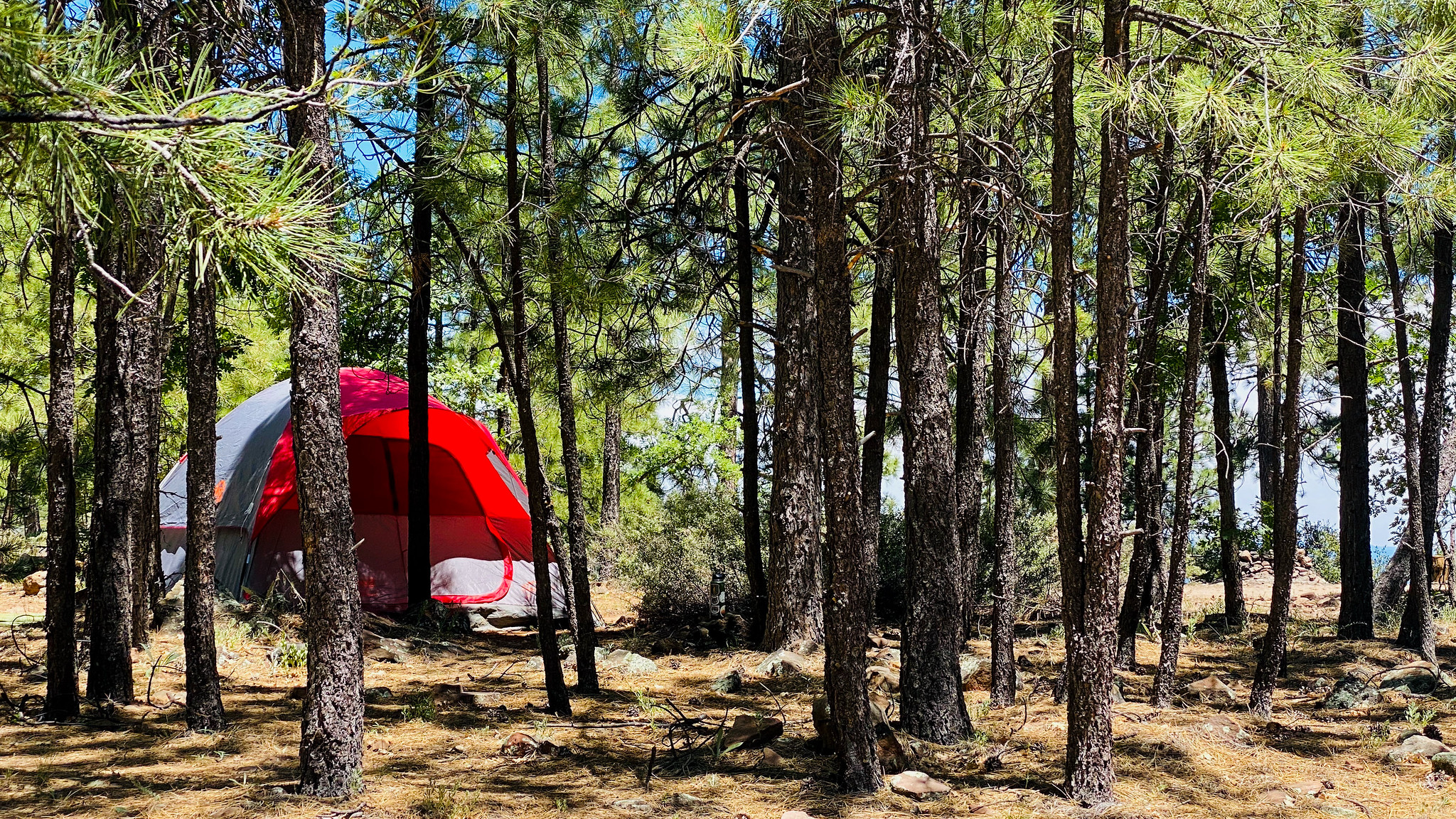
Sarah Wright: Yeah, so I have also done quite a lot of dispersed camping, most of it backpacking, so hiking out to a secluded spot all by yourself, which I think is like the best way to experience nature, but there’s a way to do that without hiking at all with your car. Dispersed camping is where you are usually going to a federal government wilderness area, there’s no campground, you’re on public land, It’s usually free to camp out there. And it’s sort of like a safari. That’s how Ben Easley, the founder of Overland Trail Guides, described it to me. He runs a website that offers downloadable guides and GPS waypoints for remote camping all over the US.
Ben Easley: There’s still some amazing campgrounds out there, don’t get me wrong, but I think once you get turned on to dispersed camping, you can make better educated decisions on where to camp that are gonna meet your criteria.
Olivia Allen-Price: It sounds like an absolute dream, but there are some drawbacks that people need to understand up front, right? What are those?
Sarah Wright: Because you’re not at a developed campsite, there’s not gonna be any facilities. That means no bathrooms, no running water, often there’s no cell service, there’s trash service either, so you’ll have to pack out everything you bring in. It’s not really a campsite. It’s just a spot where you can set up and you’ll be out there completely on your own. So logistically, you need to be ready for that.
Ben Easley: You’ll still see people when you go to Spurs camping, but once you kind of get the hang of it, even with 40 million people in the state, you can absolutely find locations where you won’t see a neighbor around you if you know where to look.
Olivia Allen-Price: But none of these places are particularly close to here. We should also be upfront about that.
Sarah Wright: Yeah, that’s right. Typically, you can only disperse camp on federal lands. That means you have to get out of our local state parks, our local beaches, where everything’s regulated and developed campsites are the norms. And you have to go to places like Tahoe National Forest or Mendocino, a few hours farther away, but a chance to explore a new wilderness area. How do you find a place to disperse camp? What do you look for? First, I would advise figuring out where you want to go. Do you want be in Redwood Forest? Do you wanna be up in high alpine lakes? You wanna be by the beach? Narrow it down generally to a region and then do your research. There’s a ton of information online. There are lots of YouTube accounts, lots of bloggers who will show you kind of the opportunities in those areas. Your next step is to figure out what agency manages the land that you’re trying to go on. So go to the website of that agency. It’s probably the Bureau of Land Management or the US Forest Service. And it might be as easy as downloading the free maps on that website to figure out where is a road that you can take and where can you disperse camp. The best advice that Ben gave me and that I agree with is to just call up the local ranger station.
Ben Easley: I know people don’t do this anymore, but you’d be amazed how much information you can simply get by just picking up a phone. And sometimes the people that you talk to will tell you their secret spots of places to go check out as well.
Olivia Allen-Price: If this is sounding intimidating, but people are still interested, is there sort of a recommendation for where you might get started?
Sarah Wright: You don’t want to design your own itinerary, you can download some expert resources. So there are free and paid apps that have overlays essentially, so maps that can tell you where the U.S. Forest Service or BLM land is and help you design a route through these lands in order to camp somewhere that’s for sure on public, not private land, which is important. And so some of the paid apps are apps like Onyx or Gaia GPS or The Dirt. And the good thing about these apps is most of them offer like a two-week free promo period. So you can test them out and see if you like them and if they’re helpful before committing. There’s also free apps like Cal Topo. They take a little bit more tinkering and time to get used to, but if you’re someone who’s really into like… Maps and navigating, play around in those and you can even build routes and have them accessible offline while you’re actually camping.
Olivia Allen-Price: And maybe walk me through, what was your experience of going dispersed camping? Like you roll up, what then?
Sarah Wright: One of my favorite things about this first camping is that you have to have a first choice, a second choice, and a third choice, because you don’t know if people are going to be there. So my experience is you roll up and you’re shocked and excited that your first choice is available and hopefully as beautiful as you thought. But you always have to be prepared in the case that someone’s already there. And Ben gave me good advice, you know, if somebody’s in the spot you were hoping to get.
Ben Easley: When there’s other room around you, the expectation is that, like, you should respect that somebody got that site before you and you should try to find somewhere else.
Sarah Wright: My experience in general has been that there’s more than enough space to go around. You can go down the dirt road a couple more miles and find an equally great spot.
Olivia Allen-Price: I’ll say a lot of the dispersed camping I’ve done has been a little bit more, like, of the dirt bag variety, I would say. So the camp site that we were at wasn’t particularly beautiful, but it was more about proximity to something that was really cool. So we’ve crashed a couple times outside of Yosemite. There’s some forest service land that is not particularly notable, but it’s really about just having a place to sleep so you can wake up early and then get into Yosemite and have a great day.
We’re going to pause for a quick break. More just ahead.
Sponsor break
Olivia Allen-Price: Some friends of mine went dispersed camping for their very first trip this past weekend. And I was asking them about what questions they were facing as they were sort of getting ready to, you know, embark on this new adventure. And one of their biggest concerns was about water. How do you camp without a clean water source or a spigot?
Sarah Wright: You basically have two options. If the place you’re going, you know, has access to a stream or a river or a lake, you can pack a water filter and just make sure you’re also packing like some sort of receptacle to hold the water in. So I bring these big two, three liter bags. You can bring, you know, those sort of car camping jugs, but if you aren’t sure you are gonna have water, it’s always kind of better to be safe than sorry. Just bring enough. And make sure you have enough to cook. Enough to clean, enough to put out a fire if you create a fire. So just like have extra as insurance. Also if it’s hotter than you think it’s going to be all you have to do is be prepared.
Olivia Allen-Price: And what about fires?
Sarah Wright: First thing first you must check if you’re allowed to build a campfire at the place you’re going and this might be seasonal. So check the website of the place you’re going call the ranger if you have questions. Just triple check whether or not you’re allowed to build a campfire, if you are. Typically, you’ll be required to make it in sort of a cleared out space with some rocks. There might even be dispersed sites like past people who have made, sort of, little campfire area.
Anywhere you’re camping in California, you need to get a California campfire permit. Even if you’re not going to make a campfire, if you are going to cook using a stove, if you’re going to use fire for any reason at all while you’re out there, you need to have a valid campfire permit. It’s like a five minute video. You sign up, it’s free. It just to remind you of how to safely use fire out in the backcountry.
Olivia Allen-Price: And finally, we have to talk about it, but toilets. You won’t find any if you’re dispersed camping for the most part. What are guidelines people need to keep in mind for when nature calls?
Sarah Wright: Yes, so there’s this handy tool called a trowel and you should always have one. It’s basically like a mini shovel for your poop. And most regulations here in California are to bury your poop six to eight inches deep in a hole. And you wanna be at least 200 feet away from any water sources. And it’s important that you dig deep enough, you go in the hole, you cover it up, and try to- do it like also away from where anyone might be camping or anything like that. I personally always pack out my toilet paper. I know some people bury their toilet paper here on the West Coast. The climate is so dry that that toilet paper is not going to be decomposing at a reasonable rate. I put a ziplock inside of a ziplock. And I put all of my toilet paper in there and pack it out with the rest of my trash and just double-check some wilderness areas here in California will even require that you use a wag bag. It sounds more fun than it is. It’s basically an insulated, like scented Ziploc bag that you had to poop in and that’s so that you don’t leave any of your waste behind at all. And that may sound crazy, but. If you’ve ever been to an area that requires a wag bag, you’ll immediately understand why. It’s like beautiful granite landscapes where there are no trees, there’s no soil. So there’s just really no chance of your poop being, you know, biodegradable in a reasonable amount of time. So that’s something that you have to make sure that you’re prepared to do. And that means like bringing enough trash bags where you feel comfortable in your vehicle, storing your poop trash. Somewhere away from your food, away from your clothes, away from everything else. So just be prepared.
Olivia Allen-Price: Sounds so fun, but I mean, wag bags are great to have no matter what, even if you think you’re gonna be able to dig a hole because eight inches is pretty deep. You might not always have that much, I don’t know, digging interest in you.
Sarah Wright: Digging interest and also like warning time, like, if you’re just like gotta go it’s nice to have a wag bag ready.
Olivia Allen-Price: Okay, so if people are interested, where might they get started with some of this this summer?
Sarah Wright: Yeah, so Ben actually had a really good suggestion. It’s to go to Jackson Demonstration State Forest that’s up in Mendocino County. It’s not technically dispersed camping, but it’s an area that’s managed by Cal Fire and the sites are super spread out. They’re first come first serve and there are no facilities very similar to dispersed camping except there are outhouses. So he suggested it as a great sort of intro trip if you’re interested in dispersed camping, you want to start bringing your own water, bringing your own, you know, emergency devices, et cetera, but you’re a little scared to get out there for real. That’s a great first spot to check out.
The other suggestion I have is to pick the highway closest to you that goes up into the Sierras and find a spot at least a mile off of the highway in the National Forest there. So that’s likely to be like Tahoe National Forest or El Dorado or Stanislaus. And these types of spots are so beautiful. They’re almost Tahoe-like in their alpine wilderness, but without the crowds.
Olivia Allen-Price: We like to use the motor vehicle use map that the National Forest puts out that has a little bit more details about where all you can drive your car if you are in a National Forest.
Sarah Wright: Yes, that map is super helpful and all those apps I mentioned have that as an overlay so you can check your route that you’re building with sort of those access areas. And of course, make sure that your car can handle the roads that you are planning to go down. Many of these roads are probably dirt or gravel roads and aren’t super well maintained. So just double check before you’re going about whether it’s a paved road or not and whether or not your car could handle it.
Olivia Allen-Price: Those are some great tips. Sarah, thank you so much. Thank you. Sarah Wright is the outdoors reporter for KQED. She has a full guide to dispersed camping on kqed.org with lots of links and resources for planning your first trip. We’ll put a link in our show notes. Every month we invite our audience to vote on some questions we’re considering answering on the show. Our June round just went up. Here are your options.
Voice 1: I have lived in the Richmond District for decades and heard that it is also known as Little Russia. How did that happen? There’s a large Russian cathedral and several Russian stores and delis.
Voice 2: I walked through the Presidio and noticed many beautiful private-looking residences. Is the public allowed to live there? Is it still a Navy and Army property? Who maintains this lovely park?
Voice 3: Was there a steam railroad through Noe Valley and the Mission? Is there a way left to see it?
Olivia Allen-Price: Cast your vote at BayCurious.org. It’s quick and easy. Bake Your Race is made in San Francisco at member-supported KQED. Our show is produced by Katrina Schwartz, Christopher Beale and me, Olivia Allen Price. We get extra support from Maha Sanad, Katie Springer, Jen Chien, Ethan Tovan Lindsey and everyone on Team KQED.
Some members of the KQED podcast team are represented by the Screen Actors Guild, American Federation of Television and Radio Artists, San Francisco, Northern California Local.
I’m Olivia Allen-Price, happy trails.
[Singing] Happy trails to you until we meet again.
Ooh, can we auto tune that?