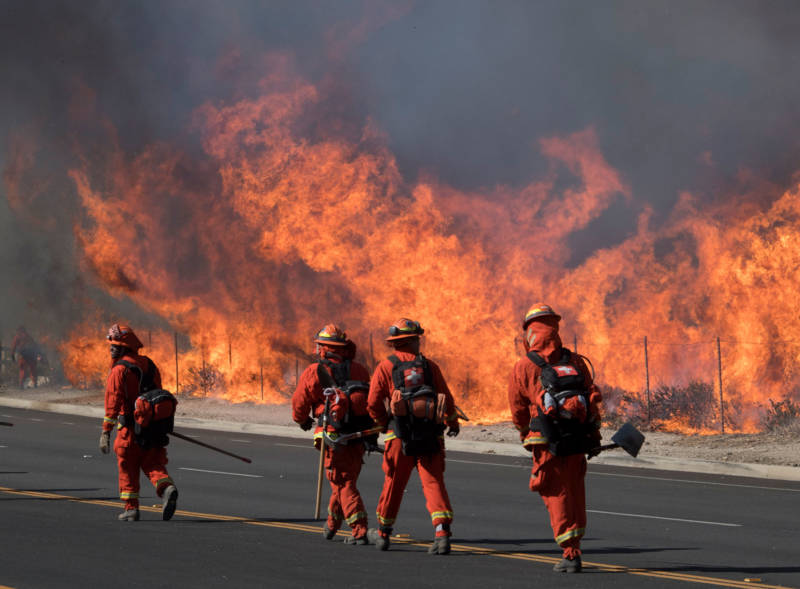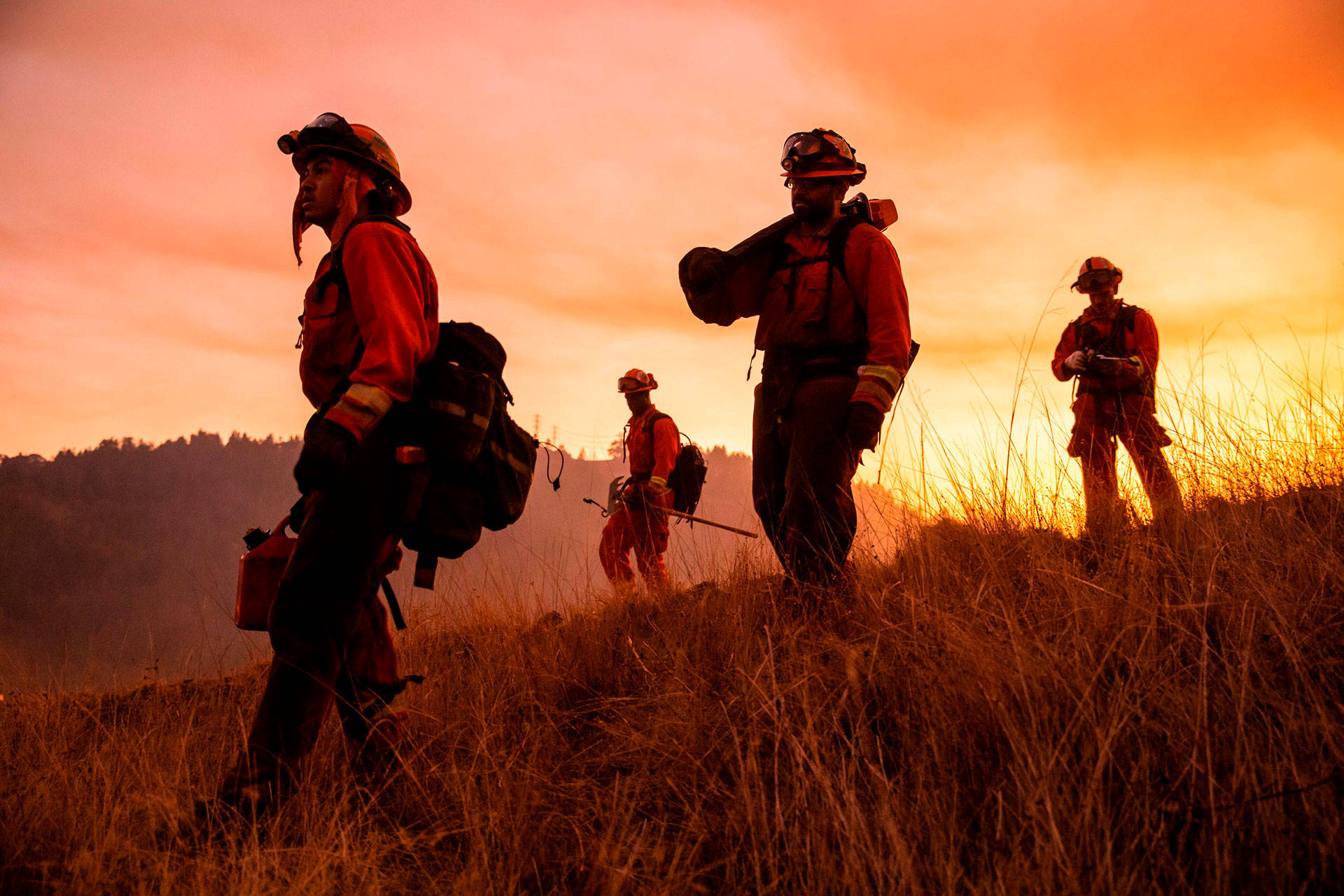
More than 400 inmate firefighters helped California beat back the massive Kincade Fire that destroyed scores of homes and charred tens of thousands of acres in Sonoma County over the last week.
Their work — which in one case helped save homes in and near the town of Windsor in a dramatic firefight as the blaze intensified — continues to stir debate over the use of cheap labor in battling California's largest wildfires.
For some of the inmates who traveled across the state to wage war on the Kincade Fire, it was an exhilarating experience.
"I'll remember this for the rest of my life," said Gary Minnick, a 39-year-old inmate firefighter assigned to the Valley View Conservation Camp in Elk Creek (Glenn County).
The California Department of Corrections and Rehabilitation (CDCR) operates 44 Conservation Camps — commonly called fire camps — in partnership with Cal Fire and the L.A. County Fire Department in 27 counties across California. Approximately 3,700 inmates currently work at fire camps, according to CDCR.
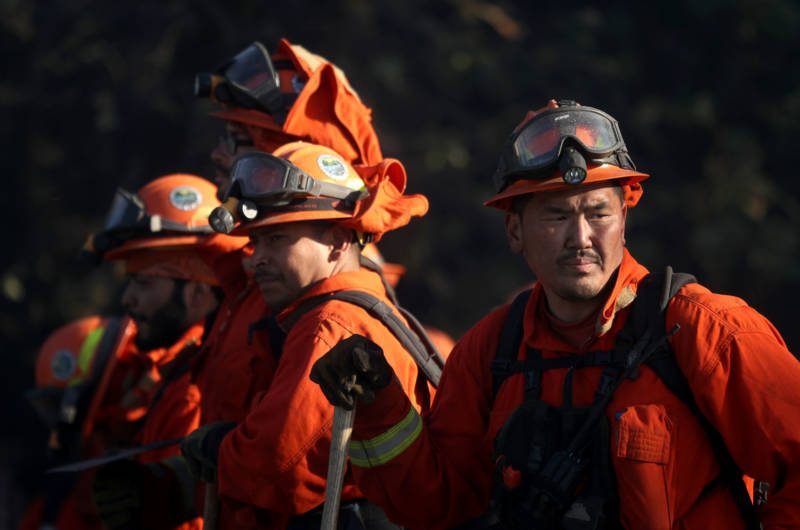
Minnick, who is serving four years on drug charges, was working the Kincade Fire with a team of fellow prisoners on Sunday when the severe winds fueling the Sonoma County blaze were reaching gusts of up to 80 mph.
Firefighters scrambled, and Minnick and the rest of his team had to protect residences.
"They saved several homes that day," said Ben Ingwerson, a CDCR lieutenant and commander at the conservation camp. He said the inmates that waged war on the Kincade Fire were all convicted of low-level, non violent crimes.
That night, as the fire approached Shiloh Road, Minnick and other members of the inmate crew used saws and hand tools to hack a six-foot barrier around a home. Then the fire moved around the house and flames spread to shrubs.
"We got trapped in the driveway," Minnick said. He sprayed water from a five gallon drum onto the encroaching flames.
"We put a couple bushes around the back out, tried to save the house while we waited for the fire in the front to die down," Minnick said.
In the above video provided by CDCR's Ingwerson, a Cal Fire firefighter who was leading Minnick and the rest of the inmate crew puts out a spot fire in the backyard. The house did not burn down, and the crew made it out safety.
The battle to save Windsor was heralded as a key one in Cal Fire's war against the Kincade blaze.
Christopher Jones, an inmate on the Valley View crew serving four years on burglary charges, has helped battle several wildfires. He said the Kincade blaze was different.
"A lot more direct attack, a lot more flames licking in your face in situations where you've got to get in and out quickly with no margin for error," said Jones.
He described the fire that approached the crew at Shiloh Ridge as "a wall of flame that was literally eating houses as it came toward us."
In the Kincade Fire, inmate firefighters worked to construct firebreaks, which crews dig down to bare soil to try and keep a wildfire from spreading. Some inmates worked in mobile kitchen units to help feed firefighters at base camp in Santa Rosa, according to CDCR officials.
In recent days, dozens of inmate firefighters were sent to the Tick Fire and Getty fires in Southern California, and to the Burris Fire in Mendocino County, state prison officials said.
Every year, California sends inmate crews to help battle some of the state's largest blazes.
Close to 800 inmates were sent to the Camp Fire in Butte County in 2018, and several were injured. Others were deployed to the Woolsey Fire in Southern California the same year.
In 2017 more than 650 state inmates helped battle the North Bay firestorm.