Friendship Break Ups Can Be Devastating for Tweens. Here’s How Adults Can Help
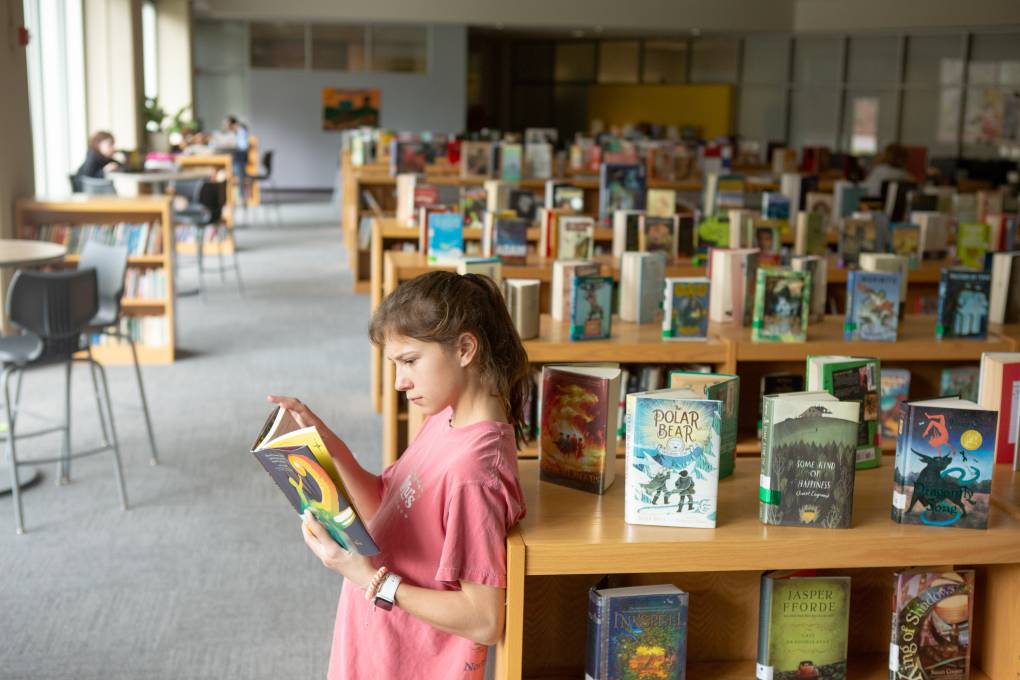
It’s Not Too Late to Read That Entire Book With Your Students
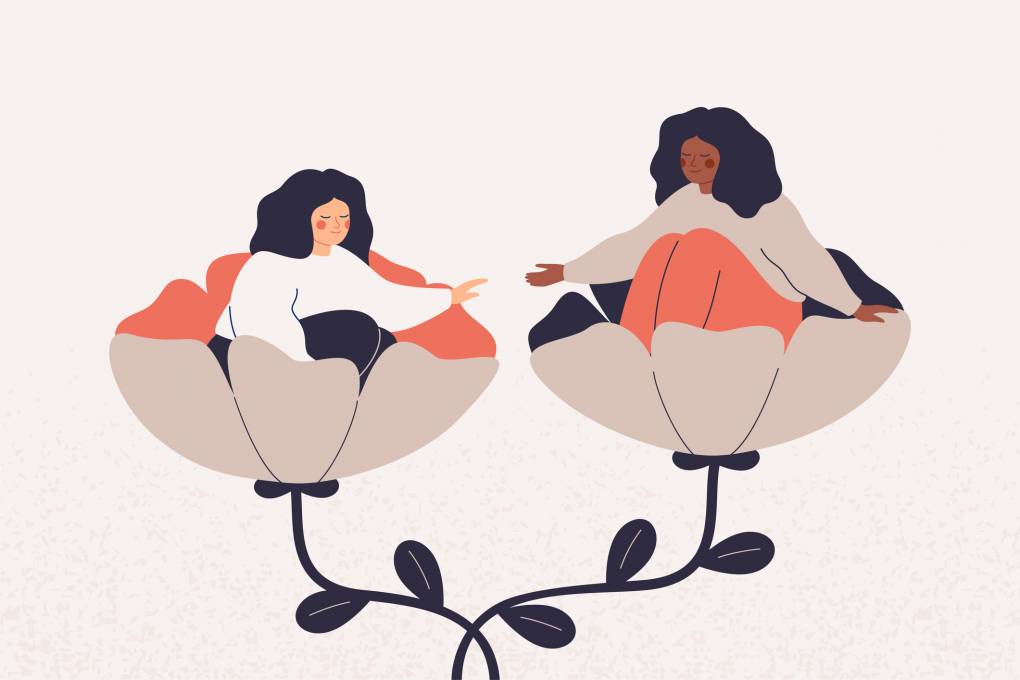
To Raise Empathetic Children, Parents Must Practice Empathy Themselves
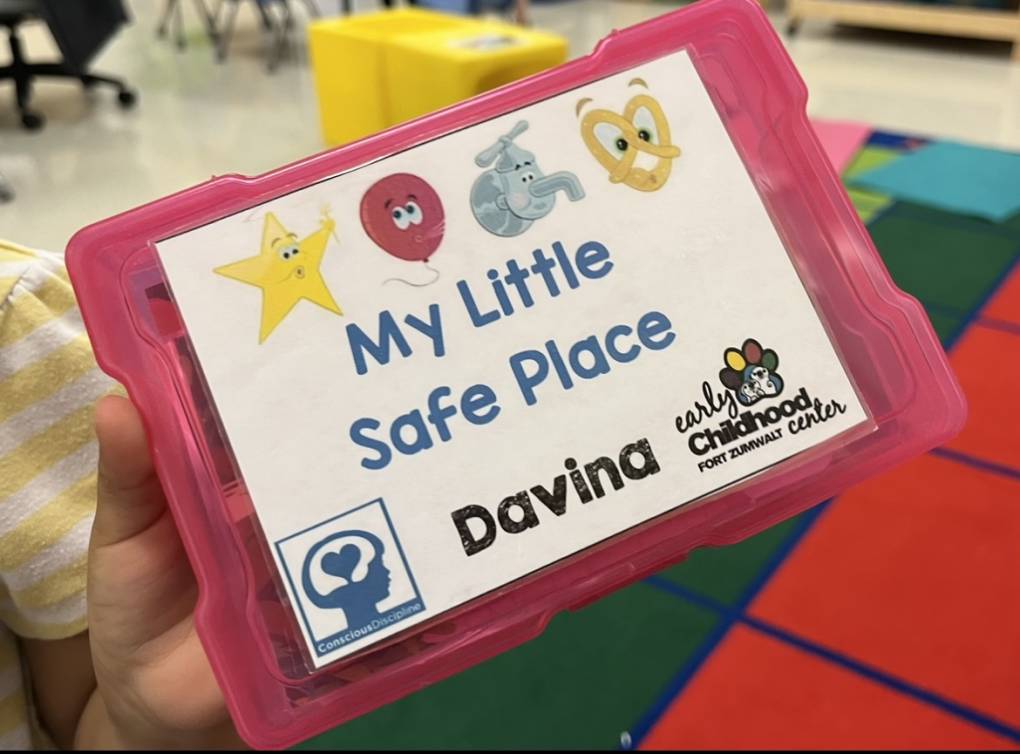
Young Children Need Help Identifying Emotions. 'Little Safe Place' Boxes Give Them Tools.
How Perspective Taking Can Improve Classroom Behavior and Teacher-Student Relationships
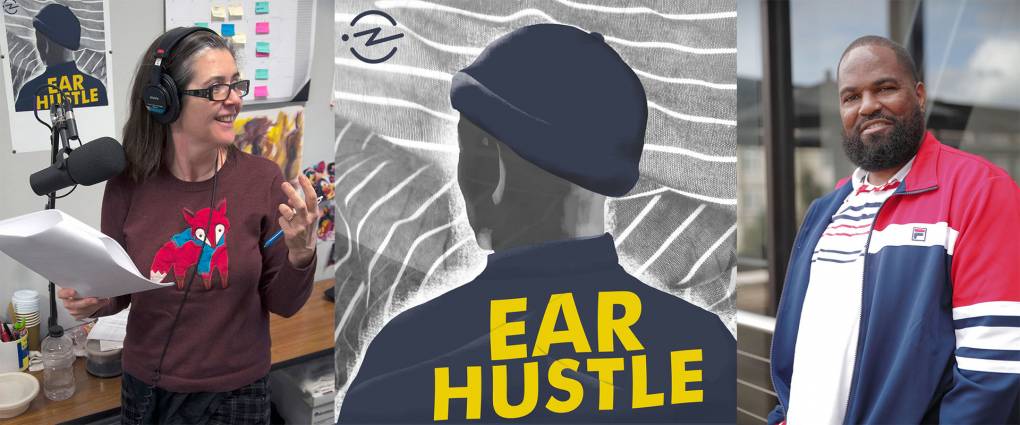
Listening to learn: Why ‘Ear Hustle’ stories about prison life are so engaging to students
Seven ways to ensure students bring their whole selves into the classroom
How Parents Can Help Kids Who Are Scared and Anxious During the Pandemic
A Video Game About Conflict Resolution Helps Develop Empathy for Refugees
Major support for MindShift comes from
Player sponsored by
window.__IS_SSR__=true
window.__INITIAL_STATE__={
"attachmentsReducer": {
"audio_0": {
"type": "attachments",
"id": "audio_0",
"imgSizes": {
"kqedFullSize": {
"file": "https://ww2.kqed.org/news/wp-content/themes/KQED-unified/img/audio_bgs/background0.jpg"
}
}
},
"audio_1": {
"type": "attachments",
"id": "audio_1",
"imgSizes": {
"kqedFullSize": {
"file": "https://ww2.kqed.org/news/wp-content/themes/KQED-unified/img/audio_bgs/background1.jpg"
}
}
},
"audio_2": {
"type": "attachments",
"id": "audio_2",
"imgSizes": {
"kqedFullSize": {
"file": "https://ww2.kqed.org/news/wp-content/themes/KQED-unified/img/audio_bgs/background2.jpg"
}
}
},
"audio_3": {
"type": "attachments",
"id": "audio_3",
"imgSizes": {
"kqedFullSize": {
"file": "https://ww2.kqed.org/news/wp-content/themes/KQED-unified/img/audio_bgs/background3.jpg"
}
}
},
"audio_4": {
"type": "attachments",
"id": "audio_4",
"imgSizes": {
"kqedFullSize": {
"file": "https://ww2.kqed.org/news/wp-content/themes/KQED-unified/img/audio_bgs/background4.jpg"
}
}
},
"placeholder": {
"type": "attachments",
"id": "placeholder",
"imgSizes": {
"thumbnail": {
"file": "https://cdn.kqed.org/wp-content/uploads/2024/12/KQED-Default-Image-816638274-2000x1333-1-160x107.jpg",
"width": 160,
"height": 107,
"mimeType": "image/jpeg"
},
"medium": {
"file": "https://cdn.kqed.org/wp-content/uploads/2024/12/KQED-Default-Image-816638274-2000x1333-1-800x533.jpg",
"width": 800,
"height": 533,
"mimeType": "image/jpeg"
},
"medium_large": {
"file": "https://cdn.kqed.org/wp-content/uploads/2024/12/KQED-Default-Image-816638274-2000x1333-1-768x512.jpg",
"width": 768,
"height": 512,
"mimeType": "image/jpeg"
},
"large": {
"file": "https://cdn.kqed.org/wp-content/uploads/2024/12/KQED-Default-Image-816638274-2000x1333-1-1020x680.jpg",
"width": 1020,
"height": 680,
"mimeType": "image/jpeg"
},
"1536x1536": {
"file": "https://cdn.kqed.org/wp-content/uploads/2024/12/KQED-Default-Image-816638274-2000x1333-1-1536x1024.jpg",
"width": 1536,
"height": 1024,
"mimeType": "image/jpeg"
},
"fd-lrg": {
"file": "https://cdn.kqed.org/wp-content/uploads/2024/12/KQED-Default-Image-816638274-2000x1333-1-1536x1024.jpg",
"width": 1536,
"height": 1024,
"mimeType": "image/jpeg"
},
"fd-med": {
"file": "https://cdn.kqed.org/wp-content/uploads/2024/12/KQED-Default-Image-816638274-2000x1333-1-1020x680.jpg",
"width": 1020,
"height": 680,
"mimeType": "image/jpeg"
},
"fd-sm": {
"file": "https://cdn.kqed.org/wp-content/uploads/2024/12/KQED-Default-Image-816638274-2000x1333-1-800x533.jpg",
"width": 800,
"height": 533,
"mimeType": "image/jpeg"
},
"post-thumbnail": {
"file": "https://cdn.kqed.org/wp-content/uploads/2024/12/KQED-Default-Image-816638274-2000x1333-1-672x372.jpg",
"width": 672,
"height": 372,
"mimeType": "image/jpeg"
},
"twentyfourteen-full-width": {
"file": "https://cdn.kqed.org/wp-content/uploads/2024/12/KQED-Default-Image-816638274-2000x1333-1-1038x576.jpg",
"width": 1038,
"height": 576,
"mimeType": "image/jpeg"
},
"xxsmall": {
"file": "https://cdn.kqed.org/wp-content/uploads/2024/12/KQED-Default-Image-816638274-2000x1333-1-160x107.jpg",
"width": 160,
"height": 107,
"mimeType": "image/jpeg"
},
"xsmall": {
"file": "https://cdn.kqed.org/wp-content/uploads/2024/12/KQED-Default-Image-816638274-2000x1333-1-672x372.jpg",
"width": 672,
"height": 372,
"mimeType": "image/jpeg"
},
"small": {
"file": "https://cdn.kqed.org/wp-content/uploads/2024/12/KQED-Default-Image-816638274-2000x1333-1-672x372.jpg",
"width": 672,
"height": 372,
"mimeType": "image/jpeg"
},
"xlarge": {
"file": "https://cdn.kqed.org/wp-content/uploads/2024/12/KQED-Default-Image-816638274-2000x1333-1-1020x680.jpg",
"width": 1020,
"height": 680,
"mimeType": "image/jpeg"
},
"full-width": {
"file": "https://cdn.kqed.org/wp-content/uploads/2024/12/KQED-Default-Image-816638274-2000x1333-1-1920x1280.jpg",
"width": 1920,
"height": 1280,
"mimeType": "image/jpeg"
},
"guest-author-32": {
"file": "https://cdn.kqed.org/wp-content/uploads/2025/01/KQED-Default-Image-816638274-1333x1333-1-160x160.jpg",
"width": 32,
"height": 32,
"mimeType": "image/jpeg"
},
"guest-author-50": {
"file": "https://cdn.kqed.org/wp-content/uploads/2025/01/KQED-Default-Image-816638274-1333x1333-1-160x160.jpg",
"width": 50,
"height": 50,
"mimeType": "image/jpeg"
},
"guest-author-64": {
"file": "https://cdn.kqed.org/wp-content/uploads/2025/01/KQED-Default-Image-816638274-1333x1333-1-160x160.jpg",
"width": 64,
"height": 64,
"mimeType": "image/jpeg"
},
"guest-author-96": {
"file": "https://cdn.kqed.org/wp-content/uploads/2025/01/KQED-Default-Image-816638274-1333x1333-1-160x160.jpg",
"width": 96,
"height": 96,
"mimeType": "image/jpeg"
},
"guest-author-128": {
"file": "https://cdn.kqed.org/wp-content/uploads/2025/01/KQED-Default-Image-816638274-1333x1333-1-160x160.jpg",
"width": 128,
"height": 128,
"mimeType": "image/jpeg"
},
"detail": {
"file": "https://cdn.kqed.org/wp-content/uploads/2025/01/KQED-Default-Image-816638274-1333x1333-1-160x160.jpg",
"width": 160,
"height": 160,
"mimeType": "image/jpeg"
},
"kqedFullSize": {
"file": "https://cdn.kqed.org/wp-content/uploads/2024/12/KQED-Default-Image-816638274-2000x1333-1.jpg",
"width": 2000,
"height": 1333
}
}
},
"mindshift_65726": {
"type": "attachments",
"id": "mindshift_65726",
"meta": {
"index": "attachments_1716263798",
"site": "mindshift",
"id": "65726",
"found": true
},
"title": null,
"publishDate": 1755714722,
"status": "inherit",
"parent": 65725,
"modified": 1755714750,
"caption": null,
"credit": "raduga21/ iStock",
"altTag": "rainbow bracelet from threads on a background of blue sky",
"description": null,
"imgSizes": {
"medium": {
"file": "https://cdn.kqed.org/wp-content/uploads/sites/23/2025/08/friendship-bracelet-2000x1331.jpg",
"width": 2000,
"height": 1331,
"mimeType": "image/jpeg"
},
"large": {
"file": "https://cdn.kqed.org/wp-content/uploads/sites/23/2025/08/friendship-bracelet-2000x1331.jpg",
"width": 2000,
"height": 1331,
"mimeType": "image/jpeg"
},
"thumbnail": {
"file": "https://cdn.kqed.org/wp-content/uploads/sites/23/2025/08/friendship-bracelet-160x106.jpg",
"width": 160,
"height": 106,
"mimeType": "image/jpeg"
},
"medium_large": {
"file": "https://cdn.kqed.org/wp-content/uploads/sites/23/2025/08/friendship-bracelet-768x511.jpg",
"width": 768,
"height": 511,
"mimeType": "image/jpeg"
},
"1536x1536": {
"file": "https://cdn.kqed.org/wp-content/uploads/sites/23/2025/08/friendship-bracelet-1536x1022.jpg",
"width": 1536,
"height": 1022,
"mimeType": "image/jpeg"
},
"2048x2048": {
"file": "https://cdn.kqed.org/wp-content/uploads/sites/23/2025/08/friendship-bracelet-2048x1363.jpg",
"width": 2048,
"height": 1363,
"mimeType": "image/jpeg"
},
"post-thumbnail": {
"file": "https://cdn.kqed.org/wp-content/uploads/sites/23/2025/08/friendship-bracelet-672x372.jpg",
"width": 672,
"height": 372,
"mimeType": "image/jpeg"
},
"twentyfourteen-full-width": {
"file": "https://cdn.kqed.org/wp-content/uploads/sites/23/2025/08/friendship-bracelet-1038x576.jpg",
"width": 1038,
"height": 576,
"mimeType": "image/jpeg"
},
"full-width": {
"file": "https://cdn.kqed.org/wp-content/uploads/sites/23/2025/08/friendship-bracelet-2000x1331.jpg",
"width": 2000,
"height": 1331,
"mimeType": "image/jpeg"
},
"kqedFullSize": {
"file": "https://cdn.kqed.org/wp-content/uploads/sites/23/2025/08/friendship-bracelet-e1755714773576.jpg",
"width": 1920,
"height": 1278
}
},
"isLoading": false,
"fetchFailed": false
},
"mindshift_64955": {
"type": "attachments",
"id": "mindshift_64955",
"meta": {
"index": "attachments_1716263798",
"site": "mindshift",
"id": "64955",
"found": true
},
"title": "Close-up of middle school girl in library stacks",
"publishDate": 1731091329,
"status": "inherit",
"parent": 64953,
"modified": 1731091358,
"caption": null,
"credit": "Allison Shelley/The Verbatim Agency for EDUimages",
"altTag": "A seventh-grade student reads a book in the library stacks at Sutton Middle School.",
"description": null,
"imgSizes": {
"medium": {
"file": "https://cdn.kqed.org/wp-content/uploads/sites/23/2024/11/AMERICANED_SUTTON_078-800x533.jpg",
"width": 800,
"height": 533,
"mimeType": "image/jpeg"
},
"large": {
"file": "https://cdn.kqed.org/wp-content/uploads/sites/23/2024/11/AMERICANED_SUTTON_078-1020x680.jpg",
"width": 1020,
"height": 680,
"mimeType": "image/jpeg"
},
"thumbnail": {
"file": "https://cdn.kqed.org/wp-content/uploads/sites/23/2024/11/AMERICANED_SUTTON_078-160x107.jpg",
"width": 160,
"height": 107,
"mimeType": "image/jpeg"
},
"medium_large": {
"file": "https://cdn.kqed.org/wp-content/uploads/sites/23/2024/11/AMERICANED_SUTTON_078-768x512.jpg",
"width": 768,
"height": 512,
"mimeType": "image/jpeg"
},
"1536x1536": {
"file": "https://cdn.kqed.org/wp-content/uploads/sites/23/2024/11/AMERICANED_SUTTON_078-1536x1024.jpg",
"width": 1536,
"height": 1024,
"mimeType": "image/jpeg"
},
"2048x2048": {
"file": "https://cdn.kqed.org/wp-content/uploads/sites/23/2024/11/AMERICANED_SUTTON_078-2048x1365.jpg",
"width": 2048,
"height": 1365,
"mimeType": "image/jpeg"
},
"post-thumbnail": {
"file": "https://cdn.kqed.org/wp-content/uploads/sites/23/2024/11/AMERICANED_SUTTON_078-672x372.jpg",
"width": 672,
"height": 372,
"mimeType": "image/jpeg"
},
"twentyfourteen-full-width": {
"file": "https://cdn.kqed.org/wp-content/uploads/sites/23/2024/11/AMERICANED_SUTTON_078-1038x576.jpg",
"width": 1038,
"height": 576,
"mimeType": "image/jpeg"
},
"full-width": {
"file": "https://cdn.kqed.org/wp-content/uploads/sites/23/2024/11/AMERICANED_SUTTON_078-1920x1280.jpg",
"width": 1920,
"height": 1280,
"mimeType": "image/jpeg"
},
"kqedFullSize": {
"file": "https://cdn.kqed.org/wp-content/uploads/sites/23/2024/11/AMERICANED_SUTTON_078-scaled-e1731091366202.jpg",
"width": 1920,
"height": 1280
}
},
"isLoading": false,
"fetchFailed": false
},
"mindshift_64517": {
"type": "attachments",
"id": "mindshift_64517",
"meta": {
"index": "attachments_1716263798",
"site": "mindshift",
"id": "64517",
"found": true
},
"title": null,
"publishDate": 1724242945,
"status": "inherit",
"parent": 64516,
"modified": 1724243995,
"caption": null,
"credit": "paulaphoto/iStock",
"altTag": "A Black father and child hug in a room with light shining through glass doors",
"description": null,
"imgSizes": {
"medium": {
"file": "https://cdn.kqed.org/wp-content/uploads/sites/23/2024/08/iStock-1279276909-800x397.jpg",
"width": 800,
"height": 397,
"mimeType": "image/jpeg"
},
"large": {
"file": "https://cdn.kqed.org/wp-content/uploads/sites/23/2024/08/iStock-1279276909-1020x507.jpg",
"width": 1020,
"height": 507,
"mimeType": "image/jpeg"
},
"thumbnail": {
"file": "https://cdn.kqed.org/wp-content/uploads/sites/23/2024/08/iStock-1279276909-160x79.jpg",
"width": 160,
"height": 79,
"mimeType": "image/jpeg"
},
"medium_large": {
"file": "https://cdn.kqed.org/wp-content/uploads/sites/23/2024/08/iStock-1279276909-768x381.jpg",
"width": 768,
"height": 381,
"mimeType": "image/jpeg"
},
"1536x1536": {
"file": "https://cdn.kqed.org/wp-content/uploads/sites/23/2024/08/iStock-1279276909-1536x763.jpg",
"width": 1536,
"height": 763,
"mimeType": "image/jpeg"
},
"2048x2048": {
"file": "https://cdn.kqed.org/wp-content/uploads/sites/23/2024/08/iStock-1279276909-2048x1017.jpg",
"width": 2048,
"height": 1017,
"mimeType": "image/jpeg"
},
"post-thumbnail": {
"file": "https://cdn.kqed.org/wp-content/uploads/sites/23/2024/08/iStock-1279276909-672x372.jpg",
"width": 672,
"height": 372,
"mimeType": "image/jpeg"
},
"twentyfourteen-full-width": {
"file": "https://cdn.kqed.org/wp-content/uploads/sites/23/2024/08/iStock-1279276909-1038x576.jpg",
"width": 1038,
"height": 576,
"mimeType": "image/jpeg"
},
"full-width": {
"file": "https://cdn.kqed.org/wp-content/uploads/sites/23/2024/08/iStock-1279276909-1920x953.jpg",
"width": 1920,
"height": 953,
"mimeType": "image/jpeg"
},
"kqedFullSize": {
"file": "https://cdn.kqed.org/wp-content/uploads/sites/23/2024/08/iStock-1279276909-scaled.jpg",
"width": 2560,
"height": 1271
}
},
"isLoading": false,
"fetchFailed": false
},
"mindshift_63511": {
"type": "attachments",
"id": "mindshift_63511",
"meta": {
"index": "attachments_1716263798",
"site": "mindshift",
"id": "63511",
"found": true
},
"parent": 63506,
"imgSizes": {
"twentyfourteen-full-width": {
"file": "https://cdn.kqed.org/wp-content/uploads/sites/23/2024/04/safeplace-1038x576.jpg",
"width": 1038,
"mimeType": "image/jpeg",
"height": 576
},
"thumbnail": {
"file": "https://cdn.kqed.org/wp-content/uploads/sites/23/2024/04/safeplace-160x118.jpg",
"width": 160,
"mimeType": "image/jpeg",
"height": 118
},
"post-thumbnail": {
"file": "https://cdn.kqed.org/wp-content/uploads/sites/23/2024/04/safeplace-672x372.jpg",
"width": 672,
"mimeType": "image/jpeg",
"height": 372
},
"kqedFullSize": {
"file": "https://cdn.kqed.org/wp-content/uploads/sites/23/2024/04/safeplace.jpg",
"width": 1170,
"height": 865
},
"large": {
"file": "https://cdn.kqed.org/wp-content/uploads/sites/23/2024/04/safeplace-1020x754.jpg",
"width": 1020,
"mimeType": "image/jpeg",
"height": 754
},
"medium": {
"file": "https://cdn.kqed.org/wp-content/uploads/sites/23/2024/04/safeplace-800x591.jpg",
"width": 800,
"mimeType": "image/jpeg",
"height": 591
},
"medium_large": {
"file": "https://cdn.kqed.org/wp-content/uploads/sites/23/2024/04/safeplace-768x568.jpg",
"width": 768,
"mimeType": "image/jpeg",
"height": 568
}
},
"publishDate": 1712611463,
"modified": 1712611661,
"caption": "In Jenny Kist's preschool classroom in St. Peters Missouri, \"Little Safe Space\" boxes contain tools to help students practice self-regulation and emotional identification throughout the day.",
"description": null,
"title": "safeplace",
"credit": "Courtesy of Jenny Kist",
"status": "inherit",
"altTag": null,
"isLoading": false,
"fetchFailed": false
},
"mindshift_59751": {
"type": "attachments",
"id": "mindshift_59751",
"meta": {
"index": "attachments_1716263798",
"site": "mindshift",
"id": "59751",
"found": true
},
"parent": 59748,
"imgSizes": {
"twentyfourteen-full-width": {
"file": "https://ww2.kqed.org/app/uploads/sites/23/2022/08/iStock-1308886846-1038x576.jpg",
"width": 1038,
"mimeType": "image/jpeg",
"height": 576
},
"thumbnail": {
"file": "https://ww2.kqed.org/app/uploads/sites/23/2022/08/iStock-1308886846-160x107.jpg",
"width": 160,
"mimeType": "image/jpeg",
"height": 107
},
"post-thumbnail": {
"file": "https://ww2.kqed.org/app/uploads/sites/23/2022/08/iStock-1308886846-672x372.jpg",
"width": 672,
"mimeType": "image/jpeg",
"height": 372
},
"kqedFullSize": {
"file": "https://ww2.kqed.org/app/uploads/sites/23/2022/08/iStock-1308886846.jpg",
"width": 2121,
"height": 1414
},
"2048x2048": {
"file": "https://ww2.kqed.org/app/uploads/sites/23/2022/08/iStock-1308886846-2048x1365.jpg",
"width": 2048,
"mimeType": "image/jpeg",
"height": 1365
},
"large": {
"file": "https://ww2.kqed.org/app/uploads/sites/23/2022/08/iStock-1308886846-1020x680.jpg",
"width": 1020,
"mimeType": "image/jpeg",
"height": 680
},
"1536x1536": {
"file": "https://ww2.kqed.org/app/uploads/sites/23/2022/08/iStock-1308886846-1536x1024.jpg",
"width": 1536,
"mimeType": "image/jpeg",
"height": 1024
},
"full-width": {
"file": "https://ww2.kqed.org/app/uploads/sites/23/2022/08/iStock-1308886846-1920x1280.jpg",
"width": 1920,
"mimeType": "image/jpeg",
"height": 1280
},
"medium": {
"file": "https://ww2.kqed.org/app/uploads/sites/23/2022/08/iStock-1308886846-800x533.jpg",
"width": 800,
"mimeType": "image/jpeg",
"height": 533
},
"medium_large": {
"file": "https://ww2.kqed.org/app/uploads/sites/23/2022/08/iStock-1308886846-768x512.jpg",
"width": 768,
"mimeType": "image/jpeg",
"height": 512
}
},
"publishDate": 1661239689,
"modified": 1661239727,
"caption": null,
"description": null,
"title": null,
"credit": "Ponomariova_Maria/iStock",
"status": "inherit",
"altTag": "Art of two people coming together",
"isLoading": false,
"fetchFailed": false
},
"mindshift_58639": {
"type": "attachments",
"id": "mindshift_58639",
"meta": {
"index": "attachments_1716263798",
"site": "mindshift",
"id": "58639",
"found": true
},
"parent": 58638,
"imgSizes": {
"twentyfourteen-full-width": {
"file": "https://ww2.kqed.org/app/uploads/sites/23/2021/10/This-is-Ear-Hustle-banner-photo-1038x576.jpg",
"width": 1038,
"mimeType": "image/jpeg",
"height": 576
},
"thumbnail": {
"file": "https://ww2.kqed.org/app/uploads/sites/23/2021/10/This-is-Ear-Hustle-banner-photo-160x67.jpg",
"width": 160,
"mimeType": "image/jpeg",
"height": 67
},
"post-thumbnail": {
"file": "https://ww2.kqed.org/app/uploads/sites/23/2021/10/This-is-Ear-Hustle-banner-photo-672x372.jpg",
"width": 672,
"mimeType": "image/jpeg",
"height": 372
},
"kqedFullSize": {
"file": "https://ww2.kqed.org/app/uploads/sites/23/2021/10/This-is-Ear-Hustle-banner-photo.jpg",
"width": 1920,
"height": 800
},
"large": {
"file": "https://ww2.kqed.org/app/uploads/sites/23/2021/10/This-is-Ear-Hustle-banner-photo-1020x425.jpg",
"width": 1020,
"mimeType": "image/jpeg",
"height": 425
},
"1536x1536": {
"file": "https://ww2.kqed.org/app/uploads/sites/23/2021/10/This-is-Ear-Hustle-banner-photo-1536x640.jpg",
"width": 1536,
"mimeType": "image/jpeg",
"height": 640
},
"medium": {
"file": "https://ww2.kqed.org/app/uploads/sites/23/2021/10/This-is-Ear-Hustle-banner-photo-800x333.jpg",
"width": 800,
"mimeType": "image/jpeg",
"height": 333
},
"medium_large": {
"file": "https://ww2.kqed.org/app/uploads/sites/23/2021/10/This-is-Ear-Hustle-banner-photo-768x320.jpg",
"width": 768,
"mimeType": "image/jpeg",
"height": 320
}
},
"publishDate": 1634597570,
"modified": 1634597677,
"caption": null,
"description": null,
"title": "This is Ear Hustle banner photo",
"credit": "Radiotopia, from PRX",
"status": "inherit",
"altTag": null,
"isLoading": false,
"fetchFailed": false
},
"mindshift_58602": {
"type": "attachments",
"id": "mindshift_58602",
"meta": {
"index": "attachments_1716263798",
"site": "mindshift",
"id": "58602",
"found": true
},
"parent": 58535,
"imgSizes": {
"twentyfourteen-full-width": {
"file": "https://ww2.kqed.org/app/uploads/sites/23/2021/10/iStock-185093264-1038x576.jpg",
"width": 1038,
"mimeType": "image/jpeg",
"height": 576
},
"thumbnail": {
"file": "https://ww2.kqed.org/app/uploads/sites/23/2021/10/iStock-185093264-160x106.jpg",
"width": 160,
"mimeType": "image/jpeg",
"height": 106
},
"post-thumbnail": {
"file": "https://ww2.kqed.org/app/uploads/sites/23/2021/10/iStock-185093264-672x372.jpg",
"width": 672,
"mimeType": "image/jpeg",
"height": 372
},
"kqedFullSize": {
"file": "https://ww2.kqed.org/app/uploads/sites/23/2021/10/iStock-185093264-e1633590568798.jpg",
"width": 1920,
"height": 1278
},
"2048x2048": {
"file": "https://ww2.kqed.org/app/uploads/sites/23/2021/10/iStock-185093264-2048x1363.jpg",
"width": 2048,
"mimeType": "image/jpeg",
"height": 1363
},
"large": {
"file": "https://ww2.kqed.org/app/uploads/sites/23/2021/10/iStock-185093264-1020x679.jpg",
"width": 1020,
"mimeType": "image/jpeg",
"height": 679
},
"1536x1536": {
"file": "https://ww2.kqed.org/app/uploads/sites/23/2021/10/iStock-185093264-1536x1022.jpg",
"width": 1536,
"mimeType": "image/jpeg",
"height": 1022
},
"full-width": {
"file": "https://ww2.kqed.org/app/uploads/sites/23/2021/10/iStock-185093264-1920x1278.jpg",
"width": 1920,
"mimeType": "image/jpeg",
"height": 1278
},
"medium": {
"file": "https://ww2.kqed.org/app/uploads/sites/23/2021/10/iStock-185093264-800x532.jpg",
"width": 800,
"mimeType": "image/jpeg",
"height": 532
},
"medium_large": {
"file": "https://ww2.kqed.org/app/uploads/sites/23/2021/10/iStock-185093264-768x511.jpg",
"width": 768,
"mimeType": "image/jpeg",
"height": 511
}
},
"publishDate": 1633590550,
"modified": 1633590582,
"caption": null,
"description": null,
"title": "Little girl with clover leaf",
"credit": "woraput/iStock",
"status": "inherit",
"altTag": null,
"isLoading": false,
"fetchFailed": false
},
"mindshift_57086": {
"type": "attachments",
"id": "mindshift_57086",
"meta": {
"index": "attachments_1716263798",
"site": "mindshift",
"id": "57086",
"found": true
},
"parent": 57085,
"imgSizes": {
"twentyfourteen-full-width": {
"file": "https://ww2.kqed.org/app/uploads/sites/23/2020/12/gettyimages-1221759791-edfa6f77d5f96dcea96fea60d4e7f4940f9b95fe-1038x576.jpg",
"width": 1038,
"mimeType": "image/jpeg",
"height": 576
},
"thumbnail": {
"file": "https://ww2.kqed.org/app/uploads/sites/23/2020/12/gettyimages-1221759791-edfa6f77d5f96dcea96fea60d4e7f4940f9b95fe-160x120.jpg",
"width": 160,
"mimeType": "image/jpeg",
"height": 120
},
"post-thumbnail": {
"file": "https://ww2.kqed.org/app/uploads/sites/23/2020/12/gettyimages-1221759791-edfa6f77d5f96dcea96fea60d4e7f4940f9b95fe-672x372.jpg",
"width": 672,
"mimeType": "image/jpeg",
"height": 372
},
"kqedFullSize": {
"file": "https://ww2.kqed.org/app/uploads/sites/23/2020/12/gettyimages-1221759791-edfa6f77d5f96dcea96fea60d4e7f4940f9b95fe-scaled-e1607580154756.jpg",
"width": 1920,
"height": 1440
},
"2048x2048": {
"file": "https://ww2.kqed.org/app/uploads/sites/23/2020/12/gettyimages-1221759791-edfa6f77d5f96dcea96fea60d4e7f4940f9b95fe-2048x1536.jpg",
"width": 2048,
"mimeType": "image/jpeg",
"height": 1536
},
"large": {
"file": "https://ww2.kqed.org/app/uploads/sites/23/2020/12/gettyimages-1221759791-edfa6f77d5f96dcea96fea60d4e7f4940f9b95fe-1020x765.jpg",
"width": 1020,
"mimeType": "image/jpeg",
"height": 765
},
"1536x1536": {
"file": "https://ww2.kqed.org/app/uploads/sites/23/2020/12/gettyimages-1221759791-edfa6f77d5f96dcea96fea60d4e7f4940f9b95fe-1536x1152.jpg",
"width": 1536,
"mimeType": "image/jpeg",
"height": 1152
},
"full-width": {
"file": "https://ww2.kqed.org/app/uploads/sites/23/2020/12/gettyimages-1221759791-edfa6f77d5f96dcea96fea60d4e7f4940f9b95fe-1920x1440.jpg",
"width": 1920,
"mimeType": "image/jpeg",
"height": 1440
},
"medium": {
"file": "https://ww2.kqed.org/app/uploads/sites/23/2020/12/gettyimages-1221759791-edfa6f77d5f96dcea96fea60d4e7f4940f9b95fe-800x600.jpg",
"width": 800,
"mimeType": "image/jpeg",
"height": 600
},
"medium_large": {
"file": "https://ww2.kqed.org/app/uploads/sites/23/2020/12/gettyimages-1221759791-edfa6f77d5f96dcea96fea60d4e7f4940f9b95fe-768x576.jpg",
"width": 768,
"mimeType": "image/jpeg",
"height": 576
}
},
"publishDate": 1607580098,
"modified": 1607580171,
"caption": null,
"description": null,
"title": "gettyimages-1221759791-edfa6f77d5f96dcea96fea60d4e7f4940f9b95fe",
"credit": "Ada daSilva/Getty Images",
"status": "inherit",
"altTag": null,
"isLoading": false,
"fetchFailed": false
},
"mindshift_55032": {
"type": "attachments",
"id": "mindshift_55032",
"meta": {
"index": "attachments_1716263798",
"site": "mindshift",
"id": "55032",
"found": true
},
"parent": 55031,
"imgSizes": {
"twentyfourteen-full-width": {
"file": "https://ww2.kqed.org/app/uploads/sites/23/2019/12/20191104_dull_videogame-50_custom-b2c497eebbf403f5121ee90a6e26d29fb7785b30-1038x576.jpg",
"width": 1038,
"mimeType": "image/jpeg",
"height": 576
},
"thumbnail": {
"file": "https://ww2.kqed.org/app/uploads/sites/23/2019/12/20191104_dull_videogame-50_custom-b2c497eebbf403f5121ee90a6e26d29fb7785b30-160x107.jpg",
"width": 160,
"mimeType": "image/jpeg",
"height": 107
},
"post-thumbnail": {
"file": "https://ww2.kqed.org/app/uploads/sites/23/2019/12/20191104_dull_videogame-50_custom-b2c497eebbf403f5121ee90a6e26d29fb7785b30-672x372.jpg",
"width": 672,
"mimeType": "image/jpeg",
"height": 372
},
"kqedFullSize": {
"file": "https://ww2.kqed.org/app/uploads/sites/23/2019/12/20191104_dull_videogame-50_custom-b2c497eebbf403f5121ee90a6e26d29fb7785b30-e1576134907292.jpg",
"width": 1920,
"height": 1279
},
"large": {
"file": "https://ww2.kqed.org/app/uploads/sites/23/2019/12/20191104_dull_videogame-50_custom-b2c497eebbf403f5121ee90a6e26d29fb7785b30-1020x679.jpg",
"width": 1020,
"mimeType": "image/jpeg",
"height": 679
},
"complete_open_graph": {
"file": "https://ww2.kqed.org/app/uploads/sites/23/2019/12/20191104_dull_videogame-50_custom-b2c497eebbf403f5121ee90a6e26d29fb7785b30-1200x799.jpg",
"width": 1200,
"mimeType": "image/jpeg",
"height": 799
},
"full-width": {
"file": "https://ww2.kqed.org/app/uploads/sites/23/2019/12/20191104_dull_videogame-50_custom-b2c497eebbf403f5121ee90a6e26d29fb7785b30-1920x1279.jpg",
"width": 1920,
"mimeType": "image/jpeg",
"height": 1279
},
"medium": {
"file": "https://ww2.kqed.org/app/uploads/sites/23/2019/12/20191104_dull_videogame-50_custom-b2c497eebbf403f5121ee90a6e26d29fb7785b30-800x533.jpg",
"width": 800,
"mimeType": "image/jpeg",
"height": 533
},
"medium_large": {
"file": "https://ww2.kqed.org/app/uploads/sites/23/2019/12/20191104_dull_videogame-50_custom-b2c497eebbf403f5121ee90a6e26d29fb7785b30-768x511.jpg",
"width": 768,
"mimeType": "image/jpeg",
"height": 511
}
},
"publishDate": 1576134801,
"modified": 1576134926,
"caption": "Lual Mayen, CEO of Junub Games, says that before he taught himself how to code at a refugee camp, \"I never thought video games were made by people. I thought they just fall from heaven.\"\n",
"description": null,
"title": "Lual Mayen, CEO of Junub Games, says that before he taught himself how to code at a refugee camp, \"I never thought video games were made by people. I thought they just fall from heaven.\"",
"credit": "Catie Dull/NPR",
"status": "inherit",
"isLoading": false,
"fetchFailed": false
}
},
"audioPlayerReducer": {
"postId": "stream_live",
"isPaused": true,
"isPlaying": false,
"pfsActive": false,
"pledgeModalIsOpen": true,
"playerDrawerIsOpen": false,
"liveAudioPlayStartedAt": 0,
"liveAudioPlayContext": ""
},
"authorsReducer": {
"byline_mindshift_64516": {
"type": "authors",
"id": "byline_mindshift_64516",
"meta": {
"override": true
},
"slug": "byline_mindshift_64516",
"name": "Cara Goodwin, \u003ca href=\"https://parentingtranslator.org\" target=\"_blank\">The Parenting Translator\u003c/a>",
"isLoading": false
},
"byline_mindshift_59748": {
"type": "authors",
"id": "byline_mindshift_59748",
"meta": {
"override": true
},
"slug": "byline_mindshift_59748",
"name": "Jill Barshay, \u003ca href=\"https://hechingerreport.org/\">The Hechinger Report\u003c/a>",
"isLoading": false
},
"byline_mindshift_57085": {
"type": "authors",
"id": "byline_mindshift_57085",
"meta": {
"override": true
},
"slug": "byline_mindshift_57085",
"name": "Anya Kamenetz, Cory Turner, Meghan Keane",
"isLoading": false
},
"byline_mindshift_55031": {
"type": "authors",
"id": "byline_mindshift_55031",
"meta": {
"override": true
},
"slug": "byline_mindshift_55031",
"name": "Emily Vaughn",
"isLoading": false
},
"ngobir": {
"type": "authors",
"id": "11721",
"meta": {
"index": "authors_1716337520",
"id": "11721",
"found": true
},
"name": "Nimah Gobir",
"firstName": "Nimah",
"lastName": "Gobir",
"slug": "ngobir",
"email": "ngobir@kqed.org",
"display_author_email": false,
"staff_mastheads": [],
"title": "KQED Contributor",
"bio": null,
"avatar": "https://secure.gravatar.com/avatar/e08e101e43fc79cc7bcd0c19038d7d08?s=600&d=blank&r=g",
"twitter": null,
"facebook": null,
"instagram": null,
"linkedin": null,
"sites": [
{
"site": "mindshift",
"roles": [
"editor"
]
}
],
"headData": {
"title": "Nimah Gobir | KQED",
"description": "KQED Contributor",
"ogImgSrc": "https://secure.gravatar.com/avatar/e08e101e43fc79cc7bcd0c19038d7d08?s=600&d=blank&r=g",
"twImgSrc": "https://secure.gravatar.com/avatar/e08e101e43fc79cc7bcd0c19038d7d08?s=600&d=blank&r=g"
},
"isLoading": false,
"link": "/author/ngobir"
},
"mjacksonretondo": {
"type": "authors",
"id": "11759",
"meta": {
"index": "authors_1716337520",
"id": "11759",
"found": true
},
"name": "Marlena Jackson-Retondo",
"firstName": "Marlena",
"lastName": "Jackson-Retondo",
"slug": "mjacksonretondo",
"email": "mjacksonretondo@kqed.org",
"display_author_email": false,
"staff_mastheads": [],
"title": "Engagement Producer",
"bio": "Marlena Jackson-Retondo is the engagement producer for KQED's \u003cem>Forum \u003c/em>and \u003cem>Mindshift\u003c/em>. Prior to joining the team in 2022, Marlena was an intern with the KQED Digital News Engagement team. She grew up in the Bay Area.\u003cem> \u003c/em>",
"avatar": "https://secure.gravatar.com/avatar/94ab429312e9a676559e31d1894130df?s=600&d=blank&r=g",
"twitter": null,
"facebook": null,
"instagram": null,
"linkedin": null,
"sites": [
{
"site": "arts",
"roles": [
"editor"
]
},
{
"site": "news",
"roles": [
"contributor"
]
},
{
"site": "mindshift",
"roles": [
"editor"
]
},
{
"site": "forum",
"roles": [
"editor"
]
}
],
"headData": {
"title": "Marlena Jackson-Retondo | KQED",
"description": "Engagement Producer",
"ogImgSrc": "https://secure.gravatar.com/avatar/94ab429312e9a676559e31d1894130df?s=600&d=blank&r=g",
"twImgSrc": "https://secure.gravatar.com/avatar/94ab429312e9a676559e31d1894130df?s=600&d=blank&r=g"
},
"isLoading": false,
"link": "/author/mjacksonretondo"
}
},
"pagesReducer": {
"mindshift_tag_empathy": {
"type": "terms",
"id": "mindshift_20699",
"meta": {
"index": "terms_1716263798",
"site": "mindshift",
"id": "20699",
"score": 9.30192
},
"featImg": null,
"name": "empathy",
"description": null,
"taxonomy": "tag",
"headData": {
"twImgId": null,
"twTitle": null,
"ogTitle": null,
"ogImgId": null,
"twDescription": null,
"description": null,
"title": "empathy Archives | KQED Mindshift",
"ogDescription": null
},
"ttid": 19976,
"slug": "empathy",
"isLoading": false,
"title": "empathy",
"pageMeta": {
"site": "mindshift",
"WpPageTemplate": "page-topic-editorial"
},
"blocks": [
{
"blockName": "kqed/post-list",
"attrs": {
"layout": "cardArticle2",
"query": "posts/mindshift?tag=empathy",
"seeMore": true
}
},
{
"blockName": "kqed/ad"
}
]
}
},
"pfsSessionReducer": {},
"postsReducer": {
"stream_live": {
"type": "live",
"id": "stream_live",
"audioUrl": "https://streams.kqed.org/kqedradio",
"title": "Live Stream",
"excerpt": "Live Stream information currently unavailable.",
"link": "/radio",
"featImg": "",
"label": {
"name": "KQED Live",
"link": "/"
}
},
"stream_kqedNewscast": {
"type": "posts",
"id": "stream_kqedNewscast",
"audioUrl": "https://www.kqed.org/.stream/anon/radio/RDnews/newscast.mp3?_=1",
"title": "KQED Newscast",
"featImg": "",
"label": {
"name": "88.5 FM",
"link": "/"
}
},
"mindshift_65725": {
"type": "posts",
"id": "mindshift_65725",
"meta": {
"index": "posts_1716263798",
"site": "mindshift",
"id": "65725",
"score": null,
"sort": [
1756202420000
]
},
"guestAuthors": [],
"slug": "friendship-break-ups-can-be-devastating-for-tweens-heres-how-adults-can-help",
"title": "Friendship Break Ups Can Be Devastating for Tweens. Here’s How Adults Can Help",
"publishDate": 1756202420,
"format": "audio",
"headTitle": "Friendship Break Ups Can Be Devastating for Tweens. Here’s How Adults Can Help | KQED",
"labelTerm": {
"term": 21942,
"site": "mindshift"
},
"content": "\u003cp>\u003ca href=\"#episode-transcript\">\u003ci>\u003cspan style=\"font-weight: 400;\">View the full episode transcript.\u003c/span>\u003c/i>\u003c/a>\u003c/p>\n\u003cp>Leanne Davis, a researcher at Education Northwest, found out her 10-year-old son had made a sad playlist to cope with his best friend moving away. He’d listen to it at night and cry himself to sleep. “It just kind of crushed me,” she said.\u003c/p>\n\u003cp>Davis had known the transition would be tough, but she hadn’t realized just how deep the loss would feel. Like many adults, she underestimated how intense \u003ca href=\"https://www.kqed.org/mindshift/65569/the-secret-to-staying-best-friends-forever-dont-deep-score\">childhood friendships\u003c/a> – and their endings – can be.\u003c/p>\n\u003cp>Friendship “breakups” are a common part of growing up. One \u003ca href=\"https://pubmed.ncbi.nlm.nih.gov/30558749/\">study of sixth graders\u003c/a> in the Los Angeles Unified School District found that two-thirds of students changed friend groups between September and June. These shifts often happen during big transitions, like starting middle or high school or developing new interests. But just because they’re common doesn’t mean they’re easy, especially during adolescence, which neuroscientists define as the period from age 10 to 25.\u003c/p>\n\u003cp>\u003ca href=\"https://lydiadenworth.com/\">Science journalist Lydia Denworth\u003c/a> has spent years researching how friendships develop across the lifespan. She says the adolescent brain is especially tuned into social dynamics. “Friendship is everything,” she said. “When it’s going well, that matters hugely. And when it’s going badly, sometimes they can’t think about anything else.” Different situations call for different kinds of support. Denworth offers insights on how adults can show up thoughtfully when friendships shift.\u003c/p>\n\u003ch2>\u003cstrong>Talk About Friendship Early\u003c/strong>\u003c/h2>\n\u003cp>Denworth encourages adults to be proactive about \u003ca href=\"https://www.kqed.org/mindshift/63184/when-parents-know-these-4-phases-of-friendship-they-can-help-their-child-make-friends-more-easily\">supporting kids’ friendships\u003c/a>. That means talking about what healthy friendship looks like even when everything seems fine. “We ask about their grades, we ask about their activities,” she said. “We should be talking about [friendship] at least as much as we’re talking about what you got on your math test.”\u003c/p>\n\u003cp>[ad fullwidth]\u003c/p>\n\u003cp>\u003ca href=\"https://www.kqed.org/mindshift/63456/6-ways-educators-can-bolster-boys-social-skills\">Friendship is a skill set\u003c/a>, according to Denworth, and kids don’t automatically arrive with all the tools they need. A healthy friendship, she added, is positive, long-lasting and cooperative with mutual kindness, emotional support and reciprocity.\u003c/p>\n\u003cp>At Martin Luther King Jr. Middle School in Berkeley, \u003ca href=\"https://www.kqed.org/mindshift/59757/with-classroom-behavior-issues-on-the-rise-restorative-justice-offers-solutions\">restorative justice counselor\u003c/a> Chau Tran tells students early in the school year that she’s available to help with friendship issues. She’s learned that small miscommunications can quickly snowball. Support from adults can help students \u003ca href=\"https://www.kqed.org/mindshift/65502/how-better-conversations-can-help-fight-misinformation-and-build-media-literacy\">express themselves clearly\u003c/a> and set better boundaries.\u003c/p>\n\u003cp>“At this age, they’re still kind of learning how to navigate a conflict. They’re still figuring out how to speak their truth while also learning how to sit and actively listen,” Tran said.\u003c/p>\n\u003ch2>\u003cstrong>When a Kid Is Going Through a Breakup\u003c/strong>\u003c/h2>\n\u003cp>If a child is being broken up with, it’s natural for adults to want to fix it. But Denworth says the best thing adults can do is slow down and validate the hurt. She noted that there is a tendency to minimize the pain, but developmentally their brains are responding to this social change differently than adults. “knowing that should help us\u003ca href=\"https://www.kqed.org/mindshift/64516/to-raise-empathetic-children-parents-must-practice-empathy-themselves\"> have more empathy\u003c/a>,” said Denworth. “I’d say, ‘Yeah, this really hurts.’ And then just let it. Let it hurt, but be there.”\u003c/p>\n\u003cp>It’s necessary for kids to go through these experiences as \u003ca href=\"https://www.kqed.org/mindshift/57010/how-understanding-middle-school-friendships-can-help-students\">part of the growing up process\u003c/a>. Where adults can be helpful is by providing some context and talking about the fact that there will be a lot of change in friendships over time, according to Denworth.\u003c/p>\n\u003cp>Saachi, a 14-year-old in Menlo Park, experienced a painful friendship fallout during her freshman year. “I just noticed they were giving signs that they just didn’t want to hang around me,” she said. Saachi was sad and confused, but she appreciated how her mom helped by staying calm and sharing similar stories from her own life. She encouraged Saachi to connect with other students.\u003c/p>\n\u003cp>“I made a lot of new friends in high school. And I’m glad I was able to branch out because of those friendship breakups,” Saachi said.\u003c/p>\n\u003ch2>\u003cstrong>When Your Kid Is the One Ending Things\u003c/strong>\u003c/h2>\n\u003cp>Friendship breakups can also be hard for the person doing the breaking up. Isabel, 17, ended a friendship in high school. “When this friend got more comfortable with me, they started showing more concerning signs,” Isabel said, adding that their friend would do things without caring about consequences. “That’s where I was like, I’m not comfortable with that.”\u003c/p>\n\u003cp>Isabel didn’t talk to an adult about it because they had bad experiences with adults brushing it off in the past. They sent a text to end the friendship, then wrestled with guilt and doubt for weeks.\u003c/p>\n\u003cp>Denworth said that’s where parents can help—not by deciding whether a friendship should end, but by helping kids think through how they’re ending it. She recommends that parents check in with kids about whether they are being kind when they break things off with a friend. “That doesn’t mean feelings won’t get hurt. But there’s no need to be unnecessarily nasty,” Denworth said. “And I do think it’s really important for parents to set some ground rules about how we treat other people.”\u003c/p>\n\u003ch2>\u003cstrong>If you have more time, you can plan\u003c/strong>\u003c/h2>\n\u003cp>Leanne Davis’s son is facing another friend’s move this year, but this time, she’s planning ahead. Knowing her son and how deep his reactions were when his last friend moved away is making her think about ways that she can support him during what she knows will be a hard transition. “We’re just trying to make sure that we’re building in a lot of time for them to be together,” said Davis.\u003c/p>\n\u003cp>She is helping her son and his friend make time to create things so that they both have tangible memories of the friendship. Additionally they are planning for what her son might send his friend when the friend moves away. “So that when he sees it, it reminds him of him and reminds him of the joy in their friendship,” added Davis.\u003c/p>\n\u003cp>She is also ensuring lines of communication like texting or online messaging are established so that her son and his friend can communicate after the move, even if their communication eventually peters out.\u003c/p>\n\u003cp>Like so many parents, Davis is figuring out how to walk the line between supportive and overbearing. So far, there is no perfect formula. “We need to be prepared to support him and who he is and the reactions that he’s going to have,” said Davis.\u003c/p>\n\u003cp>\u003c!-- iframe plugin v.4.3 wordpress.org/plugins/iframe/ -->\u003cbr>\n\u003ciframe loading=\"lazy\" frameborder=\"0\" height=\"200\" scrolling=\"no\" src=\"https://playlist.megaphone.fm?e=KQINC3169186124\" width=\"100%\" class=\"iframe-class\">\u003c/iframe>\u003c/p>\n\u003ch2 id=\"episode-transcript\">Episode Transcript\u003c/h2>\n\u003cp>\u003cstrong>Nimah Gobir: \u003c/strong>Welcome to MindShift where we explore the future of learning and how we raise our kids. I’m Nimah Gobir. Think back to when you were a kid—did you ever have a good friend move away? One day you’re hanging out at recess, planning your next sleepover, and then suddenly… they’re just gone. No more playdates, No more inside jokes, and no say in the matter. How unfair is that?\u003c/p>\n\u003cp>\u003cstrong>Nimah Gobir:\u003c/strong> Leanne Davis, a parent in Washington State, watched her 10 year old son go through exactly that not too long ago WHEN His good friend moved to Spain. To Leanne’s surprise, her son grieved.\u003c/p>\n\u003cp>\u003cstrong>Leanne Davis:\u003c/strong> He made himself a sad playlist on Spotify. He listens to his playlist when he’s feeling like just really in his emotions about his friend and like his friend leaving.\u003c/p>\n\u003cp>\u003cstrong>Nimah Gobir:\u003c/strong> She caught him listening to it at night, crying himself to sleep.\u003c/p>\n\u003cp>\u003cstrong>Leanne Davis:\u003c/strong> It just kind of crushed me and then I realized like how important this these friendships were and it actually wasn’t something that we were talking about.\u003c/p>\n\u003cp>\u003cstrong>Nimah Gobir:\u003c/strong> Today on MindShift, we’re diving into the ups and downs of friendship breakups—and how the adults in kids’ lives can help them navigate it. We’ll hear from Leanne, researchers, and teens about how to strike the right balance. All that after the break.\u003c/p>\n\u003cp>\u003cstrong>Nimah Gobir:\u003c/strong> When a kid loses a friend, it can feel heartbreaking—for them and for the parent trying to support them. But these shifts in friendship are not only common they are actually expected.\u003c/p>\n\u003cp>\u003cstrong>Nimah Gobir: \u003c/strong>Science journalist Lydia Denworth has spent years researching how friendships develop and function throughout all stages of life. She says that friendship during adolescence — a period neuroscientists define as spanning ages 10 to 25 — is especially unique.\u003c/p>\n\u003cp>\u003cstrong>Lydia Denworth:\u003c/strong> In adolescence in particular, the brain is. Undergoing a lot of change. Most of which makes you far more attentive to social cues, to friendship, to what everybody else is doing, what they might think of you. And it’s just it’s all about friends, friends, friends, friends, friends, basically.\u003c/p>\n\u003cp>\u003cstrong>Nimah Gobir:\u003c/strong> That hyper-focus on friends is biological. And it’s a growing up process.\u003c/p>\n\u003cp>\u003cstrong>Lydia Denworth: \u003c/strong>We want adolescents to begin to explore life outside their immediate family. We want them to learn to be independent and to take some risks.\u003c/p>\n\u003cp>\u003cstrong>Lydia Denworth: \u003c/strong>And the focus on friends and the importance of their social lives is part of that. It’s finding their way in the larger social world and making sense of their own identity within that.\u003c/p>\n\u003cp>\u003cstrong>Nimah Gobir:\u003c/strong> It’s common for students to go through big friendship breakups when they are going through a school transition.\u003c/p>\n\u003cp>\u003cstrong>Lydia Denworth: \u003c/strong>One of the studies that I think is most surprising was done with thousands of middle schoolers in the Los Angeles School Unified School District, and they found that two thirds of sixth graders changed friends from September to June.\u003c/p>\n\u003cp>\u003cstrong>Nimah Gobir: \u003c/strong>Kids make friends where they spend their time—on the soccer field, in the band room, at robotics club. And as interests change, friendships can too.\u003c/p>\n\u003cp>\u003cstrong>Lydia Denworth: \u003c/strong>When kids are going through it, or if you went through that in sixth grade or seventh grade, you thought it was only you, right? That was that was losing your friends or feeling at sea a little bit or getting interested in—maybe you’re the you were the kid or your kid is the one who is seeking out the new relationships. But the the really important message is just how normal that is.\u003c/p>\n\u003cp>\u003cstrong>Nimah Gobir:\u003c/strong> Saachi, a 14 year old from Menlo Park, had a close knit group of friends when she started high school\u003c/p>\n\u003cp>\u003cstrong>Saachi Kaur Dhillon:\u003c/strong> We had come from middle school we all knew each other so we were just like, okay, like we’re gonna stick together.\u003c/p>\n\u003cp>\u003cstrong>Nimah Gobir:\u003c/strong> A few months into the school year, something shifted.\u003c/p>\n\u003cp>\u003cstrong>Saachi Kaur Dhillon: \u003c/strong>I just noticed like they were giving signs that they just didn’t want to hang around me.\u003c/p>\n\u003cp>\u003cstrong>Saachi Kaur Dhillon:\u003c/strong> They would be talking to people and then i would try to talk to them, and be like oh hey like what would we like just like telling them about stuff that happened um throughout the school day and then they would just like look at me like oh yeah whatever like uh-huh uh-uh and like quickly like turn away and like dismiss me constantly and i was just like they didn’t really acknowledge my presence anymore. It was as if like I just wasn’t really there.\u003c/p>\n\u003cp>\u003cstrong>Nimah Gobir\u003c/strong>: It was especially painful because their friendship had once felt effortless—full of energy and care.\u003c/p>\n\u003cp>\u003cstrong>Saachi Kaur Dhillon:\u003c/strong> We used to like talk so much like if we had if like one of us had something to say like we would sit there we’d listen we’d have like so much to say about the other person’s like story.\u003c/p>\n\u003cp>\u003cstrong>Nimah Gobir:\u003c/strong> When that dynamic disappeared, it left Saachi feeling something she didn’t expect.\u003c/p>\n\u003cp>\u003cstrong>Saachi Kaur Dhillon: \u003c/strong>I was kind of sad, but I was more so confused.\u003c/p>\n\u003cp>\u003cstrong>Saachi Kaur Dhillon:\u003c/strong> I would have liked to know what they were thinking.\u003c/p>\n\u003cp>\u003cstrong>Saachi Kaur Dhillon: \u003c/strong>If they had just talked to me you know maybe we would have still been friends i don’t know.\u003c/p>\n\u003cp>\u003cstrong>Nimah Gobir:\u003c/strong> In Saachi’s case, she was left to piece together what went wrong. In other cases, ending the friendship is a conscious choice. Isabel Daniels, a 17 year old, shared their story\u003c/p>\n\u003cp>\u003cstrong>Isabel Daniels: \u003c/strong>I met this friend like pretty much in like middle school.\u003c/p>\n\u003cp>\u003cstrong>Isabel Daniels: \u003c/strong>This friendship, it’s, like, Oh, someone finally understands me and like, we finally see each other.\u003c/p>\n\u003cp>\u003cstrong>Nimah Gobir:\u003c/strong> Isabel was drawn to their friend’s free spirit—the way they didn’t seem weighed down by other people’s opinions.\u003c/p>\n\u003cp>\u003cstrong>Isabel Daniels: \u003c/strong>When this friend got more comfortable with me, they started showing more like…concerning signs, like that lack of care for how society thinks it’s like a double edged sword and so it’s nice in a way that like, oh, you’re free from these and expectations, but also you don’t. Like you don’t care about consequences, which can lead to a lot of like dangerous behavior. And that’s where I was like, I’m not like comfortable with that. Just because I also don’t like being labeled or having a lot of expectations put on me, it doesn’t mean I’m want to go out of my way and be like a menace in like a not fun and silly way\u003c/p>\n\u003cp>\u003cstrong>Nimah Gobir:\u003c/strong> What began as carefree fun started to feel unsafe. Isabel knew they needed to end the friendship.\u003c/p>\n\u003cp>\u003cstrong>Isabel Daniels: \u003c/strong>It’s like fun while it lasts, but then you realize that fun comes with a cost.\u003c/p>\n\u003cp>\u003cstrong>Nimah Gobir:\u003c/strong> When the time came to break things off, Isabel didn’t feel like they could do it in person.\u003c/p>\n\u003cp>\u003cstrong>Isabel Daniels:\u003c/strong> I unfortunately broke up with this friend over text, blocked their number and then didn’t look back after that which only added to the guilt, because I didn’t give this friend a chance to explain, to give their piece. Like we didn’t have a conversation. I just like sent it, blocked, and then tried to move on.\u003c/p>\n\u003cp>\u003cstrong>Nimah Gobir: \u003c/strong>Isabel was certain the friendship needed to end, and they haven’t talked to the friend since, but they were left with lingering questions.\u003c/p>\n\u003cp>\u003cstrong>Isabel Daniels:\u003c/strong> What if, like, what would this person say? Could have things been different if we both just talked?\u003c/p>\n\u003cp>\u003cstrong>Nimah Gobir:\u003c/strong> Even though Isabel was grappling with some big questions, they did not reach out for support.\u003c/p>\n\u003cp>\u003cstrong>Isabel Daniels:\u003c/strong> I was very against asking help, especially from adults.\u003c/p>\n\u003cp>\u003cstrong>Nimah Gobir: \u003c/strong>To Isabel, adults didn’t feel like a helpful option. They worried they wouldn’t be understood, or that the advice would miss the nuance of what they were going through.\u003c/p>\n\u003cp>\u003cstrong>Isabel Daniels: \u003c/strong>Things tend to be watered down when you are talking to someone older than you because they view you as like oh you’re just not like fully mentally developed you just haven’t um seen life enough and that this is just part of that, but these are significant moments in our life.\u003c/p>\n\u003cp>\u003cstrong>Nimah Gobir:\u003c/strong> They had memories of adults falling short when it came to helping with friendships. For example, Isabel has this story from when they were younger\u003c/p>\n\u003cp>\u003cstrong>Isabel Daniels:\u003c/strong> I was telling an adult that this kid was being a bit too rough with me when we were playing. This kid was a boy so you know what the adults told me? Oh that just means he likes you.\u003c/p>\n\u003cp>\u003cstrong>Nimah Gobir:\u003c/strong> Lydia Denworth, the science journalist we heard from earlier, has some helpful insights about where adults often go wrong—and what they can do instead. She recommends adults have conversations with kids about friendship before things go wrong.\u003c/p>\n\u003cp>\u003cstrong>Lydia Denworth:\u003c/strong> We should be talking about that at least as much as we’re talking about what you got on your math test or, you know, whether you got the main lead role in the musical.\u003c/p>\n\u003cp>\u003cstrong>Lydia Denworth:\u003c/strong> We ask about their grades, we ask about their activities and what they’re doing. And we put pressure on those things and we want to know about their friends too, but what we don’t realize is that\u003c/p>\n\u003cp>\u003cstrong>Lydia Denworth:\u003c/strong> We can help kids understand that friendship is a set of social skills and that it is those are skills that we benefit from practice and that kids don’t necessarily come into the world having all of them ready to go.\u003c/p>\n\u003cp>\u003cstrong>Nimah Gobir:\u003c/strong> Defining what a good and healthy friendship looks like early on can not only help them have stronger friendships, but also better romantic and family relationships.\u003c/p>\n\u003cp>\u003cstrong>Lydia Denworth:\u003c/strong> A really good quality friendship has three things. It’s long lasting, it’s positive and it’s cooperative. So that means that a good friend is a steady, stable presence in your life. They make you feel good. So they’re kind. They say nice things.\u003c/p>\n\u003cp>\u003cstrong>Lydia Denworth: \u003c/strong>And then the co operative piece is the reciprocity, the the back and forth, the helpfulness, the sort of showing up and listening and and not having a relationship that’s lopsided.\u003c/p>\n\u003cp>\u003cstrong>Nimah Gobir:\u003c/strong> And just because someone’s been your friend for a long time, doesn’t mean they’re still a good friend.\u003c/p>\n\u003cp>\u003cstrong>Lydia Denworth:\u003c/strong> The longer term relationships we often just sort of stick with because we have that shared history piece. But if they’re not positive any more, if they’re not making you feel better, then they might not be a really healthy relationship.\u003c/p>\n\u003cp>\u003cstrong>Nimah Gobir:\u003c/strong> When a child is experiencing a friendship breakup, Lydia suggests adults resist the urge to fix it.\u003c/p>\n\u003cp>\u003cstrong>Lydia Denworth: \u003c/strong>You can’t necessarily just make it all better.\u003c/p>\n\u003cp>\u003cstrong>Lydia Denworth: \u003c/strong>We need to understand that kids need to go through these experiences and this process. But where adults can be helpful is by providing some context, by talking about the fact that there will be a lot of change in friendships over time.\u003c/p>\n\u003cp>\u003cstrong>Nimah Gobir:\u003c/strong> That also means validating the pain kids are feeling. It’ll be hard, but don’t jump in and convince kids that it isn’t a big deal. Downplaying the situation is well intentioned but it can backfire.\u003c/p>\n\u003cp>\u003cstrong>Lydia Denworth: \u003c/strong>I spoke earlier about how much the adolescent brain is changing. It’s almost at the same level that a toddler’s brain is changing.\u003c/p>\n\u003cp>\u003cstrong>Lydia Denworth:\u003c/strong> The result is that not only are they really primed for social things, but they’re also their emotions are literally heightened.\u003c/p>\n\u003cp>\u003cstrong>Lydia Denworth:\u003c/strong> Friendship is everything. And so when it’s going well, that matters hugely. And when it’s going badly, sometimes they can’t think about anything else.\u003c/p>\n\u003cp>\u003cstrong>Nimah Gobir:\u003c/strong> In other words the feelings that kids are bringing to their social relationships are real for them and they aren’t the same for us adults.\u003c/p>\n\u003cp>\u003cstrong>Lydia Denworth: \u003c/strong>Literally our brains are responding differently and knowing that should help us have more empathy\u003c/p>\n\u003cp>\u003cstrong>Lydia Denworth:\u003c/strong> I’d say, Yeah, this really hurts. You know, I’m. And then just just let it, let it hurt like and, but be there.\u003c/p>\n\u003cp>\u003cstrong>Nimah Gobir:\u003c/strong> And if a child wants to keep talking you can follow their lead by sharing your own experiences with friendship.\u003c/p>\n\u003cp>\u003cstrong>Lydia Denworth: \u003c/strong>Talk about maybe a time that you had a friendship that that fell apart or where somebody got hurt and what you did to mend it if you did or or why you didn’t.\u003c/p>\n\u003cp>\u003cstrong>Nimah Gobir:\u003c/strong> Saachi, the freshman I talked to earlier, told me that she appreciated the way her mom did this.\u003c/p>\n\u003cp>\u003cstrong>Saachi Kaur Dhillon:\u003c/strong> My mom she’s always been a very like calm individual like it takes a lot to tip her over the edge like she’s very like she wasn’t freaking out because she’s had a lot of like life experience.\u003c/p>\n\u003cp>\u003cstrong>Saachi Kaur Dhillon:\u003c/strong> She’s like i had friends like that like i dealt with that and it’s just like she was calm and that made me calm.\u003c/p>\n\u003cp>\u003cstrong>Nimah Gobir: \u003c/strong>When her mom said she’d eventually make new friends who treated her better, Saachi wasn’t so sure. But she tried to talk to new people in her classes\u003c/p>\n\u003cp>\u003cstrong>Saachi Kaur Dhillon:\u003c/strong> She was right, because I made a lot of new friends in high school. And I’m glad I was able to branch out because of those friendship breakups.\u003c/p>\n\u003cp>\u003cstrong>Nimah Gobir: \u003c/strong>If your child is the one ending a friendship, it’s worth checking in—not to control their choice, but to help them think through how they’re doing it.\u003c/p>\n\u003cp>\u003cstrong>Lydia Denworth:\u003c/strong> Are they being kind? Are they being thoughtful? That doesn’t mean feelings won’t get hurt. But but there’s no need to be unnecessarily nasty.\u003c/p>\n\u003cp>\u003cstrong>Lydia Denworth:\u003c/strong> And I do think it’s really important for parents to set some ground rules about how we treat other people.\u003c/p>\n\u003cp>\u003cstrong>Nimah Gobir:\u003c/strong> Let’s return to Leanne Davis, the mom we heard from earlier. When she saw how hard her son took the loss, she realized she’d underestimated the seriousness of childhood friendships.\u003c/p>\n\u003cp>\u003cstrong>Leanne Davis:\u003c/strong> I moved a lot as an adult. My husband moved a a lot and I think we were tending, it took us a couple steps to be like, well, wait a minute, this is this kid and this kid is very different than other kid and. very different than maybe how we would do this. I need to be prepared to support him and who he is and like the reactions that he’s going to have.\u003c/p>\n\u003cp>\u003cstrong>Nimah Gobir: \u003c/strong>This year another one of her son’s friends is moving away. And …this kid can’t catch a break…his friend is moving to Australia. But this time, Leanne is thinking about it differently.\u003c/p>\n\u003cp>\u003cstrong>Leanne Davis:\u003c/strong> Now, knowing that this is happening and this is gonna be really rough we’re just trying to make sure that we’re building in a lot of time, for them to be together.\u003c/p>\n\u003cp>\u003cstrong>Nimah Gobir:\u003c/strong> She’s helping him make memories—something tangible to remember the friendship by.\u003c/p>\n\u003cp>\u003cstrong>Leanne Davis:\u003c/strong> Finding ways to like document some of their memories and things they’re doing together. Like he and I are planning for what would he like to send his friend when his friend leaves, or something that he’d like to make that, you know, that when he sees it, it reminds him of him and reminds him of like the joy in their friendship.\u003c/p>\n\u003cp>\u003cstrong>Nimah Gobir:\u003c/strong> And she’s also planning for what happens after the move.\u003c/p>\n\u003cp>\u003cstrong>Leanne Davis: \u003c/strong>He does text his friends, like on, he can like message him from the computer. So making sure that they’re able to communicate that way. and that it’s established before they leave, knowing that it may eventually fade out, but that that’s a way for them to know that they can get in touch with each other.\u003c/p>\n\u003cp>\u003cstrong>Nimah Gobir\u003c/strong>: Like so many parents, Leanne’s figuring out how to walk the line between supportive and overbearing.\u003c/p>\n\u003cp>\u003cstrong>Nimah Gobir:\u003c/strong> And maybe that’s the real work of showing up for kids—not having the perfect response, but staying close enough to notice what they need, and giving them space to figure the rest out themselves. Because in the end, friendship breakups are just part of growing up. But having someone who sees you through it can make all the difference.\u003c/p>\n\u003cp> \u003c/p>\n\u003cp>[ad floatright]\u003c/p>\n\u003cp> \u003c/p>\n\n",
"blocks": [],
"excerpt": "From teens’ stories to expert advice, this episode dives into how young people cope with friendship breakups and what adults can do to help.",
"status": "publish",
"parent": 0,
"modified": 1756186281,
"stats": {
"hasAudio": true,
"hasVideo": false,
"hasChartOrMap": false,
"iframeSrcs": [],
"hasGoogleForm": false,
"hasGallery": false,
"hasHearkenModule": false,
"hasPolis": false,
"paragraphCount": 106,
"wordCount": 4120
},
"headData": {
"title": "Friendship Break Ups Can Be Devastating for Tweens. Here’s How Adults Can Help | KQED",
"description": "From teens’ stories to expert advice, this episode dives into how young people cope with friendship breakups and what adults can do to help.",
"ogTitle": "",
"ogDescription": "",
"ogImgId": "",
"twTitle": "",
"twDescription": "",
"twImgId": "",
"socialDescription": "From teens’ stories to expert advice, this episode dives into how young people cope with friendship breakups and what adults can do to help.",
"schema": {
"@context": "https://schema.org",
"@type": "Article",
"headline": "Friendship Break Ups Can Be Devastating for Tweens. Here’s How Adults Can Help",
"datePublished": "2025-08-26T03:00:20-07:00",
"dateModified": "2025-08-25T22:31:21-07:00",
"image": "https://cdn.kqed.org/wp-content/uploads/2020/02/KQED-OG-Image@1x.png"
}
},
"primaryCategory": {
"termId": 21512,
"slug": "belonging",
"name": "Belonging"
},
"audioUrl": "https://www.podtrac.com/pts/redirect.mp3/chrt.fm/track/G6C7C3/traffic.megaphone.fm/KQINC3169186124.mp3?updated=1756156084",
"sticky": false,
"templateType": "standard",
"featuredImageType": "standard",
"excludeFromSiteSearch": "Include",
"articleAge": "0",
"path": "/mindshift/65725/friendship-break-ups-can-be-devastating-for-tweens-heres-how-adults-can-help",
"audioTrackLength": null,
"parsedContent": [
{
"type": "contentString",
"content": "\u003cdiv class=\"post-body\">\u003cp>\u003cp>\u003ca href=\"#episode-transcript\">\u003ci>\u003cspan style=\"font-weight: 400;\">View the full episode transcript.\u003c/span>\u003c/i>\u003c/a>\u003c/p>\n\u003cp>Leanne Davis, a researcher at Education Northwest, found out her 10-year-old son had made a sad playlist to cope with his best friend moving away. He’d listen to it at night and cry himself to sleep. “It just kind of crushed me,” she said.\u003c/p>\n\u003cp>Davis had known the transition would be tough, but she hadn’t realized just how deep the loss would feel. Like many adults, she underestimated how intense \u003ca href=\"https://www.kqed.org/mindshift/65569/the-secret-to-staying-best-friends-forever-dont-deep-score\">childhood friendships\u003c/a> – and their endings – can be.\u003c/p>\n\u003cp>Friendship “breakups” are a common part of growing up. One \u003ca href=\"https://pubmed.ncbi.nlm.nih.gov/30558749/\">study of sixth graders\u003c/a> in the Los Angeles Unified School District found that two-thirds of students changed friend groups between September and June. These shifts often happen during big transitions, like starting middle or high school or developing new interests. But just because they’re common doesn’t mean they’re easy, especially during adolescence, which neuroscientists define as the period from age 10 to 25.\u003c/p>\n\u003cp>\u003ca href=\"https://lydiadenworth.com/\">Science journalist Lydia Denworth\u003c/a> has spent years researching how friendships develop across the lifespan. She says the adolescent brain is especially tuned into social dynamics. “Friendship is everything,” she said. “When it’s going well, that matters hugely. And when it’s going badly, sometimes they can’t think about anything else.” Different situations call for different kinds of support. Denworth offers insights on how adults can show up thoughtfully when friendships shift.\u003c/p>\n\u003ch2>\u003cstrong>Talk About Friendship Early\u003c/strong>\u003c/h2>\n\u003cp>Denworth encourages adults to be proactive about \u003ca href=\"https://www.kqed.org/mindshift/63184/when-parents-know-these-4-phases-of-friendship-they-can-help-their-child-make-friends-more-easily\">supporting kids’ friendships\u003c/a>. That means talking about what healthy friendship looks like even when everything seems fine. “We ask about their grades, we ask about their activities,” she said. “We should be talking about [friendship] at least as much as we’re talking about what you got on your math test.”\u003c/p>\n\u003cp>\u003c/p>\u003c/div>",
"attributes": {
"named": {},
"numeric": []
}
},
{
"type": "component",
"content": "",
"name": "ad",
"attributes": {
"named": {
"label": "fullwidth"
},
"numeric": [
"fullwidth"
]
}
},
{
"type": "contentString",
"content": "\u003cdiv class=\"post-body\">\u003cp>\u003c/p>\n\u003cp>\u003ca href=\"https://www.kqed.org/mindshift/63456/6-ways-educators-can-bolster-boys-social-skills\">Friendship is a skill set\u003c/a>, according to Denworth, and kids don’t automatically arrive with all the tools they need. A healthy friendship, she added, is positive, long-lasting and cooperative with mutual kindness, emotional support and reciprocity.\u003c/p>\n\u003cp>At Martin Luther King Jr. Middle School in Berkeley, \u003ca href=\"https://www.kqed.org/mindshift/59757/with-classroom-behavior-issues-on-the-rise-restorative-justice-offers-solutions\">restorative justice counselor\u003c/a> Chau Tran tells students early in the school year that she’s available to help with friendship issues. She’s learned that small miscommunications can quickly snowball. Support from adults can help students \u003ca href=\"https://www.kqed.org/mindshift/65502/how-better-conversations-can-help-fight-misinformation-and-build-media-literacy\">express themselves clearly\u003c/a> and set better boundaries.\u003c/p>\n\u003cp>“At this age, they’re still kind of learning how to navigate a conflict. They’re still figuring out how to speak their truth while also learning how to sit and actively listen,” Tran said.\u003c/p>\n\u003ch2>\u003cstrong>When a Kid Is Going Through a Breakup\u003c/strong>\u003c/h2>\n\u003cp>If a child is being broken up with, it’s natural for adults to want to fix it. But Denworth says the best thing adults can do is slow down and validate the hurt. She noted that there is a tendency to minimize the pain, but developmentally their brains are responding to this social change differently than adults. “knowing that should help us\u003ca href=\"https://www.kqed.org/mindshift/64516/to-raise-empathetic-children-parents-must-practice-empathy-themselves\"> have more empathy\u003c/a>,” said Denworth. “I’d say, ‘Yeah, this really hurts.’ And then just let it. Let it hurt, but be there.”\u003c/p>\n\u003cp>It’s necessary for kids to go through these experiences as \u003ca href=\"https://www.kqed.org/mindshift/57010/how-understanding-middle-school-friendships-can-help-students\">part of the growing up process\u003c/a>. Where adults can be helpful is by providing some context and talking about the fact that there will be a lot of change in friendships over time, according to Denworth.\u003c/p>\n\u003cp>Saachi, a 14-year-old in Menlo Park, experienced a painful friendship fallout during her freshman year. “I just noticed they were giving signs that they just didn’t want to hang around me,” she said. Saachi was sad and confused, but she appreciated how her mom helped by staying calm and sharing similar stories from her own life. She encouraged Saachi to connect with other students.\u003c/p>\n\u003cp>“I made a lot of new friends in high school. And I’m glad I was able to branch out because of those friendship breakups,” Saachi said.\u003c/p>\n\u003ch2>\u003cstrong>When Your Kid Is the One Ending Things\u003c/strong>\u003c/h2>\n\u003cp>Friendship breakups can also be hard for the person doing the breaking up. Isabel, 17, ended a friendship in high school. “When this friend got more comfortable with me, they started showing more concerning signs,” Isabel said, adding that their friend would do things without caring about consequences. “That’s where I was like, I’m not comfortable with that.”\u003c/p>\n\u003cp>Isabel didn’t talk to an adult about it because they had bad experiences with adults brushing it off in the past. They sent a text to end the friendship, then wrestled with guilt and doubt for weeks.\u003c/p>\n\u003cp>Denworth said that’s where parents can help—not by deciding whether a friendship should end, but by helping kids think through how they’re ending it. She recommends that parents check in with kids about whether they are being kind when they break things off with a friend. “That doesn’t mean feelings won’t get hurt. But there’s no need to be unnecessarily nasty,” Denworth said. “And I do think it’s really important for parents to set some ground rules about how we treat other people.”\u003c/p>\n\u003ch2>\u003cstrong>If you have more time, you can plan\u003c/strong>\u003c/h2>\n\u003cp>Leanne Davis’s son is facing another friend’s move this year, but this time, she’s planning ahead. Knowing her son and how deep his reactions were when his last friend moved away is making her think about ways that she can support him during what she knows will be a hard transition. “We’re just trying to make sure that we’re building in a lot of time for them to be together,” said Davis.\u003c/p>\n\u003cp>She is helping her son and his friend make time to create things so that they both have tangible memories of the friendship. Additionally they are planning for what her son might send his friend when the friend moves away. “So that when he sees it, it reminds him of him and reminds him of the joy in their friendship,” added Davis.\u003c/p>\n\u003cp>She is also ensuring lines of communication like texting or online messaging are established so that her son and his friend can communicate after the move, even if their communication eventually peters out.\u003c/p>\n\u003cp>Like so many parents, Davis is figuring out how to walk the line between supportive and overbearing. So far, there is no perfect formula. “We need to be prepared to support him and who he is and the reactions that he’s going to have,” said Davis.\u003c/p>\n\u003cp>\u003c!-- iframe plugin v.4.3 wordpress.org/plugins/iframe/ -->\u003cbr>\n\u003ciframe loading=\"lazy\" frameborder=\"0\" height=\"200\" scrolling=\"no\" src=\"https://playlist.megaphone.fm?e=KQINC3169186124\" width=\"100%\" class=\"iframe-class\">\u003c/iframe>\u003c/div>",
"attributes": {
"named": {},
"numeric": []
}
},
{
"type": "contentString",
"content": "\u003cdiv class=\"post-content post-body\">\u003ch2 id=\"episode-transcript\">Episode Transcript\u003c/h2>\n\u003cp>\u003cstrong>Nimah Gobir: \u003c/strong>Welcome to MindShift where we explore the future of learning and how we raise our kids. I’m Nimah Gobir. Think back to when you were a kid—did you ever have a good friend move away? One day you’re hanging out at recess, planning your next sleepover, and then suddenly… they’re just gone. No more playdates, No more inside jokes, and no say in the matter. How unfair is that?\u003c/p>\n\u003cp>\u003cstrong>Nimah Gobir:\u003c/strong> Leanne Davis, a parent in Washington State, watched her 10 year old son go through exactly that not too long ago WHEN His good friend moved to Spain. To Leanne’s surprise, her son grieved.\u003c/p>\n\u003cp>\u003cstrong>Leanne Davis:\u003c/strong> He made himself a sad playlist on Spotify. He listens to his playlist when he’s feeling like just really in his emotions about his friend and like his friend leaving.\u003c/p>\n\u003cp>\u003cstrong>Nimah Gobir:\u003c/strong> She caught him listening to it at night, crying himself to sleep.\u003c/p>\n\u003cp>\u003cstrong>Leanne Davis:\u003c/strong> It just kind of crushed me and then I realized like how important this these friendships were and it actually wasn’t something that we were talking about.\u003c/p>\n\u003cp>\u003cstrong>Nimah Gobir:\u003c/strong> Today on MindShift, we’re diving into the ups and downs of friendship breakups—and how the adults in kids’ lives can help them navigate it. We’ll hear from Leanne, researchers, and teens about how to strike the right balance. All that after the break.\u003c/p>\n\u003cp>\u003cstrong>Nimah Gobir:\u003c/strong> When a kid loses a friend, it can feel heartbreaking—for them and for the parent trying to support them. But these shifts in friendship are not only common they are actually expected.\u003c/p>\n\u003cp>\u003cstrong>Nimah Gobir: \u003c/strong>Science journalist Lydia Denworth has spent years researching how friendships develop and function throughout all stages of life. She says that friendship during adolescence — a period neuroscientists define as spanning ages 10 to 25 — is especially unique.\u003c/p>\n\u003cp>\u003cstrong>Lydia Denworth:\u003c/strong> In adolescence in particular, the brain is. Undergoing a lot of change. Most of which makes you far more attentive to social cues, to friendship, to what everybody else is doing, what they might think of you. And it’s just it’s all about friends, friends, friends, friends, friends, basically.\u003c/p>\n\u003cp>\u003cstrong>Nimah Gobir:\u003c/strong> That hyper-focus on friends is biological. And it’s a growing up process.\u003c/p>\n\u003cp>\u003cstrong>Lydia Denworth: \u003c/strong>We want adolescents to begin to explore life outside their immediate family. We want them to learn to be independent and to take some risks.\u003c/p>\n\u003cp>\u003cstrong>Lydia Denworth: \u003c/strong>And the focus on friends and the importance of their social lives is part of that. It’s finding their way in the larger social world and making sense of their own identity within that.\u003c/p>\n\u003cp>\u003cstrong>Nimah Gobir:\u003c/strong> It’s common for students to go through big friendship breakups when they are going through a school transition.\u003c/p>\n\u003cp>\u003cstrong>Lydia Denworth: \u003c/strong>One of the studies that I think is most surprising was done with thousands of middle schoolers in the Los Angeles School Unified School District, and they found that two thirds of sixth graders changed friends from September to June.\u003c/p>\n\u003cp>\u003cstrong>Nimah Gobir: \u003c/strong>Kids make friends where they spend their time—on the soccer field, in the band room, at robotics club. And as interests change, friendships can too.\u003c/p>\n\u003cp>\u003cstrong>Lydia Denworth: \u003c/strong>When kids are going through it, or if you went through that in sixth grade or seventh grade, you thought it was only you, right? That was that was losing your friends or feeling at sea a little bit or getting interested in—maybe you’re the you were the kid or your kid is the one who is seeking out the new relationships. But the the really important message is just how normal that is.\u003c/p>\n\u003cp>\u003cstrong>Nimah Gobir:\u003c/strong> Saachi, a 14 year old from Menlo Park, had a close knit group of friends when she started high school\u003c/p>\n\u003cp>\u003cstrong>Saachi Kaur Dhillon:\u003c/strong> We had come from middle school we all knew each other so we were just like, okay, like we’re gonna stick together.\u003c/p>\n\u003cp>\u003cstrong>Nimah Gobir:\u003c/strong> A few months into the school year, something shifted.\u003c/p>\n\u003cp>\u003cstrong>Saachi Kaur Dhillon: \u003c/strong>I just noticed like they were giving signs that they just didn’t want to hang around me.\u003c/p>\n\u003cp>\u003cstrong>Saachi Kaur Dhillon:\u003c/strong> They would be talking to people and then i would try to talk to them, and be like oh hey like what would we like just like telling them about stuff that happened um throughout the school day and then they would just like look at me like oh yeah whatever like uh-huh uh-uh and like quickly like turn away and like dismiss me constantly and i was just like they didn’t really acknowledge my presence anymore. It was as if like I just wasn’t really there.\u003c/p>\n\u003cp>\u003cstrong>Nimah Gobir\u003c/strong>: It was especially painful because their friendship had once felt effortless—full of energy and care.\u003c/p>\n\u003cp>\u003cstrong>Saachi Kaur Dhillon:\u003c/strong> We used to like talk so much like if we had if like one of us had something to say like we would sit there we’d listen we’d have like so much to say about the other person’s like story.\u003c/p>\n\u003cp>\u003cstrong>Nimah Gobir:\u003c/strong> When that dynamic disappeared, it left Saachi feeling something she didn’t expect.\u003c/p>\n\u003cp>\u003cstrong>Saachi Kaur Dhillon: \u003c/strong>I was kind of sad, but I was more so confused.\u003c/p>\n\u003cp>\u003cstrong>Saachi Kaur Dhillon:\u003c/strong> I would have liked to know what they were thinking.\u003c/p>\n\u003cp>\u003cstrong>Saachi Kaur Dhillon: \u003c/strong>If they had just talked to me you know maybe we would have still been friends i don’t know.\u003c/p>\n\u003cp>\u003cstrong>Nimah Gobir:\u003c/strong> In Saachi’s case, she was left to piece together what went wrong. In other cases, ending the friendship is a conscious choice. Isabel Daniels, a 17 year old, shared their story\u003c/p>\n\u003cp>\u003cstrong>Isabel Daniels: \u003c/strong>I met this friend like pretty much in like middle school.\u003c/p>\n\u003cp>\u003cstrong>Isabel Daniels: \u003c/strong>This friendship, it’s, like, Oh, someone finally understands me and like, we finally see each other.\u003c/p>\n\u003cp>\u003cstrong>Nimah Gobir:\u003c/strong> Isabel was drawn to their friend’s free spirit—the way they didn’t seem weighed down by other people’s opinions.\u003c/p>\n\u003cp>\u003cstrong>Isabel Daniels: \u003c/strong>When this friend got more comfortable with me, they started showing more like…concerning signs, like that lack of care for how society thinks it’s like a double edged sword and so it’s nice in a way that like, oh, you’re free from these and expectations, but also you don’t. Like you don’t care about consequences, which can lead to a lot of like dangerous behavior. And that’s where I was like, I’m not like comfortable with that. Just because I also don’t like being labeled or having a lot of expectations put on me, it doesn’t mean I’m want to go out of my way and be like a menace in like a not fun and silly way\u003c/p>\n\u003cp>\u003cstrong>Nimah Gobir:\u003c/strong> What began as carefree fun started to feel unsafe. Isabel knew they needed to end the friendship.\u003c/p>\n\u003cp>\u003cstrong>Isabel Daniels: \u003c/strong>It’s like fun while it lasts, but then you realize that fun comes with a cost.\u003c/p>\n\u003cp>\u003cstrong>Nimah Gobir:\u003c/strong> When the time came to break things off, Isabel didn’t feel like they could do it in person.\u003c/p>\n\u003cp>\u003cstrong>Isabel Daniels:\u003c/strong> I unfortunately broke up with this friend over text, blocked their number and then didn’t look back after that which only added to the guilt, because I didn’t give this friend a chance to explain, to give their piece. Like we didn’t have a conversation. I just like sent it, blocked, and then tried to move on.\u003c/p>\n\u003cp>\u003cstrong>Nimah Gobir: \u003c/strong>Isabel was certain the friendship needed to end, and they haven’t talked to the friend since, but they were left with lingering questions.\u003c/p>\n\u003cp>\u003cstrong>Isabel Daniels:\u003c/strong> What if, like, what would this person say? Could have things been different if we both just talked?\u003c/p>\n\u003cp>\u003cstrong>Nimah Gobir:\u003c/strong> Even though Isabel was grappling with some big questions, they did not reach out for support.\u003c/p>\n\u003cp>\u003cstrong>Isabel Daniels:\u003c/strong> I was very against asking help, especially from adults.\u003c/p>\n\u003cp>\u003cstrong>Nimah Gobir: \u003c/strong>To Isabel, adults didn’t feel like a helpful option. They worried they wouldn’t be understood, or that the advice would miss the nuance of what they were going through.\u003c/p>\n\u003cp>\u003cstrong>Isabel Daniels: \u003c/strong>Things tend to be watered down when you are talking to someone older than you because they view you as like oh you’re just not like fully mentally developed you just haven’t um seen life enough and that this is just part of that, but these are significant moments in our life.\u003c/p>\n\u003cp>\u003cstrong>Nimah Gobir:\u003c/strong> They had memories of adults falling short when it came to helping with friendships. For example, Isabel has this story from when they were younger\u003c/p>\n\u003cp>\u003cstrong>Isabel Daniels:\u003c/strong> I was telling an adult that this kid was being a bit too rough with me when we were playing. This kid was a boy so you know what the adults told me? Oh that just means he likes you.\u003c/p>\n\u003cp>\u003cstrong>Nimah Gobir:\u003c/strong> Lydia Denworth, the science journalist we heard from earlier, has some helpful insights about where adults often go wrong—and what they can do instead. She recommends adults have conversations with kids about friendship before things go wrong.\u003c/p>\n\u003cp>\u003cstrong>Lydia Denworth:\u003c/strong> We should be talking about that at least as much as we’re talking about what you got on your math test or, you know, whether you got the main lead role in the musical.\u003c/p>\n\u003cp>\u003cstrong>Lydia Denworth:\u003c/strong> We ask about their grades, we ask about their activities and what they’re doing. And we put pressure on those things and we want to know about their friends too, but what we don’t realize is that\u003c/p>\n\u003cp>\u003cstrong>Lydia Denworth:\u003c/strong> We can help kids understand that friendship is a set of social skills and that it is those are skills that we benefit from practice and that kids don’t necessarily come into the world having all of them ready to go.\u003c/p>\n\u003cp>\u003cstrong>Nimah Gobir:\u003c/strong> Defining what a good and healthy friendship looks like early on can not only help them have stronger friendships, but also better romantic and family relationships.\u003c/p>\n\u003cp>\u003cstrong>Lydia Denworth:\u003c/strong> A really good quality friendship has three things. It’s long lasting, it’s positive and it’s cooperative. So that means that a good friend is a steady, stable presence in your life. They make you feel good. So they’re kind. They say nice things.\u003c/p>\n\u003cp>\u003cstrong>Lydia Denworth: \u003c/strong>And then the co operative piece is the reciprocity, the the back and forth, the helpfulness, the sort of showing up and listening and and not having a relationship that’s lopsided.\u003c/p>\n\u003cp>\u003cstrong>Nimah Gobir:\u003c/strong> And just because someone’s been your friend for a long time, doesn’t mean they’re still a good friend.\u003c/p>\n\u003cp>\u003cstrong>Lydia Denworth:\u003c/strong> The longer term relationships we often just sort of stick with because we have that shared history piece. But if they’re not positive any more, if they’re not making you feel better, then they might not be a really healthy relationship.\u003c/p>\n\u003cp>\u003cstrong>Nimah Gobir:\u003c/strong> When a child is experiencing a friendship breakup, Lydia suggests adults resist the urge to fix it.\u003c/p>\n\u003cp>\u003cstrong>Lydia Denworth: \u003c/strong>You can’t necessarily just make it all better.\u003c/p>\n\u003cp>\u003cstrong>Lydia Denworth: \u003c/strong>We need to understand that kids need to go through these experiences and this process. But where adults can be helpful is by providing some context, by talking about the fact that there will be a lot of change in friendships over time.\u003c/p>\n\u003cp>\u003cstrong>Nimah Gobir:\u003c/strong> That also means validating the pain kids are feeling. It’ll be hard, but don’t jump in and convince kids that it isn’t a big deal. Downplaying the situation is well intentioned but it can backfire.\u003c/p>\n\u003cp>\u003cstrong>Lydia Denworth: \u003c/strong>I spoke earlier about how much the adolescent brain is changing. It’s almost at the same level that a toddler’s brain is changing.\u003c/p>\n\u003cp>\u003cstrong>Lydia Denworth:\u003c/strong> The result is that not only are they really primed for social things, but they’re also their emotions are literally heightened.\u003c/p>\n\u003cp>\u003cstrong>Lydia Denworth:\u003c/strong> Friendship is everything. And so when it’s going well, that matters hugely. And when it’s going badly, sometimes they can’t think about anything else.\u003c/p>\n\u003cp>\u003cstrong>Nimah Gobir:\u003c/strong> In other words the feelings that kids are bringing to their social relationships are real for them and they aren’t the same for us adults.\u003c/p>\n\u003cp>\u003cstrong>Lydia Denworth: \u003c/strong>Literally our brains are responding differently and knowing that should help us have more empathy\u003c/p>\n\u003cp>\u003cstrong>Lydia Denworth:\u003c/strong> I’d say, Yeah, this really hurts. You know, I’m. And then just just let it, let it hurt like and, but be there.\u003c/p>\n\u003cp>\u003cstrong>Nimah Gobir:\u003c/strong> And if a child wants to keep talking you can follow their lead by sharing your own experiences with friendship.\u003c/p>\n\u003cp>\u003cstrong>Lydia Denworth: \u003c/strong>Talk about maybe a time that you had a friendship that that fell apart or where somebody got hurt and what you did to mend it if you did or or why you didn’t.\u003c/p>\n\u003cp>\u003cstrong>Nimah Gobir:\u003c/strong> Saachi, the freshman I talked to earlier, told me that she appreciated the way her mom did this.\u003c/p>\n\u003cp>\u003cstrong>Saachi Kaur Dhillon:\u003c/strong> My mom she’s always been a very like calm individual like it takes a lot to tip her over the edge like she’s very like she wasn’t freaking out because she’s had a lot of like life experience.\u003c/p>\n\u003cp>\u003cstrong>Saachi Kaur Dhillon:\u003c/strong> She’s like i had friends like that like i dealt with that and it’s just like she was calm and that made me calm.\u003c/p>\n\u003cp>\u003cstrong>Nimah Gobir: \u003c/strong>When her mom said she’d eventually make new friends who treated her better, Saachi wasn’t so sure. But she tried to talk to new people in her classes\u003c/p>\n\u003cp>\u003cstrong>Saachi Kaur Dhillon:\u003c/strong> She was right, because I made a lot of new friends in high school. And I’m glad I was able to branch out because of those friendship breakups.\u003c/p>\n\u003cp>\u003cstrong>Nimah Gobir: \u003c/strong>If your child is the one ending a friendship, it’s worth checking in—not to control their choice, but to help them think through how they’re doing it.\u003c/p>\n\u003cp>\u003cstrong>Lydia Denworth:\u003c/strong> Are they being kind? Are they being thoughtful? That doesn’t mean feelings won’t get hurt. But but there’s no need to be unnecessarily nasty.\u003c/p>\n\u003cp>\u003cstrong>Lydia Denworth:\u003c/strong> And I do think it’s really important for parents to set some ground rules about how we treat other people.\u003c/p>\n\u003cp>\u003cstrong>Nimah Gobir:\u003c/strong> Let’s return to Leanne Davis, the mom we heard from earlier. When she saw how hard her son took the loss, she realized she’d underestimated the seriousness of childhood friendships.\u003c/p>\n\u003cp>\u003cstrong>Leanne Davis:\u003c/strong> I moved a lot as an adult. My husband moved a a lot and I think we were tending, it took us a couple steps to be like, well, wait a minute, this is this kid and this kid is very different than other kid and. very different than maybe how we would do this. I need to be prepared to support him and who he is and like the reactions that he’s going to have.\u003c/p>\n\u003cp>\u003cstrong>Nimah Gobir: \u003c/strong>This year another one of her son’s friends is moving away. And …this kid can’t catch a break…his friend is moving to Australia. But this time, Leanne is thinking about it differently.\u003c/p>\n\u003cp>\u003cstrong>Leanne Davis:\u003c/strong> Now, knowing that this is happening and this is gonna be really rough we’re just trying to make sure that we’re building in a lot of time, for them to be together.\u003c/p>\n\u003cp>\u003cstrong>Nimah Gobir:\u003c/strong> She’s helping him make memories—something tangible to remember the friendship by.\u003c/p>\n\u003cp>\u003cstrong>Leanne Davis:\u003c/strong> Finding ways to like document some of their memories and things they’re doing together. Like he and I are planning for what would he like to send his friend when his friend leaves, or something that he’d like to make that, you know, that when he sees it, it reminds him of him and reminds him of like the joy in their friendship.\u003c/p>\n\u003cp>\u003cstrong>Nimah Gobir:\u003c/strong> And she’s also planning for what happens after the move.\u003c/p>\n\u003cp>\u003cstrong>Leanne Davis: \u003c/strong>He does text his friends, like on, he can like message him from the computer. So making sure that they’re able to communicate that way. and that it’s established before they leave, knowing that it may eventually fade out, but that that’s a way for them to know that they can get in touch with each other.\u003c/p>\n\u003cp>\u003cstrong>Nimah Gobir\u003c/strong>: Like so many parents, Leanne’s figuring out how to walk the line between supportive and overbearing.\u003c/p>\n\u003cp>\u003cstrong>Nimah Gobir:\u003c/strong> And maybe that’s the real work of showing up for kids—not having the perfect response, but staying close enough to notice what they need, and giving them space to figure the rest out themselves. Because in the end, friendship breakups are just part of growing up. But having someone who sees you through it can make all the difference.\u003c/p>\n\u003cp> \u003c/p>\n\u003cp>\u003c/p>\n\u003cp> \u003c/p>\n\n\u003c/div>"
}
],
"link": "/mindshift/65725/friendship-break-ups-can-be-devastating-for-tweens-heres-how-adults-can-help",
"authors": [
"11721"
],
"programs": [
"mindshift_21942"
],
"categories": [
"mindshift_21512",
"mindshift_21130"
],
"tags": [
"mindshift_20699",
"mindshift_21336",
"mindshift_20568",
"mindshift_381"
],
"featImg": "mindshift_65726",
"label": "mindshift_21942"
},
"mindshift_64953": {
"type": "posts",
"id": "mindshift_64953",
"meta": {
"index": "posts_1716263798",
"site": "mindshift",
"id": "64953",
"score": null,
"sort": [
1731412858000
]
},
"guestAuthors": [],
"slug": "its-not-too-late-to-read-that-entire-book-with-your-students",
"title": "It’s Not Too Late to Read That Entire Book With Your Students",
"publishDate": 1731412858,
"format": "audio",
"headTitle": "It’s Not Too Late to Read That Entire Book With Your Students | KQED",
"labelTerm": {
"term": 21942,
"site": "mindshift"
},
"content": "\u003cp>\u003ca href=\"#episode-transcript\">\u003ci>\u003cspan style=\"font-weight: 400\">View the full episode transcript.\u003c/span>\u003c/i>\u003c/a>\u003c/p>\n\u003cp>\u003cspan style=\"font-weight: 400\">When former educator \u003c/span>\u003ca href=\"https://www.daniellebayardjackson.com/home\">\u003cspan style=\"font-weight: 400\">Danielle Bayard Jackson\u003c/span>\u003c/a>\u003cspan style=\"font-weight: 400\"> was called into the principal’s office, she was told to stop reading whole books with her students. She was advised to focus on chapters and summaries instead, in preparation for upcoming standardized tests that emphasized shorter passages. \u003c/span>\u003c/p>\n\u003cp>\u003cspan style=\"font-weight: 400\">“I knew I was being asked to do something that would be a disservice to my kids,” Jackson recalled. She continued to read full books with her students, who later scored well on the standardized tests. Jackson’s experience is common; many teachers face pressure to use excerpts rather than complete works, which aligns with test formats but \u003c/span>\u003ca href=\"https://www.theatlantic.com/magazine/archive/2024/11/the-elite-college-students-who-cant-read-books/679945/\">\u003cspan style=\"font-weight: 400\">may impact students’ reading endurance and comprehension\u003c/span>\u003c/a>\u003cspan style=\"font-weight: 400\">, according to journalist Rose Horowitch in The Atlantic.\u003c/span>\u003c/p>\n\u003cp>\u003cspan style=\"font-weight: 400\">Horowitch’s interviews with college professors reveal concerns about students’ reading skills, even at elite institutions. “Professors were clear-eyed about the fact that students have probably never done all of the reading,” she said. Yet today’s students struggle with vocabulary and understanding a book’s overarching structure, often losing track of plots and complex narratives.\u003c/span>\u003c/p>\n\u003cp>\u003cspan style=\"font-weight: 400\">Despite \u003c/span>\u003ca href=\"https://www.kqed.org/mindshift/61018/want-kids-to-love-reading-authors-grace-lin-and-kate-messner-share-how-to-find-wonder-in-books\">\u003cspan style=\"font-weight: 400\">well-documented benefits of reading\u003c/span>\u003c/a>\u003cspan style=\"font-weight: 400\">, the focus on testing has pushed many to bypass the unique advantages of full-length books. However, reintroducing full-length texts may unlock the rewards of sustained reading.\u003c/span>\u003c/p>\n\u003ch2>\u003cb>Making connections and Cultivating Empathy\u003c/b>\u003c/h2>\n\u003cp>\u003cspan style=\"font-weight: 400\">Full books are particularly effective at fostering empathy in readers and students may miss out on developing these qualities when they only read shorter passages. Additionally, \u003c/span>\u003ca href=\"https://pmc.ncbi.nlm.nih.gov/articles/PMC3559433/\">\u003cspan style=\"font-weight: 400\">research shows\u003c/span>\u003c/a>\u003cspan style=\"font-weight: 400\"> that fiction elicits emotions from readers, who are likely to get “lost” in the narrative and identify with characters. “You could read about somebody and connect with them even if they lived a thousand years ago or far away or had such a different life,” Horowitch said. Discussions about characters and storylines, experts noted, can nurture these skills.\u003c/span>\u003c/p>\n\u003cp>[ad fullwidth]\u003c/p>\n\u003cp>\u003cspan style=\"font-weight: 400\">Reading also enables students to make broader connections to the world, whether it has to do with global events, personal conflicts, or societal dynamics. These connections to real life events are called \u003c/span>\u003ca href=\"https://www.facinghistory.org/resource-library/text-text-text-self-text-world-0\">\u003cspan style=\"font-weight: 400\">text-to-world connections\u003c/span>\u003c/a>\u003cspan style=\"font-weight: 400\">. According to \u003c/span>\u003ca href=\"https://firstbook.org/solutions/diverse-books-study/\">\u003cspan style=\"font-weight: 400\">a recent study\u003c/span>\u003c/a>\u003cspan style=\"font-weight: 400\">, students engage more deeply when books have \u003c/span>\u003ca href=\"https://www.kqed.org/mindshift/55039/how-the-disrupttexts-movement-can-help-english-teachers-be-more-inclusive\">\u003cspan style=\"font-weight: 400\">diverse characters and relatable topics\u003c/span>\u003c/a>\u003cspan style=\"font-weight: 400\">.\u003c/span>\u003c/p>\n\u003cp>\u003cspan style=\"font-weight: 400\">Jackson recalled teaching \u003c/span>\u003ci>\u003cspan style=\"font-weight: 400\">Lord of the Flies\u003c/span>\u003c/i>\u003cspan style=\"font-weight: 400\"> to her high schoolers. “It’s just such a cool and very important book about governing and groupthink,” she said. Through class discussions about personal experiences and acting out sections from the book, her students saw parallels between the characters’ experiences and situations they observe around them.\u003c/span>\u003c/p>\n\u003cp>\u003cspan style=\"font-weight: 400\">Books also teach students to recognize how events unfold. “You’re noticing foreshadowing from chapter one, and then seeing it all come together in chapter 16,” Jackson noted as she recalled the excitement students will feel when they recognize a connection. \u003c/span>\u003c/p>\n\u003cp>\u003cspan style=\"font-weight: 400\">This emotional engagement helps students develop skills beyond reading, such as navigating nuanced arguments and reflecting on their own experiences, Horowitch said. \u003c/span>\u003ca href=\"https://virginialibrariesjournal.org/articles/10.21061/valib.v63i1.1474\">\u003cspan style=\"font-weight: 400\">Reading fiction is shown to make people more open to changing their minds\u003c/span>\u003c/a>\u003cspan style=\"font-weight: 400\"> —a valuable trait, especially as empathy-related activities like volunteerism decline and issues such as bullying increase.\u003c/span>\u003c/p>\n\u003ch2>\u003cb>Building Endurance\u003c/b>\u003c/h2>\n\u003cp>\u003cspan style=\"font-weight: 400\">Reading entire books strengthens students’ endurance and focus, according to Horowitch. \u003c/span>\u003c/p>\n\u003cp>\u003cspan style=\"font-weight: 400\">“It’s really a skill to stay on one task for an extended period,” she said, sharing a professor’s observation that some students even struggle to focus on a 14-line sonnet.\u003c/span>\u003c/p>\n\u003cp>\u003cspan style=\"font-weight: 400\">While technology’s role in diminishing attention spans isn’t definitive, studies suggest people \u003c/span>\u003ca href=\"https://www.kqed.org/mindshift/59602/paper-books-linked-to-stronger-readers-in-an-international-study\">\u003cspan style=\"font-weight: 400\">read more deeply in physical books\u003c/span>\u003c/a>\u003cspan style=\"font-weight: 400\"> than on digital devices, which can \u003c/span>\u003ca href=\"https://www.kqed.org/mindshift/57734/distracted-these-four-learning-strategies-can-help\">\u003cspan style=\"font-weight: 400\">distract with notifications\u003c/span>\u003c/a>\u003cspan style=\"font-weight: 400\">. Although students might \u003c/span>\u003ca href=\"https://www.kqed.org/mindshift/61287/beyond-reading-logs-and-lexile-levels-supporting-students-multifaceted-reading-lives\">\u003cspan style=\"font-weight: 400\">read more than ever through social media\u003c/span>\u003c/a>\u003cspan style=\"font-weight: 400\">, the fragmented format doesn’t build reading stamina. “I don’t think anybody’s deep-reading Twitter comments,” Horowitch said. \u003c/span>\u003c/p>\n\u003cp>\u003cspan style=\"font-weight: 400\">“You’re good at what you practice. And the more time you spend reading these really small snippets of little words, whether it’s an Instagram comment or watching a TikTok video, that’s just what you’re used to,” said Horowitch. She added that sometimes it can be hard to read something that isn’t immediately rewarding the way that social media is. Students also spend \u003c/span>\u003ca href=\"https://www.nytimes.com/2022/03/24/well/family/child-social-media-use.html\">\u003cspan style=\"font-weight: 400\">more time on social media than they ever have before\u003c/span>\u003c/a>\u003cspan style=\"font-weight: 400\">, leaving less time for reading for fun. \u003c/span>\u003c/p>\n\u003cp>\u003cspan style=\"font-weight: 400\">It is possible to gain that reading stamina back. Horowitch said that some people have experimented with committing to read a certain amount of pages and then steadily increasing the number of pages they read in one sitting. Danielle also said that it could be helpful for teachers to relate to students’ experiences when they struggle with a text. “When I read this in school, it kind of threw me off, too,” she would say, “But I’ve got you. I’m here with you.”\u003c/span>\u003c/p>\n\u003cp>\u003c!-- iframe plugin v.4.3 wordpress.org/plugins/iframe/ -->\u003cbr>\n\u003ciframe loading=\"lazy\" frameborder=\"0\" height=\"200\" scrolling=\"no\" src=\"https://playlist.megaphone.fm?e=KQINC2189171731\" width=\"100%\" class=\"iframe-class\">\u003c/iframe>\u003c/p>\n\u003ch2 id=\"episode-transcript\">Episode Transcript\u003c/h2>\n\u003cp>\u003ci>\u003cspan style=\"font-weight: 400\">This is a computer-generated transcript. While our team has reviewed it, there may be errors.\u003c/span>\u003c/i>\u003c/p>\n\u003cp>\u003cstrong>Nimah Gobir:\u003c/strong> Welcome to MindShift. Where we discuss the future of learning and how we raise our kids. I’m Nimah Gobir. You might’ve heard about The Atlantic article making waves lately. The headline? Some students—even those at elite universities—are struggling to read entire books. Whether you’ve read it yourself or just caught bits of the buzz, we’re here to break it down and get to the core of what’s really going on. Is this a crisis we need to worry about? Or is it just headline hype? Rose Horowitch wrote the article.\u003c/p>\n\u003cp>\u003cstrong>Rose Horowitch:\u003c/strong> I write primarily about education with some politics and general interest stories mixed in. I kept hearing scattered reports from professors that they were really noticing a change in their students reading habits over the past decade. And I was curious to see, you know, whether this was something that just a few people were experiencing or whether it was a much broader phenomenon.\u003c/p>\n\u003cp>\u003cstrong>Nimah Gobir:\u003c/strong> Rose talked to professors and learned that it wasn’t that college students don’t know how to read.\u003c/p>\n\u003cp>\u003cstrong>Rose Horowitch:\u003c/strong> Their students are literate, you know, they can decode words and read sentences, but they have much narrower vocabularies than they used to. They really struggle digging into a text, getting through a text that might, you know, be sort of challenging that they kind of reached their limit much earlier, that they struggle to and even deal sort of with the architecture of a book and focus on small details while keeping in mind the overall plot and how they fit together.\u003c/p>\n\u003cp>\u003cstrong>Nimah Gobir:\u003c/strong> And surprisingly, it’s not just books that students are struggling with.\u003c/p>\n\u003cp>\u003cstrong>Rose Horowitch:\u003c/strong> One thing that was sort of jaw-dropping for me was speaking with the chair of Georgetown University’s English department, and he was saying that he really notices these changes even when students are reading a sonnet and that, you know, it can be you can be reading something that’s 14 lines and it’s still just can be really hard for them to focus on it and get through it and really wrestle with it.\u003c/p>\n\u003cp>\u003cstrong>Nimah Gobir:\u003c/strong> I asked Rose about the possible causes, and one was a usual suspect: digital media and technology.\u003c/p>\n\u003cp>\u003cstrong>Rose Horowitch:\u003c/strong> In speaking with experts, you know, they definitely did think that smartphones and social media played a role. You know, it seems that there was some disagreement over whether smartphones are really kind of rewiring people’s brains.\u003c/p>\n\u003cp>\u003cstrong>Nimah Gobir:\u003c/strong> There are so many things that affect a person’s attention span, that it’s hard to definitively say tech hurts learning. However, research by the National Library of Medicine shows that some tech is designed to draw people’s attention. These are known as persuasive technologies.\u003c/p>\n\u003cp>\u003cstrong>Rose Horowitch: \u003c/strong> It’s always engaging, always fun. And so it’s very hard to to kind of read something that’s not immediately rewarding. And another aspect of that is just that it’s like being on your smartphone just takes up so much time that, you know, people also seem to be reading a lot less just for fun because, you know, they’re spending their time on social media instead.\u003c/p>\n\u003cp>\u003cstrong>Nimah Gobir:\u003c/strong> But, on the other hand, some literacy experts say we’re reading more than ever.\u003c/p>\n\u003cp>\u003cstrong>Rose Horowitch:\u003c/strong> Just in shorter bursts and, you know, with less kind of care. I mean, I don’t think anybody’s like deep reading their Twitter comments. Um There’s a lot of research that people sort of do tend to read more deeply when they’re reading on a print page instead of on a screen. Because it is really a skill to just stay on one task for an extended period of time.\u003c/p>\n\u003cp>\u003cstrong>Nimah Gobir:\u003c/strong> While it’s easy to blame technology, it’s not the only factor here.There’s also the role of schools and teaching. We’re going to take a quick break, and when we’re back, we’ll look at how education might be playing a part in this trend and what teachers can do to help. Stay with us.\u003c/p>\n\u003cp>Nimah Gobir: I thought we could just blame everything on tech and call it a day, but high schools and middle school play a role in students’ reading abilities too. The subtitle on Rose Horowitch’s article in the Atlantic says, “To read a book in college, it helps to have read a book in high school.” And when I saw that I got a little chill because It’s like when the character in a scary movie realizes the call is coming from inside the house… or should i say inside our grade school buildings?\u003c/p>\n\u003cp>\u003cstrong>Rose Horowitch:\u003c/strong> Professors that I spoke with also thought that the preparation that students were getting was, you know, an equally large, if not, you know, even more significant factor in it. There was a lot of emphasis, too, on, you know, preparing students for these standardized tests, you know, instead and just, you know, reading wasn’t something that was valued as much.\u003c/p>\n\u003cp>\u003cstrong>Nimah Gobir:\u003c/strong> For decades, standardized testing has emphasized shorter passages, encouraging teachers to focus on excerpts rather than full texts. But while this may boost test scores, it may also erode the endurance students need for book-length reading.\u003c/p>\n\u003cp>\u003cstrong>Danielle Bayard Jackson: \u003c/strong> It started because a teacher came to observe my classroom. She called me down the next day. She told me that she noticed I was reading full books with the students. She asked politely that I not do that.\u003c/p>\n\u003cp>\u003cstrong>Nimah Gobir:\u003c/strong> This is Danielle Bayard Jackson, talking about her experience as an English teacher.\u003c/p>\n\u003cp>\u003cstrong>Danielle Bayard Jackson: \u003c/strong>She suggested, “How about you read a chapter with the students and just summarize the rest? Because we’ve really got to focus on that test.” I think what’s so disturbing is you have teachers who are oftentimes not being treated like the experts that they are. I went to school for that. My degree is in that I know best practices. I know about how to maximize and optimize things for students’ learning.\u003c/p>\n\u003cp>\u003cstrong>Nimah Gobir:\u003c/strong> Danielle decided to push back.\u003c/p>\n\u003cp>\u003cstrong>Danielle Bayard Jackson:\u003c/strong> And it became a matter of personal integrity for me in that moment because I knew I was being asked to do something that would be that would be a disservice to my kids. I began to go to the library on campus and and ask the, you know, media center, you know, librarian, if I could get class sets of different books, one of them being \u003cem>Lord of the Flies\u003c/em>. I mean, that is a classic. And it’s so much fun to read. And so I did that a couple times for months. And she was in on it with me. And I’m pushing the cart to the room and pushing it back so they don’t see class sets in my classroom. And a couple of months later, they called me down and they let me know that my students scored the highest in the school on that assessment. And they asked me, “What did you do? What’s the secret?” And I have goosebumps now even recalling the moment because I told them, I said, “We’ve been reading.”\u003c/p>\n\u003cp>\u003cstrong>Nimah Gobir:\u003c/strong> This raises the question: what’s lost when students can’t engage with full books? Is it really such a big deal?\u003c/p>\n\u003cp>\u003cstrong>Danielle Bayard Jackson:\u003c/strong> They don’t get a chance to develop a certain endurance, right, to stick with something over time. So that skill in and of itself is really important and is transferable to a lot of other spaces. It’s not about the book. It’s about all the things that come with journeying through a book. So the first is a certain mental endurance because it’s mentally laborious sometimes to read through a text. They also miss making exciting connections, you know, because maybe it takes us, you know, couple of weeks to read through a book, but it’s really settling in with you more deeply. You’re starting to make connections to it. To the outside world. You can think about things more deeply. You’re noticing foreshadowing from chapter one, something felt a little a little odd. And then we see it all come together in Chapter 16. Character development, right? So we’re watching this person, this character over time and how they change. And we can unpack that.\u003c/p>\n\u003cp>\u003cstrong>Nimah Gobir:\u003c/strong> It’s possible that the shift in reading habits has less to do with skills and more to do with values. Students today are more focused on getting ready to enter the workforce and may feel like they have less time for reading for reading sake. Danielle now has a job that is coveted by young people. She’s a TikTok influencer who makes videos about how women can develop better communication practices. I asked her if reading plays a role in her current work.\u003c/p>\n\u003cp>\u003cstrong>Danielle Bayard Jackson:\u003c/strong> I’m surprised to see that, you know, a lot of my after coming out of the classroom to see the way that my personal career journey has developed, you know, coaching people through friendships, studying friendship research, I didn’t see that for myself. I’m traveling across the country speaking and getting paid for videos on TikTok. I mean, that’s a part of it as a content creator, I suppose. I have to read those contracts, which are lengthy. I have to, you know, read through the research papers that I’m then going and sharing with people. Reading is a part of everything that we do. And you have to have a certain stamina to get through hearty things. You have to have the skill of pausing and to go back and to review and to make sure you’ve got clarity. It’s great that some things are coming in a bite size way, but then other things are are are not going to come in that way. But we need the skill to do both. And a lot of times what we don’t realize is a lot of these things that are coming in these bite sized packages are excerpts from larger things. So even teaching young people about context. So maybe you saw this TikTok video or this little essay or this little article. But a lot of times it’s being pulled from larger texts.\u003c/p>\n\u003cp>\u003cstrong>Nimah Gobir:\u003c/strong> It seems like reading can only benefit students when they enter the workforce, whether they are trying to be a content creator or an educator. Here’s Rose again\u003c/p>\n\u003cp>\u003cstrong>Rose Horowitch:\u003c/strong> Reading kind of trains you to deal with more nuanced arguments and also to reflect on yourself and and learn lessons about yourself through, you know, reading about someone else. What the professors that I spoke with were most worried about who was just what would what, if anything, would kind of take the place of reading in, in giving us these, you know, kind of, I guess, values or lessons that so far sort of reading has. And it’s not readily clear what what could be a substitute.\u003c/p>\n\u003cp>\u003cstrong>Nimah Gobir:\u003c/strong> It is worth remembering that people have been concerned about students’ academic skills for centuries. Even Socrates in 400 BC warned that writing would weaken memory.\u003c/p>\n\u003cp>\u003cstrong>Rose Horowitch:\u003c/strong> A lot of people brought up that that example of Socrates talking about how writing would destroy memory because people wouldn’t need to use it anymore. Socrates was right. Like I could never memorize \u003cem>The Iliad\u003c/em>, you know, in the way that people who were used to memorizing things all the time could. But at the same time, like, I think it shows that, you know, the way that we read or write, you know, and kind of interface with information really does change. But, you know, you can still find a way to pass those ideas down. No matter what, we’ll potentially adapt to something new but there maybe is room for hope in that.\u003c/p>\n\u003cp>[ad floatright]\u003c/p>\n\u003cp>\u003cstrong>Nimah Gobir:\u003c/strong> That was Rose Horowitch and Danielle Bayard Jackson. We’ll have more minisodes coming down the pipeline to bring you ideas and innovations from experts in education and beyond. Hit follow on your favorite podcast app so you don’t miss a thing.\u003c/p>\n\n",
"blocks": [],
"excerpt": "Full-length books offer students invaluable benefits that are often lost when reading is reduced to test-prep passages and excerpts.",
"status": "publish",
"parent": 0,
"modified": 1731390639,
"stats": {
"hasAudio": true,
"hasVideo": false,
"hasChartOrMap": false,
"iframeSrcs": [],
"hasGoogleForm": false,
"hasGallery": false,
"hasHearkenModule": false,
"hasPolis": false,
"paragraphCount": 49,
"wordCount": 3026
},
"headData": {
"title": "It’s Not Too Late to Read That Entire Book With Your Students | KQED",
"description": "Full-length books offer students invaluable benefits that are often lost when reading is reduced to test-prep passages and excerpts.",
"ogTitle": "",
"ogDescription": "",
"ogImgId": "",
"twTitle": "",
"twDescription": "",
"twImgId": "",
"socialDescription": "Full-length books offer students invaluable benefits that are often lost when reading is reduced to test-prep passages and excerpts.",
"schema": {
"@context": "https://schema.org",
"@type": "Article",
"headline": "It’s Not Too Late to Read That Entire Book With Your Students",
"datePublished": "2024-11-12T04:00:58-08:00",
"dateModified": "2024-11-11T21:50:39-08:00",
"image": "https://cdn.kqed.org/wp-content/uploads/2020/02/KQED-OG-Image@1x.png"
}
},
"audioUrl": "https://www.podtrac.com/pts/redirect.mp3/chrt.fm/track/G6C7C3/traffic.megaphone.fm/KQINC2189171731.mp3?updated=1731368317",
"sticky": false,
"excludeFromSiteSearch": "Include",
"articleAge": "0",
"path": "/mindshift/64953/its-not-too-late-to-read-that-entire-book-with-your-students",
"audioTrackLength": null,
"parsedContent": [
{
"type": "contentString",
"content": "\u003cdiv class=\"post-body\">\u003cp>\u003cp>\u003ca href=\"#episode-transcript\">\u003ci>\u003cspan style=\"font-weight: 400\">View the full episode transcript.\u003c/span>\u003c/i>\u003c/a>\u003c/p>\n\u003cp>\u003cspan style=\"font-weight: 400\">When former educator \u003c/span>\u003ca href=\"https://www.daniellebayardjackson.com/home\">\u003cspan style=\"font-weight: 400\">Danielle Bayard Jackson\u003c/span>\u003c/a>\u003cspan style=\"font-weight: 400\"> was called into the principal’s office, she was told to stop reading whole books with her students. She was advised to focus on chapters and summaries instead, in preparation for upcoming standardized tests that emphasized shorter passages. \u003c/span>\u003c/p>\n\u003cp>\u003cspan style=\"font-weight: 400\">“I knew I was being asked to do something that would be a disservice to my kids,” Jackson recalled. She continued to read full books with her students, who later scored well on the standardized tests. Jackson’s experience is common; many teachers face pressure to use excerpts rather than complete works, which aligns with test formats but \u003c/span>\u003ca href=\"https://www.theatlantic.com/magazine/archive/2024/11/the-elite-college-students-who-cant-read-books/679945/\">\u003cspan style=\"font-weight: 400\">may impact students’ reading endurance and comprehension\u003c/span>\u003c/a>\u003cspan style=\"font-weight: 400\">, according to journalist Rose Horowitch in The Atlantic.\u003c/span>\u003c/p>\n\u003cp>\u003cspan style=\"font-weight: 400\">Horowitch’s interviews with college professors reveal concerns about students’ reading skills, even at elite institutions. “Professors were clear-eyed about the fact that students have probably never done all of the reading,” she said. Yet today’s students struggle with vocabulary and understanding a book’s overarching structure, often losing track of plots and complex narratives.\u003c/span>\u003c/p>\n\u003cp>\u003cspan style=\"font-weight: 400\">Despite \u003c/span>\u003ca href=\"https://www.kqed.org/mindshift/61018/want-kids-to-love-reading-authors-grace-lin-and-kate-messner-share-how-to-find-wonder-in-books\">\u003cspan style=\"font-weight: 400\">well-documented benefits of reading\u003c/span>\u003c/a>\u003cspan style=\"font-weight: 400\">, the focus on testing has pushed many to bypass the unique advantages of full-length books. However, reintroducing full-length texts may unlock the rewards of sustained reading.\u003c/span>\u003c/p>\n\u003ch2>\u003cb>Making connections and Cultivating Empathy\u003c/b>\u003c/h2>\n\u003cp>\u003cspan style=\"font-weight: 400\">Full books are particularly effective at fostering empathy in readers and students may miss out on developing these qualities when they only read shorter passages. Additionally, \u003c/span>\u003ca href=\"https://pmc.ncbi.nlm.nih.gov/articles/PMC3559433/\">\u003cspan style=\"font-weight: 400\">research shows\u003c/span>\u003c/a>\u003cspan style=\"font-weight: 400\"> that fiction elicits emotions from readers, who are likely to get “lost” in the narrative and identify with characters. “You could read about somebody and connect with them even if they lived a thousand years ago or far away or had such a different life,” Horowitch said. Discussions about characters and storylines, experts noted, can nurture these skills.\u003c/span>\u003c/p>\n\u003cp>\u003c/p>\u003c/div>",
"attributes": {
"named": {},
"numeric": []
}
},
{
"type": "component",
"content": "",
"name": "ad",
"attributes": {
"named": {
"label": "fullwidth"
},
"numeric": [
"fullwidth"
]
}
},
{
"type": "contentString",
"content": "\u003cdiv class=\"post-body\">\u003cp>\u003c/p>\n\u003cp>\u003cspan style=\"font-weight: 400\">Reading also enables students to make broader connections to the world, whether it has to do with global events, personal conflicts, or societal dynamics. These connections to real life events are called \u003c/span>\u003ca href=\"https://www.facinghistory.org/resource-library/text-text-text-self-text-world-0\">\u003cspan style=\"font-weight: 400\">text-to-world connections\u003c/span>\u003c/a>\u003cspan style=\"font-weight: 400\">. According to \u003c/span>\u003ca href=\"https://firstbook.org/solutions/diverse-books-study/\">\u003cspan style=\"font-weight: 400\">a recent study\u003c/span>\u003c/a>\u003cspan style=\"font-weight: 400\">, students engage more deeply when books have \u003c/span>\u003ca href=\"https://www.kqed.org/mindshift/55039/how-the-disrupttexts-movement-can-help-english-teachers-be-more-inclusive\">\u003cspan style=\"font-weight: 400\">diverse characters and relatable topics\u003c/span>\u003c/a>\u003cspan style=\"font-weight: 400\">.\u003c/span>\u003c/p>\n\u003cp>\u003cspan style=\"font-weight: 400\">Jackson recalled teaching \u003c/span>\u003ci>\u003cspan style=\"font-weight: 400\">Lord of the Flies\u003c/span>\u003c/i>\u003cspan style=\"font-weight: 400\"> to her high schoolers. “It’s just such a cool and very important book about governing and groupthink,” she said. Through class discussions about personal experiences and acting out sections from the book, her students saw parallels between the characters’ experiences and situations they observe around them.\u003c/span>\u003c/p>\n\u003cp>\u003cspan style=\"font-weight: 400\">Books also teach students to recognize how events unfold. “You’re noticing foreshadowing from chapter one, and then seeing it all come together in chapter 16,” Jackson noted as she recalled the excitement students will feel when they recognize a connection. \u003c/span>\u003c/p>\n\u003cp>\u003cspan style=\"font-weight: 400\">This emotional engagement helps students develop skills beyond reading, such as navigating nuanced arguments and reflecting on their own experiences, Horowitch said. \u003c/span>\u003ca href=\"https://virginialibrariesjournal.org/articles/10.21061/valib.v63i1.1474\">\u003cspan style=\"font-weight: 400\">Reading fiction is shown to make people more open to changing their minds\u003c/span>\u003c/a>\u003cspan style=\"font-weight: 400\"> —a valuable trait, especially as empathy-related activities like volunteerism decline and issues such as bullying increase.\u003c/span>\u003c/p>\n\u003ch2>\u003cb>Building Endurance\u003c/b>\u003c/h2>\n\u003cp>\u003cspan style=\"font-weight: 400\">Reading entire books strengthens students’ endurance and focus, according to Horowitch. \u003c/span>\u003c/p>\n\u003cp>\u003cspan style=\"font-weight: 400\">“It’s really a skill to stay on one task for an extended period,” she said, sharing a professor’s observation that some students even struggle to focus on a 14-line sonnet.\u003c/span>\u003c/p>\n\u003cp>\u003cspan style=\"font-weight: 400\">While technology’s role in diminishing attention spans isn’t definitive, studies suggest people \u003c/span>\u003ca href=\"https://www.kqed.org/mindshift/59602/paper-books-linked-to-stronger-readers-in-an-international-study\">\u003cspan style=\"font-weight: 400\">read more deeply in physical books\u003c/span>\u003c/a>\u003cspan style=\"font-weight: 400\"> than on digital devices, which can \u003c/span>\u003ca href=\"https://www.kqed.org/mindshift/57734/distracted-these-four-learning-strategies-can-help\">\u003cspan style=\"font-weight: 400\">distract with notifications\u003c/span>\u003c/a>\u003cspan style=\"font-weight: 400\">. Although students might \u003c/span>\u003ca href=\"https://www.kqed.org/mindshift/61287/beyond-reading-logs-and-lexile-levels-supporting-students-multifaceted-reading-lives\">\u003cspan style=\"font-weight: 400\">read more than ever through social media\u003c/span>\u003c/a>\u003cspan style=\"font-weight: 400\">, the fragmented format doesn’t build reading stamina. “I don’t think anybody’s deep-reading Twitter comments,” Horowitch said. \u003c/span>\u003c/p>\n\u003cp>\u003cspan style=\"font-weight: 400\">“You’re good at what you practice. And the more time you spend reading these really small snippets of little words, whether it’s an Instagram comment or watching a TikTok video, that’s just what you’re used to,” said Horowitch. She added that sometimes it can be hard to read something that isn’t immediately rewarding the way that social media is. Students also spend \u003c/span>\u003ca href=\"https://www.nytimes.com/2022/03/24/well/family/child-social-media-use.html\">\u003cspan style=\"font-weight: 400\">more time on social media than they ever have before\u003c/span>\u003c/a>\u003cspan style=\"font-weight: 400\">, leaving less time for reading for fun. \u003c/span>\u003c/p>\n\u003cp>\u003cspan style=\"font-weight: 400\">It is possible to gain that reading stamina back. Horowitch said that some people have experimented with committing to read a certain amount of pages and then steadily increasing the number of pages they read in one sitting. Danielle also said that it could be helpful for teachers to relate to students’ experiences when they struggle with a text. “When I read this in school, it kind of threw me off, too,” she would say, “But I’ve got you. I’m here with you.”\u003c/span>\u003c/p>\n\u003cp>\u003c!-- iframe plugin v.4.3 wordpress.org/plugins/iframe/ -->\u003cbr>\n\u003ciframe loading=\"lazy\" frameborder=\"0\" height=\"200\" scrolling=\"no\" src=\"https://playlist.megaphone.fm?e=KQINC2189171731\" width=\"100%\" class=\"iframe-class\">\u003c/iframe>\u003c/div>",
"attributes": {
"named": {},
"numeric": []
}
},
{
"type": "contentString",
"content": "\u003cdiv class=\"post-content post-body\">\u003ch2 id=\"episode-transcript\">Episode Transcript\u003c/h2>\n\u003cp>\u003ci>\u003cspan style=\"font-weight: 400\">This is a computer-generated transcript. While our team has reviewed it, there may be errors.\u003c/span>\u003c/i>\u003c/p>\n\u003cp>\u003cstrong>Nimah Gobir:\u003c/strong> Welcome to MindShift. Where we discuss the future of learning and how we raise our kids. I’m Nimah Gobir. You might’ve heard about The Atlantic article making waves lately. The headline? Some students—even those at elite universities—are struggling to read entire books. Whether you’ve read it yourself or just caught bits of the buzz, we’re here to break it down and get to the core of what’s really going on. Is this a crisis we need to worry about? Or is it just headline hype? Rose Horowitch wrote the article.\u003c/p>\n\u003cp>\u003cstrong>Rose Horowitch:\u003c/strong> I write primarily about education with some politics and general interest stories mixed in. I kept hearing scattered reports from professors that they were really noticing a change in their students reading habits over the past decade. And I was curious to see, you know, whether this was something that just a few people were experiencing or whether it was a much broader phenomenon.\u003c/p>\n\u003cp>\u003cstrong>Nimah Gobir:\u003c/strong> Rose talked to professors and learned that it wasn’t that college students don’t know how to read.\u003c/p>\n\u003cp>\u003cstrong>Rose Horowitch:\u003c/strong> Their students are literate, you know, they can decode words and read sentences, but they have much narrower vocabularies than they used to. They really struggle digging into a text, getting through a text that might, you know, be sort of challenging that they kind of reached their limit much earlier, that they struggle to and even deal sort of with the architecture of a book and focus on small details while keeping in mind the overall plot and how they fit together.\u003c/p>\n\u003cp>\u003cstrong>Nimah Gobir:\u003c/strong> And surprisingly, it’s not just books that students are struggling with.\u003c/p>\n\u003cp>\u003cstrong>Rose Horowitch:\u003c/strong> One thing that was sort of jaw-dropping for me was speaking with the chair of Georgetown University’s English department, and he was saying that he really notices these changes even when students are reading a sonnet and that, you know, it can be you can be reading something that’s 14 lines and it’s still just can be really hard for them to focus on it and get through it and really wrestle with it.\u003c/p>\n\u003cp>\u003cstrong>Nimah Gobir:\u003c/strong> I asked Rose about the possible causes, and one was a usual suspect: digital media and technology.\u003c/p>\n\u003cp>\u003cstrong>Rose Horowitch:\u003c/strong> In speaking with experts, you know, they definitely did think that smartphones and social media played a role. You know, it seems that there was some disagreement over whether smartphones are really kind of rewiring people’s brains.\u003c/p>\n\u003cp>\u003cstrong>Nimah Gobir:\u003c/strong> There are so many things that affect a person’s attention span, that it’s hard to definitively say tech hurts learning. However, research by the National Library of Medicine shows that some tech is designed to draw people’s attention. These are known as persuasive technologies.\u003c/p>\n\u003cp>\u003cstrong>Rose Horowitch: \u003c/strong> It’s always engaging, always fun. And so it’s very hard to to kind of read something that’s not immediately rewarding. And another aspect of that is just that it’s like being on your smartphone just takes up so much time that, you know, people also seem to be reading a lot less just for fun because, you know, they’re spending their time on social media instead.\u003c/p>\n\u003cp>\u003cstrong>Nimah Gobir:\u003c/strong> But, on the other hand, some literacy experts say we’re reading more than ever.\u003c/p>\n\u003cp>\u003cstrong>Rose Horowitch:\u003c/strong> Just in shorter bursts and, you know, with less kind of care. I mean, I don’t think anybody’s like deep reading their Twitter comments. Um There’s a lot of research that people sort of do tend to read more deeply when they’re reading on a print page instead of on a screen. Because it is really a skill to just stay on one task for an extended period of time.\u003c/p>\n\u003cp>\u003cstrong>Nimah Gobir:\u003c/strong> While it’s easy to blame technology, it’s not the only factor here.There’s also the role of schools and teaching. We’re going to take a quick break, and when we’re back, we’ll look at how education might be playing a part in this trend and what teachers can do to help. Stay with us.\u003c/p>\n\u003cp>Nimah Gobir: I thought we could just blame everything on tech and call it a day, but high schools and middle school play a role in students’ reading abilities too. The subtitle on Rose Horowitch’s article in the Atlantic says, “To read a book in college, it helps to have read a book in high school.” And when I saw that I got a little chill because It’s like when the character in a scary movie realizes the call is coming from inside the house… or should i say inside our grade school buildings?\u003c/p>\n\u003cp>\u003cstrong>Rose Horowitch:\u003c/strong> Professors that I spoke with also thought that the preparation that students were getting was, you know, an equally large, if not, you know, even more significant factor in it. There was a lot of emphasis, too, on, you know, preparing students for these standardized tests, you know, instead and just, you know, reading wasn’t something that was valued as much.\u003c/p>\n\u003cp>\u003cstrong>Nimah Gobir:\u003c/strong> For decades, standardized testing has emphasized shorter passages, encouraging teachers to focus on excerpts rather than full texts. But while this may boost test scores, it may also erode the endurance students need for book-length reading.\u003c/p>\n\u003cp>\u003cstrong>Danielle Bayard Jackson: \u003c/strong> It started because a teacher came to observe my classroom. She called me down the next day. She told me that she noticed I was reading full books with the students. She asked politely that I not do that.\u003c/p>\n\u003cp>\u003cstrong>Nimah Gobir:\u003c/strong> This is Danielle Bayard Jackson, talking about her experience as an English teacher.\u003c/p>\n\u003cp>\u003cstrong>Danielle Bayard Jackson: \u003c/strong>She suggested, “How about you read a chapter with the students and just summarize the rest? Because we’ve really got to focus on that test.” I think what’s so disturbing is you have teachers who are oftentimes not being treated like the experts that they are. I went to school for that. My degree is in that I know best practices. I know about how to maximize and optimize things for students’ learning.\u003c/p>\n\u003cp>\u003cstrong>Nimah Gobir:\u003c/strong> Danielle decided to push back.\u003c/p>\n\u003cp>\u003cstrong>Danielle Bayard Jackson:\u003c/strong> And it became a matter of personal integrity for me in that moment because I knew I was being asked to do something that would be that would be a disservice to my kids. I began to go to the library on campus and and ask the, you know, media center, you know, librarian, if I could get class sets of different books, one of them being \u003cem>Lord of the Flies\u003c/em>. I mean, that is a classic. And it’s so much fun to read. And so I did that a couple times for months. And she was in on it with me. And I’m pushing the cart to the room and pushing it back so they don’t see class sets in my classroom. And a couple of months later, they called me down and they let me know that my students scored the highest in the school on that assessment. And they asked me, “What did you do? What’s the secret?” And I have goosebumps now even recalling the moment because I told them, I said, “We’ve been reading.”\u003c/p>\n\u003cp>\u003cstrong>Nimah Gobir:\u003c/strong> This raises the question: what’s lost when students can’t engage with full books? Is it really such a big deal?\u003c/p>\n\u003cp>\u003cstrong>Danielle Bayard Jackson:\u003c/strong> They don’t get a chance to develop a certain endurance, right, to stick with something over time. So that skill in and of itself is really important and is transferable to a lot of other spaces. It’s not about the book. It’s about all the things that come with journeying through a book. So the first is a certain mental endurance because it’s mentally laborious sometimes to read through a text. They also miss making exciting connections, you know, because maybe it takes us, you know, couple of weeks to read through a book, but it’s really settling in with you more deeply. You’re starting to make connections to it. To the outside world. You can think about things more deeply. You’re noticing foreshadowing from chapter one, something felt a little a little odd. And then we see it all come together in Chapter 16. Character development, right? So we’re watching this person, this character over time and how they change. And we can unpack that.\u003c/p>\n\u003cp>\u003cstrong>Nimah Gobir:\u003c/strong> It’s possible that the shift in reading habits has less to do with skills and more to do with values. Students today are more focused on getting ready to enter the workforce and may feel like they have less time for reading for reading sake. Danielle now has a job that is coveted by young people. She’s a TikTok influencer who makes videos about how women can develop better communication practices. I asked her if reading plays a role in her current work.\u003c/p>\n\u003cp>\u003cstrong>Danielle Bayard Jackson:\u003c/strong> I’m surprised to see that, you know, a lot of my after coming out of the classroom to see the way that my personal career journey has developed, you know, coaching people through friendships, studying friendship research, I didn’t see that for myself. I’m traveling across the country speaking and getting paid for videos on TikTok. I mean, that’s a part of it as a content creator, I suppose. I have to read those contracts, which are lengthy. I have to, you know, read through the research papers that I’m then going and sharing with people. Reading is a part of everything that we do. And you have to have a certain stamina to get through hearty things. You have to have the skill of pausing and to go back and to review and to make sure you’ve got clarity. It’s great that some things are coming in a bite size way, but then other things are are are not going to come in that way. But we need the skill to do both. And a lot of times what we don’t realize is a lot of these things that are coming in these bite sized packages are excerpts from larger things. So even teaching young people about context. So maybe you saw this TikTok video or this little essay or this little article. But a lot of times it’s being pulled from larger texts.\u003c/p>\n\u003cp>\u003cstrong>Nimah Gobir:\u003c/strong> It seems like reading can only benefit students when they enter the workforce, whether they are trying to be a content creator or an educator. Here’s Rose again\u003c/p>\n\u003cp>\u003cstrong>Rose Horowitch:\u003c/strong> Reading kind of trains you to deal with more nuanced arguments and also to reflect on yourself and and learn lessons about yourself through, you know, reading about someone else. What the professors that I spoke with were most worried about who was just what would what, if anything, would kind of take the place of reading in, in giving us these, you know, kind of, I guess, values or lessons that so far sort of reading has. And it’s not readily clear what what could be a substitute.\u003c/p>\n\u003cp>\u003cstrong>Nimah Gobir:\u003c/strong> It is worth remembering that people have been concerned about students’ academic skills for centuries. Even Socrates in 400 BC warned that writing would weaken memory.\u003c/p>\n\u003cp>\u003cstrong>Rose Horowitch:\u003c/strong> A lot of people brought up that that example of Socrates talking about how writing would destroy memory because people wouldn’t need to use it anymore. Socrates was right. Like I could never memorize \u003cem>The Iliad\u003c/em>, you know, in the way that people who were used to memorizing things all the time could. But at the same time, like, I think it shows that, you know, the way that we read or write, you know, and kind of interface with information really does change. But, you know, you can still find a way to pass those ideas down. No matter what, we’ll potentially adapt to something new but there maybe is room for hope in that.\u003c/p>\n\u003cp>\u003c/p>\n\u003cp>\u003cstrong>Nimah Gobir:\u003c/strong> That was Rose Horowitch and Danielle Bayard Jackson. We’ll have more minisodes coming down the pipeline to bring you ideas and innovations from experts in education and beyond. Hit follow on your favorite podcast app so you don’t miss a thing.\u003c/p>\n\n\u003c/div>"
}
],
"link": "/mindshift/64953/its-not-too-late-to-read-that-entire-book-with-your-students",
"authors": [
"11721"
],
"programs": [
"mindshift_21847",
"mindshift_21942"
],
"categories": [
"mindshift_21504",
"mindshift_21694",
"mindshift_21130",
"mindshift_21579",
"mindshift_193"
],
"tags": [
"mindshift_20699",
"mindshift_68",
"mindshift_21128",
"mindshift_21465",
"mindshift_291"
],
"featImg": "mindshift_64955",
"label": "mindshift_21942"
},
"mindshift_64516": {
"type": "posts",
"id": "mindshift_64516",
"meta": {
"index": "posts_1716263798",
"site": "mindshift",
"id": "64516",
"score": null,
"sort": [
1724243450000
]
},
"guestAuthors": [],
"slug": "to-raise-empathetic-children-parents-must-practice-empathy-themselves",
"title": "To Raise Empathetic Children, Parents Must Practice Empathy Themselves",
"publishDate": 1724243450,
"format": "standard",
"headTitle": "To Raise Empathetic Children, Parents Must Practice Empathy Themselves | KQED",
"labelTerm": {
"site": "mindshift"
},
"content": "\u003cp>\u003ci>\u003cspan style=\"font-weight: 400\">This post was originally published by \u003ca href=\"https://parentingtranslator.substack.com/p/raising-empathetic-children\">Parenting Translator\u003c/a>. \u003cem>Sign up for \u003ca href=\"https://parentingtranslator.substack.com/\" target=\"_blank\" rel=\"noopener\">the newsletter\u003c/a> and follow Parenting Translator \u003ca href=\"https://www.instagram.com/parentingtranslator/\" target=\"_blank\" rel=\"noopener\">on Instagram\u003c/a>.\u003c/em>\u003c/span>\u003c/i>\u003c/p>\n\u003cp>\u003cspan style=\"font-weight: 400\">Empathy, or the ability to understand and share in the experience of emotions with others, is an essential element of all human relationships. Research also supports the importance of empathy, finding that more empathetic individuals have \u003c/span>\u003ca href=\"https://link.springer.com/article/10.1007/s10826-020-01753-x\">\u003cspan style=\"font-weight: 400\">better quality friendships\u003c/span>\u003c/a>\u003cspan style=\"font-weight: 400\">, \u003c/span>\u003ca href=\"https://onlinelibrary.wiley.com/doi/abs/10.1111/jopy.12098\">\u003cspan style=\"font-weight: 400\">enhanced social skills\u003c/span>\u003c/a>\u003cspan style=\"font-weight: 400\">, and are \u003c/span>\u003ca href=\"https://link.springer.com/article/10.1007/s10902-019-00154-2\">\u003cspan style=\"font-weight: 400\">more satisfied with their lives\u003c/span>\u003c/a>\u003cspan style=\"font-weight: 400\"> — to name just a few of the benefits. \u003c/span>\u003c/p>\n\u003cp>\u003cspan style=\"font-weight: 400\">In a world that seems increasingly \u003ca href=\"https://www.kqed.org/mindshift/53476/how-selective-empathy-can-chip-away-at-civil-society\">divided and cold\u003c/a>, many of us parents want to raise more empathetic children but how exactly do parents \u003ca href=\"https://www.kqed.org/mindshift/54497/why-intentionally-building-empathy-is-more-important-now-than-ever\">foster empathy\u003c/a>? If we are empathetic with our children, will they show the same to others? And will the empathy that we show to them ultimately help them to become empathetic adults?\u003c/span>\u003c/p>\n\u003cp>\u003cspan style=\"font-weight: 400\">A \u003c/span>\u003ca href=\"https://srcd.onlinelibrary.wiley.com/doi/10.1111/cdev.14109\">\u003cspan style=\"font-weight: 400\">recent study\u003c/span>\u003c/a>\u003cspan style=\"font-weight: 400\"> looked at how empathy is passed down from parents to children and then to those children’s children. This study looked at a mother’s empathy for their child at age 13 and how it related to the child’s empathy for their friends during the teen years (from ages 13 to 19). The researchers then followed the teens up to adulthood (mid-30’s) and looked at how empathetic they were with their own children (the third generation). \u003c/span>\u003c/p>\n\u003ch2>\u003cb>Main findings\u003c/b>\u003c/h2>\n\u003cp>\u003cspan style=\"font-weight: 400\">This study found that when children have parents who are more empathetic at age 13, they are more empathetic with their friends during the teen years (ages 13 to 19). Being more empathetic with their friends in their teen years was then associated with being more empathetic with their own children as adults (that is, showing more supportive responses to their children’s negative feelings). Supportive, empathetic parenting of their own children then predicted their children’s development of em\u003c/span>\u003cspan style=\"font-weight: 400\">pathy (that is, the children in the third generation).\u003c/span>\u003c/p>\n\u003cp>[ad fullwidth]\u003c/p>\n\u003cp>\u003cspan style=\"font-weight: 400\">How is empathy “passed down” in this way? When parents respond to children’s distress in a supportive, empathetic way, it gives children a model for how to respond to the distress of others. \u003ca href=\"https://www.kqed.org/mindshift/56979/what-the-research-says-about-the-academic-power-of-friendship\">Friendships in the teen years\u003c/a> may then give children a chance to practice and hone the empathy skills that they learned from their parents in childhood. Researchers describe these friendships as a “training ground” for learning about empathy. In other words, when children get the chance to \u003ca href=\"https://www.kqed.org/mindshift/63506/young-children-need-help-identifying-emotions-little-safe-place-boxes-give-them-tools\">practice skills like validating emotions\u003c/a> and providing comfort to other people in their teenage friendships, these skills become stronger and more effective. \u003c/span>\u003c/p>\n\u003cp>\u003cspan style=\"font-weight: 400\">This study was limited and further research is needed on this topic. It was a relatively small and correlational study (meaning we do not know whether empathy in parents actually contributes to empathy in children but only that they are associated). This study also only focused on mother-child interactions so future research should include fathers. Finally, this study did not address the extent to which empathy is passed down due to genetics or modeling the empathy your parents show you (it is likely a combination of both).\u003c/span>\u003c/p>\n\u003cp>\u003cspan style=\"font-weight: 400\">Yet, even with these limitations, these findings are exciting because they suggest that empathy may be passed down three generations: from parent to teen then to the third generation of children. It also suggests that friendships in the teen years may provide practice for being empathetic in adult relationships, including the parent-child relationship. \u003c/span>\u003c/p>\n\u003ch2>\u003cb>Overall translation\u003c/b>\u003c/h2>\n\u003cp>\u003cspan style=\"font-weight: 400\">The big takeaway message here is that the empathy you show your child may ultimately help your child to develop into an empathetic adult who is then more empathetic with your grandchildren. How exactly do you show empathy to your child? This study broke down empathy into three components and understanding each of these components may provide concrete guidance for showing empathy to your children:\u003c/span>\u003c/p>\n\u003cp>\u003cb>1. Emotional engagement\u003c/b>\u003cspan style=\"font-weight: 400\">: Pay attention to \u003ca href=\"https://www.kqed.org/mindshift/64150/are-some-children-really-more-sensitive-research-says-yes-but-it-varies-by-situation\">what your child is feeling\u003c/a> and/or showing with their body, allow them time to talk or show their emotions, ask follow-up questions to better understand their emotions and use active listening (translation: reflect back what you hear them say or show with their actions, such as: “It seems like you are angry because your brother won’t give you a turn”). Turn your body toward your child and make eye contact. Show genuine interest in their emotions. \u003c/span>\u003c/p>\n\u003cp>\u003cb>2. Understanding the problem\u003c/b>\u003cspan style=\"font-weight: 400\">: Acknowledge that it is a problem (rather than minimizing it by saying something like “that’s not a big deal), help your child to engage in problem-solving, talk through the problem and try to come up with a solution to the problem together, show them you are committed to finding a solution and consider their needs when coming up with solutions.\u003c/span>\u003c/p>\n\u003cp>\u003cb>3. Emotional support\u003c/b>\u003cspan style=\"font-weight: 400\">: Recognize that your child is distressed, express to your child that you understand their feelings, name their feelings, ask questions that might bring up additional emotions, clearly show warmth, concern and sympathy when discussing the child’s emotions\u003c/span>\u003c/p>\n\u003cp>\u003cspan style=\"font-weight: 400\">Engaging in these empathy-expressing behaviors will teach your children how to show the same to others. However, we all know that empathy is more than a set of behaviors. To quote author Brené Brown from her book \u003c/span>\u003ci>\u003cspan style=\"font-weight: 400\">Daring Greatly\u003c/span>\u003c/i>\u003cspan style=\"font-weight: 400\">: “Empathy is a strange and powerful thing. There is no script. There is no right way or wrong way to do it. It’s simply listening, holding space, withholding judgment, emotionally connecting and communicating that incredibly healing message of ‘You’re not alone.’”\u003c/span>\u003c/p>\n\u003cp>\u003c/p>\n\u003cp>\u003ci>Cara Goodwin, PhD, is a licensed psychologist, a mother of three and the founder of \u003c/i>\u003ca href=\"https://parentingtranslator.substack.com/\" target=\"_blank\" rel=\"noopener\">\u003ci>Parenting Translator\u003c/i>\u003c/a>\u003ci>, a nonprofit newsletter that turns scientific research into information that is accurate, relevant and useful for parents.\u003c/i>\u003c/p>\n\n",
"blocks": [],
"excerpt": "A new study shows how empathy is passed down from one generation to the next.",
"status": "publish",
"parent": 0,
"modified": 1724244005,
"stats": {
"hasAudio": false,
"hasVideo": false,
"hasChartOrMap": false,
"iframeSrcs": [],
"hasGoogleForm": false,
"hasGallery": false,
"hasHearkenModule": false,
"hasPolis": false,
"paragraphCount": 16,
"wordCount": 961
},
"headData": {
"title": "To Raise Empathetic Children, Parents Must Practice Empathy Themselves | KQED",
"description": "A new study shows how empathy is passed down from one generation to the next.",
"ogTitle": "",
"ogDescription": "",
"ogImgId": "mindshift_64517",
"twTitle": "",
"twDescription": "",
"twImgId": "mindshift_64517",
"socialDescription": "A new study shows how empathy is passed down from one generation to the next.",
"schema": {
"@context": "https://schema.org",
"@type": "Article",
"headline": "To Raise Empathetic Children, Parents Must Practice Empathy Themselves",
"datePublished": "2024-08-21T05:30:50-07:00",
"dateModified": "2024-08-21T05:40:05-07:00",
"image": "https://cdn.kqed.org/wp-content/uploads/2020/02/KQED-OG-Image@1x.png"
}
},
"sticky": false,
"nprByline": "Cara Goodwin, \u003ca href=\"https://parentingtranslator.org\" target=\"_blank\">The Parenting Translator\u003c/a>",
"nprStoryId": "kqed-64516",
"excludeFromSiteSearch": "Include",
"showOnAuthorArchivePages": "No",
"articleAge": "0",
"path": "/mindshift/64516/to-raise-empathetic-children-parents-must-practice-empathy-themselves",
"audioTrackLength": null,
"parsedContent": [
{
"type": "contentString",
"content": "\u003cdiv class=\"post-body\">\u003cp>\u003cp>\u003ci>\u003cspan style=\"font-weight: 400\">This post was originally published by \u003ca href=\"https://parentingtranslator.substack.com/p/raising-empathetic-children\">Parenting Translator\u003c/a>. \u003cem>Sign up for \u003ca href=\"https://parentingtranslator.substack.com/\" target=\"_blank\" rel=\"noopener\">the newsletter\u003c/a> and follow Parenting Translator \u003ca href=\"https://www.instagram.com/parentingtranslator/\" target=\"_blank\" rel=\"noopener\">on Instagram\u003c/a>.\u003c/em>\u003c/span>\u003c/i>\u003c/p>\n\u003cp>\u003cspan style=\"font-weight: 400\">Empathy, or the ability to understand and share in the experience of emotions with others, is an essential element of all human relationships. Research also supports the importance of empathy, finding that more empathetic individuals have \u003c/span>\u003ca href=\"https://link.springer.com/article/10.1007/s10826-020-01753-x\">\u003cspan style=\"font-weight: 400\">better quality friendships\u003c/span>\u003c/a>\u003cspan style=\"font-weight: 400\">, \u003c/span>\u003ca href=\"https://onlinelibrary.wiley.com/doi/abs/10.1111/jopy.12098\">\u003cspan style=\"font-weight: 400\">enhanced social skills\u003c/span>\u003c/a>\u003cspan style=\"font-weight: 400\">, and are \u003c/span>\u003ca href=\"https://link.springer.com/article/10.1007/s10902-019-00154-2\">\u003cspan style=\"font-weight: 400\">more satisfied with their lives\u003c/span>\u003c/a>\u003cspan style=\"font-weight: 400\"> — to name just a few of the benefits. \u003c/span>\u003c/p>\n\u003cp>\u003cspan style=\"font-weight: 400\">In a world that seems increasingly \u003ca href=\"https://www.kqed.org/mindshift/53476/how-selective-empathy-can-chip-away-at-civil-society\">divided and cold\u003c/a>, many of us parents want to raise more empathetic children but how exactly do parents \u003ca href=\"https://www.kqed.org/mindshift/54497/why-intentionally-building-empathy-is-more-important-now-than-ever\">foster empathy\u003c/a>? If we are empathetic with our children, will they show the same to others? And will the empathy that we show to them ultimately help them to become empathetic adults?\u003c/span>\u003c/p>\n\u003cp>\u003cspan style=\"font-weight: 400\">A \u003c/span>\u003ca href=\"https://srcd.onlinelibrary.wiley.com/doi/10.1111/cdev.14109\">\u003cspan style=\"font-weight: 400\">recent study\u003c/span>\u003c/a>\u003cspan style=\"font-weight: 400\"> looked at how empathy is passed down from parents to children and then to those children’s children. This study looked at a mother’s empathy for their child at age 13 and how it related to the child’s empathy for their friends during the teen years (from ages 13 to 19). The researchers then followed the teens up to adulthood (mid-30’s) and looked at how empathetic they were with their own children (the third generation). \u003c/span>\u003c/p>\n\u003ch2>\u003cb>Main findings\u003c/b>\u003c/h2>\n\u003cp>\u003cspan style=\"font-weight: 400\">This study found that when children have parents who are more empathetic at age 13, they are more empathetic with their friends during the teen years (ages 13 to 19). Being more empathetic with their friends in their teen years was then associated with being more empathetic with their own children as adults (that is, showing more supportive responses to their children’s negative feelings). Supportive, empathetic parenting of their own children then predicted their children’s development of em\u003c/span>\u003cspan style=\"font-weight: 400\">pathy (that is, the children in the third generation).\u003c/span>\u003c/p>\n\u003cp>\u003c/p>\u003c/div>",
"attributes": {
"named": {},
"numeric": []
}
},
{
"type": "component",
"content": "",
"name": "ad",
"attributes": {
"named": {
"label": "fullwidth"
},
"numeric": [
"fullwidth"
]
}
},
{
"type": "contentString",
"content": "\u003cdiv class=\"post-body\">\u003cp>\u003c/p>\n\u003cp>\u003cspan style=\"font-weight: 400\">How is empathy “passed down” in this way? When parents respond to children’s distress in a supportive, empathetic way, it gives children a model for how to respond to the distress of others. \u003ca href=\"https://www.kqed.org/mindshift/56979/what-the-research-says-about-the-academic-power-of-friendship\">Friendships in the teen years\u003c/a> may then give children a chance to practice and hone the empathy skills that they learned from their parents in childhood. Researchers describe these friendships as a “training ground” for learning about empathy. In other words, when children get the chance to \u003ca href=\"https://www.kqed.org/mindshift/63506/young-children-need-help-identifying-emotions-little-safe-place-boxes-give-them-tools\">practice skills like validating emotions\u003c/a> and providing comfort to other people in their teenage friendships, these skills become stronger and more effective. \u003c/span>\u003c/p>\n\u003cp>\u003cspan style=\"font-weight: 400\">This study was limited and further research is needed on this topic. It was a relatively small and correlational study (meaning we do not know whether empathy in parents actually contributes to empathy in children but only that they are associated). This study also only focused on mother-child interactions so future research should include fathers. Finally, this study did not address the extent to which empathy is passed down due to genetics or modeling the empathy your parents show you (it is likely a combination of both).\u003c/span>\u003c/p>\n\u003cp>\u003cspan style=\"font-weight: 400\">Yet, even with these limitations, these findings are exciting because they suggest that empathy may be passed down three generations: from parent to teen then to the third generation of children. It also suggests that friendships in the teen years may provide practice for being empathetic in adult relationships, including the parent-child relationship. \u003c/span>\u003c/p>\n\u003ch2>\u003cb>Overall translation\u003c/b>\u003c/h2>\n\u003cp>\u003cspan style=\"font-weight: 400\">The big takeaway message here is that the empathy you show your child may ultimately help your child to develop into an empathetic adult who is then more empathetic with your grandchildren. How exactly do you show empathy to your child? This study broke down empathy into three components and understanding each of these components may provide concrete guidance for showing empathy to your children:\u003c/span>\u003c/p>\n\u003cp>\u003cb>1. Emotional engagement\u003c/b>\u003cspan style=\"font-weight: 400\">: Pay attention to \u003ca href=\"https://www.kqed.org/mindshift/64150/are-some-children-really-more-sensitive-research-says-yes-but-it-varies-by-situation\">what your child is feeling\u003c/a> and/or showing with their body, allow them time to talk or show their emotions, ask follow-up questions to better understand their emotions and use active listening (translation: reflect back what you hear them say or show with their actions, such as: “It seems like you are angry because your brother won’t give you a turn”). Turn your body toward your child and make eye contact. Show genuine interest in their emotions. \u003c/span>\u003c/p>\n\u003cp>\u003cb>2. Understanding the problem\u003c/b>\u003cspan style=\"font-weight: 400\">: Acknowledge that it is a problem (rather than minimizing it by saying something like “that’s not a big deal), help your child to engage in problem-solving, talk through the problem and try to come up with a solution to the problem together, show them you are committed to finding a solution and consider their needs when coming up with solutions.\u003c/span>\u003c/p>\n\u003cp>\u003cb>3. Emotional support\u003c/b>\u003cspan style=\"font-weight: 400\">: Recognize that your child is distressed, express to your child that you understand their feelings, name their feelings, ask questions that might bring up additional emotions, clearly show warmth, concern and sympathy when discussing the child’s emotions\u003c/span>\u003c/p>\n\u003cp>\u003cspan style=\"font-weight: 400\">Engaging in these empathy-expressing behaviors will teach your children how to show the same to others. However, we all know that empathy is more than a set of behaviors. To quote author Brené Brown from her book \u003c/span>\u003ci>\u003cspan style=\"font-weight: 400\">Daring Greatly\u003c/span>\u003c/i>\u003cspan style=\"font-weight: 400\">: “Empathy is a strange and powerful thing. There is no script. There is no right way or wrong way to do it. It’s simply listening, holding space, withholding judgment, emotionally connecting and communicating that incredibly healing message of ‘You’re not alone.’”\u003c/span>\u003c/p>\n\u003cp>\u003c/p>\n\u003cp>\u003ci>Cara Goodwin, PhD, is a licensed psychologist, a mother of three and the founder of \u003c/i>\u003ca href=\"https://parentingtranslator.substack.com/\" target=\"_blank\" rel=\"noopener\">\u003ci>Parenting Translator\u003c/i>\u003c/a>\u003ci>, a nonprofit newsletter that turns scientific research into information that is accurate, relevant and useful for parents.\u003c/i>\u003c/p>\n\n\u003c/div>\u003c/p>",
"attributes": {
"named": {},
"numeric": []
}
}
],
"link": "/mindshift/64516/to-raise-empathetic-children-parents-must-practice-empathy-themselves",
"authors": [
"byline_mindshift_64516"
],
"categories": [
"mindshift_21504",
"mindshift_21280",
"mindshift_21385"
],
"tags": [
"mindshift_20699",
"mindshift_20568",
"mindshift_21706",
"mindshift_290"
],
"featImg": "mindshift_64517",
"label": "mindshift"
},
"mindshift_63506": {
"type": "posts",
"id": "mindshift_63506",
"meta": {
"index": "posts_1716263798",
"site": "mindshift",
"id": "63506",
"score": null,
"sort": [
1713261628000
]
},
"parent": 0,
"labelTerm": {
"site": "mindshift"
},
"blocks": [],
"publishDate": 1713261628,
"format": "standard",
"title": "Young Children Need Help Identifying Emotions. 'Little Safe Place' Boxes Give Them Tools.",
"headTitle": "Young Children Need Help Identifying Emotions. ‘Little Safe Place’ Boxes Give Them Tools. | KQED",
"content": "\u003cp>\u003cspan style=\"font-weight: 400;\">When Jenny Kist’s students walk through the classroom door every morning, they take out their “little safe place” boxes. Made to be a portable version of a calming physical space in Kist’s early childhood education classroom, these small plastic pencil boxes hold everything Kist’s students need throughout the day to practice \u003c/span>\u003ca href=\"https://www.kqed.org/mindshift/62194/is-social-emotional-learning-effective-new-meta-analysis-adds-to-evidence-but-debate-persists\">\u003cspan style=\"font-weight: 400;\">self-regulation and emotional identification\u003c/span>\u003c/a>\u003cspan style=\"font-weight: 400;\">.\u003c/span>\u003c/p>\n\u003cp>\u003cspan style=\"font-weight: 400;\">Developed when Kist’s classroom went virtual after the onset of covid, “little safe place” boxes are now a mainstay for Kist’s three to five year-old students. Each student is provided with their own box and practices self-regulating breathing techniques, \u003c/span>\u003ca href=\"https://www.kqed.org/mindshift/58790/why-kindness-and-emotional-literacy-matters-in-raising-kids\">\u003cspan style=\"font-weight: 400;\">providing compassion and empathy towards others\u003c/span>\u003c/a>\u003cspan style=\"font-weight: 400;\">, and labeling and expressing their emotions throughout the school day.\u003c/span>\u003c/p>\n\u003cp>\u003cspan style=\"font-weight: 400;\">Kist, an early childhood educator with 27 years of experience, works at a school that follows the \u003c/span>\u003ca href=\"https://consciousdiscipline.com/\">\u003cspan style=\"font-weight: 400;\">Conscious Discipline\u003c/span>\u003c/a>\u003cspan style=\"font-weight: 400;\"> framework, which is rooted in social-emotional learning and trauma-informed practices, and \u003c/span>\u003ca href=\"https://teachingstrategies.com/product/the-creative-curriculum-for-preschool/\">\u003cspan style=\"font-weight: 400;\">Creative Curriculum\u003c/span>\u003c/a>\u003cspan style=\"font-weight: 400;\">, a project-based early learning framework. Her school also encourages building a “school family” in order to foster safety and connection among the students, faculty and staff. For Kist, a big part of providing safety and connection in her classroom comes from \u003c/span>\u003ca href=\"https://www.kqed.org/mindshift/61233/why-cultivating-emotional-intelligence-among-toddlers-has-become-more-urgent\">\u003cspan style=\"font-weight: 400;\">helping young learners identify and process their emotions\u003c/span>\u003c/a>\u003cspan style=\"font-weight: 400;\">, and “little safe place” boxes are a tool for that.\u003c/span>\u003c/p>\n\u003cp>\u003cspan style=\"font-weight: 400;\">“Being aware of your emotions is the first step in learning how to regulate them,” said \u003c/span>\u003ca href=\"https://parentingtranslator.substack.com/\">\u003cspan style=\"font-weight: 400;\">Cara Goodwin\u003c/span>\u003c/a>\u003cspan style=\"font-weight: 400;\">, a child psychologist and author of the \u003c/span>\u003ca href=\"https://www.kqed.org/mindshift/tag/parenting-translator\">\u003cspan style=\"font-weight: 400;\">Parenting Translator newsletter\u003c/span>\u003c/a>\u003cspan style=\"font-weight: 400;\">. Identifying and \u003c/span>\u003ca href=\"https://www.kqed.org/mindshift/62501/want-your-kids-to-be-happier-and-healthier-start-talking-with-them-about-uncomfortable-emotions\">\u003cspan style=\"font-weight: 400;\">expressing emotions\u003c/span>\u003c/a>\u003cspan style=\"font-weight: 400;\"> are “essential for the development of empathy and for maintaining healthy social relationships,” Goodwin continued.\u003c/span>\u003c/p>\n\u003ch2>\u003cb>“Little safe place” boxes\u003c/b>\u003c/h2>\n\u003cp>\u003cspan style=\"font-weight: 400;\">Kist starts the school year by introducing her young students to the four basic emotions: happy, sad, angry and scared. She spends a week on each one, starting with happiness, and uses books, songs, and other classroom visuals as learning aids. Kist continues like this until students are well acquainted with the concepts inside of the “little safe place” boxes. Then she distributes a box to each child.\u003c/span>\u003c/p>\n\u003cfigure id=\"attachment_63571\" class=\"wp-caption alignnone\" style=\"max-width: 800px\">\u003cimg loading=\"lazy\" decoding=\"async\" class=\"size-medium wp-image-63571\" src=\"https://cdn.kqed.org/wp-content/uploads/sites/23/2024/04/safeplace5-800x1067.jpg\" alt=\"\" width=\"800\" height=\"1067\" srcset=\"https://cdn.kqed.org/wp-content/uploads/sites/23/2024/04/safeplace5-800x1067.jpg 800w, https://cdn.kqed.org/wp-content/uploads/sites/23/2024/04/safeplace5-1020x1360.jpg 1020w, https://cdn.kqed.org/wp-content/uploads/sites/23/2024/04/safeplace5-160x213.jpg 160w, https://cdn.kqed.org/wp-content/uploads/sites/23/2024/04/safeplace5-768x1024.jpg 768w, https://cdn.kqed.org/wp-content/uploads/sites/23/2024/04/safeplace5-1152x1536.jpg 1152w, https://cdn.kqed.org/wp-content/uploads/sites/23/2024/04/safeplace5-1536x2048.jpg 1536w, https://cdn.kqed.org/wp-content/uploads/sites/23/2024/04/safeplace5-scaled.jpg 1920w\" sizes=\"(max-width: 800px) 100vw, 800px\">\u003cfigcaption class=\"wp-caption-text\">Jenny Kist created a “My Little Safe Place” box for every student in her early childhood classroom. It contains tools for emotional identification and regulation. \u003ccite>(Courtesy of Jenny Kist)\u003c/cite>\u003c/figcaption>\u003c/figure>\n\u003cp>\u003cspan style=\"font-weight: 400;\">After that, each morning Kist guides students through using the different tools in their boxes. They take out a card that has faces for the four basic feelings and mark which feeling they identify with that morning. Then, the children take out their breathing strategy card, which has four different icons that indicate different breathing strategies that they have learned. The boxes also have a card in them that remind the students of what Kist calls “I love you” rituals – nursery rhymes with the lyrics changed and designed to help students with attachment and connection. Students practice an “I love you” ritual one-on-one with a classroom adult each morning.\u003c/span>\u003c/p>\n\u003cp>[ad fullwidth]\u003c/p>\n\u003cp>\u003cspan style=\"font-weight: 400;\">Kist’s “little safe place” boxes are modeled from the self-regulation and emotional identification tools in the “safe place” corner of her classroom, an area that also contains a rug and pillows to comfort students. In a moment of dysregulation, whether the student is using the box or the safe place corner, a classroom adult can guide them to use these tools to recognize and move through their emotions. Each student also has a family photo in their box. “\u003c/span>\u003ca href=\"https://www.kqed.org/mindshift/63086/when-family-tree-projects-frustrate-students-community-maps-are-an-inclusive-alternative\">\u003cspan style=\"font-weight: 400;\">Connections to home\u003c/span>\u003c/a>\u003cspan style=\"font-weight: 400;\"> are just so helpful if they’re upset about anything,” said Kist.\u003c/span>\u003c/p>\n\u003ch2>\u003cb>Learning to identify emotions\u003c/b>\u003c/h2>\n\u003cp>\u003cspan style=\"font-weight: 400;\">Identifying emotions is a complex process. For young children the first steps in this process are learning to recognize facial expressions, tone of voice and body language, according to Goodwin, the child psychologist. They also need to learn to label those context clues with language.\u003c/span>\u003c/p>\n\u003cp>\u003cspan style=\"font-weight: 400;\">According to Goodwin, children should be able to identify emotions by around three or four years old. Although most children will learn how to identify emotions naturally through social interaction, parents and educators can facilitate that learning. “The biggest thing you can do is just talk about emotions,” she said. Taking opportunities to talk about and label your own emotions or the emotions expressed in a children’s TV show or book can be helpful. It is also helpful for parents and educators to label emotions that a child is expressing for them so that “in the future they can then learn to label it themselves,” Goodwin said.\u003c/span>\u003c/p>\n\u003cp>\u003cspan style=\"font-weight: 400;\">To help students \u003c/span>\u003ca href=\"https://www.kqed.org/mindshift/62290/teaching-kids-the-right-way-to-say-im-sorry\">\u003cspan style=\"font-weight: 400;\">build empathy\u003c/span>\u003c/a>\u003cspan style=\"font-weight: 400;\">, Goodwin recommends parents and educators ask young children what a character in a book or tv show might be feeling, and why they might be feeling that way. One activity that Goodwin has found useful in her personal and professional life is “\u003c/span>\u003ca href=\"https://rainbowdays.org/wp-content/uploads/2020/04/Rainbow-Days-SEL-Resource-Feelings-Charades-on-website.pdf\">\u003cspan style=\"font-weight: 400;\">feeling charades\u003c/span>\u003c/a>\u003cspan style=\"font-weight: 400;\">.” In this game, both children and adults act out a feeling, while the other participants guess what feeling they are expressing. Feeling charades can also be played with puppets or toys.\u003c/span>\u003c/p>\n\u003ch2>\u003cb>Learning to regulate emotions\u003c/b>\u003c/h2>\n\u003cp>\u003cspan style=\"font-weight: 400;\">In Kist’s classroom, students practice emotional regulation strategies throughout the day, not just when there’s a peer conflict or an individual child is distressed. “You can’t teach it when they’re in the middle of it,” Kist said. When a child is upset, she takes time to acknowledge the student’s feelings, reflect back to them what their face is expressing and suggest an emotion that they might be feeling. \u003c/span>\u003c/p>\n\u003cp>\u003cspan style=\"font-weight: 400;\">Kist’s students also practice different breathing techniques throughout the day. \u003c/span>\u003ca href=\"https://www.kqed.org/mindshift/63039/to-help-students-deal-with-trauma-this-school-holds-mindfulness-lessons-over-the-loudspeaker\">\u003cspan style=\"font-weight: 400;\">Breathing exercises can be helpful for self-regulation\u003c/span>\u003c/a>\u003cspan style=\"font-weight: 400;\">, but young children need concrete explanations, so the techniques Kist uses have a symbol, such as a star or a balloon. The visual reminders are printed on a small laminated page in their “little safe place” box. When a student needs to access deep breathing, they can pull out their breathing card and choose an exercise. Kist and her students also make up their own breathing exercises, always involving a physical aspect like deep breathing while swinging their leg to kick an imaginary ball.\u003c/span>\u003c/p>\n\u003cfigure id=\"attachment_63512\" class=\"wp-caption aligncenter\" style=\"max-width: 800px\">\u003cimg loading=\"lazy\" decoding=\"async\" class=\"wp-image-63512 size-medium\" src=\"https://cdn.kqed.org/wp-content/uploads/sites/23/2024/04/safeplace3-800x600.jpg\" alt=\"\" width=\"800\" height=\"600\" srcset=\"https://cdn.kqed.org/wp-content/uploads/sites/23/2024/04/safeplace3-800x600.jpg 800w, https://cdn.kqed.org/wp-content/uploads/sites/23/2024/04/safeplace3-1020x765.jpg 1020w, https://cdn.kqed.org/wp-content/uploads/sites/23/2024/04/safeplace3-160x120.jpg 160w, https://cdn.kqed.org/wp-content/uploads/sites/23/2024/04/safeplace3-768x576.jpg 768w, https://cdn.kqed.org/wp-content/uploads/sites/23/2024/04/safeplace3-1536x1152.jpg 1536w, https://cdn.kqed.org/wp-content/uploads/sites/23/2024/04/safeplace3-2048x1536.jpg 2048w, https://cdn.kqed.org/wp-content/uploads/sites/23/2024/04/safeplace3-1920x1440.jpg 1920w\" sizes=\"(max-width: 800px) 100vw, 800px\">\u003cfigcaption class=\"wp-caption-text\">The “safe place” corner of Jenny Kist’s classroom contains a rug and pillows to comfort students, as well as tools to help them identify and process their feelings. \u003ccite>(Courtesy of Jenny Kist)\u003c/cite>\u003c/figcaption>\u003c/figure>\n\u003cp>\u003cspan style=\"font-weight: 400;\">Goodwin suggested encouraging children to breathe in through their nose and out through their mouth by pretending to smell a flower and blow out a candle. This can be given as a verbal explanation, but can also be helped by using fake flowers and candles, or even drawings for children to reference. \u003c/span>\u003c/p>\n\u003cp>\u003cspan style=\"font-weight: 400;\">Goodwin also uses \u003c/span>\u003ca href=\"https://www.youtube.com/watch?v=RiMb2Bw4Ae8\">\u003cspan style=\"font-weight: 400;\">belly breathing\u003c/span>\u003c/a>\u003cspan style=\"font-weight: 400;\">, where young children put their hands on their bellies as they breathe to feel how their abdomen expands and contracts with each breath, as well as \u003c/span>\u003ca href=\"https://www.youtube.com/watch?v=FKdApTxsDP0\">\u003cspan style=\"font-weight: 400;\">five-finger breathing\u003c/span>\u003c/a>\u003cspan style=\"font-weight: 400;\">, where children trace their fingers on one hand with the index finger on their other hand as they take slow breaths, one per finger. Teaching these techniques can be frustrating because kids at this age are easily distracted and learning these skills for the first time. It “just takes like a lot of modeling,” and “a lot of reminding,” said Goodwin.\u003c/span>\u003c/p>\n\u003ch2>\u003cb>COVID-19 origins and ongoing impact\u003c/b>\u003c/h2>\n\u003cp>\u003cspan style=\"font-weight: 400;\">Kist originally created the “my little safe place” boxes when the early learning center went virtual in spring 2020 because of the COVID-19 pandemic. During the unfamiliar experience of virtual learning, she wanted to find a way to provide a portable and accessible version of the safe space corner for each student.\u003c/span>\u003c/p>\n\u003cp>\u003cspan style=\"font-weight: 400;\">Initially, not every student was given a “little safe place” box. But as she saw how helpful they were to the students that she had given them to during at home learning, Kist decided that every student in her classroom should have one. Since incorporating the boxes in her in-person classroom, she has seen students bring other students their boxes in moments of dysregulation. She has also seen some of her young learners singing their “I love you” nursery rhymes with each other unprompted.\u003c/span>\u003c/p>\n\u003cp>[ad floatright]\u003c/p>\n\u003cp>\u003cspan style=\"font-weight: 400;\">According to Goodwin, we don’t yet have enough data to determine if distance learning had \u003c/span>\u003ca href=\"https://www.kqed.org/mindshift/61310/are-the-pandemic-babies-and-kids-ok\">\u003cspan style=\"font-weight: 400;\">any long-term effects\u003c/span>\u003c/a>\u003cspan style=\"font-weight: 400;\"> on young children’s ability to identify and process emotions, but she is encouraged by the knowledge that children’s brains are very plastic. There is a sensitive period for developing the skills to process emotions, but that “doesn’t mean that’s the only time you can learn those skills,” Goodwin said. At the same time, she added, it doesn’t hurt for parents and educators to focus on educating young children on emotional and social emotional skills that they may have missed out on during the early years of the pandemic.\u003c/span>\u003c/p>\n\n",
"stats": {
"hasVideo": false,
"hasChartOrMap": false,
"hasAudio": false,
"hasPolis": false,
"wordCount": 1500,
"hasGoogleForm": false,
"hasGallery": false,
"hasHearkenModule": false,
"iframeSrcs": [],
"paragraphCount": 19
},
"modified": 1714405946,
"excerpt": "In Jenny Kist's preschool classroom, small plastic pencil boxes hold everything kids need to practice self-regulation and emotional identification.",
"headData": {
"twImgId": "",
"twTitle": "",
"ogTitle": "",
"ogImgId": "",
"twDescription": "",
"description": "In Jenny Kist's preschool classroom, small plastic pencil boxes hold everything kids need to practice self-regulation and emotional identification.",
"socialDescription": "In Jenny Kist's preschool classroom, small plastic pencil boxes hold everything kids need to practice self-regulation and emotional identification.",
"title": "Young Children Need Help Identifying Emotions. 'Little Safe Place' Boxes Give Them Tools. | KQED",
"ogDescription": "",
"schema": {
"@context": "https://schema.org",
"@type": "Article",
"headline": "Young Children Need Help Identifying Emotions. 'Little Safe Place' Boxes Give Them Tools.",
"datePublished": "2024-04-16T03:00:28-07:00",
"dateModified": "2024-04-29T08:52:26-07:00",
"image": "https://cdn.kqed.org/wp-content/uploads/2020/02/KQED-OG-Image@1x.png"
}
},
"guestAuthors": [],
"slug": "young-children-need-help-identifying-emotions-little-safe-place-boxes-give-them-tools",
"status": "publish",
"excludeFromSiteSearch": "Include",
"sticky": false,
"articleAge": "0",
"path": "/mindshift/63506/young-children-need-help-identifying-emotions-little-safe-place-boxes-give-them-tools",
"audioTrackLength": null,
"parsedContent": [
{
"type": "contentString",
"content": "\u003cdiv class=\"post-body\">\u003cp>\u003cp>\u003cspan style=\"font-weight: 400;\">When Jenny Kist’s students walk through the classroom door every morning, they take out their “little safe place” boxes. Made to be a portable version of a calming physical space in Kist’s early childhood education classroom, these small plastic pencil boxes hold everything Kist’s students need throughout the day to practice \u003c/span>\u003ca href=\"https://www.kqed.org/mindshift/62194/is-social-emotional-learning-effective-new-meta-analysis-adds-to-evidence-but-debate-persists\">\u003cspan style=\"font-weight: 400;\">self-regulation and emotional identification\u003c/span>\u003c/a>\u003cspan style=\"font-weight: 400;\">.\u003c/span>\u003c/p>\n\u003cp>\u003cspan style=\"font-weight: 400;\">Developed when Kist’s classroom went virtual after the onset of covid, “little safe place” boxes are now a mainstay for Kist’s three to five year-old students. Each student is provided with their own box and practices self-regulating breathing techniques, \u003c/span>\u003ca href=\"https://www.kqed.org/mindshift/58790/why-kindness-and-emotional-literacy-matters-in-raising-kids\">\u003cspan style=\"font-weight: 400;\">providing compassion and empathy towards others\u003c/span>\u003c/a>\u003cspan style=\"font-weight: 400;\">, and labeling and expressing their emotions throughout the school day.\u003c/span>\u003c/p>\n\u003cp>\u003cspan style=\"font-weight: 400;\">Kist, an early childhood educator with 27 years of experience, works at a school that follows the \u003c/span>\u003ca href=\"https://consciousdiscipline.com/\">\u003cspan style=\"font-weight: 400;\">Conscious Discipline\u003c/span>\u003c/a>\u003cspan style=\"font-weight: 400;\"> framework, which is rooted in social-emotional learning and trauma-informed practices, and \u003c/span>\u003ca href=\"https://teachingstrategies.com/product/the-creative-curriculum-for-preschool/\">\u003cspan style=\"font-weight: 400;\">Creative Curriculum\u003c/span>\u003c/a>\u003cspan style=\"font-weight: 400;\">, a project-based early learning framework. Her school also encourages building a “school family” in order to foster safety and connection among the students, faculty and staff. For Kist, a big part of providing safety and connection in her classroom comes from \u003c/span>\u003ca href=\"https://www.kqed.org/mindshift/61233/why-cultivating-emotional-intelligence-among-toddlers-has-become-more-urgent\">\u003cspan style=\"font-weight: 400;\">helping young learners identify and process their emotions\u003c/span>\u003c/a>\u003cspan style=\"font-weight: 400;\">, and “little safe place” boxes are a tool for that.\u003c/span>\u003c/p>\n\u003cp>\u003cspan style=\"font-weight: 400;\">“Being aware of your emotions is the first step in learning how to regulate them,” said \u003c/span>\u003ca href=\"https://parentingtranslator.substack.com/\">\u003cspan style=\"font-weight: 400;\">Cara Goodwin\u003c/span>\u003c/a>\u003cspan style=\"font-weight: 400;\">, a child psychologist and author of the \u003c/span>\u003ca href=\"https://www.kqed.org/mindshift/tag/parenting-translator\">\u003cspan style=\"font-weight: 400;\">Parenting Translator newsletter\u003c/span>\u003c/a>\u003cspan style=\"font-weight: 400;\">. Identifying and \u003c/span>\u003ca href=\"https://www.kqed.org/mindshift/62501/want-your-kids-to-be-happier-and-healthier-start-talking-with-them-about-uncomfortable-emotions\">\u003cspan style=\"font-weight: 400;\">expressing emotions\u003c/span>\u003c/a>\u003cspan style=\"font-weight: 400;\"> are “essential for the development of empathy and for maintaining healthy social relationships,” Goodwin continued.\u003c/span>\u003c/p>\n\u003ch2>\u003cb>“Little safe place” boxes\u003c/b>\u003c/h2>\n\u003cp>\u003cspan style=\"font-weight: 400;\">Kist starts the school year by introducing her young students to the four basic emotions: happy, sad, angry and scared. She spends a week on each one, starting with happiness, and uses books, songs, and other classroom visuals as learning aids. Kist continues like this until students are well acquainted with the concepts inside of the “little safe place” boxes. Then she distributes a box to each child.\u003c/span>\u003c/p>\n\u003cfigure id=\"attachment_63571\" class=\"wp-caption alignnone\" style=\"max-width: 800px\">\u003cimg loading=\"lazy\" decoding=\"async\" class=\"size-medium wp-image-63571\" src=\"https://cdn.kqed.org/wp-content/uploads/sites/23/2024/04/safeplace5-800x1067.jpg\" alt=\"\" width=\"800\" height=\"1067\" srcset=\"https://cdn.kqed.org/wp-content/uploads/sites/23/2024/04/safeplace5-800x1067.jpg 800w, https://cdn.kqed.org/wp-content/uploads/sites/23/2024/04/safeplace5-1020x1360.jpg 1020w, https://cdn.kqed.org/wp-content/uploads/sites/23/2024/04/safeplace5-160x213.jpg 160w, https://cdn.kqed.org/wp-content/uploads/sites/23/2024/04/safeplace5-768x1024.jpg 768w, https://cdn.kqed.org/wp-content/uploads/sites/23/2024/04/safeplace5-1152x1536.jpg 1152w, https://cdn.kqed.org/wp-content/uploads/sites/23/2024/04/safeplace5-1536x2048.jpg 1536w, https://cdn.kqed.org/wp-content/uploads/sites/23/2024/04/safeplace5-scaled.jpg 1920w\" sizes=\"(max-width: 800px) 100vw, 800px\">\u003cfigcaption class=\"wp-caption-text\">Jenny Kist created a “My Little Safe Place” box for every student in her early childhood classroom. It contains tools for emotional identification and regulation. \u003ccite>(Courtesy of Jenny Kist)\u003c/cite>\u003c/figcaption>\u003c/figure>\n\u003cp>\u003cspan style=\"font-weight: 400;\">After that, each morning Kist guides students through using the different tools in their boxes. They take out a card that has faces for the four basic feelings and mark which feeling they identify with that morning. Then, the children take out their breathing strategy card, which has four different icons that indicate different breathing strategies that they have learned. The boxes also have a card in them that remind the students of what Kist calls “I love you” rituals – nursery rhymes with the lyrics changed and designed to help students with attachment and connection. Students practice an “I love you” ritual one-on-one with a classroom adult each morning.\u003c/span>\u003c/p>\n\u003cp>\u003c/p>\u003c/div>",
"attributes": {
"named": {},
"numeric": []
}
},
{
"type": "component",
"content": "",
"name": "ad",
"attributes": {
"named": {
"label": "fullwidth"
},
"numeric": [
"fullwidth"
]
}
},
{
"type": "contentString",
"content": "\u003cdiv class=\"post-body\">\u003cp>\u003c/p>\n\u003cp>\u003cspan style=\"font-weight: 400;\">Kist’s “little safe place” boxes are modeled from the self-regulation and emotional identification tools in the “safe place” corner of her classroom, an area that also contains a rug and pillows to comfort students. In a moment of dysregulation, whether the student is using the box or the safe place corner, a classroom adult can guide them to use these tools to recognize and move through their emotions. Each student also has a family photo in their box. “\u003c/span>\u003ca href=\"https://www.kqed.org/mindshift/63086/when-family-tree-projects-frustrate-students-community-maps-are-an-inclusive-alternative\">\u003cspan style=\"font-weight: 400;\">Connections to home\u003c/span>\u003c/a>\u003cspan style=\"font-weight: 400;\"> are just so helpful if they’re upset about anything,” said Kist.\u003c/span>\u003c/p>\n\u003ch2>\u003cb>Learning to identify emotions\u003c/b>\u003c/h2>\n\u003cp>\u003cspan style=\"font-weight: 400;\">Identifying emotions is a complex process. For young children the first steps in this process are learning to recognize facial expressions, tone of voice and body language, according to Goodwin, the child psychologist. They also need to learn to label those context clues with language.\u003c/span>\u003c/p>\n\u003cp>\u003cspan style=\"font-weight: 400;\">According to Goodwin, children should be able to identify emotions by around three or four years old. Although most children will learn how to identify emotions naturally through social interaction, parents and educators can facilitate that learning. “The biggest thing you can do is just talk about emotions,” she said. Taking opportunities to talk about and label your own emotions or the emotions expressed in a children’s TV show or book can be helpful. It is also helpful for parents and educators to label emotions that a child is expressing for them so that “in the future they can then learn to label it themselves,” Goodwin said.\u003c/span>\u003c/p>\n\u003cp>\u003cspan style=\"font-weight: 400;\">To help students \u003c/span>\u003ca href=\"https://www.kqed.org/mindshift/62290/teaching-kids-the-right-way-to-say-im-sorry\">\u003cspan style=\"font-weight: 400;\">build empathy\u003c/span>\u003c/a>\u003cspan style=\"font-weight: 400;\">, Goodwin recommends parents and educators ask young children what a character in a book or tv show might be feeling, and why they might be feeling that way. One activity that Goodwin has found useful in her personal and professional life is “\u003c/span>\u003ca href=\"https://rainbowdays.org/wp-content/uploads/2020/04/Rainbow-Days-SEL-Resource-Feelings-Charades-on-website.pdf\">\u003cspan style=\"font-weight: 400;\">feeling charades\u003c/span>\u003c/a>\u003cspan style=\"font-weight: 400;\">.” In this game, both children and adults act out a feeling, while the other participants guess what feeling they are expressing. Feeling charades can also be played with puppets or toys.\u003c/span>\u003c/p>\n\u003ch2>\u003cb>Learning to regulate emotions\u003c/b>\u003c/h2>\n\u003cp>\u003cspan style=\"font-weight: 400;\">In Kist’s classroom, students practice emotional regulation strategies throughout the day, not just when there’s a peer conflict or an individual child is distressed. “You can’t teach it when they’re in the middle of it,” Kist said. When a child is upset, she takes time to acknowledge the student’s feelings, reflect back to them what their face is expressing and suggest an emotion that they might be feeling. \u003c/span>\u003c/p>\n\u003cp>\u003cspan style=\"font-weight: 400;\">Kist’s students also practice different breathing techniques throughout the day. \u003c/span>\u003ca href=\"https://www.kqed.org/mindshift/63039/to-help-students-deal-with-trauma-this-school-holds-mindfulness-lessons-over-the-loudspeaker\">\u003cspan style=\"font-weight: 400;\">Breathing exercises can be helpful for self-regulation\u003c/span>\u003c/a>\u003cspan style=\"font-weight: 400;\">, but young children need concrete explanations, so the techniques Kist uses have a symbol, such as a star or a balloon. The visual reminders are printed on a small laminated page in their “little safe place” box. When a student needs to access deep breathing, they can pull out their breathing card and choose an exercise. Kist and her students also make up their own breathing exercises, always involving a physical aspect like deep breathing while swinging their leg to kick an imaginary ball.\u003c/span>\u003c/p>\n\u003cfigure id=\"attachment_63512\" class=\"wp-caption aligncenter\" style=\"max-width: 800px\">\u003cimg loading=\"lazy\" decoding=\"async\" class=\"wp-image-63512 size-medium\" src=\"https://cdn.kqed.org/wp-content/uploads/sites/23/2024/04/safeplace3-800x600.jpg\" alt=\"\" width=\"800\" height=\"600\" srcset=\"https://cdn.kqed.org/wp-content/uploads/sites/23/2024/04/safeplace3-800x600.jpg 800w, https://cdn.kqed.org/wp-content/uploads/sites/23/2024/04/safeplace3-1020x765.jpg 1020w, https://cdn.kqed.org/wp-content/uploads/sites/23/2024/04/safeplace3-160x120.jpg 160w, https://cdn.kqed.org/wp-content/uploads/sites/23/2024/04/safeplace3-768x576.jpg 768w, https://cdn.kqed.org/wp-content/uploads/sites/23/2024/04/safeplace3-1536x1152.jpg 1536w, https://cdn.kqed.org/wp-content/uploads/sites/23/2024/04/safeplace3-2048x1536.jpg 2048w, https://cdn.kqed.org/wp-content/uploads/sites/23/2024/04/safeplace3-1920x1440.jpg 1920w\" sizes=\"(max-width: 800px) 100vw, 800px\">\u003cfigcaption class=\"wp-caption-text\">The “safe place” corner of Jenny Kist’s classroom contains a rug and pillows to comfort students, as well as tools to help them identify and process their feelings. \u003ccite>(Courtesy of Jenny Kist)\u003c/cite>\u003c/figcaption>\u003c/figure>\n\u003cp>\u003cspan style=\"font-weight: 400;\">Goodwin suggested encouraging children to breathe in through their nose and out through their mouth by pretending to smell a flower and blow out a candle. This can be given as a verbal explanation, but can also be helped by using fake flowers and candles, or even drawings for children to reference. \u003c/span>\u003c/p>\n\u003cp>\u003cspan style=\"font-weight: 400;\">Goodwin also uses \u003c/span>\u003ca href=\"https://www.youtube.com/watch?v=RiMb2Bw4Ae8\">\u003cspan style=\"font-weight: 400;\">belly breathing\u003c/span>\u003c/a>\u003cspan style=\"font-weight: 400;\">, where young children put their hands on their bellies as they breathe to feel how their abdomen expands and contracts with each breath, as well as \u003c/span>\u003ca href=\"https://www.youtube.com/watch?v=FKdApTxsDP0\">\u003cspan style=\"font-weight: 400;\">five-finger breathing\u003c/span>\u003c/a>\u003cspan style=\"font-weight: 400;\">, where children trace their fingers on one hand with the index finger on their other hand as they take slow breaths, one per finger. Teaching these techniques can be frustrating because kids at this age are easily distracted and learning these skills for the first time. It “just takes like a lot of modeling,” and “a lot of reminding,” said Goodwin.\u003c/span>\u003c/p>\n\u003ch2>\u003cb>COVID-19 origins and ongoing impact\u003c/b>\u003c/h2>\n\u003cp>\u003cspan style=\"font-weight: 400;\">Kist originally created the “my little safe place” boxes when the early learning center went virtual in spring 2020 because of the COVID-19 pandemic. During the unfamiliar experience of virtual learning, she wanted to find a way to provide a portable and accessible version of the safe space corner for each student.\u003c/span>\u003c/p>\n\u003cp>\u003cspan style=\"font-weight: 400;\">Initially, not every student was given a “little safe place” box. But as she saw how helpful they were to the students that she had given them to during at home learning, Kist decided that every student in her classroom should have one. Since incorporating the boxes in her in-person classroom, she has seen students bring other students their boxes in moments of dysregulation. She has also seen some of her young learners singing their “I love you” nursery rhymes with each other unprompted.\u003c/span>\u003c/p>\n\u003cp>\u003c/p>\u003c/div>",
"attributes": {
"named": {},
"numeric": []
}
},
{
"type": "component",
"content": "",
"name": "ad",
"attributes": {
"named": {
"label": "floatright"
},
"numeric": [
"floatright"
]
}
},
{
"type": "contentString",
"content": "\u003cdiv class=\"post-body\">\u003cp>\u003c/p>\n\u003cp>\u003cspan style=\"font-weight: 400;\">According to Goodwin, we don’t yet have enough data to determine if distance learning had \u003c/span>\u003ca href=\"https://www.kqed.org/mindshift/61310/are-the-pandemic-babies-and-kids-ok\">\u003cspan style=\"font-weight: 400;\">any long-term effects\u003c/span>\u003c/a>\u003cspan style=\"font-weight: 400;\"> on young children’s ability to identify and process emotions, but she is encouraged by the knowledge that children’s brains are very plastic. There is a sensitive period for developing the skills to process emotions, but that “doesn’t mean that’s the only time you can learn those skills,” Goodwin said. At the same time, she added, it doesn’t hurt for parents and educators to focus on educating young children on emotional and social emotional skills that they may have missed out on during the early years of the pandemic.\u003c/span>\u003c/p>\n\n\u003c/div>\u003c/p>",
"attributes": {
"named": {},
"numeric": []
}
}
],
"link": "/mindshift/63506/young-children-need-help-identifying-emotions-little-safe-place-boxes-give-them-tools",
"authors": [
"11759"
],
"categories": [
"mindshift_194",
"mindshift_21280",
"mindshift_21385",
"mindshift_193"
],
"tags": [
"mindshift_20720",
"mindshift_21157",
"mindshift_20699",
"mindshift_841",
"mindshift_152",
"mindshift_943"
],
"featImg": "mindshift_63511",
"label": "mindshift"
},
"mindshift_59748": {
"type": "posts",
"id": "mindshift_59748",
"meta": {
"index": "posts_1716263798",
"site": "mindshift",
"id": "59748",
"score": null,
"sort": [
1661240165000
]
},
"guestAuthors": [],
"slug": "how-perspective-taking-can-improve-classroom-behavior-and-teacher-student-relationships",
"title": "How Perspective Taking Can Improve Classroom Behavior and Teacher-Student Relationships",
"publishDate": 1661240165,
"format": "standard",
"headTitle": "How Perspective Taking Can Improve Classroom Behavior and Teacher-Student Relationships | KQED",
"labelTerm": {
"site": "mindshift"
},
"content": "\u003cp>One of the most vexing dilemmas for teachers is finding the best way to respond to students who misbehave. Experts argue over whether the best classroom-management approach is a consistent, strict discipline or a more forgiving response where students discuss their grievances with an adult’s guidance, a process called restorative justice. For-profit software companies sell systems to encourage teachers to award points or stars for good behavior and deduct them for misbehavior, but critics complain that the constant monitoring can feel too controlling and public shaming can be discouraging. Who can blame new teachers for feeling confused and ill-prepared to manage classroom disruptions?\u003c/p>\n\u003cp>Education researchers have been studying ways to prevent behavior problems from erupting in the first place, much like the field of preventive medicine aims to help people live healthier lives to minimize incidence of heart disease, cancer and diabetes. Generously doling out \u003ca href=\"https://hechingerreport.org/proof-points-putting-praise-to-the-test/\">praise\u003c/a> has proved to be somewhat effective in previous studies. In this column, I’m going to explain an idea that steals a page from marriage counseling: perspective taking. Its advocates advise teachers to put themselves in the shoes of their most perplexing, misbehaving students and simply imagine what they are thinking and feeling.\u003c/p>\n\u003cp>It might seem far-fetched that a simple, imaginative exercise inside the mind of the person who isn’t misbehaving – the teacher – would make any difference to the classroom atmosphere. But Johns Hopkins education professor Hunter Gehlbach found that students of teachers who were briefly trained in this thought experiment reported better relationships with their teachers and earned higher grades.\u003c/p>\n\u003cp>“We know, unequivocally, one of the best things that anyone can do for classroom management and for teachers to be effective at their jobs across a whole array of outcomes, is to improve teacher-student relationships,” said Gehlbach.\u003c/p>\n\u003cp>His theory, and hope, is that students’ need or desire to misbehave might be reduced if they feel a positive connection with the teacher at the front of the classroom.\u003c/p>\n\u003cp>[ad fullwidth]\u003c/p>\n\u003cp>Gehlbach, together with two other researchers, put perspective taking to a real world test at a charter school network in the northeastern United States. About 50 teachers, in kindergarten through ninth grade, were randomly selected to receive a single, 90-minute workshop. Another 50 teachers would eventually also go through the same training, but the staggered timing allowed the researchers to study what happened in the classrooms of the teachers who received the training first compared to classrooms of teachers who were waiting for it.\u003c/p>\n\u003cp>The session resembled a theater workshop. Teachers sat in pairs and were instructed to begin by thinking about their most frustrating student, with whom they often had conflicts.\u003c/p>\n\u003cp>“There’s some child who’s on your roster, who is only one child, but takes up like 70, 80, 90 percent of your emotional bandwidth,” said Gehlbach, a former high school history teacher.\u003c/p>\n\u003cp>Certain students jumped to the front of the brain of more than one teacher; several teachers had the same exact perplexing student in mind.\u003c/p>\n\u003cp>Teachers were then told to think of a particularly puzzling behavior or an incident with the student and tell her workshop partner about it. “We invite them to really let loose, say all the things that are frustrating and maddening about the child,” said Gehlbach.\u003c/p>\n\u003cp>Then, the teacher was asked to retell the story from the child’s perspective. If I were a teacher in this workshop, playing the role of the student, I might say, “Man, Ms. Barshay always picks on me. I think it’s because she doesn’t like me. Like, clearly, she’s out to get me. And I think she even got the other teacher down the hall to pick on me too, because she’s just that mean.”\u003c/p>\n\u003cp>“It doesn’t work for every single teacher,” Gehlbach said, “but the juxtaposition of the two perspectives gets a lot of them to internalize, ‘Oh, right. This is more of a two-way street. And I’ve gotten sort of sucked into my own perspective, a little too much.’”\u003c/p>\n\u003cp>With the partner’s help, the two teachers brainstorm reasons for why the student might have acted this way. Maybe the parents put too much pressure on the kid. Maybe the parents are going through a divorce.\u003c/p>\n\u003cp>“We don’t come to any sure conclusions,” said Gehlbach. “The final step is to go forth and get more information.”\u003c/p>\n\u003cp>A couple of months later, teachers who had taken the workshop reported more positive relationships with their students than teachers who hadn’t taken it. Students in their classrooms, similarly, reported more positive relationships with their teachers. Most importantly, students’ grades improved, a possible sign that improved teacher-student relationships were translating into more motivated students who wanted to learn and work more. However, while grades improved, math and reading test scores did not.\u003c/p>\n\u003cp>Another big disappointment was that the number of disciplinary incidents were no different among middle school students whose teachers had been trained compared with those who hadn’t; improved teacher-student relationships don’t necessarily translate into better student behavior. (The researchers only had discipline records for middle school students so they weren’t able to perform the same analysis for younger kids.)\u003c/p>\n\u003cp>The paper, “\u003ca href=\"https://edarxiv.org/yvcdb/\">Social Perspective Taking: A Professional Development Induction to Improve Teacher-Student Relationships and Student Learning\u003c/a>,” has been peer-reviewed and is slated for publication in the Journal of Educational Psychology this summer.\u003c/p>\n\u003cp>“It’s not bullet proof,” said Gehlbach. “But we have some evidence that they’re probably learning more from this teacher as a result of this intervention.” Gehlbach calls his classroom experiment a “proof of concept” and hopes to see if it can be repeated in other classrooms around the country\u003c/p>\n\u003cp>A 90-minute session on understanding someone else’s perspective will never be a complete answer to student discipline. And, more broadly, all of these preventive discipline ideas are not a substitute for the need to react to student disruptions in the moment. But it’s an interesting theory that appears to do no harm, and this thought experiment might be a helpful addition to the teacher’s toolbox.\u003c/p>\n\u003cp>[ad floatright]\u003c/p>\n\u003cp>\u003cem>This story about\u003c/em> \u003ca href=\"https://hechingerreport.org/proof-points-borrowing-a-page-from-marriage-therapy-in-the-classroom/\">\u003cem>classroom management\u003c/em>\u003c/a> \u003cem>was written by Jill Barshay and produced by The Hechinger Report, a nonprofit, independent news organization focused on inequality and innovation in education. Sign up for the \u003c/em>\u003ca href=\"http://hechingerreport.us2.list-manage1.com/subscribe?u=66c306eebb323868c3ce353c1&id=d3ee4c3e04\">\u003cem>Hechinger newsletter.\u003c/em>\u003c/a>\u003c/p>\n\n",
"blocks": [],
"excerpt": "A classroom management experiment in perspective taking could help improve teachers’ relationships with disruptive students.",
"status": "publish",
"parent": 0,
"modified": 1723562311,
"stats": {
"hasAudio": false,
"hasVideo": false,
"hasChartOrMap": false,
"iframeSrcs": [],
"hasGoogleForm": false,
"hasGallery": false,
"hasHearkenModule": false,
"hasPolis": false,
"paragraphCount": 22,
"wordCount": 1119
},
"headData": {
"title": "How Perspective Taking Can Improve Classroom Behavior and Teacher-Student Relationships | KQED",
"description": "A classroom management experiment in perspective taking could help improve teachers’ relationships with disruptive students.",
"ogTitle": "",
"ogDescription": "",
"ogImgId": "",
"twTitle": "",
"twDescription": "",
"twImgId": "",
"schema": {
"@context": "https://schema.org",
"@type": "Article",
"headline": "How Perspective Taking Can Improve Classroom Behavior and Teacher-Student Relationships",
"datePublished": "2022-08-23T00:36:05-07:00",
"dateModified": "2024-08-13T08:18:31-07:00",
"image": "https://cdn.kqed.org/wp-content/uploads/2020/02/KQED-OG-Image@1x.png"
}
},
"sticky": false,
"nprByline": "Jill Barshay, \u003ca href=\"https://hechingerreport.org/\">The Hechinger Report\u003c/a>",
"excludeFromSiteSearch": "Include",
"showOnAuthorArchivePages": "No",
"articleAge": "0",
"path": "/mindshift/59748/how-perspective-taking-can-improve-classroom-behavior-and-teacher-student-relationships",
"audioTrackLength": null,
"parsedContent": [
{
"type": "contentString",
"content": "\u003cdiv class=\"post-body\">\u003cp>\u003cp>One of the most vexing dilemmas for teachers is finding the best way to respond to students who misbehave. Experts argue over whether the best classroom-management approach is a consistent, strict discipline or a more forgiving response where students discuss their grievances with an adult’s guidance, a process called restorative justice. For-profit software companies sell systems to encourage teachers to award points or stars for good behavior and deduct them for misbehavior, but critics complain that the constant monitoring can feel too controlling and public shaming can be discouraging. Who can blame new teachers for feeling confused and ill-prepared to manage classroom disruptions?\u003c/p>\n\u003cp>Education researchers have been studying ways to prevent behavior problems from erupting in the first place, much like the field of preventive medicine aims to help people live healthier lives to minimize incidence of heart disease, cancer and diabetes. Generously doling out \u003ca href=\"https://hechingerreport.org/proof-points-putting-praise-to-the-test/\">praise\u003c/a> has proved to be somewhat effective in previous studies. In this column, I’m going to explain an idea that steals a page from marriage counseling: perspective taking. Its advocates advise teachers to put themselves in the shoes of their most perplexing, misbehaving students and simply imagine what they are thinking and feeling.\u003c/p>\n\u003cp>It might seem far-fetched that a simple, imaginative exercise inside the mind of the person who isn’t misbehaving – the teacher – would make any difference to the classroom atmosphere. But Johns Hopkins education professor Hunter Gehlbach found that students of teachers who were briefly trained in this thought experiment reported better relationships with their teachers and earned higher grades.\u003c/p>\n\u003cp>“We know, unequivocally, one of the best things that anyone can do for classroom management and for teachers to be effective at their jobs across a whole array of outcomes, is to improve teacher-student relationships,” said Gehlbach.\u003c/p>\n\u003cp>His theory, and hope, is that students’ need or desire to misbehave might be reduced if they feel a positive connection with the teacher at the front of the classroom.\u003c/p>\n\u003cp>\u003c/p>\u003c/div>",
"attributes": {
"named": {},
"numeric": []
}
},
{
"type": "component",
"content": "",
"name": "ad",
"attributes": {
"named": {
"label": "fullwidth"
},
"numeric": [
"fullwidth"
]
}
},
{
"type": "contentString",
"content": "\u003cdiv class=\"post-body\">\u003cp>\u003c/p>\n\u003cp>Gehlbach, together with two other researchers, put perspective taking to a real world test at a charter school network in the northeastern United States. About 50 teachers, in kindergarten through ninth grade, were randomly selected to receive a single, 90-minute workshop. Another 50 teachers would eventually also go through the same training, but the staggered timing allowed the researchers to study what happened in the classrooms of the teachers who received the training first compared to classrooms of teachers who were waiting for it.\u003c/p>\n\u003cp>The session resembled a theater workshop. Teachers sat in pairs and were instructed to begin by thinking about their most frustrating student, with whom they often had conflicts.\u003c/p>\n\u003cp>“There’s some child who’s on your roster, who is only one child, but takes up like 70, 80, 90 percent of your emotional bandwidth,” said Gehlbach, a former high school history teacher.\u003c/p>\n\u003cp>Certain students jumped to the front of the brain of more than one teacher; several teachers had the same exact perplexing student in mind.\u003c/p>\n\u003cp>Teachers were then told to think of a particularly puzzling behavior or an incident with the student and tell her workshop partner about it. “We invite them to really let loose, say all the things that are frustrating and maddening about the child,” said Gehlbach.\u003c/p>\n\u003cp>Then, the teacher was asked to retell the story from the child’s perspective. If I were a teacher in this workshop, playing the role of the student, I might say, “Man, Ms. Barshay always picks on me. I think it’s because she doesn’t like me. Like, clearly, she’s out to get me. And I think she even got the other teacher down the hall to pick on me too, because she’s just that mean.”\u003c/p>\n\u003cp>“It doesn’t work for every single teacher,” Gehlbach said, “but the juxtaposition of the two perspectives gets a lot of them to internalize, ‘Oh, right. This is more of a two-way street. And I’ve gotten sort of sucked into my own perspective, a little too much.’”\u003c/p>\n\u003cp>With the partner’s help, the two teachers brainstorm reasons for why the student might have acted this way. Maybe the parents put too much pressure on the kid. Maybe the parents are going through a divorce.\u003c/p>\n\u003cp>“We don’t come to any sure conclusions,” said Gehlbach. “The final step is to go forth and get more information.”\u003c/p>\n\u003cp>A couple of months later, teachers who had taken the workshop reported more positive relationships with their students than teachers who hadn’t taken it. Students in their classrooms, similarly, reported more positive relationships with their teachers. Most importantly, students’ grades improved, a possible sign that improved teacher-student relationships were translating into more motivated students who wanted to learn and work more. However, while grades improved, math and reading test scores did not.\u003c/p>\n\u003cp>Another big disappointment was that the number of disciplinary incidents were no different among middle school students whose teachers had been trained compared with those who hadn’t; improved teacher-student relationships don’t necessarily translate into better student behavior. (The researchers only had discipline records for middle school students so they weren’t able to perform the same analysis for younger kids.)\u003c/p>\n\u003cp>The paper, “\u003ca href=\"https://edarxiv.org/yvcdb/\">Social Perspective Taking: A Professional Development Induction to Improve Teacher-Student Relationships and Student Learning\u003c/a>,” has been peer-reviewed and is slated for publication in the Journal of Educational Psychology this summer.\u003c/p>\n\u003cp>“It’s not bullet proof,” said Gehlbach. “But we have some evidence that they’re probably learning more from this teacher as a result of this intervention.” Gehlbach calls his classroom experiment a “proof of concept” and hopes to see if it can be repeated in other classrooms around the country\u003c/p>\n\u003cp>A 90-minute session on understanding someone else’s perspective will never be a complete answer to student discipline. And, more broadly, all of these preventive discipline ideas are not a substitute for the need to react to student disruptions in the moment. But it’s an interesting theory that appears to do no harm, and this thought experiment might be a helpful addition to the teacher’s toolbox.\u003c/p>\n\u003cp>\u003c/p>\u003c/div>",
"attributes": {
"named": {},
"numeric": []
}
},
{
"type": "component",
"content": "",
"name": "ad",
"attributes": {
"named": {
"label": "floatright"
},
"numeric": [
"floatright"
]
}
},
{
"type": "contentString",
"content": "\u003cdiv class=\"post-body\">\u003cp>\u003c/p>\n\u003cp>\u003cem>This story about\u003c/em> \u003ca href=\"https://hechingerreport.org/proof-points-borrowing-a-page-from-marriage-therapy-in-the-classroom/\">\u003cem>classroom management\u003c/em>\u003c/a> \u003cem>was written by Jill Barshay and produced by The Hechinger Report, a nonprofit, independent news organization focused on inequality and innovation in education. Sign up for the \u003c/em>\u003ca href=\"http://hechingerreport.us2.list-manage1.com/subscribe?u=66c306eebb323868c3ce353c1&id=d3ee4c3e04\">\u003cem>Hechinger newsletter.\u003c/em>\u003c/a>\u003c/p>\n\n\u003c/div>\u003c/p>",
"attributes": {
"named": {},
"numeric": []
}
}
],
"link": "/mindshift/59748/how-perspective-taking-can-improve-classroom-behavior-and-teacher-student-relationships",
"authors": [
"byline_mindshift_59748"
],
"categories": [
"mindshift_193"
],
"tags": [
"mindshift_21198",
"mindshift_21474",
"mindshift_698",
"mindshift_20699",
"mindshift_20865",
"mindshift_21022",
"mindshift_21213",
"mindshift_943"
],
"featImg": "mindshift_59751",
"label": "mindshift"
},
"mindshift_58638": {
"type": "posts",
"id": "mindshift_58638",
"meta": {
"index": "posts_1716263798",
"site": "mindshift",
"id": "58638",
"score": null,
"sort": [
1635227031000
]
},
"parent": 0,
"labelTerm": {
"site": "mindshift"
},
"blocks": [],
"publishDate": 1635227031,
"format": "standard",
"title": "Listening to learn: Why ‘Ear Hustle’ stories about prison life are so engaging to students",
"headTitle": "Listening to learn: Why ‘Ear Hustle’ stories about prison life are so engaging to students | KQED",
"content": "\u003cp>\u003cspan style=\"font-weight: 400;\">When the podcast Ear Hustle first launched in 2017, Nigel Poor and Earlonne Woods explored the largely invisible stories inside San Quentin State Prison. While the word “prison” might make one think of felonies, violence and hardened criminals, any listener could clearly hear that the heart of the podcast is about humanity, early life choices and confronting mistakes. \u003c/span>\u003c/p>\n\u003cp>\u003cspan style=\"font-weight: 400;\">For example, \u003c/span>\u003ca href=\"https://www.earhustlesq.com/episodes/2017/6/14/cellies\">\u003cspan style=\"font-weight: 400;\">their first episode “Cellies”\u003c/span>\u003c/a>\u003cspan style=\"font-weight: 400;\"> is about seeking a person to safely share one’s limited space. Other episodes cover topics like parents working through challenging conditions to be \u003ca href=\"https://www.earhustlesq.com/episodes/2018/4/25/thick-glass\">present in their children’s lives\u003c/a> and\u003c/span>\u003cspan style=\"font-weight: 400;\"> nurturers who care for \u003ca href=\"https://www.earhustlesq.com/episodes/2017/7/12/looking-out\">unusual pets in a medium security facility\u003c/a>\u003c/span>\u003cspan style=\"font-weight: 400;\">. \u003c/span>\u003c/p>\n\u003cp>\u003cspan style=\"font-weight: 400;\">Podcast fans also got to hear incarcerated people reflect on what their lives were like growing up long before they ended up in San Quentin, including stories about their relationships with family and community members. Listeners, including teachers, heard this connection and reached out to Ear Hustle’s creators to share. \u003c/span>\u003c/p>\n\u003cp>\u003cspan style=\"font-weight: 400;\">“We got a lot of letters from teachers and their students talking about what they learned from the episode,” said Woods. He met Poor, a visual artist and educator, while serving a 31-years-to-life sentence at San Quentin. He served \u003c/span>\u003ca href=\"https://www.npr.org/2018/11/22/670313799/earlonne-woods-co-host-of-ear-hustle-podcast-gets-prison-sentence-commuted\">\u003cspan style=\"font-weight: 400;\">21 years before having his sentence commuted\u003c/span>\u003c/a>\u003cspan style=\"font-weight: 400;\"> by the governor in 2018. Educators were drawn to using Ear Hustle episodes as springboards for multimodal activities in their classrooms. \u003c/span>\u003c/p>\n\u003cp>\u003cspan style=\"font-weight: 400;\">And now there is\u003c/span>\u003ca href=\"https://sites.prh.com/thisisearhustle\">\u003cspan style=\"font-weight: 400;\"> “This is Ear Hustle: Unflinching Stories of Everyday Prison Life,”\u003c/span>\u003c/a>\u003cspan style=\"font-weight: 400;\"> their new book about uncovering and amplifying stories about prison life and how they came together to co-host the first ever podcast produced within a prison. They also write about their experiences in school, how it shaped their lives and how it informs what they do today. \u003c/span>\u003c/p>\n\u003cp>[ad fullwidth]\u003c/p>\n\u003cp>\u003cspan style=\"font-weight: 400;\">“I was one of [those] kids that learned to read way later,” said Woods. “I was the class clown to avoid being in the situations of reading, being in the situations of math, so I would just act out.” \u003c/span>\u003c/p>\n\u003cp>\u003cspan style=\"font-weight: 400;\">Similarly, Poor writes about how she had dyslexia and undiagnosed learning disabilities that made school difficult even though she was naturally curious. “I’ve carried that with me. That idea of being told that I wasn’t smart, that I couldn’t do things, that I was bothersome because teachers had to explain things to me over and over again,” she said. \u003c/span>\u003c/p>\n\u003cp>\u003cspan style=\"font-weight: 400;\">With a podcast that is already rich with activities for young learners, “This is Ear Hustle” provides more accounts from incarcerated and formerly incarcerated people that students can explore in the classroom.\u003c/span>\u003c/p>\n\u003ch2>\u003cb>How podcasts build writing skills\u003c/b>\u003c/h2>\n\u003cp>\u003cspan style=\"font-weight: 400;\">Benjamin Bush, a Kentucky-based high school English teacher, started using Ear Hustle in his class because he was looking for a new way to engage his students. “The biggest problem that I think that it addresses is apathy. Getting someone to just start working on something is the hardest,” said Bush. \u003c/span>\u003c/p>\n\u003cp>\u003cspan style=\"font-weight: 400;\">Ear Hustle drew in his learners because it allowed them to listen to voices other than his. They could hear from a wide range of people featured on the podcast and relate to their experiences. “We got to know the backgrounds of their lives and the things that they had struggled with through poverty and trauma, which affects a lot of our kids,” he said. \u003c/span>\u003c/p>\n\u003cp>\u003cspan style=\"font-weight: 400;\">After each episode, Bush’s students did a related writing assignment. “It allowed me to reimagine what a text is in a classroom and how multimedia exists in a classroom in the same way that a novel or a play would.” For example,\u003c/span>\u003ca href=\"https://www.earhustlesq.com/episodes/2017/6/14/cellies\">\u003cspan style=\"font-weight: 400;\"> “Cellies”\u003c/span>\u003c/a>\u003cspan style=\"font-weight: 400;\"> examines the size of a typical prison cell (Woods’ was five feet by ten feet at San Quentin) and how to negotiate the space with a cellmate. “We all have roommates at some point in our lives,” writes Woods in his book. “We also wanted the subject to be something that everybody could relate to—whether they were in prison or in society.” In class, Bush and his students used rulers to measure out the size of a cell and did creative writing about what it would feel like to inhabit the limited space with another person. \u003c/span>\u003c/p>\n\u003cp>\u003cspan style=\"font-weight: 400;\">For another assignment, Bush brought in additional articles about solitary confinement, sentencing guidelines and parole rules for students to fuel their classroom conversations about prison systems. Later, students could choose to write a persuasive argument piece about one of the issues they talked about. \u003c/span>\u003c/p>\n\u003cp>\u003cspan style=\"font-weight: 400;\">After listening to\u003c/span>\u003ca href=\"https://www.earhustlesq.com/episodes/2017/8/09/catch-a-kite\">\u003cspan style=\"font-weight: 400;\"> “Catch a Kite,”\u003c/span>\u003c/a>\u003cspan style=\"font-weight: 400;\"> an episode about receiving letters, students had the opportunity to write a letter to someone in the podcast. In one letter, a student talks about how he identifies with how his letter recipient needed to commit crimes to support his family. Another student wrote about how \u003c/span>\u003ca href=\"https://www.earhustlesq.com/episodes/2018/4/25/thick-glass\">\u003cspan style=\"font-weight: 400;\">“Thick Glass,” Ear Hustle’s episode about parenting\u003c/span>\u003c/a>\u003cspan style=\"font-weight: 400;\">, helped her understand dynamics within her own family. “Her father had been in and out of prison,” Bush said. “She wrote in her letter that Ear Hustle allowed her to envision her father as a good father. She was able to see him as redeemable in a way that maybe she hadn’t before.”\u003c/span>\u003c/p>\n\u003cblockquote class=\"twitter-tweet\" data-width=\"550\" data-dnt=\"true\">\n\u003cp lang=\"en\" dir=\"ltr\">Little Jaylen's beautiful letter. Hear his letter at the end of our most recent episode \"Thick Glass\": \u003ca href=\"https://t.co/uecEBskphM\">https://t.co/uecEBskphM\u003c/a> \u003ca href=\"https://t.co/IZVr1rPSS7\">pic.twitter.com/IZVr1rPSS7\u003c/a>\u003c/p>\n\u003cp>— Ear Hustle Podcast (@earhustlesq) \u003ca href=\"https://twitter.com/earhustlesq/status/991359292174413824?ref_src=twsrc%5Etfw\">May 1, 2018\u003c/a>\u003c/p>\u003c/blockquote>\n\u003cp>\u003cscript async src=\"https://platform.twitter.com/widgets.js\" charset=\"utf-8\">\u003c/script>\u003c/p>\n\u003cp>\u003cspan style=\"font-weight: 400;\">Connection and a sense of not being alone in hard situations are key feelings that Woods hopes to leave with young people who listen to Ear Hustle’s stories. \u003c/span>\u003cspan style=\"font-weight: 400;\">He also thinks these connections help young people become better learners.\u003c/span>\u003cspan style=\"font-weight: 400;\"> “You can benefit from someone’s story,” he said. “You can have a different insight on something that will help you navigate through your life.” \u003c/span>\u003c/p>\n\u003ch2>\u003cb>Kinetic learning and listening\u003c/b>\u003c/h2>\n\u003cp>\u003cspan style=\"font-weight: 400;\">Ear Hustle co-host Nigel Poor has brought the podcast into her photography classes at California State University, Sacramento, saying its focus on storytelling primes students to slow down and build important skills in observing. “I use it to talk about storytelling and compassionate listening and building empathy, which I think are tools anybody needs no matter what they’re studying.”\u003c/span>\u003c/p>\n\u003cp>https://www.youtube.com/watch?v=By0d5G4yRzM\u003c/p>\n\u003cp>\u003cspan style=\"font-weight: 400;\">For her class, Ear Hustle is the basis of a kinetic learning experience to help students pay attention to other invisible stories. She’ll tell students to go for a walk outside and find something discarded on the ground that draws their attention. Picking up abandoned bits and pieces is part of Poor’s art practice, and when she first started volunteering at San Quentin, she would collect things from the prison’s parking lot. In the book, she describes the lot as her “hunting ground.”\u003c/span>\u003c/p>\n\u003cp>\u003cspan style=\"font-weight: 400;\">In class, she’ll invite students to bring back their found object and share a story they’ve created about it. “It sounds weird at first, but it gets people to connect with their creativity and the associations that they make with objects and experiences. And that’s, to me, where stories start.” She’ll then move into playing clips from Ear Hustle and discussing what people hear in them and how she and Earlonne put episodes together.\u003c/span>\u003c/p>\n\u003cp>\u003cspan style=\"font-weight: 400;\">“There’s so much [emphasis] put on the end result,” said Poor about education. “Listening and thinking is actually a valid activity. So I like to talk about that, and I like to talk about ways to pull stories out of people and give people the confidence to talk about themselves.”\u003c/span>\u003c/p>\n\u003ch2>\u003cb>Using hands-on learning to understand systems\u003c/b>\u003c/h2>\n\u003cp>\u003cspan style=\"font-weight: 400;\">Danielle Devencenzi, assistant principal at St. Ignatius College Prep high school in San Francisco, begins her criminal justice class by looking at major legislation that shaped the U.S. justice system such as California’s Three Strikes Sentencing Law, the 1994 Crime Bill and landmark US Supreme Court cases. “Twelve years ago, I started to take my students to San Quentin to really understand the social justice issues facing our prison system in California, specifically mass incarceration,” she said.\u003c/span>\u003c/p>\n\u003cp>https://twitter.com/MsDevencenzi/status/961419775250350080\u003c/p>\n\u003cp>\u003cspan style=\"font-weight: 400;\">Hearing firsthand from incarcerated people and seeing the environment adds more depth to the books and articles they discuss as part of the class, according to Devencenzi. “I’m a firm believer that if you don’t really see what’s happening and really talk to the people who are impacted by our systems, then you can’t really be an informed agent of change.”\u003c/span>\u003c/p>\n\u003cp>\u003cspan style=\"font-weight: 400;\">Devencenzi gives each of her students a notebook that they’ll use to write down their reactions, observations and notes from conversations with the people they meet on their tour of the prison. In a debrief, after visiting the prison, Devencenzi has students circle up their desks to share one thing from their notebook while she takes notes that she’ll later send to San Quentin. “They always talk about the humanity of the guys and how brave they are to tell their story in front of a bunch of complete strangers,” she said. \u003c/span>\u003c/p>\n\u003cp>\u003cspan style=\"font-weight: 400;\">When Ear Hustle first came out, her class was able to see the recording studio and meet some of the people featured in the episodes during their visits to San Quentin. “The podcast just became humanized when they met Curtis,” said Devencenzi about connecting with Curtis Roberts, who shared his story in “\u003ca href=\"https://www.earhustlesq.com/episodes/2017/9/27/left-behind\">Left Behind\u003c/a>.” Like Woods, Roberts had his sentence commuted in 2018. “It was just a month later when Curtis actually came to my classroom and visited my students again after they had met him in the prison yard,” said Devencenzi. \u003c/span>\u003c/p>\n\u003cblockquote class=\"twitter-tweet\" data-width=\"550\" data-dnt=\"true\">\n\u003cp lang=\"en\" dir=\"ltr\">Curtis Roberts who served a 29 year prison sentence comes to \u003ca href=\"https://twitter.com/StIgnatius?ref_src=twsrc%5Etfw\">@StIgnatius\u003c/a> to speak with criminal justice students who just visited San Quentin. Check out his \u003ca href=\"https://twitter.com/earhustlesq?ref_src=twsrc%5Etfw\">@earhustlesq\u003c/a> episode called Left Behind \u003ca href=\"https://t.co/MkNenCgs0Z\">pic.twitter.com/MkNenCgs0Z\u003c/a>\u003c/p>\n\u003cp>— Danielle Devencenzi (@MsDevencenzi) \u003ca href=\"https://twitter.com/MsDevencenzi/status/1201586814026428418?ref_src=twsrc%5Etfw\">December 2, 2019\u003c/a>\u003c/p>\u003c/blockquote>\n\u003cp>\u003cscript async src=\"https://platform.twitter.com/widgets.js\" charset=\"utf-8\">\u003c/script>\u003c/p>\n\u003cp>\u003cspan style=\"font-weight: 400;\">As a culminating project, students in Devencenzi’s criminal justice class create a podcast based on in-depth interviews. Students explore their communities looking for trends and topics that – like their favorite episodes of Ear Hustle – require a little digging to uncover. \u003c/span>\u003c/p>\n\u003cp>\u003cspan style=\"font-weight: 400;\">Woods and Poor have dreams of creating an entire Ear Hustle curriculum that includes the expanded stories and deeper dives from “This is Ear Hustle.” At Woods’ request, Poor stands up to show that she’s wearing a black one-piece jumpsuit as part of her work for an episode \u003c/span>\u003ca href=\"https://www.earhustlesq.com/challenge\">\u003cspan style=\"font-weight: 400;\">about a 30-day Ear Hustle challenge. \u003c/span>\u003c/a>\u003cspan style=\"font-weight: 400;\">“We’re asking listeners to come on this journey with us where we are eating the food that’s eaten in prison during the same time and wearing three select outfits,” said Poor. “Not because we think we can replicate life in prison, but as a way to just build awareness and empathy about some of the things you give up when you go to prison.”\u003c/span>\u003c/p>\n\u003cp>\u003cspan style=\"font-weight: 400;\">They think the Ear Hustle challenge, which draws on themes surfaced in the “Prison 101” chapter from “This is Ear Hustle” and an episode from season two called “The Workaround,” would be a worthwhile activity for high school students.\u003c/span>\u003c/p>\n\u003cp>\u003cspan style=\"font-weight: 400;\">While stories from behind prison walls may seem to be an unlikely place to find education materials, Ear Hustle shows that there are several entry points into learning where storytelling is concerned. “There’s learning through reading. There’s learning through experiencing. People who don’t necessarily think they’re educators actually can be educators,” said Poor. “I would love for that to be a lesson of ‘This is Ear Hustle’: that voices really matter and that there’s surprising stories everywhere that are worthy of being heard.”\u003c/span>\u003c/p>\n\u003cp>[ad floatright]\u003c/p>\n\u003cp>\u003cem>MindShift is part of KQED, a non-profit NPR and PBS member station in San Francisco, CA. The text of this specific article is available to republish for noncommercial purposes under a Creative Commons \u003ca href=\"https://creativecommons.org/licenses/by-nc-nd/4.0/\">CC BY-NC-ND 4.0\u003c/a> license, thanks to support from the William and Flora Hewlett Foundation.\u003c/em>\u003c/p>\n\n",
"stats": {
"hasVideo": true,
"hasChartOrMap": false,
"hasAudio": false,
"hasPolis": false,
"wordCount": 2100,
"hasGoogleForm": false,
"hasGallery": false,
"hasHearkenModule": false,
"iframeSrcs": [],
"paragraphCount": 33
},
"modified": 1713642488,
"excerpt": "Many rich multimodal learning activities have come from using Ear Hustle, a podcast created by Earlonne Woods and Nigel Poor, in the classroom. Now, teachers can use their new book This is Ear Hustle to further unlock the power of storytelling.",
"headData": {
"twImgId": "",
"twTitle": "",
"ogTitle": "",
"ogImgId": "",
"twDescription": "",
"description": "Many rich multimodal learning activities have come from using Ear Hustle, a podcast created by Earlonne Woods and Nigel Poor, in the classroom. Now, teachers can use their new book This is Ear Hustle to further unlock the power of storytelling.",
"socialDescription": "Many rich multimodal learning activities have come from using Ear Hustle, a podcast created by Earlonne Woods and Nigel Poor, in the classroom. Now, teachers can use their new book This is Ear Hustle to further unlock the power of storytelling.",
"title": "Listening to learn: Why ‘Ear Hustle’ stories about prison life are so engaging to students | KQED",
"ogDescription": "",
"schema": {
"@context": "https://schema.org",
"@type": "Article",
"headline": "Listening to learn: Why ‘Ear Hustle’ stories about prison life are so engaging to students",
"datePublished": "2021-10-25T22:43:51-07:00",
"dateModified": "2024-04-20T12:48:08-07:00",
"image": "https://cdn.kqed.org/wp-content/uploads/2020/02/KQED-OG-Image@1x.png"
}
},
"guestAuthors": [],
"slug": "listening-to-learn-why-ear-hustle-stories-about-prison-life-is-so-engaging-to-students",
"status": "publish",
"excludeFromSiteSearch": "Include",
"sticky": false,
"articleAge": "0",
"path": "/mindshift/58638/listening-to-learn-why-ear-hustle-stories-about-prison-life-is-so-engaging-to-students",
"audioTrackLength": null,
"parsedContent": [
{
"type": "contentString",
"content": "\u003cdiv class=\"post-body\">\u003cp>\u003cp>\u003cspan style=\"font-weight: 400;\">When the podcast Ear Hustle first launched in 2017, Nigel Poor and Earlonne Woods explored the largely invisible stories inside San Quentin State Prison. While the word “prison” might make one think of felonies, violence and hardened criminals, any listener could clearly hear that the heart of the podcast is about humanity, early life choices and confronting mistakes. \u003c/span>\u003c/p>\n\u003cp>\u003cspan style=\"font-weight: 400;\">For example, \u003c/span>\u003ca href=\"https://www.earhustlesq.com/episodes/2017/6/14/cellies\">\u003cspan style=\"font-weight: 400;\">their first episode “Cellies”\u003c/span>\u003c/a>\u003cspan style=\"font-weight: 400;\"> is about seeking a person to safely share one’s limited space. Other episodes cover topics like parents working through challenging conditions to be \u003ca href=\"https://www.earhustlesq.com/episodes/2018/4/25/thick-glass\">present in their children’s lives\u003c/a> and\u003c/span>\u003cspan style=\"font-weight: 400;\"> nurturers who care for \u003ca href=\"https://www.earhustlesq.com/episodes/2017/7/12/looking-out\">unusual pets in a medium security facility\u003c/a>\u003c/span>\u003cspan style=\"font-weight: 400;\">. \u003c/span>\u003c/p>\n\u003cp>\u003cspan style=\"font-weight: 400;\">Podcast fans also got to hear incarcerated people reflect on what their lives were like growing up long before they ended up in San Quentin, including stories about their relationships with family and community members. Listeners, including teachers, heard this connection and reached out to Ear Hustle’s creators to share. \u003c/span>\u003c/p>\n\u003cp>\u003cspan style=\"font-weight: 400;\">“We got a lot of letters from teachers and their students talking about what they learned from the episode,” said Woods. He met Poor, a visual artist and educator, while serving a 31-years-to-life sentence at San Quentin. He served \u003c/span>\u003ca href=\"https://www.npr.org/2018/11/22/670313799/earlonne-woods-co-host-of-ear-hustle-podcast-gets-prison-sentence-commuted\">\u003cspan style=\"font-weight: 400;\">21 years before having his sentence commuted\u003c/span>\u003c/a>\u003cspan style=\"font-weight: 400;\"> by the governor in 2018. Educators were drawn to using Ear Hustle episodes as springboards for multimodal activities in their classrooms. \u003c/span>\u003c/p>\n\u003cp>\u003cspan style=\"font-weight: 400;\">And now there is\u003c/span>\u003ca href=\"https://sites.prh.com/thisisearhustle\">\u003cspan style=\"font-weight: 400;\"> “This is Ear Hustle: Unflinching Stories of Everyday Prison Life,”\u003c/span>\u003c/a>\u003cspan style=\"font-weight: 400;\"> their new book about uncovering and amplifying stories about prison life and how they came together to co-host the first ever podcast produced within a prison. They also write about their experiences in school, how it shaped their lives and how it informs what they do today. \u003c/span>\u003c/p>\n\u003cp>\u003c/p>\u003c/div>",
"attributes": {
"named": {},
"numeric": []
}
},
{
"type": "component",
"content": "",
"name": "ad",
"attributes": {
"named": {
"label": "fullwidth"
},
"numeric": [
"fullwidth"
]
}
},
{
"type": "contentString",
"content": "\u003cdiv class=\"post-body\">\u003cp>\u003c/p>\n\u003cp>\u003cspan style=\"font-weight: 400;\">“I was one of [those] kids that learned to read way later,” said Woods. “I was the class clown to avoid being in the situations of reading, being in the situations of math, so I would just act out.” \u003c/span>\u003c/p>\n\u003cp>\u003cspan style=\"font-weight: 400;\">Similarly, Poor writes about how she had dyslexia and undiagnosed learning disabilities that made school difficult even though she was naturally curious. “I’ve carried that with me. That idea of being told that I wasn’t smart, that I couldn’t do things, that I was bothersome because teachers had to explain things to me over and over again,” she said. \u003c/span>\u003c/p>\n\u003cp>\u003cspan style=\"font-weight: 400;\">With a podcast that is already rich with activities for young learners, “This is Ear Hustle” provides more accounts from incarcerated and formerly incarcerated people that students can explore in the classroom.\u003c/span>\u003c/p>\n\u003ch2>\u003cb>How podcasts build writing skills\u003c/b>\u003c/h2>\n\u003cp>\u003cspan style=\"font-weight: 400;\">Benjamin Bush, a Kentucky-based high school English teacher, started using Ear Hustle in his class because he was looking for a new way to engage his students. “The biggest problem that I think that it addresses is apathy. Getting someone to just start working on something is the hardest,” said Bush. \u003c/span>\u003c/p>\n\u003cp>\u003cspan style=\"font-weight: 400;\">Ear Hustle drew in his learners because it allowed them to listen to voices other than his. They could hear from a wide range of people featured on the podcast and relate to their experiences. “We got to know the backgrounds of their lives and the things that they had struggled with through poverty and trauma, which affects a lot of our kids,” he said. \u003c/span>\u003c/p>\n\u003cp>\u003cspan style=\"font-weight: 400;\">After each episode, Bush’s students did a related writing assignment. “It allowed me to reimagine what a text is in a classroom and how multimedia exists in a classroom in the same way that a novel or a play would.” For example,\u003c/span>\u003ca href=\"https://www.earhustlesq.com/episodes/2017/6/14/cellies\">\u003cspan style=\"font-weight: 400;\"> “Cellies”\u003c/span>\u003c/a>\u003cspan style=\"font-weight: 400;\"> examines the size of a typical prison cell (Woods’ was five feet by ten feet at San Quentin) and how to negotiate the space with a cellmate. “We all have roommates at some point in our lives,” writes Woods in his book. “We also wanted the subject to be something that everybody could relate to—whether they were in prison or in society.” In class, Bush and his students used rulers to measure out the size of a cell and did creative writing about what it would feel like to inhabit the limited space with another person. \u003c/span>\u003c/p>\n\u003cp>\u003cspan style=\"font-weight: 400;\">For another assignment, Bush brought in additional articles about solitary confinement, sentencing guidelines and parole rules for students to fuel their classroom conversations about prison systems. Later, students could choose to write a persuasive argument piece about one of the issues they talked about. \u003c/span>\u003c/p>\n\u003cp>\u003cspan style=\"font-weight: 400;\">After listening to\u003c/span>\u003ca href=\"https://www.earhustlesq.com/episodes/2017/8/09/catch-a-kite\">\u003cspan style=\"font-weight: 400;\"> “Catch a Kite,”\u003c/span>\u003c/a>\u003cspan style=\"font-weight: 400;\"> an episode about receiving letters, students had the opportunity to write a letter to someone in the podcast. In one letter, a student talks about how he identifies with how his letter recipient needed to commit crimes to support his family. Another student wrote about how \u003c/span>\u003ca href=\"https://www.earhustlesq.com/episodes/2018/4/25/thick-glass\">\u003cspan style=\"font-weight: 400;\">“Thick Glass,” Ear Hustle’s episode about parenting\u003c/span>\u003c/a>\u003cspan style=\"font-weight: 400;\">, helped her understand dynamics within her own family. “Her father had been in and out of prison,” Bush said. “She wrote in her letter that Ear Hustle allowed her to envision her father as a good father. She was able to see him as redeemable in a way that maybe she hadn’t before.”\u003c/span>\u003c/p>\n\u003cblockquote class=\"twitter-tweet\" data-width=\"550\" data-dnt=\"true\">\n\u003cp lang=\"en\" dir=\"ltr\">Little Jaylen's beautiful letter. Hear his letter at the end of our most recent episode \"Thick Glass\": \u003ca href=\"https://t.co/uecEBskphM\">https://t.co/uecEBskphM\u003c/a> \u003ca href=\"https://t.co/IZVr1rPSS7\">pic.twitter.com/IZVr1rPSS7\u003c/a>\u003c/p>\n\u003cp>— Ear Hustle Podcast (@earhustlesq) \u003ca href=\"https://twitter.com/earhustlesq/status/991359292174413824?ref_src=twsrc%5Etfw\">May 1, 2018\u003c/a>\u003c/p>\u003c/blockquote>\n\u003cp>\u003cscript async src=\"https://platform.twitter.com/widgets.js\" charset=\"utf-8\">\u003c/script>\u003c/p>\n\u003cp>\u003cspan style=\"font-weight: 400;\">Connection and a sense of not being alone in hard situations are key feelings that Woods hopes to leave with young people who listen to Ear Hustle’s stories. \u003c/span>\u003cspan style=\"font-weight: 400;\">He also thinks these connections help young people become better learners.\u003c/span>\u003cspan style=\"font-weight: 400;\"> “You can benefit from someone’s story,” he said. “You can have a different insight on something that will help you navigate through your life.” \u003c/span>\u003c/p>\n\u003ch2>\u003cb>Kinetic learning and listening\u003c/b>\u003c/h2>\n\u003cp>\u003cspan style=\"font-weight: 400;\">Ear Hustle co-host Nigel Poor has brought the podcast into her photography classes at California State University, Sacramento, saying its focus on storytelling primes students to slow down and build important skills in observing. “I use it to talk about storytelling and compassionate listening and building empathy, which I think are tools anybody needs no matter what they’re studying.”\u003c/span>\u003c/p>\u003c/p>\u003cp>\u003cspan class='utils-parseShortcode-shortcodes-__youtubeShortcode__embedYoutube'>\n \u003cspan class='utils-parseShortcode-shortcodes-__youtubeShortcode__embedYoutubeInside'>\n \u003ciframe\n loading='lazy'\n class='utils-parseShortcode-shortcodes-__youtubeShortcode__youtubePlayer'\n type='text/html'\n src='//www.youtube.com/embed/By0d5G4yRzM'\n title='//www.youtube.com/embed/By0d5G4yRzM'\n allowfullscreen='true'\n style='border:0;'>\u003c/iframe>\n \u003c/span>\n \u003c/span>\u003c/p>\u003cp>\u003cp>\u003cspan style=\"font-weight: 400;\">For her class, Ear Hustle is the basis of a kinetic learning experience to help students pay attention to other invisible stories. She’ll tell students to go for a walk outside and find something discarded on the ground that draws their attention. Picking up abandoned bits and pieces is part of Poor’s art practice, and when she first started volunteering at San Quentin, she would collect things from the prison’s parking lot. In the book, she describes the lot as her “hunting ground.”\u003c/span>\u003c/p>\n\u003cp>\u003cspan style=\"font-weight: 400;\">In class, she’ll invite students to bring back their found object and share a story they’ve created about it. “It sounds weird at first, but it gets people to connect with their creativity and the associations that they make with objects and experiences. And that’s, to me, where stories start.” She’ll then move into playing clips from Ear Hustle and discussing what people hear in them and how she and Earlonne put episodes together.\u003c/span>\u003c/p>\n\u003cp>\u003cspan style=\"font-weight: 400;\">“There’s so much [emphasis] put on the end result,” said Poor about education. “Listening and thinking is actually a valid activity. So I like to talk about that, and I like to talk about ways to pull stories out of people and give people the confidence to talk about themselves.”\u003c/span>\u003c/p>\n\u003ch2>\u003cb>Using hands-on learning to understand systems\u003c/b>\u003c/h2>\n\u003cp>\u003cspan style=\"font-weight: 400;\">Danielle Devencenzi, assistant principal at St. Ignatius College Prep high school in San Francisco, begins her criminal justice class by looking at major legislation that shaped the U.S. justice system such as California’s Three Strikes Sentencing Law, the 1994 Crime Bill and landmark US Supreme Court cases. “Twelve years ago, I started to take my students to San Quentin to really understand the social justice issues facing our prison system in California, specifically mass incarceration,” she said.\u003c/span>\u003c/p>\u003c/p>\u003c/div>",
"attributes": {
"named": {},
"numeric": []
}
},
{
"type": "component",
"content": "",
"name": "singleTwitterStatus",
"attributes": {
"named": {
"id": "961419775250350080"
},
"numeric": []
}
},
{
"type": "contentString",
"content": "\u003cdiv class=\"post-body\">\u003cp>\n\u003cp>\u003cspan style=\"font-weight: 400;\">Hearing firsthand from incarcerated people and seeing the environment adds more depth to the books and articles they discuss as part of the class, according to Devencenzi. “I’m a firm believer that if you don’t really see what’s happening and really talk to the people who are impacted by our systems, then you can’t really be an informed agent of change.”\u003c/span>\u003c/p>\n\u003cp>\u003cspan style=\"font-weight: 400;\">Devencenzi gives each of her students a notebook that they’ll use to write down their reactions, observations and notes from conversations with the people they meet on their tour of the prison. In a debrief, after visiting the prison, Devencenzi has students circle up their desks to share one thing from their notebook while she takes notes that she’ll later send to San Quentin. “They always talk about the humanity of the guys and how brave they are to tell their story in front of a bunch of complete strangers,” she said. \u003c/span>\u003c/p>\n\u003cp>\u003cspan style=\"font-weight: 400;\">When Ear Hustle first came out, her class was able to see the recording studio and meet some of the people featured in the episodes during their visits to San Quentin. “The podcast just became humanized when they met Curtis,” said Devencenzi about connecting with Curtis Roberts, who shared his story in “\u003ca href=\"https://www.earhustlesq.com/episodes/2017/9/27/left-behind\">Left Behind\u003c/a>.” Like Woods, Roberts had his sentence commuted in 2018. “It was just a month later when Curtis actually came to my classroom and visited my students again after they had met him in the prison yard,” said Devencenzi. \u003c/span>\u003c/p>\n\u003cblockquote class=\"twitter-tweet\" data-width=\"550\" data-dnt=\"true\">\n\u003cp lang=\"en\" dir=\"ltr\">Curtis Roberts who served a 29 year prison sentence comes to \u003ca href=\"https://twitter.com/StIgnatius?ref_src=twsrc%5Etfw\">@StIgnatius\u003c/a> to speak with criminal justice students who just visited San Quentin. Check out his \u003ca href=\"https://twitter.com/earhustlesq?ref_src=twsrc%5Etfw\">@earhustlesq\u003c/a> episode called Left Behind \u003ca href=\"https://t.co/MkNenCgs0Z\">pic.twitter.com/MkNenCgs0Z\u003c/a>\u003c/p>\n\u003cp>— Danielle Devencenzi (@MsDevencenzi) \u003ca href=\"https://twitter.com/MsDevencenzi/status/1201586814026428418?ref_src=twsrc%5Etfw\">December 2, 2019\u003c/a>\u003c/p>\u003c/blockquote>\n\u003cp>\u003cscript async src=\"https://platform.twitter.com/widgets.js\" charset=\"utf-8\">\u003c/script>\u003c/p>\n\u003cp>\u003cspan style=\"font-weight: 400;\">As a culminating project, students in Devencenzi’s criminal justice class create a podcast based on in-depth interviews. Students explore their communities looking for trends and topics that – like their favorite episodes of Ear Hustle – require a little digging to uncover. \u003c/span>\u003c/p>\n\u003cp>\u003cspan style=\"font-weight: 400;\">Woods and Poor have dreams of creating an entire Ear Hustle curriculum that includes the expanded stories and deeper dives from “This is Ear Hustle.” At Woods’ request, Poor stands up to show that she’s wearing a black one-piece jumpsuit as part of her work for an episode \u003c/span>\u003ca href=\"https://www.earhustlesq.com/challenge\">\u003cspan style=\"font-weight: 400;\">about a 30-day Ear Hustle challenge. \u003c/span>\u003c/a>\u003cspan style=\"font-weight: 400;\">“We’re asking listeners to come on this journey with us where we are eating the food that’s eaten in prison during the same time and wearing three select outfits,” said Poor. “Not because we think we can replicate life in prison, but as a way to just build awareness and empathy about some of the things you give up when you go to prison.”\u003c/span>\u003c/p>\n\u003cp>\u003cspan style=\"font-weight: 400;\">They think the Ear Hustle challenge, which draws on themes surfaced in the “Prison 101” chapter from “This is Ear Hustle” and an episode from season two called “The Workaround,” would be a worthwhile activity for high school students.\u003c/span>\u003c/p>\n\u003cp>\u003cspan style=\"font-weight: 400;\">While stories from behind prison walls may seem to be an unlikely place to find education materials, Ear Hustle shows that there are several entry points into learning where storytelling is concerned. “There’s learning through reading. There’s learning through experiencing. People who don’t necessarily think they’re educators actually can be educators,” said Poor. “I would love for that to be a lesson of ‘This is Ear Hustle’: that voices really matter and that there’s surprising stories everywhere that are worthy of being heard.”\u003c/span>\u003c/p>\n\u003cp>\u003c/p>\u003c/div>",
"attributes": {
"named": {},
"numeric": []
}
},
{
"type": "component",
"content": "",
"name": "ad",
"attributes": {
"named": {
"label": "floatright"
},
"numeric": [
"floatright"
]
}
},
{
"type": "contentString",
"content": "\u003cdiv class=\"post-body\">\u003cp>\u003c/p>\n\u003cp>\u003cem>MindShift is part of KQED, a non-profit NPR and PBS member station in San Francisco, CA. The text of this specific article is available to republish for noncommercial purposes under a Creative Commons \u003ca href=\"https://creativecommons.org/licenses/by-nc-nd/4.0/\">CC BY-NC-ND 4.0\u003c/a> license, thanks to support from the William and Flora Hewlett Foundation.\u003c/em>\u003c/p>\n\n\u003c/div>\u003c/p>",
"attributes": {
"named": {},
"numeric": []
}
}
],
"link": "/mindshift/58638/listening-to-learn-why-ear-hustle-stories-about-prison-life-is-so-engaging-to-students",
"authors": [
"11721"
],
"categories": [
"mindshift_21445"
],
"tags": [
"mindshift_20699",
"mindshift_20821",
"mindshift_243",
"mindshift_74",
"mindshift_21906",
"mindshift_20839",
"mindshift_21166",
"mindshift_851"
],
"featImg": "mindshift_58639",
"label": "mindshift"
},
"mindshift_58535": {
"type": "posts",
"id": "mindshift_58535",
"meta": {
"index": "posts_1716263798",
"site": "mindshift",
"id": "58535",
"score": null,
"sort": [
1633590904000
]
},
"parent": 0,
"labelTerm": {
"site": "mindshift"
},
"blocks": [],
"publishDate": 1633590904,
"format": "standard",
"disqusTitle": "Seven ways to ensure students bring their whole selves into the classroom",
"title": "Seven ways to ensure students bring their whole selves into the classroom",
"headTitle": "MindShift | KQED News",
"content": "\u003cp>\u003cem>Excerpted from \u003ca href=\"http://www.beacon.org/Ratchetdemic-P1703.aspx\">Ratchetdemic: Reimagining Academic Success\u003c/a> by Christopher Emdin (Beacon Press, 2021). Reprinted with permission from Beacon Press.\u003c/em>\u003c/p>\n\u003cp>\u003cstrong>By Christopher Emdin\u003c/strong>\u003c/p>\n\u003cp>Choosing to be ratchetdemic is choosing to challenge respectability and what those who have power cherish the most—their power and the security it affords them. Being ratchetdemic is choosing to no longer be agreeable with your discomfort or the oppression of children through pedagogies that rob them of their genius, even in its most raw and unpolished forms. Most importantly, it is the restoration of the rights of the body to those who have been positioned as undeserving of them. By “the rights of the body,” I refer to seven rights articulated within Buddhist tradition. These are identified most clearly in the book \u003cem>Eastern Body, Western Mind\u003c/em>, which, although not directly related to education, can serve as a guide for teaching and learning. The seven rights of the body identify what has been denied to students when they are robbed of the opportunity to be ratchetdemic. These rights—to be here, to feel, to act, to love, to speak, to see, and to know—are at the essence of teaching and learning. Educators who anchor their teaching in the restoration of these rights to young people use their pedagogy as protest against the ways that emotional and psychological violence against young people has been normalized in schools.\u003c/p>\n\u003cp>The right to be here is the first and most fundamental right of the body. In education, it must be modified to the right to be here as you are. For that right to be granted, young people must feel as though their presence in the classroom, in whatever way they choose to express it, is always welcome. Ratchetdemic teaching begins by recognizing that students—especially Black students, who typically feel unwelcome in schools—have the right to be there. Their comfort and agency are compromised by the norms of the institution. Consequently, they feel as though school is not for them. this denial of the right to be here affects not just their comfort in the physical classroom but their ability to learn. The restoration of this right is a fundamental component of working with young people to become Ratchetdemic. It is accomplished in the classroom by explicitly stating when students walk into the school and/or the classroom for the first time that the entire enterprise of schooling is about them. Students must be told they have a right to be there, and they must be reminded that school is not about anything other than ensuring that they are whole and learning. This is where statements like, “This is your school,” “This is your classroom,” and “I work for you” become essential until it is understood by students that because of divine rights they have been born with, wherever their feet tread is a space they have a right to take up and are welcome.\u003c/p>\n\u003cp>The second right—the right to feel—is about ensuring that students have the space to express their emotions and the vocabulary to name what they are feeling. Human beings are born with the right to feel. It is an essential right to return to young people because in schools students are only afforded a very limited range of emotions. In the eyes of teachers, Black youth (in particular) can be only angry or agreeable. A number of actions that are indictors of a bevy of emotions are attributed to anger and addressed as though they are rooted in negative intentions. If Black or Brown students are curious or unclear with instructions, they are perceived as angry and questioning authority. If they are frustrated, sad, or pensive, they are perceived as angry. In fact, for too many students anything other than blind complicity is read as anger and confronted with the wrath of the institution and its operatives. The work of the educator then becomes working with young people to name their emotions—sharing the language that helps them to identify what and how they are feeling— while creating the space for these emotions to be felt and expressed without demonizing young people. This right also involves creating classroom spaces where young people can share their emotions about what is going on in the world without judgment and have a teacher who can model how to work through these emotions.\u003c/p>\n\u003cp>[ad fullwidth]\u003c/p>\n\u003cp>The third right that must be restored to students in order for them to have the ideal learning space and be fully actualized is the right to act. Once students are afforded the right to feel, they must also have the right to act on how they feel. Being able to name how you feel must be accompanied by having the space to act on those emotions in order to feel free. As long as the act does not violate the rights of someone else, acting on an emotion is a way to feel affirmed and confirm the right to be present and take up space. In classrooms, creating space and time for the physical expression of emotions is essential. A moment in the class to scream and a corner in the class to move demonstrates a value for the students’ full self.\u003c/p>\n\u003cp>The fourth right of the body is the right to love and also be loved. This right is about agape love—the love of others for the good of humanity and betterment of society—and also about opening up the space for students to express a love for the people and things in their world that have significance to them even if they lack value in schools. The love of music, sports, and cultural artifacts and figures must be allowed in the classroom. The love of people and the space to express that love is also important. The work of ratchetdemic educators is to ensure that they teach about and with the artifacts and people that students love. Pedagogically, the right to love recognizes that there is no more compelling emotion than love, and there is no place where love is more needed than in learning. Activating the love young people have for phenomena that are perceived to be nonacademic in classrooms—and loving them enough to be creative and uncomfortable in uncovering the connections between those phenomena and academic content—transforms the nature of teaching and learning and restores a lost right to students.\u003c/p>\n\u003cp>The fifth right of the body is the right to speak. This right involves creating space where the voice of the student is not compromised or distorted in the pursuit of learning or being “better educated.” The right to speak is about being welcome to speak in one’s own tongue, dialect, or accent and honoring that right even if and when the discourse of power is different. The right to speak is not just about having voice but speaking truth to power. The ratchetdemic educator creates pathways and platforms for young people to speak about issues in the school, the community, and society to those who hold positions of power and authority. This is not about providing a voice to students. It is about amplifying their voices and providing them with access to those who hold power so that their voices can be heard. The right to speak requires creating curriculum that provides opportunities for young people to speak both within and beyond the classroom.\u003c/p>\n\u003cp>The sixth right is the right to see. It involves the recognition that students have the right to see things from a different perspective than the teacher or the school. The right to see is the right to have and express inner visions in the tradition of Stevie Wonder—a deep and reflective excavation of self as it relates to society and an expression of one’s vision of the world based on one’s reality. To allow young people to see things differently and then allow their visions to come to life in the classroom restores a faith in their own visions of the world and provides the classroom and the school with new approaches to transforming education to meet the needs of young people. The educator must consistently challenge students to envision the classroom and the world differently. The right to see is about activating the imagination and creating a classroom with young people that is closest to where they are most free to learn.\u003c/p>\n\u003cp>The seventh and final right is the right to know. In the classroom, this right is connected to the fact that schools deny Black children the right to know about themselves, their history, their legacy, and the causes for the inequities they live under. The right to know is compromised by the low expectations that teachers hold of students and the belief that students are not prepared to know about the inequities of the world or ill equipped to understand what is perceived to be rigorous academic content. The right to know is also the right to be challenged academically and to have all the information needed to understand the world shared with you. I argue that once all the other rights of the body have been provided, youth thrive when they have the right to know because their full selves are affirmed and free to accept and pursue knowledge.\u003c/p>\n\u003cfigure id=\"attachment_58540\" class=\"wp-caption alignright\" style=\"max-width: 200px\">\u003cimg class=\"wp-image-58540\" src=\"https://ww2.kqed.org/app/uploads/sites/23/2021/09/Emdin_photo-credit-Laura-Yost-800x1200.jpg\" alt=\"\" width=\"200\" height=\"304\">\u003cfigcaption class=\"wp-caption-text\">Author photo by Laura Yost (Courtesy of Beacon Press)\u003c/figcaption>\u003c/figure>\n\u003cp>[ad floatright]\u003c/p>\n\u003cp>\u003cem>Christopher Emdin is professor and program director of Science Education in the Department of Mathematics, Science, and Technology at Teachers College, Columbia University, where he also serves as associate director of the Institute for Urban and Minority Education. The creator of the #HipHopEd social media movement and the Science Genius program, he is the author of the New York Times bestseller \u003ca href=\"https://www.penguinrandomhouse.com/books/237679/for-white-folks-who-teach-in-the-hood-and-the-rest-of-yall-too-by-christopher-emdin/\">For White Folks Who Teach in the Hood . . . and the Rest of Y’all Too\u003c/a> and \u003ca href=\"https://chrisemdin.com/product/urban-science-education-for-the-hip-hop-generation-cultural-and-historical-perspectives-on-science-education/\">Urban Science Education for the Hip-Hop Generation\u003c/a>. You can follow him on Twitter at \u003ca href=\"https://twitter.com/chrisemdin?ref_src=twsrc%5Egoogle%7Ctwcamp%5Eserp%7Ctwgr%5Eauthor\">@chrisemdin\u003c/a>.\u003c/em>\u003c/p>\n\n",
"disqusIdentifier": "58535 https://ww2.kqed.org/mindshift/?p=58535",
"disqusUrl": "https://ww2.kqed.org/mindshift/2021/10/07/seven-ways-to-ensure-students-bring-their-whole-selves-into-the-classroom/",
"stats": {
"hasVideo": false,
"hasChartOrMap": false,
"hasAudio": false,
"hasPolis": false,
"wordCount": 1689,
"hasGoogleForm": false,
"hasGallery": false,
"hasHearkenModule": false,
"iframeSrcs": [],
"paragraphCount": 13
},
"modified": 1640029686,
"excerpt": "In his book Ratchetdemic, Chris Emdin highlights the seven rights of the body as guidelines to help teachers respect the full, complex humanity of all their students.",
"headData": {
"twImgId": "",
"twTitle": "",
"ogTitle": "",
"ogImgId": "",
"twDescription": "",
"description": "In his book Ratchetdemic, Chris Emdin highlights the seven rights of the body as guidelines to help teachers respect the full, complex humanity of all their students.",
"title": "Seven ways to ensure students bring their whole selves into the classroom - MindShift",
"ogDescription": "",
"schema": {
"@context": "https://schema.org",
"@type": "Article",
"headline": "Seven ways to ensure students bring their whole selves into the classroom",
"datePublished": "2021-10-07T00:15:04-07:00",
"dateModified": "2021-12-20T11:48:06-08:00",
"image": "https://cdn.kqed.org/wp-content/uploads/2020/02/KQED-OG-Image@1x.png"
}
},
"guestAuthors": [],
"slug": "seven-ways-to-ensure-students-bring-their-whole-selves-into-the-classroom",
"status": "publish",
"excludeFromSiteSearch": "Include",
"path": "/mindshift/58535/seven-ways-to-ensure-students-bring-their-whole-selves-into-the-classroom",
"audioTrackLength": null,
"parsedContent": [
{
"type": "contentString",
"content": "\u003cdiv class=\"post-body\">\u003cp>\u003cp>\u003cem>Excerpted from \u003ca href=\"http://www.beacon.org/Ratchetdemic-P1703.aspx\">Ratchetdemic: Reimagining Academic Success\u003c/a> by Christopher Emdin (Beacon Press, 2021). Reprinted with permission from Beacon Press.\u003c/em>\u003c/p>\n\u003cp>\u003cstrong>By Christopher Emdin\u003c/strong>\u003c/p>\n\u003cp>Choosing to be ratchetdemic is choosing to challenge respectability and what those who have power cherish the most—their power and the security it affords them. Being ratchetdemic is choosing to no longer be agreeable with your discomfort or the oppression of children through pedagogies that rob them of their genius, even in its most raw and unpolished forms. Most importantly, it is the restoration of the rights of the body to those who have been positioned as undeserving of them. By “the rights of the body,” I refer to seven rights articulated within Buddhist tradition. These are identified most clearly in the book \u003cem>Eastern Body, Western Mind\u003c/em>, which, although not directly related to education, can serve as a guide for teaching and learning. The seven rights of the body identify what has been denied to students when they are robbed of the opportunity to be ratchetdemic. These rights—to be here, to feel, to act, to love, to speak, to see, and to know—are at the essence of teaching and learning. Educators who anchor their teaching in the restoration of these rights to young people use their pedagogy as protest against the ways that emotional and psychological violence against young people has been normalized in schools.\u003c/p>\n\u003cp>The right to be here is the first and most fundamental right of the body. In education, it must be modified to the right to be here as you are. For that right to be granted, young people must feel as though their presence in the classroom, in whatever way they choose to express it, is always welcome. Ratchetdemic teaching begins by recognizing that students—especially Black students, who typically feel unwelcome in schools—have the right to be there. Their comfort and agency are compromised by the norms of the institution. Consequently, they feel as though school is not for them. this denial of the right to be here affects not just their comfort in the physical classroom but their ability to learn. The restoration of this right is a fundamental component of working with young people to become Ratchetdemic. It is accomplished in the classroom by explicitly stating when students walk into the school and/or the classroom for the first time that the entire enterprise of schooling is about them. Students must be told they have a right to be there, and they must be reminded that school is not about anything other than ensuring that they are whole and learning. This is where statements like, “This is your school,” “This is your classroom,” and “I work for you” become essential until it is understood by students that because of divine rights they have been born with, wherever their feet tread is a space they have a right to take up and are welcome.\u003c/p>\n\u003cp>The second right—the right to feel—is about ensuring that students have the space to express their emotions and the vocabulary to name what they are feeling. Human beings are born with the right to feel. It is an essential right to return to young people because in schools students are only afforded a very limited range of emotions. In the eyes of teachers, Black youth (in particular) can be only angry or agreeable. A number of actions that are indictors of a bevy of emotions are attributed to anger and addressed as though they are rooted in negative intentions. If Black or Brown students are curious or unclear with instructions, they are perceived as angry and questioning authority. If they are frustrated, sad, or pensive, they are perceived as angry. In fact, for too many students anything other than blind complicity is read as anger and confronted with the wrath of the institution and its operatives. The work of the educator then becomes working with young people to name their emotions—sharing the language that helps them to identify what and how they are feeling— while creating the space for these emotions to be felt and expressed without demonizing young people. This right also involves creating classroom spaces where young people can share their emotions about what is going on in the world without judgment and have a teacher who can model how to work through these emotions.\u003c/p>\n\u003cp>\u003c/p>\u003c/div>",
"attributes": {
"named": {},
"numeric": []
}
},
{
"type": "component",
"content": "",
"name": "ad",
"attributes": {
"named": {
"label": "fullwidth"
},
"numeric": [
"fullwidth"
]
}
},
{
"type": "contentString",
"content": "\u003cdiv class=\"post-body\">\u003cp>\u003c/p>\n\u003cp>The third right that must be restored to students in order for them to have the ideal learning space and be fully actualized is the right to act. Once students are afforded the right to feel, they must also have the right to act on how they feel. Being able to name how you feel must be accompanied by having the space to act on those emotions in order to feel free. As long as the act does not violate the rights of someone else, acting on an emotion is a way to feel affirmed and confirm the right to be present and take up space. In classrooms, creating space and time for the physical expression of emotions is essential. A moment in the class to scream and a corner in the class to move demonstrates a value for the students’ full self.\u003c/p>\n\u003cp>The fourth right of the body is the right to love and also be loved. This right is about agape love—the love of others for the good of humanity and betterment of society—and also about opening up the space for students to express a love for the people and things in their world that have significance to them even if they lack value in schools. The love of music, sports, and cultural artifacts and figures must be allowed in the classroom. The love of people and the space to express that love is also important. The work of ratchetdemic educators is to ensure that they teach about and with the artifacts and people that students love. Pedagogically, the right to love recognizes that there is no more compelling emotion than love, and there is no place where love is more needed than in learning. Activating the love young people have for phenomena that are perceived to be nonacademic in classrooms—and loving them enough to be creative and uncomfortable in uncovering the connections between those phenomena and academic content—transforms the nature of teaching and learning and restores a lost right to students.\u003c/p>\n\u003cp>The fifth right of the body is the right to speak. This right involves creating space where the voice of the student is not compromised or distorted in the pursuit of learning or being “better educated.” The right to speak is about being welcome to speak in one’s own tongue, dialect, or accent and honoring that right even if and when the discourse of power is different. The right to speak is not just about having voice but speaking truth to power. The ratchetdemic educator creates pathways and platforms for young people to speak about issues in the school, the community, and society to those who hold positions of power and authority. This is not about providing a voice to students. It is about amplifying their voices and providing them with access to those who hold power so that their voices can be heard. The right to speak requires creating curriculum that provides opportunities for young people to speak both within and beyond the classroom.\u003c/p>\n\u003cp>The sixth right is the right to see. It involves the recognition that students have the right to see things from a different perspective than the teacher or the school. The right to see is the right to have and express inner visions in the tradition of Stevie Wonder—a deep and reflective excavation of self as it relates to society and an expression of one’s vision of the world based on one’s reality. To allow young people to see things differently and then allow their visions to come to life in the classroom restores a faith in their own visions of the world and provides the classroom and the school with new approaches to transforming education to meet the needs of young people. The educator must consistently challenge students to envision the classroom and the world differently. The right to see is about activating the imagination and creating a classroom with young people that is closest to where they are most free to learn.\u003c/p>\n\u003cp>The seventh and final right is the right to know. In the classroom, this right is connected to the fact that schools deny Black children the right to know about themselves, their history, their legacy, and the causes for the inequities they live under. The right to know is compromised by the low expectations that teachers hold of students and the belief that students are not prepared to know about the inequities of the world or ill equipped to understand what is perceived to be rigorous academic content. The right to know is also the right to be challenged academically and to have all the information needed to understand the world shared with you. I argue that once all the other rights of the body have been provided, youth thrive when they have the right to know because their full selves are affirmed and free to accept and pursue knowledge.\u003c/p>\n\u003cfigure id=\"attachment_58540\" class=\"wp-caption alignright\" style=\"max-width: 200px\">\u003cimg class=\"wp-image-58540\" src=\"https://ww2.kqed.org/app/uploads/sites/23/2021/09/Emdin_photo-credit-Laura-Yost-800x1200.jpg\" alt=\"\" width=\"200\" height=\"304\">\u003cfigcaption class=\"wp-caption-text\">Author photo by Laura Yost (Courtesy of Beacon Press)\u003c/figcaption>\u003c/figure>\n\u003cp>\u003c/p>\u003c/div>",
"attributes": {
"named": {},
"numeric": []
}
},
{
"type": "component",
"content": "",
"name": "ad",
"attributes": {
"named": {
"label": "floatright"
},
"numeric": [
"floatright"
]
}
},
{
"type": "contentString",
"content": "\u003cdiv class=\"post-body\">\u003cp>\u003c/p>\n\u003cp>\u003cem>Christopher Emdin is professor and program director of Science Education in the Department of Mathematics, Science, and Technology at Teachers College, Columbia University, where he also serves as associate director of the Institute for Urban and Minority Education. The creator of the #HipHopEd social media movement and the Science Genius program, he is the author of the New York Times bestseller \u003ca href=\"https://www.penguinrandomhouse.com/books/237679/for-white-folks-who-teach-in-the-hood-and-the-rest-of-yall-too-by-christopher-emdin/\">For White Folks Who Teach in the Hood . . . and the Rest of Y’all Too\u003c/a> and \u003ca href=\"https://chrisemdin.com/product/urban-science-education-for-the-hip-hop-generation-cultural-and-historical-perspectives-on-science-education/\">Urban Science Education for the Hip-Hop Generation\u003c/a>. You can follow him on Twitter at \u003ca href=\"https://twitter.com/chrisemdin?ref_src=twsrc%5Egoogle%7Ctwcamp%5Eserp%7Ctwgr%5Eauthor\">@chrisemdin\u003c/a>.\u003c/em>\u003c/p>\n\n\u003c/div>\u003c/p>",
"attributes": {
"named": {},
"numeric": []
}
}
],
"link": "/mindshift/58535/seven-ways-to-ensure-students-bring-their-whole-selves-into-the-classroom",
"authors": [
"11721"
],
"categories": [
"mindshift_1"
],
"tags": [
"mindshift_21198",
"mindshift_21250",
"mindshift_21321",
"mindshift_20684",
"mindshift_20980",
"mindshift_698",
"mindshift_21036",
"mindshift_20699",
"mindshift_21223",
"mindshift_21449",
"mindshift_21213"
],
"featImg": "mindshift_58602",
"label": "mindshift"
},
"mindshift_57085": {
"type": "posts",
"id": "mindshift_57085",
"meta": {
"index": "posts_1716263798",
"site": "mindshift",
"id": "57085",
"score": null,
"sort": [
1607580312000
]
},
"parent": 0,
"labelTerm": {
"site": "mindshift"
},
"blocks": [],
"publishDate": 1607580312,
"format": "standard",
"disqusTitle": "How Parents Can Help Kids Who Are Scared and Anxious During the Pandemic",
"title": "How Parents Can Help Kids Who Are Scared and Anxious During the Pandemic",
"headTitle": "MindShift | KQED News",
"content": "\u003cp>For the kids in our lives, the last nine months have been many things. Scary — because an invisible, unknown illness was suddenly spreading across the globe. Maybe even fun, when the possibility of school closing felt like a snow day. But for many, that novelty has given way to frustration and sadness — even depression and anxiety. Just like adults, kids are wondering: Will I get sick? Will someone I love die?\u003c/p>\n\u003cp>It's a lot for kids \u003cem>and \u003c/em>parents to handle. So we talked to the experts and came away with five tips for how you can help your kids through this.\u003c/p>\n\u003ch2>Make sure your kids wear their masks\u003c/h2>\n\u003cp>\"Kids generally don't get very sick from this virus,\" says \u003ca href=\"https://vivo.brown.edu/display/ajha13\">Dr. Ashish Jha\u003c/a>, dean of the Brown University School of Public Health. But, he says, they can still play a part in making sure others don't get sick by wearing their masks and social distancing.\u003c/p>\n\u003cp>It might take a little imagination. If you have younger kids, you can explain the spread of the coronavirus by comparing their mouths to a bottle of bug spray. Weird, yes — but it's one way for young ones to visualize the tiny droplets they spread, even when they aren't sick. If they wear a mask, it helps keep those droplets in.\u003c/p>\n\u003cp>If you've got older kids or teenagers, take this a step further: Encourage them to spread the word. Practice what they might say if they're with friends at the park and someone takes their mask off. Maybe your 13-year-old has been waiting months to see Grandma and could say, \"I need to keep my Grandma safe, so do you mind putting your mask on?\"\u003c/p>\n\u003cp>[ad fullwidth]\u003c/p>\n\u003cp>Rehearse it with your kids so the conversation goes smoothly.\u003c/p>\n\u003ch2>Practice positive thinking and mindfulness\u003c/h2>\n\u003cp>In a recent report, \u003ca href=\"https://www.calpartnersproject.org/arethekidsalright\">researchers interviewed 46 teenagers in California\u003c/a> and found that the teens reported a huge sense of loss — similar to the stages of grief. Most of the teens were sleeping badly because of lack of activity and lots of screen time.\u003c/p>\n\u003cp>Kids of all ages — as well as their parents — can probably relate.\u003c/p>\n\u003cp>In addition to the obvious prescription — trade in some of that screen time for physical exercise — try some \u003cem>brain\u003c/em> exercises too, like replacing negative thoughts with positive ones. You might try saying a few things you're grateful for each night before dinner or before bed. There's evidence behind that: Gratitude boosts your immune system, lowers blood pressure and motivates us to practice healthy habits. It may feel awkward or cheesy, but practicing mindfulness and positivity very consciously can help kids and parents too.\u003c/p>\n\u003cp>It's also important to watch for signs of something more serious too.\u003c/p>\n\u003cp>\"Depression in teenagers sometimes looks like a prickly porcupine. Everybody rubs them the wrong way,\" adolescent psychologist \u003ca href=\"https://www.drlisadamour.com/\">Lisa Damour\u003c/a> says. Don't take it personally; just keep offering them a listening ear.\u003c/p>\n\u003ch2>Meet tough moments with empathy\u003c/h2>\n\u003cp>There will be times when feelings bubble up. Meltdowns will happen. In those moments, \u003ca href=\"http://guidedsurrender.com/\">wellness guide Frannie Williams\u003c/a> says, take a moment to put yourself in your child's shoes. If they're acting like it's the end of the world, well it might be because their world has turned upside down this year.\u003c/p>\n\u003cp>She says that to help kids calm down, parents have to calm down too. Once she was working with a 5-year-old who was struggling. Williams began taking deep breaths, and \"Out of nowhere, I noticed that she was mimicking me,\" Williams remembers. \"She was modeling me. She started taking these big belly deep breaths.\"\u003c/p>\n\u003cp>\u003ca href=\"https://www.sesameworkshop.org/who-we-are/our-leadership/rosemarie-truglio\">Rosemarie Truglio\u003c/a>, senior vice president of curriculum and content at Sesame Workshop, says kids learn a lot about dealing with adversity by watching adults. \"And they're seeing how we are reacting to setbacks, mistakes and challenges,\" Truglio explains. \"So this is a big message for adults, because our actions are speaking a lot louder than our words.\"\u003c/p>\n\u003ch2>Find new ways of connecting with people\u003c/h2>\n\u003cp>Your kids are almost certainly missing out on some socializing — with friends and extended family. Get creative about making time for reestablishing some of those lost connections. It will help your children, it will help you and it will likely help the people you're reconnecting with.\u003c/p>\n\u003cp>\u003ca href=\"https://www.medschool.lsuhsc.edu/pediatrics/faculty_detail.aspx?name=osofsky_joy\">Joy Osofsky\u003c/a>, a professor at Louisiana State University School of Medicine in New Orleans, says her grandkids, who live outside the U.S., call her every morning on their way to school so they can play online games together. It's time that both Osofsky and her grandkids have come to cherish.\u003c/p>\n\u003ch2>Get more safe physical contact\u003c/h2>\n\u003cp>Damour says that kids, even teens, are likely missing out on lots of the physical contact they normally get — contact that can't be replicated over Zoom or WhatsApp. Keep that in mind, and don't hold back on the physical affection — the hugs, the pillow fights, the hair ruffles, all of it.\u003c/p>\n\u003chr>\n\u003cp>\u003cem>The podcast portion of this episode was produced by \u003c/em>\u003ca href=\"https://www.npr.org/people/895086511/meghan-keane\">\u003cem>Meghan Keane\u003c/em>\u003c/a>\u003cem>.\u003c/em>\u003c/p>\n\u003cp>\u003cem>We'd love to hear from you. Leave us a voicemail at 202-216-9823, or email us at LifeKit@npr.org.\u003c/em>\u003c/p>\n\u003cp>\u003c/p>\n\u003cp>\u003cem>For more Life Kit, \u003c/em>\u003ca href=\"https://www.npr.org/newsletter/life-kit\">\u003cem>subscribe to our newsletter\u003c/em>\u003c/a>\u003cem>.\u003c/em>\u003c/p>\n\u003cdiv class=\"fullattribution\">Copyright 2020 NPR. To see more, visit https://www.npr.org.\u003cimg src=\"https://www.google-analytics.com/__utm.gif?utmac=UA-5828686-4&utmdt=Kids+Are+Anxious+And+Scared+During+The+Pandemic.+Here%27s+How+Parents+Can+Help&utme=8(APIKey)9(MDAxOTAwOTE4MDEyMTkxMDAzNjczZDljZA004)\">\u003c/div>\n\n",
"disqusIdentifier": "57085 https://ww2.kqed.org/mindshift/?p=57085",
"disqusUrl": "https://ww2.kqed.org/mindshift/2020/12/09/how-parents-can-help-kids-who-are-scared-and-anxious-during-the-pandemic/",
"stats": {
"hasVideo": false,
"hasChartOrMap": false,
"hasAudio": false,
"hasPolis": false,
"wordCount": 891,
"hasGoogleForm": false,
"hasGallery": false,
"hasHearkenModule": false,
"iframeSrcs": [],
"paragraphCount": 22
},
"modified": 1607580312,
"excerpt": "Kids and teens have had their lives upended by the COVID-19 pandemic. Here's what parents can do to help them stay positive and feel supported.",
"headData": {
"twImgId": "",
"twTitle": "",
"ogTitle": "",
"ogImgId": "",
"twDescription": "",
"description": "Kids and teens have had their lives upended by the COVID-19 pandemic. Here's what parents can do to help them stay positive and feel supported.",
"title": "How Parents Can Help Kids Who Are Scared and Anxious During the Pandemic - MindShift",
"ogDescription": "",
"schema": {
"@context": "https://schema.org",
"@type": "Article",
"headline": "How Parents Can Help Kids Who Are Scared and Anxious During the Pandemic",
"datePublished": "2020-12-09T22:05:12-08:00",
"dateModified": "2020-12-09T22:05:12-08:00",
"image": "https://cdn.kqed.org/wp-content/uploads/2020/02/KQED-OG-Image@1x.png"
}
},
"guestAuthors": [],
"slug": "how-parents-can-help-kids-who-are-scared-and-anxious-during-the-pandemic",
"status": "publish",
"nprApiLink": "http://api.npr.org/query?id=944305912&profileTypeId=15&apiKey=MDAxOTAwOTE4MDEyMTkxMDAzNjczZDljZA004",
"nprByline": "Anya Kamenetz, Cory Turner, Meghan Keane",
"nprStoryDate": "Thu, 10 Dec 2020 00:03:30 -0500",
"nprLastModifiedDate": "Wed, 09 Dec 2020 19:26:22 -0500",
"nprHtmlLink": "https://www.npr.org/2020/12/08/944305912/kids-are-anxious-and-scared-during-the-pandemic-heres-how-parents-can-help?ft=nprml&f=944305912",
"nprAudio": "https://ondemand.npr.org/anon.npr-podcasts/podcast/npr/lifekit/2020/12/20201210_lifekit_life_kit_-_talking_covid_with_kids__-_final-269bca31-840f-45f0-b62e-988f8b60e99a.mp3?orgId=1&topicId=1013&aggIds=676529561&d=1285&p=510338&story=944305912&t=podcast&e=944305912&ft=nprml&f=944305912",
"nprImageAgency": "Getty Images",
"nprImageCredit": "Ada daSilva",
"nprAudioM3u": "http://api.npr.org/m3u/1944764445-8294fb.m3u?orgId=1&topicId=1013&aggIds=676529561&d=1285&p=510338&story=944305912&t=podcast&e=944305912&ft=nprml&f=944305912",
"nprStoryId": "944305912",
"nprRetrievedStory": "1",
"nprPubDate": "Thu, 10 Dec 2020 00:03:00 -0500",
"path": "/mindshift/57085/how-parents-can-help-kids-who-are-scared-and-anxious-during-the-pandemic",
"audioUrl": "https://ondemand.npr.org/anon.npr-podcasts/podcast/npr/lifekit/2020/12/20201210_lifekit_life_kit_-_talking_covid_with_kids__-_final-269bca31-840f-45f0-b62e-988f8b60e99a.mp3?orgId=1&topicId=1013&aggIds=676529561&d=1285&p=510338&story=944305912&t=podcast&e=944305912&ft=nprml&f=944305912",
"audioTrackLength": null,
"parsedContent": [
{
"type": "contentString",
"content": "\u003cdiv class=\"post-body\">\u003cp>\u003cp>For the kids in our lives, the last nine months have been many things. Scary — because an invisible, unknown illness was suddenly spreading across the globe. Maybe even fun, when the possibility of school closing felt like a snow day. But for many, that novelty has given way to frustration and sadness — even depression and anxiety. Just like adults, kids are wondering: Will I get sick? Will someone I love die?\u003c/p>\n\u003cp>It's a lot for kids \u003cem>and \u003c/em>parents to handle. So we talked to the experts and came away with five tips for how you can help your kids through this.\u003c/p>\n\u003ch2>Make sure your kids wear their masks\u003c/h2>\n\u003cp>\"Kids generally don't get very sick from this virus,\" says \u003ca href=\"https://vivo.brown.edu/display/ajha13\">Dr. Ashish Jha\u003c/a>, dean of the Brown University School of Public Health. But, he says, they can still play a part in making sure others don't get sick by wearing their masks and social distancing.\u003c/p>\n\u003cp>It might take a little imagination. If you have younger kids, you can explain the spread of the coronavirus by comparing their mouths to a bottle of bug spray. Weird, yes — but it's one way for young ones to visualize the tiny droplets they spread, even when they aren't sick. If they wear a mask, it helps keep those droplets in.\u003c/p>\n\u003cp>If you've got older kids or teenagers, take this a step further: Encourage them to spread the word. Practice what they might say if they're with friends at the park and someone takes their mask off. Maybe your 13-year-old has been waiting months to see Grandma and could say, \"I need to keep my Grandma safe, so do you mind putting your mask on?\"\u003c/p>\n\u003cp>\u003c/p>\u003c/div>",
"attributes": {
"named": {},
"numeric": []
}
},
{
"type": "component",
"content": "",
"name": "ad",
"attributes": {
"named": {
"label": "fullwidth"
},
"numeric": [
"fullwidth"
]
}
},
{
"type": "contentString",
"content": "\u003cdiv class=\"post-body\">\u003cp>\u003c/p>\n\u003cp>Rehearse it with your kids so the conversation goes smoothly.\u003c/p>\n\u003ch2>Practice positive thinking and mindfulness\u003c/h2>\n\u003cp>In a recent report, \u003ca href=\"https://www.calpartnersproject.org/arethekidsalright\">researchers interviewed 46 teenagers in California\u003c/a> and found that the teens reported a huge sense of loss — similar to the stages of grief. Most of the teens were sleeping badly because of lack of activity and lots of screen time.\u003c/p>\n\u003cp>Kids of all ages — as well as their parents — can probably relate.\u003c/p>\n\u003cp>In addition to the obvious prescription — trade in some of that screen time for physical exercise — try some \u003cem>brain\u003c/em> exercises too, like replacing negative thoughts with positive ones. You might try saying a few things you're grateful for each night before dinner or before bed. There's evidence behind that: Gratitude boosts your immune system, lowers blood pressure and motivates us to practice healthy habits. It may feel awkward or cheesy, but practicing mindfulness and positivity very consciously can help kids and parents too.\u003c/p>\n\u003cp>It's also important to watch for signs of something more serious too.\u003c/p>\n\u003cp>\"Depression in teenagers sometimes looks like a prickly porcupine. Everybody rubs them the wrong way,\" adolescent psychologist \u003ca href=\"https://www.drlisadamour.com/\">Lisa Damour\u003c/a> says. Don't take it personally; just keep offering them a listening ear.\u003c/p>\n\u003ch2>Meet tough moments with empathy\u003c/h2>\n\u003cp>There will be times when feelings bubble up. Meltdowns will happen. In those moments, \u003ca href=\"http://guidedsurrender.com/\">wellness guide Frannie Williams\u003c/a> says, take a moment to put yourself in your child's shoes. If they're acting like it's the end of the world, well it might be because their world has turned upside down this year.\u003c/p>\n\u003cp>She says that to help kids calm down, parents have to calm down too. Once she was working with a 5-year-old who was struggling. Williams began taking deep breaths, and \"Out of nowhere, I noticed that she was mimicking me,\" Williams remembers. \"She was modeling me. She started taking these big belly deep breaths.\"\u003c/p>\n\u003cp>\u003ca href=\"https://www.sesameworkshop.org/who-we-are/our-leadership/rosemarie-truglio\">Rosemarie Truglio\u003c/a>, senior vice president of curriculum and content at Sesame Workshop, says kids learn a lot about dealing with adversity by watching adults. \"And they're seeing how we are reacting to setbacks, mistakes and challenges,\" Truglio explains. \"So this is a big message for adults, because our actions are speaking a lot louder than our words.\"\u003c/p>\n\u003ch2>Find new ways of connecting with people\u003c/h2>\n\u003cp>Your kids are almost certainly missing out on some socializing — with friends and extended family. Get creative about making time for reestablishing some of those lost connections. It will help your children, it will help you and it will likely help the people you're reconnecting with.\u003c/p>\n\u003cp>\u003ca href=\"https://www.medschool.lsuhsc.edu/pediatrics/faculty_detail.aspx?name=osofsky_joy\">Joy Osofsky\u003c/a>, a professor at Louisiana State University School of Medicine in New Orleans, says her grandkids, who live outside the U.S., call her every morning on their way to school so they can play online games together. It's time that both Osofsky and her grandkids have come to cherish.\u003c/p>\n\u003ch2>Get more safe physical contact\u003c/h2>\n\u003cp>Damour says that kids, even teens, are likely missing out on lots of the physical contact they normally get — contact that can't be replicated over Zoom or WhatsApp. Keep that in mind, and don't hold back on the physical affection — the hugs, the pillow fights, the hair ruffles, all of it.\u003c/p>\n\u003chr>\n\u003cp>\u003cem>The podcast portion of this episode was produced by \u003c/em>\u003ca href=\"https://www.npr.org/people/895086511/meghan-keane\">\u003cem>Meghan Keane\u003c/em>\u003c/a>\u003cem>.\u003c/em>\u003c/p>\n\u003cp>\u003cem>We'd love to hear from you. Leave us a voicemail at 202-216-9823, or email us at LifeKit@npr.org.\u003c/em>\u003c/p>\n\u003cp>\u003c/p>\n\u003cp>\u003cem>For more Life Kit, \u003c/em>\u003ca href=\"https://www.npr.org/newsletter/life-kit\">\u003cem>subscribe to our newsletter\u003c/em>\u003c/a>\u003cem>.\u003c/em>\u003c/p>\n\u003cdiv class=\"fullattribution\">Copyright 2020 NPR. To see more, visit https://www.npr.org.\u003cimg src=\"https://www.google-analytics.com/__utm.gif?utmac=UA-5828686-4&utmdt=Kids+Are+Anxious+And+Scared+During+The+Pandemic.+Here%27s+How+Parents+Can+Help&utme=8(APIKey)9(MDAxOTAwOTE4MDEyMTkxMDAzNjczZDljZA004)\">\u003c/div>\n\n\u003c/div>\u003c/p>",
"attributes": {
"named": {},
"numeric": []
}
}
],
"link": "/mindshift/57085/how-parents-can-help-kids-who-are-scared-and-anxious-during-the-pandemic",
"authors": [
"byline_mindshift_57085"
],
"categories": [
"mindshift_21280"
],
"tags": [
"mindshift_21344",
"mindshift_21343",
"mindshift_358",
"mindshift_20699",
"mindshift_20865",
"mindshift_841"
],
"featImg": "mindshift_57086",
"label": "mindshift"
},
"mindshift_55031": {
"type": "posts",
"id": "mindshift_55031",
"meta": {
"index": "posts_1716263798",
"site": "mindshift",
"id": "55031",
"score": null,
"sort": [
1576135407000
]
},
"parent": 0,
"labelTerm": {
"site": "mindshift"
},
"blocks": [],
"publishDate": 1576135407,
"format": "standard",
"disqusTitle": "A Video Game About Conflict Resolution Helps Develop Empathy for Refugees",
"title": "A Video Game About Conflict Resolution Helps Develop Empathy for Refugees",
"headTitle": "MindShift | KQED News",
"content": "\u003cp>Lual Mayen, a video game developer based in Washington, D.C., remembers the first time he saw a computer. He was just a kid at the time. It was 2007, and his family was registering for benefits at a refugee camp in Uganda, where they'd settled after fleeing civil war in South Sudan.\u003c/p>\n\u003cp>He didn't tell anyone at first, but in that moment he knew in his heart that he wanted to learn to code, he says. More than a decade later, Mayen is garnering international recognition from Facebook and the global gaming community for an innovative video game that brings players into the life of a refugee. The latest version of the game — called \"Salaam,\" which means \"peace\" in Arabic — will be released on Thursday.\u003c/p>\n\u003cp>But before that could happen, Mayen had to get his mom to take him seriously.\u003c/p>\n\u003cp>When he eventually confessed his dream to his mother, he says she laughed at him. \"She looked at me like I was crazy. 'What are you going to do with a computer? Who's gonna train you?' But because she was a mother to me, she didn't discourage me.\"\u003c/p>\n\u003cp>Mayen says his mother quietly began putting away part of her earnings from mending clothes for other refugees at the camp. After three years she saved $300 and surprised him with a laptop.\u003c/p>\n\u003cp>[ad fullwidth]\u003c/p>\n\u003cp>Mayen was astonished and grateful for the gift, but he says it also came with a downside. He worried that if he didn't take advantage of her gift, his mother would take his or his brothers' desires less seriously. Also, he wasn't sure where to begin learning to use it.\u003c/p>\n\u003cp>His first hurdle to mastering the computer was simple but significant: finding a place to charge it. He eventually found a generator in a distant part of the refugee camp and says he walked three hours each direction to get there every day.\u003c/p>\n\u003cp>Next, he needed instruction. He couldn't access the Internet, but a friend gave him coding tutorials loaded onto a flash drive. That same friend also gave him a copy of his first video game: Grand Theft Auto.\u003c/p>\n\u003cp>Mayen says he was drawn to the game, which is famously violent, but \"I felt like this is what is actually happening in my country. This is war.\" He started to wonder what if, instead of a game that encourages players to take violent actions, \"I could make the same thing happen, but for peace and conflict resolution?\"\u003c/p>\n\u003cp>That was the inspiration for the mobile phone game, Salaam, which he spent the following months creating. In the game, players take on the identity of a refugee escaping a conflict zone and have to gather resources like food and medicine while running away from violence to stay alive.\u003c/p>\n\u003cfigure id=\"attachment_55033\" class=\"wp-caption alignnone\" style=\"max-width: 1920px\">\u003cimg class=\"size-full wp-image-55033\" src=\"https://ww2.kqed.org/app/uploads/sites/23/2019/12/game_diptych-1_custom-2142cdda5f1e85ab4862af63c1216e17e1da8b32-e1576134958974.jpg\" alt=\"\" width=\"1920\" height=\"1169\">\u003cfigcaption class=\"wp-caption-text\">Screen shots of Salaam. Players gather resources like food and medicine while running away from violence to stay alive. \u003ccite>(Salaam Game)\u003c/cite>\u003c/figcaption>\u003c/figure>\n\u003cp>Mayen shared the game on his Facebook page, and that's when he started attracting international attention. Most notably, more than 26 million people watched via livestream as Mayen was \u003ca href=\"https://www.facebook.com/fbgaminghome/blog/the-game-awards-2018-recognizing-this-years-global-gaming-citizens\">named a Global Gaming Citizen\u003c/a> at the 2018 Game Awards in Los Angeles, for using gaming to promote \"positivity\" and community.\u003c/p>\n\u003cp>Even within that category Mayen is a standout, says Leo Olebe. He's the global director of games partnerships at Facebook, which co-developed the Global Gaming Citizen category for the Game Awards. \"In the games business, it's really easy to fall back on orcs and goblins,\" says Olebe. \"It's really hard to take this throughline of peace and conflict resolution and carry it through everything that you do. And Lual does that. It's mind-blowing stuff.\"\u003c/p>\n\u003cp>Mayen is now focused on bringing Salaam to a larger audience by releasing an enhanced version on Facebook Instant Games, through the company he created, \u003ca href=\"https://junubgames.com/\">Junub Games\u003c/a>. His vision is to use the game to inspire empathy for refugees. And he says he's working on a charitable component so that when players make in-app purchases of extra resources in the game, a portion would go to a grassroots organization at a refugee camp. As people pay to \"stay alive\" a little longer in the game, they're supporting actual refugees' lives.\u003c/p>\n\u003cp>Olebe says so-called \"social impact games\" like Salaam are a category that has the potential to push the industry to expand its definition of success.\u003c/p>\n\u003cp>\"Lual is actually making a difference in this world by inspiring people to be better,\" he says. \"That's a very different and important metric relative to retention rates or lifetime value of a player or other things people talk about more often in the games industry. I don't even know how you place a value on helping somebody better understand the world. He's playing a whole different game altogether.\"\u003c/p>\n\u003cfigure id=\"attachment_55034\" class=\"wp-caption alignnone\" style=\"max-width: 1920px\">\u003cimg class=\"size-full wp-image-55034\" src=\"https://ww2.kqed.org/app/uploads/sites/23/2019/12/20191104_dull_videogame-128-2_custom-a2559173009cbcff5a21ee7c7514f58a78281b2f-e1576135007615.jpg\" alt=\"\" width=\"1920\" height=\"1498\">\u003cfigcaption class=\"wp-caption-text\">South Sudanese refugee Lual Mayen explains his video game during a visit to NPR. \u003ccite>(Catie Dull/NPR)\u003c/cite>\u003c/figcaption>\u003c/figure>\n\u003cp>Games where a player takes on another person's perspective or becomes immersed in a specific environment can be beneficial in building positive interpersonal relationships, according to \u003ca href=\"https://centerhealthyminds.org/about/people/tammi-kral\">Tammi Kral\u003c/a>, a research assistant at the Center for Healthy Minds at University of Wisconsin-Madison who is not affiliated with Junub Games or Salaam. Kral says that as video game developers explore the potential for games to inspire \"prosocial\" behavior, they would do well to collaborate with psychologists and behavioral scientists who understand the impact of games on specific brain networks.\u003c/p>\n\u003cp>The video game also comes at a time when the Trump administration has \u003ca href=\"https://www.npr.org/2019/09/26/764839236/trump-administration-drastically-cuts-number-of-refugees-allowed-to-enter-the-u\">slashed the number of refugees\u003c/a> who will be permitted to resettle in the U.S. in the coming year by nearly half to 18,000 — a record low since the modern refugee program was established in 1980.\u003c/p>\n\u003cp>Building empathy for refugees is especially pressing \"under an administration that overtly expresses anti-immigrant sentiment and promulgates harmful policies against refugees and immigrants,\" says Rachel Landry, acting director of refugee resettlement and asylum policy and advocacy at the \u003ca href=\"https://www.rescue.org/\">International Rescue Committee.\u003c/a>\u003c/p>\n\u003cp>Mayen says Junub plans to premiere the newer, enhanced version of Salaam on December 12 during the livestream of the 2019 Game Awards. He says the main objective of the game remains the same: taking a character from a war-torn environment to a peaceful context that's left intentionally undefined.\u003c/p>\n\u003cp>[ad floatright]\u003c/p>\n\u003cp>\"It's not a country. It's not a camp. It's just a place you can have peace of mind,\" he says. \"It's not about the destination. The main thing is helping people understand the journey of the refugee and to have empathy for what refugees have to go through.\"\u003c/p>\n\u003cdiv class=\"fullattribution\">Copyright 2019 NPR. To see more, visit https://www.npr.org.\u003cimg src=\"https://www.google-analytics.com/__utm.gif?utmac=UA-5828686-4&utmdt=A+Kid+In+A+Refugee+Camp+Thought+Video+Games+Fell+From+Heaven.+Now+He+Makes+Them&utme=8(APIKey)9(MDAxOTAwOTE4MDEyMTkxMDAzNjczZDljZA004)\">\u003c/div>\n\n",
"disqusIdentifier": "55031 https://ww2.kqed.org/mindshift/?p=55031",
"disqusUrl": "https://ww2.kqed.org/mindshift/2019/12/11/a-video-game-about-conflict-resolution-helps-develop-empathy-for-refugees/",
"stats": {
"hasVideo": false,
"hasChartOrMap": false,
"hasAudio": false,
"hasPolis": false,
"wordCount": 1128,
"hasGoogleForm": false,
"hasGallery": false,
"hasHearkenModule": false,
"iframeSrcs": [],
"paragraphCount": 22
},
"modified": 1576135534,
"excerpt": "Lual Mayen grew up in a camp in Uganda. Now he's the award-winning CEO of a game development company in Washington, D.C., that has just released 'Salaam' — a game about refugees and peace.",
"headData": {
"twImgId": "",
"twTitle": "",
"ogTitle": "",
"ogImgId": "",
"twDescription": "",
"description": "Lual Mayen grew up in a camp in Uganda. Now he's the award-winning CEO of a game development company in Washington, D.C., that has just released 'Salaam' — a game about refugees and peace.",
"title": "A Video Game About Conflict Resolution Helps Develop Empathy for Refugees | KQED",
"ogDescription": "",
"schema": {
"@context": "https://schema.org",
"@type": "Article",
"headline": "A Video Game About Conflict Resolution Helps Develop Empathy for Refugees",
"datePublished": "2019-12-11T23:23:27-08:00",
"dateModified": "2019-12-11T23:25:34-08:00",
"image": "https://cdn.kqed.org/wp-content/uploads/2020/02/KQED-OG-Image@1x.png"
}
},
"guestAuthors": [],
"slug": "a-video-game-about-conflict-resolution-helps-develop-empathy-for-refugees",
"status": "publish",
"nprApiLink": "http://api.npr.org/query?id=786740227&apiKey=MDAxOTAwOTE4MDEyMTkxMDAzNjczZDljZA004",
"nprByline": "Emily Vaughn",
"nprStoryDate": "Wed, 11 Dec 2019 12:00:48 -0500",
"nprLastModifiedDate": "Wed, 11 Dec 2019 12:00:48 -0500",
"nprHtmlLink": "https://www.npr.org/sections/goatsandsoda/2019/12/11/786740227/a-kid-in-a-refugee-camp-thought-video-games-fell-from-heaven-now-he-makes-them?ft=nprml&f=786740227",
"nprImageAgency": "NPR",
"nprImageCredit": "Catie Dull",
"nprStoryId": "786740227",
"nprRetrievedStory": "1",
"nprPubDate": "Wed, 11 Dec 2019 12:00:00 -0500",
"path": "/mindshift/55031/a-video-game-about-conflict-resolution-helps-develop-empathy-for-refugees",
"audioTrackLength": null,
"parsedContent": [
{
"type": "contentString",
"content": "\u003cdiv class=\"post-body\">\u003cp>\u003cp>Lual Mayen, a video game developer based in Washington, D.C., remembers the first time he saw a computer. He was just a kid at the time. It was 2007, and his family was registering for benefits at a refugee camp in Uganda, where they'd settled after fleeing civil war in South Sudan.\u003c/p>\n\u003cp>He didn't tell anyone at first, but in that moment he knew in his heart that he wanted to learn to code, he says. More than a decade later, Mayen is garnering international recognition from Facebook and the global gaming community for an innovative video game that brings players into the life of a refugee. The latest version of the game — called \"Salaam,\" which means \"peace\" in Arabic — will be released on Thursday.\u003c/p>\n\u003cp>But before that could happen, Mayen had to get his mom to take him seriously.\u003c/p>\n\u003cp>When he eventually confessed his dream to his mother, he says she laughed at him. \"She looked at me like I was crazy. 'What are you going to do with a computer? Who's gonna train you?' But because she was a mother to me, she didn't discourage me.\"\u003c/p>\n\u003cp>Mayen says his mother quietly began putting away part of her earnings from mending clothes for other refugees at the camp. After three years she saved $300 and surprised him with a laptop.\u003c/p>\n\u003cp>\u003c/p>\u003c/div>",
"attributes": {
"named": {},
"numeric": []
}
},
{
"type": "component",
"content": "",
"name": "ad",
"attributes": {
"named": {
"label": "fullwidth"
},
"numeric": [
"fullwidth"
]
}
},
{
"type": "contentString",
"content": "\u003cdiv class=\"post-body\">\u003cp>\u003c/p>\n\u003cp>Mayen was astonished and grateful for the gift, but he says it also came with a downside. He worried that if he didn't take advantage of her gift, his mother would take his or his brothers' desires less seriously. Also, he wasn't sure where to begin learning to use it.\u003c/p>\n\u003cp>His first hurdle to mastering the computer was simple but significant: finding a place to charge it. He eventually found a generator in a distant part of the refugee camp and says he walked three hours each direction to get there every day.\u003c/p>\n\u003cp>Next, he needed instruction. He couldn't access the Internet, but a friend gave him coding tutorials loaded onto a flash drive. That same friend also gave him a copy of his first video game: Grand Theft Auto.\u003c/p>\n\u003cp>Mayen says he was drawn to the game, which is famously violent, but \"I felt like this is what is actually happening in my country. This is war.\" He started to wonder what if, instead of a game that encourages players to take violent actions, \"I could make the same thing happen, but for peace and conflict resolution?\"\u003c/p>\n\u003cp>That was the inspiration for the mobile phone game, Salaam, which he spent the following months creating. In the game, players take on the identity of a refugee escaping a conflict zone and have to gather resources like food and medicine while running away from violence to stay alive.\u003c/p>\n\u003cfigure id=\"attachment_55033\" class=\"wp-caption alignnone\" style=\"max-width: 1920px\">\u003cimg class=\"size-full wp-image-55033\" src=\"https://ww2.kqed.org/app/uploads/sites/23/2019/12/game_diptych-1_custom-2142cdda5f1e85ab4862af63c1216e17e1da8b32-e1576134958974.jpg\" alt=\"\" width=\"1920\" height=\"1169\">\u003cfigcaption class=\"wp-caption-text\">Screen shots of Salaam. Players gather resources like food and medicine while running away from violence to stay alive. \u003ccite>(Salaam Game)\u003c/cite>\u003c/figcaption>\u003c/figure>\n\u003cp>Mayen shared the game on his Facebook page, and that's when he started attracting international attention. Most notably, more than 26 million people watched via livestream as Mayen was \u003ca href=\"https://www.facebook.com/fbgaminghome/blog/the-game-awards-2018-recognizing-this-years-global-gaming-citizens\">named a Global Gaming Citizen\u003c/a> at the 2018 Game Awards in Los Angeles, for using gaming to promote \"positivity\" and community.\u003c/p>\n\u003cp>Even within that category Mayen is a standout, says Leo Olebe. He's the global director of games partnerships at Facebook, which co-developed the Global Gaming Citizen category for the Game Awards. \"In the games business, it's really easy to fall back on orcs and goblins,\" says Olebe. \"It's really hard to take this throughline of peace and conflict resolution and carry it through everything that you do. And Lual does that. It's mind-blowing stuff.\"\u003c/p>\n\u003cp>Mayen is now focused on bringing Salaam to a larger audience by releasing an enhanced version on Facebook Instant Games, through the company he created, \u003ca href=\"https://junubgames.com/\">Junub Games\u003c/a>. His vision is to use the game to inspire empathy for refugees. And he says he's working on a charitable component so that when players make in-app purchases of extra resources in the game, a portion would go to a grassroots organization at a refugee camp. As people pay to \"stay alive\" a little longer in the game, they're supporting actual refugees' lives.\u003c/p>\n\u003cp>Olebe says so-called \"social impact games\" like Salaam are a category that has the potential to push the industry to expand its definition of success.\u003c/p>\n\u003cp>\"Lual is actually making a difference in this world by inspiring people to be better,\" he says. \"That's a very different and important metric relative to retention rates or lifetime value of a player or other things people talk about more often in the games industry. I don't even know how you place a value on helping somebody better understand the world. He's playing a whole different game altogether.\"\u003c/p>\n\u003cfigure id=\"attachment_55034\" class=\"wp-caption alignnone\" style=\"max-width: 1920px\">\u003cimg class=\"size-full wp-image-55034\" src=\"https://ww2.kqed.org/app/uploads/sites/23/2019/12/20191104_dull_videogame-128-2_custom-a2559173009cbcff5a21ee7c7514f58a78281b2f-e1576135007615.jpg\" alt=\"\" width=\"1920\" height=\"1498\">\u003cfigcaption class=\"wp-caption-text\">South Sudanese refugee Lual Mayen explains his video game during a visit to NPR. \u003ccite>(Catie Dull/NPR)\u003c/cite>\u003c/figcaption>\u003c/figure>\n\u003cp>Games where a player takes on another person's perspective or becomes immersed in a specific environment can be beneficial in building positive interpersonal relationships, according to \u003ca href=\"https://centerhealthyminds.org/about/people/tammi-kral\">Tammi Kral\u003c/a>, a research assistant at the Center for Healthy Minds at University of Wisconsin-Madison who is not affiliated with Junub Games or Salaam. Kral says that as video game developers explore the potential for games to inspire \"prosocial\" behavior, they would do well to collaborate with psychologists and behavioral scientists who understand the impact of games on specific brain networks.\u003c/p>\n\u003cp>The video game also comes at a time when the Trump administration has \u003ca href=\"https://www.npr.org/2019/09/26/764839236/trump-administration-drastically-cuts-number-of-refugees-allowed-to-enter-the-u\">slashed the number of refugees\u003c/a> who will be permitted to resettle in the U.S. in the coming year by nearly half to 18,000 — a record low since the modern refugee program was established in 1980.\u003c/p>\n\u003cp>Building empathy for refugees is especially pressing \"under an administration that overtly expresses anti-immigrant sentiment and promulgates harmful policies against refugees and immigrants,\" says Rachel Landry, acting director of refugee resettlement and asylum policy and advocacy at the \u003ca href=\"https://www.rescue.org/\">International Rescue Committee.\u003c/a>\u003c/p>\n\u003cp>Mayen says Junub plans to premiere the newer, enhanced version of Salaam on December 12 during the livestream of the 2019 Game Awards. He says the main objective of the game remains the same: taking a character from a war-torn environment to a peaceful context that's left intentionally undefined.\u003c/p>\n\u003cp>\u003c/p>\u003c/div>",
"attributes": {
"named": {},
"numeric": []
}
},
{
"type": "component",
"content": "",
"name": "ad",
"attributes": {
"named": {
"label": "floatright"
},
"numeric": [
"floatright"
]
}
},
{
"type": "contentString",
"content": "\u003cdiv class=\"post-body\">\u003cp>\u003c/p>\n\u003cp>\"It's not a country. It's not a camp. It's just a place you can have peace of mind,\" he says. \"It's not about the destination. The main thing is helping people understand the journey of the refugee and to have empathy for what refugees have to go through.\"\u003c/p>\n\u003cdiv class=\"fullattribution\">Copyright 2019 NPR. To see more, visit https://www.npr.org.\u003cimg src=\"https://www.google-analytics.com/__utm.gif?utmac=UA-5828686-4&utmdt=A+Kid+In+A+Refugee+Camp+Thought+Video+Games+Fell+From+Heaven.+Now+He+Makes+Them&utme=8(APIKey)9(MDAxOTAwOTE4MDEyMTkxMDAzNjczZDljZA004)\">\u003c/div>\n\n\u003c/div>\u003c/p>",
"attributes": {
"named": {},
"numeric": []
}
}
],
"link": "/mindshift/55031/a-video-game-about-conflict-resolution-helps-develop-empathy-for-refugees",
"authors": [
"byline_mindshift_55031"
],
"categories": [
"mindshift_192"
],
"tags": [
"mindshift_20699",
"mindshift_20701",
"mindshift_20784",
"mindshift_1040",
"mindshift_282",
"mindshift_548",
"mindshift_20655",
"mindshift_943"
],
"featImg": "mindshift_55032",
"label": "mindshift"
}
},
"podcastsReducer": {
"isFetching": false,
"fetchFailed": false,
"hasFetched": false,
"podcasts": {}
},
"radioProgramsReducer": {
"isFetching": false,
"fetchFailed": false,
"hasFetched": false,
"radioPrograms": {}
},
"programsReducer": {
"all-things-considered": {
"id": "all-things-considered",
"title": "All Things Considered",
"info": "Every weekday, \u003cem>All Things Considered\u003c/em> hosts Robert Siegel, Audie Cornish, Ari Shapiro, and Kelly McEvers present the program's trademark mix of news, interviews, commentaries, reviews, and offbeat features. Michel Martin hosts on the weekends.",
"airtime": "MON-FRI 1pm-2pm, 4:30pm-6:30pm\u003cbr />SAT-SUN 5pm-6pm",
"imageSrc": "https://cdn.kqed.org/wp-content/uploads/2024/04/All-Things-Considered-Podcast-Tile-360x360-1.jpg",
"officialWebsiteLink": "https://www.npr.org/programs/all-things-considered/",
"meta": {
"site": "news",
"source": "npr"
},
"link": "/radio/program/all-things-considered"
},
"american-suburb-podcast": {
"id": "american-suburb-podcast",
"title": "American Suburb: The Podcast",
"tagline": "The flip side of gentrification, told through one town",
"info": "Gentrification is changing cities across America, forcing people from neighborhoods they have long called home. Call them the displaced. Now those priced out of the Bay Area are looking for a better life in an unlikely place. American Suburb follows this migration to one California town along the Delta, 45 miles from San Francisco. But is this once sleepy suburb ready for them?",
"imageSrc": "https://cdn.kqed.org/wp-content/uploads/2024/04/American-Suburb-Podcast-Tile-703x703-1.jpg",
"officialWebsiteLink": "/news/series/american-suburb-podcast",
"meta": {
"site": "news",
"source": "kqed",
"order": 19
},
"link": "/news/series/american-suburb-podcast/",
"subscribe": {
"npr": "https://rpb3r.app.goo.gl/RBrW",
"apple": "https://itunes.apple.com/WebObjects/MZStore.woa/wa/viewPodcast?mt=2&id=1287748328",
"tuneIn": "https://tunein.com/radio/American-Suburb-p1086805/",
"rss": "https://ww2.kqed.org/news/series/american-suburb-podcast/feed/podcast",
"google": "https://podcasts.google.com/feed/aHR0cHM6Ly9mZWVkcy5tZWdhcGhvbmUuZm0vS1FJTkMzMDExODgxNjA5"
}
},
"baycurious": {
"id": "baycurious",
"title": "Bay Curious",
"tagline": "Exploring the Bay Area, one question at a time",
"info": "KQED’s new podcast, Bay Curious, gets to the bottom of the mysteries — both profound and peculiar — that give the Bay Area its unique identity. And we’ll do it with your help! You ask the questions. You decide what Bay Curious investigates. And you join us on the journey to find the answers.",
"imageSrc": "https://cdn.kqed.org/wp-content/uploads/2024/04/Bay-Curious-Podcast-Tile-703x703-1.jpg",
"imageAlt": "KQED Bay Curious",
"officialWebsiteLink": "/news/series/baycurious",
"meta": {
"site": "news",
"source": "kqed",
"order": 3
},
"link": "/podcasts/baycurious",
"subscribe": {
"apple": "https://podcasts.apple.com/us/podcast/bay-curious/id1172473406",
"npr": "https://www.npr.org/podcasts/500557090/bay-curious",
"rss": "https://ww2.kqed.org/news/category/bay-curious-podcast/feed/podcast",
"amazon": "https://music.amazon.com/podcasts/9a90d476-aa04-455d-9a4c-0871ed6216d4/bay-curious",
"stitcher": "https://www.stitcher.com/podcast/kqed/bay-curious",
"spotify": "https://open.spotify.com/show/6O76IdmhixfijmhTZLIJ8k"
}
},
"bbc-world-service": {
"id": "bbc-world-service",
"title": "BBC World Service",
"info": "The day's top stories from BBC News compiled twice daily in the week, once at weekends.",
"airtime": "MON-FRI 9pm-10pm, TUE-FRI 1am-2am",
"imageSrc": "https://cdn.kqed.org/wp-content/uploads/2024/04/BBC-World-Service-Podcast-Tile-360x360-1.jpg",
"officialWebsiteLink": "https://www.bbc.co.uk/sounds/play/live:bbc_world_service",
"meta": {
"site": "news",
"source": "BBC World Service"
},
"link": "/radio/program/bbc-world-service",
"subscribe": {
"apple": "https://itunes.apple.com/us/podcast/global-news-podcast/id135067274?mt=2",
"tuneIn": "https://tunein.com/radio/BBC-World-Service-p455581/",
"rss": "https://podcasts.files.bbci.co.uk/p02nq0gn.rss"
}
},
"californiareport": {
"id": "californiareport",
"title": "The California Report",
"tagline": "California, day by day",
"info": "KQED’s statewide radio news program providing daily coverage of issues, trends and public policy decisions.",
"imageSrc": "https://cdn.kqed.org/wp-content/uploads/2024/04/The-California-Report-Podcast-Tile-703x703-1.jpg",
"imageAlt": "KQED The California Report",
"officialWebsiteLink": "/californiareport",
"meta": {
"site": "news",
"source": "kqed",
"order": 8
},
"link": "/californiareport",
"subscribe": {
"apple": "https://podcasts.apple.com/us/podcast/kqeds-the-california-report/id79681292",
"amazon": "https://music.amazon.com/podcasts/26099305-72af-4542-9dde-ac1807fe36d5/kqed-s-the-california-report",
"npr": "https://www.npr.org/podcasts/432285393/the-california-report",
"stitcher": "https://www.stitcher.com/podcast/kqedfm-kqeds-the-california-report-podcast-8838",
"rss": "https://ww2.kqed.org/news/tag/tcram/feed/podcast"
}
},
"californiareportmagazine": {
"id": "californiareportmagazine",
"title": "The California Report Magazine",
"tagline": "Your state, your stories",
"info": "Every week, The California Report Magazine takes you on a road trip for the ears: to visit the places and meet the people who make California unique. The in-depth storytelling podcast from the California Report.",
"airtime": "FRI 4:30pm-5pm, 6:30pm-7pm, 11pm-11:30pm",
"imageSrc": "https://cdn.kqed.org/wp-content/uploads/2024/04/The-California-Report-Magazine-Podcast-Tile-703x703-1.jpg",
"imageAlt": "KQED The California Report Magazine",
"officialWebsiteLink": "/californiareportmagazine",
"meta": {
"site": "news",
"source": "kqed",
"order": 10
},
"link": "/californiareportmagazine",
"subscribe": {
"apple": "https://podcasts.apple.com/us/podcast/the-california-report-magazine/id1314750545",
"google": "https://podcasts.google.com/feed/aHR0cHM6Ly9mZWVkcy5tZWdhcGhvbmUuZm0vS1FJTkM3NjkwNjk1OTAz",
"npr": "https://www.npr.org/podcasts/564733126/the-california-report-magazine",
"stitcher": "https://www.stitcher.com/podcast/kqed/the-california-report-magazine",
"rss": "https://ww2.kqed.org/news/tag/tcrmag/feed/podcast"
}
},
"city-arts": {
"id": "city-arts",
"title": "City Arts & Lectures",
"info": "A one-hour radio program to hear celebrated writers, artists and thinkers address contemporary ideas and values, often discussing the creative process. Please note: tapes or transcripts are not available",
"imageSrc": "https://ww2.kqed.org/radio/wp-content/uploads/sites/50/2018/05/cityartsandlecture-300x300.jpg",
"officialWebsiteLink": "https://www.cityarts.net/",
"airtime": "SUN 1pm-2pm, TUE 10pm, WED 1am",
"meta": {
"site": "news",
"source": "City Arts & Lectures"
},
"link": "https://www.cityarts.net",
"subscribe": {
"tuneIn": "https://tunein.com/radio/City-Arts-and-Lectures-p692/",
"rss": "https://www.cityarts.net/feed/"
}
},
"closealltabs": {
"id": "closealltabs",
"title": "Close All Tabs",
"tagline": "Your irreverent guide to the trends redefining our world",
"info": "Close All Tabs breaks down how digital culture shapes our world through thoughtful insights and irreverent humor.",
"imageSrc": "https://cdn.kqed.org/wp-content/uploads/2025/02/CAT_2_Tile-scaled.jpg",
"imageAlt": "KQED Close All Tabs",
"officialWebsiteLink": "/podcasts/closealltabs",
"meta": {
"site": "news",
"source": "kqed",
"order": 1
},
"link": "/podcasts/closealltabs",
"subscribe": {
"apple": "https://podcasts.apple.com/us/podcast/close-all-tabs/id214663465",
"rss": "https://feeds.megaphone.fm/KQINC6993880386",
"amazon": "https://music.amazon.com/podcasts/92d9d4ac-67a3-4eed-b10a-fb45d45b1ef2/close-all-tabs",
"spotify": "https://open.spotify.com/show/6LAJFHnGK1pYXYzv6SIol6?si=deb0cae19813417c"
}
},
"code-switch-life-kit": {
"id": "code-switch-life-kit",
"title": "Code Switch / Life Kit",
"info": "\u003cem>Code Switch\u003c/em>, which listeners will hear in the first part of the hour, has fearless and much-needed conversations about race. Hosted by journalists of color, the show tackles the subject of race head-on, exploring how it impacts every part of society — from politics and pop culture to history, sports and more.\u003cbr />\u003cbr />\u003cem>Life Kit\u003c/em>, which will be in the second part of the hour, guides you through spaces and feelings no one prepares you for — from finances to mental health, from workplace microaggressions to imposter syndrome, from relationships to parenting. The show features experts with real world experience and shares their knowledge. Because everyone needs a little help being human.\u003cbr />\u003cbr />\u003ca href=\"https://www.npr.org/podcasts/510312/codeswitch\">\u003cem>Code Switch\u003c/em> offical site and podcast\u003c/a>\u003cbr />\u003ca href=\"https://www.npr.org/lifekit\">\u003cem>Life Kit\u003c/em> offical site and podcast\u003c/a>\u003cbr />",
"airtime": "SUN 9pm-10pm",
"imageSrc": "https://cdn.kqed.org/wp-content/uploads/2024/04/Code-Switch-Life-Kit-Podcast-Tile-360x360-1.jpg",
"meta": {
"site": "radio",
"source": "npr"
},
"link": "/radio/program/code-switch-life-kit",
"subscribe": {
"apple": "https://podcasts.apple.com/podcast/1112190608?mt=2&at=11l79Y&ct=nprdirectory",
"google": "https://podcasts.google.com/feed/aHR0cHM6Ly93d3cubnByLm9yZy9yc3MvcG9kY2FzdC5waHA_aWQ9NTEwMzEy",
"spotify": "https://open.spotify.com/show/3bExJ9JQpkwNhoHvaIIuyV",
"rss": "https://feeds.npr.org/510312/podcast.xml"
}
},
"commonwealth-club": {
"id": "commonwealth-club",
"title": "Commonwealth Club of California Podcast",
"info": "The Commonwealth Club of California is the nation's oldest and largest public affairs forum. As a non-partisan forum, The Club brings to the public airwaves diverse viewpoints on important topics. The Club's weekly radio broadcast - the oldest in the U.S., dating back to 1924 - is carried across the nation on public radio stations and is now podcasting. Our website archive features audio of our recent programs, as well as selected speeches from our long and distinguished history. This podcast feed is usually updated twice a week and is always un-edited.",
"airtime": "THU 10pm, FRI 1am",
"imageSrc": "https://cdn.kqed.org/wp-content/uploads/2024/04/Commonwealth-Club-Podcast-Tile-360x360-1.jpg",
"officialWebsiteLink": "https://www.commonwealthclub.org/podcasts",
"meta": {
"site": "news",
"source": "Commonwealth Club of California"
},
"link": "/radio/program/commonwealth-club",
"subscribe": {
"apple": "https://itunes.apple.com/us/podcast/commonwealth-club-of-california-podcast/id976334034?mt=2",
"google": "https://podcasts.google.com/feed/aHR0cDovL3d3dy5jb21tb253ZWFsdGhjbHViLm9yZy9hdWRpby9wb2RjYXN0L3dlZWtseS54bWw",
"tuneIn": "https://tunein.com/radio/Commonwealth-Club-of-California-p1060/"
}
},
"forum": {
"id": "forum",
"title": "Forum",
"tagline": "The conversation starts here",
"info": "KQED’s live call-in program discussing local, state, national and international issues, as well as in-depth interviews.",
"airtime": "MON-FRI 9am-11am, 10pm-11pm",
"imageSrc": "https://cdn.kqed.org/wp-content/uploads/2024/04/Forum-Podcast-Tile-703x703-1.jpg",
"imageAlt": "KQED Forum with Mina Kim and Alexis Madrigal",
"officialWebsiteLink": "/forum",
"meta": {
"site": "news",
"source": "kqed",
"order": 9
},
"link": "/forum",
"subscribe": {
"apple": "https://podcasts.apple.com/us/podcast/kqeds-forum/id73329719",
"google": "https://podcasts.google.com/feed/aHR0cHM6Ly9mZWVkcy5tZWdhcGhvbmUuZm0vS1FJTkM5NTU3MzgxNjMz",
"npr": "https://www.npr.org/podcasts/432307980/forum",
"stitcher": "https://www.stitcher.com/podcast/kqedfm-kqeds-forum-podcast",
"rss": "https://feeds.megaphone.fm/KQINC9557381633"
}
},
"freakonomics-radio": {
"id": "freakonomics-radio",
"title": "Freakonomics Radio",
"info": "Freakonomics Radio is a one-hour award-winning podcast and public-radio project hosted by Stephen Dubner, with co-author Steve Levitt as a regular guest. It is produced in partnership with WNYC.",
"imageSrc": "https://ww2.kqed.org/news/wp-content/uploads/sites/10/2018/05/freakonomicsRadio.png",
"officialWebsiteLink": "http://freakonomics.com/",
"airtime": "SUN 1am-2am, SAT 3pm-4pm",
"meta": {
"site": "radio",
"source": "WNYC"
},
"link": "/radio/program/freakonomics-radio",
"subscribe": {
"npr": "https://rpb3r.app.goo.gl/4s8b",
"apple": "https://itunes.apple.com/us/podcast/freakonomics-radio/id354668519",
"tuneIn": "https://tunein.com/podcasts/WNYC-Podcasts/Freakonomics-Radio-p272293/",
"rss": "https://feeds.feedburner.com/freakonomicsradio"
}
},
"fresh-air": {
"id": "fresh-air",
"title": "Fresh Air",
"info": "Hosted by Terry Gross, \u003cem>Fresh Air from WHYY\u003c/em> is the Peabody Award-winning weekday magazine of contemporary arts and issues. One of public radio's most popular programs, Fresh Air features intimate conversations with today's biggest luminaries.",
"airtime": "MON-FRI 7pm-8pm",
"imageSrc": "https://cdn.kqed.org/wp-content/uploads/2024/04/Fresh-Air-Podcast-Tile-360x360-1.jpg",
"officialWebsiteLink": "https://www.npr.org/programs/fresh-air/",
"meta": {
"site": "radio",
"source": "npr"
},
"link": "/radio/program/fresh-air",
"subscribe": {
"npr": "https://rpb3r.app.goo.gl/4s8b",
"apple": "https://itunes.apple.com/WebObjects/MZStore.woa/wa/viewPodcast?s=143441&mt=2&id=214089682&at=11l79Y&ct=nprdirectory",
"tuneIn": "https://tunein.com/radio/Fresh-Air-p17/",
"rss": "https://feeds.npr.org/381444908/podcast.xml"
}
},
"here-and-now": {
"id": "here-and-now",
"title": "Here & Now",
"info": "A live production of NPR and WBUR Boston, in collaboration with stations across the country, Here & Now reflects the fluid world of news as it's happening in the middle of the day, with timely, in-depth news, interviews and conversation. Hosted by Robin Young, Jeremy Hobson and Tonya Mosley.",
"airtime": "MON-THU 11am-12pm",
"imageSrc": "https://cdn.kqed.org/wp-content/uploads/2024/04/Here-And-Now-Podcast-Tile-360x360-1.jpg",
"officialWebsiteLink": "http://www.wbur.org/hereandnow",
"meta": {
"site": "news",
"source": "npr"
},
"link": "/radio/program/here-and-now",
"subsdcribe": {
"apple": "https://itunes.apple.com/WebObjects/MZStore.woa/wa/viewPodcast?mt=2&id=426698661",
"tuneIn": "https://tunein.com/radio/Here--Now-p211/",
"rss": "https://feeds.npr.org/510051/podcast.xml"
}
},
"hidden-brain": {
"id": "hidden-brain",
"title": "Hidden Brain",
"info": "Shankar Vedantam uses science and storytelling to reveal the unconscious patterns that drive human behavior, shape our choices and direct our relationships.",
"imageSrc": "https://ww2.kqed.org/radio/wp-content/uploads/sites/50/2018/05/hiddenbrain.jpg",
"officialWebsiteLink": "https://www.npr.org/series/423302056/hidden-brain",
"airtime": "SUN 7pm-8pm",
"meta": {
"site": "news",
"source": "NPR"
},
"link": "/radio/program/hidden-brain",
"subscribe": {
"apple": "https://itunes.apple.com/us/podcast/hidden-brain/id1028908750?mt=2",
"tuneIn": "https://tunein.com/podcasts/Science-Podcasts/Hidden-Brain-p787503/",
"rss": "https://feeds.npr.org/510308/podcast.xml"
}
},
"how-i-built-this": {
"id": "how-i-built-this",
"title": "How I Built This with Guy Raz",
"info": "Guy Raz dives into the stories behind some of the world's best known companies. How I Built This weaves a narrative journey about innovators, entrepreneurs and idealists—and the movements they built.",
"imageSrc": "https://ww2.kqed.org/news/wp-content/uploads/sites/10/2018/05/howIBuiltThis.png",
"officialWebsiteLink": "https://www.npr.org/podcasts/510313/how-i-built-this",
"airtime": "SUN 7:30pm-8pm",
"meta": {
"site": "news",
"source": "npr"
},
"link": "/radio/program/how-i-built-this",
"subscribe": {
"npr": "https://rpb3r.app.goo.gl/3zxy",
"apple": "https://itunes.apple.com/us/podcast/how-i-built-this-with-guy-raz/id1150510297?mt=2",
"tuneIn": "https://tunein.com/podcasts/Arts--Culture-Podcasts/How-I-Built-This-p910896/",
"rss": "https://feeds.npr.org/510313/podcast.xml"
}
},
"hyphenacion": {
"id": "hyphenacion",
"title": "Hyphenación",
"tagline": "Where conversation and cultura meet",
"info": "What kind of no sabo word is Hyphenación? For us, it’s about living within a hyphenation. Like being a third-gen Mexican-American from the Texas border now living that Bay Area Chicano life. Like Xorje! Each week we bring together a couple of hyphenated Latinos to talk all about personal life choices: family, careers, relationships, belonging … everything is on the table. ",
"imageSrc": "https://cdn.kqed.org/wp-content/uploads/2025/03/Hyphenacion_FinalAssets_PodcastTile.png",
"imageAlt": "KQED Hyphenación",
"officialWebsiteLink": "/podcasts/hyphenacion",
"meta": {
"site": "news",
"source": "kqed",
"order": 15
},
"link": "/podcasts/hyphenacion",
"subscribe": {
"apple": "https://podcasts.apple.com/us/podcast/hyphenaci%C3%B3n/id1191591838",
"spotify": "https://open.spotify.com/show/2p3Fifq96nw9BPcmFdIq0o?si=39209f7b25774f38",
"youtube": "https://www.youtube.com/c/kqedarts",
"amazon": "https://music.amazon.com/podcasts/6c3dd23c-93fb-4aab-97ba-1725fa6315f1/hyphenaci%C3%B3n",
"rss": "https://feeds.megaphone.fm/KQINC2275451163"
}
},
"jerrybrown": {
"id": "jerrybrown",
"title": "The Political Mind of Jerry Brown",
"tagline": "Lessons from a lifetime in politics",
"info": "The Political Mind of Jerry Brown brings listeners the wisdom of the former Governor, Mayor, and presidential candidate. Scott Shafer interviewed Brown for more than 40 hours, covering the former governor's life and half-century in the political game – and Brown has some lessons he'd like to share. ",
"imageSrc": "https://cdn.kqed.org/wp-content/uploads/2024/04/The-Political-Mind-of-Jerry-Brown-Podcast-Tile-703x703-1.jpg",
"imageAlt": "KQED The Political Mind of Jerry Brown",
"officialWebsiteLink": "/podcasts/jerrybrown",
"meta": {
"site": "news",
"source": "kqed",
"order": 18
},
"link": "/podcasts/jerrybrown",
"subscribe": {
"npr": "https://www.npr.org/podcasts/790253322/the-political-mind-of-jerry-brown",
"apple": "https://itunes.apple.com/us/podcast/id1492194549",
"rss": "https://ww2.kqed.org/news/series/jerrybrown/feed/podcast/",
"tuneIn": "http://tun.in/pjGcK",
"stitcher": "https://www.stitcher.com/podcast/kqed/the-political-mind-of-jerry-brown",
"spotify": "https://open.spotify.com/show/54C1dmuyFyKMFttY6X2j6r?si=K8SgRCoISNK6ZbjpXrX5-w",
"amazon": "https://music.amazon.com/podcasts/44420f75-3b0e-4301-ab3b-16da6b09e543/the-political-mind-of-jerry-brown"
}
},
"latino-usa": {
"id": "latino-usa",
"title": "Latino USA",
"airtime": "MON 1am-2am, SUN 6pm-7pm",
"info": "Latino USA, the radio journal of news and culture, is the only national, English-language radio program produced from a Latino perspective.",
"imageSrc": "https://ww2.kqed.org/radio/wp-content/uploads/sites/50/2018/04/latinoUsa.jpg",
"officialWebsiteLink": "http://latinousa.org/",
"meta": {
"site": "news",
"source": "npr"
},
"link": "/radio/program/latino-usa",
"subscribe": {
"npr": "https://rpb3r.app.goo.gl/xtTd",
"apple": "https://itunes.apple.com/WebObjects/MZStore.woa/wa/viewPodcast?s=143441&mt=2&id=79681317&at=11l79Y&ct=nprdirectory",
"tuneIn": "https://tunein.com/radio/Latino-USA-p621/",
"rss": "https://feeds.npr.org/510016/podcast.xml"
}
},
"marketplace": {
"id": "marketplace",
"title": "Marketplace",
"info": "Our flagship program, helmed by Kai Ryssdal, examines what the day in money delivered, through stories, conversations, newsworthy numbers and more. Updated Monday through Friday at about 3:30 p.m. PT.",
"airtime": "MON-FRI 4pm-4:30pm, MON-WED 6:30pm-7pm",
"imageSrc": "https://cdn.kqed.org/wp-content/uploads/2024/04/Marketplace-Podcast-Tile-360x360-1.jpg",
"officialWebsiteLink": "https://www.marketplace.org/",
"meta": {
"site": "news",
"source": "American Public Media"
},
"link": "/radio/program/marketplace",
"subscribe": {
"apple": "https://itunes.apple.com/WebObjects/MZStore.woa/wa/viewPodcast?s=143441&mt=2&id=201853034&at=11l79Y&ct=nprdirectory",
"tuneIn": "https://tunein.com/radio/APM-Marketplace-p88/",
"rss": "https://feeds.publicradio.org/public_feeds/marketplace-pm/rss/rss"
}
},
"masters-of-scale": {
"id": "masters-of-scale",
"title": "Masters of Scale",
"info": "Masters of Scale is an original podcast in which LinkedIn co-founder and Greylock Partner Reid Hoffman sets out to describe and prove theories that explain how great entrepreneurs take their companies from zero to a gazillion in ingenious fashion.",
"airtime": "Every other Wednesday June 12 through October 16 at 8pm (repeats Thursdays at 2am)",
"imageSrc": "https://cdn.kqed.org/wp-content/uploads/2024/04/Masters-of-Scale-Podcast-Tile-360x360-1.jpg",
"officialWebsiteLink": "https://mastersofscale.com/",
"meta": {
"site": "radio",
"source": "WaitWhat"
},
"link": "/radio/program/masters-of-scale",
"subscribe": {
"apple": "http://mastersofscale.app.link/",
"rss": "https://rss.art19.com/masters-of-scale"
}
},
"mindshift": {
"id": "mindshift",
"title": "MindShift",
"tagline": "A podcast about the future of learning and how we raise our kids",
"info": "The MindShift podcast explores the innovations in education that are shaping how kids learn. Hosts Ki Sung and Katrina Schwartz introduce listeners to educators, researchers, parents and students who are developing effective ways to improve how kids learn. We cover topics like how fed-up administrators are developing surprising tactics to deal with classroom disruptions; how listening to podcasts are helping kids develop reading skills; the consequences of overparenting; and why interdisciplinary learning can engage students on all ends of the traditional achievement spectrum. This podcast is part of the MindShift education site, a division of KQED News. KQED is an NPR/PBS member station based in San Francisco. You can also visit the MindShift website for episodes and supplemental blog posts or tweet us \u003ca href=\"https://twitter.com/MindShiftKQED\">@MindShiftKQED\u003c/a> or visit us at \u003ca href=\"/mindshift\">MindShift.KQED.org\u003c/a>",
"imageSrc": "https://cdn.kqed.org/wp-content/uploads/2024/04/Mindshift-Podcast-Tile-703x703-1.jpg",
"imageAlt": "KQED MindShift: How We Will Learn",
"officialWebsiteLink": "/mindshift/",
"meta": {
"site": "news",
"source": "kqed",
"order": 12
},
"link": "/podcasts/mindshift",
"subscribe": {
"apple": "https://podcasts.apple.com/us/podcast/mindshift-podcast/id1078765985",
"google": "https://podcasts.google.com/feed/aHR0cHM6Ly9mZWVkcy5tZWdhcGhvbmUuZm0vS1FJTkM1NzY0NjAwNDI5",
"npr": "https://www.npr.org/podcasts/464615685/mind-shift-podcast",
"stitcher": "https://www.stitcher.com/podcast/kqed/stories-teachers-share",
"spotify": "https://open.spotify.com/show/0MxSpNYZKNprFLCl7eEtyx"
}
},
"morning-edition": {
"id": "morning-edition",
"title": "Morning Edition",
"info": "\u003cem>Morning Edition\u003c/em> takes listeners around the country and the world with multi-faceted stories and commentaries every weekday. Hosts Steve Inskeep, David Greene and Rachel Martin bring you the latest breaking news and features to prepare you for the day.",
"airtime": "MON-FRI 3am-9am",
"imageSrc": "https://cdn.kqed.org/wp-content/uploads/2024/04/Morning-Edition-Podcast-Tile-360x360-1.jpg",
"officialWebsiteLink": "https://www.npr.org/programs/morning-edition/",
"meta": {
"site": "news",
"source": "npr"
},
"link": "/radio/program/morning-edition"
},
"onourwatch": {
"id": "onourwatch",
"title": "On Our Watch",
"tagline": "Deeply-reported investigative journalism",
"info": "For decades, the process for how police police themselves has been inconsistent – if not opaque. In some states, like California, these proceedings were completely hidden. After a new police transparency law unsealed scores of internal affairs files, our reporters set out to examine these cases and the shadow world of police discipline. On Our Watch brings listeners into the rooms where officers are questioned and witnesses are interrogated to find out who this system is really protecting. Is it the officers, or the public they've sworn to serve?",
"imageSrc": "https://cdn.kqed.org/wp-content/uploads/2024/04/On-Our-Watch-Podcast-Tile-703x703-1.jpg",
"imageAlt": "On Our Watch from NPR and KQED",
"officialWebsiteLink": "/podcasts/onourwatch",
"meta": {
"site": "news",
"source": "kqed",
"order": 11
},
"link": "/podcasts/onourwatch",
"subscribe": {
"apple": "https://podcasts.apple.com/podcast/id1567098962",
"google": "https://podcasts.google.com/feed/aHR0cHM6Ly9mZWVkcy5ucHIub3JnLzUxMDM2MC9wb2RjYXN0LnhtbD9zYz1nb29nbGVwb2RjYXN0cw",
"npr": "https://rpb3r.app.goo.gl/onourwatch",
"spotify": "https://open.spotify.com/show/0OLWoyizopu6tY1XiuX70x",
"tuneIn": "https://tunein.com/radio/On-Our-Watch-p1436229/",
"stitcher": "https://www.stitcher.com/show/on-our-watch",
"rss": "https://feeds.npr.org/510360/podcast.xml"
}
},
"on-the-media": {
"id": "on-the-media",
"title": "On The Media",
"info": "Our weekly podcast explores how the media 'sausage' is made, casts an incisive eye on fluctuations in the marketplace of ideas, and examines threats to the freedom of information and expression in America and abroad. For one hour a week, the show tries to lift the veil from the process of \"making media,\" especially news media, because it's through that lens that we see the world and the world sees us",
"airtime": "SUN 2pm-3pm, MON 12am-1am",
"imageSrc": "https://ww2.kqed.org/radio/wp-content/uploads/sites/50/2018/04/onTheMedia.png",
"officialWebsiteLink": "https://www.wnycstudios.org/shows/otm",
"meta": {
"site": "news",
"source": "wnyc"
},
"link": "/radio/program/on-the-media",
"subscribe": {
"apple": "https://itunes.apple.com/us/podcast/on-the-media/id73330715?mt=2",
"tuneIn": "https://tunein.com/radio/On-the-Media-p69/",
"rss": "http://feeds.wnyc.org/onthemedia"
}
},
"pbs-newshour": {
"id": "pbs-newshour",
"title": "PBS NewsHour",
"info": "Analysis, background reports and updates from the PBS NewsHour putting today's news in context.",
"airtime": "MON-FRI 3pm-4pm",
"imageSrc": "https://cdn.kqed.org/wp-content/uploads/2024/04/PBS-News-Hour-Podcast-Tile-360x360-1.jpg",
"officialWebsiteLink": "https://www.pbs.org/newshour/",
"meta": {
"site": "news",
"source": "pbs"
},
"link": "/radio/program/pbs-newshour",
"subscribe": {
"apple": "https://itunes.apple.com/us/podcast/pbs-newshour-full-show/id394432287?mt=2",
"tuneIn": "https://tunein.com/radio/PBS-NewsHour---Full-Show-p425698/",
"rss": "https://www.pbs.org/newshour/feeds/rss/podcasts/show"
}
},
"perspectives": {
"id": "perspectives",
"title": "Perspectives",
"tagline": "KQED's series of daily listener commentaries since 1991",
"info": "KQED's series of daily listener commentaries since 1991.",
"imageSrc": "https://cdn.kqed.org/wp-content/uploads/2025/01/Perspectives_Tile_Final.jpg",
"imageAlt": "KQED Perspectives",
"officialWebsiteLink": "/perspectives/",
"meta": {
"site": "radio",
"source": "kqed",
"order": 14
},
"link": "/perspectives",
"subscribe": {
"apple": "https://podcasts.apple.com/us/podcast/id73801135",
"npr": "https://www.npr.org/podcasts/432309616/perspectives",
"rss": "https://ww2.kqed.org/perspectives/category/perspectives/feed/",
"google": "https://podcasts.google.com/feed/aHR0cHM6Ly93dzIua3FlZC5vcmcvcGVyc3BlY3RpdmVzL2NhdGVnb3J5L3BlcnNwZWN0aXZlcy9mZWVkLw"
}
},
"planet-money": {
"id": "planet-money",
"title": "Planet Money",
"info": "The economy explained. Imagine you could call up a friend and say, Meet me at the bar and tell me what's going on with the economy. Now imagine that's actually a fun evening.",
"airtime": "SUN 3pm-4pm",
"imageSrc": "https://ww2.kqed.org/radio/wp-content/uploads/sites/50/2018/04/planetmoney.jpg",
"officialWebsiteLink": "https://www.npr.org/sections/money/",
"meta": {
"site": "news",
"source": "npr"
},
"link": "/radio/program/planet-money",
"subscribe": {
"npr": "https://rpb3r.app.goo.gl/M4f5",
"apple": "https://itunes.apple.com/us/podcast/planet-money/id290783428?mt=2",
"tuneIn": "https://tunein.com/podcasts/Business--Economics-Podcasts/Planet-Money-p164680/",
"rss": "https://feeds.npr.org/510289/podcast.xml"
}
},
"politicalbreakdown": {
"id": "politicalbreakdown",
"title": "Political Breakdown",
"tagline": "Politics from a personal perspective",
"info": "Political Breakdown is a new series that explores the political intersection of California and the nation. Each week hosts Scott Shafer and Marisa Lagos are joined with a new special guest to unpack politics -- with personality — and offer an insider’s glimpse at how politics happens.",
"airtime": "THU 6:30pm-7pm",
"imageSrc": "https://cdn.kqed.org/wp-content/uploads/2024/04/Political-Breakdown-2024-Podcast-Tile-703x703-1.jpg",
"imageAlt": "KQED Political Breakdown",
"officialWebsiteLink": "/podcasts/politicalbreakdown",
"meta": {
"site": "radio",
"source": "kqed",
"order": 5
},
"link": "/podcasts/politicalbreakdown",
"subscribe": {
"apple": "https://podcasts.apple.com/us/podcast/political-breakdown/id1327641087",
"amazon": "https://music.amazon.com/podcasts/e0c2d153-ad36-4c8d-901d-f1da6a724824/political-breakdown",
"npr": "https://www.npr.org/podcasts/572155894/political-breakdown",
"stitcher": "https://www.stitcher.com/podcast/kqed/political-breakdown",
"spotify": "https://open.spotify.com/show/07RVyIjIdk2WDuVehvBMoN",
"rss": "https://ww2.kqed.org/news/tag/political-breakdown/feed/podcast"
}
},
"possible": {
"id": "possible",
"title": "Possible",
"info": "Possible is hosted by entrepreneur Reid Hoffman and writer Aria Finger. Together in Possible, Hoffman and Finger lead enlightening discussions about building a brighter collective future. The show features interviews with visionary guests like Trevor Noah, Sam Altman and Janette Sadik-Khan. Possible paints an optimistic portrait of the world we can create through science, policy, business, art and our shared humanity. It asks: What if everything goes right for once? How can we get there? Each episode also includes a short fiction story generated by advanced AI GPT-4, serving as a thought-provoking springboard to speculate how humanity could leverage technology for good.",
"airtime": "SUN 2pm",
"imageSrc": "https://cdn.kqed.org/wp-content/uploads/2024/04/Possible-Podcast-Tile-360x360-1.jpg",
"officialWebsiteLink": "https://www.possible.fm/",
"meta": {
"site": "news",
"source": "Possible"
},
"link": "/radio/program/possible",
"subscribe": {
"apple": "https://podcasts.apple.com/us/podcast/possible/id1677184070",
"spotify": "https://open.spotify.com/show/730YpdUSNlMyPQwNnyjp4k"
}
},
"pri-the-world": {
"id": "pri-the-world",
"title": "PRI's The World: Latest Edition",
"info": "Each weekday, host Marco Werman and his team of producers bring you the world's most interesting stories in an hour of radio that reminds us just how small our planet really is.",
"airtime": "MON-FRI 2pm-3pm",
"imageSrc": "https://cdn.kqed.org/wp-content/uploads/2024/04/The-World-Podcast-Tile-360x360-1.jpg",
"officialWebsiteLink": "https://www.pri.org/programs/the-world",
"meta": {
"site": "news",
"source": "PRI"
},
"link": "/radio/program/pri-the-world",
"subscribe": {
"apple": "https://itunes.apple.com/us/podcast/pris-the-world-latest-edition/id278196007?mt=2",
"tuneIn": "https://tunein.com/podcasts/News--Politics-Podcasts/PRIs-The-World-p24/",
"rss": "http://feeds.feedburner.com/pri/theworld"
}
},
"radiolab": {
"id": "radiolab",
"title": "Radiolab",
"info": "A two-time Peabody Award-winner, Radiolab is an investigation told through sounds and stories, and centered around one big idea. In the Radiolab world, information sounds like music and science and culture collide. Hosted by Jad Abumrad and Robert Krulwich, the show is designed for listeners who demand skepticism, but appreciate wonder. WNYC Studios is the producer of other leading podcasts including Freakonomics Radio, Death, Sex & Money, On the Media and many more.",
"airtime": "SUN 12am-1am, SAT 2pm-3pm",
"imageSrc": "https://ww2.kqed.org/radio/wp-content/uploads/sites/50/2018/04/radiolab1400.png",
"officialWebsiteLink": "https://www.wnycstudios.org/shows/radiolab/",
"meta": {
"site": "science",
"source": "WNYC"
},
"link": "/radio/program/radiolab",
"subscribe": {
"apple": "https://itunes.apple.com/us/podcast/radiolab/id152249110?mt=2",
"tuneIn": "https://tunein.com/radio/RadioLab-p68032/",
"rss": "https://feeds.wnyc.org/radiolab"
}
},
"reveal": {
"id": "reveal",
"title": "Reveal",
"info": "Created by The Center for Investigative Reporting and PRX, Reveal is public radios first one-hour weekly radio show and podcast dedicated to investigative reporting. Credible, fact based and without a partisan agenda, Reveal combines the power and artistry of driveway moment storytelling with data-rich reporting on critically important issues. The result is stories that inform and inspire, arming our listeners with information to right injustices, hold the powerful accountable and improve lives.Reveal is hosted by Al Letson and showcases the award-winning work of CIR and newsrooms large and small across the nation. In a radio and podcast market crowded with choices, Reveal focuses on important and often surprising stories that illuminate the world for our listeners.",
"airtime": "SAT 4pm-5pm",
"imageSrc": "https://ww2.kqed.org/radio/wp-content/uploads/sites/50/2018/04/reveal300px.png",
"officialWebsiteLink": "https://www.revealnews.org/episodes/",
"meta": {
"site": "news",
"source": "npr"
},
"link": "/radio/program/reveal",
"subscribe": {
"apple": "https://itunes.apple.com/us/podcast/reveal/id886009669",
"tuneIn": "https://tunein.com/radio/Reveal-p679597/",
"rss": "http://feeds.revealradio.org/revealpodcast"
}
},
"rightnowish": {
"id": "rightnowish",
"title": "Rightnowish",
"tagline": "Art is where you find it",
"info": "Rightnowish digs into life in the Bay Area right now… ish. Journalist Pendarvis Harshaw takes us to galleries painted on the sides of liquor stores in West Oakland. We'll dance in warehouses in the Bayview, make smoothies with kids in South Berkeley, and listen to classical music in a 1984 Cutlass Supreme in Richmond. Every week, Pen talks to movers and shakers about how the Bay Area shapes what they create, and how they shape the place we call home.",
"imageSrc": "https://cdn.kqed.org/wp-content/uploads/2024/04/Rightnowish-Podcast-Tile-500x500-1.jpg",
"imageAlt": "KQED Rightnowish with Pendarvis Harshaw",
"officialWebsiteLink": "/podcasts/rightnowish",
"meta": {
"site": "arts",
"source": "kqed",
"order": 16
},
"link": "/podcasts/rightnowish",
"subscribe": {
"npr": "https://www.npr.org/podcasts/721590300/rightnowish",
"rss": "https://ww2.kqed.org/arts/programs/rightnowish/feed/podcast",
"apple": "https://podcasts.apple.com/us/podcast/rightnowish/id1482187648",
"stitcher": "https://www.stitcher.com/podcast/kqed/rightnowish",
"google": "https://podcasts.google.com/feed/aHR0cHM6Ly9mZWVkcy5tZWdhcGhvbmUuZm0vS1FJTkMxMjU5MTY3NDc4",
"spotify": "https://open.spotify.com/show/7kEJuafTzTVan7B78ttz1I"
}
},
"science-friday": {
"id": "science-friday",
"title": "Science Friday",
"info": "Science Friday is a weekly science talk show, broadcast live over public radio stations nationwide. Each week, the show focuses on science topics that are in the news and tries to bring an educated, balanced discussion to bear on the scientific issues at hand. Panels of expert guests join host Ira Flatow, a veteran science journalist, to discuss science and to take questions from listeners during the call-in portion of the program.",
"airtime": "FRI 11am-1pm",
"imageSrc": "https://cdn.kqed.org/wp-content/uploads/2024/04/Science-Friday-Podcast-Tile-360x360-1.jpg",
"officialWebsiteLink": "https://www.wnycstudios.org/shows/science-friday",
"meta": {
"site": "news",
"source": "npr"
},
"link": "/radio/program/science-friday",
"subscribe": {
"apple": "https://itunes.apple.com/WebObjects/MZStore.woa/wa/viewPodcast?s=143441&mt=2&id=73329284&at=11l79Y&ct=nprdirectory",
"tuneIn": "https://tunein.com/radio/Science-Friday-p394/",
"rss": "http://feeds.wnyc.org/science-friday"
}
},
"snap-judgment": {
"id": "snap-judgment",
"title": "Snap Judgment",
"tagline": "Real stories with killer beats",
"info": "The Snap Judgment radio show and podcast mixes real stories with killer beats to produce cinematic, dramatic radio. Snap's musical brand of storytelling dares listeners to see the world through the eyes of another. This is storytelling... with a BEAT!! Snap first aired on public radio stations nationwide in July 2010. Today, Snap Judgment airs on over 450 public radio stations and is brought to the airwaves by KQED & PRX.",
"airtime": "SAT 1pm-2pm, 9pm-10pm",
"imageSrc": "https://cdn.kqed.org/wp-content/uploads/2024/05/Snap-Judgment-Podcast-Tile-703x703-1.jpg",
"imageAlt": "KQED Snap Judgment",
"officialWebsiteLink": "https://snapjudgment.org",
"meta": {
"site": "arts",
"source": "kqed",
"order": 4
},
"link": "https://snapjudgment.org",
"subscribe": {
"apple": "https://podcasts.apple.com/us/podcast/snap-judgment/id283657561",
"npr": "https://www.npr.org/podcasts/449018144/snap-judgment",
"stitcher": "https://www.pandora.com/podcast/snap-judgment/PC:241?source=stitcher-sunset",
"spotify": "https://open.spotify.com/show/3Cct7ZWmxHNAtLgBTqjC5v",
"rss": "https://snap.feed.snapjudgment.org/"
}
},
"soldout": {
"id": "soldout",
"title": "SOLD OUT: Rethinking Housing in America",
"tagline": "A new future for housing",
"info": "Sold Out: Rethinking Housing in America",
"imageSrc": "https://cdn.kqed.org/wp-content/uploads/2024/04/Sold-Out-Podcast-Tile-703x703-1.jpg",
"imageAlt": "KQED Sold Out: Rethinking Housing in America",
"officialWebsiteLink": "/podcasts/soldout",
"meta": {
"site": "news",
"source": "kqed",
"order": 13
},
"link": "/podcasts/soldout",
"subscribe": {
"npr": "https://www.npr.org/podcasts/911586047/s-o-l-d-o-u-t-a-new-future-for-housing",
"apple": "https://podcasts.apple.com/us/podcast/introducing-sold-out-rethinking-housing-in-america/id1531354937",
"rss": "https://feeds.megaphone.fm/soldout",
"spotify": "https://open.spotify.com/show/38dTBSk2ISFoPiyYNoKn1X",
"stitcher": "https://www.stitcher.com/podcast/kqed/sold-out-rethinking-housing-in-america",
"tunein": "https://tunein.com/radio/SOLD-OUT-Rethinking-Housing-in-America-p1365871/"
}
},
"spooked": {
"id": "spooked",
"title": "Spooked",
"tagline": "True-life supernatural stories",
"info": "",
"imageSrc": "https://cdn.kqed.org/wp-content/uploads/2024/10/Spooked-Podcast-Tile-703x703-1.jpg",
"imageAlt": "KQED Spooked",
"officialWebsiteLink": "https://spookedpodcast.org/",
"meta": {
"site": "news",
"source": "kqed",
"order": 7
},
"link": "https://spookedpodcast.org/",
"subscribe": {
"apple": "https://podcasts.apple.com/us/podcast/spooked/id1279361017",
"npr": "https://www.npr.org/podcasts/549547848/snap-judgment-presents-spooked",
"spotify": "https://open.spotify.com/show/76571Rfl3m7PLJQZKQIGCT",
"rss": "https://feeds.simplecast.com/TBotaapn"
}
},
"tech-nation": {
"id": "tech-nation",
"title": "Tech Nation Radio Podcast",
"info": "Tech Nation is a weekly public radio program, hosted by Dr. Moira Gunn. Founded in 1993, it has grown from a simple interview show to a multi-faceted production, featuring conversations with noted technology and science leaders, and a weekly science and technology-related commentary.",
"airtime": "FRI 10pm",
"imageSrc": "https://cdn.kqed.org/wp-content/uploads/2024/04/Tech-Nation-Radio-Podcast-Tile-360x360-1.jpg",
"officialWebsiteLink": "http://technation.podomatic.com/",
"meta": {
"site": "science",
"source": "Tech Nation Media"
},
"link": "/radio/program/tech-nation",
"subscribe": {
"rss": "https://technation.podomatic.com/rss2.xml"
}
},
"ted-radio-hour": {
"id": "ted-radio-hour",
"title": "TED Radio Hour",
"info": "The TED Radio Hour is a journey through fascinating ideas, astonishing inventions, fresh approaches to old problems, and new ways to think and create.",
"airtime": "SUN 3pm-4pm, SAT 10pm-11pm",
"imageSrc": "https://ww2.kqed.org/radio/wp-content/uploads/sites/50/2018/04/tedRadioHour.jpg",
"officialWebsiteLink": "https://www.npr.org/programs/ted-radio-hour/?showDate=2018-06-22",
"meta": {
"site": "news",
"source": "npr"
},
"link": "/radio/program/ted-radio-hour",
"subscribe": {
"npr": "https://rpb3r.app.goo.gl/8vsS",
"apple": "https://itunes.apple.com/WebObjects/MZStore.woa/wa/viewPodcast?s=143441&mt=2&id=523121474&at=11l79Y&ct=nprdirectory",
"tuneIn": "https://tunein.com/radio/TED-Radio-Hour-p418021/",
"rss": "https://feeds.npr.org/510298/podcast.xml"
}
},
"thebay": {
"id": "thebay",
"title": "The Bay",
"tagline": "Local news to keep you rooted",
"info": "Host Devin Katayama walks you through the biggest story of the day with reporters and newsmakers.",
"imageSrc": "https://cdn.kqed.org/wp-content/uploads/2024/04/The-Bay-Podcast-Tile-703x703-1.jpg",
"imageAlt": "KQED The Bay",
"officialWebsiteLink": "/podcasts/thebay",
"meta": {
"site": "radio",
"source": "kqed",
"order": 2
},
"link": "/podcasts/thebay",
"subscribe": {
"apple": "https://podcasts.apple.com/us/podcast/the-bay/id1350043452",
"amazon": "https://music.amazon.com/podcasts/d800ea4c-7a2c-42f2-b861-edaf78a5db0b/the-bay",
"npr": "https://www.npr.org/podcasts/586725995/the-bay",
"stitcher": "https://www.stitcher.com/podcast/kqed/the-bay",
"spotify": "https://open.spotify.com/show/4BIKBKIujizLHlIlBNaAqQ",
"rss": "https://feeds.megaphone.fm/KQINC8259786327"
}
},
"thelatest": {
"id": "thelatest",
"title": "The Latest",
"tagline": "Trusted local news in real time",
"info": "",
"imageSrc": "https://cdn.kqed.org/wp-content/uploads/2025/05/The-Latest-2025-Podcast-Tile-703x703-1.jpg",
"imageAlt": "KQED The Latest",
"officialWebsiteLink": "/thelatest",
"meta": {
"site": "news",
"source": "kqed",
"order": 6
},
"link": "/thelatest",
"subscribe": {
"apple": "https://podcasts.apple.com/us/podcast/the-latest-from-kqed/id1197721799",
"npr": "https://www.npr.org/podcasts/1257949365/the-latest-from-k-q-e-d",
"spotify": "https://open.spotify.com/show/5KIIXMgM9GTi5AepwOYvIZ?si=bd3053fec7244dba",
"rss": "https://feeds.megaphone.fm/KQINC9137121918"
}
},
"theleap": {
"id": "theleap",
"title": "The Leap",
"tagline": "What if you closed your eyes, and jumped?",
"info": "Stories about people making dramatic, risky changes, told by award-winning public radio reporter Judy Campbell.",
"imageSrc": "https://cdn.kqed.org/wp-content/uploads/2024/04/The-Leap-Podcast-Tile-703x703-1.jpg",
"imageAlt": "KQED The Leap",
"officialWebsiteLink": "/podcasts/theleap",
"meta": {
"site": "news",
"source": "kqed",
"order": 17
},
"link": "/podcasts/theleap",
"subscribe": {
"apple": "https://podcasts.apple.com/us/podcast/the-leap/id1046668171",
"npr": "https://www.npr.org/podcasts/447248267/the-leap",
"stitcher": "https://www.stitcher.com/podcast/kqed/the-leap",
"spotify": "https://open.spotify.com/show/3sSlVHHzU0ytLwuGs1SD1U",
"rss": "https://ww2.kqed.org/news/programs/the-leap/feed/podcast"
}
},
"the-moth-radio-hour": {
"id": "the-moth-radio-hour",
"title": "The Moth Radio Hour",
"info": "Since its launch in 1997, The Moth has presented thousands of true stories, told live and without notes, to standing-room-only crowds worldwide. Moth storytellers stand alone, under a spotlight, with only a microphone and a roomful of strangers. The storyteller and the audience embark on a high-wire act of shared experience which is both terrifying and exhilarating. Since 2008, The Moth podcast has featured many of our favorite stories told live on Moth stages around the country. For information on all of our programs and live events, visit themoth.org.",
"airtime": "SAT 8pm-9pm and SUN 11am-12pm",
"imageSrc": "https://ww2.kqed.org/radio/wp-content/uploads/sites/50/2018/04/theMoth.jpg",
"officialWebsiteLink": "https://themoth.org/",
"meta": {
"site": "arts",
"source": "prx"
},
"link": "/radio/program/the-moth-radio-hour",
"subscribe": {
"apple": "https://itunes.apple.com/us/podcast/the-moth-podcast/id275699983?mt=2",
"tuneIn": "https://tunein.com/radio/The-Moth-p273888/",
"rss": "http://feeds.themoth.org/themothpodcast"
}
},
"the-new-yorker-radio-hour": {
"id": "the-new-yorker-radio-hour",
"title": "The New Yorker Radio Hour",
"info": "The New Yorker Radio Hour is a weekly program presented by the magazine's editor, David Remnick, and produced by WNYC Studios and The New Yorker. Each episode features a diverse mix of interviews, profiles, storytelling, and an occasional burst of humor inspired by the magazine, and shaped by its writers, artists, and editors. This isn't a radio version of a magazine, but something all its own, reflecting the rich possibilities of audio storytelling and conversation. Theme music for the show was composed and performed by Merrill Garbus of tUnE-YArDs.",
"airtime": "SAT 10am-11am",
"imageSrc": "https://cdn.kqed.org/wp-content/uploads/2024/04/The-New-Yorker-Podcast-Tile-360x360-1.jpg",
"officialWebsiteLink": "https://www.wnycstudios.org/shows/tnyradiohour",
"meta": {
"site": "arts",
"source": "WNYC"
},
"link": "/radio/program/the-new-yorker-radio-hour",
"subscribe": {
"apple": "https://itunes.apple.com/us/podcast/id1050430296",
"tuneIn": "https://tunein.com/podcasts/WNYC-Podcasts/New-Yorker-Radio-Hour-p803804/",
"rss": "https://feeds.feedburner.com/newyorkerradiohour"
}
},
"the-sam-sanders-show": {
"id": "the-sam-sanders-show",
"title": "The Sam Sanders Show",
"info": "One of public radio's most dynamic voices, Sam Sanders helped launch The NPR Politics Podcast and hosted NPR's hit show It's Been A Minute. Now, the award-winning host returns with something brand new, The Sam Sanders Show. Every week, Sam Sanders and friends dig into the culture that shapes our lives: what's driving the biggest trends, how artists really think, and even the memes you can't stop scrolling past. Sam is beloved for his way of unpacking the world and bringing you up close to fresh currents and engaging conversations. The Sam Sanders Show is smart, funny and always a good time.",
"airtime": "FRI 12-1pm AND SAT 11am-12pm",
"imageSrc": "https://cdn.kqed.org/wp-content/uploads/2025/11/The-Sam-Sanders-Show-Podcast-Tile-400x400-1.jpg",
"officialWebsiteLink": "https://www.kcrw.com/shows/the-sam-sanders-show/latest",
"meta": {
"site": "arts",
"source": "KCRW"
},
"link": "https://www.kcrw.com/shows/the-sam-sanders-show/latest",
"subscribe": {
"rss": "https://feed.cdnstream1.com/zjb/feed/download/ac/28/59/ac28594c-e1d0-4231-8728-61865cdc80e8.xml"
}
},
"the-splendid-table": {
"id": "the-splendid-table",
"title": "The Splendid Table",
"info": "\u003cem>The Splendid Table\u003c/em> hosts our nation's conversations about cooking, sustainability and food culture.",
"imageSrc": "https://cdn.kqed.org/wp-content/uploads/2024/04/The-Splendid-Table-Podcast-Tile-360x360-1.jpg",
"officialWebsiteLink": "https://www.splendidtable.org/",
"airtime": "SUN 10-11 pm",
"meta": {
"site": "radio",
"source": "npr"
},
"link": "/radio/program/the-splendid-table"
},
"this-american-life": {
"id": "this-american-life",
"title": "This American Life",
"info": "This American Life is a weekly public radio show, heard by 2.2 million people on more than 500 stations. Another 2.5 million people download the weekly podcast. It is hosted by Ira Glass, produced in collaboration with Chicago Public Media, delivered to stations by PRX The Public Radio Exchange, and has won all of the major broadcasting awards.",
"airtime": "SAT 12pm-1pm, 7pm-8pm",
"imageSrc": "https://ww2.kqed.org/radio/wp-content/uploads/sites/50/2018/04/thisAmericanLife.png",
"officialWebsiteLink": "https://www.thisamericanlife.org/",
"meta": {
"site": "news",
"source": "wbez"
},
"link": "/radio/program/this-american-life",
"subscribe": {
"apple": "https://itunes.apple.com/WebObjects/MZStore.woa/wa/viewPodcast?s=143441&mt=2&id=201671138&at=11l79Y&ct=nprdirectory",
"rss": "https://www.thisamericanlife.org/podcast/rss.xml"
}
},
"tinydeskradio": {
"id": "tinydeskradio",
"title": "Tiny Desk Radio",
"info": "We're bringing the best of Tiny Desk to the airwaves, only on public radio.",
"airtime": "SUN 8pm and SAT 9pm",
"imageSrc": "https://cdn.kqed.org/wp-content/uploads/2025/04/300x300-For-Member-Station-Logo-Tiny-Desk-Radio-@2x.png",
"officialWebsiteLink": "https://www.npr.org/series/g-s1-52030/tiny-desk-radio",
"meta": {
"site": "news",
"source": "npr"
},
"link": "/radio/program/tinydeskradio",
"subscribe": {
"rss": "https://feeds.npr.org/g-s1-52030/rss.xml"
}
},
"wait-wait-dont-tell-me": {
"id": "wait-wait-dont-tell-me",
"title": "Wait Wait... Don't Tell Me!",
"info": "Peter Sagal and Bill Kurtis host the weekly NPR News quiz show alongside some of the best and brightest news and entertainment personalities.",
"airtime": "SUN 10am-11am, SAT 11am-12pm, SAT 6pm-7pm",
"imageSrc": "https://cdn.kqed.org/wp-content/uploads/2024/04/Wait-Wait-Podcast-Tile-300x300-1.jpg",
"officialWebsiteLink": "https://www.npr.org/programs/wait-wait-dont-tell-me/",
"meta": {
"site": "news",
"source": "npr"
},
"link": "/radio/program/wait-wait-dont-tell-me",
"subscribe": {
"npr": "https://rpb3r.app.goo.gl/Xogv",
"apple": "https://itunes.apple.com/WebObjects/MZStore.woa/wa/viewPodcast?s=143441&mt=2&id=121493804&at=11l79Y&ct=nprdirectory",
"tuneIn": "https://tunein.com/radio/Wait-Wait-Dont-Tell-Me-p46/",
"rss": "https://feeds.npr.org/344098539/podcast.xml"
}
},
"weekend-edition-saturday": {
"id": "weekend-edition-saturday",
"title": "Weekend Edition Saturday",
"info": "Weekend Edition Saturday wraps up the week's news and offers a mix of analysis and features on a wide range of topics, including arts, sports, entertainment, and human interest stories. The two-hour program is hosted by NPR's Peabody Award-winning Scott Simon.",
"airtime": "SAT 5am-10am",
"imageSrc": "https://cdn.kqed.org/wp-content/uploads/2024/04/Weekend-Edition-Podcast-Tile-360x360-1.jpg",
"officialWebsiteLink": "https://www.npr.org/programs/weekend-edition-saturday/",
"meta": {
"site": "news",
"source": "npr"
},
"link": "/radio/program/weekend-edition-saturday"
},
"weekend-edition-sunday": {
"id": "weekend-edition-sunday",
"title": "Weekend Edition Sunday",
"info": "Weekend Edition Sunday features interviews with newsmakers, artists, scientists, politicians, musicians, writers, theologians and historians. The program has covered news events from Nelson Mandela's 1990 release from a South African prison to the capture of Saddam Hussein.",
"airtime": "SUN 5am-10am",
"imageSrc": "https://cdn.kqed.org/wp-content/uploads/2024/04/Weekend-Edition-Podcast-Tile-360x360-1.jpg",
"officialWebsiteLink": "https://www.npr.org/programs/weekend-edition-sunday/",
"meta": {
"site": "news",
"source": "npr"
},
"link": "/radio/program/weekend-edition-sunday"
}
},
"racesReducer": {},
"racesGenElectionReducer": {},
"racesGenElection2026Reducer": {},
"radioSchedulesReducer": {},
"listsReducer": {
"posts/mindshift?tag=empathy": {
"isFetching": false,
"latestQuery": {
"from": 0,
"size": 9
},
"vitalsOnly": false,
"totalRequested": 9,
"isLoading": false,
"isLoadingMore": true,
"total": {
"value": 27,
"relation": "eq"
},
"items": [
"mindshift_65725",
"mindshift_64953",
"mindshift_64516",
"mindshift_63506",
"mindshift_59748",
"mindshift_58638",
"mindshift_58535",
"mindshift_57085",
"mindshift_55031"
],
"complete": true
}
},
"recallGuideReducer": {
"intros": {},
"policy": {},
"candidates": {}
},
"savedArticleReducer": {
"articles": [],
"status": {}
},
"newslettersReducer": {
"isFetching": false,
"fetchFailed": false,
"hasFetched": false,
"newsletters": {},
"isSubscribing": false,
"isUnsubscribing": false,
"subscribedNewsletters": {}
},
"termsReducer": {
"about": {
"name": "About",
"type": "terms",
"id": "about",
"slug": "about",
"link": "/about",
"taxonomy": "site"
},
"arts": {
"name": "Arts & Culture",
"grouping": [
"arts",
"pop",
"trulyca"
],
"description": "KQED Arts provides daily in-depth coverage of the Bay Area's music, art, film, performing arts, literature and arts news, as well as cultural commentary and criticism.",
"type": "terms",
"id": "arts",
"slug": "arts",
"link": "/arts",
"taxonomy": "site"
},
"artschool": {
"name": "Art School",
"parent": "arts",
"type": "terms",
"id": "artschool",
"slug": "artschool",
"link": "/artschool",
"taxonomy": "site"
},
"bayareabites": {
"name": "KQED food",
"grouping": [
"food",
"bayareabites",
"checkplease"
],
"parent": "food",
"type": "terms",
"id": "bayareabites",
"slug": "bayareabites",
"link": "/food",
"taxonomy": "site"
},
"bayareahiphop": {
"name": "Bay Area Hiphop",
"type": "terms",
"id": "bayareahiphop",
"slug": "bayareahiphop",
"link": "/bayareahiphop",
"taxonomy": "site"
},
"campaign21": {
"name": "Campaign 21",
"type": "terms",
"id": "campaign21",
"slug": "campaign21",
"link": "/campaign21",
"taxonomy": "site"
},
"careers": {
"name": "Careers",
"type": "terms",
"id": "careers",
"slug": "careers",
"link": "/careers",
"taxonomy": "site"
},
"checkplease": {
"name": "KQED food",
"grouping": [
"food",
"bayareabites",
"checkplease"
],
"parent": "food",
"type": "terms",
"id": "checkplease",
"slug": "checkplease",
"link": "/food",
"taxonomy": "site"
},
"education": {
"name": "Education",
"grouping": [
"education"
],
"type": "terms",
"id": "education",
"slug": "education",
"link": "/education",
"taxonomy": "site"
},
"elections": {
"name": "Elections",
"type": "terms",
"id": "elections",
"slug": "elections",
"link": "/elections",
"taxonomy": "site"
},
"events": {
"name": "Events",
"type": "terms",
"id": "events",
"slug": "events",
"link": "/events",
"taxonomy": "site"
},
"event": {
"name": "Event",
"alias": "events",
"type": "terms",
"id": "event",
"slug": "event",
"link": "/event",
"taxonomy": "site"
},
"filmschoolshorts": {
"name": "Film School Shorts",
"type": "terms",
"id": "filmschoolshorts",
"slug": "filmschoolshorts",
"link": "/filmschoolshorts",
"taxonomy": "site"
},
"food": {
"name": "KQED food",
"grouping": [
"food",
"bayareabites",
"checkplease"
],
"type": "terms",
"id": "food",
"slug": "food",
"link": "/food",
"taxonomy": "site"
},
"forum": {
"name": "Forum",
"relatedContentQuery": "posts/forum?",
"parent": "news",
"type": "terms",
"id": "forum",
"slug": "forum",
"link": "/forum",
"taxonomy": "site"
},
"futureofyou": {
"name": "Future of You",
"grouping": [
"science",
"futureofyou"
],
"parent": "science",
"type": "terms",
"id": "futureofyou",
"slug": "futureofyou",
"link": "/futureofyou",
"taxonomy": "site"
},
"jpepinheart": {
"name": "KQED food",
"relatedContentQuery": "posts/food,bayareabites,checkplease",
"parent": "food",
"type": "terms",
"id": "jpepinheart",
"slug": "jpepinheart",
"link": "/food",
"taxonomy": "site"
},
"liveblog": {
"name": "Live Blog",
"type": "terms",
"id": "liveblog",
"slug": "liveblog",
"link": "/liveblog",
"taxonomy": "site"
},
"livetv": {
"name": "Live TV",
"parent": "tv",
"type": "terms",
"id": "livetv",
"slug": "livetv",
"link": "/livetv",
"taxonomy": "site"
},
"lowdown": {
"name": "The Lowdown",
"relatedContentQuery": "posts/lowdown?",
"parent": "news",
"type": "terms",
"id": "lowdown",
"slug": "lowdown",
"link": "/lowdown",
"taxonomy": "site"
},
"mindshift": {
"name": "Mindshift",
"parent": "news",
"description": "MindShift explores the future of education by highlighting the innovative – and sometimes counterintuitive – ways educators and parents are helping all children succeed.",
"type": "terms",
"id": "mindshift",
"slug": "mindshift",
"link": "/mindshift",
"taxonomy": "site"
},
"news": {
"name": "News",
"grouping": [
"news",
"forum"
],
"type": "terms",
"id": "news",
"slug": "news",
"link": "/news",
"taxonomy": "site"
},
"newsletters": {
"name": "newsletters",
"type": "terms",
"id": "newsletters",
"slug": "newsletters",
"link": "/newsletters",
"taxonomy": "site"
},
"perspectives": {
"name": "Perspectives",
"parent": "radio",
"type": "terms",
"id": "perspectives",
"slug": "perspectives",
"link": "/perspectives",
"taxonomy": "site"
},
"podcasts": {
"name": "Podcasts",
"type": "terms",
"id": "podcasts",
"slug": "podcasts",
"link": "/podcasts",
"taxonomy": "site"
},
"pop": {
"name": "Pop",
"parent": "arts",
"type": "terms",
"id": "pop",
"slug": "pop",
"link": "/pop",
"taxonomy": "site"
},
"pressroom": {
"name": "Pressroom",
"type": "terms",
"id": "pressroom",
"slug": "pressroom",
"link": "/pressroom",
"taxonomy": "site"
},
"quest": {
"name": "Quest",
"parent": "science",
"type": "terms",
"id": "quest",
"slug": "quest",
"link": "/quest",
"taxonomy": "site"
},
"radio": {
"name": "Radio",
"grouping": [
"forum",
"perspectives"
],
"description": "Listen to KQED Public Radio – home of Forum and The California Report – on 88.5 FM in San Francisco, 89.3 FM in Sacramento, 88.3 FM in Santa Rosa and 88.1 FM in Martinez.",
"type": "terms",
"id": "radio",
"slug": "radio",
"link": "/radio",
"taxonomy": "site"
},
"root": {
"name": "KQED",
"image": "https://ww2.kqed.org/app/uploads/2020/02/KQED-OG-Image@1x.png",
"imageWidth": 1200,
"imageHeight": 630,
"headData": {
"title": "KQED | News, Radio, Podcasts, TV | Public Media for Northern California",
"description": "KQED provides public radio, television, and independent reporting on issues that matter to the Bay Area. We’re the NPR and PBS member station for Northern California."
},
"type": "terms",
"id": "root",
"slug": "root",
"link": "/root",
"taxonomy": "site"
},
"science": {
"name": "Science",
"grouping": [
"science",
"futureofyou"
],
"description": "KQED Science brings you award-winning science and environment coverage from the Bay Area and beyond.",
"type": "terms",
"id": "science",
"slug": "science",
"link": "/science",
"taxonomy": "site"
},
"stateofhealth": {
"name": "State of Health",
"parent": "science",
"type": "terms",
"id": "stateofhealth",
"slug": "stateofhealth",
"link": "/stateofhealth",
"taxonomy": "site"
},
"support": {
"name": "Support",
"type": "terms",
"id": "support",
"slug": "support",
"link": "/support",
"taxonomy": "site"
},
"thedolist": {
"name": "The Do List",
"parent": "arts",
"type": "terms",
"id": "thedolist",
"slug": "thedolist",
"link": "/thedolist",
"taxonomy": "site"
},
"trulyca": {
"name": "Truly CA",
"grouping": [
"arts",
"pop",
"trulyca"
],
"parent": "arts",
"type": "terms",
"id": "trulyca",
"slug": "trulyca",
"link": "/trulyca",
"taxonomy": "site"
},
"tv": {
"name": "TV",
"type": "terms",
"id": "tv",
"slug": "tv",
"link": "/tv",
"taxonomy": "site"
},
"voterguide": {
"name": "Voter Guide",
"parent": "elections",
"alias": "elections",
"type": "terms",
"id": "voterguide",
"slug": "voterguide",
"link": "/voterguide",
"taxonomy": "site"
},
"guiaelectoral": {
"name": "Guia Electoral",
"parent": "elections",
"alias": "elections",
"type": "terms",
"id": "guiaelectoral",
"slug": "guiaelectoral",
"link": "/guiaelectoral",
"taxonomy": "site"
},
"mindshift_tag_empathy": {
"isLoading": true
},
"mindshift_20699": {
"type": "terms",
"id": "mindshift_20699",
"meta": {
"index": "terms_1716263798",
"site": "mindshift",
"id": "20699",
"found": true
},
"relationships": {},
"featImg": null,
"name": "empathy",
"description": null,
"taxonomy": "tag",
"headData": {
"twImgId": null,
"twTitle": null,
"ogTitle": null,
"ogImgId": null,
"twDescription": null,
"description": null,
"title": "empathy Archives | KQED Mindshift",
"ogDescription": null
},
"ttid": 19976,
"slug": "empathy",
"isLoading": false,
"link": "/mindshift/tag/empathy"
},
"mindshift_21942": {
"type": "terms",
"id": "mindshift_21942",
"meta": {
"index": "terms_1716263798",
"site": "mindshift",
"id": "21942",
"found": true
},
"relationships": {},
"name": "Mindshift Podcast",
"slug": "mindshiftpodcast",
"taxonomy": "program",
"description": null,
"featImg": null,
"headData": {
"title": "Mindshift Podcast - KQED Mindshift",
"description": null,
"ogTitle": null,
"ogDescription": null,
"ogImgId": null,
"twTitle": null,
"twDescription": null,
"twImgId": null
},
"ttid": 21214,
"isLoading": false,
"link": "/mindshift/program/mindshiftpodcast"
},
"mindshift_21512": {
"type": "terms",
"id": "mindshift_21512",
"meta": {
"index": "terms_1716263798",
"site": "mindshift",
"id": "21512",
"found": true
},
"relationships": {},
"featImg": null,
"name": "Belonging",
"description": null,
"taxonomy": "category",
"headData": {
"twImgId": null,
"twTitle": null,
"ogTitle": null,
"ogImgId": null,
"twDescription": null,
"description": null,
"title": "Belonging Archives | KQED Mindshift",
"ogDescription": null
},
"ttid": 20784,
"slug": "belonging",
"isLoading": false,
"link": "/mindshift/category/belonging"
},
"mindshift_21130": {
"type": "terms",
"id": "mindshift_21130",
"meta": {
"index": "terms_1716263798",
"site": "mindshift",
"id": "21130",
"found": true
},
"relationships": {},
"featImg": "https://ww2.kqed.org/app/uploads/sites/23/2017/08/Mindshift_KQEDorg_1440x1103_02-1.jpg",
"name": "MindShift Podcast",
"description": "It’s easy to see a child’s education as a path determined by grades, test scores and extra curricular activities. But genuine learning is about so much more than the points schools tally. MindShift explores the future of education by investigating innovations and issues that are shaping how kids learn.\r\nEmotional safety, trust, and relationships: this season, we investigate the intangible, and often overlooked, elements of academic success. You’ll hear how teacher home visits can help parents see themselves as a valued a partner in their child’s education; how far a public high school goes to develop an inclusive experience for the crucial transition to ninth grade; how parents and schools can address childhood trauma so it doesn’t become an obstacle to learning, and what parents and communities can do to help kids grow.\r\nThis podcast is part of the MindShift education site, a division of KQED News. KQED is an NPR/PBS member station based in San Francisco. You can also visit the MindShift website for episodes and supplemental blog posts or tweet us @MindShiftKQED or visit us at MindShift.KQED.org.",
"taxonomy": "category",
"headData": {
"twImgId": null,
"twTitle": null,
"ogTitle": null,
"ogImgId": null,
"twDescription": null,
"description": "It’s easy to see a child’s education as a path determined by grades, test scores and extra curricular activities. But genuine learning is about so much more than the points schools tally. MindShift explores the future of education by investigating innovations and issues that are shaping how kids learn. Emotional safety, trust, and relationships: this season, we investigate the intangible, and often overlooked, elements of academic success. You’ll hear how teacher home visits can help parents see themselves as a valued a partner in their child’s education; how far a public high school goes to develop an inclusive experience for the crucial transition to ninth grade; how parents and schools can address childhood trauma so it doesn’t become an obstacle to learning, and what parents and communities can do to help kids grow. This podcast is part of the MindShift education site, a division of KQED News. KQED is an NPR/PBS member station based in San Francisco. You can also visit the MindShift website for episodes and supplemental blog posts or tweet us @MindShiftKQED or visit us at MindShift.KQED.org.",
"title": "MindShift Podcast Archives | KQED Mindshift",
"ogDescription": null
},
"ttid": 20402,
"slug": "mindshiftpodcast",
"isLoading": false,
"link": "/mindshift/category/mindshiftpodcast"
},
"mindshift_21336": {
"type": "terms",
"id": "mindshift_21336",
"meta": {
"index": "terms_1716263798",
"site": "mindshift",
"id": "21336",
"found": true
},
"relationships": {},
"featImg": null,
"name": "friendships",
"description": null,
"taxonomy": "tag",
"headData": {
"twImgId": null,
"twTitle": null,
"ogTitle": null,
"ogImgId": null,
"twDescription": null,
"description": null,
"title": "friendships Archives - KQED Mindshift",
"ogDescription": null
},
"ttid": 20608,
"slug": "friendships",
"isLoading": false,
"link": "/mindshift/tag/friendships"
},
"mindshift_20568": {
"type": "terms",
"id": "mindshift_20568",
"meta": {
"index": "terms_1716263798",
"site": "mindshift",
"id": "20568",
"found": true
},
"relationships": {},
"featImg": null,
"name": "parenting",
"description": null,
"taxonomy": "tag",
"headData": {
"twImgId": null,
"twTitle": null,
"ogTitle": null,
"ogImgId": null,
"twDescription": null,
"description": null,
"title": "parenting Archives - KQED Mindshift",
"ogDescription": null
},
"ttid": 19845,
"slug": "parenting",
"isLoading": false,
"link": "/mindshift/tag/parenting"
},
"mindshift_381": {
"type": "terms",
"id": "mindshift_381",
"meta": {
"index": "terms_1716263798",
"site": "mindshift",
"id": "381",
"found": true
},
"relationships": {},
"featImg": null,
"name": "research",
"description": null,
"taxonomy": "tag",
"headData": {
"twImgId": null,
"twTitle": null,
"ogTitle": null,
"ogImgId": null,
"twDescription": null,
"description": null,
"title": "research Archives | KQED Mindshift",
"ogDescription": null
},
"ttid": 382,
"slug": "research-2",
"isLoading": false,
"link": "/mindshift/tag/research-2"
},
"mindshift_21892": {
"type": "terms",
"id": "mindshift_21892",
"meta": {
"index": "terms_1716263798",
"site": "mindshift",
"id": "21892",
"found": true
},
"relationships": {},
"featImg": null,
"name": "Education",
"description": null,
"taxonomy": "interest",
"headData": {
"twImgId": null,
"twTitle": null,
"ogTitle": null,
"ogImgId": null,
"twDescription": null,
"description": null,
"title": "Education Archives - MindShift",
"ogDescription": null
},
"ttid": 21164,
"slug": "education",
"isLoading": false,
"link": "/mindshift/interest/education"
},
"mindshift_21847": {
"type": "terms",
"id": "mindshift_21847",
"meta": {
"index": "terms_1716263798",
"site": "mindshift",
"id": "21847",
"found": true
},
"relationships": {},
"featImg": null,
"name": "MindShift",
"description": null,
"taxonomy": "program",
"headData": {
"twImgId": null,
"twTitle": null,
"ogTitle": null,
"ogImgId": null,
"twDescription": null,
"description": null,
"title": "MindShift Archives - KQED Mindshift",
"ogDescription": null
},
"ttid": 21119,
"slug": "mindshift",
"isLoading": false,
"link": "/mindshift/program/mindshift"
},
"mindshift_21504": {
"type": "terms",
"id": "mindshift_21504",
"meta": {
"index": "terms_1716263798",
"site": "mindshift",
"id": "21504",
"found": true
},
"relationships": {},
"featImg": null,
"name": "Education research",
"description": null,
"taxonomy": "category",
"headData": {
"twImgId": null,
"twTitle": null,
"ogTitle": null,
"ogImgId": null,
"twDescription": null,
"description": null,
"title": "Education research Archives | KQED Mindshift",
"ogDescription": null
},
"ttid": 20776,
"slug": "education-research",
"isLoading": false,
"link": "/mindshift/category/education-research"
},
"mindshift_21694": {
"type": "terms",
"id": "mindshift_21694",
"meta": {
"index": "terms_1716263798",
"site": "mindshift",
"id": "21694",
"found": true
},
"relationships": {},
"featImg": null,
"name": "Higher Education",
"description": null,
"taxonomy": "category",
"headData": {
"twImgId": null,
"twTitle": null,
"ogTitle": null,
"ogImgId": null,
"twDescription": null,
"description": null,
"title": "Higher Education Archives - KQED Mindshift",
"ogDescription": null
},
"ttid": 20966,
"slug": "higher-education",
"isLoading": false,
"link": "/mindshift/category/higher-education"
},
"mindshift_21579": {
"type": "terms",
"id": "mindshift_21579",
"meta": {
"index": "terms_1716263798",
"site": "mindshift",
"id": "21579",
"found": true
},
"relationships": {},
"featImg": null,
"name": "Schoolwide Solutions",
"description": null,
"taxonomy": "category",
"headData": {
"twImgId": null,
"twTitle": null,
"ogTitle": null,
"ogImgId": null,
"twDescription": null,
"description": null,
"title": "Schoolwide Solutions Archives - KQED Mindshift",
"ogDescription": null
},
"ttid": 20851,
"slug": "schoolwide-solutions",
"isLoading": false,
"link": "/mindshift/category/schoolwide-solutions"
},
"mindshift_193": {
"type": "terms",
"id": "mindshift_193",
"meta": {
"index": "terms_1716263798",
"site": "mindshift",
"id": "193",
"found": true
},
"relationships": {},
"featImg": null,
"name": "Teaching Strategies",
"description": "Innovative ideas - projects, processes, curricula, and more - that are transforming how we teach and learn.",
"taxonomy": "category",
"headData": {
"twImgId": null,
"twTitle": null,
"ogTitle": null,
"ogImgId": null,
"twDescription": null,
"description": "Innovative ideas - projects, processes, curricula, and more - that are transforming how we teach and learn.",
"title": "Teaching Strategies Archives | KQED Mindshift",
"ogDescription": null
},
"ttid": 193,
"slug": "teaching-strategies",
"isLoading": false,
"link": "/mindshift/category/teaching-strategies"
},
"mindshift_68": {
"type": "terms",
"id": "mindshift_68",
"meta": {
"index": "terms_1716263798",
"site": "mindshift",
"id": "68",
"found": true
},
"relationships": {},
"featImg": null,
"name": "Higher Education",
"description": null,
"taxonomy": "tag",
"headData": {
"twImgId": null,
"twTitle": null,
"ogTitle": null,
"ogImgId": null,
"twDescription": null,
"description": null,
"title": "Higher Education Archives - KQED Mindshift",
"ogDescription": null
},
"ttid": 68,
"slug": "higher-education",
"isLoading": false,
"link": "/mindshift/tag/higher-education"
},
"mindshift_21128": {
"type": "terms",
"id": "mindshift_21128",
"meta": {
"index": "terms_1716263798",
"site": "mindshift",
"id": "21128",
"found": true
},
"relationships": {},
"featImg": null,
"name": "reading comprehension",
"description": null,
"taxonomy": "tag",
"headData": {
"twImgId": null,
"twTitle": null,
"ogTitle": null,
"ogImgId": null,
"twDescription": null,
"description": null,
"title": "reading comprehension Archives | KQED Mindshift",
"ogDescription": null
},
"ttid": 20400,
"slug": "reading-comprehension",
"isLoading": false,
"link": "/mindshift/tag/reading-comprehension"
},
"mindshift_21465": {
"type": "terms",
"id": "mindshift_21465",
"meta": {
"index": "terms_1716263798",
"site": "mindshift",
"id": "21465",
"found": true
},
"relationships": {},
"featImg": null,
"name": "reading instruction",
"description": null,
"taxonomy": "tag",
"headData": {
"twImgId": null,
"twTitle": null,
"ogTitle": null,
"ogImgId": null,
"twDescription": null,
"description": null,
"title": "reading instruction Archives | KQED Mindshift",
"ogDescription": null
},
"ttid": 20737,
"slug": "reading-instruction",
"isLoading": false,
"link": "/mindshift/tag/reading-instruction"
},
"mindshift_291": {
"type": "terms",
"id": "mindshift_291",
"meta": {
"index": "terms_1716263798",
"site": "mindshift",
"id": "291",
"found": true
},
"relationships": {},
"featImg": null,
"name": "test preparation",
"description": null,
"taxonomy": "tag",
"headData": {
"twImgId": null,
"twTitle": null,
"ogTitle": null,
"ogImgId": null,
"twDescription": null,
"description": null,
"title": "test preparation Archives | KQED Mindshift",
"ogDescription": null
},
"ttid": 292,
"slug": "test-preparation",
"isLoading": false,
"link": "/mindshift/tag/test-preparation"
},
"mindshift_21280": {
"type": "terms",
"id": "mindshift_21280",
"meta": {
"index": "terms_1716263798",
"site": "mindshift",
"id": "21280",
"found": true
},
"relationships": {},
"featImg": null,
"name": "Mental Health",
"description": null,
"taxonomy": "category",
"headData": {
"twImgId": null,
"twTitle": null,
"ogTitle": null,
"ogImgId": null,
"twDescription": null,
"description": null,
"title": "Mental Health Archives | KQED Mindshift",
"ogDescription": null
},
"ttid": 20552,
"slug": "mental-health",
"isLoading": false,
"link": "/mindshift/category/mental-health"
},
"mindshift_21385": {
"type": "terms",
"id": "mindshift_21385",
"meta": {
"index": "terms_1716263798",
"site": "mindshift",
"id": "21385",
"found": true
},
"relationships": {},
"featImg": null,
"name": "Parenting",
"description": null,
"taxonomy": "category",
"headData": {
"twImgId": null,
"twTitle": null,
"ogTitle": null,
"ogImgId": null,
"twDescription": null,
"description": null,
"title": "Parenting Archives | KQED Mindshift",
"ogDescription": null
},
"ttid": 20657,
"slug": "parenting",
"isLoading": false,
"link": "/mindshift/category/parenting"
},
"mindshift_21706": {
"type": "terms",
"id": "mindshift_21706",
"meta": {
"index": "terms_1716263798",
"site": "mindshift",
"id": "21706",
"found": true
},
"relationships": {},
"featImg": null,
"name": "Parenting Translator",
"description": null,
"taxonomy": "tag",
"headData": {
"twImgId": null,
"twTitle": null,
"ogTitle": null,
"ogImgId": null,
"twDescription": null,
"description": null,
"title": "Parenting Translator Archives - KQED Mindshift",
"ogDescription": null
},
"ttid": 20978,
"slug": "parenting-translator",
"isLoading": false,
"link": "/mindshift/tag/parenting-translator"
},
"mindshift_290": {
"type": "terms",
"id": "mindshift_290",
"meta": {
"index": "terms_1716263798",
"site": "mindshift",
"id": "290",
"found": true
},
"relationships": {},
"featImg": null,
"name": "parents",
"description": null,
"taxonomy": "tag",
"headData": {
"twImgId": null,
"twTitle": null,
"ogTitle": null,
"ogImgId": null,
"twDescription": null,
"description": null,
"title": "parents Archives | KQED Mindshift",
"ogDescription": null
},
"ttid": 291,
"slug": "parents",
"isLoading": false,
"link": "/mindshift/tag/parents"
},
"mindshift_194": {
"type": "terms",
"id": "mindshift_194",
"meta": {
"index": "terms_1716263798",
"site": "mindshift",
"id": "194",
"found": true
},
"relationships": {},
"featImg": null,
"name": "Culture",
"description": "How trends in technology – social networks, Internet privacy, cyberbullying – influence education.",
"taxonomy": "category",
"headData": {
"twImgId": null,
"twTitle": null,
"ogTitle": null,
"ogImgId": null,
"twDescription": null,
"description": "How trends in technology – social networks, Internet privacy, cyberbullying – influence education.",
"title": "Culture Archives | KQED Mindshift",
"ogDescription": null
},
"ttid": 194,
"slug": "culture",
"isLoading": false,
"link": "/mindshift/category/culture"
},
"mindshift_20720": {
"type": "terms",
"id": "mindshift_20720",
"meta": {
"index": "terms_1716263798",
"site": "mindshift",
"id": "20720",
"found": true
},
"relationships": {},
"featImg": null,
"name": "early childhood education",
"description": null,
"taxonomy": "tag",
"headData": {
"twImgId": null,
"twTitle": null,
"ogTitle": null,
"ogImgId": null,
"twDescription": null,
"description": null,
"title": "early childhood education Archives | KQED Mindshift",
"ogDescription": null
},
"ttid": 19997,
"slug": "early-childhood-education",
"isLoading": false,
"link": "/mindshift/tag/early-childhood-education"
},
"mindshift_21157": {
"type": "terms",
"id": "mindshift_21157",
"meta": {
"index": "terms_1716263798",
"site": "mindshift",
"id": "21157",
"found": true
},
"relationships": {},
"featImg": null,
"name": "emotional intelligence",
"description": null,
"taxonomy": "tag",
"headData": {
"twImgId": null,
"twTitle": null,
"ogTitle": null,
"ogImgId": null,
"twDescription": null,
"description": null,
"title": "emotional intelligence Archives | KQED Mindshift",
"ogDescription": null
},
"ttid": 20429,
"slug": "emotional-intelligence",
"isLoading": false,
"link": "/mindshift/tag/emotional-intelligence"
},
"mindshift_841": {
"type": "terms",
"id": "mindshift_841",
"meta": {
"index": "terms_1716263798",
"site": "mindshift",
"id": "841",
"found": true
},
"relationships": {},
"featImg": null,
"name": "mindfulness",
"description": null,
"taxonomy": "tag",
"headData": {
"twImgId": null,
"twTitle": null,
"ogTitle": null,
"ogImgId": null,
"twDescription": null,
"description": null,
"title": "mindfulness Archives - KQED Mindshift",
"ogDescription": null
},
"ttid": 844,
"slug": "mindfulness",
"isLoading": false,
"link": "/mindshift/tag/mindfulness"
},
"mindshift_152": {
"type": "terms",
"id": "mindshift_152",
"meta": {
"index": "terms_1716263798",
"site": "mindshift",
"id": "152",
"found": true
},
"relationships": {},
"featImg": null,
"name": "preschool",
"description": null,
"taxonomy": "tag",
"headData": {
"twImgId": null,
"twTitle": null,
"ogTitle": null,
"ogImgId": null,
"twDescription": null,
"description": null,
"title": "preschool Archives | KQED Mindshift",
"ogDescription": null
},
"ttid": 152,
"slug": "preschool",
"isLoading": false,
"link": "/mindshift/tag/preschool"
},
"mindshift_943": {
"type": "terms",
"id": "mindshift_943",
"meta": {
"index": "terms_1716263798",
"site": "mindshift",
"id": "943",
"found": true
},
"relationships": {},
"featImg": null,
"name": "social emotional learning",
"description": null,
"taxonomy": "tag",
"headData": {
"twImgId": null,
"twTitle": null,
"ogTitle": null,
"ogImgId": null,
"twDescription": null,
"description": null,
"title": "social emotional learning Archives - KQED Mindshift",
"ogDescription": null
},
"ttid": 948,
"slug": "social-emotional-learning",
"isLoading": false,
"link": "/mindshift/tag/social-emotional-learning"
},
"mindshift_21198": {
"type": "terms",
"id": "mindshift_21198",
"meta": {
"index": "terms_1716263798",
"site": "mindshift",
"id": "21198",
"found": true
},
"relationships": {},
"featImg": null,
"name": "behavior",
"description": null,
"taxonomy": "tag",
"headData": {
"twImgId": null,
"twTitle": null,
"ogTitle": null,
"ogImgId": null,
"twDescription": null,
"description": null,
"title": "behavior Archives | KQED Mindshift",
"ogDescription": null
},
"ttid": 20470,
"slug": "behavior",
"isLoading": false,
"link": "/mindshift/tag/behavior"
},
"mindshift_21474": {
"type": "terms",
"id": "mindshift_21474",
"meta": {
"index": "terms_1716263798",
"site": "mindshift",
"id": "21474",
"found": true
},
"relationships": {},
"featImg": null,
"name": "behavior management",
"description": null,
"taxonomy": "tag",
"headData": {
"twImgId": null,
"twTitle": null,
"ogTitle": null,
"ogImgId": null,
"twDescription": null,
"description": null,
"title": "behavior management Archives | KQED Mindshift",
"ogDescription": null
},
"ttid": 20746,
"slug": "behavior-management",
"isLoading": false,
"link": "/mindshift/tag/behavior-management"
},
"mindshift_698": {
"type": "terms",
"id": "mindshift_698",
"meta": {
"index": "terms_1716263798",
"site": "mindshift",
"id": "698",
"found": true
},
"relationships": {},
"featImg": null,
"name": "Classroom management",
"description": null,
"taxonomy": "tag",
"headData": {
"twImgId": null,
"twTitle": null,
"ogTitle": null,
"ogImgId": null,
"twDescription": null,
"description": null,
"title": "Classroom management Archives | KQED Mindshift",
"ogDescription": null
},
"ttid": 701,
"slug": "classroom-management",
"isLoading": false,
"link": "/mindshift/tag/classroom-management"
},
"mindshift_20865": {
"type": "terms",
"id": "mindshift_20865",
"meta": {
"index": "terms_1716263798",
"site": "mindshift",
"id": "20865",
"found": true
},
"relationships": {},
"featImg": null,
"name": "mental health",
"description": null,
"taxonomy": "tag",
"headData": {
"twImgId": null,
"twTitle": null,
"ogTitle": null,
"ogImgId": null,
"twDescription": null,
"description": null,
"title": "mental health Archives - KQED Mindshift",
"ogDescription": null
},
"ttid": 20143,
"slug": "mental-health",
"isLoading": false,
"link": "/mindshift/tag/mental-health"
},
"mindshift_21022": {
"type": "terms",
"id": "mindshift_21022",
"meta": {
"index": "terms_1716263798",
"site": "mindshift",
"id": "21022",
"found": true
},
"relationships": {},
"featImg": null,
"name": "perspective taking",
"description": null,
"taxonomy": "tag",
"headData": {
"twImgId": null,
"twTitle": null,
"ogTitle": null,
"ogImgId": null,
"twDescription": null,
"description": null,
"title": "perspective taking Archives | KQED Mindshift",
"ogDescription": null
},
"ttid": 20294,
"slug": "perspective-taking",
"isLoading": false,
"link": "/mindshift/tag/perspective-taking"
},
"mindshift_21213": {
"type": "terms",
"id": "mindshift_21213",
"meta": {
"index": "terms_1716263798",
"site": "mindshift",
"id": "21213",
"found": true
},
"relationships": {},
"featImg": null,
"name": "relationships",
"description": null,
"taxonomy": "tag",
"headData": {
"twImgId": null,
"twTitle": null,
"ogTitle": null,
"ogImgId": null,
"twDescription": null,
"description": null,
"title": "relationships Archives - KQED Mindshift",
"ogDescription": null
},
"ttid": 20485,
"slug": "relationships",
"isLoading": false,
"link": "/mindshift/tag/relationships"
},
"mindshift_21445": {
"type": "terms",
"id": "mindshift_21445",
"meta": {
"index": "terms_1716263798",
"site": "mindshift",
"id": "21445",
"found": true
},
"relationships": {},
"featImg": null,
"name": "Adolescence",
"description": null,
"taxonomy": "category",
"headData": {
"twImgId": null,
"twTitle": null,
"ogTitle": null,
"ogImgId": null,
"twDescription": null,
"description": null,
"title": "Adolescence Archives | KQED Mindshift",
"ogDescription": null
},
"ttid": 20717,
"slug": "adolescence",
"isLoading": false,
"link": "/mindshift/category/adolescence"
},
"mindshift_20821": {
"type": "terms",
"id": "mindshift_20821",
"meta": {
"index": "terms_1716263798",
"site": "mindshift",
"id": "20821",
"found": true
},
"relationships": {},
"featImg": null,
"name": "listening and learning",
"description": null,
"taxonomy": "tag",
"headData": {
"twImgId": null,
"twTitle": null,
"ogTitle": null,
"ogImgId": null,
"twDescription": null,
"description": null,
"title": "listening and learning Archives | KQED Mindshift",
"ogDescription": null
},
"ttid": 20098,
"slug": "listening-and-learning",
"isLoading": false,
"link": "/mindshift/tag/listening-and-learning"
},
"mindshift_243": {
"type": "terms",
"id": "mindshift_243",
"meta": {
"index": "terms_1716263798",
"site": "mindshift",
"id": "243",
"found": true
},
"relationships": {},
"featImg": null,
"name": "multimedia",
"description": null,
"taxonomy": "tag",
"headData": {
"twImgId": null,
"twTitle": null,
"ogTitle": null,
"ogImgId": null,
"twDescription": null,
"description": null,
"title": "multimedia Archives | KQED Mindshift",
"ogDescription": null
},
"ttid": 243,
"slug": "multimedia",
"isLoading": false,
"link": "/mindshift/tag/multimedia"
},
"mindshift_74": {
"type": "terms",
"id": "mindshift_74",
"meta": {
"index": "terms_1716263798",
"site": "mindshift",
"id": "74",
"found": true
},
"relationships": {},
"featImg": null,
"name": "Podcasts",
"description": null,
"taxonomy": "tag",
"headData": {
"twImgId": null,
"twTitle": null,
"ogTitle": null,
"ogImgId": null,
"twDescription": null,
"description": null,
"title": "Podcasts Archives | KQED Mindshift",
"ogDescription": null
},
"ttid": 74,
"slug": "podcasts",
"isLoading": false,
"link": "/mindshift/tag/podcasts"
},
"mindshift_21906": {
"type": "terms",
"id": "mindshift_21906",
"meta": {
"index": "terms_1716263798",
"site": "mindshift",
"id": "21906",
"found": true
},
"relationships": {},
"featImg": null,
"name": "Republish",
"description": "MindShift is part of KQED, a non-profit NPR and PBS member station in San Francisco, CA. Some articles are specifically indicated for republishing under a \u003ca href=\"https://creativecommons.org/licenses/by-nc-nd/4.0/\">Creative Commons\u003c/a> CC BY-NC-ND 4.0 license, thanks to support from the William and Flora Hewlett Foundation. If an article is available to republish, the Creative Commons information will be clearly noted at the bottom.",
"taxonomy": "tag",
"headData": {
"twImgId": null,
"twTitle": null,
"ogTitle": null,
"ogImgId": null,
"twDescription": null,
"description": "MindShift is part of KQED, a non-profit NPR and PBS member station in San Francisco, CA. Some articles are specifically indicated for republishing under a Creative Commons CC BY-NC-ND 4.0 license, thanks to support from the William and Flora Hewlett Foundation. If an article is available to republish, the Creative Commons information will be clearly noted at the bottom.",
"title": "Republish Archives - KQED Mindshift",
"ogDescription": null
},
"ttid": 21178,
"slug": "republish",
"isLoading": false,
"link": "/mindshift/tag/republish"
},
"mindshift_20839": {
"type": "terms",
"id": "mindshift_20839",
"meta": {
"index": "terms_1716263798",
"site": "mindshift",
"id": "20839",
"found": true
},
"relationships": {},
"featImg": null,
"name": "social justice",
"description": null,
"taxonomy": "tag",
"headData": {
"twImgId": null,
"twTitle": null,
"ogTitle": null,
"ogImgId": null,
"twDescription": null,
"description": null,
"title": "social justice Archives | KQED Mindshift",
"ogDescription": null
},
"ttid": 20117,
"slug": "social-justice",
"isLoading": false,
"link": "/mindshift/tag/social-justice"
},
"mindshift_21166": {
"type": "terms",
"id": "mindshift_21166",
"meta": {
"index": "terms_1716263798",
"site": "mindshift",
"id": "21166",
"found": true
},
"relationships": {},
"featImg": null,
"name": "storytelling",
"description": null,
"taxonomy": "tag",
"headData": {
"twImgId": null,
"twTitle": null,
"ogTitle": null,
"ogImgId": null,
"twDescription": null,
"description": null,
"title": "storytelling Archives | KQED Mindshift",
"ogDescription": null
},
"ttid": 20438,
"slug": "storytelling",
"isLoading": false,
"link": "/mindshift/tag/storytelling"
},
"mindshift_851": {
"type": "terms",
"id": "mindshift_851",
"meta": {
"index": "terms_1716263798",
"site": "mindshift",
"id": "851",
"found": true
},
"relationships": {},
"featImg": null,
"name": "writing",
"description": null,
"taxonomy": "tag",
"headData": {
"twImgId": null,
"twTitle": null,
"ogTitle": null,
"ogImgId": null,
"twDescription": null,
"description": null,
"title": "writing Archives | KQED Mindshift",
"ogDescription": null
},
"ttid": 854,
"slug": "writing",
"isLoading": false,
"link": "/mindshift/tag/writing"
},
"mindshift_1": {
"type": "terms",
"id": "mindshift_1",
"meta": {
"index": "terms_1716263798",
"site": "mindshift",
"id": "1",
"found": true
},
"relationships": {},
"featImg": null,
"name": "Uncategorized",
"description": null,
"taxonomy": "category",
"headData": {
"twImgId": null,
"twTitle": null,
"ogTitle": null,
"ogImgId": null,
"twDescription": null,
"description": null,
"title": "Uncategorized Archives | KQED Mindshift",
"ogDescription": null
},
"ttid": 1,
"slug": "uncategorized",
"isLoading": false,
"link": "/mindshift/category/uncategorized"
},
"mindshift_21250": {
"type": "terms",
"id": "mindshift_21250",
"meta": {
"index": "terms_1716263798",
"site": "mindshift",
"id": "21250",
"found": true
},
"relationships": {},
"featImg": null,
"name": "belonging",
"description": null,
"taxonomy": "tag",
"headData": {
"twImgId": null,
"twTitle": null,
"ogTitle": null,
"ogImgId": null,
"twDescription": null,
"description": null,
"title": "belonging Archives | KQED Mindshift",
"ogDescription": null
},
"ttid": 20522,
"slug": "belonging",
"isLoading": false,
"link": "/mindshift/tag/belonging"
},
"mindshift_21321": {
"type": "terms",
"id": "mindshift_21321",
"meta": {
"index": "terms_1716263798",
"site": "mindshift",
"id": "21321",
"found": true
},
"relationships": {},
"featImg": null,
"name": "BIPOC",
"description": null,
"taxonomy": "tag",
"headData": {
"twImgId": null,
"twTitle": null,
"ogTitle": null,
"ogImgId": null,
"twDescription": null,
"description": null,
"title": "BIPOC Archives | KQED Mindshift",
"ogDescription": null
},
"ttid": 20593,
"slug": "bipoc",
"isLoading": false,
"link": "/mindshift/tag/bipoc"
},
"mindshift_20684": {
"type": "terms",
"id": "mindshift_20684",
"meta": {
"index": "terms_1716263798",
"site": "mindshift",
"id": "20684",
"found": true
},
"relationships": {},
"featImg": null,
"name": "Chris Emdin",
"description": null,
"taxonomy": "tag",
"headData": {
"twImgId": null,
"twTitle": null,
"ogTitle": null,
"ogImgId": null,
"twDescription": null,
"description": null,
"title": "Chris Emdin Archives | KQED Mindshift",
"ogDescription": null
},
"ttid": 19961,
"slug": "chris-emdin",
"isLoading": false,
"link": "/mindshift/tag/chris-emdin"
},
"mindshift_20980": {
"type": "terms",
"id": "mindshift_20980",
"meta": {
"index": "terms_1716263798",
"site": "mindshift",
"id": "20980",
"found": true
},
"relationships": {},
"featImg": null,
"name": "Christopher Emdin",
"description": null,
"taxonomy": "tag",
"headData": {
"twImgId": null,
"twTitle": null,
"ogTitle": null,
"ogImgId": null,
"twDescription": null,
"description": null,
"title": "Christopher Emdin Archives | KQED Mindshift",
"ogDescription": null
},
"ttid": 20252,
"slug": "christopher-emdin",
"isLoading": false,
"link": "/mindshift/tag/christopher-emdin"
},
"mindshift_21036": {
"type": "terms",
"id": "mindshift_21036",
"meta": {
"index": "terms_1716263798",
"site": "mindshift",
"id": "21036",
"found": true
},
"relationships": {},
"featImg": null,
"name": "communication",
"description": null,
"taxonomy": "tag",
"headData": {
"twImgId": null,
"twTitle": null,
"ogTitle": null,
"ogImgId": null,
"twDescription": null,
"description": null,
"title": "communication Archives | KQED Mindshift",
"ogDescription": null
},
"ttid": 20308,
"slug": "communication",
"isLoading": false,
"link": "/mindshift/tag/communication"
},
"mindshift_21223": {
"type": "terms",
"id": "mindshift_21223",
"meta": {
"index": "terms_1716263798",
"site": "mindshift",
"id": "21223",
"found": true
},
"relationships": {},
"featImg": null,
"name": "inclusion",
"description": null,
"taxonomy": "tag",
"headData": {
"twImgId": null,
"twTitle": null,
"ogTitle": null,
"ogImgId": null,
"twDescription": null,
"description": null,
"title": "inclusion Archives | KQED Mindshift",
"ogDescription": null
},
"ttid": 20495,
"slug": "inclusion",
"isLoading": false,
"link": "/mindshift/tag/inclusion"
},
"mindshift_21449": {
"type": "terms",
"id": "mindshift_21449",
"meta": {
"index": "terms_1716263798",
"site": "mindshift",
"id": "21449",
"found": true
},
"relationships": {},
"featImg": null,
"name": "ratchetdemic",
"description": null,
"taxonomy": "tag",
"headData": {
"twImgId": null,
"twTitle": null,
"ogTitle": null,
"ogImgId": null,
"twDescription": null,
"description": null,
"title": "ratchetdemic Archives | KQED Mindshift",
"ogDescription": null
},
"ttid": 20721,
"slug": "ratchetdemic",
"isLoading": false,
"link": "/mindshift/tag/ratchetdemic"
},
"mindshift_21344": {
"type": "terms",
"id": "mindshift_21344",
"meta": {
"index": "terms_1716263798",
"site": "mindshift",
"id": "21344",
"found": true
},
"relationships": {},
"featImg": null,
"name": "coronavirus",
"description": null,
"taxonomy": "tag",
"headData": {
"twImgId": null,
"twTitle": null,
"ogTitle": null,
"ogImgId": null,
"twDescription": null,
"description": null,
"title": "coronavirus Archives | KQED Mindshift",
"ogDescription": null
},
"ttid": 20616,
"slug": "coronavirus",
"isLoading": false,
"link": "/mindshift/tag/coronavirus"
},
"mindshift_21343": {
"type": "terms",
"id": "mindshift_21343",
"meta": {
"index": "terms_1716263798",
"site": "mindshift",
"id": "21343",
"found": true
},
"relationships": {},
"featImg": null,
"name": "COVID-19",
"description": null,
"taxonomy": "tag",
"headData": {
"twImgId": null,
"twTitle": null,
"ogTitle": null,
"ogImgId": null,
"twDescription": null,
"description": null,
"title": "COVID-19 Archives - KQED Mindshift",
"ogDescription": null
},
"ttid": 20615,
"slug": "covid-19",
"isLoading": false,
"link": "/mindshift/tag/covid-19"
},
"mindshift_358": {
"type": "terms",
"id": "mindshift_358",
"meta": {
"index": "terms_1716263798",
"site": "mindshift",
"id": "358",
"found": true
},
"relationships": {},
"featImg": null,
"name": "distance learning",
"description": null,
"taxonomy": "tag",
"headData": {
"twImgId": null,
"twTitle": null,
"ogTitle": null,
"ogImgId": null,
"twDescription": null,
"description": null,
"title": "distance learning Archives - KQED Mindshift",
"ogDescription": null
},
"ttid": 359,
"slug": "distance-learning",
"isLoading": false,
"link": "/mindshift/tag/distance-learning"
},
"mindshift_192": {
"type": "terms",
"id": "mindshift_192",
"meta": {
"index": "terms_1716263798",
"site": "mindshift",
"id": "192",
"found": true
},
"relationships": {},
"featImg": null,
"name": "Big Ideas",
"description": "The latest findings from experts in the field related to the future of learning.",
"taxonomy": "category",
"headData": {
"twImgId": null,
"twTitle": null,
"ogTitle": null,
"ogImgId": null,
"twDescription": null,
"description": "The latest findings from experts in the field related to the future of learning.",
"title": "Big Ideas Archives | KQED Mindshift",
"ogDescription": null
},
"ttid": 192,
"slug": "big-ideas",
"isLoading": false,
"link": "/mindshift/category/big-ideas"
},
"mindshift_20701": {
"type": "terms",
"id": "mindshift_20701",
"meta": {
"index": "terms_1716263798",
"site": "mindshift",
"id": "20701",
"found": true
},
"relationships": {},
"featImg": null,
"name": "equity",
"description": null,
"taxonomy": "tag",
"headData": {
"twImgId": null,
"twTitle": null,
"ogTitle": null,
"ogImgId": null,
"twDescription": null,
"description": null,
"title": "equity Archives - KQED Mindshift",
"ogDescription": null
},
"ttid": 19978,
"slug": "equity",
"isLoading": false,
"link": "/mindshift/tag/equity"
},
"mindshift_20784": {
"type": "terms",
"id": "mindshift_20784",
"meta": {
"index": "terms_1716263798",
"site": "mindshift",
"id": "20784",
"found": true
},
"relationships": {},
"featImg": null,
"name": "featured",
"description": null,
"taxonomy": "tag",
"headData": {
"twImgId": null,
"twTitle": null,
"ogTitle": null,
"ogImgId": null,
"twDescription": null,
"description": null,
"title": "featured Archives | KQED Mindshift",
"ogDescription": null
},
"ttid": 20061,
"slug": "featured",
"isLoading": false,
"link": "/mindshift/tag/featured"
},
"mindshift_1040": {
"type": "terms",
"id": "mindshift_1040",
"meta": {
"index": "terms_1716263798",
"site": "mindshift",
"id": "1040",
"found": true
},
"relationships": {},
"featImg": null,
"name": "full-image",
"description": null,
"taxonomy": "tag",
"headData": {
"twImgId": null,
"twTitle": null,
"ogTitle": null,
"ogImgId": null,
"twDescription": null,
"description": null,
"title": "full-image Archives | KQED Mindshift",
"ogDescription": null
},
"ttid": 1045,
"slug": "full-image",
"isLoading": false,
"link": "/mindshift/tag/full-image"
},
"mindshift_282": {
"type": "terms",
"id": "mindshift_282",
"meta": {
"index": "terms_1716263798",
"site": "mindshift",
"id": "282",
"found": true
},
"relationships": {},
"featImg": null,
"name": "game design",
"description": null,
"taxonomy": "tag",
"headData": {
"twImgId": null,
"twTitle": null,
"ogTitle": null,
"ogImgId": null,
"twDescription": null,
"description": null,
"title": "game design Archives | KQED Mindshift",
"ogDescription": null
},
"ttid": 283,
"slug": "game-design",
"isLoading": false,
"link": "/mindshift/tag/game-design"
},
"mindshift_548": {
"type": "terms",
"id": "mindshift_548",
"meta": {
"index": "terms_1716263798",
"site": "mindshift",
"id": "548",
"found": true
},
"relationships": {},
"featImg": null,
"name": "game-based learning",
"description": null,
"taxonomy": "tag",
"headData": {
"twImgId": null,
"twTitle": null,
"ogTitle": null,
"ogImgId": null,
"twDescription": null,
"description": null,
"title": "game-based learning Archives | KQED Mindshift",
"ogDescription": null
},
"ttid": 551,
"slug": "game-based-learning",
"isLoading": false,
"link": "/mindshift/tag/game-based-learning"
},
"mindshift_20655": {
"type": "terms",
"id": "mindshift_20655",
"meta": {
"index": "terms_1716263798",
"site": "mindshift",
"id": "20655",
"found": true
},
"relationships": {},
"featImg": null,
"name": "Games and learning",
"description": null,
"taxonomy": "tag",
"headData": {
"twImgId": null,
"twTitle": null,
"ogTitle": null,
"ogImgId": null,
"twDescription": null,
"description": null,
"title": "Games and learning Archives | KQED Mindshift",
"ogDescription": null
},
"ttid": 19932,
"slug": "games-and-learning",
"isLoading": false,
"link": "/mindshift/tag/games-and-learning"
}
},
"userPermissionsReducer": {
"wpLoggedIn": false
},
"eventsReducer": {},
"fssReducer": {},
"tvDailyScheduleReducer": {},
"tvWeeklyScheduleReducer": {},
"tvPrimetimeScheduleReducer": {},
"tvMonthlyScheduleReducer": {},
"userAccountReducer": {
"user": {
"email": null,
"emailStatus": "EMAIL_UNVALIDATED",
"loggedStatus": "LOGGED_OUT",
"loggingChecked": false,
"articles": [],
"firstName": null,
"lastName": null,
"phoneNumber": null,
"fetchingMembership": false,
"membershipError": false,
"memberships": [
{
"id": null,
"startDate": null,
"firstName": null,
"lastName": null,
"familyNumber": null,
"memberNumber": null,
"memberSince": null,
"expirationDate": null,
"pfsEligible": false,
"isSustaining": false,
"membershipLevel": "Prospect",
"membershipStatus": "Non Member",
"lastGiftDate": null,
"renewalDate": null,
"lastDonationAmount": null
}
]
},
"authModal": {
"isOpen": false,
"view": "LANDING_VIEW"
},
"error": null
},
"youthMediaReducer": {},
"checkPleaseReducer": {
"filterData": {
"region": {
"key": "Restaurant Region",
"filters": [
"Any Region"
]
},
"cuisine": {
"key": "Restaurant Cuisine",
"filters": [
"Any Cuisine"
]
}
},
"restaurantDataById": {},
"restaurantIdsSorted": [],
"error": null
},
"userAgentReducer": {
"userAgent": "Mozilla/5.0 AppleWebKit/537.36 (KHTML, like Gecko; compatible; ClaudeBot/1.0; +claudebot@anthropic.com)",
"isBot": true
}
}