San Jose Day Returns to Celebrate the 408 in Japantown
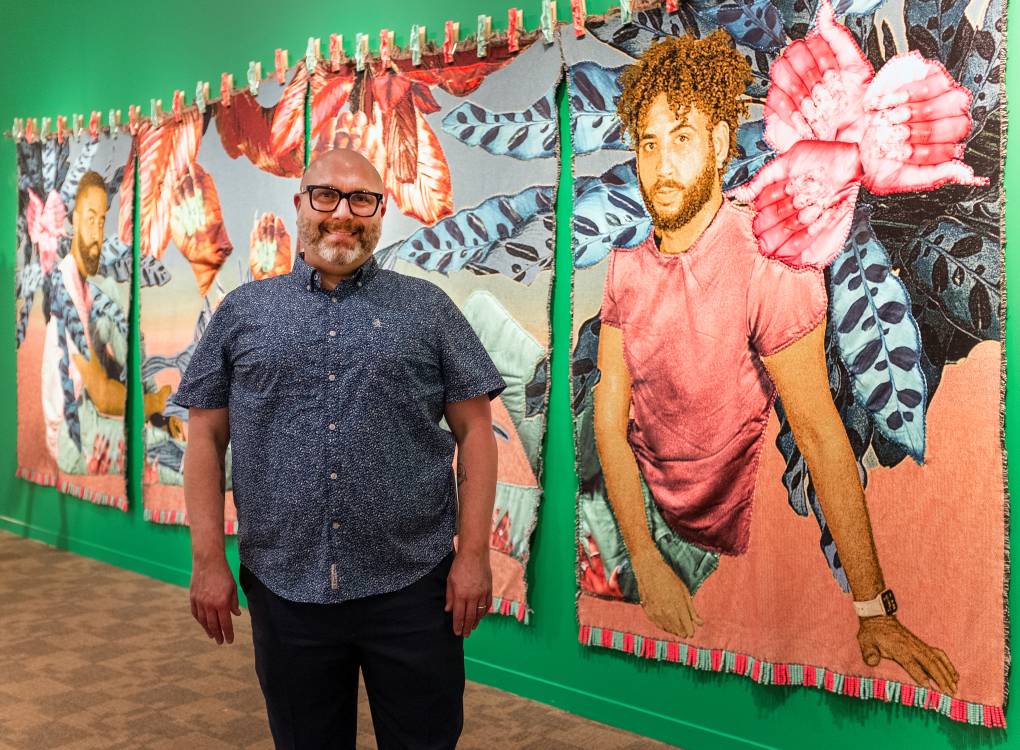
‘Queer Threads’ Weaves Together LGBTQ Trauma, Hope and Resilience
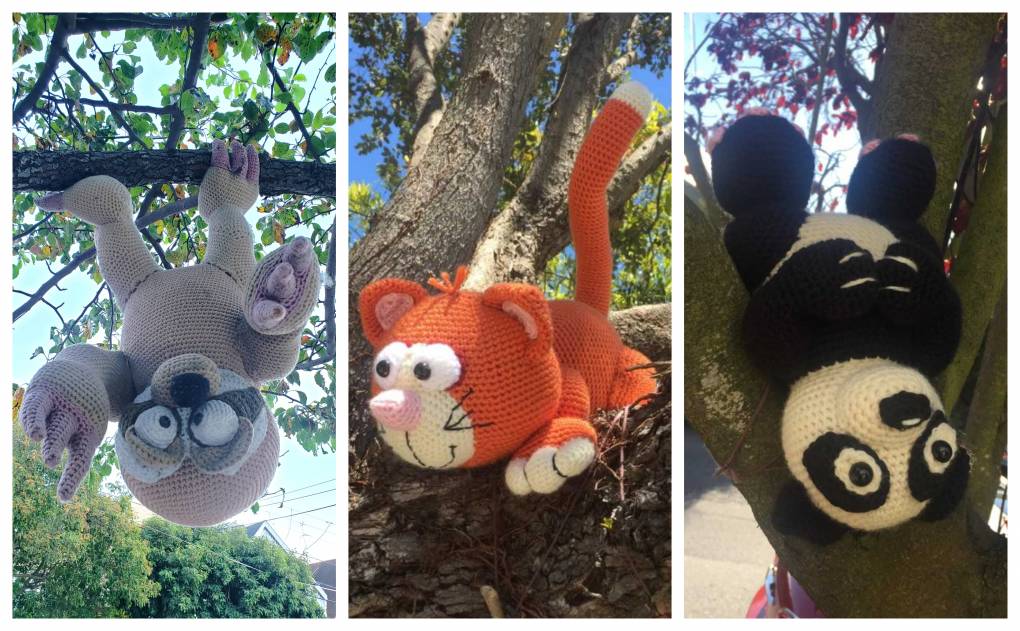
Meet the Man Behind the Crocheted Animals of Diamond Heights
Coronavirus Crafts on Etsy: Yes, It's a Thing
POSTPONED: Embrace the Creepy and the Kooky at the Oddities & Curiosities Expo
How the 1962 Escape From Alcatraz Set a Precedent For Prison Crafting
A One-Stop Seasonal Gift Shop at the Renegade Craft Fair
Madeleine Albright's Knitting Featured in Massive SF Yarn Art Project
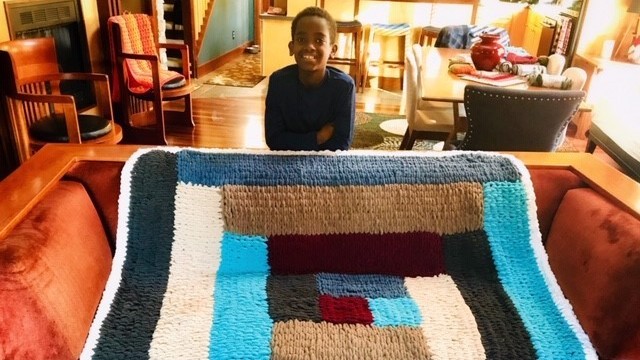
Wisconsin Boy Is Hooked On Crocheting And Giving Back
Sponsored
Player sponsored by
window.__IS_SSR__=true
window.__INITIAL_STATE__={
"attachmentsReducer": {
"audio_0": {
"type": "attachments",
"id": "audio_0",
"imgSizes": {
"kqedFullSize": {
"file": "https://ww2.kqed.org/news/wp-content/themes/KQED-unified/img/audio_bgs/background0.jpg"
}
}
},
"audio_1": {
"type": "attachments",
"id": "audio_1",
"imgSizes": {
"kqedFullSize": {
"file": "https://ww2.kqed.org/news/wp-content/themes/KQED-unified/img/audio_bgs/background1.jpg"
}
}
},
"audio_2": {
"type": "attachments",
"id": "audio_2",
"imgSizes": {
"kqedFullSize": {
"file": "https://ww2.kqed.org/news/wp-content/themes/KQED-unified/img/audio_bgs/background2.jpg"
}
}
},
"audio_3": {
"type": "attachments",
"id": "audio_3",
"imgSizes": {
"kqedFullSize": {
"file": "https://ww2.kqed.org/news/wp-content/themes/KQED-unified/img/audio_bgs/background3.jpg"
}
}
},
"audio_4": {
"type": "attachments",
"id": "audio_4",
"imgSizes": {
"kqedFullSize": {
"file": "https://ww2.kqed.org/news/wp-content/themes/KQED-unified/img/audio_bgs/background4.jpg"
}
}
},
"placeholder": {
"type": "attachments",
"id": "placeholder",
"imgSizes": {
"thumbnail": {
"file": "https://cdn.kqed.org/wp-content/uploads/2024/12/KQED-Default-Image-816638274-2000x1333-1-160x107.jpg",
"width": 160,
"height": 107,
"mimeType": "image/jpeg"
},
"medium": {
"file": "https://cdn.kqed.org/wp-content/uploads/2024/12/KQED-Default-Image-816638274-2000x1333-1-800x533.jpg",
"width": 800,
"height": 533,
"mimeType": "image/jpeg"
},
"medium_large": {
"file": "https://cdn.kqed.org/wp-content/uploads/2024/12/KQED-Default-Image-816638274-2000x1333-1-768x512.jpg",
"width": 768,
"height": 512,
"mimeType": "image/jpeg"
},
"large": {
"file": "https://cdn.kqed.org/wp-content/uploads/2024/12/KQED-Default-Image-816638274-2000x1333-1-1020x680.jpg",
"width": 1020,
"height": 680,
"mimeType": "image/jpeg"
},
"1536x1536": {
"file": "https://cdn.kqed.org/wp-content/uploads/2024/12/KQED-Default-Image-816638274-2000x1333-1-1536x1024.jpg",
"width": 1536,
"height": 1024,
"mimeType": "image/jpeg"
},
"fd-lrg": {
"file": "https://cdn.kqed.org/wp-content/uploads/2024/12/KQED-Default-Image-816638274-2000x1333-1-1536x1024.jpg",
"width": 1536,
"height": 1024,
"mimeType": "image/jpeg"
},
"fd-med": {
"file": "https://cdn.kqed.org/wp-content/uploads/2024/12/KQED-Default-Image-816638274-2000x1333-1-1020x680.jpg",
"width": 1020,
"height": 680,
"mimeType": "image/jpeg"
},
"fd-sm": {
"file": "https://cdn.kqed.org/wp-content/uploads/2024/12/KQED-Default-Image-816638274-2000x1333-1-800x533.jpg",
"width": 800,
"height": 533,
"mimeType": "image/jpeg"
},
"post-thumbnail": {
"file": "https://cdn.kqed.org/wp-content/uploads/2024/12/KQED-Default-Image-816638274-2000x1333-1-672x372.jpg",
"width": 672,
"height": 372,
"mimeType": "image/jpeg"
},
"twentyfourteen-full-width": {
"file": "https://cdn.kqed.org/wp-content/uploads/2024/12/KQED-Default-Image-816638274-2000x1333-1-1038x576.jpg",
"width": 1038,
"height": 576,
"mimeType": "image/jpeg"
},
"xxsmall": {
"file": "https://cdn.kqed.org/wp-content/uploads/2024/12/KQED-Default-Image-816638274-2000x1333-1-160x107.jpg",
"width": 160,
"height": 107,
"mimeType": "image/jpeg"
},
"xsmall": {
"file": "https://cdn.kqed.org/wp-content/uploads/2024/12/KQED-Default-Image-816638274-2000x1333-1-672x372.jpg",
"width": 672,
"height": 372,
"mimeType": "image/jpeg"
},
"small": {
"file": "https://cdn.kqed.org/wp-content/uploads/2024/12/KQED-Default-Image-816638274-2000x1333-1-672x372.jpg",
"width": 672,
"height": 372,
"mimeType": "image/jpeg"
},
"xlarge": {
"file": "https://cdn.kqed.org/wp-content/uploads/2024/12/KQED-Default-Image-816638274-2000x1333-1-1020x680.jpg",
"width": 1020,
"height": 680,
"mimeType": "image/jpeg"
},
"full-width": {
"file": "https://cdn.kqed.org/wp-content/uploads/2024/12/KQED-Default-Image-816638274-2000x1333-1-1920x1280.jpg",
"width": 1920,
"height": 1280,
"mimeType": "image/jpeg"
},
"guest-author-32": {
"file": "https://cdn.kqed.org/wp-content/uploads/2025/01/KQED-Default-Image-816638274-1333x1333-1-160x160.jpg",
"width": 32,
"height": 32,
"mimeType": "image/jpeg"
},
"guest-author-50": {
"file": "https://cdn.kqed.org/wp-content/uploads/2025/01/KQED-Default-Image-816638274-1333x1333-1-160x160.jpg",
"width": 50,
"height": 50,
"mimeType": "image/jpeg"
},
"guest-author-64": {
"file": "https://cdn.kqed.org/wp-content/uploads/2025/01/KQED-Default-Image-816638274-1333x1333-1-160x160.jpg",
"width": 64,
"height": 64,
"mimeType": "image/jpeg"
},
"guest-author-96": {
"file": "https://cdn.kqed.org/wp-content/uploads/2025/01/KQED-Default-Image-816638274-1333x1333-1-160x160.jpg",
"width": 96,
"height": 96,
"mimeType": "image/jpeg"
},
"guest-author-128": {
"file": "https://cdn.kqed.org/wp-content/uploads/2025/01/KQED-Default-Image-816638274-1333x1333-1-160x160.jpg",
"width": 128,
"height": 128,
"mimeType": "image/jpeg"
},
"detail": {
"file": "https://cdn.kqed.org/wp-content/uploads/2025/01/KQED-Default-Image-816638274-1333x1333-1-160x160.jpg",
"width": 160,
"height": 160,
"mimeType": "image/jpeg"
},
"kqedFullSize": {
"file": "https://cdn.kqed.org/wp-content/uploads/2024/12/KQED-Default-Image-816638274-2000x1333-1.jpg",
"width": 2000,
"height": 1333
}
}
},
"arts_13954721": {
"type": "attachments",
"id": "arts_13954721",
"meta": {
"index": "attachments_1716263798",
"site": "arts",
"id": "13954721",
"found": true
},
"parent": 13954716,
"imgSizes": {
"twentyfourteen-full-width": {
"file": "https://cdn.kqed.org/wp-content/uploads/sites/2/2024/03/SJD2023_FullSet-178_websize-1038x576.jpg",
"width": 1038,
"mimeType": "image/jpeg",
"height": 576
},
"thumbnail": {
"file": "https://cdn.kqed.org/wp-content/uploads/sites/2/2024/03/SJD2023_FullSet-178_websize-160x107.jpg",
"width": 160,
"mimeType": "image/jpeg",
"height": 107
},
"post-thumbnail": {
"file": "https://cdn.kqed.org/wp-content/uploads/sites/2/2024/03/SJD2023_FullSet-178_websize-672x372.jpg",
"width": 672,
"mimeType": "image/jpeg",
"height": 372
},
"kqedFullSize": {
"file": "https://cdn.kqed.org/wp-content/uploads/sites/2/2024/03/SJD2023_FullSet-178_websize.jpg",
"width": 1600,
"height": 1067
},
"large": {
"file": "https://cdn.kqed.org/wp-content/uploads/sites/2/2024/03/SJD2023_FullSet-178_websize-1020x680.jpg",
"width": 1020,
"mimeType": "image/jpeg",
"height": 680
},
"1536x1536": {
"file": "https://cdn.kqed.org/wp-content/uploads/sites/2/2024/03/SJD2023_FullSet-178_websize-1536x1024.jpg",
"width": 1536,
"mimeType": "image/jpeg",
"height": 1024
},
"medium": {
"file": "https://cdn.kqed.org/wp-content/uploads/sites/2/2024/03/SJD2023_FullSet-178_websize-800x534.jpg",
"width": 800,
"mimeType": "image/jpeg",
"height": 534
},
"medium_large": {
"file": "https://cdn.kqed.org/wp-content/uploads/sites/2/2024/03/SJD2023_FullSet-178_websize-768x512.jpg",
"width": 768,
"mimeType": "image/jpeg",
"height": 512
}
},
"publishDate": 1711409032,
"modified": 1711476904,
"caption": "A group of San Jose activists, artists and organizers gather for San Jose Day in 2023. ",
"description": null,
"title": "San Jose Day 2023",
"credit": "Alex Knowbody",
"status": "inherit",
"altTag": "a group of San Jose residents stand outside during a festival in their city",
"fetchFailed": false,
"isLoading": false
},
"arts_13929653": {
"type": "attachments",
"id": "arts_13929653",
"meta": {
"index": "attachments_1716263798",
"site": "arts",
"id": "13929653",
"found": true
},
"parent": 13929422,
"imgSizes": {
"twentyfourteen-full-width": {
"file": "https://ww2.kqed.org/app/uploads/sites/2/2023/05/JohnChaich_portrait-1038x576.jpg",
"width": 1038,
"mimeType": "image/jpeg",
"height": 576
},
"thumbnail": {
"file": "https://ww2.kqed.org/app/uploads/sites/2/2023/05/JohnChaich_portrait-160x118.jpg",
"width": 160,
"mimeType": "image/jpeg",
"height": 118
},
"post-thumbnail": {
"file": "https://ww2.kqed.org/app/uploads/sites/2/2023/05/JohnChaich_portrait-672x372.jpg",
"width": 672,
"mimeType": "image/jpeg",
"height": 372
},
"kqedFullSize": {
"file": "https://ww2.kqed.org/app/uploads/sites/2/2023/05/JohnChaich_portrait-scaled.jpg",
"width": 2560,
"height": 1882
},
"2048x2048": {
"file": "https://ww2.kqed.org/app/uploads/sites/2/2023/05/JohnChaich_portrait-2048x1506.jpg",
"width": 2048,
"mimeType": "image/jpeg",
"height": 1506
},
"large": {
"file": "https://ww2.kqed.org/app/uploads/sites/2/2023/05/JohnChaich_portrait-1020x750.jpg",
"width": 1020,
"mimeType": "image/jpeg",
"height": 750
},
"1536x1536": {
"file": "https://ww2.kqed.org/app/uploads/sites/2/2023/05/JohnChaich_portrait-1536x1129.jpg",
"width": 1536,
"mimeType": "image/jpeg",
"height": 1129
},
"full-width": {
"file": "https://ww2.kqed.org/app/uploads/sites/2/2023/05/JohnChaich_portrait-1920x1412.jpg",
"width": 1920,
"mimeType": "image/jpeg",
"height": 1412
},
"medium": {
"file": "https://ww2.kqed.org/app/uploads/sites/2/2023/05/JohnChaich_portrait-800x588.jpg",
"width": 800,
"mimeType": "image/jpeg",
"height": 588
},
"medium_large": {
"file": "https://ww2.kqed.org/app/uploads/sites/2/2023/05/JohnChaich_portrait-768x565.jpg",
"width": 768,
"mimeType": "image/jpeg",
"height": 565
}
},
"publishDate": 1684968014,
"modified": 1685160404,
"caption": "Curator John Chaich with 'Guess Jeans: I Just Want to Have My Titties Out,' by April Bey. Digitally woven blanket with hand-sewn fabric and glitter, 80\" x 240\", 2022",
"description": null,
"title": "JohnChaich_portrait",
"credit": "Cherri Lakey",
"status": "inherit",
"altTag": "a man with glasses stands smiling in front of a painting in a museum",
"fetchFailed": false,
"isLoading": false
},
"arts_13907016": {
"type": "attachments",
"id": "arts_13907016",
"meta": {
"index": "attachments_1716263798",
"site": "arts",
"id": "13907016",
"found": true
},
"parent": 13905421,
"imgSizes": {
"twentyfourteen-full-width": {
"file": "https://ww2.kqed.org/app/uploads/sites/2/2021/12/tree-creatures-1038x576.jpg",
"width": 1038,
"mimeType": "image/jpeg",
"height": 576
},
"thumbnail": {
"file": "https://ww2.kqed.org/app/uploads/sites/2/2021/12/tree-creatures-160x99.jpg",
"width": 160,
"mimeType": "image/jpeg",
"height": 99
},
"post-thumbnail": {
"file": "https://ww2.kqed.org/app/uploads/sites/2/2021/12/tree-creatures-672x372.jpg",
"width": 672,
"mimeType": "image/jpeg",
"height": 372
},
"kqedFullSize": {
"file": "https://ww2.kqed.org/app/uploads/sites/2/2021/12/tree-creatures-scaled.jpg",
"width": 2560,
"height": 1584
},
"2048x2048": {
"file": "https://ww2.kqed.org/app/uploads/sites/2/2021/12/tree-creatures-2048x1267.jpg",
"width": 2048,
"mimeType": "image/jpeg",
"height": 1267
},
"large": {
"file": "https://ww2.kqed.org/app/uploads/sites/2/2021/12/tree-creatures-1020x631.jpg",
"width": 1020,
"mimeType": "image/jpeg",
"height": 631
},
"1536x1536": {
"file": "https://ww2.kqed.org/app/uploads/sites/2/2021/12/tree-creatures-1536x951.jpg",
"width": 1536,
"mimeType": "image/jpeg",
"height": 951
},
"full-width": {
"file": "https://ww2.kqed.org/app/uploads/sites/2/2021/12/tree-creatures-1920x1188.jpg",
"width": 1920,
"mimeType": "image/jpeg",
"height": 1188
},
"medium": {
"file": "https://ww2.kqed.org/app/uploads/sites/2/2021/12/tree-creatures-800x495.jpg",
"width": 800,
"mimeType": "image/jpeg",
"height": 495
},
"medium_large": {
"file": "https://ww2.kqed.org/app/uploads/sites/2/2021/12/tree-creatures-768x475.jpg",
"width": 768,
"mimeType": "image/jpeg",
"height": 475
}
},
"publishDate": 1638987608,
"modified": 1638987702,
"caption": "Huib Petersen has been sharing his work with his Diamond Heights neighbors for six years—in the trees.",
"description": "Huib Petersen has been sharing his work with his Diamond Heights neighbors for six years—in the trees.",
"title": "Huib Petersen has been sharing his work with his Diamond Heights neighbors for six years—in the trees.",
"credit": "Huib Petersen/ Rae Alexandra",
"status": "inherit",
"altTag": "An upside sloth, an orange cat and a black and white panda perch in tree branches around Diamond Heights.",
"fetchFailed": false,
"isLoading": false
},
"arts_13875980": {
"type": "attachments",
"id": "arts_13875980",
"meta": {
"index": "attachments_1716263798",
"site": "arts",
"id": "13875980",
"found": true
},
"parent": 13875959,
"imgSizes": {
"twentyfourteen-full-width": {
"file": "https://ww2.kqed.org/app/uploads/sites/2/2020/03/coronavirus-1038x576.jpg",
"width": 1038,
"mimeType": "image/jpeg",
"height": 576
},
"thumbnail": {
"file": "https://ww2.kqed.org/app/uploads/sites/2/2020/03/coronavirus-160x99.jpg",
"width": 160,
"mimeType": "image/jpeg",
"height": 99
},
"post-thumbnail": {
"file": "https://ww2.kqed.org/app/uploads/sites/2/2020/03/coronavirus-672x372.jpg",
"width": 672,
"mimeType": "image/jpeg",
"height": 372
},
"kqedFullSize": {
"file": "https://ww2.kqed.org/app/uploads/sites/2/2020/03/coronavirus.jpg",
"width": 2064,
"height": 1278
},
"large": {
"file": "https://ww2.kqed.org/app/uploads/sites/2/2020/03/coronavirus-1020x632.jpg",
"width": 1020,
"mimeType": "image/jpeg",
"height": 632
},
"full-width": {
"file": "https://ww2.kqed.org/app/uploads/sites/2/2020/03/coronavirus-1920x1189.jpg",
"width": 1920,
"mimeType": "image/jpeg",
"height": 1189
},
"medium": {
"file": "https://ww2.kqed.org/app/uploads/sites/2/2020/03/coronavirus-800x495.jpg",
"width": 800,
"mimeType": "image/jpeg",
"height": 495
},
"medium_large": {
"file": "https://ww2.kqed.org/app/uploads/sites/2/2020/03/coronavirus-768x476.jpg",
"width": 768,
"mimeType": "image/jpeg",
"height": 476
}
},
"publishDate": 1583360419,
"modified": 1583361612,
"caption": "Just some of the coronavirus-related merch currently listed on Etsy.",
"description": "Just some of the coronavirus-related merch currently listed on Etsy.",
"title": "Just some of the coronavirus-related merch currently listed on Etsy.",
"credit": null,
"status": "inherit",
"fetchFailed": false,
"isLoading": false
},
"arts_13874337": {
"type": "attachments",
"id": "arts_13874337",
"meta": {
"index": "attachments_1716263798",
"site": "arts",
"id": "13874337",
"found": true
},
"parent": 13874332,
"imgSizes": {
"twentyfourteen-full-width": {
"file": "https://ww2.kqed.org/app/uploads/sites/2/2020/02/jen-theodore-TbqfQFVUMkE-unsplash-1038x576.jpg",
"width": 1038,
"mimeType": "image/jpeg",
"height": 576
},
"thumbnail": {
"file": "https://ww2.kqed.org/app/uploads/sites/2/2020/02/jen-theodore-TbqfQFVUMkE-unsplash-160x107.jpg",
"width": 160,
"mimeType": "image/jpeg",
"height": 107
},
"post-thumbnail": {
"file": "https://ww2.kqed.org/app/uploads/sites/2/2020/02/jen-theodore-TbqfQFVUMkE-unsplash-672x372.jpg",
"width": 672,
"mimeType": "image/jpeg",
"height": 372
},
"kqedFullSize": {
"file": "https://ww2.kqed.org/app/uploads/sites/2/2020/02/jen-theodore-TbqfQFVUMkE-unsplash.jpg",
"width": 3744,
"height": 2496
},
"large": {
"file": "https://ww2.kqed.org/app/uploads/sites/2/2020/02/jen-theodore-TbqfQFVUMkE-unsplash-1020x680.jpg",
"width": 1020,
"mimeType": "image/jpeg",
"height": 680
},
"full-width": {
"file": "https://ww2.kqed.org/app/uploads/sites/2/2020/02/jen-theodore-TbqfQFVUMkE-unsplash-1920x1280.jpg",
"width": 1920,
"mimeType": "image/jpeg",
"height": 1280
},
"medium": {
"file": "https://ww2.kqed.org/app/uploads/sites/2/2020/02/jen-theodore-TbqfQFVUMkE-unsplash-800x533.jpg",
"width": 800,
"mimeType": "image/jpeg",
"height": 533
},
"medium_large": {
"file": "https://ww2.kqed.org/app/uploads/sites/2/2020/02/jen-theodore-TbqfQFVUMkE-unsplash-768x512.jpg",
"width": 768,
"mimeType": "image/jpeg",
"height": 512
}
},
"publishDate": 1580850955,
"modified": 1580850993,
"caption": null,
"description": null,
"title": "jen-theodore-TbqfQFVUMkE-unsplash",
"credit": "Jen Theodore/Unsplash",
"status": "inherit",
"fetchFailed": false,
"isLoading": false
},
"arts_13889709": {
"type": "attachments",
"id": "arts_13889709",
"meta": {
"index": "attachments_1716263798",
"site": "arts",
"id": "13889709",
"found": true
},
"parent": 13870765,
"imgSizes": {
"twentyfourteen-full-width": {
"file": "https://ww2.kqed.org/app/uploads/sites/2/2019/12/GettyImages-1004925382-1-1038x576.jpg",
"width": 1038,
"mimeType": "image/jpeg",
"height": 576
},
"thumbnail": {
"file": "https://ww2.kqed.org/app/uploads/sites/2/2019/12/GettyImages-1004925382-1-160x107.jpg",
"width": 160,
"mimeType": "image/jpeg",
"height": 107
},
"post-thumbnail": {
"file": "https://ww2.kqed.org/app/uploads/sites/2/2019/12/GettyImages-1004925382-1-672x372.jpg",
"width": 672,
"mimeType": "image/jpeg",
"height": 372
},
"kqedFullSize": {
"file": "https://ww2.kqed.org/app/uploads/sites/2/2019/12/GettyImages-1004925382-1-scaled-e1606344526862.jpg",
"width": 1920,
"height": 1280
},
"2048x2048": {
"file": "https://ww2.kqed.org/app/uploads/sites/2/2019/12/GettyImages-1004925382-1-2048x1365.jpg",
"width": 2048,
"mimeType": "image/jpeg",
"height": 1365
},
"large": {
"file": "https://ww2.kqed.org/app/uploads/sites/2/2019/12/GettyImages-1004925382-1-1020x680.jpg",
"width": 1020,
"mimeType": "image/jpeg",
"height": 680
},
"1536x1536": {
"file": "https://ww2.kqed.org/app/uploads/sites/2/2019/12/GettyImages-1004925382-1-1536x1024.jpg",
"width": 1536,
"mimeType": "image/jpeg",
"height": 1024
},
"full-width": {
"file": "https://ww2.kqed.org/app/uploads/sites/2/2019/12/GettyImages-1004925382-1-1920x1280.jpg",
"width": 1920,
"mimeType": "image/jpeg",
"height": 1280
},
"medium": {
"file": "https://ww2.kqed.org/app/uploads/sites/2/2019/12/GettyImages-1004925382-1-800x533.jpg",
"width": 800,
"mimeType": "image/jpeg",
"height": 533
},
"medium_large": {
"file": "https://ww2.kqed.org/app/uploads/sites/2/2019/12/GettyImages-1004925382-1-768x512.jpg",
"width": 768,
"mimeType": "image/jpeg",
"height": 512
}
},
"publishDate": 1606344505,
"modified": 1606344610,
"caption": "A former member of the Barrio 18 gang crochets a hat during a workshop at the prison of San Francisco Gotera, near San Salvador, July 2018.",
"description": "A former member of the Barrio 18 gang crochets a hat during a workshop at the prison of San Francisco Gotera, near San Salvador, July 2018.",
"title": "A former member of the Barrio 18 gang crochets a hat during a workshop at the prison of San Francisco Gotera, near San Salvador, July 2018.",
"credit": "OSCAR RIVERA/AFP via Getty Images",
"status": "inherit",
"fetchFailed": false,
"isLoading": false
},
"arts_13869313": {
"type": "attachments",
"id": "arts_13869313",
"meta": {
"index": "attachments_1716263798",
"site": "arts",
"id": "13869313",
"found": true
},
"parent": 13869311,
"imgSizes": {
"twentyfourteen-full-width": {
"file": "https://ww2.kqed.org/app/uploads/sites/2/2019/11/clem-onojeghuo-93x6yZautvA-unsplash-1038x576.jpg",
"width": 1038,
"mimeType": "image/jpeg",
"height": 576
},
"thumbnail": {
"file": "https://ww2.kqed.org/app/uploads/sites/2/2019/11/clem-onojeghuo-93x6yZautvA-unsplash-160x111.jpg",
"width": 160,
"mimeType": "image/jpeg",
"height": 111
},
"post-thumbnail": {
"file": "https://ww2.kqed.org/app/uploads/sites/2/2019/11/clem-onojeghuo-93x6yZautvA-unsplash-672x372.jpg",
"width": 672,
"mimeType": "image/jpeg",
"height": 372
},
"kqedFullSize": {
"file": "https://ww2.kqed.org/app/uploads/sites/2/2019/11/clem-onojeghuo-93x6yZautvA-unsplash.jpg",
"width": 5400,
"height": 3731
},
"large": {
"file": "https://ww2.kqed.org/app/uploads/sites/2/2019/11/clem-onojeghuo-93x6yZautvA-unsplash-1020x705.jpg",
"width": 1020,
"mimeType": "image/jpeg",
"height": 705
},
"complete_open_graph": {
"file": "https://ww2.kqed.org/app/uploads/sites/2/2019/11/clem-onojeghuo-93x6yZautvA-unsplash-1200x829.jpg",
"width": 1200,
"mimeType": "image/jpeg",
"height": 829
},
"full-width": {
"file": "https://ww2.kqed.org/app/uploads/sites/2/2019/11/clem-onojeghuo-93x6yZautvA-unsplash-1920x1327.jpg",
"width": 1920,
"mimeType": "image/jpeg",
"height": 1327
},
"medium": {
"file": "https://ww2.kqed.org/app/uploads/sites/2/2019/11/clem-onojeghuo-93x6yZautvA-unsplash-800x553.jpg",
"width": 800,
"mimeType": "image/jpeg",
"height": 553
},
"medium_large": {
"file": "https://ww2.kqed.org/app/uploads/sites/2/2019/11/clem-onojeghuo-93x6yZautvA-unsplash-768x531.jpg",
"width": 768,
"mimeType": "image/jpeg",
"height": 531
}
},
"publishDate": 1572766561,
"modified": 1572766590,
"caption": null,
"description": null,
"title": "clem-onojeghuo-93x6yZautvA-unsplash",
"credit": "Clem Onojeghuo/Unsplash",
"status": "inherit",
"fetchFailed": false,
"isLoading": false
},
"arts_13852351": {
"type": "attachments",
"id": "arts_13852351",
"meta": {
"index": "attachments_1716263798",
"site": "arts",
"id": "13852351",
"found": true
},
"parent": 13852184,
"imgSizes": {
"thumbnail": {
"file": "https://ww2.kqed.org/app/uploads/sites/2/2019/03/FlagYarn-160x90.jpg",
"width": 160,
"mimeType": "image/jpeg",
"height": 90
},
"post-thumbnail": {
"file": "https://ww2.kqed.org/app/uploads/sites/2/2019/03/FlagYarn-672x372.jpg",
"width": 672,
"mimeType": "image/jpeg",
"height": 372
},
"kqedFullSize": {
"file": "https://ww2.kqed.org/app/uploads/sites/2/2019/03/FlagYarn.jpg",
"width": 1020,
"height": 574
},
"large": {
"file": "https://ww2.kqed.org/app/uploads/sites/2/2019/03/FlagYarn-1020x574.jpg",
"width": 1020,
"mimeType": "image/jpeg",
"height": 574
},
"guest-author-50": {
"file": "https://ww2.kqed.org/app/uploads/sites/2/2019/03/FlagYarn-50x50.jpg",
"width": 50,
"mimeType": "image/jpeg",
"height": 50
},
"guest-author-96": {
"file": "https://ww2.kqed.org/app/uploads/sites/2/2019/03/FlagYarn-96x96.jpg",
"width": 96,
"mimeType": "image/jpeg",
"height": 96
},
"medium": {
"file": "https://ww2.kqed.org/app/uploads/sites/2/2019/03/FlagYarn-800x450.jpg",
"width": 800,
"mimeType": "image/jpeg",
"height": 450
},
"guest-author-64": {
"file": "https://ww2.kqed.org/app/uploads/sites/2/2019/03/FlagYarn-64x64.jpg",
"width": 64,
"mimeType": "image/jpeg",
"height": 64
},
"guest-author-32": {
"file": "https://ww2.kqed.org/app/uploads/sites/2/2019/03/FlagYarn-32x32.jpg",
"width": 32,
"mimeType": "image/jpeg",
"height": 32
},
"medium_large": {
"file": "https://ww2.kqed.org/app/uploads/sites/2/2019/03/FlagYarn-768x432.jpg",
"width": 768,
"mimeType": "image/jpeg",
"height": 432
},
"guest-author-128": {
"file": "https://ww2.kqed.org/app/uploads/sites/2/2019/03/FlagYarn-128x128.jpg",
"width": 128,
"mimeType": "image/jpeg",
"height": 128
}
},
"publishDate": 1551833413,
"modified": 1551833445,
"caption": "Former Secretary of State Madeleine Albright's contribution to the Immigrant Yarn Project. The installation, consisting of hundreds of contributions, opens at Fort Point in San Francisco on March 8.",
"description": "Former Secretary of State Madeleine Albright's contribution to the Immigrant Yarn Project. The installation, consisting of hundreds of contributions, opens at Fort Point in San Francisco on March 8.",
"title": "FlagYarn",
"credit": "Courtesy Enactivist",
"status": "inherit",
"fetchFailed": false,
"isLoading": false
},
"arts_13850174": {
"type": "attachments",
"id": "arts_13850174",
"meta": {
"index": "attachments_1716263798",
"site": "arts",
"id": "13850174",
"found": true
},
"parent": 13850173,
"imgSizes": {
"thumbnail": {
"file": "https://ww2.kqed.org/app/uploads/sites/2/2019/02/jonah1_wide-fc89418ab9e6c3a58ec396f512c1c2401c58fcfd-160x90.jpg",
"width": 160,
"mimeType": "image/jpeg",
"height": 90
},
"kqedFullSize": {
"file": "https://ww2.kqed.org/app/uploads/sites/2/2019/02/jonah1_wide-fc89418ab9e6c3a58ec396f512c1c2401c58fcfd.jpg",
"width": 640,
"height": 360
},
"guest-author-50": {
"file": "https://ww2.kqed.org/app/uploads/sites/2/2019/02/jonah1_wide-fc89418ab9e6c3a58ec396f512c1c2401c58fcfd-50x50.jpg",
"width": 50,
"mimeType": "image/jpeg",
"height": 50
},
"guest-author-96": {
"file": "https://ww2.kqed.org/app/uploads/sites/2/2019/02/jonah1_wide-fc89418ab9e6c3a58ec396f512c1c2401c58fcfd-96x96.jpg",
"width": 96,
"mimeType": "image/jpeg",
"height": 96
},
"guest-author-64": {
"file": "https://ww2.kqed.org/app/uploads/sites/2/2019/02/jonah1_wide-fc89418ab9e6c3a58ec396f512c1c2401c58fcfd-64x64.jpg",
"width": 64,
"mimeType": "image/jpeg",
"height": 64
},
"detail": {
"file": "https://ww2.kqed.org/app/uploads/sites/2/2019/02/jonah1_wide-fc89418ab9e6c3a58ec396f512c1c2401c58fcfd-150x150.jpg",
"width": 150,
"mimeType": "image/jpeg",
"height": 150
},
"guest-author-32": {
"file": "https://ww2.kqed.org/app/uploads/sites/2/2019/02/jonah1_wide-fc89418ab9e6c3a58ec396f512c1c2401c58fcfd-32x32.jpg",
"width": 32,
"mimeType": "image/jpeg",
"height": 32
},
"guest-author-128": {
"file": "https://ww2.kqed.org/app/uploads/sites/2/2019/02/jonah1_wide-fc89418ab9e6c3a58ec396f512c1c2401c58fcfd-128x128.jpg",
"width": 128,
"mimeType": "image/jpeg",
"height": 128
}
},
"publishDate": 1549412706,
"modified": 1549412980,
"caption": "Eleven-year-old Jonah Larson's favorite hobby is crocheting, which he turned into a business. He made this blanket in January 2019 during a snow day from school.",
"description": "Eleven-year-old Jonah Larson's favorite hobby is crocheting, which he turned into a business. He made this blanket in January 2019 during a snow day from school.",
"title": "Eleven-year-old Jonah Larson's favorite hobby is crocheting, which he turned into a business. He made this blanket in January 2019 during a snow day from school.",
"credit": "Courtesy of Jennifer Larson",
"status": "inherit",
"fetchFailed": false,
"isLoading": false
}
},
"audioPlayerReducer": {
"postId": "stream_live",
"isPaused": true,
"isPlaying": false,
"pfsActive": false,
"pledgeModalIsOpen": true,
"playerDrawerIsOpen": false
},
"authorsReducer": {
"byline_arts_13850173": {
"type": "authors",
"id": "byline_arts_13850173",
"meta": {
"override": true
},
"slug": "byline_arts_13850173",
"name": "Rachel Martin",
"isLoading": false
},
"clakey": {
"type": "authors",
"id": "191",
"meta": {
"index": "authors_1716337520",
"id": "191",
"found": true
},
"name": "Cherri Lakey",
"firstName": null,
"lastName": null,
"slug": "clakey",
"email": "cherri@galleryad.com",
"display_author_email": false,
"staff_mastheads": [],
"title": null,
"bio": "Co-owner/curator of urban contemporary art and culture gallery \u003ca href=\"http://www.galleryAD.com\">ANNO DOMINI\u003c/a> // the second coming of Art & Design and producer of a bunch of other cool projects with partner \u003ca href=\"http://ww2.kqed.org/arts/author/beder/\" target=\"_blank\">Brian Eder.\u003c/a> \u003ca class=\"twitter-follow-button\" href=\"https://twitter.com/astrogirl\" data-show-count=\"false\">Follow @astrogirl\u003c/a>\r\n\u003cscript>// \u003c![CDATA[\r\n!function(d,s,id){var js,fjs=d.getElementsByTagName(s)[0],p=/^http:/.test(d.location)?'http':'https';if(!d.getElementById(id)){js=d.createElement(s);js.id=id;js.src=p+'://platform.twitter.com/widgets.js';fjs.parentNode.insertBefore(js,fjs);}}(document, 'script', 'twitter-wjs');\r\n// ]]>\u003c/script>",
"avatar": "https://secure.gravatar.com/avatar/5a92919baa84da5ce8920beeaf078c67?s=600&d=blank&r=g",
"twitter": null,
"facebook": null,
"instagram": null,
"linkedin": null,
"sites": [
{
"site": "arts",
"roles": [
"contributor"
]
}
],
"headData": {
"title": "Cherri Lakey | KQED",
"description": null,
"ogImgSrc": "https://secure.gravatar.com/avatar/5a92919baa84da5ce8920beeaf078c67?s=600&d=blank&r=g",
"twImgSrc": "https://secure.gravatar.com/avatar/5a92919baa84da5ce8920beeaf078c67?s=600&d=blank&r=g"
},
"isLoading": false,
"link": "/author/clakey"
},
"cveltman": {
"type": "authors",
"id": "8608",
"meta": {
"index": "authors_1716337520",
"id": "8608",
"found": true
},
"name": "Chloe Veltman",
"firstName": "Chloe",
"lastName": "Veltman",
"slug": "cveltman",
"email": "cveltman@kqed.org",
"display_author_email": true,
"staff_mastheads": [],
"title": "Arts and Culture Reporter",
"bio": "Chloe Veltman is a former arts and culture reporter for KQED. Prior to joining the organization, she launched and led the arts bureau at Colorado Public Radio, served as the Bay Area's culture columnist for the New York Times, and was the founder, host and executive producer of VoiceBox, a national award-winning weekly podcast/radio show and live events series all about the human voice. Chloe is the recipient of numerous prizes, grants and fellowships including a Webby Award for her work on interactive storytelling, both the John S Knight Journalism Fellowship and Humanities Center Fellowship at Stanford University, the Sundance Arts Writing Fellowship and a Library of Congress Research Fellowship. She is the author of the book \"On Acting\" and has appeared as a guest lecturer at Yale University and the San Francisco Conservatory of Music among other institutions. She holds a BA in english literature from King's College, Cambridge, and a Masters in Dramaturgy from the Central School of Speech and Drama/Harvard Institute for Advanced Theater Training.\r\n\u003ca href=\"https://www.chloeveltman.com\">www.chloeveltman.com\u003c/a>",
"avatar": "https://secure.gravatar.com/avatar/55403394b00a1ddab683952c2eb2cf85?s=600&d=blank&r=g",
"twitter": "chloeveltman",
"facebook": null,
"instagram": null,
"linkedin": null,
"sites": [
{
"site": "arts",
"roles": []
},
{
"site": "news",
"roles": [
"author"
]
},
{
"site": "pop",
"roles": [
"editor"
]
},
{
"site": "science",
"roles": []
}
],
"headData": {
"title": "Chloe Veltman | KQED",
"description": "Arts and Culture Reporter",
"ogImgSrc": "https://secure.gravatar.com/avatar/55403394b00a1ddab683952c2eb2cf85?s=600&d=blank&r=g",
"twImgSrc": "https://secure.gravatar.com/avatar/55403394b00a1ddab683952c2eb2cf85?s=600&d=blank&r=g"
},
"isLoading": false,
"link": "/author/cveltman"
},
"ralexandra": {
"type": "authors",
"id": "11242",
"meta": {
"index": "authors_1716337520",
"id": "11242",
"found": true
},
"name": "Rae Alexandra",
"firstName": "Rae",
"lastName": "Alexandra",
"slug": "ralexandra",
"email": "ralexandra@kqed.org",
"display_author_email": true,
"staff_mastheads": [
"arts"
],
"title": "Reporter/Producer",
"bio": "Rae Alexandra is a Reporter/Producer for KQED Arts & Culture, and the creator/author of the \u003ca href=\"https://www.kqed.org/arts/program/rebel-girls-from-bay-area-history\">Rebel Girls From Bay Area History\u003c/a> and \u003ca href=\"https://www.kqed.org/bizarrebayarea\">Bizarre Bay Area\u003c/a> series. Her debut book, \u003ca href=\"https://citylights.com/politics-current-events-history/unsung-heroines35-women-who-changed/\">Unsung Heroines: 35 Women Who Changed the Bay Area\u003c/a> will be published by City Lights in Spring 2026. In 2023, Rae was awarded an SPJ Excellence in Journalism Award for Arts & Culture. Rae was born and raised in Wales and subsequently — even after two decades in Northern California — still uses phrases that regularly baffle her coworkers.",
"avatar": "https://secure.gravatar.com/avatar/d5ef3d663d9adae1345d06932a3951de?s=600&d=blank&r=g",
"twitter": null,
"facebook": null,
"instagram": null,
"linkedin": null,
"sites": [
{
"site": "arts",
"roles": [
"editor"
]
},
{
"site": "news",
"roles": [
"editor"
]
},
{
"site": "pop",
"roles": [
"editor"
]
},
{
"site": "bayareabites",
"roles": [
"editor"
]
},
{
"site": "science",
"roles": [
"editor"
]
}
],
"headData": {
"title": "Rae Alexandra | KQED",
"description": "Reporter/Producer",
"ogImgSrc": "https://secure.gravatar.com/avatar/d5ef3d663d9adae1345d06932a3951de?s=600&d=blank&r=g",
"twImgSrc": "https://secure.gravatar.com/avatar/d5ef3d663d9adae1345d06932a3951de?s=600&d=blank&r=g"
},
"isLoading": false,
"link": "/author/ralexandra"
},
"achazaro": {
"type": "authors",
"id": "11748",
"meta": {
"index": "authors_1716337520",
"id": "11748",
"found": true
},
"name": "Alan Chazaro",
"firstName": "Alan",
"lastName": "Chazaro",
"slug": "achazaro",
"email": "agchazaro@gmail.com",
"display_author_email": true,
"staff_mastheads": [],
"title": "Food Writer and Reporter",
"bio": "Alan Chazaro is the author of \u003cem>This Is Not a Frank Ocean Cover Album\u003c/em> (Black Lawrence Press, 2019), \u003cem>Piñata Theory\u003c/em> (Black Lawrence Press, 2020), and \u003cem>Notes from the Eastern Span of the Bay Bridge\u003c/em> (Ghost City Press, 2021). He is a graduate of June Jordan’s Poetry for the People program at UC Berkeley and a former Lawrence Ferlinghetti Fellow at the University of San Francisco. He writes about sports, food, art, music, education, and culture while repping the Bay on \u003ca href=\"https://twitter.com/alan_chazaro\">Twitter\u003c/a> and \u003ca href=\"https://www.instagram.com/alan_chazaro/?hl=en\">Instagram\u003c/a> at @alan_chazaro.",
"avatar": "https://secure.gravatar.com/avatar/ea8b6dd970fc5c29e7a188e7d5861df7?s=600&d=blank&r=g",
"twitter": "alan_chazaro",
"facebook": null,
"instagram": null,
"linkedin": null,
"sites": [
{
"site": "arts",
"roles": [
"contributor"
]
},
{
"site": "news",
"roles": [
"editor"
]
}
],
"headData": {
"title": "Alan Chazaro | KQED",
"description": "Food Writer and Reporter",
"ogImgSrc": "https://secure.gravatar.com/avatar/ea8b6dd970fc5c29e7a188e7d5861df7?s=600&d=blank&r=g",
"twImgSrc": "https://secure.gravatar.com/avatar/ea8b6dd970fc5c29e7a188e7d5861df7?s=600&d=blank&r=g"
},
"isLoading": false,
"link": "/author/achazaro"
}
},
"breakingNewsReducer": {},
"pagesReducer": {},
"postsReducer": {
"stream_live": {
"type": "live",
"id": "stream_live",
"audioUrl": "https://streams.kqed.org/kqedradio",
"title": "Live Stream",
"excerpt": "Live Stream information currently unavailable.",
"link": "/radio",
"featImg": "",
"label": {
"name": "KQED Live",
"link": "/"
}
},
"stream_kqedNewscast": {
"type": "posts",
"id": "stream_kqedNewscast",
"audioUrl": "https://www.kqed.org/.stream/anon/radio/RDnews/newscast.mp3?_=1",
"title": "KQED Newscast",
"featImg": "",
"label": {
"name": "88.5 FM",
"link": "/"
}
},
"arts_13954716": {
"type": "posts",
"id": "arts_13954716",
"meta": {
"index": "posts_1716263798",
"site": "arts",
"id": "13954716",
"score": null,
"sort": [
1711986334000
]
},
"guestAuthors": [],
"slug": "san-jose-day-returns-to-celebrate-the-408",
"title": "San Jose Day Returns to Celebrate the 408 in Japantown",
"publishDate": 1711986334,
"format": "standard",
"headTitle": "San Jose Day Returns to Celebrate the 408 in Japantown | KQED",
"labelTerm": {
"term": 140,
"site": "arts"
},
"content": "\u003cp>When Haley Cardamon interviewed \u003ca href=\"https://www.kqed.org/arts/13950855/underground-rap-playa-sht-political-joints-equipto-has-bars\">rapper and activist Equipto\u003c/a> in 2016, she was inspired by how hard he repped his hometown of San Francisco.\u003c/p>\n\u003cp>Cardamon — at the time a community college student running a local arts publication, \u003ca href=\"https://www.awesomefoundation.org/en/projects/80940-bay-area-creatives-klub-magazine\">\u003ci>B.A.C.K Magazine\u003c/i>\u003c/a> — learned from the Filipino lyricist about \u003ca href=\"https://www.kqed.org/arts/13895377/rightnowish-baghead-cerealforthekids\">415 Day\u003c/a>, a celebratory gathering for San Franciscans to uplift one another. The event officially debuted that same year at Dolores Park.\u003c/p>\n\u003cp>As someone born and raised in San Jose’s East Side and downtown neighborhoods, Cardamon realized the hometown she loved didn’t have any equivalent. “Girl, you could do it,” Cardamon recalls Equipto telling her.\u003c/p>\n\u003cp>That’s how San Jose Day, formerly known as 408 Day, was born, with its first iteration held downtown in 2017. It gained traction and continued annually until 2020, when the event was shut down by the pandemic. It made its return in 2023.\u003c/p>\n\u003cp>https://www.youtube.com/watch?v=j793qAWhjqA\u003c/p>\n\u003cp>[ad fullwidth]\u003c/p>\n\u003cp> \u003c/p>\n\u003cp>This year, the event is back and bigger than ever. Feeling reinvigorated, Cardamon believes San Jose is primed for a cultural renaissance.\u003c/p>\n\u003cp>“I’ll be honest, I don’t have a big interest in going to San Francisco and Oakland,” Cardamon says. “San Jose has so much going on. It’s very creative, and our culture has blossomed and grown in a way where people are collaborative and respectful of each other’s lanes. We survive in one of the toughest cities to make a living, and we hustle for each other.”\u003c/p>\n\u003cp>The 6th Annual San Jose Day will include live music, food vendors, Aztec and folklórico dancers, educational awareness groups, gallery artists and more. Among them, Cardamon is especially proud of the \u003ca href=\"https://siliconvalleydownsyndromenetwork.wildapricot.org/\">Silicon Valley Down Syndrome Network\u003c/a>, which is hosting a Japanese Taiko performance.\u003c/p>\n\u003cp>“I’m excited about that; I’ve never seen a festival host a special needs group of youth doing a performance,” says Cardamon. “And everyone’s getting paid. That’s special to me.”\u003c/p>\n\u003cfigure id=\"attachment_13954723\" class=\"wp-caption alignnone\" style=\"max-width: 1600px\">\u003cimg loading=\"lazy\" decoding=\"async\" class=\"size-full wp-image-13954723\" src=\"https://cdn.kqed.org/wp-content/uploads/sites/2/2024/03/SJD2023_FullSet-340_websize.jpg\" alt=\"a musical performer is on stage in front of a large audience in San Jose\" width=\"1600\" height=\"900\" srcset=\"https://cdn.kqed.org/wp-content/uploads/sites/2/2024/03/SJD2023_FullSet-340_websize.jpg 1600w, https://cdn.kqed.org/wp-content/uploads/sites/2/2024/03/SJD2023_FullSet-340_websize-800x450.jpg 800w, https://cdn.kqed.org/wp-content/uploads/sites/2/2024/03/SJD2023_FullSet-340_websize-1020x574.jpg 1020w, https://cdn.kqed.org/wp-content/uploads/sites/2/2024/03/SJD2023_FullSet-340_websize-160x90.jpg 160w, https://cdn.kqed.org/wp-content/uploads/sites/2/2024/03/SJD2023_FullSet-340_websize-768x432.jpg 768w, https://cdn.kqed.org/wp-content/uploads/sites/2/2024/03/SJD2023_FullSet-340_websize-1536x864.jpg 1536w\" sizes=\"(max-width: 1600px) 100vw, 1600px\">\u003cfigcaption class=\"wp-caption-text\">A San Jose performer captivates the crowd during San Jose Day in 2023. \u003ccite>(Alex Knowbody)\u003c/cite>\u003c/figcaption>\u003c/figure>\n\u003cp>Cardamon is a San Jose ride-or-die advocate. Having experienced housing insecurity during the 2008 recession in the city as a youth, she’s intimately familiar with the region’s struggles and the often inaccessible pathways for artists to thrive. That’s especially true in Silicon Valley, where tech innovation frequently eclipses the work of art innovators — both economically and culturally.\u003c/p>\n\u003cp>Like Cardamon herself, the event has roamed around San Jose’s diverse communities. It’s been held in the Gordon Biersch lot in downtown San Jose as well as the famed Mexican Heritage Plaza on Alum Rock Avenue. On April 6, \u003ca href=\"https://www.instagram.com/empire7studios/?hl=en\">Empire Seven Studios\u003c/a> in Japantown — \u003ca href=\"https://www.kqed.org/arts/13952476/san-jose-japantown-photo-night-cukui\">which has a bubbling creative scene\u003c/a> — hosts this year’s edition.\u003c/p>\n\u003cp>Having brought in more than 7,500 attendees last year, Cardamon feels a surging momentum in her city.\u003c/p>\n\u003cp>https://www.youtube.com/watch?v=X9cSIPpBz9Q\u003c/p>\n\u003cp> \u003c/p>\n\u003cp>“The energy was vividly euphoric and positive, so much love,” says Cardamon of last year’s festivities. “It was a pivotal moment for our event to know, and people were like ‘Oh shit, we’ve never heard of it before.’ We had over 98 artists involved. That made me realize I could do this. I want to give more of myself to this.”\u003c/p>\n\u003cp>Cardamon is in the process of finalizing her 501(c)(3) status as a nonprofit, and has also developed an arts and culture board to review applications for participating artists, vendors and community members.\u003c/p>\n\u003cp>Though not quite yet at the level of recognition as 415 Day or 510 Day, San Jose Day — in the hub of the Bay Area’s most populous county — is bound to keep growing. And as it does, Cardamon will be at the center, waving her San Jose flag.\u003c/p>\n\u003cp>\u003cimg loading=\"lazy\" decoding=\"async\" class=\"alignnone size-full wp-image-12127869\" src=\"https://cdn.kqed.org/wp-content/uploads/sites/2/2016/09/Q.Logo_.Break_.jpg\" alt=\"\" width=\"800\" height=\"78\" srcset=\"https://cdn.kqed.org/wp-content/uploads/sites/2/2016/09/Q.Logo_.Break_.jpg 800w, https://cdn.kqed.org/wp-content/uploads/sites/2/2016/09/Q.Logo_.Break_-400x39.jpg 400w, https://cdn.kqed.org/wp-content/uploads/sites/2/2016/09/Q.Logo_.Break_-768x75.jpg 768w\" sizes=\"(max-width: 800px) 100vw, 800px\">\u003c/p>\n\u003cp>\u003c/p>\n\u003cp>\u003ci>\u003ca href=\"https://www.sanjoseday.org/sjd2024\">San Jose Day\u003c/a> takes place on Saturday, April 6, from noon–6 p.m., at 525 N. 7th St., San Jose. Entry is free. \u003ca href=\"https://www.sanjoseday.org/sjd2024\">Details here\u003c/a>.\u003c/i>\u003c/p>\n\n",
"blocks": [],
"excerpt": "This year’s edition of the cultural festival takes place in San Jose’s thriving Japantown.",
"status": "publish",
"parent": 0,
"modified": 1726701788,
"stats": {
"hasAudio": false,
"hasVideo": true,
"hasChartOrMap": false,
"iframeSrcs": [],
"hasGoogleForm": false,
"hasGallery": false,
"hasHearkenModule": false,
"hasPolis": false,
"paragraphCount": 18,
"wordCount": 704
},
"headData": {
"title": "San Jose Day Returns to Celebrate the 408 in Japantown | KQED",
"description": "This year’s edition of the cultural festival takes place in San Jose’s thriving Japantown.",
"ogTitle": "",
"ogDescription": "",
"ogImgId": "",
"twTitle": "",
"twDescription": "",
"twImgId": "",
"schema": {
"@context": "https://schema.org",
"@type": "Article",
"headline": "San Jose Day Returns to Celebrate the 408 in Japantown",
"datePublished": "2024-04-01T08:45:34-07:00",
"dateModified": "2024-09-18T16:23:08-07:00",
"image": "https://cdn.kqed.org/wp-content/uploads/2020/02/KQED-OG-Image@1x.png"
}
},
"sticky": false,
"templateType": "standard",
"featuredImageType": "standard",
"excludeFromSiteSearch": "Include",
"articleAge": "0",
"path": "/arts/13954716/san-jose-day-returns-to-celebrate-the-408",
"audioTrackLength": null,
"parsedContent": [
{
"type": "contentString",
"content": "\u003cdiv class=\"post-body\">\u003cp>\u003cp>When Haley Cardamon interviewed \u003ca href=\"https://www.kqed.org/arts/13950855/underground-rap-playa-sht-political-joints-equipto-has-bars\">rapper and activist Equipto\u003c/a> in 2016, she was inspired by how hard he repped his hometown of San Francisco.\u003c/p>\n\u003cp>Cardamon — at the time a community college student running a local arts publication, \u003ca href=\"https://www.awesomefoundation.org/en/projects/80940-bay-area-creatives-klub-magazine\">\u003ci>B.A.C.K Magazine\u003c/i>\u003c/a> — learned from the Filipino lyricist about \u003ca href=\"https://www.kqed.org/arts/13895377/rightnowish-baghead-cerealforthekids\">415 Day\u003c/a>, a celebratory gathering for San Franciscans to uplift one another. The event officially debuted that same year at Dolores Park.\u003c/p>\n\u003cp>As someone born and raised in San Jose’s East Side and downtown neighborhoods, Cardamon realized the hometown she loved didn’t have any equivalent. “Girl, you could do it,” Cardamon recalls Equipto telling her.\u003c/p>\n\u003cp>That’s how San Jose Day, formerly known as 408 Day, was born, with its first iteration held downtown in 2017. It gained traction and continued annually until 2020, when the event was shut down by the pandemic. It made its return in 2023.\u003c/p>\u003c/p>\u003cp>\u003cspan class='utils-parseShortcode-shortcodes-__youtubeShortcode__embedYoutube'>\n \u003cspan class='utils-parseShortcode-shortcodes-__youtubeShortcode__embedYoutubeInside'>\n \u003ciframe\n loading='lazy'\n class='utils-parseShortcode-shortcodes-__youtubeShortcode__youtubePlayer'\n type='text/html'\n src='//www.youtube.com/embed/j793qAWhjqA'\n title='//www.youtube.com/embed/j793qAWhjqA'\n allowfullscreen='true'\n style='border:0;'>\u003c/iframe>\n \u003c/span>\n \u003c/span>\u003c/p>\u003cp>\u003cp>\u003c/p>\u003c/div>",
"attributes": {
"named": {},
"numeric": []
}
},
{
"type": "component",
"content": "",
"name": "ad",
"attributes": {
"named": {
"label": "fullwidth"
},
"numeric": [
"fullwidth"
]
}
},
{
"type": "contentString",
"content": "\u003cdiv class=\"post-body\">\u003cp>\u003c/p>\n\u003cp> \u003c/p>\n\u003cp>This year, the event is back and bigger than ever. Feeling reinvigorated, Cardamon believes San Jose is primed for a cultural renaissance.\u003c/p>\n\u003cp>“I’ll be honest, I don’t have a big interest in going to San Francisco and Oakland,” Cardamon says. “San Jose has so much going on. It’s very creative, and our culture has blossomed and grown in a way where people are collaborative and respectful of each other’s lanes. We survive in one of the toughest cities to make a living, and we hustle for each other.”\u003c/p>\n\u003cp>The 6th Annual San Jose Day will include live music, food vendors, Aztec and folklórico dancers, educational awareness groups, gallery artists and more. Among them, Cardamon is especially proud of the \u003ca href=\"https://siliconvalleydownsyndromenetwork.wildapricot.org/\">Silicon Valley Down Syndrome Network\u003c/a>, which is hosting a Japanese Taiko performance.\u003c/p>\n\u003cp>“I’m excited about that; I’ve never seen a festival host a special needs group of youth doing a performance,” says Cardamon. “And everyone’s getting paid. That’s special to me.”\u003c/p>\n\u003cfigure id=\"attachment_13954723\" class=\"wp-caption alignnone\" style=\"max-width: 1600px\">\u003cimg loading=\"lazy\" decoding=\"async\" class=\"size-full wp-image-13954723\" src=\"https://cdn.kqed.org/wp-content/uploads/sites/2/2024/03/SJD2023_FullSet-340_websize.jpg\" alt=\"a musical performer is on stage in front of a large audience in San Jose\" width=\"1600\" height=\"900\" srcset=\"https://cdn.kqed.org/wp-content/uploads/sites/2/2024/03/SJD2023_FullSet-340_websize.jpg 1600w, https://cdn.kqed.org/wp-content/uploads/sites/2/2024/03/SJD2023_FullSet-340_websize-800x450.jpg 800w, https://cdn.kqed.org/wp-content/uploads/sites/2/2024/03/SJD2023_FullSet-340_websize-1020x574.jpg 1020w, https://cdn.kqed.org/wp-content/uploads/sites/2/2024/03/SJD2023_FullSet-340_websize-160x90.jpg 160w, https://cdn.kqed.org/wp-content/uploads/sites/2/2024/03/SJD2023_FullSet-340_websize-768x432.jpg 768w, https://cdn.kqed.org/wp-content/uploads/sites/2/2024/03/SJD2023_FullSet-340_websize-1536x864.jpg 1536w\" sizes=\"(max-width: 1600px) 100vw, 1600px\">\u003cfigcaption class=\"wp-caption-text\">A San Jose performer captivates the crowd during San Jose Day in 2023. \u003ccite>(Alex Knowbody)\u003c/cite>\u003c/figcaption>\u003c/figure>\n\u003cp>Cardamon is a San Jose ride-or-die advocate. Having experienced housing insecurity during the 2008 recession in the city as a youth, she’s intimately familiar with the region’s struggles and the often inaccessible pathways for artists to thrive. That’s especially true in Silicon Valley, where tech innovation frequently eclipses the work of art innovators — both economically and culturally.\u003c/p>\n\u003cp>Like Cardamon herself, the event has roamed around San Jose’s diverse communities. It’s been held in the Gordon Biersch lot in downtown San Jose as well as the famed Mexican Heritage Plaza on Alum Rock Avenue. On April 6, \u003ca href=\"https://www.instagram.com/empire7studios/?hl=en\">Empire Seven Studios\u003c/a> in Japantown — \u003ca href=\"https://www.kqed.org/arts/13952476/san-jose-japantown-photo-night-cukui\">which has a bubbling creative scene\u003c/a> — hosts this year’s edition.\u003c/p>\n\u003cp>Having brought in more than 7,500 attendees last year, Cardamon feels a surging momentum in her city.\u003c/p>\u003c/p>\u003cp>\u003cspan class='utils-parseShortcode-shortcodes-__youtubeShortcode__embedYoutube'>\n \u003cspan class='utils-parseShortcode-shortcodes-__youtubeShortcode__embedYoutubeInside'>\n \u003ciframe\n loading='lazy'\n class='utils-parseShortcode-shortcodes-__youtubeShortcode__youtubePlayer'\n type='text/html'\n src='//www.youtube.com/embed/X9cSIPpBz9Q'\n title='//www.youtube.com/embed/X9cSIPpBz9Q'\n allowfullscreen='true'\n style='border:0;'>\u003c/iframe>\n \u003c/span>\n \u003c/span>\u003c/p>\u003cp>\u003cp> \u003c/p>\n\u003cp>“The energy was vividly euphoric and positive, so much love,” says Cardamon of last year’s festivities. “It was a pivotal moment for our event to know, and people were like ‘Oh shit, we’ve never heard of it before.’ We had over 98 artists involved. That made me realize I could do this. I want to give more of myself to this.”\u003c/p>\n\u003cp>Cardamon is in the process of finalizing her 501(c)(3) status as a nonprofit, and has also developed an arts and culture board to review applications for participating artists, vendors and community members.\u003c/p>\n\u003cp>Though not quite yet at the level of recognition as 415 Day or 510 Day, San Jose Day — in the hub of the Bay Area’s most populous county — is bound to keep growing. And as it does, Cardamon will be at the center, waving her San Jose flag.\u003c/p>\n\u003cp>\u003cimg loading=\"lazy\" decoding=\"async\" class=\"alignnone size-full wp-image-12127869\" src=\"https://cdn.kqed.org/wp-content/uploads/sites/2/2016/09/Q.Logo_.Break_.jpg\" alt=\"\" width=\"800\" height=\"78\" srcset=\"https://cdn.kqed.org/wp-content/uploads/sites/2/2016/09/Q.Logo_.Break_.jpg 800w, https://cdn.kqed.org/wp-content/uploads/sites/2/2016/09/Q.Logo_.Break_-400x39.jpg 400w, https://cdn.kqed.org/wp-content/uploads/sites/2/2016/09/Q.Logo_.Break_-768x75.jpg 768w\" sizes=\"(max-width: 800px) 100vw, 800px\">\u003c/p>\n\u003cp>\u003c/p>\n\u003cp>\u003ci>\u003ca href=\"https://www.sanjoseday.org/sjd2024\">San Jose Day\u003c/a> takes place on Saturday, April 6, from noon–6 p.m., at 525 N. 7th St., San Jose. Entry is free. \u003ca href=\"https://www.sanjoseday.org/sjd2024\">Details here\u003c/a>.\u003c/i>\u003c/p>\n\n\u003c/div>\u003c/p>",
"attributes": {
"named": {},
"numeric": []
}
}
],
"link": "/arts/13954716/san-jose-day-returns-to-celebrate-the-408",
"authors": [
"11748"
],
"programs": [
"arts_140"
],
"categories": [
"arts_1",
"arts_966",
"arts_69"
],
"tags": [
"arts_8167",
"arts_5684",
"arts_879",
"arts_14294",
"arts_1084",
"arts_3001",
"arts_2475",
"arts_585"
],
"featImg": "arts_13954721",
"label": "arts_140"
},
"arts_13929422": {
"type": "posts",
"id": "arts_13929422",
"meta": {
"index": "posts_1716263798",
"site": "arts",
"id": "13929422",
"score": null,
"sort": [
1685469635000
]
},
"guestAuthors": [],
"slug": "queer-threads-weaves-together-lgbtq-trauma-hope-and-resilience",
"title": "‘Queer Threads’ Weaves Together LGBTQ Trauma, Hope and Resilience",
"publishDate": 1685469635,
"format": "standard",
"headTitle": "‘Queer Threads’ Weaves Together LGBTQ Trauma, Hope and Resilience | KQED",
"labelTerm": {
"site": "arts"
},
"content": "\u003cp>Independent curator John Chaich’s fascination with textile arts traces back to the 1990s, when he witnessed the \u003ca href=\"https://www.aidsmemorial.org/quilt-history\">AIDS memorial quilt\u003c/a> at the Washington Monument. Chaich remembers thinking it was a magnificent and expansive narrative tribute — something crafted by countless anonymous hands, honoring numerous individuals.\u003c/p>\n\u003cp>Not only did it shape his sense of identity and deepen his understanding of the impact of HIV and AIDS on the gay community, it also left him profoundly moved. That pivotal moment helped ignite Chaich’s passion for textile arts and the LGBTQ artists working in this medium.\u003c/p>\n\u003cp>Chaich’s visionary exhibition, \u003cem>Queer Threads\u003c/em>, debuted in 2014 at the Leslie Lohman Museum in New York City, and has since traveled to Baltimore and Boston. Now, it showcases its fourth iteration at the San Jose Museum of Quilts and Textiles. The exhibition, which opened May 12, features 38 works by 37 artists primarily from the West Coast, with a diverse range of artistic techniques and narratives.\u003c/p>\n\u003cp>Traditional fiber textile methods like embroidery and weaving intersect with queer narratives, resulting in pieces where every stitch tells a story. The exhibition also embraces a “queer as a verb” approach, incorporating mixed media elements such as painting with felt, drawing with yarn, fabric collages and fabric sculptures. The choice of material in each artwork is intentionally intertwined with the meaning, adding layers of symbolism.\u003c/p>\n\u003cfigure id=\"attachment_13929434\" class=\"wp-caption aligncenter\" style=\"max-width: 640px\">\u003ca href=\"https://ww2.kqed.org/app/uploads/sites/2/2023/05/DSCF2331.jpg\">\u003cimg loading=\"lazy\" decoding=\"async\" class=\"size-large wp-image-13929434\" src=\"https://ww2.kqed.org/app/uploads/sites/2/2023/05/DSCF2331-1020x1002.jpg\" alt=\"\" width=\"640\" height=\"629\" srcset=\"https://cdn.kqed.org/wp-content/uploads/sites/2/2023/05/DSCF2331-1020x1002.jpg 1020w, https://cdn.kqed.org/wp-content/uploads/sites/2/2023/05/DSCF2331-800x786.jpg 800w, https://cdn.kqed.org/wp-content/uploads/sites/2/2023/05/DSCF2331-160x157.jpg 160w, https://cdn.kqed.org/wp-content/uploads/sites/2/2023/05/DSCF2331-768x755.jpg 768w, https://cdn.kqed.org/wp-content/uploads/sites/2/2023/05/DSCF2331-1536x1509.jpg 1536w, https://cdn.kqed.org/wp-content/uploads/sites/2/2023/05/DSCF2331-2048x2012.jpg 2048w, https://cdn.kqed.org/wp-content/uploads/sites/2/2023/05/DSCF2331-1920x1886.jpg 1920w\" sizes=\"auto, (max-width: 640px) 100vw, 640px\">\u003c/a>\u003cfigcaption class=\"wp-caption-text\">Erika Diamond, ‘Overshot Safety Blanket (lapghan),’ 2018. Bulletproof Kevlar thread, acrylic and linen yarn. 45″ x 35″. Collection of San Jose Museum of Quilts \u003ccite>(Photo by Cherri Lakey)\u003c/cite>\u003c/figcaption>\u003c/figure>\n\u003cp>This deliberate intertwining of material and message permeates \u003cem>Overshot Safety Blanket\u003c/em>, by Erika Diamond. Created in response to the \u003ca href=\"https://onepulsefoundation.org/onepulse-foundation-memorial/\">Pulse\u003c/a> nightclub massacre, the piece comments powerfully on queer visibility and safety with its use of Kevlar, the material used for bulletproof vests.\u003c/p>\n\u003cfigure id=\"attachment_13929450\" class=\"wp-caption aligncenter\" style=\"max-width: 640px\">\u003ca href=\"https://ww2.kqed.org/app/uploads/sites/2/2023/05/DSCF2667-Edit-scaled.jpg\">\u003cimg loading=\"lazy\" decoding=\"async\" class=\"size-large wp-image-13929450\" src=\"https://ww2.kqed.org/app/uploads/sites/2/2023/05/DSCF2667-Edit-1020x708.jpg\" alt=\"\" width=\"640\" height=\"444\" srcset=\"https://cdn.kqed.org/wp-content/uploads/sites/2/2023/05/DSCF2667-Edit-1020x708.jpg 1020w, https://cdn.kqed.org/wp-content/uploads/sites/2/2023/05/DSCF2667-Edit-800x555.jpg 800w, https://cdn.kqed.org/wp-content/uploads/sites/2/2023/05/DSCF2667-Edit-160x111.jpg 160w, https://cdn.kqed.org/wp-content/uploads/sites/2/2023/05/DSCF2667-Edit-768x533.jpg 768w, https://cdn.kqed.org/wp-content/uploads/sites/2/2023/05/DSCF2667-Edit-1536x1066.jpg 1536w, https://cdn.kqed.org/wp-content/uploads/sites/2/2023/05/DSCF2667-Edit-2048x1421.jpg 2048w, https://cdn.kqed.org/wp-content/uploads/sites/2/2023/05/DSCF2667-Edit-1920x1332.jpg 1920w\" sizes=\"auto, (max-width: 640px) 100vw, 640px\">\u003c/a>\u003cfigcaption class=\"wp-caption-text\">Angela Hennessy, “Black Rainbow,” 2017. Crocheted synthetic and human hair, artist’s hair, LED light strip, and frame. 10 x 15 x 5 feet. \u003ccite>(Photo by Cherri Lakey)\u003c/cite>\u003c/figcaption>\u003c/figure>\n\u003cp>Oakland artist Angela Hennessy’s colossal crocheted work, titled \u003cem>Black Rainbow, \u003c/em>incorporates hair, traditionally associated with mourning, as a signifier of cultural and personal identity, further enhanced by the intimate process of crochet.\u003c/p>\n\u003cp>[ad fullwidth]\u003c/p>\n\u003cp>Each artist’s dedication to their craft shines through in endless crocheting, weaving, sewing and meticulous work at the loom. The artworks evoke a range of emotions, from heart-wrenching narratives to humorous, celebratory and even spiritual expressions.\u003c/p>\n\u003cfigure id=\"attachment_13929449\" class=\"wp-caption aligncenter\" style=\"max-width: 640px\">\u003ca href=\"https://ww2.kqed.org/app/uploads/sites/2/2023/05/Brackens-scaled.jpg\">\u003cimg loading=\"lazy\" decoding=\"async\" class=\"size-large wp-image-13929449\" src=\"https://ww2.kqed.org/app/uploads/sites/2/2023/05/Brackens-1020x873.jpg\" alt=\"\" width=\"640\" height=\"548\" srcset=\"https://cdn.kqed.org/wp-content/uploads/sites/2/2023/05/Brackens-1020x873.jpg 1020w, https://cdn.kqed.org/wp-content/uploads/sites/2/2023/05/Brackens-800x685.jpg 800w, https://cdn.kqed.org/wp-content/uploads/sites/2/2023/05/Brackens-160x137.jpg 160w, https://cdn.kqed.org/wp-content/uploads/sites/2/2023/05/Brackens-768x657.jpg 768w, https://cdn.kqed.org/wp-content/uploads/sites/2/2023/05/Brackens-1536x1315.jpg 1536w, https://cdn.kqed.org/wp-content/uploads/sites/2/2023/05/Brackens-2048x1753.jpg 2048w, https://cdn.kqed.org/wp-content/uploads/sites/2/2023/05/Brackens-1920x1644.jpg 1920w\" sizes=\"auto, (max-width: 640px) 100vw, 640px\">\u003c/a>\u003cfigcaption class=\"wp-caption-text\">Diedrick Brackens, ‘summer somewhere (for Danez),’ 2020. Woven cotton and acrylic yarn, 100” x 105”. \u003ccite>(Photo by Cherri Lakey)\u003c/cite>\u003c/figcaption>\u003c/figure>\n\u003cp>Diedrick Brackens’ stunning \u003cem>summer somewhere (for Danez),\u003c/em> draws inspiration from Danez Smith’s poignant \u003ca href=\"https://www.poetryfoundation.org/poetrymagazine/poems/58645/from-summer-somewhere\">poem\u003c/a>. Together, the poem and Brackens’ weaving embark on an exploration of the experiences of Black and brown men who have sex with men, delving into the profound impact of HIV/AIDS on their lives. The solitary figure depicted evokes imagery reminiscent of William Blake’s haunting \u003cem>A Negro Hung Alive by the Ribs to a Gallows,\u003c/em> or the evocative visuals conjured by Billie Holiday’s iconic song, \u003cem>Strange Fruit.\u003c/em> However, Brackens’ artwork goes beyond these dark historical allusions and embraces the radiance of the sun and the fullness of the Tree of Life, symbolizing transcendence and exultation in the face of adversity.\u003c/p>\n\u003cp>Beyond their inherent LGBTQ themes, these artworks possess a universal quality — an “otherness,” as Chaich describes it — that has the power to stir empathy in all viewers. The artists skillfully weave storytelling into their fine art objects, inviting introspection and emotional engagement.\u003c/p>\n\u003cfigure id=\"attachment_13929425\" class=\"wp-caption aligncenter\" style=\"max-width: 640px\">\u003ca href=\"https://ww2.kqed.org/app/uploads/sites/2/2023/05/DSCF2555-Edit-scaled.jpg\">\u003cimg loading=\"lazy\" decoding=\"async\" class=\"size-large wp-image-13929425\" src=\"https://ww2.kqed.org/app/uploads/sites/2/2023/05/DSCF2555-Edit-1020x680.jpg\" alt=\"\" width=\"640\" height=\"427\" srcset=\"https://cdn.kqed.org/wp-content/uploads/sites/2/2023/05/DSCF2555-Edit-1020x680.jpg 1020w, https://cdn.kqed.org/wp-content/uploads/sites/2/2023/05/DSCF2555-Edit-800x533.jpg 800w, https://cdn.kqed.org/wp-content/uploads/sites/2/2023/05/DSCF2555-Edit-160x107.jpg 160w, https://cdn.kqed.org/wp-content/uploads/sites/2/2023/05/DSCF2555-Edit-768x512.jpg 768w, https://cdn.kqed.org/wp-content/uploads/sites/2/2023/05/DSCF2555-Edit-1536x1024.jpg 1536w, https://cdn.kqed.org/wp-content/uploads/sites/2/2023/05/DSCF2555-Edit-2048x1366.jpg 2048w, https://cdn.kqed.org/wp-content/uploads/sites/2/2023/05/DSCF2555-Edit-1920x1280.jpg 1920w\" sizes=\"auto, (max-width: 640px) 100vw, 640px\">\u003c/a>\u003cfigcaption class=\"wp-caption-text\">Artist Nathan Vincent, ‘Locker Room,’ 2011. Lion Brand yarn over Styrofoam and wood structure. 113″ x 209″ x 190.” \u003ccite>(Photo by Cherri Lakey)\u003c/cite>\u003c/figcaption>\u003c/figure>\n\u003cp>During the opening reception, a viewer shared with artist Nathan Vincent that his installation, \u003cem>Locker Room\u003c/em>, stirred up feelings of anxiety reminiscent of their high school experience. Chaich agrees that Vincent’s life-sized crocheted lockers, benches, urinals and showers might invite intensely personal reflections for viewers, especially aorund themes of inclusion, attraction and repulsion. “The gendered nature of locker rooms can raise thought-provoking questions about safety, potential for violence and even eroticism,” says Chaich.\u003c/p>\n\u003cp>Race, gender, sexuality and class all play a role in shaping one’s identity, and these factors are present throughout the exhibition, interwoven in intricate ways, challenging the viewer to think beyond simplistic labels.\u003cstrong> \u003c/strong>In a landscape marred by escalating violence and uncertainty for the LGBTQ community, the exhibition captures the spirit of the times, and themes of hope and healing alongside collective and individual trauma feel more resonant than ever.\u003c/p>\n\u003cp>Chaich’s curation makes space for it all. Over the past few decades, he notes, there has been a remarkable expansion in our language surrounding queerness, enabling a broader range of self-expression and identification. “The celebration of queer culture, and embracing LGBTQIA identities, has fostered a sense of belonging and unity within our community and among our allies,” he says. “However, it is crucial to acknowledge the recent setbacks and challenges that persist.”\u003c/p>\n\u003cfigure id=\"attachment_13929426\" class=\"wp-caption aligncenter\" style=\"max-width: 640px\">\u003ca href=\"https://ww2.kqed.org/app/uploads/sites/2/2023/05/DSCF2324-Edit-2-scaled.jpg\">\u003cimg loading=\"lazy\" decoding=\"async\" class=\"size-large wp-image-13929426\" src=\"https://ww2.kqed.org/app/uploads/sites/2/2023/05/DSCF2324-Edit-2-1020x1167.jpg\" alt=\"\" width=\"640\" height=\"732\" srcset=\"https://cdn.kqed.org/wp-content/uploads/sites/2/2023/05/DSCF2324-Edit-2-1020x1167.jpg 1020w, https://cdn.kqed.org/wp-content/uploads/sites/2/2023/05/DSCF2324-Edit-2-800x915.jpg 800w, https://cdn.kqed.org/wp-content/uploads/sites/2/2023/05/DSCF2324-Edit-2-160x183.jpg 160w, https://cdn.kqed.org/wp-content/uploads/sites/2/2023/05/DSCF2324-Edit-2-768x878.jpg 768w, https://cdn.kqed.org/wp-content/uploads/sites/2/2023/05/DSCF2324-Edit-2-1343x1536.jpg 1343w, https://cdn.kqed.org/wp-content/uploads/sites/2/2023/05/DSCF2324-Edit-2-1791x2048.jpg 1791w, https://cdn.kqed.org/wp-content/uploads/sites/2/2023/05/DSCF2324-Edit-2-1920x2196.jpg 1920w\" sizes=\"auto, (max-width: 640px) 100vw, 640px\">\u003c/a>\u003cfigcaption class=\"wp-caption-text\">Mikki Yamashiro, ‘Take Me to Your Leader,’ 2018. Acrylic, Yarn. 38″ x 26″. \u003ccite>(Photo by Cherri Lakey)\u003c/cite>\u003c/figcaption>\u003c/figure>\n\u003cp>That gets to the heart of why \u003cem>Queer Threads\u003c/em> is such a powerful and thought-provoking exhibition. It speaks to the ongoing struggles and triumphs of the queer community. It celebrates the beauty and diversity of queer culture while also highlighting the ongoing fight for acceptance and representation.\u003c/p>\n\u003cp>“As queer people we have this resilience and industriousness, and creativity and spirit, and a kind of vibrancy, to really fight forward,” says Chaich.\u003c/p>\n\u003cp>\u003cimg loading=\"lazy\" decoding=\"async\" class=\"aligncenter size-full wp-image-12127869\" src=\"https://ww2.kqed.org/app/uploads/sites/2/2016/09/Q.Logo_.Break_.jpg\" alt=\"\" width=\"800\" height=\"78\" srcset=\"https://cdn.kqed.org/wp-content/uploads/sites/2/2016/09/Q.Logo_.Break_.jpg 800w, https://cdn.kqed.org/wp-content/uploads/sites/2/2016/09/Q.Logo_.Break_-400x39.jpg 400w, https://cdn.kqed.org/wp-content/uploads/sites/2/2016/09/Q.Logo_.Break_-768x75.jpg 768w\" sizes=\"auto, (max-width: 800px) 100vw, 800px\">\u003c/p>\n\u003cp>\u003c/p>\n\u003cp>\u003cem>‘Queer Threads’ is on view at the San Jose Museum of Quilts and Textiles through Aug. 20, 2023.\u003c/em> \u003cem>\u003ca href=\"https://www.sjquiltmuseum.org/\"> Tickets and more info \u003c/a>\u003ca href=\"https://www.sjquiltmuseum.org/\">here\u003c/a>. The museum will host a drag show at 7:30 p.m. on June 2 as part of the SubZERO Festival. \u003ca href=\"https://www.subzerofestival.com/\">Details here\u003c/a>.\u003c/em>\u003c/p>\n\n",
"blocks": [],
"excerpt": "At the San Jose Museum of Quilts and Textiles, John Chaich's curation provokes profound, timely reflections.",
"status": "publish",
"parent": 0,
"modified": 1741366768,
"stats": {
"hasAudio": false,
"hasVideo": false,
"hasChartOrMap": false,
"iframeSrcs": [],
"hasGoogleForm": false,
"hasGallery": false,
"hasHearkenModule": false,
"hasPolis": false,
"paragraphCount": 18,
"wordCount": 1011
},
"headData": {
"title": "‘Queer Threads’ Weaves Together LGBTQ Trauma, Hope and Resilience | KQED",
"description": "At the San Jose Museum of Quilts and Textiles, John Chaich's curation provokes profound, timely reflections.",
"ogTitle": "",
"ogDescription": "",
"ogImgId": "",
"twTitle": "",
"twDescription": "",
"twImgId": "",
"schema": {
"@context": "https://schema.org",
"@type": "Article",
"headline": "‘Queer Threads’ Weaves Together LGBTQ Trauma, Hope and Resilience",
"datePublished": "2023-05-30T11:00:35-07:00",
"dateModified": "2025-03-07T08:59:28-08:00",
"image": "https://cdn.kqed.org/wp-content/uploads/2020/02/KQED-OG-Image@1x.png"
}
},
"sticky": false,
"excludeFromSiteSearch": "Include",
"articleAge": "0",
"path": "/arts/13929422/queer-threads-weaves-together-lgbtq-trauma-hope-and-resilience",
"audioTrackLength": null,
"parsedContent": [
{
"type": "contentString",
"content": "\u003cdiv class=\"post-body\">\u003cp>\u003cp>Independent curator John Chaich’s fascination with textile arts traces back to the 1990s, when he witnessed the \u003ca href=\"https://www.aidsmemorial.org/quilt-history\">AIDS memorial quilt\u003c/a> at the Washington Monument. Chaich remembers thinking it was a magnificent and expansive narrative tribute — something crafted by countless anonymous hands, honoring numerous individuals.\u003c/p>\n\u003cp>Not only did it shape his sense of identity and deepen his understanding of the impact of HIV and AIDS on the gay community, it also left him profoundly moved. That pivotal moment helped ignite Chaich’s passion for textile arts and the LGBTQ artists working in this medium.\u003c/p>\n\u003cp>Chaich’s visionary exhibition, \u003cem>Queer Threads\u003c/em>, debuted in 2014 at the Leslie Lohman Museum in New York City, and has since traveled to Baltimore and Boston. Now, it showcases its fourth iteration at the San Jose Museum of Quilts and Textiles. The exhibition, which opened May 12, features 38 works by 37 artists primarily from the West Coast, with a diverse range of artistic techniques and narratives.\u003c/p>\n\u003cp>Traditional fiber textile methods like embroidery and weaving intersect with queer narratives, resulting in pieces where every stitch tells a story. The exhibition also embraces a “queer as a verb” approach, incorporating mixed media elements such as painting with felt, drawing with yarn, fabric collages and fabric sculptures. The choice of material in each artwork is intentionally intertwined with the meaning, adding layers of symbolism.\u003c/p>\n\u003cfigure id=\"attachment_13929434\" class=\"wp-caption aligncenter\" style=\"max-width: 640px\">\u003ca href=\"https://ww2.kqed.org/app/uploads/sites/2/2023/05/DSCF2331.jpg\">\u003cimg loading=\"lazy\" decoding=\"async\" class=\"size-large wp-image-13929434\" src=\"https://ww2.kqed.org/app/uploads/sites/2/2023/05/DSCF2331-1020x1002.jpg\" alt=\"\" width=\"640\" height=\"629\" srcset=\"https://cdn.kqed.org/wp-content/uploads/sites/2/2023/05/DSCF2331-1020x1002.jpg 1020w, https://cdn.kqed.org/wp-content/uploads/sites/2/2023/05/DSCF2331-800x786.jpg 800w, https://cdn.kqed.org/wp-content/uploads/sites/2/2023/05/DSCF2331-160x157.jpg 160w, https://cdn.kqed.org/wp-content/uploads/sites/2/2023/05/DSCF2331-768x755.jpg 768w, https://cdn.kqed.org/wp-content/uploads/sites/2/2023/05/DSCF2331-1536x1509.jpg 1536w, https://cdn.kqed.org/wp-content/uploads/sites/2/2023/05/DSCF2331-2048x2012.jpg 2048w, https://cdn.kqed.org/wp-content/uploads/sites/2/2023/05/DSCF2331-1920x1886.jpg 1920w\" sizes=\"auto, (max-width: 640px) 100vw, 640px\">\u003c/a>\u003cfigcaption class=\"wp-caption-text\">Erika Diamond, ‘Overshot Safety Blanket (lapghan),’ 2018. Bulletproof Kevlar thread, acrylic and linen yarn. 45″ x 35″. Collection of San Jose Museum of Quilts \u003ccite>(Photo by Cherri Lakey)\u003c/cite>\u003c/figcaption>\u003c/figure>\n\u003cp>This deliberate intertwining of material and message permeates \u003cem>Overshot Safety Blanket\u003c/em>, by Erika Diamond. Created in response to the \u003ca href=\"https://onepulsefoundation.org/onepulse-foundation-memorial/\">Pulse\u003c/a> nightclub massacre, the piece comments powerfully on queer visibility and safety with its use of Kevlar, the material used for bulletproof vests.\u003c/p>\n\u003cfigure id=\"attachment_13929450\" class=\"wp-caption aligncenter\" style=\"max-width: 640px\">\u003ca href=\"https://ww2.kqed.org/app/uploads/sites/2/2023/05/DSCF2667-Edit-scaled.jpg\">\u003cimg loading=\"lazy\" decoding=\"async\" class=\"size-large wp-image-13929450\" src=\"https://ww2.kqed.org/app/uploads/sites/2/2023/05/DSCF2667-Edit-1020x708.jpg\" alt=\"\" width=\"640\" height=\"444\" srcset=\"https://cdn.kqed.org/wp-content/uploads/sites/2/2023/05/DSCF2667-Edit-1020x708.jpg 1020w, https://cdn.kqed.org/wp-content/uploads/sites/2/2023/05/DSCF2667-Edit-800x555.jpg 800w, https://cdn.kqed.org/wp-content/uploads/sites/2/2023/05/DSCF2667-Edit-160x111.jpg 160w, https://cdn.kqed.org/wp-content/uploads/sites/2/2023/05/DSCF2667-Edit-768x533.jpg 768w, https://cdn.kqed.org/wp-content/uploads/sites/2/2023/05/DSCF2667-Edit-1536x1066.jpg 1536w, https://cdn.kqed.org/wp-content/uploads/sites/2/2023/05/DSCF2667-Edit-2048x1421.jpg 2048w, https://cdn.kqed.org/wp-content/uploads/sites/2/2023/05/DSCF2667-Edit-1920x1332.jpg 1920w\" sizes=\"auto, (max-width: 640px) 100vw, 640px\">\u003c/a>\u003cfigcaption class=\"wp-caption-text\">Angela Hennessy, “Black Rainbow,” 2017. Crocheted synthetic and human hair, artist’s hair, LED light strip, and frame. 10 x 15 x 5 feet. \u003ccite>(Photo by Cherri Lakey)\u003c/cite>\u003c/figcaption>\u003c/figure>\n\u003cp>Oakland artist Angela Hennessy’s colossal crocheted work, titled \u003cem>Black Rainbow, \u003c/em>incorporates hair, traditionally associated with mourning, as a signifier of cultural and personal identity, further enhanced by the intimate process of crochet.\u003c/p>\n\u003cp>\u003c/p>\u003c/div>",
"attributes": {
"named": {},
"numeric": []
}
},
{
"type": "component",
"content": "",
"name": "ad",
"attributes": {
"named": {
"label": "fullwidth"
},
"numeric": [
"fullwidth"
]
}
},
{
"type": "contentString",
"content": "\u003cdiv class=\"post-body\">\u003cp>\u003c/p>\n\u003cp>Each artist’s dedication to their craft shines through in endless crocheting, weaving, sewing and meticulous work at the loom. The artworks evoke a range of emotions, from heart-wrenching narratives to humorous, celebratory and even spiritual expressions.\u003c/p>\n\u003cfigure id=\"attachment_13929449\" class=\"wp-caption aligncenter\" style=\"max-width: 640px\">\u003ca href=\"https://ww2.kqed.org/app/uploads/sites/2/2023/05/Brackens-scaled.jpg\">\u003cimg loading=\"lazy\" decoding=\"async\" class=\"size-large wp-image-13929449\" src=\"https://ww2.kqed.org/app/uploads/sites/2/2023/05/Brackens-1020x873.jpg\" alt=\"\" width=\"640\" height=\"548\" srcset=\"https://cdn.kqed.org/wp-content/uploads/sites/2/2023/05/Brackens-1020x873.jpg 1020w, https://cdn.kqed.org/wp-content/uploads/sites/2/2023/05/Brackens-800x685.jpg 800w, https://cdn.kqed.org/wp-content/uploads/sites/2/2023/05/Brackens-160x137.jpg 160w, https://cdn.kqed.org/wp-content/uploads/sites/2/2023/05/Brackens-768x657.jpg 768w, https://cdn.kqed.org/wp-content/uploads/sites/2/2023/05/Brackens-1536x1315.jpg 1536w, https://cdn.kqed.org/wp-content/uploads/sites/2/2023/05/Brackens-2048x1753.jpg 2048w, https://cdn.kqed.org/wp-content/uploads/sites/2/2023/05/Brackens-1920x1644.jpg 1920w\" sizes=\"auto, (max-width: 640px) 100vw, 640px\">\u003c/a>\u003cfigcaption class=\"wp-caption-text\">Diedrick Brackens, ‘summer somewhere (for Danez),’ 2020. Woven cotton and acrylic yarn, 100” x 105”. \u003ccite>(Photo by Cherri Lakey)\u003c/cite>\u003c/figcaption>\u003c/figure>\n\u003cp>Diedrick Brackens’ stunning \u003cem>summer somewhere (for Danez),\u003c/em> draws inspiration from Danez Smith’s poignant \u003ca href=\"https://www.poetryfoundation.org/poetrymagazine/poems/58645/from-summer-somewhere\">poem\u003c/a>. Together, the poem and Brackens’ weaving embark on an exploration of the experiences of Black and brown men who have sex with men, delving into the profound impact of HIV/AIDS on their lives. The solitary figure depicted evokes imagery reminiscent of William Blake’s haunting \u003cem>A Negro Hung Alive by the Ribs to a Gallows,\u003c/em> or the evocative visuals conjured by Billie Holiday’s iconic song, \u003cem>Strange Fruit.\u003c/em> However, Brackens’ artwork goes beyond these dark historical allusions and embraces the radiance of the sun and the fullness of the Tree of Life, symbolizing transcendence and exultation in the face of adversity.\u003c/p>\n\u003cp>Beyond their inherent LGBTQ themes, these artworks possess a universal quality — an “otherness,” as Chaich describes it — that has the power to stir empathy in all viewers. The artists skillfully weave storytelling into their fine art objects, inviting introspection and emotional engagement.\u003c/p>\n\u003cfigure id=\"attachment_13929425\" class=\"wp-caption aligncenter\" style=\"max-width: 640px\">\u003ca href=\"https://ww2.kqed.org/app/uploads/sites/2/2023/05/DSCF2555-Edit-scaled.jpg\">\u003cimg loading=\"lazy\" decoding=\"async\" class=\"size-large wp-image-13929425\" src=\"https://ww2.kqed.org/app/uploads/sites/2/2023/05/DSCF2555-Edit-1020x680.jpg\" alt=\"\" width=\"640\" height=\"427\" srcset=\"https://cdn.kqed.org/wp-content/uploads/sites/2/2023/05/DSCF2555-Edit-1020x680.jpg 1020w, https://cdn.kqed.org/wp-content/uploads/sites/2/2023/05/DSCF2555-Edit-800x533.jpg 800w, https://cdn.kqed.org/wp-content/uploads/sites/2/2023/05/DSCF2555-Edit-160x107.jpg 160w, https://cdn.kqed.org/wp-content/uploads/sites/2/2023/05/DSCF2555-Edit-768x512.jpg 768w, https://cdn.kqed.org/wp-content/uploads/sites/2/2023/05/DSCF2555-Edit-1536x1024.jpg 1536w, https://cdn.kqed.org/wp-content/uploads/sites/2/2023/05/DSCF2555-Edit-2048x1366.jpg 2048w, https://cdn.kqed.org/wp-content/uploads/sites/2/2023/05/DSCF2555-Edit-1920x1280.jpg 1920w\" sizes=\"auto, (max-width: 640px) 100vw, 640px\">\u003c/a>\u003cfigcaption class=\"wp-caption-text\">Artist Nathan Vincent, ‘Locker Room,’ 2011. Lion Brand yarn over Styrofoam and wood structure. 113″ x 209″ x 190.” \u003ccite>(Photo by Cherri Lakey)\u003c/cite>\u003c/figcaption>\u003c/figure>\n\u003cp>During the opening reception, a viewer shared with artist Nathan Vincent that his installation, \u003cem>Locker Room\u003c/em>, stirred up feelings of anxiety reminiscent of their high school experience. Chaich agrees that Vincent’s life-sized crocheted lockers, benches, urinals and showers might invite intensely personal reflections for viewers, especially aorund themes of inclusion, attraction and repulsion. “The gendered nature of locker rooms can raise thought-provoking questions about safety, potential for violence and even eroticism,” says Chaich.\u003c/p>\n\u003cp>Race, gender, sexuality and class all play a role in shaping one’s identity, and these factors are present throughout the exhibition, interwoven in intricate ways, challenging the viewer to think beyond simplistic labels.\u003cstrong> \u003c/strong>In a landscape marred by escalating violence and uncertainty for the LGBTQ community, the exhibition captures the spirit of the times, and themes of hope and healing alongside collective and individual trauma feel more resonant than ever.\u003c/p>\n\u003cp>Chaich’s curation makes space for it all. Over the past few decades, he notes, there has been a remarkable expansion in our language surrounding queerness, enabling a broader range of self-expression and identification. “The celebration of queer culture, and embracing LGBTQIA identities, has fostered a sense of belonging and unity within our community and among our allies,” he says. “However, it is crucial to acknowledge the recent setbacks and challenges that persist.”\u003c/p>\n\u003cfigure id=\"attachment_13929426\" class=\"wp-caption aligncenter\" style=\"max-width: 640px\">\u003ca href=\"https://ww2.kqed.org/app/uploads/sites/2/2023/05/DSCF2324-Edit-2-scaled.jpg\">\u003cimg loading=\"lazy\" decoding=\"async\" class=\"size-large wp-image-13929426\" src=\"https://ww2.kqed.org/app/uploads/sites/2/2023/05/DSCF2324-Edit-2-1020x1167.jpg\" alt=\"\" width=\"640\" height=\"732\" srcset=\"https://cdn.kqed.org/wp-content/uploads/sites/2/2023/05/DSCF2324-Edit-2-1020x1167.jpg 1020w, https://cdn.kqed.org/wp-content/uploads/sites/2/2023/05/DSCF2324-Edit-2-800x915.jpg 800w, https://cdn.kqed.org/wp-content/uploads/sites/2/2023/05/DSCF2324-Edit-2-160x183.jpg 160w, https://cdn.kqed.org/wp-content/uploads/sites/2/2023/05/DSCF2324-Edit-2-768x878.jpg 768w, https://cdn.kqed.org/wp-content/uploads/sites/2/2023/05/DSCF2324-Edit-2-1343x1536.jpg 1343w, https://cdn.kqed.org/wp-content/uploads/sites/2/2023/05/DSCF2324-Edit-2-1791x2048.jpg 1791w, https://cdn.kqed.org/wp-content/uploads/sites/2/2023/05/DSCF2324-Edit-2-1920x2196.jpg 1920w\" sizes=\"auto, (max-width: 640px) 100vw, 640px\">\u003c/a>\u003cfigcaption class=\"wp-caption-text\">Mikki Yamashiro, ‘Take Me to Your Leader,’ 2018. Acrylic, Yarn. 38″ x 26″. \u003ccite>(Photo by Cherri Lakey)\u003c/cite>\u003c/figcaption>\u003c/figure>\n\u003cp>That gets to the heart of why \u003cem>Queer Threads\u003c/em> is such a powerful and thought-provoking exhibition. It speaks to the ongoing struggles and triumphs of the queer community. It celebrates the beauty and diversity of queer culture while also highlighting the ongoing fight for acceptance and representation.\u003c/p>\n\u003cp>“As queer people we have this resilience and industriousness, and creativity and spirit, and a kind of vibrancy, to really fight forward,” says Chaich.\u003c/p>\n\u003cp>\u003cimg loading=\"lazy\" decoding=\"async\" class=\"aligncenter size-full wp-image-12127869\" src=\"https://ww2.kqed.org/app/uploads/sites/2/2016/09/Q.Logo_.Break_.jpg\" alt=\"\" width=\"800\" height=\"78\" srcset=\"https://cdn.kqed.org/wp-content/uploads/sites/2/2016/09/Q.Logo_.Break_.jpg 800w, https://cdn.kqed.org/wp-content/uploads/sites/2/2016/09/Q.Logo_.Break_-400x39.jpg 400w, https://cdn.kqed.org/wp-content/uploads/sites/2/2016/09/Q.Logo_.Break_-768x75.jpg 768w\" sizes=\"auto, (max-width: 800px) 100vw, 800px\">\u003c/p>\n\u003cp>\u003c/p>\n\u003cp>\u003cem>‘Queer Threads’ is on view at the San Jose Museum of Quilts and Textiles through Aug. 20, 2023.\u003c/em> \u003cem>\u003ca href=\"https://www.sjquiltmuseum.org/\"> Tickets and more info \u003c/a>\u003ca href=\"https://www.sjquiltmuseum.org/\">here\u003c/a>. The museum will host a drag show at 7:30 p.m. on June 2 as part of the SubZERO Festival. \u003ca href=\"https://www.subzerofestival.com/\">Details here\u003c/a>.\u003c/em>\u003c/p>\n\n\u003c/div>\u003c/p>",
"attributes": {
"named": {},
"numeric": []
}
}
],
"link": "/arts/13929422/queer-threads-weaves-together-lgbtq-trauma-hope-and-resilience",
"authors": [
"191"
],
"categories": [
"arts_1",
"arts_70"
],
"tags": [
"arts_11374",
"arts_5684",
"arts_10278",
"arts_3226",
"arts_4606",
"arts_5253"
],
"featImg": "arts_13929653",
"label": "arts"
},
"arts_13905421": {
"type": "posts",
"id": "arts_13905421",
"meta": {
"index": "posts_1716263798",
"site": "arts",
"id": "13905421",
"score": null,
"sort": [
1639587635000
]
},
"guestAuthors": [],
"slug": "crocheted-animals-trees-diamond-heights-huib-petersen",
"title": "Meet the Man Behind the Crocheted Animals of Diamond Heights",
"publishDate": 1639587635,
"format": "standard",
"headTitle": "Meet the Man Behind the Crocheted Animals of Diamond Heights | KQED",
"labelTerm": {
"site": "arts"
},
"content": "\u003cp>In October, Huib Petersen stepped out of his home in Diamond Heights and found a rock with a face painted on it. Under the rock was a note that read, “Dear Neighvor, My name is Siena. I am 7 years old. I am in 2nd grade. I was wondering if you can help me with a school project. Could you make a crochet koala. How much will it cust? Thank you.”\u003c/p>\n\u003cp>It wasn’t the first time neighborhood children called on Petersen in this way. Prompted by the joyful array of crocheted creatures he leaves nestled in trees around the neighborhood, local kids have made a point to find out who Petersen is and where exactly he lives. Petersen has spent the last six years seeking out good tree branches, creating animals he thinks would fit in them, then hanging them up during the day when most of his neighbors are in work or at school. In the course of doing so, Petersen has slowly—single-handedly—turned a two-block stretch of Diamond Street into a toy zoo of sorts.\u003c/p>\n\u003cp>“I got a lot of reactions from people,” Petersen told KQED during an afternoon stroll to see the tree dwellers, “so I kept doing it. Because of the animals, I know most of my neighbors now. And my neighbors know each other. It is just so lovely seeing them outside, looking at the trees. ‘Oh, there’s a new one!’”\u003c/p>\n\u003cfigure id=\"attachment_13907017\" class=\"wp-caption aligncenter\" style=\"max-width: 800px\">\u003cimg loading=\"lazy\" decoding=\"async\" class=\"size-medium wp-image-13907017\" src=\"https://ww2.kqed.org/app/uploads/sites/2/2021/12/goat-bat-800x470.jpg\" alt=\"Left: A crocheted brown goat with a round pink nose peaks over a tree branch. Right: A purple and black bat with fangs hangs upside down from a tree branch.\" width=\"800\" height=\"470\" srcset=\"https://cdn.kqed.org/wp-content/uploads/sites/2/2021/12/goat-bat-800x470.jpg 800w, https://cdn.kqed.org/wp-content/uploads/sites/2/2021/12/goat-bat-1020x599.jpg 1020w, https://cdn.kqed.org/wp-content/uploads/sites/2/2021/12/goat-bat-160x94.jpg 160w, https://cdn.kqed.org/wp-content/uploads/sites/2/2021/12/goat-bat-768x451.jpg 768w, https://cdn.kqed.org/wp-content/uploads/sites/2/2021/12/goat-bat-1536x902.jpg 1536w, https://cdn.kqed.org/wp-content/uploads/sites/2/2021/12/goat-bat-2048x1202.jpg 2048w, https://cdn.kqed.org/wp-content/uploads/sites/2/2021/12/goat-bat-1920x1127.jpg 1920w\" sizes=\"(max-width: 800px) 100vw, 800px\">\u003cfigcaption class=\"wp-caption-text\">Petersen made the bat as a Halloween decoration but was quickly commissioned to make more for Castro and Diamond Heights residents. \u003ccite>(Huib Petersen)\u003c/cite>\u003c/figcaption>\u003c/figure>\n\u003cp>Petersen and his husband Jeffrey Tumlin moved to Diamond Heights seven years ago. Initially, his community contributions manifested as crocheted gifts he would hand out to local children. But after the shock and drama of the 2016 election, Petersen made a concerted effort to seek out more joy, and figure out better ways to spread it.\u003c/p>\n\u003cp>[aside postid='news_11688020']“We got Mr. Trump elected and that just hurt my heart,” Petersen says now. “And I saw at City Hall, someone was making these \u003ca href=\"https://www.kqed.org/news/11688020/whos-behind-the-knitted-animals-in-san-franciscos-civic-center\" target=\"_blank\" rel=\"noopener noreferrer\">enormous giraffes wrapped around the trees\u003c/a>. I saw that and I thought, ‘Oh, I can do that too. But smaller and everywhere in my neighborhood.’ Just for the fun of it.”\u003c/p>\n\u003cp>[ad fullwidth]\u003c/p>\n\u003cp>“I wasn’t really doing it for the neighborhood,” he laughs impishly, “I was really doing it for myself.”\u003c/p>\n\u003cfigure id=\"attachment_13907019\" class=\"wp-caption aligncenter\" style=\"max-width: 800px\">\u003cimg loading=\"lazy\" decoding=\"async\" class=\"size-medium wp-image-13907019\" src=\"https://ww2.kqed.org/app/uploads/sites/2/2021/12/Screen-Shot-2021-12-08-at-10.33.03-AM-800x795.png\" alt=\"A white man with a bald head, short white goatee beard and septum piercing smiles warmly in front of a red brick wall.\" width=\"800\" height=\"795\" srcset=\"https://cdn.kqed.org/wp-content/uploads/sites/2/2021/12/Screen-Shot-2021-12-08-at-10.33.03-AM-800x795.png 800w, https://cdn.kqed.org/wp-content/uploads/sites/2/2021/12/Screen-Shot-2021-12-08-at-10.33.03-AM-1020x1014.png 1020w, https://cdn.kqed.org/wp-content/uploads/sites/2/2021/12/Screen-Shot-2021-12-08-at-10.33.03-AM-160x159.png 160w, https://cdn.kqed.org/wp-content/uploads/sites/2/2021/12/Screen-Shot-2021-12-08-at-10.33.03-AM-768x763.png 768w, https://cdn.kqed.org/wp-content/uploads/sites/2/2021/12/Screen-Shot-2021-12-08-at-10.33.03-AM-1536x1527.png 1536w, https://cdn.kqed.org/wp-content/uploads/sites/2/2021/12/Screen-Shot-2021-12-08-at-10.33.03-AM.png 1698w\" sizes=\"(max-width: 800px) 100vw, 800px\">\u003cfigcaption class=\"wp-caption-text\">Huib Petersen. \u003ccite>(Courtesy of Huib Petersen)\u003c/cite>\u003c/figcaption>\u003c/figure>\n\u003cp>By day, Petersen is a \u003ca href=\"https://www.petersenarts.com/\" target=\"_blank\" rel=\"noopener noreferrer\">jewelry designer\u003c/a> with an extraordinary gift for bead work. His passion for needle crafts started as a young child growing up in Holland. When he was six, his grandmother showed him how to crochet on his fingers. Around that time, he also taught himself how to knit by watching his mother making garments. “She wouldn’t teach me because I was a boy,” Petersen explains. “But because I was looking at my mother from this side, I did everything the other way around. I started everything mirrored-wise. And I’ve been doing it ever since.”\u003c/p>\n\u003cp>A single animal can take Petersen up to a week to make, but he revels in the time-consuming work. He creates the animals in the evening, while his husband catches up on movies and TV shows. “My husband’s relaxation is sitting in front of the TV,” Petersen says. “My hands have to do something or else I get very bored. I cannot sit still.”\u003c/p>\n\u003cp>Though Petersen doesn’t design the animals from scratch—instead using patterns from Revelry and Etsy as jumping off points—one of the things that makes his zoo so appealing is the child-like joy he injects into each of his creatures. On our walk, when the mild-mannered maker notices a wolf he made has slumped to one side on its branch, he laughs. “Well, that’s okay,” he says. “Wolves are a little bit crooked anyway. You cannot trust them.”\u003c/p>\n\u003cfigure id=\"attachment_13907020\" class=\"wp-caption aligncenter\" style=\"max-width: 800px\">\u003cimg loading=\"lazy\" decoding=\"async\" class=\"size-medium wp-image-13907020\" src=\"https://ww2.kqed.org/app/uploads/sites/2/2021/12/weathered-800x470.jpg\" alt=\"Left: A crocheted sloth with googly eyes hangs upside down from its tail on a tree branch. Right: Blue, red, pink and purple crocheted crabs sit on the side of a tree branch.\" width=\"800\" height=\"470\" srcset=\"https://cdn.kqed.org/wp-content/uploads/sites/2/2021/12/weathered-800x470.jpg 800w, https://cdn.kqed.org/wp-content/uploads/sites/2/2021/12/weathered-1020x599.jpg 1020w, https://cdn.kqed.org/wp-content/uploads/sites/2/2021/12/weathered-160x94.jpg 160w, https://cdn.kqed.org/wp-content/uploads/sites/2/2021/12/weathered-768x451.jpg 768w, https://cdn.kqed.org/wp-content/uploads/sites/2/2021/12/weathered-1536x902.jpg 1536w, https://cdn.kqed.org/wp-content/uploads/sites/2/2021/12/weathered-2048x1202.jpg 2048w, https://cdn.kqed.org/wp-content/uploads/sites/2/2021/12/weathered-1920x1127.jpg 1920w\" sizes=\"(max-width: 800px) 100vw, 800px\">\u003cfigcaption class=\"wp-caption-text\">A group of Petersen’s tree creatures caught just after a rain shower.\u003c/figcaption>\u003c/figure>\n\u003cp>At this stage, some of the animals are more weathered than others, and some have disappeared entirely. (“They’re presents to the city, and the city takes them every now and again,” Petersen shrugs.) He is careful to maintain his menagerie as best as he can though. He re-positions and re-attaches older, slipping animals. He relocates ones attached to trees that have died. And he temporarily moves any that happen to be outside homes that are being painted or renovated. He, like the rest of the neighborhood, see the animals as “a little treasure hunt.”\u003c/p>\n\u003cp>For years, the Diamond Heights animals were simply a quirk of the neighborhood, mostly enjoyed by those that lived there. But during 2020’s prolonged shelter-in-place order, people from other parts of the city started visiting the animals on hikes. They were a fun addition to the teddy bear hunts already happening in many families. And they were a much-needed distraction from the day-to-day stresses of the pandemic.\u003c/p>\n\u003cfigure id=\"attachment_13907022\" class=\"wp-caption alignnone\" style=\"max-width: 800px\">\u003cimg loading=\"lazy\" decoding=\"async\" class=\"size-medium wp-image-13907022\" src=\"https://ww2.kqed.org/app/uploads/sites/2/2021/12/octopus-1-800x470.jpg\" alt=\"Left: A luminous green, yellow and purple octopus sits on top of a tangled succulent plant. Right: An orange and yellow octopus sits in a tree, its long tentacles extending down the trunk.\" width=\"800\" height=\"470\">\u003cfigcaption class=\"wp-caption-text\">Two of Petersen’s octopuses, hanging out in Diamond Heights. \u003ccite>(Huib Petersen/ Rae Alexandra)\u003c/cite>\u003c/figcaption>\u003c/figure>\n\u003cp>It is clear from spending even a small amount of time in the vicinity that the grown-ups of Diamond Heights seem to like the animals almost as much as the kids do. The first time I stopped to take a photo of one—a goofy sloth hanging upside down by its ankles—a passing man stopped and, entirely unprompted, directed me to a tree further up the street. “You’ve gotta go see the monkeys!” he grinned.\u003c/p>\n\u003cp>[aside postid='arts_13890578']The monkeys in question were the result of another personal request from nearby children. Two siblings wanted monkeys on the street to represent the four people in their household. Petersen dutifully obliged. “Those kids stole my heart from the first moment I saw them,” he says. So when the children returned with a friend and asked for some crocheted witch’s hats for Halloween, he made those too. Despite offers from parents to pay for his creations, Petersen always politely declines. Instead, he asks people to pay the kindness forward and donate money to charity.\u003c/p>\n\u003cp>Which brings us back to that request for a koala from the 7-year-old Siena. The note she left outside Petersen’s house had her mother’s phone number on the back. When he reached out to her for more details, he found out that the koala would be for a school project—a secret garden. Siena wanted there to be an animal hidden in the trees there too, just like the ones on her street. Petersen ultimately made two—one for the garden and one for Siena to keep at home. In return, her family \u003ca href=\"https://gifts.worldwildlife.org/gift-center/gifts/Species-Adoptions/Koala.aspx?sc=AWY2104OQ19298A03752RX&gclid=Cj0KCQiAzMGNBhCyARIsANpUkzOujh8LYIheNNthF6BDlXU5ANwtcFUtGE9LNuYy3BXJrt_77ArwGfEaAi7iEALw_wcB\" target=\"_blank\" rel=\"noopener noreferrer\">adopted a koala\u003c/a> through the World Wildlife Fund.\u003c/p>\n\u003cfigure id=\"attachment_13907025\" class=\"wp-caption aligncenter\" style=\"max-width: 800px\">\u003cimg loading=\"lazy\" decoding=\"async\" class=\"size-medium wp-image-13907025\" src=\"https://ww2.kqed.org/app/uploads/sites/2/2021/12/Screen-Shot-2021-12-08-at-10.53.26-AM-800x597.png\" alt=\"\" width=\"800\" height=\"597\" srcset=\"https://cdn.kqed.org/wp-content/uploads/sites/2/2021/12/Screen-Shot-2021-12-08-at-10.53.26-AM-800x597.png 800w, https://cdn.kqed.org/wp-content/uploads/sites/2/2021/12/Screen-Shot-2021-12-08-at-10.53.26-AM-1020x761.png 1020w, https://cdn.kqed.org/wp-content/uploads/sites/2/2021/12/Screen-Shot-2021-12-08-at-10.53.26-AM-160x119.png 160w, https://cdn.kqed.org/wp-content/uploads/sites/2/2021/12/Screen-Shot-2021-12-08-at-10.53.26-AM-768x573.png 768w, https://cdn.kqed.org/wp-content/uploads/sites/2/2021/12/Screen-Shot-2021-12-08-at-10.53.26-AM-1536x1147.png 1536w, https://cdn.kqed.org/wp-content/uploads/sites/2/2021/12/Screen-Shot-2021-12-08-at-10.53.26-AM-1920x1433.png 1920w, https://cdn.kqed.org/wp-content/uploads/sites/2/2021/12/Screen-Shot-2021-12-08-at-10.53.26-AM.png 2020w\" sizes=\"(max-width: 800px) 100vw, 800px\">\u003cfigcaption class=\"wp-caption-text\">The crocheted koalas, one wearing a coral and yellow backpack “for eucalyptus treats,” the other wearing a transparent tutu, “because everyone is happier in a tutu.” \u003ccite>(Courtesy of Jeffrey Tumlin)\u003c/cite>\u003c/figcaption>\u003c/figure>\n\u003cp>Asked if he has any new animals planned for the neighborhood, Petersen pauses, unsure if he wants to spoil the surprise. “I still have a lot of them that I want to make,” he says. “There are grasshoppers at my house. And a praying mantis that I am really interested in making. And a couple of gnomes that I think are very funny. So there are still things coming up.”\u003c/p>\n\u003cp>Petersen is also planning to make some little monsters for a tree outside a nearby school. He recently made some for the windows of \u003ca href=\"https://imagiknit.com/\" target=\"_blank\" rel=\"noopener noreferrer\">ImagiKnit\u003c/a> as Halloween decorations. So many people tried to buy them that the Castro Street craft store had to start selling them.\u003c/p>\n\u003cfigure id=\"attachment_13906855\" class=\"wp-caption alignnone\" style=\"max-width: 800px\">\u003cimg loading=\"lazy\" decoding=\"async\" class=\"size-medium wp-image-13906855\" src=\"https://ww2.kqed.org/app/uploads/sites/2/2021/12/Imagine-Knit-Monsters-800x267.jpg\" alt=\"Pink, green and purple crocheted monsters with big eyes and underbites from the window of Imagine Knit in San Francisco's Castro District.\" width=\"800\" height=\"267\" srcset=\"https://cdn.kqed.org/wp-content/uploads/sites/2/2021/12/Imagine-Knit-Monsters-800x267.jpg 800w, https://cdn.kqed.org/wp-content/uploads/sites/2/2021/12/Imagine-Knit-Monsters-1020x340.jpg 1020w, https://cdn.kqed.org/wp-content/uploads/sites/2/2021/12/Imagine-Knit-Monsters-160x53.jpg 160w, https://cdn.kqed.org/wp-content/uploads/sites/2/2021/12/Imagine-Knit-Monsters-768x256.jpg 768w, https://cdn.kqed.org/wp-content/uploads/sites/2/2021/12/Imagine-Knit-Monsters-1536x512.jpg 1536w, https://cdn.kqed.org/wp-content/uploads/sites/2/2021/12/Imagine-Knit-Monsters-2048x683.jpg 2048w, https://cdn.kqed.org/wp-content/uploads/sites/2/2021/12/Imagine-Knit-Monsters-1920x640.jpg 1920w\" sizes=\"(max-width: 800px) 100vw, 800px\">\u003cfigcaption class=\"wp-caption-text\">Petersen’s crochet monsters as seen in ImagiKnit. \u003ccite>(Rae Alexandra)\u003c/cite>\u003c/figcaption>\u003c/figure>\n\u003cp>Petersen himself is modest about his creations and tells me he’s not sure what all the fuss is about. Still, he keeps creating, motivated by his own positivity and community spirit that he sees reflected back in his neighbors.\u003c/p>\n\u003cp>[ad floatright]\u003c/p>\n\u003cp>“I hope this might inspire kindness and creativity,” he says. “It’s just a nice thing. And I do it for the fun of it.”\u003c/p>\n\n",
"blocks": [],
"excerpt": "Huib Petersen has become a local celebrity by placing crocheted animals in trees—to the delight of children and adults.",
"status": "publish",
"parent": 0,
"modified": 1726771245,
"stats": {
"hasAudio": false,
"hasVideo": false,
"hasChartOrMap": false,
"iframeSrcs": [],
"hasGoogleForm": false,
"hasGallery": false,
"hasHearkenModule": false,
"hasPolis": false,
"paragraphCount": 20,
"wordCount": 1432
},
"headData": {
"title": "Meet the Man Behind the Crocheted Animals of Diamond Heights | KQED",
"description": "Huib Petersen has become a local celebrity by placing crocheted animals in trees—to the delight of children and adults.",
"ogTitle": "",
"ogDescription": "",
"ogImgId": "",
"twTitle": "",
"twDescription": "",
"twImgId": "",
"schema": {
"@context": "https://schema.org",
"@type": "Article",
"headline": "Meet the Man Behind the Crocheted Animals of Diamond Heights",
"datePublished": "2021-12-15T09:00:35-08:00",
"dateModified": "2024-09-19T11:40:45-07:00",
"image": "https://cdn.kqed.org/wp-content/uploads/2020/02/KQED-OG-Image@1x.png"
}
},
"sticky": false,
"templateType": "standard",
"featuredImageType": "standard",
"excludeFromSiteSearch": "Include",
"path": "/arts/13905421/crocheted-animals-trees-diamond-heights-huib-petersen",
"audioTrackLength": null,
"parsedContent": [
{
"type": "contentString",
"content": "\u003cdiv class=\"post-body\">\u003cp>\u003cp>In October, Huib Petersen stepped out of his home in Diamond Heights and found a rock with a face painted on it. Under the rock was a note that read, “Dear Neighvor, My name is Siena. I am 7 years old. I am in 2nd grade. I was wondering if you can help me with a school project. Could you make a crochet koala. How much will it cust? Thank you.”\u003c/p>\n\u003cp>It wasn’t the first time neighborhood children called on Petersen in this way. Prompted by the joyful array of crocheted creatures he leaves nestled in trees around the neighborhood, local kids have made a point to find out who Petersen is and where exactly he lives. Petersen has spent the last six years seeking out good tree branches, creating animals he thinks would fit in them, then hanging them up during the day when most of his neighbors are in work or at school. In the course of doing so, Petersen has slowly—single-handedly—turned a two-block stretch of Diamond Street into a toy zoo of sorts.\u003c/p>\n\u003cp>“I got a lot of reactions from people,” Petersen told KQED during an afternoon stroll to see the tree dwellers, “so I kept doing it. Because of the animals, I know most of my neighbors now. And my neighbors know each other. It is just so lovely seeing them outside, looking at the trees. ‘Oh, there’s a new one!’”\u003c/p>\n\u003cfigure id=\"attachment_13907017\" class=\"wp-caption aligncenter\" style=\"max-width: 800px\">\u003cimg loading=\"lazy\" decoding=\"async\" class=\"size-medium wp-image-13907017\" src=\"https://ww2.kqed.org/app/uploads/sites/2/2021/12/goat-bat-800x470.jpg\" alt=\"Left: A crocheted brown goat with a round pink nose peaks over a tree branch. Right: A purple and black bat with fangs hangs upside down from a tree branch.\" width=\"800\" height=\"470\" srcset=\"https://cdn.kqed.org/wp-content/uploads/sites/2/2021/12/goat-bat-800x470.jpg 800w, https://cdn.kqed.org/wp-content/uploads/sites/2/2021/12/goat-bat-1020x599.jpg 1020w, https://cdn.kqed.org/wp-content/uploads/sites/2/2021/12/goat-bat-160x94.jpg 160w, https://cdn.kqed.org/wp-content/uploads/sites/2/2021/12/goat-bat-768x451.jpg 768w, https://cdn.kqed.org/wp-content/uploads/sites/2/2021/12/goat-bat-1536x902.jpg 1536w, https://cdn.kqed.org/wp-content/uploads/sites/2/2021/12/goat-bat-2048x1202.jpg 2048w, https://cdn.kqed.org/wp-content/uploads/sites/2/2021/12/goat-bat-1920x1127.jpg 1920w\" sizes=\"(max-width: 800px) 100vw, 800px\">\u003cfigcaption class=\"wp-caption-text\">Petersen made the bat as a Halloween decoration but was quickly commissioned to make more for Castro and Diamond Heights residents. \u003ccite>(Huib Petersen)\u003c/cite>\u003c/figcaption>\u003c/figure>\n\u003cp>Petersen and his husband Jeffrey Tumlin moved to Diamond Heights seven years ago. Initially, his community contributions manifested as crocheted gifts he would hand out to local children. But after the shock and drama of the 2016 election, Petersen made a concerted effort to seek out more joy, and figure out better ways to spread it.\u003c/p>\n\u003cp>\u003c/p>\u003c/div>",
"attributes": {
"named": {},
"numeric": []
}
},
{
"type": "component",
"content": "",
"name": "aside",
"attributes": {
"named": {
"postid": "news_11688020",
"label": ""
},
"numeric": []
}
},
{
"type": "contentString",
"content": "\u003cdiv class=\"post-body\">\u003cp>“We got Mr. Trump elected and that just hurt my heart,” Petersen says now. “And I saw at City Hall, someone was making these \u003ca href=\"https://www.kqed.org/news/11688020/whos-behind-the-knitted-animals-in-san-franciscos-civic-center\" target=\"_blank\" rel=\"noopener noreferrer\">enormous giraffes wrapped around the trees\u003c/a>. I saw that and I thought, ‘Oh, I can do that too. But smaller and everywhere in my neighborhood.’ Just for the fun of it.”\u003c/p>\n\u003cp>\u003c/p>\u003c/div>",
"attributes": {
"named": {},
"numeric": []
}
},
{
"type": "component",
"content": "",
"name": "ad",
"attributes": {
"named": {
"label": "fullwidth"
},
"numeric": [
"fullwidth"
]
}
},
{
"type": "contentString",
"content": "\u003cdiv class=\"post-body\">\u003cp>\u003c/p>\n\u003cp>“I wasn’t really doing it for the neighborhood,” he laughs impishly, “I was really doing it for myself.”\u003c/p>\n\u003cfigure id=\"attachment_13907019\" class=\"wp-caption aligncenter\" style=\"max-width: 800px\">\u003cimg loading=\"lazy\" decoding=\"async\" class=\"size-medium wp-image-13907019\" src=\"https://ww2.kqed.org/app/uploads/sites/2/2021/12/Screen-Shot-2021-12-08-at-10.33.03-AM-800x795.png\" alt=\"A white man with a bald head, short white goatee beard and septum piercing smiles warmly in front of a red brick wall.\" width=\"800\" height=\"795\" srcset=\"https://cdn.kqed.org/wp-content/uploads/sites/2/2021/12/Screen-Shot-2021-12-08-at-10.33.03-AM-800x795.png 800w, https://cdn.kqed.org/wp-content/uploads/sites/2/2021/12/Screen-Shot-2021-12-08-at-10.33.03-AM-1020x1014.png 1020w, https://cdn.kqed.org/wp-content/uploads/sites/2/2021/12/Screen-Shot-2021-12-08-at-10.33.03-AM-160x159.png 160w, https://cdn.kqed.org/wp-content/uploads/sites/2/2021/12/Screen-Shot-2021-12-08-at-10.33.03-AM-768x763.png 768w, https://cdn.kqed.org/wp-content/uploads/sites/2/2021/12/Screen-Shot-2021-12-08-at-10.33.03-AM-1536x1527.png 1536w, https://cdn.kqed.org/wp-content/uploads/sites/2/2021/12/Screen-Shot-2021-12-08-at-10.33.03-AM.png 1698w\" sizes=\"(max-width: 800px) 100vw, 800px\">\u003cfigcaption class=\"wp-caption-text\">Huib Petersen. \u003ccite>(Courtesy of Huib Petersen)\u003c/cite>\u003c/figcaption>\u003c/figure>\n\u003cp>By day, Petersen is a \u003ca href=\"https://www.petersenarts.com/\" target=\"_blank\" rel=\"noopener noreferrer\">jewelry designer\u003c/a> with an extraordinary gift for bead work. His passion for needle crafts started as a young child growing up in Holland. When he was six, his grandmother showed him how to crochet on his fingers. Around that time, he also taught himself how to knit by watching his mother making garments. “She wouldn’t teach me because I was a boy,” Petersen explains. “But because I was looking at my mother from this side, I did everything the other way around. I started everything mirrored-wise. And I’ve been doing it ever since.”\u003c/p>\n\u003cp>A single animal can take Petersen up to a week to make, but he revels in the time-consuming work. He creates the animals in the evening, while his husband catches up on movies and TV shows. “My husband’s relaxation is sitting in front of the TV,” Petersen says. “My hands have to do something or else I get very bored. I cannot sit still.”\u003c/p>\n\u003cp>Though Petersen doesn’t design the animals from scratch—instead using patterns from Revelry and Etsy as jumping off points—one of the things that makes his zoo so appealing is the child-like joy he injects into each of his creatures. On our walk, when the mild-mannered maker notices a wolf he made has slumped to one side on its branch, he laughs. “Well, that’s okay,” he says. “Wolves are a little bit crooked anyway. You cannot trust them.”\u003c/p>\n\u003cfigure id=\"attachment_13907020\" class=\"wp-caption aligncenter\" style=\"max-width: 800px\">\u003cimg loading=\"lazy\" decoding=\"async\" class=\"size-medium wp-image-13907020\" src=\"https://ww2.kqed.org/app/uploads/sites/2/2021/12/weathered-800x470.jpg\" alt=\"Left: A crocheted sloth with googly eyes hangs upside down from its tail on a tree branch. Right: Blue, red, pink and purple crocheted crabs sit on the side of a tree branch.\" width=\"800\" height=\"470\" srcset=\"https://cdn.kqed.org/wp-content/uploads/sites/2/2021/12/weathered-800x470.jpg 800w, https://cdn.kqed.org/wp-content/uploads/sites/2/2021/12/weathered-1020x599.jpg 1020w, https://cdn.kqed.org/wp-content/uploads/sites/2/2021/12/weathered-160x94.jpg 160w, https://cdn.kqed.org/wp-content/uploads/sites/2/2021/12/weathered-768x451.jpg 768w, https://cdn.kqed.org/wp-content/uploads/sites/2/2021/12/weathered-1536x902.jpg 1536w, https://cdn.kqed.org/wp-content/uploads/sites/2/2021/12/weathered-2048x1202.jpg 2048w, https://cdn.kqed.org/wp-content/uploads/sites/2/2021/12/weathered-1920x1127.jpg 1920w\" sizes=\"(max-width: 800px) 100vw, 800px\">\u003cfigcaption class=\"wp-caption-text\">A group of Petersen’s tree creatures caught just after a rain shower.\u003c/figcaption>\u003c/figure>\n\u003cp>At this stage, some of the animals are more weathered than others, and some have disappeared entirely. (“They’re presents to the city, and the city takes them every now and again,” Petersen shrugs.) He is careful to maintain his menagerie as best as he can though. He re-positions and re-attaches older, slipping animals. He relocates ones attached to trees that have died. And he temporarily moves any that happen to be outside homes that are being painted or renovated. He, like the rest of the neighborhood, see the animals as “a little treasure hunt.”\u003c/p>\n\u003cp>For years, the Diamond Heights animals were simply a quirk of the neighborhood, mostly enjoyed by those that lived there. But during 2020’s prolonged shelter-in-place order, people from other parts of the city started visiting the animals on hikes. They were a fun addition to the teddy bear hunts already happening in many families. And they were a much-needed distraction from the day-to-day stresses of the pandemic.\u003c/p>\n\u003cfigure id=\"attachment_13907022\" class=\"wp-caption alignnone\" style=\"max-width: 800px\">\u003cimg loading=\"lazy\" decoding=\"async\" class=\"size-medium wp-image-13907022\" src=\"https://ww2.kqed.org/app/uploads/sites/2/2021/12/octopus-1-800x470.jpg\" alt=\"Left: A luminous green, yellow and purple octopus sits on top of a tangled succulent plant. Right: An orange and yellow octopus sits in a tree, its long tentacles extending down the trunk.\" width=\"800\" height=\"470\">\u003cfigcaption class=\"wp-caption-text\">Two of Petersen’s octopuses, hanging out in Diamond Heights. \u003ccite>(Huib Petersen/ Rae Alexandra)\u003c/cite>\u003c/figcaption>\u003c/figure>\n\u003cp>It is clear from spending even a small amount of time in the vicinity that the grown-ups of Diamond Heights seem to like the animals almost as much as the kids do. The first time I stopped to take a photo of one—a goofy sloth hanging upside down by its ankles—a passing man stopped and, entirely unprompted, directed me to a tree further up the street. “You’ve gotta go see the monkeys!” he grinned.\u003c/p>\n\u003cp>\u003c/p>\u003c/div>",
"attributes": {
"named": {},
"numeric": []
}
},
{
"type": "component",
"content": "",
"name": "aside",
"attributes": {
"named": {
"postid": "arts_13890578",
"label": ""
},
"numeric": []
}
},
{
"type": "contentString",
"content": "\u003cdiv class=\"post-body\">\u003cp>The monkeys in question were the result of another personal request from nearby children. Two siblings wanted monkeys on the street to represent the four people in their household. Petersen dutifully obliged. “Those kids stole my heart from the first moment I saw them,” he says. So when the children returned with a friend and asked for some crocheted witch’s hats for Halloween, he made those too. Despite offers from parents to pay for his creations, Petersen always politely declines. Instead, he asks people to pay the kindness forward and donate money to charity.\u003c/p>\n\u003cp>Which brings us back to that request for a koala from the 7-year-old Siena. The note she left outside Petersen’s house had her mother’s phone number on the back. When he reached out to her for more details, he found out that the koala would be for a school project—a secret garden. Siena wanted there to be an animal hidden in the trees there too, just like the ones on her street. Petersen ultimately made two—one for the garden and one for Siena to keep at home. In return, her family \u003ca href=\"https://gifts.worldwildlife.org/gift-center/gifts/Species-Adoptions/Koala.aspx?sc=AWY2104OQ19298A03752RX&gclid=Cj0KCQiAzMGNBhCyARIsANpUkzOujh8LYIheNNthF6BDlXU5ANwtcFUtGE9LNuYy3BXJrt_77ArwGfEaAi7iEALw_wcB\" target=\"_blank\" rel=\"noopener noreferrer\">adopted a koala\u003c/a> through the World Wildlife Fund.\u003c/p>\n\u003cfigure id=\"attachment_13907025\" class=\"wp-caption aligncenter\" style=\"max-width: 800px\">\u003cimg loading=\"lazy\" decoding=\"async\" class=\"size-medium wp-image-13907025\" src=\"https://ww2.kqed.org/app/uploads/sites/2/2021/12/Screen-Shot-2021-12-08-at-10.53.26-AM-800x597.png\" alt=\"\" width=\"800\" height=\"597\" srcset=\"https://cdn.kqed.org/wp-content/uploads/sites/2/2021/12/Screen-Shot-2021-12-08-at-10.53.26-AM-800x597.png 800w, https://cdn.kqed.org/wp-content/uploads/sites/2/2021/12/Screen-Shot-2021-12-08-at-10.53.26-AM-1020x761.png 1020w, https://cdn.kqed.org/wp-content/uploads/sites/2/2021/12/Screen-Shot-2021-12-08-at-10.53.26-AM-160x119.png 160w, https://cdn.kqed.org/wp-content/uploads/sites/2/2021/12/Screen-Shot-2021-12-08-at-10.53.26-AM-768x573.png 768w, https://cdn.kqed.org/wp-content/uploads/sites/2/2021/12/Screen-Shot-2021-12-08-at-10.53.26-AM-1536x1147.png 1536w, https://cdn.kqed.org/wp-content/uploads/sites/2/2021/12/Screen-Shot-2021-12-08-at-10.53.26-AM-1920x1433.png 1920w, https://cdn.kqed.org/wp-content/uploads/sites/2/2021/12/Screen-Shot-2021-12-08-at-10.53.26-AM.png 2020w\" sizes=\"(max-width: 800px) 100vw, 800px\">\u003cfigcaption class=\"wp-caption-text\">The crocheted koalas, one wearing a coral and yellow backpack “for eucalyptus treats,” the other wearing a transparent tutu, “because everyone is happier in a tutu.” \u003ccite>(Courtesy of Jeffrey Tumlin)\u003c/cite>\u003c/figcaption>\u003c/figure>\n\u003cp>Asked if he has any new animals planned for the neighborhood, Petersen pauses, unsure if he wants to spoil the surprise. “I still have a lot of them that I want to make,” he says. “There are grasshoppers at my house. And a praying mantis that I am really interested in making. And a couple of gnomes that I think are very funny. So there are still things coming up.”\u003c/p>\n\u003cp>Petersen is also planning to make some little monsters for a tree outside a nearby school. He recently made some for the windows of \u003ca href=\"https://imagiknit.com/\" target=\"_blank\" rel=\"noopener noreferrer\">ImagiKnit\u003c/a> as Halloween decorations. So many people tried to buy them that the Castro Street craft store had to start selling them.\u003c/p>\n\u003cfigure id=\"attachment_13906855\" class=\"wp-caption alignnone\" style=\"max-width: 800px\">\u003cimg loading=\"lazy\" decoding=\"async\" class=\"size-medium wp-image-13906855\" src=\"https://ww2.kqed.org/app/uploads/sites/2/2021/12/Imagine-Knit-Monsters-800x267.jpg\" alt=\"Pink, green and purple crocheted monsters with big eyes and underbites from the window of Imagine Knit in San Francisco's Castro District.\" width=\"800\" height=\"267\" srcset=\"https://cdn.kqed.org/wp-content/uploads/sites/2/2021/12/Imagine-Knit-Monsters-800x267.jpg 800w, https://cdn.kqed.org/wp-content/uploads/sites/2/2021/12/Imagine-Knit-Monsters-1020x340.jpg 1020w, https://cdn.kqed.org/wp-content/uploads/sites/2/2021/12/Imagine-Knit-Monsters-160x53.jpg 160w, https://cdn.kqed.org/wp-content/uploads/sites/2/2021/12/Imagine-Knit-Monsters-768x256.jpg 768w, https://cdn.kqed.org/wp-content/uploads/sites/2/2021/12/Imagine-Knit-Monsters-1536x512.jpg 1536w, https://cdn.kqed.org/wp-content/uploads/sites/2/2021/12/Imagine-Knit-Monsters-2048x683.jpg 2048w, https://cdn.kqed.org/wp-content/uploads/sites/2/2021/12/Imagine-Knit-Monsters-1920x640.jpg 1920w\" sizes=\"(max-width: 800px) 100vw, 800px\">\u003cfigcaption class=\"wp-caption-text\">Petersen’s crochet monsters as seen in ImagiKnit. \u003ccite>(Rae Alexandra)\u003c/cite>\u003c/figcaption>\u003c/figure>\n\u003cp>Petersen himself is modest about his creations and tells me he’s not sure what all the fuss is about. Still, he keeps creating, motivated by his own positivity and community spirit that he sees reflected back in his neighbors.\u003c/p>\n\u003cp>\u003c/p>\u003c/div>",
"attributes": {
"named": {},
"numeric": []
}
},
{
"type": "component",
"content": "",
"name": "ad",
"attributes": {
"named": {
"label": "floatright"
},
"numeric": [
"floatright"
]
}
},
{
"type": "contentString",
"content": "\u003cdiv class=\"post-body\">\u003cp>\u003c/p>\n\u003cp>“I hope this might inspire kindness and creativity,” he says. “It’s just a nice thing. And I do it for the fun of it.”\u003c/p>\n\n\u003c/div>\u003c/p>",
"attributes": {
"named": {},
"numeric": []
}
}
],
"link": "/arts/13905421/crocheted-animals-trees-diamond-heights-huib-petersen",
"authors": [
"11242"
],
"categories": [
"arts_1"
],
"tags": [
"arts_9124",
"arts_8167",
"arts_5684",
"arts_10278",
"arts_1146"
],
"featImg": "arts_13907016",
"label": "arts"
},
"arts_13875959": {
"type": "posts",
"id": "arts_13875959",
"meta": {
"index": "posts_1716263798",
"site": "arts",
"id": "13875959",
"score": null,
"sort": [
1583365120000
]
},
"parent": 0,
"labelTerm": {
"site": "arts"
},
"blocks": [],
"publishDate": 1583365120,
"format": "standard",
"title": "Coronavirus Crafts on Etsy: Yes, It's a Thing",
"headTitle": "Coronavirus Crafts on Etsy: Yes, It’s a Thing | KQED",
"content": "\u003cp>As reactions to the deaths of over 3,000 people go, creating fluffy renditions of the thing that killed them has to be right down there with 9/11 \u003ca href=\"https://www.11alive.com/article/news/local/911-costume-at-dragon-con-depicts-dolls-jumping-from-buildings/85-313817488\" target=\"_blank\" rel=\"noopener noreferrer\">cosplay\u003c/a>. Yet in the past month, a sizable number of people have taken it upon themselves to create a range of hand-crafted coronavirus merch. And based on the number of already sold-out items, people are actually buying it.\u003c/p>\n\u003cp>Etsy alone currently offers a wide range of coronavirus merch that ranges from tacky (a multitude of \u003ca href=\"https://www.etsy.com/search?q=coronavirus%20t%20shirts\" target=\"_blank\" rel=\"noopener noreferrer\">T-shirts\u003c/a> and \u003ca href=\"https://www.etsy.com/search?q=coronavirus%20mugs\" target=\"_blank\" rel=\"noopener noreferrer\">mugs\u003c/a>) to totally baffling. Here are some that fall into the latter category.\u003c/p>\n\u003cp style=\"text-align: center\">\u003cstrong>Crocheted baby rattles:\u003c/strong>\u003c/p>\n\u003cp>\u003cimg loading=\"lazy\" decoding=\"async\" class=\"size-full wp-image-13875968 aligncenter\" src=\"https://ww2.kqed.org/app/uploads/sites/2/2020/03/Screen-Shot-2020-03-04-at-1.56.12-PM.png\" alt=\"\" width=\"387\" height=\"472\" srcset=\"https://cdn.kqed.org/wp-content/uploads/sites/2/2020/03/Screen-Shot-2020-03-04-at-1.56.12-PM.png 387w, https://cdn.kqed.org/wp-content/uploads/sites/2/2020/03/Screen-Shot-2020-03-04-at-1.56.12-PM-160x195.png 160w\" sizes=\"(max-width: 387px) 100vw, 387px\">\u003c/p>\n\u003cp style=\"text-align: center\">\u003cstrong>Key rings (pills presumably not included):\u003c/strong>\u003cimg loading=\"lazy\" decoding=\"async\" class=\"size-full wp-image-13875963 aligncenter\" src=\"https://ww2.kqed.org/app/uploads/sites/2/2020/03/Screen-Shot-2020-03-04-at-1.46.08-PM.png\" alt=\"\" width=\"383\" height=\"434\" srcset=\"https://cdn.kqed.org/wp-content/uploads/sites/2/2020/03/Screen-Shot-2020-03-04-at-1.46.08-PM.png 383w, https://cdn.kqed.org/wp-content/uploads/sites/2/2020/03/Screen-Shot-2020-03-04-at-1.46.08-PM-160x181.png 160w\" sizes=\"(max-width: 383px) 100vw, 383px\">\u003c/p>\n\u003cp style=\"text-align: center\">\u003cstrong>Whatever this is:\u003c/strong>\u003c/p>\n\u003cp>\u003cimg loading=\"lazy\" decoding=\"async\" class=\"size-full wp-image-13875965 aligncenter\" src=\"https://ww2.kqed.org/app/uploads/sites/2/2020/03/Screen-Shot-2020-03-04-at-1.43.48-PM.png\" alt=\"\" width=\"408\" height=\"428\" srcset=\"https://cdn.kqed.org/wp-content/uploads/sites/2/2020/03/Screen-Shot-2020-03-04-at-1.43.48-PM.png 408w, https://cdn.kqed.org/wp-content/uploads/sites/2/2020/03/Screen-Shot-2020-03-04-at-1.43.48-PM-160x168.png 160w\" sizes=\"(max-width: 408px) 100vw, 408px\">\u003c/p>\n\u003cp style=\"text-align: center\">\u003cstrong>An array of “Plushie” toys:\u003c/strong>\u003c/p>\n\u003cp>\u003cimg loading=\"lazy\" decoding=\"async\" class=\"size-medium wp-image-13875964 aligncenter\" src=\"https://ww2.kqed.org/app/uploads/sites/2/2020/03/Screen-Shot-2020-03-04-at-1.48.33-PM-800x362.png\" alt=\"\" width=\"800\" height=\"362\" srcset=\"https://cdn.kqed.org/wp-content/uploads/sites/2/2020/03/Screen-Shot-2020-03-04-at-1.48.33-PM-800x362.png 800w, https://cdn.kqed.org/wp-content/uploads/sites/2/2020/03/Screen-Shot-2020-03-04-at-1.48.33-PM-160x72.png 160w, https://cdn.kqed.org/wp-content/uploads/sites/2/2020/03/Screen-Shot-2020-03-04-at-1.48.33-PM-768x348.png 768w, https://cdn.kqed.org/wp-content/uploads/sites/2/2020/03/Screen-Shot-2020-03-04-at-1.48.33-PM.png 1018w\" sizes=\"(max-width: 800px) 100vw, 800px\">\u003c/p>\n\u003cp style=\"text-align: center\">\u003cstrong>Doilies, maybe?:\u003c/strong>\u003c/p>\n\u003cp>\u003cimg loading=\"lazy\" decoding=\"async\" class=\"size-full wp-image-13875966 aligncenter\" src=\"https://ww2.kqed.org/app/uploads/sites/2/2020/03/Screen-Shot-2020-03-04-at-1.42.51-PM.png\" alt=\"\" width=\"376\" height=\"422\" srcset=\"https://cdn.kqed.org/wp-content/uploads/sites/2/2020/03/Screen-Shot-2020-03-04-at-1.42.51-PM.png 376w, https://cdn.kqed.org/wp-content/uploads/sites/2/2020/03/Screen-Shot-2020-03-04-at-1.42.51-PM-160x180.png 160w\" sizes=\"(max-width: 376px) 100vw, 376px\">\u003c/p>\n\u003cp style=\"text-align: center\">\u003cstrong>Patches:\u003c/strong>\u003c/p>\n\u003cp>\u003cimg loading=\"lazy\" decoding=\"async\" class=\"size-full wp-image-13875974 aligncenter\" src=\"https://ww2.kqed.org/app/uploads/sites/2/2020/03/Screen-Shot-2020-03-04-at-2.03.37-PM.png\" alt=\"\" width=\"398\" height=\"446\" srcset=\"https://cdn.kqed.org/wp-content/uploads/sites/2/2020/03/Screen-Shot-2020-03-04-at-2.03.37-PM.png 398w, https://cdn.kqed.org/wp-content/uploads/sites/2/2020/03/Screen-Shot-2020-03-04-at-2.03.37-PM-160x179.png 160w\" sizes=\"(max-width: 398px) 100vw, 398px\">\u003c/p>\n\u003cp style=\"text-align: center\">\u003cstrong>Pins:\u003c/strong>\u003c/p>\n\u003cp>\u003cimg loading=\"lazy\" decoding=\"async\" class=\"size-full wp-image-13875975 aligncenter\" src=\"https://ww2.kqed.org/app/uploads/sites/2/2020/03/Screen-Shot-2020-03-04-at-2.05.02-PM.png\" alt=\"\" width=\"394\" height=\"433\" srcset=\"https://cdn.kqed.org/wp-content/uploads/sites/2/2020/03/Screen-Shot-2020-03-04-at-2.05.02-PM.png 394w, https://cdn.kqed.org/wp-content/uploads/sites/2/2020/03/Screen-Shot-2020-03-04-at-2.05.02-PM-160x176.png 160w\" sizes=\"(max-width: 394px) 100vw, 394px\">\u003c/p>\n\u003cp style=\"text-align: center\">\u003cstrong>Worry Dolls:\u003c/strong>\u003c/p>\n\u003cp>\u003cimg loading=\"lazy\" decoding=\"async\" class=\"size-full wp-image-13875977 aligncenter\" src=\"https://ww2.kqed.org/app/uploads/sites/2/2020/03/Screen-Shot-2020-03-04-at-2.08.14-PM.png\" alt=\"\" width=\"339\" height=\"382\" srcset=\"https://cdn.kqed.org/wp-content/uploads/sites/2/2020/03/Screen-Shot-2020-03-04-at-2.08.14-PM.png 339w, https://cdn.kqed.org/wp-content/uploads/sites/2/2020/03/Screen-Shot-2020-03-04-at-2.08.14-PM-160x180.png 160w\" sizes=\"(max-width: 339px) 100vw, 339px\">\u003c/p>\n\u003cp style=\"text-align: center\">\u003cstrong>Stickers:\u003c/strong>\u003c/p>\n\u003cp>\u003cimg loading=\"lazy\" decoding=\"async\" class=\"size-full wp-image-13875976 aligncenter\" src=\"https://ww2.kqed.org/app/uploads/sites/2/2020/03/Screen-Shot-2020-03-04-at-2.06.42-PM.png\" alt=\"\" width=\"345\" height=\"376\" srcset=\"https://cdn.kqed.org/wp-content/uploads/sites/2/2020/03/Screen-Shot-2020-03-04-at-2.06.42-PM.png 345w, https://cdn.kqed.org/wp-content/uploads/sites/2/2020/03/Screen-Shot-2020-03-04-at-2.06.42-PM-160x174.png 160w\" sizes=\"(max-width: 345px) 100vw, 345px\">\u003c/p>\n\u003cp style=\"text-align: center\">\u003cstrong>And even crotchet patterns:\u003c/strong>\u003c/p>\n\u003cp>\u003cimg loading=\"lazy\" decoding=\"async\" class=\"size-full wp-image-13875973 aligncenter\" src=\"https://ww2.kqed.org/app/uploads/sites/2/2020/03/Screen-Shot-2020-03-04-at-2.01.34-PM.png\" alt=\"\" width=\"393\" height=\"443\" srcset=\"https://cdn.kqed.org/wp-content/uploads/sites/2/2020/03/Screen-Shot-2020-03-04-at-2.01.34-PM.png 393w, https://cdn.kqed.org/wp-content/uploads/sites/2/2020/03/Screen-Shot-2020-03-04-at-2.01.34-PM-160x180.png 160w\" sizes=\"(max-width: 393px) 100vw, 393px\">\u003c/p>\n\u003cp>If none of that tickles your fancy, you can also buy a surprisingly large number of self-published \u003ca href=\"https://www.amazon.com/s?k=coronavirus&ref=nb_sb_noss_2\" target=\"_blank\" rel=\"noopener noreferrer\">coronavirus survival guides\u003c/a> on Amazon, that can’t help but beg the question, “How did they write these books so fast?”\u003c/p>\n\u003cp>Don’t forget to wash your hands, everybody.\u003c/p>\n\u003cp>[ad fullwidth]\u003c/p>\n\u003cp>\u003c/p>\n",
"stats": {
"hasVideo": false,
"hasChartOrMap": false,
"hasAudio": false,
"hasPolis": false,
"wordCount": 185,
"hasGoogleForm": false,
"hasGallery": false,
"hasHearkenModule": false,
"iframeSrcs": [],
"paragraphCount": 15
},
"modified": 1705021164,
"excerpt": "Crochet... key rings... baby rattles?! Etsy currently has pages of COVID-19–related merchandise for sale.",
"headData": {
"twImgId": "",
"twTitle": "",
"ogTitle": "",
"ogImgId": "",
"twDescription": "",
"description": "Crochet... key rings... baby rattles?! Etsy currently has pages of COVID-19–related merchandise for sale.",
"title": "Coronavirus Crafts on Etsy: Yes, It's a Thing | KQED",
"ogDescription": "",
"schema": {
"@context": "https://schema.org",
"@type": "Article",
"headline": "Coronavirus Crafts on Etsy: Yes, It's a Thing",
"datePublished": "2020-03-04T15:38:40-08:00",
"dateModified": "2024-01-11T16:59:24-08:00",
"image": "https://cdn.kqed.org/wp-content/uploads/2020/02/KQED-OG-Image@1x.png"
}
},
"guestAuthors": [],
"slug": "coronavirus-crafts-etsy-crochet",
"status": "publish",
"templateType": "standard",
"featuredImageType": "standard",
"sticky": false,
"path": "/arts/13875959/coronavirus-crafts-etsy-crochet",
"audioTrackLength": null,
"parsedContent": [
{
"type": "contentString",
"content": "\u003cdiv class=\"post-body\">\u003cp>\u003cp>As reactions to the deaths of over 3,000 people go, creating fluffy renditions of the thing that killed them has to be right down there with 9/11 \u003ca href=\"https://www.11alive.com/article/news/local/911-costume-at-dragon-con-depicts-dolls-jumping-from-buildings/85-313817488\" target=\"_blank\" rel=\"noopener noreferrer\">cosplay\u003c/a>. Yet in the past month, a sizable number of people have taken it upon themselves to create a range of hand-crafted coronavirus merch. And based on the number of already sold-out items, people are actually buying it.\u003c/p>\n\u003cp>Etsy alone currently offers a wide range of coronavirus merch that ranges from tacky (a multitude of \u003ca href=\"https://www.etsy.com/search?q=coronavirus%20t%20shirts\" target=\"_blank\" rel=\"noopener noreferrer\">T-shirts\u003c/a> and \u003ca href=\"https://www.etsy.com/search?q=coronavirus%20mugs\" target=\"_blank\" rel=\"noopener noreferrer\">mugs\u003c/a>) to totally baffling. Here are some that fall into the latter category.\u003c/p>\n\u003cp style=\"text-align: center\">\u003cstrong>Crocheted baby rattles:\u003c/strong>\u003c/p>\n\u003cp>\u003cimg loading=\"lazy\" decoding=\"async\" class=\"size-full wp-image-13875968 aligncenter\" src=\"https://ww2.kqed.org/app/uploads/sites/2/2020/03/Screen-Shot-2020-03-04-at-1.56.12-PM.png\" alt=\"\" width=\"387\" height=\"472\" srcset=\"https://cdn.kqed.org/wp-content/uploads/sites/2/2020/03/Screen-Shot-2020-03-04-at-1.56.12-PM.png 387w, https://cdn.kqed.org/wp-content/uploads/sites/2/2020/03/Screen-Shot-2020-03-04-at-1.56.12-PM-160x195.png 160w\" sizes=\"(max-width: 387px) 100vw, 387px\">\u003c/p>\n\u003cp style=\"text-align: center\">\u003cstrong>Key rings (pills presumably not included):\u003c/strong>\u003cimg loading=\"lazy\" decoding=\"async\" class=\"size-full wp-image-13875963 aligncenter\" src=\"https://ww2.kqed.org/app/uploads/sites/2/2020/03/Screen-Shot-2020-03-04-at-1.46.08-PM.png\" alt=\"\" width=\"383\" height=\"434\" srcset=\"https://cdn.kqed.org/wp-content/uploads/sites/2/2020/03/Screen-Shot-2020-03-04-at-1.46.08-PM.png 383w, https://cdn.kqed.org/wp-content/uploads/sites/2/2020/03/Screen-Shot-2020-03-04-at-1.46.08-PM-160x181.png 160w\" sizes=\"(max-width: 383px) 100vw, 383px\">\u003c/p>\n\u003cp style=\"text-align: center\">\u003cstrong>Whatever this is:\u003c/strong>\u003c/p>\n\u003cp>\u003cimg loading=\"lazy\" decoding=\"async\" class=\"size-full wp-image-13875965 aligncenter\" src=\"https://ww2.kqed.org/app/uploads/sites/2/2020/03/Screen-Shot-2020-03-04-at-1.43.48-PM.png\" alt=\"\" width=\"408\" height=\"428\" srcset=\"https://cdn.kqed.org/wp-content/uploads/sites/2/2020/03/Screen-Shot-2020-03-04-at-1.43.48-PM.png 408w, https://cdn.kqed.org/wp-content/uploads/sites/2/2020/03/Screen-Shot-2020-03-04-at-1.43.48-PM-160x168.png 160w\" sizes=\"(max-width: 408px) 100vw, 408px\">\u003c/p>\n\u003cp style=\"text-align: center\">\u003cstrong>An array of “Plushie” toys:\u003c/strong>\u003c/p>\n\u003cp>\u003cimg loading=\"lazy\" decoding=\"async\" class=\"size-medium wp-image-13875964 aligncenter\" src=\"https://ww2.kqed.org/app/uploads/sites/2/2020/03/Screen-Shot-2020-03-04-at-1.48.33-PM-800x362.png\" alt=\"\" width=\"800\" height=\"362\" srcset=\"https://cdn.kqed.org/wp-content/uploads/sites/2/2020/03/Screen-Shot-2020-03-04-at-1.48.33-PM-800x362.png 800w, https://cdn.kqed.org/wp-content/uploads/sites/2/2020/03/Screen-Shot-2020-03-04-at-1.48.33-PM-160x72.png 160w, https://cdn.kqed.org/wp-content/uploads/sites/2/2020/03/Screen-Shot-2020-03-04-at-1.48.33-PM-768x348.png 768w, https://cdn.kqed.org/wp-content/uploads/sites/2/2020/03/Screen-Shot-2020-03-04-at-1.48.33-PM.png 1018w\" sizes=\"(max-width: 800px) 100vw, 800px\">\u003c/p>\n\u003cp style=\"text-align: center\">\u003cstrong>Doilies, maybe?:\u003c/strong>\u003c/p>\n\u003cp>\u003cimg loading=\"lazy\" decoding=\"async\" class=\"size-full wp-image-13875966 aligncenter\" src=\"https://ww2.kqed.org/app/uploads/sites/2/2020/03/Screen-Shot-2020-03-04-at-1.42.51-PM.png\" alt=\"\" width=\"376\" height=\"422\" srcset=\"https://cdn.kqed.org/wp-content/uploads/sites/2/2020/03/Screen-Shot-2020-03-04-at-1.42.51-PM.png 376w, https://cdn.kqed.org/wp-content/uploads/sites/2/2020/03/Screen-Shot-2020-03-04-at-1.42.51-PM-160x180.png 160w\" sizes=\"(max-width: 376px) 100vw, 376px\">\u003c/p>\n\u003cp style=\"text-align: center\">\u003cstrong>Patches:\u003c/strong>\u003c/p>\n\u003cp>\u003cimg loading=\"lazy\" decoding=\"async\" class=\"size-full wp-image-13875974 aligncenter\" src=\"https://ww2.kqed.org/app/uploads/sites/2/2020/03/Screen-Shot-2020-03-04-at-2.03.37-PM.png\" alt=\"\" width=\"398\" height=\"446\" srcset=\"https://cdn.kqed.org/wp-content/uploads/sites/2/2020/03/Screen-Shot-2020-03-04-at-2.03.37-PM.png 398w, https://cdn.kqed.org/wp-content/uploads/sites/2/2020/03/Screen-Shot-2020-03-04-at-2.03.37-PM-160x179.png 160w\" sizes=\"(max-width: 398px) 100vw, 398px\">\u003c/p>\n\u003cp style=\"text-align: center\">\u003cstrong>Pins:\u003c/strong>\u003c/p>\n\u003cp>\u003cimg loading=\"lazy\" decoding=\"async\" class=\"size-full wp-image-13875975 aligncenter\" src=\"https://ww2.kqed.org/app/uploads/sites/2/2020/03/Screen-Shot-2020-03-04-at-2.05.02-PM.png\" alt=\"\" width=\"394\" height=\"433\" srcset=\"https://cdn.kqed.org/wp-content/uploads/sites/2/2020/03/Screen-Shot-2020-03-04-at-2.05.02-PM.png 394w, https://cdn.kqed.org/wp-content/uploads/sites/2/2020/03/Screen-Shot-2020-03-04-at-2.05.02-PM-160x176.png 160w\" sizes=\"(max-width: 394px) 100vw, 394px\">\u003c/p>\n\u003cp style=\"text-align: center\">\u003cstrong>Worry Dolls:\u003c/strong>\u003c/p>\n\u003cp>\u003cimg loading=\"lazy\" decoding=\"async\" class=\"size-full wp-image-13875977 aligncenter\" src=\"https://ww2.kqed.org/app/uploads/sites/2/2020/03/Screen-Shot-2020-03-04-at-2.08.14-PM.png\" alt=\"\" width=\"339\" height=\"382\" srcset=\"https://cdn.kqed.org/wp-content/uploads/sites/2/2020/03/Screen-Shot-2020-03-04-at-2.08.14-PM.png 339w, https://cdn.kqed.org/wp-content/uploads/sites/2/2020/03/Screen-Shot-2020-03-04-at-2.08.14-PM-160x180.png 160w\" sizes=\"(max-width: 339px) 100vw, 339px\">\u003c/p>\n\u003cp style=\"text-align: center\">\u003cstrong>Stickers:\u003c/strong>\u003c/p>\n\u003cp>\u003cimg loading=\"lazy\" decoding=\"async\" class=\"size-full wp-image-13875976 aligncenter\" src=\"https://ww2.kqed.org/app/uploads/sites/2/2020/03/Screen-Shot-2020-03-04-at-2.06.42-PM.png\" alt=\"\" width=\"345\" height=\"376\" srcset=\"https://cdn.kqed.org/wp-content/uploads/sites/2/2020/03/Screen-Shot-2020-03-04-at-2.06.42-PM.png 345w, https://cdn.kqed.org/wp-content/uploads/sites/2/2020/03/Screen-Shot-2020-03-04-at-2.06.42-PM-160x174.png 160w\" sizes=\"(max-width: 345px) 100vw, 345px\">\u003c/p>\n\u003cp style=\"text-align: center\">\u003cstrong>And even crotchet patterns:\u003c/strong>\u003c/p>\n\u003cp>\u003cimg loading=\"lazy\" decoding=\"async\" class=\"size-full wp-image-13875973 aligncenter\" src=\"https://ww2.kqed.org/app/uploads/sites/2/2020/03/Screen-Shot-2020-03-04-at-2.01.34-PM.png\" alt=\"\" width=\"393\" height=\"443\" srcset=\"https://cdn.kqed.org/wp-content/uploads/sites/2/2020/03/Screen-Shot-2020-03-04-at-2.01.34-PM.png 393w, https://cdn.kqed.org/wp-content/uploads/sites/2/2020/03/Screen-Shot-2020-03-04-at-2.01.34-PM-160x180.png 160w\" sizes=\"(max-width: 393px) 100vw, 393px\">\u003c/p>\n\u003cp>If none of that tickles your fancy, you can also buy a surprisingly large number of self-published \u003ca href=\"https://www.amazon.com/s?k=coronavirus&ref=nb_sb_noss_2\" target=\"_blank\" rel=\"noopener noreferrer\">coronavirus survival guides\u003c/a> on Amazon, that can’t help but beg the question, “How did they write these books so fast?”\u003c/p>\n\u003cp>Don’t forget to wash your hands, everybody.\u003c/p>\n\u003cp>\u003c/p>\u003c/div>",
"attributes": {
"named": {},
"numeric": []
}
},
{
"type": "component",
"content": "",
"name": "ad",
"attributes": {
"named": {
"label": "fullwidth"
},
"numeric": [
"fullwidth"
]
}
},
{
"type": "contentString",
"content": "\u003cdiv class=\"post-body\">\u003cp>\u003c/p>\n\u003cp>\u003c/p>\n\u003c/div>\u003c/p>",
"attributes": {
"named": {},
"numeric": []
}
}
],
"link": "/arts/13875959/coronavirus-crafts-etsy-crochet",
"authors": [
"11242"
],
"categories": [
"arts_235",
"arts_75"
],
"tags": [
"arts_10126",
"arts_10127",
"arts_5684",
"arts_1118",
"arts_9598",
"arts_10166"
],
"featImg": "arts_13875980",
"label": "arts"
},
"arts_13874332": {
"type": "posts",
"id": "arts_13874332",
"meta": {
"index": "posts_1716263798",
"site": "arts",
"id": "13874332",
"score": null,
"sort": [
1580857820000
]
},
"parent": 0,
"labelTerm": {
"site": "arts",
"term": 140
},
"blocks": [],
"publishDate": 1580857820,
"format": "standard",
"title": "POSTPONED: Embrace the Creepy and the Kooky at the Oddities & Curiosities Expo",
"headTitle": "POSTPONED: Embrace the Creepy and the Kooky at the Oddities & Curiosities Expo | KQED",
"content": "\u003cp>\u003cstrong>\u003cem>NOTE: This show has been \u003ca href=\"https://odditiesandcuriositiesexpo.com/events\" rel=\"noopener noreferrer\" target=\"_blank\">postponed\u003c/a> to Oct. 31 due to coronavirus restrictions.\u003c/em>\u003c/strong>\u003c/p>\n\u003cp>Though you can undoubtedly let your freak flag fly year-round in San Francisco, it’s not every day there’s a collection of mysterious and spooky arts, crafts and antiques gathered under one roof in celebration of it.\u003c/p>\n\u003cp>Enter the Oddities & Curiosities Expo, a traveling circus of alternative vendors, collectors, taxidermists and artists who want to assist you in embracing everything weird and wonderful under the \u003cspan style=\"text-decoration: line-through\">sun\u003c/span> moon.\u003c/p>\n\u003cp>The Expo was born in Tulsa, Oklahoma in 2017, the brainchild of husband and wife team Michelle and Tony Cozzaglio. They took it to eight cities in 2018, 16 in 2019, and this year, they’ll hit 22. The “San Francisco” date (being held in San Mateo) currently has \u003ca href=\"https://www.facebook.com/events/506252336636085/\" target=\"_blank\" rel=\"noopener noreferrer\">138 confirmed vendors\u003c/a> and is expecting more.\u003c/p>\n\u003cp>For an extra $180 (on top of the $10 entry fee), visitors can take a four-hour \u003ca href=\"https://odditiesandcuriositiesexpo.com/classes\" target=\"_blank\" rel=\"noopener noreferrer\">taxidermy class\u003c/a> in which they’ll create their very own jackalope. (All materials and tools—including rabbit specimen and resin antlers—will be provided.)\u003c/p>\n\u003cp>[ad fullwidth]\u003c/p>\n\u003cp>\u003c/p>\n\u003cp>The Expo’s growing popularity lies in its ability to appeal to an all-ages crowd, across a spectrum of peculiarity. “We have the stuff for real oddities collectors so you can buy animal skulls and preserved specimens, human skulls, whatever, but not everybody is into that,” Michelle told \u003ca href=\"https://qcnerve.com/local-artists-join-traveling-expo-of-the-bizarre/\" target=\"_blank\" rel=\"noopener noreferrer\">\u003cem>Queen City Nerve\u003c/em>\u003c/a> last year. “Someone else can go and grab a really cool piece of original art or some jewelry that’s Halloween-themed. We really try to have a little something for everyone.” —\u003cem>Rae Alexandra\u003c/em>\u003c/p>\n\n",
"stats": {
"hasVideo": false,
"hasChartOrMap": false,
"hasAudio": false,
"hasPolis": false,
"wordCount": 284,
"hasGoogleForm": false,
"hasGallery": false,
"hasHearkenModule": false,
"iframeSrcs": [],
"paragraphCount": 8
},
"modified": 1705021359,
"excerpt": "In San Mateo, mysterious and spooky arts, crafts and antiques gather under one roof.",
"headData": {
"twImgId": "",
"twTitle": "",
"ogTitle": "",
"ogImgId": "",
"twDescription": "",
"description": "In San Mateo, mysterious and spooky arts, crafts and antiques gather under one roof.",
"title": "POSTPONED: Embrace the Creepy and the Kooky at the Oddities & Curiosities Expo | KQED",
"ogDescription": "",
"schema": {
"@context": "https://schema.org",
"@type": "Article",
"headline": "POSTPONED: Embrace the Creepy and the Kooky at the Oddities & Curiosities Expo",
"datePublished": "2020-02-04T15:10:20-08:00",
"dateModified": "2024-01-11T17:02:39-08:00",
"image": "https://cdn.kqed.org/wp-content/uploads/2020/02/KQED-OG-Image@1x.png"
}
},
"guestAuthors": [],
"slug": "embrace-the-creepy-and-the-kooky-at-the-oddities-curiosities-expo",
"status": "publish",
"templateType": "event",
"venueName": "San Mateo County Event Center",
"featuredImageType": "standard",
"sticky": false,
"startTime": 1584813600,
"endTime": 1584838800,
"startTimeString": "Saturday, Mar. 21, 11am-6pm",
"venueAddress": "1346 Saratoga Dr, San Mateo, CA 94403",
"eventLink": "https://odditiesandcuriositiesexpo.com/",
"path": "/arts/13874332/embrace-the-creepy-and-the-kooky-at-the-oddities-curiosities-expo",
"audioTrackLength": null,
"parsedContent": [
{
"type": "contentString",
"content": "\u003cdiv class=\"post-body\">\u003cp>\u003cp>\u003cstrong>\u003cem>NOTE: This show has been \u003ca href=\"https://odditiesandcuriositiesexpo.com/events\" rel=\"noopener noreferrer\" target=\"_blank\">postponed\u003c/a> to Oct. 31 due to coronavirus restrictions.\u003c/em>\u003c/strong>\u003c/p>\n\u003cp>Though you can undoubtedly let your freak flag fly year-round in San Francisco, it’s not every day there’s a collection of mysterious and spooky arts, crafts and antiques gathered under one roof in celebration of it.\u003c/p>\n\u003cp>Enter the Oddities & Curiosities Expo, a traveling circus of alternative vendors, collectors, taxidermists and artists who want to assist you in embracing everything weird and wonderful under the \u003cspan style=\"text-decoration: line-through\">sun\u003c/span> moon.\u003c/p>\n\u003cp>The Expo was born in Tulsa, Oklahoma in 2017, the brainchild of husband and wife team Michelle and Tony Cozzaglio. They took it to eight cities in 2018, 16 in 2019, and this year, they’ll hit 22. The “San Francisco” date (being held in San Mateo) currently has \u003ca href=\"https://www.facebook.com/events/506252336636085/\" target=\"_blank\" rel=\"noopener noreferrer\">138 confirmed vendors\u003c/a> and is expecting more.\u003c/p>\n\u003cp>For an extra $180 (on top of the $10 entry fee), visitors can take a four-hour \u003ca href=\"https://odditiesandcuriositiesexpo.com/classes\" target=\"_blank\" rel=\"noopener noreferrer\">taxidermy class\u003c/a> in which they’ll create their very own jackalope. (All materials and tools—including rabbit specimen and resin antlers—will be provided.)\u003c/p>\n\u003cp>\u003c/p>\u003c/div>",
"attributes": {
"named": {},
"numeric": []
}
},
{
"type": "component",
"content": "",
"name": "ad",
"attributes": {
"named": {
"label": "fullwidth"
},
"numeric": [
"fullwidth"
]
}
},
{
"type": "contentString",
"content": "\u003cdiv class=\"post-body\">\u003cp>\u003c/p>\n\u003cp>\u003c/p>\n\u003cp>The Expo’s growing popularity lies in its ability to appeal to an all-ages crowd, across a spectrum of peculiarity. “We have the stuff for real oddities collectors so you can buy animal skulls and preserved specimens, human skulls, whatever, but not everybody is into that,” Michelle told \u003ca href=\"https://qcnerve.com/local-artists-join-traveling-expo-of-the-bizarre/\" target=\"_blank\" rel=\"noopener noreferrer\">\u003cem>Queen City Nerve\u003c/em>\u003c/a> last year. “Someone else can go and grab a really cool piece of original art or some jewelry that’s Halloween-themed. We really try to have a little something for everyone.” —\u003cem>Rae Alexandra\u003c/em>\u003c/p>\n\n\u003c/div>\u003c/p>",
"attributes": {
"named": {},
"numeric": []
}
}
],
"link": "/arts/13874332/embrace-the-creepy-and-the-kooky-at-the-oddities-curiosities-expo",
"authors": [
"11242"
],
"programs": [
"arts_140"
],
"categories": [
"arts_1"
],
"tags": [
"arts_5684",
"arts_5087"
],
"featImg": "arts_13874337",
"label": "arts_140"
},
"arts_13870765": {
"type": "posts",
"id": "arts_13870765",
"meta": {
"index": "posts_1716263798",
"site": "arts",
"id": "13870765",
"score": null,
"sort": [
1575813629000
]
},
"parent": 0,
"labelTerm": {
"site": "arts"
},
"blocks": [],
"publishDate": 1575813629,
"format": "standard",
"title": "How the 1962 Escape From Alcatraz Set a Precedent For Prison Crafting",
"headTitle": "How the 1962 Escape From Alcatraz Set a Precedent For Prison Crafting | KQED",
"content": "\u003cp>For hundreds of years, crafting was considered a primarily feminine pursuit. In the past few decades, though, old stereotypes about women gossiping around sewing circles have been flipped as \u003ca href=\"https://www.pbs.org/newshour/arts/stitch-stitch-history-knitting-activism\" target=\"_blank\" rel=\"noopener noreferrer\">feminists embraced knitting and cross-stitching\u003c/a> (not to mention the great \u003ca href=\"https://www.kqed.org/pop/57692/dont-know-how-to-knit-make-your-own-pussy-hat-out-of-paper\" target=\"_blank\" rel=\"noopener noreferrer\">pussy hat frenzy\u003c/a> of 2017) as community-building exercises.\u003c/p>\n\u003cp>And in recent years, male crafters have also been bucking convention.\u003c/p>\n\u003cp>Between 2006 and 2008, half of American households contained a self-identified crafter—and they definitely weren’t all women. “Crafting is so ubiquitous now that it’s hard to put it into one demographic,” Craft & Hobby Association spokesman Victor Domine told the \u003ca href=\"https://www.denverpost.com/2009/06/12/men-take-on-female-dominated-craft-world/\" target=\"_blank\" rel=\"noopener noreferrer\">\u003cem>Denver Post\u003c/em>\u003c/a> in 2009. “We’re seeing more men participating with a lot of pride.”\u003c/p>\n\u003cp>A surprising number of those men are in prison. California now has \u003ca href=\"https://www.nytimes.com/2017/04/02/arts/design/california-prison-arts.html?_r=1\" target=\"_blank\" rel=\"noopener noreferrer\">arts programs\u003c/a> in all 35 of its adult prisons. San Quentin’s \u003ca href=\"https://boingboing.net/2018/12/11/you-can-buy-death-row-inmate.html\" target=\"_blank\" rel=\"noopener noreferrer\">Handicraft Shop\u003c/a> sells arts and crafts made by prisoners; \u003ca href=\"https://collectivehub.com/2016/08/enter-the-maximum-security-prison-that-encourages-creativity/\" target=\"_blank\" rel=\"noopener noreferrer\">Louisiana State Penitentiary\u003c/a> hosts annual public fairs at which all \u003cem>objets d’art\u003c/em> are made by inmates; and at \u003ca href=\"https://www.theguardian.com/us-news/2019/jul/06/most-prisoners-want-to-work-the-shop-where-inmates-crafts-fill-the-shelves\" target=\"_blank\" rel=\"noopener noreferrer\">Maine state prison\u003c/a>, men make birdhouses, model boats, cutting boards and toys that are then sold in a \u003ca href=\"https://www.facebook.com/pg/MSPShowroom/about/?ref=page_internal\" target=\"_blank\" rel=\"noopener noreferrer\">showroom\u003c/a> open to the public.\u003c/p>\n\u003cp>The trend isn’t limited to the United States. In El Salvador, incarcerated gang members from the Barrio 18 and Mara Salvatrucha gangs are currently offered classes in knitting, music and DIY as part of a rehabilitation program called “Yo Cambio” or “I Change.”\u003c/p>\n\u003cp>[ad fullwidth]\u003c/p>\n\u003cp>In Brazil, designer \u003ca href=\"https://www.facebook.com/gustavosilvestrebrasil\" target=\"_blank\" rel=\"noopener noreferrer\">Gustavo Silvestre\u003c/a> teaches crochet to Guarulhos inmates as part of a program called \u003ca href=\"https://www.facebook.com/projetopontofirme/\" target=\"_blank\" rel=\"noopener noreferrer\">Projeto Ponto Firme\u003c/a>; the resulting clothing is high-end enough to have been shown at São Paulo Fashion Week. And 500 miles away at Arisvaldo de Campos Pires maximum security prison, inmates have \u003ca href=\"https://qz.com/114236/theres-a-maximum-security-prison-in-brazil-where-male-inmates-are-expert-knitters/\" target=\"_blank\" rel=\"noopener noreferrer\">learned to knit and crochet\u003c/a> for local fashion designer \u003ca href=\"https://qz.com/114236/theres-a-maximum-security-prison-in-brazil-where-male-inmates-are-expert-knitters/\" target=\"_blank\" rel=\"noopener noreferrer\">Raquel Guimaraes\u003c/a>. In exchange, they earn wages and shorter sentences.\u003c/p>\n\u003cp>But the greatest story of prisoners using arts and crafts to facilitate shorter sentences happened in San Francisco, and has been world-famous for half a century. Frank Morris, John Anglin and Clarence Anglin’s daring 1962 Alcatraz escape is usually presented as a tale of anti-hero triumph; men taking charge of their own destinies to escape a seemingly inescapable island. The 1979 film \u003ca href=\"https://www.imdb.com/title/tt0079116/?ref_=nv_sr_srsg_0\" target=\"_blank\" rel=\"noopener noreferrer\">\u003cem>Escape From Alcatraz\u003c/em>\u003c/a> saw Clint Eastwood playing Morris as the manliest of criminal masterminds.\u003c/p>\n\u003cp>https://www.youtube.com/watch?v=KSS0fH9zzFY\u003c/p>\n\u003cp>In truth, the key to this trio’s brilliantly conceived exit strategy was made less of machismo and more of meticulous artisanal crafting—something that’s been somewhat glossed over in the course of Alcatraz myth-making. These prisoners didn’t just sloppily throw together some props to help them along the way, they spent months sewing, painting and papier-mâché sculpting their way to freedom. It demonstrated a degree of patience, attention to detail and multitasking that defies stereotypes about the kind of men that ended up on The Rock.\u003c/p>\n\u003cp>Morris and the Anglin brothers stayed up night after night delicately sculpting their own self-portraits and carefully hand-painting perfect cardboard replicas of their cells’ air vents. Their dummy heads were constructed and molded using an ingenious mixture of concrete, toilet paper and soap, topped off with human hair from the prison barbershop.\u003c/p>\n\u003cfigure id=\"attachment_13870781\" class=\"wp-caption alignnone\" style=\"max-width: 800px\">\u003cimg loading=\"lazy\" decoding=\"async\" class=\"size-medium wp-image-13870781\" src=\"https://ww2.kqed.org/app/uploads/sites/2/2019/12/Dummy-heads-800x474.png\" alt=\"Two of the homemade dummy heads used by the escaping prisoners to fool guards.\" width=\"800\" height=\"474\" srcset=\"https://cdn.kqed.org/wp-content/uploads/sites/2/2019/12/Dummy-heads-800x474.png 800w, https://cdn.kqed.org/wp-content/uploads/sites/2/2019/12/Dummy-heads-160x95.png 160w, https://cdn.kqed.org/wp-content/uploads/sites/2/2019/12/Dummy-heads-768x455.png 768w, https://cdn.kqed.org/wp-content/uploads/sites/2/2019/12/Dummy-heads-1020x605.png 1020w, https://cdn.kqed.org/wp-content/uploads/sites/2/2019/12/Dummy-heads-1200x712.png 1200w, https://cdn.kqed.org/wp-content/uploads/sites/2/2019/12/Dummy-heads.png 1280w\" sizes=\"(max-width: 800px) 100vw, 800px\">\u003cfigcaption class=\"wp-caption-text\">Two of the homemade dummy heads used by the escaping prisoners to fool guards. \u003ccite>(YouTube/@APArchive)\u003c/cite>\u003c/figcaption>\u003c/figure>\n\u003cp>Little attention has also been given to what intricate paint-mixers Morris and the Anglins were. Not only did they have to blend pink and white paints from the prison workshop into a convincing flesh tone for their fake heads, they had to come up with a green for the decoy vents that seamlessly matched their cell walls. There was zero space for Bob Ross happy accidents here, and none were made.\u003c/p>\n\u003cp>The trio weren’t just teaching themselves art, either. Their life vests and the large triangular raft they escaped on were fashioned from over 50 deconstructed raincoats. They somehow vulcanized the seams of the life vests, and part of the raft left behind on the roof of the cellblock (where the prisoners spent months constructing it) shows strategic gluing and impressively even hand-stitching.\u003c/p>\n\u003cfigure id=\"attachment_13870779\" class=\"wp-caption aligncenter\" style=\"max-width: 327px\">\u003cimg loading=\"lazy\" decoding=\"async\" class=\"size-full wp-image-13870779\" src=\"https://ww2.kqed.org/app/uploads/sites/2/2019/12/stitches-final.png\" alt=\"A discarded piece of the Alcatraz escape raft, left behind by prisoners.\" width=\"327\" height=\"250\" srcset=\"https://cdn.kqed.org/wp-content/uploads/sites/2/2019/12/stitches-final.png 327w, https://cdn.kqed.org/wp-content/uploads/sites/2/2019/12/stitches-final-160x122.png 160w\" sizes=\"(max-width: 327px) 100vw, 327px\">\u003cfigcaption class=\"wp-caption-text\">A discarded piece of the Alcatraz escape raft, left behind by prisoners. \u003ccite>('Mythbusters'/Discovery Channel)\u003c/cite>\u003c/figcaption>\u003c/figure>\n\u003cp>In addition, the men had to modify an accordion in order to pump up the raft once they reached Alcatraz’s shoreline, and construct paddles from wood and brass bolts that were light enough to carry across the island, but sturdy enough to guide them through the Bay’s freezing waters. Just look at this scrappy craftmanship.\u003c/p>\n\u003cfigure id=\"attachment_13870780\" class=\"wp-caption aligncenter\" style=\"max-width: 521px\">\u003cimg loading=\"lazy\" decoding=\"async\" class=\"size-full wp-image-13870780\" src=\"https://ww2.kqed.org/app/uploads/sites/2/2019/12/paddle-final.png\" alt=\"This paddle from the escape was found on Angel Island after the fact.\" width=\"521\" height=\"273\" srcset=\"https://cdn.kqed.org/wp-content/uploads/sites/2/2019/12/paddle-final.png 521w, https://cdn.kqed.org/wp-content/uploads/sites/2/2019/12/paddle-final-160x84.png 160w\" sizes=\"(max-width: 521px) 100vw, 521px\">\u003cfigcaption class=\"wp-caption-text\">This paddle from the escape was found on Angel Island after the fact. \u003ccite>('Mythbusters'/Discovery Channel)\u003c/cite>\u003c/figcaption>\u003c/figure>\n\u003cp>Just as Alcatraz sparked a heightened level of resourceful creativity in Morris and the Anglins, the harsh restrictions of prison life continue to prompt boundless inventiveness in prisoners. Even at institutions where art supplies are strictly forbidden, craftiness still finds a way. As Phyllis Kornfeld, author of \u003ca href=\"https://cellblockvisions.com/\" target=\"_blank\" rel=\"noopener noreferrer\">\u003cem>Cellblock Visions: Prison Art in America\u003c/em>\u003c/a>, told the \u003ca href=\"https://www.nytimes.com/2004/09/26/fashion/ingenious-crafts-projects-for-a-stircrazy-day.html\" target=\"_blank\" rel=\"noopener noreferrer\">\u003cem>New York Times\u003c/em>\u003c/a> in 2004: “They do things with cigarette packs and make purses and carve soap and make sculptures with toilet paper. They’ll paint with broom straw or their own hair.”\u003c/p>\n\u003cp>Research shows that prisoners who explore their artistic sides are better behaved than their non-crafty peers. New York’s Sing Sing Correctional Facility introduced the \u003ca href=\"https://icpa.org/art-for-change-innovative-rehabilitation-programme-drastically-reduced-recidivism-in-prison/\" target=\"_blank\" rel=\"noopener noreferrer\">Rehabilitation Through the Arts\u003c/a> (RTA) program over 20 years ago, and has found that participants commit fewer infractions and are more likely to enroll in higher educational courses.\u003c/p>\n\u003cp>\u003c/p>\n\u003cp>\u003cem>Escape From Alcatraz\u003c/em> contains a scene in which an inmate chops off his own fingers with an axe after being denied painting privileges by the warden. The reality isn’t quite so dramatic. But what is real is the ample evidence suggesting that art and crafts are great for people behind bars—something Frank Morris and the Anglin brothers could no doubt have told authorities if they’d ever been seen again.\u003c/p>\n\n",
"stats": {
"hasVideo": true,
"hasChartOrMap": false,
"hasAudio": false,
"hasPolis": false,
"wordCount": 1030,
"hasGoogleForm": false,
"hasGallery": false,
"hasHearkenModule": false,
"iframeSrcs": [],
"paragraphCount": 17
},
"modified": 1705021716,
"excerpt": "The infamous escape was facilitated by meticulous artisanal crafting, now a part of modern-day inmate life.",
"headData": {
"twImgId": "",
"twTitle": "",
"ogTitle": "",
"ogImgId": "",
"twDescription": "",
"description": "The infamous escape was facilitated by meticulous artisanal crafting, now a part of modern-day inmate life.",
"title": "How the 1962 Escape From Alcatraz Set a Precedent For Prison Crafting | KQED",
"ogDescription": "",
"schema": {
"@context": "https://schema.org",
"@type": "Article",
"headline": "How the 1962 Escape From Alcatraz Set a Precedent For Prison Crafting",
"datePublished": "2019-12-08T06:00:29-08:00",
"dateModified": "2024-01-11T17:08:36-08:00",
"image": "https://cdn.kqed.org/wp-content/uploads/2020/02/KQED-OG-Image@1x.png"
}
},
"guestAuthors": [],
"slug": "how-the-1962-escape-from-alcatraz-set-a-precedent-for-prison-crafting",
"status": "publish",
"templateType": "standard",
"featuredImageType": "standard",
"sticky": false,
"path": "/arts/13870765/how-the-1962-escape-from-alcatraz-set-a-precedent-for-prison-crafting",
"audioTrackLength": null,
"parsedContent": [
{
"type": "contentString",
"content": "\u003cdiv class=\"post-body\">\u003cp>\u003cp>For hundreds of years, crafting was considered a primarily feminine pursuit. In the past few decades, though, old stereotypes about women gossiping around sewing circles have been flipped as \u003ca href=\"https://www.pbs.org/newshour/arts/stitch-stitch-history-knitting-activism\" target=\"_blank\" rel=\"noopener noreferrer\">feminists embraced knitting and cross-stitching\u003c/a> (not to mention the great \u003ca href=\"https://www.kqed.org/pop/57692/dont-know-how-to-knit-make-your-own-pussy-hat-out-of-paper\" target=\"_blank\" rel=\"noopener noreferrer\">pussy hat frenzy\u003c/a> of 2017) as community-building exercises.\u003c/p>\n\u003cp>And in recent years, male crafters have also been bucking convention.\u003c/p>\n\u003cp>Between 2006 and 2008, half of American households contained a self-identified crafter—and they definitely weren’t all women. “Crafting is so ubiquitous now that it’s hard to put it into one demographic,” Craft & Hobby Association spokesman Victor Domine told the \u003ca href=\"https://www.denverpost.com/2009/06/12/men-take-on-female-dominated-craft-world/\" target=\"_blank\" rel=\"noopener noreferrer\">\u003cem>Denver Post\u003c/em>\u003c/a> in 2009. “We’re seeing more men participating with a lot of pride.”\u003c/p>\n\u003cp>A surprising number of those men are in prison. California now has \u003ca href=\"https://www.nytimes.com/2017/04/02/arts/design/california-prison-arts.html?_r=1\" target=\"_blank\" rel=\"noopener noreferrer\">arts programs\u003c/a> in all 35 of its adult prisons. San Quentin’s \u003ca href=\"https://boingboing.net/2018/12/11/you-can-buy-death-row-inmate.html\" target=\"_blank\" rel=\"noopener noreferrer\">Handicraft Shop\u003c/a> sells arts and crafts made by prisoners; \u003ca href=\"https://collectivehub.com/2016/08/enter-the-maximum-security-prison-that-encourages-creativity/\" target=\"_blank\" rel=\"noopener noreferrer\">Louisiana State Penitentiary\u003c/a> hosts annual public fairs at which all \u003cem>objets d’art\u003c/em> are made by inmates; and at \u003ca href=\"https://www.theguardian.com/us-news/2019/jul/06/most-prisoners-want-to-work-the-shop-where-inmates-crafts-fill-the-shelves\" target=\"_blank\" rel=\"noopener noreferrer\">Maine state prison\u003c/a>, men make birdhouses, model boats, cutting boards and toys that are then sold in a \u003ca href=\"https://www.facebook.com/pg/MSPShowroom/about/?ref=page_internal\" target=\"_blank\" rel=\"noopener noreferrer\">showroom\u003c/a> open to the public.\u003c/p>\n\u003cp>The trend isn’t limited to the United States. In El Salvador, incarcerated gang members from the Barrio 18 and Mara Salvatrucha gangs are currently offered classes in knitting, music and DIY as part of a rehabilitation program called “Yo Cambio” or “I Change.”\u003c/p>\n\u003cp>\u003c/p>\u003c/div>",
"attributes": {
"named": {},
"numeric": []
}
},
{
"type": "component",
"content": "",
"name": "ad",
"attributes": {
"named": {
"label": "fullwidth"
},
"numeric": [
"fullwidth"
]
}
},
{
"type": "contentString",
"content": "\u003cdiv class=\"post-body\">\u003cp>\u003c/p>\n\u003cp>In Brazil, designer \u003ca href=\"https://www.facebook.com/gustavosilvestrebrasil\" target=\"_blank\" rel=\"noopener noreferrer\">Gustavo Silvestre\u003c/a> teaches crochet to Guarulhos inmates as part of a program called \u003ca href=\"https://www.facebook.com/projetopontofirme/\" target=\"_blank\" rel=\"noopener noreferrer\">Projeto Ponto Firme\u003c/a>; the resulting clothing is high-end enough to have been shown at São Paulo Fashion Week. And 500 miles away at Arisvaldo de Campos Pires maximum security prison, inmates have \u003ca href=\"https://qz.com/114236/theres-a-maximum-security-prison-in-brazil-where-male-inmates-are-expert-knitters/\" target=\"_blank\" rel=\"noopener noreferrer\">learned to knit and crochet\u003c/a> for local fashion designer \u003ca href=\"https://qz.com/114236/theres-a-maximum-security-prison-in-brazil-where-male-inmates-are-expert-knitters/\" target=\"_blank\" rel=\"noopener noreferrer\">Raquel Guimaraes\u003c/a>. In exchange, they earn wages and shorter sentences.\u003c/p>\n\u003cp>But the greatest story of prisoners using arts and crafts to facilitate shorter sentences happened in San Francisco, and has been world-famous for half a century. Frank Morris, John Anglin and Clarence Anglin’s daring 1962 Alcatraz escape is usually presented as a tale of anti-hero triumph; men taking charge of their own destinies to escape a seemingly inescapable island. The 1979 film \u003ca href=\"https://www.imdb.com/title/tt0079116/?ref_=nv_sr_srsg_0\" target=\"_blank\" rel=\"noopener noreferrer\">\u003cem>Escape From Alcatraz\u003c/em>\u003c/a> saw Clint Eastwood playing Morris as the manliest of criminal masterminds.\u003c/p>\u003c/p>\u003cp>\u003cspan class='utils-parseShortcode-shortcodes-__youtubeShortcode__embedYoutube'>\n \u003cspan class='utils-parseShortcode-shortcodes-__youtubeShortcode__embedYoutubeInside'>\n \u003ciframe\n loading='lazy'\n class='utils-parseShortcode-shortcodes-__youtubeShortcode__youtubePlayer'\n type='text/html'\n src='//www.youtube.com/embed/KSS0fH9zzFY'\n title='//www.youtube.com/embed/KSS0fH9zzFY'\n allowfullscreen='true'\n style='border:0;'>\u003c/iframe>\n \u003c/span>\n \u003c/span>\u003c/p>\u003cp>\u003cp>In truth, the key to this trio’s brilliantly conceived exit strategy was made less of machismo and more of meticulous artisanal crafting—something that’s been somewhat glossed over in the course of Alcatraz myth-making. These prisoners didn’t just sloppily throw together some props to help them along the way, they spent months sewing, painting and papier-mâché sculpting their way to freedom. It demonstrated a degree of patience, attention to detail and multitasking that defies stereotypes about the kind of men that ended up on The Rock.\u003c/p>\n\u003cp>Morris and the Anglin brothers stayed up night after night delicately sculpting their own self-portraits and carefully hand-painting perfect cardboard replicas of their cells’ air vents. Their dummy heads were constructed and molded using an ingenious mixture of concrete, toilet paper and soap, topped off with human hair from the prison barbershop.\u003c/p>\n\u003cfigure id=\"attachment_13870781\" class=\"wp-caption alignnone\" style=\"max-width: 800px\">\u003cimg loading=\"lazy\" decoding=\"async\" class=\"size-medium wp-image-13870781\" src=\"https://ww2.kqed.org/app/uploads/sites/2/2019/12/Dummy-heads-800x474.png\" alt=\"Two of the homemade dummy heads used by the escaping prisoners to fool guards.\" width=\"800\" height=\"474\" srcset=\"https://cdn.kqed.org/wp-content/uploads/sites/2/2019/12/Dummy-heads-800x474.png 800w, https://cdn.kqed.org/wp-content/uploads/sites/2/2019/12/Dummy-heads-160x95.png 160w, https://cdn.kqed.org/wp-content/uploads/sites/2/2019/12/Dummy-heads-768x455.png 768w, https://cdn.kqed.org/wp-content/uploads/sites/2/2019/12/Dummy-heads-1020x605.png 1020w, https://cdn.kqed.org/wp-content/uploads/sites/2/2019/12/Dummy-heads-1200x712.png 1200w, https://cdn.kqed.org/wp-content/uploads/sites/2/2019/12/Dummy-heads.png 1280w\" sizes=\"(max-width: 800px) 100vw, 800px\">\u003cfigcaption class=\"wp-caption-text\">Two of the homemade dummy heads used by the escaping prisoners to fool guards. \u003ccite>(YouTube/@APArchive)\u003c/cite>\u003c/figcaption>\u003c/figure>\n\u003cp>Little attention has also been given to what intricate paint-mixers Morris and the Anglins were. Not only did they have to blend pink and white paints from the prison workshop into a convincing flesh tone for their fake heads, they had to come up with a green for the decoy vents that seamlessly matched their cell walls. There was zero space for Bob Ross happy accidents here, and none were made.\u003c/p>\n\u003cp>The trio weren’t just teaching themselves art, either. Their life vests and the large triangular raft they escaped on were fashioned from over 50 deconstructed raincoats. They somehow vulcanized the seams of the life vests, and part of the raft left behind on the roof of the cellblock (where the prisoners spent months constructing it) shows strategic gluing and impressively even hand-stitching.\u003c/p>\n\u003cfigure id=\"attachment_13870779\" class=\"wp-caption aligncenter\" style=\"max-width: 327px\">\u003cimg loading=\"lazy\" decoding=\"async\" class=\"size-full wp-image-13870779\" src=\"https://ww2.kqed.org/app/uploads/sites/2/2019/12/stitches-final.png\" alt=\"A discarded piece of the Alcatraz escape raft, left behind by prisoners.\" width=\"327\" height=\"250\" srcset=\"https://cdn.kqed.org/wp-content/uploads/sites/2/2019/12/stitches-final.png 327w, https://cdn.kqed.org/wp-content/uploads/sites/2/2019/12/stitches-final-160x122.png 160w\" sizes=\"(max-width: 327px) 100vw, 327px\">\u003cfigcaption class=\"wp-caption-text\">A discarded piece of the Alcatraz escape raft, left behind by prisoners. \u003ccite>('Mythbusters'/Discovery Channel)\u003c/cite>\u003c/figcaption>\u003c/figure>\n\u003cp>In addition, the men had to modify an accordion in order to pump up the raft once they reached Alcatraz’s shoreline, and construct paddles from wood and brass bolts that were light enough to carry across the island, but sturdy enough to guide them through the Bay’s freezing waters. Just look at this scrappy craftmanship.\u003c/p>\n\u003cfigure id=\"attachment_13870780\" class=\"wp-caption aligncenter\" style=\"max-width: 521px\">\u003cimg loading=\"lazy\" decoding=\"async\" class=\"size-full wp-image-13870780\" src=\"https://ww2.kqed.org/app/uploads/sites/2/2019/12/paddle-final.png\" alt=\"This paddle from the escape was found on Angel Island after the fact.\" width=\"521\" height=\"273\" srcset=\"https://cdn.kqed.org/wp-content/uploads/sites/2/2019/12/paddle-final.png 521w, https://cdn.kqed.org/wp-content/uploads/sites/2/2019/12/paddle-final-160x84.png 160w\" sizes=\"(max-width: 521px) 100vw, 521px\">\u003cfigcaption class=\"wp-caption-text\">This paddle from the escape was found on Angel Island after the fact. \u003ccite>('Mythbusters'/Discovery Channel)\u003c/cite>\u003c/figcaption>\u003c/figure>\n\u003cp>Just as Alcatraz sparked a heightened level of resourceful creativity in Morris and the Anglins, the harsh restrictions of prison life continue to prompt boundless inventiveness in prisoners. Even at institutions where art supplies are strictly forbidden, craftiness still finds a way. As Phyllis Kornfeld, author of \u003ca href=\"https://cellblockvisions.com/\" target=\"_blank\" rel=\"noopener noreferrer\">\u003cem>Cellblock Visions: Prison Art in America\u003c/em>\u003c/a>, told the \u003ca href=\"https://www.nytimes.com/2004/09/26/fashion/ingenious-crafts-projects-for-a-stircrazy-day.html\" target=\"_blank\" rel=\"noopener noreferrer\">\u003cem>New York Times\u003c/em>\u003c/a> in 2004: “They do things with cigarette packs and make purses and carve soap and make sculptures with toilet paper. They’ll paint with broom straw or their own hair.”\u003c/p>\n\u003cp>Research shows that prisoners who explore their artistic sides are better behaved than their non-crafty peers. New York’s Sing Sing Correctional Facility introduced the \u003ca href=\"https://icpa.org/art-for-change-innovative-rehabilitation-programme-drastically-reduced-recidivism-in-prison/\" target=\"_blank\" rel=\"noopener noreferrer\">Rehabilitation Through the Arts\u003c/a> (RTA) program over 20 years ago, and has found that participants commit fewer infractions and are more likely to enroll in higher educational courses.\u003c/p>\n\u003cp>\u003c/p>\n\u003cp>\u003cem>Escape From Alcatraz\u003c/em> contains a scene in which an inmate chops off his own fingers with an axe after being denied painting privileges by the warden. The reality isn’t quite so dramatic. But what is real is the ample evidence suggesting that art and crafts are great for people behind bars—something Frank Morris and the Anglin brothers could no doubt have told authorities if they’d ever been seen again.\u003c/p>\n\n\u003c/div>\u003c/p>",
"attributes": {
"named": {},
"numeric": []
}
}
],
"link": "/arts/13870765/how-the-1962-escape-from-alcatraz-set-a-precedent-for-prison-crafting",
"authors": [
"11242"
],
"categories": [
"arts_7862",
"arts_75"
],
"tags": [
"arts_5684",
"arts_1779",
"arts_1118",
"arts_1526"
],
"featImg": "arts_13889709",
"label": "arts"
},
"arts_13869311": {
"type": "posts",
"id": "arts_13869311",
"meta": {
"index": "posts_1716263798",
"site": "arts",
"id": "13869311",
"score": null,
"sort": [
1572904815000
]
},
"parent": 0,
"labelTerm": {
"site": "arts",
"term": 140
},
"blocks": [],
"publishDate": 1572904815,
"format": "standard",
"title": "A One-Stop Seasonal Gift Shop at the Renegade Craft Fair",
"headTitle": "A One-Stop Seasonal Gift Shop at the Renegade Craft Fair | KQED",
"content": "\u003cp>Uh-oh, it’s that time of year again: the point after Halloween when you get all focused on planning your Thanksgiving travel, and forget entirely about that festive section of December when you’re supposed to actually give people stuff.\u003c/p>\n\u003cp>A lot of us run this routine annually. Luckily, some of us have gotten rescued by \u003ca href=\"https://www.renegadecraft.com/\" target=\"_blank\" rel=\"noopener\">Renegade Craft Fair\u003c/a> year-in, year-out, since it first arrived in San Francisco. (Renegade was founded in Chicago in 2003, but now takes place twice a year in 11 American cities.)\u003c/p>\n\u003cp>Not only is the winter fair a one-stop seasonal shop, it covers all the best gift bases—jewelry, beauty, decor, fashion, toys, art, candy—and does it in a style that feels warm and personal. That’s thanks to the independent thinkers who hand-make all of the contemporary crafts on offer. Think of it as \u003ca href=\"https://www.etsy.com/\" target=\"_blank\" rel=\"noopener\">Etsy\u003c/a> IRL, minus shipping delays, plus bonus food trucks.\u003c/p>\n\u003cp>Renegade San Francisco now attracts 200+ creatives and 17,500 visitors per fair. Here’s a taste of last year’s event, which helps demonstrate why it’s so enduringly popular. (And yes, those \u003cem>are\u003c/em> porcelain butt vases.)\u003c/p>\n\u003cp>https://www.youtube.com/watch?v=-pcrGEXnKn4\u003c/p>\n\u003cp>[ad fullwidth]\u003c/p>\u003cp>\u003c/p>\n",
"stats": {
"hasVideo": true,
"hasChartOrMap": false,
"hasAudio": false,
"hasPolis": false,
"wordCount": 212,
"hasGoogleForm": false,
"hasGallery": false,
"hasHearkenModule": false,
"iframeSrcs": [],
"paragraphCount": 6
},
"modified": 1705021867,
"excerpt": "Need a one-stop shop for all your holiday gifts? We all do! Renegade Craft Fair is here to help.",
"headData": {
"twImgId": "",
"twTitle": "",
"ogTitle": "",
"ogImgId": "",
"twDescription": "",
"description": "Need a one-stop shop for all your holiday gifts? We all do! Renegade Craft Fair is here to help.",
"title": "A One-Stop Seasonal Gift Shop at the Renegade Craft Fair | KQED",
"ogDescription": "",
"schema": {
"@context": "https://schema.org",
"@type": "Article",
"headline": "A One-Stop Seasonal Gift Shop at the Renegade Craft Fair",
"datePublished": "2019-11-04T14:00:15-08:00",
"dateModified": "2024-01-11T17:11:07-08:00",
"image": "https://cdn.kqed.org/wp-content/uploads/2020/02/KQED-OG-Image@1x.png"
}
},
"guestAuthors": [],
"slug": "a-one-stop-seasonal-gift-shop-at-the-renegade-craft-fair",
"status": "publish",
"templateType": "event",
"venueName": "Fort Mason Center Festival Pavilion",
"featuredImageType": "standard",
"sticky": false,
"startTime": 1573930800,
"endTime": 1574038800,
"startTimeString": "Nov. 16 and 17, 2019",
"venueAddress": "2 Marina Blvd, San Francisco, CA 94123",
"eventLink": "https://www.renegadecraft.com/participation_kit/san-francisco-winter-fair",
"path": "/arts/13869311/a-one-stop-seasonal-gift-shop-at-the-renegade-craft-fair",
"audioTrackLength": null,
"parsedContent": [
{
"type": "contentString",
"content": "\u003cdiv class=\"post-body\">\u003cp>\u003cp>Uh-oh, it’s that time of year again: the point after Halloween when you get all focused on planning your Thanksgiving travel, and forget entirely about that festive section of December when you’re supposed to actually give people stuff.\u003c/p>\n\u003cp>A lot of us run this routine annually. Luckily, some of us have gotten rescued by \u003ca href=\"https://www.renegadecraft.com/\" target=\"_blank\" rel=\"noopener\">Renegade Craft Fair\u003c/a> year-in, year-out, since it first arrived in San Francisco. (Renegade was founded in Chicago in 2003, but now takes place twice a year in 11 American cities.)\u003c/p>\n\u003cp>Not only is the winter fair a one-stop seasonal shop, it covers all the best gift bases—jewelry, beauty, decor, fashion, toys, art, candy—and does it in a style that feels warm and personal. That’s thanks to the independent thinkers who hand-make all of the contemporary crafts on offer. Think of it as \u003ca href=\"https://www.etsy.com/\" target=\"_blank\" rel=\"noopener\">Etsy\u003c/a> IRL, minus shipping delays, plus bonus food trucks.\u003c/p>\n\u003cp>Renegade San Francisco now attracts 200+ creatives and 17,500 visitors per fair. Here’s a taste of last year’s event, which helps demonstrate why it’s so enduringly popular. (And yes, those \u003cem>are\u003c/em> porcelain butt vases.)\u003c/p>\u003c/p>\u003cp>\u003cspan class='utils-parseShortcode-shortcodes-__youtubeShortcode__embedYoutube'>\n \u003cspan class='utils-parseShortcode-shortcodes-__youtubeShortcode__embedYoutubeInside'>\n \u003ciframe\n loading='lazy'\n class='utils-parseShortcode-shortcodes-__youtubeShortcode__youtubePlayer'\n type='text/html'\n src='//www.youtube.com/embed/-pcrGEXnKn4'\n title='//www.youtube.com/embed/-pcrGEXnKn4'\n allowfullscreen='true'\n style='border:0;'>\u003c/iframe>\n \u003c/span>\n \u003c/span>\u003c/p>\u003cp>\u003cp>\u003c/p>\u003c/div>",
"attributes": {
"named": {},
"numeric": []
}
},
{
"type": "component",
"content": "",
"name": "ad",
"attributes": {
"named": {
"label": "fullwidth"
},
"numeric": [
"fullwidth"
]
}
},
{
"type": "contentString",
"content": "\u003cdiv class=\"post-body\">\u003cp>\u003c/p>\u003cp>\u003c/p>\n\u003c/div>\u003c/p>",
"attributes": {
"named": {},
"numeric": []
}
}
],
"link": "/arts/13869311/a-one-stop-seasonal-gift-shop-at-the-renegade-craft-fair",
"authors": [
"11242"
],
"programs": [
"arts_140"
],
"categories": [
"arts_76",
"arts_70"
],
"tags": [
"arts_5684",
"arts_1696",
"arts_3978",
"arts_3247",
"arts_1146"
],
"featImg": "arts_13869313",
"label": "arts_140"
},
"arts_13852184": {
"type": "posts",
"id": "arts_13852184",
"meta": {
"index": "posts_1716263798",
"site": "arts",
"id": "13852184",
"score": null,
"sort": [
1552060830000
]
},
"parent": 0,
"labelTerm": {
"site": "arts",
"term": 140
},
"blocks": [],
"publishDate": 1552060830,
"format": "audio",
"title": "Madeleine Albright's Knitting Featured in Massive SF Yarn Art Project",
"headTitle": "Madeleine Albright’s Knitting Featured in Massive SF Yarn Art Project | KQED",
"content": "\u003cp>The original purpose of \u003ca href=\"https://www.nps.gov/fopo/index.htm\" target=\"_blank\" rel=\"noopener\">Fort Point\u003c/a> was to defend the San Francisco Bay against hostile warships.\u003c/p>\n\u003cp>These days, the imposing, nineteenth-century brick-and-mortar edifice overlooking the Golden Gate Bridge is a federal historic site. And from March 8–May 18, it hosts a massive yarn art installation to remind people how deeply immigration is woven into American society.\u003c/p>\n\u003cfigure id=\"attachment_13852188\" class=\"wp-caption alignright\" style=\"max-width: 800px\">\u003cimg loading=\"lazy\" decoding=\"async\" class=\"size-medium wp-image-13852188\" src=\"https://ww2.kqed.org/arts/wp-content/uploads/sites/2/2019/03/fort-point-800x516.jpg\" alt=\"\" width=\"800\" height=\"516\" srcset=\"https://cdn.kqed.org/wp-content/uploads/sites/2/2019/03/fort-point-800x516.jpg 800w, https://cdn.kqed.org/wp-content/uploads/sites/2/2019/03/fort-point-160x103.jpg 160w, https://cdn.kqed.org/wp-content/uploads/sites/2/2019/03/fort-point-768x495.jpg 768w, https://cdn.kqed.org/wp-content/uploads/sites/2/2019/03/fort-point-1020x657.jpg 1020w, https://cdn.kqed.org/wp-content/uploads/sites/2/2019/03/fort-point-1200x773.jpg 1200w, https://cdn.kqed.org/wp-content/uploads/sites/2/2019/03/fort-point-1920x1237.jpg 1920w, https://cdn.kqed.org/wp-content/uploads/sites/2/2019/03/fort-point.jpg 2048w\" sizes=\"(max-width: 800px) 100vw, 800px\">\u003cfigcaption class=\"wp-caption-text\">Fort Point, the site of the Immigrant Yarn Project. \u003ccite>(Courtesy Enactivist)\u003c/cite>\u003c/figcaption>\u003c/figure>\n\u003cp>The\u003ca href=\"https://immigrantyarnproject.org\" target=\"_blank\" rel=\"noopener\"> Immigrant Yarn Project\u003c/a> features around 75 columns (or totems) covered in thousands of brightly-colored, knitted rectangles and pompoms. Some of the patchwork pieces have writing on them, like the phrase “came here by boat.” Others depict flags, bridges and other symbols associated with the immigration experience. Others are more abstract in feel.\u003c/p>\n\u003cp>Think the AIDS Quilt or \u003ca href=\"https://www.kqed.org/arts/12646135/oakland-yarn-shop-becomes-ground-zero-for-pussy-hat-protest-effort\" target=\"_blank\" rel=\"noopener\">pussy hats\u003c/a>, but with a focus on immigration.\u003c/p>\n\u003cp>“The project was inspired by the increasingly divisive rhetoric around immigration,” says project founder Cindy Weil.\u003c/p>\n\u003cp>[ad fullwidth]\u003c/p>\n\u003cp>Weil says around 600 immigrants and descendants of immigrants contributed patches for the Fort Point installation over the past couple of years. Contributors include knitters from senior citizen groups, public school schoolchildren, and even former Secretary of State Madeleine Albright (who was born in Prague in then-Czechoslovakia in 1937 and emigrated to the U.S. by way of Ellis Island in 1948).\u003c/p>\n\u003cfigure id=\"attachment_13852187\" class=\"wp-caption alignright\" style=\"max-width: 800px\">\u003cimg loading=\"lazy\" decoding=\"async\" class=\"size-medium wp-image-13852187\" src=\"https://ww2.kqed.org/arts/wp-content/uploads/sites/2/2019/03/IMG_1207-800x819.jpg\" alt=\"A small piece of the Immigrant Yarn installation.\" width=\"800\" height=\"819\" srcset=\"https://cdn.kqed.org/wp-content/uploads/sites/2/2019/03/IMG_1207-800x819.jpg 800w, https://cdn.kqed.org/wp-content/uploads/sites/2/2019/03/IMG_1207-160x164.jpg 160w, https://cdn.kqed.org/wp-content/uploads/sites/2/2019/03/IMG_1207-768x787.jpg 768w, https://cdn.kqed.org/wp-content/uploads/sites/2/2019/03/IMG_1207-1020x1045.jpg 1020w, https://cdn.kqed.org/wp-content/uploads/sites/2/2019/03/IMG_1207-1172x1200.jpg 1172w, https://cdn.kqed.org/wp-content/uploads/sites/2/2019/03/IMG_1207-32x32.jpg 32w, https://cdn.kqed.org/wp-content/uploads/sites/2/2019/03/IMG_1207-50x50.jpg 50w, https://cdn.kqed.org/wp-content/uploads/sites/2/2019/03/IMG_1207.jpg 1242w\" sizes=\"(max-width: 800px) 100vw, 800px\">\u003cfigcaption class=\"wp-caption-text\">A small piece of the Immigrant Yarn installation. \u003ccite>(Courtesy Enactivist)\u003c/cite>\u003c/figcaption>\u003c/figure>\n\u003cp>“It’s a massive, crowdsourced statement around immigration,” says Weil. “The work represents the crazy-patchwork-layered, bold-and-beautiful nature of our country, made by the very people who have made it so. In other words, the project reflects the beautiful diversity of the country made by the beautifully diverse people in the country.”\u003c/p>\n\u003cp>\u003c/p>\n\u003cp>\u003cem>The Immigrant Yarn Project runs Friday, Mar. 8–Sunday, May 19 at Fort Point in San Francisco. \u003ca href=\"https://immigrantyarnproject.org/visiting-the-iyp\" target=\"_blank\" rel=\"noopener\">Details here\u003c/a>.\u003c/em>\u003c/p>\n\n",
"stats": {
"hasVideo": false,
"hasChartOrMap": false,
"hasAudio": false,
"hasPolis": false,
"wordCount": 315,
"hasGoogleForm": false,
"hasGallery": false,
"hasHearkenModule": false,
"iframeSrcs": [],
"paragraphCount": 10
},
"modified": 1705026504,
"excerpt": "The Immigrant Yarn Project features columns covered in thousands of brightly-colored, knitted rectangles and pompoms. ",
"headData": {
"twImgId": "",
"twTitle": "",
"ogTitle": "",
"ogImgId": "",
"twDescription": "",
"description": "The Immigrant Yarn Project features columns covered in thousands of brightly-colored, knitted rectangles and pompoms. ",
"title": "Madeleine Albright's Knitting Featured in Massive SF Yarn Art Project | KQED",
"ogDescription": "",
"schema": {
"@context": "https://schema.org",
"@type": "Article",
"headline": "Madeleine Albright's Knitting Featured in Massive SF Yarn Art Project",
"datePublished": "2019-03-08T08:00:30-08:00",
"dateModified": "2024-01-11T18:28:24-08:00",
"image": "https://cdn.kqed.org/wp-content/uploads/2020/02/KQED-OG-Image@1x.png"
}
},
"guestAuthors": [],
"slug": "madeleine-albrights-knitting-featured-in-massive-sf-yarn-art-project",
"status": "publish",
"templateType": "standard",
"audioUrl": "https://www.kqed.org/.stream/anon/radio/RDnews/2019/03/VeltmanImmigrantYarnProject.mp3",
"featuredImageType": "standard",
"sticky": false,
"audioTrackLength": 134,
"path": "/arts/13852184/madeleine-albrights-knitting-featured-in-massive-sf-yarn-art-project",
"audioDuration": 134000,
"parsedContent": [
{
"type": "contentString",
"content": "\u003cdiv class=\"post-body\">\u003cp>\u003cp>The original purpose of \u003ca href=\"https://www.nps.gov/fopo/index.htm\" target=\"_blank\" rel=\"noopener\">Fort Point\u003c/a> was to defend the San Francisco Bay against hostile warships.\u003c/p>\n\u003cp>These days, the imposing, nineteenth-century brick-and-mortar edifice overlooking the Golden Gate Bridge is a federal historic site. And from March 8–May 18, it hosts a massive yarn art installation to remind people how deeply immigration is woven into American society.\u003c/p>\n\u003cfigure id=\"attachment_13852188\" class=\"wp-caption alignright\" style=\"max-width: 800px\">\u003cimg loading=\"lazy\" decoding=\"async\" class=\"size-medium wp-image-13852188\" src=\"https://ww2.kqed.org/arts/wp-content/uploads/sites/2/2019/03/fort-point-800x516.jpg\" alt=\"\" width=\"800\" height=\"516\" srcset=\"https://cdn.kqed.org/wp-content/uploads/sites/2/2019/03/fort-point-800x516.jpg 800w, https://cdn.kqed.org/wp-content/uploads/sites/2/2019/03/fort-point-160x103.jpg 160w, https://cdn.kqed.org/wp-content/uploads/sites/2/2019/03/fort-point-768x495.jpg 768w, https://cdn.kqed.org/wp-content/uploads/sites/2/2019/03/fort-point-1020x657.jpg 1020w, https://cdn.kqed.org/wp-content/uploads/sites/2/2019/03/fort-point-1200x773.jpg 1200w, https://cdn.kqed.org/wp-content/uploads/sites/2/2019/03/fort-point-1920x1237.jpg 1920w, https://cdn.kqed.org/wp-content/uploads/sites/2/2019/03/fort-point.jpg 2048w\" sizes=\"(max-width: 800px) 100vw, 800px\">\u003cfigcaption class=\"wp-caption-text\">Fort Point, the site of the Immigrant Yarn Project. \u003ccite>(Courtesy Enactivist)\u003c/cite>\u003c/figcaption>\u003c/figure>\n\u003cp>The\u003ca href=\"https://immigrantyarnproject.org\" target=\"_blank\" rel=\"noopener\"> Immigrant Yarn Project\u003c/a> features around 75 columns (or totems) covered in thousands of brightly-colored, knitted rectangles and pompoms. Some of the patchwork pieces have writing on them, like the phrase “came here by boat.” Others depict flags, bridges and other symbols associated with the immigration experience. Others are more abstract in feel.\u003c/p>\n\u003cp>Think the AIDS Quilt or \u003ca href=\"https://www.kqed.org/arts/12646135/oakland-yarn-shop-becomes-ground-zero-for-pussy-hat-protest-effort\" target=\"_blank\" rel=\"noopener\">pussy hats\u003c/a>, but with a focus on immigration.\u003c/p>\n\u003cp>“The project was inspired by the increasingly divisive rhetoric around immigration,” says project founder Cindy Weil.\u003c/p>\n\u003cp>\u003c/p>\u003c/div>",
"attributes": {
"named": {},
"numeric": []
}
},
{
"type": "component",
"content": "",
"name": "ad",
"attributes": {
"named": {
"label": "fullwidth"
},
"numeric": [
"fullwidth"
]
}
},
{
"type": "contentString",
"content": "\u003cdiv class=\"post-body\">\u003cp>\u003c/p>\n\u003cp>Weil says around 600 immigrants and descendants of immigrants contributed patches for the Fort Point installation over the past couple of years. Contributors include knitters from senior citizen groups, public school schoolchildren, and even former Secretary of State Madeleine Albright (who was born in Prague in then-Czechoslovakia in 1937 and emigrated to the U.S. by way of Ellis Island in 1948).\u003c/p>\n\u003cfigure id=\"attachment_13852187\" class=\"wp-caption alignright\" style=\"max-width: 800px\">\u003cimg loading=\"lazy\" decoding=\"async\" class=\"size-medium wp-image-13852187\" src=\"https://ww2.kqed.org/arts/wp-content/uploads/sites/2/2019/03/IMG_1207-800x819.jpg\" alt=\"A small piece of the Immigrant Yarn installation.\" width=\"800\" height=\"819\" srcset=\"https://cdn.kqed.org/wp-content/uploads/sites/2/2019/03/IMG_1207-800x819.jpg 800w, https://cdn.kqed.org/wp-content/uploads/sites/2/2019/03/IMG_1207-160x164.jpg 160w, https://cdn.kqed.org/wp-content/uploads/sites/2/2019/03/IMG_1207-768x787.jpg 768w, https://cdn.kqed.org/wp-content/uploads/sites/2/2019/03/IMG_1207-1020x1045.jpg 1020w, https://cdn.kqed.org/wp-content/uploads/sites/2/2019/03/IMG_1207-1172x1200.jpg 1172w, https://cdn.kqed.org/wp-content/uploads/sites/2/2019/03/IMG_1207-32x32.jpg 32w, https://cdn.kqed.org/wp-content/uploads/sites/2/2019/03/IMG_1207-50x50.jpg 50w, https://cdn.kqed.org/wp-content/uploads/sites/2/2019/03/IMG_1207.jpg 1242w\" sizes=\"(max-width: 800px) 100vw, 800px\">\u003cfigcaption class=\"wp-caption-text\">A small piece of the Immigrant Yarn installation. \u003ccite>(Courtesy Enactivist)\u003c/cite>\u003c/figcaption>\u003c/figure>\n\u003cp>“It’s a massive, crowdsourced statement around immigration,” says Weil. “The work represents the crazy-patchwork-layered, bold-and-beautiful nature of our country, made by the very people who have made it so. In other words, the project reflects the beautiful diversity of the country made by the beautifully diverse people in the country.”\u003c/p>\n\u003cp>\u003c/p>\n\u003cp>\u003cem>The Immigrant Yarn Project runs Friday, Mar. 8–Sunday, May 19 at Fort Point in San Francisco. \u003ca href=\"https://immigrantyarnproject.org/visiting-the-iyp\" target=\"_blank\" rel=\"noopener\">Details here\u003c/a>.\u003c/em>\u003c/p>\n\n\u003c/div>\u003c/p>",
"attributes": {
"named": {},
"numeric": []
}
}
],
"link": "/arts/13852184/madeleine-albrights-knitting-featured-in-massive-sf-yarn-art-project",
"authors": [
"8608"
],
"programs": [
"arts_140"
],
"categories": [
"arts_1",
"arts_70"
],
"tags": [
"arts_5684",
"arts_596"
],
"featImg": "arts_13852351",
"label": "arts_140"
},
"arts_13850173": {
"type": "posts",
"id": "arts_13850173",
"meta": {
"index": "posts_1716263798",
"site": "arts",
"id": "13850173",
"score": null,
"sort": [
1549413281000
]
},
"parent": 0,
"labelTerm": {
"site": "arts",
"term": 137
},
"blocks": [],
"publishDate": 1549413281,
"format": "standard",
"title": "Wisconsin Boy Is Hooked On Crocheting And Giving Back",
"headTitle": "Wisconsin Boy Is Hooked On Crocheting And Giving Back | KQED",
"content": "\u003cp>Jonah Larson taught himself how to crochet at the age of 5 by watching YouTube videos. Now 11, he’s been described as a “crocheting prodigy.” He has his own crochet business called Jonah’s Hands, based out of his home in La Crosse, Wisc.\u003c/p>\n\u003cp>Crocheting has also made him a social media star—but he doesn’t do it for the fame. Jonah has more than 46,000 followers on \u003ca href=\"https://www.instagram.com/jonahhands/\" target=\"_blank\" rel=\"noopener\">Instagram, where he sells his goods.\u003c/a>\u003c/p>\n\u003cp>“After a very hard busy chaotic day in this busy world with school, it’s just nice to know that I can come home and crochet in my little corner of the house while sitting by the one I love most: my mom,” Jonah tells NPR. \u003c/p>\n\u003cp>He tells NPR his most difficult design was crocheting a blanket with 800 plush flowers on it. \u003c/p>\n\u003cp>Jonah regularly donates some of his goods and money to the Ethiopian orphanage where he was adopted as an infant.\u003c/p>\n\u003cp>[ad fullwidth]\u003c/p>\n\u003cp>His mother, Jennifer Larson, doesn’t crochet, but she does run his Instagram account and has joined a few Facebook crocheting groups on his behalf. It’s up to Jonah, she says, to decide what he does with the profits.\u003c/p>\n\u003cp>“I don’t buy his yarn for him, he buys his own yarn from the profits he makes from selling,” she says. “He saves some money, he’s investing some money, and he donates as well. So those are things I think are important in life for adults to do, and I’m glad that he can learn that at an early age.”\u003c/p>\n\u003cp>The crocheting community has responded positively as well, and a few people even sent him custom hooks. \u003c/p>\n\u003cp>https://www.instagram.com/p/Bo4YOyyhv4m/\u003c/p>\n\u003cp>“I hope people gain from seeing my work is it makes them happy too,” Jonah says. “When I see my crochet work when it’s done it blows my mind to know that I, an 11-year-old with a tiny hook and a ball of yarn, made this amazing afghan, scarf, cowl, you name it.”\u003c/p>\n\u003cp>After \u003ca href=\"https://lacrossetribune.com/news/local/la-crosse-boy-a-globally-renowned-crochet-prodigy-at-age/article_d21f0be0-cbdd-5751-bd16-1d16d54c4f06.html\" target=\"_blank\" rel=\"noopener\">an article was published about him\u003c/a> in a local paper last month, his story went viral. Jonah now has over 2,500 orders and has temporarily stopped taking new requests.\u003c/p>\n\u003cp>His next goals: attending a crochet summer camp, attending U.S. Military Academy at West Point, and then becoming a surgeon. \u003c/p>\n\u003cp>\u003c!-- iframe plugin v.4.3 wordpress.org/plugins/iframe/ -->\u003cbr>\n\u003ciframe loading=\"lazy\" src=\"https://www.npr.org/player/embed/691521551/691521552\" width=\"100%\" height=\"290\" frameborder=\"0\" scrolling=\"no\" class=\"iframe-class\">\u003c/iframe>\u003c/p>\n\u003cp>\u003cem>Sydney Harper, Rebecca Ramirez, Emma Talkoff and Kelli Wessinger produced the broadcast version of this story. Alicia Montgomery edited it. \u003ca href=\"https://twitter.com/lindseyf96?lang=en\" target=\"_blank\" rel=\"noopener\">Lindsey Feingold\u003c/a> is the NPR Digital Content intern.\u003c/em>\u003c/p>\n\u003cp>\u003c/p>\n\u003cp>Copyright 2019 NPR. To see more, visit \u003ca href=\"https://www.npr.org/\" rel=\"noopener\" target=\"_blank\">npr.org\u003c/a>.\u003c/p>\n\n",
"stats": {
"hasVideo": false,
"hasChartOrMap": false,
"hasAudio": false,
"hasPolis": false,
"wordCount": 456,
"hasGoogleForm": false,
"hasGallery": false,
"hasHearkenModule": false,
"iframeSrcs": [],
"paragraphCount": 16
},
"modified": 1705026649,
"excerpt": "Jonah Larson is a globally renowned crocheter—at the age of 11. He sells his goods on Instagram and donates a portion of his earnings to the Ethiopian orphanage where he was adopted.",
"headData": {
"twImgId": "",
"twTitle": "",
"ogTitle": "",
"ogImgId": "",
"twDescription": "",
"description": "Jonah Larson is a globally renowned crocheter—at the age of 11. He sells his goods on Instagram and donates a portion of his earnings to the Ethiopian orphanage where he was adopted.",
"title": "Wisconsin Boy Is Hooked On Crocheting And Giving Back | KQED",
"ogDescription": "",
"schema": {
"@context": "https://schema.org",
"@type": "Article",
"headline": "Wisconsin Boy Is Hooked On Crocheting And Giving Back",
"datePublished": "2019-02-05T16:34:41-08:00",
"dateModified": "2024-01-11T18:30:49-08:00",
"image": "https://cdn.kqed.org/wp-content/uploads/2020/02/KQED-OG-Image@1x.png"
}
},
"guestAuthors": [],
"slug": "wisconsin-boy-is-hooked-on-crocheting-and-giving-back",
"status": "publish",
"nprApiLink": "http://api.npr.org/query?id=691521551&apiKey=MDAxOTAwOTE4MDEyMTkxMDAzNjczZDljZA004",
"nprStoryDate": "Tue, 05 Feb 2019 05:05:00 -0500",
"nprLastModifiedDate": "Tue, 05 Feb 2019 17:21:03 -0500",
"nprHtmlLink": "https://www.npr.org/2019/02/05/691521551/wisconsin-boy-is-hooked-on-crocheting-and-giving-back?ft=nprml&f=691521551",
"nprAudio": "https://ondemand.npr.org/anon.npr-mp3/npr/me/2019/02/20190205_me_wisconsin_boy_is_hooked_on_crocheting_and_giving_back_to_his_former_orphanage.mp3?orgId=1&topicId=1047&d=121&p=3&story=691521551&ft=nprml&f=691521551",
"nprImageAgency": "Courtesy of Jennifer Larson",
"nprAudioM3u": "http://api.npr.org/m3u/1691521552-fef05d.m3u?orgId=1&topicId=1047&d=121&p=3&story=691521551&ft=nprml&f=691521551",
"nprStoryId": "691521551",
"nprByline": "Rachel Martin",
"sticky": false,
"audioTrackLength": 121,
"nprRetrievedStory": "1",
"nprPubDate": "Tue, 05 Feb 2019 17:05:00 -0500",
"path": "/arts/13850173/wisconsin-boy-is-hooked-on-crocheting-and-giving-back",
"audioUrl": "https://ondemand.npr.org/anon.npr-mp3/npr/me/2019/02/20190205_me_wisconsin_boy_is_hooked_on_crocheting_and_giving_back_to_his_former_orphanage.mp3?orgId=1&topicId=1047&d=121&p=3&story=691521551&ft=nprml&f=691521551",
"parsedContent": [
{
"type": "contentString",
"content": "\u003cdiv class=\"post-body\">\u003cp>\u003cp>Jonah Larson taught himself how to crochet at the age of 5 by watching YouTube videos. Now 11, he’s been described as a “crocheting prodigy.” He has his own crochet business called Jonah’s Hands, based out of his home in La Crosse, Wisc.\u003c/p>\n\u003cp>Crocheting has also made him a social media star—but he doesn’t do it for the fame. Jonah has more than 46,000 followers on \u003ca href=\"https://www.instagram.com/jonahhands/\" target=\"_blank\" rel=\"noopener\">Instagram, where he sells his goods.\u003c/a>\u003c/p>\n\u003cp>“After a very hard busy chaotic day in this busy world with school, it’s just nice to know that I can come home and crochet in my little corner of the house while sitting by the one I love most: my mom,” Jonah tells NPR. \u003c/p>\n\u003cp>He tells NPR his most difficult design was crocheting a blanket with 800 plush flowers on it. \u003c/p>\n\u003cp>Jonah regularly donates some of his goods and money to the Ethiopian orphanage where he was adopted as an infant.\u003c/p>\n\u003cp>\u003c/p>\u003c/div>",
"attributes": {
"named": {},
"numeric": []
}
},
{
"type": "component",
"content": "",
"name": "ad",
"attributes": {
"named": {
"label": "fullwidth"
},
"numeric": [
"fullwidth"
]
}
},
{
"type": "contentString",
"content": "\u003cdiv class=\"post-body\">\u003cp>\u003c/p>\n\u003cp>His mother, Jennifer Larson, doesn’t crochet, but she does run his Instagram account and has joined a few Facebook crocheting groups on his behalf. It’s up to Jonah, she says, to decide what he does with the profits.\u003c/p>\n\u003cp>“I don’t buy his yarn for him, he buys his own yarn from the profits he makes from selling,” she says. “He saves some money, he’s investing some money, and he donates as well. So those are things I think are important in life for adults to do, and I’m glad that he can learn that at an early age.”\u003c/p>\n\u003cp>The crocheting community has responded positively as well, and a few people even sent him custom hooks. \u003c/p>\u003c/p>\u003c/div>",
"attributes": {
"named": {},
"numeric": []
}
},
{
"type": "component",
"content": "",
"name": "instagramLink",
"attributes": {
"named": {
"instagramUrl": "https://www.instagram.com/p/Bo4YOyyhv4m/"
},
"numeric": []
}
},
{
"type": "contentString",
"content": "\u003cdiv class=\"post-body\">\u003cp>\u003cp>“I hope people gain from seeing my work is it makes them happy too,” Jonah says. “When I see my crochet work when it’s done it blows my mind to know that I, an 11-year-old with a tiny hook and a ball of yarn, made this amazing afghan, scarf, cowl, you name it.”\u003c/p>\n\u003cp>After \u003ca href=\"https://lacrossetribune.com/news/local/la-crosse-boy-a-globally-renowned-crochet-prodigy-at-age/article_d21f0be0-cbdd-5751-bd16-1d16d54c4f06.html\" target=\"_blank\" rel=\"noopener\">an article was published about him\u003c/a> in a local paper last month, his story went viral. Jonah now has over 2,500 orders and has temporarily stopped taking new requests.\u003c/p>\n\u003cp>His next goals: attending a crochet summer camp, attending U.S. Military Academy at West Point, and then becoming a surgeon. \u003c/p>\n\u003cp>\u003c!-- iframe plugin v.4.3 wordpress.org/plugins/iframe/ -->\u003cbr>\n\u003ciframe loading=\"lazy\" src=\"https://www.npr.org/player/embed/691521551/691521552\" width=\"100%\" height=\"290\" frameborder=\"0\" scrolling=\"no\" class=\"iframe-class\">\u003c/iframe>\u003c/p>\n\u003cp>\u003cem>Sydney Harper, Rebecca Ramirez, Emma Talkoff and Kelli Wessinger produced the broadcast version of this story. Alicia Montgomery edited it. \u003ca href=\"https://twitter.com/lindseyf96?lang=en\" target=\"_blank\" rel=\"noopener\">Lindsey Feingold\u003c/a> is the NPR Digital Content intern.\u003c/em>\u003c/p>\n\u003cp>\u003c/p>\n\u003cp>Copyright 2019 NPR. To see more, visit \u003ca href=\"https://www.npr.org/\" rel=\"noopener\" target=\"_blank\">npr.org\u003c/a>.\u003c/p>\n\n\u003c/div>\u003c/p>",
"attributes": {
"named": {},
"numeric": []
}
}
],
"link": "/arts/13850173/wisconsin-boy-is-hooked-on-crocheting-and-giving-back",
"authors": [
"byline_arts_13850173"
],
"categories": [
"arts_70"
],
"tags": [
"arts_5684"
],
"affiliates": [
"arts_137"
],
"featImg": "arts_13850174",
"label": "arts_137"
}
},
"programsReducer": {
"all-things-considered": {
"id": "all-things-considered",
"title": "All Things Considered",
"info": "Every weekday, \u003cem>All Things Considered\u003c/em> hosts Robert Siegel, Audie Cornish, Ari Shapiro, and Kelly McEvers present the program's trademark mix of news, interviews, commentaries, reviews, and offbeat features. Michel Martin hosts on the weekends.",
"airtime": "MON-FRI 1pm-2pm, 4:30pm-6:30pm\u003cbr />SAT-SUN 5pm-6pm",
"imageSrc": "https://cdn.kqed.org/wp-content/uploads/2024/04/All-Things-Considered-Podcast-Tile-360x360-1.jpg",
"officialWebsiteLink": "https://www.npr.org/programs/all-things-considered/",
"meta": {
"site": "news",
"source": "npr"
},
"link": "/radio/program/all-things-considered"
},
"american-suburb-podcast": {
"id": "american-suburb-podcast",
"title": "American Suburb: The Podcast",
"tagline": "The flip side of gentrification, told through one town",
"info": "Gentrification is changing cities across America, forcing people from neighborhoods they have long called home. Call them the displaced. Now those priced out of the Bay Area are looking for a better life in an unlikely place. American Suburb follows this migration to one California town along the Delta, 45 miles from San Francisco. But is this once sleepy suburb ready for them?",
"imageSrc": "https://cdn.kqed.org/wp-content/uploads/2024/04/American-Suburb-Podcast-Tile-703x703-1.jpg",
"officialWebsiteLink": "/news/series/american-suburb-podcast",
"meta": {
"site": "news",
"source": "kqed",
"order": 19
},
"link": "/news/series/american-suburb-podcast/",
"subscribe": {
"npr": "https://rpb3r.app.goo.gl/RBrW",
"apple": "https://itunes.apple.com/WebObjects/MZStore.woa/wa/viewPodcast?mt=2&id=1287748328",
"tuneIn": "https://tunein.com/radio/American-Suburb-p1086805/",
"rss": "https://ww2.kqed.org/news/series/american-suburb-podcast/feed/podcast",
"google": "https://podcasts.google.com/feed/aHR0cHM6Ly9mZWVkcy5tZWdhcGhvbmUuZm0vS1FJTkMzMDExODgxNjA5"
}
},
"baycurious": {
"id": "baycurious",
"title": "Bay Curious",
"tagline": "Exploring the Bay Area, one question at a time",
"info": "KQED’s new podcast, Bay Curious, gets to the bottom of the mysteries — both profound and peculiar — that give the Bay Area its unique identity. And we’ll do it with your help! You ask the questions. You decide what Bay Curious investigates. And you join us on the journey to find the answers.",
"imageSrc": "https://cdn.kqed.org/wp-content/uploads/2024/04/Bay-Curious-Podcast-Tile-703x703-1.jpg",
"imageAlt": "\"KQED Bay Curious",
"officialWebsiteLink": "/news/series/baycurious",
"meta": {
"site": "news",
"source": "kqed",
"order": 3
},
"link": "/podcasts/baycurious",
"subscribe": {
"apple": "https://podcasts.apple.com/us/podcast/bay-curious/id1172473406",
"npr": "https://www.npr.org/podcasts/500557090/bay-curious",
"rss": "https://ww2.kqed.org/news/category/bay-curious-podcast/feed/podcast",
"google": "https://podcasts.google.com/feed/aHR0cHM6Ly93dzIua3FlZC5vcmcvbmV3cy9jYXRlZ29yeS9iYXktY3VyaW91cy1wb2RjYXN0L2ZlZWQvcG9kY2FzdA",
"stitcher": "https://www.stitcher.com/podcast/kqed/bay-curious",
"spotify": "https://open.spotify.com/show/6O76IdmhixfijmhTZLIJ8k"
}
},
"bbc-world-service": {
"id": "bbc-world-service",
"title": "BBC World Service",
"info": "The day's top stories from BBC News compiled twice daily in the week, once at weekends.",
"airtime": "MON-FRI 9pm-10pm, TUE-FRI 1am-2am",
"imageSrc": "https://cdn.kqed.org/wp-content/uploads/2024/04/BBC-World-Service-Podcast-Tile-360x360-1.jpg",
"officialWebsiteLink": "https://www.bbc.co.uk/sounds/play/live:bbc_world_service",
"meta": {
"site": "news",
"source": "BBC World Service"
},
"link": "/radio/program/bbc-world-service",
"subscribe": {
"apple": "https://itunes.apple.com/us/podcast/global-news-podcast/id135067274?mt=2",
"tuneIn": "https://tunein.com/radio/BBC-World-Service-p455581/",
"rss": "https://podcasts.files.bbci.co.uk/p02nq0gn.rss"
}
},
"californiareport": {
"id": "californiareport",
"title": "The California Report",
"tagline": "California, day by day",
"info": "KQED’s statewide radio news program providing daily coverage of issues, trends and public policy decisions.",
"imageSrc": "https://cdn.kqed.org/wp-content/uploads/2024/04/The-California-Report-Podcast-Tile-703x703-1.jpg",
"imageAlt": "KQED The California Report",
"officialWebsiteLink": "/californiareport",
"meta": {
"site": "news",
"source": "kqed",
"order": 8
},
"link": "/californiareport",
"subscribe": {
"apple": "https://podcasts.apple.com/us/podcast/kqeds-the-california-report/id79681292",
"google": "https://podcasts.google.com/feed/aHR0cHM6Ly9mZWVkcy5tZWdhcGhvbmUuZm0vS1FJTkM1MDAyODE4NTgz",
"npr": "https://www.npr.org/podcasts/432285393/the-california-report",
"stitcher": "https://www.stitcher.com/podcast/kqedfm-kqeds-the-california-report-podcast-8838",
"rss": "https://ww2.kqed.org/news/tag/tcram/feed/podcast"
}
},
"californiareportmagazine": {
"id": "californiareportmagazine",
"title": "The California Report Magazine",
"tagline": "Your state, your stories",
"info": "Every week, The California Report Magazine takes you on a road trip for the ears: to visit the places and meet the people who make California unique. The in-depth storytelling podcast from the California Report.",
"airtime": "FRI 4:30pm-5pm, 6:30pm-7pm, 11pm-11:30pm",
"imageSrc": "https://cdn.kqed.org/wp-content/uploads/2024/04/The-California-Report-Magazine-Podcast-Tile-703x703-1.jpg",
"imageAlt": "KQED The California Report Magazine",
"officialWebsiteLink": "/californiareportmagazine",
"meta": {
"site": "news",
"source": "kqed",
"order": 10
},
"link": "/californiareportmagazine",
"subscribe": {
"apple": "https://podcasts.apple.com/us/podcast/the-california-report-magazine/id1314750545",
"google": "https://podcasts.google.com/feed/aHR0cHM6Ly9mZWVkcy5tZWdhcGhvbmUuZm0vS1FJTkM3NjkwNjk1OTAz",
"npr": "https://www.npr.org/podcasts/564733126/the-california-report-magazine",
"stitcher": "https://www.stitcher.com/podcast/kqed/the-california-report-magazine",
"rss": "https://ww2.kqed.org/news/tag/tcrmag/feed/podcast"
}
},
"city-arts": {
"id": "city-arts",
"title": "City Arts & Lectures",
"info": "A one-hour radio program to hear celebrated writers, artists and thinkers address contemporary ideas and values, often discussing the creative process. Please note: tapes or transcripts are not available",
"imageSrc": "https://ww2.kqed.org/radio/wp-content/uploads/sites/50/2018/05/cityartsandlecture-300x300.jpg",
"officialWebsiteLink": "https://www.cityarts.net/",
"airtime": "SUN 1pm-2pm, TUE 10pm, WED 1am",
"meta": {
"site": "news",
"source": "City Arts & Lectures"
},
"link": "https://www.cityarts.net",
"subscribe": {
"tuneIn": "https://tunein.com/radio/City-Arts-and-Lectures-p692/",
"rss": "https://www.cityarts.net/feed/"
}
},
"closealltabs": {
"id": "closealltabs",
"title": "Close All Tabs",
"tagline": "Your irreverent guide to the trends redefining our world",
"info": "Close All Tabs breaks down how digital culture shapes our world through thoughtful insights and irreverent humor.",
"imageSrc": "https://cdn.kqed.org/wp-content/uploads/2025/02/CAT_2_Tile-scaled.jpg",
"imageAlt": "\"KQED Close All Tabs",
"officialWebsiteLink": "/podcasts/closealltabs",
"meta": {
"site": "news",
"source": "kqed",
"order": 1
},
"link": "/podcasts/closealltabs",
"subscribe": {
"apple": "https://podcasts.apple.com/us/podcast/close-all-tabs/id214663465",
"rss": "https://feeds.megaphone.fm/KQINC6993880386",
"amazon": "https://music.amazon.com/podcasts/92d9d4ac-67a3-4eed-b10a-fb45d45b1ef2/close-all-tabs",
"spotify": "https://open.spotify.com/show/6LAJFHnGK1pYXYzv6SIol6?si=deb0cae19813417c"
}
},
"code-switch-life-kit": {
"id": "code-switch-life-kit",
"title": "Code Switch / Life Kit",
"info": "\u003cem>Code Switch\u003c/em>, which listeners will hear in the first part of the hour, has fearless and much-needed conversations about race. Hosted by journalists of color, the show tackles the subject of race head-on, exploring how it impacts every part of society — from politics and pop culture to history, sports and more.\u003cbr />\u003cbr />\u003cem>Life Kit\u003c/em>, which will be in the second part of the hour, guides you through spaces and feelings no one prepares you for — from finances to mental health, from workplace microaggressions to imposter syndrome, from relationships to parenting. The show features experts with real world experience and shares their knowledge. Because everyone needs a little help being human.\u003cbr />\u003cbr />\u003ca href=\"https://www.npr.org/podcasts/510312/codeswitch\">\u003cem>Code Switch\u003c/em> offical site and podcast\u003c/a>\u003cbr />\u003ca href=\"https://www.npr.org/lifekit\">\u003cem>Life Kit\u003c/em> offical site and podcast\u003c/a>\u003cbr />",
"airtime": "SUN 9pm-10pm",
"imageSrc": "https://cdn.kqed.org/wp-content/uploads/2024/04/Code-Switch-Life-Kit-Podcast-Tile-360x360-1.jpg",
"meta": {
"site": "radio",
"source": "npr"
},
"link": "/radio/program/code-switch-life-kit",
"subscribe": {
"apple": "https://podcasts.apple.com/podcast/1112190608?mt=2&at=11l79Y&ct=nprdirectory",
"google": "https://podcasts.google.com/feed/aHR0cHM6Ly93d3cubnByLm9yZy9yc3MvcG9kY2FzdC5waHA_aWQ9NTEwMzEy",
"spotify": "https://open.spotify.com/show/3bExJ9JQpkwNhoHvaIIuyV",
"rss": "https://feeds.npr.org/510312/podcast.xml"
}
},
"commonwealth-club": {
"id": "commonwealth-club",
"title": "Commonwealth Club of California Podcast",
"info": "The Commonwealth Club of California is the nation's oldest and largest public affairs forum. As a non-partisan forum, The Club brings to the public airwaves diverse viewpoints on important topics. The Club's weekly radio broadcast - the oldest in the U.S., dating back to 1924 - is carried across the nation on public radio stations and is now podcasting. Our website archive features audio of our recent programs, as well as selected speeches from our long and distinguished history. This podcast feed is usually updated twice a week and is always un-edited.",
"airtime": "THU 10pm, FRI 1am",
"imageSrc": "https://cdn.kqed.org/wp-content/uploads/2024/04/Commonwealth-Club-Podcast-Tile-360x360-1.jpg",
"officialWebsiteLink": "https://www.commonwealthclub.org/podcasts",
"meta": {
"site": "news",
"source": "Commonwealth Club of California"
},
"link": "/radio/program/commonwealth-club",
"subscribe": {
"apple": "https://itunes.apple.com/us/podcast/commonwealth-club-of-california-podcast/id976334034?mt=2",
"google": "https://podcasts.google.com/feed/aHR0cDovL3d3dy5jb21tb253ZWFsdGhjbHViLm9yZy9hdWRpby9wb2RjYXN0L3dlZWtseS54bWw",
"tuneIn": "https://tunein.com/radio/Commonwealth-Club-of-California-p1060/"
}
},
"forum": {
"id": "forum",
"title": "Forum",
"tagline": "The conversation starts here",
"info": "KQED’s live call-in program discussing local, state, national and international issues, as well as in-depth interviews.",
"airtime": "MON-FRI 9am-11am, 10pm-11pm",
"imageSrc": "https://cdn.kqed.org/wp-content/uploads/2024/04/Forum-Podcast-Tile-703x703-1.jpg",
"imageAlt": "KQED Forum with Mina Kim and Alexis Madrigal",
"officialWebsiteLink": "/forum",
"meta": {
"site": "news",
"source": "kqed",
"order": 9
},
"link": "/forum",
"subscribe": {
"apple": "https://podcasts.apple.com/us/podcast/kqeds-forum/id73329719",
"google": "https://podcasts.google.com/feed/aHR0cHM6Ly9mZWVkcy5tZWdhcGhvbmUuZm0vS1FJTkM5NTU3MzgxNjMz",
"npr": "https://www.npr.org/podcasts/432307980/forum",
"stitcher": "https://www.stitcher.com/podcast/kqedfm-kqeds-forum-podcast",
"rss": "https://feeds.megaphone.fm/KQINC9557381633"
}
},
"freakonomics-radio": {
"id": "freakonomics-radio",
"title": "Freakonomics Radio",
"info": "Freakonomics Radio is a one-hour award-winning podcast and public-radio project hosted by Stephen Dubner, with co-author Steve Levitt as a regular guest. It is produced in partnership with WNYC.",
"imageSrc": "https://ww2.kqed.org/news/wp-content/uploads/sites/10/2018/05/freakonomicsRadio.png",
"officialWebsiteLink": "http://freakonomics.com/",
"airtime": "SUN 1am-2am, SAT 3pm-4pm",
"meta": {
"site": "radio",
"source": "WNYC"
},
"link": "/radio/program/freakonomics-radio",
"subscribe": {
"npr": "https://rpb3r.app.goo.gl/4s8b",
"apple": "https://itunes.apple.com/us/podcast/freakonomics-radio/id354668519",
"tuneIn": "https://tunein.com/podcasts/WNYC-Podcasts/Freakonomics-Radio-p272293/",
"rss": "https://feeds.feedburner.com/freakonomicsradio"
}
},
"fresh-air": {
"id": "fresh-air",
"title": "Fresh Air",
"info": "Hosted by Terry Gross, \u003cem>Fresh Air from WHYY\u003c/em> is the Peabody Award-winning weekday magazine of contemporary arts and issues. One of public radio's most popular programs, Fresh Air features intimate conversations with today's biggest luminaries.",
"airtime": "MON-FRI 7pm-8pm",
"imageSrc": "https://cdn.kqed.org/wp-content/uploads/2024/04/Fresh-Air-Podcast-Tile-360x360-1.jpg",
"officialWebsiteLink": "https://www.npr.org/programs/fresh-air/",
"meta": {
"site": "radio",
"source": "npr"
},
"link": "/radio/program/fresh-air",
"subscribe": {
"npr": "https://rpb3r.app.goo.gl/4s8b",
"apple": "https://itunes.apple.com/WebObjects/MZStore.woa/wa/viewPodcast?s=143441&mt=2&id=214089682&at=11l79Y&ct=nprdirectory",
"tuneIn": "https://tunein.com/radio/Fresh-Air-p17/",
"rss": "https://feeds.npr.org/381444908/podcast.xml"
}
},
"here-and-now": {
"id": "here-and-now",
"title": "Here & Now",
"info": "A live production of NPR and WBUR Boston, in collaboration with stations across the country, Here & Now reflects the fluid world of news as it's happening in the middle of the day, with timely, in-depth news, interviews and conversation. Hosted by Robin Young, Jeremy Hobson and Tonya Mosley.",
"airtime": "MON-THU 11am-12pm",
"imageSrc": "https://cdn.kqed.org/wp-content/uploads/2024/04/Here-And-Now-Podcast-Tile-360x360-1.jpg",
"officialWebsiteLink": "http://www.wbur.org/hereandnow",
"meta": {
"site": "news",
"source": "npr"
},
"link": "/radio/program/here-and-now",
"subsdcribe": {
"apple": "https://itunes.apple.com/WebObjects/MZStore.woa/wa/viewPodcast?mt=2&id=426698661",
"tuneIn": "https://tunein.com/radio/Here--Now-p211/",
"rss": "https://feeds.npr.org/510051/podcast.xml"
}
},
"hidden-brain": {
"id": "hidden-brain",
"title": "Hidden Brain",
"info": "Shankar Vedantam uses science and storytelling to reveal the unconscious patterns that drive human behavior, shape our choices and direct our relationships.",
"imageSrc": "https://ww2.kqed.org/radio/wp-content/uploads/sites/50/2018/05/hiddenbrain.jpg",
"officialWebsiteLink": "https://www.npr.org/series/423302056/hidden-brain",
"airtime": "SUN 7pm-8pm",
"meta": {
"site": "news",
"source": "NPR"
},
"link": "/radio/program/hidden-brain",
"subscribe": {
"apple": "https://itunes.apple.com/us/podcast/hidden-brain/id1028908750?mt=2",
"tuneIn": "https://tunein.com/podcasts/Science-Podcasts/Hidden-Brain-p787503/",
"rss": "https://feeds.npr.org/510308/podcast.xml"
}
},
"how-i-built-this": {
"id": "how-i-built-this",
"title": "How I Built This with Guy Raz",
"info": "Guy Raz dives into the stories behind some of the world's best known companies. How I Built This weaves a narrative journey about innovators, entrepreneurs and idealists—and the movements they built.",
"imageSrc": "https://ww2.kqed.org/news/wp-content/uploads/sites/10/2018/05/howIBuiltThis.png",
"officialWebsiteLink": "https://www.npr.org/podcasts/510313/how-i-built-this",
"airtime": "SUN 7:30pm-8pm",
"meta": {
"site": "news",
"source": "npr"
},
"link": "/radio/program/how-i-built-this",
"subscribe": {
"npr": "https://rpb3r.app.goo.gl/3zxy",
"apple": "https://itunes.apple.com/us/podcast/how-i-built-this-with-guy-raz/id1150510297?mt=2",
"tuneIn": "https://tunein.com/podcasts/Arts--Culture-Podcasts/How-I-Built-This-p910896/",
"rss": "https://feeds.npr.org/510313/podcast.xml"
}
},
"hyphenacion": {
"id": "hyphenacion",
"title": "Hyphenación",
"tagline": "Where conversation and cultura meet",
"info": "What kind of no sabo word is Hyphenación? For us, it’s about living within a hyphenation. Like being a third-gen Mexican-American from the Texas border now living that Bay Area Chicano life. Like Xorje! Each week we bring together a couple of hyphenated Latinos to talk all about personal life choices: family, careers, relationships, belonging … everything is on the table. ",
"imageSrc": "https://cdn.kqed.org/wp-content/uploads/2025/03/Hyphenacion_FinalAssets_PodcastTile.png",
"imageAlt": "KQED Hyphenación",
"officialWebsiteLink": "/podcasts/hyphenacion",
"meta": {
"site": "news",
"source": "kqed",
"order": 15
},
"link": "/podcasts/hyphenacion",
"subscribe": {
"apple": "https://podcasts.apple.com/us/podcast/hyphenaci%C3%B3n/id1191591838",
"spotify": "https://open.spotify.com/show/2p3Fifq96nw9BPcmFdIq0o?si=39209f7b25774f38",
"youtube": "https://www.youtube.com/c/kqedarts",
"amazon": "https://music.amazon.com/podcasts/6c3dd23c-93fb-4aab-97ba-1725fa6315f1/hyphenaci%C3%B3n",
"rss": "https://feeds.megaphone.fm/KQINC2275451163"
}
},
"jerrybrown": {
"id": "jerrybrown",
"title": "The Political Mind of Jerry Brown",
"tagline": "Lessons from a lifetime in politics",
"info": "The Political Mind of Jerry Brown brings listeners the wisdom of the former Governor, Mayor, and presidential candidate. Scott Shafer interviewed Brown for more than 40 hours, covering the former governor's life and half-century in the political game – and Brown has some lessons he'd like to share. ",
"imageSrc": "https://cdn.kqed.org/wp-content/uploads/2024/04/The-Political-Mind-of-Jerry-Brown-Podcast-Tile-703x703-1.jpg",
"imageAlt": "KQED The Political Mind of Jerry Brown",
"officialWebsiteLink": "/podcasts/jerrybrown",
"meta": {
"site": "news",
"source": "kqed",
"order": 18
},
"link": "/podcasts/jerrybrown",
"subscribe": {
"npr": "https://www.npr.org/podcasts/790253322/the-political-mind-of-jerry-brown",
"apple": "https://itunes.apple.com/us/podcast/id1492194549",
"rss": "https://ww2.kqed.org/news/series/jerrybrown/feed/podcast/",
"tuneIn": "http://tun.in/pjGcK",
"stitcher": "https://www.stitcher.com/podcast/kqed/the-political-mind-of-jerry-brown",
"spotify": "https://open.spotify.com/show/54C1dmuyFyKMFttY6X2j6r?si=K8SgRCoISNK6ZbjpXrX5-w",
"google": "https://podcasts.google.com/feed/aHR0cHM6Ly93dzIua3FlZC5vcmcvbmV3cy9zZXJpZXMvamVycnlicm93bi9mZWVkL3BvZGNhc3Qv"
}
},
"latino-usa": {
"id": "latino-usa",
"title": "Latino USA",
"airtime": "MON 1am-2am, SUN 6pm-7pm",
"info": "Latino USA, the radio journal of news and culture, is the only national, English-language radio program produced from a Latino perspective.",
"imageSrc": "https://ww2.kqed.org/radio/wp-content/uploads/sites/50/2018/04/latinoUsa.jpg",
"officialWebsiteLink": "http://latinousa.org/",
"meta": {
"site": "news",
"source": "npr"
},
"link": "/radio/program/latino-usa",
"subscribe": {
"npr": "https://rpb3r.app.goo.gl/xtTd",
"apple": "https://itunes.apple.com/WebObjects/MZStore.woa/wa/viewPodcast?s=143441&mt=2&id=79681317&at=11l79Y&ct=nprdirectory",
"tuneIn": "https://tunein.com/radio/Latino-USA-p621/",
"rss": "https://feeds.npr.org/510016/podcast.xml"
}
},
"marketplace": {
"id": "marketplace",
"title": "Marketplace",
"info": "Our flagship program, helmed by Kai Ryssdal, examines what the day in money delivered, through stories, conversations, newsworthy numbers and more. Updated Monday through Friday at about 3:30 p.m. PT.",
"airtime": "MON-FRI 4pm-4:30pm, MON-WED 6:30pm-7pm",
"imageSrc": "https://cdn.kqed.org/wp-content/uploads/2024/04/Marketplace-Podcast-Tile-360x360-1.jpg",
"officialWebsiteLink": "https://www.marketplace.org/",
"meta": {
"site": "news",
"source": "American Public Media"
},
"link": "/radio/program/marketplace",
"subscribe": {
"apple": "https://itunes.apple.com/WebObjects/MZStore.woa/wa/viewPodcast?s=143441&mt=2&id=201853034&at=11l79Y&ct=nprdirectory",
"tuneIn": "https://tunein.com/radio/APM-Marketplace-p88/",
"rss": "https://feeds.publicradio.org/public_feeds/marketplace-pm/rss/rss"
}
},
"masters-of-scale": {
"id": "masters-of-scale",
"title": "Masters of Scale",
"info": "Masters of Scale is an original podcast in which LinkedIn co-founder and Greylock Partner Reid Hoffman sets out to describe and prove theories that explain how great entrepreneurs take their companies from zero to a gazillion in ingenious fashion.",
"airtime": "Every other Wednesday June 12 through October 16 at 8pm (repeats Thursdays at 2am)",
"imageSrc": "https://cdn.kqed.org/wp-content/uploads/2024/04/Masters-of-Scale-Podcast-Tile-360x360-1.jpg",
"officialWebsiteLink": "https://mastersofscale.com/",
"meta": {
"site": "radio",
"source": "WaitWhat"
},
"link": "/radio/program/masters-of-scale",
"subscribe": {
"apple": "http://mastersofscale.app.link/",
"rss": "https://rss.art19.com/masters-of-scale"
}
},
"mindshift": {
"id": "mindshift",
"title": "MindShift",
"tagline": "A podcast about the future of learning and how we raise our kids",
"info": "The MindShift podcast explores the innovations in education that are shaping how kids learn. Hosts Ki Sung and Katrina Schwartz introduce listeners to educators, researchers, parents and students who are developing effective ways to improve how kids learn. We cover topics like how fed-up administrators are developing surprising tactics to deal with classroom disruptions; how listening to podcasts are helping kids develop reading skills; the consequences of overparenting; and why interdisciplinary learning can engage students on all ends of the traditional achievement spectrum. This podcast is part of the MindShift education site, a division of KQED News. KQED is an NPR/PBS member station based in San Francisco. You can also visit the MindShift website for episodes and supplemental blog posts or tweet us \u003ca href=\"https://twitter.com/MindShiftKQED\">@MindShiftKQED\u003c/a> or visit us at \u003ca href=\"/mindshift\">MindShift.KQED.org\u003c/a>",
"imageSrc": "https://cdn.kqed.org/wp-content/uploads/2024/04/Mindshift-Podcast-Tile-703x703-1.jpg",
"imageAlt": "KQED MindShift: How We Will Learn",
"officialWebsiteLink": "/mindshift/",
"meta": {
"site": "news",
"source": "kqed",
"order": 12
},
"link": "/podcasts/mindshift",
"subscribe": {
"apple": "https://podcasts.apple.com/us/podcast/mindshift-podcast/id1078765985",
"google": "https://podcasts.google.com/feed/aHR0cHM6Ly9mZWVkcy5tZWdhcGhvbmUuZm0vS1FJTkM1NzY0NjAwNDI5",
"npr": "https://www.npr.org/podcasts/464615685/mind-shift-podcast",
"stitcher": "https://www.stitcher.com/podcast/kqed/stories-teachers-share",
"spotify": "https://open.spotify.com/show/0MxSpNYZKNprFLCl7eEtyx"
}
},
"morning-edition": {
"id": "morning-edition",
"title": "Morning Edition",
"info": "\u003cem>Morning Edition\u003c/em> takes listeners around the country and the world with multi-faceted stories and commentaries every weekday. Hosts Steve Inskeep, David Greene and Rachel Martin bring you the latest breaking news and features to prepare you for the day.",
"airtime": "MON-FRI 3am-9am",
"imageSrc": "https://cdn.kqed.org/wp-content/uploads/2024/04/Morning-Edition-Podcast-Tile-360x360-1.jpg",
"officialWebsiteLink": "https://www.npr.org/programs/morning-edition/",
"meta": {
"site": "news",
"source": "npr"
},
"link": "/radio/program/morning-edition"
},
"onourwatch": {
"id": "onourwatch",
"title": "On Our Watch",
"tagline": "Deeply-reported investigative journalism",
"info": "For decades, the process for how police police themselves has been inconsistent – if not opaque. In some states, like California, these proceedings were completely hidden. After a new police transparency law unsealed scores of internal affairs files, our reporters set out to examine these cases and the shadow world of police discipline. On Our Watch brings listeners into the rooms where officers are questioned and witnesses are interrogated to find out who this system is really protecting. Is it the officers, or the public they've sworn to serve?",
"imageSrc": "https://cdn.kqed.org/wp-content/uploads/2024/04/On-Our-Watch-Podcast-Tile-703x703-1.jpg",
"imageAlt": "On Our Watch from NPR and KQED",
"officialWebsiteLink": "/podcasts/onourwatch",
"meta": {
"site": "news",
"source": "kqed",
"order": 11
},
"link": "/podcasts/onourwatch",
"subscribe": {
"apple": "https://podcasts.apple.com/podcast/id1567098962",
"google": "https://podcasts.google.com/feed/aHR0cHM6Ly9mZWVkcy5ucHIub3JnLzUxMDM2MC9wb2RjYXN0LnhtbD9zYz1nb29nbGVwb2RjYXN0cw",
"npr": "https://rpb3r.app.goo.gl/onourwatch",
"spotify": "https://open.spotify.com/show/0OLWoyizopu6tY1XiuX70x",
"tuneIn": "https://tunein.com/radio/On-Our-Watch-p1436229/",
"stitcher": "https://www.stitcher.com/show/on-our-watch",
"rss": "https://feeds.npr.org/510360/podcast.xml"
}
},
"on-the-media": {
"id": "on-the-media",
"title": "On The Media",
"info": "Our weekly podcast explores how the media 'sausage' is made, casts an incisive eye on fluctuations in the marketplace of ideas, and examines threats to the freedom of information and expression in America and abroad. For one hour a week, the show tries to lift the veil from the process of \"making media,\" especially news media, because it's through that lens that we see the world and the world sees us",
"airtime": "SUN 2pm-3pm, MON 12am-1am",
"imageSrc": "https://ww2.kqed.org/radio/wp-content/uploads/sites/50/2018/04/onTheMedia.png",
"officialWebsiteLink": "https://www.wnycstudios.org/shows/otm",
"meta": {
"site": "news",
"source": "wnyc"
},
"link": "/radio/program/on-the-media",
"subscribe": {
"apple": "https://itunes.apple.com/us/podcast/on-the-media/id73330715?mt=2",
"tuneIn": "https://tunein.com/radio/On-the-Media-p69/",
"rss": "http://feeds.wnyc.org/onthemedia"
}
},
"pbs-newshour": {
"id": "pbs-newshour",
"title": "PBS NewsHour",
"info": "Analysis, background reports and updates from the PBS NewsHour putting today's news in context.",
"airtime": "MON-FRI 3pm-4pm",
"imageSrc": "https://cdn.kqed.org/wp-content/uploads/2024/04/PBS-News-Hour-Podcast-Tile-360x360-1.jpg",
"officialWebsiteLink": "https://www.pbs.org/newshour/",
"meta": {
"site": "news",
"source": "pbs"
},
"link": "/radio/program/pbs-newshour",
"subscribe": {
"apple": "https://itunes.apple.com/us/podcast/pbs-newshour-full-show/id394432287?mt=2",
"tuneIn": "https://tunein.com/radio/PBS-NewsHour---Full-Show-p425698/",
"rss": "https://www.pbs.org/newshour/feeds/rss/podcasts/show"
}
},
"perspectives": {
"id": "perspectives",
"title": "Perspectives",
"tagline": "KQED's series of daily listener commentaries since 1991",
"info": "KQED's series of daily listener commentaries since 1991.",
"imageSrc": "https://cdn.kqed.org/wp-content/uploads/2025/01/Perspectives_Tile_Final.jpg",
"officialWebsiteLink": "/perspectives/",
"meta": {
"site": "radio",
"source": "kqed",
"order": 14
},
"link": "/perspectives",
"subscribe": {
"apple": "https://podcasts.apple.com/us/podcast/id73801135",
"npr": "https://www.npr.org/podcasts/432309616/perspectives",
"rss": "https://ww2.kqed.org/perspectives/category/perspectives/feed/",
"google": "https://podcasts.google.com/feed/aHR0cHM6Ly93dzIua3FlZC5vcmcvcGVyc3BlY3RpdmVzL2NhdGVnb3J5L3BlcnNwZWN0aXZlcy9mZWVkLw"
}
},
"planet-money": {
"id": "planet-money",
"title": "Planet Money",
"info": "The economy explained. Imagine you could call up a friend and say, Meet me at the bar and tell me what's going on with the economy. Now imagine that's actually a fun evening.",
"airtime": "SUN 3pm-4pm",
"imageSrc": "https://ww2.kqed.org/radio/wp-content/uploads/sites/50/2018/04/planetmoney.jpg",
"officialWebsiteLink": "https://www.npr.org/sections/money/",
"meta": {
"site": "news",
"source": "npr"
},
"link": "/radio/program/planet-money",
"subscribe": {
"npr": "https://rpb3r.app.goo.gl/M4f5",
"apple": "https://itunes.apple.com/us/podcast/planet-money/id290783428?mt=2",
"tuneIn": "https://tunein.com/podcasts/Business--Economics-Podcasts/Planet-Money-p164680/",
"rss": "https://feeds.npr.org/510289/podcast.xml"
}
},
"politicalbreakdown": {
"id": "politicalbreakdown",
"title": "Political Breakdown",
"tagline": "Politics from a personal perspective",
"info": "Political Breakdown is a new series that explores the political intersection of California and the nation. Each week hosts Scott Shafer and Marisa Lagos are joined with a new special guest to unpack politics -- with personality — and offer an insider’s glimpse at how politics happens.",
"airtime": "THU 6:30pm-7pm",
"imageSrc": "https://cdn.kqed.org/wp-content/uploads/2024/04/Political-Breakdown-2024-Podcast-Tile-703x703-1.jpg",
"imageAlt": "KQED Political Breakdown",
"officialWebsiteLink": "/podcasts/politicalbreakdown",
"meta": {
"site": "radio",
"source": "kqed",
"order": 5
},
"link": "/podcasts/politicalbreakdown",
"subscribe": {
"apple": "https://podcasts.apple.com/us/podcast/political-breakdown/id1327641087",
"google": "https://podcasts.google.com/feed/aHR0cHM6Ly9mZWVkcy5tZWdhcGhvbmUuZm0vS1FJTkM5Nzk2MzI2MTEx",
"npr": "https://www.npr.org/podcasts/572155894/political-breakdown",
"stitcher": "https://www.stitcher.com/podcast/kqed/political-breakdown",
"spotify": "https://open.spotify.com/show/07RVyIjIdk2WDuVehvBMoN",
"rss": "https://ww2.kqed.org/news/tag/political-breakdown/feed/podcast"
}
},
"possible": {
"id": "possible",
"title": "Possible",
"info": "Possible is hosted by entrepreneur Reid Hoffman and writer Aria Finger. Together in Possible, Hoffman and Finger lead enlightening discussions about building a brighter collective future. The show features interviews with visionary guests like Trevor Noah, Sam Altman and Janette Sadik-Khan. Possible paints an optimistic portrait of the world we can create through science, policy, business, art and our shared humanity. It asks: What if everything goes right for once? How can we get there? Each episode also includes a short fiction story generated by advanced AI GPT-4, serving as a thought-provoking springboard to speculate how humanity could leverage technology for good.",
"airtime": "SUN 2pm",
"imageSrc": "https://cdn.kqed.org/wp-content/uploads/2024/04/Possible-Podcast-Tile-360x360-1.jpg",
"officialWebsiteLink": "https://www.possible.fm/",
"meta": {
"site": "news",
"source": "Possible"
},
"link": "/radio/program/possible",
"subscribe": {
"apple": "https://podcasts.apple.com/us/podcast/possible/id1677184070",
"spotify": "https://open.spotify.com/show/730YpdUSNlMyPQwNnyjp4k"
}
},
"pri-the-world": {
"id": "pri-the-world",
"title": "PRI's The World: Latest Edition",
"info": "Each weekday, host Marco Werman and his team of producers bring you the world's most interesting stories in an hour of radio that reminds us just how small our planet really is.",
"airtime": "MON-FRI 2pm-3pm",
"imageSrc": "https://cdn.kqed.org/wp-content/uploads/2024/04/The-World-Podcast-Tile-360x360-1.jpg",
"officialWebsiteLink": "https://www.pri.org/programs/the-world",
"meta": {
"site": "news",
"source": "PRI"
},
"link": "/radio/program/pri-the-world",
"subscribe": {
"apple": "https://itunes.apple.com/us/podcast/pris-the-world-latest-edition/id278196007?mt=2",
"tuneIn": "https://tunein.com/podcasts/News--Politics-Podcasts/PRIs-The-World-p24/",
"rss": "http://feeds.feedburner.com/pri/theworld"
}
},
"radiolab": {
"id": "radiolab",
"title": "Radiolab",
"info": "A two-time Peabody Award-winner, Radiolab is an investigation told through sounds and stories, and centered around one big idea. In the Radiolab world, information sounds like music and science and culture collide. Hosted by Jad Abumrad and Robert Krulwich, the show is designed for listeners who demand skepticism, but appreciate wonder. WNYC Studios is the producer of other leading podcasts including Freakonomics Radio, Death, Sex & Money, On the Media and many more.",
"airtime": "SUN 12am-1am, SAT 2pm-3pm",
"imageSrc": "https://ww2.kqed.org/radio/wp-content/uploads/sites/50/2018/04/radiolab1400.png",
"officialWebsiteLink": "https://www.wnycstudios.org/shows/radiolab/",
"meta": {
"site": "science",
"source": "WNYC"
},
"link": "/radio/program/radiolab",
"subscribe": {
"apple": "https://itunes.apple.com/us/podcast/radiolab/id152249110?mt=2",
"tuneIn": "https://tunein.com/radio/RadioLab-p68032/",
"rss": "https://feeds.wnyc.org/radiolab"
}
},
"reveal": {
"id": "reveal",
"title": "Reveal",
"info": "Created by The Center for Investigative Reporting and PRX, Reveal is public radios first one-hour weekly radio show and podcast dedicated to investigative reporting. Credible, fact based and without a partisan agenda, Reveal combines the power and artistry of driveway moment storytelling with data-rich reporting on critically important issues. The result is stories that inform and inspire, arming our listeners with information to right injustices, hold the powerful accountable and improve lives.Reveal is hosted by Al Letson and showcases the award-winning work of CIR and newsrooms large and small across the nation. In a radio and podcast market crowded with choices, Reveal focuses on important and often surprising stories that illuminate the world for our listeners.",
"airtime": "SAT 4pm-5pm",
"imageSrc": "https://ww2.kqed.org/radio/wp-content/uploads/sites/50/2018/04/reveal300px.png",
"officialWebsiteLink": "https://www.revealnews.org/episodes/",
"meta": {
"site": "news",
"source": "npr"
},
"link": "/radio/program/reveal",
"subscribe": {
"apple": "https://itunes.apple.com/us/podcast/reveal/id886009669",
"tuneIn": "https://tunein.com/radio/Reveal-p679597/",
"rss": "http://feeds.revealradio.org/revealpodcast"
}
},
"rightnowish": {
"id": "rightnowish",
"title": "Rightnowish",
"tagline": "Art is where you find it",
"info": "Rightnowish digs into life in the Bay Area right now… ish. Journalist Pendarvis Harshaw takes us to galleries painted on the sides of liquor stores in West Oakland. We'll dance in warehouses in the Bayview, make smoothies with kids in South Berkeley, and listen to classical music in a 1984 Cutlass Supreme in Richmond. Every week, Pen talks to movers and shakers about how the Bay Area shapes what they create, and how they shape the place we call home.",
"imageSrc": "https://cdn.kqed.org/wp-content/uploads/2024/04/Rightnowish-Podcast-Tile-500x500-1.jpg",
"imageAlt": "KQED Rightnowish with Pendarvis Harshaw",
"officialWebsiteLink": "/podcasts/rightnowish",
"meta": {
"site": "arts",
"source": "kqed",
"order": 16
},
"link": "/podcasts/rightnowish",
"subscribe": {
"npr": "https://www.npr.org/podcasts/721590300/rightnowish",
"rss": "https://ww2.kqed.org/arts/programs/rightnowish/feed/podcast",
"apple": "https://podcasts.apple.com/us/podcast/rightnowish/id1482187648",
"stitcher": "https://www.stitcher.com/podcast/kqed/rightnowish",
"google": "https://podcasts.google.com/feed/aHR0cHM6Ly9mZWVkcy5tZWdhcGhvbmUuZm0vS1FJTkMxMjU5MTY3NDc4",
"spotify": "https://open.spotify.com/show/7kEJuafTzTVan7B78ttz1I"
}
},
"science-friday": {
"id": "science-friday",
"title": "Science Friday",
"info": "Science Friday is a weekly science talk show, broadcast live over public radio stations nationwide. Each week, the show focuses on science topics that are in the news and tries to bring an educated, balanced discussion to bear on the scientific issues at hand. Panels of expert guests join host Ira Flatow, a veteran science journalist, to discuss science and to take questions from listeners during the call-in portion of the program.",
"airtime": "FRI 11am-1pm",
"imageSrc": "https://cdn.kqed.org/wp-content/uploads/2024/04/Science-Friday-Podcast-Tile-360x360-1.jpg",
"officialWebsiteLink": "https://www.wnycstudios.org/shows/science-friday",
"meta": {
"site": "news",
"source": "npr"
},
"link": "/radio/program/science-friday",
"subscribe": {
"apple": "https://itunes.apple.com/WebObjects/MZStore.woa/wa/viewPodcast?s=143441&mt=2&id=73329284&at=11l79Y&ct=nprdirectory",
"tuneIn": "https://tunein.com/radio/Science-Friday-p394/",
"rss": "http://feeds.wnyc.org/science-friday"
}
},
"snap-judgment": {
"id": "snap-judgment",
"title": "Snap Judgment",
"tagline": "Real stories with killer beats",
"info": "The Snap Judgment radio show and podcast mixes real stories with killer beats to produce cinematic, dramatic radio. Snap's musical brand of storytelling dares listeners to see the world through the eyes of another. This is storytelling... with a BEAT!! Snap first aired on public radio stations nationwide in July 2010. Today, Snap Judgment airs on over 450 public radio stations and is brought to the airwaves by KQED & PRX.",
"airtime": "SAT 1pm-2pm, 9pm-10pm",
"imageSrc": "https://cdn.kqed.org/wp-content/uploads/2024/05/Snap-Judgment-Podcast-Tile-703x703-1.jpg",
"officialWebsiteLink": "https://snapjudgment.org",
"meta": {
"site": "arts",
"source": "kqed",
"order": 4
},
"link": "https://snapjudgment.org",
"subscribe": {
"apple": "https://podcasts.apple.com/us/podcast/snap-judgment/id283657561",
"npr": "https://www.npr.org/podcasts/449018144/snap-judgment",
"stitcher": "https://www.pandora.com/podcast/snap-judgment/PC:241?source=stitcher-sunset",
"spotify": "https://open.spotify.com/show/3Cct7ZWmxHNAtLgBTqjC5v",
"rss": "https://snap.feed.snapjudgment.org/"
}
},
"soldout": {
"id": "soldout",
"title": "SOLD OUT: Rethinking Housing in America",
"tagline": "A new future for housing",
"info": "Sold Out: Rethinking Housing in America",
"imageSrc": "https://cdn.kqed.org/wp-content/uploads/2024/04/Sold-Out-Podcast-Tile-703x703-1.jpg",
"imageAlt": "KQED Sold Out: Rethinking Housing in America",
"officialWebsiteLink": "/podcasts/soldout",
"meta": {
"site": "news",
"source": "kqed",
"order": 13
},
"link": "/podcasts/soldout",
"subscribe": {
"npr": "https://www.npr.org/podcasts/911586047/s-o-l-d-o-u-t-a-new-future-for-housing",
"apple": "https://podcasts.apple.com/us/podcast/introducing-sold-out-rethinking-housing-in-america/id1531354937",
"rss": "https://feeds.megaphone.fm/soldout",
"spotify": "https://open.spotify.com/show/38dTBSk2ISFoPiyYNoKn1X",
"stitcher": "https://www.stitcher.com/podcast/kqed/sold-out-rethinking-housing-in-america",
"tunein": "https://tunein.com/radio/SOLD-OUT-Rethinking-Housing-in-America-p1365871/",
"google": "https://podcasts.google.com/feed/aHR0cHM6Ly9mZWVkcy5tZWdhcGhvbmUuZm0vc29sZG91dA"
}
},
"spooked": {
"id": "spooked",
"title": "Spooked",
"tagline": "True-life supernatural stories",
"info": "",
"imageSrc": "https://cdn.kqed.org/wp-content/uploads/2024/10/Spooked-Podcast-Tile-703x703-1.jpg",
"imageAlt": "",
"officialWebsiteLink": "https://spookedpodcast.org/",
"meta": {
"site": "news",
"source": "kqed",
"order": 7
},
"link": "https://spookedpodcast.org/",
"subscribe": {
"apple": "https://podcasts.apple.com/us/podcast/spooked/id1279361017",
"npr": "https://www.npr.org/podcasts/549547848/snap-judgment-presents-spooked",
"spotify": "https://open.spotify.com/show/76571Rfl3m7PLJQZKQIGCT",
"rss": "https://feeds.simplecast.com/TBotaapn"
}
},
"tech-nation": {
"id": "tech-nation",
"title": "Tech Nation Radio Podcast",
"info": "Tech Nation is a weekly public radio program, hosted by Dr. Moira Gunn. Founded in 1993, it has grown from a simple interview show to a multi-faceted production, featuring conversations with noted technology and science leaders, and a weekly science and technology-related commentary.",
"airtime": "FRI 10pm",
"imageSrc": "https://cdn.kqed.org/wp-content/uploads/2024/04/Tech-Nation-Radio-Podcast-Tile-360x360-1.jpg",
"officialWebsiteLink": "http://technation.podomatic.com/",
"meta": {
"site": "science",
"source": "Tech Nation Media"
},
"link": "/radio/program/tech-nation",
"subscribe": {
"rss": "https://technation.podomatic.com/rss2.xml"
}
},
"ted-radio-hour": {
"id": "ted-radio-hour",
"title": "TED Radio Hour",
"info": "The TED Radio Hour is a journey through fascinating ideas, astonishing inventions, fresh approaches to old problems, and new ways to think and create.",
"airtime": "SUN 3pm-4pm, SAT 10pm-11pm",
"imageSrc": "https://ww2.kqed.org/radio/wp-content/uploads/sites/50/2018/04/tedRadioHour.jpg",
"officialWebsiteLink": "https://www.npr.org/programs/ted-radio-hour/?showDate=2018-06-22",
"meta": {
"site": "news",
"source": "npr"
},
"link": "/radio/program/ted-radio-hour",
"subscribe": {
"npr": "https://rpb3r.app.goo.gl/8vsS",
"apple": "https://itunes.apple.com/WebObjects/MZStore.woa/wa/viewPodcast?s=143441&mt=2&id=523121474&at=11l79Y&ct=nprdirectory",
"tuneIn": "https://tunein.com/radio/TED-Radio-Hour-p418021/",
"rss": "https://feeds.npr.org/510298/podcast.xml"
}
},
"thebay": {
"id": "thebay",
"title": "The Bay",
"tagline": "Local news to keep you rooted",
"info": "Host Devin Katayama walks you through the biggest story of the day with reporters and newsmakers.",
"imageSrc": "https://cdn.kqed.org/wp-content/uploads/2024/04/The-Bay-Podcast-Tile-703x703-1.jpg",
"imageAlt": "KQED The Bay",
"officialWebsiteLink": "/podcasts/thebay",
"meta": {
"site": "radio",
"source": "kqed",
"order": 2
},
"link": "/podcasts/thebay",
"subscribe": {
"apple": "https://podcasts.apple.com/us/podcast/the-bay/id1350043452",
"google": "https://podcasts.google.com/feed/aHR0cHM6Ly9mZWVkcy5tZWdhcGhvbmUuZm0vS1FJTkM4MjU5Nzg2MzI3",
"npr": "https://www.npr.org/podcasts/586725995/the-bay",
"stitcher": "https://www.stitcher.com/podcast/kqed/the-bay",
"spotify": "https://open.spotify.com/show/4BIKBKIujizLHlIlBNaAqQ",
"rss": "https://feeds.megaphone.fm/KQINC8259786327"
}
},
"thelatest": {
"id": "thelatest",
"title": "The Latest",
"tagline": "Trusted local news in real time",
"info": "",
"imageSrc": "https://cdn.kqed.org/wp-content/uploads/2025/05/The-Latest-2025-Podcast-Tile-703x703-1.jpg",
"imageAlt": "KQED The Latest",
"officialWebsiteLink": "/thelatest",
"meta": {
"site": "news",
"source": "kqed",
"order": 6
},
"link": "/thelatest",
"subscribe": {
"apple": "https://podcasts.apple.com/us/podcast/the-latest-from-kqed/id1197721799",
"npr": "https://www.npr.org/podcasts/1257949365/the-latest-from-k-q-e-d",
"spotify": "https://open.spotify.com/show/5KIIXMgM9GTi5AepwOYvIZ?si=bd3053fec7244dba",
"rss": "https://feeds.megaphone.fm/KQINC9137121918"
}
},
"theleap": {
"id": "theleap",
"title": "The Leap",
"tagline": "What if you closed your eyes, and jumped?",
"info": "Stories about people making dramatic, risky changes, told by award-winning public radio reporter Judy Campbell.",
"imageSrc": "https://cdn.kqed.org/wp-content/uploads/2024/04/The-Leap-Podcast-Tile-703x703-1.jpg",
"imageAlt": "KQED The Leap",
"officialWebsiteLink": "/podcasts/theleap",
"meta": {
"site": "news",
"source": "kqed",
"order": 17
},
"link": "/podcasts/theleap",
"subscribe": {
"apple": "https://podcasts.apple.com/us/podcast/the-leap/id1046668171",
"google": "https://podcasts.google.com/feed/aHR0cHM6Ly9mZWVkcy5tZWdhcGhvbmUuZm0vS1FJTkM0NTcwODQ2MjY2",
"npr": "https://www.npr.org/podcasts/447248267/the-leap",
"stitcher": "https://www.stitcher.com/podcast/kqed/the-leap",
"spotify": "https://open.spotify.com/show/3sSlVHHzU0ytLwuGs1SD1U",
"rss": "https://ww2.kqed.org/news/programs/the-leap/feed/podcast"
}
},
"the-moth-radio-hour": {
"id": "the-moth-radio-hour",
"title": "The Moth Radio Hour",
"info": "Since its launch in 1997, The Moth has presented thousands of true stories, told live and without notes, to standing-room-only crowds worldwide. Moth storytellers stand alone, under a spotlight, with only a microphone and a roomful of strangers. The storyteller and the audience embark on a high-wire act of shared experience which is both terrifying and exhilarating. Since 2008, The Moth podcast has featured many of our favorite stories told live on Moth stages around the country. For information on all of our programs and live events, visit themoth.org.",
"airtime": "SAT 8pm-9pm and SUN 11am-12pm",
"imageSrc": "https://ww2.kqed.org/radio/wp-content/uploads/sites/50/2018/04/theMoth.jpg",
"officialWebsiteLink": "https://themoth.org/",
"meta": {
"site": "arts",
"source": "prx"
},
"link": "/radio/program/the-moth-radio-hour",
"subscribe": {
"apple": "https://itunes.apple.com/us/podcast/the-moth-podcast/id275699983?mt=2",
"tuneIn": "https://tunein.com/radio/The-Moth-p273888/",
"rss": "http://feeds.themoth.org/themothpodcast"
}
},
"the-new-yorker-radio-hour": {
"id": "the-new-yorker-radio-hour",
"title": "The New Yorker Radio Hour",
"info": "The New Yorker Radio Hour is a weekly program presented by the magazine's editor, David Remnick, and produced by WNYC Studios and The New Yorker. Each episode features a diverse mix of interviews, profiles, storytelling, and an occasional burst of humor inspired by the magazine, and shaped by its writers, artists, and editors. This isn't a radio version of a magazine, but something all its own, reflecting the rich possibilities of audio storytelling and conversation. Theme music for the show was composed and performed by Merrill Garbus of tUnE-YArDs.",
"airtime": "SAT 10am-11am",
"imageSrc": "https://cdn.kqed.org/wp-content/uploads/2024/04/The-New-Yorker-Podcast-Tile-360x360-1.jpg",
"officialWebsiteLink": "https://www.wnycstudios.org/shows/tnyradiohour",
"meta": {
"site": "arts",
"source": "WNYC"
},
"link": "/radio/program/the-new-yorker-radio-hour",
"subscribe": {
"apple": "https://itunes.apple.com/us/podcast/id1050430296",
"tuneIn": "https://tunein.com/podcasts/WNYC-Podcasts/New-Yorker-Radio-Hour-p803804/",
"rss": "https://feeds.feedburner.com/newyorkerradiohour"
}
},
"the-sam-sanders-show": {
"id": "the-sam-sanders-show",
"title": "The Sam Sanders Show",
"info": "One of public radio's most dynamic voices, Sam Sanders helped launch The NPR Politics Podcast and hosted NPR's hit show It's Been A Minute. Now, the award-winning host returns with something brand new, The Sam Sanders Show. Every week, Sam Sanders and friends dig into the culture that shapes our lives: what's driving the biggest trends, how artists really think, and even the memes you can't stop scrolling past. Sam is beloved for his way of unpacking the world and bringing you up close to fresh currents and engaging conversations. The Sam Sanders Show is smart, funny and always a good time.",
"airtime": "FRI 12-1pm AND SAT 11am-12pm",
"imageSrc": "https://cdn.kqed.org/wp-content/uploads/2025/11/The-Sam-Sanders-Show-Podcast-Tile-400x400-1.jpg",
"officialWebsiteLink": "https://www.kcrw.com/shows/the-sam-sanders-show/latest",
"meta": {
"site": "arts",
"source": "KCRW"
},
"link": "https://www.kcrw.com/shows/the-sam-sanders-show/latest",
"subscribe": {
"rss": "https://feed.cdnstream1.com/zjb/feed/download/ac/28/59/ac28594c-e1d0-4231-8728-61865cdc80e8.xml"
}
},
"the-splendid-table": {
"id": "the-splendid-table",
"title": "The Splendid Table",
"info": "\u003cem>The Splendid Table\u003c/em> hosts our nation's conversations about cooking, sustainability and food culture.",
"imageSrc": "https://cdn.kqed.org/wp-content/uploads/2024/04/The-Splendid-Table-Podcast-Tile-360x360-1.jpg",
"officialWebsiteLink": "https://www.splendidtable.org/",
"airtime": "SUN 10-11 pm",
"meta": {
"site": "radio",
"source": "npr"
},
"link": "/radio/program/the-splendid-table"
},
"this-american-life": {
"id": "this-american-life",
"title": "This American Life",
"info": "This American Life is a weekly public radio show, heard by 2.2 million people on more than 500 stations. Another 2.5 million people download the weekly podcast. It is hosted by Ira Glass, produced in collaboration with Chicago Public Media, delivered to stations by PRX The Public Radio Exchange, and has won all of the major broadcasting awards.",
"airtime": "SAT 12pm-1pm, 7pm-8pm",
"imageSrc": "https://ww2.kqed.org/radio/wp-content/uploads/sites/50/2018/04/thisAmericanLife.png",
"officialWebsiteLink": "https://www.thisamericanlife.org/",
"meta": {
"site": "news",
"source": "wbez"
},
"link": "/radio/program/this-american-life",
"subscribe": {
"apple": "https://itunes.apple.com/WebObjects/MZStore.woa/wa/viewPodcast?s=143441&mt=2&id=201671138&at=11l79Y&ct=nprdirectory",
"rss": "https://www.thisamericanlife.org/podcast/rss.xml"
}
},
"tinydeskradio": {
"id": "tinydeskradio",
"title": "Tiny Desk Radio",
"info": "We're bringing the best of Tiny Desk to the airwaves, only on public radio.",
"airtime": "SUN 8pm and SAT 9pm",
"imageSrc": "https://cdn.kqed.org/wp-content/uploads/2025/04/300x300-For-Member-Station-Logo-Tiny-Desk-Radio-@2x.png",
"officialWebsiteLink": "https://www.npr.org/series/g-s1-52030/tiny-desk-radio",
"meta": {
"site": "news",
"source": "npr"
},
"link": "/radio/program/tinydeskradio",
"subscribe": {
"rss": "https://feeds.npr.org/g-s1-52030/rss.xml"
}
},
"wait-wait-dont-tell-me": {
"id": "wait-wait-dont-tell-me",
"title": "Wait Wait... Don't Tell Me!",
"info": "Peter Sagal and Bill Kurtis host the weekly NPR News quiz show alongside some of the best and brightest news and entertainment personalities.",
"airtime": "SUN 10am-11am, SAT 11am-12pm, SAT 6pm-7pm",
"imageSrc": "https://cdn.kqed.org/wp-content/uploads/2024/04/Wait-Wait-Podcast-Tile-300x300-1.jpg",
"officialWebsiteLink": "https://www.npr.org/programs/wait-wait-dont-tell-me/",
"meta": {
"site": "news",
"source": "npr"
},
"link": "/radio/program/wait-wait-dont-tell-me",
"subscribe": {
"npr": "https://rpb3r.app.goo.gl/Xogv",
"apple": "https://itunes.apple.com/WebObjects/MZStore.woa/wa/viewPodcast?s=143441&mt=2&id=121493804&at=11l79Y&ct=nprdirectory",
"tuneIn": "https://tunein.com/radio/Wait-Wait-Dont-Tell-Me-p46/",
"rss": "https://feeds.npr.org/344098539/podcast.xml"
}
},
"weekend-edition-saturday": {
"id": "weekend-edition-saturday",
"title": "Weekend Edition Saturday",
"info": "Weekend Edition Saturday wraps up the week's news and offers a mix of analysis and features on a wide range of topics, including arts, sports, entertainment, and human interest stories. The two-hour program is hosted by NPR's Peabody Award-winning Scott Simon.",
"airtime": "SAT 5am-10am",
"imageSrc": "https://cdn.kqed.org/wp-content/uploads/2024/04/Weekend-Edition-Podcast-Tile-360x360-1.jpg",
"officialWebsiteLink": "https://www.npr.org/programs/weekend-edition-saturday/",
"meta": {
"site": "news",
"source": "npr"
},
"link": "/radio/program/weekend-edition-saturday"
},
"weekend-edition-sunday": {
"id": "weekend-edition-sunday",
"title": "Weekend Edition Sunday",
"info": "Weekend Edition Sunday features interviews with newsmakers, artists, scientists, politicians, musicians, writers, theologians and historians. The program has covered news events from Nelson Mandela's 1990 release from a South African prison to the capture of Saddam Hussein.",
"airtime": "SUN 5am-10am",
"imageSrc": "https://cdn.kqed.org/wp-content/uploads/2024/04/Weekend-Edition-Podcast-Tile-360x360-1.jpg",
"officialWebsiteLink": "https://www.npr.org/programs/weekend-edition-sunday/",
"meta": {
"site": "news",
"source": "npr"
},
"link": "/radio/program/weekend-edition-sunday"
}
},
"racesReducer": {},
"racesGenElectionReducer": {},
"radioSchedulesReducer": {},
"listsReducer": {
"posts/arts?tag=craft": {
"isFetching": false,
"latestQuery": {
"from": 0,
"postsToRender": 9
},
"tag": null,
"vitalsOnly": true,
"totalRequested": 9,
"isLoading": false,
"isLoadingMore": true,
"total": {
"value": 15,
"relation": "eq"
},
"items": [
"arts_13954716",
"arts_13929422",
"arts_13905421",
"arts_13875959",
"arts_13874332",
"arts_13870765",
"arts_13869311",
"arts_13852184",
"arts_13850173"
]
}
},
"recallGuideReducer": {
"intros": {},
"policy": {},
"candidates": {}
},
"savedArticleReducer": {
"articles": [],
"status": {}
},
"pfsSessionReducer": {},
"subscriptionsReducer": {},
"termsReducer": {
"about": {
"name": "About",
"type": "terms",
"id": "about",
"slug": "about",
"link": "/about",
"taxonomy": "site"
},
"arts": {
"name": "Arts & Culture",
"grouping": [
"arts",
"pop",
"trulyca"
],
"description": "KQED Arts provides daily in-depth coverage of the Bay Area's music, art, film, performing arts, literature and arts news, as well as cultural commentary and criticism.",
"type": "terms",
"id": "arts",
"slug": "arts",
"link": "/arts",
"taxonomy": "site"
},
"artschool": {
"name": "Art School",
"parent": "arts",
"type": "terms",
"id": "artschool",
"slug": "artschool",
"link": "/artschool",
"taxonomy": "site"
},
"bayareabites": {
"name": "KQED food",
"grouping": [
"food",
"bayareabites",
"checkplease"
],
"parent": "food",
"type": "terms",
"id": "bayareabites",
"slug": "bayareabites",
"link": "/food",
"taxonomy": "site"
},
"bayareahiphop": {
"name": "Bay Area Hiphop",
"type": "terms",
"id": "bayareahiphop",
"slug": "bayareahiphop",
"link": "/bayareahiphop",
"taxonomy": "site"
},
"campaign21": {
"name": "Campaign 21",
"type": "terms",
"id": "campaign21",
"slug": "campaign21",
"link": "/campaign21",
"taxonomy": "site"
},
"checkplease": {
"name": "KQED food",
"grouping": [
"food",
"bayareabites",
"checkplease"
],
"parent": "food",
"type": "terms",
"id": "checkplease",
"slug": "checkplease",
"link": "/food",
"taxonomy": "site"
},
"education": {
"name": "Education",
"grouping": [
"education"
],
"type": "terms",
"id": "education",
"slug": "education",
"link": "/education",
"taxonomy": "site"
},
"elections": {
"name": "Elections",
"type": "terms",
"id": "elections",
"slug": "elections",
"link": "/elections",
"taxonomy": "site"
},
"events": {
"name": "Events",
"type": "terms",
"id": "events",
"slug": "events",
"link": "/events",
"taxonomy": "site"
},
"event": {
"name": "Event",
"alias": "events",
"type": "terms",
"id": "event",
"slug": "event",
"link": "/event",
"taxonomy": "site"
},
"filmschoolshorts": {
"name": "Film School Shorts",
"type": "terms",
"id": "filmschoolshorts",
"slug": "filmschoolshorts",
"link": "/filmschoolshorts",
"taxonomy": "site"
},
"food": {
"name": "KQED food",
"grouping": [
"food",
"bayareabites",
"checkplease"
],
"type": "terms",
"id": "food",
"slug": "food",
"link": "/food",
"taxonomy": "site"
},
"forum": {
"name": "Forum",
"relatedContentQuery": "posts/forum?",
"parent": "news",
"type": "terms",
"id": "forum",
"slug": "forum",
"link": "/forum",
"taxonomy": "site"
},
"futureofyou": {
"name": "Future of You",
"grouping": [
"science",
"futureofyou"
],
"parent": "science",
"type": "terms",
"id": "futureofyou",
"slug": "futureofyou",
"link": "/futureofyou",
"taxonomy": "site"
},
"jpepinheart": {
"name": "KQED food",
"relatedContentQuery": "posts/food,bayareabites,checkplease",
"parent": "food",
"type": "terms",
"id": "jpepinheart",
"slug": "jpepinheart",
"link": "/food",
"taxonomy": "site"
},
"liveblog": {
"name": "Live Blog",
"type": "terms",
"id": "liveblog",
"slug": "liveblog",
"link": "/liveblog",
"taxonomy": "site"
},
"livetv": {
"name": "Live TV",
"parent": "tv",
"type": "terms",
"id": "livetv",
"slug": "livetv",
"link": "/livetv",
"taxonomy": "site"
},
"lowdown": {
"name": "The Lowdown",
"relatedContentQuery": "posts/lowdown?",
"parent": "news",
"type": "terms",
"id": "lowdown",
"slug": "lowdown",
"link": "/lowdown",
"taxonomy": "site"
},
"mindshift": {
"name": "Mindshift",
"parent": "news",
"description": "MindShift explores the future of education by highlighting the innovative – and sometimes counterintuitive – ways educators and parents are helping all children succeed.",
"type": "terms",
"id": "mindshift",
"slug": "mindshift",
"link": "/mindshift",
"taxonomy": "site"
},
"news": {
"name": "News",
"grouping": [
"news",
"forum"
],
"type": "terms",
"id": "news",
"slug": "news",
"link": "/news",
"taxonomy": "site"
},
"perspectives": {
"name": "Perspectives",
"parent": "radio",
"type": "terms",
"id": "perspectives",
"slug": "perspectives",
"link": "/perspectives",
"taxonomy": "site"
},
"podcasts": {
"name": "Podcasts",
"type": "terms",
"id": "podcasts",
"slug": "podcasts",
"link": "/podcasts",
"taxonomy": "site"
},
"pop": {
"name": "Pop",
"parent": "arts",
"type": "terms",
"id": "pop",
"slug": "pop",
"link": "/pop",
"taxonomy": "site"
},
"pressroom": {
"name": "Pressroom",
"type": "terms",
"id": "pressroom",
"slug": "pressroom",
"link": "/pressroom",
"taxonomy": "site"
},
"quest": {
"name": "Quest",
"parent": "science",
"type": "terms",
"id": "quest",
"slug": "quest",
"link": "/quest",
"taxonomy": "site"
},
"radio": {
"name": "Radio",
"grouping": [
"forum",
"perspectives"
],
"description": "Listen to KQED Public Radio – home of Forum and The California Report – on 88.5 FM in San Francisco, 89.3 FM in Sacramento, 88.3 FM in Santa Rosa and 88.1 FM in Martinez.",
"type": "terms",
"id": "radio",
"slug": "radio",
"link": "/radio",
"taxonomy": "site"
},
"root": {
"name": "KQED",
"image": "https://ww2.kqed.org/app/uploads/2020/02/KQED-OG-Image@1x.png",
"imageWidth": 1200,
"imageHeight": 630,
"headData": {
"title": "KQED | News, Radio, Podcasts, TV | Public Media for Northern California",
"description": "KQED provides public radio, television, and independent reporting on issues that matter to the Bay Area. We’re the NPR and PBS member station for Northern California."
},
"type": "terms",
"id": "root",
"slug": "root",
"link": "/root",
"taxonomy": "site"
},
"science": {
"name": "Science",
"grouping": [
"science",
"futureofyou"
],
"description": "KQED Science brings you award-winning science and environment coverage from the Bay Area and beyond.",
"type": "terms",
"id": "science",
"slug": "science",
"link": "/science",
"taxonomy": "site"
},
"stateofhealth": {
"name": "State of Health",
"parent": "science",
"type": "terms",
"id": "stateofhealth",
"slug": "stateofhealth",
"link": "/stateofhealth",
"taxonomy": "site"
},
"support": {
"name": "Support",
"type": "terms",
"id": "support",
"slug": "support",
"link": "/support",
"taxonomy": "site"
},
"thedolist": {
"name": "The Do List",
"parent": "arts",
"type": "terms",
"id": "thedolist",
"slug": "thedolist",
"link": "/thedolist",
"taxonomy": "site"
},
"trulyca": {
"name": "Truly CA",
"grouping": [
"arts",
"pop",
"trulyca"
],
"parent": "arts",
"type": "terms",
"id": "trulyca",
"slug": "trulyca",
"link": "/trulyca",
"taxonomy": "site"
},
"tv": {
"name": "TV",
"type": "terms",
"id": "tv",
"slug": "tv",
"link": "/tv",
"taxonomy": "site"
},
"voterguide": {
"name": "Voter Guide",
"parent": "elections",
"alias": "elections",
"type": "terms",
"id": "voterguide",
"slug": "voterguide",
"link": "/voterguide",
"taxonomy": "site"
},
"guiaelectoral": {
"name": "Guia Electoral",
"parent": "elections",
"alias": "elections",
"type": "terms",
"id": "guiaelectoral",
"slug": "guiaelectoral",
"link": "/guiaelectoral",
"taxonomy": "site"
},
"arts_5684": {
"type": "terms",
"id": "arts_5684",
"meta": {
"index": "terms_1716263798",
"site": "arts",
"id": "5684",
"found": true
},
"relationships": {},
"featImg": null,
"name": "craft",
"description": null,
"taxonomy": "tag",
"headData": {
"twImgId": null,
"twTitle": null,
"ogTitle": null,
"ogImgId": null,
"twDescription": null,
"description": null,
"title": "craft Archives | KQED Arts",
"ogDescription": null,
"imageData": {
"ogImageSize": {
"file": "https://cdn.kqed.org/wp-content/uploads/2020/02/KQED-OG-Image@1x.png",
"width": 1200,
"height": 630
},
"twImageSize": {
"file": "https://cdn.kqed.org/wp-content/uploads/2020/02/KQED-OG-Image@1x.png"
},
"twitterCard": "summary_large_image"
}
},
"ttid": 5696,
"slug": "craft",
"isLoading": false,
"link": "/arts/tag/craft"
},
"arts_140": {
"type": "terms",
"id": "arts_140",
"meta": {
"index": "terms_1716263798",
"site": "arts",
"id": "140",
"found": true
},
"relationships": {},
"name": "The Do List",
"slug": "the-do-list",
"taxonomy": "program",
"description": null,
"featImg": "https://cdn.kqed.org/wp-content/uploads/sites/2/2015/11/The-Do-LIst-logo-2014-horizontal-015.png",
"headData": {
"title": "The Do List Archives | KQED Arts",
"description": null,
"ogTitle": null,
"ogDescription": null,
"ogImgId": null,
"twTitle": null,
"twDescription": null,
"twImgId": null
},
"ttid": 141,
"isLoading": false,
"link": "/arts/program/the-do-list"
},
"arts_1": {
"type": "terms",
"id": "arts_1",
"meta": {
"index": "terms_1716263798",
"site": "arts",
"id": "1",
"found": true
},
"relationships": {},
"featImg": null,
"name": "Arts",
"description": null,
"taxonomy": "category",
"headData": {
"twImgId": null,
"twTitle": null,
"ogTitle": null,
"ogImgId": null,
"twDescription": null,
"description": null,
"title": "Arts Archives | KQED Arts",
"ogDescription": null
},
"ttid": 1,
"slug": "arts",
"isLoading": false,
"link": "/arts/category/arts"
},
"arts_966": {
"type": "terms",
"id": "arts_966",
"meta": {
"index": "terms_1716263798",
"site": "arts",
"id": "966",
"found": true
},
"relationships": {},
"featImg": null,
"name": "Dance",
"description": null,
"taxonomy": "category",
"headData": {
"twImgId": null,
"twTitle": null,
"ogTitle": null,
"ogImgId": null,
"twDescription": null,
"description": null,
"title": "Dance Archives | KQED Arts",
"ogDescription": null
},
"ttid": 984,
"slug": "dance",
"isLoading": false,
"link": "/arts/category/dance"
},
"arts_69": {
"type": "terms",
"id": "arts_69",
"meta": {
"index": "terms_1716263798",
"site": "arts",
"id": "69",
"found": true
},
"relationships": {},
"featImg": null,
"name": "Music",
"description": null,
"taxonomy": "category",
"headData": {
"twImgId": null,
"twTitle": null,
"ogTitle": null,
"ogImgId": null,
"twDescription": null,
"description": null,
"title": "Music Archives | KQED Arts",
"ogDescription": null
},
"ttid": 70,
"slug": "music",
"isLoading": false,
"link": "/arts/category/music"
},
"arts_8167": {
"type": "terms",
"id": "arts_8167",
"meta": {
"index": "terms_1716263798",
"site": "arts",
"id": "8167",
"found": true
},
"relationships": {},
"featImg": null,
"name": "community",
"description": null,
"taxonomy": "tag",
"headData": {
"twImgId": null,
"twTitle": null,
"ogTitle": null,
"ogImgId": null,
"twDescription": null,
"description": null,
"title": "community Archives | KQED Arts",
"ogDescription": null
},
"ttid": 8179,
"slug": "community",
"isLoading": false,
"link": "/arts/tag/community"
},
"arts_879": {
"type": "terms",
"id": "arts_879",
"meta": {
"index": "terms_1716263798",
"site": "arts",
"id": "879",
"found": true
},
"relationships": {},
"featImg": null,
"name": "dance",
"description": "Covering dance events in the Bay Area and more.",
"taxonomy": "tag",
"headData": {
"twImgId": null,
"twTitle": null,
"ogTitle": null,
"ogImgId": null,
"twDescription": null,
"description": "Covering dance events in the Bay Area and more.",
"title": "dance Archives | KQED Arts",
"ogDescription": null
},
"ttid": 897,
"slug": "dance",
"isLoading": false,
"link": "/arts/tag/dance"
},
"arts_14294": {
"type": "terms",
"id": "arts_14294",
"meta": {
"index": "terms_1716263798",
"site": "arts",
"id": "14294",
"found": true
},
"relationships": {},
"featImg": null,
"name": "japantown",
"description": null,
"taxonomy": "tag",
"headData": {
"twImgId": null,
"twTitle": null,
"ogTitle": null,
"ogImgId": null,
"twDescription": null,
"description": null,
"title": "japantown Archives | KQED Arts",
"ogDescription": null
},
"ttid": 14306,
"slug": "japantown",
"isLoading": false,
"link": "/arts/tag/japantown"
},
"arts_1084": {
"type": "terms",
"id": "arts_1084",
"meta": {
"index": "terms_1716263798",
"site": "arts",
"id": "1084",
"found": true
},
"relationships": {},
"featImg": null,
"name": "San Jose",
"description": null,
"taxonomy": "tag",
"headData": {
"twImgId": null,
"twTitle": null,
"ogTitle": null,
"ogImgId": null,
"twDescription": null,
"description": null,
"title": "San Jose Archives | KQED Arts",
"ogDescription": null
},
"ttid": 1101,
"slug": "san-jose",
"isLoading": false,
"link": "/arts/tag/san-jose"
},
"arts_3001": {
"type": "terms",
"id": "arts_3001",
"meta": {
"index": "terms_1716263798",
"site": "arts",
"id": "3001",
"found": true
},
"relationships": {},
"featImg": null,
"name": "silicon valley",
"description": null,
"taxonomy": "tag",
"headData": {
"twImgId": null,
"twTitle": null,
"ogTitle": null,
"ogImgId": null,
"twDescription": null,
"description": null,
"title": "silicon valley Archives | KQED Arts",
"ogDescription": null
},
"ttid": 3013,
"slug": "silicon-valley",
"isLoading": false,
"link": "/arts/tag/silicon-valley"
},
"arts_2475": {
"type": "terms",
"id": "arts_2475",
"meta": {
"index": "terms_1716263798",
"site": "arts",
"id": "2475",
"found": true
},
"relationships": {},
"featImg": null,
"name": "South Bay",
"description": null,
"taxonomy": "tag",
"headData": {
"twImgId": null,
"twTitle": null,
"ogTitle": null,
"ogImgId": null,
"twDescription": null,
"description": null,
"title": "South Bay Archives | KQED Arts",
"ogDescription": null
},
"ttid": 2487,
"slug": "south-bay",
"isLoading": false,
"link": "/arts/tag/south-bay"
},
"arts_585": {
"type": "terms",
"id": "arts_585",
"meta": {
"index": "terms_1716263798",
"site": "arts",
"id": "585",
"found": true
},
"relationships": {},
"featImg": null,
"name": "thedolist",
"description": null,
"taxonomy": "tag",
"headData": {
"twImgId": null,
"twTitle": null,
"ogTitle": null,
"ogImgId": null,
"twDescription": null,
"description": null,
"title": "thedolist Archives | KQED Arts",
"ogDescription": null
},
"ttid": 590,
"slug": "thedolist",
"isLoading": false,
"link": "/arts/tag/thedolist"
},
"arts_21866": {
"type": "terms",
"id": "arts_21866",
"meta": {
"index": "terms_1716263798",
"site": "arts",
"id": "21866",
"found": true
},
"relationships": {},
"featImg": null,
"name": "Arts and Culture",
"description": null,
"taxonomy": "interest",
"headData": {
"twImgId": null,
"twTitle": null,
"ogTitle": null,
"ogImgId": null,
"twDescription": null,
"description": null,
"title": "Arts and Culture Archives | KQED Arts",
"ogDescription": null
},
"ttid": 21878,
"slug": "arts-and-culture",
"isLoading": false,
"link": "/arts/interest/arts-and-culture"
},
"arts_21879": {
"type": "terms",
"id": "arts_21879",
"meta": {
"index": "terms_1716263798",
"site": "arts",
"id": "21879",
"found": true
},
"relationships": {},
"featImg": null,
"name": "Entertainment",
"description": null,
"taxonomy": "interest",
"headData": {
"twImgId": null,
"twTitle": null,
"ogTitle": null,
"ogImgId": null,
"twDescription": null,
"description": null,
"title": "Entertainment Archives | KQED Arts",
"ogDescription": null
},
"ttid": 21891,
"slug": "entertainment",
"isLoading": false,
"link": "/arts/interest/entertainment"
},
"arts_21870": {
"type": "terms",
"id": "arts_21870",
"meta": {
"index": "terms_1716263798",
"site": "arts",
"id": "21870",
"found": true
},
"relationships": {},
"featImg": null,
"name": "Events",
"description": null,
"taxonomy": "interest",
"headData": {
"twImgId": null,
"twTitle": null,
"ogTitle": null,
"ogImgId": null,
"twDescription": null,
"description": null,
"title": "Events Archives | KQED Arts",
"ogDescription": null
},
"ttid": 21882,
"slug": "events",
"isLoading": false,
"link": "/arts/interest/events"
},
"arts_21865": {
"type": "terms",
"id": "arts_21865",
"meta": {
"index": "terms_1716263798",
"site": "arts",
"id": "21865",
"found": true
},
"relationships": {},
"featImg": null,
"name": "Food and Drink",
"description": null,
"taxonomy": "interest",
"headData": {
"twImgId": null,
"twTitle": null,
"ogTitle": null,
"ogImgId": null,
"twDescription": null,
"description": null,
"title": "Food and Drink Archives | KQED Arts",
"ogDescription": null
},
"ttid": 21877,
"slug": "food-and-drink",
"isLoading": false,
"link": "/arts/interest/food-and-drink"
},
"arts_21861": {
"type": "terms",
"id": "arts_21861",
"meta": {
"index": "terms_1716263798",
"site": "arts",
"id": "21861",
"found": true
},
"relationships": {},
"featImg": null,
"name": "South Bay",
"description": null,
"taxonomy": "interest",
"headData": {
"twImgId": null,
"twTitle": null,
"ogTitle": null,
"ogImgId": null,
"twDescription": null,
"description": null,
"title": "South Bay Archives | KQED Arts",
"ogDescription": null
},
"ttid": 21873,
"slug": "south-bay",
"isLoading": false,
"link": "/arts/interest/south-bay"
},
"arts_70": {
"type": "terms",
"id": "arts_70",
"meta": {
"index": "terms_1716263798",
"site": "arts",
"id": "70",
"found": true
},
"relationships": {},
"featImg": null,
"name": "Visual Arts",
"description": null,
"taxonomy": "category",
"headData": {
"twImgId": null,
"twTitle": null,
"ogTitle": null,
"ogImgId": null,
"twDescription": null,
"description": null,
"title": "Visual Arts Archives | KQED Arts",
"ogDescription": null
},
"ttid": 71,
"slug": "visualarts",
"isLoading": false,
"link": "/arts/category/visualarts"
},
"arts_11374": {
"type": "terms",
"id": "arts_11374",
"meta": {
"index": "terms_1716263798",
"site": "arts",
"id": "11374",
"found": true
},
"relationships": {},
"featImg": null,
"name": "arts-featured",
"description": null,
"taxonomy": "tag",
"headData": {
"twImgId": null,
"twTitle": null,
"ogTitle": null,
"ogImgId": null,
"twDescription": null,
"description": null,
"title": "arts-featured Archives | KQED Arts",
"ogDescription": null
},
"ttid": 11386,
"slug": "arts-featured",
"isLoading": false,
"link": "/arts/tag/arts-featured"
},
"arts_10278": {
"type": "terms",
"id": "arts_10278",
"meta": {
"index": "terms_1716263798",
"site": "arts",
"id": "10278",
"found": true
},
"relationships": {},
"featImg": null,
"name": "featured-arts",
"description": null,
"taxonomy": "tag",
"headData": {
"twImgId": null,
"twTitle": null,
"ogTitle": null,
"ogImgId": null,
"twDescription": null,
"description": null,
"title": "featured-arts Archives | KQED Arts",
"ogDescription": null
},
"ttid": 10290,
"slug": "featured-arts",
"isLoading": false,
"link": "/arts/tag/featured-arts"
},
"arts_3226": {
"type": "terms",
"id": "arts_3226",
"meta": {
"index": "terms_1716263798",
"site": "arts",
"id": "3226",
"found": true
},
"relationships": {},
"name": "LGBTQ+",
"slug": "lgbtq",
"taxonomy": "tag",
"description": null,
"featImg": null,
"headData": {
"title": "LGBTQ+ | KQED Arts",
"description": null,
"ogTitle": null,
"ogDescription": null,
"ogImgId": null,
"twTitle": null,
"twDescription": null,
"twImgId": null
},
"ttid": 3238,
"isLoading": false,
"link": "/arts/tag/lgbtq"
},
"arts_4606": {
"type": "terms",
"id": "arts_4606",
"meta": {
"index": "terms_1716263798",
"site": "arts",
"id": "4606",
"found": true
},
"relationships": {},
"featImg": null,
"name": "San Jose Museum of Quilts and Textiles",
"description": null,
"taxonomy": "tag",
"headData": {
"twImgId": null,
"twTitle": null,
"ogTitle": null,
"ogImgId": null,
"twDescription": null,
"description": null,
"title": "San Jose Museum of Quilts and Textiles Archives | KQED Arts",
"ogDescription": null
},
"ttid": 4618,
"slug": "san-jose-museum-of-quilts-and-textiles",
"isLoading": false,
"link": "/arts/tag/san-jose-museum-of-quilts-and-textiles"
},
"arts_5253": {
"type": "terms",
"id": "arts_5253",
"meta": {
"index": "terms_1716263798",
"site": "arts",
"id": "5253",
"found": true
},
"relationships": {},
"featImg": null,
"name": "textile art",
"description": null,
"taxonomy": "tag",
"headData": {
"twImgId": null,
"twTitle": null,
"ogTitle": null,
"ogImgId": null,
"twDescription": null,
"description": null,
"title": "textile art Archives | KQED Arts",
"ogDescription": null
},
"ttid": 5265,
"slug": "textile-art",
"isLoading": false,
"link": "/arts/tag/textile-art"
},
"arts_9124": {
"type": "terms",
"id": "arts_9124",
"meta": {
"index": "terms_1716263798",
"site": "arts",
"id": "9124",
"found": true
},
"relationships": {},
"name": "Animals",
"slug": "animals",
"taxonomy": "tag",
"description": null,
"featImg": null,
"headData": {
"title": "Animals | KQED Arts",
"description": null,
"ogTitle": null,
"ogDescription": null,
"ogImgId": null,
"twTitle": null,
"twDescription": null,
"twImgId": null
},
"ttid": 9136,
"isLoading": false,
"link": "/arts/tag/animals"
},
"arts_1146": {
"type": "terms",
"id": "arts_1146",
"meta": {
"index": "terms_1716263798",
"site": "arts",
"id": "1146",
"found": true
},
"relationships": {},
"featImg": null,
"name": "San Francisco",
"description": null,
"taxonomy": "tag",
"headData": {
"twImgId": null,
"twTitle": null,
"ogTitle": null,
"ogImgId": null,
"twDescription": null,
"description": null,
"title": "San Francisco Archives | KQED Arts",
"ogDescription": null
},
"ttid": 701,
"slug": "san-francisco",
"isLoading": false,
"link": "/arts/tag/san-francisco"
},
"arts_235": {
"type": "terms",
"id": "arts_235",
"meta": {
"index": "terms_1716263798",
"site": "arts",
"id": "235",
"found": true
},
"relationships": {},
"featImg": null,
"name": "News",
"description": null,
"taxonomy": "category",
"headData": {
"twImgId": null,
"twTitle": null,
"ogTitle": null,
"ogImgId": null,
"twDescription": null,
"description": null,
"title": "News Archives | KQED Arts",
"ogDescription": null
},
"ttid": 236,
"slug": "news",
"isLoading": false,
"link": "/arts/category/news"
},
"arts_75": {
"type": "terms",
"id": "arts_75",
"meta": {
"index": "terms_1716263798",
"site": "arts",
"id": "75",
"found": true
},
"relationships": {},
"featImg": null,
"name": "Pop Culture",
"description": null,
"taxonomy": "category",
"headData": {
"twImgId": null,
"twTitle": null,
"ogTitle": null,
"ogImgId": null,
"twDescription": null,
"description": null,
"title": "Pop Culture Archives | KQED Arts",
"ogDescription": null
},
"ttid": 76,
"slug": "popculture",
"isLoading": false,
"link": "/arts/category/popculture"
},
"arts_10126": {
"type": "terms",
"id": "arts_10126",
"meta": {
"index": "terms_1716263798",
"site": "arts",
"id": "10126",
"found": true
},
"relationships": {},
"featImg": null,
"name": "coronavirus",
"description": null,
"taxonomy": "tag",
"headData": {
"twImgId": null,
"twTitle": null,
"ogTitle": null,
"ogImgId": null,
"twDescription": null,
"description": null,
"title": "coronavirus Archives | KQED Arts",
"ogDescription": null
},
"ttid": 10138,
"slug": "coronavirus",
"isLoading": false,
"link": "/arts/tag/coronavirus"
},
"arts_10127": {
"type": "terms",
"id": "arts_10127",
"meta": {
"index": "terms_1716263798",
"site": "arts",
"id": "10127",
"found": true
},
"relationships": {},
"featImg": null,
"name": "covid-19",
"description": null,
"taxonomy": "tag",
"headData": {
"twImgId": null,
"twTitle": null,
"ogTitle": null,
"ogImgId": null,
"twDescription": null,
"description": null,
"title": "covid-19 Archives | KQED Arts",
"ogDescription": null
},
"ttid": 10139,
"slug": "covid-19",
"isLoading": false,
"link": "/arts/tag/covid-19"
},
"arts_1118": {
"type": "terms",
"id": "arts_1118",
"meta": {
"index": "terms_1716263798",
"site": "arts",
"id": "1118",
"found": true
},
"relationships": {},
"featImg": null,
"name": "featured",
"description": null,
"taxonomy": "tag",
"headData": {
"twImgId": null,
"twTitle": null,
"ogTitle": null,
"ogImgId": null,
"twDescription": null,
"description": null,
"title": "featured Archives | KQED Arts",
"ogDescription": null
},
"ttid": 1135,
"slug": "featured",
"isLoading": false,
"link": "/arts/tag/featured"
},
"arts_9598": {
"type": "terms",
"id": "arts_9598",
"meta": {
"index": "terms_1716263798",
"site": "arts",
"id": "9598",
"found": true
},
"relationships": {},
"featImg": null,
"name": "health",
"description": null,
"taxonomy": "tag",
"headData": {
"twImgId": null,
"twTitle": null,
"ogTitle": null,
"ogImgId": null,
"twDescription": null,
"description": null,
"title": "health Archives | KQED Arts",
"ogDescription": null
},
"ttid": 9610,
"slug": "health",
"isLoading": false,
"link": "/arts/tag/health"
},
"arts_10166": {
"type": "terms",
"id": "arts_10166",
"meta": {
"index": "terms_1716263798",
"site": "arts",
"id": "10166",
"found": true
},
"relationships": {},
"featImg": null,
"name": "pandemic",
"description": null,
"taxonomy": "tag",
"headData": {
"twImgId": null,
"twTitle": null,
"ogTitle": null,
"ogImgId": null,
"twDescription": null,
"description": null,
"title": "pandemic Archives | KQED Arts",
"ogDescription": null
},
"ttid": 10178,
"slug": "pandemic",
"isLoading": false,
"link": "/arts/tag/pandemic"
},
"arts_5087": {
"type": "terms",
"id": "arts_5087",
"meta": {
"index": "terms_1716263798",
"site": "arts",
"id": "5087",
"found": true
},
"relationships": {},
"featImg": null,
"name": "horror",
"description": null,
"taxonomy": "tag",
"headData": {
"twImgId": null,
"twTitle": null,
"ogTitle": null,
"ogImgId": null,
"twDescription": null,
"description": null,
"title": "horror Archives | KQED Arts",
"ogDescription": null
},
"ttid": 5099,
"slug": "horror",
"isLoading": false,
"link": "/arts/tag/horror"
},
"arts_7862": {
"type": "terms",
"id": "arts_7862",
"meta": {
"index": "terms_1716263798",
"site": "arts",
"id": "7862",
"found": true
},
"relationships": {},
"featImg": null,
"name": "History",
"description": null,
"taxonomy": "category",
"headData": {
"twImgId": null,
"twTitle": null,
"ogTitle": null,
"ogImgId": null,
"twDescription": null,
"description": null,
"title": "History Archives | KQED Arts",
"ogDescription": null
},
"ttid": 7874,
"slug": "history",
"isLoading": false,
"link": "/arts/category/history"
},
"arts_1779": {
"type": "terms",
"id": "arts_1779",
"meta": {
"index": "terms_1716263798",
"site": "arts",
"id": "1779",
"found": true
},
"relationships": {},
"featImg": null,
"name": "diy",
"description": null,
"taxonomy": "tag",
"headData": {
"twImgId": null,
"twTitle": null,
"ogTitle": null,
"ogImgId": null,
"twDescription": null,
"description": null,
"title": "diy Archives | KQED Arts",
"ogDescription": null
},
"ttid": 1791,
"slug": "diy",
"isLoading": false,
"link": "/arts/tag/diy"
},
"arts_1526": {
"type": "terms",
"id": "arts_1526",
"meta": {
"index": "terms_1716263798",
"site": "arts",
"id": "1526",
"found": true
},
"relationships": {},
"featImg": null,
"name": "prison",
"description": null,
"taxonomy": "tag",
"headData": {
"twImgId": null,
"twTitle": null,
"ogTitle": null,
"ogImgId": null,
"twDescription": null,
"description": null,
"title": "prison Archives | KQED Arts",
"ogDescription": null
},
"ttid": 1538,
"slug": "prison",
"isLoading": false,
"link": "/arts/tag/prison"
},
"arts_76": {
"type": "terms",
"id": "arts_76",
"meta": {
"index": "terms_1716263798",
"site": "arts",
"id": "76",
"found": true
},
"relationships": {},
"featImg": null,
"name": "Fashion/Design",
"description": null,
"taxonomy": "category",
"headData": {
"twImgId": null,
"twTitle": null,
"ogTitle": null,
"ogImgId": null,
"twDescription": null,
"description": null,
"title": "Fashion/Design Archives | KQED Arts",
"ogDescription": null
},
"ttid": 77,
"slug": "design",
"isLoading": false,
"link": "/arts/category/design"
},
"arts_1696": {
"type": "terms",
"id": "arts_1696",
"meta": {
"index": "terms_1716263798",
"site": "arts",
"id": "1696",
"found": true
},
"relationships": {},
"featImg": null,
"name": "fashion",
"description": null,
"taxonomy": "tag",
"headData": {
"twImgId": null,
"twTitle": null,
"ogTitle": null,
"ogImgId": null,
"twDescription": null,
"description": null,
"title": "fashion Archives | KQED Arts",
"ogDescription": null
},
"ttid": 1708,
"slug": "fashion",
"isLoading": false,
"link": "/arts/tag/fashion"
},
"arts_3978": {
"type": "terms",
"id": "arts_3978",
"meta": {
"index": "terms_1716263798",
"site": "arts",
"id": "3978",
"found": true
},
"relationships": {},
"featImg": null,
"name": "Fort Mason",
"description": null,
"taxonomy": "tag",
"headData": {
"twImgId": null,
"twTitle": null,
"ogTitle": null,
"ogImgId": null,
"twDescription": null,
"description": null,
"title": "Fort Mason Archives | KQED Arts",
"ogDescription": null
},
"ttid": 3990,
"slug": "fort-mason",
"isLoading": false,
"link": "/arts/tag/fort-mason"
},
"arts_3247": {
"type": "terms",
"id": "arts_3247",
"meta": {
"index": "terms_1716263798",
"site": "arts",
"id": "3247",
"found": true
},
"relationships": {},
"featImg": null,
"name": "holidays",
"description": null,
"taxonomy": "tag",
"headData": {
"twImgId": null,
"twTitle": null,
"ogTitle": null,
"ogImgId": null,
"twDescription": null,
"description": null,
"title": "holidays Archives | KQED Arts",
"ogDescription": null
},
"ttid": 3259,
"slug": "holidays",
"isLoading": false,
"link": "/arts/tag/holidays"
},
"arts_596": {
"type": "terms",
"id": "arts_596",
"meta": {
"index": "terms_1716263798",
"site": "arts",
"id": "596",
"found": true
},
"relationships": {},
"featImg": null,
"name": "ntv",
"description": null,
"taxonomy": "tag",
"headData": {
"twImgId": null,
"twTitle": null,
"ogTitle": null,
"ogImgId": null,
"twDescription": null,
"description": null,
"title": "ntv Archives | KQED Arts",
"ogDescription": null
},
"ttid": 602,
"slug": "ntv",
"isLoading": false,
"link": "/arts/tag/ntv"
},
"arts_137": {
"type": "terms",
"id": "arts_137",
"meta": {
"index": "terms_1716263798",
"site": "arts",
"id": "137",
"found": true
},
"relationships": {},
"featImg": "https://ww2.kqed.org/app/uploads/sites/2/2014/04/logo-npr-lg1.png",
"name": "NPR",
"description": null,
"taxonomy": "affiliate",
"headData": {
"twImgId": null,
"twTitle": null,
"ogTitle": null,
"ogImgId": null,
"twDescription": null,
"description": null,
"title": "NPR Archives | KQED Arts",
"ogDescription": null
},
"ttid": 138,
"slug": "npr",
"isLoading": false,
"link": "/arts/affiliate/npr"
}
},
"userAgentReducer": {
"userAgent": "Mozilla/5.0 AppleWebKit/537.36 (KHTML, like Gecko; compatible; ClaudeBot/1.0; +claudebot@anthropic.com)",
"isBot": true
},
"userPermissionsReducer": {
"wpLoggedIn": false
},
"localStorageReducer": {},
"browserHistoryReducer": [],
"eventsReducer": {},
"fssReducer": {},
"tvDailyScheduleReducer": {},
"tvWeeklyScheduleReducer": {},
"tvPrimetimeScheduleReducer": {},
"tvMonthlyScheduleReducer": {},
"userAccountReducer": {
"user": {
"email": null,
"emailStatus": "EMAIL_UNVALIDATED",
"loggedStatus": "LOGGED_OUT",
"loggingChecked": false,
"articles": [],
"firstName": null,
"lastName": null,
"phoneNumber": null,
"fetchingMembership": false,
"membershipError": false,
"memberships": [
{
"id": null,
"startDate": null,
"firstName": null,
"lastName": null,
"familyNumber": null,
"memberNumber": null,
"memberSince": null,
"expirationDate": null,
"pfsEligible": false,
"isSustaining": false,
"membershipLevel": "Prospect",
"membershipStatus": "Non Member",
"lastGiftDate": null,
"renewalDate": null,
"lastDonationAmount": null
}
]
},
"authModal": {
"isOpen": false,
"view": "LANDING_VIEW"
},
"error": null
},
"youthMediaReducer": {},
"checkPleaseReducer": {
"filterData": {},
"restaurantData": []
},
"location": {
"pathname": "/arts/tag/craft",
"previousPathname": "/"
}
}