When Generator Punk Shows Ruled the Mission District
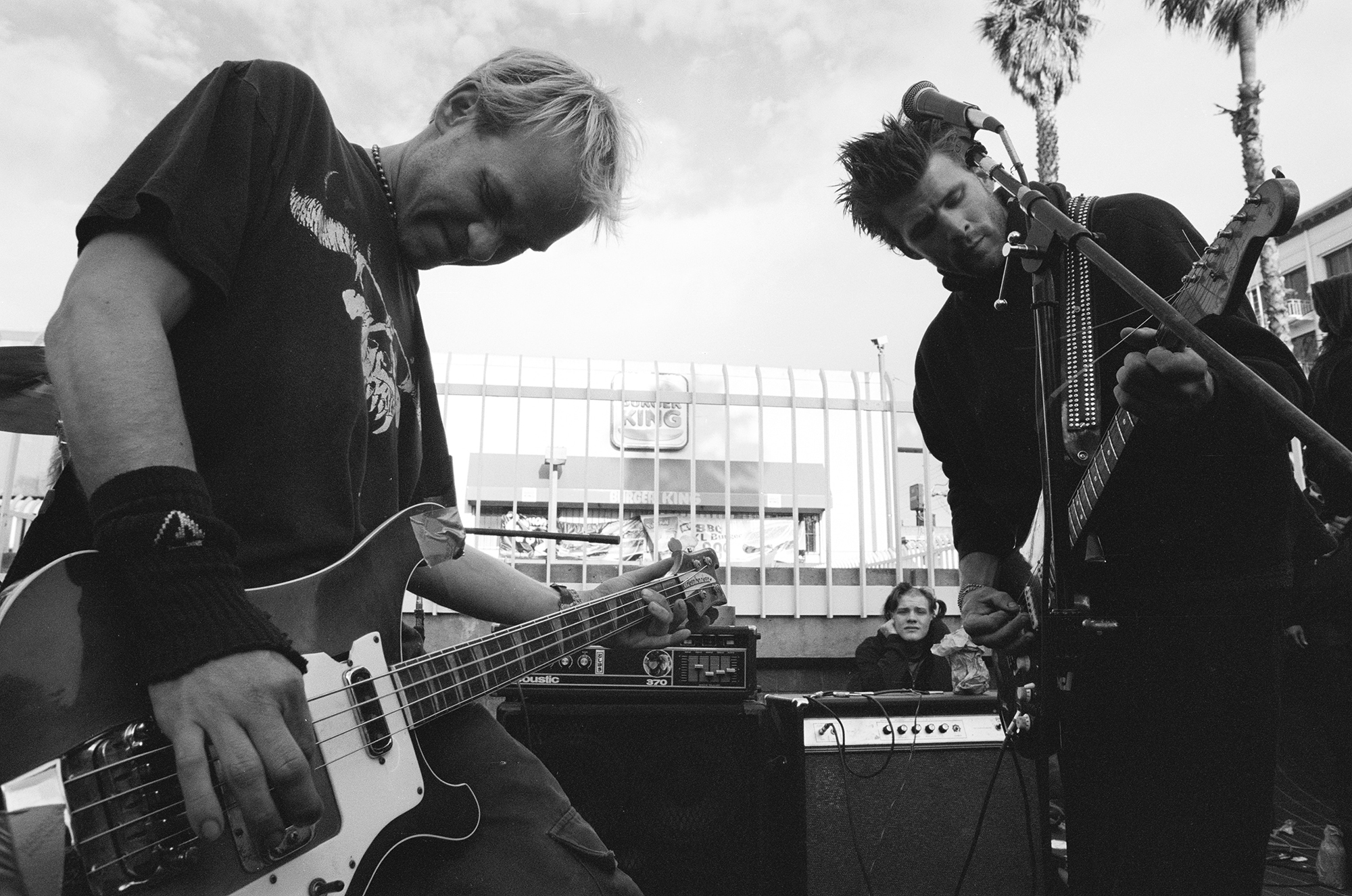
The scene: 16th and Mission BART in San Francisco, 1998. Trains careen underground, while above, another kind of noise is happening.
Ivy Jeanne’s raspy, blues-inflected voice screams out of PAs borrowed from friends, powered by a generator borrowed from other friends. Erica Lyle’s guitar wails into the ether, making its way to Capp Street. Young punks dance, free of harassment. The show is over before anyone really knows it.
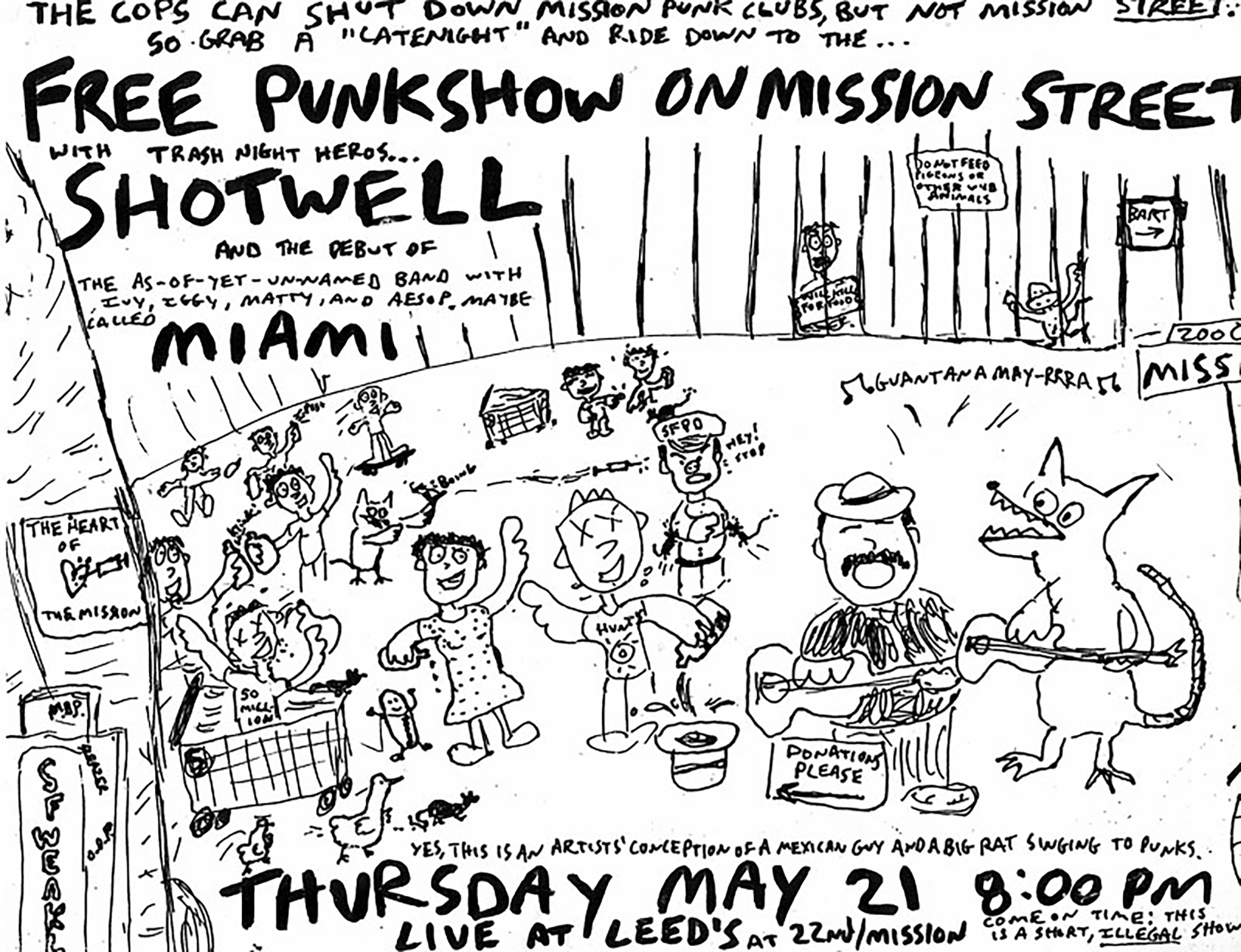
Miami and Shotwell have just played an illegal show at BART.
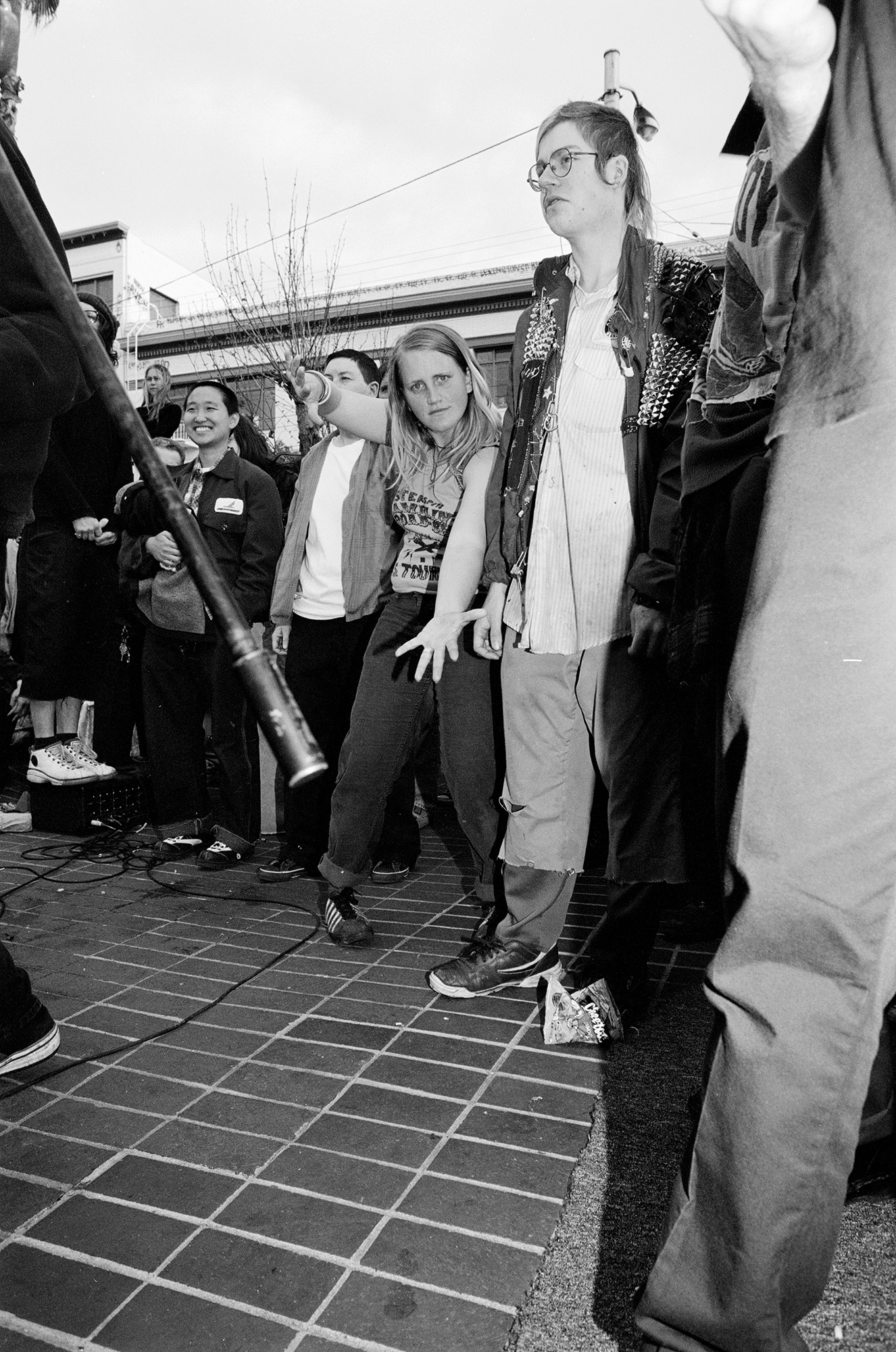
“You’d roll up. Sometimes I was with whoever had the PA. You would just see punks on the periphery. Nobody was assembled in the plaza exactly. You could just see people around, and as soon as the gear started coming out, everyone would just descend,” said Karoline Collins, a local photographer and roadie for the band Hickey.
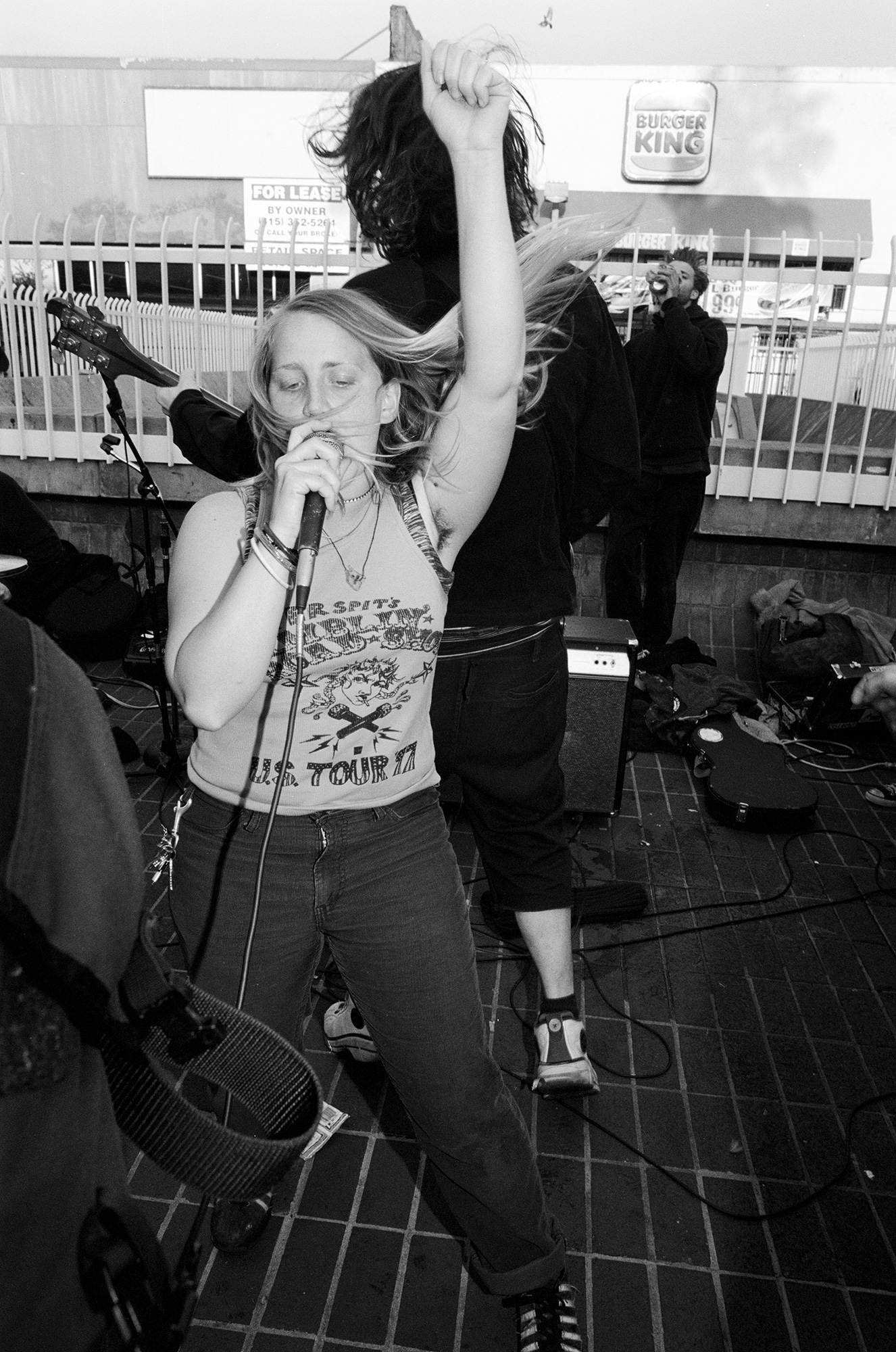
This would be one of many illegal generator-powered punk shows happening on Mission Street, a tradition that would carry into San Francisco’s present day. While San Francisco’s punk shows of the ’70s and ’80s had taken place in unlikely settings — a Filipino restaurant, a social club for the deaf, literal beer vats — the tradition of guerilla generator shows that flourished in Mission District’s ragged and dedicated punk scene of the ’90s continues today with bands like False Flag, Surprise Privilege and WIFE.
The Mission District’s punk history runs deep, boasting bands like MDC and Jawbreaker, and venues like Tool & Die, Kommotion and Epicenter. But in the late ’90s, something shifted. A new wave of punks dedicated to cheap living, harm reduction and the DIY ethos took over the streets. From 1994 through 2002, bands like Hickey, Shotwell, 50 Million and the aforementioned Miami would creatively resist San Francisco’s then-Mayor Willie Brown and the powers that be with both music and action.
Their headquarters would become Mission Records, and later 16th and Mission BART Plaza, for amplifying their frustrations with gentrification, war and the police.
The City That Never Sleeps
Ivy Jeanne McClelland moved to San Francisco in 1997 after years of moving back and forth, sometimes by hopping trains, between her hometown of Miami and the East Bay as a teenage runaway. Though she’d crossed paths with Bay Area bands like Rancid, Green Day and Blatz, she decided to make San Francisco home thanks to Hickey. That year, McClelland hopped in the band’s van on their final tour, and moved into the band’s squalid apartment, the Hickey Hotel, on 24th Street.
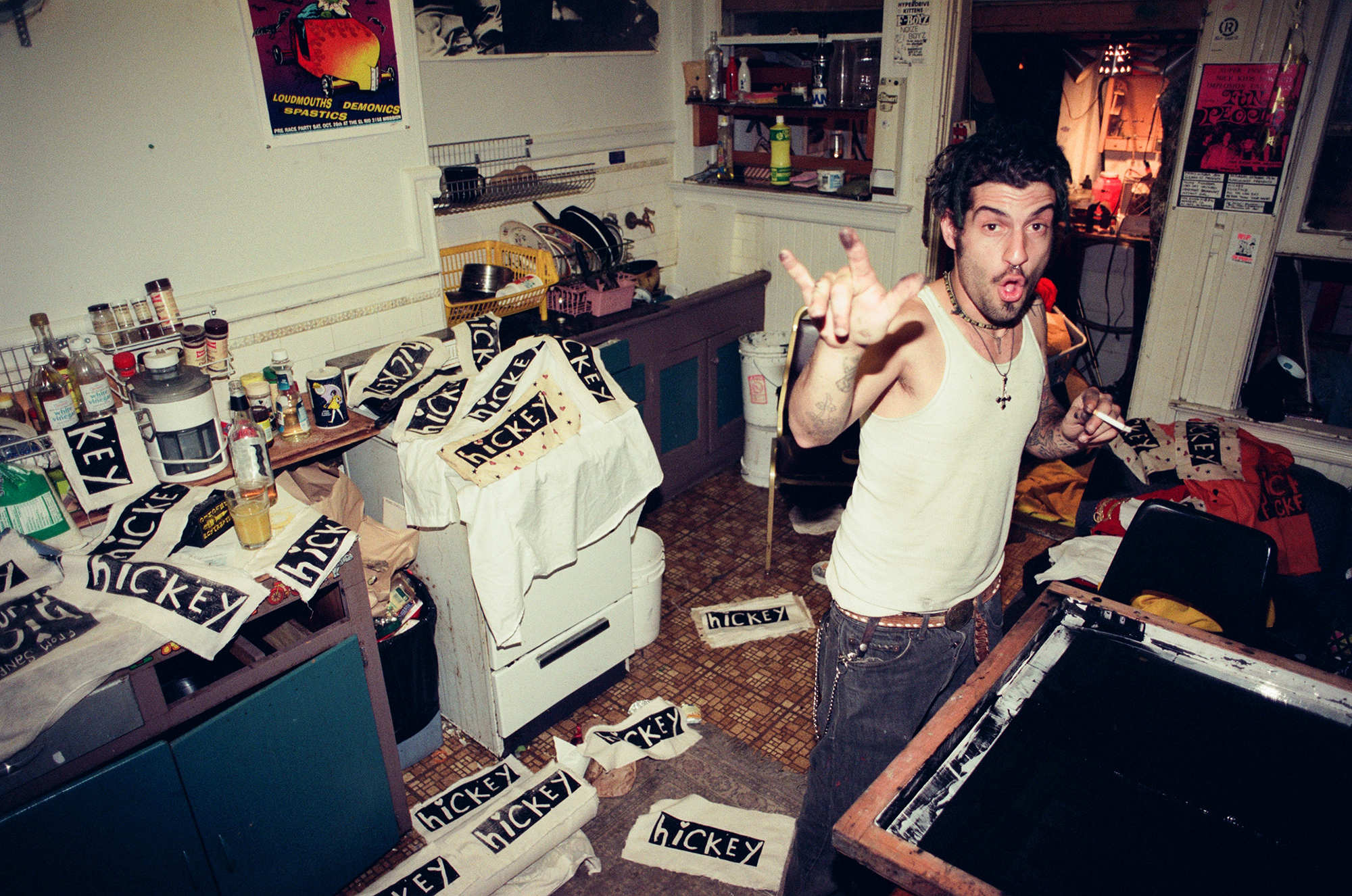
McClelland had played in bands like the Tri-Rails and Los Canadians, but when she made it to San Francisco, she teamed up with best friend and fellow Floridian Erica Dawn Lyle to start a new band called Miami, bolstered by Dekker and Luv from Hickey.
With more and more local venues like Klub Kommotion, Starcleaners Warehouse and Epicenter Records winding down operations, Miami and their longtime friends in the band Shotwell colluded to create a new commotion down Mission Street. Lyle and Shotwell’s Jimmy Broustis decided to host an illegal pop-up show, powered by generators, in front of the defunct Leed’s Shoes building at 22nd and Mission. Borrowing the idea from a band of buskers known as Rube Waddell, the two fueled their iteration with political angst.
“The generator shows were a product of when gentrification really ramped up in the Mission,” said McClelland. “There was already this feeling of frustration and upset about all of these DIY show spaces that were targeted and shut down, and in our grumblings, we decided to have generator shows in response to them.”
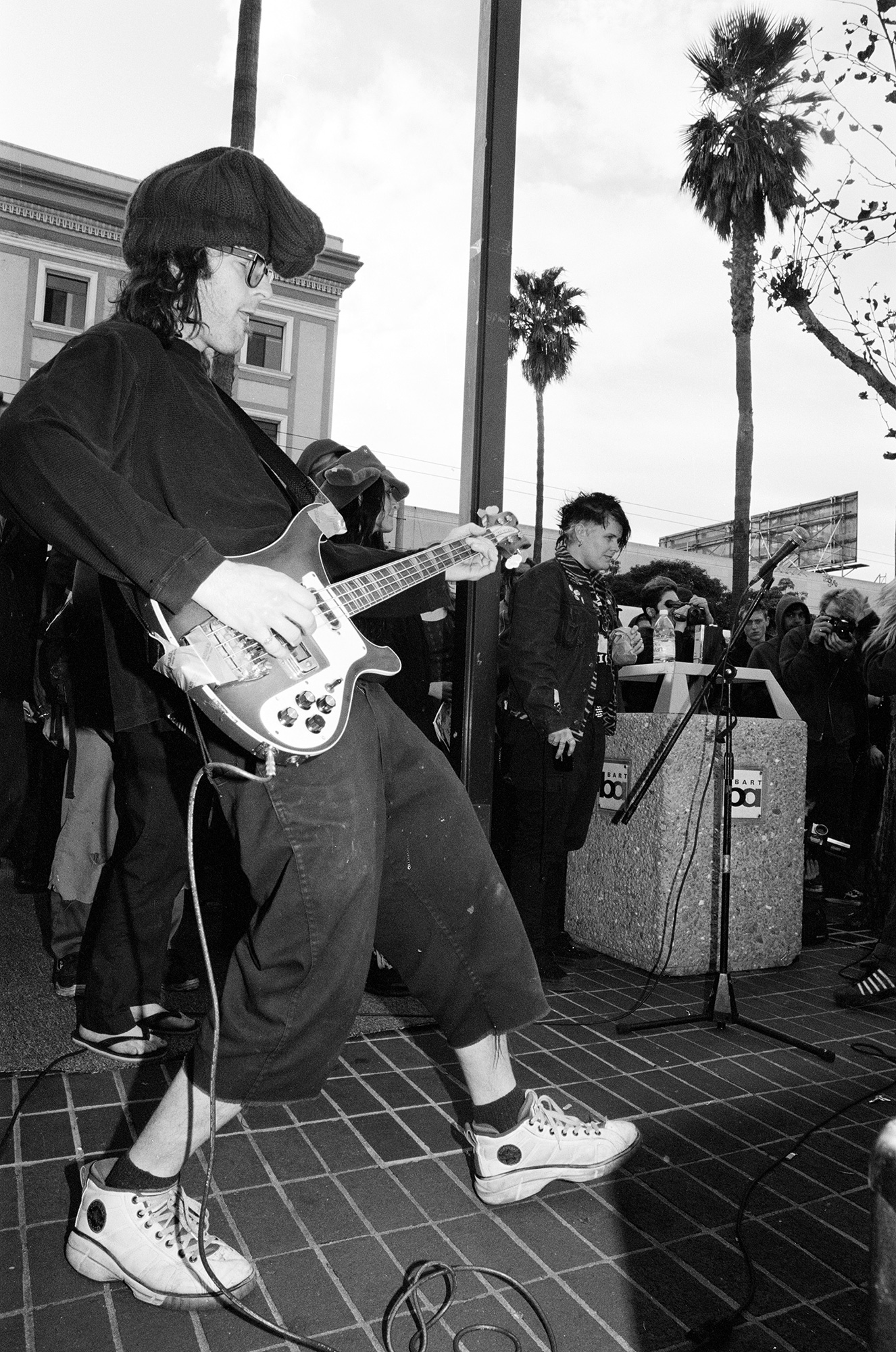
Miami didn’t last long, breaking up around 2001. Luv’s addiction to heroin had gotten more serious. He’d moved back to Florida for a time before being convinced to come back to San Francisco. Luv helped operate Mission Records in its near-final days, and played music with friends, but the scene was on its last legs.
Miami and its generator shows, to be clear, came from a lineage of Mission punks before them. Half of Miami, after all, had roots in a band that had started four years prior.
The Naked Cult of Hickey
Led by Matty Luv, a charismatic, manic frontman dedicated to a DIY anticapitalist interpretation of punk rock, Hickey was the band often called The Naked Cult of Hickey. With best friend Aesop Dekker behind the drum kit, the two produced a controlled chaos that would come to define the band. Originally accompanied by friend Chubby on bass, Hickey became known for confrontational antics and a prolific catalog of music, fueled by members’ use of both methamphetamine and heroin.
Hickey burned bright and fast, touring constantly. Their song titles included “Hickey Is About Long Hair and Getting High” and “Everything I Know About Sex I Learned From KISS.” Live shows would often devolve into standoffs with the crowd, where the band might play one or two songs and then rant at the audience.
“We would show up with the intention of being a band and playing our fucking songs as good as we could for an adoring crowd,” said Dekker. “A lot of times that would go fucky because the promoter was a dick, or, before we even played, would express how they weren’t going to pay us. Or the bands we were playing with were dicks.”
The band’s live sets amplified their view on how punk rock should operate, with the members dedicated to an ethic that rebelled against the intrusion of money and power into their scene.
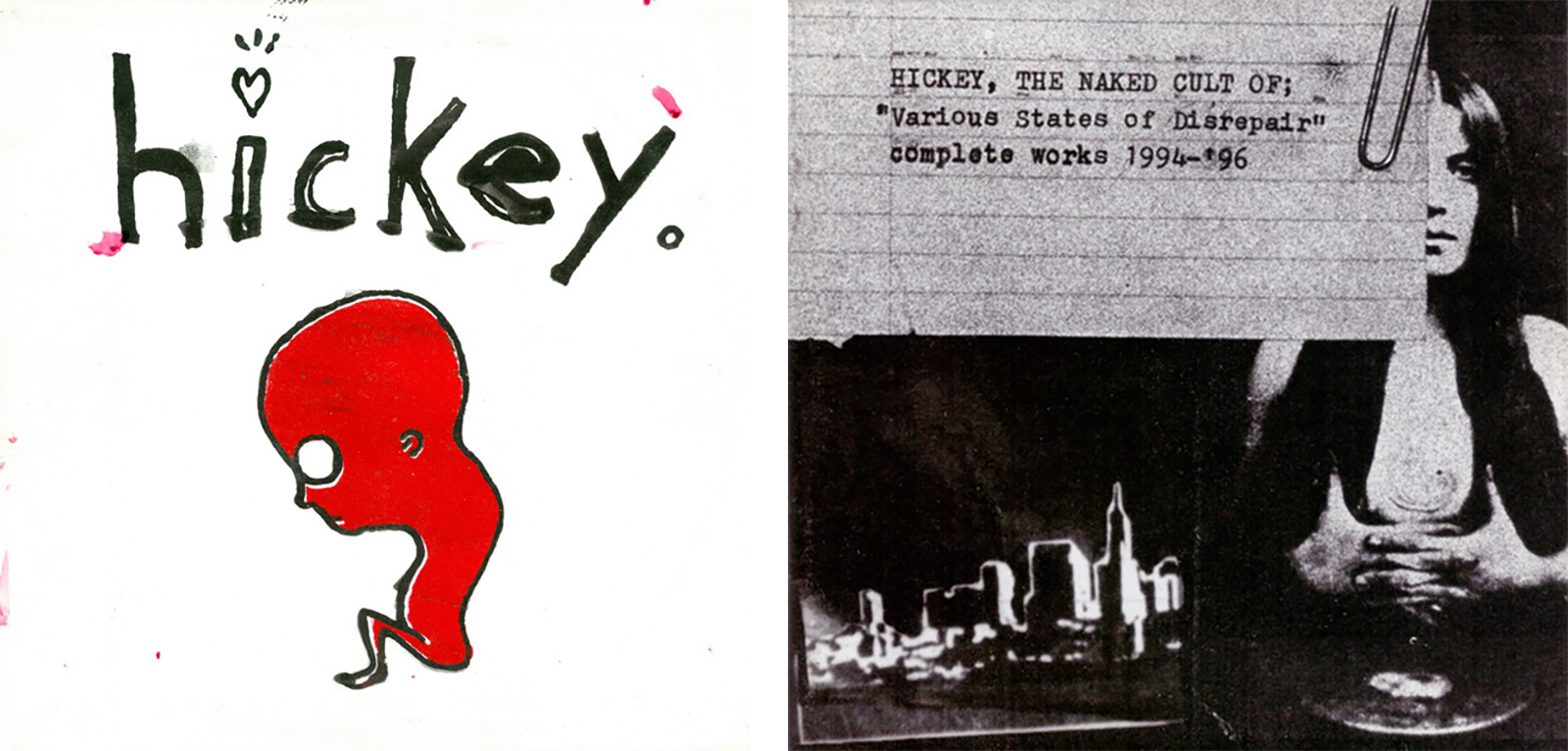
“We hated the fucking corporatization of punk, and we hated people making money off of this. And we were at war with people that didn’t care about this shit,” said Dekker.
The chaos that famously propelled the band eventually led to their downfall. During a 1997 U.S. tour, the band decided to break up. The three members had a fight in Tuscon, Arizona, and realized that none of them wanted to continue with the project. After that decision, they felt a shift amongst themselves.
“A weird curse had been lifted, because we went back to our friend’s house and sat under the fire, drank and talked,” said Dekker. “We were friends again, like, this fucking weight had been lifted.”
Mission Records
After opening its doors in 1997, Mission Records, run by Adam White and Chris Myers, quickly became a place of refuge. Located at 2548 Mission Street, the shop soon had to move to its more permanent location across the street, on the corner of Mission and 19th, and gradually shifted to exist less as a record store and more as a living space and venue for shows.
“It started off as a straight-up business proposition,” said White. “I got a bunch of credit cards. We both borrowed as much money as we could from whoever, and fucking went for it. And then, right away, we started getting decimated as a record store. It was the worst time. CDs were at their peak, and the internet was just starting to take the whole thing and destroy it. And we also didn’t know what the fuck we were doing.”
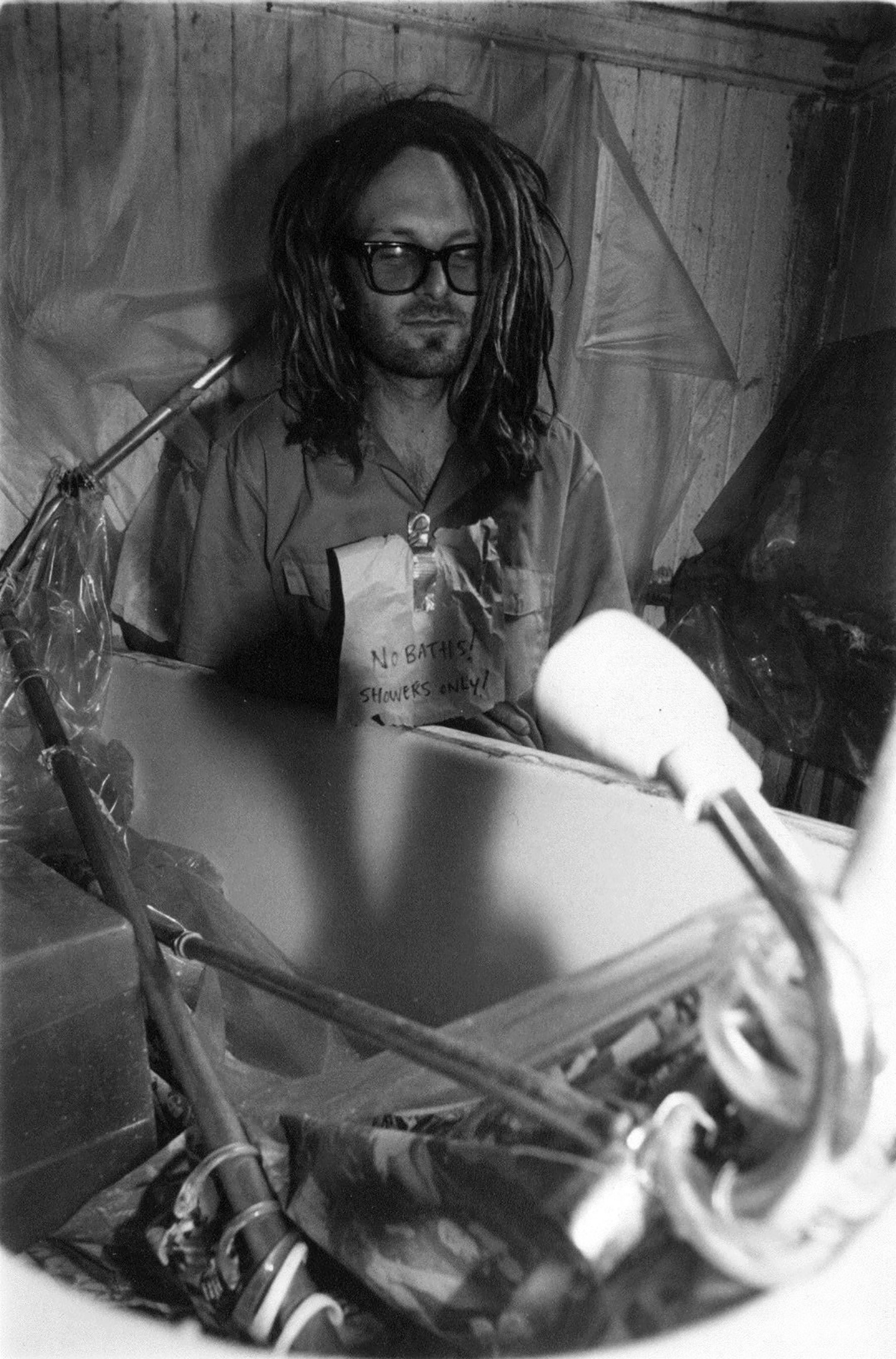
As time went on, members of several bands lived at Mission Records, helping volunteer and put on shows.
Across the Bay, another wave of bands was gaining traction. Green Day had already signed to a major label and released their massive record Dookie, and Rancid was taking off. The East Bay and San Francisco punk scenes weren’t completely isolated, and Mission District bands still made their way across the bridge. But in San Francisco, there was a different energy emanating.
Maybe they played faster, maybe they were more confrontational. And maybe it was the drugs.
“It was all benzos,” said Broustis. “You go to Mission Records, and there’d be a band rehearsing there at two in the morning while people are trying to sleep.”
Band members got drugs from local corner stores, and used that to fuel their productivity.
“We did so much crystal meth in the fucking ’90s, and then it was heroin, and we were also eating lots of pills and drinking a lot — all the things that go with doing tons of crystal meth,” said Dekker. “That’s why we did so much in three years. Because we didn’t fucking sleep.”
A sudden shock
As the drugs took their toll, elements of the scene wound down. Miami broke up, White left Mission Records, and increasingly, cops harassed local punks.
On Oct. 5, 2002, Matty Luv, 34, was found dead of a heroin overdose at the Hickey Hotel. He had spent the day helping out at Mission Records, while McClelland and other friends went to a protest against the Iraq war. The group of friends had crossed paths on the way to the protest, and Luv waved hi. It would be the last time many of them would see him.
The next day, a show at Mission Records was turned into a wake. Later, a number of his friends gathered at Dolores Park for his funeral, where zines and Hickey records were handed out, and where Luv was remembered by his friends as funny, prolific and intense.
“Learning how to take better care of each other. I think that’s the lesson. And the wisdom of losing him was about really changing. It changed my relationship to what it meant to show up for people in need or in crisis,” said McClelland.
“He was the funniest person I’ve ever met, and I think I was the funniest person he ever met. And when we met, that was our bond, is that we felt the same way ideologically about everything, and we were both funny,” said Dekker.
Shortly after Luv’s death, Mission Records closed. White attempted to pass the business on to Buzz Lee, but the finances weren’t there. Dekker had recently found sobriety and become a father. McClelland continued to play in bands, and remains active in activism and harm reduction to this day.
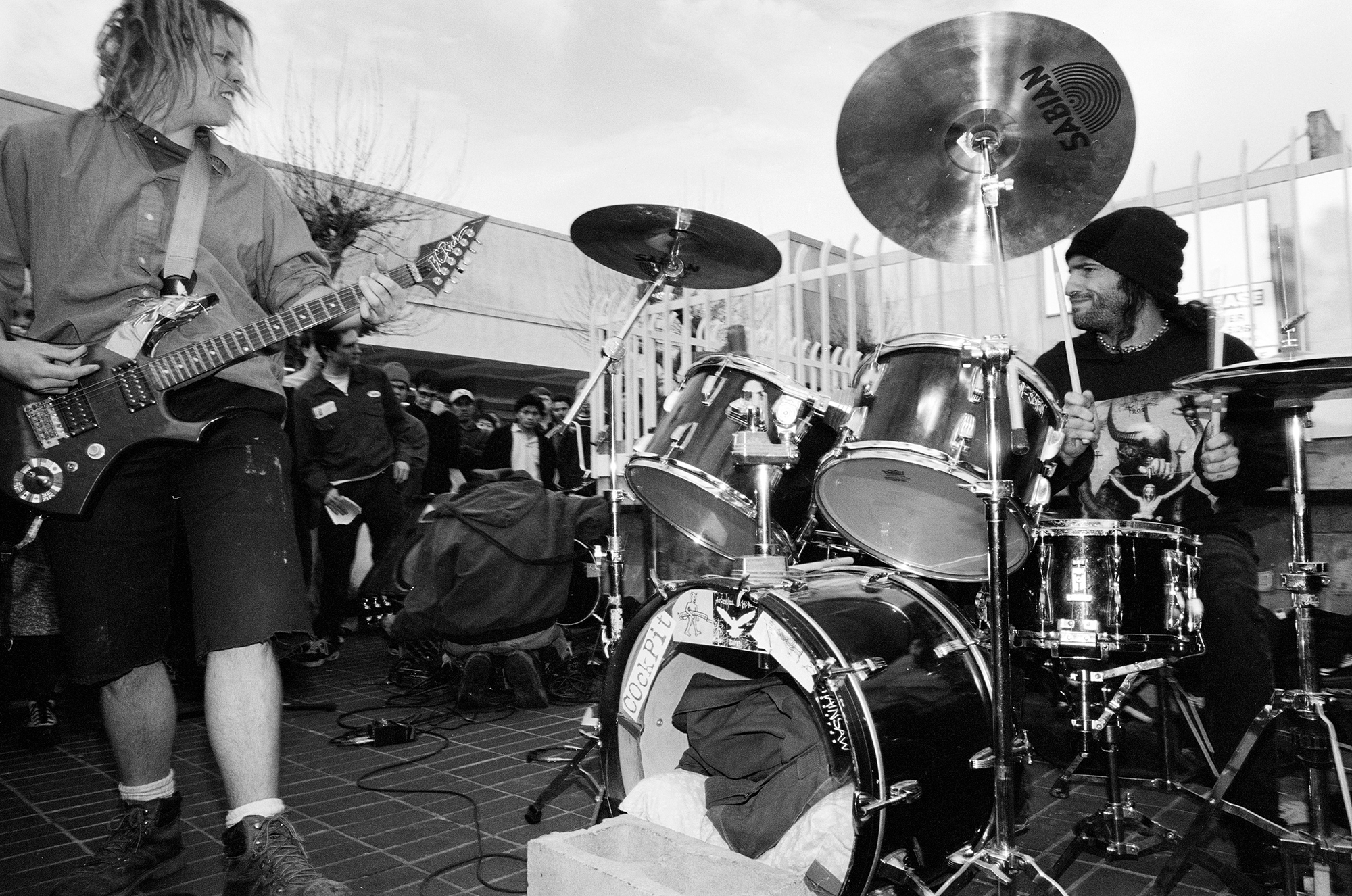
Today, a new generation is picking up the torch. San Francisco bands False Flag and Surprise Privilege have played generator shows on the sidewalks in front of the Warfield and the Castro Theatre, and on a moving BART train. (Their store I Hate Records, in the Lower Haight, carries echoes of Mission Records.) A group known as the Outhouse Collective puts on their own generator shows, and have been taken under the wing by McClelland.
Last year saw the return of the Clarion Alley Block Party, which has largely been organized by McClelland since 1998. In its most recent installment, McClelland brought on members of Outhouse Collective to help organize the day’s live music. The combining of these two forces hints at an intergenerational cross-pollination which McClelland sees as essential for the continuation of the punk community into the future.
“We have shared visions, we have shared values. We have shared connection through these rad creative and rad political movements,” said McClelland. “When we are able to embrace people across community lines, build solidarity across race, gender, ability, mental health — finding those connections is really, really sacred.”