Sponsor MessageBecome a KQED sponsor
upper waypoint

What We Will Lose When California College of the Arts Closes

Save ArticleSave Article
Failed to save article

Please try again

View of building exterior with glass and school name above doorway
The California College of the Arts announced it would close at the end of the 2026–2027 academic year, after 120 years as an art and design school. (Courtesy of CCA)

On Tuesday morning at City Hall, Mayor Daniel Lurie made the surprise announcement that Vanderbilt University would open a campus in San Francisco.

“Today is a big day for our city,” Lurie said, in his now-familiar role of cheerleader. “Vanderbilt’s decision sends a powerful message. It says that San Francisco remains one of the world’s great places to live, to learn and to innovate.”

Just hours earlier, California College of the Arts students, staff, faculty and alumni learned via email that Vanderbilt’s expansion would follow the dissolution of their own school. The 119-year-old institution, Northern California’s last nonprofit art and design college, will close at the end of the 2026–2027 academic year.

At City Hall, Lurie stated that CCA’s “artists, designers, educators, and alumni have helped define the Bay Area’s global influence in art, architecture, and design.” Honoring that legacy, he said, “will be an important responsibility” for Vanderbilt and the city. He then moved on, to emphasize how Vanderbilt is part of making San Francisco “better than ever.”

So relentless is the mayor’s spin machine that the livelihoods of 530 faculty and staff, the educational future of 1,080 current CCA students, the memories of thousands of alumni and over a century of local art history received minimal acknowledgement.
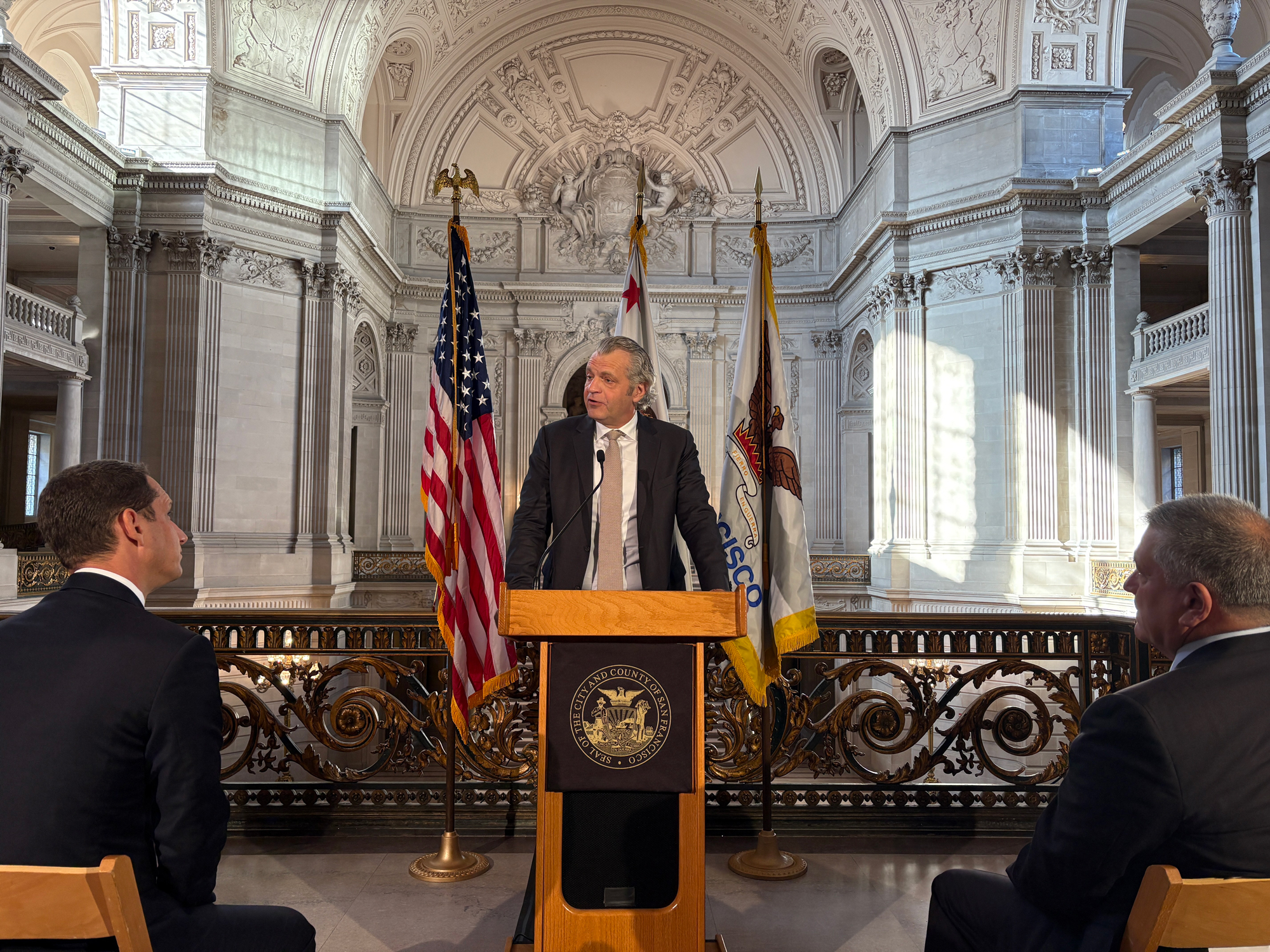
two men seated before standing man at podium in grand rotunda
Mayor Daniel Lurie is seated at left while Vanderbilt University Chancellor Daniel Diermeier speaks at a press conference announcing the university’s move to CCA’s campus, at San Francisco City Hall on Jan. 13, 2026. (Sydney Johnson/KQED)

Even more jarring is the mayor’s accompanying post on social media. “Anchor down!” he says in the video, referencing a Vanderbilt sports mantra. “Let’s go, San Francisco!” He sits in his office, in front of a painting made by CCA alum and current faculty member David Huffman, never mentioning the art school once.

Sponsored

One year in, we’re used to Lurie’s optimism. It’s as pervasive as his habit of claiming existing programs and projects as his own accomplishments. Changing the public perception of San Francisco is, as Mission Local has noted, a key part of the job.

But unlike the international chain stores moving into empty storefronts in Union Square, Vanderbilt’s annexation of the CCA campus does not fill a gaping void. We have a school here, and celebrating its closure as a win is a glaring insult to an already bereaved community.

This hits triply hard

In the small Bay Area arts scene, thousands were affected by the 2022 closure of the San Francisco Art Institute and the “merger” that same year of Mills College with Northeastern University. Lost with both of those schools were staff and faculty positions for local artists, legendary degree programs and yearly batches of graduating artists to shape the region’s artistic future.

This time around, it’s even more personal. CCA is the reason I’m in San Francisco, in this job, in the arts. It was in CCA’s MFA program that I met some of my closest friends, my first KQED editor, and a network of professional artists who taught me how to make my way in the Bay Area art world.

My final semester of grad school, I took a required class called “Real World.” Taught by Stephanie Syjuco and Glen Helfand, it gave me a crash course in pragmatic skills: how to hang a painting at eye level; how to write an artist statement; how to approach the intimidating people higher up the food chain; how to navigate — and cobble together — a life in the arts.

The class represented what was different about CCA, especially in comparison to the more unruly, exclusively fine-art focus of SFAI. Local logic reasoned that CCA was the more stable art school. CCA’s MFA program required everyone to write a thesis; it offered an MBA in design strategy; its alums got real jobs at places like Apple and Ideo. CCA spawned not just talented fine artists, but fiction writers, architects, industrial designers and fashion brands.

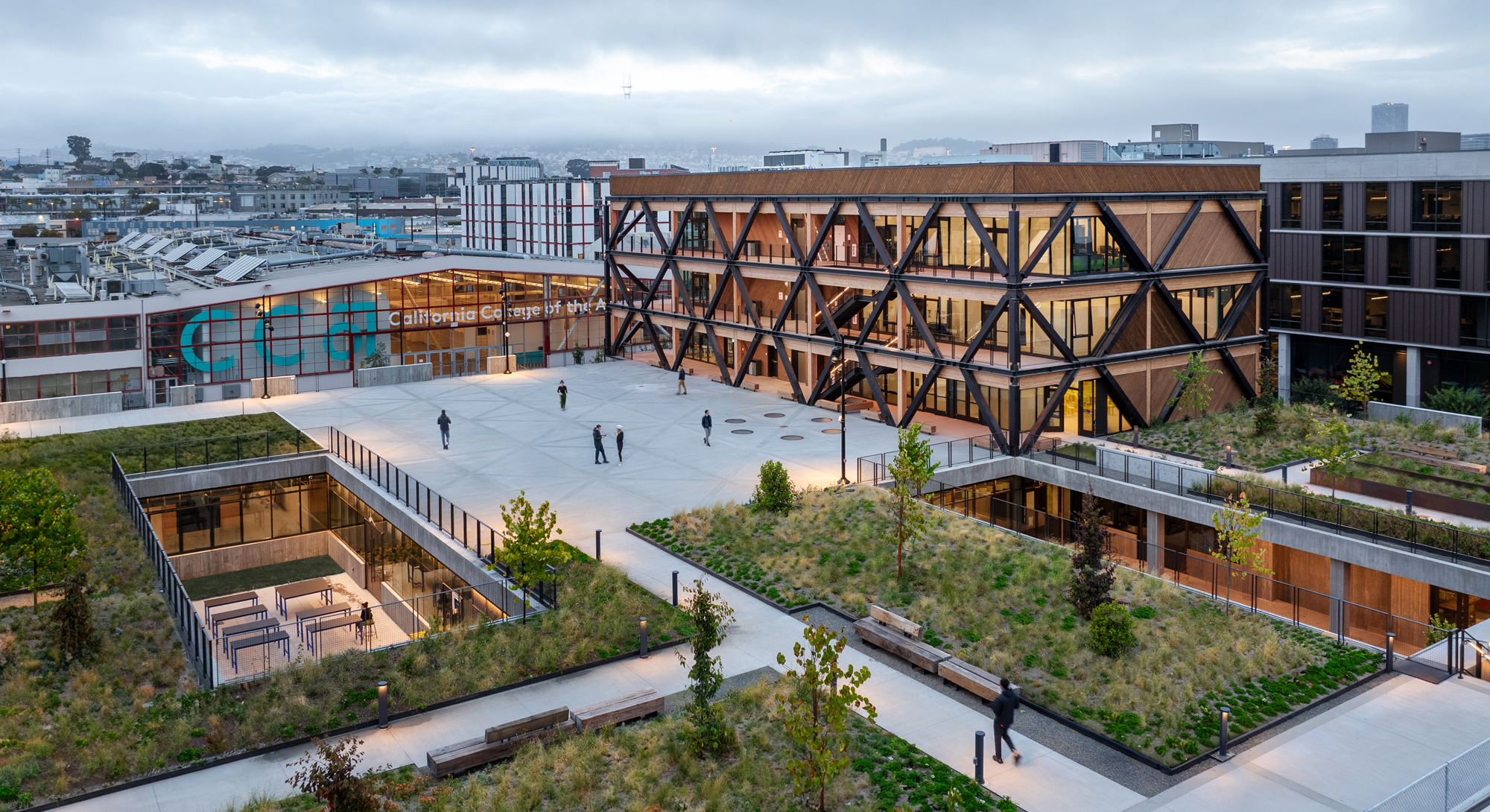
aerial view of large plaza, new building and old warehouse with foggy SF skyline behind
CCA opened an expanded single campus in San Francisco on Oct. 19, 2024. (Jason O'Rear)

Yet SFAI and CCA shared some crucial things in common. Both undertook expensive expansion projects. Both had declining enrollment rates. Both relied too much on tuition fees. The stories coming out of CCA over the past two years have been filled with familiar themes: a deficit of millions, layoffs, short-term stop-gap fundraising. And now, closure has become, according to CCA President David Howse, “the necessary step to take.”

The next three semesters

After reporting on the slow and heart-wrenching demise of SFAI, I’m almost glad that CCA is closing down in a more straightforward manner. Except it isn’t, not really. Completely missing from Tuesday’s announcements by CCA, Lurie and Vanderbilt was any sense of the chaos this will cause for CCA’s students, faculty and staff.

Students who can graduate by the end of the 2026–2027 year will get their degrees, but they will do so in a gradually diminishing institution: new students won’t enter the school, and faculty and staff will depart to secure their own futures.

Students who can’t finish up will have to undergo the confusing and time-consuming process of transferring elsewhere, which can end up costing far more. There’s no guarantee students would receive comparable financial aid, and schools often have limits on the number of transfer credits they’ll accept. No one will be automatically enrolled at Vanderbilt, which does not offer any specialized art and design degrees, and which promises to serve even fewer students than CCA currently does. Many current CCA students will abandon their studies altogether.

young people crowded together smiling in candid shot
CCA first-years during their fall 2023 welcome week. (Courtesy CCA)

Laid-off faculty and staff, most of them artists themselves, may no longer be able to afford living in one of the most expensive regions in the country. When SFAI and Mills closed, CCA was able to absorb some of the fallout by accepting transfer students and hiring those schools’ former employees. Program cuts and layoffs at Sonoma State University and San Francisco State University now further limit local options for study and employment.

Art school is not the only way to become an artist, but it is an incredible shortcut to it. At its best, art school provides access to skills, knowledge, collaborators and supporters. At its simultaneous worst, it can underpay its workers, saddle students with debt, and contort itself into unsustainable shapes in hopes of courting financial salvation.

And while press junkets aren’t known for nuance, the Bay Area arts community deserved better than Tuesday’s tone-deaf celebration. Replace every unique legacy institution and landmark with a “this could be anywhere” substitute, sand down all the rough and interesting edges of San Francisco’s history and see what’s left.

Sponsored

Certainly not artists.

lower waypoint
next waypoint
Player sponsored by