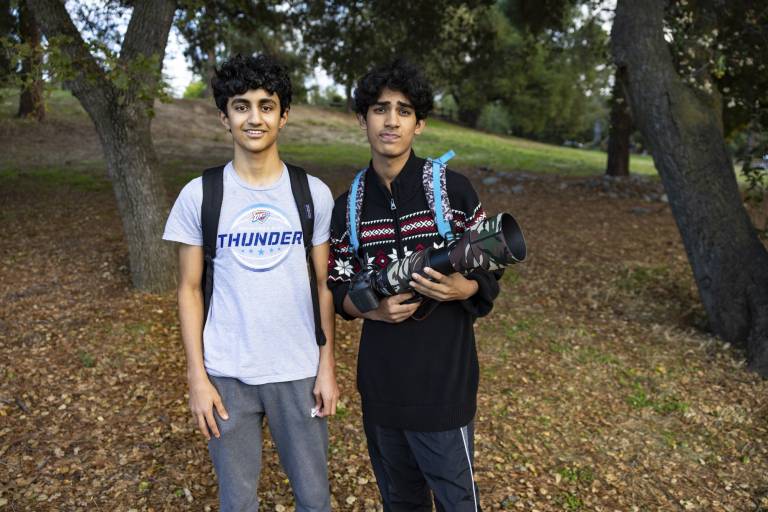
Where Do Coyotes Live in Silicon Valley? These Teens Are Mapping Their Movements
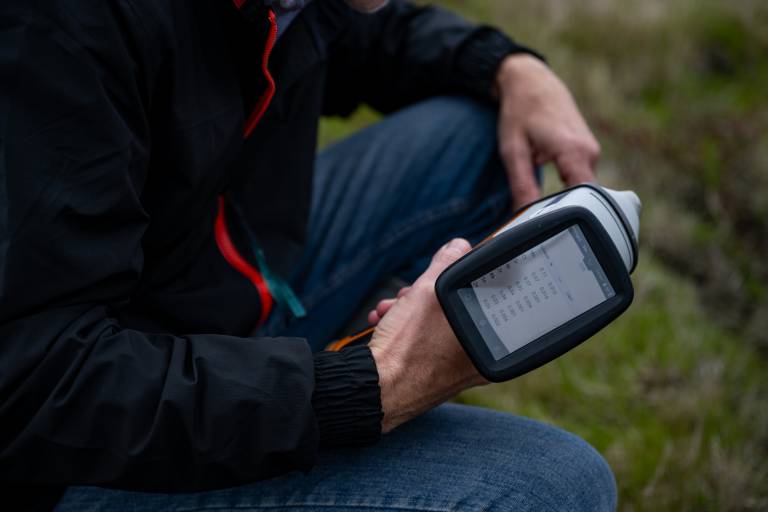
Scientists Trace Heavy Metals Spread by January’s Huge Battery Fire Near Monterey
America's Largest Cities, Including San Francisco, Are Quietly Sinking
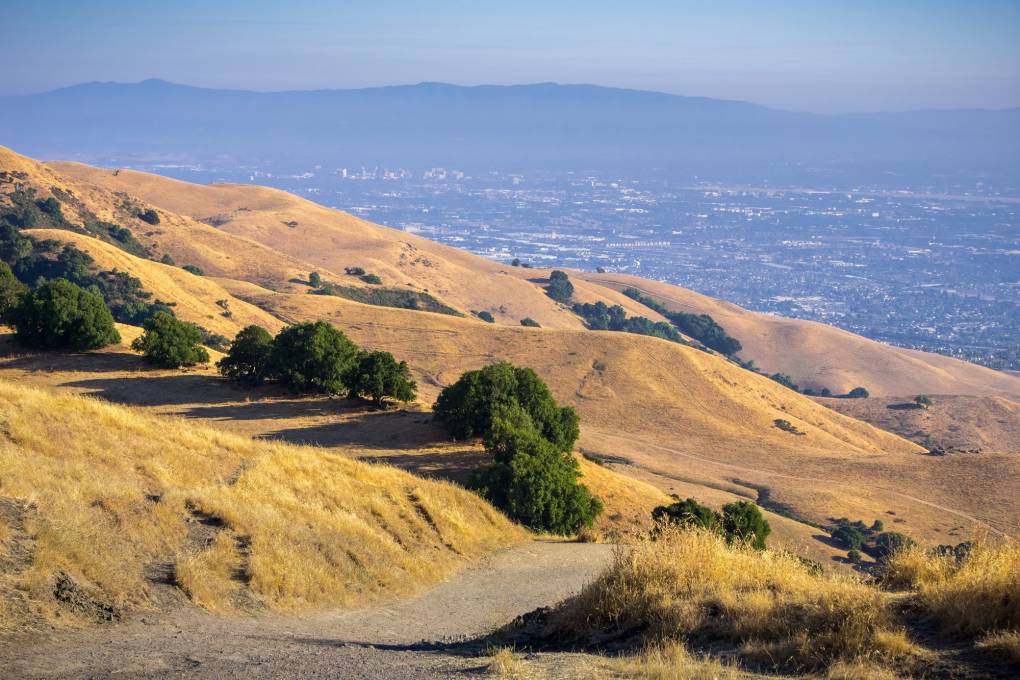
San José Just Had Its Hottest Week Ever, ‘A Harbinger of Things to Come’
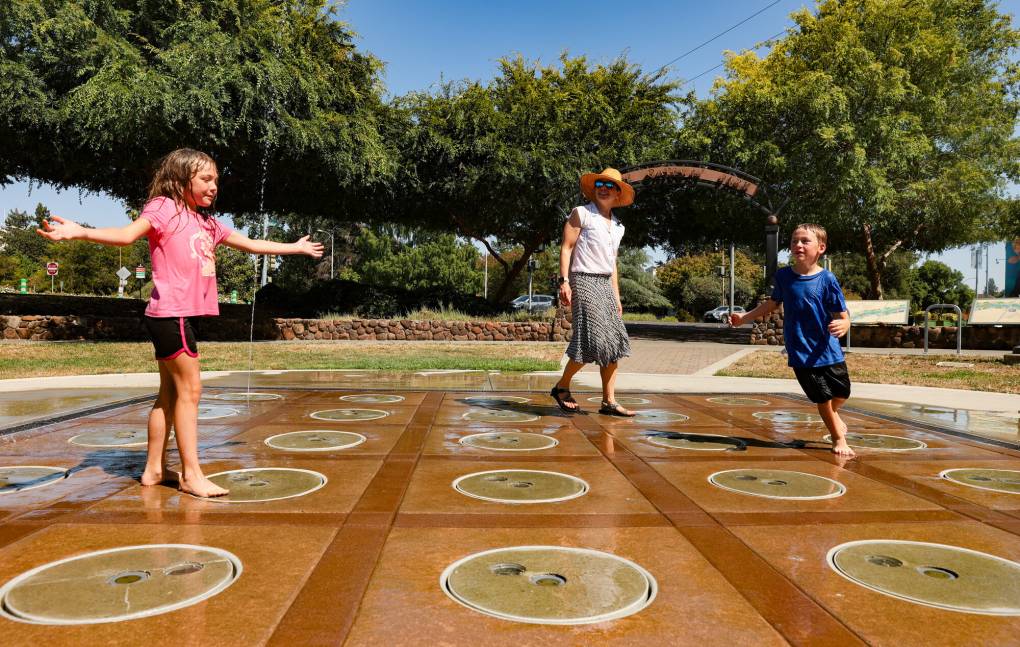
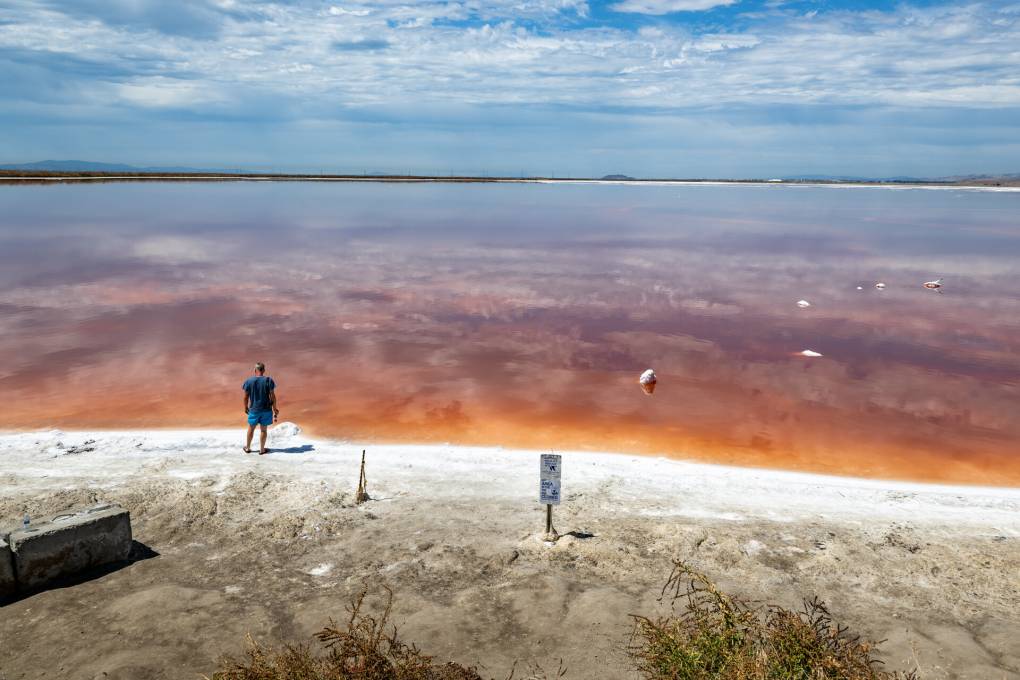
3 Bay Area Cities Had Hottest Summer in History as Climate Change Pushes Temps Up
From Tunnel Muck to Tidal Marsh, BART Extension Could Benefit the Bay
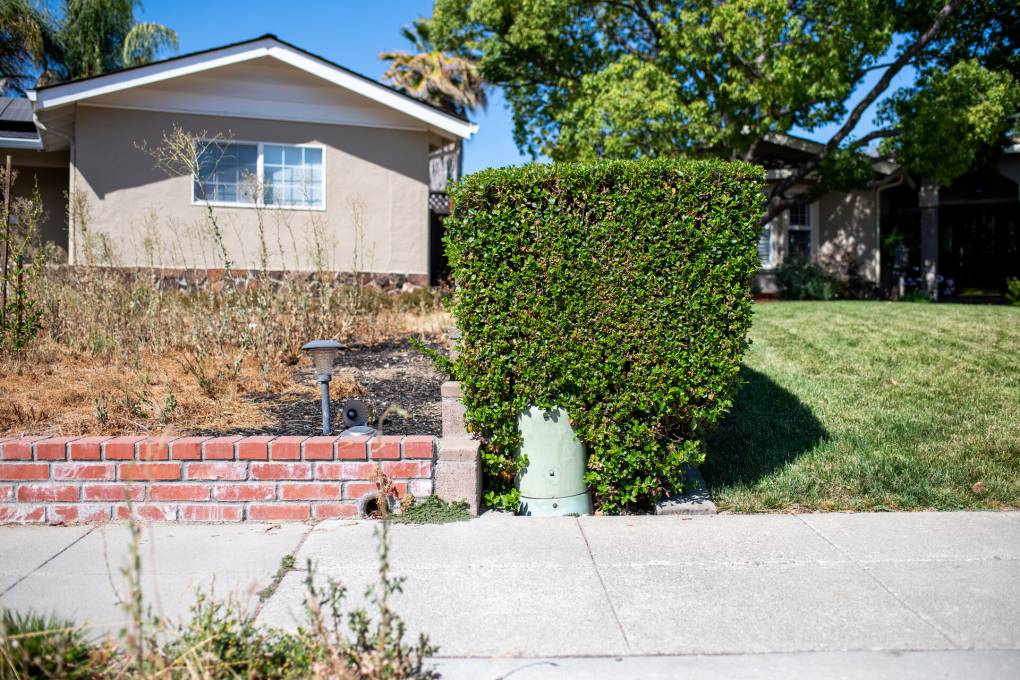
San Jose Relies On Water From the Sierra Nevada. Climate Change Is Challenging That System
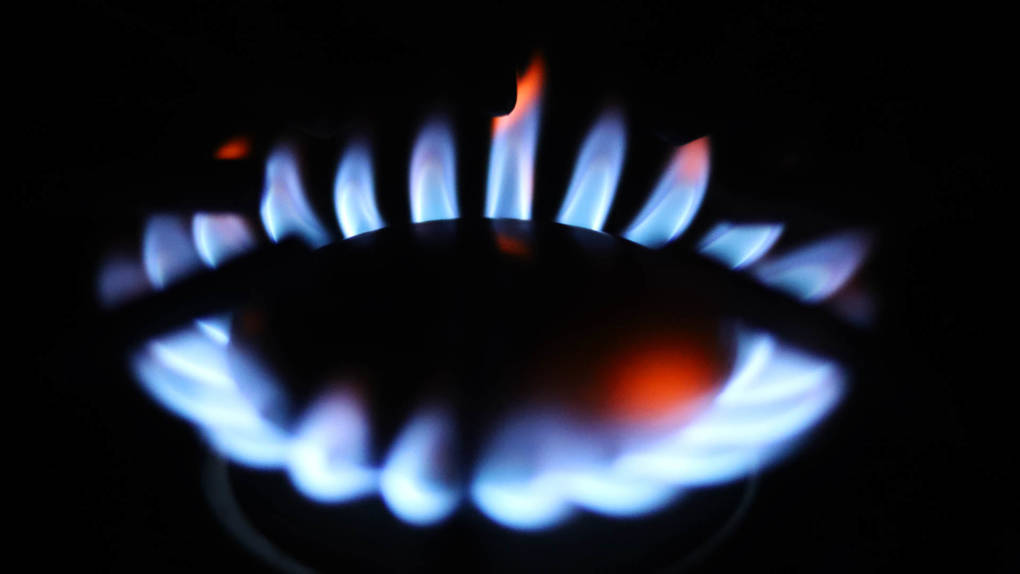
San Jose and Oakland Ban Gas in New Buildings
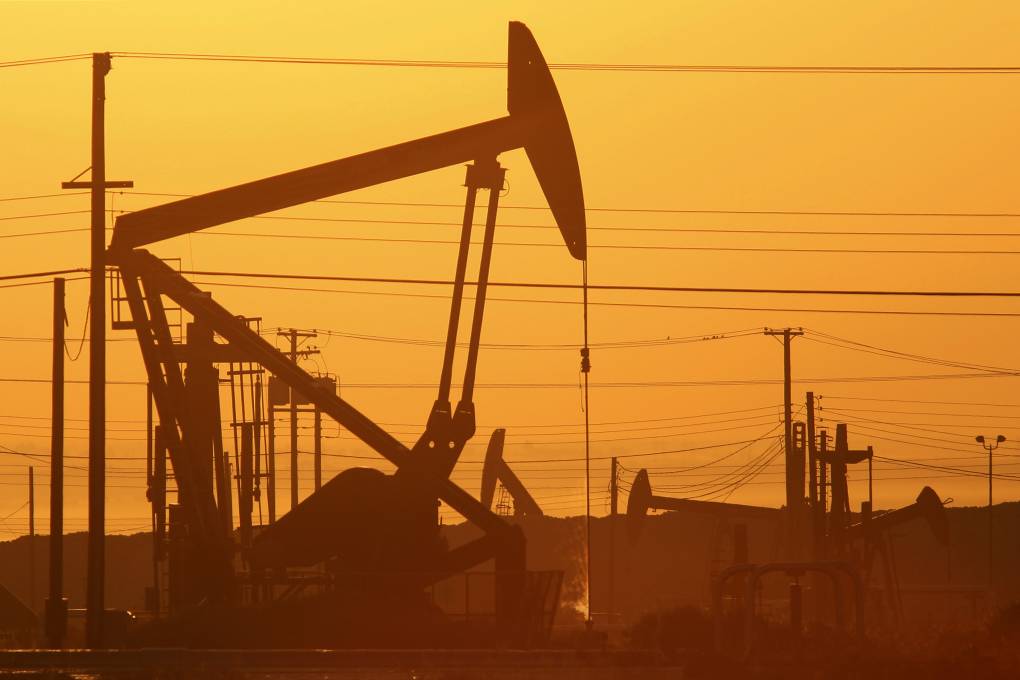
San Jose Primed to Ban Natural Gas in Most New Buildings
Sponsored
Player sponsored by
window.__IS_SSR__=true
window.__INITIAL_STATE__={
"attachmentsReducer": {
"audio_0": {
"type": "attachments",
"id": "audio_0",
"imgSizes": {
"kqedFullSize": {
"file": "https://ww2.kqed.org/news/wp-content/themes/KQED-unified/img/audio_bgs/background0.jpg"
}
}
},
"audio_1": {
"type": "attachments",
"id": "audio_1",
"imgSizes": {
"kqedFullSize": {
"file": "https://ww2.kqed.org/news/wp-content/themes/KQED-unified/img/audio_bgs/background1.jpg"
}
}
},
"audio_2": {
"type": "attachments",
"id": "audio_2",
"imgSizes": {
"kqedFullSize": {
"file": "https://ww2.kqed.org/news/wp-content/themes/KQED-unified/img/audio_bgs/background2.jpg"
}
}
},
"audio_3": {
"type": "attachments",
"id": "audio_3",
"imgSizes": {
"kqedFullSize": {
"file": "https://ww2.kqed.org/news/wp-content/themes/KQED-unified/img/audio_bgs/background3.jpg"
}
}
},
"audio_4": {
"type": "attachments",
"id": "audio_4",
"imgSizes": {
"kqedFullSize": {
"file": "https://ww2.kqed.org/news/wp-content/themes/KQED-unified/img/audio_bgs/background4.jpg"
}
}
},
"placeholder": {
"type": "attachments",
"id": "placeholder",
"imgSizes": {
"thumbnail": {
"file": "https://cdn.kqed.org/wp-content/uploads/2024/12/KQED-Default-Image-816638274-2000x1333-1-160x107.jpg",
"width": 160,
"height": 107,
"mimeType": "image/jpeg"
},
"medium": {
"file": "https://cdn.kqed.org/wp-content/uploads/2024/12/KQED-Default-Image-816638274-2000x1333-1-800x533.jpg",
"width": 800,
"height": 533,
"mimeType": "image/jpeg"
},
"medium_large": {
"file": "https://cdn.kqed.org/wp-content/uploads/2024/12/KQED-Default-Image-816638274-2000x1333-1-768x512.jpg",
"width": 768,
"height": 512,
"mimeType": "image/jpeg"
},
"large": {
"file": "https://cdn.kqed.org/wp-content/uploads/2024/12/KQED-Default-Image-816638274-2000x1333-1-1020x680.jpg",
"width": 1020,
"height": 680,
"mimeType": "image/jpeg"
},
"1536x1536": {
"file": "https://cdn.kqed.org/wp-content/uploads/2024/12/KQED-Default-Image-816638274-2000x1333-1-1536x1024.jpg",
"width": 1536,
"height": 1024,
"mimeType": "image/jpeg"
},
"fd-lrg": {
"file": "https://cdn.kqed.org/wp-content/uploads/2024/12/KQED-Default-Image-816638274-2000x1333-1-1536x1024.jpg",
"width": 1536,
"height": 1024,
"mimeType": "image/jpeg"
},
"fd-med": {
"file": "https://cdn.kqed.org/wp-content/uploads/2024/12/KQED-Default-Image-816638274-2000x1333-1-1020x680.jpg",
"width": 1020,
"height": 680,
"mimeType": "image/jpeg"
},
"fd-sm": {
"file": "https://cdn.kqed.org/wp-content/uploads/2024/12/KQED-Default-Image-816638274-2000x1333-1-800x533.jpg",
"width": 800,
"height": 533,
"mimeType": "image/jpeg"
},
"post-thumbnail": {
"file": "https://cdn.kqed.org/wp-content/uploads/2024/12/KQED-Default-Image-816638274-2000x1333-1-672x372.jpg",
"width": 672,
"height": 372,
"mimeType": "image/jpeg"
},
"twentyfourteen-full-width": {
"file": "https://cdn.kqed.org/wp-content/uploads/2024/12/KQED-Default-Image-816638274-2000x1333-1-1038x576.jpg",
"width": 1038,
"height": 576,
"mimeType": "image/jpeg"
},
"xxsmall": {
"file": "https://cdn.kqed.org/wp-content/uploads/2024/12/KQED-Default-Image-816638274-2000x1333-1-160x107.jpg",
"width": 160,
"height": 107,
"mimeType": "image/jpeg"
},
"xsmall": {
"file": "https://cdn.kqed.org/wp-content/uploads/2024/12/KQED-Default-Image-816638274-2000x1333-1-672x372.jpg",
"width": 672,
"height": 372,
"mimeType": "image/jpeg"
},
"small": {
"file": "https://cdn.kqed.org/wp-content/uploads/2024/12/KQED-Default-Image-816638274-2000x1333-1-672x372.jpg",
"width": 672,
"height": 372,
"mimeType": "image/jpeg"
},
"xlarge": {
"file": "https://cdn.kqed.org/wp-content/uploads/2024/12/KQED-Default-Image-816638274-2000x1333-1-1020x680.jpg",
"width": 1020,
"height": 680,
"mimeType": "image/jpeg"
},
"full-width": {
"file": "https://cdn.kqed.org/wp-content/uploads/2024/12/KQED-Default-Image-816638274-2000x1333-1-1920x1280.jpg",
"width": 1920,
"height": 1280,
"mimeType": "image/jpeg"
},
"guest-author-32": {
"file": "https://cdn.kqed.org/wp-content/uploads/2025/01/KQED-Default-Image-816638274-1333x1333-1-160x160.jpg",
"width": 32,
"height": 32,
"mimeType": "image/jpeg"
},
"guest-author-50": {
"file": "https://cdn.kqed.org/wp-content/uploads/2025/01/KQED-Default-Image-816638274-1333x1333-1-160x160.jpg",
"width": 50,
"height": 50,
"mimeType": "image/jpeg"
},
"guest-author-64": {
"file": "https://cdn.kqed.org/wp-content/uploads/2025/01/KQED-Default-Image-816638274-1333x1333-1-160x160.jpg",
"width": 64,
"height": 64,
"mimeType": "image/jpeg"
},
"guest-author-96": {
"file": "https://cdn.kqed.org/wp-content/uploads/2025/01/KQED-Default-Image-816638274-1333x1333-1-160x160.jpg",
"width": 96,
"height": 96,
"mimeType": "image/jpeg"
},
"guest-author-128": {
"file": "https://cdn.kqed.org/wp-content/uploads/2025/01/KQED-Default-Image-816638274-1333x1333-1-160x160.jpg",
"width": 128,
"height": 128,
"mimeType": "image/jpeg"
},
"detail": {
"file": "https://cdn.kqed.org/wp-content/uploads/2025/01/KQED-Default-Image-816638274-1333x1333-1-160x160.jpg",
"width": 160,
"height": 160,
"mimeType": "image/jpeg"
},
"kqedFullSize": {
"file": "https://cdn.kqed.org/wp-content/uploads/2024/12/KQED-Default-Image-816638274-2000x1333-1.jpg",
"width": 2000,
"height": 1333
}
}
},
"science_1999205": {
"type": "attachments",
"id": "science_1999205",
"meta": {
"index": "attachments_1716263798",
"site": "science",
"id": "1999205",
"found": true
},
"title": "20251107_COYOTETEENS_GC-13-KQED",
"publishDate": 1762975663,
"status": "inherit",
"parent": 0,
"modified": 1764957147,
"caption": "Fifteen-year-olds Parham Pourahmad, left, and Arnav Singhal, right, who started the Silicon Valley Wildlife Group, pose for a photo at Vasona Lake County Park in Los Gatos on Nov. 7, 2025.",
"credit": "Gina Castro for KQED",
"altTag": null,
"description": null,
"imgSizes": {
"thumbnail": {
"file": "https://cdn.kqed.org/wp-content/uploads/sites/35/2025/11/20251107_COYOTETEENS_GC-13-KQED-160x107.jpg",
"width": 160,
"height": 107,
"mimeType": "image/jpeg"
},
"medium_large": {
"file": "https://cdn.kqed.org/wp-content/uploads/sites/35/2025/11/20251107_COYOTETEENS_GC-13-KQED-768x512.jpg",
"width": 768,
"height": 512,
"mimeType": "image/jpeg"
},
"1536x1536": {
"file": "https://cdn.kqed.org/wp-content/uploads/sites/35/2025/11/20251107_COYOTETEENS_GC-13-KQED-1536x1024.jpg",
"width": 1536,
"height": 1024,
"mimeType": "image/jpeg"
},
"post-thumbnail": {
"file": "https://cdn.kqed.org/wp-content/uploads/sites/35/2025/11/20251107_COYOTETEENS_GC-13-KQED-672x372.jpg",
"width": 672,
"height": 372,
"mimeType": "image/jpeg"
},
"twentyfourteen-full-width": {
"file": "https://cdn.kqed.org/wp-content/uploads/sites/35/2025/11/20251107_COYOTETEENS_GC-13-KQED-1038x576.jpg",
"width": 1038,
"height": 576,
"mimeType": "image/jpeg"
},
"npr-cds-wide": {
"file": "https://cdn.kqed.org/wp-content/uploads/sites/35/2025/11/20251107_COYOTETEENS_GC-13-KQED-1200x675.jpg",
"width": 1200,
"height": 675,
"mimeType": "image/jpeg"
},
"kqedFullSize": {
"file": "https://cdn.kqed.org/wp-content/uploads/sites/35/2025/11/20251107_COYOTETEENS_GC-13-KQED.jpg",
"width": 2000,
"height": 1333
}
},
"fetchFailed": false,
"isLoading": false
},
"science_1999454": {
"type": "attachments",
"id": "science_1999454",
"meta": {
"index": "attachments_1716263798",
"site": "science",
"id": "1999454",
"found": true
},
"title": "250212-ElkhornSlough-22-BL_qed",
"publishDate": 1764705307,
"status": "inherit",
"parent": 1999445,
"modified": 1764705363,
"caption": "Ivano Aiello, a professor and department chair at Moss Landing Marine Laboratories, uses a machine to test the soil for metal levels in Elkhorn Slough near the Moss Landing Power Plant in Moss Landing, California, on Feb. 12, 2025. The power plant was the site of a battery fire on Jan. 16, 2025.",
"credit": "Beth LaBerge/KQED",
"altTag": null,
"description": null,
"imgSizes": {
"thumbnail": {
"file": "https://cdn.kqed.org/wp-content/uploads/sites/35/2025/12/250212-ElkhornSlough-22-BL_qed-160x107.jpg",
"width": 160,
"height": 107,
"mimeType": "image/jpeg"
},
"medium_large": {
"file": "https://cdn.kqed.org/wp-content/uploads/sites/35/2025/12/250212-ElkhornSlough-22-BL_qed-768x512.jpg",
"width": 768,
"height": 512,
"mimeType": "image/jpeg"
},
"1536x1536": {
"file": "https://cdn.kqed.org/wp-content/uploads/sites/35/2025/12/250212-ElkhornSlough-22-BL_qed-1536x1024.jpg",
"width": 1536,
"height": 1024,
"mimeType": "image/jpeg"
},
"post-thumbnail": {
"file": "https://cdn.kqed.org/wp-content/uploads/sites/35/2025/12/250212-ElkhornSlough-22-BL_qed-672x372.jpg",
"width": 672,
"height": 372,
"mimeType": "image/jpeg"
},
"twentyfourteen-full-width": {
"file": "https://cdn.kqed.org/wp-content/uploads/sites/35/2025/12/250212-ElkhornSlough-22-BL_qed-1038x576.jpg",
"width": 1038,
"height": 576,
"mimeType": "image/jpeg"
},
"npr-cds-wide": {
"file": "https://cdn.kqed.org/wp-content/uploads/sites/35/2025/12/250212-ElkhornSlough-22-BL_qed-1200x675.jpg",
"width": 1200,
"height": 675,
"mimeType": "image/jpeg"
},
"kqedFullSize": {
"file": "https://cdn.kqed.org/wp-content/uploads/sites/35/2025/12/250212-ElkhornSlough-22-BL_qed.jpg",
"width": 1999,
"height": 1333
}
},
"fetchFailed": false,
"isLoading": false
},
"science_1996730": {
"type": "attachments",
"id": "science_1996730",
"meta": {
"index": "attachments_1716263798",
"site": "science",
"id": "1996730",
"found": true
},
"title": "SFChronicleSeaLevelRise",
"publishDate": 1746736492,
"status": "inherit",
"parent": 1996728,
"modified": 1746740836,
"caption": "Millennium Tower (left) and the Salesforce building on Mission Street on Feb. 17, 2021, in San Francisco, California. Construction crews are working to stabilize the foundation of the 645-foot Millennium Tower, which has sunk 16 inches since it was completed in 2009. A researcher has calculated that the Bay Area region has subsided 3 inches from the combined weight of a century's worth of development, triggering concerns about sea level rise, coastal flooding and damage.",
"credit": "Gabrielle Lurie/The San Francisco Chronicle via Getty Images",
"altTag": null,
"description": null,
"imgSizes": {
"medium": {
"file": "https://cdn.kqed.org/wp-content/uploads/sites/35/2025/05/SanFranciscoSinkingGetty-800x533.jpg",
"width": 800,
"height": 533,
"mimeType": "image/jpeg"
},
"large": {
"file": "https://cdn.kqed.org/wp-content/uploads/sites/35/2025/05/SanFranciscoSinkingGetty-1020x680.jpg",
"width": 1020,
"height": 680,
"mimeType": "image/jpeg"
},
"thumbnail": {
"file": "https://cdn.kqed.org/wp-content/uploads/sites/35/2025/05/SanFranciscoSinkingGetty-160x107.jpg",
"width": 160,
"height": 107,
"mimeType": "image/jpeg"
},
"medium_large": {
"file": "https://cdn.kqed.org/wp-content/uploads/sites/35/2025/05/SanFranciscoSinkingGetty-768x512.jpg",
"width": 768,
"height": 512,
"mimeType": "image/jpeg"
},
"1536x1536": {
"file": "https://cdn.kqed.org/wp-content/uploads/sites/35/2025/05/SanFranciscoSinkingGetty-1536x1024.jpg",
"width": 1536,
"height": 1024,
"mimeType": "image/jpeg"
},
"post-thumbnail": {
"file": "https://cdn.kqed.org/wp-content/uploads/sites/35/2025/05/SanFranciscoSinkingGetty-672x372.jpg",
"width": 672,
"height": 372,
"mimeType": "image/jpeg"
},
"twentyfourteen-full-width": {
"file": "https://cdn.kqed.org/wp-content/uploads/sites/35/2025/05/SanFranciscoSinkingGetty-1038x576.jpg",
"width": 1038,
"height": 576,
"mimeType": "image/jpeg"
},
"full-width": {
"file": "https://cdn.kqed.org/wp-content/uploads/sites/35/2025/05/SanFranciscoSinkingGetty-1920x1280.jpg",
"width": 1920,
"height": 1280,
"mimeType": "image/jpeg"
},
"kqedFullSize": {
"file": "https://cdn.kqed.org/wp-content/uploads/sites/35/2025/05/SanFranciscoSinkingGetty.jpg",
"width": 2000,
"height": 1333
}
},
"fetchFailed": false,
"isLoading": false
},
"science_1994689": {
"type": "attachments",
"id": "science_1994689",
"meta": {
"index": "attachments_1716263798",
"site": "science",
"id": "1994689",
"found": true
},
"title": "20240711_HeatFeatures-6_qed",
"publishDate": 1728496624,
"status": "inherit",
"parent": 1994685,
"modified": 1754590027,
"caption": "Children enjoy the spray grounds at Prince Gateway Park in Santa Rosa as the temperature reached 100 degrees on July 11, 2024. ",
"credit": "Gina Castro/KQED",
"altTag": null,
"description": null,
"imgSizes": {
"medium": {
"file": "https://cdn.kqed.org/wp-content/uploads/sites/35/2024/10/20240711_HeatFeatures-6_qed-800x507.jpg",
"width": 800,
"height": 507,
"mimeType": "image/jpeg"
},
"large": {
"file": "https://cdn.kqed.org/wp-content/uploads/sites/35/2024/10/20240711_HeatFeatures-6_qed-1020x647.jpg",
"width": 1020,
"height": 647,
"mimeType": "image/jpeg"
},
"thumbnail": {
"file": "https://cdn.kqed.org/wp-content/uploads/sites/35/2024/10/20240711_HeatFeatures-6_qed-160x101.jpg",
"width": 160,
"height": 101,
"mimeType": "image/jpeg"
},
"medium_large": {
"file": "https://cdn.kqed.org/wp-content/uploads/sites/35/2024/10/20240711_HeatFeatures-6_qed-768x487.jpg",
"width": 768,
"height": 487,
"mimeType": "image/jpeg"
},
"1536x1536": {
"file": "https://cdn.kqed.org/wp-content/uploads/sites/35/2024/10/20240711_HeatFeatures-6_qed-1536x974.jpg",
"width": 1536,
"height": 974,
"mimeType": "image/jpeg"
},
"post-thumbnail": {
"file": "https://cdn.kqed.org/wp-content/uploads/sites/35/2024/10/20240711_HeatFeatures-6_qed-672x372.jpg",
"width": 672,
"height": 372,
"mimeType": "image/jpeg"
},
"twentyfourteen-full-width": {
"file": "https://cdn.kqed.org/wp-content/uploads/sites/35/2024/10/20240711_HeatFeatures-6_qed-1038x576.jpg",
"width": 1038,
"height": 576,
"mimeType": "image/jpeg"
},
"full-width": {
"file": "https://cdn.kqed.org/wp-content/uploads/sites/35/2024/10/20240711_HeatFeatures-6_qed-1920x1217.jpg",
"width": 1920,
"height": 1217,
"mimeType": "image/jpeg"
},
"kqedFullSize": {
"file": "https://cdn.kqed.org/wp-content/uploads/sites/35/2024/10/20240711_HeatFeatures-6_qed.jpg",
"width": 2000,
"height": 1268
}
},
"fetchFailed": false,
"isLoading": false
},
"science_1994540": {
"type": "attachments",
"id": "science_1994540",
"meta": {
"index": "attachments_1716263798",
"site": "science",
"id": "1994540",
"found": true
},
"title": "Trail through the golden hills of Mission Peak preserve; downtown San Jose in the background, south San Francisco bay, California",
"publishDate": 1727461644,
"status": "inherit",
"parent": 1994538,
"modified": 1727482993,
"caption": "A trail winds through the golden hills of Mission Peak Preserve, with downtown San José and the South San Francisco Bay in the distance. This summer was the hottest on record globally and in California, but only San José, Livermore and Napa hit record highs in the Bay Area, according to the National Weather Service. The region’s microclimates range from the arid heat of the South Bay to the chilly fog of San Francisco and the dry warmth of the North Bay.",
"credit": "Sundry Photography via Getty Images",
"altTag": null,
"description": null,
"imgSizes": {
"medium": {
"file": "https://cdn.kqed.org/wp-content/uploads/sites/35/2024/09/SanJoseHeatGetty-800x533.jpg",
"width": 800,
"height": 533,
"mimeType": "image/jpeg"
},
"large": {
"file": "https://cdn.kqed.org/wp-content/uploads/sites/35/2024/09/SanJoseHeatGetty-1020x680.jpg",
"width": 1020,
"height": 680,
"mimeType": "image/jpeg"
},
"thumbnail": {
"file": "https://cdn.kqed.org/wp-content/uploads/sites/35/2024/09/SanJoseHeatGetty-160x107.jpg",
"width": 160,
"height": 107,
"mimeType": "image/jpeg"
},
"medium_large": {
"file": "https://cdn.kqed.org/wp-content/uploads/sites/35/2024/09/SanJoseHeatGetty-768x512.jpg",
"width": 768,
"height": 512,
"mimeType": "image/jpeg"
},
"1536x1536": {
"file": "https://cdn.kqed.org/wp-content/uploads/sites/35/2024/09/SanJoseHeatGetty-1536x1024.jpg",
"width": 1536,
"height": 1024,
"mimeType": "image/jpeg"
},
"post-thumbnail": {
"file": "https://cdn.kqed.org/wp-content/uploads/sites/35/2024/09/SanJoseHeatGetty-672x372.jpg",
"width": 672,
"height": 372,
"mimeType": "image/jpeg"
},
"twentyfourteen-full-width": {
"file": "https://cdn.kqed.org/wp-content/uploads/sites/35/2024/09/SanJoseHeatGetty-1038x576.jpg",
"width": 1038,
"height": 576,
"mimeType": "image/jpeg"
},
"full-width": {
"file": "https://cdn.kqed.org/wp-content/uploads/sites/35/2024/09/SanJoseHeatGetty-1920x1280.jpg",
"width": 1920,
"height": 1280,
"mimeType": "image/jpeg"
},
"kqedFullSize": {
"file": "https://cdn.kqed.org/wp-content/uploads/sites/35/2024/09/SanJoseHeatGetty.jpg",
"width": 2000,
"height": 1333
}
},
"fetchFailed": false,
"isLoading": false
},
"science_1992557": {
"type": "attachments",
"id": "science_1992557",
"meta": {
"index": "attachments_1716263798",
"site": "science",
"id": "1992557",
"found": true
},
"parent": 1992580,
"imgSizes": {
"twentyfourteen-full-width": {
"file": "https://cdn.kqed.org/wp-content/uploads/sites/35/2024/05/230814-AlvisoBay-23-BL_qut-1038x576.jpg",
"width": 1038,
"mimeType": "image/jpeg",
"height": 576
},
"thumbnail": {
"file": "https://cdn.kqed.org/wp-content/uploads/sites/35/2024/05/230814-AlvisoBay-23-BL_qut-160x107.jpg",
"width": 160,
"mimeType": "image/jpeg",
"height": 107
},
"post-thumbnail": {
"file": "https://cdn.kqed.org/wp-content/uploads/sites/35/2024/05/230814-AlvisoBay-23-BL_qut-672x372.jpg",
"width": 672,
"mimeType": "image/jpeg",
"height": 372
},
"kqedFullSize": {
"file": "https://cdn.kqed.org/wp-content/uploads/sites/35/2024/05/230814-AlvisoBay-23-BL_qut.jpg",
"width": 1920,
"height": 1280
},
"large": {
"file": "https://cdn.kqed.org/wp-content/uploads/sites/35/2024/05/230814-AlvisoBay-23-BL_qut-1020x680.jpg",
"width": 1020,
"mimeType": "image/jpeg",
"height": 680
},
"1536x1536": {
"file": "https://cdn.kqed.org/wp-content/uploads/sites/35/2024/05/230814-AlvisoBay-23-BL_qut-1536x1024.jpg",
"width": 1536,
"mimeType": "image/jpeg",
"height": 1024
},
"medium": {
"file": "https://cdn.kqed.org/wp-content/uploads/sites/35/2024/05/230814-AlvisoBay-23-BL_qut-800x533.jpg",
"width": 800,
"mimeType": "image/jpeg",
"height": 533
},
"medium_large": {
"file": "https://cdn.kqed.org/wp-content/uploads/sites/35/2024/05/230814-AlvisoBay-23-BL_qut-768x512.jpg",
"width": 768,
"mimeType": "image/jpeg",
"height": 512
}
},
"publishDate": 1714611223,
"modified": 1714829247,
"caption": "Clumps of salt stick out of the water at a salt pond in Alviso on Aug. 15, 2023, a district of San José located on the southern shores of San Francisco Bay.",
"description": null,
"title": "230814-AlvisoBay-23-BL_qut",
"credit": "Beth LaBerge/KQED",
"status": "inherit",
"altTag": null,
"fetchFailed": false,
"isLoading": false
},
"science_1975992": {
"type": "attachments",
"id": "science_1975992",
"meta": {
"index": "attachments_1716263798",
"site": "science",
"id": "1975992",
"found": true
},
"parent": 1975989,
"imgSizes": {
"twentyfourteen-full-width": {
"file": "https://ww2.kqed.org/app/uploads/sites/35/2021/07/RS50368_003_SanJose_Drought_07212021-qut-1038x576.jpg",
"width": 1038,
"mimeType": "image/jpeg",
"height": 576
},
"thumbnail": {
"file": "https://ww2.kqed.org/app/uploads/sites/35/2021/07/RS50368_003_SanJose_Drought_07212021-qut-160x107.jpg",
"width": 160,
"mimeType": "image/jpeg",
"height": 107
},
"post-thumbnail": {
"file": "https://ww2.kqed.org/app/uploads/sites/35/2021/07/RS50368_003_SanJose_Drought_07212021-qut-672x372.jpg",
"width": 672,
"mimeType": "image/jpeg",
"height": 372
},
"kqedFullSize": {
"file": "https://ww2.kqed.org/app/uploads/sites/35/2021/07/RS50368_003_SanJose_Drought_07212021-qut.jpg",
"width": 1920,
"height": 1280
},
"large": {
"file": "https://ww2.kqed.org/app/uploads/sites/35/2021/07/RS50368_003_SanJose_Drought_07212021-qut-1020x680.jpg",
"width": 1020,
"mimeType": "image/jpeg",
"height": 680
},
"1536x1536": {
"file": "https://ww2.kqed.org/app/uploads/sites/35/2021/07/RS50368_003_SanJose_Drought_07212021-qut-1536x1024.jpg",
"width": 1536,
"mimeType": "image/jpeg",
"height": 1024
},
"medium": {
"file": "https://ww2.kqed.org/app/uploads/sites/35/2021/07/RS50368_003_SanJose_Drought_07212021-qut-800x533.jpg",
"width": 800,
"mimeType": "image/jpeg",
"height": 533
},
"medium_large": {
"file": "https://ww2.kqed.org/app/uploads/sites/35/2021/07/RS50368_003_SanJose_Drought_07212021-qut-768x512.jpg",
"width": 768,
"mimeType": "image/jpeg",
"height": 512
}
},
"publishDate": 1627342699,
"modified": 1627434942,
"caption": "A yard on the left has let their grass go dry, while a house next door has green grass in the Cambrian neighborhood located in West San Jose on July 21, 2021. Water restrictions are in place in San Jose which restrict the length of watering and limits the timing.",
"description": null,
"title": "RS50368_003_SanJose_Drought_07212021-qut",
"credit": "Beth LaBerge/KQED",
"status": "inherit",
"altTag": null,
"fetchFailed": false,
"isLoading": false
},
"science_1951607": {
"type": "attachments",
"id": "science_1951607",
"meta": {
"index": "attachments_1716263798",
"site": "science",
"id": "1951607",
"found": true
},
"parent": 1951605,
"imgSizes": {
"twentyfourteen-full-width": {
"file": "https://ww2.kqed.org/app/uploads/sites/35/2019/12/GettyImages-480337041-1038x576.jpg",
"width": 1038,
"mimeType": "image/jpeg",
"height": 576
},
"thumbnail": {
"file": "https://ww2.kqed.org/app/uploads/sites/35/2019/12/GettyImages-480337041-160x107.jpg",
"width": 160,
"mimeType": "image/jpeg",
"height": 107
},
"post-thumbnail": {
"file": "https://ww2.kqed.org/app/uploads/sites/35/2019/12/GettyImages-480337041-672x372.jpg",
"width": 672,
"mimeType": "image/jpeg",
"height": 372
},
"kqedFullSize": {
"file": "https://ww2.kqed.org/app/uploads/sites/35/2019/12/GettyImages-480337041.jpg",
"width": 3000,
"height": 2001
},
"large": {
"file": "https://ww2.kqed.org/app/uploads/sites/35/2019/12/GettyImages-480337041-1020x680.jpg",
"width": 1020,
"mimeType": "image/jpeg",
"height": 680
},
"complete_open_graph": {
"file": "https://ww2.kqed.org/app/uploads/sites/35/2019/12/GettyImages-480337041-1200x800.jpg",
"width": 1200,
"mimeType": "image/jpeg",
"height": 800
},
"full-width": {
"file": "https://ww2.kqed.org/app/uploads/sites/35/2019/12/GettyImages-480337041-1920x1281.jpg",
"width": 1920,
"mimeType": "image/jpeg",
"height": 1281
},
"medium": {
"file": "https://ww2.kqed.org/app/uploads/sites/35/2019/12/GettyImages-480337041-800x534.jpg",
"width": 800,
"mimeType": "image/jpeg",
"height": 534
},
"medium_large": {
"file": "https://ww2.kqed.org/app/uploads/sites/35/2019/12/GettyImages-480337041-768x512.jpg",
"width": 768,
"mimeType": "image/jpeg",
"height": 512
}
},
"publishDate": 1576275503,
"modified": 1627931678,
"caption": "Pump jacks are seen at dawn in an oil field over the Monterey Shale formation where gas and oil is extracted using hydraulic fracturing, or fracking. ",
"description": null,
"title": null,
"credit": " David McNew/Getty Images",
"status": "inherit",
"altTag": null,
"fetchFailed": false,
"isLoading": false
},
"science_1945658": {
"type": "attachments",
"id": "science_1945658",
"meta": {
"index": "attachments_1716263798",
"site": "science",
"id": "1945658",
"found": true
},
"parent": 1945656,
"imgSizes": {
"twentyfourteen-full-width": {
"file": "https://ww2.kqed.org/app/uploads/sites/35/2019/07/RS38137_naturalgas_web-1038x576.jpg",
"width": 1038,
"mimeType": "image/jpeg",
"height": 576
},
"thumbnail": {
"file": "https://ww2.kqed.org/app/uploads/sites/35/2019/07/RS38137_naturalgas_web-160x90.jpg",
"width": 160,
"mimeType": "image/jpeg",
"height": 90
},
"post-thumbnail": {
"file": "https://ww2.kqed.org/app/uploads/sites/35/2019/07/RS38137_naturalgas_web-672x372.jpg",
"width": 672,
"mimeType": "image/jpeg",
"height": 372
},
"kqedFullSize": {
"file": "https://ww2.kqed.org/app/uploads/sites/35/2019/07/RS38137_naturalgas_web.jpg",
"width": 1920,
"height": 1080
},
"large": {
"file": "https://ww2.kqed.org/app/uploads/sites/35/2019/07/RS38137_naturalgas_web-1020x574.jpg",
"width": 1020,
"mimeType": "image/jpeg",
"height": 574
},
"complete_open_graph": {
"file": "https://ww2.kqed.org/app/uploads/sites/35/2019/07/RS38137_naturalgas_web-1200x675.jpg",
"width": 1200,
"mimeType": "image/jpeg",
"height": 675
},
"full-width": {
"file": "https://ww2.kqed.org/app/uploads/sites/35/2019/07/RS38137_naturalgas_web-1920x1080.jpg",
"width": 1920,
"mimeType": "image/jpeg",
"height": 1080
},
"medium": {
"file": "https://ww2.kqed.org/app/uploads/sites/35/2019/07/RS38137_naturalgas_web-800x450.jpg",
"width": 800,
"mimeType": "image/jpeg",
"height": 450
},
"medium_large": {
"file": "https://ww2.kqed.org/app/uploads/sites/35/2019/07/RS38137_naturalgas_web-768x432.jpg",
"width": 768,
"mimeType": "image/jpeg",
"height": 432
}
},
"publishDate": 1564098859,
"modified": 1606868055,
"caption": "San Jose could become the latest city to ban natural gas in new homes.",
"description": null,
"title": "RS38137_naturalgas_web",
"credit": "Lindsey Moore/KQED",
"status": "inherit",
"fetchFailed": false,
"isLoading": false
}
},
"audioPlayerReducer": {
"postId": "stream_live",
"isPaused": true,
"isPlaying": false,
"pfsActive": false,
"pledgeModalIsOpen": true,
"playerDrawerIsOpen": false
},
"authorsReducer": {
"byline_science_1992580": {
"type": "authors",
"id": "byline_science_1992580",
"meta": {
"override": true
},
"slug": "byline_science_1992580",
"name": "\u003ca href=\"https://www.kqed.org/author/jgeha\">Joseph Geha\u003c/a>",
"isLoading": false
},
"kevinstark": {
"type": "authors",
"id": "11608",
"meta": {
"index": "authors_1716337520",
"id": "11608",
"found": true
},
"name": "Kevin Stark",
"firstName": "Kevin",
"lastName": "Stark",
"slug": "kevinstark",
"email": "kstark@kqed.org",
"display_author_email": true,
"staff_mastheads": [
"science"
],
"title": "Senior Editor",
"bio": "Kevin is a senior editor for KQED Science, managing the station's health and climate desks. His journalism career began in the Pacific Northwest, and he later became a lead reporter for the San Francisco Public Press. His work has appeared in Pacific Standard magazine, the Energy News Network, the Center for Investigative Reporting's Reveal and WBEZ in Chicago. Kevin joined KQED in 2019, and has covered issues related to energy, wildfire, climate change and the environment.",
"avatar": "https://secure.gravatar.com/avatar/1f646bf546a63d638e04ff23b52b0e79?s=600&d=blank&r=g",
"twitter": "starkkev",
"facebook": null,
"instagram": null,
"linkedin": null,
"sites": [
{
"site": "",
"roles": [
"editor"
]
},
{
"site": "news",
"roles": [
"editor"
]
},
{
"site": "science",
"roles": [
"administrator"
]
}
],
"headData": {
"title": "Kevin Stark | KQED",
"description": "Senior Editor",
"ogImgSrc": "https://secure.gravatar.com/avatar/1f646bf546a63d638e04ff23b52b0e79?s=600&d=blank&r=g",
"twImgSrc": "https://secure.gravatar.com/avatar/1f646bf546a63d638e04ff23b52b0e79?s=600&d=blank&r=g"
},
"isLoading": false,
"link": "/author/kevinstark"
},
"smohamad": {
"type": "authors",
"id": "11631",
"meta": {
"index": "authors_1716337520",
"id": "11631",
"found": true
},
"name": "Sarah Mohamad",
"firstName": "Sarah",
"lastName": "Mohamad",
"slug": "smohamad",
"email": "smohamad@KQED.org",
"display_author_email": true,
"staff_mastheads": [],
"title": "Engagement Producer and Reporter, KQED Science",
"bio": "Sarah Mohamad is an audience engagement reporter and producer for KQED Science. She reports on audience-focused science and environment stories and manages the team's social media, newsletter, and engagement efforts. Prior to this role, she played a key role as project manager for NSF's \u003ca href=\"https://www.kqed.org/crackingthecode\">\u003cem>Cracking the Code: Influencing Millennial Science Engagement\u003c/em> \u003c/a>audience research.",
"avatar": "https://secure.gravatar.com/avatar/085f65bb82616965f87e3d12f8550931?s=600&d=blank&r=g",
"twitter": "sarahkmohamad",
"facebook": null,
"instagram": null,
"linkedin": null,
"sites": [
{
"site": "arts",
"roles": [
"editor"
]
},
{
"site": "news",
"roles": [
"editor"
]
},
{
"site": "about",
"roles": [
"editor"
]
},
{
"site": "science",
"roles": [
"editor"
]
}
],
"headData": {
"title": "Sarah Mohamad | KQED",
"description": "Engagement Producer and Reporter, KQED Science",
"ogImgSrc": "https://secure.gravatar.com/avatar/085f65bb82616965f87e3d12f8550931?s=600&d=blank&r=g",
"twImgSrc": "https://secure.gravatar.com/avatar/085f65bb82616965f87e3d12f8550931?s=600&d=blank&r=g"
},
"isLoading": false,
"link": "/author/smohamad"
},
"eromero": {
"type": "authors",
"id": "11746",
"meta": {
"index": "authors_1716337520",
"id": "11746",
"found": true
},
"name": "Ezra David Romero",
"firstName": "Ezra David",
"lastName": "Romero",
"slug": "eromero",
"email": "eromero@kqed.org",
"display_author_email": true,
"staff_mastheads": [
"news",
"science"
],
"title": "Climate Reporter",
"bio": "Ezra David Romero is a climate reporter for KQED News. He covers the absence and excess of water in the Bay Area — think sea level rise, flooding and drought. For nearly a decade he’s covered how warming temperatures are altering the lives of Californians. He’s reported on farmers worried their pistachio trees aren’t getting enough sleep, families desperate for water, scientists studying dying giant sequoias, and alongside firefighters containing wildfires. His work has appeared on local stations across California and nationally on public radio shows like Morning Edition, Here and Now, All Things Considered and Science Friday. ",
"avatar": "https://secure.gravatar.com/avatar/9c15bb8bab267e058708a9eeaeef16bf?s=600&d=blank&r=g",
"twitter": "ezraromero",
"facebook": null,
"instagram": null,
"linkedin": null,
"sites": [
{
"site": "arts",
"roles": [
"editor"
]
},
{
"site": "news",
"roles": [
"editor"
]
},
{
"site": "science",
"roles": [
"editor"
]
},
{
"site": "liveblog",
"roles": [
"author"
]
}
],
"headData": {
"title": "Ezra David Romero | KQED",
"description": "Climate Reporter",
"ogImgSrc": "https://secure.gravatar.com/avatar/9c15bb8bab267e058708a9eeaeef16bf?s=600&d=blank&r=g",
"twImgSrc": "https://secure.gravatar.com/avatar/9c15bb8bab267e058708a9eeaeef16bf?s=600&d=blank&r=g"
},
"isLoading": false,
"link": "/author/eromero"
},
"kmonahan": {
"type": "authors",
"id": "11842",
"meta": {
"index": "authors_1716337520",
"id": "11842",
"found": true
},
"name": "Katherine Monahan",
"firstName": "Katherine",
"lastName": "Monahan",
"slug": "kmonahan",
"email": "kmonahan@kqed.org",
"display_author_email": true,
"staff_mastheads": [],
"title": "Reporter / Sound Engineer",
"bio": "I cover state and local news. I’m also a sound engineer at the station, mixing stories and running live broadcasts. I link to source materials so that readers can draw their own conclusions, and seek comment from a range of perspectives, including from people directly affected by events. Awards received include from the Society of Professional Journalists, Northern California chapter and the Alaska Press Club. I speak multiple languages and have reported and engineered in the Bay Area, Alaska, West Africa and Latin America.",
"avatar": "https://secure.gravatar.com/avatar/ed63e1170ee4abe7e85e75cfcbdfc787?s=600&d=blank&r=g",
"twitter": null,
"facebook": null,
"instagram": null,
"linkedin": null,
"sites": [
{
"site": "news",
"roles": [
"contributor"
]
},
{
"site": "science",
"roles": [
"contributor"
]
}
],
"headData": {
"title": "Katherine Monahan | KQED",
"description": "Reporter / Sound Engineer",
"ogImgSrc": "https://secure.gravatar.com/avatar/ed63e1170ee4abe7e85e75cfcbdfc787?s=600&d=blank&r=g",
"twImgSrc": "https://secure.gravatar.com/avatar/ed63e1170ee4abe7e85e75cfcbdfc787?s=600&d=blank&r=g"
},
"isLoading": false,
"link": "/author/kmonahan"
}
},
"breakingNewsReducer": {},
"pagesReducer": {},
"postsReducer": {
"stream_live": {
"type": "live",
"id": "stream_live",
"audioUrl": "https://streams.kqed.org/kqedradio",
"title": "Live Stream",
"excerpt": "Live Stream information currently unavailable.",
"link": "/radio",
"featImg": "",
"label": {
"name": "KQED Live",
"link": "/"
}
},
"stream_kqedNewscast": {
"type": "posts",
"id": "stream_kqedNewscast",
"audioUrl": "https://www.kqed.org/.stream/anon/radio/RDnews/newscast.mp3?_=1",
"title": "KQED Newscast",
"featImg": "",
"label": {
"name": "88.5 FM",
"link": "/"
}
},
"science_1999491": {
"type": "posts",
"id": "science_1999491",
"meta": {
"index": "posts_1716263798",
"site": "science",
"id": "1999491",
"score": null,
"sort": [
1764950412000
]
},
"guestAuthors": [],
"slug": "where-do-coyotes-live-in-silicon-valley-these-teens-are-mapping-their-movements",
"title": "Where Do Coyotes Live in Silicon Valley? These Teens Are Mapping Their Movements",
"publishDate": 1764950412,
"format": "standard",
"headTitle": "Where Do Coyotes Live in Silicon Valley? These Teens Are Mapping Their Movements | KQED",
"labelTerm": {},
"content": "\u003cp>On a Friday afternoon after school, 15-year-olds \u003ca href=\"https://www.instagram.com/wildphotop/\">Parham Pourahmad\u003c/a> and \u003ca href=\"https://www.instagram.com/wild0nfilm/\">Arnav Singhal\u003c/a> walked through the changing colors of fall, surrounded by red, yellow, shades of amber, and lingering green leaves at Vasona Lake County Park, cameras slung over their shoulders.\u003c/p>\n\u003cp>The 152-acre Santa Clara County park is one of their favorite places to photograph wildlife near their neighborhood, especially the coyotes that have increasingly appeared in backyards and around creek trails across the \u003ca href=\"https://www.kron4.com/news/bay-area/multiple-coyote-sightings-reported-in-south-bay/\">South Bay\u003c/a>.\u003c/p>\n\u003cp>Pourahmad started snapping these photos as a hobby during the pandemic, but his work has earned statewide and national recognition, including the \u003ca href=\"https://www.kqed.org/science/1993447/see-the-bay-area-winners-of-the-2024-audubon-photography-awards\">Audubon Photography Awards’ Youth Prize\u003c/a> for his image of two American kestrels perched on a post at Calero County Park outside San José.\u003c/p>\n\u003cp>[ad fullwidth]\u003c/p>\n\u003cp>But these days, it’s coyotes that draw most of his attention.\u003c/p>\n\u003cp>“There’s so much conflict we see between humans and coyotes: like coyotes eating pets. And as a result, people poison coyotes,” Pourahmad said. “That makes me want to help them out, both the coyotes and humans.”\u003c/p>\n\u003cp>A \u003ca href=\"https://vcresearch.berkeley.edu/news/fostering-coexistence-san-franciscos-urban-coyotes#:~:text=Published%20last%20week%20in%20People,the%20dawn%20and%20dusk%20hours.\">2023 study\u003c/a> analyzing 10 years of coyote-human interactions in San Francisco found that conflicts had increased in recent years, especially during the pup-rearing season and in areas with greater access to green spaces.\u003c/p>\n\u003cfigure id=\"attachment_1999203\" class=\"wp-caption aligncenter\" style=\"max-width: 2000px\">\u003cimg loading=\"lazy\" decoding=\"async\" class=\"wp-image-1999203 size-full\" src=\"https://cdn.kqed.org/wp-content/uploads/sites/35/2025/11/20251107_COYOTETEENS_GC-4-KQED.jpg\" alt=\"\" width=\"2000\" height=\"1333\" srcset=\"https://cdn.kqed.org/wp-content/uploads/sites/35/2025/11/20251107_COYOTETEENS_GC-4-KQED.jpg 2000w, https://cdn.kqed.org/wp-content/uploads/sites/35/2025/11/20251107_COYOTETEENS_GC-4-KQED-160x107.jpg 160w, https://cdn.kqed.org/wp-content/uploads/sites/35/2025/11/20251107_COYOTETEENS_GC-4-KQED-768x512.jpg 768w, https://cdn.kqed.org/wp-content/uploads/sites/35/2025/11/20251107_COYOTETEENS_GC-4-KQED-1536x1024.jpg 1536w\" sizes=\"auto, (max-width: 2000px) 100vw, 2000px\">\u003cfigcaption class=\"wp-caption-text\">Arnav Singhal, left, speaks to his friends before heading off to find coyotes at Vasona Lake County Park in Los Gatos on Nov. 7, 2025. \u003ccite>(Gina Castro for KQED)\u003c/cite>\u003c/figcaption>\u003c/figure>\n\u003cp>The animal control around Silicon Valley \u003ca href=\"https://www.losaltosonline.com/news/coyote-encounters-escalating-in-and-around-los-altos-this-fall/article_7f59dd1d-84bf-4c61-9e8f-eff113d63e1e.html#:~:text=According%20to%20local%20animal%20control%20authorities%2C%20coyote,cities%20like%20San%20Francisco%20and%20Los%20Angeles**\">reported\u003c/a> an increase in coyote sightings, according to the Los Altos Town Crier.\u003c/p>\n\u003cp>“Coyotes have their own neighborhoods, and each coyote you see isn’t random. So it’s kind of their home as well as ours,” Singhal said. He and Pourahmad attend Los Gatos High School together and are close friends. Singhal picked up photography after watching his friend’s dedication, and now spends several hours a week practicing alongside him.\u003c/p>\n\u003cp>The two teens founded the \u003ca href=\"https://svwildlifegroup.wixsite.com/silicon-valley-wildl/coyote-sighting-map\">Silicon Valley Wildlife Group\u003c/a>, a youth-led project to track coyotes across the region.\u003c/p>\n\u003cfigure id=\"attachment_1999208\" class=\"wp-caption aligncenter\" style=\"max-width: 2000px\">\u003cimg loading=\"lazy\" decoding=\"async\" class=\"size-full wp-image-1999208\" src=\"https://cdn.kqed.org/wp-content/uploads/sites/35/2025/11/20251107_COYOTETEENS_GC-18-KQED.jpg\" alt=\"\" width=\"2000\" height=\"1333\" srcset=\"https://cdn.kqed.org/wp-content/uploads/sites/35/2025/11/20251107_COYOTETEENS_GC-18-KQED.jpg 2000w, https://cdn.kqed.org/wp-content/uploads/sites/35/2025/11/20251107_COYOTETEENS_GC-18-KQED-160x107.jpg 160w, https://cdn.kqed.org/wp-content/uploads/sites/35/2025/11/20251107_COYOTETEENS_GC-18-KQED-768x512.jpg 768w, https://cdn.kqed.org/wp-content/uploads/sites/35/2025/11/20251107_COYOTETEENS_GC-18-KQED-1536x1024.jpg 1536w\" sizes=\"auto, (max-width: 2000px) 100vw, 2000px\">\u003cfigcaption class=\"wp-caption-text\">Arnav Singhal shows a photo he took of a coyote at Stanford University, at Vasona Lake County Park, in Los Gatos on Nov. 7, 2025. \u003ccite>(Gina Castro for KQED)\u003c/cite>\u003c/figcaption>\u003c/figure>\n\u003cp>They collected every sighting they could since February: from their own photos, the updates posted by the Santa Clara County Vector Control and reports on Nextdoor and social media. They even invited residents to share encounters through a \u003ca href=\"https://svwildlifegroup.wixsite.com/silicon-valley-wildl/report-a-coyote-sighting\">form on their website\u003c/a>.\u003c/p>\n\u003cp>They compiled all this information into \u003ca href=\"https://earth.google.com/web/@37.41932704,-122.06065396,9.81775331a,92227.12854624d,35y,-0h,0t,0r/data=CgRCAggBMikKJwolCiExOWJSWTdobDN0Q2FYb1ozWXNScDZ2eG54Qkl1OWtIdzUgAToDCgEwQgIIAEoICJj08M0HEAE?authuser=0\">an interactive map with more than a thousand data points\u003c/a>, color-coded by time and day, location, and behavior. Many sightings cluster along the creeks that run through South Bay neighborhoods.\u003c/p>\n\u003cp>“They use the many creeks we have, like Guadalupe River, Los Gatos Creek, Coyote Creek, and a lot more to move around in urban areas without being sighted,” Pourahmad said.\u003c/p>\n\u003cp>Those urban wildlife corridors, they realized, connect the Santa Cruz Mountains to suburban parks, golf courses and backyards, a kind of wildlife highway rambling through the suburban sprawl.\u003c/p>\n\u003ch2>Filling the gaps\u003c/h2>\n\u003cp>Urban ecologists have long suspected that suburban development pushes animals to adapt in surprising ways. Beverly Perez, a community resource specialist with Santa Clara County Vector Control, said the teens’ work helps put those patterns in context.\u003c/p>\n\u003cp>Perez said the biggest challenge isn’t managing coyotes, it’s managing humans. “Urban expansion shrinks their habitat,” she said. Coyotes learn to find food and shelter in cities, especially when residents leave trash, pet food, or even small pets unprotected. “That’s when conflicts start.”\u003c/p>\n\u003cfigure id=\"attachment_1999207\" class=\"wp-caption aligncenter\" style=\"max-width: 2000px\">\u003cimg loading=\"lazy\" decoding=\"async\" class=\"size-full wp-image-1999207\" src=\"https://cdn.kqed.org/wp-content/uploads/sites/35/2025/11/20251107_COYOTETEENS_GC-17-KQED.jpg\" alt=\"\" width=\"2000\" height=\"1333\" srcset=\"https://cdn.kqed.org/wp-content/uploads/sites/35/2025/11/20251107_COYOTETEENS_GC-17-KQED.jpg 2000w, https://cdn.kqed.org/wp-content/uploads/sites/35/2025/11/20251107_COYOTETEENS_GC-17-KQED-160x107.jpg 160w, https://cdn.kqed.org/wp-content/uploads/sites/35/2025/11/20251107_COYOTETEENS_GC-17-KQED-768x512.jpg 768w, https://cdn.kqed.org/wp-content/uploads/sites/35/2025/11/20251107_COYOTETEENS_GC-17-KQED-1536x1024.jpg 1536w\" sizes=\"auto, (max-width: 2000px) 100vw, 2000px\">\u003cfigcaption class=\"wp-caption-text\">An area of Los Gatos Creek where there have been frequent coyote sightings at Vasona Lake County Park in Los Gatos on Nov. 7, 2025. \u003ccite>(Gina Castro for KQED)\u003c/cite>\u003c/figcaption>\u003c/figure>\n\u003cp>\u003ca href=\"https://talicaspi.weebly.com/publications.html\">Tali Caspi\u003c/a>, a postdoctoral researcher at UC Berkeley who studies coyotes in San Francisco, said projects like the Silicon Valley Wildlife Group can help fill the gap in existing research and promote coexistence. She analyzes DNA to study the genetics of urban coyotes and uses motion-activated cameras to track their movements.\u003c/p>\n\u003cp>San Francisco’s coyotes have adapted to dense human environments, she said. Silicon Valley coyotes may behave differently, relying more on creek corridors and staying more elusive.\u003c/p>\n\u003cp>Coyotes play a critical role as apex predators, and they help keep balance in the ecosystem by controlling rodent populations and dispersing seeds in urban landscapes, she added.\u003c/p>\n\u003ch2>The next layer of investigation\u003c/h2>\n\u003cp>The teens’ map identified distinct territories and recurring coyote behavior. They can identify an alpha male or female by photos or reports of pets being chased, an indicator of coyotes becoming bold or defending dens.\u003c/p>\n\u003cp>Now they want to build more advanced tools. With help from researchers at UC Berkeley, they’re learning \u003ca href=\"https://qgis.org/\">QGIS\u003c/a>, a professional mapping software used by conservation scientists, to model how the coyotes move.[aside postID=science_1999411 hero='https://cdn.kqed.org/wp-content/uploads/sites/35/2025/12/fullcoldmoonsfgetty.jpg']As part of their project, Pourahmad and Singhal visit schools and libraries to give talks about wildlife in the area and on how to coexist with wildlife, sharing tips like securing trash cans and keeping dogs leashed near open spaces.\u003c/p>\n\u003cp>“We want our map to be an inspiration for the community to help mitigate human-wildlife conflict,” Singhal said.\u003c/p>\n\u003cp>Over the next couple of years, they hope to build a Bay Area-wide dataset showing how wildlife adapts to human development, with the help of ten other high school students they’ve recently recruited.\u003c/p>\n\u003cp>Both teens say the project has shaped their aspirations to pursue careers in urban wildlife and ecology.\u003c/p>\n\u003cp>Pourahmad wants to study wildlife biology — particularly DNA analysis and the statistics behind ecological research. “I’m interested in the science of urban wildlife,” he said. “There’s so much we still don’t know.”\u003c/p>\n\u003cp>Singhal is drawn to a different path. “I want to become a lawyer,” he said. “I’m really interested in using what we’re learning now to influence policy or advocate for environmental issues.”\u003c/p>\n\u003cp>\u003c/p>\n",
"blocks": [],
"excerpt": "Meet the two high schoolers turning their love of wildlife photography into a Bay Area coyote research project. ",
"status": "publish",
"parent": 0,
"modified": 1764957188,
"stats": {
"hasAudio": false,
"hasVideo": false,
"hasChartOrMap": false,
"iframeSrcs": [],
"hasGoogleForm": false,
"hasGallery": false,
"hasHearkenModule": false,
"hasPolis": false,
"paragraphCount": 27,
"wordCount": 1037
},
"headData": {
"title": "Where Do Coyotes Live in Silicon Valley? These Teens Are Mapping Their Movements | KQED",
"description": "Meet the two high schoolers turning their love of wildlife photography into a Bay Area coyote research project. ",
"ogTitle": "",
"ogDescription": "",
"ogImgId": "",
"twTitle": "",
"twDescription": "",
"twImgId": "",
"schema": {
"@context": "https://schema.org",
"@type": "Article",
"headline": "Where Do Coyotes Live in Silicon Valley? These Teens Are Mapping Their Movements",
"datePublished": "2025-12-05T08:00:12-08:00",
"dateModified": "2025-12-05T09:53:08-08:00",
"image": "https://cdn.kqed.org/wp-content/uploads/2020/02/KQED-OG-Image@1x.png"
}
},
"primaryCategory": {
"termId": 32,
"slug": "education",
"name": "Education"
},
"source": "News",
"sticky": false,
"nprStoryId": "kqed-1999491",
"templateType": "standard",
"featuredImageType": "standard",
"excludeFromSiteSearch": "Include",
"articleAge": "0",
"path": "/science/1999491/where-do-coyotes-live-in-silicon-valley-these-teens-are-mapping-their-movements",
"audioTrackLength": null,
"parsedContent": [
{
"type": "contentString",
"content": "\u003cdiv class=\"post-body\">\u003cp>\u003cp>On a Friday afternoon after school, 15-year-olds \u003ca href=\"https://www.instagram.com/wildphotop/\">Parham Pourahmad\u003c/a> and \u003ca href=\"https://www.instagram.com/wild0nfilm/\">Arnav Singhal\u003c/a> walked through the changing colors of fall, surrounded by red, yellow, shades of amber, and lingering green leaves at Vasona Lake County Park, cameras slung over their shoulders.\u003c/p>\n\u003cp>The 152-acre Santa Clara County park is one of their favorite places to photograph wildlife near their neighborhood, especially the coyotes that have increasingly appeared in backyards and around creek trails across the \u003ca href=\"https://www.kron4.com/news/bay-area/multiple-coyote-sightings-reported-in-south-bay/\">South Bay\u003c/a>.\u003c/p>\n\u003cp>Pourahmad started snapping these photos as a hobby during the pandemic, but his work has earned statewide and national recognition, including the \u003ca href=\"https://www.kqed.org/science/1993447/see-the-bay-area-winners-of-the-2024-audubon-photography-awards\">Audubon Photography Awards’ Youth Prize\u003c/a> for his image of two American kestrels perched on a post at Calero County Park outside San José.\u003c/p>\n\u003cp>\u003c/p>\u003c/div>",
"attributes": {
"named": {},
"numeric": []
}
},
{
"type": "component",
"content": "",
"name": "ad",
"attributes": {
"named": {
"label": "fullwidth"
},
"numeric": [
"fullwidth"
]
}
},
{
"type": "contentString",
"content": "\u003cdiv class=\"post-body\">\u003cp>\u003c/p>\n\u003cp>But these days, it’s coyotes that draw most of his attention.\u003c/p>\n\u003cp>“There’s so much conflict we see between humans and coyotes: like coyotes eating pets. And as a result, people poison coyotes,” Pourahmad said. “That makes me want to help them out, both the coyotes and humans.”\u003c/p>\n\u003cp>A \u003ca href=\"https://vcresearch.berkeley.edu/news/fostering-coexistence-san-franciscos-urban-coyotes#:~:text=Published%20last%20week%20in%20People,the%20dawn%20and%20dusk%20hours.\">2023 study\u003c/a> analyzing 10 years of coyote-human interactions in San Francisco found that conflicts had increased in recent years, especially during the pup-rearing season and in areas with greater access to green spaces.\u003c/p>\n\u003cfigure id=\"attachment_1999203\" class=\"wp-caption aligncenter\" style=\"max-width: 2000px\">\u003cimg loading=\"lazy\" decoding=\"async\" class=\"wp-image-1999203 size-full\" src=\"https://cdn.kqed.org/wp-content/uploads/sites/35/2025/11/20251107_COYOTETEENS_GC-4-KQED.jpg\" alt=\"\" width=\"2000\" height=\"1333\" srcset=\"https://cdn.kqed.org/wp-content/uploads/sites/35/2025/11/20251107_COYOTETEENS_GC-4-KQED.jpg 2000w, https://cdn.kqed.org/wp-content/uploads/sites/35/2025/11/20251107_COYOTETEENS_GC-4-KQED-160x107.jpg 160w, https://cdn.kqed.org/wp-content/uploads/sites/35/2025/11/20251107_COYOTETEENS_GC-4-KQED-768x512.jpg 768w, https://cdn.kqed.org/wp-content/uploads/sites/35/2025/11/20251107_COYOTETEENS_GC-4-KQED-1536x1024.jpg 1536w\" sizes=\"auto, (max-width: 2000px) 100vw, 2000px\">\u003cfigcaption class=\"wp-caption-text\">Arnav Singhal, left, speaks to his friends before heading off to find coyotes at Vasona Lake County Park in Los Gatos on Nov. 7, 2025. \u003ccite>(Gina Castro for KQED)\u003c/cite>\u003c/figcaption>\u003c/figure>\n\u003cp>The animal control around Silicon Valley \u003ca href=\"https://www.losaltosonline.com/news/coyote-encounters-escalating-in-and-around-los-altos-this-fall/article_7f59dd1d-84bf-4c61-9e8f-eff113d63e1e.html#:~:text=According%20to%20local%20animal%20control%20authorities%2C%20coyote,cities%20like%20San%20Francisco%20and%20Los%20Angeles**\">reported\u003c/a> an increase in coyote sightings, according to the Los Altos Town Crier.\u003c/p>\n\u003cp>“Coyotes have their own neighborhoods, and each coyote you see isn’t random. So it’s kind of their home as well as ours,” Singhal said. He and Pourahmad attend Los Gatos High School together and are close friends. Singhal picked up photography after watching his friend’s dedication, and now spends several hours a week practicing alongside him.\u003c/p>\n\u003cp>The two teens founded the \u003ca href=\"https://svwildlifegroup.wixsite.com/silicon-valley-wildl/coyote-sighting-map\">Silicon Valley Wildlife Group\u003c/a>, a youth-led project to track coyotes across the region.\u003c/p>\n\u003cfigure id=\"attachment_1999208\" class=\"wp-caption aligncenter\" style=\"max-width: 2000px\">\u003cimg loading=\"lazy\" decoding=\"async\" class=\"size-full wp-image-1999208\" src=\"https://cdn.kqed.org/wp-content/uploads/sites/35/2025/11/20251107_COYOTETEENS_GC-18-KQED.jpg\" alt=\"\" width=\"2000\" height=\"1333\" srcset=\"https://cdn.kqed.org/wp-content/uploads/sites/35/2025/11/20251107_COYOTETEENS_GC-18-KQED.jpg 2000w, https://cdn.kqed.org/wp-content/uploads/sites/35/2025/11/20251107_COYOTETEENS_GC-18-KQED-160x107.jpg 160w, https://cdn.kqed.org/wp-content/uploads/sites/35/2025/11/20251107_COYOTETEENS_GC-18-KQED-768x512.jpg 768w, https://cdn.kqed.org/wp-content/uploads/sites/35/2025/11/20251107_COYOTETEENS_GC-18-KQED-1536x1024.jpg 1536w\" sizes=\"auto, (max-width: 2000px) 100vw, 2000px\">\u003cfigcaption class=\"wp-caption-text\">Arnav Singhal shows a photo he took of a coyote at Stanford University, at Vasona Lake County Park, in Los Gatos on Nov. 7, 2025. \u003ccite>(Gina Castro for KQED)\u003c/cite>\u003c/figcaption>\u003c/figure>\n\u003cp>They collected every sighting they could since February: from their own photos, the updates posted by the Santa Clara County Vector Control and reports on Nextdoor and social media. They even invited residents to share encounters through a \u003ca href=\"https://svwildlifegroup.wixsite.com/silicon-valley-wildl/report-a-coyote-sighting\">form on their website\u003c/a>.\u003c/p>\n\u003cp>They compiled all this information into \u003ca href=\"https://earth.google.com/web/@37.41932704,-122.06065396,9.81775331a,92227.12854624d,35y,-0h,0t,0r/data=CgRCAggBMikKJwolCiExOWJSWTdobDN0Q2FYb1ozWXNScDZ2eG54Qkl1OWtIdzUgAToDCgEwQgIIAEoICJj08M0HEAE?authuser=0\">an interactive map with more than a thousand data points\u003c/a>, color-coded by time and day, location, and behavior. Many sightings cluster along the creeks that run through South Bay neighborhoods.\u003c/p>\n\u003cp>“They use the many creeks we have, like Guadalupe River, Los Gatos Creek, Coyote Creek, and a lot more to move around in urban areas without being sighted,” Pourahmad said.\u003c/p>\n\u003cp>Those urban wildlife corridors, they realized, connect the Santa Cruz Mountains to suburban parks, golf courses and backyards, a kind of wildlife highway rambling through the suburban sprawl.\u003c/p>\n\u003ch2>Filling the gaps\u003c/h2>\n\u003cp>Urban ecologists have long suspected that suburban development pushes animals to adapt in surprising ways. Beverly Perez, a community resource specialist with Santa Clara County Vector Control, said the teens’ work helps put those patterns in context.\u003c/p>\n\u003cp>Perez said the biggest challenge isn’t managing coyotes, it’s managing humans. “Urban expansion shrinks their habitat,” she said. Coyotes learn to find food and shelter in cities, especially when residents leave trash, pet food, or even small pets unprotected. “That’s when conflicts start.”\u003c/p>\n\u003cfigure id=\"attachment_1999207\" class=\"wp-caption aligncenter\" style=\"max-width: 2000px\">\u003cimg loading=\"lazy\" decoding=\"async\" class=\"size-full wp-image-1999207\" src=\"https://cdn.kqed.org/wp-content/uploads/sites/35/2025/11/20251107_COYOTETEENS_GC-17-KQED.jpg\" alt=\"\" width=\"2000\" height=\"1333\" srcset=\"https://cdn.kqed.org/wp-content/uploads/sites/35/2025/11/20251107_COYOTETEENS_GC-17-KQED.jpg 2000w, https://cdn.kqed.org/wp-content/uploads/sites/35/2025/11/20251107_COYOTETEENS_GC-17-KQED-160x107.jpg 160w, https://cdn.kqed.org/wp-content/uploads/sites/35/2025/11/20251107_COYOTETEENS_GC-17-KQED-768x512.jpg 768w, https://cdn.kqed.org/wp-content/uploads/sites/35/2025/11/20251107_COYOTETEENS_GC-17-KQED-1536x1024.jpg 1536w\" sizes=\"auto, (max-width: 2000px) 100vw, 2000px\">\u003cfigcaption class=\"wp-caption-text\">An area of Los Gatos Creek where there have been frequent coyote sightings at Vasona Lake County Park in Los Gatos on Nov. 7, 2025. \u003ccite>(Gina Castro for KQED)\u003c/cite>\u003c/figcaption>\u003c/figure>\n\u003cp>\u003ca href=\"https://talicaspi.weebly.com/publications.html\">Tali Caspi\u003c/a>, a postdoctoral researcher at UC Berkeley who studies coyotes in San Francisco, said projects like the Silicon Valley Wildlife Group can help fill the gap in existing research and promote coexistence. She analyzes DNA to study the genetics of urban coyotes and uses motion-activated cameras to track their movements.\u003c/p>\n\u003cp>San Francisco’s coyotes have adapted to dense human environments, she said. Silicon Valley coyotes may behave differently, relying more on creek corridors and staying more elusive.\u003c/p>\n\u003cp>Coyotes play a critical role as apex predators, and they help keep balance in the ecosystem by controlling rodent populations and dispersing seeds in urban landscapes, she added.\u003c/p>\n\u003ch2>The next layer of investigation\u003c/h2>\n\u003cp>The teens’ map identified distinct territories and recurring coyote behavior. They can identify an alpha male or female by photos or reports of pets being chased, an indicator of coyotes becoming bold or defending dens.\u003c/p>\n\u003cp>Now they want to build more advanced tools. With help from researchers at UC Berkeley, they’re learning \u003ca href=\"https://qgis.org/\">QGIS\u003c/a>, a professional mapping software used by conservation scientists, to model how the coyotes move.\u003c/p>\u003c/div>",
"attributes": {
"named": {},
"numeric": []
}
},
{
"type": "component",
"content": "",
"name": "aside",
"attributes": {
"named": {
"postid": "science_1999411",
"hero": "https://cdn.kqed.org/wp-content/uploads/sites/35/2025/12/fullcoldmoonsfgetty.jpg",
"label": ""
},
"numeric": []
}
},
{
"type": "contentString",
"content": "\u003cdiv class=\"post-body\">\u003cp>As part of their project, Pourahmad and Singhal visit schools and libraries to give talks about wildlife in the area and on how to coexist with wildlife, sharing tips like securing trash cans and keeping dogs leashed near open spaces.\u003c/p>\n\u003cp>“We want our map to be an inspiration for the community to help mitigate human-wildlife conflict,” Singhal said.\u003c/p>\n\u003cp>Over the next couple of years, they hope to build a Bay Area-wide dataset showing how wildlife adapts to human development, with the help of ten other high school students they’ve recently recruited.\u003c/p>\n\u003cp>Both teens say the project has shaped their aspirations to pursue careers in urban wildlife and ecology.\u003c/p>\n\u003cp>Pourahmad wants to study wildlife biology — particularly DNA analysis and the statistics behind ecological research. “I’m interested in the science of urban wildlife,” he said. “There’s so much we still don’t know.”\u003c/p>\n\u003cp>Singhal is drawn to a different path. “I want to become a lawyer,” he said. “I’m really interested in using what we’re learning now to influence policy or advocate for environmental issues.”\u003c/p>\n\u003cp>\u003c/p>\n\u003c/div>\u003c/p>",
"attributes": {
"named": {},
"numeric": []
}
}
],
"link": "/science/1999491/where-do-coyotes-live-in-silicon-valley-these-teens-are-mapping-their-movements",
"authors": [
"11631"
],
"categories": [
"science_2874",
"science_32",
"science_4550",
"science_40",
"science_4450"
],
"tags": [
"science_1120",
"science_856",
"science_5178",
"science_1947",
"science_4417",
"science_4414",
"science_633",
"science_3543",
"science_5177",
"science_2003",
"science_309",
"science_346",
"science_968",
"science_804"
],
"featImg": "science_1999205",
"label": "source_science_1999491"
},
"science_1999445": {
"type": "posts",
"id": "science_1999445",
"meta": {
"index": "posts_1716263798",
"site": "science",
"id": "1999445",
"score": null,
"sort": [
1764720984000
]
},
"guestAuthors": [],
"slug": "scientists-trace-heavy-metals-spread-by-januarys-huge-battery-fire-near-monterey",
"title": "Scientists Trace Heavy Metals Spread by January’s Huge Battery Fire Near Monterey",
"publishDate": 1764720984,
"format": "standard",
"headTitle": "Scientists Trace Heavy Metals Spread by January’s Huge Battery Fire Near Monterey | KQED",
"labelTerm": {},
"content": "\u003cp>After a thermal runaway set the world’s largest battery storage facility \u003ca href=\"https://www.kqed.org/news/12022725/massive-fire-monterey-county-battery-plant-spews-toxic-smoke-forces-evacuations\">on fire last winter\u003c/a> near Monterey, Ivano Aiello and his colleagues at San José State University had some detective work to do.\u003c/p>\n\u003cp>The fire, which broke out at the Vistra Energy Storage Facility in Moss Landing on Jan. 16, burned for days, producing \u003ca href=\"https://www.kqed.org/news/12023562/after-huge-monterey-county-battery-fire-locals-describe-headaches-nausea-and-a-taste-of-metal\">a plume of black smoke\u003c/a> that was visible for miles.\u003c/p>\n\u003cp>“There was obvious debris related to the fire pretty much all over the place, so it was evidence that something came out from the smoke plume,” said Aiello, a professor and chair at Moss Landing Marine Laboratories.\u003c/p>\n\u003cp>[ad fullwidth]\u003c/p>\n\u003cp>To understand exactly what the fire spread, Aiello and his colleagues began to investigate. \u003ca href=\"https://www.nature.com/articles/s41598-025-25972-8\">Their results\u003c/a>, published in the journal \u003cem>Scientific Reports\u003c/em>, were released Monday.\u003c/p>\n\u003cp>When the fire broke out, they had already been collecting soil samples \u003ca href=\"https://www.kqed.org/news/12026477/after-toxic-monterey-battery-fire-scientists-keep-watch-over-sensitive-ecosystem\">from nearby Elkhorn Slough\u003c/a>, a sanctuary for endangered wildlife, so they had baseline data for comparison. After the fire, they tested for nickel, manganese and cobalt — the primary elements used in lithium-ion batteries.\u003c/p>\n\u003cfigure id=\"attachment_1999458\" class=\"wp-caption aligncenter\" style=\"max-width: 1999px\">\u003cimg loading=\"lazy\" decoding=\"async\" class=\"size-full wp-image-1999458\" src=\"https://cdn.kqed.org/wp-content/uploads/sites/35/2025/12/250212-ElkhornSlough-20-BL_qed.jpg\" alt=\"\" width=\"1999\" height=\"1333\" srcset=\"https://cdn.kqed.org/wp-content/uploads/sites/35/2025/12/250212-ElkhornSlough-20-BL_qed.jpg 1999w, https://cdn.kqed.org/wp-content/uploads/sites/35/2025/12/250212-ElkhornSlough-20-BL_qed-160x107.jpg 160w, https://cdn.kqed.org/wp-content/uploads/sites/35/2025/12/250212-ElkhornSlough-20-BL_qed-768x512.jpg 768w, https://cdn.kqed.org/wp-content/uploads/sites/35/2025/12/250212-ElkhornSlough-20-BL_qed-1536x1024.jpg 1536w\" sizes=\"auto, (max-width: 1999px) 100vw, 1999px\">\u003cfigcaption class=\"wp-caption-text\">Charlie Endris (left), a Geographic Information Systems (GIS) spatial analyst, and Ivano Aiello (left), a professor and department chair at Moss Landing Marine Laboratories, test the soil for metal levels in Elkhorn Slough near the Moss Landing Power Plant in Moss Landing, California, on Feb. 12, 2025. \u003ccite>(Beth LaBerge/KQED)\u003c/cite>\u003c/figcaption>\u003c/figure>\n\u003cp>Using a powerful electron microscope, they saw tiny beads of those metals in the soil. “That was pretty much a smoking gun,” Aiello said.\u003c/p>\n\u003cp>Concentrations \u003ca href=\"https://www.kqed.org/news/12024233/monterey-county-battery-fire-linked-surge-heavy-metals-nature-reserves-soil\">of the metals\u003c/a> were between 10 and 1,000 times greater than they had been before the fire.\u003c/p>\n\u003cp>They also found that the correlation of nickel to cobalt followed a strict 2:1 ratio — the same proportion used in manufacturing the batteries at the Vistra facility.[aside postID=news_12023562 hero='https://cdn.kqed.org/wp-content/uploads/sites/10/2025/01/MossLandingGetty-1020x680.jpg']“Now we are using that fingerprint to trace how those metals are moving through the environment,” Aiello said.\u003c/p>\n\u003cp>\u003ca href=\"https://elkhornslough.org/files/publications/EMBER-Preliminary-Biota-Report-November-2025.pdf\">Preliminary test results\u003c/a> from another \u003ca href=\"https://mlml.sjsu.edu/estuary-monitoring-of-battery-emissions-and-residues/\">team of San José State scientists\u003c/a> give some indication that the metals, which can be toxic above certain concentrations, have entered the food chain in the nearby estuary.\u003c/p>\n\u003cp>But the concern is not only for the local wildlife, which includes the southern sea otter, a threatened species still struggling back from the brink of extinction. Many agricultural fields are also close to the Moss Landing battery plant.\u003c/p>\n\u003cp>And, there’s another piece of detective work still to be done. Aiello and his colleagues calculated that the heavy metals they found in the soil amounted to less than 2% of the metals contained in the burned batteries.\u003c/p>\n\u003cp>“Where is the other 98%?” Aiello said. “Some of it might have gone straight to the ocean, but some of it might have traveled elsewhere because those particles are very, very tiny.”\u003c/p>\n\u003cfigure id=\"attachment_1999456\" class=\"wp-caption aligncenter\" style=\"max-width: 2000px\">\u003cimg loading=\"lazy\" decoding=\"async\" class=\"size-full wp-image-1999456\" src=\"https://cdn.kqed.org/wp-content/uploads/sites/35/2025/12/250212-ElkhornSlough-14-BL_qed.jpg\" alt=\"\" width=\"2000\" height=\"1333\" srcset=\"https://cdn.kqed.org/wp-content/uploads/sites/35/2025/12/250212-ElkhornSlough-14-BL_qed.jpg 2000w, https://cdn.kqed.org/wp-content/uploads/sites/35/2025/12/250212-ElkhornSlough-14-BL_qed-160x107.jpg 160w, https://cdn.kqed.org/wp-content/uploads/sites/35/2025/12/250212-ElkhornSlough-14-BL_qed-768x512.jpg 768w, https://cdn.kqed.org/wp-content/uploads/sites/35/2025/12/250212-ElkhornSlough-14-BL_qed-1536x1024.jpg 1536w\" sizes=\"auto, (max-width: 2000px) 100vw, 2000px\">\u003cfigcaption class=\"wp-caption-text\">The Moss Landing Power Plant, the site of a battery fire on Jan. 16, in Moss Landing, California, on Feb. 12, 2025, seen from across the Elkhorn Slough. The power plant is a natural gas-fired power station with a large battery storage facility directly next to the Elkhorn Slough, a coastal wetland on California’s central coast, home to marine life, including sea otters and birds. \u003ccite>(Beth LaBerge/KQED)\u003c/cite>\u003c/figcaption>\u003c/figure>\n\u003cp>Vistra Corporation, which operates the Moss Landing battery plant, said in a statement that a \u003ca href=\"https://www.readymontereycounty.org/home/showpublisheddocument/143458/638990015667570000\">different study\u003c/a> conducted in October showed heavy metals found in soil near the battery plant were mostly within approved levels, and not necessarily related to the fire.\u003c/p>\n\u003cp>“The safety of our employees, the environment, and the surrounding community remains our top priority,” said Jenny Lyon, a spokesperson for Vistra. “We will continue to work closely with local officials and community partners in the Moss Landing community.”\u003c/p>\n\u003cp>Aiello hopes that as electric energy becomes more common, his work will help create a different approach to how we go about setting up battery storage facilities: “Maybe we can think better when we locate some of those storage facilities, which have the potential to contaminate soils and also the food.”\u003c/p>\n\u003cp>\u003c/p>\n",
"blocks": [],
"excerpt": "A new study from San José State University shows that last winter’s massive battery plant fire in Moss Landing spread a layer of toxic metals across the region. ",
"status": "publish",
"parent": 0,
"modified": 1764889549,
"stats": {
"hasAudio": false,
"hasVideo": false,
"hasChartOrMap": false,
"iframeSrcs": [],
"hasGoogleForm": false,
"hasGallery": false,
"hasHearkenModule": false,
"hasPolis": false,
"paragraphCount": 17,
"wordCount": 700
},
"headData": {
"title": "Scientists Trace Heavy Metals Spread by January’s Huge Battery Fire Near Monterey | KQED",
"description": "A new study from San José State University shows that last winter’s massive battery plant fire in Moss Landing spread a layer of toxic metals across the region. ",
"ogTitle": "",
"ogDescription": "",
"ogImgId": "",
"twTitle": "",
"twDescription": "",
"twImgId": "",
"schema": {
"@context": "https://schema.org",
"@type": "Article",
"headline": "Scientists Trace Heavy Metals Spread by January’s Huge Battery Fire Near Monterey",
"datePublished": "2025-12-02T16:16:24-08:00",
"dateModified": "2025-12-04T15:05:49-08:00",
"image": "https://cdn.kqed.org/wp-content/uploads/2020/02/KQED-OG-Image@1x.png"
}
},
"primaryCategory": {
"termId": 39,
"slug": "health",
"name": "Health"
},
"source": "News",
"sticky": false,
"nprStoryId": "kqed-1999445",
"templateType": "standard",
"featuredImageType": "standard",
"excludeFromSiteSearch": "Include",
"articleAge": "0",
"path": "/science/1999445/scientists-trace-heavy-metals-spread-by-januarys-huge-battery-fire-near-monterey",
"audioTrackLength": null,
"parsedContent": [
{
"type": "contentString",
"content": "\u003cdiv class=\"post-body\">\u003cp>\u003cp>After a thermal runaway set the world’s largest battery storage facility \u003ca href=\"https://www.kqed.org/news/12022725/massive-fire-monterey-county-battery-plant-spews-toxic-smoke-forces-evacuations\">on fire last winter\u003c/a> near Monterey, Ivano Aiello and his colleagues at San José State University had some detective work to do.\u003c/p>\n\u003cp>The fire, which broke out at the Vistra Energy Storage Facility in Moss Landing on Jan. 16, burned for days, producing \u003ca href=\"https://www.kqed.org/news/12023562/after-huge-monterey-county-battery-fire-locals-describe-headaches-nausea-and-a-taste-of-metal\">a plume of black smoke\u003c/a> that was visible for miles.\u003c/p>\n\u003cp>“There was obvious debris related to the fire pretty much all over the place, so it was evidence that something came out from the smoke plume,” said Aiello, a professor and chair at Moss Landing Marine Laboratories.\u003c/p>\n\u003cp>\u003c/p>\u003c/div>",
"attributes": {
"named": {},
"numeric": []
}
},
{
"type": "component",
"content": "",
"name": "ad",
"attributes": {
"named": {
"label": "fullwidth"
},
"numeric": [
"fullwidth"
]
}
},
{
"type": "contentString",
"content": "\u003cdiv class=\"post-body\">\u003cp>\u003c/p>\n\u003cp>To understand exactly what the fire spread, Aiello and his colleagues began to investigate. \u003ca href=\"https://www.nature.com/articles/s41598-025-25972-8\">Their results\u003c/a>, published in the journal \u003cem>Scientific Reports\u003c/em>, were released Monday.\u003c/p>\n\u003cp>When the fire broke out, they had already been collecting soil samples \u003ca href=\"https://www.kqed.org/news/12026477/after-toxic-monterey-battery-fire-scientists-keep-watch-over-sensitive-ecosystem\">from nearby Elkhorn Slough\u003c/a>, a sanctuary for endangered wildlife, so they had baseline data for comparison. After the fire, they tested for nickel, manganese and cobalt — the primary elements used in lithium-ion batteries.\u003c/p>\n\u003cfigure id=\"attachment_1999458\" class=\"wp-caption aligncenter\" style=\"max-width: 1999px\">\u003cimg loading=\"lazy\" decoding=\"async\" class=\"size-full wp-image-1999458\" src=\"https://cdn.kqed.org/wp-content/uploads/sites/35/2025/12/250212-ElkhornSlough-20-BL_qed.jpg\" alt=\"\" width=\"1999\" height=\"1333\" srcset=\"https://cdn.kqed.org/wp-content/uploads/sites/35/2025/12/250212-ElkhornSlough-20-BL_qed.jpg 1999w, https://cdn.kqed.org/wp-content/uploads/sites/35/2025/12/250212-ElkhornSlough-20-BL_qed-160x107.jpg 160w, https://cdn.kqed.org/wp-content/uploads/sites/35/2025/12/250212-ElkhornSlough-20-BL_qed-768x512.jpg 768w, https://cdn.kqed.org/wp-content/uploads/sites/35/2025/12/250212-ElkhornSlough-20-BL_qed-1536x1024.jpg 1536w\" sizes=\"auto, (max-width: 1999px) 100vw, 1999px\">\u003cfigcaption class=\"wp-caption-text\">Charlie Endris (left), a Geographic Information Systems (GIS) spatial analyst, and Ivano Aiello (left), a professor and department chair at Moss Landing Marine Laboratories, test the soil for metal levels in Elkhorn Slough near the Moss Landing Power Plant in Moss Landing, California, on Feb. 12, 2025. \u003ccite>(Beth LaBerge/KQED)\u003c/cite>\u003c/figcaption>\u003c/figure>\n\u003cp>Using a powerful electron microscope, they saw tiny beads of those metals in the soil. “That was pretty much a smoking gun,” Aiello said.\u003c/p>\n\u003cp>Concentrations \u003ca href=\"https://www.kqed.org/news/12024233/monterey-county-battery-fire-linked-surge-heavy-metals-nature-reserves-soil\">of the metals\u003c/a> were between 10 and 1,000 times greater than they had been before the fire.\u003c/p>\n\u003cp>They also found that the correlation of nickel to cobalt followed a strict 2:1 ratio — the same proportion used in manufacturing the batteries at the Vistra facility.\u003c/p>\u003c/div>",
"attributes": {
"named": {},
"numeric": []
}
},
{
"type": "component",
"content": "",
"name": "aside",
"attributes": {
"named": {
"postid": "news_12023562",
"hero": "https://cdn.kqed.org/wp-content/uploads/sites/10/2025/01/MossLandingGetty-1020x680.jpg",
"label": ""
},
"numeric": []
}
},
{
"type": "contentString",
"content": "\u003cdiv class=\"post-body\">\u003cp>“Now we are using that fingerprint to trace how those metals are moving through the environment,” Aiello said.\u003c/p>\n\u003cp>\u003ca href=\"https://elkhornslough.org/files/publications/EMBER-Preliminary-Biota-Report-November-2025.pdf\">Preliminary test results\u003c/a> from another \u003ca href=\"https://mlml.sjsu.edu/estuary-monitoring-of-battery-emissions-and-residues/\">team of San José State scientists\u003c/a> give some indication that the metals, which can be toxic above certain concentrations, have entered the food chain in the nearby estuary.\u003c/p>\n\u003cp>But the concern is not only for the local wildlife, which includes the southern sea otter, a threatened species still struggling back from the brink of extinction. Many agricultural fields are also close to the Moss Landing battery plant.\u003c/p>\n\u003cp>And, there’s another piece of detective work still to be done. Aiello and his colleagues calculated that the heavy metals they found in the soil amounted to less than 2% of the metals contained in the burned batteries.\u003c/p>\n\u003cp>“Where is the other 98%?” Aiello said. “Some of it might have gone straight to the ocean, but some of it might have traveled elsewhere because those particles are very, very tiny.”\u003c/p>\n\u003cfigure id=\"attachment_1999456\" class=\"wp-caption aligncenter\" style=\"max-width: 2000px\">\u003cimg loading=\"lazy\" decoding=\"async\" class=\"size-full wp-image-1999456\" src=\"https://cdn.kqed.org/wp-content/uploads/sites/35/2025/12/250212-ElkhornSlough-14-BL_qed.jpg\" alt=\"\" width=\"2000\" height=\"1333\" srcset=\"https://cdn.kqed.org/wp-content/uploads/sites/35/2025/12/250212-ElkhornSlough-14-BL_qed.jpg 2000w, https://cdn.kqed.org/wp-content/uploads/sites/35/2025/12/250212-ElkhornSlough-14-BL_qed-160x107.jpg 160w, https://cdn.kqed.org/wp-content/uploads/sites/35/2025/12/250212-ElkhornSlough-14-BL_qed-768x512.jpg 768w, https://cdn.kqed.org/wp-content/uploads/sites/35/2025/12/250212-ElkhornSlough-14-BL_qed-1536x1024.jpg 1536w\" sizes=\"auto, (max-width: 2000px) 100vw, 2000px\">\u003cfigcaption class=\"wp-caption-text\">The Moss Landing Power Plant, the site of a battery fire on Jan. 16, in Moss Landing, California, on Feb. 12, 2025, seen from across the Elkhorn Slough. The power plant is a natural gas-fired power station with a large battery storage facility directly next to the Elkhorn Slough, a coastal wetland on California’s central coast, home to marine life, including sea otters and birds. \u003ccite>(Beth LaBerge/KQED)\u003c/cite>\u003c/figcaption>\u003c/figure>\n\u003cp>Vistra Corporation, which operates the Moss Landing battery plant, said in a statement that a \u003ca href=\"https://www.readymontereycounty.org/home/showpublisheddocument/143458/638990015667570000\">different study\u003c/a> conducted in October showed heavy metals found in soil near the battery plant were mostly within approved levels, and not necessarily related to the fire.\u003c/p>\n\u003cp>“The safety of our employees, the environment, and the surrounding community remains our top priority,” said Jenny Lyon, a spokesperson for Vistra. “We will continue to work closely with local officials and community partners in the Moss Landing community.”\u003c/p>\n\u003cp>Aiello hopes that as electric energy becomes more common, his work will help create a different approach to how we go about setting up battery storage facilities: “Maybe we can think better when we locate some of those storage facilities, which have the potential to contaminate soils and also the food.”\u003c/p>\n\u003cp>\u003c/p>\n\u003c/div>\u003c/p>",
"attributes": {
"named": {},
"numeric": []
}
}
],
"link": "/science/1999445/scientists-trace-heavy-metals-spread-by-januarys-huge-battery-fire-near-monterey",
"authors": [
"11842"
],
"categories": [
"science_35",
"science_39",
"science_4550",
"science_40",
"science_4450"
],
"tags": [
"science_505",
"science_188",
"science_856",
"science_192",
"science_4414",
"science_112",
"science_5181",
"science_554",
"science_4277",
"science_5177"
],
"featImg": "science_1999454",
"label": "source_science_1999445"
},
"science_1996728": {
"type": "posts",
"id": "science_1996728",
"meta": {
"index": "posts_1716263798",
"site": "science",
"id": "1996728",
"score": null,
"sort": [
1746738248000
]
},
"guestAuthors": [],
"slug": "americas-largest-cities-including-san-francisco-quietly-sinking",
"title": "America's Largest Cities, Including San Francisco, Are Quietly Sinking",
"publishDate": 1746738248,
"format": "standard",
"headTitle": "America’s Largest Cities, Including San Francisco, Are Quietly Sinking | KQED",
"labelTerm": {
"site": "science"
},
"content": "\u003cp>The \u003ca href=\"https://www.kqed.org/news/12027540/land-sinking-fast-around-bay-area-worsening-effects-sea-level-rise\">slow sinking\u003c/a> of the nation’s biggest metropolitan areas — including parts of San Francisco — poses a growing hazard with vast socioeconomic consequences, researchers said in a new study.\u003c/p>\n\u003cp>Because the sinking areas are usually in the densest parts of cities, as many as 34 million people could be affected and 29,000 buildings could be at high risk of damage, according to the study \u003ca href=\"https://www.nature.com/articles/s44284-025-00240-y\">published this week\u003c/a> in the journal Nature Cities.\u003c/p>\n\u003cp>Using satellite data from 2015 to 2021, the authors looked at 28 U.S. cities with populations over 600,000 and found that in every one, at least 20% of urban areas are sinking — but in 25 of the cities, at least two-thirds of their area is subsiding. This phenomenon, often caused by overpumping groundwater, can increase flood potential.\u003c/p>\n\u003cp>[ad fullwidth]\u003c/p>\n\u003cp>“Settlement can allow cracks to propagate across structures, causing warping of roads and pavement, which can strain infrastructure,” said lead author Leonard Ohenhen, a postdoctoral researcher at the Columbia Climate School’s Lamont-Doherty Earth Observatory.\u003c/p>\n\u003cp>In San Francisco, groundwater pumping isn’t a problem. Because much of the city’s fringes are built on filled-in land and the region is influenced by tectonic activity, the authors suggest that soil is compacting over time in areas like Treasure Island and Islais Creek.\u003c/p>\n\u003cfigure id=\"attachment_1996736\" class=\"wp-caption aligncenter\" style=\"max-width: 2000px\">\u003cimg loading=\"lazy\" decoding=\"async\" class=\"size-full wp-image-1996736\" src=\"https://cdn.kqed.org/wp-content/uploads/sites/35/2025/05/SinkingCities.jpg\" alt=\"\" width=\"2000\" height=\"2004\" srcset=\"https://cdn.kqed.org/wp-content/uploads/sites/35/2025/05/SinkingCities.jpg 2000w, https://cdn.kqed.org/wp-content/uploads/sites/35/2025/05/SinkingCities-800x802.jpg 800w, https://cdn.kqed.org/wp-content/uploads/sites/35/2025/05/SinkingCities-1020x1022.jpg 1020w, https://cdn.kqed.org/wp-content/uploads/sites/35/2025/05/SinkingCities-160x160.jpg 160w, https://cdn.kqed.org/wp-content/uploads/sites/35/2025/05/SinkingCities-768x770.jpg 768w, https://cdn.kqed.org/wp-content/uploads/sites/35/2025/05/SinkingCities-1533x1536.jpg 1533w, https://cdn.kqed.org/wp-content/uploads/sites/35/2025/05/SinkingCities-1920x1924.jpg 1920w\" sizes=\"auto, (max-width: 2000px) 100vw, 2000px\">\u003cfigcaption class=\"wp-caption-text\">The researchers looked at four California cities for rates of subsidence: San Francisco, San José, Los Angeles and San Diego. \u003ccite>(Courtesy of Leonard Ohenhen)\u003c/cite>\u003c/figcaption>\u003c/figure>\n\u003cp>The authors found that parts of the city subsided around 5 millimeters a year. On average, San Francisco sank a millimeter annually, Los Angeles 0.7 millimeters per year and San Diego 1.1 millimeters per year. Houston led all major U.S. cities, with about \u003ca href=\"https://lamont.columbia.edu/news/all-biggest-us-cities-are-sinking\">20 millimeters of sinking annually\u003c/a>.\u003c/p>\n\u003cp>In some cities, including parts of San José, however, land is lifting slightly, potentially because of groundwater recharge.\u003c/p>\n\u003cp>While millimeters’ worth of land movement may seem tiny, subsidence can stress infrastructure over time, making it unsafe in the decades to come.\u003c/p>\n\u003cp>“The sky is not falling,” Ohenhen said. “This does not mean that you have to leave your homes right now. But in places like San Francisco, where you have tectonic forces and earthquakes, you’re already weakening the foundations of the buildings.”[aside postID=news_12027540 hero='https://cdn.kqed.org/wp-content/uploads/sites/10/2025/02/BayFarmShoreline_001_qed-1020x680.jpg']Ohenhen said the extra pressure from seismic activity can “lead eventually to such high-end catastrophes like a building collapse or more prominent structural failure.”\u003c/p>\n\u003cp>The good news is that with this knowledge, cities can prepare for a future that involves sinking land.\u003c/p>\n\u003cp>“As opposed to just saying it’s a problem, we can respond, address, mitigate, adapt,” Ohenhen said in a release. “We have to move to solutions.”\u003c/p>\n\u003cp>A \u003ca href=\"https://www.kqed.org/news/12027540/land-sinking-fast-around-bay-area-worsening-effects-sea-level-rise\">separate study from this year\u003c/a>, also using satellite imagery, found that land along San Francisco Bay in San Rafael, Corte Madera, Foster City and Alameda’s Bay Farm Island is subsiding more than 0.4 inches, about 10 millimeters, a year. When considering the subsidence rate, local sea levels could rise by more than double the regional estimate by 2050.\u003c/p>\n\u003cp>“Areas might be affected by the rising water much sooner than we anticipate, and that brings by itself increased flooding and tidal inundation,” said Marin Govorcin, the study’s lead author and a NASA remote sensing scientist in Southern California.\u003c/p>\n\u003cp>According to the study, infrastructure such as San Francisco International Airport could see nearly a foot of sea level rise by 2050.\u003c/p>\n\u003cp>“What this says is that our situation in relation to flooding is worse than we thought,” said Kristina Hill, a UC Berkeley professor and a leading sea level rise scientist who was not involved in the study. “The region’s economy depends on the airports, so we’ll need to continue to focus on how to adapt those airports to these new conditions.”\u003c/p>\n\u003cp>\u003c/p>\n",
"blocks": [],
"excerpt": "A new study found significant parts of all major urban areas of the country are sinking, posing a growing hazard to buildings, roads, bridges and utilities. ",
"status": "publish",
"parent": 0,
"modified": 1746741917,
"stats": {
"hasAudio": false,
"hasVideo": false,
"hasChartOrMap": false,
"iframeSrcs": [],
"hasGoogleForm": false,
"hasGallery": false,
"hasHearkenModule": false,
"hasPolis": false,
"paragraphCount": 17,
"wordCount": 681
},
"headData": {
"title": "America's Largest Cities, Including San Francisco, Are Quietly Sinking | KQED",
"description": "A new study found significant parts of all major urban areas of the country are sinking, posing a growing hazard to buildings, roads, bridges and utilities. ",
"ogTitle": "",
"ogDescription": "",
"ogImgId": "",
"twTitle": "",
"twDescription": "",
"twImgId": "",
"schema": {
"@context": "https://schema.org",
"@type": "Article",
"headline": "America's Largest Cities, Including San Francisco, Are Quietly Sinking",
"datePublished": "2025-05-08T14:04:08-07:00",
"dateModified": "2025-05-08T15:05:17-07:00",
"image": "https://cdn.kqed.org/wp-content/uploads/2020/02/KQED-OG-Image@1x.png"
}
},
"sticky": false,
"nprStoryId": "kqed-1996728",
"templateType": "standard",
"featuredImageType": "standard",
"excludeFromSiteSearch": "Include",
"articleAge": "0",
"path": "/science/1996728/americas-largest-cities-including-san-francisco-quietly-sinking",
"audioTrackLength": null,
"parsedContent": [
{
"type": "contentString",
"content": "\u003cdiv class=\"post-body\">\u003cp>\u003cp>The \u003ca href=\"https://www.kqed.org/news/12027540/land-sinking-fast-around-bay-area-worsening-effects-sea-level-rise\">slow sinking\u003c/a> of the nation’s biggest metropolitan areas — including parts of San Francisco — poses a growing hazard with vast socioeconomic consequences, researchers said in a new study.\u003c/p>\n\u003cp>Because the sinking areas are usually in the densest parts of cities, as many as 34 million people could be affected and 29,000 buildings could be at high risk of damage, according to the study \u003ca href=\"https://www.nature.com/articles/s44284-025-00240-y\">published this week\u003c/a> in the journal Nature Cities.\u003c/p>\n\u003cp>Using satellite data from 2015 to 2021, the authors looked at 28 U.S. cities with populations over 600,000 and found that in every one, at least 20% of urban areas are sinking — but in 25 of the cities, at least two-thirds of their area is subsiding. This phenomenon, often caused by overpumping groundwater, can increase flood potential.\u003c/p>\n\u003cp>\u003c/p>\u003c/div>",
"attributes": {
"named": {},
"numeric": []
}
},
{
"type": "component",
"content": "",
"name": "ad",
"attributes": {
"named": {
"label": "fullwidth"
},
"numeric": [
"fullwidth"
]
}
},
{
"type": "contentString",
"content": "\u003cdiv class=\"post-body\">\u003cp>\u003c/p>\n\u003cp>“Settlement can allow cracks to propagate across structures, causing warping of roads and pavement, which can strain infrastructure,” said lead author Leonard Ohenhen, a postdoctoral researcher at the Columbia Climate School’s Lamont-Doherty Earth Observatory.\u003c/p>\n\u003cp>In San Francisco, groundwater pumping isn’t a problem. Because much of the city’s fringes are built on filled-in land and the region is influenced by tectonic activity, the authors suggest that soil is compacting over time in areas like Treasure Island and Islais Creek.\u003c/p>\n\u003cfigure id=\"attachment_1996736\" class=\"wp-caption aligncenter\" style=\"max-width: 2000px\">\u003cimg loading=\"lazy\" decoding=\"async\" class=\"size-full wp-image-1996736\" src=\"https://cdn.kqed.org/wp-content/uploads/sites/35/2025/05/SinkingCities.jpg\" alt=\"\" width=\"2000\" height=\"2004\" srcset=\"https://cdn.kqed.org/wp-content/uploads/sites/35/2025/05/SinkingCities.jpg 2000w, https://cdn.kqed.org/wp-content/uploads/sites/35/2025/05/SinkingCities-800x802.jpg 800w, https://cdn.kqed.org/wp-content/uploads/sites/35/2025/05/SinkingCities-1020x1022.jpg 1020w, https://cdn.kqed.org/wp-content/uploads/sites/35/2025/05/SinkingCities-160x160.jpg 160w, https://cdn.kqed.org/wp-content/uploads/sites/35/2025/05/SinkingCities-768x770.jpg 768w, https://cdn.kqed.org/wp-content/uploads/sites/35/2025/05/SinkingCities-1533x1536.jpg 1533w, https://cdn.kqed.org/wp-content/uploads/sites/35/2025/05/SinkingCities-1920x1924.jpg 1920w\" sizes=\"auto, (max-width: 2000px) 100vw, 2000px\">\u003cfigcaption class=\"wp-caption-text\">The researchers looked at four California cities for rates of subsidence: San Francisco, San José, Los Angeles and San Diego. \u003ccite>(Courtesy of Leonard Ohenhen)\u003c/cite>\u003c/figcaption>\u003c/figure>\n\u003cp>The authors found that parts of the city subsided around 5 millimeters a year. On average, San Francisco sank a millimeter annually, Los Angeles 0.7 millimeters per year and San Diego 1.1 millimeters per year. Houston led all major U.S. cities, with about \u003ca href=\"https://lamont.columbia.edu/news/all-biggest-us-cities-are-sinking\">20 millimeters of sinking annually\u003c/a>.\u003c/p>\n\u003cp>In some cities, including parts of San José, however, land is lifting slightly, potentially because of groundwater recharge.\u003c/p>\n\u003cp>While millimeters’ worth of land movement may seem tiny, subsidence can stress infrastructure over time, making it unsafe in the decades to come.\u003c/p>\n\u003cp>“The sky is not falling,” Ohenhen said. “This does not mean that you have to leave your homes right now. But in places like San Francisco, where you have tectonic forces and earthquakes, you’re already weakening the foundations of the buildings.”\u003c/p>\u003c/div>",
"attributes": {
"named": {},
"numeric": []
}
},
{
"type": "component",
"content": "",
"name": "aside",
"attributes": {
"named": {
"postid": "news_12027540",
"hero": "https://cdn.kqed.org/wp-content/uploads/sites/10/2025/02/BayFarmShoreline_001_qed-1020x680.jpg",
"label": ""
},
"numeric": []
}
},
{
"type": "contentString",
"content": "\u003cdiv class=\"post-body\">\u003cp>Ohenhen said the extra pressure from seismic activity can “lead eventually to such high-end catastrophes like a building collapse or more prominent structural failure.”\u003c/p>\n\u003cp>The good news is that with this knowledge, cities can prepare for a future that involves sinking land.\u003c/p>\n\u003cp>“As opposed to just saying it’s a problem, we can respond, address, mitigate, adapt,” Ohenhen said in a release. “We have to move to solutions.”\u003c/p>\n\u003cp>A \u003ca href=\"https://www.kqed.org/news/12027540/land-sinking-fast-around-bay-area-worsening-effects-sea-level-rise\">separate study from this year\u003c/a>, also using satellite imagery, found that land along San Francisco Bay in San Rafael, Corte Madera, Foster City and Alameda’s Bay Farm Island is subsiding more than 0.4 inches, about 10 millimeters, a year. When considering the subsidence rate, local sea levels could rise by more than double the regional estimate by 2050.\u003c/p>\n\u003cp>“Areas might be affected by the rising water much sooner than we anticipate, and that brings by itself increased flooding and tidal inundation,” said Marin Govorcin, the study’s lead author and a NASA remote sensing scientist in Southern California.\u003c/p>\n\u003cp>According to the study, infrastructure such as San Francisco International Airport could see nearly a foot of sea level rise by 2050.\u003c/p>\n\u003cp>“What this says is that our situation in relation to flooding is worse than we thought,” said Kristina Hill, a UC Berkeley professor and a leading sea level rise scientist who was not involved in the study. “The region’s economy depends on the airports, so we’ll need to continue to focus on how to adapt those airports to these new conditions.”\u003c/p>\n\u003cp>\u003c/p>\n\u003c/div>\u003c/p>",
"attributes": {
"named": {},
"numeric": []
}
}
],
"link": "/science/1996728/americas-largest-cities-including-san-francisco-quietly-sinking",
"authors": [
"11746"
],
"categories": [
"science_31",
"science_40",
"science_4450"
],
"tags": [
"science_856",
"science_5178",
"science_182",
"science_194",
"science_4414",
"science_4833",
"science_5183",
"science_5177",
"science_309",
"science_206"
],
"featImg": "science_1996730",
"label": "science"
},
"science_1994685": {
"type": "posts",
"id": "science_1994685",
"meta": {
"index": "posts_1716263798",
"site": "science",
"id": "1994685",
"score": null,
"sort": [
1728570611000
]
},
"guestAuthors": [],
"slug": "san-jose-just-had-its-hottest-week-ever-a-harbinger-of-things-to-come",
"title": "San José Just Had Its Hottest Week Ever, ‘A Harbinger of Things to Come’",
"publishDate": 1728570611,
"format": "standard",
"headTitle": "San José Just Had Its Hottest Week Ever, ‘A Harbinger of Things to Come’ | KQED",
"labelTerm": {
"site": "science"
},
"content": "\u003cp>The early October \u003ca href=\"https://www.kqed.org/science/1994657/bay-area-braces-for-last-day-of-record-breaking-aug-tober-heat-wave\">heat wave is now over\u003c/a>. The National Weather Service reports that the high temperatures broke major records in two \u003ca href=\"https://www.kqed.org/news/tag/bay-area\">Bay Area\u003c/a> cities.\u003c/p>\n\u003cp>San José had its hottest seven-day heat wave ever recorded, and San Francisco had its second warmest string of above-average heat, said Nicole Sarment, a meteorologist at the weather service’s Bay Area office.\u003c/p>\n\u003cp>“It was the hottest overall,” she said of San José. “It’s definitely significant and especially significant for the time of year.”\u003c/p>\n\u003cp>[ad fullwidth]\u003c/p>\n\u003cp>San José, a city of nearly a million people, notched an average temperature of 83.4 degrees from Sep. 30 to Oct. 7. Further north in San Francisco, the city recorded an average temperature of 76.9 degrees, falling short of the record-breaking week of heat back in 1939 when the average temperature was 79.3 degrees.\u003c/p>\n\u003cp>Sarment said that cities like San José and San Francisco “generally run warmer than areas without dark pavement and tall buildings” during heat waves. However, scientists believe these \u003ca href=\"https://www.kqed.org/science/1994643/yes-these-california-heat-waves-are-connected-to-climate-change-heres-how\">future heat waves will likely top these records\u003c/a> because of the effects of climate change brought on by humans burning fossil fuels.\u003c/p>\n\u003cfigure id=\"attachment_1994690\" class=\"wp-caption aligncenter\" style=\"max-width: 2000px\">\u003cimg loading=\"lazy\" decoding=\"async\" class=\"size-full wp-image-1994690\" src=\"https://cdn.kqed.org/wp-content/uploads/sites/35/2024/10/20230801-SJCityHall-11-JY_qed.jpg\" alt=\"\" width=\"2000\" height=\"1333\" srcset=\"https://cdn.kqed.org/wp-content/uploads/sites/35/2024/10/20230801-SJCityHall-11-JY_qed.jpg 2000w, https://cdn.kqed.org/wp-content/uploads/sites/35/2024/10/20230801-SJCityHall-11-JY_qed-800x533.jpg 800w, https://cdn.kqed.org/wp-content/uploads/sites/35/2024/10/20230801-SJCityHall-11-JY_qed-1020x680.jpg 1020w, https://cdn.kqed.org/wp-content/uploads/sites/35/2024/10/20230801-SJCityHall-11-JY_qed-160x107.jpg 160w, https://cdn.kqed.org/wp-content/uploads/sites/35/2024/10/20230801-SJCityHall-11-JY_qed-768x512.jpg 768w, https://cdn.kqed.org/wp-content/uploads/sites/35/2024/10/20230801-SJCityHall-11-JY_qed-1536x1024.jpg 1536w, https://cdn.kqed.org/wp-content/uploads/sites/35/2024/10/20230801-SJCityHall-11-JY_qed-1920x1280.jpg 1920w\" sizes=\"(max-width: 2000px) 100vw, 2000px\">\u003cfigcaption class=\"wp-caption-text\">City Hall in San José, California, on Aug. 1, 2023. San José residents lived through the city’s hottest weeklong heat wave since historical records began, reports the National Weather Service. \u003ccite>(Juliana Yamada/KQED)\u003c/cite>\u003c/figcaption>\u003c/figure>\n\u003cp>This summer was the hottest on record for San José, California and the world. The excessively hot summer and the beginning of fall point to climate change in action, said Eugene Cordero, a meteorology and climate science professor at San José State University.\u003c/p>\n\u003cp>“This unusually warm period of time here in October is a harbinger of things to come,” Cordero said. “This is what the climate models have been predicting, and this is what we’re seeing all around the world.”\u003c/p>\n\u003cp>While it’s hard to immediately tell for certain how much climate change is amping up any individual heat wave, Cordero said the frequency of heat waves is increasing. Some parts of the state, including the Bay Area, are experiencing four to five times the number of heat waves they did back in the 1960s.\u003c/p>\n\u003cfigure id=\"attachment_1994691\" class=\"wp-caption aligncenter\" style=\"max-width: 2000px\">\u003cimg loading=\"lazy\" decoding=\"async\" class=\"size-full wp-image-1994691\" src=\"https://cdn.kqed.org/wp-content/uploads/sites/35/2024/10/SFHeatWaveGetty3.jpg\" alt=\"\" width=\"2000\" height=\"1500\" srcset=\"https://cdn.kqed.org/wp-content/uploads/sites/35/2024/10/SFHeatWaveGetty3.jpg 2000w, https://cdn.kqed.org/wp-content/uploads/sites/35/2024/10/SFHeatWaveGetty3-800x600.jpg 800w, https://cdn.kqed.org/wp-content/uploads/sites/35/2024/10/SFHeatWaveGetty3-1020x765.jpg 1020w, https://cdn.kqed.org/wp-content/uploads/sites/35/2024/10/SFHeatWaveGetty3-160x120.jpg 160w, https://cdn.kqed.org/wp-content/uploads/sites/35/2024/10/SFHeatWaveGetty3-768x576.jpg 768w, https://cdn.kqed.org/wp-content/uploads/sites/35/2024/10/SFHeatWaveGetty3-1536x1152.jpg 1536w, https://cdn.kqed.org/wp-content/uploads/sites/35/2024/10/SFHeatWaveGetty3-1920x1440.jpg 1920w\" sizes=\"(max-width: 2000px) 100vw, 2000px\">\u003cfigcaption class=\"wp-caption-text\">People enjoy the warm weather at San Francisco’s Baker Beach on June 4, 2024, as a heat wave warning sweeps across California. \u003ccite>(Tayfun Coskun/Anadolu via Getty Images)\u003c/cite>\u003c/figcaption>\u003c/figure>\n\u003cp>“There’s a very clear pattern that a warmer world comes with longer heat waves, more intense heat waves, and even warmer winters,” he said.\u003c/p>\n\u003cp>“Many scientists, including myself, feel increasingly frustrated at the lack of public action,” Cordero added. “We’ve fundamentally changed the energy exchange in our atmosphere because of extra carbon dioxide and other greenhouse gasses. The planet is warmer, and these outbreaks of high temperatures are going to become more and more frequent.”\u003c/p>\n\u003cp>[aside postID=science_1994538 hero='https://cdn.kqed.org/wp-content/uploads/sites/35/2024/09/SanJoseHeatGetty-1020x680.jpg']\u003c/p>\n\u003cp>Karen McKinnon studies heat waves at the UCLA Institute of the Environment and Sustainability. This week, she published \u003ca href=\"https://www.pnas.org/doi/full/10.1073/pnas.2406143121\">a study looking at extreme summer heat waves\u003c/a>. She\u003cb data-stringify-type=\"bold\"> \u003c/b>found that record heat waves showcase how extreme climate change has already become.\u003c/p>\n\u003cp>“We certainly expect to see these record-breaking events because everything is warming with climate change,” she said.\u003c/p>\n\u003cp>While her study doesn’t delve into the Bay Area or Coastal California, where major heat waves often happen in early autumn, she expects “similar findings” if she studied the region. “We need to be quite humble as climate scientists because our system is changing before our eyes,” she said.\u003c/p>\n\u003cp>McKinnon said one string of hot days in isolation doesn’t alone tell the story of how climate change is intensifying heat waves and continued study over time is needed to truly understand.\u003c/p>\n\u003cp>While the heat wave is still in the minds of residents of San José and San Francisco, city leaders have a short window of opportunity to link it to climate change for residents, said \u003ca href=\"https://profiles.stanford.edu/209361\">Gabrielle Wong-Parodi\u003c/a>, an assistant professor in Stanford’s Department of Earth System Science who studies how people respond to global environmental change, such as heat waves.\u003c/p>\n\u003cp>“These types of events are focusing events that draw attention not just of policymakers, but also of individual citizens,” she said. “This draws their attention away from other things where our attention is constantly and helps focus people on the climate change happening here in their own backyard.”\u003c/p>\n\u003cp>\u003c/p>\n",
"blocks": [],
"excerpt": "The early October heat wave is over. The National Weather Service confirms San José endured its hottest week on record, while San Francisco experienced its second-warmest stretch of scorching days.",
"status": "publish",
"parent": 0,
"modified": 1728595967,
"stats": {
"hasAudio": false,
"hasVideo": false,
"hasChartOrMap": false,
"iframeSrcs": [],
"hasGoogleForm": false,
"hasGallery": false,
"hasHearkenModule": false,
"hasPolis": false,
"paragraphCount": 19,
"wordCount": 785
},
"headData": {
"title": "San José Just Had Its Hottest Week Ever, ‘A Harbinger of Things to Come’ | KQED",
"description": "The early October heat wave is over. The National Weather Service confirms San José endured its hottest week on record, while San Francisco experienced its second-warmest stretch of scorching days.",
"ogTitle": "",
"ogDescription": "",
"ogImgId": "",
"twTitle": "",
"twDescription": "",
"twImgId": "",
"schema": {
"@context": "https://schema.org",
"@type": "Article",
"headline": "San José Just Had Its Hottest Week Ever, ‘A Harbinger of Things to Come’",
"datePublished": "2024-10-10T07:30:11-07:00",
"dateModified": "2024-10-10T14:32:47-07:00",
"image": "https://cdn.kqed.org/wp-content/uploads/2020/02/KQED-OG-Image@1x.png"
}
},
"sticky": false,
"nprStoryId": "kqed-1994685",
"excludeFromSiteSearch": "Include",
"articleAge": "0",
"path": "/science/1994685/san-jose-just-had-its-hottest-week-ever-a-harbinger-of-things-to-come",
"audioTrackLength": null,
"parsedContent": [
{
"type": "contentString",
"content": "\u003cdiv class=\"post-body\">\u003cp>\u003cp>The early October \u003ca href=\"https://www.kqed.org/science/1994657/bay-area-braces-for-last-day-of-record-breaking-aug-tober-heat-wave\">heat wave is now over\u003c/a>. The National Weather Service reports that the high temperatures broke major records in two \u003ca href=\"https://www.kqed.org/news/tag/bay-area\">Bay Area\u003c/a> cities.\u003c/p>\n\u003cp>San José had its hottest seven-day heat wave ever recorded, and San Francisco had its second warmest string of above-average heat, said Nicole Sarment, a meteorologist at the weather service’s Bay Area office.\u003c/p>\n\u003cp>“It was the hottest overall,” she said of San José. “It’s definitely significant and especially significant for the time of year.”\u003c/p>\n\u003cp>\u003c/p>\u003c/div>",
"attributes": {
"named": {},
"numeric": []
}
},
{
"type": "component",
"content": "",
"name": "ad",
"attributes": {
"named": {
"label": "fullwidth"
},
"numeric": [
"fullwidth"
]
}
},
{
"type": "contentString",
"content": "\u003cdiv class=\"post-body\">\u003cp>\u003c/p>\n\u003cp>San José, a city of nearly a million people, notched an average temperature of 83.4 degrees from Sep. 30 to Oct. 7. Further north in San Francisco, the city recorded an average temperature of 76.9 degrees, falling short of the record-breaking week of heat back in 1939 when the average temperature was 79.3 degrees.\u003c/p>\n\u003cp>Sarment said that cities like San José and San Francisco “generally run warmer than areas without dark pavement and tall buildings” during heat waves. However, scientists believe these \u003ca href=\"https://www.kqed.org/science/1994643/yes-these-california-heat-waves-are-connected-to-climate-change-heres-how\">future heat waves will likely top these records\u003c/a> because of the effects of climate change brought on by humans burning fossil fuels.\u003c/p>\n\u003cfigure id=\"attachment_1994690\" class=\"wp-caption aligncenter\" style=\"max-width: 2000px\">\u003cimg loading=\"lazy\" decoding=\"async\" class=\"size-full wp-image-1994690\" src=\"https://cdn.kqed.org/wp-content/uploads/sites/35/2024/10/20230801-SJCityHall-11-JY_qed.jpg\" alt=\"\" width=\"2000\" height=\"1333\" srcset=\"https://cdn.kqed.org/wp-content/uploads/sites/35/2024/10/20230801-SJCityHall-11-JY_qed.jpg 2000w, https://cdn.kqed.org/wp-content/uploads/sites/35/2024/10/20230801-SJCityHall-11-JY_qed-800x533.jpg 800w, https://cdn.kqed.org/wp-content/uploads/sites/35/2024/10/20230801-SJCityHall-11-JY_qed-1020x680.jpg 1020w, https://cdn.kqed.org/wp-content/uploads/sites/35/2024/10/20230801-SJCityHall-11-JY_qed-160x107.jpg 160w, https://cdn.kqed.org/wp-content/uploads/sites/35/2024/10/20230801-SJCityHall-11-JY_qed-768x512.jpg 768w, https://cdn.kqed.org/wp-content/uploads/sites/35/2024/10/20230801-SJCityHall-11-JY_qed-1536x1024.jpg 1536w, https://cdn.kqed.org/wp-content/uploads/sites/35/2024/10/20230801-SJCityHall-11-JY_qed-1920x1280.jpg 1920w\" sizes=\"(max-width: 2000px) 100vw, 2000px\">\u003cfigcaption class=\"wp-caption-text\">City Hall in San José, California, on Aug. 1, 2023. San José residents lived through the city’s hottest weeklong heat wave since historical records began, reports the National Weather Service. \u003ccite>(Juliana Yamada/KQED)\u003c/cite>\u003c/figcaption>\u003c/figure>\n\u003cp>This summer was the hottest on record for San José, California and the world. The excessively hot summer and the beginning of fall point to climate change in action, said Eugene Cordero, a meteorology and climate science professor at San José State University.\u003c/p>\n\u003cp>“This unusually warm period of time here in October is a harbinger of things to come,” Cordero said. “This is what the climate models have been predicting, and this is what we’re seeing all around the world.”\u003c/p>\n\u003cp>While it’s hard to immediately tell for certain how much climate change is amping up any individual heat wave, Cordero said the frequency of heat waves is increasing. Some parts of the state, including the Bay Area, are experiencing four to five times the number of heat waves they did back in the 1960s.\u003c/p>\n\u003cfigure id=\"attachment_1994691\" class=\"wp-caption aligncenter\" style=\"max-width: 2000px\">\u003cimg loading=\"lazy\" decoding=\"async\" class=\"size-full wp-image-1994691\" src=\"https://cdn.kqed.org/wp-content/uploads/sites/35/2024/10/SFHeatWaveGetty3.jpg\" alt=\"\" width=\"2000\" height=\"1500\" srcset=\"https://cdn.kqed.org/wp-content/uploads/sites/35/2024/10/SFHeatWaveGetty3.jpg 2000w, https://cdn.kqed.org/wp-content/uploads/sites/35/2024/10/SFHeatWaveGetty3-800x600.jpg 800w, https://cdn.kqed.org/wp-content/uploads/sites/35/2024/10/SFHeatWaveGetty3-1020x765.jpg 1020w, https://cdn.kqed.org/wp-content/uploads/sites/35/2024/10/SFHeatWaveGetty3-160x120.jpg 160w, https://cdn.kqed.org/wp-content/uploads/sites/35/2024/10/SFHeatWaveGetty3-768x576.jpg 768w, https://cdn.kqed.org/wp-content/uploads/sites/35/2024/10/SFHeatWaveGetty3-1536x1152.jpg 1536w, https://cdn.kqed.org/wp-content/uploads/sites/35/2024/10/SFHeatWaveGetty3-1920x1440.jpg 1920w\" sizes=\"(max-width: 2000px) 100vw, 2000px\">\u003cfigcaption class=\"wp-caption-text\">People enjoy the warm weather at San Francisco’s Baker Beach on June 4, 2024, as a heat wave warning sweeps across California. \u003ccite>(Tayfun Coskun/Anadolu via Getty Images)\u003c/cite>\u003c/figcaption>\u003c/figure>\n\u003cp>“There’s a very clear pattern that a warmer world comes with longer heat waves, more intense heat waves, and even warmer winters,” he said.\u003c/p>\n\u003cp>“Many scientists, including myself, feel increasingly frustrated at the lack of public action,” Cordero added. “We’ve fundamentally changed the energy exchange in our atmosphere because of extra carbon dioxide and other greenhouse gasses. The planet is warmer, and these outbreaks of high temperatures are going to become more and more frequent.”\u003c/p>\n\u003cp>\u003c/p>\u003c/div>",
"attributes": {
"named": {},
"numeric": []
}
},
{
"type": "component",
"content": "",
"name": "aside",
"attributes": {
"named": {
"postid": "science_1994538",
"hero": "https://cdn.kqed.org/wp-content/uploads/sites/35/2024/09/SanJoseHeatGetty-1020x680.jpg",
"label": ""
},
"numeric": []
}
},
{
"type": "contentString",
"content": "\u003cdiv class=\"post-body\">\u003cp>\u003c/p>\n\u003cp>Karen McKinnon studies heat waves at the UCLA Institute of the Environment and Sustainability. This week, she published \u003ca href=\"https://www.pnas.org/doi/full/10.1073/pnas.2406143121\">a study looking at extreme summer heat waves\u003c/a>. She\u003cb data-stringify-type=\"bold\"> \u003c/b>found that record heat waves showcase how extreme climate change has already become.\u003c/p>\n\u003cp>“We certainly expect to see these record-breaking events because everything is warming with climate change,” she said.\u003c/p>\n\u003cp>While her study doesn’t delve into the Bay Area or Coastal California, where major heat waves often happen in early autumn, she expects “similar findings” if she studied the region. “We need to be quite humble as climate scientists because our system is changing before our eyes,” she said.\u003c/p>\n\u003cp>McKinnon said one string of hot days in isolation doesn’t alone tell the story of how climate change is intensifying heat waves and continued study over time is needed to truly understand.\u003c/p>\n\u003cp>While the heat wave is still in the minds of residents of San José and San Francisco, city leaders have a short window of opportunity to link it to climate change for residents, said \u003ca href=\"https://profiles.stanford.edu/209361\">Gabrielle Wong-Parodi\u003c/a>, an assistant professor in Stanford’s Department of Earth System Science who studies how people respond to global environmental change, such as heat waves.\u003c/p>\n\u003cp>“These types of events are focusing events that draw attention not just of policymakers, but also of individual citizens,” she said. “This draws their attention away from other things where our attention is constantly and helps focus people on the climate change happening here in their own backyard.”\u003c/p>\n\u003cp>\u003c/p>\n\u003c/div>\u003c/p>",
"attributes": {
"named": {},
"numeric": []
}
}
],
"link": "/science/1994685/san-jose-just-had-its-hottest-week-ever-a-harbinger-of-things-to-come",
"authors": [
"11746"
],
"categories": [
"science_31",
"science_40",
"science_4450"
],
"tags": [
"science_2924",
"science_182",
"science_194",
"science_4417",
"science_4414",
"science_2184",
"science_383",
"science_5183",
"science_5177",
"science_309",
"science_365"
],
"featImg": "science_1994689",
"label": "science"
},
"science_1994538": {
"type": "posts",
"id": "science_1994538",
"meta": {
"index": "posts_1716263798",
"site": "science",
"id": "1994538",
"score": null,
"sort": [
1727533835000
]
},
"guestAuthors": [],
"slug": "3-bay-area-cities-had-hottest-summer-in-history-as-climate-change-pushes-temps-up",
"title": "3 Bay Area Cities Had Hottest Summer in History as Climate Change Pushes Temps Up",
"publishDate": 1727533835,
"format": "standard",
"headTitle": "3 Bay Area Cities Had Hottest Summer in History as Climate Change Pushes Temps Up | KQED",
"labelTerm": {
"site": "science"
},
"content": "\u003cp>This summer was \u003ca href=\"https://www.nasa.gov/earth/nasa-finds-summer-2024-hottest-to-date/#:~:text=The%20announcement%20comes%20as%20a,record%20just%20set%20in%202023.\">the world’s hottest on record.\u003c/a> The same goes for \u003ca href=\"https://www.noaa.gov/media-advisory/noaa-monthly-us-global-climate-report-call-september-19\">California\u003c/a>. But what about the Bay Area?\u003c/p>\n\u003cp>San José, Livermore and Napa had their warmest summers in more than 100 years of record keeping, according to a preliminary analysis by National Weather Service meteorologist Dial Hoang, a potential sign that rising temperatures fueled by human-caused climate change are especially sharp in the Bay Area’s inland regions.\u003c/p>\n\u003cp>“In San José … there’s been a significant warming trend since 2012,” Hoang said.\u003c/p>\n\u003cp>At a summer average temperature of 72.8 degrees, San José broke its record average of 72 degrees set in 1996. At 71.1 degrees, Napa topped a 2015 record of 70.8 degrees, and with an average temperature of 74.7 degrees, Livermore shattered a 2006 record of 73.9 degrees.\u003c/p>\n\u003cp>[ad fullwidth]\u003c/p>\n\u003cp>While these areas tend to have hot summers with plenty of days in the triple digits, Hoang said human-caused climate change contributes to the increasing average temperatures. The scientific consensus is that \u003ca href=\"https://www.ipcc.ch/2022/04/04/ipcc-ar6-wgiii-pressrelease/\">global fossil fuel pollution must be cut in half within this decade\u003c/a> to avoid \u003ca href=\"https://www.kqed.org/news/11878134/bay-area-heat-wave-how-to-stay-safe-during-dangerously-hot-weather\">even hotter heat waves\u003c/a> and other climate extremes.\u003c/p>\n\u003cp>“What we do know is that the extreme weather that’s being caused by climate change is becoming more frequent globally,” he said. “Twenty-three of the 24 warmest years on record have occurred since 2001\u003cem>.”\u003c/em>\u003c/p>\n\u003cp>As Bay Area climate scientists study extreme heat to better understand how it affects the human body, cities grapple with ensuring vulnerable populations without access to air conditioning can withstand rising temperatures.\u003c/p>\n\u003cfigure id=\"attachment_1993248\" class=\"wp-caption aligncenter\" style=\"max-width: 1920px\">\u003cimg loading=\"lazy\" decoding=\"async\" class=\"size-full wp-image-1993248\" src=\"https://cdn.kqed.org/wp-content/uploads/sites/35/2024/06/GettyImages-490568719_qut.jpg\" alt=\"\" width=\"1920\" height=\"1281\" srcset=\"https://cdn.kqed.org/wp-content/uploads/sites/35/2024/06/GettyImages-490568719_qut.jpg 1920w, https://cdn.kqed.org/wp-content/uploads/sites/35/2024/06/GettyImages-490568719_qut-800x534.jpg 800w, https://cdn.kqed.org/wp-content/uploads/sites/35/2024/06/GettyImages-490568719_qut-1020x681.jpg 1020w, https://cdn.kqed.org/wp-content/uploads/sites/35/2024/06/GettyImages-490568719_qut-160x107.jpg 160w, https://cdn.kqed.org/wp-content/uploads/sites/35/2024/06/GettyImages-490568719_qut-768x512.jpg 768w, https://cdn.kqed.org/wp-content/uploads/sites/35/2024/06/GettyImages-490568719_qut-1536x1025.jpg 1536w\" sizes=\"(max-width: 1920px) 100vw, 1920px\">\u003cfigcaption class=\"wp-caption-text\">Beachgoers hang out on the beach at Crissy Field on May 14, 2014, in San Francisco. \u003ccite>(Justin Sullivan/Getty Images)\u003c/cite>\u003c/figcaption>\u003c/figure>\n\u003cp>While the records broken in the Bay Area may seem marginal, climate scientists find that even small jumps in average temperature mean people in cities like San José are experiencing more extra hot days and heat waves, said Eugene Cordero, a professor in meteorology and climate science at San José State University.\u003c/p>\n\u003cp>Some parts of California, including the Bay Area, are experiencing four to five times the number of heat waves they did in the 1960s, Cordero said.\u003c/p>\n\u003cp>“That difference in the number of heat waves is attributed to climate change,” he said. “This is the human signal to the change of our climate.”\u003c/p>\n\u003cp>On average, California has warmed by up to 3 degrees Fahrenheit since the early 1990s, and the rate of warming has accelerated over the past several decades relative to the mid-20th century, according to the National Oceanic and Atmospheric Administration. The most intense heat waves \u003ca href=\"https://www.npr.org/2022/07/07/1107814440/researchers-can-now-explain-how-climate-change-is-affecting-your-weather\">would not be impossible without human-caused global warming\u003c/a>.\u003c/p>\n\u003cp>[aside postID=news_12006711 hero='https://cdn.kqed.org/wp-content/uploads/sites/10/2024/09/NewsomAP-1020x680.jpg']\u003c/p>\n\u003cp>Stanford climate scientists are trying to determine how much human-caused climate change has influenced extreme weather events like heat waves. The researchers trained \u003ca href=\"https://news.stanford.edu/stories/2024/08/using-ai-to-link-heat-waves-to-global-warming\">AI models to predict daily maximum temperatures\u003c/a> based on the regional weather conditions and the global mean temperature.\u003c/p>\n\u003cp>The researchers first focused on a historic 2023 heat wave in Texas and found that human-caused climate change made the heat wave between 2.12 to 2.56 Fahrenheit warmer than it would have been without climate change. They also found that heat waves in Europe, Russia and India over the past five decades could happen several times per decade if global temperatures reach 2.0 degrees Celsius above pre-industrial levels.\u003c/p>\n\u003cp>“AI hasn’t solved all the scientific challenges, but this new method is a really exciting advance that I think will get adopted for a lot of different applications,” said study senior author Noah Diffenbaugh, professor of Earth system science in the Stanford Doerr School of Sustainability.\u003c/p>\n\u003cp>While the Stanford study focuses outside California, scientists believe it holds implications for other parts of the world experiencing extreme heat.\u003c/p>\n\u003cp>“We expect the frequency of these types of events to increase from super rare in this current climate to occurring several times per decade under this possible future climate with double the amount of global warming,” said study lead author Jared Trok, a doctoral student in Earth system science at the Doerr School.\u003c/p>\n\u003cp>Knowing how warm a heat wave could be is important to David Romps, a UC Berkeley climate physics professor, because the \u003ca href=\"https://news.berkeley.edu/2024/03/19/the-heat-index-how-hot-it-feels-is-rising-faster-than-temperature/\">heat people feel during a heat wave is often hotter than the actual temperature recorded\u003c/a>. That’s partly due to humidity, which can often be higher in the Bay Area due to the influence of the Pacific Ocean.\u003c/p>\n\u003cp>“When the temperature is 105 degrees, if it’s high humidity, it will feel hotter than 105,” he said. “That higher humidity is going to impair your ability to sweat and so actually make your body more stressed.”\u003c/p>\n\u003cp>As climate change continues to heat the planet, daily temperatures will take longer to cool down, impairing the human ability to recover from heat, he said.\u003c/p>\n\u003cp>“We’re pushing towards conditions that the planet has not seen for a long time and the human species hasn’t seen in terms of a global average temperature,” he said. “We’re pushing into uncharted territory.”\u003c/p>\n\u003cfigure id=\"attachment_1994563\" class=\"wp-caption aligncenter\" style=\"max-width: 1999px\">\u003cimg loading=\"lazy\" decoding=\"async\" class=\"size-full wp-image-1994563\" src=\"https://cdn.kqed.org/wp-content/uploads/sites/35/2024/09/240409-MAHAN-HOMELESS-JG-01_qed-1.jpg\" alt=\"\" width=\"1999\" height=\"1333\" srcset=\"https://cdn.kqed.org/wp-content/uploads/sites/35/2024/09/240409-MAHAN-HOMELESS-JG-01_qed-1.jpg 1999w, https://cdn.kqed.org/wp-content/uploads/sites/35/2024/09/240409-MAHAN-HOMELESS-JG-01_qed-1-800x533.jpg 800w, https://cdn.kqed.org/wp-content/uploads/sites/35/2024/09/240409-MAHAN-HOMELESS-JG-01_qed-1-1020x680.jpg 1020w, https://cdn.kqed.org/wp-content/uploads/sites/35/2024/09/240409-MAHAN-HOMELESS-JG-01_qed-1-160x107.jpg 160w, https://cdn.kqed.org/wp-content/uploads/sites/35/2024/09/240409-MAHAN-HOMELESS-JG-01_qed-1-768x512.jpg 768w, https://cdn.kqed.org/wp-content/uploads/sites/35/2024/09/240409-MAHAN-HOMELESS-JG-01_qed-1-1536x1024.jpg 1536w, https://cdn.kqed.org/wp-content/uploads/sites/35/2024/09/240409-MAHAN-HOMELESS-JG-01_qed-1-1920x1280.jpg 1920w\" sizes=\"(max-width: 1999px) 100vw, 1999px\">\u003cfigcaption class=\"wp-caption-text\">San José Mayor Matt Mahan said the city lowered its threshold for opening cooling centers this summer from 105 to 100 degrees due to extreme heat. The city also planted 2,000 trees as part of efforts to expand the urban canopy, reduce temperatures, and increase shade. \u003ccite>(Joseph Geha/KQED)\u003c/cite>\u003c/figcaption>\u003c/figure>\n\u003cp>This new heat paradigm is vital for cities across the Bay Area to consider because extreme heat is the \u003ca href=\"https://www.weather.gov/hazstat/\">deadliest of all types of extreme weather\u003c/a> in the United States. Adults over 65, children, people with disabilities, people with substance abuse disorders, pregnant people, those who lack access to cooling and those who work outside are most at risk. Minority groups, which have historically been redlined, and urban communities are disproportionately exposed to heat. Lower-income and unhoused people are also exposed.\u003c/p>\n\u003cp>San José Mayor Matt Mahan said city officials adapted to the heat this summer by lowering the threshold at which the city opened cooling centers from 105 to 100 degrees.\u003c/p>\n\u003cp>“We’re particularly worried about our unhoused community because we have over 4,000 people in San José living outside in tents and vehicles without consistent access to air conditioning and even water,” he said.\u003c/p>\n\u003cp>Mahan said the city is also investing in its urban tree canopy to lower temperatures and provide shade during hot months. This year, the city planted 2,000 trees.\u003c/p>\n\u003cp>“We had an unusually hot summer and seem to be having more and more of those,” he said. “Our primary concern is that people can get into a cool space and access water and go about their daily lives, but in a way that keeps them safe.”\u003c/p>\n\u003cp>[ad floatright]\u003c/p>\n",
"blocks": [],
"excerpt": "San José, Livermore and Napa had their warmest summers in over 100 years of record keeping, following a global trend of more frequent extreme weather.",
"status": "publish",
"parent": 0,
"modified": 1727631596,
"stats": {
"hasAudio": false,
"hasVideo": false,
"hasChartOrMap": false,
"iframeSrcs": [],
"hasGoogleForm": false,
"hasGallery": false,
"hasHearkenModule": false,
"hasPolis": false,
"paragraphCount": 28,
"wordCount": 1177
},
"headData": {
"title": "3 Bay Area Cities Had Hottest Summer in History as Climate Change Pushes Temps Up | KQED",
"description": "San José, Livermore and Napa had their warmest summers in over 100 years of record keeping, following a global trend of more frequent extreme weather.",
"ogTitle": "",
"ogDescription": "",
"ogImgId": "",
"twTitle": "",
"twDescription": "",
"twImgId": "",
"schema": {
"@context": "https://schema.org",
"@type": "Article",
"headline": "3 Bay Area Cities Had Hottest Summer in History as Climate Change Pushes Temps Up",
"datePublished": "2024-09-28T07:30:35-07:00",
"dateModified": "2024-09-29T10:39:56-07:00",
"image": "https://cdn.kqed.org/wp-content/uploads/2020/02/KQED-OG-Image@1x.png"
}
},
"sticky": false,
"nprStoryId": "kqed-1994538",
"excludeFromSiteSearch": "Include",
"articleAge": "0",
"path": "/science/1994538/3-bay-area-cities-had-hottest-summer-in-history-as-climate-change-pushes-temps-up",
"audioTrackLength": null,
"parsedContent": [
{
"type": "contentString",
"content": "\u003cdiv class=\"post-body\">\u003cp>\u003cp>This summer was \u003ca href=\"https://www.nasa.gov/earth/nasa-finds-summer-2024-hottest-to-date/#:~:text=The%20announcement%20comes%20as%20a,record%20just%20set%20in%202023.\">the world’s hottest on record.\u003c/a> The same goes for \u003ca href=\"https://www.noaa.gov/media-advisory/noaa-monthly-us-global-climate-report-call-september-19\">California\u003c/a>. But what about the Bay Area?\u003c/p>\n\u003cp>San José, Livermore and Napa had their warmest summers in more than 100 years of record keeping, according to a preliminary analysis by National Weather Service meteorologist Dial Hoang, a potential sign that rising temperatures fueled by human-caused climate change are especially sharp in the Bay Area’s inland regions.\u003c/p>\n\u003cp>“In San José … there’s been a significant warming trend since 2012,” Hoang said.\u003c/p>\n\u003cp>At a summer average temperature of 72.8 degrees, San José broke its record average of 72 degrees set in 1996. At 71.1 degrees, Napa topped a 2015 record of 70.8 degrees, and with an average temperature of 74.7 degrees, Livermore shattered a 2006 record of 73.9 degrees.\u003c/p>\n\u003cp>\u003c/p>\u003c/div>",
"attributes": {
"named": {},
"numeric": []
}
},
{
"type": "component",
"content": "",
"name": "ad",
"attributes": {
"named": {
"label": "fullwidth"
},
"numeric": [
"fullwidth"
]
}
},
{
"type": "contentString",
"content": "\u003cdiv class=\"post-body\">\u003cp>\u003c/p>\n\u003cp>While these areas tend to have hot summers with plenty of days in the triple digits, Hoang said human-caused climate change contributes to the increasing average temperatures. The scientific consensus is that \u003ca href=\"https://www.ipcc.ch/2022/04/04/ipcc-ar6-wgiii-pressrelease/\">global fossil fuel pollution must be cut in half within this decade\u003c/a> to avoid \u003ca href=\"https://www.kqed.org/news/11878134/bay-area-heat-wave-how-to-stay-safe-during-dangerously-hot-weather\">even hotter heat waves\u003c/a> and other climate extremes.\u003c/p>\n\u003cp>“What we do know is that the extreme weather that’s being caused by climate change is becoming more frequent globally,” he said. “Twenty-three of the 24 warmest years on record have occurred since 2001\u003cem>.”\u003c/em>\u003c/p>\n\u003cp>As Bay Area climate scientists study extreme heat to better understand how it affects the human body, cities grapple with ensuring vulnerable populations without access to air conditioning can withstand rising temperatures.\u003c/p>\n\u003cfigure id=\"attachment_1993248\" class=\"wp-caption aligncenter\" style=\"max-width: 1920px\">\u003cimg loading=\"lazy\" decoding=\"async\" class=\"size-full wp-image-1993248\" src=\"https://cdn.kqed.org/wp-content/uploads/sites/35/2024/06/GettyImages-490568719_qut.jpg\" alt=\"\" width=\"1920\" height=\"1281\" srcset=\"https://cdn.kqed.org/wp-content/uploads/sites/35/2024/06/GettyImages-490568719_qut.jpg 1920w, https://cdn.kqed.org/wp-content/uploads/sites/35/2024/06/GettyImages-490568719_qut-800x534.jpg 800w, https://cdn.kqed.org/wp-content/uploads/sites/35/2024/06/GettyImages-490568719_qut-1020x681.jpg 1020w, https://cdn.kqed.org/wp-content/uploads/sites/35/2024/06/GettyImages-490568719_qut-160x107.jpg 160w, https://cdn.kqed.org/wp-content/uploads/sites/35/2024/06/GettyImages-490568719_qut-768x512.jpg 768w, https://cdn.kqed.org/wp-content/uploads/sites/35/2024/06/GettyImages-490568719_qut-1536x1025.jpg 1536w\" sizes=\"(max-width: 1920px) 100vw, 1920px\">\u003cfigcaption class=\"wp-caption-text\">Beachgoers hang out on the beach at Crissy Field on May 14, 2014, in San Francisco. \u003ccite>(Justin Sullivan/Getty Images)\u003c/cite>\u003c/figcaption>\u003c/figure>\n\u003cp>While the records broken in the Bay Area may seem marginal, climate scientists find that even small jumps in average temperature mean people in cities like San José are experiencing more extra hot days and heat waves, said Eugene Cordero, a professor in meteorology and climate science at San José State University.\u003c/p>\n\u003cp>Some parts of California, including the Bay Area, are experiencing four to five times the number of heat waves they did in the 1960s, Cordero said.\u003c/p>\n\u003cp>“That difference in the number of heat waves is attributed to climate change,” he said. “This is the human signal to the change of our climate.”\u003c/p>\n\u003cp>On average, California has warmed by up to 3 degrees Fahrenheit since the early 1990s, and the rate of warming has accelerated over the past several decades relative to the mid-20th century, according to the National Oceanic and Atmospheric Administration. The most intense heat waves \u003ca href=\"https://www.npr.org/2022/07/07/1107814440/researchers-can-now-explain-how-climate-change-is-affecting-your-weather\">would not be impossible without human-caused global warming\u003c/a>.\u003c/p>\n\u003cp>\u003c/p>\u003c/div>",
"attributes": {
"named": {},
"numeric": []
}
},
{
"type": "component",
"content": "",
"name": "aside",
"attributes": {
"named": {
"postid": "news_12006711",
"hero": "https://cdn.kqed.org/wp-content/uploads/sites/10/2024/09/NewsomAP-1020x680.jpg",
"label": ""
},
"numeric": []
}
},
{
"type": "contentString",
"content": "\u003cdiv class=\"post-body\">\u003cp>\u003c/p>\n\u003cp>Stanford climate scientists are trying to determine how much human-caused climate change has influenced extreme weather events like heat waves. The researchers trained \u003ca href=\"https://news.stanford.edu/stories/2024/08/using-ai-to-link-heat-waves-to-global-warming\">AI models to predict daily maximum temperatures\u003c/a> based on the regional weather conditions and the global mean temperature.\u003c/p>\n\u003cp>The researchers first focused on a historic 2023 heat wave in Texas and found that human-caused climate change made the heat wave between 2.12 to 2.56 Fahrenheit warmer than it would have been without climate change. They also found that heat waves in Europe, Russia and India over the past five decades could happen several times per decade if global temperatures reach 2.0 degrees Celsius above pre-industrial levels.\u003c/p>\n\u003cp>“AI hasn’t solved all the scientific challenges, but this new method is a really exciting advance that I think will get adopted for a lot of different applications,” said study senior author Noah Diffenbaugh, professor of Earth system science in the Stanford Doerr School of Sustainability.\u003c/p>\n\u003cp>While the Stanford study focuses outside California, scientists believe it holds implications for other parts of the world experiencing extreme heat.\u003c/p>\n\u003cp>“We expect the frequency of these types of events to increase from super rare in this current climate to occurring several times per decade under this possible future climate with double the amount of global warming,” said study lead author Jared Trok, a doctoral student in Earth system science at the Doerr School.\u003c/p>\n\u003cp>Knowing how warm a heat wave could be is important to David Romps, a UC Berkeley climate physics professor, because the \u003ca href=\"https://news.berkeley.edu/2024/03/19/the-heat-index-how-hot-it-feels-is-rising-faster-than-temperature/\">heat people feel during a heat wave is often hotter than the actual temperature recorded\u003c/a>. That’s partly due to humidity, which can often be higher in the Bay Area due to the influence of the Pacific Ocean.\u003c/p>\n\u003cp>“When the temperature is 105 degrees, if it’s high humidity, it will feel hotter than 105,” he said. “That higher humidity is going to impair your ability to sweat and so actually make your body more stressed.”\u003c/p>\n\u003cp>As climate change continues to heat the planet, daily temperatures will take longer to cool down, impairing the human ability to recover from heat, he said.\u003c/p>\n\u003cp>“We’re pushing towards conditions that the planet has not seen for a long time and the human species hasn’t seen in terms of a global average temperature,” he said. “We’re pushing into uncharted territory.”\u003c/p>\n\u003cfigure id=\"attachment_1994563\" class=\"wp-caption aligncenter\" style=\"max-width: 1999px\">\u003cimg loading=\"lazy\" decoding=\"async\" class=\"size-full wp-image-1994563\" src=\"https://cdn.kqed.org/wp-content/uploads/sites/35/2024/09/240409-MAHAN-HOMELESS-JG-01_qed-1.jpg\" alt=\"\" width=\"1999\" height=\"1333\" srcset=\"https://cdn.kqed.org/wp-content/uploads/sites/35/2024/09/240409-MAHAN-HOMELESS-JG-01_qed-1.jpg 1999w, https://cdn.kqed.org/wp-content/uploads/sites/35/2024/09/240409-MAHAN-HOMELESS-JG-01_qed-1-800x533.jpg 800w, https://cdn.kqed.org/wp-content/uploads/sites/35/2024/09/240409-MAHAN-HOMELESS-JG-01_qed-1-1020x680.jpg 1020w, https://cdn.kqed.org/wp-content/uploads/sites/35/2024/09/240409-MAHAN-HOMELESS-JG-01_qed-1-160x107.jpg 160w, https://cdn.kqed.org/wp-content/uploads/sites/35/2024/09/240409-MAHAN-HOMELESS-JG-01_qed-1-768x512.jpg 768w, https://cdn.kqed.org/wp-content/uploads/sites/35/2024/09/240409-MAHAN-HOMELESS-JG-01_qed-1-1536x1024.jpg 1536w, https://cdn.kqed.org/wp-content/uploads/sites/35/2024/09/240409-MAHAN-HOMELESS-JG-01_qed-1-1920x1280.jpg 1920w\" sizes=\"(max-width: 1999px) 100vw, 1999px\">\u003cfigcaption class=\"wp-caption-text\">San José Mayor Matt Mahan said the city lowered its threshold for opening cooling centers this summer from 105 to 100 degrees due to extreme heat. The city also planted 2,000 trees as part of efforts to expand the urban canopy, reduce temperatures, and increase shade. \u003ccite>(Joseph Geha/KQED)\u003c/cite>\u003c/figcaption>\u003c/figure>\n\u003cp>This new heat paradigm is vital for cities across the Bay Area to consider because extreme heat is the \u003ca href=\"https://www.weather.gov/hazstat/\">deadliest of all types of extreme weather\u003c/a> in the United States. Adults over 65, children, people with disabilities, people with substance abuse disorders, pregnant people, those who lack access to cooling and those who work outside are most at risk. Minority groups, which have historically been redlined, and urban communities are disproportionately exposed to heat. Lower-income and unhoused people are also exposed.\u003c/p>\n\u003cp>San José Mayor Matt Mahan said city officials adapted to the heat this summer by lowering the threshold at which the city opened cooling centers from 105 to 100 degrees.\u003c/p>\n\u003cp>“We’re particularly worried about our unhoused community because we have over 4,000 people in San José living outside in tents and vehicles without consistent access to air conditioning and even water,” he said.\u003c/p>\n\u003cp>Mahan said the city is also investing in its urban tree canopy to lower temperatures and provide shade during hot months. This year, the city planted 2,000 trees.\u003c/p>\n\u003cp>“We had an unusually hot summer and seem to be having more and more of those,” he said. “Our primary concern is that people can get into a cool space and access water and go about their daily lives, but in a way that keeps them safe.”\u003c/p>\n\u003cp>\u003c/p>\u003c/div>",
"attributes": {
"named": {},
"numeric": []
}
},
{
"type": "component",
"content": "",
"name": "ad",
"attributes": {
"named": {
"label": "floatright"
},
"numeric": [
"floatright"
]
}
},
{
"type": "contentString",
"content": "\u003cdiv class=\"post-body\">\u003cp>\u003c/p>\n\u003c/div>\u003c/p>",
"attributes": {
"named": {},
"numeric": []
}
}
],
"link": "/science/1994538/3-bay-area-cities-had-hottest-summer-in-history-as-climate-change-pushes-temps-up",
"authors": [
"11746"
],
"categories": [
"science_31",
"science_40",
"science_4450"
],
"tags": [
"science_856",
"science_2924",
"science_4414",
"science_2184",
"science_383",
"science_1231",
"science_5183",
"science_5177",
"science_309"
],
"featImg": "science_1994540",
"label": "science"
},
"science_1992580": {
"type": "posts",
"id": "science_1992580",
"meta": {
"index": "posts_1716263798",
"site": "science",
"id": "1992580",
"score": null,
"sort": [
1714993230000
]
},
"parent": 0,
"labelTerm": {
"site": "science"
},
"blocks": [],
"publishDate": 1714993230,
"format": "standard",
"title": "From Tunnel Muck to Tidal Marsh, BART Extension Could Benefit the Bay",
"headTitle": "From Tunnel Muck to Tidal Marsh, BART Extension Could Benefit the Bay | KQED",
"content": "\u003cp>The massive infrastructure project to extend BART through Downtown San José and into Santa Clara is inching closer to getting underway.\u003c/p>\n\u003cp>Valley Transportation Authority officials expect the $76 million tunnel boring machine ordered from Germany to be ready to start digging around 2026, making way for two side-by-side tracks along with three underground stations in San José’s Little Portugal neighborhood, Downtown and at Diridon Station.\u003c/p>\n\u003cp>Between the tunneling of nearly 5 miles and other excavation work, officials said the project overall will remove roughly 3.5 million cubic yards of dirt from the ground.\u003c/p>\n\u003cp>But it’s not just potential riders, politicians and transit advocates who are anxiously waiting for the major work to begin; environmentalists working for years to restore historic marshlands in the San Francisco Bay are set to receive a major portion of that dug up earth to support their efforts.\u003c/p>\n\u003cp>The goal is to take the dirt from VTA’s BART to Silicon Valley Phase II project and dump it into the bottoms of former salt production ponds in the South Bay near North San José and Sunnyvale and not far from San José’s Alviso neighborhood.\u003c/p>\n\u003cp>Experts said the material will help accelerate the conversion of those ponds back into tidal marshes — nearly all of which were destroyed by human development in the Bay Area stretching back more than a century.\u003c/p>\n\u003cp>“It’s just a terrific benefit if we can make it work with all the parties in to help us,” said Donna Ball, a senior scientist at San Francisco Estuary Institute.\u003c/p>\n\u003cp>Ball is the lead scientist on the South Bay Salt Pond Restoration Project, a multi-decade effort run by the California Coastal Conservancy and one of several active Bay restoration projects in the region.\u003c/p>\n\u003cfigure id=\"attachment_1992549\" class=\"wp-caption alignnone\" style=\"max-width: 2000px\">\u003cimg loading=\"lazy\" decoding=\"async\" class=\"size-full wp-image-1992549\" src=\"https://cdn.kqed.org/wp-content/uploads/sites/35/2024/05/240501-BART-TUNNEL-MUCK-REUSE-MD-01-KQED.jpg\" alt=\"\" width=\"2000\" height=\"1333\" srcset=\"https://cdn.kqed.org/wp-content/uploads/sites/35/2024/05/240501-BART-TUNNEL-MUCK-REUSE-MD-01-KQED.jpg 2000w, https://cdn.kqed.org/wp-content/uploads/sites/35/2024/05/240501-BART-TUNNEL-MUCK-REUSE-MD-01-KQED-800x533.jpg 800w, https://cdn.kqed.org/wp-content/uploads/sites/35/2024/05/240501-BART-TUNNEL-MUCK-REUSE-MD-01-KQED-1020x680.jpg 1020w, https://cdn.kqed.org/wp-content/uploads/sites/35/2024/05/240501-BART-TUNNEL-MUCK-REUSE-MD-01-KQED-160x107.jpg 160w, https://cdn.kqed.org/wp-content/uploads/sites/35/2024/05/240501-BART-TUNNEL-MUCK-REUSE-MD-01-KQED-768x512.jpg 768w, https://cdn.kqed.org/wp-content/uploads/sites/35/2024/05/240501-BART-TUNNEL-MUCK-REUSE-MD-01-KQED-1536x1024.jpg 1536w, https://cdn.kqed.org/wp-content/uploads/sites/35/2024/05/240501-BART-TUNNEL-MUCK-REUSE-MD-01-KQED-1920x1280.jpg 1920w\" sizes=\"(max-width: 2000px) 100vw, 2000px\">\u003cfigcaption class=\"wp-caption-text\">A walkway leading to pond A12 at Alviso Marina County Park in Alviso on May 1, 2024. \u003ccite>(Martin do Nascimento/KQED)\u003c/cite>\u003c/figcaption>\u003c/figure>\n\u003cp>The restoration project plans to convert 15,000 acres of former Cargill salt ponds — sold to federal and state wildlife agencies in 2003 — back into marshes, which provide a slew of benefits to the region.\u003c/p>\n\u003cp>“Tidal marshes do a lot of things. They do a lot of things for nature, for wildlife, they also do a lot of things for people,” said Dave Halsing, the executive manager for the restoration project.\u003c/p>\n\u003cp>“Marshes clean the waters of the Bay. They absorb greenhouse gasses,” Halsing said. “And then from the human end, they absorb the wave energy, and the tidal flows, and high tides and storm surges, and so they, on their own, provide a certain amount of flood protection benefits to human communities.”\u003c/p>\n\u003cp>And while Bay restoration projects have often made good use of dirt from other construction and infrastructure projects previously, this is the first time the region has seen the use of what’s known as “tunnel muck” specifically to raise the bottoms of a former salt pond.\u003c/p>\n\u003cfigure id=\"attachment_1992551\" class=\"wp-caption alignnone\" style=\"max-width: 2000px\">\u003cimg loading=\"lazy\" decoding=\"async\" class=\"size-full wp-image-1992551\" src=\"https://cdn.kqed.org/wp-content/uploads/sites/35/2024/05/240501-BART-TUNNEL-MUCK-REUSE-MD-05-KQED-scaled.jpg\" alt=\"\" width=\"2000\" height=\"1333\" srcset=\"https://cdn.kqed.org/wp-content/uploads/sites/35/2024/05/240501-BART-TUNNEL-MUCK-REUSE-MD-05-KQED-scaled.jpg 2000w, https://cdn.kqed.org/wp-content/uploads/sites/35/2024/05/240501-BART-TUNNEL-MUCK-REUSE-MD-05-KQED-scaled-800x533.jpg 800w, https://cdn.kqed.org/wp-content/uploads/sites/35/2024/05/240501-BART-TUNNEL-MUCK-REUSE-MD-05-KQED-scaled-1020x680.jpg 1020w, https://cdn.kqed.org/wp-content/uploads/sites/35/2024/05/240501-BART-TUNNEL-MUCK-REUSE-MD-05-KQED-scaled-160x107.jpg 160w, https://cdn.kqed.org/wp-content/uploads/sites/35/2024/05/240501-BART-TUNNEL-MUCK-REUSE-MD-05-KQED-scaled-768x512.jpg 768w, https://cdn.kqed.org/wp-content/uploads/sites/35/2024/05/240501-BART-TUNNEL-MUCK-REUSE-MD-05-KQED-scaled-1536x1024.jpg 1536w, https://cdn.kqed.org/wp-content/uploads/sites/35/2024/05/240501-BART-TUNNEL-MUCK-REUSE-MD-05-KQED-scaled-1920x1280.jpg 1920w\" sizes=\"(max-width: 2000px) 100vw, 2000px\">\u003cfigcaption class=\"wp-caption-text\">Dave Halsing, Executive Project Manager at South Bay Salt Pond Restoration Project, beside A12 pond at Alviso Marina County Park in Alviso on May 1, 2024. \u003ccite>(Martin do Nascimento/KQED)\u003c/cite>\u003c/figcaption>\u003c/figure>\n\u003cp>To make the boring machine’s job easier and ensure all the dirt can be funneled out the back end, the soils will be injected with liquifying and softening agents just ahead of each section of the tunnel being cut.\u003c/p>\n\u003cp>“So what they’re digging through, it starts off as pure, deep bay mud, but when it comes out, it’s a little wetter and a little softer because of all these things they add to it, these conditioners,” Halsing said. That’s the muck.\u003c/p>\n\u003cp>A raft of water regulatory and oversight agencies will take part in evaluating the environmental impact of the whole project, including examining the conditioners and testing the muck to ensure it’s safe to go into the Bay.\u003c/p>\n\u003cp>With the curve of sea level rise estimates expected to get steeper, experts estimate the Bay Area will need \u003ca href=\"https://www.kqed.org/science/1974464/the-next-big-business-in-a-warming-world-mud\">548 million metric tons of sediment to keep up\u003c/a> and to complete critical restoration projects, allowing marshes to form before those areas are inundated with water.\u003c/p>\n\u003cfigure id=\"attachment_1992550\" class=\"wp-caption alignnone\" style=\"max-width: 2000px\">\u003cimg loading=\"lazy\" decoding=\"async\" class=\"size-full wp-image-1992550\" src=\"https://cdn.kqed.org/wp-content/uploads/sites/35/2024/05/240501-BART-TUNNEL-MUCK-REUSE-MD-02-KQED.jpg\" alt=\"\" width=\"2000\" height=\"1333\" srcset=\"https://cdn.kqed.org/wp-content/uploads/sites/35/2024/05/240501-BART-TUNNEL-MUCK-REUSE-MD-02-KQED.jpg 2000w, https://cdn.kqed.org/wp-content/uploads/sites/35/2024/05/240501-BART-TUNNEL-MUCK-REUSE-MD-02-KQED-800x533.jpg 800w, https://cdn.kqed.org/wp-content/uploads/sites/35/2024/05/240501-BART-TUNNEL-MUCK-REUSE-MD-02-KQED-1020x680.jpg 1020w, https://cdn.kqed.org/wp-content/uploads/sites/35/2024/05/240501-BART-TUNNEL-MUCK-REUSE-MD-02-KQED-160x107.jpg 160w, https://cdn.kqed.org/wp-content/uploads/sites/35/2024/05/240501-BART-TUNNEL-MUCK-REUSE-MD-02-KQED-768x512.jpg 768w, https://cdn.kqed.org/wp-content/uploads/sites/35/2024/05/240501-BART-TUNNEL-MUCK-REUSE-MD-02-KQED-1536x1024.jpg 1536w, https://cdn.kqed.org/wp-content/uploads/sites/35/2024/05/240501-BART-TUNNEL-MUCK-REUSE-MD-02-KQED-1920x1280.jpg 1920w\" sizes=\"(max-width: 2000px) 100vw, 2000px\">\u003cfigcaption class=\"wp-caption-text\">Pinkish water at pond A12 Alviso Marina County Park in Alviso on May 1, 2024. \u003ccite>(Martin do Nascimento/KQED)\u003c/cite>\u003c/figcaption>\u003c/figure>\n\u003cp>The naturally available supply of Bay mud and dirt is expected to fall short of what’s needed, making muck, dirt and sediment a hot commodity.\u003c/p>\n\u003cp>Once the material is removed from the tunnel, it’ll need to be brought to the ponds. That might happen by rail, truck, or a pipeline that could be built for this effort, but officials said it’s a bit too soon to say what method will be chosen.\u003c/p>\n\u003cp>However it gets there, though, Halsing is hopeful it’ll be a big boon to the Bay.\u003c/p>\n\u003cp>The restoration project team has been systematically trying to build marshes back up, in part by letting Bay water back into these ponds, like a \u003ca href=\"https://www.tiktok.com/@kqednews/video/7314099619074460970?is_from_webapp=1&sender_device=pc&web_id=7348098946251965994\">levee breaching in Menlo Park in December\u003c/a>. The aim is to bring pond bottoms up to a level where marsh plants, like prolific pickleweed, can grow and spread, creating buffers between the tides and settled areas of the region.\u003c/p>\n\u003cp>The marshes, once established, behave like a sponge, soaking up energy, absorbing water, and protecting infrastructure behind them, Halsing said.\u003c/p>\n\u003cp>But without the aid of fill soil, the process of restoring marshes depends largely on the natural high and low tides that occur twice daily, which deposit only minuscule amounts of sediment with each pass, Halsing said.\u003c/p>\n\u003cfigure id=\"attachment_1992553\" class=\"wp-caption alignnone\" style=\"max-width: 2000px\">\u003cimg loading=\"lazy\" decoding=\"async\" class=\"size-full wp-image-1992553\" src=\"https://cdn.kqed.org/wp-content/uploads/sites/35/2024/05/240501-BART-TUNNEL-MUCK-REUSE-MD-07-KQED.jpg\" alt=\"\" width=\"2000\" height=\"1333\" srcset=\"https://cdn.kqed.org/wp-content/uploads/sites/35/2024/05/240501-BART-TUNNEL-MUCK-REUSE-MD-07-KQED.jpg 2000w, https://cdn.kqed.org/wp-content/uploads/sites/35/2024/05/240501-BART-TUNNEL-MUCK-REUSE-MD-07-KQED-800x533.jpg 800w, https://cdn.kqed.org/wp-content/uploads/sites/35/2024/05/240501-BART-TUNNEL-MUCK-REUSE-MD-07-KQED-1020x680.jpg 1020w, https://cdn.kqed.org/wp-content/uploads/sites/35/2024/05/240501-BART-TUNNEL-MUCK-REUSE-MD-07-KQED-160x107.jpg 160w, https://cdn.kqed.org/wp-content/uploads/sites/35/2024/05/240501-BART-TUNNEL-MUCK-REUSE-MD-07-KQED-768x512.jpg 768w, https://cdn.kqed.org/wp-content/uploads/sites/35/2024/05/240501-BART-TUNNEL-MUCK-REUSE-MD-07-KQED-1536x1024.jpg 1536w, https://cdn.kqed.org/wp-content/uploads/sites/35/2024/05/240501-BART-TUNNEL-MUCK-REUSE-MD-07-KQED-1920x1280.jpg 1920w\" sizes=\"(max-width: 2000px) 100vw, 2000px\">\u003cfigcaption class=\"wp-caption-text\">Pinkish water at pond A12 at Alviso Marina County Park in Alviso on May 1, 2024. \u003ccite>(Martin do Nascimento/KQED)\u003c/cite>\u003c/figcaption>\u003c/figure>\n\u003cp>The millions of yards of muck from the BART extension could shave decades off restoration work.\u003c/p>\n\u003cp>One of the ponds near the Alviso neighborhood where officials are contemplating putting the material, known as pond A12, is today still a deep reddish pink color from bacteria that thrive in deeply salty water. The shores are crusted with white crystallized chunks of salt.\u003c/p>\n\u003cp>“As we move further along and sea level rise is more of a risk, this goal of raising the bottom elevation of these ponds with this imported tunnel material will be a huge kick-start, a jump-start to the natural processes that we would otherwise have to wait for,” Halsing said.\u003c/p>\n\u003cp>Ann Calnan, VTA’s lead for the soil reuse project, said while the agency hopes to bring all 3.5 million cubic yards of soil to the ponds, the final amount will likely be lower. Some of the soil, especially near the surface, might not make the cleanliness cut.\u003c/p>\n\u003cfigure id=\"attachment_1992554\" class=\"wp-caption alignnone\" style=\"max-width: 2000px\">\u003cimg loading=\"lazy\" decoding=\"async\" class=\"size-full wp-image-1992554\" src=\"https://cdn.kqed.org/wp-content/uploads/sites/35/2024/05/240501-BART-TUNNEL-MUCK-REUSE-MD-09-KQED.jpg\" alt=\"\" width=\"2000\" height=\"1333\" srcset=\"https://cdn.kqed.org/wp-content/uploads/sites/35/2024/05/240501-BART-TUNNEL-MUCK-REUSE-MD-09-KQED.jpg 2000w, https://cdn.kqed.org/wp-content/uploads/sites/35/2024/05/240501-BART-TUNNEL-MUCK-REUSE-MD-09-KQED-800x533.jpg 800w, https://cdn.kqed.org/wp-content/uploads/sites/35/2024/05/240501-BART-TUNNEL-MUCK-REUSE-MD-09-KQED-1020x680.jpg 1020w, https://cdn.kqed.org/wp-content/uploads/sites/35/2024/05/240501-BART-TUNNEL-MUCK-REUSE-MD-09-KQED-160x107.jpg 160w, https://cdn.kqed.org/wp-content/uploads/sites/35/2024/05/240501-BART-TUNNEL-MUCK-REUSE-MD-09-KQED-768x512.jpg 768w, https://cdn.kqed.org/wp-content/uploads/sites/35/2024/05/240501-BART-TUNNEL-MUCK-REUSE-MD-09-KQED-1536x1024.jpg 1536w, https://cdn.kqed.org/wp-content/uploads/sites/35/2024/05/240501-BART-TUNNEL-MUCK-REUSE-MD-09-KQED-1920x1280.jpg 1920w\" sizes=\"(max-width: 2000px) 100vw, 2000px\">\u003cfigcaption class=\"wp-caption-text\">Ann Calnan, Environmental Lead at Santa Clara Valley Transportation Authority, at Alviso Marina County Park in Alviso on May 1, 2024. \u003ccite>(Martin do Nascimento/KQED)\u003c/cite>\u003c/figcaption>\u003c/figure>\n\u003cp>Other factors, like weather conditions and breaks in the work periods for nesting seasons and duck hunting, could result in some soil being hauled off to quarries or landfills.\u003c/p>\n\u003cp>Bernice Alaniz, a spokesperson for VTA’s BART project, said while the environmental benefit of the reuse project is one of the main selling points, using the soil for a climate-friendly project could have financial benefits, too.\u003c/p>\n\u003cp>[aside label=\"Related Stories\" postID=\"science_1974464,science_1979603,quest_54442\"]Every truckload of soil taken to a landfill or quarry would cost the agency a “tipping fee” to dump the load. For every truckload, railcar, or pipeline full of soil, the agency can divert it to the ponds, and it can cut those fees, she said.\u003c/p>\n\u003cp>Alaniz said the agency couldn’t provide a total cost for the soil reuse project until further decisions are made during the environmental review and design phases.\u003c/p>\n\u003cp>The transit agency has already received a $1.5 million grant from the California State Coastal Conservancy to help cover the environmental review costs for the project, and the California Wildlife Conservation Board awarded VTA with a $2.98 million grant to help cover the cost of designing the project.\u003c/p>\n\u003cp>Alaniz said the agency plans to seek more grants to cover other costs of the project, as well.\u003c/p>\n\u003cp>[ad fullwidth]\u003c/p>\n\u003cp>[ad floatright]\u003c/p>\n",
"stats": {
"hasVideo": false,
"hasChartOrMap": false,
"hasAudio": false,
"hasPolis": false,
"wordCount": 1382,
"hasGoogleForm": false,
"hasGallery": false,
"hasHearkenModule": false,
"iframeSrcs": [],
"paragraphCount": 34
},
"modified": 1715029050,
"excerpt": "Mud from the making of a massive underground BART tunnel is being eyed to help bring marshes back to life in the South Bay.",
"headData": {
"twImgId": "",
"twTitle": "",
"ogTitle": "",
"ogImgId": "",
"twDescription": "",
"description": "Mud from the making of a massive underground BART tunnel is being eyed to help bring marshes back to life in the South Bay.",
"title": "From Tunnel Muck to Tidal Marsh, BART Extension Could Benefit the Bay | KQED",
"ogDescription": "",
"schema": {
"@context": "https://schema.org",
"@type": "Article",
"headline": "From Tunnel Muck to Tidal Marsh, BART Extension Could Benefit the Bay",
"datePublished": "2024-05-06T04:00:30-07:00",
"dateModified": "2024-05-06T13:57:30-07:00",
"image": "https://cdn.kqed.org/wp-content/uploads/2020/02/KQED-OG-Image@1x.png"
}
},
"guestAuthors": [],
"slug": "from-tunnel-muck-to-tidal-marsh-bart-extension-could-benefit-the-bay",
"status": "publish",
"nprByline": "\u003ca href=\"https://www.kqed.org/author/jgeha\">Joseph Geha\u003c/a>",
"excludeFromSiteSearch": "Include",
"sticky": false,
"showOnAuthorArchivePages": "No",
"articleAge": "0",
"nprStoryId": "kqed-1992580",
"path": "/science/1992580/from-tunnel-muck-to-tidal-marsh-bart-extension-could-benefit-the-bay",
"audioTrackLength": null,
"parsedContent": [
{
"type": "contentString",
"content": "\u003cdiv class=\"post-body\">\u003cp>\u003cp>The massive infrastructure project to extend BART through Downtown San José and into Santa Clara is inching closer to getting underway.\u003c/p>\n\u003cp>Valley Transportation Authority officials expect the $76 million tunnel boring machine ordered from Germany to be ready to start digging around 2026, making way for two side-by-side tracks along with three underground stations in San José’s Little Portugal neighborhood, Downtown and at Diridon Station.\u003c/p>\n\u003cp>Between the tunneling of nearly 5 miles and other excavation work, officials said the project overall will remove roughly 3.5 million cubic yards of dirt from the ground.\u003c/p>\n\u003cp>But it’s not just potential riders, politicians and transit advocates who are anxiously waiting for the major work to begin; environmentalists working for years to restore historic marshlands in the San Francisco Bay are set to receive a major portion of that dug up earth to support their efforts.\u003c/p>\n\u003cp>The goal is to take the dirt from VTA’s BART to Silicon Valley Phase II project and dump it into the bottoms of former salt production ponds in the South Bay near North San José and Sunnyvale and not far from San José’s Alviso neighborhood.\u003c/p>\n\u003cp>Experts said the material will help accelerate the conversion of those ponds back into tidal marshes — nearly all of which were destroyed by human development in the Bay Area stretching back more than a century.\u003c/p>\n\u003cp>“It’s just a terrific benefit if we can make it work with all the parties in to help us,” said Donna Ball, a senior scientist at San Francisco Estuary Institute.\u003c/p>\n\u003cp>Ball is the lead scientist on the South Bay Salt Pond Restoration Project, a multi-decade effort run by the California Coastal Conservancy and one of several active Bay restoration projects in the region.\u003c/p>\n\u003cfigure id=\"attachment_1992549\" class=\"wp-caption alignnone\" style=\"max-width: 2000px\">\u003cimg loading=\"lazy\" decoding=\"async\" class=\"size-full wp-image-1992549\" src=\"https://cdn.kqed.org/wp-content/uploads/sites/35/2024/05/240501-BART-TUNNEL-MUCK-REUSE-MD-01-KQED.jpg\" alt=\"\" width=\"2000\" height=\"1333\" srcset=\"https://cdn.kqed.org/wp-content/uploads/sites/35/2024/05/240501-BART-TUNNEL-MUCK-REUSE-MD-01-KQED.jpg 2000w, https://cdn.kqed.org/wp-content/uploads/sites/35/2024/05/240501-BART-TUNNEL-MUCK-REUSE-MD-01-KQED-800x533.jpg 800w, https://cdn.kqed.org/wp-content/uploads/sites/35/2024/05/240501-BART-TUNNEL-MUCK-REUSE-MD-01-KQED-1020x680.jpg 1020w, https://cdn.kqed.org/wp-content/uploads/sites/35/2024/05/240501-BART-TUNNEL-MUCK-REUSE-MD-01-KQED-160x107.jpg 160w, https://cdn.kqed.org/wp-content/uploads/sites/35/2024/05/240501-BART-TUNNEL-MUCK-REUSE-MD-01-KQED-768x512.jpg 768w, https://cdn.kqed.org/wp-content/uploads/sites/35/2024/05/240501-BART-TUNNEL-MUCK-REUSE-MD-01-KQED-1536x1024.jpg 1536w, https://cdn.kqed.org/wp-content/uploads/sites/35/2024/05/240501-BART-TUNNEL-MUCK-REUSE-MD-01-KQED-1920x1280.jpg 1920w\" sizes=\"(max-width: 2000px) 100vw, 2000px\">\u003cfigcaption class=\"wp-caption-text\">A walkway leading to pond A12 at Alviso Marina County Park in Alviso on May 1, 2024. \u003ccite>(Martin do Nascimento/KQED)\u003c/cite>\u003c/figcaption>\u003c/figure>\n\u003cp>The restoration project plans to convert 15,000 acres of former Cargill salt ponds — sold to federal and state wildlife agencies in 2003 — back into marshes, which provide a slew of benefits to the region.\u003c/p>\n\u003cp>“Tidal marshes do a lot of things. They do a lot of things for nature, for wildlife, they also do a lot of things for people,” said Dave Halsing, the executive manager for the restoration project.\u003c/p>\n\u003cp>“Marshes clean the waters of the Bay. They absorb greenhouse gasses,” Halsing said. “And then from the human end, they absorb the wave energy, and the tidal flows, and high tides and storm surges, and so they, on their own, provide a certain amount of flood protection benefits to human communities.”\u003c/p>\n\u003cp>And while Bay restoration projects have often made good use of dirt from other construction and infrastructure projects previously, this is the first time the region has seen the use of what’s known as “tunnel muck” specifically to raise the bottoms of a former salt pond.\u003c/p>\n\u003cfigure id=\"attachment_1992551\" class=\"wp-caption alignnone\" style=\"max-width: 2000px\">\u003cimg loading=\"lazy\" decoding=\"async\" class=\"size-full wp-image-1992551\" src=\"https://cdn.kqed.org/wp-content/uploads/sites/35/2024/05/240501-BART-TUNNEL-MUCK-REUSE-MD-05-KQED-scaled.jpg\" alt=\"\" width=\"2000\" height=\"1333\" srcset=\"https://cdn.kqed.org/wp-content/uploads/sites/35/2024/05/240501-BART-TUNNEL-MUCK-REUSE-MD-05-KQED-scaled.jpg 2000w, https://cdn.kqed.org/wp-content/uploads/sites/35/2024/05/240501-BART-TUNNEL-MUCK-REUSE-MD-05-KQED-scaled-800x533.jpg 800w, https://cdn.kqed.org/wp-content/uploads/sites/35/2024/05/240501-BART-TUNNEL-MUCK-REUSE-MD-05-KQED-scaled-1020x680.jpg 1020w, https://cdn.kqed.org/wp-content/uploads/sites/35/2024/05/240501-BART-TUNNEL-MUCK-REUSE-MD-05-KQED-scaled-160x107.jpg 160w, https://cdn.kqed.org/wp-content/uploads/sites/35/2024/05/240501-BART-TUNNEL-MUCK-REUSE-MD-05-KQED-scaled-768x512.jpg 768w, https://cdn.kqed.org/wp-content/uploads/sites/35/2024/05/240501-BART-TUNNEL-MUCK-REUSE-MD-05-KQED-scaled-1536x1024.jpg 1536w, https://cdn.kqed.org/wp-content/uploads/sites/35/2024/05/240501-BART-TUNNEL-MUCK-REUSE-MD-05-KQED-scaled-1920x1280.jpg 1920w\" sizes=\"(max-width: 2000px) 100vw, 2000px\">\u003cfigcaption class=\"wp-caption-text\">Dave Halsing, Executive Project Manager at South Bay Salt Pond Restoration Project, beside A12 pond at Alviso Marina County Park in Alviso on May 1, 2024. \u003ccite>(Martin do Nascimento/KQED)\u003c/cite>\u003c/figcaption>\u003c/figure>\n\u003cp>To make the boring machine’s job easier and ensure all the dirt can be funneled out the back end, the soils will be injected with liquifying and softening agents just ahead of each section of the tunnel being cut.\u003c/p>\n\u003cp>“So what they’re digging through, it starts off as pure, deep bay mud, but when it comes out, it’s a little wetter and a little softer because of all these things they add to it, these conditioners,” Halsing said. That’s the muck.\u003c/p>\n\u003cp>A raft of water regulatory and oversight agencies will take part in evaluating the environmental impact of the whole project, including examining the conditioners and testing the muck to ensure it’s safe to go into the Bay.\u003c/p>\n\u003cp>With the curve of sea level rise estimates expected to get steeper, experts estimate the Bay Area will need \u003ca href=\"https://www.kqed.org/science/1974464/the-next-big-business-in-a-warming-world-mud\">548 million metric tons of sediment to keep up\u003c/a> and to complete critical restoration projects, allowing marshes to form before those areas are inundated with water.\u003c/p>\n\u003cfigure id=\"attachment_1992550\" class=\"wp-caption alignnone\" style=\"max-width: 2000px\">\u003cimg loading=\"lazy\" decoding=\"async\" class=\"size-full wp-image-1992550\" src=\"https://cdn.kqed.org/wp-content/uploads/sites/35/2024/05/240501-BART-TUNNEL-MUCK-REUSE-MD-02-KQED.jpg\" alt=\"\" width=\"2000\" height=\"1333\" srcset=\"https://cdn.kqed.org/wp-content/uploads/sites/35/2024/05/240501-BART-TUNNEL-MUCK-REUSE-MD-02-KQED.jpg 2000w, https://cdn.kqed.org/wp-content/uploads/sites/35/2024/05/240501-BART-TUNNEL-MUCK-REUSE-MD-02-KQED-800x533.jpg 800w, https://cdn.kqed.org/wp-content/uploads/sites/35/2024/05/240501-BART-TUNNEL-MUCK-REUSE-MD-02-KQED-1020x680.jpg 1020w, https://cdn.kqed.org/wp-content/uploads/sites/35/2024/05/240501-BART-TUNNEL-MUCK-REUSE-MD-02-KQED-160x107.jpg 160w, https://cdn.kqed.org/wp-content/uploads/sites/35/2024/05/240501-BART-TUNNEL-MUCK-REUSE-MD-02-KQED-768x512.jpg 768w, https://cdn.kqed.org/wp-content/uploads/sites/35/2024/05/240501-BART-TUNNEL-MUCK-REUSE-MD-02-KQED-1536x1024.jpg 1536w, https://cdn.kqed.org/wp-content/uploads/sites/35/2024/05/240501-BART-TUNNEL-MUCK-REUSE-MD-02-KQED-1920x1280.jpg 1920w\" sizes=\"(max-width: 2000px) 100vw, 2000px\">\u003cfigcaption class=\"wp-caption-text\">Pinkish water at pond A12 Alviso Marina County Park in Alviso on May 1, 2024. \u003ccite>(Martin do Nascimento/KQED)\u003c/cite>\u003c/figcaption>\u003c/figure>\n\u003cp>The naturally available supply of Bay mud and dirt is expected to fall short of what’s needed, making muck, dirt and sediment a hot commodity.\u003c/p>\n\u003cp>Once the material is removed from the tunnel, it’ll need to be brought to the ponds. That might happen by rail, truck, or a pipeline that could be built for this effort, but officials said it’s a bit too soon to say what method will be chosen.\u003c/p>\n\u003cp>However it gets there, though, Halsing is hopeful it’ll be a big boon to the Bay.\u003c/p>\n\u003cp>The restoration project team has been systematically trying to build marshes back up, in part by letting Bay water back into these ponds, like a \u003ca href=\"https://www.tiktok.com/@kqednews/video/7314099619074460970?is_from_webapp=1&sender_device=pc&web_id=7348098946251965994\">levee breaching in Menlo Park in December\u003c/a>. The aim is to bring pond bottoms up to a level where marsh plants, like prolific pickleweed, can grow and spread, creating buffers between the tides and settled areas of the region.\u003c/p>\n\u003cp>The marshes, once established, behave like a sponge, soaking up energy, absorbing water, and protecting infrastructure behind them, Halsing said.\u003c/p>\n\u003cp>But without the aid of fill soil, the process of restoring marshes depends largely on the natural high and low tides that occur twice daily, which deposit only minuscule amounts of sediment with each pass, Halsing said.\u003c/p>\n\u003cfigure id=\"attachment_1992553\" class=\"wp-caption alignnone\" style=\"max-width: 2000px\">\u003cimg loading=\"lazy\" decoding=\"async\" class=\"size-full wp-image-1992553\" src=\"https://cdn.kqed.org/wp-content/uploads/sites/35/2024/05/240501-BART-TUNNEL-MUCK-REUSE-MD-07-KQED.jpg\" alt=\"\" width=\"2000\" height=\"1333\" srcset=\"https://cdn.kqed.org/wp-content/uploads/sites/35/2024/05/240501-BART-TUNNEL-MUCK-REUSE-MD-07-KQED.jpg 2000w, https://cdn.kqed.org/wp-content/uploads/sites/35/2024/05/240501-BART-TUNNEL-MUCK-REUSE-MD-07-KQED-800x533.jpg 800w, https://cdn.kqed.org/wp-content/uploads/sites/35/2024/05/240501-BART-TUNNEL-MUCK-REUSE-MD-07-KQED-1020x680.jpg 1020w, https://cdn.kqed.org/wp-content/uploads/sites/35/2024/05/240501-BART-TUNNEL-MUCK-REUSE-MD-07-KQED-160x107.jpg 160w, https://cdn.kqed.org/wp-content/uploads/sites/35/2024/05/240501-BART-TUNNEL-MUCK-REUSE-MD-07-KQED-768x512.jpg 768w, https://cdn.kqed.org/wp-content/uploads/sites/35/2024/05/240501-BART-TUNNEL-MUCK-REUSE-MD-07-KQED-1536x1024.jpg 1536w, https://cdn.kqed.org/wp-content/uploads/sites/35/2024/05/240501-BART-TUNNEL-MUCK-REUSE-MD-07-KQED-1920x1280.jpg 1920w\" sizes=\"(max-width: 2000px) 100vw, 2000px\">\u003cfigcaption class=\"wp-caption-text\">Pinkish water at pond A12 at Alviso Marina County Park in Alviso on May 1, 2024. \u003ccite>(Martin do Nascimento/KQED)\u003c/cite>\u003c/figcaption>\u003c/figure>\n\u003cp>The millions of yards of muck from the BART extension could shave decades off restoration work.\u003c/p>\n\u003cp>One of the ponds near the Alviso neighborhood where officials are contemplating putting the material, known as pond A12, is today still a deep reddish pink color from bacteria that thrive in deeply salty water. The shores are crusted with white crystallized chunks of salt.\u003c/p>\n\u003cp>“As we move further along and sea level rise is more of a risk, this goal of raising the bottom elevation of these ponds with this imported tunnel material will be a huge kick-start, a jump-start to the natural processes that we would otherwise have to wait for,” Halsing said.\u003c/p>\n\u003cp>Ann Calnan, VTA’s lead for the soil reuse project, said while the agency hopes to bring all 3.5 million cubic yards of soil to the ponds, the final amount will likely be lower. Some of the soil, especially near the surface, might not make the cleanliness cut.\u003c/p>\n\u003cfigure id=\"attachment_1992554\" class=\"wp-caption alignnone\" style=\"max-width: 2000px\">\u003cimg loading=\"lazy\" decoding=\"async\" class=\"size-full wp-image-1992554\" src=\"https://cdn.kqed.org/wp-content/uploads/sites/35/2024/05/240501-BART-TUNNEL-MUCK-REUSE-MD-09-KQED.jpg\" alt=\"\" width=\"2000\" height=\"1333\" srcset=\"https://cdn.kqed.org/wp-content/uploads/sites/35/2024/05/240501-BART-TUNNEL-MUCK-REUSE-MD-09-KQED.jpg 2000w, https://cdn.kqed.org/wp-content/uploads/sites/35/2024/05/240501-BART-TUNNEL-MUCK-REUSE-MD-09-KQED-800x533.jpg 800w, https://cdn.kqed.org/wp-content/uploads/sites/35/2024/05/240501-BART-TUNNEL-MUCK-REUSE-MD-09-KQED-1020x680.jpg 1020w, https://cdn.kqed.org/wp-content/uploads/sites/35/2024/05/240501-BART-TUNNEL-MUCK-REUSE-MD-09-KQED-160x107.jpg 160w, https://cdn.kqed.org/wp-content/uploads/sites/35/2024/05/240501-BART-TUNNEL-MUCK-REUSE-MD-09-KQED-768x512.jpg 768w, https://cdn.kqed.org/wp-content/uploads/sites/35/2024/05/240501-BART-TUNNEL-MUCK-REUSE-MD-09-KQED-1536x1024.jpg 1536w, https://cdn.kqed.org/wp-content/uploads/sites/35/2024/05/240501-BART-TUNNEL-MUCK-REUSE-MD-09-KQED-1920x1280.jpg 1920w\" sizes=\"(max-width: 2000px) 100vw, 2000px\">\u003cfigcaption class=\"wp-caption-text\">Ann Calnan, Environmental Lead at Santa Clara Valley Transportation Authority, at Alviso Marina County Park in Alviso on May 1, 2024. \u003ccite>(Martin do Nascimento/KQED)\u003c/cite>\u003c/figcaption>\u003c/figure>\n\u003cp>Other factors, like weather conditions and breaks in the work periods for nesting seasons and duck hunting, could result in some soil being hauled off to quarries or landfills.\u003c/p>\n\u003cp>Bernice Alaniz, a spokesperson for VTA’s BART project, said while the environmental benefit of the reuse project is one of the main selling points, using the soil for a climate-friendly project could have financial benefits, too.\u003c/p>\n\u003cp>\u003c/p>\u003c/div>",
"attributes": {
"named": {},
"numeric": []
}
},
{
"type": "component",
"content": "",
"name": "aside",
"attributes": {
"named": {
"label": "Related Stories ",
"postid": "science_1974464,science_1979603,quest_54442"
},
"numeric": []
}
},
{
"type": "contentString",
"content": "\u003cdiv class=\"post-body\">\u003cp>Every truckload of soil taken to a landfill or quarry would cost the agency a “tipping fee” to dump the load. For every truckload, railcar, or pipeline full of soil, the agency can divert it to the ponds, and it can cut those fees, she said.\u003c/p>\n\u003cp>Alaniz said the agency couldn’t provide a total cost for the soil reuse project until further decisions are made during the environmental review and design phases.\u003c/p>\n\u003cp>The transit agency has already received a $1.5 million grant from the California State Coastal Conservancy to help cover the environmental review costs for the project, and the California Wildlife Conservation Board awarded VTA with a $2.98 million grant to help cover the cost of designing the project.\u003c/p>\n\u003cp>Alaniz said the agency plans to seek more grants to cover other costs of the project, as well.\u003c/p>\n\u003cp>\u003c/p>\u003c/div>",
"attributes": {
"named": {},
"numeric": []
}
},
{
"type": "component",
"content": "",
"name": "ad",
"attributes": {
"named": {
"label": "fullwidth"
},
"numeric": [
"fullwidth"
]
}
},
{
"type": "contentString",
"content": "\u003cdiv class=\"post-body\">\u003cp>\u003c/p>\n\u003cp>\u003c/p>\u003c/div>",
"attributes": {
"named": {},
"numeric": []
}
},
{
"type": "component",
"content": "",
"name": "ad",
"attributes": {
"named": {
"label": "floatright"
},
"numeric": [
"floatright"
]
}
},
{
"type": "contentString",
"content": "\u003cdiv class=\"post-body\">\u003cp>\u003c/p>\n\u003c/div>\u003c/p>",
"attributes": {
"named": {},
"numeric": []
}
}
],
"link": "/science/1992580/from-tunnel-muck-to-tidal-marsh-bart-extension-could-benefit-the-bay",
"authors": [
"byline_science_1992580"
],
"categories": [
"science_2874",
"science_31",
"science_89",
"science_35",
"science_4550",
"science_40",
"science_4450",
"science_98"
],
"tags": [
"science_5298",
"science_4417",
"science_4414",
"science_5177",
"science_5299"
],
"featImg": "science_1992557",
"label": "science"
},
"science_1975989": {
"type": "posts",
"id": "science_1975989",
"meta": {
"index": "posts_1716263798",
"site": "science",
"id": "1975989",
"score": null,
"sort": [
1627477211000
]
},
"parent": 0,
"labelTerm": {},
"blocks": [],
"publishDate": 1627477211,
"format": "image",
"title": "San Jose Relies On Water From the Sierra Nevada. Climate Change Is Challenging That System",
"headTitle": "San Jose Relies On Water From the Sierra Nevada. Climate Change Is Challenging That System | KQED",
"content": "\u003cp>In Santa Clara County, lawns are dry, a reservoir is nearly empty, and water restrictions are mandated. After two winters with very little rain — and San Jose’s \u003ca href=\"https://www.mercurynews.com/2021/07/11/how-bad-is-this-fire-season-in-california-really-going-to-be/\" target=\"_blank\" rel=\"noopener noreferrer\">driest year in 128 years of record keeping\u003c/a> — the county is marked by one of the worst droughts in modern history.\u003c/p>\n\u003cp>Santa Clara County’s experience of drought is set apart from the rest of the state by a myriad of issues — less water from the Sierra Nevada, the effect of human-caused climate change on water supplies, and a case of incredibly bad luck.\u003c/p>\n\u003cp>“This is a dire emergency caused by the confluence of several horrible things happening all at the same time,” said Gary Kremen, director of \u003ca href=\"https://www.valleywater.org/director-gary-kremen-biography\" target=\"_blank\" rel=\"noopener noreferrer\">Santa Clara Valley Water\u003c/a>. “This isn’t like someone crying wolf.”\u003c/p>\n\u003cp>Valley Water relies heavily on water from the Sierra Nevada snowpack more than 100 miles away. But the agency only received 5% of the water it contracts from the state this year, a quarter of what it sources from the feds, and very little local rainfall.\u003c/p>\n\u003cp>“We have 2 million people in the county, compared to San Francisco’s 800,000 or Oakland’s 500,000,” he noted. “This is where the people live. We use a lot of water.”\u003c/p>\n\u003cp>[ad fullwidth]\u003c/p>\n\u003cp>Kremen likens the drought situation in his water district to someone losing their job without savings to fall back on and no outside help to get them through.\u003c/p>\n\u003cp>“You got no money coming in and none of your relatives want to send you any money because they have their own difficulties,” he said.\u003c/p>\n\u003cp>Santa Clara County is so dry and the water levels so low, that Kremen’s agency now requires a 15% reduction in water use from all people and businesses. That amount may not not sound like a lot, but if it doesn’t rain this winter, places like San Jose could be in deep trouble next spring or summer.\u003c/p>\n\u003cp>“I do not believe there’s enough water for a third year [of drought],” Kremen said. “It’s gotten horrible very quick.”\u003c/p>\n\u003cfigure id=\"attachment_1975990\" class=\"wp-caption alignnone\" style=\"max-width: 800px\">\u003cimg loading=\"lazy\" decoding=\"async\" class=\"size-medium wp-image-1975990\" src=\"https://ww2.kqed.org/app/uploads/sites/35/2021/07/RS50396_IMG_5850_Science_EzraRomero_SanJose-qut-800x533.jpg\" alt=\"\" width=\"800\" height=\"533\" srcset=\"https://cdn.kqed.org/wp-content/uploads/sites/35/2021/07/RS50396_IMG_5850_Science_EzraRomero_SanJose-qut-800x533.jpg 800w, https://cdn.kqed.org/wp-content/uploads/sites/35/2021/07/RS50396_IMG_5850_Science_EzraRomero_SanJose-qut-1020x680.jpg 1020w, https://cdn.kqed.org/wp-content/uploads/sites/35/2021/07/RS50396_IMG_5850_Science_EzraRomero_SanJose-qut-160x107.jpg 160w, https://cdn.kqed.org/wp-content/uploads/sites/35/2021/07/RS50396_IMG_5850_Science_EzraRomero_SanJose-qut-768x512.jpg 768w, https://cdn.kqed.org/wp-content/uploads/sites/35/2021/07/RS50396_IMG_5850_Science_EzraRomero_SanJose-qut-1536x1024.jpg 1536w, https://cdn.kqed.org/wp-content/uploads/sites/35/2021/07/RS50396_IMG_5850_Science_EzraRomero_SanJose-qut.jpg 1920w\" sizes=\"(max-width: 800px) 100vw, 800px\">\u003cfigcaption class=\"wp-caption-text\">Anderson Lake is 3% full after it was drained so the dam could undergo a seismic retrofit. \u003ccite>(Ezra David Romero/KQED)\u003c/cite>\u003c/figcaption>\u003c/figure>\n\u003cp>\u003cstrong>The Kicker\u003c/strong>\u003c/p>\n\u003cp>The kicker on top of two very dry years in a row? The largest reservoir in Valley Water’s system is virtually empty at 3% full, after it was emptied so that the Anderson Dam near Morgan Hill could undergo seismic retrofitting.\u003c/p>\n\u003cp>“When it’s full this is our primary water supply in addition to our aquifer,” said \u003ca href=\"https://www.valleywater.org/director-john-varela-biography\" target=\"_blank\" rel=\"noopener noreferrer\">John Varela\u003c/a> , a director on the Santa Clara Valley Water District Board of Directors. “But it’s empty, and we’re in a drought, so it’s not a good time.”\u003c/p>\n\u003cp>The agency drained the reservoir because the dam is vulnerable to shaking from a severe earthquake. The state wanted to make sure it could withstand at least a magnitude 7.0 quake, and the federal government mandated the retrofit. The work won’t be finished for about a decade.\u003c/p>\n\u003cp>\u003cstrong>A Fundamentally Different Climate\u003c/strong>\u003c/p>\n\u003cp>In the meantime, Varela says the water district is exploring one possible solution for future water shortages: recycling wastewater. That clean water would then go back into the earth, restoring aquifers.\u003c/p>\n\u003cp>“We feel that recycled water is the sustainable water supply of the future,” he said.\u003c/p>\n\u003cp>The agency currently recycles 5% of its water at a facility in San Jose. Varela says the district is partnering with Palo Alto and Mountain View to build a second facility, and with Morgan Hill and Gilroy for a third. He said preliminary conversations are taking place around creating pipelines throughout the county to share water.\u003c/p>\n\u003cp>The district would like to double the amount of recycled water in the coming years. But warming temperatures are threatening the very system that supplies water to San Jose, and recycling efforts and other measures might not be enough.\u003c/p>\n\u003cp>“We now live in a fundamentally different climate,” said climate scientist \u003ca href=\"https://twitter.com/katerina_gonz\" target=\"_blank\" rel=\"noopener noreferrer\">Katerina Gonzales,\u003c/a> who studies the causes and impacts of extreme precipitation at the University of Minnesota. She recently finished her dissertation at Stanford, where she focused on the West.\u003c/p>\n\u003cfigure id=\"attachment_1975993\" class=\"wp-caption alignnone\" style=\"max-width: 800px\">\u003cimg loading=\"lazy\" decoding=\"async\" class=\"size-medium wp-image-1975993\" src=\"https://ww2.kqed.org/app/uploads/sites/35/2021/07/RS50378_013_SanJose_Drought_07212021-qut-800x533.jpg\" alt=\"\" width=\"800\" height=\"533\" srcset=\"https://cdn.kqed.org/wp-content/uploads/sites/35/2021/07/RS50378_013_SanJose_Drought_07212021-qut-800x533.jpg 800w, https://cdn.kqed.org/wp-content/uploads/sites/35/2021/07/RS50378_013_SanJose_Drought_07212021-qut-1020x680.jpg 1020w, https://cdn.kqed.org/wp-content/uploads/sites/35/2021/07/RS50378_013_SanJose_Drought_07212021-qut-160x107.jpg 160w, https://cdn.kqed.org/wp-content/uploads/sites/35/2021/07/RS50378_013_SanJose_Drought_07212021-qut-768x512.jpg 768w, https://cdn.kqed.org/wp-content/uploads/sites/35/2021/07/RS50378_013_SanJose_Drought_07212021-qut-1536x1024.jpg 1536w, https://cdn.kqed.org/wp-content/uploads/sites/35/2021/07/RS50378_013_SanJose_Drought_07212021-qut.jpg 1920w\" sizes=\"(max-width: 800px) 100vw, 800px\">\u003cfigcaption class=\"wp-caption-text\">Tall, dry grass grows across from a green yard in the Cambrian neighborhood located in West San Jose on July 21, 2021. (Beth LaBerge/KQED).\u003c/figcaption>\u003c/figure>\n\u003cp>She says warming has condensed the rainy season and is decreasing the annual snowpack. Both are challenging California’s aging water system, which was designed to gradually collect runoff from snowmelt. Not to capture a winter’s worth of rainfall during a couple big, wet storms, known as atmospheric rivers.\u003c/p>\n\u003cp>“Changes in atmospheric rivers affect almost every part of our infrastructure that deals with our relationship to water,” she said.\u003c/p>\n\u003cp>If storms come too early in the rain season, reservoirs fill up, creating a flooding risk. If water managers release water too soon in a drought year, it could mean dry reservoirs down the line.\u003c/p>\n\u003cp>“We can’t rely on this assurance of drought busting atmospheric rivers because of the way that the ingredients in the atmosphere have changed,” Gonzales said.\u003c/p>\n\u003cp>If California’s water system doesn’t evolve to mitigate impacts from climate change, Gonzales says places like San Jose will continue to have water issues.\u003c/p>\n\u003cp>State water officials seem to agree that the system has to change. \u003ca href=\"https://water.ca.gov/Executive-Bios-Director\" target=\"_blank\" rel=\"noopener noreferrer\">Karla Nemeth\u003c/a>, director of the California Department of Water Resources, says the state’s water system needs a major overhaul and Californians will need to save more water.\u003c/p>\n\u003cp>“We’re still working off past hydrology that was feeding a state that had fewer people,” she said. “All that needs to change, and it can change, if we get focused on how we adapt all of our modeling and operations to accommodate more climate extremes.”\u003c/p>\n\u003cfigure id=\"attachment_1975995\" class=\"wp-caption alignnone\" style=\"max-width: 800px\">\u003cimg loading=\"lazy\" decoding=\"async\" class=\"size-medium wp-image-1975995\" src=\"https://ww2.kqed.org/app/uploads/sites/35/2021/07/RS50394_IMG_5815_Science_EzraRomero_SanJose-qut-800x600.jpg\" alt=\"\" width=\"800\" height=\"600\" srcset=\"https://cdn.kqed.org/wp-content/uploads/sites/35/2021/07/RS50394_IMG_5815_Science_EzraRomero_SanJose-qut-800x600.jpg 800w, https://cdn.kqed.org/wp-content/uploads/sites/35/2021/07/RS50394_IMG_5815_Science_EzraRomero_SanJose-qut-1020x765.jpg 1020w, https://cdn.kqed.org/wp-content/uploads/sites/35/2021/07/RS50394_IMG_5815_Science_EzraRomero_SanJose-qut-160x120.jpg 160w, https://cdn.kqed.org/wp-content/uploads/sites/35/2021/07/RS50394_IMG_5815_Science_EzraRomero_SanJose-qut-768x576.jpg 768w, https://cdn.kqed.org/wp-content/uploads/sites/35/2021/07/RS50394_IMG_5815_Science_EzraRomero_SanJose-qut-1536x1152.jpg 1536w, https://cdn.kqed.org/wp-content/uploads/sites/35/2021/07/RS50394_IMG_5815_Science_EzraRomero_SanJose-qut.jpg 1920w\" sizes=\"(max-width: 800px) 100vw, 800px\">\u003cfigcaption class=\"wp-caption-text\">Adam Whyte, 18, spreads mulch around his front yard. The family lawn died in the last drought. \u003ccite>(Ezra David Romero/KQED)\u003c/cite>\u003c/figcaption>\u003c/figure>\n\u003cp>\u003cstrong>What Drought Means For Residents\u003c/strong>\u003c/p>\n\u003cp>For residents in the San Jose region, these water woes translate to mandatory 15% water restrictions. People are cutting back mostly on irrigation, like watering lawns, gardens and parks. Even though people are letting their lawns go, water leaders say that can be avoided.\u003c/p>\n\u003cp>“Your lawn is still going to be nice, it just takes a little bit more time to be judicious about it, reprogramming your irrigation control to the right duration,” said John Tang, vice president of regulatory affairs for \u003ca href=\"https://www.sjwater.com/\" target=\"_blank\" rel=\"noopener noreferrer\">San Jose Water. \u003c/a>\u003c/p>\n\u003cp>Tang says people have learned to save water since the last drought in San Jose. Statewide, Californians use 16% less water.\u003c/p>\n\u003cp>“There’s certain homes around here that have really heeded the call for conservation,” he said. “People are ripping out lawns and putting in drought tolerant landscaping.”\u003c/p>\n\u003cp>He says the 15% water reduction is mandatory, but the city is focusing on education and not enforcement. During the last drought, reduction grew to 30%.\u003c/p>\n\u003cp>“We don’t have any water cops driving around giving people tickets,” he said. “We see it as more of a cooperative partnership.”\u003c/p>\n\u003cp>In San Jose, brown lawns and drought-tolerant yards are becoming commonplace.\u003c/p>\n\u003cp>Eighteen-year-old Adam Whyte’s family allowed their lawn to die during the last drought. “It was an eyesore compared to everybody else in the neighborhood who had all this perfectly nice grass,” he said.\u003c/p>\n\u003cp>This year, his family is mulching the yard with bark from a neighbor. The high school senior is spending part of his summer break with a shovel in hand.\u003c/p>\n\u003cp>[ad floatright]\u003c/p>\n\u003cp>“We’re just gonna spread it out, put up some bricks, maybe a little border,” he said. “Clearly, if we want grass that’s just gonna up the water bill. We’re not doing that.”\u003c/p>\n\n",
"stats": {
"hasVideo": false,
"hasChartOrMap": false,
"hasAudio": false,
"hasPolis": false,
"wordCount": 1358,
"hasGoogleForm": false,
"hasGallery": false,
"hasHearkenModule": false,
"iframeSrcs": [],
"paragraphCount": 39
},
"modified": 1704846498,
"excerpt": "Water officials in Santa Clara County are exploring a possible drought solution: recycling wastewater. ",
"headData": {
"twImgId": "",
"twTitle": "",
"ogTitle": "",
"ogImgId": "",
"twDescription": "",
"description": "Water officials in Santa Clara County are exploring a possible drought solution: recycling wastewater. ",
"title": "San Jose Relies On Water From the Sierra Nevada. Climate Change Is Challenging That System | KQED",
"ogDescription": "",
"schema": {
"@context": "https://schema.org",
"@type": "Article",
"headline": "San Jose Relies On Water From the Sierra Nevada. Climate Change Is Challenging That System",
"datePublished": "2021-07-28T06:00:11-07:00",
"dateModified": "2024-01-09T16:28:18-08:00",
"image": "https://cdn.kqed.org/wp-content/uploads/2020/02/KQED-OG-Image@1x.png"
}
},
"guestAuthors": [],
"slug": "san-jose-relies-on-water-from-the-sierra-nevada-climate-change-is-challenging-that-system",
"status": "publish",
"audioUrl": "https://traffic.omny.fm/d/clips/0af137ef-751e-4b19-a055-aaef00d2d578/ffca7e9f-6831-41c5-bcaf-aaef00f5a073/e36004ba-6fc4-4ae8-b959-ad71011cb9bd/audio.mp3",
"sticky": false,
"source": "Drought",
"path": "/science/1975989/san-jose-relies-on-water-from-the-sierra-nevada-climate-change-is-challenging-that-system",
"audioTrackLength": null,
"parsedContent": [
{
"type": "contentString",
"content": "\u003cdiv class=\"post-body\">\u003cp>\u003cp>In Santa Clara County, lawns are dry, a reservoir is nearly empty, and water restrictions are mandated. After two winters with very little rain — and San Jose’s \u003ca href=\"https://www.mercurynews.com/2021/07/11/how-bad-is-this-fire-season-in-california-really-going-to-be/\" target=\"_blank\" rel=\"noopener noreferrer\">driest year in 128 years of record keeping\u003c/a> — the county is marked by one of the worst droughts in modern history.\u003c/p>\n\u003cp>Santa Clara County’s experience of drought is set apart from the rest of the state by a myriad of issues — less water from the Sierra Nevada, the effect of human-caused climate change on water supplies, and a case of incredibly bad luck.\u003c/p>\n\u003cp>“This is a dire emergency caused by the confluence of several horrible things happening all at the same time,” said Gary Kremen, director of \u003ca href=\"https://www.valleywater.org/director-gary-kremen-biography\" target=\"_blank\" rel=\"noopener noreferrer\">Santa Clara Valley Water\u003c/a>. “This isn’t like someone crying wolf.”\u003c/p>\n\u003cp>Valley Water relies heavily on water from the Sierra Nevada snowpack more than 100 miles away. But the agency only received 5% of the water it contracts from the state this year, a quarter of what it sources from the feds, and very little local rainfall.\u003c/p>\n\u003cp>“We have 2 million people in the county, compared to San Francisco’s 800,000 or Oakland’s 500,000,” he noted. “This is where the people live. We use a lot of water.”\u003c/p>\n\u003cp>\u003c/p>\u003c/div>",
"attributes": {
"named": {},
"numeric": []
}
},
{
"type": "component",
"content": "",
"name": "ad",
"attributes": {
"named": {
"label": "fullwidth"
},
"numeric": [
"fullwidth"
]
}
},
{
"type": "contentString",
"content": "\u003cdiv class=\"post-body\">\u003cp>\u003c/p>\n\u003cp>Kremen likens the drought situation in his water district to someone losing their job without savings to fall back on and no outside help to get them through.\u003c/p>\n\u003cp>“You got no money coming in and none of your relatives want to send you any money because they have their own difficulties,” he said.\u003c/p>\n\u003cp>Santa Clara County is so dry and the water levels so low, that Kremen’s agency now requires a 15% reduction in water use from all people and businesses. That amount may not not sound like a lot, but if it doesn’t rain this winter, places like San Jose could be in deep trouble next spring or summer.\u003c/p>\n\u003cp>“I do not believe there’s enough water for a third year [of drought],” Kremen said. “It’s gotten horrible very quick.”\u003c/p>\n\u003cfigure id=\"attachment_1975990\" class=\"wp-caption alignnone\" style=\"max-width: 800px\">\u003cimg loading=\"lazy\" decoding=\"async\" class=\"size-medium wp-image-1975990\" src=\"https://ww2.kqed.org/app/uploads/sites/35/2021/07/RS50396_IMG_5850_Science_EzraRomero_SanJose-qut-800x533.jpg\" alt=\"\" width=\"800\" height=\"533\" srcset=\"https://cdn.kqed.org/wp-content/uploads/sites/35/2021/07/RS50396_IMG_5850_Science_EzraRomero_SanJose-qut-800x533.jpg 800w, https://cdn.kqed.org/wp-content/uploads/sites/35/2021/07/RS50396_IMG_5850_Science_EzraRomero_SanJose-qut-1020x680.jpg 1020w, https://cdn.kqed.org/wp-content/uploads/sites/35/2021/07/RS50396_IMG_5850_Science_EzraRomero_SanJose-qut-160x107.jpg 160w, https://cdn.kqed.org/wp-content/uploads/sites/35/2021/07/RS50396_IMG_5850_Science_EzraRomero_SanJose-qut-768x512.jpg 768w, https://cdn.kqed.org/wp-content/uploads/sites/35/2021/07/RS50396_IMG_5850_Science_EzraRomero_SanJose-qut-1536x1024.jpg 1536w, https://cdn.kqed.org/wp-content/uploads/sites/35/2021/07/RS50396_IMG_5850_Science_EzraRomero_SanJose-qut.jpg 1920w\" sizes=\"(max-width: 800px) 100vw, 800px\">\u003cfigcaption class=\"wp-caption-text\">Anderson Lake is 3% full after it was drained so the dam could undergo a seismic retrofit. \u003ccite>(Ezra David Romero/KQED)\u003c/cite>\u003c/figcaption>\u003c/figure>\n\u003cp>\u003cstrong>The Kicker\u003c/strong>\u003c/p>\n\u003cp>The kicker on top of two very dry years in a row? The largest reservoir in Valley Water’s system is virtually empty at 3% full, after it was emptied so that the Anderson Dam near Morgan Hill could undergo seismic retrofitting.\u003c/p>\n\u003cp>“When it’s full this is our primary water supply in addition to our aquifer,” said \u003ca href=\"https://www.valleywater.org/director-john-varela-biography\" target=\"_blank\" rel=\"noopener noreferrer\">John Varela\u003c/a> , a director on the Santa Clara Valley Water District Board of Directors. “But it’s empty, and we’re in a drought, so it’s not a good time.”\u003c/p>\n\u003cp>The agency drained the reservoir because the dam is vulnerable to shaking from a severe earthquake. The state wanted to make sure it could withstand at least a magnitude 7.0 quake, and the federal government mandated the retrofit. The work won’t be finished for about a decade.\u003c/p>\n\u003cp>\u003cstrong>A Fundamentally Different Climate\u003c/strong>\u003c/p>\n\u003cp>In the meantime, Varela says the water district is exploring one possible solution for future water shortages: recycling wastewater. That clean water would then go back into the earth, restoring aquifers.\u003c/p>\n\u003cp>“We feel that recycled water is the sustainable water supply of the future,” he said.\u003c/p>\n\u003cp>The agency currently recycles 5% of its water at a facility in San Jose. Varela says the district is partnering with Palo Alto and Mountain View to build a second facility, and with Morgan Hill and Gilroy for a third. He said preliminary conversations are taking place around creating pipelines throughout the county to share water.\u003c/p>\n\u003cp>The district would like to double the amount of recycled water in the coming years. But warming temperatures are threatening the very system that supplies water to San Jose, and recycling efforts and other measures might not be enough.\u003c/p>\n\u003cp>“We now live in a fundamentally different climate,” said climate scientist \u003ca href=\"https://twitter.com/katerina_gonz\" target=\"_blank\" rel=\"noopener noreferrer\">Katerina Gonzales,\u003c/a> who studies the causes and impacts of extreme precipitation at the University of Minnesota. She recently finished her dissertation at Stanford, where she focused on the West.\u003c/p>\n\u003cfigure id=\"attachment_1975993\" class=\"wp-caption alignnone\" style=\"max-width: 800px\">\u003cimg loading=\"lazy\" decoding=\"async\" class=\"size-medium wp-image-1975993\" src=\"https://ww2.kqed.org/app/uploads/sites/35/2021/07/RS50378_013_SanJose_Drought_07212021-qut-800x533.jpg\" alt=\"\" width=\"800\" height=\"533\" srcset=\"https://cdn.kqed.org/wp-content/uploads/sites/35/2021/07/RS50378_013_SanJose_Drought_07212021-qut-800x533.jpg 800w, https://cdn.kqed.org/wp-content/uploads/sites/35/2021/07/RS50378_013_SanJose_Drought_07212021-qut-1020x680.jpg 1020w, https://cdn.kqed.org/wp-content/uploads/sites/35/2021/07/RS50378_013_SanJose_Drought_07212021-qut-160x107.jpg 160w, https://cdn.kqed.org/wp-content/uploads/sites/35/2021/07/RS50378_013_SanJose_Drought_07212021-qut-768x512.jpg 768w, https://cdn.kqed.org/wp-content/uploads/sites/35/2021/07/RS50378_013_SanJose_Drought_07212021-qut-1536x1024.jpg 1536w, https://cdn.kqed.org/wp-content/uploads/sites/35/2021/07/RS50378_013_SanJose_Drought_07212021-qut.jpg 1920w\" sizes=\"(max-width: 800px) 100vw, 800px\">\u003cfigcaption class=\"wp-caption-text\">Tall, dry grass grows across from a green yard in the Cambrian neighborhood located in West San Jose on July 21, 2021. (Beth LaBerge/KQED).\u003c/figcaption>\u003c/figure>\n\u003cp>She says warming has condensed the rainy season and is decreasing the annual snowpack. Both are challenging California’s aging water system, which was designed to gradually collect runoff from snowmelt. Not to capture a winter’s worth of rainfall during a couple big, wet storms, known as atmospheric rivers.\u003c/p>\n\u003cp>“Changes in atmospheric rivers affect almost every part of our infrastructure that deals with our relationship to water,” she said.\u003c/p>\n\u003cp>If storms come too early in the rain season, reservoirs fill up, creating a flooding risk. If water managers release water too soon in a drought year, it could mean dry reservoirs down the line.\u003c/p>\n\u003cp>“We can’t rely on this assurance of drought busting atmospheric rivers because of the way that the ingredients in the atmosphere have changed,” Gonzales said.\u003c/p>\n\u003cp>If California’s water system doesn’t evolve to mitigate impacts from climate change, Gonzales says places like San Jose will continue to have water issues.\u003c/p>\n\u003cp>State water officials seem to agree that the system has to change. \u003ca href=\"https://water.ca.gov/Executive-Bios-Director\" target=\"_blank\" rel=\"noopener noreferrer\">Karla Nemeth\u003c/a>, director of the California Department of Water Resources, says the state’s water system needs a major overhaul and Californians will need to save more water.\u003c/p>\n\u003cp>“We’re still working off past hydrology that was feeding a state that had fewer people,” she said. “All that needs to change, and it can change, if we get focused on how we adapt all of our modeling and operations to accommodate more climate extremes.”\u003c/p>\n\u003cfigure id=\"attachment_1975995\" class=\"wp-caption alignnone\" style=\"max-width: 800px\">\u003cimg loading=\"lazy\" decoding=\"async\" class=\"size-medium wp-image-1975995\" src=\"https://ww2.kqed.org/app/uploads/sites/35/2021/07/RS50394_IMG_5815_Science_EzraRomero_SanJose-qut-800x600.jpg\" alt=\"\" width=\"800\" height=\"600\" srcset=\"https://cdn.kqed.org/wp-content/uploads/sites/35/2021/07/RS50394_IMG_5815_Science_EzraRomero_SanJose-qut-800x600.jpg 800w, https://cdn.kqed.org/wp-content/uploads/sites/35/2021/07/RS50394_IMG_5815_Science_EzraRomero_SanJose-qut-1020x765.jpg 1020w, https://cdn.kqed.org/wp-content/uploads/sites/35/2021/07/RS50394_IMG_5815_Science_EzraRomero_SanJose-qut-160x120.jpg 160w, https://cdn.kqed.org/wp-content/uploads/sites/35/2021/07/RS50394_IMG_5815_Science_EzraRomero_SanJose-qut-768x576.jpg 768w, https://cdn.kqed.org/wp-content/uploads/sites/35/2021/07/RS50394_IMG_5815_Science_EzraRomero_SanJose-qut-1536x1152.jpg 1536w, https://cdn.kqed.org/wp-content/uploads/sites/35/2021/07/RS50394_IMG_5815_Science_EzraRomero_SanJose-qut.jpg 1920w\" sizes=\"(max-width: 800px) 100vw, 800px\">\u003cfigcaption class=\"wp-caption-text\">Adam Whyte, 18, spreads mulch around his front yard. The family lawn died in the last drought. \u003ccite>(Ezra David Romero/KQED)\u003c/cite>\u003c/figcaption>\u003c/figure>\n\u003cp>\u003cstrong>What Drought Means For Residents\u003c/strong>\u003c/p>\n\u003cp>For residents in the San Jose region, these water woes translate to mandatory 15% water restrictions. People are cutting back mostly on irrigation, like watering lawns, gardens and parks. Even though people are letting their lawns go, water leaders say that can be avoided.\u003c/p>\n\u003cp>“Your lawn is still going to be nice, it just takes a little bit more time to be judicious about it, reprogramming your irrigation control to the right duration,” said John Tang, vice president of regulatory affairs for \u003ca href=\"https://www.sjwater.com/\" target=\"_blank\" rel=\"noopener noreferrer\">San Jose Water. \u003c/a>\u003c/p>\n\u003cp>Tang says people have learned to save water since the last drought in San Jose. Statewide, Californians use 16% less water.\u003c/p>\n\u003cp>“There’s certain homes around here that have really heeded the call for conservation,” he said. “People are ripping out lawns and putting in drought tolerant landscaping.”\u003c/p>\n\u003cp>He says the 15% water reduction is mandatory, but the city is focusing on education and not enforcement. During the last drought, reduction grew to 30%.\u003c/p>\n\u003cp>“We don’t have any water cops driving around giving people tickets,” he said. “We see it as more of a cooperative partnership.”\u003c/p>\n\u003cp>In San Jose, brown lawns and drought-tolerant yards are becoming commonplace.\u003c/p>\n\u003cp>Eighteen-year-old Adam Whyte’s family allowed their lawn to die during the last drought. “It was an eyesore compared to everybody else in the neighborhood who had all this perfectly nice grass,” he said.\u003c/p>\n\u003cp>This year, his family is mulching the yard with bark from a neighbor. The high school senior is spending part of his summer break with a shovel in hand.\u003c/p>\n\u003cp>\u003c/p>\u003c/div>",
"attributes": {
"named": {},
"numeric": []
}
},
{
"type": "component",
"content": "",
"name": "ad",
"attributes": {
"named": {
"label": "floatright"
},
"numeric": [
"floatright"
]
}
},
{
"type": "contentString",
"content": "\u003cdiv class=\"post-body\">\u003cp>\u003c/p>\n\u003cp>“We’re just gonna spread it out, put up some bricks, maybe a little border,” he said. “Clearly, if we want grass that’s just gonna up the water bill. We’re not doing that.”\u003c/p>\n\n\u003c/div>\u003c/p>",
"attributes": {
"named": {},
"numeric": []
}
}
],
"link": "/science/1975989/san-jose-relies-on-water-from-the-sierra-nevada-climate-change-is-challenging-that-system",
"authors": [
"11746"
],
"categories": [
"science_31",
"science_35",
"science_40",
"science_4450",
"science_98"
],
"tags": [
"science_194",
"science_572",
"science_5177",
"science_2003",
"science_201"
],
"featImg": "science_1975992",
"label": "source_science_1975989"
},
"science_1971356": {
"type": "posts",
"id": "science_1971356",
"meta": {
"index": "posts_1716263798",
"site": "science",
"id": "1971356",
"score": null,
"sort": [
1606942922000
]
},
"parent": 0,
"labelTerm": {},
"blocks": [],
"publishDate": 1606942922,
"format": "standard",
"title": "San Jose and Oakland Ban Gas in New Buildings",
"headTitle": "San Jose and Oakland Ban Gas in New Buildings | KQED",
"content": "\u003cp class=\"p2\">San Jose and Oakland are the latest California cities to ban natural gas in newly constructed homes and buildings.\u003c/p>\n\u003cp>In San Jose, after hours of public comment and debate on Tuesday, the City Council voted 8 to 3 in favor of the ban. Shortly after, the Oakland City Council unanimously passed a similar measure.\u003c/p>\n\u003cp class=\"p2\">San Jose Mayor Sam Liccardo said his city’s new ordinance is about the “city we want to build in the future.”\u003c/p>\n\u003cp class=\"p2\">“San Jose has been leading on climate initiatives for many years, but this move is particularly important as we try to set an example for cities throughout the country about how we can really move to a carbon-free future,” Liccardo said before the vote.\u003c/p>\n\u003cp class=\"p2\">San Jose is the third largest city in California and Oakland the eighth largest. They now join dozens of other communities where only electricity will be used to heat homes and cook food in new buildings.\u003c/p>\n\u003cp class=\"p2\">It was only last July that \u003ca href=\"https://www.kqed.org/science/1945656/trade-in-your-gas-stove-to-save-the-planet-berkeley-bans-natural-gas\" target=\"_blank\" rel=\"noopener noreferrer\">Berkeley\u003c/a> became the first city in the nation to prohibit gas in newly built structures. \u003ca href=\"https://www.sfchronicle.com/bayarea/article/No-more-natural-gas-in-new-San-Francisco-15717658.php\" target=\"_blank\" rel=\"noopener noreferrer\">San Francisco\u003c/a> followed suit in November.\u003c/p>\n\u003cp>[ad fullwidth]\u003cbr>\n\u003cstrong>Opposition to Exemption\u003c/strong>\u003c/p>\n\u003cp class=\"p2\">Development groups have opposed the bans, arguing financial incentives are a better way to encourage electrification, while prohibitions on gas ovens and heaters put builders at a competitive disadvantage.\u003c/p>\n\u003cp>Morgan Morales, a spokesperson for the California Building Industry Association, wrote in an email that the group “believes that with housing costs soaring, and California suffering blackouts, a piecemeal approach to energy usage for homes hurts consumers and jeopardizes power supply.”\u003c/p>\n\u003cp>“A comprehensive and incentive based approach is needed to solve our climate problems not mandates and restrictions,” she wrote.\u003c/p>\n\u003cp class=\"p2\">The California Restaurant Association \u003ca href=\"https://www.kqed.org/science/1945656/trade-in-your-gas-stove-to-save-the-planet-berkeley-bans-natural-gas\" target=\"_blank\" rel=\"noopener noreferrer\">\u003cspan class=\"s1\">pushed back\u003c/span>\u003c/a> on Berkeley’s ban last year but did not publicly criticized the San Jose or Oakland measures. The group did not respond to a request for comment.\u003c/p>\n\u003cp class=\"p2\">Addressing concerns that requiring electrical hookups in new buildings could drive up the cost of housing, Liccardo said forgoing the extension of gas infrastructure can save builders a lot in upfront costs.\u003c/p>\n\u003cp>“There are a lot of reasons to believe that this will actually make construction cheaper,” he said.\u003c/p>\n\u003cp>The biggest controversy over the measure came from local environmentalists, who used the public comment session before the vote to criticize an exemption for hospitals, buildings that house computer servers and other critical infrastructure. The allowance of natural-gas fuel cells as a source of backup electricity for these structures derailed the measure the first time it came up for a vote. But the council voted Tuesday in favor of the exemption, which it will reconsider in 2023.\u003c/p>\n\u003cp>Linda Hutchins-Knowles, co-founder of the Silicon Valley chapter of Mothers Out Front, a climate change advocacy group, said the city is weakening the ban with harmful carveouts, calling them “unnecessary and very detrimental to our climate goals.”\u003c/p>\n\u003cp>“These fuel cells run 24/7, 365,” she said about the technology that is meant to be used as a backup. “It’s like killing a flea with a tank.”\u003c/p>\n\u003cp>Liccardo defended the exemptions. “(F)or those who critically need reliability, they’re just going out and buying dirty diesel backup generators,’” he said. “And it doesn’t benefit anyone if we’re just forcing folks to buy more and more diesel backups and run that dirty diesel every time.”\u003c/p>\n\u003cp>\u003cstrong>Oakland Joins ‘A Wave of Cities’\u003c/strong>\u003c/p>\n\u003cp>In Oakland, William Gilchrist, the city’s director of planning and building, last month \u003ca href=\"https://oakland.legistar.com/View.ashx?M=F&ID=8932329&GUID=7A375751-D6A2-456B-A847-6734A9557886\" target=\"_blank\" rel=\"noopener noreferrer\">recommended\u003c/a> adoption of the gas ban. By requiring electrical hookups, Oakland “will send a strong market signal to retailers, construction workers, contractors, repair technicians, and more that they need to prepare for a rapid transition to all-electric appliances and infrastructure,” he wrote.\u003c/p>\n\u003cp>https://twitter.com/LibbySchaaf/status/1334010712562143238?s=20\u003c/p>\n\u003cp>The Oakland Builders Alliance, a group that represents architects and construction firms, \u003ca href=\"https://sanfrancisco.cbslocal.com/2020/12/01/oakland-city-council-to-consider-banning-natural-gas-from-new-buildings/\">\u003cspan class=\"s1\">told\u003c/span>\u003c/a> CBS Bay Area that the ban will add uncertainty and will make the building process more difficult.\u003c/p>\n\u003cp>But Pierre Delforge, a senior scientist in building decarbonization with the Natural Resources Defense Council, said the moves by San Jose and Oakland along with those by other cities show a growing momentum around the use of all-electric building codes as a tool to fight climate change.\u003c/p>\n\u003cp>“It’s only been 16 months [since Berkeley passed the first gas ban] and we’ve seen this wave of cities all the way from Southern California\u003cspan class=\"Apple-converted-space\"> \u003c/span>… up to the north coast,” he said.\u003c/p>\n\u003cp>\u003c/p>\n",
"stats": {
"hasVideo": false,
"hasChartOrMap": false,
"hasAudio": false,
"hasPolis": false,
"wordCount": 780,
"hasGoogleForm": false,
"hasGallery": false,
"hasHearkenModule": false,
"iframeSrcs": [],
"paragraphCount": 15
},
"modified": 1704846916,
"excerpt": "San Jose is the largest city in California to ban natural gas in new buildings. Now, only electric stoves and heating will be allowed.",
"headData": {
"twImgId": "",
"twTitle": "",
"ogTitle": "",
"ogImgId": "",
"twDescription": "",
"description": "San Jose is the largest city in California to ban natural gas in new buildings. Now, only electric stoves and heating will be allowed.",
"title": "San Jose and Oakland Ban Gas in New Buildings | KQED",
"ogDescription": "",
"schema": {
"@context": "https://schema.org",
"@type": "Article",
"headline": "San Jose and Oakland Ban Gas in New Buildings",
"datePublished": "2020-12-02T13:02:02-08:00",
"dateModified": "2024-01-09T16:35:16-08:00",
"image": "https://cdn.kqed.org/wp-content/uploads/2020/02/KQED-OG-Image@1x.png"
}
},
"guestAuthors": [],
"slug": "san-jose-and-oakland-ban-gas-in-new-buildings",
"status": "publish",
"sticky": false,
"source": "Climate Change",
"path": "/science/1971356/san-jose-and-oakland-ban-gas-in-new-buildings",
"audioTrackLength": null,
"parsedContent": [
{
"type": "contentString",
"content": "\u003cdiv class=\"post-body\">\u003cp>\u003cp class=\"p2\">San Jose and Oakland are the latest California cities to ban natural gas in newly constructed homes and buildings.\u003c/p>\n\u003cp>In San Jose, after hours of public comment and debate on Tuesday, the City Council voted 8 to 3 in favor of the ban. Shortly after, the Oakland City Council unanimously passed a similar measure.\u003c/p>\n\u003cp class=\"p2\">San Jose Mayor Sam Liccardo said his city’s new ordinance is about the “city we want to build in the future.”\u003c/p>\n\u003cp class=\"p2\">“San Jose has been leading on climate initiatives for many years, but this move is particularly important as we try to set an example for cities throughout the country about how we can really move to a carbon-free future,” Liccardo said before the vote.\u003c/p>\n\u003cp class=\"p2\">San Jose is the third largest city in California and Oakland the eighth largest. They now join dozens of other communities where only electricity will be used to heat homes and cook food in new buildings.\u003c/p>\n\u003cp class=\"p2\">It was only last July that \u003ca href=\"https://www.kqed.org/science/1945656/trade-in-your-gas-stove-to-save-the-planet-berkeley-bans-natural-gas\" target=\"_blank\" rel=\"noopener noreferrer\">Berkeley\u003c/a> became the first city in the nation to prohibit gas in newly built structures. \u003ca href=\"https://www.sfchronicle.com/bayarea/article/No-more-natural-gas-in-new-San-Francisco-15717658.php\" target=\"_blank\" rel=\"noopener noreferrer\">San Francisco\u003c/a> followed suit in November.\u003c/p>\n\u003cp>\u003c/p>\u003c/div>",
"attributes": {
"named": {},
"numeric": []
}
},
{
"type": "component",
"content": "",
"name": "ad",
"attributes": {
"named": {
"label": "fullwidth"
},
"numeric": [
"fullwidth"
]
}
},
{
"type": "contentString",
"content": "\u003cdiv class=\"post-body\">\u003cp>\u003cbr>\n\u003cstrong>Opposition to Exemption\u003c/strong>\u003c/p>\n\u003cp class=\"p2\">Development groups have opposed the bans, arguing financial incentives are a better way to encourage electrification, while prohibitions on gas ovens and heaters put builders at a competitive disadvantage.\u003c/p>\n\u003cp>Morgan Morales, a spokesperson for the California Building Industry Association, wrote in an email that the group “believes that with housing costs soaring, and California suffering blackouts, a piecemeal approach to energy usage for homes hurts consumers and jeopardizes power supply.”\u003c/p>\n\u003cp>“A comprehensive and incentive based approach is needed to solve our climate problems not mandates and restrictions,” she wrote.\u003c/p>\n\u003cp class=\"p2\">The California Restaurant Association \u003ca href=\"https://www.kqed.org/science/1945656/trade-in-your-gas-stove-to-save-the-planet-berkeley-bans-natural-gas\" target=\"_blank\" rel=\"noopener noreferrer\">\u003cspan class=\"s1\">pushed back\u003c/span>\u003c/a> on Berkeley’s ban last year but did not publicly criticized the San Jose or Oakland measures. The group did not respond to a request for comment.\u003c/p>\n\u003cp class=\"p2\">Addressing concerns that requiring electrical hookups in new buildings could drive up the cost of housing, Liccardo said forgoing the extension of gas infrastructure can save builders a lot in upfront costs.\u003c/p>\n\u003cp>“There are a lot of reasons to believe that this will actually make construction cheaper,” he said.\u003c/p>\n\u003cp>The biggest controversy over the measure came from local environmentalists, who used the public comment session before the vote to criticize an exemption for hospitals, buildings that house computer servers and other critical infrastructure. The allowance of natural-gas fuel cells as a source of backup electricity for these structures derailed the measure the first time it came up for a vote. But the council voted Tuesday in favor of the exemption, which it will reconsider in 2023.\u003c/p>\n\u003cp>Linda Hutchins-Knowles, co-founder of the Silicon Valley chapter of Mothers Out Front, a climate change advocacy group, said the city is weakening the ban with harmful carveouts, calling them “unnecessary and very detrimental to our climate goals.”\u003c/p>\n\u003cp>“These fuel cells run 24/7, 365,” she said about the technology that is meant to be used as a backup. “It’s like killing a flea with a tank.”\u003c/p>\n\u003cp>Liccardo defended the exemptions. “(F)or those who critically need reliability, they’re just going out and buying dirty diesel backup generators,’” he said. “And it doesn’t benefit anyone if we’re just forcing folks to buy more and more diesel backups and run that dirty diesel every time.”\u003c/p>\n\u003cp>\u003cstrong>Oakland Joins ‘A Wave of Cities’\u003c/strong>\u003c/p>\n\u003cp>In Oakland, William Gilchrist, the city’s director of planning and building, last month \u003ca href=\"https://oakland.legistar.com/View.ashx?M=F&ID=8932329&GUID=7A375751-D6A2-456B-A847-6734A9557886\" target=\"_blank\" rel=\"noopener noreferrer\">recommended\u003c/a> adoption of the gas ban. By requiring electrical hookups, Oakland “will send a strong market signal to retailers, construction workers, contractors, repair technicians, and more that they need to prepare for a rapid transition to all-electric appliances and infrastructure,” he wrote.\u003c/p>\u003c/p>\u003c/div>",
"attributes": {
"named": {},
"numeric": []
}
},
{
"type": "component",
"content": "",
"name": "singleTwitterStatus",
"attributes": {
"named": {
"id": "1334010712562143238"
},
"numeric": []
}
},
{
"type": "contentString",
"content": "\u003cdiv class=\"post-body\">\u003cp>\n\u003cp>The Oakland Builders Alliance, a group that represents architects and construction firms, \u003ca href=\"https://sanfrancisco.cbslocal.com/2020/12/01/oakland-city-council-to-consider-banning-natural-gas-from-new-buildings/\">\u003cspan class=\"s1\">told\u003c/span>\u003c/a> CBS Bay Area that the ban will add uncertainty and will make the building process more difficult.\u003c/p>\n\u003cp>But Pierre Delforge, a senior scientist in building decarbonization with the Natural Resources Defense Council, said the moves by San Jose and Oakland along with those by other cities show a growing momentum around the use of all-electric building codes as a tool to fight climate change.\u003c/p>\n\u003cp>“It’s only been 16 months [since Berkeley passed the first gas ban] and we’ve seen this wave of cities all the way from Southern California\u003cspan class=\"Apple-converted-space\"> \u003c/span>… up to the north coast,” he said.\u003c/p>\n\u003cp>\u003c/p>\n\u003c/div>\u003c/p>",
"attributes": {
"named": {},
"numeric": []
}
}
],
"link": "/science/1971356/san-jose-and-oakland-ban-gas-in-new-buildings",
"authors": [
"11608"
],
"categories": [
"science_31",
"science_35",
"science_40",
"science_4450"
],
"tags": [
"science_194",
"science_4414",
"science_5177"
],
"featImg": "science_1951607",
"label": "source_science_1971356"
},
"science_1971311": {
"type": "posts",
"id": "science_1971311",
"meta": {
"index": "posts_1716263798",
"site": "science",
"id": "1971311",
"score": null,
"sort": [
1606813243000
]
},
"parent": 0,
"labelTerm": {},
"blocks": [],
"publishDate": 1606813243,
"format": "standard",
"title": "San Jose Primed to Ban Natural Gas in Most New Buildings",
"headTitle": "San Jose Primed to Ban Natural Gas in Most New Buildings | KQED",
"content": "\u003cp>\u003cstrong>Update Dec. 2 2020: \u003c/strong>Both San Jose and Oakland have passed bans on natural gas in new buildings and homes. \u003ca href=\"https://www.kqed.org/science/1971356/san-jose-and-oakland-ban-gas-in-new-buildings\" target=\"_blank\" rel=\"noopener noreferrer\">Read the story here\u003c/a>.\u003c/p>\n\u003cp>\u003cem>Original post\u003c/em>\u003c/p>\n\u003cp>The San Jose City Council will vote Tuesday on a measure to ban natural gas in nearly all newly constructed buildings beginning in August. If the ban passes, the city will become the largest in California to adopt rules requiring all-electric appliances in new homes and towering office buildings alike in an effort to fight climate change.\u003c/p>\n\u003cp>The resolution is supported by Mayor Sam Liccardo, city staff and many other city leaders who argue prohibiting natural gas in new buildings will accelerate a transition to a renewable energy future for San Jose while making homes more efficient and affordable for residents.\u003c/p>\n\u003cp>“It is incumbent on every city and every resident to take aggressive action amid this climate emergency,” the mayor said in a \u003ca href=\"https://www.sanjoseca.gov/Home/Components/News/News/2114/4959\">statement\u003c/a> earlier this month.\u003c/p>\n\u003cp>When San Jose \u003ca href=\"https://sanjose.legistar.com/LegislationDetail.aspx?ID=4132691&GUID=C858CD3B-1DC6-435E-A50E-A3BFA2B909F8&Options=&Search=\">declared\u003c/a> a climate emergency last year, the city committed to prohibiting natural gas in new buildings citywide by 2023.\u003c/p>\n\u003cp>The city’s proposal follows Berkeley’s fist-in-the-nation \u003ca href=\"https://www.kqed.org/science/1945656/trade-in-your-gas-stove-to-save-the-planet-berkeley-bans-natural-gas\">ban\u003c/a>. San Francisco and many other California cities have passed similar rules.\u003c/p>\n\u003cp>But San Jose’s plan could have the largest impact. The city — home to more than 1 million residents — revealed in its latest \u003ca href=\"https://www.sanjoseca.gov/home/showdocument?id=44752\">inventory\u003c/a> that building emissions account for a third of the city’s emissions of planet-warming gases.\u003c/p>\n\u003cp>The city estimates the ban will prevent 608,000 tons of carbon emissions from wafting into the atmosphere over the next half century.\u003c/p>\n\u003cp>[ad fullwidth]\u003c/p>\n\u003ch3>A Few Exemptions\u003c/h3>\n\u003cp>Hospitals and small in-law units will be exempt from the new ban, while some restaurants, industrial facilities and other businesses will have a limited extension from the mandate through the year 2022.\u003c/p>\n\u003cp>“These facility types, which can have specialized operations and may lack emerging market examples, can be allowed longer time to transition to all-electric options,” wrote Kerrie Romanow, director of San Jose’s environmental services department, in a memo to city staff; adding that “these exemptions are not expected to severely impact [greenhouse gas] emissions reductions given their limited availability and limited applicability.”\u003c/p>\n\u003cp>The city received pushback from local environmentalists for one of its exemptions: a late proposal that would allow buildings with computer servers and other critical equipment to use natural gas fuel cells as a source of backup electricity.\u003c/p>\n\u003cp>In recent years, utilities in California have cut power to prevent power lines from touching off wildfires during critically dangerous fire weather. In August, a scorching heat wave forced the state’s regional grid operator to institute \u003ca href=\"https://www.kqed.org/news/11842647/what-caused-augusts-rolling-blackouts-experts-say-its-still-not-totally-clear\">rolling blackouts\u003c/a> to conserve power.\u003c/p>\n\u003cp>Backup diesel generators have long provided electricity during blackouts — but they operate at the cost of generating substantial amounts of smog.\u003c/p>\n\u003cp>Companies like Silicon Valley’s \u003ca href=\"https://www.bloomenergy.com/\">Bloom Energy \u003c/a>have sold an alternative: fuel cells that provide power derived from natural gas but without combustion. The technology generates less smog, but it \u003ca href=\"https://www.forbes.com/sites/christopherhelman/2020/02/13/the-forbes-investigation-how-bloom-energy-blew-through-billions-promising-cheap-green-tech-that-falls-short/?sh=37e4fe5b3e5f\">still emits\u003c/a> planet-warming gases. And unlike diesel generators — which are turned on during an outage — the fuel cells are a primary source of electricity year round.\u003c/p>\n\u003cp>[aside label='Related Coverage' tag='natural-gas']The Silicon Valley chapter of Mothers Out Front, a climate advocacy group, argues that the city is undercutting the intention of its ban by allowing the technology. Linda Hutchins-Knowles, the chapter co-founder, said the exemption is “both unnecessary and very detrimental to our climate goals.”\u003c/p>\n\u003cp>“These fuel cells run 24/7, 365,” she said. “Companies will always have power and never have to worry about a power shut off. It’s like killing a flea with a tank. Their customers had very few power outages last year.”\u003c/p>\n\u003cp>The city originally said the fuel cell exemption would expire only when “low or zero-carbon fuels are commercially available,” but has since said it would end sooner, at the end of 2024.\u003c/p>\n\u003cp>In a memo to the City Council on the issue, Romanow noted that diesel generators produce “more pounds of CO2 per megawatt-hour than their natural gas fuel cell counterparts.”\u003c/p>\n\u003cp>Bloom executives defended their technology in a letter to the city, saying it improves air quality.\u003c/p>\n\u003cp>“The health and environmental impacts of combustion-related pollutants are both very significant and readily quantifiable — and have become even more apparent in the age of COVID,” they wrote.\u003c/p>\n\u003ch3>Push to Ban Gas in New Construction Statewide\u003c/h3>\n\u003cp>Natural gas appliances have become a big target in the fight against global warming. Electricity has a lower carbon footprint in California than natural gas, because the state is investing heavily in renewable energy. In 2018, half of the state’s electricity came from sources free of carbon emissions, such as solar and wind, as well as hydropower and nuclear.\u003c/p>\n\u003cp>Olivia Walker, a research associate at the Natural Resources Defense Council, which helped the city with the ban, said the measure will help fight climate change. From dangerous, dirty air to the annual threat of wildfire, the climate crisis is an “ever-present reality in San Jose,” she said.\u003c/p>\n\u003cp>Environmental groups are \u003ca href=\"https://www.nrdc.org/experts/pierre-delforge/its-time-california-build-cheaper-faster-cleaner\">pushing\u003c/a> the California Energy Commission to do more than entice homeowners to electrify everything and ban natural gas in new buildings statewide through an update to its building energy code.\u003c/p>\n\u003cp>“The number of California cities and counties opting out of polluting, costly gas infrastructure in new buildings continues to grow, but more communities need to follow suit in order to meet our state’s climate goals,” she said. “It’s time for the state to follow suit.\u003c/p>\n\u003cp>“The California Energy Commission has an opportunity to bring the benefits of healthier, more affordable, and climate-safe new construction to people across California by establishing a statewide standard to move new buildings off of gas,” Walker said.\u003c/p>\n\u003cp>Liccardo touted the city’s policies as a global model for climate sustainability and thanked NRDC, other local environmental advocates, companies, and Bloomberg Philanthropies for a “collective effort” to push the city forward on the natural gas ban and other climate policies.\u003c/p>\n\u003cp>\u003c/p>\n",
"stats": {
"hasVideo": false,
"hasChartOrMap": false,
"hasAudio": false,
"hasPolis": false,
"wordCount": 1049,
"hasGoogleForm": false,
"hasGallery": false,
"hasHearkenModule": false,
"iframeSrcs": [],
"paragraphCount": 29
},
"modified": 1704846922,
"excerpt": "If a new ban passes Tuesday, the city would become California's largest to adopt climate rules requiring all-electric construction in most new buildings, from homes to offices.",
"headData": {
"twImgId": "",
"twTitle": "",
"ogTitle": "",
"ogImgId": "",
"twDescription": "",
"description": "If a new ban passes Tuesday, the city would become California's largest to adopt climate rules requiring all-electric construction in most new buildings, from homes to offices.",
"title": "San Jose Primed to Ban Natural Gas in Most New Buildings | KQED",
"ogDescription": "",
"schema": {
"@context": "https://schema.org",
"@type": "Article",
"headline": "San Jose Primed to Ban Natural Gas in Most New Buildings",
"datePublished": "2020-12-01T01:00:43-08:00",
"dateModified": "2024-01-09T16:35:22-08:00",
"image": "https://cdn.kqed.org/wp-content/uploads/2020/02/KQED-OG-Image@1x.png"
}
},
"guestAuthors": [],
"slug": "san-jose-primed-to-ban-natural-gas-in-most-new-buildings",
"status": "publish",
"audioUrl": "https://traffic.omny.fm/d/clips/0af137ef-751e-4b19-a055-aaef00d2d578/ffca7e9f-6831-41c5-bcaf-aaef00f5a073/dc4e8a5b-a3eb-4881-a679-ac8401224f00/audio.mp3",
"sticky": false,
"source": "Climate Change",
"path": "/science/1971311/san-jose-primed-to-ban-natural-gas-in-most-new-buildings",
"audioTrackLength": null,
"parsedContent": [
{
"type": "contentString",
"content": "\u003cdiv class=\"post-body\">\u003cp>\u003cp>\u003cstrong>Update Dec. 2 2020: \u003c/strong>Both San Jose and Oakland have passed bans on natural gas in new buildings and homes. \u003ca href=\"https://www.kqed.org/science/1971356/san-jose-and-oakland-ban-gas-in-new-buildings\" target=\"_blank\" rel=\"noopener noreferrer\">Read the story here\u003c/a>.\u003c/p>\n\u003cp>\u003cem>Original post\u003c/em>\u003c/p>\n\u003cp>The San Jose City Council will vote Tuesday on a measure to ban natural gas in nearly all newly constructed buildings beginning in August. If the ban passes, the city will become the largest in California to adopt rules requiring all-electric appliances in new homes and towering office buildings alike in an effort to fight climate change.\u003c/p>\n\u003cp>The resolution is supported by Mayor Sam Liccardo, city staff and many other city leaders who argue prohibiting natural gas in new buildings will accelerate a transition to a renewable energy future for San Jose while making homes more efficient and affordable for residents.\u003c/p>\n\u003cp>“It is incumbent on every city and every resident to take aggressive action amid this climate emergency,” the mayor said in a \u003ca href=\"https://www.sanjoseca.gov/Home/Components/News/News/2114/4959\">statement\u003c/a> earlier this month.\u003c/p>\n\u003cp>When San Jose \u003ca href=\"https://sanjose.legistar.com/LegislationDetail.aspx?ID=4132691&GUID=C858CD3B-1DC6-435E-A50E-A3BFA2B909F8&Options=&Search=\">declared\u003c/a> a climate emergency last year, the city committed to prohibiting natural gas in new buildings citywide by 2023.\u003c/p>\n\u003cp>The city’s proposal follows Berkeley’s fist-in-the-nation \u003ca href=\"https://www.kqed.org/science/1945656/trade-in-your-gas-stove-to-save-the-planet-berkeley-bans-natural-gas\">ban\u003c/a>. San Francisco and many other California cities have passed similar rules.\u003c/p>\n\u003cp>But San Jose’s plan could have the largest impact. The city — home to more than 1 million residents — revealed in its latest \u003ca href=\"https://www.sanjoseca.gov/home/showdocument?id=44752\">inventory\u003c/a> that building emissions account for a third of the city’s emissions of planet-warming gases.\u003c/p>\n\u003cp>The city estimates the ban will prevent 608,000 tons of carbon emissions from wafting into the atmosphere over the next half century.\u003c/p>\n\u003cp>\u003c/p>\u003c/div>",
"attributes": {
"named": {},
"numeric": []
}
},
{
"type": "component",
"content": "",
"name": "ad",
"attributes": {
"named": {
"label": "fullwidth"
},
"numeric": [
"fullwidth"
]
}
},
{
"type": "contentString",
"content": "\u003cdiv class=\"post-body\">\u003cp>\u003c/p>\n\u003ch3>A Few Exemptions\u003c/h3>\n\u003cp>Hospitals and small in-law units will be exempt from the new ban, while some restaurants, industrial facilities and other businesses will have a limited extension from the mandate through the year 2022.\u003c/p>\n\u003cp>“These facility types, which can have specialized operations and may lack emerging market examples, can be allowed longer time to transition to all-electric options,” wrote Kerrie Romanow, director of San Jose’s environmental services department, in a memo to city staff; adding that “these exemptions are not expected to severely impact [greenhouse gas] emissions reductions given their limited availability and limited applicability.”\u003c/p>\n\u003cp>The city received pushback from local environmentalists for one of its exemptions: a late proposal that would allow buildings with computer servers and other critical equipment to use natural gas fuel cells as a source of backup electricity.\u003c/p>\n\u003cp>In recent years, utilities in California have cut power to prevent power lines from touching off wildfires during critically dangerous fire weather. In August, a scorching heat wave forced the state’s regional grid operator to institute \u003ca href=\"https://www.kqed.org/news/11842647/what-caused-augusts-rolling-blackouts-experts-say-its-still-not-totally-clear\">rolling blackouts\u003c/a> to conserve power.\u003c/p>\n\u003cp>Backup diesel generators have long provided electricity during blackouts — but they operate at the cost of generating substantial amounts of smog.\u003c/p>\n\u003cp>Companies like Silicon Valley’s \u003ca href=\"https://www.bloomenergy.com/\">Bloom Energy \u003c/a>have sold an alternative: fuel cells that provide power derived from natural gas but without combustion. The technology generates less smog, but it \u003ca href=\"https://www.forbes.com/sites/christopherhelman/2020/02/13/the-forbes-investigation-how-bloom-energy-blew-through-billions-promising-cheap-green-tech-that-falls-short/?sh=37e4fe5b3e5f\">still emits\u003c/a> planet-warming gases. And unlike diesel generators — which are turned on during an outage — the fuel cells are a primary source of electricity year round.\u003c/p>\n\u003cp>\u003c/p>\u003c/div>",
"attributes": {
"named": {},
"numeric": []
}
},
{
"type": "component",
"content": "",
"name": "aside",
"attributes": {
"named": {
"label": "Related Coverage ",
"tag": "natural-gas"
},
"numeric": []
}
},
{
"type": "contentString",
"content": "\u003cdiv class=\"post-body\">\u003cp>The Silicon Valley chapter of Mothers Out Front, a climate advocacy group, argues that the city is undercutting the intention of its ban by allowing the technology. Linda Hutchins-Knowles, the chapter co-founder, said the exemption is “both unnecessary and very detrimental to our climate goals.”\u003c/p>\n\u003cp>“These fuel cells run 24/7, 365,” she said. “Companies will always have power and never have to worry about a power shut off. It’s like killing a flea with a tank. Their customers had very few power outages last year.”\u003c/p>\n\u003cp>The city originally said the fuel cell exemption would expire only when “low or zero-carbon fuels are commercially available,” but has since said it would end sooner, at the end of 2024.\u003c/p>\n\u003cp>In a memo to the City Council on the issue, Romanow noted that diesel generators produce “more pounds of CO2 per megawatt-hour than their natural gas fuel cell counterparts.”\u003c/p>\n\u003cp>Bloom executives defended their technology in a letter to the city, saying it improves air quality.\u003c/p>\n\u003cp>“The health and environmental impacts of combustion-related pollutants are both very significant and readily quantifiable — and have become even more apparent in the age of COVID,” they wrote.\u003c/p>\n\u003ch3>Push to Ban Gas in New Construction Statewide\u003c/h3>\n\u003cp>Natural gas appliances have become a big target in the fight against global warming. Electricity has a lower carbon footprint in California than natural gas, because the state is investing heavily in renewable energy. In 2018, half of the state’s electricity came from sources free of carbon emissions, such as solar and wind, as well as hydropower and nuclear.\u003c/p>\n\u003cp>Olivia Walker, a research associate at the Natural Resources Defense Council, which helped the city with the ban, said the measure will help fight climate change. From dangerous, dirty air to the annual threat of wildfire, the climate crisis is an “ever-present reality in San Jose,” she said.\u003c/p>\n\u003cp>Environmental groups are \u003ca href=\"https://www.nrdc.org/experts/pierre-delforge/its-time-california-build-cheaper-faster-cleaner\">pushing\u003c/a> the California Energy Commission to do more than entice homeowners to electrify everything and ban natural gas in new buildings statewide through an update to its building energy code.\u003c/p>\n\u003cp>“The number of California cities and counties opting out of polluting, costly gas infrastructure in new buildings continues to grow, but more communities need to follow suit in order to meet our state’s climate goals,” she said. “It’s time for the state to follow suit.\u003c/p>\n\u003cp>“The California Energy Commission has an opportunity to bring the benefits of healthier, more affordable, and climate-safe new construction to people across California by establishing a statewide standard to move new buildings off of gas,” Walker said.\u003c/p>\n\u003cp>Liccardo touted the city’s policies as a global model for climate sustainability and thanked NRDC, other local environmental advocates, companies, and Bloomberg Philanthropies for a “collective effort” to push the city forward on the natural gas ban and other climate policies.\u003c/p>\n\u003cp>\u003c/p>\n\u003c/div>\u003c/p>",
"attributes": {
"named": {},
"numeric": []
}
}
],
"link": "/science/1971311/san-jose-primed-to-ban-natural-gas-in-most-new-buildings",
"authors": [
"11608"
],
"categories": [
"science_31",
"science_35",
"science_40",
"science_4450"
],
"tags": [
"science_194",
"science_4414",
"science_5177"
],
"featImg": "science_1945658",
"label": "source_science_1971311"
}
},
"programsReducer": {
"all-things-considered": {
"id": "all-things-considered",
"title": "All Things Considered",
"info": "Every weekday, \u003cem>All Things Considered\u003c/em> hosts Robert Siegel, Audie Cornish, Ari Shapiro, and Kelly McEvers present the program's trademark mix of news, interviews, commentaries, reviews, and offbeat features. Michel Martin hosts on the weekends.",
"airtime": "MON-FRI 1pm-2pm, 4:30pm-6:30pm\u003cbr />SAT-SUN 5pm-6pm",
"imageSrc": "https://cdn.kqed.org/wp-content/uploads/2024/04/All-Things-Considered-Podcast-Tile-360x360-1.jpg",
"officialWebsiteLink": "https://www.npr.org/programs/all-things-considered/",
"meta": {
"site": "news",
"source": "npr"
},
"link": "/radio/program/all-things-considered"
},
"american-suburb-podcast": {
"id": "american-suburb-podcast",
"title": "American Suburb: The Podcast",
"tagline": "The flip side of gentrification, told through one town",
"info": "Gentrification is changing cities across America, forcing people from neighborhoods they have long called home. Call them the displaced. Now those priced out of the Bay Area are looking for a better life in an unlikely place. American Suburb follows this migration to one California town along the Delta, 45 miles from San Francisco. But is this once sleepy suburb ready for them?",
"imageSrc": "https://cdn.kqed.org/wp-content/uploads/2024/04/American-Suburb-Podcast-Tile-703x703-1.jpg",
"officialWebsiteLink": "/news/series/american-suburb-podcast",
"meta": {
"site": "news",
"source": "kqed",
"order": 19
},
"link": "/news/series/american-suburb-podcast/",
"subscribe": {
"npr": "https://rpb3r.app.goo.gl/RBrW",
"apple": "https://itunes.apple.com/WebObjects/MZStore.woa/wa/viewPodcast?mt=2&id=1287748328",
"tuneIn": "https://tunein.com/radio/American-Suburb-p1086805/",
"rss": "https://ww2.kqed.org/news/series/american-suburb-podcast/feed/podcast",
"google": "https://podcasts.google.com/feed/aHR0cHM6Ly9mZWVkcy5tZWdhcGhvbmUuZm0vS1FJTkMzMDExODgxNjA5"
}
},
"baycurious": {
"id": "baycurious",
"title": "Bay Curious",
"tagline": "Exploring the Bay Area, one question at a time",
"info": "KQED’s new podcast, Bay Curious, gets to the bottom of the mysteries — both profound and peculiar — that give the Bay Area its unique identity. And we’ll do it with your help! You ask the questions. You decide what Bay Curious investigates. And you join us on the journey to find the answers.",
"imageSrc": "https://cdn.kqed.org/wp-content/uploads/2024/04/Bay-Curious-Podcast-Tile-703x703-1.jpg",
"imageAlt": "\"KQED Bay Curious",
"officialWebsiteLink": "/news/series/baycurious",
"meta": {
"site": "news",
"source": "kqed",
"order": 3
},
"link": "/podcasts/baycurious",
"subscribe": {
"apple": "https://podcasts.apple.com/us/podcast/bay-curious/id1172473406",
"npr": "https://www.npr.org/podcasts/500557090/bay-curious",
"rss": "https://ww2.kqed.org/news/category/bay-curious-podcast/feed/podcast",
"google": "https://podcasts.google.com/feed/aHR0cHM6Ly93dzIua3FlZC5vcmcvbmV3cy9jYXRlZ29yeS9iYXktY3VyaW91cy1wb2RjYXN0L2ZlZWQvcG9kY2FzdA",
"stitcher": "https://www.stitcher.com/podcast/kqed/bay-curious",
"spotify": "https://open.spotify.com/show/6O76IdmhixfijmhTZLIJ8k"
}
},
"bbc-world-service": {
"id": "bbc-world-service",
"title": "BBC World Service",
"info": "The day's top stories from BBC News compiled twice daily in the week, once at weekends.",
"airtime": "MON-FRI 9pm-10pm, TUE-FRI 1am-2am",
"imageSrc": "https://cdn.kqed.org/wp-content/uploads/2024/04/BBC-World-Service-Podcast-Tile-360x360-1.jpg",
"officialWebsiteLink": "https://www.bbc.co.uk/sounds/play/live:bbc_world_service",
"meta": {
"site": "news",
"source": "BBC World Service"
},
"link": "/radio/program/bbc-world-service",
"subscribe": {
"apple": "https://itunes.apple.com/us/podcast/global-news-podcast/id135067274?mt=2",
"tuneIn": "https://tunein.com/radio/BBC-World-Service-p455581/",
"rss": "https://podcasts.files.bbci.co.uk/p02nq0gn.rss"
}
},
"californiareport": {
"id": "californiareport",
"title": "The California Report",
"tagline": "California, day by day",
"info": "KQED’s statewide radio news program providing daily coverage of issues, trends and public policy decisions.",
"imageSrc": "https://cdn.kqed.org/wp-content/uploads/2024/04/The-California-Report-Podcast-Tile-703x703-1.jpg",
"imageAlt": "KQED The California Report",
"officialWebsiteLink": "/californiareport",
"meta": {
"site": "news",
"source": "kqed",
"order": 8
},
"link": "/californiareport",
"subscribe": {
"apple": "https://podcasts.apple.com/us/podcast/kqeds-the-california-report/id79681292",
"google": "https://podcasts.google.com/feed/aHR0cHM6Ly9mZWVkcy5tZWdhcGhvbmUuZm0vS1FJTkM1MDAyODE4NTgz",
"npr": "https://www.npr.org/podcasts/432285393/the-california-report",
"stitcher": "https://www.stitcher.com/podcast/kqedfm-kqeds-the-california-report-podcast-8838",
"rss": "https://ww2.kqed.org/news/tag/tcram/feed/podcast"
}
},
"californiareportmagazine": {
"id": "californiareportmagazine",
"title": "The California Report Magazine",
"tagline": "Your state, your stories",
"info": "Every week, The California Report Magazine takes you on a road trip for the ears: to visit the places and meet the people who make California unique. The in-depth storytelling podcast from the California Report.",
"airtime": "FRI 4:30pm-5pm, 6:30pm-7pm, 11pm-11:30pm",
"imageSrc": "https://cdn.kqed.org/wp-content/uploads/2024/04/The-California-Report-Magazine-Podcast-Tile-703x703-1.jpg",
"imageAlt": "KQED The California Report Magazine",
"officialWebsiteLink": "/californiareportmagazine",
"meta": {
"site": "news",
"source": "kqed",
"order": 10
},
"link": "/californiareportmagazine",
"subscribe": {
"apple": "https://podcasts.apple.com/us/podcast/the-california-report-magazine/id1314750545",
"google": "https://podcasts.google.com/feed/aHR0cHM6Ly9mZWVkcy5tZWdhcGhvbmUuZm0vS1FJTkM3NjkwNjk1OTAz",
"npr": "https://www.npr.org/podcasts/564733126/the-california-report-magazine",
"stitcher": "https://www.stitcher.com/podcast/kqed/the-california-report-magazine",
"rss": "https://ww2.kqed.org/news/tag/tcrmag/feed/podcast"
}
},
"city-arts": {
"id": "city-arts",
"title": "City Arts & Lectures",
"info": "A one-hour radio program to hear celebrated writers, artists and thinkers address contemporary ideas and values, often discussing the creative process. Please note: tapes or transcripts are not available",
"imageSrc": "https://ww2.kqed.org/radio/wp-content/uploads/sites/50/2018/05/cityartsandlecture-300x300.jpg",
"officialWebsiteLink": "https://www.cityarts.net/",
"airtime": "SUN 1pm-2pm, TUE 10pm, WED 1am",
"meta": {
"site": "news",
"source": "City Arts & Lectures"
},
"link": "https://www.cityarts.net",
"subscribe": {
"tuneIn": "https://tunein.com/radio/City-Arts-and-Lectures-p692/",
"rss": "https://www.cityarts.net/feed/"
}
},
"closealltabs": {
"id": "closealltabs",
"title": "Close All Tabs",
"tagline": "Your irreverent guide to the trends redefining our world",
"info": "Close All Tabs breaks down how digital culture shapes our world through thoughtful insights and irreverent humor.",
"imageSrc": "https://cdn.kqed.org/wp-content/uploads/2025/02/CAT_2_Tile-scaled.jpg",
"imageAlt": "\"KQED Close All Tabs",
"officialWebsiteLink": "/podcasts/closealltabs",
"meta": {
"site": "news",
"source": "kqed",
"order": 1
},
"link": "/podcasts/closealltabs",
"subscribe": {
"apple": "https://podcasts.apple.com/us/podcast/close-all-tabs/id214663465",
"rss": "https://feeds.megaphone.fm/KQINC6993880386",
"amazon": "https://music.amazon.com/podcasts/92d9d4ac-67a3-4eed-b10a-fb45d45b1ef2/close-all-tabs",
"spotify": "https://open.spotify.com/show/6LAJFHnGK1pYXYzv6SIol6?si=deb0cae19813417c"
}
},
"code-switch-life-kit": {
"id": "code-switch-life-kit",
"title": "Code Switch / Life Kit",
"info": "\u003cem>Code Switch\u003c/em>, which listeners will hear in the first part of the hour, has fearless and much-needed conversations about race. Hosted by journalists of color, the show tackles the subject of race head-on, exploring how it impacts every part of society — from politics and pop culture to history, sports and more.\u003cbr />\u003cbr />\u003cem>Life Kit\u003c/em>, which will be in the second part of the hour, guides you through spaces and feelings no one prepares you for — from finances to mental health, from workplace microaggressions to imposter syndrome, from relationships to parenting. The show features experts with real world experience and shares their knowledge. Because everyone needs a little help being human.\u003cbr />\u003cbr />\u003ca href=\"https://www.npr.org/podcasts/510312/codeswitch\">\u003cem>Code Switch\u003c/em> offical site and podcast\u003c/a>\u003cbr />\u003ca href=\"https://www.npr.org/lifekit\">\u003cem>Life Kit\u003c/em> offical site and podcast\u003c/a>\u003cbr />",
"airtime": "SUN 9pm-10pm",
"imageSrc": "https://cdn.kqed.org/wp-content/uploads/2024/04/Code-Switch-Life-Kit-Podcast-Tile-360x360-1.jpg",
"meta": {
"site": "radio",
"source": "npr"
},
"link": "/radio/program/code-switch-life-kit",
"subscribe": {
"apple": "https://podcasts.apple.com/podcast/1112190608?mt=2&at=11l79Y&ct=nprdirectory",
"google": "https://podcasts.google.com/feed/aHR0cHM6Ly93d3cubnByLm9yZy9yc3MvcG9kY2FzdC5waHA_aWQ9NTEwMzEy",
"spotify": "https://open.spotify.com/show/3bExJ9JQpkwNhoHvaIIuyV",
"rss": "https://feeds.npr.org/510312/podcast.xml"
}
},
"commonwealth-club": {
"id": "commonwealth-club",
"title": "Commonwealth Club of California Podcast",
"info": "The Commonwealth Club of California is the nation's oldest and largest public affairs forum. As a non-partisan forum, The Club brings to the public airwaves diverse viewpoints on important topics. The Club's weekly radio broadcast - the oldest in the U.S., dating back to 1924 - is carried across the nation on public radio stations and is now podcasting. Our website archive features audio of our recent programs, as well as selected speeches from our long and distinguished history. This podcast feed is usually updated twice a week and is always un-edited.",
"airtime": "THU 10pm, FRI 1am",
"imageSrc": "https://cdn.kqed.org/wp-content/uploads/2024/04/Commonwealth-Club-Podcast-Tile-360x360-1.jpg",
"officialWebsiteLink": "https://www.commonwealthclub.org/podcasts",
"meta": {
"site": "news",
"source": "Commonwealth Club of California"
},
"link": "/radio/program/commonwealth-club",
"subscribe": {
"apple": "https://itunes.apple.com/us/podcast/commonwealth-club-of-california-podcast/id976334034?mt=2",
"google": "https://podcasts.google.com/feed/aHR0cDovL3d3dy5jb21tb253ZWFsdGhjbHViLm9yZy9hdWRpby9wb2RjYXN0L3dlZWtseS54bWw",
"tuneIn": "https://tunein.com/radio/Commonwealth-Club-of-California-p1060/"
}
},
"forum": {
"id": "forum",
"title": "Forum",
"tagline": "The conversation starts here",
"info": "KQED’s live call-in program discussing local, state, national and international issues, as well as in-depth interviews.",
"airtime": "MON-FRI 9am-11am, 10pm-11pm",
"imageSrc": "https://cdn.kqed.org/wp-content/uploads/2024/04/Forum-Podcast-Tile-703x703-1.jpg",
"imageAlt": "KQED Forum with Mina Kim and Alexis Madrigal",
"officialWebsiteLink": "/forum",
"meta": {
"site": "news",
"source": "kqed",
"order": 9
},
"link": "/forum",
"subscribe": {
"apple": "https://podcasts.apple.com/us/podcast/kqeds-forum/id73329719",
"google": "https://podcasts.google.com/feed/aHR0cHM6Ly9mZWVkcy5tZWdhcGhvbmUuZm0vS1FJTkM5NTU3MzgxNjMz",
"npr": "https://www.npr.org/podcasts/432307980/forum",
"stitcher": "https://www.stitcher.com/podcast/kqedfm-kqeds-forum-podcast",
"rss": "https://feeds.megaphone.fm/KQINC9557381633"
}
},
"freakonomics-radio": {
"id": "freakonomics-radio",
"title": "Freakonomics Radio",
"info": "Freakonomics Radio is a one-hour award-winning podcast and public-radio project hosted by Stephen Dubner, with co-author Steve Levitt as a regular guest. It is produced in partnership with WNYC.",
"imageSrc": "https://ww2.kqed.org/news/wp-content/uploads/sites/10/2018/05/freakonomicsRadio.png",
"officialWebsiteLink": "http://freakonomics.com/",
"airtime": "SUN 1am-2am, SAT 3pm-4pm",
"meta": {
"site": "radio",
"source": "WNYC"
},
"link": "/radio/program/freakonomics-radio",
"subscribe": {
"npr": "https://rpb3r.app.goo.gl/4s8b",
"apple": "https://itunes.apple.com/us/podcast/freakonomics-radio/id354668519",
"tuneIn": "https://tunein.com/podcasts/WNYC-Podcasts/Freakonomics-Radio-p272293/",
"rss": "https://feeds.feedburner.com/freakonomicsradio"
}
},
"fresh-air": {
"id": "fresh-air",
"title": "Fresh Air",
"info": "Hosted by Terry Gross, \u003cem>Fresh Air from WHYY\u003c/em> is the Peabody Award-winning weekday magazine of contemporary arts and issues. One of public radio's most popular programs, Fresh Air features intimate conversations with today's biggest luminaries.",
"airtime": "MON-FRI 7pm-8pm",
"imageSrc": "https://cdn.kqed.org/wp-content/uploads/2024/04/Fresh-Air-Podcast-Tile-360x360-1.jpg",
"officialWebsiteLink": "https://www.npr.org/programs/fresh-air/",
"meta": {
"site": "radio",
"source": "npr"
},
"link": "/radio/program/fresh-air",
"subscribe": {
"npr": "https://rpb3r.app.goo.gl/4s8b",
"apple": "https://itunes.apple.com/WebObjects/MZStore.woa/wa/viewPodcast?s=143441&mt=2&id=214089682&at=11l79Y&ct=nprdirectory",
"tuneIn": "https://tunein.com/radio/Fresh-Air-p17/",
"rss": "https://feeds.npr.org/381444908/podcast.xml"
}
},
"here-and-now": {
"id": "here-and-now",
"title": "Here & Now",
"info": "A live production of NPR and WBUR Boston, in collaboration with stations across the country, Here & Now reflects the fluid world of news as it's happening in the middle of the day, with timely, in-depth news, interviews and conversation. Hosted by Robin Young, Jeremy Hobson and Tonya Mosley.",
"airtime": "MON-THU 11am-12pm",
"imageSrc": "https://cdn.kqed.org/wp-content/uploads/2024/04/Here-And-Now-Podcast-Tile-360x360-1.jpg",
"officialWebsiteLink": "http://www.wbur.org/hereandnow",
"meta": {
"site": "news",
"source": "npr"
},
"link": "/radio/program/here-and-now",
"subsdcribe": {
"apple": "https://itunes.apple.com/WebObjects/MZStore.woa/wa/viewPodcast?mt=2&id=426698661",
"tuneIn": "https://tunein.com/radio/Here--Now-p211/",
"rss": "https://feeds.npr.org/510051/podcast.xml"
}
},
"hidden-brain": {
"id": "hidden-brain",
"title": "Hidden Brain",
"info": "Shankar Vedantam uses science and storytelling to reveal the unconscious patterns that drive human behavior, shape our choices and direct our relationships.",
"imageSrc": "https://ww2.kqed.org/radio/wp-content/uploads/sites/50/2018/05/hiddenbrain.jpg",
"officialWebsiteLink": "https://www.npr.org/series/423302056/hidden-brain",
"airtime": "SUN 7pm-8pm",
"meta": {
"site": "news",
"source": "NPR"
},
"link": "/radio/program/hidden-brain",
"subscribe": {
"apple": "https://itunes.apple.com/us/podcast/hidden-brain/id1028908750?mt=2",
"tuneIn": "https://tunein.com/podcasts/Science-Podcasts/Hidden-Brain-p787503/",
"rss": "https://feeds.npr.org/510308/podcast.xml"
}
},
"how-i-built-this": {
"id": "how-i-built-this",
"title": "How I Built This with Guy Raz",
"info": "Guy Raz dives into the stories behind some of the world's best known companies. How I Built This weaves a narrative journey about innovators, entrepreneurs and idealists—and the movements they built.",
"imageSrc": "https://ww2.kqed.org/news/wp-content/uploads/sites/10/2018/05/howIBuiltThis.png",
"officialWebsiteLink": "https://www.npr.org/podcasts/510313/how-i-built-this",
"airtime": "SUN 7:30pm-8pm",
"meta": {
"site": "news",
"source": "npr"
},
"link": "/radio/program/how-i-built-this",
"subscribe": {
"npr": "https://rpb3r.app.goo.gl/3zxy",
"apple": "https://itunes.apple.com/us/podcast/how-i-built-this-with-guy-raz/id1150510297?mt=2",
"tuneIn": "https://tunein.com/podcasts/Arts--Culture-Podcasts/How-I-Built-This-p910896/",
"rss": "https://feeds.npr.org/510313/podcast.xml"
}
},
"hyphenacion": {
"id": "hyphenacion",
"title": "Hyphenación",
"tagline": "Where conversation and cultura meet",
"info": "What kind of no sabo word is Hyphenación? For us, it’s about living within a hyphenation. Like being a third-gen Mexican-American from the Texas border now living that Bay Area Chicano life. Like Xorje! Each week we bring together a couple of hyphenated Latinos to talk all about personal life choices: family, careers, relationships, belonging … everything is on the table. ",
"imageSrc": "https://cdn.kqed.org/wp-content/uploads/2025/03/Hyphenacion_FinalAssets_PodcastTile.png",
"imageAlt": "KQED Hyphenación",
"officialWebsiteLink": "/podcasts/hyphenacion",
"meta": {
"site": "news",
"source": "kqed",
"order": 15
},
"link": "/podcasts/hyphenacion",
"subscribe": {
"apple": "https://podcasts.apple.com/us/podcast/hyphenaci%C3%B3n/id1191591838",
"spotify": "https://open.spotify.com/show/2p3Fifq96nw9BPcmFdIq0o?si=39209f7b25774f38",
"youtube": "https://www.youtube.com/c/kqedarts",
"amazon": "https://music.amazon.com/podcasts/6c3dd23c-93fb-4aab-97ba-1725fa6315f1/hyphenaci%C3%B3n",
"rss": "https://feeds.megaphone.fm/KQINC2275451163"
}
},
"jerrybrown": {
"id": "jerrybrown",
"title": "The Political Mind of Jerry Brown",
"tagline": "Lessons from a lifetime in politics",
"info": "The Political Mind of Jerry Brown brings listeners the wisdom of the former Governor, Mayor, and presidential candidate. Scott Shafer interviewed Brown for more than 40 hours, covering the former governor's life and half-century in the political game – and Brown has some lessons he'd like to share. ",
"imageSrc": "https://cdn.kqed.org/wp-content/uploads/2024/04/The-Political-Mind-of-Jerry-Brown-Podcast-Tile-703x703-1.jpg",
"imageAlt": "KQED The Political Mind of Jerry Brown",
"officialWebsiteLink": "/podcasts/jerrybrown",
"meta": {
"site": "news",
"source": "kqed",
"order": 18
},
"link": "/podcasts/jerrybrown",
"subscribe": {
"npr": "https://www.npr.org/podcasts/790253322/the-political-mind-of-jerry-brown",
"apple": "https://itunes.apple.com/us/podcast/id1492194549",
"rss": "https://ww2.kqed.org/news/series/jerrybrown/feed/podcast/",
"tuneIn": "http://tun.in/pjGcK",
"stitcher": "https://www.stitcher.com/podcast/kqed/the-political-mind-of-jerry-brown",
"spotify": "https://open.spotify.com/show/54C1dmuyFyKMFttY6X2j6r?si=K8SgRCoISNK6ZbjpXrX5-w",
"google": "https://podcasts.google.com/feed/aHR0cHM6Ly93dzIua3FlZC5vcmcvbmV3cy9zZXJpZXMvamVycnlicm93bi9mZWVkL3BvZGNhc3Qv"
}
},
"latino-usa": {
"id": "latino-usa",
"title": "Latino USA",
"airtime": "MON 1am-2am, SUN 6pm-7pm",
"info": "Latino USA, the radio journal of news and culture, is the only national, English-language radio program produced from a Latino perspective.",
"imageSrc": "https://ww2.kqed.org/radio/wp-content/uploads/sites/50/2018/04/latinoUsa.jpg",
"officialWebsiteLink": "http://latinousa.org/",
"meta": {
"site": "news",
"source": "npr"
},
"link": "/radio/program/latino-usa",
"subscribe": {
"npr": "https://rpb3r.app.goo.gl/xtTd",
"apple": "https://itunes.apple.com/WebObjects/MZStore.woa/wa/viewPodcast?s=143441&mt=2&id=79681317&at=11l79Y&ct=nprdirectory",
"tuneIn": "https://tunein.com/radio/Latino-USA-p621/",
"rss": "https://feeds.npr.org/510016/podcast.xml"
}
},
"marketplace": {
"id": "marketplace",
"title": "Marketplace",
"info": "Our flagship program, helmed by Kai Ryssdal, examines what the day in money delivered, through stories, conversations, newsworthy numbers and more. Updated Monday through Friday at about 3:30 p.m. PT.",
"airtime": "MON-FRI 4pm-4:30pm, MON-WED 6:30pm-7pm",
"imageSrc": "https://cdn.kqed.org/wp-content/uploads/2024/04/Marketplace-Podcast-Tile-360x360-1.jpg",
"officialWebsiteLink": "https://www.marketplace.org/",
"meta": {
"site": "news",
"source": "American Public Media"
},
"link": "/radio/program/marketplace",
"subscribe": {
"apple": "https://itunes.apple.com/WebObjects/MZStore.woa/wa/viewPodcast?s=143441&mt=2&id=201853034&at=11l79Y&ct=nprdirectory",
"tuneIn": "https://tunein.com/radio/APM-Marketplace-p88/",
"rss": "https://feeds.publicradio.org/public_feeds/marketplace-pm/rss/rss"
}
},
"masters-of-scale": {
"id": "masters-of-scale",
"title": "Masters of Scale",
"info": "Masters of Scale is an original podcast in which LinkedIn co-founder and Greylock Partner Reid Hoffman sets out to describe and prove theories that explain how great entrepreneurs take their companies from zero to a gazillion in ingenious fashion.",
"airtime": "Every other Wednesday June 12 through October 16 at 8pm (repeats Thursdays at 2am)",
"imageSrc": "https://cdn.kqed.org/wp-content/uploads/2024/04/Masters-of-Scale-Podcast-Tile-360x360-1.jpg",
"officialWebsiteLink": "https://mastersofscale.com/",
"meta": {
"site": "radio",
"source": "WaitWhat"
},
"link": "/radio/program/masters-of-scale",
"subscribe": {
"apple": "http://mastersofscale.app.link/",
"rss": "https://rss.art19.com/masters-of-scale"
}
},
"mindshift": {
"id": "mindshift",
"title": "MindShift",
"tagline": "A podcast about the future of learning and how we raise our kids",
"info": "The MindShift podcast explores the innovations in education that are shaping how kids learn. Hosts Ki Sung and Katrina Schwartz introduce listeners to educators, researchers, parents and students who are developing effective ways to improve how kids learn. We cover topics like how fed-up administrators are developing surprising tactics to deal with classroom disruptions; how listening to podcasts are helping kids develop reading skills; the consequences of overparenting; and why interdisciplinary learning can engage students on all ends of the traditional achievement spectrum. This podcast is part of the MindShift education site, a division of KQED News. KQED is an NPR/PBS member station based in San Francisco. You can also visit the MindShift website for episodes and supplemental blog posts or tweet us \u003ca href=\"https://twitter.com/MindShiftKQED\">@MindShiftKQED\u003c/a> or visit us at \u003ca href=\"/mindshift\">MindShift.KQED.org\u003c/a>",
"imageSrc": "https://cdn.kqed.org/wp-content/uploads/2024/04/Mindshift-Podcast-Tile-703x703-1.jpg",
"imageAlt": "KQED MindShift: How We Will Learn",
"officialWebsiteLink": "/mindshift/",
"meta": {
"site": "news",
"source": "kqed",
"order": 12
},
"link": "/podcasts/mindshift",
"subscribe": {
"apple": "https://podcasts.apple.com/us/podcast/mindshift-podcast/id1078765985",
"google": "https://podcasts.google.com/feed/aHR0cHM6Ly9mZWVkcy5tZWdhcGhvbmUuZm0vS1FJTkM1NzY0NjAwNDI5",
"npr": "https://www.npr.org/podcasts/464615685/mind-shift-podcast",
"stitcher": "https://www.stitcher.com/podcast/kqed/stories-teachers-share",
"spotify": "https://open.spotify.com/show/0MxSpNYZKNprFLCl7eEtyx"
}
},
"morning-edition": {
"id": "morning-edition",
"title": "Morning Edition",
"info": "\u003cem>Morning Edition\u003c/em> takes listeners around the country and the world with multi-faceted stories and commentaries every weekday. Hosts Steve Inskeep, David Greene and Rachel Martin bring you the latest breaking news and features to prepare you for the day.",
"airtime": "MON-FRI 3am-9am",
"imageSrc": "https://cdn.kqed.org/wp-content/uploads/2024/04/Morning-Edition-Podcast-Tile-360x360-1.jpg",
"officialWebsiteLink": "https://www.npr.org/programs/morning-edition/",
"meta": {
"site": "news",
"source": "npr"
},
"link": "/radio/program/morning-edition"
},
"onourwatch": {
"id": "onourwatch",
"title": "On Our Watch",
"tagline": "Deeply-reported investigative journalism",
"info": "For decades, the process for how police police themselves has been inconsistent – if not opaque. In some states, like California, these proceedings were completely hidden. After a new police transparency law unsealed scores of internal affairs files, our reporters set out to examine these cases and the shadow world of police discipline. On Our Watch brings listeners into the rooms where officers are questioned and witnesses are interrogated to find out who this system is really protecting. Is it the officers, or the public they've sworn to serve?",
"imageSrc": "https://cdn.kqed.org/wp-content/uploads/2024/04/On-Our-Watch-Podcast-Tile-703x703-1.jpg",
"imageAlt": "On Our Watch from NPR and KQED",
"officialWebsiteLink": "/podcasts/onourwatch",
"meta": {
"site": "news",
"source": "kqed",
"order": 11
},
"link": "/podcasts/onourwatch",
"subscribe": {
"apple": "https://podcasts.apple.com/podcast/id1567098962",
"google": "https://podcasts.google.com/feed/aHR0cHM6Ly9mZWVkcy5ucHIub3JnLzUxMDM2MC9wb2RjYXN0LnhtbD9zYz1nb29nbGVwb2RjYXN0cw",
"npr": "https://rpb3r.app.goo.gl/onourwatch",
"spotify": "https://open.spotify.com/show/0OLWoyizopu6tY1XiuX70x",
"tuneIn": "https://tunein.com/radio/On-Our-Watch-p1436229/",
"stitcher": "https://www.stitcher.com/show/on-our-watch",
"rss": "https://feeds.npr.org/510360/podcast.xml"
}
},
"on-the-media": {
"id": "on-the-media",
"title": "On The Media",
"info": "Our weekly podcast explores how the media 'sausage' is made, casts an incisive eye on fluctuations in the marketplace of ideas, and examines threats to the freedom of information and expression in America and abroad. For one hour a week, the show tries to lift the veil from the process of \"making media,\" especially news media, because it's through that lens that we see the world and the world sees us",
"airtime": "SUN 2pm-3pm, MON 12am-1am",
"imageSrc": "https://ww2.kqed.org/radio/wp-content/uploads/sites/50/2018/04/onTheMedia.png",
"officialWebsiteLink": "https://www.wnycstudios.org/shows/otm",
"meta": {
"site": "news",
"source": "wnyc"
},
"link": "/radio/program/on-the-media",
"subscribe": {
"apple": "https://itunes.apple.com/us/podcast/on-the-media/id73330715?mt=2",
"tuneIn": "https://tunein.com/radio/On-the-Media-p69/",
"rss": "http://feeds.wnyc.org/onthemedia"
}
},
"pbs-newshour": {
"id": "pbs-newshour",
"title": "PBS NewsHour",
"info": "Analysis, background reports and updates from the PBS NewsHour putting today's news in context.",
"airtime": "MON-FRI 3pm-4pm",
"imageSrc": "https://cdn.kqed.org/wp-content/uploads/2024/04/PBS-News-Hour-Podcast-Tile-360x360-1.jpg",
"officialWebsiteLink": "https://www.pbs.org/newshour/",
"meta": {
"site": "news",
"source": "pbs"
},
"link": "/radio/program/pbs-newshour",
"subscribe": {
"apple": "https://itunes.apple.com/us/podcast/pbs-newshour-full-show/id394432287?mt=2",
"tuneIn": "https://tunein.com/radio/PBS-NewsHour---Full-Show-p425698/",
"rss": "https://www.pbs.org/newshour/feeds/rss/podcasts/show"
}
},
"perspectives": {
"id": "perspectives",
"title": "Perspectives",
"tagline": "KQED's series of daily listener commentaries since 1991",
"info": "KQED's series of daily listener commentaries since 1991.",
"imageSrc": "https://cdn.kqed.org/wp-content/uploads/2025/01/Perspectives_Tile_Final.jpg",
"officialWebsiteLink": "/perspectives/",
"meta": {
"site": "radio",
"source": "kqed",
"order": 14
},
"link": "/perspectives",
"subscribe": {
"apple": "https://podcasts.apple.com/us/podcast/id73801135",
"npr": "https://www.npr.org/podcasts/432309616/perspectives",
"rss": "https://ww2.kqed.org/perspectives/category/perspectives/feed/",
"google": "https://podcasts.google.com/feed/aHR0cHM6Ly93dzIua3FlZC5vcmcvcGVyc3BlY3RpdmVzL2NhdGVnb3J5L3BlcnNwZWN0aXZlcy9mZWVkLw"
}
},
"planet-money": {
"id": "planet-money",
"title": "Planet Money",
"info": "The economy explained. Imagine you could call up a friend and say, Meet me at the bar and tell me what's going on with the economy. Now imagine that's actually a fun evening.",
"airtime": "SUN 3pm-4pm",
"imageSrc": "https://ww2.kqed.org/radio/wp-content/uploads/sites/50/2018/04/planetmoney.jpg",
"officialWebsiteLink": "https://www.npr.org/sections/money/",
"meta": {
"site": "news",
"source": "npr"
},
"link": "/radio/program/planet-money",
"subscribe": {
"npr": "https://rpb3r.app.goo.gl/M4f5",
"apple": "https://itunes.apple.com/us/podcast/planet-money/id290783428?mt=2",
"tuneIn": "https://tunein.com/podcasts/Business--Economics-Podcasts/Planet-Money-p164680/",
"rss": "https://feeds.npr.org/510289/podcast.xml"
}
},
"politicalbreakdown": {
"id": "politicalbreakdown",
"title": "Political Breakdown",
"tagline": "Politics from a personal perspective",
"info": "Political Breakdown is a new series that explores the political intersection of California and the nation. Each week hosts Scott Shafer and Marisa Lagos are joined with a new special guest to unpack politics -- with personality — and offer an insider’s glimpse at how politics happens.",
"airtime": "THU 6:30pm-7pm",
"imageSrc": "https://cdn.kqed.org/wp-content/uploads/2024/04/Political-Breakdown-2024-Podcast-Tile-703x703-1.jpg",
"imageAlt": "KQED Political Breakdown",
"officialWebsiteLink": "/podcasts/politicalbreakdown",
"meta": {
"site": "radio",
"source": "kqed",
"order": 5
},
"link": "/podcasts/politicalbreakdown",
"subscribe": {
"apple": "https://podcasts.apple.com/us/podcast/political-breakdown/id1327641087",
"google": "https://podcasts.google.com/feed/aHR0cHM6Ly9mZWVkcy5tZWdhcGhvbmUuZm0vS1FJTkM5Nzk2MzI2MTEx",
"npr": "https://www.npr.org/podcasts/572155894/political-breakdown",
"stitcher": "https://www.stitcher.com/podcast/kqed/political-breakdown",
"spotify": "https://open.spotify.com/show/07RVyIjIdk2WDuVehvBMoN",
"rss": "https://ww2.kqed.org/news/tag/political-breakdown/feed/podcast"
}
},
"possible": {
"id": "possible",
"title": "Possible",
"info": "Possible is hosted by entrepreneur Reid Hoffman and writer Aria Finger. Together in Possible, Hoffman and Finger lead enlightening discussions about building a brighter collective future. The show features interviews with visionary guests like Trevor Noah, Sam Altman and Janette Sadik-Khan. Possible paints an optimistic portrait of the world we can create through science, policy, business, art and our shared humanity. It asks: What if everything goes right for once? How can we get there? Each episode also includes a short fiction story generated by advanced AI GPT-4, serving as a thought-provoking springboard to speculate how humanity could leverage technology for good.",
"airtime": "SUN 2pm",
"imageSrc": "https://cdn.kqed.org/wp-content/uploads/2024/04/Possible-Podcast-Tile-360x360-1.jpg",
"officialWebsiteLink": "https://www.possible.fm/",
"meta": {
"site": "news",
"source": "Possible"
},
"link": "/radio/program/possible",
"subscribe": {
"apple": "https://podcasts.apple.com/us/podcast/possible/id1677184070",
"spotify": "https://open.spotify.com/show/730YpdUSNlMyPQwNnyjp4k"
}
},
"pri-the-world": {
"id": "pri-the-world",
"title": "PRI's The World: Latest Edition",
"info": "Each weekday, host Marco Werman and his team of producers bring you the world's most interesting stories in an hour of radio that reminds us just how small our planet really is.",
"airtime": "MON-FRI 2pm-3pm",
"imageSrc": "https://cdn.kqed.org/wp-content/uploads/2024/04/The-World-Podcast-Tile-360x360-1.jpg",
"officialWebsiteLink": "https://www.pri.org/programs/the-world",
"meta": {
"site": "news",
"source": "PRI"
},
"link": "/radio/program/pri-the-world",
"subscribe": {
"apple": "https://itunes.apple.com/us/podcast/pris-the-world-latest-edition/id278196007?mt=2",
"tuneIn": "https://tunein.com/podcasts/News--Politics-Podcasts/PRIs-The-World-p24/",
"rss": "http://feeds.feedburner.com/pri/theworld"
}
},
"radiolab": {
"id": "radiolab",
"title": "Radiolab",
"info": "A two-time Peabody Award-winner, Radiolab is an investigation told through sounds and stories, and centered around one big idea. In the Radiolab world, information sounds like music and science and culture collide. Hosted by Jad Abumrad and Robert Krulwich, the show is designed for listeners who demand skepticism, but appreciate wonder. WNYC Studios is the producer of other leading podcasts including Freakonomics Radio, Death, Sex & Money, On the Media and many more.",
"airtime": "SUN 12am-1am, SAT 2pm-3pm",
"imageSrc": "https://ww2.kqed.org/radio/wp-content/uploads/sites/50/2018/04/radiolab1400.png",
"officialWebsiteLink": "https://www.wnycstudios.org/shows/radiolab/",
"meta": {
"site": "science",
"source": "WNYC"
},
"link": "/radio/program/radiolab",
"subscribe": {
"apple": "https://itunes.apple.com/us/podcast/radiolab/id152249110?mt=2",
"tuneIn": "https://tunein.com/radio/RadioLab-p68032/",
"rss": "https://feeds.wnyc.org/radiolab"
}
},
"reveal": {
"id": "reveal",
"title": "Reveal",
"info": "Created by The Center for Investigative Reporting and PRX, Reveal is public radios first one-hour weekly radio show and podcast dedicated to investigative reporting. Credible, fact based and without a partisan agenda, Reveal combines the power and artistry of driveway moment storytelling with data-rich reporting on critically important issues. The result is stories that inform and inspire, arming our listeners with information to right injustices, hold the powerful accountable and improve lives.Reveal is hosted by Al Letson and showcases the award-winning work of CIR and newsrooms large and small across the nation. In a radio and podcast market crowded with choices, Reveal focuses on important and often surprising stories that illuminate the world for our listeners.",
"airtime": "SAT 4pm-5pm",
"imageSrc": "https://ww2.kqed.org/radio/wp-content/uploads/sites/50/2018/04/reveal300px.png",
"officialWebsiteLink": "https://www.revealnews.org/episodes/",
"meta": {
"site": "news",
"source": "npr"
},
"link": "/radio/program/reveal",
"subscribe": {
"apple": "https://itunes.apple.com/us/podcast/reveal/id886009669",
"tuneIn": "https://tunein.com/radio/Reveal-p679597/",
"rss": "http://feeds.revealradio.org/revealpodcast"
}
},
"rightnowish": {
"id": "rightnowish",
"title": "Rightnowish",
"tagline": "Art is where you find it",
"info": "Rightnowish digs into life in the Bay Area right now… ish. Journalist Pendarvis Harshaw takes us to galleries painted on the sides of liquor stores in West Oakland. We'll dance in warehouses in the Bayview, make smoothies with kids in South Berkeley, and listen to classical music in a 1984 Cutlass Supreme in Richmond. Every week, Pen talks to movers and shakers about how the Bay Area shapes what they create, and how they shape the place we call home.",
"imageSrc": "https://cdn.kqed.org/wp-content/uploads/2024/04/Rightnowish-Podcast-Tile-500x500-1.jpg",
"imageAlt": "KQED Rightnowish with Pendarvis Harshaw",
"officialWebsiteLink": "/podcasts/rightnowish",
"meta": {
"site": "arts",
"source": "kqed",
"order": 16
},
"link": "/podcasts/rightnowish",
"subscribe": {
"npr": "https://www.npr.org/podcasts/721590300/rightnowish",
"rss": "https://ww2.kqed.org/arts/programs/rightnowish/feed/podcast",
"apple": "https://podcasts.apple.com/us/podcast/rightnowish/id1482187648",
"stitcher": "https://www.stitcher.com/podcast/kqed/rightnowish",
"google": "https://podcasts.google.com/feed/aHR0cHM6Ly9mZWVkcy5tZWdhcGhvbmUuZm0vS1FJTkMxMjU5MTY3NDc4",
"spotify": "https://open.spotify.com/show/7kEJuafTzTVan7B78ttz1I"
}
},
"science-friday": {
"id": "science-friday",
"title": "Science Friday",
"info": "Science Friday is a weekly science talk show, broadcast live over public radio stations nationwide. Each week, the show focuses on science topics that are in the news and tries to bring an educated, balanced discussion to bear on the scientific issues at hand. Panels of expert guests join host Ira Flatow, a veteran science journalist, to discuss science and to take questions from listeners during the call-in portion of the program.",
"airtime": "FRI 11am-1pm",
"imageSrc": "https://cdn.kqed.org/wp-content/uploads/2024/04/Science-Friday-Podcast-Tile-360x360-1.jpg",
"officialWebsiteLink": "https://www.wnycstudios.org/shows/science-friday",
"meta": {
"site": "news",
"source": "npr"
},
"link": "/radio/program/science-friday",
"subscribe": {
"apple": "https://itunes.apple.com/WebObjects/MZStore.woa/wa/viewPodcast?s=143441&mt=2&id=73329284&at=11l79Y&ct=nprdirectory",
"tuneIn": "https://tunein.com/radio/Science-Friday-p394/",
"rss": "http://feeds.wnyc.org/science-friday"
}
},
"snap-judgment": {
"id": "snap-judgment",
"title": "Snap Judgment",
"tagline": "Real stories with killer beats",
"info": "The Snap Judgment radio show and podcast mixes real stories with killer beats to produce cinematic, dramatic radio. Snap's musical brand of storytelling dares listeners to see the world through the eyes of another. This is storytelling... with a BEAT!! Snap first aired on public radio stations nationwide in July 2010. Today, Snap Judgment airs on over 450 public radio stations and is brought to the airwaves by KQED & PRX.",
"airtime": "SAT 1pm-2pm, 9pm-10pm",
"imageSrc": "https://cdn.kqed.org/wp-content/uploads/2024/05/Snap-Judgment-Podcast-Tile-703x703-1.jpg",
"officialWebsiteLink": "https://snapjudgment.org",
"meta": {
"site": "arts",
"source": "kqed",
"order": 4
},
"link": "https://snapjudgment.org",
"subscribe": {
"apple": "https://podcasts.apple.com/us/podcast/snap-judgment/id283657561",
"npr": "https://www.npr.org/podcasts/449018144/snap-judgment",
"stitcher": "https://www.pandora.com/podcast/snap-judgment/PC:241?source=stitcher-sunset",
"spotify": "https://open.spotify.com/show/3Cct7ZWmxHNAtLgBTqjC5v",
"rss": "https://snap.feed.snapjudgment.org/"
}
},
"soldout": {
"id": "soldout",
"title": "SOLD OUT: Rethinking Housing in America",
"tagline": "A new future for housing",
"info": "Sold Out: Rethinking Housing in America",
"imageSrc": "https://cdn.kqed.org/wp-content/uploads/2024/04/Sold-Out-Podcast-Tile-703x703-1.jpg",
"imageAlt": "KQED Sold Out: Rethinking Housing in America",
"officialWebsiteLink": "/podcasts/soldout",
"meta": {
"site": "news",
"source": "kqed",
"order": 13
},
"link": "/podcasts/soldout",
"subscribe": {
"npr": "https://www.npr.org/podcasts/911586047/s-o-l-d-o-u-t-a-new-future-for-housing",
"apple": "https://podcasts.apple.com/us/podcast/introducing-sold-out-rethinking-housing-in-america/id1531354937",
"rss": "https://feeds.megaphone.fm/soldout",
"spotify": "https://open.spotify.com/show/38dTBSk2ISFoPiyYNoKn1X",
"stitcher": "https://www.stitcher.com/podcast/kqed/sold-out-rethinking-housing-in-america",
"tunein": "https://tunein.com/radio/SOLD-OUT-Rethinking-Housing-in-America-p1365871/",
"google": "https://podcasts.google.com/feed/aHR0cHM6Ly9mZWVkcy5tZWdhcGhvbmUuZm0vc29sZG91dA"
}
},
"spooked": {
"id": "spooked",
"title": "Spooked",
"tagline": "True-life supernatural stories",
"info": "",
"imageSrc": "https://cdn.kqed.org/wp-content/uploads/2024/10/Spooked-Podcast-Tile-703x703-1.jpg",
"imageAlt": "",
"officialWebsiteLink": "https://spookedpodcast.org/",
"meta": {
"site": "news",
"source": "kqed",
"order": 7
},
"link": "https://spookedpodcast.org/",
"subscribe": {
"apple": "https://podcasts.apple.com/us/podcast/spooked/id1279361017",
"npr": "https://www.npr.org/podcasts/549547848/snap-judgment-presents-spooked",
"spotify": "https://open.spotify.com/show/76571Rfl3m7PLJQZKQIGCT",
"rss": "https://feeds.simplecast.com/TBotaapn"
}
},
"tech-nation": {
"id": "tech-nation",
"title": "Tech Nation Radio Podcast",
"info": "Tech Nation is a weekly public radio program, hosted by Dr. Moira Gunn. Founded in 1993, it has grown from a simple interview show to a multi-faceted production, featuring conversations with noted technology and science leaders, and a weekly science and technology-related commentary.",
"airtime": "FRI 10pm",
"imageSrc": "https://cdn.kqed.org/wp-content/uploads/2024/04/Tech-Nation-Radio-Podcast-Tile-360x360-1.jpg",
"officialWebsiteLink": "http://technation.podomatic.com/",
"meta": {
"site": "science",
"source": "Tech Nation Media"
},
"link": "/radio/program/tech-nation",
"subscribe": {
"rss": "https://technation.podomatic.com/rss2.xml"
}
},
"ted-radio-hour": {
"id": "ted-radio-hour",
"title": "TED Radio Hour",
"info": "The TED Radio Hour is a journey through fascinating ideas, astonishing inventions, fresh approaches to old problems, and new ways to think and create.",
"airtime": "SUN 3pm-4pm, SAT 10pm-11pm",
"imageSrc": "https://ww2.kqed.org/radio/wp-content/uploads/sites/50/2018/04/tedRadioHour.jpg",
"officialWebsiteLink": "https://www.npr.org/programs/ted-radio-hour/?showDate=2018-06-22",
"meta": {
"site": "news",
"source": "npr"
},
"link": "/radio/program/ted-radio-hour",
"subscribe": {
"npr": "https://rpb3r.app.goo.gl/8vsS",
"apple": "https://itunes.apple.com/WebObjects/MZStore.woa/wa/viewPodcast?s=143441&mt=2&id=523121474&at=11l79Y&ct=nprdirectory",
"tuneIn": "https://tunein.com/radio/TED-Radio-Hour-p418021/",
"rss": "https://feeds.npr.org/510298/podcast.xml"
}
},
"thebay": {
"id": "thebay",
"title": "The Bay",
"tagline": "Local news to keep you rooted",
"info": "Host Devin Katayama walks you through the biggest story of the day with reporters and newsmakers.",
"imageSrc": "https://cdn.kqed.org/wp-content/uploads/2024/04/The-Bay-Podcast-Tile-703x703-1.jpg",
"imageAlt": "KQED The Bay",
"officialWebsiteLink": "/podcasts/thebay",
"meta": {
"site": "radio",
"source": "kqed",
"order": 2
},
"link": "/podcasts/thebay",
"subscribe": {
"apple": "https://podcasts.apple.com/us/podcast/the-bay/id1350043452",
"google": "https://podcasts.google.com/feed/aHR0cHM6Ly9mZWVkcy5tZWdhcGhvbmUuZm0vS1FJTkM4MjU5Nzg2MzI3",
"npr": "https://www.npr.org/podcasts/586725995/the-bay",
"stitcher": "https://www.stitcher.com/podcast/kqed/the-bay",
"spotify": "https://open.spotify.com/show/4BIKBKIujizLHlIlBNaAqQ",
"rss": "https://feeds.megaphone.fm/KQINC8259786327"
}
},
"thelatest": {
"id": "thelatest",
"title": "The Latest",
"tagline": "Trusted local news in real time",
"info": "",
"imageSrc": "https://cdn.kqed.org/wp-content/uploads/2025/05/The-Latest-2025-Podcast-Tile-703x703-1.jpg",
"imageAlt": "KQED The Latest",
"officialWebsiteLink": "/thelatest",
"meta": {
"site": "news",
"source": "kqed",
"order": 6
},
"link": "/thelatest",
"subscribe": {
"apple": "https://podcasts.apple.com/us/podcast/the-latest-from-kqed/id1197721799",
"npr": "https://www.npr.org/podcasts/1257949365/the-latest-from-k-q-e-d",
"spotify": "https://open.spotify.com/show/5KIIXMgM9GTi5AepwOYvIZ?si=bd3053fec7244dba",
"rss": "https://feeds.megaphone.fm/KQINC9137121918"
}
},
"theleap": {
"id": "theleap",
"title": "The Leap",
"tagline": "What if you closed your eyes, and jumped?",
"info": "Stories about people making dramatic, risky changes, told by award-winning public radio reporter Judy Campbell.",
"imageSrc": "https://cdn.kqed.org/wp-content/uploads/2024/04/The-Leap-Podcast-Tile-703x703-1.jpg",
"imageAlt": "KQED The Leap",
"officialWebsiteLink": "/podcasts/theleap",
"meta": {
"site": "news",
"source": "kqed",
"order": 17
},
"link": "/podcasts/theleap",
"subscribe": {
"apple": "https://podcasts.apple.com/us/podcast/the-leap/id1046668171",
"google": "https://podcasts.google.com/feed/aHR0cHM6Ly9mZWVkcy5tZWdhcGhvbmUuZm0vS1FJTkM0NTcwODQ2MjY2",
"npr": "https://www.npr.org/podcasts/447248267/the-leap",
"stitcher": "https://www.stitcher.com/podcast/kqed/the-leap",
"spotify": "https://open.spotify.com/show/3sSlVHHzU0ytLwuGs1SD1U",
"rss": "https://ww2.kqed.org/news/programs/the-leap/feed/podcast"
}
},
"the-moth-radio-hour": {
"id": "the-moth-radio-hour",
"title": "The Moth Radio Hour",
"info": "Since its launch in 1997, The Moth has presented thousands of true stories, told live and without notes, to standing-room-only crowds worldwide. Moth storytellers stand alone, under a spotlight, with only a microphone and a roomful of strangers. The storyteller and the audience embark on a high-wire act of shared experience which is both terrifying and exhilarating. Since 2008, The Moth podcast has featured many of our favorite stories told live on Moth stages around the country. For information on all of our programs and live events, visit themoth.org.",
"airtime": "SAT 8pm-9pm and SUN 11am-12pm",
"imageSrc": "https://ww2.kqed.org/radio/wp-content/uploads/sites/50/2018/04/theMoth.jpg",
"officialWebsiteLink": "https://themoth.org/",
"meta": {
"site": "arts",
"source": "prx"
},
"link": "/radio/program/the-moth-radio-hour",
"subscribe": {
"apple": "https://itunes.apple.com/us/podcast/the-moth-podcast/id275699983?mt=2",
"tuneIn": "https://tunein.com/radio/The-Moth-p273888/",
"rss": "http://feeds.themoth.org/themothpodcast"
}
},
"the-new-yorker-radio-hour": {
"id": "the-new-yorker-radio-hour",
"title": "The New Yorker Radio Hour",
"info": "The New Yorker Radio Hour is a weekly program presented by the magazine's editor, David Remnick, and produced by WNYC Studios and The New Yorker. Each episode features a diverse mix of interviews, profiles, storytelling, and an occasional burst of humor inspired by the magazine, and shaped by its writers, artists, and editors. This isn't a radio version of a magazine, but something all its own, reflecting the rich possibilities of audio storytelling and conversation. Theme music for the show was composed and performed by Merrill Garbus of tUnE-YArDs.",
"airtime": "SAT 10am-11am",
"imageSrc": "https://cdn.kqed.org/wp-content/uploads/2024/04/The-New-Yorker-Podcast-Tile-360x360-1.jpg",
"officialWebsiteLink": "https://www.wnycstudios.org/shows/tnyradiohour",
"meta": {
"site": "arts",
"source": "WNYC"
},
"link": "/radio/program/the-new-yorker-radio-hour",
"subscribe": {
"apple": "https://itunes.apple.com/us/podcast/id1050430296",
"tuneIn": "https://tunein.com/podcasts/WNYC-Podcasts/New-Yorker-Radio-Hour-p803804/",
"rss": "https://feeds.feedburner.com/newyorkerradiohour"
}
},
"the-sam-sanders-show": {
"id": "the-sam-sanders-show",
"title": "The Sam Sanders Show",
"info": "One of public radio's most dynamic voices, Sam Sanders helped launch The NPR Politics Podcast and hosted NPR's hit show It's Been A Minute. Now, the award-winning host returns with something brand new, The Sam Sanders Show. Every week, Sam Sanders and friends dig into the culture that shapes our lives: what's driving the biggest trends, how artists really think, and even the memes you can't stop scrolling past. Sam is beloved for his way of unpacking the world and bringing you up close to fresh currents and engaging conversations. The Sam Sanders Show is smart, funny and always a good time.",
"airtime": "FRI 12-1pm AND SAT 11am-12pm",
"imageSrc": "https://cdn.kqed.org/wp-content/uploads/2025/11/The-Sam-Sanders-Show-Podcast-Tile-400x400-1.jpg",
"officialWebsiteLink": "https://www.kcrw.com/shows/the-sam-sanders-show/latest",
"meta": {
"site": "arts",
"source": "KCRW"
},
"link": "https://www.kcrw.com/shows/the-sam-sanders-show/latest",
"subscribe": {
"rss": "https://feed.cdnstream1.com/zjb/feed/download/ac/28/59/ac28594c-e1d0-4231-8728-61865cdc80e8.xml"
}
},
"the-splendid-table": {
"id": "the-splendid-table",
"title": "The Splendid Table",
"info": "\u003cem>The Splendid Table\u003c/em> hosts our nation's conversations about cooking, sustainability and food culture.",
"imageSrc": "https://cdn.kqed.org/wp-content/uploads/2024/04/The-Splendid-Table-Podcast-Tile-360x360-1.jpg",
"officialWebsiteLink": "https://www.splendidtable.org/",
"airtime": "SUN 10-11 pm",
"meta": {
"site": "radio",
"source": "npr"
},
"link": "/radio/program/the-splendid-table"
},
"this-american-life": {
"id": "this-american-life",
"title": "This American Life",
"info": "This American Life is a weekly public radio show, heard by 2.2 million people on more than 500 stations. Another 2.5 million people download the weekly podcast. It is hosted by Ira Glass, produced in collaboration with Chicago Public Media, delivered to stations by PRX The Public Radio Exchange, and has won all of the major broadcasting awards.",
"airtime": "SAT 12pm-1pm, 7pm-8pm",
"imageSrc": "https://ww2.kqed.org/radio/wp-content/uploads/sites/50/2018/04/thisAmericanLife.png",
"officialWebsiteLink": "https://www.thisamericanlife.org/",
"meta": {
"site": "news",
"source": "wbez"
},
"link": "/radio/program/this-american-life",
"subscribe": {
"apple": "https://itunes.apple.com/WebObjects/MZStore.woa/wa/viewPodcast?s=143441&mt=2&id=201671138&at=11l79Y&ct=nprdirectory",
"rss": "https://www.thisamericanlife.org/podcast/rss.xml"
}
},
"tinydeskradio": {
"id": "tinydeskradio",
"title": "Tiny Desk Radio",
"info": "We're bringing the best of Tiny Desk to the airwaves, only on public radio.",
"airtime": "SUN 8pm and SAT 9pm",
"imageSrc": "https://cdn.kqed.org/wp-content/uploads/2025/04/300x300-For-Member-Station-Logo-Tiny-Desk-Radio-@2x.png",
"officialWebsiteLink": "https://www.npr.org/series/g-s1-52030/tiny-desk-radio",
"meta": {
"site": "news",
"source": "npr"
},
"link": "/radio/program/tinydeskradio",
"subscribe": {
"rss": "https://feeds.npr.org/g-s1-52030/rss.xml"
}
},
"wait-wait-dont-tell-me": {
"id": "wait-wait-dont-tell-me",
"title": "Wait Wait... Don't Tell Me!",
"info": "Peter Sagal and Bill Kurtis host the weekly NPR News quiz show alongside some of the best and brightest news and entertainment personalities.",
"airtime": "SUN 10am-11am, SAT 11am-12pm, SAT 6pm-7pm",
"imageSrc": "https://cdn.kqed.org/wp-content/uploads/2024/04/Wait-Wait-Podcast-Tile-300x300-1.jpg",
"officialWebsiteLink": "https://www.npr.org/programs/wait-wait-dont-tell-me/",
"meta": {
"site": "news",
"source": "npr"
},
"link": "/radio/program/wait-wait-dont-tell-me",
"subscribe": {
"npr": "https://rpb3r.app.goo.gl/Xogv",
"apple": "https://itunes.apple.com/WebObjects/MZStore.woa/wa/viewPodcast?s=143441&mt=2&id=121493804&at=11l79Y&ct=nprdirectory",
"tuneIn": "https://tunein.com/radio/Wait-Wait-Dont-Tell-Me-p46/",
"rss": "https://feeds.npr.org/344098539/podcast.xml"
}
},
"weekend-edition-saturday": {
"id": "weekend-edition-saturday",
"title": "Weekend Edition Saturday",
"info": "Weekend Edition Saturday wraps up the week's news and offers a mix of analysis and features on a wide range of topics, including arts, sports, entertainment, and human interest stories. The two-hour program is hosted by NPR's Peabody Award-winning Scott Simon.",
"airtime": "SAT 5am-10am",
"imageSrc": "https://cdn.kqed.org/wp-content/uploads/2024/04/Weekend-Edition-Podcast-Tile-360x360-1.jpg",
"officialWebsiteLink": "https://www.npr.org/programs/weekend-edition-saturday/",
"meta": {
"site": "news",
"source": "npr"
},
"link": "/radio/program/weekend-edition-saturday"
},
"weekend-edition-sunday": {
"id": "weekend-edition-sunday",
"title": "Weekend Edition Sunday",
"info": "Weekend Edition Sunday features interviews with newsmakers, artists, scientists, politicians, musicians, writers, theologians and historians. The program has covered news events from Nelson Mandela's 1990 release from a South African prison to the capture of Saddam Hussein.",
"airtime": "SUN 5am-10am",
"imageSrc": "https://cdn.kqed.org/wp-content/uploads/2024/04/Weekend-Edition-Podcast-Tile-360x360-1.jpg",
"officialWebsiteLink": "https://www.npr.org/programs/weekend-edition-sunday/",
"meta": {
"site": "news",
"source": "npr"
},
"link": "/radio/program/weekend-edition-sunday"
}
},
"racesReducer": {},
"racesGenElectionReducer": {},
"radioSchedulesReducer": {},
"listsReducer": {
"posts/science?tag=san-jose": {
"isFetching": false,
"latestQuery": {
"from": 0,
"postsToRender": 9
},
"tag": null,
"vitalsOnly": true,
"totalRequested": 9,
"isLoading": false,
"isLoadingMore": true,
"total": {
"value": 11,
"relation": "eq"
},
"items": [
"science_1999491",
"science_1999445",
"science_1996728",
"science_1994685",
"science_1994538",
"science_1992580",
"science_1975989",
"science_1971356",
"science_1971311"
]
}
},
"recallGuideReducer": {
"intros": {},
"policy": {},
"candidates": {}
},
"savedArticleReducer": {
"articles": [],
"status": {}
},
"pfsSessionReducer": {},
"subscriptionsReducer": {},
"termsReducer": {
"about": {
"name": "About",
"type": "terms",
"id": "about",
"slug": "about",
"link": "/about",
"taxonomy": "site"
},
"arts": {
"name": "Arts & Culture",
"grouping": [
"arts",
"pop",
"trulyca"
],
"description": "KQED Arts provides daily in-depth coverage of the Bay Area's music, art, film, performing arts, literature and arts news, as well as cultural commentary and criticism.",
"type": "terms",
"id": "arts",
"slug": "arts",
"link": "/arts",
"taxonomy": "site"
},
"artschool": {
"name": "Art School",
"parent": "arts",
"type": "terms",
"id": "artschool",
"slug": "artschool",
"link": "/artschool",
"taxonomy": "site"
},
"bayareabites": {
"name": "KQED food",
"grouping": [
"food",
"bayareabites",
"checkplease"
],
"parent": "food",
"type": "terms",
"id": "bayareabites",
"slug": "bayareabites",
"link": "/food",
"taxonomy": "site"
},
"bayareahiphop": {
"name": "Bay Area Hiphop",
"type": "terms",
"id": "bayareahiphop",
"slug": "bayareahiphop",
"link": "/bayareahiphop",
"taxonomy": "site"
},
"campaign21": {
"name": "Campaign 21",
"type": "terms",
"id": "campaign21",
"slug": "campaign21",
"link": "/campaign21",
"taxonomy": "site"
},
"checkplease": {
"name": "KQED food",
"grouping": [
"food",
"bayareabites",
"checkplease"
],
"parent": "food",
"type": "terms",
"id": "checkplease",
"slug": "checkplease",
"link": "/food",
"taxonomy": "site"
},
"education": {
"name": "Education",
"grouping": [
"education"
],
"type": "terms",
"id": "education",
"slug": "education",
"link": "/education",
"taxonomy": "site"
},
"elections": {
"name": "Elections",
"type": "terms",
"id": "elections",
"slug": "elections",
"link": "/elections",
"taxonomy": "site"
},
"events": {
"name": "Events",
"type": "terms",
"id": "events",
"slug": "events",
"link": "/events",
"taxonomy": "site"
},
"event": {
"name": "Event",
"alias": "events",
"type": "terms",
"id": "event",
"slug": "event",
"link": "/event",
"taxonomy": "site"
},
"filmschoolshorts": {
"name": "Film School Shorts",
"type": "terms",
"id": "filmschoolshorts",
"slug": "filmschoolshorts",
"link": "/filmschoolshorts",
"taxonomy": "site"
},
"food": {
"name": "KQED food",
"grouping": [
"food",
"bayareabites",
"checkplease"
],
"type": "terms",
"id": "food",
"slug": "food",
"link": "/food",
"taxonomy": "site"
},
"forum": {
"name": "Forum",
"relatedContentQuery": "posts/forum?",
"parent": "news",
"type": "terms",
"id": "forum",
"slug": "forum",
"link": "/forum",
"taxonomy": "site"
},
"futureofyou": {
"name": "Future of You",
"grouping": [
"science",
"futureofyou"
],
"parent": "science",
"type": "terms",
"id": "futureofyou",
"slug": "futureofyou",
"link": "/futureofyou",
"taxonomy": "site"
},
"jpepinheart": {
"name": "KQED food",
"relatedContentQuery": "posts/food,bayareabites,checkplease",
"parent": "food",
"type": "terms",
"id": "jpepinheart",
"slug": "jpepinheart",
"link": "/food",
"taxonomy": "site"
},
"liveblog": {
"name": "Live Blog",
"type": "terms",
"id": "liveblog",
"slug": "liveblog",
"link": "/liveblog",
"taxonomy": "site"
},
"livetv": {
"name": "Live TV",
"parent": "tv",
"type": "terms",
"id": "livetv",
"slug": "livetv",
"link": "/livetv",
"taxonomy": "site"
},
"lowdown": {
"name": "The Lowdown",
"relatedContentQuery": "posts/lowdown?",
"parent": "news",
"type": "terms",
"id": "lowdown",
"slug": "lowdown",
"link": "/lowdown",
"taxonomy": "site"
},
"mindshift": {
"name": "Mindshift",
"parent": "news",
"description": "MindShift explores the future of education by highlighting the innovative – and sometimes counterintuitive – ways educators and parents are helping all children succeed.",
"type": "terms",
"id": "mindshift",
"slug": "mindshift",
"link": "/mindshift",
"taxonomy": "site"
},
"news": {
"name": "News",
"grouping": [
"news",
"forum"
],
"type": "terms",
"id": "news",
"slug": "news",
"link": "/news",
"taxonomy": "site"
},
"perspectives": {
"name": "Perspectives",
"parent": "radio",
"type": "terms",
"id": "perspectives",
"slug": "perspectives",
"link": "/perspectives",
"taxonomy": "site"
},
"podcasts": {
"name": "Podcasts",
"type": "terms",
"id": "podcasts",
"slug": "podcasts",
"link": "/podcasts",
"taxonomy": "site"
},
"pop": {
"name": "Pop",
"parent": "arts",
"type": "terms",
"id": "pop",
"slug": "pop",
"link": "/pop",
"taxonomy": "site"
},
"pressroom": {
"name": "Pressroom",
"type": "terms",
"id": "pressroom",
"slug": "pressroom",
"link": "/pressroom",
"taxonomy": "site"
},
"quest": {
"name": "Quest",
"parent": "science",
"type": "terms",
"id": "quest",
"slug": "quest",
"link": "/quest",
"taxonomy": "site"
},
"radio": {
"name": "Radio",
"grouping": [
"forum",
"perspectives"
],
"description": "Listen to KQED Public Radio – home of Forum and The California Report – on 88.5 FM in San Francisco, 89.3 FM in Sacramento, 88.3 FM in Santa Rosa and 88.1 FM in Martinez.",
"type": "terms",
"id": "radio",
"slug": "radio",
"link": "/radio",
"taxonomy": "site"
},
"root": {
"name": "KQED",
"image": "https://ww2.kqed.org/app/uploads/2020/02/KQED-OG-Image@1x.png",
"imageWidth": 1200,
"imageHeight": 630,
"headData": {
"title": "KQED | News, Radio, Podcasts, TV | Public Media for Northern California",
"description": "KQED provides public radio, television, and independent reporting on issues that matter to the Bay Area. We’re the NPR and PBS member station for Northern California."
},
"type": "terms",
"id": "root",
"slug": "root",
"link": "/root",
"taxonomy": "site"
},
"science": {
"name": "Science",
"grouping": [
"science",
"futureofyou"
],
"description": "KQED Science brings you award-winning science and environment coverage from the Bay Area and beyond.",
"type": "terms",
"id": "science",
"slug": "science",
"link": "/science",
"taxonomy": "site"
},
"stateofhealth": {
"name": "State of Health",
"parent": "science",
"type": "terms",
"id": "stateofhealth",
"slug": "stateofhealth",
"link": "/stateofhealth",
"taxonomy": "site"
},
"support": {
"name": "Support",
"type": "terms",
"id": "support",
"slug": "support",
"link": "/support",
"taxonomy": "site"
},
"thedolist": {
"name": "The Do List",
"parent": "arts",
"type": "terms",
"id": "thedolist",
"slug": "thedolist",
"link": "/thedolist",
"taxonomy": "site"
},
"trulyca": {
"name": "Truly CA",
"grouping": [
"arts",
"pop",
"trulyca"
],
"parent": "arts",
"type": "terms",
"id": "trulyca",
"slug": "trulyca",
"link": "/trulyca",
"taxonomy": "site"
},
"tv": {
"name": "TV",
"type": "terms",
"id": "tv",
"slug": "tv",
"link": "/tv",
"taxonomy": "site"
},
"voterguide": {
"name": "Voter Guide",
"parent": "elections",
"alias": "elections",
"type": "terms",
"id": "voterguide",
"slug": "voterguide",
"link": "/voterguide",
"taxonomy": "site"
},
"guiaelectoral": {
"name": "Guia Electoral",
"parent": "elections",
"alias": "elections",
"type": "terms",
"id": "guiaelectoral",
"slug": "guiaelectoral",
"link": "/guiaelectoral",
"taxonomy": "site"
},
"science_5177": {
"type": "terms",
"id": "science_5177",
"meta": {
"index": "terms_1716263798",
"site": "science",
"id": "5177",
"found": true
},
"relationships": {},
"featImg": null,
"name": "San Jose",
"description": null,
"taxonomy": "tag",
"headData": {
"twImgId": null,
"twTitle": null,
"ogTitle": null,
"ogImgId": null,
"twDescription": null,
"description": null,
"title": "San Jose Archives | KQED Science",
"ogDescription": null,
"imageData": {
"ogImageSize": {
"file": "https://cdn.kqed.org/wp-content/uploads/2020/02/KQED-OG-Image@1x.png",
"width": 1200,
"height": 630
},
"twImageSize": {
"file": "https://cdn.kqed.org/wp-content/uploads/2020/02/KQED-OG-Image@1x.png"
},
"twitterCard": "summary_large_image"
}
},
"ttid": 5177,
"slug": "san-jose",
"isLoading": false,
"link": "/science/tag/san-jose"
},
"source_science_1999491": {
"type": "terms",
"id": "source_science_1999491",
"meta": {
"override": true
},
"name": "News",
"isLoading": false
},
"source_science_1999445": {
"type": "terms",
"id": "source_science_1999445",
"meta": {
"override": true
},
"name": "News",
"isLoading": false
},
"source_science_1975989": {
"type": "terms",
"id": "source_science_1975989",
"meta": {
"override": true
},
"name": "Drought",
"isLoading": false
},
"source_science_1971356": {
"type": "terms",
"id": "source_science_1971356",
"meta": {
"override": true
},
"name": "Climate Change",
"isLoading": false
},
"source_science_1971311": {
"type": "terms",
"id": "source_science_1971311",
"meta": {
"override": true
},
"name": "Climate Change",
"isLoading": false
},
"science_2874": {
"type": "terms",
"id": "science_2874",
"meta": {
"index": "terms_1716263798",
"site": "science",
"id": "2874",
"found": true
},
"relationships": {},
"featImg": null,
"name": "Animals",
"description": null,
"taxonomy": "category",
"headData": {
"twImgId": null,
"twTitle": null,
"ogTitle": null,
"ogImgId": null,
"twDescription": null,
"description": null,
"title": "Animals Archives | KQED Science",
"ogDescription": null
},
"ttid": 2874,
"slug": "animals",
"isLoading": false,
"link": "/science/category/animals"
},
"science_32": {
"type": "terms",
"id": "science_32",
"meta": {
"index": "terms_1716263798",
"site": "science",
"id": "32",
"found": true
},
"relationships": {},
"featImg": null,
"name": "Education",
"description": null,
"taxonomy": "category",
"headData": {
"twImgId": null,
"twTitle": null,
"ogTitle": null,
"ogImgId": null,
"twDescription": null,
"description": null,
"title": "Education Archives | KQED Science",
"ogDescription": null
},
"ttid": 34,
"slug": "education",
"isLoading": false,
"link": "/science/category/education"
},
"science_4550": {
"type": "terms",
"id": "science_4550",
"meta": {
"index": "terms_1716263798",
"site": "science",
"id": "4550",
"found": true
},
"relationships": {},
"featImg": null,
"name": "Local",
"description": null,
"taxonomy": "category",
"headData": {
"twImgId": null,
"twTitle": null,
"ogTitle": null,
"ogImgId": null,
"twDescription": null,
"description": null,
"title": "Local Archives | KQED Science",
"ogDescription": null
},
"ttid": 4550,
"slug": "local",
"isLoading": false,
"link": "/science/category/local"
},
"science_40": {
"type": "terms",
"id": "science_40",
"meta": {
"index": "terms_1716263798",
"site": "science",
"id": "40",
"found": true
},
"relationships": {},
"featImg": null,
"name": "News",
"description": null,
"taxonomy": "category",
"headData": {
"twImgId": null,
"twTitle": null,
"ogTitle": null,
"ogImgId": null,
"twDescription": null,
"description": null,
"title": "News Archives | KQED Science",
"ogDescription": null
},
"ttid": 42,
"slug": "news",
"isLoading": false,
"link": "/science/category/news"
},
"science_4450": {
"type": "terms",
"id": "science_4450",
"meta": {
"index": "terms_1716263798",
"site": "science",
"id": "4450",
"found": true
},
"relationships": {},
"featImg": null,
"name": "Science",
"description": null,
"taxonomy": "category",
"headData": {
"twImgId": null,
"twTitle": null,
"ogTitle": null,
"ogImgId": null,
"twDescription": null,
"description": null,
"title": "Science Archives | KQED Science",
"ogDescription": null
},
"ttid": 4450,
"slug": "science",
"isLoading": false,
"link": "/science/category/science"
},
"science_1120": {
"type": "terms",
"id": "science_1120",
"meta": {
"index": "terms_1716263798",
"site": "science",
"id": "1120",
"found": true
},
"relationships": {},
"featImg": null,
"name": "animals",
"description": null,
"taxonomy": "tag",
"headData": {
"twImgId": null,
"twTitle": null,
"ogTitle": null,
"ogImgId": null,
"twDescription": null,
"description": null,
"title": "animals Archives | KQED Science",
"ogDescription": null
},
"ttid": 1128,
"slug": "animals",
"isLoading": false,
"link": "/science/tag/animals"
},
"science_856": {
"type": "terms",
"id": "science_856",
"meta": {
"index": "terms_1716263798",
"site": "science",
"id": "856",
"found": true
},
"relationships": {},
"featImg": null,
"name": "bay area",
"description": null,
"taxonomy": "tag",
"headData": {
"twImgId": null,
"twTitle": null,
"ogTitle": null,
"ogImgId": null,
"twDescription": null,
"description": null,
"title": "bay area Archives | KQED Science",
"ogDescription": null
},
"ttid": 862,
"slug": "bay-area",
"isLoading": false,
"link": "/science/tag/bay-area"
},
"science_5178": {
"type": "terms",
"id": "science_5178",
"meta": {
"index": "terms_1716263798",
"site": "science",
"id": "5178",
"found": true
},
"relationships": {},
"featImg": null,
"name": "California",
"description": null,
"taxonomy": "tag",
"headData": {
"twImgId": null,
"twTitle": null,
"ogTitle": null,
"ogImgId": null,
"twDescription": null,
"description": null,
"title": "California Archives | KQED Science",
"ogDescription": null
},
"ttid": 5178,
"slug": "california",
"isLoading": false,
"link": "/science/tag/california"
},
"science_1947": {
"type": "terms",
"id": "science_1947",
"meta": {
"index": "terms_1716263798",
"site": "science",
"id": "1947",
"found": true
},
"relationships": {},
"featImg": null,
"name": "education",
"description": null,
"taxonomy": "tag",
"headData": {
"twImgId": null,
"twTitle": null,
"ogTitle": null,
"ogImgId": null,
"twDescription": null,
"description": null,
"title": "education Archives | KQED Science",
"ogDescription": null
},
"ttid": 1958,
"slug": "education-2",
"isLoading": false,
"link": "/science/tag/education-2"
},
"science_4417": {
"type": "terms",
"id": "science_4417",
"meta": {
"index": "terms_1716263798",
"site": "science",
"id": "4417",
"found": true
},
"relationships": {},
"featImg": null,
"name": "featured-news",
"description": null,
"taxonomy": "tag",
"headData": {
"twImgId": null,
"twTitle": null,
"ogTitle": null,
"ogImgId": null,
"twDescription": null,
"description": null,
"title": "featured-news Archives | KQED Science",
"ogDescription": null
},
"ttid": 4417,
"slug": "featured-news",
"isLoading": false,
"link": "/science/tag/featured-news"
},
"science_4414": {
"type": "terms",
"id": "science_4414",
"meta": {
"index": "terms_1716263798",
"site": "science",
"id": "4414",
"found": true
},
"relationships": {},
"featImg": null,
"name": "featured-science",
"description": null,
"taxonomy": "tag",
"headData": {
"twImgId": null,
"twTitle": null,
"ogTitle": null,
"ogImgId": null,
"twDescription": null,
"description": null,
"title": "featured-science Archives | KQED Science",
"ogDescription": null
},
"ttid": 4414,
"slug": "featured-science",
"isLoading": false,
"link": "/science/tag/featured-science"
},
"science_633": {
"type": "terms",
"id": "science_633",
"meta": {
"index": "terms_1716263798",
"site": "science",
"id": "633",
"found": true
},
"relationships": {},
"featImg": null,
"name": "photography",
"description": null,
"taxonomy": "tag",
"headData": {
"twImgId": null,
"twTitle": null,
"ogTitle": null,
"ogImgId": null,
"twDescription": null,
"description": null,
"title": "photography Archives | KQED Science",
"ogDescription": null
},
"ttid": 639,
"slug": "photography",
"isLoading": false,
"link": "/science/tag/photography"
},
"science_3543": {
"type": "terms",
"id": "science_3543",
"meta": {
"index": "terms_1716263798",
"site": "science",
"id": "3543",
"found": true
},
"relationships": {},
"featImg": null,
"name": "research",
"description": null,
"taxonomy": "tag",
"headData": {
"twImgId": null,
"twTitle": null,
"ogTitle": null,
"ogImgId": null,
"twDescription": null,
"description": null,
"title": "research Archives | KQED Science",
"ogDescription": null
},
"ttid": 3543,
"slug": "research",
"isLoading": false,
"link": "/science/tag/research"
},
"science_2003": {
"type": "terms",
"id": "science_2003",
"meta": {
"index": "terms_1716263798",
"site": "science",
"id": "2003",
"found": true
},
"relationships": {},
"featImg": null,
"name": "Santa Clara County",
"description": null,
"taxonomy": "tag",
"headData": {
"twImgId": null,
"twTitle": null,
"ogTitle": null,
"ogImgId": null,
"twDescription": null,
"description": null,
"title": "Santa Clara County Archives | KQED Science",
"ogDescription": null
},
"ttid": 2014,
"slug": "santa-clara-county",
"isLoading": false,
"link": "/science/tag/santa-clara-county"
},
"science_309": {
"type": "terms",
"id": "science_309",
"meta": {
"index": "terms_1716263798",
"site": "science",
"id": "309",
"found": true
},
"relationships": {},
"featImg": null,
"name": "science",
"description": null,
"taxonomy": "tag",
"headData": {
"twImgId": null,
"twTitle": null,
"ogTitle": null,
"ogImgId": null,
"twDescription": null,
"description": null,
"title": "science Archives | KQED Science",
"ogDescription": null
},
"ttid": 314,
"slug": "science",
"isLoading": false,
"link": "/science/tag/science"
},
"science_346": {
"type": "terms",
"id": "science_346",
"meta": {
"index": "terms_1716263798",
"site": "science",
"id": "346",
"found": true
},
"relationships": {},
"featImg": null,
"name": "science education",
"description": null,
"taxonomy": "tag",
"headData": {
"twImgId": null,
"twTitle": null,
"ogTitle": null,
"ogImgId": null,
"twDescription": null,
"description": null,
"title": "science education Archives | KQED Science",
"ogDescription": null
},
"ttid": 352,
"slug": "science-education",
"isLoading": false,
"link": "/science/tag/science-education"
},
"science_968": {
"type": "terms",
"id": "science_968",
"meta": {
"index": "terms_1716263798",
"site": "science",
"id": "968",
"found": true
},
"relationships": {},
"featImg": null,
"name": "silicon valley",
"description": null,
"taxonomy": "tag",
"headData": {
"twImgId": null,
"twTitle": null,
"ogTitle": null,
"ogImgId": null,
"twDescription": null,
"description": null,
"title": "silicon valley Archives | KQED Science",
"ogDescription": null
},
"ttid": 975,
"slug": "silicon-valley",
"isLoading": false,
"link": "/science/tag/silicon-valley"
},
"science_804": {
"type": "terms",
"id": "science_804",
"meta": {
"index": "terms_1716263798",
"site": "science",
"id": "804",
"found": true
},
"relationships": {},
"featImg": null,
"name": "wildlife",
"description": null,
"taxonomy": "tag",
"headData": {
"twImgId": null,
"twTitle": null,
"ogTitle": null,
"ogImgId": null,
"twDescription": null,
"description": null,
"title": "wildlife Archives | KQED Science",
"ogDescription": null
},
"ttid": 811,
"slug": "wildlife",
"isLoading": false,
"link": "/science/tag/wildlife"
},
"science_5225": {
"type": "terms",
"id": "science_5225",
"meta": {
"index": "terms_1716263798",
"site": "science",
"id": "5225",
"found": true
},
"relationships": {},
"featImg": null,
"name": "Education",
"description": null,
"taxonomy": "interest",
"headData": {
"twImgId": null,
"twTitle": null,
"ogTitle": null,
"ogImgId": null,
"twDescription": null,
"description": null,
"title": "Education Archives | KQED Science",
"ogDescription": null
},
"ttid": 5225,
"slug": "education",
"isLoading": false,
"link": "/science/interest/education"
},
"science_5212": {
"type": "terms",
"id": "science_5212",
"meta": {
"index": "terms_1716263798",
"site": "science",
"id": "5212",
"found": true
},
"relationships": {},
"featImg": null,
"name": "News",
"description": null,
"taxonomy": "interest",
"headData": {
"twImgId": null,
"twTitle": null,
"ogTitle": null,
"ogImgId": null,
"twDescription": null,
"description": null,
"title": "News Archives | KQED Science",
"ogDescription": null
},
"ttid": 5212,
"slug": "news",
"isLoading": false,
"link": "/science/interest/news"
},
"science_5208": {
"type": "terms",
"id": "science_5208",
"meta": {
"index": "terms_1716263798",
"site": "science",
"id": "5208",
"found": true
},
"relationships": {},
"featImg": null,
"name": "San Francisco",
"description": null,
"taxonomy": "interest",
"headData": {
"twImgId": null,
"twTitle": null,
"ogTitle": null,
"ogImgId": null,
"twDescription": null,
"description": null,
"title": "San Francisco Archives | KQED Science",
"ogDescription": null
},
"ttid": 5208,
"slug": "san-francisco",
"isLoading": false,
"link": "/science/interest/san-francisco"
},
"science_35": {
"type": "terms",
"id": "science_35",
"meta": {
"index": "terms_1716263798",
"site": "science",
"id": "35",
"found": true
},
"relationships": {},
"featImg": null,
"name": "Environment",
"description": null,
"taxonomy": "category",
"headData": {
"twImgId": null,
"twTitle": null,
"ogTitle": null,
"ogImgId": null,
"twDescription": null,
"description": null,
"title": "Environment Archives | KQED Science",
"ogDescription": null
},
"ttid": 37,
"slug": "environment",
"isLoading": false,
"link": "/science/category/environment"
},
"science_39": {
"type": "terms",
"id": "science_39",
"meta": {
"index": "terms_1716263798",
"site": "science",
"id": "39",
"found": true
},
"relationships": {},
"featImg": null,
"name": "Health",
"description": null,
"taxonomy": "category",
"headData": {
"twImgId": null,
"twTitle": null,
"ogTitle": null,
"ogImgId": null,
"twDescription": null,
"description": null,
"title": "Health Archives | KQED Science",
"ogDescription": null
},
"ttid": 41,
"slug": "health",
"isLoading": false,
"link": "/science/category/health"
},
"science_505": {
"type": "terms",
"id": "science_505",
"meta": {
"index": "terms_1716263798",
"site": "science",
"id": "505",
"found": true
},
"relationships": {},
"featImg": null,
"name": "air pollution",
"description": null,
"taxonomy": "tag",
"headData": {
"twImgId": null,
"twTitle": null,
"ogTitle": null,
"ogImgId": null,
"twDescription": null,
"description": null,
"title": "air pollution Archives | KQED Science",
"ogDescription": null
},
"ttid": 511,
"slug": "air-pollution",
"isLoading": false,
"link": "/science/tag/air-pollution"
},
"science_188": {
"type": "terms",
"id": "science_188",
"meta": {
"index": "terms_1716263798",
"site": "science",
"id": "188",
"found": true
},
"relationships": {},
"featImg": null,
"name": "batteries",
"description": null,
"taxonomy": "tag",
"headData": {
"twImgId": null,
"twTitle": null,
"ogTitle": null,
"ogImgId": null,
"twDescription": null,
"description": null,
"title": "batteries Archives | KQED Science",
"ogDescription": null
},
"ttid": 192,
"slug": "batteries",
"isLoading": false,
"link": "/science/tag/batteries"
},
"science_192": {
"type": "terms",
"id": "science_192",
"meta": {
"index": "terms_1716263798",
"site": "science",
"id": "192",
"found": true
},
"relationships": {},
"featImg": null,
"name": "environment",
"description": null,
"taxonomy": "tag",
"headData": {
"twImgId": null,
"twTitle": null,
"ogTitle": null,
"ogImgId": null,
"twDescription": null,
"description": null,
"title": "environment Archives | KQED Science",
"ogDescription": null
},
"ttid": 196,
"slug": "environment-2",
"isLoading": false,
"link": "/science/tag/environment-2"
},
"science_112": {
"type": "terms",
"id": "science_112",
"meta": {
"index": "terms_1716263798",
"site": "science",
"id": "112",
"found": true
},
"relationships": {},
"featImg": null,
"name": "fire",
"description": null,
"taxonomy": "tag",
"headData": {
"twImgId": null,
"twTitle": null,
"ogTitle": null,
"ogImgId": null,
"twDescription": null,
"description": null,
"title": "fire Archives | KQED Science",
"ogDescription": null
},
"ttid": 116,
"slug": "fire",
"isLoading": false,
"link": "/science/tag/fire"
},
"science_5181": {
"type": "terms",
"id": "science_5181",
"meta": {
"index": "terms_1716263798",
"site": "science",
"id": "5181",
"found": true
},
"relationships": {},
"featImg": null,
"name": "health",
"description": null,
"taxonomy": "tag",
"headData": {
"twImgId": null,
"twTitle": null,
"ogTitle": null,
"ogImgId": null,
"twDescription": null,
"description": null,
"title": "health Archives | KQED Science",
"ogDescription": null
},
"ttid": 5181,
"slug": "health",
"isLoading": false,
"link": "/science/tag/health"
},
"science_554": {
"type": "terms",
"id": "science_554",
"meta": {
"index": "terms_1716263798",
"site": "science",
"id": "554",
"found": true
},
"relationships": {},
"featImg": null,
"name": "pollution",
"description": null,
"taxonomy": "tag",
"headData": {
"twImgId": null,
"twTitle": null,
"ogTitle": null,
"ogImgId": null,
"twDescription": null,
"description": null,
"title": "pollution Archives | KQED Science",
"ogDescription": null
},
"ttid": 560,
"slug": "pollution",
"isLoading": false,
"link": "/science/tag/pollution"
},
"science_4277": {
"type": "terms",
"id": "science_4277",
"meta": {
"index": "terms_1716263798",
"site": "science",
"id": "4277",
"found": true
},
"relationships": {},
"featImg": null,
"name": "Public health",
"description": null,
"taxonomy": "tag",
"headData": {
"twImgId": null,
"twTitle": null,
"ogTitle": null,
"ogImgId": null,
"twDescription": null,
"description": null,
"title": "Public health Archives | KQED Science",
"ogDescription": null
},
"ttid": 4277,
"slug": "public-health",
"isLoading": false,
"link": "/science/tag/public-health"
},
"science_5226": {
"type": "terms",
"id": "science_5226",
"meta": {
"index": "terms_1716263798",
"site": "science",
"id": "5226",
"found": true
},
"relationships": {},
"featImg": null,
"name": "Health",
"description": null,
"taxonomy": "interest",
"headData": {
"twImgId": null,
"twTitle": null,
"ogTitle": null,
"ogImgId": null,
"twDescription": null,
"description": null,
"title": "Health Archives | KQED Science",
"ogDescription": null
},
"ttid": 5226,
"slug": "health",
"isLoading": false,
"link": "/science/interest/health"
},
"science_31": {
"type": "terms",
"id": "science_31",
"meta": {
"index": "terms_1716263798",
"site": "science",
"id": "31",
"found": true
},
"relationships": {},
"featImg": null,
"name": "Climate",
"description": null,
"taxonomy": "category",
"headData": {
"twImgId": null,
"twTitle": null,
"ogTitle": null,
"ogImgId": null,
"twDescription": null,
"description": null,
"title": "Climate Archives | KQED Science",
"ogDescription": null
},
"ttid": 33,
"slug": "climate",
"isLoading": false,
"link": "/science/category/climate"
},
"science_182": {
"type": "terms",
"id": "science_182",
"meta": {
"index": "terms_1716263798",
"site": "science",
"id": "182",
"found": true
},
"relationships": {},
"featImg": null,
"name": "climate",
"description": null,
"taxonomy": "tag",
"headData": {
"twImgId": null,
"twTitle": null,
"ogTitle": null,
"ogImgId": null,
"twDescription": null,
"description": null,
"title": "climate Archives | KQED Science",
"ogDescription": null
},
"ttid": 186,
"slug": "climate-2",
"isLoading": false,
"link": "/science/tag/climate-2"
},
"science_194": {
"type": "terms",
"id": "science_194",
"meta": {
"index": "terms_1716263798",
"site": "science",
"id": "194",
"found": true
},
"relationships": {},
"featImg": null,
"name": "climate change",
"description": null,
"taxonomy": "tag",
"headData": {
"twImgId": null,
"twTitle": null,
"ogTitle": null,
"ogImgId": null,
"twDescription": null,
"description": null,
"title": "climate change Archives | KQED Science",
"ogDescription": null
},
"ttid": 198,
"slug": "climate-change",
"isLoading": false,
"link": "/science/tag/climate-change"
},
"science_4833": {
"type": "terms",
"id": "science_4833",
"meta": {
"index": "terms_1716263798",
"site": "science",
"id": "4833",
"found": true
},
"relationships": {},
"featImg": null,
"name": "rising sea levels",
"description": null,
"taxonomy": "tag",
"headData": {
"twImgId": null,
"twTitle": null,
"ogTitle": null,
"ogImgId": null,
"twDescription": null,
"description": null,
"title": "rising sea levels Archives | KQED Science",
"ogDescription": null
},
"ttid": 4833,
"slug": "rising-sea-levels",
"isLoading": false,
"link": "/science/tag/rising-sea-levels"
},
"science_5183": {
"type": "terms",
"id": "science_5183",
"meta": {
"index": "terms_1716263798",
"site": "science",
"id": "5183",
"found": true
},
"relationships": {},
"featImg": null,
"name": "San Francisco",
"description": null,
"taxonomy": "tag",
"headData": {
"twImgId": null,
"twTitle": null,
"ogTitle": null,
"ogImgId": null,
"twDescription": null,
"description": null,
"title": "San Francisco Archives | KQED Science",
"ogDescription": null
},
"ttid": 5183,
"slug": "san-francisco",
"isLoading": false,
"link": "/science/tag/san-francisco"
},
"science_206": {
"type": "terms",
"id": "science_206",
"meta": {
"index": "terms_1716263798",
"site": "science",
"id": "206",
"found": true
},
"relationships": {},
"featImg": null,
"name": "sea level rise",
"description": null,
"taxonomy": "tag",
"headData": {
"twImgId": null,
"twTitle": null,
"ogTitle": null,
"ogImgId": null,
"twDescription": null,
"description": null,
"title": "sea level rise Archives | KQED Science",
"ogDescription": null
},
"ttid": 210,
"slug": "sea-level-rise",
"isLoading": false,
"link": "/science/tag/sea-level-rise"
},
"science_5216": {
"type": "terms",
"id": "science_5216",
"meta": {
"index": "terms_1716263798",
"site": "science",
"id": "5216",
"found": true
},
"relationships": {},
"featImg": null,
"name": "Science",
"description": null,
"taxonomy": "interest",
"headData": {
"twImgId": null,
"twTitle": null,
"ogTitle": null,
"ogImgId": null,
"twDescription": null,
"description": null,
"title": "Science Archives | KQED Science",
"ogDescription": null
},
"ttid": 5216,
"slug": "science",
"isLoading": false,
"link": "/science/interest/science"
},
"science_2924": {
"type": "terms",
"id": "science_2924",
"meta": {
"index": "terms_1716263798",
"site": "science",
"id": "2924",
"found": true
},
"relationships": {},
"featImg": null,
"name": "Bay Area weather",
"description": null,
"taxonomy": "tag",
"headData": {
"twImgId": null,
"twTitle": null,
"ogTitle": null,
"ogImgId": null,
"twDescription": null,
"description": null,
"title": "Bay Area weather Archives | KQED Science",
"ogDescription": null
},
"ttid": 2924,
"slug": "bay-area-weather",
"isLoading": false,
"link": "/science/tag/bay-area-weather"
},
"science_2184": {
"type": "terms",
"id": "science_2184",
"meta": {
"index": "terms_1716263798",
"site": "science",
"id": "2184",
"found": true
},
"relationships": {},
"featImg": null,
"name": "heat",
"description": null,
"taxonomy": "tag",
"headData": {
"twImgId": null,
"twTitle": null,
"ogTitle": null,
"ogImgId": null,
"twDescription": null,
"description": null,
"title": "heat Archives | KQED Science",
"ogDescription": null
},
"ttid": 2196,
"slug": "heat",
"isLoading": false,
"link": "/science/tag/heat"
},
"science_383": {
"type": "terms",
"id": "science_383",
"meta": {
"index": "terms_1716263798",
"site": "science",
"id": "383",
"found": true
},
"relationships": {},
"featImg": null,
"name": "heat wave",
"description": null,
"taxonomy": "tag",
"headData": {
"twImgId": null,
"twTitle": null,
"ogTitle": null,
"ogImgId": null,
"twDescription": null,
"description": null,
"title": "heat wave Archives | KQED Science",
"ogDescription": null
},
"ttid": 389,
"slug": "heat-wave",
"isLoading": false,
"link": "/science/tag/heat-wave"
},
"science_365": {
"type": "terms",
"id": "science_365",
"meta": {
"index": "terms_1716263798",
"site": "science",
"id": "365",
"found": true
},
"relationships": {},
"featImg": null,
"name": "weather",
"description": null,
"taxonomy": "tag",
"headData": {
"twImgId": null,
"twTitle": null,
"ogTitle": null,
"ogImgId": null,
"twDescription": null,
"description": null,
"title": "weather Archives | KQED Science",
"ogDescription": null
},
"ttid": 371,
"slug": "weather",
"isLoading": false,
"link": "/science/tag/weather"
},
"science_5217": {
"type": "terms",
"id": "science_5217",
"meta": {
"index": "terms_1716263798",
"site": "science",
"id": "5217",
"found": true
},
"relationships": {},
"featImg": null,
"name": "California",
"description": null,
"taxonomy": "interest",
"headData": {
"twImgId": null,
"twTitle": null,
"ogTitle": null,
"ogImgId": null,
"twDescription": null,
"description": null,
"title": "California Archives | KQED Science",
"ogDescription": null
},
"ttid": 5217,
"slug": "california",
"isLoading": false,
"link": "/science/interest/california"
},
"science_5229": {
"type": "terms",
"id": "science_5229",
"meta": {
"index": "terms_1716263798",
"site": "science",
"id": "5229",
"found": true
},
"relationships": {},
"featImg": null,
"name": "Climate",
"description": null,
"taxonomy": "interest",
"headData": {
"twImgId": null,
"twTitle": null,
"ogTitle": null,
"ogImgId": null,
"twDescription": null,
"description": null,
"title": "Climate Archives | KQED Science",
"ogDescription": null
},
"ttid": 5229,
"slug": "climate",
"isLoading": false,
"link": "/science/interest/climate"
},
"science_1231": {
"type": "terms",
"id": "science_1231",
"meta": {
"index": "terms_1716263798",
"site": "science",
"id": "1231",
"found": true
},
"relationships": {},
"featImg": null,
"name": "napa valley",
"description": null,
"taxonomy": "tag",
"headData": {
"twImgId": null,
"twTitle": null,
"ogTitle": null,
"ogImgId": null,
"twDescription": null,
"description": null,
"title": "napa valley Archives | KQED Science",
"ogDescription": null
},
"ttid": 1240,
"slug": "napa-valley",
"isLoading": false,
"link": "/science/tag/napa-valley"
},
"science_89": {
"type": "terms",
"id": "science_89",
"meta": {
"index": "terms_1716263798",
"site": "science",
"id": "89",
"found": true
},
"relationships": {},
"featImg": null,
"name": "Engineering",
"description": null,
"taxonomy": "category",
"headData": {
"twImgId": null,
"twTitle": null,
"ogTitle": null,
"ogImgId": null,
"twDescription": null,
"description": null,
"title": "Engineering Archives | KQED Science",
"ogDescription": null
},
"ttid": 92,
"slug": "engineering",
"isLoading": false,
"link": "/science/category/engineering"
},
"science_98": {
"type": "terms",
"id": "science_98",
"meta": {
"index": "terms_1716263798",
"site": "science",
"id": "98",
"found": true
},
"relationships": {},
"featImg": null,
"name": "Water",
"description": null,
"taxonomy": "category",
"headData": {
"twImgId": null,
"twTitle": null,
"ogTitle": null,
"ogImgId": null,
"twDescription": null,
"description": null,
"title": "Water Archives | KQED Science",
"ogDescription": null
},
"ttid": 102,
"slug": "water",
"isLoading": false,
"link": "/science/category/water"
},
"science_5298": {
"type": "terms",
"id": "science_5298",
"meta": {
"index": "terms_1716263798",
"site": "science",
"id": "5298",
"found": true
},
"relationships": {},
"featImg": null,
"name": "BART",
"description": null,
"taxonomy": "tag",
"headData": {
"twImgId": null,
"twTitle": null,
"ogTitle": null,
"ogImgId": null,
"twDescription": null,
"description": null,
"title": "BART Archives | KQED Science",
"ogDescription": null
},
"ttid": 5298,
"slug": "bart",
"isLoading": false,
"link": "/science/tag/bart"
},
"science_5299": {
"type": "terms",
"id": "science_5299",
"meta": {
"index": "terms_1716263798",
"site": "science",
"id": "5299",
"found": true
},
"relationships": {},
"featImg": null,
"name": "VTA",
"description": null,
"taxonomy": "tag",
"headData": {
"twImgId": null,
"twTitle": null,
"ogTitle": null,
"ogImgId": null,
"twDescription": null,
"description": null,
"title": "VTA Archives | KQED Science",
"ogDescription": null
},
"ttid": 5299,
"slug": "vta",
"isLoading": false,
"link": "/science/tag/vta"
},
"science_5210": {
"type": "terms",
"id": "science_5210",
"meta": {
"index": "terms_1716263798",
"site": "science",
"id": "5210",
"found": true
},
"relationships": {},
"featImg": null,
"name": "South Bay",
"description": null,
"taxonomy": "interest",
"headData": {
"twImgId": null,
"twTitle": null,
"ogTitle": null,
"ogImgId": null,
"twDescription": null,
"description": null,
"title": "South Bay Archives | KQED Science",
"ogDescription": null
},
"ttid": 5210,
"slug": "south-bay",
"isLoading": false,
"link": "/science/interest/south-bay"
},
"science_572": {
"type": "terms",
"id": "science_572",
"meta": {
"index": "terms_1716263798",
"site": "science",
"id": "572",
"found": true
},
"relationships": {},
"featImg": null,
"name": "drought",
"description": null,
"taxonomy": "tag",
"headData": {
"twImgId": null,
"twTitle": null,
"ogTitle": null,
"ogImgId": null,
"twDescription": null,
"description": null,
"title": "drought Archives | KQED Science",
"ogDescription": null
},
"ttid": 578,
"slug": "drought",
"isLoading": false,
"link": "/science/tag/drought"
},
"science_201": {
"type": "terms",
"id": "science_201",
"meta": {
"index": "terms_1716263798",
"site": "science",
"id": "201",
"found": true
},
"relationships": {},
"featImg": null,
"name": "water",
"description": null,
"taxonomy": "tag",
"headData": {
"twImgId": null,
"twTitle": null,
"ogTitle": null,
"ogImgId": null,
"twDescription": null,
"description": null,
"title": "water Archives | KQED Science",
"ogDescription": null
},
"ttid": 205,
"slug": "water-2",
"isLoading": false,
"link": "/science/tag/water-2"
}
},
"userAgentReducer": {
"userAgent": "Mozilla/5.0 AppleWebKit/537.36 (KHTML, like Gecko; compatible; ClaudeBot/1.0; +claudebot@anthropic.com)",
"isBot": true
},
"userPermissionsReducer": {
"wpLoggedIn": false
},
"localStorageReducer": {},
"browserHistoryReducer": [],
"eventsReducer": {},
"fssReducer": {},
"tvDailyScheduleReducer": {},
"tvWeeklyScheduleReducer": {},
"tvPrimetimeScheduleReducer": {},
"tvMonthlyScheduleReducer": {},
"userAccountReducer": {
"user": {
"email": null,
"emailStatus": "EMAIL_UNVALIDATED",
"loggedStatus": "LOGGED_OUT",
"loggingChecked": false,
"articles": [],
"firstName": null,
"lastName": null,
"phoneNumber": null,
"fetchingMembership": false,
"membershipError": false,
"memberships": [
{
"id": null,
"startDate": null,
"firstName": null,
"lastName": null,
"familyNumber": null,
"memberNumber": null,
"memberSince": null,
"expirationDate": null,
"pfsEligible": false,
"isSustaining": false,
"membershipLevel": "Prospect",
"membershipStatus": "Non Member",
"lastGiftDate": null,
"renewalDate": null,
"lastDonationAmount": null
}
]
},
"authModal": {
"isOpen": false,
"view": "LANDING_VIEW"
},
"error": null
},
"youthMediaReducer": {},
"checkPleaseReducer": {
"filterData": {},
"restaurantData": []
},
"location": {
"pathname": "/science/tag/san-jose",
"previousPathname": "/"
}
}