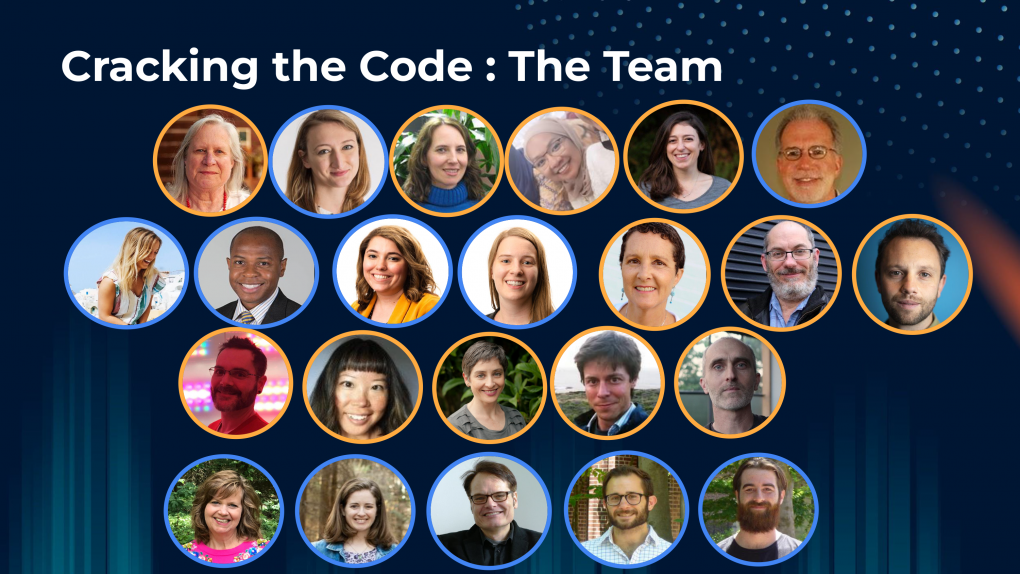
In 2018 KQED received a $3 million grant award from the National Science Foundation (NSF) for the project Cracking the Code: Influencing Millennial Science Engagement to work in partnership with academic researchers at Texas Tech University’s Science Communication and Cognition Lab and evaluators at Rockman et al. The three-year grant provided funding for an unprecedented research initiative between science media professionals and science communication academics with the goal of identifying how best to engage younger, more diverse audiences with science media. The grant ended in December 2021 and the research continues. New findings will be added as they are available. Check back here for updates.
KQED and Partners Receive $3 Million National Science Foundation Grant
Player sponsored by
window.__IS_SSR__=true
window.__INITIAL_STATE__={
"attachmentsReducer": {
"audio_0": {
"type": "attachments",
"id": "audio_0",
"imgSizes": {
"kqedFullSize": {
"file": "https://ww2.kqed.org/news/wp-content/themes/KQED-unified/img/audio_bgs/background0.jpg"
}
}
},
"audio_1": {
"type": "attachments",
"id": "audio_1",
"imgSizes": {
"kqedFullSize": {
"file": "https://ww2.kqed.org/news/wp-content/themes/KQED-unified/img/audio_bgs/background1.jpg"
}
}
},
"audio_2": {
"type": "attachments",
"id": "audio_2",
"imgSizes": {
"kqedFullSize": {
"file": "https://ww2.kqed.org/news/wp-content/themes/KQED-unified/img/audio_bgs/background2.jpg"
}
}
},
"audio_3": {
"type": "attachments",
"id": "audio_3",
"imgSizes": {
"kqedFullSize": {
"file": "https://ww2.kqed.org/news/wp-content/themes/KQED-unified/img/audio_bgs/background3.jpg"
}
}
},
"audio_4": {
"type": "attachments",
"id": "audio_4",
"imgSizes": {
"kqedFullSize": {
"file": "https://ww2.kqed.org/news/wp-content/themes/KQED-unified/img/audio_bgs/background4.jpg"
}
}
},
"placeholder": {
"type": "attachments",
"id": "placeholder",
"imgSizes": {
"thumbnail": {
"file": "https://cdn.kqed.org/wp-content/uploads/2024/12/KQED-Default-Image-816638274-2000x1333-1-160x107.jpg",
"width": 160,
"height": 107,
"mimeType": "image/jpeg"
},
"medium": {
"file": "https://cdn.kqed.org/wp-content/uploads/2024/12/KQED-Default-Image-816638274-2000x1333-1-800x533.jpg",
"width": 800,
"height": 533,
"mimeType": "image/jpeg"
},
"medium_large": {
"file": "https://cdn.kqed.org/wp-content/uploads/2024/12/KQED-Default-Image-816638274-2000x1333-1-768x512.jpg",
"width": 768,
"height": 512,
"mimeType": "image/jpeg"
},
"large": {
"file": "https://cdn.kqed.org/wp-content/uploads/2024/12/KQED-Default-Image-816638274-2000x1333-1-1020x680.jpg",
"width": 1020,
"height": 680,
"mimeType": "image/jpeg"
},
"1536x1536": {
"file": "https://cdn.kqed.org/wp-content/uploads/2024/12/KQED-Default-Image-816638274-2000x1333-1-1536x1024.jpg",
"width": 1536,
"height": 1024,
"mimeType": "image/jpeg"
},
"fd-lrg": {
"file": "https://cdn.kqed.org/wp-content/uploads/2024/12/KQED-Default-Image-816638274-2000x1333-1-1536x1024.jpg",
"width": 1536,
"height": 1024,
"mimeType": "image/jpeg"
},
"fd-med": {
"file": "https://cdn.kqed.org/wp-content/uploads/2024/12/KQED-Default-Image-816638274-2000x1333-1-1020x680.jpg",
"width": 1020,
"height": 680,
"mimeType": "image/jpeg"
},
"fd-sm": {
"file": "https://cdn.kqed.org/wp-content/uploads/2024/12/KQED-Default-Image-816638274-2000x1333-1-800x533.jpg",
"width": 800,
"height": 533,
"mimeType": "image/jpeg"
},
"post-thumbnail": {
"file": "https://cdn.kqed.org/wp-content/uploads/2024/12/KQED-Default-Image-816638274-2000x1333-1-672x372.jpg",
"width": 672,
"height": 372,
"mimeType": "image/jpeg"
},
"twentyfourteen-full-width": {
"file": "https://cdn.kqed.org/wp-content/uploads/2024/12/KQED-Default-Image-816638274-2000x1333-1-1038x576.jpg",
"width": 1038,
"height": 576,
"mimeType": "image/jpeg"
},
"xxsmall": {
"file": "https://cdn.kqed.org/wp-content/uploads/2024/12/KQED-Default-Image-816638274-2000x1333-1-160x107.jpg",
"width": 160,
"height": 107,
"mimeType": "image/jpeg"
},
"xsmall": {
"file": "https://cdn.kqed.org/wp-content/uploads/2024/12/KQED-Default-Image-816638274-2000x1333-1-672x372.jpg",
"width": 672,
"height": 372,
"mimeType": "image/jpeg"
},
"small": {
"file": "https://cdn.kqed.org/wp-content/uploads/2024/12/KQED-Default-Image-816638274-2000x1333-1-672x372.jpg",
"width": 672,
"height": 372,
"mimeType": "image/jpeg"
},
"xlarge": {
"file": "https://cdn.kqed.org/wp-content/uploads/2024/12/KQED-Default-Image-816638274-2000x1333-1-1020x680.jpg",
"width": 1020,
"height": 680,
"mimeType": "image/jpeg"
},
"full-width": {
"file": "https://cdn.kqed.org/wp-content/uploads/2024/12/KQED-Default-Image-816638274-2000x1333-1-1920x1280.jpg",
"width": 1920,
"height": 1280,
"mimeType": "image/jpeg"
},
"guest-author-32": {
"file": "https://cdn.kqed.org/wp-content/uploads/2025/01/KQED-Default-Image-816638274-1333x1333-1-160x160.jpg",
"width": 32,
"height": 32,
"mimeType": "image/jpeg"
},
"guest-author-50": {
"file": "https://cdn.kqed.org/wp-content/uploads/2025/01/KQED-Default-Image-816638274-1333x1333-1-160x160.jpg",
"width": 50,
"height": 50,
"mimeType": "image/jpeg"
},
"guest-author-64": {
"file": "https://cdn.kqed.org/wp-content/uploads/2025/01/KQED-Default-Image-816638274-1333x1333-1-160x160.jpg",
"width": 64,
"height": 64,
"mimeType": "image/jpeg"
},
"guest-author-96": {
"file": "https://cdn.kqed.org/wp-content/uploads/2025/01/KQED-Default-Image-816638274-1333x1333-1-160x160.jpg",
"width": 96,
"height": 96,
"mimeType": "image/jpeg"
},
"guest-author-128": {
"file": "https://cdn.kqed.org/wp-content/uploads/2025/01/KQED-Default-Image-816638274-1333x1333-1-160x160.jpg",
"width": 128,
"height": 128,
"mimeType": "image/jpeg"
},
"detail": {
"file": "https://cdn.kqed.org/wp-content/uploads/2025/01/KQED-Default-Image-816638274-1333x1333-1-160x160.jpg",
"width": 160,
"height": 160,
"mimeType": "image/jpeg"
},
"kqedFullSize": {
"file": "https://cdn.kqed.org/wp-content/uploads/2024/12/KQED-Default-Image-816638274-2000x1333-1.jpg",
"width": 2000,
"height": 1333
}
}
},
"about_17010": {
"type": "attachments",
"id": "about_17010",
"meta": {
"index": "attachments_1716263798",
"site": "about",
"id": "17010",
"found": true
},
"parent": 0,
"imgSizes": {
"twentyfourteen-full-width": {
"file": "https://ww2.kqed.org/app/uploads/sites/19/2022/02/CTC_CrackingtheCodeTeamHiRes.jpg-1038x576.png",
"width": 1038,
"mimeType": "image/png",
"height": 576
},
"thumbnail": {
"file": "https://ww2.kqed.org/app/uploads/sites/19/2022/02/CTC_CrackingtheCodeTeamHiRes.jpg-160x90.png",
"width": 160,
"mimeType": "image/png",
"height": 90
},
"post-thumbnail": {
"file": "https://ww2.kqed.org/app/uploads/sites/19/2022/02/CTC_CrackingtheCodeTeamHiRes.jpg-672x372.png",
"width": 672,
"mimeType": "image/png",
"height": 372
},
"kqedFullSize": {
"file": "https://ww2.kqed.org/app/uploads/sites/19/2022/02/CTC_CrackingtheCodeTeamHiRes.jpg.png",
"width": 3000,
"height": 1688
},
"2048x2048": {
"file": "https://ww2.kqed.org/app/uploads/sites/19/2022/02/CTC_CrackingtheCodeTeamHiRes.jpg-2048x1152.png",
"width": 2048,
"mimeType": "image/png",
"height": 1152
},
"large": {
"file": "https://ww2.kqed.org/app/uploads/sites/19/2022/02/CTC_CrackingtheCodeTeamHiRes.jpg-1020x574.png",
"width": 1020,
"mimeType": "image/png",
"height": 574
},
"1536x1536": {
"file": "https://ww2.kqed.org/app/uploads/sites/19/2022/02/CTC_CrackingtheCodeTeamHiRes.jpg-1536x864.png",
"width": 1536,
"mimeType": "image/png",
"height": 864
},
"full-width": {
"file": "https://ww2.kqed.org/app/uploads/sites/19/2022/02/CTC_CrackingtheCodeTeamHiRes.jpg-1920x1080.png",
"width": 1920,
"mimeType": "image/png",
"height": 1080
},
"medium": {
"file": "https://ww2.kqed.org/app/uploads/sites/19/2022/02/CTC_CrackingtheCodeTeamHiRes.jpg-800x450.png",
"width": 800,
"mimeType": "image/png",
"height": 450
},
"medium_large": {
"file": "https://ww2.kqed.org/app/uploads/sites/19/2022/02/CTC_CrackingtheCodeTeamHiRes.jpg-768x432.png",
"width": 768,
"mimeType": "image/png",
"height": 432
}
},
"publishDate": 1644437926,
"modified": 1644437926,
"caption": null,
"description": null,
"title": "CTC_CrackingtheCodeTeamHiRes.jpg",
"credit": null,
"status": "inherit",
"altTag": null,
"isLoading": false,
"fetchFailed": false
},
"about_16936": {
"type": "attachments",
"id": "about_16936",
"meta": {
"index": "attachments_1716263798",
"site": "about",
"id": "16936",
"found": true
},
"parent": 0,
"imgSizes": {
"twentyfourteen-full-width": {
"file": "https://ww2.kqed.org/app/uploads/sites/19/2022/02/iStock-1285126883-1038x576.jpg",
"width": 1038,
"mimeType": "image/jpeg",
"height": 576
},
"thumbnail": {
"file": "https://ww2.kqed.org/app/uploads/sites/19/2022/02/iStock-1285126883-160x94.jpg",
"width": 160,
"mimeType": "image/jpeg",
"height": 94
},
"post-thumbnail": {
"file": "https://ww2.kqed.org/app/uploads/sites/19/2022/02/iStock-1285126883-672x372.jpg",
"width": 672,
"mimeType": "image/jpeg",
"height": 372
},
"kqedFullSize": {
"file": "https://ww2.kqed.org/app/uploads/sites/19/2022/02/iStock-1285126883-scaled.jpg",
"width": 2560,
"height": 1504
},
"2048x2048": {
"file": "https://ww2.kqed.org/app/uploads/sites/19/2022/02/iStock-1285126883-2048x1203.jpg",
"width": 2048,
"mimeType": "image/jpeg",
"height": 1203
},
"large": {
"file": "https://ww2.kqed.org/app/uploads/sites/19/2022/02/iStock-1285126883-1020x599.jpg",
"width": 1020,
"mimeType": "image/jpeg",
"height": 599
},
"1536x1536": {
"file": "https://ww2.kqed.org/app/uploads/sites/19/2022/02/iStock-1285126883-1536x902.jpg",
"width": 1536,
"mimeType": "image/jpeg",
"height": 902
},
"full-width": {
"file": "https://ww2.kqed.org/app/uploads/sites/19/2022/02/iStock-1285126883-1920x1128.jpg",
"width": 1920,
"mimeType": "image/jpeg",
"height": 1128
},
"medium": {
"file": "https://ww2.kqed.org/app/uploads/sites/19/2022/02/iStock-1285126883-800x470.jpg",
"width": 800,
"mimeType": "image/jpeg",
"height": 470
},
"medium_large": {
"file": "https://ww2.kqed.org/app/uploads/sites/19/2022/02/iStock-1285126883-768x451.jpg",
"width": 768,
"mimeType": "image/jpeg",
"height": 451
}
},
"publishDate": 1644302774,
"modified": 1644303217,
"caption": null,
"description": null,
"title": "Missing Millennial Audiences from Science Media",
"credit": null,
"status": "inherit",
"altTag": null,
"isLoading": false,
"fetchFailed": false
},
"about_17011": {
"type": "attachments",
"id": "about_17011",
"meta": {
"index": "attachments_1716263798",
"site": "about",
"id": "17011",
"found": true
},
"parent": 0,
"imgSizes": {
"twentyfourteen-full-width": {
"file": "https://ww2.kqed.org/app/uploads/sites/19/2022/02/CTC_Practitioner-ResearcherCollabGraphicNew-1038x576.png",
"width": 1038,
"mimeType": "image/png",
"height": 576
},
"thumbnail": {
"file": "https://ww2.kqed.org/app/uploads/sites/19/2022/02/CTC_Practitioner-ResearcherCollabGraphicNew-160x70.png",
"width": 160,
"mimeType": "image/png",
"height": 70
},
"post-thumbnail": {
"file": "https://ww2.kqed.org/app/uploads/sites/19/2022/02/CTC_Practitioner-ResearcherCollabGraphicNew-672x372.png",
"width": 672,
"mimeType": "image/png",
"height": 372
},
"kqedFullSize": {
"file": "https://ww2.kqed.org/app/uploads/sites/19/2022/02/CTC_Practitioner-ResearcherCollabGraphicNew.png",
"width": 2400,
"height": 1050
},
"2048x2048": {
"file": "https://ww2.kqed.org/app/uploads/sites/19/2022/02/CTC_Practitioner-ResearcherCollabGraphicNew-2048x896.png",
"width": 2048,
"mimeType": "image/png",
"height": 896
},
"large": {
"file": "https://ww2.kqed.org/app/uploads/sites/19/2022/02/CTC_Practitioner-ResearcherCollabGraphicNew-1020x446.png",
"width": 1020,
"mimeType": "image/png",
"height": 446
},
"1536x1536": {
"file": "https://ww2.kqed.org/app/uploads/sites/19/2022/02/CTC_Practitioner-ResearcherCollabGraphicNew-1536x672.png",
"width": 1536,
"mimeType": "image/png",
"height": 672
},
"full-width": {
"file": "https://ww2.kqed.org/app/uploads/sites/19/2022/02/CTC_Practitioner-ResearcherCollabGraphicNew-1920x840.png",
"width": 1920,
"mimeType": "image/png",
"height": 840
},
"medium": {
"file": "https://ww2.kqed.org/app/uploads/sites/19/2022/02/CTC_Practitioner-ResearcherCollabGraphicNew-800x350.png",
"width": 800,
"mimeType": "image/png",
"height": 350
},
"medium_large": {
"file": "https://ww2.kqed.org/app/uploads/sites/19/2022/02/CTC_Practitioner-ResearcherCollabGraphicNew-768x336.png",
"width": 768,
"mimeType": "image/png",
"height": 336
}
},
"publishDate": 1644438050,
"modified": 1644438050,
"caption": null,
"description": null,
"title": "CTC_Practitioner-ResearcherCollabGraphicNew",
"credit": null,
"status": "inherit",
"altTag": null,
"isLoading": false,
"fetchFailed": false
},
"about_16961": {
"type": "attachments",
"id": "about_16961",
"meta": {
"index": "attachments_1716263798",
"site": "about",
"id": "16961",
"found": true
},
"parent": 0,
"imgSizes": {
"twentyfourteen-full-width": {
"file": "https://ww2.kqed.org/app/uploads/sites/19/2022/02/iStock-1328668131-1038x576.jpg",
"width": 1038,
"mimeType": "image/jpeg",
"height": 576
},
"thumbnail": {
"file": "https://ww2.kqed.org/app/uploads/sites/19/2022/02/iStock-1328668131-160x90.jpg",
"width": 160,
"mimeType": "image/jpeg",
"height": 90
},
"post-thumbnail": {
"file": "https://ww2.kqed.org/app/uploads/sites/19/2022/02/iStock-1328668131-672x372.jpg",
"width": 672,
"mimeType": "image/jpeg",
"height": 372
},
"kqedFullSize": {
"file": "https://ww2.kqed.org/app/uploads/sites/19/2022/02/iStock-1328668131.jpg",
"width": 2309,
"height": 1299
},
"2048x2048": {
"file": "https://ww2.kqed.org/app/uploads/sites/19/2022/02/iStock-1328668131-2048x1152.jpg",
"width": 2048,
"mimeType": "image/jpeg",
"height": 1152
},
"large": {
"file": "https://ww2.kqed.org/app/uploads/sites/19/2022/02/iStock-1328668131-1020x574.jpg",
"width": 1020,
"mimeType": "image/jpeg",
"height": 574
},
"1536x1536": {
"file": "https://ww2.kqed.org/app/uploads/sites/19/2022/02/iStock-1328668131-1536x864.jpg",
"width": 1536,
"mimeType": "image/jpeg",
"height": 864
},
"full-width": {
"file": "https://ww2.kqed.org/app/uploads/sites/19/2022/02/iStock-1328668131-1920x1080.jpg",
"width": 1920,
"mimeType": "image/jpeg",
"height": 1080
},
"medium": {
"file": "https://ww2.kqed.org/app/uploads/sites/19/2022/02/iStock-1328668131-800x450.jpg",
"width": 800,
"mimeType": "image/jpeg",
"height": 450
},
"medium_large": {
"file": "https://ww2.kqed.org/app/uploads/sites/19/2022/02/iStock-1328668131-768x432.jpg",
"width": 768,
"mimeType": "image/jpeg",
"height": 432
}
},
"publishDate": 1644313375,
"modified": 1644313428,
"caption": null,
"description": null,
"title": "Cracking the Code - Engaging Millennials with Science Media",
"credit": null,
"status": "inherit",
"altTag": null,
"isLoading": false,
"fetchFailed": false
},
"about_16756": {
"type": "attachments",
"id": "about_16756",
"meta": {
"index": "attachments_1716263798",
"site": "about",
"id": "16756",
"found": true
},
"parent": 16748,
"imgSizes": {
"twentyfourteen-full-width": {
"file": "https://ww2.kqed.org/app/uploads/sites/19/2021/12/iStock-1210918328-1038x576.jpg",
"width": 1038,
"mimeType": "image/jpeg",
"height": 576
},
"thumbnail": {
"file": "https://ww2.kqed.org/app/uploads/sites/19/2021/12/iStock-1210918328-160x90.jpg",
"width": 160,
"mimeType": "image/jpeg",
"height": 90
},
"post-thumbnail": {
"file": "https://ww2.kqed.org/app/uploads/sites/19/2021/12/iStock-1210918328-672x372.jpg",
"width": 672,
"mimeType": "image/jpeg",
"height": 372
},
"kqedFullSize": {
"file": "https://ww2.kqed.org/app/uploads/sites/19/2021/12/iStock-1210918328-scaled.jpg",
"width": 2560,
"height": 1440
},
"2048x2048": {
"file": "https://ww2.kqed.org/app/uploads/sites/19/2021/12/iStock-1210918328-2048x1152.jpg",
"width": 2048,
"mimeType": "image/jpeg",
"height": 1152
},
"large": {
"file": "https://ww2.kqed.org/app/uploads/sites/19/2021/12/iStock-1210918328-1020x574.jpg",
"width": 1020,
"mimeType": "image/jpeg",
"height": 574
},
"1536x1536": {
"file": "https://ww2.kqed.org/app/uploads/sites/19/2021/12/iStock-1210918328-1536x864.jpg",
"width": 1536,
"mimeType": "image/jpeg",
"height": 864
},
"full-width": {
"file": "https://ww2.kqed.org/app/uploads/sites/19/2021/12/iStock-1210918328-1920x1080.jpg",
"width": 1920,
"mimeType": "image/jpeg",
"height": 1080
},
"medium": {
"file": "https://ww2.kqed.org/app/uploads/sites/19/2021/12/iStock-1210918328-800x450.jpg",
"width": 800,
"mimeType": "image/jpeg",
"height": 450
},
"medium_large": {
"file": "https://ww2.kqed.org/app/uploads/sites/19/2021/12/iStock-1210918328-768x432.jpg",
"width": 768,
"mimeType": "image/jpeg",
"height": 432
}
},
"publishDate": 1640194709,
"modified": 1640194709,
"caption": "Social networking service concept. communication network.",
"description": null,
"title": "Social networking service concept. communication network.",
"credit": null,
"status": "inherit",
"altTag": null,
"isLoading": false,
"fetchFailed": false
},
"about_13677": {
"type": "attachments",
"id": "about_13677",
"meta": {
"index": "attachments_1716263798",
"site": "about",
"id": "13677",
"found": true
},
"parent": 13669,
"imgSizes": {
"twentyfourteen-full-width": {
"file": "https://ww2.kqed.org/app/uploads/sites/19/2019/04/Screen-Shot-2019-04-29-at-1.58.04-PM-1010x576.png",
"width": 1010,
"mimeType": "image/png",
"height": 576
},
"thumbnail": {
"file": "https://ww2.kqed.org/app/uploads/sites/19/2019/04/Screen-Shot-2019-04-29-at-1.58.04-PM-160x92.png",
"width": 160,
"mimeType": "image/png",
"height": 92
},
"post-thumbnail": {
"file": "https://ww2.kqed.org/app/uploads/sites/19/2019/04/Screen-Shot-2019-04-29-at-1.58.04-PM-672x372.png",
"width": 672,
"mimeType": "image/png",
"height": 372
},
"kqedFullSize": {
"file": "https://ww2.kqed.org/app/uploads/sites/19/2019/04/Screen-Shot-2019-04-29-at-1.58.04-PM.png",
"width": 1010,
"height": 580
},
"medium": {
"file": "https://ww2.kqed.org/app/uploads/sites/19/2019/04/Screen-Shot-2019-04-29-at-1.58.04-PM-800x459.png",
"width": 800,
"mimeType": "image/png",
"height": 459
},
"medium_large": {
"file": "https://ww2.kqed.org/app/uploads/sites/19/2019/04/Screen-Shot-2019-04-29-at-1.58.04-PM-768x441.png",
"width": 768,
"mimeType": "image/png",
"height": 441
}
},
"publishDate": 1556572010,
"modified": 1556572010,
"caption": null,
"description": null,
"title": "Screen Shot 2019-04-29 at 1.58.04 PM",
"credit": null,
"status": "inherit",
"isLoading": false,
"fetchFailed": false
},
"about_16718": {
"type": "attachments",
"id": "about_16718",
"meta": {
"index": "attachments_1716263798",
"site": "about",
"id": "16718",
"found": true
},
"parent": 16717,
"imgSizes": {
"twentyfourteen-full-width": {
"file": "https://ww2.kqed.org/app/uploads/sites/19/2021/12/iStock-1289348332-1038x576.jpg",
"width": 1038,
"mimeType": "image/jpeg",
"height": 576
},
"thumbnail": {
"file": "https://ww2.kqed.org/app/uploads/sites/19/2021/12/iStock-1289348332-160x88.jpg",
"width": 160,
"mimeType": "image/jpeg",
"height": 88
},
"post-thumbnail": {
"file": "https://ww2.kqed.org/app/uploads/sites/19/2021/12/iStock-1289348332-672x372.jpg",
"width": 672,
"mimeType": "image/jpeg",
"height": 372
},
"kqedFullSize": {
"file": "https://ww2.kqed.org/app/uploads/sites/19/2021/12/iStock-1289348332-scaled.jpg",
"width": 2560,
"height": 1408
},
"2048x2048": {
"file": "https://ww2.kqed.org/app/uploads/sites/19/2021/12/iStock-1289348332-2048x1126.jpg",
"width": 2048,
"mimeType": "image/jpeg",
"height": 1126
},
"large": {
"file": "https://ww2.kqed.org/app/uploads/sites/19/2021/12/iStock-1289348332-1020x561.jpg",
"width": 1020,
"mimeType": "image/jpeg",
"height": 561
},
"1536x1536": {
"file": "https://ww2.kqed.org/app/uploads/sites/19/2021/12/iStock-1289348332-1536x845.jpg",
"width": 1536,
"mimeType": "image/jpeg",
"height": 845
},
"full-width": {
"file": "https://ww2.kqed.org/app/uploads/sites/19/2021/12/iStock-1289348332-1920x1056.jpg",
"width": 1920,
"mimeType": "image/jpeg",
"height": 1056
},
"medium": {
"file": "https://ww2.kqed.org/app/uploads/sites/19/2021/12/iStock-1289348332-800x440.jpg",
"width": 800,
"mimeType": "image/jpeg",
"height": 440
},
"medium_large": {
"file": "https://ww2.kqed.org/app/uploads/sites/19/2021/12/iStock-1289348332-768x422.jpg",
"width": 768,
"mimeType": "image/jpeg",
"height": 422
}
},
"publishDate": 1640033918,
"modified": 1640034151,
"caption": null,
"description": null,
"title": "Environmental technology concept. Sustainable development goals. SDGs.",
"credit": null,
"status": "inherit",
"altTag": null,
"isLoading": false,
"fetchFailed": false
},
"about_16714": {
"type": "attachments",
"id": "about_16714",
"meta": {
"index": "attachments_1716263798",
"site": "about",
"id": "16714",
"found": true
},
"parent": 16699,
"imgSizes": {
"twentyfourteen-full-width": {
"file": "https://ww2.kqed.org/app/uploads/sites/19/2021/12/1-Person-1038x576.png",
"width": 1038,
"mimeType": "image/png",
"height": 576
},
"thumbnail": {
"file": "https://ww2.kqed.org/app/uploads/sites/19/2021/12/1-Person-160x102.png",
"width": 160,
"mimeType": "image/png",
"height": 102
},
"post-thumbnail": {
"file": "https://ww2.kqed.org/app/uploads/sites/19/2021/12/1-Person-672x372.png",
"width": 672,
"mimeType": "image/png",
"height": 372
},
"kqedFullSize": {
"file": "https://ww2.kqed.org/app/uploads/sites/19/2021/12/1-Person.png",
"width": 1734,
"height": 1101
},
"large": {
"file": "https://ww2.kqed.org/app/uploads/sites/19/2021/12/1-Person-1020x648.png",
"width": 1020,
"mimeType": "image/png",
"height": 648
},
"1536x1536": {
"file": "https://ww2.kqed.org/app/uploads/sites/19/2021/12/1-Person-1536x975.png",
"width": 1536,
"mimeType": "image/png",
"height": 975
},
"medium": {
"file": "https://ww2.kqed.org/app/uploads/sites/19/2021/12/1-Person-800x508.png",
"width": 800,
"mimeType": "image/png",
"height": 508
},
"medium_large": {
"file": "https://ww2.kqed.org/app/uploads/sites/19/2021/12/1-Person-768x488.png",
"width": 768,
"mimeType": "image/png",
"height": 488
}
},
"publishDate": 1640031644,
"modified": 1640031644,
"caption": null,
"description": null,
"title": "1 Person",
"credit": null,
"status": "inherit",
"altTag": null,
"isLoading": false,
"fetchFailed": false
},
"about_16652": {
"type": "attachments",
"id": "about_16652",
"meta": {
"index": "attachments_1716263798",
"site": "about",
"id": "16652",
"found": true
},
"parent": 16651,
"imgSizes": {
"twentyfourteen-full-width": {
"file": "https://ww2.kqed.org/app/uploads/sites/19/2021/11/1_1Al3hyhYOHTff74TIFChkg-1024x576.jpeg",
"width": 1024,
"mimeType": "image/jpeg",
"height": 576
},
"thumbnail": {
"file": "https://ww2.kqed.org/app/uploads/sites/19/2021/11/1_1Al3hyhYOHTff74TIFChkg-160x126.jpeg",
"width": 160,
"mimeType": "image/jpeg",
"height": 126
},
"post-thumbnail": {
"file": "https://ww2.kqed.org/app/uploads/sites/19/2021/11/1_1Al3hyhYOHTff74TIFChkg-672x372.jpeg",
"width": 672,
"mimeType": "image/jpeg",
"height": 372
},
"kqedFullSize": {
"file": "https://ww2.kqed.org/app/uploads/sites/19/2021/11/1_1Al3hyhYOHTff74TIFChkg.jpeg",
"width": 1024,
"height": 805
},
"large": {
"file": "https://ww2.kqed.org/app/uploads/sites/19/2021/11/1_1Al3hyhYOHTff74TIFChkg-1020x802.jpeg",
"width": 1020,
"mimeType": "image/jpeg",
"height": 802
},
"medium": {
"file": "https://ww2.kqed.org/app/uploads/sites/19/2021/11/1_1Al3hyhYOHTff74TIFChkg-800x629.jpeg",
"width": 800,
"mimeType": "image/jpeg",
"height": 629
},
"medium_large": {
"file": "https://ww2.kqed.org/app/uploads/sites/19/2021/11/1_1Al3hyhYOHTff74TIFChkg-768x604.jpeg",
"width": 768,
"mimeType": "image/jpeg",
"height": 604
}
},
"publishDate": 1637707387,
"modified": 1637707387,
"caption": null,
"description": null,
"title": "1_1Al3hyhYOHTff74TIFChkg",
"credit": null,
"status": "inherit",
"altTag": null,
"isLoading": false,
"fetchFailed": false
},
"about_16647": {
"type": "attachments",
"id": "about_16647",
"meta": {
"index": "attachments_1716263798",
"site": "about",
"id": "16647",
"found": true
},
"parent": 16646,
"imgSizes": {
"twentyfourteen-full-width": {
"file": "https://ww2.kqed.org/app/uploads/sites/19/2021/11/1_fzVUk9Qc2R7-RlQyC3eyZw-1038x576.jpeg",
"width": 1038,
"mimeType": "image/jpeg",
"height": 576
},
"thumbnail": {
"file": "https://ww2.kqed.org/app/uploads/sites/19/2021/11/1_fzVUk9Qc2R7-RlQyC3eyZw-160x107.jpeg",
"width": 160,
"mimeType": "image/jpeg",
"height": 107
},
"post-thumbnail": {
"file": "https://ww2.kqed.org/app/uploads/sites/19/2021/11/1_fzVUk9Qc2R7-RlQyC3eyZw-672x372.jpeg",
"width": 672,
"mimeType": "image/jpeg",
"height": 372
},
"kqedFullSize": {
"file": "https://ww2.kqed.org/app/uploads/sites/19/2021/11/1_fzVUk9Qc2R7-RlQyC3eyZw.jpeg",
"width": 1400,
"height": 933
},
"large": {
"file": "https://ww2.kqed.org/app/uploads/sites/19/2021/11/1_fzVUk9Qc2R7-RlQyC3eyZw-1020x680.jpeg",
"width": 1020,
"mimeType": "image/jpeg",
"height": 680
},
"medium": {
"file": "https://ww2.kqed.org/app/uploads/sites/19/2021/11/1_fzVUk9Qc2R7-RlQyC3eyZw-800x533.jpeg",
"width": 800,
"mimeType": "image/jpeg",
"height": 533
},
"medium_large": {
"file": "https://ww2.kqed.org/app/uploads/sites/19/2021/11/1_fzVUk9Qc2R7-RlQyC3eyZw-768x512.jpeg",
"width": 768,
"mimeType": "image/jpeg",
"height": 512
}
},
"publishDate": 1637706937,
"modified": 1637706937,
"caption": null,
"description": null,
"title": "1_fzVUk9Qc2R7-RlQyC3eyZw",
"credit": null,
"status": "inherit",
"altTag": null,
"isLoading": false,
"fetchFailed": false
},
"about_16299": {
"type": "attachments",
"id": "about_16299",
"meta": {
"index": "attachments_1716263798",
"site": "about",
"id": "16299",
"found": true
},
"parent": 16298,
"imgSizes": {
"twentyfourteen-full-width": {
"file": "https://ww2.kqed.org/app/uploads/sites/19/2021/09/1_hhWlHi9GHZWx0fuWhuHL9Q-1038x576.jpeg",
"width": 1038,
"mimeType": "image/jpeg",
"height": 576
},
"thumbnail": {
"file": "https://ww2.kqed.org/app/uploads/sites/19/2021/09/1_hhWlHi9GHZWx0fuWhuHL9Q-160x107.jpeg",
"width": 160,
"mimeType": "image/jpeg",
"height": 107
},
"post-thumbnail": {
"file": "https://ww2.kqed.org/app/uploads/sites/19/2021/09/1_hhWlHi9GHZWx0fuWhuHL9Q-672x372.jpeg",
"width": 672,
"mimeType": "image/jpeg",
"height": 372
},
"kqedFullSize": {
"file": "https://ww2.kqed.org/app/uploads/sites/19/2021/09/1_hhWlHi9GHZWx0fuWhuHL9Q.jpeg",
"width": 1400,
"height": 933
},
"large": {
"file": "https://ww2.kqed.org/app/uploads/sites/19/2021/09/1_hhWlHi9GHZWx0fuWhuHL9Q-1020x680.jpeg",
"width": 1020,
"mimeType": "image/jpeg",
"height": 680
},
"medium": {
"file": "https://ww2.kqed.org/app/uploads/sites/19/2021/09/1_hhWlHi9GHZWx0fuWhuHL9Q-800x533.jpeg",
"width": 800,
"mimeType": "image/jpeg",
"height": 533
},
"medium_large": {
"file": "https://ww2.kqed.org/app/uploads/sites/19/2021/09/1_hhWlHi9GHZWx0fuWhuHL9Q-768x512.jpeg",
"width": 768,
"mimeType": "image/jpeg",
"height": 512
}
},
"publishDate": 1631913064,
"modified": 1631913123,
"caption": null,
"description": null,
"title": null,
"credit": null,
"status": "inherit",
"altTag": null,
"isLoading": false,
"fetchFailed": false
},
"about_16303": {
"type": "attachments",
"id": "about_16303",
"meta": {
"index": "attachments_1716263798",
"site": "about",
"id": "16303",
"found": true
},
"parent": 16286,
"imgSizes": {
"twentyfourteen-full-width": {
"file": "https://ww2.kqed.org/app/uploads/sites/19/2021/09/pexels-anna-kester-5352942-1-1038x576.jpg",
"width": 1038,
"mimeType": "image/jpeg",
"height": 576
},
"thumbnail": {
"file": "https://ww2.kqed.org/app/uploads/sites/19/2021/09/pexels-anna-kester-5352942-1-160x212.jpg",
"width": 160,
"mimeType": "image/jpeg",
"height": 212
},
"post-thumbnail": {
"file": "https://ww2.kqed.org/app/uploads/sites/19/2021/09/pexels-anna-kester-5352942-1-672x372.jpg",
"width": 672,
"mimeType": "image/jpeg",
"height": 372
},
"kqedFullSize": {
"file": "https://ww2.kqed.org/app/uploads/sites/19/2021/09/pexels-anna-kester-5352942-1-scaled.jpg",
"width": 1932,
"height": 2560
},
"2048x2048": {
"file": "https://ww2.kqed.org/app/uploads/sites/19/2021/09/pexels-anna-kester-5352942-1-1545x2048.jpg",
"width": 1545,
"mimeType": "image/jpeg",
"height": 2048
},
"large": {
"file": "https://ww2.kqed.org/app/uploads/sites/19/2021/09/pexels-anna-kester-5352942-1-1020x1352.jpg",
"width": 1020,
"mimeType": "image/jpeg",
"height": 1352
},
"1536x1536": {
"file": "https://ww2.kqed.org/app/uploads/sites/19/2021/09/pexels-anna-kester-5352942-1-1159x1536.jpg",
"width": 1159,
"mimeType": "image/jpeg",
"height": 1536
},
"full-width": {
"file": "https://ww2.kqed.org/app/uploads/sites/19/2021/09/pexels-anna-kester-5352942-1-1920x2545.jpg",
"width": 1920,
"mimeType": "image/jpeg",
"height": 2545
},
"medium": {
"file": "https://ww2.kqed.org/app/uploads/sites/19/2021/09/pexels-anna-kester-5352942-1-800x1060.jpg",
"width": 800,
"mimeType": "image/jpeg",
"height": 1060
},
"medium_large": {
"file": "https://ww2.kqed.org/app/uploads/sites/19/2021/09/pexels-anna-kester-5352942-1-768x1018.jpg",
"width": 768,
"mimeType": "image/jpeg",
"height": 1018
}
},
"publishDate": 1631913384,
"modified": 1631913406,
"caption": null,
"description": null,
"title": null,
"credit": null,
"status": "inherit",
"altTag": null,
"isLoading": false,
"fetchFailed": false
},
"about_16183": {
"type": "attachments",
"id": "about_16183",
"meta": {
"index": "attachments_1716263798",
"site": "about",
"id": "16183",
"found": true
},
"parent": 16182,
"imgSizes": {
"twentyfourteen-full-width": {
"file": "https://ww2.kqed.org/app/uploads/sites/19/2021/09/RS48686_EPA_image_selects_fullsize-3-qut-1020x679-1-1020x576.jpg",
"width": 1020,
"mimeType": "image/jpeg",
"height": 576
},
"thumbnail": {
"file": "https://ww2.kqed.org/app/uploads/sites/19/2021/09/RS48686_EPA_image_selects_fullsize-3-qut-1020x679-1-160x107.jpg",
"width": 160,
"mimeType": "image/jpeg",
"height": 107
},
"post-thumbnail": {
"file": "https://ww2.kqed.org/app/uploads/sites/19/2021/09/RS48686_EPA_image_selects_fullsize-3-qut-1020x679-1-672x372.jpg",
"width": 672,
"mimeType": "image/jpeg",
"height": 372
},
"kqedFullSize": {
"file": "https://ww2.kqed.org/app/uploads/sites/19/2021/09/RS48686_EPA_image_selects_fullsize-3-qut-1020x679-1.jpg",
"width": 1020,
"height": 679
},
"medium": {
"file": "https://ww2.kqed.org/app/uploads/sites/19/2021/09/RS48686_EPA_image_selects_fullsize-3-qut-1020x679-1-800x533.jpg",
"width": 800,
"mimeType": "image/jpeg",
"height": 533
},
"medium_large": {
"file": "https://ww2.kqed.org/app/uploads/sites/19/2021/09/RS48686_EPA_image_selects_fullsize-3-qut-1020x679-1-768x511.jpg",
"width": 768,
"mimeType": "image/jpeg",
"height": 511
}
},
"publishDate": 1630511641,
"modified": 1630515228,
"caption": null,
"description": null,
"title": null,
"credit": null,
"status": "inherit",
"altTag": "Sea Level Rise",
"isLoading": false,
"fetchFailed": false
},
"about_16201": {
"type": "attachments",
"id": "about_16201",
"meta": {
"index": "attachments_1716263798",
"site": "about",
"id": "16201",
"found": true
},
"parent": 16200,
"imgSizes": {
"twentyfourteen-full-width": {
"file": "https://ww2.kqed.org/app/uploads/sites/19/2021/09/iStock-1221046101-small-1038x576.jpg",
"width": 1038,
"mimeType": "image/jpeg",
"height": 576
},
"thumbnail": {
"file": "https://ww2.kqed.org/app/uploads/sites/19/2021/09/iStock-1221046101-small-160x109.jpg",
"width": 160,
"mimeType": "image/jpeg",
"height": 109
},
"post-thumbnail": {
"file": "https://ww2.kqed.org/app/uploads/sites/19/2021/09/iStock-1221046101-small-672x372.jpg",
"width": 672,
"mimeType": "image/jpeg",
"height": 372
},
"kqedFullSize": {
"file": "https://ww2.kqed.org/app/uploads/sites/19/2021/09/iStock-1221046101-small-scaled.jpg",
"width": 2560,
"height": 1736
},
"2048x2048": {
"file": "https://ww2.kqed.org/app/uploads/sites/19/2021/09/iStock-1221046101-small-2048x1389.jpg",
"width": 2048,
"mimeType": "image/jpeg",
"height": 1389
},
"large": {
"file": "https://ww2.kqed.org/app/uploads/sites/19/2021/09/iStock-1221046101-small-1020x692.jpg",
"width": 1020,
"mimeType": "image/jpeg",
"height": 692
},
"1536x1536": {
"file": "https://ww2.kqed.org/app/uploads/sites/19/2021/09/iStock-1221046101-small-1536x1042.jpg",
"width": 1536,
"mimeType": "image/jpeg",
"height": 1042
},
"full-width": {
"file": "https://ww2.kqed.org/app/uploads/sites/19/2021/09/iStock-1221046101-small-1920x1302.jpg",
"width": 1920,
"mimeType": "image/jpeg",
"height": 1302
},
"medium": {
"file": "https://ww2.kqed.org/app/uploads/sites/19/2021/09/iStock-1221046101-small-800x543.jpg",
"width": 800,
"mimeType": "image/jpeg",
"height": 543
},
"medium_large": {
"file": "https://ww2.kqed.org/app/uploads/sites/19/2021/09/iStock-1221046101-small-768x521.jpg",
"width": 768,
"mimeType": "image/jpeg",
"height": 521
}
},
"publishDate": 1630515685,
"modified": 1631834098,
"caption": "Covid caption",
"description": null,
"title": null,
"credit": null,
"status": "inherit",
"altTag": "COVID-19",
"isLoading": false,
"fetchFailed": false
},
"about_16107": {
"type": "attachments",
"id": "about_16107",
"meta": {
"index": "attachments_1716263798",
"site": "about",
"id": "16107",
"found": true
},
"parent": 16105,
"imgSizes": {
"twentyfourteen-full-width": {
"file": "https://ww2.kqed.org/app/uploads/sites/19/2021/08/conceptual-small-1038x576.jpg",
"width": 1038,
"mimeType": "image/jpeg",
"height": 576
},
"thumbnail": {
"file": "https://ww2.kqed.org/app/uploads/sites/19/2021/08/conceptual-small-160x108.jpg",
"width": 160,
"mimeType": "image/jpeg",
"height": 108
},
"post-thumbnail": {
"file": "https://ww2.kqed.org/app/uploads/sites/19/2021/08/conceptual-small-672x372.jpg",
"width": 672,
"mimeType": "image/jpeg",
"height": 372
},
"kqedFullSize": {
"file": "https://ww2.kqed.org/app/uploads/sites/19/2021/08/conceptual-small-scaled.jpg",
"width": 2560,
"height": 1736
},
"2048x2048": {
"file": "https://ww2.kqed.org/app/uploads/sites/19/2021/08/conceptual-small-2048x1389.jpg",
"width": 2048,
"mimeType": "image/jpeg",
"height": 1389
},
"large": {
"file": "https://ww2.kqed.org/app/uploads/sites/19/2021/08/conceptual-small-1020x692.jpg",
"width": 1020,
"mimeType": "image/jpeg",
"height": 692
},
"1536x1536": {
"file": "https://ww2.kqed.org/app/uploads/sites/19/2021/08/conceptual-small-1536x1041.jpg",
"width": 1536,
"mimeType": "image/jpeg",
"height": 1041
},
"full-width": {
"file": "https://ww2.kqed.org/app/uploads/sites/19/2021/08/conceptual-small-1920x1302.jpg",
"width": 1920,
"mimeType": "image/jpeg",
"height": 1302
},
"medium": {
"file": "https://ww2.kqed.org/app/uploads/sites/19/2021/08/conceptual-small-800x542.jpg",
"width": 800,
"mimeType": "image/jpeg",
"height": 542
},
"medium_large": {
"file": "https://ww2.kqed.org/app/uploads/sites/19/2021/08/conceptual-small-768x521.jpg",
"width": 768,
"mimeType": "image/jpeg",
"height": 521
}
},
"publishDate": 1629499412,
"modified": 1629499543,
"caption": null,
"description": null,
"title": "Coronavirus disease (COVID-19) outbreak",
"credit": null,
"status": "inherit",
"altTag": "COVID-19",
"isLoading": false,
"fetchFailed": false
},
"about_16094": {
"type": "attachments",
"id": "about_16094",
"meta": {
"index": "attachments_1716263798",
"site": "about",
"id": "16094",
"found": true
},
"parent": 16093,
"imgSizes": {
"twentyfourteen-full-width": {
"file": "https://ww2.kqed.org/app/uploads/sites/19/2021/08/germ-knowledge-2-1038x576.jpg",
"width": 1038,
"mimeType": "image/jpeg",
"height": 576
},
"thumbnail": {
"file": "https://ww2.kqed.org/app/uploads/sites/19/2021/08/germ-knowledge-2-160x108.jpg",
"width": 160,
"mimeType": "image/jpeg",
"height": 108
},
"post-thumbnail": {
"file": "https://ww2.kqed.org/app/uploads/sites/19/2021/08/germ-knowledge-2-672x372.jpg",
"width": 672,
"mimeType": "image/jpeg",
"height": 372
},
"kqedFullSize": {
"file": "https://ww2.kqed.org/app/uploads/sites/19/2021/08/germ-knowledge-2-scaled.jpg",
"width": 2560,
"height": 1736
},
"2048x2048": {
"file": "https://ww2.kqed.org/app/uploads/sites/19/2021/08/germ-knowledge-2-2048x1389.jpg",
"width": 2048,
"mimeType": "image/jpeg",
"height": 1389
},
"large": {
"file": "https://ww2.kqed.org/app/uploads/sites/19/2021/08/germ-knowledge-2-1020x692.jpg",
"width": 1020,
"mimeType": "image/jpeg",
"height": 692
},
"1536x1536": {
"file": "https://ww2.kqed.org/app/uploads/sites/19/2021/08/germ-knowledge-2-1536x1041.jpg",
"width": 1536,
"mimeType": "image/jpeg",
"height": 1041
},
"full-width": {
"file": "https://ww2.kqed.org/app/uploads/sites/19/2021/08/germ-knowledge-2-1920x1302.jpg",
"width": 1920,
"mimeType": "image/jpeg",
"height": 1302
},
"medium": {
"file": "https://ww2.kqed.org/app/uploads/sites/19/2021/08/germ-knowledge-2-800x542.jpg",
"width": 800,
"mimeType": "image/jpeg",
"height": 542
},
"medium_large": {
"file": "https://ww2.kqed.org/app/uploads/sites/19/2021/08/germ-knowledge-2-768x521.jpg",
"width": 768,
"mimeType": "image/jpeg",
"height": 521
}
},
"publishDate": 1629490319,
"modified": 1629490370,
"caption": null,
"description": null,
"title": "Virus coronavirus Covid-19",
"credit": null,
"status": "inherit",
"altTag": "Germ Knowledge",
"isLoading": false,
"fetchFailed": false
},
"about_16071": {
"type": "attachments",
"id": "about_16071",
"meta": {
"index": "attachments_1716263798",
"site": "about",
"id": "16071",
"found": true
},
"parent": 16059,
"imgSizes": {
"twentyfourteen-full-width": {
"file": "https://ww2.kqed.org/app/uploads/sites/19/2021/07/featured-image-1038x576.jpg",
"width": 1038,
"mimeType": "image/jpeg",
"height": 576
},
"thumbnail": {
"file": "https://ww2.kqed.org/app/uploads/sites/19/2021/07/featured-image-160x108.jpg",
"width": 160,
"mimeType": "image/jpeg",
"height": 108
},
"post-thumbnail": {
"file": "https://ww2.kqed.org/app/uploads/sites/19/2021/07/featured-image-672x372.jpg",
"width": 672,
"mimeType": "image/jpeg",
"height": 372
},
"kqedFullSize": {
"file": "https://ww2.kqed.org/app/uploads/sites/19/2021/07/featured-image-scaled.jpg",
"width": 2560,
"height": 1735
},
"2048x2048": {
"file": "https://ww2.kqed.org/app/uploads/sites/19/2021/07/featured-image-2048x1388.jpg",
"width": 2048,
"mimeType": "image/jpeg",
"height": 1388
},
"large": {
"file": "https://ww2.kqed.org/app/uploads/sites/19/2021/07/featured-image-1020x691.jpg",
"width": 1020,
"mimeType": "image/jpeg",
"height": 691
},
"1536x1536": {
"file": "https://ww2.kqed.org/app/uploads/sites/19/2021/07/featured-image-1536x1041.jpg",
"width": 1536,
"mimeType": "image/jpeg",
"height": 1041
},
"full-width": {
"file": "https://ww2.kqed.org/app/uploads/sites/19/2021/07/featured-image-1920x1302.jpg",
"width": 1920,
"mimeType": "image/jpeg",
"height": 1302
},
"medium": {
"file": "https://ww2.kqed.org/app/uploads/sites/19/2021/07/featured-image-800x542.jpg",
"width": 800,
"mimeType": "image/jpeg",
"height": 542
},
"medium_large": {
"file": "https://ww2.kqed.org/app/uploads/sites/19/2021/07/featured-image-768x521.jpg",
"width": 768,
"mimeType": "image/jpeg",
"height": 521
}
},
"publishDate": 1628201906,
"modified": 1628201947,
"caption": null,
"description": null,
"title": "Germ Knowledge: Reporting During an Infodemic",
"credit": null,
"status": "inherit",
"altTag": "Germ Knowledge: Reporting During an Infodemic",
"isLoading": false,
"fetchFailed": false
},
"about_16040": {
"type": "attachments",
"id": "about_16040",
"meta": {
"index": "attachments_1716263798",
"site": "about",
"id": "16040",
"found": true
},
"parent": 16015,
"imgSizes": {
"twentyfourteen-full-width": {
"file": "https://ww2.kqed.org/app/uploads/sites/19/2021/07/iStock-1286158491-smaller-1038x576.png",
"width": 1038,
"mimeType": "image/png",
"height": 576
},
"thumbnail": {
"file": "https://ww2.kqed.org/app/uploads/sites/19/2021/07/iStock-1286158491-smaller-160x107.png",
"width": 160,
"mimeType": "image/png",
"height": 107
},
"post-thumbnail": {
"file": "https://ww2.kqed.org/app/uploads/sites/19/2021/07/iStock-1286158491-smaller-672x372.png",
"width": 672,
"mimeType": "image/png",
"height": 372
},
"kqedFullSize": {
"file": "https://ww2.kqed.org/app/uploads/sites/19/2021/07/iStock-1286158491-smaller.png",
"width": 3000,
"height": 2006
},
"2048x2048": {
"file": "https://ww2.kqed.org/app/uploads/sites/19/2021/07/iStock-1286158491-smaller-2048x1369.png",
"width": 2048,
"mimeType": "image/png",
"height": 1369
},
"large": {
"file": "https://ww2.kqed.org/app/uploads/sites/19/2021/07/iStock-1286158491-smaller-1020x682.png",
"width": 1020,
"mimeType": "image/png",
"height": 682
},
"1536x1536": {
"file": "https://ww2.kqed.org/app/uploads/sites/19/2021/07/iStock-1286158491-smaller-1536x1027.png",
"width": 1536,
"mimeType": "image/png",
"height": 1027
},
"full-width": {
"file": "https://ww2.kqed.org/app/uploads/sites/19/2021/07/iStock-1286158491-smaller-1920x1284.png",
"width": 1920,
"mimeType": "image/png",
"height": 1284
},
"medium": {
"file": "https://ww2.kqed.org/app/uploads/sites/19/2021/07/iStock-1286158491-smaller-800x535.png",
"width": 800,
"mimeType": "image/png",
"height": 535
},
"medium_large": {
"file": "https://ww2.kqed.org/app/uploads/sites/19/2021/07/iStock-1286158491-smaller-768x514.png",
"width": 768,
"mimeType": "image/png",
"height": 514
}
},
"publishDate": 1627667775,
"modified": 1627667814,
"caption": null,
"description": null,
"title": "iStock-1286158491 - smaller",
"credit": null,
"status": "inherit",
"altTag": "Misinformation on Twitter",
"isLoading": false,
"fetchFailed": false
},
"about_16743": {
"type": "attachments",
"id": "about_16743",
"meta": {
"index": "attachments_1716263798",
"site": "about",
"id": "16743",
"found": true
},
"parent": 16726,
"imgSizes": {
"twentyfourteen-full-width": {
"file": "https://ww2.kqed.org/app/uploads/sites/19/2021/12/maxresdefault-14-1038x576.jpg",
"width": 1038,
"mimeType": "image/jpeg",
"height": 576
},
"thumbnail": {
"file": "https://ww2.kqed.org/app/uploads/sites/19/2021/12/maxresdefault-14-160x90.jpg",
"width": 160,
"mimeType": "image/jpeg",
"height": 90
},
"post-thumbnail": {
"file": "https://ww2.kqed.org/app/uploads/sites/19/2021/12/maxresdefault-14-672x372.jpg",
"width": 672,
"mimeType": "image/jpeg",
"height": 372
},
"kqedFullSize": {
"file": "https://ww2.kqed.org/app/uploads/sites/19/2021/12/maxresdefault-14.jpg",
"width": 1280,
"height": 720
},
"large": {
"file": "https://ww2.kqed.org/app/uploads/sites/19/2021/12/maxresdefault-14-1020x574.jpg",
"width": 1020,
"mimeType": "image/jpeg",
"height": 574
},
"medium": {
"file": "https://ww2.kqed.org/app/uploads/sites/19/2021/12/maxresdefault-14-800x450.jpg",
"width": 800,
"mimeType": "image/jpeg",
"height": 450
},
"medium_large": {
"file": "https://ww2.kqed.org/app/uploads/sites/19/2021/12/maxresdefault-14-768x432.jpg",
"width": 768,
"mimeType": "image/jpeg",
"height": 432
}
},
"publishDate": 1640115499,
"modified": 1640115592,
"caption": null,
"description": null,
"title": "maxresdefault (14)",
"credit": "Josh Cassidy/KQED",
"status": "inherit",
"altTag": null,
"isLoading": false,
"fetchFailed": false
},
"about_16663": {
"type": "attachments",
"id": "about_16663",
"meta": {
"index": "attachments_1716263798",
"site": "about",
"id": "16663",
"found": true
},
"parent": 16658,
"imgSizes": {
"twentyfourteen-full-width": {
"file": "https://ww2.kqed.org/app/uploads/sites/19/2021/11/maxresdefault-7-1038x576.jpg",
"width": 1038,
"mimeType": "image/jpeg",
"height": 576
},
"thumbnail": {
"file": "https://ww2.kqed.org/app/uploads/sites/19/2021/11/maxresdefault-7-160x90.jpg",
"width": 160,
"mimeType": "image/jpeg",
"height": 90
},
"post-thumbnail": {
"file": "https://ww2.kqed.org/app/uploads/sites/19/2021/11/maxresdefault-7-672x372.jpg",
"width": 672,
"mimeType": "image/jpeg",
"height": 372
},
"kqedFullSize": {
"file": "https://ww2.kqed.org/app/uploads/sites/19/2021/11/maxresdefault-7.jpg",
"width": 1280,
"height": 720
},
"large": {
"file": "https://ww2.kqed.org/app/uploads/sites/19/2021/11/maxresdefault-7-1020x574.jpg",
"width": 1020,
"mimeType": "image/jpeg",
"height": 574
},
"medium": {
"file": "https://ww2.kqed.org/app/uploads/sites/19/2021/11/maxresdefault-7-800x450.jpg",
"width": 800,
"mimeType": "image/jpeg",
"height": 450
},
"medium_large": {
"file": "https://ww2.kqed.org/app/uploads/sites/19/2021/11/maxresdefault-7-768x432.jpg",
"width": 768,
"mimeType": "image/jpeg",
"height": 432
}
},
"publishDate": 1637793449,
"modified": 1637793449,
"caption": null,
"description": null,
"title": "maxresdefault (7)",
"credit": null,
"status": "inherit",
"altTag": null,
"isLoading": false,
"fetchFailed": false
},
"about_16459": {
"type": "attachments",
"id": "about_16459",
"meta": {
"index": "attachments_1716263798",
"site": "about",
"id": "16459",
"found": true
},
"parent": 0,
"imgSizes": {
"twentyfourteen-full-width": {
"file": "https://ww2.kqed.org/app/uploads/sites/19/2021/09/NSF_DeepLook_TitlesBlogPostImage-1038x576.jpg",
"width": 1038,
"mimeType": "image/jpeg",
"height": 576
},
"thumbnail": {
"file": "https://ww2.kqed.org/app/uploads/sites/19/2021/09/NSF_DeepLook_TitlesBlogPostImage-160x85.jpg",
"width": 160,
"mimeType": "image/jpeg",
"height": 85
},
"post-thumbnail": {
"file": "https://ww2.kqed.org/app/uploads/sites/19/2021/09/NSF_DeepLook_TitlesBlogPostImage-672x372.jpg",
"width": 672,
"mimeType": "image/jpeg",
"height": 372
},
"kqedFullSize": {
"file": "https://ww2.kqed.org/app/uploads/sites/19/2021/09/NSF_DeepLook_TitlesBlogPostImage.jpg",
"width": 2023,
"height": 1081
},
"large": {
"file": "https://ww2.kqed.org/app/uploads/sites/19/2021/09/NSF_DeepLook_TitlesBlogPostImage-1020x545.jpg",
"width": 1020,
"mimeType": "image/jpeg",
"height": 545
},
"1536x1536": {
"file": "https://ww2.kqed.org/app/uploads/sites/19/2021/09/NSF_DeepLook_TitlesBlogPostImage-1536x821.jpg",
"width": 1536,
"mimeType": "image/jpeg",
"height": 821
},
"full-width": {
"file": "https://ww2.kqed.org/app/uploads/sites/19/2021/09/NSF_DeepLook_TitlesBlogPostImage-1920x1026.jpg",
"width": 1920,
"mimeType": "image/jpeg",
"height": 1026
},
"medium": {
"file": "https://ww2.kqed.org/app/uploads/sites/19/2021/09/NSF_DeepLook_TitlesBlogPostImage-800x427.jpg",
"width": 800,
"mimeType": "image/jpeg",
"height": 427
},
"medium_large": {
"file": "https://ww2.kqed.org/app/uploads/sites/19/2021/09/NSF_DeepLook_TitlesBlogPostImage-768x410.jpg",
"width": 768,
"mimeType": "image/jpeg",
"height": 410
}
},
"publishDate": 1632517175,
"modified": 1632771529,
"caption": "Only a handful of Deep Look’s 125 episodes have been watched by as many women as men. Videos about how ladybugs get together in huge groups to mate and how lice use special claws to clamber around our hair are especially popular with women – both have been seen by an audience that’s around 60% female. Photo Credit: Josh Cassidy, KQED\n",
"description": null,
"title": "Deep Look, Lice and Ladybugs",
"credit": null,
"status": "inherit",
"altTag": null,
"isLoading": false,
"fetchFailed": false
},
"about_15991": {
"type": "attachments",
"id": "about_15991",
"meta": {
"index": "attachments_1716263798",
"site": "about",
"id": "15991",
"found": true
},
"parent": 15980,
"imgSizes": {
"thumbnail": {
"file": "https://ww2.kqed.org/app/uploads/sites/19/2021/06/NSF_CTC_DL_InhibitionBlogPost-160x86.jpg",
"width": 160,
"mimeType": "image/jpeg",
"height": 86
},
"post-thumbnail": {
"file": "https://ww2.kqed.org/app/uploads/sites/19/2021/06/NSF_CTC_DL_InhibitionBlogPost-672x372.jpg",
"width": 672,
"mimeType": "image/jpeg",
"height": 372
},
"kqedFullSize": {
"file": "https://ww2.kqed.org/app/uploads/sites/19/2021/06/NSF_CTC_DL_InhibitionBlogPost.jpg",
"width": 971,
"height": 519
},
"medium": {
"file": "https://ww2.kqed.org/app/uploads/sites/19/2021/06/NSF_CTC_DL_InhibitionBlogPost-800x428.jpg",
"width": 800,
"mimeType": "image/jpeg",
"height": 428
},
"medium_large": {
"file": "https://ww2.kqed.org/app/uploads/sites/19/2021/06/NSF_CTC_DL_InhibitionBlogPost-768x410.jpg",
"width": 768,
"mimeType": "image/jpeg",
"height": 410
}
},
"publishDate": 1623978751,
"modified": 1623979022,
"caption": "A test image from the survey, \"Examining the Causes of Audience Gender Disparity in KQED’s Deep Look Science Videos”",
"description": null,
"title": "Deep Look Inhibition Survey",
"credit": null,
"status": "inherit",
"altTag": null,
"isLoading": false,
"fetchFailed": false
},
"about_15524": {
"type": "attachments",
"id": "about_15524",
"meta": {
"index": "attachments_1716263798",
"site": "about",
"id": "15524",
"found": true
},
"parent": 15515,
"imgSizes": {
"twentyfourteen-full-width": {
"file": "https://ww2.kqed.org/app/uploads/sites/19/2020/11/Josh_and_camera_in_pond-1038x576.jpg",
"width": 1038,
"mimeType": "image/jpeg",
"height": 576
},
"thumbnail": {
"file": "https://ww2.kqed.org/app/uploads/sites/19/2020/11/Josh_and_camera_in_pond-160x106.jpg",
"width": 160,
"mimeType": "image/jpeg",
"height": 106
},
"post-thumbnail": {
"file": "https://ww2.kqed.org/app/uploads/sites/19/2020/11/Josh_and_camera_in_pond-672x372.jpg",
"width": 672,
"mimeType": "image/jpeg",
"height": 372
},
"kqedFullSize": {
"file": "https://ww2.kqed.org/app/uploads/sites/19/2020/11/Josh_and_camera_in_pond-scaled.jpg",
"width": 2560,
"height": 1702
},
"2048x2048": {
"file": "https://ww2.kqed.org/app/uploads/sites/19/2020/11/Josh_and_camera_in_pond-2048x1362.jpg",
"width": 2048,
"mimeType": "image/jpeg",
"height": 1362
},
"large": {
"file": "https://ww2.kqed.org/app/uploads/sites/19/2020/11/Josh_and_camera_in_pond-1020x678.jpg",
"width": 1020,
"mimeType": "image/jpeg",
"height": 678
},
"1536x1536": {
"file": "https://ww2.kqed.org/app/uploads/sites/19/2020/11/Josh_and_camera_in_pond-1536x1021.jpg",
"width": 1536,
"mimeType": "image/jpeg",
"height": 1021
},
"full-width": {
"file": "https://ww2.kqed.org/app/uploads/sites/19/2020/11/Josh_and_camera_in_pond-1920x1277.jpg",
"width": 1920,
"mimeType": "image/jpeg",
"height": 1277
},
"medium": {
"file": "https://ww2.kqed.org/app/uploads/sites/19/2020/11/Josh_and_camera_in_pond-800x532.jpg",
"width": 800,
"mimeType": "image/jpeg",
"height": 532
},
"medium_large": {
"file": "https://ww2.kqed.org/app/uploads/sites/19/2020/11/Josh_and_camera_in_pond-768x511.jpg",
"width": 768,
"mimeType": "image/jpeg",
"height": 511
}
},
"publishDate": 1604356551,
"modified": 1606691877,
"caption": "Deep Look cinematographer and lead producer Josh Cassidy filmed newts mating in the Japanese pool at the University of California Botanical Garden, in Berkeley, in February 2015. Credit: Gabriela Quirós, KQED",
"description": null,
"title": "Josh Cassidy Filming Deep Look's Newts Episode",
"credit": null,
"status": "inherit",
"isLoading": false,
"fetchFailed": false
},
"about_14478": {
"type": "attachments",
"id": "about_14478",
"meta": {
"index": "attachments_1716263798",
"site": "about",
"id": "14478",
"found": true
},
"parent": 0,
"imgSizes": {
"twentyfourteen-full-width": {
"file": "https://ww2.kqed.org/app/uploads/sites/19/2019/10/EW_JO_Turret__and_spider_20130708_7084203-1038x576.jpg",
"width": 1038,
"mimeType": "image/jpeg",
"height": 576
},
"thumbnail": {
"file": "https://ww2.kqed.org/app/uploads/sites/19/2019/10/EW_JO_Turret__and_spider_20130708_7084203-160x134.jpg",
"width": 160,
"mimeType": "image/jpeg",
"height": 134
},
"post-thumbnail": {
"file": "https://ww2.kqed.org/app/uploads/sites/19/2019/10/EW_JO_Turret__and_spider_20130708_7084203-672x372.jpg",
"width": 672,
"mimeType": "image/jpeg",
"height": 372
},
"kqedFullSize": {
"file": "https://ww2.kqed.org/app/uploads/sites/19/2019/10/EW_JO_Turret__and_spider_20130708_7084203-e1574361423666.jpg",
"width": 1920,
"height": 1602
},
"large": {
"file": "https://ww2.kqed.org/app/uploads/sites/19/2019/10/EW_JO_Turret__and_spider_20130708_7084203-1020x851.jpg",
"width": 1020,
"mimeType": "image/jpeg",
"height": 851
},
"complete_open_graph": {
"file": "https://ww2.kqed.org/app/uploads/sites/19/2019/10/EW_JO_Turret__and_spider_20130708_7084203-1200x1001.jpg",
"width": 1200,
"mimeType": "image/jpeg",
"height": 1001
},
"full-width": {
"file": "https://ww2.kqed.org/app/uploads/sites/19/2019/10/EW_JO_Turret__and_spider_20130708_7084203-1920x1602.jpg",
"width": 1920,
"mimeType": "image/jpeg",
"height": 1602
},
"medium": {
"file": "https://ww2.kqed.org/app/uploads/sites/19/2019/10/EW_JO_Turret__and_spider_20130708_7084203-800x668.jpg",
"width": 800,
"mimeType": "image/jpeg",
"height": 668
},
"medium_large": {
"file": "https://ww2.kqed.org/app/uploads/sites/19/2019/10/EW_JO_Turret__and_spider_20130708_7084203-768x641.jpg",
"width": 768,
"mimeType": "image/jpeg",
"height": 641
}
},
"publishDate": 1573069764,
"modified": 1574295814,
"caption": null,
"description": null,
"title": "A Deep Look at Gender Disparity",
"credit": null,
"status": "inherit",
"isLoading": false,
"fetchFailed": false
},
"about_16994": {
"type": "attachments",
"id": "about_16994",
"meta": {
"index": "attachments_1716263798",
"site": "about",
"id": "16994",
"found": true
},
"parent": 16981,
"imgSizes": {
"twentyfourteen-full-width": {
"file": "https://ww2.kqed.org/app/uploads/sites/19/2022/02/GSFC_20171208_Archive_e000769_large-1038x576.jpg",
"width": 1038,
"mimeType": "image/jpeg",
"height": 576
},
"thumbnail": {
"file": "https://ww2.kqed.org/app/uploads/sites/19/2022/02/GSFC_20171208_Archive_e000769_large-160x125.jpg",
"width": 160,
"mimeType": "image/jpeg",
"height": 125
},
"post-thumbnail": {
"file": "https://ww2.kqed.org/app/uploads/sites/19/2022/02/GSFC_20171208_Archive_e000769_large-672x372.jpg",
"width": 672,
"mimeType": "image/jpeg",
"height": 372
},
"kqedFullSize": {
"file": "https://ww2.kqed.org/app/uploads/sites/19/2022/02/GSFC_20171208_Archive_e000769_large.jpg",
"width": 1920,
"height": 1500
},
"large": {
"file": "https://ww2.kqed.org/app/uploads/sites/19/2022/02/GSFC_20171208_Archive_e000769_large-1020x797.jpg",
"width": 1020,
"mimeType": "image/jpeg",
"height": 797
},
"1536x1536": {
"file": "https://ww2.kqed.org/app/uploads/sites/19/2022/02/GSFC_20171208_Archive_e000769_large-1536x1200.jpg",
"width": 1536,
"mimeType": "image/jpeg",
"height": 1200
},
"medium": {
"file": "https://ww2.kqed.org/app/uploads/sites/19/2022/02/GSFC_20171208_Archive_e000769_large-800x625.jpg",
"width": 800,
"mimeType": "image/jpeg",
"height": 625
},
"medium_large": {
"file": "https://ww2.kqed.org/app/uploads/sites/19/2022/02/GSFC_20171208_Archive_e000769_large-768x600.jpg",
"width": 768,
"mimeType": "image/jpeg",
"height": 600
}
},
"publishDate": 1644365327,
"modified": 1644365327,
"caption": null,
"description": null,
"title": "GSFC_20171208_Archive_e000769_large",
"credit": null,
"status": "inherit",
"altTag": null,
"isLoading": false,
"fetchFailed": false
},
"about_13767": {
"type": "attachments",
"id": "about_13767",
"meta": {
"index": "attachments_1716263798",
"site": "about",
"id": "13767",
"found": true
},
"parent": 0,
"imgSizes": {
"twentyfourteen-full-width": {
"file": "https://ww2.kqed.org/app/uploads/sites/19/2019/05/iStock-104971911425-1038x576.jpg",
"width": 1038,
"mimeType": "image/jpeg",
"height": 576
},
"thumbnail": {
"file": "https://ww2.kqed.org/app/uploads/sites/19/2019/05/iStock-104971911425-160x114.jpg",
"width": 160,
"mimeType": "image/jpeg",
"height": 114
},
"post-thumbnail": {
"file": "https://ww2.kqed.org/app/uploads/sites/19/2019/05/iStock-104971911425-672x372.jpg",
"width": 672,
"mimeType": "image/jpeg",
"height": 372
},
"kqedFullSize": {
"file": "https://ww2.kqed.org/app/uploads/sites/19/2019/05/iStock-104971911425.jpg",
"width": 2000,
"height": 1427
},
"large": {
"file": "https://ww2.kqed.org/app/uploads/sites/19/2019/05/iStock-104971911425-1020x728.jpg",
"width": 1020,
"mimeType": "image/jpeg",
"height": 728
},
"complete_open_graph": {
"file": "https://ww2.kqed.org/app/uploads/sites/19/2019/05/iStock-104971911425-1200x856.jpg",
"width": 1200,
"mimeType": "image/jpeg",
"height": 856
},
"full-width": {
"file": "https://ww2.kqed.org/app/uploads/sites/19/2019/05/iStock-104971911425-1920x1370.jpg",
"width": 1920,
"mimeType": "image/jpeg",
"height": 1370
},
"medium": {
"file": "https://ww2.kqed.org/app/uploads/sites/19/2019/05/iStock-104971911425-800x571.jpg",
"width": 800,
"mimeType": "image/jpeg",
"height": 571
},
"medium_large": {
"file": "https://ww2.kqed.org/app/uploads/sites/19/2019/05/iStock-104971911425-768x548.jpg",
"width": 768,
"mimeType": "image/jpeg",
"height": 548
}
},
"publishDate": 1556901855,
"modified": 1556901855,
"caption": null,
"description": null,
"title": "iStock-104971911425",
"credit": null,
"status": "inherit",
"isLoading": false,
"fetchFailed": false
},
"about_17016": {
"type": "attachments",
"id": "about_17016",
"meta": {
"index": "attachments_1716263798",
"site": "about",
"id": "17016",
"found": true
},
"parent": 17013,
"imgSizes": {
"twentyfourteen-full-width": {
"file": "https://ww2.kqed.org/app/uploads/sites/19/2022/02/pexels-rfstudio-3825527-1038x576.jpg",
"width": 1038,
"mimeType": "image/jpeg",
"height": 576
},
"thumbnail": {
"file": "https://ww2.kqed.org/app/uploads/sites/19/2022/02/pexels-rfstudio-3825527-160x224.jpg",
"width": 160,
"mimeType": "image/jpeg",
"height": 224
},
"post-thumbnail": {
"file": "https://ww2.kqed.org/app/uploads/sites/19/2022/02/pexels-rfstudio-3825527-672x372.jpg",
"width": 672,
"mimeType": "image/jpeg",
"height": 372
},
"kqedFullSize": {
"file": "https://ww2.kqed.org/app/uploads/sites/19/2022/02/pexels-rfstudio-3825527-scaled.jpg",
"width": 1828,
"height": 2560
},
"2048x2048": {
"file": "https://ww2.kqed.org/app/uploads/sites/19/2022/02/pexels-rfstudio-3825527-1463x2048.jpg",
"width": 1463,
"mimeType": "image/jpeg",
"height": 2048
},
"large": {
"file": "https://ww2.kqed.org/app/uploads/sites/19/2022/02/pexels-rfstudio-3825527-1020x1428.jpg",
"width": 1020,
"mimeType": "image/jpeg",
"height": 1428
},
"1536x1536": {
"file": "https://ww2.kqed.org/app/uploads/sites/19/2022/02/pexels-rfstudio-3825527-1097x1536.jpg",
"width": 1097,
"mimeType": "image/jpeg",
"height": 1536
},
"full-width": {
"file": "https://ww2.kqed.org/app/uploads/sites/19/2022/02/pexels-rfstudio-3825527-1920x2688.jpg",
"width": 1920,
"mimeType": "image/jpeg",
"height": 2688
},
"medium": {
"file": "https://ww2.kqed.org/app/uploads/sites/19/2022/02/pexels-rfstudio-3825527-800x1120.jpg",
"width": 800,
"mimeType": "image/jpeg",
"height": 1120
},
"medium_large": {
"file": "https://ww2.kqed.org/app/uploads/sites/19/2022/02/pexels-rfstudio-3825527-768x1075.jpg",
"width": 768,
"mimeType": "image/jpeg",
"height": 1075
}
},
"publishDate": 1644447408,
"modified": 1644447429,
"caption": null,
"description": null,
"title": null,
"credit": null,
"status": "inherit",
"altTag": null,
"isLoading": false,
"fetchFailed": false
},
"about_16916": {
"type": "attachments",
"id": "about_16916",
"meta": {
"index": "attachments_1716263798",
"site": "about",
"id": "16916",
"found": true
},
"parent": 0,
"imgSizes": {
"thumbnail": {
"file": "https://ww2.kqed.org/app/uploads/sites/19/2022/02/ResearchCollaborationImage-160x107.jpeg",
"width": 160,
"mimeType": "image/jpeg",
"height": 107
},
"kqedFullSize": {
"file": "https://ww2.kqed.org/app/uploads/sites/19/2022/02/ResearchCollaborationImage.jpeg",
"width": 500,
"height": 334
}
},
"publishDate": 1643943127,
"modified": 1643943127,
"caption": null,
"description": null,
"title": "ResearchCollaborationImage",
"credit": null,
"status": "inherit",
"altTag": null,
"isLoading": false,
"fetchFailed": false
},
"about_13634": {
"type": "attachments",
"id": "about_13634",
"meta": {
"index": "attachments_1716263798",
"site": "about",
"id": "13634",
"found": true
},
"parent": 13632,
"imgSizes": {
"thumbnail": {
"file": "https://ww2.kqed.org/app/uploads/sites/19/2019/04/Millenialmedia-consumption-3-800x451-160x90.jpg",
"width": 160,
"mimeType": "image/jpeg",
"height": 90
},
"post-thumbnail": {
"file": "https://ww2.kqed.org/app/uploads/sites/19/2019/04/Millenialmedia-consumption-3-800x451-672x372.jpg",
"width": 672,
"mimeType": "image/jpeg",
"height": 372
},
"kqedFullSize": {
"file": "https://ww2.kqed.org/app/uploads/sites/19/2019/04/Millenialmedia-consumption-3-800x451.jpg",
"width": 800,
"height": 451
},
"medium": {
"file": "https://ww2.kqed.org/app/uploads/sites/19/2019/04/Millenialmedia-consumption-3-800x451-800x451.jpg",
"width": 800,
"mimeType": "image/jpeg",
"height": 451
},
"medium_large": {
"file": "https://ww2.kqed.org/app/uploads/sites/19/2019/04/Millenialmedia-consumption-3-800x451-768x433.jpg",
"width": 768,
"mimeType": "image/jpeg",
"height": 433
}
},
"publishDate": 1556209163,
"modified": 1556209163,
"caption": null,
"description": null,
"title": "Millenialmedia-consumption-3-800x451",
"credit": null,
"status": "inherit",
"isLoading": false,
"fetchFailed": false
}
},
"audioPlayerReducer": {
"postId": "stream_live",
"isPaused": true,
"isPlaying": false,
"pfsActive": false,
"pledgeModalIsOpen": true,
"playerDrawerIsOpen": false,
"liveAudioPlayStartedAt": 0,
"liveAudioPlayContext": ""
},
"authorsReducer": {
"byline_about_16884": {
"type": "authors",
"id": "byline_about_16884",
"meta": {
"override": true
},
"slug": "byline_about_16884",
"name": "Sue Ellen McCann \u003cbr> KQED",
"isLoading": false
},
"byline_about_16886": {
"type": "authors",
"id": "byline_about_16886",
"meta": {
"override": true
},
"slug": "byline_about_16886",
"name": "Sue Ellen McCann \u003cbr> KQED",
"isLoading": false
},
"byline_about_16890": {
"type": "authors",
"id": "byline_about_16890",
"meta": {
"override": true
},
"slug": "byline_about_16890",
"name": "Sue Ellen McCann \u003cbr> KQED",
"isLoading": false
},
"byline_about_16895": {
"type": "authors",
"id": "byline_about_16895",
"meta": {
"override": true
},
"slug": "byline_about_16895",
"name": "Sue Ellen McCann \u003cbr> KQED",
"isLoading": false
},
"byline_about_16748": {
"type": "authors",
"id": "byline_about_16748",
"meta": {
"override": true
},
"slug": "byline_about_16748",
"name": "Asheley Landrum \u003cbr> Texas Tech University",
"isLoading": false
},
"byline_about_13669": {
"type": "authors",
"id": "byline_about_13669",
"meta": {
"override": true
},
"slug": "byline_about_13669",
"name": "Sue Ellen McCann, Principal Investigator",
"isLoading": false
},
"byline_about_16717": {
"type": "authors",
"id": "byline_about_16717",
"meta": {
"override": true
},
"slug": "byline_about_16717",
"name": "Sue Ellen McCann \u003cbr> KQED",
"isLoading": false
},
"byline_about_16651": {
"type": "authors",
"id": "byline_about_16651",
"meta": {
"override": true
},
"slug": "byline_about_16651",
"name": "Scott Burg, Rockman et al \u003cbr> Medium",
"isLoading": false
},
"byline_about_16646": {
"type": "authors",
"id": "byline_about_16646",
"meta": {
"override": true
},
"slug": "byline_about_16646",
"name": "Scott Burg, Rockman et al \u003cbr> Medium",
"isLoading": false
},
"byline_about_16298": {
"type": "authors",
"id": "byline_about_16298",
"meta": {
"override": true
},
"slug": "byline_about_16298",
"name": "Scott Burg, Rockman et al \u003cbr> Medium",
"isLoading": false
},
"byline_about_16286": {
"type": "authors",
"id": "byline_about_16286",
"meta": {
"override": true
},
"slug": "byline_about_16286",
"name": "Scott Burg, Rockman et al \u003cbr> Medium",
"isLoading": false
},
"byline_about_16182": {
"type": "authors",
"id": "byline_about_16182",
"meta": {
"override": true
},
"slug": "byline_about_16182",
"name": "Scott Burg, Rockman et al",
"isLoading": false
},
"byline_about_16200": {
"type": "authors",
"id": "byline_about_16200",
"meta": {
"override": true
},
"slug": "byline_about_16200",
"name": "Scott Burg, Rockman et al",
"isLoading": false
},
"byline_about_16105": {
"type": "authors",
"id": "byline_about_16105",
"meta": {
"override": true
},
"slug": "byline_about_16105",
"name": "Natasha Strydhorst, Texas Tech University ",
"isLoading": false
},
"byline_about_16093": {
"type": "authors",
"id": "byline_about_16093",
"meta": {
"override": true
},
"slug": "byline_about_16093",
"name": "Asheley R. Landrum, Texas Tech University ",
"isLoading": false
},
"byline_about_16059": {
"type": "authors",
"id": "byline_about_16059",
"meta": {
"override": true
},
"slug": "byline_about_16059",
"name": "Natasha Strydhorst, Texas Tech University ",
"isLoading": false
},
"byline_about_16015": {
"type": "authors",
"id": "byline_about_16015",
"meta": {
"override": true
},
"slug": "byline_about_16015",
"name": "Sarah Mohamad, Christopher Futrell (Brandwatch)",
"isLoading": false
},
"smohamad": {
"type": "authors",
"id": "11631",
"meta": {
"index": "authors_1716337520",
"id": "11631",
"found": true
},
"name": "Sarah Mohamad",
"firstName": "Sarah",
"lastName": "Mohamad",
"slug": "smohamad",
"email": "smohamad@KQED.org",
"display_author_email": true,
"staff_mastheads": [],
"title": "Engagement Producer and Reporter, KQED Science",
"bio": "Sarah Mohamad is an audience engagement reporter and producer for KQED Science. She reports on audience-focused science and environment stories and manages the team's social media, newsletter, and engagement efforts. Prior to this role, she played a key role as project manager for NSF's \u003ca href=\"https://www.kqed.org/crackingthecode\">\u003cem>Cracking the Code: Influencing Millennial Science Engagement\u003c/em> \u003c/a>audience research.",
"avatar": "https://secure.gravatar.com/avatar/e6224957cd82d015183756ddde1f928013a563d7ca2e4565f8c4de1ec64886c5?s=600&d=blank&r=g",
"twitter": "sarahkmohamad",
"bluesky": null,
"facebook": null,
"instagram": null,
"linkedin": null,
"sites": [
{
"site": "",
"roles": [
"editor"
]
},
{
"site": "arts",
"roles": [
"editor"
]
},
{
"site": "news",
"roles": [
"editor"
]
},
{
"site": "about",
"roles": [
"editor"
]
},
{
"site": "science",
"roles": [
"editor"
]
}
],
"headData": {
"title": "Sarah Mohamad | KQED",
"description": "Engagement Producer and Reporter, KQED Science",
"ogImgSrc": "https://secure.gravatar.com/avatar/e6224957cd82d015183756ddde1f928013a563d7ca2e4565f8c4de1ec64886c5?s=600&d=blank&r=g",
"twImgSrc": "https://secure.gravatar.com/avatar/e6224957cd82d015183756ddde1f928013a563d7ca2e4565f8c4de1ec64886c5?s=600&d=blank&r=g"
},
"isLoading": false,
"link": "/author/smohamad"
},
"byline_about_16658": {
"type": "authors",
"id": "byline_about_16658",
"meta": {
"override": true
},
"slug": "byline_about_16658",
"name": "\u003ca href=\"https://comm.uconn.edu/person/jocelyn-steinke/\">Jocelyn Steinke\u003c/a> \u003cbr> University of Connecticut",
"isLoading": false
},
"byline_about_16163": {
"type": "authors",
"id": "byline_about_16163",
"meta": {
"override": true
},
"slug": "byline_about_16163",
"name": "Gabriela Quirós, \u003cem>Deep Look\u003c/em> Coordinating Producer",
"isLoading": false
},
"byline_about_15980": {
"type": "authors",
"id": "byline_about_15980",
"meta": {
"override": true
},
"slug": "byline_about_15980",
"name": "Natasha Strydhorst, Texas Tech University ",
"isLoading": false
},
"byline_about_14560": {
"type": "authors",
"id": "byline_about_14560",
"meta": {
"override": true
},
"slug": "byline_about_14560",
"name": "Gabriela Quirós, Deep Look Coordinating Producer",
"isLoading": false
},
"sevdaeris": {
"type": "authors",
"id": "6364",
"meta": {
"index": "authors_1716337520",
"id": "6364",
"found": true
},
"name": "Sevda Eris",
"firstName": "Sevda",
"lastName": "Eris",
"slug": "sevdaeris",
"email": "seris@kqed.org",
"display_author_email": false,
"staff_mastheads": [],
"title": "Director of Audience Engagement",
"bio": null,
"avatar": "https://secure.gravatar.com/avatar/c99311b4355095e2f7f01ea8bf8e6fba?s=600&d=mm&r=g",
"twitter": null,
"facebook": null,
"instagram": null,
"linkedin": null,
"sites": [
{
"site": "about",
"roles": []
},
{
"site": "science",
"roles": []
},
{
"site": "pressroom",
"roles": []
}
],
"headData": {
"title": "Sevda Eris | KQED",
"description": "Director of Audience Engagement",
"ogImgSrc": "https://secure.gravatar.com/avatar/c99311b4355095e2f7f01ea8bf8e6fba?s=600&d=mm&r=g",
"twImgSrc": "https://secure.gravatar.com/avatar/c99311b4355095e2f7f01ea8bf8e6fba?s=600&d=mm&r=g"
},
"isLoading": false,
"link": "/author/sevdaeris"
},
"byline_about_16981": {
"type": "authors",
"id": "byline_about_16981",
"meta": {
"override": true
},
"slug": "byline_about_16981",
"name": "Jon Brooks \u003cbr> KQED",
"isLoading": false
},
"byline_about_13722": {
"type": "authors",
"id": "byline_about_13722",
"meta": {
"override": true
},
"slug": "byline_about_13722",
"name": "Asheley R. Landrum\u003cbr>Assistant Professor of Science Communication, Texas Tech University\u003cbr>Co-Principal Investigator",
"isLoading": false
},
"byline_about_17013": {
"type": "authors",
"id": "byline_about_17013",
"meta": {
"override": true
},
"slug": "byline_about_17013",
"name": "Scott Burg\u003cbr> Rockman et al",
"isLoading": false
},
"byline_about_16897": {
"type": "authors",
"id": "byline_about_16897",
"meta": {
"override": true
},
"slug": "byline_about_16897",
"name": "Scott Burg \u003cbr> Rockman et al",
"isLoading": false
}
},
"pagesReducer": {
"root-site_crackingthecode": {
"type": "pages",
"id": "root-site_15651",
"meta": {
"index": "pages_1716337520",
"site": "root-site",
"id": "15651",
"score": 0
},
"parent": 0,
"pageMeta": {
"excludeFromSiteSearch": "Include",
"sticky": false,
"adSlotOverride": "300x250_science",
"WpPageTemplate": "page-topic-company"
},
"labelTerm": {
"site": ""
},
"blocks": [
{
"innerHTML": "\n\u003cp>In 2018 KQED received a $3 million grant award from the \u003ca rel=\"noreferrer noopener\" target=\"_blank\" href=\"https://www.nsf.gov/\">National Science Foundation (NSF)\u003c/a> for the project \u003cem>Cracking the Code: Influencing Millennial Science Engagement to w\u003c/em>ork in partnership with academic researchers at Texas Tech University’s \u003ca rel=\"noreferrer noopener\" target=\"_blank\" href=\"http://www.scicommcog.com/\">Science Communication and Cognition Lab\u003c/a> and evaluators at \u003ca rel=\"noreferrer noopener\" target=\"_blank\" href=\"https://rockman.com/about/team/scott-burg/\">Rockman et al\u003c/a>. The three-year grant provided funding for an unprecedented research initiative between science media professionals and science communication academics with the goal of identifying how best to engage younger, more diverse audiences with science media. The grant ended in December 2021 and the research continues. New findings will be added as they are available. Check back here for updates.\u003cbr>\u003c/p>\n",
"blockName": "core/paragraph",
"innerContent": [
"\n\u003cp>In 2018 KQED received a $3 million grant award from the \u003ca rel=\"noreferrer noopener\" target=\"_blank\" href=\"https://www.nsf.gov/\">National Science Foundation (NSF)\u003c/a> for the project \u003cem>Cracking the Code: Influencing Millennial Science Engagement to w\u003c/em>ork in partnership with academic researchers at Texas Tech University’s \u003ca rel=\"noreferrer noopener\" target=\"_blank\" href=\"http://www.scicommcog.com/\">Science Communication and Cognition Lab\u003c/a> and evaluators at \u003ca rel=\"noreferrer noopener\" target=\"_blank\" href=\"https://rockman.com/about/team/scott-burg/\">Rockman et al\u003c/a>. The three-year grant provided funding for an unprecedented research initiative between science media professionals and science communication academics with the goal of identifying how best to engage younger, more diverse audiences with science media. The grant ended in December 2021 and the research continues. New findings will be added as they are available. Check back here for updates.\u003cbr>\u003c/p>\n"
],
"innerBlocks": [],
"attrs": []
},
{
"innerHTML": "",
"blockName": "kqed/post-list",
"innerContent": [],
"innerBlocks": [],
"attrs": {
"layout": "cardCompany2",
"useSSR": true,
"sizeBase": 6,
"seeMore": true,
"query": "posts/science,about?tag=crackingthecode;bestpractices&queryId=12a78fb43a0",
"title": "Best Practices"
}
},
{
"innerHTML": "",
"blockName": "kqed/post-list",
"innerContent": [],
"innerBlocks": [],
"attrs": {
"layout": "cardCompany2",
"useSSR": true,
"seeMore": true,
"query": "posts/science,about?tag=crackingthecode;nationalsurveys&queryId=8ab9102611",
"title": "National Surveys"
}
},
{
"innerHTML": "",
"blockName": "kqed/post-list",
"innerContent": [],
"innerBlocks": [],
"attrs": {
"layout": "cardCompany2",
"useSSR": true,
"sizeBase": 12,
"seeMore": true,
"query": "posts/science,about?tag=crackingthecode;covid19&queryId=6aee36ec77",
"title": "COVID-19"
}
},
{
"innerHTML": "",
"blockName": "kqed/post-list",
"innerContent": [],
"innerBlocks": [],
"attrs": {
"layout": "cardCompany2",
"useSSR": true,
"sizeBase": 6,
"seeMore": true,
"query": "posts/science,about?tag=crackingthecode;deep-look&queryId=4eb9b81147",
"title": "Deep Look"
}
},
{
"innerHTML": "",
"blockName": "kqed/post-list",
"innerContent": [],
"innerBlocks": [],
"attrs": {
"layout": "cardCompany2",
"useSSR": true,
"seeMore": true,
"query": "posts/science,about?tag=crackingthecode;socialmedia&queryId=197cedcd912",
"title": "Social Media"
}
},
{
"innerHTML": "",
"blockName": "kqed/post-list",
"innerContent": [],
"innerBlocks": [],
"attrs": {
"layout": "cardCompany2",
"useSSR": true,
"seeMore": true,
"query": "posts/science,about?tag=crackingthecode;sciencenews&queryId=97d660db69",
"title": "Science News"
}
},
{
"innerHTML": "",
"blockName": "kqed/post-list",
"innerContent": [],
"innerBlocks": [],
"attrs": {
"layout": "cardCompany2",
"useSSR": true,
"sizeBase": 6,
"seeMore": true,
"query": "posts/science,about?tag=crackingthecode;scottburg&queryId=d9fe90e33d",
"title": "Project Evaluation"
}
},
{
"innerHTML": "",
"blockName": "kqed/post-list",
"innerContent": [],
"innerBlocks": [],
"attrs": {
"layout": "cardCompany2",
"useSSR": true,
"seeMore": true,
"query": "posts/science,about?tag=crackingthecode;pressreleases&queryId=1905ec19036",
"title": "Press Releases"
}
},
{
"innerHTML": "\n\u003cp>\u003c/p>\n",
"blockName": "core/paragraph",
"innerContent": [
"\n\u003cp>\u003c/p>\n"
],
"innerBlocks": [],
"attrs": []
}
],
"publishDate": 1581448911,
"title": "Cracking the Code",
"pagePath": "crackingthecode",
"headTitle": "Cracking the Code | KQED",
"content": "\u003cp>In 2018 KQED received a $3 million grant award from the \u003ca rel=\"noreferrer noopener\" target=\"_blank\" href=\"https://www.nsf.gov/\">National Science Foundation (NSF)\u003c/a> for the project \u003cem>Cracking the Code: Influencing Millennial Science Engagement to w\u003c/em>ork in partnership with academic researchers at Texas Tech University’s \u003ca rel=\"noreferrer noopener\" target=\"_blank\" href=\"http://www.scicommcog.com/\">Science Communication and Cognition Lab\u003c/a> and evaluators at \u003ca rel=\"noreferrer noopener\" target=\"_blank\" href=\"https://rockman.com/about/team/scott-burg/\">Rockman et al\u003c/a>. The three-year grant provided funding for an unprecedented research initiative between science media professionals and science communication academics with the goal of identifying how best to engage younger, more diverse audiences with science media. The grant ended in December 2021 and the research continues. New findings will be added as they are available. Check back here for updates.\u003cbr>\u003c/p>\n\n\n\n\n\n\n\n\n\n\n\n\n\n\n\n\n\n\n\n\u003cp>\u003c/p>\n\u003cp>[ad fullwidth]\u003c/p>\u003cp>\u003c/p>\n",
"modified": 1690471494,
"headData": {
"twImgId": "",
"twTitle": "",
"socialTitle": "Cracking the Code: Influencing Millennial Science Engagement | KQED",
"ogTitle": "",
"ogImgId": "",
"twDescription": "",
"description": "Learn about our innovative project, "Cracking the Code," where we explore how to engage younger, more diverse audiences with science media.",
"socialDescription": "Learn about our innovative project, "Cracking the Code," where we explore how to engage younger, more diverse audiences with science media.",
"title": "Cracking the Code: Influencing Millennial Science Engagement | KQED",
"ogDescription": ""
},
"slug": "crackingthecode",
"status": "publish",
"format": "standard",
"path": "/root-site/15651/crackingthecode",
"audioTrackLength": null,
"parsedContent": [
{
"type": "contentString",
"content": "\u003cdiv class=\"post-body\">\u003cp>\u003cp>In 2018 KQED received a $3 million grant award from the \u003ca rel=\"noreferrer noopener\" target=\"_blank\" href=\"https://www.nsf.gov/\">National Science Foundation (NSF)\u003c/a> for the project \u003cem>Cracking the Code: Influencing Millennial Science Engagement to w\u003c/em>ork in partnership with academic researchers at Texas Tech University’s \u003ca rel=\"noreferrer noopener\" target=\"_blank\" href=\"http://www.scicommcog.com/\">Science Communication and Cognition Lab\u003c/a> and evaluators at \u003ca rel=\"noreferrer noopener\" target=\"_blank\" href=\"https://rockman.com/about/team/scott-burg/\">Rockman et al\u003c/a>. The three-year grant provided funding for an unprecedented research initiative between science media professionals and science communication academics with the goal of identifying how best to engage younger, more diverse audiences with science media. The grant ended in December 2021 and the research continues. New findings will be added as they are available. Check back here for updates.\u003cbr>\u003c/p>\n\n\n\n\n\n\n\n\n\n\n\n\n\n\n\n\n\n\n\n\u003cp>\u003c/p>\n\u003cp>\u003c/p>\u003c/div>",
"attributes": {
"named": {},
"numeric": []
}
},
{
"type": "component",
"content": "",
"name": "ad",
"attributes": {
"named": {
"label": "fullwidth"
},
"numeric": [
"fullwidth"
]
}
},
{
"type": "contentString",
"content": "\u003cdiv class=\"post-body\">\u003cp>\u003c/p>\u003cp>\u003c/p>\n\u003c/div>\u003c/p>",
"attributes": {
"named": {},
"numeric": []
}
}
],
"label": "root-site",
"isLoading": false
}
},
"pfsSessionReducer": {},
"postsReducer": {
"stream_live": {
"type": "live",
"id": "stream_live",
"audioUrl": "https://hls.kqed.org/hls/kqed_app/playlist.m3u8",
"title": "Live Stream",
"excerpt": "Live Stream information currently unavailable.",
"link": "/radio",
"featImg": "",
"label": {
"name": "KQED Live",
"link": "/"
}
},
"stream_kqedNewscast": {
"type": "posts",
"id": "stream_kqedNewscast",
"audioUrl": "https://www.kqed.org/.stream/anon/radio/RDnews/newscast.mp3?_=1",
"title": "KQED Newscast",
"featImg": "",
"label": {
"name": "88.5 FM",
"link": "/"
}
},
"about_16884": {
"type": "posts",
"id": "about_16884",
"meta": {
"index": "posts_1716263798",
"site": "about",
"id": "16884",
"score": null,
"sort": [
1644342394000
]
},
"parent": 0,
"labelTerm": {
"site": "about",
"term": 583
},
"blocks": [],
"publishDate": 1644342394,
"format": "standard",
"disqusTitle": "Science Audience Engagement: An Audience Research Collaboration Guide for Media Professionals, Evaluators and Communication Researchers",
"title": "Science Audience Engagement: An Audience Research Collaboration Guide for Media Professionals, Evaluators and Communication Researchers",
"headTitle": "Cracking the Code | About KQED",
"content": "\u003cp>[googleapps domain=\"drive\" dir=\"file/d/1wAsCfturDT0cKaGXje0NE8bdwrp0MZcI/preview\" query=\"\" \"\" width=\"640\" height=\"480\" /]\u003c/p>\n",
"disqusIdentifier": "16884 https://ww2.kqed.org/about/?p=16884",
"disqusUrl": "https://ww2.kqed.org/about/2022/02/08/cracking-the-code-audience-research-collaboration-guide-bestpractices-1/",
"stats": {
"hasVideo": false,
"hasChartOrMap": false,
"hasAudio": false,
"hasPolis": false,
"wordCount": 13,
"hasGoogleForm": true,
"hasGallery": false,
"hasHearkenModule": false,
"iframeSrcs": [],
"paragraphCount": 1
},
"modified": 1644542031,
"excerpt": null,
"headData": {
"twImgId": "",
"twTitle": "",
"ogTitle": "",
"ogImgId": "",
"twDescription": "",
"description": "",
"title": "Science Audience Engagement: An Audience Research Collaboration Guide for Media Professionals, Evaluators and Communication Researchers | KQED",
"ogDescription": "",
"schema": {
"@context": "https://schema.org",
"@type": "Article",
"headline": "Science Audience Engagement: An Audience Research Collaboration Guide for Media Professionals, Evaluators and Communication Researchers",
"datePublished": "2022-02-08T09:46:34-08:00",
"dateModified": "2022-02-10T17:13:51-08:00",
"image": "https://cdn.kqed.org/wp-content/uploads/2020/02/KQED-OG-Image@1x.png"
}
},
"guestAuthors": [],
"slug": "cracking-the-code-audience-research-collaboration-guide-bestpractices-1",
"status": "publish",
"nprByline": "Sue Ellen McCann \u003cbr> KQED",
"excludeFromSiteSearch": "Include",
"showOnAuthorArchivePages": "No",
"path": "/about/16884/cracking-the-code-audience-research-collaboration-guide-bestpractices-1",
"audioTrackLength": null,
"parsedContent": [
{
"type": "contentString",
"content": "\u003cdiv class=\"post-body\">\u003cp>\u003cp>\u003c/p>\u003cp>\u003ciframe\n src='https://drive.google.com/file/d/1wAsCfturDT0cKaGXje0NE8bdwrp0MZcI/preview?embedded=true'\n title='https://drive.google.com/file/d/1wAsCfturDT0cKaGXje0NE8bdwrp0MZcI/preview'\n width='640'\n height='480'\n frameborder='no'>\u003c/iframe>\u003c/p>\u003cp>\u003c/p>\n\u003c/div>\u003c/p>",
"attributes": {
"named": {},
"numeric": []
}
}
],
"link": "/about/16884/cracking-the-code-audience-research-collaboration-guide-bestpractices-1",
"authors": [
"byline_about_16884"
],
"programs": [
"about_583"
],
"tags": [
"about_667",
"about_719",
"about_722",
"about_580",
"about_628",
"about_626",
"about_672",
"about_666"
],
"featImg": "about_17010",
"label": "about_583"
},
"about_16886": {
"type": "posts",
"id": "about_16886",
"meta": {
"index": "posts_1716263798",
"site": "about",
"id": "16886",
"score": null,
"sort": [
1644342306000
]
},
"parent": 0,
"labelTerm": {
"site": "about",
"term": 583
},
"blocks": [],
"publishDate": 1644342306,
"format": "standard",
"disqusTitle": "Science Media Audience Engagement: A Guide For Identifying Your Missing Audience",
"title": "Science Media Audience Engagement: A Guide For Identifying Your Missing Audience",
"headTitle": "Cracking the Code | About KQED",
"content": "\u003cp>[googleapps domain=\"drive\" dir=\"file/d/1g6XR8mD2kEYIdvL6JJ1czLqraZeWx3LT/preview\" query=\"\" \"\" width=\"640\" height=\"480\" /]\u003c/p>\n",
"disqusIdentifier": "16886 https://ww2.kqed.org/about/?p=16886",
"disqusUrl": "https://ww2.kqed.org/about/2022/02/08/cracking-the-code-a-guide-for-identifying-your-missing-audience-bestpractices-2/",
"stats": {
"hasVideo": false,
"hasChartOrMap": false,
"hasAudio": false,
"hasPolis": false,
"wordCount": 13,
"hasGoogleForm": true,
"hasGallery": false,
"hasHearkenModule": false,
"iframeSrcs": [],
"paragraphCount": 1
},
"modified": 1644366849,
"excerpt": null,
"headData": {
"twImgId": "",
"twTitle": "",
"ogTitle": "",
"ogImgId": "",
"twDescription": "",
"description": "",
"title": "Science Media Audience Engagement: A Guide For Identifying Your Missing Audience | KQED",
"ogDescription": "",
"schema": {
"@context": "https://schema.org",
"@type": "Article",
"headline": "Science Media Audience Engagement: A Guide For Identifying Your Missing Audience",
"datePublished": "2022-02-08T09:45:06-08:00",
"dateModified": "2022-02-08T16:34:09-08:00",
"image": "https://cdn.kqed.org/wp-content/uploads/2020/02/KQED-OG-Image@1x.png"
}
},
"guestAuthors": [],
"slug": "cracking-the-code-a-guide-for-identifying-your-missing-audience-bestpractices-2",
"status": "publish",
"nprByline": "Sue Ellen McCann \u003cbr> KQED",
"excludeFromSiteSearch": "Include",
"showOnAuthorArchivePages": "No",
"path": "/about/16886/cracking-the-code-a-guide-for-identifying-your-missing-audience-bestpractices-2",
"audioTrackLength": null,
"parsedContent": [
{
"type": "contentString",
"content": "\u003cdiv class=\"post-body\">\u003cp>\u003cp>\u003c/p>\u003cp>\u003ciframe\n src='https://drive.google.com/file/d/1g6XR8mD2kEYIdvL6JJ1czLqraZeWx3LT/preview?embedded=true'\n title='https://drive.google.com/file/d/1g6XR8mD2kEYIdvL6JJ1czLqraZeWx3LT/preview'\n width='640'\n height='480'\n frameborder='no'>\u003c/iframe>\u003c/p>\u003cp>\u003c/p>\n\u003c/div>\u003c/p>",
"attributes": {
"named": {},
"numeric": []
}
}
],
"link": "/about/16886/cracking-the-code-a-guide-for-identifying-your-missing-audience-bestpractices-2",
"authors": [
"byline_about_16886"
],
"programs": [
"about_583"
],
"tags": [
"about_667",
"about_722",
"about_580",
"about_628",
"about_626",
"about_496",
"about_672",
"about_666"
],
"featImg": "about_16936",
"label": "about_583"
},
"about_16890": {
"type": "posts",
"id": "about_16890",
"meta": {
"index": "posts_1716263798",
"site": "about",
"id": "16890",
"score": null,
"sort": [
1644342228000
]
},
"parent": 0,
"labelTerm": {
"site": "about",
"term": 583
},
"blocks": [],
"publishDate": 1644342228,
"format": "standard",
"disqusTitle": "Science Media Audience Engagement: Steps For Conducting Media Research and Research Protocols",
"title": "Science Media Audience Engagement: Steps For Conducting Media Research and Research Protocols",
"headTitle": "Cracking the Code | About KQED",
"content": "\u003cp>[googleapps domain=\"drive\" dir=\"file/d/1QAB6f5h8BltnOe_dGxwC-0OAfKdvyDdV/preview\" query=\"\" \"\" width=\"640\" height=\"480\" /]\u003c/p>\n",
"disqusIdentifier": "16890 https://ww2.kqed.org/about/?p=16890",
"disqusUrl": "https://ww2.kqed.org/about/2022/02/08/cracking-the-code-steps-for-conducting-media-research-and-research-protocols-bestpractices-3/",
"stats": {
"hasVideo": false,
"hasChartOrMap": false,
"hasAudio": false,
"hasPolis": false,
"wordCount": 14,
"hasGoogleForm": true,
"hasGallery": false,
"hasHearkenModule": false,
"iframeSrcs": [],
"paragraphCount": 1
},
"modified": 1644541817,
"excerpt": null,
"headData": {
"twImgId": "",
"twTitle": "",
"ogTitle": "",
"ogImgId": "",
"twDescription": "",
"description": "",
"title": "Science Media Audience Engagement: Steps For Conducting Media Research and Research Protocols | KQED",
"ogDescription": "",
"schema": {
"@context": "https://schema.org",
"@type": "Article",
"headline": "Science Media Audience Engagement: Steps For Conducting Media Research and Research Protocols",
"datePublished": "2022-02-08T09:43:48-08:00",
"dateModified": "2022-02-10T17:10:17-08:00",
"image": "https://cdn.kqed.org/wp-content/uploads/2020/02/KQED-OG-Image@1x.png"
}
},
"guestAuthors": [],
"slug": "cracking-the-code-steps-for-conducting-media-research-and-research-protocols-bestpractices-3",
"status": "publish",
"nprByline": "Sue Ellen McCann \u003cbr> KQED",
"excludeFromSiteSearch": "Include",
"showOnAuthorArchivePages": "No",
"path": "/about/16890/cracking-the-code-steps-for-conducting-media-research-and-research-protocols-bestpractices-3",
"audioTrackLength": null,
"parsedContent": [
{
"type": "contentString",
"content": "\u003cdiv class=\"post-body\">\u003cp>\u003cp>\u003c/p>\u003cp>\u003ciframe\n src='https://drive.google.com/file/d/1QAB6f5h8BltnOe_dGxwC-0OAfKdvyDdV/preview?embedded=true'\n title='https://drive.google.com/file/d/1QAB6f5h8BltnOe_dGxwC-0OAfKdvyDdV/preview'\n width='640'\n height='480'\n frameborder='no'>\u003c/iframe>\u003c/p>\u003cp>\u003c/p>\n\u003c/div>\u003c/p>",
"attributes": {
"named": {},
"numeric": []
}
}
],
"link": "/about/16890/cracking-the-code-steps-for-conducting-media-research-and-research-protocols-bestpractices-3",
"authors": [
"byline_about_16890"
],
"programs": [
"about_583"
],
"tags": [
"about_667",
"about_719",
"about_722",
"about_580",
"about_628",
"about_626",
"about_672",
"about_666"
],
"featImg": "about_17011",
"label": "about_583"
},
"about_16895": {
"type": "posts",
"id": "about_16895",
"meta": {
"index": "posts_1716263798",
"site": "about",
"id": "16895",
"score": null,
"sort": [
1644338580000
]
},
"parent": 0,
"labelTerm": {
"site": "about",
"term": 583
},
"blocks": [],
"publishDate": 1644338580,
"format": "standard",
"disqusTitle": "Millennial Science Media Habits and Engagement Cracking the Code Project Summary",
"title": "Millennial Science Media Habits and Engagement Cracking the Code Project Summary",
"headTitle": "Cracking the Code | About KQED",
"content": "\u003cp>KQED, a San Francisco based public media organization, is interested in broadening participation and attracting and engaging a younger and more diverse audience, especially millennials, for their science media. The KQED science team is one of the largest reporting teams in the West with a focus on science news and it’s YouTube series, Deep Look. Supported by a three-year NSF grant, the team brought together KQED science media professionals, academic science media researchers from Texas Tech and Yale universities, an evaluator from Rockman et al and in the final year the University of Connecticut to study and research science media habits and behaviors of millennials. We called the project Cracking the Code: Influencing Millennial Science Engagement or “CTC” for short.\u003c/p>\n\u003cp>\u003cstrong>The study focused on two research questions:\u003c/strong>\u003cbr />\n1. How can KQED adapt and expand upon existing research to understand the role of science identity and curiosity in millennial engagement and interest in science media?\u003c/p>\n\u003cp>2. Which presentations – editorial tactics, platform choices, media elements, and outreach strategies – can increase millennials' curiosity and cognitive engagement with science content, with special attention given to underrepresented and under-engaged audiences within the generation?\u003c/p>\n\u003cp>These questions were studied using a variety of surveys, questionnaires and interviews that will be reviewed below with links to the complete studies and resources, a recorded webinar and a presentation deck. All of the research studies can be found on the \u003ca href=\"http://www.kqed.org/crackingthecode\">KQED Cracking the Code website\u003c/a>.\u003c/p>\n\u003cp>As the team progressed over the course of the investigation, an iterative workflow emerged as portrayed in this diagram below as well as a supportive and unique practitioner – \u003ca href=\"https://wp.me/p5Xh9r-4ok\">researcher collaboration in audience media research\u003c/a>.\u003c/p>\n\u003cp>\u003cimg class=\"alignnone size-full wp-image-16925\" src=\"https://ww2.kqed.org/app/uploads/sites/19/2022/02/CTC_BestPractices-3-StepsForMediaResearchGraphic.jpg\" alt=\"\" width=\"659\" height=\"344\" srcset=\"https://ww2.kqed.org/app/uploads/sites/19/2022/02/CTC_BestPractices-3-StepsForMediaResearchGraphic.jpg 659w, https://ww2.kqed.org/app/uploads/sites/19/2022/02/CTC_BestPractices-3-StepsForMediaResearchGraphic-160x84.jpg 160w\" sizes=\"(max-width: 659px) 100vw, 659px\" />\u003c/p>\n\u003cp>\u003cstrong>Beyond Market Research\u003c/strong>\u003cbr />\nPrior to the work on CTC, the KQED science unit relied on market research, data collected from our social media metrics for audience insights. While useful, the data only gave us information on our existing audiences and we want to know more about possible future audiences, individuals that had an interest in science but were not engaging with our content. We came to call this our “missing audience.” We also wanted to understand not only what our audiences prefer – which we gathered through audience reach, top stories, time on page, etc., – but why did they behave the way they did? Through exploratory research, we hoped to get a more complete understanding of our existing audiences as well as our science curious “missing audience.”\u003c/p>\n\u003cp>The audience research performed in this project was informed by the use of the Science Curiosity Scale” (SCS). The SCS is a research instrument developed by Dan Kahan (Yale University) and Asheley Landrum (Texas Tech University) with their collaborators to better measure science interest through a combination of behavioral and self-reported measures. Science curiosity is defined as one’s motivation to seek out and engage with science for personal enjoyment. The scale is part of a market research/interests type survey that asks about an array of topics (e.g., business, sports, entertainment) to hide the intent to measure interest in science. The scores on the Science Curiosity Scale strongly predict people’s engagement with science media, such as the likelihood that they read a science book in the past year and how closely they follow news about science. Science curiosity is a stronger predictor than ANY demographic characteristic (race, ethnicity, age, etc.). \u003ca href=\"https://onlinelibrary.wiley.com/doi/full/10.1111/pops.12396\">Go here for more on the Science Curiosity Scale\u003c/a>.\u003c/p>\n\u003cp>\u003cstrong>National surveys on science media habits\u003c/strong>\u003cbr />\nTo get a baseline understanding of the behavior and habits of science media consumers, we conducted \u003ca href=\"https://www.kqed.org/about/13669/cracking-the-code-survey-results-on-millennials-and-their-science-curiosity\">a national survey in 2018\u003c/a> using the Science Curiosity Scale. The focus of the survey was to collect data on how audiences in general engage with science media and specifically millennials and young adults on their cultural and religious beliefs, political affiliations, their interest in science topics and levels of science curiosity.\u003c/p>\n\u003cp>Some of the key findings included:\u003c/p>\n\u003cul>\n\u003cli>Millennials are more science curious than other generations\u003c/li>\n\u003cli>That science curiosity can overcome political and cultural beliefs\u003c/li>\n\u003cli>That millennials preferred video and social media for consuming science media engagement\u003c/li>\n\u003cli>Gender differences in science disciplines like computer science and technology, among many other things.\u003c/li>\n\u003cli>We were also able to identify our missing audiences through the survey: millennials of color and white college educated women with children.\u003c/li>\n\u003c/ul>\n\u003cp>To wrap up our project, we conducted another large survey in 2021 need link. The survey was designed by the KQED and Texas Tech research team and was fielded by YouGov in August 2021. We asked many of the same questions as the original survey, but we also surveyed more audiences (in addition to the nationally representative sample) and dug in deeper to questions that were generated as a result of the past three years of research.\u003c/p>\n\u003cp>Some top level takeaways from that survey include:\u003c/p>\n\u003cul>\n\u003cli>\u003cstrong>Curious Audience:\u003c/strong> Science curiosity is the strongest predictor of engagement with science — way above any demographic characteristic. However, science curiosity can vary by demographics.\u003c/li>\n\u003cli>\u003cstrong>Topics of Interest:\u003c/strong> Adults (40 and younger) are most interested in nature, wildlife, and psychology/behavioral science. Our youngest participants are the ones most interested in climate change. Health and medicine become more important with age.\u003c/li>\n\u003cli>\u003cstrong>Platforms Used:\u003c/strong> Search engines and websites are most commonly used to find science content (public media). YouTube is also popular. TikTok is most commonly used by Gen Zers and is the least popular platform for science among millennials.\u003c/li>\n\u003cli>\u003cstrong>Missing Audience:\u003c/strong> Black and Hispanic millennial women seem to be the most frequently “missing” audience for science from platforms such as TikTok, podcasts, live radio, and YouTube. This is not the case for Gen Zers.\u003c/li>\n\u003cli>\u003cstrong>Science Stories:\u003c/strong> Stories that explain something audiences are curious about in nature and the environment are much more popular than any other type of story, including news about \u003cstrong>scientific discoveries and climate change.\u003c/strong>\u003c/li>\n\u003cli>\u003cstrong>Story Credibility:\u003c/strong> Curious Gen Zers trust their gut intuition about whether stories are credible. Millennials and open Gen Zers prioritize peer review and expertise.\u003c/li>\n\u003c/ul>\n\u003cp>\u003cstrong>Deep Look — YouTube and Gender Disparity\u003c/strong>\u003cbr />\nFor those of you not familiar with our video series, Deep Look, it is a digital video series that explores big science concepts by going very, very small, to see nature up close ... sometimes uncomfortably close, but all in good fun. And the series is by nearly any measure a great success. On YouTube, where the show is distributed, we have almost \u003ca href=\"https://www.youtube.com/user/KQEDDeepLook\">1.8 million subscribers and have garnered 325 million views\u003c/a> and 2/3 of that audience is aged 18-34, a young, mostly millennial audience that KQED and the PBS system as a whole is eager to serve.\u003c/p>\n\u003cp>But Deep Look has a problem. For almost every one of our 135+ episodes, the percentage of women who watch is considerably lower than the percentage of men, a disparity also seen by many of our creator colleagues on other science shows on YouTube. On average, about 70% of Deep Look’s YouTube audience is male and only 30% is female. It’s true, there are slightly fewer women on YouTube in general, at around 40%, but still this disparity is distressing to our team.\u003c/p>\n\u003cp>So, why aren’t more women watching? One hypothesis was that the YouTube algorithm — that recommendation engine that predicts what videos you might like and serves them to you in real time — is suggesting our videos more often to men than women, for its own business reasons that don’t necessarily line up with our editorial goals.\u003c/p>\n\u003cp>Another hypothesis was that the subject matter may be aversive overall to women more than men since Deep Look is a show about insects, arachnids, undersea creatures, amphibians and the like.\u003c/p>\n\u003cp>So we conducted an initial study in collaboration with Dan Kahan (Yale University) to see if we could replicate this gender disparity off the YouTube platform to confirm if the disparity was platform driven or if it was the content that women found uninteresting (or off-putting) and why.\u003c/p>\n\u003cp>The study, “\u003ca href=\"https://www.kqed.org/about/14560/cracking-the-code-survey-takes-a-deep-look-at-science-video-audience-and-gender-disparity\">Cracking the Code: Survey Takes A 'Deep Look' at Science Video Audience and Gender Disparity\u003c/a>,” produced the following key findings:\u003c/p>\n\u003cul>\n\u003cli>The YouTube algorithm is not likely determining our gender imbalance of 70% male vs. 30% female\u003c/li>\n\u003cli>When women and men of high-science curiosity watched the content, engagement was equal\u003c/li>\n\u003cli>People’s level of “disgust sensitivity” did not predict the likelihood of agreeing to watch a Deep Look video.\u003c/li>\n\u003cli>Given that getting disgust sensitivity doesn't appear to be a factor, and that both men and women seem to enjoy the video the same if they get to the point of watching it — this led us to question whether there is something happening —- an inhibition of some sort — that influences the respondents decision to watch.\u003c/li>\n\u003c/ul>\n\u003cp>\u003cstrong>Deep Look - Factors of Inhibition\u003c/strong>\u003cbr />\nTo follow up on this initial study, we began to consider why women may feel more inhibited, or reticent, to watch a Deep Look video than men? Some prior literature from psychology and communication suggested that women may perceive science as not being “for them.” So, how could we indicate that content is for women using the factors commonly believed to have a significant influence over people’s decision to click on a video in the real world, such as thumbnails, titles and descriptions? Could changes to one or more of these factors mitigate — or exacerbate — this apparent inhibition to choose to watch? The Deep Look and research teams followed up with several more studies to try to answer these questions.\u003c/p>\n\u003cp>In our study, \u003ca href=\"https://www.kqed.org/about/15980/cracking-the-code-whats-keeping-women-from-watching-deep-look\">Cracking the Code: What’s Keeping Women from Watching Deep Look’s Science Videos? No Easy Answers\u003c/a>, we worked with Dan Kahan to conduct a survey which included an image of a woman in the YouTube thumbnails of our Deep Look episodes. The goal was to show women that the content is for them by showing an image of a woman enjoying the content. We wanted to study if this tactic would encourage more women to click on the link to watch Deep Look videos. The survey also studied possible disgust sensitivity (someone being disgusted by the title, image or content in the videos) to find out if that was a factor in why women decide not to click on Deep Look content. The findings from this study were inconclusive.\u003c/p>\n\u003cp>In our title studies, \u003ca href=\"https://www.kqed.org/about/16163/cracking-the-code-deep-look-titles\">Do Stories about Health – and Sex – Draw Women to Watch KQED’s Deep Look Science Videos?\u003c/a>, the KQED team worked with the Texas Tech researchers to continue to explore disgust as a possible inhibiting factor to watching Deep Look as well as other factors that could influence watching the video due to their titles. For example, the Deep Look producers had noticed that more women watched episodes with a health and sex/mating theme. This was supported by an analysis of title themes: episodes with a sex/mating theme emphasized in the title had a greater proportion of female viewers on average compared with episodes that didn’t have this theme emphasized. The same seemed to be true for titles that had a health or medicine angle.\u003c/p>\n\u003cp>This led the team to question: Could changing a title to emphasize sex/mating or health/medicine lead to a greater number of female viewers? To examine this, we conducted a few survey experiments for which we manipulated whether participants were asked if they would watch a video after seeing the original title or one with the sex/mating or health/medicine emphasis. The results were somewhat inconclusive: although a greater percentage of women agreed to watch the Deep Look video when it had the health/medicine title than the original title, the results were not statistically significant. Furthermore, we did not find a difference between desire to watch the episodes when shown the sex/mating title versus the original one.\u003c/p>\n\u003cp>We also conducted a series of Facebook experiments using their advertising tool as a complement to the survey experiments for the Deep Look title testing. The advertising platform provided us with the tools we need to conduct more in-depth audience research. Similar to other digital advertising tools such as Google, Twitter, YouTube, and others, Facebook allows users to reach an intended audience based on interest, age, gender and location.\u003c/p>\n\u003cp>For our \u003ca href=\"https://www.kqed.org/about/16726/how-women-engage-with-deep-look-a-facebook-test\">How Women Engage with Deep Look: A Facebook Science Content Experiment \u003c/a> the science engagement team worked with the Texas Tech researchers to design a test to see whether different titles drove more or less traffic to an episode. Our science engagement team works with reporters and video producers to attract audiences to our science content and engage them through the creation of additional content such as behind-the-scenes videos and photos, polls, contests, live events and social media advertising. The test was designed to engage different intended audiences, specifically among audiences that are female and likely science curious. The results in this particular Facebook experiment, across all audiences, showed that a health-related themed title was preferred, and a more significant proportion of women clicked on them.\u003c/p>\n\u003cp>The science engagement team was also curious how our behind-the scenes content could influence more female engagement with Deep Look. For \u003ca href=\"https://www.kqed.org/about/15515/cracking-the-code-deeplook-behind-the-scenes\">Cracking the Code: What’s the Value of Behind-The-Scenes Content for a Science Series like KQED’s Deep Look?\u003c/a>, the KQED team worked with Texas Tech researchers to compare engagement with a Deep Look episode that included behind-the-scenes photos, produced behind-the-scenes full episodes, unedited short outtakes, and images of a host on screen introducing the Deep Look episode. The engagement team felt that the produced behind-the-scenes episodes helped increase engagement, but the cost of producing such content is very high. This research suggested that the much less resource intensive behind-the-scenes photos are as engaging as expensive produced episodes. Furthermore, even less curious audiences reported higher engagement with the videos when behind-the-scenes photos were present.\u003c/p>\n\u003cp>Since these research results came out the Deep Look team has implemented a robust behind-the-scenes social media engagement strategy with consistent posting of behind-the-scenes photos and videos of producers out in the field, including background posts letting fans know when a story has been cleared for production and livestream events that talk about and show how Deep Look is able to capture such amazing footage of tiny animals and plants in their natural environments. The content would be shared on social media and on the Deep Look episodes.\u003c/p>\n\u003cp>Finally, the Deep Look team conducted a study with University of Connecticut researchers (in collaboration with the Texas Tech team) that focused on how women’s science identity may contribute to their engagement. The research, titled \u003ca href=\"https://www.kqed.org/about/16658/cracking-the-code-science-identity\">Study Advances Understanding of Women’s Intentions to Watch Deep Look YouTube Videos\u003c/a>, was designed to better understand gender differences in science engagement in order to attract the “missing audience” of women viewers to Deep Look YouTube videos.\u003c/p>\n\u003cp>The focus on gender differences in science engagement is important for helping KQED Deep Look (and other educational media outlets) identify ways to expand viewership, and this focus also is important for helping science communication researchers better understand how gender and identity influence engagement with science content. Key findings of this study was that women tended to prefer videos with visually attractive images, and preference for the “creepier” insect-type videos increased with increasing science identity. These studies provided us with takeaways about both how to increase our female audience and how to facilitate researcher-practitioner collaborations.\u003c/p>\n\u003cp>The collective findings over all of the Deep Look studies include:\u003c/p>\n\u003cul>\n\u003cli>Titles that emphasize relevant and useful information (health, medicine) appear to be more attractive to women than titles that do not emphasize such content. This leads us to a future research question: Do women have more instrumental goals for consuming science video than men? Since having conducted this research, Deep Look has more heavily considered emphasizing such titles (when appropriate) to help attract more women viewers.\u003c/li>\n\u003cli>Though thumbnail selection has always been considered important, these studies have made the Deep Look team focus even more on thumbnails’ aesthetics and attractiveness to draw women in, specifically intense colors, images that elicit curiosity, or are perceived as \"charming.\"\u003c/li>\n\u003cli>Deep Look plans to expand our behind-the-scenes content since it engages our missing audience of women, both science curious and not. For example, now many behind-the-scenes photos are collected by producers on site and are posted by the engagement team on KQED social media.\u003c/li>\n\u003cli>Though conducting large survey experiments may not be practical for audience engagement teams, we have a better understanding of how to experiment with social media testing to reach missing audiences.\u003c/li>\n\u003c/ul>\n\u003cp>\u003cstrong>Science News\u003c/strong>\u003cbr />\nBesides our science digital video team, the science unit also included an award-winning journalism team of editors, reporters and information designers. They reported on all types of science news with a focus on climate change, health, environment, wildfires, earthquakes and water. They cover daily news – short pieces and interviews – as well as features and multipart series for radio broadcast and the KQED website.\u003c/p>\n\u003cp>\u003cstrong>News Headline Study\u003c/strong>\u003cbr />\nAt the beginning of our NSF grant as a proof of concept of how the news team would work with science communications researchers, we conducted a brief science news headline study in collaboration with Texas Tech researchers. Although the study, \u003ca href=\"https://www.kqed.org/about/13722/experimenting-with-science-news-headline-format-to-maximize-engagement\">Experimenting with Science News Headline Format to Maximize Engagement\u003c/a>, did find differences in how individuals might evaluate the credibility of a headline and of a story based on the headline format, whether individuals wanted to read a story or engage with a story did not seem to differ based on headline format.\u003c/p>\n\u003cp>Key findings from this survey were:\u003c/p>\n\u003cul>\n\u003cli>Stories with forward referencing headlines (Ex. Here’s What Little Earthquakes Tell Scientists About the Likelihood of the Big One ) had a greater probability of being categorized as “real” news than the traditional or question (Do Little Earthquakes Mean the Big One is Close at Hand?) headline formats.\u003c/li>\n\u003cli>Although science curiosity predicted anticipated engagement, participants generally (and millennials in particular) saw question-based headlines as less credible.\u003c/li>\n\u003cli>Moreover, they were less likely to categorize these stories as real news (choosing “fake news” or “satire”) than they were the other headline types.\u003c/li>\n\u003cli>Takeaway — The intuitive method of sparking curiosity via asking questions to increase engagement could be seen as click bait (internet content whose main purpose is to attract attention and encourage visitors to click on a link to a particular webpage) and result, instead, in loss of credibility — something that the news media, and science news in particular, cannot afford to lose.\u003c/li>\n\u003c/ul>\n\u003cp>\u003cstrong>News Awe Study\u003c/strong>\u003cbr />\nThe primary interest of the news team was to find out if a different news writing style would drive deeper engagement with our science news articles. Through existing studies we learned that people can feel experiences like connectedness and vastness, in reading the written word. We wanted to look at how our story framing and construction, and the narrative tools we bring to writing can foster these experiences and enhance engagement with our audiences. We wanted to be able to do this reporting on the largest and most relevant issues facing our audiences – issues like climate change and environmental justice. Our interest was to cultivate new, young audiences by offering them more than useful knowledge – by offering them experiences that connect them to their larger world, in what you might call a “driveway moment,” those times you stop doing whatever you are doing and get caught up in the story you are reading online.\u003c/p>\n\u003cp>To conduct this study, we needed to create a survey instrument –- an “awe experience scale” that could capture differences in “awe” from reading news stories. Vastness and connectedness are the dimensions of awe most strongly associated with participants’ explicit ratings of awe. If we can periodically work awe into our news writing we hope to engage our existing audience more deeply and possibly attract new audiences.\u003c/p>\n\u003cp>Further work on the awe study was permanently put aside by March 2020 as COVID-19 began to grow into a pandemic. As well, due to social distancing, mask requirement and lack of the ability to travel, the team was unable to execute further study, which would have required trips to Texas Tech University and the recruitment of individuals for tests at Texas Tech’s Psychophysiology Lab. The lab houses state-of-the-art technology for studying all facets of audience response to media messages — video, audio, online, commercial, informational and more.\u003c/p>\n\u003cp>\u003cstrong>RAPID and Disaster Studies \u003c/strong>\u003cbr />\nIn addition to CTC, KQED and Texas Tech University also received an NSF RAPID grant to understand the COVID-19 information needs of its community to assist KQED science journalists with their health coverage. The project, Influencing Young Adults’ Science Engagement and Learning with COVID-19 Media, conducted studies to identify COVID-19 and health knowledge gaps, understand COVID-19 misinformation narratives on social media, know how best to communicate health and science information to the public, and conduct an in-depth process evaluation to capture best practices for crisis reporting.\u003c/p>\n\u003cp>Coverage of COVID-19 required an increased focus on what we came to call “disaster” or “crisis” reporting and the opportunity to study the needs, rhythms and flow of this type of situational reporting became a priority. The team designed a real-time COVID-19 news blog with timely updates and news you could use posted on the KQED website and social media. Coverage for both the blog, engagement and daily and feature news required long hours and new processes for the team.\u003c/p>\n\u003cp>With the support of a NSF RAPID grant, the team pivoted to focus on understanding the workflow of covering a disaster and engaging our audiences in information that is critical for getting through the pandemic.\u003c/p>\n\u003cp>The team conducted a series of research projects to assist the editors and reporters. Researchers conducted studies in understanding the types of misinformation that was appearing on Twitter, knowledge gaps across the general public and younger adults about the virus and treatment, use of visual information to explain critical health information about COVID-19 in news articles and on social media, and a process evaluation to document the new science “disaster and crisis” news reporting reality that was emerging due to the rapid need for information. The science managing editor used to say “Science didn’t break, it oozed.” That was no longer the reality.\u003c/p>\n\u003cp>All of the studies conducted through the RAPID grant can be found on the Cracking the Code website. A summary of the project, \u003ca href=\"https://www.kqed.org/about/16717/filling-knowledge-gaps-and-crisis-reporting\">RAPID: Filling Knowledge Gaps and Crisis Reporting\u003c/a> gives an overview of the project and the individual studies.\u003c/p>\n\u003cp>\u003cstrong>Process Evaluation\u003c/strong>\u003cbr />\nThe focus of the evaluation conducted by Rockman et al was to assess the impact of a practitioner-research collaboration on audience engagement, research processes and applied practices as a result of the research. KQED and Texas Tech University had the rare opportunity to truly model an in-depth collaboration and gain professional knowledge for future application and learning. It is not often that science communication researchers have the opportunity to embed with media professionals and conduct applied research in real world situations. And vice versa.\u003c/p>\n\u003cp>Our evaluator gathered data and observed the teams between October 2018 - August 2021. He conducted interviews with KQED science unit (Deep Look, News), the science engagement staff, administrative staff, Texas Tech University and the University of Connecticut researchers and consultants and project consultants. He recorded in-person/virtual observations of project meetings that took place weekly.\u003c/p>\n\u003cp>Both KQED and Texas Tech came away from the project’s final year with a greater understanding and appreciation for the complexity and nuance of conducting audience research. Each recognized the advantages and limitations of applying different research strategies, both quantitative and qualitative. Members of the research team placed more value on the media practitioner’s professional experience and knowledge as a tool to conduct research, while KQED science staff discerned that science communication research was as much a “process” as producing a science series or developing an investigative story feature.\u003cbr />\nThe \u003ca href=\"https://www.kqed.org/about/16200/rapid-process-evaluation\">RAPID Process Evaluation Report\u003c/a> provides several takeaways for the future including:\u003c/p>\n\u003cp>\u003cstrong>Lessons from Team Building\u003c/strong>\u003c/p>\n\u003cul>\n\u003cli>Respect and appreciation of skills, knowledge and working methods across teams\u003c/li>\n\u003cli>Greater appreciation of the importance of audience research\u003c/li>\n\u003cli>Applications for applied and basic research for the study of audience engagement and solutions\u003c/li>\n\u003cli>Adaptation, consensus building and multitasking\u003c/li>\n\u003cli>A process to validate professional knowledge and abilities\u003c/li>\n\u003cli>Career-building and professional development opportunities for project participants\u003c/li>\n\u003cli>Wider application of social media tools and research beyond market research\u003c/li>\n\u003cli>Methods for engaging tensions to foster collaboration\u003c/li>\n\u003cli>Processes that can be replicated by other media organizations and academic institutions\u003c/li>\n\u003cli>Collaboration among multiple academic institutions\u003c/li>\n\u003c/ul>\n\u003cp>The team also experienced difficulties that were problematic to overcome:\u003c/p>\n\u003cul>\n\u003cli>Real-time conclusions from research studies\u003c/li>\n\u003cli>Little time for collective reflection\u003c/li>\n\u003cli>Overlapping work and project demands\u003c/li>\n\u003cli>Lack of adequate formative planning\u003c/li>\n\u003cli>Insufficient organizational-wide communication\u003c/li>\n\u003cli>Report writing and findings dissemination gaps\u003c/li>\n\u003c/ul>\n\u003cp>\u003cstrong>Conclusion\u003c/strong>\u003cbr />\nBoth KQED and Texas Tech University came away from the Cracking the Code (CTC) collaboration with a greater understanding and appreciation for the complexity and nuance of conducting audience research. Each team recognized the advantages and limitations of applying different research strategies, both quantitative and qualitative. Members of the research team placed more value on the media practitioner’s professional experience and knowledge as a tool to conduct research, while KQED science staff discerned that science communication research was as much a “process” as producing a science series or developing an investigative story feature.\u003c/p>\n\u003cp>Even through a global pandemic, wildfires, corporate reorganizations, layoffs, and a shift to online academic classes and restrictions in conducting face-to-face research in the academic space, the collaborative framework and trust between the partners strengthened, and research activities continued, almost unabated. The collaboration was flexible (and risk averse) enough to incorporate the participation of additional research consultants, and the inclusion of new and innovative methods of data collection tools and methods to deepen the work. In addition, while working on CTC, the same collaborative team also conducted parallel research activities associated with an \u003ca href=\"https://www.nsf.gov/awardsearch/showAward?AWD_ID=2028473&HistoricalAwards=false\">NSF-funded RAPID/AISL grant\u003c/a> exploring science communication methods influencing millennials and young adults’ science engagement focused on COVID-19 media.\u003c/p>\n\u003cp>The success of the CTC collaboration offers the potential for further types of these research opportunities. Science media practitioners and science communication researchers need to find ways to address long-standing cognitive and process differences, and overcome thinly informed assumptions to jointly conduct activities that benefit the field and the public at large. CTC has demonstrated the power of creative tension to stimulate innovative thinking and problem solving.\u003c/p>\n\u003cp>\u003cstrong>Cracking the Code Project Summary Presentation Deck and \u003ca href=\"https://drive.google.com/file/d/13YESU2DCyUUDhOguux14l1ldJIEvtHZF/view?usp=sharing\">Webinar link\u003c/a>, August 25, 2021\u003c/strong>\u003cbr />\n[googleapps domain=\"drive\" dir=\"file/d/1fOI4Yb5pM-I0HluvWWCLI0P0_Q6_DTMy/preview\" query=\"\" \"\" width=\"640\" height=\"480\" /]\u003c/p>\n",
"disqusIdentifier": "16895 https://ww2.kqed.org/about/?p=16895",
"disqusUrl": "https://ww2.kqed.org/about/2022/02/08/cracking-the-code-millennial-science-media-habits-and-engagement/",
"stats": {
"hasVideo": false,
"hasChartOrMap": false,
"hasAudio": false,
"hasPolis": false,
"wordCount": 4433,
"hasGoogleForm": true,
"hasGallery": false,
"hasHearkenModule": false,
"iframeSrcs": [],
"paragraphCount": 49
},
"modified": 1644365538,
"excerpt": null,
"headData": {
"twImgId": "",
"twTitle": "",
"ogTitle": "",
"ogImgId": "",
"twDescription": "",
"description": "KQED, a San Francisco based public media organization, is interested in broadening participation and attracting and engaging a younger and more diverse audience, especially millennials, for their science media. The KQED science team is one of the largest reporting teams in the West with a focus on science news and it’s YouTube series, Deep Look.",
"title": "Millennial Science Media Habits and Engagement Cracking the Code Project Summary | KQED",
"ogDescription": "",
"schema": {
"@context": "https://schema.org",
"@type": "Article",
"headline": "Millennial Science Media Habits and Engagement Cracking the Code Project Summary",
"datePublished": "2022-02-08T08:43:00-08:00",
"dateModified": "2022-02-08T16:12:18-08:00",
"image": "https://cdn.kqed.org/wp-content/uploads/2020/02/KQED-OG-Image@1x.png"
}
},
"guestAuthors": [],
"slug": "cracking-the-code-millennial-science-media-habits-and-engagement",
"status": "publish",
"nprByline": "Sue Ellen McCann \u003cbr> KQED",
"excludeFromSiteSearch": "Include",
"showOnAuthorArchivePages": "No",
"path": "/about/16895/cracking-the-code-millennial-science-media-habits-and-engagement",
"audioTrackLength": null,
"parsedContent": [
{
"type": "contentString",
"content": "\u003cdiv class=\"post-body\">\u003cp>\u003cp>KQED, a San Francisco based public media organization, is interested in broadening participation and attracting and engaging a younger and more diverse audience, especially millennials, for their science media. The KQED science team is one of the largest reporting teams in the West with a focus on science news and it’s YouTube series, Deep Look. Supported by a three-year NSF grant, the team brought together KQED science media professionals, academic science media researchers from Texas Tech and Yale universities, an evaluator from Rockman et al and in the final year the University of Connecticut to study and research science media habits and behaviors of millennials. We called the project Cracking the Code: Influencing Millennial Science Engagement or “CTC” for short.\u003c/p>\n\u003cp>\u003cstrong>The study focused on two research questions:\u003c/strong>\u003cbr />\n1. How can KQED adapt and expand upon existing research to understand the role of science identity and curiosity in millennial engagement and interest in science media?\u003c/p>\n\u003cp>2. Which presentations – editorial tactics, platform choices, media elements, and outreach strategies – can increase millennials' curiosity and cognitive engagement with science content, with special attention given to underrepresented and under-engaged audiences within the generation?\u003c/p>\n\u003cp>These questions were studied using a variety of surveys, questionnaires and interviews that will be reviewed below with links to the complete studies and resources, a recorded webinar and a presentation deck. All of the research studies can be found on the \u003ca href=\"http://www.kqed.org/crackingthecode\">KQED Cracking the Code website\u003c/a>.\u003c/p>\n\u003cp>As the team progressed over the course of the investigation, an iterative workflow emerged as portrayed in this diagram below as well as a supportive and unique practitioner – \u003ca href=\"https://wp.me/p5Xh9r-4ok\">researcher collaboration in audience media research\u003c/a>.\u003c/p>\n\u003cp>\u003cimg class=\"alignnone size-full wp-image-16925\" src=\"https://ww2.kqed.org/app/uploads/sites/19/2022/02/CTC_BestPractices-3-StepsForMediaResearchGraphic.jpg\" alt=\"\" width=\"659\" height=\"344\" srcset=\"https://ww2.kqed.org/app/uploads/sites/19/2022/02/CTC_BestPractices-3-StepsForMediaResearchGraphic.jpg 659w, https://ww2.kqed.org/app/uploads/sites/19/2022/02/CTC_BestPractices-3-StepsForMediaResearchGraphic-160x84.jpg 160w\" sizes=\"(max-width: 659px) 100vw, 659px\" />\u003c/p>\n\u003cp>\u003cstrong>Beyond Market Research\u003c/strong>\u003cbr />\nPrior to the work on CTC, the KQED science unit relied on market research, data collected from our social media metrics for audience insights. While useful, the data only gave us information on our existing audiences and we want to know more about possible future audiences, individuals that had an interest in science but were not engaging with our content. We came to call this our “missing audience.” We also wanted to understand not only what our audiences prefer – which we gathered through audience reach, top stories, time on page, etc., – but why did they behave the way they did? Through exploratory research, we hoped to get a more complete understanding of our existing audiences as well as our science curious “missing audience.”\u003c/p>\n\u003cp>The audience research performed in this project was informed by the use of the Science Curiosity Scale” (SCS). The SCS is a research instrument developed by Dan Kahan (Yale University) and Asheley Landrum (Texas Tech University) with their collaborators to better measure science interest through a combination of behavioral and self-reported measures. Science curiosity is defined as one’s motivation to seek out and engage with science for personal enjoyment. The scale is part of a market research/interests type survey that asks about an array of topics (e.g., business, sports, entertainment) to hide the intent to measure interest in science. The scores on the Science Curiosity Scale strongly predict people’s engagement with science media, such as the likelihood that they read a science book in the past year and how closely they follow news about science. Science curiosity is a stronger predictor than ANY demographic characteristic (race, ethnicity, age, etc.). \u003ca href=\"https://onlinelibrary.wiley.com/doi/full/10.1111/pops.12396\">Go here for more on the Science Curiosity Scale\u003c/a>.\u003c/p>\n\u003cp>\u003cstrong>National surveys on science media habits\u003c/strong>\u003cbr />\nTo get a baseline understanding of the behavior and habits of science media consumers, we conducted \u003ca href=\"https://www.kqed.org/about/13669/cracking-the-code-survey-results-on-millennials-and-their-science-curiosity\">a national survey in 2018\u003c/a> using the Science Curiosity Scale. The focus of the survey was to collect data on how audiences in general engage with science media and specifically millennials and young adults on their cultural and religious beliefs, political affiliations, their interest in science topics and levels of science curiosity.\u003c/p>\n\u003cp>Some of the key findings included:\u003c/p>\n\u003cul>\n\u003cli>Millennials are more science curious than other generations\u003c/li>\n\u003cli>That science curiosity can overcome political and cultural beliefs\u003c/li>\n\u003cli>That millennials preferred video and social media for consuming science media engagement\u003c/li>\n\u003cli>Gender differences in science disciplines like computer science and technology, among many other things.\u003c/li>\n\u003cli>We were also able to identify our missing audiences through the survey: millennials of color and white college educated women with children.\u003c/li>\n\u003c/ul>\n\u003cp>To wrap up our project, we conducted another large survey in 2021 need link. The survey was designed by the KQED and Texas Tech research team and was fielded by YouGov in August 2021. We asked many of the same questions as the original survey, but we also surveyed more audiences (in addition to the nationally representative sample) and dug in deeper to questions that were generated as a result of the past three years of research.\u003c/p>\n\u003cp>Some top level takeaways from that survey include:\u003c/p>\n\u003cul>\n\u003cli>\u003cstrong>Curious Audience:\u003c/strong> Science curiosity is the strongest predictor of engagement with science — way above any demographic characteristic. However, science curiosity can vary by demographics.\u003c/li>\n\u003cli>\u003cstrong>Topics of Interest:\u003c/strong> Adults (40 and younger) are most interested in nature, wildlife, and psychology/behavioral science. Our youngest participants are the ones most interested in climate change. Health and medicine become more important with age.\u003c/li>\n\u003cli>\u003cstrong>Platforms Used:\u003c/strong> Search engines and websites are most commonly used to find science content (public media). YouTube is also popular. TikTok is most commonly used by Gen Zers and is the least popular platform for science among millennials.\u003c/li>\n\u003cli>\u003cstrong>Missing Audience:\u003c/strong> Black and Hispanic millennial women seem to be the most frequently “missing” audience for science from platforms such as TikTok, podcasts, live radio, and YouTube. This is not the case for Gen Zers.\u003c/li>\n\u003cli>\u003cstrong>Science Stories:\u003c/strong> Stories that explain something audiences are curious about in nature and the environment are much more popular than any other type of story, including news about \u003cstrong>scientific discoveries and climate change.\u003c/strong>\u003c/li>\n\u003cli>\u003cstrong>Story Credibility:\u003c/strong> Curious Gen Zers trust their gut intuition about whether stories are credible. Millennials and open Gen Zers prioritize peer review and expertise.\u003c/li>\n\u003c/ul>\n\u003cp>\u003cstrong>Deep Look — YouTube and Gender Disparity\u003c/strong>\u003cbr />\nFor those of you not familiar with our video series, Deep Look, it is a digital video series that explores big science concepts by going very, very small, to see nature up close ... sometimes uncomfortably close, but all in good fun. And the series is by nearly any measure a great success. On YouTube, where the show is distributed, we have almost \u003ca href=\"https://www.youtube.com/user/KQEDDeepLook\">1.8 million subscribers and have garnered 325 million views\u003c/a> and 2/3 of that audience is aged 18-34, a young, mostly millennial audience that KQED and the PBS system as a whole is eager to serve.\u003c/p>\n\u003cp>But Deep Look has a problem. For almost every one of our 135+ episodes, the percentage of women who watch is considerably lower than the percentage of men, a disparity also seen by many of our creator colleagues on other science shows on YouTube. On average, about 70% of Deep Look’s YouTube audience is male and only 30% is female. It’s true, there are slightly fewer women on YouTube in general, at around 40%, but still this disparity is distressing to our team.\u003c/p>\n\u003cp>So, why aren’t more women watching? One hypothesis was that the YouTube algorithm — that recommendation engine that predicts what videos you might like and serves them to you in real time — is suggesting our videos more often to men than women, for its own business reasons that don’t necessarily line up with our editorial goals.\u003c/p>\n\u003cp>Another hypothesis was that the subject matter may be aversive overall to women more than men since Deep Look is a show about insects, arachnids, undersea creatures, amphibians and the like.\u003c/p>\n\u003cp>So we conducted an initial study in collaboration with Dan Kahan (Yale University) to see if we could replicate this gender disparity off the YouTube platform to confirm if the disparity was platform driven or if it was the content that women found uninteresting (or off-putting) and why.\u003c/p>\n\u003cp>The study, “\u003ca href=\"https://www.kqed.org/about/14560/cracking-the-code-survey-takes-a-deep-look-at-science-video-audience-and-gender-disparity\">Cracking the Code: Survey Takes A 'Deep Look' at Science Video Audience and Gender Disparity\u003c/a>,” produced the following key findings:\u003c/p>\n\u003cul>\n\u003cli>The YouTube algorithm is not likely determining our gender imbalance of 70% male vs. 30% female\u003c/li>\n\u003cli>When women and men of high-science curiosity watched the content, engagement was equal\u003c/li>\n\u003cli>People’s level of “disgust sensitivity” did not predict the likelihood of agreeing to watch a Deep Look video.\u003c/li>\n\u003cli>Given that getting disgust sensitivity doesn't appear to be a factor, and that both men and women seem to enjoy the video the same if they get to the point of watching it — this led us to question whether there is something happening —- an inhibition of some sort — that influences the respondents decision to watch.\u003c/li>\n\u003c/ul>\n\u003cp>\u003cstrong>Deep Look - Factors of Inhibition\u003c/strong>\u003cbr />\nTo follow up on this initial study, we began to consider why women may feel more inhibited, or reticent, to watch a Deep Look video than men? Some prior literature from psychology and communication suggested that women may perceive science as not being “for them.” So, how could we indicate that content is for women using the factors commonly believed to have a significant influence over people’s decision to click on a video in the real world, such as thumbnails, titles and descriptions? Could changes to one or more of these factors mitigate — or exacerbate — this apparent inhibition to choose to watch? The Deep Look and research teams followed up with several more studies to try to answer these questions.\u003c/p>\n\u003cp>In our study, \u003ca href=\"https://www.kqed.org/about/15980/cracking-the-code-whats-keeping-women-from-watching-deep-look\">Cracking the Code: What’s Keeping Women from Watching Deep Look’s Science Videos? No Easy Answers\u003c/a>, we worked with Dan Kahan to conduct a survey which included an image of a woman in the YouTube thumbnails of our Deep Look episodes. The goal was to show women that the content is for them by showing an image of a woman enjoying the content. We wanted to study if this tactic would encourage more women to click on the link to watch Deep Look videos. The survey also studied possible disgust sensitivity (someone being disgusted by the title, image or content in the videos) to find out if that was a factor in why women decide not to click on Deep Look content. The findings from this study were inconclusive.\u003c/p>\n\u003cp>In our title studies, \u003ca href=\"https://www.kqed.org/about/16163/cracking-the-code-deep-look-titles\">Do Stories about Health – and Sex – Draw Women to Watch KQED’s Deep Look Science Videos?\u003c/a>, the KQED team worked with the Texas Tech researchers to continue to explore disgust as a possible inhibiting factor to watching Deep Look as well as other factors that could influence watching the video due to their titles. For example, the Deep Look producers had noticed that more women watched episodes with a health and sex/mating theme. This was supported by an analysis of title themes: episodes with a sex/mating theme emphasized in the title had a greater proportion of female viewers on average compared with episodes that didn’t have this theme emphasized. The same seemed to be true for titles that had a health or medicine angle.\u003c/p>\n\u003cp>This led the team to question: Could changing a title to emphasize sex/mating or health/medicine lead to a greater number of female viewers? To examine this, we conducted a few survey experiments for which we manipulated whether participants were asked if they would watch a video after seeing the original title or one with the sex/mating or health/medicine emphasis. The results were somewhat inconclusive: although a greater percentage of women agreed to watch the Deep Look video when it had the health/medicine title than the original title, the results were not statistically significant. Furthermore, we did not find a difference between desire to watch the episodes when shown the sex/mating title versus the original one.\u003c/p>\n\u003cp>We also conducted a series of Facebook experiments using their advertising tool as a complement to the survey experiments for the Deep Look title testing. The advertising platform provided us with the tools we need to conduct more in-depth audience research. Similar to other digital advertising tools such as Google, Twitter, YouTube, and others, Facebook allows users to reach an intended audience based on interest, age, gender and location.\u003c/p>\n\u003cp>For our \u003ca href=\"https://www.kqed.org/about/16726/how-women-engage-with-deep-look-a-facebook-test\">How Women Engage with Deep Look: A Facebook Science Content Experiment \u003c/a> the science engagement team worked with the Texas Tech researchers to design a test to see whether different titles drove more or less traffic to an episode. Our science engagement team works with reporters and video producers to attract audiences to our science content and engage them through the creation of additional content such as behind-the-scenes videos and photos, polls, contests, live events and social media advertising. The test was designed to engage different intended audiences, specifically among audiences that are female and likely science curious. The results in this particular Facebook experiment, across all audiences, showed that a health-related themed title was preferred, and a more significant proportion of women clicked on them.\u003c/p>\n\u003cp>The science engagement team was also curious how our behind-the scenes content could influence more female engagement with Deep Look. For \u003ca href=\"https://www.kqed.org/about/15515/cracking-the-code-deeplook-behind-the-scenes\">Cracking the Code: What’s the Value of Behind-The-Scenes Content for a Science Series like KQED’s Deep Look?\u003c/a>, the KQED team worked with Texas Tech researchers to compare engagement with a Deep Look episode that included behind-the-scenes photos, produced behind-the-scenes full episodes, unedited short outtakes, and images of a host on screen introducing the Deep Look episode. The engagement team felt that the produced behind-the-scenes episodes helped increase engagement, but the cost of producing such content is very high. This research suggested that the much less resource intensive behind-the-scenes photos are as engaging as expensive produced episodes. Furthermore, even less curious audiences reported higher engagement with the videos when behind-the-scenes photos were present.\u003c/p>\n\u003cp>Since these research results came out the Deep Look team has implemented a robust behind-the-scenes social media engagement strategy with consistent posting of behind-the-scenes photos and videos of producers out in the field, including background posts letting fans know when a story has been cleared for production and livestream events that talk about and show how Deep Look is able to capture such amazing footage of tiny animals and plants in their natural environments. The content would be shared on social media and on the Deep Look episodes.\u003c/p>\n\u003cp>Finally, the Deep Look team conducted a study with University of Connecticut researchers (in collaboration with the Texas Tech team) that focused on how women’s science identity may contribute to their engagement. The research, titled \u003ca href=\"https://www.kqed.org/about/16658/cracking-the-code-science-identity\">Study Advances Understanding of Women’s Intentions to Watch Deep Look YouTube Videos\u003c/a>, was designed to better understand gender differences in science engagement in order to attract the “missing audience” of women viewers to Deep Look YouTube videos.\u003c/p>\n\u003cp>The focus on gender differences in science engagement is important for helping KQED Deep Look (and other educational media outlets) identify ways to expand viewership, and this focus also is important for helping science communication researchers better understand how gender and identity influence engagement with science content. Key findings of this study was that women tended to prefer videos with visually attractive images, and preference for the “creepier” insect-type videos increased with increasing science identity. These studies provided us with takeaways about both how to increase our female audience and how to facilitate researcher-practitioner collaborations.\u003c/p>\n\u003cp>The collective findings over all of the Deep Look studies include:\u003c/p>\n\u003cul>\n\u003cli>Titles that emphasize relevant and useful information (health, medicine) appear to be more attractive to women than titles that do not emphasize such content. This leads us to a future research question: Do women have more instrumental goals for consuming science video than men? Since having conducted this research, Deep Look has more heavily considered emphasizing such titles (when appropriate) to help attract more women viewers.\u003c/li>\n\u003cli>Though thumbnail selection has always been considered important, these studies have made the Deep Look team focus even more on thumbnails’ aesthetics and attractiveness to draw women in, specifically intense colors, images that elicit curiosity, or are perceived as \"charming.\"\u003c/li>\n\u003cli>Deep Look plans to expand our behind-the-scenes content since it engages our missing audience of women, both science curious and not. For example, now many behind-the-scenes photos are collected by producers on site and are posted by the engagement team on KQED social media.\u003c/li>\n\u003cli>Though conducting large survey experiments may not be practical for audience engagement teams, we have a better understanding of how to experiment with social media testing to reach missing audiences.\u003c/li>\n\u003c/ul>\n\u003cp>\u003cstrong>Science News\u003c/strong>\u003cbr />\nBesides our science digital video team, the science unit also included an award-winning journalism team of editors, reporters and information designers. They reported on all types of science news with a focus on climate change, health, environment, wildfires, earthquakes and water. They cover daily news – short pieces and interviews – as well as features and multipart series for radio broadcast and the KQED website.\u003c/p>\n\u003cp>\u003cstrong>News Headline Study\u003c/strong>\u003cbr />\nAt the beginning of our NSF grant as a proof of concept of how the news team would work with science communications researchers, we conducted a brief science news headline study in collaboration with Texas Tech researchers. Although the study, \u003ca href=\"https://www.kqed.org/about/13722/experimenting-with-science-news-headline-format-to-maximize-engagement\">Experimenting with Science News Headline Format to Maximize Engagement\u003c/a>, did find differences in how individuals might evaluate the credibility of a headline and of a story based on the headline format, whether individuals wanted to read a story or engage with a story did not seem to differ based on headline format.\u003c/p>\n\u003cp>Key findings from this survey were:\u003c/p>\n\u003cul>\n\u003cli>Stories with forward referencing headlines (Ex. Here’s What Little Earthquakes Tell Scientists About the Likelihood of the Big One ) had a greater probability of being categorized as “real” news than the traditional or question (Do Little Earthquakes Mean the Big One is Close at Hand?) headline formats.\u003c/li>\n\u003cli>Although science curiosity predicted anticipated engagement, participants generally (and millennials in particular) saw question-based headlines as less credible.\u003c/li>\n\u003cli>Moreover, they were less likely to categorize these stories as real news (choosing “fake news” or “satire”) than they were the other headline types.\u003c/li>\n\u003cli>Takeaway — The intuitive method of sparking curiosity via asking questions to increase engagement could be seen as click bait (internet content whose main purpose is to attract attention and encourage visitors to click on a link to a particular webpage) and result, instead, in loss of credibility — something that the news media, and science news in particular, cannot afford to lose.\u003c/li>\n\u003c/ul>\n\u003cp>\u003cstrong>News Awe Study\u003c/strong>\u003cbr />\nThe primary interest of the news team was to find out if a different news writing style would drive deeper engagement with our science news articles. Through existing studies we learned that people can feel experiences like connectedness and vastness, in reading the written word. We wanted to look at how our story framing and construction, and the narrative tools we bring to writing can foster these experiences and enhance engagement with our audiences. We wanted to be able to do this reporting on the largest and most relevant issues facing our audiences – issues like climate change and environmental justice. Our interest was to cultivate new, young audiences by offering them more than useful knowledge – by offering them experiences that connect them to their larger world, in what you might call a “driveway moment,” those times you stop doing whatever you are doing and get caught up in the story you are reading online.\u003c/p>\n\u003cp>To conduct this study, we needed to create a survey instrument –- an “awe experience scale” that could capture differences in “awe” from reading news stories. Vastness and connectedness are the dimensions of awe most strongly associated with participants’ explicit ratings of awe. If we can periodically work awe into our news writing we hope to engage our existing audience more deeply and possibly attract new audiences.\u003c/p>\n\u003cp>Further work on the awe study was permanently put aside by March 2020 as COVID-19 began to grow into a pandemic. As well, due to social distancing, mask requirement and lack of the ability to travel, the team was unable to execute further study, which would have required trips to Texas Tech University and the recruitment of individuals for tests at Texas Tech’s Psychophysiology Lab. The lab houses state-of-the-art technology for studying all facets of audience response to media messages — video, audio, online, commercial, informational and more.\u003c/p>\n\u003cp>\u003cstrong>RAPID and Disaster Studies \u003c/strong>\u003cbr />\nIn addition to CTC, KQED and Texas Tech University also received an NSF RAPID grant to understand the COVID-19 information needs of its community to assist KQED science journalists with their health coverage. The project, Influencing Young Adults’ Science Engagement and Learning with COVID-19 Media, conducted studies to identify COVID-19 and health knowledge gaps, understand COVID-19 misinformation narratives on social media, know how best to communicate health and science information to the public, and conduct an in-depth process evaluation to capture best practices for crisis reporting.\u003c/p>\n\u003cp>Coverage of COVID-19 required an increased focus on what we came to call “disaster” or “crisis” reporting and the opportunity to study the needs, rhythms and flow of this type of situational reporting became a priority. The team designed a real-time COVID-19 news blog with timely updates and news you could use posted on the KQED website and social media. Coverage for both the blog, engagement and daily and feature news required long hours and new processes for the team.\u003c/p>\n\u003cp>With the support of a NSF RAPID grant, the team pivoted to focus on understanding the workflow of covering a disaster and engaging our audiences in information that is critical for getting through the pandemic.\u003c/p>\n\u003cp>The team conducted a series of research projects to assist the editors and reporters. Researchers conducted studies in understanding the types of misinformation that was appearing on Twitter, knowledge gaps across the general public and younger adults about the virus and treatment, use of visual information to explain critical health information about COVID-19 in news articles and on social media, and a process evaluation to document the new science “disaster and crisis” news reporting reality that was emerging due to the rapid need for information. The science managing editor used to say “Science didn’t break, it oozed.” That was no longer the reality.\u003c/p>\n\u003cp>All of the studies conducted through the RAPID grant can be found on the Cracking the Code website. A summary of the project, \u003ca href=\"https://www.kqed.org/about/16717/filling-knowledge-gaps-and-crisis-reporting\">RAPID: Filling Knowledge Gaps and Crisis Reporting\u003c/a> gives an overview of the project and the individual studies.\u003c/p>\n\u003cp>\u003cstrong>Process Evaluation\u003c/strong>\u003cbr />\nThe focus of the evaluation conducted by Rockman et al was to assess the impact of a practitioner-research collaboration on audience engagement, research processes and applied practices as a result of the research. KQED and Texas Tech University had the rare opportunity to truly model an in-depth collaboration and gain professional knowledge for future application and learning. It is not often that science communication researchers have the opportunity to embed with media professionals and conduct applied research in real world situations. And vice versa.\u003c/p>\n\u003cp>Our evaluator gathered data and observed the teams between October 2018 - August 2021. He conducted interviews with KQED science unit (Deep Look, News), the science engagement staff, administrative staff, Texas Tech University and the University of Connecticut researchers and consultants and project consultants. He recorded in-person/virtual observations of project meetings that took place weekly.\u003c/p>\n\u003cp>Both KQED and Texas Tech came away from the project’s final year with a greater understanding and appreciation for the complexity and nuance of conducting audience research. Each recognized the advantages and limitations of applying different research strategies, both quantitative and qualitative. Members of the research team placed more value on the media practitioner’s professional experience and knowledge as a tool to conduct research, while KQED science staff discerned that science communication research was as much a “process” as producing a science series or developing an investigative story feature.\u003cbr />\nThe \u003ca href=\"https://www.kqed.org/about/16200/rapid-process-evaluation\">RAPID Process Evaluation Report\u003c/a> provides several takeaways for the future including:\u003c/p>\n\u003cp>\u003cstrong>Lessons from Team Building\u003c/strong>\u003c/p>\n\u003cul>\n\u003cli>Respect and appreciation of skills, knowledge and working methods across teams\u003c/li>\n\u003cli>Greater appreciation of the importance of audience research\u003c/li>\n\u003cli>Applications for applied and basic research for the study of audience engagement and solutions\u003c/li>\n\u003cli>Adaptation, consensus building and multitasking\u003c/li>\n\u003cli>A process to validate professional knowledge and abilities\u003c/li>\n\u003cli>Career-building and professional development opportunities for project participants\u003c/li>\n\u003cli>Wider application of social media tools and research beyond market research\u003c/li>\n\u003cli>Methods for engaging tensions to foster collaboration\u003c/li>\n\u003cli>Processes that can be replicated by other media organizations and academic institutions\u003c/li>\n\u003cli>Collaboration among multiple academic institutions\u003c/li>\n\u003c/ul>\n\u003cp>The team also experienced difficulties that were problematic to overcome:\u003c/p>\n\u003cul>\n\u003cli>Real-time conclusions from research studies\u003c/li>\n\u003cli>Little time for collective reflection\u003c/li>\n\u003cli>Overlapping work and project demands\u003c/li>\n\u003cli>Lack of adequate formative planning\u003c/li>\n\u003cli>Insufficient organizational-wide communication\u003c/li>\n\u003cli>Report writing and findings dissemination gaps\u003c/li>\n\u003c/ul>\n\u003cp>\u003cstrong>Conclusion\u003c/strong>\u003cbr />\nBoth KQED and Texas Tech University came away from the Cracking the Code (CTC) collaboration with a greater understanding and appreciation for the complexity and nuance of conducting audience research. Each team recognized the advantages and limitations of applying different research strategies, both quantitative and qualitative. Members of the research team placed more value on the media practitioner’s professional experience and knowledge as a tool to conduct research, while KQED science staff discerned that science communication research was as much a “process” as producing a science series or developing an investigative story feature.\u003c/p>\n\u003cp>Even through a global pandemic, wildfires, corporate reorganizations, layoffs, and a shift to online academic classes and restrictions in conducting face-to-face research in the academic space, the collaborative framework and trust between the partners strengthened, and research activities continued, almost unabated. The collaboration was flexible (and risk averse) enough to incorporate the participation of additional research consultants, and the inclusion of new and innovative methods of data collection tools and methods to deepen the work. In addition, while working on CTC, the same collaborative team also conducted parallel research activities associated with an \u003ca href=\"https://www.nsf.gov/awardsearch/showAward?AWD_ID=2028473&HistoricalAwards=false\">NSF-funded RAPID/AISL grant\u003c/a> exploring science communication methods influencing millennials and young adults’ science engagement focused on COVID-19 media.\u003c/p>\n\u003cp>The success of the CTC collaboration offers the potential for further types of these research opportunities. Science media practitioners and science communication researchers need to find ways to address long-standing cognitive and process differences, and overcome thinly informed assumptions to jointly conduct activities that benefit the field and the public at large. CTC has demonstrated the power of creative tension to stimulate innovative thinking and problem solving.\u003c/p>\n\u003cp>\u003cstrong>Cracking the Code Project Summary Presentation Deck and \u003ca href=\"https://drive.google.com/file/d/13YESU2DCyUUDhOguux14l1ldJIEvtHZF/view?usp=sharing\">Webinar link\u003c/a>, August 25, 2021\u003c/strong>\u003cbr />\n\u003c/p>\u003cp>\u003ciframe\n src='https://drive.google.com/file/d/1fOI4Yb5pM-I0HluvWWCLI0P0_Q6_DTMy/preview?embedded=true'\n title='https://drive.google.com/file/d/1fOI4Yb5pM-I0HluvWWCLI0P0_Q6_DTMy/preview'\n width='640'\n height='480'\n frameborder='no'>\u003c/iframe>\u003c/p>\u003cp>\u003c/p>\n\u003c/div>\u003c/p>",
"attributes": {
"named": {},
"numeric": []
}
}
],
"link": "/about/16895/cracking-the-code-millennial-science-media-habits-and-engagement",
"authors": [
"byline_about_16895"
],
"programs": [
"about_583"
],
"tags": [
"about_580",
"about_715"
],
"featImg": "about_16961",
"label": "about_583"
},
"about_16748": {
"type": "posts",
"id": "about_16748",
"meta": {
"index": "posts_1716263798",
"site": "about",
"id": "16748",
"score": null,
"sort": [
1640194747000
]
},
"parent": 0,
"labelTerm": {
"site": "about",
"term": 583
},
"blocks": [],
"publishDate": 1640194747,
"format": "standard",
"disqusTitle": "Influencing Millennial Science Engagement: A New Survey in 2021",
"title": "Influencing Millennial Science Engagement: A New Survey in 2021",
"headTitle": "Cracking the Code | About KQED",
"content": "\u003cp>\u003cspan style=\"font-weight: 400\">We started our three year National Science Foundation \u003c/span>\u003ci>\u003cspan style=\"font-weight: 400\">Cracking the Code: Influencing Millennial Science Engagement\u003c/span>\u003c/i>\u003cspan style=\"font-weight: 400\"> audience research in 2018 with a \u003c/span>\u003ca href=\"https://www.kqed.org/about/13669/cracking-the-code-survey-results-on-millennials-and-their-science-curiosity\">\u003cspan style=\"font-weight: 400\">national survey of millennials’ media consumption habits\u003c/span>\u003c/a>\u003cspan style=\"font-weight: 400\">. This survey was conducted by Jacobs Media Strategies and found, among other things, that millennials were the most science curious generation. This survey provided the groundwork for each of the studies that we have conducted over the past three years as part of our \u003c/span>\u003ci>\u003cspan style=\"font-weight: 400\">Cracking the Code: Influencing Millennial Science Engagement\u003c/span>\u003c/i>\u003cspan style=\"font-weight: 400\"> study. \u003c/span>\u003c/p>\n\u003cp>\u003cspan style=\"font-weight: 400\">To wrap up our project, we conducted another large survey. The survey was designed by the KQED and Texas Tech University research team and was fielded by YouGov in August 2021. We asked many of the same questions as the original survey, but we also surveyed more audiences (in addition to the nationally representative sample) and dug in deeper to questions that were generated as a result of the past three years of research. Because there is such a large amount of data to examine, we will be uploading several decks focused on narrower themes (e.g., YouTube, Latinx audiences) over the next several months. The first deck linked below is our \u003c/span>\u003ci>\u003cspan style=\"font-weight: 400\">What Does the Future Look Like in Science Media?\u003c/span>\u003c/i>\u003cspan style=\"font-weight: 400\"> presentation and we also include the link to our related Nov. 18, 2021, webinar.\u003c/span>\u003c/p>\n\u003cp>\u003cspan style=\"font-weight: 400\">Here are the key takeaways:\u003c/span>\u003c/p>\n\u003cp>\u003cspan style=\"text-decoration: underline\">\u003cspan style=\"font-weight: 400\">Curious Audience\u003c/span>\u003c/span>\u003cspan style=\"font-weight: 400\">\u003cspan style=\"text-decoration: underline\">:\u003c/span> Science curiosity is the strongest predictor of engagement with science \u003c/span>\u003cspan style=\"font-weight: 400\">- \u003c/span>\u003cspan style=\"font-weight: 400\">way above any demographic characteristic. However, science curiosity can vary by demographics.\u003c/span>\u003c/p>\n\u003cp>\u003cspan style=\"text-decoration: underline\">\u003cspan style=\"font-weight: 400\">Topics of interest\u003c/span>\u003c/span>\u003cspan style=\"font-weight: 400\">\u003cspan style=\"text-decoration: underline\">: \u003c/span> Adults (40 and younger) are most interested in nature, wildlife, and psychology/behavioral science. Our youngest participants are the ones most interested in climate change. Health and Medicine become more important with age.\u003c/span>\u003c/p>\n\u003cp>\u003cspan style=\"text-decoration: underline\">\u003cspan style=\"font-weight: 400\">Platforms Used\u003c/span>\u003c/span>\u003cspan style=\"font-weight: 400\">\u003cspan style=\"text-decoration: underline\">:\u003c/span> Search engines and websites are most commonly used to find science content (public media). YouTube is also popular. TikTok is most commonly used by Gen Zers and is the least popular platform for science among millennials.\u003c/span>\u003c/p>\n\u003cp>\u003cspan style=\"text-decoration: underline\">\u003cspan style=\"font-weight: 400\">Missing Audience\u003c/span>\u003c/span>\u003cspan style=\"font-weight: 400\">\u003cspan style=\"text-decoration: underline\">:\u003c/span> Black and Hispanic millennial women seem to be the most frequently “missing” audience for science from platforms such as TikTok, podcasts, live radio, and YouTube. This is not the case for Gen Zers.\u003c/span>\u003c/p>\n\u003cp>\u003cspan style=\"text-decoration: underline\">\u003cspan style=\"font-weight: 400\">Science Stories\u003c/span>\u003c/span>\u003cspan style=\"font-weight: 400\">\u003cspan style=\"text-decoration: underline\">:\u003c/span> Stories that explain something audiences are curious about in nature and the environment are much more popular than any other type of story, including news about scientific discoveries and climate change.\u003c/span>\u003c/p>\n\u003cp>\u003cspan style=\"text-decoration: underline\">\u003cspan style=\"font-weight: 400\">Story Credibility\u003c/span>\u003c/span>\u003cspan style=\"font-weight: 400\">\u003cspan style=\"text-decoration: underline\">:\u003c/span> Curious Gen Zers trust their gut intuition about whether stories are credible. Millennials and open Gen Zers prioritize peer review and expertise.\u003c/span>\u003c/p>\n\u003cp>\u003cb>Samples\u003c/b>\u003c/p>\n\u003cp>\u003cspan style=\"font-weight: 400\">As stated above, we collected data from four samples: a national sample of 2,000 participants (26% were millennials), a California-only sample of 500 participants (25% were millennials), a Bay Area sample of 500 participants (18% were millennials) and a Bay Area Latinx sample of 500 participants (35% were millennials). This allows us to both make inferences about what is true about younger (millennial and Gen Z) audiences in the U.S., generally, and to look at target audiences that are of specific interest to KQED and our other STEM partners in California — and more specifically, the Bay Area.\u003c/span>\u003c/p>\n\u003cp>\u003cb>Generations\u003c/b>\u003c/p>\n\u003cp>\u003cimg class=\"size-medium wp-image-16749 aligncenter\" src=\"https://ww2.kqed.org/app/uploads/sites/19/2021/12/ns1-800x456.png\" alt=\"\" width=\"800\" height=\"456\" srcset=\"https://ww2.kqed.org/app/uploads/sites/19/2021/12/ns1-800x456.png 800w, https://ww2.kqed.org/app/uploads/sites/19/2021/12/ns1-160x91.png 160w, https://ww2.kqed.org/app/uploads/sites/19/2021/12/ns1-768x438.png 768w, https://ww2.kqed.org/app/uploads/sites/19/2021/12/ns1.png 960w\" sizes=\"(max-width: 800px) 100vw, 800px\" />\u003c/p>\n\u003cp>\u003cspan style=\"font-weight: 400\">It is easy to forget that millennials are a fully adult audience. At the outset of our project, the youngest millennials were 22 years old. Now, near the end of 2021, millennials range from ages 25 to 40, and about 33% of millennials in our national sample say that they have children at home. In our \u003c/span>\u003ci>\u003cspan style=\"font-weight: 400\">What Does the Future Look Like in Science Media?\u003c/span>\u003c/i>\u003cspan style=\"font-weight: 400\"> presentation, we also focused on Generation Z. There are not currently clear definitions of the start of this generation, but the oldest members of Gen Z were born in 1997 and are about 24 years old. Our survey only sampled adults who are legally able to consent to participate. Thus, our Generation Z sample ranges from 18 to 24 and does not represent the entire generation. We also include some analyses with Gen X (currently ages 41 to 56) and Baby Boomers (currently ages 57 to 75).\u003c/span>\u003c/p>\n\u003cp>\u003cb>Science Curiosity\u003c/b>\u003c/p>\n\u003cp>\u003cspan style=\"font-weight: 400\">Of utmost importance to this survey and to the other studies conducted as part of the Cracking the Code project was the identification of the ideal and “missing audiences.” A “missing audience” consists of individuals who are science curious, and thus ought to be engaging with science content. But for some unknown reason they are engaging relatively less than other “science curious” groups or not engaging at all. Someone who is science curious is an individual that is motivated to seek out science for enjoyment and not purely for information. Missing audiences may be engaging less with certain types of content and/or on certain types of platforms. \u003c/span>\u003c/p>\n\u003cp>\u003cspan style=\"font-weight: 400\">Science curiosity is the key characteristic for attracting the ideal audience for science media and programming. \u003c/span>\u003c/p>\n\u003cp>\u003cspan style=\"font-weight: 400\">In our studies, we used the \u003c/span>\u003ca href=\"https://onlinelibrary.wiley.com/doi/epdf/10.1111/pops.12396\">\u003cspan style=\"font-weight: 400\">Science Curiosity Scale\u003c/span>\u003c/a>\u003cspan style=\"font-weight: 400\">, developed by Dan Kahan and myself (with the help of our collaborators Katie Carpenter, Laura Helft and Kathleen Hall Jamieson). This scale, which is designed to appear to participants like a marketing/interests type survey, hides our behavioral and self-reported measures of science interest in an array of items asking about other interests, like business, sports, and entertainment. The purpose of this is to lower the risk of participants answering the questions based on what they think the researchers want to hear. \u003c/span>\u003c/p>\n\u003cp>\u003cspan style=\"font-weight: 400\">Scores on our science curiosity scale strongly predict people’s engagement with science media. We have demonstrated this over and over in each of the studies conducted as part of the Cracking the Code project. Furthermore, in this current survey, science curiosity strongly predicts the frequency with which each of the samples (i.e., the national sample, the California sample, the Bay Area sample, and the Bay Area Latinx sample) report accessing science content.\u003c/span>\u003c/p>\n\u003cp>\u003cspan style=\"font-weight: 400\">We call this our key characteristic of the target audience because science curiosity is a stronger predictor than any other demographic characteristic. Science curiosity predicts 33% of the variance in participants' responses to the “frequency of accessing science content” question. Compare that with race/ethnicity (which only explains 1.5% of the variance), gender (which only explains 0.48%), or even generation (which accounts only for 0.28% of the variance).\u003c/span>\u003c/p>\n\u003cp>\u003cspan style=\"font-weight: 400\">It is worth noting, however, that science curiosity scores can vary based on demographic characteristics. Across many of our studies, we have found small, but statistically significant differences in average science curiosity scores based on gender and generation.\u003c/span>\u003c/p>\n\u003cp>\u003cb>Curious Audiences\u003c/b>\u003c/p>\n\u003cp>\u003cspan style=\"font-weight: 400\">Science curiosity scores among this study’s participants range from approximately -2 to 2. We can divide participants' science curiosity scores into quartiles to create four audience segments. The bottom 25% of participants based on their science curiosity scores (scores up to -0.56) are labeled as “uninterested” and seen as not a useful audience to target. Participants who score between the 25th and 50th percentile (scores ranging from -0.56 to 0.03) are labeled “indifferent” and are also not likely to want to engage with science content. Participants who score between the 50th and 75th percentiles (scores ranging from 0.04 to 0.62) are labeled “open” and could be a potential audience for science content. Finally, the top 25% of participants based on their science curiosity scores (scores 0.62 and higher) are seen as the target audience for science content.\u003c/span>\u003c/p>\n\u003cp>\u003cimg class=\"alignnone size-medium wp-image-16750\" src=\"https://ww2.kqed.org/app/uploads/sites/19/2021/12/ns2-800x454.png\" alt=\"\" width=\"800\" height=\"454\" srcset=\"https://ww2.kqed.org/app/uploads/sites/19/2021/12/ns2-800x454.png 800w, https://ww2.kqed.org/app/uploads/sites/19/2021/12/ns2-160x91.png 160w, https://ww2.kqed.org/app/uploads/sites/19/2021/12/ns2-768x435.png 768w, https://ww2.kqed.org/app/uploads/sites/19/2021/12/ns2.png 947w\" sizes=\"(max-width: 800px) 100vw, 800px\" />\u003c/p>\n\u003cp>\u003cb>Topics of Interest\u003c/b>\u003c/p>\n\u003cp>\u003cspan style=\"font-weight: 400\">Having defined our target audience – science curious millennials and Gen Zers, one of our first questions was what science topics are they most interested in? We included 15 different science-related topics (e.g., plants and animals, climate change, health and medicine, physics, etc.). Interestingly, “Plants & Animals” was the third ranked topic for each of the generations: Gen Zers, Millennials, Gen Xers and Baby Boomers. Gen Z was the only generation to have climate change in their top three (ranked 2nd), and Psychology/Behavioral Science appeared in the top three for both Gen Zers (1st) and Millennials (2nd). “Health & Medicine” was a top three interest for Gen Xers (2nd) and Baby Boomers (1st), possibly suggesting that this topic becomes more important as participants age.\u003c/span>\u003c/p>\n\u003cp>\u003cimg class=\"size-medium wp-image-16751 aligncenter\" src=\"https://ww2.kqed.org/app/uploads/sites/19/2021/12/ns3-800x449.png\" alt=\"\" width=\"800\" height=\"449\" srcset=\"https://ww2.kqed.org/app/uploads/sites/19/2021/12/ns3-800x449.png 800w, https://ww2.kqed.org/app/uploads/sites/19/2021/12/ns3-160x90.png 160w, https://ww2.kqed.org/app/uploads/sites/19/2021/12/ns3-768x431.png 768w, https://ww2.kqed.org/app/uploads/sites/19/2021/12/ns3.png 951w\" sizes=\"(max-width: 800px) 100vw, 800px\" />\u003cbr />\n\u003cb>Platforms Used\u003c/b>\u003c/p>\n\u003cp>\u003cspan style=\"font-weight: 400\">We also wanted to know what platforms are used by younger adult audiences to access science content, specifically that from “public media.” For this item, we asked how frequently participants access science content from public media that appears live on the radio, streamed live online, on podcasts, on-demand via smart speaker, on specific websites, search engines, stories linked on social media, via YouTube videos, on TikTok videos, Instagram and Facebook, newsletters, or public media stories sent by friends. Over half of the curious millennials in the sample reported regularly going directly to websites, looking for content via search engines, or finding content on YouTube. Around 60% or greater of curious Gen Zers regularly seek such content from social media and/or YouTube, and approximately 50% will regularly use a search engine. Furthermore, while regular TikTok use is fairly low among curious millennials (15%), it is much higher among curious Gen Zers (over 30%).\u003c/span>\u003c/p>\n\u003cp>\u003cb>Missing Audiences for the Platforms\u003c/b>\u003c/p>\n\u003cp>\u003cspan style=\"font-weight: 400\">In our research, we have defined “missing audiences” as those science curious individuals who ought to be engaging with science content, but for some unknown reason, are not (or are doing so relatively less than other science curious groups). We used this survey data to determine who some of the missing audiences for science content on particular platforms may be. \u003c/span>\u003c/p>\n\u003cp>\u003cspan style=\"font-weight: 400\">In the presentation I note three important points to consider. First, participants' responses are self-reported. We asked them how frequently they engaged with public science media content on the platforms. Participants may inflate or downplay the frequency with which they engage with the various platforms or even ignore the “science content” and/or “public media” aspects of the question and just report how frequently they think they engage with the platforms generally. Second, I point out that what is the desired level of frequency of use may vary across platforms. For example, we may expect that “daily” is an appropriate frequency of engagement for social media but not for newsletters (which may tend to be delivered weekly or monthly). Third, we looked at specific audiences that were requested by KQED team members. These were not audiences that were found to be missing after digging through the data, but audiences that we set out to see if they were less engaged than their counterparts.\u003c/span>\u003c/p>\n\u003cp>\u003cspan style=\"font-weight: 400\">Keeping this in mind, we examined whether each of the following four audiences are “missing” audiences on a subset of the platforms. Note that white males were not examined as a potential missing audience as prior data and available audience metrics suggest they are the group most engaged.\u003c/span>\u003c/p>\n\u003cul>\n\u003cli style=\"font-weight: 400\">\u003cb>Women of Color:\u003c/b>\u003cspan style=\"font-weight: 400\"> Millennials and Gen Zers who are Black and/or Hispanic/Latina/x and identify as women;\u003c/span>\u003c/li>\n\u003cli style=\"font-weight: 400\">\u003cb>Men of Color:\u003c/b>\u003cspan style=\"font-weight: 400\"> Millennials and Gen Zers who identify as men who are Black and/or Hispanic/Latino/x;\u003c/span>\u003c/li>\n\u003cli style=\"font-weight: 400\">\u003cb>White, College-educated Moms\u003c/b>\u003cspan style=\"font-weight: 400\">: White millennial women with at least some college and who have children at home;\u003c/span>\u003c/li>\n\u003cli style=\"font-weight: 400\">\u003cb>Women\u003c/b>\u003cspan style=\"font-weight: 400\">: Millennials and Gen Zers who identify as women, regardless of their other demographic characteristics.\u003c/span>\u003c/li>\n\u003c/ul>\n\u003cp>\u003cspan style=\"font-weight: 400\">Below are the key findings about the four “missing” audiences our research focused on: \u003c/span>\u003c/p>\n\u003cul>\n\u003cli style=\"font-weight: 400\">\u003cspan style=\"font-weight: 400\">Millennial women of color (Black and Hispanic/Latina/x millennial women) seem to be the most frequently “missing audience” for science content on platforms such as TikTok, podcasts, live radio, and YouTube. \u003c/span>\u003c/li>\n\u003cli style=\"font-weight: 400\">\u003cspan style=\"font-weight: 400\">Gen Z women of color are NOT missing audiences on these platforms. \u003c/span>\u003c/li>\n\u003cli style=\"font-weight: 400\">\u003cspan style=\"font-weight: 400\">Gen Zers and millennial women are generally a missing audience for podcasts. \u003c/span>\u003c/li>\n\u003cli style=\"font-weight: 400\">\u003cspan style=\"font-weight: 400\">Most younger adults are missing audiences for live radio. \u003c/span>\u003c/li>\n\u003cli style=\"font-weight: 400\">\u003cspan style=\"font-weight: 400\">Most curious younger adults report using newsletters at least monthly, therefore, newsletters would be a good tactic to try out when targeting younger audiences.\u003c/span>\u003c/li>\n\u003c/ul>\n\u003cp>\u003cb>Types of Science Stories and Credibility\u003c/b>\u003c/p>\n\u003cp>\u003cspan style=\"font-weight: 400\">We also looked at what types of science stories younger adults prefer and how they determine whether those stories contain credible content. \u003c/span>\u003c/p>\n\u003cp>\u003cspan style=\"font-weight: 400\">Most curious young adults said that they prefer stories that explain something that they are curious about in nature and/or the environment, and very few curious young adults said that they preferred stories about climate change (even though Gen Zers had climate change as one of their top three topics of interest). Climate change stories were more popular among the young adult samples from the Bay Area than the national sample, but even these participants expressed a greater preference for the explanatory stories. \u003c/span>\u003c/p>\n\u003cp>\u003cspan style=\"font-weight: 400\">We followed up with the Bay Area sample to ask how they prefer to read stories about climate change and the vast majority (73%) said that they prefer to read the story online as opposed to listening to a story (radio or on-demand audio, 17%), watching a TikTok video (6%), or reading a Twitter thread (3%). However, when we look by age groups, we see that although more than half of Gen Zers prefer to read a story online, 33% would prefer to see a TikTok video.\u003c/span>\u003c/p>\n\u003cp>\u003cspan style=\"font-weight: 400\">Finally, when we asked millennials and Gen Zers how important various factors are when deciding whether a story is credible, we were happy to see that expertise and peer-reviewed content appear in the top 5 for both curious millennials and curious Gen Zers. However, “gut intuition” was the second most important factor to curious Gen Zers. This mirrors a finding from our first survey, which suggested that millennials and younger adults (at that time) trusted their gut intuition about whether a story was credible. \u003c/span>\u003c/p>\n\u003cp>\u003cb>Conclusion\u003c/b>\u003c/p>\n\u003cp>\u003cspan style=\"font-weight: 400\">We can’t directly compare this survey to the one conducted in 2018 for a variety of reasons, some methodological (e.g., different sampling companies with different approximations of nationally representative) and some societal (e.g., potential changes due to important events like COVID-19 pandemic). However, we can look for commonalities between the two and we can consider this survey as a snapshot of science media consumption behavior in 2021. \u003c/span>\u003c/p>\n\u003cp>\u003cspan style=\"font-weight: 400\">Again, here are the key takeaways:\u003c/span>\u003c/p>\n\u003cp>\u003cimg class=\"size-medium wp-image-16753 aligncenter\" src=\"https://ww2.kqed.org/app/uploads/sites/19/2021/12/ns4-800x456.png\" alt=\"\" width=\"800\" height=\"456\" srcset=\"https://ww2.kqed.org/app/uploads/sites/19/2021/12/ns4-800x456.png 800w, https://ww2.kqed.org/app/uploads/sites/19/2021/12/ns4-160x91.png 160w, https://ww2.kqed.org/app/uploads/sites/19/2021/12/ns4-768x438.png 768w, https://ww2.kqed.org/app/uploads/sites/19/2021/12/ns4.png 957w\" sizes=\"(max-width: 800px) 100vw, 800px\" />\u003cimg class=\"size-medium wp-image-16752 aligncenter\" src=\"https://ww2.kqed.org/app/uploads/sites/19/2021/12/ns5-800x453.png\" alt=\"\" width=\"800\" height=\"453\" srcset=\"https://ww2.kqed.org/app/uploads/sites/19/2021/12/ns5-800x453.png 800w, https://ww2.kqed.org/app/uploads/sites/19/2021/12/ns5-160x91.png 160w, https://ww2.kqed.org/app/uploads/sites/19/2021/12/ns5-768x435.png 768w, https://ww2.kqed.org/app/uploads/sites/19/2021/12/ns5.png 948w\" sizes=\"(max-width: 800px) 100vw, 800px\" />\u003c/p>\n\u003cp>\u003cspan style=\"font-weight: 400\">We will continue to provide results from this survey over the next few months, so stay tuned.\u003c/span>\u003c/p>\n\u003cp>[googleapps domain=\"drive\" dir=\"file/d/13_zsw_gXicB6lSTvunvqlutUtzMFDR_f/preview\" query=\"\" width=\"640\" height=\"480\" /]\u003c/p>\n",
"disqusIdentifier": "16748 https://ww2.kqed.org/about/?p=16748&preview=true&preview_id=16748",
"disqusUrl": "https://ww2.kqed.org/about/2021/12/22/science-engagement-a-new-survey-in-2021/",
"stats": {
"hasVideo": false,
"hasChartOrMap": false,
"hasAudio": false,
"hasPolis": false,
"wordCount": 2332,
"hasGoogleForm": true,
"hasGallery": false,
"hasHearkenModule": false,
"iframeSrcs": [],
"paragraphCount": 44
},
"modified": 1644356934,
"excerpt": null,
"headData": {
"twImgId": "",
"twTitle": "",
"ogTitle": "",
"ogImgId": "",
"twDescription": "",
"description": "We started our three year National Science Foundation Cracking the Code: Influencing Millennial Science Engagement audience research in 2018 with a national survey of millennials’ media consumption habits.",
"title": "Influencing Millennial Science Engagement: A New Survey in 2021 | KQED",
"ogDescription": "",
"schema": {
"@context": "https://schema.org",
"@type": "Article",
"headline": "Influencing Millennial Science Engagement: A New Survey in 2021",
"datePublished": "2021-12-22T09:39:07-08:00",
"dateModified": "2022-02-08T13:48:54-08:00",
"image": "https://cdn.kqed.org/wp-content/uploads/2020/02/KQED-OG-Image@1x.png"
}
},
"guestAuthors": [],
"slug": "science-engagement-a-new-survey-in-2021",
"status": "publish",
"nprByline": "Asheley Landrum \u003cbr> Texas Tech University",
"excludeFromSiteSearch": "Include",
"subhead": "Influencing Millennial Science Engagement: A New Survey in 2021",
"showOnAuthorArchivePages": "No",
"WpOldSlug": "whats-keeping-women-from-watching-deep-look",
"path": "/about/16748/science-engagement-a-new-survey-in-2021",
"audioTrackLength": null,
"parsedContent": [
{
"type": "contentString",
"content": "\u003cdiv class=\"post-body\">\u003cp>\u003cp>\u003cspan style=\"font-weight: 400\">We started our three year National Science Foundation \u003c/span>\u003ci>\u003cspan style=\"font-weight: 400\">Cracking the Code: Influencing Millennial Science Engagement\u003c/span>\u003c/i>\u003cspan style=\"font-weight: 400\"> audience research in 2018 with a \u003c/span>\u003ca href=\"https://www.kqed.org/about/13669/cracking-the-code-survey-results-on-millennials-and-their-science-curiosity\">\u003cspan style=\"font-weight: 400\">national survey of millennials’ media consumption habits\u003c/span>\u003c/a>\u003cspan style=\"font-weight: 400\">. This survey was conducted by Jacobs Media Strategies and found, among other things, that millennials were the most science curious generation. This survey provided the groundwork for each of the studies that we have conducted over the past three years as part of our \u003c/span>\u003ci>\u003cspan style=\"font-weight: 400\">Cracking the Code: Influencing Millennial Science Engagement\u003c/span>\u003c/i>\u003cspan style=\"font-weight: 400\"> study. \u003c/span>\u003c/p>\n\u003cp>\u003cspan style=\"font-weight: 400\">To wrap up our project, we conducted another large survey. The survey was designed by the KQED and Texas Tech University research team and was fielded by YouGov in August 2021. We asked many of the same questions as the original survey, but we also surveyed more audiences (in addition to the nationally representative sample) and dug in deeper to questions that were generated as a result of the past three years of research. Because there is such a large amount of data to examine, we will be uploading several decks focused on narrower themes (e.g., YouTube, Latinx audiences) over the next several months. The first deck linked below is our \u003c/span>\u003ci>\u003cspan style=\"font-weight: 400\">What Does the Future Look Like in Science Media?\u003c/span>\u003c/i>\u003cspan style=\"font-weight: 400\"> presentation and we also include the link to our related Nov. 18, 2021, webinar.\u003c/span>\u003c/p>\n\u003cp>\u003cspan style=\"font-weight: 400\">Here are the key takeaways:\u003c/span>\u003c/p>\n\u003cp>\u003cspan style=\"text-decoration: underline\">\u003cspan style=\"font-weight: 400\">Curious Audience\u003c/span>\u003c/span>\u003cspan style=\"font-weight: 400\">\u003cspan style=\"text-decoration: underline\">:\u003c/span> Science curiosity is the strongest predictor of engagement with science \u003c/span>\u003cspan style=\"font-weight: 400\">- \u003c/span>\u003cspan style=\"font-weight: 400\">way above any demographic characteristic. However, science curiosity can vary by demographics.\u003c/span>\u003c/p>\n\u003cp>\u003cspan style=\"text-decoration: underline\">\u003cspan style=\"font-weight: 400\">Topics of interest\u003c/span>\u003c/span>\u003cspan style=\"font-weight: 400\">\u003cspan style=\"text-decoration: underline\">: \u003c/span> Adults (40 and younger) are most interested in nature, wildlife, and psychology/behavioral science. Our youngest participants are the ones most interested in climate change. Health and Medicine become more important with age.\u003c/span>\u003c/p>\n\u003cp>\u003cspan style=\"text-decoration: underline\">\u003cspan style=\"font-weight: 400\">Platforms Used\u003c/span>\u003c/span>\u003cspan style=\"font-weight: 400\">\u003cspan style=\"text-decoration: underline\">:\u003c/span> Search engines and websites are most commonly used to find science content (public media). YouTube is also popular. TikTok is most commonly used by Gen Zers and is the least popular platform for science among millennials.\u003c/span>\u003c/p>\n\u003cp>\u003cspan style=\"text-decoration: underline\">\u003cspan style=\"font-weight: 400\">Missing Audience\u003c/span>\u003c/span>\u003cspan style=\"font-weight: 400\">\u003cspan style=\"text-decoration: underline\">:\u003c/span> Black and Hispanic millennial women seem to be the most frequently “missing” audience for science from platforms such as TikTok, podcasts, live radio, and YouTube. This is not the case for Gen Zers.\u003c/span>\u003c/p>\n\u003cp>\u003cspan style=\"text-decoration: underline\">\u003cspan style=\"font-weight: 400\">Science Stories\u003c/span>\u003c/span>\u003cspan style=\"font-weight: 400\">\u003cspan style=\"text-decoration: underline\">:\u003c/span> Stories that explain something audiences are curious about in nature and the environment are much more popular than any other type of story, including news about scientific discoveries and climate change.\u003c/span>\u003c/p>\n\u003cp>\u003cspan style=\"text-decoration: underline\">\u003cspan style=\"font-weight: 400\">Story Credibility\u003c/span>\u003c/span>\u003cspan style=\"font-weight: 400\">\u003cspan style=\"text-decoration: underline\">:\u003c/span> Curious Gen Zers trust their gut intuition about whether stories are credible. Millennials and open Gen Zers prioritize peer review and expertise.\u003c/span>\u003c/p>\n\u003cp>\u003cb>Samples\u003c/b>\u003c/p>\n\u003cp>\u003cspan style=\"font-weight: 400\">As stated above, we collected data from four samples: a national sample of 2,000 participants (26% were millennials), a California-only sample of 500 participants (25% were millennials), a Bay Area sample of 500 participants (18% were millennials) and a Bay Area Latinx sample of 500 participants (35% were millennials). This allows us to both make inferences about what is true about younger (millennial and Gen Z) audiences in the U.S., generally, and to look at target audiences that are of specific interest to KQED and our other STEM partners in California — and more specifically, the Bay Area.\u003c/span>\u003c/p>\n\u003cp>\u003cb>Generations\u003c/b>\u003c/p>\n\u003cp>\u003cimg class=\"size-medium wp-image-16749 aligncenter\" src=\"https://ww2.kqed.org/app/uploads/sites/19/2021/12/ns1-800x456.png\" alt=\"\" width=\"800\" height=\"456\" srcset=\"https://ww2.kqed.org/app/uploads/sites/19/2021/12/ns1-800x456.png 800w, https://ww2.kqed.org/app/uploads/sites/19/2021/12/ns1-160x91.png 160w, https://ww2.kqed.org/app/uploads/sites/19/2021/12/ns1-768x438.png 768w, https://ww2.kqed.org/app/uploads/sites/19/2021/12/ns1.png 960w\" sizes=\"(max-width: 800px) 100vw, 800px\" />\u003c/p>\n\u003cp>\u003cspan style=\"font-weight: 400\">It is easy to forget that millennials are a fully adult audience. At the outset of our project, the youngest millennials were 22 years old. Now, near the end of 2021, millennials range from ages 25 to 40, and about 33% of millennials in our national sample say that they have children at home. In our \u003c/span>\u003ci>\u003cspan style=\"font-weight: 400\">What Does the Future Look Like in Science Media?\u003c/span>\u003c/i>\u003cspan style=\"font-weight: 400\"> presentation, we also focused on Generation Z. There are not currently clear definitions of the start of this generation, but the oldest members of Gen Z were born in 1997 and are about 24 years old. Our survey only sampled adults who are legally able to consent to participate. Thus, our Generation Z sample ranges from 18 to 24 and does not represent the entire generation. We also include some analyses with Gen X (currently ages 41 to 56) and Baby Boomers (currently ages 57 to 75).\u003c/span>\u003c/p>\n\u003cp>\u003cb>Science Curiosity\u003c/b>\u003c/p>\n\u003cp>\u003cspan style=\"font-weight: 400\">Of utmost importance to this survey and to the other studies conducted as part of the Cracking the Code project was the identification of the ideal and “missing audiences.” A “missing audience” consists of individuals who are science curious, and thus ought to be engaging with science content. But for some unknown reason they are engaging relatively less than other “science curious” groups or not engaging at all. Someone who is science curious is an individual that is motivated to seek out science for enjoyment and not purely for information. Missing audiences may be engaging less with certain types of content and/or on certain types of platforms. \u003c/span>\u003c/p>\n\u003cp>\u003cspan style=\"font-weight: 400\">Science curiosity is the key characteristic for attracting the ideal audience for science media and programming. \u003c/span>\u003c/p>\n\u003cp>\u003cspan style=\"font-weight: 400\">In our studies, we used the \u003c/span>\u003ca href=\"https://onlinelibrary.wiley.com/doi/epdf/10.1111/pops.12396\">\u003cspan style=\"font-weight: 400\">Science Curiosity Scale\u003c/span>\u003c/a>\u003cspan style=\"font-weight: 400\">, developed by Dan Kahan and myself (with the help of our collaborators Katie Carpenter, Laura Helft and Kathleen Hall Jamieson). This scale, which is designed to appear to participants like a marketing/interests type survey, hides our behavioral and self-reported measures of science interest in an array of items asking about other interests, like business, sports, and entertainment. The purpose of this is to lower the risk of participants answering the questions based on what they think the researchers want to hear. \u003c/span>\u003c/p>\n\u003cp>\u003cspan style=\"font-weight: 400\">Scores on our science curiosity scale strongly predict people’s engagement with science media. We have demonstrated this over and over in each of the studies conducted as part of the Cracking the Code project. Furthermore, in this current survey, science curiosity strongly predicts the frequency with which each of the samples (i.e., the national sample, the California sample, the Bay Area sample, and the Bay Area Latinx sample) report accessing science content.\u003c/span>\u003c/p>\n\u003cp>\u003cspan style=\"font-weight: 400\">We call this our key characteristic of the target audience because science curiosity is a stronger predictor than any other demographic characteristic. Science curiosity predicts 33% of the variance in participants' responses to the “frequency of accessing science content” question. Compare that with race/ethnicity (which only explains 1.5% of the variance), gender (which only explains 0.48%), or even generation (which accounts only for 0.28% of the variance).\u003c/span>\u003c/p>\n\u003cp>\u003cspan style=\"font-weight: 400\">It is worth noting, however, that science curiosity scores can vary based on demographic characteristics. Across many of our studies, we have found small, but statistically significant differences in average science curiosity scores based on gender and generation.\u003c/span>\u003c/p>\n\u003cp>\u003cb>Curious Audiences\u003c/b>\u003c/p>\n\u003cp>\u003cspan style=\"font-weight: 400\">Science curiosity scores among this study’s participants range from approximately -2 to 2. We can divide participants' science curiosity scores into quartiles to create four audience segments. The bottom 25% of participants based on their science curiosity scores (scores up to -0.56) are labeled as “uninterested” and seen as not a useful audience to target. Participants who score between the 25th and 50th percentile (scores ranging from -0.56 to 0.03) are labeled “indifferent” and are also not likely to want to engage with science content. Participants who score between the 50th and 75th percentiles (scores ranging from 0.04 to 0.62) are labeled “open” and could be a potential audience for science content. Finally, the top 25% of participants based on their science curiosity scores (scores 0.62 and higher) are seen as the target audience for science content.\u003c/span>\u003c/p>\n\u003cp>\u003cimg class=\"alignnone size-medium wp-image-16750\" src=\"https://ww2.kqed.org/app/uploads/sites/19/2021/12/ns2-800x454.png\" alt=\"\" width=\"800\" height=\"454\" srcset=\"https://ww2.kqed.org/app/uploads/sites/19/2021/12/ns2-800x454.png 800w, https://ww2.kqed.org/app/uploads/sites/19/2021/12/ns2-160x91.png 160w, https://ww2.kqed.org/app/uploads/sites/19/2021/12/ns2-768x435.png 768w, https://ww2.kqed.org/app/uploads/sites/19/2021/12/ns2.png 947w\" sizes=\"(max-width: 800px) 100vw, 800px\" />\u003c/p>\n\u003cp>\u003cb>Topics of Interest\u003c/b>\u003c/p>\n\u003cp>\u003cspan style=\"font-weight: 400\">Having defined our target audience – science curious millennials and Gen Zers, one of our first questions was what science topics are they most interested in? We included 15 different science-related topics (e.g., plants and animals, climate change, health and medicine, physics, etc.). Interestingly, “Plants & Animals” was the third ranked topic for each of the generations: Gen Zers, Millennials, Gen Xers and Baby Boomers. Gen Z was the only generation to have climate change in their top three (ranked 2nd), and Psychology/Behavioral Science appeared in the top three for both Gen Zers (1st) and Millennials (2nd). “Health & Medicine” was a top three interest for Gen Xers (2nd) and Baby Boomers (1st), possibly suggesting that this topic becomes more important as participants age.\u003c/span>\u003c/p>\n\u003cp>\u003cimg class=\"size-medium wp-image-16751 aligncenter\" src=\"https://ww2.kqed.org/app/uploads/sites/19/2021/12/ns3-800x449.png\" alt=\"\" width=\"800\" height=\"449\" srcset=\"https://ww2.kqed.org/app/uploads/sites/19/2021/12/ns3-800x449.png 800w, https://ww2.kqed.org/app/uploads/sites/19/2021/12/ns3-160x90.png 160w, https://ww2.kqed.org/app/uploads/sites/19/2021/12/ns3-768x431.png 768w, https://ww2.kqed.org/app/uploads/sites/19/2021/12/ns3.png 951w\" sizes=\"(max-width: 800px) 100vw, 800px\" />\u003cbr />\n\u003cb>Platforms Used\u003c/b>\u003c/p>\n\u003cp>\u003cspan style=\"font-weight: 400\">We also wanted to know what platforms are used by younger adult audiences to access science content, specifically that from “public media.” For this item, we asked how frequently participants access science content from public media that appears live on the radio, streamed live online, on podcasts, on-demand via smart speaker, on specific websites, search engines, stories linked on social media, via YouTube videos, on TikTok videos, Instagram and Facebook, newsletters, or public media stories sent by friends. Over half of the curious millennials in the sample reported regularly going directly to websites, looking for content via search engines, or finding content on YouTube. Around 60% or greater of curious Gen Zers regularly seek such content from social media and/or YouTube, and approximately 50% will regularly use a search engine. Furthermore, while regular TikTok use is fairly low among curious millennials (15%), it is much higher among curious Gen Zers (over 30%).\u003c/span>\u003c/p>\n\u003cp>\u003cb>Missing Audiences for the Platforms\u003c/b>\u003c/p>\n\u003cp>\u003cspan style=\"font-weight: 400\">In our research, we have defined “missing audiences” as those science curious individuals who ought to be engaging with science content, but for some unknown reason, are not (or are doing so relatively less than other science curious groups). We used this survey data to determine who some of the missing audiences for science content on particular platforms may be. \u003c/span>\u003c/p>\n\u003cp>\u003cspan style=\"font-weight: 400\">In the presentation I note three important points to consider. First, participants' responses are self-reported. We asked them how frequently they engaged with public science media content on the platforms. Participants may inflate or downplay the frequency with which they engage with the various platforms or even ignore the “science content” and/or “public media” aspects of the question and just report how frequently they think they engage with the platforms generally. Second, I point out that what is the desired level of frequency of use may vary across platforms. For example, we may expect that “daily” is an appropriate frequency of engagement for social media but not for newsletters (which may tend to be delivered weekly or monthly). Third, we looked at specific audiences that were requested by KQED team members. These were not audiences that were found to be missing after digging through the data, but audiences that we set out to see if they were less engaged than their counterparts.\u003c/span>\u003c/p>\n\u003cp>\u003cspan style=\"font-weight: 400\">Keeping this in mind, we examined whether each of the following four audiences are “missing” audiences on a subset of the platforms. Note that white males were not examined as a potential missing audience as prior data and available audience metrics suggest they are the group most engaged.\u003c/span>\u003c/p>\n\u003cul>\n\u003cli style=\"font-weight: 400\">\u003cb>Women of Color:\u003c/b>\u003cspan style=\"font-weight: 400\"> Millennials and Gen Zers who are Black and/or Hispanic/Latina/x and identify as women;\u003c/span>\u003c/li>\n\u003cli style=\"font-weight: 400\">\u003cb>Men of Color:\u003c/b>\u003cspan style=\"font-weight: 400\"> Millennials and Gen Zers who identify as men who are Black and/or Hispanic/Latino/x;\u003c/span>\u003c/li>\n\u003cli style=\"font-weight: 400\">\u003cb>White, College-educated Moms\u003c/b>\u003cspan style=\"font-weight: 400\">: White millennial women with at least some college and who have children at home;\u003c/span>\u003c/li>\n\u003cli style=\"font-weight: 400\">\u003cb>Women\u003c/b>\u003cspan style=\"font-weight: 400\">: Millennials and Gen Zers who identify as women, regardless of their other demographic characteristics.\u003c/span>\u003c/li>\n\u003c/ul>\n\u003cp>\u003cspan style=\"font-weight: 400\">Below are the key findings about the four “missing” audiences our research focused on: \u003c/span>\u003c/p>\n\u003cul>\n\u003cli style=\"font-weight: 400\">\u003cspan style=\"font-weight: 400\">Millennial women of color (Black and Hispanic/Latina/x millennial women) seem to be the most frequently “missing audience” for science content on platforms such as TikTok, podcasts, live radio, and YouTube. \u003c/span>\u003c/li>\n\u003cli style=\"font-weight: 400\">\u003cspan style=\"font-weight: 400\">Gen Z women of color are NOT missing audiences on these platforms. \u003c/span>\u003c/li>\n\u003cli style=\"font-weight: 400\">\u003cspan style=\"font-weight: 400\">Gen Zers and millennial women are generally a missing audience for podcasts. \u003c/span>\u003c/li>\n\u003cli style=\"font-weight: 400\">\u003cspan style=\"font-weight: 400\">Most younger adults are missing audiences for live radio. \u003c/span>\u003c/li>\n\u003cli style=\"font-weight: 400\">\u003cspan style=\"font-weight: 400\">Most curious younger adults report using newsletters at least monthly, therefore, newsletters would be a good tactic to try out when targeting younger audiences.\u003c/span>\u003c/li>\n\u003c/ul>\n\u003cp>\u003cb>Types of Science Stories and Credibility\u003c/b>\u003c/p>\n\u003cp>\u003cspan style=\"font-weight: 400\">We also looked at what types of science stories younger adults prefer and how they determine whether those stories contain credible content. \u003c/span>\u003c/p>\n\u003cp>\u003cspan style=\"font-weight: 400\">Most curious young adults said that they prefer stories that explain something that they are curious about in nature and/or the environment, and very few curious young adults said that they preferred stories about climate change (even though Gen Zers had climate change as one of their top three topics of interest). Climate change stories were more popular among the young adult samples from the Bay Area than the national sample, but even these participants expressed a greater preference for the explanatory stories. \u003c/span>\u003c/p>\n\u003cp>\u003cspan style=\"font-weight: 400\">We followed up with the Bay Area sample to ask how they prefer to read stories about climate change and the vast majority (73%) said that they prefer to read the story online as opposed to listening to a story (radio or on-demand audio, 17%), watching a TikTok video (6%), or reading a Twitter thread (3%). However, when we look by age groups, we see that although more than half of Gen Zers prefer to read a story online, 33% would prefer to see a TikTok video.\u003c/span>\u003c/p>\n\u003cp>\u003cspan style=\"font-weight: 400\">Finally, when we asked millennials and Gen Zers how important various factors are when deciding whether a story is credible, we were happy to see that expertise and peer-reviewed content appear in the top 5 for both curious millennials and curious Gen Zers. However, “gut intuition” was the second most important factor to curious Gen Zers. This mirrors a finding from our first survey, which suggested that millennials and younger adults (at that time) trusted their gut intuition about whether a story was credible. \u003c/span>\u003c/p>\n\u003cp>\u003cb>Conclusion\u003c/b>\u003c/p>\n\u003cp>\u003cspan style=\"font-weight: 400\">We can’t directly compare this survey to the one conducted in 2018 for a variety of reasons, some methodological (e.g., different sampling companies with different approximations of nationally representative) and some societal (e.g., potential changes due to important events like COVID-19 pandemic). However, we can look for commonalities between the two and we can consider this survey as a snapshot of science media consumption behavior in 2021. \u003c/span>\u003c/p>\n\u003cp>\u003cspan style=\"font-weight: 400\">Again, here are the key takeaways:\u003c/span>\u003c/p>\n\u003cp>\u003cimg class=\"size-medium wp-image-16753 aligncenter\" src=\"https://ww2.kqed.org/app/uploads/sites/19/2021/12/ns4-800x456.png\" alt=\"\" width=\"800\" height=\"456\" srcset=\"https://ww2.kqed.org/app/uploads/sites/19/2021/12/ns4-800x456.png 800w, https://ww2.kqed.org/app/uploads/sites/19/2021/12/ns4-160x91.png 160w, https://ww2.kqed.org/app/uploads/sites/19/2021/12/ns4-768x438.png 768w, https://ww2.kqed.org/app/uploads/sites/19/2021/12/ns4.png 957w\" sizes=\"(max-width: 800px) 100vw, 800px\" />\u003cimg class=\"size-medium wp-image-16752 aligncenter\" src=\"https://ww2.kqed.org/app/uploads/sites/19/2021/12/ns5-800x453.png\" alt=\"\" width=\"800\" height=\"453\" srcset=\"https://ww2.kqed.org/app/uploads/sites/19/2021/12/ns5-800x453.png 800w, https://ww2.kqed.org/app/uploads/sites/19/2021/12/ns5-160x91.png 160w, https://ww2.kqed.org/app/uploads/sites/19/2021/12/ns5-768x435.png 768w, https://ww2.kqed.org/app/uploads/sites/19/2021/12/ns5.png 948w\" sizes=\"(max-width: 800px) 100vw, 800px\" />\u003c/p>\n\u003cp>\u003cspan style=\"font-weight: 400\">We will continue to provide results from this survey over the next few months, so stay tuned.\u003c/span>\u003c/p>\n\u003cp>\u003c/p>\u003cp>\u003ciframe\n src='https://drive.google.com/file/d/13_zsw_gXicB6lSTvunvqlutUtzMFDR_f/preview?embedded=true'\n title='https://drive.google.com/file/d/13_zsw_gXicB6lSTvunvqlutUtzMFDR_f/preview'\n width='640'\n height='480'\n frameborder='no'>\u003c/iframe>\u003c/p>\u003cp>\u003c/p>\n\u003c/div>\u003c/p>",
"attributes": {
"named": {},
"numeric": []
}
}
],
"link": "/about/16748/science-engagement-a-new-survey-in-2021",
"authors": [
"byline_about_16748"
],
"programs": [
"about_583"
],
"categories": [
"about_62"
],
"tags": [
"about_667",
"about_580",
"about_700",
"about_699",
"about_715",
"about_701",
"about_626",
"about_44",
"about_702",
"about_703"
],
"featImg": "about_16756",
"label": "about_583"
},
"about_13669": {
"type": "posts",
"id": "about_13669",
"meta": {
"index": "posts_1716263798",
"site": "about",
"id": "13669",
"score": null,
"sort": [
1556729506000
]
},
"parent": 0,
"labelTerm": {
"site": "about",
"term": 583
},
"blocks": [],
"publishDate": 1556729506,
"format": "standard",
"disqusTitle": "\u003ci>Cracking the Code:\u003c/i> Survey Results on Millennials and Their Science Curiosity",
"title": "\u003ci>Cracking the Code:\u003c/i> Survey Results on Millennials and Their Science Curiosity",
"headTitle": "Cracking the Code | About KQED",
"content": "\u003cp>Science media professionals make decisions every day. They usually involve editorial choices: what topic to cover; how to distribute the content (on a digital platform or social media, for example); what other packaging elements should be included (a video or an image); and what type of outreach will encourage engagement (a newsletter or alert). These decisions are based on the real-world experience and judgment of the media professional.\u003c/p>\n\u003cp>What is needed beyond these real-world professional “hunches” is the input of science communication researchers. Empirical researchers can equip media professionals with evidence about their hunches that are most likely to affect their reporting and producing practice by collaborating and bringing together media practices with their research.\u003c/p>\n\u003caside class=\"pullquote alignright\">When it comes to science content discovery, millennials are most likely to rely on their own instinct, rather than recommendations or familiar/trusted sources. \u003ccite>Key finding from millennial survey\u003c/cite>\u003c/aside>\n\u003cp>\u003ci>Cracking the Code: Influencing Millennial Science Engagement\u003c/i> is a project to do just that. Its goal is to examine how to design and adopt new audience and editorial practices that combine the expertise of media professionals and science communication researchers to increase engagement with science media. We specifically want to study the millennial generation because it is soon to be the largest adult generation in the U.S., and this generation has already radically changed media consumption habits and will continue to do so. Ultimately, KQED believes the future of public media depends on reaching and keeping this critical audience engaged.\u003c/p>\n\u003cp>As a result, KQED undertook its first research project: conduct the first ever national survey of millennial science media habits and examine how political views, religious values and science curiosity interact with one another to influence science media consumption and engagement for this generation. The collaboration for this survey included KQED, \u003ca href=\"https://jacobsmedia.com/\" target=\"_blank\" rel=\"noopener noreferrer\">Jacobs Media Strategies,\u003c/a> \u003ca href=\"http://www.scicommcog.com/\" target=\"_blank\" rel=\"noopener noreferrer\">The Science Communication and Cognition Lab at Texas Tech University,\u003c/a> and \u003ca href=\"http://www.culturalcognition.net/\" target=\"_blank\" rel=\"noopener noreferrer\">The Cultural Cognition Project at Yale Law School\u003c/a> with funding from \u003ca href=\"https://www.templeton.org/\" target=\"_blank\" rel=\"noopener noreferrer\">Templeton Religion Trust\u003c/a> and \u003ca href=\"https://www.templetonworldcharity.org/\" target=\"_blank\" rel=\"noopener noreferrer\">Temple World Charity Foundation\u003c/a> with additional support from the \u003ca href=\"https://www.nsf.gov/\" target=\"_blank\" rel=\"noopener noreferrer\">National Science Foundation.\u003c/a>\u003c/p>\n\u003cp>This collaboration embraced a unique approach to fact finding. Our goal was to use the procedures common in academic social science research to learn more about who does (and who does not) consume science-related media, how they consume it, who is science curious and how that curiosity could or could not affect cultural behavior.\u003c/p>\n\u003cp>\u003cstrong>Key Findings About Millennial Science Media Consumption Habits\u003c/strong>\u003c/p>\n\u003cul>\n\u003cli>Millennials make up about a quarter to a third of the missing audience, depending on platform; meaning that they are represented in the missing audience in a way that is roughly proportional to their size of the US population. The same seems to be true for people of color\u003c/li>\n\u003cli>When it comes to science content discovery, millennials are most likely to rely on their own instinct, rather than recommendations or familiar/trusted sources. Yet, expertise in the field is also an important criterion in determining the credibility of science content among millennials\u003c/li>\n\u003cli>Science curiosity and gender strongly predict different types of interest in science, such as lifescience, computer science and technology and health and wellness\u003c/li>\n\u003cli>Consistent with prior research, science curiosity is overall a stronger predictor of climate change beliefs than educational attainment\u003c/li>\n\u003cli>Most millennials say they can separate their personal political views from their opinions on science\u003c/li>\n\u003c/ul>\n\u003cp>\u003ca href=\"http://ww2.kqed.org/pressroom/wp-content/uploads/sites/63/2019/04/KQED-Surveys-FINAL041619-2.pdf\" target=\"_blank\" rel=\"noopener noreferrer\">The results of both surveys and summary findings can be found here.\u003c/a>\u003c/p>\n\u003cp>\u003cstrong>About Our Survey Methods\u003c/strong>\u003cbr />\nAs is common in academic research, we began our study by investigating millennials' science media consumption habits in a large exploratory study. We call this the \"exploratory phase.\" We then followed it up with a smaller study designed to replicate portions of the exploratory phase in a nationally representative sample of U.S. adults. We call this the \"verification stage.\"\u003c/p>\n\u003cp>\u003cstrong>Exploratory Phase\u003c/strong>\u003cbr />\nIn the exploratory phase, KQED contracted Jacobs Media Strategies to survey a large number of millennials and non millennials to provide an initial assessment and comparison of science media consumption habits, and to examine their levels of science curiosity. For this nationwide sample of millennials and non-millennials, Jacobs recruited from SoapBoxSample’s online panel. In addition, the same survey questions were asked of a sample of regular science media consumers who were recruited from KQED’s and its public media partners’ database members. The survey instrument used to measure science curiosity, developed by Dan Kahan, Cultural Cognition Project at Yale Law School, and Asheley Landrum, Science Communication and Cognition Lab at Texas Tech University, is a tool used to predict engagement with, and interest in, science. During the exploratory phase data was also collected on millennial and non-millennial media habits, cultural and ideological behaviors, and spiritual and religious practice.\u003c/p>\n\u003cp>The exploratory study found that millennials were substantially more science curious than other age cohorts, and suggested that this generation makes up a large portion of the \"missing science content audience.\" The missing audience here is defined as millennials that are science curious and are not engaging with public media at least monthly.\u003c/p>\n\u003cp>\u003cstrong>Verification Phase\u003c/strong>\u003c/p>\n\u003cp>In the verification study, researchers Dan Kahan, Asheley Landrum and Matthew Motta, a postdoctoral fellow of the Annenberg Public Policy Center of the University of Pennsylvania and the Cultural Cognition Project at Yale Law School, sought to verify portions of the Jacobs study; specifically the findings related to the demographic profiles of science curious people who compose the missing audience. The verification study fielded a nationally representative sample of American adults, recruited via YouGov. The purpose of this study was to build on what we learned in the exploratory phase, and to determine whether or not the exploratory results for science curious millennials held in nationally representative data.\u003c/p>\n\u003cp>Using an updated metric for finding who can be considered part of the \"missing science content audience,\" the verification study reaffirmed that a large number of millennials are both high in science curiosity and low in science media consumption. However, the study did not find that millennials were substantially more science curious than other generational cohorts as the first study did.\u003c/p>\n\u003cp>The differences found between the exploratory and verification studies may be partly attributed to the use of different non probability sampling methods used by the survey companies both to recruit participants from their online panel for our study as well as to populate their online panels.\u003c/p>\n\u003cp>\u003cstrong>Future Research\u003c/strong>\u003cbr />\nFuture research will continue to improve upon how we measure the size and demographic composition of the missing science content audience. In order to measure science media viewing across a wide range of platforms, we asked respondents to self-report media consumption habits in both the exploratory and verification stages of this research. Although this approach is efficient, one potential issue with self-reports is that people may inaccurately recall the types of media they use, and how often they use it; often leading to overestimates of consumption habits. This likely does not influence our conclusions about the composition of the engaged and missing science audiences, but it could be the case that our estimates of the overall size of each audience may be too large.\u003c/p>\n\u003cp>In future research, we will address this issue by developing behavioral measures of individuals’ science media consumption habits. Rather than ask people about their science media viewing habits across a wide range of platforms, we will instead develop ways to observe science media consumption on just one or two platforms (as these types of measures tend to be more time intensive to administer than self-reports). Our hope is that results from future research can complement those observed from the exploratory and verification stages of this project by providing a sense of the extent to which self-reported measures may be overestimating science media consumption.\u003c/p>\n\u003cp>We are looking forward to expanding our understanding of millennials’ science media consumption habits through future research and testing. Thank you for your interest in this project. The results of both surveys are included starting on page four of the document below.\u003c/p>\n\u003cp>[googleapps domain=\"drive\" dir=\"file/d/1jkD8-eVfwha3MhKu6bGExxng0Z-gSwiO/preview\" query=\"\" width=\"640\" height=\"480\" /]\u003c/p>\n\u003cp>\u003cspan style=\"color: white\">[ad fullwidth]\u003c/span>\u003c/p>\n\u003cp> \u003c/p>\n\u003cp>\u003cimg class=\"alignnone size-medium wp-image-14542\" src=\"https://ww2.kqed.org/app/uploads/sites/19/2019/04/logo-left-800x104.png\" alt=\"Cracking the Code\" width=\"800\" height=\"104\" srcset=\"https://ww2.kqed.org/app/uploads/sites/19/2019/04/logo-left-800x104.png 800w, https://ww2.kqed.org/app/uploads/sites/19/2019/04/logo-left-160x21.png 160w, https://ww2.kqed.org/app/uploads/sites/19/2019/04/logo-left-768x100.png 768w, https://ww2.kqed.org/app/uploads/sites/19/2019/04/logo-left-1020x133.png 1020w, https://ww2.kqed.org/app/uploads/sites/19/2019/04/logo-left-1200x156.png 1200w, https://ww2.kqed.org/app/uploads/sites/19/2019/04/logo-left-1920x250.png 1920w\" sizes=\"(max-width: 800px) 100vw, 800px\" />\u003c/p>\n",
"disqusIdentifier": "13669 https://ww2.kqed.org/about?p=13669&preview=true&preview_id=13669",
"disqusUrl": "https://ww2.kqed.org/about/2019/05/01/cracking-the-code-survey-results-on-millennials-and-their-science-curiosity/",
"stats": {
"hasVideo": false,
"hasChartOrMap": false,
"hasAudio": false,
"hasPolis": false,
"wordCount": 1342,
"hasGoogleForm": true,
"hasGallery": false,
"hasHearkenModule": false,
"iframeSrcs": [],
"paragraphCount": 20
},
"modified": 1644284080,
"excerpt": null,
"headData": {
"twImgId": "",
"twTitle": "",
"ogTitle": "",
"ogImgId": "",
"twDescription": "",
"description": "Science media professionals make decisions every day. They usually involve editorial choices: what topic to cover; how to distribute the content (on a digital platform or social media, for example); what other packaging elements should be included (a video or an image); and what type of outreach will encourage engagement (a newsletter or alert). These",
"title": "\u003ci>Cracking the Code:\u003c/i> Survey Results on Millennials and Their Science Curiosity | KQED",
"ogDescription": "",
"schema": {
"@context": "https://schema.org",
"@type": "Article",
"headline": "\u003ci>Cracking the Code:\u003c/i> Survey Results on Millennials and Their Science Curiosity",
"datePublished": "2019-05-01T09:51:46-07:00",
"dateModified": "2022-02-07T17:34:40-08:00",
"image": "https://cdn.kqed.org/wp-content/uploads/2020/02/KQED-OG-Image@1x.png"
}
},
"guestAuthors": [],
"slug": "cracking-the-code-survey-results-on-millennials-and-their-science-curiosity",
"status": "publish",
"nprByline": "Sue Ellen McCann, Principal Investigator",
"excludeFromSiteSearch": "Include",
"showOnAuthorArchivePages": "No",
"path": "/about/13669/cracking-the-code-survey-results-on-millennials-and-their-science-curiosity",
"audioTrackLength": null,
"parsedContent": [
{
"type": "contentString",
"content": "\u003cdiv class=\"post-body\">\u003cp>\u003cp>Science media professionals make decisions every day. They usually involve editorial choices: what topic to cover; how to distribute the content (on a digital platform or social media, for example); what other packaging elements should be included (a video or an image); and what type of outreach will encourage engagement (a newsletter or alert). These decisions are based on the real-world experience and judgment of the media professional.\u003c/p>\n\u003cp>What is needed beyond these real-world professional “hunches” is the input of science communication researchers. Empirical researchers can equip media professionals with evidence about their hunches that are most likely to affect their reporting and producing practice by collaborating and bringing together media practices with their research.\u003c/p>\n\u003caside class=\"pullquote alignright\">When it comes to science content discovery, millennials are most likely to rely on their own instinct, rather than recommendations or familiar/trusted sources. \u003ccite>Key finding from millennial survey\u003c/cite>\u003c/aside>\n\u003cp>\u003ci>Cracking the Code: Influencing Millennial Science Engagement\u003c/i> is a project to do just that. Its goal is to examine how to design and adopt new audience and editorial practices that combine the expertise of media professionals and science communication researchers to increase engagement with science media. We specifically want to study the millennial generation because it is soon to be the largest adult generation in the U.S., and this generation has already radically changed media consumption habits and will continue to do so. Ultimately, KQED believes the future of public media depends on reaching and keeping this critical audience engaged.\u003c/p>\n\u003cp>As a result, KQED undertook its first research project: conduct the first ever national survey of millennial science media habits and examine how political views, religious values and science curiosity interact with one another to influence science media consumption and engagement for this generation. The collaboration for this survey included KQED, \u003ca href=\"https://jacobsmedia.com/\" target=\"_blank\" rel=\"noopener noreferrer\">Jacobs Media Strategies,\u003c/a> \u003ca href=\"http://www.scicommcog.com/\" target=\"_blank\" rel=\"noopener noreferrer\">The Science Communication and Cognition Lab at Texas Tech University,\u003c/a> and \u003ca href=\"http://www.culturalcognition.net/\" target=\"_blank\" rel=\"noopener noreferrer\">The Cultural Cognition Project at Yale Law School\u003c/a> with funding from \u003ca href=\"https://www.templeton.org/\" target=\"_blank\" rel=\"noopener noreferrer\">Templeton Religion Trust\u003c/a> and \u003ca href=\"https://www.templetonworldcharity.org/\" target=\"_blank\" rel=\"noopener noreferrer\">Temple World Charity Foundation\u003c/a> with additional support from the \u003ca href=\"https://www.nsf.gov/\" target=\"_blank\" rel=\"noopener noreferrer\">National Science Foundation.\u003c/a>\u003c/p>\n\u003cp>This collaboration embraced a unique approach to fact finding. Our goal was to use the procedures common in academic social science research to learn more about who does (and who does not) consume science-related media, how they consume it, who is science curious and how that curiosity could or could not affect cultural behavior.\u003c/p>\n\u003cp>\u003cstrong>Key Findings About Millennial Science Media Consumption Habits\u003c/strong>\u003c/p>\n\u003cul>\n\u003cli>Millennials make up about a quarter to a third of the missing audience, depending on platform; meaning that they are represented in the missing audience in a way that is roughly proportional to their size of the US population. The same seems to be true for people of color\u003c/li>\n\u003cli>When it comes to science content discovery, millennials are most likely to rely on their own instinct, rather than recommendations or familiar/trusted sources. Yet, expertise in the field is also an important criterion in determining the credibility of science content among millennials\u003c/li>\n\u003cli>Science curiosity and gender strongly predict different types of interest in science, such as lifescience, computer science and technology and health and wellness\u003c/li>\n\u003cli>Consistent with prior research, science curiosity is overall a stronger predictor of climate change beliefs than educational attainment\u003c/li>\n\u003cli>Most millennials say they can separate their personal political views from their opinions on science\u003c/li>\n\u003c/ul>\n\u003cp>\u003ca href=\"http://ww2.kqed.org/pressroom/wp-content/uploads/sites/63/2019/04/KQED-Surveys-FINAL041619-2.pdf\" target=\"_blank\" rel=\"noopener noreferrer\">The results of both surveys and summary findings can be found here.\u003c/a>\u003c/p>\n\u003cp>\u003cstrong>About Our Survey Methods\u003c/strong>\u003cbr />\nAs is common in academic research, we began our study by investigating millennials' science media consumption habits in a large exploratory study. We call this the \"exploratory phase.\" We then followed it up with a smaller study designed to replicate portions of the exploratory phase in a nationally representative sample of U.S. adults. We call this the \"verification stage.\"\u003c/p>\n\u003cp>\u003cstrong>Exploratory Phase\u003c/strong>\u003cbr />\nIn the exploratory phase, KQED contracted Jacobs Media Strategies to survey a large number of millennials and non millennials to provide an initial assessment and comparison of science media consumption habits, and to examine their levels of science curiosity. For this nationwide sample of millennials and non-millennials, Jacobs recruited from SoapBoxSample’s online panel. In addition, the same survey questions were asked of a sample of regular science media consumers who were recruited from KQED’s and its public media partners’ database members. The survey instrument used to measure science curiosity, developed by Dan Kahan, Cultural Cognition Project at Yale Law School, and Asheley Landrum, Science Communication and Cognition Lab at Texas Tech University, is a tool used to predict engagement with, and interest in, science. During the exploratory phase data was also collected on millennial and non-millennial media habits, cultural and ideological behaviors, and spiritual and religious practice.\u003c/p>\n\u003cp>The exploratory study found that millennials were substantially more science curious than other age cohorts, and suggested that this generation makes up a large portion of the \"missing science content audience.\" The missing audience here is defined as millennials that are science curious and are not engaging with public media at least monthly.\u003c/p>\n\u003cp>\u003cstrong>Verification Phase\u003c/strong>\u003c/p>\n\u003cp>In the verification study, researchers Dan Kahan, Asheley Landrum and Matthew Motta, a postdoctoral fellow of the Annenberg Public Policy Center of the University of Pennsylvania and the Cultural Cognition Project at Yale Law School, sought to verify portions of the Jacobs study; specifically the findings related to the demographic profiles of science curious people who compose the missing audience. The verification study fielded a nationally representative sample of American adults, recruited via YouGov. The purpose of this study was to build on what we learned in the exploratory phase, and to determine whether or not the exploratory results for science curious millennials held in nationally representative data.\u003c/p>\n\u003cp>Using an updated metric for finding who can be considered part of the \"missing science content audience,\" the verification study reaffirmed that a large number of millennials are both high in science curiosity and low in science media consumption. However, the study did not find that millennials were substantially more science curious than other generational cohorts as the first study did.\u003c/p>\n\u003cp>The differences found between the exploratory and verification studies may be partly attributed to the use of different non probability sampling methods used by the survey companies both to recruit participants from their online panel for our study as well as to populate their online panels.\u003c/p>\n\u003cp>\u003cstrong>Future Research\u003c/strong>\u003cbr />\nFuture research will continue to improve upon how we measure the size and demographic composition of the missing science content audience. In order to measure science media viewing across a wide range of platforms, we asked respondents to self-report media consumption habits in both the exploratory and verification stages of this research. Although this approach is efficient, one potential issue with self-reports is that people may inaccurately recall the types of media they use, and how often they use it; often leading to overestimates of consumption habits. This likely does not influence our conclusions about the composition of the engaged and missing science audiences, but it could be the case that our estimates of the overall size of each audience may be too large.\u003c/p>\n\u003cp>In future research, we will address this issue by developing behavioral measures of individuals’ science media consumption habits. Rather than ask people about their science media viewing habits across a wide range of platforms, we will instead develop ways to observe science media consumption on just one or two platforms (as these types of measures tend to be more time intensive to administer than self-reports). Our hope is that results from future research can complement those observed from the exploratory and verification stages of this project by providing a sense of the extent to which self-reported measures may be overestimating science media consumption.\u003c/p>\n\u003cp>We are looking forward to expanding our understanding of millennials’ science media consumption habits through future research and testing. Thank you for your interest in this project. The results of both surveys are included starting on page four of the document below.\u003c/p>\n\u003cp>\u003c/p>\u003cp>\u003ciframe\n src='https://drive.google.com/file/d/1jkD8-eVfwha3MhKu6bGExxng0Z-gSwiO/preview?embedded=true'\n title='https://drive.google.com/file/d/1jkD8-eVfwha3MhKu6bGExxng0Z-gSwiO/preview'\n width='640'\n height='480'\n frameborder='no'>\u003c/iframe>\u003c/p>\u003cp>\u003c/p>\n\u003cp>\u003cspan style=\"color: white\">\u003c/p>\u003c/div>",
"attributes": {
"named": {},
"numeric": []
}
},
{
"type": "component",
"content": "",
"name": "ad",
"attributes": {
"named": {
"label": "fullwidth"
},
"numeric": [
"fullwidth"
]
}
},
{
"type": "contentString",
"content": "\u003cdiv class=\"post-body\">\u003cp>\u003c/span>\u003c/p>\n\u003cp> \u003c/p>\n\u003cp>\u003cimg class=\"alignnone size-medium wp-image-14542\" src=\"https://ww2.kqed.org/app/uploads/sites/19/2019/04/logo-left-800x104.png\" alt=\"Cracking the Code\" width=\"800\" height=\"104\" srcset=\"https://ww2.kqed.org/app/uploads/sites/19/2019/04/logo-left-800x104.png 800w, https://ww2.kqed.org/app/uploads/sites/19/2019/04/logo-left-160x21.png 160w, https://ww2.kqed.org/app/uploads/sites/19/2019/04/logo-left-768x100.png 768w, https://ww2.kqed.org/app/uploads/sites/19/2019/04/logo-left-1020x133.png 1020w, https://ww2.kqed.org/app/uploads/sites/19/2019/04/logo-left-1200x156.png 1200w, https://ww2.kqed.org/app/uploads/sites/19/2019/04/logo-left-1920x250.png 1920w\" sizes=\"(max-width: 800px) 100vw, 800px\" />\u003c/p>\n\u003c/div>\u003c/p>",
"attributes": {
"named": {},
"numeric": []
}
}
],
"link": "/about/13669/cracking-the-code-survey-results-on-millennials-and-their-science-curiosity",
"authors": [
"byline_about_13669"
],
"programs": [
"about_583"
],
"tags": [
"about_580",
"about_715"
],
"featImg": "about_13677",
"label": "about_583"
},
"about_16717": {
"type": "posts",
"id": "about_16717",
"meta": {
"index": "posts_1716263798",
"site": "about",
"id": "16717",
"score": null,
"sort": [
1640034164000
]
},
"guestAuthors": [],
"slug": "filling-knowledge-gaps-and-crisis-reporting",
"title": "RAPID: Filling Knowledge Gaps and Crisis Reporting",
"publishDate": 1640034164,
"format": "standard",
"headTitle": "RAPID: Filling Knowledge Gaps and Crisis Reporting | KQED",
"labelTerm": {},
"content": "\u003cp>Science media professionals faced unique challenges covering the beginning of the COVID-19 pandemic. Early coverage of the pandemic and specific factual information about the virus and how to avoid contracting it was slim as little was known about COVID-19. As opinions and recommendations grew from health professionals and government agencies, communities were quickly burdened with too much information; it was difficult to sort through factual information and speculation. Adding to this confusion, many lacked the necessary knowledge to understand the basics about viruses, what they are, how they behave and treatments to stop rising infections.\u003c/p>\n\u003cp>With funding from the National Science Foundation, media researchers from Texas Tech University and evaluators at Rockman et al, KQED, a public media organization serving the San Francisco Bay Area, set out to understand the COVID-19 information needs of its community to assist KQED science journalists with their health coverage. The project, Influencing Young Adults’ Science Engagement and Learning with COVID-19 Media, conducted six studies to identify COVID-19 and health knowledge gaps, understand COVID-19 misinformation narratives on social media, know how best to communicate health and science information to the public, and conduct an in-depth process evaluation to capture best practices for crisis reporting. Our Rockman et al evaluator also authored a series of posts on our learnings from our crisis reporting.\u003c/p>\n\u003cp>Below is a summary of the work of the collaboration, our top takeaways and recommendations, and a slide deck covering our work and findings from May 2020 to April 2021. All of the studies can be found \u003ca href=\"https://www.kqed.org/about/program/cracking-the-code\">here\u003c/a> on our kqed.org website and on \u003ca href=\"https://www.informalscience.org/\">informalscience.org.\u003c/a>\u003c/p>\n\u003cp>\u003cstrong>Misinformation, knowledge gaps and social media testing\u003c/strong>\u003cbr />\nThe team conducted several “Knowledge Gap” and social media research studies to address our first research question: How could COVID-19 coverage be designed to best inform, engage and educate millennials and younger audiences about the science of virus transmission and prevention? This research included:\u003c/p>\n\u003cp>\u003ca href=\"https://www.kqed.org/about/16015/covid-19-misinformation\">A Twitter Misinformation study\u003c/a> to understand major COVID-19 misinformation narratives on Twitter discussed in the San Francisco Bay Area, and how they compared to the United States as a whole from March 1 – Oct. 20, 2020.\u003c/p>\n\u003cp>\u003cspan style=\"text-decoration: underline\">Knowledge Gap studies\u003c/span>\u003c/p>\n\u003cul>\n\u003cli>\u003ca href=\"https://www.kqed.org/about/16011/mask-messaging-for-covid19\">Mask Wearing study: \u003c/a>We examined the effectiveness of two messaging strategies — scientific consensus messaging and infographic visuals — that can be used to encourage mask-wearing and support for mask-wearing policies. Infographic visuals were prefered over scientific messaging.\u003c/li>\n\u003cli>\u003ca href=\"https://www.kqed.org/about/16059/germ-knowledge-reporting-during-infodemic\">Germ Knowledge studies: \u003c/a>We looked at knowledge gaps in the general public, not only surrounding misinformation about COVID-19, but also viruses and bacteria. We found that young adults have limited or mis-understanding of viruses and bacteria in comparison to older generations.\u003c/li>\n\u003cli>\u003ca href=\"https://www.kqed.org/about/16105/germ-conceptual-knowledge\">Conceptual Mapping study:\u003c/a> A little over a year into the pandemic, we conducted interviews and mapped responses with the aim of discovering more about what sorts of findings about COVID-19 are still prevalent.\u003c/li>\n\u003c/ul>\n\u003cp>\u003cspan style=\"text-decoration: underline\">Social Media testing\u003c/span>\u003cbr />\nThe KQED Science Engagement team applied findings from our Knowledge Gap studies to \u003ca href=\"https://www.kqed.org/about/16699/covid19-mask-content-and-media-format-facebook-test\">develop social media posts\u003c/a> that addressed trending knowledge gap topics during the earlier stages of the pandemic. The team created fun and informative social distancing and mask use graphics to communicate the importance of these behaviors during the pandemic.\u003c/p>\n\u003cul>\n\u003cli>The key takeaways for news organization include:\u003cbr />\nConduct research on knowledge gaps and misinformation and then address those gaps and misunderstandings in your reporting. Focus on widely held views of misinformation or those that will affect decision-making.\u003c/li>\n\u003cli>Consider audience demographics (age, political ideology, income, race/ethnicity, etc.) when communicating health/science messages and designing effective engagement strategies.\u003c/li>\n\u003cli>Use visuals and social media to engage millennial or Gen Z audiences and target “missing” audiences (audiences that don’t currently engage in your content). We found that GIFs were the most engaging, followed by a short video, and then a simple image.\u003c/li>\n\u003cli>Use infographics or visuals to communicate complex ideas during a health or scientific crisis, especially to millennial or Gen Z audiences who displayed a larger knowledge gap in understanding the basics about viruses and bacteria.\u003c/li>\n\u003cli>Verify and report information on necessary and unnecessary health practices.\u003c/li>\n\u003cli>Create simple media explainers: mRNA technology, difference between emergency use and regular authorization for vaccines.\u003c/li>\n\u003cli>Make consistent efforts over time to counter false information. Combating misinformation takes time.\u003c/li>\n\u003c/ul>\n\u003cp>\u003cstrong>Professional Knowledge, Crisis Reporting and Evaluation\u003c/strong>\u003cbr />\nKQED and Texas Tech advanced professional knowledge in the journalism and science communication fields around crisis reporting through a study conducted by Scott Burg of Rockman et al. Rockman gathered data between October 2020 – May 2021, interviewed KQED Science staff and participated in virtual observations of KQED project and related staff meetings to answer our second research question:\u003c/p>\n\u003cp>\u003ca href=\"https://www.kqed.org/about/16200/rapid-process-evaluation\">Can KQED develop a more efficient process of disaster reporting\u003c/a> that responds to both constantly updating information and changing audience needs, which can be used and expanded upon by media outlets?\u003c/p>\n\u003cp>Conclusions and key takeaways from the study include:\u003c/p>\n\u003cul>\n\u003cli>Disasters have to be covered holistically, not as single disconnected events.\u003c/li>\n\u003cli>Identify, cover, explain and explore the root causes and long-term impacts of these catastrophic events.\u003c/li>\n\u003cli>Journalists need to establish and sustain richer relationships with impacted communities, and focus on solution-based reporting.\u003c/li>\n\u003cli>Hire news staff that reflect the community.\u003c/li>\n\u003cli>Use a variety of information platforms for communicating with your audience — broadcast, web, social media and increase the use of engagement strategies.\u003c/li>\n\u003cli>Provide resources for real time fact-checking.\u003c/li>\n\u003c/ul>\n\u003cp>As a result of this study, news organizations and media makers now have a deeper understanding of what types of media (social, online, video, audio) and what communications factors (storytelling style, visuals, length, platform, etc.) influence science learning and engagement around COVID-19 for young audiences. The project also provided media professionals a much-needed chance to reflect on disaster reporting, which will inform future planning and effectiveness.\u003c/p>\n\u003cp>[googleapps domain=”docs” dir=”presentation/d/e/2PACX-1vRL7PKRrx2Uiex33nwRaOE0QfQY5NLVakYGLs9ZTN4M1sp3vpeaMHkBWXiNv9zHbs1Bb_FjqrX0OK9J/embed” query=”start=false&loop=false&delayms=3000″ width=”960″ height=”569″ /]\u003c/p>\n",
"blocks": [],
"excerpt": null,
"status": "publish",
"parent": 0,
"modified": 1791406376,
"stats": {
"hasAudio": false,
"hasVideo": false,
"hasChartOrMap": false,
"iframeSrcs": [],
"hasGoogleForm": true,
"hasGallery": false,
"hasHearkenModule": false,
"hasPolis": false,
"paragraphCount": 12,
"wordCount": 993
},
"headData": {
"title": "RAPID: Filling Knowledge Gaps and Crisis Reporting | KQED",
"description": "Science media professionals faced unique challenges covering the beginning of the COVID-19 pandemic. Early coverage of the pandemic and specific factual information about the virus and how to avoid contracting it was slim as little was known about COVID-19. As opinions and recommendations grew from health professionals and government agencies, communities were quickly burdened with too much information; it was difficult to sort through factual information and speculation.",
"ogTitle": "",
"ogDescription": "",
"ogImgId": "",
"twTitle": "",
"twDescription": "",
"twImgId": "",
"socialDescription": "Science media professionals faced unique challenges covering the beginning of the COVID-19 pandemic. Early coverage of the pandemic and specific factual information about the virus and how to avoid contracting it was slim as little was known about COVID-19. As opinions and recommendations grew from health professionals and government agencies, communities were quickly burdened with too much information; it was difficult to sort through factual information and speculation.",
"schema": {
"@context": "https://schema.org",
"@type": "Article",
"headline": "RAPID: Filling Knowledge Gaps and Crisis Reporting",
"datePublished": "2021-12-20T13:02:44-08:00",
"dateModified": "2026-10-07T13:52:56-07:00",
"image": "https://cdn.kqed.org/wp-content/uploads/2020/02/KQED-OG-Image@1x.png"
}
},
"primaryCategory": {
"termId": 62,
"slug": "san-francisco",
"name": "San Francisco"
},
"hideAds": true,
"source": "Rapid Response Research (RAPID)",
"sticky": false,
"WpOldSlug": "whats-keeping-women-from-watching-deep-look",
"nprByline": "Sue Ellen McCann \u003cbr> KQED",
"subhead": "RAPID: Filling Knowledge Gaps and Crisis Reporting",
"excludeFromSiteSearch": "Include",
"showOnAuthorArchivePages": "No",
"path": "/about/16717/filling-knowledge-gaps-and-crisis-reporting",
"audioTrackLength": null,
"parsedContent": [
{
"type": "contentString",
"content": "\u003cdiv class=\"post-body\">\u003cp>\u003cp>Science media professionals faced unique challenges covering the beginning of the COVID-19 pandemic. Early coverage of the pandemic and specific factual information about the virus and how to avoid contracting it was slim as little was known about COVID-19. As opinions and recommendations grew from health professionals and government agencies, communities were quickly burdened with too much information; it was difficult to sort through factual information and speculation. Adding to this confusion, many lacked the necessary knowledge to understand the basics about viruses, what they are, how they behave and treatments to stop rising infections.\u003c/p>\n\u003cp>With funding from the National Science Foundation, media researchers from Texas Tech University and evaluators at Rockman et al, KQED, a public media organization serving the San Francisco Bay Area, set out to understand the COVID-19 information needs of its community to assist KQED science journalists with their health coverage. The project, Influencing Young Adults’ Science Engagement and Learning with COVID-19 Media, conducted six studies to identify COVID-19 and health knowledge gaps, understand COVID-19 misinformation narratives on social media, know how best to communicate health and science information to the public, and conduct an in-depth process evaluation to capture best practices for crisis reporting. Our Rockman et al evaluator also authored a series of posts on our learnings from our crisis reporting.\u003c/p>\n\u003cp>Below is a summary of the work of the collaboration, our top takeaways and recommendations, and a slide deck covering our work and findings from May 2020 to April 2021. All of the studies can be found \u003ca href=\"https://www.kqed.org/about/program/cracking-the-code\">here\u003c/a> on our kqed.org website and on \u003ca href=\"https://www.informalscience.org/\">informalscience.org.\u003c/a>\u003c/p>\n\u003cp>\u003cstrong>Misinformation, knowledge gaps and social media testing\u003c/strong>\u003cbr />\nThe team conducted several “Knowledge Gap” and social media research studies to address our first research question: How could COVID-19 coverage be designed to best inform, engage and educate millennials and younger audiences about the science of virus transmission and prevention? This research included:\u003c/p>\n\u003cp>\u003ca href=\"https://www.kqed.org/about/16015/covid-19-misinformation\">A Twitter Misinformation study\u003c/a> to understand major COVID-19 misinformation narratives on Twitter discussed in the San Francisco Bay Area, and how they compared to the United States as a whole from March 1 – Oct. 20, 2020.\u003c/p>\n\u003cp>\u003cspan style=\"text-decoration: underline\">Knowledge Gap studies\u003c/span>\u003c/p>\n\u003cul>\n\u003cli>\u003ca href=\"https://www.kqed.org/about/16011/mask-messaging-for-covid19\">Mask Wearing study: \u003c/a>We examined the effectiveness of two messaging strategies — scientific consensus messaging and infographic visuals — that can be used to encourage mask-wearing and support for mask-wearing policies. Infographic visuals were prefered over scientific messaging.\u003c/li>\n\u003cli>\u003ca href=\"https://www.kqed.org/about/16059/germ-knowledge-reporting-during-infodemic\">Germ Knowledge studies: \u003c/a>We looked at knowledge gaps in the general public, not only surrounding misinformation about COVID-19, but also viruses and bacteria. We found that young adults have limited or mis-understanding of viruses and bacteria in comparison to older generations.\u003c/li>\n\u003cli>\u003ca href=\"https://www.kqed.org/about/16105/germ-conceptual-knowledge\">Conceptual Mapping study:\u003c/a> A little over a year into the pandemic, we conducted interviews and mapped responses with the aim of discovering more about what sorts of findings about COVID-19 are still prevalent.\u003c/li>\n\u003c/ul>\n\u003cp>\u003cspan style=\"text-decoration: underline\">Social Media testing\u003c/span>\u003cbr />\nThe KQED Science Engagement team applied findings from our Knowledge Gap studies to \u003ca href=\"https://www.kqed.org/about/16699/covid19-mask-content-and-media-format-facebook-test\">develop social media posts\u003c/a> that addressed trending knowledge gap topics during the earlier stages of the pandemic. The team created fun and informative social distancing and mask use graphics to communicate the importance of these behaviors during the pandemic.\u003c/p>\n\u003cul>\n\u003cli>The key takeaways for news organization include:\u003cbr />\nConduct research on knowledge gaps and misinformation and then address those gaps and misunderstandings in your reporting. Focus on widely held views of misinformation or those that will affect decision-making.\u003c/li>\n\u003cli>Consider audience demographics (age, political ideology, income, race/ethnicity, etc.) when communicating health/science messages and designing effective engagement strategies.\u003c/li>\n\u003cli>Use visuals and social media to engage millennial or Gen Z audiences and target “missing” audiences (audiences that don’t currently engage in your content). We found that GIFs were the most engaging, followed by a short video, and then a simple image.\u003c/li>\n\u003cli>Use infographics or visuals to communicate complex ideas during a health or scientific crisis, especially to millennial or Gen Z audiences who displayed a larger knowledge gap in understanding the basics about viruses and bacteria.\u003c/li>\n\u003cli>Verify and report information on necessary and unnecessary health practices.\u003c/li>\n\u003cli>Create simple media explainers: mRNA technology, difference between emergency use and regular authorization for vaccines.\u003c/li>\n\u003cli>Make consistent efforts over time to counter false information. Combating misinformation takes time.\u003c/li>\n\u003c/ul>\n\u003cp>\u003cstrong>Professional Knowledge, Crisis Reporting and Evaluation\u003c/strong>\u003cbr />\nKQED and Texas Tech advanced professional knowledge in the journalism and science communication fields around crisis reporting through a study conducted by Scott Burg of Rockman et al. Rockman gathered data between October 2020 – May 2021, interviewed KQED Science staff and participated in virtual observations of KQED project and related staff meetings to answer our second research question:\u003c/p>\n\u003cp>\u003ca href=\"https://www.kqed.org/about/16200/rapid-process-evaluation\">Can KQED develop a more efficient process of disaster reporting\u003c/a> that responds to both constantly updating information and changing audience needs, which can be used and expanded upon by media outlets?\u003c/p>\n\u003cp>Conclusions and key takeaways from the study include:\u003c/p>\n\u003cul>\n\u003cli>Disasters have to be covered holistically, not as single disconnected events.\u003c/li>\n\u003cli>Identify, cover, explain and explore the root causes and long-term impacts of these catastrophic events.\u003c/li>\n\u003cli>Journalists need to establish and sustain richer relationships with impacted communities, and focus on solution-based reporting.\u003c/li>\n\u003cli>Hire news staff that reflect the community.\u003c/li>\n\u003cli>Use a variety of information platforms for communicating with your audience — broadcast, web, social media and increase the use of engagement strategies.\u003c/li>\n\u003cli>Provide resources for real time fact-checking.\u003c/li>\n\u003c/ul>\n\u003cp>As a result of this study, news organizations and media makers now have a deeper understanding of what types of media (social, online, video, audio) and what communications factors (storytelling style, visuals, length, platform, etc.) influence science learning and engagement around COVID-19 for young audiences. The project also provided media professionals a much-needed chance to reflect on disaster reporting, which will inform future planning and effectiveness.\u003c/p>\n\u003cp>\u003c/p>\u003cp>\u003ciframe\n src='https://”docs”.google.com/”presentation/d/e/2PACX-1vRL7PKRrx2Uiex33nwRaOE0QfQY5NLVakYGLs9ZTN4M1sp3vpeaMHkBWXiNv9zHbs1Bb_FjqrX0OK9J/embed”?embedded=true'\n title='https://”docs”.google.com/”presentation/d/e/2PACX-1vRL7PKRrx2Uiex33nwRaOE0QfQY5NLVakYGLs9ZTN4M1sp3vpeaMHkBWXiNv9zHbs1Bb_FjqrX0OK9J/embed”'\n width='”960″'\n height='”569″'\n frameborder='no'>\u003c/iframe>\u003c/p>\u003cp>\u003c/p>\n\u003c/div>\u003c/p>",
"attributes": {
"named": {},
"numeric": []
}
}
],
"link": "/about/16717/filling-knowledge-gaps-and-crisis-reporting",
"authors": [
"byline_about_16717"
],
"programs": [
"about_583"
],
"categories": [
"about_62"
],
"tags": [
"about_667",
"about_679",
"about_678",
"about_580",
"about_710",
"about_709",
"about_686",
"about_705",
"about_681",
"about_684",
"about_704",
"about_676",
"about_626",
"about_680",
"about_682",
"about_706",
"about_708",
"about_707",
"about_496",
"about_672",
"about_666",
"about_687"
],
"featImg": "about_16718",
"label": "source_about_16717"
},
"about_16699": {
"type": "posts",
"id": "about_16699",
"meta": {
"index": "posts_1716263798",
"site": "about",
"id": "16699",
"score": null,
"sort": [
1640031736000
]
},
"parent": 0,
"labelTerm": {},
"blocks": [],
"publishDate": 1640031736,
"format": "standard",
"disqusTitle": "COVID-19 and Mask Content & Media Format: A Facebook Test",
"title": "COVID-19 and Mask Content & Media Format: A Facebook Test",
"headTitle": "Cracking the Code | About KQED",
"content": "\u003cp>\u003cstrong>Background and Overview\u003c/strong>\u003c/p>\n\u003cp>Mask-wearing for the prevention of COVID-19 became very political very quickly, especially during the earlier months of the pandemic. In addition to the massive amount of \u003ca href=\"https://www.kqed.org/about/16015/covid-19-misinformation\">misinformation being spread via Twitter\u003c/a> about masks and many other topics, it’s not surprising that communicating the importance of masks became a challenge for science communicators around the world.\u003c/p>\n\u003cp>Science communication became very vital in the fight against this pandemic and motivated researchers at Eckerd College and Texas Tech University to understand people’s perception of masks through consensus messaging, which is essentially telling people that scientists are generally in agreement that something is true, and informative images, or, “infographics.” In summary, the results of the study found that:\u003c/p>\n\u003cul>\n\u003cli>Presenting participants with a consensus message such as “There is strong scientific consensus that COVID-10 poses significantly more risk to human health than the flu …” did not significantly influence their beliefs.\u003c/li>\n\u003cli>The presence of an infographic depicting how masks help to prevent the spread of COVID-19 did, in some circumstances, influence participants’ beliefs.\u003c/li>\n\u003cli>Political party affiliation was the strongest predictor of participants’ beliefs about COVID-19 risks, mask-wearing, and policy support.\u003c/li>\n\u003c/ul>\n\u003cp>For more about that study, \u003ca href=\"https://www.kqed.org/about/16011/mask-messaging-for-covid19\">read along here\u003c/a>.\u003c/p>\n\u003cp>\u003cstrong>Facebook Testing\u003c/strong>\u003c/p>\n\u003cp>Related to this research and communicating the importance of mask-wearing to the public, our KQED Science Engagement team set out to test different formats of media with the same mask message used in the survey conducted by Texas Tech University. We were interested in learning which images -- videos, graphics or GIFs -- worked best in our Facebook posts to inform our future Facebook content creation strategies. We did this with the help of our digital marketing consultants, DeltaV Digital. DeltaV Digital worked with us to strategize, execute, and share findings for this Facebook test.\u003c/p>\n\u003cp>\u003cstrong>Methods\u003c/strong>\u003c/p>\n\u003cp>Our target audience included men and women age 18-65+ in the U.S.\u003c/p>\n\u003cp>We used three different formats for our mask-wearing audience to test: video, images and GIFs. Below are screenshots of the different media formats:\u003c/p>\n\u003cp>\u003cstrong>\u003cem>Images:\u003c/em>\u003c/strong>\u003c/p>\n\u003cp>\u003cimg class=\"alignnone size-full wp-image-16706\" src=\"https://ww2.kqed.org/app/uploads/sites/19/2021/12/images-rapid.png\" alt=\"\" width=\"705\" height=\"570\" srcset=\"https://ww2.kqed.org/app/uploads/sites/19/2021/12/images-rapid.png 705w, https://ww2.kqed.org/app/uploads/sites/19/2021/12/images-rapid-160x129.png 160w\" sizes=\"(max-width: 705px) 100vw, 705px\" />\u003cstrong> \u003c/strong>\u003c/p>\n\u003cp>\u003cstrong>\u003cem>GIFs:\u003c/em>\u003c/strong>\u003c/p>\n\u003cp>\u003cimg class=\"alignnone size-medium wp-image-16707\" src=\"https://ww2.kqed.org/app/uploads/sites/19/2021/12/gifs-rapid.png\" alt=\"\" width=\"635\" height=\"544\" srcset=\"https://ww2.kqed.org/app/uploads/sites/19/2021/12/gifs-rapid.png 635w, https://ww2.kqed.org/app/uploads/sites/19/2021/12/gifs-rapid-160x137.png 160w\" sizes=\"(max-width: 635px) 100vw, 635px\" />\u003c/p>\n\u003cp>\u003cstrong>\u003cem>Videos:\u003c/em>\u003c/strong>\u003c/p>\n\u003cp>\u003cimg class=\"alignnone size-medium wp-image-16703\" src=\"https://ww2.kqed.org/app/uploads/sites/19/2021/12/5.png\" alt=\"\" width=\"607\" height=\"426\" srcset=\"https://ww2.kqed.org/app/uploads/sites/19/2021/12/5.png 607w, https://ww2.kqed.org/app/uploads/sites/19/2021/12/5-160x112.png 160w\" sizes=\"(max-width: 607px) 100vw, 607px\" />\u003c/p>\n\u003cp>\u003cstrong>Learnings & Findings\u003c/strong>\u003c/p>\n\u003cp>Across all target audiences, the engagement rate for the videos performed best above all other formats followed by GIFs, and then images. As age increased, engagement for all the media formats increased as well. This is not surprising as the most engaged audiences on our KQED Science Facebook page tend to fall within the older demographics, ages 55-65+. In the comments section of these posts, men were more insulting and severe in their opinions, and women tended to share more data, charts and sources, backing their opinions with evidence.\u003c/p>\n\u003cp>In general, DeltaV Digital found that older women were the highest among the groups to engage, react, and view the landing page than any other demographic group.\u003c/p>\n\u003cp>These are a few of the recommendations they had presented to us:\u003c/p>\n\u003cul>\n\u003cli>Using sound-off media works as well as (or even better) across all target audiences.\u003c/li>\n\u003cli>Videos are very effective tools for engagement purposes. However, keep in mind that Facebook is a sound-off environment, using more text in Facebook videos will improve overall engagement in the future.\u003c/li>\n\u003cli>Images don’t perform as well as the GIF and videos in this experiment.\u003c/li>\n\u003c/ul>\n\u003cp>For more information, please review the presentation prepared by \u003ca href=\"https://www.deltavdigital.com/\">DeltaV Digital\u003c/a>:\u003c/p>\n\u003cp>[googleapps domain=\"docs\" dir=\"presentation/d/e/2PACX-1vS_4AGUPLGscZo5yVB9juxYm919ejdT4049xk8lA7IQbaQdf5eA5wsufZaOFfL-N-L1DLbdh9z_XTbK/embed\" query=\"start=false&loop=false&delayms=3000\" width=\"960\" height=\"569\" /]\u003c/p>\n",
"disqusIdentifier": "16699 https://ww2.kqed.org/about/?p=16699&preview=true&preview_id=16699",
"disqusUrl": "https://ww2.kqed.org/about/2021/12/20/covid19-mask-content-and-media-format-facebook-test/",
"stats": {
"hasVideo": false,
"hasChartOrMap": false,
"hasAudio": false,
"hasPolis": false,
"wordCount": 570,
"hasGoogleForm": true,
"hasGallery": false,
"hasHearkenModule": false,
"iframeSrcs": [],
"paragraphCount": 21
},
"modified": 1644363083,
"excerpt": null,
"headData": {
"twImgId": "",
"twTitle": "",
"ogTitle": "",
"ogImgId": "",
"twDescription": "",
"description": "Mask-wearing for the prevention of COVID-19 became very political very quickly, especially during the earlier months of the pandemic. In addition to the massive amount of misinformation being spread via Twitter about masks and many other topics, it’s not surprising that communicating the importance of masks became a challenge for science communicators around the world.",
"title": "COVID-19 and Mask Content & Media Format: A Facebook Test | KQED",
"ogDescription": "",
"schema": {
"@context": "https://schema.org",
"@type": "Article",
"headline": "COVID-19 and Mask Content & Media Format: A Facebook Test",
"datePublished": "2021-12-20T12:22:16-08:00",
"dateModified": "2022-02-08T15:31:23-08:00",
"image": "https://cdn.kqed.org/wp-content/uploads/2020/02/KQED-OG-Image@1x.png"
}
},
"guestAuthors": [],
"slug": "covid19-mask-content-and-media-format-facebook-test",
"status": "publish",
"excludeFromSiteSearch": "Include",
"subhead": "COVID-19 and Mask Content & Media Format: A Facebook Test",
"source": "Rapid Response Research (RAPID)",
"showOnAuthorArchivePages": "No",
"WpOldSlug": "whats-keeping-women-from-watching-deep-look",
"path": "/about/16699/covid19-mask-content-and-media-format-facebook-test",
"audioTrackLength": null,
"parsedContent": [
{
"type": "contentString",
"content": "\u003cdiv class=\"post-body\">\u003cp>\u003cp>\u003cstrong>Background and Overview\u003c/strong>\u003c/p>\n\u003cp>Mask-wearing for the prevention of COVID-19 became very political very quickly, especially during the earlier months of the pandemic. In addition to the massive amount of \u003ca href=\"https://www.kqed.org/about/16015/covid-19-misinformation\">misinformation being spread via Twitter\u003c/a> about masks and many other topics, it’s not surprising that communicating the importance of masks became a challenge for science communicators around the world.\u003c/p>\n\u003cp>Science communication became very vital in the fight against this pandemic and motivated researchers at Eckerd College and Texas Tech University to understand people’s perception of masks through consensus messaging, which is essentially telling people that scientists are generally in agreement that something is true, and informative images, or, “infographics.” In summary, the results of the study found that:\u003c/p>\n\u003cul>\n\u003cli>Presenting participants with a consensus message such as “There is strong scientific consensus that COVID-10 poses significantly more risk to human health than the flu …” did not significantly influence their beliefs.\u003c/li>\n\u003cli>The presence of an infographic depicting how masks help to prevent the spread of COVID-19 did, in some circumstances, influence participants’ beliefs.\u003c/li>\n\u003cli>Political party affiliation was the strongest predictor of participants’ beliefs about COVID-19 risks, mask-wearing, and policy support.\u003c/li>\n\u003c/ul>\n\u003cp>For more about that study, \u003ca href=\"https://www.kqed.org/about/16011/mask-messaging-for-covid19\">read along here\u003c/a>.\u003c/p>\n\u003cp>\u003cstrong>Facebook Testing\u003c/strong>\u003c/p>\n\u003cp>Related to this research and communicating the importance of mask-wearing to the public, our KQED Science Engagement team set out to test different formats of media with the same mask message used in the survey conducted by Texas Tech University. We were interested in learning which images -- videos, graphics or GIFs -- worked best in our Facebook posts to inform our future Facebook content creation strategies. We did this with the help of our digital marketing consultants, DeltaV Digital. DeltaV Digital worked with us to strategize, execute, and share findings for this Facebook test.\u003c/p>\n\u003cp>\u003cstrong>Methods\u003c/strong>\u003c/p>\n\u003cp>Our target audience included men and women age 18-65+ in the U.S.\u003c/p>\n\u003cp>We used three different formats for our mask-wearing audience to test: video, images and GIFs. Below are screenshots of the different media formats:\u003c/p>\n\u003cp>\u003cstrong>\u003cem>Images:\u003c/em>\u003c/strong>\u003c/p>\n\u003cp>\u003cimg class=\"alignnone size-full wp-image-16706\" src=\"https://ww2.kqed.org/app/uploads/sites/19/2021/12/images-rapid.png\" alt=\"\" width=\"705\" height=\"570\" srcset=\"https://ww2.kqed.org/app/uploads/sites/19/2021/12/images-rapid.png 705w, https://ww2.kqed.org/app/uploads/sites/19/2021/12/images-rapid-160x129.png 160w\" sizes=\"(max-width: 705px) 100vw, 705px\" />\u003cstrong> \u003c/strong>\u003c/p>\n\u003cp>\u003cstrong>\u003cem>GIFs:\u003c/em>\u003c/strong>\u003c/p>\n\u003cp>\u003cimg class=\"alignnone size-medium wp-image-16707\" src=\"https://ww2.kqed.org/app/uploads/sites/19/2021/12/gifs-rapid.png\" alt=\"\" width=\"635\" height=\"544\" srcset=\"https://ww2.kqed.org/app/uploads/sites/19/2021/12/gifs-rapid.png 635w, https://ww2.kqed.org/app/uploads/sites/19/2021/12/gifs-rapid-160x137.png 160w\" sizes=\"(max-width: 635px) 100vw, 635px\" />\u003c/p>\n\u003cp>\u003cstrong>\u003cem>Videos:\u003c/em>\u003c/strong>\u003c/p>\n\u003cp>\u003cimg class=\"alignnone size-medium wp-image-16703\" src=\"https://ww2.kqed.org/app/uploads/sites/19/2021/12/5.png\" alt=\"\" width=\"607\" height=\"426\" srcset=\"https://ww2.kqed.org/app/uploads/sites/19/2021/12/5.png 607w, https://ww2.kqed.org/app/uploads/sites/19/2021/12/5-160x112.png 160w\" sizes=\"(max-width: 607px) 100vw, 607px\" />\u003c/p>\n\u003cp>\u003cstrong>Learnings & Findings\u003c/strong>\u003c/p>\n\u003cp>Across all target audiences, the engagement rate for the videos performed best above all other formats followed by GIFs, and then images. As age increased, engagement for all the media formats increased as well. This is not surprising as the most engaged audiences on our KQED Science Facebook page tend to fall within the older demographics, ages 55-65+. In the comments section of these posts, men were more insulting and severe in their opinions, and women tended to share more data, charts and sources, backing their opinions with evidence.\u003c/p>\n\u003cp>In general, DeltaV Digital found that older women were the highest among the groups to engage, react, and view the landing page than any other demographic group.\u003c/p>\n\u003cp>These are a few of the recommendations they had presented to us:\u003c/p>\n\u003cul>\n\u003cli>Using sound-off media works as well as (or even better) across all target audiences.\u003c/li>\n\u003cli>Videos are very effective tools for engagement purposes. However, keep in mind that Facebook is a sound-off environment, using more text in Facebook videos will improve overall engagement in the future.\u003c/li>\n\u003cli>Images don’t perform as well as the GIF and videos in this experiment.\u003c/li>\n\u003c/ul>\n\u003cp>For more information, please review the presentation prepared by \u003ca href=\"https://www.deltavdigital.com/\">DeltaV Digital\u003c/a>:\u003c/p>\n\u003cp>\u003c/p>\u003cp>\u003ciframe\n src='https://docs.google.com/presentation/d/e/2PACX-1vS_4AGUPLGscZo5yVB9juxYm919ejdT4049xk8lA7IQbaQdf5eA5wsufZaOFfL-N-L1DLbdh9z_XTbK/embed?embedded=true'\n title='https://docs.google.com/presentation/d/e/2PACX-1vS_4AGUPLGscZo5yVB9juxYm919ejdT4049xk8lA7IQbaQdf5eA5wsufZaOFfL-N-L1DLbdh9z_XTbK/embed'\n width='960'\n height='569'\n frameborder='no'>\u003c/iframe>\u003c/p>\u003cp>\u003c/p>\n\u003c/div>\u003c/p>",
"attributes": {
"named": {},
"numeric": []
}
}
],
"link": "/about/16699/covid19-mask-content-and-media-format-facebook-test",
"authors": [
"11631"
],
"programs": [
"about_583"
],
"categories": [
"about_62"
],
"tags": [
"about_667",
"about_679",
"about_678",
"about_580",
"about_686",
"about_705",
"about_681",
"about_684",
"about_704",
"about_676",
"about_626",
"about_680",
"about_682",
"about_706",
"about_708",
"about_707",
"about_496",
"about_721",
"about_672",
"about_666",
"about_687"
],
"featImg": "about_16714",
"label": "source_about_16699"
},
"about_16651": {
"type": "posts",
"id": "about_16651",
"meta": {
"index": "posts_1716263798",
"site": "about",
"id": "16651",
"score": null,
"sort": [
1637707643000
]
},
"guestAuthors": [],
"slug": "covering-climate-and-the-pandemic-understanding-audiences",
"title": "Covering Climate and the Pandemic: Understanding Audiences",
"publishDate": 1637707643,
"format": "standard",
"headTitle": "Covering Climate and the Pandemic: Understanding Audiences | KQED",
"labelTerm": {},
"content": "\u003cp id=\"0571\" class=\"is it gm iu b hk iv iw hn ix iy iz ja jb jc jd je jf jg jh ji jj dn hi\" data-selectable-paragraph=\"\">\u003cstrong class=\"hz fz\">This is the final installment of a\u003c/strong>\u003ca class=\"dy iv\" href=\"https://scoprebu.medium.com/covering-climate-and-the-pandemic-b4b1caca21a8\" rel=\"noopener\">\u003cstrong class=\"hz fz\"> multi-part series\u003c/strong>\u003c/a>\u003cstrong class=\"hz fz\"> describing experiences, lessons, and reflections of the San Francisco public-media based KQED Science news team during a year of reporting on and living through an unprecedented series of disasters.\u003c/strong>\u003c/p>\n\u003ch2 id=\"7b42\" class=\"iw ix fy bb da iy iz ic ja jb jc ig jd je jf jg jh ji jj jk jl jm jn jo jp jq gv\">Working with the Public\u003c/h2>\n\u003cp id=\"dc88\" class=\"hx hy fy hz b ia ib ic id ie if ig ih ii ij ik il im in io ip iq ir is it iu dn gv\" data-selectable-paragraph=\"\">Covering the pandemic and wildfires of 2020–21 helped redefine\u003cspan id=\"rmm\"> \u003c/span>reporters’ relationships with and understanding of their audiences, and fostered a more empathetic, responsive and public-service oriented approach to their disaster coverage. During the pandemic, reporters found they were focusing on more than the usual amount of “news you can use” stories. Early on, with so much unknown about how the virus spread and conflicting information (and misinformation) coming from a multitude of health and government officials, an anxious public, uncertain of what to believe, was searching for answers. So news stories that addressed practical questions such as, “\u003cem class=\"ku\">Why does hand-washing work? Why should I get tested? What do you clean your house with? \u003c/em>and \u003cem class=\"ku\">Can you get coronavirus from your pets?\u003c/em> resonated with audiences.\u003c/p>\n\u003cp id=\"3580\" class=\"hx hy fy hz b ia ib ic id ie if ig ih ii ij ik il im in io ip iq ir is it iu dn gv\" data-selectable-paragraph=\"\">This type of reporting strengthened KQED’s commitment to focusing on\u003ca class=\"dy iv\" href=\"https://medium.com/disrupting-public-media/kqed-facilitating-dialogue-and-direction-with-its-community-674d8fac44f4\" rel=\"noopener\"> “audience first\u003c/a>.” The scope and impact of the overlapping disasters of the pandemic and catastrophic wildfires reinforced the importance of meeting the public where it was. Station innovations such as a live blog, creating customized content on social media, requests for public input on what to cover, and translation of articles and news reports into Spanish were implemented to expand access of disaster news coverage to the most vulnerable and underserved Bay Area communities. Reporters felt that this disaster reporting strengthened their sense and understanding of public service. When researching and writing their stories, reporters were more conscious about how to make their work more accessible, actionable, and relevant.\u003c/p>\n\u003cblockquote class=\"kv\">\n\u003cp id=\"d12b\" class=\"kw kx fy bb ky kz la lb lc ld le iu bz\" data-selectable-paragraph=\"\">\u003cem class=\"lf\">I think reporting during these disasters has strengthened my understanding of working for a public media organization. More now than I did before, I think about what would be helpful for people in my community to know about. What would people want to know when they read this story? How can I make it more easily accessible? I feel more of the reporting that we do now is at the service of the public. — KQED Science News team\u003c/em>\u003c/p>\n\u003c/blockquote>\n\u003cp id=\"fdf7\" class=\"hx hy fy hz b ia lg ic id ie lh ig ih ii li ik il im lj io ip iq lk is it iu dn gv\" data-selectable-paragraph=\"\">When covering these twin disasters, reporters were increasingly aware of the importance of being respectful when speaking with victims. The scope of these catastrophes has impacted millions across thousands of different communities, people who have different and profound life circumstances that need to be recognized and put in context.\u003c/p>\n\u003cblockquote class=\"kv\">\n\u003cp id=\"313c\" class=\"kw kx fy bb ky kz la lb lc ld le iu bz\" data-selectable-paragraph=\"\">\u003cem class=\"lf\">I think what is different now is the growing number of people impacted by these disasters. I think other disasters have been really helpful in terms of helping us learn how to talk to people who are going through really scary things and how to respectfully talk to people who are going through tragic moments. — KQED Science News team\u003c/em>\u003c/p>\n\u003c/blockquote>\n\u003cp id=\"5365\" class=\"hx hy fy hz b ia lg ic id ie lh ig ih ii li ik il im lj io ip iq lk is it iu dn gv\" data-selectable-paragraph=\"\">Journalists believe that the public saw the value of people experiencing a disaster also reporting on it. During these disasters, KQED science reporters, and the news team in general, displayed resiliency and a strong sense of purpose. Living through the disasters themselves helped shape their coverage, and reporters were looking for the same answers that their friends and family wanted to know.\u003c/p>\n\u003cblockquote class=\"kv\">\n\u003cp id=\"55c6\" class=\"kw kx fy bb ky kz la lb lc ld le iu bz\" data-selectable-paragraph=\"\">\u003cem class=\"lf\">Going through something like this yourself raises your own empathy for what others are going through. You have a greater understanding of the situation. It’s not abstract. — KQED Science News staff\u003c/em>\u003c/p>\n\u003c/blockquote>\n\u003ch2 id=\"8fa7\" class=\"ll ix fy bb da lm ln lo ja lp lq lr jd ls lt lu jh lv lw lx jl ly lz ma jp mb gv\" data-selectable-paragraph=\"\">Developing Engagement Strategies\u003c/h2>\n\u003cp id=\"e6ab\" class=\"hx hy fy hz b ia ib ic id ie if ig ih ii ij ik il im in io ip iq ir is it iu dn gv\" data-selectable-paragraph=\"\">The increasing use of social media as a platform to disseminate and gather disaster information was another factor that impacted the changing relationship between reporters and the public. In many respects, the role of the news media has shifted in recent times from gatekeeping to “gatewatching,” where journalists publicize and share relevant news content rather than focus solely on its production.\u003c/p>\n\u003cp id=\"9679\" class=\"hx hy fy hz b ia ib ic id ie if ig ih ii ij ik il im in io ip iq ir is it iu dn gv\" data-selectable-paragraph=\"\">Writing for social media, however, requires a communication style and information design unique to the medium in order to optimally capture a reader’s attention. Optimizing the impact of social media was especially critical during disaster coverage. Science News reporters worked with staff from KQED’s Science Audience Engagement team to identify methods for improving reach and relevance of wildfire and pandemic-related stories.\u003c/p>\n\u003cblockquote class=\"kv\">\n\u003cp id=\"6db6\" class=\"kw kx fy bb ky kz la lb lc ld le iu bz\" data-selectable-paragraph=\"\">\u003cem class=\"lf\">The big issue we were having in science early on was the way our articles were written. There were nuggets in there, but it wasn’t like, “Here are the key takeaways, boom, boom, boom.” We (engagement staff) would work with reporters to pull those out and that’s what we would highlight. We helped the reporters realize that they could organize the writing where certain key elements would pop out faster, certain headlines, headers, etc. This was especially true for the wildfire series. During the pandemic we were working on an article about the elderly and the lack of regulation in assisted living facilities and nursing homes. We made the point that the article needs to say, “Here are the questions you need to ask your loved ones about how these facilities are operated.” If you don’t make an impact on social media, it’s really not getting out there. — KQED Science and Engagement Team\u003c/em>\u003c/p>\n\u003c/blockquote>\n\u003cp id=\"4805\" class=\"hx hy fy hz b ia lg ic id ie lh ig ih ii li ik il im lj io ip iq lk is it iu dn gv\" data-selectable-paragraph=\"\">Engagement staff also had an influence on reporters’ increased use of visuals and graphics within their stories. KQED’s own research confirmed that the use of visuals in science articles attracted a greater number of readers, and increased the amount of time audiences would spend with a particular article. Content during the wildfires and pandemic included a greater share of videos and infographics, especially those that addressed important health and safety information such as how to keep your indoor air clean and which masks were effective against wildfire smoke and against COVID-19.\u003c/p>\n\u003cp id=\"60d4\" class=\"hx hy fy hz b ia ib ic id ie if ig ih ii ij ik il im in io ip iq ir is it iu dn gv\" data-selectable-paragraph=\"\">During pandemic and wildfire coverage, reporters gathered information and solicited feedback from the public on topics of interest to them through KQED’s social media channels and platforms such as\u003ca class=\"dy iv\" href=\"https://www.kqed.org/podcasts/baycurious\" target=\"_blank\" rel=\"noopener ugc nofollow noreferrer\"> Bay Curious\u003c/a>, a podcast series that explores questions posed by the public. Science reporters credited these eyewitness perspectives in helping their team build awareness of rapidly changing situations on the ground, as well as helping to identify areas most in need of disaster assistance or further investigation.\u003c/p>\n\u003cp id=\"3f68\" class=\"hx hy fy hz b ia ib ic id ie if ig ih ii ij ik il im in io ip iq ir is it iu dn gv\" data-selectable-paragraph=\"\">Facilitating these multidirectional information flows can have positive impacts for communities affected by disasters by helping to raise awareness of the importance of organizing in building resilience against future climate and other disaster events. On the flip side, these types of digital communication may privilege the voices of better-off residents at the expense of poorer ones, who may lack the skills and access to make themselves heard online.\u003c/p>\n\u003cp id=\"9e2c\" class=\"hx hy fy hz b ia ib ic id ie if ig ih ii ij ik il im in io ip iq ir is it iu dn gv\" data-selectable-paragraph=\"\">Reporters feel, due in part to this more genuine understanding and connection with their audiences, that the public’s appreciation and awareness of science reporting has also been bolstered.\u003c/p>\n\u003cblockquote class=\"kv\">\n\u003cp id=\"c6f7\" class=\"kw kx fy bb ky kz la lb lc ld le iu bz\" data-selectable-paragraph=\"\">\u003cem class=\"lf\">I think our reporting during the disasters has given the public more understanding and more respect for what we do. I think for some people they may trust the media a little bit more and appreciate what to look for in a good science story — KQED Science News team\u003c/em>\u003c/p>\n\u003c/blockquote>\n\u003ch2>\u003c/h2>\n\u003ch2 id=\"877d\" class=\"iw ix fy bb da iy iz ic ja jb jc ig jd je me jg jh ji mf jk jl jm mg jo jp jq gv\">Final Thoughts\u003c/h2>\n\u003cblockquote class=\"kv\">\n\u003cp id=\"34ab\" class=\"kw kx fy bb ky kz la lb lc ld le iu bz\" data-selectable-paragraph=\"\">\u003cem class=\"lf\">I think that at the intersection of science and values is where there’s a huge amount of really fascinating science journalism that is yet to be done. — KQED Science News team\u003c/em>\u003c/p>\n\u003c/blockquote>\n\u003cp id=\"a6b1\" class=\"hx hy fy hz b ia lg ic id ie lh ig ih ii li ik il im lj io ip iq lk is it iu dn gv\" data-selectable-paragraph=\"\">The events of 2020–21 have reinforced that the disasters we are experiencing today are precursors to more dramatic environmental and social changes that the planet will need to confront for a long time to come. The broad scale and speed of these changes, and the need to keep the public informed and safe, are redefining the role and purpose of science journalism and disaster reporting.\u003c/p>\n\u003cp id=\"5b77\" class=\"hx hy fy hz b ia ib ic id ie if ig ih ii ij ik il im in io ip iq ir is it iu dn gv\" data-selectable-paragraph=\"\">For science journalists, this rapidly changing landscape raises questions of accountability, meaning and value. Will their reporting help people deal with instability brought on by disasters? What deeper questions and issues must journalists investigate to better contextualize the impact of disaster events for diverse populations? How can media organizations keep up with the public’s demand for information during these crises? Will accuracy be compromised for speed? How can reporters assure coverage that is equitable and reflective of community needs?\u003c/p>\n\u003cp id=\"cc67\" class=\"hx hy fy hz b ia ib ic id ie if ig ih ii ij ik il im in io ip iq ir is it iu dn gv\" data-selectable-paragraph=\"\">The experiences of the past year have tested journalists. In the process of covering wildfires and the pandemic, the KQED Science team experienced tremendous personal and professional stress. Even though the pressure to produce exposed weaknesses in some of KQED’s management systems, Science News and other KQED staff engineered tools and adopted new methods for engaging with the public, resulting in dissemination of news articles that were more thoughtful, relevant, and actionable for communities under duress.\u003c/p>\n\u003cp id=\"9c4a\" class=\"hx hy fy hz b ia ib ic id ie if ig ih ii ij ik il im in io ip iq ir is it iu dn gv\" data-selectable-paragraph=\"\">As the frequency and severity of disasters continue to increase at an alarming rate, newsrooms must be proactive in applying the lessons learned during the past year, and they should lay the foundations for a more responsive and inclusive approach to disaster reporting. This means challenging traditional journalistic practices and norms that limit a reporter’s ability to effectively identify, cover, explain and explore the root causes and long-term impacts of these catastrophic events.\u003c/p>\n\u003cp id=\"c6ec\" class=\"hx hy fy hz b ia ib ic id ie if ig ih ii ij ik il im in io ip iq ir is it iu dn gv\" data-selectable-paragraph=\"\">To succeed and be sustainable, all of this, of course, will require a broader culture shift across all media organizations, as well as changes to key workflows and processes. At a time when the public needs relevant, reliable, and accurate information more than ever, nothing could be more important.\u003c/p>\n\u003cp class=\"ib ic fy id b ie if ig ih ii ij ik il im in io ip iq ir is it iu iv iw ix iy dn gv\" data-selectable-paragraph=\"\">[googleapps domain=”drive” dir=”/file/d/12K8ln8zkKaTaU0VjtjX_D-F5EQMAGm8k/preview” query=”” width=”800″ height=”533″ /]\u003c/p>\n\u003cp data-selectable-paragraph=\"\">\u003cem>This story was originally published by \u003ca href=\"https://scoprebu.medium.com/covering-climate-and-the-pandemic-understanding-audiences-4a595d84d85c\">Medium\u003c/a>. \u003c/em>\u003c/p>\n",
"blocks": [],
"excerpt": null,
"status": "publish",
"parent": 0,
"modified": 1791406378,
"stats": {
"hasAudio": false,
"hasVideo": false,
"hasChartOrMap": false,
"iframeSrcs": [],
"hasGoogleForm": true,
"hasGallery": false,
"hasHearkenModule": false,
"hasPolis": false,
"paragraphCount": 0,
"wordCount": 1585
},
"headData": {
"title": "Covering Climate and the Pandemic: Understanding Audiences | KQED",
"description": "This is the final installment of a multi-part series describing experiences, lessons, and reflections of the San Francisco public-media based KQED Science news team during a year of reporting on and living through an unprecedented series of disasters.",
"ogTitle": "",
"ogDescription": "",
"ogImgId": "",
"twTitle": "",
"twDescription": "",
"twImgId": "",
"socialDescription": "This is the final installment of a multi-part series describing experiences, lessons, and reflections of the San Francisco public-media based KQED Science news team during a year of reporting on and living through an unprecedented series of disasters.",
"schema": {
"@context": "https://schema.org",
"@type": "Article",
"headline": "Covering Climate and the Pandemic: Understanding Audiences",
"datePublished": "2021-11-23T14:47:23-08:00",
"dateModified": "2026-10-07T13:52:58-07:00",
"image": "https://cdn.kqed.org/wp-content/uploads/2020/02/KQED-OG-Image@1x.png"
}
},
"primaryCategory": {
"termId": 62,
"slug": "san-francisco",
"name": "San Francisco"
},
"hideAds": true,
"source": "Rapid Response Research (RAPID)",
"sticky": false,
"WpOldSlug": "whats-keeping-women-from-watching-deep-look",
"nprByline": "Scott Burg, Rockman et al \u003cbr> Medium",
"subhead": "Covering Climate and the Pandemic: Understanding Audiences",
"excludeFromSiteSearch": "Include",
"showOnAuthorArchivePages": "No",
"path": "/about/16651/covering-climate-and-the-pandemic-understanding-audiences",
"audioTrackLength": null,
"parsedContent": [
{
"type": "contentString",
"content": "\u003cdiv class=\"post-body\">\u003cp>\u003cp id=\"0571\" class=\"is it gm iu b hk iv iw hn ix iy iz ja jb jc jd je jf jg jh ji jj dn hi\" data-selectable-paragraph=\"\">\u003cstrong class=\"hz fz\">This is the final installment of a\u003c/strong>\u003ca class=\"dy iv\" href=\"https://scoprebu.medium.com/covering-climate-and-the-pandemic-b4b1caca21a8\" rel=\"noopener\">\u003cstrong class=\"hz fz\"> multi-part series\u003c/strong>\u003c/a>\u003cstrong class=\"hz fz\"> describing experiences, lessons, and reflections of the San Francisco public-media based KQED Science news team during a year of reporting on and living through an unprecedented series of disasters.\u003c/strong>\u003c/p>\n\u003ch2 id=\"7b42\" class=\"iw ix fy bb da iy iz ic ja jb jc ig jd je jf jg jh ji jj jk jl jm jn jo jp jq gv\">Working with the Public\u003c/h2>\n\u003cp id=\"dc88\" class=\"hx hy fy hz b ia ib ic id ie if ig ih ii ij ik il im in io ip iq ir is it iu dn gv\" data-selectable-paragraph=\"\">Covering the pandemic and wildfires of 2020–21 helped redefine\u003cspan id=\"rmm\"> \u003c/span>reporters’ relationships with and understanding of their audiences, and fostered a more empathetic, responsive and public-service oriented approach to their disaster coverage. During the pandemic, reporters found they were focusing on more than the usual amount of “news you can use” stories. Early on, with so much unknown about how the virus spread and conflicting information (and misinformation) coming from a multitude of health and government officials, an anxious public, uncertain of what to believe, was searching for answers. So news stories that addressed practical questions such as, “\u003cem class=\"ku\">Why does hand-washing work? Why should I get tested? What do you clean your house with? \u003c/em>and \u003cem class=\"ku\">Can you get coronavirus from your pets?\u003c/em> resonated with audiences.\u003c/p>\n\u003cp id=\"3580\" class=\"hx hy fy hz b ia ib ic id ie if ig ih ii ij ik il im in io ip iq ir is it iu dn gv\" data-selectable-paragraph=\"\">This type of reporting strengthened KQED’s commitment to focusing on\u003ca class=\"dy iv\" href=\"https://medium.com/disrupting-public-media/kqed-facilitating-dialogue-and-direction-with-its-community-674d8fac44f4\" rel=\"noopener\"> “audience first\u003c/a>.” The scope and impact of the overlapping disasters of the pandemic and catastrophic wildfires reinforced the importance of meeting the public where it was. Station innovations such as a live blog, creating customized content on social media, requests for public input on what to cover, and translation of articles and news reports into Spanish were implemented to expand access of disaster news coverage to the most vulnerable and underserved Bay Area communities. Reporters felt that this disaster reporting strengthened their sense and understanding of public service. When researching and writing their stories, reporters were more conscious about how to make their work more accessible, actionable, and relevant.\u003c/p>\n\u003cblockquote class=\"kv\">\n\u003cp id=\"d12b\" class=\"kw kx fy bb ky kz la lb lc ld le iu bz\" data-selectable-paragraph=\"\">\u003cem class=\"lf\">I think reporting during these disasters has strengthened my understanding of working for a public media organization. More now than I did before, I think about what would be helpful for people in my community to know about. What would people want to know when they read this story? How can I make it more easily accessible? I feel more of the reporting that we do now is at the service of the public. — KQED Science News team\u003c/em>\u003c/p>\n\u003c/blockquote>\n\u003cp id=\"fdf7\" class=\"hx hy fy hz b ia lg ic id ie lh ig ih ii li ik il im lj io ip iq lk is it iu dn gv\" data-selectable-paragraph=\"\">When covering these twin disasters, reporters were increasingly aware of the importance of being respectful when speaking with victims. The scope of these catastrophes has impacted millions across thousands of different communities, people who have different and profound life circumstances that need to be recognized and put in context.\u003c/p>\n\u003cblockquote class=\"kv\">\n\u003cp id=\"313c\" class=\"kw kx fy bb ky kz la lb lc ld le iu bz\" data-selectable-paragraph=\"\">\u003cem class=\"lf\">I think what is different now is the growing number of people impacted by these disasters. I think other disasters have been really helpful in terms of helping us learn how to talk to people who are going through really scary things and how to respectfully talk to people who are going through tragic moments. — KQED Science News team\u003c/em>\u003c/p>\n\u003c/blockquote>\n\u003cp id=\"5365\" class=\"hx hy fy hz b ia lg ic id ie lh ig ih ii li ik il im lj io ip iq lk is it iu dn gv\" data-selectable-paragraph=\"\">Journalists believe that the public saw the value of people experiencing a disaster also reporting on it. During these disasters, KQED science reporters, and the news team in general, displayed resiliency and a strong sense of purpose. Living through the disasters themselves helped shape their coverage, and reporters were looking for the same answers that their friends and family wanted to know.\u003c/p>\n\u003cblockquote class=\"kv\">\n\u003cp id=\"55c6\" class=\"kw kx fy bb ky kz la lb lc ld le iu bz\" data-selectable-paragraph=\"\">\u003cem class=\"lf\">Going through something like this yourself raises your own empathy for what others are going through. You have a greater understanding of the situation. It’s not abstract. — KQED Science News staff\u003c/em>\u003c/p>\n\u003c/blockquote>\n\u003ch2 id=\"8fa7\" class=\"ll ix fy bb da lm ln lo ja lp lq lr jd ls lt lu jh lv lw lx jl ly lz ma jp mb gv\" data-selectable-paragraph=\"\">Developing Engagement Strategies\u003c/h2>\n\u003cp id=\"e6ab\" class=\"hx hy fy hz b ia ib ic id ie if ig ih ii ij ik il im in io ip iq ir is it iu dn gv\" data-selectable-paragraph=\"\">The increasing use of social media as a platform to disseminate and gather disaster information was another factor that impacted the changing relationship between reporters and the public. In many respects, the role of the news media has shifted in recent times from gatekeeping to “gatewatching,” where journalists publicize and share relevant news content rather than focus solely on its production.\u003c/p>\n\u003cp id=\"9679\" class=\"hx hy fy hz b ia ib ic id ie if ig ih ii ij ik il im in io ip iq ir is it iu dn gv\" data-selectable-paragraph=\"\">Writing for social media, however, requires a communication style and information design unique to the medium in order to optimally capture a reader’s attention. Optimizing the impact of social media was especially critical during disaster coverage. Science News reporters worked with staff from KQED’s Science Audience Engagement team to identify methods for improving reach and relevance of wildfire and pandemic-related stories.\u003c/p>\n\u003cblockquote class=\"kv\">\n\u003cp id=\"6db6\" class=\"kw kx fy bb ky kz la lb lc ld le iu bz\" data-selectable-paragraph=\"\">\u003cem class=\"lf\">The big issue we were having in science early on was the way our articles were written. There were nuggets in there, but it wasn’t like, “Here are the key takeaways, boom, boom, boom.” We (engagement staff) would work with reporters to pull those out and that’s what we would highlight. We helped the reporters realize that they could organize the writing where certain key elements would pop out faster, certain headlines, headers, etc. This was especially true for the wildfire series. During the pandemic we were working on an article about the elderly and the lack of regulation in assisted living facilities and nursing homes. We made the point that the article needs to say, “Here are the questions you need to ask your loved ones about how these facilities are operated.” If you don’t make an impact on social media, it’s really not getting out there. — KQED Science and Engagement Team\u003c/em>\u003c/p>\n\u003c/blockquote>\n\u003cp id=\"4805\" class=\"hx hy fy hz b ia lg ic id ie lh ig ih ii li ik il im lj io ip iq lk is it iu dn gv\" data-selectable-paragraph=\"\">Engagement staff also had an influence on reporters’ increased use of visuals and graphics within their stories. KQED’s own research confirmed that the use of visuals in science articles attracted a greater number of readers, and increased the amount of time audiences would spend with a particular article. Content during the wildfires and pandemic included a greater share of videos and infographics, especially those that addressed important health and safety information such as how to keep your indoor air clean and which masks were effective against wildfire smoke and against COVID-19.\u003c/p>\n\u003cp id=\"60d4\" class=\"hx hy fy hz b ia ib ic id ie if ig ih ii ij ik il im in io ip iq ir is it iu dn gv\" data-selectable-paragraph=\"\">During pandemic and wildfire coverage, reporters gathered information and solicited feedback from the public on topics of interest to them through KQED’s social media channels and platforms such as\u003ca class=\"dy iv\" href=\"https://www.kqed.org/podcasts/baycurious\" target=\"_blank\" rel=\"noopener ugc nofollow noreferrer\"> Bay Curious\u003c/a>, a podcast series that explores questions posed by the public. Science reporters credited these eyewitness perspectives in helping their team build awareness of rapidly changing situations on the ground, as well as helping to identify areas most in need of disaster assistance or further investigation.\u003c/p>\n\u003cp id=\"3f68\" class=\"hx hy fy hz b ia ib ic id ie if ig ih ii ij ik il im in io ip iq ir is it iu dn gv\" data-selectable-paragraph=\"\">Facilitating these multidirectional information flows can have positive impacts for communities affected by disasters by helping to raise awareness of the importance of organizing in building resilience against future climate and other disaster events. On the flip side, these types of digital communication may privilege the voices of better-off residents at the expense of poorer ones, who may lack the skills and access to make themselves heard online.\u003c/p>\n\u003cp id=\"9e2c\" class=\"hx hy fy hz b ia ib ic id ie if ig ih ii ij ik il im in io ip iq ir is it iu dn gv\" data-selectable-paragraph=\"\">Reporters feel, due in part to this more genuine understanding and connection with their audiences, that the public’s appreciation and awareness of science reporting has also been bolstered.\u003c/p>\n\u003cblockquote class=\"kv\">\n\u003cp id=\"c6f7\" class=\"kw kx fy bb ky kz la lb lc ld le iu bz\" data-selectable-paragraph=\"\">\u003cem class=\"lf\">I think our reporting during the disasters has given the public more understanding and more respect for what we do. I think for some people they may trust the media a little bit more and appreciate what to look for in a good science story — KQED Science News team\u003c/em>\u003c/p>\n\u003c/blockquote>\n\u003ch2>\u003c/h2>\n\u003ch2 id=\"877d\" class=\"iw ix fy bb da iy iz ic ja jb jc ig jd je me jg jh ji mf jk jl jm mg jo jp jq gv\">Final Thoughts\u003c/h2>\n\u003cblockquote class=\"kv\">\n\u003cp id=\"34ab\" class=\"kw kx fy bb ky kz la lb lc ld le iu bz\" data-selectable-paragraph=\"\">\u003cem class=\"lf\">I think that at the intersection of science and values is where there’s a huge amount of really fascinating science journalism that is yet to be done. — KQED Science News team\u003c/em>\u003c/p>\n\u003c/blockquote>\n\u003cp id=\"a6b1\" class=\"hx hy fy hz b ia lg ic id ie lh ig ih ii li ik il im lj io ip iq lk is it iu dn gv\" data-selectable-paragraph=\"\">The events of 2020–21 have reinforced that the disasters we are experiencing today are precursors to more dramatic environmental and social changes that the planet will need to confront for a long time to come. The broad scale and speed of these changes, and the need to keep the public informed and safe, are redefining the role and purpose of science journalism and disaster reporting.\u003c/p>\n\u003cp id=\"5b77\" class=\"hx hy fy hz b ia ib ic id ie if ig ih ii ij ik il im in io ip iq ir is it iu dn gv\" data-selectable-paragraph=\"\">For science journalists, this rapidly changing landscape raises questions of accountability, meaning and value. Will their reporting help people deal with instability brought on by disasters? What deeper questions and issues must journalists investigate to better contextualize the impact of disaster events for diverse populations? How can media organizations keep up with the public’s demand for information during these crises? Will accuracy be compromised for speed? How can reporters assure coverage that is equitable and reflective of community needs?\u003c/p>\n\u003cp id=\"cc67\" class=\"hx hy fy hz b ia ib ic id ie if ig ih ii ij ik il im in io ip iq ir is it iu dn gv\" data-selectable-paragraph=\"\">The experiences of the past year have tested journalists. In the process of covering wildfires and the pandemic, the KQED Science team experienced tremendous personal and professional stress. Even though the pressure to produce exposed weaknesses in some of KQED’s management systems, Science News and other KQED staff engineered tools and adopted new methods for engaging with the public, resulting in dissemination of news articles that were more thoughtful, relevant, and actionable for communities under duress.\u003c/p>\n\u003cp id=\"9c4a\" class=\"hx hy fy hz b ia ib ic id ie if ig ih ii ij ik il im in io ip iq ir is it iu dn gv\" data-selectable-paragraph=\"\">As the frequency and severity of disasters continue to increase at an alarming rate, newsrooms must be proactive in applying the lessons learned during the past year, and they should lay the foundations for a more responsive and inclusive approach to disaster reporting. This means challenging traditional journalistic practices and norms that limit a reporter’s ability to effectively identify, cover, explain and explore the root causes and long-term impacts of these catastrophic events.\u003c/p>\n\u003cp id=\"c6ec\" class=\"hx hy fy hz b ia ib ic id ie if ig ih ii ij ik il im in io ip iq ir is it iu dn gv\" data-selectable-paragraph=\"\">To succeed and be sustainable, all of this, of course, will require a broader culture shift across all media organizations, as well as changes to key workflows and processes. At a time when the public needs relevant, reliable, and accurate information more than ever, nothing could be more important.\u003c/p>\n\u003cp class=\"ib ic fy id b ie if ig ih ii ij ik il im in io ip iq ir is it iu iv iw ix iy dn gv\" data-selectable-paragraph=\"\">\u003c/p>\u003cp>\u003ciframe\n src='https://”drive”.google.com/”/file/d/12K8ln8zkKaTaU0VjtjX_D-F5EQMAGm8k/preview”?embedded=true'\n title='https://”drive”.google.com/”/file/d/12K8ln8zkKaTaU0VjtjX_D-F5EQMAGm8k/preview”'\n width='”800″'\n height='”533″'\n frameborder='no'>\u003c/iframe>\u003c/p>\u003cp>\u003c/p>\n\u003cp data-selectable-paragraph=\"\">\u003cem>This story was originally published by \u003ca href=\"https://scoprebu.medium.com/covering-climate-and-the-pandemic-understanding-audiences-4a595d84d85c\">Medium\u003c/a>. \u003c/em>\u003c/p>\n\u003c/div>\u003c/p>",
"attributes": {
"named": {},
"numeric": []
}
}
],
"link": "/about/16651/covering-climate-and-the-pandemic-understanding-audiences",
"authors": [
"byline_about_16651"
],
"programs": [
"about_583"
],
"categories": [
"about_62"
],
"tags": [
"about_667",
"about_679",
"about_678",
"about_580",
"about_686",
"about_681",
"about_676",
"about_626",
"about_680",
"about_682",
"about_496",
"about_712",
"about_720",
"about_672",
"about_666",
"about_687"
],
"featImg": "about_16652",
"label": "source_about_16651"
},
"about_16646": {
"type": "posts",
"id": "about_16646",
"meta": {
"index": "posts_1716263798",
"site": "about",
"id": "16646",
"score": null,
"sort": [
1637707220000
]
},
"guestAuthors": [],
"slug": "covering-climate-and-the-pandemic-infodemic-and-health-disparities",
"title": "Covering Climate and the Pandemic: Infodemic and Health Disparities",
"publishDate": 1637707220,
"format": "standard",
"headTitle": "Covering Climate and the Pandemic: Infodemic and Health Disparities | KQED",
"labelTerm": {},
"content": "\u003cp id=\"0571\" class=\"is it gm iu b hk iv iw hn ix iy iz ja jb jc jd je jf jg jh ji jj dn hi\" data-selectable-paragraph=\"\">\u003cstrong class=\"id fz\">This is the third of a\u003c/strong>\u003ca class=\"dy iz\" href=\"https://scoprebu.medium.com/covering-climate-and-the-pandemic-b4b1caca21a8\" rel=\"noopener\">\u003cstrong class=\"id fz\"> multi-part series\u003c/strong>\u003c/a>\u003cstrong class=\"id fz\"> describing experiences, lessons, and reflections of the San Francisco public- media based KQED Science news team during a year of reporting on, and living through an unprecedented series of disasters.\u003c/strong>\u003c/p>\n\u003ch2 id=\"d990\" class=\"ja jb fy bb da jc jd ig je jf jg ik jh ji jj jk jl jm jn jo jp jq jr js jt ju gv\">Managing an ‘Infodemic’\u003c/h2>\n\u003cp id=\"fded\" class=\"ib ic fy id b ie if ig ih ii ij ik il im in io ip iq ir is it iu iv iw ix iy dn gv\" data-selectable-paragraph=\"\">In the wake of the global COVID-19 pandemic, the public is als\u003cspan id=\"rmm\">o\u003c/span> experiencing a massive \u003cem class=\"ky\">infodemic.\u003c/em> This term, first coined by the World Health Organization, refers to the bombarding of vast quantities of information, much of it untrue or scientifically unproven, spreading in parallel with the virus. The end result is that a news-hungry public may often find it difficult to distinguish between evidence-based information, and a broad array of \u003cem class=\"ky\">mis\u003c/em>information. During the pandemic, the volume and speed of COVID-related information released by federal, state, and local government agencies, as well as by scientific and academic institutions, put stress on the media’s information-gathering and vetting processes.The mountain of incorrect and often harmful assertions proliferating on social media, where anyone can publish and claim to be an expert, added to this already daunting task.\u003c/p>\n\u003cp id=\"d60d\" class=\"ib ic fy id b ie if ig ih ii ij ik il im in io ip iq ir is it iu iv iw ix iy dn gv\" data-selectable-paragraph=\"\">What has often been called an \u003cem class=\"ky\">infodemic \u003c/em>forced KQED science reporters to take extra steps when vetting information and sources related to the pandemic. The reporters knew that publishing inaccurate claims could negatively affect the public’s health and safety. Adding to the stress of an already high-pressure situation, before filing their stories, reporters constantly had to check and recheck the validity of statements by public figures and politicians, as well as data and research from the scientific community.\u003c/p>\n\u003cp id=\"510b\" class=\"ib ic fy id b ie if ig ih ii ij ik il im in io ip iq ir is it iu iv iw ix iy dn gv\" data-selectable-paragraph=\"\">When potentially life-and-death decisions are being made based upon reported information, the accuracy of that information becomes essential. Accuracy can often be sacrificed for the sake of speed, so lots of facts either don’t get reported with enough context or get lost in a stream of misinformation. During disasters, reporters walk a delicate line between deadlines and a desire to avoid spreading inaccuracies in their haste to report information. Journalists are constantly balancing when and how fast to publish, as well as how much they’re willing to say when a story or piece of information may not feel totally vetted, a frequent occurrence during the pandemic.\u003c/p>\n\u003cblockquote class=\"kz\">\n\u003cp id=\"9738\" class=\"la lb fy bb lc ld le lf lg lh li iy bz\" data-selectable-paragraph=\"\">\u003cem class=\"lj\">One of the first rules of journalism when you’re covering disasters is to be very careful with anything that you haven’t confirmed and not to rush information online\u003c/em>. — KQED Science News team\u003c/p>\n\u003c/blockquote>\n\u003cp id=\"076d\" class=\"ib ic fy id b ie lk ig ih ii ll ik il im lm io ip iq ln is it iu lo iw ix iy dn gv\" data-selectable-paragraph=\"\">During the height of the pandemic, information and directives coming from public health and government sources would change sometimes from hour to hour. The ever shifting nature of this information, and the limitations imposed by many agencies on access to public records, made it difficult for reporters to confirm even basic pieces of information they were disseminating. The pressure to rapidly push information out to the public limited the time needed to properly analyze and contextualize what was being released. As one reporter remarked: “We were in conflict with ourselves about information and how we understand information.”\u003c/p>\n\u003cp id=\"92d1\" class=\"ib ic fy id b ie if ig ih ii ij ik il im in io ip iq ir is it iu iv iw ix iy dn gv\" data-selectable-paragraph=\"\">One concerning trend to emerge from the pandemic indicated the lines of when to report research were becoming increasingly blurry, as the science community began to move out of its “comfort zone” with respect to the point at which it makes its findings public. Though the KQED Science News team normally does not report on preprints (studies posted prior to peer review), during the height of the pandemic, any research on the virus was considered critical, and as such many in the news media started to report on it. Likewise, there were some instances of pharmaceutical companies reporting positive trial results without releasing the data. The public was so hungry for good news that some outlets published these “findings” as well. This put reporters in a bind and looking for confirmation in places they normally wouldn’t have to.\u003c/p>\n\u003cblockquote class=\"kz\">\n\u003cp id=\"5d7a\" class=\"la lb fy bb lc ld le lf lg lh li iy bz\" data-selectable-paragraph=\"\">\u003cem class=\"lj\">I really appreciate the science community stepping up and being really willing to share context and perspective. I think there were some early Twitter groups of virologists that I followed. I got clued in quickly to papers that were making a big splash, but were suspicious. For example, there was a preprint paper that said something like the virus had been circulating since late last summer (2019). It was not well reviewed. I was able to say we don’t want to give this attention because the findings are really suspicious. We didn’t do anything with it, and didn’t have to correct any information. It can be really overwhelming to try to have eyes on all of the science press, all the literature, so much on Twitter. I would rather us move a little bit slower and have more context and scientific opinions before we say something that moves really quickly and may not have review.\u003c/em> –KQED Science News staff\u003c/p>\n\u003c/blockquote>\n\u003cp id=\"e47c\" class=\"ib ic fy id b ie lk ig ih ii ll ik il im lm io ip iq ln is it iu lo iw ix iy dn gv\" data-selectable-paragraph=\"\">A number of reporters commented that the type of disinformation promulgated during the pandemic was different than in other disasters, such as the California wildfires.\u003c/p>\n\u003cblockquote class=\"kz\">\n\u003cp id=\"058c\" class=\"la lb fy bb lc ld le lf lg lh li iy bz\" data-selectable-paragraph=\"\">\u003cem class=\"lj\">During a big fire, if Cal Fire says the fires are 50% contained, reporters can’t really fact check that, and also, they don’t have a good reason to lie. If a company says their vaccines look really, really promising, they’re interested in that message getting out to investors, they may have a good reason to lie to you. This is just like a multifaceted disaster because it’s partially partisan. There’s misinformation out there with the motivation behind it\u003c/em>.– KQED Science News staff\u003c/p>\n\u003c/blockquote>\n\u003cp id=\"3e2e\" class=\"ib ic fy id b ie lk ig ih ii ll ik il im lm io ip iq ln is it iu lo iw ix iy dn gv\" data-selectable-paragraph=\"\">The experience of reporting the pandemic and wildfires has shed light on how scientific research and review get translated into consumable news. The hope is that this may infuse some healthy skepticism into the newsroom to promote more scrupulous vetting of research studies or claims.\u003c/p>\n\u003ch2 id=\"2aa1\" class=\"ja jb fy bb da jc jd ig je jf jg ik jh ji jj jk jl jm jn jo jp jq jr js jt ju gv\">Equity and Health Disparities\u003c/h2>\n\u003cp id=\"cbf0\" class=\"ib ic fy id b ie if ig ih ii ij ik il im in io ip iq ir is it iu iv iw ix iy dn gv\" data-selectable-paragraph=\"\">What the pandemic and wildfires reinforced for KQED Science reporters was that health is a complex topic to cover, and that addressing public health and equity issues is fundamental to properly covering these kinds of disasters. As both the pandemic and wildfires continued into the fall of 2020, it became increasingly evident that communities of color were being disproportionately impacted.\u003c/p>\n\u003cp id=\"bcdb\" class=\"ib ic fy id b ie if ig ih ii ij ik il im in io ip iq ir is it iu iv iw ix iy dn gv\" data-selectable-paragraph=\"\">During the first stages of disaster reporting, reporters acknowledged that there can be a reflexive reaching out to people already in their own communities or networks. Such sources are generally part of, and often represent, the perspectives from a reporter’s own socioeconomic status. Only later in disaster coverage may more diverse perspectives come out.\u003c/p>\n\u003cp id=\"5c76\" class=\"ib ic fy id b ie if ig ih ii ij ik il im in io ip iq ir is it iu iv iw ix iy dn gv\" data-selectable-paragraph=\"\">For many KQED Science reporters, covering the twin disasters blurred the line between reporting on science and reporting on public health and policy. Due in part to capacity issues, KQED Science reporters didn’t generally cover health policy issues, but the events of 2020 began to change that.\u003c/p>\n\u003cblockquote class=\"kz\">\n\u003cp id=\"a5f1\" class=\"la lb fy bb lc ld le lf lg lh li iy bz\" data-selectable-paragraph=\"\">\u003cem class=\"lj\">Climate change has a disproportionate impact on certain populations. I think we have to surface that. Health is a massive area and public health is fundamental, as we’ve discovered during this pandemic. We’ve been covering stories about medicine, therapeutics and antibodies as [they] relate to the coronavirus pandemic. We’re not really covering race and equity and disparities during disasters; we’re still just scratching the surface\u003c/em>. — KQED Science News staff\u003c/p>\n\u003c/blockquote>\n\u003cp id=\"3751\" class=\"ib ic fy id b ie lk ig ih ii ll ik il im lm io ip iq ln is it iu lo iw ix iy dn gv\" data-selectable-paragraph=\"\">As the disasters progressed, KQED Science reporters began reaching out to Bay Area communities generally less represented in news coverage, in order to understand the many ways they were being impacted. Follow-up stories included interviews with individuals from marginalized groups, documenting the circumstances that led to hospitalizations and displacement, lack of access to proper diagnosis and treatment, and the loss of jobs.\u003c/p>\n\u003cblockquote class=\"kz\">\n\u003cp id=\"f485\" class=\"la lb fy bb lc ld le lf lg lh li iy bz\" data-selectable-paragraph=\"\">\u003cem class=\"lj\">I think science should cover policy, and\u003c/em>\u003cstrong class=\"ce\">\u003cem class=\"lj\"> \u003c/em>\u003c/strong>\u003cem class=\"lj\">because policy brings up broader societal questions, they’re going to be necessarily messier. I think because climate affects health, it would be a mistake not to follow that to the conclusion of what happens when those things are affected.\u003c/em> — KQED Science News staff\u003c/p>\n\u003c/blockquote>\n\u003cp id=\"e17f\" class=\"ib ic fy id b ie lk ig ih ii ll ik il im lm io ip iq ln is it iu lo iw ix iy dn gv\" data-selectable-paragraph=\"\">As more data came out highlighting the stark health disparities in communities impacted by the pandemic and wildfires, reporters reflected on a need for more diversity among the news staff. As one reporter commented:\u003c/p>\n\u003cp id=\"1514\" class=\"ib ic fy id b ie if ig ih ii ij ik il im in io ip iq ir is it iu iv iw ix iy dn gv\" data-selectable-paragraph=\"\">“\u003cem class=\"ky\">When there are less diverse newsrooms, there is a tendency for diverse voices to take a back seat.”\u003c/em>\u003c/p>\n\u003cp id=\"5fb5\" class=\"ib ic fy id b ie if ig ih ii ij ik il im in io ip iq ir is it iu iv iw ix iy dn gv\" data-selectable-paragraph=\"\">Covering equity-related issues during disasters raises questions about the implications of coverage for wider political conversations about disaster-related issues, such as aid, environmental protection, global climate change, and the costs of human development in areas prone to natural disasters. Reporters also struggle with defining their responsibility and the kinds of stories they should focus on post-disaster.\u003c/p>\n\u003cp id=\"3f52\" class=\"ib ic fy id b ie if ig ih ii ij ik il im in io ip iq ir is it iu iv iw ix iy dn gv\" data-selectable-paragraph=\"\">In future disaster coverage, especially on issues dealing with climate, reporters will need to redefine how they approach stories about health disparities. This will require a greater appreciation for building trust within vulnerable communities to ensure that the reporting and research process is participatory and genuine, which can help people feel more comfortable when they are asked to tell their stories.\u003c/p>\n\u003cp id=\"5ad2\" class=\"ib ic fy id b ie if ig ih ii ij ik il im in io ip iq ir is it iu iv iw ix iy dn gv\" data-selectable-paragraph=\"\">Our final article will explore how recent disaster reporting has changed reporters’ relationships with the public and is reshaping the media’s coverage of disasters.\u003c/p>\n\u003cp class=\"ib ic fy id b ie if ig ih ii ij ik il im in io ip iq ir is it iu iv iw ix iy dn gv\" data-selectable-paragraph=\"\">[googleapps domain=”drive” dir=”/file/d/12K8ln8zkKaTaU0VjtjX_D-F5EQMAGm8k/preview” query=”” width=”800″ height=”533″ /]\u003c/p>\n\u003cp data-selectable-paragraph=\"\">\u003cem>This story was originally published by \u003ca href=\"https://scoprebu.medium.com/covering-climate-and-the-pandemic-95bacbdf1f34\">Medium\u003c/a>. \u003c/em>\u003c/p>\n",
"blocks": [],
"excerpt": null,
"status": "publish",
"parent": 0,
"modified": 1791406380,
"stats": {
"hasAudio": false,
"hasVideo": false,
"hasChartOrMap": false,
"iframeSrcs": [],
"hasGoogleForm": true,
"hasGallery": false,
"hasHearkenModule": false,
"hasPolis": false,
"paragraphCount": 0,
"wordCount": 1543
},
"headData": {
"title": "Covering Climate and the Pandemic: Infodemic and Health Disparities | KQED",
"description": "This is the third of a multi-part series describing experiences, lessons, and reflections of the San Francisco public- media based KQED Science news team during a year of reporting on, and living through an unprecedented series of disasters.",
"ogTitle": "",
"ogDescription": "",
"ogImgId": "",
"twTitle": "",
"twDescription": "",
"twImgId": "",
"socialDescription": "This is the third of a multi-part series describing experiences, lessons, and reflections of the San Francisco public- media based KQED Science news team during a year of reporting on, and living through an unprecedented series of disasters.",
"schema": {
"@context": "https://schema.org",
"@type": "Article",
"headline": "Covering Climate and the Pandemic: Infodemic and Health Disparities",
"datePublished": "2021-11-23T14:40:20-08:00",
"dateModified": "2026-10-07T13:53:00-07:00",
"image": "https://cdn.kqed.org/wp-content/uploads/2020/02/KQED-OG-Image@1x.png"
}
},
"primaryCategory": {
"termId": 62,
"slug": "san-francisco",
"name": "San Francisco"
},
"hideAds": true,
"source": "Rapid Response Research (RAPID)",
"sticky": false,
"WpOldSlug": "whats-keeping-women-from-watching-deep-look",
"nprByline": "Scott Burg, Rockman et al \u003cbr> Medium",
"subhead": "Covering Climate and the Pandemic: Infodemic and Health Disparities",
"excludeFromSiteSearch": "Include",
"showOnAuthorArchivePages": "No",
"path": "/about/16646/covering-climate-and-the-pandemic-infodemic-and-health-disparities",
"audioTrackLength": null,
"parsedContent": [
{
"type": "contentString",
"content": "\u003cdiv class=\"post-body\">\u003cp>\u003cp id=\"0571\" class=\"is it gm iu b hk iv iw hn ix iy iz ja jb jc jd je jf jg jh ji jj dn hi\" data-selectable-paragraph=\"\">\u003cstrong class=\"id fz\">This is the third of a\u003c/strong>\u003ca class=\"dy iz\" href=\"https://scoprebu.medium.com/covering-climate-and-the-pandemic-b4b1caca21a8\" rel=\"noopener\">\u003cstrong class=\"id fz\"> multi-part series\u003c/strong>\u003c/a>\u003cstrong class=\"id fz\"> describing experiences, lessons, and reflections of the San Francisco public- media based KQED Science news team during a year of reporting on, and living through an unprecedented series of disasters.\u003c/strong>\u003c/p>\n\u003ch2 id=\"d990\" class=\"ja jb fy bb da jc jd ig je jf jg ik jh ji jj jk jl jm jn jo jp jq jr js jt ju gv\">Managing an ‘Infodemic’\u003c/h2>\n\u003cp id=\"fded\" class=\"ib ic fy id b ie if ig ih ii ij ik il im in io ip iq ir is it iu iv iw ix iy dn gv\" data-selectable-paragraph=\"\">In the wake of the global COVID-19 pandemic, the public is als\u003cspan id=\"rmm\">o\u003c/span> experiencing a massive \u003cem class=\"ky\">infodemic.\u003c/em> This term, first coined by the World Health Organization, refers to the bombarding of vast quantities of information, much of it untrue or scientifically unproven, spreading in parallel with the virus. The end result is that a news-hungry public may often find it difficult to distinguish between evidence-based information, and a broad array of \u003cem class=\"ky\">mis\u003c/em>information. During the pandemic, the volume and speed of COVID-related information released by federal, state, and local government agencies, as well as by scientific and academic institutions, put stress on the media’s information-gathering and vetting processes.The mountain of incorrect and often harmful assertions proliferating on social media, where anyone can publish and claim to be an expert, added to this already daunting task.\u003c/p>\n\u003cp id=\"d60d\" class=\"ib ic fy id b ie if ig ih ii ij ik il im in io ip iq ir is it iu iv iw ix iy dn gv\" data-selectable-paragraph=\"\">What has often been called an \u003cem class=\"ky\">infodemic \u003c/em>forced KQED science reporters to take extra steps when vetting information and sources related to the pandemic. The reporters knew that publishing inaccurate claims could negatively affect the public’s health and safety. Adding to the stress of an already high-pressure situation, before filing their stories, reporters constantly had to check and recheck the validity of statements by public figures and politicians, as well as data and research from the scientific community.\u003c/p>\n\u003cp id=\"510b\" class=\"ib ic fy id b ie if ig ih ii ij ik il im in io ip iq ir is it iu iv iw ix iy dn gv\" data-selectable-paragraph=\"\">When potentially life-and-death decisions are being made based upon reported information, the accuracy of that information becomes essential. Accuracy can often be sacrificed for the sake of speed, so lots of facts either don’t get reported with enough context or get lost in a stream of misinformation. During disasters, reporters walk a delicate line between deadlines and a desire to avoid spreading inaccuracies in their haste to report information. Journalists are constantly balancing when and how fast to publish, as well as how much they’re willing to say when a story or piece of information may not feel totally vetted, a frequent occurrence during the pandemic.\u003c/p>\n\u003cblockquote class=\"kz\">\n\u003cp id=\"9738\" class=\"la lb fy bb lc ld le lf lg lh li iy bz\" data-selectable-paragraph=\"\">\u003cem class=\"lj\">One of the first rules of journalism when you’re covering disasters is to be very careful with anything that you haven’t confirmed and not to rush information online\u003c/em>. — KQED Science News team\u003c/p>\n\u003c/blockquote>\n\u003cp id=\"076d\" class=\"ib ic fy id b ie lk ig ih ii ll ik il im lm io ip iq ln is it iu lo iw ix iy dn gv\" data-selectable-paragraph=\"\">During the height of the pandemic, information and directives coming from public health and government sources would change sometimes from hour to hour. The ever shifting nature of this information, and the limitations imposed by many agencies on access to public records, made it difficult for reporters to confirm even basic pieces of information they were disseminating. The pressure to rapidly push information out to the public limited the time needed to properly analyze and contextualize what was being released. As one reporter remarked: “We were in conflict with ourselves about information and how we understand information.”\u003c/p>\n\u003cp id=\"92d1\" class=\"ib ic fy id b ie if ig ih ii ij ik il im in io ip iq ir is it iu iv iw ix iy dn gv\" data-selectable-paragraph=\"\">One concerning trend to emerge from the pandemic indicated the lines of when to report research were becoming increasingly blurry, as the science community began to move out of its “comfort zone” with respect to the point at which it makes its findings public. Though the KQED Science News team normally does not report on preprints (studies posted prior to peer review), during the height of the pandemic, any research on the virus was considered critical, and as such many in the news media started to report on it. Likewise, there were some instances of pharmaceutical companies reporting positive trial results without releasing the data. The public was so hungry for good news that some outlets published these “findings” as well. This put reporters in a bind and looking for confirmation in places they normally wouldn’t have to.\u003c/p>\n\u003cblockquote class=\"kz\">\n\u003cp id=\"5d7a\" class=\"la lb fy bb lc ld le lf lg lh li iy bz\" data-selectable-paragraph=\"\">\u003cem class=\"lj\">I really appreciate the science community stepping up and being really willing to share context and perspective. I think there were some early Twitter groups of virologists that I followed. I got clued in quickly to papers that were making a big splash, but were suspicious. For example, there was a preprint paper that said something like the virus had been circulating since late last summer (2019). It was not well reviewed. I was able to say we don’t want to give this attention because the findings are really suspicious. We didn’t do anything with it, and didn’t have to correct any information. It can be really overwhelming to try to have eyes on all of the science press, all the literature, so much on Twitter. I would rather us move a little bit slower and have more context and scientific opinions before we say something that moves really quickly and may not have review.\u003c/em> –KQED Science News staff\u003c/p>\n\u003c/blockquote>\n\u003cp id=\"e47c\" class=\"ib ic fy id b ie lk ig ih ii ll ik il im lm io ip iq ln is it iu lo iw ix iy dn gv\" data-selectable-paragraph=\"\">A number of reporters commented that the type of disinformation promulgated during the pandemic was different than in other disasters, such as the California wildfires.\u003c/p>\n\u003cblockquote class=\"kz\">\n\u003cp id=\"058c\" class=\"la lb fy bb lc ld le lf lg lh li iy bz\" data-selectable-paragraph=\"\">\u003cem class=\"lj\">During a big fire, if Cal Fire says the fires are 50% contained, reporters can’t really fact check that, and also, they don’t have a good reason to lie. If a company says their vaccines look really, really promising, they’re interested in that message getting out to investors, they may have a good reason to lie to you. This is just like a multifaceted disaster because it’s partially partisan. There’s misinformation out there with the motivation behind it\u003c/em>.– KQED Science News staff\u003c/p>\n\u003c/blockquote>\n\u003cp id=\"3e2e\" class=\"ib ic fy id b ie lk ig ih ii ll ik il im lm io ip iq ln is it iu lo iw ix iy dn gv\" data-selectable-paragraph=\"\">The experience of reporting the pandemic and wildfires has shed light on how scientific research and review get translated into consumable news. The hope is that this may infuse some healthy skepticism into the newsroom to promote more scrupulous vetting of research studies or claims.\u003c/p>\n\u003ch2 id=\"2aa1\" class=\"ja jb fy bb da jc jd ig je jf jg ik jh ji jj jk jl jm jn jo jp jq jr js jt ju gv\">Equity and Health Disparities\u003c/h2>\n\u003cp id=\"cbf0\" class=\"ib ic fy id b ie if ig ih ii ij ik il im in io ip iq ir is it iu iv iw ix iy dn gv\" data-selectable-paragraph=\"\">What the pandemic and wildfires reinforced for KQED Science reporters was that health is a complex topic to cover, and that addressing public health and equity issues is fundamental to properly covering these kinds of disasters. As both the pandemic and wildfires continued into the fall of 2020, it became increasingly evident that communities of color were being disproportionately impacted.\u003c/p>\n\u003cp id=\"bcdb\" class=\"ib ic fy id b ie if ig ih ii ij ik il im in io ip iq ir is it iu iv iw ix iy dn gv\" data-selectable-paragraph=\"\">During the first stages of disaster reporting, reporters acknowledged that there can be a reflexive reaching out to people already in their own communities or networks. Such sources are generally part of, and often represent, the perspectives from a reporter’s own socioeconomic status. Only later in disaster coverage may more diverse perspectives come out.\u003c/p>\n\u003cp id=\"5c76\" class=\"ib ic fy id b ie if ig ih ii ij ik il im in io ip iq ir is it iu iv iw ix iy dn gv\" data-selectable-paragraph=\"\">For many KQED Science reporters, covering the twin disasters blurred the line between reporting on science and reporting on public health and policy. Due in part to capacity issues, KQED Science reporters didn’t generally cover health policy issues, but the events of 2020 began to change that.\u003c/p>\n\u003cblockquote class=\"kz\">\n\u003cp id=\"a5f1\" class=\"la lb fy bb lc ld le lf lg lh li iy bz\" data-selectable-paragraph=\"\">\u003cem class=\"lj\">Climate change has a disproportionate impact on certain populations. I think we have to surface that. Health is a massive area and public health is fundamental, as we’ve discovered during this pandemic. We’ve been covering stories about medicine, therapeutics and antibodies as [they] relate to the coronavirus pandemic. We’re not really covering race and equity and disparities during disasters; we’re still just scratching the surface\u003c/em>. — KQED Science News staff\u003c/p>\n\u003c/blockquote>\n\u003cp id=\"3751\" class=\"ib ic fy id b ie lk ig ih ii ll ik il im lm io ip iq ln is it iu lo iw ix iy dn gv\" data-selectable-paragraph=\"\">As the disasters progressed, KQED Science reporters began reaching out to Bay Area communities generally less represented in news coverage, in order to understand the many ways they were being impacted. Follow-up stories included interviews with individuals from marginalized groups, documenting the circumstances that led to hospitalizations and displacement, lack of access to proper diagnosis and treatment, and the loss of jobs.\u003c/p>\n\u003cblockquote class=\"kz\">\n\u003cp id=\"f485\" class=\"la lb fy bb lc ld le lf lg lh li iy bz\" data-selectable-paragraph=\"\">\u003cem class=\"lj\">I think science should cover policy, and\u003c/em>\u003cstrong class=\"ce\">\u003cem class=\"lj\"> \u003c/em>\u003c/strong>\u003cem class=\"lj\">because policy brings up broader societal questions, they’re going to be necessarily messier. I think because climate affects health, it would be a mistake not to follow that to the conclusion of what happens when those things are affected.\u003c/em> — KQED Science News staff\u003c/p>\n\u003c/blockquote>\n\u003cp id=\"e17f\" class=\"ib ic fy id b ie lk ig ih ii ll ik il im lm io ip iq ln is it iu lo iw ix iy dn gv\" data-selectable-paragraph=\"\">As more data came out highlighting the stark health disparities in communities impacted by the pandemic and wildfires, reporters reflected on a need for more diversity among the news staff. As one reporter commented:\u003c/p>\n\u003cp id=\"1514\" class=\"ib ic fy id b ie if ig ih ii ij ik il im in io ip iq ir is it iu iv iw ix iy dn gv\" data-selectable-paragraph=\"\">“\u003cem class=\"ky\">When there are less diverse newsrooms, there is a tendency for diverse voices to take a back seat.”\u003c/em>\u003c/p>\n\u003cp id=\"5fb5\" class=\"ib ic fy id b ie if ig ih ii ij ik il im in io ip iq ir is it iu iv iw ix iy dn gv\" data-selectable-paragraph=\"\">Covering equity-related issues during disasters raises questions about the implications of coverage for wider political conversations about disaster-related issues, such as aid, environmental protection, global climate change, and the costs of human development in areas prone to natural disasters. Reporters also struggle with defining their responsibility and the kinds of stories they should focus on post-disaster.\u003c/p>\n\u003cp id=\"3f52\" class=\"ib ic fy id b ie if ig ih ii ij ik il im in io ip iq ir is it iu iv iw ix iy dn gv\" data-selectable-paragraph=\"\">In future disaster coverage, especially on issues dealing with climate, reporters will need to redefine how they approach stories about health disparities. This will require a greater appreciation for building trust within vulnerable communities to ensure that the reporting and research process is participatory and genuine, which can help people feel more comfortable when they are asked to tell their stories.\u003c/p>\n\u003cp id=\"5ad2\" class=\"ib ic fy id b ie if ig ih ii ij ik il im in io ip iq ir is it iu iv iw ix iy dn gv\" data-selectable-paragraph=\"\">Our final article will explore how recent disaster reporting has changed reporters’ relationships with the public and is reshaping the media’s coverage of disasters.\u003c/p>\n\u003cp class=\"ib ic fy id b ie if ig ih ii ij ik il im in io ip iq ir is it iu iv iw ix iy dn gv\" data-selectable-paragraph=\"\">\u003c/p>\u003cp>\u003ciframe\n src='https://”drive”.google.com/”/file/d/12K8ln8zkKaTaU0VjtjX_D-F5EQMAGm8k/preview”?embedded=true'\n title='https://”drive”.google.com/”/file/d/12K8ln8zkKaTaU0VjtjX_D-F5EQMAGm8k/preview”'\n width='”800″'\n height='”533″'\n frameborder='no'>\u003c/iframe>\u003c/p>\u003cp>\u003c/p>\n\u003cp data-selectable-paragraph=\"\">\u003cem>This story was originally published by \u003ca href=\"https://scoprebu.medium.com/covering-climate-and-the-pandemic-95bacbdf1f34\">Medium\u003c/a>. \u003c/em>\u003c/p>\n\u003c/div>\u003c/p>",
"attributes": {
"named": {},
"numeric": []
}
}
],
"link": "/about/16646/covering-climate-and-the-pandemic-infodemic-and-health-disparities",
"authors": [
"byline_about_16646"
],
"programs": [
"about_583"
],
"categories": [
"about_62"
],
"tags": [
"about_667",
"about_679",
"about_678",
"about_580",
"about_686",
"about_681",
"about_676",
"about_626",
"about_680",
"about_682",
"about_496",
"about_712",
"about_720",
"about_672",
"about_666",
"about_687"
],
"featImg": "about_16647",
"label": "source_about_16646"
},
"about_16298": {
"type": "posts",
"id": "about_16298",
"meta": {
"index": "posts_1716263798",
"site": "about",
"id": "16298",
"score": null,
"sort": [
1631913358000
]
},
"guestAuthors": [],
"slug": "covering-climate-and-the-pandemic-2",
"title": "Covering Climate and the Pandemic: A New Definition of Risk",
"publishDate": 1631913358,
"format": "standard",
"headTitle": "Covering Climate and the Pandemic: A New Definition of Risk | KQED",
"labelTerm": {},
"content": "\u003cp id=\"0571\" class=\"is it gm iu b hk iv iw hn ix iy iz ja jb jc jd je jf jg jh ji jj dn hi\" data-selectable-paragraph=\"\">\u003cstrong class=\"iu da\">This is the second of a \u003c/strong>\u003ca class=\"dy jk\" href=\"https://scoprebu.medium.com/covering-climate-and-the-pandemic-b4b1caca21a8\" rel=\"noopener\">\u003cstrong class=\"iu da\">multi-part series \u003c/strong>\u003c/a>\u003cstrong class=\"iu da\">describing experiences, lessons, and reflections of the KQED Science news team during a year of reporting on, and living through an unprecedented series of disasters.\u003c/strong>\u003c/p>\n\u003ch3 id=\"538b\" class=\"jl jm gm bb jn jo jp iv jq jr js ix jt ju jv jw jx jy jz ka kb kc kd ke kf kg hi\">Risk and Responding to Challenges\u003c/h3>\n\u003cp id=\"b033\" class=\"ki kj gm bb kk kl km kn ko kp kq jj bz\" data-selectable-paragraph=\"\">\u003cem class=\"kr\">We know how to put on fireproof clothing. If we’re in a war zone we know to stay with the troops, but this is a different challenge and a lot of editors and a lot of journalists are still learning as they go. — KQED science news staff\u003c/em>\u003c/p>\n\u003ch3 id=\"b0b3\" class=\"jl jm gm bb jn jo jp iv jq jr js ix jt ju ks jw jx jy kt ka kb kc ku ke kf kg hi\">A new type of risk\u003c/h3>\n\u003cfigure class=\"kw kx ky kz la ga fg lb bu lc ld le lf lg cf lh li lj lk ll lm paragraph-image\">\n\u003cdiv class=\"gb gc ap gd w ge\" role=\"button\">\n\u003cdiv class=\"fd fe kv\">\n\u003cdiv class=\"lr s ap ls\">\n\u003cdiv class=\"lt lu s\">\n\u003cdiv class=\"ep ln ef es eo ex w lo lp lq\">\u003c/div>\n\u003cp>\u003cimg loading=\"lazy\" decoding=\"async\" class=\"ox tv ef es eo ex w c\" role=\"presentation\" src=\"https://miro.medium.com/max/625/1*9kvE4bMcHfRVXl51H56R2A.jpeg\" alt=\"\" width=\"500\" height=\"667\" />\u003c/p>\n\u003c/div>\n\u003c/div>\n\u003c/div>\n\u003c/div>\n\u003c/figure>\n\u003cp id=\"0aae\" class=\"is it gm iu b hk ly iv iw hn lz ix iy iz ma ja jb jc mb jd je jf mc jg jh jj dn hi\" data-selectable-paragraph=\"\">In today’s disasters, risk has become systemic, directly affecting \u003cspan id=\"rmm\">c\u003c/span>ore functions designed to manage the environment, the economy, and health care. Risk is now so all-encompassing that it can no longer be the responsibility of any single health authority, disaster management agency or early warning center. As we’ve increasingly witnessed, especially in the past two years, climate change represents the new factor for risk in this millennium. Climate change affects disaster risks in two ways: through the increase and intensity in weather and climate hazards, and, through the increased vulnerability of communities to climate risk.\u003c/p>\n\u003cp id=\"943d\" class=\"is it gm iu b hk ly iv iw hn lz ix iy iz ma ja jb jc mb jd je jf mc jg jh jj dn hi\" data-selectable-paragraph=\"\">This new level of risk was particularly evident during the 2020 wildfire season, during which KQED’s science reporters received a kind of crash course in covering disasters under these conditions. In addition to the unprecedented increase in the number, scope and intensity of the fires, reporters had to simultaneously navigate and report on the pandemic. While covering these stories, reporters had to be cognizant of Covid health and safety measures, effectively limiting their access to firefighters and those directly impacted by the blazes. Because of these limitations, stories could not be as deep, or convey the impact of the fires on a more personal level.\u003c/p>\n\u003cp id=\"5c49\" class=\"is it gm iu b hk ly iv iw hn lz ix iy iz ma ja jb jc mb jd je jf mc jg jh jj dn hi\" data-selectable-paragraph=\"\">Experiences covering previous wildfires prepared reporters, in part, for covering the pandemic. During wildfire season science reporters had to gear up quickly to respond to rapidly changing circumstances, determine different arenas of coverage, and coordinate their coverage with KQED’s general news team.\u003c/p>\n\u003cp id=\"be48\" class=\"is it gm iu b hk ly iv iw hn lz ix iy iz ma ja jb jc mb jd je jf mc jg jh jj dn hi\" data-selectable-paragraph=\"\">However, even for these seasoned reporters, the pandemic represented a level of risk, completely different than anything they’d ever experienced. Not only had the nature of the reporting itself changed, but in trying to address the story’s human side, many reporters were themselves in danger of contracting COVID-19, forcing news organizations like KQED to grapple with the catastrophe in many of the same ways as society in general.\u003c/p>\n\u003cp id=\"fd1c\" class=\"is it gm iu b hk ly iv iw hn lz ix iy iz ma ja jb jc mb jd je jf mc jg jh jj dn hi\" data-selectable-paragraph=\"\">During the rare times reporters were able to go into the field to do a story, they had to take extra precautions. One of KQED Science’s first field stories during the pandemic was filed by an LA-based reporter covering the issue of nursing home visitations. She describes her experience interviewing a woman unable to visit her mother.\u003c/p>\n\u003cp id=\"9cc8\" class=\"ki kj gm bb kk kl km kn ko kp kq jj bz\" data-selectable-paragraph=\"\">\u003cem class=\"kr\">I was interviewing this woman with an eight-foot boom between us and my arms were getting tired. She was looking everywhere and I was looking everywhere. I hadn’t been in the world in that way for quite some time. KQED was very much taking the perspective that we have to take care of people’s safety.\u003c/em> \u003cem class=\"kr\">While I generally agree with that, at the same time this woman didn’t wear a mask. She didn’t intentionally get too close to me, but it’s hard to maintain six feet apart if you’ve been on any socially distant walks with anybody. It’s arbitrary. People don’t remember six feet. I had a mask and a boom pole, but I hadn’t ever worn those things to work before. I was being more protective than I normally am in my own risk assessment in my old life. It was just a complicated layer of things to think about. — \u003c/em>KQED science news staff\u003c/p>\n\u003cp id=\"7986\" class=\"is it gm iu b hk md iv iw hn me ix iy iz mf ja jb jc mg jd je jf mh jg jh jj dn hi\" data-selectable-paragraph=\"\">During these catastrophes, KQED Science reporters, and the news team in general, displayed resiliency and a strong sense of purpose. Reporters were asking the same questions that their friends and family were, and they believed that the public saw the value in people who were experiencing a disaster also writing about it.\u003c/p>\n\u003cp id=\"2a12\" class=\"ki kj gm bb kk kl km kn ko kp kq jj bz\" data-selectable-paragraph=\"\">\u003cem>Going through something like this yourself raises one’s empathy for what others are going through. You have a greater understanding of the situation. It’s not abstract. — KQED science reporter\u003c/em>\u003c/p>\n\u003ch3 id=\"dcb7\" class=\"jl jm gm bb jn jo jp iv jq jr js ix jt ju ks jw jx jy kt ka kb kc ku ke kf kg hi\">Responding to Change\u003c/h3>\n\u003cfigure class=\"kw kx ky kz la ga fd fe paragraph-image\">\n\u003cdiv class=\"fd fe mi\">\n\u003cdiv class=\"lr s ap ls\">\n\u003cdiv class=\"mj lu s\">\n\u003cdiv class=\"ep ln ef es eo ex w lo lp lq\">\u003cimg loading=\"lazy\" decoding=\"async\" class=\"ef es eo ex w lv lw af vg\" role=\"presentation\" src=\"https://miro.medium.com/max/60/1*UCtXi42JwaEnRuffNukAug.jpeg?q=20\" alt=\"\" width=\"299\" height=\"168\" />\u003c/div>\n\u003cp>\u003cimg loading=\"lazy\" decoding=\"async\" class=\"ox tv ef es eo ex w c\" role=\"presentation\" src=\"https://miro.medium.com/max/374/1*UCtXi42JwaEnRuffNukAug.jpeg\" alt=\"\" width=\"299\" height=\"168\" />\u003c/p>\n\u003c/div>\n\u003c/div>\n\u003c/div>\n\u003c/figure>\n\u003cp id=\"0941\" class=\"is it gm iu b hk ly iv iw hn lz ix iy iz ma ja jb jc mb jd je jf mc jg jh jj dn hi\" data-selectable-paragraph=\"\">In the early stage of the pandemic, traditional workflows and reporting processes within KQED were dramatically upended. For the science news team, there was no “normal” to fall back on. Reporters were forced to work from home, reporting from the field was discouraged if not impossible, information sources were unreliable, and unpredictable angles kept shifting the arc of the story. Stress levels ran high.\u003c/p>\n\u003cp id=\"4947\" class=\"is it gm iu b hk ly iv iw hn lz ix iy iz ma ja jb jc mb jd je jf mc jg jh jj dn hi\" data-selectable-paragraph=\"\">Working from home presented challenges. Not having direct access to sources was problematic, especially as disaster conditions continued to change and evolve. The nature of building news sources and relationships also changed. Reporters noted that during disasters, it’s optimal to be on the ground, watching a given situation unfold in person, and to interview people who have been affected. The dynamic of an interview changes and becomes richer and more personal when you can speak with someone in their own space or community. This was not easy to do virtually.\u003c/p>\n\u003cp id=\"d0dd\" class=\"ki kj gm bb kk kl km kn ko kp kq jj bz\" data-selectable-paragraph=\"\">\u003cem>There’s a reason why all the good city hall reporters hung out at City Hall. How do you develop a relationship with somebody you meet at a Board of Supervisors Meeting on Zoom? You can’t get to them in the chat. If somebody makes a passionate comment at a public meeting that’s virtual, you can’t go find them to ask, “Hey what’s your story? — KQED Science News staff\u003c/em>\u003c/p>\n\u003cp id=\"0fd7\" class=\"is it gm iu b hk md iv iw hn me ix iy iz mf ja jb jc mg jd je jf mh jg jh jj dn hi\" data-selectable-paragraph=\"\">Even though the frantic pace was stressful, science reporters commented that the intensity of the work, and the focus on a more traditional news, as opposed to science orientation helped them to become better news reporters. One reporter noted she was able to \u003cem class=\"mk\">“…work faster, finish copy quicker, and not be as precious about it.”\u003c/em>\u003c/p>\n\u003cp id=\"3020\" class=\"is it gm iu b hk ly iv iw hn lz ix iy iz ma ja jb jc mb jd je jf mc jg jh jj dn hi\" data-selectable-paragraph=\"\">Other reporters commented that the experience of covering the pandemic and the wildfires made them better communicators, by learning how to apply a more efficient, targeted approach to disseminating important news. This approach also helped with their feature writing, strengthening the in-depth pieces that require a writer to tease out different themes, but ultimately need to “get to the point.” Some of the science reporters who worked on feature stories during this period felt that due to the need to get stories out more quickly than usual, at times their “voice” was \u003cem class=\"mk\">deprioritized.\u003c/em>\u003c/p>\n\u003cp id=\"3e23\" class=\"is it gm iu b hk ly iv iw hn lz ix iy iz ma ja jb jc mb jd je jf mc jg jh jj dn hi\" data-selectable-paragraph=\"\">Covering the multitude of events during these twin ongoing disasters forced reporters to become more organized, made it more urgent to get on the right email lists, follow the right organizations, contact the key public information officers, and create more detailed spreadsheets of contacts and organizations. During the pandemic immunologists and virologists were in high demand as sources, which forced reporters to learn who were the best experts to speak with during different pandemic-related situations. \u003cem class=\"mk\">(‘OK, now I have a story and now I have to figure out who to talk to.’) \u003c/em>This experience also helped reporters better understand how to use social media as a tool for reporting and gathering information.\u003c/p>\n\u003cp id=\"1317\" class=\"is it gm iu b hk ly iv iw hn lz ix iy iz ma ja jb jc mb jd je jf mc jg jh jj dn hi\" data-selectable-paragraph=\"\">Most of the reporters we spoke with concurred that as a disaster comes more into focus, it’s important to have journalists on the same staff doing step-back pieces and not just disseminating day-to-day information. In other words, reporters need to be looking at the broader trends, such as why there are more forest fires now than in previous years, or what political and science-related decisions led to the spread of the pandemic. This kind of analysis helps the public “look over the next hill” and provides answers to some of a disaster’s potential longer term impacts.\u003c/p>\n\u003cp id=\"5eb8\" class=\"is it gm iu b hk ly iv iw hn lz ix iy iz ma ja jb jc mb jd je jf mc jg jh jj dn hi\" data-selectable-paragraph=\"\">The experiences of the past year have tested journalists. In the process of covering wildfires and the pandemic, the KQED Science team experienced tremendous personal and professional stress. As disasters continue to accelerate, journalists will be forced to develop new ways to navigate them and to tolerate risk.\u003c/p>\n\u003ch3 id=\"18f8\" class=\"jl jm gm bb jn jo jp iv jq jr js ix jt ju jv jw jx jy jz ka kb kc kd ke kf kg hi\">Next article\u003c/h3>\n\u003cp id=\"5e05\" class=\"is it gm iu b hk ml iv iw hn mm ix iy iz mn ja jb jc mo jd je jf mp jg jh jj dn hi\" data-selectable-paragraph=\"\">In our next article, we’ll look at how the growing “infodemic” of disaster news and commentary challenged reporters’ ability to verify and communicate fact from fiction. We’ll also look at how reporters addressed glaring equity and access issues caused by the wildfires and pandemic.\u003c/p>\n\u003cp data-selectable-paragraph=\"\">[googleapps domain=”drive” dir=”/file/d/12K8ln8zkKaTaU0VjtjX_D-F5EQMAGm8k/preview” query=”” width=”800″ height=”533″ /]\u003c/p>\n\u003cp data-selectable-paragraph=\"\">\u003cem>This story was originally published by \u003ca href=\"https://scoprebu.medium.com/covering-climate-and-the-pandemic-b400ec86d7d6\">Medium\u003c/a>. \u003c/em>\u003c/p>\n",
"blocks": [],
"excerpt": null,
"status": "publish",
"parent": 0,
"modified": 1791406382,
"stats": {
"hasAudio": false,
"hasVideo": false,
"hasChartOrMap": false,
"iframeSrcs": [],
"hasGoogleForm": true,
"hasGallery": false,
"hasHearkenModule": false,
"hasPolis": false,
"paragraphCount": 2,
"wordCount": 1439
},
"headData": {
"title": "Covering Climate and the Pandemic: A New Definition of Risk | KQED",
"description": "This is the second of a multi-part series describing experiences, lessons, and reflections of the KQED Science news team during a year of reporting on, and living through an unprecedented series of disasters.",
"ogTitle": "",
"ogDescription": "",
"ogImgId": "",
"twTitle": "",
"twDescription": "",
"twImgId": "",
"socialDescription": "This is the second of a multi-part series describing experiences, lessons, and reflections of the KQED Science news team during a year of reporting on, and living through an unprecedented series of disasters.",
"schema": {
"@context": "https://schema.org",
"@type": "Article",
"headline": "Covering Climate and the Pandemic: A New Definition of Risk",
"datePublished": "2021-09-17T14:15:58-07:00",
"dateModified": "2026-10-07T13:53:02-07:00",
"image": "https://cdn.kqed.org/wp-content/uploads/2020/02/KQED-OG-Image@1x.png"
}
},
"primaryCategory": {
"termId": 62,
"slug": "san-francisco",
"name": "San Francisco"
},
"hideAds": true,
"source": "Rapid Response Research (RAPID)",
"sticky": false,
"WpOldSlug": "whats-keeping-women-from-watching-deep-look",
"nprByline": "Scott Burg, Rockman et al \u003cbr> Medium",
"subhead": "Covering Climate and the Pandemic: Disaster Reporting in the 21st Century",
"excludeFromSiteSearch": "Include",
"showOnAuthorArchivePages": "No",
"path": "/about/16298/covering-climate-and-the-pandemic-2",
"audioTrackLength": null,
"parsedContent": [
{
"type": "contentString",
"content": "\u003cdiv class=\"post-body\">\u003cp>\u003cp id=\"0571\" class=\"is it gm iu b hk iv iw hn ix iy iz ja jb jc jd je jf jg jh ji jj dn hi\" data-selectable-paragraph=\"\">\u003cstrong class=\"iu da\">This is the second of a \u003c/strong>\u003ca class=\"dy jk\" href=\"https://scoprebu.medium.com/covering-climate-and-the-pandemic-b4b1caca21a8\" rel=\"noopener\">\u003cstrong class=\"iu da\">multi-part series \u003c/strong>\u003c/a>\u003cstrong class=\"iu da\">describing experiences, lessons, and reflections of the KQED Science news team during a year of reporting on, and living through an unprecedented series of disasters.\u003c/strong>\u003c/p>\n\u003ch3 id=\"538b\" class=\"jl jm gm bb jn jo jp iv jq jr js ix jt ju jv jw jx jy jz ka kb kc kd ke kf kg hi\">Risk and Responding to Challenges\u003c/h3>\n\u003cp id=\"b033\" class=\"ki kj gm bb kk kl km kn ko kp kq jj bz\" data-selectable-paragraph=\"\">\u003cem class=\"kr\">We know how to put on fireproof clothing. If we’re in a war zone we know to stay with the troops, but this is a different challenge and a lot of editors and a lot of journalists are still learning as they go. — KQED science news staff\u003c/em>\u003c/p>\n\u003ch3 id=\"b0b3\" class=\"jl jm gm bb jn jo jp iv jq jr js ix jt ju ks jw jx jy kt ka kb kc ku ke kf kg hi\">A new type of risk\u003c/h3>\n\u003cfigure class=\"kw kx ky kz la ga fg lb bu lc ld le lf lg cf lh li lj lk ll lm paragraph-image\">\n\u003cdiv class=\"gb gc ap gd w ge\" role=\"button\">\n\u003cdiv class=\"fd fe kv\">\n\u003cdiv class=\"lr s ap ls\">\n\u003cdiv class=\"lt lu s\">\n\u003cdiv class=\"ep ln ef es eo ex w lo lp lq\">\u003c/div>\n\u003cp>\u003cimg loading=\"lazy\" decoding=\"async\" class=\"ox tv ef es eo ex w c\" role=\"presentation\" src=\"https://miro.medium.com/max/625/1*9kvE4bMcHfRVXl51H56R2A.jpeg\" alt=\"\" width=\"500\" height=\"667\" />\u003c/p>\n\u003c/div>\n\u003c/div>\n\u003c/div>\n\u003c/div>\n\u003c/figure>\n\u003cp id=\"0aae\" class=\"is it gm iu b hk ly iv iw hn lz ix iy iz ma ja jb jc mb jd je jf mc jg jh jj dn hi\" data-selectable-paragraph=\"\">In today’s disasters, risk has become systemic, directly affecting \u003cspan id=\"rmm\">c\u003c/span>ore functions designed to manage the environment, the economy, and health care. Risk is now so all-encompassing that it can no longer be the responsibility of any single health authority, disaster management agency or early warning center. As we’ve increasingly witnessed, especially in the past two years, climate change represents the new factor for risk in this millennium. Climate change affects disaster risks in two ways: through the increase and intensity in weather and climate hazards, and, through the increased vulnerability of communities to climate risk.\u003c/p>\n\u003cp id=\"943d\" class=\"is it gm iu b hk ly iv iw hn lz ix iy iz ma ja jb jc mb jd je jf mc jg jh jj dn hi\" data-selectable-paragraph=\"\">This new level of risk was particularly evident during the 2020 wildfire season, during which KQED’s science reporters received a kind of crash course in covering disasters under these conditions. In addition to the unprecedented increase in the number, scope and intensity of the fires, reporters had to simultaneously navigate and report on the pandemic. While covering these stories, reporters had to be cognizant of Covid health and safety measures, effectively limiting their access to firefighters and those directly impacted by the blazes. Because of these limitations, stories could not be as deep, or convey the impact of the fires on a more personal level.\u003c/p>\n\u003cp id=\"5c49\" class=\"is it gm iu b hk ly iv iw hn lz ix iy iz ma ja jb jc mb jd je jf mc jg jh jj dn hi\" data-selectable-paragraph=\"\">Experiences covering previous wildfires prepared reporters, in part, for covering the pandemic. During wildfire season science reporters had to gear up quickly to respond to rapidly changing circumstances, determine different arenas of coverage, and coordinate their coverage with KQED’s general news team.\u003c/p>\n\u003cp id=\"be48\" class=\"is it gm iu b hk ly iv iw hn lz ix iy iz ma ja jb jc mb jd je jf mc jg jh jj dn hi\" data-selectable-paragraph=\"\">However, even for these seasoned reporters, the pandemic represented a level of risk, completely different than anything they’d ever experienced. Not only had the nature of the reporting itself changed, but in trying to address the story’s human side, many reporters were themselves in danger of contracting COVID-19, forcing news organizations like KQED to grapple with the catastrophe in many of the same ways as society in general.\u003c/p>\n\u003cp id=\"fd1c\" class=\"is it gm iu b hk ly iv iw hn lz ix iy iz ma ja jb jc mb jd je jf mc jg jh jj dn hi\" data-selectable-paragraph=\"\">During the rare times reporters were able to go into the field to do a story, they had to take extra precautions. One of KQED Science’s first field stories during the pandemic was filed by an LA-based reporter covering the issue of nursing home visitations. She describes her experience interviewing a woman unable to visit her mother.\u003c/p>\n\u003cp id=\"9cc8\" class=\"ki kj gm bb kk kl km kn ko kp kq jj bz\" data-selectable-paragraph=\"\">\u003cem class=\"kr\">I was interviewing this woman with an eight-foot boom between us and my arms were getting tired. She was looking everywhere and I was looking everywhere. I hadn’t been in the world in that way for quite some time. KQED was very much taking the perspective that we have to take care of people’s safety.\u003c/em> \u003cem class=\"kr\">While I generally agree with that, at the same time this woman didn’t wear a mask. She didn’t intentionally get too close to me, but it’s hard to maintain six feet apart if you’ve been on any socially distant walks with anybody. It’s arbitrary. People don’t remember six feet. I had a mask and a boom pole, but I hadn’t ever worn those things to work before. I was being more protective than I normally am in my own risk assessment in my old life. It was just a complicated layer of things to think about. — \u003c/em>KQED science news staff\u003c/p>\n\u003cp id=\"7986\" class=\"is it gm iu b hk md iv iw hn me ix iy iz mf ja jb jc mg jd je jf mh jg jh jj dn hi\" data-selectable-paragraph=\"\">During these catastrophes, KQED Science reporters, and the news team in general, displayed resiliency and a strong sense of purpose. Reporters were asking the same questions that their friends and family were, and they believed that the public saw the value in people who were experiencing a disaster also writing about it.\u003c/p>\n\u003cp id=\"2a12\" class=\"ki kj gm bb kk kl km kn ko kp kq jj bz\" data-selectable-paragraph=\"\">\u003cem>Going through something like this yourself raises one’s empathy for what others are going through. You have a greater understanding of the situation. It’s not abstract. — KQED science reporter\u003c/em>\u003c/p>\n\u003ch3 id=\"dcb7\" class=\"jl jm gm bb jn jo jp iv jq jr js ix jt ju ks jw jx jy kt ka kb kc ku ke kf kg hi\">Responding to Change\u003c/h3>\n\u003cfigure class=\"kw kx ky kz la ga fd fe paragraph-image\">\n\u003cdiv class=\"fd fe mi\">\n\u003cdiv class=\"lr s ap ls\">\n\u003cdiv class=\"mj lu s\">\n\u003cdiv class=\"ep ln ef es eo ex w lo lp lq\">\u003cimg loading=\"lazy\" decoding=\"async\" class=\"ef es eo ex w lv lw af vg\" role=\"presentation\" src=\"https://miro.medium.com/max/60/1*UCtXi42JwaEnRuffNukAug.jpeg?q=20\" alt=\"\" width=\"299\" height=\"168\" />\u003c/div>\n\u003cp>\u003cimg loading=\"lazy\" decoding=\"async\" class=\"ox tv ef es eo ex w c\" role=\"presentation\" src=\"https://miro.medium.com/max/374/1*UCtXi42JwaEnRuffNukAug.jpeg\" alt=\"\" width=\"299\" height=\"168\" />\u003c/p>\n\u003c/div>\n\u003c/div>\n\u003c/div>\n\u003c/figure>\n\u003cp id=\"0941\" class=\"is it gm iu b hk ly iv iw hn lz ix iy iz ma ja jb jc mb jd je jf mc jg jh jj dn hi\" data-selectable-paragraph=\"\">In the early stage of the pandemic, traditional workflows and reporting processes within KQED were dramatically upended. For the science news team, there was no “normal” to fall back on. Reporters were forced to work from home, reporting from the field was discouraged if not impossible, information sources were unreliable, and unpredictable angles kept shifting the arc of the story. Stress levels ran high.\u003c/p>\n\u003cp id=\"4947\" class=\"is it gm iu b hk ly iv iw hn lz ix iy iz ma ja jb jc mb jd je jf mc jg jh jj dn hi\" data-selectable-paragraph=\"\">Working from home presented challenges. Not having direct access to sources was problematic, especially as disaster conditions continued to change and evolve. The nature of building news sources and relationships also changed. Reporters noted that during disasters, it’s optimal to be on the ground, watching a given situation unfold in person, and to interview people who have been affected. The dynamic of an interview changes and becomes richer and more personal when you can speak with someone in their own space or community. This was not easy to do virtually.\u003c/p>\n\u003cp id=\"d0dd\" class=\"ki kj gm bb kk kl km kn ko kp kq jj bz\" data-selectable-paragraph=\"\">\u003cem>There’s a reason why all the good city hall reporters hung out at City Hall. How do you develop a relationship with somebody you meet at a Board of Supervisors Meeting on Zoom? You can’t get to them in the chat. If somebody makes a passionate comment at a public meeting that’s virtual, you can’t go find them to ask, “Hey what’s your story? — KQED Science News staff\u003c/em>\u003c/p>\n\u003cp id=\"0fd7\" class=\"is it gm iu b hk md iv iw hn me ix iy iz mf ja jb jc mg jd je jf mh jg jh jj dn hi\" data-selectable-paragraph=\"\">Even though the frantic pace was stressful, science reporters commented that the intensity of the work, and the focus on a more traditional news, as opposed to science orientation helped them to become better news reporters. One reporter noted she was able to \u003cem class=\"mk\">“…work faster, finish copy quicker, and not be as precious about it.”\u003c/em>\u003c/p>\n\u003cp id=\"3020\" class=\"is it gm iu b hk ly iv iw hn lz ix iy iz ma ja jb jc mb jd je jf mc jg jh jj dn hi\" data-selectable-paragraph=\"\">Other reporters commented that the experience of covering the pandemic and the wildfires made them better communicators, by learning how to apply a more efficient, targeted approach to disseminating important news. This approach also helped with their feature writing, strengthening the in-depth pieces that require a writer to tease out different themes, but ultimately need to “get to the point.” Some of the science reporters who worked on feature stories during this period felt that due to the need to get stories out more quickly than usual, at times their “voice” was \u003cem class=\"mk\">deprioritized.\u003c/em>\u003c/p>\n\u003cp id=\"3e23\" class=\"is it gm iu b hk ly iv iw hn lz ix iy iz ma ja jb jc mb jd je jf mc jg jh jj dn hi\" data-selectable-paragraph=\"\">Covering the multitude of events during these twin ongoing disasters forced reporters to become more organized, made it more urgent to get on the right email lists, follow the right organizations, contact the key public information officers, and create more detailed spreadsheets of contacts and organizations. During the pandemic immunologists and virologists were in high demand as sources, which forced reporters to learn who were the best experts to speak with during different pandemic-related situations. \u003cem class=\"mk\">(‘OK, now I have a story and now I have to figure out who to talk to.’) \u003c/em>This experience also helped reporters better understand how to use social media as a tool for reporting and gathering information.\u003c/p>\n\u003cp id=\"1317\" class=\"is it gm iu b hk ly iv iw hn lz ix iy iz ma ja jb jc mb jd je jf mc jg jh jj dn hi\" data-selectable-paragraph=\"\">Most of the reporters we spoke with concurred that as a disaster comes more into focus, it’s important to have journalists on the same staff doing step-back pieces and not just disseminating day-to-day information. In other words, reporters need to be looking at the broader trends, such as why there are more forest fires now than in previous years, or what political and science-related decisions led to the spread of the pandemic. This kind of analysis helps the public “look over the next hill” and provides answers to some of a disaster’s potential longer term impacts.\u003c/p>\n\u003cp id=\"5eb8\" class=\"is it gm iu b hk ly iv iw hn lz ix iy iz ma ja jb jc mb jd je jf mc jg jh jj dn hi\" data-selectable-paragraph=\"\">The experiences of the past year have tested journalists. In the process of covering wildfires and the pandemic, the KQED Science team experienced tremendous personal and professional stress. As disasters continue to accelerate, journalists will be forced to develop new ways to navigate them and to tolerate risk.\u003c/p>\n\u003ch3 id=\"18f8\" class=\"jl jm gm bb jn jo jp iv jq jr js ix jt ju jv jw jx jy jz ka kb kc kd ke kf kg hi\">Next article\u003c/h3>\n\u003cp id=\"5e05\" class=\"is it gm iu b hk ml iv iw hn mm ix iy iz mn ja jb jc mo jd je jf mp jg jh jj dn hi\" data-selectable-paragraph=\"\">In our next article, we’ll look at how the growing “infodemic” of disaster news and commentary challenged reporters’ ability to verify and communicate fact from fiction. We’ll also look at how reporters addressed glaring equity and access issues caused by the wildfires and pandemic.\u003c/p>\n\u003cp data-selectable-paragraph=\"\">\u003c/p>\u003cp>\u003ciframe\n src='https://”drive”.google.com/”/file/d/12K8ln8zkKaTaU0VjtjX_D-F5EQMAGm8k/preview”?embedded=true'\n title='https://”drive”.google.com/”/file/d/12K8ln8zkKaTaU0VjtjX_D-F5EQMAGm8k/preview”'\n width='”800″'\n height='”533″'\n frameborder='no'>\u003c/iframe>\u003c/p>\u003cp>\u003c/p>\n\u003cp data-selectable-paragraph=\"\">\u003cem>This story was originally published by \u003ca href=\"https://scoprebu.medium.com/covering-climate-and-the-pandemic-b400ec86d7d6\">Medium\u003c/a>. \u003c/em>\u003c/p>\n\u003c/div>\u003c/p>",
"attributes": {
"named": {},
"numeric": []
}
}
],
"link": "/about/16298/covering-climate-and-the-pandemic-2",
"authors": [
"byline_about_16298"
],
"programs": [
"about_583"
],
"categories": [
"about_62"
],
"tags": [
"about_667",
"about_679",
"about_678",
"about_580",
"about_686",
"about_681",
"about_676",
"about_626",
"about_680",
"about_682",
"about_496",
"about_712",
"about_720",
"about_672",
"about_666",
"about_687"
],
"featImg": "about_16299",
"label": "source_about_16298"
},
"about_16286": {
"type": "posts",
"id": "about_16286",
"meta": {
"index": "posts_1716263798",
"site": "about",
"id": "16286",
"score": null,
"sort": [
1631912832000
]
},
"guestAuthors": [],
"slug": "covering-climate-and-the-pandemic",
"title": "Covering Climate and the Pandemic: Disaster Reporting in the 21st Century",
"publishDate": 1631912832,
"format": "standard",
"headTitle": "Covering Climate and the Pandemic: Disaster Reporting in the 21st Century | KQED",
"labelTerm": {},
"content": "\u003ch3 id=\"e9fc\" class=\"hk hl fv bb hm hn ho hp hq hr hs ht hu hv hw hx hy hz ia ib ic id ie if ig ih gr\">Disaster Reporting in the 21st Century\u003c/h3>\n\u003cp>\u003cem class=\"jl\">I think we’re in disasters more often than we used to be.\u003c/em>\u003c/p>\n\u003cp id=\"00e6\" class=\"ki kj fv kk b kl km hp kn ko kp ht kq kr ks kt ku kv kw kx ky kz la lb lc jk dn gr\" data-selectable-paragraph=\"\">Traditional media have long played a key role in disaster information flows, generating public recognition and understanding of man-made and natural disasters. However, the unprecedented events of 2020 have changed the playbook for disaster reporting. The magnitude and scope of events in 2020 has marked a huge shift in the definition and understanding of disasters. In California, the COVID 19 pandemic combined with devastating record-breaking wildfires, created in effect a ‘disaster within a disaster.’\u003c/p>\n\u003cp id=\"c0fe\" class=\"ki kj fv kk b kl km hp kn ko kp ht kq kr ks kt ku kv kw kx ky kz la lb lc jk dn gr\" data-selectable-paragraph=\"\">During the past decade, \u003ca class=\"dy iz\" href=\"http://www.kqed.org/\" rel=\"noopener ugc nofollow\">KQ\u003cspan id=\"rmm\">E\u003c/span>D\u003c/a>, the San Francisco PBS and NPR station, has made substantive investments to improve its position as a \u003ca class=\"dy iz\" href=\"https://medium.com/disrupting-public-media/about\" rel=\"noopener\">21st century media organization.\u003c/a> However, like other media outlets in California and elsewhere during 2020, KQED was faced with the enormous challenge of confronting a supercharged news cycle churning out stories quicker than ever before to satisfy consumers’ unprecedented demand for information during this monumental year.\u003c/p>\n\u003cp id=\"9418\" class=\"ki kj fv kk b kl km hp kn ko kp ht kq kr ks kt ku kv kw kx ky kz la lb lc jk dn gr\" data-selectable-paragraph=\"\">As the external evaluator for a 2020 National Science Foundation (NSF) funded \u003ca class=\"dy iz\" href=\"https://www.nsf.gov/awardsearch/showAward?AWD_ID=2028469&HistoricalAwards=false\" rel=\"noopener ugc nofollow\">grant\u003c/a> to KQED and Texas Tech University researching methods for developing effective COVID-19 media content for young adult audiences, I conducted a year long study with members of the \u003ca class=\"dy iz\" href=\"https://www.kqed.org/science/staff\" rel=\"noopener ugc nofollow\">KQED Science news team\u003c/a> to explore changes in disaster reporting resulting from the extraordinary events of 2020–2021. In these uncertain times, it is critically important for media organizations, especially those focusing on science, to share knowledge on new practices for researching, reporting, vetting and disseminating accurate and timely information to the public. The goal for this project was to document the experiences and lessons of KQED’s disaster reporting that could lead to practices that could become models not just for science media, but for other informal science organizations across the country who help to inform and educate. The full 20 page Disaster Report can be found \u003ca href=\"https://www.kqed.org/about/program/cracking-the-code\" target=\"_blank\" rel=\"noopener noreferrer\">here\u003c/a>.\u003c/p>\n\u003cp id=\"96d6\" class=\"ki kj fv kk b kl km hp kn ko kp ht kq kr ks kt ku kv kw kx ky kz la lb lc jk dn gr\" data-selectable-paragraph=\"\">\u003cstrong class=\"kk da\">This is the first of a multi-part series describing experiences, lessons, and reflections of the KQED science news team during a year of reporting on, and living through disasters unlike any other.\u003c/strong>\u003c/p>\n\u003ch3 id=\"7f1e\" class=\"hk hl fv bb hm hn ho hp hq hr hs ht hu hv hw hx hy hz ia ib ic id ie if ig ih gr\">21st century disasters\u003c/h3>\n\u003cp id=\"eaa4\" class=\"jb jc fv bb jd je jf jg jh ji jj jk bz\" data-selectable-paragraph=\"\">\u003cem>The world won’t come to an end, but the incidence of disasters will have a very big impact, and in ways we can’t predict.- Sir John Houghton\u003c/em>\u003c/p>\n\u003cp id=\"b6b7\" class=\"ki kj fv kk b kl ld hp kn ko le ht kq kr lf kt ku kv lg kx ky kz lh lb lc jk dn gr\" data-selectable-paragraph=\"\">Disasters not only are increasing in number, but they are qualitatively different in a way that academics have begun to speak of ‘modern disasters’ vs ‘disasters of the 21st century.’ A first general feature of disasters of the 21st century is that they have a more devastating impact on society, with more infrastructures destroyed and more people affected. 21st century disasters have become extremely complex events to manage. An important dimension of this complexity concerns the inconceivable and unknown aspects of these modern disasters. As we’ve seen over the past two years, the limits of impact of several disasters at once are more pervasive and longer term. More recently, the increasing number and intensity of 21st century disasters has led to the emergence of a more hazards-based model, which views disasters in terms of society and community vulnerability and the identification of resources that promote or hinder patterns of social resiliency (Cutter et al. 2003; Laska and Morrow 2006).\u003c/p>\n\u003ch3 id=\"1758\" class=\"hk hl fv bb hm hn ho hp hq hr hs ht hu hv hw hx hy hz ia ib ic id ie if ig ih gr\">Covering science news in the 21st century\u003c/h3>\n\u003cfigure class=\"lj lk ll lm ln js fg lo bu lp lq lr ls lt cf lu lv lw lx ly lz paragraph-image\">\n\u003cdiv class=\"fd fe li\">\n\u003cdiv class=\"jx s ap jy\">\n\u003cdiv class=\"ma ka s\">\u003c/div>\n\u003c/div>\n\u003c/div>\n\u003c/figure>\n\u003cp id=\"6894\" class=\"ki kj fv kk b kl km hp kn ko kp ht kq kr ks kt ku kv kw kx ky kz la lb lc jk dn gr\" data-selectable-paragraph=\"\">During the 21st century we’ve witnessed the merging evolution of traditional and social media as information has moved into the digital era, affecting conventional journalistic practices and presenting new challenges for journalists. Today’s news cycles have become relentless and nonstop. Enthusiast and vertical media outlets clamor for more and fresh content. Over the past decade, breaking news has become an ever more important part of the 24-hour news culture. The concept of breaking news, however, has been somewhat degraded of late, in part because the term is so overused. By most measures breaking news items are less well informed and feature less independent reporting than conventional news items. The pandemic, and to some respect the wildfire, have redefined what it means to cover breaking news in science.\u003c/p>\n\u003cp id=\"07f6\" class=\"ki kj fv kk b kl km hp kn ko kp ht kq kr ks kt ku kv kw kx ky kz la lb lc jk dn gr\" data-selectable-paragraph=\"\">Traditionally, a big part of science news coverage is following what’s happening on the ground, especially with issues dealing with the environment or ecology. As one news editor we spoke with noted, ‘S\u003cem class=\"mb\">cience news doesn’t break, it oozes.’ \u003c/em>Science coverage often centers around trending shifts in the environment, related regulatory issues, or long-term research studies. Generally science reporters have time to study and probe the underlying causes or issues impacting the evolution of a science news story. In 2020 this was not possible. For the KQED science team, it was particularly challenging being a science news reporter in an organization that also has a news department. Communicating science is different from reporting news, which is an uneasy match with science even in the best of times.\u003c/p>\n\u003cp id=\"cffc\" class=\"ki kj fv kk b kl km hp kn ko kp ht kq kr ks kt ku kv kw kx ky kz la lb lc jk dn gr\" data-selectable-paragraph=\"\">The speed and breadth of the wildfires and pandemic and their ever-shifting dimensions challenged existing notions of a single news story as a finished product of work. This transformation caused science reporters to think more long-term in order to find the ‘rhythm’ of a disaster. One reporter compared the disaster writing and investigative processes to the stages of grief.\u003c/p>\n\u003ch3 id=\"99ac\" class=\"hk hl fv bb hm hn ho hp hq hr hs ht hu hv hw hx hy hz ia ib ic id ie if ig ih gr\">Coordinating a response\u003c/h3>\n\u003cp id=\"e399\" class=\"ki kj fv kk b kl mc hp kn ko md ht kq kr me kt ku kv mf kx ky kz mg lb lc jk dn gr\" data-selectable-paragraph=\"\">Reporters told us that disaster reporting used to have more structure. A disaster would occur, followed by shock, assessment, recovery, and a hope for a return to some sense of normalcy. What KQED science reporters learned from climate, wildfire and pandemic coverage is that the concept of normalcy is now much more subjective.\u003c/p>\n\u003cp id=\"6180\" class=\"jb jc fv bb jd je jf jg jh ji jj jk bz\" data-selectable-paragraph=\"\">\u003cem class=\"jl\">I’ve never covered a story with so much critical news coming so fast at us. It wasn’t just news you can use, it was news you \u003c/em>\u003cstrong class=\"ce\">\u003cem class=\"jl\">must\u003c/em>\u003c/strong>\u003cem class=\"jl\"> use, as what was initially a science story became a public health story and finally became an everything story. — \u003c/em>KQED science news staff\u003c/p>\n\u003cp id=\"e101\" class=\"ki kj fv kk b kl ld hp kn ko le ht kq kr lf kt ku kv lg kx ky kz lh lb lc jk dn gr\" data-selectable-paragraph=\"\">Covering the twin disasters of 2020 required reporters to be more focused. There was a greater need to anticipate the coverage, multitask, and coordinate the seemingly infinite details of a story with other reporters and editors. One reporter we spoke with equated disaster reporting to working in air traffic control. During the most intense times of the pandemic when so much was unknown, many reporters felt their role was simply to differentiate between fact and fiction.\u003c/p>\n\u003cp id=\"37c0\" class=\"ki kj fv kk b kl km hp kn ko kp ht kq kr ks kt ku kv kw kx ky kz la lb lc jk dn gr\" data-selectable-paragraph=\"\">During disasters, time is critical. When disaster news is breaking hour to hour, minute to minute, reporters need to get information out to the public as quickly as possible. As was evident during the 2020 California wildfire season, the stakes can be very high. The public is dependent on time sensitive information to make decisions about their health and families. People want to know how a particular disaster affects them, what the risk is, and how to avoid it. Should they evacuate their homes? Where is it safe to congregate? Information needs to be accurate, but given the speed of fires and the relative uncertainty during these periods, reporters did not have a lot of time to get it done.\u003c/p>\n\u003cp id=\"c3e6\" class=\"ki kj fv kk b kl km hp kn ko kp ht kq kr ks kt ku kv kw kx ky kz la lb lc jk dn gr\" data-selectable-paragraph=\"\">During disasters there is always a crisis phase. During the pandemic everything seemed to be a crisis. KQED science reporters were working 12 hour days just to stay on top of even the basic information that was coming out.\u003c/p>\n\u003cp id=\"c050\" class=\"jb jc fv bb jd je jf jg jh ji jj jk bz\" data-selectable-paragraph=\"\">\u003cem class=\"jl\">You could go to the bathroom and come back and everything changed in just 15 minutes. There would be dramatic new public health orders, counties banding together, counties splitting apart, people dying at rates we’d never seen. We just couldn’t keep up, and we had to cover nine counties. There were individual health orders, along with a confusing array of rules and guidance. Everyone was doing press conferences, health officials, politicians, everyone. One health official would be on, then another health officer would have a competing press conference. I remember once it was like three press conferences at the same time. — KQED science news staff\u003c/em>\u003c/p>\n\u003cp id=\"622e\" class=\"ki kj fv kk b kl ld hp kn ko le ht kq kr lf kt ku kv lg kx ky kz lh lb lc jk dn gr\" data-selectable-paragraph=\"\">Disasters represent the increasingly fragile relationships between humans and the natural environment. Disasters have longer term, often unresolvable impacts that require coverage on a more existential level. Reporters commented that stories that help the public navigate the anxiety and confusion of a disaster and that counter misinformation are extremely helpful for audiences.\u003c/p>\n\u003cp id=\"606a\" class=\"jb jc fv bb jd je jf jg jh ji jj jk bz\" data-selectable-paragraph=\"\">\u003cem class=\"jl\">In these disasters, it’s our responsibility to aid people to understand what’s happening in the bigger picture. These kinds of stories don’t have to do with disaster reporting per se, but I think they are even more crucial than ever right now because we’re living through an existential crisis. — KQED science news staff.\u003c/em>\u003c/p>\n\u003cp id=\"3b84\" class=\"ki kj fv kk b kl ld hp kn ko le ht kq kr lf kt ku kv lg kx ky kz lh lb lc jk dn gr\" data-selectable-paragraph=\"\">As the magnitude of these 21st century disasters continue to increase, science journalists acknowledge that they must take a greater role to help the public find different ways to cope, and to better understand the broader impact of these disasters on their lives, their communities and the planet.\u003c/p>\n\u003ch3 id=\"801d\" class=\"hk hl fv bb hm hn ho hp hq hr hs ht hu hv hw hx hy hz ia ib ic id ie if ig ih gr\">Next article\u003c/h3>\n\u003cp id=\"d1d2\" class=\"ki kj fv kk b kl mc hp kn ko md ht kq kr me kt ku kv mf kx ky kz mg lb lc jk dn gr\" data-selectable-paragraph=\"\">In our next article we’ll look at how covering the twin disasters (wildfire and pandemic), and the constant element of risk, forced reporters to adapt their perspective, practice and outlook towards disaster reporting.\u003c/p>\n\u003cp data-selectable-paragraph=\"\">[googleapps domain=”drive” dir=”/file/d/12K8ln8zkKaTaU0VjtjX_D-F5EQMAGm8k/preview” query=”” width=”800″ height=”533″ /]\u003c/p>\n\u003cp data-selectable-paragraph=\"\">\u003cem>This story was originally published by \u003ca href=\"https://scoprebu.medium.com/covering-climate-and-the-pandemic-b4b1caca21a8\">Medium\u003c/a>. \u003c/em>\u003c/p>\n",
"blocks": [],
"excerpt": null,
"status": "publish",
"parent": 0,
"modified": 1791406383,
"stats": {
"hasAudio": false,
"hasVideo": false,
"hasChartOrMap": false,
"iframeSrcs": [],
"hasGoogleForm": true,
"hasGallery": false,
"hasHearkenModule": false,
"hasPolis": false,
"paragraphCount": 1,
"wordCount": 1541
},
"headData": {
"title": "Covering Climate and the Pandemic: Disaster Reporting in the 21st Century | KQED",
"description": "Traditional media have long played a key role in disaster information flows, generating public recognition and understanding of man-made and natural disasters. However, the unprecedented events of 2020 have changed the playbook for disaster reporting.",
"ogTitle": "",
"ogDescription": "",
"ogImgId": "",
"twTitle": "",
"twDescription": "",
"twImgId": "",
"socialDescription": "Traditional media have long played a key role in disaster information flows, generating public recognition and understanding of man-made and natural disasters. However, the unprecedented events of 2020 have changed the playbook for disaster reporting.",
"schema": {
"@context": "https://schema.org",
"@type": "Article",
"headline": "Covering Climate and the Pandemic: Disaster Reporting in the 21st Century",
"datePublished": "2021-09-17T14:07:12-07:00",
"dateModified": "2026-10-07T13:53:03-07:00",
"image": "https://cdn.kqed.org/wp-content/uploads/2020/02/KQED-OG-Image@1x.png"
}
},
"primaryCategory": {
"termId": 62,
"slug": "san-francisco",
"name": "San Francisco"
},
"hideAds": true,
"source": "Rapid Response Research (RAPID)",
"sticky": false,
"WpOldSlug": "whats-keeping-women-from-watching-deep-look",
"nprByline": "Scott Burg, Rockman et al \u003cbr> Medium",
"subhead": "Covering Climate and the Pandemic: Disaster Reporting in the 21st Century",
"excludeFromSiteSearch": "Include",
"showOnAuthorArchivePages": "No",
"path": "/about/16286/covering-climate-and-the-pandemic",
"audioTrackLength": null,
"parsedContent": [
{
"type": "contentString",
"content": "\u003cdiv class=\"post-body\">\u003cp>\u003ch3 id=\"e9fc\" class=\"hk hl fv bb hm hn ho hp hq hr hs ht hu hv hw hx hy hz ia ib ic id ie if ig ih gr\">Disaster Reporting in the 21st Century\u003c/h3>\n\u003cp>\u003cem class=\"jl\">I think we’re in disasters more often than we used to be.\u003c/em>\u003c/p>\n\u003cp id=\"00e6\" class=\"ki kj fv kk b kl km hp kn ko kp ht kq kr ks kt ku kv kw kx ky kz la lb lc jk dn gr\" data-selectable-paragraph=\"\">Traditional media have long played a key role in disaster information flows, generating public recognition and understanding of man-made and natural disasters. However, the unprecedented events of 2020 have changed the playbook for disaster reporting. The magnitude and scope of events in 2020 has marked a huge shift in the definition and understanding of disasters. In California, the COVID 19 pandemic combined with devastating record-breaking wildfires, created in effect a ‘disaster within a disaster.’\u003c/p>\n\u003cp id=\"c0fe\" class=\"ki kj fv kk b kl km hp kn ko kp ht kq kr ks kt ku kv kw kx ky kz la lb lc jk dn gr\" data-selectable-paragraph=\"\">During the past decade, \u003ca class=\"dy iz\" href=\"http://www.kqed.org/\" rel=\"noopener ugc nofollow\">KQ\u003cspan id=\"rmm\">E\u003c/span>D\u003c/a>, the San Francisco PBS and NPR station, has made substantive investments to improve its position as a \u003ca class=\"dy iz\" href=\"https://medium.com/disrupting-public-media/about\" rel=\"noopener\">21st century media organization.\u003c/a> However, like other media outlets in California and elsewhere during 2020, KQED was faced with the enormous challenge of confronting a supercharged news cycle churning out stories quicker than ever before to satisfy consumers’ unprecedented demand for information during this monumental year.\u003c/p>\n\u003cp id=\"9418\" class=\"ki kj fv kk b kl km hp kn ko kp ht kq kr ks kt ku kv kw kx ky kz la lb lc jk dn gr\" data-selectable-paragraph=\"\">As the external evaluator for a 2020 National Science Foundation (NSF) funded \u003ca class=\"dy iz\" href=\"https://www.nsf.gov/awardsearch/showAward?AWD_ID=2028469&HistoricalAwards=false\" rel=\"noopener ugc nofollow\">grant\u003c/a> to KQED and Texas Tech University researching methods for developing effective COVID-19 media content for young adult audiences, I conducted a year long study with members of the \u003ca class=\"dy iz\" href=\"https://www.kqed.org/science/staff\" rel=\"noopener ugc nofollow\">KQED Science news team\u003c/a> to explore changes in disaster reporting resulting from the extraordinary events of 2020–2021. In these uncertain times, it is critically important for media organizations, especially those focusing on science, to share knowledge on new practices for researching, reporting, vetting and disseminating accurate and timely information to the public. The goal for this project was to document the experiences and lessons of KQED’s disaster reporting that could lead to practices that could become models not just for science media, but for other informal science organizations across the country who help to inform and educate. The full 20 page Disaster Report can be found \u003ca href=\"https://www.kqed.org/about/program/cracking-the-code\" target=\"_blank\" rel=\"noopener noreferrer\">here\u003c/a>.\u003c/p>\n\u003cp id=\"96d6\" class=\"ki kj fv kk b kl km hp kn ko kp ht kq kr ks kt ku kv kw kx ky kz la lb lc jk dn gr\" data-selectable-paragraph=\"\">\u003cstrong class=\"kk da\">This is the first of a multi-part series describing experiences, lessons, and reflections of the KQED science news team during a year of reporting on, and living through disasters unlike any other.\u003c/strong>\u003c/p>\n\u003ch3 id=\"7f1e\" class=\"hk hl fv bb hm hn ho hp hq hr hs ht hu hv hw hx hy hz ia ib ic id ie if ig ih gr\">21st century disasters\u003c/h3>\n\u003cp id=\"eaa4\" class=\"jb jc fv bb jd je jf jg jh ji jj jk bz\" data-selectable-paragraph=\"\">\u003cem>The world won’t come to an end, but the incidence of disasters will have a very big impact, and in ways we can’t predict.- Sir John Houghton\u003c/em>\u003c/p>\n\u003cp id=\"b6b7\" class=\"ki kj fv kk b kl ld hp kn ko le ht kq kr lf kt ku kv lg kx ky kz lh lb lc jk dn gr\" data-selectable-paragraph=\"\">Disasters not only are increasing in number, but they are qualitatively different in a way that academics have begun to speak of ‘modern disasters’ vs ‘disasters of the 21st century.’ A first general feature of disasters of the 21st century is that they have a more devastating impact on society, with more infrastructures destroyed and more people affected. 21st century disasters have become extremely complex events to manage. An important dimension of this complexity concerns the inconceivable and unknown aspects of these modern disasters. As we’ve seen over the past two years, the limits of impact of several disasters at once are more pervasive and longer term. More recently, the increasing number and intensity of 21st century disasters has led to the emergence of a more hazards-based model, which views disasters in terms of society and community vulnerability and the identification of resources that promote or hinder patterns of social resiliency (Cutter et al. 2003; Laska and Morrow 2006).\u003c/p>\n\u003ch3 id=\"1758\" class=\"hk hl fv bb hm hn ho hp hq hr hs ht hu hv hw hx hy hz ia ib ic id ie if ig ih gr\">Covering science news in the 21st century\u003c/h3>\n\u003cfigure class=\"lj lk ll lm ln js fg lo bu lp lq lr ls lt cf lu lv lw lx ly lz paragraph-image\">\n\u003cdiv class=\"fd fe li\">\n\u003cdiv class=\"jx s ap jy\">\n\u003cdiv class=\"ma ka s\">\u003c/div>\n\u003c/div>\n\u003c/div>\n\u003c/figure>\n\u003cp id=\"6894\" class=\"ki kj fv kk b kl km hp kn ko kp ht kq kr ks kt ku kv kw kx ky kz la lb lc jk dn gr\" data-selectable-paragraph=\"\">During the 21st century we’ve witnessed the merging evolution of traditional and social media as information has moved into the digital era, affecting conventional journalistic practices and presenting new challenges for journalists. Today’s news cycles have become relentless and nonstop. Enthusiast and vertical media outlets clamor for more and fresh content. Over the past decade, breaking news has become an ever more important part of the 24-hour news culture. The concept of breaking news, however, has been somewhat degraded of late, in part because the term is so overused. By most measures breaking news items are less well informed and feature less independent reporting than conventional news items. The pandemic, and to some respect the wildfire, have redefined what it means to cover breaking news in science.\u003c/p>\n\u003cp id=\"07f6\" class=\"ki kj fv kk b kl km hp kn ko kp ht kq kr ks kt ku kv kw kx ky kz la lb lc jk dn gr\" data-selectable-paragraph=\"\">Traditionally, a big part of science news coverage is following what’s happening on the ground, especially with issues dealing with the environment or ecology. As one news editor we spoke with noted, ‘S\u003cem class=\"mb\">cience news doesn’t break, it oozes.’ \u003c/em>Science coverage often centers around trending shifts in the environment, related regulatory issues, or long-term research studies. Generally science reporters have time to study and probe the underlying causes or issues impacting the evolution of a science news story. In 2020 this was not possible. For the KQED science team, it was particularly challenging being a science news reporter in an organization that also has a news department. Communicating science is different from reporting news, which is an uneasy match with science even in the best of times.\u003c/p>\n\u003cp id=\"cffc\" class=\"ki kj fv kk b kl km hp kn ko kp ht kq kr ks kt ku kv kw kx ky kz la lb lc jk dn gr\" data-selectable-paragraph=\"\">The speed and breadth of the wildfires and pandemic and their ever-shifting dimensions challenged existing notions of a single news story as a finished product of work. This transformation caused science reporters to think more long-term in order to find the ‘rhythm’ of a disaster. One reporter compared the disaster writing and investigative processes to the stages of grief.\u003c/p>\n\u003ch3 id=\"99ac\" class=\"hk hl fv bb hm hn ho hp hq hr hs ht hu hv hw hx hy hz ia ib ic id ie if ig ih gr\">Coordinating a response\u003c/h3>\n\u003cp id=\"e399\" class=\"ki kj fv kk b kl mc hp kn ko md ht kq kr me kt ku kv mf kx ky kz mg lb lc jk dn gr\" data-selectable-paragraph=\"\">Reporters told us that disaster reporting used to have more structure. A disaster would occur, followed by shock, assessment, recovery, and a hope for a return to some sense of normalcy. What KQED science reporters learned from climate, wildfire and pandemic coverage is that the concept of normalcy is now much more subjective.\u003c/p>\n\u003cp id=\"6180\" class=\"jb jc fv bb jd je jf jg jh ji jj jk bz\" data-selectable-paragraph=\"\">\u003cem class=\"jl\">I’ve never covered a story with so much critical news coming so fast at us. It wasn’t just news you can use, it was news you \u003c/em>\u003cstrong class=\"ce\">\u003cem class=\"jl\">must\u003c/em>\u003c/strong>\u003cem class=\"jl\"> use, as what was initially a science story became a public health story and finally became an everything story. — \u003c/em>KQED science news staff\u003c/p>\n\u003cp id=\"e101\" class=\"ki kj fv kk b kl ld hp kn ko le ht kq kr lf kt ku kv lg kx ky kz lh lb lc jk dn gr\" data-selectable-paragraph=\"\">Covering the twin disasters of 2020 required reporters to be more focused. There was a greater need to anticipate the coverage, multitask, and coordinate the seemingly infinite details of a story with other reporters and editors. One reporter we spoke with equated disaster reporting to working in air traffic control. During the most intense times of the pandemic when so much was unknown, many reporters felt their role was simply to differentiate between fact and fiction.\u003c/p>\n\u003cp id=\"37c0\" class=\"ki kj fv kk b kl km hp kn ko kp ht kq kr ks kt ku kv kw kx ky kz la lb lc jk dn gr\" data-selectable-paragraph=\"\">During disasters, time is critical. When disaster news is breaking hour to hour, minute to minute, reporters need to get information out to the public as quickly as possible. As was evident during the 2020 California wildfire season, the stakes can be very high. The public is dependent on time sensitive information to make decisions about their health and families. People want to know how a particular disaster affects them, what the risk is, and how to avoid it. Should they evacuate their homes? Where is it safe to congregate? Information needs to be accurate, but given the speed of fires and the relative uncertainty during these periods, reporters did not have a lot of time to get it done.\u003c/p>\n\u003cp id=\"c3e6\" class=\"ki kj fv kk b kl km hp kn ko kp ht kq kr ks kt ku kv kw kx ky kz la lb lc jk dn gr\" data-selectable-paragraph=\"\">During disasters there is always a crisis phase. During the pandemic everything seemed to be a crisis. KQED science reporters were working 12 hour days just to stay on top of even the basic information that was coming out.\u003c/p>\n\u003cp id=\"c050\" class=\"jb jc fv bb jd je jf jg jh ji jj jk bz\" data-selectable-paragraph=\"\">\u003cem class=\"jl\">You could go to the bathroom and come back and everything changed in just 15 minutes. There would be dramatic new public health orders, counties banding together, counties splitting apart, people dying at rates we’d never seen. We just couldn’t keep up, and we had to cover nine counties. There were individual health orders, along with a confusing array of rules and guidance. Everyone was doing press conferences, health officials, politicians, everyone. One health official would be on, then another health officer would have a competing press conference. I remember once it was like three press conferences at the same time. — KQED science news staff\u003c/em>\u003c/p>\n\u003cp id=\"622e\" class=\"ki kj fv kk b kl ld hp kn ko le ht kq kr lf kt ku kv lg kx ky kz lh lb lc jk dn gr\" data-selectable-paragraph=\"\">Disasters represent the increasingly fragile relationships between humans and the natural environment. Disasters have longer term, often unresolvable impacts that require coverage on a more existential level. Reporters commented that stories that help the public navigate the anxiety and confusion of a disaster and that counter misinformation are extremely helpful for audiences.\u003c/p>\n\u003cp id=\"606a\" class=\"jb jc fv bb jd je jf jg jh ji jj jk bz\" data-selectable-paragraph=\"\">\u003cem class=\"jl\">In these disasters, it’s our responsibility to aid people to understand what’s happening in the bigger picture. These kinds of stories don’t have to do with disaster reporting per se, but I think they are even more crucial than ever right now because we’re living through an existential crisis. — KQED science news staff.\u003c/em>\u003c/p>\n\u003cp id=\"3b84\" class=\"ki kj fv kk b kl ld hp kn ko le ht kq kr lf kt ku kv lg kx ky kz lh lb lc jk dn gr\" data-selectable-paragraph=\"\">As the magnitude of these 21st century disasters continue to increase, science journalists acknowledge that they must take a greater role to help the public find different ways to cope, and to better understand the broader impact of these disasters on their lives, their communities and the planet.\u003c/p>\n\u003ch3 id=\"801d\" class=\"hk hl fv bb hm hn ho hp hq hr hs ht hu hv hw hx hy hz ia ib ic id ie if ig ih gr\">Next article\u003c/h3>\n\u003cp id=\"d1d2\" class=\"ki kj fv kk b kl mc hp kn ko md ht kq kr me kt ku kv mf kx ky kz mg lb lc jk dn gr\" data-selectable-paragraph=\"\">In our next article we’ll look at how covering the twin disasters (wildfire and pandemic), and the constant element of risk, forced reporters to adapt their perspective, practice and outlook towards disaster reporting.\u003c/p>\n\u003cp data-selectable-paragraph=\"\">\u003c/p>\u003cp>\u003ciframe\n src='https://”drive”.google.com/”/file/d/12K8ln8zkKaTaU0VjtjX_D-F5EQMAGm8k/preview”?embedded=true'\n title='https://”drive”.google.com/”/file/d/12K8ln8zkKaTaU0VjtjX_D-F5EQMAGm8k/preview”'\n width='”800″'\n height='”533″'\n frameborder='no'>\u003c/iframe>\u003c/p>\u003cp>\u003c/p>\n\u003cp data-selectable-paragraph=\"\">\u003cem>This story was originally published by \u003ca href=\"https://scoprebu.medium.com/covering-climate-and-the-pandemic-b4b1caca21a8\">Medium\u003c/a>. \u003c/em>\u003c/p>\n\u003c/div>\u003c/p>",
"attributes": {
"named": {},
"numeric": []
}
}
],
"link": "/about/16286/covering-climate-and-the-pandemic",
"authors": [
"byline_about_16286"
],
"programs": [
"about_583"
],
"categories": [
"about_62"
],
"tags": [
"about_667",
"about_679",
"about_678",
"about_580",
"about_686",
"about_681",
"about_676",
"about_626",
"about_680",
"about_682",
"about_496",
"about_720",
"about_672",
"about_666",
"about_687"
],
"featImg": "about_16303",
"label": "source_about_16286"
},
"about_16182": {
"type": "posts",
"id": "about_16182",
"meta": {
"index": "posts_1716263798",
"site": "about",
"id": "16182",
"score": null,
"sort": [
1630515806000
]
},
"guestAuthors": [],
"slug": "kqed-science-and-the-covid-19-pandemic-the-changing-nature-of-disaster-reporting",
"title": "KQED Science and the COVID-19 Pandemic: The Changing Nature of Disaster Reporting",
"publishDate": 1630515806,
"format": "standard",
"headTitle": "KQED Science and the COVID-19 Pandemic: The Changing Nature of Disaster Reporting | KQED",
"labelTerm": {},
"content": "\u003cp>[googleapps domain=”drive” dir=”file/d/1TN1KoF5KS0pgPU1hs3tsmJ75ah5ncpWo/preview” query=”” width=”800″ height=”533″ /]\u003c/p>\n\u003cp> \u003c/p>\n\u003cp> \u003c/p>\n\u003cp> \u003c/p>\n",
"blocks": [],
"excerpt": null,
"status": "publish",
"parent": 0,
"modified": 1791406385,
"stats": {
"hasAudio": false,
"hasVideo": false,
"hasChartOrMap": false,
"iframeSrcs": [],
"hasGoogleForm": true,
"hasGallery": false,
"hasHearkenModule": false,
"hasPolis": false,
"paragraphCount": 1,
"wordCount": 26
},
"headData": {
"title": "KQED Science and the COVID-19 Pandemic: The Changing Nature of Disaster Reporting | KQED",
"description": "KQED Science and the COVID-19 Pandemic: The Changing Nature of Disaster Reporting",
"ogTitle": "",
"ogDescription": "",
"ogImgId": "",
"twTitle": "",
"twDescription": "",
"twImgId": "",
"socialDescription": "KQED Science and the COVID-19 Pandemic: The Changing Nature of Disaster Reporting",
"schema": {
"@context": "https://schema.org",
"@type": "Article",
"headline": "KQED Science and the COVID-19 Pandemic: The Changing Nature of Disaster Reporting",
"datePublished": "2021-09-01T10:03:26-07:00",
"dateModified": "2026-10-07T13:53:05-07:00",
"image": "https://cdn.kqed.org/wp-content/uploads/2020/02/KQED-OG-Image@1x.png"
}
},
"primaryCategory": {
"termId": 62,
"slug": "san-francisco",
"name": "San Francisco"
},
"hideAds": true,
"source": "Rapid Response Research (RAPID)",
"sticky": false,
"WpOldSlug": "whats-keeping-women-from-watching-deep-look",
"nprByline": "Scott Burg, Rockman et al",
"subhead": "KQED Science and the COVID-19 Pandemic: The Changing Nature of Disaster Reporting",
"excludeFromSiteSearch": "Include",
"showOnAuthorArchivePages": "No",
"path": "/about/16182/kqed-science-and-the-covid-19-pandemic-the-changing-nature-of-disaster-reporting",
"audioTrackLength": null,
"parsedContent": [
{
"type": "contentString",
"content": "\u003cdiv class=\"post-body\">\u003cp>\u003cp>\u003c/p>\u003cp>\u003ciframe\n src='https://”drive”.google.com/”file/d/1TN1KoF5KS0pgPU1hs3tsmJ75ah5ncpWo/preview”?embedded=true'\n title='https://”drive”.google.com/”file/d/1TN1KoF5KS0pgPU1hs3tsmJ75ah5ncpWo/preview”'\n width='”800″'\n height='”533″'\n frameborder='no'>\u003c/iframe>\u003c/p>\u003cp>\u003c/p>\n\u003cp> \u003c/p>\n\u003cp> \u003c/p>\n\u003cp> \u003c/p>\n\u003c/div>\u003c/p>",
"attributes": {
"named": {},
"numeric": []
}
}
],
"link": "/about/16182/kqed-science-and-the-covid-19-pandemic-the-changing-nature-of-disaster-reporting",
"authors": [
"byline_about_16182"
],
"programs": [
"about_583"
],
"categories": [
"about_62"
],
"tags": [
"about_667",
"about_679",
"about_678",
"about_580",
"about_686",
"about_681",
"about_676",
"about_626",
"about_680",
"about_682",
"about_496",
"about_712",
"about_720",
"about_672",
"about_666",
"about_687"
],
"featImg": "about_16183",
"label": "source_about_16182"
},
"about_16200": {
"type": "posts",
"id": "about_16200",
"meta": {
"index": "posts_1716263798",
"site": "about",
"id": "16200",
"score": null,
"sort": [
1630515784000
]
},
"guestAuthors": [],
"slug": "rapid-process-evaluation",
"title": "RAPID Process Evaluation Report",
"publishDate": 1630515784,
"format": "standard",
"headTitle": "RAPID Process Evaluation Report | KQED",
"labelTerm": {},
"content": "\u003cp>[googleapps domain=”drive” dir=”/file/d/12K8ln8zkKaTaU0VjtjX_D-F5EQMAGm8k/preview” query=”” width=”800″ height=”533″ /]\u003c/p>\n",
"blocks": [],
"excerpt": null,
"status": "publish",
"parent": 0,
"modified": 1791406386,
"stats": {
"hasAudio": false,
"hasVideo": false,
"hasChartOrMap": false,
"iframeSrcs": [],
"hasGoogleForm": true,
"hasGallery": false,
"hasHearkenModule": false,
"hasPolis": false,
"paragraphCount": 1,
"wordCount": 24
},
"headData": {
"title": "RAPID Process Evaluation Report | KQED",
"description": "Process Evaluation Report",
"ogTitle": "",
"ogDescription": "",
"ogImgId": "",
"twTitle": "",
"twDescription": "",
"twImgId": "",
"socialDescription": "Process Evaluation Report",
"schema": {
"@context": "https://schema.org",
"@type": "Article",
"headline": "RAPID Process Evaluation Report",
"datePublished": "2021-09-01T10:03:04-07:00",
"dateModified": "2026-10-07T13:53:06-07:00",
"image": "https://cdn.kqed.org/wp-content/uploads/2020/02/KQED-OG-Image@1x.png"
}
},
"primaryCategory": {
"termId": 62,
"slug": "san-francisco",
"name": "San Francisco"
},
"hideAds": true,
"source": "Rapid Response Research (RAPID)",
"sticky": false,
"WpOldSlug": "whats-keeping-women-from-watching-deep-look",
"nprByline": "Scott Burg, Rockman et al",
"subhead": "Process Evaluation Report",
"excludeFromSiteSearch": "Include",
"showOnAuthorArchivePages": "No",
"path": "/about/16200/rapid-process-evaluation",
"audioTrackLength": null,
"parsedContent": [
{
"type": "contentString",
"content": "\u003cdiv class=\"post-body\">\u003cp>\u003cp>\u003c/p>\u003cp>\u003ciframe\n src='https://”drive”.google.com/”/file/d/12K8ln8zkKaTaU0VjtjX_D-F5EQMAGm8k/preview”?embedded=true'\n title='https://”drive”.google.com/”/file/d/12K8ln8zkKaTaU0VjtjX_D-F5EQMAGm8k/preview”'\n width='”800″'\n height='”533″'\n frameborder='no'>\u003c/iframe>\u003c/p>\u003cp>\u003c/p>\n\u003c/div>\u003c/p>",
"attributes": {
"named": {},
"numeric": []
}
}
],
"link": "/about/16200/rapid-process-evaluation",
"authors": [
"byline_about_16200"
],
"programs": [
"about_583"
],
"categories": [
"about_62"
],
"tags": [
"about_667",
"about_679",
"about_678",
"about_580",
"about_686",
"about_681",
"about_676",
"about_626",
"about_680",
"about_682",
"about_496",
"about_720",
"about_672",
"about_666",
"about_687"
],
"featImg": "about_16201",
"label": "source_about_16200"
},
"about_16105": {
"type": "posts",
"id": "about_16105",
"meta": {
"index": "posts_1716263798",
"site": "about",
"id": "16105",
"score": null,
"sort": [
1629500665000
]
},
"guestAuthors": [],
"slug": "germ-conceptual-knowledge",
"title": "Conceptual Understandings of COVID-19: The Virus, the Myths, the Legends",
"publishDate": 1629500665,
"format": "standard",
"headTitle": "Conceptual Understandings of COVID-19: The Virus, the Myths, the Legends | KQED",
"labelTerm": {},
"content": "\u003cp>\u003cspan style=\"font-weight: 400\">Have you heard things about COVID-19 that made you think, “Hang on — where did they get that idea? Is it correct?” \u003c/span>\u003c/p>\n\u003cp>\u003cspan style=\"font-weight: 400\">Have you wondered why you haven’t seen stories in the media about X, Y or Z, when those topics seem to be inescapable across social media feeds and in conversations with friends? \u003c/span>\u003c/p>\n\u003cp>\u003cspan style=\"font-weight: 400\">We, too, were curious about the understandings and misconceptions the public has about COVID-19 more than one year into the pandemic. We decided to find which perceptions and stories were making the rounds among individuals in three cities in different parts of the country and which have populations that differ politically and racially/ethnically from one another: Lubbock, Texas; New Brunswick, New Jersey; and San Francisco, California. We conducted online interviews with 27 individuals, nine from each location, to identify the local knowledge and stories being circulated in each community. And reader, there were plenty of stories. \u003c/span>\u003c/p>\n\u003cp>\u003cspan style=\"font-weight: 400\">In fact, personal experiences were the most common thing we heard during the interviews, and most of them took the form of narratives. It makes sense — literally: Stories are how we, as human beings, tend to make sense of the world around us. This might not sound like a novel discovery (and it isn’t), but it does bolster the evidence that stories are a good way to capture and hold attention and perhaps gain a little trust — necessary features when communicating about an ongoing global pandemic. We uncovered a few other key themes too: COVID-19 vaccinations, uncertainty and science communication in the media each got at least 85 mentions across the 27 interviews. \u003c/span>\u003c/p>\n\u003cp>\u003cspan style=\"font-weight: 400\">Overall, a basic knowledge of COVID-19 and the global pandemic were common among our participants, as one might expect, more than one year into it: 17 participants specifically referred to COVID-19 as a virus, 15 mentioned it is a respiratory illness, 14 that it is contagious/spreads easily, and 12 that it spreads via vapor. Many participants had more complete understandings, but others did not indicate knowledge much beyond these basic concepts.\u003c/span>\u003c/p>\n\u003cp>\u003cspan style=\"font-weight: 400\">Here are some key findings :\u003c/span>\u003c/p>\n\u003cul>\n\u003cli>\u003cstrong>People communicate using stories — a lot.\u003c/strong> \u003cspan style=\"font-weight: 400\">The most prevalent theme in our sample — by a substantial margin — was personal experience, often in the form of narratives. A majority of participants (78%) collectively shared personal experiences 284 times. Among the most poignant narratives were those shared by Christine, who witnessed San Francisco’s HIV/AIDS epidemic in the ’80s; Esther (from New Brunswick), who empathized with non-English speakers who couldn’t effectively weather the English-language \u003c/span>\u003ca href=\"https://www.who.int/health-topics/infodemic#tab=tab_1\">\u003cspan style=\"font-weight: 400\">infodemic\u003c/span>\u003c/a>\u003cspan style=\"font-weight: 400\">; Emily (San Francisco) whose close friend was hospitalized with COVID-19; and San Francisco’s Francine, who married a man who’d had polio. “I’m not a scientist,” Francine hastened to explain during her interview, “but I can’t help but compare it to polio because I grew up with that scare and even though there were problems with polio [vaccines], people very much believed in getting vaccinations to eradicate it.” The unwillingness of some individuals to receive vaccines today struck her as a marked contrast to that time. “I believe in vaccines because I’ve seen how it can eradicate things. I think that younger people who didn’t grow up around polio and that kind of thing — they don’t appreciate that.” \u003c/span>\u003c/li>\n\u003cli>\u003cstrong>COVID-19 vaccinations are a prevalent topic of conversation across the gamut — from celebration to concern.\u003c/strong> \u003cspan style=\"font-weight: 400\">Of all the precautions mentioned by participants (vaccinations, hand-washing, social distancing and wearing masks) none came up as frequently as vaccinations. The COVID-19 vaccines were mentioned by 81% of the participants a collective total of 88 times. This is hardly surprising, given the unprecedented feat of developing three federally approved vaccines in under a year, and the media’s saturated coverage of this achievement. Many participants readily shared they’d been vaccinated, and Iris (New Brunswick) was downright delighted to do so: “My husband and I, we are both older people, 75 and 76, and had the devil of a time getting vaccinated. We put ourselves down for every place that you could possibly sign up for. We had to travel, each of us to a different place. I’m very happy that we got vaccinated. I was looking forward to it.” \u003c/span>\u003c/li>\n\u003c/ul>\n\u003cp>\u003cspan style=\"font-weight: 400\">This sentiment, however, was not shared by all our participants. Some shared concerns that the vaccines were unsafe — or at the very least suspect — for having been developed so quickly relative to previous vaccines (a view held by Helen — who still opted to receive one) that they have had no real effect on slowing viral spread (suggested by Lubbock’s Fred and Garai) and that vaccine makers will be adjusting the formulations to work out the kinks discovered via adverse reactions of the early adopters. “I think people who wait a little longer might be in a better place,” proposed New Brunswick’s Flo — who nonetheless reported receiving the “early” vaccine formulation herself.\u003c/span>\u003c/p>\n\u003cul>\n\u003cli>\u003cstrong>Uncertainty and science communication likewise came up regularly.\u003c/strong> \u003cspan style=\"font-weight: 400\">Uncertainty made up a broad coding category in that it was expressed by both the most and least informed participants. Despite the seemingly interminable nature of the pandemic, COVID-19 remains a \u003c/span>\u003ci>\u003cspan style=\"font-weight: 400\">novel \u003c/span>\u003c/i>\u003cspan style=\"font-weight: 400\">coronavirus that is still the topic of a great deal of scientific study and discovery. Some participants, including New Brunswick’s Alice and Flo, expressed uncertainty about the utility of social distancing to reduce the spread of COVID-19, even though this has been staunchly supported by public health authorities since early on in the pandemic. On the other hand, some participants expressed uncertainty about a precaution that has long ago been deemed unnecessary: wiping down groceries and other inanimate surfaces. “I honestly don’t know enough,” said Esther, of New Brunswick. “Let’s say I touch a spoon or something, and it’s been four hours; is it really dangerous if I touch it by mistake and then touch my mouth?” It is not — but the fact that uncertainty remains highlights an information gap to be addressed in future communications. When it comes to science communication, it’s also a mixed bag: Participants expressed their thoughts on both areas for improvement and areas where it’s being done well (\u003c/span>\u003ci>\u003cspan style=\"font-weight: 400\">The New York Times, The Atlantic, \u003c/span>\u003c/i>\u003cspan style=\"font-weight: 400\">and \u003c/span>\u003ci>\u003cspan style=\"font-weight: 400\">BBC \u003c/span>\u003c/i>\u003cspan style=\"font-weight: 400\">got particularly positive shout-outs). Areas of uncertainty suggest a rich load of subject matter yet to be communicated (or, in some cases, communicated again) by medical science/public health media personnel. \u003c/span>\u003c/li>\n\u003cli>\u003cstrong>Participants have suggestions for communicators.\u003c/strong>\u003cspan style=\"font-weight: 400\"> Esther, of New Brunswick, was curious about whether it was unnecessary to immediately shower upon returning home from outside; she suspected it was, but hadn’t been explicitly told so by the media. “Honestly, I would like to know verifying stuff” — what was unnecessary and what was important in terms of public health practices. She likewise recommended greater outreach to individuals who do not speak or read English and therefore are unable to engage with local newscasts and articles during a public health crisis. In a similar vein, San Francisco’s Christine suggested, “some simple media explainers” about the mRNA technology that went into creating the COVID-19 vaccinations “would go a long way.” She cited CNN as glossing over the difference between emergency use authorization and regular vaccine approvals. Irene, who is a science communicator by trade, concurred that simple media explainers could be effective; she suggests that a lack of basic understanding is part of what’s contributing to misinformation about mRNA technology in the Pfizer-BioNTech and Moderna vaccines. People are “hearing these stories, like, ‘what’s mRNA to begin with?’” she said. “A lot of people are like, ‘Well, it must be like DNA.’ That’s one of the biggest misinformation stories — that it’s like gene therapy and it will change your DNA.” \u003c/span>\u003c/li>\n\u003c/ul>\n\u003cp>\u003cspan style=\"font-weight: 400\">Our participants primarily communicated in stories; some of their strongest aversions and admirations of the COVID-19 vaccines are in response to stories, and it is evident that trust can be lost — or gained — at the drop of a story. While our participant pool is far from large and representative enough to be generalizable, it seems evident that two key factors for effectively communicating science, at least for some, are using narratives (stories) and seeking familiar, trustworthy community members to carry the message. The message, meanwhile, ought to take the form of “simple media explainers” (as suggested by Christine) about those hot-topic issues: the role of uncertainty in the practice of science, COVID-19 vaccines, and the mRNA technology that made them possible. \u003c/span>\u003c/p>\n\u003cp>You can read more about the survey design and the full report, called “Conceptual Understandings of COVID-19” \u003ca href=\"https://drive.google.com/file/d/1kbY9ItRSbrw5_lIY0FYzSuZUjrVGNT9T/view\" target=\"_blank\" rel=\"noopener noreferrer\">here\u003c/a> and below. To learn more about the \u003cem>Cracking the Code\u003c/em> project visit \u003ca href=\"https://www.kqed.org/crackingthecode\">kqed.org/crackingthecode\u003c/a>.\u003c/p>\n\u003cp>[googleapps domain=”drive” dir=”file/d/1kb9IkgR46M-USaA-QwXqjHoNEzO_nTKZ/preview” query=”” width=”640″ height=”480″ /]\u003c/p>\n\u003cp>\u003cimg loading=\"lazy\" decoding=\"async\" class=\"alignnone wp-image-16044 size-medium\" src=\"https://ww2.kqed.org/app/uploads/sites/19/2021/07/kqed-nsf-ttu-only-logo-e1627668398714-800x169.png\" alt=\"\" width=\"800\" height=\"169\" srcset=\"https://cdn.kqed.org/wp-content/uploads/sites/19/2021/07/kqed-nsf-ttu-only-logo-e1627668398714-800x169.png 800w, https://cdn.kqed.org/wp-content/uploads/sites/19/2021/07/kqed-nsf-ttu-only-logo-e1627668398714-1020x215.png 1020w, https://cdn.kqed.org/wp-content/uploads/sites/19/2021/07/kqed-nsf-ttu-only-logo-e1627668398714-160x34.png 160w, https://cdn.kqed.org/wp-content/uploads/sites/19/2021/07/kqed-nsf-ttu-only-logo-e1627668398714-768x162.png 768w, https://cdn.kqed.org/wp-content/uploads/sites/19/2021/07/kqed-nsf-ttu-only-logo-e1627668398714.png 1133w\" sizes=\"auto, (max-width: 800px) 100vw, 800px\" />\u003c/p>\n\u003cp> \u003c/p>\n",
"blocks": [],
"excerpt": null,
"status": "publish",
"parent": 0,
"modified": 1791406388,
"stats": {
"hasAudio": false,
"hasVideo": false,
"hasChartOrMap": false,
"iframeSrcs": [],
"hasGoogleForm": true,
"hasGallery": false,
"hasHearkenModule": false,
"hasPolis": false,
"paragraphCount": 11,
"wordCount": 1480
},
"headData": {
"title": "Conceptual Understandings of COVID-19: The Virus, the Myths, the Legends | KQED",
"description": "Specific reasons for why people believe what they believe are still a mystery, but it’s clear that false beliefs can be driven by the kind of overload of information that occurred during the coronavirus pandemic.",
"ogTitle": "",
"ogDescription": "",
"ogImgId": "",
"twTitle": "",
"twDescription": "",
"twImgId": "",
"socialDescription": "Specific reasons for why people believe what they believe are still a mystery, but it’s clear that false beliefs can be driven by the kind of overload of information that occurred during the coronavirus pandemic.",
"schema": {
"@context": "https://schema.org",
"@type": "Article",
"headline": "Conceptual Understandings of COVID-19: The Virus, the Myths, the Legends",
"datePublished": "2021-08-20T16:04:25-07:00",
"dateModified": "2026-10-07T13:53:08-07:00",
"image": "https://cdn.kqed.org/wp-content/uploads/2020/02/KQED-OG-Image@1x.png"
}
},
"primaryCategory": {
"termId": 62,
"slug": "san-francisco",
"name": "San Francisco"
},
"hideAds": true,
"source": "Rapid Response Research (RAPID)",
"sticky": false,
"WpOldSlug": "whats-keeping-women-from-watching-deep-look",
"nprByline": "Natasha Strydhorst, Texas Tech University ",
"subhead": "Conceptual Understandings of COVID-19: The Virus, the Myths, the Legends",
"excludeFromSiteSearch": "Include",
"path": "/about/16105/germ-conceptual-knowledge",
"audioTrackLength": null,
"parsedContent": [
{
"type": "contentString",
"content": "\u003cdiv class=\"post-body\">\u003cp>\u003cp>\u003cspan style=\"font-weight: 400\">Have you heard things about COVID-19 that made you think, “Hang on — where did they get that idea? Is it correct?” \u003c/span>\u003c/p>\n\u003cp>\u003cspan style=\"font-weight: 400\">Have you wondered why you haven’t seen stories in the media about X, Y or Z, when those topics seem to be inescapable across social media feeds and in conversations with friends? \u003c/span>\u003c/p>\n\u003cp>\u003cspan style=\"font-weight: 400\">We, too, were curious about the understandings and misconceptions the public has about COVID-19 more than one year into the pandemic. We decided to find which perceptions and stories were making the rounds among individuals in three cities in different parts of the country and which have populations that differ politically and racially/ethnically from one another: Lubbock, Texas; New Brunswick, New Jersey; and San Francisco, California. We conducted online interviews with 27 individuals, nine from each location, to identify the local knowledge and stories being circulated in each community. And reader, there were plenty of stories. \u003c/span>\u003c/p>\n\u003cp>\u003cspan style=\"font-weight: 400\">In fact, personal experiences were the most common thing we heard during the interviews, and most of them took the form of narratives. It makes sense — literally: Stories are how we, as human beings, tend to make sense of the world around us. This might not sound like a novel discovery (and it isn’t), but it does bolster the evidence that stories are a good way to capture and hold attention and perhaps gain a little trust — necessary features when communicating about an ongoing global pandemic. We uncovered a few other key themes too: COVID-19 vaccinations, uncertainty and science communication in the media each got at least 85 mentions across the 27 interviews. \u003c/span>\u003c/p>\n\u003cp>\u003cspan style=\"font-weight: 400\">Overall, a basic knowledge of COVID-19 and the global pandemic were common among our participants, as one might expect, more than one year into it: 17 participants specifically referred to COVID-19 as a virus, 15 mentioned it is a respiratory illness, 14 that it is contagious/spreads easily, and 12 that it spreads via vapor. Many participants had more complete understandings, but others did not indicate knowledge much beyond these basic concepts.\u003c/span>\u003c/p>\n\u003cp>\u003cspan style=\"font-weight: 400\">Here are some key findings :\u003c/span>\u003c/p>\n\u003cul>\n\u003cli>\u003cstrong>People communicate using stories — a lot.\u003c/strong> \u003cspan style=\"font-weight: 400\">The most prevalent theme in our sample — by a substantial margin — was personal experience, often in the form of narratives. A majority of participants (78%) collectively shared personal experiences 284 times. Among the most poignant narratives were those shared by Christine, who witnessed San Francisco’s HIV/AIDS epidemic in the ’80s; Esther (from New Brunswick), who empathized with non-English speakers who couldn’t effectively weather the English-language \u003c/span>\u003ca href=\"https://www.who.int/health-topics/infodemic#tab=tab_1\">\u003cspan style=\"font-weight: 400\">infodemic\u003c/span>\u003c/a>\u003cspan style=\"font-weight: 400\">; Emily (San Francisco) whose close friend was hospitalized with COVID-19; and San Francisco’s Francine, who married a man who’d had polio. “I’m not a scientist,” Francine hastened to explain during her interview, “but I can’t help but compare it to polio because I grew up with that scare and even though there were problems with polio [vaccines], people very much believed in getting vaccinations to eradicate it.” The unwillingness of some individuals to receive vaccines today struck her as a marked contrast to that time. “I believe in vaccines because I’ve seen how it can eradicate things. I think that younger people who didn’t grow up around polio and that kind of thing — they don’t appreciate that.” \u003c/span>\u003c/li>\n\u003cli>\u003cstrong>COVID-19 vaccinations are a prevalent topic of conversation across the gamut — from celebration to concern.\u003c/strong> \u003cspan style=\"font-weight: 400\">Of all the precautions mentioned by participants (vaccinations, hand-washing, social distancing and wearing masks) none came up as frequently as vaccinations. The COVID-19 vaccines were mentioned by 81% of the participants a collective total of 88 times. This is hardly surprising, given the unprecedented feat of developing three federally approved vaccines in under a year, and the media’s saturated coverage of this achievement. Many participants readily shared they’d been vaccinated, and Iris (New Brunswick) was downright delighted to do so: “My husband and I, we are both older people, 75 and 76, and had the devil of a time getting vaccinated. We put ourselves down for every place that you could possibly sign up for. We had to travel, each of us to a different place. I’m very happy that we got vaccinated. I was looking forward to it.” \u003c/span>\u003c/li>\n\u003c/ul>\n\u003cp>\u003cspan style=\"font-weight: 400\">This sentiment, however, was not shared by all our participants. Some shared concerns that the vaccines were unsafe — or at the very least suspect — for having been developed so quickly relative to previous vaccines (a view held by Helen — who still opted to receive one) that they have had no real effect on slowing viral spread (suggested by Lubbock’s Fred and Garai) and that vaccine makers will be adjusting the formulations to work out the kinks discovered via adverse reactions of the early adopters. “I think people who wait a little longer might be in a better place,” proposed New Brunswick’s Flo — who nonetheless reported receiving the “early” vaccine formulation herself.\u003c/span>\u003c/p>\n\u003cul>\n\u003cli>\u003cstrong>Uncertainty and science communication likewise came up regularly.\u003c/strong> \u003cspan style=\"font-weight: 400\">Uncertainty made up a broad coding category in that it was expressed by both the most and least informed participants. Despite the seemingly interminable nature of the pandemic, COVID-19 remains a \u003c/span>\u003ci>\u003cspan style=\"font-weight: 400\">novel \u003c/span>\u003c/i>\u003cspan style=\"font-weight: 400\">coronavirus that is still the topic of a great deal of scientific study and discovery. Some participants, including New Brunswick’s Alice and Flo, expressed uncertainty about the utility of social distancing to reduce the spread of COVID-19, even though this has been staunchly supported by public health authorities since early on in the pandemic. On the other hand, some participants expressed uncertainty about a precaution that has long ago been deemed unnecessary: wiping down groceries and other inanimate surfaces. “I honestly don’t know enough,” said Esther, of New Brunswick. “Let’s say I touch a spoon or something, and it’s been four hours; is it really dangerous if I touch it by mistake and then touch my mouth?” It is not — but the fact that uncertainty remains highlights an information gap to be addressed in future communications. When it comes to science communication, it’s also a mixed bag: Participants expressed their thoughts on both areas for improvement and areas where it’s being done well (\u003c/span>\u003ci>\u003cspan style=\"font-weight: 400\">The New York Times, The Atlantic, \u003c/span>\u003c/i>\u003cspan style=\"font-weight: 400\">and \u003c/span>\u003ci>\u003cspan style=\"font-weight: 400\">BBC \u003c/span>\u003c/i>\u003cspan style=\"font-weight: 400\">got particularly positive shout-outs). Areas of uncertainty suggest a rich load of subject matter yet to be communicated (or, in some cases, communicated again) by medical science/public health media personnel. \u003c/span>\u003c/li>\n\u003cli>\u003cstrong>Participants have suggestions for communicators.\u003c/strong>\u003cspan style=\"font-weight: 400\"> Esther, of New Brunswick, was curious about whether it was unnecessary to immediately shower upon returning home from outside; she suspected it was, but hadn’t been explicitly told so by the media. “Honestly, I would like to know verifying stuff” — what was unnecessary and what was important in terms of public health practices. She likewise recommended greater outreach to individuals who do not speak or read English and therefore are unable to engage with local newscasts and articles during a public health crisis. In a similar vein, San Francisco’s Christine suggested, “some simple media explainers” about the mRNA technology that went into creating the COVID-19 vaccinations “would go a long way.” She cited CNN as glossing over the difference between emergency use authorization and regular vaccine approvals. Irene, who is a science communicator by trade, concurred that simple media explainers could be effective; she suggests that a lack of basic understanding is part of what’s contributing to misinformation about mRNA technology in the Pfizer-BioNTech and Moderna vaccines. People are “hearing these stories, like, ‘what’s mRNA to begin with?’” she said. “A lot of people are like, ‘Well, it must be like DNA.’ That’s one of the biggest misinformation stories — that it’s like gene therapy and it will change your DNA.” \u003c/span>\u003c/li>\n\u003c/ul>\n\u003cp>\u003cspan style=\"font-weight: 400\">Our participants primarily communicated in stories; some of their strongest aversions and admirations of the COVID-19 vaccines are in response to stories, and it is evident that trust can be lost — or gained — at the drop of a story. While our participant pool is far from large and representative enough to be generalizable, it seems evident that two key factors for effectively communicating science, at least for some, are using narratives (stories) and seeking familiar, trustworthy community members to carry the message. The message, meanwhile, ought to take the form of “simple media explainers” (as suggested by Christine) about those hot-topic issues: the role of uncertainty in the practice of science, COVID-19 vaccines, and the mRNA technology that made them possible. \u003c/span>\u003c/p>\n\u003cp>You can read more about the survey design and the full report, called “Conceptual Understandings of COVID-19” \u003ca href=\"https://drive.google.com/file/d/1kbY9ItRSbrw5_lIY0FYzSuZUjrVGNT9T/view\" target=\"_blank\" rel=\"noopener noreferrer\">here\u003c/a> and below. To learn more about the \u003cem>Cracking the Code\u003c/em> project visit \u003ca href=\"https://www.kqed.org/crackingthecode\">kqed.org/crackingthecode\u003c/a>.\u003c/p>\n\u003cp>\u003c/p>\u003cp>\u003ciframe\n src='https://”drive”.google.com/”file/d/1kb9IkgR46M-USaA-QwXqjHoNEzO_nTKZ/preview”?embedded=true'\n title='https://”drive”.google.com/”file/d/1kb9IkgR46M-USaA-QwXqjHoNEzO_nTKZ/preview”'\n width='”640″'\n height='”480″'\n frameborder='no'>\u003c/iframe>\u003c/p>\u003cp>\u003c/p>\n\u003cp>\u003cimg loading=\"lazy\" decoding=\"async\" class=\"alignnone wp-image-16044 size-medium\" src=\"https://ww2.kqed.org/app/uploads/sites/19/2021/07/kqed-nsf-ttu-only-logo-e1627668398714-800x169.png\" alt=\"\" width=\"800\" height=\"169\" srcset=\"https://cdn.kqed.org/wp-content/uploads/sites/19/2021/07/kqed-nsf-ttu-only-logo-e1627668398714-800x169.png 800w, https://cdn.kqed.org/wp-content/uploads/sites/19/2021/07/kqed-nsf-ttu-only-logo-e1627668398714-1020x215.png 1020w, https://cdn.kqed.org/wp-content/uploads/sites/19/2021/07/kqed-nsf-ttu-only-logo-e1627668398714-160x34.png 160w, https://cdn.kqed.org/wp-content/uploads/sites/19/2021/07/kqed-nsf-ttu-only-logo-e1627668398714-768x162.png 768w, https://cdn.kqed.org/wp-content/uploads/sites/19/2021/07/kqed-nsf-ttu-only-logo-e1627668398714.png 1133w\" sizes=\"auto, (max-width: 800px) 100vw, 800px\" />\u003c/p>\n\u003cp> \u003c/p>\n\u003c/div>\u003c/p>",
"attributes": {
"named": {},
"numeric": []
}
}
],
"link": "/about/16105/germ-conceptual-knowledge",
"authors": [
"byline_about_16105"
],
"programs": [
"about_583"
],
"categories": [
"about_62"
],
"tags": [
"about_667",
"about_679",
"about_678",
"about_580",
"about_686",
"about_681",
"about_676",
"about_626",
"about_680",
"about_682",
"about_496",
"about_672",
"about_666",
"about_687"
],
"featImg": "about_16107",
"label": "source_about_16105"
},
"about_16093": {
"type": "posts",
"id": "about_16093",
"meta": {
"index": "posts_1716263798",
"site": "about",
"id": "16093",
"score": null,
"sort": [
1629491933000
]
},
"guestAuthors": [],
"slug": "more-knowledge-about-germs-predicts-greater-acceptance-of-cdc-guidelines-for-covid-19-at-least-among-democrats",
"title": "More Knowledge about Germs Predicts Greater Acceptance of CDC Guidelines for COVID-19 (at least among Democrats)",
"publishDate": 1629491933,
"format": "standard",
"headTitle": "More Knowledge about Germs Predicts Greater Acceptance of CDC Guidelines for COVID-19 (at least among Democrats) | KQED",
"labelTerm": {},
"content": "\u003cp>\u003cspan style=\"font-weight: 400\">Recently, the \u003ca href=\"https://www.kqed.org/crackingthecode\" target=\"_blank\" rel=\"noopener noreferrer\">Cracking the Code team \u003c/a>\u003c/span>\u003cspan style=\"font-weight: 400\">—\u003c/span>\u003cspan style=\"font-weight: 400\"> researchers from Texas Tech and media professionals from KQED \u003c/span>\u003cspan style=\"font-weight: 400\">—\u003c/span>\u003cspan style=\"font-weight: 400\"> published our \u003c/span>\u003ca href=\"https://www.kqed.org/about/16059/germ-knowledge-reporting-during-infodemic\" target=\"_blank\" rel=\"noopener noreferrer\">\u003cspan style=\"font-weight: 400\">report\u003c/span>\u003c/a>\u003cspan style=\"font-weight: 400\"> on public understanding of germs (viruses and bacteria). Among other findings, this study highlighted that younger audiences \u003c/span>\u003cspan style=\"font-weight: 400\">—\u003c/span>\u003cspan style=\"font-weight: 400\"> Generation Z and millennials \u003c/span>\u003cspan style=\"font-weight: 400\">—\u003c/span>\u003cspan style=\"font-weight: 400\"> are more likely to hold misperceptions about viruses and bacteria, or “germs.” Why are we interested in people’s understanding of germs? We are concerned about public rejection of CDC guidelines for preventing (or at least slowing) transmission of the coronavirus SARS-CoV-2 and its associated disease (COVID-19), such as masking and vaccination. And, in some cases, less knowledge predicts this kind of rejection. \u003c/span>\u003c/p>\n\u003cp>\u003cspan style=\"font-weight: 400\">The “Knowledge Deficit Hypothesis” is a theory in science communication that presumes that lack of domain-specific, or even general science, knowledge is to blame for public rejection of science and science-based policy recommendations. \u003c/span>\u003c/p>\n\u003cp>\u003cspan style=\"font-weight: 400\">However, the link between knowledge and acceptance often exists only for groups for which the information does not conflict with their identities and/or cultural values. Take evolution, for example: the link between knowledge and acceptance exists for all but the most religious individuals, whose belief system includes the idea that humans were created in their current form (Weisberg et al., 2018). And for climate change, the relationship between knowledge and acceptance breaks down when looking at the data by political ideology. While a strong positive relationship between knowledge and acceptance of anthropogenic climate change exists among liberal Democrats, more science knowledge predicts greater rejection of anthropogenic climate change among conservative Republicans (Kahan, 2017).\u003c/span>\u003c/p>\n\u003cp>\u003cspan style=\"font-weight: 400\">Like for climate change, information surrounding COVID-19 is highly polarized along political party lines. Would greater knowledge about science or about germs (viruses and bacteria) predict agreement with the recommendations from the CDC to slow the transmission of COVID-19?\u003c/span>\u003c/p>\n\u003cp>\u003cspan style=\"font-weight: 400\">Using our data collected from the first germ knowledge survey, we created two questionnaires related to germ knowledge: (1) a general understanding that some exposure to germs is normal and can even be a good thing (i.e., the germ knowledge questionnaire) and (2) the belief that germs have human characteristics such as sentience and agency (i.e., the germ anthropomorphism questionnaire). \u003c/span>\u003c/p>\n\u003cp>\u003cspan style=\"font-weight: 400\">In a second survey, we validated these two dimensions of germ knowledge and examined their relationships with other participant characteristics the Cracking the Code team have been using in our NSF-funded research: the science curiosity scale (Kahan et al., 2017) and the ordinary science intelligence scale (Kahan, 2017).\u003c/span>\u003c/p>\n\u003cp>\u003cspan style=\"font-weight: 400\">The results from this second survey are available in the \u003ca href=\"https://docs.google.com/presentation/d/e/2PACX-1vQYTjhqJZZxDFChZATp1QZYgYtFw7l43e-sHWfIifDjgnaNFinwXCIzTg7wjauTURVyOVHpc5LnZoMu/pub?start=false&loop=false&delayms=3000\" target=\"_blank\" rel=\"noopener noreferrer\">attached slide deck\u003c/a>, but here are the main takeaways.\u003c/span>\u003c/p>\n\u003cul>\n\u003cli style=\"font-weight: 400\">\u003cspan style=\"font-weight: 400\">Having more knowledge about germs is related to having greater ordinary science intelligence scores. Anthropomorphizing germs is related to greater science curiosity scores, but lower ordinary science intelligence scores.\u003c/span>\u003c/li>\n\u003cli style=\"font-weight: 400\">\u003cspan style=\"font-weight: 400\">Like with our first survey, we find that younger audiences (Generation Z and Millennials) know less about germs than older audiences and are more likely to anthropomorphize them.\u003c/span>\u003c/li>\n\u003cli style=\"font-weight: 400\">\u003cspan style=\"font-weight: 400\">When people who vote Democrat have more knowledge about germs, they are also more likely to agree with CDC guidelines that masking prevents transmission of COVID-19 and they are more likely to intend to get vaccinated. However, this is not true of Republicans.\u003c/span>\u003c/li>\n\u003c/ul>\n\u003cp>\u003cspan style=\"font-weight: 400\">What does this mean for the media? Media organizations could help increase young adults’ understanding of germs through the creation and dissemination of explainers that target some of the key misunderstandings among this audience. By helping increase understanding, media organizations may be helping to increase the public’s compliance with evidence-based COVID-19 mitigation strategies, at least among those who vote Democrat. \u003c/span>\u003c/p>\n\u003cp>\u003cspan style=\"font-weight: 400\">Indeed, different audiences respond differently to the same information. This is why the knowledge deficit hypothesis is not fully accurate. While providing explainers to help young adults better understand germs may increase compliance among liberal, Democratic-voting audiences, this strategy is not likely to work for more conservative, Republican-voting ones. \u003c/span>\u003c/p>\n\u003cp>\u003cspan style=\"font-weight: 400\">Our prior research also has provided support for strategies for reaching Millennial and Generation Z audiences, particularly using visuals. We found that \u003c/span>\u003ca href=\"https://docs.google.com/presentation/d/e/2PACX-1vS_4AGUPLGscZo5yVB9juxYm919ejdT4049xk8lA7IQbaQdf5eA5wsufZaOFfL-N-L1DLbdh9z_XTbK/pub?start=false&loop=false&delayms=3000\" target=\"_blank\" rel=\"noopener noreferrer\">\u003cspan style=\"font-weight: 400\">explainers using GIFs were the most engaging on social media\u003c/span>\u003c/a>\u003cspan style=\"font-weight: 400\"> (compared to a short video or a simple image). Furthermore, infographics can help convey complex information and provide explanations of how or why a strategy works (which appears to be more persuasive than emphasizing the strategy is supported by scientific consensus).\u003c/span>\u003c/p>\n\u003cp>\u003cstrong>References\u003c/strong>\u003c/p>\n\u003cp>\u003cspan style=\"font-weight: 400\">Kahan, D. M., (2017). ‘Ordinary Science Intelligence’: a science-comprehension measure for study of risk and science communication, with notes on evolution and climate change. \u003c/span>\u003ci>\u003cspan style=\"font-weight: 400\">Journal of Risk Research, 20\u003c/span>\u003c/i>\u003cspan style=\"font-weight: 400\">(8), 995-1016. \u003c/span>\u003c/p>\n\u003cp>\u003cspan style=\"font-weight: 400\">Kahan, D. M., Landrum, A. R., Carpenter, K., Helft, L., & Jamieson, K, H. (2017). Science Curiosity and Political Information Processing. \u003c/span>\u003ci>\u003cspan style=\"font-weight: 400\">Advances in Political Psychology, 38\u003c/span>\u003c/i>\u003cspan style=\"font-weight: 400\">(S1), 179-199.\u003c/span>\u003ca href=\"https://doi.org/10.1111/popfs.12396\" target=\"_blank\" rel=\"noopener noreferrer\"> \u003cspan style=\"font-weight: 400\">https://doi.org/10.1111/popfs.12396\u003c/span>\u003c/a>\u003c/p>\n\u003cp>\u003cspan style=\"font-weight: 400\">Weisberg, D. S., Landrum, A. R., Metz, S. E., Weisberg, M. (2018). No Missing Link: Knowledge predicts acceptance of evolution in the United States. \u003c/span>\u003ci>\u003cspan style=\"font-weight: 400\">BioScience\u003c/span>\u003c/i>\u003cspan style=\"font-weight: 400\">, \u003c/span>\u003ci>\u003cspan style=\"font-weight: 400\">68\u003c/span>\u003c/i>\u003cspan style=\"font-weight: 400\">(3), 212-222.\u003c/span>\u003ca href=\"https://doi.org/10.1093/biosci/bix161\" target=\"_blank\" rel=\"noopener noreferrer\"> \u003cspan style=\"font-weight: 400\">https://doi.org/10.1093/biosci/bix161\u003c/span>\u003c/a>\u003c/p>\n\u003cp>[googleapps domain=”docs” dir=”presentation/d/e/2PACX-1vQYTjhqJZZxDFChZATp1QZYgYtFw7l43e-sHWfIifDjgnaNFinwXCIzTg7wjauTURVyOVHpc5LnZoMu/embed” query=”start=false&loop=false&delayms=3000″ width=”960″ height=”569″ /]\u003c/p>\n\u003cp>\u003cimg loading=\"lazy\" decoding=\"async\" class=\"alignnone wp-image-16044 size-medium\" src=\"https://ww2.kqed.org/app/uploads/sites/19/2021/07/kqed-nsf-ttu-only-logo-e1627668398714-800x169.png\" alt=\"\" width=\"800\" height=\"169\" srcset=\"https://cdn.kqed.org/wp-content/uploads/sites/19/2021/07/kqed-nsf-ttu-only-logo-e1627668398714-800x169.png 800w, https://cdn.kqed.org/wp-content/uploads/sites/19/2021/07/kqed-nsf-ttu-only-logo-e1627668398714-1020x215.png 1020w, https://cdn.kqed.org/wp-content/uploads/sites/19/2021/07/kqed-nsf-ttu-only-logo-e1627668398714-160x34.png 160w, https://cdn.kqed.org/wp-content/uploads/sites/19/2021/07/kqed-nsf-ttu-only-logo-e1627668398714-768x162.png 768w, https://cdn.kqed.org/wp-content/uploads/sites/19/2021/07/kqed-nsf-ttu-only-logo-e1627668398714.png 1133w\" sizes=\"auto, (max-width: 800px) 100vw, 800px\" />\u003c/p>\n\u003cp> \u003c/p>\n",
"blocks": [],
"excerpt": null,
"status": "publish",
"parent": 0,
"modified": 1791406390,
"stats": {
"hasAudio": false,
"hasVideo": false,
"hasChartOrMap": false,
"iframeSrcs": [],
"hasGoogleForm": true,
"hasGallery": false,
"hasHearkenModule": false,
"hasPolis": false,
"paragraphCount": 16,
"wordCount": 854
},
"headData": {
"title": "More Knowledge about Germs Predicts Greater Acceptance of CDC Guidelines for COVID-19 (at least among Democrats) | KQED",
"description": "Specific reasons for why people believe what they believe are still a mystery, but it’s clear that false beliefs can be driven by the kind of overload of information that occurred during the coronavirus pandemic.",
"ogTitle": "",
"ogDescription": "",
"ogImgId": "",
"twTitle": "",
"twDescription": "",
"twImgId": "",
"socialDescription": "Specific reasons for why people believe what they believe are still a mystery, but it’s clear that false beliefs can be driven by the kind of overload of information that occurred during the coronavirus pandemic.",
"schema": {
"@context": "https://schema.org",
"@type": "Article",
"headline": "More Knowledge about Germs Predicts Greater Acceptance of CDC Guidelines for COVID-19 (at least among Democrats)",
"datePublished": "2021-08-20T13:38:53-07:00",
"dateModified": "2026-10-07T13:53:10-07:00",
"image": "https://cdn.kqed.org/wp-content/uploads/2020/02/KQED-OG-Image@1x.png"
}
},
"hideAds": true,
"source": "Rapid Response Research (RAPID)",
"sticky": false,
"WpOldSlug": "whats-keeping-women-from-watching-deep-look",
"nprByline": "Asheley R. Landrum, Texas Tech University ",
"subhead": "More Knowledge about Germs Predicts Greater Acceptance of CDC Guidelines for COVID-19 (at least among Democrats)",
"excludeFromSiteSearch": "Include",
"showOnAuthorArchivePages": "No",
"path": "/about/16093/more-knowledge-about-germs-predicts-greater-acceptance-of-cdc-guidelines-for-covid-19-at-least-among-democrats",
"audioTrackLength": null,
"parsedContent": [
{
"type": "contentString",
"content": "\u003cdiv class=\"post-body\">\u003cp>\u003cp>\u003cspan style=\"font-weight: 400\">Recently, the \u003ca href=\"https://www.kqed.org/crackingthecode\" target=\"_blank\" rel=\"noopener noreferrer\">Cracking the Code team \u003c/a>\u003c/span>\u003cspan style=\"font-weight: 400\">—\u003c/span>\u003cspan style=\"font-weight: 400\"> researchers from Texas Tech and media professionals from KQED \u003c/span>\u003cspan style=\"font-weight: 400\">—\u003c/span>\u003cspan style=\"font-weight: 400\"> published our \u003c/span>\u003ca href=\"https://www.kqed.org/about/16059/germ-knowledge-reporting-during-infodemic\" target=\"_blank\" rel=\"noopener noreferrer\">\u003cspan style=\"font-weight: 400\">report\u003c/span>\u003c/a>\u003cspan style=\"font-weight: 400\"> on public understanding of germs (viruses and bacteria). Among other findings, this study highlighted that younger audiences \u003c/span>\u003cspan style=\"font-weight: 400\">—\u003c/span>\u003cspan style=\"font-weight: 400\"> Generation Z and millennials \u003c/span>\u003cspan style=\"font-weight: 400\">—\u003c/span>\u003cspan style=\"font-weight: 400\"> are more likely to hold misperceptions about viruses and bacteria, or “germs.” Why are we interested in people’s understanding of germs? We are concerned about public rejection of CDC guidelines for preventing (or at least slowing) transmission of the coronavirus SARS-CoV-2 and its associated disease (COVID-19), such as masking and vaccination. And, in some cases, less knowledge predicts this kind of rejection. \u003c/span>\u003c/p>\n\u003cp>\u003cspan style=\"font-weight: 400\">The “Knowledge Deficit Hypothesis” is a theory in science communication that presumes that lack of domain-specific, or even general science, knowledge is to blame for public rejection of science and science-based policy recommendations. \u003c/span>\u003c/p>\n\u003cp>\u003cspan style=\"font-weight: 400\">However, the link between knowledge and acceptance often exists only for groups for which the information does not conflict with their identities and/or cultural values. Take evolution, for example: the link between knowledge and acceptance exists for all but the most religious individuals, whose belief system includes the idea that humans were created in their current form (Weisberg et al., 2018). And for climate change, the relationship between knowledge and acceptance breaks down when looking at the data by political ideology. While a strong positive relationship between knowledge and acceptance of anthropogenic climate change exists among liberal Democrats, more science knowledge predicts greater rejection of anthropogenic climate change among conservative Republicans (Kahan, 2017).\u003c/span>\u003c/p>\n\u003cp>\u003cspan style=\"font-weight: 400\">Like for climate change, information surrounding COVID-19 is highly polarized along political party lines. Would greater knowledge about science or about germs (viruses and bacteria) predict agreement with the recommendations from the CDC to slow the transmission of COVID-19?\u003c/span>\u003c/p>\n\u003cp>\u003cspan style=\"font-weight: 400\">Using our data collected from the first germ knowledge survey, we created two questionnaires related to germ knowledge: (1) a general understanding that some exposure to germs is normal and can even be a good thing (i.e., the germ knowledge questionnaire) and (2) the belief that germs have human characteristics such as sentience and agency (i.e., the germ anthropomorphism questionnaire). \u003c/span>\u003c/p>\n\u003cp>\u003cspan style=\"font-weight: 400\">In a second survey, we validated these two dimensions of germ knowledge and examined their relationships with other participant characteristics the Cracking the Code team have been using in our NSF-funded research: the science curiosity scale (Kahan et al., 2017) and the ordinary science intelligence scale (Kahan, 2017).\u003c/span>\u003c/p>\n\u003cp>\u003cspan style=\"font-weight: 400\">The results from this second survey are available in the \u003ca href=\"https://docs.google.com/presentation/d/e/2PACX-1vQYTjhqJZZxDFChZATp1QZYgYtFw7l43e-sHWfIifDjgnaNFinwXCIzTg7wjauTURVyOVHpc5LnZoMu/pub?start=false&loop=false&delayms=3000\" target=\"_blank\" rel=\"noopener noreferrer\">attached slide deck\u003c/a>, but here are the main takeaways.\u003c/span>\u003c/p>\n\u003cul>\n\u003cli style=\"font-weight: 400\">\u003cspan style=\"font-weight: 400\">Having more knowledge about germs is related to having greater ordinary science intelligence scores. Anthropomorphizing germs is related to greater science curiosity scores, but lower ordinary science intelligence scores.\u003c/span>\u003c/li>\n\u003cli style=\"font-weight: 400\">\u003cspan style=\"font-weight: 400\">Like with our first survey, we find that younger audiences (Generation Z and Millennials) know less about germs than older audiences and are more likely to anthropomorphize them.\u003c/span>\u003c/li>\n\u003cli style=\"font-weight: 400\">\u003cspan style=\"font-weight: 400\">When people who vote Democrat have more knowledge about germs, they are also more likely to agree with CDC guidelines that masking prevents transmission of COVID-19 and they are more likely to intend to get vaccinated. However, this is not true of Republicans.\u003c/span>\u003c/li>\n\u003c/ul>\n\u003cp>\u003cspan style=\"font-weight: 400\">What does this mean for the media? Media organizations could help increase young adults’ understanding of germs through the creation and dissemination of explainers that target some of the key misunderstandings among this audience. By helping increase understanding, media organizations may be helping to increase the public’s compliance with evidence-based COVID-19 mitigation strategies, at least among those who vote Democrat. \u003c/span>\u003c/p>\n\u003cp>\u003cspan style=\"font-weight: 400\">Indeed, different audiences respond differently to the same information. This is why the knowledge deficit hypothesis is not fully accurate. While providing explainers to help young adults better understand germs may increase compliance among liberal, Democratic-voting audiences, this strategy is not likely to work for more conservative, Republican-voting ones. \u003c/span>\u003c/p>\n\u003cp>\u003cspan style=\"font-weight: 400\">Our prior research also has provided support for strategies for reaching Millennial and Generation Z audiences, particularly using visuals. We found that \u003c/span>\u003ca href=\"https://docs.google.com/presentation/d/e/2PACX-1vS_4AGUPLGscZo5yVB9juxYm919ejdT4049xk8lA7IQbaQdf5eA5wsufZaOFfL-N-L1DLbdh9z_XTbK/pub?start=false&loop=false&delayms=3000\" target=\"_blank\" rel=\"noopener noreferrer\">\u003cspan style=\"font-weight: 400\">explainers using GIFs were the most engaging on social media\u003c/span>\u003c/a>\u003cspan style=\"font-weight: 400\"> (compared to a short video or a simple image). Furthermore, infographics can help convey complex information and provide explanations of how or why a strategy works (which appears to be more persuasive than emphasizing the strategy is supported by scientific consensus).\u003c/span>\u003c/p>\n\u003cp>\u003cstrong>References\u003c/strong>\u003c/p>\n\u003cp>\u003cspan style=\"font-weight: 400\">Kahan, D. M., (2017). ‘Ordinary Science Intelligence’: a science-comprehension measure for study of risk and science communication, with notes on evolution and climate change. \u003c/span>\u003ci>\u003cspan style=\"font-weight: 400\">Journal of Risk Research, 20\u003c/span>\u003c/i>\u003cspan style=\"font-weight: 400\">(8), 995-1016. \u003c/span>\u003c/p>\n\u003cp>\u003cspan style=\"font-weight: 400\">Kahan, D. M., Landrum, A. R., Carpenter, K., Helft, L., & Jamieson, K, H. (2017). Science Curiosity and Political Information Processing. \u003c/span>\u003ci>\u003cspan style=\"font-weight: 400\">Advances in Political Psychology, 38\u003c/span>\u003c/i>\u003cspan style=\"font-weight: 400\">(S1), 179-199.\u003c/span>\u003ca href=\"https://doi.org/10.1111/popfs.12396\" target=\"_blank\" rel=\"noopener noreferrer\"> \u003cspan style=\"font-weight: 400\">https://doi.org/10.1111/popfs.12396\u003c/span>\u003c/a>\u003c/p>\n\u003cp>\u003cspan style=\"font-weight: 400\">Weisberg, D. S., Landrum, A. R., Metz, S. E., Weisberg, M. (2018). No Missing Link: Knowledge predicts acceptance of evolution in the United States. \u003c/span>\u003ci>\u003cspan style=\"font-weight: 400\">BioScience\u003c/span>\u003c/i>\u003cspan style=\"font-weight: 400\">, \u003c/span>\u003ci>\u003cspan style=\"font-weight: 400\">68\u003c/span>\u003c/i>\u003cspan style=\"font-weight: 400\">(3), 212-222.\u003c/span>\u003ca href=\"https://doi.org/10.1093/biosci/bix161\" target=\"_blank\" rel=\"noopener noreferrer\"> \u003cspan style=\"font-weight: 400\">https://doi.org/10.1093/biosci/bix161\u003c/span>\u003c/a>\u003c/p>\n\u003cp>\u003c/p>\u003cp>\u003ciframe\n src='https://”docs”.google.com/”presentation/d/e/2PACX-1vQYTjhqJZZxDFChZATp1QZYgYtFw7l43e-sHWfIifDjgnaNFinwXCIzTg7wjauTURVyOVHpc5LnZoMu/embed”?embedded=true'\n title='https://”docs”.google.com/”presentation/d/e/2PACX-1vQYTjhqJZZxDFChZATp1QZYgYtFw7l43e-sHWfIifDjgnaNFinwXCIzTg7wjauTURVyOVHpc5LnZoMu/embed”'\n width='”960″'\n height='”569″'\n frameborder='no'>\u003c/iframe>\u003c/p>\u003cp>\u003c/p>\n\u003cp>\u003cimg loading=\"lazy\" decoding=\"async\" class=\"alignnone wp-image-16044 size-medium\" src=\"https://ww2.kqed.org/app/uploads/sites/19/2021/07/kqed-nsf-ttu-only-logo-e1627668398714-800x169.png\" alt=\"\" width=\"800\" height=\"169\" srcset=\"https://cdn.kqed.org/wp-content/uploads/sites/19/2021/07/kqed-nsf-ttu-only-logo-e1627668398714-800x169.png 800w, https://cdn.kqed.org/wp-content/uploads/sites/19/2021/07/kqed-nsf-ttu-only-logo-e1627668398714-1020x215.png 1020w, https://cdn.kqed.org/wp-content/uploads/sites/19/2021/07/kqed-nsf-ttu-only-logo-e1627668398714-160x34.png 160w, https://cdn.kqed.org/wp-content/uploads/sites/19/2021/07/kqed-nsf-ttu-only-logo-e1627668398714-768x162.png 768w, https://cdn.kqed.org/wp-content/uploads/sites/19/2021/07/kqed-nsf-ttu-only-logo-e1627668398714.png 1133w\" sizes=\"auto, (max-width: 800px) 100vw, 800px\" />\u003c/p>\n\u003cp> \u003c/p>\n\u003c/div>\u003c/p>",
"attributes": {
"named": {},
"numeric": []
}
}
],
"link": "/about/16093/more-knowledge-about-germs-predicts-greater-acceptance-of-cdc-guidelines-for-covid-19-at-least-among-democrats",
"authors": [
"byline_about_16093"
],
"programs": [
"about_583"
],
"tags": [
"about_667",
"about_679",
"about_678",
"about_580",
"about_686",
"about_681",
"about_676",
"about_626",
"about_680",
"about_682",
"about_496",
"about_672",
"about_666",
"about_687"
],
"featImg": "about_16094",
"label": "source_about_16093"
},
"about_16059": {
"type": "posts",
"id": "about_16059",
"meta": {
"index": "posts_1716263798",
"site": "about",
"id": "16059",
"score": null,
"sort": [
1628269211000
]
},
"guestAuthors": [],
"slug": "germ-knowledge-reporting-during-infodemic",
"title": "Germ Knowledge: Reporting During an Infodemic",
"publishDate": 1628269211,
"format": "standard",
"headTitle": "Germ Knowledge: Reporting During an Infodemic | KQED",
"labelTerm": {},
"content": "\u003cp>COVID-19 was not the only pandemic sweeping the globe during the last year: the rapid spread of the coronavirus was accompanied, aided and abetted by an “infodemic” of misinformation. Among the falsehoods leaping from host to host were rumors that a malaria drug, hydroxychloroquine, is an effective treatment or even preventive medication for COVID (it isn’t), and that the vaccines alter individuals’ DNA (they don’t), cause female infertility (nope), or enable powerful elites to covertly insert tracking microchips into unwitting citizens (not a chance).\u003c/p>\n\u003cp>Amid the voluminous facts and fictions floating around, researchers are keen to find out just how widespread outdated, misinformed, and/or conspiratorial beliefs are among the American public. They also hope to learn how such beliefs may be related to what we know and understand about viruses, bacteria and vaccinations. To that end, from the end of January to the beginning of February 2021, researchers conducted a survey of 3,006 Americans on the pandemic, and their answers revealed some significant knowledge gaps.\u003c/p>\n\u003cp>Many participants attributed an agency to pathogens they don’t possess, with 60% of respondents erroneously believing that germs have the ability to move to places that make it easier to infect people. Likewise, nearly 63% incorrectly believe that viruses are able to reproduce outside a living host. Despite more than a year’s worth of news stories concerning the ongoing corona\u003cem>virus \u003c/em>pandemic, 40% of respondents said they believe COVID-19 is caused by bacteria, rather than a virus. Broken down by age, 49% of generation Z participants correctly said COVID-19 is caused by a virus, while 54% of millennials answered the question correctly, as did 62% of generation Xers, 67% of baby boomers, and 66% of the silent generation.\u003c/p>\n\u003cp>Considering those results, it’s a public health concern though perhaps not a surprise, that many people did not possess accurate information about treatment of viral infections, with about 52% incorrectly reporting that antibiotics definitely or likely could be used to treat viruses, with 23% saying antibiotics are effective at treating COVID-19. Individuals belonging to older generations were more likely to answer this question correctly: More than 60% of the silent generation knew the right answer, whereas only 35% of those from generation Z did. The public was split when it came to hydroxychloroquine, with 43% believing it is likely or definitely an effective treatment and/or preventative for COVID-19. Other debunked prophylactic measures and conditions that the public was confused about include hot air hand dryers (22% thought them effective) and warm weather (21% did not identify the idea as definitely or likely false).\u003c/p>\n\u003cp>On a more positive note, most respondents indicated they intended to receive a COVID-19 vaccination when it became available. (The survey was conducted before vaccinations were widely available), with 63% reporting they were likely or very likely to get vaccinated. Intentions varied along political and racial lines. Among self-described liberals, 79% reported they were likely to receive a COVID-19 vaccination, as did 62% of moderates, and 55% of conservatives. Meanwhile, 64% of whites, 56% of African Americans, and 53% of Hispanics indicated they were likely to receive a vaccine when it became available to them.\u003c/p>\n\u003cp>Most respondents, 87%, understood the concept of herd or community immunity, in which the more citizens who are vaccinated against a disease, the less likely it is for other community members to be exposed to it.. Almost one-third, 31%) of participants espoused the debunked idea that vaccines can cause autism.\u003c/p>\n\u003cp>Here are some key findings :\u003c/p>\n\u003col>\n\u003cli>\u003cstrong> There are misperceptions about germs. \u003c/strong>A substantial number of people responding, 60%, said they believe germs can move to places that make it easier for them to infect people, and a similar number, 63%, said they believe viruses can reproduce outside a living host, beliefs that are incorrect. While strep throat is a bacterial infection, 68% of respondents erroneously thought it’s caused by a virus, and 40% incorrectly said COVID-19 (which stands for Corona\u003cem>virus \u003c/em>Disease 2019) is caused by bacteria. The knowledge that COVID-19 is caused by a virus increased with the age of respondents: 49% of gen Z, 54% of millennials, 62% of gen X, 67% of baby boomers, and 66% of silent generation participants answered the question correctly. The misperception that antibiotics can be used to treat viral infections is common: 52% of participants said they believe that’s likely or definitely true. Again, correct answers to this question were more common among older generations than younger ones.\u003c/li>\n\u003cli>\u003cstrong> There are misperceptions about COVID-19. \u003c/strong>While the misperception about COVID-19 being caused by bacteria was the most common, other erroneous ideas abound: 43% of participants incorrectly believed it is likely or definitely true that hydroxychloroquine is an effective preventative and/or treatment for COVID-19, while 23% considered antibiotics to be an effective preventative, and 22% said they believe the same of hot air hand dryers. While 87% agreed that wearing masks is an effective means of limiting the spread of COVID-19 and 80% knew masks were effective in protecting the wearer, sharp differences existed between political ideologies, with 29% of conservatives and 19% of moderates saying masks are ineffective at limiting spread to others, and 28% of conservatives and 19% of moderates saying they are ineffective at protecting the wearer.\u003c/li>\n\u003cli>\u003cstrong> There are misperceptions about vaccinations—and not just those for the coronavirus. \u003c/strong>Overall, 63% of participants reported that they intended to get vaccinated against COVID-19, and 4.6% had already been vaccinated at the time of the survey. Intentions varied by political ideology and race 40% of conservatives and 34% of moderates said they were unlikely to receive the shot, while only 16% of liberal respondents said the same. Among African Americans and Hispanics 42% and 41%, respectively, said they were unlikely to get vaccinated, higher than the 31% of white participants. Dishearteningly, nearly a third, or 31%, of participants espoused the long-debunked claim that vaccines can cause autism. This misperception was more common among younger participants—39% of millennials, 34% of gen Xers, and 32% of gen Zers believed in the mythological vaccine-autism link compared to 22% of baby boomers and 16% of the silent generation.\u003c/li>\n\u003c/ol>\n\u003cp>Even at the time of this survey, administered 10 months into the widely covered, COVID-19 pandemic, misperceptions were prevalent and, from a public health perspective, pernicious. Some that may be among the most important to address are the still circulating ideas that hydroxychloroquine is an effective preventative and/or treatment for COVID-19 (a view held by 43% of respondents), and that COVID-19 is caused by bacteria (which young people, in particular, were more likely to believe). These two fallacies are particularly important to correct, as they pertain to understandings about the treatment and nature of the pandemic. Hydroxychloroquine has not been shown to either treat or prevent COVID-19, and viral infections should be treated differently than bacterial ones; antibiotics, for instance, are only effective against the latter. On the plus side, there’s no shortage of material for science communicators to disseminate to the public — but how to get it to sink in, when 10 months of perpetual media coverage didn’t manage it, remains a puzzler.\u003c/p>\n\u003cp>You can read more about the survey design and the full report, called “Germ Knowledge: Reporting During an Infodemic” \u003ca href=\"https://drive.google.com/file/d/1NZICMuemnUGL786aAyQsp_rcpSrieDjW/view\">here\u003c/a> and below. To learn more about the \u003cem>Cracking the Code\u003c/em> project visit \u003ca href=\"https://www.kqed.org/crackingthecode\">kqed.org/crackingthecode\u003c/a>.\u003c/p>\n\u003cp>[googleapps domain=”drive” dir=”file/d/1NZICMuemnUGL786aAyQsp_rcpSrieDjW/preview” query=”” width=”640″ height=”480″ /]\u003c/p>\n\u003cp>\u003cimg loading=\"lazy\" decoding=\"async\" class=\"alignnone wp-image-16044 size-medium\" src=\"https://ww2.kqed.org/app/uploads/sites/19/2021/07/kqed-nsf-ttu-only-logo-e1627668398714-800x169.png\" alt=\"\" width=\"800\" height=\"169\" srcset=\"https://cdn.kqed.org/wp-content/uploads/sites/19/2021/07/kqed-nsf-ttu-only-logo-e1627668398714-800x169.png 800w, https://cdn.kqed.org/wp-content/uploads/sites/19/2021/07/kqed-nsf-ttu-only-logo-e1627668398714-1020x215.png 1020w, https://cdn.kqed.org/wp-content/uploads/sites/19/2021/07/kqed-nsf-ttu-only-logo-e1627668398714-160x34.png 160w, https://cdn.kqed.org/wp-content/uploads/sites/19/2021/07/kqed-nsf-ttu-only-logo-e1627668398714-768x162.png 768w, https://cdn.kqed.org/wp-content/uploads/sites/19/2021/07/kqed-nsf-ttu-only-logo-e1627668398714.png 1133w\" sizes=\"auto, (max-width: 800px) 100vw, 800px\" />\u003c/p>\n\u003cp> \u003c/p>\n",
"blocks": [],
"excerpt": null,
"status": "publish",
"parent": 0,
"modified": 1791406391,
"stats": {
"hasAudio": false,
"hasVideo": false,
"hasChartOrMap": false,
"iframeSrcs": [],
"hasGoogleForm": true,
"hasGallery": false,
"hasHearkenModule": false,
"hasPolis": false,
"paragraphCount": 11,
"wordCount": 1269
},
"headData": {
"title": "Germ Knowledge: Reporting During an Infodemic | KQED",
"description": "Specific reasons for why people believe what they believe are still a mystery, but it’s clear that false beliefs can be driven by the kind of overload of information that occurred during the coronavirus pandemic.",
"ogTitle": "",
"ogDescription": "",
"ogImgId": "",
"twTitle": "",
"twDescription": "",
"twImgId": "",
"socialDescription": "Specific reasons for why people believe what they believe are still a mystery, but it’s clear that false beliefs can be driven by the kind of overload of information that occurred during the coronavirus pandemic.",
"schema": {
"@context": "https://schema.org",
"@type": "Article",
"headline": "Germ Knowledge: Reporting During an Infodemic",
"datePublished": "2021-08-06T10:00:11-07:00",
"dateModified": "2026-10-07T13:53:11-07:00",
"image": "https://cdn.kqed.org/wp-content/uploads/2020/02/KQED-OG-Image@1x.png"
}
},
"primaryCategory": {
"termId": 62,
"slug": "san-francisco",
"name": "San Francisco"
},
"hideAds": true,
"source": "Rapid Response Research (RAPID)",
"sticky": false,
"WpOldSlug": "whats-keeping-women-from-watching-deep-look",
"nprByline": "Natasha Strydhorst, Texas Tech University ",
"subhead": "Germ Knowledge: Reporting During an Infodemic",
"excludeFromSiteSearch": "Include",
"showOnAuthorArchivePages": "No",
"path": "/about/16059/germ-knowledge-reporting-during-infodemic",
"audioTrackLength": null,
"parsedContent": [
{
"type": "contentString",
"content": "\u003cdiv class=\"post-body\">\u003cp>\u003cp>COVID-19 was not the only pandemic sweeping the globe during the last year: the rapid spread of the coronavirus was accompanied, aided and abetted by an “infodemic” of misinformation. Among the falsehoods leaping from host to host were rumors that a malaria drug, hydroxychloroquine, is an effective treatment or even preventive medication for COVID (it isn’t), and that the vaccines alter individuals’ DNA (they don’t), cause female infertility (nope), or enable powerful elites to covertly insert tracking microchips into unwitting citizens (not a chance).\u003c/p>\n\u003cp>Amid the voluminous facts and fictions floating around, researchers are keen to find out just how widespread outdated, misinformed, and/or conspiratorial beliefs are among the American public. They also hope to learn how such beliefs may be related to what we know and understand about viruses, bacteria and vaccinations. To that end, from the end of January to the beginning of February 2021, researchers conducted a survey of 3,006 Americans on the pandemic, and their answers revealed some significant knowledge gaps.\u003c/p>\n\u003cp>Many participants attributed an agency to pathogens they don’t possess, with 60% of respondents erroneously believing that germs have the ability to move to places that make it easier to infect people. Likewise, nearly 63% incorrectly believe that viruses are able to reproduce outside a living host. Despite more than a year’s worth of news stories concerning the ongoing corona\u003cem>virus \u003c/em>pandemic, 40% of respondents said they believe COVID-19 is caused by bacteria, rather than a virus. Broken down by age, 49% of generation Z participants correctly said COVID-19 is caused by a virus, while 54% of millennials answered the question correctly, as did 62% of generation Xers, 67% of baby boomers, and 66% of the silent generation.\u003c/p>\n\u003cp>Considering those results, it’s a public health concern though perhaps not a surprise, that many people did not possess accurate information about treatment of viral infections, with about 52% incorrectly reporting that antibiotics definitely or likely could be used to treat viruses, with 23% saying antibiotics are effective at treating COVID-19. Individuals belonging to older generations were more likely to answer this question correctly: More than 60% of the silent generation knew the right answer, whereas only 35% of those from generation Z did. The public was split when it came to hydroxychloroquine, with 43% believing it is likely or definitely an effective treatment and/or preventative for COVID-19. Other debunked prophylactic measures and conditions that the public was confused about include hot air hand dryers (22% thought them effective) and warm weather (21% did not identify the idea as definitely or likely false).\u003c/p>\n\u003cp>On a more positive note, most respondents indicated they intended to receive a COVID-19 vaccination when it became available. (The survey was conducted before vaccinations were widely available), with 63% reporting they were likely or very likely to get vaccinated. Intentions varied along political and racial lines. Among self-described liberals, 79% reported they were likely to receive a COVID-19 vaccination, as did 62% of moderates, and 55% of conservatives. Meanwhile, 64% of whites, 56% of African Americans, and 53% of Hispanics indicated they were likely to receive a vaccine when it became available to them.\u003c/p>\n\u003cp>Most respondents, 87%, understood the concept of herd or community immunity, in which the more citizens who are vaccinated against a disease, the less likely it is for other community members to be exposed to it.. Almost one-third, 31%) of participants espoused the debunked idea that vaccines can cause autism.\u003c/p>\n\u003cp>Here are some key findings :\u003c/p>\n\u003col>\n\u003cli>\u003cstrong> There are misperceptions about germs. \u003c/strong>A substantial number of people responding, 60%, said they believe germs can move to places that make it easier for them to infect people, and a similar number, 63%, said they believe viruses can reproduce outside a living host, beliefs that are incorrect. While strep throat is a bacterial infection, 68% of respondents erroneously thought it’s caused by a virus, and 40% incorrectly said COVID-19 (which stands for Corona\u003cem>virus \u003c/em>Disease 2019) is caused by bacteria. The knowledge that COVID-19 is caused by a virus increased with the age of respondents: 49% of gen Z, 54% of millennials, 62% of gen X, 67% of baby boomers, and 66% of silent generation participants answered the question correctly. The misperception that antibiotics can be used to treat viral infections is common: 52% of participants said they believe that’s likely or definitely true. Again, correct answers to this question were more common among older generations than younger ones.\u003c/li>\n\u003cli>\u003cstrong> There are misperceptions about COVID-19. \u003c/strong>While the misperception about COVID-19 being caused by bacteria was the most common, other erroneous ideas abound: 43% of participants incorrectly believed it is likely or definitely true that hydroxychloroquine is an effective preventative and/or treatment for COVID-19, while 23% considered antibiotics to be an effective preventative, and 22% said they believe the same of hot air hand dryers. While 87% agreed that wearing masks is an effective means of limiting the spread of COVID-19 and 80% knew masks were effective in protecting the wearer, sharp differences existed between political ideologies, with 29% of conservatives and 19% of moderates saying masks are ineffective at limiting spread to others, and 28% of conservatives and 19% of moderates saying they are ineffective at protecting the wearer.\u003c/li>\n\u003cli>\u003cstrong> There are misperceptions about vaccinations—and not just those for the coronavirus. \u003c/strong>Overall, 63% of participants reported that they intended to get vaccinated against COVID-19, and 4.6% had already been vaccinated at the time of the survey. Intentions varied by political ideology and race 40% of conservatives and 34% of moderates said they were unlikely to receive the shot, while only 16% of liberal respondents said the same. Among African Americans and Hispanics 42% and 41%, respectively, said they were unlikely to get vaccinated, higher than the 31% of white participants. Dishearteningly, nearly a third, or 31%, of participants espoused the long-debunked claim that vaccines can cause autism. This misperception was more common among younger participants—39% of millennials, 34% of gen Xers, and 32% of gen Zers believed in the mythological vaccine-autism link compared to 22% of baby boomers and 16% of the silent generation.\u003c/li>\n\u003c/ol>\n\u003cp>Even at the time of this survey, administered 10 months into the widely covered, COVID-19 pandemic, misperceptions were prevalent and, from a public health perspective, pernicious. Some that may be among the most important to address are the still circulating ideas that hydroxychloroquine is an effective preventative and/or treatment for COVID-19 (a view held by 43% of respondents), and that COVID-19 is caused by bacteria (which young people, in particular, were more likely to believe). These two fallacies are particularly important to correct, as they pertain to understandings about the treatment and nature of the pandemic. Hydroxychloroquine has not been shown to either treat or prevent COVID-19, and viral infections should be treated differently than bacterial ones; antibiotics, for instance, are only effective against the latter. On the plus side, there’s no shortage of material for science communicators to disseminate to the public — but how to get it to sink in, when 10 months of perpetual media coverage didn’t manage it, remains a puzzler.\u003c/p>\n\u003cp>You can read more about the survey design and the full report, called “Germ Knowledge: Reporting During an Infodemic” \u003ca href=\"https://drive.google.com/file/d/1NZICMuemnUGL786aAyQsp_rcpSrieDjW/view\">here\u003c/a> and below. To learn more about the \u003cem>Cracking the Code\u003c/em> project visit \u003ca href=\"https://www.kqed.org/crackingthecode\">kqed.org/crackingthecode\u003c/a>.\u003c/p>\n\u003cp>\u003c/p>\u003cp>\u003ciframe\n src='https://”drive”.google.com/”file/d/1NZICMuemnUGL786aAyQsp_rcpSrieDjW/preview”?embedded=true'\n title='https://”drive”.google.com/”file/d/1NZICMuemnUGL786aAyQsp_rcpSrieDjW/preview”'\n width='”640″'\n height='”480″'\n frameborder='no'>\u003c/iframe>\u003c/p>\u003cp>\u003c/p>\n\u003cp>\u003cimg loading=\"lazy\" decoding=\"async\" class=\"alignnone wp-image-16044 size-medium\" src=\"https://ww2.kqed.org/app/uploads/sites/19/2021/07/kqed-nsf-ttu-only-logo-e1627668398714-800x169.png\" alt=\"\" width=\"800\" height=\"169\" srcset=\"https://cdn.kqed.org/wp-content/uploads/sites/19/2021/07/kqed-nsf-ttu-only-logo-e1627668398714-800x169.png 800w, https://cdn.kqed.org/wp-content/uploads/sites/19/2021/07/kqed-nsf-ttu-only-logo-e1627668398714-1020x215.png 1020w, https://cdn.kqed.org/wp-content/uploads/sites/19/2021/07/kqed-nsf-ttu-only-logo-e1627668398714-160x34.png 160w, https://cdn.kqed.org/wp-content/uploads/sites/19/2021/07/kqed-nsf-ttu-only-logo-e1627668398714-768x162.png 768w, https://cdn.kqed.org/wp-content/uploads/sites/19/2021/07/kqed-nsf-ttu-only-logo-e1627668398714.png 1133w\" sizes=\"auto, (max-width: 800px) 100vw, 800px\" />\u003c/p>\n\u003cp> \u003c/p>\n\u003c/div>\u003c/p>",
"attributes": {
"named": {},
"numeric": []
}
}
],
"link": "/about/16059/germ-knowledge-reporting-during-infodemic",
"authors": [
"byline_about_16059"
],
"programs": [
"about_583"
],
"categories": [
"about_62"
],
"tags": [
"about_667",
"about_679",
"about_678",
"about_580",
"about_686",
"about_681",
"about_676",
"about_626",
"about_680",
"about_682",
"about_496",
"about_672",
"about_666",
"about_687"
],
"featImg": "about_16071",
"label": "source_about_16059"
},
"about_16015": {
"type": "posts",
"id": "about_16015",
"meta": {
"index": "posts_1716263798",
"site": "about",
"id": "16015",
"score": null,
"sort": [
1627677006000
]
},
"parent": 0,
"labelTerm": {},
"blocks": [],
"publishDate": 1627677006,
"format": "standard",
"disqusTitle": "COVID-19 Misinformation On Twitter During The Pandemic",
"title": "COVID-19 Misinformation On Twitter During The Pandemic",
"headTitle": "Cracking the Code | About KQED",
"content": "\u003cp>\u003cspan style=\"font-weight: 400\">We’ve read about how everyday people are \u003c/span>\u003ca href=\"https://www.kqed.org/science/1972169/why-so-many-people-believe-trump-really-won-the-election\" target=\"_blank\" rel=\"noopener noreferrer\">\u003cspan style=\"font-weight: 400\">susceptible to conspiracy theories\u003c/span>\u003c/a>\u003cspan style=\"font-weight: 400\"> and how a demonstrably false idea like the \u003c/span>\u003ca href=\"https://www.kqed.org/science/1951190/flat-earth-believers-actually-love-science-they-just-like-conspiracies-more\" target=\"_blank\" rel=\"noopener noreferrer\">\u003cspan style=\"font-weight: 400\">Earth being flat can gain traction\u003c/span>\u003c/a>\u003cspan style=\"font-weight: 400\">. Specific reasons for why people believe what they believe are still a mystery, but it’s clear that false beliefs can be driven by the kind of overload of information that occurred during the coronavirus pandemic.\u003c/span>\u003c/p>\n\u003cp>\u003cspan style=\"font-weight: 400\">Around 7 in 10 Americans use social media for entertainment, connection with others, finding news, and sharing personal stories and information, \u003c/span>\u003ca href=\"https://www.pewresearch.org/internet/fact-sheet/social-media/\" target=\"_blank\" rel=\"noopener noreferrer\">\u003cspan style=\"font-weight: 400\">according to Pew research\u003c/span>\u003c/a>\u003cspan style=\"font-weight: 400\">. Although social media platforms have taken measures to limit the amount of incorrect information published on their platforms, an “infodemic” of erroneous COVID-19 information has made social media a major spreader of misinformation about the virus.\u003c/span>\u003c/p>\n\u003cp>\u003cspan style=\"font-weight: 400\">In the early months of the pandemic, the KQED Science team and researchers at Texas Tech University wanted to better understand major misinformation narratives related to COVID-19 discussed online in the San Francisco Bay Area, and how they compared to the United States as a whole. We were specifically interested in sentiment around the vaccine and whether gaps in knowledge existed that could be addressed in KQED content creation.\u003c/span>\u003c/p>\n\u003ch5>\u003cb>Social Media Research Method\u003c/b>\u003c/h5>\n\u003cp>\u003cspan style=\"font-weight: 400\">One key analysis we undertook concerned the conversation on social media, mainly Twitter, around COVID. KQED worked with the researchers and analysts at social media listening platform Brandwatch to answer five main questions: \u003c/span>\u003c/p>\n\u003cul>\n\u003cli style=\"font-weight: 400\">\u003cspan style=\"font-weight: 400\">What is the volume of conversation among different audiences over time and on different online platforms around specific key narratives?\u003c/span>\u003c/li>\n\u003cli style=\"font-weight: 400\">\u003cspan style=\"font-weight: 400\">What are the engagement metrics of news articles on COVID-19 disinformation narratives?\u003c/span>\u003c/li>\n\u003cli style=\"font-weight: 400\">\u003cspan style=\"font-weight: 400\">What are the volumes of mentions per narrative in the San Francisco Bay Area versus the entire U.S.?\u003c/span>\u003c/li>\n\u003cli style=\"font-weight: 400\">\u003cspan style=\"font-weight: 400\">What is the total reach/impressions of narratives in San Francisco versus the U.S.? \u003c/span>\u003c/li>\n\u003cli style=\"font-weight: 400\">\u003cspan style=\"font-weight: 400\">What is the sentiment expressed toward vaccines?\u003c/span>\u003c/li>\n\u003c/ul>\n\u003cp>\u003cspan style=\"font-weight: 400\">To find the answers, we captured Twitter conversations in both the San Francisco Bay Area and the U.S. between March 1 and Oct. 20, 2020. In the initial stages of this research, Brandwatch identified the top 10 misinformation topics around COVID-19. These falsehoods included:\u003c/span>\u003c/p>\n\u003cul>\n\u003cli style=\"font-weight: 400\">\u003cspan style=\"font-weight: 400\">The pandemic was caused by 5G technology.\u003c/span>\u003c/li>\n\u003cli style=\"font-weight: 400\">\u003cspan style=\"font-weight: 400\">Drinking bleach, methanol, or ethanol could cure COVID, posited after former President Donald Trump \u003c/span>\u003ca href=\"https://www.politifact.com/article/2020/apr/24/context-what-donald-trump-said-about-disinfectant-/\" target=\"_blank\" rel=\"noopener noreferrer\">\u003cspan style=\"font-weight: 400\">suggested\u003c/span>\u003c/a>\u003cspan style=\"font-weight: 400\"> that injecting a disinfectant into people’s bodies might eradicate the virus.\u003c/span>\u003c/li>\n\u003cli style=\"font-weight: 400\">\u003cspan style=\"font-weight: 400\">The pandemic is a hoax.\u003c/span>\u003c/li>\n\u003cli style=\"font-weight: 400\">\u003cspan style=\"font-weight: 400\">The virus was created in a lab, as seen in the conspiracy theory film “Plandemic,” a possibility that was dismissed by most scientists at the time but is \u003c/span>\u003ca href=\"https://www.cnbc.com/2021/05/26/biden-orders-us-intelligence-to-intensify-investigation-into-covid-19-origins.html\" target=\"_blank\" rel=\"noopener noreferrer\">\u003cspan style=\"font-weight: 400\">now being considered by U.S. intelligence agencies\u003c/span>\u003c/a>\u003cspan style=\"font-weight: 400\">.\u003c/span>\u003c/li>\n\u003cli style=\"font-weight: 400\">\u003cspan style=\"font-weight: 400\">Wearing face masks can cause carbon dioxide poisoning.\u003c/span>\u003c/li>\n\u003cli style=\"font-weight: 400\">\u003cspan style=\"font-weight: 400\">COVID-19 is only as dangerous as the seasonal flu.\u003c/span>\u003c/li>\n\u003cli style=\"font-weight: 400\">\u003cspan style=\"font-weight: 400\">Tracking devices were added to the vaccine.\u003c/span>\u003c/li>\n\u003cli style=\"font-weight: 400\">\u003cspan style=\"font-weight: 400\">The virus originated in “bat soup.”\u003c/span>\u003c/li>\n\u003cli style=\"font-weight: 400\">\u003cspan style=\"font-weight: 400\">Packages from overseas can spread the virus.\u003c/span>\u003c/li>\n\u003cli style=\"font-weight: 400\">\u003cspan style=\"font-weight: 400\">Garlic and other foods can help kill the virus.\u003c/span>\u003c/li>\n\u003c/ul>\n\u003cp>\u003cspan style=\"font-weight: 400\">From these, our KQED Science team narrowed down the list to focus on misinformation about masks, vaccines, virus origins, and comparisons between the coronavirus and the flu. \u003c/span>\u003c/p>\n\u003ch5>\u003cb>Demographics\u003c/b>\u003c/h5>\n\u003cp>\u003cspan style=\"font-weight: 400\">Overall COVID-19 discussion on Twitter was 40% female and 60% male within the San Francisco Bay Area. In comparison, the national average was 5% higher for females and 5% lower for males. Twitter derives demographic information from users that self-identify in their Twitter bios. From this information, Twitter can also determine professions and interests. The top professions engaging in San Francisco Bay Area COVID conversations were executives, scientists/researchers, and teachers/professors. Top interests were business, technology, and family and parenting. The conversations drew many expert voices, most of whom attempted to dispel myths and raise awareness around scientific facts.\u003c/span>\u003c/p>\n\u003cp>\u003cimg class=\"alignnone size-medium wp-image-16038\" src=\"https://ww2.kqed.org/app/uploads/sites/19/2021/07/demographic-image-800x366.png\" alt=\"COVID-19 Conversations on Twitter\" width=\"800\" height=\"366\" srcset=\"https://ww2.kqed.org/app/uploads/sites/19/2021/07/demographic-image-800x366.png 800w, https://ww2.kqed.org/app/uploads/sites/19/2021/07/demographic-image-1020x466.png 1020w, https://ww2.kqed.org/app/uploads/sites/19/2021/07/demographic-image-160x73.png 160w, https://ww2.kqed.org/app/uploads/sites/19/2021/07/demographic-image-768x351.png 768w, https://ww2.kqed.org/app/uploads/sites/19/2021/07/demographic-image.png 1337w\" sizes=\"(max-width: 800px) 100vw, 800px\" />\u003c/p>\n\u003ch5>\u003cb>Key Findings\u003c/b>\u003c/h5>\n\u003cp>\u003cstrong>Hydroxychloroquine\u003c/strong>\u003cspan style=\"font-weight: 400\"> was the topic that sparked the most misinformation spread online (nearly 19,000 posts locally) and was one of the more politicized subjects. Most of the misinformed conversation was fueled by President Trump, who advocated for the drug to be used for COVID-19 recovery, contrary to scientific evidence. Debate between health care professionals also occurred online, with varying opinions about the drug’s efficacy for the virus’s treatment. Harvey Risch, an epidemiology professor at Yale University, penned an opinion piece in Newsweek in July 2020 advocating for the drug’s use in treatment, fueling the online debate.\u003c/span>\u003c/p>\n\u003cp>\u003cspan style=\"font-weight: 400\">Like hydroxychloroquine, \u003c/span>\u003cb>ingesting bleach\u003c/b>\u003cspan style=\"font-weight: 400\"> or other household detergents became a conversation after Trump suggested injecting disinfectants as a potential cure at an April 2020 White House press conference. The conversation around this topic mostly involved voices urging the public not to take Trump’s idea seriously. Critics shared the dangerous consequences for anyone who did so and also posted news articles from around the country citing incidents of Americans actually ingesting bleach and other cleansers.\u003c/span>\u003c/p>\n\u003cp>\u003cspan style=\"font-weight: 400\">COVID-19’s \u003c/span>\u003cb>similarities to the influenza virus \u003c/b>\u003cspan style=\"font-weight: 400\">also stirred controversy online and fueled misinformation (nearly 2,000 posts locally). Those who were skeptical about the seriousness of the coronavirus compared death rates and other data points with those for the flu as evidence that the two viruses were similar. They also pointed to Ebola virus and swine flu outbreaks, which eventually dissipated. Experts also entered the discussion to raise awareness of why the novel coronavirus couldn’t be compared to other viruses, citing different symptoms, infection rates and transmission paths.\u003c/span>\u003c/p>\n\u003cp>\u003cspan style=\"font-weight: 400\">The virus's bat-related \u003c/span>\u003cb>origins, \u003c/b>\u003cspan style=\"font-weight: 400\">specifically the idea that transmission to humans had occurred through “bat soup,” was the topic that involved the most conspiracy theories, sparking racially insensitive discussions and misinformation. The main conspiracy theory shared was that an employee from the Wuhan lab spread the virus to a nearby animal market. Asian culture, cuisine, and general health were questioned and criticized as a result. Multiple experts and advocates entered the discussion to try to address the racism and dispel the myths. Scientists also shared the dangers of this narrative’s rhetoric by using examples from the past, as occurred during the Spanish flu pandemic and West Nile virus outbreaks.\u003c/span>\u003c/p>\n\u003cp>\u003cspan style=\"font-weight: 400\">Finally, misinformation around \u003c/span>\u003cb>mask exemption cards \u003c/b>\u003cspan style=\"font-weight: 400\">became a topic of heated debate. Multiple experts and advocates were quick to debunk fake mask exemption cards after various news sources highlighted cards that were unofficial. Per the cards’ instructions, which had no legal weight, cardholders could forgo wearing a mask for health or other personal reasons in stores and other public areas. Those that disseminated the misinformation often shared that only sick people needed to wear masks to prevent the spread of COVID. Conspiracy theorists also shared misinformation that face masks were ineffective. Dr. Anthony Fauci was the person mentioned most frequently within this topic, and he was often criticized for stating at the beginning of the pandemic that the public didn’t need to wear masks.\u003c/span>\u003c/p>\n\u003ch5>\u003cb>Vaccine sentiment\u003c/b>\u003c/h5>\n\u003cp>\u003cspan style=\"font-weight: 400\">Just over 8% of the Bay Area vaccine discussion was positive in sentiment, the same as the national average, before the vaccine were in use. However, San Francisco’s negative discussion about a COVID-19 vaccine was less than the nation’s (23% in San Francisco, 31% for the U.S.). When looking at specific emotions, conspiracy theories and other misinformation about vaccines drove a lot of “sad” and “disgust” perceptions among San Francisco residents, with most sharing their disapproval of misinformation being shared. However, it also drove expressions of “joy” in higher numbers than the nation as a whole. These residents were mostly hopeful that a vaccine would help end the pandemic. Sentiment is based upon emotive language used within the post and is detected by automatic keyword-based searches.\u003c/span>\u003c/p>\n\u003ch5>\u003cb>Reflections\u003c/b>\u003c/h5>\n\u003cp>\u003cspan style=\"font-weight: 400\">The sheer number of conversations disseminating misinformation about the virus in 2020 was disheartening but not surprising. It’s refreshing, at least, to see some on Twitter come together to help dispel myths that emerged. This “infodemic” on social media makes it even more important for news organizations to report evidence-based information during a health crisis. We continue to be motivated and inspired to create content that is informative, accurate, timely, and reliable in order to fill knowledge gaps in our communities about the virus. \u003c/span>\u003c/p>\n\u003cp>You can read the full report \u003ca href=\"https://drive.google.com/file/d/1MjYL3Z2nr03_lnIVx6fVB7W1NGD0MYbi/view\">here\u003c/a> and attached below.\u003c/p>\n\u003cp>[googleapps domain=\"drive\" dir=\"file/d/1MjYL3Z2nr03_lnIVx6fVB7W1NGD0MYbi/preview\" query=\"\" width=\"640\" height=\"480\" /]\u003c/p>\n\u003cp>\u003cimg class=\"alignleft wp-image-16044 \" src=\"https://ww2.kqed.org/app/uploads/sites/19/2021/07/kqed-nsf-ttu-only-logo-e1627668398714-800x169.png\" alt=\"\" width=\"446\" height=\"94\" srcset=\"https://ww2.kqed.org/app/uploads/sites/19/2021/07/kqed-nsf-ttu-only-logo-e1627668398714-800x169.png 800w, https://ww2.kqed.org/app/uploads/sites/19/2021/07/kqed-nsf-ttu-only-logo-e1627668398714-1020x215.png 1020w, https://ww2.kqed.org/app/uploads/sites/19/2021/07/kqed-nsf-ttu-only-logo-e1627668398714-160x34.png 160w, https://ww2.kqed.org/app/uploads/sites/19/2021/07/kqed-nsf-ttu-only-logo-e1627668398714-768x162.png 768w, https://ww2.kqed.org/app/uploads/sites/19/2021/07/kqed-nsf-ttu-only-logo-e1627668398714.png 1133w\" sizes=\"(max-width: 446px) 100vw, 446px\" />\u003c/p>\n\u003cp> \u003c/p>\n\u003cp> \u003c/p>\n\u003cp> \u003c/p>\n\u003cp>\u003cspan style=\"font-weight: 400\">For more KQED coverage on the coronavirus, \u003c/span>\u003ca href=\"https://www.kqed.org/coronavirus\" target=\"_blank\" rel=\"noopener noreferrer\">\u003cspan style=\"font-weight: 400\">see here\u003c/span>\u003c/a>\u003cspan style=\"font-weight: 400\">. \u003c/span>\u003c/p>\n\u003cp> \u003c/p>\n",
"disqusIdentifier": "16015 https://ww2.kqed.org/about/?p=16015&preview=true&preview_id=16015",
"disqusUrl": "https://ww2.kqed.org/about/2021/07/30/covid-19-misinformation/",
"stats": {
"hasVideo": false,
"hasChartOrMap": false,
"hasAudio": false,
"hasPolis": false,
"wordCount": 1364,
"hasGoogleForm": true,
"hasGallery": false,
"hasHearkenModule": false,
"iframeSrcs": [],
"paragraphCount": 19
},
"modified": 1644366274,
"excerpt": null,
"headData": {
"twImgId": "",
"twTitle": "",
"ogTitle": "",
"ogImgId": "",
"twDescription": "",
"description": "Specific reasons for why people believe what they believe are still a mystery, but it’s clear that false beliefs can be driven by the kind of overload of information that occurred during the coronavirus pandemic.",
"title": "COVID-19 Misinformation On Twitter During The Pandemic | KQED",
"ogDescription": "",
"schema": {
"@context": "https://schema.org",
"@type": "Article",
"headline": "COVID-19 Misinformation On Twitter During The Pandemic",
"datePublished": "2021-07-30T13:30:06-07:00",
"dateModified": "2022-02-08T16:24:34-08:00",
"image": "https://cdn.kqed.org/wp-content/uploads/2020/02/KQED-OG-Image@1x.png"
}
},
"guestAuthors": [],
"slug": "covid-19-misinformation",
"status": "publish",
"nprByline": "Sarah Mohamad, Christopher Futrell (Brandwatch)",
"excludeFromSiteSearch": "Include",
"subhead": "COVID-19 Misinformation On Twitter During The Pandemic",
"source": "Rapid Response Research (RAPID)",
"showOnAuthorArchivePages": "Yes",
"WpOldSlug": "whats-keeping-women-from-watching-deep-look",
"path": "/about/16015/covid-19-misinformation",
"audioTrackLength": null,
"parsedContent": [
{
"type": "contentString",
"content": "\u003cdiv class=\"post-body\">\u003cp>\u003cp>\u003cspan style=\"font-weight: 400\">We’ve read about how everyday people are \u003c/span>\u003ca href=\"https://www.kqed.org/science/1972169/why-so-many-people-believe-trump-really-won-the-election\" target=\"_blank\" rel=\"noopener noreferrer\">\u003cspan style=\"font-weight: 400\">susceptible to conspiracy theories\u003c/span>\u003c/a>\u003cspan style=\"font-weight: 400\"> and how a demonstrably false idea like the \u003c/span>\u003ca href=\"https://www.kqed.org/science/1951190/flat-earth-believers-actually-love-science-they-just-like-conspiracies-more\" target=\"_blank\" rel=\"noopener noreferrer\">\u003cspan style=\"font-weight: 400\">Earth being flat can gain traction\u003c/span>\u003c/a>\u003cspan style=\"font-weight: 400\">. Specific reasons for why people believe what they believe are still a mystery, but it’s clear that false beliefs can be driven by the kind of overload of information that occurred during the coronavirus pandemic.\u003c/span>\u003c/p>\n\u003cp>\u003cspan style=\"font-weight: 400\">Around 7 in 10 Americans use social media for entertainment, connection with others, finding news, and sharing personal stories and information, \u003c/span>\u003ca href=\"https://www.pewresearch.org/internet/fact-sheet/social-media/\" target=\"_blank\" rel=\"noopener noreferrer\">\u003cspan style=\"font-weight: 400\">according to Pew research\u003c/span>\u003c/a>\u003cspan style=\"font-weight: 400\">. Although social media platforms have taken measures to limit the amount of incorrect information published on their platforms, an “infodemic” of erroneous COVID-19 information has made social media a major spreader of misinformation about the virus.\u003c/span>\u003c/p>\n\u003cp>\u003cspan style=\"font-weight: 400\">In the early months of the pandemic, the KQED Science team and researchers at Texas Tech University wanted to better understand major misinformation narratives related to COVID-19 discussed online in the San Francisco Bay Area, and how they compared to the United States as a whole. We were specifically interested in sentiment around the vaccine and whether gaps in knowledge existed that could be addressed in KQED content creation.\u003c/span>\u003c/p>\n\u003ch5>\u003cb>Social Media Research Method\u003c/b>\u003c/h5>\n\u003cp>\u003cspan style=\"font-weight: 400\">One key analysis we undertook concerned the conversation on social media, mainly Twitter, around COVID. KQED worked with the researchers and analysts at social media listening platform Brandwatch to answer five main questions: \u003c/span>\u003c/p>\n\u003cul>\n\u003cli style=\"font-weight: 400\">\u003cspan style=\"font-weight: 400\">What is the volume of conversation among different audiences over time and on different online platforms around specific key narratives?\u003c/span>\u003c/li>\n\u003cli style=\"font-weight: 400\">\u003cspan style=\"font-weight: 400\">What are the engagement metrics of news articles on COVID-19 disinformation narratives?\u003c/span>\u003c/li>\n\u003cli style=\"font-weight: 400\">\u003cspan style=\"font-weight: 400\">What are the volumes of mentions per narrative in the San Francisco Bay Area versus the entire U.S.?\u003c/span>\u003c/li>\n\u003cli style=\"font-weight: 400\">\u003cspan style=\"font-weight: 400\">What is the total reach/impressions of narratives in San Francisco versus the U.S.? \u003c/span>\u003c/li>\n\u003cli style=\"font-weight: 400\">\u003cspan style=\"font-weight: 400\">What is the sentiment expressed toward vaccines?\u003c/span>\u003c/li>\n\u003c/ul>\n\u003cp>\u003cspan style=\"font-weight: 400\">To find the answers, we captured Twitter conversations in both the San Francisco Bay Area and the U.S. between March 1 and Oct. 20, 2020. In the initial stages of this research, Brandwatch identified the top 10 misinformation topics around COVID-19. These falsehoods included:\u003c/span>\u003c/p>\n\u003cul>\n\u003cli style=\"font-weight: 400\">\u003cspan style=\"font-weight: 400\">The pandemic was caused by 5G technology.\u003c/span>\u003c/li>\n\u003cli style=\"font-weight: 400\">\u003cspan style=\"font-weight: 400\">Drinking bleach, methanol, or ethanol could cure COVID, posited after former President Donald Trump \u003c/span>\u003ca href=\"https://www.politifact.com/article/2020/apr/24/context-what-donald-trump-said-about-disinfectant-/\" target=\"_blank\" rel=\"noopener noreferrer\">\u003cspan style=\"font-weight: 400\">suggested\u003c/span>\u003c/a>\u003cspan style=\"font-weight: 400\"> that injecting a disinfectant into people’s bodies might eradicate the virus.\u003c/span>\u003c/li>\n\u003cli style=\"font-weight: 400\">\u003cspan style=\"font-weight: 400\">The pandemic is a hoax.\u003c/span>\u003c/li>\n\u003cli style=\"font-weight: 400\">\u003cspan style=\"font-weight: 400\">The virus was created in a lab, as seen in the conspiracy theory film “Plandemic,” a possibility that was dismissed by most scientists at the time but is \u003c/span>\u003ca href=\"https://www.cnbc.com/2021/05/26/biden-orders-us-intelligence-to-intensify-investigation-into-covid-19-origins.html\" target=\"_blank\" rel=\"noopener noreferrer\">\u003cspan style=\"font-weight: 400\">now being considered by U.S. intelligence agencies\u003c/span>\u003c/a>\u003cspan style=\"font-weight: 400\">.\u003c/span>\u003c/li>\n\u003cli style=\"font-weight: 400\">\u003cspan style=\"font-weight: 400\">Wearing face masks can cause carbon dioxide poisoning.\u003c/span>\u003c/li>\n\u003cli style=\"font-weight: 400\">\u003cspan style=\"font-weight: 400\">COVID-19 is only as dangerous as the seasonal flu.\u003c/span>\u003c/li>\n\u003cli style=\"font-weight: 400\">\u003cspan style=\"font-weight: 400\">Tracking devices were added to the vaccine.\u003c/span>\u003c/li>\n\u003cli style=\"font-weight: 400\">\u003cspan style=\"font-weight: 400\">The virus originated in “bat soup.”\u003c/span>\u003c/li>\n\u003cli style=\"font-weight: 400\">\u003cspan style=\"font-weight: 400\">Packages from overseas can spread the virus.\u003c/span>\u003c/li>\n\u003cli style=\"font-weight: 400\">\u003cspan style=\"font-weight: 400\">Garlic and other foods can help kill the virus.\u003c/span>\u003c/li>\n\u003c/ul>\n\u003cp>\u003cspan style=\"font-weight: 400\">From these, our KQED Science team narrowed down the list to focus on misinformation about masks, vaccines, virus origins, and comparisons between the coronavirus and the flu. \u003c/span>\u003c/p>\n\u003ch5>\u003cb>Demographics\u003c/b>\u003c/h5>\n\u003cp>\u003cspan style=\"font-weight: 400\">Overall COVID-19 discussion on Twitter was 40% female and 60% male within the San Francisco Bay Area. In comparison, the national average was 5% higher for females and 5% lower for males. Twitter derives demographic information from users that self-identify in their Twitter bios. From this information, Twitter can also determine professions and interests. The top professions engaging in San Francisco Bay Area COVID conversations were executives, scientists/researchers, and teachers/professors. Top interests were business, technology, and family and parenting. The conversations drew many expert voices, most of whom attempted to dispel myths and raise awareness around scientific facts.\u003c/span>\u003c/p>\n\u003cp>\u003cimg class=\"alignnone size-medium wp-image-16038\" src=\"https://ww2.kqed.org/app/uploads/sites/19/2021/07/demographic-image-800x366.png\" alt=\"COVID-19 Conversations on Twitter\" width=\"800\" height=\"366\" srcset=\"https://ww2.kqed.org/app/uploads/sites/19/2021/07/demographic-image-800x366.png 800w, https://ww2.kqed.org/app/uploads/sites/19/2021/07/demographic-image-1020x466.png 1020w, https://ww2.kqed.org/app/uploads/sites/19/2021/07/demographic-image-160x73.png 160w, https://ww2.kqed.org/app/uploads/sites/19/2021/07/demographic-image-768x351.png 768w, https://ww2.kqed.org/app/uploads/sites/19/2021/07/demographic-image.png 1337w\" sizes=\"(max-width: 800px) 100vw, 800px\" />\u003c/p>\n\u003ch5>\u003cb>Key Findings\u003c/b>\u003c/h5>\n\u003cp>\u003cstrong>Hydroxychloroquine\u003c/strong>\u003cspan style=\"font-weight: 400\"> was the topic that sparked the most misinformation spread online (nearly 19,000 posts locally) and was one of the more politicized subjects. Most of the misinformed conversation was fueled by President Trump, who advocated for the drug to be used for COVID-19 recovery, contrary to scientific evidence. Debate between health care professionals also occurred online, with varying opinions about the drug’s efficacy for the virus’s treatment. Harvey Risch, an epidemiology professor at Yale University, penned an opinion piece in Newsweek in July 2020 advocating for the drug’s use in treatment, fueling the online debate.\u003c/span>\u003c/p>\n\u003cp>\u003cspan style=\"font-weight: 400\">Like hydroxychloroquine, \u003c/span>\u003cb>ingesting bleach\u003c/b>\u003cspan style=\"font-weight: 400\"> or other household detergents became a conversation after Trump suggested injecting disinfectants as a potential cure at an April 2020 White House press conference. The conversation around this topic mostly involved voices urging the public not to take Trump’s idea seriously. Critics shared the dangerous consequences for anyone who did so and also posted news articles from around the country citing incidents of Americans actually ingesting bleach and other cleansers.\u003c/span>\u003c/p>\n\u003cp>\u003cspan style=\"font-weight: 400\">COVID-19’s \u003c/span>\u003cb>similarities to the influenza virus \u003c/b>\u003cspan style=\"font-weight: 400\">also stirred controversy online and fueled misinformation (nearly 2,000 posts locally). Those who were skeptical about the seriousness of the coronavirus compared death rates and other data points with those for the flu as evidence that the two viruses were similar. They also pointed to Ebola virus and swine flu outbreaks, which eventually dissipated. Experts also entered the discussion to raise awareness of why the novel coronavirus couldn’t be compared to other viruses, citing different symptoms, infection rates and transmission paths.\u003c/span>\u003c/p>\n\u003cp>\u003cspan style=\"font-weight: 400\">The virus's bat-related \u003c/span>\u003cb>origins, \u003c/b>\u003cspan style=\"font-weight: 400\">specifically the idea that transmission to humans had occurred through “bat soup,” was the topic that involved the most conspiracy theories, sparking racially insensitive discussions and misinformation. The main conspiracy theory shared was that an employee from the Wuhan lab spread the virus to a nearby animal market. Asian culture, cuisine, and general health were questioned and criticized as a result. Multiple experts and advocates entered the discussion to try to address the racism and dispel the myths. Scientists also shared the dangers of this narrative’s rhetoric by using examples from the past, as occurred during the Spanish flu pandemic and West Nile virus outbreaks.\u003c/span>\u003c/p>\n\u003cp>\u003cspan style=\"font-weight: 400\">Finally, misinformation around \u003c/span>\u003cb>mask exemption cards \u003c/b>\u003cspan style=\"font-weight: 400\">became a topic of heated debate. Multiple experts and advocates were quick to debunk fake mask exemption cards after various news sources highlighted cards that were unofficial. Per the cards’ instructions, which had no legal weight, cardholders could forgo wearing a mask for health or other personal reasons in stores and other public areas. Those that disseminated the misinformation often shared that only sick people needed to wear masks to prevent the spread of COVID. Conspiracy theorists also shared misinformation that face masks were ineffective. Dr. Anthony Fauci was the person mentioned most frequently within this topic, and he was often criticized for stating at the beginning of the pandemic that the public didn’t need to wear masks.\u003c/span>\u003c/p>\n\u003ch5>\u003cb>Vaccine sentiment\u003c/b>\u003c/h5>\n\u003cp>\u003cspan style=\"font-weight: 400\">Just over 8% of the Bay Area vaccine discussion was positive in sentiment, the same as the national average, before the vaccine were in use. However, San Francisco’s negative discussion about a COVID-19 vaccine was less than the nation’s (23% in San Francisco, 31% for the U.S.). When looking at specific emotions, conspiracy theories and other misinformation about vaccines drove a lot of “sad” and “disgust” perceptions among San Francisco residents, with most sharing their disapproval of misinformation being shared. However, it also drove expressions of “joy” in higher numbers than the nation as a whole. These residents were mostly hopeful that a vaccine would help end the pandemic. Sentiment is based upon emotive language used within the post and is detected by automatic keyword-based searches.\u003c/span>\u003c/p>\n\u003ch5>\u003cb>Reflections\u003c/b>\u003c/h5>\n\u003cp>\u003cspan style=\"font-weight: 400\">The sheer number of conversations disseminating misinformation about the virus in 2020 was disheartening but not surprising. It’s refreshing, at least, to see some on Twitter come together to help dispel myths that emerged. This “infodemic” on social media makes it even more important for news organizations to report evidence-based information during a health crisis. We continue to be motivated and inspired to create content that is informative, accurate, timely, and reliable in order to fill knowledge gaps in our communities about the virus. \u003c/span>\u003c/p>\n\u003cp>You can read the full report \u003ca href=\"https://drive.google.com/file/d/1MjYL3Z2nr03_lnIVx6fVB7W1NGD0MYbi/view\">here\u003c/a> and attached below.\u003c/p>\n\u003cp>\u003c/p>\u003cp>\u003ciframe\n src='https://drive.google.com/file/d/1MjYL3Z2nr03_lnIVx6fVB7W1NGD0MYbi/preview?embedded=true'\n title='https://drive.google.com/file/d/1MjYL3Z2nr03_lnIVx6fVB7W1NGD0MYbi/preview'\n width='640'\n height='480'\n frameborder='no'>\u003c/iframe>\u003c/p>\u003cp>\u003c/p>\n\u003cp>\u003cimg class=\"alignleft wp-image-16044 \" src=\"https://ww2.kqed.org/app/uploads/sites/19/2021/07/kqed-nsf-ttu-only-logo-e1627668398714-800x169.png\" alt=\"\" width=\"446\" height=\"94\" srcset=\"https://ww2.kqed.org/app/uploads/sites/19/2021/07/kqed-nsf-ttu-only-logo-e1627668398714-800x169.png 800w, https://ww2.kqed.org/app/uploads/sites/19/2021/07/kqed-nsf-ttu-only-logo-e1627668398714-1020x215.png 1020w, https://ww2.kqed.org/app/uploads/sites/19/2021/07/kqed-nsf-ttu-only-logo-e1627668398714-160x34.png 160w, https://ww2.kqed.org/app/uploads/sites/19/2021/07/kqed-nsf-ttu-only-logo-e1627668398714-768x162.png 768w, https://ww2.kqed.org/app/uploads/sites/19/2021/07/kqed-nsf-ttu-only-logo-e1627668398714.png 1133w\" sizes=\"(max-width: 446px) 100vw, 446px\" />\u003c/p>\n\u003cp> \u003c/p>\n\u003cp> \u003c/p>\n\u003cp> \u003c/p>\n\u003cp>\u003cspan style=\"font-weight: 400\">For more KQED coverage on the coronavirus, \u003c/span>\u003ca href=\"https://www.kqed.org/coronavirus\" target=\"_blank\" rel=\"noopener noreferrer\">\u003cspan style=\"font-weight: 400\">see here\u003c/span>\u003c/a>\u003cspan style=\"font-weight: 400\">. \u003c/span>\u003c/p>\n\u003cp> \u003c/p>\n\u003c/div>\u003c/p>",
"attributes": {
"named": {},
"numeric": []
}
}
],
"link": "/about/16015/covid-19-misinformation",
"authors": [
"byline_about_16015"
],
"programs": [
"about_583"
],
"categories": [
"about_62"
],
"tags": [
"about_667",
"about_679",
"about_678",
"about_580",
"about_681",
"about_676",
"about_626",
"about_680",
"about_682",
"about_721",
"about_672",
"about_666",
"about_677"
],
"featImg": "about_16040",
"label": "source_about_16015"
},
"about_16726": {
"type": "posts",
"id": "about_16726",
"meta": {
"index": "posts_1716263798",
"site": "about",
"id": "16726",
"score": null,
"sort": [
1640115939000
]
},
"parent": 0,
"labelTerm": {
"site": "about",
"term": 583
},
"blocks": [],
"publishDate": 1640115939,
"format": "standard",
"disqusTitle": "How Women Engage with Deep Look: A Facebook Science Content Experiment",
"title": "How Women Engage with Deep Look: A Facebook Science Content Experiment",
"headTitle": "Cracking the Code | About KQED",
"content": "\u003cp>\u003cb>Background and Overview\u003c/b>\u003c/p>\n\u003cp>\u003cspan style=\"font-weight: 400;\">With a grant from the National Science Foundation, KQED Science, a unit of the San Francisco-based public media organization, had the opportunity to work with science communication researchers to better understand how to engage audiences with science content. As a part of the grant, KQED Science’s engagement team worked closely with researchers to dive deeper into audience engagement focusing on Deep Look, KQED’s popular YouTube science video series about small animals and the natural world. The series gives viewers an up-close perspective of creatures like spiders, hairworms, mites and ladybugs with its 3-4 minute videos shot in ultra-high definition. \u003c/span>\u003c/p>\n\u003cp>\u003cspan style=\"font-weight: 400;\">KQED’s science engagement team is on the front lines of making sure our overall science content, which includes science news and our Deep Look videos, are shared and engaged with on our various social media platforms. One of the platforms we use daily to disseminate our science content is Facebook. To better understand the success of our efforts beyond the usual metrics we track, the science engagement team tested a few Deep Look grant-related research questions using Facebook as a parallel research tool to our grant’s more traditional survey related research. \u003c/span>\u003c/p>\n\u003cp>\u003cspan style=\"font-weight: 400;\">More specifically, Facebook’s advertising platform provides us with the tools we need to conduct more in-depth audience research. Similar to other digital advertising tools such as Google, Twitter, YouTube, and others, Facebook allows users to reach an intended audience based on interest, age, gender and location. We launched a few Facebook advertising experiments comparing the success of engaging general audiences versus science-inclined audiences, which is a new process for us. Due to our limited advertising budget we generally optimize our advertising for science-inclined audiences for the most success. For these tests we were interested in finding new science-inclined audiences \u003c/span>\u003cspan style=\"font-weight: 400;\">and\u003c/span>\u003cspan style=\"font-weight: 400;\"> audiences we were missing.\u003c/span>\u003c/p>\n\u003cp>\u003cspan style=\"font-weight: 400;\">In this post, we’ll review some of the highlights of our Facebook experiments and findings relating to audience engagement with different types of Deep Look titles and images. \u003c/span>\u003c/p>\n\u003cp>\u003cspan style=\"font-weight: 400;\">Our digital video audience research specifically looked at the problem of gender disparity for our Deep Look series. Deep Look viewers are majority men with women representing only 30% of the audience. Our research is an effort to address this disparity. To summarize the findings from the research, here’s the gist of Deep Look’s questions that we were exploring in our Facebook experiments:\u003c/span>\u003c/p>\n\u003col>\n\u003cli style=\"font-weight: 400;\">\u003cb>\u003ci>Disgust sensitivity:\u003c/i>\u003c/b>\u003cspan style=\"font-weight: 400;\"> Is disgust sensitivity a factor in why women decide not to click on our Deep Look content? Are “disgusting” titles less appealing to women? \u003c/span>\u003c/li>\n\u003cli style=\"font-weight: 400;\">\u003cb>\u003ci>Stereotype threat:\u003c/i>\u003c/b>\u003cspan style=\"font-weight: 400;\"> Will including an image of a woman in the thumbnails of our Deep Look episodes encourage more women to click on the video link to watch the video?\u003c/span>\u003c/li>\n\u003cli style=\"font-weight: 400;\">\u003cb>\u003ci>Titles: \u003c/i>\u003c/b>\u003cspan style=\"font-weight: 400;\">How does including titles that have more of a health and sex/mating theme affect women’s engagement? (FYI — why are we asking this question? Read the full findings here.) \u003c/span>\u003c/li>\n\u003c/ol>\n\u003cp>\u003cspan style=\"font-weight: 400;\">Our Facebook experiments are complementary to the following Deep Look research conducted under our \u003c/span>\u003ca href=\"https://www.kqed.org/crackingthecode\">\u003cspan style=\"font-weight: 400;\">NSF grant\u003c/span>\u003c/a>\u003cspan style=\"font-weight: 400;\">, \u003c/span>\u003ci>\u003cspan style=\"font-weight: 400;\">Cracking the Code,\u003c/span>\u003c/i>\u003cspan style=\"font-weight: 400;\"> and summarized in the following blog posts: \u003c/span>\u003c/p>\n\u003cul>\n\u003cli style=\"font-weight: 400;\">\u003ca href=\"https://www.kqed.org/about/16163/cracking-the-code-deep-look-titles\">\u003cspan style=\"font-weight: 400;\">Do Stories about Health – and Sex – Draw Women to Watch KQED’s Deep Look Science Videos?\u003c/span>\u003c/a>\u003cspan style=\"font-weight: 400;\"> .\u003c/span>\u003c/li>\n\u003cli style=\"font-weight: 400;\">\u003ca href=\"https://www.kqed.org/about/15980/cracking-the-code-whats-keeping-women-from-watching-deep-look\">\u003cspan style=\"font-weight: 400;\">What’s Keeping Women from Watching Deep Look’s Science Videos? No Easy Answers\u003c/span>\u003c/a>\u003c/li>\n\u003cli style=\"font-weight: 400;\">\u003ca href=\"https://www.kqed.org/about/14560/cracking-the-code-survey-takes-a-deep-look-at-science-video-audience-and-gender-disparity\">\u003cspan style=\"font-weight: 400;\">Survey Takes A 'Deep Look' at Science Video Audience and Gender Disparity\u003c/span>\u003c/a>\u003cspan style=\"font-weight: 400;\"> \u003c/span>\u003c/li>\n\u003c/ul>\n\u003cp>\u003cspan style=\"font-weight: 400;\">To learn more about our methods and learnings, read on!\u003c/span>\u003cb>\u003c/b>\u003c/p>\n\u003cp>\u003cb>Audiences\u003c/b>\u003c/p>\n\u003cp>\u003cspan style=\"font-weight: 400;\">The design for all of our research is based on a “science curiosity scale,” a survey developed by Dan Kahan (Yale University), Asheley Landrum (Texas Tech University), and their collaborators, that predicts interest in science and identifies existing and missing audiences that are science inclined, but perhaps not engaging with KQED science media. To learn more about the science curiosity scale, \u003c/span>\u003ca href=\"https://drive.google.com/file/d/1PQ1PEukuz_Rgv3_icmLxw58VbtPkfpBj/view\">\u003cspan style=\"font-weight: 400;\">click here\u003c/span>\u003c/a>\u003cspan style=\"font-weight: 400;\">. \u003c/span>\u003c/p>\n\u003cp>\u003cspan style=\"font-weight: 400;\">To find our “science curious” audience on Facebook and to have a baseline of a “general interest” audience, we specified four different target groups on the platform, all in the U.S.: \u003c/span>\u003c/p>\n\u003col>\n\u003cli style=\"font-weight: 400;\">\u003cspan style=\"font-weight: 400;\">Men aged 18+ unselected interest (general interest)\u003c/span>\u003c/li>\n\u003cli style=\"font-weight: 400;\">\u003cspan style=\"font-weight: 400;\">Women aged 18+ unselected interest (general interest)\u003c/span>\u003c/li>\n\u003cli style=\"font-weight: 400;\">\u003cspan style=\"font-weight: 400;\">Men aged 18+ interested in Science and Nature (Science curious)\u003c/span>\u003c/li>\n\u003cli style=\"font-weight: 400;\">\u003cspan style=\"font-weight: 400;\">Women aged 18+ interested in Science and Nature (Science curious)\u003c/span>\u003c/li>\n\u003c/ol>\n\u003cp>\u003cspan style=\"font-weight: 400;\">In order to focus on the women and men interested in Science and Nature, we selected “Science” and “Nature” in the detailed targeting section of the Facebook advertising platform as seen in the figure below. \u003c/span>\u003c/p>\n\u003cp>\u003cspan style=\"font-weight: 400;\">We wanted to see the difference in engagement on the different Deep Look Facebook posts among men and women in general, and among men and women who had Science and Nature listed in their interests on their Facebook profile. See figure below for a screenshot sample of the ad targeting on Facebook:\u003c/span>\u003c/p>\n\u003cfigure id=\"attachment_16731\" class=\"wp-caption aligncenter\" style=\"max-width: 638px\">\u003cimg class=\"wp-image-16731 size-full\" src=\"https://ww2.kqed.org/app/uploads/sites/19/2021/12/fb-setting.png\" alt=\"Figure: Screenshot of Facebook Ad setting example\" width=\"638\" height=\"646\" srcset=\"https://ww2.kqed.org/app/uploads/sites/19/2021/12/fb-setting.png 638w, https://ww2.kqed.org/app/uploads/sites/19/2021/12/fb-setting-160x162.png 160w\" sizes=\"(max-width: 638px) 100vw, 638px\" />\u003cfigcaption class=\"wp-caption-text\">Screenshot of Facebook Ad setting example\u003c/figcaption>\u003c/figure>\n\u003cp>\u003cb>Creating the Ad Campaigns\u003c/b>\u003c/p>\n\u003cp>\u003cspan style=\"font-weight: 400;\">An ad campaign is a group of ad sets and ads that share the same metric objectives such as Traffic, Engagement, Lead Generation, Video Views, and more. In creating an ad set, you are required to define your reach, budget, schedule, and most importantly, target audience. Once the ad sets have been created and the target audience and reach has been identified, the actual ads need to be created. The links, photos, descriptions, titles, and other aspects of the creatives are finalized in the ads section. For example, when we designed the Deep Look titles test on Facebook, we structured it as below: \u003c/span>\u003c/p>\n\u003cfigure id=\"attachment_16732\" class=\"wp-caption aligncenter\" style=\"max-width: 800px\">\u003cimg class=\"size-medium wp-image-16732\" src=\"https://ww2.kqed.org/app/uploads/sites/19/2021/12/ad-campaign-chart-800x449.png\" alt=\"\" width=\"800\" height=\"449\" srcset=\"https://ww2.kqed.org/app/uploads/sites/19/2021/12/ad-campaign-chart-800x449.png 800w, https://ww2.kqed.org/app/uploads/sites/19/2021/12/ad-campaign-chart-160x90.png 160w, https://ww2.kqed.org/app/uploads/sites/19/2021/12/ad-campaign-chart-768x431.png 768w, https://ww2.kqed.org/app/uploads/sites/19/2021/12/ad-campaign-chart.png 1000w\" sizes=\"(max-width: 800px) 100vw, 800px\" />\u003cfigcaption class=\"wp-caption-text\">Ad Campaign Structure on Facebook\u003c/figcaption>\u003c/figure>\n\u003cp>\u003cb>Measuring Metrics\u003c/b>\u003c/p>\n\u003cp>\u003cspan style=\"font-weight: 400;\">The two metrics we focused on were the number of landing page views and the total reach of each ad. Landing page views refer to the number of times a person clicked on one of the ads and successfully loaded the destination webpage (here, our Deep Look page on KQED.org). Reach refers to the number of people who saw an ad at least once. For a full list of metric definitions provided by the Facebook advertising platform, please go\u003c/span>\u003ca href=\"https://www.facebook.com/business/help/447834205249495\">\u003cspan style=\"font-weight: 400;\"> here\u003c/span>\u003c/a>\u003cspan style=\"font-weight: 400;\">. \u003c/span>\u003c/p>\n\u003cp>\u003cspan style=\"font-weight: 400;\">We analyzed the ratio of these two metrics: the Result Rate and the Difference in Result Rate. Result Rate is the percent of people reached who successfully opened the landing page. The Result Rate, thus, serves as a measure of the success of the ad campaign and is calculated using the following formula:\u003c/span>\u003c/p>\n\u003cp>\u003cem>\u003cspan style=\"font-weight: 400;\">Result Rate (%) = Landing Page Views / Reach*100\u003c/span>\u003c/em>\u003c/p>\n\u003cp>\u003cspan style=\"font-weight: 400;\">To evaluate the relative success of the ad campaigns, we compared the result rates across all four target audiences by calculating the difference in result rates. The formula is as below: \u003c/span>\u003c/p>\n\u003cp>\u003cem>\u003cspan style=\"font-weight: 400;\">Difference in Result Rate (%) = Result Rate (Constant) - Result Rate (Variable) \u003c/span>\u003c/em>\u003c/p>\n\u003cp>\u003cspan style=\"font-weight: 400;\">In addition to measuring the landing page views and reach, we also conducted a thematic analysis on the comments on the different ads and noted that in our findings. \u003c/span>\u003c/p>\n\u003cp>\u003cb>Experiment Conditions: The Different Ad Sets & Learnings\u003c/b>\u003c/p>\n\u003cp>\u003cb>\u003ci>Disgust Sensitivity: Ad Sets\u003c/i>\u003c/b>\u003c/p>\n\u003cp>\u003cspan style=\"font-weight: 400;\">Research Question: Is disgust sensitivity a factor why women decide not to click on our Deep Look content? Are “disgusting” titles less appealing to women? The hypothesis is that women are less likely to choose to watch a video based on the title when the title suggests the content may be \"disgusting.\"\u003c/span>\u003c/p>\n\u003cp>\u003cspan style=\"font-weight: 400;\">In this Facebook test, the Deep Look \u003c/span>\u003ca href=\"https://www.kqed.org/science/1936465/turret-spiders-launch-sneak-attacks-from-tiny-towers\">\u003cspan style=\"font-weight: 400;\">“Turret Spiders”\u003c/span>\u003c/a>\u003cspan style=\"font-weight: 400;\"> episode, used in an earlier \u003c/span>\u003ca href=\"https://www.kqed.org/about/15980/cracking-the-code-whats-keeping-women-from-watching-deep-look\">\u003cspan style=\"font-weight: 400;\">research study\u003c/span>\u003c/a>\u003cspan style=\"font-weight: 400;\">, was used to test this disgust sensitivity hypothesis. To conduct the earlier study altered titles were created — ones that were more disgusting and ones that were less disgusting than the original title —- to compare which titles were preferred by women. For the FB study, we used the A/B testing function on the Facebook advertising tool using these altered titles with the goal to drive page views to the Turret Spider episode. \u003c/span>\u003c/p>\n\u003cp>\u003cspan style=\"font-weight: 400;\">The original and altered titles were as follows:\u003c/span>\u003c/p>\n\u003col>\n\u003cli style=\"font-weight: 400;\">\u003cspan style=\"font-weight: 400;\">Original Title: Turret Spiders Launch Sneak Attacks From Tiny Towers\u003c/span>\u003c/li>\n\u003cli style=\"font-weight: 400;\">\u003cspan style=\"font-weight: 400;\">Least Disgusting: This Tiny Spider Plays 'I Spy' From Her Forest Castle\u003c/span>\u003c/li>\n\u003cli style=\"font-weight: 400;\">\u003cspan style=\"font-weight: 400;\">Most Disgusting: Turret Spiders Literally Suck the Life Out of Their Liquefied Prey\u003c/span>\u003c/li>\n\u003c/ol>\n\u003cp>\u003cspan style=\"font-weight: 400;\">For this Facebook study, we hypothesized that fewer women would click through to the episode with the most disgusting title compared to men. That is, the results rate for women would be lower than the results rate for men. Furthermore, we predicted that more women would click through to the site who saw the least disgusting title than those who saw the most disgusting title. \u003c/span>\u003c/p>\n\u003cp>\u003cb>\u003ci>Disgust Sensitivity: Findings & Learnings\u003c/i>\u003c/b>\u003c/p>\n\u003cp>\u003cspan style=\"font-weight: 400;\">Across all target audiences, people were most engaged with the Original Title (Turret Spiders Launch Sneak Attacks From Tiny Towers). \u003c/span>\u003c/p>\n\u003cp>\u003cspan style=\"font-weight: 400;\">Ranking of titles clicked by women from most clicked to least clicked:\u003c/span>\u003c/p>\n\u003col>\n\u003cli style=\"font-weight: 400;\">\u003cspan style=\"font-weight: 400;\">Original Title: Turret Spiders Launch Sneak Attacks From Tiny Towers \u003c/span>\u003c/li>\n\u003cli style=\"font-weight: 400;\">\u003cspan style=\"font-weight: 400;\">Least Disgusting: This Tiny Spider Plays 'I Spy' From Her Forest Castle\u003c/span>\u003c/li>\n\u003cli style=\"font-weight: 400;\">\u003cspan style=\"font-weight: 400;\">Most Disgusting: Turret Spiders Literally Suck the Life Out of Their Liquefied Prey\u003c/span>\u003c/li>\n\u003c/ol>\n\u003cp>\u003cspan style=\"font-weight: 400;\">The Result Rate Difference is calculated by the following formula: \u003c/span>\u003c/p>\n\u003cp>\u003ci>\u003cspan style=\"font-weight: 400;\">Result Rate Difference = Original Title Result Rate - Least Disgusting Result Rate \u003c/span>\u003c/i>\u003c/p>\n\u003cp>\u003cspan style=\"font-weight: 400;\">OR\u003c/span>\u003c/p>\n\u003cp>\u003ci>\u003cspan style=\"font-weight: 400;\">Result Rate Difference = Original Title Result Rate - Most Disgusting Result Rate\u003c/span>\u003c/i>\u003c/p>\n\u003cp>\u003cspan style=\"font-weight: 400;\">See below for table of the Result Rates among our women audiences: \u003c/span>\u003c/p>\n\u003cfigure id=\"attachment_16733\" class=\"wp-caption aligncenter\" style=\"max-width: 800px\">\u003cimg class=\"size-medium wp-image-16733\" src=\"https://ww2.kqed.org/app/uploads/sites/19/2021/12/disgust-data-table-800x291.png\" alt=\"\" width=\"800\" height=\"291\" srcset=\"https://ww2.kqed.org/app/uploads/sites/19/2021/12/disgust-data-table-800x291.png 800w, https://ww2.kqed.org/app/uploads/sites/19/2021/12/disgust-data-table-160x58.png 160w, https://ww2.kqed.org/app/uploads/sites/19/2021/12/disgust-data-table-768x280.png 768w, https://ww2.kqed.org/app/uploads/sites/19/2021/12/disgust-data-table.png 906w\" sizes=\"(max-width: 800px) 100vw, 800px\" />\u003cfigcaption class=\"wp-caption-text\">Result Rates among our women audiences\u003c/figcaption>\u003c/figure>\n\u003cp>\u003cspan style=\"font-weight: 400;\">Ranking of titles clicked by men, from most clicked to least clicked:\u003c/span>\u003c/p>\n\u003col>\n\u003cli style=\"font-weight: 400;\">\u003cspan style=\"font-weight: 400;\">Original Title: Turret Spiders Launch Sneak Attacks From Tiny Towers\u003c/span>\u003c/li>\n\u003cli style=\"font-weight: 400;\">\u003cspan style=\"font-weight: 400;\">Most Disgusting: Turret Spiders Literally Suck the Life Out of Their Liquefied Prey\u003c/span>\u003c/li>\n\u003cli style=\"font-weight: 400;\">\u003cspan style=\"font-weight: 400;\">Least Disgusting: This Tiny Spider Plays 'I Spy' From Her Forest Castle\u003c/span>\u003c/li>\n\u003c/ol>\n\u003cp>\u003cspan style=\"font-weight: 400;\">See below for a table of Result Rates for our Men audiences:\u003c/span>\u003c/p>\n\u003cfigure id=\"attachment_16734\" class=\"wp-caption aligncenter\" style=\"max-width: 800px\">\u003cimg class=\"size-medium wp-image-16734\" src=\"https://ww2.kqed.org/app/uploads/sites/19/2021/12/men-disgust-data-table-800x312.png\" alt=\"Result Rates for our Men audiences\" width=\"800\" height=\"312\" srcset=\"https://ww2.kqed.org/app/uploads/sites/19/2021/12/men-disgust-data-table-800x312.png 800w, https://ww2.kqed.org/app/uploads/sites/19/2021/12/men-disgust-data-table-160x62.png 160w, https://ww2.kqed.org/app/uploads/sites/19/2021/12/men-disgust-data-table-768x300.png 768w, https://ww2.kqed.org/app/uploads/sites/19/2021/12/men-disgust-data-table.png 902w\" sizes=\"(max-width: 800px) 100vw, 800px\" />\u003cfigcaption class=\"wp-caption-text\">Result Rates for our Men audiences\u003c/figcaption>\u003c/figure>\n\u003cp>\u003cspan style=\"font-weight: 400;\">Comment analysis for women:\u003c/span>\u003c/p>\n\u003col>\n\u003cli style=\"font-weight: 400;\">\u003cspan style=\"font-weight: 400;\">Women showed more approval for the “Least Disgusting Title” episode, and had less disgust reaction based on their comments.\u003c/span>\u003c/li>\n\u003cli style=\"font-weight: 400;\">\u003cspan style=\"font-weight: 400;\">The “Most Disgusting” title elicited more disgust among women as evidenced by their comments (“Creepy!” “Gross!” “Ew ...”)\u003c/span>\u003c/li>\n\u003cli style=\"font-weight: 400;\">\u003cspan style=\"font-weight: 400;\">The “Original Title” also generated some disgust reaction, but less than the most disgusting titles (“\u003c/span>\u003cspan style=\"font-weight: 400;\">Yuck, creepy” “Ok that's creepy\u003c/span>\u003cspan style=\"font-weight: 400;\">” “\u003c/span>\u003cspan style=\"font-weight: 400;\">Ugly little critters! Yuck!”\u003c/span>\u003c/li>\n\u003cli style=\"font-weight: 400;\">\u003cspan style=\"font-weight: 400;\">There was some humor in the comments: \u003c/span>\n\u003col>\n\u003cli style=\"font-weight: 400;\">\u003cspan style=\"font-weight: 400;\">Turret Spiders Literally Suck the Life Out of Their Liquefied Prey → \"so much like human toddlers.\" \u003c/span>\u003c/li>\n\u003c/ol>\n\u003c/li>\n\u003c/ol>\n\u003cp>\u003cspan style=\"font-weight: 400;\">Comment analysis for men:\u003c/span>\u003c/p>\n\u003col>\n\u003cli style=\"font-weight: 400;\">\u003cspan style=\"font-weight: 400;\">For the “Least Disgusting” title: there was not a lot of disgust reaction with comments like \"just squish it … squash that thing!\" \u003c/span>\u003c/li>\n\u003cli style=\"font-weight: 400;\">\u003cspan style=\"font-weight: 400;\">The “Most Disgusting” title didn’t show a lot of disgust reaction from men. \u003c/span>\u003c/li>\n\u003cli style=\"font-weight: 400;\">\u003cspan style=\"font-weight: 400;\">The “Original Title” didn’t generate a lot of comments even though it generated better engagements.\u003c/span>\u003c/li>\n\u003c/ol>\n\u003cp>\u003cspan style=\"font-weight: 400;\">See below for screenshots of the conditions in this Facebook ad experiment. \u003c/span>\u003c/p>\n\u003cfigure id=\"attachment_16735\" class=\"wp-caption aligncenter\" style=\"max-width: 800px\">\u003cimg class=\"size-medium wp-image-16735\" src=\"https://ww2.kqed.org/app/uploads/sites/19/2021/12/disgust-screenshot-800x345.png\" alt=\"Facebook Ad Screenshots for the “Disgust Sensitivity” test\" width=\"800\" height=\"345\" srcset=\"https://ww2.kqed.org/app/uploads/sites/19/2021/12/disgust-screenshot-800x345.png 800w, https://ww2.kqed.org/app/uploads/sites/19/2021/12/disgust-screenshot-1020x440.png 1020w, https://ww2.kqed.org/app/uploads/sites/19/2021/12/disgust-screenshot-160x69.png 160w, https://ww2.kqed.org/app/uploads/sites/19/2021/12/disgust-screenshot-768x331.png 768w, https://ww2.kqed.org/app/uploads/sites/19/2021/12/disgust-screenshot.png 1030w\" sizes=\"(max-width: 800px) 100vw, 800px\" />\u003cfigcaption class=\"wp-caption-text\">Facebook Ad Screenshots for the “Disgust Sensitivity” test\u003c/figcaption>\u003c/figure>\n\u003cp>\u003cb>\u003ci>Stereotype threat: Ad Sets\u003c/i>\u003c/b>\u003c/p>\n\u003cp>\u003cspan style=\"font-weight: 400;\">Question: Will including an image of a woman in the thumbnail of our Deep Look episodes encourage more women to click on the link? \u003c/span>\u003c/p>\n\u003cp>\u003cspan style=\"font-weight: 400;\">Drawing on the research findings from previous studies, having female role models — formal or informal — in STEM fields has been shown to reduce \u003c/span>\u003ca href=\"https://drive.google.com/file/d/1qe0-2gehooOxOgbPAT69JvxyAf0LWICK/view\">\u003cspan style=\"font-weight: 400;\">stereotype threat impacts\u003c/span>\u003c/a>\u003cspan style=\"font-weight: 400;\">. Stereotype threat is defined as a perceived negative stereotype being reinforced by a particular group (\u003c/span>\u003ca href=\"https://www.sciencedirect.com/science/article/abs/pii/S0022103198913737?via%3Dihub\">\u003cspan style=\"font-weight: 400;\">Spencer et al., 1999\u003c/span>\u003c/a>\u003cspan style=\"font-weight: 400;\">). For example, there is a longstanding stereotype regarding women and math ability, with some literature finding that this negative stereotype can influence performance of women in standardized testing scenarios. This makes us think: Do women feel like our science videos aren’t FOR them? Even though \u003c/span>\u003ca href=\"https://www.kqed.org/about/15980/cracking-the-code-whats-keeping-women-from-watching-deep-look\">\u003cspan style=\"font-weight: 400;\">an earlier CTC study\u003c/span>\u003c/a>\u003cspan style=\"font-weight: 400;\"> did not find conclusive evidence that having a woman represented in YouTube thumbnails encourages more women to click on an episode, we decided to run a similar test on Facebook to test this hypothesis again. Note that this study used different images than the previous CTC study.\u003c/span>\u003c/p>\n\u003cp>\u003cb>\u003ci>Stereotype Threat: Findings & Learnings\u003c/i>\u003c/b>\u003c/p>\n\u003cp>\u003cspan style=\"font-weight: 400;\">In this experiment, we wanted to be sure to use an episode of Deep Look that featured a female figure. And since the coronavirus was the topic on people’s minds at the time, we decided to test with Deep Look’s coronavirus episode titled “\u003c/span>\u003ca href=\"https://www.youtube.com/watch?v=aWw_6NyKTVwv\">\u003cspan style=\"font-weight: 400;\">How The Coronavirus Attacks Your Lungs.\u003c/span>\u003c/a>\u003cspan style=\"font-weight: 400;\">”\u003c/span>\u003c/p>\n\u003cp>\u003cspan style=\"font-weight: 400;\">Across all target audiences, the thumbnail that included an image of a woman generated more engagements (based on our measurement of metrics explained above). It is important to note that this difference could be due to seeing a person (versus not seeing a person).\u003c/span>\u003c/p>\n\u003cp>\u003cspan style=\"font-weight: 400;\">See below for the two conditions of the ad experiment: \u003c/span>\u003c/p>\n\u003cfigure id=\"attachment_16736\" class=\"wp-caption aligncenter\" style=\"max-width: 553px\">\u003cimg class=\"size-full wp-image-16736\" src=\"https://ww2.kqed.org/app/uploads/sites/19/2021/12/lung-screen-shot.png\" alt=\"Facebook Ad Screenshots for the “Female Lead” test\" width=\"553\" height=\"459\" srcset=\"https://ww2.kqed.org/app/uploads/sites/19/2021/12/lung-screen-shot.png 553w, https://ww2.kqed.org/app/uploads/sites/19/2021/12/lung-screen-shot-160x133.png 160w\" sizes=\"(max-width: 553px) 100vw, 553px\" />\u003cfigcaption class=\"wp-caption-text\">Facebook Ad Screenshots for the “Female Lead” test\u003c/figcaption>\u003c/figure>\n\u003cp>\u003cspan style=\"font-weight: 400;\">An analysis of the comments posted on these two ads found that:\u003c/span>\u003c/p>\n\u003col>\n\u003cli style=\"font-weight: 400;\">\u003cspan style=\"font-weight: 400;\">Across all audiences, in general, we saw approval for the information in the video.\u003c/span>\u003c/li>\n\u003cli style=\"font-weight: 400;\">\u003cspan style=\"font-weight: 400;\">Men, in general, were more inclined to comment about the virus being fake, the ineffectiveness of masks, and distrust in health care workers. Although many counterarguments were listed in the comments.\u003c/span>\u003c/li>\n\u003cli style=\"font-weight: 400;\">\u003cspan style=\"font-weight: 400;\">Women with science and nature interests talked more about masks as a means of protection and encouraged people to wear them.\u003c/span>\u003c/li>\n\u003cli style=\"font-weight: 400;\">\u003cspan style=\"font-weight: 400;\">Women, in general, approved and said the video was informative.\u003c/span>\u003c/li>\n\u003c/ol>\n\u003cp>\u003cb>\u003ci>Title Alteration: Ad Sets\u003c/i>\u003c/b>\u003c/p>\n\u003cp>\u003cspan style=\"font-weight: 400;\">After coding and categorizing 100 Deep Look titles by gender and number of views on YouTube, the Texas Tech research team found that certain titles seem to engage women to watch certain episodes more than others (see \u003c/span>\u003ca href=\"https://drive.google.com/file/d/1SuLnCbPAmqSpEf0iWc92iOvW37vjnxqW/view\">\u003cspan style=\"font-weight: 400;\">CTC Report #4a\u003c/span>\u003c/a>\u003cspan style=\"font-weight: 400;\">).\u003c/span>\u003c/p>\n\u003cp>\u003cspan style=\"font-weight: 400;\">One of the key findings was health/home and sex/mating titles seemed to be of more interest to women than other titles. For a more in-depth description of what we found in the earlier Deep Look titles research, please go \u003c/span>\u003ca href=\"https://www.kqed.org/about/16163/cracking-the-code-deep-look-titles\">\u003cspan style=\"font-weight: 400;\">here\u003c/span>\u003c/a>\u003cspan style=\"font-weight: 400;\">. \u003c/span>\u003c/p>\n\u003cp>\u003cspan style=\"font-weight: 400;\">For our Facebook test, we used the same research method by testing different titles, targeting different audiences to see if women did indeed prefer health/home and sex/mating-related titles. See a table below of the different titles used in these tests: \u003c/span>\u003c/p>\n\u003cp>\u003cimg class=\"size-medium wp-image-16737 aligncenter\" src=\"https://ww2.kqed.org/app/uploads/sites/19/2021/12/list-of-titles-800x506.png\" alt=\"\" width=\"800\" height=\"506\" srcset=\"https://ww2.kqed.org/app/uploads/sites/19/2021/12/list-of-titles-800x506.png 800w, https://ww2.kqed.org/app/uploads/sites/19/2021/12/list-of-titles-160x101.png 160w, https://ww2.kqed.org/app/uploads/sites/19/2021/12/list-of-titles-768x486.png 768w, https://ww2.kqed.org/app/uploads/sites/19/2021/12/list-of-titles.png 868w\" sizes=\"(max-width: 800px) 100vw, 800px\" />\u003c/p>\n\u003cp>\u003cspan style=\"font-weight: 400;\">The figure below shows a screenshot of some of our different title tests. Take note that the images for each ad test remained constant. \u003c/span>\u003c/p>\n\u003cfigure id=\"attachment_16738\" class=\"wp-caption aligncenter\" style=\"max-width: 740px\">\u003cimg class=\"size-full wp-image-16738\" src=\"https://ww2.kqed.org/app/uploads/sites/19/2021/12/titles-screenshot-2.png\" alt=\"Screenshot of Facebook Ads for the Deep Look Titles Experiment\" width=\"740\" height=\"473\" srcset=\"https://ww2.kqed.org/app/uploads/sites/19/2021/12/titles-screenshot-2.png 740w, https://ww2.kqed.org/app/uploads/sites/19/2021/12/titles-screenshot-2-160x102.png 160w\" sizes=\"(max-width: 740px) 100vw, 740px\" />\u003cfigcaption class=\"wp-caption-text\">Screenshot of Facebook Ads for the Deep Look Titles Experiment\u003c/figcaption>\u003c/figure>\n\u003cp>\u003cimg class=\"size-medium wp-image-16739 aligncenter\" src=\"https://ww2.kqed.org/app/uploads/sites/19/2021/12/titles-screenshot-800x506.png\" alt=\"\" width=\"800\" height=\"506\" srcset=\"https://ww2.kqed.org/app/uploads/sites/19/2021/12/titles-screenshot-800x506.png 800w, https://ww2.kqed.org/app/uploads/sites/19/2021/12/titles-screenshot-160x101.png 160w, https://ww2.kqed.org/app/uploads/sites/19/2021/12/titles-screenshot-768x486.png 768w, https://ww2.kqed.org/app/uploads/sites/19/2021/12/titles-screenshot.png 824w\" sizes=\"(max-width: 800px) 100vw, 800px\" />\u003c/p>\n\u003cp>\u003cb>\u003ci>Title Alteration: Findings & Learnings\u003c/i>\u003c/b>\u003c/p>\n\u003cp>\u003cspan style=\"font-weight: 400;\">In general, here are the key takeaways from the Deep Look titles Facebook experiment: \u003c/span>\u003c/p>\n\u003cul>\n\u003cli style=\"font-weight: 400;\">\u003cspan style=\"font-weight: 400;\">Women interested in Science and Nature prefer titles with a health/home or sex/mating title in 50% of the test cases. This is more than all the other audiences as described in the “Audiences” section of this post. \u003c/span>\u003c/li>\n\u003cli style=\"font-weight: 400;\">\u003cspan style=\"font-weight: 400;\">Men and Women, in general, prefer the original titles, except in the case of the Caddisfly and Porcupine episodes.\u003c/span>\u003c/li>\n\u003cli style=\"font-weight: 400;\">\u003cspan style=\"font-weight: 400;\">Men interested in Science and Nature prefer the original titles, except in the case of the Spider, Caddisfly, and Snail episodes. \u003c/span>\u003c/li>\n\u003c/ul>\n\u003cp>\u003cb>Overall Key Takeaways: What Did We Learn in General?\u003c/b>\u003c/p>\n\u003cp>\u003cspan style=\"font-weight: 400;\">Overall we found these experiments to be very useful in addressing a number of questions that arose during our research. Here’s a refresher list of those key takeaways: \u003c/span>\u003c/p>\n\u003cul>\n\u003cli style=\"list-style-type: none;\">\n\u003cul>\n\u003cli style=\"font-weight: 400;\">\u003cb>\u003ci>Disgust Sensitivity:\u003c/i>\u003c/b>\u003cspan style=\"font-weight: 400;\"> Across all audiences, the element of disgust did not really influence engagement for both men and women, and the most popular title was the original one. But the Facebook experiment did show that men were more interested in the “Most Disgusting” titles in comparison to women, who preferred the “Least Disgusting” more than the “Most Disgusting.” \u003c/span>\u003c/li>\n\u003cli style=\"font-weight: 400;\">\u003cb>\u003ci>Stereotype Threat: \u003c/i>\u003cspan style=\"font-weight: 400;\">Across all target audiences, the thumbnail with the woman in it generated more engagements than the image without her.\u003c/span>\u003c/b>\u003c/li>\n\u003cli style=\"font-weight: 400;\">\u003cem>\u003cstrong>Titles\u003c/strong>\u003c/em>: \u003cspan style=\"font-weight: 400;\">In general, across all audiences, a majority preferred the unaltered, original titles that didn’t have the health/home and sex/mating element in the titles. But women interested in Science and Nature prefer titles with a health/home or sex/mating title in 50% of the test cases. This is more than all the other audiences.\u003c/span>\u003c/li>\n\u003c/ul>\n\u003c/li>\n\u003c/ul>\n\u003cp>\u003cb>Notes and Reflections: Future Recommendations\u003c/b>\u003c/p>\n\u003cp>\u003cspan style=\"font-weight: 400;\">When conducting these experiments on Facebook using the advertising tool, it is worth noting that Facebook will favor ads that perform better, according to their algorithms. And this makes it harder to control the experimental environment. In order to try to control this, we capped the same amount of money spent for each target audience in the hopes of ensuring that each audience is served the same number of ads (impressions). \u003c/span>\u003c/p>\n\u003cp>\u003cspan style=\"font-weight: 400;\">Reflecting on the findings and results of these Facebook tests we conducted for \u003c/span>\u003ci>\u003cspan style=\"font-weight: 400;\">Deep Look\u003c/span>\u003c/i>\u003cspan style=\"font-weight: 400;\">, we think that it would be very interesting to execute similar experiments across other social media platforms, see what works for different audiences, and use the findings in our social media distribution plan to maximize engage\u003c/span>\u003cspan style=\"font-weight: 400;\">ment. \u003c/span>\u003cspan style=\"font-weight: 400;\">We also learned that our advertising budget for Deep Look specifically is best served by focusing on the Science and Nature inclined audiences on Facebook.\u003c/span>\u003c/p>\n\u003cp>\u003cspan style=\"font-weight: 400;\">Using the Facebook advertising tool as a research platform has its limitations, but nonetheless, it does provide opportunities for social media producers to experiment with and test different content strategically to target and engage specific audiences. \u003c/span>\u003c/p>\n\u003cp>\u003cstrong>Result Charts\u003c/strong>\u003c/p>\n\u003cp>\u003cspan style=\"font-weight: 400;\">The following charts show the Result Rate Differences for the Stereotype Threat and Disgust Sensitivity tests. \u003c/span>\u003c/p>\n\u003cfigure id=\"attachment_16740\" class=\"wp-caption aligncenter\" style=\"max-width: 800px\">\u003cimg class=\"size-medium wp-image-16740\" src=\"https://ww2.kqed.org/app/uploads/sites/19/2021/12/chart-1-800x501.png\" alt=\"Chart 1: Result Rate Difference between the Original Lung Thumbnail and the Lung Thumbnail with a Female Representation (SC = Science Curious)\" width=\"800\" height=\"501\" srcset=\"https://ww2.kqed.org/app/uploads/sites/19/2021/12/chart-1-800x501.png 800w, https://ww2.kqed.org/app/uploads/sites/19/2021/12/chart-1-160x100.png 160w, https://ww2.kqed.org/app/uploads/sites/19/2021/12/chart-1-768x481.png 768w, https://ww2.kqed.org/app/uploads/sites/19/2021/12/chart-1.png 823w\" sizes=\"(max-width: 800px) 100vw, 800px\" />\u003cfigcaption class=\"wp-caption-text\">Chart 1: Result Rate Difference between the Original Lung Thumbnail and the Lung Thumbnail with a Female Representation (SC = Science Curious)\u003c/figcaption>\u003c/figure>\n\u003cfigure id=\"attachment_16741\" class=\"wp-caption aligncenter\" style=\"max-width: 800px\">\u003cimg class=\"size-medium wp-image-16741\" src=\"https://ww2.kqed.org/app/uploads/sites/19/2021/12/chart-2-800x385.png\" alt=\"Chart 2: Result Rate Difference between the Original Title and Most Disgusting Title for “Turret Spiders” (SC = Science Curious)\" width=\"800\" height=\"385\" srcset=\"https://ww2.kqed.org/app/uploads/sites/19/2021/12/chart-2-800x385.png 800w, https://ww2.kqed.org/app/uploads/sites/19/2021/12/chart-2-160x77.png 160w, https://ww2.kqed.org/app/uploads/sites/19/2021/12/chart-2-768x369.png 768w, https://ww2.kqed.org/app/uploads/sites/19/2021/12/chart-2.png 836w\" sizes=\"(max-width: 800px) 100vw, 800px\" />\u003cfigcaption class=\"wp-caption-text\">Chart 2: Result Rate Difference between the Original Title and Most Disgusting Title for\u003cbr />“Turret Spiders” (SC = Science Curious)\u003c/figcaption>\u003c/figure>\n\u003cfigure id=\"attachment_16742\" class=\"wp-caption aligncenter\" style=\"max-width: 800px\">\u003cimg class=\"size-full wp-image-16742\" src=\"https://ww2.kqed.org/app/uploads/sites/19/2021/12/chart-3.png\" alt=\"Chart 3: Result Rate Difference between the Original Title and Least Disgusting Title for “Turret Spiders” (SC = Science Curious)\" width=\"800\" height=\"497\" srcset=\"https://ww2.kqed.org/app/uploads/sites/19/2021/12/chart-3.png 800w, https://ww2.kqed.org/app/uploads/sites/19/2021/12/chart-3-160x99.png 160w, https://ww2.kqed.org/app/uploads/sites/19/2021/12/chart-3-768x477.png 768w\" sizes=\"(max-width: 800px) 100vw, 800px\" />\u003cfigcaption class=\"wp-caption-text\">Chart 3: Result Rate Difference between the Original Title and Least Disgusting Title for\u003cbr />“Turret Spiders” (SC = Science Curious)\u003c/figcaption>\u003c/figure>\n",
"disqusIdentifier": "16726 https://ww2.kqed.org/about/?p=16726&preview=true&preview_id=16726",
"disqusUrl": "https://ww2.kqed.org/about/2021/12/21/how-women-engage-with-deep-look-a-facebook-test/",
"stats": {
"hasVideo": false,
"hasChartOrMap": false,
"hasAudio": false,
"hasPolis": false,
"wordCount": 2808,
"hasGoogleForm": false,
"hasGallery": false,
"hasHearkenModule": false,
"iframeSrcs": [],
"paragraphCount": 66
},
"modified": 1644363027,
"excerpt": null,
"headData": {
"twImgId": "",
"twTitle": "",
"ogTitle": "",
"ogImgId": "",
"twDescription": "",
"description": "In this post, we’ll review some of the highlights of our Facebook experiments and findings relating to audience engagement with different types of Deep Look titles and images.",
"title": "How Women Engage with Deep Look: A Facebook Science Content Experiment | KQED",
"ogDescription": "",
"schema": {
"@context": "https://schema.org",
"@type": "Article",
"headline": "How Women Engage with Deep Look: A Facebook Science Content Experiment",
"datePublished": "2021-12-21T11:45:39-08:00",
"dateModified": "2022-02-08T15:30:27-08:00",
"image": "https://cdn.kqed.org/wp-content/uploads/2020/02/KQED-OG-Image@1x.png"
}
},
"guestAuthors": [],
"slug": "how-women-engage-with-deep-look-a-facebook-test",
"status": "publish",
"excludeFromSiteSearch": "Include",
"subhead": "How Women Engage with Deep Look: A Facebook Science Content Experiment",
"showOnAuthorArchivePages": "No",
"WpOldSlug": "whats-keeping-women-from-watching-deep-look",
"path": "/about/16726/how-women-engage-with-deep-look-a-facebook-test",
"audioTrackLength": null,
"parsedContent": [
{
"type": "contentString",
"content": "\u003cdiv class=\"post-body\">\u003cp>\u003cp>\u003cb>Background and Overview\u003c/b>\u003c/p>\n\u003cp>\u003cspan style=\"font-weight: 400;\">With a grant from the National Science Foundation, KQED Science, a unit of the San Francisco-based public media organization, had the opportunity to work with science communication researchers to better understand how to engage audiences with science content. As a part of the grant, KQED Science’s engagement team worked closely with researchers to dive deeper into audience engagement focusing on Deep Look, KQED’s popular YouTube science video series about small animals and the natural world. The series gives viewers an up-close perspective of creatures like spiders, hairworms, mites and ladybugs with its 3-4 minute videos shot in ultra-high definition. \u003c/span>\u003c/p>\n\u003cp>\u003cspan style=\"font-weight: 400;\">KQED’s science engagement team is on the front lines of making sure our overall science content, which includes science news and our Deep Look videos, are shared and engaged with on our various social media platforms. One of the platforms we use daily to disseminate our science content is Facebook. To better understand the success of our efforts beyond the usual metrics we track, the science engagement team tested a few Deep Look grant-related research questions using Facebook as a parallel research tool to our grant’s more traditional survey related research. \u003c/span>\u003c/p>\n\u003cp>\u003cspan style=\"font-weight: 400;\">More specifically, Facebook’s advertising platform provides us with the tools we need to conduct more in-depth audience research. Similar to other digital advertising tools such as Google, Twitter, YouTube, and others, Facebook allows users to reach an intended audience based on interest, age, gender and location. We launched a few Facebook advertising experiments comparing the success of engaging general audiences versus science-inclined audiences, which is a new process for us. Due to our limited advertising budget we generally optimize our advertising for science-inclined audiences for the most success. For these tests we were interested in finding new science-inclined audiences \u003c/span>\u003cspan style=\"font-weight: 400;\">and\u003c/span>\u003cspan style=\"font-weight: 400;\"> audiences we were missing.\u003c/span>\u003c/p>\n\u003cp>\u003cspan style=\"font-weight: 400;\">In this post, we’ll review some of the highlights of our Facebook experiments and findings relating to audience engagement with different types of Deep Look titles and images. \u003c/span>\u003c/p>\n\u003cp>\u003cspan style=\"font-weight: 400;\">Our digital video audience research specifically looked at the problem of gender disparity for our Deep Look series. Deep Look viewers are majority men with women representing only 30% of the audience. Our research is an effort to address this disparity. To summarize the findings from the research, here’s the gist of Deep Look’s questions that we were exploring in our Facebook experiments:\u003c/span>\u003c/p>\n\u003col>\n\u003cli style=\"font-weight: 400;\">\u003cb>\u003ci>Disgust sensitivity:\u003c/i>\u003c/b>\u003cspan style=\"font-weight: 400;\"> Is disgust sensitivity a factor in why women decide not to click on our Deep Look content? Are “disgusting” titles less appealing to women? \u003c/span>\u003c/li>\n\u003cli style=\"font-weight: 400;\">\u003cb>\u003ci>Stereotype threat:\u003c/i>\u003c/b>\u003cspan style=\"font-weight: 400;\"> Will including an image of a woman in the thumbnails of our Deep Look episodes encourage more women to click on the video link to watch the video?\u003c/span>\u003c/li>\n\u003cli style=\"font-weight: 400;\">\u003cb>\u003ci>Titles: \u003c/i>\u003c/b>\u003cspan style=\"font-weight: 400;\">How does including titles that have more of a health and sex/mating theme affect women’s engagement? (FYI — why are we asking this question? Read the full findings here.) \u003c/span>\u003c/li>\n\u003c/ol>\n\u003cp>\u003cspan style=\"font-weight: 400;\">Our Facebook experiments are complementary to the following Deep Look research conducted under our \u003c/span>\u003ca href=\"https://www.kqed.org/crackingthecode\">\u003cspan style=\"font-weight: 400;\">NSF grant\u003c/span>\u003c/a>\u003cspan style=\"font-weight: 400;\">, \u003c/span>\u003ci>\u003cspan style=\"font-weight: 400;\">Cracking the Code,\u003c/span>\u003c/i>\u003cspan style=\"font-weight: 400;\"> and summarized in the following blog posts: \u003c/span>\u003c/p>\n\u003cul>\n\u003cli style=\"font-weight: 400;\">\u003ca href=\"https://www.kqed.org/about/16163/cracking-the-code-deep-look-titles\">\u003cspan style=\"font-weight: 400;\">Do Stories about Health – and Sex – Draw Women to Watch KQED’s Deep Look Science Videos?\u003c/span>\u003c/a>\u003cspan style=\"font-weight: 400;\"> .\u003c/span>\u003c/li>\n\u003cli style=\"font-weight: 400;\">\u003ca href=\"https://www.kqed.org/about/15980/cracking-the-code-whats-keeping-women-from-watching-deep-look\">\u003cspan style=\"font-weight: 400;\">What’s Keeping Women from Watching Deep Look’s Science Videos? No Easy Answers\u003c/span>\u003c/a>\u003c/li>\n\u003cli style=\"font-weight: 400;\">\u003ca href=\"https://www.kqed.org/about/14560/cracking-the-code-survey-takes-a-deep-look-at-science-video-audience-and-gender-disparity\">\u003cspan style=\"font-weight: 400;\">Survey Takes A 'Deep Look' at Science Video Audience and Gender Disparity\u003c/span>\u003c/a>\u003cspan style=\"font-weight: 400;\"> \u003c/span>\u003c/li>\n\u003c/ul>\n\u003cp>\u003cspan style=\"font-weight: 400;\">To learn more about our methods and learnings, read on!\u003c/span>\u003cb>\u003c/b>\u003c/p>\n\u003cp>\u003cb>Audiences\u003c/b>\u003c/p>\n\u003cp>\u003cspan style=\"font-weight: 400;\">The design for all of our research is based on a “science curiosity scale,” a survey developed by Dan Kahan (Yale University), Asheley Landrum (Texas Tech University), and their collaborators, that predicts interest in science and identifies existing and missing audiences that are science inclined, but perhaps not engaging with KQED science media. To learn more about the science curiosity scale, \u003c/span>\u003ca href=\"https://drive.google.com/file/d/1PQ1PEukuz_Rgv3_icmLxw58VbtPkfpBj/view\">\u003cspan style=\"font-weight: 400;\">click here\u003c/span>\u003c/a>\u003cspan style=\"font-weight: 400;\">. \u003c/span>\u003c/p>\n\u003cp>\u003cspan style=\"font-weight: 400;\">To find our “science curious” audience on Facebook and to have a baseline of a “general interest” audience, we specified four different target groups on the platform, all in the U.S.: \u003c/span>\u003c/p>\n\u003col>\n\u003cli style=\"font-weight: 400;\">\u003cspan style=\"font-weight: 400;\">Men aged 18+ unselected interest (general interest)\u003c/span>\u003c/li>\n\u003cli style=\"font-weight: 400;\">\u003cspan style=\"font-weight: 400;\">Women aged 18+ unselected interest (general interest)\u003c/span>\u003c/li>\n\u003cli style=\"font-weight: 400;\">\u003cspan style=\"font-weight: 400;\">Men aged 18+ interested in Science and Nature (Science curious)\u003c/span>\u003c/li>\n\u003cli style=\"font-weight: 400;\">\u003cspan style=\"font-weight: 400;\">Women aged 18+ interested in Science and Nature (Science curious)\u003c/span>\u003c/li>\n\u003c/ol>\n\u003cp>\u003cspan style=\"font-weight: 400;\">In order to focus on the women and men interested in Science and Nature, we selected “Science” and “Nature” in the detailed targeting section of the Facebook advertising platform as seen in the figure below. \u003c/span>\u003c/p>\n\u003cp>\u003cspan style=\"font-weight: 400;\">We wanted to see the difference in engagement on the different Deep Look Facebook posts among men and women in general, and among men and women who had Science and Nature listed in their interests on their Facebook profile. See figure below for a screenshot sample of the ad targeting on Facebook:\u003c/span>\u003c/p>\n\u003cfigure id=\"attachment_16731\" class=\"wp-caption aligncenter\" style=\"max-width: 638px\">\u003cimg class=\"wp-image-16731 size-full\" src=\"https://ww2.kqed.org/app/uploads/sites/19/2021/12/fb-setting.png\" alt=\"Figure: Screenshot of Facebook Ad setting example\" width=\"638\" height=\"646\" srcset=\"https://ww2.kqed.org/app/uploads/sites/19/2021/12/fb-setting.png 638w, https://ww2.kqed.org/app/uploads/sites/19/2021/12/fb-setting-160x162.png 160w\" sizes=\"(max-width: 638px) 100vw, 638px\" />\u003cfigcaption class=\"wp-caption-text\">Screenshot of Facebook Ad setting example\u003c/figcaption>\u003c/figure>\n\u003cp>\u003cb>Creating the Ad Campaigns\u003c/b>\u003c/p>\n\u003cp>\u003cspan style=\"font-weight: 400;\">An ad campaign is a group of ad sets and ads that share the same metric objectives such as Traffic, Engagement, Lead Generation, Video Views, and more. In creating an ad set, you are required to define your reach, budget, schedule, and most importantly, target audience. Once the ad sets have been created and the target audience and reach has been identified, the actual ads need to be created. The links, photos, descriptions, titles, and other aspects of the creatives are finalized in the ads section. For example, when we designed the Deep Look titles test on Facebook, we structured it as below: \u003c/span>\u003c/p>\n\u003cfigure id=\"attachment_16732\" class=\"wp-caption aligncenter\" style=\"max-width: 800px\">\u003cimg class=\"size-medium wp-image-16732\" src=\"https://ww2.kqed.org/app/uploads/sites/19/2021/12/ad-campaign-chart-800x449.png\" alt=\"\" width=\"800\" height=\"449\" srcset=\"https://ww2.kqed.org/app/uploads/sites/19/2021/12/ad-campaign-chart-800x449.png 800w, https://ww2.kqed.org/app/uploads/sites/19/2021/12/ad-campaign-chart-160x90.png 160w, https://ww2.kqed.org/app/uploads/sites/19/2021/12/ad-campaign-chart-768x431.png 768w, https://ww2.kqed.org/app/uploads/sites/19/2021/12/ad-campaign-chart.png 1000w\" sizes=\"(max-width: 800px) 100vw, 800px\" />\u003cfigcaption class=\"wp-caption-text\">Ad Campaign Structure on Facebook\u003c/figcaption>\u003c/figure>\n\u003cp>\u003cb>Measuring Metrics\u003c/b>\u003c/p>\n\u003cp>\u003cspan style=\"font-weight: 400;\">The two metrics we focused on were the number of landing page views and the total reach of each ad. Landing page views refer to the number of times a person clicked on one of the ads and successfully loaded the destination webpage (here, our Deep Look page on KQED.org). Reach refers to the number of people who saw an ad at least once. For a full list of metric definitions provided by the Facebook advertising platform, please go\u003c/span>\u003ca href=\"https://www.facebook.com/business/help/447834205249495\">\u003cspan style=\"font-weight: 400;\"> here\u003c/span>\u003c/a>\u003cspan style=\"font-weight: 400;\">. \u003c/span>\u003c/p>\n\u003cp>\u003cspan style=\"font-weight: 400;\">We analyzed the ratio of these two metrics: the Result Rate and the Difference in Result Rate. Result Rate is the percent of people reached who successfully opened the landing page. The Result Rate, thus, serves as a measure of the success of the ad campaign and is calculated using the following formula:\u003c/span>\u003c/p>\n\u003cp>\u003cem>\u003cspan style=\"font-weight: 400;\">Result Rate (%) = Landing Page Views / Reach*100\u003c/span>\u003c/em>\u003c/p>\n\u003cp>\u003cspan style=\"font-weight: 400;\">To evaluate the relative success of the ad campaigns, we compared the result rates across all four target audiences by calculating the difference in result rates. The formula is as below: \u003c/span>\u003c/p>\n\u003cp>\u003cem>\u003cspan style=\"font-weight: 400;\">Difference in Result Rate (%) = Result Rate (Constant) - Result Rate (Variable) \u003c/span>\u003c/em>\u003c/p>\n\u003cp>\u003cspan style=\"font-weight: 400;\">In addition to measuring the landing page views and reach, we also conducted a thematic analysis on the comments on the different ads and noted that in our findings. \u003c/span>\u003c/p>\n\u003cp>\u003cb>Experiment Conditions: The Different Ad Sets & Learnings\u003c/b>\u003c/p>\n\u003cp>\u003cb>\u003ci>Disgust Sensitivity: Ad Sets\u003c/i>\u003c/b>\u003c/p>\n\u003cp>\u003cspan style=\"font-weight: 400;\">Research Question: Is disgust sensitivity a factor why women decide not to click on our Deep Look content? Are “disgusting” titles less appealing to women? The hypothesis is that women are less likely to choose to watch a video based on the title when the title suggests the content may be \"disgusting.\"\u003c/span>\u003c/p>\n\u003cp>\u003cspan style=\"font-weight: 400;\">In this Facebook test, the Deep Look \u003c/span>\u003ca href=\"https://www.kqed.org/science/1936465/turret-spiders-launch-sneak-attacks-from-tiny-towers\">\u003cspan style=\"font-weight: 400;\">“Turret Spiders”\u003c/span>\u003c/a>\u003cspan style=\"font-weight: 400;\"> episode, used in an earlier \u003c/span>\u003ca href=\"https://www.kqed.org/about/15980/cracking-the-code-whats-keeping-women-from-watching-deep-look\">\u003cspan style=\"font-weight: 400;\">research study\u003c/span>\u003c/a>\u003cspan style=\"font-weight: 400;\">, was used to test this disgust sensitivity hypothesis. To conduct the earlier study altered titles were created — ones that were more disgusting and ones that were less disgusting than the original title —- to compare which titles were preferred by women. For the FB study, we used the A/B testing function on the Facebook advertising tool using these altered titles with the goal to drive page views to the Turret Spider episode. \u003c/span>\u003c/p>\n\u003cp>\u003cspan style=\"font-weight: 400;\">The original and altered titles were as follows:\u003c/span>\u003c/p>\n\u003col>\n\u003cli style=\"font-weight: 400;\">\u003cspan style=\"font-weight: 400;\">Original Title: Turret Spiders Launch Sneak Attacks From Tiny Towers\u003c/span>\u003c/li>\n\u003cli style=\"font-weight: 400;\">\u003cspan style=\"font-weight: 400;\">Least Disgusting: This Tiny Spider Plays 'I Spy' From Her Forest Castle\u003c/span>\u003c/li>\n\u003cli style=\"font-weight: 400;\">\u003cspan style=\"font-weight: 400;\">Most Disgusting: Turret Spiders Literally Suck the Life Out of Their Liquefied Prey\u003c/span>\u003c/li>\n\u003c/ol>\n\u003cp>\u003cspan style=\"font-weight: 400;\">For this Facebook study, we hypothesized that fewer women would click through to the episode with the most disgusting title compared to men. That is, the results rate for women would be lower than the results rate for men. Furthermore, we predicted that more women would click through to the site who saw the least disgusting title than those who saw the most disgusting title. \u003c/span>\u003c/p>\n\u003cp>\u003cb>\u003ci>Disgust Sensitivity: Findings & Learnings\u003c/i>\u003c/b>\u003c/p>\n\u003cp>\u003cspan style=\"font-weight: 400;\">Across all target audiences, people were most engaged with the Original Title (Turret Spiders Launch Sneak Attacks From Tiny Towers). \u003c/span>\u003c/p>\n\u003cp>\u003cspan style=\"font-weight: 400;\">Ranking of titles clicked by women from most clicked to least clicked:\u003c/span>\u003c/p>\n\u003col>\n\u003cli style=\"font-weight: 400;\">\u003cspan style=\"font-weight: 400;\">Original Title: Turret Spiders Launch Sneak Attacks From Tiny Towers \u003c/span>\u003c/li>\n\u003cli style=\"font-weight: 400;\">\u003cspan style=\"font-weight: 400;\">Least Disgusting: This Tiny Spider Plays 'I Spy' From Her Forest Castle\u003c/span>\u003c/li>\n\u003cli style=\"font-weight: 400;\">\u003cspan style=\"font-weight: 400;\">Most Disgusting: Turret Spiders Literally Suck the Life Out of Their Liquefied Prey\u003c/span>\u003c/li>\n\u003c/ol>\n\u003cp>\u003cspan style=\"font-weight: 400;\">The Result Rate Difference is calculated by the following formula: \u003c/span>\u003c/p>\n\u003cp>\u003ci>\u003cspan style=\"font-weight: 400;\">Result Rate Difference = Original Title Result Rate - Least Disgusting Result Rate \u003c/span>\u003c/i>\u003c/p>\n\u003cp>\u003cspan style=\"font-weight: 400;\">OR\u003c/span>\u003c/p>\n\u003cp>\u003ci>\u003cspan style=\"font-weight: 400;\">Result Rate Difference = Original Title Result Rate - Most Disgusting Result Rate\u003c/span>\u003c/i>\u003c/p>\n\u003cp>\u003cspan style=\"font-weight: 400;\">See below for table of the Result Rates among our women audiences: \u003c/span>\u003c/p>\n\u003cfigure id=\"attachment_16733\" class=\"wp-caption aligncenter\" style=\"max-width: 800px\">\u003cimg class=\"size-medium wp-image-16733\" src=\"https://ww2.kqed.org/app/uploads/sites/19/2021/12/disgust-data-table-800x291.png\" alt=\"\" width=\"800\" height=\"291\" srcset=\"https://ww2.kqed.org/app/uploads/sites/19/2021/12/disgust-data-table-800x291.png 800w, https://ww2.kqed.org/app/uploads/sites/19/2021/12/disgust-data-table-160x58.png 160w, https://ww2.kqed.org/app/uploads/sites/19/2021/12/disgust-data-table-768x280.png 768w, https://ww2.kqed.org/app/uploads/sites/19/2021/12/disgust-data-table.png 906w\" sizes=\"(max-width: 800px) 100vw, 800px\" />\u003cfigcaption class=\"wp-caption-text\">Result Rates among our women audiences\u003c/figcaption>\u003c/figure>\n\u003cp>\u003cspan style=\"font-weight: 400;\">Ranking of titles clicked by men, from most clicked to least clicked:\u003c/span>\u003c/p>\n\u003col>\n\u003cli style=\"font-weight: 400;\">\u003cspan style=\"font-weight: 400;\">Original Title: Turret Spiders Launch Sneak Attacks From Tiny Towers\u003c/span>\u003c/li>\n\u003cli style=\"font-weight: 400;\">\u003cspan style=\"font-weight: 400;\">Most Disgusting: Turret Spiders Literally Suck the Life Out of Their Liquefied Prey\u003c/span>\u003c/li>\n\u003cli style=\"font-weight: 400;\">\u003cspan style=\"font-weight: 400;\">Least Disgusting: This Tiny Spider Plays 'I Spy' From Her Forest Castle\u003c/span>\u003c/li>\n\u003c/ol>\n\u003cp>\u003cspan style=\"font-weight: 400;\">See below for a table of Result Rates for our Men audiences:\u003c/span>\u003c/p>\n\u003cfigure id=\"attachment_16734\" class=\"wp-caption aligncenter\" style=\"max-width: 800px\">\u003cimg class=\"size-medium wp-image-16734\" src=\"https://ww2.kqed.org/app/uploads/sites/19/2021/12/men-disgust-data-table-800x312.png\" alt=\"Result Rates for our Men audiences\" width=\"800\" height=\"312\" srcset=\"https://ww2.kqed.org/app/uploads/sites/19/2021/12/men-disgust-data-table-800x312.png 800w, https://ww2.kqed.org/app/uploads/sites/19/2021/12/men-disgust-data-table-160x62.png 160w, https://ww2.kqed.org/app/uploads/sites/19/2021/12/men-disgust-data-table-768x300.png 768w, https://ww2.kqed.org/app/uploads/sites/19/2021/12/men-disgust-data-table.png 902w\" sizes=\"(max-width: 800px) 100vw, 800px\" />\u003cfigcaption class=\"wp-caption-text\">Result Rates for our Men audiences\u003c/figcaption>\u003c/figure>\n\u003cp>\u003cspan style=\"font-weight: 400;\">Comment analysis for women:\u003c/span>\u003c/p>\n\u003col>\n\u003cli style=\"font-weight: 400;\">\u003cspan style=\"font-weight: 400;\">Women showed more approval for the “Least Disgusting Title” episode, and had less disgust reaction based on their comments.\u003c/span>\u003c/li>\n\u003cli style=\"font-weight: 400;\">\u003cspan style=\"font-weight: 400;\">The “Most Disgusting” title elicited more disgust among women as evidenced by their comments (“Creepy!” “Gross!” “Ew ...”)\u003c/span>\u003c/li>\n\u003cli style=\"font-weight: 400;\">\u003cspan style=\"font-weight: 400;\">The “Original Title” also generated some disgust reaction, but less than the most disgusting titles (“\u003c/span>\u003cspan style=\"font-weight: 400;\">Yuck, creepy” “Ok that's creepy\u003c/span>\u003cspan style=\"font-weight: 400;\">” “\u003c/span>\u003cspan style=\"font-weight: 400;\">Ugly little critters! Yuck!”\u003c/span>\u003c/li>\n\u003cli style=\"font-weight: 400;\">\u003cspan style=\"font-weight: 400;\">There was some humor in the comments: \u003c/span>\n\u003col>\n\u003cli style=\"font-weight: 400;\">\u003cspan style=\"font-weight: 400;\">Turret Spiders Literally Suck the Life Out of Their Liquefied Prey → \"so much like human toddlers.\" \u003c/span>\u003c/li>\n\u003c/ol>\n\u003c/li>\n\u003c/ol>\n\u003cp>\u003cspan style=\"font-weight: 400;\">Comment analysis for men:\u003c/span>\u003c/p>\n\u003col>\n\u003cli style=\"font-weight: 400;\">\u003cspan style=\"font-weight: 400;\">For the “Least Disgusting” title: there was not a lot of disgust reaction with comments like \"just squish it … squash that thing!\" \u003c/span>\u003c/li>\n\u003cli style=\"font-weight: 400;\">\u003cspan style=\"font-weight: 400;\">The “Most Disgusting” title didn’t show a lot of disgust reaction from men. \u003c/span>\u003c/li>\n\u003cli style=\"font-weight: 400;\">\u003cspan style=\"font-weight: 400;\">The “Original Title” didn’t generate a lot of comments even though it generated better engagements.\u003c/span>\u003c/li>\n\u003c/ol>\n\u003cp>\u003cspan style=\"font-weight: 400;\">See below for screenshots of the conditions in this Facebook ad experiment. \u003c/span>\u003c/p>\n\u003cfigure id=\"attachment_16735\" class=\"wp-caption aligncenter\" style=\"max-width: 800px\">\u003cimg class=\"size-medium wp-image-16735\" src=\"https://ww2.kqed.org/app/uploads/sites/19/2021/12/disgust-screenshot-800x345.png\" alt=\"Facebook Ad Screenshots for the “Disgust Sensitivity” test\" width=\"800\" height=\"345\" srcset=\"https://ww2.kqed.org/app/uploads/sites/19/2021/12/disgust-screenshot-800x345.png 800w, https://ww2.kqed.org/app/uploads/sites/19/2021/12/disgust-screenshot-1020x440.png 1020w, https://ww2.kqed.org/app/uploads/sites/19/2021/12/disgust-screenshot-160x69.png 160w, https://ww2.kqed.org/app/uploads/sites/19/2021/12/disgust-screenshot-768x331.png 768w, https://ww2.kqed.org/app/uploads/sites/19/2021/12/disgust-screenshot.png 1030w\" sizes=\"(max-width: 800px) 100vw, 800px\" />\u003cfigcaption class=\"wp-caption-text\">Facebook Ad Screenshots for the “Disgust Sensitivity” test\u003c/figcaption>\u003c/figure>\n\u003cp>\u003cb>\u003ci>Stereotype threat: Ad Sets\u003c/i>\u003c/b>\u003c/p>\n\u003cp>\u003cspan style=\"font-weight: 400;\">Question: Will including an image of a woman in the thumbnail of our Deep Look episodes encourage more women to click on the link? \u003c/span>\u003c/p>\n\u003cp>\u003cspan style=\"font-weight: 400;\">Drawing on the research findings from previous studies, having female role models — formal or informal — in STEM fields has been shown to reduce \u003c/span>\u003ca href=\"https://drive.google.com/file/d/1qe0-2gehooOxOgbPAT69JvxyAf0LWICK/view\">\u003cspan style=\"font-weight: 400;\">stereotype threat impacts\u003c/span>\u003c/a>\u003cspan style=\"font-weight: 400;\">. Stereotype threat is defined as a perceived negative stereotype being reinforced by a particular group (\u003c/span>\u003ca href=\"https://www.sciencedirect.com/science/article/abs/pii/S0022103198913737?via%3Dihub\">\u003cspan style=\"font-weight: 400;\">Spencer et al., 1999\u003c/span>\u003c/a>\u003cspan style=\"font-weight: 400;\">). For example, there is a longstanding stereotype regarding women and math ability, with some literature finding that this negative stereotype can influence performance of women in standardized testing scenarios. This makes us think: Do women feel like our science videos aren’t FOR them? Even though \u003c/span>\u003ca href=\"https://www.kqed.org/about/15980/cracking-the-code-whats-keeping-women-from-watching-deep-look\">\u003cspan style=\"font-weight: 400;\">an earlier CTC study\u003c/span>\u003c/a>\u003cspan style=\"font-weight: 400;\"> did not find conclusive evidence that having a woman represented in YouTube thumbnails encourages more women to click on an episode, we decided to run a similar test on Facebook to test this hypothesis again. Note that this study used different images than the previous CTC study.\u003c/span>\u003c/p>\n\u003cp>\u003cb>\u003ci>Stereotype Threat: Findings & Learnings\u003c/i>\u003c/b>\u003c/p>\n\u003cp>\u003cspan style=\"font-weight: 400;\">In this experiment, we wanted to be sure to use an episode of Deep Look that featured a female figure. And since the coronavirus was the topic on people’s minds at the time, we decided to test with Deep Look’s coronavirus episode titled “\u003c/span>\u003ca href=\"https://www.youtube.com/watch?v=aWw_6NyKTVwv\">\u003cspan style=\"font-weight: 400;\">How The Coronavirus Attacks Your Lungs.\u003c/span>\u003c/a>\u003cspan style=\"font-weight: 400;\">”\u003c/span>\u003c/p>\n\u003cp>\u003cspan style=\"font-weight: 400;\">Across all target audiences, the thumbnail that included an image of a woman generated more engagements (based on our measurement of metrics explained above). It is important to note that this difference could be due to seeing a person (versus not seeing a person).\u003c/span>\u003c/p>\n\u003cp>\u003cspan style=\"font-weight: 400;\">See below for the two conditions of the ad experiment: \u003c/span>\u003c/p>\n\u003cfigure id=\"attachment_16736\" class=\"wp-caption aligncenter\" style=\"max-width: 553px\">\u003cimg class=\"size-full wp-image-16736\" src=\"https://ww2.kqed.org/app/uploads/sites/19/2021/12/lung-screen-shot.png\" alt=\"Facebook Ad Screenshots for the “Female Lead” test\" width=\"553\" height=\"459\" srcset=\"https://ww2.kqed.org/app/uploads/sites/19/2021/12/lung-screen-shot.png 553w, https://ww2.kqed.org/app/uploads/sites/19/2021/12/lung-screen-shot-160x133.png 160w\" sizes=\"(max-width: 553px) 100vw, 553px\" />\u003cfigcaption class=\"wp-caption-text\">Facebook Ad Screenshots for the “Female Lead” test\u003c/figcaption>\u003c/figure>\n\u003cp>\u003cspan style=\"font-weight: 400;\">An analysis of the comments posted on these two ads found that:\u003c/span>\u003c/p>\n\u003col>\n\u003cli style=\"font-weight: 400;\">\u003cspan style=\"font-weight: 400;\">Across all audiences, in general, we saw approval for the information in the video.\u003c/span>\u003c/li>\n\u003cli style=\"font-weight: 400;\">\u003cspan style=\"font-weight: 400;\">Men, in general, were more inclined to comment about the virus being fake, the ineffectiveness of masks, and distrust in health care workers. Although many counterarguments were listed in the comments.\u003c/span>\u003c/li>\n\u003cli style=\"font-weight: 400;\">\u003cspan style=\"font-weight: 400;\">Women with science and nature interests talked more about masks as a means of protection and encouraged people to wear them.\u003c/span>\u003c/li>\n\u003cli style=\"font-weight: 400;\">\u003cspan style=\"font-weight: 400;\">Women, in general, approved and said the video was informative.\u003c/span>\u003c/li>\n\u003c/ol>\n\u003cp>\u003cb>\u003ci>Title Alteration: Ad Sets\u003c/i>\u003c/b>\u003c/p>\n\u003cp>\u003cspan style=\"font-weight: 400;\">After coding and categorizing 100 Deep Look titles by gender and number of views on YouTube, the Texas Tech research team found that certain titles seem to engage women to watch certain episodes more than others (see \u003c/span>\u003ca href=\"https://drive.google.com/file/d/1SuLnCbPAmqSpEf0iWc92iOvW37vjnxqW/view\">\u003cspan style=\"font-weight: 400;\">CTC Report #4a\u003c/span>\u003c/a>\u003cspan style=\"font-weight: 400;\">).\u003c/span>\u003c/p>\n\u003cp>\u003cspan style=\"font-weight: 400;\">One of the key findings was health/home and sex/mating titles seemed to be of more interest to women than other titles. For a more in-depth description of what we found in the earlier Deep Look titles research, please go \u003c/span>\u003ca href=\"https://www.kqed.org/about/16163/cracking-the-code-deep-look-titles\">\u003cspan style=\"font-weight: 400;\">here\u003c/span>\u003c/a>\u003cspan style=\"font-weight: 400;\">. \u003c/span>\u003c/p>\n\u003cp>\u003cspan style=\"font-weight: 400;\">For our Facebook test, we used the same research method by testing different titles, targeting different audiences to see if women did indeed prefer health/home and sex/mating-related titles. See a table below of the different titles used in these tests: \u003c/span>\u003c/p>\n\u003cp>\u003cimg class=\"size-medium wp-image-16737 aligncenter\" src=\"https://ww2.kqed.org/app/uploads/sites/19/2021/12/list-of-titles-800x506.png\" alt=\"\" width=\"800\" height=\"506\" srcset=\"https://ww2.kqed.org/app/uploads/sites/19/2021/12/list-of-titles-800x506.png 800w, https://ww2.kqed.org/app/uploads/sites/19/2021/12/list-of-titles-160x101.png 160w, https://ww2.kqed.org/app/uploads/sites/19/2021/12/list-of-titles-768x486.png 768w, https://ww2.kqed.org/app/uploads/sites/19/2021/12/list-of-titles.png 868w\" sizes=\"(max-width: 800px) 100vw, 800px\" />\u003c/p>\n\u003cp>\u003cspan style=\"font-weight: 400;\">The figure below shows a screenshot of some of our different title tests. Take note that the images for each ad test remained constant. \u003c/span>\u003c/p>\n\u003cfigure id=\"attachment_16738\" class=\"wp-caption aligncenter\" style=\"max-width: 740px\">\u003cimg class=\"size-full wp-image-16738\" src=\"https://ww2.kqed.org/app/uploads/sites/19/2021/12/titles-screenshot-2.png\" alt=\"Screenshot of Facebook Ads for the Deep Look Titles Experiment\" width=\"740\" height=\"473\" srcset=\"https://ww2.kqed.org/app/uploads/sites/19/2021/12/titles-screenshot-2.png 740w, https://ww2.kqed.org/app/uploads/sites/19/2021/12/titles-screenshot-2-160x102.png 160w\" sizes=\"(max-width: 740px) 100vw, 740px\" />\u003cfigcaption class=\"wp-caption-text\">Screenshot of Facebook Ads for the Deep Look Titles Experiment\u003c/figcaption>\u003c/figure>\n\u003cp>\u003cimg class=\"size-medium wp-image-16739 aligncenter\" src=\"https://ww2.kqed.org/app/uploads/sites/19/2021/12/titles-screenshot-800x506.png\" alt=\"\" width=\"800\" height=\"506\" srcset=\"https://ww2.kqed.org/app/uploads/sites/19/2021/12/titles-screenshot-800x506.png 800w, https://ww2.kqed.org/app/uploads/sites/19/2021/12/titles-screenshot-160x101.png 160w, https://ww2.kqed.org/app/uploads/sites/19/2021/12/titles-screenshot-768x486.png 768w, https://ww2.kqed.org/app/uploads/sites/19/2021/12/titles-screenshot.png 824w\" sizes=\"(max-width: 800px) 100vw, 800px\" />\u003c/p>\n\u003cp>\u003cb>\u003ci>Title Alteration: Findings & Learnings\u003c/i>\u003c/b>\u003c/p>\n\u003cp>\u003cspan style=\"font-weight: 400;\">In general, here are the key takeaways from the Deep Look titles Facebook experiment: \u003c/span>\u003c/p>\n\u003cul>\n\u003cli style=\"font-weight: 400;\">\u003cspan style=\"font-weight: 400;\">Women interested in Science and Nature prefer titles with a health/home or sex/mating title in 50% of the test cases. This is more than all the other audiences as described in the “Audiences” section of this post. \u003c/span>\u003c/li>\n\u003cli style=\"font-weight: 400;\">\u003cspan style=\"font-weight: 400;\">Men and Women, in general, prefer the original titles, except in the case of the Caddisfly and Porcupine episodes.\u003c/span>\u003c/li>\n\u003cli style=\"font-weight: 400;\">\u003cspan style=\"font-weight: 400;\">Men interested in Science and Nature prefer the original titles, except in the case of the Spider, Caddisfly, and Snail episodes. \u003c/span>\u003c/li>\n\u003c/ul>\n\u003cp>\u003cb>Overall Key Takeaways: What Did We Learn in General?\u003c/b>\u003c/p>\n\u003cp>\u003cspan style=\"font-weight: 400;\">Overall we found these experiments to be very useful in addressing a number of questions that arose during our research. Here’s a refresher list of those key takeaways: \u003c/span>\u003c/p>\n\u003cul>\n\u003cli style=\"list-style-type: none;\">\n\u003cul>\n\u003cli style=\"font-weight: 400;\">\u003cb>\u003ci>Disgust Sensitivity:\u003c/i>\u003c/b>\u003cspan style=\"font-weight: 400;\"> Across all audiences, the element of disgust did not really influence engagement for both men and women, and the most popular title was the original one. But the Facebook experiment did show that men were more interested in the “Most Disgusting” titles in comparison to women, who preferred the “Least Disgusting” more than the “Most Disgusting.” \u003c/span>\u003c/li>\n\u003cli style=\"font-weight: 400;\">\u003cb>\u003ci>Stereotype Threat: \u003c/i>\u003cspan style=\"font-weight: 400;\">Across all target audiences, the thumbnail with the woman in it generated more engagements than the image without her.\u003c/span>\u003c/b>\u003c/li>\n\u003cli style=\"font-weight: 400;\">\u003cem>\u003cstrong>Titles\u003c/strong>\u003c/em>: \u003cspan style=\"font-weight: 400;\">In general, across all audiences, a majority preferred the unaltered, original titles that didn’t have the health/home and sex/mating element in the titles. But women interested in Science and Nature prefer titles with a health/home or sex/mating title in 50% of the test cases. This is more than all the other audiences.\u003c/span>\u003c/li>\n\u003c/ul>\n\u003c/li>\n\u003c/ul>\n\u003cp>\u003cb>Notes and Reflections: Future Recommendations\u003c/b>\u003c/p>\n\u003cp>\u003cspan style=\"font-weight: 400;\">When conducting these experiments on Facebook using the advertising tool, it is worth noting that Facebook will favor ads that perform better, according to their algorithms. And this makes it harder to control the experimental environment. In order to try to control this, we capped the same amount of money spent for each target audience in the hopes of ensuring that each audience is served the same number of ads (impressions). \u003c/span>\u003c/p>\n\u003cp>\u003cspan style=\"font-weight: 400;\">Reflecting on the findings and results of these Facebook tests we conducted for \u003c/span>\u003ci>\u003cspan style=\"font-weight: 400;\">Deep Look\u003c/span>\u003c/i>\u003cspan style=\"font-weight: 400;\">, we think that it would be very interesting to execute similar experiments across other social media platforms, see what works for different audiences, and use the findings in our social media distribution plan to maximize engage\u003c/span>\u003cspan style=\"font-weight: 400;\">ment. \u003c/span>\u003cspan style=\"font-weight: 400;\">We also learned that our advertising budget for Deep Look specifically is best served by focusing on the Science and Nature inclined audiences on Facebook.\u003c/span>\u003c/p>\n\u003cp>\u003cspan style=\"font-weight: 400;\">Using the Facebook advertising tool as a research platform has its limitations, but nonetheless, it does provide opportunities for social media producers to experiment with and test different content strategically to target and engage specific audiences. \u003c/span>\u003c/p>\n\u003cp>\u003cstrong>Result Charts\u003c/strong>\u003c/p>\n\u003cp>\u003cspan style=\"font-weight: 400;\">The following charts show the Result Rate Differences for the Stereotype Threat and Disgust Sensitivity tests. \u003c/span>\u003c/p>\n\u003cfigure id=\"attachment_16740\" class=\"wp-caption aligncenter\" style=\"max-width: 800px\">\u003cimg class=\"size-medium wp-image-16740\" src=\"https://ww2.kqed.org/app/uploads/sites/19/2021/12/chart-1-800x501.png\" alt=\"Chart 1: Result Rate Difference between the Original Lung Thumbnail and the Lung Thumbnail with a Female Representation (SC = Science Curious)\" width=\"800\" height=\"501\" srcset=\"https://ww2.kqed.org/app/uploads/sites/19/2021/12/chart-1-800x501.png 800w, https://ww2.kqed.org/app/uploads/sites/19/2021/12/chart-1-160x100.png 160w, https://ww2.kqed.org/app/uploads/sites/19/2021/12/chart-1-768x481.png 768w, https://ww2.kqed.org/app/uploads/sites/19/2021/12/chart-1.png 823w\" sizes=\"(max-width: 800px) 100vw, 800px\" />\u003cfigcaption class=\"wp-caption-text\">Chart 1: Result Rate Difference between the Original Lung Thumbnail and the Lung Thumbnail with a Female Representation (SC = Science Curious)\u003c/figcaption>\u003c/figure>\n\u003cfigure id=\"attachment_16741\" class=\"wp-caption aligncenter\" style=\"max-width: 800px\">\u003cimg class=\"size-medium wp-image-16741\" src=\"https://ww2.kqed.org/app/uploads/sites/19/2021/12/chart-2-800x385.png\" alt=\"Chart 2: Result Rate Difference between the Original Title and Most Disgusting Title for “Turret Spiders” (SC = Science Curious)\" width=\"800\" height=\"385\" srcset=\"https://ww2.kqed.org/app/uploads/sites/19/2021/12/chart-2-800x385.png 800w, https://ww2.kqed.org/app/uploads/sites/19/2021/12/chart-2-160x77.png 160w, https://ww2.kqed.org/app/uploads/sites/19/2021/12/chart-2-768x369.png 768w, https://ww2.kqed.org/app/uploads/sites/19/2021/12/chart-2.png 836w\" sizes=\"(max-width: 800px) 100vw, 800px\" />\u003cfigcaption class=\"wp-caption-text\">Chart 2: Result Rate Difference between the Original Title and Most Disgusting Title for\u003cbr />“Turret Spiders” (SC = Science Curious)\u003c/figcaption>\u003c/figure>\n\u003cfigure id=\"attachment_16742\" class=\"wp-caption aligncenter\" style=\"max-width: 800px\">\u003cimg class=\"size-full wp-image-16742\" src=\"https://ww2.kqed.org/app/uploads/sites/19/2021/12/chart-3.png\" alt=\"Chart 3: Result Rate Difference between the Original Title and Least Disgusting Title for “Turret Spiders” (SC = Science Curious)\" width=\"800\" height=\"497\" srcset=\"https://ww2.kqed.org/app/uploads/sites/19/2021/12/chart-3.png 800w, https://ww2.kqed.org/app/uploads/sites/19/2021/12/chart-3-160x99.png 160w, https://ww2.kqed.org/app/uploads/sites/19/2021/12/chart-3-768x477.png 768w\" sizes=\"(max-width: 800px) 100vw, 800px\" />\u003cfigcaption class=\"wp-caption-text\">Chart 3: Result Rate Difference between the Original Title and Least Disgusting Title for\u003cbr />“Turret Spiders” (SC = Science Curious)\u003c/figcaption>\u003c/figure>\n\u003c/div>\u003c/p>",
"attributes": {
"named": {},
"numeric": []
}
}
],
"link": "/about/16726/how-women-engage-with-deep-look-a-facebook-test",
"authors": [
"11631"
],
"programs": [
"about_583"
],
"categories": [
"about_62"
],
"tags": [
"about_667",
"about_580",
"about_627",
"about_700",
"about_699",
"about_701",
"about_626",
"about_44",
"about_702",
"about_721",
"about_703"
],
"featImg": "about_16743",
"label": "about_583"
},
"about_16658": {
"type": "posts",
"id": "about_16658",
"meta": {
"index": "posts_1716263798",
"site": "about",
"id": "16658",
"score": null,
"sort": [
1638394161000
]
},
"parent": 0,
"labelTerm": {
"site": "about",
"term": 583
},
"blocks": [],
"publishDate": 1638394161,
"format": "standard",
"disqusTitle": "Study Advances Understanding of Women’s Intentions to Watch Deep Look YouTube Videos",
"title": "Study Advances Understanding of Women’s Intentions to Watch Deep Look YouTube Videos",
"headTitle": "Cracking the Code | About KQED",
"content": "\u003cp> \u003c/p>\n\u003cp>\u003cimg class=\"wp-image-16665 size-thumbnail alignright\" src=\"https://ww2.kqed.org/app/uploads/sites/19/2021/11/maxresdefault-10-160x90.jpg\" alt=\"\" width=\"160\" height=\"90\" srcset=\"https://ww2.kqed.org/app/uploads/sites/19/2021/11/maxresdefault-10-160x90.jpg 160w, https://ww2.kqed.org/app/uploads/sites/19/2021/11/maxresdefault-10-800x450.jpg 800w, https://ww2.kqed.org/app/uploads/sites/19/2021/11/maxresdefault-10-1020x574.jpg 1020w, https://ww2.kqed.org/app/uploads/sites/19/2021/11/maxresdefault-10-768x432.jpg 768w, https://ww2.kqed.org/app/uploads/sites/19/2021/11/maxresdefault-10-672x372.jpg 672w, https://ww2.kqed.org/app/uploads/sites/19/2021/11/maxresdefault-10-1038x576.jpg 1038w, https://ww2.kqed.org/app/uploads/sites/19/2021/11/maxresdefault-10.jpg 1280w\" sizes=\"(max-width: 160px) 100vw, 160px\" />\u003c/p>\n\u003cp>\u003cspan style=\"font-weight: 400\">Ever seen a very hungry, bright yellow and black-striped caterpillar chomping on an emerald green leaf among the lettuce, tomato and pepper plants in a vegetable patch?\u003c/span>\u003c/p>\n\u003cp>\u003cimg class=\"alignright wp-image-16684 size-thumbnail\" src=\"https://ww2.kqed.org/app/uploads/sites/19/2021/12/DL811_grainyhand_hermit_crab_white-160x90.jpg\" alt=\"\" width=\"160\" height=\"90\" srcset=\"https://ww2.kqed.org/app/uploads/sites/19/2021/12/DL811_grainyhand_hermit_crab_white-160x90.jpg 160w, https://ww2.kqed.org/app/uploads/sites/19/2021/12/DL811_grainyhand_hermit_crab_white-800x450.jpg 800w, https://ww2.kqed.org/app/uploads/sites/19/2021/12/DL811_grainyhand_hermit_crab_white-1020x574.jpg 1020w, https://ww2.kqed.org/app/uploads/sites/19/2021/12/DL811_grainyhand_hermit_crab_white-768x432.jpg 768w, https://ww2.kqed.org/app/uploads/sites/19/2021/12/DL811_grainyhand_hermit_crab_white-1536x864.jpg 1536w, https://ww2.kqed.org/app/uploads/sites/19/2021/12/DL811_grainyhand_hermit_crab_white-2048x1152.jpg 2048w, https://ww2.kqed.org/app/uploads/sites/19/2021/12/DL811_grainyhand_hermit_crab_white-672x372.jpg 672w, https://ww2.kqed.org/app/uploads/sites/19/2021/12/DL811_grainyhand_hermit_crab_white-1038x576.jpg 1038w, https://ww2.kqed.org/app/uploads/sites/19/2021/12/DL811_grainyhand_hermit_crab_white-1920x1080.jpg 1920w\" sizes=\"(max-width: 160px) 100vw, 160px\" />\u003c/p>\n\u003cp>\u003cspan style=\"font-weight: 400\">Or a hermit crab peering out from its orange-rimmed, spiral-shaped shell as it scuttles along the white sand on a sun-lit beach?\u003c/span>\u003c/p>\n\u003cp> \u003c/p>\n\u003cp>\u003cimg class=\"wp-image-16663 size-thumbnail alignright\" src=\"https://ww2.kqed.org/app/uploads/sites/19/2021/11/maxresdefault-7-160x90.jpg\" alt=\"\" width=\"160\" height=\"90\" srcset=\"https://ww2.kqed.org/app/uploads/sites/19/2021/11/maxresdefault-7-160x90.jpg 160w, https://ww2.kqed.org/app/uploads/sites/19/2021/11/maxresdefault-7-800x450.jpg 800w, https://ww2.kqed.org/app/uploads/sites/19/2021/11/maxresdefault-7-1020x574.jpg 1020w, https://ww2.kqed.org/app/uploads/sites/19/2021/11/maxresdefault-7-768x432.jpg 768w, https://ww2.kqed.org/app/uploads/sites/19/2021/11/maxresdefault-7-672x372.jpg 672w, https://ww2.kqed.org/app/uploads/sites/19/2021/11/maxresdefault-7-1038x576.jpg 1038w, https://ww2.kqed.org/app/uploads/sites/19/2021/11/maxresdefault-7.jpg 1280w\" sizes=\"(max-width: 160px) 100vw, 160px\" />\u003c/p>\n\u003cp>\u003cspan style=\"font-weight: 400\">Or a brilliant blue butterfly gently gliding from one purple flower to another as it sips nectar from a butterfly bush in the flower garden?\u003c/span>\u003c/p>\n\u003cp> \u003c/p>\n\u003cp>\u003ci>\u003cspan style=\"font-weight: 400\">What caught your eye?\u003c/span>\u003c/i>\u003c/p>\n\u003cp>\u003cspan style=\"font-weight: 400\">Chances are that if the bright colors of these creatures stopped you in your tracks, you may be drawn to colorful, visually aesthetic images like many of the women in a study that investigated women’s science engagement with \u003c/span>\u003ca href=\"https://www.youtube.com/channel/UC-3SbfTPJsL8fJAPKiVqBLg\" target=\"_blank\" rel=\"noopener noreferrer\">\u003ci>\u003cspan style=\"font-weight: 400\">Deep Look\u003c/span>\u003c/i>\u003cspan style=\"font-weight: 400\"> nature and wildlife YouTube videos\u003c/span>\u003c/a>\u003cspan style=\"font-weight: 400\">. The purpose of this study was to focus on women’s preferences and identities as related to their intent to engage with promotional content for \u003c/span>\u003ci>\u003cspan style=\"font-weight: 400\">Deep Look\u003c/span>\u003c/i>\u003cspan style=\"font-weight: 400\"> YouTube videos in order to figure out how to attract more women to these videos.\u003c/span>\u003c/p>\n\u003cp>\u003cspan style=\"font-weight: 400\">Creating YouTube videos of tiny creatures in a way that draws in lots of different viewers, including women, is hard work. And, it’s a lot more complicated than you might think. Our identities – which include our gender, race, ethnicity, sexuality, ability, family roles, political affiliation, occupation, religion, and a variety of other group associations – not only shape \u003c/span>\u003cb>\u003ci>who\u003c/i>\u003c/b>\u003cspan style=\"font-weight: 400\"> we are but also shape our preferences for science media content and even motivate our decisions to watch or not watch science media.\u003c/span>\u003c/p>\n\u003cp>\u003cspan style=\"font-weight: 400\">The KQED PBS Science, San Francisco-based, \u003c/span>\u003ci>\u003cspan style=\"font-weight: 400\">Deep Look\u003c/span>\u003c/i>\u003cspan style=\"font-weight: 400\"> public media team has created more than 140\u003c/span> \u003cspan style=\"font-weight: 400\">award-winning, nature and wildlife videos about the tiny creatures in our natural world. And, despite the long-standing popularity of these short, 3- to 4- minute videos, there is a gender gap in viewership. In fact, the \u003c/span>\u003ci>\u003cspan style=\"font-weight: 400\">Deep Look\u003c/span>\u003c/i>\u003cspan style=\"font-weight: 400\"> team has found that for almost every YouTube episode, the percentage of women who watch is considerably lower than the percentage of men. On average, about 70% of \u003c/span>\u003ci>\u003cspan style=\"font-weight: 400\">Deep Look\u003c/span>\u003c/i>\u003cspan style=\"font-weight: 400\">’s YouTube audience is male and only 30% is female. \u003c/span>\u003c/p>\n\u003cp>\u003cspan style=\"font-weight: 400\">So, why is this?\u003c/span>\u003c/p>\n\u003cp>\u003cspan style=\"font-weight: 400\">Well, figuring out the pieces to this puzzle of the “missing audience” of women viewers for \u003c/span>\u003ci>\u003cspan style=\"font-weight: 400\">Deep Look\u003c/span>\u003c/i>\u003cspan style=\"font-weight: 400\"> YouTube videos has been explored by \u003c/span>\u003ca href=\"https://www.kqed.org/about/16163/cracking-the-code-deep-look-titles\">\u003cspan style=\"font-weight: 400\">a number of earlier studies\u003c/span>\u003c/a>\u003cspan style=\"font-weight: 400\">. And, we know from these studies that while high-science-curiosity women are less likely than high-science-curiosity men to choose to view certain \u003c/span>\u003ci>\u003cspan style=\"font-weight: 400\">Deep Look\u003c/span>\u003c/i>\u003cspan style=\"font-weight: 400\"> episodes, when they do watch them they are just as engaged in the videos as high-science-curiosity men. So, it’s really important to figure out just exactly why women are not finding or scrolling past \u003c/span>\u003ci>\u003cspan style=\"font-weight: 400\">Deep Look\u003c/span>\u003c/i>\u003cspan style=\"font-weight: 400\"> videos on YouTube.\u003c/span>\u003c/p>\n\u003cp>\u003cspan style=\"font-weight: 400\">Science writers, science producers, and science engagement specialists from KQED Science \u003c/span>\u003ci>\u003cspan style=\"font-weight: 400\">Deep Look\u003c/span>\u003c/i>\u003cspan style=\"font-weight: 400\"> joined a team of researchers from the University of Connecticut, Missouri State University, and Texas Tech University, with funding from the \u003c/span>\u003ca href=\"https://www.nsf.gov/awardsearch/showAward?AWD_ID=1811019&HistoricalAwards=false\">\u003cspan style=\"font-weight: 400\">National Science Foundation\u003c/span>\u003c/a>\u003cspan style=\"font-weight: 400\">, to focus on women’s preferences and identities as related to their science engagement intentions. Findings from this \u003c/span>\u003ca href=\"https://drive.google.com/file/d/1HD-g6isgf4sGNX7VXizn0ZP_NN6x4Fhi/view\" target=\"_blank\" rel=\"noopener noreferrer\">\u003cspan style=\"font-weight: 400\">most recent study\u003c/span>\u003c/a>\u003cspan style=\"font-weight: 400\"> of the gender disparity in \u003c/span>\u003ci>\u003cspan style=\"font-weight: 400\">Deep Look\u003c/span>\u003c/i>\u003cspan style=\"font-weight: 400\"> viewership suggests that one key piece of the puzzle is related to women’s preferences for images and another key piece of the puzzle is related to the identities that women report as most important to them. \u003c/span>\u003c/p>\n\u003cp>\u003cspan style=\"font-weight: 400\">Because the decision to watch or not watch \u003c/span>\u003ci>\u003cspan style=\"font-weight: 400\">Deep Look\u003c/span>\u003c/i>\u003cspan style=\"font-weight: 400\"> YouTube videos occurs after viewing promotional content for the videos, a survey for a national sample of 1,940 women asked women to pick their favorite – and least favorite – thumbnails and titles among 12 different \u003c/span>\u003ci>\u003cspan style=\"font-weight: 400\">Deep Look\u003c/span>\u003c/i>\u003cspan style=\"font-weight: 400\"> YouTube videos. The survey also asked women to describe the reasons for their preferences and their intent to watch the videos. Women could choose from among these featured stars in \u003c/span>\u003ci>\u003cspan style=\"font-weight: 400\">Deep Look\u003c/span>\u003c/i>\u003cspan style=\"font-weight: 400\"> YouTube videos: \u003c/span>\u003cspan style=\"font-weight: 400\">caterpillar, shrimp, bat, hairworm, lice, kitten, fish, mosquito, butterfly, spider, bumblebee, coral.\u003c/span>\u003cspan style=\"font-weight: 400\"> \u003c/span>\u003c/p>\n\u003cp>\u003cspan style=\"font-weight: 400\">Below is a summary of findings from the \u003c/span>\u003cb>survey\u003c/b>\u003cspan style=\"font-weight: 400\">. \u003c/span>\u003c/p>\n\u003cul>\n\u003cli style=\"font-weight: 400\">\u003cspan style=\"font-weight: 400\">Women’s engagement with science media content is motivated by personal preferences and interests.\u003c/span>\u003c/li>\n\u003c/ul>\n\u003cul>\n\u003cli style=\"font-weight: 400\">\u003cspan style=\"font-weight: 400\">When rating thumbnails and titles for videos they were most likely to watch, women most often indicated they preferred them because they were colorful, interesting and pleasant. Women were most likely to select the “Kitten,” “Butterfly,” Bumblebee” and “Coral” thumbnails and titles as their \u003c/span>\u003ci>\u003cspan style=\"font-weight: 400\">most preferred\u003c/span>\u003c/i>\u003cspan style=\"font-weight: 400\">. \u003c/span>\u003c/li>\n\u003c/ul>\n\u003cul>\n\u003cli style=\"font-weight: 400\">\u003cspan style=\"font-weight: 400\">When rating thumbnails and titles for videos they were least likely to watch, women most often indicated they preferred them the least because they were disgusting, unpleasant and unfamiliar. Women were most likely to select the “Hairworm,” “Spider,” “Mantis Shrimp” and “Lice” thumbnails and titles as their \u003c/span>\u003ci>\u003cspan style=\"font-weight: 400\">least preferred\u003c/span>\u003c/i>\u003cspan style=\"font-weight: 400\">. \u003c/span>\u003c/li>\n\u003c/ul>\n\u003cul>\n\u003cli style=\"font-weight: 400\">\u003cspan style=\"font-weight: 400\">Women articulate similar reasons for preferences for science media content. Women were drawn to YouTube thumbnails and titles that are attractive/colorful, interesting/curious, and cute. Women were not drawn to \u003c/span>\u003ci>\u003cspan style=\"font-weight: 400\">Deep Look\u003c/span>\u003c/i>\u003cspan style=\"font-weight: 400\"> YouTube thumbnails and titles that they perceived as disgusting or gross, uninteresting, or for specific insects or animals they disliked.\u003c/span>\u003c/li>\n\u003c/ul>\n\u003cul>\n\u003cli style=\"font-weight: 400\">\u003cspan style=\"font-weight: 400\">Most women report relational identities (i.e., identities of mother/grandmother, friend, and spouse/partner) as most important or central and link them to the choices they make about science media. Women most often described thumbnails and titles that were perceived as attractive/colorful as positive matches with their identities and thumbnails and titles that were perceived as disgusting/gross as bad matches with their identities.\u003c/span>\u003c/li>\n\u003c/ul>\n\u003cp>\u003cspan style=\"font-weight: 400\">The next step in this study was to learn even more about why women preferred certain \u003c/span>\u003ci>\u003cspan style=\"font-weight: 400\">Deep Look\u003c/span>\u003c/i>\u003cspan style=\"font-weight: 400\"> thumbnails and titles for YouTube videos more than others and to investigate how women’s identities were linked to their preferences. Interviews were conducted with 24 women of diverse racial and ethnic backgrounds and of varied levels of science curiosity. \u003c/span>\u003c/p>\n\u003cp>\u003cspan style=\"font-weight: 400\">Below is a summary of findings from the \u003c/span>\u003cb>interviews\u003c/b>\u003cspan style=\"font-weight: 400\">. \u003c/span>\u003c/p>\n\u003cul>\n\u003cli style=\"font-weight: 400\">\u003cspan style=\"font-weight: 400\">Women value aesthetics when engaging with science media content. Many women – \u003c/span>from all Science Curiosity groups – expressed attraction to images that were visually pleasing and colorful. And, perceptions of science content as visually attractive also served as a catalyst for promoting greater interest in the science content, especially for women from low science curiosity groups.\u003c/li>\n\u003c/ul>\n\u003cul>\n\u003cli style=\"font-weight: 400\">\u003cspan style=\"font-weight: 400\">Science content that appeals to women’s interest and curiosity is another important factor in their engagement with science, although to a lesser extent. \u003c/span>\u003c/li>\n\u003c/ul>\n\u003cul>\n\u003cli style=\"font-weight: 400\">\u003cspan style=\"font-weight: 400\">Perceptions of science content as disgusting or gross was the primary reason that women gave for not liking science content. While this was a reason given by women across all Science Curiosity groups, “Science Open” and “Science Curious” women were somewhat more likely to describe interest in science content following initial negative impressions. For women from all Science Curiosity groups, images of insects featured in \u003c/span>\u003ci>\u003cspan style=\"font-weight: 400\">Deep Look\u003c/span>\u003c/i>\u003cspan style=\"font-weight: 400\"> thumbnails, in particular, were perceived unfavorably and often described as annoying and bothersome.\u003c/span>\u003c/li>\n\u003c/ul>\n\u003cul>\n\u003cli style=\"font-weight: 400\">\u003cspan style=\"font-weight: 400\">Family and other relational identities (mother, grandmother, spouse/partner) appear to be connected to science engagement for many women. A number of women expressed interest in science content that fostered companionship while co-viewing television programs with spouses or partners, teaching children about science or promoting children’s interest in science, and providing friends and neighbors with information to help with personal health concerns.\u003c/span>\u003c/li>\n\u003c/ul>\n\u003cp>\u003cspan style=\"font-weight: 400\">Findings from both the survey and the interviews highlight the importance of considering how identities, including the relational identities women reported as most important, shape women’s science media choices.\u003c/span>\u003c/p>\n\u003cp>\u003cspan style=\"font-weight: 400\">Are you interested in explaining how bees pollinate the blueberries, tomatoes, potatoes and other fruits and vegetables we eat? \u003c/span>\u003c/p>\n\u003cp>\u003cspan style=\"font-weight: 400\">\u003ca href=\"https://www.youtube.com/watch?v=SZrTndD1H10\">Check out how these buzzing bumblebees\u003c/a> know the secret to unlocking a secret stash of pollen hidden deep within this flower!\u003c/span>\u003c/p>\n\u003cp>\u003cspan style=\"font-weight: 400\">Are you interested in explaining how that brilliant blue butterfly in your garden got its deep, rich, vibrant color?\u003c/span>\u003c/p>\n\u003cp>\u003cspan style=\"font-weight: 400\">\u003ca href=\"https://www.youtube.com/watch?v=SZrTndD1H10\">Check out\u003c/a> how structural color creates the beautiful blue hue seen in the wings of the Morpho butterfly!\u003c/span>\u003c/p>\n\u003cp>\u003cspan style=\"font-weight: 400\">If you are interested in watching these and other great science and nature YouTube videos and would like to encourage children’s curiosity about science and nature or share interesting and helpful science information with spouses or partners, friends, or neighbors, \u003c/span>\u003ca href=\"https://www.youtube.com/channel/UC-3SbfTPJsL8fJAPKiVqBLg\" target=\"_blank\" rel=\"noopener noreferrer\">\u003cspan style=\"font-weight: 400\">join\u003c/span>\u003c/a>\u003cspan style=\"font-weight: 400\"> the other almost 1.8 million other \u003c/span>\u003ci>\u003cspan style=\"font-weight: 400\">Deep Look\u003c/span>\u003c/i>\u003cspan style=\"font-weight: 400\"> subscribers in taking a very “deep look” at these fascinating, tiny creatures around you.\u003c/span>\u003c/p>\n\u003cp>\u003cspan style=\"font-weight: 400\">You can find more information about this study in the full \u003c/span>\u003cspan style=\"font-weight: 400\">report\u003c/span>\u003cspan style=\"font-weight: 400\">, “\u003c/span>\u003cspan style=\"font-weight: 400\">Examining the Role of Identity in Women’s Intent to Engage with Science Content in \u003c/span>\u003ci>\u003cspan style=\"font-weight: 400\">Deep Look\u003c/span>\u003c/i>\u003cspan style=\"font-weight: 400\"> YouTube Videos.\u003c/span>\u003cspan style=\"font-weight: 400\">”\u003c/span>\u003c/p>\n\u003cp>[googleapps domain=\"drive\" dir=\"file/d/1pF8aZ_-ZP12yV0mV-JNe1KvrDBtrNBSS/preview\" query=\"\" width=\"640\" height=\"480\" /]\u003c/p>\n",
"disqusIdentifier": "16658 https://ww2.kqed.org/about/?p=16658&preview=true&preview_id=16658",
"disqusUrl": "https://ww2.kqed.org/about/2021/12/01/cracking-the-code-science-identity/",
"stats": {
"hasVideo": false,
"hasChartOrMap": false,
"hasAudio": false,
"hasPolis": false,
"wordCount": 1394,
"hasGoogleForm": true,
"hasGallery": false,
"hasHearkenModule": false,
"iframeSrcs": [],
"paragraphCount": 25
},
"modified": 1639003177,
"excerpt": null,
"headData": {
"twImgId": "",
"twTitle": "",
"ogTitle": "",
"ogImgId": "",
"twDescription": "",
"description": "Creating YouTube videos of tiny creatures in a way that draws in lots of different viewers, including women, is hard work. And, it’s a lot more complicated than you might think.",
"title": "Study Advances Understanding of Women’s Intentions to Watch Deep Look YouTube Videos | KQED",
"ogDescription": "",
"schema": {
"@context": "https://schema.org",
"@type": "Article",
"headline": "Study Advances Understanding of Women’s Intentions to Watch Deep Look YouTube Videos",
"datePublished": "2021-12-01T13:29:21-08:00",
"dateModified": "2021-12-08T14:39:37-08:00",
"image": "https://cdn.kqed.org/wp-content/uploads/2020/02/KQED-OG-Image@1x.png"
}
},
"guestAuthors": [],
"slug": "cracking-the-code-science-identity",
"status": "publish",
"nprByline": "\u003ca href=\"https://comm.uconn.edu/person/jocelyn-steinke/\">Jocelyn Steinke\u003c/a> \u003cbr> University of Connecticut",
"excludeFromSiteSearch": "Include",
"subhead": "Study Advances Understanding of Women’s Intentions to Watch Deep Look YouTube Videos",
"showOnAuthorArchivePages": "No",
"WpOldSlug": "whats-keeping-women-from-watching-deep-look",
"path": "/about/16658/cracking-the-code-science-identity",
"audioTrackLength": null,
"parsedContent": [
{
"type": "contentString",
"content": "\u003cdiv class=\"post-body\">\u003cp>\u003cp> \u003c/p>\n\u003cp>\u003cimg class=\"wp-image-16665 size-thumbnail alignright\" src=\"https://ww2.kqed.org/app/uploads/sites/19/2021/11/maxresdefault-10-160x90.jpg\" alt=\"\" width=\"160\" height=\"90\" srcset=\"https://ww2.kqed.org/app/uploads/sites/19/2021/11/maxresdefault-10-160x90.jpg 160w, https://ww2.kqed.org/app/uploads/sites/19/2021/11/maxresdefault-10-800x450.jpg 800w, https://ww2.kqed.org/app/uploads/sites/19/2021/11/maxresdefault-10-1020x574.jpg 1020w, https://ww2.kqed.org/app/uploads/sites/19/2021/11/maxresdefault-10-768x432.jpg 768w, https://ww2.kqed.org/app/uploads/sites/19/2021/11/maxresdefault-10-672x372.jpg 672w, https://ww2.kqed.org/app/uploads/sites/19/2021/11/maxresdefault-10-1038x576.jpg 1038w, https://ww2.kqed.org/app/uploads/sites/19/2021/11/maxresdefault-10.jpg 1280w\" sizes=\"(max-width: 160px) 100vw, 160px\" />\u003c/p>\n\u003cp>\u003cspan style=\"font-weight: 400\">Ever seen a very hungry, bright yellow and black-striped caterpillar chomping on an emerald green leaf among the lettuce, tomato and pepper plants in a vegetable patch?\u003c/span>\u003c/p>\n\u003cp>\u003cimg class=\"alignright wp-image-16684 size-thumbnail\" src=\"https://ww2.kqed.org/app/uploads/sites/19/2021/12/DL811_grainyhand_hermit_crab_white-160x90.jpg\" alt=\"\" width=\"160\" height=\"90\" srcset=\"https://ww2.kqed.org/app/uploads/sites/19/2021/12/DL811_grainyhand_hermit_crab_white-160x90.jpg 160w, https://ww2.kqed.org/app/uploads/sites/19/2021/12/DL811_grainyhand_hermit_crab_white-800x450.jpg 800w, https://ww2.kqed.org/app/uploads/sites/19/2021/12/DL811_grainyhand_hermit_crab_white-1020x574.jpg 1020w, https://ww2.kqed.org/app/uploads/sites/19/2021/12/DL811_grainyhand_hermit_crab_white-768x432.jpg 768w, https://ww2.kqed.org/app/uploads/sites/19/2021/12/DL811_grainyhand_hermit_crab_white-1536x864.jpg 1536w, https://ww2.kqed.org/app/uploads/sites/19/2021/12/DL811_grainyhand_hermit_crab_white-2048x1152.jpg 2048w, https://ww2.kqed.org/app/uploads/sites/19/2021/12/DL811_grainyhand_hermit_crab_white-672x372.jpg 672w, https://ww2.kqed.org/app/uploads/sites/19/2021/12/DL811_grainyhand_hermit_crab_white-1038x576.jpg 1038w, https://ww2.kqed.org/app/uploads/sites/19/2021/12/DL811_grainyhand_hermit_crab_white-1920x1080.jpg 1920w\" sizes=\"(max-width: 160px) 100vw, 160px\" />\u003c/p>\n\u003cp>\u003cspan style=\"font-weight: 400\">Or a hermit crab peering out from its orange-rimmed, spiral-shaped shell as it scuttles along the white sand on a sun-lit beach?\u003c/span>\u003c/p>\n\u003cp> \u003c/p>\n\u003cp>\u003cimg class=\"wp-image-16663 size-thumbnail alignright\" src=\"https://ww2.kqed.org/app/uploads/sites/19/2021/11/maxresdefault-7-160x90.jpg\" alt=\"\" width=\"160\" height=\"90\" srcset=\"https://ww2.kqed.org/app/uploads/sites/19/2021/11/maxresdefault-7-160x90.jpg 160w, https://ww2.kqed.org/app/uploads/sites/19/2021/11/maxresdefault-7-800x450.jpg 800w, https://ww2.kqed.org/app/uploads/sites/19/2021/11/maxresdefault-7-1020x574.jpg 1020w, https://ww2.kqed.org/app/uploads/sites/19/2021/11/maxresdefault-7-768x432.jpg 768w, https://ww2.kqed.org/app/uploads/sites/19/2021/11/maxresdefault-7-672x372.jpg 672w, https://ww2.kqed.org/app/uploads/sites/19/2021/11/maxresdefault-7-1038x576.jpg 1038w, https://ww2.kqed.org/app/uploads/sites/19/2021/11/maxresdefault-7.jpg 1280w\" sizes=\"(max-width: 160px) 100vw, 160px\" />\u003c/p>\n\u003cp>\u003cspan style=\"font-weight: 400\">Or a brilliant blue butterfly gently gliding from one purple flower to another as it sips nectar from a butterfly bush in the flower garden?\u003c/span>\u003c/p>\n\u003cp> \u003c/p>\n\u003cp>\u003ci>\u003cspan style=\"font-weight: 400\">What caught your eye?\u003c/span>\u003c/i>\u003c/p>\n\u003cp>\u003cspan style=\"font-weight: 400\">Chances are that if the bright colors of these creatures stopped you in your tracks, you may be drawn to colorful, visually aesthetic images like many of the women in a study that investigated women’s science engagement with \u003c/span>\u003ca href=\"https://www.youtube.com/channel/UC-3SbfTPJsL8fJAPKiVqBLg\" target=\"_blank\" rel=\"noopener noreferrer\">\u003ci>\u003cspan style=\"font-weight: 400\">Deep Look\u003c/span>\u003c/i>\u003cspan style=\"font-weight: 400\"> nature and wildlife YouTube videos\u003c/span>\u003c/a>\u003cspan style=\"font-weight: 400\">. The purpose of this study was to focus on women’s preferences and identities as related to their intent to engage with promotional content for \u003c/span>\u003ci>\u003cspan style=\"font-weight: 400\">Deep Look\u003c/span>\u003c/i>\u003cspan style=\"font-weight: 400\"> YouTube videos in order to figure out how to attract more women to these videos.\u003c/span>\u003c/p>\n\u003cp>\u003cspan style=\"font-weight: 400\">Creating YouTube videos of tiny creatures in a way that draws in lots of different viewers, including women, is hard work. And, it’s a lot more complicated than you might think. Our identities – which include our gender, race, ethnicity, sexuality, ability, family roles, political affiliation, occupation, religion, and a variety of other group associations – not only shape \u003c/span>\u003cb>\u003ci>who\u003c/i>\u003c/b>\u003cspan style=\"font-weight: 400\"> we are but also shape our preferences for science media content and even motivate our decisions to watch or not watch science media.\u003c/span>\u003c/p>\n\u003cp>\u003cspan style=\"font-weight: 400\">The KQED PBS Science, San Francisco-based, \u003c/span>\u003ci>\u003cspan style=\"font-weight: 400\">Deep Look\u003c/span>\u003c/i>\u003cspan style=\"font-weight: 400\"> public media team has created more than 140\u003c/span> \u003cspan style=\"font-weight: 400\">award-winning, nature and wildlife videos about the tiny creatures in our natural world. And, despite the long-standing popularity of these short, 3- to 4- minute videos, there is a gender gap in viewership. In fact, the \u003c/span>\u003ci>\u003cspan style=\"font-weight: 400\">Deep Look\u003c/span>\u003c/i>\u003cspan style=\"font-weight: 400\"> team has found that for almost every YouTube episode, the percentage of women who watch is considerably lower than the percentage of men. On average, about 70% of \u003c/span>\u003ci>\u003cspan style=\"font-weight: 400\">Deep Look\u003c/span>\u003c/i>\u003cspan style=\"font-weight: 400\">’s YouTube audience is male and only 30% is female. \u003c/span>\u003c/p>\n\u003cp>\u003cspan style=\"font-weight: 400\">So, why is this?\u003c/span>\u003c/p>\n\u003cp>\u003cspan style=\"font-weight: 400\">Well, figuring out the pieces to this puzzle of the “missing audience” of women viewers for \u003c/span>\u003ci>\u003cspan style=\"font-weight: 400\">Deep Look\u003c/span>\u003c/i>\u003cspan style=\"font-weight: 400\"> YouTube videos has been explored by \u003c/span>\u003ca href=\"https://www.kqed.org/about/16163/cracking-the-code-deep-look-titles\">\u003cspan style=\"font-weight: 400\">a number of earlier studies\u003c/span>\u003c/a>\u003cspan style=\"font-weight: 400\">. And, we know from these studies that while high-science-curiosity women are less likely than high-science-curiosity men to choose to view certain \u003c/span>\u003ci>\u003cspan style=\"font-weight: 400\">Deep Look\u003c/span>\u003c/i>\u003cspan style=\"font-weight: 400\"> episodes, when they do watch them they are just as engaged in the videos as high-science-curiosity men. So, it’s really important to figure out just exactly why women are not finding or scrolling past \u003c/span>\u003ci>\u003cspan style=\"font-weight: 400\">Deep Look\u003c/span>\u003c/i>\u003cspan style=\"font-weight: 400\"> videos on YouTube.\u003c/span>\u003c/p>\n\u003cp>\u003cspan style=\"font-weight: 400\">Science writers, science producers, and science engagement specialists from KQED Science \u003c/span>\u003ci>\u003cspan style=\"font-weight: 400\">Deep Look\u003c/span>\u003c/i>\u003cspan style=\"font-weight: 400\"> joined a team of researchers from the University of Connecticut, Missouri State University, and Texas Tech University, with funding from the \u003c/span>\u003ca href=\"https://www.nsf.gov/awardsearch/showAward?AWD_ID=1811019&HistoricalAwards=false\">\u003cspan style=\"font-weight: 400\">National Science Foundation\u003c/span>\u003c/a>\u003cspan style=\"font-weight: 400\">, to focus on women’s preferences and identities as related to their science engagement intentions. Findings from this \u003c/span>\u003ca href=\"https://drive.google.com/file/d/1HD-g6isgf4sGNX7VXizn0ZP_NN6x4Fhi/view\" target=\"_blank\" rel=\"noopener noreferrer\">\u003cspan style=\"font-weight: 400\">most recent study\u003c/span>\u003c/a>\u003cspan style=\"font-weight: 400\"> of the gender disparity in \u003c/span>\u003ci>\u003cspan style=\"font-weight: 400\">Deep Look\u003c/span>\u003c/i>\u003cspan style=\"font-weight: 400\"> viewership suggests that one key piece of the puzzle is related to women’s preferences for images and another key piece of the puzzle is related to the identities that women report as most important to them. \u003c/span>\u003c/p>\n\u003cp>\u003cspan style=\"font-weight: 400\">Because the decision to watch or not watch \u003c/span>\u003ci>\u003cspan style=\"font-weight: 400\">Deep Look\u003c/span>\u003c/i>\u003cspan style=\"font-weight: 400\"> YouTube videos occurs after viewing promotional content for the videos, a survey for a national sample of 1,940 women asked women to pick their favorite – and least favorite – thumbnails and titles among 12 different \u003c/span>\u003ci>\u003cspan style=\"font-weight: 400\">Deep Look\u003c/span>\u003c/i>\u003cspan style=\"font-weight: 400\"> YouTube videos. The survey also asked women to describe the reasons for their preferences and their intent to watch the videos. Women could choose from among these featured stars in \u003c/span>\u003ci>\u003cspan style=\"font-weight: 400\">Deep Look\u003c/span>\u003c/i>\u003cspan style=\"font-weight: 400\"> YouTube videos: \u003c/span>\u003cspan style=\"font-weight: 400\">caterpillar, shrimp, bat, hairworm, lice, kitten, fish, mosquito, butterfly, spider, bumblebee, coral.\u003c/span>\u003cspan style=\"font-weight: 400\"> \u003c/span>\u003c/p>\n\u003cp>\u003cspan style=\"font-weight: 400\">Below is a summary of findings from the \u003c/span>\u003cb>survey\u003c/b>\u003cspan style=\"font-weight: 400\">. \u003c/span>\u003c/p>\n\u003cul>\n\u003cli style=\"font-weight: 400\">\u003cspan style=\"font-weight: 400\">Women’s engagement with science media content is motivated by personal preferences and interests.\u003c/span>\u003c/li>\n\u003c/ul>\n\u003cul>\n\u003cli style=\"font-weight: 400\">\u003cspan style=\"font-weight: 400\">When rating thumbnails and titles for videos they were most likely to watch, women most often indicated they preferred them because they were colorful, interesting and pleasant. Women were most likely to select the “Kitten,” “Butterfly,” Bumblebee” and “Coral” thumbnails and titles as their \u003c/span>\u003ci>\u003cspan style=\"font-weight: 400\">most preferred\u003c/span>\u003c/i>\u003cspan style=\"font-weight: 400\">. \u003c/span>\u003c/li>\n\u003c/ul>\n\u003cul>\n\u003cli style=\"font-weight: 400\">\u003cspan style=\"font-weight: 400\">When rating thumbnails and titles for videos they were least likely to watch, women most often indicated they preferred them the least because they were disgusting, unpleasant and unfamiliar. Women were most likely to select the “Hairworm,” “Spider,” “Mantis Shrimp” and “Lice” thumbnails and titles as their \u003c/span>\u003ci>\u003cspan style=\"font-weight: 400\">least preferred\u003c/span>\u003c/i>\u003cspan style=\"font-weight: 400\">. \u003c/span>\u003c/li>\n\u003c/ul>\n\u003cul>\n\u003cli style=\"font-weight: 400\">\u003cspan style=\"font-weight: 400\">Women articulate similar reasons for preferences for science media content. Women were drawn to YouTube thumbnails and titles that are attractive/colorful, interesting/curious, and cute. Women were not drawn to \u003c/span>\u003ci>\u003cspan style=\"font-weight: 400\">Deep Look\u003c/span>\u003c/i>\u003cspan style=\"font-weight: 400\"> YouTube thumbnails and titles that they perceived as disgusting or gross, uninteresting, or for specific insects or animals they disliked.\u003c/span>\u003c/li>\n\u003c/ul>\n\u003cul>\n\u003cli style=\"font-weight: 400\">\u003cspan style=\"font-weight: 400\">Most women report relational identities (i.e., identities of mother/grandmother, friend, and spouse/partner) as most important or central and link them to the choices they make about science media. Women most often described thumbnails and titles that were perceived as attractive/colorful as positive matches with their identities and thumbnails and titles that were perceived as disgusting/gross as bad matches with their identities.\u003c/span>\u003c/li>\n\u003c/ul>\n\u003cp>\u003cspan style=\"font-weight: 400\">The next step in this study was to learn even more about why women preferred certain \u003c/span>\u003ci>\u003cspan style=\"font-weight: 400\">Deep Look\u003c/span>\u003c/i>\u003cspan style=\"font-weight: 400\"> thumbnails and titles for YouTube videos more than others and to investigate how women’s identities were linked to their preferences. Interviews were conducted with 24 women of diverse racial and ethnic backgrounds and of varied levels of science curiosity. \u003c/span>\u003c/p>\n\u003cp>\u003cspan style=\"font-weight: 400\">Below is a summary of findings from the \u003c/span>\u003cb>interviews\u003c/b>\u003cspan style=\"font-weight: 400\">. \u003c/span>\u003c/p>\n\u003cul>\n\u003cli style=\"font-weight: 400\">\u003cspan style=\"font-weight: 400\">Women value aesthetics when engaging with science media content. Many women – \u003c/span>from all Science Curiosity groups – expressed attraction to images that were visually pleasing and colorful. And, perceptions of science content as visually attractive also served as a catalyst for promoting greater interest in the science content, especially for women from low science curiosity groups.\u003c/li>\n\u003c/ul>\n\u003cul>\n\u003cli style=\"font-weight: 400\">\u003cspan style=\"font-weight: 400\">Science content that appeals to women’s interest and curiosity is another important factor in their engagement with science, although to a lesser extent. \u003c/span>\u003c/li>\n\u003c/ul>\n\u003cul>\n\u003cli style=\"font-weight: 400\">\u003cspan style=\"font-weight: 400\">Perceptions of science content as disgusting or gross was the primary reason that women gave for not liking science content. While this was a reason given by women across all Science Curiosity groups, “Science Open” and “Science Curious” women were somewhat more likely to describe interest in science content following initial negative impressions. For women from all Science Curiosity groups, images of insects featured in \u003c/span>\u003ci>\u003cspan style=\"font-weight: 400\">Deep Look\u003c/span>\u003c/i>\u003cspan style=\"font-weight: 400\"> thumbnails, in particular, were perceived unfavorably and often described as annoying and bothersome.\u003c/span>\u003c/li>\n\u003c/ul>\n\u003cul>\n\u003cli style=\"font-weight: 400\">\u003cspan style=\"font-weight: 400\">Family and other relational identities (mother, grandmother, spouse/partner) appear to be connected to science engagement for many women. A number of women expressed interest in science content that fostered companionship while co-viewing television programs with spouses or partners, teaching children about science or promoting children’s interest in science, and providing friends and neighbors with information to help with personal health concerns.\u003c/span>\u003c/li>\n\u003c/ul>\n\u003cp>\u003cspan style=\"font-weight: 400\">Findings from both the survey and the interviews highlight the importance of considering how identities, including the relational identities women reported as most important, shape women’s science media choices.\u003c/span>\u003c/p>\n\u003cp>\u003cspan style=\"font-weight: 400\">Are you interested in explaining how bees pollinate the blueberries, tomatoes, potatoes and other fruits and vegetables we eat? \u003c/span>\u003c/p>\n\u003cp>\u003cspan style=\"font-weight: 400\">\u003ca href=\"https://www.youtube.com/watch?v=SZrTndD1H10\">Check out how these buzzing bumblebees\u003c/a> know the secret to unlocking a secret stash of pollen hidden deep within this flower!\u003c/span>\u003c/p>\n\u003cp>\u003cspan style=\"font-weight: 400\">Are you interested in explaining how that brilliant blue butterfly in your garden got its deep, rich, vibrant color?\u003c/span>\u003c/p>\n\u003cp>\u003cspan style=\"font-weight: 400\">\u003ca href=\"https://www.youtube.com/watch?v=SZrTndD1H10\">Check out\u003c/a> how structural color creates the beautiful blue hue seen in the wings of the Morpho butterfly!\u003c/span>\u003c/p>\n\u003cp>\u003cspan style=\"font-weight: 400\">If you are interested in watching these and other great science and nature YouTube videos and would like to encourage children’s curiosity about science and nature or share interesting and helpful science information with spouses or partners, friends, or neighbors, \u003c/span>\u003ca href=\"https://www.youtube.com/channel/UC-3SbfTPJsL8fJAPKiVqBLg\" target=\"_blank\" rel=\"noopener noreferrer\">\u003cspan style=\"font-weight: 400\">join\u003c/span>\u003c/a>\u003cspan style=\"font-weight: 400\"> the other almost 1.8 million other \u003c/span>\u003ci>\u003cspan style=\"font-weight: 400\">Deep Look\u003c/span>\u003c/i>\u003cspan style=\"font-weight: 400\"> subscribers in taking a very “deep look” at these fascinating, tiny creatures around you.\u003c/span>\u003c/p>\n\u003cp>\u003cspan style=\"font-weight: 400\">You can find more information about this study in the full \u003c/span>\u003cspan style=\"font-weight: 400\">report\u003c/span>\u003cspan style=\"font-weight: 400\">, “\u003c/span>\u003cspan style=\"font-weight: 400\">Examining the Role of Identity in Women’s Intent to Engage with Science Content in \u003c/span>\u003ci>\u003cspan style=\"font-weight: 400\">Deep Look\u003c/span>\u003c/i>\u003cspan style=\"font-weight: 400\"> YouTube Videos.\u003c/span>\u003cspan style=\"font-weight: 400\">”\u003c/span>\u003c/p>\n\u003cp>\u003c/p>\u003cp>\u003ciframe\n src='https://drive.google.com/file/d/1pF8aZ_-ZP12yV0mV-JNe1KvrDBtrNBSS/preview?embedded=true'\n title='https://drive.google.com/file/d/1pF8aZ_-ZP12yV0mV-JNe1KvrDBtrNBSS/preview'\n width='640'\n height='480'\n frameborder='no'>\u003c/iframe>\u003c/p>\u003cp>\u003c/p>\n\u003c/div>\u003c/p>",
"attributes": {
"named": {},
"numeric": []
}
}
],
"link": "/about/16658/cracking-the-code-science-identity",
"authors": [
"byline_about_16658"
],
"programs": [
"about_583"
],
"categories": [
"about_62"
],
"tags": [
"about_667",
"about_580",
"about_627",
"about_700",
"about_699",
"about_701",
"about_626",
"about_44",
"about_702",
"about_703"
],
"featImg": "about_16663",
"label": "about_583"
},
"about_16163": {
"type": "posts",
"id": "about_16163",
"meta": {
"index": "posts_1716263798",
"site": "about",
"id": "16163",
"score": null,
"sort": [
1632782766000
]
},
"parent": 0,
"labelTerm": {
"site": "about",
"term": 583
},
"blocks": [],
"publishDate": 1632782766,
"format": "standard",
"disqusTitle": "Do Stories about Health – and Sex – Draw Women to Watch KQED’s Deep Look Science Videos?",
"title": "Do Stories about Health – and Sex – Draw Women to Watch KQED’s Deep Look Science Videos?",
"headTitle": "Cracking the Code | About KQED",
"content": "\u003cp>Mosquitoes. Lice. Bed bugs. For some, they’re the stuff of nightmares: Insects that torment us and are devilishly difficult to get rid of. But to the audience of our \u003ca href=\"http://www.kqed.org/deeplook\">YouTube science series \u003cem>Deep Look\u003c/em>\u003c/a>, the details of how these insects use their claws and mouthparts are endlessly fascinating.\u003c/p>\n\u003cp>At \u003cem>Deep Look\u003c/em>, my colleagues and I create three- to five-minute videos that give our viewers a uniquely close-up glimpse at small animals and plants. Our episodes about the tiny animals that live off of our bodies are some of our most popular. The series’ most-watched video, with 19 million views, is one in which we \u003ca href=\"https://www.kqed.org/science/728086/how-mosquitoes-use-six-needles-to-suck-your-blood\">reveal how mosquitoes use six needles to suck our blood\u003c/a>.\u003c/p>\n\u003cp>Health is a topic that draws large audiences, so it’s gratifying that we have found a way to tell health stories on a wildlife series. And videos with a health angle might be a way to tackle our biggest challenge: getting more women to watch our videos.\u003c/p>\n\u003cp>\u003cstrong>Fewer women are watching \u003cem>Deep Look\u003c/em> videos\u003c/strong>\u003c/p>\n\u003cp>Our series, produced by KQED, the public media station in San Francisco, California, and presented by PBS Digital Studios, is very successful by any measure. We get 5 million to 9 million views per month, but only about 30% of those views are by women.\u003c/p>\n\u003cp>Research we’ve conducted over the past two years with \u003ca href=\"http://www.scicommcog.com/team.html\">Texas Tech University’s Science Communication & Cognition Lab\u003c/a> suggests that health-related episodes of \u003cem>Deep Look\u003c/em> are more likely to be viewed by women than our other episodes. A content analysis of the titles of the nearly 100 videos we had produced through 2019 showed that the average percentage of female viewers was higher for videos about animals and plants that have an impact on human health.\u003c/p>\n\u003cp>“Our hypothesis is it’s because that information is more relevant, or useful, to people’s everyday lives in general,” said Asheley Landrum, assistant professor of science communication at Texas Tech, who oversaw the research.\u003c/p>\n\u003cp>When we realized that a higher proportion of women were viewing our health-related videos than other types of videos we make, we conducted a few experiments to see if we could find evidence that women would more readily watch videos with health-related titles.\u003c/p>\n\u003cp>The results of our research were inconclusive. In three separate experiments, we changed the titles of several of our existing videos so that they emphasized a health angle. We presented these modified titles to men and women in two surveys and as ads on Facebook. We also offered participants the videos with their original, non-health-related titles. On Facebook, women did click on the health-related titles more often than the non-health-related titles. But in the surveys, women didn’t choose the video with the health-related title more often.\u003c/p>\n\u003cp>Landrum and a group of her graduate students conducted the research as part of a \u003ca href=\"http://www.kqed.org/crackingthecode\">multiyear project led by KQED with funding from the National Science Foundation (NSF)\u003c/a> to investigate how public media can attract more millennial audiences to science content.\u003c/p>\n\u003cp>\u003cem>Deep Look\u003c/em>’s audience consists largely of millennials, so we’ve already achieved that goal. But drawing in women has proven difficult since the series launched in 2014.\u003c/p>\n\u003cp>When we began the NSF-funded research project two years ago we first set out to determine if this gender gap was caused by YouTube recommending our videos to fewer women than men. \u003ca href=\"https://www.kqed.org/about/14560/cracking-the-code-survey-takes-a-deep-look-at-science-video-audience-and-gender-disparity\">A survey conducted for us by Yale’s Cultural Cognition Project found that even when our videos were played outside of YouTube, fewer women than men were clicking to watch\u003c/a>, which means that something about our videos’ presentation is not as appealing to women. The good news is that when women do watch \u003cem>Deep Look\u003c/em> videos, they watch for as long as men and are just as likely as men to share the videos with their friends. A subsequent survey by the Yale team didn’t find a gender gap in viewership, but research on our videos’ titles by Landrum found the gap again.\u003c/p>\n\u003cp>\u003cstrong>Could health – and sex – stories draw more women to \u003cem>Deep Look\u003c/em>?\u003c/strong>\u003c/p>\n\u003cp>Of the more than 125 videos that \u003cem>Deep Look\u003c/em> has created so far, only a handful have been watched by as many women as men. Two of those have to do with health. One is our popular episode on the \u003ca href=\"https://www.kqed.org/science/1941506/these-face-mites-really-grow-on-you\">microscopic mites\u003c/a> that live in the pores of our face, which has received 3 million views since we released it in 2019 – 44% by women. The other one is our hit about \u003ca href=\"https://www.kqed.org/science/1939435/how-lice-turn-your-hair-into-their-jungle-gym\">how lice clamber around our hair\u003c/a>. Since its debut in 2019, this episode has been seen 12 million times by a predominantly female audience (63%). On the other hand, our popular video about the mechanics of a mosquito bite has an overwhelmingly male viewership (77%).\u003c/p>\n\u003cp>We were intrigued about the possibility that health videos might be a way to draw in more women. So Landrum and her colleagues conducted a series of studies analyzing our videos’ titles. The \u003cem>Deep Look\u003c/em> team spends a lot of time crafting titles, since we know that, together with an evocative photo or other image, the title is key to enticing someone to click on a video on YouTube. And the title is a proxy for the episode’s storyline, so finding out more about how women perceive our titles should help us choose and develop stories that interest them.\u003c/p>\n\u003cp>First, Landrum and her team classified the titles of our videos into 15 categories, such as “health or home relevant,” “sex and mating,” “use of attack words” and “gross or disgusting.” Through this content analysis in September 2019 they found that videos with health/home titles had audiences that were on average 29% female. This is in comparison to a baseline 19% female viewership that researchers calculated by adding up the percentage of female viewers for each of our episodes and dividing the total percentage by 97, which was the number of episodes we had created when they did the analysis. Episodes about sex/mating also stood out, with audiences on average up to 36% female.\u003c/p>\n\u003cp>In this title analysis, researchers didn’t find that videos with gross/disgusting titles, such as “\u003ca href=\"https://www.kqed.org/science/1065215/these-termites-turn-your-house-into-a-palace-of-poop\">These Termites Turn Your House into a Palace of Poop\u003c/a>,” were less likely to attract women, something we had thought might be the case.\u003c/p>\n\u003cp>\u003cstrong>Experimenting with health- and sex-related titles\u003c/strong> \u003c/p>\n\u003cp>Once we found out that videos with titles that pertained to health/home and sex/mating had, on average, a higher proportion of female viewers, we wanted to see whether rewriting the title of an episode to make it tell a health story or a story about sex would make more women click on it.\u003c/p>\n\u003cp>To test whether a health-related title would be more attractive to women, we changed the title of our episode about mantis shrimps from one that emphasizes the speed of their attack – “\u003ca href=\"https://www.kqed.org/science/1109305/the-snail-smashing-fish-spearing-eye-popping-mantis-shrimp\">The Snail-Smashing, Fish-Spearing, Eye-Popping Mantis Shrimp\u003c/a>” – to one that focused on a health application discussed in the video: “Mantis Shrimp’s Incredible Eyesight Yields Clues for Detecting Cancer.” In a national survey of 1,600 people in April 2020, the title with the health angle did get more women to click (58% versus 51%), but the difference wasn’t statistically significant. We repeated the experiment earlier this year with 3,000 participants and a wider variety of modified titles. The results were also inconclusive.\u003c/p>\n\u003cp>However, in a separate experiment on Facebook this year, the health-related mantis shrimp title did get a higher proportion of women to click than the episode’s original non-health-related title. In that experiment, we compared the two titles by offering them as Facebook ads.\u003c/p>\n\u003cp>We also experimented with showing survey participants a title we had changed to tell a story about sex. We’re particularly interested in this storyline because some of our videos about sex and mating are among a handful that have been seen by as many women as men. Our episode about ladybug reproduction has an audience almost 60% female. Our video about fish that mate and lay their eggs on the beach and our episode about snail sex have both been seen by as many women as men. \u003c/p>\n\u003cp>When they were presented with the titles of our videos about \u003ca href=\"https://www.kqed.org/science/1952589/crickets-chirp-to-flirt\">cricket chirps\u003c/a>, \u003ca href=\"https://www.kqed.org/science/1919946/so-sometimes-fireflies-eat-other-fireflies\">firefly signals\u003c/a>, \u003ca href=\"https://www.kqed.org/science/1925887/what-do-earwigs-do-with-those-pincers-anyway\">earwig pincers \u003c/a>and \u003ca href=\"https://www.kqed.org/science/1027372/for-these-tiny-spiders-its-sing-or-get-served\">jumping spiders\u003c/a>, which we modified to make them refer to sex and mating, women in our 2021 survey chose the titles with the sex/mating angle more often than the videos’ original titles (58% versus 55%). The difference isn’t statistically significant and thus researchers conclude that we didn’t get much of a bump by emphasizing a sex/mating storyline. \u003c/p>\n\u003cp>“The reason might have to do with the specific titles that we chose to use in those studies,” said Landrum.” Indeed, we found that it’s hard to write a title that falls exclusively into one category.\u003c/p>\n\u003cp>\u003cstrong>Who are our female viewers?\u003c/strong>\u003c/p>\n\u003cp>What we did find in this survey is that women were more attracted to the episode about crickets than the others. So as we continue to search for ways to draw more women to \u003cem>Deep Look\u003c/em>, we are now studying whether some kinds of animals make more attractive subjects than others. And since every \u003cem>Deep Look\u003c/em> video is accompanied by a photo of the animal or plant featured in the episode, we are investigating what makes for an appealing image. We’re also trying to get a clearer picture of who our female viewers are. For example, do they prefer certain areas of science over others? Jocelyn Steinke, at the University of Connecticut, oversaw a survey and interviews conducted May through July to investigate these questions. A report on her team’s findings is in the works. \u003c/p>\n\u003cp>As part of a larger national survey, Landrum is exploring whether women might be watching YouTube videos for different reasons than men. She believes that women’s motivations for watching might hold a key to attracting them to \u003cem>Deep Look\u003c/em>.\u003c/p>\n\u003cp>“One of my questions going forward is, do women have more instrumental goals with consuming science videos than men? With men, curiosity-satisfying goals may be enough – they see there’s something interesting in digital video and they’re like, ‘Sure, I’ll watch how a sand dollar’s breakfast is totally metal,’” she said, referring to the title of our episode about how sand dollars eat minerals that keep them weighted down to the seafloor.\u003c/p>\n\u003cp>“If it is true that women are likely to engage with digital video for instrumental purposes,” Landrum added, “then if we’re aiming to engage more women, videos are going to have to provide that evidence: ‘This is how you can use this information or how this information is useful to you.’”\u003c/p>\n\u003cp>You can read the full reports linked here: \u003ca href=\"https://drive.google.com/file/d/1SuLnCbPAmqSpEf0iWc92iOvW37vjnxqW/view?usp=sharing\">“Exploring Titles to Attract Female Viewers to KQED’s Deep Look Science Videos,\" Report 4A\u003c/a> and \u003ca href=\"https://drive.google.com/file/d/1EUVbzSjYy_wqpcjXn_COMQ7dmfy5_gy4/view?usp=sharing\">“Exploring Titles to Attract Female Viewers to KQED’s Deep Look Science Videos, Follow up Study,\" Report 4B\u003c/a>, and attached below.\u003c/p>\n\u003cp>[googleapps domain=\"drive\" dir=\"file/d/1SuLnCbPAmqSpEf0iWc92iOvW37vjnxqW//preview\" query=\"\" width=\"640\" height=\"480\" /]\u003c/p>\n\u003cp>[googleapps domain=\"drive\" dir=\"file/d/1EUVbzSjYy_wqpcjXn_COMQ7dmfy5_gy4//preview\" query=\"\" width=\"640\" height=\"480\" /]\u003c/p>\n",
"disqusIdentifier": "16163 https://ww2.kqed.org/about/?p=16163&preview=true&preview_id=16163",
"disqusUrl": "https://ww2.kqed.org/about/2021/09/27/cracking-the-code-deep-look-titles/",
"stats": {
"hasVideo": false,
"hasChartOrMap": false,
"hasAudio": false,
"hasPolis": false,
"wordCount": 1872,
"hasGoogleForm": true,
"hasGallery": false,
"hasHearkenModule": false,
"iframeSrcs": [],
"paragraphCount": 32
},
"modified": 1632788759,
"excerpt": null,
"headData": {
"twImgId": "",
"twTitle": "",
"ogTitle": "",
"ogImgId": "",
"twDescription": "",
"description": "A summary of recent survey findings into KQED's Deep Look science videos and viewership motivations and predictors. Diverging from previous findings — and researchers’ expectations — the gender disparity previously found in Deep Look viewership was not replicated in this study.",
"title": "Do Stories about Health – and Sex – Draw Women to Watch KQED’s Deep Look Science Videos? | KQED",
"ogDescription": "",
"schema": {
"@context": "https://schema.org",
"@type": "Article",
"headline": "Do Stories about Health – and Sex – Draw Women to Watch KQED’s Deep Look Science Videos?",
"datePublished": "2021-09-27T15:46:06-07:00",
"dateModified": "2021-09-27T17:25:59-07:00",
"image": "https://cdn.kqed.org/wp-content/uploads/2020/02/KQED-OG-Image@1x.png"
}
},
"guestAuthors": [],
"slug": "cracking-the-code-deep-look-titles",
"status": "publish",
"templateType": "standard",
"nprByline": "Gabriela Quirós, \u003cem>Deep Look\u003c/em> Coordinating Producer",
"featuredImageType": "standard",
"subhead": "Discover Cracking the Code, KQED's NSF funded research into the science media habits of millennials. Two new studies focused on the video titles of Deep Look, KQED’s science series, shed new light on women’s interest in science videos. Only a handful of Deep Look’s 125 episodes have been watched by as many women as men. This research investigates what effect video titles have on Deep Look's viewership gender disparity.",
"WpOldSlug": "whats-keeping-women-from-watching-deep-look",
"path": "/about/16163/cracking-the-code-deep-look-titles",
"audioTrackLength": null,
"parsedContent": [
{
"type": "contentString",
"content": "\u003cdiv class=\"post-body\">\u003cp>\u003cp>Mosquitoes. Lice. Bed bugs. For some, they’re the stuff of nightmares: Insects that torment us and are devilishly difficult to get rid of. But to the audience of our \u003ca href=\"http://www.kqed.org/deeplook\">YouTube science series \u003cem>Deep Look\u003c/em>\u003c/a>, the details of how these insects use their claws and mouthparts are endlessly fascinating.\u003c/p>\n\u003cp>At \u003cem>Deep Look\u003c/em>, my colleagues and I create three- to five-minute videos that give our viewers a uniquely close-up glimpse at small animals and plants. Our episodes about the tiny animals that live off of our bodies are some of our most popular. The series’ most-watched video, with 19 million views, is one in which we \u003ca href=\"https://www.kqed.org/science/728086/how-mosquitoes-use-six-needles-to-suck-your-blood\">reveal how mosquitoes use six needles to suck our blood\u003c/a>.\u003c/p>\n\u003cp>Health is a topic that draws large audiences, so it’s gratifying that we have found a way to tell health stories on a wildlife series. And videos with a health angle might be a way to tackle our biggest challenge: getting more women to watch our videos.\u003c/p>\n\u003cp>\u003cstrong>Fewer women are watching \u003cem>Deep Look\u003c/em> videos\u003c/strong>\u003c/p>\n\u003cp>Our series, produced by KQED, the public media station in San Francisco, California, and presented by PBS Digital Studios, is very successful by any measure. We get 5 million to 9 million views per month, but only about 30% of those views are by women.\u003c/p>\n\u003cp>Research we’ve conducted over the past two years with \u003ca href=\"http://www.scicommcog.com/team.html\">Texas Tech University’s Science Communication & Cognition Lab\u003c/a> suggests that health-related episodes of \u003cem>Deep Look\u003c/em> are more likely to be viewed by women than our other episodes. A content analysis of the titles of the nearly 100 videos we had produced through 2019 showed that the average percentage of female viewers was higher for videos about animals and plants that have an impact on human health.\u003c/p>\n\u003cp>“Our hypothesis is it’s because that information is more relevant, or useful, to people’s everyday lives in general,” said Asheley Landrum, assistant professor of science communication at Texas Tech, who oversaw the research.\u003c/p>\n\u003cp>When we realized that a higher proportion of women were viewing our health-related videos than other types of videos we make, we conducted a few experiments to see if we could find evidence that women would more readily watch videos with health-related titles.\u003c/p>\n\u003cp>The results of our research were inconclusive. In three separate experiments, we changed the titles of several of our existing videos so that they emphasized a health angle. We presented these modified titles to men and women in two surveys and as ads on Facebook. We also offered participants the videos with their original, non-health-related titles. On Facebook, women did click on the health-related titles more often than the non-health-related titles. But in the surveys, women didn’t choose the video with the health-related title more often.\u003c/p>\n\u003cp>Landrum and a group of her graduate students conducted the research as part of a \u003ca href=\"http://www.kqed.org/crackingthecode\">multiyear project led by KQED with funding from the National Science Foundation (NSF)\u003c/a> to investigate how public media can attract more millennial audiences to science content.\u003c/p>\n\u003cp>\u003cem>Deep Look\u003c/em>’s audience consists largely of millennials, so we’ve already achieved that goal. But drawing in women has proven difficult since the series launched in 2014.\u003c/p>\n\u003cp>When we began the NSF-funded research project two years ago we first set out to determine if this gender gap was caused by YouTube recommending our videos to fewer women than men. \u003ca href=\"https://www.kqed.org/about/14560/cracking-the-code-survey-takes-a-deep-look-at-science-video-audience-and-gender-disparity\">A survey conducted for us by Yale’s Cultural Cognition Project found that even when our videos were played outside of YouTube, fewer women than men were clicking to watch\u003c/a>, which means that something about our videos’ presentation is not as appealing to women. The good news is that when women do watch \u003cem>Deep Look\u003c/em> videos, they watch for as long as men and are just as likely as men to share the videos with their friends. A subsequent survey by the Yale team didn’t find a gender gap in viewership, but research on our videos’ titles by Landrum found the gap again.\u003c/p>\n\u003cp>\u003cstrong>Could health – and sex – stories draw more women to \u003cem>Deep Look\u003c/em>?\u003c/strong>\u003c/p>\n\u003cp>Of the more than 125 videos that \u003cem>Deep Look\u003c/em> has created so far, only a handful have been watched by as many women as men. Two of those have to do with health. One is our popular episode on the \u003ca href=\"https://www.kqed.org/science/1941506/these-face-mites-really-grow-on-you\">microscopic mites\u003c/a> that live in the pores of our face, which has received 3 million views since we released it in 2019 – 44% by women. The other one is our hit about \u003ca href=\"https://www.kqed.org/science/1939435/how-lice-turn-your-hair-into-their-jungle-gym\">how lice clamber around our hair\u003c/a>. Since its debut in 2019, this episode has been seen 12 million times by a predominantly female audience (63%). On the other hand, our popular video about the mechanics of a mosquito bite has an overwhelmingly male viewership (77%).\u003c/p>\n\u003cp>We were intrigued about the possibility that health videos might be a way to draw in more women. So Landrum and her colleagues conducted a series of studies analyzing our videos’ titles. The \u003cem>Deep Look\u003c/em> team spends a lot of time crafting titles, since we know that, together with an evocative photo or other image, the title is key to enticing someone to click on a video on YouTube. And the title is a proxy for the episode’s storyline, so finding out more about how women perceive our titles should help us choose and develop stories that interest them.\u003c/p>\n\u003cp>First, Landrum and her team classified the titles of our videos into 15 categories, such as “health or home relevant,” “sex and mating,” “use of attack words” and “gross or disgusting.” Through this content analysis in September 2019 they found that videos with health/home titles had audiences that were on average 29% female. This is in comparison to a baseline 19% female viewership that researchers calculated by adding up the percentage of female viewers for each of our episodes and dividing the total percentage by 97, which was the number of episodes we had created when they did the analysis. Episodes about sex/mating also stood out, with audiences on average up to 36% female.\u003c/p>\n\u003cp>In this title analysis, researchers didn’t find that videos with gross/disgusting titles, such as “\u003ca href=\"https://www.kqed.org/science/1065215/these-termites-turn-your-house-into-a-palace-of-poop\">These Termites Turn Your House into a Palace of Poop\u003c/a>,” were less likely to attract women, something we had thought might be the case.\u003c/p>\n\u003cp>\u003cstrong>Experimenting with health- and sex-related titles\u003c/strong> \u003c/p>\n\u003cp>Once we found out that videos with titles that pertained to health/home and sex/mating had, on average, a higher proportion of female viewers, we wanted to see whether rewriting the title of an episode to make it tell a health story or a story about sex would make more women click on it.\u003c/p>\n\u003cp>To test whether a health-related title would be more attractive to women, we changed the title of our episode about mantis shrimps from one that emphasizes the speed of their attack – “\u003ca href=\"https://www.kqed.org/science/1109305/the-snail-smashing-fish-spearing-eye-popping-mantis-shrimp\">The Snail-Smashing, Fish-Spearing, Eye-Popping Mantis Shrimp\u003c/a>” – to one that focused on a health application discussed in the video: “Mantis Shrimp’s Incredible Eyesight Yields Clues for Detecting Cancer.” In a national survey of 1,600 people in April 2020, the title with the health angle did get more women to click (58% versus 51%), but the difference wasn’t statistically significant. We repeated the experiment earlier this year with 3,000 participants and a wider variety of modified titles. The results were also inconclusive.\u003c/p>\n\u003cp>However, in a separate experiment on Facebook this year, the health-related mantis shrimp title did get a higher proportion of women to click than the episode’s original non-health-related title. In that experiment, we compared the two titles by offering them as Facebook ads.\u003c/p>\n\u003cp>We also experimented with showing survey participants a title we had changed to tell a story about sex. We’re particularly interested in this storyline because some of our videos about sex and mating are among a handful that have been seen by as many women as men. Our episode about ladybug reproduction has an audience almost 60% female. Our video about fish that mate and lay their eggs on the beach and our episode about snail sex have both been seen by as many women as men. \u003c/p>\n\u003cp>When they were presented with the titles of our videos about \u003ca href=\"https://www.kqed.org/science/1952589/crickets-chirp-to-flirt\">cricket chirps\u003c/a>, \u003ca href=\"https://www.kqed.org/science/1919946/so-sometimes-fireflies-eat-other-fireflies\">firefly signals\u003c/a>, \u003ca href=\"https://www.kqed.org/science/1925887/what-do-earwigs-do-with-those-pincers-anyway\">earwig pincers \u003c/a>and \u003ca href=\"https://www.kqed.org/science/1027372/for-these-tiny-spiders-its-sing-or-get-served\">jumping spiders\u003c/a>, which we modified to make them refer to sex and mating, women in our 2021 survey chose the titles with the sex/mating angle more often than the videos’ original titles (58% versus 55%). The difference isn’t statistically significant and thus researchers conclude that we didn’t get much of a bump by emphasizing a sex/mating storyline. \u003c/p>\n\u003cp>“The reason might have to do with the specific titles that we chose to use in those studies,” said Landrum.” Indeed, we found that it’s hard to write a title that falls exclusively into one category.\u003c/p>\n\u003cp>\u003cstrong>Who are our female viewers?\u003c/strong>\u003c/p>\n\u003cp>What we did find in this survey is that women were more attracted to the episode about crickets than the others. So as we continue to search for ways to draw more women to \u003cem>Deep Look\u003c/em>, we are now studying whether some kinds of animals make more attractive subjects than others. And since every \u003cem>Deep Look\u003c/em> video is accompanied by a photo of the animal or plant featured in the episode, we are investigating what makes for an appealing image. We’re also trying to get a clearer picture of who our female viewers are. For example, do they prefer certain areas of science over others? Jocelyn Steinke, at the University of Connecticut, oversaw a survey and interviews conducted May through July to investigate these questions. A report on her team’s findings is in the works. \u003c/p>\n\u003cp>As part of a larger national survey, Landrum is exploring whether women might be watching YouTube videos for different reasons than men. She believes that women’s motivations for watching might hold a key to attracting them to \u003cem>Deep Look\u003c/em>.\u003c/p>\n\u003cp>“One of my questions going forward is, do women have more instrumental goals with consuming science videos than men? With men, curiosity-satisfying goals may be enough – they see there’s something interesting in digital video and they’re like, ‘Sure, I’ll watch how a sand dollar’s breakfast is totally metal,’” she said, referring to the title of our episode about how sand dollars eat minerals that keep them weighted down to the seafloor.\u003c/p>\n\u003cp>“If it is true that women are likely to engage with digital video for instrumental purposes,” Landrum added, “then if we’re aiming to engage more women, videos are going to have to provide that evidence: ‘This is how you can use this information or how this information is useful to you.’”\u003c/p>\n\u003cp>You can read the full reports linked here: \u003ca href=\"https://drive.google.com/file/d/1SuLnCbPAmqSpEf0iWc92iOvW37vjnxqW/view?usp=sharing\">“Exploring Titles to Attract Female Viewers to KQED’s Deep Look Science Videos,\" Report 4A\u003c/a> and \u003ca href=\"https://drive.google.com/file/d/1EUVbzSjYy_wqpcjXn_COMQ7dmfy5_gy4/view?usp=sharing\">“Exploring Titles to Attract Female Viewers to KQED’s Deep Look Science Videos, Follow up Study,\" Report 4B\u003c/a>, and attached below.\u003c/p>\n\u003cp>\u003c/p>\u003cp>\u003ciframe\n src='https://drive.google.com/file/d/1SuLnCbPAmqSpEf0iWc92iOvW37vjnxqW//preview?embedded=true'\n title='https://drive.google.com/file/d/1SuLnCbPAmqSpEf0iWc92iOvW37vjnxqW//preview'\n width='640'\n height='480'\n frameborder='no'>\u003c/iframe>\u003c/p>\u003cp>\u003c/p>\n\u003cp>\u003c/p>\u003cp>\u003ciframe\n src='https://drive.google.com/file/d/1EUVbzSjYy_wqpcjXn_COMQ7dmfy5_gy4//preview?embedded=true'\n title='https://drive.google.com/file/d/1EUVbzSjYy_wqpcjXn_COMQ7dmfy5_gy4//preview'\n width='640'\n height='480'\n frameborder='no'>\u003c/iframe>\u003c/p>\u003cp>\u003c/p>\n\u003c/div>\u003c/p>",
"attributes": {
"named": {},
"numeric": []
}
}
],
"link": "/about/16163/cracking-the-code-deep-look-titles",
"authors": [
"byline_about_16163"
],
"programs": [
"about_583"
],
"categories": [
"about_62"
],
"tags": [
"about_667",
"about_697",
"about_580",
"about_627",
"about_698",
"about_696",
"about_619",
"about_674",
"about_628",
"about_630",
"about_673",
"about_672",
"about_666"
],
"featImg": "about_16459",
"label": "about_583"
},
"about_15980": {
"type": "posts",
"id": "about_15980",
"meta": {
"index": "posts_1716263798",
"site": "about",
"id": "15980",
"score": null,
"sort": [
1624572972000
]
},
"parent": 0,
"labelTerm": {
"site": "about",
"term": 583
},
"blocks": [],
"publishDate": 1624572972,
"format": "standard",
"disqusTitle": "\u003ci>Cracking the Code:\u003c/i> What’s Keeping Women from Watching Deep Look’s Science Videos? No Easy Answers",
"title": "\u003ci>Cracking the Code:\u003c/i> What’s Keeping Women from Watching Deep Look’s Science Videos? No Easy Answers",
"headTitle": "Cracking the Code | About KQED",
"content": "\u003cp>Tiny spiders play an arachnid version of “I Spy” from their lofty tree-housed turrets. Curious?\u003c/p>\n\u003cp>If the idea sparked an inquisitive mind state, it could make you more likely to both pursue and engage with science video content, according to research investigating viewership of \u003ca href=\"https://youtube.com/kqeddeeplook\">KQED’s \u003cem>Deep Look\u003c/em> YouTube science videos\u003c/a>. Science curiosity is highly predictive of intending to watch, actually watching, and being engrossed in scientific videos. In contrast, science comprehension doesn’t have as strong of a predictive effect. Whether you understand the science or not, it’s science curiosity that predicts whether you’ll click the “play” icon.\u003c/p>\n\u003cp>The above are just a couple of findings emerging from research this year investigating \u003cem>Deep Look\u003c/em>’s viewership motivations and predictors: what encourages viewing and predicts its likelihood across a battery of demographics — gender, age, science curiosity, and science comprehension among them. Most notably, \u003ca href=\"https://www.kqed.org/about/14560/cracking-the-code-survey-takes-a-deep-look-at-science-video-audience-and-gender-disparity\">contrary to previous research conducted by the \u003cem>Cracking the Code\u003c/em> team\u003c/a>, this recent study did not find a gender disparity in research participants’ intention to watch science-themed media.\u003c/p>\n\u003cp>The science curiosity levels and the decision to watch \u003cem>Deep Look\u003c/em>’s videos between men and women were at parity. In other words, highly science curious men were not more likely than highly science curious women to click to watch, nor were low science curious women less likely than low science curious men to click away and choose not to watch. The disparity found was between previous research and current findings, rather than men and women.\u003c/p>\n\u003cp>In this study, the two demographic groups most likely to engage with \u003cem>Deep Look\u003c/em> content were young science curious men and older science curious women. Despite societal perception to the contrary, younger generations do not seem to be less science curious across the board — or any less likely to be engrossed when viewing scientific content — than preceding generations.\u003c/p>\n\u003cp>Speaking of engrossing, researchers also set out to determine whether particularly gross-sounding video titles would be more of a turnoff for female than male potential viewers. They had also hoped to determine whether including more cues that science is for women too — listing the female host in the video title, including the host’s image in the video thumbnail, or including a cartoon woman in the thumbnail — might reduce or eliminate the previously observed gender disparity.\u003c/p>\n\u003cp>However, since the expected gender disparity did not emerge in the research results — and that disparity was identified as a logical precondition to looking for a disgust-sensitivity or stereotype-response disparity between the genders — the intriguing possibilities couldn’t be tested, and must remain in the realm of query and theory for the time being.\u003c/p>\n\u003cp>Below is a summary of the study’s key findings. \u003c/p>\n\u003cp>1. \u003cstrong>Science curiosity is a key motivator of viewing \u003cem>Deep Look\u003c/em> videos; science comprehension is not.\u003c/strong> You don’t need a Ph.D. in chemistry, just a dash of curiosity to have a look at, and maybe even get hooked on, science videos.\u003c/p>\n\u003cp>2. \u003cstrong>Diverging from previous findings — and researchers’ expectations — the gender disparity previously found in \u003cem>Deep Look\u003c/em> viewership was not replicated in this study.\u003c/strong> Men and women were not significantly different in terms of their intention to view or engagement when viewing \u003cem>Deep Look\u003c/em> videos. This finding held among science curious men and women and not-so science-curious men and women alike.\u003c/p>\n\u003cp>3.\u003cstrong> Because a gender gap wasn’t detected (in this study), the research team was unable to test their novel “stereotype threat” and “disgust sensitivity” hypotheses. Namely that stereotypes about men’s superior science skills and women’s higher disgust sensitivity may account for the viewership gender disparity.\u003c/strong> Past research suggests that perceived stereotypes can hinder women’s math and science performance (an effect not seen when participants are explicitly told that men and women perform comparably). Previous studies have also indicated (albeit less robustly) that women tend toward greater disgust sensitivity than men. Neither the “stereotype threat” nor the “disgust sensitivity” was tested in this study because the gender disparity in viewership was not replicated. \u003c/p>\n\u003cp>4.\u003cstrong> Among the most likely to be highly absorbed with \u003cem>Deep Look\u003c/em> videos were older, science curious women (women in the baby boomer and silent generations, aged 57 and above.)\u003c/strong> Along with young, science curious men, this demographic demonstrated the most engagement with the content of the science-themed videos.\u003c/p>\n\u003cp>The lack of gender disparity found in this study makes for a head-scratching puzzler. But if not iteration and discovery, what is science about? Future research has a great deal to look into and discover more about the nature of \u003cem>Deep Look\u003c/em>’s gender disparity (or lack thereof) as the work continues.\u003c/p>\n\u003cp>“As is often the case in scientific research,” the team writes, “we are left with more questions than when we started.” Frustrating? Perhaps. But we prefer to think of it as a perfect example of the true process of scientific discovery or simply, being curious.\u003c/p>\n\u003cp>You can read the full report, \u003cem>“Examining the Causes of Audience Gender Disparity in KQED’s \u003cem>Deep Look \u003c/em>Science Videos”\u003c/em> \u003ca href=\"https://drive.google.com/file/d/1qe0-2gehooOxOgbPAT69JvxyAf0LWICK/view?usp=sharing\">here\u003c/a> and attached below.\u003c/p>\n\u003cp>[googleapps domain=\"drive\" dir=\"file/d/1qe0-2gehooOxOgbPAT69JvxyAf0LWICK/preview\" query=\"\" width=\"640\" height=\"480\" /]\u003c/p>\n\u003cp>\u003cimg class=\"alignnone wp-image-14542 size-medium\" src=\"https://ww2.kqed.org/app/uploads/sites/19/2019/04/logo-left-800x104.png\" alt=\"Cracking the Code\" width=\"800\" height=\"104\" srcset=\"https://ww2.kqed.org/app/uploads/sites/19/2019/04/logo-left-800x104.png 800w, https://ww2.kqed.org/app/uploads/sites/19/2019/04/logo-left-160x21.png 160w, https://ww2.kqed.org/app/uploads/sites/19/2019/04/logo-left-768x100.png 768w, https://ww2.kqed.org/app/uploads/sites/19/2019/04/logo-left-1020x133.png 1020w, https://ww2.kqed.org/app/uploads/sites/19/2019/04/logo-left-1200x156.png 1200w, https://ww2.kqed.org/app/uploads/sites/19/2019/04/logo-left-1920x250.png 1920w\" sizes=\"(max-width: 800px) 100vw, 800px\" />\u003c/p>\n\u003cp>Further research into \u003cem>Deep Look’\u003c/em>s gender disparity is being conducted in a follow-up study that examines \u003cem>Deep Look\u003c/em>’s titles in depth and the type of titles and content that might be more appealing to women. To learn more visit \u003ca href=\"http://www.kqed.org/crackingthecode\">kqed.org/crackingthecode\u003c/a>.\u003c/p>\n\u003cp>\u003cstrong>About this Post's Author: \u003c/strong>\u003cem>\u003ca href=\"https://www.depts.ttu.edu/comc/faculty/faculty/mstrydhorst.php\">Natasha Strydhorst\u003c/a> is a doctoral student of media and communication at Texas Tech University and is currently a part of the \u003cstrong>\u003cem>\u003ca href=\"http://www.kqed.org/crackingthecode\">Cracking the Code\u003c/a>\u003c/em>\u003c/strong> research team.\u003c/em>\u003c/p>\n",
"disqusIdentifier": "15980 https://ww2.kqed.org/about/?p=15980",
"disqusUrl": "https://ww2.kqed.org/about/2021/06/24/cracking-the-code-whats-keeping-women-from-watching-deep-look/",
"stats": {
"hasVideo": false,
"hasChartOrMap": false,
"hasAudio": false,
"hasPolis": false,
"wordCount": 935,
"hasGoogleForm": true,
"hasGallery": false,
"hasHearkenModule": false,
"iframeSrcs": [],
"paragraphCount": 19
},
"modified": 1624641435,
"excerpt": null,
"headData": {
"twImgId": "",
"twTitle": "",
"ogTitle": "",
"ogImgId": "",
"twDescription": "",
"description": "A summary of recent survey findings into KQED's Deep Look science videos and viewership motivations and predictors. Diverging from previous findings — and researchers’ expectations — the gender disparity previously found in Deep Look viewership was not replicated in this study.",
"title": "\u003ci>Cracking the Code:\u003c/i> What’s Keeping Women from Watching Deep Look’s Science Videos? No Easy Answers | KQED",
"ogDescription": "",
"schema": {
"@context": "https://schema.org",
"@type": "Article",
"headline": "\u003ci>Cracking the Code:\u003c/i> What’s Keeping Women from Watching Deep Look’s Science Videos? No Easy Answers",
"datePublished": "2021-06-24T15:16:12-07:00",
"dateModified": "2021-06-25T10:17:15-07:00",
"image": "https://cdn.kqed.org/wp-content/uploads/2020/02/KQED-OG-Image@1x.png"
}
},
"guestAuthors": [],
"slug": "cracking-the-code-whats-keeping-women-from-watching-deep-look",
"status": "publish",
"nprByline": "Natasha Strydhorst, Texas Tech University ",
"WpOldSlug": "whats-keeping-women-from-watching-deep-look",
"path": "/about/15980/cracking-the-code-whats-keeping-women-from-watching-deep-look",
"audioTrackLength": null,
"parsedContent": [
{
"type": "contentString",
"content": "\u003cdiv class=\"post-body\">\u003cp>\u003cp>Tiny spiders play an arachnid version of “I Spy” from their lofty tree-housed turrets. Curious?\u003c/p>\n\u003cp>If the idea sparked an inquisitive mind state, it could make you more likely to both pursue and engage with science video content, according to research investigating viewership of \u003ca href=\"https://youtube.com/kqeddeeplook\">KQED’s \u003cem>Deep Look\u003c/em> YouTube science videos\u003c/a>. Science curiosity is highly predictive of intending to watch, actually watching, and being engrossed in scientific videos. In contrast, science comprehension doesn’t have as strong of a predictive effect. Whether you understand the science or not, it’s science curiosity that predicts whether you’ll click the “play” icon.\u003c/p>\n\u003cp>The above are just a couple of findings emerging from research this year investigating \u003cem>Deep Look\u003c/em>’s viewership motivations and predictors: what encourages viewing and predicts its likelihood across a battery of demographics — gender, age, science curiosity, and science comprehension among them. Most notably, \u003ca href=\"https://www.kqed.org/about/14560/cracking-the-code-survey-takes-a-deep-look-at-science-video-audience-and-gender-disparity\">contrary to previous research conducted by the \u003cem>Cracking the Code\u003c/em> team\u003c/a>, this recent study did not find a gender disparity in research participants’ intention to watch science-themed media.\u003c/p>\n\u003cp>The science curiosity levels and the decision to watch \u003cem>Deep Look\u003c/em>’s videos between men and women were at parity. In other words, highly science curious men were not more likely than highly science curious women to click to watch, nor were low science curious women less likely than low science curious men to click away and choose not to watch. The disparity found was between previous research and current findings, rather than men and women.\u003c/p>\n\u003cp>In this study, the two demographic groups most likely to engage with \u003cem>Deep Look\u003c/em> content were young science curious men and older science curious women. Despite societal perception to the contrary, younger generations do not seem to be less science curious across the board — or any less likely to be engrossed when viewing scientific content — than preceding generations.\u003c/p>\n\u003cp>Speaking of engrossing, researchers also set out to determine whether particularly gross-sounding video titles would be more of a turnoff for female than male potential viewers. They had also hoped to determine whether including more cues that science is for women too — listing the female host in the video title, including the host’s image in the video thumbnail, or including a cartoon woman in the thumbnail — might reduce or eliminate the previously observed gender disparity.\u003c/p>\n\u003cp>However, since the expected gender disparity did not emerge in the research results — and that disparity was identified as a logical precondition to looking for a disgust-sensitivity or stereotype-response disparity between the genders — the intriguing possibilities couldn’t be tested, and must remain in the realm of query and theory for the time being.\u003c/p>\n\u003cp>Below is a summary of the study’s key findings. \u003c/p>\n\u003cp>1. \u003cstrong>Science curiosity is a key motivator of viewing \u003cem>Deep Look\u003c/em> videos; science comprehension is not.\u003c/strong> You don’t need a Ph.D. in chemistry, just a dash of curiosity to have a look at, and maybe even get hooked on, science videos.\u003c/p>\n\u003cp>2. \u003cstrong>Diverging from previous findings — and researchers’ expectations — the gender disparity previously found in \u003cem>Deep Look\u003c/em> viewership was not replicated in this study.\u003c/strong> Men and women were not significantly different in terms of their intention to view or engagement when viewing \u003cem>Deep Look\u003c/em> videos. This finding held among science curious men and women and not-so science-curious men and women alike.\u003c/p>\n\u003cp>3.\u003cstrong> Because a gender gap wasn’t detected (in this study), the research team was unable to test their novel “stereotype threat” and “disgust sensitivity” hypotheses. Namely that stereotypes about men’s superior science skills and women’s higher disgust sensitivity may account for the viewership gender disparity.\u003c/strong> Past research suggests that perceived stereotypes can hinder women’s math and science performance (an effect not seen when participants are explicitly told that men and women perform comparably). Previous studies have also indicated (albeit less robustly) that women tend toward greater disgust sensitivity than men. Neither the “stereotype threat” nor the “disgust sensitivity” was tested in this study because the gender disparity in viewership was not replicated. \u003c/p>\n\u003cp>4.\u003cstrong> Among the most likely to be highly absorbed with \u003cem>Deep Look\u003c/em> videos were older, science curious women (women in the baby boomer and silent generations, aged 57 and above.)\u003c/strong> Along with young, science curious men, this demographic demonstrated the most engagement with the content of the science-themed videos.\u003c/p>\n\u003cp>The lack of gender disparity found in this study makes for a head-scratching puzzler. But if not iteration and discovery, what is science about? Future research has a great deal to look into and discover more about the nature of \u003cem>Deep Look\u003c/em>’s gender disparity (or lack thereof) as the work continues.\u003c/p>\n\u003cp>“As is often the case in scientific research,” the team writes, “we are left with more questions than when we started.” Frustrating? Perhaps. But we prefer to think of it as a perfect example of the true process of scientific discovery or simply, being curious.\u003c/p>\n\u003cp>You can read the full report, \u003cem>“Examining the Causes of Audience Gender Disparity in KQED’s \u003cem>Deep Look \u003c/em>Science Videos”\u003c/em> \u003ca href=\"https://drive.google.com/file/d/1qe0-2gehooOxOgbPAT69JvxyAf0LWICK/view?usp=sharing\">here\u003c/a> and attached below.\u003c/p>\n\u003cp>\u003c/p>\u003cp>\u003ciframe\n src='https://drive.google.com/file/d/1qe0-2gehooOxOgbPAT69JvxyAf0LWICK/preview?embedded=true'\n title='https://drive.google.com/file/d/1qe0-2gehooOxOgbPAT69JvxyAf0LWICK/preview'\n width='640'\n height='480'\n frameborder='no'>\u003c/iframe>\u003c/p>\u003cp>\u003c/p>\n\u003cp>\u003cimg class=\"alignnone wp-image-14542 size-medium\" src=\"https://ww2.kqed.org/app/uploads/sites/19/2019/04/logo-left-800x104.png\" alt=\"Cracking the Code\" width=\"800\" height=\"104\" srcset=\"https://ww2.kqed.org/app/uploads/sites/19/2019/04/logo-left-800x104.png 800w, https://ww2.kqed.org/app/uploads/sites/19/2019/04/logo-left-160x21.png 160w, https://ww2.kqed.org/app/uploads/sites/19/2019/04/logo-left-768x100.png 768w, https://ww2.kqed.org/app/uploads/sites/19/2019/04/logo-left-1020x133.png 1020w, https://ww2.kqed.org/app/uploads/sites/19/2019/04/logo-left-1200x156.png 1200w, https://ww2.kqed.org/app/uploads/sites/19/2019/04/logo-left-1920x250.png 1920w\" sizes=\"(max-width: 800px) 100vw, 800px\" />\u003c/p>\n\u003cp>Further research into \u003cem>Deep Look’\u003c/em>s gender disparity is being conducted in a follow-up study that examines \u003cem>Deep Look\u003c/em>’s titles in depth and the type of titles and content that might be more appealing to women. To learn more visit \u003ca href=\"http://www.kqed.org/crackingthecode\">kqed.org/crackingthecode\u003c/a>.\u003c/p>\n\u003cp>\u003cstrong>About this Post's Author: \u003c/strong>\u003cem>\u003ca href=\"https://www.depts.ttu.edu/comc/faculty/faculty/mstrydhorst.php\">Natasha Strydhorst\u003c/a> is a doctoral student of media and communication at Texas Tech University and is currently a part of the \u003cstrong>\u003cem>\u003ca href=\"http://www.kqed.org/crackingthecode\">Cracking the Code\u003c/a>\u003c/em>\u003c/strong> research team.\u003c/em>\u003c/p>\n\u003c/div>\u003c/p>",
"attributes": {
"named": {},
"numeric": []
}
}
],
"link": "/about/15980/cracking-the-code-whats-keeping-women-from-watching-deep-look",
"authors": [
"byline_about_15980"
],
"programs": [
"about_583"
],
"categories": [
"about_62"
],
"tags": [
"about_667",
"about_580",
"about_627",
"about_619",
"about_674",
"about_628",
"about_630",
"about_673",
"about_672",
"about_666"
],
"featImg": "about_15991",
"label": "about_583"
},
"about_15515": {
"type": "posts",
"id": "about_15515",
"meta": {
"index": "posts_1716263798",
"site": "about",
"id": "15515",
"score": null,
"sort": [
1604013132000
]
},
"parent": 0,
"labelTerm": {
"site": "about",
"term": 583
},
"blocks": [],
"publishDate": 1604013132,
"format": "standard",
"disqusTitle": "\u003cem>Cracking the Code\u003c/em>: What’s the Value of Behind-The-Scenes Content for a Science Series like KQED’s \u003cem>Deep Look\u003c/em>?",
"title": "\u003cem>Cracking the Code\u003c/em>: What’s the Value of Behind-The-Scenes Content for a Science Series like KQED’s \u003cem>Deep Look\u003c/em>?",
"headTitle": "Cracking the Code | About KQED",
"content": "\u003cp>It’s a typical promotional tactic: show people how the sauce is made and people will be more interested in that sauce. But, are the results worth the time and money it takes to capture “the making-of”? “Of course!” you might say if you are thinking of a feature film, documentary or the latest TikTok star. But, what if you have a small production team, high production values and not a lot of extra time or resources to capture additional footage or photos of producers out in the field, let alone create behind-the-scenes videos for all of your 100+ episodes?\u003c/p>\n\u003cp>To be more specific, for an award-winning, public media YouTube science and nature series like KQED’s \u003ca href=\"http://www.kqed.org/deeplook\">\u003cem>Deep Look\u003c/em>\u003c/a>, which delights its audiences by exploring unusual, tiny animals and plants up-close in ultra-high definition, how do you quantify and assess the value of different kinds of behind-the-scenes content when your original short videos are so fantastic at engaging your target audience? \u003c/p>\n\u003cp>\u003cem>Deep Look\u003c/em> was originally created to reach a younger science-inclined audience and it has achieved this goal as 70 percent of its viewers are aged 18-34, much younger than the traditional PBS primetime viewer or listener. And the series is a success in terms of its engagement metrics -- it’s KQED’s most popular online production with 1.5 million subscribers on YouTube and over 180 million views. Nevertheless, \u003cem>Deep Look\u003c/em>’s audience on YouTube is predominantly male, 70% male to 30% female. (\u003ca href=\"https://www.kqed.org/about/14560/cracking-the-code-survey-takes-a-deep-look-at-science-video-audience-and-gender-disparity\">This prominent gender disparity was explored in an earlier study\u003c/a> which preceded \u003cem>Deep Look\u003c/em>’s foray into the study described below related to its behind-the-scenes content.) \u003c/p>\n\u003cp>\u003cem>Deep Look\u003c/em>’s viewers mostly see tiny extraordinary creatures on screen with an off-camera female host to guide them through some surprisingly sticky -- and at times gruesome dilemmas, especially in the insect world. Deep Look episodes take about six weeks to produce from start to finish, and 2-3 hours of footage is filmed for each three to four minute episode.\u003c/p>\n\u003cp>KQED science’s engagement staff thought that behind-the-scenes videos and photos showing \u003cem>Deep Look\u003c/em>’s producers, cinematographer and the scientists they work with could make the series more relatable and accessible, and engage a wider audience. Engagement staff were eager to have more behind-the-scenes content that would also help to humanize the series by showing how much care, effort and attention goes into filming each episode and reveal the stellar production staff that creates \u003cem>Deep Look\u003c/em>. But it was challenging for the \u003cem>Deep Look\u003c/em> team to capture behind-the-scenes content while simultaneously creating their primary content. And sending out a second crew to accompany the \u003cem>Deep Look\u003c/em> team was costly.\u003c/p>\n\u003cp>“Shooting in nature is always a challenge and wildlife is always unpredictable,” says \u003ca href=\"https://www.kqed.org/author/joshua-cassidy\">Josh Cassidy, \u003cem>Deep Look\u003c/em> ’s cinematographer and lead producer\u003c/a>. “From a technical point of view, you’re taking expensive electronic and optical equipment out into inhospitable environments. There’s never a guarantee that the banana slugs or turret spiders will cooperate. It’s all about staying flexible and being persistent. We don’t have a lot of time to capture extra behind-the-scenes type of footage because we don’t want to miss the amazing behaviour of the animal we came out to film.”\u003c/p>\n\u003cp>KQED’s science engagement team was eager to discover the true value of \u003cem>Deep Look\u003c/em> behind-the-scenes content. They had produced a few behind-the-scenes videos that were never officially released on \u003cem>Deep Look\u003c/em>’s YouTube channel for fear that the behind-the-scenes videos would negatively affect how the YouTube algorithm treats \u003cem>Deep Look\u003c/em>’s regular videos. These behind-the-scenes videos were only linked to as promotional tools on KQED’s social media platforms.*\u003c/p>\n\u003cp>Working closely with science communication researchers from \u003ca href=\"https://www.depts.ttu.edu/comc/faculty/faculty/alandrum.php\">Texas Tech University\u003c/a> as a part of the NSF-funded \u003ca href=\"https://www.kqed.org/crackingthecode\">Cracking the Code Project\u003c/a>, the engagement team decided to use \u003cem>Deep Look\u003c/em>’s, \u003ca href=\"https://www.kqed.org/science/1602625/decorator-crabs-make-high-fashion-at-low-tide\">decorator crabs\u003c/a> and \u003ca href=\"https://www.kqed.org/science/1932072/a-sand-dollars-breakfast-is-totally-metal\">sand dollar\u003c/a> episodes, which both have full behind-the-scenes videos, photos and out-takes, to develop a survey to answer the following questions:\u003c/p>\n\u003cblockquote>\u003cp>Are there measurable benefits to providing audiences with behind-the-scenes content?\u003cbr />\nIf so, are the benefits from providing high-quality produced behind-the-scenes video content greater than those from providing other, less resource-intensive types of behind-the-scenes content, like photos and video out-takes?\u003c/p>\u003c/blockquote>\n\u003cp>1,045 participants from a nationally representative population sample of men and women took \u003cem>Deep Look\u003c/em>’s behind-the-scenes survey. Participants were randomly served up the two \u003cem>Deep Look\u003c/em> videos cited above to watch with different types of content added to the end of the videos such as: fully produced behind-the-scenes videos, behind-the-scenes-photos, behind-the-scenes unedited, out-takes, as well as, a version of the \u003cem>Deep Look\u003c/em> videos where viewers see \u003cem>Deep Look\u003c/em>’s female host introduce the original videos. \u003c/p>\n\u003cp>The survey revealed some surprising results. “One of the most important takeaways from the survey is that simple behind-the-scenes photos seem to be just as effective as more elaborate behind-the-scenes videos in helping \u003cem>Deep Look\u003c/em> reach its missing audience of more science curious women and might have the benefit of reaching a new audience -- women low in science curiosity,” says \u003ca href=\"https://www.depts.ttu.edu/comc/faculty/faculty/alandrum.php\">Asheley Landrum of the College of Media & Communication of Texas Tech University\u003c/a>. \u003c/p>\n\u003cp>Below is a summary of the key findings of the behind-the-scenes survey. \u003c/p>\n\u003cp>1. \u003cstrong>The measurable benefits of appending a fully produced behind-the-scenes video to a \u003cem>Deep Look\u003c/em> episode appear to exist primarily among individuals outside \u003cem>Deep Look\u003c/em>’s target audience (science-curious individuals)\u003c/strong>. Women low in science curiosity who watched the produced BTS content rated \u003cem>Deep Look\u003c/em> as more authentic and demonstrated greater engagement than women of similar science curiosity who only watched the original episode. On the other hand, men low in science curiosity who watched the original episode perceived \u003cem>Deep Look\u003c/em> as more authentic than watching the episode with the appended produced BTS video. There was no difference in feelings of connectedness, perceptions of authenticity, or engagement among individuals with high science curiosity. \u003c/p>\n\u003cp>2. \u003cstrong>A short behind-the-scenes slideshow may be a resource-efficient way of increasing engagement not only among \u003cem>Deep Look\u003c/em>’s traditional audience (highly science-curious men), but also among two very different audiences—women who are science curious and those who are not.\u003c/strong> Highly science-curious men who watched the \u003cem>Deep Look\u003c/em> episode with the appended BTS slideshow reported greater perceived authenticity than men of similar science curiosity who viewed only the original episode. Highly science-curious women were greatly engaged in both conditions. Women indifferent to science who were in the BTS slideshow condition, too, were more engaged than similar women who saw only the original episode.\u003c/p>\n\u003cp>3. \u003cstrong> Appending unproduced BTS content (i.e., raw BTS video) to a \u003cem>Deep Look\u003c/em> episode does not score as high among science-curious women compared to viewing just the original episode.\u003c/strong> Women high in science curiosity perceived the episode with the attached unproduced BTS video as less authentic and demonstrated lower engagement than similar science-curious women who viewed only the standalone \u003cem>Deep Look\u003c/em> episode. \u003c/p>\n\u003cp>4. \u003cstrong>Overall, people who are more science curious report feeling more connected with the series, report perceiving the series to be more authentic, and demonstrate greater engagement with the content than people who are less science curious, regardless of whether BTS content was added or not.\u003c/strong>\u003c/p>\n\u003cp>You can read more about the survey design and the full report, called “\u003ca href=\"https://drive.google.com/file/d/1ZTJNWgD3cTKGf__F_P-yaIAok9k1wYJo/view\">A ‘\u003cem>Deep Look\u003c/em>’ at the Potential Benefits of Behind-the-Scenes Content” here\u003c/a> and below. To learn more about the \u003cem>Cracking the Code\u003c/em> project visit \u003ca href=\"https://www.kqed.org/crackingthecode\">kqed.org/crackingthecode\u003c/a>.\u003c/p>\n\u003cp>[googleapps domain=\"drive\" dir=\"file/d/1ZTJNWgD3cTKGf__F_P-yaIAok9k1wYJo/preview\" query=\"\" width=\"640\" height=\"480\" /]\u003c/p>\n\u003cp>* (Note: At the time of the design of this behind-the-scenes study, the YouTube Community Tab did not exist, which currently makes it much easier to engage \u003cem>Deep Look\u003c/em> fans with short posts and messages about the production process.)\u003c/p>\n",
"disqusIdentifier": "15515 https://ww2.kqed.org/about/?p=15515&preview=true&preview_id=15515",
"disqusUrl": "https://ww2.kqed.org/about/2020/10/29/cracking-the-code-deeplook-behind-the-scenes/",
"stats": {
"hasVideo": false,
"hasChartOrMap": false,
"hasAudio": false,
"hasPolis": false,
"wordCount": 1349,
"hasGoogleForm": true,
"hasGallery": false,
"hasHearkenModule": false,
"iframeSrcs": [],
"paragraphCount": 19
},
"modified": 1604360558,
"excerpt": null,
"headData": {
"twImgId": "",
"twTitle": "",
"ogTitle": "",
"ogImgId": "",
"twDescription": "",
"description": "It’s a typical promotional tactic: show people how the sauce is made and people will be more interested in that sauce. But, are the results worth the time and money it takes to capture “the making-of”? “Of course!” you might say if you are thinking of a feature film, documentary or the latest TikTok star.",
"title": "\u003cem>Cracking the Code\u003c/em>: What’s the Value of Behind-The-Scenes Content for a Science Series like KQED’s \u003cem>Deep Look\u003c/em>? | KQED",
"ogDescription": "",
"schema": {
"@context": "https://schema.org",
"@type": "Article",
"headline": "\u003cem>Cracking the Code\u003c/em>: What’s the Value of Behind-The-Scenes Content for a Science Series like KQED’s \u003cem>Deep Look\u003c/em>?",
"datePublished": "2020-10-29T16:12:12-07:00",
"dateModified": "2020-11-02T15:42:38-08:00",
"image": "https://cdn.kqed.org/wp-content/uploads/2020/02/KQED-OG-Image@1x.png"
}
},
"guestAuthors": [],
"slug": "cracking-the-code-deeplook-behind-the-scenes",
"status": "publish",
"WpOldSlug": "cracking-the-code-survey-takes-a-deep-look-at-science-video-audience-and-gender",
"path": "/about/15515/cracking-the-code-deeplook-behind-the-scenes",
"audioTrackLength": null,
"parsedContent": [
{
"type": "contentString",
"content": "\u003cdiv class=\"post-body\">\u003cp>\u003cp>It’s a typical promotional tactic: show people how the sauce is made and people will be more interested in that sauce. But, are the results worth the time and money it takes to capture “the making-of”? “Of course!” you might say if you are thinking of a feature film, documentary or the latest TikTok star. But, what if you have a small production team, high production values and not a lot of extra time or resources to capture additional footage or photos of producers out in the field, let alone create behind-the-scenes videos for all of your 100+ episodes?\u003c/p>\n\u003cp>To be more specific, for an award-winning, public media YouTube science and nature series like KQED’s \u003ca href=\"http://www.kqed.org/deeplook\">\u003cem>Deep Look\u003c/em>\u003c/a>, which delights its audiences by exploring unusual, tiny animals and plants up-close in ultra-high definition, how do you quantify and assess the value of different kinds of behind-the-scenes content when your original short videos are so fantastic at engaging your target audience? \u003c/p>\n\u003cp>\u003cem>Deep Look\u003c/em> was originally created to reach a younger science-inclined audience and it has achieved this goal as 70 percent of its viewers are aged 18-34, much younger than the traditional PBS primetime viewer or listener. And the series is a success in terms of its engagement metrics -- it’s KQED’s most popular online production with 1.5 million subscribers on YouTube and over 180 million views. Nevertheless, \u003cem>Deep Look\u003c/em>’s audience on YouTube is predominantly male, 70% male to 30% female. (\u003ca href=\"https://www.kqed.org/about/14560/cracking-the-code-survey-takes-a-deep-look-at-science-video-audience-and-gender-disparity\">This prominent gender disparity was explored in an earlier study\u003c/a> which preceded \u003cem>Deep Look\u003c/em>’s foray into the study described below related to its behind-the-scenes content.) \u003c/p>\n\u003cp>\u003cem>Deep Look\u003c/em>’s viewers mostly see tiny extraordinary creatures on screen with an off-camera female host to guide them through some surprisingly sticky -- and at times gruesome dilemmas, especially in the insect world. Deep Look episodes take about six weeks to produce from start to finish, and 2-3 hours of footage is filmed for each three to four minute episode.\u003c/p>\n\u003cp>KQED science’s engagement staff thought that behind-the-scenes videos and photos showing \u003cem>Deep Look\u003c/em>’s producers, cinematographer and the scientists they work with could make the series more relatable and accessible, and engage a wider audience. Engagement staff were eager to have more behind-the-scenes content that would also help to humanize the series by showing how much care, effort and attention goes into filming each episode and reveal the stellar production staff that creates \u003cem>Deep Look\u003c/em>. But it was challenging for the \u003cem>Deep Look\u003c/em> team to capture behind-the-scenes content while simultaneously creating their primary content. And sending out a second crew to accompany the \u003cem>Deep Look\u003c/em> team was costly.\u003c/p>\n\u003cp>“Shooting in nature is always a challenge and wildlife is always unpredictable,” says \u003ca href=\"https://www.kqed.org/author/joshua-cassidy\">Josh Cassidy, \u003cem>Deep Look\u003c/em> ’s cinematographer and lead producer\u003c/a>. “From a technical point of view, you’re taking expensive electronic and optical equipment out into inhospitable environments. There’s never a guarantee that the banana slugs or turret spiders will cooperate. It’s all about staying flexible and being persistent. We don’t have a lot of time to capture extra behind-the-scenes type of footage because we don’t want to miss the amazing behaviour of the animal we came out to film.”\u003c/p>\n\u003cp>KQED’s science engagement team was eager to discover the true value of \u003cem>Deep Look\u003c/em> behind-the-scenes content. They had produced a few behind-the-scenes videos that were never officially released on \u003cem>Deep Look\u003c/em>’s YouTube channel for fear that the behind-the-scenes videos would negatively affect how the YouTube algorithm treats \u003cem>Deep Look\u003c/em>’s regular videos. These behind-the-scenes videos were only linked to as promotional tools on KQED’s social media platforms.*\u003c/p>\n\u003cp>Working closely with science communication researchers from \u003ca href=\"https://www.depts.ttu.edu/comc/faculty/faculty/alandrum.php\">Texas Tech University\u003c/a> as a part of the NSF-funded \u003ca href=\"https://www.kqed.org/crackingthecode\">Cracking the Code Project\u003c/a>, the engagement team decided to use \u003cem>Deep Look\u003c/em>’s, \u003ca href=\"https://www.kqed.org/science/1602625/decorator-crabs-make-high-fashion-at-low-tide\">decorator crabs\u003c/a> and \u003ca href=\"https://www.kqed.org/science/1932072/a-sand-dollars-breakfast-is-totally-metal\">sand dollar\u003c/a> episodes, which both have full behind-the-scenes videos, photos and out-takes, to develop a survey to answer the following questions:\u003c/p>\n\u003cblockquote>\u003cp>Are there measurable benefits to providing audiences with behind-the-scenes content?\u003cbr />\nIf so, are the benefits from providing high-quality produced behind-the-scenes video content greater than those from providing other, less resource-intensive types of behind-the-scenes content, like photos and video out-takes?\u003c/p>\u003c/blockquote>\n\u003cp>1,045 participants from a nationally representative population sample of men and women took \u003cem>Deep Look\u003c/em>’s behind-the-scenes survey. Participants were randomly served up the two \u003cem>Deep Look\u003c/em> videos cited above to watch with different types of content added to the end of the videos such as: fully produced behind-the-scenes videos, behind-the-scenes-photos, behind-the-scenes unedited, out-takes, as well as, a version of the \u003cem>Deep Look\u003c/em> videos where viewers see \u003cem>Deep Look\u003c/em>’s female host introduce the original videos. \u003c/p>\n\u003cp>The survey revealed some surprising results. “One of the most important takeaways from the survey is that simple behind-the-scenes photos seem to be just as effective as more elaborate behind-the-scenes videos in helping \u003cem>Deep Look\u003c/em> reach its missing audience of more science curious women and might have the benefit of reaching a new audience -- women low in science curiosity,” says \u003ca href=\"https://www.depts.ttu.edu/comc/faculty/faculty/alandrum.php\">Asheley Landrum of the College of Media & Communication of Texas Tech University\u003c/a>. \u003c/p>\n\u003cp>Below is a summary of the key findings of the behind-the-scenes survey. \u003c/p>\n\u003cp>1. \u003cstrong>The measurable benefits of appending a fully produced behind-the-scenes video to a \u003cem>Deep Look\u003c/em> episode appear to exist primarily among individuals outside \u003cem>Deep Look\u003c/em>’s target audience (science-curious individuals)\u003c/strong>. Women low in science curiosity who watched the produced BTS content rated \u003cem>Deep Look\u003c/em> as more authentic and demonstrated greater engagement than women of similar science curiosity who only watched the original episode. On the other hand, men low in science curiosity who watched the original episode perceived \u003cem>Deep Look\u003c/em> as more authentic than watching the episode with the appended produced BTS video. There was no difference in feelings of connectedness, perceptions of authenticity, or engagement among individuals with high science curiosity. \u003c/p>\n\u003cp>2. \u003cstrong>A short behind-the-scenes slideshow may be a resource-efficient way of increasing engagement not only among \u003cem>Deep Look\u003c/em>’s traditional audience (highly science-curious men), but also among two very different audiences—women who are science curious and those who are not.\u003c/strong> Highly science-curious men who watched the \u003cem>Deep Look\u003c/em> episode with the appended BTS slideshow reported greater perceived authenticity than men of similar science curiosity who viewed only the original episode. Highly science-curious women were greatly engaged in both conditions. Women indifferent to science who were in the BTS slideshow condition, too, were more engaged than similar women who saw only the original episode.\u003c/p>\n\u003cp>3. \u003cstrong> Appending unproduced BTS content (i.e., raw BTS video) to a \u003cem>Deep Look\u003c/em> episode does not score as high among science-curious women compared to viewing just the original episode.\u003c/strong> Women high in science curiosity perceived the episode with the attached unproduced BTS video as less authentic and demonstrated lower engagement than similar science-curious women who viewed only the standalone \u003cem>Deep Look\u003c/em> episode. \u003c/p>\n\u003cp>4. \u003cstrong>Overall, people who are more science curious report feeling more connected with the series, report perceiving the series to be more authentic, and demonstrate greater engagement with the content than people who are less science curious, regardless of whether BTS content was added or not.\u003c/strong>\u003c/p>\n\u003cp>You can read more about the survey design and the full report, called “\u003ca href=\"https://drive.google.com/file/d/1ZTJNWgD3cTKGf__F_P-yaIAok9k1wYJo/view\">A ‘\u003cem>Deep Look\u003c/em>’ at the Potential Benefits of Behind-the-Scenes Content” here\u003c/a> and below. To learn more about the \u003cem>Cracking the Code\u003c/em> project visit \u003ca href=\"https://www.kqed.org/crackingthecode\">kqed.org/crackingthecode\u003c/a>.\u003c/p>\n\u003cp>\u003c/p>\u003cp>\u003ciframe\n src='https://drive.google.com/file/d/1ZTJNWgD3cTKGf__F_P-yaIAok9k1wYJo/preview?embedded=true'\n title='https://drive.google.com/file/d/1ZTJNWgD3cTKGf__F_P-yaIAok9k1wYJo/preview'\n width='640'\n height='480'\n frameborder='no'>\u003c/iframe>\u003c/p>\u003cp>\u003c/p>\n\u003cp>* (Note: At the time of the design of this behind-the-scenes study, the YouTube Community Tab did not exist, which currently makes it much easier to engage \u003cem>Deep Look\u003c/em> fans with short posts and messages about the production process.)\u003c/p>\n\u003c/div>\u003c/p>",
"attributes": {
"named": {},
"numeric": []
}
}
],
"link": "/about/15515/cracking-the-code-deeplook-behind-the-scenes",
"authors": [
"6364"
],
"programs": [
"about_583"
],
"categories": [
"about_62"
],
"tags": [
"about_667",
"about_668",
"about_580",
"about_627",
"about_628",
"about_670",
"about_496",
"about_665",
"about_671",
"about_666",
"about_669"
],
"featImg": "about_15524",
"label": "about_583"
},
"about_14560": {
"type": "posts",
"id": "about_14560",
"meta": {
"index": "posts_1716263798",
"site": "about",
"id": "14560",
"score": null,
"sort": [
1574282678000
]
},
"parent": 0,
"labelTerm": {
"site": "about",
"term": 583
},
"blocks": [],
"publishDate": 1574282678,
"format": "standard",
"disqusTitle": "\u003ci>Cracking the Code:\u003c/i> Survey Takes A 'Deep Look' at Science Video Audience and Gender Disparity",
"title": "\u003ci>Cracking the Code:\u003c/i> Survey Takes A 'Deep Look' at Science Video Audience and Gender Disparity",
"headTitle": "Cracking the Code | About KQED",
"content": "\u003cp>Earlier this fall \u003ca href=\"http://kqed.org/deeplook\" target=\"_blank\" rel=\"noopener noreferrer\">\u003cem>Deep Look\u003c/em>\u003c/a> released its \u003ca href=\"https://www.youtube.com/watch?v=sC4MjPKf3jY\" target=\"_blank\" rel=\"noopener noreferrer\">100th video\u003c/a>, about ants that kidnap other ants’ babies and enslave them. The episode has everything that makes our series of short videos about small animals and plants popular: stunning photography, a gripping story and great music.\u003c/p>\n\u003cp>By nearly any measure, \u003cem>Deep Look\u003c/em> is a success. The series, which is produced by \u003ca href=\"http://kqed.org/\" target=\"_blank\" rel=\"noopener noreferrer\">KQED public media\u003c/a> and presented by \u003ca href=\"https://www.youtube.com/user/pbsdigitalstudios\" target=\"_blank\" rel=\"noopener noreferrer\">PBS Digital Studios (PBSDS) on YouTube\u003c/a>, has \u003ca href=\"https://www.youtube.com/user/KQEDDeepLook\">1.2 million subscribers\u003c/a> and reaches millennials, a younger audience that PBS is eager to serve. Our episodes receive hundreds of thousands of views every week and the series has won numerous awards across traditional and new media fields.\u003c/p>\n\u003cp>But \u003cem>Deep Look\u003c/em> has a problem. For almost every one of our episodes, the percentage of women who watch is considerably lower than the percentage of men, a disparity that also happens on other science shows distributed by PBSDS. On average, about 70% of \u003cem>Deep Look\u003c/em>’s YouTube audience is male and only 30% is female. Our audience’s disparity is even more pronounced than that of YouTube’s average audience, which is 60% male. Naturally, this is concerning to our team.\u003c/p>\n\u003cp>“Part of our mission at public media is to make media for everyone,” says Lauren Sommer, \u003cem>Deep Look\u003c/em> host and co-writer and a radio reporter covering science and the environment at KQED. “We really want to make sure we’re reaching all audiences.”\u003c/p>\n\u003cp>So why aren’t more women watching?\u003c/p>\n\u003cp>We’re trying to figure this out with the help of \u003ca href=\"https://www.kqed.org/about/13632/kqed-and-partners-receive-3-million-national-science-foundation-grant\" target=\"_blank\" rel=\"noopener noreferrer\">a team of researchers from Yale and Texas Tech universities, and funding from the National Science Foundation\u003c/a>. Our first research results, from a national survey of 2,500 people conducted in June by Yale professor of psychology \u003ca href=\"https://law.yale.edu/dan-m-kahan\" target=\"_blank\" rel=\"noopener noreferrer\">Dan Kahan\u003c/a>, are encouraging. They show that once women click on our videos they’re just as engaged with them as men. In other words, the women watch for as long and are just as likely to share them with their friends.\u003c/p>\n\u003cp>But something is keeping some women from clicking on our episodes.\u003c/p>\n\u003cp>One of our hypotheses going into the survey was that perhaps the YouTube algorithm \u003cstrong>—\u003c/strong> that mysterious recommendation engine that serves different videos to different audiences \u003cstrong>—\u003c/strong> is to blame. We thought that YouTube might be offering our videos to more men than women. But the survey showed that a similar gender disparity occurs when people watch our videos outside of YouTube, as they did for our survey.\u003c/p>\n\u003cp>So if the YouTube algorithm and the substance of our stories aren’t keeping women away, what are some other factors to investigate? Currently, we’re taking a look at the word choices in the titles of our videos and planning a second survey to explore this and other ways in which we might encourage more women to watch.\u003c/p>\n\u003cp>We’re hoping that what we discover about viewing patterns for \u003cem>Deep Look\u003c/em> might be of use to other media organizations, along with educators, scientists and others who would like to see gains in the public’s understanding of science and environmental issues. So stay tuned as we try to get more women to take a \u003cem>Deep Look\u003c/em>.\u003c/p>\n\u003cp>Below is a summary of the survey’s findings. You can read the full report, called “A \u003cem>Deep Look\u003c/em> at Gender Disparity” \u003ca href=\"https://drive.google.com/file/d/1PQ1PEukuz_Rgv3_icmLxw58VbtPkfpBj/view\" target=\"_blank\" rel=\"noopener noreferrer\">here. \u003c/a>\u003c/p>\n\u003col>\n\u003cli>\u003cstrong>The \u003cem>Deep Look\u003c/em> audience gender disparity can be reproduced experimentally\u003c/strong>. This finding implies, among other things, that the disparity is not a consequence of the YouTube algorithm or related online and social media platforms.\u003c/li>\n\u003cli>\u003cstrong> The disparity occurs because high-science-curiosity women are less likely to choose to view certain \u003cem>Deep Look\u003c/em> episodes than are high-science-curiosity men\u003c/strong>. “Science curiosity” is a measure of the propensity of individuals to voluntarily consume science-related material for personal satisfaction. The disparity in viewing is not a natural or inevitable consequence of any difference in the satisfaction that men and women take, respectively, in being exposed to scientific insights into the workings of nature. Indeed, when high-science-curiosity women do view \u003cem>Deep Look\u003c/em> episodes, they are \u003cem>just as engaged\u003c/em> by them as high-science-curiosity men. Some other influence thus appears to impede women from electing to view episodes.\u003c/li>\n\u003cli>\u003cstrong>The difference in viewing rates among men and women is concentrated in high-science-curiosity women with modest levels of science comprehension — and disappears among high-science-curiosity women with higher levels of science comprehension\u003c/strong>. This surprising finding suggests that some unobserved disposition associated with science comprehension inhibits women (but not men) from availing themselves of an opportunity to satisfy their interest in science by choosing to view certain \u003cem>Deep Look\u003c/em> videos. The subjects’ level of “science comprehension” was measured using standardized assessment questions incorporated into the survey.\u003c/li>\n\u003cli>\u003cstrong>Aversions to the subject matter associated with disgust do not appear to be responsible for the \u003cem>Deep Look\u003c/em> gender disparity\u003c/strong>. Study measures that predict aversion to disgusting stimuli, such as lice crawling around human hair as seen in this \u003ca href=\"https://www.youtube.com/watch?v=Yb26BBvAAWU\" target=\"_blank\" rel=\"noopener noreferrer\">\u003cem>Deep Look \u003c/em>episode\u003c/a>, were not correlated with viewing decisions for men or women. Self-reported disgust aversions did vary among men and women but not in patterns that corresponded to gender differentials in viewing decisions.\u003c/li>\n\u003c/ol>\n\u003cp>For more information about this study, see the attached \u003ca href=\"https://drive.google.com/file/d/1PQ1PEukuz_Rgv3_icmLxw58VbtPkfpBj/view\" target=\"_blank\" rel=\"noopener noreferrer\">report\u003c/a>. To learn more visit \u003ca href=\"http://kqed.org/crackingthecode\" target=\"_blank\" rel=\"noopener noreferrer\">kqed.org/crackingthecode\u003c/a>.\u003c/p>\n\u003cp>[googleapps domain=\"drive\" dir=\"file/d/1PQ1PEukuz_Rgv3_icmLxw58VbtPkfpBj/preview\" query=\"\" width=\"640\" height=\"480\" /]\u003c/p>\n\u003cp>\u003cimg class=\"alignnone wp-image-14542 size-medium\" src=\"https://ww2.kqed.org/app/uploads/sites/19/2019/04/logo-left-800x104.png\" alt=\"Cracking the Code\" width=\"800\" height=\"104\" srcset=\"https://ww2.kqed.org/app/uploads/sites/19/2019/04/logo-left-800x104.png 800w, https://ww2.kqed.org/app/uploads/sites/19/2019/04/logo-left-160x21.png 160w, https://ww2.kqed.org/app/uploads/sites/19/2019/04/logo-left-768x100.png 768w, https://ww2.kqed.org/app/uploads/sites/19/2019/04/logo-left-1020x133.png 1020w, https://ww2.kqed.org/app/uploads/sites/19/2019/04/logo-left-1200x156.png 1200w, https://ww2.kqed.org/app/uploads/sites/19/2019/04/logo-left-1920x250.png 1920w\" sizes=\"(max-width: 800px) 100vw, 800px\" />\u003c/p>\n",
"disqusIdentifier": "14560 https://ww2.kqed.org/about/?p=14560&preview=true&preview_id=14560",
"disqusUrl": "https://ww2.kqed.org/about/2019/11/20/cracking-the-code-survey-takes-a-deep-look-at-science-video-audience-and-gender-disparity/",
"stats": {
"hasVideo": false,
"hasChartOrMap": false,
"hasAudio": false,
"hasPolis": false,
"wordCount": 891,
"hasGoogleForm": true,
"hasGallery": false,
"hasHearkenModule": false,
"iframeSrcs": [],
"paragraphCount": 14
},
"modified": 1644279092,
"excerpt": null,
"headData": {
"twImgId": "",
"twTitle": "",
"ogTitle": "",
"ogImgId": "",
"twDescription": "",
"description": "Earlier this fall Deep Look released its 100th video, about ants that kidnap other ants’ babies and enslave them. The episode has everything that makes our series of short videos about small animals and plants popular: stunning photography, a gripping story and great music. By nearly any measure, Deep Look is a success. The series,",
"title": "\u003ci>Cracking the Code:\u003c/i> Survey Takes A 'Deep Look' at Science Video Audience and Gender Disparity | KQED",
"ogDescription": "",
"schema": {
"@context": "https://schema.org",
"@type": "Article",
"headline": "\u003ci>Cracking the Code:\u003c/i> Survey Takes A 'Deep Look' at Science Video Audience and Gender Disparity",
"datePublished": "2019-11-20T12:44:38-08:00",
"dateModified": "2022-02-07T16:11:32-08:00",
"image": "https://cdn.kqed.org/wp-content/uploads/2020/02/KQED-OG-Image@1x.png"
}
},
"guestAuthors": [],
"slug": "cracking-the-code-survey-takes-a-deep-look-at-science-video-audience-and-gender-disparity",
"status": "publish",
"nprByline": "Gabriela Quirós, Deep Look Coordinating Producer",
"excludeFromSiteSearch": "Include",
"showOnAuthorArchivePages": "No",
"WpOldSlug": "cracking-the-code-survey-takes-a-deep-look-at-science-video-audience-and-gender",
"path": "/about/14560/cracking-the-code-survey-takes-a-deep-look-at-science-video-audience-and-gender-disparity",
"audioTrackLength": null,
"parsedContent": [
{
"type": "contentString",
"content": "\u003cdiv class=\"post-body\">\u003cp>\u003cp>Earlier this fall \u003ca href=\"http://kqed.org/deeplook\" target=\"_blank\" rel=\"noopener noreferrer\">\u003cem>Deep Look\u003c/em>\u003c/a> released its \u003ca href=\"https://www.youtube.com/watch?v=sC4MjPKf3jY\" target=\"_blank\" rel=\"noopener noreferrer\">100th video\u003c/a>, about ants that kidnap other ants’ babies and enslave them. The episode has everything that makes our series of short videos about small animals and plants popular: stunning photography, a gripping story and great music.\u003c/p>\n\u003cp>By nearly any measure, \u003cem>Deep Look\u003c/em> is a success. The series, which is produced by \u003ca href=\"http://kqed.org/\" target=\"_blank\" rel=\"noopener noreferrer\">KQED public media\u003c/a> and presented by \u003ca href=\"https://www.youtube.com/user/pbsdigitalstudios\" target=\"_blank\" rel=\"noopener noreferrer\">PBS Digital Studios (PBSDS) on YouTube\u003c/a>, has \u003ca href=\"https://www.youtube.com/user/KQEDDeepLook\">1.2 million subscribers\u003c/a> and reaches millennials, a younger audience that PBS is eager to serve. Our episodes receive hundreds of thousands of views every week and the series has won numerous awards across traditional and new media fields.\u003c/p>\n\u003cp>But \u003cem>Deep Look\u003c/em> has a problem. For almost every one of our episodes, the percentage of women who watch is considerably lower than the percentage of men, a disparity that also happens on other science shows distributed by PBSDS. On average, about 70% of \u003cem>Deep Look\u003c/em>’s YouTube audience is male and only 30% is female. Our audience’s disparity is even more pronounced than that of YouTube’s average audience, which is 60% male. Naturally, this is concerning to our team.\u003c/p>\n\u003cp>“Part of our mission at public media is to make media for everyone,” says Lauren Sommer, \u003cem>Deep Look\u003c/em> host and co-writer and a radio reporter covering science and the environment at KQED. “We really want to make sure we’re reaching all audiences.”\u003c/p>\n\u003cp>So why aren’t more women watching?\u003c/p>\n\u003cp>We’re trying to figure this out with the help of \u003ca href=\"https://www.kqed.org/about/13632/kqed-and-partners-receive-3-million-national-science-foundation-grant\" target=\"_blank\" rel=\"noopener noreferrer\">a team of researchers from Yale and Texas Tech universities, and funding from the National Science Foundation\u003c/a>. Our first research results, from a national survey of 2,500 people conducted in June by Yale professor of psychology \u003ca href=\"https://law.yale.edu/dan-m-kahan\" target=\"_blank\" rel=\"noopener noreferrer\">Dan Kahan\u003c/a>, are encouraging. They show that once women click on our videos they’re just as engaged with them as men. In other words, the women watch for as long and are just as likely to share them with their friends.\u003c/p>\n\u003cp>But something is keeping some women from clicking on our episodes.\u003c/p>\n\u003cp>One of our hypotheses going into the survey was that perhaps the YouTube algorithm \u003cstrong>—\u003c/strong> that mysterious recommendation engine that serves different videos to different audiences \u003cstrong>—\u003c/strong> is to blame. We thought that YouTube might be offering our videos to more men than women. But the survey showed that a similar gender disparity occurs when people watch our videos outside of YouTube, as they did for our survey.\u003c/p>\n\u003cp>So if the YouTube algorithm and the substance of our stories aren’t keeping women away, what are some other factors to investigate? Currently, we’re taking a look at the word choices in the titles of our videos and planning a second survey to explore this and other ways in which we might encourage more women to watch.\u003c/p>\n\u003cp>We’re hoping that what we discover about viewing patterns for \u003cem>Deep Look\u003c/em> might be of use to other media organizations, along with educators, scientists and others who would like to see gains in the public’s understanding of science and environmental issues. So stay tuned as we try to get more women to take a \u003cem>Deep Look\u003c/em>.\u003c/p>\n\u003cp>Below is a summary of the survey’s findings. You can read the full report, called “A \u003cem>Deep Look\u003c/em> at Gender Disparity” \u003ca href=\"https://drive.google.com/file/d/1PQ1PEukuz_Rgv3_icmLxw58VbtPkfpBj/view\" target=\"_blank\" rel=\"noopener noreferrer\">here. \u003c/a>\u003c/p>\n\u003col>\n\u003cli>\u003cstrong>The \u003cem>Deep Look\u003c/em> audience gender disparity can be reproduced experimentally\u003c/strong>. This finding implies, among other things, that the disparity is not a consequence of the YouTube algorithm or related online and social media platforms.\u003c/li>\n\u003cli>\u003cstrong> The disparity occurs because high-science-curiosity women are less likely to choose to view certain \u003cem>Deep Look\u003c/em> episodes than are high-science-curiosity men\u003c/strong>. “Science curiosity” is a measure of the propensity of individuals to voluntarily consume science-related material for personal satisfaction. The disparity in viewing is not a natural or inevitable consequence of any difference in the satisfaction that men and women take, respectively, in being exposed to scientific insights into the workings of nature. Indeed, when high-science-curiosity women do view \u003cem>Deep Look\u003c/em> episodes, they are \u003cem>just as engaged\u003c/em> by them as high-science-curiosity men. Some other influence thus appears to impede women from electing to view episodes.\u003c/li>\n\u003cli>\u003cstrong>The difference in viewing rates among men and women is concentrated in high-science-curiosity women with modest levels of science comprehension — and disappears among high-science-curiosity women with higher levels of science comprehension\u003c/strong>. This surprising finding suggests that some unobserved disposition associated with science comprehension inhibits women (but not men) from availing themselves of an opportunity to satisfy their interest in science by choosing to view certain \u003cem>Deep Look\u003c/em> videos. The subjects’ level of “science comprehension” was measured using standardized assessment questions incorporated into the survey.\u003c/li>\n\u003cli>\u003cstrong>Aversions to the subject matter associated with disgust do not appear to be responsible for the \u003cem>Deep Look\u003c/em> gender disparity\u003c/strong>. Study measures that predict aversion to disgusting stimuli, such as lice crawling around human hair as seen in this \u003ca href=\"https://www.youtube.com/watch?v=Yb26BBvAAWU\" target=\"_blank\" rel=\"noopener noreferrer\">\u003cem>Deep Look \u003c/em>episode\u003c/a>, were not correlated with viewing decisions for men or women. Self-reported disgust aversions did vary among men and women but not in patterns that corresponded to gender differentials in viewing decisions.\u003c/li>\n\u003c/ol>\n\u003cp>For more information about this study, see the attached \u003ca href=\"https://drive.google.com/file/d/1PQ1PEukuz_Rgv3_icmLxw58VbtPkfpBj/view\" target=\"_blank\" rel=\"noopener noreferrer\">report\u003c/a>. To learn more visit \u003ca href=\"http://kqed.org/crackingthecode\" target=\"_blank\" rel=\"noopener noreferrer\">kqed.org/crackingthecode\u003c/a>.\u003c/p>\n\u003cp>\u003c/p>\u003cp>\u003ciframe\n src='https://drive.google.com/file/d/1PQ1PEukuz_Rgv3_icmLxw58VbtPkfpBj/preview?embedded=true'\n title='https://drive.google.com/file/d/1PQ1PEukuz_Rgv3_icmLxw58VbtPkfpBj/preview'\n width='640'\n height='480'\n frameborder='no'>\u003c/iframe>\u003c/p>\u003cp>\u003c/p>\n\u003cp>\u003cimg class=\"alignnone wp-image-14542 size-medium\" src=\"https://ww2.kqed.org/app/uploads/sites/19/2019/04/logo-left-800x104.png\" alt=\"Cracking the Code\" width=\"800\" height=\"104\" srcset=\"https://ww2.kqed.org/app/uploads/sites/19/2019/04/logo-left-800x104.png 800w, https://ww2.kqed.org/app/uploads/sites/19/2019/04/logo-left-160x21.png 160w, https://ww2.kqed.org/app/uploads/sites/19/2019/04/logo-left-768x100.png 768w, https://ww2.kqed.org/app/uploads/sites/19/2019/04/logo-left-1020x133.png 1020w, https://ww2.kqed.org/app/uploads/sites/19/2019/04/logo-left-1200x156.png 1200w, https://ww2.kqed.org/app/uploads/sites/19/2019/04/logo-left-1920x250.png 1920w\" sizes=\"(max-width: 800px) 100vw, 800px\" />\u003c/p>\n\u003c/div>\u003c/p>",
"attributes": {
"named": {},
"numeric": []
}
}
],
"link": "/about/14560/cracking-the-code-survey-takes-a-deep-look-at-science-video-audience-and-gender-disparity",
"authors": [
"byline_about_14560"
],
"programs": [
"about_583"
],
"tags": [
"about_667",
"about_580",
"about_716",
"about_627",
"about_628",
"about_621"
],
"featImg": "about_14478",
"label": "about_583"
},
"about_16981": {
"type": "posts",
"id": "about_16981",
"meta": {
"index": "posts_1716263798",
"site": "about",
"id": "16981",
"score": null,
"sort": [
1644365629000
]
},
"parent": 0,
"labelTerm": {
"site": "about",
"term": 583
},
"blocks": [],
"publishDate": 1644365629,
"format": "standard",
"disqusTitle": "When Science News Is Awesome",
"title": "When Science News Is Awesome",
"headTitle": "Cracking the Code | About KQED",
"content": "\u003cp>\u003cspan style=\"font-weight: 400\">The other day, my daughter kindly agreed to pick up her room. \u003c/span>\u003c/p>\n\u003cp>\u003cspan style=\"font-weight: 400\">“Awesome,” I said, reflexively.\u003c/span>\u003c/p>\n\u003cp>\u003cspan style=\"font-weight: 400\">Perhaps the root of such exchanges is satirical. Describing such commonplace occurrences with a word previously reserved for a first glimpse of the Grand Canyon or one’s sense that maybe there \u003c/span>\u003ci>\u003cspan style=\"font-weight: 400\">is\u003c/span>\u003c/i>\u003cspan style=\"font-weight: 400\"> a god, after all, may have struck someone as pretty funny. \u003c/span>\u003c/p>\n\u003cp>\u003cspan style=\"font-weight: 400\">In this day and age, we’re awesome-ing the word into meaninglessness. Maybe we should stop. One dictionary definition of “awe” I like: “An emotion variously combining \u003c/span>\u003cspan style=\"font-weight: 400\">dread, veneration, and wonder that is inspired by authority or by the sacred or sublime\u003c/span>\u003cspan style=\"font-weight: 400\">.” \u003c/span>\u003c/p>\n\u003cp>\u003cspan style=\"font-weight: 400\">Cleaning your room should probably not qualify. If my daughter putting dirty socks in her hamper is awesome, what, then, is the Grand Canyon? \u003c/span>\u003c/p>\n\u003cp>\u003cspan style=\"font-weight: 400\">True “awe” is a feeling, not a synonym for the obligatory “well done.” While we may not know what in advance will elicit awe, we do know it when we see it. \u003c/span>\u003c/p>\n\u003cp>\u003cspan style=\"font-weight: 400\">But here’s a question: Do we know it when we \u003c/span>\u003ci>\u003cspan style=\"font-weight: 400\">read\u003c/span>\u003c/i>\u003cspan style=\"font-weight: 400\"> it? \u003c/span>\u003c/p>\n\u003cp>\u003cspan style=\"font-weight: 400\">That’s what the KQED Science News team and Texas Tech University science communication researchers set out to find as part of a National Science Foundation-funded project, called \u003c/span>\u003ca href=\"https://ww2.kqed.org/about/2019/04/17/kqed-and-partners-receive-3-million-national-science-foundation-grant/\">\u003ci>\u003cspan style=\"font-weight: 400\">Cracking the Code: Influencing Millennial Science Engagement\u003c/span>\u003c/i>\u003c/a>\u003cspan style=\"font-weight: 400\">, which has the broader goal of developing best practices for engaging young adults with science media.\u003c/span>\u003c/p>\n\u003cp>\u003cspan style=\"font-weight: 400\">As science reporters, we are always looking for ways to make the arcane, sometimes impenetrable subjects that are our bailiwick, if not fascinating, at least compelling. What KQED journalists have noticed in our own reading is that the best science writers are able to communicate that sense of something “awesome” at work in whatever their subject. They are somehow able to make our brains tingle, expand, or explode. We would like to do \u003c/span>\u003ci>\u003cspan style=\"font-weight: 400\">that\u003c/span>\u003c/i>\u003cspan style=\"font-weight: 400\">. \u003c/span>\u003c/p>\n\u003cp>\u003cspan style=\"font-weight: 400\">The first step, though, is to determine whether that feeling of awe is a peculiarity of science communicators, who are already whacking through the weeds of sometimes impenetrable scientific research and processes, or if the public at large might also feel that Awesome communicated through the printed word. Previous research on awe had asked people to remember an awe-eliciting experience or measured responses after immersion in virtual reality. But nobody had ever looked at the possibility of eliciting and capturing awe inspired by written news stories. \u003c/span>\u003c/p>\n\u003cp>\u003cspan style=\"font-weight: 400\">One important finding from these previous studies: At its core, to experience awe is to absorb something so perceptually or conceptually vast that an individual needs to accommodate it by adjusting their previous understanding of the world. If one can successfully accommodate this new perspective, it can lead to feelings of enlightenment. But an inability to adapt in the face of something awesome can be, well, terrifying. \u003c/span>\u003c/p>\n\u003cp>\u003cspan style=\"font-weight: 400\">(Think of that 2011 disaster trifecta, the Fukushima earthquake, tsunami and nuclear disaster. Witnessing, via video news coverage, the power of natural forces to wipe away so much of human endeavor in the course of a few minutes was awesome – in a terrifying and even incapacitating way. Yet, theoretically, some might have also gained a new perspective on the fragility of so much we take for granted, causing them to cherish them to appreciate it more.)\u003c/span>\u003c/p>\n\u003cp>\u003cspan style=\"font-weight: 400\">Besides vastness and the need for accommodation, researchers found, additional facets of awe can include an alteration in the perception of time, a sense of connectedness to other people and the environment, feelings of self-diminishment, and physical sensations such as goosebumps. These are all part of something called the Awe Experience Scale, a 2019 model we used in our own research.\u003c/span>\u003c/p>\n\u003cp>\u003cspan style=\"font-weight: 400\">Our study recruited 2,088 individuals, each of whom were assigned one of eight articles or book excerpts chosen by KQED Science journalists. Our team predicted that seven of the readings induced at least some of the facets that had been determined to comprise awe. We also chose one article we felt to be awe-less, a workaday piece of journalism that functioned as a control. The awe stories included a report on a whale \u003c/span>\u003ca href=\"https://www.theatlantic.com/science/archive/2018/08/orca-family-grief/567470/\">\u003cspan style=\"font-weight: 400\">grieving for her dead\u003c/span>\u003c/a>\u003cspan style=\"font-weight: 400\"> calf; a description of breeding New Mexico toads as the atomic bomb went off at the Trinity test site; and a story about physicians in a trauma unit who routinely \u003c/span>\u003ca href=\"https://www.baltimoresun.com/features/retro-baltimore/bal-pulitzer-sugg-story-2-story.html\">\u003cspan style=\"font-weight: 400\">have to inform\u003c/span>\u003c/a>\u003cspan style=\"font-weight: 400\"> relatives that their loved ones have passed away. \u003c/span>\u003c/p>\n\u003cp>\u003cspan style=\"font-weight: 400\">After reading the articles, study participants were asked to rate how much they agreed or disagreed with statements taken from the awe scale, such as, “I experienced something greater than myself,” followed by a few straightforward questions, including whether they were surprised by the article or experienced awe while reading it. Participants were also given a self-assessment from another scale, used in prior research to capture feelings of self-diminishment, physical arousal, and positive or negative emotions. \u003c/span>\u003c/p>\n\u003cp>\u003cspan style=\"font-weight: 400\">For the purposes of the study, our researchers categorized average scores coming out to the scale’s midpoint or higher as signifying an awe experience. Lower than that: No awe for you.\u003c/span>\u003c/p>\n\u003cp>\u003cspan style=\"font-weight: 400\">A statistical analysis indicated that the five dimensions of awe fit the experiment.The main result of the study: The straightforward news story (about fungus) came in at the midpoint or slightly lower for each of the dimensions of awe, consistent with our prediction that it was the most non-awesome of the lot. Meanwhile, the whale and atomic bomb stories came in greater than the midpoint for most dimensions of awe, which we had also predicted. Conclusion: We may be onto something here, in that certain written articles contain awe-inspiring elements above and beyond an average news account. \u003c/span>\u003c/p>\n\u003cp>\u003cspan style=\"font-weight: 400\">One thing we didn’t get to, due to travel and gathering limitations made necessary by the COVID-19 pandemic, is a study measuring certain physiological reactions as respondents read the stories, associated with emotional states related to awe. That’s a potential area of further study, along with parsing out just what readers find so compelling in the texts that elicit awe – is it the language or the topic itself that creates that sense of vastness, that need to alter your perspective on the world in order to accommodate what you have just read? \u003c/span>\u003c/p>\n\u003cp>\u003cspan style=\"font-weight: 400\">Or is it something else? \u003c/span>\u003c/p>\n\u003cp>\u003cspan style=\"font-weight: 400\">For us journalists, it would be awesome to find out. \u003c/span>\u003c/p>\n\u003cp>[googleapps domain=\"drive\" dir=\"file/d/1_l4wzDsdpXk9oEGMFeV7_kmzwcFck8Jv/preview\" query=\"\" width=\"640\" height=\"480\" /]\u003c/p>\n\u003cp> \u003c/p>\n",
"disqusIdentifier": "16981 https://ww2.kqed.org/about/?p=16981&preview=true&preview_id=16981",
"disqusUrl": "https://ww2.kqed.org/about/2022/02/08/when-science-news-is-awesome/",
"stats": {
"hasVideo": false,
"hasChartOrMap": false,
"hasAudio": false,
"hasPolis": false,
"wordCount": 1044,
"hasGoogleForm": true,
"hasGallery": false,
"hasHearkenModule": false,
"iframeSrcs": [],
"paragraphCount": 21
},
"modified": 1644366781,
"excerpt": null,
"headData": {
"twImgId": "",
"twTitle": "",
"ogTitle": "",
"ogImgId": "",
"twDescription": "",
"description": "True “awe” is a feeling, not a synonym for the obligatory “well done.” While we may not know what in advance will elicit awe, we do know it when we see it. But here’s a question: Do we know it when we read it?",
"title": "When Science News Is Awesome | KQED",
"ogDescription": "",
"schema": {
"@context": "https://schema.org",
"@type": "Article",
"headline": "When Science News Is Awesome",
"datePublished": "2022-02-08T16:13:49-08:00",
"dateModified": "2022-02-08T16:33:01-08:00",
"image": "https://cdn.kqed.org/wp-content/uploads/2020/02/KQED-OG-Image@1x.png"
}
},
"guestAuthors": [],
"slug": "when-science-news-is-awesome",
"status": "publish",
"nprByline": "Jon Brooks \u003cbr> KQED",
"excludeFromSiteSearch": "Include",
"showOnAuthorArchivePages": "No",
"path": "/about/16981/when-science-news-is-awesome",
"audioTrackLength": null,
"parsedContent": [
{
"type": "contentString",
"content": "\u003cdiv class=\"post-body\">\u003cp>\u003cp>\u003cspan style=\"font-weight: 400\">The other day, my daughter kindly agreed to pick up her room. \u003c/span>\u003c/p>\n\u003cp>\u003cspan style=\"font-weight: 400\">“Awesome,” I said, reflexively.\u003c/span>\u003c/p>\n\u003cp>\u003cspan style=\"font-weight: 400\">Perhaps the root of such exchanges is satirical. Describing such commonplace occurrences with a word previously reserved for a first glimpse of the Grand Canyon or one’s sense that maybe there \u003c/span>\u003ci>\u003cspan style=\"font-weight: 400\">is\u003c/span>\u003c/i>\u003cspan style=\"font-weight: 400\"> a god, after all, may have struck someone as pretty funny. \u003c/span>\u003c/p>\n\u003cp>\u003cspan style=\"font-weight: 400\">In this day and age, we’re awesome-ing the word into meaninglessness. Maybe we should stop. One dictionary definition of “awe” I like: “An emotion variously combining \u003c/span>\u003cspan style=\"font-weight: 400\">dread, veneration, and wonder that is inspired by authority or by the sacred or sublime\u003c/span>\u003cspan style=\"font-weight: 400\">.” \u003c/span>\u003c/p>\n\u003cp>\u003cspan style=\"font-weight: 400\">Cleaning your room should probably not qualify. If my daughter putting dirty socks in her hamper is awesome, what, then, is the Grand Canyon? \u003c/span>\u003c/p>\n\u003cp>\u003cspan style=\"font-weight: 400\">True “awe” is a feeling, not a synonym for the obligatory “well done.” While we may not know what in advance will elicit awe, we do know it when we see it. \u003c/span>\u003c/p>\n\u003cp>\u003cspan style=\"font-weight: 400\">But here’s a question: Do we know it when we \u003c/span>\u003ci>\u003cspan style=\"font-weight: 400\">read\u003c/span>\u003c/i>\u003cspan style=\"font-weight: 400\"> it? \u003c/span>\u003c/p>\n\u003cp>\u003cspan style=\"font-weight: 400\">That’s what the KQED Science News team and Texas Tech University science communication researchers set out to find as part of a National Science Foundation-funded project, called \u003c/span>\u003ca href=\"https://ww2.kqed.org/about/2019/04/17/kqed-and-partners-receive-3-million-national-science-foundation-grant/\">\u003ci>\u003cspan style=\"font-weight: 400\">Cracking the Code: Influencing Millennial Science Engagement\u003c/span>\u003c/i>\u003c/a>\u003cspan style=\"font-weight: 400\">, which has the broader goal of developing best practices for engaging young adults with science media.\u003c/span>\u003c/p>\n\u003cp>\u003cspan style=\"font-weight: 400\">As science reporters, we are always looking for ways to make the arcane, sometimes impenetrable subjects that are our bailiwick, if not fascinating, at least compelling. What KQED journalists have noticed in our own reading is that the best science writers are able to communicate that sense of something “awesome” at work in whatever their subject. They are somehow able to make our brains tingle, expand, or explode. We would like to do \u003c/span>\u003ci>\u003cspan style=\"font-weight: 400\">that\u003c/span>\u003c/i>\u003cspan style=\"font-weight: 400\">. \u003c/span>\u003c/p>\n\u003cp>\u003cspan style=\"font-weight: 400\">The first step, though, is to determine whether that feeling of awe is a peculiarity of science communicators, who are already whacking through the weeds of sometimes impenetrable scientific research and processes, or if the public at large might also feel that Awesome communicated through the printed word. Previous research on awe had asked people to remember an awe-eliciting experience or measured responses after immersion in virtual reality. But nobody had ever looked at the possibility of eliciting and capturing awe inspired by written news stories. \u003c/span>\u003c/p>\n\u003cp>\u003cspan style=\"font-weight: 400\">One important finding from these previous studies: At its core, to experience awe is to absorb something so perceptually or conceptually vast that an individual needs to accommodate it by adjusting their previous understanding of the world. If one can successfully accommodate this new perspective, it can lead to feelings of enlightenment. But an inability to adapt in the face of something awesome can be, well, terrifying. \u003c/span>\u003c/p>\n\u003cp>\u003cspan style=\"font-weight: 400\">(Think of that 2011 disaster trifecta, the Fukushima earthquake, tsunami and nuclear disaster. Witnessing, via video news coverage, the power of natural forces to wipe away so much of human endeavor in the course of a few minutes was awesome – in a terrifying and even incapacitating way. Yet, theoretically, some might have also gained a new perspective on the fragility of so much we take for granted, causing them to cherish them to appreciate it more.)\u003c/span>\u003c/p>\n\u003cp>\u003cspan style=\"font-weight: 400\">Besides vastness and the need for accommodation, researchers found, additional facets of awe can include an alteration in the perception of time, a sense of connectedness to other people and the environment, feelings of self-diminishment, and physical sensations such as goosebumps. These are all part of something called the Awe Experience Scale, a 2019 model we used in our own research.\u003c/span>\u003c/p>\n\u003cp>\u003cspan style=\"font-weight: 400\">Our study recruited 2,088 individuals, each of whom were assigned one of eight articles or book excerpts chosen by KQED Science journalists. Our team predicted that seven of the readings induced at least some of the facets that had been determined to comprise awe. We also chose one article we felt to be awe-less, a workaday piece of journalism that functioned as a control. The awe stories included a report on a whale \u003c/span>\u003ca href=\"https://www.theatlantic.com/science/archive/2018/08/orca-family-grief/567470/\">\u003cspan style=\"font-weight: 400\">grieving for her dead\u003c/span>\u003c/a>\u003cspan style=\"font-weight: 400\"> calf; a description of breeding New Mexico toads as the atomic bomb went off at the Trinity test site; and a story about physicians in a trauma unit who routinely \u003c/span>\u003ca href=\"https://www.baltimoresun.com/features/retro-baltimore/bal-pulitzer-sugg-story-2-story.html\">\u003cspan style=\"font-weight: 400\">have to inform\u003c/span>\u003c/a>\u003cspan style=\"font-weight: 400\"> relatives that their loved ones have passed away. \u003c/span>\u003c/p>\n\u003cp>\u003cspan style=\"font-weight: 400\">After reading the articles, study participants were asked to rate how much they agreed or disagreed with statements taken from the awe scale, such as, “I experienced something greater than myself,” followed by a few straightforward questions, including whether they were surprised by the article or experienced awe while reading it. Participants were also given a self-assessment from another scale, used in prior research to capture feelings of self-diminishment, physical arousal, and positive or negative emotions. \u003c/span>\u003c/p>\n\u003cp>\u003cspan style=\"font-weight: 400\">For the purposes of the study, our researchers categorized average scores coming out to the scale’s midpoint or higher as signifying an awe experience. Lower than that: No awe for you.\u003c/span>\u003c/p>\n\u003cp>\u003cspan style=\"font-weight: 400\">A statistical analysis indicated that the five dimensions of awe fit the experiment.The main result of the study: The straightforward news story (about fungus) came in at the midpoint or slightly lower for each of the dimensions of awe, consistent with our prediction that it was the most non-awesome of the lot. Meanwhile, the whale and atomic bomb stories came in greater than the midpoint for most dimensions of awe, which we had also predicted. Conclusion: We may be onto something here, in that certain written articles contain awe-inspiring elements above and beyond an average news account. \u003c/span>\u003c/p>\n\u003cp>\u003cspan style=\"font-weight: 400\">One thing we didn’t get to, due to travel and gathering limitations made necessary by the COVID-19 pandemic, is a study measuring certain physiological reactions as respondents read the stories, associated with emotional states related to awe. That’s a potential area of further study, along with parsing out just what readers find so compelling in the texts that elicit awe – is it the language or the topic itself that creates that sense of vastness, that need to alter your perspective on the world in order to accommodate what you have just read? \u003c/span>\u003c/p>\n\u003cp>\u003cspan style=\"font-weight: 400\">Or is it something else? \u003c/span>\u003c/p>\n\u003cp>\u003cspan style=\"font-weight: 400\">For us journalists, it would be awesome to find out. \u003c/span>\u003c/p>\n\u003cp>\u003c/p>\u003cp>\u003ciframe\n src='https://drive.google.com/file/d/1_l4wzDsdpXk9oEGMFeV7_kmzwcFck8Jv/preview?embedded=true'\n title='https://drive.google.com/file/d/1_l4wzDsdpXk9oEGMFeV7_kmzwcFck8Jv/preview'\n width='640'\n height='480'\n frameborder='no'>\u003c/iframe>\u003c/p>\u003cp>\u003c/p>\n\u003cp> \u003c/p>\n\u003c/div>\u003c/p>",
"attributes": {
"named": {},
"numeric": []
}
}
],
"link": "/about/16981/when-science-news-is-awesome",
"authors": [
"byline_about_16981"
],
"programs": [
"about_583"
],
"tags": [
"about_667",
"about_580",
"about_724",
"about_628",
"about_626",
"about_725",
"about_672",
"about_666"
],
"featImg": "about_16994",
"label": "about_583"
},
"about_13722": {
"type": "posts",
"id": "about_13722",
"meta": {
"index": "posts_1716263798",
"site": "about",
"id": "13722",
"score": null,
"sort": [
1556901081000
]
},
"parent": 0,
"labelTerm": {
"site": "about",
"term": 583
},
"blocks": [],
"publishDate": 1556901081,
"format": "standard",
"disqusTitle": "Experimenting with Science News Headline Format to Maximize Engagement",
"title": "Experimenting with Science News Headline Format to Maximize Engagement",
"headTitle": "Cracking the Code | About KQED",
"content": "\u003cp>During the course of our ongoing collaboration with KQED, my fellow academic researchers and I have learned that science media professionals are especially interested in improving strategies for headline design, with the goal of increasing audience engagement. Their intuitions about the importance of headlines are supported by research findings. At least when browsing on social media platforms, media consumers often make decisions about whether to engage with stories based only off of the headline.\u003csup>i\u003c/sup>\u003c/a> Moreover, headlines influence the way people interpret the story and the impressions they form about the story.\u003csup>ii\u003c/sup> It is surprising, then, that there hasn't been much research published in the science communication literature that has aimed to contribute to (or come up with) theories for why different headlines work the way that they do. Therefore, we conducted an experiment to examine whether headline format influences whether someone (a) selects a story to read, (b) anticipates engaging with that story (e.g., commenting, sharing), and/or (c) evaluates the story as more or less credible.\u003c/p>\n\u003caside class=\"pullquote alignright\">The intuitive method of sparking curiosity via asking questions to increase engagement could result, instead, in loss of credibility—something that the news media, and science news in particular, cannot afford to lose.\u003cbr />\n \u003ccite>Asheley R. Landrum, Texas Tech University\u003c/cite>\u003c/aside>\n\u003cp>\u003cstrong>Our Experiment\u003c/strong>\u003c/p>\n\u003cp>Our experiment manipulated two factors: the format of the headline (whether \u003cstrong>traditional, forward-referencing,\u003c/strong> or \u003cstrong>question-based\u003c/strong>) and the story topic (\u003cstrong>earthquakes, climate change, or air pollution\u003c/strong>). We were specifically interested in potential differences between headline formats, but we wanted to see if any differences that we found for one story topic would be present for other story topics as well.\u003c/p>\n\u003cp>The different headline formats we used vary in the amount of uncertainty that they express.\u003csup>iii\u003c/sup> Traditionally-formatted headlines provide an overview of the main idea from an article in a succinct and clear way (e.g., \u003cem>Scientists Still Don’t Know if Little Earthquakes Lead to a Big One\u003c/em>). Forward-referencing headlines are those that emphasize unknown information that the article will address (e.g., \u003cem>Here’s what Little Earthquakes Tell Scientists About the Likelihood of the Big One\u003c/em>). Question-based headlines are those that pose a question that the story is presumed to answer (e.g., \u003cem>Do Little Earthquakes Mean the Big One is Close at Hand?\u003c/em>). Each of the headlines was based on real stories run by KQED's Science News team. Participants each saw only one of the nine possible headlines embedded in a list with three other headlines (one about entertainment, one about sports, and one about business) as they might see it on their social media feeds with a graphic and a dateline. They were asked to choose which of the four headlines they would most likely click on to read. Then, they were shown only the target headline and asked questions about it.\u003c/p>\n\u003cp>\u003cstrong>Our Findings\u003c/strong>\u003c/p>\n\u003cp>Although we did find differences in how individuals might evaluate the credibility of a headline and of a story based on the headline format, whether individuals wanted to read a story or engage with a story did not seem to differ based on headline format, at least with the examples we used in this experiment. Of course, the absence of evidence is not always evidence of absence; it may be that the formats of headlines we tested (forward-referencing, traditional, and question-based) did not vary enough. Other features of headlines such as the formality of language, the tone, or the use of metaphor may be more influential.\u003c/p>\n\u003cp>That said, it is still important to publish studies that find little or no significant differences in engagement. Our work on science curiosity has shined a light on the possible benefit of sparking curiosity among audiences (as opposed to highlighting conflict, for instance) for increasing interest and engagement. The most intuitive method for sparking curiosity may be to frame headlines as questions to highlight uncertainty.\u003csup>iv\u003c/sup> Studies with children, for example, find that asking pointed questions (as opposed to stating pertinent information) increases exploratory behavior.\u003csup>v\u003c/sup> Applied to adults, we may intuit that asking leading questions would spark curiosity and increase engagement with science news stories. Although science curiosity predicted anticipated engagement, participants generally (and millennials in particular) saw question-based headlines as less credible. Moreover, they were less likely to categorize these stories as real news (choosing “fake news” or “satire”) than they were the other headline types. Thus, the intuitive method of sparking curiosity via asking questions to increase engagement could result, instead, in loss of credibility—something that the news media, and science news in particular, cannot afford to lose.\u003c/p>\n\u003cp>For more information about this study, see the attached \u003ca href=\"https://drive.google.com/file/d/1QT3JE_D5NnHzdKTw8pl4YQpc7c2W9DPs/view?usp=sharing\" rel=\"noopener noreferrer\" target=\"_blank\">slide deck\u003c/a> and \u003ca href=\"https://drive.google.com/file/d/11PHm-uBvZk5rfk5oUUWTQ4aTTwXLH8wG/view?usp=sharing\" rel=\"noopener noreferrer\" target=\"_blank\">report.\u003c/a>\u003c/p>\n\u003cp>[googleapps domain=\"drive\" dir=\"file/d/1QT3JE_D5NnHzdKTw8pl4YQpc7c2W9DPs/preview\" query=\"\" width=\"640\" height=\"480\" /]\u003c/p>\n\u003cp>[googleapps domain=\"drive\" dir=\"file/d/11PHm-uBvZk5rfk5oUUWTQ4aTTwXLH8wG/preview\" query=\"\" width=\"640\" height=\"480\" /]\u003c/p>\n\u003cp>\u003cstrong>References\u003c/strong>\u003c/p>\n\u003cp id=\"#ref1\">\u003csup>i\u003c/sup>Pearson, G. D. H. & Kosicki, G. M. (2017). How Way-finding is Challenging Gatekeeping in the Digital Age.\u003cbr />\nJournalism Studies, 18(9), 1087-1105. doi: 10.1080/1461670X.2015.1123112\u003c/p>\n\u003cp>\u003csup>ii\u003c/sup> Scacco, J. M., & Muddiman, A. (2016). Investigating the influence of “clickbait” news headlines. Engaging News Project Report. Retrieved from: http://mediaengagement.org/wp-content/uploads/2016/08/ENP-Investigating-the-\u003cbr />\nInfluence-of-Clickbait-News-Headlines.pdf\u003c/p>\n\u003cp>\u003csup>iii\u003c/sup> Blom, J. N., & Hansen, K. R. (2015). Click bait: Forward-reference as lure in online news headlines. Journal of Pragmatics, 76, 87-100. doi: 10.1016/j.pragma.2014.11.010\u003c/p>\n\u003cp>\u003csup>iv\u003c/sup> Loewenstein, G. (1994). The psychology of curiosity: A review and reinterpretation. Psychological Bulletin, 116(1), 75. doi: 10.1037%2F0033-2909.116.1.75\u003c/p>\n\u003cp>\u003csup>v\u003c/sup> Yu, Y., Landrum, A., Bonawitz, E., & Shafto, P. (2019). Questioning supports effective transmission of knowledge and increased exploratory learning in pre-kindergarten children. Developmental Science, 21(6), e12696. doi: 10.1111/desc.12696\u003c/p>\n\u003cp>\u003cfont color=\"white\">[ad fullwidth]\u003c/font>\u003c/p>\n",
"disqusIdentifier": "13722 https://ww2.kqed.org/about/?p=13722&preview=true&preview_id=13722",
"disqusUrl": "https://ww2.kqed.org/about/2019/05/03/experimenting-with-science-news-headline-format-to-maximize-engagement/",
"stats": {
"hasVideo": false,
"hasChartOrMap": false,
"hasAudio": false,
"hasPolis": false,
"wordCount": 971,
"hasGoogleForm": true,
"hasGallery": false,
"hasHearkenModule": false,
"iframeSrcs": [],
"paragraphCount": 16
},
"modified": 1644369670,
"excerpt": null,
"headData": {
"twImgId": "",
"twTitle": "",
"ogTitle": "",
"ogImgId": "",
"twDescription": "",
"description": "During the course of our ongoing collaboration with KQED, my fellow academic researchers and I have learned that science media professionals are especially interested in improving strategies for headline design, with the goal of increasing audience engagement. Their intuitions about the importance of headlines are supported by research findings. At least when browsing on social",
"title": "Experimenting with Science News Headline Format to Maximize Engagement | KQED",
"ogDescription": "",
"schema": {
"@context": "https://schema.org",
"@type": "Article",
"headline": "Experimenting with Science News Headline Format to Maximize Engagement",
"datePublished": "2019-05-03T09:31:21-07:00",
"dateModified": "2022-02-08T17:21:10-08:00",
"image": "https://cdn.kqed.org/wp-content/uploads/2020/02/KQED-OG-Image@1x.png"
}
},
"guestAuthors": [],
"slug": "experimenting-with-science-news-headline-format-to-maximize-engagement",
"status": "publish",
"nprByline": "Asheley R. Landrum\u003cbr>Assistant Professor of Science Communication, Texas Tech University\u003cbr>Co-Principal Investigator",
"excludeFromSiteSearch": "Include",
"showOnAuthorArchivePages": "No",
"path": "/about/13722/experimenting-with-science-news-headline-format-to-maximize-engagement",
"audioTrackLength": null,
"parsedContent": [
{
"type": "contentString",
"content": "\u003cdiv class=\"post-body\">\u003cp>\u003cp>During the course of our ongoing collaboration with KQED, my fellow academic researchers and I have learned that science media professionals are especially interested in improving strategies for headline design, with the goal of increasing audience engagement. Their intuitions about the importance of headlines are supported by research findings. At least when browsing on social media platforms, media consumers often make decisions about whether to engage with stories based only off of the headline.\u003csup>i\u003c/sup>\u003c/a> Moreover, headlines influence the way people interpret the story and the impressions they form about the story.\u003csup>ii\u003c/sup> It is surprising, then, that there hasn't been much research published in the science communication literature that has aimed to contribute to (or come up with) theories for why different headlines work the way that they do. Therefore, we conducted an experiment to examine whether headline format influences whether someone (a) selects a story to read, (b) anticipates engaging with that story (e.g., commenting, sharing), and/or (c) evaluates the story as more or less credible.\u003c/p>\n\u003caside class=\"pullquote alignright\">The intuitive method of sparking curiosity via asking questions to increase engagement could result, instead, in loss of credibility—something that the news media, and science news in particular, cannot afford to lose.\u003cbr />\n \u003ccite>Asheley R. Landrum, Texas Tech University\u003c/cite>\u003c/aside>\n\u003cp>\u003cstrong>Our Experiment\u003c/strong>\u003c/p>\n\u003cp>Our experiment manipulated two factors: the format of the headline (whether \u003cstrong>traditional, forward-referencing,\u003c/strong> or \u003cstrong>question-based\u003c/strong>) and the story topic (\u003cstrong>earthquakes, climate change, or air pollution\u003c/strong>). We were specifically interested in potential differences between headline formats, but we wanted to see if any differences that we found for one story topic would be present for other story topics as well.\u003c/p>\n\u003cp>The different headline formats we used vary in the amount of uncertainty that they express.\u003csup>iii\u003c/sup> Traditionally-formatted headlines provide an overview of the main idea from an article in a succinct and clear way (e.g., \u003cem>Scientists Still Don’t Know if Little Earthquakes Lead to a Big One\u003c/em>). Forward-referencing headlines are those that emphasize unknown information that the article will address (e.g., \u003cem>Here’s what Little Earthquakes Tell Scientists About the Likelihood of the Big One\u003c/em>). Question-based headlines are those that pose a question that the story is presumed to answer (e.g., \u003cem>Do Little Earthquakes Mean the Big One is Close at Hand?\u003c/em>). Each of the headlines was based on real stories run by KQED's Science News team. Participants each saw only one of the nine possible headlines embedded in a list with three other headlines (one about entertainment, one about sports, and one about business) as they might see it on their social media feeds with a graphic and a dateline. They were asked to choose which of the four headlines they would most likely click on to read. Then, they were shown only the target headline and asked questions about it.\u003c/p>\n\u003cp>\u003cstrong>Our Findings\u003c/strong>\u003c/p>\n\u003cp>Although we did find differences in how individuals might evaluate the credibility of a headline and of a story based on the headline format, whether individuals wanted to read a story or engage with a story did not seem to differ based on headline format, at least with the examples we used in this experiment. Of course, the absence of evidence is not always evidence of absence; it may be that the formats of headlines we tested (forward-referencing, traditional, and question-based) did not vary enough. Other features of headlines such as the formality of language, the tone, or the use of metaphor may be more influential.\u003c/p>\n\u003cp>That said, it is still important to publish studies that find little or no significant differences in engagement. Our work on science curiosity has shined a light on the possible benefit of sparking curiosity among audiences (as opposed to highlighting conflict, for instance) for increasing interest and engagement. The most intuitive method for sparking curiosity may be to frame headlines as questions to highlight uncertainty.\u003csup>iv\u003c/sup> Studies with children, for example, find that asking pointed questions (as opposed to stating pertinent information) increases exploratory behavior.\u003csup>v\u003c/sup> Applied to adults, we may intuit that asking leading questions would spark curiosity and increase engagement with science news stories. Although science curiosity predicted anticipated engagement, participants generally (and millennials in particular) saw question-based headlines as less credible. Moreover, they were less likely to categorize these stories as real news (choosing “fake news” or “satire”) than they were the other headline types. Thus, the intuitive method of sparking curiosity via asking questions to increase engagement could result, instead, in loss of credibility—something that the news media, and science news in particular, cannot afford to lose.\u003c/p>\n\u003cp>For more information about this study, see the attached \u003ca href=\"https://drive.google.com/file/d/1QT3JE_D5NnHzdKTw8pl4YQpc7c2W9DPs/view?usp=sharing\" rel=\"noopener noreferrer\" target=\"_blank\">slide deck\u003c/a> and \u003ca href=\"https://drive.google.com/file/d/11PHm-uBvZk5rfk5oUUWTQ4aTTwXLH8wG/view?usp=sharing\" rel=\"noopener noreferrer\" target=\"_blank\">report.\u003c/a>\u003c/p>\n\u003cp>\u003c/p>\u003cp>\u003ciframe\n src='https://drive.google.com/file/d/1QT3JE_D5NnHzdKTw8pl4YQpc7c2W9DPs/preview?embedded=true'\n title='https://drive.google.com/file/d/1QT3JE_D5NnHzdKTw8pl4YQpc7c2W9DPs/preview'\n width='640'\n height='480'\n frameborder='no'>\u003c/iframe>\u003c/p>\u003cp>\u003c/p>\n\u003cp>\u003c/p>\u003cp>\u003ciframe\n src='https://drive.google.com/file/d/11PHm-uBvZk5rfk5oUUWTQ4aTTwXLH8wG/preview?embedded=true'\n title='https://drive.google.com/file/d/11PHm-uBvZk5rfk5oUUWTQ4aTTwXLH8wG/preview'\n width='640'\n height='480'\n frameborder='no'>\u003c/iframe>\u003c/p>\u003cp>\u003c/p>\n\u003cp>\u003cstrong>References\u003c/strong>\u003c/p>\n\u003cp id=\"#ref1\">\u003csup>i\u003c/sup>Pearson, G. D. H. & Kosicki, G. M. (2017). How Way-finding is Challenging Gatekeeping in the Digital Age.\u003cbr />\nJournalism Studies, 18(9), 1087-1105. doi: 10.1080/1461670X.2015.1123112\u003c/p>\n\u003cp>\u003csup>ii\u003c/sup> Scacco, J. M., & Muddiman, A. (2016). Investigating the influence of “clickbait” news headlines. Engaging News Project Report. Retrieved from: http://mediaengagement.org/wp-content/uploads/2016/08/ENP-Investigating-the-\u003cbr />\nInfluence-of-Clickbait-News-Headlines.pdf\u003c/p>\n\u003cp>\u003csup>iii\u003c/sup> Blom, J. N., & Hansen, K. R. (2015). Click bait: Forward-reference as lure in online news headlines. Journal of Pragmatics, 76, 87-100. doi: 10.1016/j.pragma.2014.11.010\u003c/p>\n\u003cp>\u003csup>iv\u003c/sup> Loewenstein, G. (1994). The psychology of curiosity: A review and reinterpretation. Psychological Bulletin, 116(1), 75. doi: 10.1037%2F0033-2909.116.1.75\u003c/p>\n\u003cp>\u003csup>v\u003c/sup> Yu, Y., Landrum, A., Bonawitz, E., & Shafto, P. (2019). Questioning supports effective transmission of knowledge and increased exploratory learning in pre-kindergarten children. Developmental Science, 21(6), e12696. doi: 10.1111/desc.12696\u003c/p>\n\u003cp>\u003cfont color=\"white\">\u003c/p>\u003c/div>",
"attributes": {
"named": {},
"numeric": []
}
},
{
"type": "component",
"content": "",
"name": "ad",
"attributes": {
"named": {
"label": "fullwidth"
},
"numeric": [
"fullwidth"
]
}
},
{
"type": "contentString",
"content": "\u003cdiv class=\"post-body\">\u003cp>\u003c/font>\u003c/p>\n\u003c/div>\u003c/p>",
"attributes": {
"named": {},
"numeric": []
}
}
],
"link": "/about/13722/experimenting-with-science-news-headline-format-to-maximize-engagement",
"authors": [
"byline_about_13722"
],
"programs": [
"about_583"
],
"tags": [
"about_580",
"about_725"
],
"featImg": "about_13767",
"label": "about_583"
},
"about_17013": {
"type": "posts",
"id": "about_17013",
"meta": {
"index": "posts_1716263798",
"site": "about",
"id": "17013",
"score": null,
"sort": [
1644447587000
]
},
"parent": 0,
"labelTerm": {
"site": "about",
"term": 583
},
"blocks": [],
"publishDate": 1644447587,
"format": "standard",
"disqusTitle": "Cracking the Code: Process Evaluation Report",
"title": "Cracking the Code: Process Evaluation Report",
"headTitle": "Cracking the Code | About KQED",
"content": "\u003cp>[googleapps domain=\"drive\" dir=\"file/d/1X7ieERZ9nsKrt4EWSdPfVYPTMc-vIds1/preview\" query=\"\" \"\" width=\"640\" height=\"480\" /]\u003c/p>\n",
"disqusIdentifier": "17013 https://ww2.kqed.org/about/?p=17013&preview=true&preview_id=17013",
"disqusUrl": "https://ww2.kqed.org/about/2022/02/09/cracking-the-code-process-evaluation/",
"stats": {
"hasVideo": false,
"hasChartOrMap": false,
"hasAudio": false,
"hasPolis": false,
"wordCount": 14,
"hasGoogleForm": true,
"hasGallery": false,
"hasHearkenModule": false,
"iframeSrcs": [],
"paragraphCount": 1
},
"modified": 1644455239,
"excerpt": null,
"headData": {
"twImgId": "",
"twTitle": "",
"ogTitle": "",
"ogImgId": "",
"twDescription": "",
"description": "Cracking the Code: Influencing Millennial Science Engagement (CTC) is a three year Advancing Informal STEM Learning (AISL) innovations collaborative research project funded by the National Science Foundation(NSF) between KQED, a public media company serving the San Francisco Bay Area, Texas Tech and Yaleuniversities.",
"title": "Cracking the Code: Process Evaluation Report | KQED",
"ogDescription": "",
"schema": {
"@context": "https://schema.org",
"@type": "Article",
"headline": "Cracking the Code: Process Evaluation Report",
"datePublished": "2022-02-09T14:59:47-08:00",
"dateModified": "2022-02-09T17:07:19-08:00",
"image": "https://cdn.kqed.org/wp-content/uploads/2020/02/KQED-OG-Image@1x.png"
}
},
"guestAuthors": [],
"slug": "cracking-the-code-process-evaluation",
"status": "publish",
"nprByline": "Scott Burg\u003cbr> Rockman et al",
"excludeFromSiteSearch": "Include",
"showOnAuthorArchivePages": "No",
"path": "/about/17013/cracking-the-code-process-evaluation",
"audioTrackLength": null,
"parsedContent": [
{
"type": "contentString",
"content": "\u003cdiv class=\"post-body\">\u003cp>\u003cp>\u003c/p>\u003cp>\u003ciframe\n src='https://drive.google.com/file/d/1X7ieERZ9nsKrt4EWSdPfVYPTMc-vIds1/preview?embedded=true'\n title='https://drive.google.com/file/d/1X7ieERZ9nsKrt4EWSdPfVYPTMc-vIds1/preview'\n width='640'\n height='480'\n frameborder='no'>\u003c/iframe>\u003c/p>\u003cp>\u003c/p>\n\u003c/div>\u003c/p>",
"attributes": {
"named": {},
"numeric": []
}
}
],
"link": "/about/17013/cracking-the-code-process-evaluation",
"authors": [
"byline_about_17013"
],
"programs": [
"about_583"
],
"tags": [
"about_667",
"about_580",
"about_628",
"about_626",
"about_727",
"about_712",
"about_720",
"about_672",
"about_666"
],
"featImg": "about_17016",
"label": "about_583"
},
"about_16897": {
"type": "posts",
"id": "about_16897",
"meta": {
"index": "posts_1716263798",
"site": "about",
"id": "16897",
"score": null,
"sort": [
1644358818000
]
},
"parent": 0,
"labelTerm": {
"site": "about",
"term": 583
},
"blocks": [],
"publishDate": 1644358818,
"format": "standard",
"disqusTitle": "Blog Series: A Science Media - Research Partnership for Improving the Quality of Science Communication",
"title": "Blog Series: A Science Media - Research Partnership for Improving the Quality of Science Communication",
"headTitle": "Cracking the Code | About KQED",
"content": "\u003cp>The series of articles below is a study of \u003cem>Cracking the Code\u003c/em>, one of the largest public investments in science media, journalism and science communication research collaborations, a project between KQED, Texas Tech and Yale Universities. This project was funded by the National Science Foundation (NSF). This series was written by Scott Burg from Rockman et al, the project's independent evaluator. Links to the articles in this series are below. The full articles in the series are posted on \u003ca href=\"https://medium.com/cracking-the-code-a-science-media-research\">Medium\u003c/a>.\u003c/p>\n\u003cp>\u003ca href=\"https://medium.com/cracking-the-code-a-science-media-research/cracking-the-code-a-science-media-research-collaboration-df77742d5aa9\">\u003cstrong>A Three Year Case Study\u003c/strong>\u003c/a>\u003c/p>\n\u003cp>\u003ca href=\"https://medium.com/cracking-the-code-a-science-media-research/cracking-the-code-a-science-media-research-collaboration-120fd8085bbf\">\u003cstrong>Setting the Stage\u003c/strong>\u003c/a>\u003c/p>\n\u003cp>\u003ca href=\"https://medium.com/cracking-the-code-a-science-media-research/cracking-the-code-a-science-media-research-collaboration-93fccaf20ac8\">\u003cstrong>Finding the Right Partner\u003c/strong>\u003c/a>\u003c/p>\n\u003cp>\u003ca href=\"https://medium.com/cracking-the-code-a-science-media-research/cracking-the-code-a-science-media-research-collaboration-128db7ba9355\">\u003cstrong>The Value of Audience Research\u003c/strong>\u003c/a>\u003c/p>\n\u003cp>\u003ca href=\"https://medium.com/cracking-the-code-a-science-media-research/cracking-the-code-a-science-media-research-collaboration-bd00571166\">Collaborating During a Pandemic\u003c/a>\u003c/p>\n\u003cp>\u003ca href=\"https://medium.com/cracking-the-code-a-science-media-research/cracking-the-code-a-science-media-research-collaboration-1009c523c4e7\">Working Through Differences\u003c/a>\u003c/p>\n\u003cp>\u003ca href=\"https://medium.com/cracking-the-code-a-science-media-research/cracking-the-code-a-science-media-research-collaboration-1009c523c4e7\">Looking at Research Through Different Lenses\u003c/a>\u003c/p>\n\u003cp>\u003ca href=\"https://medium.com/cracking-the-code-a-science-media-research/cracking-the-code-a-science-media-research-collaboration-b433dd45dcf4\">Learning about Science Media, Journalism and the NSF\u003c/a>\u003c/p>\n\u003cp>\u003ca href=\"https://medium.com/cracking-the-code-a-science-media-research/cracking-the-code-a-science-media-research-collaboration-d96eeb13de5a\">Reporting and Dissemination: Reaching Audiences\u003c/a>\u003c/p>\n\u003cp>\u003ca href=\"https://medium.com/cracking-the-code-a-science-media-research/cracking-the-code-a-science-media-research-collaboration-d96eeb13de5a\">Managing Partnerships\u003c/a>\u003c/p>\n\u003cp>\u003ca href=\"https://medium.com/cracking-the-code-a-science-media-research/cracking-the-code-a-science-media-research-collaboration-fee8c487088a\">A Collaboration within a Collaboration: Science Identity\u003c/a>\u003c/p>\n\u003cp>\u003ca href=\"https://medium.com/cracking-the-code-a-science-media-research/cracking-the-code-a-science-media-research-collaboration-cea3feb4689a\">Personal and Professional Learning Through Practice\u003c/a>\u003c/p>\n\u003cp>\u003ca href=\"https://medium.com/cracking-the-code-a-science-media-research/cracking-the-code-a-science-media-research-collaboration-77bf31e3b8e2\">Research and Reflection\u003c/a>\u003c/p>\n\u003cp>\u003ca href=\"https://medium.com/cracking-the-code-a-science-media-research/cracking-the-code-a-science-media-research-collaboration-9b394fa87d33\">Final Thoughts and Takeaways\u003c/a>\u003c/p>\n",
"disqusIdentifier": "16897 https://ww2.kqed.org/about/?p=16897",
"disqusUrl": "https://ww2.kqed.org/about/2022/02/08/cracking-the-code-a-science-media%e2%80%8a-research-partnership-for-improving-science-communication/",
"stats": {
"hasVideo": false,
"hasChartOrMap": false,
"hasAudio": false,
"hasPolis": false,
"wordCount": 146,
"hasGoogleForm": false,
"hasGallery": false,
"hasHearkenModule": false,
"iframeSrcs": [],
"paragraphCount": 15
},
"modified": 1644461262,
"excerpt": null,
"headData": {
"twImgId": "",
"twTitle": "",
"ogTitle": "",
"ogImgId": "",
"twDescription": "",
"description": "The series of articles below is a study of Cracking the Code, one of the largest public investments in science media, journalism and science communication research collaborations, a project between KQED, Texas Tech and Yale Universities. This project was funded by the National Science Foundation (NSF). This series was written by Scott Burg from Rockman",
"title": "Blog Series: A Science Media - Research Partnership for Improving the Quality of Science Communication | KQED",
"ogDescription": "",
"schema": {
"@context": "https://schema.org",
"@type": "Article",
"headline": "Blog Series: A Science Media - Research Partnership for Improving the Quality of Science Communication",
"datePublished": "2022-02-08T14:20:18-08:00",
"dateModified": "2022-02-09T18:47:42-08:00",
"image": "https://cdn.kqed.org/wp-content/uploads/2020/02/KQED-OG-Image@1x.png"
}
},
"guestAuthors": [],
"slug": "cracking-the-code-a-science-media%e2%80%8a-research-partnership-for-improving-science-communication",
"status": "publish",
"nprByline": "Scott Burg \u003cbr> Rockman et al",
"excludeFromSiteSearch": "Include",
"showOnAuthorArchivePages": "No",
"WpOldSlug": "cracking-the-code-a-science-media -research-partnership-for-improving-science-communication",
"path": "/about/16897/cracking-the-code-a-science-media%e2%80%8a-research-partnership-for-improving-science-communication",
"audioTrackLength": null,
"parsedContent": [
{
"type": "contentString",
"content": "\u003cdiv class=\"post-body\">\u003cp>\u003cp>The series of articles below is a study of \u003cem>Cracking the Code\u003c/em>, one of the largest public investments in science media, journalism and science communication research collaborations, a project between KQED, Texas Tech and Yale Universities. This project was funded by the National Science Foundation (NSF). This series was written by Scott Burg from Rockman et al, the project's independent evaluator. Links to the articles in this series are below. The full articles in the series are posted on \u003ca href=\"https://medium.com/cracking-the-code-a-science-media-research\">Medium\u003c/a>.\u003c/p>\n\u003cp>\u003ca href=\"https://medium.com/cracking-the-code-a-science-media-research/cracking-the-code-a-science-media-research-collaboration-df77742d5aa9\">\u003cstrong>A Three Year Case Study\u003c/strong>\u003c/a>\u003c/p>\n\u003cp>\u003ca href=\"https://medium.com/cracking-the-code-a-science-media-research/cracking-the-code-a-science-media-research-collaboration-120fd8085bbf\">\u003cstrong>Setting the Stage\u003c/strong>\u003c/a>\u003c/p>\n\u003cp>\u003ca href=\"https://medium.com/cracking-the-code-a-science-media-research/cracking-the-code-a-science-media-research-collaboration-93fccaf20ac8\">\u003cstrong>Finding the Right Partner\u003c/strong>\u003c/a>\u003c/p>\n\u003cp>\u003ca href=\"https://medium.com/cracking-the-code-a-science-media-research/cracking-the-code-a-science-media-research-collaboration-128db7ba9355\">\u003cstrong>The Value of Audience Research\u003c/strong>\u003c/a>\u003c/p>\n\u003cp>\u003ca href=\"https://medium.com/cracking-the-code-a-science-media-research/cracking-the-code-a-science-media-research-collaboration-bd00571166\">Collaborating During a Pandemic\u003c/a>\u003c/p>\n\u003cp>\u003ca href=\"https://medium.com/cracking-the-code-a-science-media-research/cracking-the-code-a-science-media-research-collaboration-1009c523c4e7\">Working Through Differences\u003c/a>\u003c/p>\n\u003cp>\u003ca href=\"https://medium.com/cracking-the-code-a-science-media-research/cracking-the-code-a-science-media-research-collaboration-1009c523c4e7\">Looking at Research Through Different Lenses\u003c/a>\u003c/p>\n\u003cp>\u003ca href=\"https://medium.com/cracking-the-code-a-science-media-research/cracking-the-code-a-science-media-research-collaboration-b433dd45dcf4\">Learning about Science Media, Journalism and the NSF\u003c/a>\u003c/p>\n\u003cp>\u003ca href=\"https://medium.com/cracking-the-code-a-science-media-research/cracking-the-code-a-science-media-research-collaboration-d96eeb13de5a\">Reporting and Dissemination: Reaching Audiences\u003c/a>\u003c/p>\n\u003cp>\u003ca href=\"https://medium.com/cracking-the-code-a-science-media-research/cracking-the-code-a-science-media-research-collaboration-d96eeb13de5a\">Managing Partnerships\u003c/a>\u003c/p>\n\u003cp>\u003ca href=\"https://medium.com/cracking-the-code-a-science-media-research/cracking-the-code-a-science-media-research-collaboration-fee8c487088a\">A Collaboration within a Collaboration: Science Identity\u003c/a>\u003c/p>\n\u003cp>\u003ca href=\"https://medium.com/cracking-the-code-a-science-media-research/cracking-the-code-a-science-media-research-collaboration-cea3feb4689a\">Personal and Professional Learning Through Practice\u003c/a>\u003c/p>\n\u003cp>\u003ca href=\"https://medium.com/cracking-the-code-a-science-media-research/cracking-the-code-a-science-media-research-collaboration-77bf31e3b8e2\">Research and Reflection\u003c/a>\u003c/p>\n\u003cp>\u003ca href=\"https://medium.com/cracking-the-code-a-science-media-research/cracking-the-code-a-science-media-research-collaboration-9b394fa87d33\">Final Thoughts and Takeaways\u003c/a>\u003c/p>\n\u003c/div>\u003c/p>",
"attributes": {
"named": {},
"numeric": []
}
}
],
"link": "/about/16897/cracking-the-code-a-science-media%e2%80%8a-research-partnership-for-improving-science-communication",
"authors": [
"byline_about_16897"
],
"programs": [
"about_583"
],
"tags": [
"about_580",
"about_712",
"about_720"
],
"featImg": "about_16916",
"label": "about_583"
},
"about_17018": {
"type": "posts",
"id": "about_17018",
"meta": {
"index": "posts_1716263798",
"site": "about",
"id": "17018",
"score": null,
"sort": [
1644542638000
]
},
"parent": 0,
"labelTerm": {
"site": "about",
"term": 583
},
"blocks": [],
"publishDate": 1644542638,
"format": "standard",
"disqusTitle": "KQED and Texas Tech Univ. Wrap $3 Million National Science Foundation Grant, Expand Research into Engaging Younger Audiences with Science Media",
"title": "KQED and Texas Tech Univ. Wrap $3 Million National Science Foundation Grant, Expand Research into Engaging Younger Audiences with Science Media",
"headTitle": "Cracking the Code | About KQED",
"content": "\u003cp>\u003cstrong>\u003cem>Project Creates New Model For Collaboration Between Science Media Professionals and University Science Communication Researchers\u003c/em>\u003c/strong>\u003c/p>\n\u003cp>KQED and the College of Media & Communication at Texas Tech University, have recently completed a $3 million grant from the National Science Foundation (NSF) for the project \u003ca href=\"http://www.kqed.org/crackingthecode\">Cracking the Code (CTC): Influencing Millennial Science Engagement\u003c/a>. The three-year grant provided funding for an unprecedented research initiative between science media professionals and science communication academics with the goal of identifying how best to engage younger, more diverse audiences with science media. The project capped its research with a major national survey of science media habits in 2021.\u003c/p>\n\u003cp>“This project has resulted in new approaches to STEM learning in informal environments that have the potential to transform the way science news is produced and delivered to the general public,” said \u003cstrong>NSF Program Officer Sandra H. Welch.\u003c/strong> “This collaboration between researchers and practitioners provides new protocols that can be used by science media producers to create targeted digital media for specific audiences based on the topics that appeal to them.”\u003c/p>\n\u003cp>“From the pandemic to the extremes of climate change, it has been an especially critical time for science reporting and the public’s understanding of science,” said \u003cstrong>Sue Ellen McCann, lead principal investigator on the grant for KQED\u003c/strong>. “This generous NSF funding has allowed us to study science media engagement beyond traditional market research, and really dig into specific questions about our science content, working closely with the expertise of science communication researchers.”\u003c/p>\n\u003cp>Over the course of this project, KQED and Texas Tech University have:\u003cbr />\n• Advanced insight into younger audiences’ engagement with science media;\u003cbr />\n• Identified missing and future audiences;\u003cbr />\n• Developed best practices for collaborative in-depth audience research;\u003cbr />\n• Created a new model for collaboration between science media content staff and academic science communication researchers.\u003c/p>\n\u003cp>“We’ve been able to put science communications theories to the practical test.” said \u003cstrong>Asheley Landrum of Texas Tech University and co-principal investigator on the project\u003c/strong>. “Our research team now has a much better understanding of the challenges journalists face in reaching and engaging audiences, especially in this polarized media environment. In the process, we’ve helped KQED discover ways to amplify the engagement of science content for harder-to-reach audiences.”\u003c/p>\n\u003cp>The project built on Landrum’s and collaborators’ \u003ca href=\"https://onlinelibrary.wiley.com/doi/full/10.1111/pops.12396\">existing science curiosity research.\u003c/a> They developed a survey tool called the Science Curiosity Scale (SCS), which measures science interest through a combination of behavioral and self-reported indicators. This research also expanded the understanding of underengaged or “missing” audiences for science media. For the purposes of this project, missing audiences are defined as individuals who are “science curious” but are not engaging with science content. Of note, one key feature of science curious people is that they are more likely than others to read stories that disagree with their own opinion.\u003c/p>\n\u003cp>\u003cstrong>National Media Survey 2021\u003c/strong>\u003cbr />\nTo wrap up the (CTC) project, KQED and Texas Tech research teams completed a new national survey in August 2021 of science media habits of younger audiences. The survey asked many of the same questions as in the project’s \u003ca href=\"https://www.kqed.org/about/13669/cracking-the-code-survey-results-on-millennials-and-their-science-curiosity\">2018 first-ever national science media survey of millennials\u003c/a>. The team homed in on questions that emerged from the past three years of research with a focus on millennials (25-40 years old) who are of particular interest as they have already dramatically changed the way media is consumed. The recent survey also examined the media behaviors of a portion of Gen Z (18-24 years old), the next generation shifting an already fragmented media landscape. \u003ca href=\"https://www.kqed.org/about/16748/science-engagement-a-new-survey-in-2021\">Read a more detailed article on the new survey and its results here. \u003c/a>\u003c/p>\n\u003cp>Key findings from that survey include:\u003cbr />\n•\u003cstrong> Curious Audience:\u003c/strong> Science curiosity is the strongest predictor of engagement with science — far above any demographic characteristic. However, science curiosity can vary by demographics.\u003cbr />\n• \u003cstrong>Topics by Generation:\u003c/strong> Adults 40 and younger are most interested in nature, wildlife, and psychology/behavioral science. Gen Z are the adults most interested in climate change. Health and medicine become more important with age.\u003cbr />\n• \u003cstrong>Platforms Used:\u003c/strong> Millennials most commonly use search engines and websites to find public media science content. YouTube is also popular. Gen Zers commonly use TikTok, which is the least popular platform for science among millennials.\u003cbr />\n• \u003cstrong>Missing Audience:\u003c/strong> Black and Hispanic millennial women seem to be the most frequently “missing” audiences for science from platforms such as live radio, podcasts, TikTok, and YouTube. This is not the case for these women Gen Zers.\u003cbr />\n• \u003cstrong>Science Stories:\u003c/strong> Stories that explain something audiences are curious about in nature and the environment are much more popular than any other type of story, including news about scientific discoveries and climate change.\u003cbr />\n• \u003cstrong>Story Credibility:\u003c/strong> Science curious Gen Zers trust their gut intuition about whether science stories are credible, but they also prioritize peer review and expertise. Science curious millennials say they rely primarily on peer review and expertise.\u003cbr />\nAdditional Research Highlights\u003c/p>\n\u003cp>Besides the national media surveys, CTC’s audience research centered on questions for two of KQED’s science properties: \u003cem>Deep Look\u003c/em>, its YouTube series about unusual animals and plants; and science news reporting on the radio and online.\u003cbr />\n• How can KQED adapt and expand upon existing research to understand the role of science identity and curiosity in millennial engagement and interest in science media?\u003cbr />\n• Which editorial tactics, platform choices, media formats, and engagement strategies — can increase millennials' curiosity and interest in science content, with special attention given to underrepresented and underengaged, “missing” audiences within the millennial generation?\u003c/p>\n\u003cp>Key findings from the project’s \u003cstrong>\u003ca href=\"https://www.kqed.org/about/tag/deep-look\">\u003cem>Deep Look \u003c/em>research \u003c/a>\u003c/strong>include:\u003cbr />\n• The YouTube algorithm is not determining \u003cem>Deep Look\u003c/em>’s gender imbalance of 70 percent male vs. 30 percent female.\u003cbr />\n• Women and men with high science curiosity who watched \u003cem>Deep Look\u003c/em> engaged with it equally.\u003cbr />\n• Women weren’t squeamish of “gross” content, but titles that emphasize useful information (health, medicine) appear to engage more women.\u003cbr />\n• Behind-the-scenes photos are less expensive and just as effective as behind-the-scenes-videos at engaging Deep Look’s missing audience of women, both science curious and not.\u003cbr />\n• Aesthetics and attractiveness are very important in thumbnail images. Specifically, intense colors and images that elicit curiosity or are perceived as \"charming\" engage more women.\u003c/p>\n\u003cp>Key findings from the project’s preliminary\u003cstrong> \u003ca href=\"https://www.kqed.org/about/13722/experimenting-with-science-news-headline-format-to-maximize-engagement\">science news research\u003c/a> \u003c/strong>include:\u003cbr />\n• Stories with forward referencing headlines (Ex. Here’s What Little Earthquakes Tell Scientists About the Likelihood of the Big One ) had a greater probability of being categorized as “real” news than the traditional or question (Do Little Earthquakes Mean the Big One is Close at Hand?) headline formats.\u003cbr />\n• Although science curiosity predicted anticipated engagement, participants generally (and millennials in particular) saw question-based headlines as less credible. Millennials were less likely to categorize these stories as real news (choosing “fake news” or “satire”) than they were the other headline types.\u003cbr />\n• The intuitive method of sparking curiosity via asking questions to increase engagement could be seen as click bait and result, instead, in loss of credibility — something that the news media, and science news in particular, cannot afford to lose.\u003c/p>\n\u003cp>Note: \u003ca href=\"https://www.kqed.org/about/16981/when-science-news-is-awesome\">The science news team began a study to find out whether stories aimed at generating “awe” would drive deeper engagement\u003c/a>. From a preliminary study the team learned people can feel experiences like connectedness and vastness, not only through images but through a written story. The team intended to write their own science stories through an \"awe\" framework, but the pandemic redirected the team's work, and halted testing of participants’ response to the articles, which would have required the use of Texas Tech's Psychophysiology Lab.\u003c/p>\n\u003cp>Key findings from the project’s \u003cstrong>\u003ca href=\"https://www.kqed.org/about/16011/mask-messaging-for-covid19\">COVID-19 Mask research\u003c/a>\u003c/strong>:\u003cbr />\n• Political party was the strongest predictor of participants’ beliefs about COVID-19 risks, mask-wearing, and policy support.\u003cbr />\n• Presenting participants with a written scientific consensus message did not significantly influence their beliefs.\u003cbr />\n• Viewing an infographic depicting how masks help to prevent the spread of COVID-19 increased study participants’ agreement that wearing masks can effectively keep the wearer and others safe, specifically among more skeptical audiences (such as men and Republicans).\u003c/p>\n\u003cp>Note: The Mask study was one of several conducted under an additional 2020 NSF Rapid Response Research (RAPID) grant to study COVID-19 related messaging and communication around the virus. \u003ca href=\"http://www.kqed.org/about/tag/covid19\">Find out more about the project’s COVID-19 research here.\u003c/a> \u003ca href=\"https://www.kqed.org/about/16182/kqed-science-and-the-covid-19-pandemic-the-changing-nature-of-disaster-reporting\">Also, a comprehensive evaluation about reporting during a crisis/disaster can be found here.\u003c/a>\u003c/p>\n\u003cp>Key takeaways from the \u003cstrong>\u003ca href=\"https://www.kqed.org/about/tag/scottburg\">project’s evaluation\u003c/a>\u003c/strong> include:\u003cbr />\n• By learning firsthand the kinds of issues that science media content producers and news reporters experience on a day-to-day basis, researchers better understand how their work can impact media practice.\u003cbr />\n• Media practitioners’ exposure to a variety of new research tools and methods raised their awareness and understanding of the importance of science communication and audience research.\u003cbr />\n• It is most helpful to media professionals when researchers can translate study findings into actionable insights.\u003cbr />\n• Building in regular opportunities for participant reflection and contextualizing of study results is imperative for the success and sustainability of these types of collaborations.\u003cbr />\n• Challenges in aligning long-term audience research with the demand for rapid science news reporting need to be considered.\u003cbr />\n• Dissemination of findings is just as an important undertaking as the research itself. Identifying target audiences for dissemination and determining the way in which findings would be best communicated regularly to those audiences is critical if the research is to have a lasting impact.\u003c/p>\n\u003cp>Visit \u003ca href=\"https://www.kqed.org/crackingthecode\">KQED.org/CrackingtheCode,\u003c/a> for all of CTC’s research reports and project evaluation reports. A more \u003ca href=\"https://www.kqed.org/about/16895/cracking-the-code-millennial-science-media-habits-and-engagement\">complete summary of findings and key takeaways is here\u003c/a>. A summary of \u003ca href=\"https://www.kqed.org/about/16890/cracking-the-code-steps-for-conducting-media-research-and-research-protocols-bestpractices-3\">how to design a science media practitioner and science communications researcher collaboration is here\u003c/a>.\u003c/p>\n\u003cp>\u003cstrong>Project Team\u003c/strong>\u003cbr />\nThe project was spearheaded by \u003ca href=\"https://www.kqed.org/science/about\">KQED Science’s Sue Ellen McCann\u003c/a> and also included co-principal investigator Sevda Eris and Sarah Mohamad of KQED’s science engagement staff. Producers from \u003cem>Deep Look\u003c/em>, including Craig Rosa and Gabriela Quirós, and its science news editors and reporters, including Katrin Snow, Jon Brooks and Kevin Stark, were principal KQED participants. \u003ca href=\"https://www.depts.ttu.edu/comc/faculty/faculty/alandrum.php\">Asheley Landrum of the College of Media and Communication of Texas Tech University was the lead academic researcher and co-PI on the project\u003c/a> with assistance from postdoctoral researcher, Kelsi Opat, and several doctoral candidates including: Kristina Janet, Othello Richards and Natasha Strydhorst. \u003ca href=\"https://law.yale.edu/dan-m-kahan\">Dan Kahan of Yale Law School’s Cultural Cognition Project\u003c/a> helped kick off the grant’s research into \u003cem>Deep Look\u003c/em>’s gender disparity in science media engagement with assistance from Matthew Motta and Daniel Chapman, postdoctoral fellows at Yale and the Annenberg Public Policy Center of the University of Pennsylvania. The project closed out a key line of inquiry into women and science identity with research from \u003ca href=\"https://comm.uconn.edu/person/jocelyn-steinke/\">Jocelyn Steinke of the University of Connecticut\u003c/a> and doctoral candidate Christine Gilbert of the University of Connecticut.\u003c/p>\n\u003cp>\u003cstrong>Evaluation\u003c/strong>\u003cbr />\nThe evaluation of this project was conducted by \u003ca href=\"http://rockman.com/about/team/scott-burg/\">Scott Burg\u003c/a>, a senior research principal at\u003ca href=\"http://rockman.com/\"> Rockman et al\u003c/a>, an independent evaluation, research and consulting firm focusing on studies of education, technology and media.\u003c/p>\n\u003cp>\u003cstrong>Funders\u003c/strong>\u003cbr />\nMajor funding for this project is provided by the \u003ca href=\"https://www.nsf.gov/\">National Science Foundation\u003c/a>. The 2021 National Survey was funded by the NSF. The first national surveys in 2018 were funded by the \u003ca href=\"https://www.templeton.org/\">Templeton Religion Trust\u003c/a> and \u003ca href=\"https://www.templetonworldcharity.org/\">Temple World Charity Foundation\u003c/a>, with additional funding from the National Science Foundation. A follow-up 2018 verification survey received further funding from the \u003ca href=\"https://www.asc.upenn.edu/research/research-centers/annenberg-public-policy-center\">Annenberg Public Policy Center of the University of Pennsylvania.\u003c/a>\u003c/p>\n\u003cp>\u003cstrong>Partners\u003c/strong>\u003cbr />\nThe CTC team communicated results of the research throughout the project to several renowned media partners: \u003ca href=\"https://www.npr.org/\">NPR News\u003c/a>, \u003ca href=\"https://www.pbs.org/newshour/\">PBS NewsHour\u003c/a> (WNET), \u003ca href=\"https://www.pbs.org/digital-studios/\">PBS Digital Studios\u003c/a>, \u003ca href=\"https://www.sciencefriday.com/\">Science Friday\u003c/a> (WNYC Studios), \u003ca href=\"http://www.pbs.org/wnet/nature/\">Nature\u003c/a> (WNET), \u003ca href=\"https://www.pbs.org/wgbh/nova/\">NOVA\u003c/a> (WGBH), \u003ca href=\"https://www.unctv.org/\">UNC-TV Public Media North Carolina\u003c/a> and \u003ca href=\"https://www.tpt.org/\">Twin Cities PBS\u003c/a> and \u003ca href=\"https://www.scientificamerican.com/\">Scientific American\u003c/a>.\u003c/p>\n\u003cp>\u003cstrong>About KQED Science\u003c/strong>\u003cbr />\n\u003ca href=\"http://www.kqed.org/science\">KQED Science’s\u003c/a> award-winning reporters and producers, provide daily reporting on science and health research, climate change and the environment as well as producing the popular \u003cem>Deep Look\u003c/em> YouTube nature series. It also engages with its audience on social media, through community events and through partnerships with renowned science centers and institutions from the San Francisco Bay Area and beyond. Discover more at \u003ca href=\"http://www.kqed.org/science\">KQED.org/science\u003c/a>.\u003c/p>\n\u003cp>\u003cstrong>About KQED\u003c/strong>\u003cbr />\n\u003ca href=\"http://www.kqed.org/\">KQED\u003c/a> serves the people of Northern California with a public-supported alternative to commercial media. An NPR and PBS affiliate based in San Francisco, KQED is home to one of the most listened-to public radio stations in the nation and one of the highest-rated public television services. It also has an award-winning education program that helps students and educators thrive in 21st century classrooms. A trusted news source and leader and innovator in interactive media, KQED takes people of all ages on journeys of exploration — exposing them to new people, places and ideas. \u003ca href=\"http://www.kqed.org/\">KQED.org\u003c/a>\u003c/p>\n\u003cp>\u003cstrong>Media Contact:\u003c/strong> Sevda Eris, \u003cstrong>KQED\u003c/strong>, \u003ca href=\"mailto:seris@kqed.org\">seris@kqed.org\u003c/a>\u003c/p>\n",
"disqusIdentifier": "17018 https://ww2.kqed.org/about/?p=17018",
"disqusUrl": "https://ww2.kqed.org/about/2022/02/10/kqed-texas-tech-univ-wrap-3-million-national-science-foundation-grant-expand-research-into-engaging-younger-audiences-with-science-media/",
"stats": {
"hasVideo": false,
"hasChartOrMap": false,
"hasAudio": false,
"hasPolis": false,
"wordCount": 2115,
"hasGoogleForm": false,
"hasGallery": false,
"hasHearkenModule": false,
"iframeSrcs": [],
"paragraphCount": 24
},
"modified": 1648246785,
"excerpt": null,
"headData": {
"twImgId": "",
"twTitle": "",
"ogTitle": "",
"ogImgId": "",
"twDescription": "",
"description": "Project Creates New Model For Collaboration Between Science Media Professionals and University Science Communication Researchers KQED and the College of Media & Communication at Texas Tech University, have recently completed a $3 million grant from the National Science Foundation (NSF) for the project Cracking the Code (CTC): Influencing Millennial Science Engagement. The three-year grant provided",
"title": "KQED and Texas Tech Univ. Wrap $3 Million National Science Foundation Grant, Expand Research into Engaging Younger Audiences with Science Media | KQED",
"ogDescription": "",
"schema": {
"@context": "https://schema.org",
"@type": "Article",
"headline": "KQED and Texas Tech Univ. Wrap $3 Million National Science Foundation Grant, Expand Research into Engaging Younger Audiences with Science Media",
"datePublished": "2022-02-10T17:23:58-08:00",
"dateModified": "2022-03-25T15:19:45-07:00",
"image": "https://cdn.kqed.org/wp-content/uploads/2020/02/KQED-OG-Image@1x.png"
}
},
"guestAuthors": [],
"slug": "kqed-texas-tech-univ-wrap-3-million-national-science-foundation-grant-expand-research-into-engaging-younger-audiences-with-science-media",
"status": "publish",
"excludeFromSiteSearch": "Include",
"subhead": "KQED, the Northern California PBS and NPR member station, and the College of Media & Communication at Texas Tech University, have completed a $3 million grant from the National Science Foundation (NSF) for the project Cracking the Code (CTC): Influencing Millennial Science Engagement. The three-year grant provided funding for an unprecedented research initiative between science media professionals and science communication academics with the goal of identifying how best to engage younger, more diverse audiences with science media. ",
"path": "/about/17018/kqed-texas-tech-univ-wrap-3-million-national-science-foundation-grant-expand-research-into-engaging-younger-audiences-with-science-media",
"audioTrackLength": null,
"parsedContent": [
{
"type": "contentString",
"content": "\u003cdiv class=\"post-body\">\u003cp>\u003cp>\u003cstrong>\u003cem>Project Creates New Model For Collaboration Between Science Media Professionals and University Science Communication Researchers\u003c/em>\u003c/strong>\u003c/p>\n\u003cp>KQED and the College of Media & Communication at Texas Tech University, have recently completed a $3 million grant from the National Science Foundation (NSF) for the project \u003ca href=\"http://www.kqed.org/crackingthecode\">Cracking the Code (CTC): Influencing Millennial Science Engagement\u003c/a>. The three-year grant provided funding for an unprecedented research initiative between science media professionals and science communication academics with the goal of identifying how best to engage younger, more diverse audiences with science media. The project capped its research with a major national survey of science media habits in 2021.\u003c/p>\n\u003cp>“This project has resulted in new approaches to STEM learning in informal environments that have the potential to transform the way science news is produced and delivered to the general public,” said \u003cstrong>NSF Program Officer Sandra H. Welch.\u003c/strong> “This collaboration between researchers and practitioners provides new protocols that can be used by science media producers to create targeted digital media for specific audiences based on the topics that appeal to them.”\u003c/p>\n\u003cp>“From the pandemic to the extremes of climate change, it has been an especially critical time for science reporting and the public’s understanding of science,” said \u003cstrong>Sue Ellen McCann, lead principal investigator on the grant for KQED\u003c/strong>. “This generous NSF funding has allowed us to study science media engagement beyond traditional market research, and really dig into specific questions about our science content, working closely with the expertise of science communication researchers.”\u003c/p>\n\u003cp>Over the course of this project, KQED and Texas Tech University have:\u003cbr />\n• Advanced insight into younger audiences’ engagement with science media;\u003cbr />\n• Identified missing and future audiences;\u003cbr />\n• Developed best practices for collaborative in-depth audience research;\u003cbr />\n• Created a new model for collaboration between science media content staff and academic science communication researchers.\u003c/p>\n\u003cp>“We’ve been able to put science communications theories to the practical test.” said \u003cstrong>Asheley Landrum of Texas Tech University and co-principal investigator on the project\u003c/strong>. “Our research team now has a much better understanding of the challenges journalists face in reaching and engaging audiences, especially in this polarized media environment. In the process, we’ve helped KQED discover ways to amplify the engagement of science content for harder-to-reach audiences.”\u003c/p>\n\u003cp>The project built on Landrum’s and collaborators’ \u003ca href=\"https://onlinelibrary.wiley.com/doi/full/10.1111/pops.12396\">existing science curiosity research.\u003c/a> They developed a survey tool called the Science Curiosity Scale (SCS), which measures science interest through a combination of behavioral and self-reported indicators. This research also expanded the understanding of underengaged or “missing” audiences for science media. For the purposes of this project, missing audiences are defined as individuals who are “science curious” but are not engaging with science content. Of note, one key feature of science curious people is that they are more likely than others to read stories that disagree with their own opinion.\u003c/p>\n\u003cp>\u003cstrong>National Media Survey 2021\u003c/strong>\u003cbr />\nTo wrap up the (CTC) project, KQED and Texas Tech research teams completed a new national survey in August 2021 of science media habits of younger audiences. The survey asked many of the same questions as in the project’s \u003ca href=\"https://www.kqed.org/about/13669/cracking-the-code-survey-results-on-millennials-and-their-science-curiosity\">2018 first-ever national science media survey of millennials\u003c/a>. The team homed in on questions that emerged from the past three years of research with a focus on millennials (25-40 years old) who are of particular interest as they have already dramatically changed the way media is consumed. The recent survey also examined the media behaviors of a portion of Gen Z (18-24 years old), the next generation shifting an already fragmented media landscape. \u003ca href=\"https://www.kqed.org/about/16748/science-engagement-a-new-survey-in-2021\">Read a more detailed article on the new survey and its results here. \u003c/a>\u003c/p>\n\u003cp>Key findings from that survey include:\u003cbr />\n•\u003cstrong> Curious Audience:\u003c/strong> Science curiosity is the strongest predictor of engagement with science — far above any demographic characteristic. However, science curiosity can vary by demographics.\u003cbr />\n• \u003cstrong>Topics by Generation:\u003c/strong> Adults 40 and younger are most interested in nature, wildlife, and psychology/behavioral science. Gen Z are the adults most interested in climate change. Health and medicine become more important with age.\u003cbr />\n• \u003cstrong>Platforms Used:\u003c/strong> Millennials most commonly use search engines and websites to find public media science content. YouTube is also popular. Gen Zers commonly use TikTok, which is the least popular platform for science among millennials.\u003cbr />\n• \u003cstrong>Missing Audience:\u003c/strong> Black and Hispanic millennial women seem to be the most frequently “missing” audiences for science from platforms such as live radio, podcasts, TikTok, and YouTube. This is not the case for these women Gen Zers.\u003cbr />\n• \u003cstrong>Science Stories:\u003c/strong> Stories that explain something audiences are curious about in nature and the environment are much more popular than any other type of story, including news about scientific discoveries and climate change.\u003cbr />\n• \u003cstrong>Story Credibility:\u003c/strong> Science curious Gen Zers trust their gut intuition about whether science stories are credible, but they also prioritize peer review and expertise. Science curious millennials say they rely primarily on peer review and expertise.\u003cbr />\nAdditional Research Highlights\u003c/p>\n\u003cp>Besides the national media surveys, CTC’s audience research centered on questions for two of KQED’s science properties: \u003cem>Deep Look\u003c/em>, its YouTube series about unusual animals and plants; and science news reporting on the radio and online.\u003cbr />\n• How can KQED adapt and expand upon existing research to understand the role of science identity and curiosity in millennial engagement and interest in science media?\u003cbr />\n• Which editorial tactics, platform choices, media formats, and engagement strategies — can increase millennials' curiosity and interest in science content, with special attention given to underrepresented and underengaged, “missing” audiences within the millennial generation?\u003c/p>\n\u003cp>Key findings from the project’s \u003cstrong>\u003ca href=\"https://www.kqed.org/about/tag/deep-look\">\u003cem>Deep Look \u003c/em>research \u003c/a>\u003c/strong>include:\u003cbr />\n• The YouTube algorithm is not determining \u003cem>Deep Look\u003c/em>’s gender imbalance of 70 percent male vs. 30 percent female.\u003cbr />\n• Women and men with high science curiosity who watched \u003cem>Deep Look\u003c/em> engaged with it equally.\u003cbr />\n• Women weren’t squeamish of “gross” content, but titles that emphasize useful information (health, medicine) appear to engage more women.\u003cbr />\n• Behind-the-scenes photos are less expensive and just as effective as behind-the-scenes-videos at engaging Deep Look’s missing audience of women, both science curious and not.\u003cbr />\n• Aesthetics and attractiveness are very important in thumbnail images. Specifically, intense colors and images that elicit curiosity or are perceived as \"charming\" engage more women.\u003c/p>\n\u003cp>Key findings from the project’s preliminary\u003cstrong> \u003ca href=\"https://www.kqed.org/about/13722/experimenting-with-science-news-headline-format-to-maximize-engagement\">science news research\u003c/a> \u003c/strong>include:\u003cbr />\n• Stories with forward referencing headlines (Ex. Here’s What Little Earthquakes Tell Scientists About the Likelihood of the Big One ) had a greater probability of being categorized as “real” news than the traditional or question (Do Little Earthquakes Mean the Big One is Close at Hand?) headline formats.\u003cbr />\n• Although science curiosity predicted anticipated engagement, participants generally (and millennials in particular) saw question-based headlines as less credible. Millennials were less likely to categorize these stories as real news (choosing “fake news” or “satire”) than they were the other headline types.\u003cbr />\n• The intuitive method of sparking curiosity via asking questions to increase engagement could be seen as click bait and result, instead, in loss of credibility — something that the news media, and science news in particular, cannot afford to lose.\u003c/p>\n\u003cp>Note: \u003ca href=\"https://www.kqed.org/about/16981/when-science-news-is-awesome\">The science news team began a study to find out whether stories aimed at generating “awe” would drive deeper engagement\u003c/a>. From a preliminary study the team learned people can feel experiences like connectedness and vastness, not only through images but through a written story. The team intended to write their own science stories through an \"awe\" framework, but the pandemic redirected the team's work, and halted testing of participants’ response to the articles, which would have required the use of Texas Tech's Psychophysiology Lab.\u003c/p>\n\u003cp>Key findings from the project’s \u003cstrong>\u003ca href=\"https://www.kqed.org/about/16011/mask-messaging-for-covid19\">COVID-19 Mask research\u003c/a>\u003c/strong>:\u003cbr />\n• Political party was the strongest predictor of participants’ beliefs about COVID-19 risks, mask-wearing, and policy support.\u003cbr />\n• Presenting participants with a written scientific consensus message did not significantly influence their beliefs.\u003cbr />\n• Viewing an infographic depicting how masks help to prevent the spread of COVID-19 increased study participants’ agreement that wearing masks can effectively keep the wearer and others safe, specifically among more skeptical audiences (such as men and Republicans).\u003c/p>\n\u003cp>Note: The Mask study was one of several conducted under an additional 2020 NSF Rapid Response Research (RAPID) grant to study COVID-19 related messaging and communication around the virus. \u003ca href=\"http://www.kqed.org/about/tag/covid19\">Find out more about the project’s COVID-19 research here.\u003c/a> \u003ca href=\"https://www.kqed.org/about/16182/kqed-science-and-the-covid-19-pandemic-the-changing-nature-of-disaster-reporting\">Also, a comprehensive evaluation about reporting during a crisis/disaster can be found here.\u003c/a>\u003c/p>\n\u003cp>Key takeaways from the \u003cstrong>\u003ca href=\"https://www.kqed.org/about/tag/scottburg\">project’s evaluation\u003c/a>\u003c/strong> include:\u003cbr />\n• By learning firsthand the kinds of issues that science media content producers and news reporters experience on a day-to-day basis, researchers better understand how their work can impact media practice.\u003cbr />\n• Media practitioners’ exposure to a variety of new research tools and methods raised their awareness and understanding of the importance of science communication and audience research.\u003cbr />\n• It is most helpful to media professionals when researchers can translate study findings into actionable insights.\u003cbr />\n• Building in regular opportunities for participant reflection and contextualizing of study results is imperative for the success and sustainability of these types of collaborations.\u003cbr />\n• Challenges in aligning long-term audience research with the demand for rapid science news reporting need to be considered.\u003cbr />\n• Dissemination of findings is just as an important undertaking as the research itself. Identifying target audiences for dissemination and determining the way in which findings would be best communicated regularly to those audiences is critical if the research is to have a lasting impact.\u003c/p>\n\u003cp>Visit \u003ca href=\"https://www.kqed.org/crackingthecode\">KQED.org/CrackingtheCode,\u003c/a> for all of CTC’s research reports and project evaluation reports. A more \u003ca href=\"https://www.kqed.org/about/16895/cracking-the-code-millennial-science-media-habits-and-engagement\">complete summary of findings and key takeaways is here\u003c/a>. A summary of \u003ca href=\"https://www.kqed.org/about/16890/cracking-the-code-steps-for-conducting-media-research-and-research-protocols-bestpractices-3\">how to design a science media practitioner and science communications researcher collaboration is here\u003c/a>.\u003c/p>\n\u003cp>\u003cstrong>Project Team\u003c/strong>\u003cbr />\nThe project was spearheaded by \u003ca href=\"https://www.kqed.org/science/about\">KQED Science’s Sue Ellen McCann\u003c/a> and also included co-principal investigator Sevda Eris and Sarah Mohamad of KQED’s science engagement staff. Producers from \u003cem>Deep Look\u003c/em>, including Craig Rosa and Gabriela Quirós, and its science news editors and reporters, including Katrin Snow, Jon Brooks and Kevin Stark, were principal KQED participants. \u003ca href=\"https://www.depts.ttu.edu/comc/faculty/faculty/alandrum.php\">Asheley Landrum of the College of Media and Communication of Texas Tech University was the lead academic researcher and co-PI on the project\u003c/a> with assistance from postdoctoral researcher, Kelsi Opat, and several doctoral candidates including: Kristina Janet, Othello Richards and Natasha Strydhorst. \u003ca href=\"https://law.yale.edu/dan-m-kahan\">Dan Kahan of Yale Law School’s Cultural Cognition Project\u003c/a> helped kick off the grant’s research into \u003cem>Deep Look\u003c/em>’s gender disparity in science media engagement with assistance from Matthew Motta and Daniel Chapman, postdoctoral fellows at Yale and the Annenberg Public Policy Center of the University of Pennsylvania. The project closed out a key line of inquiry into women and science identity with research from \u003ca href=\"https://comm.uconn.edu/person/jocelyn-steinke/\">Jocelyn Steinke of the University of Connecticut\u003c/a> and doctoral candidate Christine Gilbert of the University of Connecticut.\u003c/p>\n\u003cp>\u003cstrong>Evaluation\u003c/strong>\u003cbr />\nThe evaluation of this project was conducted by \u003ca href=\"http://rockman.com/about/team/scott-burg/\">Scott Burg\u003c/a>, a senior research principal at\u003ca href=\"http://rockman.com/\"> Rockman et al\u003c/a>, an independent evaluation, research and consulting firm focusing on studies of education, technology and media.\u003c/p>\n\u003cp>\u003cstrong>Funders\u003c/strong>\u003cbr />\nMajor funding for this project is provided by the \u003ca href=\"https://www.nsf.gov/\">National Science Foundation\u003c/a>. The 2021 National Survey was funded by the NSF. The first national surveys in 2018 were funded by the \u003ca href=\"https://www.templeton.org/\">Templeton Religion Trust\u003c/a> and \u003ca href=\"https://www.templetonworldcharity.org/\">Temple World Charity Foundation\u003c/a>, with additional funding from the National Science Foundation. A follow-up 2018 verification survey received further funding from the \u003ca href=\"https://www.asc.upenn.edu/research/research-centers/annenberg-public-policy-center\">Annenberg Public Policy Center of the University of Pennsylvania.\u003c/a>\u003c/p>\n\u003cp>\u003cstrong>Partners\u003c/strong>\u003cbr />\nThe CTC team communicated results of the research throughout the project to several renowned media partners: \u003ca href=\"https://www.npr.org/\">NPR News\u003c/a>, \u003ca href=\"https://www.pbs.org/newshour/\">PBS NewsHour\u003c/a> (WNET), \u003ca href=\"https://www.pbs.org/digital-studios/\">PBS Digital Studios\u003c/a>, \u003ca href=\"https://www.sciencefriday.com/\">Science Friday\u003c/a> (WNYC Studios), \u003ca href=\"http://www.pbs.org/wnet/nature/\">Nature\u003c/a> (WNET), \u003ca href=\"https://www.pbs.org/wgbh/nova/\">NOVA\u003c/a> (WGBH), \u003ca href=\"https://www.unctv.org/\">UNC-TV Public Media North Carolina\u003c/a> and \u003ca href=\"https://www.tpt.org/\">Twin Cities PBS\u003c/a> and \u003ca href=\"https://www.scientificamerican.com/\">Scientific American\u003c/a>.\u003c/p>\n\u003cp>\u003cstrong>About KQED Science\u003c/strong>\u003cbr />\n\u003ca href=\"http://www.kqed.org/science\">KQED Science’s\u003c/a> award-winning reporters and producers, provide daily reporting on science and health research, climate change and the environment as well as producing the popular \u003cem>Deep Look\u003c/em> YouTube nature series. It also engages with its audience on social media, through community events and through partnerships with renowned science centers and institutions from the San Francisco Bay Area and beyond. Discover more at \u003ca href=\"http://www.kqed.org/science\">KQED.org/science\u003c/a>.\u003c/p>\n\u003cp>\u003cstrong>About KQED\u003c/strong>\u003cbr />\n\u003ca href=\"http://www.kqed.org/\">KQED\u003c/a> serves the people of Northern California with a public-supported alternative to commercial media. An NPR and PBS affiliate based in San Francisco, KQED is home to one of the most listened-to public radio stations in the nation and one of the highest-rated public television services. It also has an award-winning education program that helps students and educators thrive in 21st century classrooms. A trusted news source and leader and innovator in interactive media, KQED takes people of all ages on journeys of exploration — exposing them to new people, places and ideas. \u003ca href=\"http://www.kqed.org/\">KQED.org\u003c/a>\u003c/p>\n\u003cp>\u003cstrong>Media Contact:\u003c/strong> Sevda Eris, \u003cstrong>KQED\u003c/strong>, \u003ca href=\"mailto:seris@kqed.org\">seris@kqed.org\u003c/a>\u003c/p>\n\u003c/div>\u003c/p>",
"attributes": {
"named": {},
"numeric": []
}
}
],
"link": "/about/17018/kqed-texas-tech-univ-wrap-3-million-national-science-foundation-grant-expand-research-into-engaging-younger-audiences-with-science-media",
"authors": [
"6364"
],
"programs": [
"about_583"
],
"tags": [
"about_667",
"about_580",
"about_628",
"about_717",
"about_726",
"about_713",
"about_729",
"about_672",
"about_666"
],
"featImg": "about_17010",
"label": "about_583"
},
"about_13632": {
"type": "posts",
"id": "about_13632",
"meta": {
"index": "posts_1716263798",
"site": "about",
"id": "13632",
"score": null,
"sort": [
1555517698000
]
},
"parent": 0,
"labelTerm": {
"site": "about",
"term": 583
},
"blocks": [],
"publishDate": 1555517698,
"format": "standard",
"disqusTitle": "KQED and Partners Receive $3 Million National Science Foundation Grant",
"title": "KQED and Partners Receive $3 Million National Science Foundation Grant",
"headTitle": "Cracking the Code | About KQED",
"content": "\u003cp>\u003cstrong>\u003cem> Grant Explores How Best to Engage Millennials with Science Media In Partnership with Texas Tech University and Yale Law School\u003c/em>\u003c/strong>\u003c/p>\n\u003cp>\u003cstrong>\u003cem>Project Builds on Science Curiosity Research and First-Ever National Millennial Science Media Survey \u003c/em>\u003c/strong>\u003c/p>\n\u003cp>Northern California PBS and NPR member station \u003ca href=\"https://www.kqed.org/\" target=\"_blank\" rel=\"noopener noreferrer\">KQED\u003c/a> and its partners have received a $3 million grant award from the \u003ca href=\"https://www.nsf.gov/\" target=\"_blank\" rel=\"noopener noreferrer\">National Science Foundation (NSF)\u003c/a> for its project \u003cem>\u003cstrong>Cracking the Code: Influencing Millennial Science Engagement\u003c/strong>\u003c/em>. The grant will run through September 2021, providing funding for a new, major science media research initiative.\u003c/p>\n\u003cp>This unique project aims to:\u003c/p>\n\u003cul>\n\u003cli>\u003cstrong>Identify and analyze the interests, motivations and behaviors of millennials\u003c/strong> and their media habits in relation to various types of science content\u003c/li>\n\u003cli>\u003cstrong>Test a range of public media science content \u003c/strong>including text, audio, graphics and video using multiple media platforms, audience research and engagement tactics to learn how to better meet millennials’ needs around scientific news and information\u003c/li>\n\u003cli>\u003cstrong>Develop a set of best practices for journalists and media companies to reach and engage millennials with science media\u003c/strong> by leveraging the combined expertise of science media professionals and science communication academics\u003c/li>\n\u003c/ul>\n\u003cp>The three-year project is spearheaded by \u003ca href=\"https://www.kqed.org/science/about\" target=\"_blank\" rel=\"noopener noreferrer\">Sue Ellen McCann of KQED’s science unit\u003c/a> and also includes Sevda Eris of KQED’s science engagement staff. KQED’s team will be working in close collaboration with \u003ca href=\"https://www.depts.ttu.edu/comc/faculty/faculty/alandrum.php\" target=\"_blank\" rel=\"noopener noreferrer\">Asheley Landrum of the Science Communication and Cognition Lab of Texas Tech University\u003c/a> with consultation by \u003ca href=\"https://law.yale.edu/dan-m-kahan\" target=\"_blank\" rel=\"noopener noreferrer\">Dan Kahan of Yale Law School’s Cultural Cognition Project\u003c/a>. KQED will adapt and expand on Landrum and Kahan’s earlier \u003ca href=\"https://onlinelibrary.wiley.com/doi/full/10.1111/pops.12396\" target=\"_blank\" rel=\"noopener noreferrer\">joint research on science curiosity\u003c/a> to increase the engagement with its existing science audience and also to reach new under-engaged or “missing” audiences within the millennial generation.\u003c/p>\n\u003cp>“We are thrilled to receive such generous NSF funding to work with renowned science communication academics to help us use new research tools and methodologies to better reach and engage millennials with our science coverage,” says Sue Ellen McCann, KQED’s executive in charge of science. “Ultimately, this is a professional development project that will help us create a new model for engaging the generation that’s driving the evolution of media.”\u003c/p>\n\u003cp>“Dan and I are excited to use our extensive research on the science of science communication and science curiosity as a springboard for helping KQED and the overall public media system figure out how best to optimize their great science content for engaging millennials,” says Asheley Landrum of Texas Tech University.\u003c/p>\n\u003cp>\"It is a tremendously gratifying experience to be working with KQED on this project. This is exactly the sort of collaboration between scholars and professional communicators needed to advance the science of science communication,\" says Dan Kahan of Yale Law School.\u003c/p>\n\u003cp>\u003cstrong>Why Millennials?\u003c/strong>\u003cbr />\nMillennials, born between 1981 and 1996, are projected to soon be the largest and most diverse adult generation in the U.S. They have already radically changed media consumption habits and will continue to do so. The future of public understanding of science and critical public policy decisions will require millennials to comprehend data and findings from modern science and technology reported in today’s vast and fractured media landscape.\u003c/p>\n\u003cp>Because the media landscape is changing rapidly, science media producers need more effective strategies for communicating scientific information to this generation that sparks their curiosity and connection to science. KQED believes the future of public media depends on reaching and keeping this critical audience engaged.\u003c/p>\n\u003cp>\u003cstrong>Project Timeline\u003c/strong>\u003cbr />\nThe summary of the \u003cem>Cracking the Code \u003c/em>project timeline is as follows:\u003c/p>\n\u003cul>\n\u003cli>\u003cstrong>Discovery, January - September 2018\u003c/strong>: Conduct first-ever millennial science media survey\u003c/li>\n\u003cli>\u003cstrong>Develop Audience Profiles, October 2018 - March 2019\u003c/strong>: Develop millennial science engagement profiles looking at both millennials who are public media inclined and those who are not\u003c/li>\n\u003cli>\u003cstrong>Research Testing, April 2019 - March 2021\u003c/strong>: Design eight testing cycles that test KQED’s science media content areas including science news reports; videos from its Deep Look YouTube science and nature series; science information design; and engagement tactics such as social media, events and newsletters\u003c/li>\n\u003cli>\u003cstrong>Review and Report, April - September 2021\u003c/strong>: Research data, analysis of testing and periodic updates, including a final report, will be available on the websites of KQED and The Center for the Advancement of Informal Science Education (CAISE)\u003c/li>\n\u003c/ul>\n\u003cp>The project’s website, \u003cstrong>\u003ca href=\"https://www.kqed.org/science/tag/cracking-the-code\" target=\"_blank\" rel=\"noopener noreferrer\">KQED.org/CrackingtheCode\u003c/a>\u003c/strong>, will feature regular updates on findings throughout the project’s lifecycle and include the final report.\u003c/p>\n\u003cp>\u003cstrong>Preliminary Research and Science Media Partners\u003c/strong>\u003cbr />\nThe \u003cem>Cracking the Code\u003c/em> project builds on the joint science curiosity research of Landrum and Kahan as well as the first-ever national millennial science media habits survey conducted in the spring and summer of 2018. This exploratory survey was executed by \u003ca href=\"https://jacobsmedia.com/\" target=\"_blank\" rel=\"noopener noreferrer\">Jacobs Media Strategies\u003c/a> and made possible by a grant from the \u003ca href=\"https://www.templeton.org/\" target=\"_blank\" rel=\"noopener noreferrer\">Templeton Religion Trust\u003c/a> and \u003ca href=\"https://www.templetonworldcharity.org/\" target=\"_blank\" rel=\"noopener noreferrer\">Temple World Charity Foundation\u003c/a> and included the collaboration of Landrum and Kahan and several renowned media partners: \u003ca href=\"https://www.npr.org/\" target=\"_blank\" rel=\"noopener noreferrer\">NPR News\u003c/a>, \u003cem>\u003ca href=\"https://www.pbs.org/newshour/\" target=\"_blank\" rel=\"noopener noreferrer\">PBS NewsHour\u003c/a>\u003c/em> (WNET), \u003ca href=\"https://www.pbs.org/digital-studios/\" target=\"_blank\" rel=\"noopener noreferrer\">PBS Digital Studios\u003c/a>, \u003cem>\u003ca href=\"https://www.sciencefriday.com/\" target=\"_blank\" rel=\"noopener noreferrer\">Science Friday\u003c/a> \u003c/em>(WNYC Studios), \u003cem>\u003ca href=\"http://www.pbs.org/wnet/nature/\" target=\"_blank\" rel=\"noopener noreferrer\">Nature\u003c/a>\u003c/em> (WNET), \u003cem>\u003ca href=\"https://www.pbs.org/wgbh/nova/\" target=\"_blank\" rel=\"noopener noreferrer\">NOVA\u003c/a>\u003c/em> (WGBH), \u003ca href=\"https://www.unctv.org/\" target=\"_blank\" rel=\"noopener noreferrer\">UNC-TV Public Media North Carolina\u003c/a> and \u003ca href=\"https://www.tpt.org/\" target=\"_blank\" rel=\"noopener noreferrer\">Twin Cities PBS\u003c/a> and \u003cem>\u003ca href=\"https://www.scientificamerican.com/\" target=\"_blank\" rel=\"noopener noreferrer\">Scientific American\u003c/a>\u003c/em>.\u003c/p>\n\u003cp>KQED also commissioned a second millennial science media habits survey spearheaded by Texas Tech University and The Cultural Cognition Project at Yale Law School to verify the results of the first survey. The second survey was conducted January-February 2019 by \u003ca href=\"https://www.asc.upenn.edu/people/faculty/matthew-motta-phd\" target=\"_blank\" rel=\"noopener noreferrer\">Matthew Motta, a postdoctoral fellow of the Annenberg Public Policy Center of the University of Pennsylvania\u003c/a> and the Cultural Cognition Project at Yale Law School.\u003c/p>\n\u003cp>\u003cstrong>Key Findings from the Surveys\u003c/strong>\u003cbr />\nAlthough the two surveys varied on their findings for the level of science curiosity of millennials — which may be due, at least in part, to the different methods and survey companies used to sample participants — \u003cstrong>both surveys did conclude that millennials form a substantial part of a “missing audience” for science media content\u003c/strong>.\u003c/p>\n\u003cp>Additional key takeaways include:\u003c/p>\n\u003cul>\n\u003cli>Millennials make up about a quarter to a third of the missing audience, depending on platform; meaning that they are represented in the missing audience in a way that is roughly proportional to their size of the US population. The same seems to be true for people of color\u003c/li>\n\u003cli>College educated individuals and especially women are overrepresented in the missing audience relative to their size of the US population\u003c/li>\n\u003cli>Online video and social media are the top two sources for science content consumption among all millennials\u003c/li>\n\u003cli>When it comes to science content discovery, millennials are most likely to rely on their own instinct, rather than recommendations or familiar/trusted sources\u003c/li>\n\u003c/ul>\n\u003cp>\u003ca href=\"http://ww2.kqed.org/pressroom/wp-content/uploads/sites/63/2019/04/KQED-Surveys-FINAL041619-2.pdf\" target=\"_blank\" rel=\"noopener noreferrer\">The results of both surveys and summary findings can be found here.\u003c/a>\u003c/p>\n\u003cp>\u003cstrong>About the Researchers\u003c/strong>\u003cbr />\n\u003ca href=\"https://www.depts.ttu.edu/comc/faculty/faculty/alandrum.php\" target=\"_blank\" rel=\"noopener noreferrer\">Asheley R. Landrum \u003c/a>is an assistant professor of science communication in the \u003ca href=\"https://www.depts.ttu.edu/comc/\" target=\"_blank\" rel=\"noopener noreferrer\">College of Media and Communication at Texas Tech University\u003c/a> and is a co-principal investigator on the NSF grant. Her research lab, the \u003ca href=\"http://www.scicommcog.com/\" target=\"_blank\" rel=\"noopener noreferrer\">Science Communication and Cognition Lab\u003c/a>, investigates how cultural values and worldviews influence people's selection and processing of science media and how these phenomena develop from childhood into adulthood. This work bridges theories from communication, psychology, political science and public policy.\u003c/p>\n\u003cp>\u003ca href=\"http://www.culturalcognition.net/kahan/\" target=\"_blank\" rel=\"noopener noreferrer\">Dan Kahan\u003c/a> is the Elizabeth K. Dollard Professor of Law and Professor of Psychology at Yale Law School. He leads the \u003ca href=\"http://www.culturalcognition.net/blog/\" target=\"_blank\" rel=\"noopener noreferrer\">Cultural Cognition Project\u003c/a>, a group of scholars interested in studying how cultural values shape public risk perceptions and related policy beliefs. Cultural cognition refers to the tendency of individuals to conform their beliefs about disputed matters of fact to values that define their cultural identities. The Project also has an explicit normative objective: to identify processes of democratic decision-making by which society can resolve culturally grounded differences in belief in a manner that is both congenial to persons of diverse cultural outlooks and consistent with sound public policymaking.\u003c/p>\n\u003cp>\u003cstrong>Evaluation\u003c/strong>\u003cbr />\nThe evaluation of this project will be conducted by \u003ca href=\"http://rockman.com/about/team/scott-burg/\" target=\"_blank\" rel=\"noopener noreferrer\">Scott Burg\u003c/a>, a senior research associate at \u003ca href=\"http://rockman.com/\" target=\"_blank\" rel=\"noopener noreferrer\">Rockman et al\u003c/a>, an independent evaluation, research and consulting firm focusing on studies of education, technology and media.\u003c/p>\n\u003cp>\u003cstrong>Funders\u003c/strong>\u003cbr />\nMajor funding for this project is provided by the \u003ca href=\"https://www.nsf.gov/\" target=\"_blank\" rel=\"noopener noreferrer\">National Science Foundation\u003c/a>. Both surveys were generously funded by the \u003ca href=\"https://www.templeton.org/\" target=\"_blank\" rel=\"noopener noreferrer\">Templeton Religion Trust\u003c/a> and \u003ca href=\"https://www.templetonworldcharity.org/\" target=\"_blank\" rel=\"noopener noreferrer\">Temple World Charity Foundation\u003c/a> with additional funding from the National Science Foundation. The verification survey received further funding from the \u003ca href=\"https://www.asc.upenn.edu/research/research-centers/annenberg-public-policy-center\" target=\"_blank\" rel=\"noopener noreferrer\">Annenberg Public Policy Center of the University of Pennsylvania\u003c/a>.\u003c/p>\n\u003cp>\u003cstrong>About KQED Science\u003c/strong>\u003cbr />\n\u003ca href=\"https://www.kqed.org/science\" target=\"_blank\" rel=\"noopener noreferrer\">KQED Science\u003c/a> is the largest science and environment journalism and education unit in the Western United States. The science unit explores science and environment news, trends and events from the San Francisco Bay Area and beyond with its award-winning, multimedia reporting. The unit produces weekly radio reports, a YouTube nature series \u003cem>\u003ca href=\"https://www.kqed.org/science/series/deep-look\" target=\"_blank\" rel=\"noopener noreferrer\">Deep Look\u003c/a>\u003c/em>, resources for science teachers and other educators and blog posts from prominent science experts. It also engages with its audience on social media, through community events and through partnerships with renowned science centers and institutions. Discover more about the unit at \u003ca href=\"https://www.kqed.org/science/about\" target=\"_blank\" rel=\"noopener noreferrer\">KQED.org/science\u003c/a>.\u003c/p>\n\u003cp>\u003cstrong>About KQED\u003c/strong>\u003cbr />\n\u003ca href=\"https://www.kqed.org/\" target=\"_blank\" rel=\"noopener noreferrer\">KQED\u003c/a> serves the people of Northern California with a public-supported alternative to commercial media. An NPR and PBS affiliate based in San Francisco, KQED is home to one of the most listened-to public radio stations in the nation and one of the highest-rated public television services. It also has an award-winning education program that helps students and educators thrive in 21st century classrooms. A trusted news source and leader and innovator in interactive media, KQED takes people of all ages on journeys of exploration — exposing them to new people, places and ideas. \u003ca href=\"https://www.kqed.org/\" target=\"_blank\" rel=\"noopener noreferrer\">KQED.org\u003c/a>\u003c/p>\n\u003cp>\u003cimg class=\"wp-image-14539 size-medium alignnone\" src=\"https://ww2.kqed.org/app/uploads/sites/19/2019/04/kqed-nsf-ttu-yale-logo-1-800x121.png\" alt=\"\" width=\"800\" height=\"121\" srcset=\"https://ww2.kqed.org/app/uploads/sites/19/2019/04/kqed-nsf-ttu-yale-logo-1-800x121.png 800w, https://ww2.kqed.org/app/uploads/sites/19/2019/04/kqed-nsf-ttu-yale-logo-1-160x24.png 160w, https://ww2.kqed.org/app/uploads/sites/19/2019/04/kqed-nsf-ttu-yale-logo-1-768x116.png 768w, https://ww2.kqed.org/app/uploads/sites/19/2019/04/kqed-nsf-ttu-yale-logo-1-1020x154.png 1020w, https://ww2.kqed.org/app/uploads/sites/19/2019/04/kqed-nsf-ttu-yale-logo-1-1200x181.png 1200w, https://ww2.kqed.org/app/uploads/sites/19/2019/04/kqed-nsf-ttu-yale-logo-1-1920x289.png 1920w\" sizes=\"(max-width: 800px) 100vw, 800px\" />\u003c/p>\n",
"disqusIdentifier": "13632 https://ww2.kqed.org/about/?p=13632",
"disqusUrl": "https://ww2.kqed.org/about/2019/04/17/kqed-and-partners-receive-3-million-national-science-foundation-grant/",
"stats": {
"hasVideo": false,
"hasChartOrMap": false,
"hasAudio": false,
"hasPolis": false,
"wordCount": 1555,
"hasGoogleForm": false,
"hasGallery": false,
"hasHearkenModule": false,
"iframeSrcs": [],
"paragraphCount": 24
},
"modified": 1644368635,
"excerpt": null,
"headData": {
"twImgId": "",
"twTitle": "",
"ogTitle": "",
"ogImgId": "",
"twDescription": "",
"description": "Grant Explores How Best to Engage Millennials with Science Media In Partnership with Texas Tech University and Yale Law School Project Builds on Science Curiosity Research and First-Ever National Millennial Science Media Survey Northern California PBS and NPR member station KQED and its partners have received a $3 million grant award from the National Science",
"title": "KQED and Partners Receive $3 Million National Science Foundation Grant | KQED",
"ogDescription": "",
"schema": {
"@context": "https://schema.org",
"@type": "Article",
"headline": "KQED and Partners Receive $3 Million National Science Foundation Grant",
"datePublished": "2019-04-17T09:14:58-07:00",
"dateModified": "2022-02-08T17:03:55-08:00",
"image": "https://cdn.kqed.org/wp-content/uploads/2020/02/KQED-OG-Image@1x.png"
}
},
"guestAuthors": [],
"slug": "kqed-and-partners-receive-3-million-national-science-foundation-grant",
"status": "publish",
"excludeFromSiteSearch": "Include",
"path": "/about/13632/kqed-and-partners-receive-3-million-national-science-foundation-grant",
"audioTrackLength": null,
"parsedContent": [
{
"type": "contentString",
"content": "\u003cdiv class=\"post-body\">\u003cp>\u003cp>\u003cstrong>\u003cem> Grant Explores How Best to Engage Millennials with Science Media In Partnership with Texas Tech University and Yale Law School\u003c/em>\u003c/strong>\u003c/p>\n\u003cp>\u003cstrong>\u003cem>Project Builds on Science Curiosity Research and First-Ever National Millennial Science Media Survey \u003c/em>\u003c/strong>\u003c/p>\n\u003cp>Northern California PBS and NPR member station \u003ca href=\"https://www.kqed.org/\" target=\"_blank\" rel=\"noopener noreferrer\">KQED\u003c/a> and its partners have received a $3 million grant award from the \u003ca href=\"https://www.nsf.gov/\" target=\"_blank\" rel=\"noopener noreferrer\">National Science Foundation (NSF)\u003c/a> for its project \u003cem>\u003cstrong>Cracking the Code: Influencing Millennial Science Engagement\u003c/strong>\u003c/em>. The grant will run through September 2021, providing funding for a new, major science media research initiative.\u003c/p>\n\u003cp>This unique project aims to:\u003c/p>\n\u003cul>\n\u003cli>\u003cstrong>Identify and analyze the interests, motivations and behaviors of millennials\u003c/strong> and their media habits in relation to various types of science content\u003c/li>\n\u003cli>\u003cstrong>Test a range of public media science content \u003c/strong>including text, audio, graphics and video using multiple media platforms, audience research and engagement tactics to learn how to better meet millennials’ needs around scientific news and information\u003c/li>\n\u003cli>\u003cstrong>Develop a set of best practices for journalists and media companies to reach and engage millennials with science media\u003c/strong> by leveraging the combined expertise of science media professionals and science communication academics\u003c/li>\n\u003c/ul>\n\u003cp>The three-year project is spearheaded by \u003ca href=\"https://www.kqed.org/science/about\" target=\"_blank\" rel=\"noopener noreferrer\">Sue Ellen McCann of KQED’s science unit\u003c/a> and also includes Sevda Eris of KQED’s science engagement staff. KQED’s team will be working in close collaboration with \u003ca href=\"https://www.depts.ttu.edu/comc/faculty/faculty/alandrum.php\" target=\"_blank\" rel=\"noopener noreferrer\">Asheley Landrum of the Science Communication and Cognition Lab of Texas Tech University\u003c/a> with consultation by \u003ca href=\"https://law.yale.edu/dan-m-kahan\" target=\"_blank\" rel=\"noopener noreferrer\">Dan Kahan of Yale Law School’s Cultural Cognition Project\u003c/a>. KQED will adapt and expand on Landrum and Kahan’s earlier \u003ca href=\"https://onlinelibrary.wiley.com/doi/full/10.1111/pops.12396\" target=\"_blank\" rel=\"noopener noreferrer\">joint research on science curiosity\u003c/a> to increase the engagement with its existing science audience and also to reach new under-engaged or “missing” audiences within the millennial generation.\u003c/p>\n\u003cp>“We are thrilled to receive such generous NSF funding to work with renowned science communication academics to help us use new research tools and methodologies to better reach and engage millennials with our science coverage,” says Sue Ellen McCann, KQED’s executive in charge of science. “Ultimately, this is a professional development project that will help us create a new model for engaging the generation that’s driving the evolution of media.”\u003c/p>\n\u003cp>“Dan and I are excited to use our extensive research on the science of science communication and science curiosity as a springboard for helping KQED and the overall public media system figure out how best to optimize their great science content for engaging millennials,” says Asheley Landrum of Texas Tech University.\u003c/p>\n\u003cp>\"It is a tremendously gratifying experience to be working with KQED on this project. This is exactly the sort of collaboration between scholars and professional communicators needed to advance the science of science communication,\" says Dan Kahan of Yale Law School.\u003c/p>\n\u003cp>\u003cstrong>Why Millennials?\u003c/strong>\u003cbr />\nMillennials, born between 1981 and 1996, are projected to soon be the largest and most diverse adult generation in the U.S. They have already radically changed media consumption habits and will continue to do so. The future of public understanding of science and critical public policy decisions will require millennials to comprehend data and findings from modern science and technology reported in today’s vast and fractured media landscape.\u003c/p>\n\u003cp>Because the media landscape is changing rapidly, science media producers need more effective strategies for communicating scientific information to this generation that sparks their curiosity and connection to science. KQED believes the future of public media depends on reaching and keeping this critical audience engaged.\u003c/p>\n\u003cp>\u003cstrong>Project Timeline\u003c/strong>\u003cbr />\nThe summary of the \u003cem>Cracking the Code \u003c/em>project timeline is as follows:\u003c/p>\n\u003cul>\n\u003cli>\u003cstrong>Discovery, January - September 2018\u003c/strong>: Conduct first-ever millennial science media survey\u003c/li>\n\u003cli>\u003cstrong>Develop Audience Profiles, October 2018 - March 2019\u003c/strong>: Develop millennial science engagement profiles looking at both millennials who are public media inclined and those who are not\u003c/li>\n\u003cli>\u003cstrong>Research Testing, April 2019 - March 2021\u003c/strong>: Design eight testing cycles that test KQED’s science media content areas including science news reports; videos from its Deep Look YouTube science and nature series; science information design; and engagement tactics such as social media, events and newsletters\u003c/li>\n\u003cli>\u003cstrong>Review and Report, April - September 2021\u003c/strong>: Research data, analysis of testing and periodic updates, including a final report, will be available on the websites of KQED and The Center for the Advancement of Informal Science Education (CAISE)\u003c/li>\n\u003c/ul>\n\u003cp>The project’s website, \u003cstrong>\u003ca href=\"https://www.kqed.org/science/tag/cracking-the-code\" target=\"_blank\" rel=\"noopener noreferrer\">KQED.org/CrackingtheCode\u003c/a>\u003c/strong>, will feature regular updates on findings throughout the project’s lifecycle and include the final report.\u003c/p>\n\u003cp>\u003cstrong>Preliminary Research and Science Media Partners\u003c/strong>\u003cbr />\nThe \u003cem>Cracking the Code\u003c/em> project builds on the joint science curiosity research of Landrum and Kahan as well as the first-ever national millennial science media habits survey conducted in the spring and summer of 2018. This exploratory survey was executed by \u003ca href=\"https://jacobsmedia.com/\" target=\"_blank\" rel=\"noopener noreferrer\">Jacobs Media Strategies\u003c/a> and made possible by a grant from the \u003ca href=\"https://www.templeton.org/\" target=\"_blank\" rel=\"noopener noreferrer\">Templeton Religion Trust\u003c/a> and \u003ca href=\"https://www.templetonworldcharity.org/\" target=\"_blank\" rel=\"noopener noreferrer\">Temple World Charity Foundation\u003c/a> and included the collaboration of Landrum and Kahan and several renowned media partners: \u003ca href=\"https://www.npr.org/\" target=\"_blank\" rel=\"noopener noreferrer\">NPR News\u003c/a>, \u003cem>\u003ca href=\"https://www.pbs.org/newshour/\" target=\"_blank\" rel=\"noopener noreferrer\">PBS NewsHour\u003c/a>\u003c/em> (WNET), \u003ca href=\"https://www.pbs.org/digital-studios/\" target=\"_blank\" rel=\"noopener noreferrer\">PBS Digital Studios\u003c/a>, \u003cem>\u003ca href=\"https://www.sciencefriday.com/\" target=\"_blank\" rel=\"noopener noreferrer\">Science Friday\u003c/a> \u003c/em>(WNYC Studios), \u003cem>\u003ca href=\"http://www.pbs.org/wnet/nature/\" target=\"_blank\" rel=\"noopener noreferrer\">Nature\u003c/a>\u003c/em> (WNET), \u003cem>\u003ca href=\"https://www.pbs.org/wgbh/nova/\" target=\"_blank\" rel=\"noopener noreferrer\">NOVA\u003c/a>\u003c/em> (WGBH), \u003ca href=\"https://www.unctv.org/\" target=\"_blank\" rel=\"noopener noreferrer\">UNC-TV Public Media North Carolina\u003c/a> and \u003ca href=\"https://www.tpt.org/\" target=\"_blank\" rel=\"noopener noreferrer\">Twin Cities PBS\u003c/a> and \u003cem>\u003ca href=\"https://www.scientificamerican.com/\" target=\"_blank\" rel=\"noopener noreferrer\">Scientific American\u003c/a>\u003c/em>.\u003c/p>\n\u003cp>KQED also commissioned a second millennial science media habits survey spearheaded by Texas Tech University and The Cultural Cognition Project at Yale Law School to verify the results of the first survey. The second survey was conducted January-February 2019 by \u003ca href=\"https://www.asc.upenn.edu/people/faculty/matthew-motta-phd\" target=\"_blank\" rel=\"noopener noreferrer\">Matthew Motta, a postdoctoral fellow of the Annenberg Public Policy Center of the University of Pennsylvania\u003c/a> and the Cultural Cognition Project at Yale Law School.\u003c/p>\n\u003cp>\u003cstrong>Key Findings from the Surveys\u003c/strong>\u003cbr />\nAlthough the two surveys varied on their findings for the level of science curiosity of millennials — which may be due, at least in part, to the different methods and survey companies used to sample participants — \u003cstrong>both surveys did conclude that millennials form a substantial part of a “missing audience” for science media content\u003c/strong>.\u003c/p>\n\u003cp>Additional key takeaways include:\u003c/p>\n\u003cul>\n\u003cli>Millennials make up about a quarter to a third of the missing audience, depending on platform; meaning that they are represented in the missing audience in a way that is roughly proportional to their size of the US population. The same seems to be true for people of color\u003c/li>\n\u003cli>College educated individuals and especially women are overrepresented in the missing audience relative to their size of the US population\u003c/li>\n\u003cli>Online video and social media are the top two sources for science content consumption among all millennials\u003c/li>\n\u003cli>When it comes to science content discovery, millennials are most likely to rely on their own instinct, rather than recommendations or familiar/trusted sources\u003c/li>\n\u003c/ul>\n\u003cp>\u003ca href=\"http://ww2.kqed.org/pressroom/wp-content/uploads/sites/63/2019/04/KQED-Surveys-FINAL041619-2.pdf\" target=\"_blank\" rel=\"noopener noreferrer\">The results of both surveys and summary findings can be found here.\u003c/a>\u003c/p>\n\u003cp>\u003cstrong>About the Researchers\u003c/strong>\u003cbr />\n\u003ca href=\"https://www.depts.ttu.edu/comc/faculty/faculty/alandrum.php\" target=\"_blank\" rel=\"noopener noreferrer\">Asheley R. Landrum \u003c/a>is an assistant professor of science communication in the \u003ca href=\"https://www.depts.ttu.edu/comc/\" target=\"_blank\" rel=\"noopener noreferrer\">College of Media and Communication at Texas Tech University\u003c/a> and is a co-principal investigator on the NSF grant. Her research lab, the \u003ca href=\"http://www.scicommcog.com/\" target=\"_blank\" rel=\"noopener noreferrer\">Science Communication and Cognition Lab\u003c/a>, investigates how cultural values and worldviews influence people's selection and processing of science media and how these phenomena develop from childhood into adulthood. This work bridges theories from communication, psychology, political science and public policy.\u003c/p>\n\u003cp>\u003ca href=\"http://www.culturalcognition.net/kahan/\" target=\"_blank\" rel=\"noopener noreferrer\">Dan Kahan\u003c/a> is the Elizabeth K. Dollard Professor of Law and Professor of Psychology at Yale Law School. He leads the \u003ca href=\"http://www.culturalcognition.net/blog/\" target=\"_blank\" rel=\"noopener noreferrer\">Cultural Cognition Project\u003c/a>, a group of scholars interested in studying how cultural values shape public risk perceptions and related policy beliefs. Cultural cognition refers to the tendency of individuals to conform their beliefs about disputed matters of fact to values that define their cultural identities. The Project also has an explicit normative objective: to identify processes of democratic decision-making by which society can resolve culturally grounded differences in belief in a manner that is both congenial to persons of diverse cultural outlooks and consistent with sound public policymaking.\u003c/p>\n\u003cp>\u003cstrong>Evaluation\u003c/strong>\u003cbr />\nThe evaluation of this project will be conducted by \u003ca href=\"http://rockman.com/about/team/scott-burg/\" target=\"_blank\" rel=\"noopener noreferrer\">Scott Burg\u003c/a>, a senior research associate at \u003ca href=\"http://rockman.com/\" target=\"_blank\" rel=\"noopener noreferrer\">Rockman et al\u003c/a>, an independent evaluation, research and consulting firm focusing on studies of education, technology and media.\u003c/p>\n\u003cp>\u003cstrong>Funders\u003c/strong>\u003cbr />\nMajor funding for this project is provided by the \u003ca href=\"https://www.nsf.gov/\" target=\"_blank\" rel=\"noopener noreferrer\">National Science Foundation\u003c/a>. Both surveys were generously funded by the \u003ca href=\"https://www.templeton.org/\" target=\"_blank\" rel=\"noopener noreferrer\">Templeton Religion Trust\u003c/a> and \u003ca href=\"https://www.templetonworldcharity.org/\" target=\"_blank\" rel=\"noopener noreferrer\">Temple World Charity Foundation\u003c/a> with additional funding from the National Science Foundation. The verification survey received further funding from the \u003ca href=\"https://www.asc.upenn.edu/research/research-centers/annenberg-public-policy-center\" target=\"_blank\" rel=\"noopener noreferrer\">Annenberg Public Policy Center of the University of Pennsylvania\u003c/a>.\u003c/p>\n\u003cp>\u003cstrong>About KQED Science\u003c/strong>\u003cbr />\n\u003ca href=\"https://www.kqed.org/science\" target=\"_blank\" rel=\"noopener noreferrer\">KQED Science\u003c/a> is the largest science and environment journalism and education unit in the Western United States. The science unit explores science and environment news, trends and events from the San Francisco Bay Area and beyond with its award-winning, multimedia reporting. The unit produces weekly radio reports, a YouTube nature series \u003cem>\u003ca href=\"https://www.kqed.org/science/series/deep-look\" target=\"_blank\" rel=\"noopener noreferrer\">Deep Look\u003c/a>\u003c/em>, resources for science teachers and other educators and blog posts from prominent science experts. It also engages with its audience on social media, through community events and through partnerships with renowned science centers and institutions. Discover more about the unit at \u003ca href=\"https://www.kqed.org/science/about\" target=\"_blank\" rel=\"noopener noreferrer\">KQED.org/science\u003c/a>.\u003c/p>\n\u003cp>\u003cstrong>About KQED\u003c/strong>\u003cbr />\n\u003ca href=\"https://www.kqed.org/\" target=\"_blank\" rel=\"noopener noreferrer\">KQED\u003c/a> serves the people of Northern California with a public-supported alternative to commercial media. An NPR and PBS affiliate based in San Francisco, KQED is home to one of the most listened-to public radio stations in the nation and one of the highest-rated public television services. It also has an award-winning education program that helps students and educators thrive in 21st century classrooms. A trusted news source and leader and innovator in interactive media, KQED takes people of all ages on journeys of exploration — exposing them to new people, places and ideas. \u003ca href=\"https://www.kqed.org/\" target=\"_blank\" rel=\"noopener noreferrer\">KQED.org\u003c/a>\u003c/p>\n\u003cp>\u003cimg class=\"wp-image-14539 size-medium alignnone\" src=\"https://ww2.kqed.org/app/uploads/sites/19/2019/04/kqed-nsf-ttu-yale-logo-1-800x121.png\" alt=\"\" width=\"800\" height=\"121\" srcset=\"https://ww2.kqed.org/app/uploads/sites/19/2019/04/kqed-nsf-ttu-yale-logo-1-800x121.png 800w, https://ww2.kqed.org/app/uploads/sites/19/2019/04/kqed-nsf-ttu-yale-logo-1-160x24.png 160w, https://ww2.kqed.org/app/uploads/sites/19/2019/04/kqed-nsf-ttu-yale-logo-1-768x116.png 768w, https://ww2.kqed.org/app/uploads/sites/19/2019/04/kqed-nsf-ttu-yale-logo-1-1020x154.png 1020w, https://ww2.kqed.org/app/uploads/sites/19/2019/04/kqed-nsf-ttu-yale-logo-1-1200x181.png 1200w, https://ww2.kqed.org/app/uploads/sites/19/2019/04/kqed-nsf-ttu-yale-logo-1-1920x289.png 1920w\" sizes=\"(max-width: 800px) 100vw, 800px\" />\u003c/p>\n\u003c/div>\u003c/p>",
"attributes": {
"named": {},
"numeric": []
}
}
],
"link": "/about/13632/kqed-and-partners-receive-3-million-national-science-foundation-grant",
"authors": [
"6364"
],
"programs": [
"about_583"
],
"tags": [
"about_580",
"about_726"
],
"featImg": "about_13634",
"label": "about_583"
}
},
"podcastsReducer": {
"isFetching": false,
"fetchFailed": false,
"hasFetched": false,
"podcasts": {}
},
"radioProgramsReducer": {
"isFetching": false,
"fetchFailed": false,
"hasFetched": false,
"radioPrograms": {}
},
"radioSearchSegmentsReducer": {},
"programsReducer": {
"all-things-considered": {
"id": "all-things-considered",
"title": "All Things Considered",
"info": "Every weekday, \u003cem>All Things Considered\u003c/em> hosts Robert Siegel, Audie Cornish, Ari Shapiro, and Kelly McEvers present the program's trademark mix of news, interviews, commentaries, reviews, and offbeat features. Michel Martin hosts on the weekends.",
"airtime": "MON-FRI 1pm-2pm, 4:30pm-6:30pm\u003cbr />SAT-SUN 5pm-6pm",
"imageSrc": "https://cdn.kqed.org/wp-content/uploads/2024/04/All-Things-Considered-Podcast-Tile-360x360-1.jpg",
"officialWebsiteLink": "https://www.npr.org/programs/all-things-considered/",
"meta": {
"site": "news",
"source": "npr"
},
"link": "/radio/program/all-things-considered"
},
"american-suburb-podcast": {
"id": "american-suburb-podcast",
"title": "American Suburb: The Podcast",
"tagline": "The flip side of gentrification, told through one town",
"info": "Gentrification is changing cities across America, forcing people from neighborhoods they have long called home. Call them the displaced. Now those priced out of the Bay Area are looking for a better life in an unlikely place. American Suburb follows this migration to one California town along the Delta, 45 miles from San Francisco. But is this once sleepy suburb ready for them?",
"imageSrc": "https://cdn.kqed.org/wp-content/uploads/2024/04/American-Suburb-Podcast-Tile-703x703-1.jpg",
"officialWebsiteLink": "/news/series/american-suburb-podcast",
"meta": {
"site": "news",
"source": "kqed",
"order": 19
},
"link": "/news/series/american-suburb-podcast/",
"subscribe": {
"npr": "https://rpb3r.app.goo.gl/RBrW",
"apple": "https://itunes.apple.com/WebObjects/MZStore.woa/wa/viewPodcast?mt=2&id=1287748328",
"tuneIn": "https://tunein.com/radio/American-Suburb-p1086805/",
"rss": "https://ww2.kqed.org/news/series/american-suburb-podcast/feed/podcast",
"google": "https://podcasts.google.com/feed/aHR0cHM6Ly9mZWVkcy5tZWdhcGhvbmUuZm0vS1FJTkMzMDExODgxNjA5"
}
},
"baycurious": {
"id": "baycurious",
"title": "Bay Curious",
"tagline": "Exploring the Bay Area, one question at a time",
"info": "KQED’s new podcast, Bay Curious, gets to the bottom of the mysteries — both profound and peculiar — that give the Bay Area its unique identity. And we’ll do it with your help! You ask the questions. You decide what Bay Curious investigates. And you join us on the journey to find the answers.",
"imageSrc": "https://cdn.kqed.org/wp-content/uploads/2024/04/Bay-Curious-Podcast-Tile-703x703-1.jpg",
"imageAlt": "KQED Bay Curious",
"officialWebsiteLink": "/news/series/baycurious",
"meta": {
"site": "news",
"source": "kqed",
"order": 3
},
"link": "/podcasts/baycurious",
"subscribe": {
"apple": "https://podcasts.apple.com/us/podcast/bay-curious/id1172473406",
"npr": "https://www.npr.org/podcasts/500557090/bay-curious",
"rss": "https://ww2.kqed.org/news/category/bay-curious-podcast/feed/podcast",
"amazon": "https://music.amazon.com/podcasts/9a90d476-aa04-455d-9a4c-0871ed6216d4/bay-curious",
"stitcher": "https://www.stitcher.com/podcast/kqed/bay-curious",
"spotify": "https://open.spotify.com/show/6O76IdmhixfijmhTZLIJ8k"
}
},
"bbc-world-service": {
"id": "bbc-world-service",
"title": "BBC World Service",
"info": "The day's top stories from BBC News compiled twice daily in the week, once at weekends.",
"airtime": "MON-FRI 9pm-10pm, TUE-FRI 1am-2am",
"imageSrc": "https://cdn.kqed.org/wp-content/uploads/2024/04/BBC-World-Service-Podcast-Tile-360x360-1.jpg",
"officialWebsiteLink": "https://www.bbc.co.uk/sounds/play/live:bbc_world_service",
"meta": {
"site": "news",
"source": "BBC World Service"
},
"link": "/radio/program/bbc-world-service",
"subscribe": {
"apple": "https://itunes.apple.com/us/podcast/global-news-podcast/id135067274?mt=2",
"tuneIn": "https://tunein.com/radio/BBC-World-Service-p455581/",
"rss": "https://podcasts.files.bbci.co.uk/p02nq0gn.rss"
}
},
"californiareport": {
"id": "californiareport",
"title": "The California Report",
"tagline": "California, day by day",
"info": "KQED’s statewide radio news program providing daily coverage of issues, trends and public policy decisions.",
"imageSrc": "https://cdn.kqed.org/wp-content/uploads/2024/04/The-California-Report-Podcast-Tile-703x703-1.jpg",
"imageAlt": "KQED The California Report",
"officialWebsiteLink": "/californiareport",
"meta": {
"site": "news",
"source": "kqed",
"order": 8
},
"link": "/californiareport",
"subscribe": {
"apple": "https://podcasts.apple.com/us/podcast/kqeds-the-california-report/id79681292",
"amazon": "https://music.amazon.com/podcasts/26099305-72af-4542-9dde-ac1807fe36d5/kqed-s-the-california-report",
"npr": "https://www.npr.org/podcasts/432285393/the-california-report",
"stitcher": "https://www.stitcher.com/podcast/kqedfm-kqeds-the-california-report-podcast-8838",
"rss": "https://ww2.kqed.org/news/tag/tcram/feed/podcast"
}
},
"californiareportmagazine": {
"id": "californiareportmagazine",
"title": "The California Report Magazine",
"tagline": "Your state, your stories",
"info": "Every week, The California Report Magazine takes you on a road trip for the ears: to visit the places and meet the people who make California unique. The in-depth storytelling podcast from the California Report.",
"airtime": "FRI 4:30pm-5pm, 6:30pm-7pm, 11pm-11:30pm",
"imageSrc": "https://cdn.kqed.org/wp-content/uploads/2024/04/The-California-Report-Magazine-Podcast-Tile-703x703-1.jpg",
"imageAlt": "KQED The California Report Magazine",
"officialWebsiteLink": "/californiareportmagazine",
"meta": {
"site": "news",
"source": "kqed",
"order": 10
},
"link": "/californiareportmagazine",
"subscribe": {
"apple": "https://podcasts.apple.com/us/podcast/the-california-report-magazine/id1314750545",
"google": "https://podcasts.google.com/feed/aHR0cHM6Ly9mZWVkcy5tZWdhcGhvbmUuZm0vS1FJTkM3NjkwNjk1OTAz",
"npr": "https://www.npr.org/podcasts/564733126/the-california-report-magazine",
"stitcher": "https://www.stitcher.com/podcast/kqed/the-california-report-magazine",
"rss": "https://ww2.kqed.org/news/tag/tcrmag/feed/podcast"
}
},
"city-arts": {
"id": "city-arts",
"title": "City Arts & Lectures",
"info": "A one-hour radio program to hear celebrated writers, artists and thinkers address contemporary ideas and values, often discussing the creative process. Please note: tapes or transcripts are not available",
"imageSrc": "https://ww2.kqed.org/radio/wp-content/uploads/sites/50/2018/05/cityartsandlecture-300x300.jpg",
"officialWebsiteLink": "https://www.cityarts.net/",
"airtime": "SUN 1pm-2pm, TUE 10pm, WED 1am",
"meta": {
"site": "news",
"source": "City Arts & Lectures"
},
"link": "https://www.cityarts.net",
"subscribe": {
"tuneIn": "https://tunein.com/radio/City-Arts-and-Lectures-p692/",
"rss": "https://www.cityarts.net/feed/"
}
},
"closealltabs": {
"id": "closealltabs",
"title": "Close All Tabs",
"tagline": "Your irreverent guide to the trends redefining our world",
"info": "Close All Tabs breaks down how digital culture shapes our world through thoughtful insights and irreverent humor.",
"imageSrc": "https://cdn.kqed.org/wp-content/uploads/2025/02/CAT_2_Tile-scaled.jpg",
"imageAlt": "KQED Close All Tabs",
"officialWebsiteLink": "/podcasts/closealltabs",
"meta": {
"site": "news",
"source": "kqed",
"order": 1
},
"link": "/podcasts/closealltabs",
"subscribe": {
"apple": "https://podcasts.apple.com/us/podcast/close-all-tabs/id214663465",
"rss": "https://feeds.megaphone.fm/KQINC6993880386",
"amazon": "https://music.amazon.com/podcasts/92d9d4ac-67a3-4eed-b10a-fb45d45b1ef2/close-all-tabs",
"spotify": "https://open.spotify.com/show/6LAJFHnGK1pYXYzv6SIol6?si=deb0cae19813417c"
}
},
"code-switch-life-kit": {
"id": "code-switch-life-kit",
"title": "Code Switch / Life Kit",
"info": "\u003cem>Code Switch\u003c/em>, which listeners will hear in the first part of the hour, has fearless and much-needed conversations about race. Hosted by journalists of color, the show tackles the subject of race head-on, exploring how it impacts every part of society — from politics and pop culture to history, sports and more.\u003cbr />\u003cbr />\u003cem>Life Kit\u003c/em>, which will be in the second part of the hour, guides you through spaces and feelings no one prepares you for — from finances to mental health, from workplace microaggressions to imposter syndrome, from relationships to parenting. The show features experts with real world experience and shares their knowledge. Because everyone needs a little help being human.\u003cbr />\u003cbr />\u003ca href=\"https://www.npr.org/podcasts/510312/codeswitch\">\u003cem>Code Switch\u003c/em> offical site and podcast\u003c/a>\u003cbr />\u003ca href=\"https://www.npr.org/lifekit\">\u003cem>Life Kit\u003c/em> offical site and podcast\u003c/a>\u003cbr />",
"airtime": "SUN 9pm-10pm",
"imageSrc": "https://cdn.kqed.org/wp-content/uploads/2024/04/Code-Switch-Life-Kit-Podcast-Tile-360x360-1.jpg",
"meta": {
"site": "radio",
"source": "npr"
},
"link": "/radio/program/code-switch-life-kit",
"subscribe": {
"apple": "https://podcasts.apple.com/podcast/1112190608?mt=2&at=11l79Y&ct=nprdirectory",
"google": "https://podcasts.google.com/feed/aHR0cHM6Ly93d3cubnByLm9yZy9yc3MvcG9kY2FzdC5waHA_aWQ9NTEwMzEy",
"spotify": "https://open.spotify.com/show/3bExJ9JQpkwNhoHvaIIuyV",
"rss": "https://feeds.npr.org/510312/podcast.xml"
}
},
"commonwealth-club": {
"id": "commonwealth-club",
"title": "Commonwealth Club of California Podcast",
"info": "The Commonwealth Club of California is the nation's oldest and largest public affairs forum. As a non-partisan forum, The Club brings to the public airwaves diverse viewpoints on important topics. The Club's weekly radio broadcast - the oldest in the U.S., dating back to 1924 - is carried across the nation on public radio stations and is now podcasting. Our website archive features audio of our recent programs, as well as selected speeches from our long and distinguished history. This podcast feed is usually updated twice a week and is always un-edited.",
"airtime": "THU 10pm, FRI 1am",
"imageSrc": "https://cdn.kqed.org/wp-content/uploads/2024/04/Commonwealth-Club-Podcast-Tile-360x360-1.jpg",
"officialWebsiteLink": "https://www.commonwealthclub.org/podcasts",
"meta": {
"site": "news",
"source": "Commonwealth Club of California"
},
"link": "/radio/program/commonwealth-club",
"subscribe": {
"apple": "https://itunes.apple.com/us/podcast/commonwealth-club-of-california-podcast/id976334034?mt=2",
"google": "https://podcasts.google.com/feed/aHR0cDovL3d3dy5jb21tb253ZWFsdGhjbHViLm9yZy9hdWRpby9wb2RjYXN0L3dlZWtseS54bWw",
"tuneIn": "https://tunein.com/radio/Commonwealth-Club-of-California-p1060/"
}
},
"forum": {
"id": "forum",
"title": "Forum",
"tagline": "The conversation starts here",
"info": "KQED’s live call-in program discussing local, state, national and international issues, as well as in-depth interviews.",
"airtime": "MON-FRI 9am-11am, 10pm-11pm",
"imageSrc": "https://cdn.kqed.org/wp-content/uploads/2024/04/Forum-Podcast-Tile-703x703-1.jpg",
"imageAlt": "KQED Forum with Mina Kim and Alexis Madrigal",
"officialWebsiteLink": "/forum",
"meta": {
"site": "news",
"source": "kqed",
"order": 9
},
"link": "/forum",
"subscribe": {
"apple": "https://podcasts.apple.com/us/podcast/kqeds-forum/id73329719",
"google": "https://podcasts.google.com/feed/aHR0cHM6Ly9mZWVkcy5tZWdhcGhvbmUuZm0vS1FJTkM5NTU3MzgxNjMz",
"npr": "https://www.npr.org/podcasts/432307980/forum",
"stitcher": "https://www.stitcher.com/podcast/kqedfm-kqeds-forum-podcast",
"rss": "https://feeds.megaphone.fm/KQINC9557381633"
}
},
"freakonomics-radio": {
"id": "freakonomics-radio",
"title": "Freakonomics Radio",
"info": "Freakonomics Radio is a one-hour award-winning podcast and public-radio project hosted by Stephen Dubner, with co-author Steve Levitt as a regular guest. It is produced in partnership with WNYC.",
"imageSrc": "https://ww2.kqed.org/news/wp-content/uploads/sites/10/2018/05/freakonomicsRadio.png",
"officialWebsiteLink": "http://freakonomics.com/",
"airtime": "SUN 1am-2am, SAT 3pm-4pm",
"meta": {
"site": "radio",
"source": "WNYC"
},
"link": "/radio/program/freakonomics-radio",
"subscribe": {
"npr": "https://rpb3r.app.goo.gl/4s8b",
"apple": "https://itunes.apple.com/us/podcast/freakonomics-radio/id354668519",
"tuneIn": "https://tunein.com/podcasts/WNYC-Podcasts/Freakonomics-Radio-p272293/",
"rss": "https://feeds.feedburner.com/freakonomicsradio"
}
},
"fresh-air": {
"id": "fresh-air",
"title": "Fresh Air",
"info": "Hosted by Terry Gross, \u003cem>Fresh Air from WHYY\u003c/em> is the Peabody Award-winning weekday magazine of contemporary arts and issues. One of public radio's most popular programs, Fresh Air features intimate conversations with today's biggest luminaries.",
"airtime": "MON-FRI 7pm-8pm",
"imageSrc": "https://cdn.kqed.org/wp-content/uploads/2024/04/Fresh-Air-Podcast-Tile-360x360-1.jpg",
"officialWebsiteLink": "https://www.npr.org/programs/fresh-air/",
"meta": {
"site": "radio",
"source": "npr"
},
"link": "/radio/program/fresh-air",
"subscribe": {
"npr": "https://rpb3r.app.goo.gl/4s8b",
"apple": "https://itunes.apple.com/WebObjects/MZStore.woa/wa/viewPodcast?s=143441&mt=2&id=214089682&at=11l79Y&ct=nprdirectory",
"tuneIn": "https://tunein.com/radio/Fresh-Air-p17/",
"rss": "https://feeds.npr.org/381444908/podcast.xml"
}
},
"here-and-now": {
"id": "here-and-now",
"title": "Here & Now",
"info": "A live production of NPR and WBUR Boston, in collaboration with stations across the country, Here & Now reflects the fluid world of news as it's happening in the middle of the day, with timely, in-depth news, interviews and conversation. Hosted by Robin Young, Jeremy Hobson and Tonya Mosley.",
"airtime": "MON-THU 11am-12pm",
"imageSrc": "https://cdn.kqed.org/wp-content/uploads/2024/04/Here-And-Now-Podcast-Tile-360x360-1.jpg",
"officialWebsiteLink": "http://www.wbur.org/hereandnow",
"meta": {
"site": "news",
"source": "npr"
},
"link": "/radio/program/here-and-now",
"subsdcribe": {
"apple": "https://itunes.apple.com/WebObjects/MZStore.woa/wa/viewPodcast?mt=2&id=426698661",
"tuneIn": "https://tunein.com/radio/Here--Now-p211/",
"rss": "https://feeds.npr.org/510051/podcast.xml"
}
},
"hidden-brain": {
"id": "hidden-brain",
"title": "Hidden Brain",
"info": "Shankar Vedantam uses science and storytelling to reveal the unconscious patterns that drive human behavior, shape our choices and direct our relationships.",
"imageSrc": "https://ww2.kqed.org/radio/wp-content/uploads/sites/50/2018/05/hiddenbrain.jpg",
"officialWebsiteLink": "https://www.npr.org/series/423302056/hidden-brain",
"airtime": "SUN 7pm-8pm",
"meta": {
"site": "news",
"source": "NPR"
},
"link": "/radio/program/hidden-brain",
"subscribe": {
"apple": "https://itunes.apple.com/us/podcast/hidden-brain/id1028908750?mt=2",
"tuneIn": "https://tunein.com/podcasts/Science-Podcasts/Hidden-Brain-p787503/",
"rss": "https://feeds.npr.org/510308/podcast.xml"
}
},
"how-i-built-this": {
"id": "how-i-built-this",
"title": "How I Built This with Guy Raz",
"info": "Guy Raz dives into the stories behind some of the world's best known companies. How I Built This weaves a narrative journey about innovators, entrepreneurs and idealists—and the movements they built.",
"imageSrc": "https://ww2.kqed.org/news/wp-content/uploads/sites/10/2018/05/howIBuiltThis.png",
"officialWebsiteLink": "https://www.npr.org/podcasts/510313/how-i-built-this",
"airtime": "SUN 7:30pm-8pm",
"meta": {
"site": "news",
"source": "npr"
},
"link": "/radio/program/how-i-built-this",
"subscribe": {
"npr": "https://rpb3r.app.goo.gl/3zxy",
"apple": "https://itunes.apple.com/us/podcast/how-i-built-this-with-guy-raz/id1150510297?mt=2",
"tuneIn": "https://tunein.com/podcasts/Arts--Culture-Podcasts/How-I-Built-This-p910896/",
"rss": "https://feeds.npr.org/510313/podcast.xml"
}
},
"hyphenacion": {
"id": "hyphenacion",
"title": "Hyphenación",
"tagline": "Where conversation and cultura meet",
"info": "What kind of no sabo word is Hyphenación? For us, it’s about living within a hyphenation. Like being a third-gen Mexican-American from the Texas border now living that Bay Area Chicano life. Like Xorje! Each week we bring together a couple of hyphenated Latinos to talk all about personal life choices: family, careers, relationships, belonging … everything is on the table. ",
"imageSrc": "https://cdn.kqed.org/wp-content/uploads/2025/03/Hyphenacion_FinalAssets_PodcastTile.png",
"imageAlt": "KQED Hyphenación",
"officialWebsiteLink": "/podcasts/hyphenacion",
"meta": {
"site": "news",
"source": "kqed",
"order": 15
},
"link": "/podcasts/hyphenacion",
"subscribe": {
"apple": "https://podcasts.apple.com/us/podcast/hyphenaci%C3%B3n/id1191591838",
"spotify": "https://open.spotify.com/show/2p3Fifq96nw9BPcmFdIq0o?si=39209f7b25774f38",
"youtube": "https://www.youtube.com/c/kqedarts",
"amazon": "https://music.amazon.com/podcasts/6c3dd23c-93fb-4aab-97ba-1725fa6315f1/hyphenaci%C3%B3n",
"rss": "https://feeds.megaphone.fm/KQINC2275451163"
}
},
"jerrybrown": {
"id": "jerrybrown",
"title": "The Political Mind of Jerry Brown",
"tagline": "Lessons from a lifetime in politics",
"info": "The Political Mind of Jerry Brown brings listeners the wisdom of the former Governor, Mayor, and presidential candidate. Scott Shafer interviewed Brown for more than 40 hours, covering the former governor's life and half-century in the political game – and Brown has some lessons he'd like to share. ",
"imageSrc": "https://cdn.kqed.org/wp-content/uploads/2024/04/The-Political-Mind-of-Jerry-Brown-Podcast-Tile-703x703-1.jpg",
"imageAlt": "KQED The Political Mind of Jerry Brown",
"officialWebsiteLink": "/podcasts/jerrybrown",
"meta": {
"site": "news",
"source": "kqed",
"order": 18
},
"link": "/podcasts/jerrybrown",
"subscribe": {
"npr": "https://www.npr.org/podcasts/790253322/the-political-mind-of-jerry-brown",
"apple": "https://itunes.apple.com/us/podcast/id1492194549",
"rss": "https://ww2.kqed.org/news/series/jerrybrown/feed/podcast/",
"tuneIn": "http://tun.in/pjGcK",
"stitcher": "https://www.stitcher.com/podcast/kqed/the-political-mind-of-jerry-brown",
"spotify": "https://open.spotify.com/show/54C1dmuyFyKMFttY6X2j6r?si=K8SgRCoISNK6ZbjpXrX5-w",
"amazon": "https://music.amazon.com/podcasts/44420f75-3b0e-4301-ab3b-16da6b09e543/the-political-mind-of-jerry-brown"
}
},
"latino-usa": {
"id": "latino-usa",
"title": "Latino USA",
"airtime": "MON 1am-2am, SUN 6pm-7pm",
"info": "Latino USA, the radio journal of news and culture, is the only national, English-language radio program produced from a Latino perspective.",
"imageSrc": "https://ww2.kqed.org/radio/wp-content/uploads/sites/50/2018/04/latinoUsa.jpg",
"officialWebsiteLink": "http://latinousa.org/",
"meta": {
"site": "news",
"source": "npr"
},
"link": "/radio/program/latino-usa",
"subscribe": {
"npr": "https://rpb3r.app.goo.gl/xtTd",
"apple": "https://itunes.apple.com/WebObjects/MZStore.woa/wa/viewPodcast?s=143441&mt=2&id=79681317&at=11l79Y&ct=nprdirectory",
"tuneIn": "https://tunein.com/radio/Latino-USA-p621/",
"rss": "https://feeds.npr.org/510016/podcast.xml"
}
},
"marketplace": {
"id": "marketplace",
"title": "Marketplace",
"info": "Our flagship program, helmed by Kai Ryssdal, examines what the day in money delivered, through stories, conversations, newsworthy numbers and more. Updated Monday through Friday at about 3:30 p.m. PT.",
"airtime": "MON-FRI 4pm-4:30pm, MON-WED 6:30pm-7pm",
"imageSrc": "https://cdn.kqed.org/wp-content/uploads/2024/04/Marketplace-Podcast-Tile-360x360-1.jpg",
"officialWebsiteLink": "https://www.marketplace.org/",
"meta": {
"site": "news",
"source": "American Public Media"
},
"link": "/radio/program/marketplace",
"subscribe": {
"apple": "https://itunes.apple.com/WebObjects/MZStore.woa/wa/viewPodcast?s=143441&mt=2&id=201853034&at=11l79Y&ct=nprdirectory",
"tuneIn": "https://tunein.com/radio/APM-Marketplace-p88/",
"rss": "https://feeds.publicradio.org/public_feeds/marketplace-pm/rss/rss"
}
},
"masters-of-scale": {
"id": "masters-of-scale",
"title": "Masters of Scale",
"info": "Masters of Scale is an original podcast in which LinkedIn co-founder and Greylock Partner Reid Hoffman sets out to describe and prove theories that explain how great entrepreneurs take their companies from zero to a gazillion in ingenious fashion.",
"airtime": "Every other Wednesday June 12 through October 16 at 8pm (repeats Thursdays at 2am)",
"imageSrc": "https://cdn.kqed.org/wp-content/uploads/2024/04/Masters-of-Scale-Podcast-Tile-360x360-1.jpg",
"officialWebsiteLink": "https://mastersofscale.com/",
"meta": {
"site": "radio",
"source": "WaitWhat"
},
"link": "/radio/program/masters-of-scale",
"subscribe": {
"apple": "http://mastersofscale.app.link/",
"rss": "https://rss.art19.com/masters-of-scale"
}
},
"mindshift": {
"id": "mindshift",
"title": "MindShift",
"tagline": "A podcast about the future of learning and how we raise our kids",
"info": "The MindShift podcast explores the innovations in education that are shaping how kids learn. Hosts Ki Sung and Katrina Schwartz introduce listeners to educators, researchers, parents and students who are developing effective ways to improve how kids learn. We cover topics like how fed-up administrators are developing surprising tactics to deal with classroom disruptions; how listening to podcasts are helping kids develop reading skills; the consequences of overparenting; and why interdisciplinary learning can engage students on all ends of the traditional achievement spectrum. This podcast is part of the MindShift education site, a division of KQED News. KQED is an NPR/PBS member station based in San Francisco. You can also visit the MindShift website for episodes and supplemental blog posts or tweet us \u003ca href=\"https://twitter.com/MindShiftKQED\">@MindShiftKQED\u003c/a> or visit us at \u003ca href=\"/mindshift\">MindShift.KQED.org\u003c/a>",
"imageSrc": "https://cdn.kqed.org/wp-content/uploads/2024/04/Mindshift-Podcast-Tile-703x703-1.jpg",
"imageAlt": "KQED MindShift: How We Will Learn",
"officialWebsiteLink": "/mindshift/",
"meta": {
"site": "news",
"source": "kqed",
"order": 12
},
"link": "/podcasts/mindshift",
"subscribe": {
"apple": "https://podcasts.apple.com/us/podcast/mindshift-podcast/id1078765985",
"google": "https://podcasts.google.com/feed/aHR0cHM6Ly9mZWVkcy5tZWdhcGhvbmUuZm0vS1FJTkM1NzY0NjAwNDI5",
"npr": "https://www.npr.org/podcasts/464615685/mind-shift-podcast",
"stitcher": "https://www.stitcher.com/podcast/kqed/stories-teachers-share",
"spotify": "https://open.spotify.com/show/0MxSpNYZKNprFLCl7eEtyx"
}
},
"morning-edition": {
"id": "morning-edition",
"title": "Morning Edition",
"info": "\u003cem>Morning Edition\u003c/em> takes listeners around the country and the world with multi-faceted stories and commentaries every weekday. Hosts Steve Inskeep, David Greene and Rachel Martin bring you the latest breaking news and features to prepare you for the day.",
"airtime": "MON-FRI 3am-9am",
"imageSrc": "https://cdn.kqed.org/wp-content/uploads/2024/04/Morning-Edition-Podcast-Tile-360x360-1.jpg",
"officialWebsiteLink": "https://www.npr.org/programs/morning-edition/",
"meta": {
"site": "news",
"source": "npr"
},
"link": "/radio/program/morning-edition"
},
"onourwatch": {
"id": "onourwatch",
"title": "On Our Watch",
"tagline": "Deeply-reported investigative journalism",
"info": "For decades, the process for how police police themselves has been inconsistent – if not opaque. In some states, like California, these proceedings were completely hidden. After a new police transparency law unsealed scores of internal affairs files, our reporters set out to examine these cases and the shadow world of police discipline. On Our Watch brings listeners into the rooms where officers are questioned and witnesses are interrogated to find out who this system is really protecting. Is it the officers, or the public they've sworn to serve?",
"imageSrc": "https://cdn.kqed.org/wp-content/uploads/2024/04/On-Our-Watch-Podcast-Tile-703x703-1.jpg",
"imageAlt": "On Our Watch from NPR and KQED",
"officialWebsiteLink": "/podcasts/onourwatch",
"meta": {
"site": "news",
"source": "kqed",
"order": 11
},
"link": "/podcasts/onourwatch",
"subscribe": {
"apple": "https://podcasts.apple.com/podcast/id1567098962",
"google": "https://podcasts.google.com/feed/aHR0cHM6Ly9mZWVkcy5ucHIub3JnLzUxMDM2MC9wb2RjYXN0LnhtbD9zYz1nb29nbGVwb2RjYXN0cw",
"npr": "https://rpb3r.app.goo.gl/onourwatch",
"spotify": "https://open.spotify.com/show/0OLWoyizopu6tY1XiuX70x",
"tuneIn": "https://tunein.com/radio/On-Our-Watch-p1436229/",
"stitcher": "https://www.stitcher.com/show/on-our-watch",
"rss": "https://feeds.npr.org/510360/podcast.xml"
}
},
"on-the-media": {
"id": "on-the-media",
"title": "On The Media",
"info": "Our weekly podcast explores how the media 'sausage' is made, casts an incisive eye on fluctuations in the marketplace of ideas, and examines threats to the freedom of information and expression in America and abroad. For one hour a week, the show tries to lift the veil from the process of \"making media,\" especially news media, because it's through that lens that we see the world and the world sees us",
"airtime": "SUN 2pm-3pm, MON 12am-1am",
"imageSrc": "https://ww2.kqed.org/radio/wp-content/uploads/sites/50/2018/04/onTheMedia.png",
"officialWebsiteLink": "https://www.wnycstudios.org/shows/otm",
"meta": {
"site": "news",
"source": "wnyc"
},
"link": "/radio/program/on-the-media",
"subscribe": {
"apple": "https://itunes.apple.com/us/podcast/on-the-media/id73330715?mt=2",
"tuneIn": "https://tunein.com/radio/On-the-Media-p69/",
"rss": "http://feeds.wnyc.org/onthemedia"
}
},
"pbs-newshour": {
"id": "pbs-newshour",
"title": "PBS NewsHour",
"info": "Analysis, background reports and updates from the PBS NewsHour putting today's news in context.",
"airtime": "MON-FRI 3pm-4pm",
"imageSrc": "https://cdn.kqed.org/wp-content/uploads/2024/04/PBS-News-Hour-Podcast-Tile-360x360-1.jpg",
"officialWebsiteLink": "https://www.pbs.org/newshour/",
"meta": {
"site": "news",
"source": "pbs"
},
"link": "/radio/program/pbs-newshour",
"subscribe": {
"apple": "https://itunes.apple.com/us/podcast/pbs-newshour-full-show/id394432287?mt=2",
"tuneIn": "https://tunein.com/radio/PBS-NewsHour---Full-Show-p425698/",
"rss": "https://www.pbs.org/newshour/feeds/rss/podcasts/show"
}
},
"perspectives": {
"id": "perspectives",
"title": "Perspectives",
"tagline": "KQED's series of daily listener commentaries since 1991",
"info": "KQED's series of daily listener commentaries since 1991.",
"imageSrc": "https://cdn.kqed.org/wp-content/uploads/2025/01/Perspectives_Tile_Final.jpg",
"imageAlt": "KQED Perspectives",
"officialWebsiteLink": "/perspectives/",
"meta": {
"site": "radio",
"source": "kqed",
"order": 14
},
"link": "/perspectives",
"subscribe": {
"apple": "https://podcasts.apple.com/us/podcast/id73801135",
"npr": "https://www.npr.org/podcasts/432309616/perspectives",
"rss": "https://ww2.kqed.org/perspectives/category/perspectives/feed/",
"google": "https://podcasts.google.com/feed/aHR0cHM6Ly93dzIua3FlZC5vcmcvcGVyc3BlY3RpdmVzL2NhdGVnb3J5L3BlcnNwZWN0aXZlcy9mZWVkLw"
}
},
"planet-money": {
"id": "planet-money",
"title": "Planet Money",
"info": "The economy explained. Imagine you could call up a friend and say, Meet me at the bar and tell me what's going on with the economy. Now imagine that's actually a fun evening.",
"airtime": "SUN 3pm-4pm",
"imageSrc": "https://ww2.kqed.org/radio/wp-content/uploads/sites/50/2018/04/planetmoney.jpg",
"officialWebsiteLink": "https://www.npr.org/sections/money/",
"meta": {
"site": "news",
"source": "npr"
},
"link": "/radio/program/planet-money",
"subscribe": {
"npr": "https://rpb3r.app.goo.gl/M4f5",
"apple": "https://itunes.apple.com/us/podcast/planet-money/id290783428?mt=2",
"tuneIn": "https://tunein.com/podcasts/Business--Economics-Podcasts/Planet-Money-p164680/",
"rss": "https://feeds.npr.org/510289/podcast.xml"
}
},
"politicalbreakdown": {
"id": "politicalbreakdown",
"title": "Political Breakdown",
"tagline": "Politics from a personal perspective",
"info": "Political Breakdown is a new series that explores the political intersection of California and the nation. Each week hosts Scott Shafer and Marisa Lagos are joined with a new special guest to unpack politics -- with personality — and offer an insider’s glimpse at how politics happens.",
"airtime": "THU 6:30pm-7pm",
"imageSrc": "https://cdn.kqed.org/wp-content/uploads/2024/04/Political-Breakdown-2024-Podcast-Tile-703x703-1.jpg",
"imageAlt": "KQED Political Breakdown",
"officialWebsiteLink": "/podcasts/politicalbreakdown",
"meta": {
"site": "radio",
"source": "kqed",
"order": 5
},
"link": "/podcasts/politicalbreakdown",
"subscribe": {
"apple": "https://podcasts.apple.com/us/podcast/political-breakdown/id1327641087",
"amazon": "https://music.amazon.com/podcasts/e0c2d153-ad36-4c8d-901d-f1da6a724824/political-breakdown",
"npr": "https://www.npr.org/podcasts/572155894/political-breakdown",
"stitcher": "https://www.stitcher.com/podcast/kqed/political-breakdown",
"spotify": "https://open.spotify.com/show/07RVyIjIdk2WDuVehvBMoN",
"rss": "https://ww2.kqed.org/news/tag/political-breakdown/feed/podcast"
}
},
"possible": {
"id": "possible",
"title": "Possible",
"info": "Possible is hosted by entrepreneur Reid Hoffman and writer Aria Finger. Together in Possible, Hoffman and Finger lead enlightening discussions about building a brighter collective future. The show features interviews with visionary guests like Trevor Noah, Sam Altman and Janette Sadik-Khan. Possible paints an optimistic portrait of the world we can create through science, policy, business, art and our shared humanity. It asks: What if everything goes right for once? How can we get there? Each episode also includes a short fiction story generated by advanced AI GPT-4, serving as a thought-provoking springboard to speculate how humanity could leverage technology for good.",
"airtime": "SUN 2pm",
"imageSrc": "https://cdn.kqed.org/wp-content/uploads/2024/04/Possible-Podcast-Tile-360x360-1.jpg",
"officialWebsiteLink": "https://www.possible.fm/",
"meta": {
"site": "news",
"source": "Possible"
},
"link": "/radio/program/possible",
"subscribe": {
"apple": "https://podcasts.apple.com/us/podcast/possible/id1677184070",
"spotify": "https://open.spotify.com/show/730YpdUSNlMyPQwNnyjp4k"
}
},
"pri-the-world": {
"id": "pri-the-world",
"title": "PRI's The World: Latest Edition",
"info": "Each weekday, host Marco Werman and his team of producers bring you the world's most interesting stories in an hour of radio that reminds us just how small our planet really is.",
"airtime": "MON-FRI 2pm-3pm",
"imageSrc": "https://cdn.kqed.org/wp-content/uploads/2024/04/The-World-Podcast-Tile-360x360-1.jpg",
"officialWebsiteLink": "https://www.pri.org/programs/the-world",
"meta": {
"site": "news",
"source": "PRI"
},
"link": "/radio/program/pri-the-world",
"subscribe": {
"apple": "https://itunes.apple.com/us/podcast/pris-the-world-latest-edition/id278196007?mt=2",
"tuneIn": "https://tunein.com/podcasts/News--Politics-Podcasts/PRIs-The-World-p24/",
"rss": "http://feeds.feedburner.com/pri/theworld"
}
},
"radiolab": {
"id": "radiolab",
"title": "Radiolab",
"info": "A two-time Peabody Award-winner, Radiolab is an investigation told through sounds and stories, and centered around one big idea. In the Radiolab world, information sounds like music and science and culture collide. Hosted by Jad Abumrad and Robert Krulwich, the show is designed for listeners who demand skepticism, but appreciate wonder. WNYC Studios is the producer of other leading podcasts including Freakonomics Radio, Death, Sex & Money, On the Media and many more.",
"airtime": "SUN 12am-1am, SAT 2pm-3pm",
"imageSrc": "https://ww2.kqed.org/radio/wp-content/uploads/sites/50/2018/04/radiolab1400.png",
"officialWebsiteLink": "https://www.wnycstudios.org/shows/radiolab/",
"meta": {
"site": "science",
"source": "WNYC"
},
"link": "/radio/program/radiolab",
"subscribe": {
"apple": "https://itunes.apple.com/us/podcast/radiolab/id152249110?mt=2",
"tuneIn": "https://tunein.com/radio/RadioLab-p68032/",
"rss": "https://feeds.wnyc.org/radiolab"
}
},
"reveal": {
"id": "reveal",
"title": "Reveal",
"info": "Created by The Center for Investigative Reporting and PRX, Reveal is public radios first one-hour weekly radio show and podcast dedicated to investigative reporting. Credible, fact based and without a partisan agenda, Reveal combines the power and artistry of driveway moment storytelling with data-rich reporting on critically important issues. The result is stories that inform and inspire, arming our listeners with information to right injustices, hold the powerful accountable and improve lives.Reveal is hosted by Al Letson and showcases the award-winning work of CIR and newsrooms large and small across the nation. In a radio and podcast market crowded with choices, Reveal focuses on important and often surprising stories that illuminate the world for our listeners.",
"airtime": "SAT 4pm-5pm",
"imageSrc": "https://ww2.kqed.org/radio/wp-content/uploads/sites/50/2018/04/reveal300px.png",
"officialWebsiteLink": "https://www.revealnews.org/episodes/",
"meta": {
"site": "news",
"source": "npr"
},
"link": "/radio/program/reveal",
"subscribe": {
"apple": "https://itunes.apple.com/us/podcast/reveal/id886009669",
"tuneIn": "https://tunein.com/radio/Reveal-p679597/",
"rss": "http://feeds.revealradio.org/revealpodcast"
}
},
"rightnowish": {
"id": "rightnowish",
"title": "Rightnowish",
"tagline": "Art is where you find it",
"info": "Rightnowish digs into life in the Bay Area right now… ish. Journalist Pendarvis Harshaw takes us to galleries painted on the sides of liquor stores in West Oakland. We'll dance in warehouses in the Bayview, make smoothies with kids in South Berkeley, and listen to classical music in a 1984 Cutlass Supreme in Richmond. Every week, Pen talks to movers and shakers about how the Bay Area shapes what they create, and how they shape the place we call home.",
"imageSrc": "https://cdn.kqed.org/wp-content/uploads/2024/04/Rightnowish-Podcast-Tile-500x500-1.jpg",
"imageAlt": "KQED Rightnowish with Pendarvis Harshaw",
"officialWebsiteLink": "/podcasts/rightnowish",
"meta": {
"site": "arts",
"source": "kqed",
"order": 16
},
"link": "/podcasts/rightnowish",
"subscribe": {
"npr": "https://www.npr.org/podcasts/721590300/rightnowish",
"rss": "https://ww2.kqed.org/arts/programs/rightnowish/feed/podcast",
"apple": "https://podcasts.apple.com/us/podcast/rightnowish/id1482187648",
"stitcher": "https://www.stitcher.com/podcast/kqed/rightnowish",
"google": "https://podcasts.google.com/feed/aHR0cHM6Ly9mZWVkcy5tZWdhcGhvbmUuZm0vS1FJTkMxMjU5MTY3NDc4",
"spotify": "https://open.spotify.com/show/7kEJuafTzTVan7B78ttz1I"
}
},
"science-friday": {
"id": "science-friday",
"title": "Science Friday",
"info": "Science Friday is a weekly science talk show, broadcast live over public radio stations nationwide. Each week, the show focuses on science topics that are in the news and tries to bring an educated, balanced discussion to bear on the scientific issues at hand. Panels of expert guests join host Ira Flatow, a veteran science journalist, to discuss science and to take questions from listeners during the call-in portion of the program.",
"airtime": "FRI 11am-1pm",
"imageSrc": "https://cdn.kqed.org/wp-content/uploads/2024/04/Science-Friday-Podcast-Tile-360x360-1.jpg",
"officialWebsiteLink": "https://www.wnycstudios.org/shows/science-friday",
"meta": {
"site": "news",
"source": "npr"
},
"link": "/radio/program/science-friday",
"subscribe": {
"apple": "https://itunes.apple.com/WebObjects/MZStore.woa/wa/viewPodcast?s=143441&mt=2&id=73329284&at=11l79Y&ct=nprdirectory",
"tuneIn": "https://tunein.com/radio/Science-Friday-p394/",
"rss": "http://feeds.wnyc.org/science-friday"
}
},
"snap-judgment": {
"id": "snap-judgment",
"title": "Snap Judgment",
"tagline": "Real stories with killer beats",
"info": "The Snap Judgment radio show and podcast mixes real stories with killer beats to produce cinematic, dramatic radio. Snap's musical brand of storytelling dares listeners to see the world through the eyes of another. This is storytelling... with a BEAT!! Snap first aired on public radio stations nationwide in July 2010. Today, Snap Judgment airs on over 450 public radio stations and is brought to the airwaves by KQED & PRX.",
"airtime": "SAT 1pm-2pm, 9pm-10pm",
"imageSrc": "https://cdn.kqed.org/wp-content/uploads/2024/05/Snap-Judgment-Podcast-Tile-703x703-1.jpg",
"imageAlt": "KQED Snap Judgment",
"officialWebsiteLink": "https://snapjudgment.org",
"meta": {
"site": "arts",
"source": "kqed",
"order": 4
},
"link": "https://snapjudgment.org",
"subscribe": {
"apple": "https://podcasts.apple.com/us/podcast/snap-judgment/id283657561",
"npr": "https://www.npr.org/podcasts/449018144/snap-judgment",
"stitcher": "https://www.pandora.com/podcast/snap-judgment/PC:241?source=stitcher-sunset",
"spotify": "https://open.spotify.com/show/3Cct7ZWmxHNAtLgBTqjC5v",
"rss": "https://snap.feed.snapjudgment.org/"
}
},
"soldout": {
"id": "soldout",
"title": "SOLD OUT: Rethinking Housing in America",
"tagline": "A new future for housing",
"info": "Sold Out: Rethinking Housing in America",
"imageSrc": "https://cdn.kqed.org/wp-content/uploads/2024/04/Sold-Out-Podcast-Tile-703x703-1.jpg",
"imageAlt": "KQED Sold Out: Rethinking Housing in America",
"officialWebsiteLink": "/podcasts/soldout",
"meta": {
"site": "news",
"source": "kqed",
"order": 13
},
"link": "/podcasts/soldout",
"subscribe": {
"npr": "https://www.npr.org/podcasts/911586047/s-o-l-d-o-u-t-a-new-future-for-housing",
"apple": "https://podcasts.apple.com/us/podcast/introducing-sold-out-rethinking-housing-in-america/id1531354937",
"rss": "https://feeds.megaphone.fm/soldout",
"spotify": "https://open.spotify.com/show/38dTBSk2ISFoPiyYNoKn1X",
"stitcher": "https://www.stitcher.com/podcast/kqed/sold-out-rethinking-housing-in-america",
"tunein": "https://tunein.com/radio/SOLD-OUT-Rethinking-Housing-in-America-p1365871/"
}
},
"spooked": {
"id": "spooked",
"title": "Spooked",
"tagline": "True-life supernatural stories",
"info": "",
"imageSrc": "https://cdn.kqed.org/wp-content/uploads/2024/10/Spooked-Podcast-Tile-703x703-1.jpg",
"imageAlt": "KQED Spooked",
"officialWebsiteLink": "https://spookedpodcast.org/",
"meta": {
"site": "news",
"source": "kqed",
"order": 7
},
"link": "https://spookedpodcast.org/",
"subscribe": {
"apple": "https://podcasts.apple.com/us/podcast/spooked/id1279361017",
"npr": "https://www.npr.org/podcasts/549547848/snap-judgment-presents-spooked",
"spotify": "https://open.spotify.com/show/76571Rfl3m7PLJQZKQIGCT",
"rss": "https://feeds.simplecast.com/TBotaapn"
}
},
"tech-nation": {
"id": "tech-nation",
"title": "Tech Nation Radio Podcast",
"info": "Tech Nation is a weekly public radio program, hosted by Dr. Moira Gunn. Founded in 1993, it has grown from a simple interview show to a multi-faceted production, featuring conversations with noted technology and science leaders, and a weekly science and technology-related commentary.",
"airtime": "FRI 10pm",
"imageSrc": "https://cdn.kqed.org/wp-content/uploads/2024/04/Tech-Nation-Radio-Podcast-Tile-360x360-1.jpg",
"officialWebsiteLink": "http://technation.podomatic.com/",
"meta": {
"site": "science",
"source": "Tech Nation Media"
},
"link": "/radio/program/tech-nation",
"subscribe": {
"rss": "https://technation.podomatic.com/rss2.xml"
}
},
"ted-radio-hour": {
"id": "ted-radio-hour",
"title": "TED Radio Hour",
"info": "The TED Radio Hour is a journey through fascinating ideas, astonishing inventions, fresh approaches to old problems, and new ways to think and create.",
"airtime": "SUN 3pm-4pm, SAT 10pm-11pm",
"imageSrc": "https://ww2.kqed.org/radio/wp-content/uploads/sites/50/2018/04/tedRadioHour.jpg",
"officialWebsiteLink": "https://www.npr.org/programs/ted-radio-hour/?showDate=2018-06-22",
"meta": {
"site": "news",
"source": "npr"
},
"link": "/radio/program/ted-radio-hour",
"subscribe": {
"npr": "https://rpb3r.app.goo.gl/8vsS",
"apple": "https://itunes.apple.com/WebObjects/MZStore.woa/wa/viewPodcast?s=143441&mt=2&id=523121474&at=11l79Y&ct=nprdirectory",
"tuneIn": "https://tunein.com/radio/TED-Radio-Hour-p418021/",
"rss": "https://feeds.npr.org/510298/podcast.xml"
}
},
"thebay": {
"id": "thebay",
"title": "The Bay",
"tagline": "Local news to keep you rooted",
"info": "Host Devin Katayama walks you through the biggest story of the day with reporters and newsmakers.",
"imageSrc": "https://cdn.kqed.org/wp-content/uploads/2024/04/The-Bay-Podcast-Tile-703x703-1.jpg",
"imageAlt": "KQED The Bay",
"officialWebsiteLink": "/podcasts/thebay",
"meta": {
"site": "radio",
"source": "kqed",
"order": 2
},
"link": "/podcasts/thebay",
"subscribe": {
"apple": "https://podcasts.apple.com/us/podcast/the-bay/id1350043452",
"amazon": "https://music.amazon.com/podcasts/d800ea4c-7a2c-42f2-b861-edaf78a5db0b/the-bay",
"npr": "https://www.npr.org/podcasts/586725995/the-bay",
"stitcher": "https://www.stitcher.com/podcast/kqed/the-bay",
"spotify": "https://open.spotify.com/show/4BIKBKIujizLHlIlBNaAqQ",
"rss": "https://feeds.megaphone.fm/KQINC8259786327"
}
},
"thelatest": {
"id": "thelatest",
"title": "The Latest",
"tagline": "Trusted local news in real time",
"info": "",
"imageSrc": "https://cdn.kqed.org/wp-content/uploads/2025/05/The-Latest-2025-Podcast-Tile-703x703-1.jpg",
"imageAlt": "KQED The Latest",
"officialWebsiteLink": "/thelatest",
"meta": {
"site": "news",
"source": "kqed",
"order": 6
},
"link": "/thelatest",
"subscribe": {
"apple": "https://podcasts.apple.com/us/podcast/the-latest-from-kqed/id1197721799",
"npr": "https://www.npr.org/podcasts/1257949365/the-latest-from-k-q-e-d",
"spotify": "https://open.spotify.com/show/5KIIXMgM9GTi5AepwOYvIZ?si=bd3053fec7244dba",
"rss": "https://feeds.megaphone.fm/KQINC9137121918"
}
},
"theleap": {
"id": "theleap",
"title": "The Leap",
"tagline": "What if you closed your eyes, and jumped?",
"info": "Stories about people making dramatic, risky changes, told by award-winning public radio reporter Judy Campbell.",
"imageSrc": "https://cdn.kqed.org/wp-content/uploads/2024/04/The-Leap-Podcast-Tile-703x703-1.jpg",
"imageAlt": "KQED The Leap",
"officialWebsiteLink": "/podcasts/theleap",
"meta": {
"site": "news",
"source": "kqed",
"order": 17
},
"link": "/podcasts/theleap",
"subscribe": {
"apple": "https://podcasts.apple.com/us/podcast/the-leap/id1046668171",
"npr": "https://www.npr.org/podcasts/447248267/the-leap",
"stitcher": "https://www.stitcher.com/podcast/kqed/the-leap",
"spotify": "https://open.spotify.com/show/3sSlVHHzU0ytLwuGs1SD1U",
"rss": "https://ww2.kqed.org/news/programs/the-leap/feed/podcast"
}
},
"the-moth-radio-hour": {
"id": "the-moth-radio-hour",
"title": "The Moth Radio Hour",
"info": "Since its launch in 1997, The Moth has presented thousands of true stories, told live and without notes, to standing-room-only crowds worldwide. Moth storytellers stand alone, under a spotlight, with only a microphone and a roomful of strangers. The storyteller and the audience embark on a high-wire act of shared experience which is both terrifying and exhilarating. Since 2008, The Moth podcast has featured many of our favorite stories told live on Moth stages around the country. For information on all of our programs and live events, visit themoth.org.",
"airtime": "SAT 8pm-9pm and SUN 11am-12pm",
"imageSrc": "https://ww2.kqed.org/radio/wp-content/uploads/sites/50/2018/04/theMoth.jpg",
"officialWebsiteLink": "https://themoth.org/",
"meta": {
"site": "arts",
"source": "prx"
},
"link": "/radio/program/the-moth-radio-hour",
"subscribe": {
"apple": "https://itunes.apple.com/us/podcast/the-moth-podcast/id275699983?mt=2",
"tuneIn": "https://tunein.com/radio/The-Moth-p273888/",
"rss": "http://feeds.themoth.org/themothpodcast"
}
},
"the-new-yorker-radio-hour": {
"id": "the-new-yorker-radio-hour",
"title": "The New Yorker Radio Hour",
"info": "The New Yorker Radio Hour is a weekly program presented by the magazine's editor, David Remnick, and produced by WNYC Studios and The New Yorker. Each episode features a diverse mix of interviews, profiles, storytelling, and an occasional burst of humor inspired by the magazine, and shaped by its writers, artists, and editors. This isn't a radio version of a magazine, but something all its own, reflecting the rich possibilities of audio storytelling and conversation. Theme music for the show was composed and performed by Merrill Garbus of tUnE-YArDs.",
"airtime": "SAT 10am-11am",
"imageSrc": "https://cdn.kqed.org/wp-content/uploads/2024/04/The-New-Yorker-Podcast-Tile-360x360-1.jpg",
"officialWebsiteLink": "https://www.wnycstudios.org/shows/tnyradiohour",
"meta": {
"site": "arts",
"source": "WNYC"
},
"link": "/radio/program/the-new-yorker-radio-hour",
"subscribe": {
"apple": "https://itunes.apple.com/us/podcast/id1050430296",
"tuneIn": "https://tunein.com/podcasts/WNYC-Podcasts/New-Yorker-Radio-Hour-p803804/",
"rss": "https://feeds.feedburner.com/newyorkerradiohour"
}
},
"the-sam-sanders-show": {
"id": "the-sam-sanders-show",
"title": "The Sam Sanders Show",
"info": "One of public radio's most dynamic voices, Sam Sanders helped launch The NPR Politics Podcast and hosted NPR's hit show It's Been A Minute. Now, the award-winning host returns with something brand new, The Sam Sanders Show. Every week, Sam Sanders and friends dig into the culture that shapes our lives: what's driving the biggest trends, how artists really think, and even the memes you can't stop scrolling past. Sam is beloved for his way of unpacking the world and bringing you up close to fresh currents and engaging conversations. The Sam Sanders Show is smart, funny and always a good time.",
"airtime": "FRI 12-1pm AND SAT 11am-12pm",
"imageSrc": "https://cdn.kqed.org/wp-content/uploads/2025/11/The-Sam-Sanders-Show-Podcast-Tile-400x400-1.jpg",
"officialWebsiteLink": "https://www.kcrw.com/shows/the-sam-sanders-show/latest",
"meta": {
"site": "arts",
"source": "KCRW"
},
"link": "https://www.kcrw.com/shows/the-sam-sanders-show/latest",
"subscribe": {
"rss": "https://feed.cdnstream1.com/zjb/feed/download/ac/28/59/ac28594c-e1d0-4231-8728-61865cdc80e8.xml"
}
},
"the-splendid-table": {
"id": "the-splendid-table",
"title": "The Splendid Table",
"info": "\u003cem>The Splendid Table\u003c/em> hosts our nation's conversations about cooking, sustainability and food culture.",
"imageSrc": "https://cdn.kqed.org/wp-content/uploads/2024/04/The-Splendid-Table-Podcast-Tile-360x360-1.jpg",
"officialWebsiteLink": "https://www.splendidtable.org/",
"airtime": "SUN 10-11 pm",
"meta": {
"site": "radio",
"source": "npr"
},
"link": "/radio/program/the-splendid-table"
},
"this-american-life": {
"id": "this-american-life",
"title": "This American Life",
"info": "This American Life is a weekly public radio show, heard by 2.2 million people on more than 500 stations. Another 2.5 million people download the weekly podcast. It is hosted by Ira Glass, produced in collaboration with Chicago Public Media, delivered to stations by PRX The Public Radio Exchange, and has won all of the major broadcasting awards.",
"airtime": "SAT 12pm-1pm, 7pm-8pm",
"imageSrc": "https://ww2.kqed.org/radio/wp-content/uploads/sites/50/2018/04/thisAmericanLife.png",
"officialWebsiteLink": "https://www.thisamericanlife.org/",
"meta": {
"site": "news",
"source": "wbez"
},
"link": "/radio/program/this-american-life",
"subscribe": {
"apple": "https://itunes.apple.com/WebObjects/MZStore.woa/wa/viewPodcast?s=143441&mt=2&id=201671138&at=11l79Y&ct=nprdirectory",
"rss": "https://www.thisamericanlife.org/podcast/rss.xml"
}
},
"tinydeskradio": {
"id": "tinydeskradio",
"title": "Tiny Desk Radio",
"info": "We're bringing the best of Tiny Desk to the airwaves, only on public radio.",
"airtime": "SUN 8pm and SAT 9pm",
"imageSrc": "https://cdn.kqed.org/wp-content/uploads/2025/04/300x300-For-Member-Station-Logo-Tiny-Desk-Radio-@2x.png",
"officialWebsiteLink": "https://www.npr.org/series/g-s1-52030/tiny-desk-radio",
"meta": {
"site": "news",
"source": "npr"
},
"link": "/radio/program/tinydeskradio",
"subscribe": {
"rss": "https://feeds.npr.org/g-s1-52030/rss.xml"
}
},
"wait-wait-dont-tell-me": {
"id": "wait-wait-dont-tell-me",
"title": "Wait Wait... Don't Tell Me!",
"info": "Peter Sagal and Bill Kurtis host the weekly NPR News quiz show alongside some of the best and brightest news and entertainment personalities.",
"airtime": "SUN 10am-11am, SAT 11am-12pm, SAT 6pm-7pm",
"imageSrc": "https://cdn.kqed.org/wp-content/uploads/2024/04/Wait-Wait-Podcast-Tile-300x300-1.jpg",
"officialWebsiteLink": "https://www.npr.org/programs/wait-wait-dont-tell-me/",
"meta": {
"site": "news",
"source": "npr"
},
"link": "/radio/program/wait-wait-dont-tell-me",
"subscribe": {
"npr": "https://rpb3r.app.goo.gl/Xogv",
"apple": "https://itunes.apple.com/WebObjects/MZStore.woa/wa/viewPodcast?s=143441&mt=2&id=121493804&at=11l79Y&ct=nprdirectory",
"tuneIn": "https://tunein.com/radio/Wait-Wait-Dont-Tell-Me-p46/",
"rss": "https://feeds.npr.org/344098539/podcast.xml"
}
},
"weekend-edition-saturday": {
"id": "weekend-edition-saturday",
"title": "Weekend Edition Saturday",
"info": "Weekend Edition Saturday wraps up the week's news and offers a mix of analysis and features on a wide range of topics, including arts, sports, entertainment, and human interest stories. The two-hour program is hosted by NPR's Peabody Award-winning Scott Simon.",
"airtime": "SAT 5am-10am",
"imageSrc": "https://cdn.kqed.org/wp-content/uploads/2024/04/Weekend-Edition-Podcast-Tile-360x360-1.jpg",
"officialWebsiteLink": "https://www.npr.org/programs/weekend-edition-saturday/",
"meta": {
"site": "news",
"source": "npr"
},
"link": "/radio/program/weekend-edition-saturday"
},
"weekend-edition-sunday": {
"id": "weekend-edition-sunday",
"title": "Weekend Edition Sunday",
"info": "Weekend Edition Sunday features interviews with newsmakers, artists, scientists, politicians, musicians, writers, theologians and historians. The program has covered news events from Nelson Mandela's 1990 release from a South African prison to the capture of Saddam Hussein.",
"airtime": "SUN 5am-10am",
"imageSrc": "https://cdn.kqed.org/wp-content/uploads/2024/04/Weekend-Edition-Podcast-Tile-360x360-1.jpg",
"officialWebsiteLink": "https://www.npr.org/programs/weekend-edition-sunday/",
"meta": {
"site": "news",
"source": "npr"
},
"link": "/radio/program/weekend-edition-sunday"
}
},
"racesReducer": {},
"racesGenElectionReducer": {},
"racesGenElection2026Reducer": {},
"racesGenElection2026PresidentialReducer": {},
"radioSchedulesReducer": {},
"listsReducer": {
"posts/science,about?tag=crackingthecode;bestpractices&queryId=12a78fb43a0": {
"isFetching": false,
"latestQuery": {
"from": 0,
"size": 6
},
"vitalsOnly": false,
"totalRequested": 3,
"isLoading": false,
"isLoadingMore": true,
"total": {
"value": 3,
"relation": "eq"
},
"items": [
"about_16884",
"about_16886",
"about_16890"
],
"complete": true
},
"posts/science,about?tag=crackingthecode;nationalsurveys&queryId=8ab9102611": {
"isFetching": false,
"latestQuery": {
"from": 0,
"size": 9
},
"vitalsOnly": false,
"totalRequested": 3,
"isLoading": false,
"isLoadingMore": true,
"total": {
"value": 3,
"relation": "eq"
},
"items": [
"about_16895",
"about_16748",
"about_13669"
],
"complete": true
},
"posts/science,about?tag=crackingthecode;covid19&queryId=6aee36ec77": {
"isFetching": false,
"latestQuery": {
"from": 0,
"size": 12
},
"vitalsOnly": false,
"totalRequested": 12,
"isLoading": false,
"isLoadingMore": true,
"total": {
"value": 13,
"relation": "eq"
},
"items": [
"about_16717",
"about_16699",
"about_16651",
"about_16646",
"about_16298",
"about_16286",
"about_16182",
"about_16200",
"about_16105",
"about_16093",
"about_16059",
"about_16015"
],
"complete": true
},
"posts/science,about?tag=crackingthecode;deep-look&queryId=4eb9b81147": {
"isFetching": false,
"latestQuery": {
"from": 0,
"size": 6
},
"vitalsOnly": false,
"totalRequested": 6,
"isLoading": false,
"isLoadingMore": true,
"total": {
"value": 6,
"relation": "eq"
},
"items": [
"about_16726",
"about_16658",
"about_16163",
"about_15980",
"about_15515",
"about_14560"
],
"complete": true
},
"posts/science,about?tag=crackingthecode;socialmedia&queryId=197cedcd912": {
"isFetching": false,
"latestQuery": {
"from": 0,
"size": 9
},
"vitalsOnly": false,
"totalRequested": 3,
"isLoading": false,
"isLoadingMore": true,
"total": {
"value": 3,
"relation": "eq"
},
"items": [
"about_16726",
"about_16699",
"about_16015"
],
"complete": true
},
"posts/science,about?tag=crackingthecode;sciencenews&queryId=97d660db69": {
"isFetching": false,
"latestQuery": {
"from": 0,
"size": 9
},
"vitalsOnly": false,
"totalRequested": 2,
"isLoading": false,
"isLoadingMore": true,
"total": {
"value": 2,
"relation": "eq"
},
"items": [
"about_16981",
"about_13722"
],
"complete": true
},
"posts/science,about?tag=crackingthecode;scottburg&queryId=d9fe90e33d": {
"isFetching": false,
"latestQuery": {
"from": 0,
"size": 6
},
"vitalsOnly": false,
"totalRequested": 6,
"isLoading": false,
"isLoadingMore": true,
"total": {
"value": 6,
"relation": "eq"
},
"items": [
"about_17013",
"about_16897",
"about_16651",
"about_16646",
"about_16298",
"about_16182"
],
"complete": true
},
"posts/science,about?tag=crackingthecode;pressreleases&queryId=1905ec19036": {
"isFetching": false,
"latestQuery": {
"from": 0,
"size": 9
},
"vitalsOnly": false,
"totalRequested": 2,
"isLoading": false,
"isLoadingMore": true,
"total": {
"value": 2,
"relation": "eq"
},
"items": [
"about_17018",
"about_13632"
],
"complete": true
}
},
"recallGuideReducer": {
"intros": {},
"policy": {},
"candidates": {}
},
"savedArticleReducer": {
"articles": [],
"status": {}
},
"newslettersReducer": {
"isFetching": false,
"fetchFailed": false,
"hasFetched": false,
"newsletters": {},
"isSubscribing": false,
"isUnsubscribing": false,
"subscribedNewsletters": {}
},
"termsReducer": {
"about": {
"name": "About",
"type": "terms",
"id": "about",
"slug": "about",
"link": "/about",
"taxonomy": "site"
},
"arts": {
"name": "Arts & Culture",
"grouping": [
"arts",
"pop",
"trulyca"
],
"description": "KQED Arts provides daily in-depth coverage of the Bay Area's music, art, film, performing arts, literature and arts news, as well as cultural commentary and criticism.",
"type": "terms",
"id": "arts",
"slug": "arts",
"link": "/arts",
"taxonomy": "site"
},
"artschool": {
"name": "Art School",
"parent": "arts",
"type": "terms",
"id": "artschool",
"slug": "artschool",
"link": "/artschool",
"taxonomy": "site"
},
"bayareabites": {
"name": "KQED food",
"grouping": [
"food",
"bayareabites",
"checkplease"
],
"parent": "food",
"type": "terms",
"id": "bayareabites",
"slug": "bayareabites",
"link": "/food",
"taxonomy": "site"
},
"bayareahiphop": {
"name": "Bay Area Hiphop",
"type": "terms",
"id": "bayareahiphop",
"slug": "bayareahiphop",
"link": "/bayareahiphop",
"taxonomy": "site"
},
"campaign21": {
"name": "Campaign 21",
"type": "terms",
"id": "campaign21",
"slug": "campaign21",
"link": "/campaign21",
"taxonomy": "site"
},
"careers": {
"name": "Careers",
"type": "terms",
"id": "careers",
"slug": "careers",
"link": "/careers",
"taxonomy": "site"
},
"checkplease": {
"name": "KQED food",
"grouping": [
"food",
"bayareabites",
"checkplease"
],
"parent": "food",
"type": "terms",
"id": "checkplease",
"slug": "checkplease",
"link": "/food",
"taxonomy": "site"
},
"education": {
"name": "Education",
"grouping": [
"education"
],
"type": "terms",
"id": "education",
"slug": "education",
"link": "/education",
"taxonomy": "site"
},
"elections": {
"name": "Elections",
"type": "terms",
"id": "elections",
"slug": "elections",
"link": "/elections",
"taxonomy": "site"
},
"events": {
"name": "Events",
"type": "terms",
"id": "events",
"slug": "events",
"link": "/events",
"taxonomy": "site"
},
"event": {
"name": "Event",
"alias": "events",
"type": "terms",
"id": "event",
"slug": "event",
"link": "/event",
"taxonomy": "site"
},
"filmschoolshorts": {
"name": "Film School Shorts",
"type": "terms",
"id": "filmschoolshorts",
"slug": "filmschoolshorts",
"link": "/filmschoolshorts",
"taxonomy": "site"
},
"food": {
"name": "KQED food",
"grouping": [
"food",
"bayareabites",
"checkplease"
],
"type": "terms",
"id": "food",
"slug": "food",
"link": "/food",
"taxonomy": "site"
},
"forum": {
"name": "Forum",
"relatedContentQuery": "posts/forum?",
"parent": "news",
"type": "terms",
"id": "forum",
"slug": "forum",
"link": "/forum",
"taxonomy": "site"
},
"futureofyou": {
"name": "Future of You",
"grouping": [
"science",
"futureofyou"
],
"parent": "science",
"type": "terms",
"id": "futureofyou",
"slug": "futureofyou",
"link": "/futureofyou",
"taxonomy": "site"
},
"jpepinheart": {
"name": "KQED food",
"relatedContentQuery": "posts/food,bayareabites,checkplease",
"parent": "food",
"type": "terms",
"id": "jpepinheart",
"slug": "jpepinheart",
"link": "/food",
"taxonomy": "site"
},
"liveblog": {
"name": "Live Blog",
"type": "terms",
"id": "liveblog",
"slug": "liveblog",
"link": "/liveblog",
"taxonomy": "site"
},
"livetv": {
"name": "Live TV",
"parent": "tv",
"type": "terms",
"id": "livetv",
"slug": "livetv",
"link": "/livetv",
"taxonomy": "site"
},
"lowdown": {
"name": "The Lowdown",
"relatedContentQuery": "posts/lowdown?",
"parent": "news",
"type": "terms",
"id": "lowdown",
"slug": "lowdown",
"link": "/lowdown",
"taxonomy": "site"
},
"mindshift": {
"name": "Mindshift",
"parent": "news",
"description": "MindShift explores the future of education by highlighting the innovative – and sometimes counterintuitive – ways educators and parents are helping all children succeed.",
"type": "terms",
"id": "mindshift",
"slug": "mindshift",
"link": "/mindshift",
"taxonomy": "site"
},
"news": {
"name": "News",
"grouping": [
"news",
"forum"
],
"type": "terms",
"id": "news",
"slug": "news",
"link": "/news",
"taxonomy": "site"
},
"newsletters": {
"name": "newsletters",
"type": "terms",
"id": "newsletters",
"slug": "newsletters",
"link": "/newsletters",
"taxonomy": "site"
},
"perspectives": {
"name": "Perspectives",
"parent": "radio",
"type": "terms",
"id": "perspectives",
"slug": "perspectives",
"link": "/perspectives",
"taxonomy": "site"
},
"podcasts": {
"name": "Podcasts",
"type": "terms",
"id": "podcasts",
"slug": "podcasts",
"link": "/podcasts",
"taxonomy": "site"
},
"pop": {
"name": "Pop",
"parent": "arts",
"type": "terms",
"id": "pop",
"slug": "pop",
"link": "/pop",
"taxonomy": "site"
},
"pressroom": {
"name": "Pressroom",
"type": "terms",
"id": "pressroom",
"slug": "pressroom",
"link": "/pressroom",
"taxonomy": "site"
},
"quest": {
"name": "Quest",
"parent": "science",
"type": "terms",
"id": "quest",
"slug": "quest",
"link": "/quest",
"taxonomy": "site"
},
"radio": {
"name": "Radio",
"grouping": [
"forum",
"perspectives"
],
"description": "Listen to KQED Public Radio – home of Forum and The California Report – on 88.5 FM in San Francisco, 89.3 FM in Sacramento, 88.3 FM in Santa Rosa and 88.1 FM in Martinez.",
"type": "terms",
"id": "radio",
"slug": "radio",
"link": "/radio",
"taxonomy": "site"
},
"root": {
"name": "KQED",
"image": "https://ww2.kqed.org/app/uploads/2020/02/KQED-OG-Image@1x.png",
"imageWidth": 1200,
"imageHeight": 630,
"headData": {
"title": "KQED | News, Radio, Podcasts, TV | Public Media for Northern California",
"description": "KQED provides public radio, television, and independent reporting on issues that matter to the Bay Area. We’re the NPR and PBS member station for Northern California."
},
"type": "terms",
"id": "root",
"slug": "root",
"link": "/root",
"taxonomy": "site"
},
"science": {
"name": "Science",
"grouping": [
"science",
"futureofyou"
],
"description": "KQED Science brings you award-winning science and environment coverage from the Bay Area and beyond.",
"type": "terms",
"id": "science",
"slug": "science",
"link": "/science",
"taxonomy": "site"
},
"stateofhealth": {
"name": "State of Health",
"parent": "science",
"type": "terms",
"id": "stateofhealth",
"slug": "stateofhealth",
"link": "/stateofhealth",
"taxonomy": "site"
},
"support": {
"name": "Support",
"type": "terms",
"id": "support",
"slug": "support",
"link": "/support",
"taxonomy": "site"
},
"thedolist": {
"name": "The Do List",
"parent": "arts",
"type": "terms",
"id": "thedolist",
"slug": "thedolist",
"link": "/thedolist",
"taxonomy": "site"
},
"trulyca": {
"name": "Truly CA",
"grouping": [
"arts",
"pop",
"trulyca"
],
"parent": "arts",
"type": "terms",
"id": "trulyca",
"slug": "trulyca",
"link": "/trulyca",
"taxonomy": "site"
},
"tv": {
"name": "TV",
"type": "terms",
"id": "tv",
"slug": "tv",
"link": "/tv",
"taxonomy": "site"
},
"voterguide": {
"name": "Voter Guide",
"parent": "elections",
"alias": "elections",
"type": "terms",
"id": "voterguide",
"slug": "voterguide",
"link": "/voterguide",
"taxonomy": "site"
},
"guiaelectoral": {
"name": "Guia Electoral",
"parent": "elections",
"alias": "elections",
"type": "terms",
"id": "guiaelectoral",
"slug": "guiaelectoral",
"link": "/guiaelectoral",
"taxonomy": "site"
},
"about_583": {
"type": "terms",
"id": "about_583",
"meta": {
"index": "terms_1716263798",
"site": "about",
"id": "583",
"found": true
},
"relationships": {},
"featImg": null,
"name": "Cracking the Code",
"description": null,
"taxonomy": "program",
"headData": {
"twImgId": null,
"twTitle": null,
"ogTitle": null,
"ogImgId": null,
"twDescription": null,
"description": null,
"title": "Cracking the Code | KQED",
"ogDescription": null
},
"ttid": 583,
"slug": "cracking-the-code",
"isLoading": false,
"link": "/about/program/cracking-the-code"
},
"about_667": {
"type": "terms",
"id": "about_667",
"meta": {
"index": "terms_1716263798",
"site": "about",
"id": "667",
"found": true
},
"relationships": {},
"featImg": null,
"name": "Asheley Landrum",
"description": null,
"taxonomy": "tag",
"headData": {
"twImgId": null,
"twTitle": null,
"ogTitle": null,
"ogImgId": null,
"twDescription": null,
"description": null,
"title": "Asheley Landrum | KQED",
"ogDescription": null
},
"ttid": 667,
"slug": "asheley-landrum",
"isLoading": false,
"link": "/about/tag/asheley-landrum"
},
"about_719": {
"type": "terms",
"id": "about_719",
"meta": {
"index": "terms_1716263798",
"site": "about",
"id": "719",
"found": true
},
"relationships": {},
"featImg": null,
"name": "best practices",
"description": null,
"taxonomy": "tag",
"headData": {
"twImgId": null,
"twTitle": null,
"ogTitle": null,
"ogImgId": null,
"twDescription": null,
"description": null,
"title": "best practices | KQED",
"ogDescription": null
},
"ttid": 719,
"slug": "best-practices",
"isLoading": false,
"link": "/about/tag/best-practices"
},
"about_722": {
"type": "terms",
"id": "about_722",
"meta": {
"index": "terms_1716263798",
"site": "about",
"id": "722",
"found": true
},
"relationships": {},
"featImg": null,
"name": "Best Practices",
"description": null,
"taxonomy": "tag",
"headData": {
"twImgId": null,
"twTitle": null,
"ogTitle": null,
"ogImgId": null,
"twDescription": null,
"description": null,
"title": "Best Practices | KQED",
"ogDescription": null
},
"ttid": 722,
"slug": "bestpractices",
"isLoading": false,
"link": "/about/tag/bestpractices"
},
"about_580": {
"type": "terms",
"id": "about_580",
"meta": {
"index": "terms_1716263798",
"site": "about",
"id": "580",
"found": true
},
"relationships": {},
"featImg": null,
"name": "crackingthecode",
"description": null,
"taxonomy": "tag",
"headData": {
"twImgId": null,
"twTitle": null,
"ogTitle": null,
"ogImgId": null,
"twDescription": null,
"description": null,
"title": "crackingthecode | KQED",
"ogDescription": null
},
"ttid": 580,
"slug": "crackingthecode",
"isLoading": false,
"link": "/about/tag/crackingthecode"
},
"about_628": {
"type": "terms",
"id": "about_628",
"meta": {
"index": "terms_1716263798",
"site": "about",
"id": "628",
"found": true
},
"relationships": {},
"featImg": null,
"name": "kqed",
"description": null,
"taxonomy": "tag",
"headData": {
"twImgId": null,
"twTitle": null,
"ogTitle": null,
"ogImgId": null,
"twDescription": null,
"description": null,
"title": "kqed | KQED",
"ogDescription": null
},
"ttid": 628,
"slug": "kqed",
"isLoading": false,
"link": "/about/tag/kqed"
},
"about_626": {
"type": "terms",
"id": "about_626",
"meta": {
"index": "terms_1716263798",
"site": "about",
"id": "626",
"found": true
},
"relationships": {},
"featImg": null,
"name": "NSF",
"description": null,
"taxonomy": "tag",
"headData": {
"twImgId": null,
"twTitle": null,
"ogTitle": null,
"ogImgId": null,
"twDescription": null,
"description": null,
"title": "NSF | KQED",
"ogDescription": null
},
"ttid": 626,
"slug": "nsf",
"isLoading": false,
"link": "/about/tag/nsf"
},
"about_672": {
"type": "terms",
"id": "about_672",
"meta": {
"index": "terms_1716263798",
"site": "about",
"id": "672",
"found": true
},
"relationships": {},
"featImg": null,
"name": "Sue Ellen McCann",
"description": null,
"taxonomy": "tag",
"headData": {
"twImgId": null,
"twTitle": null,
"ogTitle": null,
"ogImgId": null,
"twDescription": null,
"description": null,
"title": "Sue Ellen McCann | KQED",
"ogDescription": null
},
"ttid": 672,
"slug": "sue-ellen-mccann",
"isLoading": false,
"link": "/about/tag/sue-ellen-mccann"
},
"about_666": {
"type": "terms",
"id": "about_666",
"meta": {
"index": "terms_1716263798",
"site": "about",
"id": "666",
"found": true
},
"relationships": {},
"featImg": null,
"name": "texas tech university",
"description": null,
"taxonomy": "tag",
"headData": {
"twImgId": null,
"twTitle": null,
"ogTitle": null,
"ogImgId": null,
"twDescription": null,
"description": null,
"title": "texas tech university | KQED",
"ogDescription": null
},
"ttid": 666,
"slug": "texas-tech-university",
"isLoading": false,
"link": "/about/tag/texas-tech-university"
},
"about_496": {
"type": "terms",
"id": "about_496",
"meta": {
"index": "terms_1716263798",
"site": "about",
"id": "496",
"found": true
},
"relationships": {},
"featImg": null,
"name": "science",
"description": null,
"taxonomy": "tag",
"headData": {
"twImgId": null,
"twTitle": null,
"ogTitle": null,
"ogImgId": null,
"twDescription": null,
"description": null,
"title": "science | KQED",
"ogDescription": null
},
"ttid": 496,
"slug": "science",
"isLoading": false,
"link": "/about/tag/science"
},
"about_715": {
"type": "terms",
"id": "about_715",
"meta": {
"index": "terms_1716263798",
"site": "about",
"id": "715",
"found": true
},
"relationships": {},
"featImg": null,
"name": "National Surveys",
"description": null,
"taxonomy": "tag",
"headData": {
"twImgId": null,
"twTitle": null,
"ogTitle": null,
"ogImgId": null,
"twDescription": null,
"description": null,
"title": "National Surveys | KQED",
"ogDescription": null
},
"ttid": 715,
"slug": "nationalsurveys",
"isLoading": false,
"link": "/about/tag/nationalsurveys"
},
"about_62": {
"type": "terms",
"id": "about_62",
"meta": {
"index": "terms_1716263798",
"site": "about",
"id": "62",
"found": true
},
"relationships": {},
"featImg": null,
"name": "San Francisco",
"description": null,
"taxonomy": "category",
"headData": {
"twImgId": null,
"twTitle": null,
"ogTitle": null,
"ogImgId": null,
"twDescription": null,
"description": null,
"title": "San Francisco | KQED",
"ogDescription": null
},
"ttid": 62,
"slug": "san-francisco",
"isLoading": false,
"link": "/about/category/san-francisco"
},
"about_700": {
"type": "terms",
"id": "about_700",
"meta": {
"index": "terms_1716263798",
"site": "about",
"id": "700",
"found": true
},
"relationships": {},
"featImg": null,
"name": "insects",
"description": null,
"taxonomy": "tag",
"headData": {
"twImgId": null,
"twTitle": null,
"ogTitle": null,
"ogImgId": null,
"twDescription": null,
"description": null,
"title": "insects | KQED",
"ogDescription": null
},
"ttid": 700,
"slug": "insects",
"isLoading": false,
"link": "/about/tag/insects"
},
"about_699": {
"type": "terms",
"id": "about_699",
"meta": {
"index": "terms_1716263798",
"site": "about",
"id": "699",
"found": true
},
"relationships": {},
"featImg": null,
"name": "jocelyn steinke",
"description": null,
"taxonomy": "tag",
"headData": {
"twImgId": null,
"twTitle": null,
"ogTitle": null,
"ogImgId": null,
"twDescription": null,
"description": null,
"title": "jocelyn steinke | KQED",
"ogDescription": null
},
"ttid": 699,
"slug": "jocelyn-steinke",
"isLoading": false,
"link": "/about/tag/jocelyn-steinke"
},
"about_701": {
"type": "terms",
"id": "about_701",
"meta": {
"index": "terms_1716263798",
"site": "about",
"id": "701",
"found": true
},
"relationships": {},
"featImg": null,
"name": "nature series",
"description": null,
"taxonomy": "tag",
"headData": {
"twImgId": null,
"twTitle": null,
"ogTitle": null,
"ogImgId": null,
"twDescription": null,
"description": null,
"title": "nature series | KQED",
"ogDescription": null
},
"ttid": 701,
"slug": "nature-series",
"isLoading": false,
"link": "/about/tag/nature-series"
},
"about_44": {
"type": "terms",
"id": "about_44",
"meta": {
"index": "terms_1716263798",
"site": "about",
"id": "44",
"found": true
},
"relationships": {},
"featImg": null,
"name": "pbs",
"description": null,
"taxonomy": "tag",
"headData": {
"twImgId": null,
"twTitle": null,
"ogTitle": null,
"ogImgId": null,
"twDescription": null,
"description": null,
"title": "pbs | KQED",
"ogDescription": null
},
"ttid": 44,
"slug": "pbs",
"isLoading": false,
"link": "/about/tag/pbs"
},
"about_702": {
"type": "terms",
"id": "about_702",
"meta": {
"index": "terms_1716263798",
"site": "about",
"id": "702",
"found": true
},
"relationships": {},
"featImg": null,
"name": "pbs digital studios",
"description": null,
"taxonomy": "tag",
"headData": {
"twImgId": null,
"twTitle": null,
"ogTitle": null,
"ogImgId": null,
"twDescription": null,
"description": null,
"title": "pbs digital studios | KQED",
"ogDescription": null
},
"ttid": 702,
"slug": "pbs-digital-studios",
"isLoading": false,
"link": "/about/tag/pbs-digital-studios"
},
"about_703": {
"type": "terms",
"id": "about_703",
"meta": {
"index": "terms_1716263798",
"site": "about",
"id": "703",
"found": true
},
"relationships": {},
"featImg": null,
"name": "wildlife",
"description": null,
"taxonomy": "tag",
"headData": {
"twImgId": null,
"twTitle": null,
"ogTitle": null,
"ogImgId": null,
"twDescription": null,
"description": null,
"title": "wildlife | KQED",
"ogDescription": null
},
"ttid": 703,
"slug": "wildlife",
"isLoading": false,
"link": "/about/tag/wildlife"
},
"source_about_16717": {
"type": "terms",
"id": "source_about_16717",
"meta": {
"override": true
},
"name": "Rapid Response Research (RAPID)",
"isLoading": false
},
"source_about_16699": {
"type": "terms",
"id": "source_about_16699",
"meta": {
"override": true
},
"name": "Rapid Response Research (RAPID)",
"isLoading": false
},
"source_about_16651": {
"type": "terms",
"id": "source_about_16651",
"meta": {
"override": true
},
"name": "Rapid Response Research (RAPID)",
"isLoading": false
},
"source_about_16646": {
"type": "terms",
"id": "source_about_16646",
"meta": {
"override": true
},
"name": "Rapid Response Research (RAPID)",
"isLoading": false
},
"source_about_16298": {
"type": "terms",
"id": "source_about_16298",
"meta": {
"override": true
},
"name": "Rapid Response Research (RAPID)",
"isLoading": false
},
"source_about_16286": {
"type": "terms",
"id": "source_about_16286",
"meta": {
"override": true
},
"name": "Rapid Response Research (RAPID)",
"isLoading": false
},
"source_about_16182": {
"type": "terms",
"id": "source_about_16182",
"meta": {
"override": true
},
"name": "Rapid Response Research (RAPID)",
"isLoading": false
},
"source_about_16200": {
"type": "terms",
"id": "source_about_16200",
"meta": {
"override": true
},
"name": "Rapid Response Research (RAPID)",
"isLoading": false
},
"source_about_16105": {
"type": "terms",
"id": "source_about_16105",
"meta": {
"override": true
},
"name": "Rapid Response Research (RAPID)",
"isLoading": false
},
"source_about_16093": {
"type": "terms",
"id": "source_about_16093",
"meta": {
"override": true
},
"name": "Rapid Response Research (RAPID)",
"isLoading": false
},
"source_about_16059": {
"type": "terms",
"id": "source_about_16059",
"meta": {
"override": true
},
"name": "Rapid Response Research (RAPID)",
"isLoading": false
},
"source_about_16015": {
"type": "terms",
"id": "source_about_16015",
"meta": {
"override": true
},
"name": "Rapid Response Research (RAPID)",
"isLoading": false
},
"about_679": {
"type": "terms",
"id": "about_679",
"meta": {
"index": "terms_1716263798",
"site": "about",
"id": "679",
"found": true
},
"relationships": {},
"featImg": null,
"name": "coronavirus",
"description": null,
"taxonomy": "tag",
"headData": {
"twImgId": null,
"twTitle": null,
"ogTitle": null,
"ogImgId": null,
"twDescription": null,
"description": null,
"title": "coronavirus | KQED",
"ogDescription": null
},
"ttid": 679,
"slug": "coronavirus",
"isLoading": false,
"link": "/about/tag/coronavirus"
},
"about_678": {
"type": "terms",
"id": "about_678",
"meta": {
"index": "terms_1716263798",
"site": "about",
"id": "678",
"found": true
},
"relationships": {},
"featImg": null,
"name": "COVID-19/Science News",
"description": null,
"taxonomy": "tag",
"headData": {
"twImgId": null,
"twTitle": null,
"ogTitle": null,
"ogImgId": null,
"twDescription": null,
"description": null,
"title": "COVID-19/Science News | KQED",
"ogDescription": null
},
"ttid": 678,
"slug": "covid19",
"isLoading": false,
"link": "/about/tag/covid19"
},
"about_710": {
"type": "terms",
"id": "about_710",
"meta": {
"index": "terms_1716263798",
"site": "about",
"id": "710",
"found": true
},
"relationships": {},
"featImg": null,
"name": "disaster",
"description": null,
"taxonomy": "tag",
"headData": {
"twImgId": null,
"twTitle": null,
"ogTitle": null,
"ogImgId": null,
"twDescription": null,
"description": null,
"title": "disaster | KQED",
"ogDescription": null
},
"ttid": 710,
"slug": "disaster",
"isLoading": false,
"link": "/about/tag/disaster"
},
"about_709": {
"type": "terms",
"id": "about_709",
"meta": {
"index": "terms_1716263798",
"site": "about",
"id": "709",
"found": true
},
"relationships": {},
"featImg": null,
"name": "disaster reporting",
"description": null,
"taxonomy": "tag",
"headData": {
"twImgId": null,
"twTitle": null,
"ogTitle": null,
"ogImgId": null,
"twDescription": null,
"description": null,
"title": "disaster reporting | KQED",
"ogDescription": null
},
"ttid": 709,
"slug": "disaster-reporting",
"isLoading": false,
"link": "/about/tag/disaster-reporting"
},
"about_686": {
"type": "terms",
"id": "about_686",
"meta": {
"index": "terms_1716263798",
"site": "about",
"id": "686",
"found": true
},
"relationships": {},
"featImg": null,
"name": "germ",
"description": null,
"taxonomy": "tag",
"headData": {
"twImgId": null,
"twTitle": null,
"ogTitle": null,
"ogImgId": null,
"twDescription": null,
"description": null,
"title": "germ | KQED",
"ogDescription": null
},
"ttid": 686,
"slug": "germ",
"isLoading": false,
"link": "/about/tag/germ"
},
"about_705": {
"type": "terms",
"id": "about_705",
"meta": {
"index": "terms_1716263798",
"site": "about",
"id": "705",
"found": true
},
"relationships": {},
"featImg": null,
"name": "germs",
"description": null,
"taxonomy": "tag",
"headData": {
"twImgId": null,
"twTitle": null,
"ogTitle": null,
"ogImgId": null,
"twDescription": null,
"description": null,
"title": "germs | KQED",
"ogDescription": null
},
"ttid": 705,
"slug": "germs",
"isLoading": false,
"link": "/about/tag/germs"
},
"about_681": {
"type": "terms",
"id": "about_681",
"meta": {
"index": "terms_1716263798",
"site": "about",
"id": "681",
"found": true
},
"relationships": {},
"featImg": null,
"name": "infodemic",
"description": null,
"taxonomy": "tag",
"headData": {
"twImgId": null,
"twTitle": null,
"ogTitle": null,
"ogImgId": null,
"twDescription": null,
"description": null,
"title": "infodemic | KQED",
"ogDescription": null
},
"ttid": 681,
"slug": "infodemic",
"isLoading": false,
"link": "/about/tag/infodemic"
},
"about_684": {
"type": "terms",
"id": "about_684",
"meta": {
"index": "terms_1716263798",
"site": "about",
"id": "684",
"found": true
},
"relationships": {},
"featImg": null,
"name": "mask",
"description": null,
"taxonomy": "tag",
"headData": {
"twImgId": null,
"twTitle": null,
"ogTitle": null,
"ogImgId": null,
"twDescription": null,
"description": null,
"title": "mask | KQED",
"ogDescription": null
},
"ttid": 684,
"slug": "mask",
"isLoading": false,
"link": "/about/tag/mask"
},
"about_704": {
"type": "terms",
"id": "about_704",
"meta": {
"index": "terms_1716263798",
"site": "about",
"id": "704",
"found": true
},
"relationships": {},
"featImg": null,
"name": "masks",
"description": null,
"taxonomy": "tag",
"headData": {
"twImgId": null,
"twTitle": null,
"ogTitle": null,
"ogImgId": null,
"twDescription": null,
"description": null,
"title": "masks | KQED",
"ogDescription": null
},
"ttid": 704,
"slug": "masks",
"isLoading": false,
"link": "/about/tag/masks"
},
"about_676": {
"type": "terms",
"id": "about_676",
"meta": {
"index": "terms_1716263798",
"site": "about",
"id": "676",
"found": true
},
"relationships": {},
"featImg": null,
"name": "misinformation",
"description": null,
"taxonomy": "tag",
"headData": {
"twImgId": null,
"twTitle": null,
"ogTitle": null,
"ogImgId": null,
"twDescription": null,
"description": null,
"title": "misinformation | KQED",
"ogDescription": null
},
"ttid": 676,
"slug": "misinformation",
"isLoading": false,
"link": "/about/tag/misinformation"
},
"about_680": {
"type": "terms",
"id": "about_680",
"meta": {
"index": "terms_1716263798",
"site": "about",
"id": "680",
"found": true
},
"relationships": {},
"featImg": null,
"name": "pandemic",
"description": null,
"taxonomy": "tag",
"headData": {
"twImgId": null,
"twTitle": null,
"ogTitle": null,
"ogImgId": null,
"twDescription": null,
"description": null,
"title": "pandemic | KQED",
"ogDescription": null
},
"ttid": 680,
"slug": "pandemic",
"isLoading": false,
"link": "/about/tag/pandemic"
},
"about_682": {
"type": "terms",
"id": "about_682",
"meta": {
"index": "terms_1716263798",
"site": "about",
"id": "682",
"found": true
},
"relationships": {},
"featImg": null,
"name": "rapid",
"description": null,
"taxonomy": "tag",
"headData": {
"twImgId": null,
"twTitle": null,
"ogTitle": null,
"ogImgId": null,
"twDescription": null,
"description": null,
"title": "rapid | KQED",
"ogDescription": null
},
"ttid": 682,
"slug": "rapid",
"isLoading": false,
"link": "/about/tag/rapid"
},
"about_706": {
"type": "terms",
"id": "about_706",
"meta": {
"index": "terms_1716263798",
"site": "about",
"id": "706",
"found": true
},
"relationships": {},
"featImg": null,
"name": "sarah khalida",
"description": null,
"taxonomy": "tag",
"headData": {
"twImgId": null,
"twTitle": null,
"ogTitle": null,
"ogImgId": null,
"twDescription": null,
"description": null,
"title": "sarah khalida | KQED",
"ogDescription": null
},
"ttid": 706,
"slug": "sarah-khalida",
"isLoading": false,
"link": "/about/tag/sarah-khalida"
},
"about_708": {
"type": "terms",
"id": "about_708",
"meta": {
"index": "terms_1716263798",
"site": "about",
"id": "708",
"found": true
},
"relationships": {},
"featImg": null,
"name": "sarah khalida mohamad",
"description": null,
"taxonomy": "tag",
"headData": {
"twImgId": null,
"twTitle": null,
"ogTitle": null,
"ogImgId": null,
"twDescription": null,
"description": null,
"title": "sarah khalida mohamad | KQED",
"ogDescription": null
},
"ttid": 708,
"slug": "sarah-khalida-mohamad",
"isLoading": false,
"link": "/about/tag/sarah-khalida-mohamad"
},
"about_707": {
"type": "terms",
"id": "about_707",
"meta": {
"index": "terms_1716263798",
"site": "about",
"id": "707",
"found": true
},
"relationships": {},
"featImg": null,
"name": "sarah mohamad",
"description": null,
"taxonomy": "tag",
"headData": {
"twImgId": null,
"twTitle": null,
"ogTitle": null,
"ogImgId": null,
"twDescription": null,
"description": null,
"title": "sarah mohamad | KQED",
"ogDescription": null
},
"ttid": 707,
"slug": "sarah-mohamad",
"isLoading": false,
"link": "/about/tag/sarah-mohamad"
},
"about_687": {
"type": "terms",
"id": "about_687",
"meta": {
"index": "terms_1716263798",
"site": "about",
"id": "687",
"found": true
},
"relationships": {},
"featImg": null,
"name": "vaccine",
"description": null,
"taxonomy": "tag",
"headData": {
"twImgId": null,
"twTitle": null,
"ogTitle": null,
"ogImgId": null,
"twDescription": null,
"description": null,
"title": "vaccine | KQED",
"ogDescription": null
},
"ttid": 687,
"slug": "vaccine",
"isLoading": false,
"link": "/about/tag/vaccine"
},
"about_721": {
"type": "terms",
"id": "about_721",
"meta": {
"index": "terms_1716263798",
"site": "about",
"id": "721",
"found": true
},
"relationships": {},
"featImg": null,
"name": "Social Media",
"description": null,
"taxonomy": "tag",
"headData": {
"twImgId": null,
"twTitle": null,
"ogTitle": null,
"ogImgId": null,
"twDescription": null,
"description": null,
"title": "Social Media | KQED",
"ogDescription": null
},
"ttid": 721,
"slug": "socialmedia",
"isLoading": false,
"link": "/about/tag/socialmedia"
},
"about_712": {
"type": "terms",
"id": "about_712",
"meta": {
"index": "terms_1716263798",
"site": "about",
"id": "712",
"found": true
},
"relationships": {},
"featImg": null,
"name": "Scott Burg",
"description": null,
"taxonomy": "tag",
"headData": {
"twImgId": null,
"twTitle": null,
"ogTitle": null,
"ogImgId": null,
"twDescription": null,
"description": null,
"title": "Scott Burg | KQED",
"ogDescription": null
},
"ttid": 712,
"slug": "scottburg",
"isLoading": false,
"link": "/about/tag/scottburg"
},
"about_720": {
"type": "terms",
"id": "about_720",
"meta": {
"index": "terms_1716263798",
"site": "about",
"id": "720",
"found": true
},
"relationships": {},
"featImg": null,
"name": "Scott Burg",
"description": null,
"taxonomy": "tag",
"headData": {
"twImgId": null,
"twTitle": null,
"ogTitle": null,
"ogImgId": null,
"twDescription": null,
"description": null,
"title": "Scott Burg | KQED",
"ogDescription": null
},
"ttid": 720,
"slug": "scott-burg",
"isLoading": false,
"link": "/about/tag/scott-burg"
},
"about_677": {
"type": "terms",
"id": "about_677",
"meta": {
"index": "terms_1716263798",
"site": "about",
"id": "677",
"found": true
},
"relationships": {},
"featImg": null,
"name": "twitter",
"description": null,
"taxonomy": "tag",
"headData": {
"twImgId": null,
"twTitle": null,
"ogTitle": null,
"ogImgId": null,
"twDescription": null,
"description": null,
"title": "twitter | KQED",
"ogDescription": null
},
"ttid": 677,
"slug": "twitter",
"isLoading": false,
"link": "/about/tag/twitter"
},
"about_627": {
"type": "terms",
"id": "about_627",
"meta": {
"index": "terms_1716263798",
"site": "about",
"id": "627",
"found": true
},
"relationships": {},
"featImg": null,
"name": "Deep Look",
"description": null,
"taxonomy": "tag",
"headData": {
"twImgId": null,
"twTitle": null,
"ogTitle": null,
"ogImgId": null,
"twDescription": null,
"description": null,
"title": "Deep Look | KQED",
"ogDescription": null
},
"ttid": 627,
"slug": "deep-look",
"isLoading": false,
"link": "/about/tag/deep-look"
},
"about_697": {
"type": "terms",
"id": "about_697",
"meta": {
"index": "terms_1716263798",
"site": "about",
"id": "697",
"found": true
},
"relationships": {},
"featImg": null,
"name": "bugs",
"description": null,
"taxonomy": "tag",
"headData": {
"twImgId": null,
"twTitle": null,
"ogTitle": null,
"ogImgId": null,
"twDescription": null,
"description": null,
"title": "bugs | KQED",
"ogDescription": null
},
"ttid": 697,
"slug": "bugs",
"isLoading": false,
"link": "/about/tag/bugs"
},
"about_698": {
"type": "terms",
"id": "about_698",
"meta": {
"index": "terms_1716263798",
"site": "about",
"id": "698",
"found": true
},
"relationships": {},
"featImg": null,
"name": "Deep Look videos",
"description": null,
"taxonomy": "tag",
"headData": {
"twImgId": null,
"twTitle": null,
"ogTitle": null,
"ogImgId": null,
"twDescription": null,
"description": null,
"title": "Deep Look videos | KQED",
"ogDescription": null
},
"ttid": 698,
"slug": "deep-look-videos",
"isLoading": false,
"link": "/about/tag/deep-look-videos"
},
"about_696": {
"type": "terms",
"id": "about_696",
"meta": {
"index": "terms_1716263798",
"site": "about",
"id": "696",
"found": true
},
"relationships": {},
"featImg": null,
"name": "Gabriela Quiros",
"description": null,
"taxonomy": "tag",
"headData": {
"twImgId": null,
"twTitle": null,
"ogTitle": null,
"ogImgId": null,
"twDescription": null,
"description": null,
"title": "Gabriela Quiros | KQED",
"ogDescription": null
},
"ttid": 696,
"slug": "gabriela-quiros",
"isLoading": false,
"link": "/about/tag/gabriela-quiros"
},
"about_619": {
"type": "terms",
"id": "about_619",
"meta": {
"index": "terms_1716263798",
"site": "about",
"id": "619",
"found": true
},
"relationships": {},
"featImg": null,
"name": "gender disparity",
"description": null,
"taxonomy": "tag",
"headData": {
"twImgId": null,
"twTitle": null,
"ogTitle": null,
"ogImgId": null,
"twDescription": null,
"description": null,
"title": "gender disparity | KQED",
"ogDescription": null
},
"ttid": 619,
"slug": "gender-disparity",
"isLoading": false,
"link": "/about/tag/gender-disparity"
},
"about_674": {
"type": "terms",
"id": "about_674",
"meta": {
"index": "terms_1716263798",
"site": "about",
"id": "674",
"found": true
},
"relationships": {},
"featImg": null,
"name": "Inhibition",
"description": null,
"taxonomy": "tag",
"headData": {
"twImgId": null,
"twTitle": null,
"ogTitle": null,
"ogImgId": null,
"twDescription": null,
"description": null,
"title": "Inhibition | KQED",
"ogDescription": null
},
"ttid": 674,
"slug": "inhibition",
"isLoading": false,
"link": "/about/tag/inhibition"
},
"about_630": {
"type": "terms",
"id": "about_630",
"meta": {
"index": "terms_1716263798",
"site": "about",
"id": "630",
"found": true
},
"relationships": {},
"featImg": null,
"name": "science videos",
"description": null,
"taxonomy": "tag",
"headData": {
"twImgId": null,
"twTitle": null,
"ogTitle": null,
"ogImgId": null,
"twDescription": null,
"description": null,
"title": "science videos | KQED",
"ogDescription": null
},
"ttid": 630,
"slug": "science-videos",
"isLoading": false,
"link": "/about/tag/science-videos"
},
"about_673": {
"type": "terms",
"id": "about_673",
"meta": {
"index": "terms_1716263798",
"site": "about",
"id": "673",
"found": true
},
"relationships": {},
"featImg": null,
"name": "Stereotype Threat",
"description": null,
"taxonomy": "tag",
"headData": {
"twImgId": null,
"twTitle": null,
"ogTitle": null,
"ogImgId": null,
"twDescription": null,
"description": null,
"title": "Stereotype Threat | KQED",
"ogDescription": null
},
"ttid": 673,
"slug": "stereotype-threat",
"isLoading": false,
"link": "/about/tag/stereotype-threat"
},
"about_668": {
"type": "terms",
"id": "about_668",
"meta": {
"index": "terms_1716263798",
"site": "about",
"id": "668",
"found": true
},
"relationships": {},
"featImg": null,
"name": "behind-the-scenes",
"description": null,
"taxonomy": "tag",
"headData": {
"twImgId": null,
"twTitle": null,
"ogTitle": null,
"ogImgId": null,
"twDescription": null,
"description": null,
"title": "behind-the-scenes | KQED",
"ogDescription": null
},
"ttid": 668,
"slug": "behind-the-scenes",
"isLoading": false,
"link": "/about/tag/behind-the-scenes"
},
"about_670": {
"type": "terms",
"id": "about_670",
"meta": {
"index": "terms_1716263798",
"site": "about",
"id": "670",
"found": true
},
"relationships": {},
"featImg": null,
"name": "nature",
"description": null,
"taxonomy": "tag",
"headData": {
"twImgId": null,
"twTitle": null,
"ogTitle": null,
"ogImgId": null,
"twDescription": null,
"description": null,
"title": "nature | KQED",
"ogDescription": null
},
"ttid": 670,
"slug": "nature",
"isLoading": false,
"link": "/about/tag/nature"
},
"about_665": {
"type": "terms",
"id": "about_665",
"meta": {
"index": "terms_1716263798",
"site": "about",
"id": "665",
"found": true
},
"relationships": {},
"featImg": null,
"name": "science research",
"description": null,
"taxonomy": "tag",
"headData": {
"twImgId": null,
"twTitle": null,
"ogTitle": null,
"ogImgId": null,
"twDescription": null,
"description": null,
"title": "science research | KQED",
"ogDescription": null
},
"ttid": 665,
"slug": "science-research",
"isLoading": false,
"link": "/about/tag/science-research"
},
"about_671": {
"type": "terms",
"id": "about_671",
"meta": {
"index": "terms_1716263798",
"site": "about",
"id": "671",
"found": true
},
"relationships": {},
"featImg": null,
"name": "short films",
"description": null,
"taxonomy": "tag",
"headData": {
"twImgId": null,
"twTitle": null,
"ogTitle": null,
"ogImgId": null,
"twDescription": null,
"description": null,
"title": "short films | KQED",
"ogDescription": null
},
"ttid": 671,
"slug": "short-films",
"isLoading": false,
"link": "/about/tag/short-films"
},
"about_669": {
"type": "terms",
"id": "about_669",
"meta": {
"index": "terms_1716263798",
"site": "about",
"id": "669",
"found": true
},
"relationships": {},
"featImg": null,
"name": "video",
"description": null,
"taxonomy": "tag",
"headData": {
"twImgId": null,
"twTitle": null,
"ogTitle": null,
"ogImgId": null,
"twDescription": null,
"description": null,
"title": "video | KQED",
"ogDescription": null
},
"ttid": 669,
"slug": "video",
"isLoading": false,
"link": "/about/tag/video"
},
"about_716": {
"type": "terms",
"id": "about_716",
"meta": {
"index": "terms_1716263798",
"site": "about",
"id": "716",
"found": true
},
"relationships": {},
"featImg": null,
"name": "dan kahan",
"description": null,
"taxonomy": "tag",
"headData": {
"twImgId": null,
"twTitle": null,
"ogTitle": null,
"ogImgId": null,
"twDescription": null,
"description": null,
"title": "dan kahan | KQED",
"ogDescription": null
},
"ttid": 716,
"slug": "dan-kahan",
"isLoading": false,
"link": "/about/tag/dan-kahan"
},
"about_621": {
"type": "terms",
"id": "about_621",
"meta": {
"index": "terms_1716263798",
"site": "about",
"id": "621",
"found": true
},
"relationships": {},
"featImg": null,
"name": "national science foundation",
"description": null,
"taxonomy": "tag",
"headData": {
"twImgId": null,
"twTitle": null,
"ogTitle": null,
"ogImgId": null,
"twDescription": null,
"description": null,
"title": "national science foundation | KQED",
"ogDescription": null
},
"ttid": 621,
"slug": "national-science-foundation",
"isLoading": false,
"link": "/about/tag/national-science-foundation"
},
"about_724": {
"type": "terms",
"id": "about_724",
"meta": {
"index": "terms_1716263798",
"site": "about",
"id": "724",
"found": true
},
"relationships": {},
"featImg": null,
"name": "jon brooks",
"description": null,
"taxonomy": "tag",
"headData": {
"twImgId": null,
"twTitle": null,
"ogTitle": null,
"ogImgId": null,
"twDescription": null,
"description": null,
"title": "jon brooks | KQED",
"ogDescription": null
},
"ttid": 724,
"slug": "jon-brooks",
"isLoading": false,
"link": "/about/tag/jon-brooks"
},
"about_725": {
"type": "terms",
"id": "about_725",
"meta": {
"index": "terms_1716263798",
"site": "about",
"id": "725",
"found": true
},
"relationships": {},
"featImg": null,
"name": "Science News",
"description": null,
"taxonomy": "tag",
"headData": {
"twImgId": null,
"twTitle": null,
"ogTitle": null,
"ogImgId": null,
"twDescription": null,
"description": null,
"title": "Science News | KQED",
"ogDescription": null
},
"ttid": 725,
"slug": "sciencenews",
"isLoading": false,
"link": "/about/tag/sciencenews"
},
"about_727": {
"type": "terms",
"id": "about_727",
"meta": {
"index": "terms_1716263798",
"site": "about",
"id": "727",
"found": true
},
"relationships": {},
"featImg": null,
"name": "process evaluation",
"description": null,
"taxonomy": "tag",
"headData": {
"twImgId": null,
"twTitle": null,
"ogTitle": null,
"ogImgId": null,
"twDescription": null,
"description": null,
"title": "process evaluation | KQED",
"ogDescription": null
},
"ttid": 727,
"slug": "process-evaluation",
"isLoading": false,
"link": "/about/tag/process-evaluation"
},
"about_717": {
"type": "terms",
"id": "about_717",
"meta": {
"index": "terms_1716263798",
"site": "about",
"id": "717",
"found": true
},
"relationships": {},
"featImg": null,
"name": "press releases",
"description": null,
"taxonomy": "tag",
"headData": {
"twImgId": null,
"twTitle": null,
"ogTitle": null,
"ogImgId": null,
"twDescription": null,
"description": null,
"title": "press releases | KQED",
"ogDescription": null
},
"ttid": 717,
"slug": "press-releases",
"isLoading": false,
"link": "/about/tag/press-releases"
},
"about_726": {
"type": "terms",
"id": "about_726",
"meta": {
"index": "terms_1716263798",
"site": "about",
"id": "726",
"found": true
},
"relationships": {},
"featImg": null,
"name": "Press Releases",
"description": null,
"taxonomy": "tag",
"headData": {
"twImgId": null,
"twTitle": null,
"ogTitle": null,
"ogImgId": null,
"twDescription": null,
"description": null,
"title": "Press Releases | KQED",
"ogDescription": null
},
"ttid": 726,
"slug": "pressreleases",
"isLoading": false,
"link": "/about/tag/pressreleases"
},
"about_713": {
"type": "terms",
"id": "about_713",
"meta": {
"index": "terms_1716263798",
"site": "about",
"id": "713",
"found": true
},
"relationships": {},
"featImg": null,
"name": "science media",
"description": null,
"taxonomy": "tag",
"headData": {
"twImgId": null,
"twTitle": null,
"ogTitle": null,
"ogImgId": null,
"twDescription": null,
"description": null,
"title": "science media | KQED",
"ogDescription": null
},
"ttid": 713,
"slug": "science-media",
"isLoading": false,
"link": "/about/tag/science-media"
},
"about_729": {
"type": "terms",
"id": "about_729",
"meta": {
"index": "terms_1716263798",
"site": "about",
"id": "729",
"found": true
},
"relationships": {},
"featImg": null,
"name": "Sevda Eris",
"description": null,
"taxonomy": "tag",
"headData": {
"twImgId": null,
"twTitle": null,
"ogTitle": null,
"ogImgId": null,
"twDescription": null,
"description": null,
"title": "Sevda Eris | KQED",
"ogDescription": null
},
"ttid": 729,
"slug": "sevda-eris",
"isLoading": false,
"link": "/about/tag/sevda-eris"
}
},
"userPermissionsReducer": {
"wpLoggedIn": false
},
"eventsReducer": {},
"fssReducer": {},
"tvDailyScheduleReducer": {},
"tvWeeklyScheduleReducer": {},
"tvPrimetimeScheduleReducer": {},
"tvMonthlyScheduleReducer": {},
"userAccountReducer": {
"user": {
"email": null,
"emailStatus": "EMAIL_UNVALIDATED",
"loggedStatus": "LOGGED_OUT",
"loggingChecked": false,
"articles": [],
"firstName": null,
"lastName": null,
"phoneNumber": null,
"fetchingMembership": false,
"membershipError": false,
"memberships": [
{
"id": null,
"startDate": null,
"firstName": null,
"lastName": null,
"familyNumber": null,
"memberNumber": null,
"memberSince": null,
"expirationDate": null,
"pfsEligible": false,
"isSustaining": false,
"membershipLevel": "Prospect",
"membershipStatus": "Non Member",
"lastGiftDate": null,
"renewalDate": null,
"lastDonationAmount": null
}
]
},
"authModal": {
"isOpen": false,
"view": "LANDING_VIEW"
},
"error": null
},
"youthMediaReducer": {},
"checkPleaseReducer": {
"filterData": {
"region": {
"key": "Restaurant Region",
"filters": [
"Any Region"
]
},
"cuisine": {
"key": "Restaurant Cuisine",
"filters": [
"Any Cuisine"
]
}
},
"restaurantDataById": {},
"restaurantIdsSorted": [],
"error": null
},
"userAgentReducer": {
"userAgent": "Mozilla/5.0 AppleWebKit/537.36 (KHTML, like Gecko; compatible; ClaudeBot/1.0; +claudebot@anthropic.com)",
"isBot": true
},
"requestOutcomesReducer": {
"notFound": []
},
"navPromosReducer": {
"isFetching": false,
"fetchFailed": false,
"hasFetched": true,
"promos": {
"news": {
"name": "2026 Voter Guide",
"link": "/voterguide",
"imageURL": "https://cdn.kqed.org/wp-content/uploads/2026/10/Nav-News-Nov2026ElectionCoverage@2x-7bd4aad4.png",
"description": "Get informed in minutes with our Voter Guide for California’s November 3 election."
},
"podcasts-radio": {},
"video-tv": {},
"events": {},
"support": {}
}
}
}