window.__IS_SSR__=true
window.__INITIAL_STATE__={
"attachmentsReducer": {
"audio_0": {
"type": "attachments",
"id": "audio_0",
"imgSizes": {
"kqedFullSize": {
"file": "https://ww2.kqed.org/news/wp-content/themes/KQED-unified/img/audio_bgs/background0.jpg"
}
}
},
"audio_1": {
"type": "attachments",
"id": "audio_1",
"imgSizes": {
"kqedFullSize": {
"file": "https://ww2.kqed.org/news/wp-content/themes/KQED-unified/img/audio_bgs/background1.jpg"
}
}
},
"audio_2": {
"type": "attachments",
"id": "audio_2",
"imgSizes": {
"kqedFullSize": {
"file": "https://ww2.kqed.org/news/wp-content/themes/KQED-unified/img/audio_bgs/background2.jpg"
}
}
},
"audio_3": {
"type": "attachments",
"id": "audio_3",
"imgSizes": {
"kqedFullSize": {
"file": "https://ww2.kqed.org/news/wp-content/themes/KQED-unified/img/audio_bgs/background3.jpg"
}
}
},
"audio_4": {
"type": "attachments",
"id": "audio_4",
"imgSizes": {
"kqedFullSize": {
"file": "https://ww2.kqed.org/news/wp-content/themes/KQED-unified/img/audio_bgs/background4.jpg"
}
}
},
"placeholder": {
"type": "attachments",
"id": "placeholder",
"imgSizes": {
"thumbnail": {
"file": "https://cdn.kqed.org/wp-content/uploads/2024/12/KQED-Default-Image-816638274-2000x1333-1-160x107.jpg",
"width": 160,
"height": 107,
"mimeType": "image/jpeg"
},
"medium": {
"file": "https://cdn.kqed.org/wp-content/uploads/2024/12/KQED-Default-Image-816638274-2000x1333-1-800x533.jpg",
"width": 800,
"height": 533,
"mimeType": "image/jpeg"
},
"medium_large": {
"file": "https://cdn.kqed.org/wp-content/uploads/2024/12/KQED-Default-Image-816638274-2000x1333-1-768x512.jpg",
"width": 768,
"height": 512,
"mimeType": "image/jpeg"
},
"large": {
"file": "https://cdn.kqed.org/wp-content/uploads/2024/12/KQED-Default-Image-816638274-2000x1333-1-1020x680.jpg",
"width": 1020,
"height": 680,
"mimeType": "image/jpeg"
},
"1536x1536": {
"file": "https://cdn.kqed.org/wp-content/uploads/2024/12/KQED-Default-Image-816638274-2000x1333-1-1536x1024.jpg",
"width": 1536,
"height": 1024,
"mimeType": "image/jpeg"
},
"fd-lrg": {
"file": "https://cdn.kqed.org/wp-content/uploads/2024/12/KQED-Default-Image-816638274-2000x1333-1-1536x1024.jpg",
"width": 1536,
"height": 1024,
"mimeType": "image/jpeg"
},
"fd-med": {
"file": "https://cdn.kqed.org/wp-content/uploads/2024/12/KQED-Default-Image-816638274-2000x1333-1-1020x680.jpg",
"width": 1020,
"height": 680,
"mimeType": "image/jpeg"
},
"fd-sm": {
"file": "https://cdn.kqed.org/wp-content/uploads/2024/12/KQED-Default-Image-816638274-2000x1333-1-800x533.jpg",
"width": 800,
"height": 533,
"mimeType": "image/jpeg"
},
"post-thumbnail": {
"file": "https://cdn.kqed.org/wp-content/uploads/2024/12/KQED-Default-Image-816638274-2000x1333-1-672x372.jpg",
"width": 672,
"height": 372,
"mimeType": "image/jpeg"
},
"twentyfourteen-full-width": {
"file": "https://cdn.kqed.org/wp-content/uploads/2024/12/KQED-Default-Image-816638274-2000x1333-1-1038x576.jpg",
"width": 1038,
"height": 576,
"mimeType": "image/jpeg"
},
"xxsmall": {
"file": "https://cdn.kqed.org/wp-content/uploads/2024/12/KQED-Default-Image-816638274-2000x1333-1-160x107.jpg",
"width": 160,
"height": 107,
"mimeType": "image/jpeg"
},
"xsmall": {
"file": "https://cdn.kqed.org/wp-content/uploads/2024/12/KQED-Default-Image-816638274-2000x1333-1-672x372.jpg",
"width": 672,
"height": 372,
"mimeType": "image/jpeg"
},
"small": {
"file": "https://cdn.kqed.org/wp-content/uploads/2024/12/KQED-Default-Image-816638274-2000x1333-1-672x372.jpg",
"width": 672,
"height": 372,
"mimeType": "image/jpeg"
},
"xlarge": {
"file": "https://cdn.kqed.org/wp-content/uploads/2024/12/KQED-Default-Image-816638274-2000x1333-1-1020x680.jpg",
"width": 1020,
"height": 680,
"mimeType": "image/jpeg"
},
"full-width": {
"file": "https://cdn.kqed.org/wp-content/uploads/2024/12/KQED-Default-Image-816638274-2000x1333-1-1920x1280.jpg",
"width": 1920,
"height": 1280,
"mimeType": "image/jpeg"
},
"guest-author-32": {
"file": "https://cdn.kqed.org/wp-content/uploads/2025/01/KQED-Default-Image-816638274-1333x1333-1-160x160.jpg",
"width": 32,
"height": 32,
"mimeType": "image/jpeg"
},
"guest-author-50": {
"file": "https://cdn.kqed.org/wp-content/uploads/2025/01/KQED-Default-Image-816638274-1333x1333-1-160x160.jpg",
"width": 50,
"height": 50,
"mimeType": "image/jpeg"
},
"guest-author-64": {
"file": "https://cdn.kqed.org/wp-content/uploads/2025/01/KQED-Default-Image-816638274-1333x1333-1-160x160.jpg",
"width": 64,
"height": 64,
"mimeType": "image/jpeg"
},
"guest-author-96": {
"file": "https://cdn.kqed.org/wp-content/uploads/2025/01/KQED-Default-Image-816638274-1333x1333-1-160x160.jpg",
"width": 96,
"height": 96,
"mimeType": "image/jpeg"
},
"guest-author-128": {
"file": "https://cdn.kqed.org/wp-content/uploads/2025/01/KQED-Default-Image-816638274-1333x1333-1-160x160.jpg",
"width": 128,
"height": 128,
"mimeType": "image/jpeg"
},
"detail": {
"file": "https://cdn.kqed.org/wp-content/uploads/2025/01/KQED-Default-Image-816638274-1333x1333-1-160x160.jpg",
"width": 160,
"height": 160,
"mimeType": "image/jpeg"
},
"kqedFullSize": {
"file": "https://cdn.kqed.org/wp-content/uploads/2024/12/KQED-Default-Image-816638274-2000x1333-1.jpg",
"width": 2000,
"height": 1333
}
}
},
"science_1937339": {
"type": "attachments",
"id": "science_1937339",
"meta": {
"index": "attachments_1716263798",
"site": "science",
"id": "1937339",
"found": true
},
"parent": 1936949,
"imgSizes": {
"twentyfourteen-full-width": {
"file": "https://ww2.kqed.org/app/uploads/sites/35/2019/01/05-1038x576.jpg",
"width": 1038,
"mimeType": "image/jpeg",
"height": 576
},
"thumbnail": {
"file": "https://ww2.kqed.org/app/uploads/sites/35/2019/01/05-160x90.jpg",
"width": 160,
"mimeType": "image/jpeg",
"height": 90
},
"post-thumbnail": {
"file": "https://ww2.kqed.org/app/uploads/sites/35/2019/01/05-672x372.jpg",
"width": 672,
"mimeType": "image/jpeg",
"height": 372
},
"kqedFullSize": {
"file": "https://ww2.kqed.org/app/uploads/sites/35/2019/01/05.jpg",
"width": 1920,
"height": 1080
},
"large": {
"file": "https://ww2.kqed.org/app/uploads/sites/35/2019/01/05-1020x574.jpg",
"width": 1020,
"mimeType": "image/jpeg",
"height": 574
},
"complete_open_graph": {
"file": "https://ww2.kqed.org/app/uploads/sites/35/2019/01/05-1200x675.jpg",
"width": 1200,
"mimeType": "image/jpeg",
"height": 675
},
"guest-author-50": {
"file": "https://ww2.kqed.org/app/uploads/sites/35/2019/01/05-50x50.jpg",
"width": 50,
"mimeType": "image/jpeg",
"height": 50
},
"guest-author-96": {
"file": "https://ww2.kqed.org/app/uploads/sites/35/2019/01/05-96x96.jpg",
"width": 96,
"mimeType": "image/jpeg",
"height": 96
},
"medium": {
"file": "https://ww2.kqed.org/app/uploads/sites/35/2019/01/05-800x450.jpg",
"width": 800,
"mimeType": "image/jpeg",
"height": 450
},
"guest-author-64": {
"file": "https://ww2.kqed.org/app/uploads/sites/35/2019/01/05-64x64.jpg",
"width": 64,
"mimeType": "image/jpeg",
"height": 64
},
"guest-author-32": {
"file": "https://ww2.kqed.org/app/uploads/sites/35/2019/01/05-32x32.jpg",
"width": 32,
"mimeType": "image/jpeg",
"height": 32
},
"full-width": {
"file": "https://ww2.kqed.org/app/uploads/sites/35/2019/01/05-1920x1080.jpg",
"width": 1920,
"mimeType": "image/jpeg",
"height": 1080
},
"detail": {
"file": "https://ww2.kqed.org/app/uploads/sites/35/2019/01/05-150x150.jpg",
"width": 150,
"mimeType": "image/jpeg",
"height": 150
},
"medium_large": {
"file": "https://ww2.kqed.org/app/uploads/sites/35/2019/01/05-768x432.jpg",
"width": 768,
"mimeType": "image/jpeg",
"height": 432
},
"guest-author-128": {
"file": "https://ww2.kqed.org/app/uploads/sites/35/2019/01/05-128x128.jpg",
"width": 128,
"mimeType": "image/jpeg",
"height": 128
}
},
"publishDate": 1548719601,
"modified": 1548719732,
"caption": "Scientists say the Hayward Fault is due for another major earthquake.",
"description": "Scientists say the Hayward Fault is due for another major earthquake.",
"title": "05",
"credit": "Teodros Hailye",
"status": "inherit",
"fetchFailed": false,
"isLoading": false
},
"science_1993670": {
"type": "attachments",
"id": "science_1993670",
"meta": {
"index": "attachments_1716263798",
"site": "science",
"id": "1993670",
"found": true
},
"title": "DL1110-Tar-Pits-are-a-Death-Trap-Except-For-This-Fly-KQED",
"publishDate": 1721417784,
"status": "inherit",
"parent": 1993662,
"modified": 1721417904,
"caption": "An adult petroleum fly walks on top of sticky tar pits without getting stuck.\n",
"credit": "Josh Cassidy/KQED",
"altTag": null,
"description": null,
"imgSizes": {
"medium": {
"file": "https://cdn.kqed.org/wp-content/uploads/sites/35/2024/07/DL1110-Tar-Pits-are-a-Death-Trap-Except-For-This-Fly-KQED-800x450.jpg",
"width": 800,
"height": 450,
"mimeType": "image/jpeg"
},
"large": {
"file": "https://cdn.kqed.org/wp-content/uploads/sites/35/2024/07/DL1110-Tar-Pits-are-a-Death-Trap-Except-For-This-Fly-KQED-1020x574.jpg",
"width": 1020,
"height": 574,
"mimeType": "image/jpeg"
},
"thumbnail": {
"file": "https://cdn.kqed.org/wp-content/uploads/sites/35/2024/07/DL1110-Tar-Pits-are-a-Death-Trap-Except-For-This-Fly-KQED-160x90.jpg",
"width": 160,
"height": 90,
"mimeType": "image/jpeg"
},
"medium_large": {
"file": "https://cdn.kqed.org/wp-content/uploads/sites/35/2024/07/DL1110-Tar-Pits-are-a-Death-Trap-Except-For-This-Fly-KQED-768x432.jpg",
"width": 768,
"height": 432,
"mimeType": "image/jpeg"
},
"1536x1536": {
"file": "https://cdn.kqed.org/wp-content/uploads/sites/35/2024/07/DL1110-Tar-Pits-are-a-Death-Trap-Except-For-This-Fly-KQED-1536x864.jpg",
"width": 1536,
"height": 864,
"mimeType": "image/jpeg"
},
"post-thumbnail": {
"file": "https://cdn.kqed.org/wp-content/uploads/sites/35/2024/07/DL1110-Tar-Pits-are-a-Death-Trap-Except-For-This-Fly-KQED-672x372.jpg",
"width": 672,
"height": 372,
"mimeType": "image/jpeg"
},
"twentyfourteen-full-width": {
"file": "https://cdn.kqed.org/wp-content/uploads/sites/35/2024/07/DL1110-Tar-Pits-are-a-Death-Trap-Except-For-This-Fly-KQED-1038x576.jpg",
"width": 1038,
"height": 576,
"mimeType": "image/jpeg"
},
"kqedFullSize": {
"file": "https://cdn.kqed.org/wp-content/uploads/sites/35/2024/07/DL1110-Tar-Pits-are-a-Death-Trap-Except-For-This-Fly-KQED.jpg",
"width": 1920,
"height": 1080
}
},
"fetchFailed": false,
"isLoading": false
},
"science_1991462": {
"type": "attachments",
"id": "science_1991462",
"meta": {
"index": "attachments_1716263798",
"site": "science",
"id": "1991462",
"found": true
},
"parent": 0,
"imgSizes": {
"twentyfourteen-full-width": {
"file": "https://cdn.kqed.org/wp-content/uploads/sites/35/2024/02/240214-FRACKING-TOWER-GETTY-COTP-KQED-1038x576.jpg",
"width": 1038,
"mimeType": "image/jpeg",
"height": 576
},
"thumbnail": {
"file": "https://cdn.kqed.org/wp-content/uploads/sites/35/2024/02/240214-FRACKING-TOWER-GETTY-COTP-KQED-160x107.jpg",
"width": 160,
"mimeType": "image/jpeg",
"height": 107
},
"post-thumbnail": {
"file": "https://cdn.kqed.org/wp-content/uploads/sites/35/2024/02/240214-FRACKING-TOWER-GETTY-COTP-KQED-672x372.jpg",
"width": 672,
"mimeType": "image/jpeg",
"height": 372
},
"kqedFullSize": {
"file": "https://cdn.kqed.org/wp-content/uploads/sites/35/2024/02/240214-FRACKING-TOWER-GETTY-COTP-KQED.jpg",
"width": 2000,
"height": 1333
},
"large": {
"file": "https://cdn.kqed.org/wp-content/uploads/sites/35/2024/02/240214-FRACKING-TOWER-GETTY-COTP-KQED-1020x680.jpg",
"width": 1020,
"mimeType": "image/jpeg",
"height": 680
},
"1536x1536": {
"file": "https://cdn.kqed.org/wp-content/uploads/sites/35/2024/02/240214-FRACKING-TOWER-GETTY-COTP-KQED-1536x1024.jpg",
"width": 1536,
"mimeType": "image/jpeg",
"height": 1024
},
"full-width": {
"file": "https://cdn.kqed.org/wp-content/uploads/sites/35/2024/02/240214-FRACKING-TOWER-GETTY-COTP-KQED-1920x1280.jpg",
"width": 1920,
"mimeType": "image/jpeg",
"height": 1280
},
"medium": {
"file": "https://cdn.kqed.org/wp-content/uploads/sites/35/2024/02/240214-FRACKING-TOWER-GETTY-COTP-KQED-800x533.jpg",
"width": 800,
"mimeType": "image/jpeg",
"height": 533
},
"medium_large": {
"file": "https://cdn.kqed.org/wp-content/uploads/sites/35/2024/02/240214-FRACKING-TOWER-GETTY-COTP-KQED-768x512.jpg",
"width": 768,
"mimeType": "image/jpeg",
"height": 512
}
},
"publishDate": 1707950693,
"modified": 1707950757,
"caption": "Belridge Oil Field in Kern County on Oct. 21, 2021.",
"description": null,
"title": "Belridge Oil Field, Kern County",
"credit": "Citizen of the Planet/UCG/Universal Images Group via Getty Images",
"status": "inherit",
"altTag": null,
"fetchFailed": false,
"isLoading": false
},
"science_1981584": {
"type": "attachments",
"id": "science_1981584",
"meta": {
"index": "attachments_1716263798",
"site": "science",
"id": "1981584",
"found": true
},
"parent": 1981541,
"imgSizes": {
"twentyfourteen-full-width": {
"file": "https://ww2.kqed.org/app/uploads/sites/35/2023/02/GettyImages-1428521496-1024x576.jpg",
"width": 1024,
"mimeType": "image/jpeg",
"height": 576
},
"thumbnail": {
"file": "https://ww2.kqed.org/app/uploads/sites/35/2023/02/GettyImages-1428521496-160x107.jpg",
"width": 160,
"mimeType": "image/jpeg",
"height": 107
},
"post-thumbnail": {
"file": "https://ww2.kqed.org/app/uploads/sites/35/2023/02/GettyImages-1428521496-672x372.jpg",
"width": 672,
"mimeType": "image/jpeg",
"height": 372
},
"kqedFullSize": {
"file": "https://ww2.kqed.org/app/uploads/sites/35/2023/02/GettyImages-1428521496.jpg",
"width": 1024,
"height": 683
},
"large": {
"file": "https://ww2.kqed.org/app/uploads/sites/35/2023/02/GettyImages-1428521496-1020x680.jpg",
"width": 1020,
"mimeType": "image/jpeg",
"height": 680
},
"medium": {
"file": "https://ww2.kqed.org/app/uploads/sites/35/2023/02/GettyImages-1428521496-800x534.jpg",
"width": 800,
"mimeType": "image/jpeg",
"height": 534
},
"medium_large": {
"file": "https://ww2.kqed.org/app/uploads/sites/35/2023/02/GettyImages-1428521496-768x512.jpg",
"width": 768,
"mimeType": "image/jpeg",
"height": 512
}
},
"publishDate": 1676062523,
"modified": 1676062592,
"caption": "San Andreas fault zone and San Francisco.",
"description": null,
"title": "San Andreas fault zone and San Francisco",
"credit": "Marli Miller/UCG/Universal Images Group via Getty Images",
"status": "inherit",
"altTag": "An aerial view of San Francisco peninsula",
"fetchFailed": false,
"isLoading": false
},
"science_1952361": {
"type": "attachments",
"id": "science_1952361",
"meta": {
"index": "attachments_1716263798",
"site": "science",
"id": "1952361",
"found": true
},
"parent": 1949019,
"imgSizes": {
"twentyfourteen-full-width": {
"file": "https://ww2.kqed.org/app/uploads/sites/35/2019/10/Earthquakekit_008-e1576716513646-1-1038x576.jpg",
"width": 1038,
"mimeType": "image/jpeg",
"height": 576
},
"thumbnail": {
"file": "https://ww2.kqed.org/app/uploads/sites/35/2019/10/Earthquakekit_008-e1576716513646-1-160x110.jpg",
"width": 160,
"mimeType": "image/jpeg",
"height": 110
},
"post-thumbnail": {
"file": "https://ww2.kqed.org/app/uploads/sites/35/2019/10/Earthquakekit_008-e1576716513646-1-672x372.jpg",
"width": 672,
"mimeType": "image/jpeg",
"height": 372
},
"kqedFullSize": {
"file": "https://ww2.kqed.org/app/uploads/sites/35/2019/10/Earthquakekit_008-e1576716513646-1.jpg",
"width": 1919,
"height": 1322
},
"large": {
"file": "https://ww2.kqed.org/app/uploads/sites/35/2019/10/Earthquakekit_008-e1576716513646-1-1020x703.jpg",
"width": 1020,
"mimeType": "image/jpeg",
"height": 703
},
"complete_open_graph": {
"file": "https://ww2.kqed.org/app/uploads/sites/35/2019/10/Earthquakekit_008-e1576716513646-1-1200x827.jpg",
"width": 1200,
"mimeType": "image/jpeg",
"height": 827
},
"medium": {
"file": "https://ww2.kqed.org/app/uploads/sites/35/2019/10/Earthquakekit_008-e1576716513646-1-800x551.jpg",
"width": 800,
"mimeType": "image/jpeg",
"height": 551
},
"medium_large": {
"file": "https://ww2.kqed.org/app/uploads/sites/35/2019/10/Earthquakekit_008-e1576716513646-1-768x529.jpg",
"width": 768,
"mimeType": "image/jpeg",
"height": 529
}
},
"publishDate": 1576716600,
"modified": 1666824542,
"caption": "To make his home more safe in case of an earthquake, reporter Peter Arcuni moves a large framed poster from over his couch.",
"description": null,
"title": "Earthquakekit_008-e1576716513646",
"credit": "Lindsey Moore/KQED",
"status": "inherit",
"altTag": null,
"fetchFailed": false,
"isLoading": false
},
"science_1964240": {
"type": "attachments",
"id": "science_1964240",
"meta": {
"index": "attachments_1716263798",
"site": "science",
"id": "1964240",
"found": true
},
"parent": 0,
"imgSizes": {
"thumbnail": {
"file": "https://ww2.kqed.org/app/uploads/sites/35/2020/05/Perseverance-and-Opportunity-AC-NASAJPLCaltech-160x90.jpg",
"width": 160,
"mimeType": "image/jpeg",
"height": 90
},
"post-thumbnail": {
"file": "https://ww2.kqed.org/app/uploads/sites/35/2020/05/Perseverance-and-Opportunity-AC-NASAJPLCaltech-672x372.jpg",
"width": 672,
"mimeType": "image/jpeg",
"height": 372
},
"kqedFullSize": {
"file": "https://ww2.kqed.org/app/uploads/sites/35/2020/05/Perseverance-and-Opportunity-AC-NASAJPLCaltech.jpg",
"width": 800,
"height": 450
},
"medium": {
"file": "https://ww2.kqed.org/app/uploads/sites/35/2020/05/Perseverance-and-Opportunity-AC-NASAJPLCaltech-800x450.jpg",
"width": 800,
"mimeType": "image/jpeg",
"height": 450
},
"medium_large": {
"file": "https://ww2.kqed.org/app/uploads/sites/35/2020/05/Perseverance-and-Opportunity-AC-NASAJPLCaltech-768x432.jpg",
"width": 768,
"mimeType": "image/jpeg",
"height": 432
}
},
"publishDate": 1589403458,
"modified": 1613684124,
"caption": "Artist concept of the rover Perseverance (background) and the experimental Mars helicopter, Ingenuity. ",
"description": null,
"title": "Perseverance and Opportunity-AC-NASAJPLCaltech",
"credit": "NASA/JPL-Caltech",
"status": "inherit",
"altTag": null,
"fetchFailed": false,
"isLoading": false
},
"science_1971698": {
"type": "attachments",
"id": "science_1971698",
"meta": {
"index": "attachments_1716263798",
"site": "science",
"id": "1971698",
"found": true
},
"parent": 1971582,
"imgSizes": {
"twentyfourteen-full-width": {
"file": "https://ww2.kqed.org/app/uploads/sites/35/2020/12/RS46395_IMG_3703-qut-1038x576.jpg",
"width": 1038,
"mimeType": "image/jpeg",
"height": 576
},
"thumbnail": {
"file": "https://ww2.kqed.org/app/uploads/sites/35/2020/12/RS46395_IMG_3703-qut-160x120.jpg",
"width": 160,
"mimeType": "image/jpeg",
"height": 120
},
"post-thumbnail": {
"file": "https://ww2.kqed.org/app/uploads/sites/35/2020/12/RS46395_IMG_3703-qut-672x372.jpg",
"width": 672,
"mimeType": "image/jpeg",
"height": 372
},
"kqedFullSize": {
"file": "https://ww2.kqed.org/app/uploads/sites/35/2020/12/RS46395_IMG_3703-qut.jpg",
"width": 1920,
"height": 1440
},
"large": {
"file": "https://ww2.kqed.org/app/uploads/sites/35/2020/12/RS46395_IMG_3703-qut-1020x765.jpg",
"width": 1020,
"mimeType": "image/jpeg",
"height": 765
},
"1536x1536": {
"file": "https://ww2.kqed.org/app/uploads/sites/35/2020/12/RS46395_IMG_3703-qut-1536x1152.jpg",
"width": 1536,
"mimeType": "image/jpeg",
"height": 1152
},
"medium": {
"file": "https://ww2.kqed.org/app/uploads/sites/35/2020/12/RS46395_IMG_3703-qut-800x600.jpg",
"width": 800,
"mimeType": "image/jpeg",
"height": 600
},
"medium_large": {
"file": "https://ww2.kqed.org/app/uploads/sites/35/2020/12/RS46395_IMG_3703-qut-768x576.jpg",
"width": 768,
"mimeType": "image/jpeg",
"height": 576
}
},
"publishDate": 1607989052,
"modified": 1608058427,
"caption": "Kristina Hill at the underpass beneath 7th and East 8th streets in Oakland on Jan 11, 2020. The underpass flooded several inches due to King Tides, the highest high tides of the year. These instances offer a window into how and where flooding will happen as sea levels rise.",
"description": "Kristina Hill at the underpass beneath 7th and E 8th streets in Oakland on Jan 11, 2020. The underpass flooded several inches due to King Tides, the highest high tides of the year. These instances offer a window into how and where flooding will happen as sea levels rise.",
"title": "RS46395_IMG_3703-qut",
"credit": "Laura Klivans/KQED",
"status": "inherit",
"altTag": "Kristina Hill at the underpass beneath 7th and E 8th streets in Oakland on Jan 11, 2020. The underpass flooded several inches due to King Tides, the highest high tides of the year. These instances offer a window into how and where flooding will happen as sea levels rise.",
"fetchFailed": false,
"isLoading": false
},
"science_1968355": {
"type": "attachments",
"id": "science_1968355",
"meta": {
"index": "attachments_1716263798",
"site": "science",
"id": "1968355",
"found": true
},
"parent": 1968352,
"imgSizes": {
"twentyfourteen-full-width": {
"file": "https://ww2.kqed.org/app/uploads/sites/35/2020/08/RS44336_GettyImages-1160441691-qut-1038x576.jpg",
"width": 1038,
"mimeType": "image/jpeg",
"height": 576
},
"thumbnail": {
"file": "https://ww2.kqed.org/app/uploads/sites/35/2020/08/RS44336_GettyImages-1160441691-qut-160x106.jpg",
"width": 160,
"mimeType": "image/jpeg",
"height": 106
},
"post-thumbnail": {
"file": "https://ww2.kqed.org/app/uploads/sites/35/2020/08/RS44336_GettyImages-1160441691-qut-672x372.jpg",
"width": 672,
"mimeType": "image/jpeg",
"height": 372
},
"kqedFullSize": {
"file": "https://ww2.kqed.org/app/uploads/sites/35/2020/08/RS44336_GettyImages-1160441691-qut.jpg",
"width": 1920,
"height": 1273
},
"large": {
"file": "https://ww2.kqed.org/app/uploads/sites/35/2020/08/RS44336_GettyImages-1160441691-qut-1020x676.jpg",
"width": 1020,
"mimeType": "image/jpeg",
"height": 676
},
"1536x1536": {
"file": "https://ww2.kqed.org/app/uploads/sites/35/2020/08/RS44336_GettyImages-1160441691-qut-1536x1018.jpg",
"width": 1536,
"mimeType": "image/jpeg",
"height": 1018
},
"medium": {
"file": "https://ww2.kqed.org/app/uploads/sites/35/2020/08/RS44336_GettyImages-1160441691-qut-800x530.jpg",
"width": 800,
"mimeType": "image/jpeg",
"height": 530
},
"medium_large": {
"file": "https://ww2.kqed.org/app/uploads/sites/35/2020/08/RS44336_GettyImages-1160441691-qut-768x509.jpg",
"width": 768,
"mimeType": "image/jpeg",
"height": 509
}
},
"publishDate": 1597251739,
"modified": 1597259840,
"caption": "An onlooker views newly ruptured ground after a 7.1 magnitude earthquake struck in the area on July 6, 2019, near Ridgecrest, California. ",
"description": null,
"title": "Southern California Hit By Second Big Earthquake In Two Days",
"credit": "Mario Tama/Getty Images",
"status": "inherit",
"fetchFailed": false,
"isLoading": false
},
"science_1967901": {
"type": "attachments",
"id": "science_1967901",
"meta": {
"index": "attachments_1716263798",
"site": "science",
"id": "1967901",
"found": true
},
"parent": 1967895,
"imgSizes": {
"twentyfourteen-full-width": {
"file": "https://ww2.kqed.org/app/uploads/sites/35/2020/07/RS44152_GettyImages-1222675352-qut-1038x576.jpg",
"width": 1038,
"mimeType": "image/jpeg",
"height": 576
},
"thumbnail": {
"file": "https://ww2.kqed.org/app/uploads/sites/35/2020/07/RS44152_GettyImages-1222675352-qut-160x107.jpg",
"width": 160,
"mimeType": "image/jpeg",
"height": 107
},
"post-thumbnail": {
"file": "https://ww2.kqed.org/app/uploads/sites/35/2020/07/RS44152_GettyImages-1222675352-qut-672x372.jpg",
"width": 672,
"mimeType": "image/jpeg",
"height": 372
},
"kqedFullSize": {
"file": "https://ww2.kqed.org/app/uploads/sites/35/2020/07/RS44152_GettyImages-1222675352-qut.jpg",
"width": 1920,
"height": 1280
},
"large": {
"file": "https://ww2.kqed.org/app/uploads/sites/35/2020/07/RS44152_GettyImages-1222675352-qut-1020x680.jpg",
"width": 1020,
"mimeType": "image/jpeg",
"height": 680
},
"1536x1536": {
"file": "https://ww2.kqed.org/app/uploads/sites/35/2020/07/RS44152_GettyImages-1222675352-qut-1536x1024.jpg",
"width": 1536,
"mimeType": "image/jpeg",
"height": 1024
},
"medium": {
"file": "https://ww2.kqed.org/app/uploads/sites/35/2020/07/RS44152_GettyImages-1222675352-qut-800x533.jpg",
"width": 800,
"mimeType": "image/jpeg",
"height": 533
},
"medium_large": {
"file": "https://ww2.kqed.org/app/uploads/sites/35/2020/07/RS44152_GettyImages-1222675352-qut-768x512.jpg",
"width": 768,
"mimeType": "image/jpeg",
"height": 512
}
},
"publishDate": 1596150413,
"modified": 1596170731,
"caption": "A street is empty of traffic during the coronavirus pandemic on May 3, 2020, in San Francisco, California. ",
"description": null,
"title": "RS44152_GettyImages-1222675352-qut",
"credit": "Rich Fury/Getty Images",
"status": "inherit",
"fetchFailed": false,
"isLoading": false
}
},
"audioPlayerReducer": {
"postId": "stream_live",
"isPaused": true,
"isPlaying": false,
"pfsActive": false,
"pledgeModalIsOpen": true,
"playerDrawerIsOpen": false
},
"authorsReducer": {
"lklivans": {
"type": "authors",
"id": "8648",
"meta": {
"index": "authors_1716337520",
"id": "8648",
"found": true
},
"name": "Laura Klivans",
"firstName": "Laura",
"lastName": "Klivans",
"slug": "lklivans",
"email": "lklivans@kqed.org",
"display_author_email": true,
"staff_mastheads": [
"news",
"science"
],
"title": "Reporter",
"bio": "Laura Klivans is an award-winning science reporter for KQED News, where she covers climate change with an eye on both groundbreaking progress and gaps in action. She is the former host of KQED's blockbuster video series about tiny, amazing animals, \u003cem>Deep Look\u003c/em>. Her work reaches national audiences through NPR, \u003cem>Here & Now, \u003c/em>PRI, and other major outlets. \r\n\r\nLaura’s won five Northern California Area Emmy Awards for Deep Look and First Place in the Greater Bay Area Journalism Awards for a podcast exploring how one Oakland neighborhood teamed up to reduce planet-heating pollution.\r\n\r\nBeyond her reporting, she hosts and moderates events. In the past, she taught audio storytelling at the UC Berkeley Graduate School of Journalism, led international education programs, worked with immigrants and refugees along the Thai-Burmese border, taught high schoolers sex ed, and was an actress. \r\n\r\nShe's a former UC Berkeley Human Rights Fellow, USC Center for Health Journalism's California Fellow and Coro Fellow in Public Affairs. Laura has a master’s in journalism from UC Berkeley, a master’s in education from Harvard, and an undergraduate degree from Northwestern University.\r\n\r\nShe loves trying to riddle the meaning out of vanity license plates.",
"avatar": "https://secure.gravatar.com/avatar/af8e757bb8ce7b7fee6160ba66e37327?s=600&d=blank&r=g",
"twitter": "lauraklivans",
"facebook": null,
"instagram": null,
"linkedin": null,
"sites": [
{
"site": "news",
"roles": [
"editor"
]
},
{
"site": "stateofhealth",
"roles": [
"contributor",
"editor"
]
},
{
"site": "science",
"roles": [
"editor"
]
},
{
"site": "forum",
"roles": [
"editor"
]
}
],
"headData": {
"title": "Laura Klivans | KQED",
"description": "Reporter",
"ogImgSrc": "https://secure.gravatar.com/avatar/af8e757bb8ce7b7fee6160ba66e37327?s=600&d=blank&r=g",
"twImgSrc": "https://secure.gravatar.com/avatar/af8e757bb8ce7b7fee6160ba66e37327?s=600&d=blank&r=g"
},
"isLoading": false,
"link": "/author/lklivans"
},
"parcuni": {
"type": "authors",
"id": "11368",
"meta": {
"index": "authors_1716337520",
"id": "11368",
"found": true
},
"name": "Peter Arcuni",
"firstName": "Peter",
"lastName": "Arcuni",
"slug": "parcuni",
"email": "parcuni@KQED.org",
"display_author_email": false,
"staff_mastheads": [
"science"
],
"title": "Reporter",
"bio": "Peter reports radio and online stories for \u003cem>KQED Science\u003c/em>. His work has also appeared on the \u003cem>The California Report\u003c/em> morning show and \u003cem>KQED News\u003c/em>. His production credits include \u003cem>The California Report, The California Report Magazine\u003c/em> and KQED's local news podcast \u003cem>The Bay\u003c/em>. Other credits include NPR's \u003cem>All Things Considered\u003c/em>, WNYC's \u003cem>Science Friday\u003c/em>, WBUR's \u003cem>Here & Now\u003c/em>, WIRED and SFGate. Peter graduated from Brown University and earned a master's degree in journalism from Stanford. He's covered everything from homelessness to wildfires, health, the environment, arts and Thanksgiving in San Quentin prison. In other lives, he played rock n roll music and studied neuroscience. You can email him at: parcuni@kqed.org",
"avatar": "https://secure.gravatar.com/avatar/d5032f6f27199d478af34ad2e1d98732?s=600&d=blank&r=g",
"twitter": "peterarcuni",
"facebook": null,
"instagram": null,
"linkedin": null,
"sites": [
{
"site": "news",
"roles": [
"editor"
]
},
{
"site": "science",
"roles": [
"editor"
]
}
],
"headData": {
"title": "Peter Arcuni | KQED",
"description": "Reporter",
"ogImgSrc": "https://secure.gravatar.com/avatar/d5032f6f27199d478af34ad2e1d98732?s=600&d=blank&r=g",
"twImgSrc": "https://secure.gravatar.com/avatar/d5032f6f27199d478af34ad2e1d98732?s=600&d=blank&r=g"
},
"isLoading": false,
"link": "/author/parcuni"
},
"kevinstark": {
"type": "authors",
"id": "11608",
"meta": {
"index": "authors_1716337520",
"id": "11608",
"found": true
},
"name": "Kevin Stark",
"firstName": "Kevin",
"lastName": "Stark",
"slug": "kevinstark",
"email": "kstark@kqed.org",
"display_author_email": true,
"staff_mastheads": [
"science"
],
"title": "Senior Editor",
"bio": "Kevin is a senior editor for KQED Science, managing the station's health and climate desks. His journalism career began in the Pacific Northwest, and he later became a lead reporter for the San Francisco Public Press. His work has appeared in Pacific Standard magazine, the Energy News Network, the Center for Investigative Reporting's Reveal and WBEZ in Chicago. Kevin joined KQED in 2019, and has covered issues related to energy, wildfire, climate change and the environment.",
"avatar": "https://secure.gravatar.com/avatar/1f646bf546a63d638e04ff23b52b0e79?s=600&d=blank&r=g",
"twitter": "starkkev",
"facebook": null,
"instagram": null,
"linkedin": null,
"sites": [
{
"site": "",
"roles": [
"editor"
]
},
{
"site": "news",
"roles": [
"editor"
]
},
{
"site": "science",
"roles": [
"administrator"
]
}
],
"headData": {
"title": "Kevin Stark | KQED",
"description": "Senior Editor",
"ogImgSrc": "https://secure.gravatar.com/avatar/1f646bf546a63d638e04ff23b52b0e79?s=600&d=blank&r=g",
"twImgSrc": "https://secure.gravatar.com/avatar/1f646bf546a63d638e04ff23b52b0e79?s=600&d=blank&r=g"
},
"isLoading": false,
"link": "/author/kevinstark"
},
"smohamad": {
"type": "authors",
"id": "11631",
"meta": {
"index": "authors_1716337520",
"id": "11631",
"found": true
},
"name": "Sarah Mohamad",
"firstName": "Sarah",
"lastName": "Mohamad",
"slug": "smohamad",
"email": "smohamad@KQED.org",
"display_author_email": true,
"staff_mastheads": [],
"title": "Engagement Producer and Reporter, KQED Science",
"bio": "Sarah Mohamad is an audience engagement reporter and producer for KQED Science. She reports on audience-focused science and environment stories and manages the team's social media, newsletter, and engagement efforts. Prior to this role, she played a key role as project manager for NSF's \u003ca href=\"https://www.kqed.org/crackingthecode\">\u003cem>Cracking the Code: Influencing Millennial Science Engagement\u003c/em> \u003c/a>audience research.",
"avatar": "https://secure.gravatar.com/avatar/085f65bb82616965f87e3d12f8550931?s=600&d=blank&r=g",
"twitter": "sarahkmohamad",
"facebook": null,
"instagram": null,
"linkedin": null,
"sites": [
{
"site": "arts",
"roles": [
"editor"
]
},
{
"site": "news",
"roles": [
"editor"
]
},
{
"site": "about",
"roles": [
"editor"
]
},
{
"site": "science",
"roles": [
"editor"
]
}
],
"headData": {
"title": "Sarah Mohamad | KQED",
"description": "Engagement Producer and Reporter, KQED Science",
"ogImgSrc": "https://secure.gravatar.com/avatar/085f65bb82616965f87e3d12f8550931?s=600&d=blank&r=g",
"twImgSrc": "https://secure.gravatar.com/avatar/085f65bb82616965f87e3d12f8550931?s=600&d=blank&r=g"
},
"isLoading": false,
"link": "/author/smohamad"
},
"asaintsing": {
"type": "authors",
"id": "11911",
"meta": {
"index": "authors_1716337520",
"id": "11911",
"found": true
},
"name": "Andrew Saintsing",
"firstName": "Andrew",
"lastName": "Saintsing",
"slug": "asaintsing",
"email": "asaintsing@kqed.org",
"display_author_email": false,
"staff_mastheads": [],
"title": "Intern, Deep Look",
"bio": "Andrew Saintsing is a former intern with KQED's Deep Look series. He moved to the Bay Area to study integrative biology at the University of California, Berkeley. But after completing his PhD, he decided to pursue a career in science journalism.",
"avatar": "https://secure.gravatar.com/avatar/a8df0d118ae631210793a65a5480f040?s=600&d=blank&r=g",
"twitter": null,
"facebook": null,
"instagram": null,
"linkedin": null,
"sites": [
{
"site": "science",
"roles": []
}
],
"headData": {
"title": "Andrew Saintsing | KQED",
"description": "Intern, Deep Look",
"ogImgSrc": "https://secure.gravatar.com/avatar/a8df0d118ae631210793a65a5480f040?s=600&d=blank&r=g",
"twImgSrc": "https://secure.gravatar.com/avatar/a8df0d118ae631210793a65a5480f040?s=600&d=blank&r=g"
},
"isLoading": false,
"link": "/author/asaintsing"
}
},
"breakingNewsReducer": {},
"pagesReducer": {},
"postsReducer": {
"stream_live": {
"type": "live",
"id": "stream_live",
"audioUrl": "https://streams.kqed.org/kqedradio",
"title": "Live Stream",
"excerpt": "Live Stream information currently unavailable.",
"link": "/radio",
"featImg": "",
"label": {
"name": "KQED Live",
"link": "/"
}
},
"stream_kqedNewscast": {
"type": "posts",
"id": "stream_kqedNewscast",
"audioUrl": "https://www.kqed.org/.stream/anon/radio/RDnews/newscast.mp3?_=1",
"title": "KQED Newscast",
"featImg": "",
"label": {
"name": "88.5 FM",
"link": "/"
}
},
"science_1936949": {
"type": "posts",
"id": "science_1936949",
"meta": {
"index": "posts_1716263798",
"site": "science",
"id": "1936949",
"score": null,
"sort": [
1758567111000
]
},
"guestAuthors": [],
"slug": "do-little-quakes-mean-the-big-one-is-close-at-hand",
"title": "Do Little Earthquakes Mean the Big One Is Close at Hand?",
"publishDate": 1758567111,
"format": "standard",
"headTitle": "Do Little Earthquakes Mean the Big One Is Close at Hand? | KQED",
"labelTerm": {},
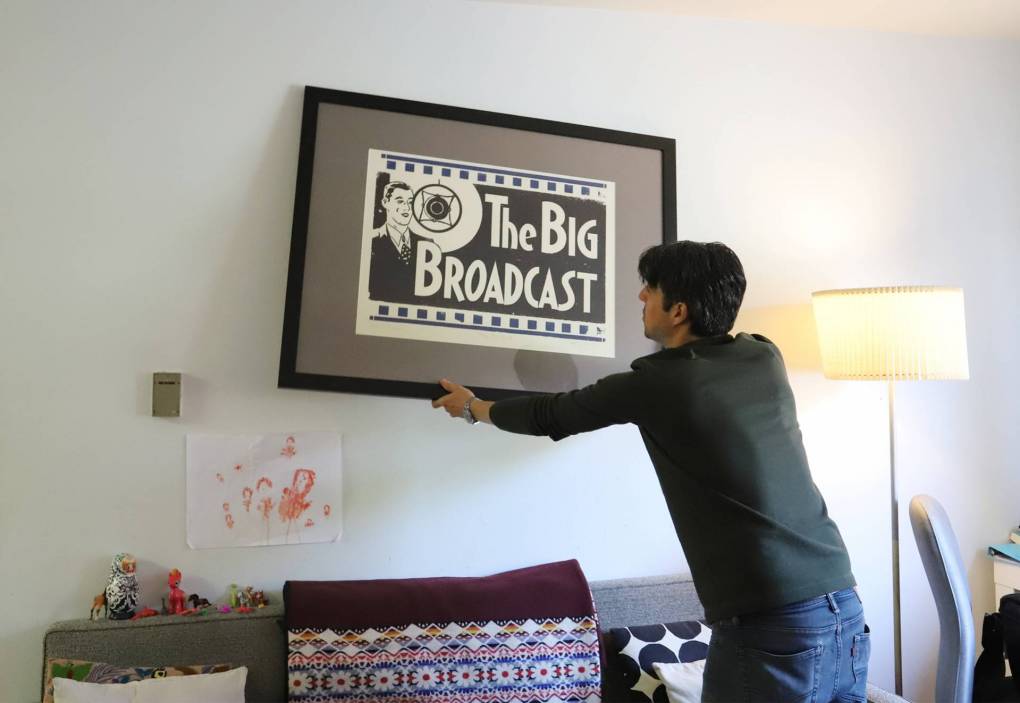
"content": "\u003cp>\u003cem>This story was originally published in January 2019. It is being republished after a magnitude 4.3 earthquake centered near Berkeley rattled the Bay Area on Monday morning. Read more\u003ca href=\"https://www.kqed.org/news/12057001/bay-area-earthquake-was-near-fault-thats-overdue-for-intense-quake\"> here\u003c/a>.\u003c/em>\u003c/p>\n\u003cp>On two straight mornings in January 2019, residents awoke to the familiar rock and roll from a\u003ca href=\"https://www.kqed.org/news/11718873/another-morning-another-wake-up-quake-in-the-east-bay-hills\" target=\"_blank\" rel=\"noopener noreferrer\"> cluster of relatively small earthquakes\u003c/a> along the Hayward Fault, across the bay from San Francisco. It’s not the first time, nor will it be the last.\u003c/p>\n\u003cp>While neither the magnitude 3.4 nor 3.5 quakes broke the seismograph, the two events struck in essentially the same spot. Both had epicenters nestled in the Oakland-Berkeley Hills, just a few miles from the UC Berkeley campus.\u003c/p>\n\u003cp>Such cluster quakes always get people wondering if they mean more than the usual random jiggling. To get a read on this, we spoke to earthquake experts with UC Berkeley’s \u003ca href=\"http://earthquakes.berkeley.edu/blog/2015/10/13/weak-stresses-strong-earthquakes.html\" target=\"_blank\" rel=\"noopener noreferrer\">Seismology Lab\u003c/a> about what it means, if anything, when it comes to forecasting the next Big One.\u003c/p>\n\u003cp>According to Peggy Hellweg with UC Berkeley’s Seismology Lab, there’s minor earthquake activity occurring almost continuously along the Hayward Fault, though most of it goes unnoticed.\u003c/p>\n\u003cp>And while January’s “felt quakes” were reported as individual events, they can be thought of as belonging to the same sequence of earthquakes.\u003c/p>\n\u003cp>“I would actually group them together since they’re so close together on the fault and call one the foreshock, and then the one from Thursday morning, the main shock,” Hellweg says.\u003c/p>\n\u003cp>\u003cstrong>What Kind of Fault?\u003c/strong>\u003c/p>\n\u003cp>The trouble with terms like “foreshock” and “aftershock” is that scientists never know how to categorize one or the other until after the shaking settles down.\u003c/p>\n\u003cp>Hellweg says she wouldn’t have been surprised to see tiny quakes or even another of similar size in the days following to finish out the sequence.\u003c/p>\n\u003cp>“If you look at the history of earthquakes along this section of the Hayward Fault, there can be from one to four earthquakes felt by the people who live here,” Hellweg says.\u003c/p>\n\u003cp>\u003cstrong>What do minor “felt quakes” foretell about the likelihood of the next Big One hitting the Hayward Fault?\u003c/strong>\u003c/p>\n\u003cp>Short answer: There’s no way to know for sure.\u003c/p>\n\u003cp>On the one hand, Hellweg says, in the last 20 to 30 years, “no big earthquake has happened on the Hayward Fault associated with one of these little sequences of earthquakes.”\u003c/p>\n\u003cp>But here’s the bad news: pressure has been building up on the Hayward Fault. It’s been more than 150 years since the\u003ca href=\"https://www.kqed.org/science/1933064/map-are-you-in-the-severe-damage-zone-for-the-bay-areas-next-big-earthquake\" target=\"_blank\" rel=\"noopener noreferrer\"> last major earthquake\u003c/a> to rattle the fault, which stretches through the most \u003ca href=\"http://seismo.berkeley.edu/hayward/\">densely populated\u003c/a> stretch of the East Bay.\u003c/p>\n\u003cp>Geological studies put the average interval between big quakes on the Hayward Fault at about 140 years, give or take 50 years. Meaning the Big One could happen any day now or not in the lifetime of many middle-aged residents. Scientists who developed the \u003ca href=\"https://pubs.usgs.gov/fs/2016/3020/fs20163020.pdf\" target=\"_blank\" rel=\"noopener noreferrer\">HayWired\u003c/a>\u003ca href=\"https://pubs.usgs.gov/fs/2016/3020/fs20163020.pdf\" target=\"_blank\" rel=\"noopener noreferrer\"> modeling scenario\u003c/a> estimate that there’s about a one-in-three chance of a magnitude-7 quake on the Hayward within the next 30 years.\u003c/p>\n\u003cp>And here’s the other bad news: the oft-repeated idea that minor temblors serve to relieve pressure on the fault and lessen the chances of a major event, is a myth.\u003c/p>\n\u003cp>On the question of whether it happens tomorrow, Hellweg says, “Do I expect it? No. Would I be surprised? No.”\u003c/p>\n\u003cp>https://twitter.com/thepaintgrammer/status/1085905639077928969\u003c/p>\n\u003cp>\u003cstrong>Where does that leave the current state of the Hayward Fault?\u003c/strong>\u003c/p>\n\u003cp>Reports from the U.S. Geological Survey suggest that damage caused by the next major quake along the Hayward Fault could be \u003ca href=\"https://www.latimes.com/local/lanow/la-me-hayward-fault-20180417-htmlstory.html\" target=\"_blank\" rel=\"noopener noreferrer\">catastrophic\u003c/a>.\u003c/p>\n\u003cp>What concerns UC Berkeley seismologist Roland Burgmann is where recent small quakes occurred on the fault line.\u003c/p>\n\u003cp>“They’re right next to part of the Hayward Fault that — from the kind of research we do here at Berkeley — we know to be the part that’s fully locked,” Burgman says. “That’s the part that, when a really big earthquake — magnitude 7 or so — happens again on the Hayward Fault, it will likely rupture.”\u003c/p>\n\u003cp>Fault lines — or different portions of the same fault — can be classified as \u003ca href=\"https://geomaps.wr.usgs.gov/sfgeo/quaternary/stories/hayward_creep.html\" target=\"_blank\" rel=\"noopener noreferrer\">locked or creeping\u003c/a>. Creeping faults shift slowly over time, and may undergo smaller quakes like the ones observed this week. Locked faults, however, don’t move, causing pressure to build until a large-magnitude earthquake releases it. The Hayward Fault is considered a mixed fault line, with sections that creep and ones that don’t. The ones that don’t pose the biggest danger.\u003c/p>\n\u003cp>“This [latest] pair of events is small, but they’re right next to the sleeping beast of the Hayward Fault that we know is essentially ready to have a big earthquake today or in a couple of decades.”\u003c/p>\n\u003cp>The danger, according to Burgmann, is that a cluster of small quakes adjacent to the locked portion of the fault could be “possible foreshocks” to a major quake. Unfortunately, he says, there’s no real way to predict this scenario.\u003c/p>\n\u003cp>\u003cstrong>Get those earthquake kits ready\u003c/strong>\u003c/p>\n\u003cp>The takeaway here is probably already clear; Burgmann says small quakes are a good signal to get prepared — that whenever we have one, it boosts the probability of another occurring within a week by about 10 percent.\u003c/p>\n\u003cp>“Essentially what that means for people is whenever you feel an earthquake, that’s a good time to check on your earthquake kit.” Burgmann says. “It shouldn’t be a cause for true alarm, but it should be a reason to reassess.”\u003c/p>\n\u003cp>And for what it’s worth: Burgmann muses that after years of studying the fault, a recent series of small shakers on the Hayward finally prompted him to buy earthquake insurance himself.\u003c/p>\n\u003cp>\u003cem>KQED Science Editor Craig Miller contributed to this post.\u003c/em>\u003c/p>\n\u003cp>[ad fullwidth]\u003c/p>\n\u003cp>\u003c/p>\n",
"blocks": [],
"excerpt": "When smaller earthquakes strike, how does it affect forecasting the next 'Big One'?",
"status": "publish",
"parent": 0,
"modified": 1759338865,
"stats": {
"hasAudio": false,
"hasVideo": false,
"hasChartOrMap": false,
"iframeSrcs": [],
"hasGoogleForm": false,
"hasGallery": false,
"hasHearkenModule": false,
"hasPolis": false,
"paragraphCount": 32,
"wordCount": 1017
},
"headData": {
"title": "Do Little Earthquakes Mean the Big One Is Close at Hand? | KQED",
"description": "When smaller earthquakes strike, how does it affect forecasting the next 'Big One'?",
"ogTitle": "",
"ogDescription": "",
"ogImgId": "",
"twTitle": "",
"twDescription": "",
"twImgId": "",
"schema": {
"@context": "https://schema.org",
"@type": "Article",
"headline": "Do Little Earthquakes Mean the Big One Is Close at Hand?",
"datePublished": "2025-09-22T11:51:51-07:00",
"dateModified": "2025-10-01T10:14:25-07:00",
"image": "https://cdn.kqed.org/wp-content/uploads/2020/02/KQED-OG-Image@1x.png"
}
},
"primaryCategory": {
"termId": 35,
"slug": "environment",
"name": "Environment"
},
"source": "Science",
"sticky": false,
"templateType": "standard",
"featuredImageType": "standard",
"excludeFromSiteSearch": "Include",
"articleAge": "0",
"path": "/science/1936949/do-little-quakes-mean-the-big-one-is-close-at-hand",
"audioTrackLength": null,
"parsedContent": [
{
"type": "contentString",
"content": "\u003cdiv class=\"post-body\">\u003cp>\u003cp>\u003cem>This story was originally published in January 2019. It is being republished after a magnitude 4.3 earthquake centered near Berkeley rattled the Bay Area on Monday morning. Read more\u003ca href=\"https://www.kqed.org/news/12057001/bay-area-earthquake-was-near-fault-thats-overdue-for-intense-quake\"> here\u003c/a>.\u003c/em>\u003c/p>\n\u003cp>On two straight mornings in January 2019, residents awoke to the familiar rock and roll from a\u003ca href=\"https://www.kqed.org/news/11718873/another-morning-another-wake-up-quake-in-the-east-bay-hills\" target=\"_blank\" rel=\"noopener noreferrer\"> cluster of relatively small earthquakes\u003c/a> along the Hayward Fault, across the bay from San Francisco. It’s not the first time, nor will it be the last.\u003c/p>\n\u003cp>While neither the magnitude 3.4 nor 3.5 quakes broke the seismograph, the two events struck in essentially the same spot. Both had epicenters nestled in the Oakland-Berkeley Hills, just a few miles from the UC Berkeley campus.\u003c/p>\n\u003cp>Such cluster quakes always get people wondering if they mean more than the usual random jiggling. To get a read on this, we spoke to earthquake experts with UC Berkeley’s \u003ca href=\"http://earthquakes.berkeley.edu/blog/2015/10/13/weak-stresses-strong-earthquakes.html\" target=\"_blank\" rel=\"noopener noreferrer\">Seismology Lab\u003c/a> about what it means, if anything, when it comes to forecasting the next Big One.\u003c/p>\n\u003cp>According to Peggy Hellweg with UC Berkeley’s Seismology Lab, there’s minor earthquake activity occurring almost continuously along the Hayward Fault, though most of it goes unnoticed.\u003c/p>\n\u003cp>And while January’s “felt quakes” were reported as individual events, they can be thought of as belonging to the same sequence of earthquakes.\u003c/p>\n\u003cp>“I would actually group them together since they’re so close together on the fault and call one the foreshock, and then the one from Thursday morning, the main shock,” Hellweg says.\u003c/p>\n\u003cp>\u003cstrong>What Kind of Fault?\u003c/strong>\u003c/p>\n\u003cp>The trouble with terms like “foreshock” and “aftershock” is that scientists never know how to categorize one or the other until after the shaking settles down.\u003c/p>\n\u003cp>Hellweg says she wouldn’t have been surprised to see tiny quakes or even another of similar size in the days following to finish out the sequence.\u003c/p>\n\u003cp>“If you look at the history of earthquakes along this section of the Hayward Fault, there can be from one to four earthquakes felt by the people who live here,” Hellweg says.\u003c/p>\n\u003cp>\u003cstrong>What do minor “felt quakes” foretell about the likelihood of the next Big One hitting the Hayward Fault?\u003c/strong>\u003c/p>\n\u003cp>Short answer: There’s no way to know for sure.\u003c/p>\n\u003cp>On the one hand, Hellweg says, in the last 20 to 30 years, “no big earthquake has happened on the Hayward Fault associated with one of these little sequences of earthquakes.”\u003c/p>\n\u003cp>But here’s the bad news: pressure has been building up on the Hayward Fault. It’s been more than 150 years since the\u003ca href=\"https://www.kqed.org/science/1933064/map-are-you-in-the-severe-damage-zone-for-the-bay-areas-next-big-earthquake\" target=\"_blank\" rel=\"noopener noreferrer\"> last major earthquake\u003c/a> to rattle the fault, which stretches through the most \u003ca href=\"http://seismo.berkeley.edu/hayward/\">densely populated\u003c/a> stretch of the East Bay.\u003c/p>\n\u003cp>Geological studies put the average interval between big quakes on the Hayward Fault at about 140 years, give or take 50 years. Meaning the Big One could happen any day now or not in the lifetime of many middle-aged residents. Scientists who developed the \u003ca href=\"https://pubs.usgs.gov/fs/2016/3020/fs20163020.pdf\" target=\"_blank\" rel=\"noopener noreferrer\">HayWired\u003c/a>\u003ca href=\"https://pubs.usgs.gov/fs/2016/3020/fs20163020.pdf\" target=\"_blank\" rel=\"noopener noreferrer\"> modeling scenario\u003c/a> estimate that there’s about a one-in-three chance of a magnitude-7 quake on the Hayward within the next 30 years.\u003c/p>\n\u003cp>And here’s the other bad news: the oft-repeated idea that minor temblors serve to relieve pressure on the fault and lessen the chances of a major event, is a myth.\u003c/p>\n\u003cp>On the question of whether it happens tomorrow, Hellweg says, “Do I expect it? No. Would I be surprised? No.”\u003c/p>\u003c/p>\u003c/div>",
"attributes": {
"named": {},
"numeric": []
}
},
{
"type": "component",
"content": "",
"name": "singleTwitterStatus",
"attributes": {
"named": {
"id": "1085905639077928969"
},
"numeric": []
}
},
{
"type": "contentString",
"content": "\u003cdiv class=\"post-body\">\u003cp>\n\u003cp>\u003cstrong>Where does that leave the current state of the Hayward Fault?\u003c/strong>\u003c/p>\n\u003cp>Reports from the U.S. Geological Survey suggest that damage caused by the next major quake along the Hayward Fault could be \u003ca href=\"https://www.latimes.com/local/lanow/la-me-hayward-fault-20180417-htmlstory.html\" target=\"_blank\" rel=\"noopener noreferrer\">catastrophic\u003c/a>.\u003c/p>\n\u003cp>What concerns UC Berkeley seismologist Roland Burgmann is where recent small quakes occurred on the fault line.\u003c/p>\n\u003cp>“They’re right next to part of the Hayward Fault that — from the kind of research we do here at Berkeley — we know to be the part that’s fully locked,” Burgman says. “That’s the part that, when a really big earthquake — magnitude 7 or so — happens again on the Hayward Fault, it will likely rupture.”\u003c/p>\n\u003cp>Fault lines — or different portions of the same fault — can be classified as \u003ca href=\"https://geomaps.wr.usgs.gov/sfgeo/quaternary/stories/hayward_creep.html\" target=\"_blank\" rel=\"noopener noreferrer\">locked or creeping\u003c/a>. Creeping faults shift slowly over time, and may undergo smaller quakes like the ones observed this week. Locked faults, however, don’t move, causing pressure to build until a large-magnitude earthquake releases it. The Hayward Fault is considered a mixed fault line, with sections that creep and ones that don’t. The ones that don’t pose the biggest danger.\u003c/p>\n\u003cp>“This [latest] pair of events is small, but they’re right next to the sleeping beast of the Hayward Fault that we know is essentially ready to have a big earthquake today or in a couple of decades.”\u003c/p>\n\u003cp>The danger, according to Burgmann, is that a cluster of small quakes adjacent to the locked portion of the fault could be “possible foreshocks” to a major quake. Unfortunately, he says, there’s no real way to predict this scenario.\u003c/p>\n\u003cp>\u003cstrong>Get those earthquake kits ready\u003c/strong>\u003c/p>\n\u003cp>The takeaway here is probably already clear; Burgmann says small quakes are a good signal to get prepared — that whenever we have one, it boosts the probability of another occurring within a week by about 10 percent.\u003c/p>\n\u003cp>“Essentially what that means for people is whenever you feel an earthquake, that’s a good time to check on your earthquake kit.” Burgmann says. “It shouldn’t be a cause for true alarm, but it should be a reason to reassess.”\u003c/p>\n\u003cp>And for what it’s worth: Burgmann muses that after years of studying the fault, a recent series of small shakers on the Hayward finally prompted him to buy earthquake insurance himself.\u003c/p>\n\u003cp>\u003cem>KQED Science Editor Craig Miller contributed to this post.\u003c/em>\u003c/p>\n\u003cp>\u003c/p>\u003c/div>",
"attributes": {
"named": {},
"numeric": []
}
},
{
"type": "component",
"content": "",
"name": "ad",
"attributes": {
"named": {
"label": "fullwidth"
},
"numeric": [
"fullwidth"
]
}
},
{
"type": "contentString",
"content": "\u003cdiv class=\"post-body\">\u003cp>\u003c/p>\n\u003cp>\u003c/p>\n\u003c/div>\u003c/p>",
"attributes": {
"named": {},
"numeric": []
}
}
],
"link": "/science/1936949/do-little-quakes-mean-the-big-one-is-close-at-hand",
"authors": [
"11368"
],
"categories": [
"science_31",
"science_35",
"science_38",
"science_40",
"science_4450"
],
"tags": [
"science_257",
"science_427",
"science_192",
"science_3832",
"science_3834",
"science_654"
],
"featImg": "science_1937339",
"label": "source_science_1936949"
},
"science_1993662": {
"type": "posts",
"id": "science_1993662",
"meta": {
"index": "posts_1716263798",
"site": "science",
"id": "1993662",
"score": null,
"sort": [
1722351648000
]
},
"guestAuthors": [],
"slug": "tar-pits-are-a-death-trap-except-for-this-fly",
"title": "How Can These Flies Live in Oily Black Tar Pits?",
"publishDate": 1722351648,
"format": "video",
"headTitle": "How Can These Flies Live in Oily Black Tar Pits? | KQED",
"labelTerm": {
"term": 1935,
"site": "science"
},
"content": "\u003cp>Within the sprawling metropolis of Los Angeles, not far from West Hollywood and Beverly Hills, paleontologists are hard at work sorting through one of the richest collections of ice age fossils in the world.\u003c/p>\n\u003cp>Today, the La Brea Tar Pits, a public park and museum, lie between shopping centers and apartment buildings. But the sticky, black asphalt that fills the pits was oozing up from the ground long before people turned this land into a bustling city.\u003c/p>\n\u003cp>Across millenia, the tar pits captured over ten thousand mammals, creating a remarkably detailed record of the area’s natural history. But not every creature present in the asphalt is stuck in the past.\u003c/p>\n\u003cfigure id=\"attachment_1993664\" class=\"wp-caption alignnone\" style=\"max-width: 800px\">\u003cimg loading=\"lazy\" decoding=\"async\" class=\"size-medium wp-image-1993664\" src=\"https://cdn.kqed.org/wp-content/uploads/sites/35/2024/07/DL1110_Petroleum_Fly_18-800x450.jpg\" alt=\"\" width=\"800\" height=\"450\" srcset=\"https://cdn.kqed.org/wp-content/uploads/sites/35/2024/07/DL1110_Petroleum_Fly_18-800x450.jpg 800w, https://cdn.kqed.org/wp-content/uploads/sites/35/2024/07/DL1110_Petroleum_Fly_18-1020x574.jpg 1020w, https://cdn.kqed.org/wp-content/uploads/sites/35/2024/07/DL1110_Petroleum_Fly_18-160x90.jpg 160w, https://cdn.kqed.org/wp-content/uploads/sites/35/2024/07/DL1110_Petroleum_Fly_18-768x432.jpg 768w, https://cdn.kqed.org/wp-content/uploads/sites/35/2024/07/DL1110_Petroleum_Fly_18-1536x864.jpg 1536w, https://cdn.kqed.org/wp-content/uploads/sites/35/2024/07/DL1110_Petroleum_Fly_18-2048x1152.jpg 2048w, https://cdn.kqed.org/wp-content/uploads/sites/35/2024/07/DL1110_Petroleum_Fly_18-1920x1080.jpg 1920w\" sizes=\"auto, (max-width: 800px) 100vw, 800px\">\u003cfigcaption class=\"wp-caption-text\">Paleontologist Sean Campbell examines the asphalt of Pit 91, where he and his team are still uncovering fossils left behind by ice age plants and animals. \u003ccite>(Josh Cassidy/KQED)\u003c/cite>\u003c/figcaption>\u003c/figure>\n\u003cp>Any tourist who goes to watch scientists dig up the bones of saber-toothed cats and dire wolves should also keep an eye out for the plucky survivor whose ancestors likely watched those big mammals die: the petroleum fly.\u003c/p>\n\u003cp>There’s still a lot of mystery surrounding the petroleum fly, but one thing is clear: It has figured out how to make the most of a bad situation. Pools of asphalt are hell for most animals, but petroleum flies have turned them into a bountiful habitat.\u003c/p>\n\u003cp>[ad fullwidth]\u003c/p>\n\u003cp>“That’s their personal paradise,” says entomologist Martin Hauser, with the California Department of Food and Agriculture. “They have no competition in there because no one else can deal with it.”\u003c/p>\n\u003cp>Adult petroleum flies are fairly unassuming. They’re small and flecked like fruit flies. Though scientists don’t know exactly how, they are able to skate – and mate – on the asphalt pools. Their feet don’t get stuck, but if any other body part touches the sticky liquid, they’re out of luck.\u003c/p>\n\u003cfigure id=\"attachment_1993665\" class=\"wp-caption alignnone\" style=\"max-width: 800px\">\u003cimg loading=\"lazy\" decoding=\"async\" class=\"size-medium wp-image-1993665\" src=\"https://cdn.kqed.org/wp-content/uploads/sites/35/2024/07/DL1110_Petroleum_Fly_10-800x450.jpg\" alt=\"\" width=\"800\" height=\"450\" srcset=\"https://cdn.kqed.org/wp-content/uploads/sites/35/2024/07/DL1110_Petroleum_Fly_10-800x450.jpg 800w, https://cdn.kqed.org/wp-content/uploads/sites/35/2024/07/DL1110_Petroleum_Fly_10-1020x574.jpg 1020w, https://cdn.kqed.org/wp-content/uploads/sites/35/2024/07/DL1110_Petroleum_Fly_10-160x90.jpg 160w, https://cdn.kqed.org/wp-content/uploads/sites/35/2024/07/DL1110_Petroleum_Fly_10-768x432.jpg 768w, https://cdn.kqed.org/wp-content/uploads/sites/35/2024/07/DL1110_Petroleum_Fly_10-1536x864.jpg 1536w, https://cdn.kqed.org/wp-content/uploads/sites/35/2024/07/DL1110_Petroleum_Fly_10-2048x1152.jpg 2048w, https://cdn.kqed.org/wp-content/uploads/sites/35/2024/07/DL1110_Petroleum_Fly_10-1920x1080.jpg 1920w\" sizes=\"auto, (max-width: 800px) 100vw, 800px\">\u003cfigcaption class=\"wp-caption-text\">An adult petroleum fly walks on top of the sticky tar pits without getting stuck. \u003ccite>(Josh Cassidy/KQED)\u003c/cite>\u003c/figcaption>\u003c/figure>\n\u003cp>The translucent maggots, on the other hand, are truly in their element – they can fully submerge in the dark, viscous liquid.\u003c/p>\n\u003cp>“This is something that kills everything else,” says Kenneth Nickerson, a microbiologist at the University of Nebraska-Lincoln, who has studied petroleum flies.\u003c/p>\n\u003cp>Pools of natural asphalt form when petroleum from subterranean reservoirs seeps out of the ground. Most of the small molecules that make petroleum toxic to us quickly evaporate, but the asphalt that’s left behind is incredibly sticky.\u003c/p>\n\u003cp>Few animals that wade into a pool of asphalt manage to extricate themselves from it. In fact, the thick liquid keeps holding on even after an animal has succumbed to exhaustion or exposure, and its body has wasted away to bones. That’s why asphalt deposits around the world are particularly interesting to paleontologists.\u003c/p>\n\u003cp>“It just so happens that this extremophile organism lives in the medium that I dig fossils out of,” says Sean Campbell, a paleontologist with the Natural History Museums of Los Angeles County, which include the La Brea Tar Pits.\u003c/p>\n\u003cp>[pullquote]\u003cbr>\nADDITIONAL RESOURCES\u003c/p>\n\u003cp>Discover more about the \u003ca href=\"https://https://tarpits.org//\">La Brea Tar Pits and Museum\u003c/a>, where plants and animals from the last 50,000 years are discovered every day. The museum is located right in the heart of Los Angeles.\u003cbr>\n[/pullquote] \u003c/p>\n\u003cp>Scientists have also found petroleum flies in oil fields in Santa Paula and Ojai, south of Santa Barbara, as well as in seeps in Cuba and Trinidad, in the Caribbean.\u003c/p>\n\u003cp>By studying the flies in the La Brea Tar Pits, researchers are beginning to understand how their maggots are able to survive in this environment.\u003c/p>\n\u003cp>“They have multiple tricks,” says Hauser.\u003c/p>\n\u003cp>When Hauser examined petroleum fly maggots under a microscope, he noticed they’re a little more prickly than other fly larvae. He believes their rough skin keeps the asphalt away from their bodies.\u003c/p>\n\u003cp>Surprisingly, the maggots actually need a bit of asphalt on their backside to survive.\u003c/p>\n\u003cp>“They would dry out if they can’t get in contact with oil,” says Hauser.\u003c/p>\n\u003cp>As it turns out, the asphalt is also an essential moisturizer. While most insects are covered in a waxy layer that keeps moisture in, petroleum flies seem to lack this protection – likely because wax dissolves in asphalt.\u003c/p>\n\u003cp>As they swim in the asphalt, maggots breathe through snorkel-like tubes on their rear ends, ringed with hairs that keep them afloat.\u003c/p>\n\u003cp>“When the snorkel breaks the surface, the hairs just fold out,” says Hauser. “It’s a little bit like an umbrella.”\u003c/p>\n\u003cfigure id=\"attachment_1993667\" class=\"wp-caption alignnone\" style=\"max-width: 640px\">\u003cimg loading=\"lazy\" decoding=\"async\" class=\"size-full wp-image-1993667\" src=\"https://cdn.kqed.org/wp-content/uploads/sites/35/2024/07/DL1110_Petroleum_Fly_9.gif\" alt=\"\" width=\"640\" height=\"360\">\u003cfigcaption class=\"wp-caption-text\">A crane fly gets stuck in the tar pits. \u003ccite>(Josh Cassidy/KQED)\u003c/cite>\u003c/figcaption>\u003c/figure>\n\u003cp>Maggots feed on insects that have been caught in the asphalt. Dragonflies and other insects that spend their lives near ponds often mistake shiny pools of asphalt for water. When they try to skim the surface or land on it, the sticky substance pulls them down, into the maggots’ domain. Without snorkels like the ones petroleum fly larvae breathe through, those other insects quickly drown.\u003c/p>\n\u003cp>Petroleum fly larvae aren’t picky: They’ll turn any dying insect into a meal. When the maggots sense an insect sinking into their home, they wriggle over to it. Then, they scrape at its hard exoskeleton with their two black mouth hooks, probing for an exposed bit of soft tissue. When they find one, they make a hole and crawl inside the dying insect’s body.\u003c/p>\n\u003cfigure id=\"attachment_1993666\" class=\"wp-caption alignnone\" style=\"max-width: 640px\">\u003cimg loading=\"lazy\" decoding=\"async\" class=\"size-full wp-image-1993666\" src=\"https://cdn.kqed.org/wp-content/uploads/sites/35/2024/07/DL1110_Petroleum_Fly_4.gif\" alt=\"\" width=\"640\" height=\"360\">\u003cfigcaption class=\"wp-caption-text\">A hungry petroleum fly larva inspects and eats an adult petroleum fly that got stuck in the tar pits. \u003ccite>(Josh Cassidy/KQED)\u003c/cite>\u003c/figcaption>\u003c/figure>\n\u003cp>As they eat, petroleum fly maggots incidentally consume some asphalt. You can see it darkening their digestive tract through their translucent skin. It looks like their guts are filled with the black substance.\u003c/p>\n\u003cp>“That’s one of the big mysteries,” says Hauser. “How they can deal with this.”\u003c/p>\n\u003cp>Humans can handle eating a little bit of asphalt – medieval Persian doctors used to prescribe it for stomach ulcers. But the stuff would overwhelm our systems if we ate as much as a petroleum fly maggot. And even a little bit would expose us to carcinogens that short-lived insects don’t have to worry about.\u003c/p>\n\u003cp>Petroleum fly larvae eat asphalt regularly enough that scientists once thought they derived nourishment from it. Now, they know that’s not the case.\u003c/p>\n\u003cp>But it’s apparent that something happens to the asphalt as it passes through a maggot’s digestive tract. Between the mouth and the anus, the dark, viscous substance thins out and clears up. Whatever is responsible for that process could point to a better method for cleaning up oil spills.\u003c/p>\n\u003cp>That possibility piqued the interest of University of Nebraska-Lincoln microbiologist Nickerson. He had a hunch that bacteria inside the maggots might be breaking the asphalt down. So, he asked a paleontologist to collect some petroleum fly larvae from the La Brea Tar Pits and ship them to his lab in Lincoln.\u003c/p>\n\u003cp>First, Nickerson’s team identified the types of bacteria growing inside the maggots’ guts. Then, they tried growing the microorganisms in Petri dishes.\u003c/p>\n\u003cp>“Our goal at the time was to find microbes that would be good at degrading some of these complex hydrocarbons that you would find in the tar,” says Nickerson.\u003c/p>\n\u003cp>None of the bacteria that grew on Petri dishes proved capable of that feat. But Nickerson’s team found plenty of microbes that they couldn’t grow at the time, and he hopes more scientists will investigate them in the future.\u003c/p>\n\u003cp>[ad floatright]\u003c/p>\n\u003cp>Until then, the petroleum fly larva will continue to live in the present, swimming contentedly in its asphalt paradise.\u003c/p>\n\n",
"blocks": [],
"excerpt": "In the sticky oil seeps known as the La Brea Tar Pits, tiny petroleum flies and their larvae thrive in the natural asphalt that oozes up to the surface. The larvae hunt among the fossilized bones of dire wolves, mammoths and saber-toothed cats.",
"status": "publish",
"parent": 0,
"modified": 1738632417,
"stats": {
"hasAudio": false,
"hasVideo": false,
"hasChartOrMap": false,
"iframeSrcs": [],
"hasGoogleForm": false,
"hasGallery": false,
"hasHearkenModule": false,
"hasPolis": false,
"paragraphCount": 37,
"wordCount": 1311
},
"headData": {
"title": "How Can These Flies Live in Oily Black Tar Pits? | KQED",
"description": "In the sticky oil seeps known as the La Brea Tar Pits, tiny petroleum flies and their larvae thrive in the natural asphalt that oozes up to the surface. The larvae hunt among the fossilized bones of dire wolves, mammoths and saber-toothed cats.",
"ogTitle": "",
"ogDescription": "",
"ogImgId": "",
"twTitle": "",
"twDescription": "",
"twImgId": "",
"schema": {
"@context": "https://schema.org",
"@type": "Article",
"headline": "How Can These Flies Live in Oily Black Tar Pits?",
"datePublished": "2024-07-30T08:00:48-07:00",
"dateModified": "2025-02-03T17:26:57-08:00",
"image": "https://cdn.kqed.org/wp-content/uploads/2020/02/KQED-OG-Image@1x.png"
}
},
"videoEmbed": "https://www.youtube.com/watch?v=V0CKcK5BqQU",
"pbsMediaId": "3093392915",
"sticky": false,
"nprStoryId": "kqed-1993662",
"templateType": "standard",
"featuredImageType": "standard",
"excludeFromSiteSearch": "Include",
"articleAge": "0",
"path": "/science/1993662/tar-pits-are-a-death-trap-except-for-this-fly",
"audioTrackLength": null,
"parsedContent": [
{
"type": "contentString",
"content": "\u003cdiv class=\"post-body\">\u003cp>\u003cp>Within the sprawling metropolis of Los Angeles, not far from West Hollywood and Beverly Hills, paleontologists are hard at work sorting through one of the richest collections of ice age fossils in the world.\u003c/p>\n\u003cp>Today, the La Brea Tar Pits, a public park and museum, lie between shopping centers and apartment buildings. But the sticky, black asphalt that fills the pits was oozing up from the ground long before people turned this land into a bustling city.\u003c/p>\n\u003cp>Across millenia, the tar pits captured over ten thousand mammals, creating a remarkably detailed record of the area’s natural history. But not every creature present in the asphalt is stuck in the past.\u003c/p>\n\u003cfigure id=\"attachment_1993664\" class=\"wp-caption alignnone\" style=\"max-width: 800px\">\u003cimg loading=\"lazy\" decoding=\"async\" class=\"size-medium wp-image-1993664\" src=\"https://cdn.kqed.org/wp-content/uploads/sites/35/2024/07/DL1110_Petroleum_Fly_18-800x450.jpg\" alt=\"\" width=\"800\" height=\"450\" srcset=\"https://cdn.kqed.org/wp-content/uploads/sites/35/2024/07/DL1110_Petroleum_Fly_18-800x450.jpg 800w, https://cdn.kqed.org/wp-content/uploads/sites/35/2024/07/DL1110_Petroleum_Fly_18-1020x574.jpg 1020w, https://cdn.kqed.org/wp-content/uploads/sites/35/2024/07/DL1110_Petroleum_Fly_18-160x90.jpg 160w, https://cdn.kqed.org/wp-content/uploads/sites/35/2024/07/DL1110_Petroleum_Fly_18-768x432.jpg 768w, https://cdn.kqed.org/wp-content/uploads/sites/35/2024/07/DL1110_Petroleum_Fly_18-1536x864.jpg 1536w, https://cdn.kqed.org/wp-content/uploads/sites/35/2024/07/DL1110_Petroleum_Fly_18-2048x1152.jpg 2048w, https://cdn.kqed.org/wp-content/uploads/sites/35/2024/07/DL1110_Petroleum_Fly_18-1920x1080.jpg 1920w\" sizes=\"auto, (max-width: 800px) 100vw, 800px\">\u003cfigcaption class=\"wp-caption-text\">Paleontologist Sean Campbell examines the asphalt of Pit 91, where he and his team are still uncovering fossils left behind by ice age plants and animals. \u003ccite>(Josh Cassidy/KQED)\u003c/cite>\u003c/figcaption>\u003c/figure>\n\u003cp>Any tourist who goes to watch scientists dig up the bones of saber-toothed cats and dire wolves should also keep an eye out for the plucky survivor whose ancestors likely watched those big mammals die: the petroleum fly.\u003c/p>\n\u003cp>There’s still a lot of mystery surrounding the petroleum fly, but one thing is clear: It has figured out how to make the most of a bad situation. Pools of asphalt are hell for most animals, but petroleum flies have turned them into a bountiful habitat.\u003c/p>\n\u003cp>\u003c/p>\u003c/div>",
"attributes": {
"named": {},
"numeric": []
}
},
{
"type": "component",
"content": "",
"name": "ad",
"attributes": {
"named": {
"label": "fullwidth"
},
"numeric": [
"fullwidth"
]
}
},
{
"type": "contentString",
"content": "\u003cdiv class=\"post-body\">\u003cp>\u003c/p>\n\u003cp>“That’s their personal paradise,” says entomologist Martin Hauser, with the California Department of Food and Agriculture. “They have no competition in there because no one else can deal with it.”\u003c/p>\n\u003cp>Adult petroleum flies are fairly unassuming. They’re small and flecked like fruit flies. Though scientists don’t know exactly how, they are able to skate – and mate – on the asphalt pools. Their feet don’t get stuck, but if any other body part touches the sticky liquid, they’re out of luck.\u003c/p>\n\u003cfigure id=\"attachment_1993665\" class=\"wp-caption alignnone\" style=\"max-width: 800px\">\u003cimg loading=\"lazy\" decoding=\"async\" class=\"size-medium wp-image-1993665\" src=\"https://cdn.kqed.org/wp-content/uploads/sites/35/2024/07/DL1110_Petroleum_Fly_10-800x450.jpg\" alt=\"\" width=\"800\" height=\"450\" srcset=\"https://cdn.kqed.org/wp-content/uploads/sites/35/2024/07/DL1110_Petroleum_Fly_10-800x450.jpg 800w, https://cdn.kqed.org/wp-content/uploads/sites/35/2024/07/DL1110_Petroleum_Fly_10-1020x574.jpg 1020w, https://cdn.kqed.org/wp-content/uploads/sites/35/2024/07/DL1110_Petroleum_Fly_10-160x90.jpg 160w, https://cdn.kqed.org/wp-content/uploads/sites/35/2024/07/DL1110_Petroleum_Fly_10-768x432.jpg 768w, https://cdn.kqed.org/wp-content/uploads/sites/35/2024/07/DL1110_Petroleum_Fly_10-1536x864.jpg 1536w, https://cdn.kqed.org/wp-content/uploads/sites/35/2024/07/DL1110_Petroleum_Fly_10-2048x1152.jpg 2048w, https://cdn.kqed.org/wp-content/uploads/sites/35/2024/07/DL1110_Petroleum_Fly_10-1920x1080.jpg 1920w\" sizes=\"auto, (max-width: 800px) 100vw, 800px\">\u003cfigcaption class=\"wp-caption-text\">An adult petroleum fly walks on top of the sticky tar pits without getting stuck. \u003ccite>(Josh Cassidy/KQED)\u003c/cite>\u003c/figcaption>\u003c/figure>\n\u003cp>The translucent maggots, on the other hand, are truly in their element – they can fully submerge in the dark, viscous liquid.\u003c/p>\n\u003cp>“This is something that kills everything else,” says Kenneth Nickerson, a microbiologist at the University of Nebraska-Lincoln, who has studied petroleum flies.\u003c/p>\n\u003cp>Pools of natural asphalt form when petroleum from subterranean reservoirs seeps out of the ground. Most of the small molecules that make petroleum toxic to us quickly evaporate, but the asphalt that’s left behind is incredibly sticky.\u003c/p>\n\u003cp>Few animals that wade into a pool of asphalt manage to extricate themselves from it. In fact, the thick liquid keeps holding on even after an animal has succumbed to exhaustion or exposure, and its body has wasted away to bones. That’s why asphalt deposits around the world are particularly interesting to paleontologists.\u003c/p>\n\u003cp>“It just so happens that this extremophile organism lives in the medium that I dig fossils out of,” says Sean Campbell, a paleontologist with the Natural History Museums of Los Angeles County, which include the La Brea Tar Pits.\u003c/p>\n\u003cp>\u003c/p>\u003c/div>",
"attributes": {
"named": {},
"numeric": []
}
},
{
"type": "component",
"content": "\u003cbr>\nADDITIONAL RESOURCES\u003c/p>\n\u003cp>Discover more about the \u003ca href=\"https://https://tarpits.org//\">La Brea Tar Pits and Museum\u003c/a>, where plants and animals from the last 50,000 years are discovered every day. The museum is located right in the heart of Los Angeles.\u003cbr>\n",
"name": "pullquote",
"attributes": {
"named": {
"label": ""
},
"numeric": []
}
},
{
"type": "contentString",
"content": "\u003cdiv class=\"post-body\">\u003cp> \u003c/p>\n\u003cp>Scientists have also found petroleum flies in oil fields in Santa Paula and Ojai, south of Santa Barbara, as well as in seeps in Cuba and Trinidad, in the Caribbean.\u003c/p>\n\u003cp>By studying the flies in the La Brea Tar Pits, researchers are beginning to understand how their maggots are able to survive in this environment.\u003c/p>\n\u003cp>“They have multiple tricks,” says Hauser.\u003c/p>\n\u003cp>When Hauser examined petroleum fly maggots under a microscope, he noticed they’re a little more prickly than other fly larvae. He believes their rough skin keeps the asphalt away from their bodies.\u003c/p>\n\u003cp>Surprisingly, the maggots actually need a bit of asphalt on their backside to survive.\u003c/p>\n\u003cp>“They would dry out if they can’t get in contact with oil,” says Hauser.\u003c/p>\n\u003cp>As it turns out, the asphalt is also an essential moisturizer. While most insects are covered in a waxy layer that keeps moisture in, petroleum flies seem to lack this protection – likely because wax dissolves in asphalt.\u003c/p>\n\u003cp>As they swim in the asphalt, maggots breathe through snorkel-like tubes on their rear ends, ringed with hairs that keep them afloat.\u003c/p>\n\u003cp>“When the snorkel breaks the surface, the hairs just fold out,” says Hauser. “It’s a little bit like an umbrella.”\u003c/p>\n\u003cfigure id=\"attachment_1993667\" class=\"wp-caption alignnone\" style=\"max-width: 640px\">\u003cimg loading=\"lazy\" decoding=\"async\" class=\"size-full wp-image-1993667\" src=\"https://cdn.kqed.org/wp-content/uploads/sites/35/2024/07/DL1110_Petroleum_Fly_9.gif\" alt=\"\" width=\"640\" height=\"360\">\u003cfigcaption class=\"wp-caption-text\">A crane fly gets stuck in the tar pits. \u003ccite>(Josh Cassidy/KQED)\u003c/cite>\u003c/figcaption>\u003c/figure>\n\u003cp>Maggots feed on insects that have been caught in the asphalt. Dragonflies and other insects that spend their lives near ponds often mistake shiny pools of asphalt for water. When they try to skim the surface or land on it, the sticky substance pulls them down, into the maggots’ domain. Without snorkels like the ones petroleum fly larvae breathe through, those other insects quickly drown.\u003c/p>\n\u003cp>Petroleum fly larvae aren’t picky: They’ll turn any dying insect into a meal. When the maggots sense an insect sinking into their home, they wriggle over to it. Then, they scrape at its hard exoskeleton with their two black mouth hooks, probing for an exposed bit of soft tissue. When they find one, they make a hole and crawl inside the dying insect’s body.\u003c/p>\n\u003cfigure id=\"attachment_1993666\" class=\"wp-caption alignnone\" style=\"max-width: 640px\">\u003cimg loading=\"lazy\" decoding=\"async\" class=\"size-full wp-image-1993666\" src=\"https://cdn.kqed.org/wp-content/uploads/sites/35/2024/07/DL1110_Petroleum_Fly_4.gif\" alt=\"\" width=\"640\" height=\"360\">\u003cfigcaption class=\"wp-caption-text\">A hungry petroleum fly larva inspects and eats an adult petroleum fly that got stuck in the tar pits. \u003ccite>(Josh Cassidy/KQED)\u003c/cite>\u003c/figcaption>\u003c/figure>\n\u003cp>As they eat, petroleum fly maggots incidentally consume some asphalt. You can see it darkening their digestive tract through their translucent skin. It looks like their guts are filled with the black substance.\u003c/p>\n\u003cp>“That’s one of the big mysteries,” says Hauser. “How they can deal with this.”\u003c/p>\n\u003cp>Humans can handle eating a little bit of asphalt – medieval Persian doctors used to prescribe it for stomach ulcers. But the stuff would overwhelm our systems if we ate as much as a petroleum fly maggot. And even a little bit would expose us to carcinogens that short-lived insects don’t have to worry about.\u003c/p>\n\u003cp>Petroleum fly larvae eat asphalt regularly enough that scientists once thought they derived nourishment from it. Now, they know that’s not the case.\u003c/p>\n\u003cp>But it’s apparent that something happens to the asphalt as it passes through a maggot’s digestive tract. Between the mouth and the anus, the dark, viscous substance thins out and clears up. Whatever is responsible for that process could point to a better method for cleaning up oil spills.\u003c/p>\n\u003cp>That possibility piqued the interest of University of Nebraska-Lincoln microbiologist Nickerson. He had a hunch that bacteria inside the maggots might be breaking the asphalt down. So, he asked a paleontologist to collect some petroleum fly larvae from the La Brea Tar Pits and ship them to his lab in Lincoln.\u003c/p>\n\u003cp>First, Nickerson’s team identified the types of bacteria growing inside the maggots’ guts. Then, they tried growing the microorganisms in Petri dishes.\u003c/p>\n\u003cp>“Our goal at the time was to find microbes that would be good at degrading some of these complex hydrocarbons that you would find in the tar,” says Nickerson.\u003c/p>\n\u003cp>None of the bacteria that grew on Petri dishes proved capable of that feat. But Nickerson’s team found plenty of microbes that they couldn’t grow at the time, and he hopes more scientists will investigate them in the future.\u003c/p>\n\u003cp>\u003c/p>\u003c/div>",
"attributes": {
"named": {},
"numeric": []
}
},
{
"type": "component",
"content": "",
"name": "ad",
"attributes": {
"named": {
"label": "floatright"
},
"numeric": [
"floatright"
]
}
},
{
"type": "contentString",
"content": "\u003cdiv class=\"post-body\">\u003cp>\u003c/p>\n\u003cp>Until then, the petroleum fly larva will continue to live in the present, swimming contentedly in its asphalt paradise.\u003c/p>\n\n\u003c/div>\u003c/p>",
"attributes": {
"named": {},
"numeric": []
}
}
],
"link": "/science/1993662/tar-pits-are-a-death-trap-except-for-this-fly",
"authors": [
"11911"
],
"series": [
"science_1935"
],
"categories": [
"science_2874",
"science_30",
"science_35",
"science_38",
"science_40",
"science_4450",
"science_86"
],
"tags": [
"science_5355",
"science_4414",
"science_349",
"science_5354"
],
"featImg": "science_1993670",
"label": "science_1935"
},
"science_1991432": {
"type": "posts",
"id": "science_1991432",
"meta": {
"index": "posts_1716263798",
"site": "science",
"id": "1991432",
"score": null,
"sort": [
1707942335000
]
},
"parent": 0,
"labelTerm": {
"site": "science"
},
"blocks": [],
"publishDate": 1707942335,
"format": "standard",
"title": "California Releases Formal Proposal to End Fracking in the State",
"headTitle": "California Releases Formal Proposal to End Fracking in the State | KQED",
"content": "\u003cp>California oil and gas regulators have formally released \u003ca href=\"https://www.conservation.ca.gov/calgem/Pages/Oil,-Gas,-and-Geothermal-Rulemaking-and-Laws.aspx\">their plan\u003c/a> to phase out fracking three years after essentially halting new permits for the practice.\u003c/p>\n\u003cp>The California Geologic Energy Management Division (CalGEM) \u003ca href=\"https://www.conservation.ca.gov/calgem/Documents/1.%20WST%20Text%20of%20the%20Regulation.pdf\">wrote that they would not approve (PDF)\u003c/a> applications for permits for well stimulation treatments like fracking to “\u003ca href=\"https://www.conservation.ca.gov/calgem/Documents/3.%20WST%20Initial%20Statement%20of%20Reasons.pdf\">prevent damage to life, health, property, and natural resources (PDF)\u003c/a>” in addition to protecting public health and mitigating greenhouse gas emissions.\u003c/p>\n\u003cp>“I’ve made it clear I don’t see a role for fracking in that future and, similarly, believe that California needs to move beyond oil,” Gov. Gavin Newsom said \u003ca href=\"https://www.gov.ca.gov/2021/04/23/governor-newsom-takes-action-to-phase-out-oil-extraction-in-california/\">in a statement in 2021\u003c/a> when he initiated regulatory action to phase out new fracking permits.\u003c/p>\n\u003cp>Hydraulic fracturing injects liquids, mostly water, underground at high pressure to extract oil or gas. Oil companies say fracking has been done safely for years under state regulation and that a ban should come from the Legislature, not a state agency.\u003c/p>\n\u003cp>[pullquote align=\"right\" size=\"medium\" citation=\"Chirag Bhakta, California director, Food & Water Watch\"]‘Fracking is a very dangerous, climate-change-accelerating, water-polluting, earthquake-causing process. … We’re really happy that California is finally taking the formal steps to officially ban some fracking in the state.’[/pullquote]“These things truly exceed the limits of CalGEM’s legal authority,” said Kevin Slagle, vice president of strategy and communications at the Western States Petroleum Association.\u003c/p>\n\u003cp>Slagle said the policy would include trade-offs for the state’s energy supplies. “They have been rapidly shrinking under this administration. And when you shrink supplies, that typically means higher costs for consumers.”\u003c/p>\n\u003cp>However, environmental groups say fracking pollutes groundwater and the air.\u003c/p>\n\u003cp>“Fracking is a very dangerous, climate-change-accelerating, water-polluting, earthquake-causing process,” said Chirag Bhakta, California director at the environmental group Food & Water Watch.\u003c/p>\n\u003cp>“We’re really happy that California is finally taking the formal steps to officially ban some fracking in the state,” Bhakta said. But he said the proposed regulations do not address other widely-used well-stimulation methods such as steam injection fracking.\u003c/p>\n\u003cp>This move will likely rekindle a longstanding debate over whether to continue producing oil in Kern County, where most of the state’s fracking occurs. \u003ca href=\"https://www.conservation.ca.gov/calgem/Documents/4.%20WST%20Standardized%20Regulatory%20Impact%20Assessment.pdf\">State analysis (PDF)\u003c/a> said the new plan would hurt the county’s economy and significantly lower their property tax revenue.\u003c/p>\n\u003cp>[ad fullwidth]\u003c/p>\n\u003cp>But Maricruz Ramirez, a community organizer with the nonprofit Center on Race, Poverty and the Environment, who is based in Kern County, applauded the move.\u003c/p>\n\u003cp>“Fracking has long posed a threat to public health, clean air, and water. Banning it in California prioritizes communities over the oil industry, especially in Kern County,” Ramirez said.\u003c/p>\n\u003cp>The state has not approved fracking permits in the last three years, and oil and gas representatives say the state agency has overstepped its authority and that a ban on fracking should be in the hands of the Legislature instead.\u003c/p>\n\u003cp>\u003cem>The public can comment on the proposal until 11:50 p.m. on March 27. Comments can be submitted by email to calgemregulations@conservation.ca.gov or by mail to the Department of Conservation, 715 P Street, MS 19-07 Sacramento, CA 95814, ATTN: Well Stimulation Permitting Phase-Out.\u003c/em>\u003c/p>\n\u003cp>\u003cem>A public hearing will be held at 5:30 p.m. on March 26. You can register \u003ca href=\"https://us06web.zoom.us/webinar/register/WN_9zermeFDRJGhlZLJpLZrAA\">here\u003c/a> or join by telephone:\u003cbr>\n\u003c/em>\u003cem>404-443-6397 (English), \u003c/em>\u003cem>877-336-1831 (English), Conf Code: 148676 \u003c/em>\u003cbr>\n\u003cem>888-455-1820 (Español), Código: 3167375\u003c/em>\u003c/p>\n\u003cp>\u003c/p>\n",
"stats": {
"hasVideo": false,
"hasChartOrMap": false,
"hasAudio": false,
"hasPolis": false,
"wordCount": 602,
"hasGoogleForm": false,
"hasGallery": false,
"hasHearkenModule": false,
"iframeSrcs": [],
"paragraphCount": 17
},
"modified": 1707950795,
"excerpt": "Gov. Gavin Newsom follows up on his 2021 vision to permanently end fracking in California in pursuit of California’s target of 100% clean energy by 2045.",
"headData": {
"twImgId": "",
"twTitle": "",
"ogTitle": "",
"ogImgId": "",
"twDescription": "",
"description": "Gov. Gavin Newsom follows up on his 2021 vision to permanently end fracking in California in pursuit of California’s target of 100% clean energy by 2045.",
"title": "California Releases Formal Proposal to End Fracking in the State | KQED",
"ogDescription": "",
"schema": {
"@context": "https://schema.org",
"@type": "Article",
"headline": "California Releases Formal Proposal to End Fracking in the State",
"datePublished": "2024-02-14T12:25:35-08:00",
"dateModified": "2024-02-14T14:46:35-08:00",
"image": "https://cdn.kqed.org/wp-content/uploads/2020/02/KQED-OG-Image@1x.png"
}
},
"guestAuthors": [],
"slug": "california-releases-formal-proposal-to-end-fracking-in-the-state",
"status": "publish",
"excludeFromSiteSearch": "Include",
"sticky": false,
"articleAge": "0",
"path": "/science/1991432/california-releases-formal-proposal-to-end-fracking-in-the-state",
"audioTrackLength": null,
"parsedContent": [
{
"type": "contentString",
"content": "\u003cdiv class=\"post-body\">\u003cp>\u003cp>California oil and gas regulators have formally released \u003ca href=\"https://www.conservation.ca.gov/calgem/Pages/Oil,-Gas,-and-Geothermal-Rulemaking-and-Laws.aspx\">their plan\u003c/a> to phase out fracking three years after essentially halting new permits for the practice.\u003c/p>\n\u003cp>The California Geologic Energy Management Division (CalGEM) \u003ca href=\"https://www.conservation.ca.gov/calgem/Documents/1.%20WST%20Text%20of%20the%20Regulation.pdf\">wrote that they would not approve (PDF)\u003c/a> applications for permits for well stimulation treatments like fracking to “\u003ca href=\"https://www.conservation.ca.gov/calgem/Documents/3.%20WST%20Initial%20Statement%20of%20Reasons.pdf\">prevent damage to life, health, property, and natural resources (PDF)\u003c/a>” in addition to protecting public health and mitigating greenhouse gas emissions.\u003c/p>\n\u003cp>“I’ve made it clear I don’t see a role for fracking in that future and, similarly, believe that California needs to move beyond oil,” Gov. Gavin Newsom said \u003ca href=\"https://www.gov.ca.gov/2021/04/23/governor-newsom-takes-action-to-phase-out-oil-extraction-in-california/\">in a statement in 2021\u003c/a> when he initiated regulatory action to phase out new fracking permits.\u003c/p>\n\u003cp>Hydraulic fracturing injects liquids, mostly water, underground at high pressure to extract oil or gas. Oil companies say fracking has been done safely for years under state regulation and that a ban should come from the Legislature, not a state agency.\u003c/p>\n\u003cp>\u003c/p>\u003c/div>",
"attributes": {
"named": {},
"numeric": []
}
},
{
"type": "component",
"content": "‘Fracking is a very dangerous, climate-change-accelerating, water-polluting, earthquake-causing process. … We’re really happy that California is finally taking the formal steps to officially ban some fracking in the state.’",
"name": "pullquote",
"attributes": {
"named": {
"align": "right",
"size": "medium",
"citation": "Chirag Bhakta, California director, Food & Water Watch",
"label": ""
},
"numeric": []
}
},
{
"type": "contentString",
"content": "\u003cdiv class=\"post-body\">\u003cp>“These things truly exceed the limits of CalGEM’s legal authority,” said Kevin Slagle, vice president of strategy and communications at the Western States Petroleum Association.\u003c/p>\n\u003cp>Slagle said the policy would include trade-offs for the state’s energy supplies. “They have been rapidly shrinking under this administration. And when you shrink supplies, that typically means higher costs for consumers.”\u003c/p>\n\u003cp>However, environmental groups say fracking pollutes groundwater and the air.\u003c/p>\n\u003cp>“Fracking is a very dangerous, climate-change-accelerating, water-polluting, earthquake-causing process,” said Chirag Bhakta, California director at the environmental group Food & Water Watch.\u003c/p>\n\u003cp>“We’re really happy that California is finally taking the formal steps to officially ban some fracking in the state,” Bhakta said. But he said the proposed regulations do not address other widely-used well-stimulation methods such as steam injection fracking.\u003c/p>\n\u003cp>This move will likely rekindle a longstanding debate over whether to continue producing oil in Kern County, where most of the state’s fracking occurs. \u003ca href=\"https://www.conservation.ca.gov/calgem/Documents/4.%20WST%20Standardized%20Regulatory%20Impact%20Assessment.pdf\">State analysis (PDF)\u003c/a> said the new plan would hurt the county’s economy and significantly lower their property tax revenue.\u003c/p>\n\u003cp>\u003c/p>\u003c/div>",
"attributes": {
"named": {},
"numeric": []
}
},
{
"type": "component",
"content": "",
"name": "ad",
"attributes": {
"named": {
"label": "fullwidth"
},
"numeric": [
"fullwidth"
]
}
},
{
"type": "contentString",
"content": "\u003cdiv class=\"post-body\">\u003cp>\u003c/p>\n\u003cp>But Maricruz Ramirez, a community organizer with the nonprofit Center on Race, Poverty and the Environment, who is based in Kern County, applauded the move.\u003c/p>\n\u003cp>“Fracking has long posed a threat to public health, clean air, and water. Banning it in California prioritizes communities over the oil industry, especially in Kern County,” Ramirez said.\u003c/p>\n\u003cp>The state has not approved fracking permits in the last three years, and oil and gas representatives say the state agency has overstepped its authority and that a ban on fracking should be in the hands of the Legislature instead.\u003c/p>\n\u003cp>\u003cem>The public can comment on the proposal until 11:50 p.m. on March 27. Comments can be submitted by email to calgemregulations@conservation.ca.gov or by mail to the Department of Conservation, 715 P Street, MS 19-07 Sacramento, CA 95814, ATTN: Well Stimulation Permitting Phase-Out.\u003c/em>\u003c/p>\n\u003cp>\u003cem>A public hearing will be held at 5:30 p.m. on March 26. You can register \u003ca href=\"https://us06web.zoom.us/webinar/register/WN_9zermeFDRJGhlZLJpLZrAA\">here\u003c/a> or join by telephone:\u003cbr>\n\u003c/em>\u003cem>404-443-6397 (English), \u003c/em>\u003cem>877-336-1831 (English), Conf Code: 148676 \u003c/em>\u003cbr>\n\u003cem>888-455-1820 (Español), Código: 3167375\u003c/em>\u003c/p>\n\u003cp>\u003c/p>\n\u003c/div>\u003c/p>",
"attributes": {
"named": {},
"numeric": []
}
}
],
"link": "/science/1991432/california-releases-formal-proposal-to-end-fracking-in-the-state",
"authors": [
"8648"
],
"categories": [
"science_31",
"science_33",
"science_35",
"science_38",
"science_40",
"science_4450"
],
"tags": [
"science_2889",
"science_182",
"science_192",
"science_4417",
"science_4414",
"science_429",
"science_4008",
"science_952"
],
"featImg": "science_1991462",
"label": "science"
},
"science_1981541": {
"type": "posts",
"id": "science_1981541",
"meta": {
"index": "posts_1716263798",
"site": "science",
"id": "1981541",
"score": null,
"sort": [
1676064170000
]
},
"guestAuthors": [],
"slug": "earthquake-science",
"title": "Can a 7.8 Earthquake Hit the Bay Area? Here's the Science Behind It",
"publishDate": 1676064170,
"format": "aside",
"headTitle": "Can a 7.8 Earthquake Hit the Bay Area? Here’s the Science Behind It | KQED",
"labelTerm": {},
"content": "\u003cp>The magnitude 7.8 earthquake that rocked parts of Turkey and Syria on Monday, killing more than 23,000 people, resembles a threat that Californians could potentially face. The same type of fault runs across most of the state. Here’s the science behind these huge earthquakes and how to be prepared.\u003c/p>\n\u003ch2>What makes a big earthquake?\u003c/h2>\n\u003cp>Earthquakes result from a slip along a fault line, a geological term for a crack in Earth’s crust. Basically, two slabs of rock suddenly and violently slip past one another, radiating energy in all directions in the form of seismic waves that cause the shaking that people experience. The Turkey earthquake occurred along the East Anatolian fault, a \u003ca href=\"https://www.usgs.gov/media/videos/strike-slip-fault\">strike-slip fault \u003c/a>— where two tectonic plates slide past each other horizontally — that measures hundreds of miles long. The portion that ruptured is at least 100 miles long. Essentially, the longer the length of the fault that ruptures, the larger the magnitude of the earthquake it produces. And the larger the population surrounding the fault lines, the more devastation is caused by the earthquake.[aside postID=news_11940413,science_1933064]“You’re not necessarily seeing stronger ground motions, but you’re seeing a longer duration of ground motion and a greater area that is exposed to the most extreme shaking just because more of the fault is involved in producing the shaking,” said Austin Elliott, a research geologist at the U.S. Geological Survey’s Earthquake Science Center based in Mountain View’s Moffett Field in the South Bay.\u003c/p>\n\u003cp>We have several long faults in the Bay Area that are capable of producing strong earthquakes similar to what happened in Turkey. A strike-slip quake can occur along the San Andreas Fault, for example. The fault line runs 800 miles long from the Salton Sea in Southern California to Cape Mendocino through the Peninsula and San Francisco and along the North Coast.\u003c/p>\n\u003cp>“Tectonically and seismologically, the earthquakes we expect in California are very similar to the earthquakes that have just happened in Turkey,” said Elliott, but, “geographically and demographically, the situation is different.”\u003c/p>\n\u003cp>The San Andreas Fault is largely offshore as it goes north, and is distant from some of the major population centers, Elliott said. Other faults that run through cities, like the Hayward Fault, the Rodgers Creek Fault and the Calaveras Fault, are also capable of large earthquakes, potentially involving more communities in the temblor.\u003c/p>\n\u003cp>\u003ciframe loading=\"lazy\" title=\"Explaining Earthquakes - KQED QUEST\" width=\"640\" height=\"360\" src=\"https://www.youtube.com/embed/wDfIgoXaXis?feature=oembed\" frameborder=\"0\" allow=\"accelerometer; autoplay; clipboard-write; encrypted-media; gyroscope; picture-in-picture; web-share\" referrerpolicy=\"strict-origin-when-cross-origin\" allowfullscreen>\u003c/iframe>\u003c/p>\n\u003cp>Scientists have calculated about a \u003ca href=\"https://pubs.usgs.gov/fs/2016/3020/fs20163020.pdf\">30% chance that the Hayward Fault will “break big” (PDF)\u003c/a> — with a magnitude 6.7 event or bigger — within 30 years. The \u003ca href=\"https://www.usgs.gov/programs/science-application-for-risk-reduction/science/haywired-scenario?qt-science_center_objects=0#qt-science_center_objects\">“HayWired” scenario\u003c/a> from the USGS projects that in the aftermath of a magnitude 7.0 quake in Hayward, 2,500 people would need immediate rescue.\u003c/p>\n\u003cp>“We still consider the Hayward Fault to be the one with the highest probability of producing a large event in the Bay Area in years and decades to come,” said Roland Bürgmann, a UC Berkeley seismologist. ”The damages will be tremendous given the continuing exposure, despite all the great efforts made to mitigate the impact.”\u003c/p>\n\u003cp>Scientists use triangulation to find the \u003ca href=\"https://www.kqed.org/quest/136760/how-to-find-the-epicenter-of-an-earthquake\">epicenter of an earthquake\u003c/a>, collecting seismic data from at least three locations. Every earthquake is recorded on numerous seismographs located in different directions.\u003c/p>\n\u003ch2>Improved building codes and infrastructure\u003c/h2>\n\u003cp>The Bay Area has experienced multiple large-scale earthquakes in history. The 1857 earthquake in Central California was an estimated magnitude 7.8, the 1868 Hayward Fault quake was a magnitude 6.8, and the famous 1906 San Francisco earthquake was at a 7.9 magnitude along the San Andreas Fault. In comparison, the Loma Prieta earthquake of 1989 was a magnitude 6.9.\u003c/p>\n\u003cp>“Each new earthquake teaches us more about what works and what doesn’t work in constructing buildings and infrastructure,” said Elliott.\u003c/p>\n\u003cp>The Bay Area has strong building standards and codes, some of the strictest in the world as far as seismic preparedness, he said. Its built environment is generally well-prepared to withstand the earthquakes seismologists expect in the region. That said, there are still a lot of vulnerable facilities and structures that require seismic retrofitting.\u003c/p>\n\u003cp>“It really takes building codes, planning by all the different agencies and communities involved to be more and more ready,” said Bürgmann.\u003c/p>\n\u003ch2>Earthquake prep from a geologist’s perspective\u003c/h2>\n\u003cp>To prepare for a big earthquake, Elliott recommends using sites like \u003ca href=\"https://www.earthquakecountry.org/bayarea/\">Earthquake Country Alliance\u003c/a>, which has a wealth of preparedness information. Homeowners should make sure their homes are properly braced and bolted to their foundations. California has \u003ca href=\"https://www.earthquakebracebolt.com/\">grant programs\u003c/a> to help to improve the structural stability of your home.[aside postID=science_1949019] At home, look around your space and brace things like bookshelves, televisions and furniture that could be toppled by heavy shaking. Have shoes next to your bed so that if it’s dark and there’s glass on the floors, you don’t step on it and hurt yourself. And don’t forget to prepare your \u003ca href=\"https://www.earthquakecountry.org/step3/\">emergency kit\u003c/a>.\u003c/p>\n\u003cp>After an earthquake, emergency services will be swamped. So it’s important to try to be self-sufficient by having your emergency supplies in hand and knowing basic first aid. Fire departments, paramedics and hospitals are going to be spread thin. So making sure you have your first aid kit within reach is important.\u003c/p>\n\u003cp>Stay connected with your neighbors and friends during this time. “Your neighbors or your friends may live in more vulnerable buildings than you do or vice versa,” said Elliott. “And you may want to be conscious of that as well in your planning.”\u003c/p>\n\u003cp>[ad fullwidth]\u003c/p>\n\u003cp>\u003c/p>\n",
"blocks": [],
"excerpt": "The magnitude 7.8 earthquake that rocked parts of Turkey and Syria on Monday, killing more than 23,000 people, resembles a threat that Californians could potentially face. The same type of fault runs across most of the state. Here's the science behind these huge earthquakes and how to be prepared.",
"status": "publish",
"parent": 0,
"modified": 1727135387,
"stats": {
"hasAudio": false,
"hasVideo": true,
"hasChartOrMap": false,
"iframeSrcs": [],
"hasGoogleForm": false,
"hasGallery": false,
"hasHearkenModule": false,
"hasPolis": false,
"paragraphCount": 18,
"wordCount": 962
},
"headData": {
"title": "Can a 7.8 Earthquake Hit the Bay Area? Here's the Science Behind It | KQED",
"description": "The magnitude 7.8 earthquake that rocked parts of Turkey and Syria on Monday, killing more than 23,000 people, resembles a threat that Californians could potentially face. The same type of fault runs across most of the state. Here's the science behind these huge earthquakes and how to be prepared.",
"ogTitle": "",
"ogDescription": "",
"ogImgId": "",
"twTitle": "",
"twDescription": "",
"twImgId": "",
"schema": {
"@context": "https://schema.org",
"@type": "Article",
"headline": "Can a 7.8 Earthquake Hit the Bay Area? Here's the Science Behind It",
"datePublished": "2023-02-10T13:22:50-08:00",
"dateModified": "2024-09-23T16:49:47-07:00",
"image": "https://cdn.kqed.org/wp-content/uploads/2020/02/KQED-OG-Image@1x.png"
}
},
"source": "Science Podcast",
"sourceUrl": "https://www.kqed.org/science/category/science-podcast",
"sticky": false,
"audioTrackLength": 183,
"templateType": "standard",
"featuredImageType": "standard",
"excludeFromSiteSearch": "Include",
"articleAge": "0",
"path": "/science/1981541/earthquake-science",
"parsedContent": [
{
"type": "contentString",
"content": "\u003cdiv class=\"post-body\">\u003cp>\u003cp>The magnitude 7.8 earthquake that rocked parts of Turkey and Syria on Monday, killing more than 23,000 people, resembles a threat that Californians could potentially face. The same type of fault runs across most of the state. Here’s the science behind these huge earthquakes and how to be prepared.\u003c/p>\n\u003ch2>What makes a big earthquake?\u003c/h2>\n\u003cp>Earthquakes result from a slip along a fault line, a geological term for a crack in Earth’s crust. Basically, two slabs of rock suddenly and violently slip past one another, radiating energy in all directions in the form of seismic waves that cause the shaking that people experience. The Turkey earthquake occurred along the East Anatolian fault, a \u003ca href=\"https://www.usgs.gov/media/videos/strike-slip-fault\">strike-slip fault \u003c/a>— where two tectonic plates slide past each other horizontally — that measures hundreds of miles long. The portion that ruptured is at least 100 miles long. Essentially, the longer the length of the fault that ruptures, the larger the magnitude of the earthquake it produces. And the larger the population surrounding the fault lines, the more devastation is caused by the earthquake.\u003c/p>\u003c/div>",
"attributes": {
"named": {},
"numeric": []
}
},
{
"type": "component",
"content": "",
"name": "aside",
"attributes": {
"named": {
"postid": "news_11940413,science_1933064",
"label": ""
},
"numeric": []
}
},
{
"type": "contentString",
"content": "\u003cdiv class=\"post-body\">\u003cp>“You’re not necessarily seeing stronger ground motions, but you’re seeing a longer duration of ground motion and a greater area that is exposed to the most extreme shaking just because more of the fault is involved in producing the shaking,” said Austin Elliott, a research geologist at the U.S. Geological Survey’s Earthquake Science Center based in Mountain View’s Moffett Field in the South Bay.\u003c/p>\n\u003cp>We have several long faults in the Bay Area that are capable of producing strong earthquakes similar to what happened in Turkey. A strike-slip quake can occur along the San Andreas Fault, for example. The fault line runs 800 miles long from the Salton Sea in Southern California to Cape Mendocino through the Peninsula and San Francisco and along the North Coast.\u003c/p>\n\u003cp>“Tectonically and seismologically, the earthquakes we expect in California are very similar to the earthquakes that have just happened in Turkey,” said Elliott, but, “geographically and demographically, the situation is different.”\u003c/p>\n\u003cp>The San Andreas Fault is largely offshore as it goes north, and is distant from some of the major population centers, Elliott said. Other faults that run through cities, like the Hayward Fault, the Rodgers Creek Fault and the Calaveras Fault, are also capable of large earthquakes, potentially involving more communities in the temblor.\u003c/p>\n\u003cp>\u003ciframe loading=\"lazy\" title=\"Explaining Earthquakes - KQED QUEST\" width=\"640\" height=\"360\" src=\"https://www.youtube.com/embed/wDfIgoXaXis?feature=oembed\" frameborder=\"0\" allow=\"accelerometer; autoplay; clipboard-write; encrypted-media; gyroscope; picture-in-picture; web-share\" referrerpolicy=\"strict-origin-when-cross-origin\" allowfullscreen>\u003c/iframe>\u003c/p>\n\u003cp>Scientists have calculated about a \u003ca href=\"https://pubs.usgs.gov/fs/2016/3020/fs20163020.pdf\">30% chance that the Hayward Fault will “break big” (PDF)\u003c/a> — with a magnitude 6.7 event or bigger — within 30 years. The \u003ca href=\"https://www.usgs.gov/programs/science-application-for-risk-reduction/science/haywired-scenario?qt-science_center_objects=0#qt-science_center_objects\">“HayWired” scenario\u003c/a> from the USGS projects that in the aftermath of a magnitude 7.0 quake in Hayward, 2,500 people would need immediate rescue.\u003c/p>\n\u003cp>“We still consider the Hayward Fault to be the one with the highest probability of producing a large event in the Bay Area in years and decades to come,” said Roland Bürgmann, a UC Berkeley seismologist. ”The damages will be tremendous given the continuing exposure, despite all the great efforts made to mitigate the impact.”\u003c/p>\n\u003cp>Scientists use triangulation to find the \u003ca href=\"https://www.kqed.org/quest/136760/how-to-find-the-epicenter-of-an-earthquake\">epicenter of an earthquake\u003c/a>, collecting seismic data from at least three locations. Every earthquake is recorded on numerous seismographs located in different directions.\u003c/p>\n\u003ch2>Improved building codes and infrastructure\u003c/h2>\n\u003cp>The Bay Area has experienced multiple large-scale earthquakes in history. The 1857 earthquake in Central California was an estimated magnitude 7.8, the 1868 Hayward Fault quake was a magnitude 6.8, and the famous 1906 San Francisco earthquake was at a 7.9 magnitude along the San Andreas Fault. In comparison, the Loma Prieta earthquake of 1989 was a magnitude 6.9.\u003c/p>\n\u003cp>“Each new earthquake teaches us more about what works and what doesn’t work in constructing buildings and infrastructure,” said Elliott.\u003c/p>\n\u003cp>The Bay Area has strong building standards and codes, some of the strictest in the world as far as seismic preparedness, he said. Its built environment is generally well-prepared to withstand the earthquakes seismologists expect in the region. That said, there are still a lot of vulnerable facilities and structures that require seismic retrofitting.\u003c/p>\n\u003cp>“It really takes building codes, planning by all the different agencies and communities involved to be more and more ready,” said Bürgmann.\u003c/p>\n\u003ch2>Earthquake prep from a geologist’s perspective\u003c/h2>\n\u003cp>To prepare for a big earthquake, Elliott recommends using sites like \u003ca href=\"https://www.earthquakecountry.org/bayarea/\">Earthquake Country Alliance\u003c/a>, which has a wealth of preparedness information. Homeowners should make sure their homes are properly braced and bolted to their foundations. California has \u003ca href=\"https://www.earthquakebracebolt.com/\">grant programs\u003c/a> to help to improve the structural stability of your home.\u003c/p>\u003c/div>",
"attributes": {
"named": {},
"numeric": []
}
},
{
"type": "component",
"content": "",
"name": "aside",
"attributes": {
"named": {
"postid": "science_1949019",
"label": ""
},
"numeric": []
}
},
{
"type": "contentString",
"content": "\u003cdiv class=\"post-body\">\u003cp> At home, look around your space and brace things like bookshelves, televisions and furniture that could be toppled by heavy shaking. Have shoes next to your bed so that if it’s dark and there’s glass on the floors, you don’t step on it and hurt yourself. And don’t forget to prepare your \u003ca href=\"https://www.earthquakecountry.org/step3/\">emergency kit\u003c/a>.\u003c/p>\n\u003cp>After an earthquake, emergency services will be swamped. So it’s important to try to be self-sufficient by having your emergency supplies in hand and knowing basic first aid. Fire departments, paramedics and hospitals are going to be spread thin. So making sure you have your first aid kit within reach is important.\u003c/p>\n\u003cp>Stay connected with your neighbors and friends during this time. “Your neighbors or your friends may live in more vulnerable buildings than you do or vice versa,” said Elliott. “And you may want to be conscious of that as well in your planning.”\u003c/p>\n\u003cp>\u003c/p>\u003c/div>",
"attributes": {
"named": {},
"numeric": []
}
},
{
"type": "component",
"content": "",
"name": "ad",
"attributes": {
"named": {
"label": "fullwidth"
},
"numeric": [
"fullwidth"
]
}
},
{
"type": "contentString",
"content": "\u003cdiv class=\"post-body\">\u003cp>\u003c/p>\n\u003cp>\u003c/p>\n\u003c/div>\u003c/p>",
"attributes": {
"named": {},
"numeric": []
}
}
],
"link": "/science/1981541/earthquake-science",
"authors": [
"11631"
],
"programs": [
"science_5376"
],
"categories": [
"science_31",
"science_35",
"science_38",
"science_40",
"science_5141",
"science_4450",
"science_3423"
],
"tags": [
"science_1888",
"science_257",
"science_427",
"science_654",
"science_813"
],
"featImg": "science_1981584",
"label": "source_science_1981541"
},
"science_1949019": {
"type": "posts",
"id": "science_1949019",
"meta": {
"index": "posts_1716263798",
"site": "science",
"id": "1949019",
"score": null,
"sort": [
1675723511000
]
},
"guestAuthors": [],
"slug": "its-about-time-how-to-get-ready-for-the-next-emergency",
"title": "Prepping for the Next Big Quake: One Hour a Day, Four Days",
"publishDate": 1675723511,
"format": "standard",
"headTitle": "Prepping for the Next Big Quake: One Hour a Day, Four Days | KQED",
"labelTerm": {},
"content": "\u003cp>\u003ci>Are you feeling less than secure about how ready you are for a major earthquake emergency? That’s how many of us at KQED were feeling in the wake of \u003ca href=\"https://www.npr.org/2023/02/06/1154818692/turkey-earthquake-syria-rescue-disaster\">the magnitude 7.8 earthquake that struck southeastern Turkey and northern Syria early Monday\u003c/a>. The quake — which has so far killed more than 3,400 people — was followed by at least 55 aftershocks of magnitude 4.3 or greater, \u003ca href=\"https://earthquake.usgs.gov/earthquakes/map/?extent=-30.14513,-76.28906&extent=73.92247,151.34766&sort=smallest&listOnlyShown=true&baseLayer=terrain\">according to the U.S. Geological Survey\u003c/a>.\u003c/i>\u003c/p>\n\u003cp>\u003cem>Back in 2019, we asked science reporter Peter Arcuni to lead us through a four-day prep, spending one hour a day. Here’s how to get ready for the next big Bay Area temblor — the one scientists say is inevitable.\u003c/em>\u003c/p>\n\u003cp>\u003ci>Day One was all about making an emergency plan; Days Two and Three he devoted to assembling earthquake kits. For the final day, Peter took steps to make his home more earthquake safe.\u003c/i>\u003c/p>\n\u003cp>\u003cem>This story was originally published on Oct. 16, 2019. \u003c/em>\u003c/p>\n\u003ch2>Let’s get started\u003c/h2>\n\u003cp>Earlier this month, I awoke to a sound like thunder. Was it a low-flying jet? A truck zooming past? In one, raucous jolt, the mattress, with me atop it, bobbled on its frame.\u003c/p>\n\u003cp>By the time I realized what was going on, the shake, rattle and roll were over.\u003c/p>\n\u003cp>“Did you feel that?” I shouted to my wife and daughter in the other room.\u003c/p>\n\u003cp>No answer. Of course, they were fine, just too caught up in playing fairies, or trolls, or maybe fairy trolls, to notice a mere 3.6 magnitude quake. But the shock was enough for me to read the writing clear across the bedroom wall: \u003cem>It was time to make an earthquake plan\u003c/em>.\u003c/p>\n\u003cp>Yeah, right.\u003c/p>\n\u003cp>I’ve lived in the Bay Area for 16 years, and just about annually I get a brief moment of religion when it comes to quake preparedness. But even though seismic experts offer ample evidence to remind us a big earthquake is not a matter of if, but when, I \u003cem>still\u003c/em> haven’t followed through.\u003c/p>\n\u003cp>[pullquote]Resources\u003c/p>\n\u003cul>\n\u003cli>\u003ca href=\"https://www.earthquakecountry.org/library/Margin_Step_3_Infographics_Flyer.pdf\">Earthquake Country Alliance pamphlet (PDF)\u003c/a>\u003c/li>\n\u003cli>\u003ca href=\"https://www.ready.gov/plan\">FEMA Ready.gov site\u003c/a>\u003c/li>\n\u003cli>\u003ca href=\"https://www.redcross.org/get-help/how-to-prepare-for-emergencies/survival-kit-supplies.html\">American Red Cross survival kit supply list\u003c/a> and \u003ca href=\"https://www.redcross.org/content/dam/redcross/atg/PDF_s/Preparedness___Disaster_Recovery/Disaster_Preparedness/Earthquake/Earthquake.pdf\">earthquake safety checklist\u003c/a>\u003c/li>\n\u003c/ul>\n\u003cp>[/pullquote]\u003c/p>\n\u003cp>True, I’ve got plenty of excuses. In the early days, common sense collided with a misguided feeling of invincibility. Later, it was work, marriage, grad school, fatherhood. Frankly, now in my spare time, I’d simply rather be playing Candyland with my four-year-old daughter than shopping for emergency supplies.\u003c/p>\n\u003cp>In short, it’s the same old story: Life is full and busy, and preparing for disaster feels overwhelming.\u003c/p>\n\u003cp>But guess what? Now I’ve actually been \u003cem>assigned\u003c/em> earthquake preparation by my editors, in the hope we can show that it’s possible to get ready for a disaster in a reasonable amount of time, even amidst the usual perpetual commitments of work, family and daily living.\u003c/p>\n\u003cp>So here are the ground rules for this challenge. For each of four days, I’m allowed to commit just one hour to earthquake preparation, using only the free time I would normally have outside work and family life.[pullquote size=\"medium\" align=\"right\"]Yesterday, we had only a vague notion of what to do if a big earthquake hit. Today we have a solid plan we feel pretty good about.[/pullquote] Join me in finding out how ready we can be in just one hour a day, over four days. I’ll chronicle my success — or not — right here. We may not get to everything, but as I learned from the experts, doing any amount of preparation matters.\u003c/p>\n\u003cp>One thing I realized while embarking on this project: The difference between preparedness and perpetual optimism could be the difference between life and death. In 2018, KQED’s Craig Miller \u003ca href=\"https://www.kqed.org/science/1933064/map-are-you-in-the-severe-damage-zone-for-the-bay-areas-next-big-earthquake\">wrote a story about the Hayward Fault\u003c/a>, which runs 40 miles through the East Bay’s most densely populated areas and could produce the proverbial Big One at any time:\u003c/p>\n\u003cblockquote>\u003cp>The U.S. Geological Survey projects that in the aftermath of a magnitude 7.0 quake on the Hayward, 2,500 people would need immediate rescue. Serious questions remain about whether emergency responders could get to everyone’s aid, given that roads are likely to be blocked and water for fighting fires cut off in many areas — possibly for weeks or months.\u003c/p>\u003c/blockquote>\n\u003cp>“In terms of exposure of hospitals, schools, lifelines, it’s really unequaled,” said UC Berkeley seismologist Roland Burgmann.\u003c/p>\n\u003cp>So … this is a not just an assignment for a journalist, it’s an assignment for \u003cem>everybody\u003c/em>.\u003c/p>\n\u003cp>[audio src=\"https://www.kqed.org/.stream/anon/radio/science/2019/10/ArcuniEarthquakePrep.mp3\" title=\"Day One: Make a Plan\" program=\"KQED Science\" image=\"https://ww2.kqed.org/app/uploads/sites/35/2019/10/Earthquakekit_007.jpg\"]\u003c/p>\n\u003ch2>Day One: Make a plan\u003c/h2>\n\u003cp>Generally speaking, earthquake preparedness is broken into three categories:\u003c/p>\n\u003cul>\n\u003cli>Having survival supplies ready to go\u003c/li>\n\u003cli>Safety-proofing your home\u003c/li>\n\u003cli>Making an emergency plan for the earthquake and its aftermath\u003c/li>\n\u003c/ul>\n\u003cp>I decided to begin my four days of preparation by making an emergency plan.\u003c/p>\n\u003cp>Brian Ferguson, with the Governor’s Office of Emergency Services (Cal OES), says it’s one of the most important steps you can take.\u003c/p>\n\u003cp>“I think it’s a great dinner table conversation that all families should have, if there’s an emergency, here’s what we would do,” he said. “‘We would meet you at this place, we would go this way.’”\u003c/p>\n\u003cp>He told me there’s no one-size-fits-all blueprint, so you’ll need to tailor your plan to your own circumstances. But some guidelines apply to everybody, such as …\u003c/p>\n\u003cp>\u003cstrong>Doorways are out\u003c/strong>\u003c/p>\n\u003cfigure id=\"attachment_1949266\" class=\"wp-caption alignright\" style=\"max-width: 800px\">\u003cimg loading=\"lazy\" decoding=\"async\" class=\"size-medium wp-image-1949266\" src=\"https://ww2.kqed.org/science/wp-content/uploads/sites/35/2019/10/Earthquakekit_004-800x593.jpg\" alt=\"\" width=\"800\" height=\"593\" srcset=\"https://cdn.kqed.org/wp-content/uploads/sites/35/2019/10/Earthquakekit_004-800x593.jpg 800w, https://cdn.kqed.org/wp-content/uploads/sites/35/2019/10/Earthquakekit_004-160x119.jpg 160w, https://cdn.kqed.org/wp-content/uploads/sites/35/2019/10/Earthquakekit_004-768x569.jpg 768w, https://cdn.kqed.org/wp-content/uploads/sites/35/2019/10/Earthquakekit_004-1020x755.jpg 1020w, https://cdn.kqed.org/wp-content/uploads/sites/35/2019/10/Earthquakekit_004-1200x889.jpg 1200w, https://cdn.kqed.org/wp-content/uploads/sites/35/2019/10/Earthquakekit_004.jpg 1920w\" sizes=\"(max-width: 800px) 100vw, 800px\">\u003cfigcaption class=\"wp-caption-text\">Peter Arcuni, his wife, Maureen, and their daughter, Izzy, read a book after collecting all the materials for their earthquake preparedness kit. \u003ccite>(Lindsey Moore/ KQED)\u003c/cite>\u003c/figcaption>\u003c/figure>\n\u003cp>My first conversation today was with my preschooler, Izzy.\u003c/p>\n\u003cp>“Izzy, do you know what an earthquake is?”\u003c/p>\n\u003cp>“It’s when the ground shakes and you have to go hide under a table.”\u003c/p>\n\u003cp>“Hide under the table. That’s a great idea — you know more than I do!”\u003c/p>\n\u003cp>There’s a widespread \u003ca href=\"https://science.howstuffworks.com/nature/climate-weather/storms/10-pieces-of-disaster-safety-advice-you-should-ignore4.htm\">myth\u003c/a> that standing in the doorway is the most protective place to be during a major quake. But most experts say, forget it. Here’s what the U.S. Geological Survey recommends:\u003c/p>\n\u003cp>\u003cem>“DROP, COVER, AND HOLD ON. If you are indoors, when you feel strong earthquake shaking, drop to the floor, take cover under a sturdy desk or table, and hold on to it firmly until the shaking stops. If you are not near a desk or table, drop to the floor against an interior wall and protect your head and neck with your arms.”\u003c/em>\u003c/p>\n\u003cp>Got it.\u003c/p>\n\u003cp>After we tucked the little one in, my wife Maureen and I went to the couch to write out our emergency plan. For this we decided to focus on a handful of essential items from the USGS handbook:\u003c/p>\n\u003cul>\n\u003cli>Locate a safe place outside of your home for your family to meet after the shaking stops.\u003c/li>\n\u003cli>Establish an out-of-area contact person everyone in the household can call to relay information.\u003c/li>\n\u003cli>Provide all family members with a list of important contact phone numbers.\u003c/li>\n\u003cli>Determine where you can live if you can’t stay in your home after an earthquake or other disaster. In other words: Ask friends or relatives in advance if they might be willing to put you up when the Big One hits.\u003c/li>\n\u003c/ul>\n\u003cp>Sounds like a lot. But it took us just under an hour — 56 minutes — to hash most of this out. We even called my cousin in Menlo Park, who agreed to shelter us in case we need to evacuate San Francisco. Because we appeared to have woken her from a deep slumber, I’ll need to confirm she actually \u003cem>remembers\u003c/em> what she’s gotten herself into next time I see her. \u003cem>Sorry to wake you up Carin. And, thanks!\u003c/em>\u003c/p>\n\u003cp>\u003cstrong>Final thoughts: Day One\u003c/strong>\u003c/p>\n\u003cp>I admit I was feeling a bit daunted by the thought of starting this challenge. But I agreed with my wife when she said, “It was not \u003cem>so\u003c/em> bad.”\u003c/p>\n\u003cp>Yesterday, we had only a vague notion of what to do if a big earthquake hit. Today we have a solid plan we feel pretty good about. We have more to do, for sure, but this is a good start.\u003c/p>\n\u003cp>As Brian Ferguson from Cal OES put it: “People feel intimidated by it, but any amount of preparation will make you safer than no preparation.”\u003c/p>\n\u003cp>Tomorrow for our earthquake prep challenge, I’ll go shopping — fun! — for survival supplies.\u003c/p>\n\u003cp>[audio src=\"https://www.kqed.org/.stream/anon/radio/science/2019/10/ArcuniPreparingBigOne.mp3\" title=\"Day Two: Earthquake Kits, or Shopping for Survival\" program=\"KQED Science\" image=\"https://ww2.kqed.org/app/uploads/sites/35/2019/10/EarthquakePrep_001-1.jpg\"]\u003c/p>\n\u003ch2>Day Two: Earthquake kits, or shopping for survival\u003c/h2>\n\u003cp>Yesterday, while my wife, Maureen, and I were mapping out our emergency plan, we took a quick inventory of our emergency supplies. That is, we rifled through the briar patch that is our hallway closet.\u003c/p>\n\u003cp>Our key takeaways: The first aid kit was pretty depleted. Why? Because we’ve been dipping into it for everyday scrapes and burns, rendering the “emergency” in “emergency supplies” meaningless. But there were a few good items, including a hand crank AM/FM radio that triples as both a flashlight and phone charger. We also located the student survival kit purchased from my daughter’s day care.\u003c/p>\n\u003cp>All in all, while we had the \u003cem>beginnings\u003c/em> of an earthquake kit, we did not have an \u003cem>actual\u003c/em> earthquake kit. There were some glaring omissions, like food and water, for instance, and our organization was lacking. Considering that the USGS \u003ca href=\"https://www.usgs.gov/natural-hazards/science-application-risk-reduction/science/haywired-scenario?qt-science_center_objects=0#qt-science_center_objects\">forecasts\u003c/a> the displacement of 77,000 to 152,000 households from a 7.0 earthquake on the Hayward Fault, this was not good.\u003c/p>\n\u003cp>[ad fullwidth]\u003c/p>\n\u003cp>I decided to break my kit preparation into two sessions. First day, shopping; second day, assembling. I used the American Red Cross \u003ca href=\"https://www.redcross.org/get-help/how-to-prepare-for-emergencies/survival-kit-supplies.html\">list of 15 essential items\u003c/a> as a blueprint for the minimum inventory of what we needed.\u003c/p>\n\u003col>\n\u003cli>Water: one gallon per person, per day; three-day supply for evacuation, two-week supply for home\u003c/li>\n\u003cli>Food: nonperishable, easy-to-prepare items; three-day supply for evacuation, two-week supply for home\u003c/li>\n\u003cli>Flashlight\u003c/li>\n\u003cli>Battery-powered or hand-crank radio, a NOAA Weather Radio, if possible\u003c/li>\n\u003cli>Extra batteries\u003c/li>\n\u003cli>Deluxe family first aid kit\u003c/li>\n\u003cli>Medications, seven-day supply, and other necessary medical items\u003c/li>\n\u003cli>Multipurpose tool\u003c/li>\n\u003cli>Sanitation and personal hygiene items\u003c/li>\n\u003cli>Copies of personal documents: medication list and pertinent medical information, proof of address, deed/lease to home, passports, birth certificates, insurance policies\u003c/li>\n\u003cli>Cellphone with chargers\u003c/li>\n\u003cli>Family and emergency contact information\u003c/li>\n\u003cli>Extra cash\u003c/li>\n\u003cli>Emergency blanket\u003c/li>\n\u003cli>Map(s) of the area\u003c/li>\n\u003c/ol>\n\u003cp>Keep in mind the American Red Cross \u003ca href=\"https://www.redcross.org/get-help/how-to-prepare-for-emergencies/survival-kit-supplies.html\">recommends additional items\u003c/a> you should consider, like sleeping bags, work gloves and N95 masks.\u003c/p>\n\u003cfigure id=\"attachment_1949519\" class=\"wp-caption alignright\" style=\"max-width: 800px\">\u003cimg loading=\"lazy\" decoding=\"async\" class=\"size-medium wp-image-1949519\" src=\"https://ww2.kqed.org/science/wp-content/uploads/sites/35/2019/10/EarthquakePrep_001-1-800x598.jpg\" alt=\"\" width=\"800\" height=\"598\" srcset=\"https://cdn.kqed.org/wp-content/uploads/sites/35/2019/10/EarthquakePrep_001-1-800x598.jpg 800w, https://cdn.kqed.org/wp-content/uploads/sites/35/2019/10/EarthquakePrep_001-1-160x120.jpg 160w, https://cdn.kqed.org/wp-content/uploads/sites/35/2019/10/EarthquakePrep_001-1-768x574.jpg 768w, https://cdn.kqed.org/wp-content/uploads/sites/35/2019/10/EarthquakePrep_001-1-1020x763.jpg 1020w, https://cdn.kqed.org/wp-content/uploads/sites/35/2019/10/EarthquakePrep_001-1-1200x898.jpg 1200w, https://cdn.kqed.org/wp-content/uploads/sites/35/2019/10/EarthquakePrep_001-1.jpg 1920w\" sizes=\"(max-width: 800px) 100vw, 800px\">\u003cfigcaption class=\"wp-caption-text\">Reporter Peter Arcuni shops for survival supplies to put into his earthquake kit. \u003ccite>(Lindsey Moore/KQED)\u003c/cite>\u003c/figcaption>\u003c/figure>\n\u003cp>We already had some of the essentials, so we just needed to track down the remaining items, plus a few more we thought were important. Our shopping list included water, food, cash, first aid kit, flashlights, batteries, cell phone charging pack, local maps, hygienic items and the ever-popular all-purpose emergency standby, duct tape.\u003c/p>\n\u003cp>For this challenge, I headed to nearby 24th Street in Noe Valley to hit the Whole Foods, Walgreens and bank, all within a two-block radius. As on the first day, I limited myself to one hour.\u003c/p>\n\u003cp>Timer set.\u003c/p>\n\u003cp>Go.\u003c/p>\n\u003ch2>Canned goods and venison sea salt pepper bars\u003c/h2>\n\u003cp>The American Red Cross recommends you keep on hand at least one gallon of water per person per day, for three days. For me, my wife and daughter, that’s nine gallons. At $0.89 a gallon, I was able to cross that off the list for under 10 bucks. Felt like a pretty good deal.\u003c/p>\n\u003cp>For nonperishable food, I started with the canned goods aisle. I homed in on soups, refried beans and tuna fish, choosing in particular the brands that had pull-off tops so I wouldn’t need a can opener. True, I had a multi-use tool, which included a can opener (of sorts), but do I want to be attempting to poke holes through cans of refried beans during an earthquake emergency? No.\u003c/p>\n\u003cp>Next up: granola bars. Lots of options, of course, so I went for variety, making sure to accommodate my wife’s request for those that are peanut-butter flavored. The venison sea salt pepper bars looked classy, if somewhat pricey, so I decided to indulge.\u003c/p>\n\u003ch2>Small bills, please\u003c/h2>\n\u003cp>Next up was the bank for some cold, hard cash. With power and network outages likely in the event of a big earthquake or other emergency, the places where they still keep the actual money may prove to be inaccessible, and ATMs could very well go down, too. Not to mention credit card machines. So if you end up needing to pay for something, from a bottle of water to a hotel room, you are going to have to use existing cash on hand.\u003c/p>\n\u003cp>How much? That depends on the number of people in your family and where you live, according to Brian Ferguson, from the Governor’s Office of Emergency Services. Emergency experts recommend small denominations, so you won’t have to worry about getting change from stores that may not be able to give it. So I went for a mix of 20s, 10s, fives and ones. And one two-dollar bill for good luck.\u003c/p>\n\u003ch2>Drugstore\u003c/h2>\n\u003cp>I found most of my other items at the pharmacy. Medications aren’t a major issue for my family, but I picked up some extra pain reliever, antihistamine and children’s Tylenol, just in case.\u003c/p>\n\u003cp>If you do take medications, the American Red Cross recommends having a seven-day supply, as well as a list of what they are.\u003c/p>\n\u003ch2>Final thoughts: Day Two\u003c/h2>\n\u003cp>The shopping trip, when factoring in the ride to and from my house, took just about an hour and change. I was able to get most of the items on my list. Here’s where I came up short:\u003c/p>\n\u003cp>\u003cstrong>Local maps\u003c/strong>: These are good to keep on hand if you need to evacuate while cell networks are down. Neither Whole Foods nor Walgreens carried them, but you can find maps at \u003ca href=\"https://www.aaa.com/mapgallery/\">AAA\u003c/a> or order online.\u003c/p>\n\u003cp>\u003cstrong>Cellphone battery charging pack\u003c/strong>: Walgreens had one, but I wasn’t sure it was right for me. So I’m planning to do some research before buying. There are \u003ca href=\"https://www.amazon.com/s?k=emergency+phone+charger&crid=2CXQDD1XT85YG&sprefix=emergency+phone+c%2Caps%2C205&ref=nb_sb_ss_i_1_17\">several options\u003c/a> available online.\u003c/p>\n\u003cp>\u003cstrong>Forgetting to check expiration on food\u003c/strong>: One could assume — and by one, I mean me — that if food is wrapped in plastic, it is nonperishable. This is not true.\u003c/p>\n\u003cp>While evaluating my haul my wife asked if I checked the “best by” dates on the food. I had not. We found that while the canned goods would remain edible for a number of years, about half the granola bars I picked out listed dates about six months from now.\u003c/p>\n\u003cp>Me: But what does date that mean?\u003c/p>\n\u003cp>Maureen: Could we get sick?\u003c/p>\n\u003cp>Me: Maybe. I don’t think so. But …\u003c/p>\n\u003cp>In the end we removed these from the kit. Further research showed we probably would’ve been fine, even if our bars lost their flavor over time.\u003c/p>\n\u003cp>Here’s a breakdown from \u003ca href=\"https://www.consumerreports.org/food-safety/how-to-tell-whether-expired-food-is-safe-to-eat/\">Consumer Reports\u003c/a> on good rules of thumb for nonperishables.\u003c/p>\n\u003cp>But you should always check the expiration dates on your food items, and you’ll also want check your kit periodically to refresh any expired items.\u003c/p>\n\u003cp>In sum, it appears you can grab many of the basic necessities for a survival kit over the course of an hour or a little longer.\u003c/p>\n\u003cp>However, if convenience is a priority, both the \u003ca href=\"https://www.redcross.org/store/preparedness\">American Red Cross\u003c/a> and \u003ca href=\"https://www.amazon.com/s?k=earthquake+survival+kit&crid=3GMZ4T10S4KQ3&sprefix=earthquak%2Caps%2C247&ref=nb_sb_ss_i_2_9\">Amazon\u003c/a> have a variety of survival kits available for a range of prices. Consider your time and needs — this may be a good way to go.\u003c/p>\n\u003cp>Up next, I’ll organize my supplies into a proper earthquake kit!\u003c/p>\n\u003cp>[audio src=\"https://www.kqed.org/.stream/anon/radio/RDnews/2019/10/ArcuniPreparingfortheBigOne.mp3\" title=\"Day Three: Putting Together My Earthquake Kits\" program=\"KQED Science\" image=\"https://ww2.kqed.org/app/uploads/sites/35/2019/10/Earthquakekit_001.jpg\"]\u003c/p>\n\u003ch2>Day Three: Putting together my earthquake kit\u003c/h2>\n\u003cp>A quick note about fatigue: After the first few days of this challenge, I was riding high. Emergency plan, check. Trunkload of survival supplies, yup. Then … the inevitable crash. After a full day of work, making dinner, cleaning the kitchen, bathing my kid, and putting her to bed, I was spent. So I psyched myself up, mustered all the energy I could, and … watched “The Great British Bake Off” on Netflix.\u003c/p>\n\u003cp>It was delightful.\u003c/p>\n\u003cp>We’re only human. Carving out an hour on a given day may not be possible, emotionally or otherwise. So I decided to give myself credit for what I’d already accomplished and go back at it the next morning.\u003c/p>\n\u003cp>Which I did. I started by laying out my earthquake supplies on the living room floor. Satisfying as it was to look at, I still needed to put them somewhere I could find them in a true emergency.\u003c/p>\n\u003cp>\u003ci>“Organize disaster supplies in convenient locations…Keep them where you spend most of your time, so they can be reached even if your building is badly damaged.” — Earthquake Country Alliance\u003c/i>\u003c/p>\n\u003cp>The \u003ca href=\"https://pubs.usgs.gov/gip/2005/15/gip-15.pdf\">U.S. Geological Survey (PDF)\u003c/a> and \u003ca href=\"https://www.earthquakecountry.org/step3/\">EarthquakeCountry.org\u003c/a> provide an assortment of tips on preparing and storing your kits. Here are a few:\u003c/p>\n\u003cul>\n\u003cli>Use backpacks for personal survival kits because they’re easy to grab if you need to evacuate. You want one for each person in your household.\u003c/li>\n\u003cli>You can keep a larger disaster kit in a plastic bin or other waterproof container. This should contain additional food and water, first aid items and other supplies, like an emergency radio, for instance, that you would need if you have to stay put for a while. This kit should also be easy to move around the house or load into a car if necessary.\u003c/li>\n\u003c/ul>\n\u003cp>Sifting through the bedroom closet, I found what I needed: a green plastic tub with a lid and handles for my household kit, and a black backpack with compartments for my to-go bag.\u003c/p>\n\u003cp>After packing my supplies into them, I scouted for storage locations. The bin slid nicely under the bench beside our bed, and I cleared out the bottom shelf of the hallway closet for the backpack, since it’s centrally located in the house. I then stashed some extra gallon jugs of water alongside the bag.\u003c/p>\n\u003cfigure id=\"attachment_1949522\" class=\"wp-caption aligncenter\" style=\"max-width: 800px\">\u003cimg loading=\"lazy\" decoding=\"async\" class=\"size-medium wp-image-1949522\" src=\"https://ww2.kqed.org/science/wp-content/uploads/sites/35/2019/10/Earthquakekit_001-800x545.jpg\" alt=\"\" width=\"800\" height=\"545\" srcset=\"https://cdn.kqed.org/wp-content/uploads/sites/35/2019/10/Earthquakekit_001-800x545.jpg 800w, https://cdn.kqed.org/wp-content/uploads/sites/35/2019/10/Earthquakekit_001-160x109.jpg 160w, https://cdn.kqed.org/wp-content/uploads/sites/35/2019/10/Earthquakekit_001-768x523.jpg 768w, https://cdn.kqed.org/wp-content/uploads/sites/35/2019/10/Earthquakekit_001-1020x694.jpg 1020w, https://cdn.kqed.org/wp-content/uploads/sites/35/2019/10/Earthquakekit_001-1200x817.jpg 1200w, https://cdn.kqed.org/wp-content/uploads/sites/35/2019/10/Earthquakekit_001.jpg 1920w\" sizes=\"(max-width: 800px) 100vw, 800px\">\u003cfigcaption class=\"wp-caption-text\">Organizing survival supplies is an important step in readiness planning, according to emergency experts. \u003ccite>(Lindsey Moore/KQED)\u003c/cite>\u003c/figcaption>\u003c/figure>\n\u003cp>Emergency experts recommend that you also have survival kits for your car and workplace. For today, I focused mainly on the home, though I did throw water, towels and a blanket in the car. I’m considering ordering online additional prepacked kits for the car and work.\u003c/p>\n\u003ch2>Bags for shoes and stuffed animals\u003c/h2>\n\u003cp>Here’s something I hadn’t thought about: Say a big earthquake hits at two in the morning. Suddenly, I’d be in the dark with broken glass and debris all over the floor.\u003c/p>\n\u003cp>The aftermath of an earthquake is no time to wander around the house barefoot. That’s why experts recommend putting a pair of shoes or boots, plus a flashlight, in a plastic bag tied to the foot of your bed or nightstand.\u003c/p>\n\u003cp>“That ensures that you have quick access to getting something on your feet and allows you to safely get up, survey what’s happened to your home and check on your loved ones,” said Cynthia Shaw from \u003ca href=\"https://www.redcross.org/local/california/northern-california-coastal.html\">Red Cross Northern California\u003c/a>.\u003c/p>\n\u003cp>For this, I used kitchen twine.\u003c/p>\n\u003cp>For my 4-year-old daughter, I made up a special bag to add to my to-go backpack. Emergencies can be scary, and they can also involve waiting around for long stretches of time without much to do. So USGS recommends including “comfort items, such as games, crayons, writing materials, and teddy bears” for the little ones.\u003c/p>\n\u003cp>With my daughter’s help, we picked out a soft blanket with purple butterflies on it, coloring pad, storybook and one of her favorite stuffed foxes.\u003c/p>\n\u003ch2>Not just supplies — documents, too\u003c/h2>\n\u003cp>After I took inventory and shopped for supplies, I had tracked down most of the 15 essential survival items recommended by the \u003ca href=\"https://www.redcross.org/get-help/how-to-prepare-for-emergencies/survival-kit-supplies.html\">American Red Cross\u003c/a>, along with some additions, to populate my kit. I even found the Bay Area and California maps I was looking for in the glove box of my car.\u003c/p>\n\u003cp>So I’m done, right?\u003c/p>\n\u003cp>Nope.\u003c/p>\n\u003cp>When putting together survival supplies, it’s easy to obsess over gear and rations. But in emergencies, information matters too.\u003c/p>\n\u003cp>Remember these checklist items from Day Two?\u003c/p>\n\u003cp style=\"padding-left: 30px\">\u003ci>Item 10: Copies of personal documents: medication list and pertinent medical information, proof of address, deed/lease to home, passports, birth certificates, insurance policies\u003c/i>\u003c/p>\n\u003cp style=\"padding-left: 30px\">\u003ci>Item 12: Family and emergency contact information \u003c/i>\u003c/p>\n\u003cp>Well, my wife and I had written out a list of our contacts and made sure we had them in our phones. But we didn’t make a paper copy with the actual numbers, which is important in case cell service isn’t available or you can’t charge your phone.\u003c/p>\n\u003cp>FEMA has a pre-made \u003ca href=\"https://www.ready.gov/kids/make-a-plan\">emergency contact form\u003c/a> you can fill out on your computer and print for your wallet, survival kits and car.\u003c/p>\n\u003cp>As for the documents, we got as far as sorting through the file cabinet where we keep these types of things.\u003c/p>\n\u003cp>Today I decided to fire up the old all-in-one printer-scanner-copier and take care of business. But if you’re like me, nine times out of 10 your ink cartridge is empty. Today was no exception.\u003c/p>\n\u003cp>So I’ve got to get that ink, find a local copy shop or ask the kind people at KQED if it’s okay to print out a few documents for a good cause.\u003c/p>\n\u003cp>That’s was my hour for today. Tomorrow, I’ll be getting out the tool box to make a few home improvements.\u003c/p>\n\u003cp>[audio src=\"https://www.kqed.org/.stream/anon/radio/RDnews/2019/10/ArcuniPreparingBigOne4c.mp3\" title=\"Day Four: Securing the Home\" program=\"KQED Science\" image=\"https://ww2.kqed.org/app/uploads/sites/35/2019/10/Earthquakekit_008.jpg\"]\u003c/p>\n\u003ch2>Day Four: Securing the home\u003c/h2>\n\u003cp>One thing I learned while researching this challenge was that most people who got hurt during earthquakes like Loma Prieta in the Bay Area and Northridge in the Los Angeles area didn’t have buildings or structures collapse on them. Many of the injuries were caused by falling objects or furniture.\u003c/p>\n\u003cp>So for my final hour of this week’s earthquake prep, I surveyed my apartment to see what home improvements I could tackle to make it safer in the event of a big quake.\u003c/p>\n\u003cp>Earthquake Country Alliance has a \u003ca href=\"https://www.earthquakecountry.org/step1/\">thorough guide\u003c/a> to securing your space. Here’s what to look out for:\u003c/p>\n\u003cul>\n\u003cli>Heavy objects hung on the wall, like mirrors or art in glass picture frames\u003c/li>\n\u003cli>Loose objects stored on open shelves or bookcases which can fly through the air during a quake\u003c/li>\n\u003cli>Top-heavy furniture, like dressers, bookcases or TVs that could tip over\u003c/li>\n\u003c/ul>\n\u003cp>In particular, experts say to look out for these potential hazards near places where you spend a lot of time: beds, couches, desks, the kids’ favorite play spaces.\u003c/p>\n\u003cp>After a quick perusal for hazards, I detected a big problem: the large print hanging over our couch in a glass-paned metal frame. My brother got it for us in Nashville, and it really ties the room together. But, it was either gonna have to go or be moved to a safer spot away from the sofa.\u003c/p>\n\u003cp>Another danger zone: the dresser next to my bed, with a digital camera, ceramic mason jar and mementos, including a hefty amethyst stone, lying on top.\u003c/p>\n\u003cp>So I took a quick trip to San Francisco’s Glen Park Hardware, where a few helpful employees showed me some stuff I could use to lock things down.\u003c/p>\n\u003cp>One big find was a product called Museum Wax, which is putty you stick underneath an object so it’ll stay attached to a surface. This was just the ticket for objects like my amethyst.\u003c/p>\n\u003cp>The store also sold furniture safety straps, which let you attach freestanding shelves and armoires to the wall. These use hook-and-eye fixtures and industrial-strength Velcro.\u003c/p>\n\u003cp>I left with the museum wax and a heavy-duty frame hanger that had three nail anchor points for remounting the print.\u003cbr>\n[pullquote size=\"medium\" align=\"right\" citation='Brian Ferguson, Cal OES']‘Any amount of preparation will make you safer than no preparation.’[/pullquote]At home, I lifted the frame off the wall. Its weight confirmed that I’d rather not have it crash on my head under any circumstances.\u003c/p>\n\u003cp>I picked a spot on the opposite wall, across from the sofa, and hammered away. Once the frame was up, I took a breather on the sofa … with a renewed sense of calm.\u003c/p>\n\u003ch2>Final thoughts\u003c/h2>\n\u003cp>That’s it for my hour-a-day earthquake readiness prep. These four days have taught me that spending just an hour here and there can make a world of difference when it comes to getting ready for the next emergency.\u003c/p>\n\u003cp>Sometimes it wore me out. But the 4.5 magnitude quake that rumbled my sofa as I wrote Monday night, and another on Tuesday, offered the jolts of motivation I needed to persevere.\u003c/p>\n\u003cp>There’s more to do, for sure.\u003c/p>\n\u003cp>In four hours, though, I mapped out an emergency plan, prepped survival kits and made my home a safer, or at least less hazardous, place. I’ll repeat here what Brian Ferguson with Cal OES told me on the first day of this challenge:\u003c/p>\n\u003cp>“Any amount of preparation will make you safer than no preparation.”\u003c/p>\n\u003cp>While I have your ear, let’s cram in a few final bits of advice I picked up from experts along the way:\u003c/p>\n\u003cp>Your emergency readiness will depend on your own circumstances. So prepare accordingly. For example, living on landfill in the Bay Area means you may want to take extra steps to secure your home; whereas living in wildfire prone areas may require different preparations. Perhaps you have a large family or pets to consider. We have just one pet, a betta fish named Emily. What would we do with her if the Big One hits? I’ll have to think on that one.\u003c/p>\n\u003cp>No matter your priorities, readiness experts recommend signing up for emergency alerts. California has an early warning \u003ca href=\"https://www.kqed.org/science/1949333/download-californias-new-earthquake-early-warning-app\">ShakeAlert app\u003c/a>. Any amount of extra time you have could save your life.\u003c/p>\n\u003cp>And finally, make a conscious effort to put gas in your car \u003ci>before\u003c/i> the low fuel light comes on. It’ll help if you ever have to evacuate. From now on, I’m gonna try. If nothing else, it’ll make my mom happy.\u003c/p>\n\u003cp>[ad floatright]\u003c/p>\n",
"blocks": [],
"excerpt": "Science reporter Peter Arcuni prepares for an earthquake over four days, spending just an hour each day. Here's how to get ready for the next big Bay Area temblor — the one scientists say is inevitable.",
"status": "publish",
"parent": 0,
"modified": 1727135389,
"stats": {
"hasAudio": true,
"hasVideo": false,
"hasChartOrMap": false,
"iframeSrcs": [],
"hasGoogleForm": false,
"hasGallery": false,
"hasHearkenModule": false,
"hasPolis": false,
"paragraphCount": 118,
"wordCount": 4653
},
"headData": {
"title": "Prepping for the Next Big Quake: One Hour a Day, Four Days | KQED",
"description": "Science reporter Peter Arcuni prepares for an earthquake over four days, spending just an hour each day. Here's how to get ready for the next big Bay Area temblor — the one scientists say is inevitable.",
"ogTitle": "",
"ogDescription": "",
"ogImgId": "",
"twTitle": "",
"twDescription": "",
"twImgId": "",
"schema": {
"@context": "https://schema.org",
"@type": "Article",
"headline": "Prepping for the Next Big Quake: One Hour a Day, Four Days",
"datePublished": "2023-02-06T14:45:11-08:00",
"dateModified": "2024-09-23T16:49:49-07:00",
"image": "https://cdn.kqed.org/wp-content/uploads/2020/02/KQED-OG-Image@1x.png"
}
},
"source": "Earthquakes",
"audioUrl": "https://www.kqed.org/.stream/anon/radio/science/2019/10/ArcuniEarthquakePrep.mp3",
"sticky": false,
"audioTrackLength": 183,
"templateType": "standard",
"featuredImageType": "standard",
"excludeFromSiteSearch": "Include",
"articleAge": "0",
"path": "/science/1949019/its-about-time-how-to-get-ready-for-the-next-emergency",
"parsedContent": [
{
"type": "contentString",
"content": "\u003cdiv class=\"post-body\">\u003cp>\u003cp>\u003ci>Are you feeling less than secure about how ready you are for a major earthquake emergency? That’s how many of us at KQED were feeling in the wake of \u003ca href=\"https://www.npr.org/2023/02/06/1154818692/turkey-earthquake-syria-rescue-disaster\">the magnitude 7.8 earthquake that struck southeastern Turkey and northern Syria early Monday\u003c/a>. The quake — which has so far killed more than 3,400 people — was followed by at least 55 aftershocks of magnitude 4.3 or greater, \u003ca href=\"https://earthquake.usgs.gov/earthquakes/map/?extent=-30.14513,-76.28906&extent=73.92247,151.34766&sort=smallest&listOnlyShown=true&baseLayer=terrain\">according to the U.S. Geological Survey\u003c/a>.\u003c/i>\u003c/p>\n\u003cp>\u003cem>Back in 2019, we asked science reporter Peter Arcuni to lead us through a four-day prep, spending one hour a day. Here’s how to get ready for the next big Bay Area temblor — the one scientists say is inevitable.\u003c/em>\u003c/p>\n\u003cp>\u003ci>Day One was all about making an emergency plan; Days Two and Three he devoted to assembling earthquake kits. For the final day, Peter took steps to make his home more earthquake safe.\u003c/i>\u003c/p>\n\u003cp>\u003cem>This story was originally published on Oct. 16, 2019. \u003c/em>\u003c/p>\n\u003ch2>Let’s get started\u003c/h2>\n\u003cp>Earlier this month, I awoke to a sound like thunder. Was it a low-flying jet? A truck zooming past? In one, raucous jolt, the mattress, with me atop it, bobbled on its frame.\u003c/p>\n\u003cp>By the time I realized what was going on, the shake, rattle and roll were over.\u003c/p>\n\u003cp>“Did you feel that?” I shouted to my wife and daughter in the other room.\u003c/p>\n\u003cp>No answer. Of course, they were fine, just too caught up in playing fairies, or trolls, or maybe fairy trolls, to notice a mere 3.6 magnitude quake. But the shock was enough for me to read the writing clear across the bedroom wall: \u003cem>It was time to make an earthquake plan\u003c/em>.\u003c/p>\n\u003cp>Yeah, right.\u003c/p>\n\u003cp>I’ve lived in the Bay Area for 16 years, and just about annually I get a brief moment of religion when it comes to quake preparedness. But even though seismic experts offer ample evidence to remind us a big earthquake is not a matter of if, but when, I \u003cem>still\u003c/em> haven’t followed through.\u003c/p>\n\u003cp>\u003c/p>\u003c/div>",
"attributes": {
"named": {},
"numeric": []
}
},
{
"type": "component",
"content": "Resources\u003c/p>\n\u003cul>\n\u003cli>\u003ca href=\"https://www.earthquakecountry.org/library/Margin_Step_3_Infographics_Flyer.pdf\">Earthquake Country Alliance pamphlet (PDF)\u003c/a>\u003c/li>\n\u003cli>\u003ca href=\"https://www.ready.gov/plan\">FEMA Ready.gov site\u003c/a>\u003c/li>\n\u003cli>\u003ca href=\"https://www.redcross.org/get-help/how-to-prepare-for-emergencies/survival-kit-supplies.html\">American Red Cross survival kit supply list\u003c/a> and \u003ca href=\"https://www.redcross.org/content/dam/redcross/atg/PDF_s/Preparedness___Disaster_Recovery/Disaster_Preparedness/Earthquake/Earthquake.pdf\">earthquake safety checklist\u003c/a>\u003c/li>\n\u003c/ul>\n\u003cp>",
"name": "pullquote",
"attributes": {
"named": {
"label": ""
},
"numeric": []
}
},
{
"type": "contentString",
"content": "\u003cdiv class=\"post-body\">\u003cp>\u003c/p>\n\u003cp>True, I’ve got plenty of excuses. In the early days, common sense collided with a misguided feeling of invincibility. Later, it was work, marriage, grad school, fatherhood. Frankly, now in my spare time, I’d simply rather be playing Candyland with my four-year-old daughter than shopping for emergency supplies.\u003c/p>\n\u003cp>In short, it’s the same old story: Life is full and busy, and preparing for disaster feels overwhelming.\u003c/p>\n\u003cp>But guess what? Now I’ve actually been \u003cem>assigned\u003c/em> earthquake preparation by my editors, in the hope we can show that it’s possible to get ready for a disaster in a reasonable amount of time, even amidst the usual perpetual commitments of work, family and daily living.\u003c/p>\n\u003cp>So here are the ground rules for this challenge. For each of four days, I’m allowed to commit just one hour to earthquake preparation, using only the free time I would normally have outside work and family life.\u003c/p>\u003c/div>",
"attributes": {
"named": {},
"numeric": []
}
},
{
"type": "component",
"content": "Yesterday, we had only a vague notion of what to do if a big earthquake hit. Today we have a solid plan we feel pretty good about.",
"name": "pullquote",
"attributes": {
"named": {
"size": "medium",
"align": "right",
"label": ""
},
"numeric": []
}
},
{
"type": "contentString",
"content": "\u003cdiv class=\"post-body\">\u003cp> Join me in finding out how ready we can be in just one hour a day, over four days. I’ll chronicle my success — or not — right here. We may not get to everything, but as I learned from the experts, doing any amount of preparation matters.\u003c/p>\n\u003cp>One thing I realized while embarking on this project: The difference between preparedness and perpetual optimism could be the difference between life and death. In 2018, KQED’s Craig Miller \u003ca href=\"https://www.kqed.org/science/1933064/map-are-you-in-the-severe-damage-zone-for-the-bay-areas-next-big-earthquake\">wrote a story about the Hayward Fault\u003c/a>, which runs 40 miles through the East Bay’s most densely populated areas and could produce the proverbial Big One at any time:\u003c/p>\n\u003cblockquote>\u003cp>The U.S. Geological Survey projects that in the aftermath of a magnitude 7.0 quake on the Hayward, 2,500 people would need immediate rescue. Serious questions remain about whether emergency responders could get to everyone’s aid, given that roads are likely to be blocked and water for fighting fires cut off in many areas — possibly for weeks or months.\u003c/p>\u003c/blockquote>\n\u003cp>“In terms of exposure of hospitals, schools, lifelines, it’s really unequaled,” said UC Berkeley seismologist Roland Burgmann.\u003c/p>\n\u003cp>So … this is a not just an assignment for a journalist, it’s an assignment for \u003cem>everybody\u003c/em>.\u003c/p>\n\u003cp>\u003c/p>\u003c/div>",
"attributes": {
"named": {},
"numeric": []
}
},
{
"type": "component",
"content": "",
"name": "audio",
"attributes": {
"named": {
"src": "https://www.kqed.org/.stream/anon/radio/science/2019/10/ArcuniEarthquakePrep.mp3",
"title": "Day One: Make a Plan",
"program": "KQED Science",
"image": "https://ww2.kqed.org/app/uploads/sites/35/2019/10/Earthquakekit_007.jpg",
"label": ""
},
"numeric": []
}
},
{
"type": "contentString",
"content": "\u003cdiv class=\"post-body\">\u003cp>\u003c/p>\n\u003ch2>Day One: Make a plan\u003c/h2>\n\u003cp>Generally speaking, earthquake preparedness is broken into three categories:\u003c/p>\n\u003cul>\n\u003cli>Having survival supplies ready to go\u003c/li>\n\u003cli>Safety-proofing your home\u003c/li>\n\u003cli>Making an emergency plan for the earthquake and its aftermath\u003c/li>\n\u003c/ul>\n\u003cp>I decided to begin my four days of preparation by making an emergency plan.\u003c/p>\n\u003cp>Brian Ferguson, with the Governor’s Office of Emergency Services (Cal OES), says it’s one of the most important steps you can take.\u003c/p>\n\u003cp>“I think it’s a great dinner table conversation that all families should have, if there’s an emergency, here’s what we would do,” he said. “‘We would meet you at this place, we would go this way.’”\u003c/p>\n\u003cp>He told me there’s no one-size-fits-all blueprint, so you’ll need to tailor your plan to your own circumstances. But some guidelines apply to everybody, such as …\u003c/p>\n\u003cp>\u003cstrong>Doorways are out\u003c/strong>\u003c/p>\n\u003cfigure id=\"attachment_1949266\" class=\"wp-caption alignright\" style=\"max-width: 800px\">\u003cimg loading=\"lazy\" decoding=\"async\" class=\"size-medium wp-image-1949266\" src=\"https://ww2.kqed.org/science/wp-content/uploads/sites/35/2019/10/Earthquakekit_004-800x593.jpg\" alt=\"\" width=\"800\" height=\"593\" srcset=\"https://cdn.kqed.org/wp-content/uploads/sites/35/2019/10/Earthquakekit_004-800x593.jpg 800w, https://cdn.kqed.org/wp-content/uploads/sites/35/2019/10/Earthquakekit_004-160x119.jpg 160w, https://cdn.kqed.org/wp-content/uploads/sites/35/2019/10/Earthquakekit_004-768x569.jpg 768w, https://cdn.kqed.org/wp-content/uploads/sites/35/2019/10/Earthquakekit_004-1020x755.jpg 1020w, https://cdn.kqed.org/wp-content/uploads/sites/35/2019/10/Earthquakekit_004-1200x889.jpg 1200w, https://cdn.kqed.org/wp-content/uploads/sites/35/2019/10/Earthquakekit_004.jpg 1920w\" sizes=\"(max-width: 800px) 100vw, 800px\">\u003cfigcaption class=\"wp-caption-text\">Peter Arcuni, his wife, Maureen, and their daughter, Izzy, read a book after collecting all the materials for their earthquake preparedness kit. \u003ccite>(Lindsey Moore/ KQED)\u003c/cite>\u003c/figcaption>\u003c/figure>\n\u003cp>My first conversation today was with my preschooler, Izzy.\u003c/p>\n\u003cp>“Izzy, do you know what an earthquake is?”\u003c/p>\n\u003cp>“It’s when the ground shakes and you have to go hide under a table.”\u003c/p>\n\u003cp>“Hide under the table. That’s a great idea — you know more than I do!”\u003c/p>\n\u003cp>There’s a widespread \u003ca href=\"https://science.howstuffworks.com/nature/climate-weather/storms/10-pieces-of-disaster-safety-advice-you-should-ignore4.htm\">myth\u003c/a> that standing in the doorway is the most protective place to be during a major quake. But most experts say, forget it. Here’s what the U.S. Geological Survey recommends:\u003c/p>\n\u003cp>\u003cem>“DROP, COVER, AND HOLD ON. If you are indoors, when you feel strong earthquake shaking, drop to the floor, take cover under a sturdy desk or table, and hold on to it firmly until the shaking stops. If you are not near a desk or table, drop to the floor against an interior wall and protect your head and neck with your arms.”\u003c/em>\u003c/p>\n\u003cp>Got it.\u003c/p>\n\u003cp>After we tucked the little one in, my wife Maureen and I went to the couch to write out our emergency plan. For this we decided to focus on a handful of essential items from the USGS handbook:\u003c/p>\n\u003cul>\n\u003cli>Locate a safe place outside of your home for your family to meet after the shaking stops.\u003c/li>\n\u003cli>Establish an out-of-area contact person everyone in the household can call to relay information.\u003c/li>\n\u003cli>Provide all family members with a list of important contact phone numbers.\u003c/li>\n\u003cli>Determine where you can live if you can’t stay in your home after an earthquake or other disaster. In other words: Ask friends or relatives in advance if they might be willing to put you up when the Big One hits.\u003c/li>\n\u003c/ul>\n\u003cp>Sounds like a lot. But it took us just under an hour — 56 minutes — to hash most of this out. We even called my cousin in Menlo Park, who agreed to shelter us in case we need to evacuate San Francisco. Because we appeared to have woken her from a deep slumber, I’ll need to confirm she actually \u003cem>remembers\u003c/em> what she’s gotten herself into next time I see her. \u003cem>Sorry to wake you up Carin. And, thanks!\u003c/em>\u003c/p>\n\u003cp>\u003cstrong>Final thoughts: Day One\u003c/strong>\u003c/p>\n\u003cp>I admit I was feeling a bit daunted by the thought of starting this challenge. But I agreed with my wife when she said, “It was not \u003cem>so\u003c/em> bad.”\u003c/p>\n\u003cp>Yesterday, we had only a vague notion of what to do if a big earthquake hit. Today we have a solid plan we feel pretty good about. We have more to do, for sure, but this is a good start.\u003c/p>\n\u003cp>As Brian Ferguson from Cal OES put it: “People feel intimidated by it, but any amount of preparation will make you safer than no preparation.”\u003c/p>\n\u003cp>Tomorrow for our earthquake prep challenge, I’ll go shopping — fun! — for survival supplies.\u003c/p>\n\u003cp>\u003c/p>\u003c/div>",
"attributes": {
"named": {},
"numeric": []
}
},
{
"type": "component",
"content": "",
"name": "audio",
"attributes": {
"named": {
"src": "https://www.kqed.org/.stream/anon/radio/science/2019/10/ArcuniPreparingBigOne.mp3",
"title": "Day Two: Earthquake Kits, or Shopping for Survival",
"program": "KQED Science",
"image": "https://ww2.kqed.org/app/uploads/sites/35/2019/10/EarthquakePrep_001-1.jpg",
"label": ""
},
"numeric": []
}
},
{
"type": "contentString",
"content": "\u003cdiv class=\"post-body\">\u003cp>\u003c/p>\n\u003ch2>Day Two: Earthquake kits, or shopping for survival\u003c/h2>\n\u003cp>Yesterday, while my wife, Maureen, and I were mapping out our emergency plan, we took a quick inventory of our emergency supplies. That is, we rifled through the briar patch that is our hallway closet.\u003c/p>\n\u003cp>Our key takeaways: The first aid kit was pretty depleted. Why? Because we’ve been dipping into it for everyday scrapes and burns, rendering the “emergency” in “emergency supplies” meaningless. But there were a few good items, including a hand crank AM/FM radio that triples as both a flashlight and phone charger. We also located the student survival kit purchased from my daughter’s day care.\u003c/p>\n\u003cp>All in all, while we had the \u003cem>beginnings\u003c/em> of an earthquake kit, we did not have an \u003cem>actual\u003c/em> earthquake kit. There were some glaring omissions, like food and water, for instance, and our organization was lacking. Considering that the USGS \u003ca href=\"https://www.usgs.gov/natural-hazards/science-application-risk-reduction/science/haywired-scenario?qt-science_center_objects=0#qt-science_center_objects\">forecasts\u003c/a> the displacement of 77,000 to 152,000 households from a 7.0 earthquake on the Hayward Fault, this was not good.\u003c/p>\n\u003cp>\u003c/p>\u003c/div>",
"attributes": {
"named": {},
"numeric": []
}
},
{
"type": "component",
"content": "",
"name": "ad",
"attributes": {
"named": {
"label": "fullwidth"
},
"numeric": [
"fullwidth"
]
}
},
{
"type": "contentString",
"content": "\u003cdiv class=\"post-body\">\u003cp>\u003c/p>\n\u003cp>I decided to break my kit preparation into two sessions. First day, shopping; second day, assembling. I used the American Red Cross \u003ca href=\"https://www.redcross.org/get-help/how-to-prepare-for-emergencies/survival-kit-supplies.html\">list of 15 essential items\u003c/a> as a blueprint for the minimum inventory of what we needed.\u003c/p>\n\u003col>\n\u003cli>Water: one gallon per person, per day; three-day supply for evacuation, two-week supply for home\u003c/li>\n\u003cli>Food: nonperishable, easy-to-prepare items; three-day supply for evacuation, two-week supply for home\u003c/li>\n\u003cli>Flashlight\u003c/li>\n\u003cli>Battery-powered or hand-crank radio, a NOAA Weather Radio, if possible\u003c/li>\n\u003cli>Extra batteries\u003c/li>\n\u003cli>Deluxe family first aid kit\u003c/li>\n\u003cli>Medications, seven-day supply, and other necessary medical items\u003c/li>\n\u003cli>Multipurpose tool\u003c/li>\n\u003cli>Sanitation and personal hygiene items\u003c/li>\n\u003cli>Copies of personal documents: medication list and pertinent medical information, proof of address, deed/lease to home, passports, birth certificates, insurance policies\u003c/li>\n\u003cli>Cellphone with chargers\u003c/li>\n\u003cli>Family and emergency contact information\u003c/li>\n\u003cli>Extra cash\u003c/li>\n\u003cli>Emergency blanket\u003c/li>\n\u003cli>Map(s) of the area\u003c/li>\n\u003c/ol>\n\u003cp>Keep in mind the American Red Cross \u003ca href=\"https://www.redcross.org/get-help/how-to-prepare-for-emergencies/survival-kit-supplies.html\">recommends additional items\u003c/a> you should consider, like sleeping bags, work gloves and N95 masks.\u003c/p>\n\u003cfigure id=\"attachment_1949519\" class=\"wp-caption alignright\" style=\"max-width: 800px\">\u003cimg loading=\"lazy\" decoding=\"async\" class=\"size-medium wp-image-1949519\" src=\"https://ww2.kqed.org/science/wp-content/uploads/sites/35/2019/10/EarthquakePrep_001-1-800x598.jpg\" alt=\"\" width=\"800\" height=\"598\" srcset=\"https://cdn.kqed.org/wp-content/uploads/sites/35/2019/10/EarthquakePrep_001-1-800x598.jpg 800w, https://cdn.kqed.org/wp-content/uploads/sites/35/2019/10/EarthquakePrep_001-1-160x120.jpg 160w, https://cdn.kqed.org/wp-content/uploads/sites/35/2019/10/EarthquakePrep_001-1-768x574.jpg 768w, https://cdn.kqed.org/wp-content/uploads/sites/35/2019/10/EarthquakePrep_001-1-1020x763.jpg 1020w, https://cdn.kqed.org/wp-content/uploads/sites/35/2019/10/EarthquakePrep_001-1-1200x898.jpg 1200w, https://cdn.kqed.org/wp-content/uploads/sites/35/2019/10/EarthquakePrep_001-1.jpg 1920w\" sizes=\"(max-width: 800px) 100vw, 800px\">\u003cfigcaption class=\"wp-caption-text\">Reporter Peter Arcuni shops for survival supplies to put into his earthquake kit. \u003ccite>(Lindsey Moore/KQED)\u003c/cite>\u003c/figcaption>\u003c/figure>\n\u003cp>We already had some of the essentials, so we just needed to track down the remaining items, plus a few more we thought were important. Our shopping list included water, food, cash, first aid kit, flashlights, batteries, cell phone charging pack, local maps, hygienic items and the ever-popular all-purpose emergency standby, duct tape.\u003c/p>\n\u003cp>For this challenge, I headed to nearby 24th Street in Noe Valley to hit the Whole Foods, Walgreens and bank, all within a two-block radius. As on the first day, I limited myself to one hour.\u003c/p>\n\u003cp>Timer set.\u003c/p>\n\u003cp>Go.\u003c/p>\n\u003ch2>Canned goods and venison sea salt pepper bars\u003c/h2>\n\u003cp>The American Red Cross recommends you keep on hand at least one gallon of water per person per day, for three days. For me, my wife and daughter, that’s nine gallons. At $0.89 a gallon, I was able to cross that off the list for under 10 bucks. Felt like a pretty good deal.\u003c/p>\n\u003cp>For nonperishable food, I started with the canned goods aisle. I homed in on soups, refried beans and tuna fish, choosing in particular the brands that had pull-off tops so I wouldn’t need a can opener. True, I had a multi-use tool, which included a can opener (of sorts), but do I want to be attempting to poke holes through cans of refried beans during an earthquake emergency? No.\u003c/p>\n\u003cp>Next up: granola bars. Lots of options, of course, so I went for variety, making sure to accommodate my wife’s request for those that are peanut-butter flavored. The venison sea salt pepper bars looked classy, if somewhat pricey, so I decided to indulge.\u003c/p>\n\u003ch2>Small bills, please\u003c/h2>\n\u003cp>Next up was the bank for some cold, hard cash. With power and network outages likely in the event of a big earthquake or other emergency, the places where they still keep the actual money may prove to be inaccessible, and ATMs could very well go down, too. Not to mention credit card machines. So if you end up needing to pay for something, from a bottle of water to a hotel room, you are going to have to use existing cash on hand.\u003c/p>\n\u003cp>How much? That depends on the number of people in your family and where you live, according to Brian Ferguson, from the Governor’s Office of Emergency Services. Emergency experts recommend small denominations, so you won’t have to worry about getting change from stores that may not be able to give it. So I went for a mix of 20s, 10s, fives and ones. And one two-dollar bill for good luck.\u003c/p>\n\u003ch2>Drugstore\u003c/h2>\n\u003cp>I found most of my other items at the pharmacy. Medications aren’t a major issue for my family, but I picked up some extra pain reliever, antihistamine and children’s Tylenol, just in case.\u003c/p>\n\u003cp>If you do take medications, the American Red Cross recommends having a seven-day supply, as well as a list of what they are.\u003c/p>\n\u003ch2>Final thoughts: Day Two\u003c/h2>\n\u003cp>The shopping trip, when factoring in the ride to and from my house, took just about an hour and change. I was able to get most of the items on my list. Here’s where I came up short:\u003c/p>\n\u003cp>\u003cstrong>Local maps\u003c/strong>: These are good to keep on hand if you need to evacuate while cell networks are down. Neither Whole Foods nor Walgreens carried them, but you can find maps at \u003ca href=\"https://www.aaa.com/mapgallery/\">AAA\u003c/a> or order online.\u003c/p>\n\u003cp>\u003cstrong>Cellphone battery charging pack\u003c/strong>: Walgreens had one, but I wasn’t sure it was right for me. So I’m planning to do some research before buying. There are \u003ca href=\"https://www.amazon.com/s?k=emergency+phone+charger&crid=2CXQDD1XT85YG&sprefix=emergency+phone+c%2Caps%2C205&ref=nb_sb_ss_i_1_17\">several options\u003c/a> available online.\u003c/p>\n\u003cp>\u003cstrong>Forgetting to check expiration on food\u003c/strong>: One could assume — and by one, I mean me — that if food is wrapped in plastic, it is nonperishable. This is not true.\u003c/p>\n\u003cp>While evaluating my haul my wife asked if I checked the “best by” dates on the food. I had not. We found that while the canned goods would remain edible for a number of years, about half the granola bars I picked out listed dates about six months from now.\u003c/p>\n\u003cp>Me: But what does date that mean?\u003c/p>\n\u003cp>Maureen: Could we get sick?\u003c/p>\n\u003cp>Me: Maybe. I don’t think so. But …\u003c/p>\n\u003cp>In the end we removed these from the kit. Further research showed we probably would’ve been fine, even if our bars lost their flavor over time.\u003c/p>\n\u003cp>Here’s a breakdown from \u003ca href=\"https://www.consumerreports.org/food-safety/how-to-tell-whether-expired-food-is-safe-to-eat/\">Consumer Reports\u003c/a> on good rules of thumb for nonperishables.\u003c/p>\n\u003cp>But you should always check the expiration dates on your food items, and you’ll also want check your kit periodically to refresh any expired items.\u003c/p>\n\u003cp>In sum, it appears you can grab many of the basic necessities for a survival kit over the course of an hour or a little longer.\u003c/p>\n\u003cp>However, if convenience is a priority, both the \u003ca href=\"https://www.redcross.org/store/preparedness\">American Red Cross\u003c/a> and \u003ca href=\"https://www.amazon.com/s?k=earthquake+survival+kit&crid=3GMZ4T10S4KQ3&sprefix=earthquak%2Caps%2C247&ref=nb_sb_ss_i_2_9\">Amazon\u003c/a> have a variety of survival kits available for a range of prices. Consider your time and needs — this may be a good way to go.\u003c/p>\n\u003cp>Up next, I’ll organize my supplies into a proper earthquake kit!\u003c/p>\n\u003cp>\u003c/p>\u003c/div>",
"attributes": {
"named": {},
"numeric": []
}
},
{
"type": "component",
"content": "",
"name": "audio",
"attributes": {
"named": {
"src": "https://www.kqed.org/.stream/anon/radio/RDnews/2019/10/ArcuniPreparingfortheBigOne.mp3",
"title": "Day Three: Putting Together My Earthquake Kits",
"program": "KQED Science",
"image": "https://ww2.kqed.org/app/uploads/sites/35/2019/10/Earthquakekit_001.jpg",
"label": ""
},
"numeric": []
}
},
{
"type": "contentString",
"content": "\u003cdiv class=\"post-body\">\u003cp>\u003c/p>\n\u003ch2>Day Three: Putting together my earthquake kit\u003c/h2>\n\u003cp>A quick note about fatigue: After the first few days of this challenge, I was riding high. Emergency plan, check. Trunkload of survival supplies, yup. Then … the inevitable crash. After a full day of work, making dinner, cleaning the kitchen, bathing my kid, and putting her to bed, I was spent. So I psyched myself up, mustered all the energy I could, and … watched “The Great British Bake Off” on Netflix.\u003c/p>\n\u003cp>It was delightful.\u003c/p>\n\u003cp>We’re only human. Carving out an hour on a given day may not be possible, emotionally or otherwise. So I decided to give myself credit for what I’d already accomplished and go back at it the next morning.\u003c/p>\n\u003cp>Which I did. I started by laying out my earthquake supplies on the living room floor. Satisfying as it was to look at, I still needed to put them somewhere I could find them in a true emergency.\u003c/p>\n\u003cp>\u003ci>“Organize disaster supplies in convenient locations…Keep them where you spend most of your time, so they can be reached even if your building is badly damaged.” — Earthquake Country Alliance\u003c/i>\u003c/p>\n\u003cp>The \u003ca href=\"https://pubs.usgs.gov/gip/2005/15/gip-15.pdf\">U.S. Geological Survey (PDF)\u003c/a> and \u003ca href=\"https://www.earthquakecountry.org/step3/\">EarthquakeCountry.org\u003c/a> provide an assortment of tips on preparing and storing your kits. Here are a few:\u003c/p>\n\u003cul>\n\u003cli>Use backpacks for personal survival kits because they’re easy to grab if you need to evacuate. You want one for each person in your household.\u003c/li>\n\u003cli>You can keep a larger disaster kit in a plastic bin or other waterproof container. This should contain additional food and water, first aid items and other supplies, like an emergency radio, for instance, that you would need if you have to stay put for a while. This kit should also be easy to move around the house or load into a car if necessary.\u003c/li>\n\u003c/ul>\n\u003cp>Sifting through the bedroom closet, I found what I needed: a green plastic tub with a lid and handles for my household kit, and a black backpack with compartments for my to-go bag.\u003c/p>\n\u003cp>After packing my supplies into them, I scouted for storage locations. The bin slid nicely under the bench beside our bed, and I cleared out the bottom shelf of the hallway closet for the backpack, since it’s centrally located in the house. I then stashed some extra gallon jugs of water alongside the bag.\u003c/p>\n\u003cfigure id=\"attachment_1949522\" class=\"wp-caption aligncenter\" style=\"max-width: 800px\">\u003cimg loading=\"lazy\" decoding=\"async\" class=\"size-medium wp-image-1949522\" src=\"https://ww2.kqed.org/science/wp-content/uploads/sites/35/2019/10/Earthquakekit_001-800x545.jpg\" alt=\"\" width=\"800\" height=\"545\" srcset=\"https://cdn.kqed.org/wp-content/uploads/sites/35/2019/10/Earthquakekit_001-800x545.jpg 800w, https://cdn.kqed.org/wp-content/uploads/sites/35/2019/10/Earthquakekit_001-160x109.jpg 160w, https://cdn.kqed.org/wp-content/uploads/sites/35/2019/10/Earthquakekit_001-768x523.jpg 768w, https://cdn.kqed.org/wp-content/uploads/sites/35/2019/10/Earthquakekit_001-1020x694.jpg 1020w, https://cdn.kqed.org/wp-content/uploads/sites/35/2019/10/Earthquakekit_001-1200x817.jpg 1200w, https://cdn.kqed.org/wp-content/uploads/sites/35/2019/10/Earthquakekit_001.jpg 1920w\" sizes=\"(max-width: 800px) 100vw, 800px\">\u003cfigcaption class=\"wp-caption-text\">Organizing survival supplies is an important step in readiness planning, according to emergency experts. \u003ccite>(Lindsey Moore/KQED)\u003c/cite>\u003c/figcaption>\u003c/figure>\n\u003cp>Emergency experts recommend that you also have survival kits for your car and workplace. For today, I focused mainly on the home, though I did throw water, towels and a blanket in the car. I’m considering ordering online additional prepacked kits for the car and work.\u003c/p>\n\u003ch2>Bags for shoes and stuffed animals\u003c/h2>\n\u003cp>Here’s something I hadn’t thought about: Say a big earthquake hits at two in the morning. Suddenly, I’d be in the dark with broken glass and debris all over the floor.\u003c/p>\n\u003cp>The aftermath of an earthquake is no time to wander around the house barefoot. That’s why experts recommend putting a pair of shoes or boots, plus a flashlight, in a plastic bag tied to the foot of your bed or nightstand.\u003c/p>\n\u003cp>“That ensures that you have quick access to getting something on your feet and allows you to safely get up, survey what’s happened to your home and check on your loved ones,” said Cynthia Shaw from \u003ca href=\"https://www.redcross.org/local/california/northern-california-coastal.html\">Red Cross Northern California\u003c/a>.\u003c/p>\n\u003cp>For this, I used kitchen twine.\u003c/p>\n\u003cp>For my 4-year-old daughter, I made up a special bag to add to my to-go backpack. Emergencies can be scary, and they can also involve waiting around for long stretches of time without much to do. So USGS recommends including “comfort items, such as games, crayons, writing materials, and teddy bears” for the little ones.\u003c/p>\n\u003cp>With my daughter’s help, we picked out a soft blanket with purple butterflies on it, coloring pad, storybook and one of her favorite stuffed foxes.\u003c/p>\n\u003ch2>Not just supplies — documents, too\u003c/h2>\n\u003cp>After I took inventory and shopped for supplies, I had tracked down most of the 15 essential survival items recommended by the \u003ca href=\"https://www.redcross.org/get-help/how-to-prepare-for-emergencies/survival-kit-supplies.html\">American Red Cross\u003c/a>, along with some additions, to populate my kit. I even found the Bay Area and California maps I was looking for in the glove box of my car.\u003c/p>\n\u003cp>So I’m done, right?\u003c/p>\n\u003cp>Nope.\u003c/p>\n\u003cp>When putting together survival supplies, it’s easy to obsess over gear and rations. But in emergencies, information matters too.\u003c/p>\n\u003cp>Remember these checklist items from Day Two?\u003c/p>\n\u003cp style=\"padding-left: 30px\">\u003ci>Item 10: Copies of personal documents: medication list and pertinent medical information, proof of address, deed/lease to home, passports, birth certificates, insurance policies\u003c/i>\u003c/p>\n\u003cp style=\"padding-left: 30px\">\u003ci>Item 12: Family and emergency contact information \u003c/i>\u003c/p>\n\u003cp>Well, my wife and I had written out a list of our contacts and made sure we had them in our phones. But we didn’t make a paper copy with the actual numbers, which is important in case cell service isn’t available or you can’t charge your phone.\u003c/p>\n\u003cp>FEMA has a pre-made \u003ca href=\"https://www.ready.gov/kids/make-a-plan\">emergency contact form\u003c/a> you can fill out on your computer and print for your wallet, survival kits and car.\u003c/p>\n\u003cp>As for the documents, we got as far as sorting through the file cabinet where we keep these types of things.\u003c/p>\n\u003cp>Today I decided to fire up the old all-in-one printer-scanner-copier and take care of business. But if you’re like me, nine times out of 10 your ink cartridge is empty. Today was no exception.\u003c/p>\n\u003cp>So I’ve got to get that ink, find a local copy shop or ask the kind people at KQED if it’s okay to print out a few documents for a good cause.\u003c/p>\n\u003cp>That’s was my hour for today. Tomorrow, I’ll be getting out the tool box to make a few home improvements.\u003c/p>\n\u003cp>\u003c/p>\u003c/div>",
"attributes": {
"named": {},
"numeric": []
}
},
{
"type": "component",
"content": "",
"name": "audio",
"attributes": {
"named": {
"src": "https://www.kqed.org/.stream/anon/radio/RDnews/2019/10/ArcuniPreparingBigOne4c.mp3",
"title": "Day Four: Securing the Home",
"program": "KQED Science",
"image": "https://ww2.kqed.org/app/uploads/sites/35/2019/10/Earthquakekit_008.jpg",
"label": ""
},
"numeric": []
}
},
{
"type": "contentString",
"content": "\u003cdiv class=\"post-body\">\u003cp>\u003c/p>\n\u003ch2>Day Four: Securing the home\u003c/h2>\n\u003cp>One thing I learned while researching this challenge was that most people who got hurt during earthquakes like Loma Prieta in the Bay Area and Northridge in the Los Angeles area didn’t have buildings or structures collapse on them. Many of the injuries were caused by falling objects or furniture.\u003c/p>\n\u003cp>So for my final hour of this week’s earthquake prep, I surveyed my apartment to see what home improvements I could tackle to make it safer in the event of a big quake.\u003c/p>\n\u003cp>Earthquake Country Alliance has a \u003ca href=\"https://www.earthquakecountry.org/step1/\">thorough guide\u003c/a> to securing your space. Here’s what to look out for:\u003c/p>\n\u003cul>\n\u003cli>Heavy objects hung on the wall, like mirrors or art in glass picture frames\u003c/li>\n\u003cli>Loose objects stored on open shelves or bookcases which can fly through the air during a quake\u003c/li>\n\u003cli>Top-heavy furniture, like dressers, bookcases or TVs that could tip over\u003c/li>\n\u003c/ul>\n\u003cp>In particular, experts say to look out for these potential hazards near places where you spend a lot of time: beds, couches, desks, the kids’ favorite play spaces.\u003c/p>\n\u003cp>After a quick perusal for hazards, I detected a big problem: the large print hanging over our couch in a glass-paned metal frame. My brother got it for us in Nashville, and it really ties the room together. But, it was either gonna have to go or be moved to a safer spot away from the sofa.\u003c/p>\n\u003cp>Another danger zone: the dresser next to my bed, with a digital camera, ceramic mason jar and mementos, including a hefty amethyst stone, lying on top.\u003c/p>\n\u003cp>So I took a quick trip to San Francisco’s Glen Park Hardware, where a few helpful employees showed me some stuff I could use to lock things down.\u003c/p>\n\u003cp>One big find was a product called Museum Wax, which is putty you stick underneath an object so it’ll stay attached to a surface. This was just the ticket for objects like my amethyst.\u003c/p>\n\u003cp>The store also sold furniture safety straps, which let you attach freestanding shelves and armoires to the wall. These use hook-and-eye fixtures and industrial-strength Velcro.\u003c/p>\n\u003cp>I left with the museum wax and a heavy-duty frame hanger that had three nail anchor points for remounting the print.\u003cbr>\n\u003c/p>\u003c/div>",
"attributes": {
"named": {},
"numeric": []
}
},
{
"type": "component",
"content": "‘Any amount of preparation will make you safer than no preparation.’",
"name": "pullquote",
"attributes": {
"named": {
"size": "medium",
"align": "right",
"citation": "Brian Ferguson, Cal OES",
"label": ""
},
"numeric": []
}
},
{
"type": "contentString",
"content": "\u003cdiv class=\"post-body\">\u003cp>At home, I lifted the frame off the wall. Its weight confirmed that I’d rather not have it crash on my head under any circumstances.\u003c/p>\n\u003cp>I picked a spot on the opposite wall, across from the sofa, and hammered away. Once the frame was up, I took a breather on the sofa … with a renewed sense of calm.\u003c/p>\n\u003ch2>Final thoughts\u003c/h2>\n\u003cp>That’s it for my hour-a-day earthquake readiness prep. These four days have taught me that spending just an hour here and there can make a world of difference when it comes to getting ready for the next emergency.\u003c/p>\n\u003cp>Sometimes it wore me out. But the 4.5 magnitude quake that rumbled my sofa as I wrote Monday night, and another on Tuesday, offered the jolts of motivation I needed to persevere.\u003c/p>\n\u003cp>There’s more to do, for sure.\u003c/p>\n\u003cp>In four hours, though, I mapped out an emergency plan, prepped survival kits and made my home a safer, or at least less hazardous, place. I’ll repeat here what Brian Ferguson with Cal OES told me on the first day of this challenge:\u003c/p>\n\u003cp>“Any amount of preparation will make you safer than no preparation.”\u003c/p>\n\u003cp>While I have your ear, let’s cram in a few final bits of advice I picked up from experts along the way:\u003c/p>\n\u003cp>Your emergency readiness will depend on your own circumstances. So prepare accordingly. For example, living on landfill in the Bay Area means you may want to take extra steps to secure your home; whereas living in wildfire prone areas may require different preparations. Perhaps you have a large family or pets to consider. We have just one pet, a betta fish named Emily. What would we do with her if the Big One hits? I’ll have to think on that one.\u003c/p>\n\u003cp>No matter your priorities, readiness experts recommend signing up for emergency alerts. California has an early warning \u003ca href=\"https://www.kqed.org/science/1949333/download-californias-new-earthquake-early-warning-app\">ShakeAlert app\u003c/a>. Any amount of extra time you have could save your life.\u003c/p>\n\u003cp>And finally, make a conscious effort to put gas in your car \u003ci>before\u003c/i> the low fuel light comes on. It’ll help if you ever have to evacuate. From now on, I’m gonna try. If nothing else, it’ll make my mom happy.\u003c/p>\n\u003cp>\u003c/p>\u003c/div>",
"attributes": {
"named": {},
"numeric": []
}
},
{
"type": "component",
"content": "",
"name": "ad",
"attributes": {
"named": {
"label": "floatright"
},
"numeric": [
"floatright"
]
}
},
{
"type": "contentString",
"content": "\u003cdiv class=\"post-body\">\u003cp>\u003c/p>\n\u003c/div>\u003c/p>",
"attributes": {
"named": {},
"numeric": []
}
}
],
"link": "/science/1949019/its-about-time-how-to-get-ready-for-the-next-emergency",
"authors": [
"11368"
],
"programs": [
"science_5376"
],
"categories": [
"science_31",
"science_35",
"science_38",
"science_39",
"science_40",
"science_5141",
"science_4450",
"science_3423"
],
"tags": [
"science_1888",
"science_257",
"science_427",
"science_654",
"science_5181",
"science_813"
],
"featImg": "science_1952361",
"label": "source_science_1949019"
},
"science_1972771": {
"type": "posts",
"id": "science_1972771",
"meta": {
"index": "posts_1716263798",
"site": "science",
"id": "1972771",
"score": null,
"sort": [
1613667600000
]
},
"parent": 0,
"labelTerm": {},
"blocks": [],
"publishDate": 1613667600,
"format": "aside",
"title": "Watch Live Coverage of Mars Rover Perseverance Landing",
"headTitle": "Watch Live Coverage of Mars Rover Perseverance Landing | KQED",
"content": "\u003cp>https://www.youtube.com/watch?v=gm0b_ijaYMQ&list=PLTiv_XWHnOZo89xfQyRUub76zNlQTLNrJ&index=3\u003c/p>\n\u003cp class=\"Component-root-0-2-62 Component-p-0-2-53\">After years of complicated preparations, NASA is expected to attempt its ninth Mars landing on Thursday at 12:55 p.m. PT.\u003c/p>\n\u003cp>The live landing commentary will begin at 11:15 a.m.\u003c/p>\n\u003cp class=\"Component-root-0-2-62 Component-p-0-2-53\">If it lands successfully, the rover, named\u003ca class=\"\" href=\"https://mars.nasa.gov/mars2020/\" target=\"_blank\" rel=\"noopener noreferrer\"> Perseverance\u003c/a>, will search for signs of ancient microbial life; collect broken rock and dust samples to be analyzed by researchers on Earth; study Mars’ geology and climate; and “pave the way for human exploration beyond the Moon,” according to NASA.\u003c/p>\n\u003cp>Perseverance also is carrying the \u003ca href=\"https://mars.nasa.gov/technology/helicopter/\">Ingenuity Mars Helicopter\u003c/a>, which will attempt the first powered, controlled flight on another planet, according to a NASA \u003ca href=\"https://www.nasa.gov/press-release/nasa-offers-opportunities-for-media-to-engage-with-mars-perseverance-rover-landing\" target=\"_blank\" rel=\"noopener noreferrer\">press\u003c/a> release.\u003c/p>\n\u003cp>[ad fullwidth]\u003c/p>\n\u003cp>Here’s a schedule for Thursday’s events via NASA:\u003c/p>\n\u003cp>11:15 a.m. — Live landing commentary on the NASA TV Public Channel and the agency’s website, as well as the \u003ca href=\"https://www.nasa.gov/connect/apps.html\">NASA App\u003c/a>, \u003ca href=\"https://www.youtube.com/nasa\">YouTube\u003c/a>, \u003ca href=\"https://twitter.com/nasa\">Twitter\u003c/a>, \u003ca href=\"https://www.facebook.com/NASA/\">Facebook\u003c/a>, \u003ca href=\"https://www.linkedin.com/company/nasa\">LinkedIn\u003c/a>, \u003ca href=\"https://www.twitch.tv/nasa\">Twitch\u003c/a>, \u003ca href=\"https://www.dailymotion.com/NASA\">Daily Motion\u003c/a> and \u003ca href=\"https://www.sliver.tv/win/nasa\">THETA.TV\u003c/a>.\u003c/p>\n\u003cp>In addition, an uninterrupted clean feed of cameras from inside JPL Mission Control, with mission audio only, will be available at 11 a.m. ET on the NASA TV \u003ca href=\"https://www.nasa.gov/multimedia/nasatv/index.html#media\">Media Channel\u003c/a> and at the \u003ca href=\"https://www.youtube.com/user/JPLraw/live\">JPLraw YouTube\u003c/a> channel.\u003c/p>\n\u003cp>A 360-degree livestream of the Mars landing from inside mission control, including landing commentary, will be available at the NASA-JPL YouTube channel.\u003c/p>\n\u003cp>11:30 a.m. — “Juntos Perseveramos,” the live Spanish-language landing commentary show, on NASA en Español’s \u003ca href=\"https://youtube.com/NASA_ES\">YouTube\u003c/a> channel.\u003c/p>\n\u003cp>About 12:55 p.m. — Expected time of Perseverance touchdown on Mars.\u003c/p>\n\u003cp>No earlier than 2:30 p.m. — Post-landing news conference originating from Von Karman Auditorium.\u003c/p>\n\u003cp> \u003c/p>\n\u003cp>\u003c/p>\n\u003cp class=\"Component-root-0-2-62 Component-p-0-2-53\">\n\u003c/p>\n",
"stats": {
"hasVideo": true,
"hasChartOrMap": false,
"hasAudio": false,
"hasPolis": false,
"wordCount": 301,
"hasGoogleForm": false,
"hasGallery": false,
"hasHearkenModule": false,
"iframeSrcs": [],
"paragraphCount": 11
},
"modified": 1704846757,
"excerpt": "NASA will attempt its ninth Mars landing on Thursday at 12:55 p.m. ",
"headData": {
"twImgId": "",
"twTitle": "",
"ogTitle": "",
"ogImgId": "",
"twDescription": "",
"description": "NASA will attempt its ninth Mars landing on Thursday at 12:55 p.m. ",
"title": "Watch Live Coverage of Mars Rover Perseverance Landing | KQED",
"ogDescription": "",
"schema": {
"@context": "https://schema.org",
"@type": "Article",
"headline": "Watch Live Coverage of Mars Rover Perseverance Landing",
"datePublished": "2021-02-18T09:00:00-08:00",
"dateModified": "2024-01-09T16:32:37-08:00",
"image": "https://cdn.kqed.org/wp-content/uploads/2020/02/KQED-OG-Image@1x.png"
}
},
"guestAuthors": [],
"slug": "watch-live-coverage-of-mars-rover-perseverance-landing",
"status": "publish",
"sticky": false,
"source": "Space Exploration",
"path": "/science/1972771/watch-live-coverage-of-mars-rover-perseverance-landing",
"audioTrackLength": null,
"parsedContent": [
{
"type": "contentString",
"content": "\u003cdiv class=\"post-body\">\u003cp>\u003c/p>\u003cp>\u003cspan class='utils-parseShortcode-shortcodes-__youtubeShortcode__embedYoutube'>\n \u003cspan class='utils-parseShortcode-shortcodes-__youtubeShortcode__embedYoutubeInside'>\n \u003ciframe\n loading='lazy'\n class='utils-parseShortcode-shortcodes-__youtubeShortcode__youtubePlayer'\n type='text/html'\n src='//www.youtube.com/embed/gm0b_ijaYMQ'\n title='//www.youtube.com/embed/gm0b_ijaYMQ'\n allowfullscreen='true'\n style='border:0;'>\u003c/iframe>\n \u003c/span>\n \u003c/span>\u003c/p>\u003cp>\u003cp class=\"Component-root-0-2-62 Component-p-0-2-53\">After years of complicated preparations, NASA is expected to attempt its ninth Mars landing on Thursday at 12:55 p.m. PT.\u003c/p>\n\u003cp>The live landing commentary will begin at 11:15 a.m.\u003c/p>\n\u003cp class=\"Component-root-0-2-62 Component-p-0-2-53\">If it lands successfully, the rover, named\u003ca class=\"\" href=\"https://mars.nasa.gov/mars2020/\" target=\"_blank\" rel=\"noopener noreferrer\"> Perseverance\u003c/a>, will search for signs of ancient microbial life; collect broken rock and dust samples to be analyzed by researchers on Earth; study Mars’ geology and climate; and “pave the way for human exploration beyond the Moon,” according to NASA.\u003c/p>\n\u003cp>Perseverance also is carrying the \u003ca href=\"https://mars.nasa.gov/technology/helicopter/\">Ingenuity Mars Helicopter\u003c/a>, which will attempt the first powered, controlled flight on another planet, according to a NASA \u003ca href=\"https://www.nasa.gov/press-release/nasa-offers-opportunities-for-media-to-engage-with-mars-perseverance-rover-landing\" target=\"_blank\" rel=\"noopener noreferrer\">press\u003c/a> release.\u003c/p>\n\u003cp>\u003c/p>\u003c/div>",
"attributes": {
"named": {},
"numeric": []
}
},
{
"type": "component",
"content": "",
"name": "ad",
"attributes": {
"named": {
"label": "fullwidth"
},
"numeric": [
"fullwidth"
]
}
},
{
"type": "contentString",
"content": "\u003cdiv class=\"post-body\">\u003cp>\u003c/p>\n\u003cp>Here’s a schedule for Thursday’s events via NASA:\u003c/p>\n\u003cp>11:15 a.m. — Live landing commentary on the NASA TV Public Channel and the agency’s website, as well as the \u003ca href=\"https://www.nasa.gov/connect/apps.html\">NASA App\u003c/a>, \u003ca href=\"https://www.youtube.com/nasa\">YouTube\u003c/a>, \u003ca href=\"https://twitter.com/nasa\">Twitter\u003c/a>, \u003ca href=\"https://www.facebook.com/NASA/\">Facebook\u003c/a>, \u003ca href=\"https://www.linkedin.com/company/nasa\">LinkedIn\u003c/a>, \u003ca href=\"https://www.twitch.tv/nasa\">Twitch\u003c/a>, \u003ca href=\"https://www.dailymotion.com/NASA\">Daily Motion\u003c/a> and \u003ca href=\"https://www.sliver.tv/win/nasa\">THETA.TV\u003c/a>.\u003c/p>\n\u003cp>In addition, an uninterrupted clean feed of cameras from inside JPL Mission Control, with mission audio only, will be available at 11 a.m. ET on the NASA TV \u003ca href=\"https://www.nasa.gov/multimedia/nasatv/index.html#media\">Media Channel\u003c/a> and at the \u003ca href=\"https://www.youtube.com/user/JPLraw/live\">JPLraw YouTube\u003c/a> channel.\u003c/p>\n\u003cp>A 360-degree livestream of the Mars landing from inside mission control, including landing commentary, will be available at the NASA-JPL YouTube channel.\u003c/p>\n\u003cp>11:30 a.m. — “Juntos Perseveramos,” the live Spanish-language landing commentary show, on NASA en Español’s \u003ca href=\"https://youtube.com/NASA_ES\">YouTube\u003c/a> channel.\u003c/p>\n\u003cp>About 12:55 p.m. — Expected time of Perseverance touchdown on Mars.\u003c/p>\n\u003cp>No earlier than 2:30 p.m. — Post-landing news conference originating from Von Karman Auditorium.\u003c/p>\n\u003cp> \u003c/p>\n\u003cp>\u003c/p>\n\u003cp class=\"Component-root-0-2-62 Component-p-0-2-53\">\n\u003c/p>\n\u003c/div>\u003c/p>",
"attributes": {
"named": {},
"numeric": []
}
}
],
"link": "/science/1972771/watch-live-coverage-of-mars-rover-perseverance-landing",
"authors": [
"11608"
],
"categories": [
"science_28",
"science_38",
"science_40",
"science_4450",
"science_3947"
],
"featImg": "science_1964240",
"label": "source_science_1972771"
},
"science_1971582": {
"type": "posts",
"id": "science_1971582",
"meta": {
"index": "posts_1716263798",
"site": "science",
"id": "1971582",
"score": null,
"sort": [
1608056266000
]
},
"parent": 0,
"labelTerm": {},
"blocks": [],
"publishDate": 1608056266,
"format": "audio",
"title": "Groundwater Beneath Your Feet Is Rising With the Sea. It Could Bring Long-Buried Toxic Contamination With It",
"headTitle": "Groundwater Beneath Your Feet Is Rising With the Sea. It Could Bring Long-Buried Toxic Contamination With It | KQED",
"content": "\u003cp>Rising seas can evoke images of waves crashing into beachfront property or a torrent of water rolling through downtown streets. But there’s a lesser-known hazard of climate change for those who live along shorelines the world over: freshwater in the ground beneath them creeping slowly upward.\u003c/p>\n\u003cp>\u003cspan class=\"s1\">For many Bay Area residents who live near the water’s edge,\u003ca href=\"https://lao.ca.gov/Publications/Report/4261\" target=\"_blank\" rel=\"noopener noreferrer\"> little-publicized research\u003c/a>\u003c/span> indicates the problem could start to manifest in 10-15 years, particularly in low-lying communities like those in Oakland, Alameda and Marin City.\u003c/p>\n\u003cp>Groundwater rise can cause a host of infrastructure issues like crumbling roads, sewage backups and extended earthquake liquefaction zones. But water that moves silently higher can also have negative impacts on human and ecological health, by resurfacing toxic substances that have lingered for years underground.\u003c/p>\n\u003cp>“Everything human beings use, they spill,” said Kristina Hill, an associate professor at UC Berkeley’s College of Environmental Design, who researches adapting urban areas and shoreline communities to climate change. The overflow includes “everything we’ve used in the last hundred and fifty years,” Hill said.\u003c/p>\n\u003cp>And the “everything” she mentions is a lot. The Bay Area is \u003ca href=\"https://geotracker.waterboards.ca.gov/\" target=\"_blank\" rel=\"noopener noreferrer\">\u003cspan class=\"s1\">rife with industrial sites\u003c/span>, \u003c/a>new and old. In East Oakland, industry boomed in the early 1900s, as lumber yards, canneries, rail depots and foundries sprung up. It was a long time before governments enacted any environmental regulations to speak of, starting in the 1960s.\u003c/p>\n\u003cp>“Through the entire postwar and World War II-era, stuff got dumped informally,” Hill said.\u003c/p>\n\u003cp>More recent contaminants lie buried as well — chemicals like benzene and toluene, leaked from underground storage tanks. Many toxic sites now considered to be contained could pose a threat as the water ascends.\u003c/p>\n\u003cp>“Legacy contamination in the soil will be remobilized when the water table comes up and intersects with these areas of contaminated soil,” Hill said.\u003c/p>\n\u003cp>That contaminated groundwater could seep into a basement or crawlspace beneath a home, or sneak in through a broken sewage line. Some of these chemicals vaporize, so that humans could breathe them in.\u003c/p>\n\u003cp>The vulnerable groundwater, which lies beneath the surface in a layer of freshwater sitting atop water from the ocean, could affect communities within a mile of the coast, according to a \u003ca href=\"https://www.alamedaca.gov/files/assets/public/alameda-pio/slr2020.pdf\" target=\"_blank\" rel=\"noopener noreferrer\">\u003cspan class=\"s1\">recent report\u003c/span>\u003c/a> by Silvestrum Climate Associates, detailing the problem in the Bay Area island city of Alameda.\u003c/p>\n\u003cp>“The relevant thing for the problem is how close [the groundwater] is to the surface,” said Hill. She and her colleagues have analyzed and \u003ca href=\"https://datadryad.org/stash/dataset/doi:10.6078/D1W01Q\" target=\"_blank\" rel=\"noopener noreferrer\">\u003cspan class=\"s1\">published data\u003c/span>\u003c/a> estimating the depth of groundwater in Bay Area coastal communities. They found the water below someone’s backyard is “typically within 6 feet of the surface when you’re within a mile of the bay edge, and so often within 2 feet or 1 foot of the surface,” she said.\u003c/p>\n\u003cp>If the groundwater flows into contaminants no longer monitored because they are considered contained, those toxic substances may start to move, unnoticed.\u003c/p>\n\u003cp>\u003cimg loading=\"lazy\" decoding=\"async\" class=\"alignright size-full wp-image-1971660\" src=\"https://ww2.kqed.org/app/uploads/sites/35/2020/12/KQEDSCIENCE_GRNDWTR.gif\" alt=\"Groundwater Rise\" width=\"400\" height=\"720\">\u003c/p>\n\u003cp>“Now it’s possible that you have contamination in that water and you might not see it or smell it. You might not know,” said Alec Naugle, who heads the toxics cleanup division for the San Francisco Bay Regional Water Quality Control Board. The agency regulates the mitigation of contaminated sites in a large area stretching over the nine Bay Area counties.\u003c/p>\n\u003cp>“If you’re exposed to these chemicals over a lifetime, they can increase your risk of cancer,” Naugle said. “Some of those chemicals also have short-term risks at much higher concentrations that we don’t typically see in the environment.”\u003c/p>\n\u003cp>Professor Hill and her colleagues have found many locations across the Bay Area at risk. For example, Marin City, she says, has topography like a bowl, and as sea levels rise, it “will fill up with water.”\u003c/p>\n\u003cp>Many of these neighborhoods have large Black and Latino populations who already deal with unequal environmental health burdens due to living near major freeways and, in Oakland, the port. Residents of East and West Oakland have \u003ca href=\"https://calepa.ca.gov/wp-content/uploads/sites/6/2018/03/OAKEJ_initiative_FINALweb.pdf\" target=\"_blank\" rel=\"noopener noreferrer\">\u003cspan class=\"s1\">high rates of asthma\u003c/span>\u003c/a>, and children in East Oakland are more than \u003ca href=\"https://calepa.ca.gov/wp-content/uploads/sites/6/2018/03/OAKEJ_initiative_FINALweb.pdf\" target=\"_blank\" rel=\"noopener noreferrer\">\u003cspan class=\"s1\">twice as likely\u003c/span>\u003c/a> to suffer from the condition than their peers across Alameda County.\u003c/p>\n\u003cp>\u003cb>‘How Is That Going to Affect My Family?’\u003c/b>\u003c/p>\n\u003cp>Marquita Price has always called \u003cspan class=\"s1\">\u003ca href=\"https://localwiki.org/oakland/map/Deep_East#zoom=13&lat=37.73602&lon=-122.16018&layers=BTT\" target=\"_blank\" rel=\"noopener noreferrer\">Deep East Oakland\u003c/a>, a section of city \u003c/span>blocks laid out between two interstates, home. When she was a kid, her extended family spent a lot of time at her grandmother’s lavender house in the Havenscourt neighborhood.\u003c/p>\n\u003cp>“All of the kids, including myself, would con our parents to be able to all stay and just spend the night with our grandparents, and just sing and dance all night,” she said.\u003c/p>\n\u003cfigure id=\"attachment_1971583\" class=\"wp-caption aligncenter\" style=\"max-width: 800px\">\u003cimg loading=\"lazy\" decoding=\"async\" class=\"wp-image-1971583 size-medium\" src=\"https://ww2.kqed.org/app/uploads/sites/35/2020/12/RS46321_IMG_3757-qut-e1607574163537-800x659.jpg\" alt=\"Marquita Price outside her grandmother's house in East Oakland. When she learned about the threat of rising groundwater, her thoughts turned to family health, and their assets like this home.\" width=\"800\" height=\"659\" srcset=\"https://cdn.kqed.org/wp-content/uploads/sites/35/2020/12/RS46321_IMG_3757-qut-e1607574163537-800x659.jpg 800w, https://cdn.kqed.org/wp-content/uploads/sites/35/2020/12/RS46321_IMG_3757-qut-e1607574163537-1020x840.jpg 1020w, https://cdn.kqed.org/wp-content/uploads/sites/35/2020/12/RS46321_IMG_3757-qut-e1607574163537-160x132.jpg 160w, https://cdn.kqed.org/wp-content/uploads/sites/35/2020/12/RS46321_IMG_3757-qut-e1607574163537-768x632.jpg 768w, https://cdn.kqed.org/wp-content/uploads/sites/35/2020/12/RS46321_IMG_3757-qut-e1607574163537.jpg 1224w\" sizes=\"(max-width: 800px) 100vw, 800px\">\u003cfigcaption class=\"wp-caption-text\">Marquita Price outside her grandmother’s house in East Oakland. When she learned about the threat of rising groundwater, her thoughts turned to the health of her family and their assets. \u003ccite>(Laura Klivans/KQED)\u003c/cite>\u003c/figcaption>\u003c/figure>\n\u003cp>These days, Price is an urban planner for \u003ca href=\"https://www.eastoaklandcollective.com/\" target=\"_blank\" rel=\"noopener noreferrer\">\u003cspan class=\"s1\">The East Oakland Collective\u003c/span>\u003c/a>, a nonprofit dedicated to racial and economic equality in the neighborhood.\u003c/p>\n\u003cp>A few years back, while participating in a \u003ca href=\"http://www.resilientbayarea.org/estuary-commons/\" target=\"_blank\" rel=\"noopener noreferrer\">\u003cspan class=\"s1\">design challenge\u003c/span>\u003c/a> calling for ways the Bay Area could prepare for climate change, Price learned about groundwater rise, and the slow-motion havoc it could wreak on her neighborhood.\u003c/p>\n\u003cp>She thought immediately of the people and places she loved, such as her grandmother’s home.\u003c/p>\n\u003cp>“How is that going to affect my family?” Price said, “And my community and the assets that we worked so hard to hold?”\u003c/p>\n\u003cp>Price then met Hill, the UC Berkeley professor, who has been raising the alarm about the threat of rising groundwater for years. Hill’s work has informed her activism on the issue.\u003c/p>\n\u003cp>“It’s something that people haven’t really thought of as an impact of sea level rise,” Hill said.\u003c/p>\n\u003cp>Hill says it’s no coincidence that large numbers of people of color live in low-lying areas that will likely face the threat of rising groundwater first.\u003c/p>\n\u003cp>“There was either redlining or restrictive homeowner covenants that prevented people of color from moving to neighborhoods on higher ground,” she said. “So effectively, white people … left them to live near the industrial areas and on low ground.”\u003c/p>\n\u003cp>[ad fullwidth]\u003cbr>\n\u003cb>Regulators Assess Next Moves\u003c/b>\u003c/p>\n\u003cp>Naugle, from the Water Quality Control Board, says contaminated sites are at risk of flooding all along California shorelines.\u003c/p>\n\u003cp>“There are literally hundreds, perhaps thousands of these cases in our region alone, not to mention statewide,” he said.\u003c/p>\n\u003cp>He and his team now face the daunting task of assessing which sites are of most concern and what to do about them.\u003c/p>\n\u003cp>They eventually plan to use a report being written by Silvestrum Climate Associates, the private environmental consulting firm that led the Alameda groundwater study. Over the next few years, Silvestrum staff will map groundwater depths and test for contamination in four Bay Area counties: San Mateo, San Francisco, Marin and Alameda. Naugle and his water board colleagues intend to use the report in identifying the most at-risk locations.\u003c/p>\n\u003cp>California’s Department of Toxic Substances Control also regulates contaminated sites. Grant Cope, the deputy director for site mitigation and restoration, said the organization plans to tackle the problem as well. He would like to work with the U.S. Geological Survey to overlay maps that show groundwater rise onto maps of contaminated sites, to use as “an early-warning system” for site managers.\u003c/p>\n\u003cp>\u003cb>What Community Members Can Do\u003c/b>\u003c/p>\n\u003cp>Naugle says if communities are concerned about the management of a site prone to groundwater contamination, they should contact the water board.\u003c/p>\n\u003cp>“We would take a look at that and figure out if that is something that does need a response,” he said.\u003c/p>\n\u003cp>Kristina Hill agrees. “Call the regional water board and ask for staff to come to a community meeting,” or call the California Environmental Protection Agency, she said. Community members should ask for updates on the status of cleanup projects in their neighborhoods and whether groundwater is being monitored at its maximum, not average, level.\u003c/p>\n\u003cp>If not, she said, “Ask for a monitoring well or two to be installed to track maximum groundwater levels nearby,” especially if people live downhill from former industrial sites like dry cleaners, gas stations or factories.\u003c/p>\n\u003cp>Californians can review sites known to contain contaminants through \u003ca href=\"https://geotracker.waterboards.ca.gov/\" target=\"_blank\" rel=\"noopener noreferrer\">\u003cspan class=\"s1\">GeoTracker\u003c/span>\u003c/a>, an online database where various regulators track cleanup efforts.\u003c/p>\n\u003cp>Inside homes, Hill said, check seals on plumbing fixtures, like the one on the floor around the toilet, and ask a plumber to check for air leaks that would come from a sewage pipe into your home.\u003c/p>\n\u003cp>Kris May of Silvestrum Climate Associates lives in a low-lying area in the city of Alameda. She installed a pump in her basement to remove water that collects there, and plans to take a sample to test for specific contaminants. She’s been talking to Alameda city leadership about assembling a network of volunteers to test samples. May also covered her pump with a milk crate, to make sure no humans or pets come in contact with potentially contaminated water.\u003c/p>\n\u003cp>May cautioned against buying an indoor air monitor to measure toxic contamination that vaporizes from groundwater, called volatile organic compounds, or VOCs. She said they won’t work well for substances like benzene.\u003c/p>\n\u003cp>Grant Cope of the state’s toxic substances control department, said, “One of the most important things that people can do is to require local governments to pass enforceable standards that apply to groundwater rise due to sea level rise.”\u003c/p>\n\u003cp>These should include local requirements for new buildings and cleanups.\u003c/p>\n\u003cp>\u003cb>Include the Community\u003c/b>\u003c/p>\n\u003cp>Earlier this year, Price looked onto a recreation field outside an East Oakland affordable housing development called Coliseum Gardens. The development sits on the location of a former recycling center, ringed by old industrial sites.\u003c/p>\n\u003cp>The land is low-lying, and the groundwater is close to the surface. Price said people in this area do see some flooding. But awareness was low of “exactly what it is and how contaminated it is and how damaging it really could be.”\u003c/p>\n\u003cp>As people learn more about the issue and lobby for solutions, Price said, she wants her community to have a role in addressing the problem.\u003c/p>\n\u003cp>“I don’t want just some outside consultants and companies to come in and carry out the plan,” she said. “Our unemployment is crazy out here. So this could definitely be a low-entry job that can provide to the community and also bring awareness [to the issue] at the same time. We can’t prevent natural disasters or any kind of disasters or problems from happening,” Price said. “It’s just about how we plan for them.”\u003c/p>\n\u003cp>[ad floatright]\u003c/p>\n",
"stats": {
"hasVideo": false,
"hasChartOrMap": false,
"hasAudio": false,
"hasPolis": false,
"wordCount": 1848,
"hasGoogleForm": false,
"hasGallery": false,
"hasHearkenModule": false,
"iframeSrcs": [],
"paragraphCount": 51
},
"modified": 1704846883,
"excerpt": "Rising sea levels are pushing up groundwater beneath coastal communities, and one consequence is the potential for contaminants once thought contained to resurface.",
"headData": {
"twImgId": "",
"twTitle": "",
"ogTitle": "",
"ogImgId": "",
"twDescription": "",
"description": "Rising sea levels are pushing up groundwater beneath coastal communities, and one consequence is the potential for contaminants once thought contained to resurface.",
"title": "Groundwater Beneath Your Feet Is Rising With the Sea. It Could Bring Long-Buried Toxic Contamination With It | KQED",
"ogDescription": "",
"schema": {
"@context": "https://schema.org",
"@type": "Article",
"headline": "Groundwater Beneath Your Feet Is Rising With the Sea. It Could Bring Long-Buried Toxic Contamination With It",
"datePublished": "2020-12-15T10:17:46-08:00",
"dateModified": "2024-01-09T16:34:43-08:00",
"image": "https://cdn.kqed.org/wp-content/uploads/2020/02/KQED-OG-Image@1x.png"
}
},
"guestAuthors": [],
"slug": "groundwater-beneath-your-feet-is-rising-with-the-sea-it-could-bring-long-buried-toxins-with-it",
"status": "publish",
"audioUrl": "https://traffic.omny.fm/d/clips/0af137ef-751e-4b19-a055-aaef00d2d578/ffca7e9f-6831-4[…]f-aaef00f5a073/b459b296-f985-4dfb-8817-ac910136974e/audio.mp3",
"sticky": false,
"source": "Climate",
"path": "/science/1971582/groundwater-beneath-your-feet-is-rising-with-the-sea-it-could-bring-long-buried-toxins-with-it",
"audioTrackLength": null,
"parsedContent": [
{
"type": "contentString",
"content": "\u003cdiv class=\"post-body\">\u003cp>\u003cp>Rising seas can evoke images of waves crashing into beachfront property or a torrent of water rolling through downtown streets. But there’s a lesser-known hazard of climate change for those who live along shorelines the world over: freshwater in the ground beneath them creeping slowly upward.\u003c/p>\n\u003cp>\u003cspan class=\"s1\">For many Bay Area residents who live near the water’s edge,\u003ca href=\"https://lao.ca.gov/Publications/Report/4261\" target=\"_blank\" rel=\"noopener noreferrer\"> little-publicized research\u003c/a>\u003c/span> indicates the problem could start to manifest in 10-15 years, particularly in low-lying communities like those in Oakland, Alameda and Marin City.\u003c/p>\n\u003cp>Groundwater rise can cause a host of infrastructure issues like crumbling roads, sewage backups and extended earthquake liquefaction zones. But water that moves silently higher can also have negative impacts on human and ecological health, by resurfacing toxic substances that have lingered for years underground.\u003c/p>\n\u003cp>“Everything human beings use, they spill,” said Kristina Hill, an associate professor at UC Berkeley’s College of Environmental Design, who researches adapting urban areas and shoreline communities to climate change. The overflow includes “everything we’ve used in the last hundred and fifty years,” Hill said.\u003c/p>\n\u003cp>And the “everything” she mentions is a lot. The Bay Area is \u003ca href=\"https://geotracker.waterboards.ca.gov/\" target=\"_blank\" rel=\"noopener noreferrer\">\u003cspan class=\"s1\">rife with industrial sites\u003c/span>, \u003c/a>new and old. In East Oakland, industry boomed in the early 1900s, as lumber yards, canneries, rail depots and foundries sprung up. It was a long time before governments enacted any environmental regulations to speak of, starting in the 1960s.\u003c/p>\n\u003cp>“Through the entire postwar and World War II-era, stuff got dumped informally,” Hill said.\u003c/p>\n\u003cp>More recent contaminants lie buried as well — chemicals like benzene and toluene, leaked from underground storage tanks. Many toxic sites now considered to be contained could pose a threat as the water ascends.\u003c/p>\n\u003cp>“Legacy contamination in the soil will be remobilized when the water table comes up and intersects with these areas of contaminated soil,” Hill said.\u003c/p>\n\u003cp>That contaminated groundwater could seep into a basement or crawlspace beneath a home, or sneak in through a broken sewage line. Some of these chemicals vaporize, so that humans could breathe them in.\u003c/p>\n\u003cp>The vulnerable groundwater, which lies beneath the surface in a layer of freshwater sitting atop water from the ocean, could affect communities within a mile of the coast, according to a \u003ca href=\"https://www.alamedaca.gov/files/assets/public/alameda-pio/slr2020.pdf\" target=\"_blank\" rel=\"noopener noreferrer\">\u003cspan class=\"s1\">recent report\u003c/span>\u003c/a> by Silvestrum Climate Associates, detailing the problem in the Bay Area island city of Alameda.\u003c/p>\n\u003cp>“The relevant thing for the problem is how close [the groundwater] is to the surface,” said Hill. She and her colleagues have analyzed and \u003ca href=\"https://datadryad.org/stash/dataset/doi:10.6078/D1W01Q\" target=\"_blank\" rel=\"noopener noreferrer\">\u003cspan class=\"s1\">published data\u003c/span>\u003c/a> estimating the depth of groundwater in Bay Area coastal communities. They found the water below someone’s backyard is “typically within 6 feet of the surface when you’re within a mile of the bay edge, and so often within 2 feet or 1 foot of the surface,” she said.\u003c/p>\n\u003cp>If the groundwater flows into contaminants no longer monitored because they are considered contained, those toxic substances may start to move, unnoticed.\u003c/p>\n\u003cp>\u003cimg loading=\"lazy\" decoding=\"async\" class=\"alignright size-full wp-image-1971660\" src=\"https://ww2.kqed.org/app/uploads/sites/35/2020/12/KQEDSCIENCE_GRNDWTR.gif\" alt=\"Groundwater Rise\" width=\"400\" height=\"720\">\u003c/p>\n\u003cp>“Now it’s possible that you have contamination in that water and you might not see it or smell it. You might not know,” said Alec Naugle, who heads the toxics cleanup division for the San Francisco Bay Regional Water Quality Control Board. The agency regulates the mitigation of contaminated sites in a large area stretching over the nine Bay Area counties.\u003c/p>\n\u003cp>“If you’re exposed to these chemicals over a lifetime, they can increase your risk of cancer,” Naugle said. “Some of those chemicals also have short-term risks at much higher concentrations that we don’t typically see in the environment.”\u003c/p>\n\u003cp>Professor Hill and her colleagues have found many locations across the Bay Area at risk. For example, Marin City, she says, has topography like a bowl, and as sea levels rise, it “will fill up with water.”\u003c/p>\n\u003cp>Many of these neighborhoods have large Black and Latino populations who already deal with unequal environmental health burdens due to living near major freeways and, in Oakland, the port. Residents of East and West Oakland have \u003ca href=\"https://calepa.ca.gov/wp-content/uploads/sites/6/2018/03/OAKEJ_initiative_FINALweb.pdf\" target=\"_blank\" rel=\"noopener noreferrer\">\u003cspan class=\"s1\">high rates of asthma\u003c/span>\u003c/a>, and children in East Oakland are more than \u003ca href=\"https://calepa.ca.gov/wp-content/uploads/sites/6/2018/03/OAKEJ_initiative_FINALweb.pdf\" target=\"_blank\" rel=\"noopener noreferrer\">\u003cspan class=\"s1\">twice as likely\u003c/span>\u003c/a> to suffer from the condition than their peers across Alameda County.\u003c/p>\n\u003cp>\u003cb>‘How Is That Going to Affect My Family?’\u003c/b>\u003c/p>\n\u003cp>Marquita Price has always called \u003cspan class=\"s1\">\u003ca href=\"https://localwiki.org/oakland/map/Deep_East#zoom=13&lat=37.73602&lon=-122.16018&layers=BTT\" target=\"_blank\" rel=\"noopener noreferrer\">Deep East Oakland\u003c/a>, a section of city \u003c/span>blocks laid out between two interstates, home. When she was a kid, her extended family spent a lot of time at her grandmother’s lavender house in the Havenscourt neighborhood.\u003c/p>\n\u003cp>“All of the kids, including myself, would con our parents to be able to all stay and just spend the night with our grandparents, and just sing and dance all night,” she said.\u003c/p>\n\u003cfigure id=\"attachment_1971583\" class=\"wp-caption aligncenter\" style=\"max-width: 800px\">\u003cimg loading=\"lazy\" decoding=\"async\" class=\"wp-image-1971583 size-medium\" src=\"https://ww2.kqed.org/app/uploads/sites/35/2020/12/RS46321_IMG_3757-qut-e1607574163537-800x659.jpg\" alt=\"Marquita Price outside her grandmother's house in East Oakland. When she learned about the threat of rising groundwater, her thoughts turned to family health, and their assets like this home.\" width=\"800\" height=\"659\" srcset=\"https://cdn.kqed.org/wp-content/uploads/sites/35/2020/12/RS46321_IMG_3757-qut-e1607574163537-800x659.jpg 800w, https://cdn.kqed.org/wp-content/uploads/sites/35/2020/12/RS46321_IMG_3757-qut-e1607574163537-1020x840.jpg 1020w, https://cdn.kqed.org/wp-content/uploads/sites/35/2020/12/RS46321_IMG_3757-qut-e1607574163537-160x132.jpg 160w, https://cdn.kqed.org/wp-content/uploads/sites/35/2020/12/RS46321_IMG_3757-qut-e1607574163537-768x632.jpg 768w, https://cdn.kqed.org/wp-content/uploads/sites/35/2020/12/RS46321_IMG_3757-qut-e1607574163537.jpg 1224w\" sizes=\"(max-width: 800px) 100vw, 800px\">\u003cfigcaption class=\"wp-caption-text\">Marquita Price outside her grandmother’s house in East Oakland. When she learned about the threat of rising groundwater, her thoughts turned to the health of her family and their assets. \u003ccite>(Laura Klivans/KQED)\u003c/cite>\u003c/figcaption>\u003c/figure>\n\u003cp>These days, Price is an urban planner for \u003ca href=\"https://www.eastoaklandcollective.com/\" target=\"_blank\" rel=\"noopener noreferrer\">\u003cspan class=\"s1\">The East Oakland Collective\u003c/span>\u003c/a>, a nonprofit dedicated to racial and economic equality in the neighborhood.\u003c/p>\n\u003cp>A few years back, while participating in a \u003ca href=\"http://www.resilientbayarea.org/estuary-commons/\" target=\"_blank\" rel=\"noopener noreferrer\">\u003cspan class=\"s1\">design challenge\u003c/span>\u003c/a> calling for ways the Bay Area could prepare for climate change, Price learned about groundwater rise, and the slow-motion havoc it could wreak on her neighborhood.\u003c/p>\n\u003cp>She thought immediately of the people and places she loved, such as her grandmother’s home.\u003c/p>\n\u003cp>“How is that going to affect my family?” Price said, “And my community and the assets that we worked so hard to hold?”\u003c/p>\n\u003cp>Price then met Hill, the UC Berkeley professor, who has been raising the alarm about the threat of rising groundwater for years. Hill’s work has informed her activism on the issue.\u003c/p>\n\u003cp>“It’s something that people haven’t really thought of as an impact of sea level rise,” Hill said.\u003c/p>\n\u003cp>Hill says it’s no coincidence that large numbers of people of color live in low-lying areas that will likely face the threat of rising groundwater first.\u003c/p>\n\u003cp>“There was either redlining or restrictive homeowner covenants that prevented people of color from moving to neighborhoods on higher ground,” she said. “So effectively, white people … left them to live near the industrial areas and on low ground.”\u003c/p>\n\u003cp>\u003c/p>\u003c/div>",
"attributes": {
"named": {},
"numeric": []
}
},
{
"type": "component",
"content": "",
"name": "ad",
"attributes": {
"named": {
"label": "fullwidth"
},
"numeric": [
"fullwidth"
]
}
},
{
"type": "contentString",
"content": "\u003cdiv class=\"post-body\">\u003cp>\u003cbr>\n\u003cb>Regulators Assess Next Moves\u003c/b>\u003c/p>\n\u003cp>Naugle, from the Water Quality Control Board, says contaminated sites are at risk of flooding all along California shorelines.\u003c/p>\n\u003cp>“There are literally hundreds, perhaps thousands of these cases in our region alone, not to mention statewide,” he said.\u003c/p>\n\u003cp>He and his team now face the daunting task of assessing which sites are of most concern and what to do about them.\u003c/p>\n\u003cp>They eventually plan to use a report being written by Silvestrum Climate Associates, the private environmental consulting firm that led the Alameda groundwater study. Over the next few years, Silvestrum staff will map groundwater depths and test for contamination in four Bay Area counties: San Mateo, San Francisco, Marin and Alameda. Naugle and his water board colleagues intend to use the report in identifying the most at-risk locations.\u003c/p>\n\u003cp>California’s Department of Toxic Substances Control also regulates contaminated sites. Grant Cope, the deputy director for site mitigation and restoration, said the organization plans to tackle the problem as well. He would like to work with the U.S. Geological Survey to overlay maps that show groundwater rise onto maps of contaminated sites, to use as “an early-warning system” for site managers.\u003c/p>\n\u003cp>\u003cb>What Community Members Can Do\u003c/b>\u003c/p>\n\u003cp>Naugle says if communities are concerned about the management of a site prone to groundwater contamination, they should contact the water board.\u003c/p>\n\u003cp>“We would take a look at that and figure out if that is something that does need a response,” he said.\u003c/p>\n\u003cp>Kristina Hill agrees. “Call the regional water board and ask for staff to come to a community meeting,” or call the California Environmental Protection Agency, she said. Community members should ask for updates on the status of cleanup projects in their neighborhoods and whether groundwater is being monitored at its maximum, not average, level.\u003c/p>\n\u003cp>If not, she said, “Ask for a monitoring well or two to be installed to track maximum groundwater levels nearby,” especially if people live downhill from former industrial sites like dry cleaners, gas stations or factories.\u003c/p>\n\u003cp>Californians can review sites known to contain contaminants through \u003ca href=\"https://geotracker.waterboards.ca.gov/\" target=\"_blank\" rel=\"noopener noreferrer\">\u003cspan class=\"s1\">GeoTracker\u003c/span>\u003c/a>, an online database where various regulators track cleanup efforts.\u003c/p>\n\u003cp>Inside homes, Hill said, check seals on plumbing fixtures, like the one on the floor around the toilet, and ask a plumber to check for air leaks that would come from a sewage pipe into your home.\u003c/p>\n\u003cp>Kris May of Silvestrum Climate Associates lives in a low-lying area in the city of Alameda. She installed a pump in her basement to remove water that collects there, and plans to take a sample to test for specific contaminants. She’s been talking to Alameda city leadership about assembling a network of volunteers to test samples. May also covered her pump with a milk crate, to make sure no humans or pets come in contact with potentially contaminated water.\u003c/p>\n\u003cp>May cautioned against buying an indoor air monitor to measure toxic contamination that vaporizes from groundwater, called volatile organic compounds, or VOCs. She said they won’t work well for substances like benzene.\u003c/p>\n\u003cp>Grant Cope of the state’s toxic substances control department, said, “One of the most important things that people can do is to require local governments to pass enforceable standards that apply to groundwater rise due to sea level rise.”\u003c/p>\n\u003cp>These should include local requirements for new buildings and cleanups.\u003c/p>\n\u003cp>\u003cb>Include the Community\u003c/b>\u003c/p>\n\u003cp>Earlier this year, Price looked onto a recreation field outside an East Oakland affordable housing development called Coliseum Gardens. The development sits on the location of a former recycling center, ringed by old industrial sites.\u003c/p>\n\u003cp>The land is low-lying, and the groundwater is close to the surface. Price said people in this area do see some flooding. But awareness was low of “exactly what it is and how contaminated it is and how damaging it really could be.”\u003c/p>\n\u003cp>As people learn more about the issue and lobby for solutions, Price said, she wants her community to have a role in addressing the problem.\u003c/p>\n\u003cp>“I don’t want just some outside consultants and companies to come in and carry out the plan,” she said. “Our unemployment is crazy out here. So this could definitely be a low-entry job that can provide to the community and also bring awareness [to the issue] at the same time. We can’t prevent natural disasters or any kind of disasters or problems from happening,” Price said. “It’s just about how we plan for them.”\u003c/p>\n\u003cp>\u003c/p>\u003c/div>",
"attributes": {
"named": {},
"numeric": []
}
},
{
"type": "component",
"content": "",
"name": "ad",
"attributes": {
"named": {
"label": "floatright"
},
"numeric": [
"floatright"
]
}
},
{
"type": "contentString",
"content": "\u003cdiv class=\"post-body\">\u003cp>\u003c/p>\n\u003c/div>\u003c/p>",
"attributes": {
"named": {},
"numeric": []
}
}
],
"link": "/science/1971582/groundwater-beneath-your-feet-is-rising-with-the-sea-it-could-bring-long-buried-toxins-with-it",
"authors": [
"8648"
],
"categories": [
"science_31",
"science_35",
"science_38",
"science_39",
"science_40",
"science_4450",
"science_98"
],
"tags": [
"science_194",
"science_4417",
"science_4414",
"science_490",
"science_206"
],
"featImg": "science_1971698",
"label": "source_science_1971582"
},
"science_1968352": {
"type": "posts",
"id": "science_1968352",
"meta": {
"index": "posts_1716263798",
"site": "science",
"id": "1968352",
"score": null,
"sort": [
1597256134000
]
},
"parent": 0,
"labelTerm": {},
"blocks": [],
"publishDate": 1597256134,
"format": "standard",
"title": "Android Phones Will Now Automatically Receive California Earthquake Warnings",
"headTitle": "Android Phones Will Now Automatically Receive California Earthquake Warnings | KQED",
"content": "\u003cp>Bay Area tech giant Google, working with a team of seismologists from UC Berkeley and the United States Geological Survey, unveiled a pair of new smartphone products this week, one which extends the reach of California’s earthquake early-warning system and another that expands quake detection capabilities to phones around the world.\u003c/p>\n\u003cp>Android phones in use in California will now automatically receive quake warnings from ShakeAlert, a system that uses a network of 700 seismometers installed across the state by USGS, UC Berkeley, the California Institute of Technology, and the Governor’s Office of Emergency Services to quickly identify earthquakes. The system became active Tuesday.\u003c/p>\n\u003cp>Now, anyone with an Android phone will potentially gain a few extra moments to protect themselves from an imminent quake, says Richard Allen, the director of the UC Berkeley Seismology Lab, who worked with Google as a visiting researcher to develop the new products.\u003c/p>\n\u003cp>“It’s a very exciting development, because we’re going to suddenly be able to get those alerts to far more people across California,” he said.\u003c/p>\n\u003cp>The second new capability that is part of the launch this week is earthquake detection using tiny accelerometers that can pick up seismic activity around the world.\u003c/p>\n\u003cp>[ad fullwidth]\u003c/p>\n\u003cp>Now, Android phone users can opt in to a network of mini seismometers “that are looking for earthquakes,” said Marc Stogaitis, a Google engineer who helped develop what the company is calling the Android Earthquake Alerts System.\u003c/p>\n\u003cp>As an earthquake starts to propagate out, Stogaitis said, the phones closest to the epicenter detect the location of the shaking and send a signal to a Google server. The system can then “aggregate data from many folks to determine if an earthquake is happening and how big it is,” he said.\u003c/p>\n\u003cp>The public can access that information through Google search. For example, if someone who feels shaking in Oakland and types in “earthquake near me,” Google will retrieve the quake data collected by the network of phones.\u003c/p>\n\u003cp>The phones aren’t as accurate as a network of seismometers monitored by professional earthquake scientists who can pinpoint a quake’s epicenter and exact magnitude, but the phone data is available in real time. Previously, although users could see information from the USGS, it wasn’t available until several minutes after the quake.\u003c/p>\n\u003cp>Stogaitis said the goal is to eventually send this global quake data straight to people’s phones through alerts, as is now the case for California quakes.\u003c/p>\n\u003cp>“We’re essentially racing the speed of light (which is roughly the speed at which signals from a phone travel) against the speed of an earthquake,” Stogaitis wrote in a \u003ca href=\"https://blog.google/products/android/earthquake-detection-and-alerts\">blog\u003c/a> \u003ca href=\"https://blog.google/products/android/earthquake-detection-and-alerts\">post\u003c/a> announcing the new product. “And lucky for us, the speed of light is much faster.”\u003c/p>\n\u003cp>\u003cstrong>ShakeAlert\u003c/strong>\u003c/p>\n\u003cp>First publicly available in 2018, ShakeAlert delivered earthquake warnings to transit agencies and municipalities, but it was not available to the public until last October, when California \u003ca href=\"https://www.kqed.org/science/1949333/download-californias-new-earthquake-early-warning-app\">introduced\u003c/a> the cellphone app MyShake, the nation’s first statewide early warning system for the public.\u003c/p>\n\u003cp>MyShake downloads have been available for \u003ca href=\"https://apps.apple.com/app/id1467058529\" target=\"_blank\" rel=\"noopener noreferrer\">IOS users\u003c/a> through iTunes and through \u003ca href=\"https://play.google.com/store/apps/details?id=edu.berkeley.bsl.myshake&hl=en_US\" target=\"_blank\" rel=\"noopener noreferrer\">GooglePlay\u003c/a> stores for Android phones since October 2019.\u003c/p>\n\u003cp>Allen said users have downloaded the app “about a million” times.\u003c/p>\n\u003cp>\u003c/p>\n\u003cp>Now, he said, because the system will automatically push the alerts to phones, a much larger fraction of the population in California will benefit.\u003c/p>\n\n",
"stats": {
"hasVideo": false,
"hasChartOrMap": false,
"hasAudio": false,
"hasPolis": false,
"wordCount": 583,
"hasGoogleForm": false,
"hasGallery": false,
"hasHearkenModule": false,
"iframeSrcs": [],
"paragraphCount": 18
},
"modified": 1704847102,
"excerpt": "Android phones in California will now automatically receive quake warnings from ShakeAlert, a system that uses a network of 700 seismometers installed across the state.",
"headData": {
"twImgId": "",
"twTitle": "",
"ogTitle": "",
"ogImgId": "",
"twDescription": "",
"description": "Android phones in California will now automatically receive quake warnings from ShakeAlert, a system that uses a network of 700 seismometers installed across the state.",
"title": "Android Phones Will Now Automatically Receive California Earthquake Warnings | KQED",
"ogDescription": "",
"schema": {
"@context": "https://schema.org",
"@type": "Article",
"headline": "Android Phones Will Now Automatically Receive California Earthquake Warnings",
"datePublished": "2020-08-12T11:15:34-07:00",
"dateModified": "2024-01-09T16:38:22-08:00",
"image": "https://cdn.kqed.org/wp-content/uploads/2020/02/KQED-OG-Image@1x.png"
}
},
"guestAuthors": [],
"slug": "android-phones-will-now-automatically-receive-california-earthquake-warnings",
"status": "publish",
"sticky": false,
"source": "Earthquakes",
"path": "/science/1968352/android-phones-will-now-automatically-receive-california-earthquake-warnings",
"audioTrackLength": null,
"parsedContent": [
{
"type": "contentString",
"content": "\u003cdiv class=\"post-body\">\u003cp>\u003cp>Bay Area tech giant Google, working with a team of seismologists from UC Berkeley and the United States Geological Survey, unveiled a pair of new smartphone products this week, one which extends the reach of California’s earthquake early-warning system and another that expands quake detection capabilities to phones around the world.\u003c/p>\n\u003cp>Android phones in use in California will now automatically receive quake warnings from ShakeAlert, a system that uses a network of 700 seismometers installed across the state by USGS, UC Berkeley, the California Institute of Technology, and the Governor’s Office of Emergency Services to quickly identify earthquakes. The system became active Tuesday.\u003c/p>\n\u003cp>Now, anyone with an Android phone will potentially gain a few extra moments to protect themselves from an imminent quake, says Richard Allen, the director of the UC Berkeley Seismology Lab, who worked with Google as a visiting researcher to develop the new products.\u003c/p>\n\u003cp>“It’s a very exciting development, because we’re going to suddenly be able to get those alerts to far more people across California,” he said.\u003c/p>\n\u003cp>The second new capability that is part of the launch this week is earthquake detection using tiny accelerometers that can pick up seismic activity around the world.\u003c/p>\n\u003cp>\u003c/p>\u003c/div>",
"attributes": {
"named": {},
"numeric": []
}
},
{
"type": "component",
"content": "",
"name": "ad",
"attributes": {
"named": {
"label": "fullwidth"
},
"numeric": [
"fullwidth"
]
}
},
{
"type": "contentString",
"content": "\u003cdiv class=\"post-body\">\u003cp>\u003c/p>\n\u003cp>Now, Android phone users can opt in to a network of mini seismometers “that are looking for earthquakes,” said Marc Stogaitis, a Google engineer who helped develop what the company is calling the Android Earthquake Alerts System.\u003c/p>\n\u003cp>As an earthquake starts to propagate out, Stogaitis said, the phones closest to the epicenter detect the location of the shaking and send a signal to a Google server. The system can then “aggregate data from many folks to determine if an earthquake is happening and how big it is,” he said.\u003c/p>\n\u003cp>The public can access that information through Google search. For example, if someone who feels shaking in Oakland and types in “earthquake near me,” Google will retrieve the quake data collected by the network of phones.\u003c/p>\n\u003cp>The phones aren’t as accurate as a network of seismometers monitored by professional earthquake scientists who can pinpoint a quake’s epicenter and exact magnitude, but the phone data is available in real time. Previously, although users could see information from the USGS, it wasn’t available until several minutes after the quake.\u003c/p>\n\u003cp>Stogaitis said the goal is to eventually send this global quake data straight to people’s phones through alerts, as is now the case for California quakes.\u003c/p>\n\u003cp>“We’re essentially racing the speed of light (which is roughly the speed at which signals from a phone travel) against the speed of an earthquake,” Stogaitis wrote in a \u003ca href=\"https://blog.google/products/android/earthquake-detection-and-alerts\">blog\u003c/a> \u003ca href=\"https://blog.google/products/android/earthquake-detection-and-alerts\">post\u003c/a> announcing the new product. “And lucky for us, the speed of light is much faster.”\u003c/p>\n\u003cp>\u003cstrong>ShakeAlert\u003c/strong>\u003c/p>\n\u003cp>First publicly available in 2018, ShakeAlert delivered earthquake warnings to transit agencies and municipalities, but it was not available to the public until last October, when California \u003ca href=\"https://www.kqed.org/science/1949333/download-californias-new-earthquake-early-warning-app\">introduced\u003c/a> the cellphone app MyShake, the nation’s first statewide early warning system for the public.\u003c/p>\n\u003cp>MyShake downloads have been available for \u003ca href=\"https://apps.apple.com/app/id1467058529\" target=\"_blank\" rel=\"noopener noreferrer\">IOS users\u003c/a> through iTunes and through \u003ca href=\"https://play.google.com/store/apps/details?id=edu.berkeley.bsl.myshake&hl=en_US\" target=\"_blank\" rel=\"noopener noreferrer\">GooglePlay\u003c/a> stores for Android phones since October 2019.\u003c/p>\n\u003cp>Allen said users have downloaded the app “about a million” times.\u003c/p>\n\u003cp>\u003c/p>\n\u003cp>Now, he said, because the system will automatically push the alerts to phones, a much larger fraction of the population in California will benefit.\u003c/p>\n\n\u003c/div>\u003c/p>",
"attributes": {
"named": {},
"numeric": []
}
}
],
"link": "/science/1968352/android-phones-will-now-automatically-receive-california-earthquake-warnings",
"authors": [
"11608"
],
"categories": [
"science_35",
"science_38",
"science_40",
"science_4450"
],
"tags": [
"science_427"
],
"featImg": "science_1968355",
"label": "source_science_1968352"
},
"science_1967895": {
"type": "posts",
"id": "science_1967895",
"meta": {
"index": "posts_1716263798",
"site": "science",
"id": "1967895",
"score": null,
"sort": [
1596151560000
]
},
"parent": 0,
"labelTerm": {},
"blocks": [],
"publishDate": 1596151560,
"format": "standard",
"title": "During Pandemic, Earthquake Scientists Detect Longest Period of Seismic Stillness on Record",
"headTitle": "During Pandemic, Earthquake Scientists Detect Longest Period of Seismic Stillness on Record | KQED",
"content": "\u003cp>As coronavirus cases spread across the globe, governments shut down businesses and humans retreated into their homes.\u003c/p>\n\u003cp>International shipping slowed, cruise ships docked and ocean noise was \u003ca href=\"https://www.npr.org/2020/07/20/891854646/whales-get-a-break-as-pandemic-creates-quieter-oceans\">measurably less\u003c/a>, giving relief to whales, which are highly sensitive to noise. California’s shelter-in-place order forced a huge number of cars off the streets, and bears lazily strolled across typically busy roads in \u003ca href=\"https://www.facebook.com/138795446168746/videos/254721205716091/\">Yosemite\u003c/a>.\u003c/p>\n\u003cp>The coronavirus pandemic and shelter-in-place orders offered a unique opportunity to study the natural world without the usual human cacophony.\u003c/p>\n\u003cp>An international team of 76 scientists from around the world has now quantified this moment of quiet, what some have called the “\u003ca href=\"https://www.technologyreview.com/2020/07/23/1005574/lockdown-was-the-longest-period-of-quiet-in-human-history/\">seismic silence\u003c/a>” and “\u003ca href=\"https://www.nature.com/articles/s41559-020-1237-z\">anthropause\u003c/a>.”\u003c/p>\n\u003cp>The geoscientists analyzed readings from more than 300 stations scattered around the globe and discovered that the shutdowns caused a period of seismic stillness that was longer and more sustained than anything their instruments had recorded before.\u003c/p>\n\u003cfigure id=\"attachment_1967904\" class=\"wp-caption alignnone\" style=\"max-width: 800px\">\u003cimg loading=\"lazy\" decoding=\"async\" class=\"wp-image-1967904 size-medium\" src=\"https://ww2.kqed.org/app/uploads/sites/35/2020/07/download-800x339.jpg\" alt=\"\" width=\"800\" height=\"339\" srcset=\"https://cdn.kqed.org/wp-content/uploads/sites/35/2020/07/download-800x339.jpg 800w, https://cdn.kqed.org/wp-content/uploads/sites/35/2020/07/download-1020x432.jpg 1020w, https://cdn.kqed.org/wp-content/uploads/sites/35/2020/07/download-160x68.jpg 160w, https://cdn.kqed.org/wp-content/uploads/sites/35/2020/07/download-768x325.jpg 768w, https://cdn.kqed.org/wp-content/uploads/sites/35/2020/07/download.jpg 1140w\" sizes=\"(max-width: 800px) 100vw, 800px\">\u003cfigcaption class=\"wp-caption-text\">(Courtesy of Rob Anthony/USGS)\u003c/figcaption>\u003c/figure>\n\u003cp>The group’s \u003ca href=\"https://science.sciencemag.org/content/early/2020/07/22/science.abd2438\">findings\u003c/a>, published this week in the journal \u003ci>Science\u003c/i>, show that lockdown rules meant to slow the spread of this coronavirus led to a global median reduction in observed seismic noise of up to 50% between March and May.\u003c/p>\n\u003cp>[ad fullwidth]\u003c/p>\n\u003cp>Thomas Lecocq, lead author and seismologist with the Royal Observatory of Belgium, told \u003ca href=\"https://www.nature.com/articles/d41586-020-00965-x\">\u003cem>Nature\u003c/em> \u003c/a>that the months of quiet created a unique moment for scientific observation. Suddenly, their sensitive equipment could detect activity from small earthquakes that normally would have been masked by human vibrations.\u003c/p>\n\u003cp>Earthquakes, of course, are a major — but not the only — source of seismic noise, the hum of activity vibrating the Earth’s crust. Seismometers can register the sound of cars on highways, barrelling trains, swiveling cranes and even feet stomping in a packed sports arena.\u003c/p>\n\u003cp>All of this “cultural noise,” has for years muddied the sound of small earthquakes quietly rumbling below Seattle, San Francisco, Los Angeles and other major cities that exist above active fault lines, according to Rob Anthony, a USGS scientist and a co-author of the study.\u003c/p>\n\u003cp>“These faults underneath cities are the most problematic,” he told KQED. “If they go off, they’re going to do the most damage to buildings because everyone’s living there.”\u003c/p>\n\u003cp>The data the group collected could potentially improve the ability to map many smaller earthquake faults that lie underneath these cities, improving building codes and emergency response in the process.\u003c/p>\n\u003cp>Taka’aki Taira, a research seismologist at UC Berkeley, also participated in the study. He says the Bay Area saw a “clear drop of human-generated seismic noise following the shelter-in-place order,” adding that his lab is “exploring our seismic data to see if we can detect signals from small earthquakes that are usually buried in noise.”\u003c/p>\n\u003cp>Many seismologists expected the lockdowns would cause a decrease in seismic noise, based on their observations of other moments when humans are less active.\u003c/p>\n\u003cp>“If you just look at seismic records, you see very strong day cycles and a large part of that is just that there’s less people and machinery moving around at night,” Anthony said. “On Christmas, the seismic noise drops substantially.”\u003c/p>\n\u003cp>The new seismic record is so interesting, he says, because it shows a stillness that begins in China and spreads to other countries, following the path of the coronavirus.\u003c/p>\n\u003cp>“China implemented lockdown measures the soonest, at some point in January,” recalls Anthony. “And then later, as other countries implemented lockdowns in March and April, when you could start to see it in other cities across the world.”\u003c/p>\n\u003cp>He credits the Royal Observatory’s Lecocq, who mobilized dozens of seismologists to work on the study and shared a uniform software code to coordinate everyone’s efforts.\u003c/p>\n\u003cp>\u003c/p>\n\u003cp>“When we were all stuck at home during this crisis,” says Anthony, “he provided open source code to seismologists across the world so that they could do this type of analysis on their own.”\u003c/p>\n\n",
"stats": {
"hasVideo": false,
"hasChartOrMap": false,
"hasAudio": false,
"hasPolis": false,
"wordCount": 683,
"hasGoogleForm": false,
"hasGallery": false,
"hasHearkenModule": false,
"iframeSrcs": [],
"paragraphCount": 20
},
"modified": 1704847136,
"excerpt": "The seismic hiatus began in China and spread to other countries, following the path of the coronavirus.",
"headData": {
"twImgId": "",
"twTitle": "",
"ogTitle": "",
"ogImgId": "",
"twDescription": "",
"description": "The seismic hiatus began in China and spread to other countries, following the path of the coronavirus.",
"title": "During Pandemic, Earthquake Scientists Detect Longest Period of Seismic Stillness on Record | KQED",
"ogDescription": "",
"schema": {
"@context": "https://schema.org",
"@type": "Article",
"headline": "During Pandemic, Earthquake Scientists Detect Longest Period of Seismic Stillness on Record",
"datePublished": "2020-07-30T16:26:00-07:00",
"dateModified": "2024-01-09T16:38:56-08:00",
"image": "https://cdn.kqed.org/wp-content/uploads/2020/02/KQED-OG-Image@1x.png"
}
},
"guestAuthors": [],
"slug": "during-pandemic-earthquake-scientists-detect-longest-period-of-seismic-stillness-on-record",
"status": "publish",
"sticky": false,
"source": "Coronavirus",
"path": "/science/1967895/during-pandemic-earthquake-scientists-detect-longest-period-of-seismic-stillness-on-record",
"audioTrackLength": null,
"parsedContent": [
{
"type": "contentString",
"content": "\u003cdiv class=\"post-body\">\u003cp>\u003cp>As coronavirus cases spread across the globe, governments shut down businesses and humans retreated into their homes.\u003c/p>\n\u003cp>International shipping slowed, cruise ships docked and ocean noise was \u003ca href=\"https://www.npr.org/2020/07/20/891854646/whales-get-a-break-as-pandemic-creates-quieter-oceans\">measurably less\u003c/a>, giving relief to whales, which are highly sensitive to noise. California’s shelter-in-place order forced a huge number of cars off the streets, and bears lazily strolled across typically busy roads in \u003ca href=\"https://www.facebook.com/138795446168746/videos/254721205716091/\">Yosemite\u003c/a>.\u003c/p>\n\u003cp>The coronavirus pandemic and shelter-in-place orders offered a unique opportunity to study the natural world without the usual human cacophony.\u003c/p>\n\u003cp>An international team of 76 scientists from around the world has now quantified this moment of quiet, what some have called the “\u003ca href=\"https://www.technologyreview.com/2020/07/23/1005574/lockdown-was-the-longest-period-of-quiet-in-human-history/\">seismic silence\u003c/a>” and “\u003ca href=\"https://www.nature.com/articles/s41559-020-1237-z\">anthropause\u003c/a>.”\u003c/p>\n\u003cp>The geoscientists analyzed readings from more than 300 stations scattered around the globe and discovered that the shutdowns caused a period of seismic stillness that was longer and more sustained than anything their instruments had recorded before.\u003c/p>\n\u003cfigure id=\"attachment_1967904\" class=\"wp-caption alignnone\" style=\"max-width: 800px\">\u003cimg loading=\"lazy\" decoding=\"async\" class=\"wp-image-1967904 size-medium\" src=\"https://ww2.kqed.org/app/uploads/sites/35/2020/07/download-800x339.jpg\" alt=\"\" width=\"800\" height=\"339\" srcset=\"https://cdn.kqed.org/wp-content/uploads/sites/35/2020/07/download-800x339.jpg 800w, https://cdn.kqed.org/wp-content/uploads/sites/35/2020/07/download-1020x432.jpg 1020w, https://cdn.kqed.org/wp-content/uploads/sites/35/2020/07/download-160x68.jpg 160w, https://cdn.kqed.org/wp-content/uploads/sites/35/2020/07/download-768x325.jpg 768w, https://cdn.kqed.org/wp-content/uploads/sites/35/2020/07/download.jpg 1140w\" sizes=\"(max-width: 800px) 100vw, 800px\">\u003cfigcaption class=\"wp-caption-text\">(Courtesy of Rob Anthony/USGS)\u003c/figcaption>\u003c/figure>\n\u003cp>The group’s \u003ca href=\"https://science.sciencemag.org/content/early/2020/07/22/science.abd2438\">findings\u003c/a>, published this week in the journal \u003ci>Science\u003c/i>, show that lockdown rules meant to slow the spread of this coronavirus led to a global median reduction in observed seismic noise of up to 50% between March and May.\u003c/p>\n\u003cp>\u003c/p>\u003c/div>",
"attributes": {
"named": {},
"numeric": []
}
},
{
"type": "component",
"content": "",
"name": "ad",
"attributes": {
"named": {
"label": "fullwidth"
},
"numeric": [
"fullwidth"
]
}
},
{
"type": "contentString",
"content": "\u003cdiv class=\"post-body\">\u003cp>\u003c/p>\n\u003cp>Thomas Lecocq, lead author and seismologist with the Royal Observatory of Belgium, told \u003ca href=\"https://www.nature.com/articles/d41586-020-00965-x\">\u003cem>Nature\u003c/em> \u003c/a>that the months of quiet created a unique moment for scientific observation. Suddenly, their sensitive equipment could detect activity from small earthquakes that normally would have been masked by human vibrations.\u003c/p>\n\u003cp>Earthquakes, of course, are a major — but not the only — source of seismic noise, the hum of activity vibrating the Earth’s crust. Seismometers can register the sound of cars on highways, barrelling trains, swiveling cranes and even feet stomping in a packed sports arena.\u003c/p>\n\u003cp>All of this “cultural noise,” has for years muddied the sound of small earthquakes quietly rumbling below Seattle, San Francisco, Los Angeles and other major cities that exist above active fault lines, according to Rob Anthony, a USGS scientist and a co-author of the study.\u003c/p>\n\u003cp>“These faults underneath cities are the most problematic,” he told KQED. “If they go off, they’re going to do the most damage to buildings because everyone’s living there.”\u003c/p>\n\u003cp>The data the group collected could potentially improve the ability to map many smaller earthquake faults that lie underneath these cities, improving building codes and emergency response in the process.\u003c/p>\n\u003cp>Taka’aki Taira, a research seismologist at UC Berkeley, also participated in the study. He says the Bay Area saw a “clear drop of human-generated seismic noise following the shelter-in-place order,” adding that his lab is “exploring our seismic data to see if we can detect signals from small earthquakes that are usually buried in noise.”\u003c/p>\n\u003cp>Many seismologists expected the lockdowns would cause a decrease in seismic noise, based on their observations of other moments when humans are less active.\u003c/p>\n\u003cp>“If you just look at seismic records, you see very strong day cycles and a large part of that is just that there’s less people and machinery moving around at night,” Anthony said. “On Christmas, the seismic noise drops substantially.”\u003c/p>\n\u003cp>The new seismic record is so interesting, he says, because it shows a stillness that begins in China and spreads to other countries, following the path of the coronavirus.\u003c/p>\n\u003cp>“China implemented lockdown measures the soonest, at some point in January,” recalls Anthony. “And then later, as other countries implemented lockdowns in March and April, when you could start to see it in other cities across the world.”\u003c/p>\n\u003cp>He credits the Royal Observatory’s Lecocq, who mobilized dozens of seismologists to work on the study and shared a uniform software code to coordinate everyone’s efforts.\u003c/p>\n\u003cp>\u003c/p>\n\u003cp>“When we were all stuck at home during this crisis,” says Anthony, “he provided open source code to seismologists across the world so that they could do this type of analysis on their own.”\u003c/p>\n\n\u003c/div>\u003c/p>",
"attributes": {
"named": {},
"numeric": []
}
}
],
"link": "/science/1967895/during-pandemic-earthquake-scientists-detect-longest-period-of-seismic-stillness-on-record",
"authors": [
"11608"
],
"categories": [
"science_35",
"science_38",
"science_40",
"science_4450"
],
"tags": [
"science_4329",
"science_4414",
"science_218"
],
"featImg": "science_1967901",
"label": "source_science_1967895"
}
},
"programsReducer": {
"all-things-considered": {
"id": "all-things-considered",
"title": "All Things Considered",
"info": "Every weekday, \u003cem>All Things Considered\u003c/em> hosts Robert Siegel, Audie Cornish, Ari Shapiro, and Kelly McEvers present the program's trademark mix of news, interviews, commentaries, reviews, and offbeat features. Michel Martin hosts on the weekends.",
"airtime": "MON-FRI 1pm-2pm, 4:30pm-6:30pm\u003cbr />SAT-SUN 5pm-6pm",
"imageSrc": "https://cdn.kqed.org/wp-content/uploads/2024/04/All-Things-Considered-Podcast-Tile-360x360-1.jpg",
"officialWebsiteLink": "https://www.npr.org/programs/all-things-considered/",
"meta": {
"site": "news",
"source": "npr"
},
"link": "/radio/program/all-things-considered"
},
"american-suburb-podcast": {
"id": "american-suburb-podcast",
"title": "American Suburb: The Podcast",
"tagline": "The flip side of gentrification, told through one town",
"info": "Gentrification is changing cities across America, forcing people from neighborhoods they have long called home. Call them the displaced. Now those priced out of the Bay Area are looking for a better life in an unlikely place. American Suburb follows this migration to one California town along the Delta, 45 miles from San Francisco. But is this once sleepy suburb ready for them?",
"imageSrc": "https://cdn.kqed.org/wp-content/uploads/2024/04/American-Suburb-Podcast-Tile-703x703-1.jpg",
"officialWebsiteLink": "/news/series/american-suburb-podcast",
"meta": {
"site": "news",
"source": "kqed",
"order": 19
},
"link": "/news/series/american-suburb-podcast/",
"subscribe": {
"npr": "https://rpb3r.app.goo.gl/RBrW",
"apple": "https://itunes.apple.com/WebObjects/MZStore.woa/wa/viewPodcast?mt=2&id=1287748328",
"tuneIn": "https://tunein.com/radio/American-Suburb-p1086805/",
"rss": "https://ww2.kqed.org/news/series/american-suburb-podcast/feed/podcast",
"google": "https://podcasts.google.com/feed/aHR0cHM6Ly9mZWVkcy5tZWdhcGhvbmUuZm0vS1FJTkMzMDExODgxNjA5"
}
},
"baycurious": {
"id": "baycurious",
"title": "Bay Curious",
"tagline": "Exploring the Bay Area, one question at a time",
"info": "KQED’s new podcast, Bay Curious, gets to the bottom of the mysteries — both profound and peculiar — that give the Bay Area its unique identity. And we’ll do it with your help! You ask the questions. You decide what Bay Curious investigates. And you join us on the journey to find the answers.",
"imageSrc": "https://cdn.kqed.org/wp-content/uploads/2024/04/Bay-Curious-Podcast-Tile-703x703-1.jpg",
"imageAlt": "\"KQED Bay Curious",
"officialWebsiteLink": "/news/series/baycurious",
"meta": {
"site": "news",
"source": "kqed",
"order": 3
},
"link": "/podcasts/baycurious",
"subscribe": {
"apple": "https://podcasts.apple.com/us/podcast/bay-curious/id1172473406",
"npr": "https://www.npr.org/podcasts/500557090/bay-curious",
"rss": "https://ww2.kqed.org/news/category/bay-curious-podcast/feed/podcast",
"google": "https://podcasts.google.com/feed/aHR0cHM6Ly93dzIua3FlZC5vcmcvbmV3cy9jYXRlZ29yeS9iYXktY3VyaW91cy1wb2RjYXN0L2ZlZWQvcG9kY2FzdA",
"stitcher": "https://www.stitcher.com/podcast/kqed/bay-curious",
"spotify": "https://open.spotify.com/show/6O76IdmhixfijmhTZLIJ8k"
}
},
"bbc-world-service": {
"id": "bbc-world-service",
"title": "BBC World Service",
"info": "The day's top stories from BBC News compiled twice daily in the week, once at weekends.",
"airtime": "MON-FRI 9pm-10pm, TUE-FRI 1am-2am",
"imageSrc": "https://cdn.kqed.org/wp-content/uploads/2024/04/BBC-World-Service-Podcast-Tile-360x360-1.jpg",
"officialWebsiteLink": "https://www.bbc.co.uk/sounds/play/live:bbc_world_service",
"meta": {
"site": "news",
"source": "BBC World Service"
},
"link": "/radio/program/bbc-world-service",
"subscribe": {
"apple": "https://itunes.apple.com/us/podcast/global-news-podcast/id135067274?mt=2",
"tuneIn": "https://tunein.com/radio/BBC-World-Service-p455581/",
"rss": "https://podcasts.files.bbci.co.uk/p02nq0gn.rss"
}
},
"californiareport": {
"id": "californiareport",
"title": "The California Report",
"tagline": "California, day by day",
"info": "KQED’s statewide radio news program providing daily coverage of issues, trends and public policy decisions.",
"imageSrc": "https://cdn.kqed.org/wp-content/uploads/2024/04/The-California-Report-Podcast-Tile-703x703-1.jpg",
"imageAlt": "KQED The California Report",
"officialWebsiteLink": "/californiareport",
"meta": {
"site": "news",
"source": "kqed",
"order": 8
},
"link": "/californiareport",
"subscribe": {
"apple": "https://podcasts.apple.com/us/podcast/kqeds-the-california-report/id79681292",
"google": "https://podcasts.google.com/feed/aHR0cHM6Ly9mZWVkcy5tZWdhcGhvbmUuZm0vS1FJTkM1MDAyODE4NTgz",
"npr": "https://www.npr.org/podcasts/432285393/the-california-report",
"stitcher": "https://www.stitcher.com/podcast/kqedfm-kqeds-the-california-report-podcast-8838",
"rss": "https://ww2.kqed.org/news/tag/tcram/feed/podcast"
}
},
"californiareportmagazine": {
"id": "californiareportmagazine",
"title": "The California Report Magazine",
"tagline": "Your state, your stories",
"info": "Every week, The California Report Magazine takes you on a road trip for the ears: to visit the places and meet the people who make California unique. The in-depth storytelling podcast from the California Report.",
"airtime": "FRI 4:30pm-5pm, 6:30pm-7pm, 11pm-11:30pm",
"imageSrc": "https://cdn.kqed.org/wp-content/uploads/2024/04/The-California-Report-Magazine-Podcast-Tile-703x703-1.jpg",
"imageAlt": "KQED The California Report Magazine",
"officialWebsiteLink": "/californiareportmagazine",
"meta": {
"site": "news",
"source": "kqed",
"order": 10
},
"link": "/californiareportmagazine",
"subscribe": {
"apple": "https://podcasts.apple.com/us/podcast/the-california-report-magazine/id1314750545",
"google": "https://podcasts.google.com/feed/aHR0cHM6Ly9mZWVkcy5tZWdhcGhvbmUuZm0vS1FJTkM3NjkwNjk1OTAz",
"npr": "https://www.npr.org/podcasts/564733126/the-california-report-magazine",
"stitcher": "https://www.stitcher.com/podcast/kqed/the-california-report-magazine",
"rss": "https://ww2.kqed.org/news/tag/tcrmag/feed/podcast"
}
},
"city-arts": {
"id": "city-arts",
"title": "City Arts & Lectures",
"info": "A one-hour radio program to hear celebrated writers, artists and thinkers address contemporary ideas and values, often discussing the creative process. Please note: tapes or transcripts are not available",
"imageSrc": "https://ww2.kqed.org/radio/wp-content/uploads/sites/50/2018/05/cityartsandlecture-300x300.jpg",
"officialWebsiteLink": "https://www.cityarts.net/",
"airtime": "SUN 1pm-2pm, TUE 10pm, WED 1am",
"meta": {
"site": "news",
"source": "City Arts & Lectures"
},
"link": "https://www.cityarts.net",
"subscribe": {
"tuneIn": "https://tunein.com/radio/City-Arts-and-Lectures-p692/",
"rss": "https://www.cityarts.net/feed/"
}
},
"closealltabs": {
"id": "closealltabs",
"title": "Close All Tabs",
"tagline": "Your irreverent guide to the trends redefining our world",
"info": "Close All Tabs breaks down how digital culture shapes our world through thoughtful insights and irreverent humor.",
"imageSrc": "https://cdn.kqed.org/wp-content/uploads/2025/02/CAT_2_Tile-scaled.jpg",
"imageAlt": "\"KQED Close All Tabs",
"officialWebsiteLink": "/podcasts/closealltabs",
"meta": {
"site": "news",
"source": "kqed",
"order": 1
},
"link": "/podcasts/closealltabs",
"subscribe": {
"apple": "https://podcasts.apple.com/us/podcast/close-all-tabs/id214663465",
"rss": "https://feeds.megaphone.fm/KQINC6993880386",
"amazon": "https://music.amazon.com/podcasts/92d9d4ac-67a3-4eed-b10a-fb45d45b1ef2/close-all-tabs",
"spotify": "https://open.spotify.com/show/6LAJFHnGK1pYXYzv6SIol6?si=deb0cae19813417c"
}
},
"code-switch-life-kit": {
"id": "code-switch-life-kit",
"title": "Code Switch / Life Kit",
"info": "\u003cem>Code Switch\u003c/em>, which listeners will hear in the first part of the hour, has fearless and much-needed conversations about race. Hosted by journalists of color, the show tackles the subject of race head-on, exploring how it impacts every part of society — from politics and pop culture to history, sports and more.\u003cbr />\u003cbr />\u003cem>Life Kit\u003c/em>, which will be in the second part of the hour, guides you through spaces and feelings no one prepares you for — from finances to mental health, from workplace microaggressions to imposter syndrome, from relationships to parenting. The show features experts with real world experience and shares their knowledge. Because everyone needs a little help being human.\u003cbr />\u003cbr />\u003ca href=\"https://www.npr.org/podcasts/510312/codeswitch\">\u003cem>Code Switch\u003c/em> offical site and podcast\u003c/a>\u003cbr />\u003ca href=\"https://www.npr.org/lifekit\">\u003cem>Life Kit\u003c/em> offical site and podcast\u003c/a>\u003cbr />",
"airtime": "SUN 9pm-10pm",
"imageSrc": "https://cdn.kqed.org/wp-content/uploads/2024/04/Code-Switch-Life-Kit-Podcast-Tile-360x360-1.jpg",
"meta": {
"site": "radio",
"source": "npr"
},
"link": "/radio/program/code-switch-life-kit",
"subscribe": {
"apple": "https://podcasts.apple.com/podcast/1112190608?mt=2&at=11l79Y&ct=nprdirectory",
"google": "https://podcasts.google.com/feed/aHR0cHM6Ly93d3cubnByLm9yZy9yc3MvcG9kY2FzdC5waHA_aWQ9NTEwMzEy",
"spotify": "https://open.spotify.com/show/3bExJ9JQpkwNhoHvaIIuyV",
"rss": "https://feeds.npr.org/510312/podcast.xml"
}
},
"commonwealth-club": {
"id": "commonwealth-club",
"title": "Commonwealth Club of California Podcast",
"info": "The Commonwealth Club of California is the nation's oldest and largest public affairs forum. As a non-partisan forum, The Club brings to the public airwaves diverse viewpoints on important topics. The Club's weekly radio broadcast - the oldest in the U.S., dating back to 1924 - is carried across the nation on public radio stations and is now podcasting. Our website archive features audio of our recent programs, as well as selected speeches from our long and distinguished history. This podcast feed is usually updated twice a week and is always un-edited.",
"airtime": "THU 10pm, FRI 1am",
"imageSrc": "https://cdn.kqed.org/wp-content/uploads/2024/04/Commonwealth-Club-Podcast-Tile-360x360-1.jpg",
"officialWebsiteLink": "https://www.commonwealthclub.org/podcasts",
"meta": {
"site": "news",
"source": "Commonwealth Club of California"
},
"link": "/radio/program/commonwealth-club",
"subscribe": {
"apple": "https://itunes.apple.com/us/podcast/commonwealth-club-of-california-podcast/id976334034?mt=2",
"google": "https://podcasts.google.com/feed/aHR0cDovL3d3dy5jb21tb253ZWFsdGhjbHViLm9yZy9hdWRpby9wb2RjYXN0L3dlZWtseS54bWw",
"tuneIn": "https://tunein.com/radio/Commonwealth-Club-of-California-p1060/"
}
},
"forum": {
"id": "forum",
"title": "Forum",
"tagline": "The conversation starts here",
"info": "KQED’s live call-in program discussing local, state, national and international issues, as well as in-depth interviews.",
"airtime": "MON-FRI 9am-11am, 10pm-11pm",
"imageSrc": "https://cdn.kqed.org/wp-content/uploads/2024/04/Forum-Podcast-Tile-703x703-1.jpg",
"imageAlt": "KQED Forum with Mina Kim and Alexis Madrigal",
"officialWebsiteLink": "/forum",
"meta": {
"site": "news",
"source": "kqed",
"order": 9
},
"link": "/forum",
"subscribe": {
"apple": "https://podcasts.apple.com/us/podcast/kqeds-forum/id73329719",
"google": "https://podcasts.google.com/feed/aHR0cHM6Ly9mZWVkcy5tZWdhcGhvbmUuZm0vS1FJTkM5NTU3MzgxNjMz",
"npr": "https://www.npr.org/podcasts/432307980/forum",
"stitcher": "https://www.stitcher.com/podcast/kqedfm-kqeds-forum-podcast",
"rss": "https://feeds.megaphone.fm/KQINC9557381633"
}
},
"freakonomics-radio": {
"id": "freakonomics-radio",
"title": "Freakonomics Radio",
"info": "Freakonomics Radio is a one-hour award-winning podcast and public-radio project hosted by Stephen Dubner, with co-author Steve Levitt as a regular guest. It is produced in partnership with WNYC.",
"imageSrc": "https://ww2.kqed.org/news/wp-content/uploads/sites/10/2018/05/freakonomicsRadio.png",
"officialWebsiteLink": "http://freakonomics.com/",
"airtime": "SUN 1am-2am, SAT 3pm-4pm",
"meta": {
"site": "radio",
"source": "WNYC"
},
"link": "/radio/program/freakonomics-radio",
"subscribe": {
"npr": "https://rpb3r.app.goo.gl/4s8b",
"apple": "https://itunes.apple.com/us/podcast/freakonomics-radio/id354668519",
"tuneIn": "https://tunein.com/podcasts/WNYC-Podcasts/Freakonomics-Radio-p272293/",
"rss": "https://feeds.feedburner.com/freakonomicsradio"
}
},
"fresh-air": {
"id": "fresh-air",
"title": "Fresh Air",
"info": "Hosted by Terry Gross, \u003cem>Fresh Air from WHYY\u003c/em> is the Peabody Award-winning weekday magazine of contemporary arts and issues. One of public radio's most popular programs, Fresh Air features intimate conversations with today's biggest luminaries.",
"airtime": "MON-FRI 7pm-8pm",
"imageSrc": "https://cdn.kqed.org/wp-content/uploads/2024/04/Fresh-Air-Podcast-Tile-360x360-1.jpg",
"officialWebsiteLink": "https://www.npr.org/programs/fresh-air/",
"meta": {
"site": "radio",
"source": "npr"
},
"link": "/radio/program/fresh-air",
"subscribe": {
"npr": "https://rpb3r.app.goo.gl/4s8b",
"apple": "https://itunes.apple.com/WebObjects/MZStore.woa/wa/viewPodcast?s=143441&mt=2&id=214089682&at=11l79Y&ct=nprdirectory",
"tuneIn": "https://tunein.com/radio/Fresh-Air-p17/",
"rss": "https://feeds.npr.org/381444908/podcast.xml"
}
},
"here-and-now": {
"id": "here-and-now",
"title": "Here & Now",
"info": "A live production of NPR and WBUR Boston, in collaboration with stations across the country, Here & Now reflects the fluid world of news as it's happening in the middle of the day, with timely, in-depth news, interviews and conversation. Hosted by Robin Young, Jeremy Hobson and Tonya Mosley.",
"airtime": "MON-THU 11am-12pm",
"imageSrc": "https://cdn.kqed.org/wp-content/uploads/2024/04/Here-And-Now-Podcast-Tile-360x360-1.jpg",
"officialWebsiteLink": "http://www.wbur.org/hereandnow",
"meta": {
"site": "news",
"source": "npr"
},
"link": "/radio/program/here-and-now",
"subsdcribe": {
"apple": "https://itunes.apple.com/WebObjects/MZStore.woa/wa/viewPodcast?mt=2&id=426698661",
"tuneIn": "https://tunein.com/radio/Here--Now-p211/",
"rss": "https://feeds.npr.org/510051/podcast.xml"
}
},
"hidden-brain": {
"id": "hidden-brain",
"title": "Hidden Brain",
"info": "Shankar Vedantam uses science and storytelling to reveal the unconscious patterns that drive human behavior, shape our choices and direct our relationships.",
"imageSrc": "https://ww2.kqed.org/radio/wp-content/uploads/sites/50/2018/05/hiddenbrain.jpg",
"officialWebsiteLink": "https://www.npr.org/series/423302056/hidden-brain",
"airtime": "SUN 7pm-8pm",
"meta": {
"site": "news",
"source": "NPR"
},
"link": "/radio/program/hidden-brain",
"subscribe": {
"apple": "https://itunes.apple.com/us/podcast/hidden-brain/id1028908750?mt=2",
"tuneIn": "https://tunein.com/podcasts/Science-Podcasts/Hidden-Brain-p787503/",
"rss": "https://feeds.npr.org/510308/podcast.xml"
}
},
"how-i-built-this": {
"id": "how-i-built-this",
"title": "How I Built This with Guy Raz",
"info": "Guy Raz dives into the stories behind some of the world's best known companies. How I Built This weaves a narrative journey about innovators, entrepreneurs and idealists—and the movements they built.",
"imageSrc": "https://ww2.kqed.org/news/wp-content/uploads/sites/10/2018/05/howIBuiltThis.png",
"officialWebsiteLink": "https://www.npr.org/podcasts/510313/how-i-built-this",
"airtime": "SUN 7:30pm-8pm",
"meta": {
"site": "news",
"source": "npr"
},
"link": "/radio/program/how-i-built-this",
"subscribe": {
"npr": "https://rpb3r.app.goo.gl/3zxy",
"apple": "https://itunes.apple.com/us/podcast/how-i-built-this-with-guy-raz/id1150510297?mt=2",
"tuneIn": "https://tunein.com/podcasts/Arts--Culture-Podcasts/How-I-Built-This-p910896/",
"rss": "https://feeds.npr.org/510313/podcast.xml"
}
},
"hyphenacion": {
"id": "hyphenacion",
"title": "Hyphenación",
"tagline": "Where conversation and cultura meet",
"info": "What kind of no sabo word is Hyphenación? For us, it’s about living within a hyphenation. Like being a third-gen Mexican-American from the Texas border now living that Bay Area Chicano life. Like Xorje! Each week we bring together a couple of hyphenated Latinos to talk all about personal life choices: family, careers, relationships, belonging … everything is on the table. ",
"imageSrc": "https://cdn.kqed.org/wp-content/uploads/2025/03/Hyphenacion_FinalAssets_PodcastTile.png",
"imageAlt": "KQED Hyphenación",
"officialWebsiteLink": "/podcasts/hyphenacion",
"meta": {
"site": "news",
"source": "kqed",
"order": 15
},
"link": "/podcasts/hyphenacion",
"subscribe": {
"apple": "https://podcasts.apple.com/us/podcast/hyphenaci%C3%B3n/id1191591838",
"spotify": "https://open.spotify.com/show/2p3Fifq96nw9BPcmFdIq0o?si=39209f7b25774f38",
"youtube": "https://www.youtube.com/c/kqedarts",
"amazon": "https://music.amazon.com/podcasts/6c3dd23c-93fb-4aab-97ba-1725fa6315f1/hyphenaci%C3%B3n",
"rss": "https://feeds.megaphone.fm/KQINC2275451163"
}
},
"jerrybrown": {
"id": "jerrybrown",
"title": "The Political Mind of Jerry Brown",
"tagline": "Lessons from a lifetime in politics",
"info": "The Political Mind of Jerry Brown brings listeners the wisdom of the former Governor, Mayor, and presidential candidate. Scott Shafer interviewed Brown for more than 40 hours, covering the former governor's life and half-century in the political game – and Brown has some lessons he'd like to share. ",
"imageSrc": "https://cdn.kqed.org/wp-content/uploads/2024/04/The-Political-Mind-of-Jerry-Brown-Podcast-Tile-703x703-1.jpg",
"imageAlt": "KQED The Political Mind of Jerry Brown",
"officialWebsiteLink": "/podcasts/jerrybrown",
"meta": {
"site": "news",
"source": "kqed",
"order": 18
},
"link": "/podcasts/jerrybrown",
"subscribe": {
"npr": "https://www.npr.org/podcasts/790253322/the-political-mind-of-jerry-brown",
"apple": "https://itunes.apple.com/us/podcast/id1492194549",
"rss": "https://ww2.kqed.org/news/series/jerrybrown/feed/podcast/",
"tuneIn": "http://tun.in/pjGcK",
"stitcher": "https://www.stitcher.com/podcast/kqed/the-political-mind-of-jerry-brown",
"spotify": "https://open.spotify.com/show/54C1dmuyFyKMFttY6X2j6r?si=K8SgRCoISNK6ZbjpXrX5-w",
"google": "https://podcasts.google.com/feed/aHR0cHM6Ly93dzIua3FlZC5vcmcvbmV3cy9zZXJpZXMvamVycnlicm93bi9mZWVkL3BvZGNhc3Qv"
}
},
"latino-usa": {
"id": "latino-usa",
"title": "Latino USA",
"airtime": "MON 1am-2am, SUN 6pm-7pm",
"info": "Latino USA, the radio journal of news and culture, is the only national, English-language radio program produced from a Latino perspective.",
"imageSrc": "https://ww2.kqed.org/radio/wp-content/uploads/sites/50/2018/04/latinoUsa.jpg",
"officialWebsiteLink": "http://latinousa.org/",
"meta": {
"site": "news",
"source": "npr"
},
"link": "/radio/program/latino-usa",
"subscribe": {
"npr": "https://rpb3r.app.goo.gl/xtTd",
"apple": "https://itunes.apple.com/WebObjects/MZStore.woa/wa/viewPodcast?s=143441&mt=2&id=79681317&at=11l79Y&ct=nprdirectory",
"tuneIn": "https://tunein.com/radio/Latino-USA-p621/",
"rss": "https://feeds.npr.org/510016/podcast.xml"
}
},
"marketplace": {
"id": "marketplace",
"title": "Marketplace",
"info": "Our flagship program, helmed by Kai Ryssdal, examines what the day in money delivered, through stories, conversations, newsworthy numbers and more. Updated Monday through Friday at about 3:30 p.m. PT.",
"airtime": "MON-FRI 4pm-4:30pm, MON-WED 6:30pm-7pm",
"imageSrc": "https://cdn.kqed.org/wp-content/uploads/2024/04/Marketplace-Podcast-Tile-360x360-1.jpg",
"officialWebsiteLink": "https://www.marketplace.org/",
"meta": {
"site": "news",
"source": "American Public Media"
},
"link": "/radio/program/marketplace",
"subscribe": {
"apple": "https://itunes.apple.com/WebObjects/MZStore.woa/wa/viewPodcast?s=143441&mt=2&id=201853034&at=11l79Y&ct=nprdirectory",
"tuneIn": "https://tunein.com/radio/APM-Marketplace-p88/",
"rss": "https://feeds.publicradio.org/public_feeds/marketplace-pm/rss/rss"
}
},
"masters-of-scale": {
"id": "masters-of-scale",
"title": "Masters of Scale",
"info": "Masters of Scale is an original podcast in which LinkedIn co-founder and Greylock Partner Reid Hoffman sets out to describe and prove theories that explain how great entrepreneurs take their companies from zero to a gazillion in ingenious fashion.",
"airtime": "Every other Wednesday June 12 through October 16 at 8pm (repeats Thursdays at 2am)",
"imageSrc": "https://cdn.kqed.org/wp-content/uploads/2024/04/Masters-of-Scale-Podcast-Tile-360x360-1.jpg",
"officialWebsiteLink": "https://mastersofscale.com/",
"meta": {
"site": "radio",
"source": "WaitWhat"
},
"link": "/radio/program/masters-of-scale",
"subscribe": {
"apple": "http://mastersofscale.app.link/",
"rss": "https://rss.art19.com/masters-of-scale"
}
},
"mindshift": {
"id": "mindshift",
"title": "MindShift",
"tagline": "A podcast about the future of learning and how we raise our kids",
"info": "The MindShift podcast explores the innovations in education that are shaping how kids learn. Hosts Ki Sung and Katrina Schwartz introduce listeners to educators, researchers, parents and students who are developing effective ways to improve how kids learn. We cover topics like how fed-up administrators are developing surprising tactics to deal with classroom disruptions; how listening to podcasts are helping kids develop reading skills; the consequences of overparenting; and why interdisciplinary learning can engage students on all ends of the traditional achievement spectrum. This podcast is part of the MindShift education site, a division of KQED News. KQED is an NPR/PBS member station based in San Francisco. You can also visit the MindShift website for episodes and supplemental blog posts or tweet us \u003ca href=\"https://twitter.com/MindShiftKQED\">@MindShiftKQED\u003c/a> or visit us at \u003ca href=\"/mindshift\">MindShift.KQED.org\u003c/a>",
"imageSrc": "https://cdn.kqed.org/wp-content/uploads/2024/04/Mindshift-Podcast-Tile-703x703-1.jpg",
"imageAlt": "KQED MindShift: How We Will Learn",
"officialWebsiteLink": "/mindshift/",
"meta": {
"site": "news",
"source": "kqed",
"order": 12
},
"link": "/podcasts/mindshift",
"subscribe": {
"apple": "https://podcasts.apple.com/us/podcast/mindshift-podcast/id1078765985",
"google": "https://podcasts.google.com/feed/aHR0cHM6Ly9mZWVkcy5tZWdhcGhvbmUuZm0vS1FJTkM1NzY0NjAwNDI5",
"npr": "https://www.npr.org/podcasts/464615685/mind-shift-podcast",
"stitcher": "https://www.stitcher.com/podcast/kqed/stories-teachers-share",
"spotify": "https://open.spotify.com/show/0MxSpNYZKNprFLCl7eEtyx"
}
},
"morning-edition": {
"id": "morning-edition",
"title": "Morning Edition",
"info": "\u003cem>Morning Edition\u003c/em> takes listeners around the country and the world with multi-faceted stories and commentaries every weekday. Hosts Steve Inskeep, David Greene and Rachel Martin bring you the latest breaking news and features to prepare you for the day.",
"airtime": "MON-FRI 3am-9am",
"imageSrc": "https://cdn.kqed.org/wp-content/uploads/2024/04/Morning-Edition-Podcast-Tile-360x360-1.jpg",
"officialWebsiteLink": "https://www.npr.org/programs/morning-edition/",
"meta": {
"site": "news",
"source": "npr"
},
"link": "/radio/program/morning-edition"
},
"onourwatch": {
"id": "onourwatch",
"title": "On Our Watch",
"tagline": "Deeply-reported investigative journalism",
"info": "For decades, the process for how police police themselves has been inconsistent – if not opaque. In some states, like California, these proceedings were completely hidden. After a new police transparency law unsealed scores of internal affairs files, our reporters set out to examine these cases and the shadow world of police discipline. On Our Watch brings listeners into the rooms where officers are questioned and witnesses are interrogated to find out who this system is really protecting. Is it the officers, or the public they've sworn to serve?",
"imageSrc": "https://cdn.kqed.org/wp-content/uploads/2024/04/On-Our-Watch-Podcast-Tile-703x703-1.jpg",
"imageAlt": "On Our Watch from NPR and KQED",
"officialWebsiteLink": "/podcasts/onourwatch",
"meta": {
"site": "news",
"source": "kqed",
"order": 11
},
"link": "/podcasts/onourwatch",
"subscribe": {
"apple": "https://podcasts.apple.com/podcast/id1567098962",
"google": "https://podcasts.google.com/feed/aHR0cHM6Ly9mZWVkcy5ucHIub3JnLzUxMDM2MC9wb2RjYXN0LnhtbD9zYz1nb29nbGVwb2RjYXN0cw",
"npr": "https://rpb3r.app.goo.gl/onourwatch",
"spotify": "https://open.spotify.com/show/0OLWoyizopu6tY1XiuX70x",
"tuneIn": "https://tunein.com/radio/On-Our-Watch-p1436229/",
"stitcher": "https://www.stitcher.com/show/on-our-watch",
"rss": "https://feeds.npr.org/510360/podcast.xml"
}
},
"on-the-media": {
"id": "on-the-media",
"title": "On The Media",
"info": "Our weekly podcast explores how the media 'sausage' is made, casts an incisive eye on fluctuations in the marketplace of ideas, and examines threats to the freedom of information and expression in America and abroad. For one hour a week, the show tries to lift the veil from the process of \"making media,\" especially news media, because it's through that lens that we see the world and the world sees us",
"airtime": "SUN 2pm-3pm, MON 12am-1am",
"imageSrc": "https://ww2.kqed.org/radio/wp-content/uploads/sites/50/2018/04/onTheMedia.png",
"officialWebsiteLink": "https://www.wnycstudios.org/shows/otm",
"meta": {
"site": "news",
"source": "wnyc"
},
"link": "/radio/program/on-the-media",
"subscribe": {
"apple": "https://itunes.apple.com/us/podcast/on-the-media/id73330715?mt=2",
"tuneIn": "https://tunein.com/radio/On-the-Media-p69/",
"rss": "http://feeds.wnyc.org/onthemedia"
}
},
"pbs-newshour": {
"id": "pbs-newshour",
"title": "PBS NewsHour",
"info": "Analysis, background reports and updates from the PBS NewsHour putting today's news in context.",
"airtime": "MON-FRI 3pm-4pm",
"imageSrc": "https://cdn.kqed.org/wp-content/uploads/2024/04/PBS-News-Hour-Podcast-Tile-360x360-1.jpg",
"officialWebsiteLink": "https://www.pbs.org/newshour/",
"meta": {
"site": "news",
"source": "pbs"
},
"link": "/radio/program/pbs-newshour",
"subscribe": {
"apple": "https://itunes.apple.com/us/podcast/pbs-newshour-full-show/id394432287?mt=2",
"tuneIn": "https://tunein.com/radio/PBS-NewsHour---Full-Show-p425698/",
"rss": "https://www.pbs.org/newshour/feeds/rss/podcasts/show"
}
},
"perspectives": {
"id": "perspectives",
"title": "Perspectives",
"tagline": "KQED's series of daily listener commentaries since 1991",
"info": "KQED's series of daily listener commentaries since 1991.",
"imageSrc": "https://cdn.kqed.org/wp-content/uploads/2025/01/Perspectives_Tile_Final.jpg",
"officialWebsiteLink": "/perspectives/",
"meta": {
"site": "radio",
"source": "kqed",
"order": 14
},
"link": "/perspectives",
"subscribe": {
"apple": "https://podcasts.apple.com/us/podcast/id73801135",
"npr": "https://www.npr.org/podcasts/432309616/perspectives",
"rss": "https://ww2.kqed.org/perspectives/category/perspectives/feed/",
"google": "https://podcasts.google.com/feed/aHR0cHM6Ly93dzIua3FlZC5vcmcvcGVyc3BlY3RpdmVzL2NhdGVnb3J5L3BlcnNwZWN0aXZlcy9mZWVkLw"
}
},
"planet-money": {
"id": "planet-money",
"title": "Planet Money",
"info": "The economy explained. Imagine you could call up a friend and say, Meet me at the bar and tell me what's going on with the economy. Now imagine that's actually a fun evening.",
"airtime": "SUN 3pm-4pm",
"imageSrc": "https://ww2.kqed.org/radio/wp-content/uploads/sites/50/2018/04/planetmoney.jpg",
"officialWebsiteLink": "https://www.npr.org/sections/money/",
"meta": {
"site": "news",
"source": "npr"
},
"link": "/radio/program/planet-money",
"subscribe": {
"npr": "https://rpb3r.app.goo.gl/M4f5",
"apple": "https://itunes.apple.com/us/podcast/planet-money/id290783428?mt=2",
"tuneIn": "https://tunein.com/podcasts/Business--Economics-Podcasts/Planet-Money-p164680/",
"rss": "https://feeds.npr.org/510289/podcast.xml"
}
},
"politicalbreakdown": {
"id": "politicalbreakdown",
"title": "Political Breakdown",
"tagline": "Politics from a personal perspective",
"info": "Political Breakdown is a new series that explores the political intersection of California and the nation. Each week hosts Scott Shafer and Marisa Lagos are joined with a new special guest to unpack politics -- with personality — and offer an insider’s glimpse at how politics happens.",
"airtime": "THU 6:30pm-7pm",
"imageSrc": "https://cdn.kqed.org/wp-content/uploads/2024/04/Political-Breakdown-2024-Podcast-Tile-703x703-1.jpg",
"imageAlt": "KQED Political Breakdown",
"officialWebsiteLink": "/podcasts/politicalbreakdown",
"meta": {
"site": "radio",
"source": "kqed",
"order": 5
},
"link": "/podcasts/politicalbreakdown",
"subscribe": {
"apple": "https://podcasts.apple.com/us/podcast/political-breakdown/id1327641087",
"google": "https://podcasts.google.com/feed/aHR0cHM6Ly9mZWVkcy5tZWdhcGhvbmUuZm0vS1FJTkM5Nzk2MzI2MTEx",
"npr": "https://www.npr.org/podcasts/572155894/political-breakdown",
"stitcher": "https://www.stitcher.com/podcast/kqed/political-breakdown",
"spotify": "https://open.spotify.com/show/07RVyIjIdk2WDuVehvBMoN",
"rss": "https://ww2.kqed.org/news/tag/political-breakdown/feed/podcast"
}
},
"possible": {
"id": "possible",
"title": "Possible",
"info": "Possible is hosted by entrepreneur Reid Hoffman and writer Aria Finger. Together in Possible, Hoffman and Finger lead enlightening discussions about building a brighter collective future. The show features interviews with visionary guests like Trevor Noah, Sam Altman and Janette Sadik-Khan. Possible paints an optimistic portrait of the world we can create through science, policy, business, art and our shared humanity. It asks: What if everything goes right for once? How can we get there? Each episode also includes a short fiction story generated by advanced AI GPT-4, serving as a thought-provoking springboard to speculate how humanity could leverage technology for good.",
"airtime": "SUN 2pm",
"imageSrc": "https://cdn.kqed.org/wp-content/uploads/2024/04/Possible-Podcast-Tile-360x360-1.jpg",
"officialWebsiteLink": "https://www.possible.fm/",
"meta": {
"site": "news",
"source": "Possible"
},
"link": "/radio/program/possible",
"subscribe": {
"apple": "https://podcasts.apple.com/us/podcast/possible/id1677184070",
"spotify": "https://open.spotify.com/show/730YpdUSNlMyPQwNnyjp4k"
}
},
"pri-the-world": {
"id": "pri-the-world",
"title": "PRI's The World: Latest Edition",
"info": "Each weekday, host Marco Werman and his team of producers bring you the world's most interesting stories in an hour of radio that reminds us just how small our planet really is.",
"airtime": "MON-FRI 2pm-3pm",
"imageSrc": "https://cdn.kqed.org/wp-content/uploads/2024/04/The-World-Podcast-Tile-360x360-1.jpg",
"officialWebsiteLink": "https://www.pri.org/programs/the-world",
"meta": {
"site": "news",
"source": "PRI"
},
"link": "/radio/program/pri-the-world",
"subscribe": {
"apple": "https://itunes.apple.com/us/podcast/pris-the-world-latest-edition/id278196007?mt=2",
"tuneIn": "https://tunein.com/podcasts/News--Politics-Podcasts/PRIs-The-World-p24/",
"rss": "http://feeds.feedburner.com/pri/theworld"
}
},
"radiolab": {
"id": "radiolab",
"title": "Radiolab",
"info": "A two-time Peabody Award-winner, Radiolab is an investigation told through sounds and stories, and centered around one big idea. In the Radiolab world, information sounds like music and science and culture collide. Hosted by Jad Abumrad and Robert Krulwich, the show is designed for listeners who demand skepticism, but appreciate wonder. WNYC Studios is the producer of other leading podcasts including Freakonomics Radio, Death, Sex & Money, On the Media and many more.",
"airtime": "SUN 12am-1am, SAT 2pm-3pm",
"imageSrc": "https://ww2.kqed.org/radio/wp-content/uploads/sites/50/2018/04/radiolab1400.png",
"officialWebsiteLink": "https://www.wnycstudios.org/shows/radiolab/",
"meta": {
"site": "science",
"source": "WNYC"
},
"link": "/radio/program/radiolab",
"subscribe": {
"apple": "https://itunes.apple.com/us/podcast/radiolab/id152249110?mt=2",
"tuneIn": "https://tunein.com/radio/RadioLab-p68032/",
"rss": "https://feeds.wnyc.org/radiolab"
}
},
"reveal": {
"id": "reveal",
"title": "Reveal",
"info": "Created by The Center for Investigative Reporting and PRX, Reveal is public radios first one-hour weekly radio show and podcast dedicated to investigative reporting. Credible, fact based and without a partisan agenda, Reveal combines the power and artistry of driveway moment storytelling with data-rich reporting on critically important issues. The result is stories that inform and inspire, arming our listeners with information to right injustices, hold the powerful accountable and improve lives.Reveal is hosted by Al Letson and showcases the award-winning work of CIR and newsrooms large and small across the nation. In a radio and podcast market crowded with choices, Reveal focuses on important and often surprising stories that illuminate the world for our listeners.",
"airtime": "SAT 4pm-5pm",
"imageSrc": "https://ww2.kqed.org/radio/wp-content/uploads/sites/50/2018/04/reveal300px.png",
"officialWebsiteLink": "https://www.revealnews.org/episodes/",
"meta": {
"site": "news",
"source": "npr"
},
"link": "/radio/program/reveal",
"subscribe": {
"apple": "https://itunes.apple.com/us/podcast/reveal/id886009669",
"tuneIn": "https://tunein.com/radio/Reveal-p679597/",
"rss": "http://feeds.revealradio.org/revealpodcast"
}
},
"rightnowish": {
"id": "rightnowish",
"title": "Rightnowish",
"tagline": "Art is where you find it",
"info": "Rightnowish digs into life in the Bay Area right now… ish. Journalist Pendarvis Harshaw takes us to galleries painted on the sides of liquor stores in West Oakland. We'll dance in warehouses in the Bayview, make smoothies with kids in South Berkeley, and listen to classical music in a 1984 Cutlass Supreme in Richmond. Every week, Pen talks to movers and shakers about how the Bay Area shapes what they create, and how they shape the place we call home.",
"imageSrc": "https://cdn.kqed.org/wp-content/uploads/2024/04/Rightnowish-Podcast-Tile-500x500-1.jpg",
"imageAlt": "KQED Rightnowish with Pendarvis Harshaw",
"officialWebsiteLink": "/podcasts/rightnowish",
"meta": {
"site": "arts",
"source": "kqed",
"order": 16
},
"link": "/podcasts/rightnowish",
"subscribe": {
"npr": "https://www.npr.org/podcasts/721590300/rightnowish",
"rss": "https://ww2.kqed.org/arts/programs/rightnowish/feed/podcast",
"apple": "https://podcasts.apple.com/us/podcast/rightnowish/id1482187648",
"stitcher": "https://www.stitcher.com/podcast/kqed/rightnowish",
"google": "https://podcasts.google.com/feed/aHR0cHM6Ly9mZWVkcy5tZWdhcGhvbmUuZm0vS1FJTkMxMjU5MTY3NDc4",
"spotify": "https://open.spotify.com/show/7kEJuafTzTVan7B78ttz1I"
}
},
"science-friday": {
"id": "science-friday",
"title": "Science Friday",
"info": "Science Friday is a weekly science talk show, broadcast live over public radio stations nationwide. Each week, the show focuses on science topics that are in the news and tries to bring an educated, balanced discussion to bear on the scientific issues at hand. Panels of expert guests join host Ira Flatow, a veteran science journalist, to discuss science and to take questions from listeners during the call-in portion of the program.",
"airtime": "FRI 11am-1pm",
"imageSrc": "https://cdn.kqed.org/wp-content/uploads/2024/04/Science-Friday-Podcast-Tile-360x360-1.jpg",
"officialWebsiteLink": "https://www.wnycstudios.org/shows/science-friday",
"meta": {
"site": "news",
"source": "npr"
},
"link": "/radio/program/science-friday",
"subscribe": {
"apple": "https://itunes.apple.com/WebObjects/MZStore.woa/wa/viewPodcast?s=143441&mt=2&id=73329284&at=11l79Y&ct=nprdirectory",
"tuneIn": "https://tunein.com/radio/Science-Friday-p394/",
"rss": "http://feeds.wnyc.org/science-friday"
}
},
"snap-judgment": {
"id": "snap-judgment",
"title": "Snap Judgment",
"tagline": "Real stories with killer beats",
"info": "The Snap Judgment radio show and podcast mixes real stories with killer beats to produce cinematic, dramatic radio. Snap's musical brand of storytelling dares listeners to see the world through the eyes of another. This is storytelling... with a BEAT!! Snap first aired on public radio stations nationwide in July 2010. Today, Snap Judgment airs on over 450 public radio stations and is brought to the airwaves by KQED & PRX.",
"airtime": "SAT 1pm-2pm, 9pm-10pm",
"imageSrc": "https://cdn.kqed.org/wp-content/uploads/2024/05/Snap-Judgment-Podcast-Tile-703x703-1.jpg",
"officialWebsiteLink": "https://snapjudgment.org",
"meta": {
"site": "arts",
"source": "kqed",
"order": 4
},
"link": "https://snapjudgment.org",
"subscribe": {
"apple": "https://podcasts.apple.com/us/podcast/snap-judgment/id283657561",
"npr": "https://www.npr.org/podcasts/449018144/snap-judgment",
"stitcher": "https://www.pandora.com/podcast/snap-judgment/PC:241?source=stitcher-sunset",
"spotify": "https://open.spotify.com/show/3Cct7ZWmxHNAtLgBTqjC5v",
"rss": "https://snap.feed.snapjudgment.org/"
}
},
"soldout": {
"id": "soldout",
"title": "SOLD OUT: Rethinking Housing in America",
"tagline": "A new future for housing",
"info": "Sold Out: Rethinking Housing in America",
"imageSrc": "https://cdn.kqed.org/wp-content/uploads/2024/04/Sold-Out-Podcast-Tile-703x703-1.jpg",
"imageAlt": "KQED Sold Out: Rethinking Housing in America",
"officialWebsiteLink": "/podcasts/soldout",
"meta": {
"site": "news",
"source": "kqed",
"order": 13
},
"link": "/podcasts/soldout",
"subscribe": {
"npr": "https://www.npr.org/podcasts/911586047/s-o-l-d-o-u-t-a-new-future-for-housing",
"apple": "https://podcasts.apple.com/us/podcast/introducing-sold-out-rethinking-housing-in-america/id1531354937",
"rss": "https://feeds.megaphone.fm/soldout",
"spotify": "https://open.spotify.com/show/38dTBSk2ISFoPiyYNoKn1X",
"stitcher": "https://www.stitcher.com/podcast/kqed/sold-out-rethinking-housing-in-america",
"tunein": "https://tunein.com/radio/SOLD-OUT-Rethinking-Housing-in-America-p1365871/",
"google": "https://podcasts.google.com/feed/aHR0cHM6Ly9mZWVkcy5tZWdhcGhvbmUuZm0vc29sZG91dA"
}
},
"spooked": {
"id": "spooked",
"title": "Spooked",
"tagline": "True-life supernatural stories",
"info": "",
"imageSrc": "https://cdn.kqed.org/wp-content/uploads/2024/10/Spooked-Podcast-Tile-703x703-1.jpg",
"imageAlt": "",
"officialWebsiteLink": "https://spookedpodcast.org/",
"meta": {
"site": "news",
"source": "kqed",
"order": 7
},
"link": "https://spookedpodcast.org/",
"subscribe": {
"apple": "https://podcasts.apple.com/us/podcast/spooked/id1279361017",
"npr": "https://www.npr.org/podcasts/549547848/snap-judgment-presents-spooked",
"spotify": "https://open.spotify.com/show/76571Rfl3m7PLJQZKQIGCT",
"rss": "https://feeds.simplecast.com/TBotaapn"
}
},
"tech-nation": {
"id": "tech-nation",
"title": "Tech Nation Radio Podcast",
"info": "Tech Nation is a weekly public radio program, hosted by Dr. Moira Gunn. Founded in 1993, it has grown from a simple interview show to a multi-faceted production, featuring conversations with noted technology and science leaders, and a weekly science and technology-related commentary.",
"airtime": "FRI 10pm",
"imageSrc": "https://cdn.kqed.org/wp-content/uploads/2024/04/Tech-Nation-Radio-Podcast-Tile-360x360-1.jpg",
"officialWebsiteLink": "http://technation.podomatic.com/",
"meta": {
"site": "science",
"source": "Tech Nation Media"
},
"link": "/radio/program/tech-nation",
"subscribe": {
"rss": "https://technation.podomatic.com/rss2.xml"
}
},
"ted-radio-hour": {
"id": "ted-radio-hour",
"title": "TED Radio Hour",
"info": "The TED Radio Hour is a journey through fascinating ideas, astonishing inventions, fresh approaches to old problems, and new ways to think and create.",
"airtime": "SUN 3pm-4pm, SAT 10pm-11pm",
"imageSrc": "https://ww2.kqed.org/radio/wp-content/uploads/sites/50/2018/04/tedRadioHour.jpg",
"officialWebsiteLink": "https://www.npr.org/programs/ted-radio-hour/?showDate=2018-06-22",
"meta": {
"site": "news",
"source": "npr"
},
"link": "/radio/program/ted-radio-hour",
"subscribe": {
"npr": "https://rpb3r.app.goo.gl/8vsS",
"apple": "https://itunes.apple.com/WebObjects/MZStore.woa/wa/viewPodcast?s=143441&mt=2&id=523121474&at=11l79Y&ct=nprdirectory",
"tuneIn": "https://tunein.com/radio/TED-Radio-Hour-p418021/",
"rss": "https://feeds.npr.org/510298/podcast.xml"
}
},
"thebay": {
"id": "thebay",
"title": "The Bay",
"tagline": "Local news to keep you rooted",
"info": "Host Devin Katayama walks you through the biggest story of the day with reporters and newsmakers.",
"imageSrc": "https://cdn.kqed.org/wp-content/uploads/2024/04/The-Bay-Podcast-Tile-703x703-1.jpg",
"imageAlt": "KQED The Bay",
"officialWebsiteLink": "/podcasts/thebay",
"meta": {
"site": "radio",
"source": "kqed",
"order": 2
},
"link": "/podcasts/thebay",
"subscribe": {
"apple": "https://podcasts.apple.com/us/podcast/the-bay/id1350043452",
"google": "https://podcasts.google.com/feed/aHR0cHM6Ly9mZWVkcy5tZWdhcGhvbmUuZm0vS1FJTkM4MjU5Nzg2MzI3",
"npr": "https://www.npr.org/podcasts/586725995/the-bay",
"stitcher": "https://www.stitcher.com/podcast/kqed/the-bay",
"spotify": "https://open.spotify.com/show/4BIKBKIujizLHlIlBNaAqQ",
"rss": "https://feeds.megaphone.fm/KQINC8259786327"
}
},
"thelatest": {
"id": "thelatest",
"title": "The Latest",
"tagline": "Trusted local news in real time",
"info": "",
"imageSrc": "https://cdn.kqed.org/wp-content/uploads/2025/05/The-Latest-2025-Podcast-Tile-703x703-1.jpg",
"imageAlt": "KQED The Latest",
"officialWebsiteLink": "/thelatest",
"meta": {
"site": "news",
"source": "kqed",
"order": 6
},
"link": "/thelatest",
"subscribe": {
"apple": "https://podcasts.apple.com/us/podcast/the-latest-from-kqed/id1197721799",
"npr": "https://www.npr.org/podcasts/1257949365/the-latest-from-k-q-e-d",
"spotify": "https://open.spotify.com/show/5KIIXMgM9GTi5AepwOYvIZ?si=bd3053fec7244dba",
"rss": "https://feeds.megaphone.fm/KQINC9137121918"
}
},
"theleap": {
"id": "theleap",
"title": "The Leap",
"tagline": "What if you closed your eyes, and jumped?",
"info": "Stories about people making dramatic, risky changes, told by award-winning public radio reporter Judy Campbell.",
"imageSrc": "https://cdn.kqed.org/wp-content/uploads/2024/04/The-Leap-Podcast-Tile-703x703-1.jpg",
"imageAlt": "KQED The Leap",
"officialWebsiteLink": "/podcasts/theleap",
"meta": {
"site": "news",
"source": "kqed",
"order": 17
},
"link": "/podcasts/theleap",
"subscribe": {
"apple": "https://podcasts.apple.com/us/podcast/the-leap/id1046668171",
"google": "https://podcasts.google.com/feed/aHR0cHM6Ly9mZWVkcy5tZWdhcGhvbmUuZm0vS1FJTkM0NTcwODQ2MjY2",
"npr": "https://www.npr.org/podcasts/447248267/the-leap",
"stitcher": "https://www.stitcher.com/podcast/kqed/the-leap",
"spotify": "https://open.spotify.com/show/3sSlVHHzU0ytLwuGs1SD1U",
"rss": "https://ww2.kqed.org/news/programs/the-leap/feed/podcast"
}
},
"the-moth-radio-hour": {
"id": "the-moth-radio-hour",
"title": "The Moth Radio Hour",
"info": "Since its launch in 1997, The Moth has presented thousands of true stories, told live and without notes, to standing-room-only crowds worldwide. Moth storytellers stand alone, under a spotlight, with only a microphone and a roomful of strangers. The storyteller and the audience embark on a high-wire act of shared experience which is both terrifying and exhilarating. Since 2008, The Moth podcast has featured many of our favorite stories told live on Moth stages around the country. For information on all of our programs and live events, visit themoth.org.",
"airtime": "SAT 8pm-9pm and SUN 11am-12pm",
"imageSrc": "https://ww2.kqed.org/radio/wp-content/uploads/sites/50/2018/04/theMoth.jpg",
"officialWebsiteLink": "https://themoth.org/",
"meta": {
"site": "arts",
"source": "prx"
},
"link": "/radio/program/the-moth-radio-hour",
"subscribe": {
"apple": "https://itunes.apple.com/us/podcast/the-moth-podcast/id275699983?mt=2",
"tuneIn": "https://tunein.com/radio/The-Moth-p273888/",
"rss": "http://feeds.themoth.org/themothpodcast"
}
},
"the-new-yorker-radio-hour": {
"id": "the-new-yorker-radio-hour",
"title": "The New Yorker Radio Hour",
"info": "The New Yorker Radio Hour is a weekly program presented by the magazine's editor, David Remnick, and produced by WNYC Studios and The New Yorker. Each episode features a diverse mix of interviews, profiles, storytelling, and an occasional burst of humor inspired by the magazine, and shaped by its writers, artists, and editors. This isn't a radio version of a magazine, but something all its own, reflecting the rich possibilities of audio storytelling and conversation. Theme music for the show was composed and performed by Merrill Garbus of tUnE-YArDs.",
"airtime": "SAT 10am-11am",
"imageSrc": "https://cdn.kqed.org/wp-content/uploads/2024/04/The-New-Yorker-Podcast-Tile-360x360-1.jpg",
"officialWebsiteLink": "https://www.wnycstudios.org/shows/tnyradiohour",
"meta": {
"site": "arts",
"source": "WNYC"
},
"link": "/radio/program/the-new-yorker-radio-hour",
"subscribe": {
"apple": "https://itunes.apple.com/us/podcast/id1050430296",
"tuneIn": "https://tunein.com/podcasts/WNYC-Podcasts/New-Yorker-Radio-Hour-p803804/",
"rss": "https://feeds.feedburner.com/newyorkerradiohour"
}
},
"the-sam-sanders-show": {
"id": "the-sam-sanders-show",
"title": "The Sam Sanders Show",
"info": "One of public radio's most dynamic voices, Sam Sanders helped launch The NPR Politics Podcast and hosted NPR's hit show It's Been A Minute. Now, the award-winning host returns with something brand new, The Sam Sanders Show. Every week, Sam Sanders and friends dig into the culture that shapes our lives: what's driving the biggest trends, how artists really think, and even the memes you can't stop scrolling past. Sam is beloved for his way of unpacking the world and bringing you up close to fresh currents and engaging conversations. The Sam Sanders Show is smart, funny and always a good time.",
"airtime": "FRI 12-1pm AND SAT 11am-12pm",
"imageSrc": "https://cdn.kqed.org/wp-content/uploads/2025/11/The-Sam-Sanders-Show-Podcast-Tile-400x400-1.jpg",
"officialWebsiteLink": "https://www.kcrw.com/shows/the-sam-sanders-show/latest",
"meta": {
"site": "arts",
"source": "KCRW"
},
"link": "https://www.kcrw.com/shows/the-sam-sanders-show/latest",
"subscribe": {
"rss": "https://feed.cdnstream1.com/zjb/feed/download/ac/28/59/ac28594c-e1d0-4231-8728-61865cdc80e8.xml"
}
},
"the-splendid-table": {
"id": "the-splendid-table",
"title": "The Splendid Table",
"info": "\u003cem>The Splendid Table\u003c/em> hosts our nation's conversations about cooking, sustainability and food culture.",
"imageSrc": "https://cdn.kqed.org/wp-content/uploads/2024/04/The-Splendid-Table-Podcast-Tile-360x360-1.jpg",
"officialWebsiteLink": "https://www.splendidtable.org/",
"airtime": "SUN 10-11 pm",
"meta": {
"site": "radio",
"source": "npr"
},
"link": "/radio/program/the-splendid-table"
},
"this-american-life": {
"id": "this-american-life",
"title": "This American Life",
"info": "This American Life is a weekly public radio show, heard by 2.2 million people on more than 500 stations. Another 2.5 million people download the weekly podcast. It is hosted by Ira Glass, produced in collaboration with Chicago Public Media, delivered to stations by PRX The Public Radio Exchange, and has won all of the major broadcasting awards.",
"airtime": "SAT 12pm-1pm, 7pm-8pm",
"imageSrc": "https://ww2.kqed.org/radio/wp-content/uploads/sites/50/2018/04/thisAmericanLife.png",
"officialWebsiteLink": "https://www.thisamericanlife.org/",
"meta": {
"site": "news",
"source": "wbez"
},
"link": "/radio/program/this-american-life",
"subscribe": {
"apple": "https://itunes.apple.com/WebObjects/MZStore.woa/wa/viewPodcast?s=143441&mt=2&id=201671138&at=11l79Y&ct=nprdirectory",
"rss": "https://www.thisamericanlife.org/podcast/rss.xml"
}
},
"tinydeskradio": {
"id": "tinydeskradio",
"title": "Tiny Desk Radio",
"info": "We're bringing the best of Tiny Desk to the airwaves, only on public radio.",
"airtime": "SUN 8pm and SAT 9pm",
"imageSrc": "https://cdn.kqed.org/wp-content/uploads/2025/04/300x300-For-Member-Station-Logo-Tiny-Desk-Radio-@2x.png",
"officialWebsiteLink": "https://www.npr.org/series/g-s1-52030/tiny-desk-radio",
"meta": {
"site": "news",
"source": "npr"
},
"link": "/radio/program/tinydeskradio",
"subscribe": {
"rss": "https://feeds.npr.org/g-s1-52030/rss.xml"
}
},
"wait-wait-dont-tell-me": {
"id": "wait-wait-dont-tell-me",
"title": "Wait Wait... Don't Tell Me!",
"info": "Peter Sagal and Bill Kurtis host the weekly NPR News quiz show alongside some of the best and brightest news and entertainment personalities.",
"airtime": "SUN 10am-11am, SAT 11am-12pm, SAT 6pm-7pm",
"imageSrc": "https://cdn.kqed.org/wp-content/uploads/2024/04/Wait-Wait-Podcast-Tile-300x300-1.jpg",
"officialWebsiteLink": "https://www.npr.org/programs/wait-wait-dont-tell-me/",
"meta": {
"site": "news",
"source": "npr"
},
"link": "/radio/program/wait-wait-dont-tell-me",
"subscribe": {
"npr": "https://rpb3r.app.goo.gl/Xogv",
"apple": "https://itunes.apple.com/WebObjects/MZStore.woa/wa/viewPodcast?s=143441&mt=2&id=121493804&at=11l79Y&ct=nprdirectory",
"tuneIn": "https://tunein.com/radio/Wait-Wait-Dont-Tell-Me-p46/",
"rss": "https://feeds.npr.org/344098539/podcast.xml"
}
},
"weekend-edition-saturday": {
"id": "weekend-edition-saturday",
"title": "Weekend Edition Saturday",
"info": "Weekend Edition Saturday wraps up the week's news and offers a mix of analysis and features on a wide range of topics, including arts, sports, entertainment, and human interest stories. The two-hour program is hosted by NPR's Peabody Award-winning Scott Simon.",
"airtime": "SAT 5am-10am",
"imageSrc": "https://cdn.kqed.org/wp-content/uploads/2024/04/Weekend-Edition-Podcast-Tile-360x360-1.jpg",
"officialWebsiteLink": "https://www.npr.org/programs/weekend-edition-saturday/",
"meta": {
"site": "news",
"source": "npr"
},
"link": "/radio/program/weekend-edition-saturday"
},
"weekend-edition-sunday": {
"id": "weekend-edition-sunday",
"title": "Weekend Edition Sunday",
"info": "Weekend Edition Sunday features interviews with newsmakers, artists, scientists, politicians, musicians, writers, theologians and historians. The program has covered news events from Nelson Mandela's 1990 release from a South African prison to the capture of Saddam Hussein.",
"airtime": "SUN 5am-10am",
"imageSrc": "https://cdn.kqed.org/wp-content/uploads/2024/04/Weekend-Edition-Podcast-Tile-360x360-1.jpg",
"officialWebsiteLink": "https://www.npr.org/programs/weekend-edition-sunday/",
"meta": {
"site": "news",
"source": "npr"
},
"link": "/radio/program/weekend-edition-sunday"
}
},
"racesReducer": {},
"racesGenElectionReducer": {},
"radioSchedulesReducer": {},
"listsReducer": {
"posts/science?category=geology": {
"isFetching": false,
"latestQuery": {
"from": 0,
"postsToRender": 9
},
"tag": null,
"vitalsOnly": true,
"totalRequested": 9,
"isLoading": false,
"isLoadingMore": true,
"total": {
"value": 311,
"relation": "eq"
},
"items": [
"science_1936949",
"science_1993662",
"science_1991432",
"science_1981541",
"science_1949019",
"science_1972771",
"science_1971582",
"science_1968352",
"science_1967895"
]
}
},
"recallGuideReducer": {
"intros": {},
"policy": {},
"candidates": {}
},
"savedArticleReducer": {
"articles": [],
"status": {}
},
"pfsSessionReducer": {},
"subscriptionsReducer": {},
"termsReducer": {
"about": {
"name": "About",
"type": "terms",
"id": "about",
"slug": "about",
"link": "/about",
"taxonomy": "site"
},
"arts": {
"name": "Arts & Culture",
"grouping": [
"arts",
"pop",
"trulyca"
],
"description": "KQED Arts provides daily in-depth coverage of the Bay Area's music, art, film, performing arts, literature and arts news, as well as cultural commentary and criticism.",
"type": "terms",
"id": "arts",
"slug": "arts",
"link": "/arts",
"taxonomy": "site"
},
"artschool": {
"name": "Art School",
"parent": "arts",
"type": "terms",
"id": "artschool",
"slug": "artschool",
"link": "/artschool",
"taxonomy": "site"
},
"bayareabites": {
"name": "KQED food",
"grouping": [
"food",
"bayareabites",
"checkplease"
],
"parent": "food",
"type": "terms",
"id": "bayareabites",
"slug": "bayareabites",
"link": "/food",
"taxonomy": "site"
},
"bayareahiphop": {
"name": "Bay Area Hiphop",
"type": "terms",
"id": "bayareahiphop",
"slug": "bayareahiphop",
"link": "/bayareahiphop",
"taxonomy": "site"
},
"campaign21": {
"name": "Campaign 21",
"type": "terms",
"id": "campaign21",
"slug": "campaign21",
"link": "/campaign21",
"taxonomy": "site"
},
"checkplease": {
"name": "KQED food",
"grouping": [
"food",
"bayareabites",
"checkplease"
],
"parent": "food",
"type": "terms",
"id": "checkplease",
"slug": "checkplease",
"link": "/food",
"taxonomy": "site"
},
"education": {
"name": "Education",
"grouping": [
"education"
],
"type": "terms",
"id": "education",
"slug": "education",
"link": "/education",
"taxonomy": "site"
},
"elections": {
"name": "Elections",
"type": "terms",
"id": "elections",
"slug": "elections",
"link": "/elections",
"taxonomy": "site"
},
"events": {
"name": "Events",
"type": "terms",
"id": "events",
"slug": "events",
"link": "/events",
"taxonomy": "site"
},
"event": {
"name": "Event",
"alias": "events",
"type": "terms",
"id": "event",
"slug": "event",
"link": "/event",
"taxonomy": "site"
},
"filmschoolshorts": {
"name": "Film School Shorts",
"type": "terms",
"id": "filmschoolshorts",
"slug": "filmschoolshorts",
"link": "/filmschoolshorts",
"taxonomy": "site"
},
"food": {
"name": "KQED food",
"grouping": [
"food",
"bayareabites",
"checkplease"
],
"type": "terms",
"id": "food",
"slug": "food",
"link": "/food",
"taxonomy": "site"
},
"forum": {
"name": "Forum",
"relatedContentQuery": "posts/forum?",
"parent": "news",
"type": "terms",
"id": "forum",
"slug": "forum",
"link": "/forum",
"taxonomy": "site"
},
"futureofyou": {
"name": "Future of You",
"grouping": [
"science",
"futureofyou"
],
"parent": "science",
"type": "terms",
"id": "futureofyou",
"slug": "futureofyou",
"link": "/futureofyou",
"taxonomy": "site"
},
"jpepinheart": {
"name": "KQED food",
"relatedContentQuery": "posts/food,bayareabites,checkplease",
"parent": "food",
"type": "terms",
"id": "jpepinheart",
"slug": "jpepinheart",
"link": "/food",
"taxonomy": "site"
},
"liveblog": {
"name": "Live Blog",
"type": "terms",
"id": "liveblog",
"slug": "liveblog",
"link": "/liveblog",
"taxonomy": "site"
},
"livetv": {
"name": "Live TV",
"parent": "tv",
"type": "terms",
"id": "livetv",
"slug": "livetv",
"link": "/livetv",
"taxonomy": "site"
},
"lowdown": {
"name": "The Lowdown",
"relatedContentQuery": "posts/lowdown?",
"parent": "news",
"type": "terms",
"id": "lowdown",
"slug": "lowdown",
"link": "/lowdown",
"taxonomy": "site"
},
"mindshift": {
"name": "Mindshift",
"parent": "news",
"description": "MindShift explores the future of education by highlighting the innovative – and sometimes counterintuitive – ways educators and parents are helping all children succeed.",
"type": "terms",
"id": "mindshift",
"slug": "mindshift",
"link": "/mindshift",
"taxonomy": "site"
},
"news": {
"name": "News",
"grouping": [
"news",
"forum"
],
"type": "terms",
"id": "news",
"slug": "news",
"link": "/news",
"taxonomy": "site"
},
"perspectives": {
"name": "Perspectives",
"parent": "radio",
"type": "terms",
"id": "perspectives",
"slug": "perspectives",
"link": "/perspectives",
"taxonomy": "site"
},
"podcasts": {
"name": "Podcasts",
"type": "terms",
"id": "podcasts",
"slug": "podcasts",
"link": "/podcasts",
"taxonomy": "site"
},
"pop": {
"name": "Pop",
"parent": "arts",
"type": "terms",
"id": "pop",
"slug": "pop",
"link": "/pop",
"taxonomy": "site"
},
"pressroom": {
"name": "Pressroom",
"type": "terms",
"id": "pressroom",
"slug": "pressroom",
"link": "/pressroom",
"taxonomy": "site"
},
"quest": {
"name": "Quest",
"parent": "science",
"type": "terms",
"id": "quest",
"slug": "quest",
"link": "/quest",
"taxonomy": "site"
},
"radio": {
"name": "Radio",
"grouping": [
"forum",
"perspectives"
],
"description": "Listen to KQED Public Radio – home of Forum and The California Report – on 88.5 FM in San Francisco, 89.3 FM in Sacramento, 88.3 FM in Santa Rosa and 88.1 FM in Martinez.",
"type": "terms",
"id": "radio",
"slug": "radio",
"link": "/radio",
"taxonomy": "site"
},
"root": {
"name": "KQED",
"image": "https://ww2.kqed.org/app/uploads/2020/02/KQED-OG-Image@1x.png",
"imageWidth": 1200,
"imageHeight": 630,
"headData": {
"title": "KQED | News, Radio, Podcasts, TV | Public Media for Northern California",
"description": "KQED provides public radio, television, and independent reporting on issues that matter to the Bay Area. We’re the NPR and PBS member station for Northern California."
},
"type": "terms",
"id": "root",
"slug": "root",
"link": "/root",
"taxonomy": "site"
},
"science": {
"name": "Science",
"grouping": [
"science",
"futureofyou"
],
"description": "KQED Science brings you award-winning science and environment coverage from the Bay Area and beyond.",
"type": "terms",
"id": "science",
"slug": "science",
"link": "/science",
"taxonomy": "site"
},
"stateofhealth": {
"name": "State of Health",
"parent": "science",
"type": "terms",
"id": "stateofhealth",
"slug": "stateofhealth",
"link": "/stateofhealth",
"taxonomy": "site"
},
"support": {
"name": "Support",
"type": "terms",
"id": "support",
"slug": "support",
"link": "/support",
"taxonomy": "site"
},
"thedolist": {
"name": "The Do List",
"parent": "arts",
"type": "terms",
"id": "thedolist",
"slug": "thedolist",
"link": "/thedolist",
"taxonomy": "site"
},
"trulyca": {
"name": "Truly CA",
"grouping": [
"arts",
"pop",
"trulyca"
],
"parent": "arts",
"type": "terms",
"id": "trulyca",
"slug": "trulyca",
"link": "/trulyca",
"taxonomy": "site"
},
"tv": {
"name": "TV",
"type": "terms",
"id": "tv",
"slug": "tv",
"link": "/tv",
"taxonomy": "site"
},
"voterguide": {
"name": "Voter Guide",
"parent": "elections",
"alias": "elections",
"type": "terms",
"id": "voterguide",
"slug": "voterguide",
"link": "/voterguide",
"taxonomy": "site"
},
"guiaelectoral": {
"name": "Guia Electoral",
"parent": "elections",
"alias": "elections",
"type": "terms",
"id": "guiaelectoral",
"slug": "guiaelectoral",
"link": "/guiaelectoral",
"taxonomy": "site"
},
"science_38": {
"type": "terms",
"id": "science_38",
"meta": {
"index": "terms_1716263798",
"site": "science",
"id": "38",
"found": true
},
"relationships": {},
"featImg": null,
"name": "Geology",
"description": null,
"taxonomy": "category",
"headData": {
"twImgId": null,
"twTitle": null,
"ogTitle": null,
"ogImgId": null,
"twDescription": null,
"description": null,
"title": "Geology Archives | KQED Science",
"ogDescription": null,
"imageData": {
"ogImageSize": {
"file": "https://cdn.kqed.org/wp-content/uploads/2020/02/KQED-OG-Image@1x.png",
"width": 1200,
"height": 630
},
"twImageSize": {
"file": "https://cdn.kqed.org/wp-content/uploads/2020/02/KQED-OG-Image@1x.png"
},
"twitterCard": "summary_large_image"
}
},
"ttid": 40,
"slug": "geology",
"isLoading": false,
"link": "/science/category/geology"
},
"source_science_1936949": {
"type": "terms",
"id": "source_science_1936949",
"meta": {
"override": true
},
"name": "Science",
"isLoading": false
},
"source_science_1981541": {
"type": "terms",
"id": "source_science_1981541",
"meta": {
"override": true
},
"name": "Science Podcast",
"link": "https://www.kqed.org/science/category/science-podcast",
"isLoading": false
},
"source_science_1949019": {
"type": "terms",
"id": "source_science_1949019",
"meta": {
"override": true
},
"name": "Earthquakes",
"isLoading": false
},
"source_science_1972771": {
"type": "terms",
"id": "source_science_1972771",
"meta": {
"override": true
},
"name": "Space Exploration",
"isLoading": false
},
"source_science_1971582": {
"type": "terms",
"id": "source_science_1971582",
"meta": {
"override": true
},
"name": "Climate",
"isLoading": false
},
"source_science_1968352": {
"type": "terms",
"id": "source_science_1968352",
"meta": {
"override": true
},
"name": "Earthquakes",
"isLoading": false
},
"source_science_1967895": {
"type": "terms",
"id": "source_science_1967895",
"meta": {
"override": true
},
"name": "Coronavirus",
"isLoading": false
},
"science_31": {
"type": "terms",
"id": "science_31",
"meta": {
"index": "terms_1716263798",
"site": "science",
"id": "31",
"found": true
},
"relationships": {},
"featImg": null,
"name": "Climate",
"description": null,
"taxonomy": "category",
"headData": {
"twImgId": null,
"twTitle": null,
"ogTitle": null,
"ogImgId": null,
"twDescription": null,
"description": null,
"title": "Climate Archives | KQED Science",
"ogDescription": null
},
"ttid": 33,
"slug": "climate",
"isLoading": false,
"link": "/science/category/climate"
},
"science_35": {
"type": "terms",
"id": "science_35",
"meta": {
"index": "terms_1716263798",
"site": "science",
"id": "35",
"found": true
},
"relationships": {},
"featImg": null,
"name": "Environment",
"description": null,
"taxonomy": "category",
"headData": {
"twImgId": null,
"twTitle": null,
"ogTitle": null,
"ogImgId": null,
"twDescription": null,
"description": null,
"title": "Environment Archives | KQED Science",
"ogDescription": null
},
"ttid": 37,
"slug": "environment",
"isLoading": false,
"link": "/science/category/environment"
},
"science_40": {
"type": "terms",
"id": "science_40",
"meta": {
"index": "terms_1716263798",
"site": "science",
"id": "40",
"found": true
},
"relationships": {},
"featImg": null,
"name": "News",
"description": null,
"taxonomy": "category",
"headData": {
"twImgId": null,
"twTitle": null,
"ogTitle": null,
"ogImgId": null,
"twDescription": null,
"description": null,
"title": "News Archives | KQED Science",
"ogDescription": null
},
"ttid": 42,
"slug": "news",
"isLoading": false,
"link": "/science/category/news"
},
"science_4450": {
"type": "terms",
"id": "science_4450",
"meta": {
"index": "terms_1716263798",
"site": "science",
"id": "4450",
"found": true
},
"relationships": {},
"featImg": null,
"name": "Science",
"description": null,
"taxonomy": "category",
"headData": {
"twImgId": null,
"twTitle": null,
"ogTitle": null,
"ogImgId": null,
"twDescription": null,
"description": null,
"title": "Science Archives | KQED Science",
"ogDescription": null
},
"ttid": 4450,
"slug": "science",
"isLoading": false,
"link": "/science/category/science"
},
"science_257": {
"type": "terms",
"id": "science_257",
"meta": {
"index": "terms_1716263798",
"site": "science",
"id": "257",
"found": true
},
"relationships": {},
"featImg": null,
"name": "earthquake",
"description": null,
"taxonomy": "tag",
"headData": {
"twImgId": null,
"twTitle": null,
"ogTitle": null,
"ogImgId": null,
"twDescription": null,
"description": null,
"title": "earthquake Archives | KQED Science",
"ogDescription": null
},
"ttid": 261,
"slug": "earthquake",
"isLoading": false,
"link": "/science/tag/earthquake"
},
"science_427": {
"type": "terms",
"id": "science_427",
"meta": {
"index": "terms_1716263798",
"site": "science",
"id": "427",
"found": true
},
"relationships": {},
"featImg": null,
"name": "earthquakes",
"description": null,
"taxonomy": "tag",
"headData": {
"twImgId": null,
"twTitle": null,
"ogTitle": null,
"ogImgId": null,
"twDescription": null,
"description": null,
"title": "earthquakes Archives | KQED Science",
"ogDescription": null
},
"ttid": 433,
"slug": "earthquakes",
"isLoading": false,
"link": "/science/tag/earthquakes"
},
"science_192": {
"type": "terms",
"id": "science_192",
"meta": {
"index": "terms_1716263798",
"site": "science",
"id": "192",
"found": true
},
"relationships": {},
"featImg": null,
"name": "environment",
"description": null,
"taxonomy": "tag",
"headData": {
"twImgId": null,
"twTitle": null,
"ogTitle": null,
"ogImgId": null,
"twDescription": null,
"description": null,
"title": "environment Archives | KQED Science",
"ogDescription": null
},
"ttid": 196,
"slug": "environment-2",
"isLoading": false,
"link": "/science/tag/environment-2"
},
"science_3832": {
"type": "terms",
"id": "science_3832",
"meta": {
"index": "terms_1716263798",
"site": "science",
"id": "3832",
"found": true
},
"relationships": {},
"featImg": null,
"name": "FeatureText",
"description": null,
"taxonomy": "tag",
"headData": {
"twImgId": null,
"twTitle": null,
"ogTitle": null,
"ogImgId": null,
"twDescription": null,
"description": null,
"title": "FeatureText Archives | KQED Science",
"ogDescription": null
},
"ttid": 3832,
"slug": "featuretext",
"isLoading": false,
"link": "/science/tag/featuretext"
},
"science_3834": {
"type": "terms",
"id": "science_3834",
"meta": {
"index": "terms_1716263798",
"site": "science",
"id": "3834",
"found": true
},
"relationships": {},
"featImg": null,
"name": "Freelance",
"description": null,
"taxonomy": "tag",
"headData": {
"twImgId": null,
"twTitle": null,
"ogTitle": null,
"ogImgId": null,
"twDescription": null,
"description": null,
"title": "Freelance Archives | KQED Science",
"ogDescription": null
},
"ttid": 3834,
"slug": "freelance",
"isLoading": false,
"link": "/science/tag/freelance"
},
"science_654": {
"type": "terms",
"id": "science_654",
"meta": {
"index": "terms_1716263798",
"site": "science",
"id": "654",
"found": true
},
"relationships": {},
"featImg": null,
"name": "hayward fault",
"description": null,
"taxonomy": "tag",
"headData": {
"twImgId": null,
"twTitle": null,
"ogTitle": null,
"ogImgId": null,
"twDescription": null,
"description": null,
"title": "hayward fault Archives | KQED Science",
"ogDescription": null
},
"ttid": 660,
"slug": "hayward-fault",
"isLoading": false,
"link": "/science/tag/hayward-fault"
},
"science_5221": {
"type": "terms",
"id": "science_5221",
"meta": {
"index": "terms_1716263798",
"site": "science",
"id": "5221",
"found": true
},
"relationships": {},
"featImg": null,
"name": "Berkeley",
"description": null,
"taxonomy": "interest",
"headData": {
"twImgId": null,
"twTitle": null,
"ogTitle": null,
"ogImgId": null,
"twDescription": null,
"description": null,
"title": "Berkeley Archives | KQED Science",
"ogDescription": null
},
"ttid": 5221,
"slug": "berkeley",
"isLoading": false,
"link": "/science/interest/berkeley"
},
"science_5217": {
"type": "terms",
"id": "science_5217",
"meta": {
"index": "terms_1716263798",
"site": "science",
"id": "5217",
"found": true
},
"relationships": {},
"featImg": null,
"name": "California",
"description": null,
"taxonomy": "interest",
"headData": {
"twImgId": null,
"twTitle": null,
"ogTitle": null,
"ogImgId": null,
"twDescription": null,
"description": null,
"title": "California Archives | KQED Science",
"ogDescription": null
},
"ttid": 5217,
"slug": "california",
"isLoading": false,
"link": "/science/interest/california"
},
"science_5229": {
"type": "terms",
"id": "science_5229",
"meta": {
"index": "terms_1716263798",
"site": "science",
"id": "5229",
"found": true
},
"relationships": {},
"featImg": null,
"name": "Climate",
"description": null,
"taxonomy": "interest",
"headData": {
"twImgId": null,
"twTitle": null,
"ogTitle": null,
"ogImgId": null,
"twDescription": null,
"description": null,
"title": "Climate Archives | KQED Science",
"ogDescription": null
},
"ttid": 5229,
"slug": "climate",
"isLoading": false,
"link": "/science/interest/climate"
},
"science_1935": {
"type": "terms",
"id": "science_1935",
"meta": {
"index": "terms_1716263798",
"site": "science",
"id": "1935",
"found": true
},
"relationships": {},
"featImg": null,
"name": "Deep Look",
"description": "[youtube https://www.youtube.com/watch?v=mpAc7SyETD4?rel=0&w=640&h=360]\r\n\r\n\u003cbr/>\r\n\r\n\u003ch2>About Deep Look\u003c/h2>\r\n\r\n[dl_subscribe]\r\n\r\n\u003cp>See the unseen at the very edge of our visible world. Get a new perspective on our place in the universe and meet extraordinary new friends. Explore big scientific mysteries by going incredibly small with Deep Look, a new ultra-HD (4K) short video series created by KQED San Francisco and presented by PBS Digital Studios.\u003c/p>\r\n\r\n\u003cp>Don't miss an episode! \u003ca href=\"http://goo.gl/8NwXqt\">SUBSCRIBE to Deep Look on YouTube.\u003c/a>\u003c/p>\r\n",
"taxonomy": "series",
"headData": {
"twImgId": null,
"twTitle": null,
"ogTitle": null,
"ogImgId": null,
"twDescription": null,
"description": "[youtube https://www.youtube.com/watch?v=mpAc7SyETD4?rel=0&w=640&h=360] About Deep Look [dl_subscribe] See the unseen at the very edge of our visible world. Get a new perspective on our place in the universe and meet extraordinary new friends. Explore big scientific mysteries by going incredibly small with Deep Look, a new ultra-HD (4K) short video series created by KQED San Francisco and presented by PBS Digital Studios. Don't miss an episode! SUBSCRIBE to Deep Look on YouTube.",
"title": "Deep Look Archives | KQED Science",
"ogDescription": null
},
"ttid": 1946,
"slug": "deep-look",
"isLoading": false,
"link": "/science/series/deep-look"
},
"science_2874": {
"type": "terms",
"id": "science_2874",
"meta": {
"index": "terms_1716263798",
"site": "science",
"id": "2874",
"found": true
},
"relationships": {},
"featImg": null,
"name": "Animals",
"description": null,
"taxonomy": "category",
"headData": {
"twImgId": null,
"twTitle": null,
"ogTitle": null,
"ogImgId": null,
"twDescription": null,
"description": null,
"title": "Animals Archives | KQED Science",
"ogDescription": null
},
"ttid": 2874,
"slug": "animals",
"isLoading": false,
"link": "/science/category/animals"
},
"science_30": {
"type": "terms",
"id": "science_30",
"meta": {
"index": "terms_1716263798",
"site": "science",
"id": "30",
"found": true
},
"relationships": {},
"featImg": null,
"name": "Biology",
"description": null,
"taxonomy": "category",
"headData": {
"twImgId": null,
"twTitle": null,
"ogTitle": null,
"ogImgId": null,
"twDescription": null,
"description": null,
"title": "Biology Archives | KQED Science",
"ogDescription": null
},
"ttid": 32,
"slug": "biology",
"isLoading": false,
"link": "/science/category/biology"
},
"science_86": {
"type": "terms",
"id": "science_86",
"meta": {
"index": "terms_1716263798",
"site": "science",
"id": "86",
"found": true
},
"relationships": {},
"featImg": null,
"name": "Video",
"description": null,
"taxonomy": "category",
"headData": {
"twImgId": null,
"twTitle": null,
"ogTitle": null,
"ogImgId": null,
"twDescription": null,
"description": null,
"title": "Video Archives | KQED Science",
"ogDescription": null
},
"ttid": 89,
"slug": "video",
"isLoading": false,
"link": "/science/category/video"
},
"science_5355": {
"type": "terms",
"id": "science_5355",
"meta": {
"index": "terms_1716263798",
"site": "science",
"id": "5355",
"found": true
},
"relationships": {},
"name": "asphalt",
"slug": "asphalt",
"taxonomy": "tag",
"description": null,
"featImg": null,
"headData": {
"title": "asphalt Archives | KQED Science",
"description": null,
"ogTitle": null,
"ogDescription": null,
"ogImgId": null,
"twTitle": null,
"twDescription": null,
"twImgId": null
},
"ttid": 5355,
"isLoading": false,
"link": "/science/tag/asphalt"
},
"science_4414": {
"type": "terms",
"id": "science_4414",
"meta": {
"index": "terms_1716263798",
"site": "science",
"id": "4414",
"found": true
},
"relationships": {},
"featImg": null,
"name": "featured-science",
"description": null,
"taxonomy": "tag",
"headData": {
"twImgId": null,
"twTitle": null,
"ogTitle": null,
"ogImgId": null,
"twDescription": null,
"description": null,
"title": "featured-science Archives | KQED Science",
"ogDescription": null
},
"ttid": 4414,
"slug": "featured-science",
"isLoading": false,
"link": "/science/tag/featured-science"
},
"science_349": {
"type": "terms",
"id": "science_349",
"meta": {
"index": "terms_1716263798",
"site": "science",
"id": "349",
"found": true
},
"relationships": {},
"featImg": null,
"name": "fossils",
"description": null,
"taxonomy": "tag",
"headData": {
"twImgId": null,
"twTitle": null,
"ogTitle": null,
"ogImgId": null,
"twDescription": null,
"description": null,
"title": "fossils Archives | KQED Science",
"ogDescription": null
},
"ttid": 355,
"slug": "fossils",
"isLoading": false,
"link": "/science/tag/fossils"
},
"science_5354": {
"type": "terms",
"id": "science_5354",
"meta": {
"index": "terms_1716263798",
"site": "science",
"id": "5354",
"found": true
},
"relationships": {},
"name": "mammoths",
"slug": "mammoths",
"taxonomy": "tag",
"description": null,
"featImg": null,
"headData": {
"title": "mammoths Archives | KQED Science",
"description": null,
"ogTitle": null,
"ogDescription": null,
"ogImgId": null,
"twTitle": null,
"twDescription": null,
"twImgId": null
},
"ttid": 5354,
"isLoading": false,
"link": "/science/tag/mammoths"
},
"science_5216": {
"type": "terms",
"id": "science_5216",
"meta": {
"index": "terms_1716263798",
"site": "science",
"id": "5216",
"found": true
},
"relationships": {},
"featImg": null,
"name": "Science",
"description": null,
"taxonomy": "interest",
"headData": {
"twImgId": null,
"twTitle": null,
"ogTitle": null,
"ogImgId": null,
"twDescription": null,
"description": null,
"title": "Science Archives | KQED Science",
"ogDescription": null
},
"ttid": 5216,
"slug": "science",
"isLoading": false,
"link": "/science/interest/science"
},
"science_33": {
"type": "terms",
"id": "science_33",
"meta": {
"index": "terms_1716263798",
"site": "science",
"id": "33",
"found": true
},
"relationships": {},
"featImg": null,
"name": "Energy",
"description": null,
"taxonomy": "category",
"headData": {
"twImgId": null,
"twTitle": null,
"ogTitle": null,
"ogImgId": null,
"twDescription": null,
"description": null,
"title": "Energy Archives | KQED Science",
"ogDescription": null
},
"ttid": 35,
"slug": "energy",
"isLoading": false,
"link": "/science/category/energy"
},
"science_2889": {
"type": "terms",
"id": "science_2889",
"meta": {
"index": "terms_1716263798",
"site": "science",
"id": "2889",
"found": true
},
"relationships": {},
"featImg": null,
"name": "clean energy",
"description": null,
"taxonomy": "tag",
"headData": {
"twImgId": null,
"twTitle": null,
"ogTitle": null,
"ogImgId": null,
"twDescription": null,
"description": null,
"title": "clean energy Archives | KQED Science",
"ogDescription": null
},
"ttid": 2889,
"slug": "clean-energy",
"isLoading": false,
"link": "/science/tag/clean-energy"
},
"science_182": {
"type": "terms",
"id": "science_182",
"meta": {
"index": "terms_1716263798",
"site": "science",
"id": "182",
"found": true
},
"relationships": {},
"featImg": null,
"name": "climate",
"description": null,
"taxonomy": "tag",
"headData": {
"twImgId": null,
"twTitle": null,
"ogTitle": null,
"ogImgId": null,
"twDescription": null,
"description": null,
"title": "climate Archives | KQED Science",
"ogDescription": null
},
"ttid": 186,
"slug": "climate-2",
"isLoading": false,
"link": "/science/tag/climate-2"
},
"science_4417": {
"type": "terms",
"id": "science_4417",
"meta": {
"index": "terms_1716263798",
"site": "science",
"id": "4417",
"found": true
},
"relationships": {},
"featImg": null,
"name": "featured-news",
"description": null,
"taxonomy": "tag",
"headData": {
"twImgId": null,
"twTitle": null,
"ogTitle": null,
"ogImgId": null,
"twDescription": null,
"description": null,
"title": "featured-news Archives | KQED Science",
"ogDescription": null
},
"ttid": 4417,
"slug": "featured-news",
"isLoading": false,
"link": "/science/tag/featured-news"
},
"science_429": {
"type": "terms",
"id": "science_429",
"meta": {
"index": "terms_1716263798",
"site": "science",
"id": "429",
"found": true
},
"relationships": {},
"featImg": null,
"name": "fracking",
"description": null,
"taxonomy": "tag",
"headData": {
"twImgId": null,
"twTitle": null,
"ogTitle": null,
"ogImgId": null,
"twDescription": null,
"description": null,
"title": "fracking Archives | KQED Science",
"ogDescription": null
},
"ttid": 435,
"slug": "fracking",
"isLoading": false,
"link": "/science/tag/fracking"
},
"science_4008": {
"type": "terms",
"id": "science_4008",
"meta": {
"index": "terms_1716263798",
"site": "science",
"id": "4008",
"found": true
},
"relationships": {},
"featImg": null,
"name": "Gov. Gavin Newsom",
"description": null,
"taxonomy": "tag",
"headData": {
"twImgId": null,
"twTitle": null,
"ogTitle": null,
"ogImgId": null,
"twDescription": null,
"description": null,
"title": "Gov. Gavin Newsom Archives | KQED Science",
"ogDescription": null
},
"ttid": 4008,
"slug": "gov-gavin-newsom",
"isLoading": false,
"link": "/science/tag/gov-gavin-newsom"
},
"science_952": {
"type": "terms",
"id": "science_952",
"meta": {
"index": "terms_1716263798",
"site": "science",
"id": "952",
"found": true
},
"relationships": {},
"featImg": null,
"name": "oil",
"description": null,
"taxonomy": "tag",
"headData": {
"twImgId": null,
"twTitle": null,
"ogTitle": null,
"ogImgId": null,
"twDescription": null,
"description": null,
"title": "oil Archives | KQED Science",
"ogDescription": null
},
"ttid": 959,
"slug": "oil",
"isLoading": false,
"link": "/science/tag/oil"
},
"science_5376": {
"type": "terms",
"id": "science_5376",
"meta": {
"index": "terms_1716263798",
"site": "science",
"id": "5376",
"found": true
},
"relationships": {},
"name": "Science Podcast",
"slug": "science-podcast",
"taxonomy": "program",
"description": null,
"featImg": null,
"headData": {
"title": "Science Podcast | KQED Science",
"description": null,
"ogTitle": null,
"ogDescription": null,
"ogImgId": null,
"twTitle": null,
"twDescription": null,
"twImgId": null
},
"ttid": 5376,
"isLoading": false,
"link": "/science/program/science-podcast"
},
"science_5141": {
"type": "terms",
"id": "science_5141",
"meta": {
"index": "terms_1716263798",
"site": "science",
"id": "5141",
"found": true
},
"relationships": {},
"featImg": null,
"name": "Podcast",
"description": null,
"taxonomy": "category",
"headData": {
"twImgId": null,
"twTitle": null,
"ogTitle": null,
"ogImgId": null,
"twDescription": null,
"description": null,
"title": "Podcast Archives | KQED Science",
"ogDescription": null
},
"ttid": 5141,
"slug": "podcast",
"isLoading": false,
"link": "/science/category/podcast"
},
"science_3423": {
"type": "terms",
"id": "science_3423",
"meta": {
"index": "terms_1716263798",
"site": "science",
"id": "3423",
"found": true
},
"relationships": {},
"featImg": null,
"name": "Science Podcast",
"description": null,
"taxonomy": "category",
"headData": {
"twImgId": null,
"twTitle": null,
"socialTitle": "Bay Area Science: Stories & Insights with KQED's Science Podcasts",
"ogTitle": null,
"ogImgId": null,
"twDescription": null,
"description": "Our captivating podcasts take you on a journey through the Bay Area's vibrant scientific landscape. Discover groundbreaking research & hear expert insights.",
"title": "Bay Area Science: Stories & Insights with KQED's Science Podcasts",
"ogDescription": null
},
"ttid": 3423,
"slug": "science-podcast",
"isLoading": false,
"link": "/science/category/science-podcast"
},
"science_1888": {
"type": "terms",
"id": "science_1888",
"meta": {
"index": "terms_1716263798",
"site": "science",
"id": "1888",
"found": true
},
"relationships": {},
"featImg": null,
"name": "disaster preparedness",
"description": null,
"taxonomy": "tag",
"headData": {
"twImgId": null,
"twTitle": null,
"ogTitle": null,
"ogImgId": null,
"twDescription": null,
"description": null,
"title": "disaster preparedness Archives | KQED Science",
"ogDescription": null
},
"ttid": 1899,
"slug": "disaster-preparedness",
"isLoading": false,
"link": "/science/tag/disaster-preparedness"
},
"science_813": {
"type": "terms",
"id": "science_813",
"meta": {
"index": "terms_1716263798",
"site": "science",
"id": "813",
"found": true
},
"relationships": {},
"featImg": null,
"name": "news",
"description": null,
"taxonomy": "tag",
"headData": {
"twImgId": null,
"twTitle": null,
"ogTitle": null,
"ogImgId": null,
"twDescription": null,
"description": null,
"title": "news Archives | KQED Science",
"ogDescription": null
},
"ttid": 820,
"slug": "news-2",
"isLoading": false,
"link": "/science/tag/news-2"
},
"science_39": {
"type": "terms",
"id": "science_39",
"meta": {
"index": "terms_1716263798",
"site": "science",
"id": "39",
"found": true
},
"relationships": {},
"featImg": null,
"name": "Health",
"description": null,
"taxonomy": "category",
"headData": {
"twImgId": null,
"twTitle": null,
"ogTitle": null,
"ogImgId": null,
"twDescription": null,
"description": null,
"title": "Health Archives | KQED Science",
"ogDescription": null
},
"ttid": 41,
"slug": "health",
"isLoading": false,
"link": "/science/category/health"
},
"science_5181": {
"type": "terms",
"id": "science_5181",
"meta": {
"index": "terms_1716263798",
"site": "science",
"id": "5181",
"found": true
},
"relationships": {},
"featImg": null,
"name": "health",
"description": null,
"taxonomy": "tag",
"headData": {
"twImgId": null,
"twTitle": null,
"ogTitle": null,
"ogImgId": null,
"twDescription": null,
"description": null,
"title": "health Archives | KQED Science",
"ogDescription": null
},
"ttid": 5181,
"slug": "health",
"isLoading": false,
"link": "/science/tag/health"
},
"science_28": {
"type": "terms",
"id": "science_28",
"meta": {
"index": "terms_1716263798",
"site": "science",
"id": "28",
"found": true
},
"relationships": {},
"featImg": null,
"name": "Astronomy",
"description": "Explore the universe with KQED Science! Dive into the latest astronomy news, discover celestial events, and unravel the mysteries of outer space.",
"taxonomy": "category",
"headData": {
"twImgId": null,
"twTitle": null,
"ogTitle": null,
"ogImgId": null,
"twDescription": null,
"description": "Explore the universe with KQED Science! Dive into the latest astronomy news, discover celestial events, and unravel the mysteries of outer space.",
"title": "Astronomy Articles | KQED Science",
"ogDescription": null
},
"ttid": 30,
"slug": "astronomy",
"isLoading": false,
"link": "/science/category/astronomy"
},
"science_3947": {
"type": "terms",
"id": "science_3947",
"meta": {
"index": "terms_1716263798",
"site": "science",
"id": "3947",
"found": true
},
"relationships": {},
"featImg": null,
"name": "Space",
"description": null,
"taxonomy": "category",
"headData": {
"twImgId": null,
"twTitle": null,
"ogTitle": null,
"ogImgId": null,
"twDescription": null,
"description": null,
"title": "Space Archives | KQED Science",
"ogDescription": null
},
"ttid": 3947,
"slug": "space",
"isLoading": false,
"link": "/science/category/space"
},
"science_98": {
"type": "terms",
"id": "science_98",
"meta": {
"index": "terms_1716263798",
"site": "science",
"id": "98",
"found": true
},
"relationships": {},
"featImg": null,
"name": "Water",
"description": null,
"taxonomy": "category",
"headData": {
"twImgId": null,
"twTitle": null,
"ogTitle": null,
"ogImgId": null,
"twDescription": null,
"description": null,
"title": "Water Archives | KQED Science",
"ogDescription": null
},
"ttid": 102,
"slug": "water",
"isLoading": false,
"link": "/science/category/water"
},
"science_194": {
"type": "terms",
"id": "science_194",
"meta": {
"index": "terms_1716263798",
"site": "science",
"id": "194",
"found": true
},
"relationships": {},
"featImg": null,
"name": "climate change",
"description": null,
"taxonomy": "tag",
"headData": {
"twImgId": null,
"twTitle": null,
"ogTitle": null,
"ogImgId": null,
"twDescription": null,
"description": null,
"title": "climate change Archives | KQED Science",
"ogDescription": null
},
"ttid": 198,
"slug": "climate-change",
"isLoading": false,
"link": "/science/tag/climate-change"
},
"science_490": {
"type": "terms",
"id": "science_490",
"meta": {
"index": "terms_1716263798",
"site": "science",
"id": "490",
"found": true
},
"relationships": {},
"featImg": null,
"name": "groundwater",
"description": null,
"taxonomy": "tag",
"headData": {
"twImgId": null,
"twTitle": null,
"ogTitle": null,
"ogImgId": null,
"twDescription": null,
"description": null,
"title": "groundwater Archives | KQED Science",
"ogDescription": null
},
"ttid": 496,
"slug": "groundwater",
"isLoading": false,
"link": "/science/tag/groundwater"
},
"science_206": {
"type": "terms",
"id": "science_206",
"meta": {
"index": "terms_1716263798",
"site": "science",
"id": "206",
"found": true
},
"relationships": {},
"featImg": null,
"name": "sea level rise",
"description": null,
"taxonomy": "tag",
"headData": {
"twImgId": null,
"twTitle": null,
"ogTitle": null,
"ogImgId": null,
"twDescription": null,
"description": null,
"title": "sea level rise Archives | KQED Science",
"ogDescription": null
},
"ttid": 210,
"slug": "sea-level-rise",
"isLoading": false,
"link": "/science/tag/sea-level-rise"
},
"science_4329": {
"type": "terms",
"id": "science_4329",
"meta": {
"index": "terms_1716263798",
"site": "science",
"id": "4329",
"found": true
},
"relationships": {},
"featImg": null,
"name": "Coronavirus",
"description": null,
"taxonomy": "tag",
"headData": {
"twImgId": null,
"twTitle": null,
"ogTitle": null,
"ogImgId": null,
"twDescription": null,
"description": null,
"title": "Coronavirus Archives | KQED Science",
"ogDescription": null
},
"ttid": 4329,
"slug": "coronavirus",
"isLoading": false,
"link": "/science/tag/coronavirus"
},
"science_218": {
"type": "terms",
"id": "science_218",
"meta": {
"index": "terms_1716263798",
"site": "science",
"id": "218",
"found": true
},
"relationships": {},
"featImg": null,
"name": "geology",
"description": null,
"taxonomy": "tag",
"headData": {
"twImgId": null,
"twTitle": null,
"ogTitle": null,
"ogImgId": null,
"twDescription": null,
"description": null,
"title": "geology Archives | KQED Science",
"ogDescription": null
},
"ttid": 222,
"slug": "geology-2",
"isLoading": false,
"link": "/science/tag/geology-2"
}
},
"userAgentReducer": {
"userAgent": "Mozilla/5.0 AppleWebKit/537.36 (KHTML, like Gecko; compatible; ClaudeBot/1.0; +claudebot@anthropic.com)",
"isBot": true
},
"userPermissionsReducer": {
"wpLoggedIn": false
},
"localStorageReducer": {},
"browserHistoryReducer": [],
"eventsReducer": {},
"fssReducer": {},
"tvDailyScheduleReducer": {},
"tvWeeklyScheduleReducer": {},
"tvPrimetimeScheduleReducer": {},
"tvMonthlyScheduleReducer": {},
"userAccountReducer": {
"user": {
"email": null,
"emailStatus": "EMAIL_UNVALIDATED",
"loggedStatus": "LOGGED_OUT",
"loggingChecked": false,
"articles": [],
"firstName": null,
"lastName": null,
"phoneNumber": null,
"fetchingMembership": false,
"membershipError": false,
"memberships": [
{
"id": null,
"startDate": null,
"firstName": null,
"lastName": null,
"familyNumber": null,
"memberNumber": null,
"memberSince": null,
"expirationDate": null,
"pfsEligible": false,
"isSustaining": false,
"membershipLevel": "Prospect",
"membershipStatus": "Non Member",
"lastGiftDate": null,
"renewalDate": null,
"lastDonationAmount": null
}
]
},
"authModal": {
"isOpen": false,
"view": "LANDING_VIEW"
},
"error": null
},
"youthMediaReducer": {},
"checkPleaseReducer": {
"filterData": {
"region": {
"key": "Restaurant Region",
"filters": [
"Any Region"
]
},
"cuisine": {
"key": "Restaurant Cuisine",
"filters": [
"Any Cuisine"
]
}
},
"restaurantDataById": {},
"restaurantIdsSorted": [],
"error": null
},
"location": {
"pathname": "/science/category/geology",
"previousPathname": "/"
}
}