The last time we had a total solar eclipse over the U.S. was in 2017 — an event that awed millions of people around the world.
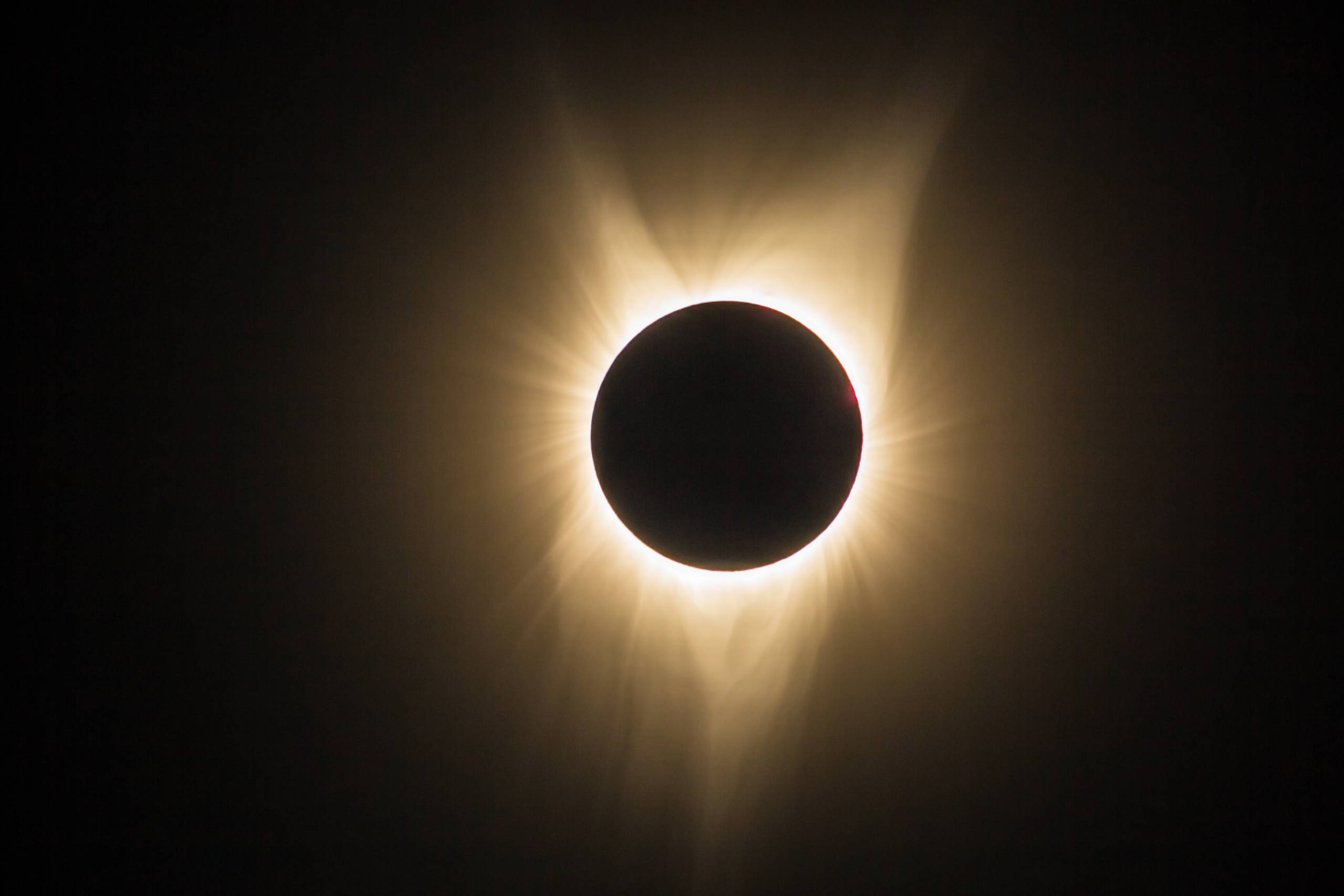
In 2024, another total solar eclipse is almost here. These unforgettable astronomical events occur when the moon positions itself between the Earth and the sun, blocking the sun’s disc for a few minutes and creating a shadow on Earth known as the “path of totality.” And on Monday, if you’re lucky enough to live in the path of totality — or decide to purposefully travel there — you’ll get to experience the breathtaking spectacle in person as the sun’s outer atmosphere (its corona) emerges like a crown of fire around the moon’s dark disc.
Here’s all you need to know about the 2024 total solar eclipse, where to go to experience it, and where you can still watch the partial eclipse in the Bay Area.
When is the 2024 solar eclipse?
The total solar eclipse will take place on Monday, April 8, 2024.
NASA said that the first place in continental North America to experience totality is Mexico’s Pacific coast — around 11:07 a.m. PST.
Where is the path of totality for the 2024 solar eclipse?
For people who plan to travel outside of the Bay Area to experience the full spectacle, this map by NASA shows the path of totality: A narrow track of about 100 miles wide ( but 10,000 miles long) that will cross three Mexican states, 15 U.S. states and five Canadian provinces. The U.S. state experiencing totality that’s closest to the Bay Area will be Texas.
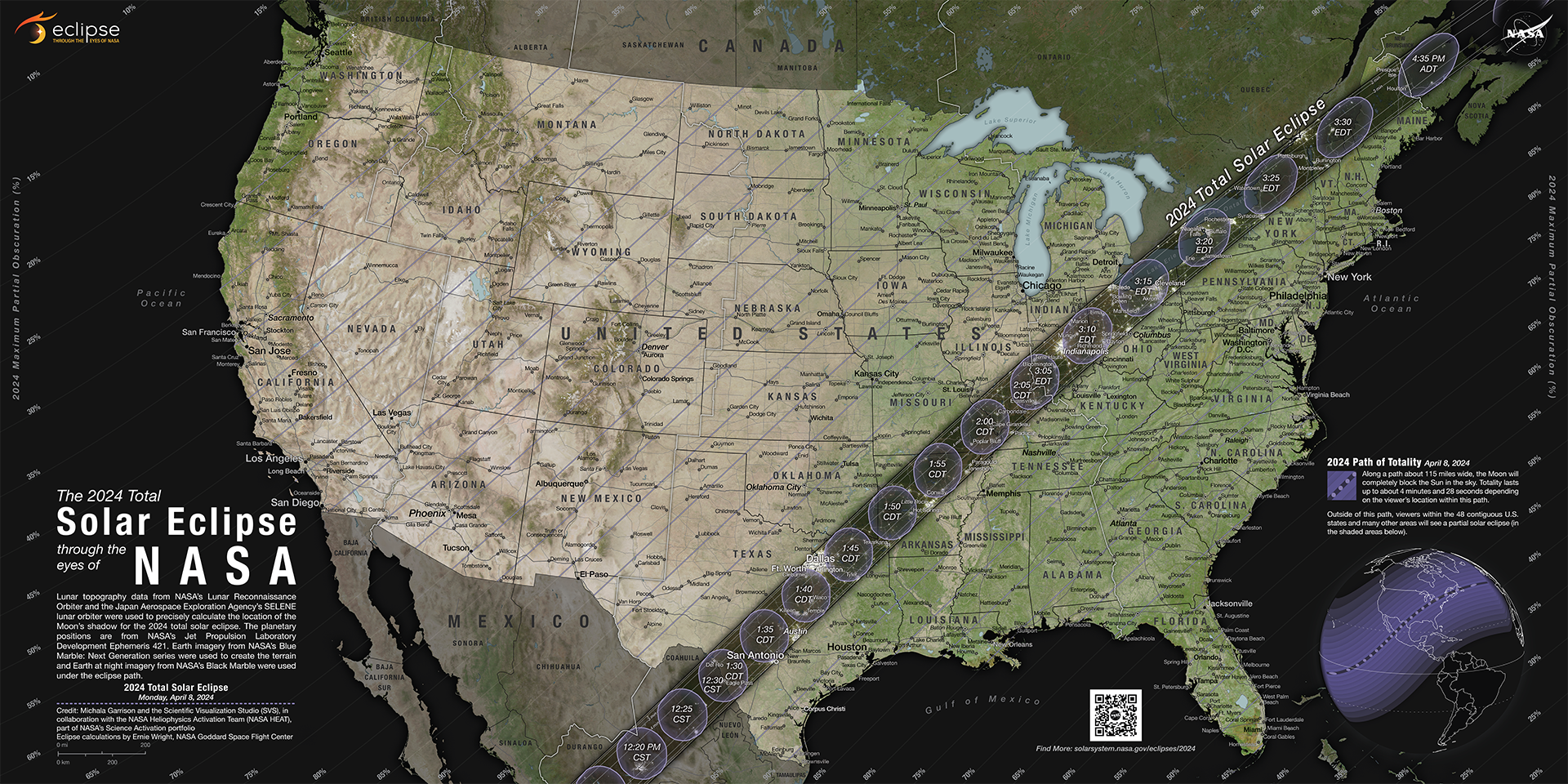
What’s unique about the 2024 eclipse is that it will be the longest and most visible for the U.S. in a century. And as long as you’re within this path, you’ll experience a total eclipse of the sun.
But the closer you are to the center of this path, the longer the eclipse you’ll experience. The duration of the eclipse can range from two to four and a half minutes. “People who are real eclipse fans are going to be looking at maps like this, and they’re going to try to get into the most central position,” said Andrew Fraknoi, an astronomer and board member of the SETI Institute.
It’s worth noting that the further north you are, the more likely it will be cloudy, Fraknoi warned. Check the weather forecast before traveling to see the eclipse, or refer to this map on Eclipsophile, a site that tracks the climate and weather for celestial events created by Canadian meteorologist, Jay Anderson. “In most places, particularly toward the northeast, the chances of cloud cover are greater than 50%,” Fraknoi said.
If it’s going to be cloudy where you plan to be in the path of totality, be sure to consult the Road Atlas for the Total Solar Eclipse of 2024 — which will help you hastily prepare an alternative route if you’re on the road.
This year’s total solar eclipse will also be one of the most urban eclipses for decades. The path of totality includes cities like Mazatlan, Torreon, Dallas, Indianapolis, Cleveland, Buffalo, Rochester and Montreal — in addition to dozens of other cities right on the edge of the path, too.
With 32 million people living on the path of totality and 75 million living within 100 miles of that path, there will undoubtedly be an influx of people traveling into these cities to experience this rare event. So the earlier you plan your travels, the better — and be realistic that for certain destinations, virtually every hotel room, vacation rental or campsite may have been snapped up months ago. Flights to destinations in the eclipse path of totality may also increase in price.
More detailed maps of the path of totality are available for every part of the country on the Great American Eclipse.