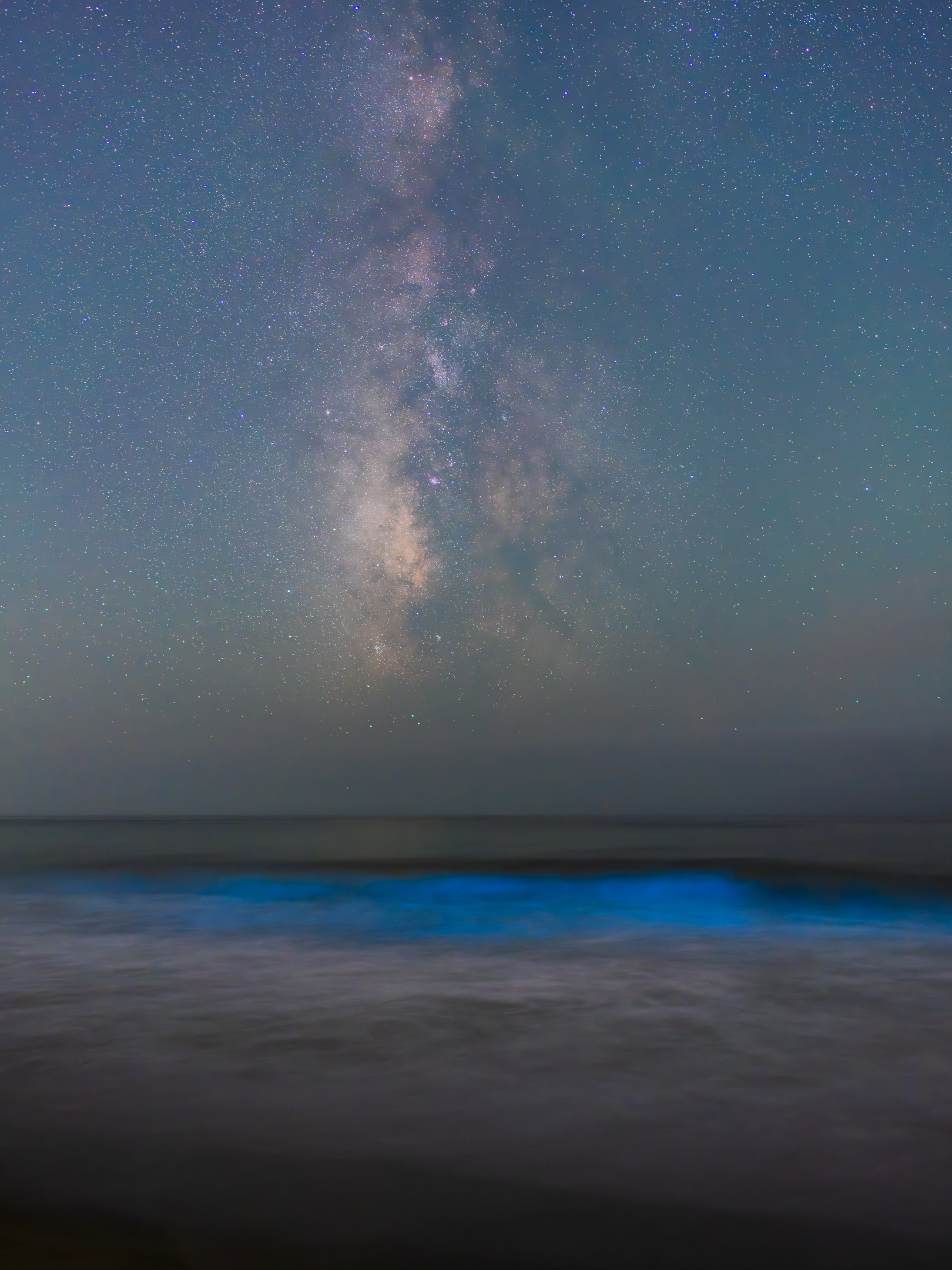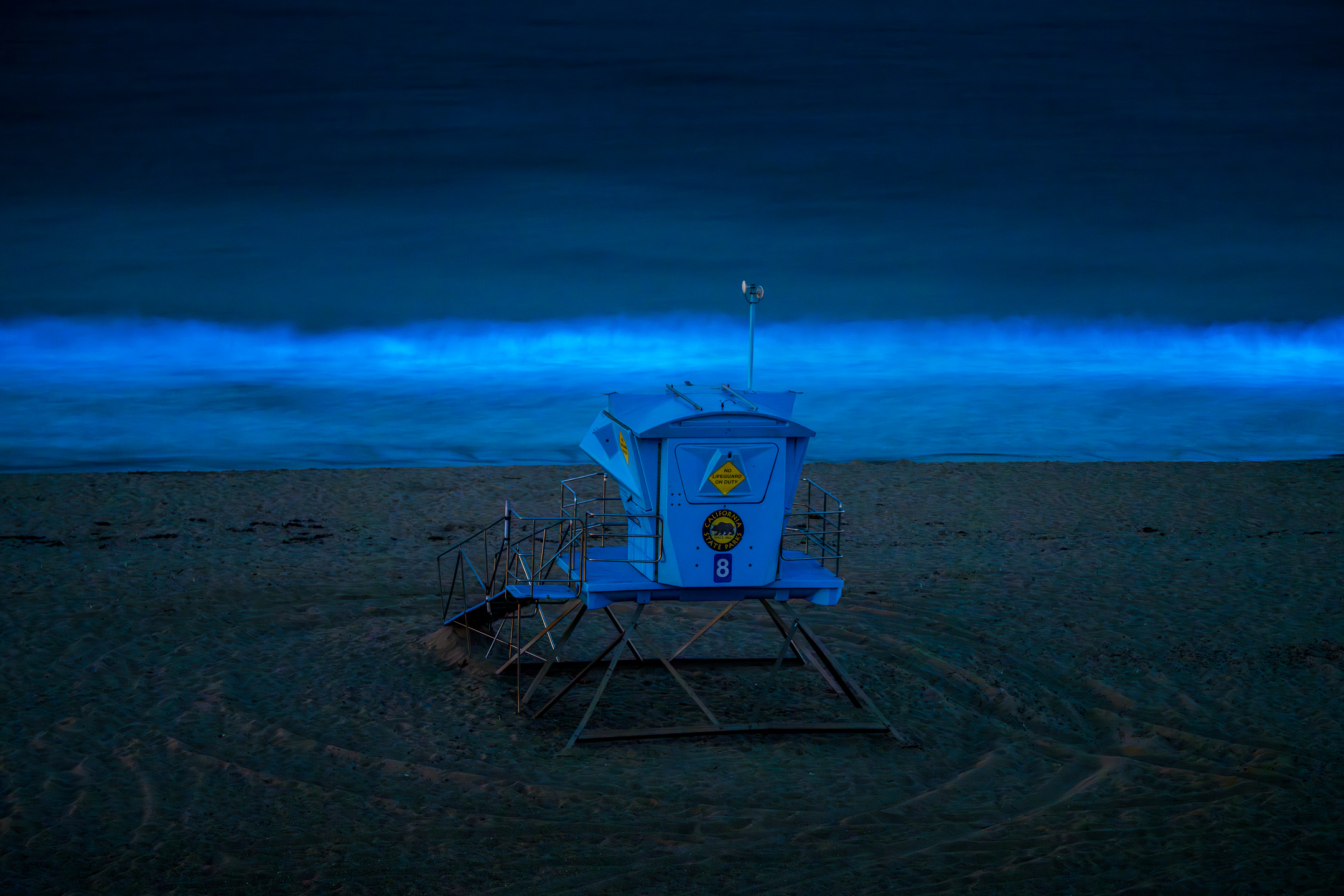
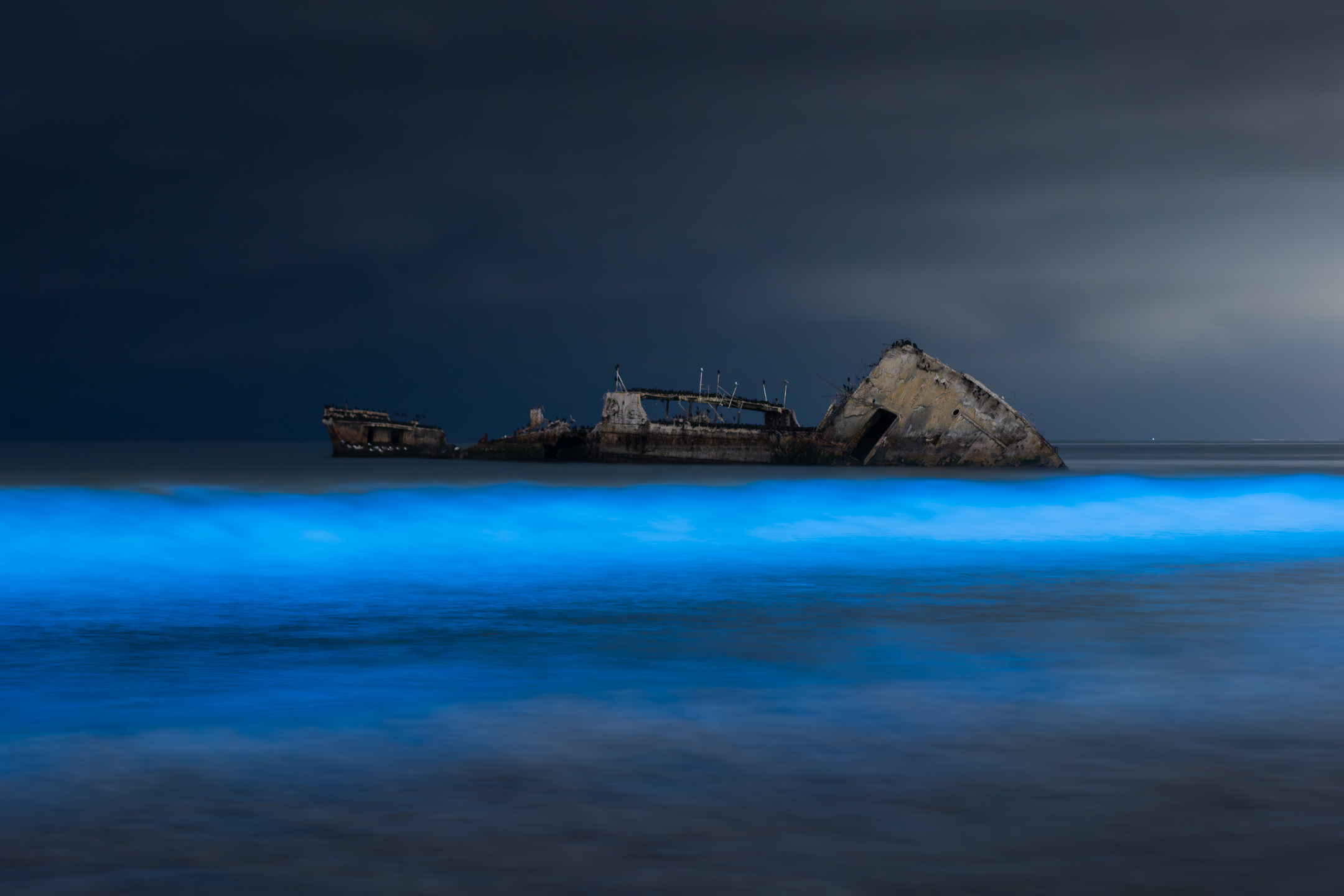
Every year during the summer or fall, shore waves across the Bay Area are lit up with flashes of beautiful blue light.
This beautiful blue light is caused by millions of tiny bioluminescent plankton called dinoflagellates. But how do these minuscule organisms produce such a dazzling display?
Keep reading for the facts about the science behind bioluminescence, and where you can see it for yourself in the Bay Area.
- Jump straight to: How you can see bioluminescence for yourself in the Bay Area
How do organisms make light?
Bioluminescence is a chemical reaction that happens inside many organisms, from bacteria to squid, shrimp, fungus, fireflies and even starfish.
This is all thanks to a light-emitting molecule in their cells called luciferin, combined with a photo protein called luciferase. This protein creates the chemical reaction between luciferin and oxygen, making these organisms glow.
Different forms of luciferin can produce different colors of light. Fireflies, for example, have a form of luciferin in their cells that emit green light, whereas marine organisms like the dinoflagellates found around the shores of the San Francisco Bay emit blue light.
Why do some organisms produce bioluminescence?
Some species of bioluminescent sea creatures, like some jellyfish, have evolved to become bioluminescent due to their diet. When they eat other bioluminescent organisms, they borrow that chemical that allows them to produce light within their bodies.
Other sea creatures, like angler fish that have that ball of light that glows and lures in prey, and flashes light to repel predators, get their bioluminescence from a certain bacteria called photobacterium.
“And the standard rule of thumb is that, what glows in the ocean attracts and what flashes repel,” said Steve Haddock, a senior scientist at Monterey Bay Aquarium Research Institute who researches bioluminescence organisms. He also runs a citizen science website, JellyWatch.org.
Bioluminescence is a terrific deterrent against predators that would eat these organisms. It also functions like a flashlight for finding and attracting prey. Some organisms use their glowing abilities as camouflage — they turn light on to block out their silhouette, a kind of cloaking device — hiding them from potential predators.
What are dinoflagellates? And how are they related to red tides?
Dinoflagellates are single-celled phytoplankton that are usually invisible to the naked eye. But when they are present in high numbers, they can turn the water a hazy green or even orange, depending on the pigments present in cells of that species. When left alone, dinoflagellates won’t produce any light, but when things like ocean waves, wind, and sea creatures disturb them at night, they become bioluminescent, dazzling with a blue light.
When water temperatures and conditions are just right, blooms of dinoflagellates can grow rapidly and accumulate in high concentrations, causing an event known as a red tide. Red tide is a term generally used to describe when phytoplankton or algae becomes so abundant that it discolors the water, sometimes appearing orange or red.
“So you get a red tide in the daytime and blue tide in the nighttime,” said Haddock.
Can I swim or kayak in bioluminescent waters caused by a dinoflagellate red tide?
A red tide of dinoflagellates is not to be mistaken with the harmful red tides that killed many fish across the Bay Area last year. The species that caused that red tide is called Heterosigma akashiwo, and although classified as not dangerous to humans, this species can suck up all the oxygen that fish need in the water, causing them to die.
Most of the bioluminescent species of dinoflagellates are not dangerous to humans. And it should be fine to kayak or swim in bioluminescent waters, says Haddock. But during a red tide, when the water is murky brown, multiple species of different organisms may be present, including the ones that release toxins that might be harmful to humans and animals.
Some species of dinoflagellates can produce various toxins. Their decomposition releases the toxin into the water, and it can even enter the air and become a problem for marine animals and humans, according to Peter Roopnarine, a curator of geology at California Academy of Sciences.
“Pay attention to your local advisories about water quality, and things like shellfish poisoning,” Haddock advised.
The rule of thumb is: If the water is a murky brown instead of the usual green or blue, it’s best to stay out of the water. Read more about the algal blooms during the red tide in the Bay Area here.