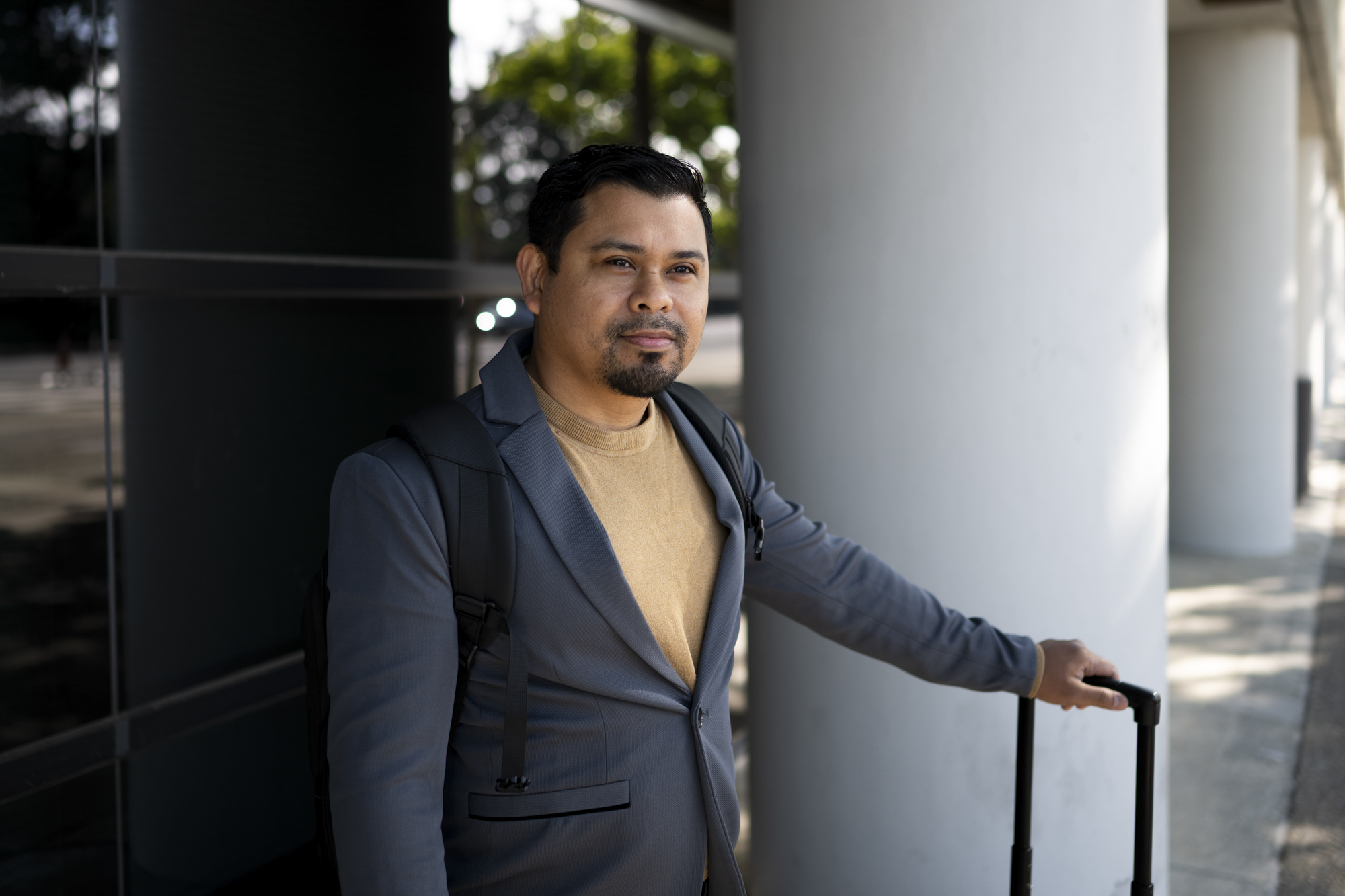
‘Like an Angel’: Meet the Helpers Working at Bay Area Immigration Court
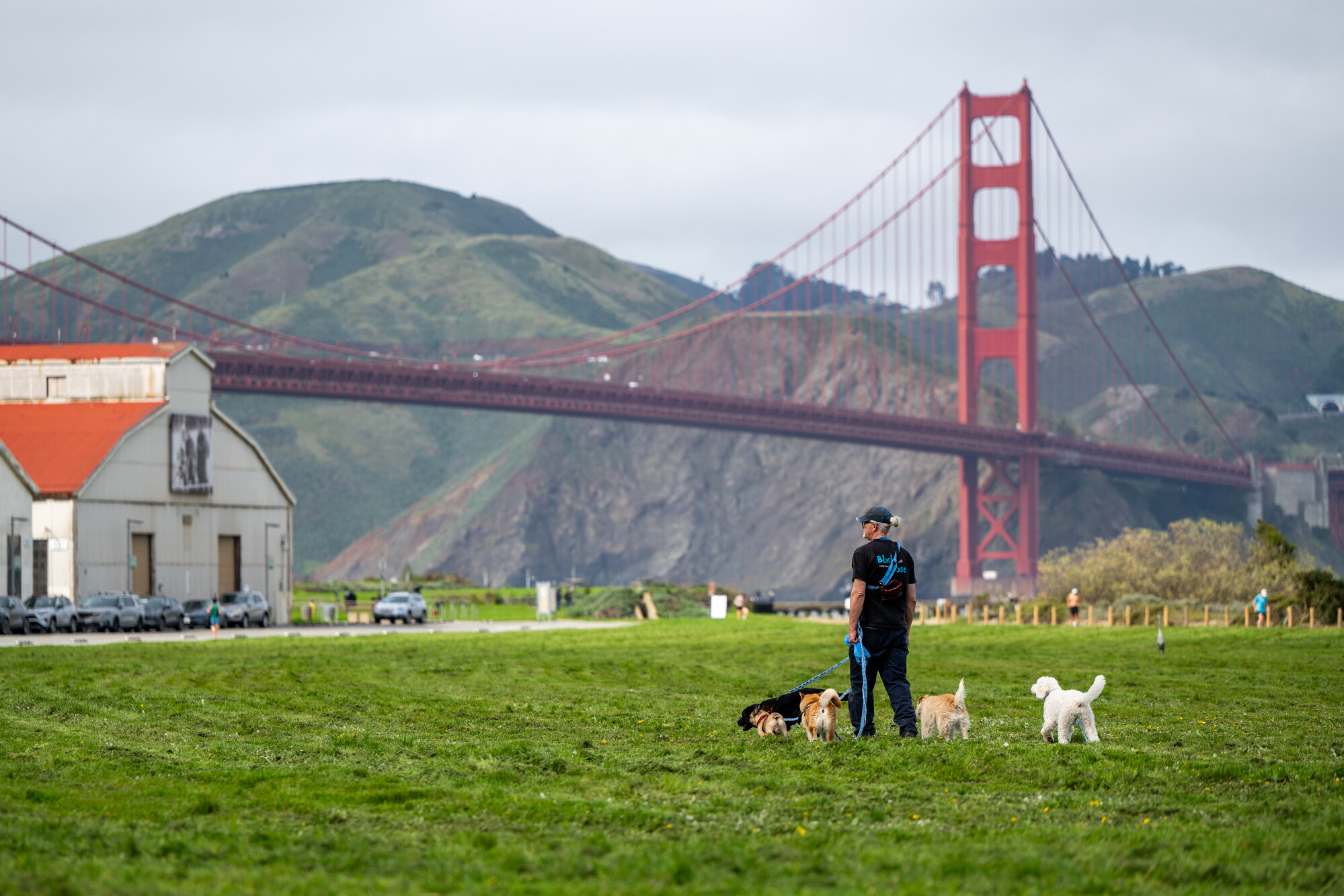
Weekend Idea: Volunteer Outdoors in Sight of the Golden Gate Bridge
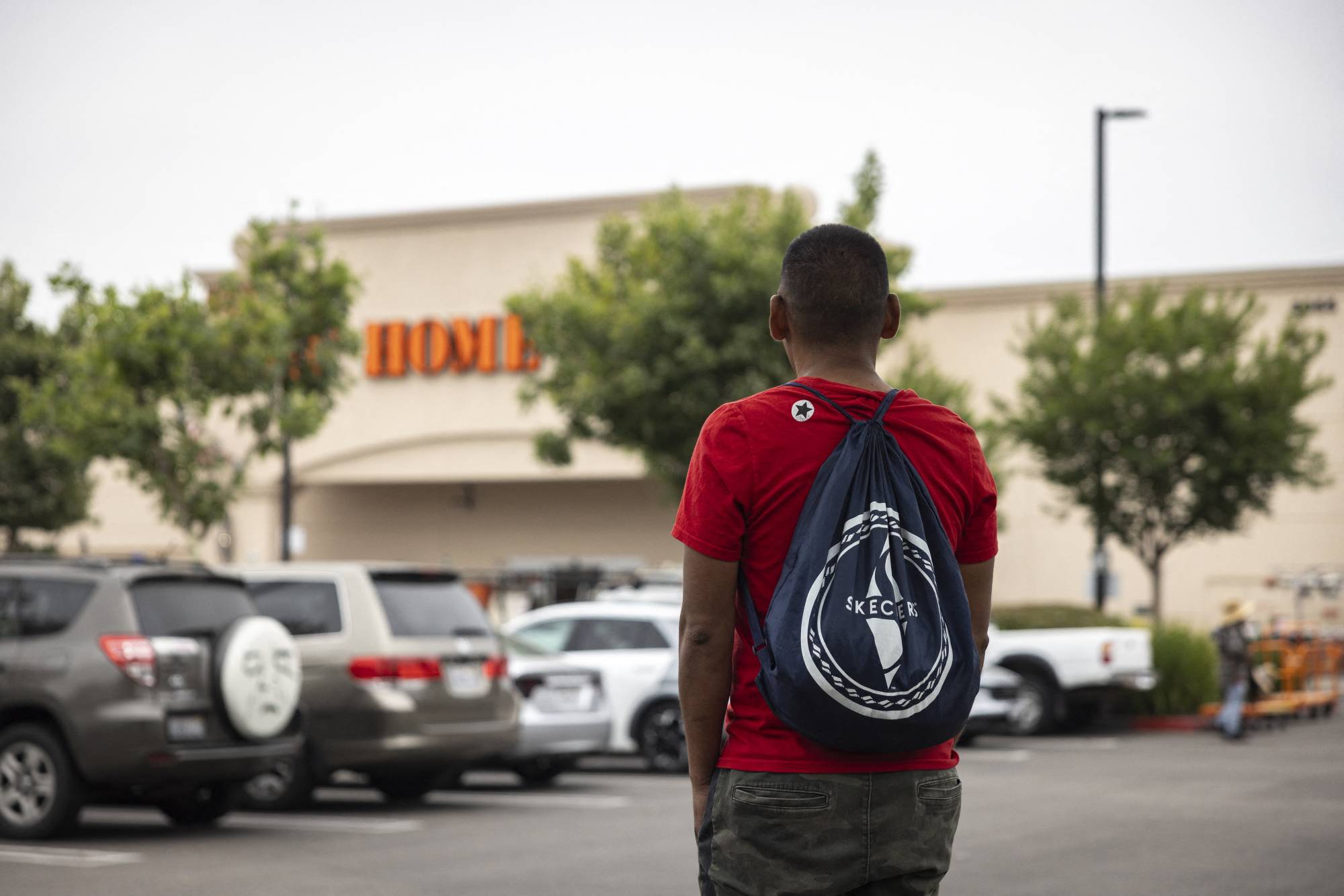
To Monitor ICE Activity, Volunteers Are ‘Adopting’ Street Corners Near Day Laborers
Want to Volunteer in the Bay? Here's What Nonprofits Say Actually Helps
Tell Us: How Is Volunteering a Part of Your Life?
Californians Travel Outside The State To Stump For Harris
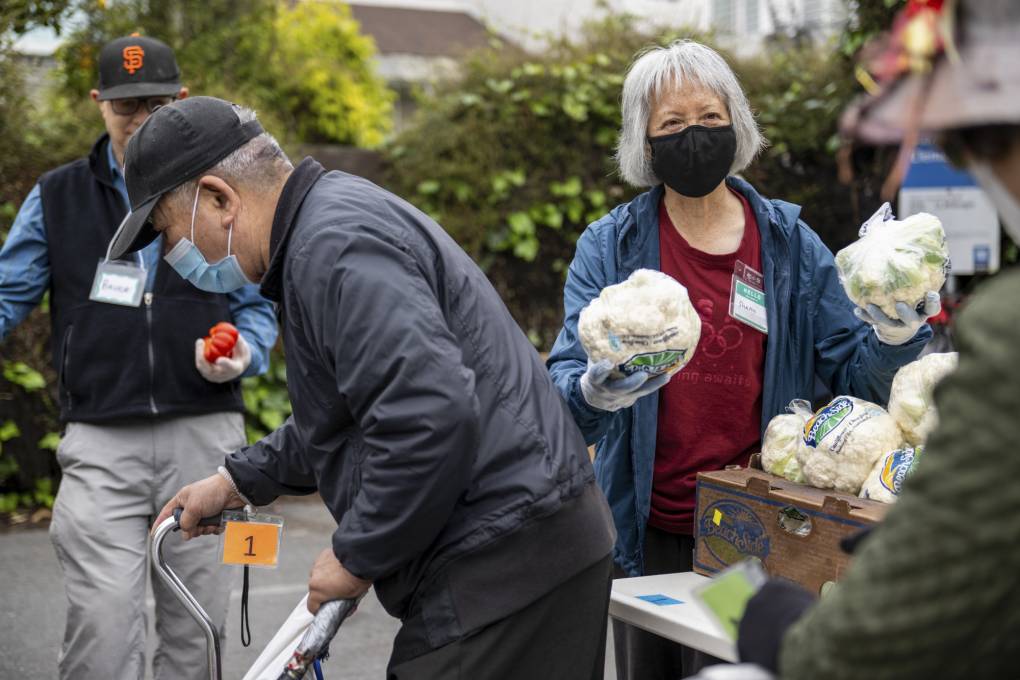
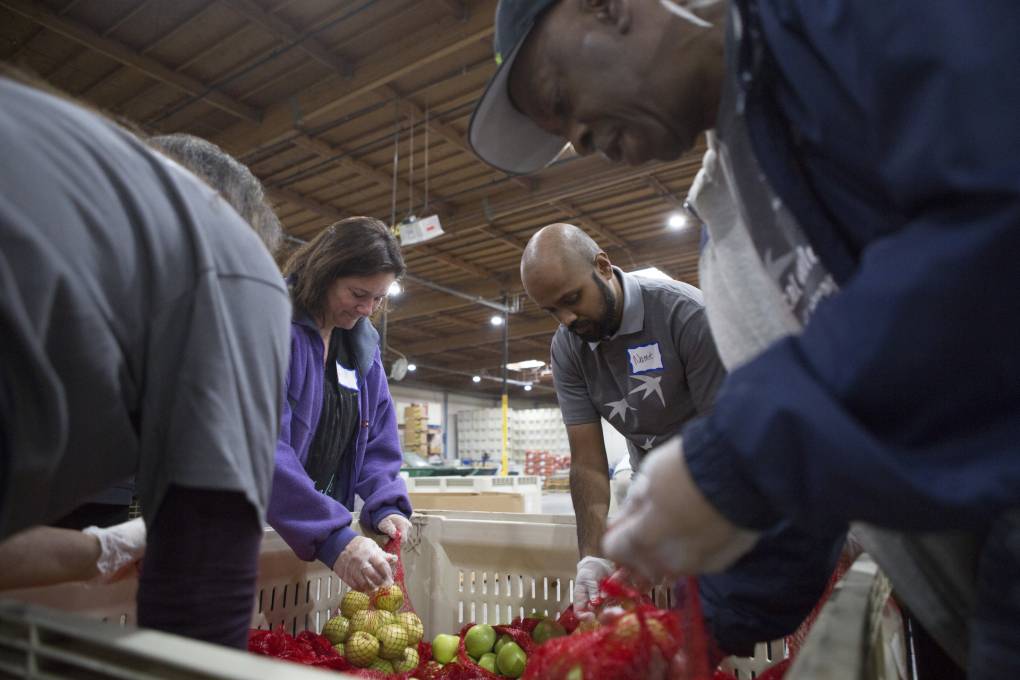
Bay Area Food Banks, Feeding More People Than Ever, Face Lack of Volunteers
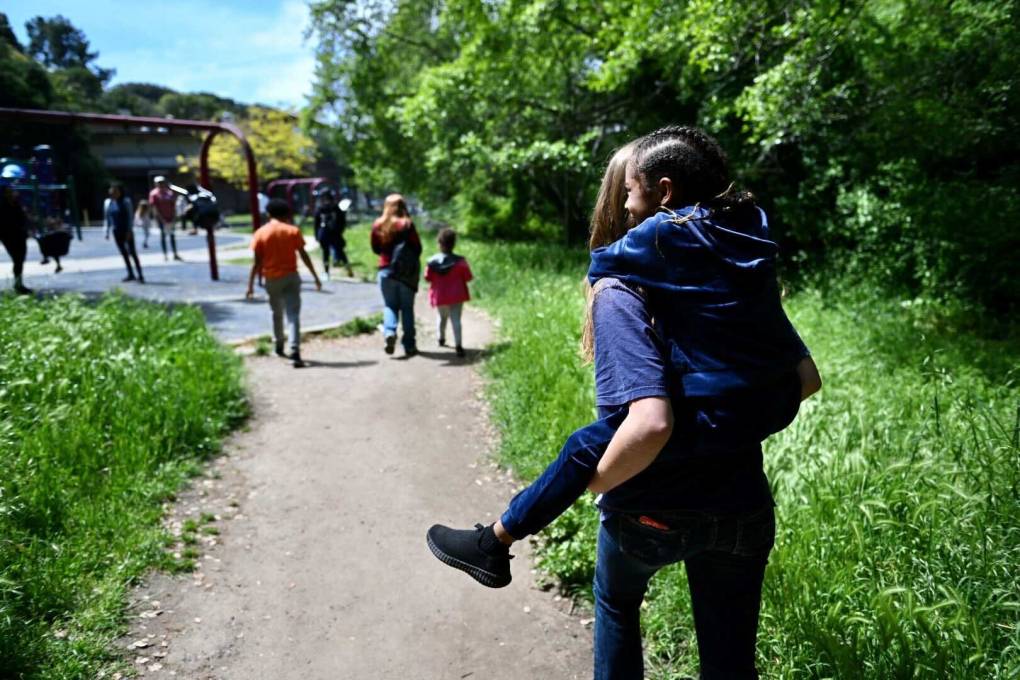
Oakland Students, Parents Keep Kids Learning at 'Solidarity Schools' During Teachers' Strike
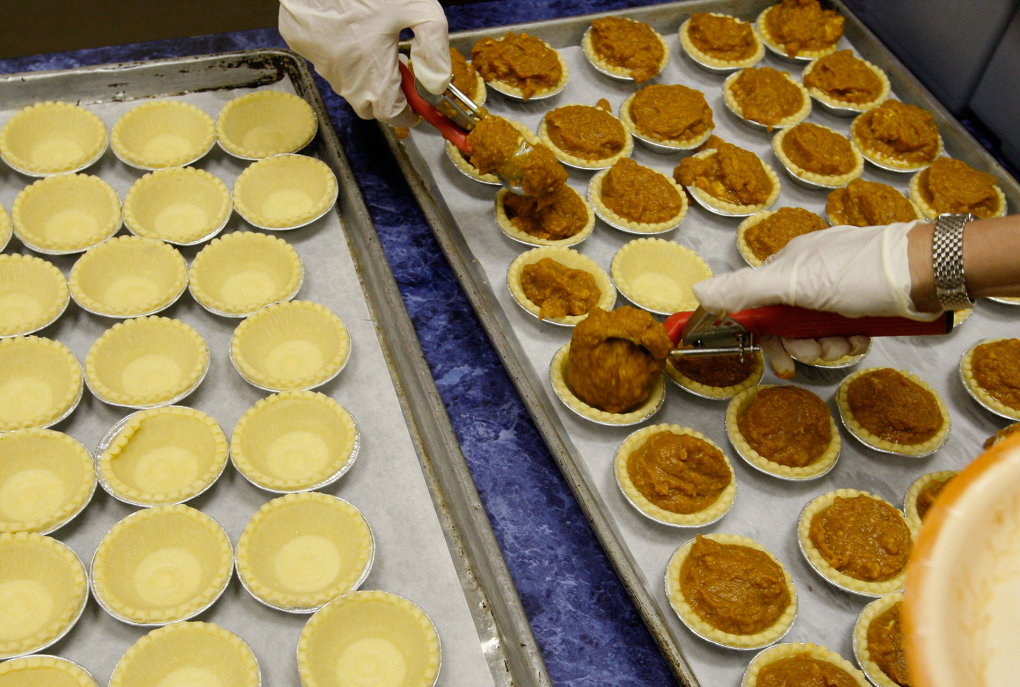
Can I Volunteer at a Food Bank During COVID-19?
Player sponsored by
window.__IS_SSR__=true
window.__INITIAL_STATE__={
"attachmentsReducer": {
"audio_0": {
"type": "attachments",
"id": "audio_0",
"imgSizes": {
"kqedFullSize": {
"file": "https://ww2.kqed.org/news/wp-content/themes/KQED-unified/img/audio_bgs/background0.jpg"
}
}
},
"audio_1": {
"type": "attachments",
"id": "audio_1",
"imgSizes": {
"kqedFullSize": {
"file": "https://ww2.kqed.org/news/wp-content/themes/KQED-unified/img/audio_bgs/background1.jpg"
}
}
},
"audio_2": {
"type": "attachments",
"id": "audio_2",
"imgSizes": {
"kqedFullSize": {
"file": "https://ww2.kqed.org/news/wp-content/themes/KQED-unified/img/audio_bgs/background2.jpg"
}
}
},
"audio_3": {
"type": "attachments",
"id": "audio_3",
"imgSizes": {
"kqedFullSize": {
"file": "https://ww2.kqed.org/news/wp-content/themes/KQED-unified/img/audio_bgs/background3.jpg"
}
}
},
"audio_4": {
"type": "attachments",
"id": "audio_4",
"imgSizes": {
"kqedFullSize": {
"file": "https://ww2.kqed.org/news/wp-content/themes/KQED-unified/img/audio_bgs/background4.jpg"
}
}
},
"placeholder": {
"type": "attachments",
"id": "placeholder",
"imgSizes": {
"thumbnail": {
"file": "https://cdn.kqed.org/wp-content/uploads/2024/12/KQED-Default-Image-816638274-2000x1333-1-160x107.jpg",
"width": 160,
"height": 107,
"mimeType": "image/jpeg"
},
"medium": {
"file": "https://cdn.kqed.org/wp-content/uploads/2024/12/KQED-Default-Image-816638274-2000x1333-1-800x533.jpg",
"width": 800,
"height": 533,
"mimeType": "image/jpeg"
},
"medium_large": {
"file": "https://cdn.kqed.org/wp-content/uploads/2024/12/KQED-Default-Image-816638274-2000x1333-1-768x512.jpg",
"width": 768,
"height": 512,
"mimeType": "image/jpeg"
},
"large": {
"file": "https://cdn.kqed.org/wp-content/uploads/2024/12/KQED-Default-Image-816638274-2000x1333-1-1020x680.jpg",
"width": 1020,
"height": 680,
"mimeType": "image/jpeg"
},
"1536x1536": {
"file": "https://cdn.kqed.org/wp-content/uploads/2024/12/KQED-Default-Image-816638274-2000x1333-1-1536x1024.jpg",
"width": 1536,
"height": 1024,
"mimeType": "image/jpeg"
},
"fd-lrg": {
"file": "https://cdn.kqed.org/wp-content/uploads/2024/12/KQED-Default-Image-816638274-2000x1333-1-1536x1024.jpg",
"width": 1536,
"height": 1024,
"mimeType": "image/jpeg"
},
"fd-med": {
"file": "https://cdn.kqed.org/wp-content/uploads/2024/12/KQED-Default-Image-816638274-2000x1333-1-1020x680.jpg",
"width": 1020,
"height": 680,
"mimeType": "image/jpeg"
},
"fd-sm": {
"file": "https://cdn.kqed.org/wp-content/uploads/2024/12/KQED-Default-Image-816638274-2000x1333-1-800x533.jpg",
"width": 800,
"height": 533,
"mimeType": "image/jpeg"
},
"post-thumbnail": {
"file": "https://cdn.kqed.org/wp-content/uploads/2024/12/KQED-Default-Image-816638274-2000x1333-1-672x372.jpg",
"width": 672,
"height": 372,
"mimeType": "image/jpeg"
},
"twentyfourteen-full-width": {
"file": "https://cdn.kqed.org/wp-content/uploads/2024/12/KQED-Default-Image-816638274-2000x1333-1-1038x576.jpg",
"width": 1038,
"height": 576,
"mimeType": "image/jpeg"
},
"xxsmall": {
"file": "https://cdn.kqed.org/wp-content/uploads/2024/12/KQED-Default-Image-816638274-2000x1333-1-160x107.jpg",
"width": 160,
"height": 107,
"mimeType": "image/jpeg"
},
"xsmall": {
"file": "https://cdn.kqed.org/wp-content/uploads/2024/12/KQED-Default-Image-816638274-2000x1333-1-672x372.jpg",
"width": 672,
"height": 372,
"mimeType": "image/jpeg"
},
"small": {
"file": "https://cdn.kqed.org/wp-content/uploads/2024/12/KQED-Default-Image-816638274-2000x1333-1-672x372.jpg",
"width": 672,
"height": 372,
"mimeType": "image/jpeg"
},
"xlarge": {
"file": "https://cdn.kqed.org/wp-content/uploads/2024/12/KQED-Default-Image-816638274-2000x1333-1-1020x680.jpg",
"width": 1020,
"height": 680,
"mimeType": "image/jpeg"
},
"full-width": {
"file": "https://cdn.kqed.org/wp-content/uploads/2024/12/KQED-Default-Image-816638274-2000x1333-1-1920x1280.jpg",
"width": 1920,
"height": 1280,
"mimeType": "image/jpeg"
},
"guest-author-32": {
"file": "https://cdn.kqed.org/wp-content/uploads/2025/01/KQED-Default-Image-816638274-1333x1333-1-160x160.jpg",
"width": 32,
"height": 32,
"mimeType": "image/jpeg"
},
"guest-author-50": {
"file": "https://cdn.kqed.org/wp-content/uploads/2025/01/KQED-Default-Image-816638274-1333x1333-1-160x160.jpg",
"width": 50,
"height": 50,
"mimeType": "image/jpeg"
},
"guest-author-64": {
"file": "https://cdn.kqed.org/wp-content/uploads/2025/01/KQED-Default-Image-816638274-1333x1333-1-160x160.jpg",
"width": 64,
"height": 64,
"mimeType": "image/jpeg"
},
"guest-author-96": {
"file": "https://cdn.kqed.org/wp-content/uploads/2025/01/KQED-Default-Image-816638274-1333x1333-1-160x160.jpg",
"width": 96,
"height": 96,
"mimeType": "image/jpeg"
},
"guest-author-128": {
"file": "https://cdn.kqed.org/wp-content/uploads/2025/01/KQED-Default-Image-816638274-1333x1333-1-160x160.jpg",
"width": 128,
"height": 128,
"mimeType": "image/jpeg"
},
"detail": {
"file": "https://cdn.kqed.org/wp-content/uploads/2025/01/KQED-Default-Image-816638274-1333x1333-1-160x160.jpg",
"width": 160,
"height": 160,
"mimeType": "image/jpeg"
},
"kqedFullSize": {
"file": "https://cdn.kqed.org/wp-content/uploads/2024/12/KQED-Default-Image-816638274-2000x1333-1.jpg",
"width": 2000,
"height": 1333
}
}
},
"news_12084721": {
"type": "attachments",
"id": "news_12084721",
"meta": {
"index": "attachments_1716263798",
"site": "news",
"id": "12084721",
"found": true
},
"title": "260507-IMMIGRATIONCOURTVOLUNTEERS-02-BL-KQED",
"publishDate": 1779393694,
"status": "inherit",
"parent": 0,
"modified": 1780178250,
"caption": "Sergio Jaime Lopez, community defense program manager for the SAFE Center, outside the Concord immigration court on May 7, 2026. Jaime helps people in deportation proceedings navigate the court and connect with resources and legal representation.",
"credit": "Beth LaBerge/KQED",
"altTag": null,
"description": null,
"imgSizes": {
"thumbnail": {
"file": "https://cdn.kqed.org/wp-content/uploads/sites/10/2026/05/260507-IMMIGRATIONCOURTVOLUNTEERS-02-BL-KQED-160x107.jpg",
"width": 160,
"height": 107,
"mimeType": "image/jpeg"
},
"1536x1536": {
"file": "https://cdn.kqed.org/wp-content/uploads/sites/10/2026/05/260507-IMMIGRATIONCOURTVOLUNTEERS-02-BL-KQED-1536x1024.jpg",
"width": 1536,
"height": 1024,
"mimeType": "image/jpeg"
},
"post-thumbnail": {
"file": "https://cdn.kqed.org/wp-content/uploads/sites/10/2026/05/260507-IMMIGRATIONCOURTVOLUNTEERS-02-BL-KQED-672x372.jpg",
"width": 672,
"height": 372,
"mimeType": "image/jpeg"
},
"twentyfourteen-full-width": {
"file": "https://cdn.kqed.org/wp-content/uploads/sites/10/2026/05/260507-IMMIGRATIONCOURTVOLUNTEERS-02-BL-KQED-1038x576.jpg",
"width": 1038,
"height": 576,
"mimeType": "image/jpeg"
},
"npr-cds-wide": {
"file": "https://cdn.kqed.org/wp-content/uploads/sites/10/2026/05/260507-IMMIGRATIONCOURTVOLUNTEERS-02-BL-KQED-1200x675.jpg",
"width": 1200,
"height": 675,
"mimeType": "image/jpeg"
},
"npr-cds-square": {
"file": "https://cdn.kqed.org/wp-content/uploads/sites/10/2026/05/260507-IMMIGRATIONCOURTVOLUNTEERS-02-BL-KQED-600x600.jpg",
"width": 600,
"height": 600,
"mimeType": "image/jpeg"
},
"kqedFullSize": {
"file": "https://cdn.kqed.org/wp-content/uploads/sites/10/2026/05/260507-IMMIGRATIONCOURTVOLUNTEERS-02-BL-KQED.jpg",
"width": 2000,
"height": 1333
}
},
"isLoading": false,
"fetchFailed": false
},
"news_12057664": {
"type": "attachments",
"id": "news_12057664",
"meta": {
"index": "attachments_1716263798",
"site": "news",
"id": "12057664",
"found": true
},
"title": "250224-Presidio-09-BL_qed",
"publishDate": 1758838251,
"status": "inherit",
"parent": 12057647,
"modified": 1758838263,
"caption": "A person walks dogs through Crissy Field in the Presidio, a park and former military outpost, in San Francisco on Feb. 25, 2025.",
"credit": "Beth LaBerge/KQED",
"altTag": null,
"description": null,
"imgSizes": {
"thumbnail": {
"file": "https://cdn.kqed.org/wp-content/uploads/sites/10/2025/09/250224-Presidio-09-BL_qed-160x107.jpg",
"width": 160,
"height": 107,
"mimeType": "image/jpeg"
},
"1536x1536": {
"file": "https://cdn.kqed.org/wp-content/uploads/sites/10/2025/09/250224-Presidio-09-BL_qed-1536x1024.jpg",
"width": 1536,
"height": 1024,
"mimeType": "image/jpeg"
},
"post-thumbnail": {
"file": "https://cdn.kqed.org/wp-content/uploads/sites/10/2025/09/250224-Presidio-09-BL_qed-672x372.jpg",
"width": 672,
"height": 372,
"mimeType": "image/jpeg"
},
"twentyfourteen-full-width": {
"file": "https://cdn.kqed.org/wp-content/uploads/sites/10/2025/09/250224-Presidio-09-BL_qed-1038x576.jpg",
"width": 1038,
"height": 576,
"mimeType": "image/jpeg"
},
"kqedFullSize": {
"file": "https://cdn.kqed.org/wp-content/uploads/sites/10/2025/09/250224-Presidio-09-BL_qed.jpg",
"width": 1999,
"height": 1333
}
},
"isLoading": false,
"fetchFailed": false
},
"news_12054681": {
"type": "attachments",
"id": "news_12054681",
"meta": {
"index": "attachments_1716263798",
"site": "news",
"id": "12054681",
"found": true
},
"title": "US-POLITICS-IMMIGRATION",
"publishDate": 1757020526,
"status": "inherit",
"parent": 12054668,
"modified": 1757362676,
"caption": "A day laborer waits on the parking lot of a Home Depot as federal immigration conducts raids in Los Angeles, California on June 20, 2025. ",
"credit": "Etienne Laurent/AFP via Getty Images",
"altTag": null,
"description": null,
"imgSizes": {
"medium": {
"file": "https://cdn.kqed.org/wp-content/uploads/sites/10/2025/09/GettyImages-2220320695-2000x1334.jpg",
"width": 2000,
"height": 1334,
"mimeType": "image/jpeg"
},
"large": {
"file": "https://cdn.kqed.org/wp-content/uploads/sites/10/2025/09/GettyImages-2220320695-2000x1334.jpg",
"width": 2000,
"height": 1334,
"mimeType": "image/jpeg"
},
"thumbnail": {
"file": "https://cdn.kqed.org/wp-content/uploads/sites/10/2025/09/GettyImages-2220320695-160x107.jpg",
"width": 160,
"height": 107,
"mimeType": "image/jpeg"
},
"1536x1536": {
"file": "https://cdn.kqed.org/wp-content/uploads/sites/10/2025/09/GettyImages-2220320695-1536x1025.jpg",
"width": 1536,
"height": 1025,
"mimeType": "image/jpeg"
},
"2048x2048": {
"file": "https://cdn.kqed.org/wp-content/uploads/sites/10/2025/09/GettyImages-2220320695-2048x1366.jpg",
"width": 2048,
"height": 1366,
"mimeType": "image/jpeg"
},
"post-thumbnail": {
"file": "https://cdn.kqed.org/wp-content/uploads/sites/10/2025/09/GettyImages-2220320695-672x372.jpg",
"width": 672,
"height": 372,
"mimeType": "image/jpeg"
},
"twentyfourteen-full-width": {
"file": "https://cdn.kqed.org/wp-content/uploads/sites/10/2025/09/GettyImages-2220320695-1038x576.jpg",
"width": 1038,
"height": 576,
"mimeType": "image/jpeg"
},
"full-width": {
"file": "https://cdn.kqed.org/wp-content/uploads/sites/10/2025/09/GettyImages-2220320695-2000x1334.jpg",
"width": 2000,
"height": 1334,
"mimeType": "image/jpeg"
},
"kqedFullSize": {
"file": "https://cdn.kqed.org/wp-content/uploads/sites/10/2025/09/GettyImages-2220320695-scaled.jpg",
"width": 2560,
"height": 1708
}
},
"isLoading": false,
"fetchFailed": false
},
"news_11953000": {
"type": "attachments",
"id": "news_11953000",
"meta": {
"index": "attachments_1716263798",
"site": "news",
"id": "11953000",
"found": true
},
"title": "RS66293_230613-SFMarinFoodPantry-04-BL-KQED",
"publishDate": 1686846407,
"status": "inherit",
"parent": 11953447,
"modified": 1761767303,
"caption": "Volunteers distribute food items at a San Francisco-Marin Food Bank pop-up pantry in the Richmond District of San Francisco on June 13, 2023. Volunteers at the food distribution events often help set up, build grocery bags, distribute food, check in participants, manage the line and help with other tasks as needed.",
"credit": "Beth LaBerge/KQED",
"altTag": "A woman with gray hair wearing a black face mask holds out cauliflower heads as a man using a can walks past in a paved outdoor area.",
"description": null,
"imgSizes": {
"medium": {
"file": "https://cdn.kqed.org/wp-content/uploads/sites/10/2023/06/RS66293_230613-SFMarinFoodPantry-04-BL-KQED-800x533.jpg",
"width": 800,
"height": 533,
"mimeType": "image/jpeg"
},
"large": {
"file": "https://cdn.kqed.org/wp-content/uploads/sites/10/2023/06/RS66293_230613-SFMarinFoodPantry-04-BL-KQED-1020x680.jpg",
"width": 1020,
"height": 680,
"mimeType": "image/jpeg"
},
"thumbnail": {
"file": "https://cdn.kqed.org/wp-content/uploads/sites/10/2023/06/RS66293_230613-SFMarinFoodPantry-04-BL-KQED-160x107.jpg",
"width": 160,
"height": 107,
"mimeType": "image/jpeg"
},
"1536x1536": {
"file": "https://cdn.kqed.org/wp-content/uploads/sites/10/2023/06/RS66293_230613-SFMarinFoodPantry-04-BL-KQED-1536x1024.jpg",
"width": 1536,
"height": 1024,
"mimeType": "image/jpeg"
},
"post-thumbnail": {
"file": "https://cdn.kqed.org/wp-content/uploads/sites/10/2023/06/RS66293_230613-SFMarinFoodPantry-04-BL-KQED-672x372.jpg",
"width": 672,
"height": 372,
"mimeType": "image/jpeg"
},
"twentyfourteen-full-width": {
"file": "https://cdn.kqed.org/wp-content/uploads/sites/10/2023/06/RS66293_230613-SFMarinFoodPantry-04-BL-KQED-1038x576.jpg",
"width": 1038,
"height": 576,
"mimeType": "image/jpeg"
},
"full-width": {
"file": "https://cdn.kqed.org/wp-content/uploads/sites/10/2023/06/RS66293_230613-SFMarinFoodPantry-04-BL-KQED-1920x1280.jpg",
"width": 1920,
"height": 1280,
"mimeType": "image/jpeg"
},
"kqedFullSize": {
"file": "https://cdn.kqed.org/wp-content/uploads/sites/10/2023/06/RS66293_230613-SFMarinFoodPantry-04-BL-KQED.jpg",
"width": 2000,
"height": 1333
}
},
"isLoading": false,
"fetchFailed": false
},
"news_11937356": {
"type": "attachments",
"id": "news_11937356",
"meta": {
"index": "attachments_1716263798",
"site": "news",
"id": "11937356",
"found": true
},
"parent": 11937317,
"imgSizes": {
"twentyfourteen-full-width": {
"file": "https://ww2.kqed.org/app/uploads/sites/10/2023/01/RS34026_112018_AW_AlamedaCountyFood-Bank_05-qut-1038x576.jpg",
"width": 1038,
"mimeType": "image/jpeg",
"height": 576
},
"thumbnail": {
"file": "https://ww2.kqed.org/app/uploads/sites/10/2023/01/RS34026_112018_AW_AlamedaCountyFood-Bank_05-qut-160x107.jpg",
"width": 160,
"mimeType": "image/jpeg",
"height": 107
},
"post-thumbnail": {
"file": "https://ww2.kqed.org/app/uploads/sites/10/2023/01/RS34026_112018_AW_AlamedaCountyFood-Bank_05-qut-672x372.jpg",
"width": 672,
"mimeType": "image/jpeg",
"height": 372
},
"kqedFullSize": {
"file": "https://ww2.kqed.org/app/uploads/sites/10/2023/01/RS34026_112018_AW_AlamedaCountyFood-Bank_05-qut.jpg",
"width": 1920,
"height": 1280
},
"large": {
"file": "https://ww2.kqed.org/app/uploads/sites/10/2023/01/RS34026_112018_AW_AlamedaCountyFood-Bank_05-qut-1020x680.jpg",
"width": 1020,
"mimeType": "image/jpeg",
"height": 680
},
"1536x1536": {
"file": "https://ww2.kqed.org/app/uploads/sites/10/2023/01/RS34026_112018_AW_AlamedaCountyFood-Bank_05-qut-1536x1024.jpg",
"width": 1536,
"mimeType": "image/jpeg",
"height": 1024
},
"medium": {
"file": "https://ww2.kqed.org/app/uploads/sites/10/2023/01/RS34026_112018_AW_AlamedaCountyFood-Bank_05-qut-800x533.jpg",
"width": 800,
"mimeType": "image/jpeg",
"height": 533
}
},
"publishDate": 1673144077,
"modified": 1673416130,
"caption": "Volunteers from Bank of the West and Boys Team Charity sort apples from the produce bins at the Alameda County Community Food Bank on Nov. 20, 2018.",
"description": null,
"title": "RS34026_112018_AW_AlamedaCountyFood Bank_05-qut",
"credit": "Anne Wernikoff/KQED",
"status": "inherit",
"altTag": "Four people sort apples in a food bank.",
"isLoading": false,
"fetchFailed": false
},
"news_12009787": {
"type": "attachments",
"id": "news_12009787",
"meta": {
"index": "attachments_1716263798",
"site": "news",
"id": "12009787",
"found": true
},
"title": "David_and_Lisa",
"publishDate": 1729173311,
"status": "inherit",
"parent": 12009786,
"modified": 1729188273,
"caption": "David Bonaccorsi and Lisa Danz, from the Bay Area, are volunteering for the Harris-Walz campaign by canvassing in Nevada.",
"credit": "Saul Gonzalez/The California Report",
"altTag": "CA to Nevada",
"description": null,
"imgSizes": {
"medium": {
"file": "https://cdn.kqed.org/wp-content/uploads/sites/10/2024/10/David_and_Lisa-800x600.jpg",
"width": 800,
"height": 600,
"mimeType": "image/jpeg"
},
"large": {
"file": "https://cdn.kqed.org/wp-content/uploads/sites/10/2024/10/David_and_Lisa-1020x765.jpg",
"width": 1020,
"height": 765,
"mimeType": "image/jpeg"
},
"thumbnail": {
"file": "https://cdn.kqed.org/wp-content/uploads/sites/10/2024/10/David_and_Lisa-160x120.jpg",
"width": 160,
"height": 120,
"mimeType": "image/jpeg"
},
"1536x1536": {
"file": "https://cdn.kqed.org/wp-content/uploads/sites/10/2024/10/David_and_Lisa-1536x1152.jpg",
"width": 1536,
"height": 1152,
"mimeType": "image/jpeg"
},
"2048x2048": {
"file": "https://cdn.kqed.org/wp-content/uploads/sites/10/2024/10/David_and_Lisa-2048x1536.jpg",
"width": 2048,
"height": 1536,
"mimeType": "image/jpeg"
},
"post-thumbnail": {
"file": "https://cdn.kqed.org/wp-content/uploads/sites/10/2024/10/David_and_Lisa-672x372.jpg",
"width": 672,
"height": 372,
"mimeType": "image/jpeg"
},
"twentyfourteen-full-width": {
"file": "https://cdn.kqed.org/wp-content/uploads/sites/10/2024/10/David_and_Lisa-1038x576.jpg",
"width": 1038,
"height": 576,
"mimeType": "image/jpeg"
},
"full-width": {
"file": "https://cdn.kqed.org/wp-content/uploads/sites/10/2024/10/David_and_Lisa-1920x1440.jpg",
"width": 1920,
"height": 1440,
"mimeType": "image/jpeg"
},
"kqedFullSize": {
"file": "https://cdn.kqed.org/wp-content/uploads/sites/10/2024/10/David_and_Lisa-scaled.jpg",
"width": 2560,
"height": 1920
}
},
"isLoading": false,
"fetchFailed": false
},
"news_11953002": {
"type": "attachments",
"id": "news_11953002",
"meta": {
"index": "attachments_1716263798",
"site": "news",
"id": "11953002",
"found": true
},
"title": "RS66300_230613-SFMarinFoodPantry-11-BL-KQED",
"publishDate": 1686846422,
"status": "inherit",
"parent": 12036573,
"modified": 1744998295,
"caption": "Volunteers distribute food items at a San Francisco-Marin Food Bank pop-up pantry in the Richmond District of San Francisco on June 13, 2023.",
"credit": "Beth LaBerge/KQED",
"altTag": "A woman with white hair and a warm coat picks through a huge box of ears of corn in a paved outdoor area where lots of other people are also circulating.",
"description": null,
"imgSizes": {
"medium": {
"file": "https://cdn.kqed.org/wp-content/uploads/sites/10/2023/06/RS66300_230613-SFMarinFoodPantry-11-BL-KQED-800x533.jpg",
"width": 800,
"height": 533,
"mimeType": "image/jpeg"
},
"large": {
"file": "https://cdn.kqed.org/wp-content/uploads/sites/10/2023/06/RS66300_230613-SFMarinFoodPantry-11-BL-KQED-1020x680.jpg",
"width": 1020,
"height": 680,
"mimeType": "image/jpeg"
},
"thumbnail": {
"file": "https://cdn.kqed.org/wp-content/uploads/sites/10/2023/06/RS66300_230613-SFMarinFoodPantry-11-BL-KQED-160x107.jpg",
"width": 160,
"height": 107,
"mimeType": "image/jpeg"
},
"1536x1536": {
"file": "https://cdn.kqed.org/wp-content/uploads/sites/10/2023/06/RS66300_230613-SFMarinFoodPantry-11-BL-KQED-1536x1024.jpg",
"width": 1536,
"height": 1024,
"mimeType": "image/jpeg"
},
"post-thumbnail": {
"file": "https://cdn.kqed.org/wp-content/uploads/sites/10/2023/06/RS66300_230613-SFMarinFoodPantry-11-BL-KQED-672x372.jpg",
"width": 672,
"height": 372,
"mimeType": "image/jpeg"
},
"twentyfourteen-full-width": {
"file": "https://cdn.kqed.org/wp-content/uploads/sites/10/2023/06/RS66300_230613-SFMarinFoodPantry-11-BL-KQED-1038x576.jpg",
"width": 1038,
"height": 576,
"mimeType": "image/jpeg"
},
"full-width": {
"file": "https://cdn.kqed.org/wp-content/uploads/sites/10/2023/06/RS66300_230613-SFMarinFoodPantry-11-BL-KQED-1920x1280.jpg",
"width": 1920,
"height": 1280,
"mimeType": "image/jpeg"
},
"kqedFullSize": {
"file": "https://cdn.kqed.org/wp-content/uploads/sites/10/2023/06/RS66300_230613-SFMarinFoodPantry-11-BL-KQED.jpg",
"width": 2000,
"height": 1333
}
},
"isLoading": false,
"fetchFailed": false
},
"news_11949300": {
"type": "attachments",
"id": "news_11949300",
"meta": {
"index": "attachments_1716263798",
"site": "news",
"id": "11949300",
"found": true
},
"parent": 0,
"imgSizes": {
"twentyfourteen-full-width": {
"file": "https://ww2.kqed.org/app/uploads/sites/10/2023/05/718AB56C-461F-4399-BBEE-75AFC9BE9D84-1038x576.jpg",
"width": 1038,
"mimeType": "image/jpeg",
"height": 576
},
"thumbnail": {
"file": "https://ww2.kqed.org/app/uploads/sites/10/2023/05/718AB56C-461F-4399-BBEE-75AFC9BE9D84-160x107.jpg",
"width": 160,
"mimeType": "image/jpeg",
"height": 107
},
"post-thumbnail": {
"file": "https://ww2.kqed.org/app/uploads/sites/10/2023/05/718AB56C-461F-4399-BBEE-75AFC9BE9D84-672x372.jpg",
"width": 672,
"mimeType": "image/jpeg",
"height": 372
},
"kqedFullSize": {
"file": "https://ww2.kqed.org/app/uploads/sites/10/2023/05/718AB56C-461F-4399-BBEE-75AFC9BE9D84.jpg",
"width": 1620,
"height": 1080
},
"large": {
"file": "https://ww2.kqed.org/app/uploads/sites/10/2023/05/718AB56C-461F-4399-BBEE-75AFC9BE9D84-1020x680.jpg",
"width": 1020,
"mimeType": "image/jpeg",
"height": 680
},
"1536x1536": {
"file": "https://ww2.kqed.org/app/uploads/sites/10/2023/05/718AB56C-461F-4399-BBEE-75AFC9BE9D84-1536x1024.jpg",
"width": 1536,
"mimeType": "image/jpeg",
"height": 1024
},
"medium": {
"file": "https://ww2.kqed.org/app/uploads/sites/10/2023/05/718AB56C-461F-4399-BBEE-75AFC9BE9D84-800x533.jpg",
"width": 800,
"mimeType": "image/jpeg",
"height": 533
}
},
"publishDate": 1683914467,
"modified": 1683922577,
"caption": "Oakland Unified high school student Ruby Mechanic carries a student during a nature walk at a 'solidarity school' in Dimond Park, Oakland, on May 11, 2023, during a teachers' strike in the district.",
"description": null,
"title": "718AB56C-461F-4399-BBEE-75AFC9BE9D84",
"credit": "Beth LaBerge/KQED",
"status": "inherit",
"altTag": "A teenage girl carries an elementary student on her back in a playful way as they walk down a dirt trail with lush grass on either side, along with green trees. A swing set and many parents and children are playing in the background.",
"isLoading": false,
"fetchFailed": false
},
"news_11851504": {
"type": "attachments",
"id": "news_11851504",
"meta": {
"index": "attachments_1716263798",
"site": "news",
"id": "11851504",
"found": true
},
"parent": 11851193,
"imgSizes": {
"apple_news_ca_landscape_5_5": {
"file": "https://ww2.kqed.org/app/uploads/sites/10/2020/12/pumpkin-pie-1044x783.png",
"width": 1044,
"mimeType": "image/png",
"height": 783
},
"apple_news_ca_square_4_0": {
"file": "https://ww2.kqed.org/app/uploads/sites/10/2020/12/pumpkin-pie-470x470.png",
"width": 470,
"mimeType": "image/png",
"height": 470
},
"twentyfourteen-full-width": {
"file": "https://ww2.kqed.org/app/uploads/sites/10/2020/12/pumpkin-pie-1038x576.png",
"width": 1038,
"mimeType": "image/png",
"height": 576
},
"thumbnail": {
"file": "https://ww2.kqed.org/app/uploads/sites/10/2020/12/pumpkin-pie-160x108.png",
"width": 160,
"mimeType": "image/png",
"height": 108
},
"post-thumbnail": {
"file": "https://ww2.kqed.org/app/uploads/sites/10/2020/12/pumpkin-pie-672x372.png",
"width": 672,
"mimeType": "image/png",
"height": 372
},
"kqedFullSize": {
"file": "https://ww2.kqed.org/app/uploads/sites/10/2020/12/pumpkin-pie.png",
"width": 1900,
"height": 1280
},
"apple_news_ca_landscape_4_7": {
"file": "https://ww2.kqed.org/app/uploads/sites/10/2020/12/pumpkin-pie-632x474.png",
"width": 632,
"mimeType": "image/png",
"height": 474
},
"large": {
"file": "https://ww2.kqed.org/app/uploads/sites/10/2020/12/pumpkin-pie-1020x687.png",
"width": 1020,
"mimeType": "image/png",
"height": 687
},
"apple_news_ca_landscape_4_0": {
"file": "https://ww2.kqed.org/app/uploads/sites/10/2020/12/pumpkin-pie-536x402.png",
"width": 536,
"mimeType": "image/png",
"height": 402
},
"apple_news_ca_portrait_12_9": {
"file": "https://ww2.kqed.org/app/uploads/sites/10/2020/12/pumpkin-pie-1122x1280.png",
"width": 1122,
"mimeType": "image/png",
"height": 1280
},
"medium": {
"file": "https://ww2.kqed.org/app/uploads/sites/10/2020/12/pumpkin-pie-800x539.png",
"width": 800,
"mimeType": "image/png",
"height": 539
},
"apple_news_ca_portrait_4_0": {
"file": "https://ww2.kqed.org/app/uploads/sites/10/2020/12/pumpkin-pie-354x472.png",
"width": 354,
"mimeType": "image/png",
"height": 472
},
"apple_news_ca_portrait_9_7": {
"file": "https://ww2.kqed.org/app/uploads/sites/10/2020/12/pumpkin-pie-840x1120.png",
"width": 840,
"mimeType": "image/png",
"height": 1120
},
"apple_news_ca_landscape_12_9": {
"file": "https://ww2.kqed.org/app/uploads/sites/10/2020/12/pumpkin-pie-1832x1280.png",
"width": 1832,
"mimeType": "image/png",
"height": 1280
},
"apple_news_ca_square_9_7": {
"file": "https://ww2.kqed.org/app/uploads/sites/10/2020/12/pumpkin-pie-1104x1104.png",
"width": 1104,
"mimeType": "image/png",
"height": 1104
},
"1536x1536": {
"file": "https://ww2.kqed.org/app/uploads/sites/10/2020/12/pumpkin-pie-1536x1035.png",
"width": 1536,
"mimeType": "image/png",
"height": 1035
},
"apple_news_ca_portrait_4_7": {
"file": "https://ww2.kqed.org/app/uploads/sites/10/2020/12/pumpkin-pie-414x552.png",
"width": 414,
"mimeType": "image/png",
"height": 552
},
"apple_news_ca_square_12_9": {
"file": "https://ww2.kqed.org/app/uploads/sites/10/2020/12/pumpkin-pie-1472x1280.png",
"width": 1472,
"mimeType": "image/png",
"height": 1280
},
"apple_news_ca_portrait_5_5": {
"file": "https://ww2.kqed.org/app/uploads/sites/10/2020/12/pumpkin-pie-687x916.png",
"width": 687,
"mimeType": "image/png",
"height": 916
},
"apple_news_ca_square_4_7": {
"file": "https://ww2.kqed.org/app/uploads/sites/10/2020/12/pumpkin-pie-550x550.png",
"width": 550,
"mimeType": "image/png",
"height": 550
},
"apple_news_ca_landscape_9_7": {
"file": "https://ww2.kqed.org/app/uploads/sites/10/2020/12/pumpkin-pie-1376x1032.png",
"width": 1376,
"mimeType": "image/png",
"height": 1032
},
"apple_news_ca_square_5_5": {
"file": "https://ww2.kqed.org/app/uploads/sites/10/2020/12/pumpkin-pie-912x912.png",
"width": 912,
"mimeType": "image/png",
"height": 912
}
},
"publishDate": 1608158951,
"modified": 1608165126,
"caption": "Gloved hands prepare pumpkin pies at St. Anthony's Dining Room in San Francisco",
"description": null,
"title": "food-bank-volunteer",
"credit": "Justin Sullivan/Getty Images",
"status": "inherit",
"altTag": "Gloved hands prepare miniature pumpkin pies laid out on a sheet",
"isLoading": false,
"fetchFailed": false
}
},
"audioPlayerReducer": {
"postId": "stream_live",
"isPaused": true,
"isPlaying": false,
"pfsActive": false,
"pledgeModalIsOpen": true,
"playerDrawerIsOpen": false
},
"authorsReducer": {
"carlysevern": {
"type": "authors",
"id": "3243",
"meta": {
"index": "authors_1716337520",
"id": "3243",
"found": true
},
"name": "Carly Severn",
"firstName": "Carly",
"lastName": "Severn",
"slug": "carlysevern",
"email": "csevern@kqed.org",
"display_author_email": false,
"staff_mastheads": [
"news"
],
"title": "Senior Editor, Audience News ",
"bio": "Carly is KQED's Senior Editor of Audience News on the Digital News team, and has reported for the California Report Magazine, Bay Curious and KQED Arts. She's formerly the host of \u003ca href=\"http://ww2.kqed.org/pop/category/the-cooler/\" rel=\"noopener noreferrer\">The Cooler\u003c/a> podcast.",
"avatar": "https://secure.gravatar.com/avatar/2d8d6765f186e64c798cf7f0c8088a41?s=600&d=blank&r=g",
"twitter": "teacupinthebay",
"facebook": null,
"instagram": null,
"linkedin": null,
"sites": [
{
"site": "",
"roles": [
"editor"
]
},
{
"site": "arts",
"roles": [
"editor"
]
},
{
"site": "news",
"roles": [
"administrator"
]
},
{
"site": "pop",
"roles": [
"editor"
]
},
{
"site": "futureofyou",
"roles": [
"editor"
]
},
{
"site": "about",
"roles": [
"administrator"
]
},
{
"site": "mindshift",
"roles": [
"editor"
]
},
{
"site": "bayareabites",
"roles": [
"editor"
]
},
{
"site": "stateofhealth",
"roles": [
"editor"
]
},
{
"site": "science",
"roles": [
"editor"
]
},
{
"site": "food",
"roles": [
"contributor"
]
},
{
"site": "forum",
"roles": [
"editor"
]
},
{
"site": "perspectives",
"roles": [
"administrator"
]
},
{
"site": "liveblog",
"roles": [
"editor"
]
}
],
"headData": {
"title": "Carly Severn | KQED",
"description": "Senior Editor, Audience News ",
"ogImgSrc": "https://secure.gravatar.com/avatar/2d8d6765f186e64c798cf7f0c8088a41?s=600&d=blank&r=g",
"twImgSrc": "https://secure.gravatar.com/avatar/2d8d6765f186e64c798cf7f0c8088a41?s=600&d=blank&r=g"
},
"isLoading": false,
"link": "/author/carlysevern"
},
"fjhabvala": {
"type": "authors",
"id": "8659",
"meta": {
"index": "authors_1716337520",
"id": "8659",
"found": true
},
"name": "Farida Jhabvala Romero",
"firstName": "Farida",
"lastName": "Jhabvala Romero",
"slug": "fjhabvala",
"email": "fjhabvala@kqed.org",
"display_author_email": true,
"staff_mastheads": [
"news"
],
"title": "KQED Contributor",
"bio": "\u003cspan style=\"font-weight: 400;\">Farida Jhabvala Romero is a Labor Correspondent for KQED. She previously covered immigration. Farida was \u003ca href=\"https://www.ccnma.org/2022-most-influential-latina-journalists\">named\u003c/a> one of the 10 Most Influential Latina Journalists in California in 2022 by the California Chicano News Media Association. Her work has won awards from the Society of Professional Journalists (Northern California), as well as a national and regional Edward M. Murrow Award for the collaborative reporting projects “Dangerous Air” and “Graying California.” \u003c/span>\u003cspan style=\"font-weight: 400;\">Before joining KQED, Farida worked as a producer at Radio Bilingüe, a national public radio network. Farida earned her master’s degree in journalism from Stanford University.\u003c/span>",
"avatar": "https://secure.gravatar.com/avatar/c3ab27c5554b67b478f80971e515aa02?s=600&d=blank&r=g",
"twitter": "FaridaJhabvala",
"facebook": null,
"instagram": null,
"linkedin": "https://www.linkedin.com/in/faridajhabvala/",
"sites": [
{
"site": "news",
"roles": [
"editor"
]
},
{
"site": "stateofhealth",
"roles": [
"author"
]
}
],
"headData": {
"title": "Farida Jhabvala Romero | KQED",
"description": "KQED Contributor",
"ogImgSrc": "https://secure.gravatar.com/avatar/c3ab27c5554b67b478f80971e515aa02?s=600&d=blank&r=g",
"twImgSrc": "https://secure.gravatar.com/avatar/c3ab27c5554b67b478f80971e515aa02?s=600&d=blank&r=g"
},
"isLoading": false,
"link": "/author/fjhabvala"
},
"vrancano": {
"type": "authors",
"id": "11276",
"meta": {
"index": "authors_1716337520",
"id": "11276",
"found": true
},
"name": "Vanessa Rancaño",
"firstName": "Vanessa",
"lastName": "Rancaño",
"slug": "vrancano",
"email": "vrancano@kqed.org",
"display_author_email": false,
"staff_mastheads": [
"news"
],
"title": "Reporter, Housing",
"bio": "Vanessa Rancaño reports on housing and homelessness for KQED. She’s also covered education for the station and reported from the Central Valley. Her work has aired across public radio, from flagship national news shows to longform narrative podcasts. Before taking up a mic, she worked as a freelance print journalist. She’s been recognized with a number of national and regional awards. Vanessa grew up in California's Central Valley. She's a former NPR Kroc Fellow, and a graduate of the UC Berkeley Graduate School of Journalism.",
"avatar": "https://secure.gravatar.com/avatar/f6c0fc5d391c78710bcfc723f0636ef6?s=600&d=blank&r=g",
"twitter": "vanessarancano",
"facebook": null,
"instagram": null,
"linkedin": null,
"sites": [
{
"site": "arts",
"roles": [
"editor"
]
},
{
"site": "news",
"roles": [
"editor"
]
}
],
"headData": {
"title": "Vanessa Rancaño | KQED",
"description": "Reporter, Housing",
"ogImgSrc": "https://secure.gravatar.com/avatar/f6c0fc5d391c78710bcfc723f0636ef6?s=600&d=blank&r=g",
"twImgSrc": "https://secure.gravatar.com/avatar/f6c0fc5d391c78710bcfc723f0636ef6?s=600&d=blank&r=g"
},
"isLoading": false,
"link": "/author/vrancano"
},
"jasminegarnett": {
"type": "authors",
"id": "11530",
"meta": {
"index": "authors_1716337520",
"id": "11530",
"found": true
},
"name": "Jasmine Garnett",
"firstName": "Jasmine",
"lastName": "Garnett",
"slug": "jasminegarnett",
"email": "JGarnett@KQED.org",
"display_author_email": false,
"staff_mastheads": [
"news"
],
"title": "Senior Engagement Platforms Producer",
"bio": "Jasmine is a Senior Engagement Platforms Producer on the KQED News team. She is also a freelance writer, with work appearing in KQED, Bitch Media, and Kotaku among others. Jasmine graduated from UC Berkeley with a degree in Media Studies, where she was also an Arts and Entertainment reporter at the Daily Californian.",
"avatar": "https://secure.gravatar.com/avatar/a6ea8b0641874311533b7401bee15c8e?s=600&d=blank&r=g",
"twitter": "JFLGarnett",
"facebook": null,
"instagram": null,
"linkedin": null,
"sites": [
{
"site": "arts",
"roles": [
"author"
]
},
{
"site": "news",
"roles": [
"editor"
]
},
{
"site": "about",
"roles": [
"editor"
]
},
{
"site": "science",
"roles": [
"editor"
]
},
{
"site": "forum",
"roles": [
"editor"
]
},
{
"site": "pressroom",
"roles": [
"editor"
]
}
],
"headData": {
"title": "Jasmine Garnett | KQED",
"description": "Senior Engagement Platforms Producer",
"ogImgSrc": "https://secure.gravatar.com/avatar/a6ea8b0641874311533b7401bee15c8e?s=600&d=blank&r=g",
"twImgSrc": "https://secure.gravatar.com/avatar/a6ea8b0641874311533b7401bee15c8e?s=600&d=blank&r=g"
},
"isLoading": false,
"link": "/author/jasminegarnett"
},
"amontecillo": {
"type": "authors",
"id": "11649",
"meta": {
"index": "authors_1716337520",
"id": "11649",
"found": true
},
"name": "Alan Montecillo",
"firstName": "Alan",
"lastName": "Montecillo",
"slug": "amontecillo",
"email": "amontecillo@kqed.org",
"display_author_email": false,
"staff_mastheads": [
"news"
],
"title": "KQED Contributor",
"bio": "Alan Montecillo is the senior editor of \u003cem>\u003ca href=\"http://kqed.org/thebay\">The Bay\u003c/a>, \u003c/em> KQED's local news podcast. Before moving to the Bay Area, he worked as a senior talk show producer for WILL in Champaign-Urbana, Illinois and at Oregon Public Broadcasting in Portland, Oregon. He has won journalism awards from the Society of Professional Journalists Northern California, the Public Media Journalists Association, The Signal Awards, and has also received a regional Edward R. Murrow award. Alan is a Filipino American from Hong Kong and a graduate of Reed College.",
"avatar": "https://secure.gravatar.com/avatar/d5e4e7a76481969ccba76f4e2b5ccabc?s=600&d=blank&r=g",
"twitter": "alanmontecillo",
"facebook": null,
"instagram": null,
"linkedin": null,
"sites": [
{
"site": "",
"roles": [
"editor"
]
},
{
"site": "news",
"roles": [
"editor",
"manage_categories"
]
}
],
"headData": {
"title": "Alan Montecillo | KQED",
"description": "KQED Contributor",
"ogImgSrc": "https://secure.gravatar.com/avatar/d5e4e7a76481969ccba76f4e2b5ccabc?s=600&d=blank&r=g",
"twImgSrc": "https://secure.gravatar.com/avatar/d5e4e7a76481969ccba76f4e2b5ccabc?s=600&d=blank&r=g"
},
"isLoading": false,
"link": "/author/amontecillo"
},
"kmizuguchi": {
"type": "authors",
"id": "11739",
"meta": {
"index": "authors_1716337520",
"id": "11739",
"found": true
},
"name": "Keith Mizuguchi",
"firstName": "Keith",
"lastName": "Mizuguchi",
"slug": "kmizuguchi",
"email": "kmizuguchi@kqed.org",
"display_author_email": false,
"staff_mastheads": [],
"title": "KQED Contributor",
"bio": null,
"avatar": "https://secure.gravatar.com/avatar/ce1182f9924192ae5ea66d39a75cd7d1?s=600&d=blank&r=g",
"twitter": null,
"facebook": null,
"instagram": null,
"linkedin": null,
"sites": [
{
"site": "news",
"roles": [
"editor"
]
},
{
"site": "science",
"roles": [
"editor"
]
}
],
"headData": {
"title": "Keith Mizuguchi | KQED",
"description": "KQED Contributor",
"ogImgSrc": "https://secure.gravatar.com/avatar/ce1182f9924192ae5ea66d39a75cd7d1?s=600&d=blank&r=g",
"twImgSrc": "https://secure.gravatar.com/avatar/ce1182f9924192ae5ea66d39a75cd7d1?s=600&d=blank&r=g"
},
"isLoading": false,
"link": "/author/kmizuguchi"
},
"jessicakariisa": {
"type": "authors",
"id": "11831",
"meta": {
"index": "authors_1716337520",
"id": "11831",
"found": true
},
"name": "Jessica Kariisa",
"firstName": "Jessica",
"lastName": "Kariisa",
"slug": "jessicakariisa",
"email": "jkariisa@kqed.org",
"display_author_email": false,
"staff_mastheads": [
"news"
],
"title": "Producer, The Bay",
"bio": "Jessica Kariisa is the producer of The Bay. She first joined KQED as an intern for The California Report Magazine, after which she became an on-call producer. She reported a Bay Curious episode on the use of rap lyrics in criminal trials which won a Society of Professional Journalists award in 2023 for Excellence in Features Journalism and the 2023 Signal Award for Best Conversation Starter. She’s worked on podcasts for Snap Judgment and American Public Media. Before embarking on her audio career, she was a music journalist.\r\n\r\nJessica Kariisa is represented by SAG-AFTRA.",
"avatar": "https://secure.gravatar.com/avatar/4afd355fd24f5515aeab77fd6c72b671?s=600&d=blank&r=g",
"twitter": null,
"facebook": null,
"instagram": null,
"linkedin": null,
"sites": [
{
"site": "arts",
"roles": [
"author"
]
},
{
"site": "news",
"roles": [
"editor",
"manage_categories"
]
}
],
"headData": {
"title": "Jessica Kariisa | KQED",
"description": "Producer, The Bay",
"ogImgSrc": "https://secure.gravatar.com/avatar/4afd355fd24f5515aeab77fd6c72b671?s=600&d=blank&r=g",
"twImgSrc": "https://secure.gravatar.com/avatar/4afd355fd24f5515aeab77fd6c72b671?s=600&d=blank&r=g"
},
"isLoading": false,
"link": "/author/jessicakariisa"
},
"rpalmer": {
"type": "authors",
"id": "11880",
"meta": {
"index": "authors_1716337520",
"id": "11880",
"found": true
},
"name": "Riley Palmer",
"firstName": "Riley",
"lastName": "Palmer",
"slug": "rpalmer",
"email": "rpalmer@KQED.org",
"display_author_email": true,
"staff_mastheads": [],
"title": "KQED Contributor",
"bio": "Riley Palmer is a North Bay Native who stayed close in order to report on the community she calls home. She is a Santa Rosa Junior College and UC Berkeley alum. Palmer started working at KQED as a radio newscast intern in January 2023. Since then she has reported on school safety, education, and mobile home tenancy rights along with other general assignments. She lives in Oakland, CA.",
"avatar": "https://secure.gravatar.com/avatar/28824e9d4a299de4200bd003607bee3a?s=600&d=blank&r=g",
"twitter": "ReporterRileyp",
"facebook": null,
"instagram": null,
"linkedin": null,
"sites": [
{
"site": "news",
"roles": []
}
],
"headData": {
"title": "Riley Palmer | KQED",
"description": "KQED Contributor",
"ogImgSrc": "https://secure.gravatar.com/avatar/28824e9d4a299de4200bd003607bee3a?s=600&d=blank&r=g",
"twImgSrc": "https://secure.gravatar.com/avatar/28824e9d4a299de4200bd003607bee3a?s=600&d=blank&r=g"
},
"isLoading": false,
"link": "/author/rpalmer"
},
"ffenzi": {
"type": "authors",
"id": "11926",
"meta": {
"index": "authors_1716337520",
"id": "11926",
"found": true
},
"name": "Francesca Fenzi",
"firstName": "Francesca",
"lastName": "Fenzi",
"slug": "ffenzi",
"email": "ffenzi@kqed.org",
"display_author_email": false,
"staff_mastheads": [
"news"
],
"title": "Producer, Forum",
"bio": "Francesca Fenzi is a journalist and audio producer focused on making news media as transparent, participatory, and community-driven as possible. Since joining KQED's \u003cem>Forum\u003c/em> team in 2022, she's produced both local and statewide hours of the live public affairs show, and has reported other radio, podcast, and digital content for KQED News. She previously managed \u003ca href=\"https://discord.gg/kqed\">KQED's digital community on Discord\u003c/a> – connecting listeners with journalists, subject matter experts, and each other online.",
"avatar": "https://secure.gravatar.com/avatar/fcda5bbce7779d32c08ad4ff83a25f7a?s=600&d=blank&r=g",
"twitter": null,
"bluesky": null,
"facebook": null,
"instagram": null,
"linkedin": null,
"sites": [
{
"site": "",
"roles": [
"editor"
]
},
{
"site": "news",
"roles": [
"editor"
]
},
{
"site": "about",
"roles": [
"editor"
]
},
{
"site": "forum",
"roles": [
"editor"
]
}
],
"headData": {
"title": "Francesca Fenzi | KQED",
"description": "Producer, Forum",
"ogImgSrc": "https://secure.gravatar.com/avatar/fcda5bbce7779d32c08ad4ff83a25f7a?s=600&d=blank&r=g",
"twImgSrc": "https://secure.gravatar.com/avatar/fcda5bbce7779d32c08ad4ff83a25f7a?s=600&d=blank&r=g"
},
"isLoading": false,
"link": "/author/ffenzi"
},
"aamaral": {
"type": "authors",
"id": "11947",
"meta": {
"index": "authors_1716337520",
"id": "11947",
"found": true
},
"name": "Ana De Almeida Amaral",
"firstName": "Ana",
"lastName": "De Almeida Amaral",
"slug": "aamaral",
"email": "aamaral@kqed.org",
"display_author_email": false,
"staff_mastheads": [],
"title": "KQED Contributor",
"bio": null,
"avatar": "https://secure.gravatar.com/avatar/672b76ff04db4395a9d984fc88202b4e?s=600&d=blank&r=g",
"twitter": null,
"facebook": null,
"instagram": null,
"linkedin": null,
"sites": [
{
"site": "arts",
"roles": [
"editor"
]
}
],
"headData": {
"title": "Ana De Almeida Amaral | KQED",
"description": "KQED Contributor",
"ogImgSrc": "https://secure.gravatar.com/avatar/672b76ff04db4395a9d984fc88202b4e?s=600&d=blank&r=g",
"twImgSrc": "https://secure.gravatar.com/avatar/672b76ff04db4395a9d984fc88202b4e?s=600&d=blank&r=g"
},
"isLoading": false,
"link": "/author/aamaral"
},
"sarahwright": {
"type": "authors",
"id": "11956",
"meta": {
"index": "authors_1716337520",
"id": "11956",
"found": true
},
"name": "Sarah Wright",
"firstName": "Sarah",
"lastName": "Wright",
"slug": "sarahwright",
"email": "swright@kqed.org",
"display_author_email": true,
"staff_mastheads": [],
"title": "Outdoors Engagement Reporter",
"bio": "Sarah Wright is KQED's Outdoors Engagement Reporter. Originally from Lake Tahoe, she completed a thru-hike of the Pacific Crest Trail in 2019 and was a U.S. Fulbright Program grantee to Argentina in 2023. Her journalism has appeared in The Guardian, The San Francisco Standard, The Palo Alto Weekly and the Half Moon Bay Review.",
"avatar": "https://secure.gravatar.com/avatar/585b7a53f459b86d1d3ca1561541ab4b?s=600&d=blank&r=g",
"twitter": null,
"bluesky": null,
"facebook": null,
"instagram": null,
"linkedin": null,
"sites": [
{
"site": "arts",
"roles": [
"editor"
]
},
{
"site": "news",
"roles": [
"editor"
]
},
{
"site": "science",
"roles": [
"contributor",
"author"
]
},
{
"site": "forum",
"roles": [
"editor"
]
}
],
"headData": {
"title": "Sarah Wright | KQED",
"description": "Outdoors Engagement Reporter",
"ogImgSrc": "https://secure.gravatar.com/avatar/585b7a53f459b86d1d3ca1561541ab4b?s=600&d=blank&r=g",
"twImgSrc": "https://secure.gravatar.com/avatar/585b7a53f459b86d1d3ca1561541ab4b?s=600&d=blank&r=g"
},
"isLoading": false,
"link": "/author/sarahwright"
}
},
"breakingNewsReducer": {},
"pagesReducer": {},
"postsReducer": {
"stream_live": {
"type": "live",
"id": "stream_live",
"audioUrl": "https://streams.kqed.org/kqedradio",
"title": "Live Stream",
"excerpt": "Live Stream information currently unavailable.",
"link": "/radio",
"featImg": "",
"label": {
"name": "KQED Live",
"link": "/"
}
},
"stream_kqedNewscast": {
"type": "posts",
"id": "stream_kqedNewscast",
"audioUrl": "https://www.kqed.org/.stream/anon/radio/RDnews/newscast.mp3?_=1",
"title": "KQED Newscast",
"featImg": "",
"label": {
"name": "88.5 FM",
"link": "/"
}
},
"news_12084687": {
"type": "posts",
"id": "news_12084687",
"meta": {
"index": "posts_1716263798",
"site": "news",
"id": "12084687",
"score": null,
"sort": [
1780149647000
]
},
"guestAuthors": [],
"slug": "like-an-angel-meet-the-helpers-working-at-bay-area-immigration-court",
"title": "‘Like an Angel’: Meet the Helpers Working at Bay Area Immigration Court",
"publishDate": 1780149647,
"format": "standard",
"headTitle": "‘Like an Angel’: Meet the Helpers Working at Bay Area Immigration Court | KQED",
"labelTerm": {
"site": "news"
},
"content": "\u003cp>The woman nodded nervously as the judge told her, through a Spanish interpreter, that this was her last chance to apply for \u003ca href=\"https://www.kqed.org/news/tag/asylum\">asylum\u003c/a>. She’d already been given two opportunities. Now she had until July.\u003c/p>\n\u003cp>“Thank you,” the woman said.\u003c/p>\n\u003cp>Outside the immigration courtroom in Concord, Sergio Jaime Lopez greeted her with a smile. Sharply dressed and warm, the 39-year-old explained he was there to help.\u003c/p>\n\u003cp>The woman, Rosaura, was from Mexico. Small, middle-aged and visibly flustered, she stumbled through an explanation in Spanish. “It’s just that sometimes — I mean, how would I know?” she said. “I told my daughters, but — well, no. So where do I go to apply for that, then? Or — I don’t know.”\u003c/p>\n\u003cp>[ad fullwidth]\u003c/p>\n\u003cp>“What I want is to help you,” Jaime said, handing her an asylum application.\u003c/p>\n\u003cp>Rosaura, who, like other asylum seekers KQED spoke to, asked to use only her first name for fear of retribution, told him she lived far away, in a small town near the southern end of the Central Valley. He handed her a packet listing free and low-cost legal resources by region, then offered to connect her with a volunteer who could help her fill out the paperwork — aware that, with most \u003ca href=\"https://www.kqed.org/news/12078868/as-legal-aid-groups-face-budget-cuts-san-francisco-awards-1-group-millions\">immigration legal aid groups\u003c/a> overwhelmed by calls, she’d be unlikely to get a lawyer in time.\u003c/p>\n\u003cp>“You have to show up with the application in hand,” he told her, referring to her next court date. “Otherwise, the judge told you, ‘I will deport you if you don’t bring me anything.’ OK?”\u003c/p>\n\u003cfigure id=\"attachment_12065491\" class=\"wp-caption aligncenter\" style=\"max-width: 2000px\">\u003cimg loading=\"lazy\" decoding=\"async\" class=\"size-full wp-image-12065491\" src=\"https://cdn.kqed.org/wp-content/uploads/sites/10/2025/11/112823_DACA-Students_AE_CM_20.jpeg\" alt=\"\" width=\"2000\" height=\"1333\" srcset=\"https://cdn.kqed.org/wp-content/uploads/sites/10/2025/11/112823_DACA-Students_AE_CM_20.jpeg 2000w, https://cdn.kqed.org/wp-content/uploads/sites/10/2025/11/112823_DACA-Students_AE_CM_20-160x107.jpeg 160w, https://cdn.kqed.org/wp-content/uploads/sites/10/2025/11/112823_DACA-Students_AE_CM_20-1536x1024.jpeg 1536w\" sizes=\"auto, (max-width: 2000px) 100vw, 2000px\">\u003cfigcaption class=\"wp-caption-text\">Stickers and flyers on a table in the Undocumented Community Center at the College of San Mateo in San Mateo, on Nov. 28, 2023. At this center, students without legal status can access financial and legal aid as well as guidance in navigating grant applications. \u003ccite>(Photo by Amaya Edwards for CalMatters)\u003c/cite>\u003c/figcaption>\u003c/figure>\n\u003cp>He took down her phone number and told her to expect a call.\u003c/p>\n\u003cp>Jaime’s days are filled with Rosauras — people navigating the complex bureaucracy of immigration court, often without attorneys, interpreters or a clear sense of what judges are asking of them.\u003c/p>\n\u003cp>“In my experience, people are too afraid in that courtroom to understand what is happening,” said Jaime, the community defense program manager for the \u003ca href=\"https://www.oursafecenter.org/\">SAFE Center\u003c/a> in Contra Costa County.\u003c/p>\n\u003cp>His work to help people understand has taken on new urgency as the Trump administration aggressively reshapes the nation’s immigration system, including by \u003ca href=\"https://www.kqed.org/news/12082287/trump-closes-san-franciscos-immigration-court-for-good\">shutting down San Francisco’s longtime immigration court\u003c/a>.\u003c/p>\n\u003cp>For decades, it was Northern California’s principal immigration court. Over time, advocates built around it one of the most extensive immigrant-defense networks in the U.S. — a web of nonprofit legal organizations, volunteer court companions, rapid-response groups and pro bono attorneys who help immigrants find their way through a system where they’re not guaranteed legal representation.\u003c/p>\n\u003cp>But by the end of this year, thousands of cases handled at the downtown courtroom on Montgomery Street are expected to be transferred to Concord, about 30 miles to the northeast, where \u003ca href=\"https://www.kqed.org/news/11975904/new-bay-area-immigration-court-opens-aims-to-tackle-deportation-backlog\">the immigration court is only a couple of years old\u003c/a> and the support infrastructure around it is still developing.\u003c/p>\n\u003cp>Jaime knows the importance of building up that network. He once stood in front of an immigration judge himself.\u003c/p>\n\u003ch2>A firsthand look at a complex system\u003c/h2>\n\u003cp>Growing up in Granada, a picturesque colonial city on the shores of Nicaragua’s largest lake, Jaime studied business administration, worked in sales, married and started a family. Then, he said, the political situation changed. “It was not safe.”\u003c/p>\n\u003cp>Out of concern for relatives still in Nicaragua, he spoke only cautiously about why he fled. “People in power … want to remain in power no matter what,” he said. “And that’s when it’s really dangerous for other people to speak against them.”\u003c/p>\n\u003cp>In 2019, he left behind his pregnant wife and began a six-month journey north through Honduras, Guatemala and Mexico. Along the way, he spent two weeks in a derelict jail in Chiapas and was slashed by a stranger with a knife.\u003c/p>\n\u003cfigure id=\"attachment_12011934\" class=\"wp-caption aligncenter\" style=\"max-width: 2000px\">\u003cimg loading=\"lazy\" decoding=\"async\" class=\"size-full wp-image-12011934\" src=\"https://cdn.kqed.org/wp-content/uploads/sites/10/2024/10/241031-BORDER-CROSSINGS-ZM-02-KQED.jpg\" alt=\"\" width=\"2000\" height=\"1333\" srcset=\"https://cdn.kqed.org/wp-content/uploads/sites/10/2024/10/241031-BORDER-CROSSINGS-ZM-02-KQED.jpg 2000w, https://cdn.kqed.org/wp-content/uploads/sites/10/2024/10/241031-BORDER-CROSSINGS-ZM-02-KQED-800x533.jpg 800w, https://cdn.kqed.org/wp-content/uploads/sites/10/2024/10/241031-BORDER-CROSSINGS-ZM-02-KQED-1020x680.jpg 1020w, https://cdn.kqed.org/wp-content/uploads/sites/10/2024/10/241031-BORDER-CROSSINGS-ZM-02-KQED-160x107.jpg 160w, https://cdn.kqed.org/wp-content/uploads/sites/10/2024/10/241031-BORDER-CROSSINGS-ZM-02-KQED-1536x1024.jpg 1536w, https://cdn.kqed.org/wp-content/uploads/sites/10/2024/10/241031-BORDER-CROSSINGS-ZM-02-KQED-1920x1280.jpg 1920w\" sizes=\"auto, (max-width: 2000px) 100vw, 2000px\">\u003cfigcaption class=\"wp-caption-text\">The heavily fortified U.S.-Mexico border fence ends in the Pacific Ocean between the Playas de Tijuana neighborhood and Border Field State Park in San Diego, Sept. 16, 2024. \u003ccite>(Zoë Meyers for KQED)\u003c/cite>\u003c/figcaption>\u003c/figure>\n\u003cp>At the U.S. border, he applied for asylum from Tijuana under the Trump administration’s \u003ca href=\"https://www.americanimmigrationcouncil.org/fact-sheet/migrant-protection-protocols/\">“Remain in Mexico” program\u003c/a>.\u003c/p>\n\u003cp>After one of his hearings, he was unexpectedly detained while returning to Tijuana and spent six months in a San Diego detention facility. There, he began teaching himself the intricacies of the U.S. immigration system, studying books and case law in the library.\u003c/p>\n\u003cp>“At that point I realized, oh my God, this is so complex,” he said. “Because even with my education level, I couldn’t understand much.”\u003c/p>\n\u003cp>He wrote letters to immigration legal aid organizations until one agreed to take his case. After his release, he moved to the Bay Area, where a woman with extra space in her Piedmont home offered him a place to stay through an immigrant support network.[aside postID=news_12082287 hero='https://cdn.kqed.org/wp-content/uploads/sites/10/2026/01/250820-ICEActivity-05_qed.jpg']He lived there until 2023, when he was granted asylum. “It felt so good … because I had the hope that I’m going to see my family soon,” he said. The following year, his wife and two children joined him in California. So when Jaime learned about a new job helping immigrants like him navigate the Concord court, he immediately felt drawn to it.\u003c/p>\n\u003cp>Today, he’s at the court nearly every day it’s open, helping people find their courtrooms, understand judges’ instructions and connect with services, while training a growing cohort of volunteers to do the same. He runs the volunteer \u003ca href=\"https://www.im4humanintegrity.org/2025/03/welcome-navigator-bienvenidos-navegadores/\">welcome navigator program\u003c/a> at the court, a collaboration between various community and legal services organizations.\u003c/p>\n\u003cp>Most of the people appearing in Concord immigration court were released into the United States after crossing the border and issued notices to appear before an immigration judge. Many are seeking asylum. Their first hearings are often brief procedural appearances where judges explain charges, deadlines and legal rights. Individual asylum hearings, where a judge decides whether someone can remain in the country, are typically scheduled years into the future.\u003c/p>\n\u003cp>According to the Transactional Records Access Clearinghouse, or TRAC, at Syracuse University, \u003ca href=\"https://tracreports.org/phptools/immigration/backlog/\">more than 3 million\u003c/a> cases are pending in immigration courts across the country. Concord alone already has nearly 60,000 such cases.\u003c/p>\n\u003cfigure id=\"attachment_12084722\" class=\"wp-caption aligncenter\" style=\"max-width: 2000px\">\u003cimg loading=\"lazy\" decoding=\"async\" class=\"wp-image-12084722 size-full\" src=\"https://cdn.kqed.org/wp-content/uploads/sites/10/2026/05/260507-IMMIGRATIONCOURTVOLUNTEERS-07-BL-KQED.jpg\" alt=\"\" width=\"2000\" height=\"1333\" srcset=\"https://cdn.kqed.org/wp-content/uploads/sites/10/2026/05/260507-IMMIGRATIONCOURTVOLUNTEERS-07-BL-KQED.jpg 2000w, https://cdn.kqed.org/wp-content/uploads/sites/10/2026/05/260507-IMMIGRATIONCOURTVOLUNTEERS-07-BL-KQED-160x107.jpg 160w, https://cdn.kqed.org/wp-content/uploads/sites/10/2026/05/260507-IMMIGRATIONCOURTVOLUNTEERS-07-BL-KQED-1536x1024.jpg 1536w\" sizes=\"auto, (max-width: 2000px) 100vw, 2000px\">\u003cfigcaption class=\"wp-caption-text\">The office building that houses the immigration court in Concord on May 7, 2026. \u003ccite>(Beth LaBerge/KQED)\u003c/cite>\u003c/figcaption>\u003c/figure>\n\u003cp>With thousands more cases coming from San Francisco, the backlog means “people are going to have longer and longer waits to actually have their day in court,” said Milli Atkinson, who runs the San Francisco Bar Association’s Immigrant Legal Defense Program.\u003c/p>\n\u003cp>Many immigration advocates and legal observers see the restructuring of the Bay Area courts as part of a \u003ca href=\"https://www.kqed.org/news/12068969/sf-immigration-courts-looming-closure-raises-concerns-about-path-to-asylum\">broader shift in the culture of the immigration court system\u003c/a> under the Trump administration.\u003c/p>\n\u003cp>“By closing courts and reassigning cases — and in this case, to Concord — the Executive Office for Immigration Review is thinking, ‘How do we change that pro-immigrant culture that we saw in the immigration courts for many years?’” UC Davis law professor Kevin Johnson said.\u003c/p>\n\u003ch2>‘The kids feel their fear’\u003c/h2>\n\u003cp>On a morning in late April, Jaime stood near the door of a packed courtroom. Next to him, a volunteer court observer took careful notes on the proceedings, sweat stippling his forehead.\u003c/p>\n\u003cp>The judge sat behind two computer screens, the top of her head barely visible above them. Lawyers from around the state appeared remotely on large monitors while their neatly dressed clients sat in person before the judge, one after another.\u003c/p>\n\u003cp>An hour in, it was hot, and the kids in the audience were starting to squirm. Jaime spotted a girl, maybe 5 years old, with dark bushy bangs, in the back row of the gallery, and he quietly squeezed through the aisle to hand her a picture book.\u003c/p>\n\u003cfigure id=\"attachment_12085604\" class=\"wp-caption aligncenter\" style=\"max-width: 1999px\">\u003cimg loading=\"lazy\" decoding=\"async\" class=\"wp-image-12085604 size-full\" src=\"https://cdn.kqed.org/wp-content/uploads/sites/10/2026/05/260507-ImmigrationCourtVolunteers-01-BL_qed.jpg\" alt=\"\" width=\"1999\" height=\"1333\" srcset=\"https://cdn.kqed.org/wp-content/uploads/sites/10/2026/05/260507-ImmigrationCourtVolunteers-01-BL_qed.jpg 1999w, https://cdn.kqed.org/wp-content/uploads/sites/10/2026/05/260507-ImmigrationCourtVolunteers-01-BL_qed-160x107.jpg 160w, https://cdn.kqed.org/wp-content/uploads/sites/10/2026/05/260507-ImmigrationCourtVolunteers-01-BL_qed-1536x1024.jpg 1536w\" sizes=\"auto, (max-width: 1999px) 100vw, 1999px\">\u003cfigcaption class=\"wp-caption-text\">Sergio Jaime Lopez, community defense program manager for the SAFE Center, outside the Concord immigration court on May 7, 2026. Jaime helps people in deportation proceedings navigate the court and connect with resources and legal representation. \u003ccite>(Beth LaBerge/KQED)\u003c/cite>\u003c/figcaption>\u003c/figure>\n\u003cp>The girl looked through the book a few times, then turned her attention to grooming her father’s hair.\u003c/p>\n\u003cp>For Jaime, seeing these children is one of the hardest parts of the work. “Sometimes they smile, they’re really happy, they don’t care about what is going on. But sometimes also, I can see the fathers are terrified,” he said. “The kids feel their fear.”\u003c/p>\n\u003cp>Soon, the young girl was lying on the floor between benches while a man in an orange jumpsuit appeared by video from a detention facility in Louisiana. Amid confusion about his arrest record, which appeared to include a conviction for leaving the scene of an accident, the government attorney asked for additional time to prepare.\u003c/p>\n\u003cp>The judge addressed the man: “Do you want more time to find an attorney?”\u003c/p>\n\u003cp>“Locked up in here, I can’t get one,” he said, explaining that he’d tried calling around, but nobody answered.\u003c/p>\n\u003cp>She repeated her question.\u003c/p>\n\u003cp>“No, I don’t want anything,” he said.\u003c/p>\n\u003cp>In the back of the room, Jaime’s colleague crouched down to offer the girl more books. When her family was finally called before the judge, alongside several other people without attorneys, she carried one with her to the front of the courtroom.\u003c/p>\n\u003cp>As the judge explained that the proceedings would determine whether the family had a right to remain in the United States, the girl sat cross-legged on the floor, paging through the comic book. Her parents took the judge up on her offer of more time to find an attorney.\u003c/p>\n\u003cfigure id=\"attachment_12024761\" class=\"wp-caption aligncenter\" style=\"max-width: 2000px\">\u003cimg loading=\"lazy\" decoding=\"async\" class=\"size-full wp-image-12024761\" src=\"https://cdn.kqed.org/wp-content/uploads/sites/10/2025/01/20250125_Immigration-Forum_DB_02022.jpg\" alt=\"\" width=\"2000\" height=\"1333\" srcset=\"https://cdn.kqed.org/wp-content/uploads/sites/10/2025/01/20250125_Immigration-Forum_DB_02022.jpg 2000w, https://cdn.kqed.org/wp-content/uploads/sites/10/2025/01/20250125_Immigration-Forum_DB_02022-800x533.jpg 800w, https://cdn.kqed.org/wp-content/uploads/sites/10/2025/01/20250125_Immigration-Forum_DB_02022-1020x680.jpg 1020w, https://cdn.kqed.org/wp-content/uploads/sites/10/2025/01/20250125_Immigration-Forum_DB_02022-160x107.jpg 160w, https://cdn.kqed.org/wp-content/uploads/sites/10/2025/01/20250125_Immigration-Forum_DB_02022-1536x1024.jpg 1536w, https://cdn.kqed.org/wp-content/uploads/sites/10/2025/01/20250125_Immigration-Forum_DB_02022-1920x1280.jpg 1920w\" sizes=\"auto, (max-width: 2000px) 100vw, 2000px\">\u003cfigcaption class=\"wp-caption-text\">Ixchel Barragán, left, and Maria Zavaleta, associate attorney with Bean, Lloyd, Mukherji, & Taylor, LLP, at an informational session about immigration services at Willow Cove Elementary in Pittsburg, California, Jan. 29, 2025. More than 300 people attended the event organized by Stand Together Contra Costa and the Pittsburg Unified School District, which offered free, private consultations with immigration attorneys, medical services and a resource fair. \u003ccite>(David M. Barreda/KQED)\u003c/cite>\u003c/figcaption>\u003c/figure>\n\u003cp>Afterward, Jaime walked them out of the courtroom and offered a free consultation with the attorney of the day — a position staffed by lawyers who volunteer their time and attorneys with \u003ca href=\"https://standtogethercontracosta.org/\">Stand Together Contra Costa\u003c/a>, a collaboration between the county and other organizations.\u003c/p>\n\u003cp>The Concord courthouse now has attorneys of the day on hand about 70% of the time, and advocates say they’re working to get to full-time coverage.\u003c/p>\n\u003cp>Volunteers who aren’t attorneys have also been trained to help people complete asylum applications when they have nowhere else to turn — as in Rosaura’s case.\u003c/p>\n\u003ch2>Reciprocating life-changing support\u003c/h2>\n\u003cp>The Concord immigration court is housed in a modern, mirrored office building near downtown. Often, a line forms outside before it opens at 8, serenaded by a makeshift chorus made up of congregants from around the region.\u003c/p>\n\u003cp>On a Tuesday morning, a small group from Kehilla Community Synagogue in Oakland and Mt. Diablo Unitarian Universalist Church in Walnut Creek stood on the sidewalk singing “This Little Light of Mine” in alternating Spanish and English verses.\u003c/p>\n\u003cp>They held signs that read “Keep families together,” “Don’t lose hope,” and “We are here with you.” Cars honked as they passed.\u003c/p>\n\u003cfigure id=\"attachment_12084723\" class=\"wp-caption aligncenter\" style=\"max-width: 2000px\">\u003cimg loading=\"lazy\" decoding=\"async\" class=\"wp-image-12084723 size-full\" src=\"https://cdn.kqed.org/wp-content/uploads/sites/10/2026/05/260508-IMMIGRATIONCOURTVOLUNTEERS-01-BL-KQED.jpg\" alt=\"\" width=\"2000\" height=\"1333\" srcset=\"https://cdn.kqed.org/wp-content/uploads/sites/10/2026/05/260508-IMMIGRATIONCOURTVOLUNTEERS-01-BL-KQED.jpg 2000w, https://cdn.kqed.org/wp-content/uploads/sites/10/2026/05/260508-IMMIGRATIONCOURTVOLUNTEERS-01-BL-KQED-160x107.jpg 160w, https://cdn.kqed.org/wp-content/uploads/sites/10/2026/05/260508-IMMIGRATIONCOURTVOLUNTEERS-01-BL-KQED-1536x1024.jpg 1536w\" sizes=\"auto, (max-width: 2000px) 100vw, 2000px\">\u003cfigcaption class=\"wp-caption-text\">Mary Rae, a volunteer at the Concord immigration court, at her home in Oakland on May 8, 2026. \u003ccite>(Beth LaBerge/KQED)\u003c/cite>\u003c/figcaption>\u003c/figure>\n\u003cp>“People have come up to us, hugged us, thanked us, sometimes in tears,” said Penny Rosenwasser, of Kehilla. “The lawyers come up, too, and just thank us, because it gives them support as well. We’re all part of it together, a team.”\u003c/p>\n\u003cp>Mary Rae, a volunteer in training, started her work at the court out on the sidewalk. Today, she stood in the lobby preparing to begin a day of learning alongside Jaime. She’d already watched the required videos and tagged along with other volunteers; now she was here to learn from the man in charge.\u003c/p>\n\u003cp>Rae, 73 with silver shoulder-length hair and metal-framed glasses, is a former emergency medicine doctor from Texas who moved to California after retiring in 2020. “I just feel the need to help these people. They’re coming here to start a better life,” she said.\u003c/p>\n\u003cp>The court occupies the top three floors of the 10-story building, also home to an urgent care center and various businesses. When Rae emerged on the top floor, she encountered a security line curled around the narrow elevator bank.\u003c/p>\n\u003cp>One by one, people fed their bags into the X-ray scanner and stepped through the metal detector. Rae, with her replacement hip and knee, got a thorough wanding.\u003c/p>\n\u003cp>“Much more rigorous than TSA,” she said.\u003c/p>\n\u003cp>Inside, the walls, ceiling and linoleum floors were white. Fluorescent lights blazed down on notices tacked to the walls with warnings about asylum fraud and the “benefits and consequences” of self-deportation.\u003c/p>\n\u003cfigure id=\"attachment_12024763\" class=\"wp-caption aligncenter\" style=\"max-width: 2000px\">\u003cimg loading=\"lazy\" decoding=\"async\" class=\"size-full wp-image-12024763\" src=\"https://cdn.kqed.org/wp-content/uploads/sites/10/2025/01/20250125_Immigration-Forum_DB_02190.jpg\" alt=\"\" width=\"2000\" height=\"1333\" srcset=\"https://cdn.kqed.org/wp-content/uploads/sites/10/2025/01/20250125_Immigration-Forum_DB_02190.jpg 2000w, https://cdn.kqed.org/wp-content/uploads/sites/10/2025/01/20250125_Immigration-Forum_DB_02190-800x533.jpg 800w, https://cdn.kqed.org/wp-content/uploads/sites/10/2025/01/20250125_Immigration-Forum_DB_02190-1020x680.jpg 1020w, https://cdn.kqed.org/wp-content/uploads/sites/10/2025/01/20250125_Immigration-Forum_DB_02190-160x107.jpg 160w, https://cdn.kqed.org/wp-content/uploads/sites/10/2025/01/20250125_Immigration-Forum_DB_02190-1536x1024.jpg 1536w, https://cdn.kqed.org/wp-content/uploads/sites/10/2025/01/20250125_Immigration-Forum_DB_02190-1920x1280.jpg 1920w\" sizes=\"auto, (max-width: 2000px) 100vw, 2000px\">\u003cfigcaption class=\"wp-caption-text\">Attorneys provide simultaneous translation for a member of the public attending an informational session about immigration services at Willow Cove Elementary in Pittsburg, California, Jan. 29, 2025. More than 300 people attended the event organized by Stand Together Contra Costa and the Pittsburg Unified School District, which offered free, private consultations with immigration attorneys, medical services and a resource fair. \u003ccite>(David M. Barreda/KQED)\u003c/cite>\u003c/figcaption>\u003c/figure>\n\u003cp>Jaime, in an azure blazer and black-rimmed glasses, greeted Rae and launched into a tutorial. He described the role of volunteers: Be present, supportive and smile; give people resource packets and connect them with the attorney of the day. He showed her where he stores the box of donated children’s books in various languages and explained that there’s limited grant funding available to cover the $100 annual asylum application fee. He reminded her not to give legal advice.\u003c/p>\n\u003cp>Every couple of minutes, he stopped to attend to a need, speaking in Spanish to people looking for help.\u003c/p>\n\u003cp>“Do you have court?” he asked a lost-looking woman, then showed her to courtroom 17.\u003c/p>\n\u003cp>Volunteers wearing baby blue lanyards or blue vests that read “Contra Costa Civil Rights Alliance” stepped in and out of courtrooms, ushering people to the pro bono attorney room and explaining judges’ instructions.\u003c/p>\n\u003cp>“What’s this?” a man asked Jaime upon emerging from the courtroom with a document in hand.\u003c/p>\n\u003cp>“The judge gave you more time to get an attorney,” Jaime said. “It’s not a requirement, but it helps.”\u003c/p>\n\u003cp>He offered the man a consultation with the attorney volunteering that day.\u003c/p>\n\u003cfigure id=\"attachment_12059883\" class=\"wp-caption aligncenter\" style=\"max-width: 2000px\">\u003cimg loading=\"lazy\" decoding=\"async\" class=\"size-full wp-image-12059883\" src=\"https://cdn.kqed.org/wp-content/uploads/sites/10/2025/10/251014-ANTIFAROUNDTABLEFOLO-20-BL-KQED.jpg\" alt=\"\" width=\"2000\" height=\"1333\" srcset=\"https://cdn.kqed.org/wp-content/uploads/sites/10/2025/10/251014-ANTIFAROUNDTABLEFOLO-20-BL-KQED.jpg 2000w, https://cdn.kqed.org/wp-content/uploads/sites/10/2025/10/251014-ANTIFAROUNDTABLEFOLO-20-BL-KQED-160x107.jpg 160w, https://cdn.kqed.org/wp-content/uploads/sites/10/2025/10/251014-ANTIFAROUNDTABLEFOLO-20-BL-KQED-1536x1024.jpg 1536w\" sizes=\"auto, (max-width: 2000px) 100vw, 2000px\">\u003cfigcaption class=\"wp-caption-text\">Ernesto Reyes holds a sign outside the San Francisco Immigration Court in downtown San Francisco on Oct. 14, 2025. \u003ccite>(Beth LaBerge/KQED)\u003c/cite>\u003c/figcaption>\u003c/figure>\n\u003cp>“Is it free?” the man said.\u003c/p>\n\u003cp>Jaime assured him it was and showed him to a waiting area.\u003c/p>\n\u003cp>“I have court in September. What should I do?” another man said.\u003c/p>\n\u003cp>Then a woman with a black ponytail reaching down her back asked: “Do I have to come back with an attorney?” He explained that she — like everyone else seeking asylum — would have to prove to the judge that she had a well-founded fear of persecution.\u003c/p>\n\u003cp>“You know it because you lived it, but the judge doesn’t know any of that. It’s up to you to explain it and provide evidence,” Jaime said. “An attorney can help with that.”\u003c/p>\n\u003cp>Rae stood beside him, doing her best to take notes.\u003c/p>\n\u003cp>“I don’t expect you to do all that,” Jaime said with a smile. He could tell Rae was a bit overwhelmed. “It’s a lot of information. You don’t need to know everything right now.”[aside postID=news_12085305 hero='https://cdn.kqed.org/wp-content/uploads/sites/10/2025/11/251124-SJHUDCUTS-JG-07-KQED.jpg']Rae is one of more than 100 volunteers Jaime has trained to do this work.\u003c/p>\n\u003cp>Many of them have provided life-changing support for the people they serve — among them a weary-eyed woman from El Salvador named Janet.\u003c/p>\n\u003cp>Shortly after arriving in the United States, Janet found someone she believed was an attorney and paid her about $4,500 to shepherd her asylum case. But when she went to court, the judge had no record of her application.\u003c/p>\n\u003cp>When Janet reached back out to the woman she had hired, the woman assured her she would resubmit the application before Janet’s next hearing. But that day, there was still no application on file.\u003c/p>\n\u003cp>A welcome navigator at the Concord court encouraged her to speak with the attorney of the day. Unable to reach the person Janet had hired, or find her online, the attorney delivered a hard truth: “‘I’m going to be honest with you, she’s a scammer,’” Janet said. “I didn’t know what to do, whether to cry or — I don’t know.”\u003c/p>\n\u003cp>The judge gave her one final opportunity to apply for asylum.\u003c/p>\n\u003cp>“That’s when I found a volunteer here,” Janet said. The volunteer helped her fill out the application, and Janet’s case is now back on track after the scam cost her a year and a half. She’s scheduled to return to court in 2029 for a decision on her asylum claim and can apply for a work permit in the meantime.\u003c/p>\n\u003cp>“She was like an angel placed in my path,” Janet said of the volunteer who worked with her.\u003c/p>\n\u003cfigure id=\"attachment_12085605\" class=\"wp-caption aligncenter\" style=\"max-width: 2000px\">\u003cimg loading=\"lazy\" decoding=\"async\" class=\"wp-image-12085605 size-full\" src=\"https://cdn.kqed.org/wp-content/uploads/sites/10/2026/05/260508-ImmigrationCourtVolunteers-03-BL_qed.jpg\" alt=\"\" width=\"2000\" height=\"1333\" srcset=\"https://cdn.kqed.org/wp-content/uploads/sites/10/2026/05/260508-ImmigrationCourtVolunteers-03-BL_qed.jpg 2000w, https://cdn.kqed.org/wp-content/uploads/sites/10/2026/05/260508-ImmigrationCourtVolunteers-03-BL_qed-160x107.jpg 160w, https://cdn.kqed.org/wp-content/uploads/sites/10/2026/05/260508-ImmigrationCourtVolunteers-03-BL_qed-1536x1024.jpg 1536w\" sizes=\"auto, (max-width: 2000px) 100vw, 2000px\">\u003cfigcaption class=\"wp-caption-text\">Mary Rae, a volunteer at the Concord immigration court, at her home in Oakland on May 8, 2026. \u003ccite>(Beth LaBerge/KQED)\u003c/cite>\u003c/figcaption>\u003c/figure>\n\u003cp>Jaime had his own angels helping him on his asylum journey. Now, his work is a way of honoring all the support he got and reciprocating it.\u003c/p>\n\u003cp>“As many people help me, I want to help too,” he said.\u003c/p>\n\u003cp>Even changing one life would make the effort worthwhile in his eyes. But it’s clear that the network of volunteers he’s empowered with the empathy and savvy required of the job has gone far beyond that.\u003c/p>\n\u003cp>Outside in the sunshine, he offered Rae a final piece of advice: “Be kind with everybody.” Not just people in deportation proceedings, but the guards, the judges and the government attorneys.\u003c/p>\n\u003cp>“The system is not perfect, but it’s the only one right now,” he said, and “people are still winning asylum, even in this really bad scenario.”\u003c/p>\n\u003cp>[ad floatright]\u003c/p>\n",
"blocks": [],
"excerpt": "After San Francisco’s immigration court closed, advocates are bracing for an influx of cases in Concord and building up a support system there — and one man is at the heart of the effort.",
"status": "publish",
"parent": 0,
"modified": 1780937728,
"stats": {
"hasAudio": false,
"hasVideo": false,
"hasChartOrMap": false,
"iframeSrcs": [],
"hasGoogleForm": false,
"hasGallery": false,
"hasHearkenModule": false,
"hasPolis": false,
"paragraphCount": 80,
"wordCount": 3266
},
"headData": {
"title": "‘Like an Angel’: Meet the Helpers Working at Bay Area Immigration Court | KQED",
"description": "After San Francisco’s immigration court closed, advocates are bracing for an influx of cases in Concord and building up a support system there — and one man is at the heart of the effort.",
"ogTitle": "",
"ogDescription": "",
"ogImgId": "",
"twTitle": "",
"twDescription": "",
"twImgId": "",
"schema": {
"@context": "https://schema.org",
"@type": "NewsArticle",
"headline": "‘Like an Angel’: Meet the Helpers Working at Bay Area Immigration Court",
"datePublished": "2026-05-30T07:00:47-07:00",
"dateModified": "2026-06-08T09:55:28-07:00",
"image": "https://cdn.kqed.org/wp-content/uploads/2020/02/KQED-OG-Image@1x.png",
"isAccessibleForFree": "True",
"publisher": {
"@type": "NewsMediaOrganization",
"@id": "https://www.kqed.org/#organization",
"name": "KQED",
"logo": "https://cdn.kqed.org/wp-content/uploads/2020/02/KQED-OG-Image@1x.png",
"url": "https://www.kqed.org",
"sameAs": [
"https://www.facebook.com/KQED",
"https://twitter.com/KQED",
"https://www.instagram.com/kqed/",
"https://www.tiktok.com/@kqedofficial",
"https://www.linkedin.com/company/kqed",
"https://www.youtube.com/channel/UCeC0IOo7i1P_61zVUWbJ4nw"
]
}
}
},
"primaryCategory": {
"termId": 1169,
"slug": "immigration",
"name": "Immigration"
},
"audioUrl": "https://traffic.omny.fm/d/clips/0af137ef-751e-4b19-a055-aaef00d2d578/ffca7e9f-6831-41c5-bcaf-aaef00f5a073/01d0413d-80d9-4fac-b134-b46301125d4e/audio.mp3",
"sticky": false,
"nprStoryId": "kqed-12084687",
"templateType": "standard",
"featuredImageType": "standard",
"excludeFromSiteSearch": "Include",
"articleAge": "0",
"path": "/news/12084687/like-an-angel-meet-the-helpers-working-at-bay-area-immigration-court",
"audioTrackLength": null,
"parsedContent": [
{
"type": "contentString",
"content": "\u003cdiv class=\"post-body\">\u003cp>\u003cp>The woman nodded nervously as the judge told her, through a Spanish interpreter, that this was her last chance to apply for \u003ca href=\"https://www.kqed.org/news/tag/asylum\">asylum\u003c/a>. She’d already been given two opportunities. Now she had until July.\u003c/p>\n\u003cp>“Thank you,” the woman said.\u003c/p>\n\u003cp>Outside the immigration courtroom in Concord, Sergio Jaime Lopez greeted her with a smile. Sharply dressed and warm, the 39-year-old explained he was there to help.\u003c/p>\n\u003cp>The woman, Rosaura, was from Mexico. Small, middle-aged and visibly flustered, she stumbled through an explanation in Spanish. “It’s just that sometimes — I mean, how would I know?” she said. “I told my daughters, but — well, no. So where do I go to apply for that, then? Or — I don’t know.”\u003c/p>\n\u003cp>\u003c/p>\u003c/div>",
"attributes": {
"named": {},
"numeric": []
}
},
{
"type": "component",
"content": "",
"name": "ad",
"attributes": {
"named": {
"label": "fullwidth"
},
"numeric": [
"fullwidth"
]
}
},
{
"type": "contentString",
"content": "\u003cdiv class=\"post-body\">\u003cp>\u003c/p>\n\u003cp>“What I want is to help you,” Jaime said, handing her an asylum application.\u003c/p>\n\u003cp>Rosaura, who, like other asylum seekers KQED spoke to, asked to use only her first name for fear of retribution, told him she lived far away, in a small town near the southern end of the Central Valley. He handed her a packet listing free and low-cost legal resources by region, then offered to connect her with a volunteer who could help her fill out the paperwork — aware that, with most \u003ca href=\"https://www.kqed.org/news/12078868/as-legal-aid-groups-face-budget-cuts-san-francisco-awards-1-group-millions\">immigration legal aid groups\u003c/a> overwhelmed by calls, she’d be unlikely to get a lawyer in time.\u003c/p>\n\u003cp>“You have to show up with the application in hand,” he told her, referring to her next court date. “Otherwise, the judge told you, ‘I will deport you if you don’t bring me anything.’ OK?”\u003c/p>\n\u003cfigure id=\"attachment_12065491\" class=\"wp-caption aligncenter\" style=\"max-width: 2000px\">\u003cimg loading=\"lazy\" decoding=\"async\" class=\"size-full wp-image-12065491\" src=\"https://cdn.kqed.org/wp-content/uploads/sites/10/2025/11/112823_DACA-Students_AE_CM_20.jpeg\" alt=\"\" width=\"2000\" height=\"1333\" srcset=\"https://cdn.kqed.org/wp-content/uploads/sites/10/2025/11/112823_DACA-Students_AE_CM_20.jpeg 2000w, https://cdn.kqed.org/wp-content/uploads/sites/10/2025/11/112823_DACA-Students_AE_CM_20-160x107.jpeg 160w, https://cdn.kqed.org/wp-content/uploads/sites/10/2025/11/112823_DACA-Students_AE_CM_20-1536x1024.jpeg 1536w\" sizes=\"auto, (max-width: 2000px) 100vw, 2000px\">\u003cfigcaption class=\"wp-caption-text\">Stickers and flyers on a table in the Undocumented Community Center at the College of San Mateo in San Mateo, on Nov. 28, 2023. At this center, students without legal status can access financial and legal aid as well as guidance in navigating grant applications. \u003ccite>(Photo by Amaya Edwards for CalMatters)\u003c/cite>\u003c/figcaption>\u003c/figure>\n\u003cp>He took down her phone number and told her to expect a call.\u003c/p>\n\u003cp>Jaime’s days are filled with Rosauras — people navigating the complex bureaucracy of immigration court, often without attorneys, interpreters or a clear sense of what judges are asking of them.\u003c/p>\n\u003cp>“In my experience, people are too afraid in that courtroom to understand what is happening,” said Jaime, the community defense program manager for the \u003ca href=\"https://www.oursafecenter.org/\">SAFE Center\u003c/a> in Contra Costa County.\u003c/p>\n\u003cp>His work to help people understand has taken on new urgency as the Trump administration aggressively reshapes the nation’s immigration system, including by \u003ca href=\"https://www.kqed.org/news/12082287/trump-closes-san-franciscos-immigration-court-for-good\">shutting down San Francisco’s longtime immigration court\u003c/a>.\u003c/p>\n\u003cp>For decades, it was Northern California’s principal immigration court. Over time, advocates built around it one of the most extensive immigrant-defense networks in the U.S. — a web of nonprofit legal organizations, volunteer court companions, rapid-response groups and pro bono attorneys who help immigrants find their way through a system where they’re not guaranteed legal representation.\u003c/p>\n\u003cp>But by the end of this year, thousands of cases handled at the downtown courtroom on Montgomery Street are expected to be transferred to Concord, about 30 miles to the northeast, where \u003ca href=\"https://www.kqed.org/news/11975904/new-bay-area-immigration-court-opens-aims-to-tackle-deportation-backlog\">the immigration court is only a couple of years old\u003c/a> and the support infrastructure around it is still developing.\u003c/p>\n\u003cp>Jaime knows the importance of building up that network. He once stood in front of an immigration judge himself.\u003c/p>\n\u003ch2>A firsthand look at a complex system\u003c/h2>\n\u003cp>Growing up in Granada, a picturesque colonial city on the shores of Nicaragua’s largest lake, Jaime studied business administration, worked in sales, married and started a family. Then, he said, the political situation changed. “It was not safe.”\u003c/p>\n\u003cp>Out of concern for relatives still in Nicaragua, he spoke only cautiously about why he fled. “People in power … want to remain in power no matter what,” he said. “And that’s when it’s really dangerous for other people to speak against them.”\u003c/p>\n\u003cp>In 2019, he left behind his pregnant wife and began a six-month journey north through Honduras, Guatemala and Mexico. Along the way, he spent two weeks in a derelict jail in Chiapas and was slashed by a stranger with a knife.\u003c/p>\n\u003cfigure id=\"attachment_12011934\" class=\"wp-caption aligncenter\" style=\"max-width: 2000px\">\u003cimg loading=\"lazy\" decoding=\"async\" class=\"size-full wp-image-12011934\" src=\"https://cdn.kqed.org/wp-content/uploads/sites/10/2024/10/241031-BORDER-CROSSINGS-ZM-02-KQED.jpg\" alt=\"\" width=\"2000\" height=\"1333\" srcset=\"https://cdn.kqed.org/wp-content/uploads/sites/10/2024/10/241031-BORDER-CROSSINGS-ZM-02-KQED.jpg 2000w, https://cdn.kqed.org/wp-content/uploads/sites/10/2024/10/241031-BORDER-CROSSINGS-ZM-02-KQED-800x533.jpg 800w, https://cdn.kqed.org/wp-content/uploads/sites/10/2024/10/241031-BORDER-CROSSINGS-ZM-02-KQED-1020x680.jpg 1020w, https://cdn.kqed.org/wp-content/uploads/sites/10/2024/10/241031-BORDER-CROSSINGS-ZM-02-KQED-160x107.jpg 160w, https://cdn.kqed.org/wp-content/uploads/sites/10/2024/10/241031-BORDER-CROSSINGS-ZM-02-KQED-1536x1024.jpg 1536w, https://cdn.kqed.org/wp-content/uploads/sites/10/2024/10/241031-BORDER-CROSSINGS-ZM-02-KQED-1920x1280.jpg 1920w\" sizes=\"auto, (max-width: 2000px) 100vw, 2000px\">\u003cfigcaption class=\"wp-caption-text\">The heavily fortified U.S.-Mexico border fence ends in the Pacific Ocean between the Playas de Tijuana neighborhood and Border Field State Park in San Diego, Sept. 16, 2024. \u003ccite>(Zoë Meyers for KQED)\u003c/cite>\u003c/figcaption>\u003c/figure>\n\u003cp>At the U.S. border, he applied for asylum from Tijuana under the Trump administration’s \u003ca href=\"https://www.americanimmigrationcouncil.org/fact-sheet/migrant-protection-protocols/\">“Remain in Mexico” program\u003c/a>.\u003c/p>\n\u003cp>After one of his hearings, he was unexpectedly detained while returning to Tijuana and spent six months in a San Diego detention facility. There, he began teaching himself the intricacies of the U.S. immigration system, studying books and case law in the library.\u003c/p>\n\u003cp>“At that point I realized, oh my God, this is so complex,” he said. “Because even with my education level, I couldn’t understand much.”\u003c/p>\n\u003cp>He wrote letters to immigration legal aid organizations until one agreed to take his case. After his release, he moved to the Bay Area, where a woman with extra space in her Piedmont home offered him a place to stay through an immigrant support network.\u003c/p>\u003c/div>",
"attributes": {
"named": {},
"numeric": []
}
},
{
"type": "component",
"content": "",
"name": "aside",
"attributes": {
"named": {
"postid": "news_12082287",
"hero": "https://cdn.kqed.org/wp-content/uploads/sites/10/2026/01/250820-ICEActivity-05_qed.jpg",
"label": ""
},
"numeric": []
}
},
{
"type": "contentString",
"content": "\u003cdiv class=\"post-body\">\u003cp>He lived there until 2023, when he was granted asylum. “It felt so good … because I had the hope that I’m going to see my family soon,” he said. The following year, his wife and two children joined him in California. So when Jaime learned about a new job helping immigrants like him navigate the Concord court, he immediately felt drawn to it.\u003c/p>\n\u003cp>Today, he’s at the court nearly every day it’s open, helping people find their courtrooms, understand judges’ instructions and connect with services, while training a growing cohort of volunteers to do the same. He runs the volunteer \u003ca href=\"https://www.im4humanintegrity.org/2025/03/welcome-navigator-bienvenidos-navegadores/\">welcome navigator program\u003c/a> at the court, a collaboration between various community and legal services organizations.\u003c/p>\n\u003cp>Most of the people appearing in Concord immigration court were released into the United States after crossing the border and issued notices to appear before an immigration judge. Many are seeking asylum. Their first hearings are often brief procedural appearances where judges explain charges, deadlines and legal rights. Individual asylum hearings, where a judge decides whether someone can remain in the country, are typically scheduled years into the future.\u003c/p>\n\u003cp>According to the Transactional Records Access Clearinghouse, or TRAC, at Syracuse University, \u003ca href=\"https://tracreports.org/phptools/immigration/backlog/\">more than 3 million\u003c/a> cases are pending in immigration courts across the country. Concord alone already has nearly 60,000 such cases.\u003c/p>\n\u003cfigure id=\"attachment_12084722\" class=\"wp-caption aligncenter\" style=\"max-width: 2000px\">\u003cimg loading=\"lazy\" decoding=\"async\" class=\"wp-image-12084722 size-full\" src=\"https://cdn.kqed.org/wp-content/uploads/sites/10/2026/05/260507-IMMIGRATIONCOURTVOLUNTEERS-07-BL-KQED.jpg\" alt=\"\" width=\"2000\" height=\"1333\" srcset=\"https://cdn.kqed.org/wp-content/uploads/sites/10/2026/05/260507-IMMIGRATIONCOURTVOLUNTEERS-07-BL-KQED.jpg 2000w, https://cdn.kqed.org/wp-content/uploads/sites/10/2026/05/260507-IMMIGRATIONCOURTVOLUNTEERS-07-BL-KQED-160x107.jpg 160w, https://cdn.kqed.org/wp-content/uploads/sites/10/2026/05/260507-IMMIGRATIONCOURTVOLUNTEERS-07-BL-KQED-1536x1024.jpg 1536w\" sizes=\"auto, (max-width: 2000px) 100vw, 2000px\">\u003cfigcaption class=\"wp-caption-text\">The office building that houses the immigration court in Concord on May 7, 2026. \u003ccite>(Beth LaBerge/KQED)\u003c/cite>\u003c/figcaption>\u003c/figure>\n\u003cp>With thousands more cases coming from San Francisco, the backlog means “people are going to have longer and longer waits to actually have their day in court,” said Milli Atkinson, who runs the San Francisco Bar Association’s Immigrant Legal Defense Program.\u003c/p>\n\u003cp>Many immigration advocates and legal observers see the restructuring of the Bay Area courts as part of a \u003ca href=\"https://www.kqed.org/news/12068969/sf-immigration-courts-looming-closure-raises-concerns-about-path-to-asylum\">broader shift in the culture of the immigration court system\u003c/a> under the Trump administration.\u003c/p>\n\u003cp>“By closing courts and reassigning cases — and in this case, to Concord — the Executive Office for Immigration Review is thinking, ‘How do we change that pro-immigrant culture that we saw in the immigration courts for many years?’” UC Davis law professor Kevin Johnson said.\u003c/p>\n\u003ch2>‘The kids feel their fear’\u003c/h2>\n\u003cp>On a morning in late April, Jaime stood near the door of a packed courtroom. Next to him, a volunteer court observer took careful notes on the proceedings, sweat stippling his forehead.\u003c/p>\n\u003cp>The judge sat behind two computer screens, the top of her head barely visible above them. Lawyers from around the state appeared remotely on large monitors while their neatly dressed clients sat in person before the judge, one after another.\u003c/p>\n\u003cp>An hour in, it was hot, and the kids in the audience were starting to squirm. Jaime spotted a girl, maybe 5 years old, with dark bushy bangs, in the back row of the gallery, and he quietly squeezed through the aisle to hand her a picture book.\u003c/p>\n\u003cfigure id=\"attachment_12085604\" class=\"wp-caption aligncenter\" style=\"max-width: 1999px\">\u003cimg loading=\"lazy\" decoding=\"async\" class=\"wp-image-12085604 size-full\" src=\"https://cdn.kqed.org/wp-content/uploads/sites/10/2026/05/260507-ImmigrationCourtVolunteers-01-BL_qed.jpg\" alt=\"\" width=\"1999\" height=\"1333\" srcset=\"https://cdn.kqed.org/wp-content/uploads/sites/10/2026/05/260507-ImmigrationCourtVolunteers-01-BL_qed.jpg 1999w, https://cdn.kqed.org/wp-content/uploads/sites/10/2026/05/260507-ImmigrationCourtVolunteers-01-BL_qed-160x107.jpg 160w, https://cdn.kqed.org/wp-content/uploads/sites/10/2026/05/260507-ImmigrationCourtVolunteers-01-BL_qed-1536x1024.jpg 1536w\" sizes=\"auto, (max-width: 1999px) 100vw, 1999px\">\u003cfigcaption class=\"wp-caption-text\">Sergio Jaime Lopez, community defense program manager for the SAFE Center, outside the Concord immigration court on May 7, 2026. Jaime helps people in deportation proceedings navigate the court and connect with resources and legal representation. \u003ccite>(Beth LaBerge/KQED)\u003c/cite>\u003c/figcaption>\u003c/figure>\n\u003cp>The girl looked through the book a few times, then turned her attention to grooming her father’s hair.\u003c/p>\n\u003cp>For Jaime, seeing these children is one of the hardest parts of the work. “Sometimes they smile, they’re really happy, they don’t care about what is going on. But sometimes also, I can see the fathers are terrified,” he said. “The kids feel their fear.”\u003c/p>\n\u003cp>Soon, the young girl was lying on the floor between benches while a man in an orange jumpsuit appeared by video from a detention facility in Louisiana. Amid confusion about his arrest record, which appeared to include a conviction for leaving the scene of an accident, the government attorney asked for additional time to prepare.\u003c/p>\n\u003cp>The judge addressed the man: “Do you want more time to find an attorney?”\u003c/p>\n\u003cp>“Locked up in here, I can’t get one,” he said, explaining that he’d tried calling around, but nobody answered.\u003c/p>\n\u003cp>She repeated her question.\u003c/p>\n\u003cp>“No, I don’t want anything,” he said.\u003c/p>\n\u003cp>In the back of the room, Jaime’s colleague crouched down to offer the girl more books. When her family was finally called before the judge, alongside several other people without attorneys, she carried one with her to the front of the courtroom.\u003c/p>\n\u003cp>As the judge explained that the proceedings would determine whether the family had a right to remain in the United States, the girl sat cross-legged on the floor, paging through the comic book. Her parents took the judge up on her offer of more time to find an attorney.\u003c/p>\n\u003cfigure id=\"attachment_12024761\" class=\"wp-caption aligncenter\" style=\"max-width: 2000px\">\u003cimg loading=\"lazy\" decoding=\"async\" class=\"size-full wp-image-12024761\" src=\"https://cdn.kqed.org/wp-content/uploads/sites/10/2025/01/20250125_Immigration-Forum_DB_02022.jpg\" alt=\"\" width=\"2000\" height=\"1333\" srcset=\"https://cdn.kqed.org/wp-content/uploads/sites/10/2025/01/20250125_Immigration-Forum_DB_02022.jpg 2000w, https://cdn.kqed.org/wp-content/uploads/sites/10/2025/01/20250125_Immigration-Forum_DB_02022-800x533.jpg 800w, https://cdn.kqed.org/wp-content/uploads/sites/10/2025/01/20250125_Immigration-Forum_DB_02022-1020x680.jpg 1020w, https://cdn.kqed.org/wp-content/uploads/sites/10/2025/01/20250125_Immigration-Forum_DB_02022-160x107.jpg 160w, https://cdn.kqed.org/wp-content/uploads/sites/10/2025/01/20250125_Immigration-Forum_DB_02022-1536x1024.jpg 1536w, https://cdn.kqed.org/wp-content/uploads/sites/10/2025/01/20250125_Immigration-Forum_DB_02022-1920x1280.jpg 1920w\" sizes=\"auto, (max-width: 2000px) 100vw, 2000px\">\u003cfigcaption class=\"wp-caption-text\">Ixchel Barragán, left, and Maria Zavaleta, associate attorney with Bean, Lloyd, Mukherji, & Taylor, LLP, at an informational session about immigration services at Willow Cove Elementary in Pittsburg, California, Jan. 29, 2025. More than 300 people attended the event organized by Stand Together Contra Costa and the Pittsburg Unified School District, which offered free, private consultations with immigration attorneys, medical services and a resource fair. \u003ccite>(David M. Barreda/KQED)\u003c/cite>\u003c/figcaption>\u003c/figure>\n\u003cp>Afterward, Jaime walked them out of the courtroom and offered a free consultation with the attorney of the day — a position staffed by lawyers who volunteer their time and attorneys with \u003ca href=\"https://standtogethercontracosta.org/\">Stand Together Contra Costa\u003c/a>, a collaboration between the county and other organizations.\u003c/p>\n\u003cp>The Concord courthouse now has attorneys of the day on hand about 70% of the time, and advocates say they’re working to get to full-time coverage.\u003c/p>\n\u003cp>Volunteers who aren’t attorneys have also been trained to help people complete asylum applications when they have nowhere else to turn — as in Rosaura’s case.\u003c/p>\n\u003ch2>Reciprocating life-changing support\u003c/h2>\n\u003cp>The Concord immigration court is housed in a modern, mirrored office building near downtown. Often, a line forms outside before it opens at 8, serenaded by a makeshift chorus made up of congregants from around the region.\u003c/p>\n\u003cp>On a Tuesday morning, a small group from Kehilla Community Synagogue in Oakland and Mt. Diablo Unitarian Universalist Church in Walnut Creek stood on the sidewalk singing “This Little Light of Mine” in alternating Spanish and English verses.\u003c/p>\n\u003cp>They held signs that read “Keep families together,” “Don’t lose hope,” and “We are here with you.” Cars honked as they passed.\u003c/p>\n\u003cfigure id=\"attachment_12084723\" class=\"wp-caption aligncenter\" style=\"max-width: 2000px\">\u003cimg loading=\"lazy\" decoding=\"async\" class=\"wp-image-12084723 size-full\" src=\"https://cdn.kqed.org/wp-content/uploads/sites/10/2026/05/260508-IMMIGRATIONCOURTVOLUNTEERS-01-BL-KQED.jpg\" alt=\"\" width=\"2000\" height=\"1333\" srcset=\"https://cdn.kqed.org/wp-content/uploads/sites/10/2026/05/260508-IMMIGRATIONCOURTVOLUNTEERS-01-BL-KQED.jpg 2000w, https://cdn.kqed.org/wp-content/uploads/sites/10/2026/05/260508-IMMIGRATIONCOURTVOLUNTEERS-01-BL-KQED-160x107.jpg 160w, https://cdn.kqed.org/wp-content/uploads/sites/10/2026/05/260508-IMMIGRATIONCOURTVOLUNTEERS-01-BL-KQED-1536x1024.jpg 1536w\" sizes=\"auto, (max-width: 2000px) 100vw, 2000px\">\u003cfigcaption class=\"wp-caption-text\">Mary Rae, a volunteer at the Concord immigration court, at her home in Oakland on May 8, 2026. \u003ccite>(Beth LaBerge/KQED)\u003c/cite>\u003c/figcaption>\u003c/figure>\n\u003cp>“People have come up to us, hugged us, thanked us, sometimes in tears,” said Penny Rosenwasser, of Kehilla. “The lawyers come up, too, and just thank us, because it gives them support as well. We’re all part of it together, a team.”\u003c/p>\n\u003cp>Mary Rae, a volunteer in training, started her work at the court out on the sidewalk. Today, she stood in the lobby preparing to begin a day of learning alongside Jaime. She’d already watched the required videos and tagged along with other volunteers; now she was here to learn from the man in charge.\u003c/p>\n\u003cp>Rae, 73 with silver shoulder-length hair and metal-framed glasses, is a former emergency medicine doctor from Texas who moved to California after retiring in 2020. “I just feel the need to help these people. They’re coming here to start a better life,” she said.\u003c/p>\n\u003cp>The court occupies the top three floors of the 10-story building, also home to an urgent care center and various businesses. When Rae emerged on the top floor, she encountered a security line curled around the narrow elevator bank.\u003c/p>\n\u003cp>One by one, people fed their bags into the X-ray scanner and stepped through the metal detector. Rae, with her replacement hip and knee, got a thorough wanding.\u003c/p>\n\u003cp>“Much more rigorous than TSA,” she said.\u003c/p>\n\u003cp>Inside, the walls, ceiling and linoleum floors were white. Fluorescent lights blazed down on notices tacked to the walls with warnings about asylum fraud and the “benefits and consequences” of self-deportation.\u003c/p>\n\u003cfigure id=\"attachment_12024763\" class=\"wp-caption aligncenter\" style=\"max-width: 2000px\">\u003cimg loading=\"lazy\" decoding=\"async\" class=\"size-full wp-image-12024763\" src=\"https://cdn.kqed.org/wp-content/uploads/sites/10/2025/01/20250125_Immigration-Forum_DB_02190.jpg\" alt=\"\" width=\"2000\" height=\"1333\" srcset=\"https://cdn.kqed.org/wp-content/uploads/sites/10/2025/01/20250125_Immigration-Forum_DB_02190.jpg 2000w, https://cdn.kqed.org/wp-content/uploads/sites/10/2025/01/20250125_Immigration-Forum_DB_02190-800x533.jpg 800w, https://cdn.kqed.org/wp-content/uploads/sites/10/2025/01/20250125_Immigration-Forum_DB_02190-1020x680.jpg 1020w, https://cdn.kqed.org/wp-content/uploads/sites/10/2025/01/20250125_Immigration-Forum_DB_02190-160x107.jpg 160w, https://cdn.kqed.org/wp-content/uploads/sites/10/2025/01/20250125_Immigration-Forum_DB_02190-1536x1024.jpg 1536w, https://cdn.kqed.org/wp-content/uploads/sites/10/2025/01/20250125_Immigration-Forum_DB_02190-1920x1280.jpg 1920w\" sizes=\"auto, (max-width: 2000px) 100vw, 2000px\">\u003cfigcaption class=\"wp-caption-text\">Attorneys provide simultaneous translation for a member of the public attending an informational session about immigration services at Willow Cove Elementary in Pittsburg, California, Jan. 29, 2025. More than 300 people attended the event organized by Stand Together Contra Costa and the Pittsburg Unified School District, which offered free, private consultations with immigration attorneys, medical services and a resource fair. \u003ccite>(David M. Barreda/KQED)\u003c/cite>\u003c/figcaption>\u003c/figure>\n\u003cp>Jaime, in an azure blazer and black-rimmed glasses, greeted Rae and launched into a tutorial. He described the role of volunteers: Be present, supportive and smile; give people resource packets and connect them with the attorney of the day. He showed her where he stores the box of donated children’s books in various languages and explained that there’s limited grant funding available to cover the $100 annual asylum application fee. He reminded her not to give legal advice.\u003c/p>\n\u003cp>Every couple of minutes, he stopped to attend to a need, speaking in Spanish to people looking for help.\u003c/p>\n\u003cp>“Do you have court?” he asked a lost-looking woman, then showed her to courtroom 17.\u003c/p>\n\u003cp>Volunteers wearing baby blue lanyards or blue vests that read “Contra Costa Civil Rights Alliance” stepped in and out of courtrooms, ushering people to the pro bono attorney room and explaining judges’ instructions.\u003c/p>\n\u003cp>“What’s this?” a man asked Jaime upon emerging from the courtroom with a document in hand.\u003c/p>\n\u003cp>“The judge gave you more time to get an attorney,” Jaime said. “It’s not a requirement, but it helps.”\u003c/p>\n\u003cp>He offered the man a consultation with the attorney volunteering that day.\u003c/p>\n\u003cfigure id=\"attachment_12059883\" class=\"wp-caption aligncenter\" style=\"max-width: 2000px\">\u003cimg loading=\"lazy\" decoding=\"async\" class=\"size-full wp-image-12059883\" src=\"https://cdn.kqed.org/wp-content/uploads/sites/10/2025/10/251014-ANTIFAROUNDTABLEFOLO-20-BL-KQED.jpg\" alt=\"\" width=\"2000\" height=\"1333\" srcset=\"https://cdn.kqed.org/wp-content/uploads/sites/10/2025/10/251014-ANTIFAROUNDTABLEFOLO-20-BL-KQED.jpg 2000w, https://cdn.kqed.org/wp-content/uploads/sites/10/2025/10/251014-ANTIFAROUNDTABLEFOLO-20-BL-KQED-160x107.jpg 160w, https://cdn.kqed.org/wp-content/uploads/sites/10/2025/10/251014-ANTIFAROUNDTABLEFOLO-20-BL-KQED-1536x1024.jpg 1536w\" sizes=\"auto, (max-width: 2000px) 100vw, 2000px\">\u003cfigcaption class=\"wp-caption-text\">Ernesto Reyes holds a sign outside the San Francisco Immigration Court in downtown San Francisco on Oct. 14, 2025. \u003ccite>(Beth LaBerge/KQED)\u003c/cite>\u003c/figcaption>\u003c/figure>\n\u003cp>“Is it free?” the man said.\u003c/p>\n\u003cp>Jaime assured him it was and showed him to a waiting area.\u003c/p>\n\u003cp>“I have court in September. What should I do?” another man said.\u003c/p>\n\u003cp>Then a woman with a black ponytail reaching down her back asked: “Do I have to come back with an attorney?” He explained that she — like everyone else seeking asylum — would have to prove to the judge that she had a well-founded fear of persecution.\u003c/p>\n\u003cp>“You know it because you lived it, but the judge doesn’t know any of that. It’s up to you to explain it and provide evidence,” Jaime said. “An attorney can help with that.”\u003c/p>\n\u003cp>Rae stood beside him, doing her best to take notes.\u003c/p>\n\u003cp>“I don’t expect you to do all that,” Jaime said with a smile. He could tell Rae was a bit overwhelmed. “It’s a lot of information. You don’t need to know everything right now.”\u003c/p>\u003c/div>",
"attributes": {
"named": {},
"numeric": []
}
},
{
"type": "component",
"content": "",
"name": "aside",
"attributes": {
"named": {
"postid": "news_12085305",
"hero": "https://cdn.kqed.org/wp-content/uploads/sites/10/2025/11/251124-SJHUDCUTS-JG-07-KQED.jpg",
"label": ""
},
"numeric": []
}
},
{
"type": "contentString",
"content": "\u003cdiv class=\"post-body\">\u003cp>Rae is one of more than 100 volunteers Jaime has trained to do this work.\u003c/p>\n\u003cp>Many of them have provided life-changing support for the people they serve — among them a weary-eyed woman from El Salvador named Janet.\u003c/p>\n\u003cp>Shortly after arriving in the United States, Janet found someone she believed was an attorney and paid her about $4,500 to shepherd her asylum case. But when she went to court, the judge had no record of her application.\u003c/p>\n\u003cp>When Janet reached back out to the woman she had hired, the woman assured her she would resubmit the application before Janet’s next hearing. But that day, there was still no application on file.\u003c/p>\n\u003cp>A welcome navigator at the Concord court encouraged her to speak with the attorney of the day. Unable to reach the person Janet had hired, or find her online, the attorney delivered a hard truth: “‘I’m going to be honest with you, she’s a scammer,’” Janet said. “I didn’t know what to do, whether to cry or — I don’t know.”\u003c/p>\n\u003cp>The judge gave her one final opportunity to apply for asylum.\u003c/p>\n\u003cp>“That’s when I found a volunteer here,” Janet said. The volunteer helped her fill out the application, and Janet’s case is now back on track after the scam cost her a year and a half. She’s scheduled to return to court in 2029 for a decision on her asylum claim and can apply for a work permit in the meantime.\u003c/p>\n\u003cp>“She was like an angel placed in my path,” Janet said of the volunteer who worked with her.\u003c/p>\n\u003cfigure id=\"attachment_12085605\" class=\"wp-caption aligncenter\" style=\"max-width: 2000px\">\u003cimg loading=\"lazy\" decoding=\"async\" class=\"wp-image-12085605 size-full\" src=\"https://cdn.kqed.org/wp-content/uploads/sites/10/2026/05/260508-ImmigrationCourtVolunteers-03-BL_qed.jpg\" alt=\"\" width=\"2000\" height=\"1333\" srcset=\"https://cdn.kqed.org/wp-content/uploads/sites/10/2026/05/260508-ImmigrationCourtVolunteers-03-BL_qed.jpg 2000w, https://cdn.kqed.org/wp-content/uploads/sites/10/2026/05/260508-ImmigrationCourtVolunteers-03-BL_qed-160x107.jpg 160w, https://cdn.kqed.org/wp-content/uploads/sites/10/2026/05/260508-ImmigrationCourtVolunteers-03-BL_qed-1536x1024.jpg 1536w\" sizes=\"auto, (max-width: 2000px) 100vw, 2000px\">\u003cfigcaption class=\"wp-caption-text\">Mary Rae, a volunteer at the Concord immigration court, at her home in Oakland on May 8, 2026. \u003ccite>(Beth LaBerge/KQED)\u003c/cite>\u003c/figcaption>\u003c/figure>\n\u003cp>Jaime had his own angels helping him on his asylum journey. Now, his work is a way of honoring all the support he got and reciprocating it.\u003c/p>\n\u003cp>“As many people help me, I want to help too,” he said.\u003c/p>\n\u003cp>Even changing one life would make the effort worthwhile in his eyes. But it’s clear that the network of volunteers he’s empowered with the empathy and savvy required of the job has gone far beyond that.\u003c/p>\n\u003cp>Outside in the sunshine, he offered Rae a final piece of advice: “Be kind with everybody.” Not just people in deportation proceedings, but the guards, the judges and the government attorneys.\u003c/p>\n\u003cp>“The system is not perfect, but it’s the only one right now,” he said, and “people are still winning asylum, even in this really bad scenario.”\u003c/p>\n\u003cp>\u003c/p>\u003c/div>",
"attributes": {
"named": {},
"numeric": []
}
},
{
"type": "component",
"content": "",
"name": "ad",
"attributes": {
"named": {
"label": "floatright"
},
"numeric": [
"floatright"
]
}
},
{
"type": "contentString",
"content": "\u003cdiv class=\"post-body\">\u003cp>\u003c/p>\n\u003c/div>\u003c/p>",
"attributes": {
"named": {},
"numeric": []
}
}
],
"link": "/news/12084687/like-an-angel-meet-the-helpers-working-at-bay-area-immigration-court",
"authors": [
"11276"
],
"categories": [
"news_31795",
"news_1169",
"news_6188",
"news_8"
],
"tags": [
"news_1386",
"news_18538",
"news_4750",
"news_27626",
"news_20579",
"news_20202",
"news_6883",
"news_19954",
"news_21221"
],
"featImg": "news_12084721",
"label": "news"
},
"news_12057647": {
"type": "posts",
"id": "news_12057647",
"meta": {
"index": "posts_1716263798",
"site": "news",
"id": "12057647",
"score": null,
"sort": [
1758839437000
]
},
"guestAuthors": [],
"slug": "volunteer-bay-area-outdoors-public-lands-day-2025-golden-gate-national-recreation-area",
"title": "Weekend Idea: Volunteer Outdoors in Sight of the Golden Gate Bridge",
"publishDate": 1758839437,
"format": "standard",
"headTitle": "Weekend Idea: Volunteer Outdoors in Sight of the Golden Gate Bridge | KQED",
"labelTerm": {
"site": "news"
},
"content": "\u003cp>Looking for weekend plans? Consider getting your hands dirty this weekend to celebrate Saturday’s \u003ca href=\"https://www.blm.gov/national-public-lands-day\">National Public Lands Day\u003c/a>.\u003c/p>\n\u003cp>The annual event means all federally managed lands — including properties stewarded by the Bureau of Land Management, the National Park Service, the Forest Service and the U.S. Fish and Wildlife Service — are free to enter on Saturday.\u003c/p>\n\u003cp>But it’s also an opportunity to give back by \u003ca href=\"https://www.kqed.org/news/12036573/volunteer-bay-area-non-profits-what-helps-opportunities\">volunteering\u003c/a> — and there is a wealth of National Park Service sites within the \u003ca href=\"https://www.nps.gov/goga/getinvolved/volunteer.htm\">Golden Gate National Recreation Area\u003c/a> that are \u003ca href=\"https://www.parksconservancy.org/volunteer/national-public-lands-day-2025\">hosting their own volunteering events\u003c/a> this weekend in celebration of National Public Lands Day.\u003c/p>\n\u003cp>Keep reading for how to get involved outdoors over the next few days, and remember that some events may require signing up in advance.\u003c/p>\n\u003cp>[ad fullwidth]\u003c/p>\n\u003ch2>Volunteering opportunities in the Golden Gate National Recreation Area\u003c/h2>\n\u003cp>\u003cstrong>Friday: \u003c/strong>\u003ca href=\"https://www.parksconservancy.org/events/register?fid=46&eid=30996\">Tend to young trees in the Presidio,\u003c/a> where reforestation efforts are underway, alongside the \u003ca href=\"https://www.parksconservancy.org/programs/presidio-forest-stewards\">Presidio Forest Stewards\u003c/a> (9 a.m. to noon).\u003c/p>\n\u003cp>\u003cstrong>Friday: \u003c/strong>\u003ca href=\"https://www.parksconservancy.org/events/register?fid=46&eid=31430\">Head to Fort Mason\u003c/a> to \u003ca href=\"https://www.parksconservancy.org/programs/black-point-historic-gardens\">help cultivate Black Point Historic Gardens\u003c/a>, which has been around since 1850 but is still in need of maintenance. (9 a.m. to noon).\u003c/p>\n\u003cfigure id=\"attachment_12057667\" class=\"wp-caption aligncenter\" style=\"max-width: 2000px\">\u003cimg loading=\"lazy\" decoding=\"async\" class=\"size-full wp-image-12057667\" src=\"https://cdn.kqed.org/wp-content/uploads/sites/10/2025/09/20250418_BirdwatchingTeens_GC-63_qed.jpg\" alt=\"\" width=\"2000\" height=\"1286\" srcset=\"https://cdn.kqed.org/wp-content/uploads/sites/10/2025/09/20250418_BirdwatchingTeens_GC-63_qed.jpg 2000w, https://cdn.kqed.org/wp-content/uploads/sites/10/2025/09/20250418_BirdwatchingTeens_GC-63_qed-160x103.jpg 160w, https://cdn.kqed.org/wp-content/uploads/sites/10/2025/09/20250418_BirdwatchingTeens_GC-63_qed-1536x988.jpg 1536w\" sizes=\"auto, (max-width: 2000px) 100vw, 2000px\">\u003cfigcaption class=\"wp-caption-text\">A hummingbird perched on a tree branch at Crissy Field in San Francisco on April 18, 2025. \u003ccite>(Gina Castro/KQED)\u003c/cite>\u003c/figcaption>\u003c/figure>\n\u003cp>\u003cstrong>Saturday: \u003c/strong>\u003ca href=\"https://www.parksconservancy.org/events/register?fid=46&eid=30986\">Spend the morning helping to restore\u003c/a> the Presidio, San Francisco’s own National Park Service site, alongside the \u003ca href=\"https://www.parksconservancy.org/programs/presidio-habitat-stewards\">Presidio Habitat Stewards\u003c/a> (9 a.m. to noon Saturday).\u003c/p>\n\u003cp>\u003cstrong>Saturday: \u003c/strong>\u003ca href=\"https://www.parksconservancy.org/events/register?fid=99&eid=a0wUQ000006rHIb\">Head to the East Beach of Crissy Field\u003c/a> to work on the vegetation along the San Francisco Bay shoreline, with the \u003ca href=\"https://www.parksconservancy.org/events/baker-beach/golden-gate-historic-landscaping-and-maintenance\">Golden Gate Historic Landscaping and Maintenance group\u003c/a> (9 a.m. to noon Saturday).\u003c/p>\n\u003ch2>Other ways to volunteer in the Bay Area this weekend\u003c/h2>\n\u003cp>Looking for volunteer opportunities a little further afield? Here are a few more ideas for how to spend your Saturday celebrating National Public Lands Day (and most events include a free lunch).\u003c/p>\n\u003cp>\u003ca href=\"https://www.neefusa.org/npld/long-ridge-open-space-preserve/trail-maintenance-achistaca-trail\">\u003cstrong>Long Ridge Open Space Preserve off Skyline Boulevard\u003c/strong>\u003c/a>\u003cstrong> \u003c/strong>\u003c/p>\n\u003cp>Join the Midpeninsula Regional Open Space District for a half-day of maintenance work on the Achistaca Trail (9 a.m. -1 p.m.).\u003c/p>\n\u003cfigure id=\"attachment_12055114\" class=\"wp-caption aligncenter\" style=\"max-width: 2000px\">\u003cimg loading=\"lazy\" decoding=\"async\" class=\"size-full wp-image-12055114\" src=\"https://cdn.kqed.org/wp-content/uploads/sites/10/2025/09/250904-PRESIDIOHIKES-30-BL-KQED.jpg\" alt=\"\" width=\"2000\" height=\"1333\" srcset=\"https://cdn.kqed.org/wp-content/uploads/sites/10/2025/09/250904-PRESIDIOHIKES-30-BL-KQED.jpg 2000w, https://cdn.kqed.org/wp-content/uploads/sites/10/2025/09/250904-PRESIDIOHIKES-30-BL-KQED-160x107.jpg 160w, https://cdn.kqed.org/wp-content/uploads/sites/10/2025/09/250904-PRESIDIOHIKES-30-BL-KQED-1536x1024.jpg 1536w\" sizes=\"auto, (max-width: 2000px) 100vw, 2000px\">\u003cfigcaption class=\"wp-caption-text\">Mariah Tengler (left) and Andrew Rouse walk with dogs Oro and Atticus on the Lobos Creek Trail in the Presidio on Sept. 4, 2025. \u003ccite>(Beth LaBerge/KQED)\u003c/cite>\u003c/figcaption>\u003c/figure>\n\u003cp>\u003ca href=\"https://www.neefusa.org/npld/quail-hollow-ranch-county-park/pace-trail-building\">\u003cstrong>Quail Hollow Ranch County Park in Felton\u003c/strong>\u003c/a>\u003c/p>\n\u003cp>Help expand the trail network while protecting native ecosystems near Santa Cruz (9 a.m. -1 p.m.)\u003c/p>\n\u003cp>\u003ca href=\"https://www.neefusa.org/npld/lake-sonoma/lake-sonoma-clean-day-1\">\u003cstrong>Lake Sonoma in Sonoma County\u003c/strong>\u003c/a>\u003c/p>\n\u003cp>Work with volunteers to clean up the park’s shorelines, day use areas and boat ramps. (8 a.m. -12 p.m.).\u003c/p>\n\u003cp>\u003ca href=\"https://www.neefusa.org/npld/cosumnes-river-preserve/national-public-lands-day-cosumnes-river-preserve-0\">\u003cstrong>Consumes River Preserve in Sacramento County\u003c/strong>\u003c/a>\u003c/p>\n\u003cp>Head inland to be part of the stewardship of one of the state’s only free-flowing rivers, and explore the preserve while you’re at it (9 a.m. -12 p.m.).\u003c/p>\n\u003cp>But if you’re keen to volunteer specifically within the Golden Gate National Recreation Area, you’re in luck: this weekend isn’t the only time to volunteer, as GGNRA hosts \u003ca href=\"https://www.parksconservancy.org/events\">events and volunteer opportunities all year long. \u003c/a>\u003c/p>\n\u003cp>\u003c/p>\n",
"blocks": [],
"excerpt": "To celebrate National Public Lands Day, here’s how to donate your time restoring some of the Bay Area’s most beautiful spaces.\r\n",
"status": "publish",
"parent": 0,
"modified": 1758842390,
"stats": {
"hasAudio": false,
"hasVideo": false,
"hasChartOrMap": false,
"iframeSrcs": [],
"hasGoogleForm": false,
"hasGallery": false,
"hasHearkenModule": false,
"hasPolis": false,
"paragraphCount": 20,
"wordCount": 516
},
"headData": {
"title": "Weekend Idea: Volunteer Outdoors in Sight of the Golden Gate Bridge | KQED",
"description": "To celebrate National Public Lands Day, here’s how to donate your time restoring some of the Bay Area’s most beautiful spaces.\r\n",
"ogTitle": "",
"ogDescription": "",
"ogImgId": "",
"twTitle": "",
"twDescription": "",
"twImgId": "",
"schema": {
"@context": "https://schema.org",
"@type": "NewsArticle",
"headline": "Weekend Idea: Volunteer Outdoors in Sight of the Golden Gate Bridge",
"datePublished": "2025-09-25T15:30:37-07:00",
"dateModified": "2025-09-25T16:19:50-07:00",
"image": "https://cdn.kqed.org/wp-content/uploads/2020/02/KQED-OG-Image@1x.png",
"isAccessibleForFree": "True",
"publisher": {
"@type": "NewsMediaOrganization",
"@id": "https://www.kqed.org/#organization",
"name": "KQED",
"logo": "https://cdn.kqed.org/wp-content/uploads/2020/02/KQED-OG-Image@1x.png",
"url": "https://www.kqed.org",
"sameAs": [
"https://www.facebook.com/KQED",
"https://twitter.com/KQED",
"https://www.instagram.com/kqed/",
"https://www.tiktok.com/@kqedofficial",
"https://www.linkedin.com/company/kqed",
"https://www.youtube.com/channel/UCeC0IOo7i1P_61zVUWbJ4nw"
]
}
}
},
"primaryCategory": {
"termId": 34168,
"slug": "guides-and-explainers",
"name": "Guides and Explainers"
},
"sticky": false,
"nprStoryId": "kqed-12057647",
"templateType": "standard",
"featuredImageType": "standard",
"excludeFromSiteSearch": "Include",
"articleAge": "0",
"path": "/news/12057647/volunteer-bay-area-outdoors-public-lands-day-2025-golden-gate-national-recreation-area",
"audioTrackLength": null,
"parsedContent": [
{
"type": "contentString",
"content": "\u003cdiv class=\"post-body\">\u003cp>\u003cp>Looking for weekend plans? Consider getting your hands dirty this weekend to celebrate Saturday’s \u003ca href=\"https://www.blm.gov/national-public-lands-day\">National Public Lands Day\u003c/a>.\u003c/p>\n\u003cp>The annual event means all federally managed lands — including properties stewarded by the Bureau of Land Management, the National Park Service, the Forest Service and the U.S. Fish and Wildlife Service — are free to enter on Saturday.\u003c/p>\n\u003cp>But it’s also an opportunity to give back by \u003ca href=\"https://www.kqed.org/news/12036573/volunteer-bay-area-non-profits-what-helps-opportunities\">volunteering\u003c/a> — and there is a wealth of National Park Service sites within the \u003ca href=\"https://www.nps.gov/goga/getinvolved/volunteer.htm\">Golden Gate National Recreation Area\u003c/a> that are \u003ca href=\"https://www.parksconservancy.org/volunteer/national-public-lands-day-2025\">hosting their own volunteering events\u003c/a> this weekend in celebration of National Public Lands Day.\u003c/p>\n\u003cp>Keep reading for how to get involved outdoors over the next few days, and remember that some events may require signing up in advance.\u003c/p>\n\u003cp>\u003c/p>\u003c/div>",
"attributes": {
"named": {},
"numeric": []
}
},
{
"type": "component",
"content": "",
"name": "ad",
"attributes": {
"named": {
"label": "fullwidth"
},
"numeric": [
"fullwidth"
]
}
},
{
"type": "contentString",
"content": "\u003cdiv class=\"post-body\">\u003cp>\u003c/p>\n\u003ch2>Volunteering opportunities in the Golden Gate National Recreation Area\u003c/h2>\n\u003cp>\u003cstrong>Friday: \u003c/strong>\u003ca href=\"https://www.parksconservancy.org/events/register?fid=46&eid=30996\">Tend to young trees in the Presidio,\u003c/a> where reforestation efforts are underway, alongside the \u003ca href=\"https://www.parksconservancy.org/programs/presidio-forest-stewards\">Presidio Forest Stewards\u003c/a> (9 a.m. to noon).\u003c/p>\n\u003cp>\u003cstrong>Friday: \u003c/strong>\u003ca href=\"https://www.parksconservancy.org/events/register?fid=46&eid=31430\">Head to Fort Mason\u003c/a> to \u003ca href=\"https://www.parksconservancy.org/programs/black-point-historic-gardens\">help cultivate Black Point Historic Gardens\u003c/a>, which has been around since 1850 but is still in need of maintenance. (9 a.m. to noon).\u003c/p>\n\u003cfigure id=\"attachment_12057667\" class=\"wp-caption aligncenter\" style=\"max-width: 2000px\">\u003cimg loading=\"lazy\" decoding=\"async\" class=\"size-full wp-image-12057667\" src=\"https://cdn.kqed.org/wp-content/uploads/sites/10/2025/09/20250418_BirdwatchingTeens_GC-63_qed.jpg\" alt=\"\" width=\"2000\" height=\"1286\" srcset=\"https://cdn.kqed.org/wp-content/uploads/sites/10/2025/09/20250418_BirdwatchingTeens_GC-63_qed.jpg 2000w, https://cdn.kqed.org/wp-content/uploads/sites/10/2025/09/20250418_BirdwatchingTeens_GC-63_qed-160x103.jpg 160w, https://cdn.kqed.org/wp-content/uploads/sites/10/2025/09/20250418_BirdwatchingTeens_GC-63_qed-1536x988.jpg 1536w\" sizes=\"auto, (max-width: 2000px) 100vw, 2000px\">\u003cfigcaption class=\"wp-caption-text\">A hummingbird perched on a tree branch at Crissy Field in San Francisco on April 18, 2025. \u003ccite>(Gina Castro/KQED)\u003c/cite>\u003c/figcaption>\u003c/figure>\n\u003cp>\u003cstrong>Saturday: \u003c/strong>\u003ca href=\"https://www.parksconservancy.org/events/register?fid=46&eid=30986\">Spend the morning helping to restore\u003c/a> the Presidio, San Francisco’s own National Park Service site, alongside the \u003ca href=\"https://www.parksconservancy.org/programs/presidio-habitat-stewards\">Presidio Habitat Stewards\u003c/a> (9 a.m. to noon Saturday).\u003c/p>\n\u003cp>\u003cstrong>Saturday: \u003c/strong>\u003ca href=\"https://www.parksconservancy.org/events/register?fid=99&eid=a0wUQ000006rHIb\">Head to the East Beach of Crissy Field\u003c/a> to work on the vegetation along the San Francisco Bay shoreline, with the \u003ca href=\"https://www.parksconservancy.org/events/baker-beach/golden-gate-historic-landscaping-and-maintenance\">Golden Gate Historic Landscaping and Maintenance group\u003c/a> (9 a.m. to noon Saturday).\u003c/p>\n\u003ch2>Other ways to volunteer in the Bay Area this weekend\u003c/h2>\n\u003cp>Looking for volunteer opportunities a little further afield? Here are a few more ideas for how to spend your Saturday celebrating National Public Lands Day (and most events include a free lunch).\u003c/p>\n\u003cp>\u003ca href=\"https://www.neefusa.org/npld/long-ridge-open-space-preserve/trail-maintenance-achistaca-trail\">\u003cstrong>Long Ridge Open Space Preserve off Skyline Boulevard\u003c/strong>\u003c/a>\u003cstrong> \u003c/strong>\u003c/p>\n\u003cp>Join the Midpeninsula Regional Open Space District for a half-day of maintenance work on the Achistaca Trail (9 a.m. -1 p.m.).\u003c/p>\n\u003cfigure id=\"attachment_12055114\" class=\"wp-caption aligncenter\" style=\"max-width: 2000px\">\u003cimg loading=\"lazy\" decoding=\"async\" class=\"size-full wp-image-12055114\" src=\"https://cdn.kqed.org/wp-content/uploads/sites/10/2025/09/250904-PRESIDIOHIKES-30-BL-KQED.jpg\" alt=\"\" width=\"2000\" height=\"1333\" srcset=\"https://cdn.kqed.org/wp-content/uploads/sites/10/2025/09/250904-PRESIDIOHIKES-30-BL-KQED.jpg 2000w, https://cdn.kqed.org/wp-content/uploads/sites/10/2025/09/250904-PRESIDIOHIKES-30-BL-KQED-160x107.jpg 160w, https://cdn.kqed.org/wp-content/uploads/sites/10/2025/09/250904-PRESIDIOHIKES-30-BL-KQED-1536x1024.jpg 1536w\" sizes=\"auto, (max-width: 2000px) 100vw, 2000px\">\u003cfigcaption class=\"wp-caption-text\">Mariah Tengler (left) and Andrew Rouse walk with dogs Oro and Atticus on the Lobos Creek Trail in the Presidio on Sept. 4, 2025. \u003ccite>(Beth LaBerge/KQED)\u003c/cite>\u003c/figcaption>\u003c/figure>\n\u003cp>\u003ca href=\"https://www.neefusa.org/npld/quail-hollow-ranch-county-park/pace-trail-building\">\u003cstrong>Quail Hollow Ranch County Park in Felton\u003c/strong>\u003c/a>\u003c/p>\n\u003cp>Help expand the trail network while protecting native ecosystems near Santa Cruz (9 a.m. -1 p.m.)\u003c/p>\n\u003cp>\u003ca href=\"https://www.neefusa.org/npld/lake-sonoma/lake-sonoma-clean-day-1\">\u003cstrong>Lake Sonoma in Sonoma County\u003c/strong>\u003c/a>\u003c/p>\n\u003cp>Work with volunteers to clean up the park’s shorelines, day use areas and boat ramps. (8 a.m. -12 p.m.).\u003c/p>\n\u003cp>\u003ca href=\"https://www.neefusa.org/npld/cosumnes-river-preserve/national-public-lands-day-cosumnes-river-preserve-0\">\u003cstrong>Consumes River Preserve in Sacramento County\u003c/strong>\u003c/a>\u003c/p>\n\u003cp>Head inland to be part of the stewardship of one of the state’s only free-flowing rivers, and explore the preserve while you’re at it (9 a.m. -12 p.m.).\u003c/p>\n\u003cp>But if you’re keen to volunteer specifically within the Golden Gate National Recreation Area, you’re in luck: this weekend isn’t the only time to volunteer, as GGNRA hosts \u003ca href=\"https://www.parksconservancy.org/events\">events and volunteer opportunities all year long. \u003c/a>\u003c/p>\n\u003cp>\u003c/p>\n\u003c/div>\u003c/p>",
"attributes": {
"named": {},
"numeric": []
}
}
],
"link": "/news/12057647/volunteer-bay-area-outdoors-public-lands-day-2025-golden-gate-national-recreation-area",
"authors": [
"11956"
],
"categories": [
"news_31795",
"news_34168",
"news_34551",
"news_8"
],
"tags": [
"news_32707",
"news_4867",
"news_35888",
"news_41",
"news_21950",
"news_2905",
"news_5663",
"news_35145",
"news_383",
"news_38",
"news_21221"
],
"featImg": "news_12057664",
"label": "news"
},
"news_12054668": {
"type": "posts",
"id": "news_12054668",
"meta": {
"index": "posts_1716263798",
"site": "news",
"id": "12054668",
"score": null,
"sort": [
1757066427000
]
},
"guestAuthors": [],
"slug": "to-monitor-ice-activity-some-volunteers-are-adopting-street-corners",
"title": "To Monitor ICE Activity, Volunteers Are ‘Adopting’ Street Corners Near Day Laborers",
"publishDate": 1757066427,
"format": "audio",
"headTitle": "To Monitor ICE Activity, Volunteers Are ‘Adopting’ Street Corners Near Day Laborers | KQED",
"labelTerm": {},
"content": "\u003cp>Hundreds of volunteers across the state have signed up to ‘\u003ca href=\"https://ndlon.org/adopt-a-day-labor-corner/\">adopt\u003c/a>‘ street corners near where day laborers gather to find work. Their goal? To keep an eye out for Immigration and Customs Enforcement agents.\u003c/p>\n\u003cp>KQED labor correspondent Farida Jhabvala Romero takes us to one intersection in East Oakland to meet the people offering their time to watch out for ICE.\u003c/p>\n\u003cp>\u003cem>\u003ci>Some members of the KQED podcast team are represented by The Screen Actors Guild, American Federation of Television and Radio Artists. San Francisco Northern California Local.\u003c/i>\u003c/em>\u003c/p>\n\u003cp>\u003cstrong>Links:\u003c/strong>\u003c/p>\n\u003cul>\n\u003cli>\u003ca href=\"https://www.kqed.org/news/12054317/volunteers-help-monitor-for-ice-activity-near-where-day-laborers-gather\">Volunteers ‘Adopt’ Street Corners To Monitor For ICE Activity \u003c/a>\u003c/li>\n\u003c/ul>\n\u003cp>\u003c!-- iframe plugin v.4.3 wordpress.org/plugins/iframe/ -->\u003cbr>\n\u003ciframe loading=\"lazy\" frameborder=\"0\" height=\"200\" scrolling=\"no\" src=\"https://playlist.megaphone.fm?e=KQINC7640200941&light=true\" width=\"100%\" class=\"iframe-class\">\u003c/iframe>\u003c/p>\n\u003cp>[ad fullwidth]\u003c/p>\n\u003cp>\u003cem>This is a computer-generated transcript. While our team has reviewed it, there may be errors.\u003c/em>\u003c/p>\n\u003cp>\u003cstrong>Jessica Kariisa \u003c/strong>[00:00:00] I’m Jessica Kariisa, in for Ericka Cruz Guevara, and welcome to The Bay, local news to keep you rooted.\u003c/p>\n\u003cp>\u003cstrong>Julio \u003c/strong>[00:00:07] Way over there. You have to look at a car that comes in, it’s suspicious, we’re all there.\u003c/p>\n\u003cp>\u003cstrong>Jessica Kariisa \u003c/strong>[00:00:17] This is Julio. He’s a day laborer in Oakland. On some mornings, he stands on a corner waiting for someone to offer him work. It could be in landscaping or construction, but he’s really not picky. He’ll do most work.\u003c/p>\n\u003cp>\u003cstrong>Julio \u003c/strong>[00:00:37] Whatever, whatever.\u003c/p>\n\u003cp>\u003cstrong>Jessica Kariisa \u003c/strong>[00:00:43] Julio’s already in a vulnerable position. He’s standing outside on a public corner, waiting to interact with strangers. But these days, it’s even more dangerous because many day laborers, including Julio, are undocumented.\u003c/p>\n\u003cp>\u003cstrong>Newsreel \u003c/strong>[00:01:00] This cell phone video shows another raid. This happened at a Home Depot in Westlake. Now agents pulled up in unmarked vans and you can see the panic and the fear in the streets among the street vendors.\u003c/p>\n\u003cp>\u003cstrong>Jessica Kariisa \u003c/strong>[00:01:12] An increase in ICE activity has also led to a lot more fear among day laborers like Julio. But volunteers are responding. They’re showing up to those same street corners to keep watch.\u003c/p>\n\u003cp>\u003cstrong>Christy \u003c/strong>[00:01:29] I believe in social justice, I believe right and wrong, and I can’t sit on my hands and say that’s wrong without doing something about it.\u003c/p>\n\u003cp>\u003cstrong>Jessica Kariisa \u003c/strong>[00:01:41] Today, why volunteers are adopting street corners for day laborers.\u003c/p>\n\u003cp>\u003cstrong>Farida Jhabvala Romero \u003c/strong>[00:01:56] So I went to this intersection in East Oakland in the morning.\u003c/p>\n\u003cp>\u003cstrong>Farida Jhabvala Romero \u003c/strong>[00:02:07] It’s really busy, you know. There’s a lot of parents walking their kids to a nearby school, people waiting for the bus. It was a U-Haul parking lot. There was a lot activity there, in addition to about 10 to 12 day laborers waiting for jobs.\u003c/p>\n\u003cp>\u003cstrong>Jessica Kariisa \u003c/strong>[00:02:23] And why did you want to go to to that corner?\u003c/p>\n\u003cp>\u003cstrong>Farida Jhabvala Romero \u003c/strong>[00:02:26] Yeah, so that’s where a training was gonna happen for volunteers of a program called Adopt a Day Laborer Corner.\u003c/p>\n\u003cp>\u003cstrong>Steve Robles \u003c/strong>[00:02:37] Right, the hardest thing is always being a step ahead of this department, right, of this agency.\u003c/p>\n\u003cp>\u003cstrong>Farida Jhabvala Romero \u003c/strong>[00:02:42] The idea is that people who want to support folks who might be at risk of detention by immigration authorities or stops by immigration authorities and who want to just, you know, support physically often vulnerable immigrants like delivers by being there.\u003c/p>\n\u003cp>\u003cstrong>Jessica Kariisa \u003c/strong>[00:03:02] And yeah, I’ve definitely seen corners where, you know, day laborers are waiting for work. I haven’t seen volunteers there waiting there with them. Can you tell me a little bit more about what the volunteers were doing when you were there?\u003c/p>\n\u003cp>\u003cstrong>Farida Jhabvala Romero \u003c/strong>[00:03:15] Yeah, yeah, yeah. So I didn’t know what exactly we were going to find, but I was very curious and the reason I worked on the story was I was curious about who was getting up early in the morning to do something like that.\u003c/p>\n\u003cp>\u003cstrong>Christy \u003c/strong>[00:03:28] I need to be out with the community I can’t and immigration has always been a real heartbreaker for me and it’s always been in my heart.\u003c/p>\n\u003cp>\u003cstrong>Farida Jhabvala Romero \u003c/strong>[00:03:37] I’m gonna only use their first names because both were afraid or concerned about negative impacts of their full names being out. So one of the volunteers I met, her name is Christy, and she’s 60 years old. She’s an interpreter. She lives in Alameda.\u003c/p>\n\u003cp>\u003cstrong>Christy \u003c/strong>[00:03:54] So I just decided, this seems like something I can do. I’m bilingual, I can look out, I have…\u003c/p>\n\u003cp>\u003cstrong>Farida Jhabvala Romero \u003c/strong>[00:04:00] And then the other volunteer is Wendy.\u003c/p>\n\u003cp>\u003cstrong>Wendy \u003c/strong>[00:04:03] Yeah, I’ve been here a few times. This will be my second week.\u003c/p>\n\u003cp>\u003cstrong>Farida Jhabvala Romero \u003c/strong>[00:04:10] And it was really interesting because Wendy works in public health, she actually lives nearby and she said she’d been you know spending time in the mornings there bringing her knitting and like chatting with with workers while she sat there. Both of them spoke Spanish you know they’re you know white American ladies who speak Spanish and so they felt like their jobs were either flexible enough in schedule or they could make time in a morning before their jobs to show up and do this.\u003c/p>\n\u003cp>\u003cstrong>Wendy \u003c/strong>[00:04:41] I’m not much of one for writing letters or emailing or calling, but this is something I can do.\u003c/p>\n\u003cp>\u003cstrong>Jessica Kariisa \u003c/strong>[00:04:49] Can you tell me a bit more about why they said they were out there?\u003c/p>\n\u003cp>\u003cstrong>Farida Jhabvala Romero \u003c/strong>[00:04:53] So I think both of these women were really activated by the recent bystander videos we’ve seen of federal agents detaining people in the Los Angeles area and nearby counties.\u003c/p>\n\u003cp>\u003cstrong>Christy \u003c/strong>[00:05:10] You know, watching what was going on in LA just broke my heart. It’s like, how can I, you know, be of service for a community?\u003c/p>\n\u003cp>\u003cstrong>Farida Jhabvala Romero \u003c/strong>[00:05:18] And then, especially, Christy talked about how she was really distressed by videos of immigration agents violently detaining people.\u003c/p>\n\u003cp>\u003cstrong>Christy \u003c/strong>[00:05:29] I believe in social justice. I believe in right and wrong and I can’t sit on my hands and say that’s wrong without doing something about it.\u003c/p>\n\u003cp>\u003cstrong>Jessica Kariisa \u003c/strong>[00:05:43] And this call that they heard to adopt a day laborer corner, where did it come from? Who’s behind it?\u003c/p>\n\u003cp>\u003cstrong>Farida Jhabvala Romero \u003c/strong>[00:05:50] Yeah, so there’s been an organization for a long time called the National Day Laborer Organizing Network. They’re based in Southern California, but they’re national. They have, I think, dozens of organizations like Street Level Health Project in Oakland that are part of this network. And so what they told me is that for years they’ve encouraged people to sort of make neighbors, employers, other folks to make a connection with these day laborers, you know, and like bring them coffee or not be afraid to chat with them outside of, you know, work projects. When the LA immigration operations started really heating up in the summer, they sort of formalized that initiative and made it into this Adopt a Corner program. They said they got like thousands of people, you know, attending their trainings, and so they’ve had a massive spike in interest, you now, to show up.\u003c/p>\n\u003cp>\u003cstrong>Jessica Kariisa \u003c/strong>[00:06:53] So say I decide to adopt a coroner. Is the goal for me if I see an ICE raid happening or if I see ICE coming to stop that from happening or to stop someone from being detained, what exactly is the goal?\u003c/p>\n\u003cp>\u003cstrong>Farida Jhabvala Romero \u003c/strong>[00:07:08] No, that is not the goal. The main goal is just to first monitor what’s happening. What we’ve seen with immigration enforcement is often they don’t have identification that says immigration or ICE.\u003c/p>\n\u003cp>\u003cstrong>Steve Robles \u003c/strong>[00:07:26] When it comes to adopt a corner, your position is more as a watch out. We want you to be very aware of your surroundings and very vigilant.\u003c/p>\n\u003cp>\u003cstrong>Farida Jhabvala Romero \u003c/strong>[00:07:36] Steve Robles is with Street Level Health Project, which is an organization, I think their office is in the Fruitvale. Steve was talking to the volunteers about what they were expected to do.\u003c/p>\n\u003cp>\u003cstrong>Steve Robles \u003c/strong>[00:07:50] One thing that we’ve noticed is if a truck is large enough to have people standing up in the back, that’s a big red flag because what they’re doing is these raids happen in maybe five minutes.\u003c/p>\n\u003cp>\u003cstrong>Farida Jhabvala Romero \u003c/strong>[00:08:03] He told them that ICE arrests, especially in public places, can happen very quickly. And their job as volunteers is to, as soon as they spot, you know, this kind of activity happening or something they suspect, this, you know immigration enforcement showing up, to call a number that alerts a wider network of immigrant advocates and lawyers, and at the same time to try to document what’s happening with their cell phones. After arrests happen, people need to figure out who was arrested, you know, and then try to alert the relatives. So there’s that kind of gathering of information that will help later on. It’s getting maybe legal help to people who need it, alerting relatives or friends about what’s happened and that kind stuff.\u003c/p>\n\u003cp>\u003cstrong>Jessica Kariisa \u003c/strong>[00:08:59] So really like serving as a witness and then helping to activate a chain of events that might allow someone to get more resources and more help.\u003c/p>\n\u003cp>\u003cstrong>Jessica Kariisa \u003c/strong>[00:09:16] For the day laborers themselves, seeing these volunteers, how does that make them feel? Do they feel safer?\u003c/p>\n\u003cp>\u003cstrong>Farida Jhabvala Romero \u003c/strong>[00:09:34] At first people are like who are these folks you know why are you just standing there and then the day laborers felt like well I mean it’s another pair of eyes right that is here.\u003c/p>\n\u003cp>\u003cstrong>Julio \u003c/strong>[00:09:45] It’s good that they live here because it’s more protected.\u003c/p>\n\u003cp>\u003cstrong>Farida Jhabvala Romero \u003c/strong>[00:09:49] It feels like there’s more people besides the workers.\u003c/p>\n\u003cp>\u003cstrong>Julio \u003c/strong>[00:09:53] There’s more people, yeah.\u003c/p>\n\u003cp>\u003cstrong>Farida Jhabvala Romero \u003c/strong>[00:09:54] Julio is a day laborer, originally from Honduras, because of his immigration status, we’re not using his full name. He’s been in the States for a long time, and mostly works construction, landscaping jobs, but he says he comes to this particular corner in Oakland, you know, when he’s done with those jobs and is in between jobs, to try to supplement his income.\u003c/p>\n\u003cp>\u003cstrong>Farida Jhabvala Romero \u003c/strong>[00:10:22] You have to be careful because you don’t know what’s going to happen. You have a suspicious car coming. We’re all there.\u003c/p>\n\u003cp>\u003cstrong>Farida Jhabvala Romero \u003c/strong>[00:10:32] He was very vigilant while we were talking. A lot of these, I think the immigration enforcement in Southern California has really made these folks who were already concerned about ICE agents showing up be even more worried about that. And because of the nature of their job, I mean, you have like vehicles coming up to them and then a potential employer asking who wants to work, explaining about the terms for the project. But when new people approach, they’re trying to figure out if it’s safe to even come close to that vehicle.\u003c/p>\n\u003cp>\u003cstrong>Jessica Kariisa \u003c/strong>[00:11:09] Yeah, I mean, it sounds incredibly stressful. And I imagine Julio has so many other things going on, you know, trying to get work and, you know trying to also stay in the country. I wonder what is his most pressing need as a day laborer? And like, are initiatives like Adopt a Corner helping him?\u003c/p>\n\u003cp>\u003cstrong>Farida Jhabvala Romero \u003c/strong>[00:11:30] We’ll see you know what the impact is but for day laborers I mean they’re out there because they need the work. They need to make money they need to pay rent they need to they often send money back to their home countries to their families Julio said he was like sending money to his daughter he’s you know in college in Honduras so I think their most pressing needs remain the same which is you know like make a living. Even though we’ve heard that the number of day laborers definitely went down in these very public spaces, you know, many still need to like make money so they have to come out. And here in Northern California, we have not seen that level of immigration enforcement that we’ve seen in LA. But there’s definitely a sense that people are watching and they’re trying to prepare. And so I think the volunteers I spoke with felt like this was something that they could start doing now to build those relationships, figure out what corner they’re going to be in, and then if needed, they’ll be there. So I think a lot of this is a lot preparation in the Bay Area.\u003c/p>\n\u003cp>\u003cstrong>Jessica Kariisa \u003c/strong>[00:12:44] Yeah, yeah. Sort of picking up on that, you know, on the other side of it, you know, people watching all these things happening, seeing all these viral videos. There have been different responses to it. We’ve seen huge protests in the Bay Area all across California. I’m wondering how you see a program like this, you know, fitting into, like, the broader efforts around, like responding to what’s happening around immigration.\u003c/p>\n\u003cp>\u003cstrong>Farida Jhabvala Romero \u003c/strong>[00:13:10] I think there’s a lot of organizing and trying to reach out to different people that are interested in getting involved. And so I think that there’s been a little more urgency. With this program, in particular, what the volunteers told me is they needed another avenue to feel like they could do something that they believe will help the broader community.\u003c/p>\n\u003cp>\u003cstrong>Wendy \u003c/strong>[00:13:40] It helps to be actually doing a thing and even if it’s only a little bit useful, you know, because me being here, is that going to prevent people getting picked up by ICE if ICE shows up? Probably not, but we can mitigate some of the harm.\u003c/p>\n\u003cp>\u003cstrong>Farida Jhabvala Romero \u003c/strong>[00:13:53] For Wendy, that was a way to show solidarity. She also lives in the neighborhood, and so these folks are part of her community in a way. She sees them all the time as she’s going to work. And so for her, it was like going a step beyond and spend time at the corner, observing and just monitoring for things.\u003c/p>\n\u003cp>[ad floatright]\u003c/p>\n\u003cp>\u003cstrong>Wendy \u003c/strong>[00:14:17] There’s so much going on, but you have to find something. It’s important. We got to take, we have to take care of ourselves. You know, it’s only us.\u003c/p>\n\n",
"blocks": [],
"excerpt": "KQED's Farida Jhabvala Romero takes us to one intersection in East Oakland to meet the people \"adopting\" street corners.",
"status": "publish",
"parent": 0,
"modified": 1757097010,
"stats": {
"hasAudio": true,
"hasVideo": false,
"hasChartOrMap": false,
"iframeSrcs": [],
"hasGoogleForm": false,
"hasGallery": false,
"hasHearkenModule": false,
"hasPolis": false,
"paragraphCount": 61,
"wordCount": 2631
},
"headData": {
"title": "To Monitor ICE Activity, Volunteers Are ‘Adopting’ Street Corners Near Day Laborers | KQED",
"description": "KQED's Farida Jhabvala Romero takes us to one intersection in East Oakland to meet the people "adopting" street corners.",
"ogTitle": "",
"ogDescription": "",
"ogImgId": "",
"twTitle": "",
"twDescription": "",
"twImgId": "",
"schema": {
"@context": "https://schema.org",
"@type": "NewsArticle",
"headline": "To Monitor ICE Activity, Volunteers Are ‘Adopting’ Street Corners Near Day Laborers",
"datePublished": "2025-09-05T03:00:27-07:00",
"dateModified": "2025-09-05T11:30:10-07:00",
"image": "https://cdn.kqed.org/wp-content/uploads/2020/02/KQED-OG-Image@1x.png",
"isAccessibleForFree": "True",
"publisher": {
"@type": "NewsMediaOrganization",
"@id": "https://www.kqed.org/#organization",
"name": "KQED",
"logo": "https://cdn.kqed.org/wp-content/uploads/2020/02/KQED-OG-Image@1x.png",
"url": "https://www.kqed.org",
"sameAs": [
"https://www.facebook.com/KQED",
"https://twitter.com/KQED",
"https://www.instagram.com/kqed/",
"https://www.tiktok.com/@kqedofficial",
"https://www.linkedin.com/company/kqed",
"https://www.youtube.com/channel/UCeC0IOo7i1P_61zVUWbJ4nw"
]
}
}
},
"primaryCategory": {
"termId": 8,
"slug": "news",
"name": "News"
},
"source": "The Bay",
"sourceUrl": "https://www.kqed.org/podcasts/thebay",
"audioUrl": "https://www.podtrac.com/pts/redirect.mp3/chrt.fm/track/G6C7C3/traffic.megaphone.fm/KQINC7640200941.mp3",
"sticky": false,
"nprStoryId": "kqed-12054668",
"templateType": "standard",
"featuredImageType": "standard",
"excludeFromSiteSearch": "Include",
"articleAge": "0",
"path": "/news/12054668/to-monitor-ice-activity-some-volunteers-are-adopting-street-corners",
"audioTrackLength": null,
"parsedContent": [
{
"type": "contentString",
"content": "\u003cdiv class=\"post-body\">\u003cp>\u003cp>Hundreds of volunteers across the state have signed up to ‘\u003ca href=\"https://ndlon.org/adopt-a-day-labor-corner/\">adopt\u003c/a>‘ street corners near where day laborers gather to find work. Their goal? To keep an eye out for Immigration and Customs Enforcement agents.\u003c/p>\n\u003cp>KQED labor correspondent Farida Jhabvala Romero takes us to one intersection in East Oakland to meet the people offering their time to watch out for ICE.\u003c/p>\n\u003cp>\u003cem>\u003ci>Some members of the KQED podcast team are represented by The Screen Actors Guild, American Federation of Television and Radio Artists. San Francisco Northern California Local.\u003c/i>\u003c/em>\u003c/p>\n\u003cp>\u003cstrong>Links:\u003c/strong>\u003c/p>\n\u003cul>\n\u003cli>\u003ca href=\"https://www.kqed.org/news/12054317/volunteers-help-monitor-for-ice-activity-near-where-day-laborers-gather\">Volunteers ‘Adopt’ Street Corners To Monitor For ICE Activity \u003c/a>\u003c/li>\n\u003c/ul>\n\u003cp>\u003c!-- iframe plugin v.4.3 wordpress.org/plugins/iframe/ -->\u003cbr>\n\u003ciframe loading=\"lazy\" frameborder=\"0\" height=\"200\" scrolling=\"no\" src=\"https://playlist.megaphone.fm?e=KQINC7640200941&light=true\" width=\"100%\" class=\"iframe-class\">\u003c/iframe>\u003c/p>\n\u003cp>\u003c/p>\u003c/div>",
"attributes": {
"named": {},
"numeric": []
}
},
{
"type": "component",
"content": "",
"name": "ad",
"attributes": {
"named": {
"label": "fullwidth"
},
"numeric": [
"fullwidth"
]
}
},
{
"type": "contentString",
"content": "\u003cdiv class=\"post-body\">\u003cp>\u003c/p>\n\u003cp>\u003cem>This is a computer-generated transcript. While our team has reviewed it, there may be errors.\u003c/em>\u003c/p>\n\u003cp>\u003cstrong>Jessica Kariisa \u003c/strong>[00:00:00] I’m Jessica Kariisa, in for Ericka Cruz Guevara, and welcome to The Bay, local news to keep you rooted.\u003c/p>\n\u003cp>\u003cstrong>Julio \u003c/strong>[00:00:07] Way over there. You have to look at a car that comes in, it’s suspicious, we’re all there.\u003c/p>\n\u003cp>\u003cstrong>Jessica Kariisa \u003c/strong>[00:00:17] This is Julio. He’s a day laborer in Oakland. On some mornings, he stands on a corner waiting for someone to offer him work. It could be in landscaping or construction, but he’s really not picky. He’ll do most work.\u003c/p>\n\u003cp>\u003cstrong>Julio \u003c/strong>[00:00:37] Whatever, whatever.\u003c/p>\n\u003cp>\u003cstrong>Jessica Kariisa \u003c/strong>[00:00:43] Julio’s already in a vulnerable position. He’s standing outside on a public corner, waiting to interact with strangers. But these days, it’s even more dangerous because many day laborers, including Julio, are undocumented.\u003c/p>\n\u003cp>\u003cstrong>Newsreel \u003c/strong>[00:01:00] This cell phone video shows another raid. This happened at a Home Depot in Westlake. Now agents pulled up in unmarked vans and you can see the panic and the fear in the streets among the street vendors.\u003c/p>\n\u003cp>\u003cstrong>Jessica Kariisa \u003c/strong>[00:01:12] An increase in ICE activity has also led to a lot more fear among day laborers like Julio. But volunteers are responding. They’re showing up to those same street corners to keep watch.\u003c/p>\n\u003cp>\u003cstrong>Christy \u003c/strong>[00:01:29] I believe in social justice, I believe right and wrong, and I can’t sit on my hands and say that’s wrong without doing something about it.\u003c/p>\n\u003cp>\u003cstrong>Jessica Kariisa \u003c/strong>[00:01:41] Today, why volunteers are adopting street corners for day laborers.\u003c/p>\n\u003cp>\u003cstrong>Farida Jhabvala Romero \u003c/strong>[00:01:56] So I went to this intersection in East Oakland in the morning.\u003c/p>\n\u003cp>\u003cstrong>Farida Jhabvala Romero \u003c/strong>[00:02:07] It’s really busy, you know. There’s a lot of parents walking their kids to a nearby school, people waiting for the bus. It was a U-Haul parking lot. There was a lot activity there, in addition to about 10 to 12 day laborers waiting for jobs.\u003c/p>\n\u003cp>\u003cstrong>Jessica Kariisa \u003c/strong>[00:02:23] And why did you want to go to to that corner?\u003c/p>\n\u003cp>\u003cstrong>Farida Jhabvala Romero \u003c/strong>[00:02:26] Yeah, so that’s where a training was gonna happen for volunteers of a program called Adopt a Day Laborer Corner.\u003c/p>\n\u003cp>\u003cstrong>Steve Robles \u003c/strong>[00:02:37] Right, the hardest thing is always being a step ahead of this department, right, of this agency.\u003c/p>\n\u003cp>\u003cstrong>Farida Jhabvala Romero \u003c/strong>[00:02:42] The idea is that people who want to support folks who might be at risk of detention by immigration authorities or stops by immigration authorities and who want to just, you know, support physically often vulnerable immigrants like delivers by being there.\u003c/p>\n\u003cp>\u003cstrong>Jessica Kariisa \u003c/strong>[00:03:02] And yeah, I’ve definitely seen corners where, you know, day laborers are waiting for work. I haven’t seen volunteers there waiting there with them. Can you tell me a little bit more about what the volunteers were doing when you were there?\u003c/p>\n\u003cp>\u003cstrong>Farida Jhabvala Romero \u003c/strong>[00:03:15] Yeah, yeah, yeah. So I didn’t know what exactly we were going to find, but I was very curious and the reason I worked on the story was I was curious about who was getting up early in the morning to do something like that.\u003c/p>\n\u003cp>\u003cstrong>Christy \u003c/strong>[00:03:28] I need to be out with the community I can’t and immigration has always been a real heartbreaker for me and it’s always been in my heart.\u003c/p>\n\u003cp>\u003cstrong>Farida Jhabvala Romero \u003c/strong>[00:03:37] I’m gonna only use their first names because both were afraid or concerned about negative impacts of their full names being out. So one of the volunteers I met, her name is Christy, and she’s 60 years old. She’s an interpreter. She lives in Alameda.\u003c/p>\n\u003cp>\u003cstrong>Christy \u003c/strong>[00:03:54] So I just decided, this seems like something I can do. I’m bilingual, I can look out, I have…\u003c/p>\n\u003cp>\u003cstrong>Farida Jhabvala Romero \u003c/strong>[00:04:00] And then the other volunteer is Wendy.\u003c/p>\n\u003cp>\u003cstrong>Wendy \u003c/strong>[00:04:03] Yeah, I’ve been here a few times. This will be my second week.\u003c/p>\n\u003cp>\u003cstrong>Farida Jhabvala Romero \u003c/strong>[00:04:10] And it was really interesting because Wendy works in public health, she actually lives nearby and she said she’d been you know spending time in the mornings there bringing her knitting and like chatting with with workers while she sat there. Both of them spoke Spanish you know they’re you know white American ladies who speak Spanish and so they felt like their jobs were either flexible enough in schedule or they could make time in a morning before their jobs to show up and do this.\u003c/p>\n\u003cp>\u003cstrong>Wendy \u003c/strong>[00:04:41] I’m not much of one for writing letters or emailing or calling, but this is something I can do.\u003c/p>\n\u003cp>\u003cstrong>Jessica Kariisa \u003c/strong>[00:04:49] Can you tell me a bit more about why they said they were out there?\u003c/p>\n\u003cp>\u003cstrong>Farida Jhabvala Romero \u003c/strong>[00:04:53] So I think both of these women were really activated by the recent bystander videos we’ve seen of federal agents detaining people in the Los Angeles area and nearby counties.\u003c/p>\n\u003cp>\u003cstrong>Christy \u003c/strong>[00:05:10] You know, watching what was going on in LA just broke my heart. It’s like, how can I, you know, be of service for a community?\u003c/p>\n\u003cp>\u003cstrong>Farida Jhabvala Romero \u003c/strong>[00:05:18] And then, especially, Christy talked about how she was really distressed by videos of immigration agents violently detaining people.\u003c/p>\n\u003cp>\u003cstrong>Christy \u003c/strong>[00:05:29] I believe in social justice. I believe in right and wrong and I can’t sit on my hands and say that’s wrong without doing something about it.\u003c/p>\n\u003cp>\u003cstrong>Jessica Kariisa \u003c/strong>[00:05:43] And this call that they heard to adopt a day laborer corner, where did it come from? Who’s behind it?\u003c/p>\n\u003cp>\u003cstrong>Farida Jhabvala Romero \u003c/strong>[00:05:50] Yeah, so there’s been an organization for a long time called the National Day Laborer Organizing Network. They’re based in Southern California, but they’re national. They have, I think, dozens of organizations like Street Level Health Project in Oakland that are part of this network. And so what they told me is that for years they’ve encouraged people to sort of make neighbors, employers, other folks to make a connection with these day laborers, you know, and like bring them coffee or not be afraid to chat with them outside of, you know, work projects. When the LA immigration operations started really heating up in the summer, they sort of formalized that initiative and made it into this Adopt a Corner program. They said they got like thousands of people, you know, attending their trainings, and so they’ve had a massive spike in interest, you now, to show up.\u003c/p>\n\u003cp>\u003cstrong>Jessica Kariisa \u003c/strong>[00:06:53] So say I decide to adopt a coroner. Is the goal for me if I see an ICE raid happening or if I see ICE coming to stop that from happening or to stop someone from being detained, what exactly is the goal?\u003c/p>\n\u003cp>\u003cstrong>Farida Jhabvala Romero \u003c/strong>[00:07:08] No, that is not the goal. The main goal is just to first monitor what’s happening. What we’ve seen with immigration enforcement is often they don’t have identification that says immigration or ICE.\u003c/p>\n\u003cp>\u003cstrong>Steve Robles \u003c/strong>[00:07:26] When it comes to adopt a corner, your position is more as a watch out. We want you to be very aware of your surroundings and very vigilant.\u003c/p>\n\u003cp>\u003cstrong>Farida Jhabvala Romero \u003c/strong>[00:07:36] Steve Robles is with Street Level Health Project, which is an organization, I think their office is in the Fruitvale. Steve was talking to the volunteers about what they were expected to do.\u003c/p>\n\u003cp>\u003cstrong>Steve Robles \u003c/strong>[00:07:50] One thing that we’ve noticed is if a truck is large enough to have people standing up in the back, that’s a big red flag because what they’re doing is these raids happen in maybe five minutes.\u003c/p>\n\u003cp>\u003cstrong>Farida Jhabvala Romero \u003c/strong>[00:08:03] He told them that ICE arrests, especially in public places, can happen very quickly. And their job as volunteers is to, as soon as they spot, you know, this kind of activity happening or something they suspect, this, you know immigration enforcement showing up, to call a number that alerts a wider network of immigrant advocates and lawyers, and at the same time to try to document what’s happening with their cell phones. After arrests happen, people need to figure out who was arrested, you know, and then try to alert the relatives. So there’s that kind of gathering of information that will help later on. It’s getting maybe legal help to people who need it, alerting relatives or friends about what’s happened and that kind stuff.\u003c/p>\n\u003cp>\u003cstrong>Jessica Kariisa \u003c/strong>[00:08:59] So really like serving as a witness and then helping to activate a chain of events that might allow someone to get more resources and more help.\u003c/p>\n\u003cp>\u003cstrong>Jessica Kariisa \u003c/strong>[00:09:16] For the day laborers themselves, seeing these volunteers, how does that make them feel? Do they feel safer?\u003c/p>\n\u003cp>\u003cstrong>Farida Jhabvala Romero \u003c/strong>[00:09:34] At first people are like who are these folks you know why are you just standing there and then the day laborers felt like well I mean it’s another pair of eyes right that is here.\u003c/p>\n\u003cp>\u003cstrong>Julio \u003c/strong>[00:09:45] It’s good that they live here because it’s more protected.\u003c/p>\n\u003cp>\u003cstrong>Farida Jhabvala Romero \u003c/strong>[00:09:49] It feels like there’s more people besides the workers.\u003c/p>\n\u003cp>\u003cstrong>Julio \u003c/strong>[00:09:53] There’s more people, yeah.\u003c/p>\n\u003cp>\u003cstrong>Farida Jhabvala Romero \u003c/strong>[00:09:54] Julio is a day laborer, originally from Honduras, because of his immigration status, we’re not using his full name. He’s been in the States for a long time, and mostly works construction, landscaping jobs, but he says he comes to this particular corner in Oakland, you know, when he’s done with those jobs and is in between jobs, to try to supplement his income.\u003c/p>\n\u003cp>\u003cstrong>Farida Jhabvala Romero \u003c/strong>[00:10:22] You have to be careful because you don’t know what’s going to happen. You have a suspicious car coming. We’re all there.\u003c/p>\n\u003cp>\u003cstrong>Farida Jhabvala Romero \u003c/strong>[00:10:32] He was very vigilant while we were talking. A lot of these, I think the immigration enforcement in Southern California has really made these folks who were already concerned about ICE agents showing up be even more worried about that. And because of the nature of their job, I mean, you have like vehicles coming up to them and then a potential employer asking who wants to work, explaining about the terms for the project. But when new people approach, they’re trying to figure out if it’s safe to even come close to that vehicle.\u003c/p>\n\u003cp>\u003cstrong>Jessica Kariisa \u003c/strong>[00:11:09] Yeah, I mean, it sounds incredibly stressful. And I imagine Julio has so many other things going on, you know, trying to get work and, you know trying to also stay in the country. I wonder what is his most pressing need as a day laborer? And like, are initiatives like Adopt a Corner helping him?\u003c/p>\n\u003cp>\u003cstrong>Farida Jhabvala Romero \u003c/strong>[00:11:30] We’ll see you know what the impact is but for day laborers I mean they’re out there because they need the work. They need to make money they need to pay rent they need to they often send money back to their home countries to their families Julio said he was like sending money to his daughter he’s you know in college in Honduras so I think their most pressing needs remain the same which is you know like make a living. Even though we’ve heard that the number of day laborers definitely went down in these very public spaces, you know, many still need to like make money so they have to come out. And here in Northern California, we have not seen that level of immigration enforcement that we’ve seen in LA. But there’s definitely a sense that people are watching and they’re trying to prepare. And so I think the volunteers I spoke with felt like this was something that they could start doing now to build those relationships, figure out what corner they’re going to be in, and then if needed, they’ll be there. So I think a lot of this is a lot preparation in the Bay Area.\u003c/p>\n\u003cp>\u003cstrong>Jessica Kariisa \u003c/strong>[00:12:44] Yeah, yeah. Sort of picking up on that, you know, on the other side of it, you know, people watching all these things happening, seeing all these viral videos. There have been different responses to it. We’ve seen huge protests in the Bay Area all across California. I’m wondering how you see a program like this, you know, fitting into, like, the broader efforts around, like responding to what’s happening around immigration.\u003c/p>\n\u003cp>\u003cstrong>Farida Jhabvala Romero \u003c/strong>[00:13:10] I think there’s a lot of organizing and trying to reach out to different people that are interested in getting involved. And so I think that there’s been a little more urgency. With this program, in particular, what the volunteers told me is they needed another avenue to feel like they could do something that they believe will help the broader community.\u003c/p>\n\u003cp>\u003cstrong>Wendy \u003c/strong>[00:13:40] It helps to be actually doing a thing and even if it’s only a little bit useful, you know, because me being here, is that going to prevent people getting picked up by ICE if ICE shows up? Probably not, but we can mitigate some of the harm.\u003c/p>\n\u003cp>\u003cstrong>Farida Jhabvala Romero \u003c/strong>[00:13:53] For Wendy, that was a way to show solidarity. She also lives in the neighborhood, and so these folks are part of her community in a way. She sees them all the time as she’s going to work. And so for her, it was like going a step beyond and spend time at the corner, observing and just monitoring for things.\u003c/p>\n\u003cp>\u003c/p>\u003c/div>",
"attributes": {
"named": {},
"numeric": []
}
},
{
"type": "component",
"content": "",
"name": "ad",
"attributes": {
"named": {
"label": "floatright"
},
"numeric": [
"floatright"
]
}
},
{
"type": "contentString",
"content": "\u003cdiv class=\"post-body\">\u003cp>\u003c/p>\n\u003cp>\u003cstrong>Wendy \u003c/strong>[00:14:17] There’s so much going on, but you have to find something. It’s important. We got to take, we have to take care of ourselves. You know, it’s only us.\u003c/p>\n\n\u003c/div>\u003c/p>",
"attributes": {
"named": {},
"numeric": []
}
}
],
"link": "/news/12054668/to-monitor-ice-activity-some-volunteers-are-adopting-street-corners",
"authors": [
"11831",
"8659",
"11649",
"11947"
],
"programs": [
"news_28779"
],
"categories": [
"news_1169",
"news_8"
],
"tags": [
"news_35134",
"news_18066",
"news_21027",
"news_20202",
"news_21791",
"news_33812",
"news_34054",
"news_22598",
"news_20529",
"news_244",
"news_32380",
"news_21221"
],
"featImg": "news_12054681",
"label": "source_news_12054668"
},
"news_12036573": {
"type": "posts",
"id": "news_12036573",
"meta": {
"index": "posts_1716263798",
"site": "news",
"id": "12036573",
"score": null,
"sort": [
1745240458000
]
},
"guestAuthors": [],
"slug": "volunteer-bay-area-non-profits-what-helps-opportunities",
"title": "Want to Volunteer in the Bay? Here's What Nonprofits Say Actually Helps",
"publishDate": 1745240458,
"format": "standard",
"headTitle": "Want to Volunteer in the Bay? Here’s What Nonprofits Say Actually Helps | KQED",
"labelTerm": {
"site": "news"
},
"content": "\u003cp>\u003cem>Updated 11 a.m. Monday\u003c/em>\u003c/p>\n\u003cp>“Service is a great way to close the gaps in perception and to understand better that we’re all part of this human experience.”\u003c/p>\n\u003cp>That’s according to Lou Reda, executive director of the nonprofit organization \u003ca href=\"https://www.handsonbayarea.org/\">HandsOn Bay Area\u003c/a>. Reda said that a lot of people are responding to their feelings of being “demoralized by national news” by seeking out volunteer opportunities — as a way to feel rooted in their local communities.\u003c/p>\n\u003cul>\n\u003cli>\u003cstrong>\u003ca href=\"#A\">Jump straight to: Tell us about your own volunteer story\u003c/a>\u003c/strong>\u003c/li>\n\u003c/ul>\n\u003cp>Over \u003ca href=\"https://www.census.gov/library/stories/2024/11/civic-engagement-and-volunteerism.html#:~:text=New%20U.S.%20Census%20Bureau%20and,and%20informal%20helping%20is%20climbing\">28% of Americans report volunteering\u003c/a> through an organization, according to the most recent available numbers from the U.S. Census Bureau — figures that have rebounded after historic lows during the early COVID-19 pandemic. And more than half of the population give back in informal ways, helping or exchanging favors with neighbors, “such as house sitting, running errands, or lending tools.”\u003c/p>\n\u003cp>[ad fullwidth]\u003c/p>\n\u003cp>But before you begin fantasizing about playing with cats at the local animal shelter, or organizing the best canned food drive your block has ever seen, there’s something the people who work full-time for nonprofits want you to know: while some rosters are overflowing with well-meaning volunteers, other crucial, lesser-known voluntary roles are going unfilled.\u003c/p>\n\u003cp>So, how can you be as helpful as possible to organizations doing community aid work? To mark \u003ca href=\"https://www.pointsoflight.org/national-volunteer-week/\">National Volunteer Week\u003c/a>, we talked to Bay Area nonprofits about the volunteer help they truly need, the roles that don’t always make it onto a sign-up sheet and how you can make the most meaningful impact with your time — without accidentally adding to their workload.\u003c/p>\n\u003cul>\n\u003cli>\u003cstrong>\u003ca href=\"#B\">Jump straight to: Where to find volunteer opportunities in the Bay Area\u003c/a>\u003c/strong>\u003c/li>\n\u003c/ul>\n\u003ch2>\u003cstrong>It’s OK to start small — and try out different roles\u003c/strong>\u003c/h2>\n\u003cp>“There are so many opportunities out there,” Reda said. “It can be so overwhelming that people don’t want to volunteer.”\u003c/p>\n\u003cp>His organization, HandsOn Bay Area, works with \u003ca href=\"https://www.handsonbayarea.org/calendar\">hundreds of nonprofit organizations\u003c/a>, to connect them with eager volunteers for projects that require assistance. And for people just getting started on their volunteer journey, Reda suggests taking stock of your interests first — as well as your limitations. Got a 9-to-5 job? Consider looking for weekend or evening opportunities. Are you a parent of young children? Search for tasks you can do as a family, like cleaning up a park or volunteering with a community garden. Do you love working with young people, or have extra time to commit? Consider becoming a mentor to someone in foster care.\u003c/p>\n\u003cp>[aside postID=news_12035871 hero='https://cdn.kqed.org/wp-content/uploads/sites/10/2024/09/012-1020x680.jpg']\u003c/p>\n\u003cp>It’s OK if you’re unsure about which roles will feel the most fulfilling for you. “There’s a spark in all of us that’s waiting to come out,” Reda said. “You will find that by going to do a variety of things.” He recommends signing up for single-day volunteer commitments at first, while you search for the organization or cause that’s most meaningful to you.\u003c/p>\n\u003cp>There are many ways to make an impact in just a few hours, said Cody Jang, senior associate director of community engagement at the \u003ca href=\"https://www.sfmfoodbank.org/\">SF Marin Food Bank\u003c/a>.\u003c/p>\n\u003cp>Most shifts at the food bank are about two hours, and all you need are closed-toed shoes and a “willingness to work with others,” Jang said. Each shift is designed so that you can be trained within five to ten minutes and then be ready to go, so there’s no need to commit to hours of training first.\u003c/p>\n\u003cp>Remember: whether you find the perfect fit on day one or decide to sample other opportunities, every little bit of time helps these organizations.\u003c/p>\n\u003cfigure id=\"attachment_11953002\" class=\"wp-caption aligncenter\" style=\"max-width: 2000px\">\u003cimg loading=\"lazy\" decoding=\"async\" class=\"size-full wp-image-11953002\" src=\"https://cdn.kqed.org/wp-content/uploads/sites/10/2023/06/RS66300_230613-SFMarinFoodPantry-11-BL-KQED.jpg\" alt=\"A woman with white hair and a warm coat picks through a huge box of ears of corn in a paved outdoor area where lots of other people are also circulating.\" width=\"2000\" height=\"1333\" srcset=\"https://cdn.kqed.org/wp-content/uploads/sites/10/2023/06/RS66300_230613-SFMarinFoodPantry-11-BL-KQED.jpg 2000w, https://cdn.kqed.org/wp-content/uploads/sites/10/2023/06/RS66300_230613-SFMarinFoodPantry-11-BL-KQED-800x533.jpg 800w, https://cdn.kqed.org/wp-content/uploads/sites/10/2023/06/RS66300_230613-SFMarinFoodPantry-11-BL-KQED-1020x680.jpg 1020w, https://cdn.kqed.org/wp-content/uploads/sites/10/2023/06/RS66300_230613-SFMarinFoodPantry-11-BL-KQED-160x107.jpg 160w, https://cdn.kqed.org/wp-content/uploads/sites/10/2023/06/RS66300_230613-SFMarinFoodPantry-11-BL-KQED-1536x1024.jpg 1536w, https://cdn.kqed.org/wp-content/uploads/sites/10/2023/06/RS66300_230613-SFMarinFoodPantry-11-BL-KQED-1920x1280.jpg 1920w\" sizes=\"auto, (max-width: 2000px) 100vw, 2000px\">\u003cfigcaption class=\"wp-caption-text\">Volunteers distribute food items at a San Francisco-Marin Food Bank pop-up pantry in the Richmond District of San Francisco on June 13, 2023. \u003ccite>(Beth LaBerge/KQED)\u003c/cite>\u003c/figcaption>\u003c/figure>\n\u003ch2>\u003cstrong>If you want to volunteer with animals, consider looking beyond the shelter \u003c/strong>\u003c/h2>\n\u003cp>Ryan Ericksen, the volunteer services manager at \u003ca href=\"https://eastbayspca.org/\">East Bay SPCA\u003c/a>, said the organization is always in need of volunteers to foster animals — and the commitment doesn’t have to be long-term.\u003c/p>\n\u003cp>Even short-term fostering can have an outsized impact, he said, and that “field trips” of a few hours — or even a weekend — can make a “huge difference” in how they allow animals to “decompress” from the many stimulating smells and sounds of a shelter.\u003c/p>\n\u003cp>Counterintuitively, Ericksen said, people often underestimate the sheer amount of education that’s required for hands-on roles volunteering with animals in the shelter environment.\u003c/p>\n\u003cp>“Working with animals in the shelter setting is not as simple as working with animals in our home,” he said. “This work really requires a commitment to becoming educated regarding [animal] behavior.”\u003c/p>\n\u003cp>For this reason, volunteer roles at the East Bay SPCA’s shelters are among the most selective — requiring a 50-hour, six-month volunteering commitment. Shelter volunteers also go through a substantial amount of training, learning how to care for and train animals in a stressful environment. “We want to set people up for success in whatever role they take on,” Ericksen said.\u003c/p>\n\u003cp>And don’t despair if the nearest animal shelter has reached its volunteer capacity, Reda said: “There are other organizations that work with animals that also need help.” HandsOn Bay Area’s past projects have ranged from horse and goat care to specialized roles training dogs to “smell if a person goes into diabetic shock.”\u003c/p>\n\u003cfigure id=\"attachment_12036603\" class=\"wp-caption aligncenter\" style=\"max-width: 1920px\">\u003cimg loading=\"lazy\" decoding=\"async\" class=\"size-full wp-image-12036603\" src=\"https://cdn.kqed.org/wp-content/uploads/sites/10/2025/04/161116_VetSOS_bhs10.jpg\" alt=\"\" width=\"1920\" height=\"1280\" srcset=\"https://cdn.kqed.org/wp-content/uploads/sites/10/2025/04/161116_VetSOS_bhs10.jpg 1920w, https://cdn.kqed.org/wp-content/uploads/sites/10/2025/04/161116_VetSOS_bhs10-800x533.jpg 800w, https://cdn.kqed.org/wp-content/uploads/sites/10/2025/04/161116_VetSOS_bhs10-1020x680.jpg 1020w, https://cdn.kqed.org/wp-content/uploads/sites/10/2025/04/161116_VetSOS_bhs10-160x107.jpg 160w, https://cdn.kqed.org/wp-content/uploads/sites/10/2025/04/161116_VetSOS_bhs10-1536x1024.jpg 1536w\" sizes=\"auto, (max-width: 1920px) 100vw, 1920px\">\u003cfigcaption class=\"wp-caption-text\">A Shih Tzu receives a check from veterinary technician Jason Dutra, a first-time volunteer with Vet SOS. \u003ccite>(Brittany Hosea-Small/KQED)\u003c/cite>\u003c/figcaption>\u003c/figure>\n\u003ch2>\u003cstrong>Be open to under-the-radar ways to help \u003c/strong>\u003c/h2>\n\u003cp>When people think about volunteering with an animal shelter, Ericksen said, many of them naturally think about volunteering with animals — but one of the “most overlooked” roles at the East Bay SPCA has to do with building repairs and upkeep.\u003c/p>\n\u003cp>This may come as welcome news if you’re a professional contractor or electrician — but Ericksen emphasized that specialized skills aren’t required. Volunteers of every level are welcome to help with building improvements, even if your only experience is “changing out lightbulbs or painting around the house.”\u003c/p>\n\u003cp>In the next year, he added that the East Bay SPCA is “actually hoping to upgrade the lighting fixtures of several of our facilities.”\u003c/p>\n\u003cp>Other lesser-known volunteer opportunities at the SPCA include transporting animals to and from the spay and neuter clinic, and preparing pet food for the “pet pantry” program, which distributes to lower-income and unhoused pet owners.\u003c/p>\n\u003cp>“At the end of the day, the best way to improve the quality of life for our four-legged friends is to provide the resources, education and experiences that people need to grow skilled and competent working with animals,” Ericksen said. “The world becomes a better place for animals when we exhibit patience, compassion and active engagement with the \u003cem>people \u003c/em>in our community.”[aside postID=news_12030725 hero='https://cdn.kqed.org/wp-content/uploads/sites/10/2025/03/241203-FresnoCampingBan-67-BL_qed-1020x680.jpg']Over at the SF Marin Food Bank, one of the most critical needs is for volunteers with a valid driver’s license and their own vehicle to deliver food door-to-door through the home-delivered grocery program. The program helps seniors, parents of young children and other people with mobility limitations who “still want to live independently and cook with good food,” Jang said.\u003c/p>\n\u003cp>It’s also a great way for volunteers to spend time with a friend or family member, Jang said. He encourages drivers to bring a copilot along for the ride. “You get to spend time together with someone that [you] care about and deliver groceries,” he said.\u003c/p>\n\u003cp>Another under-the-radar volunteer opportunity, Jang said, is to \u003ca href=\"https://volunteering.sfmfoodbank.org/agency/detail/?agency_id=120345&_gl=1*11glovp*_gcl_au*MTI0ODE2OTc0MC4xNzQzMDI4NDc0&_ga=2.76743383.390745529.1744140211-644128387.1743028475\">seek out your local neighborhood food pantry\u003c/a>.\u003c/p>\n\u003cp>“The food bank is much more of a warehouse,” he said. “We get the food, we build a menu each week, and then we push it out to partners. These can be schools, community centers, senior centers, soup kitchens, all kinds of different places.”\u003c/p>\n\u003cp>Volunteering with one of these smaller pantries “helps with the chain of getting food to those in need” and is more likely to impact your literal neighbors, Jang said. Alongside their work serving unhoused communities, most food bank clients are actually “housed and employed,” he said, “It’s just really expensive and difficult to make ends meet in the Bay Area.”\u003c/p>\n\u003cfigure id=\"attachment_11807401\" class=\"wp-caption aligncenter\" style=\"max-width: 1920px\">\u003cimg loading=\"lazy\" decoding=\"async\" class=\"size-full wp-image-11807401\" src=\"https://cdn.kqed.org/wp-content/uploads/sites/10/2020/03/RS42178_012_KQED_SanFranciscoMarinFoodBank_03182020_-qut.jpg\" alt=\"\" width=\"1920\" height=\"1280\" srcset=\"https://cdn.kqed.org/wp-content/uploads/sites/10/2020/03/RS42178_012_KQED_SanFranciscoMarinFoodBank_03182020_-qut.jpg 1920w, https://cdn.kqed.org/wp-content/uploads/sites/10/2020/03/RS42178_012_KQED_SanFranciscoMarinFoodBank_03182020_-qut-160x107.jpg 160w, https://cdn.kqed.org/wp-content/uploads/sites/10/2020/03/RS42178_012_KQED_SanFranciscoMarinFoodBank_03182020_-qut-800x533.jpg 800w, https://cdn.kqed.org/wp-content/uploads/sites/10/2020/03/RS42178_012_KQED_SanFranciscoMarinFoodBank_03182020_-qut-1020x680.jpg 1020w\" sizes=\"auto, (max-width: 1920px) 100vw, 1920px\">\u003cfigcaption class=\"wp-caption-text\">Volunteers work to sort donated food at the San Francisco-Marin Food Bank in San Francisco’s Dogpatch neighborhood on Wednesday, Mar. 18, 2020. \u003ccite>(Beth LaBerge/KQED)\u003c/cite>\u003c/figcaption>\u003c/figure>\n\u003ch2>\u003cstrong>Make use of your in-demand specialized skills \u003c/strong>\u003c/h2>\n\u003cp>Many organizations have a “wish list” of projects to complete — and if you’re someone with \u003ca href=\"https://www.youtube.com/watch?v=jZOywn1qArI\">a very particular set of skills\u003c/a>, you might be able to help their dreams come true.\u003c/p>\n\u003cp>For example, Ericksen said he’s always looking for SPCA volunteers with language translation or photography skills. (Hey, someone’s got to take profile pics for animals in search of their forever homes.)\u003c/p>\n\u003cp>Other highly valuable skills include tax, finance or legal expertise, he said.\u003c/p>\n\u003cp>Every nonprofit “needs someone who understands money,” Reda said. He even encouraged folks with professional leadership experience to consider joining an organization’s board of directors, where they can have a tremendous impact. Board members help with operational issues and governance of the nonprofit and are a “great way to get further involved” once you’ve found a meaningful cause, he said.\u003c/p>\n\u003cp>Long- and short-term administrative help is also welcome, said Jang, who noted that volunteers who are willing to support the food bank’s development team are always a boon. Even simple tasks like writing thank you notes to donors are crucial, he said — so reach out if you’re someone who has “really nice handwriting,” he joked.\u003c/p>\n\u003cfigure id=\"attachment_12022598\" class=\"wp-caption aligncenter\" style=\"max-width: 2000px\">\u003cimg loading=\"lazy\" decoding=\"async\" class=\"size-full wp-image-12022598\" src=\"https://cdn.kqed.org/wp-content/uploads/sites/10/2025/01/20250116_FireAnimalShelter-25_qed.jpg\" alt=\"\" width=\"2000\" height=\"1333\" srcset=\"https://cdn.kqed.org/wp-content/uploads/sites/10/2025/01/20250116_FireAnimalShelter-25_qed.jpg 2000w, https://cdn.kqed.org/wp-content/uploads/sites/10/2025/01/20250116_FireAnimalShelter-25_qed-800x533.jpg 800w, https://cdn.kqed.org/wp-content/uploads/sites/10/2025/01/20250116_FireAnimalShelter-25_qed-1020x680.jpg 1020w, https://cdn.kqed.org/wp-content/uploads/sites/10/2025/01/20250116_FireAnimalShelter-25_qed-160x107.jpg 160w, https://cdn.kqed.org/wp-content/uploads/sites/10/2025/01/20250116_FireAnimalShelter-25_qed-1536x1024.jpg 1536w, https://cdn.kqed.org/wp-content/uploads/sites/10/2025/01/20250116_FireAnimalShelter-25_qed-1920x1280.jpg 1920w\" sizes=\"auto, (max-width: 2000px) 100vw, 2000px\">\u003cfigcaption class=\"wp-caption-text\">Craig Hermes, volunteer at Muttville Senior Dog Rescue, inside of the facility in San Francisco. \u003ccite>(Gina Castro/KQED)\u003c/cite>\u003c/figcaption>\u003c/figure>\n\u003ch2>\u003cstrong>Consider volunteering at less popular times \u003c/strong>\u003c/h2>\n\u003cp>All the nonprofit leaders KQED spoke with agreed: there are times when their volunteer cups runneth over. Volunteer shifts in November and December, for example, fill up as many helpers find themselves in the holiday spirit.\u003c/p>\n\u003cp>“Then in January and February it takes a nosedive, and volunteer numbers drop steeply — but we serve the same number of people,” Jang said. This means that late summer, “right around Labor Day,” is another great opportunity to volunteer, he said, when many regular volunteers are taking a summer vacation and you’ll be truly filling a need in their absence.\u003c/p>\n\u003cp>As for time of day, it’s no surprise that weekends and evenings are popular shifts among volunteers with 9-to-5 office jobs, meaning weekday and morning shifts are much harder to fill, Ericksen said. So if you have availability during those hours, you’re more likely to snag a volunteer coordinator’s attention.\u003c/p>\n\u003cp>Just don’t get so hung up about scheduling that you lose sight of the mission, Reda said. The need for community support is never-ending, he said, and ultimately, “it doesn’t matter \u003cem>when \u003c/em>you can give back.”\u003c/p>\n\u003cp>“It’s just important to do it,” he said.\u003c/p>\n\u003ch2>\u003cstrong>\u003ca id=\"B\">\u003c/a>Ready to get started with volunteering in the Bay Area?\u003c/strong>\u003c/h2>\n\u003cul>\n\u003cli>Search \u003ca href=\"https://www.handsonbayarea.org/calendar\">HandsOn Bay Area’s\u003c/a> calendar of volunteer projects.\u003c/li>\n\u003cli>Find your local Society for Prevention of Cruelty to Animals (SPCA) chapter:\n\u003cul>\n\u003cli>\u003ca href=\"https://eastbayspca.org/how-to-help/become-volunteer-foster/volunteer\">East Bay SPCA\u003c/a>\u003c/li>\n\u003cli>\u003ca href=\"https://www.sfspca.org/join-our-community/volunteer/\">San Francisco SPCA\u003c/a>\u003c/li>\n\u003cli>\u003ca href=\"https://www.hsnb.org/volunteer/\">Humane Society of the North Bay\u003c/a>\u003c/li>\n\u003cli>\u003ca href=\"https://www.hssv.org/volunteer/\">Humane Society Silicon Valley\u003c/a>\u003c/li>\n\u003cli>\u003ca href=\"https://phs-spca.org/volunteer/\">Peninsula Humane Society & SPCA\u003c/a>\u003c/li>\n\u003c/ul>\n\u003c/li>\n\u003cli>Volunteer with \u003ca href=\"https://www.sfmfoodbank.org/volunteer/\">the SF Marin Food Bank\u003c/a> or find a \u003ca href=\"https://volunteering.sfmfoodbank.org/agency/detail/?agency_id=120345&_gl=1*11glovp*_gcl_au*MTI0ODE2OTc0MC4xNzQzMDI4NDc0&_ga=2.76743383.390745529.1744140211-644128387.1743028475\">partner pantry near you\u003c/a>.\u003c/li>\n\u003cli>Browse for additional opportunities on \u003ca href=\"https://www.volunteermatch.org/search\">VolunteerMatch\u003c/a>.\u003c/li>\n\u003c/ul>\n\u003cfigure id=\"attachment_11922965\" class=\"wp-caption aligncenter\" style=\"max-width: 1920px\">\u003cimg loading=\"lazy\" decoding=\"async\" class=\"size-full wp-image-11922965\" src=\"https://cdn.kqed.org/wp-content/uploads/sites/10/2022/08/RS47367_033_Berkeley_PeoplesPark_02192021-qut.jpg\" alt=\"\" width=\"1920\" height=\"1280\" srcset=\"https://cdn.kqed.org/wp-content/uploads/sites/10/2022/08/RS47367_033_Berkeley_PeoplesPark_02192021-qut.jpg 1920w, https://cdn.kqed.org/wp-content/uploads/sites/10/2022/08/RS47367_033_Berkeley_PeoplesPark_02192021-qut-800x533.jpg 800w, https://cdn.kqed.org/wp-content/uploads/sites/10/2022/08/RS47367_033_Berkeley_PeoplesPark_02192021-qut-1020x680.jpg 1020w, https://cdn.kqed.org/wp-content/uploads/sites/10/2022/08/RS47367_033_Berkeley_PeoplesPark_02192021-qut-160x107.jpg 160w, https://cdn.kqed.org/wp-content/uploads/sites/10/2022/08/RS47367_033_Berkeley_PeoplesPark_02192021-qut-1536x1024.jpg 1536w\" sizes=\"auto, (max-width: 1920px) 100vw, 1920px\">\u003cfigcaption class=\"wp-caption-text\">Student volunteers (from left) Laurel Halvorson, Alecia Harger and Brandon Mendoza help serve food at People’s Park in Berkeley on Feb. 19, 2021. \u003ccite>(Beth LaBerge/KQED)\u003c/cite>\u003c/figcaption>\u003c/figure>\n\u003ch2>\u003cstrong>\u003ca id=\"A\">\u003c/a>Tell us: How is volunteering a part of your life?\u003c/strong>\u003c/h2>\n\u003cp>We want to hear from you: If you’re already a volunteer, what do you do? And which organizations in your area do you want to hype up — and recommend others consider volunteering there too?\u003c/p>\n\u003cp>You could tell us about:\u003c/p>\n\u003cul>\n\u003cli>Your own volunteer experience — where you volunteer, how you got started and what you do.\u003c/li>\n\u003cli>A nonprofit organization or community group (or even an individual) that does great work in your area and that might need more volunteers.\u003c/li>\n\u003cli>Any tips you might have for how to make volunteering work with your schedule or your circumstances — for example, how can you volunteer as a family?\u003c/li>\n\u003c/ul>\n\u003cp>You can use the form below to share your thoughts with us, and what you tell us could be shared in a future KQED story.\u003c/p>\n\u003cp>There’s a chance we may use any contact information you provide to get in touch with you to ask a few follow-up questions, but we’ll never share your information outside of KQED without your permission. We won’t be able to reply to everyone who submits a question, but what you tell us will make our reporting stronger on KQED.org, KQED Public Radio and our social media channels.\u003c/p>\n\u003cp>(And we’d be remiss if we didn’t mention that you can also \u003ca href=\"https://www.kqed.org/support/volunteer\">volunteer at KQED\u003c/a>.)\u003c/p>\n\u003cp>https://docs.google.com/forms/d/e/1FAIpQLSeZg6GChneQr0qyjVwdxGhsVBfgWW5jl27i2l56iA9VDS62fw/viewform?embedded=true\u003c/p>\n\u003cp>\u003cem>This story has been updated to correctly attribute two quotes to Ryan Ericksen, which had been previously attributed to Lou Reda.\u003c/em>\u003c/p>\n\u003cp>[ad floatright]\u003c/p>\n",
"blocks": [],
"excerpt": "On National Volunteer Week, we talked to Bay Area nonprofits about the volunteer help they need, the roles that don’t always make it onto a sign-up sheet and how you can make an impact with your time.",
"status": "publish",
"parent": 0,
"modified": 1745266170,
"stats": {
"hasAudio": false,
"hasVideo": false,
"hasChartOrMap": false,
"iframeSrcs": [],
"hasGoogleForm": true,
"hasGallery": false,
"hasHearkenModule": false,
"hasPolis": false,
"paragraphCount": 46,
"wordCount": 2373
},
"headData": {
"title": "Want to Volunteer in the Bay? Here's What Nonprofits Say Actually Helps | KQED",
"description": "On National Volunteer Week, we talked to Bay Area nonprofits about the volunteer help they need, the roles that don’t always make it onto a sign-up sheet and how you can make an impact with your time.",
"ogTitle": "",
"ogDescription": "",
"ogImgId": "",
"twTitle": "",
"twDescription": "",
"twImgId": "",
"schema": {
"@context": "https://schema.org",
"@type": "NewsArticle",
"headline": "Want to Volunteer in the Bay? Here's What Nonprofits Say Actually Helps",
"datePublished": "2025-04-21T06:00:58-07:00",
"dateModified": "2025-04-21T13:09:30-07:00",
"image": "https://cdn.kqed.org/wp-content/uploads/2020/02/KQED-OG-Image@1x.png",
"isAccessibleForFree": "True",
"publisher": {
"@type": "NewsMediaOrganization",
"@id": "https://www.kqed.org/#organization",
"name": "KQED",
"logo": "https://cdn.kqed.org/wp-content/uploads/2020/02/KQED-OG-Image@1x.png",
"url": "https://www.kqed.org",
"sameAs": [
"https://www.facebook.com/KQED",
"https://twitter.com/KQED",
"https://www.instagram.com/kqed/",
"https://www.tiktok.com/@kqedofficial",
"https://www.linkedin.com/company/kqed",
"https://www.youtube.com/channel/UCeC0IOo7i1P_61zVUWbJ4nw"
]
}
}
},
"sticky": false,
"nprStoryId": "kqed-12036573",
"templateType": "standard",
"featuredImageType": "standard",
"excludeFromSiteSearch": "Include",
"showOnAuthorArchivePages": "No",
"articleAge": "0",
"path": "/news/12036573/volunteer-bay-area-non-profits-what-helps-opportunities",
"audioTrackLength": null,
"parsedContent": [
{
"type": "contentString",
"content": "\u003cdiv class=\"post-body\">\u003cp>\u003cp>\u003cem>Updated 11 a.m. Monday\u003c/em>\u003c/p>\n\u003cp>“Service is a great way to close the gaps in perception and to understand better that we’re all part of this human experience.”\u003c/p>\n\u003cp>That’s according to Lou Reda, executive director of the nonprofit organization \u003ca href=\"https://www.handsonbayarea.org/\">HandsOn Bay Area\u003c/a>. Reda said that a lot of people are responding to their feelings of being “demoralized by national news” by seeking out volunteer opportunities — as a way to feel rooted in their local communities.\u003c/p>\n\u003cul>\n\u003cli>\u003cstrong>\u003ca href=\"#A\">Jump straight to: Tell us about your own volunteer story\u003c/a>\u003c/strong>\u003c/li>\n\u003c/ul>\n\u003cp>Over \u003ca href=\"https://www.census.gov/library/stories/2024/11/civic-engagement-and-volunteerism.html#:~:text=New%20U.S.%20Census%20Bureau%20and,and%20informal%20helping%20is%20climbing\">28% of Americans report volunteering\u003c/a> through an organization, according to the most recent available numbers from the U.S. Census Bureau — figures that have rebounded after historic lows during the early COVID-19 pandemic. And more than half of the population give back in informal ways, helping or exchanging favors with neighbors, “such as house sitting, running errands, or lending tools.”\u003c/p>\n\u003cp>\u003c/p>\u003c/div>",
"attributes": {
"named": {},
"numeric": []
}
},
{
"type": "component",
"content": "",
"name": "ad",
"attributes": {
"named": {
"label": "fullwidth"
},
"numeric": [
"fullwidth"
]
}
},
{
"type": "contentString",
"content": "\u003cdiv class=\"post-body\">\u003cp>\u003c/p>\n\u003cp>But before you begin fantasizing about playing with cats at the local animal shelter, or organizing the best canned food drive your block has ever seen, there’s something the people who work full-time for nonprofits want you to know: while some rosters are overflowing with well-meaning volunteers, other crucial, lesser-known voluntary roles are going unfilled.\u003c/p>\n\u003cp>So, how can you be as helpful as possible to organizations doing community aid work? To mark \u003ca href=\"https://www.pointsoflight.org/national-volunteer-week/\">National Volunteer Week\u003c/a>, we talked to Bay Area nonprofits about the volunteer help they truly need, the roles that don’t always make it onto a sign-up sheet and how you can make the most meaningful impact with your time — without accidentally adding to their workload.\u003c/p>\n\u003cul>\n\u003cli>\u003cstrong>\u003ca href=\"#B\">Jump straight to: Where to find volunteer opportunities in the Bay Area\u003c/a>\u003c/strong>\u003c/li>\n\u003c/ul>\n\u003ch2>\u003cstrong>It’s OK to start small — and try out different roles\u003c/strong>\u003c/h2>\n\u003cp>“There are so many opportunities out there,” Reda said. “It can be so overwhelming that people don’t want to volunteer.”\u003c/p>\n\u003cp>His organization, HandsOn Bay Area, works with \u003ca href=\"https://www.handsonbayarea.org/calendar\">hundreds of nonprofit organizations\u003c/a>, to connect them with eager volunteers for projects that require assistance. And for people just getting started on their volunteer journey, Reda suggests taking stock of your interests first — as well as your limitations. Got a 9-to-5 job? Consider looking for weekend or evening opportunities. Are you a parent of young children? Search for tasks you can do as a family, like cleaning up a park or volunteering with a community garden. Do you love working with young people, or have extra time to commit? Consider becoming a mentor to someone in foster care.\u003c/p>\n\u003cp>\u003c/p>\u003c/div>",
"attributes": {
"named": {},
"numeric": []
}
},
{
"type": "component",
"content": "",
"name": "aside",
"attributes": {
"named": {
"postid": "news_12035871",
"hero": "https://cdn.kqed.org/wp-content/uploads/sites/10/2024/09/012-1020x680.jpg",
"label": ""
},
"numeric": []
}
},
{
"type": "contentString",
"content": "\u003cdiv class=\"post-body\">\u003cp>\u003c/p>\n\u003cp>It’s OK if you’re unsure about which roles will feel the most fulfilling for you. “There’s a spark in all of us that’s waiting to come out,” Reda said. “You will find that by going to do a variety of things.” He recommends signing up for single-day volunteer commitments at first, while you search for the organization or cause that’s most meaningful to you.\u003c/p>\n\u003cp>There are many ways to make an impact in just a few hours, said Cody Jang, senior associate director of community engagement at the \u003ca href=\"https://www.sfmfoodbank.org/\">SF Marin Food Bank\u003c/a>.\u003c/p>\n\u003cp>Most shifts at the food bank are about two hours, and all you need are closed-toed shoes and a “willingness to work with others,” Jang said. Each shift is designed so that you can be trained within five to ten minutes and then be ready to go, so there’s no need to commit to hours of training first.\u003c/p>\n\u003cp>Remember: whether you find the perfect fit on day one or decide to sample other opportunities, every little bit of time helps these organizations.\u003c/p>\n\u003cfigure id=\"attachment_11953002\" class=\"wp-caption aligncenter\" style=\"max-width: 2000px\">\u003cimg loading=\"lazy\" decoding=\"async\" class=\"size-full wp-image-11953002\" src=\"https://cdn.kqed.org/wp-content/uploads/sites/10/2023/06/RS66300_230613-SFMarinFoodPantry-11-BL-KQED.jpg\" alt=\"A woman with white hair and a warm coat picks through a huge box of ears of corn in a paved outdoor area where lots of other people are also circulating.\" width=\"2000\" height=\"1333\" srcset=\"https://cdn.kqed.org/wp-content/uploads/sites/10/2023/06/RS66300_230613-SFMarinFoodPantry-11-BL-KQED.jpg 2000w, https://cdn.kqed.org/wp-content/uploads/sites/10/2023/06/RS66300_230613-SFMarinFoodPantry-11-BL-KQED-800x533.jpg 800w, https://cdn.kqed.org/wp-content/uploads/sites/10/2023/06/RS66300_230613-SFMarinFoodPantry-11-BL-KQED-1020x680.jpg 1020w, https://cdn.kqed.org/wp-content/uploads/sites/10/2023/06/RS66300_230613-SFMarinFoodPantry-11-BL-KQED-160x107.jpg 160w, https://cdn.kqed.org/wp-content/uploads/sites/10/2023/06/RS66300_230613-SFMarinFoodPantry-11-BL-KQED-1536x1024.jpg 1536w, https://cdn.kqed.org/wp-content/uploads/sites/10/2023/06/RS66300_230613-SFMarinFoodPantry-11-BL-KQED-1920x1280.jpg 1920w\" sizes=\"auto, (max-width: 2000px) 100vw, 2000px\">\u003cfigcaption class=\"wp-caption-text\">Volunteers distribute food items at a San Francisco-Marin Food Bank pop-up pantry in the Richmond District of San Francisco on June 13, 2023. \u003ccite>(Beth LaBerge/KQED)\u003c/cite>\u003c/figcaption>\u003c/figure>\n\u003ch2>\u003cstrong>If you want to volunteer with animals, consider looking beyond the shelter \u003c/strong>\u003c/h2>\n\u003cp>Ryan Ericksen, the volunteer services manager at \u003ca href=\"https://eastbayspca.org/\">East Bay SPCA\u003c/a>, said the organization is always in need of volunteers to foster animals — and the commitment doesn’t have to be long-term.\u003c/p>\n\u003cp>Even short-term fostering can have an outsized impact, he said, and that “field trips” of a few hours — or even a weekend — can make a “huge difference” in how they allow animals to “decompress” from the many stimulating smells and sounds of a shelter.\u003c/p>\n\u003cp>Counterintuitively, Ericksen said, people often underestimate the sheer amount of education that’s required for hands-on roles volunteering with animals in the shelter environment.\u003c/p>\n\u003cp>“Working with animals in the shelter setting is not as simple as working with animals in our home,” he said. “This work really requires a commitment to becoming educated regarding [animal] behavior.”\u003c/p>\n\u003cp>For this reason, volunteer roles at the East Bay SPCA’s shelters are among the most selective — requiring a 50-hour, six-month volunteering commitment. Shelter volunteers also go through a substantial amount of training, learning how to care for and train animals in a stressful environment. “We want to set people up for success in whatever role they take on,” Ericksen said.\u003c/p>\n\u003cp>And don’t despair if the nearest animal shelter has reached its volunteer capacity, Reda said: “There are other organizations that work with animals that also need help.” HandsOn Bay Area’s past projects have ranged from horse and goat care to specialized roles training dogs to “smell if a person goes into diabetic shock.”\u003c/p>\n\u003cfigure id=\"attachment_12036603\" class=\"wp-caption aligncenter\" style=\"max-width: 1920px\">\u003cimg loading=\"lazy\" decoding=\"async\" class=\"size-full wp-image-12036603\" src=\"https://cdn.kqed.org/wp-content/uploads/sites/10/2025/04/161116_VetSOS_bhs10.jpg\" alt=\"\" width=\"1920\" height=\"1280\" srcset=\"https://cdn.kqed.org/wp-content/uploads/sites/10/2025/04/161116_VetSOS_bhs10.jpg 1920w, https://cdn.kqed.org/wp-content/uploads/sites/10/2025/04/161116_VetSOS_bhs10-800x533.jpg 800w, https://cdn.kqed.org/wp-content/uploads/sites/10/2025/04/161116_VetSOS_bhs10-1020x680.jpg 1020w, https://cdn.kqed.org/wp-content/uploads/sites/10/2025/04/161116_VetSOS_bhs10-160x107.jpg 160w, https://cdn.kqed.org/wp-content/uploads/sites/10/2025/04/161116_VetSOS_bhs10-1536x1024.jpg 1536w\" sizes=\"auto, (max-width: 1920px) 100vw, 1920px\">\u003cfigcaption class=\"wp-caption-text\">A Shih Tzu receives a check from veterinary technician Jason Dutra, a first-time volunteer with Vet SOS. \u003ccite>(Brittany Hosea-Small/KQED)\u003c/cite>\u003c/figcaption>\u003c/figure>\n\u003ch2>\u003cstrong>Be open to under-the-radar ways to help \u003c/strong>\u003c/h2>\n\u003cp>When people think about volunteering with an animal shelter, Ericksen said, many of them naturally think about volunteering with animals — but one of the “most overlooked” roles at the East Bay SPCA has to do with building repairs and upkeep.\u003c/p>\n\u003cp>This may come as welcome news if you’re a professional contractor or electrician — but Ericksen emphasized that specialized skills aren’t required. Volunteers of every level are welcome to help with building improvements, even if your only experience is “changing out lightbulbs or painting around the house.”\u003c/p>\n\u003cp>In the next year, he added that the East Bay SPCA is “actually hoping to upgrade the lighting fixtures of several of our facilities.”\u003c/p>\n\u003cp>Other lesser-known volunteer opportunities at the SPCA include transporting animals to and from the spay and neuter clinic, and preparing pet food for the “pet pantry” program, which distributes to lower-income and unhoused pet owners.\u003c/p>\n\u003cp>“At the end of the day, the best way to improve the quality of life for our four-legged friends is to provide the resources, education and experiences that people need to grow skilled and competent working with animals,” Ericksen said. “The world becomes a better place for animals when we exhibit patience, compassion and active engagement with the \u003cem>people \u003c/em>in our community.”\u003c/p>\u003c/div>",
"attributes": {
"named": {},
"numeric": []
}
},
{
"type": "component",
"content": "",
"name": "aside",
"attributes": {
"named": {
"postid": "news_12030725",
"hero": "https://cdn.kqed.org/wp-content/uploads/sites/10/2025/03/241203-FresnoCampingBan-67-BL_qed-1020x680.jpg",
"label": ""
},
"numeric": []
}
},
{
"type": "contentString",
"content": "\u003cdiv class=\"post-body\">\u003cp>Over at the SF Marin Food Bank, one of the most critical needs is for volunteers with a valid driver’s license and their own vehicle to deliver food door-to-door through the home-delivered grocery program. The program helps seniors, parents of young children and other people with mobility limitations who “still want to live independently and cook with good food,” Jang said.\u003c/p>\n\u003cp>It’s also a great way for volunteers to spend time with a friend or family member, Jang said. He encourages drivers to bring a copilot along for the ride. “You get to spend time together with someone that [you] care about and deliver groceries,” he said.\u003c/p>\n\u003cp>Another under-the-radar volunteer opportunity, Jang said, is to \u003ca href=\"https://volunteering.sfmfoodbank.org/agency/detail/?agency_id=120345&_gl=1*11glovp*_gcl_au*MTI0ODE2OTc0MC4xNzQzMDI4NDc0&_ga=2.76743383.390745529.1744140211-644128387.1743028475\">seek out your local neighborhood food pantry\u003c/a>.\u003c/p>\n\u003cp>“The food bank is much more of a warehouse,” he said. “We get the food, we build a menu each week, and then we push it out to partners. These can be schools, community centers, senior centers, soup kitchens, all kinds of different places.”\u003c/p>\n\u003cp>Volunteering with one of these smaller pantries “helps with the chain of getting food to those in need” and is more likely to impact your literal neighbors, Jang said. Alongside their work serving unhoused communities, most food bank clients are actually “housed and employed,” he said, “It’s just really expensive and difficult to make ends meet in the Bay Area.”\u003c/p>\n\u003cfigure id=\"attachment_11807401\" class=\"wp-caption aligncenter\" style=\"max-width: 1920px\">\u003cimg loading=\"lazy\" decoding=\"async\" class=\"size-full wp-image-11807401\" src=\"https://cdn.kqed.org/wp-content/uploads/sites/10/2020/03/RS42178_012_KQED_SanFranciscoMarinFoodBank_03182020_-qut.jpg\" alt=\"\" width=\"1920\" height=\"1280\" srcset=\"https://cdn.kqed.org/wp-content/uploads/sites/10/2020/03/RS42178_012_KQED_SanFranciscoMarinFoodBank_03182020_-qut.jpg 1920w, https://cdn.kqed.org/wp-content/uploads/sites/10/2020/03/RS42178_012_KQED_SanFranciscoMarinFoodBank_03182020_-qut-160x107.jpg 160w, https://cdn.kqed.org/wp-content/uploads/sites/10/2020/03/RS42178_012_KQED_SanFranciscoMarinFoodBank_03182020_-qut-800x533.jpg 800w, https://cdn.kqed.org/wp-content/uploads/sites/10/2020/03/RS42178_012_KQED_SanFranciscoMarinFoodBank_03182020_-qut-1020x680.jpg 1020w\" sizes=\"auto, (max-width: 1920px) 100vw, 1920px\">\u003cfigcaption class=\"wp-caption-text\">Volunteers work to sort donated food at the San Francisco-Marin Food Bank in San Francisco’s Dogpatch neighborhood on Wednesday, Mar. 18, 2020. \u003ccite>(Beth LaBerge/KQED)\u003c/cite>\u003c/figcaption>\u003c/figure>\n\u003ch2>\u003cstrong>Make use of your in-demand specialized skills \u003c/strong>\u003c/h2>\n\u003cp>Many organizations have a “wish list” of projects to complete — and if you’re someone with \u003ca href=\"https://www.youtube.com/watch?v=jZOywn1qArI\">a very particular set of skills\u003c/a>, you might be able to help their dreams come true.\u003c/p>\n\u003cp>For example, Ericksen said he’s always looking for SPCA volunteers with language translation or photography skills. (Hey, someone’s got to take profile pics for animals in search of their forever homes.)\u003c/p>\n\u003cp>Other highly valuable skills include tax, finance or legal expertise, he said.\u003c/p>\n\u003cp>Every nonprofit “needs someone who understands money,” Reda said. He even encouraged folks with professional leadership experience to consider joining an organization’s board of directors, where they can have a tremendous impact. Board members help with operational issues and governance of the nonprofit and are a “great way to get further involved” once you’ve found a meaningful cause, he said.\u003c/p>\n\u003cp>Long- and short-term administrative help is also welcome, said Jang, who noted that volunteers who are willing to support the food bank’s development team are always a boon. Even simple tasks like writing thank you notes to donors are crucial, he said — so reach out if you’re someone who has “really nice handwriting,” he joked.\u003c/p>\n\u003cfigure id=\"attachment_12022598\" class=\"wp-caption aligncenter\" style=\"max-width: 2000px\">\u003cimg loading=\"lazy\" decoding=\"async\" class=\"size-full wp-image-12022598\" src=\"https://cdn.kqed.org/wp-content/uploads/sites/10/2025/01/20250116_FireAnimalShelter-25_qed.jpg\" alt=\"\" width=\"2000\" height=\"1333\" srcset=\"https://cdn.kqed.org/wp-content/uploads/sites/10/2025/01/20250116_FireAnimalShelter-25_qed.jpg 2000w, https://cdn.kqed.org/wp-content/uploads/sites/10/2025/01/20250116_FireAnimalShelter-25_qed-800x533.jpg 800w, https://cdn.kqed.org/wp-content/uploads/sites/10/2025/01/20250116_FireAnimalShelter-25_qed-1020x680.jpg 1020w, https://cdn.kqed.org/wp-content/uploads/sites/10/2025/01/20250116_FireAnimalShelter-25_qed-160x107.jpg 160w, https://cdn.kqed.org/wp-content/uploads/sites/10/2025/01/20250116_FireAnimalShelter-25_qed-1536x1024.jpg 1536w, https://cdn.kqed.org/wp-content/uploads/sites/10/2025/01/20250116_FireAnimalShelter-25_qed-1920x1280.jpg 1920w\" sizes=\"auto, (max-width: 2000px) 100vw, 2000px\">\u003cfigcaption class=\"wp-caption-text\">Craig Hermes, volunteer at Muttville Senior Dog Rescue, inside of the facility in San Francisco. \u003ccite>(Gina Castro/KQED)\u003c/cite>\u003c/figcaption>\u003c/figure>\n\u003ch2>\u003cstrong>Consider volunteering at less popular times \u003c/strong>\u003c/h2>\n\u003cp>All the nonprofit leaders KQED spoke with agreed: there are times when their volunteer cups runneth over. Volunteer shifts in November and December, for example, fill up as many helpers find themselves in the holiday spirit.\u003c/p>\n\u003cp>“Then in January and February it takes a nosedive, and volunteer numbers drop steeply — but we serve the same number of people,” Jang said. This means that late summer, “right around Labor Day,” is another great opportunity to volunteer, he said, when many regular volunteers are taking a summer vacation and you’ll be truly filling a need in their absence.\u003c/p>\n\u003cp>As for time of day, it’s no surprise that weekends and evenings are popular shifts among volunteers with 9-to-5 office jobs, meaning weekday and morning shifts are much harder to fill, Ericksen said. So if you have availability during those hours, you’re more likely to snag a volunteer coordinator’s attention.\u003c/p>\n\u003cp>Just don’t get so hung up about scheduling that you lose sight of the mission, Reda said. The need for community support is never-ending, he said, and ultimately, “it doesn’t matter \u003cem>when \u003c/em>you can give back.”\u003c/p>\n\u003cp>“It’s just important to do it,” he said.\u003c/p>\n\u003ch2>\u003cstrong>\u003ca id=\"B\">\u003c/a>Ready to get started with volunteering in the Bay Area?\u003c/strong>\u003c/h2>\n\u003cul>\n\u003cli>Search \u003ca href=\"https://www.handsonbayarea.org/calendar\">HandsOn Bay Area’s\u003c/a> calendar of volunteer projects.\u003c/li>\n\u003cli>Find your local Society for Prevention of Cruelty to Animals (SPCA) chapter:\n\u003cul>\n\u003cli>\u003ca href=\"https://eastbayspca.org/how-to-help/become-volunteer-foster/volunteer\">East Bay SPCA\u003c/a>\u003c/li>\n\u003cli>\u003ca href=\"https://www.sfspca.org/join-our-community/volunteer/\">San Francisco SPCA\u003c/a>\u003c/li>\n\u003cli>\u003ca href=\"https://www.hsnb.org/volunteer/\">Humane Society of the North Bay\u003c/a>\u003c/li>\n\u003cli>\u003ca href=\"https://www.hssv.org/volunteer/\">Humane Society Silicon Valley\u003c/a>\u003c/li>\n\u003cli>\u003ca href=\"https://phs-spca.org/volunteer/\">Peninsula Humane Society & SPCA\u003c/a>\u003c/li>\n\u003c/ul>\n\u003c/li>\n\u003cli>Volunteer with \u003ca href=\"https://www.sfmfoodbank.org/volunteer/\">the SF Marin Food Bank\u003c/a> or find a \u003ca href=\"https://volunteering.sfmfoodbank.org/agency/detail/?agency_id=120345&_gl=1*11glovp*_gcl_au*MTI0ODE2OTc0MC4xNzQzMDI4NDc0&_ga=2.76743383.390745529.1744140211-644128387.1743028475\">partner pantry near you\u003c/a>.\u003c/li>\n\u003cli>Browse for additional opportunities on \u003ca href=\"https://www.volunteermatch.org/search\">VolunteerMatch\u003c/a>.\u003c/li>\n\u003c/ul>\n\u003cfigure id=\"attachment_11922965\" class=\"wp-caption aligncenter\" style=\"max-width: 1920px\">\u003cimg loading=\"lazy\" decoding=\"async\" class=\"size-full wp-image-11922965\" src=\"https://cdn.kqed.org/wp-content/uploads/sites/10/2022/08/RS47367_033_Berkeley_PeoplesPark_02192021-qut.jpg\" alt=\"\" width=\"1920\" height=\"1280\" srcset=\"https://cdn.kqed.org/wp-content/uploads/sites/10/2022/08/RS47367_033_Berkeley_PeoplesPark_02192021-qut.jpg 1920w, https://cdn.kqed.org/wp-content/uploads/sites/10/2022/08/RS47367_033_Berkeley_PeoplesPark_02192021-qut-800x533.jpg 800w, https://cdn.kqed.org/wp-content/uploads/sites/10/2022/08/RS47367_033_Berkeley_PeoplesPark_02192021-qut-1020x680.jpg 1020w, https://cdn.kqed.org/wp-content/uploads/sites/10/2022/08/RS47367_033_Berkeley_PeoplesPark_02192021-qut-160x107.jpg 160w, https://cdn.kqed.org/wp-content/uploads/sites/10/2022/08/RS47367_033_Berkeley_PeoplesPark_02192021-qut-1536x1024.jpg 1536w\" sizes=\"auto, (max-width: 1920px) 100vw, 1920px\">\u003cfigcaption class=\"wp-caption-text\">Student volunteers (from left) Laurel Halvorson, Alecia Harger and Brandon Mendoza help serve food at People’s Park in Berkeley on Feb. 19, 2021. \u003ccite>(Beth LaBerge/KQED)\u003c/cite>\u003c/figcaption>\u003c/figure>\n\u003ch2>\u003cstrong>\u003ca id=\"A\">\u003c/a>Tell us: How is volunteering a part of your life?\u003c/strong>\u003c/h2>\n\u003cp>We want to hear from you: If you’re already a volunteer, what do you do? And which organizations in your area do you want to hype up — and recommend others consider volunteering there too?\u003c/p>\n\u003cp>You could tell us about:\u003c/p>\n\u003cul>\n\u003cli>Your own volunteer experience — where you volunteer, how you got started and what you do.\u003c/li>\n\u003cli>A nonprofit organization or community group (or even an individual) that does great work in your area and that might need more volunteers.\u003c/li>\n\u003cli>Any tips you might have for how to make volunteering work with your schedule or your circumstances — for example, how can you volunteer as a family?\u003c/li>\n\u003c/ul>\n\u003cp>You can use the form below to share your thoughts with us, and what you tell us could be shared in a future KQED story.\u003c/p>\n\u003cp>There’s a chance we may use any contact information you provide to get in touch with you to ask a few follow-up questions, but we’ll never share your information outside of KQED without your permission. We won’t be able to reply to everyone who submits a question, but what you tell us will make our reporting stronger on KQED.org, KQED Public Radio and our social media channels.\u003c/p>\n\u003cp>(And we’d be remiss if we didn’t mention that you can also \u003ca href=\"https://www.kqed.org/support/volunteer\">volunteer at KQED\u003c/a>.)\u003c/p>\u003c/p>\u003cp>\u003cdiv class='utils-parseShortcode-shortcodes-__shortcodes__shortcodeWrapper'>\n \u003ciframe\n src='https://docs.google.com/forms/d/e/1FAIpQLSeZg6GChneQr0qyjVwdxGhsVBfgWW5jl27i2l56iA9VDS62fw/viewform?embedded=true?embedded=true'\n title='https://docs.google.com/forms/d/e/1FAIpQLSeZg6GChneQr0qyjVwdxGhsVBfgWW5jl27i2l56iA9VDS62fw/viewform?embedded=true'\n width='760' height='500'\n frameborder='0'\n marginheight='0' marginwidth='0'>\u003c/iframe>\u003c/div>\u003c/p>\u003cp>\u003cp>\u003cem>This story has been updated to correctly attribute two quotes to Ryan Ericksen, which had been previously attributed to Lou Reda.\u003c/em>\u003c/p>\n\u003cp>\u003c/p>\u003c/div>",
"attributes": {
"named": {},
"numeric": []
}
},
{
"type": "component",
"content": "",
"name": "ad",
"attributes": {
"named": {
"label": "floatright"
},
"numeric": [
"floatright"
]
}
},
{
"type": "contentString",
"content": "\u003cdiv class=\"post-body\">\u003cp>\u003c/p>\n\u003c/div>\u003c/p>",
"attributes": {
"named": {},
"numeric": []
}
}
],
"link": "/news/12036573/volunteer-bay-area-non-profits-what-helps-opportunities",
"authors": [
"11926"
],
"categories": [
"news_34168",
"news_28250",
"news_8"
],
"tags": [
"news_32707",
"news_3424",
"news_2173",
"news_21221"
],
"featImg": "news_11953000",
"label": "news"
},
"news_12036630": {
"type": "posts",
"id": "news_12036630",
"meta": {
"index": "posts_1716263798",
"site": "news",
"id": "12036630",
"score": null,
"sort": [
1745146803000
]
},
"guestAuthors": [],
"slug": "tell-us-how-is-volunteering-a-part-of-your-life",
"title": "Tell Us: How Is Volunteering a Part of Your Life?",
"publishDate": 1745146803,
"format": "standard",
"headTitle": "Tell Us: How Is Volunteering a Part of Your Life? | KQED",
"labelTerm": {
"site": "news"
},
"content": "\u003cp>Over 28% of Americans \u003ca href=\"https://www.census.gov/library/stories/2024/11/civic-engagement-and-volunteerism.html#:~:text=New%20U.S.%20Census%20Bureau%20and,and%20informal%20helping%20is%20climbing\">report volunteering through an organization\u003c/a>, according to the most recent available numbers from the U.S. Census Bureau — figures that have rebounded after historic lows during the early COVID-19 pandemic.\u003c/p>\n\u003cp>So to mark \u003ca href=\"https://www.pointsoflight.org/national-volunteer-week/\">National Volunteer Week\u003c/a>, we want to hear from you: How is volunteering a part of your life? And which organizations in your area do you want to hype up — and recommend others consider volunteering there, too?\u003c/p>\n\u003cp>[ad fullwidth]\u003c/p>\n\u003cp>You could tell us about:\u003c/p>\n\u003cul>\n\u003cli>Your own volunteer experience — where you volunteer, how you got started and what you do.\u003c/li>\n\u003cli>A nonprofit organization or community group (or even an individual) that does great work in your area and that might need more volunteers.\u003c/li>\n\u003cli>Any tips you might have for how to make volunteering work with your schedule or your circumstances — for example, how can you volunteer as a family?\u003c/li>\n\u003c/ul>\n\u003cp>You can use the form below to share your thoughts with us, and what you tell us could be shared in a future KQED story.\u003c/p>\n\u003cp>There’s a chance we may use any contact information you provide to get in touch with you to ask a few follow-up questions, but we’ll never share your information outside of KQED without your permission. We won’t be able to reply to everyone who submits a question, but what you tell us will make our reporting stronger on KQED.org, KQED Public Radio and our social media channels.\u003c/p>\n\u003cp>(And we’d be remiss if we didn’t mention that you can also \u003ca href=\"https://www.kqed.org/support/volunteer\">volunteer at KQED\u003c/a>.)\u003c/p>\n\u003cp>https://docs.google.com/forms/d/e/1FAIpQLSeZg6GChneQr0qyjVwdxGhsVBfgWW5jl27i2l56iA9VDS62fw/viewform?embedded=true\u003c/p>\n\u003cp>\u003c/p>\n",
"blocks": [],
"excerpt": "To mark National Volunteer Week, we want to hear about the local organizations you donate your time to — and why they’re so special.",
"status": "publish",
"parent": 0,
"modified": 1745266559,
"stats": {
"hasAudio": false,
"hasVideo": false,
"hasChartOrMap": false,
"iframeSrcs": [],
"hasGoogleForm": true,
"hasGallery": false,
"hasHearkenModule": false,
"hasPolis": false,
"paragraphCount": 8,
"wordCount": 279
},
"headData": {
"title": "Tell Us: How Is Volunteering a Part of Your Life? | KQED",
"description": "To mark National Volunteer Week, we want to hear about the local organizations you donate your time to — and why they’re so special.",
"ogTitle": "",
"ogDescription": "",
"ogImgId": "",
"twTitle": "",
"twDescription": "",
"twImgId": "",
"schema": {
"@context": "https://schema.org",
"@type": "NewsArticle",
"headline": "Tell Us: How Is Volunteering a Part of Your Life?",
"datePublished": "2025-04-20T04:00:03-07:00",
"dateModified": "2025-04-21T13:15:59-07:00",
"image": "https://cdn.kqed.org/wp-content/uploads/2020/02/KQED-OG-Image@1x.png",
"isAccessibleForFree": "True",
"publisher": {
"@type": "NewsMediaOrganization",
"@id": "https://www.kqed.org/#organization",
"name": "KQED",
"logo": "https://cdn.kqed.org/wp-content/uploads/2020/02/KQED-OG-Image@1x.png",
"url": "https://www.kqed.org",
"sameAs": [
"https://www.facebook.com/KQED",
"https://twitter.com/KQED",
"https://www.instagram.com/kqed/",
"https://www.tiktok.com/@kqedofficial",
"https://www.linkedin.com/company/kqed",
"https://www.youtube.com/channel/UCeC0IOo7i1P_61zVUWbJ4nw"
]
}
}
},
"sticky": false,
"nprStoryId": "kqed-12036630",
"templateType": "standard",
"featuredImageType": "standard",
"excludeFromSiteSearch": "Include",
"showOnAuthorArchivePages": "No",
"articleAge": "0",
"path": "/news/12036630/tell-us-how-is-volunteering-a-part-of-your-life",
"audioTrackLength": null,
"parsedContent": [
{
"type": "contentString",
"content": "\u003cdiv class=\"post-body\">\u003cp>\u003cp>Over 28% of Americans \u003ca href=\"https://www.census.gov/library/stories/2024/11/civic-engagement-and-volunteerism.html#:~:text=New%20U.S.%20Census%20Bureau%20and,and%20informal%20helping%20is%20climbing\">report volunteering through an organization\u003c/a>, according to the most recent available numbers from the U.S. Census Bureau — figures that have rebounded after historic lows during the early COVID-19 pandemic.\u003c/p>\n\u003cp>So to mark \u003ca href=\"https://www.pointsoflight.org/national-volunteer-week/\">National Volunteer Week\u003c/a>, we want to hear from you: How is volunteering a part of your life? And which organizations in your area do you want to hype up — and recommend others consider volunteering there, too?\u003c/p>\n\u003cp>\u003c/p>\u003c/div>",
"attributes": {
"named": {},
"numeric": []
}
},
{
"type": "component",
"content": "",
"name": "ad",
"attributes": {
"named": {
"label": "fullwidth"
},
"numeric": [
"fullwidth"
]
}
},
{
"type": "contentString",
"content": "\u003cdiv class=\"post-body\">\u003cp>\u003c/p>\n\u003cp>You could tell us about:\u003c/p>\n\u003cul>\n\u003cli>Your own volunteer experience — where you volunteer, how you got started and what you do.\u003c/li>\n\u003cli>A nonprofit organization or community group (or even an individual) that does great work in your area and that might need more volunteers.\u003c/li>\n\u003cli>Any tips you might have for how to make volunteering work with your schedule or your circumstances — for example, how can you volunteer as a family?\u003c/li>\n\u003c/ul>\n\u003cp>You can use the form below to share your thoughts with us, and what you tell us could be shared in a future KQED story.\u003c/p>\n\u003cp>There’s a chance we may use any contact information you provide to get in touch with you to ask a few follow-up questions, but we’ll never share your information outside of KQED without your permission. We won’t be able to reply to everyone who submits a question, but what you tell us will make our reporting stronger on KQED.org, KQED Public Radio and our social media channels.\u003c/p>\n\u003cp>(And we’d be remiss if we didn’t mention that you can also \u003ca href=\"https://www.kqed.org/support/volunteer\">volunteer at KQED\u003c/a>.)\u003c/p>\u003c/p>\u003cp>\u003cdiv class='utils-parseShortcode-shortcodes-__shortcodes__shortcodeWrapper'>\n \u003ciframe\n src='https://docs.google.com/forms/d/e/1FAIpQLSeZg6GChneQr0qyjVwdxGhsVBfgWW5jl27i2l56iA9VDS62fw/viewform?embedded=true?embedded=true'\n title='https://docs.google.com/forms/d/e/1FAIpQLSeZg6GChneQr0qyjVwdxGhsVBfgWW5jl27i2l56iA9VDS62fw/viewform?embedded=true'\n width='760' height='500'\n frameborder='0'\n marginheight='0' marginwidth='0'>\u003c/iframe>\u003c/div>\u003c/p>\u003cp>\u003cp>\u003c/p>\n\u003c/div>\u003c/p>",
"attributes": {
"named": {},
"numeric": []
}
}
],
"link": "/news/12036630/tell-us-how-is-volunteering-a-part-of-your-life",
"authors": [
"3243",
"11926"
],
"categories": [
"news_34168",
"news_28250",
"news_8"
],
"tags": [
"news_34576",
"news_32707",
"news_20337",
"news_21221"
],
"featImg": "news_11937356",
"label": "news"
},
"news_12009786": {
"type": "posts",
"id": "news_12009786",
"meta": {
"index": "posts_1716263798",
"site": "news",
"id": "12009786",
"score": null,
"sort": [
1729189697000
]
},
"guestAuthors": [],
"slug": "californians-travel-outside-the-state-to-stump-for-harris",
"title": "Californians Travel Outside The State To Stump For Harris",
"publishDate": 1729189697,
"format": "audio",
"headTitle": "Californians Travel Outside The State To Stump For Harris | KQED",
"labelTerm": {},
"content": "\u003cp>\u003cb>Here are the morning’s top stories on Thursday, October 17, 2024…\u003c/b>\u003c/p>\n\u003cul>\n\u003cli style=\"font-weight: 400\">\u003cspan style=\"font-weight: 400\">In this high stakes election year, many politically-engaged Californians are volunteering in their communities. But some feel they can make more of a difference \u003c/span>\u003ca href=\"https://www.kqed.org/news/12009464/in-arizona-harris-makes-the-case-to-republicans-with-bay-area-volunteer-support\">\u003cspan style=\"font-weight: 400\">traveling out of state\u003c/span>\u003c/a>\u003cspan style=\"font-weight: 400\">, like to neighboring Nevada. \u003c/span>\u003c/li>\n\u003cli style=\"font-weight: 400\">\u003cspan style=\"font-weight: 400\">The Archdiocese of Los Angeles has agreed to \u003c/span>\u003ca href=\"https://apnews.com/article/los-angeles-archdiocese-clergy-sexual-abuse-bf23e8967410017c036f765bb83910f6\">\u003cspan style=\"font-weight: 400\">pay $880 million dollars\u003c/span>\u003c/a>\u003cspan style=\"font-weight: 400\"> to victims of clergy sex abuse.\u003c/span>\u003c/li>\n\u003cli>Phillips 66 is \u003ca href=\"https://investor.phillips66.com/financial-information/news-releases/news-release-details/2024/Phillips-66-provides-notice-of-its-plan-to-cease-operations-at-Los-Angeles-area-refinery/default.aspx\">shutting down\u003c/a> its Los Angeles-area refinery.\u003c/li>\n\u003c/ul>\n\u003ch2>\u003cstrong>Volunteers Canvas In Neighboring Nevada \u003c/strong>\u003c/h2>\n\u003cp>\u003cspan style=\"font-weight: 400\">With the election just a few weeks away, both presidential campaigns are kicking into high gear in swing states, hoping to make a last minute pitch to undecided voters.\u003c/span>\u003c/p>\n\u003cp>For many Californians who have been volunteering for their preferred candidate, the two closest states where they feel they can make an impact are Nevada and \u003ca href=\"https://www.kqed.org/news/12009464/in-arizona-harris-makes-the-case-to-republicans-with-bay-area-volunteer-support\">Arizona\u003c/a>.\u003c/p>\n\u003cp>Harris-Waltz campaign volunteers Lisa Danz and David Bonaccorsi are from the Bay Area, but have been spending time in Nevada, canvassing neighborhoods. “We’re reaching a universe of voters that are not necessarily Democrats. They’re independents or no party preference,” Bonaccorsi said. “And so we don’t know who we’re going to get here.”\u003c/p>\n\u003ch2 class=\"Page-headline\">\u003ca href=\"https://apnews.com/article/los-angeles-archdiocese-clergy-sexual-abuse-bf23e8967410017c036f765bb83910f6\">\u003cstrong>Archdiocese Of LA Agrees To Pay $880 Million To Victims Of Clergy Sexual Abuse\u003c/strong>\u003c/a>\u003c/h2>\n\u003cp>The Archdiocese of Los Angeles has agreed to pay $880 million to victims of clergy sexual abuse dating back decades, in what an attorney said was the largest single child sex abuse settlement with a Catholic archdiocese, it was announced Wednesday.\u003c/p>\n\u003cp>[ad fullwidth]\u003c/p>\n\u003cp>After the announcement of the agreement in principle, Archbishop José H. Gomez said in a statement, “I am sorry for every one of these incidents, from the bottom of my heart,” he said. “My hope is that this settlement will provide some measure of healing for what these men and women have suffered. I believe that we have come to a resolution of these claims that will provide just compensation to the survivor-victims of these past abuses.”\u003c/p>\n\u003cp>Attorney Morgan Stewart, who led the negotiations, \u003ca href=\"https://www.latimes.com/california/story/2024-10-16/archdiocese-of-los-angeles-to-pay-880-million-in-the-largest-clergy-sexual-abuse-settlement\">said in a statement\u003c/a> that the settlement is the largest single child sex abuse settlement with a Catholic archdiocese.\u003c/p>\n\u003ch2 class=\"Page-headline\">\u003ca href=\"https://apnews.com/article/california-refinery-oil-phillips-66-shut-down-bbea1826c0d5d472273f97ad86b870f8\">Oil Company Phillips 66 Says It Will Shut Down Los Angeles-Area Refinery\u003c/a>\u003c/h2>\n\u003cp>Oil company Phillips 66 announced Wednesday that it plans to shut down a Los Angeles-area refinery by the end of 2025, citing market concerns.\u003c/p>\n\u003cp>The refinery accounts for about 8% of California’s refining capacity, according to the state’s Energy Commission. The company said it will remain operating in the state.\u003c/p>\n\u003cp>\u003c/p>\n\u003cp>“With the long-term sustainability of our Los Angeles Refinery uncertain and affected by market dynamics, we are working with leading land development firms to evaluate the future use of our unique and strategically located properties near the Port of Los Angeles,” CEO Mark Lashier said in a statement. “Phillips 66 remains committed to serving California and will continue to take the necessary steps to meet our commercial and customer demands.”\u003c/p>\n\n",
"blocks": [],
"excerpt": "Volunteers are in swing states like Nevada and Arizona, hoping to drum up support for their candidate of choice. ",
"status": "publish",
"parent": 0,
"modified": 1729189697,
"stats": {
"hasAudio": false,
"hasVideo": false,
"hasChartOrMap": false,
"iframeSrcs": [],
"hasGoogleForm": false,
"hasGallery": false,
"hasHearkenModule": false,
"hasPolis": false,
"paragraphCount": 12,
"wordCount": 514
},
"headData": {
"title": "Californians Travel Outside The State To Stump For Harris | KQED",
"description": "Volunteers are in swing states like Nevada and Arizona, hoping to drum up support for their candidate of choice. ",
"ogTitle": "",
"ogDescription": "",
"ogImgId": "",
"twTitle": "",
"twDescription": "",
"twImgId": "",
"schema": {
"@context": "https://schema.org",
"@type": "NewsArticle",
"headline": "Californians Travel Outside The State To Stump For Harris",
"datePublished": "2024-10-17T11:28:17-07:00",
"dateModified": "2024-10-17T11:28:17-07:00",
"image": "https://cdn.kqed.org/wp-content/uploads/2020/02/KQED-OG-Image@1x.png",
"isAccessibleForFree": "True",
"publisher": {
"@type": "NewsMediaOrganization",
"@id": "https://www.kqed.org/#organization",
"name": "KQED",
"logo": "https://cdn.kqed.org/wp-content/uploads/2020/02/KQED-OG-Image@1x.png",
"url": "https://www.kqed.org",
"sameAs": [
"https://www.facebook.com/KQED",
"https://twitter.com/KQED",
"https://www.instagram.com/kqed/",
"https://www.tiktok.com/@kqedofficial",
"https://www.linkedin.com/company/kqed",
"https://www.youtube.com/channel/UCeC0IOo7i1P_61zVUWbJ4nw"
]
}
}
},
"source": "The California Report",
"sourceUrl": "https://www.kqed.org/news/tag/tcrarchive/",
"audioUrl": "https://www.podtrac.com/pts/redirect.mp3/chrt.fm/track/G6C7C3/traffic.megaphone.fm/KQINC2715597086.mp3?updated=1729175404",
"sticky": false,
"nprStoryId": "kqed-12009786",
"excludeFromSiteSearch": "Include",
"articleAge": "0",
"path": "/news/12009786/californians-travel-outside-the-state-to-stump-for-harris",
"audioTrackLength": null,
"parsedContent": [
{
"type": "contentString",
"content": "\u003cdiv class=\"post-body\">\u003cp>\u003cp>\u003cb>Here are the morning’s top stories on Thursday, October 17, 2024…\u003c/b>\u003c/p>\n\u003cul>\n\u003cli style=\"font-weight: 400\">\u003cspan style=\"font-weight: 400\">In this high stakes election year, many politically-engaged Californians are volunteering in their communities. But some feel they can make more of a difference \u003c/span>\u003ca href=\"https://www.kqed.org/news/12009464/in-arizona-harris-makes-the-case-to-republicans-with-bay-area-volunteer-support\">\u003cspan style=\"font-weight: 400\">traveling out of state\u003c/span>\u003c/a>\u003cspan style=\"font-weight: 400\">, like to neighboring Nevada. \u003c/span>\u003c/li>\n\u003cli style=\"font-weight: 400\">\u003cspan style=\"font-weight: 400\">The Archdiocese of Los Angeles has agreed to \u003c/span>\u003ca href=\"https://apnews.com/article/los-angeles-archdiocese-clergy-sexual-abuse-bf23e8967410017c036f765bb83910f6\">\u003cspan style=\"font-weight: 400\">pay $880 million dollars\u003c/span>\u003c/a>\u003cspan style=\"font-weight: 400\"> to victims of clergy sex abuse.\u003c/span>\u003c/li>\n\u003cli>Phillips 66 is \u003ca href=\"https://investor.phillips66.com/financial-information/news-releases/news-release-details/2024/Phillips-66-provides-notice-of-its-plan-to-cease-operations-at-Los-Angeles-area-refinery/default.aspx\">shutting down\u003c/a> its Los Angeles-area refinery.\u003c/li>\n\u003c/ul>\n\u003ch2>\u003cstrong>Volunteers Canvas In Neighboring Nevada \u003c/strong>\u003c/h2>\n\u003cp>\u003cspan style=\"font-weight: 400\">With the election just a few weeks away, both presidential campaigns are kicking into high gear in swing states, hoping to make a last minute pitch to undecided voters.\u003c/span>\u003c/p>\n\u003cp>For many Californians who have been volunteering for their preferred candidate, the two closest states where they feel they can make an impact are Nevada and \u003ca href=\"https://www.kqed.org/news/12009464/in-arizona-harris-makes-the-case-to-republicans-with-bay-area-volunteer-support\">Arizona\u003c/a>.\u003c/p>\n\u003cp>Harris-Waltz campaign volunteers Lisa Danz and David Bonaccorsi are from the Bay Area, but have been spending time in Nevada, canvassing neighborhoods. “We’re reaching a universe of voters that are not necessarily Democrats. They’re independents or no party preference,” Bonaccorsi said. “And so we don’t know who we’re going to get here.”\u003c/p>\n\u003ch2 class=\"Page-headline\">\u003ca href=\"https://apnews.com/article/los-angeles-archdiocese-clergy-sexual-abuse-bf23e8967410017c036f765bb83910f6\">\u003cstrong>Archdiocese Of LA Agrees To Pay $880 Million To Victims Of Clergy Sexual Abuse\u003c/strong>\u003c/a>\u003c/h2>\n\u003cp>The Archdiocese of Los Angeles has agreed to pay $880 million to victims of clergy sexual abuse dating back decades, in what an attorney said was the largest single child sex abuse settlement with a Catholic archdiocese, it was announced Wednesday.\u003c/p>\n\u003cp>\u003c/p>\u003c/div>",
"attributes": {
"named": {},
"numeric": []
}
},
{
"type": "component",
"content": "",
"name": "ad",
"attributes": {
"named": {
"label": "fullwidth"
},
"numeric": [
"fullwidth"
]
}
},
{
"type": "contentString",
"content": "\u003cdiv class=\"post-body\">\u003cp>\u003c/p>\n\u003cp>After the announcement of the agreement in principle, Archbishop José H. Gomez said in a statement, “I am sorry for every one of these incidents, from the bottom of my heart,” he said. “My hope is that this settlement will provide some measure of healing for what these men and women have suffered. I believe that we have come to a resolution of these claims that will provide just compensation to the survivor-victims of these past abuses.”\u003c/p>\n\u003cp>Attorney Morgan Stewart, who led the negotiations, \u003ca href=\"https://www.latimes.com/california/story/2024-10-16/archdiocese-of-los-angeles-to-pay-880-million-in-the-largest-clergy-sexual-abuse-settlement\">said in a statement\u003c/a> that the settlement is the largest single child sex abuse settlement with a Catholic archdiocese.\u003c/p>\n\u003ch2 class=\"Page-headline\">\u003ca href=\"https://apnews.com/article/california-refinery-oil-phillips-66-shut-down-bbea1826c0d5d472273f97ad86b870f8\">Oil Company Phillips 66 Says It Will Shut Down Los Angeles-Area Refinery\u003c/a>\u003c/h2>\n\u003cp>Oil company Phillips 66 announced Wednesday that it plans to shut down a Los Angeles-area refinery by the end of 2025, citing market concerns.\u003c/p>\n\u003cp>The refinery accounts for about 8% of California’s refining capacity, according to the state’s Energy Commission. The company said it will remain operating in the state.\u003c/p>\n\u003cp>\u003c/p>\n\u003cp>“With the long-term sustainability of our Los Angeles Refinery uncertain and affected by market dynamics, we are working with leading land development firms to evaluate the future use of our unique and strategically located properties near the Port of Los Angeles,” CEO Mark Lashier said in a statement. “Phillips 66 remains committed to serving California and will continue to take the necessary steps to meet our commercial and customer demands.”\u003c/p>\n\n\u003c/div>\u003c/p>",
"attributes": {
"named": {},
"numeric": []
}
}
],
"link": "/news/12009786/californians-travel-outside-the-state-to-stump-for-harris",
"authors": [
"11739"
],
"programs": [
"news_72"
],
"categories": [
"news_33520",
"news_34018"
],
"tags": [
"news_34668",
"news_34667",
"news_3034",
"news_20084",
"news_34669",
"news_21998",
"news_21268",
"news_21221"
],
"featImg": "news_12009787",
"label": "source_news_12009786"
},
"news_11953447": {
"type": "posts",
"id": "news_11953447",
"meta": {
"index": "posts_1716263798",
"site": "news",
"id": "11953447",
"score": null,
"sort": [
1687345243000
]
},
"guestAuthors": [],
"slug": "bay-area-food-banks-feeding-more-people-than-ever-face-lack-of-volunteers",
"title": "Bay Area Food Banks, Feeding More People Than Ever, Face Lack of Volunteers",
"publishDate": 1687345243,
"format": "standard",
"headTitle": "Bay Area Food Banks, Feeding More People Than Ever, Face Lack of Volunteers | KQED",
"labelTerm": {},
"content": "\u003cp>Inflation, a shortage of volunteers and a lack of funding have led to a crisis for \u003ca href=\"https://www.kqed.org/news/tag/bay-area-food-banks\">Bay Area food banks\u003c/a> — organizations that were already under heavy strain due to the COVID-19 pandemic.\u003c/p>\n\u003cp>Rachelle Mesheau, marketing and communications manager at the Redwood Empire Food Bank, said that she’s seeing more daily participation now than at the height of the pandemic.\u003c/p>\n\u003cul>\n\u003cli>\u003cstrong>Jump straight to: \u003ca href=\"#foodbanksupport\">How to support your local food bank\u003c/a>\u003c/strong>\u003c/li>\n\u003c/ul>\n\u003cp>“At the current pace, we will serve more people this year than at any point in our 36-year history. It is costing us more to serve our participants due to price increases in food and gas, and we are having to buy more food to meet the demand,” she said. “On top of that, donations are down, which is adding fuel to the fire. It’s a challenging time for food banks.”\u003c/p>\n\u003cp>[ad fullwidth]\u003c/p>\n\u003cp>Diane Baker Hayward, director of communications at Second Harvest of Silicon Valley, told KQED the number of people being served at its location is also back to peak pandemic levels.\u003c/p>\n\u003cp>At the San Francisco-Marin Food Bank, it’s a different story. Pre-pandemic, the organization served an average of 32,000 households a week. That number rose to 55,000 households — a 72% increase.\u003c/p>\n\u003cfigure id=\"attachment_11953000\" class=\"wp-caption aligncenter\" style=\"max-width: 2000px\">\u003cimg loading=\"lazy\" decoding=\"async\" class=\"size-full wp-image-11953000\" src=\"https://ww2.kqed.org/app/uploads/sites/10/2023/06/RS66293_230613-SFMarinFoodPantry-04-BL-KQED.jpg\" alt=\"A woman with gray hair wearing a black face mask holds out cauliflower heads as a man using a can walks past in a paved outdoor area.\" width=\"2000\" height=\"1333\" srcset=\"https://cdn.kqed.org/wp-content/uploads/sites/10/2023/06/RS66293_230613-SFMarinFoodPantry-04-BL-KQED.jpg 2000w, https://cdn.kqed.org/wp-content/uploads/sites/10/2023/06/RS66293_230613-SFMarinFoodPantry-04-BL-KQED-800x533.jpg 800w, https://cdn.kqed.org/wp-content/uploads/sites/10/2023/06/RS66293_230613-SFMarinFoodPantry-04-BL-KQED-1020x680.jpg 1020w, https://cdn.kqed.org/wp-content/uploads/sites/10/2023/06/RS66293_230613-SFMarinFoodPantry-04-BL-KQED-160x107.jpg 160w, https://cdn.kqed.org/wp-content/uploads/sites/10/2023/06/RS66293_230613-SFMarinFoodPantry-04-BL-KQED-1536x1024.jpg 1536w, https://cdn.kqed.org/wp-content/uploads/sites/10/2023/06/RS66293_230613-SFMarinFoodPantry-04-BL-KQED-1920x1280.jpg 1920w\" sizes=\"auto, (max-width: 2000px) 100vw, 2000px\">\u003cfigcaption class=\"wp-caption-text\">Volunteers distribute food items at a San Francisco-Marin Food Bank pop-up pantry in the Richmond District of San Francisco on June 13, 2023. Volunteers at the food distribution events often help set up, build grocery bags, distribute food, check in participants, manage the line and help with other tasks as needed. \u003ccite>(Beth LaBerge/KQED)\u003c/cite>\u003c/figcaption>\u003c/figure>\n\u003cp>During the pandemic, people using CalFresh (also known as food stamps) received a minimum “emergency allotment” of $95 a month. That federal funding ended in April, meaning that many lower-income Californians experienced a big reduction in their benefits. (If you were one of them, take a look at \u003ca href=\"https://www.kqed.org/news/11943420/your-calfresh-benefits-will-drop-in-april-heres-what-you-can-do#foodsupport\">our guide to other ways to find food assistance and funds\u003c/a>.)\u003c/p>\n\u003cp>Keely Hopkins, senior communications manager at the SF-Marin Food Bank, said it’s still too early to know whether the end of the CalFresh allotments is the reason for the increased need. She noted, however, that anecdotal evidence from food bank workers points to a rise in people visiting the food bank weekly — as opposed to a previous trend of people visiting monthly once their benefits run out.\u003c/p>\n\u003ch2>\u003ca id=\"foodbanksupport\">\u003c/a>How to support your local food bank\u003c/h2>\n\u003cp>\u003cstrong>Donate your time\u003c/strong>\u003c/p>\n\u003cp>The food banks KQED spoke to all pointed to a need for volunteers. While many weekend food bank shifts get taken quickly, other important shifts throughout the week remain unfilled.\u003c/p>\n\u003cp>[aside label='More Stories on Food Banks' tag='bay-area-food-banks']\u003c/p>\n\u003cp>What if your work schedule prevents you from taking on many shifts during the week? Cody Jang, associate director of community engagement at the SF-Marin Food Bank, said that for prospective volunteers who are only available during the weekends, there are still ways to make a big impact. These include volunteering to make food bank home deliveries, which have a slightly more flexible schedule. Jang also encourages people to get their workplaces and co-workers involved in a group volunteer shift during those time slots during the work week.\u003c/p>\n\u003cp>\u003cstrong>Donate your money\u003c/strong>\u003c/p>\n\u003cp>Last winter, KQED spoke to Michael Altfest, community engagement and marketing director at the Alameda County Community Food Bank, who said that 60% of its funding comes from the holiday season. He explained, however, that “hunger is a 365-day-a-year problem,” and that food banks still need full support throughout the year.\u003c/p>\n\u003cp>Hayward of Second Harvest of Silicon Valley said that financial donations are down 30% since the peak of the pandemic, while food and fuel costs have increased significantly.\u003c/p>\n\u003cfigure id=\"attachment_11953001\" class=\"wp-caption aligncenter\" style=\"max-width: 2000px\">\u003cimg loading=\"lazy\" decoding=\"async\" class=\"size-full wp-image-11953001\" src=\"https://ww2.kqed.org/app/uploads/sites/10/2023/06/RS66299_230613-SFMarinFoodPantry-09-BL-KQED.jpg\" alt=\"Stacked brown cardboard boxes of cauliflower and sweet potatoes in a paved outdoor area.\" width=\"2000\" height=\"1333\" srcset=\"https://cdn.kqed.org/wp-content/uploads/sites/10/2023/06/RS66299_230613-SFMarinFoodPantry-09-BL-KQED.jpg 2000w, https://cdn.kqed.org/wp-content/uploads/sites/10/2023/06/RS66299_230613-SFMarinFoodPantry-09-BL-KQED-800x533.jpg 800w, https://cdn.kqed.org/wp-content/uploads/sites/10/2023/06/RS66299_230613-SFMarinFoodPantry-09-BL-KQED-1020x680.jpg 1020w, https://cdn.kqed.org/wp-content/uploads/sites/10/2023/06/RS66299_230613-SFMarinFoodPantry-09-BL-KQED-160x107.jpg 160w, https://cdn.kqed.org/wp-content/uploads/sites/10/2023/06/RS66299_230613-SFMarinFoodPantry-09-BL-KQED-1536x1024.jpg 1536w, https://cdn.kqed.org/wp-content/uploads/sites/10/2023/06/RS66299_230613-SFMarinFoodPantry-09-BL-KQED-1920x1280.jpg 1920w\" sizes=\"auto, (max-width: 2000px) 100vw, 2000px\">\u003cfigcaption class=\"wp-caption-text\">Boxes of vegetables await distribution at a San Francisco-Marin Food Bank pop-up pantry. \u003ccite>(Beth LaBerge/KQED)\u003c/cite>\u003c/figcaption>\u003c/figure>\n\u003cp>\u003cstrong>Donate food\u003c/strong>\u003c/p>\n\u003cp>During the holidays, when food banks historically receive the most support, KQED reported that food banks had a greater need for funds than food — that’s still the case.\u003c/p>\n\u003cp>However, food donations are still welcome. Said Mesheau, “While we still need food donations, monetary support goes much further — for every $1 we receive, we’re able to provide $3 worth of food. Because of our buying power, a monetary donation will provide more food.”\u003c/p>\n\u003cp>Check before you donate that the food bank doesn’t still have COVID precautions in place around food donations, which prevented many organizations from accepting food donations at the height of the pandemic.\u003c/p>\n\u003cp>\u003cstrong>If it’s your first time, here’s what to expect\u003c/strong>\u003c/p>\n\u003cp>[pullquote size=\"medium\" align=\"right\" citation=\"Cody Jang, associate director of community engagement, SF-Marin Food Bank\"]‘If you’re at all curious, just try it out … once you get started, it becomes part of your weekly routine, and we love to see that.’[/pullquote]Jang emphasized that every shift is different, but generally volunteers who are ready to work hard and come with an open mind have positive experiences that deepen their relationship to their local communities. He’s seen friendships form from groups that started meeting up through the pandemic.\u003c/p>\n\u003cp>“If you’re at all curious, just try it out,” he said. “And we oftentimes, we think that once you get started, it becomes part of your weekly routine, and we love to see that.”\u003c/p>\n\u003cp>\u003ca href=\"https://www.kqed.org/news/11897177/nearly-2-years-into-pandemic-food-banks-still-need-support-how-to-help-and-find-one\">Find a food bank near you to support — or use — in our 2022 guide.\u003c/a>\u003c/p>\n\u003cp>\u003c/p>\n",
"blocks": [],
"excerpt": "'At the current pace, we will serve more people this year than at any point in our 36-year history,' said Rachelle Mesheau, marketing and communications manager at the Redwood Empire Food Bank.",
"status": "publish",
"parent": 0,
"modified": 1740181306,
"stats": {
"hasAudio": false,
"hasVideo": false,
"hasChartOrMap": false,
"iframeSrcs": [],
"hasGoogleForm": false,
"hasGallery": false,
"hasHearkenModule": false,
"hasPolis": false,
"paragraphCount": 24,
"wordCount": 939
},
"headData": {
"title": "Bay Area Food Banks, Feeding More People Than Ever, Face Lack of Volunteers | KQED",
"description": "'At the current pace, we will serve more people this year than at any point in our 36-year history,' said Rachelle Mesheau, marketing and communications manager at the Redwood Empire Food Bank.",
"ogTitle": "",
"ogDescription": "",
"ogImgId": "",
"twTitle": "",
"twDescription": "",
"twImgId": "",
"schema": {
"@context": "https://schema.org",
"@type": "NewsArticle",
"headline": "Bay Area Food Banks, Feeding More People Than Ever, Face Lack of Volunteers",
"datePublished": "2023-06-21T04:00:43-07:00",
"dateModified": "2025-02-21T15:41:46-08:00",
"image": "https://cdn.kqed.org/wp-content/uploads/2020/02/KQED-OG-Image@1x.png",
"isAccessibleForFree": "True",
"publisher": {
"@type": "NewsMediaOrganization",
"@id": "https://www.kqed.org/#organization",
"name": "KQED",
"logo": "https://cdn.kqed.org/wp-content/uploads/2020/02/KQED-OG-Image@1x.png",
"url": "https://www.kqed.org",
"sameAs": [
"https://www.facebook.com/KQED",
"https://twitter.com/KQED",
"https://www.instagram.com/kqed/",
"https://www.tiktok.com/@kqedofficial",
"https://www.linkedin.com/company/kqed",
"https://www.youtube.com/channel/UCeC0IOo7i1P_61zVUWbJ4nw"
]
}
}
},
"source": "Food",
"sourceUrl": "/food/",
"sticky": false,
"excludeFromSiteSearch": "Include",
"articleAge": "0",
"path": "/news/11953447/bay-area-food-banks-feeding-more-people-than-ever-face-lack-of-volunteers",
"audioTrackLength": null,
"parsedContent": [
{
"type": "contentString",
"content": "\u003cdiv class=\"post-body\">\u003cp>\u003cp>Inflation, a shortage of volunteers and a lack of funding have led to a crisis for \u003ca href=\"https://www.kqed.org/news/tag/bay-area-food-banks\">Bay Area food banks\u003c/a> — organizations that were already under heavy strain due to the COVID-19 pandemic.\u003c/p>\n\u003cp>Rachelle Mesheau, marketing and communications manager at the Redwood Empire Food Bank, said that she’s seeing more daily participation now than at the height of the pandemic.\u003c/p>\n\u003cul>\n\u003cli>\u003cstrong>Jump straight to: \u003ca href=\"#foodbanksupport\">How to support your local food bank\u003c/a>\u003c/strong>\u003c/li>\n\u003c/ul>\n\u003cp>“At the current pace, we will serve more people this year than at any point in our 36-year history. It is costing us more to serve our participants due to price increases in food and gas, and we are having to buy more food to meet the demand,” she said. “On top of that, donations are down, which is adding fuel to the fire. It’s a challenging time for food banks.”\u003c/p>\n\u003cp>\u003c/p>\u003c/div>",
"attributes": {
"named": {},
"numeric": []
}
},
{
"type": "component",
"content": "",
"name": "ad",
"attributes": {
"named": {
"label": "fullwidth"
},
"numeric": [
"fullwidth"
]
}
},
{
"type": "contentString",
"content": "\u003cdiv class=\"post-body\">\u003cp>\u003c/p>\n\u003cp>Diane Baker Hayward, director of communications at Second Harvest of Silicon Valley, told KQED the number of people being served at its location is also back to peak pandemic levels.\u003c/p>\n\u003cp>At the San Francisco-Marin Food Bank, it’s a different story. Pre-pandemic, the organization served an average of 32,000 households a week. That number rose to 55,000 households — a 72% increase.\u003c/p>\n\u003cfigure id=\"attachment_11953000\" class=\"wp-caption aligncenter\" style=\"max-width: 2000px\">\u003cimg loading=\"lazy\" decoding=\"async\" class=\"size-full wp-image-11953000\" src=\"https://ww2.kqed.org/app/uploads/sites/10/2023/06/RS66293_230613-SFMarinFoodPantry-04-BL-KQED.jpg\" alt=\"A woman with gray hair wearing a black face mask holds out cauliflower heads as a man using a can walks past in a paved outdoor area.\" width=\"2000\" height=\"1333\" srcset=\"https://cdn.kqed.org/wp-content/uploads/sites/10/2023/06/RS66293_230613-SFMarinFoodPantry-04-BL-KQED.jpg 2000w, https://cdn.kqed.org/wp-content/uploads/sites/10/2023/06/RS66293_230613-SFMarinFoodPantry-04-BL-KQED-800x533.jpg 800w, https://cdn.kqed.org/wp-content/uploads/sites/10/2023/06/RS66293_230613-SFMarinFoodPantry-04-BL-KQED-1020x680.jpg 1020w, https://cdn.kqed.org/wp-content/uploads/sites/10/2023/06/RS66293_230613-SFMarinFoodPantry-04-BL-KQED-160x107.jpg 160w, https://cdn.kqed.org/wp-content/uploads/sites/10/2023/06/RS66293_230613-SFMarinFoodPantry-04-BL-KQED-1536x1024.jpg 1536w, https://cdn.kqed.org/wp-content/uploads/sites/10/2023/06/RS66293_230613-SFMarinFoodPantry-04-BL-KQED-1920x1280.jpg 1920w\" sizes=\"auto, (max-width: 2000px) 100vw, 2000px\">\u003cfigcaption class=\"wp-caption-text\">Volunteers distribute food items at a San Francisco-Marin Food Bank pop-up pantry in the Richmond District of San Francisco on June 13, 2023. Volunteers at the food distribution events often help set up, build grocery bags, distribute food, check in participants, manage the line and help with other tasks as needed. \u003ccite>(Beth LaBerge/KQED)\u003c/cite>\u003c/figcaption>\u003c/figure>\n\u003cp>During the pandemic, people using CalFresh (also known as food stamps) received a minimum “emergency allotment” of $95 a month. That federal funding ended in April, meaning that many lower-income Californians experienced a big reduction in their benefits. (If you were one of them, take a look at \u003ca href=\"https://www.kqed.org/news/11943420/your-calfresh-benefits-will-drop-in-april-heres-what-you-can-do#foodsupport\">our guide to other ways to find food assistance and funds\u003c/a>.)\u003c/p>\n\u003cp>Keely Hopkins, senior communications manager at the SF-Marin Food Bank, said it’s still too early to know whether the end of the CalFresh allotments is the reason for the increased need. She noted, however, that anecdotal evidence from food bank workers points to a rise in people visiting the food bank weekly — as opposed to a previous trend of people visiting monthly once their benefits run out.\u003c/p>\n\u003ch2>\u003ca id=\"foodbanksupport\">\u003c/a>How to support your local food bank\u003c/h2>\n\u003cp>\u003cstrong>Donate your time\u003c/strong>\u003c/p>\n\u003cp>The food banks KQED spoke to all pointed to a need for volunteers. While many weekend food bank shifts get taken quickly, other important shifts throughout the week remain unfilled.\u003c/p>\n\u003cp>\u003c/p>\u003c/div>",
"attributes": {
"named": {},
"numeric": []
}
},
{
"type": "component",
"content": "",
"name": "aside",
"attributes": {
"named": {
"label": "More Stories on Food Banks ",
"tag": "bay-area-food-banks"
},
"numeric": []
}
},
{
"type": "contentString",
"content": "\u003cdiv class=\"post-body\">\u003cp>\u003c/p>\n\u003cp>What if your work schedule prevents you from taking on many shifts during the week? Cody Jang, associate director of community engagement at the SF-Marin Food Bank, said that for prospective volunteers who are only available during the weekends, there are still ways to make a big impact. These include volunteering to make food bank home deliveries, which have a slightly more flexible schedule. Jang also encourages people to get their workplaces and co-workers involved in a group volunteer shift during those time slots during the work week.\u003c/p>\n\u003cp>\u003cstrong>Donate your money\u003c/strong>\u003c/p>\n\u003cp>Last winter, KQED spoke to Michael Altfest, community engagement and marketing director at the Alameda County Community Food Bank, who said that 60% of its funding comes from the holiday season. He explained, however, that “hunger is a 365-day-a-year problem,” and that food banks still need full support throughout the year.\u003c/p>\n\u003cp>Hayward of Second Harvest of Silicon Valley said that financial donations are down 30% since the peak of the pandemic, while food and fuel costs have increased significantly.\u003c/p>\n\u003cfigure id=\"attachment_11953001\" class=\"wp-caption aligncenter\" style=\"max-width: 2000px\">\u003cimg loading=\"lazy\" decoding=\"async\" class=\"size-full wp-image-11953001\" src=\"https://ww2.kqed.org/app/uploads/sites/10/2023/06/RS66299_230613-SFMarinFoodPantry-09-BL-KQED.jpg\" alt=\"Stacked brown cardboard boxes of cauliflower and sweet potatoes in a paved outdoor area.\" width=\"2000\" height=\"1333\" srcset=\"https://cdn.kqed.org/wp-content/uploads/sites/10/2023/06/RS66299_230613-SFMarinFoodPantry-09-BL-KQED.jpg 2000w, https://cdn.kqed.org/wp-content/uploads/sites/10/2023/06/RS66299_230613-SFMarinFoodPantry-09-BL-KQED-800x533.jpg 800w, https://cdn.kqed.org/wp-content/uploads/sites/10/2023/06/RS66299_230613-SFMarinFoodPantry-09-BL-KQED-1020x680.jpg 1020w, https://cdn.kqed.org/wp-content/uploads/sites/10/2023/06/RS66299_230613-SFMarinFoodPantry-09-BL-KQED-160x107.jpg 160w, https://cdn.kqed.org/wp-content/uploads/sites/10/2023/06/RS66299_230613-SFMarinFoodPantry-09-BL-KQED-1536x1024.jpg 1536w, https://cdn.kqed.org/wp-content/uploads/sites/10/2023/06/RS66299_230613-SFMarinFoodPantry-09-BL-KQED-1920x1280.jpg 1920w\" sizes=\"auto, (max-width: 2000px) 100vw, 2000px\">\u003cfigcaption class=\"wp-caption-text\">Boxes of vegetables await distribution at a San Francisco-Marin Food Bank pop-up pantry. \u003ccite>(Beth LaBerge/KQED)\u003c/cite>\u003c/figcaption>\u003c/figure>\n\u003cp>\u003cstrong>Donate food\u003c/strong>\u003c/p>\n\u003cp>During the holidays, when food banks historically receive the most support, KQED reported that food banks had a greater need for funds than food — that’s still the case.\u003c/p>\n\u003cp>However, food donations are still welcome. Said Mesheau, “While we still need food donations, monetary support goes much further — for every $1 we receive, we’re able to provide $3 worth of food. Because of our buying power, a monetary donation will provide more food.”\u003c/p>\n\u003cp>Check before you donate that the food bank doesn’t still have COVID precautions in place around food donations, which prevented many organizations from accepting food donations at the height of the pandemic.\u003c/p>\n\u003cp>\u003cstrong>If it’s your first time, here’s what to expect\u003c/strong>\u003c/p>\n\u003cp>\u003c/p>\u003c/div>",
"attributes": {
"named": {},
"numeric": []
}
},
{
"type": "component",
"content": "‘If you’re at all curious, just try it out … once you get started, it becomes part of your weekly routine, and we love to see that.’",
"name": "pullquote",
"attributes": {
"named": {
"size": "medium",
"align": "right",
"citation": "Cody Jang, associate director of community engagement, SF-Marin Food Bank",
"label": ""
},
"numeric": []
}
},
{
"type": "contentString",
"content": "\u003cdiv class=\"post-body\">\u003cp>Jang emphasized that every shift is different, but generally volunteers who are ready to work hard and come with an open mind have positive experiences that deepen their relationship to their local communities. He’s seen friendships form from groups that started meeting up through the pandemic.\u003c/p>\n\u003cp>“If you’re at all curious, just try it out,” he said. “And we oftentimes, we think that once you get started, it becomes part of your weekly routine, and we love to see that.”\u003c/p>\n\u003cp>\u003ca href=\"https://www.kqed.org/news/11897177/nearly-2-years-into-pandemic-food-banks-still-need-support-how-to-help-and-find-one\">Find a food bank near you to support — or use — in our 2022 guide.\u003c/a>\u003c/p>\n\u003cp>\u003c/p>\n\u003c/div>\u003c/p>",
"attributes": {
"named": {},
"numeric": []
}
}
],
"link": "/news/11953447/bay-area-food-banks-feeding-more-people-than-ever-face-lack-of-volunteers",
"authors": [
"11530"
],
"categories": [
"news_24114",
"news_8"
],
"tags": [
"news_1386",
"news_27626",
"news_333",
"news_23122",
"news_20337",
"news_30877",
"news_21221"
],
"featImg": "news_11953002",
"label": "source_news_11953447"
},
"news_11949281": {
"type": "posts",
"id": "news_11949281",
"meta": {
"index": "posts_1716263798",
"site": "news",
"id": "11949281",
"score": null,
"sort": [
1683922911000
]
},
"guestAuthors": [],
"slug": "oakland-students-parents-keep-kids-learning-at-solidarity-schools-during-teachers-strike",
"title": "Oakland Students, Parents Keep Kids Learning at 'Solidarity Schools' During Teachers' Strike",
"publishDate": 1683922911,
"format": "standard",
"headTitle": "Oakland Students, Parents Keep Kids Learning at ‘Solidarity Schools’ During Teachers’ Strike | KQED",
"labelTerm": {
"site": "news"
},
"content": "\u003cp>On Wednesday morning, as her \u003ca href=\"https://www.kqed.org/news/11948465/oakland-teachers-to-go-on-strike-thursday-amid-deadlock-with-district\">teachers hit the picket lines\u003c/a> for the fifth day of a district-wide strike, 17-year-old Noemi Grascoeur arrived at the picnic area of Dimond Park to help look after a group of Oakland elementary school students.\u003c/p>\n\u003cp>“We’re playing frisbee with them, drawing with them, teaching them how to share, which is odd because I’ve never had to do that before. I don’t have experience with kids,” said the Oakland Tech senior.\u003c/p>\n\u003cp>“What else do I have to do?” she added. “I could go to the picket line or I can come and change these kids’ lives because, ultimately, we make a huge difference for these kids.”\u003c/p>\n\u003cfigure id=\"attachment_11949298\" class=\"wp-caption aligncenter\" style=\"max-width: 1455px\">\u003cimg loading=\"lazy\" decoding=\"async\" class=\"size-full wp-image-11949298\" src=\"https://ww2.kqed.org/app/uploads/sites/10/2023/05/4D019DC6-33FE-4B0F-9326-F41794B0ECB9.jpg\" alt='A black sign with pink and blue writing sits on a table at a park. The sign reads, \"OEA Strike Solidarity School.\" It also reads, \"Free meals, arts and crafts, and a safe place to stand in solidarity with our teachers and staff!\" There is a single apple on the table, along with blue and white, three-ring binders. A white pastry box and a bottle of hand sanitizer are also on the table. Parents and children are blurry in the background.' width=\"1455\" height=\"970\" srcset=\"https://cdn.kqed.org/wp-content/uploads/sites/10/2023/05/4D019DC6-33FE-4B0F-9326-F41794B0ECB9.jpg 1455w, https://cdn.kqed.org/wp-content/uploads/sites/10/2023/05/4D019DC6-33FE-4B0F-9326-F41794B0ECB9-800x533.jpg 800w, https://cdn.kqed.org/wp-content/uploads/sites/10/2023/05/4D019DC6-33FE-4B0F-9326-F41794B0ECB9-1020x680.jpg 1020w, https://cdn.kqed.org/wp-content/uploads/sites/10/2023/05/4D019DC6-33FE-4B0F-9326-F41794B0ECB9-160x107.jpg 160w\" sizes=\"auto, (max-width: 1455px) 100vw, 1455px\">\u003cfigcaption class=\"wp-caption-text\">A sign for the OEA strike solidarity school sits on a picnic table in Dimond Park on May 11, 2023. \u003ccite>(Beth LaBerge/KQED)\u003c/cite>\u003c/figcaption>\u003c/figure>\n\u003cp>The pop-up child care program, known as a “solidarity school,” offers parents who don’t want to cross the picket line a safe place to drop off their kids for the day. The teachers union and parent volunteers have operated a handful of these across the city since schools emptied out last week.\u003c/p>\n\u003cp>Anna Beliel, whose daughter is a kindergartner at Manzanita Seed Elementary in East Oakland, is running the temporary child care center at Dimond Park.[pullquote size=\"medium\" align=\"right\" citation=\"Anna Beliel, parent and solidarity school volunteer\"]‘[T]he hardest part is that I didn’t expect nearly as many kids as we ended up getting. This is all just parent-run, so one of the hardest parts … is financially trying to fund it. But, we’re making that work, too.’[/pullquote]“I think the hardest part is that I didn’t expect nearly as many kids as we ended up getting,” she said. “This is all just parent-run, so one of the hardest parts I think is financially trying to fund it. But, we’re making that work, too.”\u003c/p>\n\u003cp>When it opened last Thursday, on the first day of the Oakland teachers’ strike, only two students showed up.\u003c/p>\n\u003cp>“Ever since, it’s evolved,” said Grascouer, who has come every day to volunteer. “Like now, we have over 50 kids and we just spend our days playing with them.”\u003c/p>\n\u003cp>As the students drop their backpacks on a wooden bench and sprint for the grass, Ruby Mechanic, a fellow Oakland Tech senior, heads to the line of picnic tables that are overflowing with backpacks, snacks and art supplies.\u003c/p>\n\u003cfigure id=\"attachment_11949297\" class=\"wp-caption aligncenter\" style=\"max-width: 1620px\">\u003cimg loading=\"lazy\" decoding=\"async\" class=\"size-full wp-image-11949297\" src=\"https://ww2.kqed.org/app/uploads/sites/10/2023/05/8138DCC0-E68A-42EE-BC51-73B3DE2AE9B8.jpg\" alt=\"A blonde, teenage girl looks over students at a park. A pop-up canopy is seen in the background, along with many parents and little kids.\" width=\"1620\" height=\"1080\" srcset=\"https://cdn.kqed.org/wp-content/uploads/sites/10/2023/05/8138DCC0-E68A-42EE-BC51-73B3DE2AE9B8.jpg 1620w, https://cdn.kqed.org/wp-content/uploads/sites/10/2023/05/8138DCC0-E68A-42EE-BC51-73B3DE2AE9B8-800x533.jpg 800w, https://cdn.kqed.org/wp-content/uploads/sites/10/2023/05/8138DCC0-E68A-42EE-BC51-73B3DE2AE9B8-1020x680.jpg 1020w, https://cdn.kqed.org/wp-content/uploads/sites/10/2023/05/8138DCC0-E68A-42EE-BC51-73B3DE2AE9B8-160x107.jpg 160w, https://cdn.kqed.org/wp-content/uploads/sites/10/2023/05/8138DCC0-E68A-42EE-BC51-73B3DE2AE9B8-1536x1024.jpg 1536w\" sizes=\"auto, (max-width: 1620px) 100vw, 1620px\">\u003cfigcaption class=\"wp-caption-text\">Oakland Unified high school student Ruby Mechanic helps hand out lunch to OUSD students at a ‘solidarity school’ in Dimond Park. \u003ccite>(Beth LaBerge/KQED)\u003c/cite>\u003c/figcaption>\u003c/figure>\n\u003cp>“I think we spend most of our time running around, getting energy out, because with this many kids and these few volunteers, it’s definitely a high ratio of energy,” she said.\u003c/p>\n\u003cp>Mechanic found out about this opportunity from her old elementary school teacher, whom she’s kept in touch with over the years.\u003c/p>\n\u003cp>[ad fullwidth]\u003c/p>\n\u003cp>“I think it’s important that there’s a place for these kids, and that we’re here,” she said.\u003c/p>\n\u003cp>But with just over two weeks left in their high school careers, both Mechanic and Grascouer are struggling with the uncertainty of this moment, and don’t know whether they’ll actually get a chance to return to their school.\u003c/p>\n\u003cfigure id=\"attachment_11949293\" class=\"wp-caption aligncenter\" style=\"max-width: 1375px\">\u003cimg loading=\"lazy\" decoding=\"async\" class=\"size-full wp-image-11949293\" src=\"https://ww2.kqed.org/app/uploads/sites/10/2023/05/4A3FD665-2737-44A9-8FE3-2554B45C63CB.jpg\" alt=\"A boy in an orange T-shirt and short, dark hair does a handshake with a teenage girl who is watching him at the park. The two sit at a wooden picnic table talking. Green grass and large trees are in the background, along with parents and children playing.\" width=\"1375\" height=\"917\" srcset=\"https://cdn.kqed.org/wp-content/uploads/sites/10/2023/05/4A3FD665-2737-44A9-8FE3-2554B45C63CB.jpg 1375w, https://cdn.kqed.org/wp-content/uploads/sites/10/2023/05/4A3FD665-2737-44A9-8FE3-2554B45C63CB-800x534.jpg 800w, https://cdn.kqed.org/wp-content/uploads/sites/10/2023/05/4A3FD665-2737-44A9-8FE3-2554B45C63CB-1020x680.jpg 1020w, https://cdn.kqed.org/wp-content/uploads/sites/10/2023/05/4A3FD665-2737-44A9-8FE3-2554B45C63CB-160x107.jpg 160w\" sizes=\"auto, (max-width: 1375px) 100vw, 1375px\">\u003cfigcaption class=\"wp-caption-text\">High school student Noemi Grascoeur hangs with students at a ‘solidarity school’ in Dimond Park. \u003ccite>(Beth LaBerge/KQED)\u003c/cite>\u003c/figcaption>\u003c/figure>\n\u003cp>“I didn’t finish my graduation project,” Grascouer said. “I feel kind of weird because I didn’t say bye to any teacher. I didn’t say bye to any friends. Like, I’m done with high school more or less.”\u003c/p>\n\u003cp>She added, “I just think we’re kind of stuck. We don’t know if our high school experience is over or if we have to go back.”\u003c/p>\n\u003cp>While Mechanic was able to finish her final senior project, she’s disappointed her classmates won’t be able to see it.\u003c/p>\n\u003cfigure id=\"attachment_11949296\" class=\"wp-caption aligncenter\" style=\"max-width: 1620px\">\u003cimg loading=\"lazy\" decoding=\"async\" class=\"size-full wp-image-11949296\" src=\"https://ww2.kqed.org/app/uploads/sites/10/2023/05/9AFA50B6-E57B-4FD9-A2B7-2373A90DE8AC.jpg\" alt=\"A close-up shot of a grown-up's hand, handing a wrapped snack to a child's hand. A box of red apples and a box of tangerines, along with pallets of water bottles and juice boxes are pictured in the background placed on a park picnic table.\" width=\"1620\" height=\"1080\" srcset=\"https://cdn.kqed.org/wp-content/uploads/sites/10/2023/05/9AFA50B6-E57B-4FD9-A2B7-2373A90DE8AC.jpg 1620w, https://cdn.kqed.org/wp-content/uploads/sites/10/2023/05/9AFA50B6-E57B-4FD9-A2B7-2373A90DE8AC-800x533.jpg 800w, https://cdn.kqed.org/wp-content/uploads/sites/10/2023/05/9AFA50B6-E57B-4FD9-A2B7-2373A90DE8AC-1020x680.jpg 1020w, https://cdn.kqed.org/wp-content/uploads/sites/10/2023/05/9AFA50B6-E57B-4FD9-A2B7-2373A90DE8AC-160x107.jpg 160w, https://cdn.kqed.org/wp-content/uploads/sites/10/2023/05/9AFA50B6-E57B-4FD9-A2B7-2373A90DE8AC-1536x1024.jpg 1536w\" sizes=\"auto, (max-width: 1620px) 100vw, 1620px\">\u003cfigcaption class=\"wp-caption-text\">Oakland Unified students pick up lunch at a ‘solidarity school’ in Dimond Park. \u003ccite>(Beth LaBerge/KQED)\u003c/cite>\u003c/figcaption>\u003c/figure>\n\u003cp>“It’s a goal of our entire high school experience that would be nice to complete and present before we go,” she said.\u003c/p>\n\u003cp>Advanced placement testing, which was scheduled for this week, has also been a challenge — it’s forced students to cross picket lines to enter their schools where the exams are administered.\u003c/p>\n\u003cp>“I’ve had to cross the picket line twice,” Grascouer said. “The teachers have been really nice about it. They’ve been supporting us.”\u003c/p>\n\u003cp>For seniors, the strike has also complicated many quintessential end-of-high school events. Senior prom, for instance, is on Friday, and students have to pick up their tickets at school.\u003c/p>\n\u003cfigure id=\"attachment_11949295\" class=\"wp-caption aligncenter\" style=\"max-width: 1620px\">\u003cimg loading=\"lazy\" decoding=\"async\" class=\"size-full wp-image-11949295\" src=\"https://ww2.kqed.org/app/uploads/sites/10/2023/05/B9D5ABF9-88DE-4A08-B2AA-756617549DF4.jpg\" alt='A man wears a black jacket with a white patch with red and black print that reads,\"Strike for a fair contract.\" He stands next to a boy wearing a green T-shirt. The two are in front of a green picnic table that has many snacks and juice boxes on top of it. Many children and parents are seen in the background, along with a blue playground structure shaded by lush trees.' width=\"1620\" height=\"1080\" srcset=\"https://cdn.kqed.org/wp-content/uploads/sites/10/2023/05/B9D5ABF9-88DE-4A08-B2AA-756617549DF4.jpg 1620w, https://cdn.kqed.org/wp-content/uploads/sites/10/2023/05/B9D5ABF9-88DE-4A08-B2AA-756617549DF4-800x533.jpg 800w, https://cdn.kqed.org/wp-content/uploads/sites/10/2023/05/B9D5ABF9-88DE-4A08-B2AA-756617549DF4-1020x680.jpg 1020w, https://cdn.kqed.org/wp-content/uploads/sites/10/2023/05/B9D5ABF9-88DE-4A08-B2AA-756617549DF4-160x107.jpg 160w, https://cdn.kqed.org/wp-content/uploads/sites/10/2023/05/B9D5ABF9-88DE-4A08-B2AA-756617549DF4-1536x1024.jpg 1536w\" sizes=\"auto, (max-width: 1620px) 100vw, 1620px\">\u003cfigcaption class=\"wp-caption-text\">Parents, teachers and high school students hand out lunch to Oakland Unified students. \u003ccite>(Beth LaBerge/KQED)\u003c/cite>\u003c/figcaption>\u003c/figure>\n\u003cp>Mechanic said that her striking teachers are sympathetic and have tried to make it as easy as possible for their students.\u003cspan style=\"font-weight: 400\">[aside label='More on Education' tag='education']\u003c/span>“I think the teachers are doing their best to make it possible for us to get those prom tickets and to finish our few tests without feeling ashamed for crossing the picket line,” she said. “They opened the entrance on the side of the school so we didn’t have to go through the front.”\u003c/p>\n\u003cp>With many unknowns between now and their graduation on May 24, Grascouer and Mechanic both said working at the solidarity school is a good way to stay busy and fill an important need.\u003c/p>\n\u003cp>On Wednesday, the two spent the morning playing basketball with fifth graders at the park and tricking children into capturing dummy squirrels made out of wood chips.\u003c/p>\n\u003cp>“Even though I’m talking about how I’m done with high school and I’m going on to college next year, I’m acting like a little kid today and this past week,” Grascouer said, “and I’ve absolutely loved it.”\u003c/p>\n\u003cp>\u003c/p>\n",
"blocks": [],
"excerpt": "Oakland's Dimond Park has doubled as a solidarity school run by parent and student volunteers to care for OUSD students during the ongoing teachers' strike.",
"status": "publish",
"parent": 0,
"modified": 1740613341,
"stats": {
"hasAudio": false,
"hasVideo": false,
"hasChartOrMap": false,
"iframeSrcs": [],
"hasGoogleForm": false,
"hasGallery": false,
"hasHearkenModule": false,
"hasPolis": false,
"paragraphCount": 25,
"wordCount": 1072
},
"headData": {
"title": "Oakland Students, Parents Keep Kids Learning at 'Solidarity Schools' During Teachers' Strike | KQED",
"description": "Oakland's Dimond Park has doubled as a solidarity school run by parent and student volunteers to care for OUSD students during the ongoing teachers' strike.",
"ogTitle": "",
"ogDescription": "",
"ogImgId": "",
"twTitle": "",
"twDescription": "",
"twImgId": "",
"schema": {
"@context": "https://schema.org",
"@type": "NewsArticle",
"headline": "Oakland Students, Parents Keep Kids Learning at 'Solidarity Schools' During Teachers' Strike",
"datePublished": "2023-05-12T13:21:51-07:00",
"dateModified": "2025-02-26T15:42:21-08:00",
"image": "https://cdn.kqed.org/wp-content/uploads/2020/02/KQED-OG-Image@1x.png",
"isAccessibleForFree": "True",
"publisher": {
"@type": "NewsMediaOrganization",
"@id": "https://www.kqed.org/#organization",
"name": "KQED",
"logo": "https://cdn.kqed.org/wp-content/uploads/2020/02/KQED-OG-Image@1x.png",
"url": "https://www.kqed.org",
"sameAs": [
"https://www.facebook.com/KQED",
"https://twitter.com/KQED",
"https://www.instagram.com/kqed/",
"https://www.tiktok.com/@kqedofficial",
"https://www.linkedin.com/company/kqed",
"https://www.youtube.com/channel/UCeC0IOo7i1P_61zVUWbJ4nw"
]
}
}
},
"audioUrl": "https://traffic.omny.fm/d/clips/0af137ef-751e-4b19-a055-aaef00d2d578/ffca7e9f-6831-4[…]f-aaef00f5a073/e58a9b5e-7264-43df-834c-b00001510527/audio.mp3",
"sticky": false,
"excludeFromSiteSearch": "Include",
"showOnAuthorArchivePages": "No",
"articleAge": "0",
"path": "/news/11949281/oakland-students-parents-keep-kids-learning-at-solidarity-schools-during-teachers-strike",
"audioTrackLength": null,
"parsedContent": [
{
"type": "contentString",
"content": "\u003cdiv class=\"post-body\">\u003cp>\u003cp>On Wednesday morning, as her \u003ca href=\"https://www.kqed.org/news/11948465/oakland-teachers-to-go-on-strike-thursday-amid-deadlock-with-district\">teachers hit the picket lines\u003c/a> for the fifth day of a district-wide strike, 17-year-old Noemi Grascoeur arrived at the picnic area of Dimond Park to help look after a group of Oakland elementary school students.\u003c/p>\n\u003cp>“We’re playing frisbee with them, drawing with them, teaching them how to share, which is odd because I’ve never had to do that before. I don’t have experience with kids,” said the Oakland Tech senior.\u003c/p>\n\u003cp>“What else do I have to do?” she added. “I could go to the picket line or I can come and change these kids’ lives because, ultimately, we make a huge difference for these kids.”\u003c/p>\n\u003cfigure id=\"attachment_11949298\" class=\"wp-caption aligncenter\" style=\"max-width: 1455px\">\u003cimg loading=\"lazy\" decoding=\"async\" class=\"size-full wp-image-11949298\" src=\"https://ww2.kqed.org/app/uploads/sites/10/2023/05/4D019DC6-33FE-4B0F-9326-F41794B0ECB9.jpg\" alt='A black sign with pink and blue writing sits on a table at a park. The sign reads, \"OEA Strike Solidarity School.\" It also reads, \"Free meals, arts and crafts, and a safe place to stand in solidarity with our teachers and staff!\" There is a single apple on the table, along with blue and white, three-ring binders. A white pastry box and a bottle of hand sanitizer are also on the table. Parents and children are blurry in the background.' width=\"1455\" height=\"970\" srcset=\"https://cdn.kqed.org/wp-content/uploads/sites/10/2023/05/4D019DC6-33FE-4B0F-9326-F41794B0ECB9.jpg 1455w, https://cdn.kqed.org/wp-content/uploads/sites/10/2023/05/4D019DC6-33FE-4B0F-9326-F41794B0ECB9-800x533.jpg 800w, https://cdn.kqed.org/wp-content/uploads/sites/10/2023/05/4D019DC6-33FE-4B0F-9326-F41794B0ECB9-1020x680.jpg 1020w, https://cdn.kqed.org/wp-content/uploads/sites/10/2023/05/4D019DC6-33FE-4B0F-9326-F41794B0ECB9-160x107.jpg 160w\" sizes=\"auto, (max-width: 1455px) 100vw, 1455px\">\u003cfigcaption class=\"wp-caption-text\">A sign for the OEA strike solidarity school sits on a picnic table in Dimond Park on May 11, 2023. \u003ccite>(Beth LaBerge/KQED)\u003c/cite>\u003c/figcaption>\u003c/figure>\n\u003cp>The pop-up child care program, known as a “solidarity school,” offers parents who don’t want to cross the picket line a safe place to drop off their kids for the day. The teachers union and parent volunteers have operated a handful of these across the city since schools emptied out last week.\u003c/p>\n\u003cp>Anna Beliel, whose daughter is a kindergartner at Manzanita Seed Elementary in East Oakland, is running the temporary child care center at Dimond Park.\u003c/p>\u003c/div>",
"attributes": {
"named": {},
"numeric": []
}
},
{
"type": "component",
"content": "‘[T]he hardest part is that I didn’t expect nearly as many kids as we ended up getting. This is all just parent-run, so one of the hardest parts … is financially trying to fund it. But, we’re making that work, too.’",
"name": "pullquote",
"attributes": {
"named": {
"size": "medium",
"align": "right",
"citation": "Anna Beliel, parent and solidarity school volunteer",
"label": ""
},
"numeric": []
}
},
{
"type": "contentString",
"content": "\u003cdiv class=\"post-body\">\u003cp>“I think the hardest part is that I didn’t expect nearly as many kids as we ended up getting,” she said. “This is all just parent-run, so one of the hardest parts I think is financially trying to fund it. But, we’re making that work, too.”\u003c/p>\n\u003cp>When it opened last Thursday, on the first day of the Oakland teachers’ strike, only two students showed up.\u003c/p>\n\u003cp>“Ever since, it’s evolved,” said Grascouer, who has come every day to volunteer. “Like now, we have over 50 kids and we just spend our days playing with them.”\u003c/p>\n\u003cp>As the students drop their backpacks on a wooden bench and sprint for the grass, Ruby Mechanic, a fellow Oakland Tech senior, heads to the line of picnic tables that are overflowing with backpacks, snacks and art supplies.\u003c/p>\n\u003cfigure id=\"attachment_11949297\" class=\"wp-caption aligncenter\" style=\"max-width: 1620px\">\u003cimg loading=\"lazy\" decoding=\"async\" class=\"size-full wp-image-11949297\" src=\"https://ww2.kqed.org/app/uploads/sites/10/2023/05/8138DCC0-E68A-42EE-BC51-73B3DE2AE9B8.jpg\" alt=\"A blonde, teenage girl looks over students at a park. A pop-up canopy is seen in the background, along with many parents and little kids.\" width=\"1620\" height=\"1080\" srcset=\"https://cdn.kqed.org/wp-content/uploads/sites/10/2023/05/8138DCC0-E68A-42EE-BC51-73B3DE2AE9B8.jpg 1620w, https://cdn.kqed.org/wp-content/uploads/sites/10/2023/05/8138DCC0-E68A-42EE-BC51-73B3DE2AE9B8-800x533.jpg 800w, https://cdn.kqed.org/wp-content/uploads/sites/10/2023/05/8138DCC0-E68A-42EE-BC51-73B3DE2AE9B8-1020x680.jpg 1020w, https://cdn.kqed.org/wp-content/uploads/sites/10/2023/05/8138DCC0-E68A-42EE-BC51-73B3DE2AE9B8-160x107.jpg 160w, https://cdn.kqed.org/wp-content/uploads/sites/10/2023/05/8138DCC0-E68A-42EE-BC51-73B3DE2AE9B8-1536x1024.jpg 1536w\" sizes=\"auto, (max-width: 1620px) 100vw, 1620px\">\u003cfigcaption class=\"wp-caption-text\">Oakland Unified high school student Ruby Mechanic helps hand out lunch to OUSD students at a ‘solidarity school’ in Dimond Park. \u003ccite>(Beth LaBerge/KQED)\u003c/cite>\u003c/figcaption>\u003c/figure>\n\u003cp>“I think we spend most of our time running around, getting energy out, because with this many kids and these few volunteers, it’s definitely a high ratio of energy,” she said.\u003c/p>\n\u003cp>Mechanic found out about this opportunity from her old elementary school teacher, whom she’s kept in touch with over the years.\u003c/p>\n\u003cp>\u003c/p>\u003c/div>",
"attributes": {
"named": {},
"numeric": []
}
},
{
"type": "component",
"content": "",
"name": "ad",
"attributes": {
"named": {
"label": "fullwidth"
},
"numeric": [
"fullwidth"
]
}
},
{
"type": "contentString",
"content": "\u003cdiv class=\"post-body\">\u003cp>\u003c/p>\n\u003cp>“I think it’s important that there’s a place for these kids, and that we’re here,” she said.\u003c/p>\n\u003cp>But with just over two weeks left in their high school careers, both Mechanic and Grascouer are struggling with the uncertainty of this moment, and don’t know whether they’ll actually get a chance to return to their school.\u003c/p>\n\u003cfigure id=\"attachment_11949293\" class=\"wp-caption aligncenter\" style=\"max-width: 1375px\">\u003cimg loading=\"lazy\" decoding=\"async\" class=\"size-full wp-image-11949293\" src=\"https://ww2.kqed.org/app/uploads/sites/10/2023/05/4A3FD665-2737-44A9-8FE3-2554B45C63CB.jpg\" alt=\"A boy in an orange T-shirt and short, dark hair does a handshake with a teenage girl who is watching him at the park. The two sit at a wooden picnic table talking. Green grass and large trees are in the background, along with parents and children playing.\" width=\"1375\" height=\"917\" srcset=\"https://cdn.kqed.org/wp-content/uploads/sites/10/2023/05/4A3FD665-2737-44A9-8FE3-2554B45C63CB.jpg 1375w, https://cdn.kqed.org/wp-content/uploads/sites/10/2023/05/4A3FD665-2737-44A9-8FE3-2554B45C63CB-800x534.jpg 800w, https://cdn.kqed.org/wp-content/uploads/sites/10/2023/05/4A3FD665-2737-44A9-8FE3-2554B45C63CB-1020x680.jpg 1020w, https://cdn.kqed.org/wp-content/uploads/sites/10/2023/05/4A3FD665-2737-44A9-8FE3-2554B45C63CB-160x107.jpg 160w\" sizes=\"auto, (max-width: 1375px) 100vw, 1375px\">\u003cfigcaption class=\"wp-caption-text\">High school student Noemi Grascoeur hangs with students at a ‘solidarity school’ in Dimond Park. \u003ccite>(Beth LaBerge/KQED)\u003c/cite>\u003c/figcaption>\u003c/figure>\n\u003cp>“I didn’t finish my graduation project,” Grascouer said. “I feel kind of weird because I didn’t say bye to any teacher. I didn’t say bye to any friends. Like, I’m done with high school more or less.”\u003c/p>\n\u003cp>She added, “I just think we’re kind of stuck. We don’t know if our high school experience is over or if we have to go back.”\u003c/p>\n\u003cp>While Mechanic was able to finish her final senior project, she’s disappointed her classmates won’t be able to see it.\u003c/p>\n\u003cfigure id=\"attachment_11949296\" class=\"wp-caption aligncenter\" style=\"max-width: 1620px\">\u003cimg loading=\"lazy\" decoding=\"async\" class=\"size-full wp-image-11949296\" src=\"https://ww2.kqed.org/app/uploads/sites/10/2023/05/9AFA50B6-E57B-4FD9-A2B7-2373A90DE8AC.jpg\" alt=\"A close-up shot of a grown-up's hand, handing a wrapped snack to a child's hand. A box of red apples and a box of tangerines, along with pallets of water bottles and juice boxes are pictured in the background placed on a park picnic table.\" width=\"1620\" height=\"1080\" srcset=\"https://cdn.kqed.org/wp-content/uploads/sites/10/2023/05/9AFA50B6-E57B-4FD9-A2B7-2373A90DE8AC.jpg 1620w, https://cdn.kqed.org/wp-content/uploads/sites/10/2023/05/9AFA50B6-E57B-4FD9-A2B7-2373A90DE8AC-800x533.jpg 800w, https://cdn.kqed.org/wp-content/uploads/sites/10/2023/05/9AFA50B6-E57B-4FD9-A2B7-2373A90DE8AC-1020x680.jpg 1020w, https://cdn.kqed.org/wp-content/uploads/sites/10/2023/05/9AFA50B6-E57B-4FD9-A2B7-2373A90DE8AC-160x107.jpg 160w, https://cdn.kqed.org/wp-content/uploads/sites/10/2023/05/9AFA50B6-E57B-4FD9-A2B7-2373A90DE8AC-1536x1024.jpg 1536w\" sizes=\"auto, (max-width: 1620px) 100vw, 1620px\">\u003cfigcaption class=\"wp-caption-text\">Oakland Unified students pick up lunch at a ‘solidarity school’ in Dimond Park. \u003ccite>(Beth LaBerge/KQED)\u003c/cite>\u003c/figcaption>\u003c/figure>\n\u003cp>“It’s a goal of our entire high school experience that would be nice to complete and present before we go,” she said.\u003c/p>\n\u003cp>Advanced placement testing, which was scheduled for this week, has also been a challenge — it’s forced students to cross picket lines to enter their schools where the exams are administered.\u003c/p>\n\u003cp>“I’ve had to cross the picket line twice,” Grascouer said. “The teachers have been really nice about it. They’ve been supporting us.”\u003c/p>\n\u003cp>For seniors, the strike has also complicated many quintessential end-of-high school events. Senior prom, for instance, is on Friday, and students have to pick up their tickets at school.\u003c/p>\n\u003cfigure id=\"attachment_11949295\" class=\"wp-caption aligncenter\" style=\"max-width: 1620px\">\u003cimg loading=\"lazy\" decoding=\"async\" class=\"size-full wp-image-11949295\" src=\"https://ww2.kqed.org/app/uploads/sites/10/2023/05/B9D5ABF9-88DE-4A08-B2AA-756617549DF4.jpg\" alt='A man wears a black jacket with a white patch with red and black print that reads,\"Strike for a fair contract.\" He stands next to a boy wearing a green T-shirt. The two are in front of a green picnic table that has many snacks and juice boxes on top of it. Many children and parents are seen in the background, along with a blue playground structure shaded by lush trees.' width=\"1620\" height=\"1080\" srcset=\"https://cdn.kqed.org/wp-content/uploads/sites/10/2023/05/B9D5ABF9-88DE-4A08-B2AA-756617549DF4.jpg 1620w, https://cdn.kqed.org/wp-content/uploads/sites/10/2023/05/B9D5ABF9-88DE-4A08-B2AA-756617549DF4-800x533.jpg 800w, https://cdn.kqed.org/wp-content/uploads/sites/10/2023/05/B9D5ABF9-88DE-4A08-B2AA-756617549DF4-1020x680.jpg 1020w, https://cdn.kqed.org/wp-content/uploads/sites/10/2023/05/B9D5ABF9-88DE-4A08-B2AA-756617549DF4-160x107.jpg 160w, https://cdn.kqed.org/wp-content/uploads/sites/10/2023/05/B9D5ABF9-88DE-4A08-B2AA-756617549DF4-1536x1024.jpg 1536w\" sizes=\"auto, (max-width: 1620px) 100vw, 1620px\">\u003cfigcaption class=\"wp-caption-text\">Parents, teachers and high school students hand out lunch to Oakland Unified students. \u003ccite>(Beth LaBerge/KQED)\u003c/cite>\u003c/figcaption>\u003c/figure>\n\u003cp>Mechanic said that her striking teachers are sympathetic and have tried to make it as easy as possible for their students.\u003cspan style=\"font-weight: 400\">\u003c/p>\u003c/div>",
"attributes": {
"named": {},
"numeric": []
}
},
{
"type": "component",
"content": "",
"name": "aside",
"attributes": {
"named": {
"label": "More on Education ",
"tag": "education"
},
"numeric": []
}
},
{
"type": "contentString",
"content": "\u003cdiv class=\"post-body\">\u003cp>\u003c/span>“I think the teachers are doing their best to make it possible for us to get those prom tickets and to finish our few tests without feeling ashamed for crossing the picket line,” she said. “They opened the entrance on the side of the school so we didn’t have to go through the front.”\u003c/p>\n\u003cp>With many unknowns between now and their graduation on May 24, Grascouer and Mechanic both said working at the solidarity school is a good way to stay busy and fill an important need.\u003c/p>\n\u003cp>On Wednesday, the two spent the morning playing basketball with fifth graders at the park and tricking children into capturing dummy squirrels made out of wood chips.\u003c/p>\n\u003cp>“Even though I’m talking about how I’m done with high school and I’m going on to college next year, I’m acting like a little kid today and this past week,” Grascouer said, “and I’ve absolutely loved it.”\u003c/p>\n\u003cp>\u003c/p>\n\u003c/div>\u003c/p>",
"attributes": {
"named": {},
"numeric": []
}
}
],
"link": "/news/11949281/oakland-students-parents-keep-kids-learning-at-solidarity-schools-during-teachers-strike",
"authors": [
"11880"
],
"categories": [
"news_18540",
"news_8"
],
"tags": [
"news_20013",
"news_27626",
"news_24590",
"news_2432",
"news_24851",
"news_31016",
"news_1826",
"news_3457",
"news_21221"
],
"featImg": "news_11949300",
"label": "news"
},
"news_11851193": {
"type": "posts",
"id": "news_11851193",
"meta": {
"index": "posts_1716263798",
"site": "news",
"id": "11851193",
"score": null,
"sort": [
1608159191000
]
},
"guestAuthors": [],
"slug": "can-i-volunteer-at-a-food-bank-during-covid-19",
"title": "Can I Volunteer at a Food Bank During COVID-19?",
"publishDate": 1608159191,
"format": "image",
"headTitle": "Can I Volunteer at a Food Bank During COVID-19? | KQED",
"labelTerm": {
"site": "news"
},
"content": "\u003cul>\n\u003cli>\u003cstrong>Skip straight to: \u003ca href=\"#list\">Find volunteer opportunities near me at a food bank or dining hall\u003c/a>\u003c/strong>\u003c/li>\n\u003c/ul>\n\u003cp>Volunteer opportunities are one way that many folks aim to give back and help their community during the holiday season. If you’re one of them, you might be wondering: How does the COVID-19 pandemic change being a food bank volunteer this year?\u003c/p>\n\u003cp>[pullquote size='medium' align='right' citation=\"Mike Altfest, director of community engagement at the Alameda County Community Food Bank\"]‘The pandemic has brought levels of food insecurity — and the work that food banks are doing — to unprecedented levels before the holidays even hit’[/pullquote]\u003c/p>\n\u003cp>One thing’s for sure: \u003ca href=\"https://www.kqed.org/news/11847203/food-banks-in-the-bay-area-how-to-find-and-support-your-local-facility\">Demand for the support that food banks and dining halls offer has soared\u003c/a>. The holidays are consistently a busy period for food banks and dining halls anyway, often caused by the strain on people’s finances that winter bills for gas and heating bring — combined with school being out and kids not receiving meals there. But during the COVID-19 pandemic the need for these services has skyrocketed.\u003c/p>\n\u003cp>“The pandemic has brought levels of food insecurity — and the work that food banks are doing — to unprecedented levels before the holidays even hit,” says Mike Altfest, director of community engagement at the Alameda County Community Food Bank.\u003c/p>\n\u003cp>So whether or not you’ve supported your local food bank or dining hall with volunteer hours in previous years, how might things be different if you want to offer your time this holiday season? Read on for our tips — and\u003cstrong> \u003ca href=\"#list\">click here for a list of local organizations to support\u003c/a>\u003c/strong>.\u003c/p>\n\u003ch3>You Might Not Be Able to Volunteer in Person …\u003c/h3>\n\u003cp>If you associate in-person volunteering during the holidays with taking a shift serving meals in a dining hall, be prepared for those types of opportunities to be slim — or unavailable altogether.\u003c/p>\n\u003cp>As a dining hall, GLIDE has traditionally relied heavily on volunteers to come help serve its meals in person, says their Deputy Director of Programs Lillian Mark. But during the pandemic, she says, the organization’s ability to take on volunteers has been a true “ebb and flow”\u003c/p>\n\u003cp>GLIDE welcomed new volunteers for Thanksgiving, but isn’t doing so during the December holidays because of the \u003ca href=\"https://www.kqed.org/coronavirusliveupdates/news/11851396/entire-bay-area-region-now-subject-to-strict-stay-at-home-order\">new regional stay-at-home order\u003c/a> — and your local organization might be experiencing the same changing circumstances. The best way of finding out is by visiting their website or giving them a call directly. \u003cstrong>\u003ca href=\"#list\">Find our list of local food banks and dining halls here\u003c/a>\u003c/strong>.\u003c/p>\n\u003cp>And if you’re wondering if volunteering at a food bank is still permitted under the Bay Area’s \u003ca href=\"https://www.kqed.org/coronavirusliveupdates/news/11851396/entire-bay-area-region-now-subject-to-strict-stay-at-home-order\">regional stay-at-home order\u003c/a>, the answer is yes: these organizations are considered essential, “as are volunteers who support us,” says Alameda County Community Food Bank’s Altfest.\u003c/p>\n\u003ch3>… and if You Do, It’ll Look Different\u003c/h3>\n\u003cp>For one thing, there’ll probably be far fewer volunteers on-site at the organization. Alameda County Community Food Bank is welcoming “far fewer people” as volunteers this holiday season, Altfest says, to allow for COVID-19 social distancing and to enable all necessary health screenings for the facility. \u003cspan style=\"font-weight: 400;\">[aside postID=\"news_11847203\"]\u003c/span>\u003c/p>\n\u003cp>The tasks volunteers are asked to perform in person might also be very different from the ones you’d expect or are used to. For example, Alameda County Community Food Bank is not accepting food donations right now to be able to prioritize the physical space for emergency food bags — so instead of sorting through food donations, its volunteers are being asked to assemble those bags instead.\u003c/p>\n\u003cp>It goes without saying that if you volunteer in person, you should be prepared to be asked to take extra precautions to reduce this risks of contracting — or spreading — COVID-19, and to follow rules on wearing face coverings and gloves and maintaining social distance.\u003c/p>\n\u003ch3>Be Prepared to Take Your Volunteering Remote\u003c/h3>\n\u003cp>Just because you can’t work in a dining hall or warehouse this holiday season doesn’t mean you can’t get hands-on in different ways, and stay distanced.\u003c/p>\n\u003cp>GLIDE, for example, is seeking people to gather a group of friends or family for a virtual Care Item Drive, to collect new items for care packages. These items might include soaps and sanitizers for a Street Outreach Care Package, toys and diapers for a Shelter-In-Place Family Care Package or notebooks and pencils for a Distance Learning Care Package.\u003c/p>\n\u003cp>In addition to offering shifts at their warehouses in San Rafael and San Francisco packing senior boxes and building grocery bags, the San Francisco-Marin Food Bank’s remote \u003ca href=\"https://www.sfmfoodbank.org/volunteer/\">volunteer roles\u003c/a> include staffing pop-up pantries in the community, offering bilingual support (Spanish and Cantonese are their most urgent needs right now) and delivering fresh groceries by car.\u003c/p>\n\u003cfigure id=\"attachment_11707712\" class=\"wp-caption aligncenter\" style=\"max-width: 1920px\">\u003ca href=\"https://ww2.kqed.org/news/wp-content/uploads/sites/10/2018/11/RS33989_111918_AW_SoupKitchen_03-qut.jpg\">\u003cimg loading=\"lazy\" decoding=\"async\" class=\"size-full wp-image-11707712\" src=\"https://ww2.kqed.org/news/wp-content/uploads/sites/10/2018/11/RS33989_111918_AW_SoupKitchen_03-qut.jpg\" alt=\"\" width=\"1920\" height=\"1280\" srcset=\"https://cdn.kqed.org/wp-content/uploads/sites/10/2018/11/RS33989_111918_AW_SoupKitchen_03-qut.jpg 1920w, https://cdn.kqed.org/wp-content/uploads/sites/10/2018/11/RS33989_111918_AW_SoupKitchen_03-qut-160x107.jpg 160w, https://cdn.kqed.org/wp-content/uploads/sites/10/2018/11/RS33989_111918_AW_SoupKitchen_03-qut-800x533.jpg 800w, https://cdn.kqed.org/wp-content/uploads/sites/10/2018/11/RS33989_111918_AW_SoupKitchen_03-qut-1020x680.jpg 1020w, https://cdn.kqed.org/wp-content/uploads/sites/10/2018/11/RS33989_111918_AW_SoupKitchen_03-qut-1200x800.jpg 1200w\" sizes=\"auto, (max-width: 1920px) 100vw, 1920px\">\u003c/a>\u003cfigcaption class=\"wp-caption-text\">Volunteers pass trays down the cafeteria line at St. Anthony’s, pre-COVID-19. \u003ccite>(Anne Wernikoff/KQED)\u003c/cite>\u003c/figcaption>\u003c/figure>\n\u003ch3>Consider Donating Instead\u003c/h3>\n\u003cp>The pandemic has changed the way many food banks solicit and accept food donations, due to the risks of spreading COVID-19, which makes financial donations more necessary than ever.\u003c/p>\n\u003cp>Donating money rather than food gives places like food banks far more flexibility, as they’re able to negotiate special deals for the food they buy. Basically, these organizations know how to make your cash go a long way when it comes to buying food — and almost certainly further than you’d be able to if you buy it yourself.\u003c/p>\n\u003cp>You might also be able to designate your dollars for a specific purpose. St. Anthony Foundation, for example, has taken its annual Holiday Curbside donation drive online — meaning you can \u003ca href=\"https://www.stanthonysf.org/virtual-curbside/\">make a donation via their website\u003c/a> and use those dollars to “shop” for food and clothing for those who use St. Anthony’s services. You can also, of course, \u003ca href=\"https://www.stanthonysf.org/donate/\">donate straight-up cash\u003c/a>.\u003c/p>\n\u003cp>Your money will also help organizations like GLIDE continue to keep the people who use their services safe from COVID-19, Mark said, as well as support an organization’s staff. Put simply, endlessly adapting to a pandemic is an expensive task for a nonprofit: from purchasing new packaging and flatware to be able to serve meals to-go rather than in a dining hall, to acquiring rain wear for staff to be able to serve clients outside.\u003c/p>\n\u003cp>That said, some organizations \u003cem>are\u003c/em> still accepting drop-off food donations, like the San Francisco-Marin Food Bank. Consult their list of \u003ca href=\"https://www.sfmfoodbank.org/fundraise-faq/\">most-needed foods\u003c/a> first (think tuna, peanut butter and chili.)\u003c/p>\n\u003ch3>Be Flexible and Patient\u003c/h3>\n\u003cp>Mark advises that getting in touch with the organization of your choice to let them know you’re even \u003cem>available\u003c/em> to volunteer is a great way to get on their radar, especially at a time when some places — including GLIDE — are relying on a core of regular, known volunteers rather than a cycle of new ones during the pandemic. A dining hall or food bank might not be able to take advantage of your holiday availability straight away, but will be glad to do so in the coming weeks.\u003c/p>\n\u003cp>Mark also stresses the gratitude organizations like GLIDE feel toward people who wish they could volunteer, but don’t feel safe or able to do so in person during the pandemic. So if your heart is telling you to volunteer but your head knows that your personal circumstances or health don’t make that possible, these places will look forwarding to welcoming you in 2021. Speaking of which …\u003c/p>\n\u003cp>[ad fullwidth]\u003c/p>\n\u003ch2>Sustain Your Support Into 2021\u003c/h2>\n\u003cp>One thing both Mark and Altfest urge you to remember: Even if you’re not able to volunteer during the holidays, these organizations’ need for your time and support will only increase in the coming year.\u003c/p>\n\u003cp>“There’s going to be a very, very long and steep climb out of this for our community in general, but particularly the communities that have been hit hardest,” Altfest said.\u003c/p>\n\u003cp>So if you find you’re unable to secure a volunteering shift over the holidays, sustain that energy and momentum and make a commitment to support your community in the new year and beyond.\u003c/p>\n\u003cfigure id=\"attachment_11707668\" class=\"wp-caption alignnone\" style=\"max-width: 800px\">\u003cimg loading=\"lazy\" decoding=\"async\" class=\"size-medium wp-image-11707668\" src=\"https://ww2.kqed.org/news/wp-content/uploads/sites/10/2018/11/RS33999_111918_AW_SoupKitchen_13-qut-800x513.jpg\" alt=\"\" width=\"800\" height=\"513\" srcset=\"https://cdn.kqed.org/wp-content/uploads/sites/10/2018/11/RS33999_111918_AW_SoupKitchen_13-qut-800x513.jpg 800w, https://cdn.kqed.org/wp-content/uploads/sites/10/2018/11/RS33999_111918_AW_SoupKitchen_13-qut-160x103.jpg 160w, https://cdn.kqed.org/wp-content/uploads/sites/10/2018/11/RS33999_111918_AW_SoupKitchen_13-qut-1020x655.jpg 1020w, https://cdn.kqed.org/wp-content/uploads/sites/10/2018/11/RS33999_111918_AW_SoupKitchen_13-qut-1200x770.jpg 1200w, https://cdn.kqed.org/wp-content/uploads/sites/10/2018/11/RS33999_111918_AW_SoupKitchen_13-qut.jpg 1920w\" sizes=\"auto, (max-width: 800px) 100vw, 800px\">\u003cfigcaption class=\"wp-caption-text\">A food pantry with staples such as tuna, bread and canned beans available to guests at St. Anthony’s. The pantry began in 2008, but is a comparatively small program in terms of the dining room, which serves hundreds every day. \u003ccite>(Anne Wernikoff/KQED)\u003c/cite>\u003c/figcaption>\u003c/figure>\n\u003ch3>\u003ca id=\"list\">\u003c/a>Find a Food Bank or Dining Hall Near You\u003c/h3>\n\u003cp>\u003cem>San Francisco:\u003c/em>\u003c/p>\n\u003cul>\n\u003cli>\u003ca href=\"https://www.sfmfoodbank.org/\" target=\"_blank\" rel=\"noopener noreferrer\">San Francisco-Marin Food Bank\u003c/a>\u003c/li>\n\u003cli>\u003ca href=\"https://www.stanthonysf.org/\" target=\"_blank\" rel=\"noopener noreferrer\">St. Anthony Foundation\u003c/a>\u003c/li>\n\u003cli>\u003ca href=\"http://www.glide.org/\" target=\"_blank\" rel=\"noopener noreferrer\">GLIDE\u003c/a>\u003c/li>\n\u003c/ul>\n\u003cp>\u003cem>East Bay:\u003c/em>\u003c/p>\n\u003cul>\n\u003cli>\u003ca href=\"http://www.accfb.org/\" target=\"_blank\" rel=\"noopener noreferrer\">Alameda County Community Food Bank\u003c/a>\u003c/li>\n\u003cli>\u003ca href=\"http://www.foodbankccs.org/\" target=\"_blank\" rel=\"noopener noreferrer\">Food Bank of Contra Costa and Solano\u003c/a>\u003c/li>\n\u003cli>\u003ca href=\"http://www.loavesfishescc.org/\" target=\"_blank\" rel=\"noopener noreferrer\">Loaves and Fishes of Contra Costa\u003c/a>\u003c/li>\n\u003c/ul>\n\u003cp>\u003cem>North Bay:\u003c/em>\u003c/p>\n\u003cul>\n\u003cli>\u003ca href=\"http://www.vinnies.org/\" target=\"_blank\" rel=\"noopener noreferrer\">St. Vincent de Paul Society of Marin County\u003c/a>\u003c/li>\n\u003cli>\u003ca href=\"https://www.sfmfoodbank.org/\" target=\"_blank\" rel=\"noopener noreferrer\">San Francisco-Marin Food Bank\u003c/a>\u003c/li>\n\u003cli>\u003ca href=\"http://canv.org/\" target=\"_blank\" rel=\"noopener noreferrer\">Community Action of Napa County Food Bank\u003c/a>\u003c/li>\n\u003cli>\u003ca href=\"http://www.refb.org/\" target=\"_blank\" rel=\"noopener noreferrer\">Redwood Empire Food Bank\u003c/a>\u003c/li>\n\u003c/ul>\n\u003cp>\u003cem>South Bay:\u003c/em>\u003c/p>\n\u003cul>\n\u003cli>\u003ca href=\"https://www.shfb.org/\" target=\"_blank\" rel=\"noopener noreferrer\">Second Harvest of Silicon Valley\u003c/a>\u003c/li>\n\u003cli>\u003ca href=\"http://www.marthas-kitchen.org/\" target=\"_blank\" rel=\"noopener noreferrer\">Martha’s Kitchen\u003c/a>\u003c/li>\n\u003c/ul>\n\u003cp>Other smaller food banks and community fridges may be operating in your area.\u003c/p>\n\u003cp>[ad floatright]\u003c/p>\n",
"blocks": [],
"excerpt": "Looking for volunteer opportunities at food banks or dining halls near you this holiday season, but unsure how the pandemic affects things? We have answers.",
"status": "publish",
"parent": 0,
"modified": 1740181327,
"stats": {
"hasAudio": false,
"hasVideo": false,
"hasChartOrMap": false,
"iframeSrcs": [],
"hasGoogleForm": false,
"hasGallery": false,
"hasHearkenModule": false,
"hasPolis": false,
"paragraphCount": 32,
"wordCount": 1551
},
"headData": {
"title": "Can I Volunteer at a Food Bank During COVID-19? | KQED",
"description": "Looking for volunteer opportunities at food banks or dining halls near you this holiday season, but unsure how the pandemic affects things? We have answers.",
"ogTitle": "",
"ogDescription": "",
"ogImgId": "",
"twTitle": "",
"twDescription": "",
"twImgId": "",
"socialDescription": "Looking for volunteer opportunities at food banks or dining halls near you this holiday season, but unsure how the pandemic affects things? We have answers.",
"schema": {
"@context": "https://schema.org",
"@type": "NewsArticle",
"headline": "Can I Volunteer at a Food Bank During COVID-19?",
"datePublished": "2020-12-16T14:53:11-08:00",
"dateModified": "2025-02-21T15:42:07-08:00",
"image": "https://cdn.kqed.org/wp-content/uploads/2020/02/KQED-OG-Image@1x.png",
"isAccessibleForFree": "True",
"publisher": {
"@type": "NewsMediaOrganization",
"@id": "https://www.kqed.org/#organization",
"name": "KQED",
"logo": "https://cdn.kqed.org/wp-content/uploads/2020/02/KQED-OG-Image@1x.png",
"url": "https://www.kqed.org",
"sameAs": [
"https://www.facebook.com/KQED",
"https://twitter.com/KQED",
"https://www.instagram.com/kqed/",
"https://www.tiktok.com/@kqedofficial",
"https://www.linkedin.com/company/kqed",
"https://www.youtube.com/channel/UCeC0IOo7i1P_61zVUWbJ4nw"
]
}
}
},
"sticky": false,
"path": "/news/11851193/can-i-volunteer-at-a-food-bank-during-covid-19",
"audioTrackLength": null,
"parsedContent": [
{
"type": "contentString",
"content": "\u003cdiv class=\"post-body\">\u003cp>\u003cul>\n\u003cli>\u003cstrong>Skip straight to: \u003ca href=\"#list\">Find volunteer opportunities near me at a food bank or dining hall\u003c/a>\u003c/strong>\u003c/li>\n\u003c/ul>\n\u003cp>Volunteer opportunities are one way that many folks aim to give back and help their community during the holiday season. If you’re one of them, you might be wondering: How does the COVID-19 pandemic change being a food bank volunteer this year?\u003c/p>\n\u003cp>\u003c/p>\u003c/div>",
"attributes": {
"named": {},
"numeric": []
}
},
{
"type": "component",
"content": "‘The pandemic has brought levels of food insecurity — and the work that food banks are doing — to unprecedented levels before the holidays even hit’",
"name": "pullquote",
"attributes": {
"named": {
"size": "medium",
"align": "right",
"citation": "Mike Altfest, director of community engagement at the Alameda County Community Food Bank",
"label": ""
},
"numeric": []
}
},
{
"type": "contentString",
"content": "\u003cdiv class=\"post-body\">\u003cp>\u003c/p>\n\u003cp>One thing’s for sure: \u003ca href=\"https://www.kqed.org/news/11847203/food-banks-in-the-bay-area-how-to-find-and-support-your-local-facility\">Demand for the support that food banks and dining halls offer has soared\u003c/a>. The holidays are consistently a busy period for food banks and dining halls anyway, often caused by the strain on people’s finances that winter bills for gas and heating bring — combined with school being out and kids not receiving meals there. But during the COVID-19 pandemic the need for these services has skyrocketed.\u003c/p>\n\u003cp>“The pandemic has brought levels of food insecurity — and the work that food banks are doing — to unprecedented levels before the holidays even hit,” says Mike Altfest, director of community engagement at the Alameda County Community Food Bank.\u003c/p>\n\u003cp>So whether or not you’ve supported your local food bank or dining hall with volunteer hours in previous years, how might things be different if you want to offer your time this holiday season? Read on for our tips — and\u003cstrong> \u003ca href=\"#list\">click here for a list of local organizations to support\u003c/a>\u003c/strong>.\u003c/p>\n\u003ch3>You Might Not Be Able to Volunteer in Person …\u003c/h3>\n\u003cp>If you associate in-person volunteering during the holidays with taking a shift serving meals in a dining hall, be prepared for those types of opportunities to be slim — or unavailable altogether.\u003c/p>\n\u003cp>As a dining hall, GLIDE has traditionally relied heavily on volunteers to come help serve its meals in person, says their Deputy Director of Programs Lillian Mark. But during the pandemic, she says, the organization’s ability to take on volunteers has been a true “ebb and flow”\u003c/p>\n\u003cp>GLIDE welcomed new volunteers for Thanksgiving, but isn’t doing so during the December holidays because of the \u003ca href=\"https://www.kqed.org/coronavirusliveupdates/news/11851396/entire-bay-area-region-now-subject-to-strict-stay-at-home-order\">new regional stay-at-home order\u003c/a> — and your local organization might be experiencing the same changing circumstances. The best way of finding out is by visiting their website or giving them a call directly. \u003cstrong>\u003ca href=\"#list\">Find our list of local food banks and dining halls here\u003c/a>\u003c/strong>.\u003c/p>\n\u003cp>And if you’re wondering if volunteering at a food bank is still permitted under the Bay Area’s \u003ca href=\"https://www.kqed.org/coronavirusliveupdates/news/11851396/entire-bay-area-region-now-subject-to-strict-stay-at-home-order\">regional stay-at-home order\u003c/a>, the answer is yes: these organizations are considered essential, “as are volunteers who support us,” says Alameda County Community Food Bank’s Altfest.\u003c/p>\n\u003ch3>… and if You Do, It’ll Look Different\u003c/h3>\n\u003cp>For one thing, there’ll probably be far fewer volunteers on-site at the organization. Alameda County Community Food Bank is welcoming “far fewer people” as volunteers this holiday season, Altfest says, to allow for COVID-19 social distancing and to enable all necessary health screenings for the facility. \u003cspan style=\"font-weight: 400;\">\u003c/p>\u003c/div>",
"attributes": {
"named": {},
"numeric": []
}
},
{
"type": "component",
"content": "",
"name": "aside",
"attributes": {
"named": {
"postid": "news_11847203",
"label": ""
},
"numeric": []
}
},
{
"type": "contentString",
"content": "\u003cdiv class=\"post-body\">\u003cp>\u003c/span>\u003c/p>\n\u003cp>The tasks volunteers are asked to perform in person might also be very different from the ones you’d expect or are used to. For example, Alameda County Community Food Bank is not accepting food donations right now to be able to prioritize the physical space for emergency food bags — so instead of sorting through food donations, its volunteers are being asked to assemble those bags instead.\u003c/p>\n\u003cp>It goes without saying that if you volunteer in person, you should be prepared to be asked to take extra precautions to reduce this risks of contracting — or spreading — COVID-19, and to follow rules on wearing face coverings and gloves and maintaining social distance.\u003c/p>\n\u003ch3>Be Prepared to Take Your Volunteering Remote\u003c/h3>\n\u003cp>Just because you can’t work in a dining hall or warehouse this holiday season doesn’t mean you can’t get hands-on in different ways, and stay distanced.\u003c/p>\n\u003cp>GLIDE, for example, is seeking people to gather a group of friends or family for a virtual Care Item Drive, to collect new items for care packages. These items might include soaps and sanitizers for a Street Outreach Care Package, toys and diapers for a Shelter-In-Place Family Care Package or notebooks and pencils for a Distance Learning Care Package.\u003c/p>\n\u003cp>In addition to offering shifts at their warehouses in San Rafael and San Francisco packing senior boxes and building grocery bags, the San Francisco-Marin Food Bank’s remote \u003ca href=\"https://www.sfmfoodbank.org/volunteer/\">volunteer roles\u003c/a> include staffing pop-up pantries in the community, offering bilingual support (Spanish and Cantonese are their most urgent needs right now) and delivering fresh groceries by car.\u003c/p>\n\u003cfigure id=\"attachment_11707712\" class=\"wp-caption aligncenter\" style=\"max-width: 1920px\">\u003ca href=\"https://ww2.kqed.org/news/wp-content/uploads/sites/10/2018/11/RS33989_111918_AW_SoupKitchen_03-qut.jpg\">\u003cimg loading=\"lazy\" decoding=\"async\" class=\"size-full wp-image-11707712\" src=\"https://ww2.kqed.org/news/wp-content/uploads/sites/10/2018/11/RS33989_111918_AW_SoupKitchen_03-qut.jpg\" alt=\"\" width=\"1920\" height=\"1280\" srcset=\"https://cdn.kqed.org/wp-content/uploads/sites/10/2018/11/RS33989_111918_AW_SoupKitchen_03-qut.jpg 1920w, https://cdn.kqed.org/wp-content/uploads/sites/10/2018/11/RS33989_111918_AW_SoupKitchen_03-qut-160x107.jpg 160w, https://cdn.kqed.org/wp-content/uploads/sites/10/2018/11/RS33989_111918_AW_SoupKitchen_03-qut-800x533.jpg 800w, https://cdn.kqed.org/wp-content/uploads/sites/10/2018/11/RS33989_111918_AW_SoupKitchen_03-qut-1020x680.jpg 1020w, https://cdn.kqed.org/wp-content/uploads/sites/10/2018/11/RS33989_111918_AW_SoupKitchen_03-qut-1200x800.jpg 1200w\" sizes=\"auto, (max-width: 1920px) 100vw, 1920px\">\u003c/a>\u003cfigcaption class=\"wp-caption-text\">Volunteers pass trays down the cafeteria line at St. Anthony’s, pre-COVID-19. \u003ccite>(Anne Wernikoff/KQED)\u003c/cite>\u003c/figcaption>\u003c/figure>\n\u003ch3>Consider Donating Instead\u003c/h3>\n\u003cp>The pandemic has changed the way many food banks solicit and accept food donations, due to the risks of spreading COVID-19, which makes financial donations more necessary than ever.\u003c/p>\n\u003cp>Donating money rather than food gives places like food banks far more flexibility, as they’re able to negotiate special deals for the food they buy. Basically, these organizations know how to make your cash go a long way when it comes to buying food — and almost certainly further than you’d be able to if you buy it yourself.\u003c/p>\n\u003cp>You might also be able to designate your dollars for a specific purpose. St. Anthony Foundation, for example, has taken its annual Holiday Curbside donation drive online — meaning you can \u003ca href=\"https://www.stanthonysf.org/virtual-curbside/\">make a donation via their website\u003c/a> and use those dollars to “shop” for food and clothing for those who use St. Anthony’s services. You can also, of course, \u003ca href=\"https://www.stanthonysf.org/donate/\">donate straight-up cash\u003c/a>.\u003c/p>\n\u003cp>Your money will also help organizations like GLIDE continue to keep the people who use their services safe from COVID-19, Mark said, as well as support an organization’s staff. Put simply, endlessly adapting to a pandemic is an expensive task for a nonprofit: from purchasing new packaging and flatware to be able to serve meals to-go rather than in a dining hall, to acquiring rain wear for staff to be able to serve clients outside.\u003c/p>\n\u003cp>That said, some organizations \u003cem>are\u003c/em> still accepting drop-off food donations, like the San Francisco-Marin Food Bank. Consult their list of \u003ca href=\"https://www.sfmfoodbank.org/fundraise-faq/\">most-needed foods\u003c/a> first (think tuna, peanut butter and chili.)\u003c/p>\n\u003ch3>Be Flexible and Patient\u003c/h3>\n\u003cp>Mark advises that getting in touch with the organization of your choice to let them know you’re even \u003cem>available\u003c/em> to volunteer is a great way to get on their radar, especially at a time when some places — including GLIDE — are relying on a core of regular, known volunteers rather than a cycle of new ones during the pandemic. A dining hall or food bank might not be able to take advantage of your holiday availability straight away, but will be glad to do so in the coming weeks.\u003c/p>\n\u003cp>Mark also stresses the gratitude organizations like GLIDE feel toward people who wish they could volunteer, but don’t feel safe or able to do so in person during the pandemic. So if your heart is telling you to volunteer but your head knows that your personal circumstances or health don’t make that possible, these places will look forwarding to welcoming you in 2021. Speaking of which …\u003c/p>\n\u003cp>\u003c/p>\u003c/div>",
"attributes": {
"named": {},
"numeric": []
}
},
{
"type": "component",
"content": "",
"name": "ad",
"attributes": {
"named": {
"label": "fullwidth"
},
"numeric": [
"fullwidth"
]
}
},
{
"type": "contentString",
"content": "\u003cdiv class=\"post-body\">\u003cp>\u003c/p>\n\u003ch2>Sustain Your Support Into 2021\u003c/h2>\n\u003cp>One thing both Mark and Altfest urge you to remember: Even if you’re not able to volunteer during the holidays, these organizations’ need for your time and support will only increase in the coming year.\u003c/p>\n\u003cp>“There’s going to be a very, very long and steep climb out of this for our community in general, but particularly the communities that have been hit hardest,” Altfest said.\u003c/p>\n\u003cp>So if you find you’re unable to secure a volunteering shift over the holidays, sustain that energy and momentum and make a commitment to support your community in the new year and beyond.\u003c/p>\n\u003cfigure id=\"attachment_11707668\" class=\"wp-caption alignnone\" style=\"max-width: 800px\">\u003cimg loading=\"lazy\" decoding=\"async\" class=\"size-medium wp-image-11707668\" src=\"https://ww2.kqed.org/news/wp-content/uploads/sites/10/2018/11/RS33999_111918_AW_SoupKitchen_13-qut-800x513.jpg\" alt=\"\" width=\"800\" height=\"513\" srcset=\"https://cdn.kqed.org/wp-content/uploads/sites/10/2018/11/RS33999_111918_AW_SoupKitchen_13-qut-800x513.jpg 800w, https://cdn.kqed.org/wp-content/uploads/sites/10/2018/11/RS33999_111918_AW_SoupKitchen_13-qut-160x103.jpg 160w, https://cdn.kqed.org/wp-content/uploads/sites/10/2018/11/RS33999_111918_AW_SoupKitchen_13-qut-1020x655.jpg 1020w, https://cdn.kqed.org/wp-content/uploads/sites/10/2018/11/RS33999_111918_AW_SoupKitchen_13-qut-1200x770.jpg 1200w, https://cdn.kqed.org/wp-content/uploads/sites/10/2018/11/RS33999_111918_AW_SoupKitchen_13-qut.jpg 1920w\" sizes=\"auto, (max-width: 800px) 100vw, 800px\">\u003cfigcaption class=\"wp-caption-text\">A food pantry with staples such as tuna, bread and canned beans available to guests at St. Anthony’s. The pantry began in 2008, but is a comparatively small program in terms of the dining room, which serves hundreds every day. \u003ccite>(Anne Wernikoff/KQED)\u003c/cite>\u003c/figcaption>\u003c/figure>\n\u003ch3>\u003ca id=\"list\">\u003c/a>Find a Food Bank or Dining Hall Near You\u003c/h3>\n\u003cp>\u003cem>San Francisco:\u003c/em>\u003c/p>\n\u003cul>\n\u003cli>\u003ca href=\"https://www.sfmfoodbank.org/\" target=\"_blank\" rel=\"noopener noreferrer\">San Francisco-Marin Food Bank\u003c/a>\u003c/li>\n\u003cli>\u003ca href=\"https://www.stanthonysf.org/\" target=\"_blank\" rel=\"noopener noreferrer\">St. Anthony Foundation\u003c/a>\u003c/li>\n\u003cli>\u003ca href=\"http://www.glide.org/\" target=\"_blank\" rel=\"noopener noreferrer\">GLIDE\u003c/a>\u003c/li>\n\u003c/ul>\n\u003cp>\u003cem>East Bay:\u003c/em>\u003c/p>\n\u003cul>\n\u003cli>\u003ca href=\"http://www.accfb.org/\" target=\"_blank\" rel=\"noopener noreferrer\">Alameda County Community Food Bank\u003c/a>\u003c/li>\n\u003cli>\u003ca href=\"http://www.foodbankccs.org/\" target=\"_blank\" rel=\"noopener noreferrer\">Food Bank of Contra Costa and Solano\u003c/a>\u003c/li>\n\u003cli>\u003ca href=\"http://www.loavesfishescc.org/\" target=\"_blank\" rel=\"noopener noreferrer\">Loaves and Fishes of Contra Costa\u003c/a>\u003c/li>\n\u003c/ul>\n\u003cp>\u003cem>North Bay:\u003c/em>\u003c/p>\n\u003cul>\n\u003cli>\u003ca href=\"http://www.vinnies.org/\" target=\"_blank\" rel=\"noopener noreferrer\">St. Vincent de Paul Society of Marin County\u003c/a>\u003c/li>\n\u003cli>\u003ca href=\"https://www.sfmfoodbank.org/\" target=\"_blank\" rel=\"noopener noreferrer\">San Francisco-Marin Food Bank\u003c/a>\u003c/li>\n\u003cli>\u003ca href=\"http://canv.org/\" target=\"_blank\" rel=\"noopener noreferrer\">Community Action of Napa County Food Bank\u003c/a>\u003c/li>\n\u003cli>\u003ca href=\"http://www.refb.org/\" target=\"_blank\" rel=\"noopener noreferrer\">Redwood Empire Food Bank\u003c/a>\u003c/li>\n\u003c/ul>\n\u003cp>\u003cem>South Bay:\u003c/em>\u003c/p>\n\u003cul>\n\u003cli>\u003ca href=\"https://www.shfb.org/\" target=\"_blank\" rel=\"noopener noreferrer\">Second Harvest of Silicon Valley\u003c/a>\u003c/li>\n\u003cli>\u003ca href=\"http://www.marthas-kitchen.org/\" target=\"_blank\" rel=\"noopener noreferrer\">Martha’s Kitchen\u003c/a>\u003c/li>\n\u003c/ul>\n\u003cp>Other smaller food banks and community fridges may be operating in your area.\u003c/p>\n\u003cp>\u003c/p>\u003c/div>",
"attributes": {
"named": {},
"numeric": []
}
},
{
"type": "component",
"content": "",
"name": "ad",
"attributes": {
"named": {
"label": "floatright"
},
"numeric": [
"floatright"
]
}
},
{
"type": "contentString",
"content": "\u003cdiv class=\"post-body\">\u003cp>\u003c/p>\n\u003c/div>\u003c/p>",
"attributes": {
"named": {},
"numeric": []
}
}
],
"link": "/news/11851193/can-i-volunteer-at-a-food-bank-during-covid-19",
"authors": [
"3243"
],
"categories": [
"news_8"
],
"tags": [
"news_18909",
"news_27350",
"news_29029",
"news_27504",
"news_21777",
"news_19542",
"news_20337",
"news_20138",
"news_26702",
"news_293",
"news_21221"
],
"featImg": "news_11851504",
"label": "news"
}
},
"programsReducer": {
"all-things-considered": {
"id": "all-things-considered",
"title": "All Things Considered",
"info": "Every weekday, \u003cem>All Things Considered\u003c/em> hosts Robert Siegel, Audie Cornish, Ari Shapiro, and Kelly McEvers present the program's trademark mix of news, interviews, commentaries, reviews, and offbeat features. Michel Martin hosts on the weekends.",
"airtime": "MON-FRI 1pm-2pm, 4:30pm-6:30pm\u003cbr />SAT-SUN 5pm-6pm",
"imageSrc": "https://cdn.kqed.org/wp-content/uploads/2024/04/All-Things-Considered-Podcast-Tile-360x360-1.jpg",
"officialWebsiteLink": "https://www.npr.org/programs/all-things-considered/",
"meta": {
"site": "news",
"source": "npr"
},
"link": "/radio/program/all-things-considered"
},
"american-suburb-podcast": {
"id": "american-suburb-podcast",
"title": "American Suburb: The Podcast",
"tagline": "The flip side of gentrification, told through one town",
"info": "Gentrification is changing cities across America, forcing people from neighborhoods they have long called home. Call them the displaced. Now those priced out of the Bay Area are looking for a better life in an unlikely place. American Suburb follows this migration to one California town along the Delta, 45 miles from San Francisco. But is this once sleepy suburb ready for them?",
"imageSrc": "https://cdn.kqed.org/wp-content/uploads/2024/04/American-Suburb-Podcast-Tile-703x703-1.jpg",
"officialWebsiteLink": "/news/series/american-suburb-podcast",
"meta": {
"site": "news",
"source": "kqed",
"order": 19
},
"link": "/news/series/american-suburb-podcast/",
"subscribe": {
"npr": "https://rpb3r.app.goo.gl/RBrW",
"apple": "https://itunes.apple.com/WebObjects/MZStore.woa/wa/viewPodcast?mt=2&id=1287748328",
"tuneIn": "https://tunein.com/radio/American-Suburb-p1086805/",
"rss": "https://ww2.kqed.org/news/series/american-suburb-podcast/feed/podcast",
"google": "https://podcasts.google.com/feed/aHR0cHM6Ly9mZWVkcy5tZWdhcGhvbmUuZm0vS1FJTkMzMDExODgxNjA5"
}
},
"baycurious": {
"id": "baycurious",
"title": "Bay Curious",
"tagline": "Exploring the Bay Area, one question at a time",
"info": "KQED’s new podcast, Bay Curious, gets to the bottom of the mysteries — both profound and peculiar — that give the Bay Area its unique identity. And we’ll do it with your help! You ask the questions. You decide what Bay Curious investigates. And you join us on the journey to find the answers.",
"imageSrc": "https://cdn.kqed.org/wp-content/uploads/2024/04/Bay-Curious-Podcast-Tile-703x703-1.jpg",
"imageAlt": "KQED Bay Curious",
"officialWebsiteLink": "/news/series/baycurious",
"meta": {
"site": "news",
"source": "kqed",
"order": 3
},
"link": "/podcasts/baycurious",
"subscribe": {
"apple": "https://podcasts.apple.com/us/podcast/bay-curious/id1172473406",
"npr": "https://www.npr.org/podcasts/500557090/bay-curious",
"rss": "https://ww2.kqed.org/news/category/bay-curious-podcast/feed/podcast",
"amazon": "https://music.amazon.com/podcasts/9a90d476-aa04-455d-9a4c-0871ed6216d4/bay-curious",
"stitcher": "https://www.stitcher.com/podcast/kqed/bay-curious",
"spotify": "https://open.spotify.com/show/6O76IdmhixfijmhTZLIJ8k"
}
},
"bbc-world-service": {
"id": "bbc-world-service",
"title": "BBC World Service",
"info": "The day's top stories from BBC News compiled twice daily in the week, once at weekends.",
"airtime": "MON-FRI 9pm-10pm, TUE-FRI 1am-2am",
"imageSrc": "https://cdn.kqed.org/wp-content/uploads/2024/04/BBC-World-Service-Podcast-Tile-360x360-1.jpg",
"officialWebsiteLink": "https://www.bbc.co.uk/sounds/play/live:bbc_world_service",
"meta": {
"site": "news",
"source": "BBC World Service"
},
"link": "/radio/program/bbc-world-service",
"subscribe": {
"apple": "https://itunes.apple.com/us/podcast/global-news-podcast/id135067274?mt=2",
"tuneIn": "https://tunein.com/radio/BBC-World-Service-p455581/",
"rss": "https://podcasts.files.bbci.co.uk/p02nq0gn.rss"
}
},
"californiareport": {
"id": "californiareport",
"title": "The California Report",
"tagline": "California, day by day",
"info": "KQED’s statewide radio news program providing daily coverage of issues, trends and public policy decisions.",
"imageSrc": "https://cdn.kqed.org/wp-content/uploads/2024/04/The-California-Report-Podcast-Tile-703x703-1.jpg",
"imageAlt": "KQED The California Report",
"officialWebsiteLink": "/californiareport",
"meta": {
"site": "news",
"source": "kqed",
"order": 8
},
"link": "/californiareport",
"subscribe": {
"apple": "https://podcasts.apple.com/us/podcast/kqeds-the-california-report/id79681292",
"amazon": "https://music.amazon.com/podcasts/26099305-72af-4542-9dde-ac1807fe36d5/kqed-s-the-california-report",
"npr": "https://www.npr.org/podcasts/432285393/the-california-report",
"stitcher": "https://www.stitcher.com/podcast/kqedfm-kqeds-the-california-report-podcast-8838",
"rss": "https://ww2.kqed.org/news/tag/tcram/feed/podcast"
}
},
"californiareportmagazine": {
"id": "californiareportmagazine",
"title": "The California Report Magazine",
"tagline": "Your state, your stories",
"info": "Every week, The California Report Magazine takes you on a road trip for the ears: to visit the places and meet the people who make California unique. The in-depth storytelling podcast from the California Report.",
"airtime": "FRI 4:30pm-5pm, 6:30pm-7pm, 11pm-11:30pm",
"imageSrc": "https://cdn.kqed.org/wp-content/uploads/2024/04/The-California-Report-Magazine-Podcast-Tile-703x703-1.jpg",
"imageAlt": "KQED The California Report Magazine",
"officialWebsiteLink": "/californiareportmagazine",
"meta": {
"site": "news",
"source": "kqed",
"order": 10
},
"link": "/californiareportmagazine",
"subscribe": {
"apple": "https://podcasts.apple.com/us/podcast/the-california-report-magazine/id1314750545",
"google": "https://podcasts.google.com/feed/aHR0cHM6Ly9mZWVkcy5tZWdhcGhvbmUuZm0vS1FJTkM3NjkwNjk1OTAz",
"npr": "https://www.npr.org/podcasts/564733126/the-california-report-magazine",
"stitcher": "https://www.stitcher.com/podcast/kqed/the-california-report-magazine",
"rss": "https://ww2.kqed.org/news/tag/tcrmag/feed/podcast"
}
},
"city-arts": {
"id": "city-arts",
"title": "City Arts & Lectures",
"info": "A one-hour radio program to hear celebrated writers, artists and thinkers address contemporary ideas and values, often discussing the creative process. Please note: tapes or transcripts are not available",
"imageSrc": "https://ww2.kqed.org/radio/wp-content/uploads/sites/50/2018/05/cityartsandlecture-300x300.jpg",
"officialWebsiteLink": "https://www.cityarts.net/",
"airtime": "SUN 1pm-2pm, TUE 10pm, WED 1am",
"meta": {
"site": "news",
"source": "City Arts & Lectures"
},
"link": "https://www.cityarts.net",
"subscribe": {
"tuneIn": "https://tunein.com/radio/City-Arts-and-Lectures-p692/",
"rss": "https://www.cityarts.net/feed/"
}
},
"closealltabs": {
"id": "closealltabs",
"title": "Close All Tabs",
"tagline": "Your irreverent guide to the trends redefining our world",
"info": "Close All Tabs breaks down how digital culture shapes our world through thoughtful insights and irreverent humor.",
"imageSrc": "https://cdn.kqed.org/wp-content/uploads/2025/02/CAT_2_Tile-scaled.jpg",
"imageAlt": "KQED Close All Tabs",
"officialWebsiteLink": "/podcasts/closealltabs",
"meta": {
"site": "news",
"source": "kqed",
"order": 1
},
"link": "/podcasts/closealltabs",
"subscribe": {
"apple": "https://podcasts.apple.com/us/podcast/close-all-tabs/id214663465",
"rss": "https://feeds.megaphone.fm/KQINC6993880386",
"amazon": "https://music.amazon.com/podcasts/92d9d4ac-67a3-4eed-b10a-fb45d45b1ef2/close-all-tabs",
"spotify": "https://open.spotify.com/show/6LAJFHnGK1pYXYzv6SIol6?si=deb0cae19813417c"
}
},
"code-switch-life-kit": {
"id": "code-switch-life-kit",
"title": "Code Switch / Life Kit",
"info": "\u003cem>Code Switch\u003c/em>, which listeners will hear in the first part of the hour, has fearless and much-needed conversations about race. Hosted by journalists of color, the show tackles the subject of race head-on, exploring how it impacts every part of society — from politics and pop culture to history, sports and more.\u003cbr />\u003cbr />\u003cem>Life Kit\u003c/em>, which will be in the second part of the hour, guides you through spaces and feelings no one prepares you for — from finances to mental health, from workplace microaggressions to imposter syndrome, from relationships to parenting. The show features experts with real world experience and shares their knowledge. Because everyone needs a little help being human.\u003cbr />\u003cbr />\u003ca href=\"https://www.npr.org/podcasts/510312/codeswitch\">\u003cem>Code Switch\u003c/em> offical site and podcast\u003c/a>\u003cbr />\u003ca href=\"https://www.npr.org/lifekit\">\u003cem>Life Kit\u003c/em> offical site and podcast\u003c/a>\u003cbr />",
"airtime": "SUN 9pm-10pm",
"imageSrc": "https://cdn.kqed.org/wp-content/uploads/2024/04/Code-Switch-Life-Kit-Podcast-Tile-360x360-1.jpg",
"meta": {
"site": "radio",
"source": "npr"
},
"link": "/radio/program/code-switch-life-kit",
"subscribe": {
"apple": "https://podcasts.apple.com/podcast/1112190608?mt=2&at=11l79Y&ct=nprdirectory",
"google": "https://podcasts.google.com/feed/aHR0cHM6Ly93d3cubnByLm9yZy9yc3MvcG9kY2FzdC5waHA_aWQ9NTEwMzEy",
"spotify": "https://open.spotify.com/show/3bExJ9JQpkwNhoHvaIIuyV",
"rss": "https://feeds.npr.org/510312/podcast.xml"
}
},
"commonwealth-club": {
"id": "commonwealth-club",
"title": "Commonwealth Club of California Podcast",
"info": "The Commonwealth Club of California is the nation's oldest and largest public affairs forum. As a non-partisan forum, The Club brings to the public airwaves diverse viewpoints on important topics. The Club's weekly radio broadcast - the oldest in the U.S., dating back to 1924 - is carried across the nation on public radio stations and is now podcasting. Our website archive features audio of our recent programs, as well as selected speeches from our long and distinguished history. This podcast feed is usually updated twice a week and is always un-edited.",
"airtime": "THU 10pm, FRI 1am",
"imageSrc": "https://cdn.kqed.org/wp-content/uploads/2024/04/Commonwealth-Club-Podcast-Tile-360x360-1.jpg",
"officialWebsiteLink": "https://www.commonwealthclub.org/podcasts",
"meta": {
"site": "news",
"source": "Commonwealth Club of California"
},
"link": "/radio/program/commonwealth-club",
"subscribe": {
"apple": "https://itunes.apple.com/us/podcast/commonwealth-club-of-california-podcast/id976334034?mt=2",
"google": "https://podcasts.google.com/feed/aHR0cDovL3d3dy5jb21tb253ZWFsdGhjbHViLm9yZy9hdWRpby9wb2RjYXN0L3dlZWtseS54bWw",
"tuneIn": "https://tunein.com/radio/Commonwealth-Club-of-California-p1060/"
}
},
"forum": {
"id": "forum",
"title": "Forum",
"tagline": "The conversation starts here",
"info": "KQED’s live call-in program discussing local, state, national and international issues, as well as in-depth interviews.",
"airtime": "MON-FRI 9am-11am, 10pm-11pm",
"imageSrc": "https://cdn.kqed.org/wp-content/uploads/2024/04/Forum-Podcast-Tile-703x703-1.jpg",
"imageAlt": "KQED Forum with Mina Kim and Alexis Madrigal",
"officialWebsiteLink": "/forum",
"meta": {
"site": "news",
"source": "kqed",
"order": 9
},
"link": "/forum",
"subscribe": {
"apple": "https://podcasts.apple.com/us/podcast/kqeds-forum/id73329719",
"google": "https://podcasts.google.com/feed/aHR0cHM6Ly9mZWVkcy5tZWdhcGhvbmUuZm0vS1FJTkM5NTU3MzgxNjMz",
"npr": "https://www.npr.org/podcasts/432307980/forum",
"stitcher": "https://www.stitcher.com/podcast/kqedfm-kqeds-forum-podcast",
"rss": "https://feeds.megaphone.fm/KQINC9557381633"
}
},
"freakonomics-radio": {
"id": "freakonomics-radio",
"title": "Freakonomics Radio",
"info": "Freakonomics Radio is a one-hour award-winning podcast and public-radio project hosted by Stephen Dubner, with co-author Steve Levitt as a regular guest. It is produced in partnership with WNYC.",
"imageSrc": "https://ww2.kqed.org/news/wp-content/uploads/sites/10/2018/05/freakonomicsRadio.png",
"officialWebsiteLink": "http://freakonomics.com/",
"airtime": "SUN 1am-2am, SAT 3pm-4pm",
"meta": {
"site": "radio",
"source": "WNYC"
},
"link": "/radio/program/freakonomics-radio",
"subscribe": {
"npr": "https://rpb3r.app.goo.gl/4s8b",
"apple": "https://itunes.apple.com/us/podcast/freakonomics-radio/id354668519",
"tuneIn": "https://tunein.com/podcasts/WNYC-Podcasts/Freakonomics-Radio-p272293/",
"rss": "https://feeds.feedburner.com/freakonomicsradio"
}
},
"fresh-air": {
"id": "fresh-air",
"title": "Fresh Air",
"info": "Hosted by Terry Gross, \u003cem>Fresh Air from WHYY\u003c/em> is the Peabody Award-winning weekday magazine of contemporary arts and issues. One of public radio's most popular programs, Fresh Air features intimate conversations with today's biggest luminaries.",
"airtime": "MON-FRI 7pm-8pm",
"imageSrc": "https://cdn.kqed.org/wp-content/uploads/2024/04/Fresh-Air-Podcast-Tile-360x360-1.jpg",
"officialWebsiteLink": "https://www.npr.org/programs/fresh-air/",
"meta": {
"site": "radio",
"source": "npr"
},
"link": "/radio/program/fresh-air",
"subscribe": {
"npr": "https://rpb3r.app.goo.gl/4s8b",
"apple": "https://itunes.apple.com/WebObjects/MZStore.woa/wa/viewPodcast?s=143441&mt=2&id=214089682&at=11l79Y&ct=nprdirectory",
"tuneIn": "https://tunein.com/radio/Fresh-Air-p17/",
"rss": "https://feeds.npr.org/381444908/podcast.xml"
}
},
"here-and-now": {
"id": "here-and-now",
"title": "Here & Now",
"info": "A live production of NPR and WBUR Boston, in collaboration with stations across the country, Here & Now reflects the fluid world of news as it's happening in the middle of the day, with timely, in-depth news, interviews and conversation. Hosted by Robin Young, Jeremy Hobson and Tonya Mosley.",
"airtime": "MON-THU 11am-12pm",
"imageSrc": "https://cdn.kqed.org/wp-content/uploads/2024/04/Here-And-Now-Podcast-Tile-360x360-1.jpg",
"officialWebsiteLink": "http://www.wbur.org/hereandnow",
"meta": {
"site": "news",
"source": "npr"
},
"link": "/radio/program/here-and-now",
"subsdcribe": {
"apple": "https://itunes.apple.com/WebObjects/MZStore.woa/wa/viewPodcast?mt=2&id=426698661",
"tuneIn": "https://tunein.com/radio/Here--Now-p211/",
"rss": "https://feeds.npr.org/510051/podcast.xml"
}
},
"hidden-brain": {
"id": "hidden-brain",
"title": "Hidden Brain",
"info": "Shankar Vedantam uses science and storytelling to reveal the unconscious patterns that drive human behavior, shape our choices and direct our relationships.",
"imageSrc": "https://ww2.kqed.org/radio/wp-content/uploads/sites/50/2018/05/hiddenbrain.jpg",
"officialWebsiteLink": "https://www.npr.org/series/423302056/hidden-brain",
"airtime": "SUN 7pm-8pm",
"meta": {
"site": "news",
"source": "NPR"
},
"link": "/radio/program/hidden-brain",
"subscribe": {
"apple": "https://itunes.apple.com/us/podcast/hidden-brain/id1028908750?mt=2",
"tuneIn": "https://tunein.com/podcasts/Science-Podcasts/Hidden-Brain-p787503/",
"rss": "https://feeds.npr.org/510308/podcast.xml"
}
},
"how-i-built-this": {
"id": "how-i-built-this",
"title": "How I Built This with Guy Raz",
"info": "Guy Raz dives into the stories behind some of the world's best known companies. How I Built This weaves a narrative journey about innovators, entrepreneurs and idealists—and the movements they built.",
"imageSrc": "https://ww2.kqed.org/news/wp-content/uploads/sites/10/2018/05/howIBuiltThis.png",
"officialWebsiteLink": "https://www.npr.org/podcasts/510313/how-i-built-this",
"airtime": "SUN 7:30pm-8pm",
"meta": {
"site": "news",
"source": "npr"
},
"link": "/radio/program/how-i-built-this",
"subscribe": {
"npr": "https://rpb3r.app.goo.gl/3zxy",
"apple": "https://itunes.apple.com/us/podcast/how-i-built-this-with-guy-raz/id1150510297?mt=2",
"tuneIn": "https://tunein.com/podcasts/Arts--Culture-Podcasts/How-I-Built-This-p910896/",
"rss": "https://feeds.npr.org/510313/podcast.xml"
}
},
"hyphenacion": {
"id": "hyphenacion",
"title": "Hyphenación",
"tagline": "Where conversation and cultura meet",
"info": "What kind of no sabo word is Hyphenación? For us, it’s about living within a hyphenation. Like being a third-gen Mexican-American from the Texas border now living that Bay Area Chicano life. Like Xorje! Each week we bring together a couple of hyphenated Latinos to talk all about personal life choices: family, careers, relationships, belonging … everything is on the table. ",
"imageSrc": "https://cdn.kqed.org/wp-content/uploads/2025/03/Hyphenacion_FinalAssets_PodcastTile.png",
"imageAlt": "KQED Hyphenación",
"officialWebsiteLink": "/podcasts/hyphenacion",
"meta": {
"site": "news",
"source": "kqed",
"order": 15
},
"link": "/podcasts/hyphenacion",
"subscribe": {
"apple": "https://podcasts.apple.com/us/podcast/hyphenaci%C3%B3n/id1191591838",
"spotify": "https://open.spotify.com/show/2p3Fifq96nw9BPcmFdIq0o?si=39209f7b25774f38",
"youtube": "https://www.youtube.com/c/kqedarts",
"amazon": "https://music.amazon.com/podcasts/6c3dd23c-93fb-4aab-97ba-1725fa6315f1/hyphenaci%C3%B3n",
"rss": "https://feeds.megaphone.fm/KQINC2275451163"
}
},
"jerrybrown": {
"id": "jerrybrown",
"title": "The Political Mind of Jerry Brown",
"tagline": "Lessons from a lifetime in politics",
"info": "The Political Mind of Jerry Brown brings listeners the wisdom of the former Governor, Mayor, and presidential candidate. Scott Shafer interviewed Brown for more than 40 hours, covering the former governor's life and half-century in the political game – and Brown has some lessons he'd like to share. ",
"imageSrc": "https://cdn.kqed.org/wp-content/uploads/2024/04/The-Political-Mind-of-Jerry-Brown-Podcast-Tile-703x703-1.jpg",
"imageAlt": "KQED The Political Mind of Jerry Brown",
"officialWebsiteLink": "/podcasts/jerrybrown",
"meta": {
"site": "news",
"source": "kqed",
"order": 18
},
"link": "/podcasts/jerrybrown",
"subscribe": {
"npr": "https://www.npr.org/podcasts/790253322/the-political-mind-of-jerry-brown",
"apple": "https://itunes.apple.com/us/podcast/id1492194549",
"rss": "https://ww2.kqed.org/news/series/jerrybrown/feed/podcast/",
"tuneIn": "http://tun.in/pjGcK",
"stitcher": "https://www.stitcher.com/podcast/kqed/the-political-mind-of-jerry-brown",
"spotify": "https://open.spotify.com/show/54C1dmuyFyKMFttY6X2j6r?si=K8SgRCoISNK6ZbjpXrX5-w",
"amazon": "https://music.amazon.com/podcasts/44420f75-3b0e-4301-ab3b-16da6b09e543/the-political-mind-of-jerry-brown"
}
},
"latino-usa": {
"id": "latino-usa",
"title": "Latino USA",
"airtime": "MON 1am-2am, SUN 6pm-7pm",
"info": "Latino USA, the radio journal of news and culture, is the only national, English-language radio program produced from a Latino perspective.",
"imageSrc": "https://ww2.kqed.org/radio/wp-content/uploads/sites/50/2018/04/latinoUsa.jpg",
"officialWebsiteLink": "http://latinousa.org/",
"meta": {
"site": "news",
"source": "npr"
},
"link": "/radio/program/latino-usa",
"subscribe": {
"npr": "https://rpb3r.app.goo.gl/xtTd",
"apple": "https://itunes.apple.com/WebObjects/MZStore.woa/wa/viewPodcast?s=143441&mt=2&id=79681317&at=11l79Y&ct=nprdirectory",
"tuneIn": "https://tunein.com/radio/Latino-USA-p621/",
"rss": "https://feeds.npr.org/510016/podcast.xml"
}
},
"marketplace": {
"id": "marketplace",
"title": "Marketplace",
"info": "Our flagship program, helmed by Kai Ryssdal, examines what the day in money delivered, through stories, conversations, newsworthy numbers and more. Updated Monday through Friday at about 3:30 p.m. PT.",
"airtime": "MON-FRI 4pm-4:30pm, MON-WED 6:30pm-7pm",
"imageSrc": "https://cdn.kqed.org/wp-content/uploads/2024/04/Marketplace-Podcast-Tile-360x360-1.jpg",
"officialWebsiteLink": "https://www.marketplace.org/",
"meta": {
"site": "news",
"source": "American Public Media"
},
"link": "/radio/program/marketplace",
"subscribe": {
"apple": "https://itunes.apple.com/WebObjects/MZStore.woa/wa/viewPodcast?s=143441&mt=2&id=201853034&at=11l79Y&ct=nprdirectory",
"tuneIn": "https://tunein.com/radio/APM-Marketplace-p88/",
"rss": "https://feeds.publicradio.org/public_feeds/marketplace-pm/rss/rss"
}
},
"masters-of-scale": {
"id": "masters-of-scale",
"title": "Masters of Scale",
"info": "Masters of Scale is an original podcast in which LinkedIn co-founder and Greylock Partner Reid Hoffman sets out to describe and prove theories that explain how great entrepreneurs take their companies from zero to a gazillion in ingenious fashion.",
"airtime": "Every other Wednesday June 12 through October 16 at 8pm (repeats Thursdays at 2am)",
"imageSrc": "https://cdn.kqed.org/wp-content/uploads/2024/04/Masters-of-Scale-Podcast-Tile-360x360-1.jpg",
"officialWebsiteLink": "https://mastersofscale.com/",
"meta": {
"site": "radio",
"source": "WaitWhat"
},
"link": "/radio/program/masters-of-scale",
"subscribe": {
"apple": "http://mastersofscale.app.link/",
"rss": "https://rss.art19.com/masters-of-scale"
}
},
"mindshift": {
"id": "mindshift",
"title": "MindShift",
"tagline": "A podcast about the future of learning and how we raise our kids",
"info": "The MindShift podcast explores the innovations in education that are shaping how kids learn. Hosts Ki Sung and Katrina Schwartz introduce listeners to educators, researchers, parents and students who are developing effective ways to improve how kids learn. We cover topics like how fed-up administrators are developing surprising tactics to deal with classroom disruptions; how listening to podcasts are helping kids develop reading skills; the consequences of overparenting; and why interdisciplinary learning can engage students on all ends of the traditional achievement spectrum. This podcast is part of the MindShift education site, a division of KQED News. KQED is an NPR/PBS member station based in San Francisco. You can also visit the MindShift website for episodes and supplemental blog posts or tweet us \u003ca href=\"https://twitter.com/MindShiftKQED\">@MindShiftKQED\u003c/a> or visit us at \u003ca href=\"/mindshift\">MindShift.KQED.org\u003c/a>",
"imageSrc": "https://cdn.kqed.org/wp-content/uploads/2024/04/Mindshift-Podcast-Tile-703x703-1.jpg",
"imageAlt": "KQED MindShift: How We Will Learn",
"officialWebsiteLink": "/mindshift/",
"meta": {
"site": "news",
"source": "kqed",
"order": 12
},
"link": "/podcasts/mindshift",
"subscribe": {
"apple": "https://podcasts.apple.com/us/podcast/mindshift-podcast/id1078765985",
"google": "https://podcasts.google.com/feed/aHR0cHM6Ly9mZWVkcy5tZWdhcGhvbmUuZm0vS1FJTkM1NzY0NjAwNDI5",
"npr": "https://www.npr.org/podcasts/464615685/mind-shift-podcast",
"stitcher": "https://www.stitcher.com/podcast/kqed/stories-teachers-share",
"spotify": "https://open.spotify.com/show/0MxSpNYZKNprFLCl7eEtyx"
}
},
"morning-edition": {
"id": "morning-edition",
"title": "Morning Edition",
"info": "\u003cem>Morning Edition\u003c/em> takes listeners around the country and the world with multi-faceted stories and commentaries every weekday. Hosts Steve Inskeep, David Greene and Rachel Martin bring you the latest breaking news and features to prepare you for the day.",
"airtime": "MON-FRI 3am-9am",
"imageSrc": "https://cdn.kqed.org/wp-content/uploads/2024/04/Morning-Edition-Podcast-Tile-360x360-1.jpg",
"officialWebsiteLink": "https://www.npr.org/programs/morning-edition/",
"meta": {
"site": "news",
"source": "npr"
},
"link": "/radio/program/morning-edition"
},
"onourwatch": {
"id": "onourwatch",
"title": "On Our Watch",
"tagline": "Deeply-reported investigative journalism",
"info": "For decades, the process for how police police themselves has been inconsistent – if not opaque. In some states, like California, these proceedings were completely hidden. After a new police transparency law unsealed scores of internal affairs files, our reporters set out to examine these cases and the shadow world of police discipline. On Our Watch brings listeners into the rooms where officers are questioned and witnesses are interrogated to find out who this system is really protecting. Is it the officers, or the public they've sworn to serve?",
"imageSrc": "https://cdn.kqed.org/wp-content/uploads/2024/04/On-Our-Watch-Podcast-Tile-703x703-1.jpg",
"imageAlt": "On Our Watch from NPR and KQED",
"officialWebsiteLink": "/podcasts/onourwatch",
"meta": {
"site": "news",
"source": "kqed",
"order": 11
},
"link": "/podcasts/onourwatch",
"subscribe": {
"apple": "https://podcasts.apple.com/podcast/id1567098962",
"google": "https://podcasts.google.com/feed/aHR0cHM6Ly9mZWVkcy5ucHIub3JnLzUxMDM2MC9wb2RjYXN0LnhtbD9zYz1nb29nbGVwb2RjYXN0cw",
"npr": "https://rpb3r.app.goo.gl/onourwatch",
"spotify": "https://open.spotify.com/show/0OLWoyizopu6tY1XiuX70x",
"tuneIn": "https://tunein.com/radio/On-Our-Watch-p1436229/",
"stitcher": "https://www.stitcher.com/show/on-our-watch",
"rss": "https://feeds.npr.org/510360/podcast.xml"
}
},
"on-the-media": {
"id": "on-the-media",
"title": "On The Media",
"info": "Our weekly podcast explores how the media 'sausage' is made, casts an incisive eye on fluctuations in the marketplace of ideas, and examines threats to the freedom of information and expression in America and abroad. For one hour a week, the show tries to lift the veil from the process of \"making media,\" especially news media, because it's through that lens that we see the world and the world sees us",
"airtime": "SUN 2pm-3pm, MON 12am-1am",
"imageSrc": "https://ww2.kqed.org/radio/wp-content/uploads/sites/50/2018/04/onTheMedia.png",
"officialWebsiteLink": "https://www.wnycstudios.org/shows/otm",
"meta": {
"site": "news",
"source": "wnyc"
},
"link": "/radio/program/on-the-media",
"subscribe": {
"apple": "https://itunes.apple.com/us/podcast/on-the-media/id73330715?mt=2",
"tuneIn": "https://tunein.com/radio/On-the-Media-p69/",
"rss": "http://feeds.wnyc.org/onthemedia"
}
},
"pbs-newshour": {
"id": "pbs-newshour",
"title": "PBS NewsHour",
"info": "Analysis, background reports and updates from the PBS NewsHour putting today's news in context.",
"airtime": "MON-FRI 3pm-4pm",
"imageSrc": "https://cdn.kqed.org/wp-content/uploads/2024/04/PBS-News-Hour-Podcast-Tile-360x360-1.jpg",
"officialWebsiteLink": "https://www.pbs.org/newshour/",
"meta": {
"site": "news",
"source": "pbs"
},
"link": "/radio/program/pbs-newshour",
"subscribe": {
"apple": "https://itunes.apple.com/us/podcast/pbs-newshour-full-show/id394432287?mt=2",
"tuneIn": "https://tunein.com/radio/PBS-NewsHour---Full-Show-p425698/",
"rss": "https://www.pbs.org/newshour/feeds/rss/podcasts/show"
}
},
"perspectives": {
"id": "perspectives",
"title": "Perspectives",
"tagline": "KQED's series of daily listener commentaries since 1991",
"info": "KQED's series of daily listener commentaries since 1991.",
"imageSrc": "https://cdn.kqed.org/wp-content/uploads/2025/01/Perspectives_Tile_Final.jpg",
"imageAlt": "KQED Perspectives",
"officialWebsiteLink": "/perspectives/",
"meta": {
"site": "radio",
"source": "kqed",
"order": 14
},
"link": "/perspectives",
"subscribe": {
"apple": "https://podcasts.apple.com/us/podcast/id73801135",
"npr": "https://www.npr.org/podcasts/432309616/perspectives",
"rss": "https://ww2.kqed.org/perspectives/category/perspectives/feed/",
"google": "https://podcasts.google.com/feed/aHR0cHM6Ly93dzIua3FlZC5vcmcvcGVyc3BlY3RpdmVzL2NhdGVnb3J5L3BlcnNwZWN0aXZlcy9mZWVkLw"
}
},
"planet-money": {
"id": "planet-money",
"title": "Planet Money",
"info": "The economy explained. Imagine you could call up a friend and say, Meet me at the bar and tell me what's going on with the economy. Now imagine that's actually a fun evening.",
"airtime": "SUN 3pm-4pm",
"imageSrc": "https://ww2.kqed.org/radio/wp-content/uploads/sites/50/2018/04/planetmoney.jpg",
"officialWebsiteLink": "https://www.npr.org/sections/money/",
"meta": {
"site": "news",
"source": "npr"
},
"link": "/radio/program/planet-money",
"subscribe": {
"npr": "https://rpb3r.app.goo.gl/M4f5",
"apple": "https://itunes.apple.com/us/podcast/planet-money/id290783428?mt=2",
"tuneIn": "https://tunein.com/podcasts/Business--Economics-Podcasts/Planet-Money-p164680/",
"rss": "https://feeds.npr.org/510289/podcast.xml"
}
},
"politicalbreakdown": {
"id": "politicalbreakdown",
"title": "Political Breakdown",
"tagline": "Politics from a personal perspective",
"info": "Political Breakdown is a new series that explores the political intersection of California and the nation. Each week hosts Scott Shafer and Marisa Lagos are joined with a new special guest to unpack politics -- with personality — and offer an insider’s glimpse at how politics happens.",
"airtime": "THU 6:30pm-7pm",
"imageSrc": "https://cdn.kqed.org/wp-content/uploads/2024/04/Political-Breakdown-2024-Podcast-Tile-703x703-1.jpg",
"imageAlt": "KQED Political Breakdown",
"officialWebsiteLink": "/podcasts/politicalbreakdown",
"meta": {
"site": "radio",
"source": "kqed",
"order": 5
},
"link": "/podcasts/politicalbreakdown",
"subscribe": {
"apple": "https://podcasts.apple.com/us/podcast/political-breakdown/id1327641087",
"amazon": "https://music.amazon.com/podcasts/e0c2d153-ad36-4c8d-901d-f1da6a724824/political-breakdown",
"npr": "https://www.npr.org/podcasts/572155894/political-breakdown",
"stitcher": "https://www.stitcher.com/podcast/kqed/political-breakdown",
"spotify": "https://open.spotify.com/show/07RVyIjIdk2WDuVehvBMoN",
"rss": "https://ww2.kqed.org/news/tag/political-breakdown/feed/podcast"
}
},
"possible": {
"id": "possible",
"title": "Possible",
"info": "Possible is hosted by entrepreneur Reid Hoffman and writer Aria Finger. Together in Possible, Hoffman and Finger lead enlightening discussions about building a brighter collective future. The show features interviews with visionary guests like Trevor Noah, Sam Altman and Janette Sadik-Khan. Possible paints an optimistic portrait of the world we can create through science, policy, business, art and our shared humanity. It asks: What if everything goes right for once? How can we get there? Each episode also includes a short fiction story generated by advanced AI GPT-4, serving as a thought-provoking springboard to speculate how humanity could leverage technology for good.",
"airtime": "SUN 2pm",
"imageSrc": "https://cdn.kqed.org/wp-content/uploads/2024/04/Possible-Podcast-Tile-360x360-1.jpg",
"officialWebsiteLink": "https://www.possible.fm/",
"meta": {
"site": "news",
"source": "Possible"
},
"link": "/radio/program/possible",
"subscribe": {
"apple": "https://podcasts.apple.com/us/podcast/possible/id1677184070",
"spotify": "https://open.spotify.com/show/730YpdUSNlMyPQwNnyjp4k"
}
},
"pri-the-world": {
"id": "pri-the-world",
"title": "PRI's The World: Latest Edition",
"info": "Each weekday, host Marco Werman and his team of producers bring you the world's most interesting stories in an hour of radio that reminds us just how small our planet really is.",
"airtime": "MON-FRI 2pm-3pm",
"imageSrc": "https://cdn.kqed.org/wp-content/uploads/2024/04/The-World-Podcast-Tile-360x360-1.jpg",
"officialWebsiteLink": "https://www.pri.org/programs/the-world",
"meta": {
"site": "news",
"source": "PRI"
},
"link": "/radio/program/pri-the-world",
"subscribe": {
"apple": "https://itunes.apple.com/us/podcast/pris-the-world-latest-edition/id278196007?mt=2",
"tuneIn": "https://tunein.com/podcasts/News--Politics-Podcasts/PRIs-The-World-p24/",
"rss": "http://feeds.feedburner.com/pri/theworld"
}
},
"radiolab": {
"id": "radiolab",
"title": "Radiolab",
"info": "A two-time Peabody Award-winner, Radiolab is an investigation told through sounds and stories, and centered around one big idea. In the Radiolab world, information sounds like music and science and culture collide. Hosted by Jad Abumrad and Robert Krulwich, the show is designed for listeners who demand skepticism, but appreciate wonder. WNYC Studios is the producer of other leading podcasts including Freakonomics Radio, Death, Sex & Money, On the Media and many more.",
"airtime": "SUN 12am-1am, SAT 2pm-3pm",
"imageSrc": "https://ww2.kqed.org/radio/wp-content/uploads/sites/50/2018/04/radiolab1400.png",
"officialWebsiteLink": "https://www.wnycstudios.org/shows/radiolab/",
"meta": {
"site": "science",
"source": "WNYC"
},
"link": "/radio/program/radiolab",
"subscribe": {
"apple": "https://itunes.apple.com/us/podcast/radiolab/id152249110?mt=2",
"tuneIn": "https://tunein.com/radio/RadioLab-p68032/",
"rss": "https://feeds.wnyc.org/radiolab"
}
},
"reveal": {
"id": "reveal",
"title": "Reveal",
"info": "Created by The Center for Investigative Reporting and PRX, Reveal is public radios first one-hour weekly radio show and podcast dedicated to investigative reporting. Credible, fact based and without a partisan agenda, Reveal combines the power and artistry of driveway moment storytelling with data-rich reporting on critically important issues. The result is stories that inform and inspire, arming our listeners with information to right injustices, hold the powerful accountable and improve lives.Reveal is hosted by Al Letson and showcases the award-winning work of CIR and newsrooms large and small across the nation. In a radio and podcast market crowded with choices, Reveal focuses on important and often surprising stories that illuminate the world for our listeners.",
"airtime": "SAT 4pm-5pm",
"imageSrc": "https://ww2.kqed.org/radio/wp-content/uploads/sites/50/2018/04/reveal300px.png",
"officialWebsiteLink": "https://www.revealnews.org/episodes/",
"meta": {
"site": "news",
"source": "npr"
},
"link": "/radio/program/reveal",
"subscribe": {
"apple": "https://itunes.apple.com/us/podcast/reveal/id886009669",
"tuneIn": "https://tunein.com/radio/Reveal-p679597/",
"rss": "http://feeds.revealradio.org/revealpodcast"
}
},
"rightnowish": {
"id": "rightnowish",
"title": "Rightnowish",
"tagline": "Art is where you find it",
"info": "Rightnowish digs into life in the Bay Area right now… ish. Journalist Pendarvis Harshaw takes us to galleries painted on the sides of liquor stores in West Oakland. We'll dance in warehouses in the Bayview, make smoothies with kids in South Berkeley, and listen to classical music in a 1984 Cutlass Supreme in Richmond. Every week, Pen talks to movers and shakers about how the Bay Area shapes what they create, and how they shape the place we call home.",
"imageSrc": "https://cdn.kqed.org/wp-content/uploads/2024/04/Rightnowish-Podcast-Tile-500x500-1.jpg",
"imageAlt": "KQED Rightnowish with Pendarvis Harshaw",
"officialWebsiteLink": "/podcasts/rightnowish",
"meta": {
"site": "arts",
"source": "kqed",
"order": 16
},
"link": "/podcasts/rightnowish",
"subscribe": {
"npr": "https://www.npr.org/podcasts/721590300/rightnowish",
"rss": "https://ww2.kqed.org/arts/programs/rightnowish/feed/podcast",
"apple": "https://podcasts.apple.com/us/podcast/rightnowish/id1482187648",
"stitcher": "https://www.stitcher.com/podcast/kqed/rightnowish",
"google": "https://podcasts.google.com/feed/aHR0cHM6Ly9mZWVkcy5tZWdhcGhvbmUuZm0vS1FJTkMxMjU5MTY3NDc4",
"spotify": "https://open.spotify.com/show/7kEJuafTzTVan7B78ttz1I"
}
},
"science-friday": {
"id": "science-friday",
"title": "Science Friday",
"info": "Science Friday is a weekly science talk show, broadcast live over public radio stations nationwide. Each week, the show focuses on science topics that are in the news and tries to bring an educated, balanced discussion to bear on the scientific issues at hand. Panels of expert guests join host Ira Flatow, a veteran science journalist, to discuss science and to take questions from listeners during the call-in portion of the program.",
"airtime": "FRI 11am-1pm",
"imageSrc": "https://cdn.kqed.org/wp-content/uploads/2024/04/Science-Friday-Podcast-Tile-360x360-1.jpg",
"officialWebsiteLink": "https://www.wnycstudios.org/shows/science-friday",
"meta": {
"site": "news",
"source": "npr"
},
"link": "/radio/program/science-friday",
"subscribe": {
"apple": "https://itunes.apple.com/WebObjects/MZStore.woa/wa/viewPodcast?s=143441&mt=2&id=73329284&at=11l79Y&ct=nprdirectory",
"tuneIn": "https://tunein.com/radio/Science-Friday-p394/",
"rss": "http://feeds.wnyc.org/science-friday"
}
},
"snap-judgment": {
"id": "snap-judgment",
"title": "Snap Judgment",
"tagline": "Real stories with killer beats",
"info": "The Snap Judgment radio show and podcast mixes real stories with killer beats to produce cinematic, dramatic radio. Snap's musical brand of storytelling dares listeners to see the world through the eyes of another. This is storytelling... with a BEAT!! Snap first aired on public radio stations nationwide in July 2010. Today, Snap Judgment airs on over 450 public radio stations and is brought to the airwaves by KQED & PRX.",
"airtime": "SAT 1pm-2pm, 9pm-10pm",
"imageSrc": "https://cdn.kqed.org/wp-content/uploads/2024/05/Snap-Judgment-Podcast-Tile-703x703-1.jpg",
"imageAlt": "KQED Snap Judgment",
"officialWebsiteLink": "https://snapjudgment.org",
"meta": {
"site": "arts",
"source": "kqed",
"order": 4
},
"link": "https://snapjudgment.org",
"subscribe": {
"apple": "https://podcasts.apple.com/us/podcast/snap-judgment/id283657561",
"npr": "https://www.npr.org/podcasts/449018144/snap-judgment",
"stitcher": "https://www.pandora.com/podcast/snap-judgment/PC:241?source=stitcher-sunset",
"spotify": "https://open.spotify.com/show/3Cct7ZWmxHNAtLgBTqjC5v",
"rss": "https://snap.feed.snapjudgment.org/"
}
},
"soldout": {
"id": "soldout",
"title": "SOLD OUT: Rethinking Housing in America",
"tagline": "A new future for housing",
"info": "Sold Out: Rethinking Housing in America",
"imageSrc": "https://cdn.kqed.org/wp-content/uploads/2024/04/Sold-Out-Podcast-Tile-703x703-1.jpg",
"imageAlt": "KQED Sold Out: Rethinking Housing in America",
"officialWebsiteLink": "/podcasts/soldout",
"meta": {
"site": "news",
"source": "kqed",
"order": 13
},
"link": "/podcasts/soldout",
"subscribe": {
"npr": "https://www.npr.org/podcasts/911586047/s-o-l-d-o-u-t-a-new-future-for-housing",
"apple": "https://podcasts.apple.com/us/podcast/introducing-sold-out-rethinking-housing-in-america/id1531354937",
"rss": "https://feeds.megaphone.fm/soldout",
"spotify": "https://open.spotify.com/show/38dTBSk2ISFoPiyYNoKn1X",
"stitcher": "https://www.stitcher.com/podcast/kqed/sold-out-rethinking-housing-in-america",
"tunein": "https://tunein.com/radio/SOLD-OUT-Rethinking-Housing-in-America-p1365871/"
}
},
"spooked": {
"id": "spooked",
"title": "Spooked",
"tagline": "True-life supernatural stories",
"info": "",
"imageSrc": "https://cdn.kqed.org/wp-content/uploads/2024/10/Spooked-Podcast-Tile-703x703-1.jpg",
"imageAlt": "KQED Spooked",
"officialWebsiteLink": "https://spookedpodcast.org/",
"meta": {
"site": "news",
"source": "kqed",
"order": 7
},
"link": "https://spookedpodcast.org/",
"subscribe": {
"apple": "https://podcasts.apple.com/us/podcast/spooked/id1279361017",
"npr": "https://www.npr.org/podcasts/549547848/snap-judgment-presents-spooked",
"spotify": "https://open.spotify.com/show/76571Rfl3m7PLJQZKQIGCT",
"rss": "https://feeds.simplecast.com/TBotaapn"
}
},
"tech-nation": {
"id": "tech-nation",
"title": "Tech Nation Radio Podcast",
"info": "Tech Nation is a weekly public radio program, hosted by Dr. Moira Gunn. Founded in 1993, it has grown from a simple interview show to a multi-faceted production, featuring conversations with noted technology and science leaders, and a weekly science and technology-related commentary.",
"airtime": "FRI 10pm",
"imageSrc": "https://cdn.kqed.org/wp-content/uploads/2024/04/Tech-Nation-Radio-Podcast-Tile-360x360-1.jpg",
"officialWebsiteLink": "http://technation.podomatic.com/",
"meta": {
"site": "science",
"source": "Tech Nation Media"
},
"link": "/radio/program/tech-nation",
"subscribe": {
"rss": "https://technation.podomatic.com/rss2.xml"
}
},
"ted-radio-hour": {
"id": "ted-radio-hour",
"title": "TED Radio Hour",
"info": "The TED Radio Hour is a journey through fascinating ideas, astonishing inventions, fresh approaches to old problems, and new ways to think and create.",
"airtime": "SUN 3pm-4pm, SAT 10pm-11pm",
"imageSrc": "https://ww2.kqed.org/radio/wp-content/uploads/sites/50/2018/04/tedRadioHour.jpg",
"officialWebsiteLink": "https://www.npr.org/programs/ted-radio-hour/?showDate=2018-06-22",
"meta": {
"site": "news",
"source": "npr"
},
"link": "/radio/program/ted-radio-hour",
"subscribe": {
"npr": "https://rpb3r.app.goo.gl/8vsS",
"apple": "https://itunes.apple.com/WebObjects/MZStore.woa/wa/viewPodcast?s=143441&mt=2&id=523121474&at=11l79Y&ct=nprdirectory",
"tuneIn": "https://tunein.com/radio/TED-Radio-Hour-p418021/",
"rss": "https://feeds.npr.org/510298/podcast.xml"
}
},
"thebay": {
"id": "thebay",
"title": "The Bay",
"tagline": "Local news to keep you rooted",
"info": "Host Devin Katayama walks you through the biggest story of the day with reporters and newsmakers.",
"imageSrc": "https://cdn.kqed.org/wp-content/uploads/2024/04/The-Bay-Podcast-Tile-703x703-1.jpg",
"imageAlt": "KQED The Bay",
"officialWebsiteLink": "/podcasts/thebay",
"meta": {
"site": "radio",
"source": "kqed",
"order": 2
},
"link": "/podcasts/thebay",
"subscribe": {
"apple": "https://podcasts.apple.com/us/podcast/the-bay/id1350043452",
"amazon": "https://music.amazon.com/podcasts/d800ea4c-7a2c-42f2-b861-edaf78a5db0b/the-bay",
"npr": "https://www.npr.org/podcasts/586725995/the-bay",
"stitcher": "https://www.stitcher.com/podcast/kqed/the-bay",
"spotify": "https://open.spotify.com/show/4BIKBKIujizLHlIlBNaAqQ",
"rss": "https://feeds.megaphone.fm/KQINC8259786327"
}
},
"thelatest": {
"id": "thelatest",
"title": "The Latest",
"tagline": "Trusted local news in real time",
"info": "",
"imageSrc": "https://cdn.kqed.org/wp-content/uploads/2025/05/The-Latest-2025-Podcast-Tile-703x703-1.jpg",
"imageAlt": "KQED The Latest",
"officialWebsiteLink": "/thelatest",
"meta": {
"site": "news",
"source": "kqed",
"order": 6
},
"link": "/thelatest",
"subscribe": {
"apple": "https://podcasts.apple.com/us/podcast/the-latest-from-kqed/id1197721799",
"npr": "https://www.npr.org/podcasts/1257949365/the-latest-from-k-q-e-d",
"spotify": "https://open.spotify.com/show/5KIIXMgM9GTi5AepwOYvIZ?si=bd3053fec7244dba",
"rss": "https://feeds.megaphone.fm/KQINC9137121918"
}
},
"theleap": {
"id": "theleap",
"title": "The Leap",
"tagline": "What if you closed your eyes, and jumped?",
"info": "Stories about people making dramatic, risky changes, told by award-winning public radio reporter Judy Campbell.",
"imageSrc": "https://cdn.kqed.org/wp-content/uploads/2024/04/The-Leap-Podcast-Tile-703x703-1.jpg",
"imageAlt": "KQED The Leap",
"officialWebsiteLink": "/podcasts/theleap",
"meta": {
"site": "news",
"source": "kqed",
"order": 17
},
"link": "/podcasts/theleap",
"subscribe": {
"apple": "https://podcasts.apple.com/us/podcast/the-leap/id1046668171",
"npr": "https://www.npr.org/podcasts/447248267/the-leap",
"stitcher": "https://www.stitcher.com/podcast/kqed/the-leap",
"spotify": "https://open.spotify.com/show/3sSlVHHzU0ytLwuGs1SD1U",
"rss": "https://ww2.kqed.org/news/programs/the-leap/feed/podcast"
}
},
"the-moth-radio-hour": {
"id": "the-moth-radio-hour",
"title": "The Moth Radio Hour",
"info": "Since its launch in 1997, The Moth has presented thousands of true stories, told live and without notes, to standing-room-only crowds worldwide. Moth storytellers stand alone, under a spotlight, with only a microphone and a roomful of strangers. The storyteller and the audience embark on a high-wire act of shared experience which is both terrifying and exhilarating. Since 2008, The Moth podcast has featured many of our favorite stories told live on Moth stages around the country. For information on all of our programs and live events, visit themoth.org.",
"airtime": "SAT 8pm-9pm and SUN 11am-12pm",
"imageSrc": "https://ww2.kqed.org/radio/wp-content/uploads/sites/50/2018/04/theMoth.jpg",
"officialWebsiteLink": "https://themoth.org/",
"meta": {
"site": "arts",
"source": "prx"
},
"link": "/radio/program/the-moth-radio-hour",
"subscribe": {
"apple": "https://itunes.apple.com/us/podcast/the-moth-podcast/id275699983?mt=2",
"tuneIn": "https://tunein.com/radio/The-Moth-p273888/",
"rss": "http://feeds.themoth.org/themothpodcast"
}
},
"the-new-yorker-radio-hour": {
"id": "the-new-yorker-radio-hour",
"title": "The New Yorker Radio Hour",
"info": "The New Yorker Radio Hour is a weekly program presented by the magazine's editor, David Remnick, and produced by WNYC Studios and The New Yorker. Each episode features a diverse mix of interviews, profiles, storytelling, and an occasional burst of humor inspired by the magazine, and shaped by its writers, artists, and editors. This isn't a radio version of a magazine, but something all its own, reflecting the rich possibilities of audio storytelling and conversation. Theme music for the show was composed and performed by Merrill Garbus of tUnE-YArDs.",
"airtime": "SAT 10am-11am",
"imageSrc": "https://cdn.kqed.org/wp-content/uploads/2024/04/The-New-Yorker-Podcast-Tile-360x360-1.jpg",
"officialWebsiteLink": "https://www.wnycstudios.org/shows/tnyradiohour",
"meta": {
"site": "arts",
"source": "WNYC"
},
"link": "/radio/program/the-new-yorker-radio-hour",
"subscribe": {
"apple": "https://itunes.apple.com/us/podcast/id1050430296",
"tuneIn": "https://tunein.com/podcasts/WNYC-Podcasts/New-Yorker-Radio-Hour-p803804/",
"rss": "https://feeds.feedburner.com/newyorkerradiohour"
}
},
"the-sam-sanders-show": {
"id": "the-sam-sanders-show",
"title": "The Sam Sanders Show",
"info": "One of public radio's most dynamic voices, Sam Sanders helped launch The NPR Politics Podcast and hosted NPR's hit show It's Been A Minute. Now, the award-winning host returns with something brand new, The Sam Sanders Show. Every week, Sam Sanders and friends dig into the culture that shapes our lives: what's driving the biggest trends, how artists really think, and even the memes you can't stop scrolling past. Sam is beloved for his way of unpacking the world and bringing you up close to fresh currents and engaging conversations. The Sam Sanders Show is smart, funny and always a good time.",
"airtime": "FRI 12-1pm AND SAT 11am-12pm",
"imageSrc": "https://cdn.kqed.org/wp-content/uploads/2025/11/The-Sam-Sanders-Show-Podcast-Tile-400x400-1.jpg",
"officialWebsiteLink": "https://www.kcrw.com/shows/the-sam-sanders-show/latest",
"meta": {
"site": "arts",
"source": "KCRW"
},
"link": "https://www.kcrw.com/shows/the-sam-sanders-show/latest",
"subscribe": {
"rss": "https://feed.cdnstream1.com/zjb/feed/download/ac/28/59/ac28594c-e1d0-4231-8728-61865cdc80e8.xml"
}
},
"the-splendid-table": {
"id": "the-splendid-table",
"title": "The Splendid Table",
"info": "\u003cem>The Splendid Table\u003c/em> hosts our nation's conversations about cooking, sustainability and food culture.",
"imageSrc": "https://cdn.kqed.org/wp-content/uploads/2024/04/The-Splendid-Table-Podcast-Tile-360x360-1.jpg",
"officialWebsiteLink": "https://www.splendidtable.org/",
"airtime": "SUN 10-11 pm",
"meta": {
"site": "radio",
"source": "npr"
},
"link": "/radio/program/the-splendid-table"
},
"this-american-life": {
"id": "this-american-life",
"title": "This American Life",
"info": "This American Life is a weekly public radio show, heard by 2.2 million people on more than 500 stations. Another 2.5 million people download the weekly podcast. It is hosted by Ira Glass, produced in collaboration with Chicago Public Media, delivered to stations by PRX The Public Radio Exchange, and has won all of the major broadcasting awards.",
"airtime": "SAT 12pm-1pm, 7pm-8pm",
"imageSrc": "https://ww2.kqed.org/radio/wp-content/uploads/sites/50/2018/04/thisAmericanLife.png",
"officialWebsiteLink": "https://www.thisamericanlife.org/",
"meta": {
"site": "news",
"source": "wbez"
},
"link": "/radio/program/this-american-life",
"subscribe": {
"apple": "https://itunes.apple.com/WebObjects/MZStore.woa/wa/viewPodcast?s=143441&mt=2&id=201671138&at=11l79Y&ct=nprdirectory",
"rss": "https://www.thisamericanlife.org/podcast/rss.xml"
}
},
"tinydeskradio": {
"id": "tinydeskradio",
"title": "Tiny Desk Radio",
"info": "We're bringing the best of Tiny Desk to the airwaves, only on public radio.",
"airtime": "SUN 8pm and SAT 9pm",
"imageSrc": "https://cdn.kqed.org/wp-content/uploads/2025/04/300x300-For-Member-Station-Logo-Tiny-Desk-Radio-@2x.png",
"officialWebsiteLink": "https://www.npr.org/series/g-s1-52030/tiny-desk-radio",
"meta": {
"site": "news",
"source": "npr"
},
"link": "/radio/program/tinydeskradio",
"subscribe": {
"rss": "https://feeds.npr.org/g-s1-52030/rss.xml"
}
},
"wait-wait-dont-tell-me": {
"id": "wait-wait-dont-tell-me",
"title": "Wait Wait... Don't Tell Me!",
"info": "Peter Sagal and Bill Kurtis host the weekly NPR News quiz show alongside some of the best and brightest news and entertainment personalities.",
"airtime": "SUN 10am-11am, SAT 11am-12pm, SAT 6pm-7pm",
"imageSrc": "https://cdn.kqed.org/wp-content/uploads/2024/04/Wait-Wait-Podcast-Tile-300x300-1.jpg",
"officialWebsiteLink": "https://www.npr.org/programs/wait-wait-dont-tell-me/",
"meta": {
"site": "news",
"source": "npr"
},
"link": "/radio/program/wait-wait-dont-tell-me",
"subscribe": {
"npr": "https://rpb3r.app.goo.gl/Xogv",
"apple": "https://itunes.apple.com/WebObjects/MZStore.woa/wa/viewPodcast?s=143441&mt=2&id=121493804&at=11l79Y&ct=nprdirectory",
"tuneIn": "https://tunein.com/radio/Wait-Wait-Dont-Tell-Me-p46/",
"rss": "https://feeds.npr.org/344098539/podcast.xml"
}
},
"weekend-edition-saturday": {
"id": "weekend-edition-saturday",
"title": "Weekend Edition Saturday",
"info": "Weekend Edition Saturday wraps up the week's news and offers a mix of analysis and features on a wide range of topics, including arts, sports, entertainment, and human interest stories. The two-hour program is hosted by NPR's Peabody Award-winning Scott Simon.",
"airtime": "SAT 5am-10am",
"imageSrc": "https://cdn.kqed.org/wp-content/uploads/2024/04/Weekend-Edition-Podcast-Tile-360x360-1.jpg",
"officialWebsiteLink": "https://www.npr.org/programs/weekend-edition-saturday/",
"meta": {
"site": "news",
"source": "npr"
},
"link": "/radio/program/weekend-edition-saturday"
},
"weekend-edition-sunday": {
"id": "weekend-edition-sunday",
"title": "Weekend Edition Sunday",
"info": "Weekend Edition Sunday features interviews with newsmakers, artists, scientists, politicians, musicians, writers, theologians and historians. The program has covered news events from Nelson Mandela's 1990 release from a South African prison to the capture of Saddam Hussein.",
"airtime": "SUN 5am-10am",
"imageSrc": "https://cdn.kqed.org/wp-content/uploads/2024/04/Weekend-Edition-Podcast-Tile-360x360-1.jpg",
"officialWebsiteLink": "https://www.npr.org/programs/weekend-edition-sunday/",
"meta": {
"site": "news",
"source": "npr"
},
"link": "/radio/program/weekend-edition-sunday"
}
},
"racesReducer": {},
"racesGenElectionReducer": {},
"racesGenElection2026Reducer": {},
"radioSchedulesReducer": {},
"listsReducer": {
"posts/news?tag=volunteers": {
"isFetching": false,
"latestQuery": {
"from": 0,
"postsToRender": 9
},
"tag": null,
"vitalsOnly": true,
"totalRequested": 9,
"isLoading": false,
"isLoadingMore": true,
"total": {
"value": 14,
"relation": "eq"
},
"items": [
"news_12084687",
"news_12057647",
"news_12054668",
"news_12036573",
"news_12036630",
"news_12009786",
"news_11953447",
"news_11949281",
"news_11851193"
]
}
},
"recallGuideReducer": {
"intros": {},
"policy": {},
"candidates": {}
},
"savedArticleReducer": {
"articles": [],
"status": {}
},
"pfsSessionReducer": {},
"subscriptionsReducer": {},
"termsReducer": {
"about": {
"name": "About",
"type": "terms",
"id": "about",
"slug": "about",
"link": "/about",
"taxonomy": "site"
},
"arts": {
"name": "Arts & Culture",
"grouping": [
"arts",
"pop",
"trulyca"
],
"description": "KQED Arts provides daily in-depth coverage of the Bay Area's music, art, film, performing arts, literature and arts news, as well as cultural commentary and criticism.",
"type": "terms",
"id": "arts",
"slug": "arts",
"link": "/arts",
"taxonomy": "site"
},
"artschool": {
"name": "Art School",
"parent": "arts",
"type": "terms",
"id": "artschool",
"slug": "artschool",
"link": "/artschool",
"taxonomy": "site"
},
"bayareabites": {
"name": "KQED food",
"grouping": [
"food",
"bayareabites",
"checkplease"
],
"parent": "food",
"type": "terms",
"id": "bayareabites",
"slug": "bayareabites",
"link": "/food",
"taxonomy": "site"
},
"bayareahiphop": {
"name": "Bay Area Hiphop",
"type": "terms",
"id": "bayareahiphop",
"slug": "bayareahiphop",
"link": "/bayareahiphop",
"taxonomy": "site"
},
"campaign21": {
"name": "Campaign 21",
"type": "terms",
"id": "campaign21",
"slug": "campaign21",
"link": "/campaign21",
"taxonomy": "site"
},
"checkplease": {
"name": "KQED food",
"grouping": [
"food",
"bayareabites",
"checkplease"
],
"parent": "food",
"type": "terms",
"id": "checkplease",
"slug": "checkplease",
"link": "/food",
"taxonomy": "site"
},
"education": {
"name": "Education",
"grouping": [
"education"
],
"type": "terms",
"id": "education",
"slug": "education",
"link": "/education",
"taxonomy": "site"
},
"elections": {
"name": "Elections",
"type": "terms",
"id": "elections",
"slug": "elections",
"link": "/elections",
"taxonomy": "site"
},
"events": {
"name": "Events",
"type": "terms",
"id": "events",
"slug": "events",
"link": "/events",
"taxonomy": "site"
},
"event": {
"name": "Event",
"alias": "events",
"type": "terms",
"id": "event",
"slug": "event",
"link": "/event",
"taxonomy": "site"
},
"filmschoolshorts": {
"name": "Film School Shorts",
"type": "terms",
"id": "filmschoolshorts",
"slug": "filmschoolshorts",
"link": "/filmschoolshorts",
"taxonomy": "site"
},
"food": {
"name": "KQED food",
"grouping": [
"food",
"bayareabites",
"checkplease"
],
"type": "terms",
"id": "food",
"slug": "food",
"link": "/food",
"taxonomy": "site"
},
"forum": {
"name": "Forum",
"relatedContentQuery": "posts/forum?",
"parent": "news",
"type": "terms",
"id": "forum",
"slug": "forum",
"link": "/forum",
"taxonomy": "site"
},
"futureofyou": {
"name": "Future of You",
"grouping": [
"science",
"futureofyou"
],
"parent": "science",
"type": "terms",
"id": "futureofyou",
"slug": "futureofyou",
"link": "/futureofyou",
"taxonomy": "site"
},
"jpepinheart": {
"name": "KQED food",
"relatedContentQuery": "posts/food,bayareabites,checkplease",
"parent": "food",
"type": "terms",
"id": "jpepinheart",
"slug": "jpepinheart",
"link": "/food",
"taxonomy": "site"
},
"liveblog": {
"name": "Live Blog",
"type": "terms",
"id": "liveblog",
"slug": "liveblog",
"link": "/liveblog",
"taxonomy": "site"
},
"livetv": {
"name": "Live TV",
"parent": "tv",
"type": "terms",
"id": "livetv",
"slug": "livetv",
"link": "/livetv",
"taxonomy": "site"
},
"lowdown": {
"name": "The Lowdown",
"relatedContentQuery": "posts/lowdown?",
"parent": "news",
"type": "terms",
"id": "lowdown",
"slug": "lowdown",
"link": "/lowdown",
"taxonomy": "site"
},
"mindshift": {
"name": "Mindshift",
"parent": "news",
"description": "MindShift explores the future of education by highlighting the innovative – and sometimes counterintuitive – ways educators and parents are helping all children succeed.",
"type": "terms",
"id": "mindshift",
"slug": "mindshift",
"link": "/mindshift",
"taxonomy": "site"
},
"news": {
"name": "News",
"grouping": [
"news",
"forum"
],
"type": "terms",
"id": "news",
"slug": "news",
"link": "/news",
"taxonomy": "site"
},
"perspectives": {
"name": "Perspectives",
"parent": "radio",
"type": "terms",
"id": "perspectives",
"slug": "perspectives",
"link": "/perspectives",
"taxonomy": "site"
},
"podcasts": {
"name": "Podcasts",
"type": "terms",
"id": "podcasts",
"slug": "podcasts",
"link": "/podcasts",
"taxonomy": "site"
},
"pop": {
"name": "Pop",
"parent": "arts",
"type": "terms",
"id": "pop",
"slug": "pop",
"link": "/pop",
"taxonomy": "site"
},
"pressroom": {
"name": "Pressroom",
"type": "terms",
"id": "pressroom",
"slug": "pressroom",
"link": "/pressroom",
"taxonomy": "site"
},
"quest": {
"name": "Quest",
"parent": "science",
"type": "terms",
"id": "quest",
"slug": "quest",
"link": "/quest",
"taxonomy": "site"
},
"radio": {
"name": "Radio",
"grouping": [
"forum",
"perspectives"
],
"description": "Listen to KQED Public Radio – home of Forum and The California Report – on 88.5 FM in San Francisco, 89.3 FM in Sacramento, 88.3 FM in Santa Rosa and 88.1 FM in Martinez.",
"type": "terms",
"id": "radio",
"slug": "radio",
"link": "/radio",
"taxonomy": "site"
},
"root": {
"name": "KQED",
"image": "https://ww2.kqed.org/app/uploads/2020/02/KQED-OG-Image@1x.png",
"imageWidth": 1200,
"imageHeight": 630,
"headData": {
"title": "KQED | News, Radio, Podcasts, TV | Public Media for Northern California",
"description": "KQED provides public radio, television, and independent reporting on issues that matter to the Bay Area. We’re the NPR and PBS member station for Northern California."
},
"type": "terms",
"id": "root",
"slug": "root",
"link": "/root",
"taxonomy": "site"
},
"science": {
"name": "Science",
"grouping": [
"science",
"futureofyou"
],
"description": "KQED Science brings you award-winning science and environment coverage from the Bay Area and beyond.",
"type": "terms",
"id": "science",
"slug": "science",
"link": "/science",
"taxonomy": "site"
},
"stateofhealth": {
"name": "State of Health",
"parent": "science",
"type": "terms",
"id": "stateofhealth",
"slug": "stateofhealth",
"link": "/stateofhealth",
"taxonomy": "site"
},
"support": {
"name": "Support",
"type": "terms",
"id": "support",
"slug": "support",
"link": "/support",
"taxonomy": "site"
},
"thedolist": {
"name": "The Do List",
"parent": "arts",
"type": "terms",
"id": "thedolist",
"slug": "thedolist",
"link": "/thedolist",
"taxonomy": "site"
},
"trulyca": {
"name": "Truly CA",
"grouping": [
"arts",
"pop",
"trulyca"
],
"parent": "arts",
"type": "terms",
"id": "trulyca",
"slug": "trulyca",
"link": "/trulyca",
"taxonomy": "site"
},
"tv": {
"name": "TV",
"type": "terms",
"id": "tv",
"slug": "tv",
"link": "/tv",
"taxonomy": "site"
},
"voterguide": {
"name": "Voter Guide",
"parent": "elections",
"alias": "elections",
"type": "terms",
"id": "voterguide",
"slug": "voterguide",
"link": "/voterguide",
"taxonomy": "site"
},
"guiaelectoral": {
"name": "Guia Electoral",
"parent": "elections",
"alias": "elections",
"type": "terms",
"id": "guiaelectoral",
"slug": "guiaelectoral",
"link": "/guiaelectoral",
"taxonomy": "site"
},
"news_21221": {
"type": "terms",
"id": "news_21221",
"meta": {
"index": "terms_1716263798",
"site": "news",
"id": "21221",
"found": true
},
"relationships": {},
"featImg": null,
"name": "volunteers",
"description": null,
"taxonomy": "tag",
"headData": {
"twImgId": null,
"twTitle": null,
"ogTitle": null,
"ogImgId": null,
"twDescription": null,
"description": null,
"title": "volunteers Archives | KQED News",
"ogDescription": null,
"imageData": {
"ogImageSize": {
"file": "https://cdn.kqed.org/wp-content/uploads/2020/02/KQED-OG-Image@1x.png",
"width": 1200,
"height": 630
},
"twImageSize": {
"file": "https://cdn.kqed.org/wp-content/uploads/2020/02/KQED-OG-Image@1x.png"
},
"twitterCard": "summary_large_image"
}
},
"ttid": 21238,
"slug": "volunteers",
"isLoading": false,
"link": "/news/tag/volunteers"
},
"source_news_12054668": {
"type": "terms",
"id": "source_news_12054668",
"meta": {
"override": true
},
"name": "The Bay",
"link": "https://www.kqed.org/podcasts/thebay",
"isLoading": false
},
"source_news_12009786": {
"type": "terms",
"id": "source_news_12009786",
"meta": {
"override": true
},
"name": "The California Report",
"link": "https://www.kqed.org/news/tag/tcrarchive/",
"isLoading": false
},
"source_news_11953447": {
"type": "terms",
"id": "source_news_11953447",
"meta": {
"override": true
},
"name": "Food",
"link": "/food/",
"isLoading": false
},
"news_31795": {
"type": "terms",
"id": "news_31795",
"meta": {
"index": "terms_1716263798",
"site": "news",
"id": "31795",
"found": true
},
"relationships": {},
"featImg": null,
"name": "California",
"description": null,
"taxonomy": "category",
"headData": {
"twImgId": null,
"twTitle": null,
"ogTitle": null,
"ogImgId": null,
"twDescription": null,
"description": null,
"title": "California Archives | KQED News",
"ogDescription": null
},
"ttid": 31812,
"slug": "california",
"isLoading": false,
"link": "/news/category/california"
},
"news_1169": {
"type": "terms",
"id": "news_1169",
"meta": {
"index": "terms_1716263798",
"site": "news",
"id": "1169",
"found": true
},
"relationships": {},
"featImg": null,
"name": "Immigration",
"description": null,
"taxonomy": "category",
"headData": {
"twImgId": null,
"twTitle": null,
"ogTitle": null,
"ogImgId": null,
"twDescription": null,
"description": null,
"title": "Immigration Archives | KQED News",
"ogDescription": null
},
"ttid": 1180,
"slug": "immigration",
"isLoading": false,
"link": "/news/category/immigration"
},
"news_6188": {
"type": "terms",
"id": "news_6188",
"meta": {
"index": "terms_1716263798",
"site": "news",
"id": "6188",
"found": true
},
"relationships": {},
"featImg": null,
"name": "Law and Justice",
"description": null,
"taxonomy": "category",
"headData": {
"twImgId": null,
"twTitle": null,
"ogTitle": null,
"ogImgId": null,
"twDescription": null,
"description": null,
"title": "Law and Justice Archives | KQED News",
"ogDescription": null
},
"ttid": 6212,
"slug": "law-and-justice",
"isLoading": false,
"link": "/news/category/law-and-justice"
},
"news_8": {
"type": "terms",
"id": "news_8",
"meta": {
"index": "terms_1716263798",
"site": "news",
"id": "8",
"found": true
},
"relationships": {},
"featImg": null,
"name": "News",
"description": null,
"taxonomy": "category",
"headData": {
"twImgId": null,
"twTitle": null,
"ogTitle": null,
"ogImgId": null,
"twDescription": null,
"description": null,
"title": "News Archives | KQED News",
"ogDescription": null
},
"ttid": 8,
"slug": "news",
"isLoading": false,
"link": "/news/category/news"
},
"news_1386": {
"type": "terms",
"id": "news_1386",
"meta": {
"index": "terms_1716263798",
"site": "news",
"id": "1386",
"found": true
},
"relationships": {},
"featImg": null,
"name": "Bay Area",
"description": null,
"taxonomy": "tag",
"headData": {
"twImgId": null,
"twTitle": null,
"ogTitle": null,
"ogImgId": null,
"twDescription": null,
"description": null,
"title": "Bay Area Archives | KQED News",
"ogDescription": null
},
"ttid": 1398,
"slug": "bay-area",
"isLoading": false,
"link": "/news/tag/bay-area"
},
"news_18538": {
"type": "terms",
"id": "news_18538",
"meta": {
"index": "terms_1716263798",
"site": "news",
"id": "18538",
"found": true
},
"relationships": {},
"featImg": null,
"name": "California",
"description": null,
"taxonomy": "tag",
"headData": {
"twImgId": null,
"twTitle": null,
"ogTitle": null,
"ogImgId": null,
"twDescription": null,
"description": null,
"title": "California Archives | KQED News",
"ogDescription": null
},
"ttid": 31,
"slug": "california",
"isLoading": false,
"link": "/news/tag/california"
},
"news_4750": {
"type": "terms",
"id": "news_4750",
"meta": {
"index": "terms_1716263798",
"site": "news",
"id": "4750",
"found": true
},
"relationships": {},
"featImg": null,
"name": "civil rights",
"description": null,
"taxonomy": "tag",
"headData": {
"twImgId": null,
"twTitle": null,
"ogTitle": null,
"ogImgId": null,
"twDescription": null,
"description": null,
"title": "civil rights Archives | KQED News",
"ogDescription": null
},
"ttid": 4769,
"slug": "civil-rights",
"isLoading": false,
"link": "/news/tag/civil-rights"
},
"news_27626": {
"type": "terms",
"id": "news_27626",
"meta": {
"index": "terms_1716263798",
"site": "news",
"id": "27626",
"found": true
},
"relationships": {},
"featImg": null,
"name": "featured-news",
"description": null,
"taxonomy": "tag",
"headData": {
"twImgId": null,
"twTitle": null,
"ogTitle": null,
"ogImgId": null,
"twDescription": null,
"description": null,
"title": "featured-news Archives | KQED News",
"ogDescription": null
},
"ttid": 27643,
"slug": "featured-news",
"isLoading": false,
"link": "/news/tag/featured-news"
},
"news_20579": {
"type": "terms",
"id": "news_20579",
"meta": {
"index": "terms_1716263798",
"site": "news",
"id": "20579",
"found": true
},
"relationships": {},
"featImg": null,
"name": "immigrant rights",
"description": null,
"taxonomy": "tag",
"headData": {
"twImgId": null,
"twTitle": null,
"ogTitle": null,
"ogImgId": null,
"twDescription": null,
"description": null,
"title": "immigrant rights Archives | KQED News",
"ogDescription": null
},
"ttid": 20596,
"slug": "immigrant-rights",
"isLoading": false,
"link": "/news/tag/immigrant-rights"
},
"news_20202": {
"type": "terms",
"id": "news_20202",
"meta": {
"index": "terms_1716263798",
"site": "news",
"id": "20202",
"found": true
},
"relationships": {},
"featImg": null,
"name": "immigration",
"description": null,
"taxonomy": "tag",
"headData": {
"twImgId": null,
"twTitle": null,
"ogTitle": null,
"ogImgId": null,
"twDescription": null,
"description": null,
"title": "immigration Archives | KQED News",
"ogDescription": null
},
"ttid": 20219,
"slug": "immigration",
"isLoading": false,
"link": "/news/tag/immigration"
},
"news_6883": {
"type": "terms",
"id": "news_6883",
"meta": {
"index": "terms_1716263798",
"site": "news",
"id": "6883",
"found": true
},
"relationships": {},
"featImg": null,
"name": "immigration courts",
"description": null,
"taxonomy": "tag",
"headData": {
"twImgId": null,
"twTitle": null,
"ogTitle": null,
"ogImgId": null,
"twDescription": null,
"description": null,
"title": "immigration courts Archives | KQED News",
"ogDescription": null
},
"ttid": 6907,
"slug": "immigration-courts",
"isLoading": false,
"link": "/news/tag/immigration-courts"
},
"news_19954": {
"type": "terms",
"id": "news_19954",
"meta": {
"index": "terms_1716263798",
"site": "news",
"id": "19954",
"found": true
},
"relationships": {},
"featImg": null,
"name": "Law and Justice",
"description": null,
"taxonomy": "tag",
"headData": {
"twImgId": null,
"twTitle": null,
"ogTitle": null,
"ogImgId": null,
"twDescription": null,
"description": null,
"title": "Law and Justice Archives | KQED News",
"ogDescription": null
},
"ttid": 19971,
"slug": "law-and-justice",
"isLoading": false,
"link": "/news/tag/law-and-justice"
},
"news_33738": {
"type": "terms",
"id": "news_33738",
"meta": {
"index": "terms_1716263798",
"site": "news",
"id": "33738",
"found": true
},
"relationships": {},
"featImg": null,
"name": "California",
"description": null,
"taxonomy": "interest",
"headData": {
"twImgId": null,
"twTitle": null,
"ogTitle": null,
"ogImgId": null,
"twDescription": null,
"description": null,
"title": "California Archives | KQED News",
"ogDescription": null
},
"ttid": 33755,
"slug": "california",
"isLoading": false,
"link": "/news/interest/california"
},
"news_33748": {
"type": "terms",
"id": "news_33748",
"meta": {
"index": "terms_1716263798",
"site": "news",
"id": "33748",
"found": true
},
"relationships": {},
"featImg": null,
"name": "Immigration",
"description": null,
"taxonomy": "interest",
"headData": {
"twImgId": null,
"twTitle": null,
"ogTitle": null,
"ogImgId": null,
"twDescription": null,
"description": null,
"title": "Immigration Archives | KQED News",
"ogDescription": null
},
"ttid": 33765,
"slug": "immigration",
"isLoading": false,
"link": "/news/interest/immigration"
},
"news_33733": {
"type": "terms",
"id": "news_33733",
"meta": {
"index": "terms_1716263798",
"site": "news",
"id": "33733",
"found": true
},
"relationships": {},
"featImg": null,
"name": "News",
"description": null,
"taxonomy": "interest",
"headData": {
"twImgId": null,
"twTitle": null,
"ogTitle": null,
"ogImgId": null,
"twDescription": null,
"description": null,
"title": "News Archives | KQED News",
"ogDescription": null
},
"ttid": 33750,
"slug": "news",
"isLoading": false,
"link": "/news/interest/news"
},
"news_34168": {
"type": "terms",
"id": "news_34168",
"meta": {
"index": "terms_1716263798",
"site": "news",
"id": "34168",
"found": true
},
"relationships": {},
"name": "Guides and Explainers",
"slug": "guides-and-explainers",
"taxonomy": "category",
"description": null,
"featImg": null,
"headData": {
"title": "Guides and Explainers Archives | KQED News",
"description": null,
"ogTitle": null,
"ogDescription": null,
"ogImgId": null,
"twTitle": null,
"twDescription": null,
"twImgId": null
},
"ttid": 34185,
"isLoading": false,
"link": "/news/category/guides-and-explainers"
},
"news_34551": {
"type": "terms",
"id": "news_34551",
"meta": {
"index": "terms_1716263798",
"site": "news",
"id": "34551",
"found": true
},
"relationships": {},
"name": "Labor",
"slug": "labor",
"taxonomy": "category",
"description": "We examine worker safety, workplace regulation, employment trends and union organizing.",
"featImg": null,
"headData": {
"title": "Labor | KQED News",
"description": "We examine worker safety, workplace regulation, employment trends and union organizing.",
"ogTitle": null,
"ogDescription": null,
"ogImgId": null,
"twTitle": null,
"twDescription": null,
"twImgId": null
},
"ttid": 34568,
"isLoading": false,
"link": "/news/category/labor"
},
"news_32707": {
"type": "terms",
"id": "news_32707",
"meta": {
"index": "terms_1716263798",
"site": "news",
"id": "32707",
"found": true
},
"relationships": {},
"featImg": null,
"name": "audience-news",
"description": null,
"taxonomy": "tag",
"headData": {
"twImgId": null,
"twTitle": null,
"ogTitle": null,
"ogImgId": null,
"twDescription": null,
"description": null,
"title": "audience-news Archives | KQED News",
"ogDescription": null
},
"ttid": 32724,
"slug": "audience-news",
"isLoading": false,
"link": "/news/tag/audience-news"
},
"news_4867": {
"type": "terms",
"id": "news_4867",
"meta": {
"index": "terms_1716263798",
"site": "news",
"id": "4867",
"found": true
},
"relationships": {},
"featImg": null,
"name": "Crissy Field",
"description": null,
"taxonomy": "tag",
"headData": {
"twImgId": null,
"twTitle": null,
"ogTitle": null,
"ogImgId": null,
"twDescription": null,
"description": null,
"title": "Crissy Field Archives | KQED News",
"ogDescription": null
},
"ttid": 4886,
"slug": "crissy-field",
"isLoading": false,
"link": "/news/tag/crissy-field"
},
"news_35888": {
"type": "terms",
"id": "news_35888",
"meta": {
"index": "terms_1716263798",
"site": "news",
"id": "35888",
"found": true
},
"relationships": {},
"name": "featured-audience-news",
"slug": "featured-audience-news",
"taxonomy": "tag",
"description": null,
"featImg": null,
"headData": {
"title": "featured-audience-news | KQED News",
"description": null,
"ogTitle": null,
"ogDescription": null,
"ogImgId": null,
"twTitle": null,
"twDescription": null,
"twImgId": null
},
"ttid": 35905,
"isLoading": false,
"link": "/news/tag/featured-audience-news"
},
"news_41": {
"type": "terms",
"id": "news_41",
"meta": {
"index": "terms_1716263798",
"site": "news",
"id": "41",
"found": true
},
"relationships": {},
"featImg": null,
"name": "Golden Gate National Recreation Area",
"description": null,
"taxonomy": "tag",
"headData": {
"twImgId": null,
"twTitle": null,
"ogTitle": null,
"ogImgId": null,
"twDescription": null,
"description": null,
"title": "Golden Gate National Recreation Area Archives | KQED News",
"ogDescription": null
},
"ttid": 41,
"slug": "golden-gate-national-recreation-area",
"isLoading": false,
"link": "/news/tag/golden-gate-national-recreation-area"
},
"news_21950": {
"type": "terms",
"id": "news_21950",
"meta": {
"index": "terms_1716263798",
"site": "news",
"id": "21950",
"found": true
},
"relationships": {},
"featImg": null,
"name": "nature",
"description": null,
"taxonomy": "tag",
"headData": {
"twImgId": null,
"twTitle": null,
"ogTitle": null,
"ogImgId": null,
"twDescription": null,
"description": null,
"title": "nature Archives | KQED News",
"ogDescription": null
},
"ttid": 21967,
"slug": "nature",
"isLoading": false,
"link": "/news/tag/nature"
},
"news_2905": {
"type": "terms",
"id": "news_2905",
"meta": {
"index": "terms_1716263798",
"site": "news",
"id": "2905",
"found": true
},
"relationships": {},
"featImg": null,
"name": "parks",
"description": null,
"taxonomy": "tag",
"headData": {
"twImgId": null,
"twTitle": null,
"ogTitle": null,
"ogImgId": null,
"twDescription": null,
"description": null,
"title": "parks Archives | KQED News",
"ogDescription": null
},
"ttid": 2923,
"slug": "parks",
"isLoading": false,
"link": "/news/tag/parks"
},
"news_5663": {
"type": "terms",
"id": "news_5663",
"meta": {
"index": "terms_1716263798",
"site": "news",
"id": "5663",
"found": true
},
"relationships": {},
"featImg": null,
"name": "Presidio",
"description": null,
"taxonomy": "tag",
"headData": {
"twImgId": null,
"twTitle": null,
"ogTitle": null,
"ogImgId": null,
"twDescription": null,
"description": null,
"title": "Presidio Archives | KQED News",
"ogDescription": null
},
"ttid": 5687,
"slug": "presidio",
"isLoading": false,
"link": "/news/tag/presidio"
},
"news_35145": {
"type": "terms",
"id": "news_35145",
"meta": {
"index": "terms_1716263798",
"site": "news",
"id": "35145",
"found": true
},
"relationships": {},
"name": "public lands",
"slug": "public-lands",
"taxonomy": "tag",
"description": null,
"featImg": null,
"headData": {
"title": "public lands | KQED News",
"description": null,
"ogTitle": null,
"ogDescription": null,
"ogImgId": null,
"twTitle": null,
"twDescription": null,
"twImgId": null
},
"ttid": 35162,
"isLoading": false,
"link": "/news/tag/public-lands"
},
"news_383": {
"type": "terms",
"id": "news_383",
"meta": {
"index": "terms_1716263798",
"site": "news",
"id": "383",
"found": true
},
"relationships": {},
"featImg": null,
"name": "Recreation",
"description": null,
"taxonomy": "tag",
"headData": {
"twImgId": null,
"twTitle": null,
"ogTitle": null,
"ogImgId": null,
"twDescription": null,
"description": null,
"title": "Recreation Archives | KQED News",
"ogDescription": null
},
"ttid": 391,
"slug": "recreation",
"isLoading": false,
"link": "/news/tag/recreation"
},
"news_38": {
"type": "terms",
"id": "news_38",
"meta": {
"index": "terms_1716263798",
"site": "news",
"id": "38",
"found": true
},
"relationships": {},
"featImg": null,
"name": "San Francisco",
"description": null,
"taxonomy": "tag",
"headData": {
"twImgId": null,
"twTitle": null,
"ogTitle": null,
"ogImgId": null,
"twDescription": null,
"description": null,
"title": "San Francisco Archives | KQED News",
"ogDescription": null
},
"ttid": 58,
"slug": "san-francisco",
"isLoading": false,
"link": "/news/tag/san-francisco"
},
"news_33740": {
"type": "terms",
"id": "news_33740",
"meta": {
"index": "terms_1716263798",
"site": "news",
"id": "33740",
"found": true
},
"relationships": {},
"featImg": null,
"name": "Events",
"description": null,
"taxonomy": "interest",
"headData": {
"twImgId": null,
"twTitle": null,
"ogTitle": null,
"ogImgId": null,
"twDescription": null,
"description": null,
"title": "Events Archives | KQED News",
"ogDescription": null
},
"ttid": 33757,
"slug": "events",
"isLoading": false,
"link": "/news/interest/events"
},
"news_33729": {
"type": "terms",
"id": "news_33729",
"meta": {
"index": "terms_1716263798",
"site": "news",
"id": "33729",
"found": true
},
"relationships": {},
"featImg": null,
"name": "San Francisco",
"description": null,
"taxonomy": "interest",
"headData": {
"twImgId": null,
"twTitle": null,
"ogTitle": null,
"ogImgId": null,
"twDescription": null,
"description": null,
"title": "San Francisco Archives | KQED News",
"ogDescription": null
},
"ttid": 33746,
"slug": "san-francisco",
"isLoading": false,
"link": "/news/interest/san-francisco"
},
"news_28779": {
"type": "terms",
"id": "news_28779",
"meta": {
"index": "terms_1716263798",
"site": "news",
"id": "28779",
"found": true
},
"relationships": {},
"featImg": null,
"name": "The Bay",
"description": null,
"taxonomy": "program",
"headData": {
"twImgId": null,
"twTitle": null,
"ogTitle": null,
"ogImgId": null,
"twDescription": null,
"description": "The Bay is a daily news and culture program from KQED that covers the latest headlines, trends, and stories that matter to the Bay Area.",
"title": "The Bay Area Archives | KQED",
"ogDescription": null
},
"ttid": 28796,
"slug": "the-bay",
"isLoading": false,
"link": "/news/program/the-bay"
},
"news_35134": {
"type": "terms",
"id": "news_35134",
"meta": {
"index": "terms_1716263798",
"site": "news",
"id": "35134",
"found": true
},
"relationships": {},
"name": "day laborers",
"slug": "day-laborers",
"taxonomy": "tag",
"description": null,
"featImg": null,
"headData": {
"title": "day laborers | KQED News",
"description": null,
"ogTitle": null,
"ogDescription": null,
"ogImgId": null,
"twTitle": null,
"twDescription": null,
"twImgId": null
},
"ttid": 35151,
"isLoading": false,
"link": "/news/tag/day-laborers"
},
"news_18066": {
"type": "terms",
"id": "news_18066",
"meta": {
"index": "terms_1716263798",
"site": "news",
"id": "18066",
"found": true
},
"relationships": {},
"featImg": null,
"name": "east oakland",
"description": null,
"taxonomy": "tag",
"headData": {
"twImgId": null,
"twTitle": null,
"ogTitle": null,
"ogImgId": null,
"twDescription": null,
"description": null,
"title": "east oakland Archives | KQED News",
"ogDescription": null
},
"ttid": 18100,
"slug": "east-oakland",
"isLoading": false,
"link": "/news/tag/east-oakland"
},
"news_21027": {
"type": "terms",
"id": "news_21027",
"meta": {
"index": "terms_1716263798",
"site": "news",
"id": "21027",
"found": true
},
"relationships": {},
"featImg": null,
"name": "ICE",
"description": null,
"taxonomy": "tag",
"headData": {
"twImgId": null,
"twTitle": null,
"ogTitle": null,
"ogImgId": null,
"twDescription": null,
"description": null,
"title": "ICE Archives | KQED News",
"ogDescription": null
},
"ttid": 21044,
"slug": "ice",
"isLoading": false,
"link": "/news/tag/ice"
},
"news_21791": {
"type": "terms",
"id": "news_21791",
"meta": {
"index": "terms_1716263798",
"site": "news",
"id": "21791",
"found": true
},
"relationships": {},
"featImg": null,
"name": "immigration enforcement",
"description": null,
"taxonomy": "tag",
"headData": {
"twImgId": null,
"twTitle": null,
"ogTitle": null,
"ogImgId": null,
"twDescription": null,
"description": null,
"title": "immigration enforcement Archives | KQED News",
"ogDescription": null
},
"ttid": 21808,
"slug": "immigration-enforcement",
"isLoading": false,
"link": "/news/tag/immigration-enforcement"
},
"news_33812": {
"type": "terms",
"id": "news_33812",
"meta": {
"index": "terms_1716263798",
"site": "news",
"id": "33812",
"found": true
},
"relationships": {},
"featImg": null,
"name": "Interests",
"description": null,
"taxonomy": "tag",
"headData": {
"twImgId": null,
"twTitle": null,
"ogTitle": null,
"ogImgId": null,
"twDescription": null,
"description": null,
"title": "Interests Archives | KQED News",
"ogDescription": null
},
"ttid": 33829,
"slug": "interests",
"isLoading": false,
"link": "/news/tag/interests"
},
"news_34054": {
"type": "terms",
"id": "news_34054",
"meta": {
"index": "terms_1716263798",
"site": "news",
"id": "34054",
"found": true
},
"relationships": {},
"featImg": null,
"name": "oakland",
"description": null,
"taxonomy": "tag",
"headData": {
"twImgId": null,
"twTitle": null,
"ogTitle": null,
"ogImgId": null,
"twDescription": null,
"description": null,
"title": "oakland Archives | KQED News",
"ogDescription": null
},
"ttid": 34071,
"slug": "oakland",
"isLoading": false,
"link": "/news/tag/oakland"
},
"news_22598": {
"type": "terms",
"id": "news_22598",
"meta": {
"index": "terms_1716263798",
"site": "news",
"id": "22598",
"found": true
},
"relationships": {},
"featImg": null,
"name": "The Bay",
"description": "\u003cimg class=\"alignnone size-medium wp-image-11638190\" src=\"https://ww2.kqed.org/news/wp-content/uploads/sites/10/2018/02/TheBay_1200x6301.png\" alt=\"\" />\r\n\u003cbr/>\r\n\r\nEvery good story starts local. So that’s where we start. \u003ci>The Bay\u003c/i> is storytelling for daily news. KQED host Devin Katayama talks with reporters to help us make sense of what’s happening in the Bay Area. One story. One conversation. One idea.\r\n\r\n\u003cstrong>Subscribe to The Bay:\u003c/strong>\r\n\r\n\u003ca href=\"https://itunes.apple.com/us/podcast/the-bay/id1350043452?mt=2\">\u003cimg src=\"https://ww2.kqed.org/news/wp-content/uploads/sites/10/2018/01/Listen_on_Apple_Podcasts_sRGB_US-e1515635079510.png\" />\u003c/a>",
"taxonomy": "tag",
"headData": {
"twImgId": null,
"twTitle": null,
"ogTitle": null,
"ogImgId": null,
"twDescription": null,
"description": "Every good story starts local. So that’s where we start. The Bay is storytelling for daily news. KQED host Devin Katayama talks with reporters to help us make sense of what’s happening in the Bay Area. One story. One conversation. One idea. Subscribe to The Bay:",
"title": "The Bay Archives | KQED News",
"ogDescription": null
},
"ttid": 22615,
"slug": "the-bay",
"isLoading": false,
"link": "/news/tag/the-bay"
},
"news_20529": {
"type": "terms",
"id": "news_20529",
"meta": {
"index": "terms_1716263798",
"site": "news",
"id": "20529",
"found": true
},
"relationships": {},
"featImg": null,
"name": "U.S. Immigration and Customs Enforcement",
"description": null,
"taxonomy": "tag",
"headData": {
"twImgId": null,
"twTitle": null,
"ogTitle": null,
"ogImgId": null,
"twDescription": null,
"description": null,
"title": "U.S. Immigration and Customs Enforcement Archives | KQED News",
"ogDescription": null
},
"ttid": 20546,
"slug": "u-s-immigration-and-customs-enforcement",
"isLoading": false,
"link": "/news/tag/u-s-immigration-and-customs-enforcement"
},
"news_244": {
"type": "terms",
"id": "news_244",
"meta": {
"index": "terms_1716263798",
"site": "news",
"id": "244",
"found": true
},
"relationships": {},
"featImg": null,
"name": "undocumented immigrants",
"description": null,
"taxonomy": "tag",
"headData": {
"twImgId": null,
"twTitle": null,
"ogTitle": null,
"ogImgId": null,
"twDescription": null,
"description": null,
"title": "undocumented immigrants Archives | KQED News",
"ogDescription": null
},
"ttid": 252,
"slug": "undocumented-immigrants",
"isLoading": false,
"link": "/news/tag/undocumented-immigrants"
},
"news_32380": {
"type": "terms",
"id": "news_32380",
"meta": {
"index": "terms_1716263798",
"site": "news",
"id": "32380",
"found": true
},
"relationships": {},
"featImg": null,
"name": "undocumented workers",
"description": null,
"taxonomy": "tag",
"headData": {
"twImgId": null,
"twTitle": null,
"ogTitle": null,
"ogImgId": null,
"twDescription": null,
"description": null,
"title": "undocumented workers Archives | KQED News",
"ogDescription": null
},
"ttid": 32397,
"slug": "undocumented-workers",
"isLoading": false,
"link": "/news/tag/undocumented-workers"
},
"news_28250": {
"type": "terms",
"id": "news_28250",
"meta": {
"index": "terms_1716263798",
"site": "news",
"id": "28250",
"found": true
},
"relationships": {},
"featImg": null,
"name": "Local",
"description": null,
"taxonomy": "category",
"headData": {
"twImgId": null,
"twTitle": null,
"ogTitle": null,
"ogImgId": null,
"twDescription": null,
"description": null,
"title": "Local Archives | KQED News",
"ogDescription": null
},
"ttid": 28267,
"slug": "local",
"isLoading": false,
"link": "/news/category/local"
},
"news_3424": {
"type": "terms",
"id": "news_3424",
"meta": {
"index": "terms_1716263798",
"site": "news",
"id": "3424",
"found": true
},
"relationships": {},
"featImg": null,
"name": "nonprofits",
"description": null,
"taxonomy": "tag",
"headData": {
"twImgId": null,
"twTitle": null,
"ogTitle": null,
"ogImgId": null,
"twDescription": null,
"description": null,
"title": "nonprofits Archives | KQED News",
"ogDescription": null
},
"ttid": 3442,
"slug": "nonprofits",
"isLoading": false,
"link": "/news/tag/nonprofits"
},
"news_2173": {
"type": "terms",
"id": "news_2173",
"meta": {
"index": "terms_1716263798",
"site": "news",
"id": "2173",
"found": true
},
"relationships": {},
"featImg": null,
"name": "Philanthropy",
"description": null,
"taxonomy": "tag",
"headData": {
"twImgId": null,
"twTitle": null,
"ogTitle": null,
"ogImgId": null,
"twDescription": null,
"description": null,
"title": "Philanthropy Archives | KQED News",
"ogDescription": null
},
"ttid": 2188,
"slug": "philanthropy",
"isLoading": false,
"link": "/news/tag/philanthropy"
},
"news_34576": {
"type": "terms",
"id": "news_34576",
"meta": {
"index": "terms_1716263798",
"site": "news",
"id": "34576",
"found": true
},
"relationships": {},
"name": "animal welfare",
"slug": "animal-welfare",
"taxonomy": "tag",
"description": null,
"featImg": null,
"headData": {
"title": "animal welfare | KQED News",
"description": null,
"ogTitle": null,
"ogDescription": null,
"ogImgId": null,
"twTitle": null,
"twDescription": null,
"twImgId": null
},
"ttid": 34593,
"isLoading": false,
"link": "/news/tag/animal-welfare"
},
"news_20337": {
"type": "terms",
"id": "news_20337",
"meta": {
"index": "terms_1716263798",
"site": "news",
"id": "20337",
"found": true
},
"relationships": {},
"featImg": null,
"name": "food banks",
"description": null,
"taxonomy": "tag",
"headData": {
"twImgId": null,
"twTitle": null,
"ogTitle": null,
"ogImgId": null,
"twDescription": null,
"description": null,
"title": "food banks Archives | KQED News",
"ogDescription": null
},
"ttid": 20354,
"slug": "food-banks",
"isLoading": false,
"link": "/news/tag/food-banks"
},
"news_72": {
"type": "terms",
"id": "news_72",
"meta": {
"index": "terms_1716263798",
"site": "news",
"id": "72",
"found": true
},
"relationships": {},
"featImg": "https://ww2.kqed.org/app/uploads/sites/10/2014/10/TCR-2-Logo-Web-Banners-03.png",
"name": "The California Report",
"description": null,
"taxonomy": "program",
"headData": {
"twImgId": null,
"twTitle": null,
"ogTitle": null,
"ogImgId": null,
"twDescription": null,
"description": null,
"title": "The California Report Archives | KQED News",
"ogDescription": null
},
"ttid": 6969,
"slug": "the-california-report",
"isLoading": false,
"link": "/news/program/the-california-report"
},
"news_33520": {
"type": "terms",
"id": "news_33520",
"meta": {
"index": "terms_1716263798",
"site": "news",
"id": "33520",
"found": true
},
"relationships": {},
"featImg": null,
"name": "Podcast",
"description": null,
"taxonomy": "category",
"headData": {
"twImgId": null,
"twTitle": null,
"ogTitle": null,
"ogImgId": null,
"twDescription": null,
"description": null,
"title": "Podcast Archives | KQED News",
"ogDescription": null
},
"ttid": 33537,
"slug": "podcast",
"isLoading": false,
"link": "/news/category/podcast"
},
"news_34018": {
"type": "terms",
"id": "news_34018",
"meta": {
"index": "terms_1716263798",
"site": "news",
"id": "34018",
"found": true
},
"relationships": {},
"featImg": null,
"name": "tcr",
"description": null,
"taxonomy": "category",
"headData": {
"twImgId": null,
"twTitle": null,
"ogTitle": null,
"ogImgId": null,
"twDescription": null,
"description": null,
"title": "tcr Archives | KQED News",
"ogDescription": null
},
"ttid": 34035,
"slug": "tcr",
"isLoading": false,
"link": "/news/category/tcr"
},
"news_34668": {
"type": "terms",
"id": "news_34668",
"meta": {
"index": "terms_1716263798",
"site": "news",
"id": "34668",
"found": true
},
"relationships": {},
"name": "Archdiocese of LA",
"slug": "archdiocese-of-la",
"taxonomy": "tag",
"description": null,
"featImg": null,
"headData": {
"title": "Archdiocese of LA | KQED News",
"description": null,
"ogTitle": null,
"ogDescription": null,
"ogImgId": null,
"twTitle": null,
"twDescription": null,
"twImgId": null,
"metaRobotsNoIndex": "noindex"
},
"ttid": 34685,
"isLoading": false,
"link": "/news/tag/archdiocese-of-la"
},
"news_34667": {
"type": "terms",
"id": "news_34667",
"meta": {
"index": "terms_1716263798",
"site": "news",
"id": "34667",
"found": true
},
"relationships": {},
"name": "canvassing",
"slug": "canvassing",
"taxonomy": "tag",
"description": null,
"featImg": null,
"headData": {
"title": "canvassing | KQED News",
"description": null,
"ogTitle": null,
"ogDescription": null,
"ogImgId": null,
"twTitle": null,
"twDescription": null,
"twImgId": null,
"metaRobotsNoIndex": "noindex"
},
"ttid": 34684,
"isLoading": false,
"link": "/news/tag/canvassing"
},
"news_3034": {
"type": "terms",
"id": "news_3034",
"meta": {
"index": "terms_1716263798",
"site": "news",
"id": "3034",
"found": true
},
"relationships": {},
"featImg": null,
"name": "Nevada",
"description": null,
"taxonomy": "tag",
"headData": {
"twImgId": null,
"twTitle": null,
"ogTitle": null,
"ogImgId": null,
"twDescription": null,
"description": null,
"title": "Nevada Archives | KQED News",
"ogDescription": null
},
"ttid": 3052,
"slug": "nevada",
"isLoading": false,
"link": "/news/tag/nevada"
},
"news_20084": {
"type": "terms",
"id": "news_20084",
"meta": {
"index": "terms_1716263798",
"site": "news",
"id": "20084",
"found": true
},
"relationships": {},
"featImg": null,
"name": "Phillips 66",
"description": null,
"taxonomy": "tag",
"headData": {
"twImgId": null,
"twTitle": null,
"ogTitle": null,
"ogImgId": null,
"twDescription": null,
"description": null,
"title": "Phillips 66 Archives | KQED News",
"ogDescription": null
},
"ttid": 20101,
"slug": "phillips-66",
"isLoading": false,
"link": "/news/tag/phillips-66"
},
"news_34669": {
"type": "terms",
"id": "news_34669",
"meta": {
"index": "terms_1716263798",
"site": "news",
"id": "34669",
"found": true
},
"relationships": {},
"name": "sex abuse",
"slug": "sex-abuse",
"taxonomy": "tag",
"description": null,
"featImg": null,
"headData": {
"title": "sex abuse | KQED News",
"description": null,
"ogTitle": null,
"ogDescription": null,
"ogImgId": null,
"twTitle": null,
"twDescription": null,
"twImgId": null
},
"ttid": 34686,
"isLoading": false,
"link": "/news/tag/sex-abuse"
},
"news_21998": {
"type": "terms",
"id": "news_21998",
"meta": {
"index": "terms_1716263798",
"site": "news",
"id": "21998",
"found": true
},
"relationships": {},
"featImg": null,
"name": "TCRAM",
"description": null,
"taxonomy": "tag",
"headData": {
"twImgId": null,
"twTitle": null,
"ogTitle": null,
"ogImgId": null,
"twDescription": null,
"description": null,
"title": "TCRAM Archives | KQED News",
"ogDescription": null
},
"ttid": 22015,
"slug": "tcram",
"isLoading": false,
"link": "/news/tag/tcram"
},
"news_21268": {
"type": "terms",
"id": "news_21268",
"meta": {
"index": "terms_1716263798",
"site": "news",
"id": "21268",
"found": true
},
"relationships": {},
"featImg": null,
"name": "tcrarchive",
"description": null,
"taxonomy": "tag",
"headData": {
"twImgId": null,
"twTitle": null,
"ogTitle": null,
"ogImgId": null,
"twDescription": null,
"description": null,
"title": "tcrarchive Archives | KQED News",
"ogDescription": null
},
"ttid": 21285,
"slug": "tcrarchive",
"isLoading": false,
"link": "/news/tag/tcrarchive"
},
"news_24114": {
"type": "terms",
"id": "news_24114",
"meta": {
"index": "terms_1716263798",
"site": "news",
"id": "24114",
"found": true
},
"relationships": {},
"featImg": null,
"name": "Food",
"description": null,
"taxonomy": "category",
"headData": {
"twImgId": null,
"twTitle": null,
"ogTitle": null,
"ogImgId": null,
"twDescription": null,
"description": null,
"title": "Food Archives | KQED News",
"ogDescription": null
},
"ttid": 24131,
"slug": "food",
"isLoading": false,
"link": "/news/category/food"
},
"news_333": {
"type": "terms",
"id": "news_333",
"meta": {
"index": "terms_1716263798",
"site": "news",
"id": "333",
"found": true
},
"relationships": {},
"featImg": null,
"name": "Food",
"description": null,
"taxonomy": "tag",
"headData": {
"twImgId": null,
"twTitle": null,
"ogTitle": null,
"ogImgId": null,
"twDescription": null,
"description": null,
"title": "Food Archives | KQED News",
"ogDescription": null
},
"ttid": 341,
"slug": "food",
"isLoading": false,
"link": "/news/tag/food"
},
"news_23122": {
"type": "terms",
"id": "news_23122",
"meta": {
"index": "terms_1716263798",
"site": "news",
"id": "23122",
"found": true
},
"relationships": {},
"featImg": null,
"name": "food assistance",
"description": null,
"taxonomy": "tag",
"headData": {
"twImgId": null,
"twTitle": null,
"ogTitle": null,
"ogImgId": null,
"twDescription": null,
"description": null,
"title": "food assistance Archives | KQED News",
"ogDescription": null
},
"ttid": 23139,
"slug": "food-assistance",
"isLoading": false,
"link": "/news/tag/food-assistance"
},
"news_30877": {
"type": "terms",
"id": "news_30877",
"meta": {
"index": "terms_1716263798",
"site": "news",
"id": "30877",
"found": true
},
"relationships": {},
"featImg": null,
"name": "inflation",
"description": null,
"taxonomy": "tag",
"headData": {
"twImgId": null,
"twTitle": null,
"ogTitle": null,
"ogImgId": null,
"twDescription": null,
"description": null,
"title": "inflation Archives | KQED News",
"ogDescription": null
},
"ttid": 30894,
"slug": "inflation",
"isLoading": false,
"link": "/news/tag/inflation"
},
"news_18540": {
"type": "terms",
"id": "news_18540",
"meta": {
"index": "terms_1716263798",
"site": "news",
"id": "18540",
"found": true
},
"relationships": {},
"featImg": null,
"name": "Education",
"description": null,
"taxonomy": "category",
"headData": {
"twImgId": null,
"twTitle": null,
"ogTitle": null,
"ogImgId": null,
"twDescription": null,
"description": null,
"title": "Education Archives | KQED News",
"ogDescription": null
},
"ttid": 2595,
"slug": "education",
"isLoading": false,
"link": "/news/category/education"
},
"news_20013": {
"type": "terms",
"id": "news_20013",
"meta": {
"index": "terms_1716263798",
"site": "news",
"id": "20013",
"found": true
},
"relationships": {},
"featImg": null,
"name": "education",
"description": null,
"taxonomy": "tag",
"headData": {
"twImgId": null,
"twTitle": null,
"ogTitle": null,
"ogImgId": null,
"twDescription": null,
"description": null,
"title": "education Archives | KQED News",
"ogDescription": null
},
"ttid": 20030,
"slug": "education",
"isLoading": false,
"link": "/news/tag/education"
},
"news_24590": {
"type": "terms",
"id": "news_24590",
"meta": {
"index": "terms_1716263798",
"site": "news",
"id": "24590",
"found": true
},
"relationships": {},
"featImg": null,
"name": "labor strikes",
"description": null,
"taxonomy": "tag",
"headData": {
"twImgId": null,
"twTitle": null,
"ogTitle": null,
"ogImgId": null,
"twDescription": null,
"description": null,
"title": "labor strikes Archives | KQED News",
"ogDescription": null
},
"ttid": 24607,
"slug": "labor-strikes",
"isLoading": false,
"link": "/news/tag/labor-strikes"
},
"news_2432": {
"type": "terms",
"id": "news_2432",
"meta": {
"index": "terms_1716263798",
"site": "news",
"id": "2432",
"found": true
},
"relationships": {},
"featImg": null,
"name": "Oakland Education Association",
"description": null,
"taxonomy": "tag",
"headData": {
"twImgId": null,
"twTitle": null,
"ogTitle": null,
"ogImgId": null,
"twDescription": null,
"description": null,
"title": "Oakland Education Association Archives | KQED News",
"ogDescription": null
},
"ttid": 2447,
"slug": "oakland-education-association",
"isLoading": false,
"link": "/news/tag/oakland-education-association"
},
"news_24851": {
"type": "terms",
"id": "news_24851",
"meta": {
"index": "terms_1716263798",
"site": "news",
"id": "24851",
"found": true
},
"relationships": {},
"featImg": null,
"name": "Oakland teachers",
"description": null,
"taxonomy": "tag",
"headData": {
"twImgId": null,
"twTitle": null,
"ogTitle": null,
"ogImgId": null,
"twDescription": null,
"description": null,
"title": "Oakland teachers Archives | KQED News",
"ogDescription": null
},
"ttid": 24868,
"slug": "oakland-teachers",
"isLoading": false,
"link": "/news/tag/oakland-teachers"
},
"news_31016": {
"type": "terms",
"id": "news_31016",
"meta": {
"index": "terms_1716263798",
"site": "news",
"id": "31016",
"found": true
},
"relationships": {},
"featImg": null,
"name": "oakland teachers strike",
"description": null,
"taxonomy": "tag",
"headData": {
"twImgId": null,
"twTitle": null,
"ogTitle": null,
"ogImgId": null,
"twDescription": null,
"description": null,
"title": "oakland teachers strike Archives | KQED News",
"ogDescription": null
},
"ttid": 31033,
"slug": "oakland-teachers-strike",
"isLoading": false,
"link": "/news/tag/oakland-teachers-strike"
},
"news_1826": {
"type": "terms",
"id": "news_1826",
"meta": {
"index": "terms_1716263798",
"site": "news",
"id": "1826",
"found": true
},
"relationships": {},
"featImg": null,
"name": "Oakland Unified School District",
"description": null,
"taxonomy": "tag",
"headData": {
"twImgId": null,
"twTitle": null,
"ogTitle": null,
"ogImgId": null,
"twDescription": null,
"description": null,
"title": "Oakland Unified School District Archives | KQED News",
"ogDescription": null
},
"ttid": 1841,
"slug": "oakland-unified-school-district",
"isLoading": false,
"link": "/news/tag/oakland-unified-school-district"
},
"news_3457": {
"type": "terms",
"id": "news_3457",
"meta": {
"index": "terms_1716263798",
"site": "news",
"id": "3457",
"found": true
},
"relationships": {},
"name": "Students",
"slug": "students",
"taxonomy": "tag",
"description": null,
"featImg": null,
"headData": {
"title": "Students | KQED News",
"description": null,
"ogTitle": null,
"ogDescription": null,
"ogImgId": null,
"twTitle": null,
"twDescription": null,
"twImgId": null
},
"ttid": 3475,
"isLoading": false,
"link": "/news/tag/students"
},
"news_18909": {
"type": "terms",
"id": "news_18909",
"meta": {
"index": "terms_1716263798",
"site": "news",
"id": "18909",
"found": true
},
"relationships": {},
"featImg": null,
"name": "Christmas",
"description": null,
"taxonomy": "tag",
"headData": {
"twImgId": null,
"twTitle": null,
"ogTitle": null,
"ogImgId": null,
"twDescription": null,
"description": null,
"title": "Christmas Archives | KQED News",
"ogDescription": null
},
"ttid": 18926,
"slug": "christmas",
"isLoading": false,
"link": "/news/tag/christmas"
},
"news_27350": {
"type": "terms",
"id": "news_27350",
"meta": {
"index": "terms_1716263798",
"site": "news",
"id": "27350",
"found": true
},
"relationships": {},
"featImg": null,
"name": "coronavirus",
"description": null,
"taxonomy": "tag",
"headData": {
"twImgId": null,
"twTitle": null,
"ogTitle": null,
"ogImgId": null,
"twDescription": null,
"description": null,
"title": "coronavirus Archives | KQED News",
"ogDescription": null
},
"ttid": 27367,
"slug": "coronavirus",
"isLoading": false,
"link": "/news/tag/coronavirus"
},
"news_29029": {
"type": "terms",
"id": "news_29029",
"meta": {
"index": "terms_1716263798",
"site": "news",
"id": "29029",
"found": true
},
"relationships": {},
"featImg": null,
"name": "Coronavirus Resources and Explainers",
"description": null,
"taxonomy": "tag",
"headData": {
"twImgId": null,
"twTitle": null,
"ogTitle": null,
"ogImgId": null,
"twDescription": null,
"description": null,
"title": "Coronavirus Resources and Explainers Archives | KQED News",
"ogDescription": null
},
"ttid": 29046,
"slug": "coronavirus-resources-and-explainers",
"isLoading": false,
"link": "/news/tag/coronavirus-resources-and-explainers"
},
"news_27504": {
"type": "terms",
"id": "news_27504",
"meta": {
"index": "terms_1716263798",
"site": "news",
"id": "27504",
"found": true
},
"relationships": {},
"featImg": null,
"name": "covid-19",
"description": null,
"taxonomy": "tag",
"headData": {
"twImgId": null,
"twTitle": null,
"ogTitle": null,
"ogImgId": null,
"twDescription": null,
"description": null,
"title": "covid-19 Archives | KQED News",
"ogDescription": null
},
"ttid": 27521,
"slug": "covid-19",
"isLoading": false,
"link": "/news/tag/covid-19"
},
"news_21777": {
"type": "terms",
"id": "news_21777",
"meta": {
"index": "terms_1716263798",
"site": "news",
"id": "21777",
"found": true
},
"relationships": {},
"featImg": null,
"name": "donations",
"description": null,
"taxonomy": "tag",
"headData": {
"twImgId": null,
"twTitle": null,
"ogTitle": null,
"ogImgId": null,
"twDescription": null,
"description": null,
"title": "donations Archives | KQED News",
"ogDescription": null
},
"ttid": 21794,
"slug": "donations",
"isLoading": false,
"link": "/news/tag/donations"
},
"news_19542": {
"type": "terms",
"id": "news_19542",
"meta": {
"index": "terms_1716263798",
"site": "news",
"id": "19542",
"found": true
},
"relationships": {},
"featImg": null,
"name": "featured",
"description": null,
"taxonomy": "tag",
"headData": {
"twImgId": null,
"twTitle": null,
"ogTitle": null,
"ogImgId": null,
"twDescription": null,
"description": null,
"title": "featured Archives | KQED News",
"ogDescription": null
},
"ttid": 19559,
"slug": "featured",
"isLoading": false,
"link": "/news/tag/featured"
},
"news_20138": {
"type": "terms",
"id": "news_20138",
"meta": {
"index": "terms_1716263798",
"site": "news",
"id": "20138",
"found": true
},
"relationships": {},
"featImg": null,
"name": "holidays",
"description": null,
"taxonomy": "tag",
"headData": {
"twImgId": null,
"twTitle": null,
"ogTitle": null,
"ogImgId": null,
"twDescription": null,
"description": null,
"title": "holidays Archives | KQED News",
"ogDescription": null
},
"ttid": 20155,
"slug": "holidays",
"isLoading": false,
"link": "/news/tag/holidays"
},
"news_26702": {
"type": "terms",
"id": "news_26702",
"meta": {
"index": "terms_1716263798",
"site": "news",
"id": "26702",
"found": true
},
"relationships": {},
"featImg": null,
"name": "KQED guides",
"description": null,
"taxonomy": "tag",
"headData": {
"twImgId": null,
"twTitle": null,
"ogTitle": null,
"ogImgId": null,
"twDescription": null,
"description": null,
"title": "KQED guides Archives | KQED News",
"ogDescription": null
},
"ttid": 26719,
"slug": "kqed-guides",
"isLoading": false,
"link": "/news/tag/kqed-guides"
},
"news_293": {
"type": "terms",
"id": "news_293",
"meta": {
"index": "terms_1716263798",
"site": "news",
"id": "293",
"found": true
},
"relationships": {},
"featImg": null,
"name": "Thanksgiving",
"description": null,
"taxonomy": "tag",
"headData": {
"twImgId": null,
"twTitle": null,
"ogTitle": null,
"ogImgId": null,
"twDescription": null,
"description": null,
"title": "Thanksgiving Archives | KQED News",
"ogDescription": null
},
"ttid": 301,
"slug": "thanksgiving",
"isLoading": false,
"link": "/news/tag/thanksgiving"
}
},
"userAgentReducer": {
"userAgent": "Mozilla/5.0 AppleWebKit/537.36 (KHTML, like Gecko; compatible; ClaudeBot/1.0; +claudebot@anthropic.com)",
"isBot": true
},
"userPermissionsReducer": {
"wpLoggedIn": false
},
"localStorageReducer": {},
"browserHistoryReducer": [],
"eventsReducer": {},
"fssReducer": {},
"tvDailyScheduleReducer": {},
"tvWeeklyScheduleReducer": {},
"tvPrimetimeScheduleReducer": {},
"tvMonthlyScheduleReducer": {},
"userAccountReducer": {
"user": {
"email": null,
"emailStatus": "EMAIL_UNVALIDATED",
"loggedStatus": "LOGGED_OUT",
"loggingChecked": false,
"articles": [],
"firstName": null,
"lastName": null,
"phoneNumber": null,
"fetchingMembership": false,
"membershipError": false,
"memberships": [
{
"id": null,
"startDate": null,
"firstName": null,
"lastName": null,
"familyNumber": null,
"memberNumber": null,
"memberSince": null,
"expirationDate": null,
"pfsEligible": false,
"isSustaining": false,
"membershipLevel": "Prospect",
"membershipStatus": "Non Member",
"lastGiftDate": null,
"renewalDate": null,
"lastDonationAmount": null
}
]
},
"authModal": {
"isOpen": false,
"view": "LANDING_VIEW"
},
"error": null
},
"youthMediaReducer": {},
"checkPleaseReducer": {
"filterData": {
"region": {
"key": "Restaurant Region",
"filters": [
"Any Region"
]
},
"cuisine": {
"key": "Restaurant Cuisine",
"filters": [
"Any Cuisine"
]
}
},
"restaurantDataById": {},
"restaurantIdsSorted": [],
"error": null
},
"location": {
"pathname": "/news/tag/volunteers",
"previousPathname": "/"
}
}