window.__IS_SSR__=true
window.__INITIAL_STATE__={
"attachmentsReducer": {
"audio_0": {
"type": "attachments",
"id": "audio_0",
"imgSizes": {
"kqedFullSize": {
"file": "https://ww2.kqed.org/news/wp-content/themes/KQED-unified/img/audio_bgs/background0.jpg"
}
}
},
"audio_1": {
"type": "attachments",
"id": "audio_1",
"imgSizes": {
"kqedFullSize": {
"file": "https://ww2.kqed.org/news/wp-content/themes/KQED-unified/img/audio_bgs/background1.jpg"
}
}
},
"audio_2": {
"type": "attachments",
"id": "audio_2",
"imgSizes": {
"kqedFullSize": {
"file": "https://ww2.kqed.org/news/wp-content/themes/KQED-unified/img/audio_bgs/background2.jpg"
}
}
},
"audio_3": {
"type": "attachments",
"id": "audio_3",
"imgSizes": {
"kqedFullSize": {
"file": "https://ww2.kqed.org/news/wp-content/themes/KQED-unified/img/audio_bgs/background3.jpg"
}
}
},
"audio_4": {
"type": "attachments",
"id": "audio_4",
"imgSizes": {
"kqedFullSize": {
"file": "https://ww2.kqed.org/news/wp-content/themes/KQED-unified/img/audio_bgs/background4.jpg"
}
}
},
"placeholder": {
"type": "attachments",
"id": "placeholder",
"imgSizes": {
"thumbnail": {
"file": "https://cdn.kqed.org/wp-content/uploads/2024/12/KQED-Default-Image-816638274-2000x1333-1-160x107.jpg",
"width": 160,
"height": 107,
"mimeType": "image/jpeg"
},
"medium": {
"file": "https://cdn.kqed.org/wp-content/uploads/2024/12/KQED-Default-Image-816638274-2000x1333-1-800x533.jpg",
"width": 800,
"height": 533,
"mimeType": "image/jpeg"
},
"medium_large": {
"file": "https://cdn.kqed.org/wp-content/uploads/2024/12/KQED-Default-Image-816638274-2000x1333-1-768x512.jpg",
"width": 768,
"height": 512,
"mimeType": "image/jpeg"
},
"large": {
"file": "https://cdn.kqed.org/wp-content/uploads/2024/12/KQED-Default-Image-816638274-2000x1333-1-1020x680.jpg",
"width": 1020,
"height": 680,
"mimeType": "image/jpeg"
},
"1536x1536": {
"file": "https://cdn.kqed.org/wp-content/uploads/2024/12/KQED-Default-Image-816638274-2000x1333-1-1536x1024.jpg",
"width": 1536,
"height": 1024,
"mimeType": "image/jpeg"
},
"fd-lrg": {
"file": "https://cdn.kqed.org/wp-content/uploads/2024/12/KQED-Default-Image-816638274-2000x1333-1-1536x1024.jpg",
"width": 1536,
"height": 1024,
"mimeType": "image/jpeg"
},
"fd-med": {
"file": "https://cdn.kqed.org/wp-content/uploads/2024/12/KQED-Default-Image-816638274-2000x1333-1-1020x680.jpg",
"width": 1020,
"height": 680,
"mimeType": "image/jpeg"
},
"fd-sm": {
"file": "https://cdn.kqed.org/wp-content/uploads/2024/12/KQED-Default-Image-816638274-2000x1333-1-800x533.jpg",
"width": 800,
"height": 533,
"mimeType": "image/jpeg"
},
"post-thumbnail": {
"file": "https://cdn.kqed.org/wp-content/uploads/2024/12/KQED-Default-Image-816638274-2000x1333-1-672x372.jpg",
"width": 672,
"height": 372,
"mimeType": "image/jpeg"
},
"twentyfourteen-full-width": {
"file": "https://cdn.kqed.org/wp-content/uploads/2024/12/KQED-Default-Image-816638274-2000x1333-1-1038x576.jpg",
"width": 1038,
"height": 576,
"mimeType": "image/jpeg"
},
"xxsmall": {
"file": "https://cdn.kqed.org/wp-content/uploads/2024/12/KQED-Default-Image-816638274-2000x1333-1-160x107.jpg",
"width": 160,
"height": 107,
"mimeType": "image/jpeg"
},
"xsmall": {
"file": "https://cdn.kqed.org/wp-content/uploads/2024/12/KQED-Default-Image-816638274-2000x1333-1-672x372.jpg",
"width": 672,
"height": 372,
"mimeType": "image/jpeg"
},
"small": {
"file": "https://cdn.kqed.org/wp-content/uploads/2024/12/KQED-Default-Image-816638274-2000x1333-1-672x372.jpg",
"width": 672,
"height": 372,
"mimeType": "image/jpeg"
},
"xlarge": {
"file": "https://cdn.kqed.org/wp-content/uploads/2024/12/KQED-Default-Image-816638274-2000x1333-1-1020x680.jpg",
"width": 1020,
"height": 680,
"mimeType": "image/jpeg"
},
"full-width": {
"file": "https://cdn.kqed.org/wp-content/uploads/2024/12/KQED-Default-Image-816638274-2000x1333-1-1920x1280.jpg",
"width": 1920,
"height": 1280,
"mimeType": "image/jpeg"
},
"guest-author-32": {
"file": "https://cdn.kqed.org/wp-content/uploads/2025/01/KQED-Default-Image-816638274-1333x1333-1-160x160.jpg",
"width": 32,
"height": 32,
"mimeType": "image/jpeg"
},
"guest-author-50": {
"file": "https://cdn.kqed.org/wp-content/uploads/2025/01/KQED-Default-Image-816638274-1333x1333-1-160x160.jpg",
"width": 50,
"height": 50,
"mimeType": "image/jpeg"
},
"guest-author-64": {
"file": "https://cdn.kqed.org/wp-content/uploads/2025/01/KQED-Default-Image-816638274-1333x1333-1-160x160.jpg",
"width": 64,
"height": 64,
"mimeType": "image/jpeg"
},
"guest-author-96": {
"file": "https://cdn.kqed.org/wp-content/uploads/2025/01/KQED-Default-Image-816638274-1333x1333-1-160x160.jpg",
"width": 96,
"height": 96,
"mimeType": "image/jpeg"
},
"guest-author-128": {
"file": "https://cdn.kqed.org/wp-content/uploads/2025/01/KQED-Default-Image-816638274-1333x1333-1-160x160.jpg",
"width": 128,
"height": 128,
"mimeType": "image/jpeg"
},
"detail": {
"file": "https://cdn.kqed.org/wp-content/uploads/2025/01/KQED-Default-Image-816638274-1333x1333-1-160x160.jpg",
"width": 160,
"height": 160,
"mimeType": "image/jpeg"
},
"kqedFullSize": {
"file": "https://cdn.kqed.org/wp-content/uploads/2024/12/KQED-Default-Image-816638274-2000x1333-1.jpg",
"width": 2000,
"height": 1333
}
}
},
"news_12051319": {
"type": "attachments",
"id": "news_12051319",
"meta": {
"index": "attachments_1716263798",
"site": "news",
"id": "12051319",
"found": true
},
"title": "UCLA Settles Lawsuit Brought By Jewish Students For $6 Million",
"publishDate": 1754595830,
"status": "inherit",
"parent": 12051300,
"modified": 1754694452,
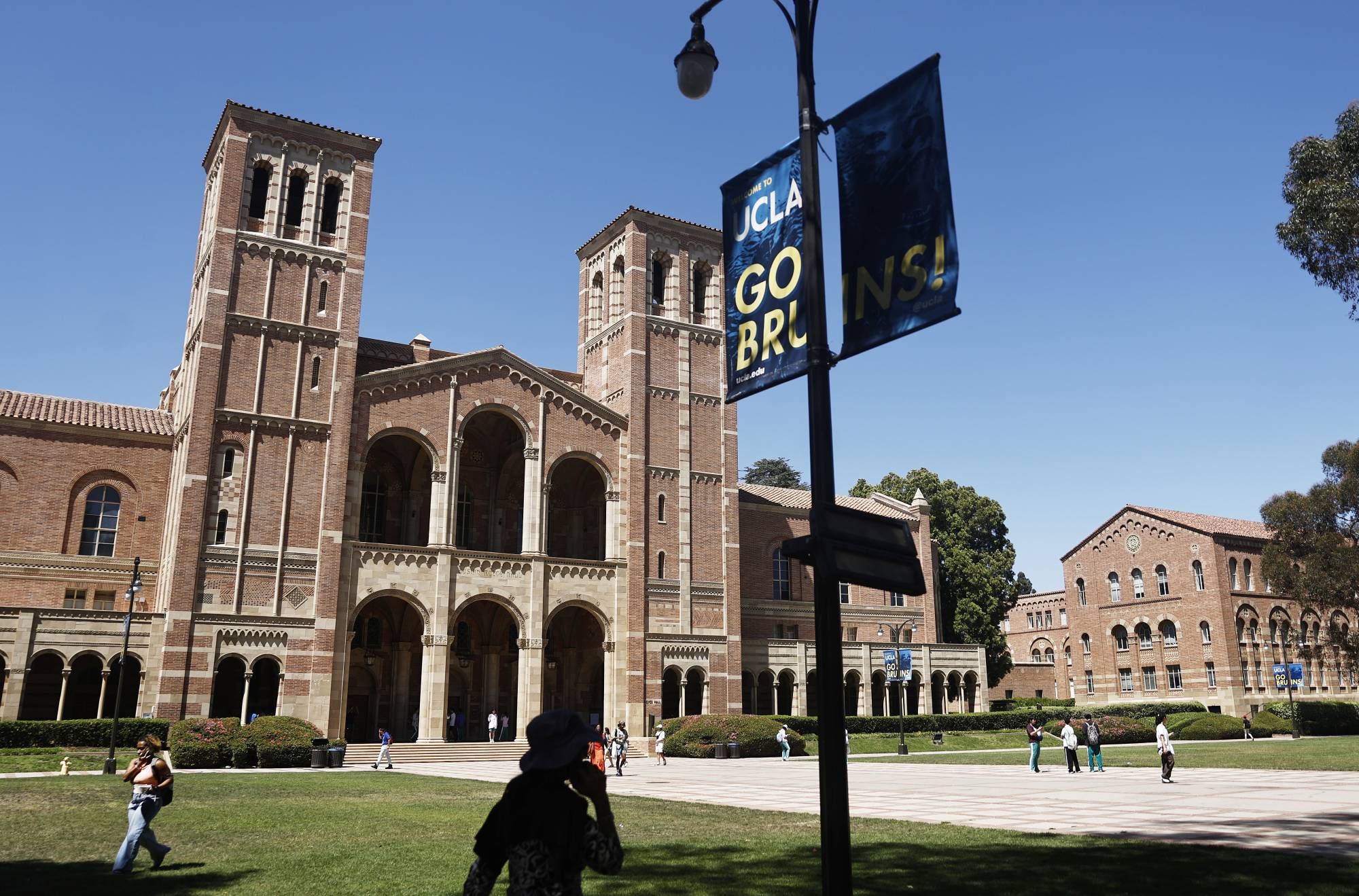
"caption": "People walk on the plaza outside Royce Hall, the site of 2024 pro-Palestinian protests, on the UCLA campus on July 30, 2025, in Los Angeles, California.",
"credit": "Mario Tama/Getty Images",
"altTag": null,
"description": null,
"imgSizes": {
"medium": {
"file": "https://cdn.kqed.org/wp-content/uploads/sites/10/2025/08/GettyImages-2227778784-2000x1319.jpg",
"width": 2000,
"height": 1319,
"mimeType": "image/jpeg"
},
"large": {
"file": "https://cdn.kqed.org/wp-content/uploads/sites/10/2025/08/GettyImages-2227778784-2000x1319.jpg",
"width": 2000,
"height": 1319,
"mimeType": "image/jpeg"
},
"thumbnail": {
"file": "https://cdn.kqed.org/wp-content/uploads/sites/10/2025/08/GettyImages-2227778784-160x106.jpg",
"width": 160,
"height": 106,
"mimeType": "image/jpeg"
},
"1536x1536": {
"file": "https://cdn.kqed.org/wp-content/uploads/sites/10/2025/08/GettyImages-2227778784-1536x1013.jpg",
"width": 1536,
"height": 1013,
"mimeType": "image/jpeg"
},
"2048x2048": {
"file": "https://cdn.kqed.org/wp-content/uploads/sites/10/2025/08/GettyImages-2227778784-2048x1351.jpg",
"width": 2048,
"height": 1351,
"mimeType": "image/jpeg"
},
"post-thumbnail": {
"file": "https://cdn.kqed.org/wp-content/uploads/sites/10/2025/08/GettyImages-2227778784-672x372.jpg",
"width": 672,
"height": 372,
"mimeType": "image/jpeg"
},
"twentyfourteen-full-width": {
"file": "https://cdn.kqed.org/wp-content/uploads/sites/10/2025/08/GettyImages-2227778784-1038x576.jpg",
"width": 1038,
"height": 576,
"mimeType": "image/jpeg"
},
"full-width": {
"file": "https://cdn.kqed.org/wp-content/uploads/sites/10/2025/08/GettyImages-2227778784-2000x1319.jpg",
"width": 2000,
"height": 1319,
"mimeType": "image/jpeg"
},
"kqedFullSize": {
"file": "https://cdn.kqed.org/wp-content/uploads/sites/10/2025/08/GettyImages-2227778784-scaled-e1787859357158.jpg",
"width": 2000,
"height": 1319
}
},
"isLoading": false,
"fetchFailed": false
},
"news_12008663": {
"type": "attachments",
"id": "news_12008663",
"meta": {
"index": "attachments_1716263798",
"site": "news",
"id": "12008663",
"found": true
},
"title": "241008-UCB CAMPUS WALKOUT-MD-09-KQED",
"publishDate": 1728431201,
"status": "inherit",
"parent": 12032046,
"modified": 1742415507,
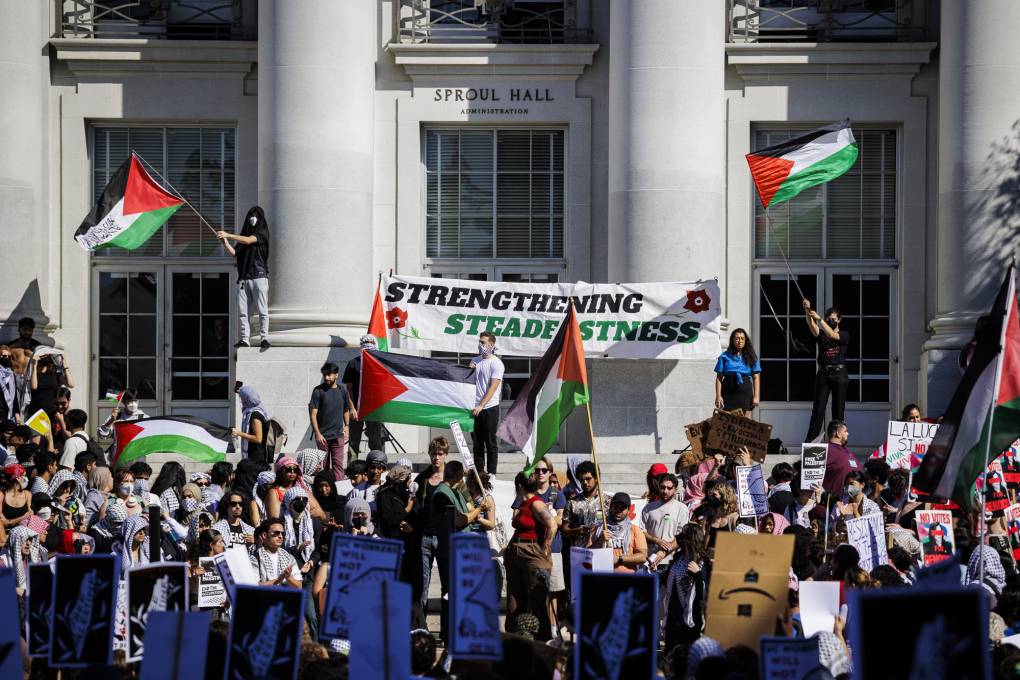
"caption": "A walkout and rally for Gaza and Lebanon at the University of California, Berkeley, on Oct. 8, 2024.",
"credit": "Martin do Nascimento/KQED",
"altTag": null,
"description": null,
"imgSizes": {
"medium": {
"file": "https://cdn.kqed.org/wp-content/uploads/sites/10/2024/10/241008-UCB-CAMPUS-WALKOUT-MD-09-KQED-800x533.jpg",
"width": 800,
"height": 533,
"mimeType": "image/jpeg"
},
"large": {
"file": "https://cdn.kqed.org/wp-content/uploads/sites/10/2024/10/241008-UCB-CAMPUS-WALKOUT-MD-09-KQED-1020x680.jpg",
"width": 1020,
"height": 680,
"mimeType": "image/jpeg"
},
"thumbnail": {
"file": "https://cdn.kqed.org/wp-content/uploads/sites/10/2024/10/241008-UCB-CAMPUS-WALKOUT-MD-09-KQED-160x107.jpg",
"width": 160,
"height": 107,
"mimeType": "image/jpeg"
},
"1536x1536": {
"file": "https://cdn.kqed.org/wp-content/uploads/sites/10/2024/10/241008-UCB-CAMPUS-WALKOUT-MD-09-KQED-1536x1024.jpg",
"width": 1536,
"height": 1024,
"mimeType": "image/jpeg"
},
"post-thumbnail": {
"file": "https://cdn.kqed.org/wp-content/uploads/sites/10/2024/10/241008-UCB-CAMPUS-WALKOUT-MD-09-KQED-672x372.jpg",
"width": 672,
"height": 372,
"mimeType": "image/jpeg"
},
"twentyfourteen-full-width": {
"file": "https://cdn.kqed.org/wp-content/uploads/sites/10/2024/10/241008-UCB-CAMPUS-WALKOUT-MD-09-KQED-1038x576.jpg",
"width": 1038,
"height": 576,
"mimeType": "image/jpeg"
},
"full-width": {
"file": "https://cdn.kqed.org/wp-content/uploads/sites/10/2024/10/241008-UCB-CAMPUS-WALKOUT-MD-09-KQED-1920x1280.jpg",
"width": 1920,
"height": 1280,
"mimeType": "image/jpeg"
},
"kqedFullSize": {
"file": "https://cdn.kqed.org/wp-content/uploads/sites/10/2024/10/241008-UCB-CAMPUS-WALKOUT-MD-09-KQED.jpg",
"width": 2000,
"height": 1333
}
},
"isLoading": false,
"fetchFailed": false
},
"news_12038656": {
"type": "attachments",
"id": "news_12038656",
"meta": {
"index": "attachments_1716263798",
"site": "news",
"id": "12038656",
"found": true
},
"title": "president-jb-milliken",
"publishDate": 1746314347,
"status": "inherit",
"parent": 12038655,
"modified": 1746314370,
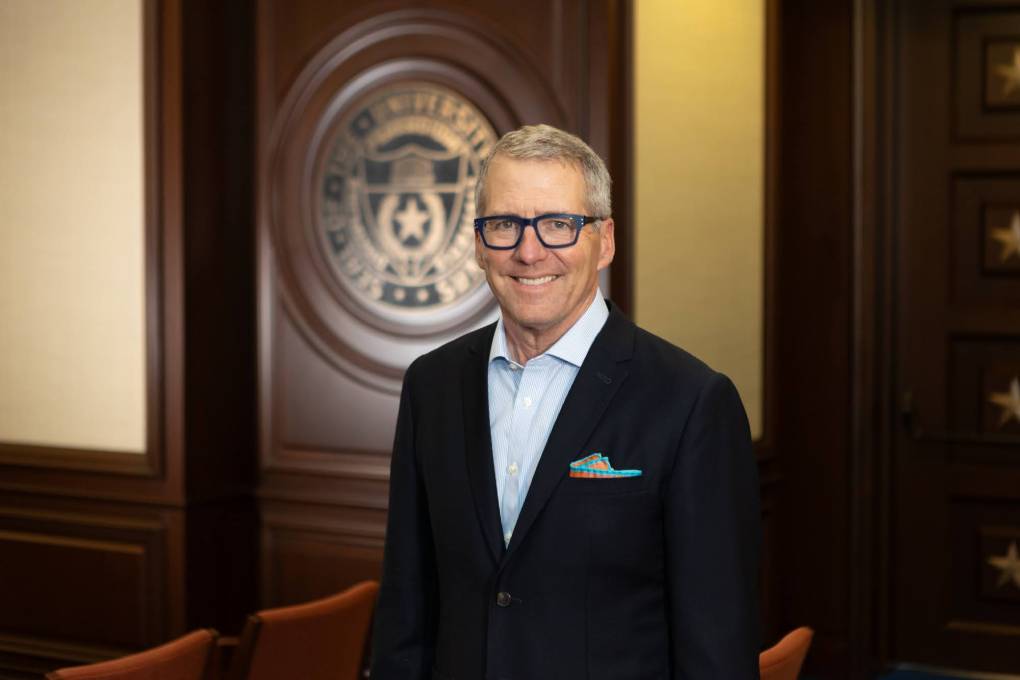
"caption": "James Milliken, the next UC president, has deep experience running higher education systems in Texas and New York.",
"credit": "University of California",
"altTag": null,
"description": null,
"imgSizes": {
"medium": {
"file": "https://cdn.kqed.org/wp-content/uploads/sites/10/2025/05/president-jb-milliken-800x533.jpg",
"width": 800,
"height": 533,
"mimeType": "image/jpeg"
},
"large": {
"file": "https://cdn.kqed.org/wp-content/uploads/sites/10/2025/05/president-jb-milliken-1020x680.jpg",
"width": 1020,
"height": 680,
"mimeType": "image/jpeg"
},
"thumbnail": {
"file": "https://cdn.kqed.org/wp-content/uploads/sites/10/2025/05/president-jb-milliken-160x107.jpg",
"width": 160,
"height": 107,
"mimeType": "image/jpeg"
},
"1536x1536": {
"file": "https://cdn.kqed.org/wp-content/uploads/sites/10/2025/05/president-jb-milliken-1536x1024.jpg",
"width": 1536,
"height": 1024,
"mimeType": "image/jpeg"
},
"post-thumbnail": {
"file": "https://cdn.kqed.org/wp-content/uploads/sites/10/2025/05/president-jb-milliken-672x372.jpg",
"width": 672,
"height": 372,
"mimeType": "image/jpeg"
},
"twentyfourteen-full-width": {
"file": "https://cdn.kqed.org/wp-content/uploads/sites/10/2025/05/president-jb-milliken-1038x576.jpg",
"width": 1038,
"height": 576,
"mimeType": "image/jpeg"
},
"full-width": {
"file": "https://cdn.kqed.org/wp-content/uploads/sites/10/2025/05/president-jb-milliken-1920x1280.jpg",
"width": 1920,
"height": 1280,
"mimeType": "image/jpeg"
},
"kqedFullSize": {
"file": "https://cdn.kqed.org/wp-content/uploads/sites/10/2025/05/president-jb-milliken.jpg",
"width": 2000,
"height": 1333
}
},
"isLoading": false,
"fetchFailed": false
},
"news_12035377": {
"type": "attachments",
"id": "news_12035377",
"meta": {
"index": "attachments_1716263798",
"site": "news",
"id": "12035377",
"found": true
},
"title": "250307-BERKELEY SCIENCE PROTEST-MD-08_qed",
"publishDate": 1744309456,
"status": "inherit",
"parent": 12034703,
"modified": 1744309478,
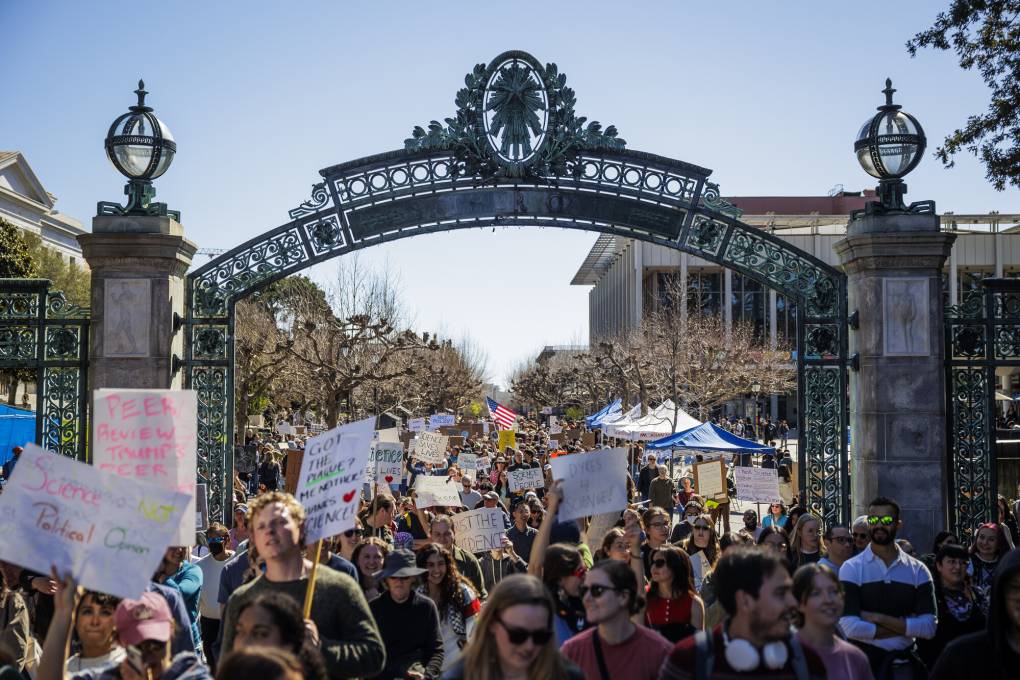
"caption": "A march through the UC Berkeley campus in association with the national Stand Up for Science day of action in Berkeley on March 7, 2025.",
"credit": "Martin do Nascimento/KQED",
"altTag": null,
"description": null,
"imgSizes": {
"medium": {
"file": "https://cdn.kqed.org/wp-content/uploads/sites/10/2025/04/250307-BERKELEY-SCIENCE-PROTEST-MD-08_qed-800x533.jpg",
"width": 800,
"height": 533,
"mimeType": "image/jpeg"
},
"large": {
"file": "https://cdn.kqed.org/wp-content/uploads/sites/10/2025/04/250307-BERKELEY-SCIENCE-PROTEST-MD-08_qed-1020x680.jpg",
"width": 1020,
"height": 680,
"mimeType": "image/jpeg"
},
"thumbnail": {
"file": "https://cdn.kqed.org/wp-content/uploads/sites/10/2025/04/250307-BERKELEY-SCIENCE-PROTEST-MD-08_qed-160x107.jpg",
"width": 160,
"height": 107,
"mimeType": "image/jpeg"
},
"1536x1536": {
"file": "https://cdn.kqed.org/wp-content/uploads/sites/10/2025/04/250307-BERKELEY-SCIENCE-PROTEST-MD-08_qed-1536x1024.jpg",
"width": 1536,
"height": 1024,
"mimeType": "image/jpeg"
},
"post-thumbnail": {
"file": "https://cdn.kqed.org/wp-content/uploads/sites/10/2025/04/250307-BERKELEY-SCIENCE-PROTEST-MD-08_qed-672x372.jpg",
"width": 672,
"height": 372,
"mimeType": "image/jpeg"
},
"twentyfourteen-full-width": {
"file": "https://cdn.kqed.org/wp-content/uploads/sites/10/2025/04/250307-BERKELEY-SCIENCE-PROTEST-MD-08_qed-1038x576.jpg",
"width": 1038,
"height": 576,
"mimeType": "image/jpeg"
},
"full-width": {
"file": "https://cdn.kqed.org/wp-content/uploads/sites/10/2025/04/250307-BERKELEY-SCIENCE-PROTEST-MD-08_qed-1920x1280.jpg",
"width": 1920,
"height": 1280,
"mimeType": "image/jpeg"
},
"kqedFullSize": {
"file": "https://cdn.kqed.org/wp-content/uploads/sites/10/2025/04/250307-BERKELEY-SCIENCE-PROTEST-MD-08_qed.jpg",
"width": 1999,
"height": 1333
}
},
"isLoading": false,
"fetchFailed": false
},
"news_12034753": {
"type": "attachments",
"id": "news_12034753",
"meta": {
"index": "attachments_1716263798",
"site": "news",
"id": "12034753",
"found": true
},
"title": "20250129_UCBerkeleyRally_GC-72_qed",
"publishDate": 1744048834,
"status": "inherit",
"parent": 12034742,
"modified": 1744048856,
"caption": "Hundreds of students and supporters rally, in solidarity with their undocumented classmates as the Trump administration begins to carry out mass deportations, at Sproul Plaza at UC Berkeley on Jan. 29, 2025.",
"credit": "Gina Castro/KQED",
"altTag": null,
"description": null,
"imgSizes": {
"medium": {
"file": "https://cdn.kqed.org/wp-content/uploads/sites/10/2025/04/20250129_UCBerkeleyRally_GC-72_qed-800x533.jpg",
"width": 800,
"height": 533,
"mimeType": "image/jpeg"
},
"large": {
"file": "https://cdn.kqed.org/wp-content/uploads/sites/10/2025/04/20250129_UCBerkeleyRally_GC-72_qed-1020x680.jpg",
"width": 1020,
"height": 680,
"mimeType": "image/jpeg"
},
"thumbnail": {
"file": "https://cdn.kqed.org/wp-content/uploads/sites/10/2025/04/20250129_UCBerkeleyRally_GC-72_qed-160x107.jpg",
"width": 160,
"height": 107,
"mimeType": "image/jpeg"
},
"1536x1536": {
"file": "https://cdn.kqed.org/wp-content/uploads/sites/10/2025/04/20250129_UCBerkeleyRally_GC-72_qed-1536x1024.jpg",
"width": 1536,
"height": 1024,
"mimeType": "image/jpeg"
},
"post-thumbnail": {
"file": "https://cdn.kqed.org/wp-content/uploads/sites/10/2025/04/20250129_UCBerkeleyRally_GC-72_qed-672x372.jpg",
"width": 672,
"height": 372,
"mimeType": "image/jpeg"
},
"twentyfourteen-full-width": {
"file": "https://cdn.kqed.org/wp-content/uploads/sites/10/2025/04/20250129_UCBerkeleyRally_GC-72_qed-1038x576.jpg",
"width": 1038,
"height": 576,
"mimeType": "image/jpeg"
},
"full-width": {
"file": "https://cdn.kqed.org/wp-content/uploads/sites/10/2025/04/20250129_UCBerkeleyRally_GC-72_qed-1920x1280.jpg",
"width": 1920,
"height": 1280,
"mimeType": "image/jpeg"
},
"kqedFullSize": {
"file": "https://cdn.kqed.org/wp-content/uploads/sites/10/2025/04/20250129_UCBerkeleyRally_GC-72_qed.jpg",
"width": 2000,
"height": 1333
}
},
"isLoading": false,
"fetchFailed": false
},
"news_12030406": {
"type": "attachments",
"id": "news_12030406",
"meta": {
"index": "attachments_1716263798",
"site": "news",
"id": "12030406",
"found": true
},
"title": "250307-BERKELEY SCIENCE PROTEST-MD-06-KQED",
"publishDate": 1741387524,
"status": "inherit",
"parent": 12030313,
"modified": 1741396036,
"caption": "Fred Dillon cheers at a rally at UC Berkeley in association with the national Stand Up for Science day of action in Berkeley on March 7, 2025.",
"credit": "Martin do Nascimento/KQED",
"altTag": null,
"description": null,
"imgSizes": {
"medium": {
"file": "https://cdn.kqed.org/wp-content/uploads/sites/10/2025/03/250307-BERKELEY-SCIENCE-PROTEST-MD-06-KQED-800x533.jpg",
"width": 800,
"height": 533,
"mimeType": "image/jpeg"
},
"large": {
"file": "https://cdn.kqed.org/wp-content/uploads/sites/10/2025/03/250307-BERKELEY-SCIENCE-PROTEST-MD-06-KQED-1020x680.jpg",
"width": 1020,
"height": 680,
"mimeType": "image/jpeg"
},
"thumbnail": {
"file": "https://cdn.kqed.org/wp-content/uploads/sites/10/2025/03/250307-BERKELEY-SCIENCE-PROTEST-MD-06-KQED-160x107.jpg",
"width": 160,
"height": 107,
"mimeType": "image/jpeg"
},
"1536x1536": {
"file": "https://cdn.kqed.org/wp-content/uploads/sites/10/2025/03/250307-BERKELEY-SCIENCE-PROTEST-MD-06-KQED-1536x1024.jpg",
"width": 1536,
"height": 1024,
"mimeType": "image/jpeg"
},
"post-thumbnail": {
"file": "https://cdn.kqed.org/wp-content/uploads/sites/10/2025/03/250307-BERKELEY-SCIENCE-PROTEST-MD-06-KQED-672x372.jpg",
"width": 672,
"height": 372,
"mimeType": "image/jpeg"
},
"twentyfourteen-full-width": {
"file": "https://cdn.kqed.org/wp-content/uploads/sites/10/2025/03/250307-BERKELEY-SCIENCE-PROTEST-MD-06-KQED-1038x576.jpg",
"width": 1038,
"height": 576,
"mimeType": "image/jpeg"
},
"full-width": {
"file": "https://cdn.kqed.org/wp-content/uploads/sites/10/2025/03/250307-BERKELEY-SCIENCE-PROTEST-MD-06-KQED-1920x1280.jpg",
"width": 1920,
"height": 1280,
"mimeType": "image/jpeg"
},
"kqedFullSize": {
"file": "https://cdn.kqed.org/wp-content/uploads/sites/10/2025/03/250307-BERKELEY-SCIENCE-PROTEST-MD-06-KQED.jpg",
"width": 2000,
"height": 1333
}
},
"isLoading": false,
"fetchFailed": false
},
"news_12028811": {
"type": "attachments",
"id": "news_12028811",
"meta": {
"index": "attachments_1716263798",
"site": "news",
"id": "12028811",
"found": true
},
"title": "250226-UC STRIKE-MD-08",
"publishDate": 1740605238,
"status": "inherit",
"parent": 12028446,
"modified": 1740614905,
"caption": "Sarah Roberts, a medical interpreter at UCSF, and other members of the University Professional and Technical Employees Local 9119 and the American Federation of State County and Municipal Employees Local 3299 strike at the UCSF Medical Center at Mission Bay in San Francisco on Feb. 26, 2025. The strike represents the latest escalation in a conflict over top union concerns such as staffing levels and compensation that sparked a two-day work stoppage at UC San Francisco in November.",
"credit": "Martin do Nascimento/KQED",
"altTag": null,
"description": null,
"imgSizes": {
"medium": {
"file": "https://cdn.kqed.org/wp-content/uploads/sites/10/2025/02/250226-UC-STRIKE-MD-08-800x533.jpg",
"width": 800,
"height": 533,
"mimeType": "image/jpeg"
},
"large": {
"file": "https://cdn.kqed.org/wp-content/uploads/sites/10/2025/02/250226-UC-STRIKE-MD-08-1020x680.jpg",
"width": 1020,
"height": 680,
"mimeType": "image/jpeg"
},
"thumbnail": {
"file": "https://cdn.kqed.org/wp-content/uploads/sites/10/2025/02/250226-UC-STRIKE-MD-08-160x107.jpg",
"width": 160,
"height": 107,
"mimeType": "image/jpeg"
},
"1536x1536": {
"file": "https://cdn.kqed.org/wp-content/uploads/sites/10/2025/02/250226-UC-STRIKE-MD-08-1536x1024.jpg",
"width": 1536,
"height": 1024,
"mimeType": "image/jpeg"
},
"post-thumbnail": {
"file": "https://cdn.kqed.org/wp-content/uploads/sites/10/2025/02/250226-UC-STRIKE-MD-08-672x372.jpg",
"width": 672,
"height": 372,
"mimeType": "image/jpeg"
},
"twentyfourteen-full-width": {
"file": "https://cdn.kqed.org/wp-content/uploads/sites/10/2025/02/250226-UC-STRIKE-MD-08-1038x576.jpg",
"width": 1038,
"height": 576,
"mimeType": "image/jpeg"
},
"full-width": {
"file": "https://cdn.kqed.org/wp-content/uploads/sites/10/2025/02/250226-UC-STRIKE-MD-08-1920x1280.jpg",
"width": 1920,
"height": 1280,
"mimeType": "image/jpeg"
},
"kqedFullSize": {
"file": "https://cdn.kqed.org/wp-content/uploads/sites/10/2025/02/250226-UC-STRIKE-MD-08.jpg",
"width": 2000,
"height": 1333
}
},
"isLoading": false,
"fetchFailed": false
},
"news_12032407": {
"type": "attachments",
"id": "news_12032407",
"meta": {
"index": "attachments_1716263798",
"site": "news",
"id": "12032407",
"found": true
},
"title": "University of California labor unions on strike",
"publishDate": 1742519313,
"status": "inherit",
"parent": 12032232,
"modified": 1742576600,
"caption": "Members of University Professional and Technical Employees-CWA Local 9119 and AFSCME Local 3299 protest on West Chapman Avenue in front of UC Irvine Medical Center in Orange, California, on Feb. 26, 2025. AFSCME Local 3299 President Liz Perlman said Wednesday, 'It's the weight at the top that's crushing the system,' blaming the UC top brass for the hiring freeze.",
"credit": "Paul Bersebach/MediaNews Group/Orange County Register via Getty Images",
"altTag": null,
"description": null,
"imgSizes": {
"medium": {
"file": "https://cdn.kqed.org/wp-content/uploads/sites/10/2025/03/GettyImages-2201544551-800x572.jpg",
"width": 800,
"height": 572,
"mimeType": "image/jpeg"
},
"large": {
"file": "https://cdn.kqed.org/wp-content/uploads/sites/10/2025/03/GettyImages-2201544551-1020x729.jpg",
"width": 1020,
"height": 729,
"mimeType": "image/jpeg"
},
"thumbnail": {
"file": "https://cdn.kqed.org/wp-content/uploads/sites/10/2025/03/GettyImages-2201544551-160x114.jpg",
"width": 160,
"height": 114,
"mimeType": "image/jpeg"
},
"post-thumbnail": {
"file": "https://cdn.kqed.org/wp-content/uploads/sites/10/2025/03/GettyImages-2201544551-672x372.jpg",
"width": 672,
"height": 372,
"mimeType": "image/jpeg"
},
"twentyfourteen-full-width": {
"file": "https://cdn.kqed.org/wp-content/uploads/sites/10/2025/03/GettyImages-2201544551-1024x576.jpg",
"width": 1024,
"height": 576,
"mimeType": "image/jpeg"
},
"kqedFullSize": {
"file": "https://cdn.kqed.org/wp-content/uploads/sites/10/2025/03/GettyImages-2201544551.jpg",
"width": 1024,
"height": 732
}
},
"isLoading": false,
"fetchFailed": false
},
"news_12011469": {
"type": "attachments",
"id": "news_12011469",
"meta": {
"index": "attachments_1716263798",
"site": "news",
"id": "12011469",
"found": true
},
"title": "20241028_MEASUREJ_GC-19-KQED",
"publishDate": 1730158316,
"status": "inherit",
"parent": 0,
"modified": 1730480800,
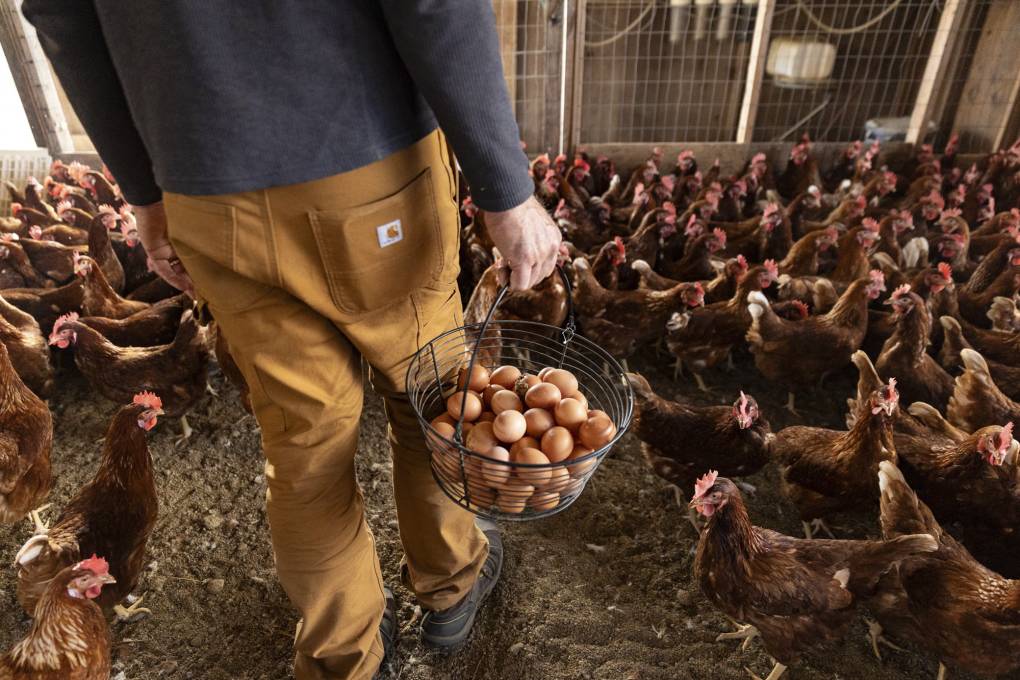
"caption": "Mike Weber collects eggs from a barn of Rhode Island Red chickens at Weber Family Farms in Petaluma on Oct. 28, 2024.",
"credit": "Gina Castro/KQED",
"altTag": null,
"description": null,
"imgSizes": {
"medium": {
"file": "https://cdn.kqed.org/wp-content/uploads/sites/10/2024/10/20241028_MEASUREJ_GC-19-KQED-800x533.jpg",
"width": 800,
"height": 533,
"mimeType": "image/jpeg"
},
"large": {
"file": "https://cdn.kqed.org/wp-content/uploads/sites/10/2024/10/20241028_MEASUREJ_GC-19-KQED-1020x680.jpg",
"width": 1020,
"height": 680,
"mimeType": "image/jpeg"
},
"thumbnail": {
"file": "https://cdn.kqed.org/wp-content/uploads/sites/10/2024/10/20241028_MEASUREJ_GC-19-KQED-160x107.jpg",
"width": 160,
"height": 107,
"mimeType": "image/jpeg"
},
"1536x1536": {
"file": "https://cdn.kqed.org/wp-content/uploads/sites/10/2024/10/20241028_MEASUREJ_GC-19-KQED-1536x1024.jpg",
"width": 1536,
"height": 1024,
"mimeType": "image/jpeg"
},
"post-thumbnail": {
"file": "https://cdn.kqed.org/wp-content/uploads/sites/10/2024/10/20241028_MEASUREJ_GC-19-KQED-672x372.jpg",
"width": 672,
"height": 372,
"mimeType": "image/jpeg"
},
"twentyfourteen-full-width": {
"file": "https://cdn.kqed.org/wp-content/uploads/sites/10/2024/10/20241028_MEASUREJ_GC-19-KQED-1038x576.jpg",
"width": 1038,
"height": 576,
"mimeType": "image/jpeg"
},
"full-width": {
"file": "https://cdn.kqed.org/wp-content/uploads/sites/10/2024/10/20241028_MEASUREJ_GC-19-KQED-1920x1280.jpg",
"width": 1920,
"height": 1280,
"mimeType": "image/jpeg"
},
"kqedFullSize": {
"file": "https://cdn.kqed.org/wp-content/uploads/sites/10/2024/10/20241028_MEASUREJ_GC-19-KQED.jpg",
"width": 2000,
"height": 1333
}
},
"isLoading": false,
"fetchFailed": false
},
"news_12030127": {
"type": "attachments",
"id": "news_12030127",
"meta": {
"index": "attachments_1716263798",
"site": "news",
"id": "12030127",
"found": true
},
"title": "020525_Annikah-Shah_JLB_CM_14 copy",
"publishDate": 1741292151,
"status": "inherit",
"parent": 12030126,
"modified": 1741292222,
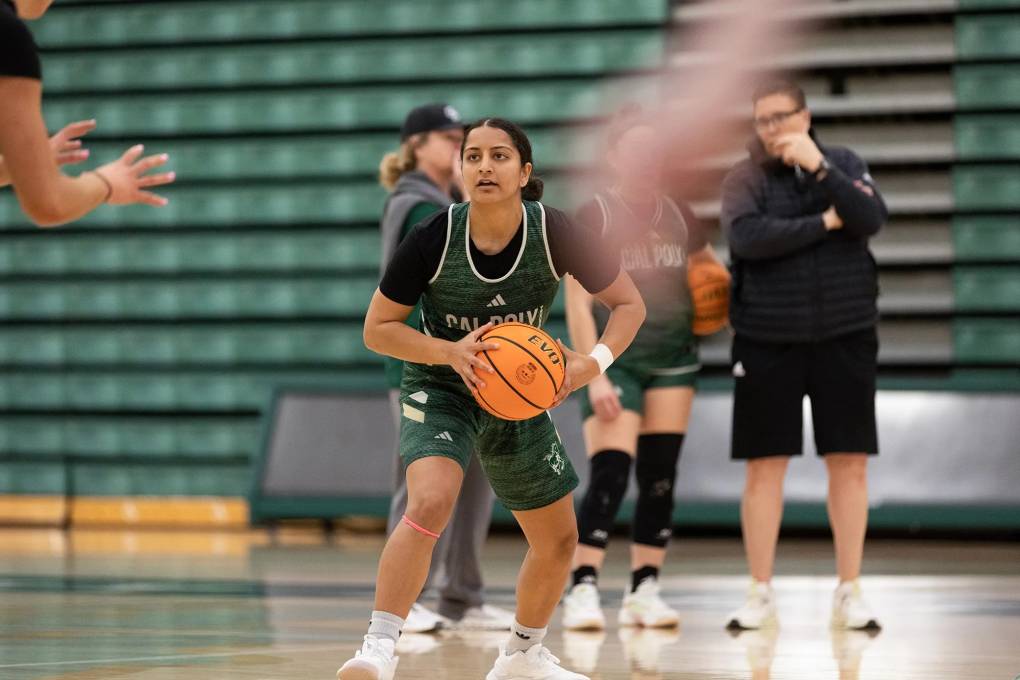
"caption": "Not all NIL deals are high-rolling: Cal Poly San Luis Obispo senior Annika Shah got her first sponsorship through a local Indian restaurant, from which she gets free food. ",
"credit": "Julie Leopo-Bermudez for CalMatters",
"altTag": "A female basketballer looks at the hoop, ready for a jump shot, she's wearing a green outfit with empty bleachers behind her and other players in the background.",
"description": null,
"imgSizes": {
"medium": {
"file": "https://cdn.kqed.org/wp-content/uploads/sites/10/2025/03/020525_Annikah-Shah_JLB_CM_14-copy-800x533.jpg",
"width": 800,
"height": 533,
"mimeType": "image/jpeg"
},
"large": {
"file": "https://cdn.kqed.org/wp-content/uploads/sites/10/2025/03/020525_Annikah-Shah_JLB_CM_14-copy-1020x680.jpg",
"width": 1020,
"height": 680,
"mimeType": "image/jpeg"
},
"thumbnail": {
"file": "https://cdn.kqed.org/wp-content/uploads/sites/10/2025/03/020525_Annikah-Shah_JLB_CM_14-copy-160x107.jpg",
"width": 160,
"height": 107,
"mimeType": "image/jpeg"
},
"1536x1536": {
"file": "https://cdn.kqed.org/wp-content/uploads/sites/10/2025/03/020525_Annikah-Shah_JLB_CM_14-copy-1536x1024.jpg",
"width": 1536,
"height": 1024,
"mimeType": "image/jpeg"
},
"post-thumbnail": {
"file": "https://cdn.kqed.org/wp-content/uploads/sites/10/2025/03/020525_Annikah-Shah_JLB_CM_14-copy-672x372.jpg",
"width": 672,
"height": 372,
"mimeType": "image/jpeg"
},
"twentyfourteen-full-width": {
"file": "https://cdn.kqed.org/wp-content/uploads/sites/10/2025/03/020525_Annikah-Shah_JLB_CM_14-copy-1038x576.jpg",
"width": 1038,
"height": 576,
"mimeType": "image/jpeg"
},
"full-width": {
"file": "https://cdn.kqed.org/wp-content/uploads/sites/10/2025/03/020525_Annikah-Shah_JLB_CM_14-copy-1920x1280.jpg",
"width": 1920,
"height": 1280,
"mimeType": "image/jpeg"
},
"kqedFullSize": {
"file": "https://cdn.kqed.org/wp-content/uploads/sites/10/2025/03/020525_Annikah-Shah_JLB_CM_14-copy.jpg",
"width": 2000,
"height": 1333
}
},
"isLoading": false,
"fetchFailed": false
},
"news_12019461": {
"type": "attachments",
"id": "news_12019461",
"meta": {
"index": "attachments_1716263798",
"site": "news",
"id": "12019461",
"found": true
},
"title": "TOPSHOT-US-PALESTINIAN-ISRAEL-CONFLICT-EDUCATION-DEMONSTRATION",
"publishDate": 1734738715,
"status": "inherit",
"parent": 12019455,
"modified": 1734738792,
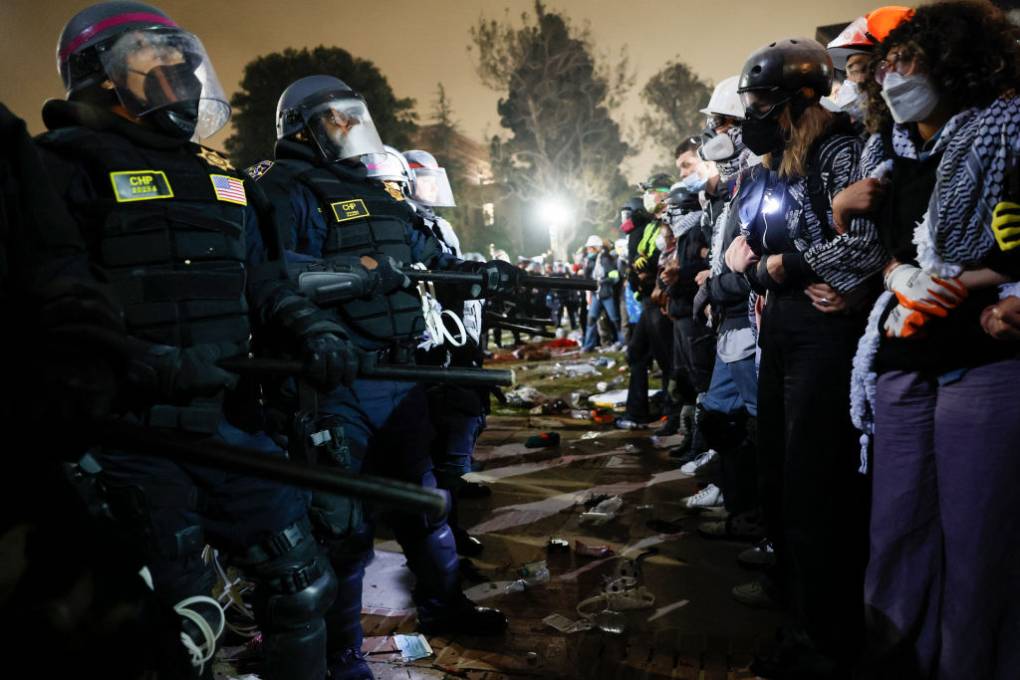
"caption": "Police face off with pro-Palestinian students after destroying part of the encampment barricade on the campus of the University of California, Los Angeles (UCLA) in Los Angeles, early on May 2, 2024. ",
"credit": "Etienne Laurent/AFP via Getty Images",
"altTag": null,
"description": null,
"imgSizes": {
"medium": {
"file": "https://cdn.kqed.org/wp-content/uploads/sites/10/2024/12/GettyImages-2150533164-800x534.jpg",
"width": 800,
"height": 534,
"mimeType": "image/jpeg"
},
"large": {
"file": "https://cdn.kqed.org/wp-content/uploads/sites/10/2024/12/GettyImages-2150533164-1020x680.jpg",
"width": 1020,
"height": 680,
"mimeType": "image/jpeg"
},
"thumbnail": {
"file": "https://cdn.kqed.org/wp-content/uploads/sites/10/2024/12/GettyImages-2150533164-160x107.jpg",
"width": 160,
"height": 107,
"mimeType": "image/jpeg"
},
"post-thumbnail": {
"file": "https://cdn.kqed.org/wp-content/uploads/sites/10/2024/12/GettyImages-2150533164-672x372.jpg",
"width": 672,
"height": 372,
"mimeType": "image/jpeg"
},
"twentyfourteen-full-width": {
"file": "https://cdn.kqed.org/wp-content/uploads/sites/10/2024/12/GettyImages-2150533164-1024x576.jpg",
"width": 1024,
"height": 576,
"mimeType": "image/jpeg"
},
"kqedFullSize": {
"file": "https://cdn.kqed.org/wp-content/uploads/sites/10/2024/12/GettyImages-2150533164.jpg",
"width": 1024,
"height": 683
}
},
"isLoading": false,
"fetchFailed": false
},
"news_12014499": {
"type": "attachments",
"id": "news_12014499",
"meta": {
"index": "attachments_1716263798",
"site": "news",
"id": "12014499",
"found": true
},
"title": "081623_Berkeley-Student-Housing_SN_CM_14 copy",
"publishDate": 1731626667,
"status": "inherit",
"parent": 12014494,
"modified": 1731626689,
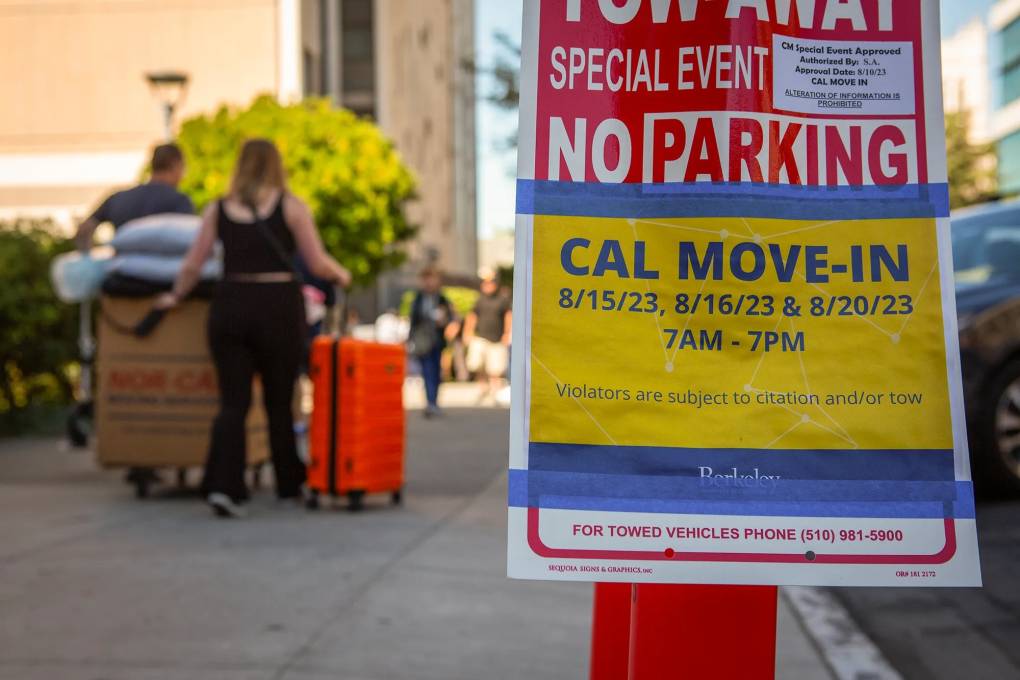
"caption": "Students move into the UC Berkeley dorms in Berkeley on Aug. 16, 2023. ",
"credit": "Semantha Norris/CalMatters",
"altTag": null,
"description": null,
"imgSizes": {
"medium": {
"file": "https://cdn.kqed.org/wp-content/uploads/sites/10/2024/11/081623_Berkeley-Student-Housing_SN_CM_14-copy-800x533.jpg",
"width": 800,
"height": 533,
"mimeType": "image/jpeg"
},
"large": {
"file": "https://cdn.kqed.org/wp-content/uploads/sites/10/2024/11/081623_Berkeley-Student-Housing_SN_CM_14-copy-1020x680.jpg",
"width": 1020,
"height": 680,
"mimeType": "image/jpeg"
},
"thumbnail": {
"file": "https://cdn.kqed.org/wp-content/uploads/sites/10/2024/11/081623_Berkeley-Student-Housing_SN_CM_14-copy-160x107.jpg",
"width": 160,
"height": 107,
"mimeType": "image/jpeg"
},
"1536x1536": {
"file": "https://cdn.kqed.org/wp-content/uploads/sites/10/2024/11/081623_Berkeley-Student-Housing_SN_CM_14-copy-1536x1024.jpg",
"width": 1536,
"height": 1024,
"mimeType": "image/jpeg"
},
"post-thumbnail": {
"file": "https://cdn.kqed.org/wp-content/uploads/sites/10/2024/11/081623_Berkeley-Student-Housing_SN_CM_14-copy-672x372.jpg",
"width": 672,
"height": 372,
"mimeType": "image/jpeg"
},
"twentyfourteen-full-width": {
"file": "https://cdn.kqed.org/wp-content/uploads/sites/10/2024/11/081623_Berkeley-Student-Housing_SN_CM_14-copy-1038x576.jpg",
"width": 1038,
"height": 576,
"mimeType": "image/jpeg"
},
"full-width": {
"file": "https://cdn.kqed.org/wp-content/uploads/sites/10/2024/11/081623_Berkeley-Student-Housing_SN_CM_14-copy-1920x1280.jpg",
"width": 1920,
"height": 1280,
"mimeType": "image/jpeg"
},
"kqedFullSize": {
"file": "https://cdn.kqed.org/wp-content/uploads/sites/10/2024/11/081623_Berkeley-Student-Housing_SN_CM_14-copy.jpg",
"width": 2000,
"height": 1333
}
},
"isLoading": false,
"fetchFailed": false
}
},
"audioPlayerReducer": {
"postId": "stream_live",
"isPaused": true,
"isPlaying": false,
"pfsActive": false,
"pledgeModalIsOpen": true,
"playerDrawerIsOpen": false,
"liveAudioPlayStartedAt": 0,
"liveAudioPlayContext": ""
},
"authorsReducer": {
"byline_news_12038655": {
"type": "authors",
"id": "byline_news_12038655",
"meta": {
"override": true
},
"slug": "byline_news_12038655",
"name": "\u003ca href=\"https://edsource.org/author/mburke\">Michael Burke\u003c/a> and \u003ca href=\"https://edsource.org/author/adipierro\">Amy DiPierro\u003c/a>, EdSource",
"isLoading": false
},
"byline_news_12030126": {
"type": "authors",
"id": "byline_news_12030126",
"meta": {
"override": true
},
"slug": "byline_news_12030126",
"name": "\u003ca href=\"https://calmatters.org/author/adam-echelman/\">Adam Echelman\u003c/a> and \u003ca href=\"https://calmatters.org/author/ericayee/\">Erica Yee\u003c/a>, CalMatters",
"isLoading": false
},
"byline_news_12019455": {
"type": "authors",
"id": "byline_news_12019455",
"meta": {
"override": true
},
"slug": "byline_news_12019455",
"name": "Jocelyn Gecker, The Associated Press",
"isLoading": false
},
"byline_news_12014494": {
"type": "authors",
"id": "byline_news_12014494",
"meta": {
"override": true
},
"slug": "byline_news_12014494",
"name": "\u003ca href=\"https://calmatters.org/author/mikhailzinshteyn/\">Mikhail Zinshteyn\u003c/a>, CalMatters",
"isLoading": false
},
"scottshafer": {
"type": "authors",
"id": "255",
"meta": {
"index": "authors_1716337520",
"id": "255",
"found": true
},
"name": "Scott Shafer",
"firstName": "Scott",
"lastName": "Shafer",
"slug": "scottshafer",
"email": "sshafer@kqed.org",
"display_author_email": false,
"staff_mastheads": [
"news"
],
"title": "KQED Contributor",
"bio": "Scott Shafer is a senior editor with the KQED Politics and Government desk. He is co-host of Political Breakdown, the award-winning radio show and podcast with a personal take on the world of politics. Scott came to KQED in 1998 to host the statewide\u003cem> California Report\u003c/em>. Prior to that he had extended stints in politics and government\u003cem>.\u003c/em> He uses that inside experience at KQED in his, reporting, hosting and analysis for the politics desk. Scott collaborated \u003cem>Political Breakdown a\u003c/em>nd on \u003cem>The Political Mind of Jerry Brown, \u003c/em>an eight-part series about the life and extraordinary political career of the former governor. For fun, he plays water polo with the San Francisco Tsunami.",
"avatar": "https://secure.gravatar.com/avatar/a62ebae45b79d7aed1a39a0e3bf68104?s=600&d=blank&r=g",
"twitter": "scottshafer",
"bluesky": null,
"facebook": null,
"instagram": null,
"linkedin": null,
"sites": [
{
"site": "news",
"roles": [
"editor"
]
},
{
"site": "stateofhealth",
"roles": [
"author"
]
},
{
"site": "science",
"roles": [
"author"
]
},
{
"site": "forum",
"roles": [
"subscriber"
]
},
{
"site": "liveblog",
"roles": [
"author"
]
}
],
"headData": {
"title": "Scott Shafer | KQED",
"description": "KQED Contributor",
"ogImgSrc": "https://secure.gravatar.com/avatar/a62ebae45b79d7aed1a39a0e3bf68104?s=600&d=blank&r=g",
"twImgSrc": "https://secure.gravatar.com/avatar/a62ebae45b79d7aed1a39a0e3bf68104?s=600&d=blank&r=g"
},
"isLoading": false,
"link": "/author/scottshafer"
},
"matthewgreen": {
"type": "authors",
"id": "1263",
"meta": {
"index": "authors_1716337520",
"id": "1263",
"found": true
},
"name": "Matthew Green",
"firstName": "Matthew",
"lastName": "Green",
"slug": "matthewgreen",
"email": "mgreen@kqed.org",
"display_author_email": false,
"staff_mastheads": [],
"title": "KQED Editor/Reporter",
"bio": "Matthew Green is a digital media producer for KQED News. He previously produced \u003ca href=\"http://www.kqed.org/lowdown\">The Lowdown\u003c/a>, KQED’s multimedia news education blog. Matthew's written for numerous Bay Area publications, including the Oakland Tribune and San Francisco Chronicle. He also taught journalism classes at Fremont High School in East Oakland.\r\n\r\nEmail: mgreen@kqed.org; Twitter: @MGreenKQED",
"avatar": "https://secure.gravatar.com/avatar/3bf498d1267ca02c8494f33d8cfc575e?s=600&d=blank&r=g",
"twitter": "MGreenKQED",
"facebook": null,
"instagram": null,
"linkedin": null,
"sites": [
{
"site": "news",
"roles": []
},
{
"site": "lowdown",
"roles": []
},
{
"site": "science",
"roles": []
},
{
"site": "education",
"roles": []
},
{
"site": "quest",
"roles": []
},
{
"site": "liveblog",
"roles": []
}
],
"headData": {
"title": "Matthew Green | KQED",
"description": "KQED Editor/Reporter",
"ogImgSrc": "https://secure.gravatar.com/avatar/3bf498d1267ca02c8494f33d8cfc575e?s=600&d=blank&r=g",
"twImgSrc": "https://secure.gravatar.com/avatar/3bf498d1267ca02c8494f33d8cfc575e?s=600&d=blank&r=g"
},
"isLoading": false,
"link": "/author/matthewgreen"
},
"mlagos": {
"type": "authors",
"id": "3239",
"meta": {
"index": "authors_1716337520",
"id": "3239",
"found": true
},
"name": "Marisa Lagos",
"firstName": "Marisa",
"lastName": "Lagos",
"slug": "mlagos",
"email": "mlagos@kqed.org",
"display_author_email": false,
"staff_mastheads": [
"news"
],
"title": "KQED Contributor",
"bio": "Marisa Lagos is a correspondent for KQED’s California Politics and Government Desk and co-hosts the award-winning show and podcast, Political Breakdown. At KQED, Lagos also conducts reporting, analysis and investigations into state, local and national politics for radio, TV, online and onstage. In 2022, she and co-host, Scott Shafer, moderated the only gubernatorial debate in California. In 2020, the \u003ci>Washington Post\u003c/i> named her one of the top political journalists in California; she was nominated for a Peabody and won several other awards for her work investigating the 2017 California wildfires. She has worked at the \u003ci>San Francisco Chronicle\u003c/i>, \u003ci>San Francisco Examiner\u003c/i> and \u003ci>Los Angeles Times\u003c/i>. A UC Santa Barbara graduate, she lives in San Francisco with her two sons and husband.",
"avatar": "https://secure.gravatar.com/avatar/a261a0d3696fc066871ef96b85b5e7d2?s=600&d=blank&r=g",
"twitter": "@mlagos",
"facebook": null,
"instagram": null,
"linkedin": null,
"sites": [
{
"site": "arts",
"roles": [
"author"
]
},
{
"site": "news",
"roles": [
"editor"
]
},
{
"site": "science",
"roles": [
"editor"
]
},
{
"site": "forum",
"roles": [
"author"
]
},
{
"site": "liveblog",
"roles": [
"author"
]
}
],
"headData": {
"title": "Marisa Lagos | KQED",
"description": "KQED Contributor",
"ogImgSrc": "https://secure.gravatar.com/avatar/a261a0d3696fc066871ef96b85b5e7d2?s=600&d=blank&r=g",
"twImgSrc": "https://secure.gravatar.com/avatar/a261a0d3696fc066871ef96b85b5e7d2?s=600&d=blank&r=g"
},
"isLoading": false,
"link": "/author/mlagos"
},
"fjhabvala": {
"type": "authors",
"id": "8659",
"meta": {
"index": "authors_1716337520",
"id": "8659",
"found": true
},
"name": "Farida Jhabvala Romero",
"firstName": "Farida",
"lastName": "Jhabvala Romero",
"slug": "fjhabvala",
"email": "fjhabvala@kqed.org",
"display_author_email": true,
"staff_mastheads": [
"news"
],
"title": "KQED Contributor",
"bio": "Farida Jhabvala Romero is a Labor Correspondent for KQED. She previously covered immigration. Farida was \u003ca href=\"https://www.ccnma.org/2022-most-influential-latina-journalists\">named\u003c/a> one of the 10 Most Influential Latina Journalists in California in 2022 by the California Chicano News Media Association. Her work has won awards from the Society of Professional Journalists (Northern California), as well as a national and regional Edward M. Murrow Award for the collaborative reporting projects “Dangerous Air” and “Graying California.” Before joining KQED, Farida worked as a producer at Radio Bilingüe, a national public radio network. Farida earned her master’s degree in journalism from Stanford University.",
"avatar": "https://secure.gravatar.com/avatar/f9f022d4e2609741874222a1e9d41f48fea74011aa7c615eef91d9a50c944ebe?s=600&d=blank&r=g",
"twitter": "FaridaJhabvala",
"bluesky": null,
"facebook": null,
"instagram": null,
"linkedin": "https://www.linkedin.com/in/faridajhabvala/",
"sites": [
{
"site": "news",
"roles": [
"editor"
]
},
{
"site": "stateofhealth",
"roles": [
"author"
]
},
{
"site": "liveblog",
"roles": [
"author"
]
}
],
"headData": {
"title": "Farida Jhabvala Romero | KQED",
"description": "KQED Contributor",
"ogImgSrc": "https://secure.gravatar.com/avatar/f9f022d4e2609741874222a1e9d41f48fea74011aa7c615eef91d9a50c944ebe?s=600&d=blank&r=g",
"twImgSrc": "https://secure.gravatar.com/avatar/f9f022d4e2609741874222a1e9d41f48fea74011aa7c615eef91d9a50c944ebe?s=600&d=blank&r=g"
},
"isLoading": false,
"link": "/author/fjhabvala"
},
"kmizuguchi": {
"type": "authors",
"id": "11739",
"meta": {
"index": "authors_1716337520",
"id": "11739",
"found": true
},
"name": "Keith Mizuguchi",
"firstName": "Keith",
"lastName": "Mizuguchi",
"slug": "kmizuguchi",
"email": "kmizuguchi@kqed.org",
"display_author_email": false,
"staff_mastheads": [],
"title": "KQED Contributor",
"bio": null,
"avatar": "https://secure.gravatar.com/avatar/64d8a7de0723d4099b9fe4e915136103febcc20809abce228ee4415bcb237023?s=600&d=blank&r=g",
"twitter": null,
"bluesky": null,
"facebook": null,
"instagram": null,
"linkedin": null,
"sites": [
{
"site": "news",
"roles": [
"editor"
]
},
{
"site": "science",
"roles": [
"editor"
]
}
],
"headData": {
"title": "Keith Mizuguchi | KQED",
"description": "KQED Contributor",
"ogImgSrc": "https://secure.gravatar.com/avatar/64d8a7de0723d4099b9fe4e915136103febcc20809abce228ee4415bcb237023?s=600&d=blank&r=g",
"twImgSrc": "https://secure.gravatar.com/avatar/64d8a7de0723d4099b9fe4e915136103febcc20809abce228ee4415bcb237023?s=600&d=blank&r=g"
},
"isLoading": false,
"link": "/author/kmizuguchi"
},
"bsiavoshy": {
"type": "authors",
"id": "11890",
"meta": {
"index": "authors_1716337520",
"id": "11890",
"found": true
},
"name": "Bejan Siavoshy",
"firstName": "Bejan",
"lastName": "Siavoshy",
"slug": "bsiavoshy",
"email": "bsiavoshy@kqed.org",
"display_author_email": false,
"staff_mastheads": [],
"title": "KQED Contributor",
"bio": null,
"avatar": "https://secure.gravatar.com/avatar/ead3e7c509634b37a73b1f57677e49f9?s=600&d=blank&r=g",
"twitter": null,
"facebook": null,
"instagram": null,
"linkedin": null,
"sites": [
{
"site": "news",
"roles": [
"editor"
]
}
],
"headData": {
"title": "Bejan Siavoshy | KQED",
"description": "KQED Contributor",
"ogImgSrc": "https://secure.gravatar.com/avatar/ead3e7c509634b37a73b1f57677e49f9?s=600&d=blank&r=g",
"twImgSrc": "https://secure.gravatar.com/avatar/ead3e7c509634b37a73b1f57677e49f9?s=600&d=blank&r=g"
},
"isLoading": false,
"link": "/author/bsiavoshy"
},
"kdebenedetti": {
"type": "authors",
"id": "11913",
"meta": {
"index": "authors_1716337520",
"id": "11913",
"found": true
},
"name": "Katie DeBenedetti",
"firstName": "Katie",
"lastName": "DeBenedetti",
"slug": "kdebenedetti",
"email": "kdebenedetti@kqed.org",
"display_author_email": false,
"staff_mastheads": [
"news",
"science"
],
"title": "KQED Contributor",
"bio": "Katie DeBenedetti is a digital reporter covering daily news for the Express Desk. Prior to joining KQED as a culture reporting intern in January 2024, she covered education and city government for the Napa Valley Register.",
"avatar": "https://secure.gravatar.com/avatar/6e31073cb8f7e4214ab03f42771d0f45?s=600&d=blank&r=g",
"twitter": null,
"facebook": null,
"instagram": null,
"linkedin": null,
"sites": [
{
"site": "news",
"roles": [
"author"
]
},
{
"site": "science",
"roles": [
"author"
]
},
{
"site": "liveblog",
"roles": [
"author"
]
}
],
"headData": {
"title": "Katie DeBenedetti | KQED",
"description": "KQED Contributor",
"ogImgSrc": "https://secure.gravatar.com/avatar/6e31073cb8f7e4214ab03f42771d0f45?s=600&d=blank&r=g",
"twImgSrc": "https://secure.gravatar.com/avatar/6e31073cb8f7e4214ab03f42771d0f45?s=600&d=blank&r=g"
},
"isLoading": false,
"link": "/author/kdebenedetti"
}
},
"pagesReducer": {
"news_tag_university-of-california": {
"type": "terms",
"id": "news_206",
"meta": {
"index": "terms_1716263798",
"site": "news",
"id": "206",
"score": 8.793955
},
"featImg": null,
"name": "University of California",
"description": null,
"taxonomy": "tag",
"headData": {
"twImgId": null,
"twTitle": null,
"ogTitle": null,
"ogImgId": null,
"twDescription": null,
"description": null,
"title": "University of California Archives | KQED News",
"ogDescription": null
},
"ttid": 214,
"slug": "university-of-california",
"isLoading": false,
"title": "University of California",
"pageMeta": {
"site": "news",
"WpPageTemplate": "page-topic-editorial",
"currentPage": 2
},
"blocks": [
{
"blockName": "kqed/post-list",
"attrs": {
"layout": "cardArticle2",
"query": "posts/news?tag=university-of-california",
"seeMore": false,
"paginated": true,
"page": 2
}
},
{
"blockName": "kqed/ad"
}
]
}
},
"pfsSessionReducer": {},
"postsReducer": {
"stream_live": {
"type": "live",
"id": "stream_live",
"audioUrl": "https://streams.kqed.org/kqedradio",
"title": "Live Stream",
"excerpt": "Live Stream information currently unavailable.",
"link": "/radio",
"featImg": "",
"label": {
"name": "KQED Live",
"link": "/"
}
},
"stream_kqedNewscast": {
"type": "posts",
"id": "stream_kqedNewscast",
"audioUrl": "https://www.kqed.org/.stream/anon/radio/RDnews/newscast.mp3?_=1",
"title": "KQED Newscast",
"featImg": "",
"label": {
"name": "88.5 FM",
"link": "/"
}
},
"news_12051300": {
"type": "posts",
"id": "news_12051300",
"meta": {
"index": "posts_1716263798",
"site": "news",
"id": "12051300",
"score": null,
"sort": [
1754610042000
]
},
"guestAuthors": [],
"slug": "trump-administration-targeting-ucla-with-half-a-billion-dollars-funding-freeze",
"title": "Trump Administration Targeting UCLA with Half a Billion Dollars Funding Freeze",
"publishDate": 1754610042,
"format": "audio",
"headTitle": "Trump Administration Targeting UCLA with Half a Billion Dollars Funding Freeze | KQED",
"labelTerm": {},
"content": "\u003cp>\u003cspan style=\"font-weight: 400\">The Trump Administration has suspended half a billion dollars in federal research funds from UCLA, alleging the school has ignored anti-semitism on campus. The school’s chancellor says the cuts would kill scientific research at UCLA. Now, the university will negotiate with the administration, just as Ivy Leagues like Columbia and Brown University have done. Scott is joined by the Los Angeles Times education reporter Jaweed Kaleem. \u003c/span>\u003c/p>\n\u003cp>Check out \u003ca class=\"c-link\" href=\"https://www.kqed.org/newsletters/political-breakdown\" target=\"_blank\" rel=\"noopener noreferrer\" data-stringify-link=\"https://www.kqed.org/newsletters/political-breakdown\" data-sk=\"tooltip_parent\">Political Breakdown’s weekly newsletter\u003c/a>, delivered straight to your inbox.\u003c/p>\n\u003cp>[ad fullwidth]\u003c/p>\u003cp>\u003c/p>\n",
"blocks": [],
"excerpt": null,
"status": "publish",
"parent": 0,
"modified": 1754683712,
"stats": {
"hasAudio": false,
"hasVideo": false,
"hasChartOrMap": false,
"iframeSrcs": [],
"hasGoogleForm": false,
"hasGallery": false,
"hasHearkenModule": false,
"hasPolis": false,
"paragraphCount": 4,
"wordCount": 86
},
"headData": {
"title": "Trump Administration Targeting UCLA with Half a Billion Dollars Funding Freeze | KQED",
"description": "The Trump Administration has suspended half a billion dollars in federal research funds from UCLA, alleging the school has ignored anti-semitism on campus. The school’s chancellor says the cuts would kill scientific research at UCLA. Now, the university will negotiate with the administration, just as Ivy Leagues like Columbia and Brown University have done. Scott is joined by the Los Angeles Times education reporter Jaweed Kaleem. Check out Political Breakdown’s weekly newsletter, delivered straight to your inbox.",
"ogTitle": "",
"ogDescription": "",
"ogImgId": "",
"twTitle": "",
"twDescription": "",
"twImgId": "",
"schema": {
"@context": "https://schema.org",
"@type": "NewsArticle",
"headline": "Trump Administration Targeting UCLA with Half a Billion Dollars Funding Freeze",
"datePublished": "2025-08-07T16:40:42-07:00",
"dateModified": "2025-08-08T13:08:32-07:00",
"image": "https://cdn.kqed.org/wp-content/uploads/2020/02/KQED-OG-Image@1x.png",
"isAccessibleForFree": "True",
"publisher": {
"@type": "NewsMediaOrganization",
"@id": "https://www.kqed.org/#organization",
"name": "KQED",
"logo": "https://cdn.kqed.org/wp-content/uploads/2020/02/KQED-OG-Image@1x.png",
"url": "https://www.kqed.org",
"sameAs": [
"https://www.facebook.com/KQED",
"https://twitter.com/KQED",
"https://www.instagram.com/kqed/",
"https://www.tiktok.com/@kqedofficial",
"https://www.linkedin.com/company/kqed",
"https://www.youtube.com/channel/UCeC0IOo7i1P_61zVUWbJ4nw"
]
}
}
},
"source": "Political Breakdown",
"audioUrl": "https://www.podtrac.com/pts/redirect.mp3/chrt.fm/track/G6C7C3/traffic.megaphone.fm/KQINC5401996458.mp3",
"sticky": false,
"nprStoryId": "kqed-12051300",
"templateType": "standard",
"featuredImageType": "standard",
"excludeFromSiteSearch": "Include",
"articleAge": "0",
"path": "/news/12051300/trump-administration-targeting-ucla-with-half-a-billion-dollars-funding-freeze",
"audioTrackLength": null,
"parsedContent": [
{
"type": "contentString",
"content": "\u003cdiv class=\"post-body\">\u003cp>\u003cp>\u003cspan style=\"font-weight: 400\">The Trump Administration has suspended half a billion dollars in federal research funds from UCLA, alleging the school has ignored anti-semitism on campus. The school’s chancellor says the cuts would kill scientific research at UCLA. Now, the university will negotiate with the administration, just as Ivy Leagues like Columbia and Brown University have done. Scott is joined by the Los Angeles Times education reporter Jaweed Kaleem. \u003c/span>\u003c/p>\n\u003cp>Check out \u003ca class=\"c-link\" href=\"https://www.kqed.org/newsletters/political-breakdown\" target=\"_blank\" rel=\"noopener noreferrer\" data-stringify-link=\"https://www.kqed.org/newsletters/political-breakdown\" data-sk=\"tooltip_parent\">Political Breakdown’s weekly newsletter\u003c/a>, delivered straight to your inbox.\u003c/p>\n\u003cp>\u003c/p>\u003c/div>",
"attributes": {
"named": {},
"numeric": []
}
},
{
"type": "component",
"content": "",
"name": "ad",
"attributes": {
"named": {
"label": "fullwidth"
},
"numeric": [
"fullwidth"
]
}
},
{
"type": "contentString",
"content": "\u003cdiv class=\"post-body\">\u003cp>\u003c/p>\u003cp>\u003c/p>\n\u003c/div>\u003c/p>",
"attributes": {
"named": {},
"numeric": []
}
}
],
"link": "/news/12051300/trump-administration-targeting-ucla-with-half-a-billion-dollars-funding-freeze",
"authors": [
"255"
],
"programs": [
"news_33544"
],
"categories": [
"news_8"
],
"tags": [
"news_34377",
"news_4843",
"news_22235",
"news_17968",
"news_34624",
"news_2792",
"news_206"
],
"featImg": "news_12051319",
"label": "source_news_12051300"
},
"news_12046971": {
"type": "posts",
"id": "news_12046971",
"meta": {
"index": "posts_1716263798",
"site": "news",
"id": "12046971",
"score": null,
"sort": [
1751574616000
]
},
"guestAuthors": [],
"slug": "uc-caves-to-trump-pressure-and-bans-israel-boycotts",
"title": "UC Caves to Trump Pressure and Bans Israel Boycotts",
"publishDate": 1751574616,
"format": "standard",
"headTitle": "UC Caves to Trump Pressure and Bans Israel Boycotts | KQED",
"labelTerm": {
"site": "news"
},
"content": "\u003cp>\u003ca href=\"https://www.kqed.org/news/tag/university-of-california\">University of California\u003c/a> student governments are banned from boycotting Israel, the university system told campus presidents on Wednesday in an apparent concession to the \u003ca href=\"https://www.kqed.org/news/tag/donald-trump\">Trump\u003c/a> administration’s effort to crack down on pro-Palestinian movements on university campuses.\u003c/p>\n\u003cp>UC President Michael Drake told chancellors in a letter that their campuses have an obligation to make financial decisions that are “grounded in sound business practices,” prohibiting them from boycotting companies based on associations with particular countries.\u003c/p>\n\u003cp>The letter applies to all countries, but comes after the U.S. Department of Health and Human Services and National Science Foundation sent notices to federal grantees in May with updated guidelines prohibiting recipients of new grants from engaging in boycotts of Israel.\u003c/p>\n\u003cp>[ad fullwidth]\u003c/p>\n\u003cp>Since the war in Gaza began in October 2023, UC student governments, including at Berkeley and Davis campuses, have been among \u003ca href=\"https://uscpr.org/activist-resource/boycott-divestment-and-sanctions/bdswins/\">dozens\u003c/a> of campus organizations at universities throughout the U.S. that have passed legislation boycotting Israeli companies and those that supply weapons or surveillance technology to the nation as part of the Boycott, Divestment and Sanctions movement.\u003c/p>\n\u003cp>The letter said existing UC policy prohibits these kinds of boycotts, since universities and their student governments are required to include competitive bidding in their financial and business decisions.\u003c/p>\n\u003cfigure id=\"attachment_12035711\" class=\"wp-caption aligncenter\" style=\"max-width: 2000px\">\u003cimg loading=\"lazy\" decoding=\"async\" class=\"size-full wp-image-12035711\" src=\"https://cdn.kqed.org/wp-content/uploads/sites/10/2025/04/UCLAProtestGetty.jpg\" alt=\"\" width=\"2000\" height=\"1333\" srcset=\"https://cdn.kqed.org/wp-content/uploads/sites/10/2025/04/UCLAProtestGetty.jpg 2000w, https://cdn.kqed.org/wp-content/uploads/sites/10/2025/04/UCLAProtestGetty-800x533.jpg 800w, https://cdn.kqed.org/wp-content/uploads/sites/10/2025/04/UCLAProtestGetty-1020x680.jpg 1020w, https://cdn.kqed.org/wp-content/uploads/sites/10/2025/04/UCLAProtestGetty-160x107.jpg 160w, https://cdn.kqed.org/wp-content/uploads/sites/10/2025/04/UCLAProtestGetty-1536x1024.jpg 1536w, https://cdn.kqed.org/wp-content/uploads/sites/10/2025/04/UCLAProtestGetty-1920x1280.jpg 1920w\" sizes=\"auto, (max-width: 2000px) 100vw, 2000px\">\u003cfigcaption class=\"wp-caption-text\">Pro-Palestine protesters attempt to block a counterprotester with an Israeli flag at UCLA on Tuesday, March 11, 2025, in Los Angeles. Attendees rallied to protest ICE’s detainment of Mahmoud Khalil, a Palestinian activist who led protests at Columbia University last year. \u003ccite>(Juliana Yamada/Los Angeles Times via Getty Images)\u003c/cite>\u003c/figcaption>\u003c/figure>\n\u003cp>“The right of individuals and groups to express their views on public matters is distinct from the responsibility of University entities to conduct their financial affairs in a manner consistent with University policy and applicable law,” Drake’s letter reads. “This letter reaffirms both.”\u003c/p>\n\u003cp>Abigail Verino, the president of the Associated Students of the University of California at UC Berkeley, said in a statement that her office was committed to upholding the decisions made by the student body. In May 2024, the organization passed legislation divesting from companies it said contribute to genocide in Gaza with little opposition.\u003c/p>\n\u003cp>The university has been at the forefront of pro-Palestinian student-activist movements, earning it a spot on the list of schools the Trump administration is \u003ca href=\"https://www.kqed.org/news/12034221/trump-administration-subpoenas-uc-faculty-information-antisemitism-investigation\">currently probing over claims of antisemitism\u003c/a>, along with Stanford, Columbia, Harvard and others. UC Berkeley Chancellor Rich Lyons is among three university chancellors who have been called to speak at a congressional committee hearing on antisemitism this month.[aside postID=news_12034707 hero='https://cdn.kqed.org/wp-content/uploads/sites/10/2024/10/241008-UCB-CAMPUS-WALKOUT-MD-04-KQED-1020x680.jpg']“We take seriously our responsibility to reflect student voices, especially when they concern matters of conscience and global justice,” Verino wrote in her email to KQED. “We’re navigating this moment thoughtfully and deliberately.”\u003c/p>\n\u003cp>Earlier this year, UC Davis suspended its law school’s student association after it passed legislation banning the use of student funds for businesses that are part of the BDS movement’s list of companies that fund Israel and vowing not to approve funding requests for events featuring speakers they say represent the Israeli government.\u003c/p>\n\u003cp>In March, the university took control of the law student association’s $40,000 annual budget over the new regulations.\u003c/p>\n\u003cp>Dov Baum, the director of corporate accountability for American Friends Service Committee, an organization supporting the university BDS movement, said the recent change to the grant eligibility policy represents a larger aim of the Trump administration to stifle free speech.\u003c/p>\n\u003cp>“I think we all see how the Trump administration is trying to crack down on universities, just like other authoritarian regimes are trying to crack down on locations where independent free thoughts can happen, and universities are one such place,” she said.\u003c/p>\n\u003cfigure id=\"attachment_12008670\" class=\"wp-caption aligncenter\" style=\"max-width: 2000px\">\u003cimg loading=\"lazy\" decoding=\"async\" class=\"size-full wp-image-12008670\" src=\"https://cdn.kqed.org/wp-content/uploads/sites/10/2024/10/241008-UCB-CAMPUS-WALKOUT-MD-11-KQED.jpg\" alt=\"\" width=\"2000\" height=\"1333\" srcset=\"https://cdn.kqed.org/wp-content/uploads/sites/10/2024/10/241008-UCB-CAMPUS-WALKOUT-MD-11-KQED.jpg 2000w, https://cdn.kqed.org/wp-content/uploads/sites/10/2024/10/241008-UCB-CAMPUS-WALKOUT-MD-11-KQED-800x533.jpg 800w, https://cdn.kqed.org/wp-content/uploads/sites/10/2024/10/241008-UCB-CAMPUS-WALKOUT-MD-11-KQED-1020x680.jpg 1020w, https://cdn.kqed.org/wp-content/uploads/sites/10/2024/10/241008-UCB-CAMPUS-WALKOUT-MD-11-KQED-160x107.jpg 160w, https://cdn.kqed.org/wp-content/uploads/sites/10/2024/10/241008-UCB-CAMPUS-WALKOUT-MD-11-KQED-1536x1024.jpg 1536w, https://cdn.kqed.org/wp-content/uploads/sites/10/2024/10/241008-UCB-CAMPUS-WALKOUT-MD-11-KQED-1920x1280.jpg 1920w\" sizes=\"auto, (max-width: 2000px) 100vw, 2000px\">\u003cfigcaption class=\"wp-caption-text\">A student holds a sign that reads “Divest” at a walkout and rally for Gaza and Lebanon at the University of California, Berkeley on Oct. 8, 2024. \u003ccite>(Martin do Nascimento/KQED)\u003c/cite>\u003c/figcaption>\u003c/figure>\n\u003cp>Baum said that the administration’s focus on activism that opposes Israel is especially effective, since BDS has been divisive, even among progressives.\u003c/p>\n\u003cp>“Historically in this country, there was a big movement of what we call PEPs — ‘progressives except Palestine.’ People who believe in human rights and equality and liberation, but somehow leave behind the Palestinians,” she said.\u003c/p>\n\u003cp>The new grant conditions from the National Science Foundation also warned that grants would not be provided to entities that operate any programs that promote diversity, equity and inclusion, but the letter from Drake does not discuss DEI efforts.\u003c/p>\n\u003cp>The university system had pulled back some diversity initiatives, including a requirement that applicants for faculty positions submit diversity statements, which \u003ca href=\"https://ucop.edu/communications/_files/2025-03-20-provost-ltr-re-diversity-statements.pdf\">the UC’s Board of Regents discontinued in March\u003c/a>, but its diversity statement and information, as well as the UC Office of the President’s \u003ca href=\"https://diversity.universityofcalifornia.edu/\">Equity, Diversity and Inclusion department\u003c/a> are still in place.\u003c/p>\n\u003cp>Baum said she understood that there was significant political pressure on universities to comply with the Trump administration, especially given their reliance on financial funding for research efforts. The UC received more than $4 billion — more than half of its total research budget — in research funding from federal agencies in 2024, according to university data.\u003c/p>\n\u003cp>“They are willing to compromise, especially when it comes to issues around Palestine. This is where, usually, progressives compromise, unfortunately,” she told KQED.\u003c/p>\n\u003cp>\u003c/p>\n",
"blocks": [],
"excerpt": "Since the war in Gaza began in October 2023, UC student governments have been among dozens of campus groups boycotting weapons manufacturers and Israeli companies.",
"status": "publish",
"parent": 0,
"modified": 1751574329,
"stats": {
"hasAudio": false,
"hasVideo": false,
"hasChartOrMap": false,
"iframeSrcs": [],
"hasGoogleForm": false,
"hasGallery": false,
"hasHearkenModule": false,
"hasPolis": false,
"paragraphCount": 20,
"wordCount": 931
},
"headData": {
"title": "UC Caves to Trump Pressure and Bans Israel Boycotts | KQED",
"description": "Since the war in Gaza began in October 2023, UC student governments have been among dozens of campus groups boycotting weapons manufacturers and Israeli companies.",
"ogTitle": "",
"ogDescription": "",
"ogImgId": "",
"twTitle": "",
"twDescription": "",
"twImgId": "",
"schema": {
"@context": "https://schema.org",
"@type": "NewsArticle",
"headline": "UC Caves to Trump Pressure and Bans Israel Boycotts",
"datePublished": "2025-07-03T13:30:16-07:00",
"dateModified": "2025-07-03T13:25:29-07:00",
"image": "https://cdn.kqed.org/wp-content/uploads/2020/02/KQED-OG-Image@1x.png",
"isAccessibleForFree": "True",
"publisher": {
"@type": "NewsMediaOrganization",
"@id": "https://www.kqed.org/#organization",
"name": "KQED",
"logo": "https://cdn.kqed.org/wp-content/uploads/2020/02/KQED-OG-Image@1x.png",
"url": "https://www.kqed.org",
"sameAs": [
"https://www.facebook.com/KQED",
"https://twitter.com/KQED",
"https://www.instagram.com/kqed/",
"https://www.tiktok.com/@kqedofficial",
"https://www.linkedin.com/company/kqed",
"https://www.youtube.com/channel/UCeC0IOo7i1P_61zVUWbJ4nw"
]
}
}
},
"primaryCategory": {
"termId": 8,
"slug": "news",
"name": "News"
},
"sticky": false,
"templateType": "standard",
"featuredImageType": "standard",
"excludeFromSiteSearch": "Include",
"articleAge": "0",
"path": "/news/12046971/uc-caves-to-trump-pressure-and-bans-israel-boycotts",
"audioTrackLength": null,
"parsedContent": [
{
"type": "contentString",
"content": "\u003cdiv class=\"post-body\">\u003cp>\u003cp>\u003ca href=\"https://www.kqed.org/news/tag/university-of-california\">University of California\u003c/a> student governments are banned from boycotting Israel, the university system told campus presidents on Wednesday in an apparent concession to the \u003ca href=\"https://www.kqed.org/news/tag/donald-trump\">Trump\u003c/a> administration’s effort to crack down on pro-Palestinian movements on university campuses.\u003c/p>\n\u003cp>UC President Michael Drake told chancellors in a letter that their campuses have an obligation to make financial decisions that are “grounded in sound business practices,” prohibiting them from boycotting companies based on associations with particular countries.\u003c/p>\n\u003cp>The letter applies to all countries, but comes after the U.S. Department of Health and Human Services and National Science Foundation sent notices to federal grantees in May with updated guidelines prohibiting recipients of new grants from engaging in boycotts of Israel.\u003c/p>\n\u003cp>\u003c/p>\u003c/div>",
"attributes": {
"named": {},
"numeric": []
}
},
{
"type": "component",
"content": "",
"name": "ad",
"attributes": {
"named": {
"label": "fullwidth"
},
"numeric": [
"fullwidth"
]
}
},
{
"type": "contentString",
"content": "\u003cdiv class=\"post-body\">\u003cp>\u003c/p>\n\u003cp>Since the war in Gaza began in October 2023, UC student governments, including at Berkeley and Davis campuses, have been among \u003ca href=\"https://uscpr.org/activist-resource/boycott-divestment-and-sanctions/bdswins/\">dozens\u003c/a> of campus organizations at universities throughout the U.S. that have passed legislation boycotting Israeli companies and those that supply weapons or surveillance technology to the nation as part of the Boycott, Divestment and Sanctions movement.\u003c/p>\n\u003cp>The letter said existing UC policy prohibits these kinds of boycotts, since universities and their student governments are required to include competitive bidding in their financial and business decisions.\u003c/p>\n\u003cfigure id=\"attachment_12035711\" class=\"wp-caption aligncenter\" style=\"max-width: 2000px\">\u003cimg loading=\"lazy\" decoding=\"async\" class=\"size-full wp-image-12035711\" src=\"https://cdn.kqed.org/wp-content/uploads/sites/10/2025/04/UCLAProtestGetty.jpg\" alt=\"\" width=\"2000\" height=\"1333\" srcset=\"https://cdn.kqed.org/wp-content/uploads/sites/10/2025/04/UCLAProtestGetty.jpg 2000w, https://cdn.kqed.org/wp-content/uploads/sites/10/2025/04/UCLAProtestGetty-800x533.jpg 800w, https://cdn.kqed.org/wp-content/uploads/sites/10/2025/04/UCLAProtestGetty-1020x680.jpg 1020w, https://cdn.kqed.org/wp-content/uploads/sites/10/2025/04/UCLAProtestGetty-160x107.jpg 160w, https://cdn.kqed.org/wp-content/uploads/sites/10/2025/04/UCLAProtestGetty-1536x1024.jpg 1536w, https://cdn.kqed.org/wp-content/uploads/sites/10/2025/04/UCLAProtestGetty-1920x1280.jpg 1920w\" sizes=\"auto, (max-width: 2000px) 100vw, 2000px\">\u003cfigcaption class=\"wp-caption-text\">Pro-Palestine protesters attempt to block a counterprotester with an Israeli flag at UCLA on Tuesday, March 11, 2025, in Los Angeles. Attendees rallied to protest ICE’s detainment of Mahmoud Khalil, a Palestinian activist who led protests at Columbia University last year. \u003ccite>(Juliana Yamada/Los Angeles Times via Getty Images)\u003c/cite>\u003c/figcaption>\u003c/figure>\n\u003cp>“The right of individuals and groups to express their views on public matters is distinct from the responsibility of University entities to conduct their financial affairs in a manner consistent with University policy and applicable law,” Drake’s letter reads. “This letter reaffirms both.”\u003c/p>\n\u003cp>Abigail Verino, the president of the Associated Students of the University of California at UC Berkeley, said in a statement that her office was committed to upholding the decisions made by the student body. In May 2024, the organization passed legislation divesting from companies it said contribute to genocide in Gaza with little opposition.\u003c/p>\n\u003cp>The university has been at the forefront of pro-Palestinian student-activist movements, earning it a spot on the list of schools the Trump administration is \u003ca href=\"https://www.kqed.org/news/12034221/trump-administration-subpoenas-uc-faculty-information-antisemitism-investigation\">currently probing over claims of antisemitism\u003c/a>, along with Stanford, Columbia, Harvard and others. UC Berkeley Chancellor Rich Lyons is among three university chancellors who have been called to speak at a congressional committee hearing on antisemitism this month.\u003c/p>\u003c/div>",
"attributes": {
"named": {},
"numeric": []
}
},
{
"type": "component",
"content": "",
"name": "aside",
"attributes": {
"named": {
"postid": "news_12034707",
"hero": "https://cdn.kqed.org/wp-content/uploads/sites/10/2024/10/241008-UCB-CAMPUS-WALKOUT-MD-04-KQED-1020x680.jpg",
"label": ""
},
"numeric": []
}
},
{
"type": "contentString",
"content": "\u003cdiv class=\"post-body\">\u003cp>“We take seriously our responsibility to reflect student voices, especially when they concern matters of conscience and global justice,” Verino wrote in her email to KQED. “We’re navigating this moment thoughtfully and deliberately.”\u003c/p>\n\u003cp>Earlier this year, UC Davis suspended its law school’s student association after it passed legislation banning the use of student funds for businesses that are part of the BDS movement’s list of companies that fund Israel and vowing not to approve funding requests for events featuring speakers they say represent the Israeli government.\u003c/p>\n\u003cp>In March, the university took control of the law student association’s $40,000 annual budget over the new regulations.\u003c/p>\n\u003cp>Dov Baum, the director of corporate accountability for American Friends Service Committee, an organization supporting the university BDS movement, said the recent change to the grant eligibility policy represents a larger aim of the Trump administration to stifle free speech.\u003c/p>\n\u003cp>“I think we all see how the Trump administration is trying to crack down on universities, just like other authoritarian regimes are trying to crack down on locations where independent free thoughts can happen, and universities are one such place,” she said.\u003c/p>\n\u003cfigure id=\"attachment_12008670\" class=\"wp-caption aligncenter\" style=\"max-width: 2000px\">\u003cimg loading=\"lazy\" decoding=\"async\" class=\"size-full wp-image-12008670\" src=\"https://cdn.kqed.org/wp-content/uploads/sites/10/2024/10/241008-UCB-CAMPUS-WALKOUT-MD-11-KQED.jpg\" alt=\"\" width=\"2000\" height=\"1333\" srcset=\"https://cdn.kqed.org/wp-content/uploads/sites/10/2024/10/241008-UCB-CAMPUS-WALKOUT-MD-11-KQED.jpg 2000w, https://cdn.kqed.org/wp-content/uploads/sites/10/2024/10/241008-UCB-CAMPUS-WALKOUT-MD-11-KQED-800x533.jpg 800w, https://cdn.kqed.org/wp-content/uploads/sites/10/2024/10/241008-UCB-CAMPUS-WALKOUT-MD-11-KQED-1020x680.jpg 1020w, https://cdn.kqed.org/wp-content/uploads/sites/10/2024/10/241008-UCB-CAMPUS-WALKOUT-MD-11-KQED-160x107.jpg 160w, https://cdn.kqed.org/wp-content/uploads/sites/10/2024/10/241008-UCB-CAMPUS-WALKOUT-MD-11-KQED-1536x1024.jpg 1536w, https://cdn.kqed.org/wp-content/uploads/sites/10/2024/10/241008-UCB-CAMPUS-WALKOUT-MD-11-KQED-1920x1280.jpg 1920w\" sizes=\"auto, (max-width: 2000px) 100vw, 2000px\">\u003cfigcaption class=\"wp-caption-text\">A student holds a sign that reads “Divest” at a walkout and rally for Gaza and Lebanon at the University of California, Berkeley on Oct. 8, 2024. \u003ccite>(Martin do Nascimento/KQED)\u003c/cite>\u003c/figcaption>\u003c/figure>\n\u003cp>Baum said that the administration’s focus on activism that opposes Israel is especially effective, since BDS has been divisive, even among progressives.\u003c/p>\n\u003cp>“Historically in this country, there was a big movement of what we call PEPs — ‘progressives except Palestine.’ People who believe in human rights and equality and liberation, but somehow leave behind the Palestinians,” she said.\u003c/p>\n\u003cp>The new grant conditions from the National Science Foundation also warned that grants would not be provided to entities that operate any programs that promote diversity, equity and inclusion, but the letter from Drake does not discuss DEI efforts.\u003c/p>\n\u003cp>The university system had pulled back some diversity initiatives, including a requirement that applicants for faculty positions submit diversity statements, which \u003ca href=\"https://ucop.edu/communications/_files/2025-03-20-provost-ltr-re-diversity-statements.pdf\">the UC’s Board of Regents discontinued in March\u003c/a>, but its diversity statement and information, as well as the UC Office of the President’s \u003ca href=\"https://diversity.universityofcalifornia.edu/\">Equity, Diversity and Inclusion department\u003c/a> are still in place.\u003c/p>\n\u003cp>Baum said she understood that there was significant political pressure on universities to comply with the Trump administration, especially given their reliance on financial funding for research efforts. The UC received more than $4 billion — more than half of its total research budget — in research funding from federal agencies in 2024, according to university data.\u003c/p>\n\u003cp>“They are willing to compromise, especially when it comes to issues around Palestine. This is where, usually, progressives compromise, unfortunately,” she told KQED.\u003c/p>\n\u003cp>\u003c/p>\n\u003c/div>\u003c/p>",
"attributes": {
"named": {},
"numeric": []
}
}
],
"link": "/news/12046971/uc-caves-to-trump-pressure-and-bans-israel-boycotts",
"authors": [
"11913"
],
"categories": [
"news_31795",
"news_18540",
"news_8",
"news_13"
],
"tags": [
"news_18538",
"news_20013",
"news_34377",
"news_6631",
"news_1741",
"news_33333",
"news_17968",
"news_33647",
"news_22646",
"news_206"
],
"featImg": "news_12008663",
"label": "news"
},
"news_12038655": {
"type": "posts",
"id": "news_12038655",
"meta": {
"index": "posts_1716263798",
"site": "news",
"id": "12038655",
"score": null,
"sort": [
1746317136000
]
},
"guestAuthors": [],
"slug": "james-milliken-chosen-as-next-university-of-california-president",
"title": "James Milliken Chosen as Next University of California President",
"publishDate": 1746317136,
"format": "standard",
"headTitle": "James Milliken Chosen as Next University of California President | KQED",
"labelTerm": {
"term": 33681,
"site": "news"
},
"content": "\u003cp>James B. Milliken, the chancellor of the University of Texas system and a veteran administrator with a history of leading public college systems, was selected Friday as the next president of the University of California.\u003c/p>\n\u003cp>Milliken will take over the 10-campus UC system at a tumultuous time as it faces Trump administration threats to pull funding that could diminish the university’s research capacity, medical care and student services. UC is also likely to receive a significant cut to its state funding this year, providing further complications.\u003c/p>\n\u003cp>Milliken, familiarly called JB, also previously headed the University of Nebraska and the City University of New York, an urban system that includes seven community colleges, 11 four-year campuses and seven professional, graduate or honors schools.\u003c/p>\n\u003cp>[ad fullwidth]\u003c/p>\n\u003cp>Janet Reilly, chair of the UC board of regents, said Milliken is someone “who understands the transformative power of a public university system and who can build on UC’s legacy as a global leader in research and academics and public service.”\u003c/p>\n\u003cp>“These times call for a president who is an effective advocate, a clear communicator and a collaborative partner to our many constituents, someone who can lead with vision and humility,” Reilly said, “and after an extensive national search. I am proud to say I think we have found that leader in JB Milliken.”\u003c/p>\n\u003cp>Milliken, who is 68, will start his new job on Aug. 1 after Michael V. Drake, the system’s current president, steps down. Drake has been UC’s president since 2020 and has had stints as president of Ohio State University and chancellor of UC Irvine.\u003cstrong> \u003c/strong>\u003c/p>\n\u003cp>[aside postID=news_12036380 hero='https://cdn.kqed.org/wp-content/uploads/sites/10/2025/04/250307-BERKELEY-SCIENCE-PROTEST-MD-08_qed-1020x680.jpg']\u003c/p>\n\u003cp>Milliken, who attended the regents meeting in San Francisco on Friday in person, acknowledged this is a difficult time but struck an optimistic note. We know that higher education faces challenges and changes. What will not change is the University of California’s historic mission, teaching, research, health care and public service,” he said.\u003c/p>\n\u003cp>Milliken, whose initial contract is for five years, will make a base salary of $1.475 million, up from Drake’s $1.3 million.\u003c/p>\n\u003cp>During past stints as a president and chancellor, Milliken is credited with expanding STEM programs, prioritizing affordability and supporting undocumented students. Under his leadership at UT, the system cut a number of jobs and programs after Texas Gov. Greg Abbott signed a law banning many diversity, equity and inclusion (DEI) programs.\u003c/p>\n\u003cp>Milliken said Friday that U.S. colleges are “the greatest engines of social and economic mobility the world has ever seen,” but noted that confidence in the sector is at historic lows.\u003c/p>\n\u003cp>“Yet I remain firmly convinced that higher education is more important than at any point in our history, at a time when knowledge is increasing at a faster rate than ever,” he said. “New technologies are providing previously unimagined capabilities, and our graduates are enjoying opportunities in fields that didn’t even exist a few years ago. It’s abundantly clear that we must continue to invest in the most successful higher education model in the world.”\u003c/p>\n\u003cp>Prior to his career in academia, which also included a period as senior vice president at the University of North Carolina, Milliken worked at a Wall Street law firm. He has a bachelor’s degree from the University of Nebraska and a law degree from New York University.\u003c/p>\n\u003cfigure id=\"attachment_12038661\" class=\"wp-caption aligncenter\" style=\"max-width: 1971px\">\u003cimg loading=\"lazy\" decoding=\"async\" class=\"size-full wp-image-12038661\" src=\"https://cdn.kqed.org/wp-content/uploads/sites/10/2025/05/73908800_qed.jpg\" alt=\"\" width=\"1971\" height=\"1333\" srcset=\"https://cdn.kqed.org/wp-content/uploads/sites/10/2025/05/73908800_qed.jpg 1971w, https://cdn.kqed.org/wp-content/uploads/sites/10/2025/05/73908800_qed-800x541.jpg 800w, https://cdn.kqed.org/wp-content/uploads/sites/10/2025/05/73908800_qed-1020x690.jpg 1020w, https://cdn.kqed.org/wp-content/uploads/sites/10/2025/05/73908800_qed-160x108.jpg 160w, https://cdn.kqed.org/wp-content/uploads/sites/10/2025/05/73908800_qed-1536x1039.jpg 1536w, https://cdn.kqed.org/wp-content/uploads/sites/10/2025/05/73908800_qed-1920x1299.jpg 1920w\" sizes=\"auto, (max-width: 1971px) 100vw, 1971px\">\u003cfigcaption class=\"wp-caption-text\">UC Berkeley students walk through Sather Gate on the UC Berkeley campus April 17, 2007 in Berkeley. \u003ccite>(Justin Sullivan/Getty Images)\u003c/cite>\u003c/figcaption>\u003c/figure>\n\u003cp>Milliken is the second UC president in recent history to enter the job after a stint as chancellor of the University of Texas system. Mark Yudof, UC’s president from 2008 to 2013, was UT’s system chancellor from 2002 to 2008. He will be the 22nd UC president since the university was founded in 1868.\u003c/p>\n\u003cp>Milliken will be required as UC’s president to oversee 10 varied campuses, $8 billion a year of research money and six medical centers. His experience leading UT may make him well-positioned to do that. The UT system includes nine academic universities and five health institutions. The system enrolls about 256,000 students; UC has nearly 300,000.\u003c/p>\n\u003cp>UT has annual research expenditures of $4.3 billion, and the system ranks second in annual federal research spending among public universities — trailing only UC.\u003c/p>\n\u003cp>UC gets about $6 billion annually in federal funds for research and other program supports,\u003cstrong> \u003c/strong>not including additional large sums its hospitals receive through Medicare and Medicaid. Cuts to that funding would be felt across the immense system, which comprises nine undergraduate campuses and one graduate-only campus, UC San Francisco. All 10 campuses have R1 status from the Carnegie Classification of Institutions of Higher Education, the highest tier for research universities.\u003c/p>\n\u003cp>UC officials defended Milliken’s new salary, on top of which he will receive free housing. A memo to the regents outlining his compensation package said UC faces “a highly competitive national market” for presidents and chancellors to lead top-tier research universities. Market data shows “increasingly higher compensation levels” among suitable candidates, according to the memo.[aside postID=news_12034098 hero='https://cdn.kqed.org/wp-content/uploads/sites/10/2025/02/250226-UC-STRIKE-MD-08-1020x680.jpg']In a statement, Gov. Gavin Newsom, a UC regent by virtue of his office, said Milliken “brings years of experience and the steady, strategic leadership needed to expand UC’s impact across the state.”\u003c/p>\n\u003cp>Constance Penley, president of the Council of University of California Faculty Associations, said she was “cautiously optimistic” about the new UC president. “I liked very much what I’ve been able to discover about his commitment to access and equity in public higher education that he’s shown across four different universities and four different states.”\u003c/p>\n\u003cp>Currently, the Trump administration is investigating several UC campuses on a variety of allegations, including discriminatory admissions practices and complaints of antisemitism. Most recently, the Department of Education opened a probe into UC Berkeley, accusing the campus of “incomplete or inaccurate” disclosures of foreign funding sources.\u003c/p>\n\u003cp>The Trump administration has also zeroed in on race-based programs. Earlier this year, the U.S. Department of Education said colleges that use race in “admissions, hiring, promotion, compensation, financial aid, scholarships, prizes, administrative support, discipline, housing, graduation ceremonies, and all other aspects of student, academic, and campus life” violate federal law.\u003c/p>\n\u003cfigure id=\"attachment_12038657\" class=\"wp-caption aligncenter\" style=\"max-width: 778px\">\u003cimg loading=\"lazy\" decoding=\"async\" class=\"size-full wp-image-12038657\" src=\"https://cdn.kqed.org/wp-content/uploads/sites/10/2025/05/Screenshot-2025-05-02-at-2.31.38%E2%80%AFPM-e1746314640796.jpg\" alt=\"\" width=\"778\" height=\"327\" srcset=\"https://cdn.kqed.org/wp-content/uploads/sites/10/2025/05/Screenshot-2025-05-02-at-2.31.38 PM-e1746314640796.jpg 778w, https://cdn.kqed.org/wp-content/uploads/sites/10/2025/05/Screenshot-2025-05-02-at-2.31.38 PM-e1746314640796-160x67.jpg 160w\" sizes=\"auto, (max-width: 778px) 100vw, 778px\">\u003cfigcaption class=\"wp-caption-text\">University of California presidents since 2008. \u003ccite>(University of California)\u003c/cite>\u003c/figcaption>\u003c/figure>\n\u003cp>UC officials have since said that the order would not immediately impact its campuses and that maintaining their racially themed programs, such as graduation ceremonies and dormitory floors, is not illegal.\u003c/p>\n\u003cp>In Texas, lawmakers in 2023 passed Senate Bill 17, which prohibits colleges from having a DEI office, hiring employees to perform the duties of a DEI office or requiring anyone to provide a DEI statement or undergo DEI training, \u003ca class=\"external\" href=\"https://www.texastribune.org/2025/02/28/texas-dei-ban-universities-funding/\">according to \u003cem>The Texas Tribune\u003c/em>.\u003c/a>\u003c/p>\n\u003cp>In response, UT cut 300 staff positions and eliminated more than 600 programs related to DEI training, according to \u003ca class=\"external\" href=\"https://apnews.com/article/diversity-ban-texas-colleges-dei-00cc7122d6a6f91eed0604d0a39e99f7\">The Associated Press.\u003c/a>\u003c/p>\n\u003cp>“You may not like the law, but it is the law,” Milliken said at the time.\u003c/p>\n\u003cp>UC in March announced it would no longer require diversity statements as part of its faculty hiring process, but has otherwise made no major changes to its DEI programming or policies.\u003c/p>\n\u003cp>On top of the federal uncertainties, UC also faces the likelihood of a substantial cut to its state funding this year, even as it is expected to continue increasing California resident enrollment and improve graduation rates. Gov. Gavin Newsom’s January budget proposal included an 8% cut, or $400 million, for UC. Milliken has previously had to contend with state funding cuts — or at least the threat of them. In 2016, then-New York Gov. Andrew Cuomo \u003ca class=\"external\" href=\"https://www.nytimes.com/2016/03/25/nyregion/after-moving-to-cut-cuny-funding-cuomo-faces-loud-backlash.html\">planned to slash $485 million from CUNY’s budget\u003c/a>, though that funding was ultimately restored.\u003c/p>\n\u003cp>\u003ca href=\"https://edsource.org/2025/james-milliken-of-university-of-texas-selected-as-next-university-of-california-president/731775\">\u003cem>This story originally appeared in EdSource.\u003c/em>\u003c/a>\u003c/p>\n\u003cp>[ad floatright]\u003c/p>\n",
"blocks": [],
"excerpt": "The new UC leader, who had high-level university jobs in Texas and New York, faces many challenges.",
"status": "publish",
"parent": 0,
"modified": 1746317368,
"stats": {
"hasAudio": false,
"hasVideo": false,
"hasChartOrMap": false,
"iframeSrcs": [],
"hasGoogleForm": false,
"hasGallery": false,
"hasHearkenModule": false,
"hasPolis": false,
"paragraphCount": 30,
"wordCount": 1386
},
"headData": {
"title": "James Milliken Chosen as Next University of California President | KQED",
"description": "The new UC leader, who had high-level university jobs in Texas and New York, faces many challenges.",
"ogTitle": "",
"ogDescription": "",
"ogImgId": "",
"twTitle": "",
"twDescription": "",
"twImgId": "",
"schema": {
"@context": "https://schema.org",
"@type": "NewsArticle",
"headline": "James Milliken Chosen as Next University of California President",
"datePublished": "2025-05-03T17:05:36-07:00",
"dateModified": "2025-05-03T17:09:28-07:00",
"image": "https://cdn.kqed.org/wp-content/uploads/2020/02/KQED-OG-Image@1x.png",
"isAccessibleForFree": "True",
"publisher": {
"@type": "NewsMediaOrganization",
"@id": "https://www.kqed.org/#organization",
"name": "KQED",
"logo": "https://cdn.kqed.org/wp-content/uploads/2020/02/KQED-OG-Image@1x.png",
"url": "https://www.kqed.org",
"sameAs": [
"https://www.facebook.com/KQED",
"https://twitter.com/KQED",
"https://www.instagram.com/kqed/",
"https://www.tiktok.com/@kqedofficial",
"https://www.linkedin.com/company/kqed",
"https://www.youtube.com/channel/UCeC0IOo7i1P_61zVUWbJ4nw"
]
}
}
},
"sticky": false,
"nprByline": "\u003ca href=\"https://edsource.org/author/mburke\">Michael Burke\u003c/a> and \u003ca href=\"https://edsource.org/author/adipierro\">Amy DiPierro\u003c/a>, EdSource",
"nprStoryId": "kqed-12038655",
"templateType": "standard",
"featuredImageType": "standard",
"excludeFromSiteSearch": "Include",
"showOnAuthorArchivePages": "No",
"articleAge": "0",
"path": "/news/12038655/james-milliken-chosen-as-next-university-of-california-president",
"audioTrackLength": null,
"parsedContent": [
{
"type": "contentString",
"content": "\u003cdiv class=\"post-body\">\u003cp>\u003cp>James B. Milliken, the chancellor of the University of Texas system and a veteran administrator with a history of leading public college systems, was selected Friday as the next president of the University of California.\u003c/p>\n\u003cp>Milliken will take over the 10-campus UC system at a tumultuous time as it faces Trump administration threats to pull funding that could diminish the university’s research capacity, medical care and student services. UC is also likely to receive a significant cut to its state funding this year, providing further complications.\u003c/p>\n\u003cp>Milliken, familiarly called JB, also previously headed the University of Nebraska and the City University of New York, an urban system that includes seven community colleges, 11 four-year campuses and seven professional, graduate or honors schools.\u003c/p>\n\u003cp>\u003c/p>\u003c/div>",
"attributes": {
"named": {},
"numeric": []
}
},
{
"type": "component",
"content": "",
"name": "ad",
"attributes": {
"named": {
"label": "fullwidth"
},
"numeric": [
"fullwidth"
]
}
},
{
"type": "contentString",
"content": "\u003cdiv class=\"post-body\">\u003cp>\u003c/p>\n\u003cp>Janet Reilly, chair of the UC board of regents, said Milliken is someone “who understands the transformative power of a public university system and who can build on UC’s legacy as a global leader in research and academics and public service.”\u003c/p>\n\u003cp>“These times call for a president who is an effective advocate, a clear communicator and a collaborative partner to our many constituents, someone who can lead with vision and humility,” Reilly said, “and after an extensive national search. I am proud to say I think we have found that leader in JB Milliken.”\u003c/p>\n\u003cp>Milliken, who is 68, will start his new job on Aug. 1 after Michael V. Drake, the system’s current president, steps down. Drake has been UC’s president since 2020 and has had stints as president of Ohio State University and chancellor of UC Irvine.\u003cstrong> \u003c/strong>\u003c/p>\n\u003cp>\u003c/p>\u003c/div>",
"attributes": {
"named": {},
"numeric": []
}
},
{
"type": "component",
"content": "",
"name": "aside",
"attributes": {
"named": {
"postid": "news_12036380",
"hero": "https://cdn.kqed.org/wp-content/uploads/sites/10/2025/04/250307-BERKELEY-SCIENCE-PROTEST-MD-08_qed-1020x680.jpg",
"label": ""
},
"numeric": []
}
},
{
"type": "contentString",
"content": "\u003cdiv class=\"post-body\">\u003cp>\u003c/p>\n\u003cp>Milliken, who attended the regents meeting in San Francisco on Friday in person, acknowledged this is a difficult time but struck an optimistic note. We know that higher education faces challenges and changes. What will not change is the University of California’s historic mission, teaching, research, health care and public service,” he said.\u003c/p>\n\u003cp>Milliken, whose initial contract is for five years, will make a base salary of $1.475 million, up from Drake’s $1.3 million.\u003c/p>\n\u003cp>During past stints as a president and chancellor, Milliken is credited with expanding STEM programs, prioritizing affordability and supporting undocumented students. Under his leadership at UT, the system cut a number of jobs and programs after Texas Gov. Greg Abbott signed a law banning many diversity, equity and inclusion (DEI) programs.\u003c/p>\n\u003cp>Milliken said Friday that U.S. colleges are “the greatest engines of social and economic mobility the world has ever seen,” but noted that confidence in the sector is at historic lows.\u003c/p>\n\u003cp>“Yet I remain firmly convinced that higher education is more important than at any point in our history, at a time when knowledge is increasing at a faster rate than ever,” he said. “New technologies are providing previously unimagined capabilities, and our graduates are enjoying opportunities in fields that didn’t even exist a few years ago. It’s abundantly clear that we must continue to invest in the most successful higher education model in the world.”\u003c/p>\n\u003cp>Prior to his career in academia, which also included a period as senior vice president at the University of North Carolina, Milliken worked at a Wall Street law firm. He has a bachelor’s degree from the University of Nebraska and a law degree from New York University.\u003c/p>\n\u003cfigure id=\"attachment_12038661\" class=\"wp-caption aligncenter\" style=\"max-width: 1971px\">\u003cimg loading=\"lazy\" decoding=\"async\" class=\"size-full wp-image-12038661\" src=\"https://cdn.kqed.org/wp-content/uploads/sites/10/2025/05/73908800_qed.jpg\" alt=\"\" width=\"1971\" height=\"1333\" srcset=\"https://cdn.kqed.org/wp-content/uploads/sites/10/2025/05/73908800_qed.jpg 1971w, https://cdn.kqed.org/wp-content/uploads/sites/10/2025/05/73908800_qed-800x541.jpg 800w, https://cdn.kqed.org/wp-content/uploads/sites/10/2025/05/73908800_qed-1020x690.jpg 1020w, https://cdn.kqed.org/wp-content/uploads/sites/10/2025/05/73908800_qed-160x108.jpg 160w, https://cdn.kqed.org/wp-content/uploads/sites/10/2025/05/73908800_qed-1536x1039.jpg 1536w, https://cdn.kqed.org/wp-content/uploads/sites/10/2025/05/73908800_qed-1920x1299.jpg 1920w\" sizes=\"auto, (max-width: 1971px) 100vw, 1971px\">\u003cfigcaption class=\"wp-caption-text\">UC Berkeley students walk through Sather Gate on the UC Berkeley campus April 17, 2007 in Berkeley. \u003ccite>(Justin Sullivan/Getty Images)\u003c/cite>\u003c/figcaption>\u003c/figure>\n\u003cp>Milliken is the second UC president in recent history to enter the job after a stint as chancellor of the University of Texas system. Mark Yudof, UC’s president from 2008 to 2013, was UT’s system chancellor from 2002 to 2008. He will be the 22nd UC president since the university was founded in 1868.\u003c/p>\n\u003cp>Milliken will be required as UC’s president to oversee 10 varied campuses, $8 billion a year of research money and six medical centers. His experience leading UT may make him well-positioned to do that. The UT system includes nine academic universities and five health institutions. The system enrolls about 256,000 students; UC has nearly 300,000.\u003c/p>\n\u003cp>UT has annual research expenditures of $4.3 billion, and the system ranks second in annual federal research spending among public universities — trailing only UC.\u003c/p>\n\u003cp>UC gets about $6 billion annually in federal funds for research and other program supports,\u003cstrong> \u003c/strong>not including additional large sums its hospitals receive through Medicare and Medicaid. Cuts to that funding would be felt across the immense system, which comprises nine undergraduate campuses and one graduate-only campus, UC San Francisco. All 10 campuses have R1 status from the Carnegie Classification of Institutions of Higher Education, the highest tier for research universities.\u003c/p>\n\u003cp>UC officials defended Milliken’s new salary, on top of which he will receive free housing. A memo to the regents outlining his compensation package said UC faces “a highly competitive national market” for presidents and chancellors to lead top-tier research universities. Market data shows “increasingly higher compensation levels” among suitable candidates, according to the memo.\u003c/p>\u003c/div>",
"attributes": {
"named": {},
"numeric": []
}
},
{
"type": "component",
"content": "",
"name": "aside",
"attributes": {
"named": {
"postid": "news_12034098",
"hero": "https://cdn.kqed.org/wp-content/uploads/sites/10/2025/02/250226-UC-STRIKE-MD-08-1020x680.jpg",
"label": ""
},
"numeric": []
}
},
{
"type": "contentString",
"content": "\u003cdiv class=\"post-body\">\u003cp>In a statement, Gov. Gavin Newsom, a UC regent by virtue of his office, said Milliken “brings years of experience and the steady, strategic leadership needed to expand UC’s impact across the state.”\u003c/p>\n\u003cp>Constance Penley, president of the Council of University of California Faculty Associations, said she was “cautiously optimistic” about the new UC president. “I liked very much what I’ve been able to discover about his commitment to access and equity in public higher education that he’s shown across four different universities and four different states.”\u003c/p>\n\u003cp>Currently, the Trump administration is investigating several UC campuses on a variety of allegations, including discriminatory admissions practices and complaints of antisemitism. Most recently, the Department of Education opened a probe into UC Berkeley, accusing the campus of “incomplete or inaccurate” disclosures of foreign funding sources.\u003c/p>\n\u003cp>The Trump administration has also zeroed in on race-based programs. Earlier this year, the U.S. Department of Education said colleges that use race in “admissions, hiring, promotion, compensation, financial aid, scholarships, prizes, administrative support, discipline, housing, graduation ceremonies, and all other aspects of student, academic, and campus life” violate federal law.\u003c/p>\n\u003cfigure id=\"attachment_12038657\" class=\"wp-caption aligncenter\" style=\"max-width: 778px\">\u003cimg loading=\"lazy\" decoding=\"async\" class=\"size-full wp-image-12038657\" src=\"https://cdn.kqed.org/wp-content/uploads/sites/10/2025/05/Screenshot-2025-05-02-at-2.31.38%E2%80%AFPM-e1746314640796.jpg\" alt=\"\" width=\"778\" height=\"327\" srcset=\"https://cdn.kqed.org/wp-content/uploads/sites/10/2025/05/Screenshot-2025-05-02-at-2.31.38 PM-e1746314640796.jpg 778w, https://cdn.kqed.org/wp-content/uploads/sites/10/2025/05/Screenshot-2025-05-02-at-2.31.38 PM-e1746314640796-160x67.jpg 160w\" sizes=\"auto, (max-width: 778px) 100vw, 778px\">\u003cfigcaption class=\"wp-caption-text\">University of California presidents since 2008. \u003ccite>(University of California)\u003c/cite>\u003c/figcaption>\u003c/figure>\n\u003cp>UC officials have since said that the order would not immediately impact its campuses and that maintaining their racially themed programs, such as graduation ceremonies and dormitory floors, is not illegal.\u003c/p>\n\u003cp>In Texas, lawmakers in 2023 passed Senate Bill 17, which prohibits colleges from having a DEI office, hiring employees to perform the duties of a DEI office or requiring anyone to provide a DEI statement or undergo DEI training, \u003ca class=\"external\" href=\"https://www.texastribune.org/2025/02/28/texas-dei-ban-universities-funding/\">according to \u003cem>The Texas Tribune\u003c/em>.\u003c/a>\u003c/p>\n\u003cp>In response, UT cut 300 staff positions and eliminated more than 600 programs related to DEI training, according to \u003ca class=\"external\" href=\"https://apnews.com/article/diversity-ban-texas-colleges-dei-00cc7122d6a6f91eed0604d0a39e99f7\">The Associated Press.\u003c/a>\u003c/p>\n\u003cp>“You may not like the law, but it is the law,” Milliken said at the time.\u003c/p>\n\u003cp>UC in March announced it would no longer require diversity statements as part of its faculty hiring process, but has otherwise made no major changes to its DEI programming or policies.\u003c/p>\n\u003cp>On top of the federal uncertainties, UC also faces the likelihood of a substantial cut to its state funding this year, even as it is expected to continue increasing California resident enrollment and improve graduation rates. Gov. Gavin Newsom’s January budget proposal included an 8% cut, or $400 million, for UC. Milliken has previously had to contend with state funding cuts — or at least the threat of them. In 2016, then-New York Gov. Andrew Cuomo \u003ca class=\"external\" href=\"https://www.nytimes.com/2016/03/25/nyregion/after-moving-to-cut-cuny-funding-cuomo-faces-loud-backlash.html\">planned to slash $485 million from CUNY’s budget\u003c/a>, though that funding was ultimately restored.\u003c/p>\n\u003cp>\u003ca href=\"https://edsource.org/2025/james-milliken-of-university-of-texas-selected-as-next-university-of-california-president/731775\">\u003cem>This story originally appeared in EdSource.\u003c/em>\u003c/a>\u003c/p>\n\u003cp>\u003c/p>\u003c/div>",
"attributes": {
"named": {},
"numeric": []
}
},
{
"type": "component",
"content": "",
"name": "ad",
"attributes": {
"named": {
"label": "floatright"
},
"numeric": [
"floatright"
]
}
},
{
"type": "contentString",
"content": "\u003cdiv class=\"post-body\">\u003cp>\u003c/p>\n\u003c/div>\u003c/p>",
"attributes": {
"named": {},
"numeric": []
}
}
],
"link": "/news/12038655/james-milliken-chosen-as-next-university-of-california-president",
"authors": [
"byline_news_12038655"
],
"categories": [
"news_31795",
"news_18540",
"news_8"
],
"tags": [
"news_31933",
"news_27626",
"news_206",
"news_3746"
],
"affiliates": [
"news_33681"
],
"featImg": "news_12038656",
"label": "news_33681"
},
"news_12036380": {
"type": "posts",
"id": "news_12036380",
"meta": {
"index": "posts_1716263798",
"site": "news",
"id": "12036380",
"score": null,
"sort": [
1744932423000
]
},
"guestAuthors": [],
"slug": "how-california-is-responding-to-trumps-attacks-on-higher-education",
"title": "How California Is Responding to Trump’s Attacks on Higher Education",
"publishDate": 1744932423,
"format": "audio",
"headTitle": "How California Is Responding to Trump’s Attacks on Higher Education | KQED",
"labelTerm": {},
"content": "\u003cp>President Donald Trump is targeting higher education. Colleges and universities in California are feeling the heat as the administration threatens funding, cancels student visas, pressures schools to end diversity programs and cracks down on pro-Palestinian campus protests. Scott and Marisa are joined by the \u003cem>Los Angeles Times\u003c/em> reporter Jaweed Kaleem to discuss how California schools are responding to the latest federal policies.\u003c/p>\n\u003cp>[ad fullwidth]\u003c/p>\u003cp>\u003c/p>\n",
"blocks": [],
"excerpt": null,
"status": "publish",
"parent": 0,
"modified": 1746314806,
"stats": {
"hasAudio": false,
"hasVideo": false,
"hasChartOrMap": false,
"iframeSrcs": [],
"hasGoogleForm": false,
"hasGallery": false,
"hasHearkenModule": false,
"hasPolis": false,
"paragraphCount": 3,
"wordCount": 65
},
"headData": {
"title": "How California Is Responding to Trump’s Attacks on Higher Education | KQED",
"description": "President Donald Trump is targeting higher education. Colleges and universities in California are feeling the heat as the administration threatens funding, cancels student visas, pressures schools to end diversity programs and cracks down on pro-Palestinian campus protests. Scott and Marisa are joined by the Los Angeles Times reporter Jaweed Kaleem to discuss how California schools are responding to the latest federal policies.",
"ogTitle": "",
"ogDescription": "",
"ogImgId": "",
"twTitle": "",
"twDescription": "",
"twImgId": "",
"schema": {
"@context": "https://schema.org",
"@type": "NewsArticle",
"headline": "How California Is Responding to Trump’s Attacks on Higher Education",
"datePublished": "2025-04-17T16:27:03-07:00",
"dateModified": "2025-05-03T16:26:46-07:00",
"image": "https://cdn.kqed.org/wp-content/uploads/2020/02/KQED-OG-Image@1x.png",
"isAccessibleForFree": "True",
"publisher": {
"@type": "NewsMediaOrganization",
"@id": "https://www.kqed.org/#organization",
"name": "KQED",
"logo": "https://cdn.kqed.org/wp-content/uploads/2020/02/KQED-OG-Image@1x.png",
"url": "https://www.kqed.org",
"sameAs": [
"https://www.facebook.com/KQED",
"https://twitter.com/KQED",
"https://www.instagram.com/kqed/",
"https://www.tiktok.com/@kqedofficial",
"https://www.linkedin.com/company/kqed",
"https://www.youtube.com/channel/UCeC0IOo7i1P_61zVUWbJ4nw"
]
}
}
},
"source": "Political Breakdown",
"audioUrl": "https://www.podtrac.com/pts/redirect.mp3/chrt.fm/track/G6C7C3/traffic.megaphone.fm/KQINC5201541008.mp3?updated=1744931945",
"sticky": false,
"nprStoryId": "kqed-12036380",
"templateType": "standard",
"featuredImageType": "standard",
"excludeFromSiteSearch": "Include",
"articleAge": "0",
"path": "/news/12036380/how-california-is-responding-to-trumps-attacks-on-higher-education",
"audioTrackLength": null,
"parsedContent": [
{
"type": "contentString",
"content": "\u003cdiv class=\"post-body\">\u003cp>\u003cp>President Donald Trump is targeting higher education. Colleges and universities in California are feeling the heat as the administration threatens funding, cancels student visas, pressures schools to end diversity programs and cracks down on pro-Palestinian campus protests. Scott and Marisa are joined by the \u003cem>Los Angeles Times\u003c/em> reporter Jaweed Kaleem to discuss how California schools are responding to the latest federal policies.\u003c/p>\n\u003cp>\u003c/p>\u003c/div>",
"attributes": {
"named": {},
"numeric": []
}
},
{
"type": "component",
"content": "",
"name": "ad",
"attributes": {
"named": {
"label": "fullwidth"
},
"numeric": [
"fullwidth"
]
}
},
{
"type": "contentString",
"content": "\u003cdiv class=\"post-body\">\u003cp>\u003c/p>\u003cp>\u003c/p>\n\u003c/div>\u003c/p>",
"attributes": {
"named": {},
"numeric": []
}
}
],
"link": "/news/12036380/how-california-is-responding-to-trumps-attacks-on-higher-education",
"authors": [
"255",
"3239"
],
"programs": [
"news_33544"
],
"categories": [
"news_21291"
],
"tags": [
"news_33638",
"news_32239",
"news_4843",
"news_22235",
"news_17968",
"news_34624",
"news_33765",
"news_206"
],
"featImg": "news_12035377",
"label": "source_news_12036380"
},
"news_12035610": {
"type": "posts",
"id": "news_12035610",
"meta": {
"index": "posts_1716263798",
"site": "news",
"id": "12035610",
"score": null,
"sort": [
1744393431000
]
},
"guestAuthors": [],
"slug": "as-trump-targets-schools-for-deportation-sweeps-undocumented-uc-berkeley-students-call-for-more-support",
"title": "As Trump Targets Schools for Deportation Sweeps, Undocumented UC Berkeley Students Call For More Support",
"publishDate": 1744393431,
"format": "audio",
"headTitle": "As Trump Targets Schools for Deportation Sweeps, Undocumented UC Berkeley Students Call For More Support | KQED",
"labelTerm": {},
"content": "\u003cp>\u003cstrong>Here are the top stories this morning for Friday, April 11th, 2025:\u003c/strong>\u003c/p>\n\u003cul>\n\u003cli>President Trump says he will not limit the scope of his deportation efforts, going so far as to say \u003ca href=\"https://apnews.com/article/trump-immigration-ice-raids-school-2d899678264f44fe1021847ee385fd15\">schools across the country will also be targeted\u003c/a> in sweeps and raids by Immigrations and Customs Enforcement agents. That looming threat has undocumented students attending UC Berkeley calling on the university to issue a strong statement of support for them.\u003c/li>\n\u003cli>Santa Clara County’s District Attorney is moving forward with pressing charges against a dozen students that took part in \u003ca href=\"https://www.kqed.org/news/11984203/pro-palestinian-protests-sweep-california-college-campuses-amid-israel-hamas-war\">last year’s on-campus pro-Palestinian protests,\u003c/a> where demonstrators occupied the office of the campus resident. The Santa Clara DA alleges that the students are responsible for thousands of dollars in damages, and are facing felony vandalism and trespassing related charges.\u003c/li>\n\u003cli>The Trump Administration’s trade war with China is heating up, and that may not bode well for California’s \u003ca href=\"https://www.theguardian.com/environment/2025/apr/11/trump-china-tariffs-california-farms\">agriculture businesses\u003c/a> in the Central Valley.\u003c/li>\n\u003c/ul>\n\u003cp>\u003cstrong>Undocumented UC Berkeley Students Want Same Support The School Showed in First Trump Term \u003c/strong>\u003c/p>\n\u003cp>When President Trump was expressing his aspirations to deport undocumented immigrants from the US en masse \u003ca href=\"https://www.kqed.org/news/11341338/how-trump-could-detain-more-immigrants-in-california\">during his first term\u003c/a>, UC Berkeley did not mince words about \u003ca href=\"https://news.berkeley.edu/2016/11/23/chancellors-message-support-for-undocumented-students/\">supporting its undocumented student\u003c/a>.\u003c/p>\n\u003cp>But the university has taken a \u003ca href=\"https://www.universityofcalifornia.edu/frequently-asked-questions-university-employees-about-possible-federal-immigration-enforcement\">less conspicuous approach\u003c/a> to voicing its concern for potential raids on its campus. This comes as the Trump Administration has threatened to pull funding from UC Berkeley and other California universities over any policies it deems promotes DEI, as well as claims that school officials allowed antisemitism to run rampant because of last year’s pro-Palestinian protests. The threats sparked \u003ca href=\"https://www.kqed.org/news/12032030/uc-berkeley-faculty-rally-to-defend-free-speech-and-protest-cuts\">faculty and student protests\u003c/a> against in February against the funding cuts.\u003c/p>\n\u003cp>Since the new administration aims to ramp up immigration sweeps and target spaces that were once deemed sanctuaries for the undocumented, those students at UC Berkeley are asking university officials to \u003ca href=\"https://www.kqed.org/news/12024593/uc-berkeley-students-march-for-undocumented-classmates-say-school-isnt-doing-enough\">match the same energy it had in 2017\u003c/a> and take a stronger stance against the Trump Administration’s deportation policies.\u003c/p>\n\u003cp>[ad fullwidth]\u003c/p>\n\u003cp>\u003cstrong>California’s Central Valley Could Become Collateral Damage in China-US Trade War Escalation\u003c/strong>\u003c/p>\n\u003cp>China has placed a \u003ca href=\"https://www.npr.org/2025/04/11/nx-s1-5361056/china-us-trade-war-tariffs-escalation\">125 percent tariff\u003c/a> on all US imports. It was a direct response to the Trump Administration calling for a 145 percent tariff to be placed on all Chinese imports.\u003c/p>\n\u003cp>\u003c/p>\n\u003cp>The tit-for-tat has already shaken up some of California’s biggest industries, like \u003ca href=\"https://www.kqed.org/news/12034730/trump-tariffs-shake-world-economy-rattling-silicon-valley\">Silicon Valley\u003c/a> and \u003ca href=\"https://www.reuters.com/business/media-telecom/beijing-bites-back-us-tariffs-by-curbing-hollywood-imports-2025-04-10/\">Hollywood\u003c/a>, but the state’s agriculture sector is in flux over the tariff battle. \u003ca href=\"https://ww2.kqed.org/news/wp-admin/post.php?post=12035610&action=edit&classic-editor\">Ag businesses in the Central Valley\u003c/a> are already lamenting how these tariffs will impact revenues.\u003c/p>\n\n",
"blocks": [],
"excerpt": null,
"status": "publish",
"parent": 0,
"modified": 1744393431,
"stats": {
"hasAudio": false,
"hasVideo": false,
"hasChartOrMap": false,
"iframeSrcs": [],
"hasGoogleForm": false,
"hasGallery": false,
"hasHearkenModule": false,
"hasPolis": false,
"paragraphCount": 10,
"wordCount": 440
},
"headData": {
"title": "As Trump Targets Schools for Deportation Sweeps, Undocumented UC Berkeley Students Call For More Support | KQED",
"description": "Here are the top stories this morning for Friday, April 11th, 2025: President Trump says he will not limit the scope of his deportation efforts, going so far as to say schools across the country will also be targeted in sweeps and raids by Immigrations and Customs Enforcement agents. That looming threat has undocumented students attending UC Berkeley calling on the university to issue a strong statement of support for them. Santa Clara County's District Attorney is moving forward with pressing charges against a dozen students that took part in last year's on-campus pro-Palestinian protests, where demonstrators occupied the office",
"ogTitle": "",
"ogDescription": "",
"ogImgId": "",
"twTitle": "",
"twDescription": "",
"twImgId": "",
"schema": {
"@context": "https://schema.org",
"@type": "NewsArticle",
"headline": "As Trump Targets Schools for Deportation Sweeps, Undocumented UC Berkeley Students Call For More Support",
"datePublished": "2025-04-11T10:43:51-07:00",
"dateModified": "2025-04-11T10:43:51-07:00",
"image": "https://cdn.kqed.org/wp-content/uploads/2020/02/KQED-OG-Image@1x.png",
"isAccessibleForFree": "True",
"publisher": {
"@type": "NewsMediaOrganization",
"@id": "https://www.kqed.org/#organization",
"name": "KQED",
"logo": "https://cdn.kqed.org/wp-content/uploads/2020/02/KQED-OG-Image@1x.png",
"url": "https://www.kqed.org",
"sameAs": [
"https://www.facebook.com/KQED",
"https://twitter.com/KQED",
"https://www.instagram.com/kqed/",
"https://www.tiktok.com/@kqedofficial",
"https://www.linkedin.com/company/kqed",
"https://www.youtube.com/channel/UCeC0IOo7i1P_61zVUWbJ4nw"
]
}
}
},
"source": "The California Report",
"sourceUrl": "https://www.kqed.org/news/tag/tcrarchive/",
"audioUrl": "https://www.podtrac.com/pts/redirect.mp3/chrt.fm/track/G6C7C3/traffic.megaphone.fm/KQINC7986858985.mp3?updated=1744393576",
"sticky": false,
"nprStoryId": "kqed-12035610",
"templateType": "standard",
"featuredImageType": "standard",
"excludeFromSiteSearch": "Include",
"episodeImage": "12034753",
"articleAge": "0",
"path": "/news/12035610/as-trump-targets-schools-for-deportation-sweeps-undocumented-uc-berkeley-students-call-for-more-support",
"audioTrackLength": null,
"parsedContent": [
{
"type": "contentString",
"content": "\u003cdiv class=\"post-body\">\u003cp>\u003cp>\u003cstrong>Here are the top stories this morning for Friday, April 11th, 2025:\u003c/strong>\u003c/p>\n\u003cul>\n\u003cli>President Trump says he will not limit the scope of his deportation efforts, going so far as to say \u003ca href=\"https://apnews.com/article/trump-immigration-ice-raids-school-2d899678264f44fe1021847ee385fd15\">schools across the country will also be targeted\u003c/a> in sweeps and raids by Immigrations and Customs Enforcement agents. That looming threat has undocumented students attending UC Berkeley calling on the university to issue a strong statement of support for them.\u003c/li>\n\u003cli>Santa Clara County’s District Attorney is moving forward with pressing charges against a dozen students that took part in \u003ca href=\"https://www.kqed.org/news/11984203/pro-palestinian-protests-sweep-california-college-campuses-amid-israel-hamas-war\">last year’s on-campus pro-Palestinian protests,\u003c/a> where demonstrators occupied the office of the campus resident. The Santa Clara DA alleges that the students are responsible for thousands of dollars in damages, and are facing felony vandalism and trespassing related charges.\u003c/li>\n\u003cli>The Trump Administration’s trade war with China is heating up, and that may not bode well for California’s \u003ca href=\"https://www.theguardian.com/environment/2025/apr/11/trump-china-tariffs-california-farms\">agriculture businesses\u003c/a> in the Central Valley.\u003c/li>\n\u003c/ul>\n\u003cp>\u003cstrong>Undocumented UC Berkeley Students Want Same Support The School Showed in First Trump Term \u003c/strong>\u003c/p>\n\u003cp>When President Trump was expressing his aspirations to deport undocumented immigrants from the US en masse \u003ca href=\"https://www.kqed.org/news/11341338/how-trump-could-detain-more-immigrants-in-california\">during his first term\u003c/a>, UC Berkeley did not mince words about \u003ca href=\"https://news.berkeley.edu/2016/11/23/chancellors-message-support-for-undocumented-students/\">supporting its undocumented student\u003c/a>.\u003c/p>\n\u003cp>But the university has taken a \u003ca href=\"https://www.universityofcalifornia.edu/frequently-asked-questions-university-employees-about-possible-federal-immigration-enforcement\">less conspicuous approach\u003c/a> to voicing its concern for potential raids on its campus. This comes as the Trump Administration has threatened to pull funding from UC Berkeley and other California universities over any policies it deems promotes DEI, as well as claims that school officials allowed antisemitism to run rampant because of last year’s pro-Palestinian protests. The threats sparked \u003ca href=\"https://www.kqed.org/news/12032030/uc-berkeley-faculty-rally-to-defend-free-speech-and-protest-cuts\">faculty and student protests\u003c/a> against in February against the funding cuts.\u003c/p>\n\u003cp>Since the new administration aims to ramp up immigration sweeps and target spaces that were once deemed sanctuaries for the undocumented, those students at UC Berkeley are asking university officials to \u003ca href=\"https://www.kqed.org/news/12024593/uc-berkeley-students-march-for-undocumented-classmates-say-school-isnt-doing-enough\">match the same energy it had in 2017\u003c/a> and take a stronger stance against the Trump Administration’s deportation policies.\u003c/p>\n\u003cp>\u003c/p>\u003c/div>",
"attributes": {
"named": {},
"numeric": []
}
},
{
"type": "component",
"content": "",
"name": "ad",
"attributes": {
"named": {
"label": "fullwidth"
},
"numeric": [
"fullwidth"
]
}
},
{
"type": "contentString",
"content": "\u003cdiv class=\"post-body\">\u003cp>\u003c/p>\n\u003cp>\u003cstrong>California’s Central Valley Could Become Collateral Damage in China-US Trade War Escalation\u003c/strong>\u003c/p>\n\u003cp>China has placed a \u003ca href=\"https://www.npr.org/2025/04/11/nx-s1-5361056/china-us-trade-war-tariffs-escalation\">125 percent tariff\u003c/a> on all US imports. It was a direct response to the Trump Administration calling for a 145 percent tariff to be placed on all Chinese imports.\u003c/p>\n\u003cp>\u003c/p>\n\u003cp>The tit-for-tat has already shaken up some of California’s biggest industries, like \u003ca href=\"https://www.kqed.org/news/12034730/trump-tariffs-shake-world-economy-rattling-silicon-valley\">Silicon Valley\u003c/a> and \u003ca href=\"https://www.reuters.com/business/media-telecom/beijing-bites-back-us-tariffs-by-curbing-hollywood-imports-2025-04-10/\">Hollywood\u003c/a>, but the state’s agriculture sector is in flux over the tariff battle. \u003ca href=\"https://ww2.kqed.org/news/wp-admin/post.php?post=12035610&action=edit&classic-editor\">Ag businesses in the Central Valley\u003c/a> are already lamenting how these tariffs will impact revenues.\u003c/p>\n\n\u003c/div>\u003c/p>",
"attributes": {
"named": {},
"numeric": []
}
}
],
"link": "/news/12035610/as-trump-targets-schools-for-deportation-sweeps-undocumented-uc-berkeley-students-call-for-more-support",
"authors": [
"11890"
],
"programs": [
"news_72"
],
"categories": [
"news_33520",
"news_34018"
],
"tags": [
"news_129",
"news_316",
"news_35287",
"news_35288",
"news_35289",
"news_35291",
"news_18123",
"news_1323",
"news_21027",
"news_20202",
"news_35292",
"news_35293",
"news_745",
"news_35108",
"news_3457",
"news_21998",
"news_21268",
"news_20851",
"news_20529",
"news_17597",
"news_35290",
"news_35286",
"news_25305",
"news_35285",
"news_33765",
"news_206"
],
"featImg": "news_12034753",
"label": "source_news_12035610"
},
"news_12034221": {
"type": "posts",
"id": "news_12034221",
"meta": {
"index": "posts_1716263798",
"site": "news",
"id": "12034221",
"score": null,
"sort": [
1743627381000
]
},
"guestAuthors": [],
"slug": "trump-administration-subpoenas-uc-faculty-information-antisemitism-investigation",
"title": "Trump Administration Subpoenas UC Faculty Information in Antisemitism Investigation",
"publishDate": 1743627381,
"format": "standard",
"headTitle": "Trump Administration Subpoenas UC Faculty Information in Antisemitism Investigation | KQED",
"labelTerm": {
"site": "news"
},
"content": "\u003cp>\u003cem>Updated 9:15 a.m. Thursday\u003c/em>\u003c/p>\n\u003cp>Hundreds of University of California employees could have their personal information turned over to the federal government as part of the Trump administration’s \u003ca href=\"https://www.kqed.org/news/12029887/trump-doj-investigate-university-california-over-antisemitism-allegations\">investigation into allegations of antisemitism\u003c/a> on college campuses.\u003c/p>\n\u003cp>The Equal Employment Opportunity Commission, which enforces workplace anti-discrimination laws, last week subpoenaed the university system for information about some employees as part of the probe, according to a letter from the UC’s general counsel to affected faculty and staff members.\u003c/p>\n\u003cp>Severin Borenstein, a professor at UC Berkeley’s Haas School of Business, is among those whose information the EEOC is seeking because he signed an open letter to the campus’s administration decrying Hamas’s attack in Israel on Oct. 7, 2023.\u003c/p>\n\u003cp>[ad fullwidth]\u003c/p>\n\u003cp>“I was certainly unsettled by the fact that the EEOC was asking for my personal email and personal phone number due to my signing a letter that in no way could be interpreted as supporting violence or undermining the federal government,” Borenstein told KQED.\u003c/p>\n\u003cp>He said he received a message from the UC president’s office last Thursday informing him that the EEOC had subpoenaed his name, position, personal email and phone number, along with other employment information.\u003c/p>\n\u003cfigure id=\"attachment_12034299\" class=\"wp-caption aligncenter\" style=\"max-width: 2000px\">\u003cimg loading=\"lazy\" decoding=\"async\" class=\"size-full wp-image-12034299\" src=\"https://cdn.kqed.org/wp-content/uploads/sites/10/2025/04/DSC8380_qed.jpg\" alt=\"\" width=\"2000\" height=\"1333\" srcset=\"https://cdn.kqed.org/wp-content/uploads/sites/10/2025/04/DSC8380_qed.jpg 2000w, https://cdn.kqed.org/wp-content/uploads/sites/10/2025/04/DSC8380_qed-800x533.jpg 800w, https://cdn.kqed.org/wp-content/uploads/sites/10/2025/04/DSC8380_qed-1020x680.jpg 1020w, https://cdn.kqed.org/wp-content/uploads/sites/10/2025/04/DSC8380_qed-160x107.jpg 160w, https://cdn.kqed.org/wp-content/uploads/sites/10/2025/04/DSC8380_qed-1536x1024.jpg 1536w, https://cdn.kqed.org/wp-content/uploads/sites/10/2025/04/DSC8380_qed-1920x1280.jpg 1920w\" sizes=\"auto, (max-width: 2000px) 100vw, 2000px\">\u003cfigcaption class=\"wp-caption-text\">Students hold up homemade signs and shirts to protest against UC Berkeley during the 2024 commencement ceremony at the California Memorial Stadium in Berkeley, California, on May 11, 2024. \u003ccite>(Aryk Copley/KQED)\u003c/cite>\u003c/figcaption>\u003c/figure>\n\u003cp>The request applies to all signatories of two open letters. The one Borenstein signed, along with more than 360 professors and lecturers in October 2023, calls for support for Jewish staff and students and also wishes safety for students and faculty with Palestinian family and ties in Gaza. The other, signed by about 500 faculty members, was addressed to the UC regents in May 2024 and alleges that campus antisemitism had put Jewish students and faculty in danger after \u003ca href=\"https://www.kqed.org/news/12007970/1-year-later-the-impact-of-oct-7-siege-of-gaza-on-life-in-the-bay-area\">pro-Palestinian protests\u003c/a> spread over Israel’s war on Gaza.\u003c/p>\n\u003cp>“This notice is to inform you that, because your signature appears on one of these letters, your information on file with the University is being produced to the EEOC in response to this subpoena,” read the message from UC general counsel Charles Robinson to those who signed the letters.[aside postID=news_12032030 hero='https://cdn.kqed.org/wp-content/uploads/sites/10/2025/03/250319-UCBerkeleyProtest-13-BL-1020x680.jpg']It also said that a member of the EEOC staff could reach out to UC employees “regarding [their] own experiences at the university” as part of its investigation.\u003c/p>\n\u003cp>Borenstein, who is Jewish, said he was initially puzzled by his inclusion in the subpoena because the letters were “not the sort of thing that so far the \u003ca href=\"https://www.kqed.org/news/12032030/uc-berkeley-faculty-rally-to-defend-free-speech-and-protest-cuts\">Trump administration has been targeting\u003c/a>.”\u003c/p>\n\u003cp>“One possibility is they are actually looking for allies within the academic community, and the people who signed this letter might be allies to whatever policies they expect to put into place in punishing the University of California,” he told KQED. “The other possibility was that even expressing any sympathy towards the people of Gaza would potentially bring down the wrath of the Trump administration.”\u003c/p>\n\u003cp>The UC Office of the President said in a statement that it “remains committed to protecting the privacy of its community members, while complying with its legal obligation in responding to the agency requests.” The EEOC did not respond to requests for comment.\u003c/p>\n\u003cp>The subpoena follows investigations that the Trump administration has launched into alleged antisemitism at Columbia and Harvard universities, both of which have affected federal funding at the schools.\u003c/p>\n\u003cfigure id=\"attachment_11984899\" class=\"wp-caption aligncenter\" style=\"max-width: 1920px\">\u003cimg loading=\"lazy\" decoding=\"async\" class=\"size-full wp-image-11984899\" src=\"https://cdn.kqed.org/wp-content/uploads/sites/10/2024/05/AP24123503256182_qut.jpg\" alt=\"Five college students sit on the ground with laptops\" width=\"1920\" height=\"1280\" srcset=\"https://cdn.kqed.org/wp-content/uploads/sites/10/2024/05/AP24123503256182_qut.jpg 1920w, https://cdn.kqed.org/wp-content/uploads/sites/10/2024/05/AP24123503256182_qut-800x533.jpg 800w, https://cdn.kqed.org/wp-content/uploads/sites/10/2024/05/AP24123503256182_qut-1020x680.jpg 1020w, https://cdn.kqed.org/wp-content/uploads/sites/10/2024/05/AP24123503256182_qut-160x107.jpg 160w, https://cdn.kqed.org/wp-content/uploads/sites/10/2024/05/AP24123503256182_qut-1536x1024.jpg 1536w\" sizes=\"auto, (max-width: 1920px) 100vw, 1920px\">\u003cfigcaption class=\"wp-caption-text\">Staff members of the Columbia Daily Spectator, the college newspaper, work into the night as police cleared out demonstrators from Columbia University’s campus, late Tuesday, April 30, 2024, in New York. \u003ccite>(Jake Offenhartz/Associated Press)\u003c/cite>\u003c/figcaption>\u003c/figure>\n\u003cp>In a letter to its members this week, a UC faculty association said those cases have set a clear precedent “that the Trump administration is using these investigations as pretext to make multimillion dollar cuts to research funding in higher education.”\u003c/p>\n\u003cp>Even after complying with the administration’s demands, neither Columbia nor Harvard has had its funding restored, UC-AFT Local 1474 President Katie Rodger wrote in the message, which demanded that the UC system protect employees’ privacy and decline to respond to the subpoena.\u003c/p>\n\u003cp>A federal antisemitism task force this week launched a review of more than $255 million in contracts and grants between Harvard, its partners and the government.[aside postID=news_12033446 hero='https://cdn.kqed.org/wp-content/uploads/sites/10/2025/03/DonaldTrump100DaysGetty-1020x680.jpg']The same task force in March canceled $400 million in research funding from federal sources to Columbia. In response, the university agreed to make changes to its student disciplinary process, put limitations on protests and stepped up oversight of its Middle Eastern studies program, among other changes.\u003c/p>\n\u003cp>“I think it’s pretty clear that the Trump administration is using antisemitism as a smoke screen to go after academic institutions for what they think is a liberal bias and possibly just to suppress intellectual learning,” Borenstein said. “I believe that the general antagonism towards universities and the cutting off of grants on completely non-political subjects and research that very much benefits people of all political persuasion has nothing to do with antisemitism.”\u003c/p>\n\u003cp>Borenstein said that although the war in the Middle East has spurred heated and contentious debate on college campuses, “the role of a university is to allow open debate,” even when it’s uncomfortable.\u003c/p>\n\u003cp>“This has very little, if anything, to do with the Trump administration’s focus on universities,” he said of the investigations. “I think that’s made clear by the broad brush punishment that they are suggesting towards entire universities and organizations that have no political implication whatsoever.”\u003c/p>\n\u003cp>\u003c/p>\n",
"blocks": [],
"excerpt": "Hundreds of University of California employees who signed open letters could have their personal information turned over in a federal probe into allegations of campus antisemitism.",
"status": "publish",
"parent": 0,
"modified": 1743697713,
"stats": {
"hasAudio": false,
"hasVideo": false,
"hasChartOrMap": false,
"iframeSrcs": [],
"hasGoogleForm": false,
"hasGallery": false,
"hasHearkenModule": false,
"hasPolis": false,
"paragraphCount": 20,
"wordCount": 999
},
"headData": {
"title": "Trump Administration Subpoenas UC Faculty Information in Antisemitism Investigation | KQED",
"description": "Hundreds of University of California employees who signed open letters could have their personal information turned over in a federal probe into allegations of campus antisemitism.",
"ogTitle": "",
"ogDescription": "",
"ogImgId": "",
"twTitle": "",
"twDescription": "",
"twImgId": "",
"schema": {
"@context": "https://schema.org",
"@type": "NewsArticle",
"headline": "Trump Administration Subpoenas UC Faculty Information in Antisemitism Investigation",
"datePublished": "2025-04-02T13:56:21-07:00",
"dateModified": "2025-04-03T09:28:33-07:00",
"image": "https://cdn.kqed.org/wp-content/uploads/2020/02/KQED-OG-Image@1x.png",
"isAccessibleForFree": "True",
"publisher": {
"@type": "NewsMediaOrganization",
"@id": "https://www.kqed.org/#organization",
"name": "KQED",
"logo": "https://cdn.kqed.org/wp-content/uploads/2020/02/KQED-OG-Image@1x.png",
"url": "https://www.kqed.org",
"sameAs": [
"https://www.facebook.com/KQED",
"https://twitter.com/KQED",
"https://www.instagram.com/kqed/",
"https://www.tiktok.com/@kqedofficial",
"https://www.linkedin.com/company/kqed",
"https://www.youtube.com/channel/UCeC0IOo7i1P_61zVUWbJ4nw"
]
}
}
},
"sticky": false,
"nprStoryId": "kqed-12034221",
"templateType": "standard",
"featuredImageType": "standard",
"excludeFromSiteSearch": "Include",
"articleAge": "0",
"path": "/news/12034221/trump-administration-subpoenas-uc-faculty-information-antisemitism-investigation",
"audioTrackLength": null,
"parsedContent": [
{
"type": "contentString",
"content": "\u003cdiv class=\"post-body\">\u003cp>\u003cp>\u003cem>Updated 9:15 a.m. Thursday\u003c/em>\u003c/p>\n\u003cp>Hundreds of University of California employees could have their personal information turned over to the federal government as part of the Trump administration’s \u003ca href=\"https://www.kqed.org/news/12029887/trump-doj-investigate-university-california-over-antisemitism-allegations\">investigation into allegations of antisemitism\u003c/a> on college campuses.\u003c/p>\n\u003cp>The Equal Employment Opportunity Commission, which enforces workplace anti-discrimination laws, last week subpoenaed the university system for information about some employees as part of the probe, according to a letter from the UC’s general counsel to affected faculty and staff members.\u003c/p>\n\u003cp>Severin Borenstein, a professor at UC Berkeley’s Haas School of Business, is among those whose information the EEOC is seeking because he signed an open letter to the campus’s administration decrying Hamas’s attack in Israel on Oct. 7, 2023.\u003c/p>\n\u003cp>\u003c/p>\u003c/div>",
"attributes": {
"named": {},
"numeric": []
}
},
{
"type": "component",
"content": "",
"name": "ad",
"attributes": {
"named": {
"label": "fullwidth"
},
"numeric": [
"fullwidth"
]
}
},
{
"type": "contentString",
"content": "\u003cdiv class=\"post-body\">\u003cp>\u003c/p>\n\u003cp>“I was certainly unsettled by the fact that the EEOC was asking for my personal email and personal phone number due to my signing a letter that in no way could be interpreted as supporting violence or undermining the federal government,” Borenstein told KQED.\u003c/p>\n\u003cp>He said he received a message from the UC president’s office last Thursday informing him that the EEOC had subpoenaed his name, position, personal email and phone number, along with other employment information.\u003c/p>\n\u003cfigure id=\"attachment_12034299\" class=\"wp-caption aligncenter\" style=\"max-width: 2000px\">\u003cimg loading=\"lazy\" decoding=\"async\" class=\"size-full wp-image-12034299\" src=\"https://cdn.kqed.org/wp-content/uploads/sites/10/2025/04/DSC8380_qed.jpg\" alt=\"\" width=\"2000\" height=\"1333\" srcset=\"https://cdn.kqed.org/wp-content/uploads/sites/10/2025/04/DSC8380_qed.jpg 2000w, https://cdn.kqed.org/wp-content/uploads/sites/10/2025/04/DSC8380_qed-800x533.jpg 800w, https://cdn.kqed.org/wp-content/uploads/sites/10/2025/04/DSC8380_qed-1020x680.jpg 1020w, https://cdn.kqed.org/wp-content/uploads/sites/10/2025/04/DSC8380_qed-160x107.jpg 160w, https://cdn.kqed.org/wp-content/uploads/sites/10/2025/04/DSC8380_qed-1536x1024.jpg 1536w, https://cdn.kqed.org/wp-content/uploads/sites/10/2025/04/DSC8380_qed-1920x1280.jpg 1920w\" sizes=\"auto, (max-width: 2000px) 100vw, 2000px\">\u003cfigcaption class=\"wp-caption-text\">Students hold up homemade signs and shirts to protest against UC Berkeley during the 2024 commencement ceremony at the California Memorial Stadium in Berkeley, California, on May 11, 2024. \u003ccite>(Aryk Copley/KQED)\u003c/cite>\u003c/figcaption>\u003c/figure>\n\u003cp>The request applies to all signatories of two open letters. The one Borenstein signed, along with more than 360 professors and lecturers in October 2023, calls for support for Jewish staff and students and also wishes safety for students and faculty with Palestinian family and ties in Gaza. The other, signed by about 500 faculty members, was addressed to the UC regents in May 2024 and alleges that campus antisemitism had put Jewish students and faculty in danger after \u003ca href=\"https://www.kqed.org/news/12007970/1-year-later-the-impact-of-oct-7-siege-of-gaza-on-life-in-the-bay-area\">pro-Palestinian protests\u003c/a> spread over Israel’s war on Gaza.\u003c/p>\n\u003cp>“This notice is to inform you that, because your signature appears on one of these letters, your information on file with the University is being produced to the EEOC in response to this subpoena,” read the message from UC general counsel Charles Robinson to those who signed the letters.\u003c/p>\u003c/div>",
"attributes": {
"named": {},
"numeric": []
}
},
{
"type": "component",
"content": "",
"name": "aside",
"attributes": {
"named": {
"postid": "news_12032030",
"hero": "https://cdn.kqed.org/wp-content/uploads/sites/10/2025/03/250319-UCBerkeleyProtest-13-BL-1020x680.jpg",
"label": ""
},
"numeric": []
}
},
{
"type": "contentString",
"content": "\u003cdiv class=\"post-body\">\u003cp>It also said that a member of the EEOC staff could reach out to UC employees “regarding [their] own experiences at the university” as part of its investigation.\u003c/p>\n\u003cp>Borenstein, who is Jewish, said he was initially puzzled by his inclusion in the subpoena because the letters were “not the sort of thing that so far the \u003ca href=\"https://www.kqed.org/news/12032030/uc-berkeley-faculty-rally-to-defend-free-speech-and-protest-cuts\">Trump administration has been targeting\u003c/a>.”\u003c/p>\n\u003cp>“One possibility is they are actually looking for allies within the academic community, and the people who signed this letter might be allies to whatever policies they expect to put into place in punishing the University of California,” he told KQED. “The other possibility was that even expressing any sympathy towards the people of Gaza would potentially bring down the wrath of the Trump administration.”\u003c/p>\n\u003cp>The UC Office of the President said in a statement that it “remains committed to protecting the privacy of its community members, while complying with its legal obligation in responding to the agency requests.” The EEOC did not respond to requests for comment.\u003c/p>\n\u003cp>The subpoena follows investigations that the Trump administration has launched into alleged antisemitism at Columbia and Harvard universities, both of which have affected federal funding at the schools.\u003c/p>\n\u003cfigure id=\"attachment_11984899\" class=\"wp-caption aligncenter\" style=\"max-width: 1920px\">\u003cimg loading=\"lazy\" decoding=\"async\" class=\"size-full wp-image-11984899\" src=\"https://cdn.kqed.org/wp-content/uploads/sites/10/2024/05/AP24123503256182_qut.jpg\" alt=\"Five college students sit on the ground with laptops\" width=\"1920\" height=\"1280\" srcset=\"https://cdn.kqed.org/wp-content/uploads/sites/10/2024/05/AP24123503256182_qut.jpg 1920w, https://cdn.kqed.org/wp-content/uploads/sites/10/2024/05/AP24123503256182_qut-800x533.jpg 800w, https://cdn.kqed.org/wp-content/uploads/sites/10/2024/05/AP24123503256182_qut-1020x680.jpg 1020w, https://cdn.kqed.org/wp-content/uploads/sites/10/2024/05/AP24123503256182_qut-160x107.jpg 160w, https://cdn.kqed.org/wp-content/uploads/sites/10/2024/05/AP24123503256182_qut-1536x1024.jpg 1536w\" sizes=\"auto, (max-width: 1920px) 100vw, 1920px\">\u003cfigcaption class=\"wp-caption-text\">Staff members of the Columbia Daily Spectator, the college newspaper, work into the night as police cleared out demonstrators from Columbia University’s campus, late Tuesday, April 30, 2024, in New York. \u003ccite>(Jake Offenhartz/Associated Press)\u003c/cite>\u003c/figcaption>\u003c/figure>\n\u003cp>In a letter to its members this week, a UC faculty association said those cases have set a clear precedent “that the Trump administration is using these investigations as pretext to make multimillion dollar cuts to research funding in higher education.”\u003c/p>\n\u003cp>Even after complying with the administration’s demands, neither Columbia nor Harvard has had its funding restored, UC-AFT Local 1474 President Katie Rodger wrote in the message, which demanded that the UC system protect employees’ privacy and decline to respond to the subpoena.\u003c/p>\n\u003cp>A federal antisemitism task force this week launched a review of more than $255 million in contracts and grants between Harvard, its partners and the government.\u003c/p>\u003c/div>",
"attributes": {
"named": {},
"numeric": []
}
},
{
"type": "component",
"content": "",
"name": "aside",
"attributes": {
"named": {
"postid": "news_12033446",
"hero": "https://cdn.kqed.org/wp-content/uploads/sites/10/2025/03/DonaldTrump100DaysGetty-1020x680.jpg",
"label": ""
},
"numeric": []
}
},
{
"type": "contentString",
"content": "\u003cdiv class=\"post-body\">\u003cp>The same task force in March canceled $400 million in research funding from federal sources to Columbia. In response, the university agreed to make changes to its student disciplinary process, put limitations on protests and stepped up oversight of its Middle Eastern studies program, among other changes.\u003c/p>\n\u003cp>“I think it’s pretty clear that the Trump administration is using antisemitism as a smoke screen to go after academic institutions for what they think is a liberal bias and possibly just to suppress intellectual learning,” Borenstein said. “I believe that the general antagonism towards universities and the cutting off of grants on completely non-political subjects and research that very much benefits people of all political persuasion has nothing to do with antisemitism.”\u003c/p>\n\u003cp>Borenstein said that although the war in the Middle East has spurred heated and contentious debate on college campuses, “the role of a university is to allow open debate,” even when it’s uncomfortable.\u003c/p>\n\u003cp>“This has very little, if anything, to do with the Trump administration’s focus on universities,” he said of the investigations. “I think that’s made clear by the broad brush punishment that they are suggesting towards entire universities and organizations that have no political implication whatsoever.”\u003c/p>\n\u003cp>\u003c/p>\n\u003c/div>\u003c/p>",
"attributes": {
"named": {},
"numeric": []
}
}
],
"link": "/news/12034221/trump-administration-subpoenas-uc-faculty-information-antisemitism-investigation",
"authors": [
"11913"
],
"categories": [
"news_31795",
"news_8",
"news_13"
],
"tags": [
"news_24276",
"news_129",
"news_1323",
"news_20013",
"news_20466",
"news_34377",
"news_35063",
"news_6631",
"news_4843",
"news_33333",
"news_17968",
"news_17597",
"news_206"
],
"featImg": "news_12030406",
"label": "news"
},
"news_12034098": {
"type": "posts",
"id": "news_12034098",
"meta": {
"index": "posts_1716263798",
"site": "news",
"id": "12034098",
"score": null,
"sort": [
1743543727000
]
},
"guestAuthors": [],
"slug": "nearly-60000-uc-workers-hit-picket-lines-in-3rd-statewide-strike-in-recent-months",
"title": "UC Workers Hit Picket Lines in Third Statewide Strike in Recent Months",
"publishDate": 1743543727,
"format": "standard",
"headTitle": "UC Workers Hit Picket Lines in Third Statewide Strike in Recent Months | KQED",
"labelTerm": {
"site": "news"
},
"content": "\u003cp>Tens of thousands of workers in health care, service, research and other roles at the \u003ca href=\"https://www.kqed.org/news/12027153/uc-workers-vote-to-strike-amid-federal-funding-threats\">University of California\u003c/a> walked off the job on Tuesday for the third time in five months as contentious contract negotiations drag on.\u003c/p>\n\u003cp>Labor experts said \u003ca href=\"https://www.kqed.org/news/12028446/tens-of-thousands-uc-workers-strike-disrupting-campuses-hospitals-labs\">yet another strike\u003c/a> across all UC campuses, hospitals and laboratories — this one limited to a single day — points to a high level of frustration with the state’s second-largest employer as workers push for improved wages and staffing.\u003c/p>\n\u003cp>“These workers — who are community members but also patients in the health care system — are determined to make sure that these jobs are sustainable and that they can remain in these jobs,” said Rebecca Givan, a professor of labor studies and employment relations at Rutgers University who has followed the health care industry for decades.\u003c/p>\n\u003cp>[ad fullwidth]\u003c/p>\n\u003cp>Tuesday’s walkout over UC’s alleged unfair labor practices was initiated by the University Professional and Technical Employees (UPTE), which represents about 20,000 physician assistants, pharmacists, IT analysts and others. An additional 37,000 patient care, technical and service workers represented by the American Federation of State, County and Municipal Employees (AFSCME) joined the strike in solidarity.\u003c/p>\n\u003cp>Both unions have repeatedly gone to state regulators to accuse the UC system of unlawful bad-faith bargaining, which the university strongly denies. The California Public Employment Relations Board is investigating the allegations.\u003c/p>\n\u003cp>At UC Berkeley on Tuesday, a long line of workers marched around campus, holding signs that read “For our patients, for our research, for our students,” and “On Strike,” before a midday rally.\u003c/p>\n\u003cp>[aside postID=news_12032232 hero='https://cdn.kqed.org/wp-content/uploads/sites/10/2025/03/GettyImages-2201544551-1020x729.jpg']\u003c/p>\n\u003cp>“All we want is to be able to have adequate staffing, to have enough co-workers to accomplish whatever our mission is at our worksite,” said Catherine Callaway, a UC Berkeley museum scientist and UPTE worksite representative. “What it feels like day to day is looking at all the things that you can’t possibly get done, watching your co-workers slowly burn out, watching people leave before they should really have to.”\u003c/p>\n\u003cp>UPTE members \u003ca href=\"https://upte.org/ucstrike\">argue that the university’s plans\u003c/a> to increase their health care costs without bargaining over the changes will exacerbate a recruitment and retention crisis that is hurting patient care and research. The university denies that a staffing crisis is taking place, \u003ca href=\"https://labor.universityofcalifornia.edu/_files/upte-2025-fact-sheet.pdf\">pointing (PDF)\u003c/a> to lower turnover rates and increasing headcounts.\u003c/p>\n\u003cp>Last month, UC President Michael Drake announced \u003ca href=\"https://www.kqed.org/news/12032232/head-of-ucs-largest-union-blasts-top-brass-for-hiring-freeze-amid-massive-vacancy-crisis\">a systemwide hiring freeze\u003c/a> and other cost-saving measures as the university faces threats to its federal and state funding. Since contract negotiations with AFSCME and UPTE began in January and June 2024, respectively, UC has offered “generous wage increases,” expanded sick leave and other benefits to try to avoid strike disruptions, according to a \u003ca href=\"https://www.universityofcalifornia.edu/press-room/statement-april-1-upte-and-afscme-strike\">statement\u003c/a> by the university.\u003c/p>\n\u003cp>“These strikes cost the University system millions of dollars, at a time when federal and state funding is uncertain,” the UC statement read. “UPTE and AFSCME are not being forthright in their characterizations, which is upsetting since we’ve made sincere efforts to find mutually beneficial solutions. Regardless, we are hopeful AFSCME and UPTE will make meaningful efforts to settle these contracts soon.”\u003c/p>\n\u003cfigure id=\"attachment_12034103\" class=\"wp-caption aligncenter\" style=\"max-width: 2000px\">\u003cimg loading=\"lazy\" decoding=\"async\" class=\"size-full wp-image-12034103\" src=\"https://cdn.kqed.org/wp-content/uploads/sites/10/2025/04/250226-UC-STRIKE-MD-12_qed.jpg\" alt=\"\" width=\"2000\" height=\"1333\" srcset=\"https://cdn.kqed.org/wp-content/uploads/sites/10/2025/04/250226-UC-STRIKE-MD-12_qed.jpg 2000w, https://cdn.kqed.org/wp-content/uploads/sites/10/2025/04/250226-UC-STRIKE-MD-12_qed-800x533.jpg 800w, https://cdn.kqed.org/wp-content/uploads/sites/10/2025/04/250226-UC-STRIKE-MD-12_qed-1020x680.jpg 1020w, https://cdn.kqed.org/wp-content/uploads/sites/10/2025/04/250226-UC-STRIKE-MD-12_qed-160x107.jpg 160w, https://cdn.kqed.org/wp-content/uploads/sites/10/2025/04/250226-UC-STRIKE-MD-12_qed-1536x1024.jpg 1536w, https://cdn.kqed.org/wp-content/uploads/sites/10/2025/04/250226-UC-STRIKE-MD-12_qed-1920x1280.jpg 1920w\" sizes=\"auto, (max-width: 2000px) 100vw, 2000px\">\u003cfigcaption class=\"wp-caption-text\">Members of the University Professional and Technical Employees Local 9119 and the American Federation of State County and Municipal Employees Local 3299 strike at the UC Mission Bay Campus in San Francisco on Feb. 26, 2025. \u003ccite>(Martin do Nascimento/KQED)\u003c/cite>\u003c/figcaption>\u003c/figure>\n\u003cp>The unions argue that even if budget reductions are necessary, the cuts should not be disproportionately shouldered by their members’ paychecks and working conditions. They have noted that the university approved big raises for campus chancellors last year and continued to invest in new hospital buildings and other large capital projects.\u003c/p>\n\u003cp>AFSCME and UC representatives are scheduled to meet in the coming weeks, according to a university spokesperson. State regulators have intervened in the UPTE negotiations after that union declared in January that talks with UC broke down.\u003c/p>\n\u003cp>The strikes by UPTE and AFSCME, including for a few days in November and February, have been the largest in the country in 2024 and so far this year, according to Johnnie Kallas, who directs the \u003ca href=\"https://striketracker.ilr.cornell.edu/\">Labor Action Tracker\u003c/a>, a project by Cornell University and the University of Illinois.\u003c/p>\n\u003cp>In health care, education and other settings, limited-duration strikes are much more common than indefinite walkouts, which tend to be more disruptive for employers as well as workers who forgo their paychecks, Kallas added.\u003c/p>\n\u003cp>“Workers and their representatives in the unions are very frustrated that UC hasn’t — at least in their mind — meaningfully come to the table to resolve their outstanding issues,” he said. “But it hasn’t reached the point where, for a variety of reasons, the union and the workers have decided they want to go on an even longer strike, which would be even more disruptive.”\u003c/p>\n\u003cp>\u003cem>KQED’s \u003c/em>\u003ca href=\"https://www.kqed.org/author/bkrans\">\u003cem>Brian Krans\u003c/em>\u003c/a>\u003cem> contributed to this report.\u003c/em>\u003c/p>\n\u003cp>\u003c/p>\n",
"blocks": [],
"excerpt": "Another strike by University of California workers in health care, service research and other roles — limited to a single day — underscores the frustration over contract negotiations.",
"status": "publish",
"parent": 0,
"modified": 1744125573,
"stats": {
"hasAudio": false,
"hasVideo": false,
"hasChartOrMap": false,
"iframeSrcs": [],
"hasGoogleForm": false,
"hasGallery": false,
"hasHearkenModule": false,
"hasPolis": false,
"paragraphCount": 19,
"wordCount": 856
},
"headData": {
"title": "UC Workers Hit Picket Lines in Third Statewide Strike in Recent Months | KQED",
"description": "Another strike by University of California workers in health care, service research and other roles — limited to a single day — underscores the frustration over contract negotiations.",
"ogTitle": "",
"ogDescription": "",
"ogImgId": "",
"twTitle": "",
"twDescription": "",
"twImgId": "",
"schema": {
"@context": "https://schema.org",
"@type": "NewsArticle",
"headline": "UC Workers Hit Picket Lines in Third Statewide Strike in Recent Months",
"datePublished": "2025-04-01T14:42:07-07:00",
"dateModified": "2025-04-08T08:19:33-07:00",
"image": "https://cdn.kqed.org/wp-content/uploads/2020/02/KQED-OG-Image@1x.png",
"isAccessibleForFree": "True",
"publisher": {
"@type": "NewsMediaOrganization",
"@id": "https://www.kqed.org/#organization",
"name": "KQED",
"logo": "https://cdn.kqed.org/wp-content/uploads/2020/02/KQED-OG-Image@1x.png",
"url": "https://www.kqed.org",
"sameAs": [
"https://www.facebook.com/KQED",
"https://twitter.com/KQED",
"https://www.instagram.com/kqed/",
"https://www.tiktok.com/@kqedofficial",
"https://www.linkedin.com/company/kqed",
"https://www.youtube.com/channel/UCeC0IOo7i1P_61zVUWbJ4nw"
]
}
}
},
"audioUrl": "https://cdn.kqed.org/wp-content/uploads/sites/10/2025/04/Nearly-60000-UC-Workers-Walk-Off-Job-Again-Today.mp3",
"sticky": false,
"nprStoryId": "kqed-12034098",
"templateType": "standard",
"featuredImageType": "standard",
"excludeFromSiteSearch": "Include",
"articleAge": "0",
"path": "/news/12034098/nearly-60000-uc-workers-hit-picket-lines-in-3rd-statewide-strike-in-recent-months",
"audioTrackLength": null,
"parsedContent": [
{
"type": "contentString",
"content": "\u003cdiv class=\"post-body\">\u003cp>\u003cp>Tens of thousands of workers in health care, service, research and other roles at the \u003ca href=\"https://www.kqed.org/news/12027153/uc-workers-vote-to-strike-amid-federal-funding-threats\">University of California\u003c/a> walked off the job on Tuesday for the third time in five months as contentious contract negotiations drag on.\u003c/p>\n\u003cp>Labor experts said \u003ca href=\"https://www.kqed.org/news/12028446/tens-of-thousands-uc-workers-strike-disrupting-campuses-hospitals-labs\">yet another strike\u003c/a> across all UC campuses, hospitals and laboratories — this one limited to a single day — points to a high level of frustration with the state’s second-largest employer as workers push for improved wages and staffing.\u003c/p>\n\u003cp>“These workers — who are community members but also patients in the health care system — are determined to make sure that these jobs are sustainable and that they can remain in these jobs,” said Rebecca Givan, a professor of labor studies and employment relations at Rutgers University who has followed the health care industry for decades.\u003c/p>\n\u003cp>\u003c/p>\u003c/div>",
"attributes": {
"named": {},
"numeric": []
}
},
{
"type": "component",
"content": "",
"name": "ad",
"attributes": {
"named": {
"label": "fullwidth"
},
"numeric": [
"fullwidth"
]
}
},
{
"type": "contentString",
"content": "\u003cdiv class=\"post-body\">\u003cp>\u003c/p>\n\u003cp>Tuesday’s walkout over UC’s alleged unfair labor practices was initiated by the University Professional and Technical Employees (UPTE), which represents about 20,000 physician assistants, pharmacists, IT analysts and others. An additional 37,000 patient care, technical and service workers represented by the American Federation of State, County and Municipal Employees (AFSCME) joined the strike in solidarity.\u003c/p>\n\u003cp>Both unions have repeatedly gone to state regulators to accuse the UC system of unlawful bad-faith bargaining, which the university strongly denies. The California Public Employment Relations Board is investigating the allegations.\u003c/p>\n\u003cp>At UC Berkeley on Tuesday, a long line of workers marched around campus, holding signs that read “For our patients, for our research, for our students,” and “On Strike,” before a midday rally.\u003c/p>\n\u003cp>\u003c/p>\u003c/div>",
"attributes": {
"named": {},
"numeric": []
}
},
{
"type": "component",
"content": "",
"name": "aside",
"attributes": {
"named": {
"postid": "news_12032232",
"hero": "https://cdn.kqed.org/wp-content/uploads/sites/10/2025/03/GettyImages-2201544551-1020x729.jpg",
"label": ""
},
"numeric": []
}
},
{
"type": "contentString",
"content": "\u003cdiv class=\"post-body\">\u003cp>\u003c/p>\n\u003cp>“All we want is to be able to have adequate staffing, to have enough co-workers to accomplish whatever our mission is at our worksite,” said Catherine Callaway, a UC Berkeley museum scientist and UPTE worksite representative. “What it feels like day to day is looking at all the things that you can’t possibly get done, watching your co-workers slowly burn out, watching people leave before they should really have to.”\u003c/p>\n\u003cp>UPTE members \u003ca href=\"https://upte.org/ucstrike\">argue that the university’s plans\u003c/a> to increase their health care costs without bargaining over the changes will exacerbate a recruitment and retention crisis that is hurting patient care and research. The university denies that a staffing crisis is taking place, \u003ca href=\"https://labor.universityofcalifornia.edu/_files/upte-2025-fact-sheet.pdf\">pointing (PDF)\u003c/a> to lower turnover rates and increasing headcounts.\u003c/p>\n\u003cp>Last month, UC President Michael Drake announced \u003ca href=\"https://www.kqed.org/news/12032232/head-of-ucs-largest-union-blasts-top-brass-for-hiring-freeze-amid-massive-vacancy-crisis\">a systemwide hiring freeze\u003c/a> and other cost-saving measures as the university faces threats to its federal and state funding. Since contract negotiations with AFSCME and UPTE began in January and June 2024, respectively, UC has offered “generous wage increases,” expanded sick leave and other benefits to try to avoid strike disruptions, according to a \u003ca href=\"https://www.universityofcalifornia.edu/press-room/statement-april-1-upte-and-afscme-strike\">statement\u003c/a> by the university.\u003c/p>\n\u003cp>“These strikes cost the University system millions of dollars, at a time when federal and state funding is uncertain,” the UC statement read. “UPTE and AFSCME are not being forthright in their characterizations, which is upsetting since we’ve made sincere efforts to find mutually beneficial solutions. Regardless, we are hopeful AFSCME and UPTE will make meaningful efforts to settle these contracts soon.”\u003c/p>\n\u003cfigure id=\"attachment_12034103\" class=\"wp-caption aligncenter\" style=\"max-width: 2000px\">\u003cimg loading=\"lazy\" decoding=\"async\" class=\"size-full wp-image-12034103\" src=\"https://cdn.kqed.org/wp-content/uploads/sites/10/2025/04/250226-UC-STRIKE-MD-12_qed.jpg\" alt=\"\" width=\"2000\" height=\"1333\" srcset=\"https://cdn.kqed.org/wp-content/uploads/sites/10/2025/04/250226-UC-STRIKE-MD-12_qed.jpg 2000w, https://cdn.kqed.org/wp-content/uploads/sites/10/2025/04/250226-UC-STRIKE-MD-12_qed-800x533.jpg 800w, https://cdn.kqed.org/wp-content/uploads/sites/10/2025/04/250226-UC-STRIKE-MD-12_qed-1020x680.jpg 1020w, https://cdn.kqed.org/wp-content/uploads/sites/10/2025/04/250226-UC-STRIKE-MD-12_qed-160x107.jpg 160w, https://cdn.kqed.org/wp-content/uploads/sites/10/2025/04/250226-UC-STRIKE-MD-12_qed-1536x1024.jpg 1536w, https://cdn.kqed.org/wp-content/uploads/sites/10/2025/04/250226-UC-STRIKE-MD-12_qed-1920x1280.jpg 1920w\" sizes=\"auto, (max-width: 2000px) 100vw, 2000px\">\u003cfigcaption class=\"wp-caption-text\">Members of the University Professional and Technical Employees Local 9119 and the American Federation of State County and Municipal Employees Local 3299 strike at the UC Mission Bay Campus in San Francisco on Feb. 26, 2025. \u003ccite>(Martin do Nascimento/KQED)\u003c/cite>\u003c/figcaption>\u003c/figure>\n\u003cp>The unions argue that even if budget reductions are necessary, the cuts should not be disproportionately shouldered by their members’ paychecks and working conditions. They have noted that the university approved big raises for campus chancellors last year and continued to invest in new hospital buildings and other large capital projects.\u003c/p>\n\u003cp>AFSCME and UC representatives are scheduled to meet in the coming weeks, according to a university spokesperson. State regulators have intervened in the UPTE negotiations after that union declared in January that talks with UC broke down.\u003c/p>\n\u003cp>The strikes by UPTE and AFSCME, including for a few days in November and February, have been the largest in the country in 2024 and so far this year, according to Johnnie Kallas, who directs the \u003ca href=\"https://striketracker.ilr.cornell.edu/\">Labor Action Tracker\u003c/a>, a project by Cornell University and the University of Illinois.\u003c/p>\n\u003cp>In health care, education and other settings, limited-duration strikes are much more common than indefinite walkouts, which tend to be more disruptive for employers as well as workers who forgo their paychecks, Kallas added.\u003c/p>\n\u003cp>“Workers and their representatives in the unions are very frustrated that UC hasn’t — at least in their mind — meaningfully come to the table to resolve their outstanding issues,” he said. “But it hasn’t reached the point where, for a variety of reasons, the union and the workers have decided they want to go on an even longer strike, which would be even more disruptive.”\u003c/p>\n\u003cp>\u003cem>KQED’s \u003c/em>\u003ca href=\"https://www.kqed.org/author/bkrans\">\u003cem>Brian Krans\u003c/em>\u003c/a>\u003cem> contributed to this report.\u003c/em>\u003c/p>\n\u003cp>\u003c/p>\n\u003c/div>\u003c/p>",
"attributes": {
"named": {},
"numeric": []
}
}
],
"link": "/news/12034098/nearly-60000-uc-workers-hit-picket-lines-in-3rd-statewide-strike-in-recent-months",
"authors": [
"8659"
],
"categories": [
"news_31795",
"news_34551",
"news_8"
],
"tags": [
"news_129",
"news_18538",
"news_35118",
"news_24939",
"news_19904",
"news_24590",
"news_20482",
"news_17597",
"news_922",
"news_794",
"news_206"
],
"featImg": "news_12028811",
"label": "news"
},
"news_12032232": {
"type": "posts",
"id": "news_12032232",
"meta": {
"index": "posts_1716263798",
"site": "news",
"id": "12032232",
"score": null,
"sort": [
1742562022000
]
},
"guestAuthors": [],
"slug": "head-of-ucs-largest-union-blasts-top-brass-for-hiring-freeze-amid-massive-vacancy-crisis",
"title": "Head of UC’s Largest Union Blasts Top Brass for Hiring Freeze Amid ‘Massive Vacancy Crisis’",
"publishDate": 1742562022,
"format": "standard",
"headTitle": "Head of UC’s Largest Union Blasts Top Brass for Hiring Freeze Amid ‘Massive Vacancy Crisis’ | KQED",
"labelTerm": {
"site": "news"
},
"content": "\u003cp>\u003cem>Updated 9:45 a.m. Friday\u003c/em>\u003c/p>\n\u003cp>The head of the University of California’s largest workers union slammed UC leaders a day after the administration announced a \u003ca href=\"https://www.latimes.com/california/story/2025-03-19/university-of-california-hiring-freeze-budget-trump-funding-cuts\">systemwide hiring freeze\u003c/a>.\u003c/p>\n\u003cp>“It’s the weight at the top that’s crushing the system, said Liz Perlman, executive director of the American Federation of State, County and Municipal Employees, Local 3299, which represents more than 37,000 UC service and patient care workers across the system’s 10 universities and five of its medical centers.\u003c/p>\n\u003cp>UC officials said on Wednesday the move was necessary to prevent layoffs and downsizing amid proposed state budget cuts — \u003ca href=\"https://edsource.org/2025/uc-csu-face-cuts-under-newsoms-proposed-budget/724947\">of nearly 8%\u003c/a> — and unprecedented threats from the Trump administration to slash hundreds of millions of dollars in medical and science research funding.\u003c/p>\n\u003cp>Calling the hiring freeze “disappointing but not surprising,” Perlman said UC has had a de facto hiring freeze in place since the start of the pandemic, with administrators consistently prioritizing executive staffing — increasing their ranks by more than 40% — instead of filling crucial frontline roles.\u003c/p>\n\u003cp>[ad fullwidth]\u003c/p>\n\u003cp>“There’s been a massive vacancy crisis of frontline staff,” she said, noting that 13,000 of her union’s members have left their jobs over the last four years as a result of not receiving competitive wages and dealing with increasingly overwhelming workloads.\u003c/p>\n\u003cp>UC’s top brass “has essentially starved the people at the bottom, who then, all of a sudden, are the ones who need to tighten their belts,” said Perlman, whose union has been without a contract since July and last month \u003ca href=\"https://www.kqed.org/news/12028446/tens-of-thousands-uc-workers-strike-disrupting-campuses-hospitals-labs\">staged a two-day strike\u003c/a> across the system.\u003c/p>\n\u003cp>The hiring freeze puts thousands of job openings in limbo across the UC system, \u003ca href=\"https://ucop.edu/institutional-research-academic-planning/_files/uc-facts-at-a-glance.pdf\">which employs\u003c/a> roughly 26,000 faculty, 48,000 academic workers and 192,000 staff members.\u003c/p>\n\u003cp>\u003ca href=\"https://ucnet.universityofcalifornia.edu/employee-news/president-drake-on-the-university-of-california-financial-outlook/\">In a letter\u003c/a> explaining the decision, UC President Michael V. Drake said higher education is in a “time of great uncertainty” and that the freeze would affect nearly every corner of the vast university system — including its top ranks. Drake said he and chancellors were preparing for “significant financial challenges ahead.”\u003c/p>\n\u003cp>Drake also said all UC institutions should implement “cost-saving measures,” such as delaying maintenance and reducing business travel – and directed them to “prepare financial strategies and workforce management plans” to address potential shortfalls.\u003c/p>\n\u003cp>[aside postID=news_12030313 hero='https://cdn.kqed.org/wp-content/uploads/sites/10/2025/03/250307-BERKELEY-SCIENCE-PROTEST-MD-08-KQED-1020x680.jpg']But Perlman said UC leaders aren’t taking responsibility for the questionable decisions they’ve been making for years.\u003c/p>\n\u003cp>“I understand that what’s happening at the federal level is serious,” she said. “But what’s been happening at the university for decades is a longstanding crisis of priorities.”\u003c/p>\n\u003cp>And despite UC claiming to be in a particularly precarious financial position, Perlman argued that the system continues to be profitable.\u003c/p>\n\u003cp>\u003cstrong>“\u003c/strong>They’ve had record student enrollment. They have record numbers of patient beds — 95% are filled across the system,” she said.\u003c/p>\n\u003cp>In response, Stett Holbrook, a UC spokesperson, said the university system has been negotiating a new contract with AFSCME for 15 months and offered two different proposals that included wage increases, health care subsidies and expanded sick leave — which the union rejected.\u003c/p>\n\u003cp>Holbrook also challenged Perlman’s assertion of a staffing crisis within her ranks.\u003c/p>\n\u003cp>“Data that UC has routinely shared with the union shows that over the last three years, AFSCME headcount actually increased, while the number of AFSCME-represented UC employees leaving UC is flattening,” he said in an email to KQED.\u003c/p>\n\u003cp>However, he added that UC, like many higher education institutions across the country, is “facing unprecedented financial challenges at both the state and federal level.” The hiring freeze, he said, is a key “preventive budget-saving measure.”\u003c/p>\n\u003cp>\u003cem>KQED’s Juan Carlos Lara contributed to this report.\u003c/em>\u003c/p>\n\u003cp>\u003c/p>\n",
"blocks": [],
"excerpt": "University of California leaders announced on Wednesday the sweeping hiring freeze, calling it a necessary step to prevent layoffs and downsizing amid proposed state budget cuts and unprecedented threats from the Trump administration to slash hundreds of millions of dollars in medical and science research funding.",
"status": "publish",
"parent": 0,
"modified": 1742580793,
"stats": {
"hasAudio": false,
"hasVideo": false,
"hasChartOrMap": false,
"iframeSrcs": [],
"hasGoogleForm": false,
"hasGallery": false,
"hasHearkenModule": false,
"hasPolis": false,
"paragraphCount": 21,
"wordCount": 683
},
"headData": {
"title": "Head of UC’s Largest Union Blasts Top Brass for Hiring Freeze Amid ‘Massive Vacancy Crisis’ | KQED",
"description": "University of California leaders announced on Wednesday the sweeping hiring freeze, calling it a necessary step to prevent layoffs and downsizing amid proposed state budget cuts and unprecedented threats from the Trump administration to slash hundreds of millions of dollars in medical and science research funding.",
"ogTitle": "",
"ogDescription": "",
"ogImgId": "",
"twTitle": "",
"twDescription": "",
"twImgId": "",
"schema": {
"@context": "https://schema.org",
"@type": "NewsArticle",
"headline": "Head of UC’s Largest Union Blasts Top Brass for Hiring Freeze Amid ‘Massive Vacancy Crisis’",
"datePublished": "2025-03-21T06:00:22-07:00",
"dateModified": "2025-03-21T11:13:13-07:00",
"image": "https://cdn.kqed.org/wp-content/uploads/2020/02/KQED-OG-Image@1x.png",
"isAccessibleForFree": "True",
"publisher": {
"@type": "NewsMediaOrganization",
"@id": "https://www.kqed.org/#organization",
"name": "KQED",
"logo": "https://cdn.kqed.org/wp-content/uploads/2020/02/KQED-OG-Image@1x.png",
"url": "https://www.kqed.org",
"sameAs": [
"https://www.facebook.com/KQED",
"https://twitter.com/KQED",
"https://www.instagram.com/kqed/",
"https://www.tiktok.com/@kqedofficial",
"https://www.linkedin.com/company/kqed",
"https://www.youtube.com/channel/UCeC0IOo7i1P_61zVUWbJ4nw"
]
}
}
},
"audioUrl": "https://traffic.omny.fm/d/clips/0af137ef-751e-4b19-a055-aaef00d2d578/ffca7e9f-6831-41c5-bcaf-aaef00f5a073/858cdd4d-adf3-412e-a409-b2a600fef49f/audio.mp3",
"sticky": false,
"nprStoryId": "kqed-12032232",
"templateType": "standard",
"featuredImageType": "standard",
"excludeFromSiteSearch": "Include",
"articleAge": "0",
"path": "/news/12032232/head-of-ucs-largest-union-blasts-top-brass-for-hiring-freeze-amid-massive-vacancy-crisis",
"audioTrackLength": null,
"parsedContent": [
{
"type": "contentString",
"content": "\u003cdiv class=\"post-body\">\u003cp>\u003cp>\u003cem>Updated 9:45 a.m. Friday\u003c/em>\u003c/p>\n\u003cp>The head of the University of California’s largest workers union slammed UC leaders a day after the administration announced a \u003ca href=\"https://www.latimes.com/california/story/2025-03-19/university-of-california-hiring-freeze-budget-trump-funding-cuts\">systemwide hiring freeze\u003c/a>.\u003c/p>\n\u003cp>“It’s the weight at the top that’s crushing the system, said Liz Perlman, executive director of the American Federation of State, County and Municipal Employees, Local 3299, which represents more than 37,000 UC service and patient care workers across the system’s 10 universities and five of its medical centers.\u003c/p>\n\u003cp>UC officials said on Wednesday the move was necessary to prevent layoffs and downsizing amid proposed state budget cuts — \u003ca href=\"https://edsource.org/2025/uc-csu-face-cuts-under-newsoms-proposed-budget/724947\">of nearly 8%\u003c/a> — and unprecedented threats from the Trump administration to slash hundreds of millions of dollars in medical and science research funding.\u003c/p>\n\u003cp>Calling the hiring freeze “disappointing but not surprising,” Perlman said UC has had a de facto hiring freeze in place since the start of the pandemic, with administrators consistently prioritizing executive staffing — increasing their ranks by more than 40% — instead of filling crucial frontline roles.\u003c/p>\n\u003cp>\u003c/p>\u003c/div>",
"attributes": {
"named": {},
"numeric": []
}
},
{
"type": "component",
"content": "",
"name": "ad",
"attributes": {
"named": {
"label": "fullwidth"
},
"numeric": [
"fullwidth"
]
}
},
{
"type": "contentString",
"content": "\u003cdiv class=\"post-body\">\u003cp>\u003c/p>\n\u003cp>“There’s been a massive vacancy crisis of frontline staff,” she said, noting that 13,000 of her union’s members have left their jobs over the last four years as a result of not receiving competitive wages and dealing with increasingly overwhelming workloads.\u003c/p>\n\u003cp>UC’s top brass “has essentially starved the people at the bottom, who then, all of a sudden, are the ones who need to tighten their belts,” said Perlman, whose union has been without a contract since July and last month \u003ca href=\"https://www.kqed.org/news/12028446/tens-of-thousands-uc-workers-strike-disrupting-campuses-hospitals-labs\">staged a two-day strike\u003c/a> across the system.\u003c/p>\n\u003cp>The hiring freeze puts thousands of job openings in limbo across the UC system, \u003ca href=\"https://ucop.edu/institutional-research-academic-planning/_files/uc-facts-at-a-glance.pdf\">which employs\u003c/a> roughly 26,000 faculty, 48,000 academic workers and 192,000 staff members.\u003c/p>\n\u003cp>\u003ca href=\"https://ucnet.universityofcalifornia.edu/employee-news/president-drake-on-the-university-of-california-financial-outlook/\">In a letter\u003c/a> explaining the decision, UC President Michael V. Drake said higher education is in a “time of great uncertainty” and that the freeze would affect nearly every corner of the vast university system — including its top ranks. Drake said he and chancellors were preparing for “significant financial challenges ahead.”\u003c/p>\n\u003cp>Drake also said all UC institutions should implement “cost-saving measures,” such as delaying maintenance and reducing business travel – and directed them to “prepare financial strategies and workforce management plans” to address potential shortfalls.\u003c/p>\n\u003cp>\u003c/p>\u003c/div>",
"attributes": {
"named": {},
"numeric": []
}
},
{
"type": "component",
"content": "",
"name": "aside",
"attributes": {
"named": {
"postid": "news_12030313",
"hero": "https://cdn.kqed.org/wp-content/uploads/sites/10/2025/03/250307-BERKELEY-SCIENCE-PROTEST-MD-08-KQED-1020x680.jpg",
"label": ""
},
"numeric": []
}
},
{
"type": "contentString",
"content": "\u003cdiv class=\"post-body\">\u003cp>But Perlman said UC leaders aren’t taking responsibility for the questionable decisions they’ve been making for years.\u003c/p>\n\u003cp>“I understand that what’s happening at the federal level is serious,” she said. “But what’s been happening at the university for decades is a longstanding crisis of priorities.”\u003c/p>\n\u003cp>And despite UC claiming to be in a particularly precarious financial position, Perlman argued that the system continues to be profitable.\u003c/p>\n\u003cp>\u003cstrong>“\u003c/strong>They’ve had record student enrollment. They have record numbers of patient beds — 95% are filled across the system,” she said.\u003c/p>\n\u003cp>In response, Stett Holbrook, a UC spokesperson, said the university system has been negotiating a new contract with AFSCME for 15 months and offered two different proposals that included wage increases, health care subsidies and expanded sick leave — which the union rejected.\u003c/p>\n\u003cp>Holbrook also challenged Perlman’s assertion of a staffing crisis within her ranks.\u003c/p>\n\u003cp>“Data that UC has routinely shared with the union shows that over the last three years, AFSCME headcount actually increased, while the number of AFSCME-represented UC employees leaving UC is flattening,” he said in an email to KQED.\u003c/p>\n\u003cp>However, he added that UC, like many higher education institutions across the country, is “facing unprecedented financial challenges at both the state and federal level.” The hiring freeze, he said, is a key “preventive budget-saving measure.”\u003c/p>\n\u003cp>\u003cem>KQED’s Juan Carlos Lara contributed to this report.\u003c/em>\u003c/p>\n\u003cp>\u003c/p>\n\u003c/div>\u003c/p>",
"attributes": {
"named": {},
"numeric": []
}
}
],
"link": "/news/12032232/head-of-ucs-largest-union-blasts-top-brass-for-hiring-freeze-amid-massive-vacancy-crisis",
"authors": [
"1263"
],
"categories": [
"news_31795",
"news_18540",
"news_8"
],
"tags": [
"news_18538",
"news_1323",
"news_20013",
"news_20466",
"news_34377",
"news_35063",
"news_34927",
"news_35113",
"news_19904",
"news_17968",
"news_21567",
"news_206"
],
"featImg": "news_12032407",
"label": "news"
},
"news_12032210": {
"type": "posts",
"id": "news_12032210",
"meta": {
"index": "posts_1716263798",
"site": "news",
"id": "12032210",
"score": null,
"sort": [
1742498856000
]
},
"guestAuthors": [],
"slug": "bird-flu-still-having-a-huge-impact-on-egg-supply-prices-in-california",
"title": "Bird Flu Still Having A Huge Impact On Egg Supply, Prices In California",
"publishDate": 1742498856,
"format": "audio",
"headTitle": "Bird Flu Still Having A Huge Impact On Egg Supply, Prices In California | KQED",
"labelTerm": {},
"content": "\u003cp>\u003cb>Here are the morning’s top stories on Thursday, March 20, 2025…\u003c/b>\u003c/p>\n\u003cul>\n\u003cli style=\"font-weight: 400\">\u003cspan style=\"font-weight: 400\">If you’ve been in your local market recently, you may have noticed empty shelves in the aisle where you normally find eggs. With the spread of bird flu, which is infecting chickens throughout the country, eggs \u003c/span>\u003ca href=\"https://www.npr.org/2025/03/17/g-s1-54111/egg-price-bird-flu-usda-easter-passover\">\u003cspan style=\"font-weight: 400\">have gotten expensive\u003c/span>\u003c/a>\u003cspan style=\"font-weight: 400\">. Really expensive. The average price of a dozen eggs in California is now around $9.\u003c/span>\u003c/li>\n\u003cli>The University of California has announced \u003ca href=\"https://laist.com/news/education/uc-president-michael-drake-trump-cuts-orders-uc-reductions\">it’s putting a pause\u003c/a> on all new hires, in the face of uncertainty over its budget.\u003c/li>\n\u003c/ul>\n\u003ch2>\u003cstrong>Bird Flu Still Has Widespread Impact On California Chickens\u003c/strong>\u003c/h2>\n\u003cp>Alex Hoang is a Sacramento resident known for his chickens. He’s owned a small flock for years, often giving eggs out for free to his neighbors in Oak Park. His chickens are kept in a coop he’s constructed from repurposed dog fences in his backyard. Right now, he says he feels pretty fortunate to have access to free eggs. “The biggest benefit for me is if there is a massive culling, there’s a bird flu, there’s shortages, egg prices, doesn’t matter to me because I’m already producing my own food and I was producing it before there was a shortage,” Hoang said.\u003c/p>\n\u003cp>The \u003ca href=\"https://www.npr.org/2025/03/17/g-s1-54111/egg-price-bird-flu-usda-easter-passover\">current bird flu outbreak\u003c/a> is not out of the ordinary. And it’s not the first time bird flu has caused a spike in egg prices. In the past, outbreaks were kept under control through depopulation measures. “That means if a farmer suspects they have avian influenza or for that matter backyard chicken person thinks they might have avian influenza, they tell the government, the government comes in and kills all their chickens and compensates them for all the chickens killed,” said UC Davis Agricultural Economics Professor Dan Sumner.\u003c/p>\n\u003cp>In a Washington Post op-ed last month, Agriculture Secretary Brooke Rollins said the Trump administration would examine “overly prescriptive laws” like California’s Proposition 12. She blamed the law, which was passed in 2018 and created minimum space requirements for egg-laying hens, for higher recent egg prices. Sumner said this law has made the average price of a dozen eggs about a dollar more in California than it is in other states. That’s partially because many farmers had to pay to make their facilities cage-free when the law was passed. But it’s not the reason why prices have jumped up now, as millions of chickens have been euthanized during this latest outbreak.\u003c/p>\n\u003cp>Experts said California poultry farmers are looking to repopulate their flock, replacing infected birds with healthy ones. But it’s unclear when the new birds might be able to improve the state’s supply of eggs for consumers.\u003c/p>\n\u003ch2 class=\"ArticlePage-headline\">\u003ca href=\"https://laist.com/news/education/uc-president-michael-drake-trump-cuts-orders-uc-reductions\">\u003cstrong>UC President Announces Hiring Freeze And Other Cuts\u003c/strong>\u003c/a>\u003c/h2>\n\u003cp>University of California President Michael Drake \u003ca class=\"Link\" href=\"https://ucnet.universityofcalifornia.edu/employee-news/president-drake-on-the-university-of-california-financial-outlook/\" target=\"_blank\" rel=\"noopener\" data-cms-ai=\"0\">announced a hiring freeze\u003c/a> across the university system and directed campuses to cut travel, maintenance and other costs Wednesday during a meeting of the UC Board of Regents at UCLA.\u003c/p>\n\u003cp>[ad fullwidth]\u003c/p>\n\u003cp>He said the cuts were a response to a threat, not yet fulfilled, by the Trump administration to \u003ca class=\"Link\" href=\"https://laist.com/news/education/trump-executive-actions-higher-education-pslf-doge-columbia-mahmoud-khalil-california\" data-cms-ai=\"0\">cut federal contracts and grants from universities\u003c/a>. President Donald Trump has threatened federal funding to \u003ca class=\"Link\" href=\"https://laist.com/news/education/trump-administration-dei-diversity-equity-inclusion-colleges-universities\" data-cms-ai=\"0\">colleges that do not eliminate DEI programs\u003c/a>.\u003c/p>\n\u003cp>Wednesday’s UC Regents meeting included a report outlining a 5.2% drop in expenses systemwide in the last half of 2024.\u003c/p>\n\u003cp>\u003c/p>\n\u003cp>“The existing budget cuts have already had the effect of eroding our day-to-day working conditions and our ability to fulfill student needs,” said Patricia Morton, UC Riverside media and cultural studies professor. Drake’s announcement, she said, “raises the question of whether [he] and the regents even understand the drastic impact the hiring freeze and further budget cuts will have on the university, and especially on our students’ learning experience and ability to complete their degrees.”\u003c/p>\n\n",
"blocks": [],
"excerpt": "But it's unclear how long it will take the state to improve its supply of eggs.",
"status": "publish",
"parent": 0,
"modified": 1742498856,
"stats": {
"hasAudio": false,
"hasVideo": false,
"hasChartOrMap": false,
"iframeSrcs": [],
"hasGoogleForm": false,
"hasGallery": false,
"hasHearkenModule": false,
"hasPolis": false,
"paragraphCount": 11,
"wordCount": 674
},
"headData": {
"title": "Bird Flu Still Having A Huge Impact On Egg Supply, Prices In California | KQED",
"description": "But it's unclear how long it will take the state to improve its supply of eggs.",
"ogTitle": "",
"ogDescription": "",
"ogImgId": "",
"twTitle": "",
"twDescription": "",
"twImgId": "",
"schema": {
"@context": "https://schema.org",
"@type": "NewsArticle",
"headline": "Bird Flu Still Having A Huge Impact On Egg Supply, Prices In California",
"datePublished": "2025-03-20T12:27:36-07:00",
"dateModified": "2025-03-20T12:27:36-07:00",
"image": "https://cdn.kqed.org/wp-content/uploads/2020/02/KQED-OG-Image@1x.png",
"isAccessibleForFree": "True",
"publisher": {
"@type": "NewsMediaOrganization",
"@id": "https://www.kqed.org/#organization",
"name": "KQED",
"logo": "https://cdn.kqed.org/wp-content/uploads/2020/02/KQED-OG-Image@1x.png",
"url": "https://www.kqed.org",
"sameAs": [
"https://www.facebook.com/KQED",
"https://twitter.com/KQED",
"https://www.instagram.com/kqed/",
"https://www.tiktok.com/@kqedofficial",
"https://www.linkedin.com/company/kqed",
"https://www.youtube.com/channel/UCeC0IOo7i1P_61zVUWbJ4nw"
]
}
}
},
"source": "The California Report",
"sourceUrl": "https://www.kqed.org/news/tag/tcrarchive/",
"audioUrl": "https://www.podtrac.com/pts/redirect.mp3/chrt.fm/track/G6C7C3/traffic.megaphone.fm/KQINC1851841677.mp3?updated=1742480045",
"sticky": false,
"nprStoryId": "kqed-12032210",
"templateType": "standard",
"featuredImageType": "standard",
"excludeFromSiteSearch": "Include",
"articleAge": "0",
"path": "/news/12032210/bird-flu-still-having-a-huge-impact-on-egg-supply-prices-in-california",
"audioTrackLength": null,
"parsedContent": [
{
"type": "contentString",
"content": "\u003cdiv class=\"post-body\">\u003cp>\u003cp>\u003cb>Here are the morning’s top stories on Thursday, March 20, 2025…\u003c/b>\u003c/p>\n\u003cul>\n\u003cli style=\"font-weight: 400\">\u003cspan style=\"font-weight: 400\">If you’ve been in your local market recently, you may have noticed empty shelves in the aisle where you normally find eggs. With the spread of bird flu, which is infecting chickens throughout the country, eggs \u003c/span>\u003ca href=\"https://www.npr.org/2025/03/17/g-s1-54111/egg-price-bird-flu-usda-easter-passover\">\u003cspan style=\"font-weight: 400\">have gotten expensive\u003c/span>\u003c/a>\u003cspan style=\"font-weight: 400\">. Really expensive. The average price of a dozen eggs in California is now around $9.\u003c/span>\u003c/li>\n\u003cli>The University of California has announced \u003ca href=\"https://laist.com/news/education/uc-president-michael-drake-trump-cuts-orders-uc-reductions\">it’s putting a pause\u003c/a> on all new hires, in the face of uncertainty over its budget.\u003c/li>\n\u003c/ul>\n\u003ch2>\u003cstrong>Bird Flu Still Has Widespread Impact On California Chickens\u003c/strong>\u003c/h2>\n\u003cp>Alex Hoang is a Sacramento resident known for his chickens. He’s owned a small flock for years, often giving eggs out for free to his neighbors in Oak Park. His chickens are kept in a coop he’s constructed from repurposed dog fences in his backyard. Right now, he says he feels pretty fortunate to have access to free eggs. “The biggest benefit for me is if there is a massive culling, there’s a bird flu, there’s shortages, egg prices, doesn’t matter to me because I’m already producing my own food and I was producing it before there was a shortage,” Hoang said.\u003c/p>\n\u003cp>The \u003ca href=\"https://www.npr.org/2025/03/17/g-s1-54111/egg-price-bird-flu-usda-easter-passover\">current bird flu outbreak\u003c/a> is not out of the ordinary. And it’s not the first time bird flu has caused a spike in egg prices. In the past, outbreaks were kept under control through depopulation measures. “That means if a farmer suspects they have avian influenza or for that matter backyard chicken person thinks they might have avian influenza, they tell the government, the government comes in and kills all their chickens and compensates them for all the chickens killed,” said UC Davis Agricultural Economics Professor Dan Sumner.\u003c/p>\n\u003cp>In a Washington Post op-ed last month, Agriculture Secretary Brooke Rollins said the Trump administration would examine “overly prescriptive laws” like California’s Proposition 12. She blamed the law, which was passed in 2018 and created minimum space requirements for egg-laying hens, for higher recent egg prices. Sumner said this law has made the average price of a dozen eggs about a dollar more in California than it is in other states. That’s partially because many farmers had to pay to make their facilities cage-free when the law was passed. But it’s not the reason why prices have jumped up now, as millions of chickens have been euthanized during this latest outbreak.\u003c/p>\n\u003cp>Experts said California poultry farmers are looking to repopulate their flock, replacing infected birds with healthy ones. But it’s unclear when the new birds might be able to improve the state’s supply of eggs for consumers.\u003c/p>\n\u003ch2 class=\"ArticlePage-headline\">\u003ca href=\"https://laist.com/news/education/uc-president-michael-drake-trump-cuts-orders-uc-reductions\">\u003cstrong>UC President Announces Hiring Freeze And Other Cuts\u003c/strong>\u003c/a>\u003c/h2>\n\u003cp>University of California President Michael Drake \u003ca class=\"Link\" href=\"https://ucnet.universityofcalifornia.edu/employee-news/president-drake-on-the-university-of-california-financial-outlook/\" target=\"_blank\" rel=\"noopener\" data-cms-ai=\"0\">announced a hiring freeze\u003c/a> across the university system and directed campuses to cut travel, maintenance and other costs Wednesday during a meeting of the UC Board of Regents at UCLA.\u003c/p>\n\u003cp>\u003c/p>\u003c/div>",
"attributes": {
"named": {},
"numeric": []
}
},
{
"type": "component",
"content": "",
"name": "ad",
"attributes": {
"named": {
"label": "fullwidth"
},
"numeric": [
"fullwidth"
]
}
},
{
"type": "contentString",
"content": "\u003cdiv class=\"post-body\">\u003cp>\u003c/p>\n\u003cp>He said the cuts were a response to a threat, not yet fulfilled, by the Trump administration to \u003ca class=\"Link\" href=\"https://laist.com/news/education/trump-executive-actions-higher-education-pslf-doge-columbia-mahmoud-khalil-california\" data-cms-ai=\"0\">cut federal contracts and grants from universities\u003c/a>. President Donald Trump has threatened federal funding to \u003ca class=\"Link\" href=\"https://laist.com/news/education/trump-administration-dei-diversity-equity-inclusion-colleges-universities\" data-cms-ai=\"0\">colleges that do not eliminate DEI programs\u003c/a>.\u003c/p>\n\u003cp>Wednesday’s UC Regents meeting included a report outlining a 5.2% drop in expenses systemwide in the last half of 2024.\u003c/p>\n\u003cp>\u003c/p>\n\u003cp>“The existing budget cuts have already had the effect of eroding our day-to-day working conditions and our ability to fulfill student needs,” said Patricia Morton, UC Riverside media and cultural studies professor. Drake’s announcement, she said, “raises the question of whether [he] and the regents even understand the drastic impact the hiring freeze and further budget cuts will have on the university, and especially on our students’ learning experience and ability to complete their degrees.”\u003c/p>\n\n\u003c/div>\u003c/p>",
"attributes": {
"named": {},
"numeric": []
}
}
],
"link": "/news/12032210/bird-flu-still-having-a-huge-impact-on-egg-supply-prices-in-california",
"authors": [
"11739"
],
"programs": [
"news_72"
],
"categories": [
"news_33520",
"news_34018"
],
"tags": [
"news_33648",
"news_35183",
"news_35182",
"news_35113",
"news_21998",
"news_21268",
"news_206"
],
"featImg": "news_12011469",
"label": "source_news_12032210"
},
"news_12030126": {
"type": "posts",
"id": "news_12030126",
"meta": {
"index": "posts_1716263798",
"site": "news",
"id": "12030126",
"score": null,
"sort": [
1741539643000
]
},
"guestAuthors": [],
"slug": "college-athletes-can-now-make-millions-off-sponsorship-deals-heres-californias-numbers",
"title": "College Athletes Can Now Make Millions Off Sponsorship Deals. Here Are California’s Numbers",
"publishDate": 1741539643,
"format": "standard",
"headTitle": "College Athletes Can Now Make Millions Off Sponsorship Deals. Here Are California’s Numbers | KQED",
"labelTerm": {
"term": 18481,
"site": "news"
},
"content": "\u003cp>Jaylon Tyson, a former basketball guard at UC Berkeley, gets $390,000 from a group of private donors.\u003c/p>\n\u003cp>Jordan Chiles, a UCLA gymnast and Olympic gold-medal winner, is paid $3,000 by Grammarly, an AI writing company.\u003c/p>\n\u003cp>Mekhi Mays, a former Cal State Long Beach sprinter, makes $390 from a local barbecue joint.\u003c/p>\n\u003cp>These payments — derived from data that public universities provided to CalMatters — were part of “name, image and likeness deals” requiring students to create \u003ca href=\"https://www.facebook.com/story.php/?story_fbid=271783325357651&id=100075779560692&_rdr\">favorable posts\u003c/a> on social media.\u003c/p>\n\u003cp>Such sponsorship deals were unheard of just four years ago. In 2021, California enacted a law allowing athletes to make these kinds of brand deals. It was the first state to pass such a law, prompting \u003ca href=\"https://calmatters.org/education/higher-education/2024/10/name-image-likeness/\">similar changes\u003c/a> across the country.\u003c/p>\n\u003cp>[ad fullwidth]\u003c/p>\n\u003cp>This is the first-ever look at what many California athletes have actually made. University records show that money is flowing, but how much college athletes earn depends largely on the popularity of the sport, the gender and star power of its players and the fanbase of the university. While UCLA gymnasts earned over $2 million in the last three school years, university records show that players on the UCLA women’s water polo team earned just $152 during the same time frame, despite winning the national championship last year.\u003c/p>\n\u003cp>For companies, these name, image and likeness deals are akin to paying any other celebrity or professional athlete to promote a product. University alumni and sports fans can’t give money directly to a student athlete — at least not yet — but they are allowed to make name, image and likeness deals. Many universities have private donor groups, known as collectives or booster clubs, that offer athletes money, sometimes more than $400,000 in a single transaction, in exchange for an autograph or participation in a brief charity event. Often, those deals are a pretext to send money to top-tier players and discourage them from seeking better deals at other colleges.[aside postID=news_12029450 hero='https://cdn.kqed.org/wp-content/uploads/sites/10/2025/03/BoxingGetty-1020x701.jpg']CalMatters reached out to every public and private university in the state with Division 1 teams, where the potential for profit is typically highest, and requested data that shows how much money each of its student athletes have made since 2021. State law requires all student athletes to report to their school any compensation they receive from their name, image and likeness, and public universities are required to disclose certain kinds of data upon request. Private universities, such as Stanford University and the University of Southern California, are not required to disclose any data about their students’ earnings.\u003c/p>\n\u003cp>All of the public Division 1 universities responded to CalMatters’ inquiry, though they did not all provide the same degree of transparency. San Jose State and Cal State Northridge said they had no records of any deals.\u003c/p>\n\u003cp>There’s no consequence for students who fail to report what are known as NIL deals, so the data from public institutions may be incomplete. Still, certain trends emerge:\u003c/p>\n\u003cul class=\"wp-block-list\">\n\u003cli>College athletes at the state’s public universities received millions of dollars from collectives or booster clubs. At four University of California schools, around 70% or more of all compensation came from these collectives, according to university records. That’s just below national trends, according to \u003ca href=\"https://calmatters.org/wp-content/uploads/2025/02/The_Annual_Opendorse_Report_-Version-2.pdf#page=3\">a report (PDF)\u003c/a> by Opendorse, a tech company that tracks students’ deals.\u003c/li>\n\u003cli>Male basketball players earned the most. While football is more popular and lucrative, nationally, many public Division 1 schools in California lack a football team. The football data may also be incomplete. For instance, all football players at UC Berkeley reported making a total of just over $113,000 since 2021 — less than what all San Diego State players made — even though Berkeley is in a more prominent conference.\u003c/li>\n\u003cli>For high-profile football or basketball players in particular, it’s becoming more common for students to transfer multiple times, often in search of better name, image and likeness deals. Some California institutions, such as UC Davis and Cal Poly San Luis Obispo, have seen top athletes transfer colleges or threaten to transfer in order to attain better compensation elsewhere.\u003c/li>\n\u003cli>Except for a few star players, such as Chiles, most female college athletes made very little, according to the data provided to CalMatters.\u003c/li>\n\u003cli>Collectively, athletes at UCLA and UC Berkeley earned more than double what those attending other UC and California State University campuses made. Some donors, such as those supporting Sacramento State and UC San Diego, have rapidly raised money to compete, while at other schools, athletic directors say they’ll never be able to guarantee such high-dollar deals.\u003c/li>\n\u003c/ul>\n\u003cp>Schools often removed any information that could identify an individual student. While UCLA generally did not provide the individual names of its athletes, the school was more transparent than most and shared the date of each transaction, the name of the brand or company, the amount of money it gave, and the sport. In February, a UCLA gymnast reported receiving $250,000 from the beverage company Bubbl’r. Since then, Chiles has \u003ca href=\"https://www.instagram.com/jordanchiles/reel/C9TAj5XRfwa/\">promoted\u003c/a> that brand, \u003ca href=\"https://www.tiktok.com/@jordanchiles/video/7420501352352058654\">repeatedly\u003c/a>. In May, a UCLA gymnast reported receiving $210,000 from the cosmetic brand Milani for “social media” — just a few months before Chiles posted a video on Instagram, \u003ca href=\"https://www.instagram.com/jordanchiles/reel/C9gUkFYxOZ7/?hl=en\">promoting its makeup\u003c/a>. One or more members of the UCLA gymnastics team have also reported deals with the food company Danone for $300,000 and with the health care company Sanofi for $285,000.\u003c/p>\n\u003cp>Fresno State shared less information. In the 2021–22 academic year, the Fresno State women’s basketball team raked in over $1.1 million from multiple name, image and likeness deals, but the university did not disclose which players were involved or how many were paid. After influencers and former basketball players \u003ca href=\"https://www.instagram.com/haleycavinder/?hl=en\">Haley\u003c/a> and \u003ca href=\"https://www.instagram.com/hanna.cavinder/?hl=en\">Hanna Cavinder\u003c/a> transferred to the University of Miami in April 2022, the number and dollar amount of deals for the Fresno team diminished. In the 2023–24 academic year, the team made just over $1,000 from 10 different deals.\u003c/p>\n\u003cfigure id=\"attachment_12030132\" class=\"wp-caption aligncenter\" style=\"max-width: 1568px\">\u003cimg loading=\"lazy\" decoding=\"async\" class=\"size-full wp-image-12030132\" src=\"https://cdn.kqed.org/wp-content/uploads/sites/10/2025/03/122023-Fresno-State-Basketball-AP-CM-01-copy.jpg\" alt=\"Two women college basketball players from different teams vie for the ball during a game with other players and full bleachers around and behind them.\" width=\"1568\" height=\"1045\" srcset=\"https://cdn.kqed.org/wp-content/uploads/sites/10/2025/03/122023-Fresno-State-Basketball-AP-CM-01-copy.jpg 1568w, https://cdn.kqed.org/wp-content/uploads/sites/10/2025/03/122023-Fresno-State-Basketball-AP-CM-01-copy-800x533.jpg 800w, https://cdn.kqed.org/wp-content/uploads/sites/10/2025/03/122023-Fresno-State-Basketball-AP-CM-01-copy-1020x680.jpg 1020w, https://cdn.kqed.org/wp-content/uploads/sites/10/2025/03/122023-Fresno-State-Basketball-AP-CM-01-copy-160x107.jpg 160w, https://cdn.kqed.org/wp-content/uploads/sites/10/2025/03/122023-Fresno-State-Basketball-AP-CM-01-copy-1536x1024.jpg 1536w\" sizes=\"auto, (max-width: 1568px) 100vw, 1568px\">\u003cfigcaption class=\"wp-caption-text\">Fresno State Bulldogs forward Mia Jacobs #23 attempts to block the shot of an Arizona State Sun Devils forward during a game in Phoenix on Dec. 20, 2023. During their most lucrative year to date, Fresno women on the team collected over $1.1 million in NIL deals. \u003ccite>(Christopher Hook/Icon Sportswire via AP Images)\u003c/cite>\u003c/figcaption>\u003c/figure>\n\u003cp>Money from boosters or collectives is the hardest to trace. In May, for example, a group of UCLA donors gave an undisclosed football player $450,000 for “social media.”\u003c/p>\n\u003cp>While private universities are not required to disclose students’ earnings, market estimates from \u003ca href=\"https://www.on3.com/nil/rankings/player/nil-valuations/\">On3\u003c/a>, a media and technology company focused on college sports, say the highest-earning Stanford University athlete, basketball player \u003ca href=\"https://www.on3.com/db/maxime-raynaud-152092/\">Maxime Raynaud\u003c/a>, could collect $1.5 million in the next 12 months. The top USC athlete, football player \u003ca href=\"https://www.on3.com/db/jayden-maiava-58668/\">Jayden Maiava\u003c/a>, could make $603,000 in the next year, according to the same estimates. These numbers are based on an algorithm that uses aggregate deals from college athletes across the country. Nationwide, the Opendorse report estimates that college athletes will earn $1.65 billion in the 2024–25 academic year.\u003c/p>\n\u003cp>Soon, college athletes may make even more. A high-profile \u003ca href=\"https://calmatters.org/wp-content/uploads/2024/10/House-v.-NCAA-Original-Complaint.pdf\">class-action lawsuit (PDF)\u003c/a> will likely allow schools to pay athletes directly, while still classifying them as students, not employees. If the proposed settlement agreement goes into effect, students could see payouts as early as this fall.\u003c/p>\n\u003cp>If a school pays a student directly, the money should be divided roughly proportional to the number of male and female athletes, the Biden administration said in a U.S. Department of Education \u003ca href=\"https://calmatters.org/wp-content/uploads/2025/02/ocr-factsheet-benefits-student-athletes.pdf\">fact sheet (PDF)\u003c/a> issued in January. The page \u003ca href=\"https://www.ed.gov/media/document/ocr-factsheet-benefits-student-athletes\">no longer exists\u003c/a>.\u003c/p>\n\u003cp>In the last few months, attorneys have rescinded federal labor petitions asking that USC and Dartmouth College student athletes be reclassified as employees, but new cases are likely on the horizon, said Mit Winter, an attorney who specializes in name, image and likeness law: “I do think at some point — two years, five years, whatever it is — at least some college athletes will be employees.”\u003c/p>\n\u003ch2>A Times Square billboard reads: NIL has begun\u003c/h2>\n\u003cp>For decades, college sports have been a big business, though most of the money flowed to universities, not students. Nationally, Division 1 universities reported \u003ca href=\"https://www.ncaa.org/sports/2022/10/14/finances-of-intercollegiate-athletics-division-i-dashboard.aspx\">$17.5 billion in athletic revenue\u003c/a> in 2022, according to the National Collegiate Athletic Association (NCAA). That’s more than the gross domestic product of \u003ca href=\"https://data.worldbank.org/indicator/NY.GDP.MKTP.CD\">83 countries\u003c/a>. For schools with top-performing football programs, such as UCLA and Berkeley, \u003ca href=\"https://ncaaorg.s3.amazonaws.com/research/Finances/2023RES_DI-RevExpReport_FINAL.pdf\">broadcast deals (PDF)\u003c/a> and other kinds of marketing represent over a third of total revenue.\u003c/p>\n\u003cp>Before California’s law went into effect, college athletes weren’t allowed to profit off their sport, though they frequently received scholarships equal to the cost of college tuition. On July 1, 2021 the new law took effect, and Haley and Hanna Cavinder were the first to benefit, \u003ca href=\"https://abc30.com/ncaa-name-image-likeness-nil-student-athletes/10849337/\">signing deals \u003c/a>with Boost Mobile, a cell phone company, and Sixstar, a nutrition company, just after the stroke of midnight. A\u003ca href=\"https://x.com/CavinderHanna/status/1410636794908057604\"> Times Square billboard\u003c/a> proclaimed they were the first such deals in the country.\u003c/p>\n\u003cp>\u003c!-- iframe plugin v.4.3 wordpress.org/plugins/iframe/ -->\u003cbr>\n\u003ciframe loading=\"lazy\" title=\"Student athletes have reported at least $11.9 million in name, image and likeness compensation\" aria-label=\"Bar Chart\" id=\"datawrapper-chart-1xezO\" src=\"https://datawrapper.dwcdn.net/1xezO/8/\" scrolling=\"no\" frameborder=\"0\" style=\"width: 0; min-width: 100% !important; border: none;\" height=\"517\" data-external=\"1\" width=\"100%\" class=\"iframe-class\">\u003c/iframe>\u003c/p>\n\u003cp>Over the past four years, other California college athletes have signed advertising deals with clothing brands such as Crocs, Heelys and Aeropostale and food brands such as Liquid I.V. and Jack in the Box. FTX, the now-bankrupt cryptocurrency exchange, signed contracts with \u003ca href=\"https://x.com/DominiqueOnu/status/1468324467533234176?ref_src=twsrc%5Etfw%7Ctwcamp%5Etweetembed%7Ctwterm%5E1468324467533234176%7Ctwgr%5Ea9a79c13c1bc7d717d0e88e987e66747e6b4989d%7Ctwcon%5Es1_&ref_url=https%3A%2F%2Fwww.si.com%2Fcollege%2Fucla%2Fnews%2Ftracking-every-ucla-student-athlete-name-image-likeness-nil-deal\">at least six players\u003c/a> on the UCLA women’s basketball team in 2021. In 2022, the Biden campaign gave a UCLA gymnast $7,000, but public records did not disclose the purpose of the transaction. No other politicians appeared in any university’s data.\u003c/p>\n\u003cp>Last year, Visit Fresno County, a nonprofit that promotes tourism, paid former Fresno State football players \u003ca href=\"https://gobulldogs.com/sports/football/roster/dean-clark/14671\">Dean Clark\u003c/a> and \u003ca href=\"https://gobulldogs.com/sports/football/roster/kosi-agina/14651\">Kosi Agina\u003c/a> just under $10,000 to post Instagram videos about \u003ca href=\"https://www.instagram.com/kosiaagina/reel/C5hEuyxv3uh/\">a local farmer’s market\u003c/a> and \u003ca href=\"https://www.instagram.com/p/C6Hjh9oSDVG/\">a minor league baseball team\u003c/a>, according to President and CEO Lisa Oliveira. She said the posts were so successful that she asked Agina to make another video, promoting a \u003ca href=\"https://www.instagram.com/kosiaagina/reel/C51uJhfPs67/\">hiking trail in the Sierra National Forest\u003c/a>.\u003c/p>\n\u003cp>But much of the money for students’ name, image and likeness doesn’t come from brands at all — it’s from private donors. Philanthropist and entertainment lawyer Mark Kalmansohn has given nearly $150,000 in 12 different transactions to athletes on UCLA’s volleyball, softball and women’s basketball teams since 2022, according to the data, which runs through May of last year. In an interview with CalMatters, Kalmansohn said he’s given more than $175,000 since May. “Women’s sports were almost always treated in a second-hand nature and given inferior resources,” he said, adding that his philanthropy is about “women’s rights.”\u003c/p>\n\u003cp>In exchange for money, he asks each recipient to issue a free license of their name, image and likeness to a nonprofit organization that’s relevant to the athlete’s sport. But he said that’s not the norm. “In men’s football and men’s basketball, it’s pretty obvious that money is not for an ‘appearance.’” Instead, he explained that it’s a way to support the player and keep the team competitive.\u003c/p>\n\u003cp>Most donors give money to specific athletes through a collective, where the donors’ identities are largely hidden. At UCLA, public data through the 2023–24 academic year shows that a collective known as the Men of Westwood channeled nearly $2 million in private donations to the football, basketball and baseball teams. At Berkeley, collectives gave over $1.3 million to athletes since the 2022–23 academic year — the vast majority of which went to the men’s basketball team.\u003c/p>\n\u003ch2>Supporting ‘elite talent’ at UC and Cal State\u003c/h2>\n\u003cp>For years, NCAA rules made it difficult for college athletes to transfer schools, but in 2021, right around the time that California started to allow name, image and likeness deals, the NCAA eased \u003ca href=\"https://www.ncaa.org/news/2021/4/15/di-council-adopts-new-transfer-legislation.aspx\">those rules\u003c/a>. The number of students who transfer suddenly \u003ca href=\"https://web.archive.org/web/20220425163915/https://www.ncaa.org/sports/2022/4/25/transfer-portal-data-division-i-student-athlete-transfer-trends.aspx\">jumped in 2021\u003c/a> and \u003ca href=\"https://www.ncaa.org/sports/2022/4/25/transfer-portal-data-division-i-student-athlete-transfer-trends.aspx\">has ticked up each year since\u003c/a>, according to NCAA data. In practice, the new rules means that a well-endowed collective can lure athletes who want to make more money.\u003c/p>\n\u003cp>This year, over 11% of all Division 1 football players have tried to transfer colleges, an increase from the previous year, said Matt Kraemer, whose organization, \u003ca href=\"https://theportalreport.com/about/#\">The Portal Report\u003c/a>, uses social media posts and tips from insiders to gauge college athletes’ transfer activity. Quarterbacks are even more likely to try to transfer, Kraemer said.\u003c/p>\n\u003cp>For institutions like UC Davis, the threat of losing a top athlete can be costly. Late in the 2023–24 academic year, donors from other universities promised top athletes lucrative deals if they agreed to transfer, so UC Davis formed a collective, \u003ca href=\"https://www.aggieedge.com/\">Aggie Edge\u003c/a>, to make counter-offers, said Athletic Director Rocko DeLuca. “It’s a means to retain elite talent here at Davis.”\u003c/p>\n\u003cp>DeLuca said the collective gave men’s basketball guard \u003ca href=\"https://ucdavisaggies.com/sports/mens-basketball/roster/ty-johnson/18342\">TY Johnson\u003c/a> $50,000 and UC Davis running back \u003ca href=\"https://ucdavisaggies.com/sports/football/roster/lan-larison/18128\">Lan Larison\u003c/a> $25,000. Those transactions were for “social media, appearances, autographs,” according to the university’s data.\u003c/p>\n\u003cfigure id=\"attachment_12030134\" class=\"wp-caption aligncenter\" style=\"max-width: 1568px\">\u003cimg loading=\"lazy\" decoding=\"async\" class=\"size-full wp-image-12030134\" src=\"https://cdn.kqed.org/wp-content/uploads/sites/10/2025/03/012623-UC-Davis-Ty-Johnson-AP-CM-01-copy.jpg\" alt=\"A male basketball player dribbles toward a player from the opposing team during a game.\" width=\"1568\" height=\"1098\" srcset=\"https://cdn.kqed.org/wp-content/uploads/sites/10/2025/03/012623-UC-Davis-Ty-Johnson-AP-CM-01-copy.jpg 1568w, https://cdn.kqed.org/wp-content/uploads/sites/10/2025/03/012623-UC-Davis-Ty-Johnson-AP-CM-01-copy-800x560.jpg 800w, https://cdn.kqed.org/wp-content/uploads/sites/10/2025/03/012623-UC-Davis-Ty-Johnson-AP-CM-01-copy-1020x714.jpg 1020w, https://cdn.kqed.org/wp-content/uploads/sites/10/2025/03/012623-UC-Davis-Ty-Johnson-AP-CM-01-copy-160x112.jpg 160w, https://cdn.kqed.org/wp-content/uploads/sites/10/2025/03/012623-UC-Davis-Ty-Johnson-AP-CM-01-copy-1536x1076.jpg 1536w\" sizes=\"auto, (max-width: 1568px) 100vw, 1568px\">\u003cfigcaption class=\"wp-caption-text\">UC Davis Aggies guard TY Johnson dribbles up the court during a game against Cal State Bakersfield in Bakersfield on Jan. 26, 2023. The UC Davis athletic director said a collective gave Johnson $50,000 for what university records describe as ‘social media, appearances, autographs.’ \u003ccite>(David Dennis/Icon Sportswire via AP Images)\u003c/cite>\u003c/figcaption>\u003c/figure>\n\u003cp>So far, all other UC Davis athletes — more than 700 students over 25 sports — have reported just under $19,000 in deals since 2021. A few other athletes received products, such as a free cryotherapy session or a commission based on sales.\u003c/p>\n\u003cp>In December, former UC Berkeley quarterback Fernando Mendoza transferred to Indiana University, where he later signed \u003ca href=\"https://www.instagram.com/hoosiersconnect/p/DFNwwqQuWAP/\">a name, image and likeness deal\u003c/a> with a collective for an undisclosed amount. UC Berkeley then recruited former Ohio State quarterback Devin Brown \u003ca href=\"https://www.si.com/college-football/ohio-state-quarterback-transfers-acc-program-after-national-title\">the day after he won a national championship.\u003c/a> It’s not clear if the Berkeley collective offered Brown a deal, since the university’s data doesn’t name Brown.\u003c/p>\n\u003cp>Justin DiTolla, Berkeley’s associate athletic director, said the university is “not affiliated with the collective” and that the university provides “equal support to all student athletes.” “We recognize that there is a difference in NIL support,” he said, “But it isn’t under our scope or umbrella.” The Berkeley collective, California Legends, declined to comment.\u003c/p>\n\u003cp>At Cal Poly San Luis Obispo, some football players sought more money through a name, image and likeness deal by transferring to another school, but they didn’t all succeed, said Don Oberhelman, the university’s athletic director. “That’s the dirty little secret of all of this: the number of kids who blow an opportunity.”\u003c/p>\n\u003cp>This fall, nine football players at Cal Poly San Luis Obispo announced their intention to transfer, he said. Six of them found a new university, he said, including University of Texas El Paso, San Diego State, Stanford, and Washington State — but three of them never received an offer from another school.\u003c/p>\n\u003cp>Oberhelman said that his football coach begins recruiting a replacement the moment a player announces his intention to transfer. If that student doesn’t end up transferring, he may lose his spot on the football team and the entirety of his athletic scholarship, which can be up to $30,000 a year.\u003c/p>\n\u003cp>“There’s raw emotion involved in these kinds of decisions,” he said. “I don’t think that’s how we would operate, but I can see a lot of people say, ‘You broke up with us.’”\u003c/p>\n\u003cp>Oberhelman said he doesn’t know what happened to the three players from the football team who failed to transfer. “For me, it would boil down to: Did we promise that money to someone else? Did we find another transfer or a high school person to replace you? If we did, that would put your future financial aid with us in jeopardy.”\u003c/p>\n\u003ch2>Small-town name, image and likeness deals\u003c/h2>\n\u003cp>Outside of top football and men’s basketball programs, many of California’s college athletes vie for smaller name, image and likeness deals, often with local businesses, lesser-known clothing or athletic brands, or anything else they can find.\u003c/p>\n\u003cp>Former Berkeley softball player \u003ca href=\"https://georgiadogs.com/sports/softball/roster/randi-roelling/8621\">Randi Roelling\u003c/a> got $50 from one woman to give a pitching lesson to her daughter. In July 2023, chiropractor Lance Casazza started giving out free sessions to at least one Sacramento State football player in exchange for social media posts.\u003c/p>\n\u003cp>\u003ca href=\"https://gopoly.com/sports/womens-basketball/roster/annika-shah/9572\">Annika Shah\u003c/a>, a basketball player at Cal Poly San Luis Obispo, got her first deal through a local restaurant, Jewel of India, which occasionally has a pop-up tent outside the college gym. “I just said, ‘Hey I can market you. Let’s think of a cool slogan to put out.’” Customers who ask to “swish with Shah” at the checkout counter get a discount on their meal, she said. Shah doesn’t get any money, she said, but she does get free food whenever she visits.\u003c/p>\n\u003cp>“It was just a cool relationship and connection that I made with this family and the owners of Jewel of India, where they just want to help me out and I want to help them.”\u003c/p>\n\u003cfigure id=\"attachment_12030136\" class=\"wp-caption aligncenter\" style=\"max-width: 1568px\">\u003cimg loading=\"lazy\" decoding=\"async\" class=\"size-full wp-image-12030136\" src=\"https://cdn.kqed.org/wp-content/uploads/sites/10/2025/03/020525_Annikah-Shah_JLB_CM_07-copy.jpg\" alt=\"A woman of South Asian ethnicity wearing a green basketball outfit looks at the camera.\" width=\"1568\" height=\"1045\" srcset=\"https://cdn.kqed.org/wp-content/uploads/sites/10/2025/03/020525_Annikah-Shah_JLB_CM_07-copy.jpg 1568w, https://cdn.kqed.org/wp-content/uploads/sites/10/2025/03/020525_Annikah-Shah_JLB_CM_07-copy-800x533.jpg 800w, https://cdn.kqed.org/wp-content/uploads/sites/10/2025/03/020525_Annikah-Shah_JLB_CM_07-copy-1020x680.jpg 1020w, https://cdn.kqed.org/wp-content/uploads/sites/10/2025/03/020525_Annikah-Shah_JLB_CM_07-copy-160x107.jpg 160w, https://cdn.kqed.org/wp-content/uploads/sites/10/2025/03/020525_Annikah-Shah_JLB_CM_07-copy-1536x1024.jpg 1536w\" sizes=\"auto, (max-width: 1568px) 100vw, 1568px\">\u003cfigcaption class=\"wp-caption-text\">Annika Shah, a senior business administration student and basketball player, at Cal Poly in San Luis Obispo on Feb. 3, 2025. \u003ccite>(Julie Leopo-Bermudez for CalMatters)\u003c/cite>\u003c/figcaption>\u003c/figure>\n\u003cp>Walking around campus, friends jokingly refer to Shah as their own “Jewel of India” and she likes it. “It’s such a marketable slogan now, and it kind of identifies who I am.”\u003c/p>\n\u003cp>Many Division 1 schools have their own websites where customers can buy gear with an athlete’s name on it, but last fall, no such platform existed at Cal Poly San Luis Obispo, said Shah, so she created her own. She partnered with a company, Cloud 9 Sports, and launched her own apparel brand. It’s brought in about $2,000 in sales so far, but after the university and Cloud 9 Sports take a cut, Shah said she’s left with about $800.\u003c/p>\n\u003cp>Shah said she was never told to report any of her monetary or in-kind contributions. After CalMatters asked, Oberhelman, the athletic director, said the school is now requiring it. “We haven’t done a great job following up because we’re just not going to have student athletes that are getting even five-figure deals,” he said.\u003c/p>\n\u003cp>Oberhelman said he only knew of eight deals, each for $2,000, all to the men’s football team from a group of private donors.\u003c/p>\n\u003cp>Fresno State provided more data than Cal Poly San Luis Obispo, but it did not designate which deals came from its collective, known as Bulldog Bread. On \u003ca href=\"https://bulldogbread.com/\">its website\u003c/a> the collective says it has raised more than $690,000 in corporate donations for Fresno State. At the top tier, that includes money from former Fresno State quarterbacks David and Derek Carr, property developer Lance Kashian, and construction company Tarlton and Son, Inc. The collective recently launched a vodka brand in partnership with a distillery, where a portion of all proceeds support students’ name, image and likeness deals.\u003c/p>\n\u003cp>Athletes at UC Santa Barbara have reported $1,800 from their collective, Gold & Blue, but many other transactions reported by the school provide few details. According to the school’s data, an unnamed person or group made 15 deals with one or more members of the UC Santa Barbara men’s basketball team, totaling over $50,000 in “appearance fees” for an event last August associated with Heal the Ocean, a local environmental nonprofit.\u003c/p>\n\u003cp>The organization’s executive director, Hillary Hauser, said the nonprofit made no such contribution and had no events in August. University spokesperson Kiki Reyes said it’s “possible” that a collective made those payments, but she refused to respond to CalMatters’ questions regarding Hauser’s statement the event never occurred.\u003c/p>\n\u003cp>From August 2023 to August 2024, male basketball and baseball athletes at UC Santa Barbara reported roughly $500,000 in compensation for appearance fees related to various charities. Over the same time frame, all other athletes reported receiving free products, sales referrals, and cash payments totaling about $1,000.\u003c/p>\n\u003cp>At UCLA, the CEO of the Men of Westwood collective, Ken Graiwer, is listed in university records as the “point of contact” for a $450,000 contribution, distributed over six transactions in the 2023–24 academic year, to the men’s basketball team for “public appearances.” For each of those transactions, the university’s data lists the Team First Foundation, a sports nonprofit, as the vendor. Neither UCLA nor the Team First Foundation responded to questions about who made the payment.\u003c/p>\n\u003cp>A few months before those transactions, the Men of Westwood posted a few photos on its Instagram account, showing UCLA men’s basketball players on the court with smiling children from the Team First Foundation programs. In the post, the Men of Westwood said it was \u003ca href=\"https://www.instagram.com/menofwestwood/p/CvY5lpZO-Ab/?img_index=2\">“NIL outreach.”\u003c/a>\u003c/p>\n\u003ch2>California universities try to ‘stay competitive’\u003c/h2>\n\u003cp>Since becoming legal in 2021, the market for name, image and likeness compensation has exploded. Sports commentators, attorneys, and athletic directors say the landscape is a kind of “wild West” or “gold rush”: The money is pouring in, but the regulations are sparse or evolving.\u003c/p>\n\u003cp>CalMatters has partial data from the 2024–25 academic year, but early indicators suggest that even more cash will soon flow to players. In September, a group of Sacramento State alumni, including some state lawmakers, said they \u003ca href=\"https://sactownsports.com/ncaa-sacramento-state-football-nil-funds-pac-12-mountain-west/\">raised over $35 million in one day\u003c/a> for name, image and likeness deals. Cal State Bakersfield and UC San Diego recently formed their own collectives too.\u003c/p>\n\u003cp>Last year, former Democratic Sen. Nancy Skinner of Berkeley — one of the co-authors of the \u003ca href=\"https://leginfo.legislature.ca.gov/faces/billTextClient.xhtml?bill_id=201920200SB206\">watershed name, image and likeness law\u003c/a> — proposed \u003ca href=\"https://calmatters.digitaldemocracy.org/bills/ca_202320240sb906?slug=CA_202320240SB906\">a new bill\u003c/a> to gather more data about spending by collectives and its impact on women’s sports. Newsom vetoed the bill, saying “Further changes to this dynamic should be done nationally.”\u003c/p>\n\u003cp>\u003c!-- iframe plugin v.4.3 wordpress.org/plugins/iframe/ -->\u003cbr>\n\u003ciframe loading=\"lazy\" title=\"Basketball, women’s gymnastics and football lead name, image and likeness compensation\" aria-label=\"Table\" id=\"datawrapper-chart-6HWwF\" src=\"https://datawrapper.dwcdn.net/6HWwF/8/\" scrolling=\"no\" frameborder=\"0\" style=\"width: 0; min-width: 100% !important; border: none;\" height=\"622\" data-external=\"1\" width=\"100%\" class=\"iframe-class\">\u003c/iframe>\u003c/p>\n\u003cp>Initially, the NCAA tried to prevent colleges from directly assisting athletes with deals, but the association has \u003ca href=\"https://www.ncaa.org/news/2024/4/22/media-center-division-i-board-of-directors-ratifies-transfer-nil-rule-changes.aspx\">eased those regulations recently\u003c/a>, blurring the lines between universities and the private collectives that support them. Many states have passed laws explicitly allowing universities to make deals directly with students. In October, Skinner and former Democratic Sen. Steven Bradford wrote \u003ca href=\"https://sd09.senate.ca.gov/sites/sd09.senate.ca.gov/files/pdf/10-9-24%20Open%20Letter%20to%20Stakeholders%20about%20California%20NIL%20Law.pdf\">a letter (PDF)\u003c/a> to California universities, encouraging them to do the same.\u003c/p>\n\u003cp>“I strongly urge California schools to make full use of (the watershed law) to stay competitive in college sports, especially now that other states are copying California and allowing their schools to make direct NIL deals with their student athletes,” said Skinner in a press release about the letter.\u003c/p>\n\u003cp>This spring, California District Judge Claudia Wilken is expected to approve a settlement between athletes and the NCAA that would further expand the ways universities can pay their players. In \u003ca href=\"https://www.ncaa.org/news/2024/7/26/media-center-settlement-documents-filed-in-college-athletics-class-action-lawsuits.aspx\">the proposed settlement\u003c/a>, a college could directly spend up to a combined $20.5 million per year on payments to all of its athletes. The spending limit would grow over time.\u003c/p>\n\u003cp>Regardless of the settlement, athletic directors at many of California’s public institutions, such as Cal Poly San Luis Obispo and Cal State Bakersfield, said they don’t plan on giving any more money directly to students because their athletic programs lack the cash. “They’re already on full scholarship, so there aren’t any more existing dollars we can really offer that person,” said Oberhelman, with Cal Poly San Luis Obispo. Even if the university did have the money, he said he’s concerned about the legal implications of paying students directly. “Are they going to get a W-2 now? Are we paying workers comp? Nobody seems to have answered a lot of these questions.”\u003c/p>\n\u003cfigure id=\"attachment_12030138\" class=\"wp-caption aligncenter\" style=\"max-width: 1568px\">\u003cimg loading=\"lazy\" decoding=\"async\" class=\"size-full wp-image-12030138\" src=\"https://cdn.kqed.org/wp-content/uploads/sites/10/2025/03/020525_Annikah-Shah_JLB_CM_13-copy.jpg\" alt='An empty basketball court with a banner behind the hoop that reads \"Cal Poly\"' width=\"1568\" height=\"1045\" srcset=\"https://cdn.kqed.org/wp-content/uploads/sites/10/2025/03/020525_Annikah-Shah_JLB_CM_13-copy.jpg 1568w, https://cdn.kqed.org/wp-content/uploads/sites/10/2025/03/020525_Annikah-Shah_JLB_CM_13-copy-800x533.jpg 800w, https://cdn.kqed.org/wp-content/uploads/sites/10/2025/03/020525_Annikah-Shah_JLB_CM_13-copy-1020x680.jpg 1020w, https://cdn.kqed.org/wp-content/uploads/sites/10/2025/03/020525_Annikah-Shah_JLB_CM_13-copy-160x107.jpg 160w, https://cdn.kqed.org/wp-content/uploads/sites/10/2025/03/020525_Annikah-Shah_JLB_CM_13-copy-1536x1024.jpg 1536w\" sizes=\"auto, (max-width: 1568px) 100vw, 1568px\">\u003cfigcaption class=\"wp-caption-text\">Mott Athletics Center at Cal Poly in San Luis Obispo on Feb. 3, 2025. \u003ccite>(Julie Leopo-Bermudez for CalMatters)\u003c/cite>\u003c/figcaption>\u003c/figure>\n\u003cp>DiTolla, at Berkeley, said the university will start paying its athletes once the settlement is finalized. UC San Diego joined Division 1 sports last year, and Athletic Director Earl Edwards said it is “seriously considering” paying its athletes too “if that’s what we need to do to be competitive.” UCLA refused to comment on the proposed settlement.\u003c/p>\n\u003cp>USC Senior Associate Athletic Director Cody Worsham said the university will “invest the full permissible $20.5 million in 2025–26.” Stanford refused to answer any questions.\u003c/p>\n\u003cp>While no Division 1 school in California has shared details about how it plans to pay its athletes, experts, such as attorney Mit Winter, say the proposed settlement is unlikely to change the current disparities in college sports, especially within the four most lucrative and dominant athletic conferences, known as the Power Four. Stanford, USC, UC Berkeley and UCLA are all in the Power Four.\u003c/p>\n\u003cp>For female rowers like \u003ca href=\"https://uclabruins.com/sports/womens-rowing/roster/anaiya-singer/15078\">Anaiya Singer\u003c/a>, a freshman at UCLA, the disparities among men’s and women’s sports — and between football, basketball and everyone else — are no surprise. “Those big sports do bring in the most revenue, and they’re the most watched,” she said, while acknowledging that other athletes, such as fellow rowers, “deserve much more than we’re getting.”\u003c/p>\n\u003cp>Singer said she’s been working on building her social media brand and has nearly 3,000 followers on \u003ca href=\"https://www.tiktok.com/@anaiya_singer\">TikTok\u003c/a> and just over 1,300 on \u003ca href=\"https://www.instagram.com/anaiya_singer/\">Instagram\u003c/a>. A few “very small companies” reached out to her through TikTok about promoting beauty products, but none of the brands felt like a good fit, she said. She has yet to agree to any deals or receive any funding from a collective.\u003c/p>\n\u003cp>Neither have most of her peers. The UCLA women’s rowing team has reported less than $500 in name, image and likeness compensation since 2021.\u003c/p>\n\u003cp>In the proposed settlement, each school will each be able to independently determine how to distribute their funds, but Winter said universities will likely follow their peers. “If you’re in UCLA, Berkeley … you’re in the Power Four and you’re going to have to stay competitive in recruiting,” he said.\u003c/p>\n\u003cp>“Most of the Power Four schools have all sort of landed on a similar way they’re going to pay that money out,” he added: 75% to the football team, 15% to the basketball team, around 5% to women’s basketball, and 5% to all other sports.\u003c/p>\n\u003cp>[ad floatright]\u003c/p>\n",
"blocks": [],
"excerpt": "In 2021, California allowed college athletes to earn money, profiting off their name, image and likeness. University records show which student athletes are benefitting and how, including Bay Area universities.",
"status": "publish",
"parent": 0,
"modified": 1741546506,
"stats": {
"hasAudio": false,
"hasVideo": false,
"hasChartOrMap": true,
"iframeSrcs": [
"https://datawrapper.dwcdn.net/1xezO/8/",
"https://datawrapper.dwcdn.net/6HWwF/8/"
],
"hasGoogleForm": false,
"hasGallery": false,
"hasHearkenModule": false,
"hasPolis": false,
"paragraphCount": 68,
"wordCount": 4668
},
"headData": {
"title": "College Athletes Can Now Make Millions Off Sponsorship Deals. Here Are California’s Numbers | KQED",
"description": "In 2021, California allowed college athletes to earn money, profiting off their name, image and likeness. University records show which student athletes are benefitting and how, including Bay Area universities.",
"ogTitle": "",
"ogDescription": "",
"ogImgId": "",
"twTitle": "",
"twDescription": "",
"twImgId": "",
"schema": {
"@context": "https://schema.org",
"@type": "NewsArticle",
"headline": "College Athletes Can Now Make Millions Off Sponsorship Deals. Here Are California’s Numbers",
"datePublished": "2025-03-09T10:00:43-07:00",
"dateModified": "2025-03-09T11:55:06-07:00",
"image": "https://cdn.kqed.org/wp-content/uploads/2020/02/KQED-OG-Image@1x.png",
"isAccessibleForFree": "True",
"publisher": {
"@type": "NewsMediaOrganization",
"@id": "https://www.kqed.org/#organization",
"name": "KQED",
"logo": "https://cdn.kqed.org/wp-content/uploads/2020/02/KQED-OG-Image@1x.png",
"url": "https://www.kqed.org",
"sameAs": [
"https://www.facebook.com/KQED",
"https://twitter.com/KQED",
"https://www.instagram.com/kqed/",
"https://www.tiktok.com/@kqedofficial",
"https://www.linkedin.com/company/kqed",
"https://www.youtube.com/channel/UCeC0IOo7i1P_61zVUWbJ4nw"
]
}
}
},
"sticky": false,
"nprByline": "\u003ca href=\"https://calmatters.org/author/adam-echelman/\">Adam Echelman\u003c/a> and \u003ca href=\"https://calmatters.org/author/ericayee/\">Erica Yee\u003c/a>, CalMatters",
"nprStoryId": "kqed-12030126",
"templateType": "standard",
"featuredImageType": "standard",
"excludeFromSiteSearch": "Include",
"showOnAuthorArchivePages": "No",
"articleAge": "0",
"path": "/news/12030126/college-athletes-can-now-make-millions-off-sponsorship-deals-heres-californias-numbers",
"audioTrackLength": null,
"parsedContent": [
{
"type": "contentString",
"content": "\u003cdiv class=\"post-body\">\u003cp>\u003cp>Jaylon Tyson, a former basketball guard at UC Berkeley, gets $390,000 from a group of private donors.\u003c/p>\n\u003cp>Jordan Chiles, a UCLA gymnast and Olympic gold-medal winner, is paid $3,000 by Grammarly, an AI writing company.\u003c/p>\n\u003cp>Mekhi Mays, a former Cal State Long Beach sprinter, makes $390 from a local barbecue joint.\u003c/p>\n\u003cp>These payments — derived from data that public universities provided to CalMatters — were part of “name, image and likeness deals” requiring students to create \u003ca href=\"https://www.facebook.com/story.php/?story_fbid=271783325357651&id=100075779560692&_rdr\">favorable posts\u003c/a> on social media.\u003c/p>\n\u003cp>Such sponsorship deals were unheard of just four years ago. In 2021, California enacted a law allowing athletes to make these kinds of brand deals. It was the first state to pass such a law, prompting \u003ca href=\"https://calmatters.org/education/higher-education/2024/10/name-image-likeness/\">similar changes\u003c/a> across the country.\u003c/p>\n\u003cp>\u003c/p>\u003c/div>",
"attributes": {
"named": {},
"numeric": []
}
},
{
"type": "component",
"content": "",
"name": "ad",
"attributes": {
"named": {
"label": "fullwidth"
},
"numeric": [
"fullwidth"
]
}
},
{
"type": "contentString",
"content": "\u003cdiv class=\"post-body\">\u003cp>\u003c/p>\n\u003cp>This is the first-ever look at what many California athletes have actually made. University records show that money is flowing, but how much college athletes earn depends largely on the popularity of the sport, the gender and star power of its players and the fanbase of the university. While UCLA gymnasts earned over $2 million in the last three school years, university records show that players on the UCLA women’s water polo team earned just $152 during the same time frame, despite winning the national championship last year.\u003c/p>\n\u003cp>For companies, these name, image and likeness deals are akin to paying any other celebrity or professional athlete to promote a product. University alumni and sports fans can’t give money directly to a student athlete — at least not yet — but they are allowed to make name, image and likeness deals. Many universities have private donor groups, known as collectives or booster clubs, that offer athletes money, sometimes more than $400,000 in a single transaction, in exchange for an autograph or participation in a brief charity event. Often, those deals are a pretext to send money to top-tier players and discourage them from seeking better deals at other colleges.\u003c/p>\u003c/div>",
"attributes": {
"named": {},
"numeric": []
}
},
{
"type": "component",
"content": "",
"name": "aside",
"attributes": {
"named": {
"postid": "news_12029450",
"hero": "https://cdn.kqed.org/wp-content/uploads/sites/10/2025/03/BoxingGetty-1020x701.jpg",
"label": ""
},
"numeric": []
}
},
{
"type": "contentString",
"content": "\u003cdiv class=\"post-body\">\u003cp>CalMatters reached out to every public and private university in the state with Division 1 teams, where the potential for profit is typically highest, and requested data that shows how much money each of its student athletes have made since 2021. State law requires all student athletes to report to their school any compensation they receive from their name, image and likeness, and public universities are required to disclose certain kinds of data upon request. Private universities, such as Stanford University and the University of Southern California, are not required to disclose any data about their students’ earnings.\u003c/p>\n\u003cp>All of the public Division 1 universities responded to CalMatters’ inquiry, though they did not all provide the same degree of transparency. San Jose State and Cal State Northridge said they had no records of any deals.\u003c/p>\n\u003cp>There’s no consequence for students who fail to report what are known as NIL deals, so the data from public institutions may be incomplete. Still, certain trends emerge:\u003c/p>\n\u003cul class=\"wp-block-list\">\n\u003cli>College athletes at the state’s public universities received millions of dollars from collectives or booster clubs. At four University of California schools, around 70% or more of all compensation came from these collectives, according to university records. That’s just below national trends, according to \u003ca href=\"https://calmatters.org/wp-content/uploads/2025/02/The_Annual_Opendorse_Report_-Version-2.pdf#page=3\">a report (PDF)\u003c/a> by Opendorse, a tech company that tracks students’ deals.\u003c/li>\n\u003cli>Male basketball players earned the most. While football is more popular and lucrative, nationally, many public Division 1 schools in California lack a football team. The football data may also be incomplete. For instance, all football players at UC Berkeley reported making a total of just over $113,000 since 2021 — less than what all San Diego State players made — even though Berkeley is in a more prominent conference.\u003c/li>\n\u003cli>For high-profile football or basketball players in particular, it’s becoming more common for students to transfer multiple times, often in search of better name, image and likeness deals. Some California institutions, such as UC Davis and Cal Poly San Luis Obispo, have seen top athletes transfer colleges or threaten to transfer in order to attain better compensation elsewhere.\u003c/li>\n\u003cli>Except for a few star players, such as Chiles, most female college athletes made very little, according to the data provided to CalMatters.\u003c/li>\n\u003cli>Collectively, athletes at UCLA and UC Berkeley earned more than double what those attending other UC and California State University campuses made. Some donors, such as those supporting Sacramento State and UC San Diego, have rapidly raised money to compete, while at other schools, athletic directors say they’ll never be able to guarantee such high-dollar deals.\u003c/li>\n\u003c/ul>\n\u003cp>Schools often removed any information that could identify an individual student. While UCLA generally did not provide the individual names of its athletes, the school was more transparent than most and shared the date of each transaction, the name of the brand or company, the amount of money it gave, and the sport. In February, a UCLA gymnast reported receiving $250,000 from the beverage company Bubbl’r. Since then, Chiles has \u003ca href=\"https://www.instagram.com/jordanchiles/reel/C9TAj5XRfwa/\">promoted\u003c/a> that brand, \u003ca href=\"https://www.tiktok.com/@jordanchiles/video/7420501352352058654\">repeatedly\u003c/a>. In May, a UCLA gymnast reported receiving $210,000 from the cosmetic brand Milani for “social media” — just a few months before Chiles posted a video on Instagram, \u003ca href=\"https://www.instagram.com/jordanchiles/reel/C9gUkFYxOZ7/?hl=en\">promoting its makeup\u003c/a>. One or more members of the UCLA gymnastics team have also reported deals with the food company Danone for $300,000 and with the health care company Sanofi for $285,000.\u003c/p>\n\u003cp>Fresno State shared less information. In the 2021–22 academic year, the Fresno State women’s basketball team raked in over $1.1 million from multiple name, image and likeness deals, but the university did not disclose which players were involved or how many were paid. After influencers and former basketball players \u003ca href=\"https://www.instagram.com/haleycavinder/?hl=en\">Haley\u003c/a> and \u003ca href=\"https://www.instagram.com/hanna.cavinder/?hl=en\">Hanna Cavinder\u003c/a> transferred to the University of Miami in April 2022, the number and dollar amount of deals for the Fresno team diminished. In the 2023–24 academic year, the team made just over $1,000 from 10 different deals.\u003c/p>\n\u003cfigure id=\"attachment_12030132\" class=\"wp-caption aligncenter\" style=\"max-width: 1568px\">\u003cimg loading=\"lazy\" decoding=\"async\" class=\"size-full wp-image-12030132\" src=\"https://cdn.kqed.org/wp-content/uploads/sites/10/2025/03/122023-Fresno-State-Basketball-AP-CM-01-copy.jpg\" alt=\"Two women college basketball players from different teams vie for the ball during a game with other players and full bleachers around and behind them.\" width=\"1568\" height=\"1045\" srcset=\"https://cdn.kqed.org/wp-content/uploads/sites/10/2025/03/122023-Fresno-State-Basketball-AP-CM-01-copy.jpg 1568w, https://cdn.kqed.org/wp-content/uploads/sites/10/2025/03/122023-Fresno-State-Basketball-AP-CM-01-copy-800x533.jpg 800w, https://cdn.kqed.org/wp-content/uploads/sites/10/2025/03/122023-Fresno-State-Basketball-AP-CM-01-copy-1020x680.jpg 1020w, https://cdn.kqed.org/wp-content/uploads/sites/10/2025/03/122023-Fresno-State-Basketball-AP-CM-01-copy-160x107.jpg 160w, https://cdn.kqed.org/wp-content/uploads/sites/10/2025/03/122023-Fresno-State-Basketball-AP-CM-01-copy-1536x1024.jpg 1536w\" sizes=\"auto, (max-width: 1568px) 100vw, 1568px\">\u003cfigcaption class=\"wp-caption-text\">Fresno State Bulldogs forward Mia Jacobs #23 attempts to block the shot of an Arizona State Sun Devils forward during a game in Phoenix on Dec. 20, 2023. During their most lucrative year to date, Fresno women on the team collected over $1.1 million in NIL deals. \u003ccite>(Christopher Hook/Icon Sportswire via AP Images)\u003c/cite>\u003c/figcaption>\u003c/figure>\n\u003cp>Money from boosters or collectives is the hardest to trace. In May, for example, a group of UCLA donors gave an undisclosed football player $450,000 for “social media.”\u003c/p>\n\u003cp>While private universities are not required to disclose students’ earnings, market estimates from \u003ca href=\"https://www.on3.com/nil/rankings/player/nil-valuations/\">On3\u003c/a>, a media and technology company focused on college sports, say the highest-earning Stanford University athlete, basketball player \u003ca href=\"https://www.on3.com/db/maxime-raynaud-152092/\">Maxime Raynaud\u003c/a>, could collect $1.5 million in the next 12 months. The top USC athlete, football player \u003ca href=\"https://www.on3.com/db/jayden-maiava-58668/\">Jayden Maiava\u003c/a>, could make $603,000 in the next year, according to the same estimates. These numbers are based on an algorithm that uses aggregate deals from college athletes across the country. Nationwide, the Opendorse report estimates that college athletes will earn $1.65 billion in the 2024–25 academic year.\u003c/p>\n\u003cp>Soon, college athletes may make even more. A high-profile \u003ca href=\"https://calmatters.org/wp-content/uploads/2024/10/House-v.-NCAA-Original-Complaint.pdf\">class-action lawsuit (PDF)\u003c/a> will likely allow schools to pay athletes directly, while still classifying them as students, not employees. If the proposed settlement agreement goes into effect, students could see payouts as early as this fall.\u003c/p>\n\u003cp>If a school pays a student directly, the money should be divided roughly proportional to the number of male and female athletes, the Biden administration said in a U.S. Department of Education \u003ca href=\"https://calmatters.org/wp-content/uploads/2025/02/ocr-factsheet-benefits-student-athletes.pdf\">fact sheet (PDF)\u003c/a> issued in January. The page \u003ca href=\"https://www.ed.gov/media/document/ocr-factsheet-benefits-student-athletes\">no longer exists\u003c/a>.\u003c/p>\n\u003cp>In the last few months, attorneys have rescinded federal labor petitions asking that USC and Dartmouth College student athletes be reclassified as employees, but new cases are likely on the horizon, said Mit Winter, an attorney who specializes in name, image and likeness law: “I do think at some point — two years, five years, whatever it is — at least some college athletes will be employees.”\u003c/p>\n\u003ch2>A Times Square billboard reads: NIL has begun\u003c/h2>\n\u003cp>For decades, college sports have been a big business, though most of the money flowed to universities, not students. Nationally, Division 1 universities reported \u003ca href=\"https://www.ncaa.org/sports/2022/10/14/finances-of-intercollegiate-athletics-division-i-dashboard.aspx\">$17.5 billion in athletic revenue\u003c/a> in 2022, according to the National Collegiate Athletic Association (NCAA). That’s more than the gross domestic product of \u003ca href=\"https://data.worldbank.org/indicator/NY.GDP.MKTP.CD\">83 countries\u003c/a>. For schools with top-performing football programs, such as UCLA and Berkeley, \u003ca href=\"https://ncaaorg.s3.amazonaws.com/research/Finances/2023RES_DI-RevExpReport_FINAL.pdf\">broadcast deals (PDF)\u003c/a> and other kinds of marketing represent over a third of total revenue.\u003c/p>\n\u003cp>Before California’s law went into effect, college athletes weren’t allowed to profit off their sport, though they frequently received scholarships equal to the cost of college tuition. On July 1, 2021 the new law took effect, and Haley and Hanna Cavinder were the first to benefit, \u003ca href=\"https://abc30.com/ncaa-name-image-likeness-nil-student-athletes/10849337/\">signing deals \u003c/a>with Boost Mobile, a cell phone company, and Sixstar, a nutrition company, just after the stroke of midnight. A\u003ca href=\"https://x.com/CavinderHanna/status/1410636794908057604\"> Times Square billboard\u003c/a> proclaimed they were the first such deals in the country.\u003c/p>\n\u003cp>\u003c!-- iframe plugin v.4.3 wordpress.org/plugins/iframe/ -->\u003cbr>\n\u003ciframe loading=\"lazy\" title=\"Student athletes have reported at least $11.9 million in name, image and likeness compensation\" aria-label=\"Bar Chart\" id=\"datawrapper-chart-1xezO\" src=\"https://datawrapper.dwcdn.net/1xezO/8/\" scrolling=\"no\" frameborder=\"0\" style=\"width: 0; min-width: 100% !important; border: none;\" height=\"517\" data-external=\"1\" width=\"100%\" class=\"iframe-class\">\u003c/iframe>\u003c/p>\n\u003cp>Over the past four years, other California college athletes have signed advertising deals with clothing brands such as Crocs, Heelys and Aeropostale and food brands such as Liquid I.V. and Jack in the Box. FTX, the now-bankrupt cryptocurrency exchange, signed contracts with \u003ca href=\"https://x.com/DominiqueOnu/status/1468324467533234176?ref_src=twsrc%5Etfw%7Ctwcamp%5Etweetembed%7Ctwterm%5E1468324467533234176%7Ctwgr%5Ea9a79c13c1bc7d717d0e88e987e66747e6b4989d%7Ctwcon%5Es1_&ref_url=https%3A%2F%2Fwww.si.com%2Fcollege%2Fucla%2Fnews%2Ftracking-every-ucla-student-athlete-name-image-likeness-nil-deal\">at least six players\u003c/a> on the UCLA women’s basketball team in 2021. In 2022, the Biden campaign gave a UCLA gymnast $7,000, but public records did not disclose the purpose of the transaction. No other politicians appeared in any university’s data.\u003c/p>\n\u003cp>Last year, Visit Fresno County, a nonprofit that promotes tourism, paid former Fresno State football players \u003ca href=\"https://gobulldogs.com/sports/football/roster/dean-clark/14671\">Dean Clark\u003c/a> and \u003ca href=\"https://gobulldogs.com/sports/football/roster/kosi-agina/14651\">Kosi Agina\u003c/a> just under $10,000 to post Instagram videos about \u003ca href=\"https://www.instagram.com/kosiaagina/reel/C5hEuyxv3uh/\">a local farmer’s market\u003c/a> and \u003ca href=\"https://www.instagram.com/p/C6Hjh9oSDVG/\">a minor league baseball team\u003c/a>, according to President and CEO Lisa Oliveira. She said the posts were so successful that she asked Agina to make another video, promoting a \u003ca href=\"https://www.instagram.com/kosiaagina/reel/C51uJhfPs67/\">hiking trail in the Sierra National Forest\u003c/a>.\u003c/p>\n\u003cp>But much of the money for students’ name, image and likeness doesn’t come from brands at all — it’s from private donors. Philanthropist and entertainment lawyer Mark Kalmansohn has given nearly $150,000 in 12 different transactions to athletes on UCLA’s volleyball, softball and women’s basketball teams since 2022, according to the data, which runs through May of last year. In an interview with CalMatters, Kalmansohn said he’s given more than $175,000 since May. “Women’s sports were almost always treated in a second-hand nature and given inferior resources,” he said, adding that his philanthropy is about “women’s rights.”\u003c/p>\n\u003cp>In exchange for money, he asks each recipient to issue a free license of their name, image and likeness to a nonprofit organization that’s relevant to the athlete’s sport. But he said that’s not the norm. “In men’s football and men’s basketball, it’s pretty obvious that money is not for an ‘appearance.’” Instead, he explained that it’s a way to support the player and keep the team competitive.\u003c/p>\n\u003cp>Most donors give money to specific athletes through a collective, where the donors’ identities are largely hidden. At UCLA, public data through the 2023–24 academic year shows that a collective known as the Men of Westwood channeled nearly $2 million in private donations to the football, basketball and baseball teams. At Berkeley, collectives gave over $1.3 million to athletes since the 2022–23 academic year — the vast majority of which went to the men’s basketball team.\u003c/p>\n\u003ch2>Supporting ‘elite talent’ at UC and Cal State\u003c/h2>\n\u003cp>For years, NCAA rules made it difficult for college athletes to transfer schools, but in 2021, right around the time that California started to allow name, image and likeness deals, the NCAA eased \u003ca href=\"https://www.ncaa.org/news/2021/4/15/di-council-adopts-new-transfer-legislation.aspx\">those rules\u003c/a>. The number of students who transfer suddenly \u003ca href=\"https://web.archive.org/web/20220425163915/https://www.ncaa.org/sports/2022/4/25/transfer-portal-data-division-i-student-athlete-transfer-trends.aspx\">jumped in 2021\u003c/a> and \u003ca href=\"https://www.ncaa.org/sports/2022/4/25/transfer-portal-data-division-i-student-athlete-transfer-trends.aspx\">has ticked up each year since\u003c/a>, according to NCAA data. In practice, the new rules means that a well-endowed collective can lure athletes who want to make more money.\u003c/p>\n\u003cp>This year, over 11% of all Division 1 football players have tried to transfer colleges, an increase from the previous year, said Matt Kraemer, whose organization, \u003ca href=\"https://theportalreport.com/about/#\">The Portal Report\u003c/a>, uses social media posts and tips from insiders to gauge college athletes’ transfer activity. Quarterbacks are even more likely to try to transfer, Kraemer said.\u003c/p>\n\u003cp>For institutions like UC Davis, the threat of losing a top athlete can be costly. Late in the 2023–24 academic year, donors from other universities promised top athletes lucrative deals if they agreed to transfer, so UC Davis formed a collective, \u003ca href=\"https://www.aggieedge.com/\">Aggie Edge\u003c/a>, to make counter-offers, said Athletic Director Rocko DeLuca. “It’s a means to retain elite talent here at Davis.”\u003c/p>\n\u003cp>DeLuca said the collective gave men’s basketball guard \u003ca href=\"https://ucdavisaggies.com/sports/mens-basketball/roster/ty-johnson/18342\">TY Johnson\u003c/a> $50,000 and UC Davis running back \u003ca href=\"https://ucdavisaggies.com/sports/football/roster/lan-larison/18128\">Lan Larison\u003c/a> $25,000. Those transactions were for “social media, appearances, autographs,” according to the university’s data.\u003c/p>\n\u003cfigure id=\"attachment_12030134\" class=\"wp-caption aligncenter\" style=\"max-width: 1568px\">\u003cimg loading=\"lazy\" decoding=\"async\" class=\"size-full wp-image-12030134\" src=\"https://cdn.kqed.org/wp-content/uploads/sites/10/2025/03/012623-UC-Davis-Ty-Johnson-AP-CM-01-copy.jpg\" alt=\"A male basketball player dribbles toward a player from the opposing team during a game.\" width=\"1568\" height=\"1098\" srcset=\"https://cdn.kqed.org/wp-content/uploads/sites/10/2025/03/012623-UC-Davis-Ty-Johnson-AP-CM-01-copy.jpg 1568w, https://cdn.kqed.org/wp-content/uploads/sites/10/2025/03/012623-UC-Davis-Ty-Johnson-AP-CM-01-copy-800x560.jpg 800w, https://cdn.kqed.org/wp-content/uploads/sites/10/2025/03/012623-UC-Davis-Ty-Johnson-AP-CM-01-copy-1020x714.jpg 1020w, https://cdn.kqed.org/wp-content/uploads/sites/10/2025/03/012623-UC-Davis-Ty-Johnson-AP-CM-01-copy-160x112.jpg 160w, https://cdn.kqed.org/wp-content/uploads/sites/10/2025/03/012623-UC-Davis-Ty-Johnson-AP-CM-01-copy-1536x1076.jpg 1536w\" sizes=\"auto, (max-width: 1568px) 100vw, 1568px\">\u003cfigcaption class=\"wp-caption-text\">UC Davis Aggies guard TY Johnson dribbles up the court during a game against Cal State Bakersfield in Bakersfield on Jan. 26, 2023. The UC Davis athletic director said a collective gave Johnson $50,000 for what university records describe as ‘social media, appearances, autographs.’ \u003ccite>(David Dennis/Icon Sportswire via AP Images)\u003c/cite>\u003c/figcaption>\u003c/figure>\n\u003cp>So far, all other UC Davis athletes — more than 700 students over 25 sports — have reported just under $19,000 in deals since 2021. A few other athletes received products, such as a free cryotherapy session or a commission based on sales.\u003c/p>\n\u003cp>In December, former UC Berkeley quarterback Fernando Mendoza transferred to Indiana University, where he later signed \u003ca href=\"https://www.instagram.com/hoosiersconnect/p/DFNwwqQuWAP/\">a name, image and likeness deal\u003c/a> with a collective for an undisclosed amount. UC Berkeley then recruited former Ohio State quarterback Devin Brown \u003ca href=\"https://www.si.com/college-football/ohio-state-quarterback-transfers-acc-program-after-national-title\">the day after he won a national championship.\u003c/a> It’s not clear if the Berkeley collective offered Brown a deal, since the university’s data doesn’t name Brown.\u003c/p>\n\u003cp>Justin DiTolla, Berkeley’s associate athletic director, said the university is “not affiliated with the collective” and that the university provides “equal support to all student athletes.” “We recognize that there is a difference in NIL support,” he said, “But it isn’t under our scope or umbrella.” The Berkeley collective, California Legends, declined to comment.\u003c/p>\n\u003cp>At Cal Poly San Luis Obispo, some football players sought more money through a name, image and likeness deal by transferring to another school, but they didn’t all succeed, said Don Oberhelman, the university’s athletic director. “That’s the dirty little secret of all of this: the number of kids who blow an opportunity.”\u003c/p>\n\u003cp>This fall, nine football players at Cal Poly San Luis Obispo announced their intention to transfer, he said. Six of them found a new university, he said, including University of Texas El Paso, San Diego State, Stanford, and Washington State — but three of them never received an offer from another school.\u003c/p>\n\u003cp>Oberhelman said that his football coach begins recruiting a replacement the moment a player announces his intention to transfer. If that student doesn’t end up transferring, he may lose his spot on the football team and the entirety of his athletic scholarship, which can be up to $30,000 a year.\u003c/p>\n\u003cp>“There’s raw emotion involved in these kinds of decisions,” he said. “I don’t think that’s how we would operate, but I can see a lot of people say, ‘You broke up with us.’”\u003c/p>\n\u003cp>Oberhelman said he doesn’t know what happened to the three players from the football team who failed to transfer. “For me, it would boil down to: Did we promise that money to someone else? Did we find another transfer or a high school person to replace you? If we did, that would put your future financial aid with us in jeopardy.”\u003c/p>\n\u003ch2>Small-town name, image and likeness deals\u003c/h2>\n\u003cp>Outside of top football and men’s basketball programs, many of California’s college athletes vie for smaller name, image and likeness deals, often with local businesses, lesser-known clothing or athletic brands, or anything else they can find.\u003c/p>\n\u003cp>Former Berkeley softball player \u003ca href=\"https://georgiadogs.com/sports/softball/roster/randi-roelling/8621\">Randi Roelling\u003c/a> got $50 from one woman to give a pitching lesson to her daughter. In July 2023, chiropractor Lance Casazza started giving out free sessions to at least one Sacramento State football player in exchange for social media posts.\u003c/p>\n\u003cp>\u003ca href=\"https://gopoly.com/sports/womens-basketball/roster/annika-shah/9572\">Annika Shah\u003c/a>, a basketball player at Cal Poly San Luis Obispo, got her first deal through a local restaurant, Jewel of India, which occasionally has a pop-up tent outside the college gym. “I just said, ‘Hey I can market you. Let’s think of a cool slogan to put out.’” Customers who ask to “swish with Shah” at the checkout counter get a discount on their meal, she said. Shah doesn’t get any money, she said, but she does get free food whenever she visits.\u003c/p>\n\u003cp>“It was just a cool relationship and connection that I made with this family and the owners of Jewel of India, where they just want to help me out and I want to help them.”\u003c/p>\n\u003cfigure id=\"attachment_12030136\" class=\"wp-caption aligncenter\" style=\"max-width: 1568px\">\u003cimg loading=\"lazy\" decoding=\"async\" class=\"size-full wp-image-12030136\" src=\"https://cdn.kqed.org/wp-content/uploads/sites/10/2025/03/020525_Annikah-Shah_JLB_CM_07-copy.jpg\" alt=\"A woman of South Asian ethnicity wearing a green basketball outfit looks at the camera.\" width=\"1568\" height=\"1045\" srcset=\"https://cdn.kqed.org/wp-content/uploads/sites/10/2025/03/020525_Annikah-Shah_JLB_CM_07-copy.jpg 1568w, https://cdn.kqed.org/wp-content/uploads/sites/10/2025/03/020525_Annikah-Shah_JLB_CM_07-copy-800x533.jpg 800w, https://cdn.kqed.org/wp-content/uploads/sites/10/2025/03/020525_Annikah-Shah_JLB_CM_07-copy-1020x680.jpg 1020w, https://cdn.kqed.org/wp-content/uploads/sites/10/2025/03/020525_Annikah-Shah_JLB_CM_07-copy-160x107.jpg 160w, https://cdn.kqed.org/wp-content/uploads/sites/10/2025/03/020525_Annikah-Shah_JLB_CM_07-copy-1536x1024.jpg 1536w\" sizes=\"auto, (max-width: 1568px) 100vw, 1568px\">\u003cfigcaption class=\"wp-caption-text\">Annika Shah, a senior business administration student and basketball player, at Cal Poly in San Luis Obispo on Feb. 3, 2025. \u003ccite>(Julie Leopo-Bermudez for CalMatters)\u003c/cite>\u003c/figcaption>\u003c/figure>\n\u003cp>Walking around campus, friends jokingly refer to Shah as their own “Jewel of India” and she likes it. “It’s such a marketable slogan now, and it kind of identifies who I am.”\u003c/p>\n\u003cp>Many Division 1 schools have their own websites where customers can buy gear with an athlete’s name on it, but last fall, no such platform existed at Cal Poly San Luis Obispo, said Shah, so she created her own. She partnered with a company, Cloud 9 Sports, and launched her own apparel brand. It’s brought in about $2,000 in sales so far, but after the university and Cloud 9 Sports take a cut, Shah said she’s left with about $800.\u003c/p>\n\u003cp>Shah said she was never told to report any of her monetary or in-kind contributions. After CalMatters asked, Oberhelman, the athletic director, said the school is now requiring it. “We haven’t done a great job following up because we’re just not going to have student athletes that are getting even five-figure deals,” he said.\u003c/p>\n\u003cp>Oberhelman said he only knew of eight deals, each for $2,000, all to the men’s football team from a group of private donors.\u003c/p>\n\u003cp>Fresno State provided more data than Cal Poly San Luis Obispo, but it did not designate which deals came from its collective, known as Bulldog Bread. On \u003ca href=\"https://bulldogbread.com/\">its website\u003c/a> the collective says it has raised more than $690,000 in corporate donations for Fresno State. At the top tier, that includes money from former Fresno State quarterbacks David and Derek Carr, property developer Lance Kashian, and construction company Tarlton and Son, Inc. The collective recently launched a vodka brand in partnership with a distillery, where a portion of all proceeds support students’ name, image and likeness deals.\u003c/p>\n\u003cp>Athletes at UC Santa Barbara have reported $1,800 from their collective, Gold & Blue, but many other transactions reported by the school provide few details. According to the school’s data, an unnamed person or group made 15 deals with one or more members of the UC Santa Barbara men’s basketball team, totaling over $50,000 in “appearance fees” for an event last August associated with Heal the Ocean, a local environmental nonprofit.\u003c/p>\n\u003cp>The organization’s executive director, Hillary Hauser, said the nonprofit made no such contribution and had no events in August. University spokesperson Kiki Reyes said it’s “possible” that a collective made those payments, but she refused to respond to CalMatters’ questions regarding Hauser’s statement the event never occurred.\u003c/p>\n\u003cp>From August 2023 to August 2024, male basketball and baseball athletes at UC Santa Barbara reported roughly $500,000 in compensation for appearance fees related to various charities. Over the same time frame, all other athletes reported receiving free products, sales referrals, and cash payments totaling about $1,000.\u003c/p>\n\u003cp>At UCLA, the CEO of the Men of Westwood collective, Ken Graiwer, is listed in university records as the “point of contact” for a $450,000 contribution, distributed over six transactions in the 2023–24 academic year, to the men’s basketball team for “public appearances.” For each of those transactions, the university’s data lists the Team First Foundation, a sports nonprofit, as the vendor. Neither UCLA nor the Team First Foundation responded to questions about who made the payment.\u003c/p>\n\u003cp>A few months before those transactions, the Men of Westwood posted a few photos on its Instagram account, showing UCLA men’s basketball players on the court with smiling children from the Team First Foundation programs. In the post, the Men of Westwood said it was \u003ca href=\"https://www.instagram.com/menofwestwood/p/CvY5lpZO-Ab/?img_index=2\">“NIL outreach.”\u003c/a>\u003c/p>\n\u003ch2>California universities try to ‘stay competitive’\u003c/h2>\n\u003cp>Since becoming legal in 2021, the market for name, image and likeness compensation has exploded. Sports commentators, attorneys, and athletic directors say the landscape is a kind of “wild West” or “gold rush”: The money is pouring in, but the regulations are sparse or evolving.\u003c/p>\n\u003cp>CalMatters has partial data from the 2024–25 academic year, but early indicators suggest that even more cash will soon flow to players. In September, a group of Sacramento State alumni, including some state lawmakers, said they \u003ca href=\"https://sactownsports.com/ncaa-sacramento-state-football-nil-funds-pac-12-mountain-west/\">raised over $35 million in one day\u003c/a> for name, image and likeness deals. Cal State Bakersfield and UC San Diego recently formed their own collectives too.\u003c/p>\n\u003cp>Last year, former Democratic Sen. Nancy Skinner of Berkeley — one of the co-authors of the \u003ca href=\"https://leginfo.legislature.ca.gov/faces/billTextClient.xhtml?bill_id=201920200SB206\">watershed name, image and likeness law\u003c/a> — proposed \u003ca href=\"https://calmatters.digitaldemocracy.org/bills/ca_202320240sb906?slug=CA_202320240SB906\">a new bill\u003c/a> to gather more data about spending by collectives and its impact on women’s sports. Newsom vetoed the bill, saying “Further changes to this dynamic should be done nationally.”\u003c/p>\n\u003cp>\u003c!-- iframe plugin v.4.3 wordpress.org/plugins/iframe/ -->\u003cbr>\n\u003ciframe loading=\"lazy\" title=\"Basketball, women’s gymnastics and football lead name, image and likeness compensation\" aria-label=\"Table\" id=\"datawrapper-chart-6HWwF\" src=\"https://datawrapper.dwcdn.net/6HWwF/8/\" scrolling=\"no\" frameborder=\"0\" style=\"width: 0; min-width: 100% !important; border: none;\" height=\"622\" data-external=\"1\" width=\"100%\" class=\"iframe-class\">\u003c/iframe>\u003c/p>\n\u003cp>Initially, the NCAA tried to prevent colleges from directly assisting athletes with deals, but the association has \u003ca href=\"https://www.ncaa.org/news/2024/4/22/media-center-division-i-board-of-directors-ratifies-transfer-nil-rule-changes.aspx\">eased those regulations recently\u003c/a>, blurring the lines between universities and the private collectives that support them. Many states have passed laws explicitly allowing universities to make deals directly with students. In October, Skinner and former Democratic Sen. Steven Bradford wrote \u003ca href=\"https://sd09.senate.ca.gov/sites/sd09.senate.ca.gov/files/pdf/10-9-24%20Open%20Letter%20to%20Stakeholders%20about%20California%20NIL%20Law.pdf\">a letter (PDF)\u003c/a> to California universities, encouraging them to do the same.\u003c/p>\n\u003cp>“I strongly urge California schools to make full use of (the watershed law) to stay competitive in college sports, especially now that other states are copying California and allowing their schools to make direct NIL deals with their student athletes,” said Skinner in a press release about the letter.\u003c/p>\n\u003cp>This spring, California District Judge Claudia Wilken is expected to approve a settlement between athletes and the NCAA that would further expand the ways universities can pay their players. In \u003ca href=\"https://www.ncaa.org/news/2024/7/26/media-center-settlement-documents-filed-in-college-athletics-class-action-lawsuits.aspx\">the proposed settlement\u003c/a>, a college could directly spend up to a combined $20.5 million per year on payments to all of its athletes. The spending limit would grow over time.\u003c/p>\n\u003cp>Regardless of the settlement, athletic directors at many of California’s public institutions, such as Cal Poly San Luis Obispo and Cal State Bakersfield, said they don’t plan on giving any more money directly to students because their athletic programs lack the cash. “They’re already on full scholarship, so there aren’t any more existing dollars we can really offer that person,” said Oberhelman, with Cal Poly San Luis Obispo. Even if the university did have the money, he said he’s concerned about the legal implications of paying students directly. “Are they going to get a W-2 now? Are we paying workers comp? Nobody seems to have answered a lot of these questions.”\u003c/p>\n\u003cfigure id=\"attachment_12030138\" class=\"wp-caption aligncenter\" style=\"max-width: 1568px\">\u003cimg loading=\"lazy\" decoding=\"async\" class=\"size-full wp-image-12030138\" src=\"https://cdn.kqed.org/wp-content/uploads/sites/10/2025/03/020525_Annikah-Shah_JLB_CM_13-copy.jpg\" alt='An empty basketball court with a banner behind the hoop that reads \"Cal Poly\"' width=\"1568\" height=\"1045\" srcset=\"https://cdn.kqed.org/wp-content/uploads/sites/10/2025/03/020525_Annikah-Shah_JLB_CM_13-copy.jpg 1568w, https://cdn.kqed.org/wp-content/uploads/sites/10/2025/03/020525_Annikah-Shah_JLB_CM_13-copy-800x533.jpg 800w, https://cdn.kqed.org/wp-content/uploads/sites/10/2025/03/020525_Annikah-Shah_JLB_CM_13-copy-1020x680.jpg 1020w, https://cdn.kqed.org/wp-content/uploads/sites/10/2025/03/020525_Annikah-Shah_JLB_CM_13-copy-160x107.jpg 160w, https://cdn.kqed.org/wp-content/uploads/sites/10/2025/03/020525_Annikah-Shah_JLB_CM_13-copy-1536x1024.jpg 1536w\" sizes=\"auto, (max-width: 1568px) 100vw, 1568px\">\u003cfigcaption class=\"wp-caption-text\">Mott Athletics Center at Cal Poly in San Luis Obispo on Feb. 3, 2025. \u003ccite>(Julie Leopo-Bermudez for CalMatters)\u003c/cite>\u003c/figcaption>\u003c/figure>\n\u003cp>DiTolla, at Berkeley, said the university will start paying its athletes once the settlement is finalized. UC San Diego joined Division 1 sports last year, and Athletic Director Earl Edwards said it is “seriously considering” paying its athletes too “if that’s what we need to do to be competitive.” UCLA refused to comment on the proposed settlement.\u003c/p>\n\u003cp>USC Senior Associate Athletic Director Cody Worsham said the university will “invest the full permissible $20.5 million in 2025–26.” Stanford refused to answer any questions.\u003c/p>\n\u003cp>While no Division 1 school in California has shared details about how it plans to pay its athletes, experts, such as attorney Mit Winter, say the proposed settlement is unlikely to change the current disparities in college sports, especially within the four most lucrative and dominant athletic conferences, known as the Power Four. Stanford, USC, UC Berkeley and UCLA are all in the Power Four.\u003c/p>\n\u003cp>For female rowers like \u003ca href=\"https://uclabruins.com/sports/womens-rowing/roster/anaiya-singer/15078\">Anaiya Singer\u003c/a>, a freshman at UCLA, the disparities among men’s and women’s sports — and between football, basketball and everyone else — are no surprise. “Those big sports do bring in the most revenue, and they’re the most watched,” she said, while acknowledging that other athletes, such as fellow rowers, “deserve much more than we’re getting.”\u003c/p>\n\u003cp>Singer said she’s been working on building her social media brand and has nearly 3,000 followers on \u003ca href=\"https://www.tiktok.com/@anaiya_singer\">TikTok\u003c/a> and just over 1,300 on \u003ca href=\"https://www.instagram.com/anaiya_singer/\">Instagram\u003c/a>. A few “very small companies” reached out to her through TikTok about promoting beauty products, but none of the brands felt like a good fit, she said. She has yet to agree to any deals or receive any funding from a collective.\u003c/p>\n\u003cp>Neither have most of her peers. The UCLA women’s rowing team has reported less than $500 in name, image and likeness compensation since 2021.\u003c/p>\n\u003cp>In the proposed settlement, each school will each be able to independently determine how to distribute their funds, but Winter said universities will likely follow their peers. “If you’re in UCLA, Berkeley … you’re in the Power Four and you’re going to have to stay competitive in recruiting,” he said.\u003c/p>\n\u003cp>“Most of the Power Four schools have all sort of landed on a similar way they’re going to pay that money out,” he added: 75% to the football team, 15% to the basketball team, around 5% to women’s basketball, and 5% to all other sports.\u003c/p>\n\u003cp>\u003c/p>\u003c/div>",
"attributes": {
"named": {},
"numeric": []
}
},
{
"type": "component",
"content": "",
"name": "ad",
"attributes": {
"named": {
"label": "floatright"
},
"numeric": [
"floatright"
]
}
},
{
"type": "contentString",
"content": "\u003cdiv class=\"post-body\">\u003cp>\u003c/p>\n\u003c/div>\u003c/p>",
"attributes": {
"named": {},
"numeric": []
}
}
],
"link": "/news/12030126/college-athletes-can-now-make-millions-off-sponsorship-deals-heres-californias-numbers",
"authors": [
"byline_news_12030126"
],
"categories": [
"news_31795",
"news_18540",
"news_8",
"news_10"
],
"tags": [
"news_34547",
"news_2399",
"news_34078",
"news_17597",
"news_697",
"news_2792",
"news_206",
"news_23345"
],
"affiliates": [
"news_18481"
],
"featImg": "news_12030127",
"label": "news_18481"
},
"news_12019455": {
"type": "posts",
"id": "news_12019455",
"meta": {
"index": "posts_1716263798",
"site": "news",
"id": "12019455",
"score": null,
"sort": [
1734740806000
]
},
"guestAuthors": [],
"slug": "uc-campuses-resolve-discrimination-complaints-stemming-from-gaza-protests",
"title": "UC Campuses Resolve Discrimination Complaints Stemming From Gaza Protests",
"publishDate": 1734740806,
"format": "standard",
"headTitle": "UC Campuses Resolve Discrimination Complaints Stemming From Gaza Protests | KQED",
"labelTerm": {
"site": "news"
},
"content": "\u003cp>The U.S. Department of Education said Friday it has reached an agreement with the University of California system resolving complaints from Jewish and Muslim students of discrimination and harassment during \u003ca href=\"https://apnews.com/article/israel-palestinian-campus-student-protests-war-c6e5549532c85f13493daa22d0d143ac\">protests last spring\u003c/a> over the war in Gaza.\u003c/p>\n\u003cp>The department’s Office for Civil Rights said it investigated nine complaints against University of California schools in Los Angeles (UCLA), Santa Barbara, San Diego, Davis and Santa Cruz. The complaints alleged the schools failed to respond effectively to anti-Semitic and anti-Arab harassment.\u003c/p>\n\u003cp>The civil rights office concluded the universities “appear not to have responded promptly or effectively” to allegations of discrimination and harassment that were brought to the administrations’ attention.\u003c/p>\n\u003cp>[ad fullwidth]\u003c/p>\n\u003cp>Under the agreement, the schools must step up reporting of complaints to the OCR office and review all complaints and reports of harassment from the past two academic years to determine if further action is needed. The agreement also calls for more training of university employees and campus police officers about their obligations under federal law.\u003c/p>\n\u003cp>The University of California system said the agreement is one of several steps it is taking to ensure its campuses are respectful and welcoming to all.\u003c/p>\n\u003cp>“Ensuring an inclusive University environment requires sustained focus and action,” the system said in a written statement.\u003c/p>\n\u003cp>Colleges and universities nationwide saw tension and at times violence \u003ca href=\"https://apnews.com/article/college-protest-israel-hamas-war-arrest-charges-7cb75debddc2e8bd795d16515d07de09\">erupt on campuses\u003c/a> after the onset of the Israel-Hamas war, with dueling campus rallies and widespread allegations of anti-Semitism and anti-Arab harassment.\u003c/p>\n\u003cp>The Department of Education has been investigating dozens of complaints that campuses violated Title VI, which bars discrimination or harassment on the basis of race, color and national origin at colleges and universities that receive federal funding. Examples of harassment can include slurs, taunts, stereotypes, name-calling and racially motivated attacks or hateful conduct, according to the department’s website.\u003c/p>\n\u003cp>The department reached a similar \u003ca href=\"https://apnews.com/article/brown-university-discrimination-harassment-agreement-c795628a9f53df2a91b4d4086cc0629d\">agreement with Brown University\u003c/a> in July.\u003c/p>\n\u003cp>A separate investigation found the University of Cincinnati did not respond appropriately to reports of harassment, the Office of Civil Rights said Friday. Examples from some two dozen complaints include a Palestinian student who reported receiving death threats, which the university did not investigate, and a Jewish student whose home was egged and smeared with feces. Like the University of California, Cincinnati agreed to take steps to improve compliance with Title VI.[aside label=\"Related Stories\" postID=\"news_12000859,news_12001778,news_12005478\"]UCLA’s \u003ca href=\"https://apnews.com/article/ucla-palestine-gaza-protests-783ea2f4ba88a8cfa2fa15c5ae5ba611\">handling of dispersing its encampment\u003c/a> in the spring drew widespread criticism. Chaos erupted after hundreds of protesters defied orders from campus police to leave the encampment. One night, counter-protesters attacked the pro-Palestinian encampment, throwing traffic cones and firing pepper spray, with fighting that continued for hours before police stepped in.\u003c/p>\n\u003cp>The investigation into UCLA stemmed partly from concerns of compliance related to about 150 reports the school received about rallies in October and November 2023 as well as a pro-Palestinian encampment in the spring, the department said.\u003c/p>\n\u003cp>“Of particular concern were reports of violence against students of Jewish ancestry … and of a violent assault by counter-protesters on pro-Palestinian protesters” at the encampment, the department said.\u003c/p>\n\u003cp>At rallies, protesters chanted “death to Israel” and “no peace until they’re dead,” the department said. At the encampment, protesters maintained checkpoints that excluded Jewish students from the protest area and parts of the campus, prompting the school’s chancellor to issue a statement saying Jewish students on campus, among others, felt “a state of anxiety and fear.”\u003c/p>\n\u003cp>Muslim and Palestinian students experienced “unwanted filming, doxing, and being followed” on or near the UCLA campus, the department said. A task force report cited by the department said counter-protesters heckled people inside the encampment, saying things like, “you’re a jihadist,” and “you’re a terrorist.”\u003c/p>\n\u003cp>The four other UC campuses also had “widely reported incidents” of alleged harassment against students, the civil rights office said. UC Santa Barbara was notified of anti-Semitic vandalism at a dorm and signs posted at a student center that targeted Jewish students by name; UC San Diego and UC Davis also received complaints about students experiencing or witnessing anti-Semitic comments or actions by students and professors.\u003c/p>\n\u003cp>\u003c/p>\n",
"blocks": [],
"excerpt": "The US Department of Education's Office for Civil Rights said it investigated nine complaints against University of California schools in Los Angeles (UCLA), Santa Barbara, San Diego, Davis and Santa Cruz.",
"status": "publish",
"parent": 0,
"modified": 1734741461,
"stats": {
"hasAudio": false,
"hasVideo": false,
"hasChartOrMap": false,
"iframeSrcs": [],
"hasGoogleForm": false,
"hasGallery": false,
"hasHearkenModule": false,
"hasPolis": false,
"paragraphCount": 17,
"wordCount": 732
},
"headData": {
"title": "UC Campuses Resolve Discrimination Complaints Stemming From Gaza Protests | KQED",
"description": "The US Department of Education's Office for Civil Rights said it investigated nine complaints against University of California schools in Los Angeles (UCLA), Santa Barbara, San Diego, Davis and Santa Cruz.",
"ogTitle": "",
"ogDescription": "",
"ogImgId": "",
"twTitle": "",
"twDescription": "",
"twImgId": "",
"schema": {
"@context": "https://schema.org",
"@type": "NewsArticle",
"headline": "UC Campuses Resolve Discrimination Complaints Stemming From Gaza Protests",
"datePublished": "2024-12-20T16:26:46-08:00",
"dateModified": "2024-12-20T16:37:41-08:00",
"image": "https://cdn.kqed.org/wp-content/uploads/2020/02/KQED-OG-Image@1x.png",
"isAccessibleForFree": "True",
"publisher": {
"@type": "NewsMediaOrganization",
"@id": "https://www.kqed.org/#organization",
"name": "KQED",
"logo": "https://cdn.kqed.org/wp-content/uploads/2020/02/KQED-OG-Image@1x.png",
"url": "https://www.kqed.org",
"sameAs": [
"https://www.facebook.com/KQED",
"https://twitter.com/KQED",
"https://www.instagram.com/kqed/",
"https://www.tiktok.com/@kqedofficial",
"https://www.linkedin.com/company/kqed",
"https://www.youtube.com/channel/UCeC0IOo7i1P_61zVUWbJ4nw"
]
}
}
},
"sticky": false,
"nprByline": "Jocelyn Gecker, The Associated Press",
"nprStoryId": "kqed-12019455",
"excludeFromSiteSearch": "Include",
"showOnAuthorArchivePages": "No",
"articleAge": "0",
"path": "/news/12019455/uc-campuses-resolve-discrimination-complaints-stemming-from-gaza-protests",
"audioTrackLength": null,
"parsedContent": [
{
"type": "contentString",
"content": "\u003cdiv class=\"post-body\">\u003cp>\u003cp>The U.S. Department of Education said Friday it has reached an agreement with the University of California system resolving complaints from Jewish and Muslim students of discrimination and harassment during \u003ca href=\"https://apnews.com/article/israel-palestinian-campus-student-protests-war-c6e5549532c85f13493daa22d0d143ac\">protests last spring\u003c/a> over the war in Gaza.\u003c/p>\n\u003cp>The department’s Office for Civil Rights said it investigated nine complaints against University of California schools in Los Angeles (UCLA), Santa Barbara, San Diego, Davis and Santa Cruz. The complaints alleged the schools failed to respond effectively to anti-Semitic and anti-Arab harassment.\u003c/p>\n\u003cp>The civil rights office concluded the universities “appear not to have responded promptly or effectively” to allegations of discrimination and harassment that were brought to the administrations’ attention.\u003c/p>\n\u003cp>\u003c/p>\u003c/div>",
"attributes": {
"named": {},
"numeric": []
}
},
{
"type": "component",
"content": "",
"name": "ad",
"attributes": {
"named": {
"label": "fullwidth"
},
"numeric": [
"fullwidth"
]
}
},
{
"type": "contentString",
"content": "\u003cdiv class=\"post-body\">\u003cp>\u003c/p>\n\u003cp>Under the agreement, the schools must step up reporting of complaints to the OCR office and review all complaints and reports of harassment from the past two academic years to determine if further action is needed. The agreement also calls for more training of university employees and campus police officers about their obligations under federal law.\u003c/p>\n\u003cp>The University of California system said the agreement is one of several steps it is taking to ensure its campuses are respectful and welcoming to all.\u003c/p>\n\u003cp>“Ensuring an inclusive University environment requires sustained focus and action,” the system said in a written statement.\u003c/p>\n\u003cp>Colleges and universities nationwide saw tension and at times violence \u003ca href=\"https://apnews.com/article/college-protest-israel-hamas-war-arrest-charges-7cb75debddc2e8bd795d16515d07de09\">erupt on campuses\u003c/a> after the onset of the Israel-Hamas war, with dueling campus rallies and widespread allegations of anti-Semitism and anti-Arab harassment.\u003c/p>\n\u003cp>The Department of Education has been investigating dozens of complaints that campuses violated Title VI, which bars discrimination or harassment on the basis of race, color and national origin at colleges and universities that receive federal funding. Examples of harassment can include slurs, taunts, stereotypes, name-calling and racially motivated attacks or hateful conduct, according to the department’s website.\u003c/p>\n\u003cp>The department reached a similar \u003ca href=\"https://apnews.com/article/brown-university-discrimination-harassment-agreement-c795628a9f53df2a91b4d4086cc0629d\">agreement with Brown University\u003c/a> in July.\u003c/p>\n\u003cp>A separate investigation found the University of Cincinnati did not respond appropriately to reports of harassment, the Office of Civil Rights said Friday. Examples from some two dozen complaints include a Palestinian student who reported receiving death threats, which the university did not investigate, and a Jewish student whose home was egged and smeared with feces. Like the University of California, Cincinnati agreed to take steps to improve compliance with Title VI.\u003c/p>\u003c/div>",
"attributes": {
"named": {},
"numeric": []
}
},
{
"type": "component",
"content": "",
"name": "aside",
"attributes": {
"named": {
"label": "Related Stories ",
"postid": "news_12000859,news_12001778,news_12005478"
},
"numeric": []
}
},
{
"type": "contentString",
"content": "\u003cdiv class=\"post-body\">\u003cp>UCLA’s \u003ca href=\"https://apnews.com/article/ucla-palestine-gaza-protests-783ea2f4ba88a8cfa2fa15c5ae5ba611\">handling of dispersing its encampment\u003c/a> in the spring drew widespread criticism. Chaos erupted after hundreds of protesters defied orders from campus police to leave the encampment. One night, counter-protesters attacked the pro-Palestinian encampment, throwing traffic cones and firing pepper spray, with fighting that continued for hours before police stepped in.\u003c/p>\n\u003cp>The investigation into UCLA stemmed partly from concerns of compliance related to about 150 reports the school received about rallies in October and November 2023 as well as a pro-Palestinian encampment in the spring, the department said.\u003c/p>\n\u003cp>“Of particular concern were reports of violence against students of Jewish ancestry … and of a violent assault by counter-protesters on pro-Palestinian protesters” at the encampment, the department said.\u003c/p>\n\u003cp>At rallies, protesters chanted “death to Israel” and “no peace until they’re dead,” the department said. At the encampment, protesters maintained checkpoints that excluded Jewish students from the protest area and parts of the campus, prompting the school’s chancellor to issue a statement saying Jewish students on campus, among others, felt “a state of anxiety and fear.”\u003c/p>\n\u003cp>Muslim and Palestinian students experienced “unwanted filming, doxing, and being followed” on or near the UCLA campus, the department said. A task force report cited by the department said counter-protesters heckled people inside the encampment, saying things like, “you’re a jihadist,” and “you’re a terrorist.”\u003c/p>\n\u003cp>The four other UC campuses also had “widely reported incidents” of alleged harassment against students, the civil rights office said. UC Santa Barbara was notified of anti-Semitic vandalism at a dorm and signs posted at a student center that targeted Jewish students by name; UC San Diego and UC Davis also received complaints about students experiencing or witnessing anti-Semitic comments or actions by students and professors.\u003c/p>\n\u003cp>\u003c/p>\n\u003c/div>\u003c/p>",
"attributes": {
"named": {},
"numeric": []
}
}
],
"link": "/news/12019455/uc-campuses-resolve-discrimination-complaints-stemming-from-gaza-protests",
"authors": [
"byline_news_12019455"
],
"categories": [
"news_18540",
"news_8"
],
"tags": [
"news_20228",
"news_21892",
"news_33647",
"news_22646",
"news_206"
],
"featImg": "news_12019461",
"label": "news"
},
"news_12014494": {
"type": "posts",
"id": "news_12014494",
"meta": {
"index": "posts_1716263798",
"site": "news",
"id": "12014494",
"score": null,
"sort": [
1731708034000
]
},
"guestAuthors": [],
"slug": "uc-faces-500-million-budget-shortfall-increases-tuition-for-new-nonresident-students",
"title": "UC Faces $500 Million Budget Shortfall, Increases Tuition for New Nonresident Students",
"publishDate": 1731708034,
"format": "standard",
"headTitle": "UC Faces $500 Million Budget Shortfall, Increases Tuition for New Nonresident Students | KQED",
"labelTerm": {
"term": 18481,
"site": "news"
},
"content": "\u003cp>The University of California is eyeing a looming budget gap of half a billion dollars next year. To help balance the books it’s relying in part on its out-of-state undergraduates.\u003c/p>\n\u003cp>Meanwhile, the system is pouring tens of billions of dollars into construction projects for seismic retrofitting, new classrooms and medical centers — while also acknowledging it lacks the funding to build or renovate most of what it needs.\u003c/p>\n\u003cp>Out-of-state undergraduates at the UC are charged more than three times the total tuition in-state students are expected to pay. Now system leaders have increased the supplemental tuition for new nonresident undergraduates by $3,402 next fall, an amount that’s $2,208 more than what the supplemental tuition would increase by under existing UC policy.\u003c/p>\n\u003cp>[ad fullwidth]\u003c/p>\n\u003cp>A UC regents committee approved the new hike Wednesday; the full board voted to green-light the measure today.\u003c/p>\n\u003cp>One regent, Jose M. Hernandez, voted No. Two elected state leaders on the board, Lt. Gov. Eleni Kounalakis and Assembly Speaker Robert Rivas, abstained from voting.\u003c/p>\n\u003cp>“I just want to be on the record opposing the tuition increase, and also on the record recognizing the commitment of staff to continue to work to evaluate and understand these decisions to increase the cost of attendance for out of state students,” Kounalakis said today.\u003c/p>\n\u003cp>Under a \u003ca href=\"https://calmatters.org/education/higher-education/2021/07/uc-tuition-hike/\">model passed in 2021\u003c/a>, each new cohort of undergraduates sees higher tuition and fees than the previous crop of new students but that tuition stays flat for their time at the UC. In-state students are charged tuition and a systemwide fee. Out-of-state students are charged that plus a much larger supplemental fee. The base tuition and fee would go up as planned under the 2022 model; only the supplemental fee would rise at a higher than expected amount.\u003c/p>\n\u003cp>All told, it would mean new nonresident undergraduates would pay $52,536 in total mandatory tuition next fall, excluding separate campus fees that are an \u003ca href=\"https://admission.universityofcalifornia.edu/tuition-financial-aid/tuition-cost-of-attendance/\">average of $1,700\u003c/a>. Current new nonresident undergraduates \u003ca href=\"https://www.ucop.edu/operating-budget/_files/fees/202425/2024-25.pdf\">pay $48,636 annually (PDF)\u003c/a>, plus campus fees.\u003c/p>\n\u003cp>The move would affect the roughly \u003ca href=\"https://www.universityofcalifornia.edu/about-us/information-center/fall-enrollment-glance#ugentry\">15% of UC undergraduates\u003c/a>, including transfer students, who live outside of California and will begin their studies at the university system next fall. The increase wouldn’t affect current students or future graduate students.\u003c/p>\n\u003cp>“As UC prepares for an anticipated state budget cut that could impact student services across the entire system, we are proposing an increase to support core operations without raising costs for current students and California residents,” wrote UC spokesperson Omar Rodriguez in an email.\u003c/p>\n\u003cp>The hike would increase revenue by about $41 million for the system annually, Rodriguez wrote.\u003c/p>\n\u003cp>The \u003ca href=\"https://www.youtube.com/live/3lngISvja2s?si=zdrPdTCtK5t-A0lD&t=3551\">impending half-billion shortfall next summer\u003c/a> would occur if state lawmakers and Gov. Gavin Newsom make good on a deal to delay previously promised new money for the UC and apply a cut to its state support.\u003c/p>\n\u003cp>UC’s operating revenue is estimated to be \u003ca href=\"https://regents.universityofcalifornia.edu/regmeet/nov24/f10.pdf#page=3\">about $53 billion in 2024–25 (PDF)\u003c/a>. Most of that is from the system’s medical services work, including hospitals. Its core mission of educating students, \u003ca href=\"https://regents.universityofcalifornia.edu/regmeet/nov24/f10.pdf#page=4\">largely faculty salary and benefits (PDF)\u003c/a> as well as financial aid, makes up about $11 billion of the system’s budget. That amount is \u003ca href=\"https://regents.universityofcalifornia.edu/regmeet/nov24/f10.pdf#page=4\">almost evenly paid (PDF)\u003c/a> for with state dollars and a combination of tuition revenue and other university funds.\u003c/p>\n\u003cp>It’s among the numerous fiscal details that emerged at the regents’ regularly scheduled November meeting, including the revelation that the UC plans to spend $30 billion to repair or replace its increasingly aging stock of academic buildings, medical centers and dorms by decade’s end. And yet, that massive sum falls far short of the 10-campus system’s stated construction needs — \u003ca href=\"https://www.youtube.com/live/3lngISvja2s?si=99wyMrJDoDasG7Ug&t=1643\">a total of $53 billion in projects without a funding source\u003c/a>.\u003c/p>\n\u003cp>The building spree is occurring as UC trundles\u003ca href=\"https://regents.universityofcalifornia.edu/regmeet/nov24/f8attach4.pdf#page=11\"> toward a goal of adding 23,000 new California students by 2030 (PDF)\u003c/a> — fueled in part by lawmaker demands that the vaunted system make space for more California high schoolers.\u003c/p>\n\u003ch2>The tuition hike in context\u003c/h2>\n\u003cp>In some ways the emphasis on out-of-state students is a return to form for the UC, which both relies on these students for the much higher tuition they pay but also is under pressure by lawmakers to \u003ca href=\"https://calmatters.org/education/higher-education/2021/09/uc-out-of-state-tuition/\">limit how many non-Californian undergraduates the system enrolls\u003c/a>.\u003c/p>\n\u003cp>Eduardo Tapia Jr-Urbieta, an executive officer for the UC Student Association, which represents undergraduate students, said that the student association opposes the increase. “Opportunity to higher education should not face any more barriers. Instead of increasing the salaries of UC administrators, let’s make sure college is more affordable for all,” he told regents yesterday.\u003c/p>\n\u003cp>Those September raises came in two waves: \u003ca href=\"https://regents.universityofcalifornia.edu/regmeet/sept24/g2.pdf\">4.2% (PDF)\u003c/a> for senior UC officials, such as the system president and most campus chancellors, and \u003ca href=\"https://regents.universityofcalifornia.edu/regmeet/sept24/g4.pdf\">extra raises (PDF)\u003c/a>, including for most of the chancellors — ranging from \u003ca href=\"https://regents.universityofcalifornia.edu/regmeet/sept24/g3.pdf#page=3\">16% to 33% (PDF)\u003c/a>. The extra chancellor raises are paid with private donations, not tuition or state support. The updated chancellor salaries range from $785,000 to nearly $1.2 million\u003c/p>\n\u003cp>Nonresident undergraduate students tend to have \u003ca href=\"https://accountability.universityofcalifornia.edu/2023/chapters/chapter-2.html#:~:text=the%20data%20glossary.-,2.2%20INCOME%20PROFILE,-A%20large%20proportion\">higher family incomes than resident students\u003c/a>. In 2021, 45% of nonresident undergraduates had family incomes of above $185,000. The same was true for 25% of undergraduates from California. Nearly three-quarters of nonresident undergraduates came from households exceeding $93,000; for California-based undergrads, it was 45%.\u003c/p>\n\u003cp>Still, nonresident students on average pay much more to attend a UC campus, even after all financial aid \u003ca href=\"https://www.universityofcalifornia.edu/about-us/information-center/undergraduate-affordability#Netcostoftrend\">is factored into their costs\u003c/a>. The net price — which includes tuition, housing and other related costs minus grants and scholarships — for resident undergraduates with household incomes above $180,000 was around $37,000 a year last fall. For nonresident undergraduates, the average net price was $67,000.\u003c/p>\n\u003cp>“I support it (the nonresident tuition increase). I’ll get pushback for that, but here we are,” said Josiah Beharry, a student regent who can cast a vote on the board.\u003c/p>\n\u003cp>UC officials said that compared to some other major public universities, UC’s nonresident undergraduates \u003ca href=\"https://www.youtube.com/live/3lngISvja2s?si=wdlQCmWop4RGp5M8&t=3101\">pay lower nonresident fees\u003c/a>. For example, University of Michigan nonresident students paid $11,500 more than their nonresident UC peers in 2023-24. University of Virginia nonresident undergraduate paid $7,000 more. Even when adjusting for living costs, nonresident Californians are charged less for their education, UC officials said.\u003c/p>\n\u003cp>UC policy permits 20% of new nonresident tuition revenue to be \u003ca href=\"https://www.ucop.edu/enrollment-services/policies/universitywide-program-policies-and-guidelines/revised-administrative-guidelines-for-usap-and-select-aid-programs-final-002.pdf#page=6\">reserved for financial aid for nonresident undergraduates (PDF)\u003c/a>.\u003c/p>\n\u003ch2>$30 billion in planned construction\u003c/h2>\n\u003cp>The $30 billion construction plan — and $50 billion in projects without a funding source — were spelled out in a new, \u003ca href=\"https://regents.universityofcalifornia.edu/regmeet/nov24/f8attach4.pdf\">207-page report detailing (PDF)\u003c/a> construction plans that UC budget officials presented to the system’s regents yesterday.\u003c/p>\n\u003cp>“The University’s enrollment growth and continuing needs for renewal, modernization and seismic correction of existing facilities are the key drivers of capital investments,” \u003ca href=\"https://regents.universityofcalifornia.edu/regmeet/nov24/f9attach1.pdf#page=17\">the report said (PDF)\u003c/a>.\u003c/p>\n\u003cp>Cranes have been soaring above the system’s campus skylines for years.\u003c/p>\n\u003cp>Since 2011, the UC has added beds for 42,000 students, growing from nearly 75,000 beds. The increase means the system can house 40% of its students, up from 32% a decade ago.\u003c/p>\n\u003cp>And UC isn’t done as it’s on track to build dorm space for 14,000 new beds at all nine undergraduate-serving campuses through 2030 — at a cost of $6.9 billion. That’s nearly half-a-million-dollars per bed.\u003c/p>\n\u003cp>But while student housing projects can largely pay for themselves over time through the rents campuses charge, classroom buildings have fewer sources of cash beyond system bonds and state dollars — which the UC says are hardly enough to meet campus needs.[aside label=\"Related Stories\" postID=\"news_12006322,news_11986301,news_11987878\"]Take for example all the seismic repairs UC says it must undergo to extend the life of its buildings, with structures built in the 1950s and 1960s \u003ca href=\"https://regents.universityofcalifornia.edu/regmeet/nov24/f8attach4.pdf#page=18\">representing the largest chunk of UC’s gargantuan building footprint (PDF)\u003c/a>. UC has $16 billion in seismic retrofit needs but only identified funding for 16% of that, or $2.5 billion, \u003ca href=\"https://regents.universityofcalifornia.edu/regmeet/nov24/f8attach4.pdf#page=16\">last academic year (PDF)\u003c/a>.\u003c/p>\n\u003cp>It’s not just finding money that’s a concern for UC. As buildings undergo remodeling, the classrooms, research and other activity core to the system’s mission has to continue. “The scope and complexity of planning required to minimize these disruptions can often necessitate the construction of temporary or replacement space,” the report read.\u003c/p>\n\u003cp>The scale of the need is vast. According to the UC, about 1,464 buildings require seismic upgrades across the system.\u003c/p>\n\u003cp>UC officials disclosed yesterday that the system is debuting a new plan in which campuses will reduce its backlog of structures that need seismic upgrades by 4% annually, with the structures most in need of an overhaul receiving priority.\u003c/p>\n\u003cp>And then there’s all the new construction UC needs. The system \u003ca href=\"https://regents.universityofcalifornia.edu/regmeet/nov24/f8attach4.pdf#page=21\">completed 139 projects at a cost of $1.4 billion last academic year (PDF)\u003c/a> — but has more than $20 billion in active construction\u003ca href=\"https://regents.universityofcalifornia.edu/regmeet/nov24/f8attach4.pdf#page=24\"> plans for about 400 projects (PDF)\u003c/a>. More than half of those are for UC’s extensive medical care operation, in part to satisfy state rules on \u003ca href=\"https://calmatters.org/health/2023/01/seismic-safety-hospitals-california/\">strengthening hospitals to better withstand earthquakes\u003c/a>.\u003c/p>\n\u003cp>Through 2030, UC’s construction plans total $30 billion, with about $12 billion \u003ca href=\"https://regents.universityofcalifornia.edu/regmeet/nov24/f8attach4.pdf#page=29\">for its medical centers (PDF)\u003c/a>. Philanthropy helps pay for all those projects, but only a little. Just about $2 billion of the construction plan budget \u003ca href=\"https://regents.universityofcalifornia.edu/regmeet/nov24/f8attach4.pdf#page=31\">will come from gifts (PDF)\u003c/a>. About $300 million will come from state funds directly — a relatively tiny portion of the overall revenue picture for the system’s six-year building plan. Much of the projects will be paid for \u003ca href=\"https://regents.universityofcalifornia.edu/regmeet/nov24/f8attach4.pdf#page=31\">with external financing (PDF)\u003c/a>, such as bonds that the system sells to investors.\u003c/p>\n\u003cp>But that’s just projects with a funding source. UC Berkeley, for example, has more than $14 billion in construction needs but has identified the funding for just about \u003ca href=\"https://regents.universityofcalifornia.edu/regmeet/nov24/f8attach4.pdf#page=39\">$2.8 billion of that (PDF)\u003c/a>.\u003c/p>\n\u003cp>What is getting built at the system’s oldest campus? For starters, a new undergraduate academic building that’ll include 27 classrooms and a 400-seat auditorium with a rooftop terrace. \u003ca href=\"https://regents.universityofcalifornia.edu/regmeet/nov24/f8attach4.pdf#page=41\">All of that costs $137 million (PDF)\u003c/a>. It’s scheduled to open in the 2025–26 academic year.\u003c/p>\n\u003cp>[ad floatright]\u003c/p>\n",
"blocks": [],
"excerpt": "The University of California anticipates more than a $500 million budget gap next summer, so It’s increasing tuition by at least $3,402 for new nonresident students next fall. Meanwhile, the system is planning billions in construction projects.",
"status": "publish",
"parent": 0,
"modified": 1731629848,
"stats": {
"hasAudio": false,
"hasVideo": false,
"hasChartOrMap": false,
"iframeSrcs": [],
"hasGoogleForm": false,
"hasGallery": false,
"hasHearkenModule": false,
"hasPolis": false,
"paragraphCount": 38,
"wordCount": 1800
},
"headData": {
"title": "UC Faces $500 Million Budget Shortfall, Increases Tuition for New Nonresident Students | KQED",
"description": "The University of California anticipates more than a $500 million budget gap next summer, so It’s increasing tuition by at least $3,402 for new nonresident students next fall. Meanwhile, the system is planning billions in construction projects.",
"ogTitle": "",
"ogDescription": "",
"ogImgId": "",
"twTitle": "",
"twDescription": "",
"twImgId": "",
"schema": {
"@context": "https://schema.org",
"@type": "NewsArticle",
"headline": "UC Faces $500 Million Budget Shortfall, Increases Tuition for New Nonresident Students",
"datePublished": "2024-11-15T14:00:34-08:00",
"dateModified": "2024-11-14T16:17:28-08:00",
"image": "https://cdn.kqed.org/wp-content/uploads/2020/02/KQED-OG-Image@1x.png",
"isAccessibleForFree": "True",
"publisher": {
"@type": "NewsMediaOrganization",
"@id": "https://www.kqed.org/#organization",
"name": "KQED",
"logo": "https://cdn.kqed.org/wp-content/uploads/2020/02/KQED-OG-Image@1x.png",
"url": "https://www.kqed.org",
"sameAs": [
"https://www.facebook.com/KQED",
"https://twitter.com/KQED",
"https://www.instagram.com/kqed/",
"https://www.tiktok.com/@kqedofficial",
"https://www.linkedin.com/company/kqed",
"https://www.youtube.com/channel/UCeC0IOo7i1P_61zVUWbJ4nw"
]
}
}
},
"sticky": false,
"nprByline": "\u003ca href=\"https://calmatters.org/author/mikhailzinshteyn/\">Mikhail Zinshteyn\u003c/a>, CalMatters",
"excludeFromSiteSearch": "Include",
"showOnAuthorArchivePages": "No",
"articleAge": "0",
"path": "/news/12014494/uc-faces-500-million-budget-shortfall-increases-tuition-for-new-nonresident-students",
"audioTrackLength": null,
"parsedContent": [
{
"type": "contentString",
"content": "\u003cdiv class=\"post-body\">\u003cp>\u003cp>The University of California is eyeing a looming budget gap of half a billion dollars next year. To help balance the books it’s relying in part on its out-of-state undergraduates.\u003c/p>\n\u003cp>Meanwhile, the system is pouring tens of billions of dollars into construction projects for seismic retrofitting, new classrooms and medical centers — while also acknowledging it lacks the funding to build or renovate most of what it needs.\u003c/p>\n\u003cp>Out-of-state undergraduates at the UC are charged more than three times the total tuition in-state students are expected to pay. Now system leaders have increased the supplemental tuition for new nonresident undergraduates by $3,402 next fall, an amount that’s $2,208 more than what the supplemental tuition would increase by under existing UC policy.\u003c/p>\n\u003cp>\u003c/p>\u003c/div>",
"attributes": {
"named": {},
"numeric": []
}
},
{
"type": "component",
"content": "",
"name": "ad",
"attributes": {
"named": {
"label": "fullwidth"
},
"numeric": [
"fullwidth"
]
}
},
{
"type": "contentString",
"content": "\u003cdiv class=\"post-body\">\u003cp>\u003c/p>\n\u003cp>A UC regents committee approved the new hike Wednesday; the full board voted to green-light the measure today.\u003c/p>\n\u003cp>One regent, Jose M. Hernandez, voted No. Two elected state leaders on the board, Lt. Gov. Eleni Kounalakis and Assembly Speaker Robert Rivas, abstained from voting.\u003c/p>\n\u003cp>“I just want to be on the record opposing the tuition increase, and also on the record recognizing the commitment of staff to continue to work to evaluate and understand these decisions to increase the cost of attendance for out of state students,” Kounalakis said today.\u003c/p>\n\u003cp>Under a \u003ca href=\"https://calmatters.org/education/higher-education/2021/07/uc-tuition-hike/\">model passed in 2021\u003c/a>, each new cohort of undergraduates sees higher tuition and fees than the previous crop of new students but that tuition stays flat for their time at the UC. In-state students are charged tuition and a systemwide fee. Out-of-state students are charged that plus a much larger supplemental fee. The base tuition and fee would go up as planned under the 2022 model; only the supplemental fee would rise at a higher than expected amount.\u003c/p>\n\u003cp>All told, it would mean new nonresident undergraduates would pay $52,536 in total mandatory tuition next fall, excluding separate campus fees that are an \u003ca href=\"https://admission.universityofcalifornia.edu/tuition-financial-aid/tuition-cost-of-attendance/\">average of $1,700\u003c/a>. Current new nonresident undergraduates \u003ca href=\"https://www.ucop.edu/operating-budget/_files/fees/202425/2024-25.pdf\">pay $48,636 annually (PDF)\u003c/a>, plus campus fees.\u003c/p>\n\u003cp>The move would affect the roughly \u003ca href=\"https://www.universityofcalifornia.edu/about-us/information-center/fall-enrollment-glance#ugentry\">15% of UC undergraduates\u003c/a>, including transfer students, who live outside of California and will begin their studies at the university system next fall. The increase wouldn’t affect current students or future graduate students.\u003c/p>\n\u003cp>“As UC prepares for an anticipated state budget cut that could impact student services across the entire system, we are proposing an increase to support core operations without raising costs for current students and California residents,” wrote UC spokesperson Omar Rodriguez in an email.\u003c/p>\n\u003cp>The hike would increase revenue by about $41 million for the system annually, Rodriguez wrote.\u003c/p>\n\u003cp>The \u003ca href=\"https://www.youtube.com/live/3lngISvja2s?si=zdrPdTCtK5t-A0lD&t=3551\">impending half-billion shortfall next summer\u003c/a> would occur if state lawmakers and Gov. Gavin Newsom make good on a deal to delay previously promised new money for the UC and apply a cut to its state support.\u003c/p>\n\u003cp>UC’s operating revenue is estimated to be \u003ca href=\"https://regents.universityofcalifornia.edu/regmeet/nov24/f10.pdf#page=3\">about $53 billion in 2024–25 (PDF)\u003c/a>. Most of that is from the system’s medical services work, including hospitals. Its core mission of educating students, \u003ca href=\"https://regents.universityofcalifornia.edu/regmeet/nov24/f10.pdf#page=4\">largely faculty salary and benefits (PDF)\u003c/a> as well as financial aid, makes up about $11 billion of the system’s budget. That amount is \u003ca href=\"https://regents.universityofcalifornia.edu/regmeet/nov24/f10.pdf#page=4\">almost evenly paid (PDF)\u003c/a> for with state dollars and a combination of tuition revenue and other university funds.\u003c/p>\n\u003cp>It’s among the numerous fiscal details that emerged at the regents’ regularly scheduled November meeting, including the revelation that the UC plans to spend $30 billion to repair or replace its increasingly aging stock of academic buildings, medical centers and dorms by decade’s end. And yet, that massive sum falls far short of the 10-campus system’s stated construction needs — \u003ca href=\"https://www.youtube.com/live/3lngISvja2s?si=99wyMrJDoDasG7Ug&t=1643\">a total of $53 billion in projects without a funding source\u003c/a>.\u003c/p>\n\u003cp>The building spree is occurring as UC trundles\u003ca href=\"https://regents.universityofcalifornia.edu/regmeet/nov24/f8attach4.pdf#page=11\"> toward a goal of adding 23,000 new California students by 2030 (PDF)\u003c/a> — fueled in part by lawmaker demands that the vaunted system make space for more California high schoolers.\u003c/p>\n\u003ch2>The tuition hike in context\u003c/h2>\n\u003cp>In some ways the emphasis on out-of-state students is a return to form for the UC, which both relies on these students for the much higher tuition they pay but also is under pressure by lawmakers to \u003ca href=\"https://calmatters.org/education/higher-education/2021/09/uc-out-of-state-tuition/\">limit how many non-Californian undergraduates the system enrolls\u003c/a>.\u003c/p>\n\u003cp>Eduardo Tapia Jr-Urbieta, an executive officer for the UC Student Association, which represents undergraduate students, said that the student association opposes the increase. “Opportunity to higher education should not face any more barriers. Instead of increasing the salaries of UC administrators, let’s make sure college is more affordable for all,” he told regents yesterday.\u003c/p>\n\u003cp>Those September raises came in two waves: \u003ca href=\"https://regents.universityofcalifornia.edu/regmeet/sept24/g2.pdf\">4.2% (PDF)\u003c/a> for senior UC officials, such as the system president and most campus chancellors, and \u003ca href=\"https://regents.universityofcalifornia.edu/regmeet/sept24/g4.pdf\">extra raises (PDF)\u003c/a>, including for most of the chancellors — ranging from \u003ca href=\"https://regents.universityofcalifornia.edu/regmeet/sept24/g3.pdf#page=3\">16% to 33% (PDF)\u003c/a>. The extra chancellor raises are paid with private donations, not tuition or state support. The updated chancellor salaries range from $785,000 to nearly $1.2 million\u003c/p>\n\u003cp>Nonresident undergraduate students tend to have \u003ca href=\"https://accountability.universityofcalifornia.edu/2023/chapters/chapter-2.html#:~:text=the%20data%20glossary.-,2.2%20INCOME%20PROFILE,-A%20large%20proportion\">higher family incomes than resident students\u003c/a>. In 2021, 45% of nonresident undergraduates had family incomes of above $185,000. The same was true for 25% of undergraduates from California. Nearly three-quarters of nonresident undergraduates came from households exceeding $93,000; for California-based undergrads, it was 45%.\u003c/p>\n\u003cp>Still, nonresident students on average pay much more to attend a UC campus, even after all financial aid \u003ca href=\"https://www.universityofcalifornia.edu/about-us/information-center/undergraduate-affordability#Netcostoftrend\">is factored into their costs\u003c/a>. The net price — which includes tuition, housing and other related costs minus grants and scholarships — for resident undergraduates with household incomes above $180,000 was around $37,000 a year last fall. For nonresident undergraduates, the average net price was $67,000.\u003c/p>\n\u003cp>“I support it (the nonresident tuition increase). I’ll get pushback for that, but here we are,” said Josiah Beharry, a student regent who can cast a vote on the board.\u003c/p>\n\u003cp>UC officials said that compared to some other major public universities, UC’s nonresident undergraduates \u003ca href=\"https://www.youtube.com/live/3lngISvja2s?si=wdlQCmWop4RGp5M8&t=3101\">pay lower nonresident fees\u003c/a>. For example, University of Michigan nonresident students paid $11,500 more than their nonresident UC peers in 2023-24. University of Virginia nonresident undergraduate paid $7,000 more. Even when adjusting for living costs, nonresident Californians are charged less for their education, UC officials said.\u003c/p>\n\u003cp>UC policy permits 20% of new nonresident tuition revenue to be \u003ca href=\"https://www.ucop.edu/enrollment-services/policies/universitywide-program-policies-and-guidelines/revised-administrative-guidelines-for-usap-and-select-aid-programs-final-002.pdf#page=6\">reserved for financial aid for nonresident undergraduates (PDF)\u003c/a>.\u003c/p>\n\u003ch2>$30 billion in planned construction\u003c/h2>\n\u003cp>The $30 billion construction plan — and $50 billion in projects without a funding source — were spelled out in a new, \u003ca href=\"https://regents.universityofcalifornia.edu/regmeet/nov24/f8attach4.pdf\">207-page report detailing (PDF)\u003c/a> construction plans that UC budget officials presented to the system’s regents yesterday.\u003c/p>\n\u003cp>“The University’s enrollment growth and continuing needs for renewal, modernization and seismic correction of existing facilities are the key drivers of capital investments,” \u003ca href=\"https://regents.universityofcalifornia.edu/regmeet/nov24/f9attach1.pdf#page=17\">the report said (PDF)\u003c/a>.\u003c/p>\n\u003cp>Cranes have been soaring above the system’s campus skylines for years.\u003c/p>\n\u003cp>Since 2011, the UC has added beds for 42,000 students, growing from nearly 75,000 beds. The increase means the system can house 40% of its students, up from 32% a decade ago.\u003c/p>\n\u003cp>And UC isn’t done as it’s on track to build dorm space for 14,000 new beds at all nine undergraduate-serving campuses through 2030 — at a cost of $6.9 billion. That’s nearly half-a-million-dollars per bed.\u003c/p>\n\u003cp>But while student housing projects can largely pay for themselves over time through the rents campuses charge, classroom buildings have fewer sources of cash beyond system bonds and state dollars — which the UC says are hardly enough to meet campus needs.\u003c/p>\u003c/div>",
"attributes": {
"named": {},
"numeric": []
}
},
{
"type": "component",
"content": "",
"name": "aside",
"attributes": {
"named": {
"label": "Related Stories ",
"postid": "news_12006322,news_11986301,news_11987878"
},
"numeric": []
}
},
{
"type": "contentString",
"content": "\u003cdiv class=\"post-body\">\u003cp>Take for example all the seismic repairs UC says it must undergo to extend the life of its buildings, with structures built in the 1950s and 1960s \u003ca href=\"https://regents.universityofcalifornia.edu/regmeet/nov24/f8attach4.pdf#page=18\">representing the largest chunk of UC’s gargantuan building footprint (PDF)\u003c/a>. UC has $16 billion in seismic retrofit needs but only identified funding for 16% of that, or $2.5 billion, \u003ca href=\"https://regents.universityofcalifornia.edu/regmeet/nov24/f8attach4.pdf#page=16\">last academic year (PDF)\u003c/a>.\u003c/p>\n\u003cp>It’s not just finding money that’s a concern for UC. As buildings undergo remodeling, the classrooms, research and other activity core to the system’s mission has to continue. “The scope and complexity of planning required to minimize these disruptions can often necessitate the construction of temporary or replacement space,” the report read.\u003c/p>\n\u003cp>The scale of the need is vast. According to the UC, about 1,464 buildings require seismic upgrades across the system.\u003c/p>\n\u003cp>UC officials disclosed yesterday that the system is debuting a new plan in which campuses will reduce its backlog of structures that need seismic upgrades by 4% annually, with the structures most in need of an overhaul receiving priority.\u003c/p>\n\u003cp>And then there’s all the new construction UC needs. The system \u003ca href=\"https://regents.universityofcalifornia.edu/regmeet/nov24/f8attach4.pdf#page=21\">completed 139 projects at a cost of $1.4 billion last academic year (PDF)\u003c/a> — but has more than $20 billion in active construction\u003ca href=\"https://regents.universityofcalifornia.edu/regmeet/nov24/f8attach4.pdf#page=24\"> plans for about 400 projects (PDF)\u003c/a>. More than half of those are for UC’s extensive medical care operation, in part to satisfy state rules on \u003ca href=\"https://calmatters.org/health/2023/01/seismic-safety-hospitals-california/\">strengthening hospitals to better withstand earthquakes\u003c/a>.\u003c/p>\n\u003cp>Through 2030, UC’s construction plans total $30 billion, with about $12 billion \u003ca href=\"https://regents.universityofcalifornia.edu/regmeet/nov24/f8attach4.pdf#page=29\">for its medical centers (PDF)\u003c/a>. Philanthropy helps pay for all those projects, but only a little. Just about $2 billion of the construction plan budget \u003ca href=\"https://regents.universityofcalifornia.edu/regmeet/nov24/f8attach4.pdf#page=31\">will come from gifts (PDF)\u003c/a>. About $300 million will come from state funds directly — a relatively tiny portion of the overall revenue picture for the system’s six-year building plan. Much of the projects will be paid for \u003ca href=\"https://regents.universityofcalifornia.edu/regmeet/nov24/f8attach4.pdf#page=31\">with external financing (PDF)\u003c/a>, such as bonds that the system sells to investors.\u003c/p>\n\u003cp>But that’s just projects with a funding source. UC Berkeley, for example, has more than $14 billion in construction needs but has identified the funding for just about \u003ca href=\"https://regents.universityofcalifornia.edu/regmeet/nov24/f8attach4.pdf#page=39\">$2.8 billion of that (PDF)\u003c/a>.\u003c/p>\n\u003cp>What is getting built at the system’s oldest campus? For starters, a new undergraduate academic building that’ll include 27 classrooms and a 400-seat auditorium with a rooftop terrace. \u003ca href=\"https://regents.universityofcalifornia.edu/regmeet/nov24/f8attach4.pdf#page=41\">All of that costs $137 million (PDF)\u003c/a>. It’s scheduled to open in the 2025–26 academic year.\u003c/p>\n\u003cp>\u003c/p>\u003c/div>",
"attributes": {
"named": {},
"numeric": []
}
},
{
"type": "component",
"content": "",
"name": "ad",
"attributes": {
"named": {
"label": "floatright"
},
"numeric": [
"floatright"
]
}
},
{
"type": "contentString",
"content": "\u003cdiv class=\"post-body\">\u003cp>\u003c/p>\n\u003c/div>\u003c/p>",
"attributes": {
"named": {},
"numeric": []
}
}
],
"link": "/news/12014494/uc-faces-500-million-budget-shortfall-increases-tuition-for-new-nonresident-students",
"authors": [
"byline_news_12014494"
],
"categories": [
"news_31795",
"news_18540",
"news_8"
],
"tags": [
"news_20013",
"news_206"
],
"affiliates": [
"news_18481"
],
"featImg": "news_12014499",
"label": "news_18481"
}
},
"podcastsReducer": {
"isFetching": false,
"fetchFailed": false,
"hasFetched": false,
"podcasts": {}
},
"radioProgramsReducer": {
"isFetching": false,
"fetchFailed": false,
"hasFetched": false,
"radioPrograms": {}
},
"radioSearchSegmentsReducer": {},
"programsReducer": {
"all-things-considered": {
"id": "all-things-considered",
"title": "All Things Considered",
"info": "Every weekday, \u003cem>All Things Considered\u003c/em> hosts Robert Siegel, Audie Cornish, Ari Shapiro, and Kelly McEvers present the program's trademark mix of news, interviews, commentaries, reviews, and offbeat features. Michel Martin hosts on the weekends.",
"airtime": "MON-FRI 1pm-2pm, 4:30pm-6:30pm\u003cbr />SAT-SUN 5pm-6pm",
"imageSrc": "https://cdn.kqed.org/wp-content/uploads/2024/04/All-Things-Considered-Podcast-Tile-360x360-1.jpg",
"officialWebsiteLink": "https://www.npr.org/programs/all-things-considered/",
"meta": {
"site": "news",
"source": "npr"
},
"link": "/radio/program/all-things-considered"
},
"american-suburb-podcast": {
"id": "american-suburb-podcast",
"title": "American Suburb: The Podcast",
"tagline": "The flip side of gentrification, told through one town",
"info": "Gentrification is changing cities across America, forcing people from neighborhoods they have long called home. Call them the displaced. Now those priced out of the Bay Area are looking for a better life in an unlikely place. American Suburb follows this migration to one California town along the Delta, 45 miles from San Francisco. But is this once sleepy suburb ready for them?",
"imageSrc": "https://cdn.kqed.org/wp-content/uploads/2024/04/American-Suburb-Podcast-Tile-703x703-1.jpg",
"officialWebsiteLink": "/news/series/american-suburb-podcast",
"meta": {
"site": "news",
"source": "kqed",
"order": 19
},
"link": "/news/series/american-suburb-podcast/",
"subscribe": {
"npr": "https://rpb3r.app.goo.gl/RBrW",
"apple": "https://itunes.apple.com/WebObjects/MZStore.woa/wa/viewPodcast?mt=2&id=1287748328",
"tuneIn": "https://tunein.com/radio/American-Suburb-p1086805/",
"rss": "https://ww2.kqed.org/news/series/american-suburb-podcast/feed/podcast",
"google": "https://podcasts.google.com/feed/aHR0cHM6Ly9mZWVkcy5tZWdhcGhvbmUuZm0vS1FJTkMzMDExODgxNjA5"
}
},
"baycurious": {
"id": "baycurious",
"title": "Bay Curious",
"tagline": "Exploring the Bay Area, one question at a time",
"info": "KQED’s new podcast, Bay Curious, gets to the bottom of the mysteries — both profound and peculiar — that give the Bay Area its unique identity. And we’ll do it with your help! You ask the questions. You decide what Bay Curious investigates. And you join us on the journey to find the answers.",
"imageSrc": "https://cdn.kqed.org/wp-content/uploads/2024/04/Bay-Curious-Podcast-Tile-703x703-1.jpg",
"imageAlt": "KQED Bay Curious",
"officialWebsiteLink": "/news/series/baycurious",
"meta": {
"site": "news",
"source": "kqed",
"order": 3
},
"link": "/podcasts/baycurious",
"subscribe": {
"apple": "https://podcasts.apple.com/us/podcast/bay-curious/id1172473406",
"npr": "https://www.npr.org/podcasts/500557090/bay-curious",
"rss": "https://ww2.kqed.org/news/category/bay-curious-podcast/feed/podcast",
"amazon": "https://music.amazon.com/podcasts/9a90d476-aa04-455d-9a4c-0871ed6216d4/bay-curious",
"stitcher": "https://www.stitcher.com/podcast/kqed/bay-curious",
"spotify": "https://open.spotify.com/show/6O76IdmhixfijmhTZLIJ8k"
}
},
"bbc-world-service": {
"id": "bbc-world-service",
"title": "BBC World Service",
"info": "The day's top stories from BBC News compiled twice daily in the week, once at weekends.",
"airtime": "MON-FRI 9pm-10pm, TUE-FRI 1am-2am",
"imageSrc": "https://cdn.kqed.org/wp-content/uploads/2024/04/BBC-World-Service-Podcast-Tile-360x360-1.jpg",
"officialWebsiteLink": "https://www.bbc.co.uk/sounds/play/live:bbc_world_service",
"meta": {
"site": "news",
"source": "BBC World Service"
},
"link": "/radio/program/bbc-world-service",
"subscribe": {
"apple": "https://itunes.apple.com/us/podcast/global-news-podcast/id135067274?mt=2",
"tuneIn": "https://tunein.com/radio/BBC-World-Service-p455581/",
"rss": "https://podcasts.files.bbci.co.uk/p02nq0gn.rss"
}
},
"californiareport": {
"id": "californiareport",
"title": "The California Report",
"tagline": "California, day by day",
"info": "KQED’s statewide radio news program providing daily coverage of issues, trends and public policy decisions.",
"imageSrc": "https://cdn.kqed.org/wp-content/uploads/2024/04/The-California-Report-Podcast-Tile-703x703-1.jpg",
"imageAlt": "KQED The California Report",
"officialWebsiteLink": "/californiareport",
"meta": {
"site": "news",
"source": "kqed",
"order": 8
},
"link": "/californiareport",
"subscribe": {
"apple": "https://podcasts.apple.com/us/podcast/kqeds-the-california-report/id79681292",
"amazon": "https://music.amazon.com/podcasts/26099305-72af-4542-9dde-ac1807fe36d5/kqed-s-the-california-report",
"npr": "https://www.npr.org/podcasts/432285393/the-california-report",
"stitcher": "https://www.stitcher.com/podcast/kqedfm-kqeds-the-california-report-podcast-8838",
"rss": "https://ww2.kqed.org/news/tag/tcram/feed/podcast"
}
},
"californiareportmagazine": {
"id": "californiareportmagazine",
"title": "The California Report Magazine",
"tagline": "Your state, your stories",
"info": "Every week, The California Report Magazine takes you on a road trip for the ears: to visit the places and meet the people who make California unique. The in-depth storytelling podcast from the California Report.",
"airtime": "FRI 4:30pm-5pm, 6:30pm-7pm, 11pm-11:30pm",
"imageSrc": "https://cdn.kqed.org/wp-content/uploads/2024/04/The-California-Report-Magazine-Podcast-Tile-703x703-1.jpg",
"imageAlt": "KQED The California Report Magazine",
"officialWebsiteLink": "/californiareportmagazine",
"meta": {
"site": "news",
"source": "kqed",
"order": 10
},
"link": "/californiareportmagazine",
"subscribe": {
"apple": "https://podcasts.apple.com/us/podcast/the-california-report-magazine/id1314750545",
"google": "https://podcasts.google.com/feed/aHR0cHM6Ly9mZWVkcy5tZWdhcGhvbmUuZm0vS1FJTkM3NjkwNjk1OTAz",
"npr": "https://www.npr.org/podcasts/564733126/the-california-report-magazine",
"stitcher": "https://www.stitcher.com/podcast/kqed/the-california-report-magazine",
"rss": "https://ww2.kqed.org/news/tag/tcrmag/feed/podcast"
}
},
"city-arts": {
"id": "city-arts",
"title": "City Arts & Lectures",
"info": "A one-hour radio program to hear celebrated writers, artists and thinkers address contemporary ideas and values, often discussing the creative process. Please note: tapes or transcripts are not available",
"imageSrc": "https://ww2.kqed.org/radio/wp-content/uploads/sites/50/2018/05/cityartsandlecture-300x300.jpg",
"officialWebsiteLink": "https://www.cityarts.net/",
"airtime": "SUN 1pm-2pm, TUE 10pm, WED 1am",
"meta": {
"site": "news",
"source": "City Arts & Lectures"
},
"link": "https://www.cityarts.net",
"subscribe": {
"tuneIn": "https://tunein.com/radio/City-Arts-and-Lectures-p692/",
"rss": "https://www.cityarts.net/feed/"
}
},
"closealltabs": {
"id": "closealltabs",
"title": "Close All Tabs",
"tagline": "Your irreverent guide to the trends redefining our world",
"info": "Close All Tabs breaks down how digital culture shapes our world through thoughtful insights and irreverent humor.",
"imageSrc": "https://cdn.kqed.org/wp-content/uploads/2025/02/CAT_2_Tile-scaled.jpg",
"imageAlt": "KQED Close All Tabs",
"officialWebsiteLink": "/podcasts/closealltabs",
"meta": {
"site": "news",
"source": "kqed",
"order": 1
},
"link": "/podcasts/closealltabs",
"subscribe": {
"apple": "https://podcasts.apple.com/us/podcast/close-all-tabs/id214663465",
"rss": "https://feeds.megaphone.fm/KQINC6993880386",
"amazon": "https://music.amazon.com/podcasts/92d9d4ac-67a3-4eed-b10a-fb45d45b1ef2/close-all-tabs",
"spotify": "https://open.spotify.com/show/6LAJFHnGK1pYXYzv6SIol6?si=deb0cae19813417c"
}
},
"code-switch-life-kit": {
"id": "code-switch-life-kit",
"title": "Code Switch / Life Kit",
"info": "\u003cem>Code Switch\u003c/em>, which listeners will hear in the first part of the hour, has fearless and much-needed conversations about race. Hosted by journalists of color, the show tackles the subject of race head-on, exploring how it impacts every part of society — from politics and pop culture to history, sports and more.\u003cbr />\u003cbr />\u003cem>Life Kit\u003c/em>, which will be in the second part of the hour, guides you through spaces and feelings no one prepares you for — from finances to mental health, from workplace microaggressions to imposter syndrome, from relationships to parenting. The show features experts with real world experience and shares their knowledge. Because everyone needs a little help being human.\u003cbr />\u003cbr />\u003ca href=\"https://www.npr.org/podcasts/510312/codeswitch\">\u003cem>Code Switch\u003c/em> offical site and podcast\u003c/a>\u003cbr />\u003ca href=\"https://www.npr.org/lifekit\">\u003cem>Life Kit\u003c/em> offical site and podcast\u003c/a>\u003cbr />",
"airtime": "SUN 9pm-10pm",
"imageSrc": "https://cdn.kqed.org/wp-content/uploads/2024/04/Code-Switch-Life-Kit-Podcast-Tile-360x360-1.jpg",
"meta": {
"site": "radio",
"source": "npr"
},
"link": "/radio/program/code-switch-life-kit",
"subscribe": {
"apple": "https://podcasts.apple.com/podcast/1112190608?mt=2&at=11l79Y&ct=nprdirectory",
"google": "https://podcasts.google.com/feed/aHR0cHM6Ly93d3cubnByLm9yZy9yc3MvcG9kY2FzdC5waHA_aWQ9NTEwMzEy",
"spotify": "https://open.spotify.com/show/3bExJ9JQpkwNhoHvaIIuyV",
"rss": "https://feeds.npr.org/510312/podcast.xml"
}
},
"commonwealth-club": {
"id": "commonwealth-club",
"title": "Commonwealth Club of California Podcast",
"info": "The Commonwealth Club of California is the nation's oldest and largest public affairs forum. As a non-partisan forum, The Club brings to the public airwaves diverse viewpoints on important topics. The Club's weekly radio broadcast - the oldest in the U.S., dating back to 1924 - is carried across the nation on public radio stations and is now podcasting. Our website archive features audio of our recent programs, as well as selected speeches from our long and distinguished history. This podcast feed is usually updated twice a week and is always un-edited.",
"airtime": "THU 10pm, FRI 1am",
"imageSrc": "https://cdn.kqed.org/wp-content/uploads/2024/04/Commonwealth-Club-Podcast-Tile-360x360-1.jpg",
"officialWebsiteLink": "https://www.commonwealthclub.org/podcasts",
"meta": {
"site": "news",
"source": "Commonwealth Club of California"
},
"link": "/radio/program/commonwealth-club",
"subscribe": {
"apple": "https://itunes.apple.com/us/podcast/commonwealth-club-of-california-podcast/id976334034?mt=2",
"google": "https://podcasts.google.com/feed/aHR0cDovL3d3dy5jb21tb253ZWFsdGhjbHViLm9yZy9hdWRpby9wb2RjYXN0L3dlZWtseS54bWw",
"tuneIn": "https://tunein.com/radio/Commonwealth-Club-of-California-p1060/"
}
},
"forum": {
"id": "forum",
"title": "Forum",
"tagline": "The conversation starts here",
"info": "KQED’s live call-in program discussing local, state, national and international issues, as well as in-depth interviews.",
"airtime": "MON-FRI 9am-11am, 10pm-11pm",
"imageSrc": "https://cdn.kqed.org/wp-content/uploads/2024/04/Forum-Podcast-Tile-703x703-1.jpg",
"imageAlt": "KQED Forum with Mina Kim and Alexis Madrigal",
"officialWebsiteLink": "/forum",
"meta": {
"site": "news",
"source": "kqed",
"order": 9
},
"link": "/forum",
"subscribe": {
"apple": "https://podcasts.apple.com/us/podcast/kqeds-forum/id73329719",
"google": "https://podcasts.google.com/feed/aHR0cHM6Ly9mZWVkcy5tZWdhcGhvbmUuZm0vS1FJTkM5NTU3MzgxNjMz",
"npr": "https://www.npr.org/podcasts/432307980/forum",
"stitcher": "https://www.stitcher.com/podcast/kqedfm-kqeds-forum-podcast",
"rss": "https://feeds.megaphone.fm/KQINC9557381633"
}
},
"freakonomics-radio": {
"id": "freakonomics-radio",
"title": "Freakonomics Radio",
"info": "Freakonomics Radio is a one-hour award-winning podcast and public-radio project hosted by Stephen Dubner, with co-author Steve Levitt as a regular guest. It is produced in partnership with WNYC.",
"imageSrc": "https://ww2.kqed.org/news/wp-content/uploads/sites/10/2018/05/freakonomicsRadio.png",
"officialWebsiteLink": "http://freakonomics.com/",
"airtime": "SUN 1am-2am, SAT 3pm-4pm",
"meta": {
"site": "radio",
"source": "WNYC"
},
"link": "/radio/program/freakonomics-radio",
"subscribe": {
"npr": "https://rpb3r.app.goo.gl/4s8b",
"apple": "https://itunes.apple.com/us/podcast/freakonomics-radio/id354668519",
"tuneIn": "https://tunein.com/podcasts/WNYC-Podcasts/Freakonomics-Radio-p272293/",
"rss": "https://feeds.feedburner.com/freakonomicsradio"
}
},
"fresh-air": {
"id": "fresh-air",
"title": "Fresh Air",
"info": "Hosted by Terry Gross, \u003cem>Fresh Air from WHYY\u003c/em> is the Peabody Award-winning weekday magazine of contemporary arts and issues. One of public radio's most popular programs, Fresh Air features intimate conversations with today's biggest luminaries.",
"airtime": "MON-FRI 7pm-8pm",
"imageSrc": "https://cdn.kqed.org/wp-content/uploads/2024/04/Fresh-Air-Podcast-Tile-360x360-1.jpg",
"officialWebsiteLink": "https://www.npr.org/programs/fresh-air/",
"meta": {
"site": "radio",
"source": "npr"
},
"link": "/radio/program/fresh-air",
"subscribe": {
"npr": "https://rpb3r.app.goo.gl/4s8b",
"apple": "https://itunes.apple.com/WebObjects/MZStore.woa/wa/viewPodcast?s=143441&mt=2&id=214089682&at=11l79Y&ct=nprdirectory",
"tuneIn": "https://tunein.com/radio/Fresh-Air-p17/",
"rss": "https://feeds.npr.org/381444908/podcast.xml"
}
},
"here-and-now": {
"id": "here-and-now",
"title": "Here & Now",
"info": "A live production of NPR and WBUR Boston, in collaboration with stations across the country, Here & Now reflects the fluid world of news as it's happening in the middle of the day, with timely, in-depth news, interviews and conversation. Hosted by Robin Young, Jeremy Hobson and Tonya Mosley.",
"airtime": "MON-THU 11am-12pm",
"imageSrc": "https://cdn.kqed.org/wp-content/uploads/2024/04/Here-And-Now-Podcast-Tile-360x360-1.jpg",
"officialWebsiteLink": "http://www.wbur.org/hereandnow",
"meta": {
"site": "news",
"source": "npr"
},
"link": "/radio/program/here-and-now",
"subsdcribe": {
"apple": "https://itunes.apple.com/WebObjects/MZStore.woa/wa/viewPodcast?mt=2&id=426698661",
"tuneIn": "https://tunein.com/radio/Here--Now-p211/",
"rss": "https://feeds.npr.org/510051/podcast.xml"
}
},
"hidden-brain": {
"id": "hidden-brain",
"title": "Hidden Brain",
"info": "Shankar Vedantam uses science and storytelling to reveal the unconscious patterns that drive human behavior, shape our choices and direct our relationships.",
"imageSrc": "https://ww2.kqed.org/radio/wp-content/uploads/sites/50/2018/05/hiddenbrain.jpg",
"officialWebsiteLink": "https://www.npr.org/series/423302056/hidden-brain",
"airtime": "SUN 7pm-8pm",
"meta": {
"site": "news",
"source": "NPR"
},
"link": "/radio/program/hidden-brain",
"subscribe": {
"apple": "https://itunes.apple.com/us/podcast/hidden-brain/id1028908750?mt=2",
"tuneIn": "https://tunein.com/podcasts/Science-Podcasts/Hidden-Brain-p787503/",
"rss": "https://feeds.npr.org/510308/podcast.xml"
}
},
"how-i-built-this": {
"id": "how-i-built-this",
"title": "How I Built This with Guy Raz",
"info": "Guy Raz dives into the stories behind some of the world's best known companies. How I Built This weaves a narrative journey about innovators, entrepreneurs and idealists—and the movements they built.",
"imageSrc": "https://ww2.kqed.org/news/wp-content/uploads/sites/10/2018/05/howIBuiltThis.png",
"officialWebsiteLink": "https://www.npr.org/podcasts/510313/how-i-built-this",
"airtime": "SUN 7:30pm-8pm",
"meta": {
"site": "news",
"source": "npr"
},
"link": "/radio/program/how-i-built-this",
"subscribe": {
"npr": "https://rpb3r.app.goo.gl/3zxy",
"apple": "https://itunes.apple.com/us/podcast/how-i-built-this-with-guy-raz/id1150510297?mt=2",
"tuneIn": "https://tunein.com/podcasts/Arts--Culture-Podcasts/How-I-Built-This-p910896/",
"rss": "https://feeds.npr.org/510313/podcast.xml"
}
},
"hyphenacion": {
"id": "hyphenacion",
"title": "Hyphenación",
"tagline": "Where conversation and cultura meet",
"info": "What kind of no sabo word is Hyphenación? For us, it’s about living within a hyphenation. Like being a third-gen Mexican-American from the Texas border now living that Bay Area Chicano life. Like Xorje! Each week we bring together a couple of hyphenated Latinos to talk all about personal life choices: family, careers, relationships, belonging … everything is on the table. ",
"imageSrc": "https://cdn.kqed.org/wp-content/uploads/2025/03/Hyphenacion_FinalAssets_PodcastTile.png",
"imageAlt": "KQED Hyphenación",
"officialWebsiteLink": "/podcasts/hyphenacion",
"meta": {
"site": "news",
"source": "kqed",
"order": 15
},
"link": "/podcasts/hyphenacion",
"subscribe": {
"apple": "https://podcasts.apple.com/us/podcast/hyphenaci%C3%B3n/id1191591838",
"spotify": "https://open.spotify.com/show/2p3Fifq96nw9BPcmFdIq0o?si=39209f7b25774f38",
"youtube": "https://www.youtube.com/c/kqedarts",
"amazon": "https://music.amazon.com/podcasts/6c3dd23c-93fb-4aab-97ba-1725fa6315f1/hyphenaci%C3%B3n",
"rss": "https://feeds.megaphone.fm/KQINC2275451163"
}
},
"jerrybrown": {
"id": "jerrybrown",
"title": "The Political Mind of Jerry Brown",
"tagline": "Lessons from a lifetime in politics",
"info": "The Political Mind of Jerry Brown brings listeners the wisdom of the former Governor, Mayor, and presidential candidate. Scott Shafer interviewed Brown for more than 40 hours, covering the former governor's life and half-century in the political game – and Brown has some lessons he'd like to share. ",
"imageSrc": "https://cdn.kqed.org/wp-content/uploads/2024/04/The-Political-Mind-of-Jerry-Brown-Podcast-Tile-703x703-1.jpg",
"imageAlt": "KQED The Political Mind of Jerry Brown",
"officialWebsiteLink": "/podcasts/jerrybrown",
"meta": {
"site": "news",
"source": "kqed",
"order": 18
},
"link": "/podcasts/jerrybrown",
"subscribe": {
"npr": "https://www.npr.org/podcasts/790253322/the-political-mind-of-jerry-brown",
"apple": "https://itunes.apple.com/us/podcast/id1492194549",
"rss": "https://ww2.kqed.org/news/series/jerrybrown/feed/podcast/",
"tuneIn": "http://tun.in/pjGcK",
"stitcher": "https://www.stitcher.com/podcast/kqed/the-political-mind-of-jerry-brown",
"spotify": "https://open.spotify.com/show/54C1dmuyFyKMFttY6X2j6r?si=K8SgRCoISNK6ZbjpXrX5-w",
"amazon": "https://music.amazon.com/podcasts/44420f75-3b0e-4301-ab3b-16da6b09e543/the-political-mind-of-jerry-brown"
}
},
"latino-usa": {
"id": "latino-usa",
"title": "Latino USA",
"airtime": "MON 1am-2am, SUN 6pm-7pm",
"info": "Latino USA, the radio journal of news and culture, is the only national, English-language radio program produced from a Latino perspective.",
"imageSrc": "https://ww2.kqed.org/radio/wp-content/uploads/sites/50/2018/04/latinoUsa.jpg",
"officialWebsiteLink": "http://latinousa.org/",
"meta": {
"site": "news",
"source": "npr"
},
"link": "/radio/program/latino-usa",
"subscribe": {
"npr": "https://rpb3r.app.goo.gl/xtTd",
"apple": "https://itunes.apple.com/WebObjects/MZStore.woa/wa/viewPodcast?s=143441&mt=2&id=79681317&at=11l79Y&ct=nprdirectory",
"tuneIn": "https://tunein.com/radio/Latino-USA-p621/",
"rss": "https://feeds.npr.org/510016/podcast.xml"
}
},
"marketplace": {
"id": "marketplace",
"title": "Marketplace",
"info": "Our flagship program, helmed by Kai Ryssdal, examines what the day in money delivered, through stories, conversations, newsworthy numbers and more. Updated Monday through Friday at about 3:30 p.m. PT.",
"airtime": "MON-FRI 4pm-4:30pm, MON-WED 6:30pm-7pm",
"imageSrc": "https://cdn.kqed.org/wp-content/uploads/2024/04/Marketplace-Podcast-Tile-360x360-1.jpg",
"officialWebsiteLink": "https://www.marketplace.org/",
"meta": {
"site": "news",
"source": "American Public Media"
},
"link": "/radio/program/marketplace",
"subscribe": {
"apple": "https://itunes.apple.com/WebObjects/MZStore.woa/wa/viewPodcast?s=143441&mt=2&id=201853034&at=11l79Y&ct=nprdirectory",
"tuneIn": "https://tunein.com/radio/APM-Marketplace-p88/",
"rss": "https://feeds.publicradio.org/public_feeds/marketplace-pm/rss/rss"
}
},
"masters-of-scale": {
"id": "masters-of-scale",
"title": "Masters of Scale",
"info": "Masters of Scale is an original podcast in which LinkedIn co-founder and Greylock Partner Reid Hoffman sets out to describe and prove theories that explain how great entrepreneurs take their companies from zero to a gazillion in ingenious fashion.",
"airtime": "Every other Wednesday June 12 through October 16 at 8pm (repeats Thursdays at 2am)",
"imageSrc": "https://cdn.kqed.org/wp-content/uploads/2024/04/Masters-of-Scale-Podcast-Tile-360x360-1.jpg",
"officialWebsiteLink": "https://mastersofscale.com/",
"meta": {
"site": "radio",
"source": "WaitWhat"
},
"link": "/radio/program/masters-of-scale",
"subscribe": {
"apple": "http://mastersofscale.app.link/",
"rss": "https://rss.art19.com/masters-of-scale"
}
},
"mindshift": {
"id": "mindshift",
"title": "MindShift",
"tagline": "A podcast about the future of learning and how we raise our kids",
"info": "The MindShift podcast explores the innovations in education that are shaping how kids learn. Hosts Ki Sung and Katrina Schwartz introduce listeners to educators, researchers, parents and students who are developing effective ways to improve how kids learn. We cover topics like how fed-up administrators are developing surprising tactics to deal with classroom disruptions; how listening to podcasts are helping kids develop reading skills; the consequences of overparenting; and why interdisciplinary learning can engage students on all ends of the traditional achievement spectrum. This podcast is part of the MindShift education site, a division of KQED News. KQED is an NPR/PBS member station based in San Francisco. You can also visit the MindShift website for episodes and supplemental blog posts or tweet us \u003ca href=\"https://twitter.com/MindShiftKQED\">@MindShiftKQED\u003c/a> or visit us at \u003ca href=\"/mindshift\">MindShift.KQED.org\u003c/a>",
"imageSrc": "https://cdn.kqed.org/wp-content/uploads/2024/04/Mindshift-Podcast-Tile-703x703-1.jpg",
"imageAlt": "KQED MindShift: How We Will Learn",
"officialWebsiteLink": "/mindshift/",
"meta": {
"site": "news",
"source": "kqed",
"order": 12
},
"link": "/podcasts/mindshift",
"subscribe": {
"apple": "https://podcasts.apple.com/us/podcast/mindshift-podcast/id1078765985",
"google": "https://podcasts.google.com/feed/aHR0cHM6Ly9mZWVkcy5tZWdhcGhvbmUuZm0vS1FJTkM1NzY0NjAwNDI5",
"npr": "https://www.npr.org/podcasts/464615685/mind-shift-podcast",
"stitcher": "https://www.stitcher.com/podcast/kqed/stories-teachers-share",
"spotify": "https://open.spotify.com/show/0MxSpNYZKNprFLCl7eEtyx"
}
},
"morning-edition": {
"id": "morning-edition",
"title": "Morning Edition",
"info": "\u003cem>Morning Edition\u003c/em> takes listeners around the country and the world with multi-faceted stories and commentaries every weekday. Hosts Steve Inskeep, David Greene and Rachel Martin bring you the latest breaking news and features to prepare you for the day.",
"airtime": "MON-FRI 3am-9am",
"imageSrc": "https://cdn.kqed.org/wp-content/uploads/2024/04/Morning-Edition-Podcast-Tile-360x360-1.jpg",
"officialWebsiteLink": "https://www.npr.org/programs/morning-edition/",
"meta": {
"site": "news",
"source": "npr"
},
"link": "/radio/program/morning-edition"
},
"onourwatch": {
"id": "onourwatch",
"title": "On Our Watch",
"tagline": "Deeply-reported investigative journalism",
"info": "For decades, the process for how police police themselves has been inconsistent – if not opaque. In some states, like California, these proceedings were completely hidden. After a new police transparency law unsealed scores of internal affairs files, our reporters set out to examine these cases and the shadow world of police discipline. On Our Watch brings listeners into the rooms where officers are questioned and witnesses are interrogated to find out who this system is really protecting. Is it the officers, or the public they've sworn to serve?",
"imageSrc": "https://cdn.kqed.org/wp-content/uploads/2024/04/On-Our-Watch-Podcast-Tile-703x703-1.jpg",
"imageAlt": "On Our Watch from NPR and KQED",
"officialWebsiteLink": "/podcasts/onourwatch",
"meta": {
"site": "news",
"source": "kqed",
"order": 11
},
"link": "/podcasts/onourwatch",
"subscribe": {
"apple": "https://podcasts.apple.com/podcast/id1567098962",
"google": "https://podcasts.google.com/feed/aHR0cHM6Ly9mZWVkcy5ucHIub3JnLzUxMDM2MC9wb2RjYXN0LnhtbD9zYz1nb29nbGVwb2RjYXN0cw",
"npr": "https://rpb3r.app.goo.gl/onourwatch",
"spotify": "https://open.spotify.com/show/0OLWoyizopu6tY1XiuX70x",
"tuneIn": "https://tunein.com/radio/On-Our-Watch-p1436229/",
"stitcher": "https://www.stitcher.com/show/on-our-watch",
"rss": "https://feeds.npr.org/510360/podcast.xml"
}
},
"on-the-media": {
"id": "on-the-media",
"title": "On The Media",
"info": "Our weekly podcast explores how the media 'sausage' is made, casts an incisive eye on fluctuations in the marketplace of ideas, and examines threats to the freedom of information and expression in America and abroad. For one hour a week, the show tries to lift the veil from the process of \"making media,\" especially news media, because it's through that lens that we see the world and the world sees us",
"airtime": "SUN 2pm-3pm, MON 12am-1am",
"imageSrc": "https://ww2.kqed.org/radio/wp-content/uploads/sites/50/2018/04/onTheMedia.png",
"officialWebsiteLink": "https://www.wnycstudios.org/shows/otm",
"meta": {
"site": "news",
"source": "wnyc"
},
"link": "/radio/program/on-the-media",
"subscribe": {
"apple": "https://itunes.apple.com/us/podcast/on-the-media/id73330715?mt=2",
"tuneIn": "https://tunein.com/radio/On-the-Media-p69/",
"rss": "http://feeds.wnyc.org/onthemedia"
}
},
"pbs-newshour": {
"id": "pbs-newshour",
"title": "PBS NewsHour",
"info": "Analysis, background reports and updates from the PBS NewsHour putting today's news in context.",
"airtime": "MON-FRI 3pm-4pm",
"imageSrc": "https://cdn.kqed.org/wp-content/uploads/2024/04/PBS-News-Hour-Podcast-Tile-360x360-1.jpg",
"officialWebsiteLink": "https://www.pbs.org/newshour/",
"meta": {
"site": "news",
"source": "pbs"
},
"link": "/radio/program/pbs-newshour",
"subscribe": {
"apple": "https://itunes.apple.com/us/podcast/pbs-newshour-full-show/id394432287?mt=2",
"tuneIn": "https://tunein.com/radio/PBS-NewsHour---Full-Show-p425698/",
"rss": "https://www.pbs.org/newshour/feeds/rss/podcasts/show"
}
},
"perspectives": {
"id": "perspectives",
"title": "Perspectives",
"tagline": "KQED's series of daily listener commentaries since 1991",
"info": "KQED's series of daily listener commentaries since 1991.",
"imageSrc": "https://cdn.kqed.org/wp-content/uploads/2025/01/Perspectives_Tile_Final.jpg",
"imageAlt": "KQED Perspectives",
"officialWebsiteLink": "/perspectives/",
"meta": {
"site": "radio",
"source": "kqed",
"order": 14
},
"link": "/perspectives",
"subscribe": {
"apple": "https://podcasts.apple.com/us/podcast/id73801135",
"npr": "https://www.npr.org/podcasts/432309616/perspectives",
"rss": "https://ww2.kqed.org/perspectives/category/perspectives/feed/",
"google": "https://podcasts.google.com/feed/aHR0cHM6Ly93dzIua3FlZC5vcmcvcGVyc3BlY3RpdmVzL2NhdGVnb3J5L3BlcnNwZWN0aXZlcy9mZWVkLw"
}
},
"planet-money": {
"id": "planet-money",
"title": "Planet Money",
"info": "The economy explained. Imagine you could call up a friend and say, Meet me at the bar and tell me what's going on with the economy. Now imagine that's actually a fun evening.",
"airtime": "SUN 3pm-4pm",
"imageSrc": "https://ww2.kqed.org/radio/wp-content/uploads/sites/50/2018/04/planetmoney.jpg",
"officialWebsiteLink": "https://www.npr.org/sections/money/",
"meta": {
"site": "news",
"source": "npr"
},
"link": "/radio/program/planet-money",
"subscribe": {
"npr": "https://rpb3r.app.goo.gl/M4f5",
"apple": "https://itunes.apple.com/us/podcast/planet-money/id290783428?mt=2",
"tuneIn": "https://tunein.com/podcasts/Business--Economics-Podcasts/Planet-Money-p164680/",
"rss": "https://feeds.npr.org/510289/podcast.xml"
}
},
"politicalbreakdown": {
"id": "politicalbreakdown",
"title": "Political Breakdown",
"tagline": "Politics from a personal perspective",
"info": "Political Breakdown is a new series that explores the political intersection of California and the nation. Each week hosts Scott Shafer and Marisa Lagos are joined with a new special guest to unpack politics -- with personality — and offer an insider’s glimpse at how politics happens.",
"airtime": "THU 6:30pm-7pm",
"imageSrc": "https://cdn.kqed.org/wp-content/uploads/2024/04/Political-Breakdown-2024-Podcast-Tile-703x703-1.jpg",
"imageAlt": "KQED Political Breakdown",
"officialWebsiteLink": "/podcasts/politicalbreakdown",
"meta": {
"site": "radio",
"source": "kqed",
"order": 5
},
"link": "/podcasts/politicalbreakdown",
"subscribe": {
"apple": "https://podcasts.apple.com/us/podcast/political-breakdown/id1327641087",
"amazon": "https://music.amazon.com/podcasts/e0c2d153-ad36-4c8d-901d-f1da6a724824/political-breakdown",
"npr": "https://www.npr.org/podcasts/572155894/political-breakdown",
"stitcher": "https://www.stitcher.com/podcast/kqed/political-breakdown",
"spotify": "https://open.spotify.com/show/07RVyIjIdk2WDuVehvBMoN",
"rss": "https://ww2.kqed.org/news/tag/political-breakdown/feed/podcast"
}
},
"possible": {
"id": "possible",
"title": "Possible",
"info": "Possible is hosted by entrepreneur Reid Hoffman and writer Aria Finger. Together in Possible, Hoffman and Finger lead enlightening discussions about building a brighter collective future. The show features interviews with visionary guests like Trevor Noah, Sam Altman and Janette Sadik-Khan. Possible paints an optimistic portrait of the world we can create through science, policy, business, art and our shared humanity. It asks: What if everything goes right for once? How can we get there? Each episode also includes a short fiction story generated by advanced AI GPT-4, serving as a thought-provoking springboard to speculate how humanity could leverage technology for good.",
"airtime": "SUN 2pm",
"imageSrc": "https://cdn.kqed.org/wp-content/uploads/2024/04/Possible-Podcast-Tile-360x360-1.jpg",
"officialWebsiteLink": "https://www.possible.fm/",
"meta": {
"site": "news",
"source": "Possible"
},
"link": "/radio/program/possible",
"subscribe": {
"apple": "https://podcasts.apple.com/us/podcast/possible/id1677184070",
"spotify": "https://open.spotify.com/show/730YpdUSNlMyPQwNnyjp4k"
}
},
"pri-the-world": {
"id": "pri-the-world",
"title": "PRI's The World: Latest Edition",
"info": "Each weekday, host Marco Werman and his team of producers bring you the world's most interesting stories in an hour of radio that reminds us just how small our planet really is.",
"airtime": "MON-FRI 2pm-3pm",
"imageSrc": "https://cdn.kqed.org/wp-content/uploads/2024/04/The-World-Podcast-Tile-360x360-1.jpg",
"officialWebsiteLink": "https://www.pri.org/programs/the-world",
"meta": {
"site": "news",
"source": "PRI"
},
"link": "/radio/program/pri-the-world",
"subscribe": {
"apple": "https://itunes.apple.com/us/podcast/pris-the-world-latest-edition/id278196007?mt=2",
"tuneIn": "https://tunein.com/podcasts/News--Politics-Podcasts/PRIs-The-World-p24/",
"rss": "http://feeds.feedburner.com/pri/theworld"
}
},
"radiolab": {
"id": "radiolab",
"title": "Radiolab",
"info": "A two-time Peabody Award-winner, Radiolab is an investigation told through sounds and stories, and centered around one big idea. In the Radiolab world, information sounds like music and science and culture collide. Hosted by Jad Abumrad and Robert Krulwich, the show is designed for listeners who demand skepticism, but appreciate wonder. WNYC Studios is the producer of other leading podcasts including Freakonomics Radio, Death, Sex & Money, On the Media and many more.",
"airtime": "SUN 12am-1am, SAT 2pm-3pm",
"imageSrc": "https://ww2.kqed.org/radio/wp-content/uploads/sites/50/2018/04/radiolab1400.png",
"officialWebsiteLink": "https://www.wnycstudios.org/shows/radiolab/",
"meta": {
"site": "science",
"source": "WNYC"
},
"link": "/radio/program/radiolab",
"subscribe": {
"apple": "https://itunes.apple.com/us/podcast/radiolab/id152249110?mt=2",
"tuneIn": "https://tunein.com/radio/RadioLab-p68032/",
"rss": "https://feeds.wnyc.org/radiolab"
}
},
"reveal": {
"id": "reveal",
"title": "Reveal",
"info": "Created by The Center for Investigative Reporting and PRX, Reveal is public radios first one-hour weekly radio show and podcast dedicated to investigative reporting. Credible, fact based and without a partisan agenda, Reveal combines the power and artistry of driveway moment storytelling with data-rich reporting on critically important issues. The result is stories that inform and inspire, arming our listeners with information to right injustices, hold the powerful accountable and improve lives.Reveal is hosted by Al Letson and showcases the award-winning work of CIR and newsrooms large and small across the nation. In a radio and podcast market crowded with choices, Reveal focuses on important and often surprising stories that illuminate the world for our listeners.",
"airtime": "SAT 4pm-5pm",
"imageSrc": "https://ww2.kqed.org/radio/wp-content/uploads/sites/50/2018/04/reveal300px.png",
"officialWebsiteLink": "https://www.revealnews.org/episodes/",
"meta": {
"site": "news",
"source": "npr"
},
"link": "/radio/program/reveal",
"subscribe": {
"apple": "https://itunes.apple.com/us/podcast/reveal/id886009669",
"tuneIn": "https://tunein.com/radio/Reveal-p679597/",
"rss": "http://feeds.revealradio.org/revealpodcast"
}
},
"rightnowish": {
"id": "rightnowish",
"title": "Rightnowish",
"tagline": "Art is where you find it",
"info": "Rightnowish digs into life in the Bay Area right now… ish. Journalist Pendarvis Harshaw takes us to galleries painted on the sides of liquor stores in West Oakland. We'll dance in warehouses in the Bayview, make smoothies with kids in South Berkeley, and listen to classical music in a 1984 Cutlass Supreme in Richmond. Every week, Pen talks to movers and shakers about how the Bay Area shapes what they create, and how they shape the place we call home.",
"imageSrc": "https://cdn.kqed.org/wp-content/uploads/2024/04/Rightnowish-Podcast-Tile-500x500-1.jpg",
"imageAlt": "KQED Rightnowish with Pendarvis Harshaw",
"officialWebsiteLink": "/podcasts/rightnowish",
"meta": {
"site": "arts",
"source": "kqed",
"order": 16
},
"link": "/podcasts/rightnowish",
"subscribe": {
"npr": "https://www.npr.org/podcasts/721590300/rightnowish",
"rss": "https://ww2.kqed.org/arts/programs/rightnowish/feed/podcast",
"apple": "https://podcasts.apple.com/us/podcast/rightnowish/id1482187648",
"stitcher": "https://www.stitcher.com/podcast/kqed/rightnowish",
"google": "https://podcasts.google.com/feed/aHR0cHM6Ly9mZWVkcy5tZWdhcGhvbmUuZm0vS1FJTkMxMjU5MTY3NDc4",
"spotify": "https://open.spotify.com/show/7kEJuafTzTVan7B78ttz1I"
}
},
"science-friday": {
"id": "science-friday",
"title": "Science Friday",
"info": "Science Friday is a weekly science talk show, broadcast live over public radio stations nationwide. Each week, the show focuses on science topics that are in the news and tries to bring an educated, balanced discussion to bear on the scientific issues at hand. Panels of expert guests join host Ira Flatow, a veteran science journalist, to discuss science and to take questions from listeners during the call-in portion of the program.",
"airtime": "FRI 11am-1pm",
"imageSrc": "https://cdn.kqed.org/wp-content/uploads/2024/04/Science-Friday-Podcast-Tile-360x360-1.jpg",
"officialWebsiteLink": "https://www.wnycstudios.org/shows/science-friday",
"meta": {
"site": "news",
"source": "npr"
},
"link": "/radio/program/science-friday",
"subscribe": {
"apple": "https://itunes.apple.com/WebObjects/MZStore.woa/wa/viewPodcast?s=143441&mt=2&id=73329284&at=11l79Y&ct=nprdirectory",
"tuneIn": "https://tunein.com/radio/Science-Friday-p394/",
"rss": "http://feeds.wnyc.org/science-friday"
}
},
"snap-judgment": {
"id": "snap-judgment",
"title": "Snap Judgment",
"tagline": "Real stories with killer beats",
"info": "The Snap Judgment radio show and podcast mixes real stories with killer beats to produce cinematic, dramatic radio. Snap's musical brand of storytelling dares listeners to see the world through the eyes of another. This is storytelling... with a BEAT!! Snap first aired on public radio stations nationwide in July 2010. Today, Snap Judgment airs on over 450 public radio stations and is brought to the airwaves by KQED & PRX.",
"airtime": "SAT 1pm-2pm, 9pm-10pm",
"imageSrc": "https://cdn.kqed.org/wp-content/uploads/2024/05/Snap-Judgment-Podcast-Tile-703x703-1.jpg",
"imageAlt": "KQED Snap Judgment",
"officialWebsiteLink": "https://snapjudgment.org",
"meta": {
"site": "arts",
"source": "kqed",
"order": 4
},
"link": "https://snapjudgment.org",
"subscribe": {
"apple": "https://podcasts.apple.com/us/podcast/snap-judgment/id283657561",
"npr": "https://www.npr.org/podcasts/449018144/snap-judgment",
"stitcher": "https://www.pandora.com/podcast/snap-judgment/PC:241?source=stitcher-sunset",
"spotify": "https://open.spotify.com/show/3Cct7ZWmxHNAtLgBTqjC5v",
"rss": "https://snap.feed.snapjudgment.org/"
}
},
"soldout": {
"id": "soldout",
"title": "SOLD OUT: Rethinking Housing in America",
"tagline": "A new future for housing",
"info": "Sold Out: Rethinking Housing in America",
"imageSrc": "https://cdn.kqed.org/wp-content/uploads/2024/04/Sold-Out-Podcast-Tile-703x703-1.jpg",
"imageAlt": "KQED Sold Out: Rethinking Housing in America",
"officialWebsiteLink": "/podcasts/soldout",
"meta": {
"site": "news",
"source": "kqed",
"order": 13
},
"link": "/podcasts/soldout",
"subscribe": {
"npr": "https://www.npr.org/podcasts/911586047/s-o-l-d-o-u-t-a-new-future-for-housing",
"apple": "https://podcasts.apple.com/us/podcast/introducing-sold-out-rethinking-housing-in-america/id1531354937",
"rss": "https://feeds.megaphone.fm/soldout",
"spotify": "https://open.spotify.com/show/38dTBSk2ISFoPiyYNoKn1X",
"stitcher": "https://www.stitcher.com/podcast/kqed/sold-out-rethinking-housing-in-america",
"tunein": "https://tunein.com/radio/SOLD-OUT-Rethinking-Housing-in-America-p1365871/"
}
},
"spooked": {
"id": "spooked",
"title": "Spooked",
"tagline": "True-life supernatural stories",
"info": "",
"imageSrc": "https://cdn.kqed.org/wp-content/uploads/2024/10/Spooked-Podcast-Tile-703x703-1.jpg",
"imageAlt": "KQED Spooked",
"officialWebsiteLink": "https://spookedpodcast.org/",
"meta": {
"site": "news",
"source": "kqed",
"order": 7
},
"link": "https://spookedpodcast.org/",
"subscribe": {
"apple": "https://podcasts.apple.com/us/podcast/spooked/id1279361017",
"npr": "https://www.npr.org/podcasts/549547848/snap-judgment-presents-spooked",
"spotify": "https://open.spotify.com/show/76571Rfl3m7PLJQZKQIGCT",
"rss": "https://feeds.simplecast.com/TBotaapn"
}
},
"tech-nation": {
"id": "tech-nation",
"title": "Tech Nation Radio Podcast",
"info": "Tech Nation is a weekly public radio program, hosted by Dr. Moira Gunn. Founded in 1993, it has grown from a simple interview show to a multi-faceted production, featuring conversations with noted technology and science leaders, and a weekly science and technology-related commentary.",
"airtime": "FRI 10pm",
"imageSrc": "https://cdn.kqed.org/wp-content/uploads/2024/04/Tech-Nation-Radio-Podcast-Tile-360x360-1.jpg",
"officialWebsiteLink": "http://technation.podomatic.com/",
"meta": {
"site": "science",
"source": "Tech Nation Media"
},
"link": "/radio/program/tech-nation",
"subscribe": {
"rss": "https://technation.podomatic.com/rss2.xml"
}
},
"ted-radio-hour": {
"id": "ted-radio-hour",
"title": "TED Radio Hour",
"info": "The TED Radio Hour is a journey through fascinating ideas, astonishing inventions, fresh approaches to old problems, and new ways to think and create.",
"airtime": "SUN 3pm-4pm, SAT 10pm-11pm",
"imageSrc": "https://ww2.kqed.org/radio/wp-content/uploads/sites/50/2018/04/tedRadioHour.jpg",
"officialWebsiteLink": "https://www.npr.org/programs/ted-radio-hour/?showDate=2018-06-22",
"meta": {
"site": "news",
"source": "npr"
},
"link": "/radio/program/ted-radio-hour",
"subscribe": {
"npr": "https://rpb3r.app.goo.gl/8vsS",
"apple": "https://itunes.apple.com/WebObjects/MZStore.woa/wa/viewPodcast?s=143441&mt=2&id=523121474&at=11l79Y&ct=nprdirectory",
"tuneIn": "https://tunein.com/radio/TED-Radio-Hour-p418021/",
"rss": "https://feeds.npr.org/510298/podcast.xml"
}
},
"thebay": {
"id": "thebay",
"title": "The Bay",
"tagline": "Local news to keep you rooted",
"info": "Host Devin Katayama walks you through the biggest story of the day with reporters and newsmakers.",
"imageSrc": "https://cdn.kqed.org/wp-content/uploads/2024/04/The-Bay-Podcast-Tile-703x703-1.jpg",
"imageAlt": "KQED The Bay",
"officialWebsiteLink": "/podcasts/thebay",
"meta": {
"site": "radio",
"source": "kqed",
"order": 2
},
"link": "/podcasts/thebay",
"subscribe": {
"apple": "https://podcasts.apple.com/us/podcast/the-bay/id1350043452",
"amazon": "https://music.amazon.com/podcasts/d800ea4c-7a2c-42f2-b861-edaf78a5db0b/the-bay",
"npr": "https://www.npr.org/podcasts/586725995/the-bay",
"stitcher": "https://www.stitcher.com/podcast/kqed/the-bay",
"spotify": "https://open.spotify.com/show/4BIKBKIujizLHlIlBNaAqQ",
"rss": "https://feeds.megaphone.fm/KQINC8259786327"
}
},
"thelatest": {
"id": "thelatest",
"title": "The Latest",
"tagline": "Trusted local news in real time",
"info": "",
"imageSrc": "https://cdn.kqed.org/wp-content/uploads/2025/05/The-Latest-2025-Podcast-Tile-703x703-1.jpg",
"imageAlt": "KQED The Latest",
"officialWebsiteLink": "/thelatest",
"meta": {
"site": "news",
"source": "kqed",
"order": 6
},
"link": "/thelatest",
"subscribe": {
"apple": "https://podcasts.apple.com/us/podcast/the-latest-from-kqed/id1197721799",
"npr": "https://www.npr.org/podcasts/1257949365/the-latest-from-k-q-e-d",
"spotify": "https://open.spotify.com/show/5KIIXMgM9GTi5AepwOYvIZ?si=bd3053fec7244dba",
"rss": "https://feeds.megaphone.fm/KQINC9137121918"
}
},
"theleap": {
"id": "theleap",
"title": "The Leap",
"tagline": "What if you closed your eyes, and jumped?",
"info": "Stories about people making dramatic, risky changes, told by award-winning public radio reporter Judy Campbell.",
"imageSrc": "https://cdn.kqed.org/wp-content/uploads/2024/04/The-Leap-Podcast-Tile-703x703-1.jpg",
"imageAlt": "KQED The Leap",
"officialWebsiteLink": "/podcasts/theleap",
"meta": {
"site": "news",
"source": "kqed",
"order": 17
},
"link": "/podcasts/theleap",
"subscribe": {
"apple": "https://podcasts.apple.com/us/podcast/the-leap/id1046668171",
"npr": "https://www.npr.org/podcasts/447248267/the-leap",
"stitcher": "https://www.stitcher.com/podcast/kqed/the-leap",
"spotify": "https://open.spotify.com/show/3sSlVHHzU0ytLwuGs1SD1U",
"rss": "https://ww2.kqed.org/news/programs/the-leap/feed/podcast"
}
},
"the-moth-radio-hour": {
"id": "the-moth-radio-hour",
"title": "The Moth Radio Hour",
"info": "Since its launch in 1997, The Moth has presented thousands of true stories, told live and without notes, to standing-room-only crowds worldwide. Moth storytellers stand alone, under a spotlight, with only a microphone and a roomful of strangers. The storyteller and the audience embark on a high-wire act of shared experience which is both terrifying and exhilarating. Since 2008, The Moth podcast has featured many of our favorite stories told live on Moth stages around the country. For information on all of our programs and live events, visit themoth.org.",
"airtime": "SAT 8pm-9pm and SUN 11am-12pm",
"imageSrc": "https://ww2.kqed.org/radio/wp-content/uploads/sites/50/2018/04/theMoth.jpg",
"officialWebsiteLink": "https://themoth.org/",
"meta": {
"site": "arts",
"source": "prx"
},
"link": "/radio/program/the-moth-radio-hour",
"subscribe": {
"apple": "https://itunes.apple.com/us/podcast/the-moth-podcast/id275699983?mt=2",
"tuneIn": "https://tunein.com/radio/The-Moth-p273888/",
"rss": "http://feeds.themoth.org/themothpodcast"
}
},
"the-new-yorker-radio-hour": {
"id": "the-new-yorker-radio-hour",
"title": "The New Yorker Radio Hour",
"info": "The New Yorker Radio Hour is a weekly program presented by the magazine's editor, David Remnick, and produced by WNYC Studios and The New Yorker. Each episode features a diverse mix of interviews, profiles, storytelling, and an occasional burst of humor inspired by the magazine, and shaped by its writers, artists, and editors. This isn't a radio version of a magazine, but something all its own, reflecting the rich possibilities of audio storytelling and conversation. Theme music for the show was composed and performed by Merrill Garbus of tUnE-YArDs.",
"airtime": "SAT 10am-11am",
"imageSrc": "https://cdn.kqed.org/wp-content/uploads/2024/04/The-New-Yorker-Podcast-Tile-360x360-1.jpg",
"officialWebsiteLink": "https://www.wnycstudios.org/shows/tnyradiohour",
"meta": {
"site": "arts",
"source": "WNYC"
},
"link": "/radio/program/the-new-yorker-radio-hour",
"subscribe": {
"apple": "https://itunes.apple.com/us/podcast/id1050430296",
"tuneIn": "https://tunein.com/podcasts/WNYC-Podcasts/New-Yorker-Radio-Hour-p803804/",
"rss": "https://feeds.feedburner.com/newyorkerradiohour"
}
},
"the-sam-sanders-show": {
"id": "the-sam-sanders-show",
"title": "The Sam Sanders Show",
"info": "One of public radio's most dynamic voices, Sam Sanders helped launch The NPR Politics Podcast and hosted NPR's hit show It's Been A Minute. Now, the award-winning host returns with something brand new, The Sam Sanders Show. Every week, Sam Sanders and friends dig into the culture that shapes our lives: what's driving the biggest trends, how artists really think, and even the memes you can't stop scrolling past. Sam is beloved for his way of unpacking the world and bringing you up close to fresh currents and engaging conversations. The Sam Sanders Show is smart, funny and always a good time.",
"airtime": "FRI 12-1pm AND SAT 11am-12pm",
"imageSrc": "https://cdn.kqed.org/wp-content/uploads/2025/11/The-Sam-Sanders-Show-Podcast-Tile-400x400-1.jpg",
"officialWebsiteLink": "https://www.kcrw.com/shows/the-sam-sanders-show/latest",
"meta": {
"site": "arts",
"source": "KCRW"
},
"link": "https://www.kcrw.com/shows/the-sam-sanders-show/latest",
"subscribe": {
"rss": "https://feed.cdnstream1.com/zjb/feed/download/ac/28/59/ac28594c-e1d0-4231-8728-61865cdc80e8.xml"
}
},
"the-splendid-table": {
"id": "the-splendid-table",
"title": "The Splendid Table",
"info": "\u003cem>The Splendid Table\u003c/em> hosts our nation's conversations about cooking, sustainability and food culture.",
"imageSrc": "https://cdn.kqed.org/wp-content/uploads/2024/04/The-Splendid-Table-Podcast-Tile-360x360-1.jpg",
"officialWebsiteLink": "https://www.splendidtable.org/",
"airtime": "SUN 10-11 pm",
"meta": {
"site": "radio",
"source": "npr"
},
"link": "/radio/program/the-splendid-table"
},
"this-american-life": {
"id": "this-american-life",
"title": "This American Life",
"info": "This American Life is a weekly public radio show, heard by 2.2 million people on more than 500 stations. Another 2.5 million people download the weekly podcast. It is hosted by Ira Glass, produced in collaboration with Chicago Public Media, delivered to stations by PRX The Public Radio Exchange, and has won all of the major broadcasting awards.",
"airtime": "SAT 12pm-1pm, 7pm-8pm",
"imageSrc": "https://ww2.kqed.org/radio/wp-content/uploads/sites/50/2018/04/thisAmericanLife.png",
"officialWebsiteLink": "https://www.thisamericanlife.org/",
"meta": {
"site": "news",
"source": "wbez"
},
"link": "/radio/program/this-american-life",
"subscribe": {
"apple": "https://itunes.apple.com/WebObjects/MZStore.woa/wa/viewPodcast?s=143441&mt=2&id=201671138&at=11l79Y&ct=nprdirectory",
"rss": "https://www.thisamericanlife.org/podcast/rss.xml"
}
},
"tinydeskradio": {
"id": "tinydeskradio",
"title": "Tiny Desk Radio",
"info": "We're bringing the best of Tiny Desk to the airwaves, only on public radio.",
"airtime": "SUN 8pm and SAT 9pm",
"imageSrc": "https://cdn.kqed.org/wp-content/uploads/2025/04/300x300-For-Member-Station-Logo-Tiny-Desk-Radio-@2x.png",
"officialWebsiteLink": "https://www.npr.org/series/g-s1-52030/tiny-desk-radio",
"meta": {
"site": "news",
"source": "npr"
},
"link": "/radio/program/tinydeskradio",
"subscribe": {
"rss": "https://feeds.npr.org/g-s1-52030/rss.xml"
}
},
"wait-wait-dont-tell-me": {
"id": "wait-wait-dont-tell-me",
"title": "Wait Wait... Don't Tell Me!",
"info": "Peter Sagal and Bill Kurtis host the weekly NPR News quiz show alongside some of the best and brightest news and entertainment personalities.",
"airtime": "SUN 10am-11am, SAT 11am-12pm, SAT 6pm-7pm",
"imageSrc": "https://cdn.kqed.org/wp-content/uploads/2024/04/Wait-Wait-Podcast-Tile-300x300-1.jpg",
"officialWebsiteLink": "https://www.npr.org/programs/wait-wait-dont-tell-me/",
"meta": {
"site": "news",
"source": "npr"
},
"link": "/radio/program/wait-wait-dont-tell-me",
"subscribe": {
"npr": "https://rpb3r.app.goo.gl/Xogv",
"apple": "https://itunes.apple.com/WebObjects/MZStore.woa/wa/viewPodcast?s=143441&mt=2&id=121493804&at=11l79Y&ct=nprdirectory",
"tuneIn": "https://tunein.com/radio/Wait-Wait-Dont-Tell-Me-p46/",
"rss": "https://feeds.npr.org/344098539/podcast.xml"
}
},
"weekend-edition-saturday": {
"id": "weekend-edition-saturday",
"title": "Weekend Edition Saturday",
"info": "Weekend Edition Saturday wraps up the week's news and offers a mix of analysis and features on a wide range of topics, including arts, sports, entertainment, and human interest stories. The two-hour program is hosted by NPR's Peabody Award-winning Scott Simon.",
"airtime": "SAT 5am-10am",
"imageSrc": "https://cdn.kqed.org/wp-content/uploads/2024/04/Weekend-Edition-Podcast-Tile-360x360-1.jpg",
"officialWebsiteLink": "https://www.npr.org/programs/weekend-edition-saturday/",
"meta": {
"site": "news",
"source": "npr"
},
"link": "/radio/program/weekend-edition-saturday"
},
"weekend-edition-sunday": {
"id": "weekend-edition-sunday",
"title": "Weekend Edition Sunday",
"info": "Weekend Edition Sunday features interviews with newsmakers, artists, scientists, politicians, musicians, writers, theologians and historians. The program has covered news events from Nelson Mandela's 1990 release from a South African prison to the capture of Saddam Hussein.",
"airtime": "SUN 5am-10am",
"imageSrc": "https://cdn.kqed.org/wp-content/uploads/2024/04/Weekend-Edition-Podcast-Tile-360x360-1.jpg",
"officialWebsiteLink": "https://www.npr.org/programs/weekend-edition-sunday/",
"meta": {
"site": "news",
"source": "npr"
},
"link": "/radio/program/weekend-edition-sunday"
}
},
"racesReducer": {},
"racesGenElectionReducer": {},
"racesGenElection2026Reducer": {},
"radioSchedulesReducer": {},
"listsReducer": {
"posts/news?tag=university-of-california": {
"isFetching": false,
"latestQuery": {
"from": 12,
"size": 12
},
"vitalsOnly": false,
"totalRequested": 12,
"isLoading": false,
"isLoadingMore": true,
"total": {
"value": 185,
"relation": "eq"
},
"items": [
"news_12051300",
"news_12046971",
"news_12038655",
"news_12036380",
"news_12035610",
"news_12034221",
"news_12034098",
"news_12032232",
"news_12032210",
"news_12030126",
"news_12019455",
"news_12014494"
],
"complete": true
}
},
"recallGuideReducer": {
"intros": {},
"policy": {},
"candidates": {}
},
"savedArticleReducer": {
"articles": [],
"status": {}
},
"newslettersReducer": {
"isFetching": false,
"fetchFailed": false,
"hasFetched": false,
"newsletters": {},
"isSubscribing": false,
"isUnsubscribing": false,
"subscribedNewsletters": {}
},
"termsReducer": {
"about": {
"name": "About",
"type": "terms",
"id": "about",
"slug": "about",
"link": "/about",
"taxonomy": "site"
},
"arts": {
"name": "Arts & Culture",
"grouping": [
"arts",
"pop",
"trulyca"
],
"description": "KQED Arts provides daily in-depth coverage of the Bay Area's music, art, film, performing arts, literature and arts news, as well as cultural commentary and criticism.",
"type": "terms",
"id": "arts",
"slug": "arts",
"link": "/arts",
"taxonomy": "site"
},
"artschool": {
"name": "Art School",
"parent": "arts",
"type": "terms",
"id": "artschool",
"slug": "artschool",
"link": "/artschool",
"taxonomy": "site"
},
"bayareabites": {
"name": "KQED food",
"grouping": [
"food",
"bayareabites",
"checkplease"
],
"parent": "food",
"type": "terms",
"id": "bayareabites",
"slug": "bayareabites",
"link": "/food",
"taxonomy": "site"
},
"bayareahiphop": {
"name": "Bay Area Hiphop",
"type": "terms",
"id": "bayareahiphop",
"slug": "bayareahiphop",
"link": "/bayareahiphop",
"taxonomy": "site"
},
"campaign21": {
"name": "Campaign 21",
"type": "terms",
"id": "campaign21",
"slug": "campaign21",
"link": "/campaign21",
"taxonomy": "site"
},
"careers": {
"name": "Careers",
"type": "terms",
"id": "careers",
"slug": "careers",
"link": "/careers",
"taxonomy": "site"
},
"checkplease": {
"name": "KQED food",
"grouping": [
"food",
"bayareabites",
"checkplease"
],
"parent": "food",
"type": "terms",
"id": "checkplease",
"slug": "checkplease",
"link": "/food",
"taxonomy": "site"
},
"education": {
"name": "Education",
"grouping": [
"education"
],
"type": "terms",
"id": "education",
"slug": "education",
"link": "/education",
"taxonomy": "site"
},
"elections": {
"name": "Elections",
"type": "terms",
"id": "elections",
"slug": "elections",
"link": "/elections",
"taxonomy": "site"
},
"events": {
"name": "Events",
"type": "terms",
"id": "events",
"slug": "events",
"link": "/events",
"taxonomy": "site"
},
"event": {
"name": "Event",
"alias": "events",
"type": "terms",
"id": "event",
"slug": "event",
"link": "/event",
"taxonomy": "site"
},
"filmschoolshorts": {
"name": "Film School Shorts",
"type": "terms",
"id": "filmschoolshorts",
"slug": "filmschoolshorts",
"link": "/filmschoolshorts",
"taxonomy": "site"
},
"food": {
"name": "KQED food",
"grouping": [
"food",
"bayareabites",
"checkplease"
],
"type": "terms",
"id": "food",
"slug": "food",
"link": "/food",
"taxonomy": "site"
},
"forum": {
"name": "Forum",
"relatedContentQuery": "posts/forum?",
"parent": "news",
"type": "terms",
"id": "forum",
"slug": "forum",
"link": "/forum",
"taxonomy": "site"
},
"futureofyou": {
"name": "Future of You",
"grouping": [
"science",
"futureofyou"
],
"parent": "science",
"type": "terms",
"id": "futureofyou",
"slug": "futureofyou",
"link": "/futureofyou",
"taxonomy": "site"
},
"jpepinheart": {
"name": "KQED food",
"relatedContentQuery": "posts/food,bayareabites,checkplease",
"parent": "food",
"type": "terms",
"id": "jpepinheart",
"slug": "jpepinheart",
"link": "/food",
"taxonomy": "site"
},
"liveblog": {
"name": "Live Blog",
"type": "terms",
"id": "liveblog",
"slug": "liveblog",
"link": "/liveblog",
"taxonomy": "site"
},
"livetv": {
"name": "Live TV",
"parent": "tv",
"type": "terms",
"id": "livetv",
"slug": "livetv",
"link": "/livetv",
"taxonomy": "site"
},
"lowdown": {
"name": "The Lowdown",
"relatedContentQuery": "posts/lowdown?",
"parent": "news",
"type": "terms",
"id": "lowdown",
"slug": "lowdown",
"link": "/lowdown",
"taxonomy": "site"
},
"mindshift": {
"name": "Mindshift",
"parent": "news",
"description": "MindShift explores the future of education by highlighting the innovative – and sometimes counterintuitive – ways educators and parents are helping all children succeed.",
"type": "terms",
"id": "mindshift",
"slug": "mindshift",
"link": "/mindshift",
"taxonomy": "site"
},
"news": {
"name": "News",
"grouping": [
"news",
"forum"
],
"type": "terms",
"id": "news",
"slug": "news",
"link": "/news",
"taxonomy": "site"
},
"newsletters": {
"name": "newsletters",
"type": "terms",
"id": "newsletters",
"slug": "newsletters",
"link": "/newsletters",
"taxonomy": "site"
},
"perspectives": {
"name": "Perspectives",
"parent": "radio",
"type": "terms",
"id": "perspectives",
"slug": "perspectives",
"link": "/perspectives",
"taxonomy": "site"
},
"podcasts": {
"name": "Podcasts",
"type": "terms",
"id": "podcasts",
"slug": "podcasts",
"link": "/podcasts",
"taxonomy": "site"
},
"pop": {
"name": "Pop",
"parent": "arts",
"type": "terms",
"id": "pop",
"slug": "pop",
"link": "/pop",
"taxonomy": "site"
},
"pressroom": {
"name": "Pressroom",
"type": "terms",
"id": "pressroom",
"slug": "pressroom",
"link": "/pressroom",
"taxonomy": "site"
},
"quest": {
"name": "Quest",
"parent": "science",
"type": "terms",
"id": "quest",
"slug": "quest",
"link": "/quest",
"taxonomy": "site"
},
"radio": {
"name": "Radio",
"grouping": [
"forum",
"perspectives"
],
"description": "Listen to KQED Public Radio – home of Forum and The California Report – on 88.5 FM in San Francisco, 89.3 FM in Sacramento, 88.3 FM in Santa Rosa and 88.1 FM in Martinez.",
"type": "terms",
"id": "radio",
"slug": "radio",
"link": "/radio",
"taxonomy": "site"
},
"root": {
"name": "KQED",
"image": "https://ww2.kqed.org/app/uploads/2020/02/KQED-OG-Image@1x.png",
"imageWidth": 1200,
"imageHeight": 630,
"headData": {
"title": "KQED | News, Radio, Podcasts, TV | Public Media for Northern California",
"description": "KQED provides public radio, television, and independent reporting on issues that matter to the Bay Area. We’re the NPR and PBS member station for Northern California."
},
"type": "terms",
"id": "root",
"slug": "root",
"link": "/root",
"taxonomy": "site"
},
"science": {
"name": "Science",
"grouping": [
"science",
"futureofyou"
],
"description": "KQED Science brings you award-winning science and environment coverage from the Bay Area and beyond.",
"type": "terms",
"id": "science",
"slug": "science",
"link": "/science",
"taxonomy": "site"
},
"stateofhealth": {
"name": "State of Health",
"parent": "science",
"type": "terms",
"id": "stateofhealth",
"slug": "stateofhealth",
"link": "/stateofhealth",
"taxonomy": "site"
},
"support": {
"name": "Support",
"type": "terms",
"id": "support",
"slug": "support",
"link": "/support",
"taxonomy": "site"
},
"thedolist": {
"name": "The Do List",
"parent": "arts",
"type": "terms",
"id": "thedolist",
"slug": "thedolist",
"link": "/thedolist",
"taxonomy": "site"
},
"trulyca": {
"name": "Truly CA",
"grouping": [
"arts",
"pop",
"trulyca"
],
"parent": "arts",
"type": "terms",
"id": "trulyca",
"slug": "trulyca",
"link": "/trulyca",
"taxonomy": "site"
},
"tv": {
"name": "TV",
"type": "terms",
"id": "tv",
"slug": "tv",
"link": "/tv",
"taxonomy": "site"
},
"voterguide": {
"name": "Voter Guide",
"parent": "elections",
"alias": "elections",
"type": "terms",
"id": "voterguide",
"slug": "voterguide",
"link": "/voterguide",
"taxonomy": "site"
},
"guiaelectoral": {
"name": "Guia Electoral",
"parent": "elections",
"alias": "elections",
"type": "terms",
"id": "guiaelectoral",
"slug": "guiaelectoral",
"link": "/guiaelectoral",
"taxonomy": "site"
},
"news_tag_university-of-california": {
"isLoading": true
},
"news_206": {
"type": "terms",
"id": "news_206",
"meta": {
"index": "terms_1716263798",
"site": "news",
"id": "206",
"found": true
},
"relationships": {},
"featImg": null,
"name": "University of California",
"description": null,
"taxonomy": "tag",
"headData": {
"twImgId": null,
"twTitle": null,
"ogTitle": null,
"ogImgId": null,
"twDescription": null,
"description": null,
"title": "University of California Archives | KQED News",
"ogDescription": null
},
"ttid": 214,
"slug": "university-of-california",
"isLoading": false,
"link": "/news/tag/university-of-california"
},
"source_news_12051300": {
"type": "terms",
"id": "source_news_12051300",
"meta": {
"override": true
},
"name": "Political Breakdown",
"isLoading": false
},
"source_news_12036380": {
"type": "terms",
"id": "source_news_12036380",
"meta": {
"override": true
},
"name": "Political Breakdown",
"isLoading": false
},
"source_news_12035610": {
"type": "terms",
"id": "source_news_12035610",
"meta": {
"override": true
},
"name": "The California Report",
"link": "https://www.kqed.org/news/tag/tcrarchive/",
"isLoading": false
},
"source_news_12032210": {
"type": "terms",
"id": "source_news_12032210",
"meta": {
"override": true
},
"name": "The California Report",
"link": "https://www.kqed.org/news/tag/tcrarchive/",
"isLoading": false
},
"news_33544": {
"type": "terms",
"id": "news_33544",
"meta": {
"index": "terms_1716263798",
"site": "news",
"id": "33544",
"found": true
},
"relationships": {},
"featImg": null,
"name": "Political Breakdown",
"description": null,
"taxonomy": "program",
"headData": {
"twImgId": null,
"twTitle": null,
"ogTitle": null,
"ogImgId": null,
"twDescription": null,
"description": null,
"title": "Political Breakdown Archives | KQED News",
"ogDescription": null
},
"ttid": 33561,
"slug": "political-breakdown",
"isLoading": false,
"link": "/news/program/political-breakdown"
},
"news_8": {
"type": "terms",
"id": "news_8",
"meta": {
"index": "terms_1716263798",
"site": "news",
"id": "8",
"found": true
},
"relationships": {},
"featImg": null,
"name": "News",
"description": null,
"taxonomy": "category",
"headData": {
"twImgId": null,
"twTitle": null,
"ogTitle": null,
"ogImgId": null,
"twDescription": null,
"description": null,
"title": "News Archives | KQED News",
"ogDescription": null
},
"ttid": 8,
"slug": "news",
"isLoading": false,
"link": "/news/category/news"
},
"news_34377": {
"type": "terms",
"id": "news_34377",
"meta": {
"index": "terms_1716263798",
"site": "news",
"id": "34377",
"found": true
},
"relationships": {},
"name": "featured-politics",
"slug": "featured-politics",
"taxonomy": "tag",
"description": null,
"featImg": null,
"headData": {
"title": "featured-politics Archives | KQED News",
"description": null,
"ogTitle": null,
"ogDescription": null,
"ogImgId": null,
"twTitle": null,
"twDescription": null,
"twImgId": null
},
"ttid": 34394,
"isLoading": false,
"link": "/news/tag/featured-politics"
},
"news_4843": {
"type": "terms",
"id": "news_4843",
"meta": {
"index": "terms_1716263798",
"site": "news",
"id": "4843",
"found": true
},
"relationships": {},
"featImg": null,
"name": "higher education",
"description": null,
"taxonomy": "tag",
"headData": {
"twImgId": null,
"twTitle": null,
"ogTitle": null,
"ogImgId": null,
"twDescription": null,
"description": null,
"title": "higher education Archives | KQED News",
"ogDescription": null
},
"ttid": 4862,
"slug": "higher-education",
"isLoading": false,
"link": "/news/tag/higher-education"
},
"news_22235": {
"type": "terms",
"id": "news_22235",
"meta": {
"index": "terms_1716263798",
"site": "news",
"id": "22235",
"found": true
},
"relationships": {},
"featImg": null,
"name": "Political Breakdown",
"description": "\u003cimg class=\"alignnone size-medium wp-image-11638190\" src=\"https://ww2.kqed.org/news/wp-content/uploads/sites/10/2018/01/PB-for-FB-links.png\" alt=\"\" />\r\n\r\nJoin hosts\u003cstrong> Scott Shafer\u003c/strong> and \u003cstrong>Marisa Lagos\u003c/strong> as they unpack the week in politics with a California perspective. Featuring interviews with reporters and other insiders involved in the craft of politics—including elected officials, candidates, pollsters, campaign managers, fundraisers, and other political players—\u003ci>Political Breakdown \u003c/i>pulls back the curtain to offer an insider’s glimpse at how politics works today.\r\n\r\n\u003ca href=\"https://itunes.apple.com/us/podcast/political-breakdown/id1327641087?mt=2\">\u003cimg src=\"https://ww2.kqed.org/news/wp-content/uploads/sites/10/2018/01/Listen_on_Apple_Podcasts_sRGB_US-e1515635079510.png\" />\u003c/a>",
"taxonomy": "tag",
"headData": {
"twImgId": null,
"twTitle": null,
"ogTitle": null,
"ogImgId": null,
"twDescription": null,
"description": "Join hosts Scott Shafer and Marisa Lagos as they unpack the week in politics with a California perspective. Featuring interviews with reporters and other insiders involved in the craft of politics—including elected officials, candidates, pollsters, campaign managers, fundraisers, and other political players—Political Breakdown pulls back the curtain to offer an insider’s glimpse at how politics works today.",
"title": "Political Breakdown Archives | KQED News",
"ogDescription": null
},
"ttid": 22252,
"slug": "political-breakdown",
"isLoading": false,
"link": "/news/tag/political-breakdown"
},
"news_17968": {
"type": "terms",
"id": "news_17968",
"meta": {
"index": "terms_1716263798",
"site": "news",
"id": "17968",
"found": true
},
"relationships": {},
"name": "Politics",
"slug": "politics",
"taxonomy": "tag",
"description": null,
"featImg": null,
"headData": {
"title": "Politics | KQED News",
"description": null,
"ogTitle": null,
"ogDescription": null,
"ogImgId": null,
"twTitle": null,
"twDescription": null,
"twImgId": null
},
"ttid": 18002,
"isLoading": false,
"link": "/news/tag/politics"
},
"news_34624": {
"type": "terms",
"id": "news_34624",
"meta": {
"index": "terms_1716263798",
"site": "news",
"id": "34624",
"found": true
},
"relationships": {},
"name": "politics featured",
"slug": "politics-featured",
"taxonomy": "tag",
"description": null,
"featImg": null,
"headData": {
"title": "politics featured | KQED News",
"description": null,
"ogTitle": null,
"ogDescription": null,
"ogImgId": null,
"twTitle": null,
"twDescription": null,
"twImgId": null
},
"ttid": 34641,
"isLoading": false,
"link": "/news/tag/politics-featured"
},
"news_2792": {
"type": "terms",
"id": "news_2792",
"meta": {
"index": "terms_1716263798",
"site": "news",
"id": "2792",
"found": true
},
"relationships": {},
"featImg": null,
"name": "UCLA",
"description": null,
"taxonomy": "tag",
"headData": {
"twImgId": null,
"twTitle": null,
"ogTitle": null,
"ogImgId": null,
"twDescription": null,
"description": null,
"title": "UCLA Archives | KQED News",
"ogDescription": null
},
"ttid": 2810,
"slug": "ucla",
"isLoading": false,
"link": "/news/tag/ucla"
},
"news_31795": {
"type": "terms",
"id": "news_31795",
"meta": {
"index": "terms_1716263798",
"site": "news",
"id": "31795",
"found": true
},
"relationships": {},
"featImg": null,
"name": "California",
"description": null,
"taxonomy": "category",
"headData": {
"twImgId": null,
"twTitle": null,
"ogTitle": null,
"ogImgId": null,
"twDescription": null,
"description": null,
"title": "California Archives | KQED News",
"ogDescription": null
},
"ttid": 31812,
"slug": "california",
"isLoading": false,
"link": "/news/category/california"
},
"news_18540": {
"type": "terms",
"id": "news_18540",
"meta": {
"index": "terms_1716263798",
"site": "news",
"id": "18540",
"found": true
},
"relationships": {},
"featImg": null,
"name": "Education",
"description": null,
"taxonomy": "category",
"headData": {
"twImgId": null,
"twTitle": null,
"ogTitle": null,
"ogImgId": null,
"twDescription": null,
"description": null,
"title": "Education Archives | KQED News",
"ogDescription": null
},
"ttid": 2595,
"slug": "education",
"isLoading": false,
"link": "/news/category/education"
},
"news_13": {
"type": "terms",
"id": "news_13",
"meta": {
"index": "terms_1716263798",
"site": "news",
"id": "13",
"found": true
},
"relationships": {},
"name": "Politics",
"slug": "politics",
"taxonomy": "category",
"description": null,
"featImg": null,
"headData": {
"title": "Politics | KQED News",
"description": null,
"ogTitle": null,
"ogDescription": null,
"ogImgId": null,
"twTitle": null,
"twDescription": null,
"twImgId": null
},
"ttid": 13,
"isLoading": false,
"link": "/news/category/politics"
},
"news_18538": {
"type": "terms",
"id": "news_18538",
"meta": {
"index": "terms_1716263798",
"site": "news",
"id": "18538",
"found": true
},
"relationships": {},
"featImg": null,
"name": "California",
"description": null,
"taxonomy": "tag",
"headData": {
"twImgId": null,
"twTitle": null,
"ogTitle": null,
"ogImgId": null,
"twDescription": null,
"description": null,
"title": "California Archives | KQED News",
"ogDescription": null
},
"ttid": 31,
"slug": "california",
"isLoading": false,
"link": "/news/tag/california"
},
"news_20013": {
"type": "terms",
"id": "news_20013",
"meta": {
"index": "terms_1716263798",
"site": "news",
"id": "20013",
"found": true
},
"relationships": {},
"featImg": null,
"name": "education",
"description": null,
"taxonomy": "tag",
"headData": {
"twImgId": null,
"twTitle": null,
"ogTitle": null,
"ogImgId": null,
"twDescription": null,
"description": null,
"title": "education Archives | KQED News",
"ogDescription": null
},
"ttid": 20030,
"slug": "education",
"isLoading": false,
"link": "/news/tag/education"
},
"news_6631": {
"type": "terms",
"id": "news_6631",
"meta": {
"index": "terms_1716263798",
"site": "news",
"id": "6631",
"found": true
},
"relationships": {},
"featImg": null,
"name": "Gaza",
"description": null,
"taxonomy": "tag",
"headData": {
"twImgId": null,
"twTitle": null,
"ogTitle": null,
"ogImgId": null,
"twDescription": null,
"description": null,
"title": "Gaza Archives | KQED News",
"ogDescription": null
},
"ttid": 6655,
"slug": "gaza",
"isLoading": false,
"link": "/news/tag/gaza"
},
"news_1741": {
"type": "terms",
"id": "news_1741",
"meta": {
"index": "terms_1716263798",
"site": "news",
"id": "1741",
"found": true
},
"relationships": {},
"featImg": null,
"name": "Israel",
"description": null,
"taxonomy": "tag",
"headData": {
"twImgId": null,
"twTitle": null,
"ogTitle": null,
"ogImgId": null,
"twDescription": null,
"description": null,
"title": "Israel Archives | KQED News",
"ogDescription": null
},
"ttid": 1753,
"slug": "israel",
"isLoading": false,
"link": "/news/tag/israel"
},
"news_33333": {
"type": "terms",
"id": "news_33333",
"meta": {
"index": "terms_1716263798",
"site": "news",
"id": "33333",
"found": true
},
"relationships": {},
"featImg": null,
"name": "Israel-Hamas War",
"description": null,
"taxonomy": "tag",
"headData": {
"twImgId": null,
"twTitle": null,
"ogTitle": null,
"ogImgId": null,
"twDescription": null,
"description": null,
"title": "Israel-Hamas War Archives | KQED News",
"ogDescription": null
},
"ttid": 33350,
"slug": "israel-hamas-war",
"isLoading": false,
"link": "/news/tag/israel-hamas-war"
},
"news_33647": {
"type": "terms",
"id": "news_33647",
"meta": {
"index": "terms_1716263798",
"site": "news",
"id": "33647",
"found": true
},
"relationships": {},
"featImg": null,
"name": "pro-palestinian protest",
"description": null,
"taxonomy": "tag",
"headData": {
"twImgId": null,
"twTitle": null,
"ogTitle": null,
"ogImgId": null,
"twDescription": null,
"description": null,
"title": "pro-palestinian protest Archives | KQED News",
"ogDescription": null
},
"ttid": 33664,
"slug": "pro-palestinian-protest",
"isLoading": false,
"link": "/news/tag/pro-palestinian-protest"
},
"news_22646": {
"type": "terms",
"id": "news_22646",
"meta": {
"index": "terms_1716263798",
"site": "news",
"id": "22646",
"found": true
},
"relationships": {},
"featImg": null,
"name": "student activism",
"description": null,
"taxonomy": "tag",
"headData": {
"twImgId": null,
"twTitle": null,
"ogTitle": null,
"ogImgId": null,
"twDescription": null,
"description": null,
"title": "student activism Archives | KQED News",
"ogDescription": null
},
"ttid": 22663,
"slug": "student-activism",
"isLoading": false,
"link": "/news/tag/student-activism"
},
"news_33738": {
"type": "terms",
"id": "news_33738",
"meta": {
"index": "terms_1716263798",
"site": "news",
"id": "33738",
"found": true
},
"relationships": {},
"featImg": null,
"name": "California",
"description": null,
"taxonomy": "interest",
"headData": {
"twImgId": null,
"twTitle": null,
"ogTitle": null,
"ogImgId": null,
"twDescription": null,
"description": null,
"title": "California Archives | KQED News",
"ogDescription": null
},
"ttid": 33755,
"slug": "california",
"isLoading": false,
"link": "/news/interest/california"
},
"news_33734": {
"type": "terms",
"id": "news_33734",
"meta": {
"index": "terms_1716263798",
"site": "news",
"id": "33734",
"found": true
},
"relationships": {},
"featImg": null,
"name": "Local Politics",
"description": null,
"taxonomy": "interest",
"headData": {
"twImgId": null,
"twTitle": null,
"ogTitle": null,
"ogImgId": null,
"twDescription": null,
"description": null,
"title": "Local Politics Archives | KQED News",
"ogDescription": null
},
"ttid": 33751,
"slug": "local-politics",
"isLoading": false,
"link": "/news/interest/local-politics"
},
"news_33733": {
"type": "terms",
"id": "news_33733",
"meta": {
"index": "terms_1716263798",
"site": "news",
"id": "33733",
"found": true
},
"relationships": {},
"featImg": null,
"name": "News",
"description": null,
"taxonomy": "interest",
"headData": {
"twImgId": null,
"twTitle": null,
"ogTitle": null,
"ogImgId": null,
"twDescription": null,
"description": null,
"title": "News Archives | KQED News",
"ogDescription": null
},
"ttid": 33750,
"slug": "news",
"isLoading": false,
"link": "/news/interest/news"
},
"news_31933": {
"type": "terms",
"id": "news_31933",
"meta": {
"index": "terms_1716263798",
"site": "news",
"id": "31933",
"found": true
},
"relationships": {},
"featImg": null,
"name": "California education",
"description": null,
"taxonomy": "tag",
"headData": {
"twImgId": null,
"twTitle": null,
"ogTitle": null,
"ogImgId": null,
"twDescription": null,
"description": null,
"title": "California education Archives | KQED News",
"ogDescription": null
},
"ttid": 31950,
"slug": "california-education",
"isLoading": false,
"link": "/news/tag/california-education"
},
"news_27626": {
"type": "terms",
"id": "news_27626",
"meta": {
"index": "terms_1716263798",
"site": "news",
"id": "27626",
"found": true
},
"relationships": {},
"featImg": null,
"name": "featured-news",
"description": null,
"taxonomy": "tag",
"headData": {
"twImgId": null,
"twTitle": null,
"ogTitle": null,
"ogImgId": null,
"twDescription": null,
"description": null,
"title": "featured-news Archives | KQED News",
"ogDescription": null
},
"ttid": 27643,
"slug": "featured-news",
"isLoading": false,
"link": "/news/tag/featured-news"
},
"news_3746": {
"type": "terms",
"id": "news_3746",
"meta": {
"index": "terms_1716263798",
"site": "news",
"id": "3746",
"found": true
},
"relationships": {},
"featImg": null,
"name": "University of California president",
"description": null,
"taxonomy": "tag",
"headData": {
"twImgId": null,
"twTitle": null,
"ogTitle": null,
"ogImgId": null,
"twDescription": null,
"description": null,
"title": "University of California president Archives | KQED News",
"ogDescription": null
},
"ttid": 3764,
"slug": "university-of-california-president",
"isLoading": false,
"link": "/news/tag/university-of-california-president"
},
"news_33681": {
"type": "terms",
"id": "news_33681",
"meta": {
"index": "terms_1716263798",
"site": "news",
"id": "33681",
"found": true
},
"relationships": {},
"featImg": null,
"name": "EdSource",
"description": null,
"taxonomy": "affiliate",
"headData": {
"twImgId": null,
"twTitle": null,
"ogTitle": null,
"ogImgId": null,
"twDescription": null,
"description": null,
"title": "EdSource Archives | KQED News",
"ogDescription": null
},
"ttid": 33698,
"slug": "edsource",
"isLoading": false,
"link": "/news/affiliate/edsource"
},
"news_33746": {
"type": "terms",
"id": "news_33746",
"meta": {
"index": "terms_1716263798",
"site": "news",
"id": "33746",
"found": true
},
"relationships": {},
"featImg": null,
"name": "Education",
"description": null,
"taxonomy": "interest",
"headData": {
"twImgId": null,
"twTitle": null,
"ogTitle": null,
"ogImgId": null,
"twDescription": null,
"description": null,
"title": "Education Archives | KQED News",
"ogDescription": null
},
"ttid": 33763,
"slug": "education",
"isLoading": false,
"link": "/news/interest/education"
},
"news_21291": {
"type": "terms",
"id": "news_21291",
"meta": {
"index": "terms_1716263798",
"site": "news",
"id": "21291",
"found": true
},
"relationships": {},
"featImg": null,
"name": "Uncategorized",
"description": null,
"taxonomy": "category",
"headData": {
"twImgId": null,
"twTitle": null,
"ogTitle": null,
"ogImgId": null,
"twDescription": null,
"description": null,
"title": "Uncategorized Archives | KQED News",
"ogDescription": null
},
"ttid": 21308,
"slug": "uncategorized",
"isLoading": false,
"link": "/news/category/uncategorized"
},
"news_33638": {
"type": "terms",
"id": "news_33638",
"meta": {
"index": "terms_1716263798",
"site": "news",
"id": "33638",
"found": true
},
"relationships": {},
"featImg": null,
"name": "california colleges",
"description": null,
"taxonomy": "tag",
"headData": {
"twImgId": null,
"twTitle": null,
"ogTitle": null,
"ogImgId": null,
"twDescription": null,
"description": null,
"title": "california colleges Archives | KQED News",
"ogDescription": null
},
"ttid": 33655,
"slug": "california-colleges",
"isLoading": false,
"link": "/news/tag/california-colleges"
},
"news_32239": {
"type": "terms",
"id": "news_32239",
"meta": {
"index": "terms_1716263798",
"site": "news",
"id": "32239",
"found": true
},
"relationships": {},
"featImg": null,
"name": "colleges",
"description": null,
"taxonomy": "tag",
"headData": {
"twImgId": null,
"twTitle": null,
"ogTitle": null,
"ogImgId": null,
"twDescription": null,
"description": null,
"title": "colleges Archives | KQED News",
"ogDescription": null
},
"ttid": 32256,
"slug": "colleges",
"isLoading": false,
"link": "/news/tag/colleges"
},
"news_33765": {
"type": "terms",
"id": "news_33765",
"meta": {
"index": "terms_1716263798",
"site": "news",
"id": "33765",
"found": true
},
"relationships": {},
"featImg": null,
"name": "universities",
"description": null,
"taxonomy": "tag",
"headData": {
"twImgId": null,
"twTitle": null,
"ogTitle": null,
"ogImgId": null,
"twDescription": null,
"description": null,
"title": "universities Archives | KQED News",
"ogDescription": null
},
"ttid": 33782,
"slug": "universities",
"isLoading": false,
"link": "/news/tag/universities"
},
"news_72": {
"type": "terms",
"id": "news_72",
"meta": {
"index": "terms_1716263798",
"site": "news",
"id": "72",
"found": true
},
"relationships": {},
"featImg": "https://ww2.kqed.org/app/uploads/sites/10/2014/10/TCR-2-Logo-Web-Banners-03.png",
"name": "The California Report",
"description": null,
"taxonomy": "program",
"headData": {
"twImgId": null,
"twTitle": null,
"ogTitle": null,
"ogImgId": null,
"twDescription": null,
"description": null,
"title": "The California Report Archives | KQED News",
"ogDescription": null
},
"ttid": 6969,
"slug": "the-california-report",
"isLoading": false,
"link": "/news/program/the-california-report"
},
"news_33520": {
"type": "terms",
"id": "news_33520",
"meta": {
"index": "terms_1716263798",
"site": "news",
"id": "33520",
"found": true
},
"relationships": {},
"featImg": null,
"name": "Podcast",
"description": null,
"taxonomy": "category",
"headData": {
"twImgId": null,
"twTitle": null,
"ogTitle": null,
"ogImgId": null,
"twDescription": null,
"description": null,
"title": "Podcast Archives | KQED News",
"ogDescription": null
},
"ttid": 33537,
"slug": "podcast",
"isLoading": false,
"link": "/news/category/podcast"
},
"news_34018": {
"type": "terms",
"id": "news_34018",
"meta": {
"index": "terms_1716263798",
"site": "news",
"id": "34018",
"found": true
},
"relationships": {},
"featImg": null,
"name": "tcr",
"description": null,
"taxonomy": "category",
"headData": {
"twImgId": null,
"twTitle": null,
"ogTitle": null,
"ogImgId": null,
"twDescription": null,
"description": null,
"title": "tcr Archives | KQED News",
"ogDescription": null
},
"ttid": 34035,
"slug": "tcr",
"isLoading": false,
"link": "/news/category/tcr"
},
"news_129": {
"type": "terms",
"id": "news_129",
"meta": {
"index": "terms_1716263798",
"site": "news",
"id": "129",
"found": true
},
"relationships": {},
"featImg": null,
"name": "Berkeley",
"description": null,
"taxonomy": "tag",
"headData": {
"twImgId": null,
"twTitle": null,
"ogTitle": null,
"ogImgId": null,
"twDescription": null,
"description": null,
"title": "Berkeley Archives | KQED News",
"ogDescription": null
},
"ttid": 133,
"slug": "berkeley",
"isLoading": false,
"link": "/news/tag/berkeley"
},
"news_316": {
"type": "terms",
"id": "news_316",
"meta": {
"index": "terms_1716263798",
"site": "news",
"id": "316",
"found": true
},
"relationships": {},
"featImg": null,
"name": "Cal",
"description": null,
"taxonomy": "tag",
"headData": {
"twImgId": null,
"twTitle": null,
"ogTitle": null,
"ogImgId": null,
"twDescription": null,
"description": null,
"title": "Cal Archives | KQED News",
"ogDescription": null
},
"ttid": 324,
"slug": "cal",
"isLoading": false,
"link": "/news/tag/cal"
},
"news_35287": {
"type": "terms",
"id": "news_35287",
"meta": {
"index": "terms_1716263798",
"site": "news",
"id": "35287",
"found": true
},
"relationships": {},
"name": "Cal Berkeley",
"slug": "cal-berkeley",
"taxonomy": "tag",
"description": null,
"featImg": null,
"headData": {
"title": "Cal Berkeley | KQED News",
"description": null,
"ogTitle": null,
"ogDescription": null,
"ogImgId": null,
"twTitle": null,
"twDescription": null,
"twImgId": null
},
"ttid": 35304,
"isLoading": false,
"link": "/news/tag/cal-berkeley"
},
"news_35288": {
"type": "terms",
"id": "news_35288",
"meta": {
"index": "terms_1716263798",
"site": "news",
"id": "35288",
"found": true
},
"relationships": {},
"name": "Cal students",
"slug": "cal-students",
"taxonomy": "tag",
"description": null,
"featImg": null,
"headData": {
"title": "Cal students | KQED News",
"description": null,
"ogTitle": null,
"ogDescription": null,
"ogImgId": null,
"twTitle": null,
"twDescription": null,
"twImgId": null
},
"ttid": 35305,
"isLoading": false,
"link": "/news/tag/cal-students"
},
"news_35289": {
"type": "terms",
"id": "news_35289",
"meta": {
"index": "terms_1716263798",
"site": "news",
"id": "35289",
"found": true
},
"relationships": {},
"name": "Cal undocumented students",
"slug": "cal-undocumented-students",
"taxonomy": "tag",
"description": null,
"featImg": null,
"headData": {
"title": "Cal undocumented students | KQED News",
"description": null,
"ogTitle": null,
"ogDescription": null,
"ogImgId": null,
"twTitle": null,
"twDescription": null,
"twImgId": null
},
"ttid": 35306,
"isLoading": false,
"link": "/news/tag/cal-undocumented-students"
},
"news_35291": {
"type": "terms",
"id": "news_35291",
"meta": {
"index": "terms_1716263798",
"site": "news",
"id": "35291",
"found": true
},
"relationships": {},
"name": "deport",
"slug": "deport",
"taxonomy": "tag",
"description": null,
"featImg": null,
"headData": {
"title": "deport | KQED News",
"description": null,
"ogTitle": null,
"ogDescription": null,
"ogImgId": null,
"twTitle": null,
"twDescription": null,
"twImgId": null
},
"ttid": 35308,
"isLoading": false,
"link": "/news/tag/deport"
},
"news_18123": {
"type": "terms",
"id": "news_18123",
"meta": {
"index": "terms_1716263798",
"site": "news",
"id": "18123",
"found": true
},
"relationships": {},
"featImg": null,
"name": "deportation",
"description": null,
"taxonomy": "tag",
"headData": {
"twImgId": null,
"twTitle": null,
"ogTitle": null,
"ogImgId": null,
"twDescription": null,
"description": null,
"title": "deportation Archives | KQED News",
"ogDescription": null
},
"ttid": 18157,
"slug": "deportation",
"isLoading": false,
"link": "/news/tag/deportation"
},
"news_1323": {
"type": "terms",
"id": "news_1323",
"meta": {
"index": "terms_1716263798",
"site": "news",
"id": "1323",
"found": true
},
"relationships": {},
"featImg": null,
"name": "Donald Trump",
"description": null,
"taxonomy": "tag",
"headData": {
"twImgId": null,
"twTitle": null,
"ogTitle": null,
"ogImgId": null,
"twDescription": null,
"description": null,
"title": "Donald Trump Archives | KQED News",
"ogDescription": null
},
"ttid": 1335,
"slug": "donald-trump",
"isLoading": false,
"link": "/news/tag/donald-trump"
},
"news_21027": {
"type": "terms",
"id": "news_21027",
"meta": {
"index": "terms_1716263798",
"site": "news",
"id": "21027",
"found": true
},
"relationships": {},
"featImg": null,
"name": "ICE",
"description": null,
"taxonomy": "tag",
"headData": {
"twImgId": null,
"twTitle": null,
"ogTitle": null,
"ogImgId": null,
"twDescription": null,
"description": null,
"title": "ICE Archives | KQED News",
"ogDescription": null
},
"ttid": 21044,
"slug": "ice",
"isLoading": false,
"link": "/news/tag/ice"
},
"news_20202": {
"type": "terms",
"id": "news_20202",
"meta": {
"index": "terms_1716263798",
"site": "news",
"id": "20202",
"found": true
},
"relationships": {},
"featImg": null,
"name": "immigration",
"description": null,
"taxonomy": "tag",
"headData": {
"twImgId": null,
"twTitle": null,
"ogTitle": null,
"ogImgId": null,
"twDescription": null,
"description": null,
"title": "immigration Archives | KQED News",
"ogDescription": null
},
"ttid": 20219,
"slug": "immigration",
"isLoading": false,
"link": "/news/tag/immigration"
},
"news_35292": {
"type": "terms",
"id": "news_35292",
"meta": {
"index": "terms_1716263798",
"site": "news",
"id": "35292",
"found": true
},
"relationships": {},
"name": "immigration sweeps",
"slug": "immigration-sweeps",
"taxonomy": "tag",
"description": null,
"featImg": null,
"headData": {
"title": "immigration sweeps | KQED News",
"description": null,
"ogTitle": null,
"ogDescription": null,
"ogImgId": null,
"twTitle": null,
"twDescription": null,
"twImgId": null
},
"ttid": 35309,
"isLoading": false,
"link": "/news/tag/immigration-sweeps"
},
"news_35293": {
"type": "terms",
"id": "news_35293",
"meta": {
"index": "terms_1716263798",
"site": "news",
"id": "35293",
"found": true
},
"relationships": {},
"name": "immigrations raids",
"slug": "immigrations-raids",
"taxonomy": "tag",
"description": null,
"featImg": null,
"headData": {
"title": "immigrations raids | KQED News",
"description": null,
"ogTitle": null,
"ogDescription": null,
"ogImgId": null,
"twTitle": null,
"twDescription": null,
"twImgId": null
},
"ttid": 35310,
"isLoading": false,
"link": "/news/tag/immigrations-raids"
},
"news_745": {
"type": "terms",
"id": "news_745",
"meta": {
"index": "terms_1716263798",
"site": "news",
"id": "745",
"found": true
},
"relationships": {},
"featImg": null,
"name": "protests",
"description": null,
"taxonomy": "tag",
"headData": {
"twImgId": null,
"twTitle": null,
"ogTitle": null,
"ogImgId": null,
"twDescription": null,
"description": null,
"title": "protests Archives | KQED News",
"ogDescription": null
},
"ttid": 754,
"slug": "protests",
"isLoading": false,
"link": "/news/tag/protests"
},
"news_35108": {
"type": "terms",
"id": "news_35108",
"meta": {
"index": "terms_1716263798",
"site": "news",
"id": "35108",
"found": true
},
"relationships": {},
"name": "raids",
"slug": "raids",
"taxonomy": "tag",
"description": null,
"featImg": null,
"headData": {
"title": "raids | KQED News",
"description": null,
"ogTitle": null,
"ogDescription": null,
"ogImgId": null,
"twTitle": null,
"twDescription": null,
"twImgId": null
},
"ttid": 35125,
"isLoading": false,
"link": "/news/tag/raids"
},
"news_3457": {
"type": "terms",
"id": "news_3457",
"meta": {
"index": "terms_1716263798",
"site": "news",
"id": "3457",
"found": true
},
"relationships": {},
"name": "Students",
"slug": "students",
"taxonomy": "tag",
"description": null,
"featImg": null,
"headData": {
"title": "Students | KQED News",
"description": null,
"ogTitle": null,
"ogDescription": null,
"ogImgId": null,
"twTitle": null,
"twDescription": null,
"twImgId": null
},
"ttid": 3475,
"isLoading": false,
"link": "/news/tag/students"
},
"news_21998": {
"type": "terms",
"id": "news_21998",
"meta": {
"index": "terms_1716263798",
"site": "news",
"id": "21998",
"found": true
},
"relationships": {},
"featImg": null,
"name": "TCRAM",
"description": null,
"taxonomy": "tag",
"headData": {
"twImgId": null,
"twTitle": null,
"ogTitle": null,
"ogImgId": null,
"twDescription": null,
"description": null,
"title": "TCRAM Archives | KQED News",
"ogDescription": null
},
"ttid": 22015,
"slug": "tcram",
"isLoading": false,
"link": "/news/tag/tcram"
},
"news_21268": {
"type": "terms",
"id": "news_21268",
"meta": {
"index": "terms_1716263798",
"site": "news",
"id": "21268",
"found": true
},
"relationships": {},
"featImg": null,
"name": "tcrarchive",
"description": null,
"taxonomy": "tag",
"headData": {
"twImgId": null,
"twTitle": null,
"ogTitle": null,
"ogImgId": null,
"twDescription": null,
"description": null,
"title": "tcrarchive Archives | KQED News",
"ogDescription": null
},
"ttid": 21285,
"slug": "tcrarchive",
"isLoading": false,
"link": "/news/tag/tcrarchive"
},
"news_20851": {
"type": "terms",
"id": "news_20851",
"meta": {
"index": "terms_1716263798",
"site": "news",
"id": "20851",
"found": true
},
"relationships": {},
"featImg": null,
"name": "The California Report",
"description": null,
"taxonomy": "tag",
"headData": {
"twImgId": null,
"twTitle": null,
"ogTitle": null,
"ogImgId": null,
"twDescription": null,
"description": null,
"title": "The California Report Archives | KQED News",
"ogDescription": null
},
"ttid": 20868,
"slug": "the-california-report",
"isLoading": false,
"link": "/news/tag/the-california-report"
},
"news_20529": {
"type": "terms",
"id": "news_20529",
"meta": {
"index": "terms_1716263798",
"site": "news",
"id": "20529",
"found": true
},
"relationships": {},
"featImg": null,
"name": "U.S. Immigration and Customs Enforcement",
"description": null,
"taxonomy": "tag",
"headData": {
"twImgId": null,
"twTitle": null,
"ogTitle": null,
"ogImgId": null,
"twDescription": null,
"description": null,
"title": "U.S. Immigration and Customs Enforcement Archives | KQED News",
"ogDescription": null
},
"ttid": 20546,
"slug": "u-s-immigration-and-customs-enforcement",
"isLoading": false,
"link": "/news/tag/u-s-immigration-and-customs-enforcement"
},
"news_17597": {
"type": "terms",
"id": "news_17597",
"meta": {
"index": "terms_1716263798",
"site": "news",
"id": "17597",
"found": true
},
"relationships": {},
"featImg": null,
"name": "UC Berkeley",
"description": null,
"taxonomy": "tag",
"headData": {
"twImgId": null,
"twTitle": null,
"ogTitle": null,
"ogImgId": null,
"twDescription": null,
"description": null,
"title": "UC Berkeley Archives | KQED News",
"ogDescription": null
},
"ttid": 17631,
"slug": "uc-berkeley",
"isLoading": false,
"link": "/news/tag/uc-berkeley"
},
"news_35290": {
"type": "terms",
"id": "news_35290",
"meta": {
"index": "terms_1716263798",
"site": "news",
"id": "35290",
"found": true
},
"relationships": {},
"name": "UC Berkeley undocumented students",
"slug": "uc-berkeley-undocumented-students",
"taxonomy": "tag",
"description": null,
"featImg": null,
"headData": {
"title": "UC Berkeley undocumented students | KQED News",
"description": null,
"ogTitle": null,
"ogDescription": null,
"ogImgId": null,
"twTitle": null,
"twDescription": null,
"twImgId": null
},
"ttid": 35307,
"isLoading": false,
"link": "/news/tag/uc-berkeley-undocumented-students"
},
"news_35286": {
"type": "terms",
"id": "news_35286",
"meta": {
"index": "terms_1716263798",
"site": "news",
"id": "35286",
"found": true
},
"relationships": {},
"name": "UCs",
"slug": "ucs",
"taxonomy": "tag",
"description": null,
"featImg": null,
"headData": {
"title": "UCs | KQED News",
"description": null,
"ogTitle": null,
"ogDescription": null,
"ogImgId": null,
"twTitle": null,
"twDescription": null,
"twImgId": null
},
"ttid": 35303,
"isLoading": false,
"link": "/news/tag/ucs"
},
"news_25305": {
"type": "terms",
"id": "news_25305",
"meta": {
"index": "terms_1716263798",
"site": "news",
"id": "25305",
"found": true
},
"relationships": {},
"featImg": null,
"name": "undocumented immigrant",
"description": null,
"taxonomy": "tag",
"headData": {
"twImgId": null,
"twTitle": null,
"ogTitle": null,
"ogImgId": null,
"twDescription": null,
"description": null,
"title": "undocumented immigrant Archives | KQED News",
"ogDescription": null
},
"ttid": 25322,
"slug": "undocumented-immigrant",
"isLoading": false,
"link": "/news/tag/undocumented-immigrant"
},
"news_35285": {
"type": "terms",
"id": "news_35285",
"meta": {
"index": "terms_1716263798",
"site": "news",
"id": "35285",
"found": true
},
"relationships": {},
"name": "undocumented students",
"slug": "undocumented-students",
"taxonomy": "tag",
"description": null,
"featImg": null,
"headData": {
"title": "undocumented students | KQED News",
"description": null,
"ogTitle": null,
"ogDescription": null,
"ogImgId": null,
"twTitle": null,
"twDescription": null,
"twImgId": null
},
"ttid": 35302,
"isLoading": false,
"link": "/news/tag/undocumented-students"
},
"news_24276": {
"type": "terms",
"id": "news_24276",
"meta": {
"index": "terms_1716263798",
"site": "news",
"id": "24276",
"found": true
},
"relationships": {},
"featImg": null,
"name": "Anti-Semitism",
"description": null,
"taxonomy": "tag",
"headData": {
"twImgId": null,
"twTitle": null,
"ogTitle": null,
"ogImgId": null,
"twDescription": null,
"description": null,
"title": "Anti-Semitism Archives | KQED News",
"ogDescription": null
},
"ttid": 24293,
"slug": "anti-semitism",
"isLoading": false,
"link": "/news/tag/anti-semitism"
},
"news_20466": {
"type": "terms",
"id": "news_20466",
"meta": {
"index": "terms_1716263798",
"site": "news",
"id": "20466",
"found": true
},
"relationships": {},
"featImg": null,
"name": "Executive Order",
"description": null,
"taxonomy": "tag",
"headData": {
"twImgId": null,
"twTitle": null,
"ogTitle": null,
"ogImgId": null,
"twDescription": null,
"description": null,
"title": "Executive Order Archives | KQED News",
"ogDescription": null
},
"ttid": 20483,
"slug": "executive-order",
"isLoading": false,
"link": "/news/tag/executive-order"
},
"news_35063": {
"type": "terms",
"id": "news_35063",
"meta": {
"index": "terms_1716263798",
"site": "news",
"id": "35063",
"found": true
},
"relationships": {},
"name": "federal funding",
"slug": "federal-funding",
"taxonomy": "tag",
"description": null,
"featImg": null,
"headData": {
"title": "federal funding | KQED News",
"description": null,
"ogTitle": null,
"ogDescription": null,
"ogImgId": null,
"twTitle": null,
"twDescription": null,
"twImgId": null
},
"ttid": 35080,
"isLoading": false,
"link": "/news/tag/federal-funding"
},
"news_33742": {
"type": "terms",
"id": "news_33742",
"meta": {
"index": "terms_1716263798",
"site": "news",
"id": "33742",
"found": true
},
"relationships": {},
"featImg": null,
"name": "Berkeley",
"description": null,
"taxonomy": "interest",
"headData": {
"twImgId": null,
"twTitle": null,
"ogTitle": null,
"ogImgId": null,
"twDescription": null,
"description": null,
"title": "Berkeley Archives | KQED News",
"ogDescription": null
},
"ttid": 33759,
"slug": "berkeley",
"isLoading": false,
"link": "/news/interest/berkeley"
},
"news_34551": {
"type": "terms",
"id": "news_34551",
"meta": {
"index": "terms_1716263798",
"site": "news",
"id": "34551",
"found": true
},
"relationships": {},
"name": "Labor",
"slug": "labor",
"taxonomy": "category",
"description": "We examine worker safety, workplace regulation, employment trends and union organizing.",
"featImg": null,
"headData": {
"title": "Labor | KQED News",
"description": "We examine worker safety, workplace regulation, employment trends and union organizing.",
"ogTitle": null,
"ogDescription": null,
"ogImgId": null,
"twTitle": null,
"twDescription": null,
"twImgId": null
},
"ttid": 34568,
"isLoading": false,
"link": "/news/category/labor"
},
"news_35118": {
"type": "terms",
"id": "news_35118",
"meta": {
"index": "terms_1716263798",
"site": "news",
"id": "35118",
"found": true
},
"relationships": {},
"name": "health care",
"slug": "health-care",
"taxonomy": "tag",
"description": null,
"featImg": null,
"headData": {
"title": "health care | KQED News",
"description": null,
"ogTitle": null,
"ogDescription": null,
"ogImgId": null,
"twTitle": null,
"twDescription": null,
"twImgId": null
},
"ttid": 35135,
"isLoading": false,
"link": "/news/tag/health-care"
},
"news_24939": {
"type": "terms",
"id": "news_24939",
"meta": {
"index": "terms_1716263798",
"site": "news",
"id": "24939",
"found": true
},
"relationships": {},
"featImg": null,
"name": "health care workers",
"description": null,
"taxonomy": "tag",
"headData": {
"twImgId": null,
"twTitle": null,
"ogTitle": null,
"ogImgId": null,
"twDescription": null,
"description": null,
"title": "health care workers Archives | KQED News",
"ogDescription": null
},
"ttid": 24956,
"slug": "health-care-workers",
"isLoading": false,
"link": "/news/tag/health-care-workers"
},
"news_19904": {
"type": "terms",
"id": "news_19904",
"meta": {
"index": "terms_1716263798",
"site": "news",
"id": "19904",
"found": true
},
"relationships": {},
"name": "Labor",
"slug": "labor",
"taxonomy": "tag",
"description": null,
"featImg": null,
"headData": {
"title": "Labor | KQED News",
"description": null,
"ogTitle": null,
"ogDescription": null,
"ogImgId": null,
"twTitle": null,
"twDescription": null,
"twImgId": null
},
"ttid": 19921,
"isLoading": false,
"link": "/news/tag/labor"
},
"news_24590": {
"type": "terms",
"id": "news_24590",
"meta": {
"index": "terms_1716263798",
"site": "news",
"id": "24590",
"found": true
},
"relationships": {},
"featImg": null,
"name": "labor strikes",
"description": null,
"taxonomy": "tag",
"headData": {
"twImgId": null,
"twTitle": null,
"ogTitle": null,
"ogImgId": null,
"twDescription": null,
"description": null,
"title": "labor strikes Archives | KQED News",
"ogDescription": null
},
"ttid": 24607,
"slug": "labor-strikes",
"isLoading": false,
"link": "/news/tag/labor-strikes"
},
"news_20482": {
"type": "terms",
"id": "news_20482",
"meta": {
"index": "terms_1716263798",
"site": "news",
"id": "20482",
"found": true
},
"relationships": {},
"featImg": null,
"name": "labor unions",
"description": null,
"taxonomy": "tag",
"headData": {
"twImgId": null,
"twTitle": null,
"ogTitle": null,
"ogImgId": null,
"twDescription": null,
"description": null,
"title": "labor unions Archives | KQED News",
"ogDescription": null
},
"ttid": 20499,
"slug": "labor-unions",
"isLoading": false,
"link": "/news/tag/labor-unions"
},
"news_922": {
"type": "terms",
"id": "news_922",
"meta": {
"index": "terms_1716263798",
"site": "news",
"id": "922",
"found": true
},
"relationships": {},
"featImg": null,
"name": "ucsf",
"description": null,
"taxonomy": "tag",
"headData": {
"twImgId": null,
"twTitle": null,
"ogTitle": null,
"ogImgId": null,
"twDescription": null,
"description": null,
"title": "ucsf Archives | KQED News",
"ogDescription": null
},
"ttid": 932,
"slug": "ucsf",
"isLoading": false,
"link": "/news/tag/ucsf"
},
"news_794": {
"type": "terms",
"id": "news_794",
"meta": {
"index": "terms_1716263798",
"site": "news",
"id": "794",
"found": true
},
"relationships": {},
"name": "Unions",
"slug": "unions",
"taxonomy": "tag",
"description": null,
"featImg": null,
"headData": {
"title": "Unions | KQED News",
"description": null,
"ogTitle": null,
"ogDescription": null,
"ogImgId": null,
"twTitle": null,
"twDescription": null,
"twImgId": null
},
"ttid": 804,
"isLoading": false,
"link": "/news/tag/unions"
},
"news_34927": {
"type": "terms",
"id": "news_34927",
"meta": {
"index": "terms_1716263798",
"site": "news",
"id": "34927",
"found": true
},
"relationships": {},
"name": "federal funds",
"slug": "federal-funds",
"taxonomy": "tag",
"description": null,
"featImg": null,
"headData": {
"title": "federal funds | KQED News",
"description": null,
"ogTitle": null,
"ogDescription": null,
"ogImgId": null,
"twTitle": null,
"twDescription": null,
"twImgId": null
},
"ttid": 34944,
"isLoading": false,
"link": "/news/tag/federal-funds"
},
"news_35113": {
"type": "terms",
"id": "news_35113",
"meta": {
"index": "terms_1716263798",
"site": "news",
"id": "35113",
"found": true
},
"relationships": {},
"name": "hiring freeze",
"slug": "hiring-freeze",
"taxonomy": "tag",
"description": null,
"featImg": null,
"headData": {
"title": "hiring freeze | KQED News",
"description": null,
"ogTitle": null,
"ogDescription": null,
"ogImgId": null,
"twTitle": null,
"twDescription": null,
"twImgId": null
},
"ttid": 35130,
"isLoading": false,
"link": "/news/tag/hiring-freeze"
},
"news_21567": {
"type": "terms",
"id": "news_21567",
"meta": {
"index": "terms_1716263798",
"site": "news",
"id": "21567",
"found": true
},
"relationships": {},
"featImg": null,
"name": "U.S. Department of Education",
"description": null,
"taxonomy": "tag",
"headData": {
"twImgId": null,
"twTitle": null,
"ogTitle": null,
"ogImgId": null,
"twDescription": null,
"description": null,
"title": "U.S. Department of Education Archives | KQED News",
"ogDescription": null
},
"ttid": 21584,
"slug": "u-s-department-of-education",
"isLoading": false,
"link": "/news/tag/u-s-department-of-education"
},
"news_33648": {
"type": "terms",
"id": "news_33648",
"meta": {
"index": "terms_1716263798",
"site": "news",
"id": "33648",
"found": true
},
"relationships": {},
"featImg": null,
"name": "bird flu",
"description": null,
"taxonomy": "tag",
"headData": {
"twImgId": null,
"twTitle": null,
"ogTitle": null,
"ogImgId": null,
"twDescription": null,
"description": null,
"title": "bird flu Archives | KQED News",
"ogDescription": null
},
"ttid": 33665,
"slug": "bird-flu",
"isLoading": false,
"link": "/news/tag/bird-flu"
},
"news_35183": {
"type": "terms",
"id": "news_35183",
"meta": {
"index": "terms_1716263798",
"site": "news",
"id": "35183",
"found": true
},
"relationships": {},
"name": "chickens",
"slug": "chickens",
"taxonomy": "tag",
"description": null,
"featImg": null,
"headData": {
"title": "chickens | KQED News",
"description": null,
"ogTitle": null,
"ogDescription": null,
"ogImgId": null,
"twTitle": null,
"twDescription": null,
"twImgId": null
},
"ttid": 35200,
"isLoading": false,
"link": "/news/tag/chickens"
},
"news_35182": {
"type": "terms",
"id": "news_35182",
"meta": {
"index": "terms_1716263798",
"site": "news",
"id": "35182",
"found": true
},
"relationships": {},
"name": "eggs",
"slug": "eggs",
"taxonomy": "tag",
"description": null,
"featImg": null,
"headData": {
"title": "eggs | KQED News",
"description": null,
"ogTitle": null,
"ogDescription": null,
"ogImgId": null,
"twTitle": null,
"twDescription": null,
"twImgId": null
},
"ttid": 35199,
"isLoading": false,
"link": "/news/tag/eggs"
},
"news_10": {
"type": "terms",
"id": "news_10",
"meta": {
"index": "terms_1716263798",
"site": "news",
"id": "10",
"found": true
},
"relationships": {},
"featImg": null,
"name": "Sports",
"description": null,
"taxonomy": "category",
"headData": {
"twImgId": null,
"twTitle": null,
"ogTitle": null,
"ogImgId": null,
"twDescription": null,
"description": null,
"title": "Sports Archives | KQED News",
"ogDescription": null
},
"ttid": 10,
"slug": "sports",
"isLoading": false,
"link": "/news/category/sports"
},
"news_34547": {
"type": "terms",
"id": "news_34547",
"meta": {
"index": "terms_1716263798",
"site": "news",
"id": "34547",
"found": true
},
"relationships": {},
"name": "college athletics",
"slug": "college-athletics",
"taxonomy": "tag",
"description": null,
"featImg": null,
"headData": {
"title": "college athletics | KQED News",
"description": null,
"ogTitle": null,
"ogDescription": null,
"ogImgId": null,
"twTitle": null,
"twDescription": null,
"twImgId": null
},
"ttid": 34564,
"isLoading": false,
"link": "/news/tag/college-athletics"
},
"news_2399": {
"type": "terms",
"id": "news_2399",
"meta": {
"index": "terms_1716263798",
"site": "news",
"id": "2399",
"found": true
},
"relationships": {},
"featImg": null,
"name": "NCAA",
"description": null,
"taxonomy": "tag",
"headData": {
"twImgId": null,
"twTitle": null,
"ogTitle": null,
"ogImgId": null,
"twDescription": null,
"description": null,
"title": "NCAA Archives | KQED News",
"ogDescription": null
},
"ttid": 2414,
"slug": "ncaa",
"isLoading": false,
"link": "/news/tag/ncaa"
},
"news_34078": {
"type": "terms",
"id": "news_34078",
"meta": {
"index": "terms_1716263798",
"site": "news",
"id": "34078",
"found": true
},
"relationships": {},
"featImg": null,
"name": "sports",
"description": null,
"taxonomy": "tag",
"headData": {
"twImgId": null,
"twTitle": null,
"ogTitle": null,
"ogImgId": null,
"twDescription": null,
"description": null,
"title": "sports Archives | KQED News",
"ogDescription": null
},
"ttid": 34095,
"slug": "sports",
"isLoading": false,
"link": "/news/tag/sports"
},
"news_697": {
"type": "terms",
"id": "news_697",
"meta": {
"index": "terms_1716263798",
"site": "news",
"id": "697",
"found": true
},
"relationships": {},
"featImg": null,
"name": "UC Davis",
"description": null,
"taxonomy": "tag",
"headData": {
"twImgId": null,
"twTitle": null,
"ogTitle": null,
"ogImgId": null,
"twDescription": null,
"description": null,
"title": "UC Davis Archives | KQED News",
"ogDescription": null
},
"ttid": 706,
"slug": "uc-davis",
"isLoading": false,
"link": "/news/tag/uc-davis"
},
"news_23345": {
"type": "terms",
"id": "news_23345",
"meta": {
"index": "terms_1716263798",
"site": "news",
"id": "23345",
"found": true
},
"relationships": {},
"featImg": null,
"name": "USC",
"description": null,
"taxonomy": "tag",
"headData": {
"twImgId": null,
"twTitle": null,
"ogTitle": null,
"ogImgId": null,
"twDescription": null,
"description": null,
"title": "USC Archives | KQED News",
"ogDescription": null
},
"ttid": 23362,
"slug": "usc",
"isLoading": false,
"link": "/news/tag/usc"
},
"news_18481": {
"type": "terms",
"id": "news_18481",
"meta": {
"index": "terms_1716263798",
"site": "news",
"id": "18481",
"found": true
},
"relationships": {},
"featImg": null,
"name": "CALmatters",
"description": null,
"taxonomy": "affiliate",
"headData": {
"twImgId": null,
"twTitle": null,
"ogTitle": null,
"ogImgId": null,
"twDescription": null,
"description": null,
"title": "CALmatters Archives | KQED Arts",
"ogDescription": null
},
"ttid": 18515,
"slug": "calmatters",
"isLoading": false,
"link": "/news/affiliate/calmatters"
},
"news_20228": {
"type": "terms",
"id": "news_20228",
"meta": {
"index": "terms_1716263798",
"site": "news",
"id": "20228",
"found": true
},
"relationships": {},
"featImg": null,
"name": "discrimination",
"description": null,
"taxonomy": "tag",
"headData": {
"twImgId": null,
"twTitle": null,
"ogTitle": null,
"ogImgId": null,
"twDescription": null,
"description": null,
"title": "discrimination Archives | KQED News",
"ogDescription": null
},
"ttid": 20245,
"slug": "discrimination",
"isLoading": false,
"link": "/news/tag/discrimination"
},
"news_21892": {
"type": "terms",
"id": "news_21892",
"meta": {
"index": "terms_1716263798",
"site": "news",
"id": "21892",
"found": true
},
"relationships": {},
"featImg": null,
"name": "Harassment",
"description": null,
"taxonomy": "tag",
"headData": {
"twImgId": null,
"twTitle": null,
"ogTitle": null,
"ogImgId": null,
"twDescription": null,
"description": null,
"title": "Harassment Archives | KQED News",
"ogDescription": null
},
"ttid": 21909,
"slug": "harassment",
"isLoading": false,
"link": "/news/tag/harassment"
}
},
"userPermissionsReducer": {
"wpLoggedIn": false
},
"eventsReducer": {},
"fssReducer": {},
"tvDailyScheduleReducer": {},
"tvWeeklyScheduleReducer": {},
"tvPrimetimeScheduleReducer": {},
"tvMonthlyScheduleReducer": {},
"userAccountReducer": {
"user": {
"email": null,
"emailStatus": "EMAIL_UNVALIDATED",
"loggedStatus": "LOGGED_OUT",
"loggingChecked": false,
"articles": [],
"firstName": null,
"lastName": null,
"phoneNumber": null,
"fetchingMembership": false,
"membershipError": false,
"memberships": [
{
"id": null,
"startDate": null,
"firstName": null,
"lastName": null,
"familyNumber": null,
"memberNumber": null,
"memberSince": null,
"expirationDate": null,
"pfsEligible": false,
"isSustaining": false,
"membershipLevel": "Prospect",
"membershipStatus": "Non Member",
"lastGiftDate": null,
"renewalDate": null,
"lastDonationAmount": null
}
]
},
"authModal": {
"isOpen": false,
"view": "LANDING_VIEW"
},
"error": null
},
"youthMediaReducer": {},
"checkPleaseReducer": {
"filterData": {
"region": {
"key": "Restaurant Region",
"filters": [
"Any Region"
]
},
"cuisine": {
"key": "Restaurant Cuisine",
"filters": [
"Any Cuisine"
]
}
},
"restaurantDataById": {},
"restaurantIdsSorted": [],
"error": null
},
"userAgentReducer": {
"userAgent": "Mozilla/5.0 AppleWebKit/537.36 (KHTML, like Gecko; compatible; ClaudeBot/1.0; +claudebot@anthropic.com)",
"isBot": true
},
"requestOutcomesReducer": {
"notFound": []
}
}