Flying Taxis Are on the Horizon in Silicon Valley as Aviation Soars Into a New Frontier
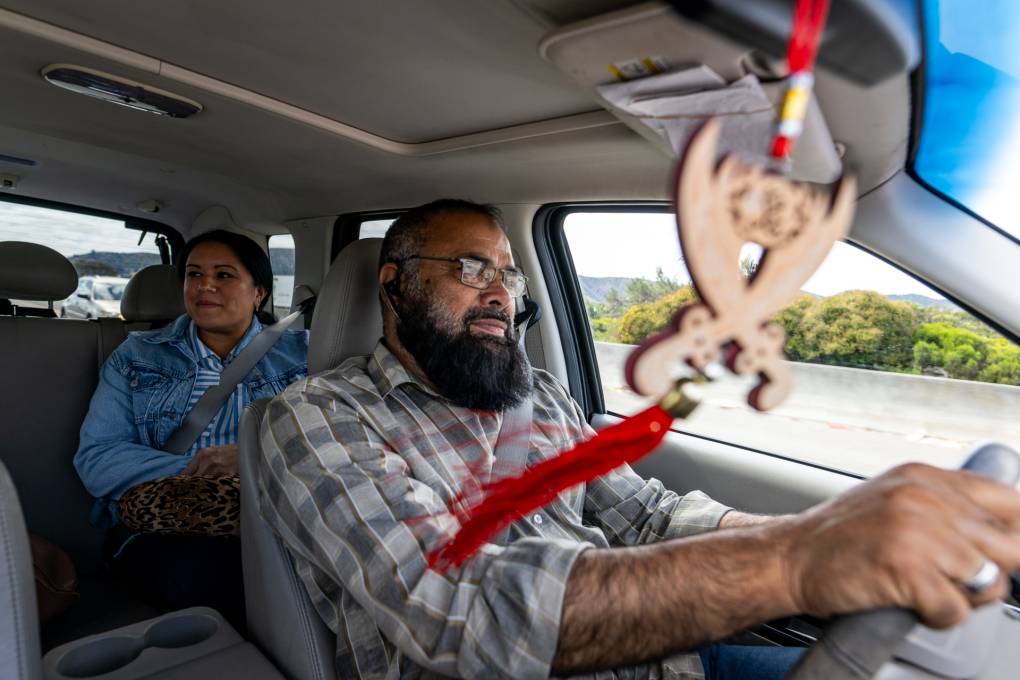
SF Taxi Drivers Are Still Waiting for Loan Relief for Their City-Purchased Medallions
Ride Service Drivers Say They Need Higher Pay as Gas Prices Rise
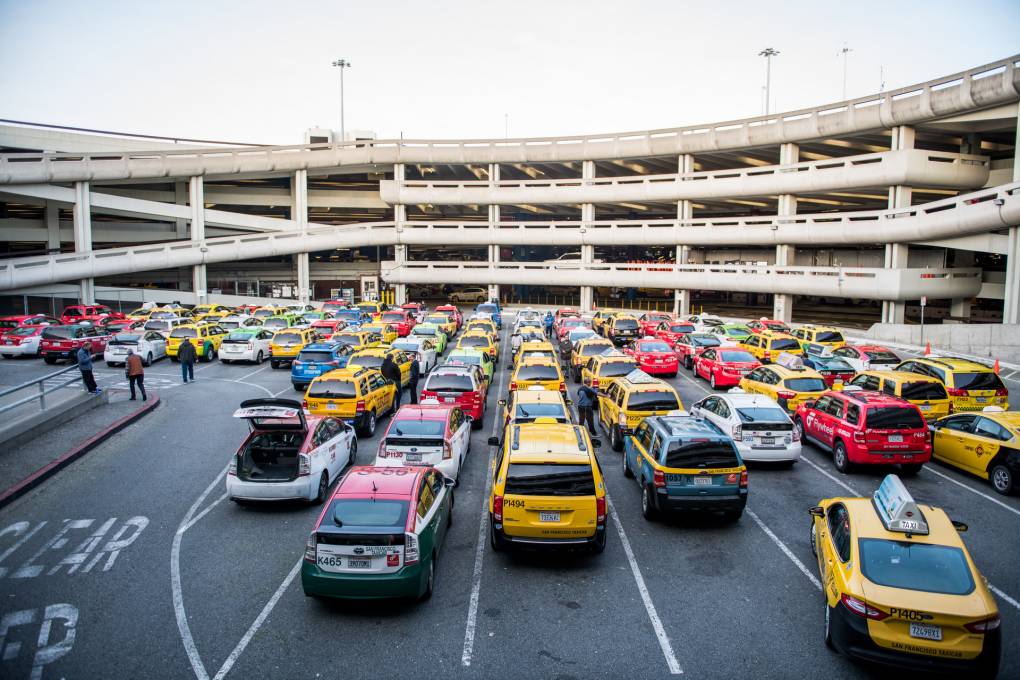
San Francisco Taxi Drivers Plead for Debt Relief as Lawsuit Over Medallions Continues
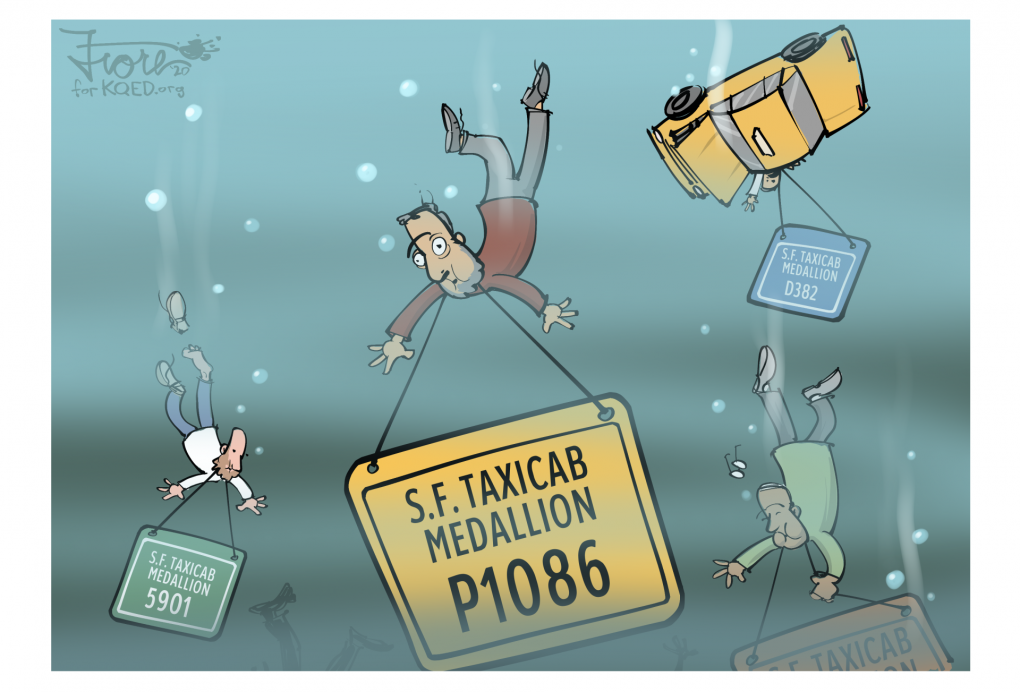
That Sinking Feeling ...
SF Taxi Drivers Say the Medallion Crisis Is Killing Them, Literally
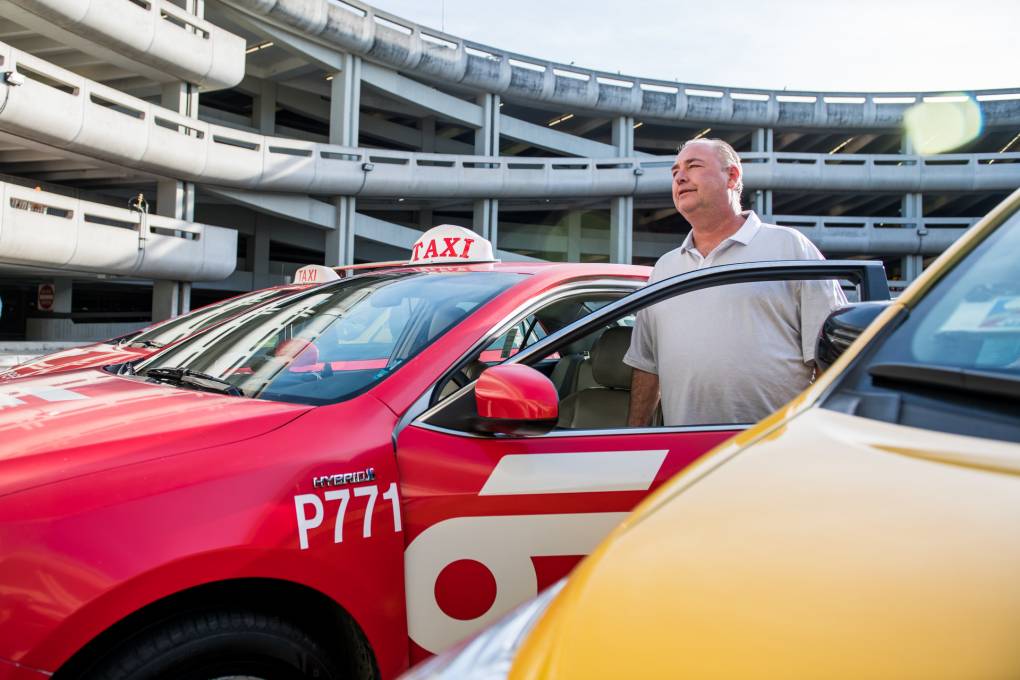
In Latest Blow to S.F. Cabs, SFO Restricts Most Drivers From Organizing at Airport
Many S.F. Cabbies Are Losing One of the Last Places They Might Make a Buck
Credit Union Is Suing San Francisco Over Taxi Medallion Meltdown
Sponsored
Player sponsored by
window.__IS_SSR__=true
window.__INITIAL_STATE__={
"attachmentsReducer": {
"audio_0": {
"type": "attachments",
"id": "audio_0",
"imgSizes": {
"kqedFullSize": {
"file": "https://ww2.kqed.org/news/wp-content/themes/KQED-unified/img/audio_bgs/background0.jpg"
}
}
},
"audio_1": {
"type": "attachments",
"id": "audio_1",
"imgSizes": {
"kqedFullSize": {
"file": "https://ww2.kqed.org/news/wp-content/themes/KQED-unified/img/audio_bgs/background1.jpg"
}
}
},
"audio_2": {
"type": "attachments",
"id": "audio_2",
"imgSizes": {
"kqedFullSize": {
"file": "https://ww2.kqed.org/news/wp-content/themes/KQED-unified/img/audio_bgs/background2.jpg"
}
}
},
"audio_3": {
"type": "attachments",
"id": "audio_3",
"imgSizes": {
"kqedFullSize": {
"file": "https://ww2.kqed.org/news/wp-content/themes/KQED-unified/img/audio_bgs/background3.jpg"
}
}
},
"audio_4": {
"type": "attachments",
"id": "audio_4",
"imgSizes": {
"kqedFullSize": {
"file": "https://ww2.kqed.org/news/wp-content/themes/KQED-unified/img/audio_bgs/background4.jpg"
}
}
},
"placeholder": {
"type": "attachments",
"id": "placeholder",
"imgSizes": {
"thumbnail": {
"file": "https://cdn.kqed.org/wp-content/uploads/2024/12/KQED-Default-Image-816638274-2000x1333-1-160x107.jpg",
"width": 160,
"height": 107,
"mimeType": "image/jpeg"
},
"medium": {
"file": "https://cdn.kqed.org/wp-content/uploads/2024/12/KQED-Default-Image-816638274-2000x1333-1-800x533.jpg",
"width": 800,
"height": 533,
"mimeType": "image/jpeg"
},
"medium_large": {
"file": "https://cdn.kqed.org/wp-content/uploads/2024/12/KQED-Default-Image-816638274-2000x1333-1-768x512.jpg",
"width": 768,
"height": 512,
"mimeType": "image/jpeg"
},
"large": {
"file": "https://cdn.kqed.org/wp-content/uploads/2024/12/KQED-Default-Image-816638274-2000x1333-1-1020x680.jpg",
"width": 1020,
"height": 680,
"mimeType": "image/jpeg"
},
"1536x1536": {
"file": "https://cdn.kqed.org/wp-content/uploads/2024/12/KQED-Default-Image-816638274-2000x1333-1-1536x1024.jpg",
"width": 1536,
"height": 1024,
"mimeType": "image/jpeg"
},
"fd-lrg": {
"file": "https://cdn.kqed.org/wp-content/uploads/2024/12/KQED-Default-Image-816638274-2000x1333-1-1536x1024.jpg",
"width": 1536,
"height": 1024,
"mimeType": "image/jpeg"
},
"fd-med": {
"file": "https://cdn.kqed.org/wp-content/uploads/2024/12/KQED-Default-Image-816638274-2000x1333-1-1020x680.jpg",
"width": 1020,
"height": 680,
"mimeType": "image/jpeg"
},
"fd-sm": {
"file": "https://cdn.kqed.org/wp-content/uploads/2024/12/KQED-Default-Image-816638274-2000x1333-1-800x533.jpg",
"width": 800,
"height": 533,
"mimeType": "image/jpeg"
},
"post-thumbnail": {
"file": "https://cdn.kqed.org/wp-content/uploads/2024/12/KQED-Default-Image-816638274-2000x1333-1-672x372.jpg",
"width": 672,
"height": 372,
"mimeType": "image/jpeg"
},
"twentyfourteen-full-width": {
"file": "https://cdn.kqed.org/wp-content/uploads/2024/12/KQED-Default-Image-816638274-2000x1333-1-1038x576.jpg",
"width": 1038,
"height": 576,
"mimeType": "image/jpeg"
},
"xxsmall": {
"file": "https://cdn.kqed.org/wp-content/uploads/2024/12/KQED-Default-Image-816638274-2000x1333-1-160x107.jpg",
"width": 160,
"height": 107,
"mimeType": "image/jpeg"
},
"xsmall": {
"file": "https://cdn.kqed.org/wp-content/uploads/2024/12/KQED-Default-Image-816638274-2000x1333-1-672x372.jpg",
"width": 672,
"height": 372,
"mimeType": "image/jpeg"
},
"small": {
"file": "https://cdn.kqed.org/wp-content/uploads/2024/12/KQED-Default-Image-816638274-2000x1333-1-672x372.jpg",
"width": 672,
"height": 372,
"mimeType": "image/jpeg"
},
"xlarge": {
"file": "https://cdn.kqed.org/wp-content/uploads/2024/12/KQED-Default-Image-816638274-2000x1333-1-1020x680.jpg",
"width": 1020,
"height": 680,
"mimeType": "image/jpeg"
},
"full-width": {
"file": "https://cdn.kqed.org/wp-content/uploads/2024/12/KQED-Default-Image-816638274-2000x1333-1-1920x1280.jpg",
"width": 1920,
"height": 1280,
"mimeType": "image/jpeg"
},
"guest-author-32": {
"file": "https://cdn.kqed.org/wp-content/uploads/2025/01/KQED-Default-Image-816638274-1333x1333-1-160x160.jpg",
"width": 32,
"height": 32,
"mimeType": "image/jpeg"
},
"guest-author-50": {
"file": "https://cdn.kqed.org/wp-content/uploads/2025/01/KQED-Default-Image-816638274-1333x1333-1-160x160.jpg",
"width": 50,
"height": 50,
"mimeType": "image/jpeg"
},
"guest-author-64": {
"file": "https://cdn.kqed.org/wp-content/uploads/2025/01/KQED-Default-Image-816638274-1333x1333-1-160x160.jpg",
"width": 64,
"height": 64,
"mimeType": "image/jpeg"
},
"guest-author-96": {
"file": "https://cdn.kqed.org/wp-content/uploads/2025/01/KQED-Default-Image-816638274-1333x1333-1-160x160.jpg",
"width": 96,
"height": 96,
"mimeType": "image/jpeg"
},
"guest-author-128": {
"file": "https://cdn.kqed.org/wp-content/uploads/2025/01/KQED-Default-Image-816638274-1333x1333-1-160x160.jpg",
"width": 128,
"height": 128,
"mimeType": "image/jpeg"
},
"detail": {
"file": "https://cdn.kqed.org/wp-content/uploads/2025/01/KQED-Default-Image-816638274-1333x1333-1-160x160.jpg",
"width": 160,
"height": 160,
"mimeType": "image/jpeg"
},
"kqedFullSize": {
"file": "https://cdn.kqed.org/wp-content/uploads/2024/12/KQED-Default-Image-816638274-2000x1333-1.jpg",
"width": 2000,
"height": 1333
}
}
},
"news_12020715": {
"type": "attachments",
"id": "news_12020715",
"meta": {
"index": "attachments_1716263798",
"site": "news",
"id": "12020715",
"found": true
},
"title": "Farnborough International Airshow 2024",
"publishDate": 1736296192,
"status": "inherit",
"parent": 12020697,
"modified": 1736296264,
"caption": "Visitors view a Joby Aviation full-scale electric vertical takeoff and landing aircraft (eVTOL) air taxi is displayed during the Farnborough International Airshow 2024 at Farnborough International Exhibition and Conference Centre on July 23, 2024 in Farnborough, England. ",
"credit": "John Keeble/Getty Images",
"altTag": "An electric aviation vehicle with sets of propellers and a cabin sits in a showroom at a fair.",
"description": null,
"imgSizes": {
"medium": {
"file": "https://cdn.kqed.org/wp-content/uploads/sites/10/2025/01/GettyImages-2163324535-800x534.jpg",
"width": 800,
"height": 534,
"mimeType": "image/jpeg"
},
"large": {
"file": "https://cdn.kqed.org/wp-content/uploads/sites/10/2025/01/GettyImages-2163324535-1020x680.jpg",
"width": 1020,
"height": 680,
"mimeType": "image/jpeg"
},
"thumbnail": {
"file": "https://cdn.kqed.org/wp-content/uploads/sites/10/2025/01/GettyImages-2163324535-160x107.jpg",
"width": 160,
"height": 107,
"mimeType": "image/jpeg"
},
"post-thumbnail": {
"file": "https://cdn.kqed.org/wp-content/uploads/sites/10/2025/01/GettyImages-2163324535-672x372.jpg",
"width": 672,
"height": 372,
"mimeType": "image/jpeg"
},
"twentyfourteen-full-width": {
"file": "https://cdn.kqed.org/wp-content/uploads/sites/10/2025/01/GettyImages-2163324535-1024x576.jpg",
"width": 1024,
"height": 576,
"mimeType": "image/jpeg"
},
"kqedFullSize": {
"file": "https://cdn.kqed.org/wp-content/uploads/sites/10/2025/01/GettyImages-2163324535.jpg",
"width": 1024,
"height": 683
}
},
"fetchFailed": false,
"isLoading": false
},
"news_11966653": {
"type": "attachments",
"id": "news_11966653",
"meta": {
"index": "attachments_1716263798",
"site": "news",
"id": "11966653",
"found": true
},
"parent": 0,
"imgSizes": {
"twentyfourteen-full-width": {
"file": "https://ww2.kqed.org/app/uploads/sites/10/2023/11/230925-TaxiDriver-01-BL-1038x576.jpg",
"width": 1038,
"mimeType": "image/jpeg",
"height": 576
},
"thumbnail": {
"file": "https://ww2.kqed.org/app/uploads/sites/10/2023/11/230925-TaxiDriver-01-BL-160x107.jpg",
"width": 160,
"mimeType": "image/jpeg",
"height": 107
},
"post-thumbnail": {
"file": "https://ww2.kqed.org/app/uploads/sites/10/2023/11/230925-TaxiDriver-01-BL-672x372.jpg",
"width": 672,
"mimeType": "image/jpeg",
"height": 372
},
"kqedFullSize": {
"file": "https://ww2.kqed.org/app/uploads/sites/10/2023/11/230925-TaxiDriver-01-BL.jpg",
"width": 1920,
"height": 1280
},
"large": {
"file": "https://ww2.kqed.org/app/uploads/sites/10/2023/11/230925-TaxiDriver-01-BL-1020x680.jpg",
"width": 1020,
"mimeType": "image/jpeg",
"height": 680
},
"1536x1536": {
"file": "https://ww2.kqed.org/app/uploads/sites/10/2023/11/230925-TaxiDriver-01-BL-1536x1024.jpg",
"width": 1536,
"mimeType": "image/jpeg",
"height": 1024
},
"medium": {
"file": "https://ww2.kqed.org/app/uploads/sites/10/2023/11/230925-TaxiDriver-01-BL-800x533.jpg",
"width": 800,
"mimeType": "image/jpeg",
"height": 533
}
},
"publishDate": 1699388228,
"modified": 1699391957,
"caption": "Ali Asghar drives passengers Bianca Perkins and Natalie McElroy to downtown San Francisco after picking them up at San Francisco International Airport on Sept. 25, 2023. Monday's are often better days for taxi pickups, so Asghar waited about three hours for these passengers.",
"description": null,
"title": "230925-TaxiDriver-BethLaBerge-01",
"credit": "Beth LaBerge/KQED",
"status": "inherit",
"altTag": "A man drives a vehicle with a person in the backseat while an item hanging from the rearview mirror blows in the breeze from an open window.",
"fetchFailed": false,
"isLoading": false
},
"news_11908701": {
"type": "attachments",
"id": "news_11908701",
"meta": {
"index": "attachments_1716263798",
"site": "news",
"id": "11908701",
"found": true
},
"parent": 11908264,
"imgSizes": {
"twentyfourteen-full-width": {
"file": "https://ww2.kqed.org/app/uploads/sites/10/2022/03/RS9144_476374685-1038x576.jpg",
"width": 1038,
"mimeType": "image/jpeg",
"height": 576
},
"thumbnail": {
"file": "https://ww2.kqed.org/app/uploads/sites/10/2022/03/RS9144_476374685-160x106.jpg",
"width": 160,
"mimeType": "image/jpeg",
"height": 106
},
"post-thumbnail": {
"file": "https://ww2.kqed.org/app/uploads/sites/10/2022/03/RS9144_476374685-672x372.jpg",
"width": 672,
"mimeType": "image/jpeg",
"height": 372
},
"kqedFullSize": {
"file": "https://ww2.kqed.org/app/uploads/sites/10/2022/03/RS9144_476374685.jpg",
"width": 2124,
"height": 1413
},
"2048x2048": {
"file": "https://ww2.kqed.org/app/uploads/sites/10/2022/03/RS9144_476374685-2048x1362.jpg",
"width": 2048,
"mimeType": "image/jpeg",
"height": 1362
},
"large": {
"file": "https://ww2.kqed.org/app/uploads/sites/10/2022/03/RS9144_476374685-1020x679.jpg",
"width": 1020,
"mimeType": "image/jpeg",
"height": 679
},
"1536x1536": {
"file": "https://ww2.kqed.org/app/uploads/sites/10/2022/03/RS9144_476374685-1536x1022.jpg",
"width": 1536,
"mimeType": "image/jpeg",
"height": 1022
},
"full-width": {
"file": "https://ww2.kqed.org/app/uploads/sites/10/2022/03/RS9144_476374685-1920x1277.jpg",
"width": 1920,
"mimeType": "image/jpeg",
"height": 1277
},
"medium": {
"file": "https://ww2.kqed.org/app/uploads/sites/10/2022/03/RS9144_476374685-800x532.jpg",
"width": 800,
"mimeType": "image/jpeg",
"height": 532
}
},
"publishDate": 1647647115,
"modified": 1647647460,
"caption": "Man refilling the car with fuel on a filling station.",
"description": null,
"title": "RS9144_476374685",
"credit": "Chad McClymond//Getty Images",
"status": "inherit",
"altTag": null,
"fetchFailed": false,
"isLoading": false
},
"news_11803474": {
"type": "attachments",
"id": "news_11803474",
"meta": {
"index": "attachments_1716263798",
"site": "news",
"id": "11803474",
"found": true
},
"parent": 11803400,
"imgSizes": {
"apple_news_ca_landscape_5_5": {
"file": "https://ww2.kqed.org/app/uploads/sites/10/2020/02/RS41047_033_KQED_TaxiDriversSFO_01302020_0097-qut-1044x783.jpg",
"width": 1044,
"mimeType": "image/jpeg",
"height": 783
},
"apple_news_ca_square_4_0": {
"file": "https://ww2.kqed.org/app/uploads/sites/10/2020/02/RS41047_033_KQED_TaxiDriversSFO_01302020_0097-qut-470x470.jpg",
"width": 470,
"mimeType": "image/jpeg",
"height": 470
},
"twentyfourteen-full-width": {
"file": "https://ww2.kqed.org/app/uploads/sites/10/2020/02/RS41047_033_KQED_TaxiDriversSFO_01302020_0097-qut-1038x576.jpg",
"width": 1038,
"mimeType": "image/jpeg",
"height": 576
},
"thumbnail": {
"file": "https://ww2.kqed.org/app/uploads/sites/10/2020/02/RS41047_033_KQED_TaxiDriversSFO_01302020_0097-qut-160x107.jpg",
"width": 160,
"mimeType": "image/jpeg",
"height": 107
},
"post-thumbnail": {
"file": "https://ww2.kqed.org/app/uploads/sites/10/2020/02/RS41047_033_KQED_TaxiDriversSFO_01302020_0097-qut-672x372.jpg",
"width": 672,
"mimeType": "image/jpeg",
"height": 372
},
"kqedFullSize": {
"file": "https://ww2.kqed.org/app/uploads/sites/10/2020/02/RS41047_033_KQED_TaxiDriversSFO_01302020_0097-qut.jpg",
"width": 1920,
"height": 1280
},
"apple_news_ca_landscape_4_7": {
"file": "https://ww2.kqed.org/app/uploads/sites/10/2020/02/RS41047_033_KQED_TaxiDriversSFO_01302020_0097-qut-632x474.jpg",
"width": 632,
"mimeType": "image/jpeg",
"height": 474
},
"large": {
"file": "https://ww2.kqed.org/app/uploads/sites/10/2020/02/RS41047_033_KQED_TaxiDriversSFO_01302020_0097-qut-1020x680.jpg",
"width": 1020,
"mimeType": "image/jpeg",
"height": 680
},
"apple_news_ca_landscape_4_0": {
"file": "https://ww2.kqed.org/app/uploads/sites/10/2020/02/RS41047_033_KQED_TaxiDriversSFO_01302020_0097-qut-536x402.jpg",
"width": 536,
"mimeType": "image/jpeg",
"height": 402
},
"apple_news_ca_portrait_12_9": {
"file": "https://ww2.kqed.org/app/uploads/sites/10/2020/02/RS41047_033_KQED_TaxiDriversSFO_01302020_0097-qut-1122x1280.jpg",
"width": 1122,
"mimeType": "image/jpeg",
"height": 1280
},
"medium": {
"file": "https://ww2.kqed.org/app/uploads/sites/10/2020/02/RS41047_033_KQED_TaxiDriversSFO_01302020_0097-qut-800x533.jpg",
"width": 800,
"mimeType": "image/jpeg",
"height": 533
},
"apple_news_ca_portrait_4_0": {
"file": "https://ww2.kqed.org/app/uploads/sites/10/2020/02/RS41047_033_KQED_TaxiDriversSFO_01302020_0097-qut-354x472.jpg",
"width": 354,
"mimeType": "image/jpeg",
"height": 472
},
"apple_news_ca_portrait_9_7": {
"file": "https://ww2.kqed.org/app/uploads/sites/10/2020/02/RS41047_033_KQED_TaxiDriversSFO_01302020_0097-qut-840x1120.jpg",
"width": 840,
"mimeType": "image/jpeg",
"height": 1120
},
"apple_news_ca_landscape_12_9": {
"file": "https://ww2.kqed.org/app/uploads/sites/10/2020/02/RS41047_033_KQED_TaxiDriversSFO_01302020_0097-qut-1832x1280.jpg",
"width": 1832,
"mimeType": "image/jpeg",
"height": 1280
},
"apple_news_ca_square_9_7": {
"file": "https://ww2.kqed.org/app/uploads/sites/10/2020/02/RS41047_033_KQED_TaxiDriversSFO_01302020_0097-qut-1104x1104.jpg",
"width": 1104,
"mimeType": "image/jpeg",
"height": 1104
},
"apple_news_ca_portrait_4_7": {
"file": "https://ww2.kqed.org/app/uploads/sites/10/2020/02/RS41047_033_KQED_TaxiDriversSFO_01302020_0097-qut-414x552.jpg",
"width": 414,
"mimeType": "image/jpeg",
"height": 552
},
"apple_news_ca_square_12_9": {
"file": "https://ww2.kqed.org/app/uploads/sites/10/2020/02/RS41047_033_KQED_TaxiDriversSFO_01302020_0097-qut-1472x1280.jpg",
"width": 1472,
"mimeType": "image/jpeg",
"height": 1280
},
"apple_news_ca_portrait_5_5": {
"file": "https://ww2.kqed.org/app/uploads/sites/10/2020/02/RS41047_033_KQED_TaxiDriversSFO_01302020_0097-qut-687x916.jpg",
"width": 687,
"mimeType": "image/jpeg",
"height": 916
},
"full-width": {
"file": "https://ww2.kqed.org/app/uploads/sites/10/2020/02/RS41047_033_KQED_TaxiDriversSFO_01302020_0097-qut-1920x1280.jpg",
"width": 1920,
"mimeType": "image/jpeg",
"height": 1280
},
"apple_news_ca_square_4_7": {
"file": "https://ww2.kqed.org/app/uploads/sites/10/2020/02/RS41047_033_KQED_TaxiDriversSFO_01302020_0097-qut-550x550.jpg",
"width": 550,
"mimeType": "image/jpeg",
"height": 550
},
"apple_news_ca_landscape_9_7": {
"file": "https://ww2.kqed.org/app/uploads/sites/10/2020/02/RS41047_033_KQED_TaxiDriversSFO_01302020_0097-qut-1376x1032.jpg",
"width": 1376,
"mimeType": "image/jpeg",
"height": 1032
},
"apple_news_ca_square_5_5": {
"file": "https://ww2.kqed.org/app/uploads/sites/10/2020/02/RS41047_033_KQED_TaxiDriversSFO_01302020_0097-qut-912x912.jpg",
"width": 912,
"mimeType": "image/jpeg",
"height": 912
}
},
"publishDate": 1582683274,
"modified": 1632874879,
"caption": "Taxis fill the lower level of the short-term parking garage as they wait to pick up passengers at San Francisco International Airport on Jan. 30, 2020.",
"description": "Taxis fill the lower level of the short-term parking garage as they wait to pick up passengers at San Francisco International Airport on Jan. 30, 2020.",
"title": "RS41047_033_KQED_TaxiDriversSFO_01302020_0097-qut",
"credit": "Beth LaBerge/KQED",
"status": "inherit",
"altTag": null,
"fetchFailed": false,
"isLoading": false
},
"news_11802225": {
"type": "attachments",
"id": "news_11802225",
"meta": {
"index": "attachments_1716263798",
"site": "news",
"id": "11802225",
"found": true
},
"parent": 11802205,
"imgSizes": {
"apple_news_ca_landscape_5_5": {
"file": "https://ww2.kqed.org/app/uploads/sites/10/2020/02/medallions_021820_final-1044x783.png",
"width": 1044,
"mimeType": "image/png",
"height": 783
},
"apple_news_ca_square_4_0": {
"file": "https://ww2.kqed.org/app/uploads/sites/10/2020/02/medallions_021820_final-470x470.png",
"width": 470,
"mimeType": "image/png",
"height": 470
},
"twentyfourteen-full-width": {
"file": "https://ww2.kqed.org/app/uploads/sites/10/2020/02/medallions_021820_final-1038x576.png",
"width": 1038,
"mimeType": "image/png",
"height": 576
},
"thumbnail": {
"file": "https://ww2.kqed.org/app/uploads/sites/10/2020/02/medallions_021820_final-160x109.png",
"width": 160,
"mimeType": "image/png",
"height": 109
},
"post-thumbnail": {
"file": "https://ww2.kqed.org/app/uploads/sites/10/2020/02/medallions_021820_final-672x372.png",
"width": 672,
"mimeType": "image/png",
"height": 372
},
"kqedFullSize": {
"file": "https://ww2.kqed.org/app/uploads/sites/10/2020/02/medallions_021820_final.png",
"width": 1920,
"height": 1303
},
"apple_news_ca_landscape_4_7": {
"file": "https://ww2.kqed.org/app/uploads/sites/10/2020/02/medallions_021820_final-632x474.png",
"width": 632,
"mimeType": "image/png",
"height": 474
},
"large": {
"file": "https://ww2.kqed.org/app/uploads/sites/10/2020/02/medallions_021820_final-1020x692.png",
"width": 1020,
"mimeType": "image/png",
"height": 692
},
"apple_news_ca_landscape_4_0": {
"file": "https://ww2.kqed.org/app/uploads/sites/10/2020/02/medallions_021820_final-536x402.png",
"width": 536,
"mimeType": "image/png",
"height": 402
},
"apple_news_ca_portrait_12_9": {
"file": "https://ww2.kqed.org/app/uploads/sites/10/2020/02/medallions_021820_final-1122x1303.png",
"width": 1122,
"mimeType": "image/png",
"height": 1303
},
"medium": {
"file": "https://ww2.kqed.org/app/uploads/sites/10/2020/02/medallions_021820_final-800x543.png",
"width": 800,
"mimeType": "image/png",
"height": 543
},
"apple_news_ca_portrait_4_0": {
"file": "https://ww2.kqed.org/app/uploads/sites/10/2020/02/medallions_021820_final-354x472.png",
"width": 354,
"mimeType": "image/png",
"height": 472
},
"apple_news_ca_portrait_9_7": {
"file": "https://ww2.kqed.org/app/uploads/sites/10/2020/02/medallions_021820_final-840x1120.png",
"width": 840,
"mimeType": "image/png",
"height": 1120
},
"apple_news_ca_landscape_12_9": {
"file": "https://ww2.kqed.org/app/uploads/sites/10/2020/02/medallions_021820_final-1832x1303.png",
"width": 1832,
"mimeType": "image/png",
"height": 1303
},
"apple_news_ca_square_9_7": {
"file": "https://ww2.kqed.org/app/uploads/sites/10/2020/02/medallions_021820_final-1104x1104.png",
"width": 1104,
"mimeType": "image/png",
"height": 1104
},
"apple_news_ca_portrait_4_7": {
"file": "https://ww2.kqed.org/app/uploads/sites/10/2020/02/medallions_021820_final-414x552.png",
"width": 414,
"mimeType": "image/png",
"height": 552
},
"apple_news_ca_square_12_9": {
"file": "https://ww2.kqed.org/app/uploads/sites/10/2020/02/medallions_021820_final-1472x1303.png",
"width": 1472,
"mimeType": "image/png",
"height": 1303
},
"apple_news_ca_portrait_5_5": {
"file": "https://ww2.kqed.org/app/uploads/sites/10/2020/02/medallions_021820_final-687x916.png",
"width": 687,
"mimeType": "image/png",
"height": 916
},
"full-width": {
"file": "https://ww2.kqed.org/app/uploads/sites/10/2020/02/medallions_021820_final-1920x1303.png",
"width": 1920,
"mimeType": "image/png",
"height": 1303
},
"apple_news_ca_square_4_7": {
"file": "https://ww2.kqed.org/app/uploads/sites/10/2020/02/medallions_021820_final-550x550.png",
"width": 550,
"mimeType": "image/png",
"height": 550
},
"apple_news_ca_landscape_9_7": {
"file": "https://ww2.kqed.org/app/uploads/sites/10/2020/02/medallions_021820_final-1376x1032.png",
"width": 1376,
"mimeType": "image/png",
"height": 1032
},
"apple_news_ca_square_5_5": {
"file": "https://ww2.kqed.org/app/uploads/sites/10/2020/02/medallions_021820_final-912x912.png",
"width": 912,
"mimeType": "image/png",
"height": 912
}
},
"publishDate": 1582070525,
"modified": 1582070561,
"caption": null,
"description": null,
"title": "medallions_021820_final",
"credit": null,
"status": "inherit",
"fetchFailed": false,
"isLoading": false
},
"news_11799431": {
"type": "attachments",
"id": "news_11799431",
"meta": {
"index": "attachments_1716263798",
"site": "news",
"id": "11799431",
"found": true
},
"parent": 11798851,
"imgSizes": {
"apple_news_ca_landscape_5_5": {
"file": "https://ww2.kqed.org/app/uploads/sites/10/2020/01/RS41023_001_KQED_TaxiDriversSFO_01302020_9894-qut-1044x783.jpg",
"width": 1044,
"mimeType": "image/jpeg",
"height": 783
},
"apple_news_ca_square_4_0": {
"file": "https://ww2.kqed.org/app/uploads/sites/10/2020/01/RS41023_001_KQED_TaxiDriversSFO_01302020_9894-qut-470x470.jpg",
"width": 470,
"mimeType": "image/jpeg",
"height": 470
},
"twentyfourteen-full-width": {
"file": "https://ww2.kqed.org/app/uploads/sites/10/2020/01/RS41023_001_KQED_TaxiDriversSFO_01302020_9894-qut-1038x576.jpg",
"width": 1038,
"mimeType": "image/jpeg",
"height": 576
},
"thumbnail": {
"file": "https://ww2.kqed.org/app/uploads/sites/10/2020/01/RS41023_001_KQED_TaxiDriversSFO_01302020_9894-qut-160x107.jpg",
"width": 160,
"mimeType": "image/jpeg",
"height": 107
},
"post-thumbnail": {
"file": "https://ww2.kqed.org/app/uploads/sites/10/2020/01/RS41023_001_KQED_TaxiDriversSFO_01302020_9894-qut-672x372.jpg",
"width": 672,
"mimeType": "image/jpeg",
"height": 372
},
"kqedFullSize": {
"file": "https://ww2.kqed.org/app/uploads/sites/10/2020/01/RS41023_001_KQED_TaxiDriversSFO_01302020_9894-qut.jpg",
"width": 1920,
"height": 1280
},
"apple_news_ca_landscape_4_7": {
"file": "https://ww2.kqed.org/app/uploads/sites/10/2020/01/RS41023_001_KQED_TaxiDriversSFO_01302020_9894-qut-632x474.jpg",
"width": 632,
"mimeType": "image/jpeg",
"height": 474
},
"large": {
"file": "https://ww2.kqed.org/app/uploads/sites/10/2020/01/RS41023_001_KQED_TaxiDriversSFO_01302020_9894-qut-1020x680.jpg",
"width": 1020,
"mimeType": "image/jpeg",
"height": 680
},
"apple_news_ca_landscape_4_0": {
"file": "https://ww2.kqed.org/app/uploads/sites/10/2020/01/RS41023_001_KQED_TaxiDriversSFO_01302020_9894-qut-536x402.jpg",
"width": 536,
"mimeType": "image/jpeg",
"height": 402
},
"apple_news_ca_portrait_12_9": {
"file": "https://ww2.kqed.org/app/uploads/sites/10/2020/01/RS41023_001_KQED_TaxiDriversSFO_01302020_9894-qut-1122x1280.jpg",
"width": 1122,
"mimeType": "image/jpeg",
"height": 1280
},
"medium": {
"file": "https://ww2.kqed.org/app/uploads/sites/10/2020/01/RS41023_001_KQED_TaxiDriversSFO_01302020_9894-qut-800x533.jpg",
"width": 800,
"mimeType": "image/jpeg",
"height": 533
},
"apple_news_ca_portrait_4_0": {
"file": "https://ww2.kqed.org/app/uploads/sites/10/2020/01/RS41023_001_KQED_TaxiDriversSFO_01302020_9894-qut-354x472.jpg",
"width": 354,
"mimeType": "image/jpeg",
"height": 472
},
"apple_news_ca_portrait_9_7": {
"file": "https://ww2.kqed.org/app/uploads/sites/10/2020/01/RS41023_001_KQED_TaxiDriversSFO_01302020_9894-qut-840x1120.jpg",
"width": 840,
"mimeType": "image/jpeg",
"height": 1120
},
"apple_news_ca_landscape_12_9": {
"file": "https://ww2.kqed.org/app/uploads/sites/10/2020/01/RS41023_001_KQED_TaxiDriversSFO_01302020_9894-qut-1832x1280.jpg",
"width": 1832,
"mimeType": "image/jpeg",
"height": 1280
},
"apple_news_ca_square_9_7": {
"file": "https://ww2.kqed.org/app/uploads/sites/10/2020/01/RS41023_001_KQED_TaxiDriversSFO_01302020_9894-qut-1104x1104.jpg",
"width": 1104,
"mimeType": "image/jpeg",
"height": 1104
},
"apple_news_ca_portrait_4_7": {
"file": "https://ww2.kqed.org/app/uploads/sites/10/2020/01/RS41023_001_KQED_TaxiDriversSFO_01302020_9894-qut-414x552.jpg",
"width": 414,
"mimeType": "image/jpeg",
"height": 552
},
"apple_news_ca_square_12_9": {
"file": "https://ww2.kqed.org/app/uploads/sites/10/2020/01/RS41023_001_KQED_TaxiDriversSFO_01302020_9894-qut-1472x1280.jpg",
"width": 1472,
"mimeType": "image/jpeg",
"height": 1280
},
"apple_news_ca_portrait_5_5": {
"file": "https://ww2.kqed.org/app/uploads/sites/10/2020/01/RS41023_001_KQED_TaxiDriversSFO_01302020_9894-qut-687x916.jpg",
"width": 687,
"mimeType": "image/jpeg",
"height": 916
},
"full-width": {
"file": "https://ww2.kqed.org/app/uploads/sites/10/2020/01/RS41023_001_KQED_TaxiDriversSFO_01302020_9894-qut-1920x1280.jpg",
"width": 1920,
"mimeType": "image/jpeg",
"height": 1280
},
"apple_news_ca_square_4_7": {
"file": "https://ww2.kqed.org/app/uploads/sites/10/2020/01/RS41023_001_KQED_TaxiDriversSFO_01302020_9894-qut-550x550.jpg",
"width": 550,
"mimeType": "image/jpeg",
"height": 550
},
"apple_news_ca_landscape_9_7": {
"file": "https://ww2.kqed.org/app/uploads/sites/10/2020/01/RS41023_001_KQED_TaxiDriversSFO_01302020_9894-qut-1376x1032.jpg",
"width": 1376,
"mimeType": "image/jpeg",
"height": 1032
},
"apple_news_ca_square_5_5": {
"file": "https://ww2.kqed.org/app/uploads/sites/10/2020/01/RS41023_001_KQED_TaxiDriversSFO_01302020_9894-qut-912x912.jpg",
"width": 912,
"mimeType": "image/jpeg",
"height": 912
}
},
"publishDate": 1580511021,
"modified": 1580512601,
"caption": "Taxi driver Matt Sutter waits at San Francisco International Airport to pick up a fare on Jan. 30, 2020.",
"description": "Taxi driver Matt Sutter waits at San Francisco International Airport to pick up a fare on Jan. 30, 2020.",
"title": "Taxi_Drivers_SFO_wait",
"credit": "Beth LaBerge/KQED",
"status": "inherit",
"fetchFailed": false,
"isLoading": false
},
"news_11699644": {
"type": "attachments",
"id": "news_11699644",
"meta": {
"index": "attachments_1716263798",
"site": "news",
"id": "11699644",
"found": true
},
"parent": 11699586,
"imgSizes": {
"small": {
"file": "https://ww2.kqed.org/app/uploads/sites/10/2018/10/Taxi-Protest-520x390.jpg",
"width": 520,
"mimeType": "image/jpeg",
"height": 390
},
"twentyfourteen-full-width": {
"file": "https://ww2.kqed.org/app/uploads/sites/10/2018/10/Taxi-Protest-1038x576.jpg",
"width": 1038,
"mimeType": "image/jpeg",
"height": 576
},
"thumbnail": {
"file": "https://ww2.kqed.org/app/uploads/sites/10/2018/10/Taxi-Protest-160x120.jpg",
"width": 160,
"mimeType": "image/jpeg",
"height": 120
},
"fd-sm": {
"file": "https://ww2.kqed.org/app/uploads/sites/10/2018/10/Taxi-Protest-960x720.jpg",
"width": 960,
"mimeType": "image/jpeg",
"height": 720
},
"post-thumbnail": {
"file": "https://ww2.kqed.org/app/uploads/sites/10/2018/10/Taxi-Protest-672x372.jpg",
"width": 672,
"mimeType": "image/jpeg",
"height": 372
},
"xsmall": {
"file": "https://ww2.kqed.org/app/uploads/sites/10/2018/10/Taxi-Protest-375x281.jpg",
"width": 375,
"mimeType": "image/jpeg",
"height": 281
},
"kqedFullSize": {
"file": "https://ww2.kqed.org/app/uploads/sites/10/2018/10/Taxi-Protest-e1539907005205.jpg",
"width": 1920,
"height": 1440
},
"large": {
"file": "https://ww2.kqed.org/app/uploads/sites/10/2018/10/Taxi-Protest-1020x765.jpg",
"width": 1020,
"mimeType": "image/jpeg",
"height": 765
},
"xlarge": {
"file": "https://ww2.kqed.org/app/uploads/sites/10/2018/10/Taxi-Protest-1180x885.jpg",
"width": 1180,
"mimeType": "image/jpeg",
"height": 885
},
"complete_open_graph": {
"file": "https://ww2.kqed.org/app/uploads/sites/10/2018/10/Taxi-Protest-1200x900.jpg",
"width": 1200,
"mimeType": "image/jpeg",
"height": 900
},
"guest-author-50": {
"file": "https://ww2.kqed.org/app/uploads/sites/10/2018/10/Taxi-Protest-50x50.jpg",
"width": 50,
"mimeType": "image/jpeg",
"height": 50
},
"guest-author-96": {
"file": "https://ww2.kqed.org/app/uploads/sites/10/2018/10/Taxi-Protest-96x96.jpg",
"width": 96,
"mimeType": "image/jpeg",
"height": 96
},
"medium": {
"file": "https://ww2.kqed.org/app/uploads/sites/10/2018/10/Taxi-Protest-800x600.jpg",
"width": 800,
"mimeType": "image/jpeg",
"height": 600
},
"guest-author-64": {
"file": "https://ww2.kqed.org/app/uploads/sites/10/2018/10/Taxi-Protest-64x64.jpg",
"width": 64,
"mimeType": "image/jpeg",
"height": 64
},
"guest-author-32": {
"file": "https://ww2.kqed.org/app/uploads/sites/10/2018/10/Taxi-Protest-32x32.jpg",
"width": 32,
"mimeType": "image/jpeg",
"height": 32
},
"fd-lrg": {
"file": "https://ww2.kqed.org/app/uploads/sites/10/2018/10/Taxi-Protest-1920x1440.jpg",
"width": 1920,
"mimeType": "image/jpeg",
"height": 1440
},
"fd-med": {
"file": "https://ww2.kqed.org/app/uploads/sites/10/2018/10/Taxi-Protest-1180x885.jpg",
"width": 1180,
"mimeType": "image/jpeg",
"height": 885
},
"full-width": {
"file": "https://ww2.kqed.org/app/uploads/sites/10/2018/10/Taxi-Protest-1920x1440.jpg",
"width": 1920,
"mimeType": "image/jpeg",
"height": 1440
},
"detail": {
"file": "https://ww2.kqed.org/app/uploads/sites/10/2018/10/Taxi-Protest-150x150.jpg",
"width": 150,
"mimeType": "image/jpeg",
"height": 150
},
"guest-author-128": {
"file": "https://ww2.kqed.org/app/uploads/sites/10/2018/10/Taxi-Protest-128x128.jpg",
"width": 128,
"mimeType": "image/jpeg",
"height": 128
},
"xxsmall": {
"file": "https://ww2.kqed.org/app/uploads/sites/10/2018/10/Taxi-Protest-240x180.jpg",
"width": 240,
"mimeType": "image/jpeg",
"height": 180
}
},
"publishDate": 1539824752,
"modified": 1540417064,
"caption": "Taxi drivers gather at City Hall in mid-October to protest further changes to their industry.",
"description": "Taxi drivers gathered at city hall to protest further changes to their industry.",
"title": "Taxi Protest",
"credit": "Sam Harnett/KQED",
"status": "inherit",
"fetchFailed": false,
"isLoading": false
},
"news_11659423": {
"type": "attachments",
"id": "news_11659423",
"meta": {
"index": "attachments_1716263798",
"site": "news",
"id": "11659423",
"found": true
},
"parent": 11659420,
"imgSizes": {
"small": {
"file": "https://ww2.kqed.org/app/uploads/sites/10/2018/04/Taxi-Cab-520x347.jpg",
"width": 520,
"mimeType": "image/jpeg",
"height": 347
},
"twentyfourteen-full-width": {
"file": "https://ww2.kqed.org/app/uploads/sites/10/2018/04/Taxi-Cab-1038x576.jpg",
"width": 1038,
"mimeType": "image/jpeg",
"height": 576
},
"thumbnail": {
"file": "https://ww2.kqed.org/app/uploads/sites/10/2018/04/Taxi-Cab-160x107.jpg",
"width": 160,
"mimeType": "image/jpeg",
"height": 107
},
"fd-sm": {
"file": "https://ww2.kqed.org/app/uploads/sites/10/2018/04/Taxi-Cab-960x640.jpg",
"width": 960,
"mimeType": "image/jpeg",
"height": 640
},
"post-thumbnail": {
"file": "https://ww2.kqed.org/app/uploads/sites/10/2018/04/Taxi-Cab-672x372.jpg",
"width": 672,
"mimeType": "image/jpeg",
"height": 372
},
"xsmall": {
"file": "https://ww2.kqed.org/app/uploads/sites/10/2018/04/Taxi-Cab-375x250.jpg",
"width": 375,
"mimeType": "image/jpeg",
"height": 250
},
"kqedFullSize": {
"file": "https://ww2.kqed.org/app/uploads/sites/10/2018/04/Taxi-Cab-e1522708494523.jpg",
"width": 1920,
"height": 1280
},
"large": {
"file": "https://ww2.kqed.org/app/uploads/sites/10/2018/04/Taxi-Cab-1020x680.jpg",
"width": 1020,
"mimeType": "image/jpeg",
"height": 680
},
"xlarge": {
"file": "https://ww2.kqed.org/app/uploads/sites/10/2018/04/Taxi-Cab-1180x786.jpg",
"width": 1180,
"mimeType": "image/jpeg",
"height": 786
},
"guest-author-50": {
"file": "https://ww2.kqed.org/app/uploads/sites/10/2018/04/Taxi-Cab-50x50.jpg",
"width": 50,
"mimeType": "image/jpeg",
"height": 50
},
"guest-author-96": {
"file": "https://ww2.kqed.org/app/uploads/sites/10/2018/04/Taxi-Cab-96x96.jpg",
"width": 96,
"mimeType": "image/jpeg",
"height": 96
},
"medium": {
"file": "https://ww2.kqed.org/app/uploads/sites/10/2018/04/Taxi-Cab-800x533.jpg",
"width": 800,
"mimeType": "image/jpeg",
"height": 533
},
"guest-author-64": {
"file": "https://ww2.kqed.org/app/uploads/sites/10/2018/04/Taxi-Cab-64x64.jpg",
"width": 64,
"mimeType": "image/jpeg",
"height": 64
},
"guest-author-32": {
"file": "https://ww2.kqed.org/app/uploads/sites/10/2018/04/Taxi-Cab-32x32.jpg",
"width": 32,
"mimeType": "image/jpeg",
"height": 32
},
"fd-lrg": {
"file": "https://ww2.kqed.org/app/uploads/sites/10/2018/04/Taxi-Cab-1920x1280.jpg",
"width": 1920,
"mimeType": "image/jpeg",
"height": 1280
},
"fd-med": {
"file": "https://ww2.kqed.org/app/uploads/sites/10/2018/04/Taxi-Cab-1180x786.jpg",
"width": 1180,
"mimeType": "image/jpeg",
"height": 786
},
"full-width": {
"file": "https://ww2.kqed.org/app/uploads/sites/10/2018/04/Taxi-Cab-1920x1280.jpg",
"width": 1920,
"mimeType": "image/jpeg",
"height": 1280
},
"detail": {
"file": "https://ww2.kqed.org/app/uploads/sites/10/2018/04/Taxi-Cab-150x150.jpg",
"width": 150,
"mimeType": "image/jpeg",
"height": 150
},
"guest-author-128": {
"file": "https://ww2.kqed.org/app/uploads/sites/10/2018/04/Taxi-Cab-128x128.jpg",
"width": 128,
"mimeType": "image/jpeg",
"height": 128
},
"xxsmall": {
"file": "https://ww2.kqed.org/app/uploads/sites/10/2018/04/Taxi-Cab-240x160.jpg",
"width": 240,
"mimeType": "image/jpeg",
"height": 160
}
},
"publishDate": 1522701924,
"modified": 1522708485,
"caption": "Taxi drivers paid $250,000 in San Francisco for permits to operate their cabs.",
"description": null,
"title": "Taxi Cab",
"credit": "Deborah Svoboda/KQED",
"status": "inherit",
"fetchFailed": false,
"isLoading": false
}
},
"audioPlayerReducer": {
"postId": "stream_live",
"isPaused": true,
"isPlaying": false,
"pfsActive": false,
"pledgeModalIsOpen": true,
"playerDrawerIsOpen": false
},
"authorsReducer": {
"byline_news_12020697": {
"type": "authors",
"id": "byline_news_12020697",
"meta": {
"override": true
},
"slug": "byline_news_12020697",
"name": "Michael Liedtke, Associated Press",
"isLoading": false
},
"samharnett": {
"type": "authors",
"id": "253",
"meta": {
"index": "authors_1716337520",
"id": "253",
"found": true
},
"name": "Sam Harnett",
"firstName": "Sam",
"lastName": "Harnett",
"slug": "samharnett",
"email": "samharnett@gmail.com",
"display_author_email": false,
"staff_mastheads": [],
"title": "KQED Contributor",
"bio": "Sam Harnett covered tech and work at KQED. He is the co-creator of \u003cem>\u003ca href=\"http://www.theworldaccordingtosound.org\">The World According to Sound\u003c/a>,\u003c/em> a 90-second podcast that features different sounds and the stories behind them.\r\n\r\nBefore coming to KQED, Sam worked as an independent reporter who contributed regularly to \u003cem>The California Report, Marketplace,\u003c/em> \u003cem>The World \u003c/em>and NPR.",
"avatar": "https://secure.gravatar.com/avatar/2538b972ac02f2b9546c7a6c59a0f3d0?s=600&d=blank&r=g",
"twitter": "Samwharnett",
"facebook": null,
"instagram": null,
"linkedin": null,
"sites": [
{
"site": "news",
"roles": [
"edit_others_posts",
"subscriber"
]
},
{
"site": "stateofhealth",
"roles": [
"author"
]
},
{
"site": "science",
"roles": [
"editor"
]
},
{
"site": "quest",
"roles": [
"subscriber"
]
}
],
"headData": {
"title": "Sam Harnett | KQED",
"description": "KQED Contributor",
"ogImgSrc": "https://secure.gravatar.com/avatar/2538b972ac02f2b9546c7a6c59a0f3d0?s=600&d=blank&r=g",
"twImgSrc": "https://secure.gravatar.com/avatar/2538b972ac02f2b9546c7a6c59a0f3d0?s=600&d=blank&r=g"
},
"isLoading": false,
"link": "/author/samharnett"
},
"markfiore": {
"type": "authors",
"id": "3236",
"meta": {
"index": "authors_1716337520",
"id": "3236",
"found": true
},
"name": "Mark Fiore",
"firstName": "Mark",
"lastName": "Fiore",
"slug": "markfiore",
"email": "mark@markfiore.com",
"display_author_email": false,
"staff_mastheads": [
"news"
],
"title": "KQED News Cartoonist",
"bio": "\u003ca href=\"http://www.MarkFiore.com\">MarkFiore.com\u003c/a> | \u003ca href=\"https://twitter.com/markfiore\">Follow on Twitter\u003c/a> | \u003ca href=\"https://www.facebook.com/pages/Mark-Fiore-Animated-Political-Cartoons/94451707396?ref=bookmarks\">Facebook\u003c/a> | \u003ca href=\"mailto:mark@markfiore.com\">email\u003c/a>\r\n\r\nPulitzer Prize-winner, Mark Fiore, who the Wall Street Journal has called “the undisputed guru of the form,” creates animated political cartoons in San Francisco, where his work has been featured regularly on the San Francisco Chronicle’s web site, SFGate.com. His work has appeared on Newsweek.com, Slate.com, CBSNews.com, MotherJones.com, DailyKos.com and NPR’s web site. Fiore’s political animation has appeared on CNN, Frontline, Bill Moyers Journal, Salon.com and cable and broadcast outlets across the globe.\r\n\r\nBeginning his professional life by drawing traditional political cartoons for newspapers, Fiore’s work appeared in publications ranging from the Washington Post to the Los Angeles Times. In the late 1990s, he began to experiment with animating political cartoons and, after a short stint at the San Jose Mercury News as their staff cartoonist, Fiore devoted all his energies to animation.\r\nGrowing up in California, Fiore also spent a good portion of his life in the backwoods of Idaho. It was this combination that shaped him politically. Mark majored in political science at Colorado College, where, in a perfect send-off for a cartoonist, he received his diploma in 1991 as commencement speaker Dick Cheney smiled approvingly.\r\nMark Fiore was awarded the Pulitzer Prize for political cartooning in 2010, a Robert F. Kennedy Journalism Award in 2004 and has twice received an Online Journalism Award for commentary from the Online News Association (2002, 2008). Fiore has received two awards for his work in new media from the National Cartoonists Society (2001, 2002), and in 2006 received The James Madison Freedom of Information Award from The Society of Professional Journalists.",
"avatar": "https://secure.gravatar.com/avatar/fc4e2a612b15b67bad0c6f0e1db4ca9b?s=600&d=blank&r=g",
"twitter": "MarkFiore",
"facebook": null,
"instagram": "https://www.instagram.com/markfiore/?hl=en",
"linkedin": null,
"sites": [
{
"site": "arts",
"roles": [
"contributor"
]
},
{
"site": "news",
"roles": [
"editor"
]
},
{
"site": "futureofyou",
"roles": [
"editor"
]
},
{
"site": "science",
"roles": [
"editor"
]
}
],
"headData": {
"title": "Mark Fiore | KQED",
"description": "KQED News Cartoonist",
"ogImgSrc": "https://secure.gravatar.com/avatar/fc4e2a612b15b67bad0c6f0e1db4ca9b?s=600&d=blank&r=g",
"twImgSrc": "https://secure.gravatar.com/avatar/fc4e2a612b15b67bad0c6f0e1db4ca9b?s=600&d=blank&r=g"
},
"isLoading": false,
"link": "/author/markfiore"
},
"dkatayama": {
"type": "authors",
"id": "7240",
"meta": {
"index": "authors_1716337520",
"id": "7240",
"found": true
},
"name": "Devin Katayama",
"firstName": "Devin",
"lastName": "Katayama",
"slug": "dkatayama",
"email": "dkatayama@kqed.org",
"display_author_email": true,
"staff_mastheads": [
"news"
],
"title": "Editor of Talent and Development",
"bio": "Devin Katayama is former Editor of Talent and Development for KQED. He supported our internship program and on-call staff by looking for equitable opportunities to improve the newsroom.\r\n\r\nHe previously hosted The Bay and American Suburb podcasts from KQED News. Prior to returning to the Bay Area in 2015, Devin was the education reporter for WFPL in Louisville and worked as a producer with radio stations in Chicago and Portland, OR. His work has appeared on NPR’s \u003cem>Morning Edition, All Things Considered, The Takeaway\u003c/em> and \u003cem>Here and Now.\u003c/em>\r\n\r\nDevin earned his MA in Journalism from Columbia College Chicago, where he was a Follett Fellow and the recipient of the 2011 Studs Terkel Community Media Workshop Scholarship for his story on Chicago's homeless youth. He won WBUR's 2014 Daniel Schorr award and a regional RTNDA Edward R. Murrow Award for his documentary \"At Risk\" that looked at issues facing some of Louisville's students. Devin has also received numerous local awards from the Associated Press and the Society of Professional Journalists.",
"avatar": "https://secure.gravatar.com/avatar/d0d2978a31002fb2de107921a8e18405?s=600&d=blank&r=g",
"twitter": "RadioDevin",
"facebook": null,
"instagram": null,
"linkedin": null,
"sites": [
{
"site": "arts",
"roles": []
},
{
"site": "news",
"roles": [
"author"
]
},
{
"site": "stateofhealth",
"roles": [
"author"
]
},
{
"site": "forum",
"roles": [
"editor"
]
},
{
"site": "perspectives",
"roles": [
"editor"
]
}
],
"headData": {
"title": "Devin Katayama | KQED",
"description": "Editor of Talent and Development",
"ogImgSrc": "https://secure.gravatar.com/avatar/d0d2978a31002fb2de107921a8e18405?s=600&d=blank&r=g",
"twImgSrc": "https://secure.gravatar.com/avatar/d0d2978a31002fb2de107921a8e18405?s=600&d=blank&r=g"
},
"isLoading": false,
"link": "/author/dkatayama"
},
"amontecillo": {
"type": "authors",
"id": "11649",
"meta": {
"index": "authors_1716337520",
"id": "11649",
"found": true
},
"name": "Alan Montecillo",
"firstName": "Alan",
"lastName": "Montecillo",
"slug": "amontecillo",
"email": "amontecillo@kqed.org",
"display_author_email": false,
"staff_mastheads": [
"news"
],
"title": "KQED Contributor",
"bio": "Alan Montecillo is the senior editor of \u003cem>\u003ca href=\"http://kqed.org/thebay\">The Bay\u003c/a>, \u003c/em> KQED's local news podcast. Before moving to the Bay Area, he worked as a senior talk show producer for WILL in Champaign-Urbana, Illinois and at Oregon Public Broadcasting in Portland, Oregon. He has won journalism awards from the Society of Professional Journalists Northern California, the Public Media Journalists Association, The Signal Awards, and has also received a regional Edward R. Murrow award. Alan is a Filipino American from Hong Kong and a graduate of Reed College.",
"avatar": "https://secure.gravatar.com/avatar/d5e4e7a76481969ccba76f4e2b5ccabc?s=600&d=blank&r=g",
"twitter": "alanmontecillo",
"facebook": null,
"instagram": null,
"linkedin": null,
"sites": [
{
"site": "",
"roles": [
"editor"
]
},
{
"site": "news",
"roles": [
"editor",
"manage_categories"
]
}
],
"headData": {
"title": "Alan Montecillo | KQED",
"description": "KQED Contributor",
"ogImgSrc": "https://secure.gravatar.com/avatar/d5e4e7a76481969ccba76f4e2b5ccabc?s=600&d=blank&r=g",
"twImgSrc": "https://secure.gravatar.com/avatar/d5e4e7a76481969ccba76f4e2b5ccabc?s=600&d=blank&r=g"
},
"isLoading": false,
"link": "/author/amontecillo"
},
"blaberge": {
"type": "authors",
"id": "11667",
"meta": {
"index": "authors_1716337520",
"id": "11667",
"found": true
},
"name": "Beth LaBerge",
"firstName": "Beth",
"lastName": "LaBerge",
"slug": "blaberge",
"email": "blaberge@KQED.org",
"display_author_email": true,
"staff_mastheads": [
"news"
],
"title": "Photographer, News",
"bio": "Beth LaBerge is a visual journalist for \u003ca href=\"https://www.kqed.org/news\">KQED News\u003c/a>.",
"avatar": "https://secure.gravatar.com/avatar/15e224cd55918d1876693b8280954875?s=600&d=blank&r=g",
"twitter": null,
"facebook": null,
"instagram": "https://www.instagram.com/bethlaberge/",
"linkedin": null,
"sites": [
{
"site": "arts",
"roles": [
"editor"
]
},
{
"site": "news",
"roles": [
"editor"
]
},
{
"site": "science",
"roles": [
"editor",
"contributor",
"author"
]
},
{
"site": "liveblog",
"roles": [
"editor"
]
}
],
"headData": {
"title": "Beth LaBerge | KQED",
"description": "Photographer, News",
"ogImgSrc": "https://secure.gravatar.com/avatar/15e224cd55918d1876693b8280954875?s=600&d=blank&r=g",
"twImgSrc": "https://secure.gravatar.com/avatar/15e224cd55918d1876693b8280954875?s=600&d=blank&r=g"
},
"isLoading": false,
"link": "/author/blaberge"
},
"adahlstromeckman": {
"type": "authors",
"id": "11785",
"meta": {
"index": "authors_1716337520",
"id": "11785",
"found": true
},
"name": "Azul Dahlstrom-Eckman",
"firstName": "Azul",
"lastName": "Dahlstrom-Eckman",
"slug": "adahlstromeckman",
"email": "adahlstrom-eckman@kqed.org",
"display_author_email": true,
"staff_mastheads": [],
"title": "Reporter",
"bio": "Azul is a reporter for KQED who focuses on producing sound-rich audio features for KQED's Morning Edition segment and digital features for KQED's online audiences. He previously worked as the Weekend News Editor at KQED, responsible for overseeing radio and digital news on the weekends. He joined KQED in 2021 as an alumna of KALW's Audio Academy radio journalism training program. He was born and raised on Potrero Hill in San Francisco and holds a B.A. in Environmental Studies from the University of Oregon.",
"avatar": "https://secure.gravatar.com/avatar/99c0cfc680078897572931b34e941e1e?s=600&d=blank&r=g",
"twitter": "@zuliemann",
"facebook": null,
"instagram": null,
"linkedin": null,
"sites": [
{
"site": "arts",
"roles": [
"editor"
]
},
{
"site": "news",
"roles": [
"editor"
]
},
{
"site": "science",
"roles": [
"editor"
]
}
],
"headData": {
"title": "Azul Dahlstrom-Eckman | KQED",
"description": "Reporter",
"ogImgSrc": "https://secure.gravatar.com/avatar/99c0cfc680078897572931b34e941e1e?s=600&d=blank&r=g",
"twImgSrc": "https://secure.gravatar.com/avatar/99c0cfc680078897572931b34e941e1e?s=600&d=blank&r=g"
},
"isLoading": false,
"link": "/author/adahlstromeckman"
},
"mesquinca": {
"type": "authors",
"id": "11802",
"meta": {
"index": "authors_1716337520",
"id": "11802",
"found": true
},
"name": "Maria Esquinca",
"firstName": "Maria",
"lastName": "Esquinca",
"slug": "mesquinca",
"email": "mesquinca@kqed.org",
"display_author_email": false,
"staff_mastheads": [],
"title": "Producer, The Bay",
"bio": "María Esquinca is a producer of The Bay. Before that, she was a New York Women’s Foundation IGNITE Fellow at Latino USA. She worked at Radio Bilingue where she covered the San Joaquin Valley. Maria has interned at WLRN, News 21, The New York Times Student Journalism Institute and at Crain’s Detroit Business as a Dow Jones News Fund Business Reporting Intern. She is an MFA graduate from the University of Miami. In 2017, she graduated from the Walter Cronkite School of Journalism and Mass Communication with a Master of Mass Communication. A fronteriza, she was born in Ciudad Juárez, Chihuahua, Mexico and grew up in El Paso, Texas.",
"avatar": "https://secure.gravatar.com/avatar/77cedba18aae91da775038ba06dcd8d0?s=600&d=blank&r=g",
"twitter": "@m_esquinca",
"facebook": null,
"instagram": null,
"linkedin": null,
"sites": [
{
"site": "news",
"roles": []
}
],
"headData": {
"title": "Maria Esquinca | KQED",
"description": "Producer, The Bay",
"ogImgSrc": "https://secure.gravatar.com/avatar/77cedba18aae91da775038ba06dcd8d0?s=600&d=blank&r=g",
"twImgSrc": "https://secure.gravatar.com/avatar/77cedba18aae91da775038ba06dcd8d0?s=600&d=blank&r=g"
},
"isLoading": false,
"link": "/author/mesquinca"
},
"sjohnson": {
"type": "authors",
"id": "11840",
"meta": {
"index": "authors_1716337520",
"id": "11840",
"found": true
},
"name": "Sydney Johnson",
"firstName": "Sydney",
"lastName": "Johnson",
"slug": "sjohnson",
"email": "sjohnson@kqed.org",
"display_author_email": false,
"staff_mastheads": [
"news"
],
"title": "KQED Reporter",
"bio": "Sydney Johnson is a general assignment reporter at KQED. She previously reported on public health and city government at the San Francisco Examiner, and before that, she covered statewide education policy for EdSource. Her reporting has won multiple local, state and national awards. Sydney is a graduate of the University of California, Berkeley and lives in San Francisco.",
"avatar": "https://secure.gravatar.com/avatar/97855f2719b72ad6190b7c535fe642c8?s=600&d=blank&r=g",
"twitter": "sydneyfjohnson",
"facebook": null,
"instagram": null,
"linkedin": null,
"sites": [
{
"site": "news",
"roles": [
"editor"
]
}
],
"headData": {
"title": "Sydney Johnson | KQED",
"description": "KQED Reporter",
"ogImgSrc": "https://secure.gravatar.com/avatar/97855f2719b72ad6190b7c535fe642c8?s=600&d=blank&r=g",
"twImgSrc": "https://secure.gravatar.com/avatar/97855f2719b72ad6190b7c535fe642c8?s=600&d=blank&r=g"
},
"isLoading": false,
"link": "/author/sjohnson"
}
},
"breakingNewsReducer": {},
"pagesReducer": {},
"postsReducer": {
"stream_live": {
"type": "live",
"id": "stream_live",
"audioUrl": "https://streams.kqed.org/kqedradio",
"title": "Live Stream",
"excerpt": "Live Stream information currently unavailable.",
"link": "/radio",
"featImg": "",
"label": {
"name": "KQED Live",
"link": "/"
}
},
"stream_kqedNewscast": {
"type": "posts",
"id": "stream_kqedNewscast",
"audioUrl": "https://www.kqed.org/.stream/anon/radio/RDnews/newscast.mp3?_=1",
"title": "KQED Newscast",
"featImg": "",
"label": {
"name": "88.5 FM",
"link": "/"
}
},
"news_12020697": {
"type": "posts",
"id": "news_12020697",
"meta": {
"index": "posts_1716263798",
"site": "news",
"id": "12020697",
"score": null,
"sort": [
1736337623000
]
},
"guestAuthors": [],
"slug": "flying-taxis-are-on-the-horizon-as-aviation-soars-into-a-new-frontier",
"title": "Flying Taxis Are on the Horizon in Silicon Valley as Aviation Soars Into a New Frontier",
"publishDate": 1736337623,
"format": "standard",
"headTitle": "Flying Taxis Are on the Horizon in Silicon Valley as Aviation Soars Into a New Frontier | KQED",
"labelTerm": {
"site": "news"
},
"content": "\u003cp>When he was still a boy making long, tedious trips between his school and his woodsy home in the mountains during the 1980s, JoeBen Bevirt began fantasizing about flying cars that could whisk him to his destination in a matter of minutes.\u003c/p>\n\u003cp>As CEO of Joby Aviation, Bevirt is getting closer to turning his boyhood flights of fancy into a dream come true as he and latter-day versions of the Wright Brothers launch a new class of electric-powered aircraft vying to become taxis in the sky.\u003c/p>\n\u003cp>The aircraft — known as “electric vertical take-off and landing vehicle,” or eVTOL — lift off the ground like a helicopter before flying at speeds up to 200 miles per hour with a range of about 100 miles. And these craft do it without filling the air with excessive noise caused by fuel-powered helicopters and small airplanes.\u003c/p>\n\u003cp>[ad fullwidth]\u003c/p>\n\u003cp>“We are just a few steps from the finish line. We want to turn what are now one- and two-hour trips into five-minute trips,” Bevirt, 51, told The Associated Press before a Joby air taxi took off on a test flight in Marina, California — located about 40 miles south from where he grew up in the mountains.\u003c/p>\n\u003cp>Archer Aviation, a Silicon Valley company backed by automaker Stellantis and United Airlines, has been testing its own eVTOLs over farmland in Salinas, California, where a prototype called “Midnight” could be seen gliding above a tractor plowing fields last November.\u003c/p>\n\u003cp>The tests are part of the journey that Joby Aviation and other ambitious companies that collectively have raised billions of dollars are taking to turn flying cars into more than just pie-in-the-sky concepts popularized in 1960s-era cartoon series, \u003ca href=\"https://www.youtube.com/watch?v=tTq6Tofmo7E\">\u003cem>The Jetsons\u003c/em>\u003c/a>, and the 1982 science fiction film, \u003ca href=\"https://www.youtube.com/watch?v=ePbK0tiVWKY&t=23s\">\u003cem>Blade Runner\u003c/em>\u003c/a>.\u003c/p>\n\u003cp>Archer Aviation and nearby Wisk Aero, with ties to aerospace giant Boeing Co. and Google cofounder Larry Page, are also at the forefront in the race to bring air taxis to market in the United States. Joby has already formed a partnership to connect its air taxis with Delta Air Lines passengers while Archer Aviation has lined up a deal to sell up to 200 of its aircraft to United Airlines.\u003c/p>\n\u003cp>Flying taxis have made enough regulatory inroads with the U.S. Federal Aviation Administration to result in the recent creation of a new aircraft category called \u003ca href=\"https://www.faa.gov/newsroom/new-rule-faa-ready-air-travel-future\">“powered lift,”\u003c/a> a step that the agency hadn’t taken since helicopters were introduced for civilian use in the 1940s.\u003c/p>\n\u003cp>But there are more regulatory hurdles to be cleared before air taxis will be allowed to carry passengers in the U.S., making Dubai the most likely place where eVTOLs will take commercial flight — perhaps by the end of this year.\u003c/p>\n\u003cp>“It’s a tricky business to develop a whole new class of vehicles,” said Adam Lim, director of Alton Aviation Consultancy, a firm tracking the industry’s evolution. “It is going to be like a crawl, walk, run situation. Right now, I think we are still crawling. We are not going to have the Jetsons-type reality where everyone will be flying around everywhere in the next two to three years.”\u003c/p>\n\u003cp>China is also vying to make flying cars a reality, a quest that has \u003ca href=\"https://x.com/BehizyTweets/status/1856058590060245417\">piqued President-elect Donald Trump’s interest\u003c/a> in making the vehicles a priority for his incoming administration during the next four years.\u003c/p>\n\u003cp>If the ambitions of eVTOL pioneers are realized in the U.S., people will be able to hop in an air taxi to get to and from airports serving New York and Los Angeles within the next few years.\u003c/p>\n\u003cp>Because its electric taxis can fly unimpeded at high speeds, Joby envisions transporting up to four Delta Air Lines passengers at a time from New York area airports to Manhattan in about 10 minutes or less. To start, air taxi prices almost certainly will be significantly more that the cost of taking a cab or Uber ride from JFK airport to Manhattan, but the difference could narrow over time because eVTOLs should be able to transport a higher volume of passengers than ground vehicles stuck in traffic going each way.\u003c/p>\n\u003cp>“You will see highways in the sky,” Archer Aviation CEO Adam Goldstein predicted during an interview at the company’s San José, California, headquarters. “There will be hundreds, maybe thousands of these aircraft flying in these individual cities and it will truly change the way cities are being built.”\u003c/p>\n\u003cp>Investors are betting Goldstein is right, helping Archer raise an additional $430 million late last year from a group that included Stellantis and United Airlines. The infusion came shortly after a Japanese automaker poured another $500 million into Joby to bring its total investment in that company to nearly $900 million.\u003c/p>\n\u003cp>Those investments were part of the $13 billion that eVTOL companies have raised during the past five years, according to Alton Aviation.[aside label='Transportation News' tag='transportation']Both Joby Aviation and Archer Aviation went public in 2021 through reverse mergers, opening up another fundraising avenue and making it easier to recruit engineers with the allure of stock options. Both companies have been able to attract workers away from electric automaker Tesla and rocket maker SpaceX and, in Archer’s instance, raiding the ranks of Wisk Aero.\u003c/p>\n\u003cp>The Wisk defections triggered a lawsuit accusing Archer of intellectual property theft in a dispute that was resolved with \u003ca href=\"https://wisk.aero/news/press-release/wisk-aero-archer-and-boeing-reach-agreement-to-settle-litigation-and-enter-into-autonomous-flight-collaboration-boeing-invests-in-archers-latest-funding-round/\">a 2023 settlement\u003c/a> that included an agreement for the two sides to collaborate on some facets of eVTOL technology.\u003c/p>\n\u003cp>Before going public, Joby also acquired eVTOL technology developed by ride-hailing service Uber in an $83 million deal that also brought those two companies together as partners.\u003c/p>\n\u003cp>But none of the deals or technological advances have stopped the losses from piling up at the companies building flying cars. Joby, whose roots date back to 2009 when Bevirt founded the company, has sustained $1.6 billion in losses since its inception while Archer has amassed nearly $1.5 billion in losses since its founding in 2018.\u003c/p>\n\u003cp>While they moved to commercial air taxi services, both Joby and Archer are trying to bring in revenue by negotiating contracts to use their eVTOLs in the U.S. military for deliveries and other other short-range missions. Archer has forged a partnership with Anduril Industries, a military defense technology specialist founded by Oculus headset inventor Palmer Luckey, to help it win deals.\u003c/p>\n\u003cp>The uncertain prospects have left both companies with relatively low market values by tech industry standards, with Joby’s hovering around $7 billion and Archer’s $6 billion.\u003c/p>\n\u003cp>But Bevirt sees blue skies ahead. “eVTOLs are going to transform the way we move,” he said. “It’s a dramatically better way to get around. Seeing the world from the air is better than being stuck in the traffic on the interstate.”\u003c/p>\n\u003cp>[ad floatright]\u003c/p>\n",
"blocks": [],
"excerpt": "CEO of Joby Aviation, JoeBen Bevirt is turning his boyhood flights of fancy into a dream come true as he and latter-day versions of the Wright Brothers build a new class of electric-powered aircraft vying to be taxis in the sky. ",
"status": "publish",
"parent": 0,
"modified": 1736356764,
"stats": {
"hasAudio": false,
"hasVideo": false,
"hasChartOrMap": false,
"iframeSrcs": [],
"hasGoogleForm": false,
"hasGallery": false,
"hasHearkenModule": false,
"hasPolis": false,
"paragraphCount": 24,
"wordCount": 1179
},
"headData": {
"title": "Flying Taxis Are on the Horizon in Silicon Valley as Aviation Soars Into a New Frontier | KQED",
"description": "CEO of Joby Aviation, JoeBen Bevirt is turning his boyhood flights of fancy into a dream come true as he and latter-day versions of the Wright Brothers build a new class of electric-powered aircraft vying to be taxis in the sky. ",
"ogTitle": "",
"ogDescription": "",
"ogImgId": "",
"twTitle": "",
"twDescription": "",
"twImgId": "",
"schema": {
"@context": "https://schema.org",
"@type": "NewsArticle",
"headline": "Flying Taxis Are on the Horizon in Silicon Valley as Aviation Soars Into a New Frontier",
"datePublished": "2025-01-08T04:00:23-08:00",
"dateModified": "2025-01-08T09:19:24-08:00",
"image": "https://cdn.kqed.org/wp-content/uploads/2020/02/KQED-OG-Image@1x.png",
"isAccessibleForFree": "True",
"publisher": {
"@type": "NewsMediaOrganization",
"@id": "https://www.kqed.org/#organization",
"name": "KQED",
"logo": "https://cdn.kqed.org/wp-content/uploads/2020/02/KQED-OG-Image@1x.png",
"url": "https://www.kqed.org",
"sameAs": [
"https://www.facebook.com/KQED",
"https://twitter.com/KQED",
"https://www.instagram.com/kqed/",
"https://www.tiktok.com/@kqedofficial",
"https://www.linkedin.com/company/kqed",
"https://www.youtube.com/channel/UCeC0IOo7i1P_61zVUWbJ4nw"
]
}
}
},
"sticky": false,
"nprByline": "Michael Liedtke, Associated Press",
"nprStoryId": "kqed-12020697",
"excludeFromSiteSearch": "Include",
"showOnAuthorArchivePages": "No",
"articleAge": "0",
"path": "/news/12020697/flying-taxis-are-on-the-horizon-as-aviation-soars-into-a-new-frontier",
"audioTrackLength": null,
"parsedContent": [
{
"type": "contentString",
"content": "\u003cdiv class=\"post-body\">\u003cp>\u003cp>When he was still a boy making long, tedious trips between his school and his woodsy home in the mountains during the 1980s, JoeBen Bevirt began fantasizing about flying cars that could whisk him to his destination in a matter of minutes.\u003c/p>\n\u003cp>As CEO of Joby Aviation, Bevirt is getting closer to turning his boyhood flights of fancy into a dream come true as he and latter-day versions of the Wright Brothers launch a new class of electric-powered aircraft vying to become taxis in the sky.\u003c/p>\n\u003cp>The aircraft — known as “electric vertical take-off and landing vehicle,” or eVTOL — lift off the ground like a helicopter before flying at speeds up to 200 miles per hour with a range of about 100 miles. And these craft do it without filling the air with excessive noise caused by fuel-powered helicopters and small airplanes.\u003c/p>\n\u003cp>\u003c/p>\u003c/div>",
"attributes": {
"named": {},
"numeric": []
}
},
{
"type": "component",
"content": "",
"name": "ad",
"attributes": {
"named": {
"label": "fullwidth"
},
"numeric": [
"fullwidth"
]
}
},
{
"type": "contentString",
"content": "\u003cdiv class=\"post-body\">\u003cp>\u003c/p>\n\u003cp>“We are just a few steps from the finish line. We want to turn what are now one- and two-hour trips into five-minute trips,” Bevirt, 51, told The Associated Press before a Joby air taxi took off on a test flight in Marina, California — located about 40 miles south from where he grew up in the mountains.\u003c/p>\n\u003cp>Archer Aviation, a Silicon Valley company backed by automaker Stellantis and United Airlines, has been testing its own eVTOLs over farmland in Salinas, California, where a prototype called “Midnight” could be seen gliding above a tractor plowing fields last November.\u003c/p>\n\u003cp>The tests are part of the journey that Joby Aviation and other ambitious companies that collectively have raised billions of dollars are taking to turn flying cars into more than just pie-in-the-sky concepts popularized in 1960s-era cartoon series, \u003ca href=\"https://www.youtube.com/watch?v=tTq6Tofmo7E\">\u003cem>The Jetsons\u003c/em>\u003c/a>, and the 1982 science fiction film, \u003ca href=\"https://www.youtube.com/watch?v=ePbK0tiVWKY&t=23s\">\u003cem>Blade Runner\u003c/em>\u003c/a>.\u003c/p>\n\u003cp>Archer Aviation and nearby Wisk Aero, with ties to aerospace giant Boeing Co. and Google cofounder Larry Page, are also at the forefront in the race to bring air taxis to market in the United States. Joby has already formed a partnership to connect its air taxis with Delta Air Lines passengers while Archer Aviation has lined up a deal to sell up to 200 of its aircraft to United Airlines.\u003c/p>\n\u003cp>Flying taxis have made enough regulatory inroads with the U.S. Federal Aviation Administration to result in the recent creation of a new aircraft category called \u003ca href=\"https://www.faa.gov/newsroom/new-rule-faa-ready-air-travel-future\">“powered lift,”\u003c/a> a step that the agency hadn’t taken since helicopters were introduced for civilian use in the 1940s.\u003c/p>\n\u003cp>But there are more regulatory hurdles to be cleared before air taxis will be allowed to carry passengers in the U.S., making Dubai the most likely place where eVTOLs will take commercial flight — perhaps by the end of this year.\u003c/p>\n\u003cp>“It’s a tricky business to develop a whole new class of vehicles,” said Adam Lim, director of Alton Aviation Consultancy, a firm tracking the industry’s evolution. “It is going to be like a crawl, walk, run situation. Right now, I think we are still crawling. We are not going to have the Jetsons-type reality where everyone will be flying around everywhere in the next two to three years.”\u003c/p>\n\u003cp>China is also vying to make flying cars a reality, a quest that has \u003ca href=\"https://x.com/BehizyTweets/status/1856058590060245417\">piqued President-elect Donald Trump’s interest\u003c/a> in making the vehicles a priority for his incoming administration during the next four years.\u003c/p>\n\u003cp>If the ambitions of eVTOL pioneers are realized in the U.S., people will be able to hop in an air taxi to get to and from airports serving New York and Los Angeles within the next few years.\u003c/p>\n\u003cp>Because its electric taxis can fly unimpeded at high speeds, Joby envisions transporting up to four Delta Air Lines passengers at a time from New York area airports to Manhattan in about 10 minutes or less. To start, air taxi prices almost certainly will be significantly more that the cost of taking a cab or Uber ride from JFK airport to Manhattan, but the difference could narrow over time because eVTOLs should be able to transport a higher volume of passengers than ground vehicles stuck in traffic going each way.\u003c/p>\n\u003cp>“You will see highways in the sky,” Archer Aviation CEO Adam Goldstein predicted during an interview at the company’s San José, California, headquarters. “There will be hundreds, maybe thousands of these aircraft flying in these individual cities and it will truly change the way cities are being built.”\u003c/p>\n\u003cp>Investors are betting Goldstein is right, helping Archer raise an additional $430 million late last year from a group that included Stellantis and United Airlines. The infusion came shortly after a Japanese automaker poured another $500 million into Joby to bring its total investment in that company to nearly $900 million.\u003c/p>\n\u003cp>Those investments were part of the $13 billion that eVTOL companies have raised during the past five years, according to Alton Aviation.\u003c/p>\u003c/div>",
"attributes": {
"named": {},
"numeric": []
}
},
{
"type": "component",
"content": "",
"name": "aside",
"attributes": {
"named": {
"label": "Transportation News ",
"tag": "transportation"
},
"numeric": []
}
},
{
"type": "contentString",
"content": "\u003cdiv class=\"post-body\">\u003cp>Both Joby Aviation and Archer Aviation went public in 2021 through reverse mergers, opening up another fundraising avenue and making it easier to recruit engineers with the allure of stock options. Both companies have been able to attract workers away from electric automaker Tesla and rocket maker SpaceX and, in Archer’s instance, raiding the ranks of Wisk Aero.\u003c/p>\n\u003cp>The Wisk defections triggered a lawsuit accusing Archer of intellectual property theft in a dispute that was resolved with \u003ca href=\"https://wisk.aero/news/press-release/wisk-aero-archer-and-boeing-reach-agreement-to-settle-litigation-and-enter-into-autonomous-flight-collaboration-boeing-invests-in-archers-latest-funding-round/\">a 2023 settlement\u003c/a> that included an agreement for the two sides to collaborate on some facets of eVTOL technology.\u003c/p>\n\u003cp>Before going public, Joby also acquired eVTOL technology developed by ride-hailing service Uber in an $83 million deal that also brought those two companies together as partners.\u003c/p>\n\u003cp>But none of the deals or technological advances have stopped the losses from piling up at the companies building flying cars. Joby, whose roots date back to 2009 when Bevirt founded the company, has sustained $1.6 billion in losses since its inception while Archer has amassed nearly $1.5 billion in losses since its founding in 2018.\u003c/p>\n\u003cp>While they moved to commercial air taxi services, both Joby and Archer are trying to bring in revenue by negotiating contracts to use their eVTOLs in the U.S. military for deliveries and other other short-range missions. Archer has forged a partnership with Anduril Industries, a military defense technology specialist founded by Oculus headset inventor Palmer Luckey, to help it win deals.\u003c/p>\n\u003cp>The uncertain prospects have left both companies with relatively low market values by tech industry standards, with Joby’s hovering around $7 billion and Archer’s $6 billion.\u003c/p>\n\u003cp>But Bevirt sees blue skies ahead. “eVTOLs are going to transform the way we move,” he said. “It’s a dramatically better way to get around. Seeing the world from the air is better than being stuck in the traffic on the interstate.”\u003c/p>\n\u003cp>\u003c/p>\u003c/div>",
"attributes": {
"named": {},
"numeric": []
}
},
{
"type": "component",
"content": "",
"name": "ad",
"attributes": {
"named": {
"label": "floatright"
},
"numeric": [
"floatright"
]
}
},
{
"type": "contentString",
"content": "\u003cdiv class=\"post-body\">\u003cp>\u003c/p>\n\u003c/div>\u003c/p>",
"attributes": {
"named": {},
"numeric": []
}
}
],
"link": "/news/12020697/flying-taxis-are-on-the-horizon-as-aviation-soars-into-a-new-frontier",
"authors": [
"byline_news_12020697"
],
"categories": [
"news_8",
"news_248",
"news_1397"
],
"tags": [
"news_20281",
"news_2024",
"news_1631",
"news_20517"
],
"featImg": "news_12020715",
"label": "news"
},
"news_11966517": {
"type": "posts",
"id": "news_11966517",
"meta": {
"index": "posts_1716263798",
"site": "news",
"id": "11966517",
"score": null,
"sort": [
1699473647000
]
},
"guestAuthors": [],
"slug": "sf-taxi-drivers-are-still-waiting-for-loan-relief-for-their-city-purchased-medallions",
"title": "SF Taxi Drivers Are Still Waiting for Loan Relief for Their City-Purchased Medallions",
"publishDate": 1699473647,
"format": "standard",
"headTitle": "SF Taxi Drivers Are Still Waiting for Loan Relief for Their City-Purchased Medallions | KQED",
"labelTerm": {
"site": "news"
},
"content": "\u003cp>When Uber and Lyft elbowed their way into the cab business back in the mid-2000s, taxi drivers fought back and demanded debt relief from the cities that sold them cab permits, known as medallions, for hundreds of thousands of dollars.\u003c/p>\n\u003cp>The new “ride-sharing” apps, which weren’t required to buy medallions, drove down business for taxi drivers — and those drivers wanted and needed restitution from the city.\u003c/p>\n\u003cp>[pullquote size=\"medium\" align=\"right\" citation=\"Ali Asghar, taxi driver\"]‘Since these apps came, and now that driverless apps are here, who’s going to help us?’[/pullquote]Today, taxi drivers — many of whom are immigrants and people of color — \u003ca href=\"https://www.kqed.org/news/11798851/s-f-taxi-drivers-say-the-medallion-crisis-is-killing-them-literally\">are still awaiting relief\u003c/a> to pay off loans for their taxi medallions that the city sold to hundreds of drivers starting in 2010.\u003c/p>\n\u003cp>At the same time, another threat to San Francisco’s cab business looms: \u003ca href=\"https://www.kqed.org/news/11957833/are-you-ready-for-more-driverless-taxis-cpuc-votes-on-whether-to-let-cruise-waymo-expand-in-sf\">robotaxis\u003c/a>.\u003c/p>\n\u003cp>Six days a week, Ali Asghar wakes up and commutes from Richmond to the San Francisco International Airport. Each time, he’ll clock in through an app, placing him in a queue of taxi drivers waiting their turn to pick up a passenger from SFO.\u003c/p>\n\u003cfigure id=\"attachment_11966654\" class=\"wp-caption aligncenter\" style=\"max-width: 1920px\">\u003ca href=\"https://ww2.kqed.org/app/uploads/sites/10/2023/11/230930-TaxiDriver-02-BL.jpg\">\u003cimg loading=\"lazy\" decoding=\"async\" class=\"wp-image-11966654 size-full\" src=\"https://ww2.kqed.org/app/uploads/sites/10/2023/11/230930-TaxiDriver-02-BL.jpg\" alt=\"A man stands in front of a vehicle with the hood open while holding a long, thin piece of metal to test the level of oil.\" width=\"1920\" height=\"1280\" srcset=\"https://cdn.kqed.org/wp-content/uploads/sites/10/2023/11/230930-TaxiDriver-02-BL.jpg 1920w, https://cdn.kqed.org/wp-content/uploads/sites/10/2023/11/230930-TaxiDriver-02-BL-800x533.jpg 800w, https://cdn.kqed.org/wp-content/uploads/sites/10/2023/11/230930-TaxiDriver-02-BL-1020x680.jpg 1020w, https://cdn.kqed.org/wp-content/uploads/sites/10/2023/11/230930-TaxiDriver-02-BL-160x107.jpg 160w, https://cdn.kqed.org/wp-content/uploads/sites/10/2023/11/230930-TaxiDriver-02-BL-1536x1024.jpg 1536w\" sizes=\"(max-width: 1920px) 100vw, 1920px\">\u003c/a>\u003cfigcaption class=\"wp-caption-text\">Ali Asghar checks his oil outside his home in Richmond on Sept. 30, 2023. \u003ccite>(Beth LaBerge/KQED)\u003c/cite>\u003c/figcaption>\u003c/figure>\n\u003cfigure id=\"attachment_11966658\" class=\"wp-caption aligncenter\" style=\"max-width: 1920px\">\u003ca href=\"https://ww2.kqed.org/app/uploads/sites/10/2023/11/230921-TaxiDriver-Diptych-01.jpg\">\u003cimg loading=\"lazy\" decoding=\"async\" class=\"wp-image-11966658 size-full\" src=\"https://ww2.kqed.org/app/uploads/sites/10/2023/11/230921-TaxiDriver-Diptych-01.jpg\" alt=\"Left: A man holds a phone that displays the number '133' while sitting in the driver's seat of a vehicle. Right: A man waves at a taxi while walking through a parking lot.\" width=\"1920\" height=\"636\" srcset=\"https://cdn.kqed.org/wp-content/uploads/sites/10/2023/11/230921-TaxiDriver-Diptych-01.jpg 1920w, https://cdn.kqed.org/wp-content/uploads/sites/10/2023/11/230921-TaxiDriver-Diptych-01-800x265.jpg 800w, https://cdn.kqed.org/wp-content/uploads/sites/10/2023/11/230921-TaxiDriver-Diptych-01-1020x338.jpg 1020w, https://cdn.kqed.org/wp-content/uploads/sites/10/2023/11/230921-TaxiDriver-Diptych-01-160x53.jpg 160w, https://cdn.kqed.org/wp-content/uploads/sites/10/2023/11/230921-TaxiDriver-Diptych-01-1536x509.jpg 1536w\" sizes=\"(max-width: 1920px) 100vw, 1920px\">\u003c/a>\u003cfigcaption class=\"wp-caption-text\">Left: Asghar checks his number in line, which is currently at 133, at the taxi staging lot outside San Francisco International Airport on Sept. 21, 2023. He often waits several hours at this lot for his turn in line to pick up a passenger at the airport. Right: Asghar waves to a friend in their vehicle while walking around the taxi staging lot. \u003ccite>(Beth LaBerge/KQED)\u003c/cite>\u003c/figcaption>\u003c/figure>\n\u003cp>On a recent weekday morning, he logged in at 7 a.m. and already there were 106 drivers ahead of him, meaning he’d likely have to wait two or three hours before he could pull around and pick up an airport passenger.\u003c/p>\n\u003cp>[ad fullwidth]\u003c/p>\n\u003cp>While waiting, Ali and the other SFO taxi drivers often hang out in a nearby parking lot, passing hours with card games, snacks and cigarettes. But they’d all prefer to be on the road earning money.\u003c/p>\n\u003cp>“We’re very lucky to make three trips in a day now,” Asghar said one morning from the taxi lot at SFO.\u003c/p>\n\u003cfigure id=\"attachment_11966659\" class=\"wp-caption aligncenter\" style=\"max-width: 1920px\">\u003ca href=\"https://ww2.kqed.org/app/uploads/sites/10/2023/11/230921-TaxiDriver-08-BL.jpg\">\u003cimg loading=\"lazy\" decoding=\"async\" class=\"wp-image-11966659 size-full\" src=\"https://ww2.kqed.org/app/uploads/sites/10/2023/11/230921-TaxiDriver-08-BL.jpg\" alt=\"A man talks to another person in a parking lot as the sun sets.\" width=\"1920\" height=\"1280\" srcset=\"https://cdn.kqed.org/wp-content/uploads/sites/10/2023/11/230921-TaxiDriver-08-BL.jpg 1920w, https://cdn.kqed.org/wp-content/uploads/sites/10/2023/11/230921-TaxiDriver-08-BL-800x533.jpg 800w, https://cdn.kqed.org/wp-content/uploads/sites/10/2023/11/230921-TaxiDriver-08-BL-1020x680.jpg 1020w, https://cdn.kqed.org/wp-content/uploads/sites/10/2023/11/230921-TaxiDriver-08-BL-160x107.jpg 160w, https://cdn.kqed.org/wp-content/uploads/sites/10/2023/11/230921-TaxiDriver-08-BL-1536x1024.jpg 1536w\" sizes=\"(max-width: 1920px) 100vw, 1920px\">\u003c/a>\u003cfigcaption class=\"wp-caption-text\">Asghar talks to a fellow driver at the taxi staging lot. \u003ccite>(Beth LaBerge/KQED)\u003c/cite>\u003c/figcaption>\u003c/figure>\n\u003cp>In 2010, former San Francisco mayor Gavin Newsom brought the medallion model to San Francisco, which had been used in places like New York City and Chicago. The idea would be to have the city sell the medallions to cab drivers, streamlining the city’s free but long waitlist-based process to get a cab permit while also boosting the city’s budget. San Francisco Credit Union stepped in as the lender to help drivers purchase the medallions.\u003c/p>\n\u003cp>[aside postID=\"news_11957833,news_11798851,news_11965752\" label=\"Related Stories\"]At the time, around 700 taxi drivers bought the medallions at $250,000 a piece, bringing in millions of dollars for the city. At first, the investment paid off for many drivers, who could make back the money and even lease out their medallion to other cab drivers to retire.\u003c/p>\n\u003cp>“It used to be that you work hard, you help serve the city, and then you’re rewarded. And back then, we were making money because there were no other apps around us,” said Asghar, originally from Pakistan. “The city said if it did not work out, [they’d] we’ll buy back the medallion.”\u003c/p>\n\u003cfigure id=\"attachment_11966660\" class=\"wp-caption aligncenter\" style=\"max-width: 1920px\">\u003ca href=\"https://ww2.kqed.org/app/uploads/sites/10/2023/11/230922-TaxiDriver-05-BL.jpg\">\u003cimg loading=\"lazy\" decoding=\"async\" class=\"wp-image-11966660 size-full\" src=\"https://ww2.kqed.org/app/uploads/sites/10/2023/11/230922-TaxiDriver-05-BL.jpg\" alt=\"A yellow taxi sits in the foreground with red, yellow, and blue taxis sit in lanes in the background in an underground space.\" width=\"1920\" height=\"1280\" srcset=\"https://cdn.kqed.org/wp-content/uploads/sites/10/2023/11/230922-TaxiDriver-05-BL.jpg 1920w, https://cdn.kqed.org/wp-content/uploads/sites/10/2023/11/230922-TaxiDriver-05-BL-800x533.jpg 800w, https://cdn.kqed.org/wp-content/uploads/sites/10/2023/11/230922-TaxiDriver-05-BL-1020x680.jpg 1020w, https://cdn.kqed.org/wp-content/uploads/sites/10/2023/11/230922-TaxiDriver-05-BL-160x107.jpg 160w, https://cdn.kqed.org/wp-content/uploads/sites/10/2023/11/230922-TaxiDriver-05-BL-1536x1024.jpg 1536w\" sizes=\"(max-width: 1920px) 100vw, 1920px\">\u003c/a>\u003cfigcaption class=\"wp-caption-text\">Taxi drivers fill a second taxi lot at San Francisco International Airport on Sept. 22, 2023. After waiting at the lot outside of the airport, drivers enter a second waiting area before being dispatched to the terminals to pick up passengers. \u003ccite>(Beth LaBerge/KQED)\u003c/cite>\u003c/figcaption>\u003c/figure>\n\u003cp>Before ride-hailing apps Uber and Lyft began offering cheaper ride options without being required by the city to purchase a medallion to operate, Asghar said he could get dozens of cab rides in a day.\u003c/p>\n\u003cp>Then, in 2018, the San Francisco Federal Credit Union \u003ca href=\"https://www.kqed.org/news/11659420/credit-union-is-suing-san-francisco-over-taxi-medallion-meltdown\">sued the city\u003c/a>, alleging that it broke its contract by failing to maintain a viable market for medallions.\u003c/p>\n\u003cp>Meanwhile, many Bay Area taxi drivers have defaulted on their medallion mortgages, and those who have not, struggle to stay afloat.\u003c/p>\n\u003cfigure id=\"attachment_11966661\" class=\"wp-caption aligncenter\" style=\"max-width: 1920px\">\u003ca href=\"https://ww2.kqed.org/app/uploads/sites/10/2023/11/012_SanFrancisco_TaxiDriverProtest_12072021-qut.jpg\">\u003cimg loading=\"lazy\" decoding=\"async\" class=\"wp-image-11966661 size-full\" src=\"https://ww2.kqed.org/app/uploads/sites/10/2023/11/012_SanFrancisco_TaxiDriverProtest_12072021-qut.jpg\" alt=\"A view from a taxi window of six protesters holding signs.\" width=\"1920\" height=\"1280\" srcset=\"https://cdn.kqed.org/wp-content/uploads/sites/10/2023/11/012_SanFrancisco_TaxiDriverProtest_12072021-qut.jpg 1920w, https://cdn.kqed.org/wp-content/uploads/sites/10/2023/11/012_SanFrancisco_TaxiDriverProtest_12072021-qut-800x533.jpg 800w, https://cdn.kqed.org/wp-content/uploads/sites/10/2023/11/012_SanFrancisco_TaxiDriverProtest_12072021-qut-1020x680.jpg 1020w, https://cdn.kqed.org/wp-content/uploads/sites/10/2023/11/012_SanFrancisco_TaxiDriverProtest_12072021-qut-160x107.jpg 160w, https://cdn.kqed.org/wp-content/uploads/sites/10/2023/11/012_SanFrancisco_TaxiDriverProtest_12072021-qut-1536x1024.jpg 1536w\" sizes=\"(max-width: 1920px) 100vw, 1920px\">\u003c/a>\u003cfigcaption class=\"wp-caption-text\">Taxi driver Ali Asghar (left) and his son, Ihsan, protest with other drivers outside City Hall in San Francisco on Dec. 7, 2021, to demand loan forgiveness on taxi medallions. \u003ccite>(Beth LaBerge/KQED)\u003c/cite>\u003c/figcaption>\u003c/figure>\n\u003cp>“Slowly, we lost our business. I didn’t know what to do. I have five kids, me and my wife,” Asghar said. “Since these apps came, and now that driverless apps are here, who’s going to help us?”\u003c/p>\n\u003cp>The city transit agency and the SF Credit Union are still in negotiations over loan forgiveness programs to this day.\u003c/p>\n\u003cp>“SFMTA is still considering all of its options in the course of the ongoing mediation with SFFCU and is not considering an approach outside of the mediation context at this time,” said Stephen Chun, a spokesperson for SFMTA, in an email.\u003c/p>\n\u003cp>When asked why San Francisco hasn’t been able to follow other cities in lowering medallion debt, Chun wrote that there are “differences in the medallion market and lending environment between SF and NY that make it difficult to develop a similar program.”\u003c/p>\n\u003cp>Asghar can’t simply switch over to Lyft or Uber or another competitor. He’s saddled with a $1,777 monthly loan payment to pay off the medallion, along with a $900 monthly fee to pay for the FlyWheel logo on his cab.\u003c/p>\n\u003cp>He estimates paying off the medallion will now take about 12 years if the rates of ridership don’t drop even further, as opposed to not having any mortgage for the permit before, and that’s only if he sticks with his 14-hours/day, six-days/week work schedule.\u003c/p>\n\u003cfigure id=\"attachment_11966662\" class=\"wp-caption aligncenter\" style=\"max-width: 1920px\">\u003ca href=\"https://ww2.kqed.org/app/uploads/sites/10/2023/11/230925-TaxiDriver-026-BL-qut.jpg\">\u003cimg loading=\"lazy\" decoding=\"async\" class=\"wp-image-11966662 size-full\" src=\"https://ww2.kqed.org/app/uploads/sites/10/2023/11/230925-TaxiDriver-026-BL-qut.jpg\" alt=\"A man stands on a red prayer mat, hands held to his head, sandals on the pavement nearby. A red vehicle is parked to the left inside a fenced area in front of an airline building.\" width=\"1920\" height=\"1280\" srcset=\"https://cdn.kqed.org/wp-content/uploads/sites/10/2023/11/230925-TaxiDriver-026-BL-qut.jpg 1920w, https://cdn.kqed.org/wp-content/uploads/sites/10/2023/11/230925-TaxiDriver-026-BL-qut-800x533.jpg 800w, https://cdn.kqed.org/wp-content/uploads/sites/10/2023/11/230925-TaxiDriver-026-BL-qut-1020x680.jpg 1020w, https://cdn.kqed.org/wp-content/uploads/sites/10/2023/11/230925-TaxiDriver-026-BL-qut-160x107.jpg 160w, https://cdn.kqed.org/wp-content/uploads/sites/10/2023/11/230925-TaxiDriver-026-BL-qut-1536x1024.jpg 1536w\" sizes=\"(max-width: 1920px) 100vw, 1920px\">\u003c/a>\u003cfigcaption class=\"wp-caption-text\">Asghar takes a moment to pray at the taxi staging lot on Sept. 25, 2023. \u003ccite>(Beth LaBerge/KQED)\u003c/cite>\u003c/figcaption>\u003c/figure>\n\u003cp>As drivers continue to work to pay off their debt, the value of these once-coveted medallions has plummeted.\u003c/p>\n\u003cp>There were 848 medallions renewed for the 2023-24 fiscal year, compared with 1,329 in 2019-20, according to data from San Francisco Municipal Transportation Authority.\u003c/p>\n\u003cp>But no new medallion has been purchased in San Francisco since 2016.\u003c/p>\n\u003cp>Since 2019, the number of actual taxi drivers in San Francisco has dropped about 25%.\u003c/p>\n\u003cp>Any dreams Asghar had of passing down the medallion to his son have been ditched. Asghar, who has driven taxis in the Bay Area for 20 years, said he no longer sees a future for any of his five children in the industry.\u003c/p>\n\u003cfigure id=\"attachment_11966663\" class=\"wp-caption aligncenter\" style=\"max-width: 1723px\">\u003ca href=\"https://ww2.kqed.org/app/uploads/sites/10/2023/11/230930-TaxiDriver-13-BL.jpg\">\u003cimg loading=\"lazy\" decoding=\"async\" class=\"wp-image-11966663 size-full\" src=\"https://ww2.kqed.org/app/uploads/sites/10/2023/11/230930-TaxiDriver-13-BL.jpg\" alt=\"A teenager holds a young girl in the background while a man talks, out of focus, to someone outside of the frame.\" width=\"1723\" height=\"1148\" srcset=\"https://cdn.kqed.org/wp-content/uploads/sites/10/2023/11/230930-TaxiDriver-13-BL.jpg 1723w, https://cdn.kqed.org/wp-content/uploads/sites/10/2023/11/230930-TaxiDriver-13-BL-800x533.jpg 800w, https://cdn.kqed.org/wp-content/uploads/sites/10/2023/11/230930-TaxiDriver-13-BL-1020x680.jpg 1020w, https://cdn.kqed.org/wp-content/uploads/sites/10/2023/11/230930-TaxiDriver-13-BL-160x107.jpg 160w, https://cdn.kqed.org/wp-content/uploads/sites/10/2023/11/230930-TaxiDriver-13-BL-1536x1023.jpg 1536w\" sizes=\"(max-width: 1723px) 100vw, 1723px\">\u003c/a>\u003cfigcaption class=\"wp-caption-text\">Ali Asghar talks with a friend while his son Ihsan, 18, holds his youngest daughter Alishba, 7, outside their home in Richmond on Sept. 30, 2023. \u003ccite>(Beth LaBerge/KQED)\u003c/cite>\u003c/figcaption>\u003c/figure>\n\u003cfigure id=\"attachment_11966664\" class=\"wp-caption aligncenter\" style=\"max-width: 1920px\">\u003ca href=\"https://ww2.kqed.org/app/uploads/sites/10/2023/11/230930-TaxiDriver-Diptych-02.jpg\">\u003cimg loading=\"lazy\" decoding=\"async\" class=\"wp-image-11966664 size-full\" src=\"https://ww2.kqed.org/app/uploads/sites/10/2023/11/230930-TaxiDriver-Diptych-02.jpg\" alt=\"Left: A man holds a young girl wearing a hijab on a suburban street. Right: A man washes the front of a vehicle while a young girl sprays water from a hose to remove the soap suds.\" width=\"1920\" height=\"636\" srcset=\"https://cdn.kqed.org/wp-content/uploads/sites/10/2023/11/230930-TaxiDriver-Diptych-02.jpg 1920w, https://cdn.kqed.org/wp-content/uploads/sites/10/2023/11/230930-TaxiDriver-Diptych-02-800x265.jpg 800w, https://cdn.kqed.org/wp-content/uploads/sites/10/2023/11/230930-TaxiDriver-Diptych-02-1020x338.jpg 1020w, https://cdn.kqed.org/wp-content/uploads/sites/10/2023/11/230930-TaxiDriver-Diptych-02-160x53.jpg 160w, https://cdn.kqed.org/wp-content/uploads/sites/10/2023/11/230930-TaxiDriver-Diptych-02-1536x509.jpg 1536w\" sizes=\"(max-width: 1920px) 100vw, 1920px\">\u003c/a>\u003cfigcaption class=\"wp-caption-text\">Left: Asghar holds his youngest daughter, Alishba, outside his home. Right: Asghar washes his daughter’s car, a former taxi of his, with his youngest daughter, Alishba. \u003ccite>(Beth LaBerge/KQED)\u003c/cite>\u003c/figcaption>\u003c/figure>\n\u003cp>Ihsan, Asghar’s 18-year-old son, works as an Amazon delivery driver at night when he’s not taking college classes. He’s working towards becoming a neurosonographer. But he also shares dreams with his father to spend more time together as a family.\u003c/p>\n\u003cp>“Nobody should have to work that much just to provide for your family. My dad used to take me on rides when I was younger, but I see how it is now. The medallion is over your head, so you can’t enjoy all these things,” said Ihsan. “If they just got some relief, we could spend more time together and make plans as a family.”\u003c/p>\n\u003cfigure id=\"attachment_11966665\" class=\"wp-caption aligncenter\" style=\"max-width: 1920px\">\u003ca href=\"https://ww2.kqed.org/app/uploads/sites/10/2023/11/230921-TaxiDriver-09-BL.jpg\">\u003cimg loading=\"lazy\" decoding=\"async\" class=\"wp-image-11966665 size-full\" src=\"https://ww2.kqed.org/app/uploads/sites/10/2023/11/230921-TaxiDriver-09-BL.jpg\" alt=\"A man sits in the backseat of a vehicle with a beam of sunset light highlighting a portion of his face.\" width=\"1920\" height=\"1280\" srcset=\"https://cdn.kqed.org/wp-content/uploads/sites/10/2023/11/230921-TaxiDriver-09-BL.jpg 1920w, https://cdn.kqed.org/wp-content/uploads/sites/10/2023/11/230921-TaxiDriver-09-BL-800x533.jpg 800w, https://cdn.kqed.org/wp-content/uploads/sites/10/2023/11/230921-TaxiDriver-09-BL-1020x680.jpg 1020w, https://cdn.kqed.org/wp-content/uploads/sites/10/2023/11/230921-TaxiDriver-09-BL-160x107.jpg 160w, https://cdn.kqed.org/wp-content/uploads/sites/10/2023/11/230921-TaxiDriver-09-BL-1536x1024.jpg 1536w\" sizes=\"(max-width: 1920px) 100vw, 1920px\">\u003c/a>\u003cfigcaption class=\"wp-caption-text\">Asghar rests in his taxi as the sun goes down at the taxi staging lot. \u003ccite>(Beth LaBerge/KQED)\u003c/cite>\u003c/figcaption>\u003c/figure>\n\u003cp>Today, San Francisco is the world’s testing ground for driverless taxis, which have already seen \u003ca href=\"https://www.kqed.org/news/11965752/cruise-suspends-driverless-robotaxi-service-nationwide\">their share of ups and downs\u003c/a>.\u003c/p>\n\u003cp>Asghar was actually working, he said, when he witnessed a high-profile driverless vehicle accident recently in San Francisco, where a pedestrian was hit by a regular car and thrown in front of a Cruise robotaxi, which then dragged the victim several feet forward in the street.\u003c/p>\n\u003cp>It was the type of scenario that members of the San Francisco Taxi Workers Alliance were calling attention to during a protest this summer outside the headquarters of the California Public Utilities Commission. In June, CPUC voted to allow Cruise and Waymo to add as many driverless taxis in the city as they want.\u003c/p>\n\u003cfigure id=\"attachment_11966666\" class=\"wp-caption aligncenter\" style=\"max-width: 1920px\">\u003ca href=\"https://ww2.kqed.org/app/uploads/sites/10/2023/11/230921-TaxiDriver-10-BL.jpg\">\u003cimg loading=\"lazy\" decoding=\"async\" class=\"wp-image-11966666 size-full\" src=\"https://ww2.kqed.org/app/uploads/sites/10/2023/11/230921-TaxiDriver-10-BL.jpg\" alt=\"A white driverless vehicle drives on a city street.\" width=\"1920\" height=\"1280\" srcset=\"https://cdn.kqed.org/wp-content/uploads/sites/10/2023/11/230921-TaxiDriver-10-BL.jpg 1920w, https://cdn.kqed.org/wp-content/uploads/sites/10/2023/11/230921-TaxiDriver-10-BL-800x533.jpg 800w, https://cdn.kqed.org/wp-content/uploads/sites/10/2023/11/230921-TaxiDriver-10-BL-1020x680.jpg 1020w, https://cdn.kqed.org/wp-content/uploads/sites/10/2023/11/230921-TaxiDriver-10-BL-160x107.jpg 160w, https://cdn.kqed.org/wp-content/uploads/sites/10/2023/11/230921-TaxiDriver-10-BL-1536x1024.jpg 1536w\" sizes=\"(max-width: 1920px) 100vw, 1920px\">\u003c/a>\u003cfigcaption class=\"wp-caption-text\">A Waymo vehicle drives through Downtown San Francisco on Nov. 2, 2023. \u003ccite>(Beth LaBerge/KQED)\u003c/cite>\u003c/figcaption>\u003c/figure>\n\u003cp>Since the accident, the California DMV and CPUC have called on Cruise to suspend its robotaxi service, and the company has temporarily pulled all of its vehicles off the road nationwide.\u003c/p>\n\u003cp>But other autonomous vehicle companies, like Waymo and Zoox, have kept their fleets running in San Francisco.\u003c/p>\n\u003cp>San Francisco has not yet agreed to permit robotaxi company Waymo to operate out of San Francisco International Airport, where Ali typically works. But conversations about airport access are underway between the company and city officials, and Waymo has already started doing pickups and dropoffs from the airport in Phoenix, Arizona.\u003c/p>\n\u003cp>[ad floatright]\u003c/p>\n\u003cp>“We need our city to figure this out,” Asghar said. “We need some relief and a fair income to feed our families. Everyone knows what’s going on, we are crying and begging.”\u003c/p>\n\n",
"blocks": [],
"excerpt": "San Francisco taxi drivers hang in limbo as mediation between the city and its credit union continues.",
"status": "publish",
"parent": 0,
"modified": 1718389115,
"stats": {
"hasAudio": false,
"hasVideo": false,
"hasChartOrMap": false,
"iframeSrcs": [],
"hasGoogleForm": false,
"hasGallery": false,
"hasHearkenModule": false,
"hasPolis": false,
"paragraphCount": 36,
"wordCount": 1629
},
"headData": {
"title": "SF Taxi Drivers Are Still Waiting for Loan Relief for Their City-Purchased Medallions | KQED",
"description": "San Francisco taxi drivers hang in limbo as mediation between the city and its credit union continues.",
"ogTitle": "",
"ogDescription": "",
"ogImgId": "",
"twTitle": "",
"twDescription": "",
"twImgId": "",
"schema": {
"@context": "https://schema.org",
"@type": "NewsArticle",
"headline": "SF Taxi Drivers Are Still Waiting for Loan Relief for Their City-Purchased Medallions",
"datePublished": "2023-11-08T12:00:47-08:00",
"dateModified": "2024-06-14T11:18:35-07:00",
"image": "https://cdn.kqed.org/wp-content/uploads/2020/02/KQED-OG-Image@1x.png",
"isAccessibleForFree": "True",
"publisher": {
"@type": "NewsMediaOrganization",
"@id": "https://www.kqed.org/#organization",
"name": "KQED",
"logo": "https://cdn.kqed.org/wp-content/uploads/2020/02/KQED-OG-Image@1x.png",
"url": "https://www.kqed.org",
"sameAs": [
"https://www.facebook.com/KQED",
"https://twitter.com/KQED",
"https://www.instagram.com/kqed/",
"https://www.tiktok.com/@kqedofficial",
"https://www.linkedin.com/company/kqed",
"https://www.youtube.com/channel/UCeC0IOo7i1P_61zVUWbJ4nw"
]
}
}
},
"sticky": false,
"excludeFromSiteSearch": "Include",
"articleAge": "0",
"path": "/news/11966517/sf-taxi-drivers-are-still-waiting-for-loan-relief-for-their-city-purchased-medallions",
"audioTrackLength": null,
"parsedContent": [
{
"type": "contentString",
"content": "\u003cdiv class=\"post-body\">\u003cp>\u003cp>When Uber and Lyft elbowed their way into the cab business back in the mid-2000s, taxi drivers fought back and demanded debt relief from the cities that sold them cab permits, known as medallions, for hundreds of thousands of dollars.\u003c/p>\n\u003cp>The new “ride-sharing” apps, which weren’t required to buy medallions, drove down business for taxi drivers — and those drivers wanted and needed restitution from the city.\u003c/p>\n\u003cp>\u003c/p>\u003c/div>",
"attributes": {
"named": {},
"numeric": []
}
},
{
"type": "component",
"content": "‘Since these apps came, and now that driverless apps are here, who’s going to help us?’",
"name": "pullquote",
"attributes": {
"named": {
"size": "medium",
"align": "right",
"citation": "Ali Asghar, taxi driver",
"label": ""
},
"numeric": []
}
},
{
"type": "contentString",
"content": "\u003cdiv class=\"post-body\">\u003cp>Today, taxi drivers — many of whom are immigrants and people of color — \u003ca href=\"https://www.kqed.org/news/11798851/s-f-taxi-drivers-say-the-medallion-crisis-is-killing-them-literally\">are still awaiting relief\u003c/a> to pay off loans for their taxi medallions that the city sold to hundreds of drivers starting in 2010.\u003c/p>\n\u003cp>At the same time, another threat to San Francisco’s cab business looms: \u003ca href=\"https://www.kqed.org/news/11957833/are-you-ready-for-more-driverless-taxis-cpuc-votes-on-whether-to-let-cruise-waymo-expand-in-sf\">robotaxis\u003c/a>.\u003c/p>\n\u003cp>Six days a week, Ali Asghar wakes up and commutes from Richmond to the San Francisco International Airport. Each time, he’ll clock in through an app, placing him in a queue of taxi drivers waiting their turn to pick up a passenger from SFO.\u003c/p>\n\u003cfigure id=\"attachment_11966654\" class=\"wp-caption aligncenter\" style=\"max-width: 1920px\">\u003ca href=\"https://ww2.kqed.org/app/uploads/sites/10/2023/11/230930-TaxiDriver-02-BL.jpg\">\u003cimg loading=\"lazy\" decoding=\"async\" class=\"wp-image-11966654 size-full\" src=\"https://ww2.kqed.org/app/uploads/sites/10/2023/11/230930-TaxiDriver-02-BL.jpg\" alt=\"A man stands in front of a vehicle with the hood open while holding a long, thin piece of metal to test the level of oil.\" width=\"1920\" height=\"1280\" srcset=\"https://cdn.kqed.org/wp-content/uploads/sites/10/2023/11/230930-TaxiDriver-02-BL.jpg 1920w, https://cdn.kqed.org/wp-content/uploads/sites/10/2023/11/230930-TaxiDriver-02-BL-800x533.jpg 800w, https://cdn.kqed.org/wp-content/uploads/sites/10/2023/11/230930-TaxiDriver-02-BL-1020x680.jpg 1020w, https://cdn.kqed.org/wp-content/uploads/sites/10/2023/11/230930-TaxiDriver-02-BL-160x107.jpg 160w, https://cdn.kqed.org/wp-content/uploads/sites/10/2023/11/230930-TaxiDriver-02-BL-1536x1024.jpg 1536w\" sizes=\"(max-width: 1920px) 100vw, 1920px\">\u003c/a>\u003cfigcaption class=\"wp-caption-text\">Ali Asghar checks his oil outside his home in Richmond on Sept. 30, 2023. \u003ccite>(Beth LaBerge/KQED)\u003c/cite>\u003c/figcaption>\u003c/figure>\n\u003cfigure id=\"attachment_11966658\" class=\"wp-caption aligncenter\" style=\"max-width: 1920px\">\u003ca href=\"https://ww2.kqed.org/app/uploads/sites/10/2023/11/230921-TaxiDriver-Diptych-01.jpg\">\u003cimg loading=\"lazy\" decoding=\"async\" class=\"wp-image-11966658 size-full\" src=\"https://ww2.kqed.org/app/uploads/sites/10/2023/11/230921-TaxiDriver-Diptych-01.jpg\" alt=\"Left: A man holds a phone that displays the number '133' while sitting in the driver's seat of a vehicle. Right: A man waves at a taxi while walking through a parking lot.\" width=\"1920\" height=\"636\" srcset=\"https://cdn.kqed.org/wp-content/uploads/sites/10/2023/11/230921-TaxiDriver-Diptych-01.jpg 1920w, https://cdn.kqed.org/wp-content/uploads/sites/10/2023/11/230921-TaxiDriver-Diptych-01-800x265.jpg 800w, https://cdn.kqed.org/wp-content/uploads/sites/10/2023/11/230921-TaxiDriver-Diptych-01-1020x338.jpg 1020w, https://cdn.kqed.org/wp-content/uploads/sites/10/2023/11/230921-TaxiDriver-Diptych-01-160x53.jpg 160w, https://cdn.kqed.org/wp-content/uploads/sites/10/2023/11/230921-TaxiDriver-Diptych-01-1536x509.jpg 1536w\" sizes=\"(max-width: 1920px) 100vw, 1920px\">\u003c/a>\u003cfigcaption class=\"wp-caption-text\">Left: Asghar checks his number in line, which is currently at 133, at the taxi staging lot outside San Francisco International Airport on Sept. 21, 2023. He often waits several hours at this lot for his turn in line to pick up a passenger at the airport. Right: Asghar waves to a friend in their vehicle while walking around the taxi staging lot. \u003ccite>(Beth LaBerge/KQED)\u003c/cite>\u003c/figcaption>\u003c/figure>\n\u003cp>On a recent weekday morning, he logged in at 7 a.m. and already there were 106 drivers ahead of him, meaning he’d likely have to wait two or three hours before he could pull around and pick up an airport passenger.\u003c/p>\n\u003cp>\u003c/p>\u003c/div>",
"attributes": {
"named": {},
"numeric": []
}
},
{
"type": "component",
"content": "",
"name": "ad",
"attributes": {
"named": {
"label": "fullwidth"
},
"numeric": [
"fullwidth"
]
}
},
{
"type": "contentString",
"content": "\u003cdiv class=\"post-body\">\u003cp>\u003c/p>\n\u003cp>While waiting, Ali and the other SFO taxi drivers often hang out in a nearby parking lot, passing hours with card games, snacks and cigarettes. But they’d all prefer to be on the road earning money.\u003c/p>\n\u003cp>“We’re very lucky to make three trips in a day now,” Asghar said one morning from the taxi lot at SFO.\u003c/p>\n\u003cfigure id=\"attachment_11966659\" class=\"wp-caption aligncenter\" style=\"max-width: 1920px\">\u003ca href=\"https://ww2.kqed.org/app/uploads/sites/10/2023/11/230921-TaxiDriver-08-BL.jpg\">\u003cimg loading=\"lazy\" decoding=\"async\" class=\"wp-image-11966659 size-full\" src=\"https://ww2.kqed.org/app/uploads/sites/10/2023/11/230921-TaxiDriver-08-BL.jpg\" alt=\"A man talks to another person in a parking lot as the sun sets.\" width=\"1920\" height=\"1280\" srcset=\"https://cdn.kqed.org/wp-content/uploads/sites/10/2023/11/230921-TaxiDriver-08-BL.jpg 1920w, https://cdn.kqed.org/wp-content/uploads/sites/10/2023/11/230921-TaxiDriver-08-BL-800x533.jpg 800w, https://cdn.kqed.org/wp-content/uploads/sites/10/2023/11/230921-TaxiDriver-08-BL-1020x680.jpg 1020w, https://cdn.kqed.org/wp-content/uploads/sites/10/2023/11/230921-TaxiDriver-08-BL-160x107.jpg 160w, https://cdn.kqed.org/wp-content/uploads/sites/10/2023/11/230921-TaxiDriver-08-BL-1536x1024.jpg 1536w\" sizes=\"(max-width: 1920px) 100vw, 1920px\">\u003c/a>\u003cfigcaption class=\"wp-caption-text\">Asghar talks to a fellow driver at the taxi staging lot. \u003ccite>(Beth LaBerge/KQED)\u003c/cite>\u003c/figcaption>\u003c/figure>\n\u003cp>In 2010, former San Francisco mayor Gavin Newsom brought the medallion model to San Francisco, which had been used in places like New York City and Chicago. The idea would be to have the city sell the medallions to cab drivers, streamlining the city’s free but long waitlist-based process to get a cab permit while also boosting the city’s budget. San Francisco Credit Union stepped in as the lender to help drivers purchase the medallions.\u003c/p>\n\u003cp>\u003c/p>\u003c/div>",
"attributes": {
"named": {},
"numeric": []
}
},
{
"type": "component",
"content": "",
"name": "aside",
"attributes": {
"named": {
"postid": "news_11957833,news_11798851,news_11965752",
"label": "Related Stories "
},
"numeric": []
}
},
{
"type": "contentString",
"content": "\u003cdiv class=\"post-body\">\u003cp>At the time, around 700 taxi drivers bought the medallions at $250,000 a piece, bringing in millions of dollars for the city. At first, the investment paid off for many drivers, who could make back the money and even lease out their medallion to other cab drivers to retire.\u003c/p>\n\u003cp>“It used to be that you work hard, you help serve the city, and then you’re rewarded. And back then, we were making money because there were no other apps around us,” said Asghar, originally from Pakistan. “The city said if it did not work out, [they’d] we’ll buy back the medallion.”\u003c/p>\n\u003cfigure id=\"attachment_11966660\" class=\"wp-caption aligncenter\" style=\"max-width: 1920px\">\u003ca href=\"https://ww2.kqed.org/app/uploads/sites/10/2023/11/230922-TaxiDriver-05-BL.jpg\">\u003cimg loading=\"lazy\" decoding=\"async\" class=\"wp-image-11966660 size-full\" src=\"https://ww2.kqed.org/app/uploads/sites/10/2023/11/230922-TaxiDriver-05-BL.jpg\" alt=\"A yellow taxi sits in the foreground with red, yellow, and blue taxis sit in lanes in the background in an underground space.\" width=\"1920\" height=\"1280\" srcset=\"https://cdn.kqed.org/wp-content/uploads/sites/10/2023/11/230922-TaxiDriver-05-BL.jpg 1920w, https://cdn.kqed.org/wp-content/uploads/sites/10/2023/11/230922-TaxiDriver-05-BL-800x533.jpg 800w, https://cdn.kqed.org/wp-content/uploads/sites/10/2023/11/230922-TaxiDriver-05-BL-1020x680.jpg 1020w, https://cdn.kqed.org/wp-content/uploads/sites/10/2023/11/230922-TaxiDriver-05-BL-160x107.jpg 160w, https://cdn.kqed.org/wp-content/uploads/sites/10/2023/11/230922-TaxiDriver-05-BL-1536x1024.jpg 1536w\" sizes=\"(max-width: 1920px) 100vw, 1920px\">\u003c/a>\u003cfigcaption class=\"wp-caption-text\">Taxi drivers fill a second taxi lot at San Francisco International Airport on Sept. 22, 2023. After waiting at the lot outside of the airport, drivers enter a second waiting area before being dispatched to the terminals to pick up passengers. \u003ccite>(Beth LaBerge/KQED)\u003c/cite>\u003c/figcaption>\u003c/figure>\n\u003cp>Before ride-hailing apps Uber and Lyft began offering cheaper ride options without being required by the city to purchase a medallion to operate, Asghar said he could get dozens of cab rides in a day.\u003c/p>\n\u003cp>Then, in 2018, the San Francisco Federal Credit Union \u003ca href=\"https://www.kqed.org/news/11659420/credit-union-is-suing-san-francisco-over-taxi-medallion-meltdown\">sued the city\u003c/a>, alleging that it broke its contract by failing to maintain a viable market for medallions.\u003c/p>\n\u003cp>Meanwhile, many Bay Area taxi drivers have defaulted on their medallion mortgages, and those who have not, struggle to stay afloat.\u003c/p>\n\u003cfigure id=\"attachment_11966661\" class=\"wp-caption aligncenter\" style=\"max-width: 1920px\">\u003ca href=\"https://ww2.kqed.org/app/uploads/sites/10/2023/11/012_SanFrancisco_TaxiDriverProtest_12072021-qut.jpg\">\u003cimg loading=\"lazy\" decoding=\"async\" class=\"wp-image-11966661 size-full\" src=\"https://ww2.kqed.org/app/uploads/sites/10/2023/11/012_SanFrancisco_TaxiDriverProtest_12072021-qut.jpg\" alt=\"A view from a taxi window of six protesters holding signs.\" width=\"1920\" height=\"1280\" srcset=\"https://cdn.kqed.org/wp-content/uploads/sites/10/2023/11/012_SanFrancisco_TaxiDriverProtest_12072021-qut.jpg 1920w, https://cdn.kqed.org/wp-content/uploads/sites/10/2023/11/012_SanFrancisco_TaxiDriverProtest_12072021-qut-800x533.jpg 800w, https://cdn.kqed.org/wp-content/uploads/sites/10/2023/11/012_SanFrancisco_TaxiDriverProtest_12072021-qut-1020x680.jpg 1020w, https://cdn.kqed.org/wp-content/uploads/sites/10/2023/11/012_SanFrancisco_TaxiDriverProtest_12072021-qut-160x107.jpg 160w, https://cdn.kqed.org/wp-content/uploads/sites/10/2023/11/012_SanFrancisco_TaxiDriverProtest_12072021-qut-1536x1024.jpg 1536w\" sizes=\"(max-width: 1920px) 100vw, 1920px\">\u003c/a>\u003cfigcaption class=\"wp-caption-text\">Taxi driver Ali Asghar (left) and his son, Ihsan, protest with other drivers outside City Hall in San Francisco on Dec. 7, 2021, to demand loan forgiveness on taxi medallions. \u003ccite>(Beth LaBerge/KQED)\u003c/cite>\u003c/figcaption>\u003c/figure>\n\u003cp>“Slowly, we lost our business. I didn’t know what to do. I have five kids, me and my wife,” Asghar said. “Since these apps came, and now that driverless apps are here, who’s going to help us?”\u003c/p>\n\u003cp>The city transit agency and the SF Credit Union are still in negotiations over loan forgiveness programs to this day.\u003c/p>\n\u003cp>“SFMTA is still considering all of its options in the course of the ongoing mediation with SFFCU and is not considering an approach outside of the mediation context at this time,” said Stephen Chun, a spokesperson for SFMTA, in an email.\u003c/p>\n\u003cp>When asked why San Francisco hasn’t been able to follow other cities in lowering medallion debt, Chun wrote that there are “differences in the medallion market and lending environment between SF and NY that make it difficult to develop a similar program.”\u003c/p>\n\u003cp>Asghar can’t simply switch over to Lyft or Uber or another competitor. He’s saddled with a $1,777 monthly loan payment to pay off the medallion, along with a $900 monthly fee to pay for the FlyWheel logo on his cab.\u003c/p>\n\u003cp>He estimates paying off the medallion will now take about 12 years if the rates of ridership don’t drop even further, as opposed to not having any mortgage for the permit before, and that’s only if he sticks with his 14-hours/day, six-days/week work schedule.\u003c/p>\n\u003cfigure id=\"attachment_11966662\" class=\"wp-caption aligncenter\" style=\"max-width: 1920px\">\u003ca href=\"https://ww2.kqed.org/app/uploads/sites/10/2023/11/230925-TaxiDriver-026-BL-qut.jpg\">\u003cimg loading=\"lazy\" decoding=\"async\" class=\"wp-image-11966662 size-full\" src=\"https://ww2.kqed.org/app/uploads/sites/10/2023/11/230925-TaxiDriver-026-BL-qut.jpg\" alt=\"A man stands on a red prayer mat, hands held to his head, sandals on the pavement nearby. A red vehicle is parked to the left inside a fenced area in front of an airline building.\" width=\"1920\" height=\"1280\" srcset=\"https://cdn.kqed.org/wp-content/uploads/sites/10/2023/11/230925-TaxiDriver-026-BL-qut.jpg 1920w, https://cdn.kqed.org/wp-content/uploads/sites/10/2023/11/230925-TaxiDriver-026-BL-qut-800x533.jpg 800w, https://cdn.kqed.org/wp-content/uploads/sites/10/2023/11/230925-TaxiDriver-026-BL-qut-1020x680.jpg 1020w, https://cdn.kqed.org/wp-content/uploads/sites/10/2023/11/230925-TaxiDriver-026-BL-qut-160x107.jpg 160w, https://cdn.kqed.org/wp-content/uploads/sites/10/2023/11/230925-TaxiDriver-026-BL-qut-1536x1024.jpg 1536w\" sizes=\"(max-width: 1920px) 100vw, 1920px\">\u003c/a>\u003cfigcaption class=\"wp-caption-text\">Asghar takes a moment to pray at the taxi staging lot on Sept. 25, 2023. \u003ccite>(Beth LaBerge/KQED)\u003c/cite>\u003c/figcaption>\u003c/figure>\n\u003cp>As drivers continue to work to pay off their debt, the value of these once-coveted medallions has plummeted.\u003c/p>\n\u003cp>There were 848 medallions renewed for the 2023-24 fiscal year, compared with 1,329 in 2019-20, according to data from San Francisco Municipal Transportation Authority.\u003c/p>\n\u003cp>But no new medallion has been purchased in San Francisco since 2016.\u003c/p>\n\u003cp>Since 2019, the number of actual taxi drivers in San Francisco has dropped about 25%.\u003c/p>\n\u003cp>Any dreams Asghar had of passing down the medallion to his son have been ditched. Asghar, who has driven taxis in the Bay Area for 20 years, said he no longer sees a future for any of his five children in the industry.\u003c/p>\n\u003cfigure id=\"attachment_11966663\" class=\"wp-caption aligncenter\" style=\"max-width: 1723px\">\u003ca href=\"https://ww2.kqed.org/app/uploads/sites/10/2023/11/230930-TaxiDriver-13-BL.jpg\">\u003cimg loading=\"lazy\" decoding=\"async\" class=\"wp-image-11966663 size-full\" src=\"https://ww2.kqed.org/app/uploads/sites/10/2023/11/230930-TaxiDriver-13-BL.jpg\" alt=\"A teenager holds a young girl in the background while a man talks, out of focus, to someone outside of the frame.\" width=\"1723\" height=\"1148\" srcset=\"https://cdn.kqed.org/wp-content/uploads/sites/10/2023/11/230930-TaxiDriver-13-BL.jpg 1723w, https://cdn.kqed.org/wp-content/uploads/sites/10/2023/11/230930-TaxiDriver-13-BL-800x533.jpg 800w, https://cdn.kqed.org/wp-content/uploads/sites/10/2023/11/230930-TaxiDriver-13-BL-1020x680.jpg 1020w, https://cdn.kqed.org/wp-content/uploads/sites/10/2023/11/230930-TaxiDriver-13-BL-160x107.jpg 160w, https://cdn.kqed.org/wp-content/uploads/sites/10/2023/11/230930-TaxiDriver-13-BL-1536x1023.jpg 1536w\" sizes=\"(max-width: 1723px) 100vw, 1723px\">\u003c/a>\u003cfigcaption class=\"wp-caption-text\">Ali Asghar talks with a friend while his son Ihsan, 18, holds his youngest daughter Alishba, 7, outside their home in Richmond on Sept. 30, 2023. \u003ccite>(Beth LaBerge/KQED)\u003c/cite>\u003c/figcaption>\u003c/figure>\n\u003cfigure id=\"attachment_11966664\" class=\"wp-caption aligncenter\" style=\"max-width: 1920px\">\u003ca href=\"https://ww2.kqed.org/app/uploads/sites/10/2023/11/230930-TaxiDriver-Diptych-02.jpg\">\u003cimg loading=\"lazy\" decoding=\"async\" class=\"wp-image-11966664 size-full\" src=\"https://ww2.kqed.org/app/uploads/sites/10/2023/11/230930-TaxiDriver-Diptych-02.jpg\" alt=\"Left: A man holds a young girl wearing a hijab on a suburban street. Right: A man washes the front of a vehicle while a young girl sprays water from a hose to remove the soap suds.\" width=\"1920\" height=\"636\" srcset=\"https://cdn.kqed.org/wp-content/uploads/sites/10/2023/11/230930-TaxiDriver-Diptych-02.jpg 1920w, https://cdn.kqed.org/wp-content/uploads/sites/10/2023/11/230930-TaxiDriver-Diptych-02-800x265.jpg 800w, https://cdn.kqed.org/wp-content/uploads/sites/10/2023/11/230930-TaxiDriver-Diptych-02-1020x338.jpg 1020w, https://cdn.kqed.org/wp-content/uploads/sites/10/2023/11/230930-TaxiDriver-Diptych-02-160x53.jpg 160w, https://cdn.kqed.org/wp-content/uploads/sites/10/2023/11/230930-TaxiDriver-Diptych-02-1536x509.jpg 1536w\" sizes=\"(max-width: 1920px) 100vw, 1920px\">\u003c/a>\u003cfigcaption class=\"wp-caption-text\">Left: Asghar holds his youngest daughter, Alishba, outside his home. Right: Asghar washes his daughter’s car, a former taxi of his, with his youngest daughter, Alishba. \u003ccite>(Beth LaBerge/KQED)\u003c/cite>\u003c/figcaption>\u003c/figure>\n\u003cp>Ihsan, Asghar’s 18-year-old son, works as an Amazon delivery driver at night when he’s not taking college classes. He’s working towards becoming a neurosonographer. But he also shares dreams with his father to spend more time together as a family.\u003c/p>\n\u003cp>“Nobody should have to work that much just to provide for your family. My dad used to take me on rides when I was younger, but I see how it is now. The medallion is over your head, so you can’t enjoy all these things,” said Ihsan. “If they just got some relief, we could spend more time together and make plans as a family.”\u003c/p>\n\u003cfigure id=\"attachment_11966665\" class=\"wp-caption aligncenter\" style=\"max-width: 1920px\">\u003ca href=\"https://ww2.kqed.org/app/uploads/sites/10/2023/11/230921-TaxiDriver-09-BL.jpg\">\u003cimg loading=\"lazy\" decoding=\"async\" class=\"wp-image-11966665 size-full\" src=\"https://ww2.kqed.org/app/uploads/sites/10/2023/11/230921-TaxiDriver-09-BL.jpg\" alt=\"A man sits in the backseat of a vehicle with a beam of sunset light highlighting a portion of his face.\" width=\"1920\" height=\"1280\" srcset=\"https://cdn.kqed.org/wp-content/uploads/sites/10/2023/11/230921-TaxiDriver-09-BL.jpg 1920w, https://cdn.kqed.org/wp-content/uploads/sites/10/2023/11/230921-TaxiDriver-09-BL-800x533.jpg 800w, https://cdn.kqed.org/wp-content/uploads/sites/10/2023/11/230921-TaxiDriver-09-BL-1020x680.jpg 1020w, https://cdn.kqed.org/wp-content/uploads/sites/10/2023/11/230921-TaxiDriver-09-BL-160x107.jpg 160w, https://cdn.kqed.org/wp-content/uploads/sites/10/2023/11/230921-TaxiDriver-09-BL-1536x1024.jpg 1536w\" sizes=\"(max-width: 1920px) 100vw, 1920px\">\u003c/a>\u003cfigcaption class=\"wp-caption-text\">Asghar rests in his taxi as the sun goes down at the taxi staging lot. \u003ccite>(Beth LaBerge/KQED)\u003c/cite>\u003c/figcaption>\u003c/figure>\n\u003cp>Today, San Francisco is the world’s testing ground for driverless taxis, which have already seen \u003ca href=\"https://www.kqed.org/news/11965752/cruise-suspends-driverless-robotaxi-service-nationwide\">their share of ups and downs\u003c/a>.\u003c/p>\n\u003cp>Asghar was actually working, he said, when he witnessed a high-profile driverless vehicle accident recently in San Francisco, where a pedestrian was hit by a regular car and thrown in front of a Cruise robotaxi, which then dragged the victim several feet forward in the street.\u003c/p>\n\u003cp>It was the type of scenario that members of the San Francisco Taxi Workers Alliance were calling attention to during a protest this summer outside the headquarters of the California Public Utilities Commission. In June, CPUC voted to allow Cruise and Waymo to add as many driverless taxis in the city as they want.\u003c/p>\n\u003cfigure id=\"attachment_11966666\" class=\"wp-caption aligncenter\" style=\"max-width: 1920px\">\u003ca href=\"https://ww2.kqed.org/app/uploads/sites/10/2023/11/230921-TaxiDriver-10-BL.jpg\">\u003cimg loading=\"lazy\" decoding=\"async\" class=\"wp-image-11966666 size-full\" src=\"https://ww2.kqed.org/app/uploads/sites/10/2023/11/230921-TaxiDriver-10-BL.jpg\" alt=\"A white driverless vehicle drives on a city street.\" width=\"1920\" height=\"1280\" srcset=\"https://cdn.kqed.org/wp-content/uploads/sites/10/2023/11/230921-TaxiDriver-10-BL.jpg 1920w, https://cdn.kqed.org/wp-content/uploads/sites/10/2023/11/230921-TaxiDriver-10-BL-800x533.jpg 800w, https://cdn.kqed.org/wp-content/uploads/sites/10/2023/11/230921-TaxiDriver-10-BL-1020x680.jpg 1020w, https://cdn.kqed.org/wp-content/uploads/sites/10/2023/11/230921-TaxiDriver-10-BL-160x107.jpg 160w, https://cdn.kqed.org/wp-content/uploads/sites/10/2023/11/230921-TaxiDriver-10-BL-1536x1024.jpg 1536w\" sizes=\"(max-width: 1920px) 100vw, 1920px\">\u003c/a>\u003cfigcaption class=\"wp-caption-text\">A Waymo vehicle drives through Downtown San Francisco on Nov. 2, 2023. \u003ccite>(Beth LaBerge/KQED)\u003c/cite>\u003c/figcaption>\u003c/figure>\n\u003cp>Since the accident, the California DMV and CPUC have called on Cruise to suspend its robotaxi service, and the company has temporarily pulled all of its vehicles off the road nationwide.\u003c/p>\n\u003cp>But other autonomous vehicle companies, like Waymo and Zoox, have kept their fleets running in San Francisco.\u003c/p>\n\u003cp>San Francisco has not yet agreed to permit robotaxi company Waymo to operate out of San Francisco International Airport, where Ali typically works. But conversations about airport access are underway between the company and city officials, and Waymo has already started doing pickups and dropoffs from the airport in Phoenix, Arizona.\u003c/p>\n\u003cp>\u003c/p>\u003c/div>",
"attributes": {
"named": {},
"numeric": []
}
},
{
"type": "component",
"content": "",
"name": "ad",
"attributes": {
"named": {
"label": "floatright"
},
"numeric": [
"floatright"
]
}
},
{
"type": "contentString",
"content": "\u003cdiv class=\"post-body\">\u003cp>\u003c/p>\n\u003cp>“We need our city to figure this out,” Asghar said. “We need some relief and a fair income to feed our families. Everyone knows what’s going on, we are crying and begging.”\u003c/p>\n\n\u003c/div>\u003c/p>",
"attributes": {
"named": {},
"numeric": []
}
}
],
"link": "/news/11966517/sf-taxi-drivers-are-still-waiting-for-loan-relief-for-their-city-purchased-medallions",
"authors": [
"11840",
"11667"
],
"categories": [
"news_8"
],
"tags": [
"news_27626",
"news_2672",
"news_38",
"news_4940",
"news_22620",
"news_29950",
"news_2024"
],
"featImg": "news_11966653",
"label": "news"
},
"news_11908703": {
"type": "posts",
"id": "news_11908703",
"meta": {
"index": "posts_1716263798",
"site": "news",
"id": "11908703",
"score": null,
"sort": [
1647856836000
]
},
"parent": 0,
"labelTerm": {},
"blocks": [],
"publishDate": 1647856836,
"format": "audio",
"title": "Ride Service Drivers Say They Need Higher Pay as Gas Prices Rise",
"headTitle": "Ride Service Drivers Say They Need Higher Pay as Gas Prices Rise | KQED",
"content": "\u003cp>\u003cspan style=\"font-weight: 400\">It’s no fun getting gas these days. The average price in many Bay Area counties is $5.80 a gallon. And that’s making it tough for people who drive for gig companies like Uber and Lyft, or who are taxi drivers.\u003c/span>\u003c/p>\n\u003cp>\u003cspan style=\"font-weight: 400\">Uber and Lyft have introduced a few options to help drivers with increased fuel costs, like a new fuel surcharge. But many drivers don’t think those measures aren’t enough — and what they really need is higher pay. \u003c/span>\u003c/p>\n\u003cp>\u003cspan style=\"font-weight: 400\">\u003cstrong>Guest\u003c/strong>: \u003ca href=\"https://twitter.com/zuliemann\">Azul Dahlstrom-Eckman\u003c/a>, KQED reporter and producer\u003c/span>\u003c/p>\n\u003cdiv class=\"card card--enclosed grey\">\n\u003cp id=\"embed-code\" class=\"inconsolata\">\n\u003c!-- iframe plugin v.4.3 wordpress.org/plugins/iframe/ -->\u003cbr>\n\u003ciframe loading=\"lazy\" frameborder=\"0\" height=\"200\" scrolling=\"no\" src=\"https://playlist.megaphone.fm?e=KQINC8397446884&light=true\" width=\"100%\" class=\"iframe-class\">\u003c/iframe>\n\u003c/p>\n\u003c/div>\n\u003cp>\u003cstrong>Links:\u003c/strong>\u003c/p>\n\u003cul>\n\u003cli>\u003ca href=\"https://bit.ly/3qnsJSk\">\u003cem>Episode transcript\u003c/em>\u003c/a>\u003c/li>\n\u003cli>\n\u003cp class=\"routes-Site-routes-Post-components-Post-components-PostTitle-___PostTitle__title\">\u003ca href=\"https://www.kqed.org/news/11907530/as-gas-prices-rise-fares-for-ride-hailing-drivers-lag-behind\" target=\"_blank\" rel=\"noopener noreferrer\">As Gas Prices Rise, Fares for Ride-Hailing Drivers Lag Behind\u003c/a>\u003c/p>\n\u003c/li>\n\u003c/ul>\n\u003cp>[ad fullwidth]\u003c/p>\u003cp>\u003c/p>\n",
"stats": {
"hasVideo": false,
"hasChartOrMap": false,
"hasAudio": true,
"hasPolis": false,
"wordCount": 112,
"hasGoogleForm": false,
"hasGallery": false,
"hasHearkenModule": false,
"iframeSrcs": [],
"paragraphCount": 6
},
"modified": 1700690721,
"excerpt": null,
"headData": {
"twImgId": "",
"twTitle": "",
"ogTitle": "",
"ogImgId": "",
"twDescription": "",
"description": "It’s no fun getting gas these days. The average price in many Bay Area counties is $5.80 a gallon. And that's making it tough for people who drive for gig companies like Uber and Lyft, or who are taxi drivers. Uber and Lyft have introduced a few options to help drivers with increased fuel costs,",
"title": "Ride Service Drivers Say They Need Higher Pay as Gas Prices Rise | KQED",
"ogDescription": "",
"schema": {
"@context": "https://schema.org",
"@type": "NewsArticle",
"headline": "Ride Service Drivers Say They Need Higher Pay as Gas Prices Rise",
"datePublished": "2022-03-21T03:00:36-07:00",
"dateModified": "2023-11-22T14:05:21-08:00",
"image": "https://cdn.kqed.org/wp-content/uploads/2020/02/KQED-OG-Image@1x.png",
"isAccessibleForFree": "True",
"publisher": {
"@type": "NewsMediaOrganization",
"@id": "https://www.kqed.org/#organization",
"name": "KQED",
"logo": "https://cdn.kqed.org/wp-content/uploads/2020/02/KQED-OG-Image@1x.png",
"url": "https://www.kqed.org",
"sameAs": [
"https://www.facebook.com/KQED",
"https://twitter.com/KQED",
"https://www.instagram.com/kqed/",
"https://www.tiktok.com/@kqedofficial",
"https://www.linkedin.com/company/kqed",
"https://www.youtube.com/channel/UCeC0IOo7i1P_61zVUWbJ4nw"
]
}
}
},
"guestAuthors": [],
"slug": "when-its-more-than-a-side-hustle-high-gas-prices-make-life-hard-for-ride-hailing-drivers",
"status": "publish",
"sourceUrl": "https://www.kqed.org/podcasts/thebay",
"audioUrl": "https://www.podtrac.com/pts/redirect.mp3/traffic.megaphone.fm/KQINC8397446884.mp3",
"excludeFromSiteSearch": "Include",
"source": "The Bay",
"path": "/news/11908703/when-its-more-than-a-side-hustle-high-gas-prices-make-life-hard-for-ride-hailing-drivers",
"audioTrackLength": null,
"parsedContent": [
{
"type": "contentString",
"content": "\u003cdiv class=\"post-body\">\u003cp>\u003cp>\u003cspan style=\"font-weight: 400\">It’s no fun getting gas these days. The average price in many Bay Area counties is $5.80 a gallon. And that’s making it tough for people who drive for gig companies like Uber and Lyft, or who are taxi drivers.\u003c/span>\u003c/p>\n\u003cp>\u003cspan style=\"font-weight: 400\">Uber and Lyft have introduced a few options to help drivers with increased fuel costs, like a new fuel surcharge. But many drivers don’t think those measures aren’t enough — and what they really need is higher pay. \u003c/span>\u003c/p>\n\u003cp>\u003cspan style=\"font-weight: 400\">\u003cstrong>Guest\u003c/strong>: \u003ca href=\"https://twitter.com/zuliemann\">Azul Dahlstrom-Eckman\u003c/a>, KQED reporter and producer\u003c/span>\u003c/p>\n\u003cdiv class=\"card card--enclosed grey\">\n\u003cp id=\"embed-code\" class=\"inconsolata\">\n\u003c!-- iframe plugin v.4.3 wordpress.org/plugins/iframe/ -->\u003cbr>\n\u003ciframe loading=\"lazy\" frameborder=\"0\" height=\"200\" scrolling=\"no\" src=\"https://playlist.megaphone.fm?e=KQINC8397446884&light=true\" width=\"100%\" class=\"iframe-class\">\u003c/iframe>\n\u003c/p>\n\u003c/div>\n\u003cp>\u003cstrong>Links:\u003c/strong>\u003c/p>\n\u003cul>\n\u003cli>\u003ca href=\"https://bit.ly/3qnsJSk\">\u003cem>Episode transcript\u003c/em>\u003c/a>\u003c/li>\n\u003cli>\n\u003cp class=\"routes-Site-routes-Post-components-Post-components-PostTitle-___PostTitle__title\">\u003ca href=\"https://www.kqed.org/news/11907530/as-gas-prices-rise-fares-for-ride-hailing-drivers-lag-behind\" target=\"_blank\" rel=\"noopener noreferrer\">As Gas Prices Rise, Fares for Ride-Hailing Drivers Lag Behind\u003c/a>\u003c/p>\n\u003c/li>\n\u003c/ul>\n\u003cp>\u003c/p>\u003c/div>",
"attributes": {
"named": {},
"numeric": []
}
},
{
"type": "component",
"content": "",
"name": "ad",
"attributes": {
"named": {
"label": "fullwidth"
},
"numeric": [
"fullwidth"
]
}
},
{
"type": "contentString",
"content": "\u003cdiv class=\"post-body\">\u003cp>\u003c/p>\u003cp>\u003c/p>\n\u003c/div>\u003c/p>",
"attributes": {
"named": {},
"numeric": []
}
}
],
"link": "/news/11908703/when-its-more-than-a-side-hustle-high-gas-prices-make-life-hard-for-ride-hailing-drivers",
"authors": [
"7240",
"11785",
"11649",
"11802"
],
"programs": [
"news_28779"
],
"categories": [
"news_8",
"news_33520"
],
"tags": [
"news_641",
"news_4524",
"news_2024",
"news_22598",
"news_4523"
],
"featImg": "news_11908701",
"label": "source_news_11908703"
},
"news_11890056": {
"type": "posts",
"id": "news_11890056",
"meta": {
"index": "posts_1716263798",
"site": "news",
"id": "11890056",
"score": null,
"sort": [
1632920409000
]
},
"guestAuthors": [],
"slug": "san-francisco-taxi-drivers-plead-for-debt-relief-as-lawsuit-over-medallions-continues",
"title": "San Francisco Taxi Drivers Plead for Debt Relief as Lawsuit Over Medallions Continues",
"publishDate": 1632920409,
"format": "standard",
"headTitle": "San Francisco Taxi Drivers Plead for Debt Relief as Lawsuit Over Medallions Continues | KQED",
"labelTerm": {
"site": "news"
},
"content": "\u003cp>San Francisco’s taxi drivers have borne the financial, emotional and physical burden of the city’s broken taxi medallion system, but they aren’t party to \u003ca href=\"https://www.kqed.org/news/11659420/credit-union-is-suing-san-francisco-over-taxi-medallion-meltdown\">a major lawsuit unfolding right now\u003c/a>, between a local credit union and the city, that affects them.\u003c/p>\n\u003cp>San Francisco encouraged the San Francisco Federal Credit Union to finance loans so the city could sell taxi medallions to drivers, many of whom are people of color and immigrants. Some 700 taxi drivers bought medallions at $250,000 each beginning back in 2010.\u003c/p>\n\u003cp>The city made tens of millions of dollars. Then the city allowed Uber and Lyft to operate without medallions, crushing the taxi industry and tanking the value of a medallion. Not a single medallion has been sold since 2016.\u003c/p>\n\u003cp>The drivers are stuck with the medallion and their debt. Many have been defaulting on their loans, leaving the credit union on the hook for millions. Despite which side prevails, taxi drivers may see no relief for the debt they have been carrying for almost a decade.\u003c/p>\n\u003cp>In the lawsuit, the San Francisco Federal Credit Union alleges that the city broke its contract by failing to maintain a viable market for medallions. It is suing for damages and fees that were in the range of tens of millions of dollars when the suit was first filed in 2018. That figure has continued to balloon due to defaults, along with the interest on the loans held by drivers.\u003c/p>\n\u003cp>[ad fullwidth]\u003c/p>\n\u003cp>After \u003ca href=\"https://omny.fm/shows/kqed-segmented-audio/san-francisco-faces-lawsuit-over-taxi-medallions\">KQED aired a radio story on Sept. 27\u003c/a> about the suffering of taxi drivers, the San Francisco City Attorney’s Office requested this statement be added to the story: “The City and the Credit Union have a contract. The City has not broken that contract, so taxpayers should not be forced to bail out this bank because of the investment choices the bank made.”\u003c/p>\n\u003cp>The city attorney’s office did not respond to a request for comment on any questions related to the taxi drivers and their debt.\u003c/p>\n\u003cp>While the credit union is now on the hook for deciding to partner with the city to help taxi drivers, those drivers are now on the hook for buying into what was a money-making scheme for the city.\u003c/p>\n\u003ch3>Cashing in on medallions\u003c/h3>\n\u003cp>Taxi medallions used to be free, awarded by seniority. Drivers would wait on a list for over 20 years for their chance to get one. And for decades, taxi medallions were a sure bet, a way to have a stable, middle-class life. Drivers could earn $30 or $40 an hour after expenses. They could also make passive income by leasing out their medallion to other drivers. It was the de facto cab driver retirement plan.\u003c/p>\n\u003cp>But then, in 2010, to make money after the financial crisis, then-mayor Gavin Newsom decided to start selling medallions, and some 700 taxi-driving families bought them.\u003c/p>\n\u003cp>When Ed Lee became mayor in 2011, he embraced Uber and Lyft. Medallion values plummeted along with the earnings of taxi drivers. They couldn’t make enough money on the road to pay their loans, and suddenly there were no buyers for medallions. Those who had bought into the system were stuck with the debt.\u003c/p>\n\u003cp>Mayor London Breed and her administration haven’t taken steps to alleviate debts for these drivers. Over the years, neither Newsom nor Breed has responded to multiple requests for comment on the issue.\u003c/p>\n\u003cp>\u003ca href=\"https://www.kqed.org/news/11694401/san-francisco-made-millions-selling-taxi-medallions-now-drivers-are-paying-the-price\">I have been following the plight of San Francisco taxi drivers\u003c/a> in the medallion system for almost a decade. Many drivers shackled to the medallions have lost their life savings, their homes and their health. \u003ca href=\"https://www.kqed.org/news/11798851/s-f-taxi-drivers-say-the-medallion-crisis-is-killing-them-literally\">Several have died from stress-related illnesses, some in their cars while waiting for a fare.\u003c/a>\u003c/p>\n\u003ch3>Mounting debt\u003c/h3>\n\u003cp>Two years ago, before the pandemic, I went to the San Francisco International Airport taxi lot to talk with drivers. There were several hundred cabs parked in a line, waiting for passengers. It could take over three hours to get a single fare.\u003c/p>\n\u003cp>For most of the drivers I talked with, like Ali Asghar, the dream had always been to get a medallion. At the lot that day, Asghar told me he threw a big party when he got the chance to buy a medallion.\u003c/p>\n\u003cp>“I was happy. My family was happy. We celebrated,” Asghar said. “I feel that was the happiest day in my life. I hug my wife. I hug my kids.”\u003c/p>\n\u003cp>When I spoke with Asghar two years ago, he said he was already on the edge. At night he would wake up in a cold sweat, go in to stare at his kids and wonder what kind of future he could give them now.\u003c/p>\n\u003cp>When the pandemic began, taxi work completely dried up. Asghar, like many other drivers, had to start working for the app companies that destroyed their livelihoods. He’s driving for Lyft and Uber, along with DoorDash and Amazon.\u003c/p>\n\u003cp>If drivers default on their loans, they will lose everything they already paid into the medallion, often their entire life savings. Drivers like Ali Alikhani do whatever they can to make payments.\u003c/p>\n\u003cp>Two years ago, Alikhani told me he was using his Social Security to pay for his medallion. He had already paid $165,000 into the loan. “This job destroyed my life,” he told me.\u003c/p>\n\u003cp>When I contacted Alikhani recently, he told me he’s still in the same exact situation. He’s sending about three-quarters of his Social Security check every month to the medallion loan. That leaves just a few hundred dollars a month for him to live on.\u003c/p>\n\u003cp>Alikhani said he’s lucky he owns his home. Namdev Sharma lost his house to the medallion. Sharma told me that when he had to sell his house, he sat his kids down.\u003c/p>\n\u003cp>“I told them I was losing this house,” Sharma said. “They did not know there was corruption in America.”\u003c/p>\n\u003cp>The drivers have always told me that city officials assured them that the medallion was a good investment.\u003c/p>\n\u003cp>Ejaz Ahmed, who drove a cab for over 30 years, said, “All the SFMTA [San Francisco Municipal Transportation Agency] stuff was convincing to the average drivers that the medallion price will remain the same.” He said the message from City Hall was that drivers would always be able to sell their medallion and get out whenever they wanted to.\u003c/p>\n\u003cp>The decade of economic devastation is putting a physical strain on cab drivers. Over the years I have interviewed drivers who have not only lost their homes, but who are living in homeless shelters. I interviewed the children of a driver who had died in his cab. Two years ago, in a dark cab at the airport taxi lot, Abdelellah Alhimsi showed me his ruined teeth.\u003c/p>\n\u003cp>Alhimsi was so stressed he had broken his night guard and didn’t have money to buy a new one. Without the guard he started cracking his teeth. He’d broken a half dozen teeth by the time I talked to him.\u003c/p>\n\u003cp>I don’t know what happened to Alhimsi since I spoke with him two years ago. He hasn’t responded to calls or emails. The other cab drivers I am in touch with don’t know what happened to him, either.\u003c/p>\n\u003cp>There is a general feeling among the drivers I’ve interviewed over the years: that the city probably would have tried harder to do something if they were white, not immigrants and people of color.\u003c/p>\n\u003ch3>Last shred of hope\u003c/h3>\n\u003cp>I recently got back in touch with Namdev Sharma. He’s been working at the United States Postal Service to pay his medallion loan. Like many of these drivers, he’s still doing whatever he can with the hope of not losing all the money he paid into the loan.\u003c/p>\n\u003cp>“I invested my whole life savings money,” he said. “It’s almost $90,000 I paid to the bank. I don’t want to lose that money.”\u003c/p>\n\u003cp>Sharma and a group of taxi drivers used to go to \u003ca href=\"https://www.kqed.org/news/11803400/sf-taxi-drivers-who-go-every-week-to-city-hall-buy-back-our-medallions\">City Hall every week for nearly three years to plead for help\u003c/a>. But the community of drivers fighting for justice is now breaking down under the weight of the debt. Drivers are taking other jobs. Some are leaving the country, and some are disappearing altogether.\u003c/p>\n\u003cp>Sharma said drivers see the current lawsuit as one final chance. “I have like a 10% hope, not a 90%. They will refund our money or not,” Sharma said.\u003c/p>\n\u003cp>There is no clear way drivers would see any refund from this case. The taxi drivers are not a party to the lawsuit. If the credit union wins, it may decide to forgive the amount drivers still owe on the loans. A ruling on the lawsuit is expected in mid-October.\u003c/p>\n\u003cp>Drivers who are more savvy about the legal system hope that the lawsuit could give them an opening. Because of this suit, there is now public testimony of events, like former city officials talking about how Uber and Lyft posed a threat to the medallion system and how something should have been done. Drivers hope those testimonies and a favorable ruling by the judge could open the door for them to take further legal action against the city.\u003c/p>\n\u003cp>[ad floatright]\u003c/p>\n\u003cp>The big fear of drivers like Sharma, though, is that once this lawsuit is over, so will be the last shred of attention on their plight. The 700 taxi-driving families who bought medallions do not have the kind of financial resources of a credit union to launch a legal battle. If they don’t get some relief now, then when?\u003c/p>\n\n",
"blocks": [],
"excerpt": "For almost a decade, the broken medallion system has been crushing taxi drivers financially, emotionally and physically. A ruling on a lawsuit, expected mid-October, might change that, but drivers don't have much hope.",
"status": "publish",
"parent": 0,
"modified": 1729027847,
"stats": {
"hasAudio": false,
"hasVideo": false,
"hasChartOrMap": false,
"iframeSrcs": [],
"hasGoogleForm": false,
"hasGallery": false,
"hasHearkenModule": false,
"hasPolis": false,
"paragraphCount": 38,
"wordCount": 1645
},
"headData": {
"title": "San Francisco Taxi Drivers Plead for Debt Relief as Lawsuit Over Medallions Continues | KQED",
"description": "For almost a decade, the broken medallion system has been crushing taxi drivers financially, emotionally and physically. A ruling on a lawsuit, expected mid-October, might change that, but drivers don't have much hope.",
"ogTitle": "",
"ogDescription": "",
"ogImgId": "",
"twTitle": "",
"twDescription": "",
"twImgId": "",
"schema": {
"@context": "https://schema.org",
"@type": "NewsArticle",
"headline": "San Francisco Taxi Drivers Plead for Debt Relief as Lawsuit Over Medallions Continues",
"datePublished": "2021-09-29T06:00:09-07:00",
"dateModified": "2024-10-15T14:30:47-07:00",
"image": "https://cdn.kqed.org/wp-content/uploads/2020/02/KQED-OG-Image@1x.png",
"isAccessibleForFree": "True",
"publisher": {
"@type": "NewsMediaOrganization",
"@id": "https://www.kqed.org/#organization",
"name": "KQED",
"logo": "https://cdn.kqed.org/wp-content/uploads/2020/02/KQED-OG-Image@1x.png",
"url": "https://www.kqed.org",
"sameAs": [
"https://www.facebook.com/KQED",
"https://twitter.com/KQED",
"https://www.instagram.com/kqed/",
"https://www.tiktok.com/@kqedofficial",
"https://www.linkedin.com/company/kqed",
"https://www.youtube.com/channel/UCeC0IOo7i1P_61zVUWbJ4nw"
]
}
}
},
"audioUrl": "https://omny.fm/shows/kqed-segmented-audio/san-francisco-faces-lawsuit-over-taxi-medallions.mp3",
"sticky": false,
"path": "/news/11890056/san-francisco-taxi-drivers-plead-for-debt-relief-as-lawsuit-over-medallions-continues",
"audioTrackLength": null,
"parsedContent": [
{
"type": "contentString",
"content": "\u003cdiv class=\"post-body\">\u003cp>\u003cp>San Francisco’s taxi drivers have borne the financial, emotional and physical burden of the city’s broken taxi medallion system, but they aren’t party to \u003ca href=\"https://www.kqed.org/news/11659420/credit-union-is-suing-san-francisco-over-taxi-medallion-meltdown\">a major lawsuit unfolding right now\u003c/a>, between a local credit union and the city, that affects them.\u003c/p>\n\u003cp>San Francisco encouraged the San Francisco Federal Credit Union to finance loans so the city could sell taxi medallions to drivers, many of whom are people of color and immigrants. Some 700 taxi drivers bought medallions at $250,000 each beginning back in 2010.\u003c/p>\n\u003cp>The city made tens of millions of dollars. Then the city allowed Uber and Lyft to operate without medallions, crushing the taxi industry and tanking the value of a medallion. Not a single medallion has been sold since 2016.\u003c/p>\n\u003cp>The drivers are stuck with the medallion and their debt. Many have been defaulting on their loans, leaving the credit union on the hook for millions. Despite which side prevails, taxi drivers may see no relief for the debt they have been carrying for almost a decade.\u003c/p>\n\u003cp>In the lawsuit, the San Francisco Federal Credit Union alleges that the city broke its contract by failing to maintain a viable market for medallions. It is suing for damages and fees that were in the range of tens of millions of dollars when the suit was first filed in 2018. That figure has continued to balloon due to defaults, along with the interest on the loans held by drivers.\u003c/p>\n\u003cp>\u003c/p>\u003c/div>",
"attributes": {
"named": {},
"numeric": []
}
},
{
"type": "component",
"content": "",
"name": "ad",
"attributes": {
"named": {
"label": "fullwidth"
},
"numeric": [
"fullwidth"
]
}
},
{
"type": "contentString",
"content": "\u003cdiv class=\"post-body\">\u003cp>\u003c/p>\n\u003cp>After \u003ca href=\"https://omny.fm/shows/kqed-segmented-audio/san-francisco-faces-lawsuit-over-taxi-medallions\">KQED aired a radio story on Sept. 27\u003c/a> about the suffering of taxi drivers, the San Francisco City Attorney’s Office requested this statement be added to the story: “The City and the Credit Union have a contract. The City has not broken that contract, so taxpayers should not be forced to bail out this bank because of the investment choices the bank made.”\u003c/p>\n\u003cp>The city attorney’s office did not respond to a request for comment on any questions related to the taxi drivers and their debt.\u003c/p>\n\u003cp>While the credit union is now on the hook for deciding to partner with the city to help taxi drivers, those drivers are now on the hook for buying into what was a money-making scheme for the city.\u003c/p>\n\u003ch3>Cashing in on medallions\u003c/h3>\n\u003cp>Taxi medallions used to be free, awarded by seniority. Drivers would wait on a list for over 20 years for their chance to get one. And for decades, taxi medallions were a sure bet, a way to have a stable, middle-class life. Drivers could earn $30 or $40 an hour after expenses. They could also make passive income by leasing out their medallion to other drivers. It was the de facto cab driver retirement plan.\u003c/p>\n\u003cp>But then, in 2010, to make money after the financial crisis, then-mayor Gavin Newsom decided to start selling medallions, and some 700 taxi-driving families bought them.\u003c/p>\n\u003cp>When Ed Lee became mayor in 2011, he embraced Uber and Lyft. Medallion values plummeted along with the earnings of taxi drivers. They couldn’t make enough money on the road to pay their loans, and suddenly there were no buyers for medallions. Those who had bought into the system were stuck with the debt.\u003c/p>\n\u003cp>Mayor London Breed and her administration haven’t taken steps to alleviate debts for these drivers. Over the years, neither Newsom nor Breed has responded to multiple requests for comment on the issue.\u003c/p>\n\u003cp>\u003ca href=\"https://www.kqed.org/news/11694401/san-francisco-made-millions-selling-taxi-medallions-now-drivers-are-paying-the-price\">I have been following the plight of San Francisco taxi drivers\u003c/a> in the medallion system for almost a decade. Many drivers shackled to the medallions have lost their life savings, their homes and their health. \u003ca href=\"https://www.kqed.org/news/11798851/s-f-taxi-drivers-say-the-medallion-crisis-is-killing-them-literally\">Several have died from stress-related illnesses, some in their cars while waiting for a fare.\u003c/a>\u003c/p>\n\u003ch3>Mounting debt\u003c/h3>\n\u003cp>Two years ago, before the pandemic, I went to the San Francisco International Airport taxi lot to talk with drivers. There were several hundred cabs parked in a line, waiting for passengers. It could take over three hours to get a single fare.\u003c/p>\n\u003cp>For most of the drivers I talked with, like Ali Asghar, the dream had always been to get a medallion. At the lot that day, Asghar told me he threw a big party when he got the chance to buy a medallion.\u003c/p>\n\u003cp>“I was happy. My family was happy. We celebrated,” Asghar said. “I feel that was the happiest day in my life. I hug my wife. I hug my kids.”\u003c/p>\n\u003cp>When I spoke with Asghar two years ago, he said he was already on the edge. At night he would wake up in a cold sweat, go in to stare at his kids and wonder what kind of future he could give them now.\u003c/p>\n\u003cp>When the pandemic began, taxi work completely dried up. Asghar, like many other drivers, had to start working for the app companies that destroyed their livelihoods. He’s driving for Lyft and Uber, along with DoorDash and Amazon.\u003c/p>\n\u003cp>If drivers default on their loans, they will lose everything they already paid into the medallion, often their entire life savings. Drivers like Ali Alikhani do whatever they can to make payments.\u003c/p>\n\u003cp>Two years ago, Alikhani told me he was using his Social Security to pay for his medallion. He had already paid $165,000 into the loan. “This job destroyed my life,” he told me.\u003c/p>\n\u003cp>When I contacted Alikhani recently, he told me he’s still in the same exact situation. He’s sending about three-quarters of his Social Security check every month to the medallion loan. That leaves just a few hundred dollars a month for him to live on.\u003c/p>\n\u003cp>Alikhani said he’s lucky he owns his home. Namdev Sharma lost his house to the medallion. Sharma told me that when he had to sell his house, he sat his kids down.\u003c/p>\n\u003cp>“I told them I was losing this house,” Sharma said. “They did not know there was corruption in America.”\u003c/p>\n\u003cp>The drivers have always told me that city officials assured them that the medallion was a good investment.\u003c/p>\n\u003cp>Ejaz Ahmed, who drove a cab for over 30 years, said, “All the SFMTA [San Francisco Municipal Transportation Agency] stuff was convincing to the average drivers that the medallion price will remain the same.” He said the message from City Hall was that drivers would always be able to sell their medallion and get out whenever they wanted to.\u003c/p>\n\u003cp>The decade of economic devastation is putting a physical strain on cab drivers. Over the years I have interviewed drivers who have not only lost their homes, but who are living in homeless shelters. I interviewed the children of a driver who had died in his cab. Two years ago, in a dark cab at the airport taxi lot, Abdelellah Alhimsi showed me his ruined teeth.\u003c/p>\n\u003cp>Alhimsi was so stressed he had broken his night guard and didn’t have money to buy a new one. Without the guard he started cracking his teeth. He’d broken a half dozen teeth by the time I talked to him.\u003c/p>\n\u003cp>I don’t know what happened to Alhimsi since I spoke with him two years ago. He hasn’t responded to calls or emails. The other cab drivers I am in touch with don’t know what happened to him, either.\u003c/p>\n\u003cp>There is a general feeling among the drivers I’ve interviewed over the years: that the city probably would have tried harder to do something if they were white, not immigrants and people of color.\u003c/p>\n\u003ch3>Last shred of hope\u003c/h3>\n\u003cp>I recently got back in touch with Namdev Sharma. He’s been working at the United States Postal Service to pay his medallion loan. Like many of these drivers, he’s still doing whatever he can with the hope of not losing all the money he paid into the loan.\u003c/p>\n\u003cp>“I invested my whole life savings money,” he said. “It’s almost $90,000 I paid to the bank. I don’t want to lose that money.”\u003c/p>\n\u003cp>Sharma and a group of taxi drivers used to go to \u003ca href=\"https://www.kqed.org/news/11803400/sf-taxi-drivers-who-go-every-week-to-city-hall-buy-back-our-medallions\">City Hall every week for nearly three years to plead for help\u003c/a>. But the community of drivers fighting for justice is now breaking down under the weight of the debt. Drivers are taking other jobs. Some are leaving the country, and some are disappearing altogether.\u003c/p>\n\u003cp>Sharma said drivers see the current lawsuit as one final chance. “I have like a 10% hope, not a 90%. They will refund our money or not,” Sharma said.\u003c/p>\n\u003cp>There is no clear way drivers would see any refund from this case. The taxi drivers are not a party to the lawsuit. If the credit union wins, it may decide to forgive the amount drivers still owe on the loans. A ruling on the lawsuit is expected in mid-October.\u003c/p>\n\u003cp>Drivers who are more savvy about the legal system hope that the lawsuit could give them an opening. Because of this suit, there is now public testimony of events, like former city officials talking about how Uber and Lyft posed a threat to the medallion system and how something should have been done. Drivers hope those testimonies and a favorable ruling by the judge could open the door for them to take further legal action against the city.\u003c/p>\n\u003cp>\u003c/p>\u003c/div>",
"attributes": {
"named": {},
"numeric": []
}
},
{
"type": "component",
"content": "",
"name": "ad",
"attributes": {
"named": {
"label": "floatright"
},
"numeric": [
"floatright"
]
}
},
{
"type": "contentString",
"content": "\u003cdiv class=\"post-body\">\u003cp>\u003c/p>\n\u003cp>The big fear of drivers like Sharma, though, is that once this lawsuit is over, so will be the last shred of attention on their plight. The 700 taxi-driving families who bought medallions do not have the kind of financial resources of a credit union to launch a legal battle. If they don’t get some relief now, then when?\u003c/p>\n\n\u003c/div>\u003c/p>",
"attributes": {
"named": {},
"numeric": []
}
}
],
"link": "/news/11890056/san-francisco-taxi-drivers-plead-for-debt-relief-as-lawsuit-over-medallions-continues",
"authors": [
"253"
],
"categories": [
"news_8",
"news_248"
],
"tags": [
"news_4524",
"news_22800",
"news_22620",
"news_29950",
"news_2024",
"news_1631",
"news_4523"
],
"featImg": "news_11803474",
"label": "news"
},
"news_11802205": {
"type": "posts",
"id": "news_11802205",
"meta": {
"index": "posts_1716263798",
"site": "news",
"id": "11802205",
"score": null,
"sort": [
1582074245000
]
},
"guestAuthors": [],
"slug": "that-sinking-feeling-2",
"title": "That Sinking Feeling ...",
"publishDate": 1582074245,
"format": "standard",
"headTitle": "That Sinking Feeling … | KQED",
"labelTerm": {
"term": 18515,
"site": "news"
},
"content": "\u003cp>San Francisco made millions of dollars selling taxi medallions a decade ago, but now drivers say the crushing debt burden is \u003ca href=\"http://bit.ly/fioretaximedallions\">literally killing them\u003c/a>.\u003c/p>\n\u003cp>Before the rise of Uber and Lyft, the city raked in \u003ca href=\"https://www.kqed.org/news/11802107/medallion-crisis-leaves-cab-drivers-with-overwhelming-debt\">around $64 million\u003c/a> selling drivers a license – or medallion – to operate a cab for $250,000 a piece.\u003c/p>\n\u003cp>Soon after, new app-based ride service companies got a welcome reception at City Hall and things started going rapidly downhill for medallion owners.\u003c/p>\n\u003cp>Now, hundreds of taxi drivers are stuck with huge debt payments and a dying business.\u003c/p>\n\u003cp>[ad fullwidth]\u003c/p>\n\u003cp>\u003c/p>\n",
"blocks": [],
"excerpt": "San Francisco made millions selling taxi medallions a decade ago, but now drivers say the crushing debt burden is literally killing them. ",
"status": "publish",
"parent": 0,
"modified": 1721106147,
"stats": {
"hasAudio": false,
"hasVideo": false,
"hasChartOrMap": false,
"iframeSrcs": [],
"hasGoogleForm": false,
"hasGallery": false,
"hasHearkenModule": false,
"hasPolis": false,
"paragraphCount": 6,
"wordCount": 96
},
"headData": {
"title": "That Sinking Feeling ... | KQED",
"description": "San Francisco made millions selling taxi medallions a decade ago, but now drivers say the crushing debt burden is literally killing them. ",
"ogTitle": "",
"ogDescription": "",
"ogImgId": "",
"twTitle": "",
"twDescription": "",
"twImgId": "",
"schema": {
"@context": "https://schema.org",
"@type": "NewsArticle",
"headline": "That Sinking Feeling ...",
"datePublished": "2020-02-18T17:04:05-08:00",
"dateModified": "2024-07-15T22:02:27-07:00",
"image": "https://cdn.kqed.org/wp-content/uploads/2020/02/KQED-OG-Image@1x.png",
"isAccessibleForFree": "True",
"publisher": {
"@type": "NewsMediaOrganization",
"@id": "https://www.kqed.org/#organization",
"name": "KQED",
"logo": "https://cdn.kqed.org/wp-content/uploads/2020/02/KQED-OG-Image@1x.png",
"url": "https://www.kqed.org",
"sameAs": [
"https://www.facebook.com/KQED",
"https://twitter.com/KQED",
"https://www.instagram.com/kqed/",
"https://www.tiktok.com/@kqedofficial",
"https://www.linkedin.com/company/kqed",
"https://www.youtube.com/channel/UCeC0IOo7i1P_61zVUWbJ4nw"
]
}
}
},
"sticky": false,
"path": "/news/11802205/that-sinking-feeling-2",
"audioTrackLength": null,
"parsedContent": [
{
"type": "contentString",
"content": "\u003cdiv class=\"post-body\">\u003cp>\u003cp>San Francisco made millions of dollars selling taxi medallions a decade ago, but now drivers say the crushing debt burden is \u003ca href=\"http://bit.ly/fioretaximedallions\">literally killing them\u003c/a>.\u003c/p>\n\u003cp>Before the rise of Uber and Lyft, the city raked in \u003ca href=\"https://www.kqed.org/news/11802107/medallion-crisis-leaves-cab-drivers-with-overwhelming-debt\">around $64 million\u003c/a> selling drivers a license – or medallion – to operate a cab for $250,000 a piece.\u003c/p>\n\u003cp>Soon after, new app-based ride service companies got a welcome reception at City Hall and things started going rapidly downhill for medallion owners.\u003c/p>\n\u003cp>Now, hundreds of taxi drivers are stuck with huge debt payments and a dying business.\u003c/p>\n\u003cp>\u003c/p>\u003c/div>",
"attributes": {
"named": {},
"numeric": []
}
},
{
"type": "component",
"content": "",
"name": "ad",
"attributes": {
"named": {
"label": "fullwidth"
},
"numeric": [
"fullwidth"
]
}
},
{
"type": "contentString",
"content": "\u003cdiv class=\"post-body\">\u003cp>\u003c/p>\n\u003cp>\u003c/p>\n\u003c/div>\u003c/p>",
"attributes": {
"named": {},
"numeric": []
}
}
],
"link": "/news/11802205/that-sinking-feeling-2",
"authors": [
"3236"
],
"series": [
"news_18515"
],
"categories": [
"news_1758",
"news_457",
"news_8",
"news_13",
"news_1397"
],
"tags": [
"news_4524",
"news_20949",
"news_17968",
"news_2024",
"news_20517",
"news_4523"
],
"featImg": "news_11802225",
"label": "news_18515"
},
"news_11798851": {
"type": "posts",
"id": "news_11798851",
"meta": {
"index": "posts_1716263798",
"site": "news",
"id": "11798851",
"score": null,
"sort": [
1580745936000
]
},
"guestAuthors": [],
"slug": "s-f-taxi-drivers-say-the-medallion-crisis-is-killing-them-literally",
"title": "SF Taxi Drivers Say the Medallion Crisis Is Killing Them, Literally",
"publishDate": 1580745936,
"format": "audio",
"headTitle": "SF Taxi Drivers Say the Medallion Crisis Is Killing Them, Literally | KQED",
"labelTerm": {
"site": "news"
},
"content": "\u003cp>There are often hundreds of drivers gathered in the taxi lot at San Francisco International Airport, in the back of the lower level of the garage.\u003c/p>\n\u003cp>When I arrived around 10 a.m. on a recent day, one driver was vacuuming his cab. Nearby, a pair of drivers were playing cards on the hood of a taxi. Others huddled around a bench, smoking cigarettes and chatting.\u003c/p>\n\u003cp>For most of these drivers, there’s a lot of waiting these days.\u003c/p>\n\u003cfigure id=\"attachment_11799433\" class=\"wp-caption alignnone\" style=\"max-width: 800px\">\u003cimg loading=\"lazy\" decoding=\"async\" class=\"size-medium wp-image-11799433\" src=\"https://ww2.kqed.org/app/uploads/sites/10/2020/01/RS41028_006_KQED_TaxiDriversSFO_01302020_9923-qut-800x533.jpg\" alt=\"Taxis wait to pick up passengers at San Francisco International Airport on Jan. 30, 2020. With about 500 taxi drivers coming to SFO daily, each driver may get only as few as three rides a day.\" width=\"800\" height=\"533\" srcset=\"https://cdn.kqed.org/wp-content/uploads/sites/10/2020/01/RS41028_006_KQED_TaxiDriversSFO_01302020_9923-qut-800x533.jpg 800w, https://cdn.kqed.org/wp-content/uploads/sites/10/2020/01/RS41028_006_KQED_TaxiDriversSFO_01302020_9923-qut-160x107.jpg 160w, https://cdn.kqed.org/wp-content/uploads/sites/10/2020/01/RS41028_006_KQED_TaxiDriversSFO_01302020_9923-qut-1020x680.jpg 1020w, https://cdn.kqed.org/wp-content/uploads/sites/10/2020/01/RS41028_006_KQED_TaxiDriversSFO_01302020_9923-qut.jpg 1920w\" sizes=\"(max-width: 800px) 100vw, 800px\">\u003cfigcaption class=\"wp-caption-text\">Taxis wait to pick up passengers at San Francisco International Airport on Jan. 30, 2020. With about 500 taxi drivers coming to SFO daily, each driver may get only as few as three rides a day. \u003ccite>(Beth LaBerge/KQED)\u003c/cite>\u003c/figcaption>\u003c/figure>\n\u003cp>Namdev Sharma has been here for three hours, and he’s still waiting for the first fare of the day.\u003c/p>\n\u003cp>“I have no time for my children,” Sharma said. “It’s not a life to sit here and wait and wait, and then to get ready for the next day to do the same thing.”\u003c/p>\n\u003cp>[ad fullwidth]\u003c/p>\n\u003cp>Sharma is one of more than 700 drivers in San Francisco who took out large loans to buy medallions, the licenses to operate a cab. But now that Lyft and Uber have decimated the taxi industry, drivers aren’t making nearly enough to cover their loan payments.\u003c/p>\n\u003cp>Sharma has paid $80,000 toward his medallion, nearly a third of the total cost. If he were to default now on the loan, he would lose all of the money he paid in, which would be a devastating blow for him and his family. It’s his entire life savings.\u003c/p>\n\u003cfigure id=\"attachment_11799435\" class=\"wp-caption alignnone\" style=\"max-width: 800px\">\u003cimg loading=\"lazy\" decoding=\"async\" class=\"size-medium wp-image-11799435\" src=\"https://ww2.kqed.org/app/uploads/sites/10/2020/01/RS41039_018_KQED_TaxiDriversSFO_01302020_0005-qut-800x533.jpg\" alt=\"Taxi drivers Ali Asghar (L) and Namdev Sharma (R) talk while they wait for a fare at San Francisco International Airport on Jan. 30, 2020.\" width=\"800\" height=\"533\" srcset=\"https://cdn.kqed.org/wp-content/uploads/sites/10/2020/01/RS41039_018_KQED_TaxiDriversSFO_01302020_0005-qut-800x533.jpg 800w, https://cdn.kqed.org/wp-content/uploads/sites/10/2020/01/RS41039_018_KQED_TaxiDriversSFO_01302020_0005-qut-160x107.jpg 160w, https://cdn.kqed.org/wp-content/uploads/sites/10/2020/01/RS41039_018_KQED_TaxiDriversSFO_01302020_0005-qut-1020x680.jpg 1020w, https://cdn.kqed.org/wp-content/uploads/sites/10/2020/01/RS41039_018_KQED_TaxiDriversSFO_01302020_0005-qut.jpg 1920w\" sizes=\"(max-width: 800px) 100vw, 800px\">\u003cfigcaption class=\"wp-caption-text\">Taxi drivers Ali Asghar (L) and Namdev Sharma (R) talk while they wait for a fare at San Francisco International Airport on Jan. 30, 2020. \u003ccite>(Beth LaBerge/KQED)\u003c/cite>\u003c/figcaption>\u003c/figure>\n\u003cp>A decade ago, San Francisco made tens of millions of dollars selling taxi medallions to drivers for $250,000 a piece. But now the medallion market is frozen — no one has bought one in almost four years.\u003c/p>\n\u003cp>Because there are no buyers for medallions, those who have one are stuck with it, and they are shackled to the loan payments. So even though there are often so few fares that drivers struggle to make even minimum wage, their only option is to keep driving and driving.\u003c/p>\n\u003cfigure id=\"attachment_11799432\" class=\"wp-caption alignnone\" style=\"max-width: 800px\">\u003cimg loading=\"lazy\" decoding=\"async\" class=\"size-medium wp-image-11799432\" src=\"https://ww2.kqed.org/app/uploads/sites/10/2020/01/RS41027_005_KQED_TaxiDriversSFO_01302020_9919-qut-800x533.jpg\" alt=\"A taxi meter at the San Francisco International Airport on Jan. 30, 2020.\" width=\"800\" height=\"533\" srcset=\"https://cdn.kqed.org/wp-content/uploads/sites/10/2020/01/RS41027_005_KQED_TaxiDriversSFO_01302020_9919-qut-800x533.jpg 800w, https://cdn.kqed.org/wp-content/uploads/sites/10/2020/01/RS41027_005_KQED_TaxiDriversSFO_01302020_9919-qut-160x107.jpg 160w, https://cdn.kqed.org/wp-content/uploads/sites/10/2020/01/RS41027_005_KQED_TaxiDriversSFO_01302020_9919-qut-1020x680.jpg 1020w, https://cdn.kqed.org/wp-content/uploads/sites/10/2020/01/RS41027_005_KQED_TaxiDriversSFO_01302020_9919-qut.jpg 1920w\" sizes=\"(max-width: 800px) 100vw, 800px\">\u003cfigcaption class=\"wp-caption-text\">A taxi meter at the San Francisco International Airport on Jan. 30, 2020. \u003ccite>(Berth LaBerge/KQED)\u003c/cite>\u003c/figcaption>\u003c/figure>\n\u003cp>Nearly everyone at the SFO taxi lot had a story of loss and suffering. Some, like Sharma, lost their homes and are renting now.\u003c/p>\n\u003cp>When Sameh Alshriedeh lost his home, he didn’t have enough money for rent and said he was forced to take his family to a homeless shelter.\u003c/p>\n\u003cp>For the past three years, Ali Alikhani said he’s been using his Social Security money to pay off the medallion loan every month.\u003c/p>\n\u003cp>The pain can also be physical. Abdelellah Alhimsi said he ground his teeth so hard that he broke the night guard he wore to protect them. He couldn’t afford the $500 to replace it, and after breaking the guard, broke five of his teeth, he said.\u003c/p>\n\u003cp>Another driver, Ali Asghar, said he’s been suffering anxiety attacks at night.\u003c/p>\n\u003cp>“Sometimes I get up early, like nighttime when I’m sleeping, and I am freaked out and all sweaty,” Asghar said. “Then I put my kids in front of me. I say we’re living in America, my kids are suffering. How will be their future?”\u003c/p>\n\u003cp>Several drivers have died from illnesses commonly related to stress. \u003ca href=\"https://www.kqed.org/news/11694401/san-francisco-made-millions-selling-taxi-medallions-now-drivers-are-paying-the-price\">KQED reported on the story of Edward Agababian\u003c/a> who died in his cab at age 59 from a torn aorta. Three weeks ago, Muhamed Tokmic-Muha passed away at his home — he was only 51 years old. Fellow drivers are now \u003ca href=\"https://www.gofundme.com/f/final-expenses-for-muhamed-tokmic-muha?utm_source=twitter&utm_medium=social&utm_campaign=p_cp+share-sheet\">trying to help the family raise money for the funeral\u003c/a>.\u003c/p>\n\u003cp>A few months ago, Alikhani said he found another driver dead in a cab. He had apparently been waiting for a fare and had had a heart attack. Alikhani said he can still see his colleague’s face, laying dead in the taxi.\u003c/p>\n\u003cfigure id=\"attachment_11799434\" class=\"wp-caption alignnone\" style=\"max-width: 800px\">\u003cimg loading=\"lazy\" decoding=\"async\" class=\"size-medium wp-image-11799434\" src=\"https://ww2.kqed.org/app/uploads/sites/10/2020/01/RS41035_014_KQED_TaxiDriversSFO_01302020_9958-qut-800x533.jpg\" alt=\"Taxi driver Ejaz Ahmed shows his medallion.\" width=\"800\" height=\"533\" srcset=\"https://cdn.kqed.org/wp-content/uploads/sites/10/2020/01/RS41035_014_KQED_TaxiDriversSFO_01302020_9958-qut-800x533.jpg 800w, https://cdn.kqed.org/wp-content/uploads/sites/10/2020/01/RS41035_014_KQED_TaxiDriversSFO_01302020_9958-qut-160x107.jpg 160w, https://cdn.kqed.org/wp-content/uploads/sites/10/2020/01/RS41035_014_KQED_TaxiDriversSFO_01302020_9958-qut-1020x680.jpg 1020w, https://cdn.kqed.org/wp-content/uploads/sites/10/2020/01/RS41035_014_KQED_TaxiDriversSFO_01302020_9958-qut.jpg 1920w\" sizes=\"(max-width: 800px) 100vw, 800px\">\u003cfigcaption class=\"wp-caption-text\">Taxi driver Ejaz Ahmed shows his medallion. \u003ccite>(Beth LaBerge/KQED)\u003c/cite>\u003c/figcaption>\u003c/figure>\n\u003cp>San Francisco has made tweaks to the medallion program, but it is not offering to buy them back. New York City, on the other hand, is working on a debt relief program for their drivers.\u003c/p>\n\u003cp>Alikhani said he hopes San Francisco will do something similar.\u003c/p>\n\u003cp>“The only thing I am asking is that the city of San Francisco pay me off and buy me out, that’s it,” Alikhani said.\u003c/p>\n\u003cp>The groundwork for the medallion crisis was laid in 2010, when a budget deficit followed on the heels of a financial recession. Then-Mayor Gavin Newsom directed the city to start selling taxi medallions. Before then, medallions were awarded on a seniority system, and drivers would wait years to get one.\u003c/p>\n\u003cfigure id=\"attachment_11799437\" class=\"wp-caption alignnone\" style=\"max-width: 800px\">\u003cimg loading=\"lazy\" decoding=\"async\" class=\"size-medium wp-image-11799437\" src=\"https://ww2.kqed.org/app/uploads/sites/10/2020/01/RS41037_016_KQED_TaxiDriversSFO_01302020_9974-qut-800x533.jpg\" alt=\"Ejaz Ahmed waits in the short term parking garage at San Francisco International Airport on Jan. 30, 2020. Taxi drivers can often wait up to an hour or more waiting to pick up a fare.\" width=\"800\" height=\"533\" srcset=\"https://cdn.kqed.org/wp-content/uploads/sites/10/2020/01/RS41037_016_KQED_TaxiDriversSFO_01302020_9974-qut-800x533.jpg 800w, https://cdn.kqed.org/wp-content/uploads/sites/10/2020/01/RS41037_016_KQED_TaxiDriversSFO_01302020_9974-qut-160x107.jpg 160w, https://cdn.kqed.org/wp-content/uploads/sites/10/2020/01/RS41037_016_KQED_TaxiDriversSFO_01302020_9974-qut-1020x680.jpg 1020w, https://cdn.kqed.org/wp-content/uploads/sites/10/2020/01/RS41037_016_KQED_TaxiDriversSFO_01302020_9974-qut.jpg 1920w\" sizes=\"(max-width: 800px) 100vw, 800px\">\u003cfigcaption class=\"wp-caption-text\">Ejaz Ahmed waits in the short-term parking garage at San Francisco International Airport on Jan. 30, 2020. Taxi drivers can often wait up to an hour or more waiting to pick up a fare. \u003ccite>(Beth LaBerge/KQED)\u003c/cite>\u003c/figcaption>\u003c/figure>\n\u003cp>San Francisco turned to a local credit union to finance the medallion sales. The city encouraged the San Francisco Federal Credit Union to issue subprime loans to drivers, many of whom had bad or no credit.\u003c/p>\n\u003cp>Jon Cohen, a lawyer for the credit union, said it only agreed at the time because the city promised to maintain a viable market for medallions.\u003c/p>\n\u003cp>[aside label=\"related coverage\" tag=\"taxis\"]“By basically allowing the medallion market to die on the vine along with most of the cab market as well, they breached that obligation,” Cohen said. “It’s our position that there were lots of things the city could have and may have done too late or chosen not to do at all that led to the demise of the taxi market as a whole.”\u003c/p>\n\u003cp>Cohen says the city could have decided to regulate Lyft and Uber locally instead of abdicating responsibility to the state. For example, he said, San Francisco could have made the ride-hailing platforms to play by the same rules as existing cabs and acquire medallions to operate their businesses.\u003c/p>\n\u003cp>When Ed Lee was mayor, he embraced Lyft and Uber, and even held an official “Lyft Day” at City Hall to celebrate the company.\u003c/p>\n\u003cp>Mayor London Breed’s office did not respond to a request for comment.\u003c/p>\n\u003cp>The credit union is now suing the city for failing to maintain a market for medallions, as it believes the medallion laws and lending agreement with the city guarantee. But even if the credit union wins, it’s not clear that the drivers will get back the money they’ve poured into their medallions. That would mean $200,000 lost for driver Ejaz Ahmed — his entire life savings.\u003c/p>\n\u003cfigure id=\"attachment_11799436\" class=\"wp-caption alignnone\" style=\"max-width: 800px\">\u003cimg loading=\"lazy\" decoding=\"async\" class=\"size-medium wp-image-11799436\" src=\"https://ww2.kqed.org/app/uploads/sites/10/2020/01/RS41046_031_KQED_TaxiDriversSFO_01302020_0089-qut-800x533.jpg\" alt=\"Taxi drivers play cards while they wait to pick up passengers at San Francisco International Airport on Jan. 30, 2020.\" width=\"800\" height=\"533\" srcset=\"https://cdn.kqed.org/wp-content/uploads/sites/10/2020/01/RS41046_031_KQED_TaxiDriversSFO_01302020_0089-qut-800x533.jpg 800w, https://cdn.kqed.org/wp-content/uploads/sites/10/2020/01/RS41046_031_KQED_TaxiDriversSFO_01302020_0089-qut-160x107.jpg 160w, https://cdn.kqed.org/wp-content/uploads/sites/10/2020/01/RS41046_031_KQED_TaxiDriversSFO_01302020_0089-qut-1020x680.jpg 1020w, https://cdn.kqed.org/wp-content/uploads/sites/10/2020/01/RS41046_031_KQED_TaxiDriversSFO_01302020_0089-qut.jpg 1920w\" sizes=\"(max-width: 800px) 100vw, 800px\">\u003cfigcaption class=\"wp-caption-text\">Taxi drivers play cards while they wait to pick up passengers at San Francisco International Airport on Jan. 30, 2020. \u003ccite>(Beth LaBerge/KQED)\u003c/cite>\u003c/figcaption>\u003c/figure>\n\u003cp>Ahmed hopes that people in San Francisco will put pressure on the supervisors and mayor to refund the medallion money, citing the city’s progressive politics and culture that enticed him to move here.\u003c/p>\n\u003cp>[ad floatright]\u003c/p>\n\u003cp>“I do not have any hope on the board of supervisors,” Ahmed said. “I do have a belief in the people of San Francisco, that they will step in and they will force [the city] to refund the taxi drivers’ money back.”\u003c/p>\n\n",
"blocks": [],
"excerpt": "As they struggle to pay off hefty loans on their medallions amid dwindling fares, many San Francisco cab drivers say they're succumbing to stress-related illnesses.",
"status": "publish",
"parent": 0,
"modified": 1721115196,
"stats": {
"hasAudio": false,
"hasVideo": false,
"hasChartOrMap": false,
"iframeSrcs": [],
"hasGoogleForm": false,
"hasGallery": false,
"hasHearkenModule": false,
"hasPolis": false,
"paragraphCount": 32,
"wordCount": 1289
},
"headData": {
"title": "SF Taxi Drivers Say the Medallion Crisis Is Killing Them, Literally | KQED",
"description": "As they struggle to pay off hefty loans on their medallions amid dwindling fares, many San Francisco cab drivers say they're succumbing to stress-related illnesses.",
"ogTitle": "",
"ogDescription": "",
"ogImgId": "",
"twTitle": "",
"twDescription": "",
"twImgId": "",
"schema": {
"@context": "https://schema.org",
"@type": "NewsArticle",
"headline": "SF Taxi Drivers Say the Medallion Crisis Is Killing Them, Literally",
"datePublished": "2020-02-03T08:05:36-08:00",
"dateModified": "2024-07-16T00:33:16-07:00",
"image": "https://cdn.kqed.org/wp-content/uploads/2020/02/KQED-OG-Image@1x.png",
"isAccessibleForFree": "True",
"publisher": {
"@type": "NewsMediaOrganization",
"@id": "https://www.kqed.org/#organization",
"name": "KQED",
"logo": "https://cdn.kqed.org/wp-content/uploads/2020/02/KQED-OG-Image@1x.png",
"url": "https://www.kqed.org",
"sameAs": [
"https://www.facebook.com/KQED",
"https://twitter.com/KQED",
"https://www.instagram.com/kqed/",
"https://www.tiktok.com/@kqedofficial",
"https://www.linkedin.com/company/kqed",
"https://www.youtube.com/channel/UCeC0IOo7i1P_61zVUWbJ4nw"
]
}
}
},
"audioUrl": "https://traffic.omny.fm/d/clips/0af137ef-751e-4b19-a055-aaef00d2d578/ffca7e9f-6831-41c5-bcaf-aaef00f5a073/8d31565d-2558-44e4-954a-ab5201312d68/audio.mp3",
"sticky": false,
"audioTrackLength": 249,
"path": "/news/11798851/s-f-taxi-drivers-say-the-medallion-crisis-is-killing-them-literally",
"parsedContent": [
{
"type": "contentString",
"content": "\u003cdiv class=\"post-body\">\u003cp>\u003cp>There are often hundreds of drivers gathered in the taxi lot at San Francisco International Airport, in the back of the lower level of the garage.\u003c/p>\n\u003cp>When I arrived around 10 a.m. on a recent day, one driver was vacuuming his cab. Nearby, a pair of drivers were playing cards on the hood of a taxi. Others huddled around a bench, smoking cigarettes and chatting.\u003c/p>\n\u003cp>For most of these drivers, there’s a lot of waiting these days.\u003c/p>\n\u003cfigure id=\"attachment_11799433\" class=\"wp-caption alignnone\" style=\"max-width: 800px\">\u003cimg loading=\"lazy\" decoding=\"async\" class=\"size-medium wp-image-11799433\" src=\"https://ww2.kqed.org/app/uploads/sites/10/2020/01/RS41028_006_KQED_TaxiDriversSFO_01302020_9923-qut-800x533.jpg\" alt=\"Taxis wait to pick up passengers at San Francisco International Airport on Jan. 30, 2020. With about 500 taxi drivers coming to SFO daily, each driver may get only as few as three rides a day.\" width=\"800\" height=\"533\" srcset=\"https://cdn.kqed.org/wp-content/uploads/sites/10/2020/01/RS41028_006_KQED_TaxiDriversSFO_01302020_9923-qut-800x533.jpg 800w, https://cdn.kqed.org/wp-content/uploads/sites/10/2020/01/RS41028_006_KQED_TaxiDriversSFO_01302020_9923-qut-160x107.jpg 160w, https://cdn.kqed.org/wp-content/uploads/sites/10/2020/01/RS41028_006_KQED_TaxiDriversSFO_01302020_9923-qut-1020x680.jpg 1020w, https://cdn.kqed.org/wp-content/uploads/sites/10/2020/01/RS41028_006_KQED_TaxiDriversSFO_01302020_9923-qut.jpg 1920w\" sizes=\"(max-width: 800px) 100vw, 800px\">\u003cfigcaption class=\"wp-caption-text\">Taxis wait to pick up passengers at San Francisco International Airport on Jan. 30, 2020. With about 500 taxi drivers coming to SFO daily, each driver may get only as few as three rides a day. \u003ccite>(Beth LaBerge/KQED)\u003c/cite>\u003c/figcaption>\u003c/figure>\n\u003cp>Namdev Sharma has been here for three hours, and he’s still waiting for the first fare of the day.\u003c/p>\n\u003cp>“I have no time for my children,” Sharma said. “It’s not a life to sit here and wait and wait, and then to get ready for the next day to do the same thing.”\u003c/p>\n\u003cp>\u003c/p>\u003c/div>",
"attributes": {
"named": {},
"numeric": []
}
},
{
"type": "component",
"content": "",
"name": "ad",
"attributes": {
"named": {
"label": "fullwidth"
},
"numeric": [
"fullwidth"
]
}
},
{
"type": "contentString",
"content": "\u003cdiv class=\"post-body\">\u003cp>\u003c/p>\n\u003cp>Sharma is one of more than 700 drivers in San Francisco who took out large loans to buy medallions, the licenses to operate a cab. But now that Lyft and Uber have decimated the taxi industry, drivers aren’t making nearly enough to cover their loan payments.\u003c/p>\n\u003cp>Sharma has paid $80,000 toward his medallion, nearly a third of the total cost. If he were to default now on the loan, he would lose all of the money he paid in, which would be a devastating blow for him and his family. It’s his entire life savings.\u003c/p>\n\u003cfigure id=\"attachment_11799435\" class=\"wp-caption alignnone\" style=\"max-width: 800px\">\u003cimg loading=\"lazy\" decoding=\"async\" class=\"size-medium wp-image-11799435\" src=\"https://ww2.kqed.org/app/uploads/sites/10/2020/01/RS41039_018_KQED_TaxiDriversSFO_01302020_0005-qut-800x533.jpg\" alt=\"Taxi drivers Ali Asghar (L) and Namdev Sharma (R) talk while they wait for a fare at San Francisco International Airport on Jan. 30, 2020.\" width=\"800\" height=\"533\" srcset=\"https://cdn.kqed.org/wp-content/uploads/sites/10/2020/01/RS41039_018_KQED_TaxiDriversSFO_01302020_0005-qut-800x533.jpg 800w, https://cdn.kqed.org/wp-content/uploads/sites/10/2020/01/RS41039_018_KQED_TaxiDriversSFO_01302020_0005-qut-160x107.jpg 160w, https://cdn.kqed.org/wp-content/uploads/sites/10/2020/01/RS41039_018_KQED_TaxiDriversSFO_01302020_0005-qut-1020x680.jpg 1020w, https://cdn.kqed.org/wp-content/uploads/sites/10/2020/01/RS41039_018_KQED_TaxiDriversSFO_01302020_0005-qut.jpg 1920w\" sizes=\"(max-width: 800px) 100vw, 800px\">\u003cfigcaption class=\"wp-caption-text\">Taxi drivers Ali Asghar (L) and Namdev Sharma (R) talk while they wait for a fare at San Francisco International Airport on Jan. 30, 2020. \u003ccite>(Beth LaBerge/KQED)\u003c/cite>\u003c/figcaption>\u003c/figure>\n\u003cp>A decade ago, San Francisco made tens of millions of dollars selling taxi medallions to drivers for $250,000 a piece. But now the medallion market is frozen — no one has bought one in almost four years.\u003c/p>\n\u003cp>Because there are no buyers for medallions, those who have one are stuck with it, and they are shackled to the loan payments. So even though there are often so few fares that drivers struggle to make even minimum wage, their only option is to keep driving and driving.\u003c/p>\n\u003cfigure id=\"attachment_11799432\" class=\"wp-caption alignnone\" style=\"max-width: 800px\">\u003cimg loading=\"lazy\" decoding=\"async\" class=\"size-medium wp-image-11799432\" src=\"https://ww2.kqed.org/app/uploads/sites/10/2020/01/RS41027_005_KQED_TaxiDriversSFO_01302020_9919-qut-800x533.jpg\" alt=\"A taxi meter at the San Francisco International Airport on Jan. 30, 2020.\" width=\"800\" height=\"533\" srcset=\"https://cdn.kqed.org/wp-content/uploads/sites/10/2020/01/RS41027_005_KQED_TaxiDriversSFO_01302020_9919-qut-800x533.jpg 800w, https://cdn.kqed.org/wp-content/uploads/sites/10/2020/01/RS41027_005_KQED_TaxiDriversSFO_01302020_9919-qut-160x107.jpg 160w, https://cdn.kqed.org/wp-content/uploads/sites/10/2020/01/RS41027_005_KQED_TaxiDriversSFO_01302020_9919-qut-1020x680.jpg 1020w, https://cdn.kqed.org/wp-content/uploads/sites/10/2020/01/RS41027_005_KQED_TaxiDriversSFO_01302020_9919-qut.jpg 1920w\" sizes=\"(max-width: 800px) 100vw, 800px\">\u003cfigcaption class=\"wp-caption-text\">A taxi meter at the San Francisco International Airport on Jan. 30, 2020. \u003ccite>(Berth LaBerge/KQED)\u003c/cite>\u003c/figcaption>\u003c/figure>\n\u003cp>Nearly everyone at the SFO taxi lot had a story of loss and suffering. Some, like Sharma, lost their homes and are renting now.\u003c/p>\n\u003cp>When Sameh Alshriedeh lost his home, he didn’t have enough money for rent and said he was forced to take his family to a homeless shelter.\u003c/p>\n\u003cp>For the past three years, Ali Alikhani said he’s been using his Social Security money to pay off the medallion loan every month.\u003c/p>\n\u003cp>The pain can also be physical. Abdelellah Alhimsi said he ground his teeth so hard that he broke the night guard he wore to protect them. He couldn’t afford the $500 to replace it, and after breaking the guard, broke five of his teeth, he said.\u003c/p>\n\u003cp>Another driver, Ali Asghar, said he’s been suffering anxiety attacks at night.\u003c/p>\n\u003cp>“Sometimes I get up early, like nighttime when I’m sleeping, and I am freaked out and all sweaty,” Asghar said. “Then I put my kids in front of me. I say we’re living in America, my kids are suffering. How will be their future?”\u003c/p>\n\u003cp>Several drivers have died from illnesses commonly related to stress. \u003ca href=\"https://www.kqed.org/news/11694401/san-francisco-made-millions-selling-taxi-medallions-now-drivers-are-paying-the-price\">KQED reported on the story of Edward Agababian\u003c/a> who died in his cab at age 59 from a torn aorta. Three weeks ago, Muhamed Tokmic-Muha passed away at his home — he was only 51 years old. Fellow drivers are now \u003ca href=\"https://www.gofundme.com/f/final-expenses-for-muhamed-tokmic-muha?utm_source=twitter&utm_medium=social&utm_campaign=p_cp+share-sheet\">trying to help the family raise money for the funeral\u003c/a>.\u003c/p>\n\u003cp>A few months ago, Alikhani said he found another driver dead in a cab. He had apparently been waiting for a fare and had had a heart attack. Alikhani said he can still see his colleague’s face, laying dead in the taxi.\u003c/p>\n\u003cfigure id=\"attachment_11799434\" class=\"wp-caption alignnone\" style=\"max-width: 800px\">\u003cimg loading=\"lazy\" decoding=\"async\" class=\"size-medium wp-image-11799434\" src=\"https://ww2.kqed.org/app/uploads/sites/10/2020/01/RS41035_014_KQED_TaxiDriversSFO_01302020_9958-qut-800x533.jpg\" alt=\"Taxi driver Ejaz Ahmed shows his medallion.\" width=\"800\" height=\"533\" srcset=\"https://cdn.kqed.org/wp-content/uploads/sites/10/2020/01/RS41035_014_KQED_TaxiDriversSFO_01302020_9958-qut-800x533.jpg 800w, https://cdn.kqed.org/wp-content/uploads/sites/10/2020/01/RS41035_014_KQED_TaxiDriversSFO_01302020_9958-qut-160x107.jpg 160w, https://cdn.kqed.org/wp-content/uploads/sites/10/2020/01/RS41035_014_KQED_TaxiDriversSFO_01302020_9958-qut-1020x680.jpg 1020w, https://cdn.kqed.org/wp-content/uploads/sites/10/2020/01/RS41035_014_KQED_TaxiDriversSFO_01302020_9958-qut.jpg 1920w\" sizes=\"(max-width: 800px) 100vw, 800px\">\u003cfigcaption class=\"wp-caption-text\">Taxi driver Ejaz Ahmed shows his medallion. \u003ccite>(Beth LaBerge/KQED)\u003c/cite>\u003c/figcaption>\u003c/figure>\n\u003cp>San Francisco has made tweaks to the medallion program, but it is not offering to buy them back. New York City, on the other hand, is working on a debt relief program for their drivers.\u003c/p>\n\u003cp>Alikhani said he hopes San Francisco will do something similar.\u003c/p>\n\u003cp>“The only thing I am asking is that the city of San Francisco pay me off and buy me out, that’s it,” Alikhani said.\u003c/p>\n\u003cp>The groundwork for the medallion crisis was laid in 2010, when a budget deficit followed on the heels of a financial recession. Then-Mayor Gavin Newsom directed the city to start selling taxi medallions. Before then, medallions were awarded on a seniority system, and drivers would wait years to get one.\u003c/p>\n\u003cfigure id=\"attachment_11799437\" class=\"wp-caption alignnone\" style=\"max-width: 800px\">\u003cimg loading=\"lazy\" decoding=\"async\" class=\"size-medium wp-image-11799437\" src=\"https://ww2.kqed.org/app/uploads/sites/10/2020/01/RS41037_016_KQED_TaxiDriversSFO_01302020_9974-qut-800x533.jpg\" alt=\"Ejaz Ahmed waits in the short term parking garage at San Francisco International Airport on Jan. 30, 2020. Taxi drivers can often wait up to an hour or more waiting to pick up a fare.\" width=\"800\" height=\"533\" srcset=\"https://cdn.kqed.org/wp-content/uploads/sites/10/2020/01/RS41037_016_KQED_TaxiDriversSFO_01302020_9974-qut-800x533.jpg 800w, https://cdn.kqed.org/wp-content/uploads/sites/10/2020/01/RS41037_016_KQED_TaxiDriversSFO_01302020_9974-qut-160x107.jpg 160w, https://cdn.kqed.org/wp-content/uploads/sites/10/2020/01/RS41037_016_KQED_TaxiDriversSFO_01302020_9974-qut-1020x680.jpg 1020w, https://cdn.kqed.org/wp-content/uploads/sites/10/2020/01/RS41037_016_KQED_TaxiDriversSFO_01302020_9974-qut.jpg 1920w\" sizes=\"(max-width: 800px) 100vw, 800px\">\u003cfigcaption class=\"wp-caption-text\">Ejaz Ahmed waits in the short-term parking garage at San Francisco International Airport on Jan. 30, 2020. Taxi drivers can often wait up to an hour or more waiting to pick up a fare. \u003ccite>(Beth LaBerge/KQED)\u003c/cite>\u003c/figcaption>\u003c/figure>\n\u003cp>San Francisco turned to a local credit union to finance the medallion sales. The city encouraged the San Francisco Federal Credit Union to issue subprime loans to drivers, many of whom had bad or no credit.\u003c/p>\n\u003cp>Jon Cohen, a lawyer for the credit union, said it only agreed at the time because the city promised to maintain a viable market for medallions.\u003c/p>\n\u003cp>\u003c/p>\u003c/div>",
"attributes": {
"named": {},
"numeric": []
}
},
{
"type": "component",
"content": "",
"name": "aside",
"attributes": {
"named": {
"label": "related coverage ",
"tag": "taxis"
},
"numeric": []
}
},
{
"type": "contentString",
"content": "\u003cdiv class=\"post-body\">\u003cp>“By basically allowing the medallion market to die on the vine along with most of the cab market as well, they breached that obligation,” Cohen said. “It’s our position that there were lots of things the city could have and may have done too late or chosen not to do at all that led to the demise of the taxi market as a whole.”\u003c/p>\n\u003cp>Cohen says the city could have decided to regulate Lyft and Uber locally instead of abdicating responsibility to the state. For example, he said, San Francisco could have made the ride-hailing platforms to play by the same rules as existing cabs and acquire medallions to operate their businesses.\u003c/p>\n\u003cp>When Ed Lee was mayor, he embraced Lyft and Uber, and even held an official “Lyft Day” at City Hall to celebrate the company.\u003c/p>\n\u003cp>Mayor London Breed’s office did not respond to a request for comment.\u003c/p>\n\u003cp>The credit union is now suing the city for failing to maintain a market for medallions, as it believes the medallion laws and lending agreement with the city guarantee. But even if the credit union wins, it’s not clear that the drivers will get back the money they’ve poured into their medallions. That would mean $200,000 lost for driver Ejaz Ahmed — his entire life savings.\u003c/p>\n\u003cfigure id=\"attachment_11799436\" class=\"wp-caption alignnone\" style=\"max-width: 800px\">\u003cimg loading=\"lazy\" decoding=\"async\" class=\"size-medium wp-image-11799436\" src=\"https://ww2.kqed.org/app/uploads/sites/10/2020/01/RS41046_031_KQED_TaxiDriversSFO_01302020_0089-qut-800x533.jpg\" alt=\"Taxi drivers play cards while they wait to pick up passengers at San Francisco International Airport on Jan. 30, 2020.\" width=\"800\" height=\"533\" srcset=\"https://cdn.kqed.org/wp-content/uploads/sites/10/2020/01/RS41046_031_KQED_TaxiDriversSFO_01302020_0089-qut-800x533.jpg 800w, https://cdn.kqed.org/wp-content/uploads/sites/10/2020/01/RS41046_031_KQED_TaxiDriversSFO_01302020_0089-qut-160x107.jpg 160w, https://cdn.kqed.org/wp-content/uploads/sites/10/2020/01/RS41046_031_KQED_TaxiDriversSFO_01302020_0089-qut-1020x680.jpg 1020w, https://cdn.kqed.org/wp-content/uploads/sites/10/2020/01/RS41046_031_KQED_TaxiDriversSFO_01302020_0089-qut.jpg 1920w\" sizes=\"(max-width: 800px) 100vw, 800px\">\u003cfigcaption class=\"wp-caption-text\">Taxi drivers play cards while they wait to pick up passengers at San Francisco International Airport on Jan. 30, 2020. \u003ccite>(Beth LaBerge/KQED)\u003c/cite>\u003c/figcaption>\u003c/figure>\n\u003cp>Ahmed hopes that people in San Francisco will put pressure on the supervisors and mayor to refund the medallion money, citing the city’s progressive politics and culture that enticed him to move here.\u003c/p>\n\u003cp>\u003c/p>\u003c/div>",
"attributes": {
"named": {},
"numeric": []
}
},
{
"type": "component",
"content": "",
"name": "ad",
"attributes": {
"named": {
"label": "floatright"
},
"numeric": [
"floatright"
]
}
},
{
"type": "contentString",
"content": "\u003cdiv class=\"post-body\">\u003cp>\u003c/p>\n\u003cp>“I do not have any hope on the board of supervisors,” Ahmed said. “I do have a belief in the people of San Francisco, that they will step in and they will force [the city] to refund the taxi drivers’ money back.”\u003c/p>\n\n\u003c/div>\u003c/p>",
"attributes": {
"named": {},
"numeric": []
}
}
],
"link": "/news/11798851/s-f-taxi-drivers-say-the-medallion-crisis-is-killing-them-literally",
"authors": [
"253"
],
"categories": [
"news_8",
"news_13",
"news_1397"
],
"tags": [
"news_4524",
"news_4940",
"news_451",
"news_22620",
"news_2024",
"news_20517",
"news_4523"
],
"featImg": "news_11799431",
"label": "news"
},
"news_11700777": {
"type": "posts",
"id": "news_11700777",
"meta": {
"index": "posts_1716263798",
"site": "news",
"id": "11700777",
"score": null,
"sort": [
1540417081000
]
},
"guestAuthors": [],
"slug": "in-latest-blow-to-s-f-taxis-sfo-restricts-most-drivers-from-organizing-at-airport",
"title": "In Latest Blow to S.F. Cabs, SFO Restricts Most Drivers From Organizing at Airport",
"publishDate": 1540417081,
"format": "standard",
"headTitle": "In Latest Blow to S.F. Cabs, SFO Restricts Most Drivers From Organizing at Airport | KQED",
"labelTerm": {
"site": "news"
},
"content": "\u003cp>It’s been a rough month for San Francisco cab drivers.\u003c/p>\n\u003cp>Last week, most of the city’s drivers lost their right to pick up passengers at San Francisco International Airport. Now, they’re all losing their right to organize at the airport.\u003c/p>\n\u003cp>SFO officials this week said they planned to ban drivers from participating in “free speech” activities at most places in the airport, citing concerns with increased congestion and public safety that could result from organizing activities.\u003c/p>\n\u003cp>The rules would prohibit drivers from organizing activities in the garage and staging lot, the main areas taxi drivers have organized in the past. A representative of SFO said that drivers would be able to conduct free speech activities at a picnic table in the lot.\u003c/p>\n\u003cp>“The Airport was not designed and is not intended for use as a public forum for free speech activities,” SFO’s announcement stated. Cab drivers say that SFO is infringing on their First Amendment rights.\u003c/p>\n\u003cp>[ad fullwidth]\u003c/p>\n\u003cp>SFO has long been a central location for taxicab organizing, particularly since the arrival and proliferation of Uber and Lyft in 2012.\u003c/p>\n\u003cp>Mark Gruberg is a driver in the San Francisco Taxi Workers Alliance. “The airport is essential for organizing,” he said, noting that it’s particularly important right now after the Municipal Transportation Agency’s \u003ca href=\"https://www.kqed.org/news/11699586/many-s-f-cabbies-are-losing-one-of-the-last-places-they-might-make-a-buck\">vote last week to prohibit\u003c/a> more than half of San Francisco’s licensed cab drivers from picking up passengers up at the airport. “It’s the only common area that cab drivers have.”\u003c/p>\n\u003cp>Under the new regulations, only cab drivers who bought their $250,000 taxi medallions after 2010 — as opposed to those who received them through the prior seniority system — will be allowed to give rides to customers at the airport.\u003c/p>\n\u003cp>The MTA said the move is an effort to help the drivers who have taken the biggest financial hit from the medallion meltdown. But that gain is coming at the loss of their fellow drivers.\u003c/p>\n\u003cp>Under the new rules, only about 550 cabs would be eligible to pick up passengers at the airport. This means that, although all taxis could still drop off passengers at SFO, two-thirds of the entire fleet would be barred from pickup.\u003c/p>\n\u003cp>It’s still unclear how this new rule will be enforced. SFO said it was reviewing the rule and will respond to the MTA by mid-November, a spokesperson said.\u003c/p>\n\u003cp>The airport is one of the last bastions for cab drivers in San Francisco to reliably make a buck and compete with the overwhelming number of Uber and Lyft cars on the road. In response to the MTA’s decision, many drivers said that if they couldn’t go to the airport, it wouldn’t be financially feasible for them to go out at all.\u003c/p>\n\u003cp>Gruberg is one of the cab drivers who received his medallion through the seniority system and who will now be barred from picking up passengers at the airport. Losing airport access may push them to stop driving altogether, Gruberg said. He also worried that not being able to distribute leaflets at the airport would be detrimental to organizing efforts.\u003c/p>\n\u003cp>He called the MTA airport ban and the SFO anti-organizing rule a one-two punch against the taxi industry.\u003c/p>\n\u003cp>“These two things are related,” Gruberg said. “And they’re trying to stifle cab drivers organizing and having any way to effectively combat the MTA’s decision.”\u003c/p>\n\u003cp>\u003c/p>\n\u003cp>\u003cspan style=\"font-weight: 400\">Under SFO’s new rule, Lyft and Uber drivers will not be able to organize at most places in the airport either. But unlike taxicabs, all those drivers can still continue to pick up passengers at the airport. \u003c/span>\u003c/p>\n\n",
"blocks": [],
"excerpt": "This is one more blow against an industry that has been reeling since the arrival of Lyft and Uber in 2012.",
"status": "publish",
"parent": 0,
"modified": 1721104795,
"stats": {
"hasAudio": false,
"hasVideo": false,
"hasChartOrMap": false,
"iframeSrcs": [],
"hasGoogleForm": false,
"hasGallery": false,
"hasHearkenModule": false,
"hasPolis": false,
"paragraphCount": 18,
"wordCount": 638
},
"headData": {
"title": "In Latest Blow to S.F. Cabs, SFO Restricts Most Drivers From Organizing at Airport | KQED",
"description": "This is one more blow against an industry that has been reeling since the arrival of Lyft and Uber in 2012.",
"ogTitle": "",
"ogDescription": "",
"ogImgId": "",
"twTitle": "",
"twDescription": "",
"twImgId": "",
"schema": {
"@context": "https://schema.org",
"@type": "NewsArticle",
"headline": "In Latest Blow to S.F. Cabs, SFO Restricts Most Drivers From Organizing at Airport",
"datePublished": "2018-10-24T14:38:01-07:00",
"dateModified": "2024-07-15T21:39:55-07:00",
"image": "https://cdn.kqed.org/wp-content/uploads/2020/02/KQED-OG-Image@1x.png",
"isAccessibleForFree": "True",
"publisher": {
"@type": "NewsMediaOrganization",
"@id": "https://www.kqed.org/#organization",
"name": "KQED",
"logo": "https://cdn.kqed.org/wp-content/uploads/2020/02/KQED-OG-Image@1x.png",
"url": "https://www.kqed.org",
"sameAs": [
"https://www.facebook.com/KQED",
"https://twitter.com/KQED",
"https://www.instagram.com/kqed/",
"https://www.tiktok.com/@kqedofficial",
"https://www.linkedin.com/company/kqed",
"https://www.youtube.com/channel/UCeC0IOo7i1P_61zVUWbJ4nw"
]
}
}
},
"sticky": false,
"path": "/news/11700777/in-latest-blow-to-s-f-taxis-sfo-restricts-most-drivers-from-organizing-at-airport",
"audioTrackLength": null,
"parsedContent": [
{
"type": "contentString",
"content": "\u003cdiv class=\"post-body\">\u003cp>\u003cp>It’s been a rough month for San Francisco cab drivers.\u003c/p>\n\u003cp>Last week, most of the city’s drivers lost their right to pick up passengers at San Francisco International Airport. Now, they’re all losing their right to organize at the airport.\u003c/p>\n\u003cp>SFO officials this week said they planned to ban drivers from participating in “free speech” activities at most places in the airport, citing concerns with increased congestion and public safety that could result from organizing activities.\u003c/p>\n\u003cp>The rules would prohibit drivers from organizing activities in the garage and staging lot, the main areas taxi drivers have organized in the past. A representative of SFO said that drivers would be able to conduct free speech activities at a picnic table in the lot.\u003c/p>\n\u003cp>“The Airport was not designed and is not intended for use as a public forum for free speech activities,” SFO’s announcement stated. Cab drivers say that SFO is infringing on their First Amendment rights.\u003c/p>\n\u003cp>\u003c/p>\u003c/div>",
"attributes": {
"named": {},
"numeric": []
}
},
{
"type": "component",
"content": "",
"name": "ad",
"attributes": {
"named": {
"label": "fullwidth"
},
"numeric": [
"fullwidth"
]
}
},
{
"type": "contentString",
"content": "\u003cdiv class=\"post-body\">\u003cp>\u003c/p>\n\u003cp>SFO has long been a central location for taxicab organizing, particularly since the arrival and proliferation of Uber and Lyft in 2012.\u003c/p>\n\u003cp>Mark Gruberg is a driver in the San Francisco Taxi Workers Alliance. “The airport is essential for organizing,” he said, noting that it’s particularly important right now after the Municipal Transportation Agency’s \u003ca href=\"https://www.kqed.org/news/11699586/many-s-f-cabbies-are-losing-one-of-the-last-places-they-might-make-a-buck\">vote last week to prohibit\u003c/a> more than half of San Francisco’s licensed cab drivers from picking up passengers up at the airport. “It’s the only common area that cab drivers have.”\u003c/p>\n\u003cp>Under the new regulations, only cab drivers who bought their $250,000 taxi medallions after 2010 — as opposed to those who received them through the prior seniority system — will be allowed to give rides to customers at the airport.\u003c/p>\n\u003cp>The MTA said the move is an effort to help the drivers who have taken the biggest financial hit from the medallion meltdown. But that gain is coming at the loss of their fellow drivers.\u003c/p>\n\u003cp>Under the new rules, only about 550 cabs would be eligible to pick up passengers at the airport. This means that, although all taxis could still drop off passengers at SFO, two-thirds of the entire fleet would be barred from pickup.\u003c/p>\n\u003cp>It’s still unclear how this new rule will be enforced. SFO said it was reviewing the rule and will respond to the MTA by mid-November, a spokesperson said.\u003c/p>\n\u003cp>The airport is one of the last bastions for cab drivers in San Francisco to reliably make a buck and compete with the overwhelming number of Uber and Lyft cars on the road. In response to the MTA’s decision, many drivers said that if they couldn’t go to the airport, it wouldn’t be financially feasible for them to go out at all.\u003c/p>\n\u003cp>Gruberg is one of the cab drivers who received his medallion through the seniority system and who will now be barred from picking up passengers at the airport. Losing airport access may push them to stop driving altogether, Gruberg said. He also worried that not being able to distribute leaflets at the airport would be detrimental to organizing efforts.\u003c/p>\n\u003cp>He called the MTA airport ban and the SFO anti-organizing rule a one-two punch against the taxi industry.\u003c/p>\n\u003cp>“These two things are related,” Gruberg said. “And they’re trying to stifle cab drivers organizing and having any way to effectively combat the MTA’s decision.”\u003c/p>\n\u003cp>\u003c/p>\n\u003cp>\u003cspan style=\"font-weight: 400\">Under SFO’s new rule, Lyft and Uber drivers will not be able to organize at most places in the airport either. But unlike taxicabs, all those drivers can still continue to pick up passengers at the airport. \u003c/span>\u003c/p>\n\n\u003c/div>\u003c/p>",
"attributes": {
"named": {},
"numeric": []
}
}
],
"link": "/news/11700777/in-latest-blow-to-s-f-taxis-sfo-restricts-most-drivers-from-organizing-at-airport",
"authors": [
"253"
],
"categories": [
"news_8",
"news_1397"
],
"tags": [
"news_2024",
"news_20517"
],
"featImg": "news_11699644",
"label": "news"
},
"news_11699586": {
"type": "posts",
"id": "news_11699586",
"meta": {
"index": "posts_1716263798",
"site": "news",
"id": "11699586",
"score": null,
"sort": [
1539902454000
]
},
"parent": 0,
"labelTerm": {
"site": "news"
},
"blocks": [],
"publishDate": 1539902454,
"format": "audio",
"disqusTitle": "Many S.F. Cabbies Are Losing One of the Last Places They Might Make a Buck",
"title": "Many S.F. Cabbies Are Losing One of the Last Places They Might Make a Buck",
"headTitle": "KQED News",
"content": "\u003cp>[dropcap]A[/dropcap]ntonio Yon brought a stack of folded notes to Tuesday night’s meeting. The San Francisco Municipal Transportation Agency was planning to vote on changes to the taxi industry, and that vote would have a major impact on Yon’s life. He’s a cab driver, and in his notes, he had written down what has happened to him since the rise of Uber and Lyft seven years ago.\u003c/p>\n\u003cp>When Yon’s turn to speak came, he went up to a podium in the center of the room. The seven members of the SFMTA board sat above him in a semicircle on a raised platform. Behind him were rows of cab drivers who were in a similar position — workers who say they’ve been crushed in a \"disrupted\" industry. Yon shifted uncomfortably before he began speaking. He had just two minutes to tell his story. The clock was already ticking.\u003c/p>\n\u003cp>Yon is one of hundreds of cab drivers who went to City Hall on Tuesday to protest. The SFMTA was considering three proposals: to decommission medallions from drivers who acquired them before 1978, to only let drivers who purchased $250,000 medallions after 2010 to pick up passengers at San Francisco International Airport and to allow corporations to buy medallions. Most of the drivers at the meeting opposed all three proposals. But the protest was about much more than that.\u003c/p>\n\u003cp>Since 2012, when companies like Uber and Lyft began operating in San Francisco without buying medallions, taxi drivers have come to protest at City Hall. They surround the building with their cabs. They honk. They carry signs. They go to meetings. Their demands have been fairly constant: for the city to regulate Uber and Lyft the way it regulates taxis.\u003c/p>\n\u003cp>\u003cstrong>When a Taxi Company Becomes a Tech Company\u003c/strong>\u003c/p>\n\u003cp>[ad fullwidth]\u003c/p>\n\u003cp>San Francisco had an opportunity to regulate Uber, Lyft and the now-defunct Sidecar when the companies started putting vehicles on the street in 2012. Cab drivers argued they were driving illegally, and they pushed for police to hand out tickets. They pointed out how Uber had actually launched the company with the name “Ubercab,” suggesting that it at first saw itself as a cab company. But the city chose to be hands off. It did not intervene in a service that consumers were quickly falling in love with.\u003c/p>\n\u003cp>Mayor Ed Lee embraced the companies. The mayor declared July 13, 2013 as “Lyft Day” in San Francisco. Ed Reiskin, the SFMTA's chief, was quoted \u003ca href=\"https://books.google.com/books?id=lzRtDwAAQBAJ&pg=PA109&lpg=PA109&dq=%22was+fairly+clear+that+city+hall+didn%E2%80%99t+want+us+to+step+in+and+do+so%22&source=bl&ots=USAFQ1u9Od&sig=DzJV5R-WBS70ae1yi-jOtyP2Jik&hl=en&sa=X&ved=2ahUKEwjy-Nz-q47eAhWDJDQIHdfkChwQ6AEwAHoECAIQAQ#v=onepage&q=%22was%20fairly%20clear%20that%20city%20hall%20didn%E2%80%99t%20want%20us%20to%20step%20in%20and%20do%20so%22&f=false\">in a later interview\u003c/a> saying the agency took no action because it “was fairly clear that City Hall didn’t want us to step in and do so.”\u003c/p>\n\u003cfigure id=\"attachment_11699608\" class=\"wp-caption alignright\" style=\"max-width: 356px\">\u003cimg class=\"wp-image-11699608 size-full\" src=\"https://ww2.kqed.org/news/wp-content/uploads/sites/10/2018/10/LYFTDAY2013-e1539819865173.png\" alt=\"\" width=\"356\" height=\"532\" srcset=\"https://ww2.kqed.org/app/uploads/sites/10/2018/10/LYFTDAY2013-e1539819865173.png 356w, https://ww2.kqed.org/app/uploads/sites/10/2018/10/LYFTDAY2013-e1539819865173-160x239.png 160w, https://ww2.kqed.org/app/uploads/sites/10/2018/10/LYFTDAY2013-e1539819865173-240x359.png 240w\" sizes=\"(max-width: 356px) 100vw, 356px\">\u003cfigcaption class=\"wp-caption-text\">The late Mayor Ed Lee dedicated a day to Lyft in 2013.\u003c/figcaption>\u003c/figure>\n\u003cp>In the meantime, the California Public Utilities Commission began to assert its authority to regulate the companies as transportation carriers. The commission issued cease-and-desist letters to Uber, Lyft and Sidecar in 2012 and, when they refused to comply, issued citations against them.\u003c/p>\n\u003cp>The CPUC's effort led to formal regulations adopted in July 2013 which dubbed Uber and Lyft as \u003ca href=\"https://techcrunch.com\">“Transportation Network Companies.\"\u003c/a> This meant they would be held to a different set of rules and regulations than taxis.\u003c/p>\n\u003cp>\u003cstrong>Disruption of an Industry\u003c/strong>\u003c/p>\n\u003cp>Because Uber and Lyft do not have to be locally licensed -- in San Francisco, that means drivers don't have to buy taxi medallions -- they have been able to put as many cars on the road as they like. Both companies quickly burned through venture capital to sign up drivers, keep fares low and gobble up as much market share as possible.\u003c/p>\n\u003cp>Meanwhile, San Francisco was selling as many medallions as it could to taxi drivers in order to help make up transit budget deficits incurred during the 2008 financial crisis.\u003c/p>\n\u003cp>The story since 2013 has been one of rapid decline for the taxi industry and the drivers who work in it. Their incomes have continued to plummet, putting emotional and physical stress on drivers.\u003c/p>\n\u003cp>\u003ca href=\"https://www.kqed.org/news/11694401/san-francisco-made-millions-selling-taxi-medallions-now-drivers-are-paying-the-price\">KQED recently interviewed\u003c/a> the family of a Edward Agababian, a driver who died on the job from a torn aorta. His family believes his health troubles were a direct result of the stress and burden of carrying the debt of his medallion. The livelihoods and retirement plans of drivers like Agababian have been destroyed.\u003c/p>\n\u003cp>The meltdown of the medallion system and the effect on drivers is what the taxi drivers came out Tuesday night to protest.\u003c/p>\n\u003cp>\u003cstrong>Different Rules for Different Drivers\u003c/strong>\u003c/p>\n\u003cp>Before the lengthy public comment period at the SFMTA meeting, Kate Toran, head of taxis and accessibility for the city, gave a presentation about the three proposals.\u003c/p>\n\u003cp>To justify the measures, Toran referred often to \u003ca href=\"https://www.sfmta.com/reports/pfmschaller-taxi-industry-report-evaluation-and-recommendations-improve-health-taxi-industry\" target=\"_blank\" rel=\"noopener noreferrer\">a report\u003c/a> released earlier this year to try to revitalize the city's taxi industry. Many of its proposals hinge on San Francisco's unique medallion structure.\u003c/p>\n\u003cp>San Francisco has three kinds of medallions. There are the \"Pre-K\" medallions issued before 1978, which could be bought by any individual or corporation. After Proposition K passed in 1978, medallions could only be acquired by those who were driving 800 hours a year. They were awarded by seniority and drivers would sit on a waiting list for 10 or 15 years to get one. Then in 2010, the city \"monetized\" the medallions, selling them for $250,000 a piece.\u003c/p>\n\u003cp>Toran said the proposals were geared to help the drivers hit hardest financially — those in the last category who have paid $250,000 for a medallion. The hope was that limiting the supply of cabs on the road and at the airport would increase revenue for the cab drivers who paid the most for their medallions.\u003c/p>\n\u003cp>The SFMTA had held a meeting about a month prior to this one, in which cab drivers were asked for their input on some of these proposals. Toran said that a majority of the drivers at that meeting supported restricting which cabs could pick passengers up at the airport.\u003c/p>\n\u003cp>Toran said leaving the status quo would be doing a disservice to the medallion holders. Over 150 drivers have already defaulted on their medallion loans.\u003c/p>\n\u003cp>\u003cstrong>The Elephant in the Room \u003c/strong>\u003c/p>\n\u003cp>By the time Toran had completed her presentation, almost a hundred cab drivers had signed up to speak in the public comment period. When they got to the podium, they told stories of plummeting income. Of defaulting on loans. Of losing houses. Frequently the room erupted in applause.\u003c/p>\n\u003cp>Cheryl Brinkman, chair of the SFMTA board, repeatedly told the audience to be quiet and threatened to clear the room. She asked the drivers to shake their hands in the air if they approved of what was being said. If they disapproved, they were asked to give a thumbs down. For the rest of the night, the cab drivers gestured in unison, moving their bodies so emphatically that they filled the room with the sound of squeaking chairs.\u003c/p>\n\u003cp>Most of the drivers at the meeting wanted the SFMTA to reject the three proposed changes: to allow corporations to buy medallions, to decommission the \"pre-K\" medallions purchased before 1978, and to only allow those who have purchased medallions after 2010 to pick up passengers at the airport.\u003c/p>\n\u003cp>Several cab drivers said that these proposals were not addressing the elephant in the room: the failure to regulate Uber and Lyft.\u003c/p>\n\u003cp>Even drivers who might benefit from the city restricting the number of taxis at the airport, like Harbir Batth, were against the proposal.\u003c/p>\n\u003cp>“It’s a wrong policy,” Batth said, “I see it as a discriminatory practice from the MTA. They’re trying to divide us.”\u003c/p>\n\u003cp>Batth is one of the more than 700 drivers who bought a medallion for $250,000. \u003ca href=\"https://www.kqed.org/news/10693923/for-san-francisco-cab-drivers-once-treasured-medallions-now-a-burden\">KQED interviewed him three years ago\u003c/a> about his predicament. He is still in the same situation: paying a loan on a medallion that no one wants to buy.\u003c/p>\n\u003cp>Stewart Rosen has driven a cab for more than 40 years and has a medallion, which under the new rules, can no longer be used to pick passengers up at the airport. “Not only did the city not regulate Uber,” he says, “now they're going to take a dagger and shove it right through my chest after all the service I gave.”\u003c/p>\n\u003cp>Most drivers at the meeting had a simple request: for the city to either find some way to regulate Uber and Lyft or to buy back their medallions.\u003c/p>\n\u003cp>\u003cstrong>Defiance of the Supervisors\u003c/strong>\u003c/p>\n\u003cp>In the morning before the SFMTA meeting, five supervisors sent a letter to the MTA stating that they did not support restricting which cabs can pick up at the airport nor decommissioning medallions purchased before 1978.\u003c/p>\n\u003cp>\"In light of serious concerns raised by impacted stakeholders,\" the letter stated, \"and the lack of analysis to inform the debate surrounding likely effects, [...] we cannot support at this time the staff proposals.\"\u003c/p>\n\u003cp>The letter was signed by Supervisors Aaron Peskin, Rafael Mandelman, Sandra Lee Fewer, Norman Yee and Hillary Ronen.\u003c/p>\n\u003cp>“It is not lost on the signatories to this letter that these proposed reforms arrive on the same day as the Transportation Authority’s report showing that Transportation Network Companies like Uber and Lyft \u003ca href=\"https://www.kqed.org/news/11699063/city-analysis-uber-lyft-are-biggest-contributors-to-slowdown-in-s-f-traffic\">account for over 50 percent\u003c/a> of the increase in congestion between 2010 and 2016, and that the city’s inability to adequately regulate TNC’s has contributed greatly to the plight of taxi medallion holders.”\u003c/p>\n\u003cp>Mayor London Breed has been silent on this issue, and her office has not responded to multiple requests for comment.\u003c/p>\n\u003cp>Despite the letter from supervisors and complaints from cab drivers, the SFMTA board decided to pass the proposals that would allow corporations to buy medallions and to limit which drivers could pick passengers up at the airport. Drivers were livid. Several said that this is the final blow and that the taxi industry is now officially dead.\u003c/p>\n\u003cp>It is not clear how this policy will be enforced. Drivers with medallions acquired before 2010 will still be able to drop off passengers at the airport, but then they will have to leave without picking anyone up. Drivers said that it is not worth driving at all if they can’t go to the airport.\u003c/p>\n\u003cp>Already, many medallions are not out on the road -- a \u003ca href=\"https://www.sfcta.org/sites/default/files/content/Planning/TNCs/TNCs_Today_112917.pdf\" target=\"_blank\" rel=\"noopener noreferrer\">2017 San Francisco County Transportation Authority analysis\u003c/a> concluded that even at the busiest times, about 400 to 500 taxis are on the streets compared to as many as 6,500 Uber and Lyft vehicles.\u003c/p>\n\u003cp>It's unclear what this new proposal will do to the fleet or the number of cabs on the street. The fewer drivers on the street, the fewer workers there would be to collectively push for reforms in the industry.\u003c/p>\n\u003cp>It is also unclear what effect it will have on drivers who can still pick passengers up at the airport. The SFMTA's report on revitalizing the industry forecasts they will see an uptick in their earnings. But with the ever-changing situation with Lyft and Uber, certainty has become a rare thing in the industry.\u003c/p>\n\u003cp>\u003cstrong>Time's Up\u003c/strong>\u003c/p>\n\u003cp>It was fairly early in the night when cab driver Antonio Yon got the chance to speak. He spoke quietly and gripped the edges of the podium.\u003c/p>\n\u003cp>\"There was no business out there for me,\" Yon said.\u003c/p>\n\u003cp>Yon had a mortgage, but in recent years he said he couldn’t make the payments.\u003c/p>\n\u003cp>\"I was getting lots of nasty calls from the bank,” he said. Yon just wasn’t earning enough money on the road to keep his house. Yon said he's homeless now. The only reason he isn’t on the street is because he found a tiny place in Chinatown to stay in temporarily.\u003c/p>\n\u003cp>Yon’s voice began to break as he got to this point in the story. “I was very desperate. I was about to commit suicide,” he said.\u003c/p>\n\u003cp>The entire room was silent. Yon took a few seconds to compose himself. He was starting to talk about what he wanted from the SFMTA. An electric bell sounded. His time was up. \"I have to survive,\" was the last thing he said.\u003c/p>\n\u003cp>[ad floatright]\u003c/p>\n\u003cp>Yon gathered his papers and walked straight to the back of the room. Another driver, Inder Jitghotra, stood up and touched Yon’s shoulder. Jitghotra’s family owns six medallions and is on the edge of bankruptcy. Yon stood very still, clutching his notes. He stared straight ahead as another driver walked up to the podium to tell his story.\u003c/p>\n\n",
"disqusIdentifier": "11699586 https://ww2.kqed.org/news/?p=11699586",
"disqusUrl": "https://ww2.kqed.org/news/2018/10/18/many-s-f-cabbies-are-losing-one-of-the-last-places-they-might-make-a-buck/",
"stats": {
"hasVideo": false,
"hasChartOrMap": false,
"hasAudio": false,
"hasPolis": false,
"wordCount": 2123,
"hasGoogleForm": false,
"hasGallery": false,
"hasHearkenModule": false,
"iframeSrcs": [],
"paragraphCount": 53
},
"modified": 1580521741,
"excerpt": "The San Francisco Municipal Transit Agency voted to bar more than half of the city's cab drivers from picking up passengers at SFO.",
"headData": {
"twImgId": "",
"twTitle": "",
"ogTitle": "",
"ogImgId": "",
"twDescription": "",
"description": "The San Francisco Municipal Transit Agency voted to bar more than half of the city's cab drivers from picking up passengers at SFO.",
"title": "Many S.F. Cabbies Are Losing One of the Last Places They Might Make a Buck | KQED",
"ogDescription": "",
"schema": {
"@context": "https://schema.org",
"@type": "NewsArticle",
"headline": "Many S.F. Cabbies Are Losing One of the Last Places They Might Make a Buck",
"datePublished": "2018-10-18T15:40:54-07:00",
"dateModified": "2020-01-31T17:49:01-08:00",
"image": "https://cdn.kqed.org/wp-content/uploads/2020/02/KQED-OG-Image@1x.png",
"isAccessibleForFree": "True",
"publisher": {
"@type": "NewsMediaOrganization",
"@id": "https://www.kqed.org/#organization",
"name": "KQED",
"logo": "https://cdn.kqed.org/wp-content/uploads/2020/02/KQED-OG-Image@1x.png",
"url": "https://www.kqed.org",
"sameAs": [
"https://www.facebook.com/KQED",
"https://twitter.com/KQED",
"https://www.instagram.com/kqed/",
"https://www.tiktok.com/@kqedofficial",
"https://www.linkedin.com/company/kqed",
"https://www.youtube.com/channel/UCeC0IOo7i1P_61zVUWbJ4nw"
]
}
}
},
"guestAuthors": [],
"slug": "many-s-f-cabbies-are-losing-one-of-the-last-places-they-might-make-a-buck",
"status": "publish",
"audioUrl": "https://www.kqed.org/.stream/anon/radio/RDnews/2018/10/HarnettSFMedallions2way.mp3",
"audioTrackLength": 263,
"path": "/news/11699586/many-s-f-cabbies-are-losing-one-of-the-last-places-they-might-make-a-buck",
"parsedContent": [
{
"type": "contentString",
"content": "\u003cdiv class=\"post-body\">\u003cp>\u003cp>\u003c/p>\u003cp>\u003cspan class=\"utils-parseShortcode-shortcodes-__dropcapShortcode__dropcap\">A\u003c/span>\u003c/p>\u003cp>ntonio Yon brought a stack of folded notes to Tuesday night’s meeting. The San Francisco Municipal Transportation Agency was planning to vote on changes to the taxi industry, and that vote would have a major impact on Yon’s life. He’s a cab driver, and in his notes, he had written down what has happened to him since the rise of Uber and Lyft seven years ago.\u003c/p>\n\u003cp>When Yon’s turn to speak came, he went up to a podium in the center of the room. The seven members of the SFMTA board sat above him in a semicircle on a raised platform. Behind him were rows of cab drivers who were in a similar position — workers who say they’ve been crushed in a \"disrupted\" industry. Yon shifted uncomfortably before he began speaking. He had just two minutes to tell his story. The clock was already ticking.\u003c/p>\n\u003cp>Yon is one of hundreds of cab drivers who went to City Hall on Tuesday to protest. The SFMTA was considering three proposals: to decommission medallions from drivers who acquired them before 1978, to only let drivers who purchased $250,000 medallions after 2010 to pick up passengers at San Francisco International Airport and to allow corporations to buy medallions. Most of the drivers at the meeting opposed all three proposals. But the protest was about much more than that.\u003c/p>\n\u003cp>Since 2012, when companies like Uber and Lyft began operating in San Francisco without buying medallions, taxi drivers have come to protest at City Hall. They surround the building with their cabs. They honk. They carry signs. They go to meetings. Their demands have been fairly constant: for the city to regulate Uber and Lyft the way it regulates taxis.\u003c/p>\n\u003cp>\u003cstrong>When a Taxi Company Becomes a Tech Company\u003c/strong>\u003c/p>\n\u003cp>\u003c/p>\u003c/div>",
"attributes": {
"named": {},
"numeric": []
}
},
{
"type": "component",
"content": "",
"name": "ad",
"attributes": {
"named": {
"label": "fullwidth"
},
"numeric": [
"fullwidth"
]
}
},
{
"type": "contentString",
"content": "\u003cdiv class=\"post-body\">\u003cp>\u003c/p>\n\u003cp>San Francisco had an opportunity to regulate Uber, Lyft and the now-defunct Sidecar when the companies started putting vehicles on the street in 2012. Cab drivers argued they were driving illegally, and they pushed for police to hand out tickets. They pointed out how Uber had actually launched the company with the name “Ubercab,” suggesting that it at first saw itself as a cab company. But the city chose to be hands off. It did not intervene in a service that consumers were quickly falling in love with.\u003c/p>\n\u003cp>Mayor Ed Lee embraced the companies. The mayor declared July 13, 2013 as “Lyft Day” in San Francisco. Ed Reiskin, the SFMTA's chief, was quoted \u003ca href=\"https://books.google.com/books?id=lzRtDwAAQBAJ&pg=PA109&lpg=PA109&dq=%22was+fairly+clear+that+city+hall+didn%E2%80%99t+want+us+to+step+in+and+do+so%22&source=bl&ots=USAFQ1u9Od&sig=DzJV5R-WBS70ae1yi-jOtyP2Jik&hl=en&sa=X&ved=2ahUKEwjy-Nz-q47eAhWDJDQIHdfkChwQ6AEwAHoECAIQAQ#v=onepage&q=%22was%20fairly%20clear%20that%20city%20hall%20didn%E2%80%99t%20want%20us%20to%20step%20in%20and%20do%20so%22&f=false\">in a later interview\u003c/a> saying the agency took no action because it “was fairly clear that City Hall didn’t want us to step in and do so.”\u003c/p>\n\u003cfigure id=\"attachment_11699608\" class=\"wp-caption alignright\" style=\"max-width: 356px\">\u003cimg class=\"wp-image-11699608 size-full\" src=\"https://ww2.kqed.org/news/wp-content/uploads/sites/10/2018/10/LYFTDAY2013-e1539819865173.png\" alt=\"\" width=\"356\" height=\"532\" srcset=\"https://ww2.kqed.org/app/uploads/sites/10/2018/10/LYFTDAY2013-e1539819865173.png 356w, https://ww2.kqed.org/app/uploads/sites/10/2018/10/LYFTDAY2013-e1539819865173-160x239.png 160w, https://ww2.kqed.org/app/uploads/sites/10/2018/10/LYFTDAY2013-e1539819865173-240x359.png 240w\" sizes=\"(max-width: 356px) 100vw, 356px\">\u003cfigcaption class=\"wp-caption-text\">The late Mayor Ed Lee dedicated a day to Lyft in 2013.\u003c/figcaption>\u003c/figure>\n\u003cp>In the meantime, the California Public Utilities Commission began to assert its authority to regulate the companies as transportation carriers. The commission issued cease-and-desist letters to Uber, Lyft and Sidecar in 2012 and, when they refused to comply, issued citations against them.\u003c/p>\n\u003cp>The CPUC's effort led to formal regulations adopted in July 2013 which dubbed Uber and Lyft as \u003ca href=\"https://techcrunch.com\">“Transportation Network Companies.\"\u003c/a> This meant they would be held to a different set of rules and regulations than taxis.\u003c/p>\n\u003cp>\u003cstrong>Disruption of an Industry\u003c/strong>\u003c/p>\n\u003cp>Because Uber and Lyft do not have to be locally licensed -- in San Francisco, that means drivers don't have to buy taxi medallions -- they have been able to put as many cars on the road as they like. Both companies quickly burned through venture capital to sign up drivers, keep fares low and gobble up as much market share as possible.\u003c/p>\n\u003cp>Meanwhile, San Francisco was selling as many medallions as it could to taxi drivers in order to help make up transit budget deficits incurred during the 2008 financial crisis.\u003c/p>\n\u003cp>The story since 2013 has been one of rapid decline for the taxi industry and the drivers who work in it. Their incomes have continued to plummet, putting emotional and physical stress on drivers.\u003c/p>\n\u003cp>\u003ca href=\"https://www.kqed.org/news/11694401/san-francisco-made-millions-selling-taxi-medallions-now-drivers-are-paying-the-price\">KQED recently interviewed\u003c/a> the family of a Edward Agababian, a driver who died on the job from a torn aorta. His family believes his health troubles were a direct result of the stress and burden of carrying the debt of his medallion. The livelihoods and retirement plans of drivers like Agababian have been destroyed.\u003c/p>\n\u003cp>The meltdown of the medallion system and the effect on drivers is what the taxi drivers came out Tuesday night to protest.\u003c/p>\n\u003cp>\u003cstrong>Different Rules for Different Drivers\u003c/strong>\u003c/p>\n\u003cp>Before the lengthy public comment period at the SFMTA meeting, Kate Toran, head of taxis and accessibility for the city, gave a presentation about the three proposals.\u003c/p>\n\u003cp>To justify the measures, Toran referred often to \u003ca href=\"https://www.sfmta.com/reports/pfmschaller-taxi-industry-report-evaluation-and-recommendations-improve-health-taxi-industry\" target=\"_blank\" rel=\"noopener noreferrer\">a report\u003c/a> released earlier this year to try to revitalize the city's taxi industry. Many of its proposals hinge on San Francisco's unique medallion structure.\u003c/p>\n\u003cp>San Francisco has three kinds of medallions. There are the \"Pre-K\" medallions issued before 1978, which could be bought by any individual or corporation. After Proposition K passed in 1978, medallions could only be acquired by those who were driving 800 hours a year. They were awarded by seniority and drivers would sit on a waiting list for 10 or 15 years to get one. Then in 2010, the city \"monetized\" the medallions, selling them for $250,000 a piece.\u003c/p>\n\u003cp>Toran said the proposals were geared to help the drivers hit hardest financially — those in the last category who have paid $250,000 for a medallion. The hope was that limiting the supply of cabs on the road and at the airport would increase revenue for the cab drivers who paid the most for their medallions.\u003c/p>\n\u003cp>The SFMTA had held a meeting about a month prior to this one, in which cab drivers were asked for their input on some of these proposals. Toran said that a majority of the drivers at that meeting supported restricting which cabs could pick passengers up at the airport.\u003c/p>\n\u003cp>Toran said leaving the status quo would be doing a disservice to the medallion holders. Over 150 drivers have already defaulted on their medallion loans.\u003c/p>\n\u003cp>\u003cstrong>The Elephant in the Room \u003c/strong>\u003c/p>\n\u003cp>By the time Toran had completed her presentation, almost a hundred cab drivers had signed up to speak in the public comment period. When they got to the podium, they told stories of plummeting income. Of defaulting on loans. Of losing houses. Frequently the room erupted in applause.\u003c/p>\n\u003cp>Cheryl Brinkman, chair of the SFMTA board, repeatedly told the audience to be quiet and threatened to clear the room. She asked the drivers to shake their hands in the air if they approved of what was being said. If they disapproved, they were asked to give a thumbs down. For the rest of the night, the cab drivers gestured in unison, moving their bodies so emphatically that they filled the room with the sound of squeaking chairs.\u003c/p>\n\u003cp>Most of the drivers at the meeting wanted the SFMTA to reject the three proposed changes: to allow corporations to buy medallions, to decommission the \"pre-K\" medallions purchased before 1978, and to only allow those who have purchased medallions after 2010 to pick up passengers at the airport.\u003c/p>\n\u003cp>Several cab drivers said that these proposals were not addressing the elephant in the room: the failure to regulate Uber and Lyft.\u003c/p>\n\u003cp>Even drivers who might benefit from the city restricting the number of taxis at the airport, like Harbir Batth, were against the proposal.\u003c/p>\n\u003cp>“It’s a wrong policy,” Batth said, “I see it as a discriminatory practice from the MTA. They’re trying to divide us.”\u003c/p>\n\u003cp>Batth is one of the more than 700 drivers who bought a medallion for $250,000. \u003ca href=\"https://www.kqed.org/news/10693923/for-san-francisco-cab-drivers-once-treasured-medallions-now-a-burden\">KQED interviewed him three years ago\u003c/a> about his predicament. He is still in the same situation: paying a loan on a medallion that no one wants to buy.\u003c/p>\n\u003cp>Stewart Rosen has driven a cab for more than 40 years and has a medallion, which under the new rules, can no longer be used to pick passengers up at the airport. “Not only did the city not regulate Uber,” he says, “now they're going to take a dagger and shove it right through my chest after all the service I gave.”\u003c/p>\n\u003cp>Most drivers at the meeting had a simple request: for the city to either find some way to regulate Uber and Lyft or to buy back their medallions.\u003c/p>\n\u003cp>\u003cstrong>Defiance of the Supervisors\u003c/strong>\u003c/p>\n\u003cp>In the morning before the SFMTA meeting, five supervisors sent a letter to the MTA stating that they did not support restricting which cabs can pick up at the airport nor decommissioning medallions purchased before 1978.\u003c/p>\n\u003cp>\"In light of serious concerns raised by impacted stakeholders,\" the letter stated, \"and the lack of analysis to inform the debate surrounding likely effects, [...] we cannot support at this time the staff proposals.\"\u003c/p>\n\u003cp>The letter was signed by Supervisors Aaron Peskin, Rafael Mandelman, Sandra Lee Fewer, Norman Yee and Hillary Ronen.\u003c/p>\n\u003cp>“It is not lost on the signatories to this letter that these proposed reforms arrive on the same day as the Transportation Authority’s report showing that Transportation Network Companies like Uber and Lyft \u003ca href=\"https://www.kqed.org/news/11699063/city-analysis-uber-lyft-are-biggest-contributors-to-slowdown-in-s-f-traffic\">account for over 50 percent\u003c/a> of the increase in congestion between 2010 and 2016, and that the city’s inability to adequately regulate TNC’s has contributed greatly to the plight of taxi medallion holders.”\u003c/p>\n\u003cp>Mayor London Breed has been silent on this issue, and her office has not responded to multiple requests for comment.\u003c/p>\n\u003cp>Despite the letter from supervisors and complaints from cab drivers, the SFMTA board decided to pass the proposals that would allow corporations to buy medallions and to limit which drivers could pick passengers up at the airport. Drivers were livid. Several said that this is the final blow and that the taxi industry is now officially dead.\u003c/p>\n\u003cp>It is not clear how this policy will be enforced. Drivers with medallions acquired before 2010 will still be able to drop off passengers at the airport, but then they will have to leave without picking anyone up. Drivers said that it is not worth driving at all if they can’t go to the airport.\u003c/p>\n\u003cp>Already, many medallions are not out on the road -- a \u003ca href=\"https://www.sfcta.org/sites/default/files/content/Planning/TNCs/TNCs_Today_112917.pdf\" target=\"_blank\" rel=\"noopener noreferrer\">2017 San Francisco County Transportation Authority analysis\u003c/a> concluded that even at the busiest times, about 400 to 500 taxis are on the streets compared to as many as 6,500 Uber and Lyft vehicles.\u003c/p>\n\u003cp>It's unclear what this new proposal will do to the fleet or the number of cabs on the street. The fewer drivers on the street, the fewer workers there would be to collectively push for reforms in the industry.\u003c/p>\n\u003cp>It is also unclear what effect it will have on drivers who can still pick passengers up at the airport. The SFMTA's report on revitalizing the industry forecasts they will see an uptick in their earnings. But with the ever-changing situation with Lyft and Uber, certainty has become a rare thing in the industry.\u003c/p>\n\u003cp>\u003cstrong>Time's Up\u003c/strong>\u003c/p>\n\u003cp>It was fairly early in the night when cab driver Antonio Yon got the chance to speak. He spoke quietly and gripped the edges of the podium.\u003c/p>\n\u003cp>\"There was no business out there for me,\" Yon said.\u003c/p>\n\u003cp>Yon had a mortgage, but in recent years he said he couldn’t make the payments.\u003c/p>\n\u003cp>\"I was getting lots of nasty calls from the bank,” he said. Yon just wasn’t earning enough money on the road to keep his house. Yon said he's homeless now. The only reason he isn’t on the street is because he found a tiny place in Chinatown to stay in temporarily.\u003c/p>\n\u003cp>Yon’s voice began to break as he got to this point in the story. “I was very desperate. I was about to commit suicide,” he said.\u003c/p>\n\u003cp>The entire room was silent. Yon took a few seconds to compose himself. He was starting to talk about what he wanted from the SFMTA. An electric bell sounded. His time was up. \"I have to survive,\" was the last thing he said.\u003c/p>\n\u003cp>\u003c/p>\u003c/div>",
"attributes": {
"named": {},
"numeric": []
}
},
{
"type": "component",
"content": "",
"name": "ad",
"attributes": {
"named": {
"label": "floatright"
},
"numeric": [
"floatright"
]
}
},
{
"type": "contentString",
"content": "\u003cdiv class=\"post-body\">\u003cp>\u003c/p>\n\u003cp>Yon gathered his papers and walked straight to the back of the room. Another driver, Inder Jitghotra, stood up and touched Yon’s shoulder. Jitghotra’s family owns six medallions and is on the edge of bankruptcy. Yon stood very still, clutching his notes. He stared straight ahead as another driver walked up to the podium to tell his story.\u003c/p>\n\n\u003c/div>\u003c/p>",
"attributes": {
"named": {},
"numeric": []
}
}
],
"link": "/news/11699586/many-s-f-cabbies-are-losing-one-of-the-last-places-they-might-make-a-buck",
"authors": [
"253"
],
"categories": [
"news_8",
"news_248",
"news_1397"
],
"tags": [
"news_4524",
"news_23372",
"news_22620",
"news_2024",
"news_4952",
"news_4523"
],
"featImg": "news_11699644",
"label": "news"
},
"news_11659420": {
"type": "posts",
"id": "news_11659420",
"meta": {
"index": "posts_1716263798",
"site": "news",
"id": "11659420",
"score": null,
"sort": [
1522714051000
]
},
"guestAuthors": [],
"slug": "credit-union-is-suing-san-francisco-over-taxi-medallion-meltdown",
"title": "Credit Union Is Suing San Francisco Over Taxi Medallion Meltdown",
"publishDate": 1522714051,
"format": "audio",
"headTitle": "Credit Union Is Suing San Francisco Over Taxi Medallion Meltdown | KQED",
"labelTerm": {
"term": 72,
"site": "news"
},
"content": "\u003cp>In 2010, San Francisco started selling taxi medallions to cab drivers. The city made millions of dollars. Today, the market for these taxi permits is in a shambles — the drivers who bought them are stuck with toxic assets, and the credit union that the city asked to finance loans for the medallions is suing for its losses.\u003c/p>\n\u003cp>A medallion is a permit to operate a taxi, and for years it was a surefire investment. Medallions were free and were awarded to taxi drivers based on seniority. Drivers would often wait over a decade to get one. And once they had a medallion, they could rent it out to make passive income when they weren’t driving. This was the de facto retirement plan for a cab driver, but it all started to change eight years ago.\u003c/p>\n\u003cp>In 2010, San Francisco was struggling to balance its budget. To make extra revenue, then-Mayor Gavin Newsom took a page from New York City’s playbook. \u003ca href=\"http://sanfrancisco.cbslocal.com/2017/12/18/san-francisco-taxi-medallions-center-financial-meltdown/\">He “monetized” the city’s medallions\u003c/a>. Newsom had the city start selling them for a fixed price of $250,000 apiece. \u003ca href=\"http://sfbgarchive.48hills.org/sfbgarchive/2009/01/16/newsoms-flip-flop-taxis/\">All this went back on a promise Newsom had made to keep the existing taxi medallion system in place.\u003c/a>\u003c/p>\n\u003cp>And $250,000 is a steep price for a cab driver. The city needed a lender to offer loans to drivers who wanted to purchase a medallion. But drivers are often immigrants with no credit history. Major banks weren’t interested in such high-risk lending. So, the city turned to its credit unions.\u003c/p>\n\u003cp>Jonathan Oliver is CEO of the San Francisco Federal Credit Union, one of three credit unions in the city. These credit unions fill a vital niche for the area.\u003c/p>\n\u003cp>[ad fullwidth]\u003c/p>\n\u003cp>“A lot of the programs we do in the city are things traditional banks won’t do,” Oliver said.\u003c/p>\n\u003cp>The San Francisco Federal Credit Union does things like finance small businesses and affordable housing projects. It also provides banking for minors. The credit union partnered with the city to offer medallion loans to drivers at a much-reduced interest rate: just 5 percent.\u003c/p>\n\u003cp>Oliver said the credit union should have been charging somewhere around 18 percent for these loans. But this was a program sanctioned by the city and intended to help local drivers. Oliver said city officials committed to San Francisco doing anything it could to ensure the medallion market, and by extension the taxi industry, remained viable. Oliver said that is the reason the credit union issued such low-rate loans.\u003c/p>\n\u003cp>At first the medallion market hummed along. The city sold approximately 700, and it made millions. But then San Francisco allowed Lyft and Uber to come operate in the city without medallions.\u003c/p>\n\u003cp>Medallions limit how many cabs can be on the road at one time. Because they weren’t made to abide by the permitting regulations, Lyft and Uber were able to flood the city’s streets with cars. They used their venture capital money to undercut taxi rates and \u003ca href=\"https://www.kqed.org/news/11651798\" target=\"_blank\" rel=\"noopener noreferrer\">eviscerate the industry\u003c/a>.\u003c/p>\n\u003cp>Taxi earnings plunged. Drivers started struggling just to make their loan payments. Around 100 taxi drivers have now defaulted, and the medallion market is totally frozen. Not a single one has sold in almost two years.\u003c/p>\n\u003cp>Oliver said the city has done virtually nothing to keep its promise.\u003c/p>\n\u003cp>“They’ve kinda put their head in the sand and said, ‘OK, well this situation is maybe going to fix itself or is just going to disappear,’ ” Oliver said.\u003c/p>\n\u003cp>So, the credit union is suing.\u003c/p>\n\u003cp>Oliver estimates the credit union’s losses from medallion loan defaults to be $28 million. City officials have told KQED that state law constrained how it could regulate Lyft and Uber. Both the credit union and drivers said the city could have done much more to prevent the taxi industry from being unfairly undercut, and the medallion market from being rapidly destroyed.\u003c/p>\n\u003cp>The drivers who bought medallions are now shackled with these toxic assets — worthless pieces of tin, as many drivers now refer to them. No one is buying the medallions. Even after all the changes in the industry, they are still fixed at $250,000, and drivers are on the hook for the loans.\u003c/p>\n\u003cp>Many of the drivers were counting on these medallions for their retirement. Now they’re driving to make the minimum payments on the loans. Some have taken on additional jobs just to keep from defaulting.\u003c/p>\n\u003cp>It is unclear what will happen for the drivers and their debt as this lawsuit unfolds. Oliver said he hopes that taking legal action will spur a conversation with the city on how to untangle this mess.\u003c/p>\n\u003cp>\u003c/p>\n\u003cp>The San Francisco City Attorney’s Office won’t comment directly on the details of the lawsuit, but says it’s currently reviewing it.\u003c/p>\n\n",
"blocks": [],
"excerpt": "The city sold taxi permits to drivers for $250,000 each, and then it let Lyft and Uber come in and operate without them. ",
"status": "publish",
"parent": 0,
"modified": 1729029283,
"stats": {
"hasAudio": false,
"hasVideo": false,
"hasChartOrMap": false,
"iframeSrcs": [],
"hasGoogleForm": false,
"hasGallery": false,
"hasHearkenModule": false,
"hasPolis": false,
"paragraphCount": 21,
"wordCount": 821
},
"headData": {
"title": "Credit Union Is Suing San Francisco Over Taxi Medallion Meltdown | KQED",
"description": "The city sold taxi permits to drivers for $250,000 each, and then it let Lyft and Uber come in and operate without them. ",
"ogTitle": "",
"ogDescription": "",
"ogImgId": "",
"twTitle": "",
"twDescription": "",
"twImgId": "",
"schema": {
"@context": "https://schema.org",
"@type": "NewsArticle",
"headline": "Credit Union Is Suing San Francisco Over Taxi Medallion Meltdown",
"datePublished": "2018-04-02T17:07:31-07:00",
"dateModified": "2024-10-15T14:54:43-07:00",
"image": "https://cdn.kqed.org/wp-content/uploads/2020/02/KQED-OG-Image@1x.png",
"isAccessibleForFree": "True",
"publisher": {
"@type": "NewsMediaOrganization",
"@id": "https://www.kqed.org/#organization",
"name": "KQED",
"logo": "https://cdn.kqed.org/wp-content/uploads/2020/02/KQED-OG-Image@1x.png",
"url": "https://www.kqed.org",
"sameAs": [
"https://www.facebook.com/KQED",
"https://twitter.com/KQED",
"https://www.instagram.com/kqed/",
"https://www.tiktok.com/@kqedofficial",
"https://www.linkedin.com/company/kqed",
"https://www.youtube.com/channel/UCeC0IOo7i1P_61zVUWbJ4nw"
]
}
}
},
"audioUrl": "https://www.kqed.org/.stream/anon/radio/RDnews/2018/04/HarnettTaxiLawsuit.mp3",
"sticky": false,
"audioTrackLength": 145,
"path": "/news/11659420/credit-union-is-suing-san-francisco-over-taxi-medallion-meltdown",
"parsedContent": [
{
"type": "contentString",
"content": "\u003cdiv class=\"post-body\">\u003cp>\u003cp>In 2010, San Francisco started selling taxi medallions to cab drivers. The city made millions of dollars. Today, the market for these taxi permits is in a shambles — the drivers who bought them are stuck with toxic assets, and the credit union that the city asked to finance loans for the medallions is suing for its losses.\u003c/p>\n\u003cp>A medallion is a permit to operate a taxi, and for years it was a surefire investment. Medallions were free and were awarded to taxi drivers based on seniority. Drivers would often wait over a decade to get one. And once they had a medallion, they could rent it out to make passive income when they weren’t driving. This was the de facto retirement plan for a cab driver, but it all started to change eight years ago.\u003c/p>\n\u003cp>In 2010, San Francisco was struggling to balance its budget. To make extra revenue, then-Mayor Gavin Newsom took a page from New York City’s playbook. \u003ca href=\"http://sanfrancisco.cbslocal.com/2017/12/18/san-francisco-taxi-medallions-center-financial-meltdown/\">He “monetized” the city’s medallions\u003c/a>. Newsom had the city start selling them for a fixed price of $250,000 apiece. \u003ca href=\"http://sfbgarchive.48hills.org/sfbgarchive/2009/01/16/newsoms-flip-flop-taxis/\">All this went back on a promise Newsom had made to keep the existing taxi medallion system in place.\u003c/a>\u003c/p>\n\u003cp>And $250,000 is a steep price for a cab driver. The city needed a lender to offer loans to drivers who wanted to purchase a medallion. But drivers are often immigrants with no credit history. Major banks weren’t interested in such high-risk lending. So, the city turned to its credit unions.\u003c/p>\n\u003cp>Jonathan Oliver is CEO of the San Francisco Federal Credit Union, one of three credit unions in the city. These credit unions fill a vital niche for the area.\u003c/p>\n\u003cp>\u003c/p>\u003c/div>",
"attributes": {
"named": {},
"numeric": []
}
},
{
"type": "component",
"content": "",
"name": "ad",
"attributes": {
"named": {
"label": "fullwidth"
},
"numeric": [
"fullwidth"
]
}
},
{
"type": "contentString",
"content": "\u003cdiv class=\"post-body\">\u003cp>\u003c/p>\n\u003cp>“A lot of the programs we do in the city are things traditional banks won’t do,” Oliver said.\u003c/p>\n\u003cp>The San Francisco Federal Credit Union does things like finance small businesses and affordable housing projects. It also provides banking for minors. The credit union partnered with the city to offer medallion loans to drivers at a much-reduced interest rate: just 5 percent.\u003c/p>\n\u003cp>Oliver said the credit union should have been charging somewhere around 18 percent for these loans. But this was a program sanctioned by the city and intended to help local drivers. Oliver said city officials committed to San Francisco doing anything it could to ensure the medallion market, and by extension the taxi industry, remained viable. Oliver said that is the reason the credit union issued such low-rate loans.\u003c/p>\n\u003cp>At first the medallion market hummed along. The city sold approximately 700, and it made millions. But then San Francisco allowed Lyft and Uber to come operate in the city without medallions.\u003c/p>\n\u003cp>Medallions limit how many cabs can be on the road at one time. Because they weren’t made to abide by the permitting regulations, Lyft and Uber were able to flood the city’s streets with cars. They used their venture capital money to undercut taxi rates and \u003ca href=\"https://www.kqed.org/news/11651798\" target=\"_blank\" rel=\"noopener noreferrer\">eviscerate the industry\u003c/a>.\u003c/p>\n\u003cp>Taxi earnings plunged. Drivers started struggling just to make their loan payments. Around 100 taxi drivers have now defaulted, and the medallion market is totally frozen. Not a single one has sold in almost two years.\u003c/p>\n\u003cp>Oliver said the city has done virtually nothing to keep its promise.\u003c/p>\n\u003cp>“They’ve kinda put their head in the sand and said, ‘OK, well this situation is maybe going to fix itself or is just going to disappear,’ ” Oliver said.\u003c/p>\n\u003cp>So, the credit union is suing.\u003c/p>\n\u003cp>Oliver estimates the credit union’s losses from medallion loan defaults to be $28 million. City officials have told KQED that state law constrained how it could regulate Lyft and Uber. Both the credit union and drivers said the city could have done much more to prevent the taxi industry from being unfairly undercut, and the medallion market from being rapidly destroyed.\u003c/p>\n\u003cp>The drivers who bought medallions are now shackled with these toxic assets — worthless pieces of tin, as many drivers now refer to them. No one is buying the medallions. Even after all the changes in the industry, they are still fixed at $250,000, and drivers are on the hook for the loans.\u003c/p>\n\u003cp>Many of the drivers were counting on these medallions for their retirement. Now they’re driving to make the minimum payments on the loans. Some have taken on additional jobs just to keep from defaulting.\u003c/p>\n\u003cp>It is unclear what will happen for the drivers and their debt as this lawsuit unfolds. Oliver said he hopes that taking legal action will spur a conversation with the city on how to untangle this mess.\u003c/p>\n\u003cp>\u003c/p>\n\u003cp>The San Francisco City Attorney’s Office won’t comment directly on the details of the lawsuit, but says it’s currently reviewing it.\u003c/p>\n\n\u003c/div>\u003c/p>",
"attributes": {
"named": {},
"numeric": []
}
}
],
"link": "/news/11659420/credit-union-is-suing-san-francisco-over-taxi-medallion-meltdown",
"authors": [
"253"
],
"programs": [
"news_72"
],
"categories": [
"news_8",
"news_33520",
"news_248",
"news_1397"
],
"tags": [
"news_4524",
"news_22800",
"news_22620",
"news_2024",
"news_1631",
"news_20517",
"news_4523"
],
"featImg": "news_11659423",
"label": "news_72"
}
},
"programsReducer": {
"all-things-considered": {
"id": "all-things-considered",
"title": "All Things Considered",
"info": "Every weekday, \u003cem>All Things Considered\u003c/em> hosts Robert Siegel, Audie Cornish, Ari Shapiro, and Kelly McEvers present the program's trademark mix of news, interviews, commentaries, reviews, and offbeat features. Michel Martin hosts on the weekends.",
"airtime": "MON-FRI 1pm-2pm, 4:30pm-6:30pm\u003cbr />SAT-SUN 5pm-6pm",
"imageSrc": "https://cdn.kqed.org/wp-content/uploads/2024/04/All-Things-Considered-Podcast-Tile-360x360-1.jpg",
"officialWebsiteLink": "https://www.npr.org/programs/all-things-considered/",
"meta": {
"site": "news",
"source": "npr"
},
"link": "/radio/program/all-things-considered"
},
"american-suburb-podcast": {
"id": "american-suburb-podcast",
"title": "American Suburb: The Podcast",
"tagline": "The flip side of gentrification, told through one town",
"info": "Gentrification is changing cities across America, forcing people from neighborhoods they have long called home. Call them the displaced. Now those priced out of the Bay Area are looking for a better life in an unlikely place. American Suburb follows this migration to one California town along the Delta, 45 miles from San Francisco. But is this once sleepy suburb ready for them?",
"imageSrc": "https://cdn.kqed.org/wp-content/uploads/2024/04/American-Suburb-Podcast-Tile-703x703-1.jpg",
"officialWebsiteLink": "/news/series/american-suburb-podcast",
"meta": {
"site": "news",
"source": "kqed",
"order": 19
},
"link": "/news/series/american-suburb-podcast/",
"subscribe": {
"npr": "https://rpb3r.app.goo.gl/RBrW",
"apple": "https://itunes.apple.com/WebObjects/MZStore.woa/wa/viewPodcast?mt=2&id=1287748328",
"tuneIn": "https://tunein.com/radio/American-Suburb-p1086805/",
"rss": "https://ww2.kqed.org/news/series/american-suburb-podcast/feed/podcast",
"google": "https://podcasts.google.com/feed/aHR0cHM6Ly9mZWVkcy5tZWdhcGhvbmUuZm0vS1FJTkMzMDExODgxNjA5"
}
},
"baycurious": {
"id": "baycurious",
"title": "Bay Curious",
"tagline": "Exploring the Bay Area, one question at a time",
"info": "KQED’s new podcast, Bay Curious, gets to the bottom of the mysteries — both profound and peculiar — that give the Bay Area its unique identity. And we’ll do it with your help! You ask the questions. You decide what Bay Curious investigates. And you join us on the journey to find the answers.",
"imageSrc": "https://cdn.kqed.org/wp-content/uploads/2024/04/Bay-Curious-Podcast-Tile-703x703-1.jpg",
"imageAlt": "\"KQED Bay Curious",
"officialWebsiteLink": "/news/series/baycurious",
"meta": {
"site": "news",
"source": "kqed",
"order": 3
},
"link": "/podcasts/baycurious",
"subscribe": {
"apple": "https://podcasts.apple.com/us/podcast/bay-curious/id1172473406",
"npr": "https://www.npr.org/podcasts/500557090/bay-curious",
"rss": "https://ww2.kqed.org/news/category/bay-curious-podcast/feed/podcast",
"google": "https://podcasts.google.com/feed/aHR0cHM6Ly93dzIua3FlZC5vcmcvbmV3cy9jYXRlZ29yeS9iYXktY3VyaW91cy1wb2RjYXN0L2ZlZWQvcG9kY2FzdA",
"stitcher": "https://www.stitcher.com/podcast/kqed/bay-curious",
"spotify": "https://open.spotify.com/show/6O76IdmhixfijmhTZLIJ8k"
}
},
"bbc-world-service": {
"id": "bbc-world-service",
"title": "BBC World Service",
"info": "The day's top stories from BBC News compiled twice daily in the week, once at weekends.",
"airtime": "MON-FRI 9pm-10pm, TUE-FRI 1am-2am",
"imageSrc": "https://cdn.kqed.org/wp-content/uploads/2024/04/BBC-World-Service-Podcast-Tile-360x360-1.jpg",
"officialWebsiteLink": "https://www.bbc.co.uk/sounds/play/live:bbc_world_service",
"meta": {
"site": "news",
"source": "BBC World Service"
},
"link": "/radio/program/bbc-world-service",
"subscribe": {
"apple": "https://itunes.apple.com/us/podcast/global-news-podcast/id135067274?mt=2",
"tuneIn": "https://tunein.com/radio/BBC-World-Service-p455581/",
"rss": "https://podcasts.files.bbci.co.uk/p02nq0gn.rss"
}
},
"californiareport": {
"id": "californiareport",
"title": "The California Report",
"tagline": "California, day by day",
"info": "KQED’s statewide radio news program providing daily coverage of issues, trends and public policy decisions.",
"imageSrc": "https://cdn.kqed.org/wp-content/uploads/2024/04/The-California-Report-Podcast-Tile-703x703-1.jpg",
"imageAlt": "KQED The California Report",
"officialWebsiteLink": "/californiareport",
"meta": {
"site": "news",
"source": "kqed",
"order": 8
},
"link": "/californiareport",
"subscribe": {
"apple": "https://podcasts.apple.com/us/podcast/kqeds-the-california-report/id79681292",
"google": "https://podcasts.google.com/feed/aHR0cHM6Ly9mZWVkcy5tZWdhcGhvbmUuZm0vS1FJTkM1MDAyODE4NTgz",
"npr": "https://www.npr.org/podcasts/432285393/the-california-report",
"stitcher": "https://www.stitcher.com/podcast/kqedfm-kqeds-the-california-report-podcast-8838",
"rss": "https://ww2.kqed.org/news/tag/tcram/feed/podcast"
}
},
"californiareportmagazine": {
"id": "californiareportmagazine",
"title": "The California Report Magazine",
"tagline": "Your state, your stories",
"info": "Every week, The California Report Magazine takes you on a road trip for the ears: to visit the places and meet the people who make California unique. The in-depth storytelling podcast from the California Report.",
"airtime": "FRI 4:30pm-5pm, 6:30pm-7pm, 11pm-11:30pm",
"imageSrc": "https://cdn.kqed.org/wp-content/uploads/2024/04/The-California-Report-Magazine-Podcast-Tile-703x703-1.jpg",
"imageAlt": "KQED The California Report Magazine",
"officialWebsiteLink": "/californiareportmagazine",
"meta": {
"site": "news",
"source": "kqed",
"order": 10
},
"link": "/californiareportmagazine",
"subscribe": {
"apple": "https://podcasts.apple.com/us/podcast/the-california-report-magazine/id1314750545",
"google": "https://podcasts.google.com/feed/aHR0cHM6Ly9mZWVkcy5tZWdhcGhvbmUuZm0vS1FJTkM3NjkwNjk1OTAz",
"npr": "https://www.npr.org/podcasts/564733126/the-california-report-magazine",
"stitcher": "https://www.stitcher.com/podcast/kqed/the-california-report-magazine",
"rss": "https://ww2.kqed.org/news/tag/tcrmag/feed/podcast"
}
},
"city-arts": {
"id": "city-arts",
"title": "City Arts & Lectures",
"info": "A one-hour radio program to hear celebrated writers, artists and thinkers address contemporary ideas and values, often discussing the creative process. Please note: tapes or transcripts are not available",
"imageSrc": "https://ww2.kqed.org/radio/wp-content/uploads/sites/50/2018/05/cityartsandlecture-300x300.jpg",
"officialWebsiteLink": "https://www.cityarts.net/",
"airtime": "SUN 1pm-2pm, TUE 10pm, WED 1am",
"meta": {
"site": "news",
"source": "City Arts & Lectures"
},
"link": "https://www.cityarts.net",
"subscribe": {
"tuneIn": "https://tunein.com/radio/City-Arts-and-Lectures-p692/",
"rss": "https://www.cityarts.net/feed/"
}
},
"closealltabs": {
"id": "closealltabs",
"title": "Close All Tabs",
"tagline": "Your irreverent guide to the trends redefining our world",
"info": "Close All Tabs breaks down how digital culture shapes our world through thoughtful insights and irreverent humor.",
"imageSrc": "https://cdn.kqed.org/wp-content/uploads/2025/02/CAT_2_Tile-scaled.jpg",
"imageAlt": "\"KQED Close All Tabs",
"officialWebsiteLink": "/podcasts/closealltabs",
"meta": {
"site": "news",
"source": "kqed",
"order": 1
},
"link": "/podcasts/closealltabs",
"subscribe": {
"apple": "https://podcasts.apple.com/us/podcast/close-all-tabs/id214663465",
"rss": "https://feeds.megaphone.fm/KQINC6993880386",
"amazon": "https://music.amazon.com/podcasts/92d9d4ac-67a3-4eed-b10a-fb45d45b1ef2/close-all-tabs",
"spotify": "https://open.spotify.com/show/6LAJFHnGK1pYXYzv6SIol6?si=deb0cae19813417c"
}
},
"code-switch-life-kit": {
"id": "code-switch-life-kit",
"title": "Code Switch / Life Kit",
"info": "\u003cem>Code Switch\u003c/em>, which listeners will hear in the first part of the hour, has fearless and much-needed conversations about race. Hosted by journalists of color, the show tackles the subject of race head-on, exploring how it impacts every part of society — from politics and pop culture to history, sports and more.\u003cbr />\u003cbr />\u003cem>Life Kit\u003c/em>, which will be in the second part of the hour, guides you through spaces and feelings no one prepares you for — from finances to mental health, from workplace microaggressions to imposter syndrome, from relationships to parenting. The show features experts with real world experience and shares their knowledge. Because everyone needs a little help being human.\u003cbr />\u003cbr />\u003ca href=\"https://www.npr.org/podcasts/510312/codeswitch\">\u003cem>Code Switch\u003c/em> offical site and podcast\u003c/a>\u003cbr />\u003ca href=\"https://www.npr.org/lifekit\">\u003cem>Life Kit\u003c/em> offical site and podcast\u003c/a>\u003cbr />",
"airtime": "SUN 9pm-10pm",
"imageSrc": "https://cdn.kqed.org/wp-content/uploads/2024/04/Code-Switch-Life-Kit-Podcast-Tile-360x360-1.jpg",
"meta": {
"site": "radio",
"source": "npr"
},
"link": "/radio/program/code-switch-life-kit",
"subscribe": {
"apple": "https://podcasts.apple.com/podcast/1112190608?mt=2&at=11l79Y&ct=nprdirectory",
"google": "https://podcasts.google.com/feed/aHR0cHM6Ly93d3cubnByLm9yZy9yc3MvcG9kY2FzdC5waHA_aWQ9NTEwMzEy",
"spotify": "https://open.spotify.com/show/3bExJ9JQpkwNhoHvaIIuyV",
"rss": "https://feeds.npr.org/510312/podcast.xml"
}
},
"commonwealth-club": {
"id": "commonwealth-club",
"title": "Commonwealth Club of California Podcast",
"info": "The Commonwealth Club of California is the nation's oldest and largest public affairs forum. As a non-partisan forum, The Club brings to the public airwaves diverse viewpoints on important topics. The Club's weekly radio broadcast - the oldest in the U.S., dating back to 1924 - is carried across the nation on public radio stations and is now podcasting. Our website archive features audio of our recent programs, as well as selected speeches from our long and distinguished history. This podcast feed is usually updated twice a week and is always un-edited.",
"airtime": "THU 10pm, FRI 1am",
"imageSrc": "https://cdn.kqed.org/wp-content/uploads/2024/04/Commonwealth-Club-Podcast-Tile-360x360-1.jpg",
"officialWebsiteLink": "https://www.commonwealthclub.org/podcasts",
"meta": {
"site": "news",
"source": "Commonwealth Club of California"
},
"link": "/radio/program/commonwealth-club",
"subscribe": {
"apple": "https://itunes.apple.com/us/podcast/commonwealth-club-of-california-podcast/id976334034?mt=2",
"google": "https://podcasts.google.com/feed/aHR0cDovL3d3dy5jb21tb253ZWFsdGhjbHViLm9yZy9hdWRpby9wb2RjYXN0L3dlZWtseS54bWw",
"tuneIn": "https://tunein.com/radio/Commonwealth-Club-of-California-p1060/"
}
},
"forum": {
"id": "forum",
"title": "Forum",
"tagline": "The conversation starts here",
"info": "KQED’s live call-in program discussing local, state, national and international issues, as well as in-depth interviews.",
"airtime": "MON-FRI 9am-11am, 10pm-11pm",
"imageSrc": "https://cdn.kqed.org/wp-content/uploads/2024/04/Forum-Podcast-Tile-703x703-1.jpg",
"imageAlt": "KQED Forum with Mina Kim and Alexis Madrigal",
"officialWebsiteLink": "/forum",
"meta": {
"site": "news",
"source": "kqed",
"order": 9
},
"link": "/forum",
"subscribe": {
"apple": "https://podcasts.apple.com/us/podcast/kqeds-forum/id73329719",
"google": "https://podcasts.google.com/feed/aHR0cHM6Ly9mZWVkcy5tZWdhcGhvbmUuZm0vS1FJTkM5NTU3MzgxNjMz",
"npr": "https://www.npr.org/podcasts/432307980/forum",
"stitcher": "https://www.stitcher.com/podcast/kqedfm-kqeds-forum-podcast",
"rss": "https://feeds.megaphone.fm/KQINC9557381633"
}
},
"freakonomics-radio": {
"id": "freakonomics-radio",
"title": "Freakonomics Radio",
"info": "Freakonomics Radio is a one-hour award-winning podcast and public-radio project hosted by Stephen Dubner, with co-author Steve Levitt as a regular guest. It is produced in partnership with WNYC.",
"imageSrc": "https://ww2.kqed.org/news/wp-content/uploads/sites/10/2018/05/freakonomicsRadio.png",
"officialWebsiteLink": "http://freakonomics.com/",
"airtime": "SUN 1am-2am, SAT 3pm-4pm",
"meta": {
"site": "radio",
"source": "WNYC"
},
"link": "/radio/program/freakonomics-radio",
"subscribe": {
"npr": "https://rpb3r.app.goo.gl/4s8b",
"apple": "https://itunes.apple.com/us/podcast/freakonomics-radio/id354668519",
"tuneIn": "https://tunein.com/podcasts/WNYC-Podcasts/Freakonomics-Radio-p272293/",
"rss": "https://feeds.feedburner.com/freakonomicsradio"
}
},
"fresh-air": {
"id": "fresh-air",
"title": "Fresh Air",
"info": "Hosted by Terry Gross, \u003cem>Fresh Air from WHYY\u003c/em> is the Peabody Award-winning weekday magazine of contemporary arts and issues. One of public radio's most popular programs, Fresh Air features intimate conversations with today's biggest luminaries.",
"airtime": "MON-FRI 7pm-8pm",
"imageSrc": "https://cdn.kqed.org/wp-content/uploads/2024/04/Fresh-Air-Podcast-Tile-360x360-1.jpg",
"officialWebsiteLink": "https://www.npr.org/programs/fresh-air/",
"meta": {
"site": "radio",
"source": "npr"
},
"link": "/radio/program/fresh-air",
"subscribe": {
"npr": "https://rpb3r.app.goo.gl/4s8b",
"apple": "https://itunes.apple.com/WebObjects/MZStore.woa/wa/viewPodcast?s=143441&mt=2&id=214089682&at=11l79Y&ct=nprdirectory",
"tuneIn": "https://tunein.com/radio/Fresh-Air-p17/",
"rss": "https://feeds.npr.org/381444908/podcast.xml"
}
},
"here-and-now": {
"id": "here-and-now",
"title": "Here & Now",
"info": "A live production of NPR and WBUR Boston, in collaboration with stations across the country, Here & Now reflects the fluid world of news as it's happening in the middle of the day, with timely, in-depth news, interviews and conversation. Hosted by Robin Young, Jeremy Hobson and Tonya Mosley.",
"airtime": "MON-THU 11am-12pm",
"imageSrc": "https://cdn.kqed.org/wp-content/uploads/2024/04/Here-And-Now-Podcast-Tile-360x360-1.jpg",
"officialWebsiteLink": "http://www.wbur.org/hereandnow",
"meta": {
"site": "news",
"source": "npr"
},
"link": "/radio/program/here-and-now",
"subsdcribe": {
"apple": "https://itunes.apple.com/WebObjects/MZStore.woa/wa/viewPodcast?mt=2&id=426698661",
"tuneIn": "https://tunein.com/radio/Here--Now-p211/",
"rss": "https://feeds.npr.org/510051/podcast.xml"
}
},
"hidden-brain": {
"id": "hidden-brain",
"title": "Hidden Brain",
"info": "Shankar Vedantam uses science and storytelling to reveal the unconscious patterns that drive human behavior, shape our choices and direct our relationships.",
"imageSrc": "https://ww2.kqed.org/radio/wp-content/uploads/sites/50/2018/05/hiddenbrain.jpg",
"officialWebsiteLink": "https://www.npr.org/series/423302056/hidden-brain",
"airtime": "SUN 7pm-8pm",
"meta": {
"site": "news",
"source": "NPR"
},
"link": "/radio/program/hidden-brain",
"subscribe": {
"apple": "https://itunes.apple.com/us/podcast/hidden-brain/id1028908750?mt=2",
"tuneIn": "https://tunein.com/podcasts/Science-Podcasts/Hidden-Brain-p787503/",
"rss": "https://feeds.npr.org/510308/podcast.xml"
}
},
"how-i-built-this": {
"id": "how-i-built-this",
"title": "How I Built This with Guy Raz",
"info": "Guy Raz dives into the stories behind some of the world's best known companies. How I Built This weaves a narrative journey about innovators, entrepreneurs and idealists—and the movements they built.",
"imageSrc": "https://ww2.kqed.org/news/wp-content/uploads/sites/10/2018/05/howIBuiltThis.png",
"officialWebsiteLink": "https://www.npr.org/podcasts/510313/how-i-built-this",
"airtime": "SUN 7:30pm-8pm",
"meta": {
"site": "news",
"source": "npr"
},
"link": "/radio/program/how-i-built-this",
"subscribe": {
"npr": "https://rpb3r.app.goo.gl/3zxy",
"apple": "https://itunes.apple.com/us/podcast/how-i-built-this-with-guy-raz/id1150510297?mt=2",
"tuneIn": "https://tunein.com/podcasts/Arts--Culture-Podcasts/How-I-Built-This-p910896/",
"rss": "https://feeds.npr.org/510313/podcast.xml"
}
},
"hyphenacion": {
"id": "hyphenacion",
"title": "Hyphenación",
"tagline": "Where conversation and cultura meet",
"info": "What kind of no sabo word is Hyphenación? For us, it’s about living within a hyphenation. Like being a third-gen Mexican-American from the Texas border now living that Bay Area Chicano life. Like Xorje! Each week we bring together a couple of hyphenated Latinos to talk all about personal life choices: family, careers, relationships, belonging … everything is on the table. ",
"imageSrc": "https://cdn.kqed.org/wp-content/uploads/2025/03/Hyphenacion_FinalAssets_PodcastTile.png",
"imageAlt": "KQED Hyphenación",
"officialWebsiteLink": "/podcasts/hyphenacion",
"meta": {
"site": "news",
"source": "kqed",
"order": 15
},
"link": "/podcasts/hyphenacion",
"subscribe": {
"apple": "https://podcasts.apple.com/us/podcast/hyphenaci%C3%B3n/id1191591838",
"spotify": "https://open.spotify.com/show/2p3Fifq96nw9BPcmFdIq0o?si=39209f7b25774f38",
"youtube": "https://www.youtube.com/c/kqedarts",
"amazon": "https://music.amazon.com/podcasts/6c3dd23c-93fb-4aab-97ba-1725fa6315f1/hyphenaci%C3%B3n",
"rss": "https://feeds.megaphone.fm/KQINC2275451163"
}
},
"jerrybrown": {
"id": "jerrybrown",
"title": "The Political Mind of Jerry Brown",
"tagline": "Lessons from a lifetime in politics",
"info": "The Political Mind of Jerry Brown brings listeners the wisdom of the former Governor, Mayor, and presidential candidate. Scott Shafer interviewed Brown for more than 40 hours, covering the former governor's life and half-century in the political game – and Brown has some lessons he'd like to share. ",
"imageSrc": "https://cdn.kqed.org/wp-content/uploads/2024/04/The-Political-Mind-of-Jerry-Brown-Podcast-Tile-703x703-1.jpg",
"imageAlt": "KQED The Political Mind of Jerry Brown",
"officialWebsiteLink": "/podcasts/jerrybrown",
"meta": {
"site": "news",
"source": "kqed",
"order": 18
},
"link": "/podcasts/jerrybrown",
"subscribe": {
"npr": "https://www.npr.org/podcasts/790253322/the-political-mind-of-jerry-brown",
"apple": "https://itunes.apple.com/us/podcast/id1492194549",
"rss": "https://ww2.kqed.org/news/series/jerrybrown/feed/podcast/",
"tuneIn": "http://tun.in/pjGcK",
"stitcher": "https://www.stitcher.com/podcast/kqed/the-political-mind-of-jerry-brown",
"spotify": "https://open.spotify.com/show/54C1dmuyFyKMFttY6X2j6r?si=K8SgRCoISNK6ZbjpXrX5-w",
"google": "https://podcasts.google.com/feed/aHR0cHM6Ly93dzIua3FlZC5vcmcvbmV3cy9zZXJpZXMvamVycnlicm93bi9mZWVkL3BvZGNhc3Qv"
}
},
"latino-usa": {
"id": "latino-usa",
"title": "Latino USA",
"airtime": "MON 1am-2am, SUN 6pm-7pm",
"info": "Latino USA, the radio journal of news and culture, is the only national, English-language radio program produced from a Latino perspective.",
"imageSrc": "https://ww2.kqed.org/radio/wp-content/uploads/sites/50/2018/04/latinoUsa.jpg",
"officialWebsiteLink": "http://latinousa.org/",
"meta": {
"site": "news",
"source": "npr"
},
"link": "/radio/program/latino-usa",
"subscribe": {
"npr": "https://rpb3r.app.goo.gl/xtTd",
"apple": "https://itunes.apple.com/WebObjects/MZStore.woa/wa/viewPodcast?s=143441&mt=2&id=79681317&at=11l79Y&ct=nprdirectory",
"tuneIn": "https://tunein.com/radio/Latino-USA-p621/",
"rss": "https://feeds.npr.org/510016/podcast.xml"
}
},
"marketplace": {
"id": "marketplace",
"title": "Marketplace",
"info": "Our flagship program, helmed by Kai Ryssdal, examines what the day in money delivered, through stories, conversations, newsworthy numbers and more. Updated Monday through Friday at about 3:30 p.m. PT.",
"airtime": "MON-FRI 4pm-4:30pm, MON-WED 6:30pm-7pm",
"imageSrc": "https://cdn.kqed.org/wp-content/uploads/2024/04/Marketplace-Podcast-Tile-360x360-1.jpg",
"officialWebsiteLink": "https://www.marketplace.org/",
"meta": {
"site": "news",
"source": "American Public Media"
},
"link": "/radio/program/marketplace",
"subscribe": {
"apple": "https://itunes.apple.com/WebObjects/MZStore.woa/wa/viewPodcast?s=143441&mt=2&id=201853034&at=11l79Y&ct=nprdirectory",
"tuneIn": "https://tunein.com/radio/APM-Marketplace-p88/",
"rss": "https://feeds.publicradio.org/public_feeds/marketplace-pm/rss/rss"
}
},
"masters-of-scale": {
"id": "masters-of-scale",
"title": "Masters of Scale",
"info": "Masters of Scale is an original podcast in which LinkedIn co-founder and Greylock Partner Reid Hoffman sets out to describe and prove theories that explain how great entrepreneurs take their companies from zero to a gazillion in ingenious fashion.",
"airtime": "Every other Wednesday June 12 through October 16 at 8pm (repeats Thursdays at 2am)",
"imageSrc": "https://cdn.kqed.org/wp-content/uploads/2024/04/Masters-of-Scale-Podcast-Tile-360x360-1.jpg",
"officialWebsiteLink": "https://mastersofscale.com/",
"meta": {
"site": "radio",
"source": "WaitWhat"
},
"link": "/radio/program/masters-of-scale",
"subscribe": {
"apple": "http://mastersofscale.app.link/",
"rss": "https://rss.art19.com/masters-of-scale"
}
},
"mindshift": {
"id": "mindshift",
"title": "MindShift",
"tagline": "A podcast about the future of learning and how we raise our kids",
"info": "The MindShift podcast explores the innovations in education that are shaping how kids learn. Hosts Ki Sung and Katrina Schwartz introduce listeners to educators, researchers, parents and students who are developing effective ways to improve how kids learn. We cover topics like how fed-up administrators are developing surprising tactics to deal with classroom disruptions; how listening to podcasts are helping kids develop reading skills; the consequences of overparenting; and why interdisciplinary learning can engage students on all ends of the traditional achievement spectrum. This podcast is part of the MindShift education site, a division of KQED News. KQED is an NPR/PBS member station based in San Francisco. You can also visit the MindShift website for episodes and supplemental blog posts or tweet us \u003ca href=\"https://twitter.com/MindShiftKQED\">@MindShiftKQED\u003c/a> or visit us at \u003ca href=\"/mindshift\">MindShift.KQED.org\u003c/a>",
"imageSrc": "https://cdn.kqed.org/wp-content/uploads/2024/04/Mindshift-Podcast-Tile-703x703-1.jpg",
"imageAlt": "KQED MindShift: How We Will Learn",
"officialWebsiteLink": "/mindshift/",
"meta": {
"site": "news",
"source": "kqed",
"order": 12
},
"link": "/podcasts/mindshift",
"subscribe": {
"apple": "https://podcasts.apple.com/us/podcast/mindshift-podcast/id1078765985",
"google": "https://podcasts.google.com/feed/aHR0cHM6Ly9mZWVkcy5tZWdhcGhvbmUuZm0vS1FJTkM1NzY0NjAwNDI5",
"npr": "https://www.npr.org/podcasts/464615685/mind-shift-podcast",
"stitcher": "https://www.stitcher.com/podcast/kqed/stories-teachers-share",
"spotify": "https://open.spotify.com/show/0MxSpNYZKNprFLCl7eEtyx"
}
},
"morning-edition": {
"id": "morning-edition",
"title": "Morning Edition",
"info": "\u003cem>Morning Edition\u003c/em> takes listeners around the country and the world with multi-faceted stories and commentaries every weekday. Hosts Steve Inskeep, David Greene and Rachel Martin bring you the latest breaking news and features to prepare you for the day.",
"airtime": "MON-FRI 3am-9am",
"imageSrc": "https://cdn.kqed.org/wp-content/uploads/2024/04/Morning-Edition-Podcast-Tile-360x360-1.jpg",
"officialWebsiteLink": "https://www.npr.org/programs/morning-edition/",
"meta": {
"site": "news",
"source": "npr"
},
"link": "/radio/program/morning-edition"
},
"onourwatch": {
"id": "onourwatch",
"title": "On Our Watch",
"tagline": "Deeply-reported investigative journalism",
"info": "For decades, the process for how police police themselves has been inconsistent – if not opaque. In some states, like California, these proceedings were completely hidden. After a new police transparency law unsealed scores of internal affairs files, our reporters set out to examine these cases and the shadow world of police discipline. On Our Watch brings listeners into the rooms where officers are questioned and witnesses are interrogated to find out who this system is really protecting. Is it the officers, or the public they've sworn to serve?",
"imageSrc": "https://cdn.kqed.org/wp-content/uploads/2024/04/On-Our-Watch-Podcast-Tile-703x703-1.jpg",
"imageAlt": "On Our Watch from NPR and KQED",
"officialWebsiteLink": "/podcasts/onourwatch",
"meta": {
"site": "news",
"source": "kqed",
"order": 11
},
"link": "/podcasts/onourwatch",
"subscribe": {
"apple": "https://podcasts.apple.com/podcast/id1567098962",
"google": "https://podcasts.google.com/feed/aHR0cHM6Ly9mZWVkcy5ucHIub3JnLzUxMDM2MC9wb2RjYXN0LnhtbD9zYz1nb29nbGVwb2RjYXN0cw",
"npr": "https://rpb3r.app.goo.gl/onourwatch",
"spotify": "https://open.spotify.com/show/0OLWoyizopu6tY1XiuX70x",
"tuneIn": "https://tunein.com/radio/On-Our-Watch-p1436229/",
"stitcher": "https://www.stitcher.com/show/on-our-watch",
"rss": "https://feeds.npr.org/510360/podcast.xml"
}
},
"on-the-media": {
"id": "on-the-media",
"title": "On The Media",
"info": "Our weekly podcast explores how the media 'sausage' is made, casts an incisive eye on fluctuations in the marketplace of ideas, and examines threats to the freedom of information and expression in America and abroad. For one hour a week, the show tries to lift the veil from the process of \"making media,\" especially news media, because it's through that lens that we see the world and the world sees us",
"airtime": "SUN 2pm-3pm, MON 12am-1am",
"imageSrc": "https://ww2.kqed.org/radio/wp-content/uploads/sites/50/2018/04/onTheMedia.png",
"officialWebsiteLink": "https://www.wnycstudios.org/shows/otm",
"meta": {
"site": "news",
"source": "wnyc"
},
"link": "/radio/program/on-the-media",
"subscribe": {
"apple": "https://itunes.apple.com/us/podcast/on-the-media/id73330715?mt=2",
"tuneIn": "https://tunein.com/radio/On-the-Media-p69/",
"rss": "http://feeds.wnyc.org/onthemedia"
}
},
"pbs-newshour": {
"id": "pbs-newshour",
"title": "PBS NewsHour",
"info": "Analysis, background reports and updates from the PBS NewsHour putting today's news in context.",
"airtime": "MON-FRI 3pm-4pm",
"imageSrc": "https://cdn.kqed.org/wp-content/uploads/2024/04/PBS-News-Hour-Podcast-Tile-360x360-1.jpg",
"officialWebsiteLink": "https://www.pbs.org/newshour/",
"meta": {
"site": "news",
"source": "pbs"
},
"link": "/radio/program/pbs-newshour",
"subscribe": {
"apple": "https://itunes.apple.com/us/podcast/pbs-newshour-full-show/id394432287?mt=2",
"tuneIn": "https://tunein.com/radio/PBS-NewsHour---Full-Show-p425698/",
"rss": "https://www.pbs.org/newshour/feeds/rss/podcasts/show"
}
},
"perspectives": {
"id": "perspectives",
"title": "Perspectives",
"tagline": "KQED's series of daily listener commentaries since 1991",
"info": "KQED's series of daily listener commentaries since 1991.",
"imageSrc": "https://cdn.kqed.org/wp-content/uploads/2025/01/Perspectives_Tile_Final.jpg",
"officialWebsiteLink": "/perspectives/",
"meta": {
"site": "radio",
"source": "kqed",
"order": 14
},
"link": "/perspectives",
"subscribe": {
"apple": "https://podcasts.apple.com/us/podcast/id73801135",
"npr": "https://www.npr.org/podcasts/432309616/perspectives",
"rss": "https://ww2.kqed.org/perspectives/category/perspectives/feed/",
"google": "https://podcasts.google.com/feed/aHR0cHM6Ly93dzIua3FlZC5vcmcvcGVyc3BlY3RpdmVzL2NhdGVnb3J5L3BlcnNwZWN0aXZlcy9mZWVkLw"
}
},
"planet-money": {
"id": "planet-money",
"title": "Planet Money",
"info": "The economy explained. Imagine you could call up a friend and say, Meet me at the bar and tell me what's going on with the economy. Now imagine that's actually a fun evening.",
"airtime": "SUN 3pm-4pm",
"imageSrc": "https://ww2.kqed.org/radio/wp-content/uploads/sites/50/2018/04/planetmoney.jpg",
"officialWebsiteLink": "https://www.npr.org/sections/money/",
"meta": {
"site": "news",
"source": "npr"
},
"link": "/radio/program/planet-money",
"subscribe": {
"npr": "https://rpb3r.app.goo.gl/M4f5",
"apple": "https://itunes.apple.com/us/podcast/planet-money/id290783428?mt=2",
"tuneIn": "https://tunein.com/podcasts/Business--Economics-Podcasts/Planet-Money-p164680/",
"rss": "https://feeds.npr.org/510289/podcast.xml"
}
},
"politicalbreakdown": {
"id": "politicalbreakdown",
"title": "Political Breakdown",
"tagline": "Politics from a personal perspective",
"info": "Political Breakdown is a new series that explores the political intersection of California and the nation. Each week hosts Scott Shafer and Marisa Lagos are joined with a new special guest to unpack politics -- with personality — and offer an insider’s glimpse at how politics happens.",
"airtime": "THU 6:30pm-7pm",
"imageSrc": "https://cdn.kqed.org/wp-content/uploads/2024/04/Political-Breakdown-2024-Podcast-Tile-703x703-1.jpg",
"imageAlt": "KQED Political Breakdown",
"officialWebsiteLink": "/podcasts/politicalbreakdown",
"meta": {
"site": "radio",
"source": "kqed",
"order": 5
},
"link": "/podcasts/politicalbreakdown",
"subscribe": {
"apple": "https://podcasts.apple.com/us/podcast/political-breakdown/id1327641087",
"google": "https://podcasts.google.com/feed/aHR0cHM6Ly9mZWVkcy5tZWdhcGhvbmUuZm0vS1FJTkM5Nzk2MzI2MTEx",
"npr": "https://www.npr.org/podcasts/572155894/political-breakdown",
"stitcher": "https://www.stitcher.com/podcast/kqed/political-breakdown",
"spotify": "https://open.spotify.com/show/07RVyIjIdk2WDuVehvBMoN",
"rss": "https://ww2.kqed.org/news/tag/political-breakdown/feed/podcast"
}
},
"possible": {
"id": "possible",
"title": "Possible",
"info": "Possible is hosted by entrepreneur Reid Hoffman and writer Aria Finger. Together in Possible, Hoffman and Finger lead enlightening discussions about building a brighter collective future. The show features interviews with visionary guests like Trevor Noah, Sam Altman and Janette Sadik-Khan. Possible paints an optimistic portrait of the world we can create through science, policy, business, art and our shared humanity. It asks: What if everything goes right for once? How can we get there? Each episode also includes a short fiction story generated by advanced AI GPT-4, serving as a thought-provoking springboard to speculate how humanity could leverage technology for good.",
"airtime": "SUN 2pm",
"imageSrc": "https://cdn.kqed.org/wp-content/uploads/2024/04/Possible-Podcast-Tile-360x360-1.jpg",
"officialWebsiteLink": "https://www.possible.fm/",
"meta": {
"site": "news",
"source": "Possible"
},
"link": "/radio/program/possible",
"subscribe": {
"apple": "https://podcasts.apple.com/us/podcast/possible/id1677184070",
"spotify": "https://open.spotify.com/show/730YpdUSNlMyPQwNnyjp4k"
}
},
"pri-the-world": {
"id": "pri-the-world",
"title": "PRI's The World: Latest Edition",
"info": "Each weekday, host Marco Werman and his team of producers bring you the world's most interesting stories in an hour of radio that reminds us just how small our planet really is.",
"airtime": "MON-FRI 2pm-3pm",
"imageSrc": "https://cdn.kqed.org/wp-content/uploads/2024/04/The-World-Podcast-Tile-360x360-1.jpg",
"officialWebsiteLink": "https://www.pri.org/programs/the-world",
"meta": {
"site": "news",
"source": "PRI"
},
"link": "/radio/program/pri-the-world",
"subscribe": {
"apple": "https://itunes.apple.com/us/podcast/pris-the-world-latest-edition/id278196007?mt=2",
"tuneIn": "https://tunein.com/podcasts/News--Politics-Podcasts/PRIs-The-World-p24/",
"rss": "http://feeds.feedburner.com/pri/theworld"
}
},
"radiolab": {
"id": "radiolab",
"title": "Radiolab",
"info": "A two-time Peabody Award-winner, Radiolab is an investigation told through sounds and stories, and centered around one big idea. In the Radiolab world, information sounds like music and science and culture collide. Hosted by Jad Abumrad and Robert Krulwich, the show is designed for listeners who demand skepticism, but appreciate wonder. WNYC Studios is the producer of other leading podcasts including Freakonomics Radio, Death, Sex & Money, On the Media and many more.",
"airtime": "SUN 12am-1am, SAT 2pm-3pm",
"imageSrc": "https://ww2.kqed.org/radio/wp-content/uploads/sites/50/2018/04/radiolab1400.png",
"officialWebsiteLink": "https://www.wnycstudios.org/shows/radiolab/",
"meta": {
"site": "science",
"source": "WNYC"
},
"link": "/radio/program/radiolab",
"subscribe": {
"apple": "https://itunes.apple.com/us/podcast/radiolab/id152249110?mt=2",
"tuneIn": "https://tunein.com/radio/RadioLab-p68032/",
"rss": "https://feeds.wnyc.org/radiolab"
}
},
"reveal": {
"id": "reveal",
"title": "Reveal",
"info": "Created by The Center for Investigative Reporting and PRX, Reveal is public radios first one-hour weekly radio show and podcast dedicated to investigative reporting. Credible, fact based and without a partisan agenda, Reveal combines the power and artistry of driveway moment storytelling with data-rich reporting on critically important issues. The result is stories that inform and inspire, arming our listeners with information to right injustices, hold the powerful accountable and improve lives.Reveal is hosted by Al Letson and showcases the award-winning work of CIR and newsrooms large and small across the nation. In a radio and podcast market crowded with choices, Reveal focuses on important and often surprising stories that illuminate the world for our listeners.",
"airtime": "SAT 4pm-5pm",
"imageSrc": "https://ww2.kqed.org/radio/wp-content/uploads/sites/50/2018/04/reveal300px.png",
"officialWebsiteLink": "https://www.revealnews.org/episodes/",
"meta": {
"site": "news",
"source": "npr"
},
"link": "/radio/program/reveal",
"subscribe": {
"apple": "https://itunes.apple.com/us/podcast/reveal/id886009669",
"tuneIn": "https://tunein.com/radio/Reveal-p679597/",
"rss": "http://feeds.revealradio.org/revealpodcast"
}
},
"rightnowish": {
"id": "rightnowish",
"title": "Rightnowish",
"tagline": "Art is where you find it",
"info": "Rightnowish digs into life in the Bay Area right now… ish. Journalist Pendarvis Harshaw takes us to galleries painted on the sides of liquor stores in West Oakland. We'll dance in warehouses in the Bayview, make smoothies with kids in South Berkeley, and listen to classical music in a 1984 Cutlass Supreme in Richmond. Every week, Pen talks to movers and shakers about how the Bay Area shapes what they create, and how they shape the place we call home.",
"imageSrc": "https://cdn.kqed.org/wp-content/uploads/2024/04/Rightnowish-Podcast-Tile-500x500-1.jpg",
"imageAlt": "KQED Rightnowish with Pendarvis Harshaw",
"officialWebsiteLink": "/podcasts/rightnowish",
"meta": {
"site": "arts",
"source": "kqed",
"order": 16
},
"link": "/podcasts/rightnowish",
"subscribe": {
"npr": "https://www.npr.org/podcasts/721590300/rightnowish",
"rss": "https://ww2.kqed.org/arts/programs/rightnowish/feed/podcast",
"apple": "https://podcasts.apple.com/us/podcast/rightnowish/id1482187648",
"stitcher": "https://www.stitcher.com/podcast/kqed/rightnowish",
"google": "https://podcasts.google.com/feed/aHR0cHM6Ly9mZWVkcy5tZWdhcGhvbmUuZm0vS1FJTkMxMjU5MTY3NDc4",
"spotify": "https://open.spotify.com/show/7kEJuafTzTVan7B78ttz1I"
}
},
"science-friday": {
"id": "science-friday",
"title": "Science Friday",
"info": "Science Friday is a weekly science talk show, broadcast live over public radio stations nationwide. Each week, the show focuses on science topics that are in the news and tries to bring an educated, balanced discussion to bear on the scientific issues at hand. Panels of expert guests join host Ira Flatow, a veteran science journalist, to discuss science and to take questions from listeners during the call-in portion of the program.",
"airtime": "FRI 11am-1pm",
"imageSrc": "https://cdn.kqed.org/wp-content/uploads/2024/04/Science-Friday-Podcast-Tile-360x360-1.jpg",
"officialWebsiteLink": "https://www.wnycstudios.org/shows/science-friday",
"meta": {
"site": "news",
"source": "npr"
},
"link": "/radio/program/science-friday",
"subscribe": {
"apple": "https://itunes.apple.com/WebObjects/MZStore.woa/wa/viewPodcast?s=143441&mt=2&id=73329284&at=11l79Y&ct=nprdirectory",
"tuneIn": "https://tunein.com/radio/Science-Friday-p394/",
"rss": "http://feeds.wnyc.org/science-friday"
}
},
"snap-judgment": {
"id": "snap-judgment",
"title": "Snap Judgment",
"tagline": "Real stories with killer beats",
"info": "The Snap Judgment radio show and podcast mixes real stories with killer beats to produce cinematic, dramatic radio. Snap's musical brand of storytelling dares listeners to see the world through the eyes of another. This is storytelling... with a BEAT!! Snap first aired on public radio stations nationwide in July 2010. Today, Snap Judgment airs on over 450 public radio stations and is brought to the airwaves by KQED & PRX.",
"airtime": "SAT 1pm-2pm, 9pm-10pm",
"imageSrc": "https://cdn.kqed.org/wp-content/uploads/2024/05/Snap-Judgment-Podcast-Tile-703x703-1.jpg",
"officialWebsiteLink": "https://snapjudgment.org",
"meta": {
"site": "arts",
"source": "kqed",
"order": 4
},
"link": "https://snapjudgment.org",
"subscribe": {
"apple": "https://podcasts.apple.com/us/podcast/snap-judgment/id283657561",
"npr": "https://www.npr.org/podcasts/449018144/snap-judgment",
"stitcher": "https://www.pandora.com/podcast/snap-judgment/PC:241?source=stitcher-sunset",
"spotify": "https://open.spotify.com/show/3Cct7ZWmxHNAtLgBTqjC5v",
"rss": "https://snap.feed.snapjudgment.org/"
}
},
"soldout": {
"id": "soldout",
"title": "SOLD OUT: Rethinking Housing in America",
"tagline": "A new future for housing",
"info": "Sold Out: Rethinking Housing in America",
"imageSrc": "https://cdn.kqed.org/wp-content/uploads/2024/04/Sold-Out-Podcast-Tile-703x703-1.jpg",
"imageAlt": "KQED Sold Out: Rethinking Housing in America",
"officialWebsiteLink": "/podcasts/soldout",
"meta": {
"site": "news",
"source": "kqed",
"order": 13
},
"link": "/podcasts/soldout",
"subscribe": {
"npr": "https://www.npr.org/podcasts/911586047/s-o-l-d-o-u-t-a-new-future-for-housing",
"apple": "https://podcasts.apple.com/us/podcast/introducing-sold-out-rethinking-housing-in-america/id1531354937",
"rss": "https://feeds.megaphone.fm/soldout",
"spotify": "https://open.spotify.com/show/38dTBSk2ISFoPiyYNoKn1X",
"stitcher": "https://www.stitcher.com/podcast/kqed/sold-out-rethinking-housing-in-america",
"tunein": "https://tunein.com/radio/SOLD-OUT-Rethinking-Housing-in-America-p1365871/",
"google": "https://podcasts.google.com/feed/aHR0cHM6Ly9mZWVkcy5tZWdhcGhvbmUuZm0vc29sZG91dA"
}
},
"spooked": {
"id": "spooked",
"title": "Spooked",
"tagline": "True-life supernatural stories",
"info": "",
"imageSrc": "https://cdn.kqed.org/wp-content/uploads/2024/10/Spooked-Podcast-Tile-703x703-1.jpg",
"imageAlt": "",
"officialWebsiteLink": "https://spookedpodcast.org/",
"meta": {
"site": "news",
"source": "kqed",
"order": 7
},
"link": "https://spookedpodcast.org/",
"subscribe": {
"apple": "https://podcasts.apple.com/us/podcast/spooked/id1279361017",
"npr": "https://www.npr.org/podcasts/549547848/snap-judgment-presents-spooked",
"spotify": "https://open.spotify.com/show/76571Rfl3m7PLJQZKQIGCT",
"rss": "https://feeds.simplecast.com/TBotaapn"
}
},
"tech-nation": {
"id": "tech-nation",
"title": "Tech Nation Radio Podcast",
"info": "Tech Nation is a weekly public radio program, hosted by Dr. Moira Gunn. Founded in 1993, it has grown from a simple interview show to a multi-faceted production, featuring conversations with noted technology and science leaders, and a weekly science and technology-related commentary.",
"airtime": "FRI 10pm",
"imageSrc": "https://cdn.kqed.org/wp-content/uploads/2024/04/Tech-Nation-Radio-Podcast-Tile-360x360-1.jpg",
"officialWebsiteLink": "http://technation.podomatic.com/",
"meta": {
"site": "science",
"source": "Tech Nation Media"
},
"link": "/radio/program/tech-nation",
"subscribe": {
"rss": "https://technation.podomatic.com/rss2.xml"
}
},
"ted-radio-hour": {
"id": "ted-radio-hour",
"title": "TED Radio Hour",
"info": "The TED Radio Hour is a journey through fascinating ideas, astonishing inventions, fresh approaches to old problems, and new ways to think and create.",
"airtime": "SUN 3pm-4pm, SAT 10pm-11pm",
"imageSrc": "https://ww2.kqed.org/radio/wp-content/uploads/sites/50/2018/04/tedRadioHour.jpg",
"officialWebsiteLink": "https://www.npr.org/programs/ted-radio-hour/?showDate=2018-06-22",
"meta": {
"site": "news",
"source": "npr"
},
"link": "/radio/program/ted-radio-hour",
"subscribe": {
"npr": "https://rpb3r.app.goo.gl/8vsS",
"apple": "https://itunes.apple.com/WebObjects/MZStore.woa/wa/viewPodcast?s=143441&mt=2&id=523121474&at=11l79Y&ct=nprdirectory",
"tuneIn": "https://tunein.com/radio/TED-Radio-Hour-p418021/",
"rss": "https://feeds.npr.org/510298/podcast.xml"
}
},
"thebay": {
"id": "thebay",
"title": "The Bay",
"tagline": "Local news to keep you rooted",
"info": "Host Devin Katayama walks you through the biggest story of the day with reporters and newsmakers.",
"imageSrc": "https://cdn.kqed.org/wp-content/uploads/2024/04/The-Bay-Podcast-Tile-703x703-1.jpg",
"imageAlt": "KQED The Bay",
"officialWebsiteLink": "/podcasts/thebay",
"meta": {
"site": "radio",
"source": "kqed",
"order": 2
},
"link": "/podcasts/thebay",
"subscribe": {
"apple": "https://podcasts.apple.com/us/podcast/the-bay/id1350043452",
"google": "https://podcasts.google.com/feed/aHR0cHM6Ly9mZWVkcy5tZWdhcGhvbmUuZm0vS1FJTkM4MjU5Nzg2MzI3",
"npr": "https://www.npr.org/podcasts/586725995/the-bay",
"stitcher": "https://www.stitcher.com/podcast/kqed/the-bay",
"spotify": "https://open.spotify.com/show/4BIKBKIujizLHlIlBNaAqQ",
"rss": "https://feeds.megaphone.fm/KQINC8259786327"
}
},
"thelatest": {
"id": "thelatest",
"title": "The Latest",
"tagline": "Trusted local news in real time",
"info": "",
"imageSrc": "https://cdn.kqed.org/wp-content/uploads/2025/05/The-Latest-2025-Podcast-Tile-703x703-1.jpg",
"imageAlt": "KQED The Latest",
"officialWebsiteLink": "/thelatest",
"meta": {
"site": "news",
"source": "kqed",
"order": 6
},
"link": "/thelatest",
"subscribe": {
"apple": "https://podcasts.apple.com/us/podcast/the-latest-from-kqed/id1197721799",
"npr": "https://www.npr.org/podcasts/1257949365/the-latest-from-k-q-e-d",
"spotify": "https://open.spotify.com/show/5KIIXMgM9GTi5AepwOYvIZ?si=bd3053fec7244dba",
"rss": "https://feeds.megaphone.fm/KQINC9137121918"
}
},
"theleap": {
"id": "theleap",
"title": "The Leap",
"tagline": "What if you closed your eyes, and jumped?",
"info": "Stories about people making dramatic, risky changes, told by award-winning public radio reporter Judy Campbell.",
"imageSrc": "https://cdn.kqed.org/wp-content/uploads/2024/04/The-Leap-Podcast-Tile-703x703-1.jpg",
"imageAlt": "KQED The Leap",
"officialWebsiteLink": "/podcasts/theleap",
"meta": {
"site": "news",
"source": "kqed",
"order": 17
},
"link": "/podcasts/theleap",
"subscribe": {
"apple": "https://podcasts.apple.com/us/podcast/the-leap/id1046668171",
"google": "https://podcasts.google.com/feed/aHR0cHM6Ly9mZWVkcy5tZWdhcGhvbmUuZm0vS1FJTkM0NTcwODQ2MjY2",
"npr": "https://www.npr.org/podcasts/447248267/the-leap",
"stitcher": "https://www.stitcher.com/podcast/kqed/the-leap",
"spotify": "https://open.spotify.com/show/3sSlVHHzU0ytLwuGs1SD1U",
"rss": "https://ww2.kqed.org/news/programs/the-leap/feed/podcast"
}
},
"the-moth-radio-hour": {
"id": "the-moth-radio-hour",
"title": "The Moth Radio Hour",
"info": "Since its launch in 1997, The Moth has presented thousands of true stories, told live and without notes, to standing-room-only crowds worldwide. Moth storytellers stand alone, under a spotlight, with only a microphone and a roomful of strangers. The storyteller and the audience embark on a high-wire act of shared experience which is both terrifying and exhilarating. Since 2008, The Moth podcast has featured many of our favorite stories told live on Moth stages around the country. For information on all of our programs and live events, visit themoth.org.",
"airtime": "SAT 8pm-9pm and SUN 11am-12pm",
"imageSrc": "https://ww2.kqed.org/radio/wp-content/uploads/sites/50/2018/04/theMoth.jpg",
"officialWebsiteLink": "https://themoth.org/",
"meta": {
"site": "arts",
"source": "prx"
},
"link": "/radio/program/the-moth-radio-hour",
"subscribe": {
"apple": "https://itunes.apple.com/us/podcast/the-moth-podcast/id275699983?mt=2",
"tuneIn": "https://tunein.com/radio/The-Moth-p273888/",
"rss": "http://feeds.themoth.org/themothpodcast"
}
},
"the-new-yorker-radio-hour": {
"id": "the-new-yorker-radio-hour",
"title": "The New Yorker Radio Hour",
"info": "The New Yorker Radio Hour is a weekly program presented by the magazine's editor, David Remnick, and produced by WNYC Studios and The New Yorker. Each episode features a diverse mix of interviews, profiles, storytelling, and an occasional burst of humor inspired by the magazine, and shaped by its writers, artists, and editors. This isn't a radio version of a magazine, but something all its own, reflecting the rich possibilities of audio storytelling and conversation. Theme music for the show was composed and performed by Merrill Garbus of tUnE-YArDs.",
"airtime": "SAT 10am-11am",
"imageSrc": "https://cdn.kqed.org/wp-content/uploads/2024/04/The-New-Yorker-Podcast-Tile-360x360-1.jpg",
"officialWebsiteLink": "https://www.wnycstudios.org/shows/tnyradiohour",
"meta": {
"site": "arts",
"source": "WNYC"
},
"link": "/radio/program/the-new-yorker-radio-hour",
"subscribe": {
"apple": "https://itunes.apple.com/us/podcast/id1050430296",
"tuneIn": "https://tunein.com/podcasts/WNYC-Podcasts/New-Yorker-Radio-Hour-p803804/",
"rss": "https://feeds.feedburner.com/newyorkerradiohour"
}
},
"the-sam-sanders-show": {
"id": "the-sam-sanders-show",
"title": "The Sam Sanders Show",
"info": "One of public radio's most dynamic voices, Sam Sanders helped launch The NPR Politics Podcast and hosted NPR's hit show It's Been A Minute. Now, the award-winning host returns with something brand new, The Sam Sanders Show. Every week, Sam Sanders and friends dig into the culture that shapes our lives: what's driving the biggest trends, how artists really think, and even the memes you can't stop scrolling past. Sam is beloved for his way of unpacking the world and bringing you up close to fresh currents and engaging conversations. The Sam Sanders Show is smart, funny and always a good time.",
"airtime": "FRI 12-1pm AND SAT 11am-12pm",
"imageSrc": "https://cdn.kqed.org/wp-content/uploads/2025/11/The-Sam-Sanders-Show-Podcast-Tile-400x400-1.jpg",
"officialWebsiteLink": "https://www.kcrw.com/shows/the-sam-sanders-show/latest",
"meta": {
"site": "arts",
"source": "KCRW"
},
"link": "https://www.kcrw.com/shows/the-sam-sanders-show/latest",
"subscribe": {
"rss": "https://feed.cdnstream1.com/zjb/feed/download/ac/28/59/ac28594c-e1d0-4231-8728-61865cdc80e8.xml"
}
},
"the-splendid-table": {
"id": "the-splendid-table",
"title": "The Splendid Table",
"info": "\u003cem>The Splendid Table\u003c/em> hosts our nation's conversations about cooking, sustainability and food culture.",
"imageSrc": "https://cdn.kqed.org/wp-content/uploads/2024/04/The-Splendid-Table-Podcast-Tile-360x360-1.jpg",
"officialWebsiteLink": "https://www.splendidtable.org/",
"airtime": "SUN 10-11 pm",
"meta": {
"site": "radio",
"source": "npr"
},
"link": "/radio/program/the-splendid-table"
},
"this-american-life": {
"id": "this-american-life",
"title": "This American Life",
"info": "This American Life is a weekly public radio show, heard by 2.2 million people on more than 500 stations. Another 2.5 million people download the weekly podcast. It is hosted by Ira Glass, produced in collaboration with Chicago Public Media, delivered to stations by PRX The Public Radio Exchange, and has won all of the major broadcasting awards.",
"airtime": "SAT 12pm-1pm, 7pm-8pm",
"imageSrc": "https://ww2.kqed.org/radio/wp-content/uploads/sites/50/2018/04/thisAmericanLife.png",
"officialWebsiteLink": "https://www.thisamericanlife.org/",
"meta": {
"site": "news",
"source": "wbez"
},
"link": "/radio/program/this-american-life",
"subscribe": {
"apple": "https://itunes.apple.com/WebObjects/MZStore.woa/wa/viewPodcast?s=143441&mt=2&id=201671138&at=11l79Y&ct=nprdirectory",
"rss": "https://www.thisamericanlife.org/podcast/rss.xml"
}
},
"tinydeskradio": {
"id": "tinydeskradio",
"title": "Tiny Desk Radio",
"info": "We're bringing the best of Tiny Desk to the airwaves, only on public radio.",
"airtime": "SUN 8pm and SAT 9pm",
"imageSrc": "https://cdn.kqed.org/wp-content/uploads/2025/04/300x300-For-Member-Station-Logo-Tiny-Desk-Radio-@2x.png",
"officialWebsiteLink": "https://www.npr.org/series/g-s1-52030/tiny-desk-radio",
"meta": {
"site": "news",
"source": "npr"
},
"link": "/radio/program/tinydeskradio",
"subscribe": {
"rss": "https://feeds.npr.org/g-s1-52030/rss.xml"
}
},
"wait-wait-dont-tell-me": {
"id": "wait-wait-dont-tell-me",
"title": "Wait Wait... Don't Tell Me!",
"info": "Peter Sagal and Bill Kurtis host the weekly NPR News quiz show alongside some of the best and brightest news and entertainment personalities.",
"airtime": "SUN 10am-11am, SAT 11am-12pm, SAT 6pm-7pm",
"imageSrc": "https://cdn.kqed.org/wp-content/uploads/2024/04/Wait-Wait-Podcast-Tile-300x300-1.jpg",
"officialWebsiteLink": "https://www.npr.org/programs/wait-wait-dont-tell-me/",
"meta": {
"site": "news",
"source": "npr"
},
"link": "/radio/program/wait-wait-dont-tell-me",
"subscribe": {
"npr": "https://rpb3r.app.goo.gl/Xogv",
"apple": "https://itunes.apple.com/WebObjects/MZStore.woa/wa/viewPodcast?s=143441&mt=2&id=121493804&at=11l79Y&ct=nprdirectory",
"tuneIn": "https://tunein.com/radio/Wait-Wait-Dont-Tell-Me-p46/",
"rss": "https://feeds.npr.org/344098539/podcast.xml"
}
},
"weekend-edition-saturday": {
"id": "weekend-edition-saturday",
"title": "Weekend Edition Saturday",
"info": "Weekend Edition Saturday wraps up the week's news and offers a mix of analysis and features on a wide range of topics, including arts, sports, entertainment, and human interest stories. The two-hour program is hosted by NPR's Peabody Award-winning Scott Simon.",
"airtime": "SAT 5am-10am",
"imageSrc": "https://cdn.kqed.org/wp-content/uploads/2024/04/Weekend-Edition-Podcast-Tile-360x360-1.jpg",
"officialWebsiteLink": "https://www.npr.org/programs/weekend-edition-saturday/",
"meta": {
"site": "news",
"source": "npr"
},
"link": "/radio/program/weekend-edition-saturday"
},
"weekend-edition-sunday": {
"id": "weekend-edition-sunday",
"title": "Weekend Edition Sunday",
"info": "Weekend Edition Sunday features interviews with newsmakers, artists, scientists, politicians, musicians, writers, theologians and historians. The program has covered news events from Nelson Mandela's 1990 release from a South African prison to the capture of Saddam Hussein.",
"airtime": "SUN 5am-10am",
"imageSrc": "https://cdn.kqed.org/wp-content/uploads/2024/04/Weekend-Edition-Podcast-Tile-360x360-1.jpg",
"officialWebsiteLink": "https://www.npr.org/programs/weekend-edition-sunday/",
"meta": {
"site": "news",
"source": "npr"
},
"link": "/radio/program/weekend-edition-sunday"
}
},
"racesReducer": {},
"racesGenElectionReducer": {},
"radioSchedulesReducer": {},
"listsReducer": {
"posts/news?tag=taxis": {
"isFetching": false,
"latestQuery": {
"from": 0,
"postsToRender": 9
},
"tag": null,
"vitalsOnly": true,
"totalRequested": 9,
"isLoading": false,
"isLoadingMore": true,
"total": {
"value": 31,
"relation": "eq"
},
"items": [
"news_12020697",
"news_11966517",
"news_11908703",
"news_11890056",
"news_11802205",
"news_11798851",
"news_11700777",
"news_11699586",
"news_11659420"
]
}
},
"recallGuideReducer": {
"intros": {},
"policy": {},
"candidates": {}
},
"savedArticleReducer": {
"articles": [],
"status": {}
},
"pfsSessionReducer": {},
"subscriptionsReducer": {},
"termsReducer": {
"about": {
"name": "About",
"type": "terms",
"id": "about",
"slug": "about",
"link": "/about",
"taxonomy": "site"
},
"arts": {
"name": "Arts & Culture",
"grouping": [
"arts",
"pop",
"trulyca"
],
"description": "KQED Arts provides daily in-depth coverage of the Bay Area's music, art, film, performing arts, literature and arts news, as well as cultural commentary and criticism.",
"type": "terms",
"id": "arts",
"slug": "arts",
"link": "/arts",
"taxonomy": "site"
},
"artschool": {
"name": "Art School",
"parent": "arts",
"type": "terms",
"id": "artschool",
"slug": "artschool",
"link": "/artschool",
"taxonomy": "site"
},
"bayareabites": {
"name": "KQED food",
"grouping": [
"food",
"bayareabites",
"checkplease"
],
"parent": "food",
"type": "terms",
"id": "bayareabites",
"slug": "bayareabites",
"link": "/food",
"taxonomy": "site"
},
"bayareahiphop": {
"name": "Bay Area Hiphop",
"type": "terms",
"id": "bayareahiphop",
"slug": "bayareahiphop",
"link": "/bayareahiphop",
"taxonomy": "site"
},
"campaign21": {
"name": "Campaign 21",
"type": "terms",
"id": "campaign21",
"slug": "campaign21",
"link": "/campaign21",
"taxonomy": "site"
},
"checkplease": {
"name": "KQED food",
"grouping": [
"food",
"bayareabites",
"checkplease"
],
"parent": "food",
"type": "terms",
"id": "checkplease",
"slug": "checkplease",
"link": "/food",
"taxonomy": "site"
},
"education": {
"name": "Education",
"grouping": [
"education"
],
"type": "terms",
"id": "education",
"slug": "education",
"link": "/education",
"taxonomy": "site"
},
"elections": {
"name": "Elections",
"type": "terms",
"id": "elections",
"slug": "elections",
"link": "/elections",
"taxonomy": "site"
},
"events": {
"name": "Events",
"type": "terms",
"id": "events",
"slug": "events",
"link": "/events",
"taxonomy": "site"
},
"event": {
"name": "Event",
"alias": "events",
"type": "terms",
"id": "event",
"slug": "event",
"link": "/event",
"taxonomy": "site"
},
"filmschoolshorts": {
"name": "Film School Shorts",
"type": "terms",
"id": "filmschoolshorts",
"slug": "filmschoolshorts",
"link": "/filmschoolshorts",
"taxonomy": "site"
},
"food": {
"name": "KQED food",
"grouping": [
"food",
"bayareabites",
"checkplease"
],
"type": "terms",
"id": "food",
"slug": "food",
"link": "/food",
"taxonomy": "site"
},
"forum": {
"name": "Forum",
"relatedContentQuery": "posts/forum?",
"parent": "news",
"type": "terms",
"id": "forum",
"slug": "forum",
"link": "/forum",
"taxonomy": "site"
},
"futureofyou": {
"name": "Future of You",
"grouping": [
"science",
"futureofyou"
],
"parent": "science",
"type": "terms",
"id": "futureofyou",
"slug": "futureofyou",
"link": "/futureofyou",
"taxonomy": "site"
},
"jpepinheart": {
"name": "KQED food",
"relatedContentQuery": "posts/food,bayareabites,checkplease",
"parent": "food",
"type": "terms",
"id": "jpepinheart",
"slug": "jpepinheart",
"link": "/food",
"taxonomy": "site"
},
"liveblog": {
"name": "Live Blog",
"type": "terms",
"id": "liveblog",
"slug": "liveblog",
"link": "/liveblog",
"taxonomy": "site"
},
"livetv": {
"name": "Live TV",
"parent": "tv",
"type": "terms",
"id": "livetv",
"slug": "livetv",
"link": "/livetv",
"taxonomy": "site"
},
"lowdown": {
"name": "The Lowdown",
"relatedContentQuery": "posts/lowdown?",
"parent": "news",
"type": "terms",
"id": "lowdown",
"slug": "lowdown",
"link": "/lowdown",
"taxonomy": "site"
},
"mindshift": {
"name": "Mindshift",
"parent": "news",
"description": "MindShift explores the future of education by highlighting the innovative – and sometimes counterintuitive – ways educators and parents are helping all children succeed.",
"type": "terms",
"id": "mindshift",
"slug": "mindshift",
"link": "/mindshift",
"taxonomy": "site"
},
"news": {
"name": "News",
"grouping": [
"news",
"forum"
],
"type": "terms",
"id": "news",
"slug": "news",
"link": "/news",
"taxonomy": "site"
},
"perspectives": {
"name": "Perspectives",
"parent": "radio",
"type": "terms",
"id": "perspectives",
"slug": "perspectives",
"link": "/perspectives",
"taxonomy": "site"
},
"podcasts": {
"name": "Podcasts",
"type": "terms",
"id": "podcasts",
"slug": "podcasts",
"link": "/podcasts",
"taxonomy": "site"
},
"pop": {
"name": "Pop",
"parent": "arts",
"type": "terms",
"id": "pop",
"slug": "pop",
"link": "/pop",
"taxonomy": "site"
},
"pressroom": {
"name": "Pressroom",
"type": "terms",
"id": "pressroom",
"slug": "pressroom",
"link": "/pressroom",
"taxonomy": "site"
},
"quest": {
"name": "Quest",
"parent": "science",
"type": "terms",
"id": "quest",
"slug": "quest",
"link": "/quest",
"taxonomy": "site"
},
"radio": {
"name": "Radio",
"grouping": [
"forum",
"perspectives"
],
"description": "Listen to KQED Public Radio – home of Forum and The California Report – on 88.5 FM in San Francisco, 89.3 FM in Sacramento, 88.3 FM in Santa Rosa and 88.1 FM in Martinez.",
"type": "terms",
"id": "radio",
"slug": "radio",
"link": "/radio",
"taxonomy": "site"
},
"root": {
"name": "KQED",
"image": "https://ww2.kqed.org/app/uploads/2020/02/KQED-OG-Image@1x.png",
"imageWidth": 1200,
"imageHeight": 630,
"headData": {
"title": "KQED | News, Radio, Podcasts, TV | Public Media for Northern California",
"description": "KQED provides public radio, television, and independent reporting on issues that matter to the Bay Area. We’re the NPR and PBS member station for Northern California."
},
"type": "terms",
"id": "root",
"slug": "root",
"link": "/root",
"taxonomy": "site"
},
"science": {
"name": "Science",
"grouping": [
"science",
"futureofyou"
],
"description": "KQED Science brings you award-winning science and environment coverage from the Bay Area and beyond.",
"type": "terms",
"id": "science",
"slug": "science",
"link": "/science",
"taxonomy": "site"
},
"stateofhealth": {
"name": "State of Health",
"parent": "science",
"type": "terms",
"id": "stateofhealth",
"slug": "stateofhealth",
"link": "/stateofhealth",
"taxonomy": "site"
},
"support": {
"name": "Support",
"type": "terms",
"id": "support",
"slug": "support",
"link": "/support",
"taxonomy": "site"
},
"thedolist": {
"name": "The Do List",
"parent": "arts",
"type": "terms",
"id": "thedolist",
"slug": "thedolist",
"link": "/thedolist",
"taxonomy": "site"
},
"trulyca": {
"name": "Truly CA",
"grouping": [
"arts",
"pop",
"trulyca"
],
"parent": "arts",
"type": "terms",
"id": "trulyca",
"slug": "trulyca",
"link": "/trulyca",
"taxonomy": "site"
},
"tv": {
"name": "TV",
"type": "terms",
"id": "tv",
"slug": "tv",
"link": "/tv",
"taxonomy": "site"
},
"voterguide": {
"name": "Voter Guide",
"parent": "elections",
"alias": "elections",
"type": "terms",
"id": "voterguide",
"slug": "voterguide",
"link": "/voterguide",
"taxonomy": "site"
},
"guiaelectoral": {
"name": "Guia Electoral",
"parent": "elections",
"alias": "elections",
"type": "terms",
"id": "guiaelectoral",
"slug": "guiaelectoral",
"link": "/guiaelectoral",
"taxonomy": "site"
},
"news_2024": {
"type": "terms",
"id": "news_2024",
"meta": {
"index": "terms_1716263798",
"site": "news",
"id": "2024",
"found": true
},
"relationships": {},
"featImg": null,
"name": "taxis",
"description": null,
"taxonomy": "tag",
"headData": {
"twImgId": null,
"twTitle": null,
"ogTitle": null,
"ogImgId": null,
"twDescription": null,
"description": null,
"title": "taxis Archives | KQED News",
"ogDescription": null,
"imageData": {
"ogImageSize": {
"file": "https://cdn.kqed.org/wp-content/uploads/2020/02/KQED-OG-Image@1x.png",
"width": 1200,
"height": 630
},
"twImageSize": {
"file": "https://cdn.kqed.org/wp-content/uploads/2020/02/KQED-OG-Image@1x.png"
},
"twitterCard": "summary_large_image"
}
},
"ttid": 2039,
"slug": "taxis",
"isLoading": false,
"link": "/news/tag/taxis"
},
"source_news_11908703": {
"type": "terms",
"id": "source_news_11908703",
"meta": {
"override": true
},
"name": "The Bay",
"link": "https://www.kqed.org/podcasts/thebay",
"isLoading": false
},
"news_8": {
"type": "terms",
"id": "news_8",
"meta": {
"index": "terms_1716263798",
"site": "news",
"id": "8",
"found": true
},
"relationships": {},
"featImg": null,
"name": "News",
"description": null,
"taxonomy": "category",
"headData": {
"twImgId": null,
"twTitle": null,
"ogTitle": null,
"ogImgId": null,
"twDescription": null,
"description": null,
"title": "News Archives | KQED News",
"ogDescription": null
},
"ttid": 8,
"slug": "news",
"isLoading": false,
"link": "/news/category/news"
},
"news_248": {
"type": "terms",
"id": "news_248",
"meta": {
"index": "terms_1716263798",
"site": "news",
"id": "248",
"found": true
},
"relationships": {},
"featImg": null,
"name": "Technology",
"description": null,
"taxonomy": "category",
"headData": {
"twImgId": null,
"twTitle": null,
"ogTitle": null,
"ogImgId": null,
"twDescription": null,
"description": null,
"title": "Technology Archives | KQED News",
"ogDescription": null
},
"ttid": 256,
"slug": "technology",
"isLoading": false,
"link": "/news/category/technology"
},
"news_1397": {
"type": "terms",
"id": "news_1397",
"meta": {
"index": "terms_1716263798",
"site": "news",
"id": "1397",
"found": true
},
"relationships": {},
"featImg": null,
"name": "Transportation",
"description": null,
"taxonomy": "category",
"headData": {
"twImgId": null,
"twTitle": null,
"ogTitle": null,
"ogImgId": null,
"twDescription": null,
"description": null,
"title": "Transportation Archives | KQED News",
"ogDescription": null
},
"ttid": 1409,
"slug": "transportation",
"isLoading": false,
"link": "/news/category/transportation"
},
"news_20281": {
"type": "terms",
"id": "news_20281",
"meta": {
"index": "terms_1716263798",
"site": "news",
"id": "20281",
"found": true
},
"relationships": {},
"featImg": null,
"name": "air travel",
"description": null,
"taxonomy": "tag",
"headData": {
"twImgId": null,
"twTitle": null,
"ogTitle": null,
"ogImgId": null,
"twDescription": null,
"description": null,
"title": "air travel Archives | KQED News",
"ogDescription": null
},
"ttid": 20298,
"slug": "air-travel",
"isLoading": false,
"link": "/news/tag/air-travel"
},
"news_1631": {
"type": "terms",
"id": "news_1631",
"meta": {
"index": "terms_1716263798",
"site": "news",
"id": "1631",
"found": true
},
"relationships": {},
"name": "Technology",
"slug": "technology",
"taxonomy": "tag",
"description": null,
"featImg": null,
"headData": {
"title": "Technology | KQED News",
"description": null,
"ogTitle": null,
"ogDescription": null,
"ogImgId": null,
"twTitle": null,
"twDescription": null,
"twImgId": null
},
"ttid": 1643,
"isLoading": false,
"link": "/news/tag/technology"
},
"news_20517": {
"type": "terms",
"id": "news_20517",
"meta": {
"index": "terms_1716263798",
"site": "news",
"id": "20517",
"found": true
},
"relationships": {},
"featImg": null,
"name": "transportation",
"description": null,
"taxonomy": "tag",
"headData": {
"twImgId": null,
"twTitle": null,
"ogTitle": null,
"ogImgId": null,
"twDescription": null,
"description": null,
"title": "transportation Archives | KQED News",
"ogDescription": null
},
"ttid": 20534,
"slug": "transportation",
"isLoading": false,
"link": "/news/tag/transportation"
},
"news_33733": {
"type": "terms",
"id": "news_33733",
"meta": {
"index": "terms_1716263798",
"site": "news",
"id": "33733",
"found": true
},
"relationships": {},
"featImg": null,
"name": "News",
"description": null,
"taxonomy": "interest",
"headData": {
"twImgId": null,
"twTitle": null,
"ogTitle": null,
"ogImgId": null,
"twDescription": null,
"description": null,
"title": "News Archives | KQED News",
"ogDescription": null
},
"ttid": 33750,
"slug": "news",
"isLoading": false,
"link": "/news/interest/news"
},
"news_33732": {
"type": "terms",
"id": "news_33732",
"meta": {
"index": "terms_1716263798",
"site": "news",
"id": "33732",
"found": true
},
"relationships": {},
"featImg": null,
"name": "Technology",
"description": null,
"taxonomy": "interest",
"headData": {
"twImgId": null,
"twTitle": null,
"ogTitle": null,
"ogImgId": null,
"twDescription": null,
"description": null,
"title": "Technology Archives | KQED News",
"ogDescription": null
},
"ttid": 33749,
"slug": "technology",
"isLoading": false,
"link": "/news/interest/technology"
},
"news_27626": {
"type": "terms",
"id": "news_27626",
"meta": {
"index": "terms_1716263798",
"site": "news",
"id": "27626",
"found": true
},
"relationships": {},
"featImg": null,
"name": "featured-news",
"description": null,
"taxonomy": "tag",
"headData": {
"twImgId": null,
"twTitle": null,
"ogTitle": null,
"ogImgId": null,
"twDescription": null,
"description": null,
"title": "featured-news Archives | KQED News",
"ogDescription": null
},
"ttid": 27643,
"slug": "featured-news",
"isLoading": false,
"link": "/news/tag/featured-news"
},
"news_2672": {
"type": "terms",
"id": "news_2672",
"meta": {
"index": "terms_1716263798",
"site": "news",
"id": "2672",
"found": true
},
"relationships": {},
"featImg": null,
"name": "Photography",
"description": "Witness the Bay Area through captivating images and compelling narratives. Explore the latest visually-driven storytelling by KQED and immerse yourself in the heart of our community.",
"taxonomy": "tag",
"headData": {
"twImgId": null,
"twTitle": null,
"ogTitle": null,
"ogImgId": null,
"twDescription": null,
"description": "Witness the Bay Area through captivating images and compelling narratives. Explore the latest visually-driven storytelling by KQED and immerse yourself in the heart of our community.",
"title": "Photography Archives | KQED News",
"ogDescription": null
},
"ttid": 2689,
"slug": "photography",
"isLoading": false,
"link": "/news/tag/photography"
},
"news_38": {
"type": "terms",
"id": "news_38",
"meta": {
"index": "terms_1716263798",
"site": "news",
"id": "38",
"found": true
},
"relationships": {},
"featImg": null,
"name": "San Francisco",
"description": null,
"taxonomy": "tag",
"headData": {
"twImgId": null,
"twTitle": null,
"ogTitle": null,
"ogImgId": null,
"twDescription": null,
"description": null,
"title": "San Francisco Archives | KQED News",
"ogDescription": null
},
"ttid": 58,
"slug": "san-francisco",
"isLoading": false,
"link": "/news/tag/san-francisco"
},
"news_4940": {
"type": "terms",
"id": "news_4940",
"meta": {
"index": "terms_1716263798",
"site": "news",
"id": "4940",
"found": true
},
"relationships": {},
"featImg": null,
"name": "San Francisco taxis",
"description": null,
"taxonomy": "tag",
"headData": {
"twImgId": null,
"twTitle": null,
"ogTitle": null,
"ogImgId": null,
"twDescription": null,
"description": null,
"title": "San Francisco taxis Archives | KQED News",
"ogDescription": null
},
"ttid": 4959,
"slug": "san-francisco-taxis",
"isLoading": false,
"link": "/news/tag/san-francisco-taxis"
},
"news_22620": {
"type": "terms",
"id": "news_22620",
"meta": {
"index": "terms_1716263798",
"site": "news",
"id": "22620",
"found": true
},
"relationships": {},
"featImg": null,
"name": "Taxi",
"description": null,
"taxonomy": "tag",
"headData": {
"twImgId": null,
"twTitle": null,
"ogTitle": null,
"ogImgId": null,
"twDescription": null,
"description": null,
"title": "Taxi Archives | KQED News",
"ogDescription": null
},
"ttid": 22637,
"slug": "taxi",
"isLoading": false,
"link": "/news/tag/taxi"
},
"news_29950": {
"type": "terms",
"id": "news_29950",
"meta": {
"index": "terms_1716263798",
"site": "news",
"id": "29950",
"found": true
},
"relationships": {},
"name": "Taxi Medallion",
"slug": "taxi-medallion",
"taxonomy": "tag",
"description": null,
"featImg": null,
"headData": {
"title": "Taxi Medallion | KQED News",
"description": null,
"ogTitle": null,
"ogDescription": null,
"ogImgId": null,
"twTitle": null,
"twDescription": null,
"twImgId": null,
"metaRobotsNoIndex": "noindex"
},
"ttid": 29967,
"isLoading": false,
"link": "/news/tag/taxi-medallion"
},
"news_28779": {
"type": "terms",
"id": "news_28779",
"meta": {
"index": "terms_1716263798",
"site": "news",
"id": "28779",
"found": true
},
"relationships": {},
"featImg": null,
"name": "The Bay",
"description": null,
"taxonomy": "program",
"headData": {
"twImgId": null,
"twTitle": null,
"ogTitle": null,
"ogImgId": null,
"twDescription": null,
"description": "The Bay is a daily news and culture program from KQED that covers the latest headlines, trends, and stories that matter to the Bay Area.",
"title": "The Bay Area Archives | KQED",
"ogDescription": null
},
"ttid": 28796,
"slug": "the-bay",
"isLoading": false,
"link": "/news/program/the-bay"
},
"news_33520": {
"type": "terms",
"id": "news_33520",
"meta": {
"index": "terms_1716263798",
"site": "news",
"id": "33520",
"found": true
},
"relationships": {},
"featImg": null,
"name": "Podcast",
"description": null,
"taxonomy": "category",
"headData": {
"twImgId": null,
"twTitle": null,
"ogTitle": null,
"ogImgId": null,
"twDescription": null,
"description": null,
"title": "Podcast Archives | KQED News",
"ogDescription": null
},
"ttid": 33537,
"slug": "podcast",
"isLoading": false,
"link": "/news/category/podcast"
},
"news_641": {
"type": "terms",
"id": "news_641",
"meta": {
"index": "terms_1716263798",
"site": "news",
"id": "641",
"found": true
},
"relationships": {},
"featImg": null,
"name": "gas prices",
"description": null,
"taxonomy": "tag",
"headData": {
"twImgId": null,
"twTitle": null,
"ogTitle": null,
"ogImgId": null,
"twDescription": null,
"description": null,
"title": "gas prices Archives | KQED News",
"ogDescription": null
},
"ttid": 650,
"slug": "gas-prices",
"isLoading": false,
"link": "/news/tag/gas-prices"
},
"news_4524": {
"type": "terms",
"id": "news_4524",
"meta": {
"index": "terms_1716263798",
"site": "news",
"id": "4524",
"found": true
},
"relationships": {},
"featImg": null,
"name": "Lyft",
"description": null,
"taxonomy": "tag",
"headData": {
"twImgId": null,
"twTitle": null,
"ogTitle": null,
"ogImgId": null,
"twDescription": null,
"description": null,
"title": "Lyft Archives | KQED News",
"ogDescription": null
},
"ttid": 4543,
"slug": "lyft",
"isLoading": false,
"link": "/news/tag/lyft"
},
"news_22598": {
"type": "terms",
"id": "news_22598",
"meta": {
"index": "terms_1716263798",
"site": "news",
"id": "22598",
"found": true
},
"relationships": {},
"featImg": null,
"name": "The Bay",
"description": "\u003cimg class=\"alignnone size-medium wp-image-11638190\" src=\"https://ww2.kqed.org/news/wp-content/uploads/sites/10/2018/02/TheBay_1200x6301.png\" alt=\"\" />\r\n\u003cbr/>\r\n\r\nEvery good story starts local. So that’s where we start. \u003ci>The Bay\u003c/i> is storytelling for daily news. KQED host Devin Katayama talks with reporters to help us make sense of what’s happening in the Bay Area. One story. One conversation. One idea.\r\n\r\n\u003cstrong>Subscribe to The Bay:\u003c/strong>\r\n\r\n\u003ca href=\"https://itunes.apple.com/us/podcast/the-bay/id1350043452?mt=2\">\u003cimg src=\"https://ww2.kqed.org/news/wp-content/uploads/sites/10/2018/01/Listen_on_Apple_Podcasts_sRGB_US-e1515635079510.png\" />\u003c/a>",
"taxonomy": "tag",
"headData": {
"twImgId": null,
"twTitle": null,
"ogTitle": null,
"ogImgId": null,
"twDescription": null,
"description": "Every good story starts local. So that’s where we start. The Bay is storytelling for daily news. KQED host Devin Katayama talks with reporters to help us make sense of what’s happening in the Bay Area. One story. One conversation. One idea. Subscribe to The Bay:",
"title": "The Bay Archives | KQED News",
"ogDescription": null
},
"ttid": 22615,
"slug": "the-bay",
"isLoading": false,
"link": "/news/tag/the-bay"
},
"news_4523": {
"type": "terms",
"id": "news_4523",
"meta": {
"index": "terms_1716263798",
"site": "news",
"id": "4523",
"found": true
},
"relationships": {},
"featImg": null,
"name": "Uber",
"description": null,
"taxonomy": "tag",
"headData": {
"twImgId": null,
"twTitle": null,
"ogTitle": null,
"ogImgId": null,
"twDescription": null,
"description": null,
"title": "Uber Archives | KQED News",
"ogDescription": null
},
"ttid": 4542,
"slug": "uber",
"isLoading": false,
"link": "/news/tag/uber"
},
"news_22800": {
"type": "terms",
"id": "news_22800",
"meta": {
"index": "terms_1716263798",
"site": "news",
"id": "22800",
"found": true
},
"relationships": {},
"featImg": null,
"name": "Sam Harnett",
"description": null,
"taxonomy": "tag",
"headData": {
"twImgId": null,
"twTitle": null,
"ogTitle": null,
"ogImgId": null,
"twDescription": null,
"description": null,
"title": "Sam Harnett Archives | KQED News",
"ogDescription": null
},
"ttid": 22817,
"slug": "sam-harnett",
"isLoading": false,
"link": "/news/tag/sam-harnett"
},
"news_18515": {
"type": "terms",
"id": "news_18515",
"meta": {
"index": "terms_1716263798",
"site": "news",
"id": "18515",
"found": true
},
"relationships": {},
"featImg": "https://ww2.kqed.org/app/uploads/sites/10/2015/09/DrawnBayHeader.jpg",
"name": "Mark Fiore: Drawn to the Bay",
"description": "\"Mark Fiore: Drawn to the Bay\" is a look at the Bay Area through the eyes of a longtime local cartoonist. Sometimes current, sometimes quirky, always interesting and engaging, you can find Drawn to the Bay here and on KQED’s Facebook, Twitter and Instagram feeds Monday through Friday. Mark Fiore is a Pulitzer Prize-winning political animator and cartoonist who hatched in California before the Intertubes were even invented.\r\n",
"taxonomy": "series",
"headData": {
"twImgId": null,
"twTitle": null,
"ogTitle": null,
"ogImgId": null,
"twDescription": null,
"description": "\"Mark Fiore: Drawn to the Bay\" is a look at the Bay Area through the eyes of a longtime local cartoonist. Sometimes current, sometimes quirky, always interesting and engaging, you can find Drawn to the Bay here and on KQED’s Facebook, Twitter and Instagram feeds Monday through Friday. Mark Fiore is a Pulitzer Prize-winning political animator and cartoonist who hatched in California before the Intertubes were even invented.",
"title": "Mark Fiore: Drawn to the Bay Archives | KQED News",
"ogDescription": null
},
"ttid": 18549,
"slug": "mark-fiore-drawn-to-the-bay",
"isLoading": false,
"link": "/news/series/mark-fiore-drawn-to-the-bay"
},
"news_1758": {
"type": "terms",
"id": "news_1758",
"meta": {
"index": "terms_1716263798",
"site": "news",
"id": "1758",
"found": true
},
"relationships": {},
"featImg": null,
"name": "Economy",
"description": null,
"taxonomy": "category",
"headData": {
"twImgId": null,
"twTitle": null,
"ogTitle": null,
"ogImgId": null,
"twDescription": null,
"description": "Full coverage of the economy",
"title": "Economy Archives | KQED News",
"ogDescription": null
},
"ttid": 2648,
"slug": "economy",
"isLoading": false,
"link": "/news/category/economy"
},
"news_457": {
"type": "terms",
"id": "news_457",
"meta": {
"index": "terms_1716263798",
"site": "news",
"id": "457",
"found": true
},
"relationships": {},
"featImg": null,
"name": "Health",
"description": null,
"taxonomy": "category",
"headData": {
"twImgId": null,
"twTitle": null,
"ogTitle": null,
"ogImgId": null,
"twDescription": null,
"description": null,
"title": "Health Archives | KQED News",
"ogDescription": null
},
"ttid": 16998,
"slug": "health",
"isLoading": false,
"link": "/news/category/health"
},
"news_13": {
"type": "terms",
"id": "news_13",
"meta": {
"index": "terms_1716263798",
"site": "news",
"id": "13",
"found": true
},
"relationships": {},
"name": "Politics",
"slug": "politics",
"taxonomy": "category",
"description": null,
"featImg": null,
"headData": {
"title": "Politics | KQED News",
"description": null,
"ogTitle": null,
"ogDescription": null,
"ogImgId": null,
"twTitle": null,
"twDescription": null,
"twImgId": null
},
"ttid": 13,
"isLoading": false,
"link": "/news/category/politics"
},
"news_20949": {
"type": "terms",
"id": "news_20949",
"meta": {
"index": "terms_1716263798",
"site": "news",
"id": "20949",
"found": true
},
"relationships": {},
"featImg": null,
"name": "mark-fiore-drawn-to-the-bay-featured",
"description": null,
"taxonomy": "tag",
"headData": {
"twImgId": null,
"twTitle": null,
"ogTitle": null,
"ogImgId": null,
"twDescription": null,
"description": null,
"title": "mark-fiore-drawn-to-the-bay-featured Archives | KQED News",
"ogDescription": null
},
"ttid": 20966,
"slug": "mark-fiore-drawn-to-the-bay-featured",
"isLoading": false,
"link": "/news/tag/mark-fiore-drawn-to-the-bay-featured"
},
"news_17968": {
"type": "terms",
"id": "news_17968",
"meta": {
"index": "terms_1716263798",
"site": "news",
"id": "17968",
"found": true
},
"relationships": {},
"name": "Politics",
"slug": "politics",
"taxonomy": "tag",
"description": null,
"featImg": null,
"headData": {
"title": "Politics | KQED News",
"description": null,
"ogTitle": null,
"ogDescription": null,
"ogImgId": null,
"twTitle": null,
"twDescription": null,
"twImgId": null
},
"ttid": 18002,
"isLoading": false,
"link": "/news/tag/politics"
},
"news_451": {
"type": "terms",
"id": "news_451",
"meta": {
"index": "terms_1716263798",
"site": "news",
"id": "451",
"found": true
},
"relationships": {},
"featImg": null,
"name": "SFO",
"description": null,
"taxonomy": "tag",
"headData": {
"twImgId": null,
"twTitle": null,
"ogTitle": null,
"ogImgId": null,
"twDescription": null,
"description": null,
"title": "SFO Archives | KQED News",
"ogDescription": null
},
"ttid": 460,
"slug": "sfo",
"isLoading": false,
"link": "/news/tag/sfo"
},
"news_23372": {
"type": "terms",
"id": "news_23372",
"meta": {
"index": "terms_1716263798",
"site": "news",
"id": "23372",
"found": true
},
"relationships": {},
"featImg": null,
"name": "SVaccountability",
"description": null,
"taxonomy": "tag",
"headData": {
"twImgId": null,
"twTitle": null,
"ogTitle": null,
"ogImgId": null,
"twDescription": null,
"description": null,
"title": "SVaccountability Archives | KQED News",
"ogDescription": null
},
"ttid": 23389,
"slug": "svaccountability",
"isLoading": false,
"link": "/news/tag/svaccountability"
},
"news_4952": {
"type": "terms",
"id": "news_4952",
"meta": {
"index": "terms_1716263798",
"site": "news",
"id": "4952",
"found": true
},
"relationships": {},
"featImg": null,
"name": "TNCs",
"description": null,
"taxonomy": "tag",
"headData": {
"twImgId": null,
"twTitle": null,
"ogTitle": null,
"ogImgId": null,
"twDescription": null,
"description": null,
"title": "TNCs Archives | KQED News",
"ogDescription": null
},
"ttid": 4971,
"slug": "tncs",
"isLoading": false,
"link": "/news/tag/tncs"
},
"news_72": {
"type": "terms",
"id": "news_72",
"meta": {
"index": "terms_1716263798",
"site": "news",
"id": "72",
"found": true
},
"relationships": {},
"featImg": "https://ww2.kqed.org/app/uploads/sites/10/2014/10/TCR-2-Logo-Web-Banners-03.png",
"name": "The California Report",
"description": null,
"taxonomy": "program",
"headData": {
"twImgId": null,
"twTitle": null,
"ogTitle": null,
"ogImgId": null,
"twDescription": null,
"description": null,
"title": "The California Report Archives | KQED News",
"ogDescription": null
},
"ttid": 6969,
"slug": "the-california-report",
"isLoading": false,
"link": "/news/program/the-california-report"
}
},
"userAgentReducer": {
"userAgent": "Mozilla/5.0 AppleWebKit/537.36 (KHTML, like Gecko; compatible; ClaudeBot/1.0; +claudebot@anthropic.com)",
"isBot": true
},
"userPermissionsReducer": {
"wpLoggedIn": false
},
"localStorageReducer": {},
"browserHistoryReducer": [],
"eventsReducer": {},
"fssReducer": {},
"tvDailyScheduleReducer": {},
"tvWeeklyScheduleReducer": {},
"tvPrimetimeScheduleReducer": {},
"tvMonthlyScheduleReducer": {},
"userAccountReducer": {
"user": {
"email": null,
"emailStatus": "EMAIL_UNVALIDATED",
"loggedStatus": "LOGGED_OUT",
"loggingChecked": false,
"articles": [],
"firstName": null,
"lastName": null,
"phoneNumber": null,
"fetchingMembership": false,
"membershipError": false,
"memberships": [
{
"id": null,
"startDate": null,
"firstName": null,
"lastName": null,
"familyNumber": null,
"memberNumber": null,
"memberSince": null,
"expirationDate": null,
"pfsEligible": false,
"isSustaining": false,
"membershipLevel": "Prospect",
"membershipStatus": "Non Member",
"lastGiftDate": null,
"renewalDate": null,
"lastDonationAmount": null
}
]
},
"authModal": {
"isOpen": false,
"view": "LANDING_VIEW"
},
"error": null
},
"youthMediaReducer": {},
"checkPleaseReducer": {
"filterData": {},
"restaurantData": []
},
"location": {
"pathname": "/news/tag/taxis",
"previousPathname": "/"
}
}