Tesla Dodges Class Action Case, Now Faces Hundreds of Individual Race-Harassment Claims
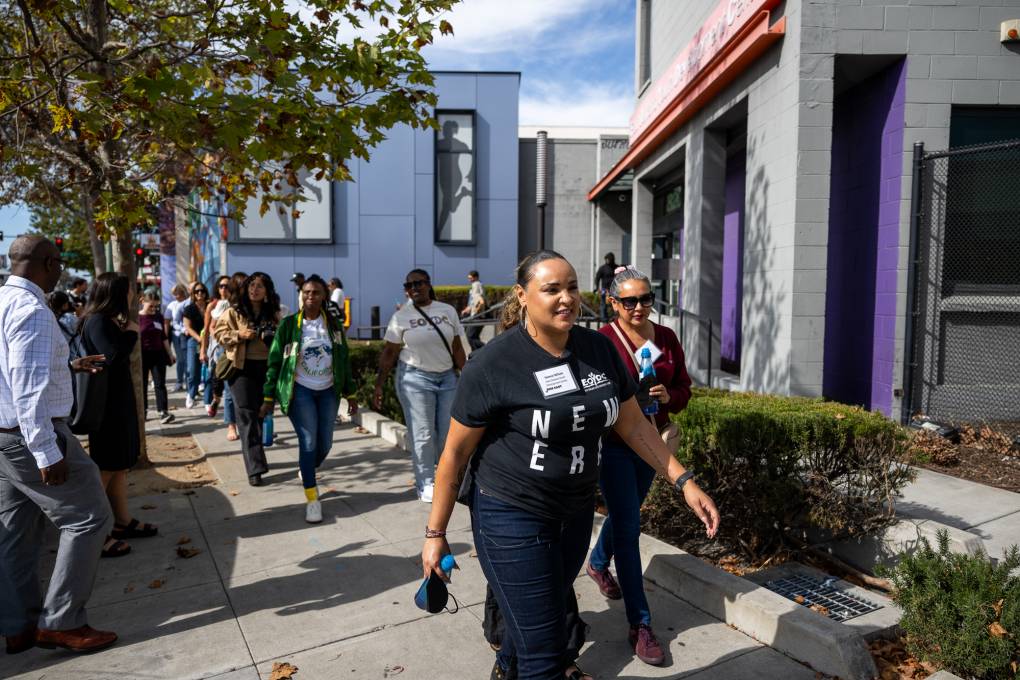
Rise East Unlocks $100 Million to Reimagine East Oakland
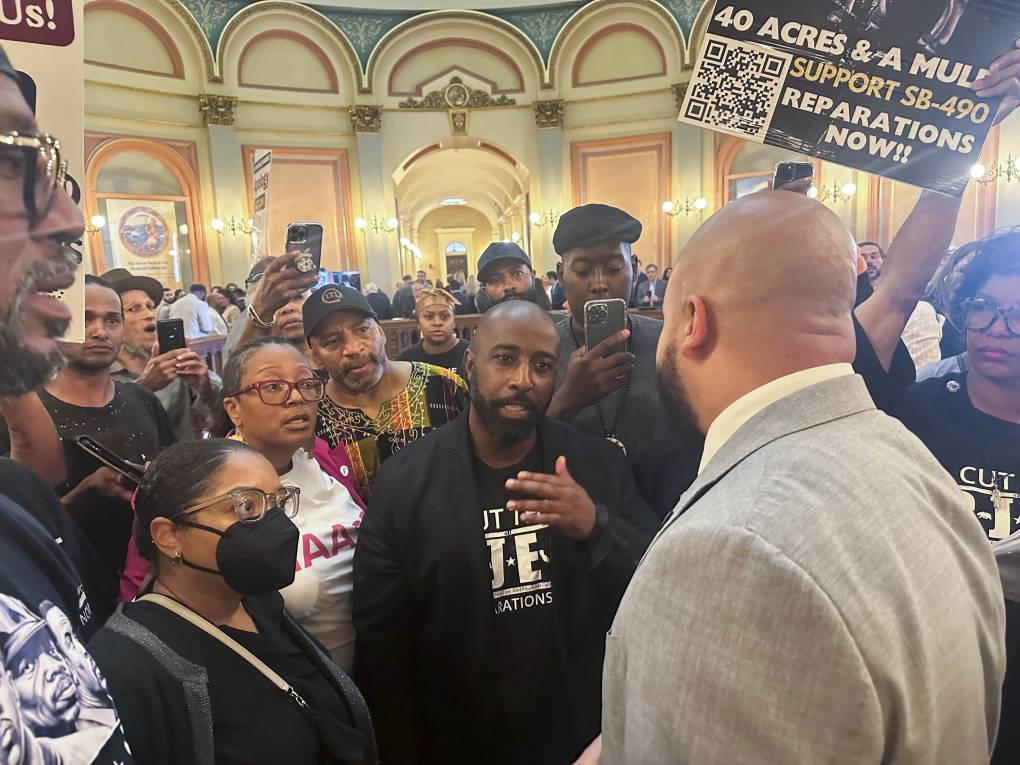
California Lawmakers Pass Bills to Atone for Legacy of Racism Against Black Residents
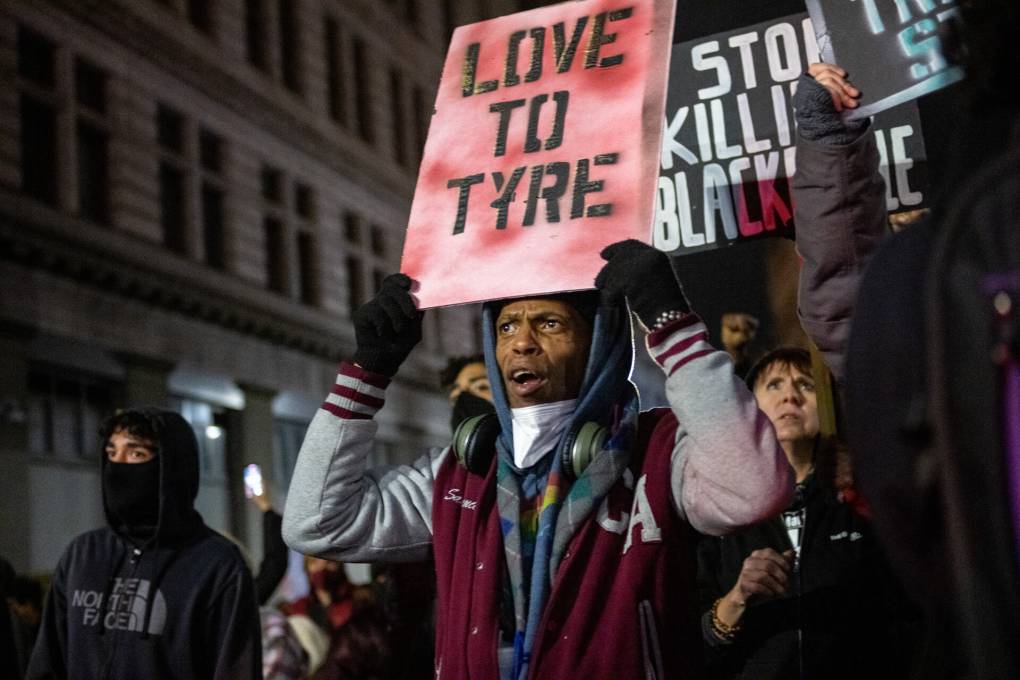
Reparations Are Also About Black Safety — and That Means Taking on Policing
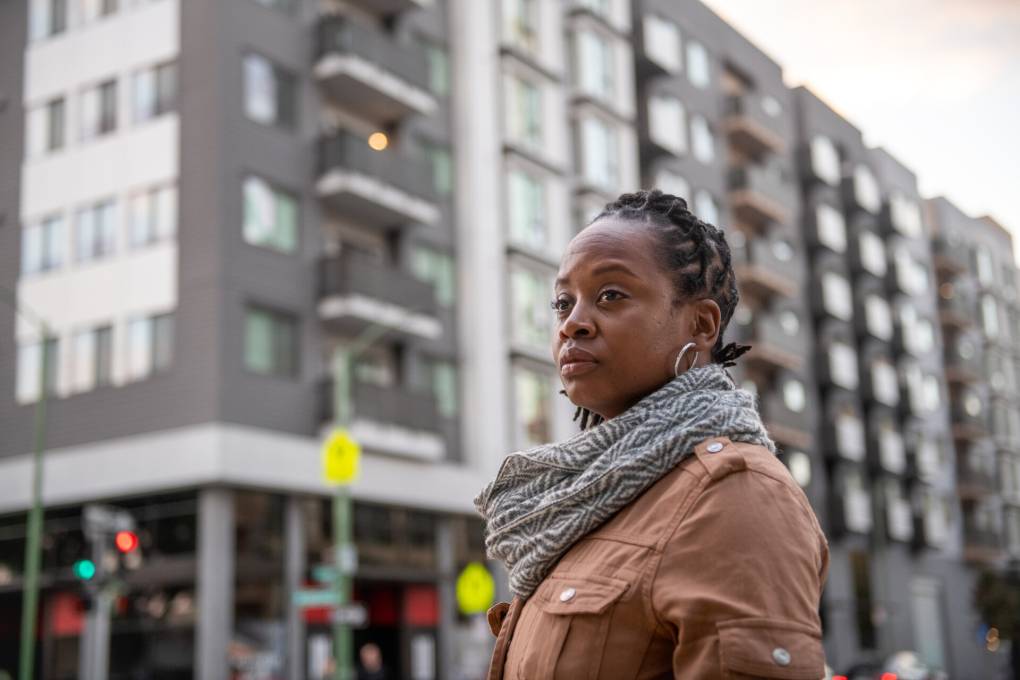
In Pushing Affordable Housing Measures, Local Leaders Ask Voters to Contend With Racist Housing Law
Tell Us: What's Your Vision for Reparations in California?
No, the Reparations Task Force Report Isn't a 'Watershed Moment.' Action Will Be
Documents Show How California Dept. of Corrections Handles Racism Among Officers
'It Means to Repair': What You Should Know About Reparations for Black Californians
Sponsored
Player sponsored by
window.__IS_SSR__=true
window.__INITIAL_STATE__={
"attachmentsReducer": {
"audio_0": {
"type": "attachments",
"id": "audio_0",
"imgSizes": {
"kqedFullSize": {
"file": "https://ww2.kqed.org/news/wp-content/themes/KQED-unified/img/audio_bgs/background0.jpg"
}
}
},
"audio_1": {
"type": "attachments",
"id": "audio_1",
"imgSizes": {
"kqedFullSize": {
"file": "https://ww2.kqed.org/news/wp-content/themes/KQED-unified/img/audio_bgs/background1.jpg"
}
}
},
"audio_2": {
"type": "attachments",
"id": "audio_2",
"imgSizes": {
"kqedFullSize": {
"file": "https://ww2.kqed.org/news/wp-content/themes/KQED-unified/img/audio_bgs/background2.jpg"
}
}
},
"audio_3": {
"type": "attachments",
"id": "audio_3",
"imgSizes": {
"kqedFullSize": {
"file": "https://ww2.kqed.org/news/wp-content/themes/KQED-unified/img/audio_bgs/background3.jpg"
}
}
},
"audio_4": {
"type": "attachments",
"id": "audio_4",
"imgSizes": {
"kqedFullSize": {
"file": "https://ww2.kqed.org/news/wp-content/themes/KQED-unified/img/audio_bgs/background4.jpg"
}
}
},
"placeholder": {
"type": "attachments",
"id": "placeholder",
"imgSizes": {
"thumbnail": {
"file": "https://cdn.kqed.org/wp-content/uploads/2024/12/KQED-Default-Image-816638274-2000x1333-1-160x107.jpg",
"width": 160,
"height": 107,
"mimeType": "image/jpeg"
},
"medium": {
"file": "https://cdn.kqed.org/wp-content/uploads/2024/12/KQED-Default-Image-816638274-2000x1333-1-800x533.jpg",
"width": 800,
"height": 533,
"mimeType": "image/jpeg"
},
"medium_large": {
"file": "https://cdn.kqed.org/wp-content/uploads/2024/12/KQED-Default-Image-816638274-2000x1333-1-768x512.jpg",
"width": 768,
"height": 512,
"mimeType": "image/jpeg"
},
"large": {
"file": "https://cdn.kqed.org/wp-content/uploads/2024/12/KQED-Default-Image-816638274-2000x1333-1-1020x680.jpg",
"width": 1020,
"height": 680,
"mimeType": "image/jpeg"
},
"1536x1536": {
"file": "https://cdn.kqed.org/wp-content/uploads/2024/12/KQED-Default-Image-816638274-2000x1333-1-1536x1024.jpg",
"width": 1536,
"height": 1024,
"mimeType": "image/jpeg"
},
"fd-lrg": {
"file": "https://cdn.kqed.org/wp-content/uploads/2024/12/KQED-Default-Image-816638274-2000x1333-1-1536x1024.jpg",
"width": 1536,
"height": 1024,
"mimeType": "image/jpeg"
},
"fd-med": {
"file": "https://cdn.kqed.org/wp-content/uploads/2024/12/KQED-Default-Image-816638274-2000x1333-1-1020x680.jpg",
"width": 1020,
"height": 680,
"mimeType": "image/jpeg"
},
"fd-sm": {
"file": "https://cdn.kqed.org/wp-content/uploads/2024/12/KQED-Default-Image-816638274-2000x1333-1-800x533.jpg",
"width": 800,
"height": 533,
"mimeType": "image/jpeg"
},
"post-thumbnail": {
"file": "https://cdn.kqed.org/wp-content/uploads/2024/12/KQED-Default-Image-816638274-2000x1333-1-672x372.jpg",
"width": 672,
"height": 372,
"mimeType": "image/jpeg"
},
"twentyfourteen-full-width": {
"file": "https://cdn.kqed.org/wp-content/uploads/2024/12/KQED-Default-Image-816638274-2000x1333-1-1038x576.jpg",
"width": 1038,
"height": 576,
"mimeType": "image/jpeg"
},
"xxsmall": {
"file": "https://cdn.kqed.org/wp-content/uploads/2024/12/KQED-Default-Image-816638274-2000x1333-1-160x107.jpg",
"width": 160,
"height": 107,
"mimeType": "image/jpeg"
},
"xsmall": {
"file": "https://cdn.kqed.org/wp-content/uploads/2024/12/KQED-Default-Image-816638274-2000x1333-1-672x372.jpg",
"width": 672,
"height": 372,
"mimeType": "image/jpeg"
},
"small": {
"file": "https://cdn.kqed.org/wp-content/uploads/2024/12/KQED-Default-Image-816638274-2000x1333-1-672x372.jpg",
"width": 672,
"height": 372,
"mimeType": "image/jpeg"
},
"xlarge": {
"file": "https://cdn.kqed.org/wp-content/uploads/2024/12/KQED-Default-Image-816638274-2000x1333-1-1020x680.jpg",
"width": 1020,
"height": 680,
"mimeType": "image/jpeg"
},
"full-width": {
"file": "https://cdn.kqed.org/wp-content/uploads/2024/12/KQED-Default-Image-816638274-2000x1333-1-1920x1280.jpg",
"width": 1920,
"height": 1280,
"mimeType": "image/jpeg"
},
"guest-author-32": {
"file": "https://cdn.kqed.org/wp-content/uploads/2025/01/KQED-Default-Image-816638274-1333x1333-1-160x160.jpg",
"width": 32,
"height": 32,
"mimeType": "image/jpeg"
},
"guest-author-50": {
"file": "https://cdn.kqed.org/wp-content/uploads/2025/01/KQED-Default-Image-816638274-1333x1333-1-160x160.jpg",
"width": 50,
"height": 50,
"mimeType": "image/jpeg"
},
"guest-author-64": {
"file": "https://cdn.kqed.org/wp-content/uploads/2025/01/KQED-Default-Image-816638274-1333x1333-1-160x160.jpg",
"width": 64,
"height": 64,
"mimeType": "image/jpeg"
},
"guest-author-96": {
"file": "https://cdn.kqed.org/wp-content/uploads/2025/01/KQED-Default-Image-816638274-1333x1333-1-160x160.jpg",
"width": 96,
"height": 96,
"mimeType": "image/jpeg"
},
"guest-author-128": {
"file": "https://cdn.kqed.org/wp-content/uploads/2025/01/KQED-Default-Image-816638274-1333x1333-1-160x160.jpg",
"width": 128,
"height": 128,
"mimeType": "image/jpeg"
},
"detail": {
"file": "https://cdn.kqed.org/wp-content/uploads/2025/01/KQED-Default-Image-816638274-1333x1333-1-160x160.jpg",
"width": 160,
"height": 160,
"mimeType": "image/jpeg"
},
"kqedFullSize": {
"file": "https://cdn.kqed.org/wp-content/uploads/2024/12/KQED-Default-Image-816638274-2000x1333-1.jpg",
"width": 2000,
"height": 1333
}
}
},
"news_12064376": {
"type": "attachments",
"id": "news_12064376",
"meta": {
"index": "attachments_1716263798",
"site": "news",
"id": "12064376",
"found": true
},
"title": "Israeli Prime Minister Netanyahu Meets With Elon Musk At Tesla In Fremont, CA",
"publishDate": 1763409755,
"status": "inherit",
"parent": 12064374,
"modified": 1763409817,
"caption": "The Tesla manufacturing facility on Sept. 18, 2023, in Fremont, California. A California judge has ruled that thousands of Black workers at Tesla’s flagship Fremont plant cannot sue over alleged racial harassment as a class, reversing an earlier ruling.",
"credit": "Justin Sullivan/Getty Images",
"altTag": null,
"description": null,
"imgSizes": {
"thumbnail": {
"file": "https://cdn.kqed.org/wp-content/uploads/sites/10/2025/11/TeslaFremontGetty-160x95.jpg",
"width": 160,
"height": 95,
"mimeType": "image/jpeg"
},
"1536x1536": {
"file": "https://cdn.kqed.org/wp-content/uploads/sites/10/2025/11/TeslaFremontGetty-1536x914.jpg",
"width": 1536,
"height": 914,
"mimeType": "image/jpeg"
},
"post-thumbnail": {
"file": "https://cdn.kqed.org/wp-content/uploads/sites/10/2025/11/TeslaFremontGetty-672x372.jpg",
"width": 672,
"height": 372,
"mimeType": "image/jpeg"
},
"twentyfourteen-full-width": {
"file": "https://cdn.kqed.org/wp-content/uploads/sites/10/2025/11/TeslaFremontGetty-1038x576.jpg",
"width": 1038,
"height": 576,
"mimeType": "image/jpeg"
},
"npr-cds-wide": {
"file": "https://cdn.kqed.org/wp-content/uploads/sites/10/2025/11/TeslaFremontGetty-1200x675.jpg",
"width": 1200,
"height": 675,
"mimeType": "image/jpeg"
},
"kqedFullSize": {
"file": "https://cdn.kqed.org/wp-content/uploads/sites/10/2025/11/TeslaFremontGetty.jpg",
"width": 2000,
"height": 1190
}
},
"fetchFailed": false,
"isLoading": false
},
"news_12020002": {
"type": "attachments",
"id": "news_12020002",
"meta": {
"index": "attachments_1716263798",
"site": "news",
"id": "12020002",
"found": true
},
"title": "241010-RiseEastDeepDown-07-BL",
"publishDate": 1735589948,
"status": "inherit",
"parent": 0,
"modified": 1735590174,
"caption": "Selena Wilson, CEO of the East Oakland Youth Development Center, leads a fundraising walking tour for the Rise East collective along International Boulevard in Oakland on Oct. 10, 2024.",
"credit": "Beth LaBerge/KQED",
"altTag": null,
"description": null,
"imgSizes": {
"medium": {
"file": "https://cdn.kqed.org/wp-content/uploads/sites/10/2024/12/241010-RiseEastDeepDown-07-BL-800x533.jpg",
"width": 800,
"height": 533,
"mimeType": "image/jpeg"
},
"large": {
"file": "https://cdn.kqed.org/wp-content/uploads/sites/10/2024/12/241010-RiseEastDeepDown-07-BL-1020x680.jpg",
"width": 1020,
"height": 680,
"mimeType": "image/jpeg"
},
"thumbnail": {
"file": "https://cdn.kqed.org/wp-content/uploads/sites/10/2024/12/241010-RiseEastDeepDown-07-BL-160x107.jpg",
"width": 160,
"height": 107,
"mimeType": "image/jpeg"
},
"1536x1536": {
"file": "https://cdn.kqed.org/wp-content/uploads/sites/10/2024/12/241010-RiseEastDeepDown-07-BL-1536x1024.jpg",
"width": 1536,
"height": 1024,
"mimeType": "image/jpeg"
},
"post-thumbnail": {
"file": "https://cdn.kqed.org/wp-content/uploads/sites/10/2024/12/241010-RiseEastDeepDown-07-BL-672x372.jpg",
"width": 672,
"height": 372,
"mimeType": "image/jpeg"
},
"twentyfourteen-full-width": {
"file": "https://cdn.kqed.org/wp-content/uploads/sites/10/2024/12/241010-RiseEastDeepDown-07-BL-1038x576.jpg",
"width": 1038,
"height": 576,
"mimeType": "image/jpeg"
},
"full-width": {
"file": "https://cdn.kqed.org/wp-content/uploads/sites/10/2024/12/241010-RiseEastDeepDown-07-BL-1920x1280.jpg",
"width": 1920,
"height": 1280,
"mimeType": "image/jpeg"
},
"kqedFullSize": {
"file": "https://cdn.kqed.org/wp-content/uploads/sites/10/2024/12/241010-RiseEastDeepDown-07-BL.jpg",
"width": 2000,
"height": 1333
}
},
"fetchFailed": false,
"isLoading": false
},
"news_12002657": {
"type": "attachments",
"id": "news_12002657",
"meta": {
"index": "attachments_1716263798",
"site": "news",
"id": "12002657",
"found": true
},
"title": "California Reparations",
"publishDate": 1725147568,
"status": "inherit",
"parent": 12002655,
"modified": 1725147620,
"caption": "Assemblymember Isaac Bryan (right) talks to members of Coalition for a Just and Equitable California about 2 reparations bills in the rotunda on the last day of the legislative year Saturday, Aug. 31, 2024, in Sacramento. ",
"credit": "Tran Nguyen/AP Photo",
"altTag": null,
"description": null,
"imgSizes": {
"medium": {
"file": "https://cdn.kqed.org/wp-content/uploads/sites/10/2024/08/AP24244812299639-800x600.jpg",
"width": 800,
"height": 600,
"mimeType": "image/jpeg"
},
"large": {
"file": "https://cdn.kqed.org/wp-content/uploads/sites/10/2024/08/AP24244812299639-1020x765.jpg",
"width": 1020,
"height": 765,
"mimeType": "image/jpeg"
},
"thumbnail": {
"file": "https://cdn.kqed.org/wp-content/uploads/sites/10/2024/08/AP24244812299639-160x120.jpg",
"width": 160,
"height": 120,
"mimeType": "image/jpeg"
},
"1536x1536": {
"file": "https://cdn.kqed.org/wp-content/uploads/sites/10/2024/08/AP24244812299639-1536x1152.jpg",
"width": 1536,
"height": 1152,
"mimeType": "image/jpeg"
},
"2048x2048": {
"file": "https://cdn.kqed.org/wp-content/uploads/sites/10/2024/08/AP24244812299639-2048x1536.jpg",
"width": 2048,
"height": 1536,
"mimeType": "image/jpeg"
},
"post-thumbnail": {
"file": "https://cdn.kqed.org/wp-content/uploads/sites/10/2024/08/AP24244812299639-672x372.jpg",
"width": 672,
"height": 372,
"mimeType": "image/jpeg"
},
"twentyfourteen-full-width": {
"file": "https://cdn.kqed.org/wp-content/uploads/sites/10/2024/08/AP24244812299639-1038x576.jpg",
"width": 1038,
"height": 576,
"mimeType": "image/jpeg"
},
"full-width": {
"file": "https://cdn.kqed.org/wp-content/uploads/sites/10/2024/08/AP24244812299639-1920x1440.jpg",
"width": 1920,
"height": 1440,
"mimeType": "image/jpeg"
},
"kqedFullSize": {
"file": "https://cdn.kqed.org/wp-content/uploads/sites/10/2024/08/AP24244812299639-scaled.jpg",
"width": 2560,
"height": 1920
}
},
"fetchFailed": false,
"isLoading": false
},
"news_11942059": {
"type": "attachments",
"id": "news_11942059",
"meta": {
"index": "attachments_1716263798",
"site": "news",
"id": "11942059",
"found": true
},
"parent": 11941976,
"imgSizes": {
"twentyfourteen-full-width": {
"file": "https://ww2.kqed.org/app/uploads/sites/10/2023/02/RS62428_021_KQED_OaklandTyreNicholsRally_01292023-qut-1038x576.jpg",
"width": 1038,
"mimeType": "image/jpeg",
"height": 576
},
"thumbnail": {
"file": "https://ww2.kqed.org/app/uploads/sites/10/2023/02/RS62428_021_KQED_OaklandTyreNicholsRally_01292023-qut-160x107.jpg",
"width": 160,
"mimeType": "image/jpeg",
"height": 107
},
"post-thumbnail": {
"file": "https://ww2.kqed.org/app/uploads/sites/10/2023/02/RS62428_021_KQED_OaklandTyreNicholsRally_01292023-qut-672x372.jpg",
"width": 672,
"mimeType": "image/jpeg",
"height": 372
},
"kqedFullSize": {
"file": "https://ww2.kqed.org/app/uploads/sites/10/2023/02/RS62428_021_KQED_OaklandTyreNicholsRally_01292023-qut.jpg",
"width": 1920,
"height": 1280
},
"large": {
"file": "https://ww2.kqed.org/app/uploads/sites/10/2023/02/RS62428_021_KQED_OaklandTyreNicholsRally_01292023-qut-1020x680.jpg",
"width": 1020,
"mimeType": "image/jpeg",
"height": 680
},
"1536x1536": {
"file": "https://ww2.kqed.org/app/uploads/sites/10/2023/02/RS62428_021_KQED_OaklandTyreNicholsRally_01292023-qut-1536x1024.jpg",
"width": 1536,
"mimeType": "image/jpeg",
"height": 1024
},
"medium": {
"file": "https://ww2.kqed.org/app/uploads/sites/10/2023/02/RS62428_021_KQED_OaklandTyreNicholsRally_01292023-qut-800x533.jpg",
"width": 800,
"mimeType": "image/jpeg",
"height": 533
}
},
"publishDate": 1677542979,
"modified": 1677549525,
"caption": "A demonstrator in downtown Oakland marches in a Jan. 29, 2022, protest of the Memphis police killing of Tyre Nichols.",
"description": null,
"title": "RS62428_021_KQED_OaklandTyreNicholsRally_01292023-qut",
"credit": "Beth LaBerge/KQED",
"status": "inherit",
"altTag": "A Black man wearing a white and maroon jacket and a hoodie holds a hand-made sign reading 'Love to Tyre' above his head, with another sign reading 'Stop Killing Black People' visible in the back, with the buildings of downtown in the background",
"fetchFailed": false,
"isLoading": false
},
"news_11931088": {
"type": "attachments",
"id": "news_11931088",
"meta": {
"index": "attachments_1716263798",
"site": "news",
"id": "11931088",
"found": true
},
"parent": 11931068,
"imgSizes": {
"twentyfourteen-full-width": {
"file": "https://ww2.kqed.org/app/uploads/sites/10/2022/11/RS59762_003_KQED_CarrollFife_10312022-qut-1038x576.jpg",
"width": 1038,
"mimeType": "image/jpeg",
"height": 576
},
"thumbnail": {
"file": "https://ww2.kqed.org/app/uploads/sites/10/2022/11/RS59762_003_KQED_CarrollFife_10312022-qut-160x107.jpg",
"width": 160,
"mimeType": "image/jpeg",
"height": 107
},
"post-thumbnail": {
"file": "https://ww2.kqed.org/app/uploads/sites/10/2022/11/RS59762_003_KQED_CarrollFife_10312022-qut-672x372.jpg",
"width": 672,
"mimeType": "image/jpeg",
"height": 372
},
"kqedFullSize": {
"file": "https://ww2.kqed.org/app/uploads/sites/10/2022/11/RS59762_003_KQED_CarrollFife_10312022-qut.jpg",
"width": 1920,
"height": 1280
},
"large": {
"file": "https://ww2.kqed.org/app/uploads/sites/10/2022/11/RS59762_003_KQED_CarrollFife_10312022-qut-1020x680.jpg",
"width": 1020,
"mimeType": "image/jpeg",
"height": 680
},
"1536x1536": {
"file": "https://ww2.kqed.org/app/uploads/sites/10/2022/11/RS59762_003_KQED_CarrollFife_10312022-qut-1536x1024.jpg",
"width": 1536,
"mimeType": "image/jpeg",
"height": 1024
},
"medium": {
"file": "https://ww2.kqed.org/app/uploads/sites/10/2022/11/RS59762_003_KQED_CarrollFife_10312022-qut-800x533.jpg",
"width": 800,
"mimeType": "image/jpeg",
"height": 533
}
},
"publishDate": 1667513528,
"modified": 1667521629,
"caption": "Oakland District 3 Councilmember Carroll Fife stands in front of a new market-rate apartment building in Oakland on Oct. 31, 2022.",
"description": null,
"title": "RS59762_003_KQED_CarrollFife_10312022-qut",
"credit": "Beth LaBerge/KQED",
"status": "inherit",
"altTag": "Councilmember Fife stands to the right, looking left across the frame with a serious expression. She wears a large scarf around her neck and a coat. Behind her, slightly out of focus, a large building, perhaps six floors in height.",
"fetchFailed": false,
"isLoading": false
},
"news_11916598": {
"type": "attachments",
"id": "news_11916598",
"meta": {
"index": "attachments_1716263798",
"site": "news",
"id": "11916598",
"found": true
},
"parent": 11914748,
"imgSizes": {
"thumbnail": {
"file": "https://ww2.kqed.org/app/uploads/sites/10/2022/06/RiCLandingPageGraphic-1020x574-1-160x90.png",
"width": 160,
"mimeType": "image/png",
"height": 90
},
"post-thumbnail": {
"file": "https://ww2.kqed.org/app/uploads/sites/10/2022/06/RiCLandingPageGraphic-1020x574-1-672x372.png",
"width": 672,
"mimeType": "image/png",
"height": 372
},
"kqedFullSize": {
"file": "https://ww2.kqed.org/app/uploads/sites/10/2022/06/RiCLandingPageGraphic-1020x574-1.png",
"width": 1020,
"height": 574
},
"medium": {
"file": "https://ww2.kqed.org/app/uploads/sites/10/2022/06/RiCLandingPageGraphic-1020x574-1-800x450.png",
"width": 800,
"mimeType": "image/png",
"height": 450
}
},
"publishDate": 1654797803,
"modified": 1654797803,
"caption": null,
"description": null,
"title": "RiCLandingPageGraphic-1020x574",
"credit": null,
"status": "inherit",
"altTag": null,
"fetchFailed": false,
"isLoading": false
},
"news_11916075": {
"type": "attachments",
"id": "news_11916075",
"meta": {
"index": "attachments_1716263798",
"site": "news",
"id": "11916075",
"found": true
},
"parent": 11916026,
"imgSizes": {
"twentyfourteen-full-width": {
"file": "https://ww2.kqed.org/app/uploads/sites/10/2022/06/RS56284_027_KQED_OaklandReparationsListeningSession_05282022-qut-1038x576.jpg",
"width": 1038,
"mimeType": "image/jpeg",
"height": 576
},
"thumbnail": {
"file": "https://ww2.kqed.org/app/uploads/sites/10/2022/06/RS56284_027_KQED_OaklandReparationsListeningSession_05282022-qut-160x107.jpg",
"width": 160,
"mimeType": "image/jpeg",
"height": 107
},
"post-thumbnail": {
"file": "https://ww2.kqed.org/app/uploads/sites/10/2022/06/RS56284_027_KQED_OaklandReparationsListeningSession_05282022-qut-672x372.jpg",
"width": 672,
"mimeType": "image/jpeg",
"height": 372
},
"kqedFullSize": {
"file": "https://ww2.kqed.org/app/uploads/sites/10/2022/06/RS56284_027_KQED_OaklandReparationsListeningSession_05282022-qut.jpg",
"width": 1920,
"height": 1278
},
"large": {
"file": "https://ww2.kqed.org/app/uploads/sites/10/2022/06/RS56284_027_KQED_OaklandReparationsListeningSession_05282022-qut-1020x679.jpg",
"width": 1020,
"mimeType": "image/jpeg",
"height": 679
},
"1536x1536": {
"file": "https://ww2.kqed.org/app/uploads/sites/10/2022/06/RS56284_027_KQED_OaklandReparationsListeningSession_05282022-qut-1536x1022.jpg",
"width": 1536,
"mimeType": "image/jpeg",
"height": 1022
},
"medium": {
"file": "https://ww2.kqed.org/app/uploads/sites/10/2022/06/RS56284_027_KQED_OaklandReparationsListeningSession_05282022-qut-800x533.jpg",
"width": 800,
"mimeType": "image/jpeg",
"height": 533
}
},
"publishDate": 1654302679,
"modified": 1654644193,
"caption": "Allie Whitehurst speaks during a reparations listening session in Oakland on May 28, 2022. Whitehurst emphasized the importance of correcting educational disparities, including reducing class sizes and getting kids the personal attention they need. 'That, to me, would be one of the ways in which we can provide reparations, because when this boat rises for Black folk, it rises for everybody,' she said.",
"description": null,
"title": "RS56284_027_KQED_OaklandReparationsListeningSession_05282022-qut",
"credit": "Beth LaBerge/KQED",
"status": "inherit",
"altTag": "An older Black woman with straight black hair and a cowry-shell earring is photographed close up and in left profile before a microphone, her head tilted slightly back, her expression stoic, and her lips closed (she is not speaking). In the background is a blurred brown wall and 10 orbs of bright, blurred overhead lights, as from a chandelier.",
"fetchFailed": false,
"isLoading": false
},
"news_11908407": {
"type": "attachments",
"id": "news_11908407",
"meta": {
"index": "attachments_1716263798",
"site": "news",
"id": "11908407",
"found": true
},
"parent": 11908340,
"imgSizes": {
"twentyfourteen-full-width": {
"file": "https://ww2.kqed.org/app/uploads/sites/10/2022/03/CarlHolmesJrFromFb1.15.21-1-1038x576.png",
"width": 1038,
"mimeType": "image/png",
"height": 576
},
"thumbnail": {
"file": "https://ww2.kqed.org/app/uploads/sites/10/2022/03/CarlHolmesJrFromFb1.15.21-1-160x170.png",
"width": 160,
"mimeType": "image/png",
"height": 170
},
"post-thumbnail": {
"file": "https://ww2.kqed.org/app/uploads/sites/10/2022/03/CarlHolmesJrFromFb1.15.21-1-672x372.png",
"width": 672,
"mimeType": "image/png",
"height": 372
},
"kqedFullSize": {
"file": "https://ww2.kqed.org/app/uploads/sites/10/2022/03/CarlHolmesJrFromFb1.15.21-1.png",
"width": 1214,
"height": 1292
},
"large": {
"file": "https://ww2.kqed.org/app/uploads/sites/10/2022/03/CarlHolmesJrFromFb1.15.21-1-1020x1086.png",
"width": 1020,
"mimeType": "image/png",
"height": 1086
},
"medium": {
"file": "https://ww2.kqed.org/app/uploads/sites/10/2022/03/CarlHolmesJrFromFb1.15.21-1-800x851.png",
"width": 800,
"mimeType": "image/png",
"height": 851
}
},
"publishDate": 1647461687,
"modified": 1647468596,
"caption": "Carl Holmes worked as a correctional officer at Los Angeles County's state prison in 2020 when he was disciplined for an outburst over a 'thin blue line' flag hanging in a gym at the facility.",
"description": null,
"title": "CarlHolmesJrFromFb1.15.21 (1)",
"credit": "Courtesy of Facebook",
"status": "inherit",
"altTag": "A man wearing a black baseball cap and black t shirt stands in front of a mural.",
"fetchFailed": false,
"isLoading": false
},
"news_11906220": {
"type": "attachments",
"id": "news_11906220",
"meta": {
"index": "attachments_1716263798",
"site": "news",
"id": "11906220",
"found": true
},
"parent": 11906054,
"imgSizes": {
"twentyfourteen-full-width": {
"file": "https://ww2.kqed.org/app/uploads/sites/10/2022/02/RS53887_GettyImages-1248797994-qut-1038x576.jpg",
"width": 1038,
"mimeType": "image/jpeg",
"height": 576
},
"thumbnail": {
"file": "https://ww2.kqed.org/app/uploads/sites/10/2022/02/RS53887_GettyImages-1248797994-qut-160x101.jpg",
"width": 160,
"mimeType": "image/jpeg",
"height": 101
},
"post-thumbnail": {
"file": "https://ww2.kqed.org/app/uploads/sites/10/2022/02/RS53887_GettyImages-1248797994-qut-672x372.jpg",
"width": 672,
"mimeType": "image/jpeg",
"height": 372
},
"kqedFullSize": {
"file": "https://ww2.kqed.org/app/uploads/sites/10/2022/02/RS53887_GettyImages-1248797994-qut.jpg",
"width": 1920,
"height": 1211
},
"large": {
"file": "https://ww2.kqed.org/app/uploads/sites/10/2022/02/RS53887_GettyImages-1248797994-qut-1020x643.jpg",
"width": 1020,
"mimeType": "image/jpeg",
"height": 643
},
"1536x1536": {
"file": "https://ww2.kqed.org/app/uploads/sites/10/2022/02/RS53887_GettyImages-1248797994-qut-1536x969.jpg",
"width": 1536,
"mimeType": "image/jpeg",
"height": 969
},
"medium": {
"file": "https://ww2.kqed.org/app/uploads/sites/10/2022/02/RS53887_GettyImages-1248797994-qut-800x505.jpg",
"width": 800,
"mimeType": "image/jpeg",
"height": 505
}
},
"publishDate": 1645649785,
"modified": 1645670204,
"caption": "Students from Oakland's Skyline High School march in protest on May 1, 1992, after the verdict in the Rodney King beating. The call for reparations is specifically about race and enslavement — the ongoing ramifications of which are seen in the glaring disparities in the criminal justice system — but it touches on basic questions of accountability and fairness.",
"description": null,
"title": "Students from Skyline High School in Oakland Protest",
"credit": "Gary Reyes/Media News Group/Oakland Tribune via Getty Images",
"status": "inherit",
"altTag": "Black and white historical image showing line of young Black students carrying signs and chanting",
"fetchFailed": false,
"isLoading": false
}
},
"audioPlayerReducer": {
"postId": "stream_live",
"isPaused": true,
"isPlaying": false,
"pfsActive": false,
"pledgeModalIsOpen": true,
"playerDrawerIsOpen": false
},
"authorsReducer": {
"byline_news_12002655": {
"type": "authors",
"id": "byline_news_12002655",
"meta": {
"override": true
},
"slug": "byline_news_12002655",
"name": "Sophie Austin, Associated Press",
"isLoading": false
},
"kqed": {
"type": "authors",
"id": "236",
"meta": {
"index": "authors_1716337520",
"id": "236",
"found": true
},
"name": "KQED News Staff",
"firstName": "KQED News Staff",
"lastName": null,
"slug": "kqed",
"email": "faq@kqed.org",
"display_author_email": false,
"staff_mastheads": [],
"title": null,
"bio": null,
"avatar": "https://secure.gravatar.com/avatar/ef0e801a68c4c54afa9180db14084167?s=600&d=blank&r=g",
"twitter": null,
"facebook": null,
"instagram": null,
"linkedin": null,
"sites": [
{
"site": "arts",
"roles": [
"contributor"
]
},
{
"site": "news",
"roles": [
"editor"
]
},
{
"site": "futureofyou",
"roles": [
"author"
]
}
],
"headData": {
"title": "KQED News Staff | KQED",
"description": null,
"ogImgSrc": "https://secure.gravatar.com/avatar/ef0e801a68c4c54afa9180db14084167?s=600&d=blank&r=g",
"twImgSrc": "https://secure.gravatar.com/avatar/ef0e801a68c4c54afa9180db14084167?s=600&d=blank&r=g"
},
"isLoading": false,
"link": "/author/kqed"
},
"rachael-myrow": {
"type": "authors",
"id": "251",
"meta": {
"index": "authors_1716337520",
"id": "251",
"found": true
},
"name": "Rachael Myrow",
"firstName": "Rachael",
"lastName": "Myrow",
"slug": "rachael-myrow",
"email": "rmyrow@kqed.org",
"display_author_email": false,
"staff_mastheads": [
"news"
],
"title": "Senior Editor of KQED's Silicon Valley News Desk",
"bio": "Rachael Myrow is Senior Editor of KQED's Silicon Valley News Desk, reporting on topics like \u003ca href=\"https://www.kqed.org/news/12023367/what-big-tech-sees-in-donald-trump\">what Big Tech sees in President Trump\u003c/a>, \u003ca href=\"https://www.kqed.org/news/12020857/california-lawmaker-ready-revive-fight-regulating-ai\">California's many, many AI bills\u003c/a>, and the \u003ca href=\"https://www.kqed.org/news/12017713/lost-sounds-of-san-francisco\">lost sounds of San Francisco\u003c/a>. You can hear her work on \u003ca href=\"https://www.npr.org/search?query=Rachael%20Myrow&page=1\">NPR\u003c/a>, \u003ca href=\"https://theworld.org/people/rachael-myrow\">The World\u003c/a>, WBUR's \u003ca href=\"https://www.wbur.org/search?q=Rachael%20Myrow\">\u003ci>Here & Now\u003c/i>\u003c/a> and the BBC. \u003c/i>She also guest hosts for KQED's \u003ci>\u003ca href=\"https://www.kqed.org/forum/tag/rachael-myrow\">Forum\u003c/a>\u003c/i>. Over the years, she's talked with Kamau Bell, David Byrne, Kamala Harris, Tony Kushner, Armistead Maupin, Van Dyke Parks, Arnold Schwarzenegger and Tommie Smith, among others.\r\n\r\nBefore all this, she hosted \u003cem>The California Report\u003c/em> for 7+ years.\r\n\r\nAwards? Sure: Peabody, Edward R. Murrow, Regional Edward R. Murrow, RTNDA, Northern California RTNDA, SPJ Northern California Chapter, LA Press Club, Golden Mic. Prior to joining KQED, Rachael worked in Los Angeles at KPCC and Marketplace. She holds degrees in English and journalism from UC Berkeley (where she got her start in public radio on KALX-FM).\r\n\r\nOutside of the studio, you'll find Rachael hiking Bay Area trails and whipping up Instagram-ready meals in her kitchen. More recently, she's taken up native-forward gardening.",
"avatar": "https://secure.gravatar.com/avatar/87bf8cb5874e045cdff430523a6d48b1?s=600&d=blank&r=g",
"twitter": "rachaelmyrow",
"facebook": null,
"instagram": null,
"linkedin": "https://www.linkedin.com/in/rachaelmyrow/",
"sites": [
{
"site": "arts",
"roles": [
"administrator"
]
},
{
"site": "news",
"roles": [
"edit_others_posts",
"editor"
]
},
{
"site": "futureofyou",
"roles": [
"editor"
]
},
{
"site": "bayareabites",
"roles": [
"editor"
]
},
{
"site": "stateofhealth",
"roles": [
"editor"
]
},
{
"site": "science",
"roles": [
"editor"
]
},
{
"site": "food",
"roles": [
"editor"
]
},
{
"site": "forum",
"roles": [
"editor"
]
},
{
"site": "liveblog",
"roles": [
"author"
]
}
],
"headData": {
"title": "Rachael Myrow | KQED",
"description": "Senior Editor of KQED's Silicon Valley News Desk",
"ogImgSrc": "https://secure.gravatar.com/avatar/87bf8cb5874e045cdff430523a6d48b1?s=600&d=blank&r=g",
"twImgSrc": "https://secure.gravatar.com/avatar/87bf8cb5874e045cdff430523a6d48b1?s=600&d=blank&r=g"
},
"isLoading": false,
"link": "/author/rachael-myrow"
},
"slewis": {
"type": "authors",
"id": "8676",
"meta": {
"index": "authors_1716337520",
"id": "8676",
"found": true
},
"name": "Sukey Lewis",
"firstName": "Sukey",
"lastName": "Lewis",
"slug": "slewis",
"email": "slewis@kqed.org",
"display_author_email": true,
"staff_mastheads": [
"news"
],
"title": "KQED Contributor",
"bio": "Sukey Lewis is a criminal justice reporter and host of \u003cem>On Our Watch\u003c/em>, a new podcast from NPR and KQED about the shadow world of police discipline. In 2018, she co-founded the California Reporting Project, a coalition of newsrooms across the state focused on obtaining previously sealed internal affairs records from law enforcement. In addition to her reporting on police accountability, Sukey has investigated the bail bonds industry, California's wildfires and the high cost of prison phone calls. Sukey earned a master's degree in journalism from the University of California at Berkeley. Send news tips to slewis@kqed.org.",
"avatar": "https://secure.gravatar.com/avatar/03fd6b21024f99d8b0a1966654586de7?s=600&d=blank&r=g",
"twitter": "SukeyLewis",
"facebook": null,
"instagram": null,
"linkedin": null,
"sites": [
{
"site": "news",
"roles": [
"author",
"edit_others_posts"
]
}
],
"headData": {
"title": "Sukey Lewis | KQED",
"description": "KQED Contributor",
"ogImgSrc": "https://secure.gravatar.com/avatar/03fd6b21024f99d8b0a1966654586de7?s=600&d=blank&r=g",
"twImgSrc": "https://secure.gravatar.com/avatar/03fd6b21024f99d8b0a1966654586de7?s=600&d=blank&r=g"
},
"isLoading": false,
"link": "/author/slewis"
},
"vrancano": {
"type": "authors",
"id": "11276",
"meta": {
"index": "authors_1716337520",
"id": "11276",
"found": true
},
"name": "Vanessa Rancaño",
"firstName": "Vanessa",
"lastName": "Rancaño",
"slug": "vrancano",
"email": "vrancano@kqed.org",
"display_author_email": false,
"staff_mastheads": [
"news"
],
"title": "Reporter, Housing",
"bio": "Vanessa Rancaño reports on housing and homelessness for KQED. She’s also covered education for the station and reported from the Central Valley. Her work has aired across public radio, from flagship national news shows to longform narrative podcasts. Before taking up a mic, she worked as a freelance print journalist. She’s been recognized with a number of national and regional awards. Vanessa grew up in California's Central Valley. She's a former NPR Kroc Fellow, and a graduate of the UC Berkeley Graduate School of Journalism.",
"avatar": "https://secure.gravatar.com/avatar/f6c0fc5d391c78710bcfc723f0636ef6?s=600&d=blank&r=g",
"twitter": "vanessarancano",
"facebook": null,
"instagram": null,
"linkedin": null,
"sites": [
{
"site": "arts",
"roles": [
"editor"
]
},
{
"site": "news",
"roles": [
"editor"
]
}
],
"headData": {
"title": "Vanessa Rancaño | KQED",
"description": "Reporter, Housing",
"ogImgSrc": "https://secure.gravatar.com/avatar/f6c0fc5d391c78710bcfc723f0636ef6?s=600&d=blank&r=g",
"twImgSrc": "https://secure.gravatar.com/avatar/f6c0fc5d391c78710bcfc723f0636ef6?s=600&d=blank&r=g"
},
"isLoading": false,
"link": "/author/vrancano"
},
"lsarah": {
"type": "authors",
"id": "11626",
"meta": {
"index": "authors_1716337520",
"id": "11626",
"found": true
},
"name": "Lakshmi Sarah",
"firstName": "Lakshmi",
"lastName": "Sarah",
"slug": "lsarah",
"email": "lsarah@kqed.org",
"display_author_email": false,
"staff_mastheads": [],
"title": "Digital Producer",
"bio": "Lakshmi Sarah is an educator, author and journalist with a focus on innovative storytelling. She has worked with newspapers, radio and magazines from Ahmedabad, India to Los Angeles, California. She has written and produced for Die Zeit, Global Voices, AJ+, KQED, Fusion Media Group and the New York Times.",
"avatar": "https://secure.gravatar.com/avatar/652dcaecd8b28826fc17a8b2d6bb4e93?s=600&d=blank&r=g",
"twitter": "lakitalki",
"facebook": null,
"instagram": "https://www.instagram.com/laki.talki/",
"linkedin": "https://www.linkedin.com/in/lakisarah/",
"sites": [
{
"site": "arts",
"roles": []
},
{
"site": "news",
"roles": []
},
{
"site": "bayareabites",
"roles": []
},
{
"site": "science",
"roles": []
}
],
"headData": {
"title": "Lakshmi Sarah | KQED",
"description": "Digital Producer",
"ogImgSrc": "https://secure.gravatar.com/avatar/652dcaecd8b28826fc17a8b2d6bb4e93?s=600&d=blank&r=g",
"twImgSrc": "https://secure.gravatar.com/avatar/652dcaecd8b28826fc17a8b2d6bb4e93?s=600&d=blank&r=g"
},
"isLoading": false,
"link": "/author/lsarah"
},
"otaylor": {
"type": "authors",
"id": "11770",
"meta": {
"index": "authors_1716337520",
"id": "11770",
"found": true
},
"name": "Otis R. Taylor Jr.",
"firstName": "Otis R.",
"lastName": "Taylor Jr.",
"slug": "otaylor",
"email": "otaylor@kqed.org",
"display_author_email": false,
"staff_mastheads": [
"news"
],
"title": "KQED Editor",
"bio": null,
"avatar": "https://secure.gravatar.com/avatar/a72379d683a1df5129082b6b808c6073?s=600&d=blank&r=g",
"twitter": "otisrtaylorjr",
"facebook": null,
"instagram": null,
"linkedin": null,
"sites": [
{
"site": "arts",
"roles": [
"editor"
]
},
{
"site": "news",
"roles": [
"editor"
]
},
{
"site": "science",
"roles": [
"editor"
]
},
{
"site": "liveblog",
"roles": [
"editor"
]
}
],
"headData": {
"title": "Otis R. Taylor Jr. | KQED",
"description": "KQED Editor",
"ogImgSrc": "https://secure.gravatar.com/avatar/a72379d683a1df5129082b6b808c6073?s=600&d=blank&r=g",
"twImgSrc": "https://secure.gravatar.com/avatar/a72379d683a1df5129082b6b808c6073?s=600&d=blank&r=g"
},
"isLoading": false,
"link": "/author/otaylor"
}
},
"breakingNewsReducer": {},
"pagesReducer": {},
"postsReducer": {
"stream_live": {
"type": "live",
"id": "stream_live",
"audioUrl": "https://streams.kqed.org/kqedradio",
"title": "Live Stream",
"excerpt": "Live Stream information currently unavailable.",
"link": "/radio",
"featImg": "",
"label": {
"name": "KQED Live",
"link": "/"
}
},
"stream_kqedNewscast": {
"type": "posts",
"id": "stream_kqedNewscast",
"audioUrl": "https://www.kqed.org/.stream/anon/radio/RDnews/newscast.mp3?_=1",
"title": "KQED Newscast",
"featImg": "",
"label": {
"name": "88.5 FM",
"link": "/"
}
},
"news_12064374": {
"type": "posts",
"id": "news_12064374",
"meta": {
"index": "posts_1716263798",
"site": "news",
"id": "12064374",
"score": null,
"sort": [
1763424589000
]
},
"guestAuthors": [],
"slug": "tesla-dodges-class-action-case-now-faces-hundreds-of-individual-race-harassment-claims",
"title": "Tesla Dodges Class Action Case, Now Faces Hundreds of Individual Race-Harassment Claims",
"publishDate": 1763424589,
"format": "standard",
"headTitle": "Tesla Dodges Class Action Case, Now Faces Hundreds of Individual Race-Harassment Claims | KQED",
"labelTerm": {
"site": "news"
},
"content": "\u003cp>A California state judge has ruled that more than 14,000 Black workers who alleged racial harassment at \u003ca href=\"https://www.kqed.org/news/tag/tesla\">Tesla\u003c/a>’s flagship assembly plant in Fremont cannot sue as a class, meaning the company is likely to face a flood of individual lawsuits.\u003c/p>\n\u003cp>According to Superior Court Judge Peter Borkon’s Friday\u003ca href=\"https://tmsnrt.rs/3XzzhNU\"> ruling,\u003c/a> the 2017 lawsuit cannot move forward as a class action because lawyers for the plaintiffs were unable to find 200 randomly sampled class members willing to forgo a few days of wages to testify ahead of a trial scheduled for 2026.\u003c/p>\n\u003cp>Borkon said he did not trust that the jury would be able to “reliably extrapolate from the experiences of the trial witnesses to the 14,000 members of the class as a whole.”\u003c/p>\n\u003cp>[ad fullwidth]\u003c/p>\n\u003cp>“An infinitesimal number of the workers have testified,” Stanford Law School professor emeritus William Gould IV, a former National Labor Relations Board chairman, told KQED. Tesla “has superior resources, and plaintiffs need the class action to really get the defendant’s attention.”\u003c/p>\n\u003cp>The named plaintiff, former assembly line worker Marcus Vaughn, alleged that Black workers at the Fremont facility were subjected to a range of racist conduct, including slurs, graffiti and nooses hung at their workstations. Vaughn said that line workers and supervisors alike referred to him using a slur on a regular basis and that Tesla did not investigate after he complained in writing to the human resources department.\u003c/p>\n\u003cp>Instead, Vaughn said, Tesla fired him for “not having a positive attitude” six months after he started the job.\u003c/p>\n\u003cfigure id=\"attachment_11992305\" class=\"wp-caption aligncenter\" style=\"max-width: 1920px\">\u003cimg loading=\"lazy\" decoding=\"async\" class=\"size-full wp-image-11992305\" src=\"https://cdn.kqed.org/wp-content/uploads/sites/10/2024/06/TeslaFremont.jpg\" alt=\"\" width=\"1920\" height=\"1265\" srcset=\"https://cdn.kqed.org/wp-content/uploads/sites/10/2024/06/TeslaFremont.jpg 1920w, https://cdn.kqed.org/wp-content/uploads/sites/10/2024/06/TeslaFremont-800x527.jpg 800w, https://cdn.kqed.org/wp-content/uploads/sites/10/2024/06/TeslaFremont-1020x672.jpg 1020w, https://cdn.kqed.org/wp-content/uploads/sites/10/2024/06/TeslaFremont-160x105.jpg 160w, https://cdn.kqed.org/wp-content/uploads/sites/10/2024/06/TeslaFremont-1536x1012.jpg 1536w\" sizes=\"auto, (max-width: 1920px) 100vw, 1920px\">\u003cfigcaption class=\"wp-caption-text\">A row of new Tesla Superchargers seen outside of the Tesla Factory on Aug. 16, 2013, in Fremont, California. \u003ccite>(Justin Sullivan/Getty Images)\u003c/cite>\u003c/figcaption>\u003c/figure>\n\u003cp>The ruling is a meaningful legal victory for Tesla, but the company still faces multiple lawsuits alleging pervasive race discrimination and other forms of \u003ca href=\"https://www.kqed.org/forum/2010101854776/foreign-workers-at-tesla-spotlight-a-visa-system-vulnerable-to-fraud\">worker mistreatment\u003c/a> at its \u003ca href=\"https://www.kqed.org/news/11662641/tesla-says-its-factory-is-safer-but-it-left-injuries-off-the-books\">Fremont factory\u003c/a>.\u003c/p>\n\u003cp>The U.S. Equal Employment Opportunity Commission, which enforces federal anti-discrimination laws, has also brought \u003ca href=\"https://www.reuters.com/legal/tesla-appears-unlikely-nix-us-suit-alleging-bias-against-black-workers-2024-03-28/\">race discrimination claims\u003c/a> against Tesla in federal court in California, and state regulators at the California Department of Fair Employment & Housing \u003ca href=\"https://omny.fm/shows/kqed-segmented-audio/tesla-sued-over-disturbing-reports-of-workplace-ra\">are suing\u003c/a> in Alameda County Superior Court. The company has\u003ca href=\"https://www.reuters.com/business/autos-transportation/tesla-settles-black-employees-lawsuit-alleging-pervasive-harassment-2025-04-17/\"> settled other race discrimination lawsuits\u003c/a> involving individual plaintiffs.\u003c/p>\n\u003cp>In the wake of the class-action denial, plaintiffs’ lawyers said they intend to press on with a host of individual lawsuits. They’ve already filed more than 500 and plan to eventually file more than 900.\u003c/p>\n\u003cp>“Tesla has jumped out of the frying pan and into the fire with this decertification, because they are now facing hundreds of victims of race harassment seeking damages in their own suits,” wrote the plaintiffs’ co-lead counsel Bryan J. Schwartz.[aside postID=news_12063980 hero='https://cdn.kqed.org/wp-content/uploads/sites/10/2023/10/231005-TRUCK-GETTY-KQED-1020x680.jpg']Tesla and its attorneys did not respond to requests for comment on Monday, but the board has stated to investors that the company remains “committed to creating and maintaining a respectful and inclusive workplace, and the steps we have taken to prevent and address harassment and discrimination throughout our workforce, and will continue to challenge and defend ourselves against any allegations to the contrary.”\u003c/p>\n\u003cp>Tesla CEO Elon Musk’s performance at the electric vehicle maker has been both celebrated and dogged by persistent reports of erratic behavior. But at least as regards labor law, his largely \u003ca href=\"https://www.kqed.org/forum/2010101907450/lawsuits-against-national-labor-relations-board-could-cloud-future-of-organized-labor\">successful pushback\u003c/a> against the National Labor Relations Board’s attempts to rein in labor practices at his various companies is widely seen as indicating a \u003ca href=\"https://www.kqed.org/forum/2010101911701/federal-workers-face-new-round-of-layoffs-as-labor-rights-under-attack\">troubled future for the NLRB\u003c/a>.\u003c/p>\n\u003cp>“We have prominent people that are close to the White House saying that, really, employment discrimination laws should not have existed in the first place,” said Gould, the Stanford law professor emeritus.\u003c/p>\n\u003cp>Gould said many employees following news headlines may steer clear of lawsuits like Vaughn et al v. Tesla for fear of failure and retaliation from employers.\u003c/p>\n\u003cp>“Under these circumstances, the fact that workers will not come forward and testify does not necessarily mean that the plaintiffs’ case is weak. It may mean that people are more discouraged and less likely to stick their head up, in the fear that it will get chopped off,” he said.\u003c/p>\n\u003cp>\u003c/p>\n",
"blocks": [],
"excerpt": "A California judge has ruled that thousands of Black workers at Tesla’s flagship Fremont plant cannot sue over alleged racial harassment as a class, reversing an earlier ruling.",
"status": "publish",
"parent": 0,
"modified": 1763428908,
"stats": {
"hasAudio": false,
"hasVideo": false,
"hasChartOrMap": false,
"iframeSrcs": [],
"hasGoogleForm": false,
"hasGallery": false,
"hasHearkenModule": false,
"hasPolis": false,
"paragraphCount": 16,
"wordCount": 724
},
"headData": {
"title": "Tesla Dodges Class Action Case, Now Faces Hundreds of Individual Race-Harassment Claims | KQED",
"description": "A California judge has ruled that thousands of Black workers at Tesla’s flagship Fremont plant cannot sue over alleged racial harassment as a class, reversing an earlier ruling.",
"ogTitle": "",
"ogDescription": "",
"ogImgId": "",
"twTitle": "",
"twDescription": "",
"twImgId": "",
"schema": {
"@context": "https://schema.org",
"@type": "NewsArticle",
"headline": "Tesla Dodges Class Action Case, Now Faces Hundreds of Individual Race-Harassment Claims",
"datePublished": "2025-11-17T16:09:49-08:00",
"dateModified": "2025-11-17T17:21:48-08:00",
"image": "https://cdn.kqed.org/wp-content/uploads/2020/02/KQED-OG-Image@1x.png",
"isAccessibleForFree": "True",
"publisher": {
"@type": "NewsMediaOrganization",
"@id": "https://www.kqed.org/#organization",
"name": "KQED",
"logo": "https://cdn.kqed.org/wp-content/uploads/2020/02/KQED-OG-Image@1x.png",
"url": "https://www.kqed.org",
"sameAs": [
"https://www.facebook.com/KQED",
"https://twitter.com/KQED",
"https://www.instagram.com/kqed/",
"https://www.tiktok.com/@kqedofficial",
"https://www.linkedin.com/company/kqed",
"https://www.youtube.com/channel/UCeC0IOo7i1P_61zVUWbJ4nw"
]
}
}
},
"primaryCategory": {
"termId": 34551,
"slug": "labor",
"name": "Labor"
},
"sticky": false,
"nprStoryId": "kqed-12064374",
"templateType": "standard",
"featuredImageType": "standard",
"excludeFromSiteSearch": "Include",
"articleAge": "0",
"path": "/news/12064374/tesla-dodges-class-action-case-now-faces-hundreds-of-individual-race-harassment-claims",
"audioTrackLength": null,
"parsedContent": [
{
"type": "contentString",
"content": "\u003cdiv class=\"post-body\">\u003cp>\u003cp>A California state judge has ruled that more than 14,000 Black workers who alleged racial harassment at \u003ca href=\"https://www.kqed.org/news/tag/tesla\">Tesla\u003c/a>’s flagship assembly plant in Fremont cannot sue as a class, meaning the company is likely to face a flood of individual lawsuits.\u003c/p>\n\u003cp>According to Superior Court Judge Peter Borkon’s Friday\u003ca href=\"https://tmsnrt.rs/3XzzhNU\"> ruling,\u003c/a> the 2017 lawsuit cannot move forward as a class action because lawyers for the plaintiffs were unable to find 200 randomly sampled class members willing to forgo a few days of wages to testify ahead of a trial scheduled for 2026.\u003c/p>\n\u003cp>Borkon said he did not trust that the jury would be able to “reliably extrapolate from the experiences of the trial witnesses to the 14,000 members of the class as a whole.”\u003c/p>\n\u003cp>\u003c/p>\u003c/div>",
"attributes": {
"named": {},
"numeric": []
}
},
{
"type": "component",
"content": "",
"name": "ad",
"attributes": {
"named": {
"label": "fullwidth"
},
"numeric": [
"fullwidth"
]
}
},
{
"type": "contentString",
"content": "\u003cdiv class=\"post-body\">\u003cp>\u003c/p>\n\u003cp>“An infinitesimal number of the workers have testified,” Stanford Law School professor emeritus William Gould IV, a former National Labor Relations Board chairman, told KQED. Tesla “has superior resources, and plaintiffs need the class action to really get the defendant’s attention.”\u003c/p>\n\u003cp>The named plaintiff, former assembly line worker Marcus Vaughn, alleged that Black workers at the Fremont facility were subjected to a range of racist conduct, including slurs, graffiti and nooses hung at their workstations. Vaughn said that line workers and supervisors alike referred to him using a slur on a regular basis and that Tesla did not investigate after he complained in writing to the human resources department.\u003c/p>\n\u003cp>Instead, Vaughn said, Tesla fired him for “not having a positive attitude” six months after he started the job.\u003c/p>\n\u003cfigure id=\"attachment_11992305\" class=\"wp-caption aligncenter\" style=\"max-width: 1920px\">\u003cimg loading=\"lazy\" decoding=\"async\" class=\"size-full wp-image-11992305\" src=\"https://cdn.kqed.org/wp-content/uploads/sites/10/2024/06/TeslaFremont.jpg\" alt=\"\" width=\"1920\" height=\"1265\" srcset=\"https://cdn.kqed.org/wp-content/uploads/sites/10/2024/06/TeslaFremont.jpg 1920w, https://cdn.kqed.org/wp-content/uploads/sites/10/2024/06/TeslaFremont-800x527.jpg 800w, https://cdn.kqed.org/wp-content/uploads/sites/10/2024/06/TeslaFremont-1020x672.jpg 1020w, https://cdn.kqed.org/wp-content/uploads/sites/10/2024/06/TeslaFremont-160x105.jpg 160w, https://cdn.kqed.org/wp-content/uploads/sites/10/2024/06/TeslaFremont-1536x1012.jpg 1536w\" sizes=\"auto, (max-width: 1920px) 100vw, 1920px\">\u003cfigcaption class=\"wp-caption-text\">A row of new Tesla Superchargers seen outside of the Tesla Factory on Aug. 16, 2013, in Fremont, California. \u003ccite>(Justin Sullivan/Getty Images)\u003c/cite>\u003c/figcaption>\u003c/figure>\n\u003cp>The ruling is a meaningful legal victory for Tesla, but the company still faces multiple lawsuits alleging pervasive race discrimination and other forms of \u003ca href=\"https://www.kqed.org/forum/2010101854776/foreign-workers-at-tesla-spotlight-a-visa-system-vulnerable-to-fraud\">worker mistreatment\u003c/a> at its \u003ca href=\"https://www.kqed.org/news/11662641/tesla-says-its-factory-is-safer-but-it-left-injuries-off-the-books\">Fremont factory\u003c/a>.\u003c/p>\n\u003cp>The U.S. Equal Employment Opportunity Commission, which enforces federal anti-discrimination laws, has also brought \u003ca href=\"https://www.reuters.com/legal/tesla-appears-unlikely-nix-us-suit-alleging-bias-against-black-workers-2024-03-28/\">race discrimination claims\u003c/a> against Tesla in federal court in California, and state regulators at the California Department of Fair Employment & Housing \u003ca href=\"https://omny.fm/shows/kqed-segmented-audio/tesla-sued-over-disturbing-reports-of-workplace-ra\">are suing\u003c/a> in Alameda County Superior Court. The company has\u003ca href=\"https://www.reuters.com/business/autos-transportation/tesla-settles-black-employees-lawsuit-alleging-pervasive-harassment-2025-04-17/\"> settled other race discrimination lawsuits\u003c/a> involving individual plaintiffs.\u003c/p>\n\u003cp>In the wake of the class-action denial, plaintiffs’ lawyers said they intend to press on with a host of individual lawsuits. They’ve already filed more than 500 and plan to eventually file more than 900.\u003c/p>\n\u003cp>“Tesla has jumped out of the frying pan and into the fire with this decertification, because they are now facing hundreds of victims of race harassment seeking damages in their own suits,” wrote the plaintiffs’ co-lead counsel Bryan J. Schwartz.\u003c/p>\u003c/div>",
"attributes": {
"named": {},
"numeric": []
}
},
{
"type": "component",
"content": "",
"name": "aside",
"attributes": {
"named": {
"postid": "news_12063980",
"hero": "https://cdn.kqed.org/wp-content/uploads/sites/10/2023/10/231005-TRUCK-GETTY-KQED-1020x680.jpg",
"label": ""
},
"numeric": []
}
},
{
"type": "contentString",
"content": "\u003cdiv class=\"post-body\">\u003cp>Tesla and its attorneys did not respond to requests for comment on Monday, but the board has stated to investors that the company remains “committed to creating and maintaining a respectful and inclusive workplace, and the steps we have taken to prevent and address harassment and discrimination throughout our workforce, and will continue to challenge and defend ourselves against any allegations to the contrary.”\u003c/p>\n\u003cp>Tesla CEO Elon Musk’s performance at the electric vehicle maker has been both celebrated and dogged by persistent reports of erratic behavior. But at least as regards labor law, his largely \u003ca href=\"https://www.kqed.org/forum/2010101907450/lawsuits-against-national-labor-relations-board-could-cloud-future-of-organized-labor\">successful pushback\u003c/a> against the National Labor Relations Board’s attempts to rein in labor practices at his various companies is widely seen as indicating a \u003ca href=\"https://www.kqed.org/forum/2010101911701/federal-workers-face-new-round-of-layoffs-as-labor-rights-under-attack\">troubled future for the NLRB\u003c/a>.\u003c/p>\n\u003cp>“We have prominent people that are close to the White House saying that, really, employment discrimination laws should not have existed in the first place,” said Gould, the Stanford law professor emeritus.\u003c/p>\n\u003cp>Gould said many employees following news headlines may steer clear of lawsuits like Vaughn et al v. Tesla for fear of failure and retaliation from employers.\u003c/p>\n\u003cp>“Under these circumstances, the fact that workers will not come forward and testify does not necessarily mean that the plaintiffs’ case is weak. It may mean that people are more discouraged and less likely to stick their head up, in the fear that it will get chopped off,” he said.\u003c/p>\n\u003cp>\u003c/p>\n\u003c/div>\u003c/p>",
"attributes": {
"named": {},
"numeric": []
}
}
],
"link": "/news/12064374/tesla-dodges-class-action-case-now-faces-hundreds-of-individual-race-harassment-claims",
"authors": [
"251"
],
"categories": [
"news_31795",
"news_1758",
"news_34551",
"news_28250",
"news_8",
"news_248"
],
"tags": [
"news_33461",
"news_28272",
"news_3897",
"news_66",
"news_19904",
"news_21891",
"news_19216",
"news_34586",
"news_21285",
"news_28497",
"news_57"
],
"featImg": "news_12064376",
"label": "news"
},
"news_12021914": {
"type": "posts",
"id": "news_12021914",
"meta": {
"index": "posts_1716263798",
"site": "news",
"id": "12021914",
"score": null,
"sort": [
1747929639000
]
},
"guestAuthors": [],
"slug": "rise-east-unlocks-100-million-to-reimagine-east-oakland",
"title": "Rise East Unlocks $100 Million to Reimagine East Oakland",
"publishDate": 1747929639,
"format": "video",
"headTitle": "Rise East Unlocks $100 Million to Reimagine East Oakland | KQED",
"labelTerm": {
"site": "news"
},
"content": "\u003cp>\u003cstrong>Rise East\u003c/strong> did \u003cem>it\u003c/em>.\u003c/p>\n\u003cp>In 2023, Rise East — anchored by a collective of nonprofits known as the 40×40 Council — received a $50 million grant from \u003cstrong>Blue Meridian Partners\u003c/strong>, a national philanthropic organization. But there was a catch: The money could only be unlocked if Rise East raised $50 million from local donors.\u003c/p>\n\u003cp>On the \u003ca href=\"https://www.kqed.org/forum/2010101909974/live-from-east-oakland-can-100-million-revitalize-oaklands-black-community\">Thursday episode of \u003cstrong>\u003cem>Forum\u003c/em>\u003c/strong>\u003c/a>, Rise East formally announced it had surpassed the goal. The work of investing $100 million in East Oakland to drive systemic change — with a focus on education, public safety and housing — has already begun.\u003c/p>\n\u003cp>What we’re talking about is a 40-square-block area — roughly from Interstate 580 to the San Francisco Bay and from Seminary Avenue to the San Leandro border — that has the densest concentration of Black people in Oakland. It’s where our shared history of disinvestment in Black communities can’t hide.\u003c/p>\n\u003cp>[ad fullwidth]\u003c/p>\n\u003cp>Rise East has a \u003ca href=\"https://www.riseeast.org/\">10-year plan\u003c/a> to address decades of harm. And it’s East Oakland natives who are leading the effort with hopes of keeping Black families in the neighborhood while encouraging the return of those displaced by economic barriers and systemic disinvestment.\u003c/p>\n\u003cp>\u003cstrong>Carolyn Johnson\u003c/strong>, CEO of the \u003cstrong>Black Cultural Zone,\u003c/strong> which, among other things, addresses the displacement of Black People and Black businesses in Oakland, emphasizes the need for affordable housing and job creation. For a community to exist and thrive, there has to be a place reserved for the community.\u003c/p>\n\u003cp>“There hasn’t been an effort like this that actually has the voices of folks who are born and raised in the area to be a part of the conversation,” Johnson told my colleague \u003cstrong>Brian Watt\u003c/strong> in November. “My vision is to see commercial corridors that are thriving, that are vibrant, that are filled with cultural artisans, makers.”\u003c/p>\n\u003cp>https://www.youtube.com/watch?v=lfO3NRN8jig\u003c/p>\n\u003cp>The Liberation Park project, a formerly abandoned lot that has been converted into a cultural hub, and the 8321 International Welcome Center are key Rise East initiatives. Johnson, who grew up in East Oakland, said Rise East is focused on healing and strengthening the Black community.\u003c/p>\n\u003cp>“If we don’t hold ‘place,’ we won’t be here,” she said. “So real estate is an important part, and really giving people opportunities to build economic wealth is critical.”\u003c/p>\n\u003cp>The $100 million is an investment in the health, safety and prosperity of East Oakland. It’s not enough to cure systemic inequities, but it can change the fortunes of a neighborhood and city.\u003c/p>\n\u003cp>The $100 million experiment offers a glimpse of \u003ca href=\"https://www.kqed.org/reparations\">what reparations could look like\u003c/a> — not as a payout, but as an investment in public safety, a response to the decades of mass incarceration that undermined a generation of Black and brown families and destabilized their communities. Ballooning police budgets won’t solve what that kind of harm has done.\u003c/p>\n\u003cfigure id=\"attachment_12020008\" class=\"wp-caption aligncenter\" style=\"max-width: 2000px\">\u003cimg loading=\"lazy\" decoding=\"async\" class=\"size-full wp-image-12020008\" src=\"https://cdn.kqed.org/wp-content/uploads/sites/10/2024/12/241010-RiseEastDeepDown-33-BL.jpg\" alt=\"\" width=\"2000\" height=\"1333\" srcset=\"https://cdn.kqed.org/wp-content/uploads/sites/10/2024/12/241010-RiseEastDeepDown-33-BL.jpg 2000w, https://cdn.kqed.org/wp-content/uploads/sites/10/2024/12/241010-RiseEastDeepDown-33-BL-800x533.jpg 800w, https://cdn.kqed.org/wp-content/uploads/sites/10/2024/12/241010-RiseEastDeepDown-33-BL-1020x680.jpg 1020w, https://cdn.kqed.org/wp-content/uploads/sites/10/2024/12/241010-RiseEastDeepDown-33-BL-160x107.jpg 160w, https://cdn.kqed.org/wp-content/uploads/sites/10/2024/12/241010-RiseEastDeepDown-33-BL-1536x1024.jpg 1536w, https://cdn.kqed.org/wp-content/uploads/sites/10/2024/12/241010-RiseEastDeepDown-33-BL-1920x1280.jpg 1920w\" sizes=\"auto, (max-width: 2000px) 100vw, 2000px\">\u003cfigcaption class=\"wp-caption-text\">Carolyn Johnson (center right), CEO of Black Culture Zone, leads a fundraising walking tour for the Rise East collective along International Boulevard in Oakland on Oct. 10, 2024. \u003ccite>(Beth LaBerge/KQED)\u003c/cite>\u003c/figcaption>\u003c/figure>\n\u003cp>Oakland residents deserve \u003ca href=\"https://www.kqed.org/news/12040935/barbara-lee-sworn-in-as-oaklands-mayor-says-today-marks-a-new-era\">hope that doesn’t hinge on an election\u003c/a>. Oakland is the birthplace and home of much of the \u003ca href=\"https://www.kqed.org/bayareahiphop\">Bay Area’s culture\u003c/a>. Just ask the people rooted there; the people determined to build the future they want to see. For KQED, \u003ca href=\"https://www.sfchronicle.com/author/olivia-cruz-mayeda/\">\u003cstrong>Olivia Cruz Mayeda\u003c/strong>\u003c/a> chronicled how the $100 million investment could bring its long-time residents relief in \u003cstrong>\u003cem>Deep Down\u003c/em>\u003c/strong>, \u003ca href=\"https://www.instagram.com/kqedarts/reel/DABtsbHyy2l/\">a five-part Instagram video series\u003c/a>.\u003c/p>\n\u003cp>\u003cem>Deep Down\u003c/em> captured the beauty and realness of East Oakland, as well as the artists, business owners, community leaders and residents who dream of a better future. The series centered East Oakland’s cultural intersections — \u003ca href=\"https://www.sfchronicle.com/eastbay/article/east-oakland-neighborhood-diversity-20279937.php\">Black, Japanese, Filipino, Indigenous and Latino families\u003c/a> living next to each other — that cracked under the weight of history.[aside postID=news_12008909 hero='https://cdn.kqed.org/wp-content/uploads/sites/10/2024/10/Deep-Down-1020x680.jpg']For a November 2023 \u003ca href=\"https://www.kqed.org/newsletters/political-breakdown\">\u003cstrong>\u003cem>Political Breakdown\u003c/em>\u003c/strong>\u003c/a> newsletter, I wrote about the disinvestment in East Oakland that began when the General Motors assembly plant closed and moved to Fremont in 1963. The closure started an exodus of resources, and white residents fled the city for the suburbs, attracted by low-interest housing loans and newly-built highways that made it easier to commute to work in downtown Oakland, San Francisco or the South Bay.\u003c/p>\n\u003cp>\u003ca href=\"https://www.kqed.org/news/11943263/americas-highway-system-is-a-monument-to-environmental-racism-and-a-history-of-inequity\">Black neighborhoods in Oakland were bulldozed to make room for the highways\u003c/a>. Urban renewal, redlining and police violence contributed to East Oakland’s decline. Predatory check-cashing stores replaced banks. The one-two punch of the foreclosure crisis and the Great Recession crushed Black homeowners. Between 2007 and 2011, more than 10,500 Oakland homes were foreclosed.\u003c/p>\n\u003cp>Rise East plans to focus on investments in education, community safety, health care, affordable housing and boosting the local economy — you know, the areas that simply can’t be addressed through a tough-on-crime approach. The decade-long, community-led effort will be driven by local nonprofits and leaders rooted in East Oakland.\u003c/p>\n\u003cfigure id=\"attachment_12020003\" class=\"wp-caption aligncenter\" style=\"max-width: 2000px\">\u003cimg loading=\"lazy\" decoding=\"async\" class=\"size-full wp-image-12020003\" src=\"https://cdn.kqed.org/wp-content/uploads/sites/10/2024/12/241010-RiseEastDeepDown-56-BL.jpg\" alt=\"\" width=\"2000\" height=\"1333\" srcset=\"https://cdn.kqed.org/wp-content/uploads/sites/10/2024/12/241010-RiseEastDeepDown-56-BL.jpg 2000w, https://cdn.kqed.org/wp-content/uploads/sites/10/2024/12/241010-RiseEastDeepDown-56-BL-800x533.jpg 800w, https://cdn.kqed.org/wp-content/uploads/sites/10/2024/12/241010-RiseEastDeepDown-56-BL-1020x680.jpg 1020w, https://cdn.kqed.org/wp-content/uploads/sites/10/2024/12/241010-RiseEastDeepDown-56-BL-160x107.jpg 160w, https://cdn.kqed.org/wp-content/uploads/sites/10/2024/12/241010-RiseEastDeepDown-56-BL-1536x1024.jpg 1536w, https://cdn.kqed.org/wp-content/uploads/sites/10/2024/12/241010-RiseEastDeepDown-56-BL-1920x1280.jpg 1920w\" sizes=\"auto, (max-width: 2000px) 100vw, 2000px\">\u003cfigcaption class=\"wp-caption-text\">The East Oakland Youth Development Center in Oakland on Oct. 10, 2024. \u003ccite>(Beth LaBerge/KQED)\u003c/cite>\u003c/figcaption>\u003c/figure>\n\u003cp>When I talked to \u003cstrong>Selena Wilson\u003c/strong>, CEO of the \u003ca href=\"https://eoydc.org/\">East Oakland Youth Development Center\u003c/a>, for the \u003cem>Political Breakdown\u003c/em> newsletter, she told me Rise East would succeed in raising $50 million. When we talked earlier this week, we reflected on how much Oakland — and the country — has changed in less than two years.\u003c/p>\n\u003cp>Oakland is in a \u003ca href=\"https://www.kqed.org/news/12038739/oakland-budget-keeps-fire-stations-closed-police-cuts-in-place-despite-new-sales-tax\">budget crisis\u003c/a> — and it could get worse. Same with the \u003ca href=\"https://www.kqed.org/news/12040189/ousd-after-school-programs-could-be-cut-by-at-least-50\">school district\u003c/a>. \u003ca href=\"https://www.kqed.org/news/12041026/new-trump-administration-rules-could-cut-off-crucial-federal-homelessness-funding\">Federal dollars are drying up\u003c/a>, and the cuts are coming fast. Philanthropy, once eager in the wake of George Floyd’s murder five years ago, is stepping back — cautious now, quiet.\u003c/p>\n\u003cp>\u003ca href=\"https://www.kqed.org/news/12034699/racial-justice-advocates-stay-course-dei-faces-mounting-attacks\">DEI has become a dirty word\u003c/a> in some circles, an easy target for people who’ve stopped pretending to care about systemic inequality. And \u003ca href=\"https://www.kqed.org/news/12033818/lgbtq-activists-rally-at-newsoms-home-demand-stronger-trans-rights-commitment\">queer and trans people are being demonized\u003c/a> — their existence politicized, their rights rolled back, their humanity debated like policy.\u003c/p>\n\u003cp>“The marginalized communities that we’re centering in this work are literally under attack in a different way, and so in that way the need has become even greater,” Wilson, an East Oakland native, said. “It’s kind of one of those two steps forward, three steps back, but we shall persist.”\u003c/p>\n\u003cp>We’re witnessing the renaissance of East Oakland.\u003c/p>\n\u003cp>“We are undeterred. We are not discouraged. We are lionized, if anything, to triple down,” Wilson said.\u003c/p>\n\u003cp>[ad floatright]\u003c/p>\n",
"blocks": [],
"excerpt": "Rise East successfully raised $50 million to unlock a matching grant to invest in a decade-long, community-led effort to rebuild and revitalize East Oakland through education, housing, public safety, and economic opportunity.",
"status": "publish",
"parent": 0,
"modified": 1747922628,
"stats": {
"hasAudio": false,
"hasVideo": true,
"hasChartOrMap": false,
"iframeSrcs": [],
"hasGoogleForm": false,
"hasGallery": false,
"hasHearkenModule": false,
"hasPolis": false,
"paragraphCount": 23,
"wordCount": 1120
},
"headData": {
"title": "Rise East Unlocks $100 Million to Reimagine East Oakland | KQED",
"description": "Rise East successfully raised $50 million to unlock a matching grant to invest in a decade-long, community-led effort to rebuild and revitalize East Oakland through education, housing, public safety, and economic opportunity.",
"ogTitle": "",
"ogDescription": "",
"ogImgId": "",
"twTitle": "",
"twDescription": "",
"twImgId": "",
"schema": {
"@context": "https://schema.org",
"@type": "NewsArticle",
"headline": "Rise East Unlocks $100 Million to Reimagine East Oakland",
"datePublished": "2025-05-22T09:00:39-07:00",
"dateModified": "2025-05-22T07:03:48-07:00",
"image": "https://cdn.kqed.org/wp-content/uploads/2020/02/KQED-OG-Image@1x.png",
"isAccessibleForFree": "True",
"publisher": {
"@type": "NewsMediaOrganization",
"@id": "https://www.kqed.org/#organization",
"name": "KQED",
"logo": "https://cdn.kqed.org/wp-content/uploads/2020/02/KQED-OG-Image@1x.png",
"url": "https://www.kqed.org",
"sameAs": [
"https://www.facebook.com/KQED",
"https://twitter.com/KQED",
"https://www.instagram.com/kqed/",
"https://www.tiktok.com/@kqedofficial",
"https://www.linkedin.com/company/kqed",
"https://www.youtube.com/channel/UCeC0IOo7i1P_61zVUWbJ4nw"
]
}
}
},
"videoEmbed": "https://youtu.be/tywuT0z_WY0",
"sticky": false,
"templateType": "standard",
"featuredImageType": "standard",
"excludeFromSiteSearch": "Include",
"articleAge": "0",
"path": "/news/12021914/rise-east-unlocks-100-million-to-reimagine-east-oakland",
"audioTrackLength": null,
"parsedContent": [
{
"type": "contentString",
"content": "\u003cdiv class=\"post-body\">\u003cp>\u003cp>\u003cstrong>Rise East\u003c/strong> did \u003cem>it\u003c/em>.\u003c/p>\n\u003cp>In 2023, Rise East — anchored by a collective of nonprofits known as the 40×40 Council — received a $50 million grant from \u003cstrong>Blue Meridian Partners\u003c/strong>, a national philanthropic organization. But there was a catch: The money could only be unlocked if Rise East raised $50 million from local donors.\u003c/p>\n\u003cp>On the \u003ca href=\"https://www.kqed.org/forum/2010101909974/live-from-east-oakland-can-100-million-revitalize-oaklands-black-community\">Thursday episode of \u003cstrong>\u003cem>Forum\u003c/em>\u003c/strong>\u003c/a>, Rise East formally announced it had surpassed the goal. The work of investing $100 million in East Oakland to drive systemic change — with a focus on education, public safety and housing — has already begun.\u003c/p>\n\u003cp>What we’re talking about is a 40-square-block area — roughly from Interstate 580 to the San Francisco Bay and from Seminary Avenue to the San Leandro border — that has the densest concentration of Black people in Oakland. It’s where our shared history of disinvestment in Black communities can’t hide.\u003c/p>\n\u003cp>\u003c/p>\u003c/div>",
"attributes": {
"named": {},
"numeric": []
}
},
{
"type": "component",
"content": "",
"name": "ad",
"attributes": {
"named": {
"label": "fullwidth"
},
"numeric": [
"fullwidth"
]
}
},
{
"type": "contentString",
"content": "\u003cdiv class=\"post-body\">\u003cp>\u003c/p>\n\u003cp>Rise East has a \u003ca href=\"https://www.riseeast.org/\">10-year plan\u003c/a> to address decades of harm. And it’s East Oakland natives who are leading the effort with hopes of keeping Black families in the neighborhood while encouraging the return of those displaced by economic barriers and systemic disinvestment.\u003c/p>\n\u003cp>\u003cstrong>Carolyn Johnson\u003c/strong>, CEO of the \u003cstrong>Black Cultural Zone,\u003c/strong> which, among other things, addresses the displacement of Black People and Black businesses in Oakland, emphasizes the need for affordable housing and job creation. For a community to exist and thrive, there has to be a place reserved for the community.\u003c/p>\n\u003cp>“There hasn’t been an effort like this that actually has the voices of folks who are born and raised in the area to be a part of the conversation,” Johnson told my colleague \u003cstrong>Brian Watt\u003c/strong> in November. “My vision is to see commercial corridors that are thriving, that are vibrant, that are filled with cultural artisans, makers.”\u003c/p>\u003c/p>\u003cp>\u003cspan class='utils-parseShortcode-shortcodes-__youtubeShortcode__embedYoutube'>\n \u003cspan class='utils-parseShortcode-shortcodes-__youtubeShortcode__embedYoutubeInside'>\n \u003ciframe\n loading='lazy'\n class='utils-parseShortcode-shortcodes-__youtubeShortcode__youtubePlayer'\n type='text/html'\n src='//www.youtube.com/embed/lfO3NRN8jig'\n title='//www.youtube.com/embed/lfO3NRN8jig'\n allowfullscreen='true'\n style='border:0;'>\u003c/iframe>\n \u003c/span>\n \u003c/span>\u003c/p>\u003cp>\u003cp>The Liberation Park project, a formerly abandoned lot that has been converted into a cultural hub, and the 8321 International Welcome Center are key Rise East initiatives. Johnson, who grew up in East Oakland, said Rise East is focused on healing and strengthening the Black community.\u003c/p>\n\u003cp>“If we don’t hold ‘place,’ we won’t be here,” she said. “So real estate is an important part, and really giving people opportunities to build economic wealth is critical.”\u003c/p>\n\u003cp>The $100 million is an investment in the health, safety and prosperity of East Oakland. It’s not enough to cure systemic inequities, but it can change the fortunes of a neighborhood and city.\u003c/p>\n\u003cp>The $100 million experiment offers a glimpse of \u003ca href=\"https://www.kqed.org/reparations\">what reparations could look like\u003c/a> — not as a payout, but as an investment in public safety, a response to the decades of mass incarceration that undermined a generation of Black and brown families and destabilized their communities. Ballooning police budgets won’t solve what that kind of harm has done.\u003c/p>\n\u003cfigure id=\"attachment_12020008\" class=\"wp-caption aligncenter\" style=\"max-width: 2000px\">\u003cimg loading=\"lazy\" decoding=\"async\" class=\"size-full wp-image-12020008\" src=\"https://cdn.kqed.org/wp-content/uploads/sites/10/2024/12/241010-RiseEastDeepDown-33-BL.jpg\" alt=\"\" width=\"2000\" height=\"1333\" srcset=\"https://cdn.kqed.org/wp-content/uploads/sites/10/2024/12/241010-RiseEastDeepDown-33-BL.jpg 2000w, https://cdn.kqed.org/wp-content/uploads/sites/10/2024/12/241010-RiseEastDeepDown-33-BL-800x533.jpg 800w, https://cdn.kqed.org/wp-content/uploads/sites/10/2024/12/241010-RiseEastDeepDown-33-BL-1020x680.jpg 1020w, https://cdn.kqed.org/wp-content/uploads/sites/10/2024/12/241010-RiseEastDeepDown-33-BL-160x107.jpg 160w, https://cdn.kqed.org/wp-content/uploads/sites/10/2024/12/241010-RiseEastDeepDown-33-BL-1536x1024.jpg 1536w, https://cdn.kqed.org/wp-content/uploads/sites/10/2024/12/241010-RiseEastDeepDown-33-BL-1920x1280.jpg 1920w\" sizes=\"auto, (max-width: 2000px) 100vw, 2000px\">\u003cfigcaption class=\"wp-caption-text\">Carolyn Johnson (center right), CEO of Black Culture Zone, leads a fundraising walking tour for the Rise East collective along International Boulevard in Oakland on Oct. 10, 2024. \u003ccite>(Beth LaBerge/KQED)\u003c/cite>\u003c/figcaption>\u003c/figure>\n\u003cp>Oakland residents deserve \u003ca href=\"https://www.kqed.org/news/12040935/barbara-lee-sworn-in-as-oaklands-mayor-says-today-marks-a-new-era\">hope that doesn’t hinge on an election\u003c/a>. Oakland is the birthplace and home of much of the \u003ca href=\"https://www.kqed.org/bayareahiphop\">Bay Area’s culture\u003c/a>. Just ask the people rooted there; the people determined to build the future they want to see. For KQED, \u003ca href=\"https://www.sfchronicle.com/author/olivia-cruz-mayeda/\">\u003cstrong>Olivia Cruz Mayeda\u003c/strong>\u003c/a> chronicled how the $100 million investment could bring its long-time residents relief in \u003cstrong>\u003cem>Deep Down\u003c/em>\u003c/strong>, \u003ca href=\"https://www.instagram.com/kqedarts/reel/DABtsbHyy2l/\">a five-part Instagram video series\u003c/a>.\u003c/p>\n\u003cp>\u003cem>Deep Down\u003c/em> captured the beauty and realness of East Oakland, as well as the artists, business owners, community leaders and residents who dream of a better future. The series centered East Oakland’s cultural intersections — \u003ca href=\"https://www.sfchronicle.com/eastbay/article/east-oakland-neighborhood-diversity-20279937.php\">Black, Japanese, Filipino, Indigenous and Latino families\u003c/a> living next to each other — that cracked under the weight of history.\u003c/p>\u003c/div>",
"attributes": {
"named": {},
"numeric": []
}
},
{
"type": "component",
"content": "",
"name": "aside",
"attributes": {
"named": {
"postid": "news_12008909",
"hero": "https://cdn.kqed.org/wp-content/uploads/sites/10/2024/10/Deep-Down-1020x680.jpg",
"label": ""
},
"numeric": []
}
},
{
"type": "contentString",
"content": "\u003cdiv class=\"post-body\">\u003cp>For a November 2023 \u003ca href=\"https://www.kqed.org/newsletters/political-breakdown\">\u003cstrong>\u003cem>Political Breakdown\u003c/em>\u003c/strong>\u003c/a> newsletter, I wrote about the disinvestment in East Oakland that began when the General Motors assembly plant closed and moved to Fremont in 1963. The closure started an exodus of resources, and white residents fled the city for the suburbs, attracted by low-interest housing loans and newly-built highways that made it easier to commute to work in downtown Oakland, San Francisco or the South Bay.\u003c/p>\n\u003cp>\u003ca href=\"https://www.kqed.org/news/11943263/americas-highway-system-is-a-monument-to-environmental-racism-and-a-history-of-inequity\">Black neighborhoods in Oakland were bulldozed to make room for the highways\u003c/a>. Urban renewal, redlining and police violence contributed to East Oakland’s decline. Predatory check-cashing stores replaced banks. The one-two punch of the foreclosure crisis and the Great Recession crushed Black homeowners. Between 2007 and 2011, more than 10,500 Oakland homes were foreclosed.\u003c/p>\n\u003cp>Rise East plans to focus on investments in education, community safety, health care, affordable housing and boosting the local economy — you know, the areas that simply can’t be addressed through a tough-on-crime approach. The decade-long, community-led effort will be driven by local nonprofits and leaders rooted in East Oakland.\u003c/p>\n\u003cfigure id=\"attachment_12020003\" class=\"wp-caption aligncenter\" style=\"max-width: 2000px\">\u003cimg loading=\"lazy\" decoding=\"async\" class=\"size-full wp-image-12020003\" src=\"https://cdn.kqed.org/wp-content/uploads/sites/10/2024/12/241010-RiseEastDeepDown-56-BL.jpg\" alt=\"\" width=\"2000\" height=\"1333\" srcset=\"https://cdn.kqed.org/wp-content/uploads/sites/10/2024/12/241010-RiseEastDeepDown-56-BL.jpg 2000w, https://cdn.kqed.org/wp-content/uploads/sites/10/2024/12/241010-RiseEastDeepDown-56-BL-800x533.jpg 800w, https://cdn.kqed.org/wp-content/uploads/sites/10/2024/12/241010-RiseEastDeepDown-56-BL-1020x680.jpg 1020w, https://cdn.kqed.org/wp-content/uploads/sites/10/2024/12/241010-RiseEastDeepDown-56-BL-160x107.jpg 160w, https://cdn.kqed.org/wp-content/uploads/sites/10/2024/12/241010-RiseEastDeepDown-56-BL-1536x1024.jpg 1536w, https://cdn.kqed.org/wp-content/uploads/sites/10/2024/12/241010-RiseEastDeepDown-56-BL-1920x1280.jpg 1920w\" sizes=\"auto, (max-width: 2000px) 100vw, 2000px\">\u003cfigcaption class=\"wp-caption-text\">The East Oakland Youth Development Center in Oakland on Oct. 10, 2024. \u003ccite>(Beth LaBerge/KQED)\u003c/cite>\u003c/figcaption>\u003c/figure>\n\u003cp>When I talked to \u003cstrong>Selena Wilson\u003c/strong>, CEO of the \u003ca href=\"https://eoydc.org/\">East Oakland Youth Development Center\u003c/a>, for the \u003cem>Political Breakdown\u003c/em> newsletter, she told me Rise East would succeed in raising $50 million. When we talked earlier this week, we reflected on how much Oakland — and the country — has changed in less than two years.\u003c/p>\n\u003cp>Oakland is in a \u003ca href=\"https://www.kqed.org/news/12038739/oakland-budget-keeps-fire-stations-closed-police-cuts-in-place-despite-new-sales-tax\">budget crisis\u003c/a> — and it could get worse. Same with the \u003ca href=\"https://www.kqed.org/news/12040189/ousd-after-school-programs-could-be-cut-by-at-least-50\">school district\u003c/a>. \u003ca href=\"https://www.kqed.org/news/12041026/new-trump-administration-rules-could-cut-off-crucial-federal-homelessness-funding\">Federal dollars are drying up\u003c/a>, and the cuts are coming fast. Philanthropy, once eager in the wake of George Floyd’s murder five years ago, is stepping back — cautious now, quiet.\u003c/p>\n\u003cp>\u003ca href=\"https://www.kqed.org/news/12034699/racial-justice-advocates-stay-course-dei-faces-mounting-attacks\">DEI has become a dirty word\u003c/a> in some circles, an easy target for people who’ve stopped pretending to care about systemic inequality. And \u003ca href=\"https://www.kqed.org/news/12033818/lgbtq-activists-rally-at-newsoms-home-demand-stronger-trans-rights-commitment\">queer and trans people are being demonized\u003c/a> — their existence politicized, their rights rolled back, their humanity debated like policy.\u003c/p>\n\u003cp>“The marginalized communities that we’re centering in this work are literally under attack in a different way, and so in that way the need has become even greater,” Wilson, an East Oakland native, said. “It’s kind of one of those two steps forward, three steps back, but we shall persist.”\u003c/p>\n\u003cp>We’re witnessing the renaissance of East Oakland.\u003c/p>\n\u003cp>“We are undeterred. We are not discouraged. We are lionized, if anything, to triple down,” Wilson said.\u003c/p>\n\u003cp>\u003c/p>\u003c/div>",
"attributes": {
"named": {},
"numeric": []
}
},
{
"type": "component",
"content": "",
"name": "ad",
"attributes": {
"named": {
"label": "floatright"
},
"numeric": [
"floatright"
]
}
},
{
"type": "contentString",
"content": "\u003cdiv class=\"post-body\">\u003cp>\u003c/p>\n\u003c/div>\u003c/p>",
"attributes": {
"named": {},
"numeric": []
}
}
],
"link": "/news/12021914/rise-east-unlocks-100-million-to-reimagine-east-oakland",
"authors": [
"11770"
],
"categories": [
"news_31795",
"news_28250",
"news_8"
],
"tags": [
"news_1386",
"news_28272",
"news_18538",
"news_22960",
"news_34638",
"news_18352",
"news_18066",
"news_33935",
"news_27626",
"news_5605",
"news_3424",
"news_34054",
"news_28497"
],
"featImg": "news_12020002",
"label": "news"
},
"news_12002655": {
"type": "posts",
"id": "news_12002655",
"meta": {
"index": "posts_1716263798",
"site": "news",
"id": "12002655",
"score": null,
"sort": [
1725147688000
]
},
"guestAuthors": [],
"slug": "california-lawmakers-pass-bills-to-atone-for-legacy-of-racism-against-black-residents",
"title": "California Lawmakers Pass Bills to Atone for Legacy of Racism Against Black Residents",
"publishDate": 1725147688,
"format": "standard",
"headTitle": "California Lawmakers Pass Bills to Atone for Legacy of Racism Against Black Residents | KQED",
"labelTerm": {
"site": "news"
},
"content": "\u003cp>California lawmakers this week passed some of the nation’s most ambitious legislation aimed at atoning for a legacy of racist policies that drove disparities for Black people, from housing to education to health.\u003c/p>\n\u003cp>But they left out two bills that would have created a fund aimed at addressing discriminatory state policies and an agency to implement reparations programs — key components for the state to enact other reparations measures. Black Caucus Chair Assemblymember Lori Wilson confirmed Saturday afternoon that lawmakers will not vote on them before the end-of-year deadline.\u003c/p>\n\u003cp>That effectively kills the two proposals after years of efforts, advocates said.\u003c/p>\n\u003cp>“What do we need a Black Caucus for?” said Chris Lodgson, an organizer with the Coalition for a Just and Equitable California, a reparations advocacy group. “These are priority bills of the caucus, and they are blocking their own bills.”\u003c/p>\n\u003cp>[ad fullwidth]\u003c/p>\n\u003cp>None of the bills would provide widespread direct payments to African Americans. The state Legislature instead approved proposals allowing for the return of land or compensation to families whose property was unjustly seized by the government, and issuing a formal apology for laws and practices that have harmed Black people.\u003c/p>\n\u003cp>Democratic Assemblymember Reggie Jones-Sawyer, who is Black, called his bill to issue a formal apology for discrimination “a labor of love.” His uncle was part of a group of African American students who in the 1950s were escorted by federal troops past an angry white mob into Central High School in Little Rock, Arkansas, three years after the U.S. Supreme Court ruled that school segregation was unconstitutional. The students became known as the “ \u003ca href=\"https://apnews.com/article/north-america-us-news-arkansas-courts-supreme-courts-76edd3fc67704c1f97b6fc2f721aecab\">Little Rock Nine\u003c/a>.”\u003c/p>\n\u003cp>“I think my grandmother, my grandfather, would be extremely proud for what we are going to do today,” Jones-Sawyer said ahead of the vote on the legislation that was passed. “Because that is why they struggled in 1957, so that I’d be able to — and we’d be able to — move forward our people.”\u003c/p>\n\u003cp>[aside postID=news_11999415 hero='https://ww2.kqed.org/app/uploads/sites/10/2023/03/RS63355_048_KQED_CAReparationsTaskForceSac_03032023-qut-1020x680.jpg']\u003c/p>\n\u003cp>The reparations bills now head to Gov. Gavin Newsom, who has until Sept. 30 to decide whether to sign them into law.\u003c/p>\n\u003cp>The Democratic governor hasn’t weighed in on most of the bills, but he \u003ca href=\"https://apnews.com/article/california-legislature-budget-deficit-gavin-newsom-26079531ee8a76144d0c485a9688d744\">signed a $297.9 billion budget\u003c/a> in June that included up to \u003ca href=\"https://apnews.com/article/california-reparations-budget-black-25a4e549c64fafde3f71f77c201b3030\">$12 million for reparations legislation\u003c/a>. However the budget did not specify what proposals the money would be used for, and his administration has signaled its opposition to some of them.\u003c/p>\n\u003cp>Newsom approved a law in 2020 creating a first-in-the-nation task force to study reparations proposals. New York state and Illinois have since followed suit with similar legislation. The California group \u003ca href=\"https://apnews.com/article/california-reparations-slavery-apology-0108745176cc1fd60eb036fba112f72b\">released a final report\u003c/a> last year with more than 100 recommendations for lawmakers.\u003c/p>\n\u003cp>Newsom signed a law last month requiring school districts that receive state funding for a career education program to collect data on the performance of participating students by race and gender. The legislation, part of a \u003ca href=\"https://apnews.com/article/california-reparations-compensation-slavery-c3b8d7a4de973adf218b93e396af8fe1\">reparations package\u003c/a> backed by the California Legislative Black Caucus, aims to help address gaps in student outcomes.\u003c/p>\n\u003cp>Here are some of the most significant bills lawmakers approved this week:\u003c/p>\n\u003ch2 class=\"mb-0 pb-2 ap-font-bold\">Returning seized property\u003c/h2>\n\u003cp>The state Senate overwhelmingly approved the bill on the return of land or compensation to families whose property was taken unfairly through racially discriminatory means using eminent domain.\u003c/p>\n\u003cp>The topic garnered renewed attention in California when Los Angeles-area officials \u003ca href=\"https://apnews.com/article/california-climate-and-environment-government-politics-a5bebc8ede6fad0e11dacce9350c6b2d\">returned a beachfront property\u003c/a> in 2022 to a Black couple decades after it was seized from their ancestors.\u003c/p>\n\u003cp>The Newsom administration’s Department of Finance opposes the bill. The agency says the cost to implement it is unknown but could “range from hundreds of thousands of dollars to low millions of dollars annually, depending on the workload required to accept, review, and investigate applications.”\u003c/p>\n\u003cp>It’s not immediately clear how the initiative would be enacted even if Newsom signs it into law, after lawmakers dropped the measure to create an agency to implement it. That proposal would have formed a genealogy office to help Black Californians research their family lineage and verify their eligibility for any reparations that become law.\u003c/p>\n\u003ch2 class=\"mb-0 pb-2 ap-font-bold\">Formal apology\u003c/h2>\n\u003cp>California would accept responsibility and formally apologize for its role in perpetuating segregation, economic disparities and discrimination against Black Americans under another bill the Legislature approved.\u003c/p>\n\u003cp>The legislation requires the secretary of state to send a final copy of the apology to the state archives, where it could be viewed by the public.\u003c/p>\n\u003cp>The apology would say that the state “affirms its role in protecting the descendants of enslaved people and all Black Californians as well as their civil, political, and sociocultural rights.”\u003c/p>\n\u003cp>\u003cem>Associated Press writer Trân Nguyễn contributed to this report. Austin is a corps member for The Associated Press/Report for America Statehouse News Initiative. \u003c/em>\u003c/p>\n\u003cp>\u003c/p>\n",
"blocks": [],
"excerpt": "Two key reparations bills that would provide widespread direct payments to African Americans were excluded. Gov. Newsom has until Sept. 30 to decide whether to sign them into law.",
"status": "publish",
"parent": 0,
"modified": 1725148969,
"stats": {
"hasAudio": false,
"hasVideo": false,
"hasChartOrMap": false,
"iframeSrcs": [],
"hasGoogleForm": false,
"hasGallery": false,
"hasHearkenModule": false,
"hasPolis": false,
"paragraphCount": 23,
"wordCount": 848
},
"headData": {
"title": "California Lawmakers Pass Bills to Atone for Legacy of Racism Against Black Residents | KQED",
"description": "Two key reparations bills that would provide widespread direct payments to African Americans were excluded. Gov. Newsom has until Sept. 30 to decide whether to sign them into law.",
"ogTitle": "",
"ogDescription": "",
"ogImgId": "",
"twTitle": "",
"twDescription": "",
"twImgId": "",
"schema": {
"@context": "https://schema.org",
"@type": "NewsArticle",
"headline": "California Lawmakers Pass Bills to Atone for Legacy of Racism Against Black Residents",
"datePublished": "2024-08-31T16:41:28-07:00",
"dateModified": "2024-08-31T17:02:49-07:00",
"image": "https://cdn.kqed.org/wp-content/uploads/2020/02/KQED-OG-Image@1x.png",
"isAccessibleForFree": "True",
"publisher": {
"@type": "NewsMediaOrganization",
"@id": "https://www.kqed.org/#organization",
"name": "KQED",
"logo": "https://cdn.kqed.org/wp-content/uploads/2020/02/KQED-OG-Image@1x.png",
"url": "https://www.kqed.org",
"sameAs": [
"https://www.facebook.com/KQED",
"https://twitter.com/KQED",
"https://www.instagram.com/kqed/",
"https://www.tiktok.com/@kqedofficial",
"https://www.linkedin.com/company/kqed",
"https://www.youtube.com/channel/UCeC0IOo7i1P_61zVUWbJ4nw"
]
}
}
},
"sticky": false,
"nprByline": "Sophie Austin, Associated Press",
"nprStoryId": "kqed-12002655",
"excludeFromSiteSearch": "Include",
"showOnAuthorArchivePages": "No",
"articleAge": "0",
"path": "/news/12002655/california-lawmakers-pass-bills-to-atone-for-legacy-of-racism-against-black-residents",
"audioTrackLength": null,
"parsedContent": [
{
"type": "contentString",
"content": "\u003cdiv class=\"post-body\">\u003cp>\u003cp>California lawmakers this week passed some of the nation’s most ambitious legislation aimed at atoning for a legacy of racist policies that drove disparities for Black people, from housing to education to health.\u003c/p>\n\u003cp>But they left out two bills that would have created a fund aimed at addressing discriminatory state policies and an agency to implement reparations programs — key components for the state to enact other reparations measures. Black Caucus Chair Assemblymember Lori Wilson confirmed Saturday afternoon that lawmakers will not vote on them before the end-of-year deadline.\u003c/p>\n\u003cp>That effectively kills the two proposals after years of efforts, advocates said.\u003c/p>\n\u003cp>“What do we need a Black Caucus for?” said Chris Lodgson, an organizer with the Coalition for a Just and Equitable California, a reparations advocacy group. “These are priority bills of the caucus, and they are blocking their own bills.”\u003c/p>\n\u003cp>\u003c/p>\u003c/div>",
"attributes": {
"named": {},
"numeric": []
}
},
{
"type": "component",
"content": "",
"name": "ad",
"attributes": {
"named": {
"label": "fullwidth"
},
"numeric": [
"fullwidth"
]
}
},
{
"type": "contentString",
"content": "\u003cdiv class=\"post-body\">\u003cp>\u003c/p>\n\u003cp>None of the bills would provide widespread direct payments to African Americans. The state Legislature instead approved proposals allowing for the return of land or compensation to families whose property was unjustly seized by the government, and issuing a formal apology for laws and practices that have harmed Black people.\u003c/p>\n\u003cp>Democratic Assemblymember Reggie Jones-Sawyer, who is Black, called his bill to issue a formal apology for discrimination “a labor of love.” His uncle was part of a group of African American students who in the 1950s were escorted by federal troops past an angry white mob into Central High School in Little Rock, Arkansas, three years after the U.S. Supreme Court ruled that school segregation was unconstitutional. The students became known as the “ \u003ca href=\"https://apnews.com/article/north-america-us-news-arkansas-courts-supreme-courts-76edd3fc67704c1f97b6fc2f721aecab\">Little Rock Nine\u003c/a>.”\u003c/p>\n\u003cp>“I think my grandmother, my grandfather, would be extremely proud for what we are going to do today,” Jones-Sawyer said ahead of the vote on the legislation that was passed. “Because that is why they struggled in 1957, so that I’d be able to — and we’d be able to — move forward our people.”\u003c/p>\n\u003cp>\u003c/p>\u003c/div>",
"attributes": {
"named": {},
"numeric": []
}
},
{
"type": "component",
"content": "",
"name": "aside",
"attributes": {
"named": {
"postid": "news_11999415",
"hero": "https://ww2.kqed.org/app/uploads/sites/10/2023/03/RS63355_048_KQED_CAReparationsTaskForceSac_03032023-qut-1020x680.jpg",
"label": ""
},
"numeric": []
}
},
{
"type": "contentString",
"content": "\u003cdiv class=\"post-body\">\u003cp>\u003c/p>\n\u003cp>The reparations bills now head to Gov. Gavin Newsom, who has until Sept. 30 to decide whether to sign them into law.\u003c/p>\n\u003cp>The Democratic governor hasn’t weighed in on most of the bills, but he \u003ca href=\"https://apnews.com/article/california-legislature-budget-deficit-gavin-newsom-26079531ee8a76144d0c485a9688d744\">signed a $297.9 billion budget\u003c/a> in June that included up to \u003ca href=\"https://apnews.com/article/california-reparations-budget-black-25a4e549c64fafde3f71f77c201b3030\">$12 million for reparations legislation\u003c/a>. However the budget did not specify what proposals the money would be used for, and his administration has signaled its opposition to some of them.\u003c/p>\n\u003cp>Newsom approved a law in 2020 creating a first-in-the-nation task force to study reparations proposals. New York state and Illinois have since followed suit with similar legislation. The California group \u003ca href=\"https://apnews.com/article/california-reparations-slavery-apology-0108745176cc1fd60eb036fba112f72b\">released a final report\u003c/a> last year with more than 100 recommendations for lawmakers.\u003c/p>\n\u003cp>Newsom signed a law last month requiring school districts that receive state funding for a career education program to collect data on the performance of participating students by race and gender. The legislation, part of a \u003ca href=\"https://apnews.com/article/california-reparations-compensation-slavery-c3b8d7a4de973adf218b93e396af8fe1\">reparations package\u003c/a> backed by the California Legislative Black Caucus, aims to help address gaps in student outcomes.\u003c/p>\n\u003cp>Here are some of the most significant bills lawmakers approved this week:\u003c/p>\n\u003ch2 class=\"mb-0 pb-2 ap-font-bold\">Returning seized property\u003c/h2>\n\u003cp>The state Senate overwhelmingly approved the bill on the return of land or compensation to families whose property was taken unfairly through racially discriminatory means using eminent domain.\u003c/p>\n\u003cp>The topic garnered renewed attention in California when Los Angeles-area officials \u003ca href=\"https://apnews.com/article/california-climate-and-environment-government-politics-a5bebc8ede6fad0e11dacce9350c6b2d\">returned a beachfront property\u003c/a> in 2022 to a Black couple decades after it was seized from their ancestors.\u003c/p>\n\u003cp>The Newsom administration’s Department of Finance opposes the bill. The agency says the cost to implement it is unknown but could “range from hundreds of thousands of dollars to low millions of dollars annually, depending on the workload required to accept, review, and investigate applications.”\u003c/p>\n\u003cp>It’s not immediately clear how the initiative would be enacted even if Newsom signs it into law, after lawmakers dropped the measure to create an agency to implement it. That proposal would have formed a genealogy office to help Black Californians research their family lineage and verify their eligibility for any reparations that become law.\u003c/p>\n\u003ch2 class=\"mb-0 pb-2 ap-font-bold\">Formal apology\u003c/h2>\n\u003cp>California would accept responsibility and formally apologize for its role in perpetuating segregation, economic disparities and discrimination against Black Americans under another bill the Legislature approved.\u003c/p>\n\u003cp>The legislation requires the secretary of state to send a final copy of the apology to the state archives, where it could be viewed by the public.\u003c/p>\n\u003cp>The apology would say that the state “affirms its role in protecting the descendants of enslaved people and all Black Californians as well as their civil, political, and sociocultural rights.”\u003c/p>\n\u003cp>\u003cem>Associated Press writer Trân Nguyễn contributed to this report. Austin is a corps member for The Associated Press/Report for America Statehouse News Initiative. \u003c/em>\u003c/p>\n\u003cp>\u003c/p>\n\u003c/div>\u003c/p>",
"attributes": {
"named": {},
"numeric": []
}
}
],
"link": "/news/12002655/california-lawmakers-pass-bills-to-atone-for-legacy-of-racism-against-black-residents",
"authors": [
"byline_news_12002655"
],
"categories": [
"news_6188",
"news_8",
"news_13"
],
"tags": [
"news_33461",
"news_32487",
"news_30345",
"news_28497"
],
"featImg": "news_12002657",
"label": "news"
},
"news_11941976": {
"type": "posts",
"id": "news_11941976",
"meta": {
"index": "posts_1716263798",
"site": "news",
"id": "11941976",
"score": null,
"sort": [
1677589272000
]
},
"guestAuthors": [],
"slug": "reparations-are-also-about-black-safety-and-that-means-taking-on-policing",
"title": "Reparations Are Also About Black Safety — and That Means Taking on Policing",
"publishDate": 1677589272,
"format": "standard",
"headTitle": "Reparations Are Also About Black Safety — and That Means Taking on Policing | KQED",
"labelTerm": {},
"content": "\u003cp>[dropcap]T[/dropcap]yre Nichols was mercilessly beaten by Memphis police officers after a traffic stop last month — and it was his fault. That’s if you believe the five officers accused of killing Nichols, of course.\u003c/p>\n\u003cp>Here’s the story officers, \u003ca href=\"https://www.npr.org/2023/02/17/1157756023/memphis-tyre-nichols-police-officers-court-charges\">who pleaded not guilty to second-degree murder charges on Feb. 17\u003c/a>, wanted the public to buy: Nichols, who \u003ca href=\"https://www.sacbee.com/news/equity-lab/article272243108.html\">lived in Sacramento\u003c/a> before moving to Memphis, was driving recklessly, a misdemeanor in Tennessee, before he was pulled over for a routine traffic stop.\u003c/p>\n\u003cp>After being forcibly removed from his car at gunpoint, he fled. The officers, then-part of an elite crime suppression unit, chased Nichols. They punched and kicked Nichols and struck him with a baton, \u003ca href=\"https://www.nytimes.com/2023/01/30/us/tyre-nichols-arrest-videos.html\">justifying the violence in a false police report\u003c/a>.\u003c/p>\n\u003cp>The release of police and traffic camera footage revealed the glaring disparity that often exists between the police narrative and what actually occurs. Nichols, a 29-year-old Black man, wasn’t violent or aggressive, and he didn’t reach for an officer’s gun, as the initial report falsely asserted. So why did Nichols flee? In my bones, I know he was running to his mother’s house in search of what many police officers decline to provide Black people: safety.\u003c/p>\n\u003cp>The safety of Black people in America has been imperiled for four centuries.\u003c/p>\n\u003cp>The safety of Black people in America is at the core of the California Reparations Task Force.\u003c/p>\n\u003cp>[ad fullwidth]\u003c/p>\n\u003cp>I wish more Californians were aware of \u003ca href=\"https://www.kqed.org/reparations\">the first statewide body to consider reparations for Black people\u003c/a>. The task force has presented an irrefutable examination of how systemic racism was woven into the fabric of America and California. I can think of at least 1,619 reasons why the work is largely unnoticed.\u003c/p>\n\u003cp>Think about it: After the unpaid workforce of millions was emancipated, laws were enacted to restrict economic and social mobility. The emancipated population was terrorized by white supremacists intent on preserving the racial hierarchy as promises of land, opportunity and security were abandoned.\u003c/p>\n\u003cp>It wasn’t safe for Black people to look white people in the eye. It wasn’t safe for Black people to vote. It wasn’t safe for Black people to be in some towns after dark. It wasn’t safe for Black people to prosper. To maintain institutionalized social order, first it was the slave patrols, and now it’s the police.\u003c/p>\n\u003cp>[aside label=\"Reparations in California\" link1=\"https://www.kqed.org/reparations,Explore why California launched the first-in-the-nation task force to study reparations for Black people\" hero=\"https://ww2.kqed.org/app/uploads/2022/02/RiCLandingPageGraphic-1020x574.png\"]Racial terror swept this country for decades after emancipation as white mobs — some dressed in robes and hoods, some flashing badges and guns — destroyed homes, towns and lives. The racial segregation enforced in the South initiated the migration of Black people to states like California.\u003c/p>\n\u003cp>For more than a year, the reparations task force, \u003ca href=\"https://oag.ca.gov/system/files/media/task-force-notice-agenda-03032023-03042023.pdf\">which meets Friday and Saturday in Sacramento (PDF)\u003c/a>, has documented the unsavory truth about Black history — a history that is more than the cherry-picked sections of Martin Luther King Jr.’s dream speech. Honoring Black history must include the centuries of state-sanctioned violence that America willfully ignores.\u003c/p>\n\u003cp>Black history is American history.\u003c/p>\n\u003cp>After I watched the footage of Nichols being brutalized by the officers who immediately began constructing a false narrative as they gasped for air, I thought about Rodney King, the Black man who was savagely beaten by Los Angeles Police Department officers in 1991, an assault recorded by an amateur videographer. The grainy footage of King writhing in pain as officers swung batons as if they were chopping sugarcane will stick in my mind forever.\u003c/p>\n\u003cp>I thought about Delphine Allen, the Black man who, while walking in West Oakland in 2000, was kidnapped and assaulted by rogue Oakland police officers. His feet were struck with a baton before he was driven to a secluded highway overpass, where the beating continued.\u003c/p>\n\u003cp>Allen was the lead plaintiff in a civil rights lawsuit that alleged \u003ca href=\"https://clearinghouse.net/case/5541/\">misconduct and excessive use of force by four Oakland police officers\u003c/a> — and a lack of discipline and accountability for officer misconduct within the Oakland Police Department. More than 100 residents alleged mistreatment — brutal beatings, unlawful detention, intimidation — in the lawsuit that led to the federal monitoring of the OPD.\u003c/p>\n\u003cp>The quartet of officers known as “The Riders” rampaged West Oakland, an area once patrolled by the Black Panthers \u003cem>because of\u003c/em> police brutality, after sunset. An enduring vestige of enslavement is the over-policing of Black neighborhoods. As part of the $11 million settlement with the plaintiffs in 2003, the police department was forced to comply with court-ordered reforms.\u003c/p>\n\u003cp>Almost two decades after the settlement, \u003ca href=\"https://oaklandside.org/2023/02/15/oakland-police-chief-leronne-armstrong-fired-mayor-sheng-thao/\">LeRonne Armstrong, OPD’s police chief, was fired on Feb. 15\u003c/a>, in part, because of an independent report that detailed the police department’s mishandling of officer misconduct — the kind of violation that led to federal monitoring in the first place.\u003c/p>\n\u003cfigure id=\"attachment_11942048\" class=\"wp-caption aligncenter\" style=\"max-width: 1920px\">\u003cimg loading=\"lazy\" decoding=\"async\" class=\"size-full wp-image-11942048\" src=\"https://ww2.kqed.org/app/uploads/sites/10/2023/02/RS49478_044_Oakland_NAACPGeorgeFloyd_05252021-qut.jpg\" alt=\"A bald Black man in a blue police uniform stands outside in the sun holding a microphone and squinting\" width=\"1920\" height=\"1278\" srcset=\"https://cdn.kqed.org/wp-content/uploads/sites/10/2023/02/RS49478_044_Oakland_NAACPGeorgeFloyd_05252021-qut.jpg 1920w, https://cdn.kqed.org/wp-content/uploads/sites/10/2023/02/RS49478_044_Oakland_NAACPGeorgeFloyd_05252021-qut-800x533.jpg 800w, https://cdn.kqed.org/wp-content/uploads/sites/10/2023/02/RS49478_044_Oakland_NAACPGeorgeFloyd_05252021-qut-1020x679.jpg 1020w, https://cdn.kqed.org/wp-content/uploads/sites/10/2023/02/RS49478_044_Oakland_NAACPGeorgeFloyd_05252021-qut-160x107.jpg 160w, https://cdn.kqed.org/wp-content/uploads/sites/10/2023/02/RS49478_044_Oakland_NAACPGeorgeFloyd_05252021-qut-1536x1022.jpg 1536w\" sizes=\"(max-width: 1920px) 100vw, 1920px\">\u003cfigcaption class=\"wp-caption-text\">Former Oakland Police Chief LeRonne Armstrong, pictured at a 2021 NAACP event paying tribute to George Floyd, was fired by Mayor Sheng Thao on Feb. 15. \u003ccite>(Beth LaBerge/KQED)\u003c/cite>\u003c/figcaption>\u003c/figure>\n\u003cp>Last month, I interviewed Darwin BondGraham and Ali Winston, co-authors of \u003ca href=\"https://oaklandside.org/2023/01/13/oakland-police-darwin-bondgraham-riders-ali-winston-book-opd/\">\u003cem>The Riders Come Out at Night: Brutality, Corruption, and Cover-Up in Oakland\u003c/em>\u003c/a>, as part of a \u003ca href=\"https://www.commonwealthclub.org/events/archive/video/uncovering-brutality-cover-and-corruption-oakland\">Commonwealth Club of California event\u003c/a>. In the book, BondGraham, news editor for The Oaklandside, and Winston, an independent journalist, present a riveting and profound portrait of out-of-control policing in Oakland. \u003cem>The Riders Come Out at Night\u003c/em> is a compelling argument for why the police can’t be trusted with reforming the institution of policing.\u003c/p>\n\u003cp>In 2016, OPD cycled through three police chiefs in eight days, an infamous stretch initiated by another misconduct scandal, the \u003ca href=\"https://www.kqed.org/news/11080955/alameda-county-da-charges-7-cops-with-sexually-exploiting-teenager\">sex-trafficking of a minor by Oakland police officers and officers from multiple Bay Area jurisdictions\u003c/a>. The same year, two officers were suspended because of a racist text scandal. In 2021, nine officers were disciplined for racist and sexist social media posts.\u003c/p>\n\u003cp>Here’s what led to the firing of Armstrong, who is from West Oakland and became chief two years ago this month: In 2021, an OPD sergeant driving a police vehicle hit a parked car in the garage of his San Francisco apartment building. The driver, Sgt. Michael Chung, who was instrumental in OPD’s response to crime in Chinatown, didn’t report the accident. In 2022, Chung fired his gun in an elevator at police headquarters. Again, no report was filed. An investigation by a law firm found that an OPD captain had Chung’s violations reduced so his punishment was less severe. According to the investigators with Clarence Dyer & Cohen LLP, Armstrong was aware of the light discipline.\u003c/p>\n\u003cp>On Jan. 18, the federal judge monitoring OPD’s reform efforts made the report by Clarence Dyer & Cohen public. The investigation “revealed systemic failures far larger and more serious than the actions of one police officer,” the \u003ca href=\"https://oaklandside.org/wp-content/uploads/2023/01/OPD-IA-cases-NSA-compliance-report.pdf\">blistering report (PDF)\u003c/a> concluded. The next day Armstrong was placed on paid administrative leave.\u003c/p>\n\u003cp>That’s when he should’ve copped a plea and said, “My bad, y’all.” Instead, he campaigned for his job at a rally on the steps of Oakland City Hall. The NAACP held another rally on Feb. 20. I called Terry Wiley, the former Alameda County prosecutor who is handling press around the firing for the NAACP. Wiley told me that Armstrong had made the kind of progress people of color want to see.\u003c/p>\n\u003cfigure id=\"attachment_11942080\" class=\"wp-caption aligncenter\" style=\"max-width: 1920px\">\u003cimg loading=\"lazy\" decoding=\"async\" class=\"size-full wp-image-11942080\" src=\"https://ww2.kqed.org/app/uploads/sites/10/2023/02/RS63165_GettyImages-1466897640-qut.jpg\" alt=\"A profile shot of a group of roughly 10 people, most of them Black, listening while a woman in the middle claps her hands\" width=\"1920\" height=\"1291\" srcset=\"https://cdn.kqed.org/wp-content/uploads/sites/10/2023/02/RS63165_GettyImages-1466897640-qut.jpg 1920w, https://cdn.kqed.org/wp-content/uploads/sites/10/2023/02/RS63165_GettyImages-1466897640-qut-800x538.jpg 800w, https://cdn.kqed.org/wp-content/uploads/sites/10/2023/02/RS63165_GettyImages-1466897640-qut-1020x686.jpg 1020w, https://cdn.kqed.org/wp-content/uploads/sites/10/2023/02/RS63165_GettyImages-1466897640-qut-160x108.jpg 160w, https://cdn.kqed.org/wp-content/uploads/sites/10/2023/02/RS63165_GettyImages-1466897640-qut-1536x1033.jpg 1536w\" sizes=\"(max-width: 1920px) 100vw, 1920px\">\u003cfigcaption class=\"wp-caption-text\">Community members listen to speakers during a rally in support of terminated Oakland police Chief LeRonne Armstrong at City Hall on Feb. 16. \u003ccite>(Jane Tyska/Digital First Media/East Bay Times via Getty Images)\u003c/cite>\u003c/figcaption>\u003c/figure>\n\u003cp>“When you look at the balance of all of the positives he has brought to the department as the chief, the question becomes, was this incident such that he should be terminated?” said Wiley, who lost the November election for district attorney to \u003ca href=\"https://www.kqed.org/news/11940920/when-da-boudin-investigated-police-killings-arrests-slowed-that-may-not-happen-with-da-pamela-price\">progressive Pamela Price\u003c/a>. “Our conclusion was that the mayor went too far on this, and that there should have been much more contemplation about the decision.”\u003c/p>\n\u003cp>In a statement released by Sam Singer, a crisis manager, shortly after Armstrong was terminated, Armstrong referred to himself as a “loyal and effective reformer.” But reform isn’t possible without zero tolerance for misconduct, and the failure to issue appropriate discipline is inexcusable, especially for someone who pledges loyalty to reform.\u003c/p>\n\u003cp>The police are incapable of policing the police. Just look around the Bay Area. In Vallejo, a city that blithely dodges police scrutiny, \u003ca href=\"https://openvallejo.org/2023/02/05/vallejo-destroyed-evidence-of-police-killings/\">the city destroyed evidence in multiple police killings\u003c/a> despite being under investigation by the state attorney general, according to reporting by Open Vallejo.\u003c/p>\n\u003cp>\u003ca href=\"https://www.mercurynews.com/2022/09/10/exclusive-fbi-criminal-investigation-of-antioch-pittsburg-cops-grows-grand-jury-convening/\">Officers in Antioch and Pittsburg are under investigation by the FBI and the Contra Costa district attorney\u003c/a> for fraud and civil rights violations, and federal prosecutors have already dismissed more than a dozen cases that hinged on officer testimony, according to \u003cem>The Mercury News\u003c/em>. And in Berkeley, the city’s \u003ca href=\"https://www.kqed.org/news/11932420/berkeley-postpones-hiring-of-new-police-chief-amid-controversy-over-another-officers-alleged-racist-texts\">former police union head allegedly sent racist, anti-unhoused text messages\u003c/a> to officers while pushing for more arrests, as multiple newsrooms, including KQED, reported in November.\u003c/p>\n\u003cp>[pullquote size=\"medium\" align=\"right\" citation=\"Wesley Lowery, journalist, author and contributing editor to The Marshall Project\"]‘What type of resources are we pouring into communities if our aim is to cut down on crime? Is the resource we’re sending in a bunch of armed guys told to rough people up?’[/pullquote]In January, the California Racial and Identity Profiling Advisory Board published a report that found that \u003ca href=\"https://oag.ca.gov/system/files/media/ripa-board-report-2023.pdf\">police searched Black people at twice the rate of white people in 2021 (PDF)\u003c/a>. And get this: Officers were more likely to find contraband on white people than Black and Latino people, according to the report, which also found that police were twice as likely to use force against Black people than white people.\u003c/p>\n\u003cp>In 2021, \u003ca href=\"https://www.sfchronicle.com/politics/article/data-reveals-racial-disparities-police-stops-bay-17763091.php\">Black people were six times as likely to be stopped in Oakland than white people\u003c/a>, according to the\u003cem> San Francisco Chronicle\u003c/em>’s analysis of the police-stop data recently released by the state attorney general.\u003c/p>\n\u003cp>In San Francisco, Black people were at least five times as likely to be stopped than white people. This is a city where officers accused of, among other infractions, sexual misconduct, domestic violence and sharing racist and antisemitic texts work desk duty in a windowless room while raking in millions collectively, according to the San Francisco Standard’s \u003ca href=\"https://sfstandard.com/criminal-justice/cop-used-drugs-had-car-sex-with-a-teenager-then-sf-spent-1-2m-to-keep-him-on-desk-duty/\">three-part series on police accountability\u003c/a>. This is the city where \u003ca href=\"https://www.sfchronicle.com/sf/article/jenkins-police-investigate-17782463.php\">the law-and-order district attorney gutted the unit that investigates police misconduct and violence\u003c/a>, according to reporting by the \u003cem>San Francisco Chronicle\u003c/em>.\u003c/p>\n\u003cp>On a recent \u003ca href=\"https://www.kqed.org/forum/2010101892172/wesley-lowery-on-americas-elusive-racial-reckoning\">episode of Forum\u003c/a>, Wesley Lowery, a Pulitzer Prize-winning reporter, talked with host Mina Kim about “\u003ca href=\"https://www.theatlantic.com/ideas/archive/2023/02/tyre-nichols-death-memphis-george-floyd-police-reform/672986/\">Why There Was No Racial Reckoning\u003c/a>,” a piece he wrote for \u003cem>The Atlantic\u003c/em>. George Floyd’s murder by police in Minneapolis in May 2020 sparked nationwide uprisings not seen since 1967. Floyd’s death was supposed to also spark a reimagining of policing.\u003c/p>\n\u003cp>That, of course, hasn’t happened. Instead, the backlash against protests that demanded more funding for social services has empowered cities to continue criminalizing poverty. Posturing by police and politicians isn’t going to provide relief for families who have been living in poverty for generations. The police are trained in coercion, which renders their skills insufficient to respond to the circumstances which allow criminal activity to flourish: disinvestment.\u003c/p>\n\u003cp>“What type of resources are we pouring into those communities if our aim is to cut down on crime?” Lowery said on Forum. “Is the resource we’re sending in a bunch of armed guys told to rough people up?”\u003c/p>\n\u003cp>[aside label='Reparations Coverage' tag='california-reparations']In July, the task force will deliver reparations recommendations, which are expected to include direct payments to eligible Black Californians. But reparations are more than compensation. Last summer, the task force \u003ca href=\"https://oag.ca.gov/system/files/media/ab3121-interim-report-preliminary-recommendations-2022.pdf\">released a preliminary report (PDF)\u003c/a> with recommendations to address, among other things, the unjust legal system.\u003c/p>\n\u003cp>The police are the gatekeepers of that system.\u003c/p>\n\u003cp>The preliminary report suggests reducing “the scope of law enforcement jurisdiction within the public safety system” and shifting “more funding for prevention and mental health care.” The report also calls for the elimination of “discriminatory policing and particularly killings, use of force and racial profiling” of Black people; the elimination of racial disparities in police stops; and the elimination of over-policing of predominantly Black communities.\u003c/p>\n\u003cp>The task force could pave the road to viable racial equity in America. But to get to that place, it’s guaranteed to be a bumpy journey. Make sure you buckle up for safety.\u003c/p>\n\u003cp>[ad floatright]\u003c/p>\n",
"blocks": [],
"excerpt": "California's reparations task force could pave the road to viable racial equity in America. But when police can't be trusted to reform policing — with the ouster of OPD Chief LeRonne Armstrong and the killing of Tyre Nichols as just the latest examples — it's going to be a bumpy journey.",
"status": "publish",
"parent": 0,
"modified": 1725920338,
"stats": {
"hasAudio": false,
"hasVideo": false,
"hasChartOrMap": false,
"iframeSrcs": [],
"hasGoogleForm": false,
"hasGallery": false,
"hasHearkenModule": false,
"hasPolis": false,
"paragraphCount": 38,
"wordCount": 2192
},
"headData": {
"title": "Reparations Are Also About Black Safety — and That Means Taking on Policing | KQED",
"description": "California's reparations task force could pave the road to viable racial equity in America. But when police can't be trusted to reform policing — with the ouster of OPD Chief LeRonne Armstrong and the killing of Tyre Nichols as just the latest examples — it's going to be a bumpy journey.",
"ogTitle": "",
"ogDescription": "",
"ogImgId": "",
"twTitle": "",
"twDescription": "",
"twImgId": "",
"schema": {
"@context": "https://schema.org",
"@type": "NewsArticle",
"headline": "Reparations Are Also About Black Safety — and That Means Taking on Policing",
"datePublished": "2023-02-28T05:01:12-08:00",
"dateModified": "2024-09-09T15:18:58-07:00",
"image": "https://cdn.kqed.org/wp-content/uploads/2020/02/KQED-OG-Image@1x.png",
"isAccessibleForFree": "True",
"publisher": {
"@type": "NewsMediaOrganization",
"@id": "https://www.kqed.org/#organization",
"name": "KQED",
"logo": "https://cdn.kqed.org/wp-content/uploads/2020/02/KQED-OG-Image@1x.png",
"url": "https://www.kqed.org",
"sameAs": [
"https://www.facebook.com/KQED",
"https://twitter.com/KQED",
"https://www.instagram.com/kqed/",
"https://www.tiktok.com/@kqedofficial",
"https://www.linkedin.com/company/kqed",
"https://www.youtube.com/channel/UCeC0IOo7i1P_61zVUWbJ4nw"
]
}
}
},
"source": "Commentary",
"sticky": false,
"excludeFromSiteSearch": "Include",
"articleAge": "0",
"path": "/news/11941976/reparations-are-also-about-black-safety-and-that-means-taking-on-policing",
"audioTrackLength": null,
"parsedContent": [
{
"type": "contentString",
"content": "\u003cdiv class=\"post-body\">\u003cp>\u003cp>\u003c/p>\u003cp>\u003cspan class=\"utils-parseShortcode-shortcodes-__dropcapShortcode__dropcap\">T\u003c/span>\u003c/p>\u003cp>yre Nichols was mercilessly beaten by Memphis police officers after a traffic stop last month — and it was his fault. That’s if you believe the five officers accused of killing Nichols, of course.\u003c/p>\n\u003cp>Here’s the story officers, \u003ca href=\"https://www.npr.org/2023/02/17/1157756023/memphis-tyre-nichols-police-officers-court-charges\">who pleaded not guilty to second-degree murder charges on Feb. 17\u003c/a>, wanted the public to buy: Nichols, who \u003ca href=\"https://www.sacbee.com/news/equity-lab/article272243108.html\">lived in Sacramento\u003c/a> before moving to Memphis, was driving recklessly, a misdemeanor in Tennessee, before he was pulled over for a routine traffic stop.\u003c/p>\n\u003cp>After being forcibly removed from his car at gunpoint, he fled. The officers, then-part of an elite crime suppression unit, chased Nichols. They punched and kicked Nichols and struck him with a baton, \u003ca href=\"https://www.nytimes.com/2023/01/30/us/tyre-nichols-arrest-videos.html\">justifying the violence in a false police report\u003c/a>.\u003c/p>\n\u003cp>The release of police and traffic camera footage revealed the glaring disparity that often exists between the police narrative and what actually occurs. Nichols, a 29-year-old Black man, wasn’t violent or aggressive, and he didn’t reach for an officer’s gun, as the initial report falsely asserted. So why did Nichols flee? In my bones, I know he was running to his mother’s house in search of what many police officers decline to provide Black people: safety.\u003c/p>\n\u003cp>The safety of Black people in America has been imperiled for four centuries.\u003c/p>\n\u003cp>The safety of Black people in America is at the core of the California Reparations Task Force.\u003c/p>\n\u003cp>\u003c/p>\u003c/div>",
"attributes": {
"named": {},
"numeric": []
}
},
{
"type": "component",
"content": "",
"name": "ad",
"attributes": {
"named": {
"label": "fullwidth"
},
"numeric": [
"fullwidth"
]
}
},
{
"type": "contentString",
"content": "\u003cdiv class=\"post-body\">\u003cp>\u003c/p>\n\u003cp>I wish more Californians were aware of \u003ca href=\"https://www.kqed.org/reparations\">the first statewide body to consider reparations for Black people\u003c/a>. The task force has presented an irrefutable examination of how systemic racism was woven into the fabric of America and California. I can think of at least 1,619 reasons why the work is largely unnoticed.\u003c/p>\n\u003cp>Think about it: After the unpaid workforce of millions was emancipated, laws were enacted to restrict economic and social mobility. The emancipated population was terrorized by white supremacists intent on preserving the racial hierarchy as promises of land, opportunity and security were abandoned.\u003c/p>\n\u003cp>It wasn’t safe for Black people to look white people in the eye. It wasn’t safe for Black people to vote. It wasn’t safe for Black people to be in some towns after dark. It wasn’t safe for Black people to prosper. To maintain institutionalized social order, first it was the slave patrols, and now it’s the police.\u003c/p>\n\u003cp>\u003c/p>\u003c/div>",
"attributes": {
"named": {},
"numeric": []
}
},
{
"type": "component",
"content": "",
"name": "aside",
"attributes": {
"named": {
"label": "Reparations in California ",
"link1": "https://www.kqed.org/reparations,Explore why California launched the first-in-the-nation task force to study reparations for Black people",
"hero": "https://ww2.kqed.org/app/uploads/2022/02/RiCLandingPageGraphic-1020x574.png"
},
"numeric": []
}
},
{
"type": "contentString",
"content": "\u003cdiv class=\"post-body\">\u003cp>Racial terror swept this country for decades after emancipation as white mobs — some dressed in robes and hoods, some flashing badges and guns — destroyed homes, towns and lives. The racial segregation enforced in the South initiated the migration of Black people to states like California.\u003c/p>\n\u003cp>For more than a year, the reparations task force, \u003ca href=\"https://oag.ca.gov/system/files/media/task-force-notice-agenda-03032023-03042023.pdf\">which meets Friday and Saturday in Sacramento (PDF)\u003c/a>, has documented the unsavory truth about Black history — a history that is more than the cherry-picked sections of Martin Luther King Jr.’s dream speech. Honoring Black history must include the centuries of state-sanctioned violence that America willfully ignores.\u003c/p>\n\u003cp>Black history is American history.\u003c/p>\n\u003cp>After I watched the footage of Nichols being brutalized by the officers who immediately began constructing a false narrative as they gasped for air, I thought about Rodney King, the Black man who was savagely beaten by Los Angeles Police Department officers in 1991, an assault recorded by an amateur videographer. The grainy footage of King writhing in pain as officers swung batons as if they were chopping sugarcane will stick in my mind forever.\u003c/p>\n\u003cp>I thought about Delphine Allen, the Black man who, while walking in West Oakland in 2000, was kidnapped and assaulted by rogue Oakland police officers. His feet were struck with a baton before he was driven to a secluded highway overpass, where the beating continued.\u003c/p>\n\u003cp>Allen was the lead plaintiff in a civil rights lawsuit that alleged \u003ca href=\"https://clearinghouse.net/case/5541/\">misconduct and excessive use of force by four Oakland police officers\u003c/a> — and a lack of discipline and accountability for officer misconduct within the Oakland Police Department. More than 100 residents alleged mistreatment — brutal beatings, unlawful detention, intimidation — in the lawsuit that led to the federal monitoring of the OPD.\u003c/p>\n\u003cp>The quartet of officers known as “The Riders” rampaged West Oakland, an area once patrolled by the Black Panthers \u003cem>because of\u003c/em> police brutality, after sunset. An enduring vestige of enslavement is the over-policing of Black neighborhoods. As part of the $11 million settlement with the plaintiffs in 2003, the police department was forced to comply with court-ordered reforms.\u003c/p>\n\u003cp>Almost two decades after the settlement, \u003ca href=\"https://oaklandside.org/2023/02/15/oakland-police-chief-leronne-armstrong-fired-mayor-sheng-thao/\">LeRonne Armstrong, OPD’s police chief, was fired on Feb. 15\u003c/a>, in part, because of an independent report that detailed the police department’s mishandling of officer misconduct — the kind of violation that led to federal monitoring in the first place.\u003c/p>\n\u003cfigure id=\"attachment_11942048\" class=\"wp-caption aligncenter\" style=\"max-width: 1920px\">\u003cimg loading=\"lazy\" decoding=\"async\" class=\"size-full wp-image-11942048\" src=\"https://ww2.kqed.org/app/uploads/sites/10/2023/02/RS49478_044_Oakland_NAACPGeorgeFloyd_05252021-qut.jpg\" alt=\"A bald Black man in a blue police uniform stands outside in the sun holding a microphone and squinting\" width=\"1920\" height=\"1278\" srcset=\"https://cdn.kqed.org/wp-content/uploads/sites/10/2023/02/RS49478_044_Oakland_NAACPGeorgeFloyd_05252021-qut.jpg 1920w, https://cdn.kqed.org/wp-content/uploads/sites/10/2023/02/RS49478_044_Oakland_NAACPGeorgeFloyd_05252021-qut-800x533.jpg 800w, https://cdn.kqed.org/wp-content/uploads/sites/10/2023/02/RS49478_044_Oakland_NAACPGeorgeFloyd_05252021-qut-1020x679.jpg 1020w, https://cdn.kqed.org/wp-content/uploads/sites/10/2023/02/RS49478_044_Oakland_NAACPGeorgeFloyd_05252021-qut-160x107.jpg 160w, https://cdn.kqed.org/wp-content/uploads/sites/10/2023/02/RS49478_044_Oakland_NAACPGeorgeFloyd_05252021-qut-1536x1022.jpg 1536w\" sizes=\"(max-width: 1920px) 100vw, 1920px\">\u003cfigcaption class=\"wp-caption-text\">Former Oakland Police Chief LeRonne Armstrong, pictured at a 2021 NAACP event paying tribute to George Floyd, was fired by Mayor Sheng Thao on Feb. 15. \u003ccite>(Beth LaBerge/KQED)\u003c/cite>\u003c/figcaption>\u003c/figure>\n\u003cp>Last month, I interviewed Darwin BondGraham and Ali Winston, co-authors of \u003ca href=\"https://oaklandside.org/2023/01/13/oakland-police-darwin-bondgraham-riders-ali-winston-book-opd/\">\u003cem>The Riders Come Out at Night: Brutality, Corruption, and Cover-Up in Oakland\u003c/em>\u003c/a>, as part of a \u003ca href=\"https://www.commonwealthclub.org/events/archive/video/uncovering-brutality-cover-and-corruption-oakland\">Commonwealth Club of California event\u003c/a>. In the book, BondGraham, news editor for The Oaklandside, and Winston, an independent journalist, present a riveting and profound portrait of out-of-control policing in Oakland. \u003cem>The Riders Come Out at Night\u003c/em> is a compelling argument for why the police can’t be trusted with reforming the institution of policing.\u003c/p>\n\u003cp>In 2016, OPD cycled through three police chiefs in eight days, an infamous stretch initiated by another misconduct scandal, the \u003ca href=\"https://www.kqed.org/news/11080955/alameda-county-da-charges-7-cops-with-sexually-exploiting-teenager\">sex-trafficking of a minor by Oakland police officers and officers from multiple Bay Area jurisdictions\u003c/a>. The same year, two officers were suspended because of a racist text scandal. In 2021, nine officers were disciplined for racist and sexist social media posts.\u003c/p>\n\u003cp>Here’s what led to the firing of Armstrong, who is from West Oakland and became chief two years ago this month: In 2021, an OPD sergeant driving a police vehicle hit a parked car in the garage of his San Francisco apartment building. The driver, Sgt. Michael Chung, who was instrumental in OPD’s response to crime in Chinatown, didn’t report the accident. In 2022, Chung fired his gun in an elevator at police headquarters. Again, no report was filed. An investigation by a law firm found that an OPD captain had Chung’s violations reduced so his punishment was less severe. According to the investigators with Clarence Dyer & Cohen LLP, Armstrong was aware of the light discipline.\u003c/p>\n\u003cp>On Jan. 18, the federal judge monitoring OPD’s reform efforts made the report by Clarence Dyer & Cohen public. The investigation “revealed systemic failures far larger and more serious than the actions of one police officer,” the \u003ca href=\"https://oaklandside.org/wp-content/uploads/2023/01/OPD-IA-cases-NSA-compliance-report.pdf\">blistering report (PDF)\u003c/a> concluded. The next day Armstrong was placed on paid administrative leave.\u003c/p>\n\u003cp>That’s when he should’ve copped a plea and said, “My bad, y’all.” Instead, he campaigned for his job at a rally on the steps of Oakland City Hall. The NAACP held another rally on Feb. 20. I called Terry Wiley, the former Alameda County prosecutor who is handling press around the firing for the NAACP. Wiley told me that Armstrong had made the kind of progress people of color want to see.\u003c/p>\n\u003cfigure id=\"attachment_11942080\" class=\"wp-caption aligncenter\" style=\"max-width: 1920px\">\u003cimg loading=\"lazy\" decoding=\"async\" class=\"size-full wp-image-11942080\" src=\"https://ww2.kqed.org/app/uploads/sites/10/2023/02/RS63165_GettyImages-1466897640-qut.jpg\" alt=\"A profile shot of a group of roughly 10 people, most of them Black, listening while a woman in the middle claps her hands\" width=\"1920\" height=\"1291\" srcset=\"https://cdn.kqed.org/wp-content/uploads/sites/10/2023/02/RS63165_GettyImages-1466897640-qut.jpg 1920w, https://cdn.kqed.org/wp-content/uploads/sites/10/2023/02/RS63165_GettyImages-1466897640-qut-800x538.jpg 800w, https://cdn.kqed.org/wp-content/uploads/sites/10/2023/02/RS63165_GettyImages-1466897640-qut-1020x686.jpg 1020w, https://cdn.kqed.org/wp-content/uploads/sites/10/2023/02/RS63165_GettyImages-1466897640-qut-160x108.jpg 160w, https://cdn.kqed.org/wp-content/uploads/sites/10/2023/02/RS63165_GettyImages-1466897640-qut-1536x1033.jpg 1536w\" sizes=\"(max-width: 1920px) 100vw, 1920px\">\u003cfigcaption class=\"wp-caption-text\">Community members listen to speakers during a rally in support of terminated Oakland police Chief LeRonne Armstrong at City Hall on Feb. 16. \u003ccite>(Jane Tyska/Digital First Media/East Bay Times via Getty Images)\u003c/cite>\u003c/figcaption>\u003c/figure>\n\u003cp>“When you look at the balance of all of the positives he has brought to the department as the chief, the question becomes, was this incident such that he should be terminated?” said Wiley, who lost the November election for district attorney to \u003ca href=\"https://www.kqed.org/news/11940920/when-da-boudin-investigated-police-killings-arrests-slowed-that-may-not-happen-with-da-pamela-price\">progressive Pamela Price\u003c/a>. “Our conclusion was that the mayor went too far on this, and that there should have been much more contemplation about the decision.”\u003c/p>\n\u003cp>In a statement released by Sam Singer, a crisis manager, shortly after Armstrong was terminated, Armstrong referred to himself as a “loyal and effective reformer.” But reform isn’t possible without zero tolerance for misconduct, and the failure to issue appropriate discipline is inexcusable, especially for someone who pledges loyalty to reform.\u003c/p>\n\u003cp>The police are incapable of policing the police. Just look around the Bay Area. In Vallejo, a city that blithely dodges police scrutiny, \u003ca href=\"https://openvallejo.org/2023/02/05/vallejo-destroyed-evidence-of-police-killings/\">the city destroyed evidence in multiple police killings\u003c/a> despite being under investigation by the state attorney general, according to reporting by Open Vallejo.\u003c/p>\n\u003cp>\u003ca href=\"https://www.mercurynews.com/2022/09/10/exclusive-fbi-criminal-investigation-of-antioch-pittsburg-cops-grows-grand-jury-convening/\">Officers in Antioch and Pittsburg are under investigation by the FBI and the Contra Costa district attorney\u003c/a> for fraud and civil rights violations, and federal prosecutors have already dismissed more than a dozen cases that hinged on officer testimony, according to \u003cem>The Mercury News\u003c/em>. And in Berkeley, the city’s \u003ca href=\"https://www.kqed.org/news/11932420/berkeley-postpones-hiring-of-new-police-chief-amid-controversy-over-another-officers-alleged-racist-texts\">former police union head allegedly sent racist, anti-unhoused text messages\u003c/a> to officers while pushing for more arrests, as multiple newsrooms, including KQED, reported in November.\u003c/p>\n\u003cp>\u003c/p>\u003c/div>",
"attributes": {
"named": {},
"numeric": []
}
},
{
"type": "component",
"content": "‘What type of resources are we pouring into communities if our aim is to cut down on crime? Is the resource we’re sending in a bunch of armed guys told to rough people up?’",
"name": "pullquote",
"attributes": {
"named": {
"size": "medium",
"align": "right",
"citation": "Wesley Lowery, journalist, author and contributing editor to The Marshall Project",
"label": ""
},
"numeric": []
}
},
{
"type": "contentString",
"content": "\u003cdiv class=\"post-body\">\u003cp>In January, the California Racial and Identity Profiling Advisory Board published a report that found that \u003ca href=\"https://oag.ca.gov/system/files/media/ripa-board-report-2023.pdf\">police searched Black people at twice the rate of white people in 2021 (PDF)\u003c/a>. And get this: Officers were more likely to find contraband on white people than Black and Latino people, according to the report, which also found that police were twice as likely to use force against Black people than white people.\u003c/p>\n\u003cp>In 2021, \u003ca href=\"https://www.sfchronicle.com/politics/article/data-reveals-racial-disparities-police-stops-bay-17763091.php\">Black people were six times as likely to be stopped in Oakland than white people\u003c/a>, according to the\u003cem> San Francisco Chronicle\u003c/em>’s analysis of the police-stop data recently released by the state attorney general.\u003c/p>\n\u003cp>In San Francisco, Black people were at least five times as likely to be stopped than white people. This is a city where officers accused of, among other infractions, sexual misconduct, domestic violence and sharing racist and antisemitic texts work desk duty in a windowless room while raking in millions collectively, according to the San Francisco Standard’s \u003ca href=\"https://sfstandard.com/criminal-justice/cop-used-drugs-had-car-sex-with-a-teenager-then-sf-spent-1-2m-to-keep-him-on-desk-duty/\">three-part series on police accountability\u003c/a>. This is the city where \u003ca href=\"https://www.sfchronicle.com/sf/article/jenkins-police-investigate-17782463.php\">the law-and-order district attorney gutted the unit that investigates police misconduct and violence\u003c/a>, according to reporting by the \u003cem>San Francisco Chronicle\u003c/em>.\u003c/p>\n\u003cp>On a recent \u003ca href=\"https://www.kqed.org/forum/2010101892172/wesley-lowery-on-americas-elusive-racial-reckoning\">episode of Forum\u003c/a>, Wesley Lowery, a Pulitzer Prize-winning reporter, talked with host Mina Kim about “\u003ca href=\"https://www.theatlantic.com/ideas/archive/2023/02/tyre-nichols-death-memphis-george-floyd-police-reform/672986/\">Why There Was No Racial Reckoning\u003c/a>,” a piece he wrote for \u003cem>The Atlantic\u003c/em>. George Floyd’s murder by police in Minneapolis in May 2020 sparked nationwide uprisings not seen since 1967. Floyd’s death was supposed to also spark a reimagining of policing.\u003c/p>\n\u003cp>That, of course, hasn’t happened. Instead, the backlash against protests that demanded more funding for social services has empowered cities to continue criminalizing poverty. Posturing by police and politicians isn’t going to provide relief for families who have been living in poverty for generations. The police are trained in coercion, which renders their skills insufficient to respond to the circumstances which allow criminal activity to flourish: disinvestment.\u003c/p>\n\u003cp>“What type of resources are we pouring into those communities if our aim is to cut down on crime?” Lowery said on Forum. “Is the resource we’re sending in a bunch of armed guys told to rough people up?”\u003c/p>\n\u003cp>\u003c/p>\u003c/div>",
"attributes": {
"named": {},
"numeric": []
}
},
{
"type": "component",
"content": "",
"name": "aside",
"attributes": {
"named": {
"label": "Reparations Coverage ",
"tag": "california-reparations"
},
"numeric": []
}
},
{
"type": "contentString",
"content": "\u003cdiv class=\"post-body\">\u003cp>In July, the task force will deliver reparations recommendations, which are expected to include direct payments to eligible Black Californians. But reparations are more than compensation. Last summer, the task force \u003ca href=\"https://oag.ca.gov/system/files/media/ab3121-interim-report-preliminary-recommendations-2022.pdf\">released a preliminary report (PDF)\u003c/a> with recommendations to address, among other things, the unjust legal system.\u003c/p>\n\u003cp>The police are the gatekeepers of that system.\u003c/p>\n\u003cp>The preliminary report suggests reducing “the scope of law enforcement jurisdiction within the public safety system” and shifting “more funding for prevention and mental health care.” The report also calls for the elimination of “discriminatory policing and particularly killings, use of force and racial profiling” of Black people; the elimination of racial disparities in police stops; and the elimination of over-policing of predominantly Black communities.\u003c/p>\n\u003cp>The task force could pave the road to viable racial equity in America. But to get to that place, it’s guaranteed to be a bumpy journey. Make sure you buckle up for safety.\u003c/p>\n\u003cp>\u003c/p>\u003c/div>",
"attributes": {
"named": {},
"numeric": []
}
},
{
"type": "component",
"content": "",
"name": "ad",
"attributes": {
"named": {
"label": "floatright"
},
"numeric": [
"floatright"
]
}
},
{
"type": "contentString",
"content": "\u003cdiv class=\"post-body\">\u003cp>\u003c/p>\n\u003c/div>\u003c/p>",
"attributes": {
"named": {},
"numeric": []
}
}
],
"link": "/news/11941976/reparations-are-also-about-black-safety-and-that-means-taking-on-policing",
"authors": [
"11770"
],
"series": [
"news_34369"
],
"categories": [
"news_223",
"news_6188",
"news_8"
],
"tags": [
"news_30652",
"news_31116",
"news_20013",
"news_116",
"news_20625",
"news_19216",
"news_2923",
"news_30343",
"news_28497",
"news_32347"
],
"featImg": "news_11942059",
"label": "source_news_11941976"
},
"news_11931068": {
"type": "posts",
"id": "news_11931068",
"meta": {
"index": "posts_1716263798",
"site": "news",
"id": "11931068",
"score": null,
"sort": [
1667581229000
]
},
"guestAuthors": [],
"slug": "in-pushing-affordable-housing-measures-local-leaders-ask-voters-to-contend-with-racist-housing-law",
"title": "In Pushing Affordable Housing Measures, Local Leaders Ask Voters to Contend With Racist Housing Law",
"publishDate": 1667581229,
"format": "standard",
"headTitle": "In Pushing Affordable Housing Measures, Local Leaders Ask Voters to Contend With Racist Housing Law | KQED",
"labelTerm": {
"site": "news"
},
"content": "\u003cp>Oakland City Councilmember Carroll Fife wants you to know what Article 34 is. She wants you to face it, in all its historical ugliness, and do something about it.\u003c/p>\n\u003cp>The rule, embedded in the state constitution, requires local governments to turn to their voters for approval if they want to build public housing. Californians voted to add it to the constitution in 1950 and it’s been making it harder to build affordable housing since.\u003c/p>\n\u003cp>“There’s still people who don’t know that Article 34 was a direct result of white backlash to civil rights victories and the attempt of President Truman to desegregate housing,” Fife said.\u003c/p>\n\u003cp>It’s why she put \u003ca href=\"https://cao-94612.s3.amazonaws.com/documents/RESO-89244-Article-34-filed-materials_2022-07-30-030818_xvqf.pdf\">Measure Q (PDF)\u003c/a> on the ballot this year. On its face, it’s a wonky bit of housing policy that would grant the city permission under Article 34 to add up to 13,000 low-rent units in Oakland.\u003c/p>\n\u003cp>She wants voters to approve that housing, but she wants more than that from the measure.\u003c/p>\n\u003cp>“I wanted people to know how our racist past in California impacts all of us today,” she said.\u003c/p>\n\u003cp>[ad fullwidth]\u003c/p>\n\u003cp>\u003ca href=\"https://escholarship.org/uc/item/2j08r197\">Oakland’s past is bound up with Article 34’s.\u003c/a> A battle that began in 1949 over a public housing project in the city birthed a juggernaut of real estate and property owners that called itself the Oakland Committee for Home Protection, which went on to play a key role in getting Article 34 on the ballot. The group joined forces with other real estate interests in California, and argued that taxpayers should have greater control over how public money is spent in their communities.\u003c/p>\n\u003cp>The campaign for Article 34 appealed to racist fears about integrating neighborhoods and Cold War anxieties about encroaching communism.\u003c/p>\n\u003cp>“Article 34 was intended to keep neighborhoods segregated,” said Amie Fishman, executive director of the Non-Profit Housing Association of Northern California, which represents affordable housing developers. She says the rule slowed lower-income home construction for decades.[aside label=\"Related Stories\" postID=\"news_11907336,news_11922784,news_11825550\"]“No other type of housing development asks nor requires voter approval in this kind of capacity,” she said.\u003c/p>\n\u003cp>In the Bay Area, \u003ca href=\"https://escholarship.org/uc/item/2j08r197\">Article 34 votes blocked public housing proposals throughout the ’50s and ’60s\u003c/a>, according to a report published by UC Berkeley’s Othering and Belonging Institute. Among them was a 1968 San José project and two 1966 proposals in San Mateo County, where there was no public housing at the time.\u003c/p>\n\u003cp>The rule further stymied lower-income housing by keeping local officials from ever bringing forward new proposals, the report finds, because they understood voters would likely shoot them down.\u003c/p>\n\u003cp>Over the years, the courts \u003ca href=\"https://digitalcommons.law.scu.edu/cgi/viewcontent.cgi?article=1634&context=lawreview\">stripped Article 34 of some of its power (PDF)\u003c/a>, and local lawmakers and developers found ways around it, but it remains a hurdle today.\u003c/p>\n\u003cp>“Every time we build affordable housing, we have to ensure that something meets Article 34 authorization or that there is a workaround,” Fishman said. “And that adds cost, it adds time, it adds burden.”\u003c/p>\n\u003cp>Momentum to scrap Article 34 is building at a time when affordable housing is seen as a primary antidote to rising homelessness.\u003c/p>\n\u003cp>State lawmakers recently voted to put a constitutional amendment on the 2024 ballot that would repeal it. The California Association of Realtors, the group originally behind Article 34, is now a major proponent of the effort. \u003ca href=\"https://www.car.org/aboutus/mediacenter/newsreleases/2022releases/apology\">The group recently apologized\u003c/a> for its role in passing the regulation.\u003c/p>\n\u003cp>But this election, Article 34 is the reason voters in Oakland and two other Bay Area cities are being asked to decide the future of thousands of affordable housing units.\u003c/p>\n\u003cp>\u003ca href=\"https://berkeleyca.gov/sites/default/files/documents/Measure%20N%20-%20November%208%2C%202022%20Election.pdf\">Berkeley’s Measure N (PDF)\u003c/a> would authorize 3,000 units of affordable housing units for residents with lower incomes, and \u003ca href=\"https://www.ssf.net/home/showpublisheddocument/27256/637952318238800000\">South San Francisco’s Measure AA (PDF)\u003c/a> would give the go-ahead for roughly 2,000 units over eight years — up to 1% of the total number of existing units in the city each year.\u003c/p>\n\u003cp>The cities are planning for that lower-income housing as they face pressure to meet state-mandated targets over the next eight years.\u003c/p>\n\u003cp>“This would be completely new to the city of South San Francisco,” said City Councilmember James Coleman, who’s behind Measure AA. In the past that city has turned to private developers or nonprofits to build affordable housing, he said, and this would allow the city to fund and control more of the process themselves. He argues that would expedite things.\u003c/p>\n\u003cp>In Berkeley, this kind of authorization isn’t new. Voters have approved similar measures for decades, but Mayor Jesse Arreguín says the stakes are always high.\u003c/p>\n\u003cp>“The fact that this could, if it doesn’t pass, put a stop to the work that we’re doing in Berkeley to build more affordable housing is unacceptable,” he said.\u003c/p>\n\u003cp>This year, he says, the initiative is facing greater opposition than in years past. In all three cities, resistance centers on the cost to taxpayers.\u003c/p>\n\u003cp>[aside link1=\"https://www.kqed.org/voterguide,Explore KQED's Full 2022 Voter Guide\" hero=\"https://ww2.kqed.org/app/uploads/sites/10/2022/10/RS59253_Early_Voting_013-qut-1020x681.jpg\"]Arreguín is hoping California voters will repeal Article 34 when they get the chance in a couple years. “We should have done it a long time ago,” he said.\u003c/p>\n\u003cp>\u003ca href=\"https://shou.senate.ca.gov/sites/shou.senate.ca.gov/files/3.%20SCA%202%20%28Allen%29%20-%20analysis.pdf\">Three past attempts to repeal or change Article 34 have failed (PDF)\u003c/a>, the last time in 1993. And if this one is going to succeed, it will require a major voter-education push.\u003c/p>\n\u003cp>“Most people don’t have any idea about Article 34,” said state Senator Ben Allen (D-Los Angeles), who’s behind the legislative drive to take the amendment to voters.\u003c/p>\n\u003cp>“Once they get it, most people are actually very interested in repealing the article,” he said. “But until then, folks just don’t have enough information to get behind something like this.”\u003c/p>\n\u003cp>Oakland’s Carroll Fife is hoping to change that by putting Measure Q on the ballot this year.\u003c/p>\n\u003cp>“If I have anything to do with it, then repealing Article 34 will have reverberative effects for what is developed in the state of California and especially in Oakland,” she said, “where we desperately, desperately need to build units that people can afford.”\u003c/p>\n\u003cp>Article 34 is not the biggest barrier to building affordable housing today — political will, limited land and massive construction costs top most experts’ lists. Nor is Article 34 the only way communities can exercise local control — think zoning laws.\u003c/p>\n\u003cp>But scrapping it would mean one less obstacle on a path that’s crowded with them, said Gloria Bruce, executive director of East Bay Housing Organizations. For her, successfully convincing the public Article 34 should go would also represent a foundational change in how Californians think about housing.\u003c/p>\n\u003cp>“It would mean that we’ve found a way to message that creating more homes for our neighbors is way more important than some abstract fear about local control,” she said. “It’s that value shift that’s at the bottom of all of these difficulties.”\u003c/p>\n\u003cp>[ad floatright]\u003c/p>\n",
"blocks": [],
"excerpt": "The rule, embedded in the state constitution, requires local governments to turn to their voters for approval if they want to build public housing. The campaign for Article 34 appealed to racist fears about integrating neighborhoods and Cold War anxieties about encroaching communism.",
"status": "publish",
"parent": 0,
"modified": 1721127604,
"stats": {
"hasAudio": false,
"hasVideo": false,
"hasChartOrMap": false,
"iframeSrcs": [],
"hasGoogleForm": false,
"hasGallery": false,
"hasHearkenModule": false,
"hasPolis": false,
"paragraphCount": 33,
"wordCount": 1236
},
"headData": {
"title": "In Pushing Affordable Housing Measures, Local Leaders Ask Voters to Contend With Racist Housing Law | KQED",
"description": "The rule, embedded in the state constitution, requires local governments to turn to their voters for approval if they want to build public housing. The campaign for Article 34 appealed to racist fears about integrating neighborhoods and Cold War anxieties about encroaching communism.",
"ogTitle": "",
"ogDescription": "",
"ogImgId": "",
"twTitle": "",
"twDescription": "",
"twImgId": "",
"schema": {
"@context": "https://schema.org",
"@type": "NewsArticle",
"headline": "In Pushing Affordable Housing Measures, Local Leaders Ask Voters to Contend With Racist Housing Law",
"datePublished": "2022-11-04T10:00:29-07:00",
"dateModified": "2024-07-16T04:00:04-07:00",
"image": "https://cdn.kqed.org/wp-content/uploads/2020/02/KQED-OG-Image@1x.png",
"isAccessibleForFree": "True",
"publisher": {
"@type": "NewsMediaOrganization",
"@id": "https://www.kqed.org/#organization",
"name": "KQED",
"logo": "https://cdn.kqed.org/wp-content/uploads/2020/02/KQED-OG-Image@1x.png",
"url": "https://www.kqed.org",
"sameAs": [
"https://www.facebook.com/KQED",
"https://twitter.com/KQED",
"https://www.instagram.com/kqed/",
"https://www.tiktok.com/@kqedofficial",
"https://www.linkedin.com/company/kqed",
"https://www.youtube.com/channel/UCeC0IOo7i1P_61zVUWbJ4nw"
]
}
}
},
"sticky": false,
"excludeFromSiteSearch": "Include",
"path": "/news/11931068/in-pushing-affordable-housing-measures-local-leaders-ask-voters-to-contend-with-racist-housing-law",
"audioTrackLength": null,
"parsedContent": [
{
"type": "contentString",
"content": "\u003cdiv class=\"post-body\">\u003cp>\u003cp>Oakland City Councilmember Carroll Fife wants you to know what Article 34 is. She wants you to face it, in all its historical ugliness, and do something about it.\u003c/p>\n\u003cp>The rule, embedded in the state constitution, requires local governments to turn to their voters for approval if they want to build public housing. Californians voted to add it to the constitution in 1950 and it’s been making it harder to build affordable housing since.\u003c/p>\n\u003cp>“There’s still people who don’t know that Article 34 was a direct result of white backlash to civil rights victories and the attempt of President Truman to desegregate housing,” Fife said.\u003c/p>\n\u003cp>It’s why she put \u003ca href=\"https://cao-94612.s3.amazonaws.com/documents/RESO-89244-Article-34-filed-materials_2022-07-30-030818_xvqf.pdf\">Measure Q (PDF)\u003c/a> on the ballot this year. On its face, it’s a wonky bit of housing policy that would grant the city permission under Article 34 to add up to 13,000 low-rent units in Oakland.\u003c/p>\n\u003cp>She wants voters to approve that housing, but she wants more than that from the measure.\u003c/p>\n\u003cp>“I wanted people to know how our racist past in California impacts all of us today,” she said.\u003c/p>\n\u003cp>\u003c/p>\u003c/div>",
"attributes": {
"named": {},
"numeric": []
}
},
{
"type": "component",
"content": "",
"name": "ad",
"attributes": {
"named": {
"label": "fullwidth"
},
"numeric": [
"fullwidth"
]
}
},
{
"type": "contentString",
"content": "\u003cdiv class=\"post-body\">\u003cp>\u003c/p>\n\u003cp>\u003ca href=\"https://escholarship.org/uc/item/2j08r197\">Oakland’s past is bound up with Article 34’s.\u003c/a> A battle that began in 1949 over a public housing project in the city birthed a juggernaut of real estate and property owners that called itself the Oakland Committee for Home Protection, which went on to play a key role in getting Article 34 on the ballot. The group joined forces with other real estate interests in California, and argued that taxpayers should have greater control over how public money is spent in their communities.\u003c/p>\n\u003cp>The campaign for Article 34 appealed to racist fears about integrating neighborhoods and Cold War anxieties about encroaching communism.\u003c/p>\n\u003cp>“Article 34 was intended to keep neighborhoods segregated,” said Amie Fishman, executive director of the Non-Profit Housing Association of Northern California, which represents affordable housing developers. She says the rule slowed lower-income home construction for decades.\u003c/p>\u003c/div>",
"attributes": {
"named": {},
"numeric": []
}
},
{
"type": "component",
"content": "",
"name": "aside",
"attributes": {
"named": {
"label": "Related Stories ",
"postid": "news_11907336,news_11922784,news_11825550"
},
"numeric": []
}
},
{
"type": "contentString",
"content": "\u003cdiv class=\"post-body\">\u003cp>“No other type of housing development asks nor requires voter approval in this kind of capacity,” she said.\u003c/p>\n\u003cp>In the Bay Area, \u003ca href=\"https://escholarship.org/uc/item/2j08r197\">Article 34 votes blocked public housing proposals throughout the ’50s and ’60s\u003c/a>, according to a report published by UC Berkeley’s Othering and Belonging Institute. Among them was a 1968 San José project and two 1966 proposals in San Mateo County, where there was no public housing at the time.\u003c/p>\n\u003cp>The rule further stymied lower-income housing by keeping local officials from ever bringing forward new proposals, the report finds, because they understood voters would likely shoot them down.\u003c/p>\n\u003cp>Over the years, the courts \u003ca href=\"https://digitalcommons.law.scu.edu/cgi/viewcontent.cgi?article=1634&context=lawreview\">stripped Article 34 of some of its power (PDF)\u003c/a>, and local lawmakers and developers found ways around it, but it remains a hurdle today.\u003c/p>\n\u003cp>“Every time we build affordable housing, we have to ensure that something meets Article 34 authorization or that there is a workaround,” Fishman said. “And that adds cost, it adds time, it adds burden.”\u003c/p>\n\u003cp>Momentum to scrap Article 34 is building at a time when affordable housing is seen as a primary antidote to rising homelessness.\u003c/p>\n\u003cp>State lawmakers recently voted to put a constitutional amendment on the 2024 ballot that would repeal it. The California Association of Realtors, the group originally behind Article 34, is now a major proponent of the effort. \u003ca href=\"https://www.car.org/aboutus/mediacenter/newsreleases/2022releases/apology\">The group recently apologized\u003c/a> for its role in passing the regulation.\u003c/p>\n\u003cp>But this election, Article 34 is the reason voters in Oakland and two other Bay Area cities are being asked to decide the future of thousands of affordable housing units.\u003c/p>\n\u003cp>\u003ca href=\"https://berkeleyca.gov/sites/default/files/documents/Measure%20N%20-%20November%208%2C%202022%20Election.pdf\">Berkeley’s Measure N (PDF)\u003c/a> would authorize 3,000 units of affordable housing units for residents with lower incomes, and \u003ca href=\"https://www.ssf.net/home/showpublisheddocument/27256/637952318238800000\">South San Francisco’s Measure AA (PDF)\u003c/a> would give the go-ahead for roughly 2,000 units over eight years — up to 1% of the total number of existing units in the city each year.\u003c/p>\n\u003cp>The cities are planning for that lower-income housing as they face pressure to meet state-mandated targets over the next eight years.\u003c/p>\n\u003cp>“This would be completely new to the city of South San Francisco,” said City Councilmember James Coleman, who’s behind Measure AA. In the past that city has turned to private developers or nonprofits to build affordable housing, he said, and this would allow the city to fund and control more of the process themselves. He argues that would expedite things.\u003c/p>\n\u003cp>In Berkeley, this kind of authorization isn’t new. Voters have approved similar measures for decades, but Mayor Jesse Arreguín says the stakes are always high.\u003c/p>\n\u003cp>“The fact that this could, if it doesn’t pass, put a stop to the work that we’re doing in Berkeley to build more affordable housing is unacceptable,” he said.\u003c/p>\n\u003cp>This year, he says, the initiative is facing greater opposition than in years past. In all three cities, resistance centers on the cost to taxpayers.\u003c/p>\n\u003cp>\u003c/p>\u003c/div>",
"attributes": {
"named": {},
"numeric": []
}
},
{
"type": "component",
"content": "",
"name": "aside",
"attributes": {
"named": {
"link1": "https://www.kqed.org/voterguide,Explore KQED's Full 2022 Voter Guide",
"hero": "https://ww2.kqed.org/app/uploads/sites/10/2022/10/RS59253_Early_Voting_013-qut-1020x681.jpg",
"label": ""
},
"numeric": []
}
},
{
"type": "contentString",
"content": "\u003cdiv class=\"post-body\">\u003cp>Arreguín is hoping California voters will repeal Article 34 when they get the chance in a couple years. “We should have done it a long time ago,” he said.\u003c/p>\n\u003cp>\u003ca href=\"https://shou.senate.ca.gov/sites/shou.senate.ca.gov/files/3.%20SCA%202%20%28Allen%29%20-%20analysis.pdf\">Three past attempts to repeal or change Article 34 have failed (PDF)\u003c/a>, the last time in 1993. And if this one is going to succeed, it will require a major voter-education push.\u003c/p>\n\u003cp>“Most people don’t have any idea about Article 34,” said state Senator Ben Allen (D-Los Angeles), who’s behind the legislative drive to take the amendment to voters.\u003c/p>\n\u003cp>“Once they get it, most people are actually very interested in repealing the article,” he said. “But until then, folks just don’t have enough information to get behind something like this.”\u003c/p>\n\u003cp>Oakland’s Carroll Fife is hoping to change that by putting Measure Q on the ballot this year.\u003c/p>\n\u003cp>“If I have anything to do with it, then repealing Article 34 will have reverberative effects for what is developed in the state of California and especially in Oakland,” she said, “where we desperately, desperately need to build units that people can afford.”\u003c/p>\n\u003cp>Article 34 is not the biggest barrier to building affordable housing today — political will, limited land and massive construction costs top most experts’ lists. Nor is Article 34 the only way communities can exercise local control — think zoning laws.\u003c/p>\n\u003cp>But scrapping it would mean one less obstacle on a path that’s crowded with them, said Gloria Bruce, executive director of East Bay Housing Organizations. For her, successfully convincing the public Article 34 should go would also represent a foundational change in how Californians think about housing.\u003c/p>\n\u003cp>“It would mean that we’ve found a way to message that creating more homes for our neighbors is way more important than some abstract fear about local control,” she said. “It’s that value shift that’s at the bottom of all of these difficulties.”\u003c/p>\n\u003cp>\u003c/p>\u003c/div>",
"attributes": {
"named": {},
"numeric": []
}
},
{
"type": "component",
"content": "",
"name": "ad",
"attributes": {
"named": {
"label": "floatright"
},
"numeric": [
"floatright"
]
}
},
{
"type": "contentString",
"content": "\u003cdiv class=\"post-body\">\u003cp>\u003c/p>\n\u003c/div>\u003c/p>",
"attributes": {
"named": {},
"numeric": []
}
}
],
"link": "/news/11931068/in-pushing-affordable-housing-measures-local-leaders-ask-voters-to-contend-with-racist-housing-law",
"authors": [
"11276"
],
"categories": [
"news_6266",
"news_8",
"news_13"
],
"tags": [
"news_3921",
"news_24805",
"news_20013",
"news_27626",
"news_1775",
"news_17968",
"news_5813",
"news_19216",
"news_28497"
],
"featImg": "news_11931088",
"label": "news"
},
"news_11914748": {
"type": "posts",
"id": "news_11914748",
"meta": {
"index": "posts_1716263798",
"site": "news",
"id": "11914748",
"score": null,
"sort": [
1654806388000
]
},
"guestAuthors": [],
"slug": "tell-us-whats-your-vision-for-reparations-in-california",
"title": "Tell Us: What's Your Vision for Reparations in California?",
"publishDate": 1654806388,
"format": "standard",
"headTitle": "Tell Us: What’s Your Vision for Reparations in California? | KQED",
"labelTerm": {
"term": 34369,
"site": "news"
},
"content": "\u003cp>California has a task force to study reparations for Black people — the first statewide body of its kind in the United States.\u003c/p>\n\u003cp>We’ve been covering what reparations could mean for California, who would be eligible, and the reparative conversations around other communities who’ve been historically mistreated by the state — from Indigenous communities to Asian Americans. \u003ca href=\"https://www.kqed.org/reparations\">Check out our full reparations coverage here.\u003c/a>\u003c/p>\n\u003ch2>Now, we want to hear from you.\u003c/h2>\n\u003cp>\u003cstrong>Do you have a story to share? \u003c/strong>\u003c/p>\n\u003cp>Have you traced your lineage to those enslaved in the United States? Have you or someone you know been harmed by anti-Black racism in the state? What’s your vision for reparations in California?\u003c/p>\n\u003cul>\n\u003cli>\u003cstrong>Jump to: \u003ca href=\"#howshare\">How will we use the words you share with us?\u003c/a>\u003c/strong>\u003c/li>\n\u003c/ul>\n\u003cp>Share your thoughts, or your story, in the comment box below. Tell us everything and anything you’d like us to know. You could talk about:\u003c/p>\n\u003cul>\n\u003cli>Your own family’s history, or that of your community\u003c/li>\n\u003cli>What you think of \u003ca href=\"https://www.kqed.org/news/11909471/unpacking-reparations-eligibility-in-california\">current plans for who’d be eligible for reparations in California\u003c/a>\u003c/li>\n\u003cli>What you would like to see from the repair and redress process in California?\u003c/li>\n\u003cli>What questions do you have about reparations in California?\u003c/li>\n\u003c/ul>\n\u003cp>Prefer to email instead? Email KQED’s \u003ca href=\"https://twitter.com/otisrtaylorjr?lang=en\">Otis R. Taylor Jr.\u003c/a> at \u003ca href=\"mailto:otaylor@kqed.org\">otaylor@kqed.org\u003c/a>. You can also send us a Direct Message on Instagram: we’re \u003ca href=\"https://www.instagram.com/kqednews/\">@KQEDNews\u003c/a>.\u003c/p>\n\u003ch2>Share your story\u003c/h2>\n\u003cp>https://docs.google.com/forms/d/e/1FAIpQLSfEoMWxWxpbPyKWC90xKjf7ZEnik_LCPEBEi3-cEbTwLq6uHw/viewform?embedded=true\u003c/p>\n\u003ch2>\u003ca id=\"howshare\">\u003c/a>How will we use the words you share with us?\u003c/h2>\n\u003cp>We know these conversations may be hard or painful, and we’re grateful for your trust in us. We ask for your email address in the form above because KQED may reach out to you to request to share your words online in a kqed.org article, or to see whether you might be interested in having your voice heard on KQED Public Radio.\u003c/p>\n\u003cp>We won’t publish or use your words without getting in touch with you first.\u003c/p>\n\u003cp>Even if we don’t reach back out to you, what you submit will make \u003ca href=\"https://www.kqed.org/reparations\">our reporting on reparations\u003c/a> stronger, and help us decide what to cover.\u003c/p>\n\u003cp>[ad fullwidth]\u003c/p>\n\u003cp>\u003c/p>\n",
"blocks": [],
"excerpt": "KQED has been covering what reparations could mean for California. Now we want to hear from you.",
"status": "publish",
"parent": 0,
"modified": 1725920354,
"stats": {
"hasAudio": false,
"hasVideo": false,
"hasChartOrMap": false,
"iframeSrcs": [],
"hasGoogleForm": true,
"hasGallery": false,
"hasHearkenModule": false,
"hasPolis": false,
"paragraphCount": 11,
"wordCount": 373
},
"headData": {
"title": "Tell Us: What's Your Vision for Reparations in California? | KQED",
"description": "KQED has been covering what reparations could mean for California. Now we want to hear from you.",
"ogTitle": "",
"ogDescription": "",
"ogImgId": "",
"twTitle": "",
"twDescription": "",
"twImgId": "",
"schema": {
"@context": "https://schema.org",
"@type": "NewsArticle",
"headline": "Tell Us: What's Your Vision for Reparations in California?",
"datePublished": "2022-06-09T13:26:28-07:00",
"dateModified": "2024-09-09T15:19:14-07:00",
"image": "https://cdn.kqed.org/wp-content/uploads/2020/02/KQED-OG-Image@1x.png",
"isAccessibleForFree": "True",
"publisher": {
"@type": "NewsMediaOrganization",
"@id": "https://www.kqed.org/#organization",
"name": "KQED",
"logo": "https://cdn.kqed.org/wp-content/uploads/2020/02/KQED-OG-Image@1x.png",
"url": "https://www.kqed.org",
"sameAs": [
"https://www.facebook.com/KQED",
"https://twitter.com/KQED",
"https://www.instagram.com/kqed/",
"https://www.tiktok.com/@kqedofficial",
"https://www.linkedin.com/company/kqed",
"https://www.youtube.com/channel/UCeC0IOo7i1P_61zVUWbJ4nw"
]
}
}
},
"sticky": false,
"excludeFromSiteSearch": "Include",
"path": "/news/11914748/tell-us-whats-your-vision-for-reparations-in-california",
"audioTrackLength": null,
"parsedContent": [
{
"type": "contentString",
"content": "\u003cdiv class=\"post-body\">\u003cp>\u003cp>California has a task force to study reparations for Black people — the first statewide body of its kind in the United States.\u003c/p>\n\u003cp>We’ve been covering what reparations could mean for California, who would be eligible, and the reparative conversations around other communities who’ve been historically mistreated by the state — from Indigenous communities to Asian Americans. \u003ca href=\"https://www.kqed.org/reparations\">Check out our full reparations coverage here.\u003c/a>\u003c/p>\n\u003ch2>Now, we want to hear from you.\u003c/h2>\n\u003cp>\u003cstrong>Do you have a story to share? \u003c/strong>\u003c/p>\n\u003cp>Have you traced your lineage to those enslaved in the United States? Have you or someone you know been harmed by anti-Black racism in the state? What’s your vision for reparations in California?\u003c/p>\n\u003cul>\n\u003cli>\u003cstrong>Jump to: \u003ca href=\"#howshare\">How will we use the words you share with us?\u003c/a>\u003c/strong>\u003c/li>\n\u003c/ul>\n\u003cp>Share your thoughts, or your story, in the comment box below. Tell us everything and anything you’d like us to know. You could talk about:\u003c/p>\n\u003cul>\n\u003cli>Your own family’s history, or that of your community\u003c/li>\n\u003cli>What you think of \u003ca href=\"https://www.kqed.org/news/11909471/unpacking-reparations-eligibility-in-california\">current plans for who’d be eligible for reparations in California\u003c/a>\u003c/li>\n\u003cli>What you would like to see from the repair and redress process in California?\u003c/li>\n\u003cli>What questions do you have about reparations in California?\u003c/li>\n\u003c/ul>\n\u003cp>Prefer to email instead? Email KQED’s \u003ca href=\"https://twitter.com/otisrtaylorjr?lang=en\">Otis R. Taylor Jr.\u003c/a> at \u003ca href=\"mailto:otaylor@kqed.org\">otaylor@kqed.org\u003c/a>. You can also send us a Direct Message on Instagram: we’re \u003ca href=\"https://www.instagram.com/kqednews/\">@KQEDNews\u003c/a>.\u003c/p>\n\u003ch2>Share your story\u003c/h2>\u003c/p>\u003cp>\u003cdiv class='utils-parseShortcode-shortcodes-__shortcodes__shortcodeWrapper'>\n \u003ciframe\n src='https://docs.google.com/forms/d/e/1FAIpQLSfEoMWxWxpbPyKWC90xKjf7ZEnik_LCPEBEi3-cEbTwLq6uHw/viewform?embedded=true?embedded=true'\n title='https://docs.google.com/forms/d/e/1FAIpQLSfEoMWxWxpbPyKWC90xKjf7ZEnik_LCPEBEi3-cEbTwLq6uHw/viewform?embedded=true'\n width='760' height='500'\n frameborder='0'\n marginheight='0' marginwidth='0'>\u003c/iframe>\u003c/div>\u003c/p>\u003cp>\u003ch2>\u003ca id=\"howshare\">\u003c/a>How will we use the words you share with us?\u003c/h2>\n\u003cp>We know these conversations may be hard or painful, and we’re grateful for your trust in us. We ask for your email address in the form above because KQED may reach out to you to request to share your words online in a kqed.org article, or to see whether you might be interested in having your voice heard on KQED Public Radio.\u003c/p>\n\u003cp>We won’t publish or use your words without getting in touch with you first.\u003c/p>\n\u003cp>Even if we don’t reach back out to you, what you submit will make \u003ca href=\"https://www.kqed.org/reparations\">our reporting on reparations\u003c/a> stronger, and help us decide what to cover.\u003c/p>\n\u003cp>\u003c/p>\u003c/div>",
"attributes": {
"named": {},
"numeric": []
}
},
{
"type": "component",
"content": "",
"name": "ad",
"attributes": {
"named": {
"label": "fullwidth"
},
"numeric": [
"fullwidth"
]
}
},
{
"type": "contentString",
"content": "\u003cdiv class=\"post-body\">\u003cp>\u003c/p>\n\u003cp>\u003c/p>\n\u003c/div>\u003c/p>",
"attributes": {
"named": {},
"numeric": []
}
}
],
"link": "/news/11914748/tell-us-whats-your-vision-for-reparations-in-california",
"authors": [
"236"
],
"series": [
"news_34369"
],
"categories": [
"news_8"
],
"tags": [
"news_30345",
"news_30652",
"news_19216",
"news_2923",
"news_28497"
],
"featImg": "news_11916598",
"label": "news_34369"
},
"news_11916026": {
"type": "posts",
"id": "news_11916026",
"meta": {
"index": "posts_1716263798",
"site": "news",
"id": "11916026",
"score": null,
"sort": [
1654516842000
]
},
"guestAuthors": [],
"slug": "no-the-reparations-task-force-report-isnt-a-watershed-moment-action-will-be",
"title": "No, the Reparations Task Force Report Isn't a 'Watershed Moment.' Action Will Be",
"publishDate": 1654516842,
"format": "standard",
"headTitle": "No, the Reparations Task Force Report Isn’t a ‘Watershed Moment.’ Action Will Be | KQED",
"labelTerm": {},
"content": "\u003cp>[dropcap]L[/dropcap]uvVon Brown approached the microphone toward the end of the reparations listening session on May 28 in Oakland, exactly two weeks to the day since a white supremacist gunman walked into a grocery store in Buffalo, New York, and started shooting Black people.\u003c/p>\n\u003cp>Brown wanted to talk about her family and their lives on the Monterey Peninsula, the place she’s thought of as home for most of her life, the place she no longer recognizes.\u003c/p>\n\u003cp>Her mother was raised in Pacific Grove, one of three cities that make up the peninsula, which juts from California’s Central Coast like an unattached puzzle piece.\u003c/p>\n\u003cp>“There’s just a lot of Black history that’s here, not only in Monterey County, but all over California,” Brown told me last week, the day California’s Reparations Task Force released \u003ca href=\"https://oag.ca.gov/ab3121/reports\">its first report\u003c/a>. “It’s not preserved anymore.”\u003c/p>\n\u003cp>The nine-member task force — the first statewide body in the country to study institutional and systemic anti-Black racism, a wretchedness spawned from the horrors of chattel slavery — made several recommendations in the nearly 500-page report. Racism in this country is linked to income inequality, education inequality, mass incarceration and the widening racial wealth gap.\u003c/p>\n\u003cp>[ad fullwidth]\u003c/p>\n\u003cp>Here’s what the task force says is needed to achieve racial equity in California: housing grants, state-backed mortgages, higher pay and free health care, for starters. The preliminary recommendations included the establishment of an agency to address past and potential future harms, and to assist people in filing eligibility claims.\u003c/p>\n\u003cp>In March, the task force \u003ca href=\"https://www.kqed.org/news/11909471/unpacking-reparations-eligibility-in-california\">voted in favor of lineage-based reparations\u003c/a>, limiting eligibility to descendants of enslaved people or of free Black people living in the country in the 19th century. The group will release a comprehensive reparations plan next summer.\u003c/p>\n\u003cp>[aside label=\"Reparations in California\" link1=\"https://www.kqed.org/reparations,Explore why California launched the first-in-the-nation task force to study reparations for Black people\" hero=\"https://ww2.kqed.org/app/uploads/2022/02/RiCLandingPageGraphic-1020x574.png\"]Days before the report was released, inside the California Ballroom — a $300-an-hour art deco space used for weddings, conferences and family reunions on Franklin Street — the listening session, one of several planned this summer, was sparsely attended, with about four dozen people and as many more watching the livestream.\u003c/p>\n\u003cp>I was expecting a scene reminiscent of the movement to secure reparations for people of Japanese descent incarcerated during WWII, where \u003ca href=\"https://www.kqed.org/news/11906015/how-japanese-americans-in-the-bay-area-are-carrying-forward-the-legacy-of-reparations\">for three days people testified in a packed auditorium\u003c/a> at Golden Gate University in San Francisco, as my colleague Annelise Finney reported in February, marking the 80th year of the executive order that forced people, many American citizens, to abandon their jobs, schools and homes.\u003c/p>\n\u003cp>But this listening session was muted in comparison because, like the task force, which could produce a model for countrywide reparations, an argument must first be presented because the totality of America’s racist history isn’t taught in schools.\u003c/p>\n\u003cp>The road to racial equity in America starts in California, which entered the union as a free state in 1850.\u003c/p>\n\u003cp>In 1849, delegates met in Monterey to draft the state’s constitution, declaring California a free state where “neither slavery nor involuntary servitude, unless for punishment of crimes, shall ever be tolerated.” California’s first governor, the repugnant racist Peter Hardeman Burnett, sanctioned campaigns to exterminate Indigenous populations. He also wanted to block Black people from entering the state.\u003c/p>\n\u003cp>It didn’t work out that way, but Black people have still had a hard row to hoe in California.\u003c/p>\n\u003cp>In the early 20th century, Black people arrived on the Monterey Peninsula as fieldworkers, putting down roots in Pacific Grove. Brown’s grandmother was part of the Great Migration of Black folks fleeing Jim Crow-era lynchings and white mob violence in Arkansas and other southern states. Brown said her family — aunts, uncles and cousins — lived on the same street.\u003c/p>\n\u003cfigure id=\"attachment_11916047\" class=\"wp-caption aligncenter\" style=\"max-width: 1920px\">\u003cimg loading=\"lazy\" decoding=\"async\" class=\"size-full wp-image-11916047\" src=\"https://ww2.kqed.org/app/uploads/sites/10/2022/06/RS56289_037_KQED_OaklandReparationsListeningSession_05282022-qut.jpg\" alt=\"A Black woman looks towards the camera while holding a card standing in front of a microphone\" width=\"1920\" height=\"1278\" srcset=\"https://cdn.kqed.org/wp-content/uploads/sites/10/2022/06/RS56289_037_KQED_OaklandReparationsListeningSession_05282022-qut.jpg 1920w, https://cdn.kqed.org/wp-content/uploads/sites/10/2022/06/RS56289_037_KQED_OaklandReparationsListeningSession_05282022-qut-800x533.jpg 800w, https://cdn.kqed.org/wp-content/uploads/sites/10/2022/06/RS56289_037_KQED_OaklandReparationsListeningSession_05282022-qut-1020x679.jpg 1020w, https://cdn.kqed.org/wp-content/uploads/sites/10/2022/06/RS56289_037_KQED_OaklandReparationsListeningSession_05282022-qut-160x107.jpg 160w, https://cdn.kqed.org/wp-content/uploads/sites/10/2022/06/RS56289_037_KQED_OaklandReparationsListeningSession_05282022-qut-1536x1022.jpg 1536w\" sizes=\"(max-width: 1920px) 100vw, 1920px\">\u003cfigcaption class=\"wp-caption-text\">LuvVon Brown speaks during a reparations listening session at the California Ballroom in Oakland on May 28, 2022. Brown spoke about her family and their lives on the Monterey Peninsula, a place she no longer recognizes. \u003ccite>(Beth LaBerge/KQED)\u003c/cite>\u003c/figcaption>\u003c/figure>\n\u003cp>Fort Ord, an Army base overlooking Monterey Bay that closed in 1994, drew Black families from around the country, with many, including Brown’s mother, settling in Seaside. Many areas of Monterey County, like Carmel and Del Rey Oaks, were off-limits because of restrictive housing covenants that barred Black people from owning property in certain areas, Brown said, citing “African Americans of Monterey County,” a history of the county by Jan Batiste Adkins.\u003c/p>\n\u003cp>History is about all that’s left of the robust Black life that once thrived in the county.\u003c/p>\n\u003cp>“It’s like when you go back there now, it’s completely different,” said Brown, 34, who believes that providing land should be a reparations priority. “It’s almost like every trace of the Black community is almost gone.”\u003c/p>\n\u003cp>The \u003ca href=\"https://www.zillow.com/seaside-ca/home-values/\">median home price in Seaside\u003c/a>, according to Zillow, an online real estate marketplace, is almost $800,000. Now a sales representative for a human resources management company, Brown graduated from Seaside High School in 2005. She then moved to Nashville, Tennessee. Many in her family, including her mother, followed, unable to sustain the high cost of living on the California coast. In the course of her lifetime, Brown has seen Black wealth evaporate in Seaside.\u003c/p>\n\u003cp>“It just doesn’t feel like home because all of the families that grew up there are gone,” said Brown, who moved to the Bay Area during the pandemic.\u003c/p>\n\u003cp>The Bay Area, while racially diverse, remains deeply segregated, according to analyses by researchers at UC Berkeley’s Othering and Belonging Institute. In \u003ca href=\"https://belonging.berkeley.edu/most-segregated-cities-bay-area-2020\">an October 2021 report\u003c/a> titled “The Most Segregated Cities and Neighborhoods in the San Francisco Bay Area,” researchers, using 2020 Census data, found “that the Bay Area is significantly more segregated than it was in 1970, 1980, or even 1990,” and said that eight of the nine counties “are more segregated as of 2020 than they were in 1970, and 7 of the 9 are more segregated in 2020 than they were in 1980.”\u003c/p>\n\u003cp>[aside postID=news_11878403 hero='https://ww2.kqed.org/app/uploads/sites/10/2021/06/Screen-Shot-2021-06-21-at-8.36.32-PM-e1624333298534.png']Oakland is home to six of the 10 most segregated Black neighborhoods in the Bay Area, neighborhoods that were established because of racist housing covenants and \u003ca href=\"https://www.kqed.org/lowdown/18486/redlining\">redlining\u003c/a>, the racist housing policy started during the New Deal that determined the loan-worthiness of neighborhoods across the country for government-backed mortgages using color-coded maps. If an area was redlined, more than likely that’s where Black people lived.\u003c/p>\n\u003cp>In Oakland, Black neighborhoods were torn apart, houses and businesses demolished, to make room for the interstate highways that connected white, suburban homeowners to the cities they fled. The Great Recession, sparked in part by the foreclosure crisis 14 years ago, caused the median net worth of Black households nationally to drop 43%, according to a \u003ca href=\"https://www.pewresearch.org/fact-tank/2014/12/12/racial-wealth-gaps-great-recession/\">2014 report by the Pew Research Center\u003c/a>, a nonpartisan think tank that conducts public opinion polling, demographic research and content analysis.\u003c/p>\n\u003cp>Many Black people just can’t afford to live in the cities they think of as home.\u003c/p>\n\u003cp>The \u003ca href=\"https://bayareaequityatlas.org/black-pop-bayarea\">Bay Area Equity Atlas\u003c/a>, a tool that tracks racial inequities, found that, on average, Black workers in the Bay Area earn about half of what white men earn. The median wage for Black women workers is $52,000, and Black men make $3,000 more, according to the Atlas, which used 2019 data. White men make $107,000, a figure that’s reinforced by the fact that only 33% of Black high school graduates are college-ready, compared to more than half of white graduates.\u003c/p>\n\u003cp>I reached out to Sarah Treuhaft, vice president of research at PolicyLink, a nonprofit research organization dedicated to advancing economic and social equity, to hear what the data tells us about the Bay Area.\u003c/p>\n\u003cp>“It tells me that structural racism persists in this region. If there was no structural racism, we would not see these differences in earnings by race and gender,” she said. “There is no other reason for them, and we still even see these disparities when we look at people who have the same level of education. So it shows that there is continuing wage discrimination in the labor market and pay discrimination by race.”\u003c/p>\n\u003cp>The state’s education system doesn’t provide equal opportunity, and we see it in the outcomes. Have you ever wondered how it is that 40% of the state’s unhoused population is Black while just 6.5% of the state’s population identifies as Black?\u003c/p>\n\u003cp>And get this: In Monterey County, the percentage of Black people who were unhoused was more than seven times higher than the county’s Black population, according to \u003ca href=\"https://chsp.org/monterey-and-san-benito-county-homeless-census-reports/\">the county’s 2019 homeless census\u003c/a>.\u003c/p>\n\u003cp>That’s systemic racism at work.\u003c/p>\n\u003cp>[aside label='More Reparations Coverage' tag='california-reparations']“We know that people of color are more likely to live in communities that do not have well-funded schools and go to school with other low-income families,” Treuhaft said. “That leads to differences in educational outcomes in high school. We really need to address segregation by race and income to get at the root of these issues.”\u003c/p>\n\u003cp>Black people, who were kidnapped and transported to America, are the only group that hasn’t received reparations for “state-sanctioned racial discrimination, while slavery afforded some white families the ability to accrue tremendous wealth,” Rashawn Ray and Andre M. Perry, two senior fellows at the Brookings Institution, a nonprofit public policy and research group, \u003ca href=\"https://www.brookings.edu/policy2020/bigideas/why-we-need-reparations-for-black-americans/\">wrote in an argument for reparations published a month into the pandemic\u003c/a>.\u003c/p>\n\u003cp>“In America, we have to admit that the United States was founded on the backs of slave labor that has never been repaid,” Ray, a sociologist, told me in an interview. “And so, collectively, all the research I’ve done suggests that the only way for us to truly heal and get past the stain of racism in America is to provide reparations to descendants of enslaved Black people, as well as to engage in reparations programs in states and specific localities to address housing.”\u003c/p>\n\u003cp>In 2018, Black Californians earned, on average, about $37,000 less than white Californians, according to the Associated Press, which \u003ca href=\"https://apnews.com/article/california-race-and-ethnicity-san-francisco-voter-registration-0cb66f61c4b9f0136c43a17408720d98\">hailed the reparations task force’s report\u003c/a> as a “watershed moment.”\u003c/p>\n\u003cp>It wasn’t.\u003c/p>\n\u003cp>Let’s save the lofty declarations for when Gov. Gavin Newsom signs a bill that grants reparations.\u003c/p>\n\u003cp>[ad floatright]\u003c/p>\n",
"blocks": [],
"excerpt": "California's Reparations Task Force could produce a model for the nation. But amid widening inequities in a state where many Black people can't afford to live in the place they consider home, it's not time to celebrate, writes KQED's Otis Taylor Jr.",
"status": "publish",
"parent": 0,
"modified": 1725920357,
"stats": {
"hasAudio": false,
"hasVideo": false,
"hasChartOrMap": false,
"iframeSrcs": [],
"hasGoogleForm": false,
"hasGallery": false,
"hasHearkenModule": false,
"hasPolis": false,
"paragraphCount": 37,
"wordCount": 1846
},
"headData": {
"title": "No, the Reparations Task Force Report Isn't a 'Watershed Moment.' Action Will Be | KQED",
"description": "California's Reparations Task Force could produce a model for the nation. But amid widening inequities in a state where many Black people can't afford to live in the place they consider home, it's not time to celebrate, writes KQED's Otis Taylor Jr.",
"ogTitle": "",
"ogDescription": "",
"ogImgId": "",
"twTitle": "",
"twDescription": "",
"twImgId": "",
"schema": {
"@context": "https://schema.org",
"@type": "NewsArticle",
"headline": "No, the Reparations Task Force Report Isn't a 'Watershed Moment.' Action Will Be",
"datePublished": "2022-06-06T05:00:42-07:00",
"dateModified": "2024-09-09T15:19:17-07:00",
"image": "https://cdn.kqed.org/wp-content/uploads/2020/02/KQED-OG-Image@1x.png",
"isAccessibleForFree": "True",
"publisher": {
"@type": "NewsMediaOrganization",
"@id": "https://www.kqed.org/#organization",
"name": "KQED",
"logo": "https://cdn.kqed.org/wp-content/uploads/2020/02/KQED-OG-Image@1x.png",
"url": "https://www.kqed.org",
"sameAs": [
"https://www.facebook.com/KQED",
"https://twitter.com/KQED",
"https://www.instagram.com/kqed/",
"https://www.tiktok.com/@kqedofficial",
"https://www.linkedin.com/company/kqed",
"https://www.youtube.com/channel/UCeC0IOo7i1P_61zVUWbJ4nw"
]
}
}
},
"source": "Commentary",
"audioUrl": "https://traffic.omny.fm/d/clips/0af137ef-751e-4b19-a055-aaef00d2d578/ffca7e9f-6831-41c5-bcaf-aaef00f5a073/581b4cb4-a4b3-489b-9018-aeac010a1d21/audio.mp3",
"sticky": false,
"excludeFromSiteSearch": "Include",
"showOnAuthorArchivePages": "No",
"path": "/news/11916026/no-the-reparations-task-force-report-isnt-a-watershed-moment-action-will-be",
"audioTrackLength": null,
"parsedContent": [
{
"type": "contentString",
"content": "\u003cdiv class=\"post-body\">\u003cp>\u003cp>\u003c/p>\u003cp>\u003cspan class=\"utils-parseShortcode-shortcodes-__dropcapShortcode__dropcap\">L\u003c/span>\u003c/p>\u003cp>uvVon Brown approached the microphone toward the end of the reparations listening session on May 28 in Oakland, exactly two weeks to the day since a white supremacist gunman walked into a grocery store in Buffalo, New York, and started shooting Black people.\u003c/p>\n\u003cp>Brown wanted to talk about her family and their lives on the Monterey Peninsula, the place she’s thought of as home for most of her life, the place she no longer recognizes.\u003c/p>\n\u003cp>Her mother was raised in Pacific Grove, one of three cities that make up the peninsula, which juts from California’s Central Coast like an unattached puzzle piece.\u003c/p>\n\u003cp>“There’s just a lot of Black history that’s here, not only in Monterey County, but all over California,” Brown told me last week, the day California’s Reparations Task Force released \u003ca href=\"https://oag.ca.gov/ab3121/reports\">its first report\u003c/a>. “It’s not preserved anymore.”\u003c/p>\n\u003cp>The nine-member task force — the first statewide body in the country to study institutional and systemic anti-Black racism, a wretchedness spawned from the horrors of chattel slavery — made several recommendations in the nearly 500-page report. Racism in this country is linked to income inequality, education inequality, mass incarceration and the widening racial wealth gap.\u003c/p>\n\u003cp>\u003c/p>\u003c/div>",
"attributes": {
"named": {},
"numeric": []
}
},
{
"type": "component",
"content": "",
"name": "ad",
"attributes": {
"named": {
"label": "fullwidth"
},
"numeric": [
"fullwidth"
]
}
},
{
"type": "contentString",
"content": "\u003cdiv class=\"post-body\">\u003cp>\u003c/p>\n\u003cp>Here’s what the task force says is needed to achieve racial equity in California: housing grants, state-backed mortgages, higher pay and free health care, for starters. The preliminary recommendations included the establishment of an agency to address past and potential future harms, and to assist people in filing eligibility claims.\u003c/p>\n\u003cp>In March, the task force \u003ca href=\"https://www.kqed.org/news/11909471/unpacking-reparations-eligibility-in-california\">voted in favor of lineage-based reparations\u003c/a>, limiting eligibility to descendants of enslaved people or of free Black people living in the country in the 19th century. The group will release a comprehensive reparations plan next summer.\u003c/p>\n\u003cp>\u003c/p>\u003c/div>",
"attributes": {
"named": {},
"numeric": []
}
},
{
"type": "component",
"content": "",
"name": "aside",
"attributes": {
"named": {
"label": "Reparations in California ",
"link1": "https://www.kqed.org/reparations,Explore why California launched the first-in-the-nation task force to study reparations for Black people",
"hero": "https://ww2.kqed.org/app/uploads/2022/02/RiCLandingPageGraphic-1020x574.png"
},
"numeric": []
}
},
{
"type": "contentString",
"content": "\u003cdiv class=\"post-body\">\u003cp>Days before the report was released, inside the California Ballroom — a $300-an-hour art deco space used for weddings, conferences and family reunions on Franklin Street — the listening session, one of several planned this summer, was sparsely attended, with about four dozen people and as many more watching the livestream.\u003c/p>\n\u003cp>I was expecting a scene reminiscent of the movement to secure reparations for people of Japanese descent incarcerated during WWII, where \u003ca href=\"https://www.kqed.org/news/11906015/how-japanese-americans-in-the-bay-area-are-carrying-forward-the-legacy-of-reparations\">for three days people testified in a packed auditorium\u003c/a> at Golden Gate University in San Francisco, as my colleague Annelise Finney reported in February, marking the 80th year of the executive order that forced people, many American citizens, to abandon their jobs, schools and homes.\u003c/p>\n\u003cp>But this listening session was muted in comparison because, like the task force, which could produce a model for countrywide reparations, an argument must first be presented because the totality of America’s racist history isn’t taught in schools.\u003c/p>\n\u003cp>The road to racial equity in America starts in California, which entered the union as a free state in 1850.\u003c/p>\n\u003cp>In 1849, delegates met in Monterey to draft the state’s constitution, declaring California a free state where “neither slavery nor involuntary servitude, unless for punishment of crimes, shall ever be tolerated.” California’s first governor, the repugnant racist Peter Hardeman Burnett, sanctioned campaigns to exterminate Indigenous populations. He also wanted to block Black people from entering the state.\u003c/p>\n\u003cp>It didn’t work out that way, but Black people have still had a hard row to hoe in California.\u003c/p>\n\u003cp>In the early 20th century, Black people arrived on the Monterey Peninsula as fieldworkers, putting down roots in Pacific Grove. Brown’s grandmother was part of the Great Migration of Black folks fleeing Jim Crow-era lynchings and white mob violence in Arkansas and other southern states. Brown said her family — aunts, uncles and cousins — lived on the same street.\u003c/p>\n\u003cfigure id=\"attachment_11916047\" class=\"wp-caption aligncenter\" style=\"max-width: 1920px\">\u003cimg loading=\"lazy\" decoding=\"async\" class=\"size-full wp-image-11916047\" src=\"https://ww2.kqed.org/app/uploads/sites/10/2022/06/RS56289_037_KQED_OaklandReparationsListeningSession_05282022-qut.jpg\" alt=\"A Black woman looks towards the camera while holding a card standing in front of a microphone\" width=\"1920\" height=\"1278\" srcset=\"https://cdn.kqed.org/wp-content/uploads/sites/10/2022/06/RS56289_037_KQED_OaklandReparationsListeningSession_05282022-qut.jpg 1920w, https://cdn.kqed.org/wp-content/uploads/sites/10/2022/06/RS56289_037_KQED_OaklandReparationsListeningSession_05282022-qut-800x533.jpg 800w, https://cdn.kqed.org/wp-content/uploads/sites/10/2022/06/RS56289_037_KQED_OaklandReparationsListeningSession_05282022-qut-1020x679.jpg 1020w, https://cdn.kqed.org/wp-content/uploads/sites/10/2022/06/RS56289_037_KQED_OaklandReparationsListeningSession_05282022-qut-160x107.jpg 160w, https://cdn.kqed.org/wp-content/uploads/sites/10/2022/06/RS56289_037_KQED_OaklandReparationsListeningSession_05282022-qut-1536x1022.jpg 1536w\" sizes=\"(max-width: 1920px) 100vw, 1920px\">\u003cfigcaption class=\"wp-caption-text\">LuvVon Brown speaks during a reparations listening session at the California Ballroom in Oakland on May 28, 2022. Brown spoke about her family and their lives on the Monterey Peninsula, a place she no longer recognizes. \u003ccite>(Beth LaBerge/KQED)\u003c/cite>\u003c/figcaption>\u003c/figure>\n\u003cp>Fort Ord, an Army base overlooking Monterey Bay that closed in 1994, drew Black families from around the country, with many, including Brown’s mother, settling in Seaside. Many areas of Monterey County, like Carmel and Del Rey Oaks, were off-limits because of restrictive housing covenants that barred Black people from owning property in certain areas, Brown said, citing “African Americans of Monterey County,” a history of the county by Jan Batiste Adkins.\u003c/p>\n\u003cp>History is about all that’s left of the robust Black life that once thrived in the county.\u003c/p>\n\u003cp>“It’s like when you go back there now, it’s completely different,” said Brown, 34, who believes that providing land should be a reparations priority. “It’s almost like every trace of the Black community is almost gone.”\u003c/p>\n\u003cp>The \u003ca href=\"https://www.zillow.com/seaside-ca/home-values/\">median home price in Seaside\u003c/a>, according to Zillow, an online real estate marketplace, is almost $800,000. Now a sales representative for a human resources management company, Brown graduated from Seaside High School in 2005. She then moved to Nashville, Tennessee. Many in her family, including her mother, followed, unable to sustain the high cost of living on the California coast. In the course of her lifetime, Brown has seen Black wealth evaporate in Seaside.\u003c/p>\n\u003cp>“It just doesn’t feel like home because all of the families that grew up there are gone,” said Brown, who moved to the Bay Area during the pandemic.\u003c/p>\n\u003cp>The Bay Area, while racially diverse, remains deeply segregated, according to analyses by researchers at UC Berkeley’s Othering and Belonging Institute. In \u003ca href=\"https://belonging.berkeley.edu/most-segregated-cities-bay-area-2020\">an October 2021 report\u003c/a> titled “The Most Segregated Cities and Neighborhoods in the San Francisco Bay Area,” researchers, using 2020 Census data, found “that the Bay Area is significantly more segregated than it was in 1970, 1980, or even 1990,” and said that eight of the nine counties “are more segregated as of 2020 than they were in 1970, and 7 of the 9 are more segregated in 2020 than they were in 1980.”\u003c/p>\n\u003cp>\u003c/p>\u003c/div>",
"attributes": {
"named": {},
"numeric": []
}
},
{
"type": "component",
"content": "",
"name": "aside",
"attributes": {
"named": {
"postid": "news_11878403",
"hero": "https://ww2.kqed.org/app/uploads/sites/10/2021/06/Screen-Shot-2021-06-21-at-8.36.32-PM-e1624333298534.png",
"label": ""
},
"numeric": []
}
},
{
"type": "contentString",
"content": "\u003cdiv class=\"post-body\">\u003cp>Oakland is home to six of the 10 most segregated Black neighborhoods in the Bay Area, neighborhoods that were established because of racist housing covenants and \u003ca href=\"https://www.kqed.org/lowdown/18486/redlining\">redlining\u003c/a>, the racist housing policy started during the New Deal that determined the loan-worthiness of neighborhoods across the country for government-backed mortgages using color-coded maps. If an area was redlined, more than likely that’s where Black people lived.\u003c/p>\n\u003cp>In Oakland, Black neighborhoods were torn apart, houses and businesses demolished, to make room for the interstate highways that connected white, suburban homeowners to the cities they fled. The Great Recession, sparked in part by the foreclosure crisis 14 years ago, caused the median net worth of Black households nationally to drop 43%, according to a \u003ca href=\"https://www.pewresearch.org/fact-tank/2014/12/12/racial-wealth-gaps-great-recession/\">2014 report by the Pew Research Center\u003c/a>, a nonpartisan think tank that conducts public opinion polling, demographic research and content analysis.\u003c/p>\n\u003cp>Many Black people just can’t afford to live in the cities they think of as home.\u003c/p>\n\u003cp>The \u003ca href=\"https://bayareaequityatlas.org/black-pop-bayarea\">Bay Area Equity Atlas\u003c/a>, a tool that tracks racial inequities, found that, on average, Black workers in the Bay Area earn about half of what white men earn. The median wage for Black women workers is $52,000, and Black men make $3,000 more, according to the Atlas, which used 2019 data. White men make $107,000, a figure that’s reinforced by the fact that only 33% of Black high school graduates are college-ready, compared to more than half of white graduates.\u003c/p>\n\u003cp>I reached out to Sarah Treuhaft, vice president of research at PolicyLink, a nonprofit research organization dedicated to advancing economic and social equity, to hear what the data tells us about the Bay Area.\u003c/p>\n\u003cp>“It tells me that structural racism persists in this region. If there was no structural racism, we would not see these differences in earnings by race and gender,” she said. “There is no other reason for them, and we still even see these disparities when we look at people who have the same level of education. So it shows that there is continuing wage discrimination in the labor market and pay discrimination by race.”\u003c/p>\n\u003cp>The state’s education system doesn’t provide equal opportunity, and we see it in the outcomes. Have you ever wondered how it is that 40% of the state’s unhoused population is Black while just 6.5% of the state’s population identifies as Black?\u003c/p>\n\u003cp>And get this: In Monterey County, the percentage of Black people who were unhoused was more than seven times higher than the county’s Black population, according to \u003ca href=\"https://chsp.org/monterey-and-san-benito-county-homeless-census-reports/\">the county’s 2019 homeless census\u003c/a>.\u003c/p>\n\u003cp>That’s systemic racism at work.\u003c/p>\n\u003cp>\u003c/p>\u003c/div>",
"attributes": {
"named": {},
"numeric": []
}
},
{
"type": "component",
"content": "",
"name": "aside",
"attributes": {
"named": {
"label": "More Reparations Coverage ",
"tag": "california-reparations"
},
"numeric": []
}
},
{
"type": "contentString",
"content": "\u003cdiv class=\"post-body\">\u003cp>“We know that people of color are more likely to live in communities that do not have well-funded schools and go to school with other low-income families,” Treuhaft said. “That leads to differences in educational outcomes in high school. We really need to address segregation by race and income to get at the root of these issues.”\u003c/p>\n\u003cp>Black people, who were kidnapped and transported to America, are the only group that hasn’t received reparations for “state-sanctioned racial discrimination, while slavery afforded some white families the ability to accrue tremendous wealth,” Rashawn Ray and Andre M. Perry, two senior fellows at the Brookings Institution, a nonprofit public policy and research group, \u003ca href=\"https://www.brookings.edu/policy2020/bigideas/why-we-need-reparations-for-black-americans/\">wrote in an argument for reparations published a month into the pandemic\u003c/a>.\u003c/p>\n\u003cp>“In America, we have to admit that the United States was founded on the backs of slave labor that has never been repaid,” Ray, a sociologist, told me in an interview. “And so, collectively, all the research I’ve done suggests that the only way for us to truly heal and get past the stain of racism in America is to provide reparations to descendants of enslaved Black people, as well as to engage in reparations programs in states and specific localities to address housing.”\u003c/p>\n\u003cp>In 2018, Black Californians earned, on average, about $37,000 less than white Californians, according to the Associated Press, which \u003ca href=\"https://apnews.com/article/california-race-and-ethnicity-san-francisco-voter-registration-0cb66f61c4b9f0136c43a17408720d98\">hailed the reparations task force’s report\u003c/a> as a “watershed moment.”\u003c/p>\n\u003cp>It wasn’t.\u003c/p>\n\u003cp>Let’s save the lofty declarations for when Gov. Gavin Newsom signs a bill that grants reparations.\u003c/p>\n\u003cp>\u003c/p>\u003c/div>",
"attributes": {
"named": {},
"numeric": []
}
},
{
"type": "component",
"content": "",
"name": "ad",
"attributes": {
"named": {
"label": "floatright"
},
"numeric": [
"floatright"
]
}
},
{
"type": "contentString",
"content": "\u003cdiv class=\"post-body\">\u003cp>\u003c/p>\n\u003c/div>\u003c/p>",
"attributes": {
"named": {},
"numeric": []
}
}
],
"link": "/news/11916026/no-the-reparations-task-force-report-isnt-a-watershed-moment-action-will-be",
"authors": [
"11770"
],
"series": [
"news_34369"
],
"categories": [
"news_8"
],
"tags": [
"news_28272",
"news_18538",
"news_30652",
"news_21405",
"news_27626",
"news_160",
"news_5605",
"news_19216",
"news_2923",
"news_28497"
],
"featImg": "news_11916075",
"label": "source_news_11916026"
},
"news_11908340": {
"type": "posts",
"id": "news_11908340",
"meta": {
"index": "posts_1716263798",
"site": "news",
"id": "11908340",
"score": null,
"sort": [
1647464677000
]
},
"guestAuthors": [],
"slug": "documents-show-how-california-dept-of-corrections-handles-racism-among-officers",
"title": "Documents Show How California Dept. of Corrections Handles Racism Among Officers",
"publishDate": 1647464677,
"format": "standard",
"headTitle": "Documents Show How California Dept. of Corrections Handles Racism Among Officers | KQED",
"labelTerm": {
"term": 72,
"site": "news"
},
"content": "\u003cp>\u003cspan style=\"font-weight: 400\">As people across the country reacted to George Floyd’s killing by Minneapolis police in late May 2020, at least two state correctional officers, independently, posted racist comments on Facebook about Floyd’s death. \u003c/span>\u003c/p>\n\u003cp>And a Black correctional officer was disciplined for growing angry at co-workers over a “thin blue line” flag hanging in a state prison gymnasium in August 2020.\u003c/p>\n\u003cp>\u003cspan style=\"font-weight: 400\">These officers all were disciplined for breaking the agency’s discrimination policies, according to documents released to KQED by the California Department of Corrections and Rehabilitation under SB16, the expanded transparency law. \u003c/span>[pullquote size=\"medium\" align=\"right\" citation=\"Coalition of Black Employees at the CDCR\"]‘Changing the culture of systemic racism and implicit bias at CDCR will only succeed after acknowledging the challenges faced by Black employees, and taking concrete actions to address those challenges.’[/pullquote]\u003c/p>\n\u003cp>\u003cspan style=\"font-weight: 400\">The records shed light for the first time on how the agency deals with racism among its employees. The documents contain racist and antisemitic language and imagery. \u003c/span>\u003c/p>\n\u003cp>\u003cspan style=\"font-weight: 400\">In the wake of the incidents, a group of Black CDCR employees has been pushing the department to \u003ca href=\"https://www.sacbee.com/article246896837.html\">make hiring and promotional practices more fair and equitable\u003c/a>.\u003c/span>\u003c/p>\n\u003cp>\u003cspan style=\"font-weight: 400\">“Nothing has changed, not a thing,” said Sharonya Reene Dorsey, an analyst for the CDCR’s Office of Correctional Education.\u003c/span>\u003c/p>\n\u003cp>\u003cspan style=\"font-weight: 400\"> CDCR spokesperson Dana Simas wrote in an email that leadership has taken concrete steps to improve recruitment, outreach and diversity in hiring. Simas wrote that the department has zero tolerance for discrimination, “and we work hard to ensure racial equity and justice.” \u003c/span>\u003c/p>\n\u003cp>\u003cspan style=\"font-weight: 400\">On May 28, 2020, Joshua Priester, a white correctional officer at Folsom State Prison, commented after a Facebook user shared an article with the headline “\u003c/span>\u003ca href=\"https://www.tmz.com/videos/052720-george-floyd-security-footage-4791146-0-dzljqi2r/\">\u003cspan style=\"font-weight: 400\">Surveillance Footage Shows George Floyd Moments Before Killing, He’s Not Resisting\u003c/span>\u003c/a>\u003cspan style=\"font-weight: 400\">.”\u003c/span>\u003c/p>\n\u003cp>\u003cspan style=\"font-weight: 400\">“He [Floyd] was not a very good person one less loser,” Priester wrote. \u003c/span>\u003c/p>\n\u003cp>\u003cspan style=\"font-weight: 400\">According to the documents released by CDCR, Priester argued with two people with whom he’d attended the correctional academy. One user suggested that if Floyd were white, he would not have been killed by police officers because he would have been at work. \u003ca href=\"https://www.documentcloud.org/documents/21424263-hn-fol-360-20-s_-_priester__j_-_second_amended_noaa\">The full exchange is available here. \u003c/a>\u003c/span>\u003c/p>\n\u003cp>\u003cspan style=\"font-weight: 400\">The department suspended Priester for 60 days for his comments, and for sharing another image of Floyd’s arrest on his Facebook page. As of Tuesday, the image remained up on Priester’s page.\u003c/span>\u003c/p>\n\u003cfigure id=\"attachment_11908386\" class=\"wp-caption aligncenter\" style=\"max-width: 800px\">\u003ca href=\"https://ww2.kqed.org/app/uploads/sites/10/2022/03/Screen-Shot-2022-03-11-at-2.30.18-PM.png\">\u003cimg loading=\"lazy\" decoding=\"async\" class=\"size-medium wp-image-11908386\" src=\"https://ww2.kqed.org/app/uploads/sites/10/2022/03/Screen-Shot-2022-03-11-at-2.30.18-PM-800x854.png\" alt=\"The screenshot of the meme shows a police officer kneeling on a man's neck and below an individual striking another in the head.\" width=\"800\" height=\"854\" srcset=\"https://cdn.kqed.org/wp-content/uploads/sites/10/2022/03/Screen-Shot-2022-03-11-at-2.30.18-PM-800x854.png 800w, https://cdn.kqed.org/wp-content/uploads/sites/10/2022/03/Screen-Shot-2022-03-11-at-2.30.18-PM-1020x1089.png 1020w, https://cdn.kqed.org/wp-content/uploads/sites/10/2022/03/Screen-Shot-2022-03-11-at-2.30.18-PM-160x171.png 160w, https://cdn.kqed.org/wp-content/uploads/sites/10/2022/03/Screen-Shot-2022-03-11-at-2.30.18-PM.png 1414w\" sizes=\"(max-width: 800px) 100vw, 800px\">\u003c/a>\u003cfigcaption class=\"wp-caption-text\">Joshua Priester worked as a correctional officer at Folsom State Prison when he posted the above image on Facebook three days after George Floyd’s death. \u003ccite>(Screenshot from Facebook)\u003c/cite>\u003c/figcaption>\u003c/figure>\n\u003cp>\u003cspan style=\"font-weight: 400\">Priester did not reply to emails and messages requesting comment, and his union, the California Correctional Peace Officers Association, did not respond to emails and calls requesting comment. CDCR did not say whether Priester appealed his suspension. \u003c/span>\u003c/p>\n\u003cp>\u003cspan style=\"font-weight: 400\">A day earlier, on May 27, 2020, Matthew Sanchez, an officer at the California Correctional Institution in Tehachapi, \u003ca href=\"https://www.documentcloud.org/documents/21424265-s-cci-243-20-d_-_sanchez__m_-_noaa\">commented on a post about Floyd’s arrest\u003c/a>, according to the records.\u003c/span>\u003c/p>\n\u003cp>\u003cspan style=\"font-weight: 400\">“How the fuck do you shout when you’re be [sic] choked?” Sanchez wrote, including a laughing emoji in the post. “If you’re actually being choked you can’t talk.” \u003c/span>\u003c/p>\n\u003cp>\u003cspan style=\"font-weight: 400\">When another commenter objected, Sanchez, using emojis and a texting abbreviation, fired back, “did you bring your feelings to Facebook? I got one for you. What’s the difference between Jews and boy scouts? Boy scouts come back from their camps. Lmk when you’re ready for another one.” \u003c/span>\u003c/p>\n\u003cp>\u003cspan style=\"font-weight: 400\">The department dismissed Sanchez. CDCR would not say whether Sanchez appealed his firing. Sanchez couldn’t be reached for comment, and his former union did not respond to our inquiries.\u003c/span>\u003c/p>\n\u003cp>\u003cspan style=\"font-weight: 400\">By May 29, 2020, word of the officers’ racist posts had reached Ralph Diaz, CDCR’s former secretary, who sent out a memo to all employees calling the posts “\u003ca href=\"https://www.mercurynews.com/2020/05/29/ca-prison-staff-posted-racist-and-extremely-hurtful-comments-about-george-floyds-killing-cdcr-secretary-says/\">extremely hurtful and disrespectful.\u003c/a>” \u003c/span>\u003c/p>\n\u003cp>\u003cspan style=\"font-weight: 400\">“To say I was upset to learn of these comments would be an understatement – those who engaged in such behavior have brought dishonor to this Department and cast a shadow on the fine work we do,” Diaz wrote. \u003c/span>\u003c/p>\n\u003cp>\u003cspan style=\"font-weight: 400\">Diaz reminded CDCR employees of their duty to keep their private lives “unsullied,” and suggested they all review the \u003c/span>\u003ca href=\"https://www.theiacp.org/resources/law-enforcement-code-of-ethics\">\u003cspan style=\"font-weight: 400\">Law Enforcement Code of Ethics\u003c/span>\u003c/a>\u003cspan style=\"font-weight: 400\">. \u003c/span>\u003c/p>\n\u003cp>In response to KQED’s request for comment, \u003cspan style=\"font-weight: 400\">CDCR spokesperson \u003c/span>Simas wrote that Diaz’s memo and the disciplinary actions taken by the department “exemplify” the department’s commitment to racial equity and justice. Diaz retired in September 2020.\u003c/p>\n\u003cp>\u003cspan style=\"font-weight: 400\">“We also require annual training on discrimination related policies, and strive to ensure there is proper accountability and expectations for our staff both at work and in the community,” Simas wrote.\u003c/span>\u003c/p>\n\u003cp>\u003cspan style=\"font-weight: 400\">Simas would not say whether the department had reviewed the treatment of Black people in custody by Sanchez and Priester.\u003c/span>\u003c/p>\n\u003cp>\u003cspan style=\"font-weight: 400\">A CDCR employee, who didn’t want to be named because she fears retaliation, said the discipline displays the agency’s bias.\u003c/span>\u003c/p>\n\u003cp>\u003cspan style=\"font-weight: 400\">“They make an antisemitic joke, and they get fired. But they make a joke about an African American person, and they either don’t get suspended or just get suspended,” she said.\u003c/span>\u003c/p>\n\u003cp>\u003cspan style=\"font-weight: 400\">Dorsey, in the CDCR’s Office of Correctional Education, and her colleague, Sebrena Lindsay, were among the employees who received the memo from Diaz, but they saw it as a missed opportunity for the administration to reach out to Black staff and see how they were doing.\u003c/span>\u003c/p>\n\u003cp>\u003cspan style=\"font-weight: 400\">“We were hurting as a community of employees,” Lindsay said.\u003c/span>\u003c/p>\n\u003cp>\u003cspan style=\"font-weight: 400\">In response, Dorsey, Lindsay and other Black co-workers \u003ca href=\"https://drive.google.com/file/d/1HA1nX6KVTMiw0_twKrs4saBu2oYnI6pY/view?usp=sharing\">sent their own letter\u003c/a>, calling out the agency for failing to hire, promote and support Black employees. They also included a list of specific action items the agency could take to increase pay equity and representation. \u003c/span>\u003c/p>\n\u003cp>\u003cspan style=\"font-weight: 400\">“Changing the culture of systemic racism and implicit bias at CDCR will only succeed after acknowledging the challenges faced by Black employees, and taking concrete actions to address those challenges,” the letter said. \u003c/span>\u003c/p>\n\u003cp>\u003cspan style=\"font-weight: 400\">One of the key requests they made was for an independent audit of hirings and promotions so the agency could gather data on its own practices and reveal whether there was bias. \u003c/span>\u003c/p>\n\u003cp>\u003cspan style=\"font-weight: 400\">“You really can’t fix the problem if you can’t acknowledge the problem,” another CDCR employee, who requested anonymity because they fear retaliation, told KQED. \u003c/span>\u003c/p>\n\u003cp>\u003cspan style=\"font-weight: 400\">In an email, Simas said that CDCR has improved recruitment and outreach and increased diversity in hiring. The agency sent out recruitment advertisements featuring people who present as Black, Asian American and Muslim American, she noted. According to Simas, the agency also is adopting a diversity statement in job applications, and it sent all CDCR executives and managers to implicit bias training beginning in late 2020.\u003c/span>\u003c/p>\n\u003cp>\u003cspan style=\"font-weight: 400\">The documents released by CDCR show Diaz’s memo also was part of the justification for disciplining a Black correctional officer in Los Angeles for anti-white racism in August 2020. \u003c/span>\u003c/p>\n\u003cp>\u003cspan style=\"font-weight: 400\">When Carl Holmes arrived for his shift at California State Prison, Los Angeles County, he was upset by a “thin blue line” flag hanging in the gymnasium. Holmes said \u003ca href=\"https://www.documentcloud.org/documents/21424264-s-lac-406-20-d_-_holmes__c_-_noaa\">the flag was offensive to him as a Black man\u003c/a> and to the Black Lives Matter movement, according to documents.\u003c/span>\u003c/p>\n\u003cp>\u003cspan style=\"font-weight: 400\">The documents say that an administrative officer “addressed” Holmes’s concerns about the flag, but do not reveal how. The records also state that the “blue line symbolizes police officers shot and killed in the line of duty,” while failing to acknowledge that the imagery has other connotations and has even been \u003c/span>\u003ca href=\"https://www.sfexaminer.com/news/sfs-top-cop-banned-thin-blue-line-masks-now-the-police-union-is-selling-them/\">banned by some police chiefs\u003c/a>.\u003c/p>\n\u003cp>\u003cspan style=\"font-weight: 400\">Simas did not respond to questions about how the department views the flag.\u003c/span>\u003c/p>\n\u003cp>\u003cspan style=\"font-weight: 400\">A white officer asked Holmes if he was OK, and Holmes, according to the recollection of the officer, said, “All police and white people are racist pigs and that flag out there, that I have to look at every day makes me sick, and enraged and I’m not going to put up with them trying to talk me down about this,” documents say. \u003c/span>\u003c/p>\n\u003cp>\u003cspan style=\"font-weight: 400\">CDCR cut Holmes’s pay by 5% for 24 pay periods — or two years. Holmes did not respond to emails and messages requesting comment.\u003c/span>\u003c/p>\n\u003cp>\u003cspan style=\"font-weight: 400\">Since Dorsey and her colleagues sent their letter and proposed an action plan to the administration, they said the department hasn’t adopted any of the recommendations. Instead, she and Lindsay have been targeted, she claims.\u003c/span>\u003c/p>\n\u003cp>\u003cspan style=\"font-weight: 400\">Simas wrote in an email that leadership has continued to meet with Dorsey and her group and\u003c/span> that the department welcomes hearing about employees’ experiences “so that we can address their concerns collaboratively.”\u003c/p>\n\u003cp>\u003cspan style=\"font-weight: 400\">Dorsey and Lindsay say they aren’t afraid to speak out because they are near retirement and are committed to changing the culture for future employees. \u003c/span>\u003c/p>\n\u003cp>\u003cspan style=\"font-weight: 400\">“They know they can’t intimidate us,” Dorsey said. “They could try. I’m not intimidated.” \u003c/span>\u003c/p>\n\u003cp>[ad fullwidth]\u003c/p>\n\u003cp>[ad floatright]\u003c/p>\n",
"blocks": [],
"excerpt": "In the aftermath of George Floyd's killing, the California Department of Corrections disciplined two officers for making racist statements on social media. Thanks to a new law, the public can see what those officers posted and how they were disciplined.",
"status": "publish",
"parent": 0,
"modified": 1721132605,
"stats": {
"hasAudio": false,
"hasVideo": false,
"hasChartOrMap": false,
"iframeSrcs": [],
"hasGoogleForm": false,
"hasGallery": false,
"hasHearkenModule": false,
"hasPolis": false,
"paragraphCount": 43,
"wordCount": 1553
},
"headData": {
"title": "Documents Show How California Dept. of Corrections Handles Racism Among Officers | KQED",
"description": "In the aftermath of George Floyd's killing, the California Department of Corrections disciplined two officers for making racist statements on social media. Thanks to a new law, the public can see what those officers posted and how they were disciplined.",
"ogTitle": "",
"ogDescription": "",
"ogImgId": "",
"twTitle": "",
"twDescription": "",
"twImgId": "",
"schema": {
"@context": "https://schema.org",
"@type": "NewsArticle",
"headline": "Documents Show How California Dept. of Corrections Handles Racism Among Officers",
"datePublished": "2022-03-16T14:04:37-07:00",
"dateModified": "2024-07-16T05:23:25-07:00",
"image": "https://cdn.kqed.org/wp-content/uploads/2020/02/KQED-OG-Image@1x.png",
"isAccessibleForFree": "True",
"publisher": {
"@type": "NewsMediaOrganization",
"@id": "https://www.kqed.org/#organization",
"name": "KQED",
"logo": "https://cdn.kqed.org/wp-content/uploads/2020/02/KQED-OG-Image@1x.png",
"url": "https://www.kqed.org",
"sameAs": [
"https://www.facebook.com/KQED",
"https://twitter.com/KQED",
"https://www.instagram.com/kqed/",
"https://www.tiktok.com/@kqedofficial",
"https://www.linkedin.com/company/kqed",
"https://www.youtube.com/channel/UCeC0IOo7i1P_61zVUWbJ4nw"
]
}
}
},
"audioUrl": "https://traffic.omny.fm/d/clips/0af137ef-751e-4b19-a055-aaef00d2d578/ffca7e9f-6831-4[…]f-aaef00f5a073/6b3c7cdb-19dc-489a-9423-ae5a01028744/audio.mp3",
"sticky": false,
"excludeFromSiteSearch": "Include",
"path": "/news/11908340/documents-show-how-california-dept-of-corrections-handles-racism-among-officers",
"audioTrackLength": null,
"parsedContent": [
{
"type": "contentString",
"content": "\u003cdiv class=\"post-body\">\u003cp>\u003cp>\u003cspan style=\"font-weight: 400\">As people across the country reacted to George Floyd’s killing by Minneapolis police in late May 2020, at least two state correctional officers, independently, posted racist comments on Facebook about Floyd’s death. \u003c/span>\u003c/p>\n\u003cp>And a Black correctional officer was disciplined for growing angry at co-workers over a “thin blue line” flag hanging in a state prison gymnasium in August 2020.\u003c/p>\n\u003cp>\u003cspan style=\"font-weight: 400\">These officers all were disciplined for breaking the agency’s discrimination policies, according to documents released to KQED by the California Department of Corrections and Rehabilitation under SB16, the expanded transparency law. \u003c/span>\u003c/p>\u003c/div>",
"attributes": {
"named": {},
"numeric": []
}
},
{
"type": "component",
"content": "‘Changing the culture of systemic racism and implicit bias at CDCR will only succeed after acknowledging the challenges faced by Black employees, and taking concrete actions to address those challenges.’",
"name": "pullquote",
"attributes": {
"named": {
"size": "medium",
"align": "right",
"citation": "Coalition of Black Employees at the CDCR",
"label": ""
},
"numeric": []
}
},
{
"type": "contentString",
"content": "\u003cdiv class=\"post-body\">\u003cp>\u003c/p>\n\u003cp>\u003cspan style=\"font-weight: 400\">The records shed light for the first time on how the agency deals with racism among its employees. The documents contain racist and antisemitic language and imagery. \u003c/span>\u003c/p>\n\u003cp>\u003cspan style=\"font-weight: 400\">In the wake of the incidents, a group of Black CDCR employees has been pushing the department to \u003ca href=\"https://www.sacbee.com/article246896837.html\">make hiring and promotional practices more fair and equitable\u003c/a>.\u003c/span>\u003c/p>\n\u003cp>\u003cspan style=\"font-weight: 400\">“Nothing has changed, not a thing,” said Sharonya Reene Dorsey, an analyst for the CDCR’s Office of Correctional Education.\u003c/span>\u003c/p>\n\u003cp>\u003cspan style=\"font-weight: 400\"> CDCR spokesperson Dana Simas wrote in an email that leadership has taken concrete steps to improve recruitment, outreach and diversity in hiring. Simas wrote that the department has zero tolerance for discrimination, “and we work hard to ensure racial equity and justice.” \u003c/span>\u003c/p>\n\u003cp>\u003cspan style=\"font-weight: 400\">On May 28, 2020, Joshua Priester, a white correctional officer at Folsom State Prison, commented after a Facebook user shared an article with the headline “\u003c/span>\u003ca href=\"https://www.tmz.com/videos/052720-george-floyd-security-footage-4791146-0-dzljqi2r/\">\u003cspan style=\"font-weight: 400\">Surveillance Footage Shows George Floyd Moments Before Killing, He’s Not Resisting\u003c/span>\u003c/a>\u003cspan style=\"font-weight: 400\">.”\u003c/span>\u003c/p>\n\u003cp>\u003cspan style=\"font-weight: 400\">“He [Floyd] was not a very good person one less loser,” Priester wrote. \u003c/span>\u003c/p>\n\u003cp>\u003cspan style=\"font-weight: 400\">According to the documents released by CDCR, Priester argued with two people with whom he’d attended the correctional academy. One user suggested that if Floyd were white, he would not have been killed by police officers because he would have been at work. \u003ca href=\"https://www.documentcloud.org/documents/21424263-hn-fol-360-20-s_-_priester__j_-_second_amended_noaa\">The full exchange is available here. \u003c/a>\u003c/span>\u003c/p>\n\u003cp>\u003cspan style=\"font-weight: 400\">The department suspended Priester for 60 days for his comments, and for sharing another image of Floyd’s arrest on his Facebook page. As of Tuesday, the image remained up on Priester’s page.\u003c/span>\u003c/p>\n\u003cfigure id=\"attachment_11908386\" class=\"wp-caption aligncenter\" style=\"max-width: 800px\">\u003ca href=\"https://ww2.kqed.org/app/uploads/sites/10/2022/03/Screen-Shot-2022-03-11-at-2.30.18-PM.png\">\u003cimg loading=\"lazy\" decoding=\"async\" class=\"size-medium wp-image-11908386\" src=\"https://ww2.kqed.org/app/uploads/sites/10/2022/03/Screen-Shot-2022-03-11-at-2.30.18-PM-800x854.png\" alt=\"The screenshot of the meme shows a police officer kneeling on a man's neck and below an individual striking another in the head.\" width=\"800\" height=\"854\" srcset=\"https://cdn.kqed.org/wp-content/uploads/sites/10/2022/03/Screen-Shot-2022-03-11-at-2.30.18-PM-800x854.png 800w, https://cdn.kqed.org/wp-content/uploads/sites/10/2022/03/Screen-Shot-2022-03-11-at-2.30.18-PM-1020x1089.png 1020w, https://cdn.kqed.org/wp-content/uploads/sites/10/2022/03/Screen-Shot-2022-03-11-at-2.30.18-PM-160x171.png 160w, https://cdn.kqed.org/wp-content/uploads/sites/10/2022/03/Screen-Shot-2022-03-11-at-2.30.18-PM.png 1414w\" sizes=\"(max-width: 800px) 100vw, 800px\">\u003c/a>\u003cfigcaption class=\"wp-caption-text\">Joshua Priester worked as a correctional officer at Folsom State Prison when he posted the above image on Facebook three days after George Floyd’s death. \u003ccite>(Screenshot from Facebook)\u003c/cite>\u003c/figcaption>\u003c/figure>\n\u003cp>\u003cspan style=\"font-weight: 400\">Priester did not reply to emails and messages requesting comment, and his union, the California Correctional Peace Officers Association, did not respond to emails and calls requesting comment. CDCR did not say whether Priester appealed his suspension. \u003c/span>\u003c/p>\n\u003cp>\u003cspan style=\"font-weight: 400\">A day earlier, on May 27, 2020, Matthew Sanchez, an officer at the California Correctional Institution in Tehachapi, \u003ca href=\"https://www.documentcloud.org/documents/21424265-s-cci-243-20-d_-_sanchez__m_-_noaa\">commented on a post about Floyd’s arrest\u003c/a>, according to the records.\u003c/span>\u003c/p>\n\u003cp>\u003cspan style=\"font-weight: 400\">“How the fuck do you shout when you’re be [sic] choked?” Sanchez wrote, including a laughing emoji in the post. “If you’re actually being choked you can’t talk.” \u003c/span>\u003c/p>\n\u003cp>\u003cspan style=\"font-weight: 400\">When another commenter objected, Sanchez, using emojis and a texting abbreviation, fired back, “did you bring your feelings to Facebook? I got one for you. What’s the difference between Jews and boy scouts? Boy scouts come back from their camps. Lmk when you’re ready for another one.” \u003c/span>\u003c/p>\n\u003cp>\u003cspan style=\"font-weight: 400\">The department dismissed Sanchez. CDCR would not say whether Sanchez appealed his firing. Sanchez couldn’t be reached for comment, and his former union did not respond to our inquiries.\u003c/span>\u003c/p>\n\u003cp>\u003cspan style=\"font-weight: 400\">By May 29, 2020, word of the officers’ racist posts had reached Ralph Diaz, CDCR’s former secretary, who sent out a memo to all employees calling the posts “\u003ca href=\"https://www.mercurynews.com/2020/05/29/ca-prison-staff-posted-racist-and-extremely-hurtful-comments-about-george-floyds-killing-cdcr-secretary-says/\">extremely hurtful and disrespectful.\u003c/a>” \u003c/span>\u003c/p>\n\u003cp>\u003cspan style=\"font-weight: 400\">“To say I was upset to learn of these comments would be an understatement – those who engaged in such behavior have brought dishonor to this Department and cast a shadow on the fine work we do,” Diaz wrote. \u003c/span>\u003c/p>\n\u003cp>\u003cspan style=\"font-weight: 400\">Diaz reminded CDCR employees of their duty to keep their private lives “unsullied,” and suggested they all review the \u003c/span>\u003ca href=\"https://www.theiacp.org/resources/law-enforcement-code-of-ethics\">\u003cspan style=\"font-weight: 400\">Law Enforcement Code of Ethics\u003c/span>\u003c/a>\u003cspan style=\"font-weight: 400\">. \u003c/span>\u003c/p>\n\u003cp>In response to KQED’s request for comment, \u003cspan style=\"font-weight: 400\">CDCR spokesperson \u003c/span>Simas wrote that Diaz’s memo and the disciplinary actions taken by the department “exemplify” the department’s commitment to racial equity and justice. Diaz retired in September 2020.\u003c/p>\n\u003cp>\u003cspan style=\"font-weight: 400\">“We also require annual training on discrimination related policies, and strive to ensure there is proper accountability and expectations for our staff both at work and in the community,” Simas wrote.\u003c/span>\u003c/p>\n\u003cp>\u003cspan style=\"font-weight: 400\">Simas would not say whether the department had reviewed the treatment of Black people in custody by Sanchez and Priester.\u003c/span>\u003c/p>\n\u003cp>\u003cspan style=\"font-weight: 400\">A CDCR employee, who didn’t want to be named because she fears retaliation, said the discipline displays the agency’s bias.\u003c/span>\u003c/p>\n\u003cp>\u003cspan style=\"font-weight: 400\">“They make an antisemitic joke, and they get fired. But they make a joke about an African American person, and they either don’t get suspended or just get suspended,” she said.\u003c/span>\u003c/p>\n\u003cp>\u003cspan style=\"font-weight: 400\">Dorsey, in the CDCR’s Office of Correctional Education, and her colleague, Sebrena Lindsay, were among the employees who received the memo from Diaz, but they saw it as a missed opportunity for the administration to reach out to Black staff and see how they were doing.\u003c/span>\u003c/p>\n\u003cp>\u003cspan style=\"font-weight: 400\">“We were hurting as a community of employees,” Lindsay said.\u003c/span>\u003c/p>\n\u003cp>\u003cspan style=\"font-weight: 400\">In response, Dorsey, Lindsay and other Black co-workers \u003ca href=\"https://drive.google.com/file/d/1HA1nX6KVTMiw0_twKrs4saBu2oYnI6pY/view?usp=sharing\">sent their own letter\u003c/a>, calling out the agency for failing to hire, promote and support Black employees. They also included a list of specific action items the agency could take to increase pay equity and representation. \u003c/span>\u003c/p>\n\u003cp>\u003cspan style=\"font-weight: 400\">“Changing the culture of systemic racism and implicit bias at CDCR will only succeed after acknowledging the challenges faced by Black employees, and taking concrete actions to address those challenges,” the letter said. \u003c/span>\u003c/p>\n\u003cp>\u003cspan style=\"font-weight: 400\">One of the key requests they made was for an independent audit of hirings and promotions so the agency could gather data on its own practices and reveal whether there was bias. \u003c/span>\u003c/p>\n\u003cp>\u003cspan style=\"font-weight: 400\">“You really can’t fix the problem if you can’t acknowledge the problem,” another CDCR employee, who requested anonymity because they fear retaliation, told KQED. \u003c/span>\u003c/p>\n\u003cp>\u003cspan style=\"font-weight: 400\">In an email, Simas said that CDCR has improved recruitment and outreach and increased diversity in hiring. The agency sent out recruitment advertisements featuring people who present as Black, Asian American and Muslim American, she noted. According to Simas, the agency also is adopting a diversity statement in job applications, and it sent all CDCR executives and managers to implicit bias training beginning in late 2020.\u003c/span>\u003c/p>\n\u003cp>\u003cspan style=\"font-weight: 400\">The documents released by CDCR show Diaz’s memo also was part of the justification for disciplining a Black correctional officer in Los Angeles for anti-white racism in August 2020. \u003c/span>\u003c/p>\n\u003cp>\u003cspan style=\"font-weight: 400\">When Carl Holmes arrived for his shift at California State Prison, Los Angeles County, he was upset by a “thin blue line” flag hanging in the gymnasium. Holmes said \u003ca href=\"https://www.documentcloud.org/documents/21424264-s-lac-406-20-d_-_holmes__c_-_noaa\">the flag was offensive to him as a Black man\u003c/a> and to the Black Lives Matter movement, according to documents.\u003c/span>\u003c/p>\n\u003cp>\u003cspan style=\"font-weight: 400\">The documents say that an administrative officer “addressed” Holmes’s concerns about the flag, but do not reveal how. The records also state that the “blue line symbolizes police officers shot and killed in the line of duty,” while failing to acknowledge that the imagery has other connotations and has even been \u003c/span>\u003ca href=\"https://www.sfexaminer.com/news/sfs-top-cop-banned-thin-blue-line-masks-now-the-police-union-is-selling-them/\">banned by some police chiefs\u003c/a>.\u003c/p>\n\u003cp>\u003cspan style=\"font-weight: 400\">Simas did not respond to questions about how the department views the flag.\u003c/span>\u003c/p>\n\u003cp>\u003cspan style=\"font-weight: 400\">A white officer asked Holmes if he was OK, and Holmes, according to the recollection of the officer, said, “All police and white people are racist pigs and that flag out there, that I have to look at every day makes me sick, and enraged and I’m not going to put up with them trying to talk me down about this,” documents say. \u003c/span>\u003c/p>\n\u003cp>\u003cspan style=\"font-weight: 400\">CDCR cut Holmes’s pay by 5% for 24 pay periods — or two years. Holmes did not respond to emails and messages requesting comment.\u003c/span>\u003c/p>\n\u003cp>\u003cspan style=\"font-weight: 400\">Since Dorsey and her colleagues sent their letter and proposed an action plan to the administration, they said the department hasn’t adopted any of the recommendations. Instead, she and Lindsay have been targeted, she claims.\u003c/span>\u003c/p>\n\u003cp>\u003cspan style=\"font-weight: 400\">Simas wrote in an email that leadership has continued to meet with Dorsey and her group and\u003c/span> that the department welcomes hearing about employees’ experiences “so that we can address their concerns collaboratively.”\u003c/p>\n\u003cp>\u003cspan style=\"font-weight: 400\">Dorsey and Lindsay say they aren’t afraid to speak out because they are near retirement and are committed to changing the culture for future employees. \u003c/span>\u003c/p>\n\u003cp>\u003cspan style=\"font-weight: 400\">“They know they can’t intimidate us,” Dorsey said. “They could try. I’m not intimidated.” \u003c/span>\u003c/p>\n\u003cp>\u003c/p>\u003c/div>",
"attributes": {
"named": {},
"numeric": []
}
},
{
"type": "component",
"content": "",
"name": "ad",
"attributes": {
"named": {
"label": "fullwidth"
},
"numeric": [
"fullwidth"
]
}
},
{
"type": "contentString",
"content": "\u003cdiv class=\"post-body\">\u003cp>\u003c/p>\n\u003cp>\u003c/p>\u003c/div>",
"attributes": {
"named": {},
"numeric": []
}
},
{
"type": "component",
"content": "",
"name": "ad",
"attributes": {
"named": {
"label": "floatright"
},
"numeric": [
"floatright"
]
}
},
{
"type": "contentString",
"content": "\u003cdiv class=\"post-body\">\u003cp>\u003c/p>\n\u003c/div>\u003c/p>",
"attributes": {
"named": {},
"numeric": []
}
}
],
"link": "/news/11908340/documents-show-how-california-dept-of-corrections-handles-racism-among-officers",
"authors": [
"8676"
],
"programs": [
"news_72"
],
"categories": [
"news_6188",
"news_8"
],
"tags": [
"news_1628",
"news_3149",
"news_27626",
"news_30805",
"news_20109",
"news_116",
"news_28497"
],
"featImg": "news_11908407",
"label": "news_72"
},
"news_11906054": {
"type": "posts",
"id": "news_11906054",
"meta": {
"index": "posts_1716263798",
"site": "news",
"id": "11906054",
"score": null,
"sort": [
1645707941000
]
},
"guestAuthors": [],
"slug": "it-means-to-repair-what-you-should-know-about-reparations-for-black-californians",
"title": "'It Means to Repair': What You Should Know About Reparations for Black Californians",
"publishDate": 1645707941,
"format": "image",
"headTitle": "‘It Means to Repair’: What You Should Know About Reparations for Black Californians | KQED",
"labelTerm": {
"term": 34369,
"site": "news"
},
"content": "\u003cp>\u003cem>Updated Thursday, May 12\u003c/em>\u003c/p>\n\u003cp>\u003cem>\u003cstrong>\u003ca href=\"https://www.kqed.org/reparations\">Reparations in California\u003c/a>\u003c/strong> is a series of KQED stories exploring the road to racial equity in the state.\u003c/em>\u003c/p>\n\u003cp>\u003cstrong>Skip straight to: \u003c/strong>\u003c/p>\n\u003cul>\n\u003cli>\u003cstrong>\u003ca href=\"#definition\">What’s the definition of reparations?\u003c/a>\u003c/strong>\u003c/li>\n\u003cli>\u003cstrong>\u003ca href=\"#taskforce\">Why did California create a task force to study reparations?\u003c/a>\u003c/strong>\u003c/li>\n\u003cli>\u003cstrong>\u003ca href=\"#paidbefore\">Have reparations been paid before?\u003c/a>\u003c/strong>\u003c/li>\n\u003cli>\u003cstrong>\u003ca href=\"#talkingnow\">Why are we talking about reparations now when slavery ended so long ago?\u003c/a>\u003c/strong>\u003c/li>\n\u003cli>\u003cstrong>\u003ca href=\"#needed\">Are reparations needed?\u003c/a>\u003c/strong>\u003c/li>\n\u003cli>\u003cstrong>\u003ca href=\"#enterunion\">Didn’t California enter the union as a slavery-free state?\u003c/a>\u003c/strong>\u003c/li>\n\u003cli>\u003cstrong>\u003ca href=\"#owed\">What is owed and who is eligible?\u003c/a>\u003c/strong>\u003c/li>\n\u003cli>\u003cstrong>\u003ca href=\"#looklike\">What might reparations look like? And how will compensation be granted?\u003c/a>\u003c/strong>\u003c/li>\n\u003cli>\u003cstrong>\u003ca href=\"#cities\">Do California cities have their own reparations programs?\u003c/a>\u003c/strong>\u003c/li>\n\u003cli>\u003cstrong>\u003ca href=\"#happensafter\">What happens after the task force delivers its recommendations? And how can I participate?\u003c/a>\u003c/strong>\u003c/li>\n\u003c/ul>\n\u003cp>[dropcap]I[/dropcap] was born and raised in California, and I feel a certain pride to be a product of this state. I’ve even considered getting a tattoo of the California produce sticker, like the neon orange ones from my youth.\u003c/p>\n\u003cp>My mother, who self-identifies as an Italian Jew, grew up in the suburbs of Chicago. She arrived in California in the 1970s as a divorcée with a young child in tow — my brother. My father was raised in a Catholic family in rural Kerala, India. They had a mixed-faith and mixed-race marriage, but they found a home in California.\u003c/p>\n\u003cp>[ad fullwidth]\u003c/p>\n\u003cp>My family benefited from government-subsidized housing in Palo Alto, one of the wealthiest cities in the country. My family story and personal trajectory could have been very different had either of my parents been Black.\u003c/p>\n\u003cp>That’s because the roots of racism run deep in this state.\u003c/p>\n\u003cp>That’s why I’ve been concentrating my reporting on the California Reparations Task Force, a nine-member body created to study and develop reparations proposals for Black Californians, with special consideration for descendants of those enslaved in the United States. The task force, which began conducting meetings in June 2021, is a result of \u003ca href=\"https://leginfo.legislature.ca.gov/faces/billTextClient.xhtml?bill_id=201920200AB3121\">Assembly Bill 3121\u003c/a>, a bill \u003ca href=\"https://www.kqed.org/news/11876194/first-in-the-us-californias-task-force-on-reparations-looks-at-harms-of-slavery\">written by Shirley Weber\u003c/a>, currently California’s secretary of state.\u003c/p>\n\u003cp>[aside postID=news_11876194 hero='https://ww2.kqed.org/app/uploads/sites/10/2021/06/1920_GettyImages-941502582-1020x574.jpg']Academics, who have studied the various ways in which racism and white supremacy have created lasting inequities in the state, have testified before the task force, as have people who have been affected by that racism. The meetings are creating a necessary archive of California’s history that wasn’t taught in most schools.\u003c/p>\n\u003cp>I chose to cover the task force, not only because it’s groundbreaking and its recommendations could potentially serve as a model for the rest of the country, but also because the hearings are deeply moving. There’s a disconnect between who we say we are as Californians and what we do in practice. We should unpack the history of this state and reexamine it in a way that decenters whiteness and the prevailing sanitized version of our history.\u003c/p>\n\u003cp>It’s important for the future of our aspiring multiracial democracy to set the record straight — and, as Amos Brown, the pastor of Third Baptist Church in San Francisco and vice chair of the task force likes to say, “return to the scene of the crime.”\u003c/p>\n\u003cp>The egregious discrimination and racism in California can be traced to the state’s founding. It’s necessary to look at the systems put in place by the state’s “founding fathers” that were designed to allow some to prosper and others to fail. So, when people ask me why I’m so interested in reparations, what I want to ask in return is, “Why aren’t you?”\u003c/p>\n\u003cp>[aside label=\"Reparations in California\" link1=\"https://www.kqed.org/reparations,Explore why California launched the first-in-the-nation task force to study reparations for Black people\" hero=\"https://ww2.kqed.org/app/uploads/2022/02/RiCLandingPageGraphic-1020x574.png\"]The call for reparations is specifically about race and enslavement, but it touches on basic questions of accountability and fairness.\u003c/p>\n\u003cp>In 1850, California entered the union as a slavery-free state. Still, \u003ca href=\"https://www.aclunc.org/sites/goldchains/index.html\">the state benefited from the exploitation of enslaved Black and Indigenous people\u003c/a>, as documented by Gold Chains, the ACLU’s exhaustive look at the hidden history of slavery in California. The beauty and promise of the state’s beaches and palm-tree-lined educational institutions contrasts starkly with its ugly past.\u003c/p>\n\u003cp>The ongoing ramifications of slavery are seen in the glaring disparities in the criminal justice system and health outcomes. Historical data also shows that \u003ca href=\"https://www.minneapolisfed.org/research/institute-working-papers/income-and-wealth-inequality-in-america-1949-2016\">no progress has been made in reducing wealth inequalities between Black and white\u003c/a> households over the past 70 years, according to a study by the Federal Reserve Bank of Minneapolis.\u003c/p>\n\u003cp>KQED’s coverage of the state’s reparations task force is for anyone who wonders about bigger questions like, why is there a disproportionate number of unhoused Black people? Why are incarceration rates highest for Black people? How do guns make it into Black communities? Why do Black communities lack what’s easily accessible to predominantly white communities?\u003c/p>\n\u003cp>Grocery stores, libraries, restaurants, banks and basic investment are missing in Black communities, many that were formed because of \u003ca href=\"https://www.kqed.org/lowdown/18486/redlining\">discriminatory redlining policies\u003c/a>. And when investors descend on Black communities, why is it that Black people are displaced?\u003c/p>\n\u003cp>History provides context, and yet our education system fails to trace the throughlines.\u003c/p>\n\u003cfigure id=\"attachment_11906238\" class=\"wp-caption alignright\" style=\"max-width: 1920px\">\u003cimg loading=\"lazy\" decoding=\"async\" class=\"size-full wp-image-11906238\" src=\"https://ww2.kqed.org/app/uploads/sites/10/2022/02/SlavesMine.jpg\" alt=\"Black and white image of men holding shovels standing next to a pile of rocks with a horse-drawn wagon in the background\" width=\"1920\" height=\"1722\" srcset=\"https://cdn.kqed.org/wp-content/uploads/sites/10/2022/02/SlavesMine.jpg 1920w, https://cdn.kqed.org/wp-content/uploads/sites/10/2022/02/SlavesMine-800x718.jpg 800w, https://cdn.kqed.org/wp-content/uploads/sites/10/2022/02/SlavesMine-1020x915.jpg 1020w, https://cdn.kqed.org/wp-content/uploads/sites/10/2022/02/SlavesMine-160x144.jpg 160w, https://cdn.kqed.org/wp-content/uploads/sites/10/2022/02/SlavesMine-1536x1378.jpg 1536w\" sizes=\"(max-width: 1920px) 100vw, 1920px\">\u003cfigcaption class=\"wp-caption-text\">Enslaved people work in a California gold mine in 1852. \u003ccite>(Universal Images Group via Getty Images)\u003c/cite>\u003c/figcaption>\u003c/figure>\n\u003cp>Why haven’t Black people been compensated for more than two centuries of enslavement and the subsequent restrictive and discriminatory laws enacted to stifle their progress?\u003c/p>\n\u003cp>“Reparations is an issue, ironically, that’s been used as a divisive issue, but it means to repair relationships — that should be seen as a very positive kind of thing to do,” Charles P. Henry, a professor emeritus of African American Studies at UC Berkeley, told me in an interview.\u003c/p>\n\u003cp>“Unless you get an agreement on the basic facts of what happened, and then the acknowledgment of what happened, it’s impossible to move to the next process,” Henry continued.\u003c/p>\n\u003cp>If you feel any sense of pride and appreciation for this state, and the nation as a whole, then examining California’s history is essential to imagining a more equitable future.\u003c/p>\n\u003cp>I compiled this FAQ to help guide readers through understanding the work of the reparations task force, and how that work fits into the broader local and national conversations. Think of this as a living document, as I’ll be updating this space as the task force progresses.\u003c/p>\n\u003ch2>\u003ca id=\"definition\">\u003c/a>What’s the definition of reparations?\u003c/h2>\n\u003cp>The term “reparation” comes from “repair.” Scholars often see reparations as a form of redress that can take two forms: restitution or atonement. Restitution is often seen as concrete and monetary, while atonement focuses on the ethical, moral and intangible nature of apology. One without the other wouldn’t fly for true reparations.\u003c/p>\n\u003cp>[pullquote size=\"medium\" align=\"right\" citation=\"Charles P. Henry, professor emeritus of African American Studies, UC Berkeley\"]‘Reparations is an issue, ironically, that’s been used as a divisive issue — but it means to repair relationships.’[/pullquote]In modern reparations discussions, the focus is on three main principles: acknowledgment, redress and closure. For Roy L. Brooks, who provided expert testimony to the task force in September and is the author of “\u003ca href=\"https://www.ucpress.edu/book/9780520343405/atonement-and-forgiveness\">Atonement and Forgiveness: A New Model for Black Reparations\u003c/a>,” a return of what has been unjustly taken is an essential element of reparations. In his book, he argues no one should be able to benefit from an injustice, and that victims should be compensated and the harm caused by the injustice removed.\u003c/p>\n\u003ch2>\u003ca id=\"taskforce\">\u003c/a>Why did California create a task force to study reparations?\u003c/h2>\n\u003cp>A better question might be, why has it taken so long for the United States to study and develop reparations proposals for ancestors of the enslaved? In the wake of protests after the murder of George Floyd by a Minneapolis police officer in May 2020, Shirley Weber, then a California Assemblymember, authored AB 3121. Gov. Gavin Newsom signed the bill in September 2020, establishing the nine-member task force to examine ways California might provide reparations.\u003c/p>\n\u003cp>The task force is expected to submit a first report to the state Legislature this summer. A final report, which is expected to include recommendations and proposals, will be submitted next summer.\u003c/p>\n\u003cfigure id=\"attachment_11906229\" class=\"wp-caption aligncenter\" style=\"max-width: 1920px\">\u003cimg loading=\"lazy\" decoding=\"async\" class=\"size-full wp-image-11906229\" src=\"https://ww2.kqed.org/app/uploads/sites/10/2022/02/RS53402_001_KQED_CAReparatioinsTaskForce_01282022-qut-1.jpg\" alt=\"screenshot of zoom meeting with participants faces\" width=\"1920\" height=\"1280\" srcset=\"https://cdn.kqed.org/wp-content/uploads/sites/10/2022/02/RS53402_001_KQED_CAReparatioinsTaskForce_01282022-qut-1.jpg 1920w, https://cdn.kqed.org/wp-content/uploads/sites/10/2022/02/RS53402_001_KQED_CAReparatioinsTaskForce_01282022-qut-1-800x533.jpg 800w, https://cdn.kqed.org/wp-content/uploads/sites/10/2022/02/RS53402_001_KQED_CAReparatioinsTaskForce_01282022-qut-1-1020x680.jpg 1020w, https://cdn.kqed.org/wp-content/uploads/sites/10/2022/02/RS53402_001_KQED_CAReparatioinsTaskForce_01282022-qut-1-160x107.jpg 160w, https://cdn.kqed.org/wp-content/uploads/sites/10/2022/02/RS53402_001_KQED_CAReparatioinsTaskForce_01282022-qut-1-1536x1024.jpg 1536w\" sizes=\"(max-width: 1920px) 100vw, 1920px\">\u003cfigcaption class=\"wp-caption-text\">Members of the California Reparations Task Force listen to public comment during a virtual meeting on Jan. 28, 2022. \u003ccite>(Beth LaBerge/KQED)\u003c/cite>\u003c/figcaption>\u003c/figure>\n\u003ch2>\u003ca id=\"paidbefore\">\u003c/a>Have reparations been paid before?\u003c/h2>\n\u003cp>Yes, but not on the federal or state level for chattel slavery.\u003c/p>\n\u003cp>You might’ve heard about “40 acres and a mule” before. It’s the name of Spike Lee’s film production company. Here’s where that comes from: In 1865, Special Field Order No. 15 authorized the distribution of 40-acre parcels of abandoned or confiscated land in the Confederate South to emancipated people. Some were given mules left over from the war — hence, 40 acres and a mule. After President Abraham Lincoln’s assassination, the \u003ca href=\"https://americanexperience.si.edu/wp-content/uploads/2014/09/Racial-Relations-during-Reconstruction_.pdf\">Southern apologist and vice president Andrew Johnson\u003c/a> assumed the presidency. He ordered that all the redistributed land be returned to the original owners.\u003c/p>\n\u003cp>On the federal level, reparations were awarded by the Civil Liberties Act of 1988 in response to the incarceration of people of Japanese ancestry, many of whom were American citizens, during World War II. The legislation authorized a national apology, an education fund and individual payments of $20,000 to each surviving person who was imprisoned. Even earlier, in 1946, the federal government created the Indian Claims Commission to respond to more than 100 years of treaty violations and land theft from Indigenous peoples.\u003c/p>\n\u003cp>[aside postID=news_11906015 hero='https://ww2.kqed.org/app/uploads/sites/10/2022/02/RS53414_006_KQED_ReparatioinsTaskForce_DonTamaki_02012022-qut-1020x680.jpg']Several cities across the country, including Evanston, Illinois, and Asheville, North Carolina, have created reparation programs to address harms committed locally. On the state level, in 2021, California \u003ca href=\"https://www.gov.ca.gov/2021/12/31/california-launches-program-to-compensate-survivors-of-state-sponsored-sterilization/\">allocated financial compensation for survivors of forced sterilization\u003c/a> and acknowledged the wrongful sterilization of thousands of vulnerable people.\u003c/p>\n\u003ch2>\u003ca id=\"talkingnow\">\u003c/a>Why are we talking about reparations now when slavery ended so long ago?\u003c/h2>\n\u003cp>After George Floyd’s murder and the subsequent racial reckoning, a greater awareness of structural inequities seems to have briefly seeped into the national consciousness.\u003c/p>\n\u003cp>Discussions of systemic inequality and white supremacy gained traction in communities across the country and around the world. In 2020, \u003ca href=\"https://www.vox.com/policy-and-politics/2019/3/11/18246741/reparations-democrats-2020-inequality-warren-harris-castro\">several Democratic candidates for president issued statements expressing different levels of support for reparations\u003c/a>.\u003c/p>\n\u003cp>Charles P. Henry, professor emeritus of African American Studies at UC Berkeley, noted that public opinion polling has shifted generally to more “pro-reparations among Democrats and independents.” But he credits the development of the Black Lives Matter movement and the “embrace of white supremacy by the Trump administration” for amplifying the quest for reparations.\u003c/p>\n\u003cfigure id=\"attachment_11906233\" class=\"wp-caption aligncenter\" style=\"max-width: 1920px\">\u003cimg loading=\"lazy\" decoding=\"async\" class=\"size-full wp-image-11906233\" src=\"https://ww2.kqed.org/app/uploads/sites/10/2022/02/RS43421_005_KQED_Oakland_GeorgeFloydProtest_05292020-qut.jpg\" alt=\"A young Black protester with pink bandana over their faces raises a fist along with other protesters\" width=\"1920\" height=\"1278\" srcset=\"https://cdn.kqed.org/wp-content/uploads/sites/10/2022/02/RS43421_005_KQED_Oakland_GeorgeFloydProtest_05292020-qut.jpg 1920w, https://cdn.kqed.org/wp-content/uploads/sites/10/2022/02/RS43421_005_KQED_Oakland_GeorgeFloydProtest_05292020-qut-800x533.jpg 800w, https://cdn.kqed.org/wp-content/uploads/sites/10/2022/02/RS43421_005_KQED_Oakland_GeorgeFloydProtest_05292020-qut-1020x679.jpg 1020w, https://cdn.kqed.org/wp-content/uploads/sites/10/2022/02/RS43421_005_KQED_Oakland_GeorgeFloydProtest_05292020-qut-160x107.jpg 160w, https://cdn.kqed.org/wp-content/uploads/sites/10/2022/02/RS43421_005_KQED_Oakland_GeorgeFloydProtest_05292020-qut-1536x1022.jpg 1536w\" sizes=\"(max-width: 1920px) 100vw, 1920px\">\u003cfigcaption class=\"wp-caption-text\">Demonstrators march in downtown Oakland on May 29, 2020, during a protest over the Minneapolis police murder of George Floyd. \u003ccite>(Beth LaBerge/KQED)\u003c/cite>\u003c/figcaption>\u003c/figure>\n\u003ch2>\u003ca id=\"needed\">\u003c/a>Are reparations needed?\u003c/h2>\n\u003cp>Without some kind of policy change and reparations, wealth inequality will continue to grow. Thomas Craemer — a public policy professor specializing in race relations and reparations at the University of Connecticut who \u003ca href=\"https://www.youtube.com/watch?v=Kv2KNh0-_y8\">testified before California’s reparations task force in October\u003c/a> — has done calculations to understand the financial implications.\u003c/p>\n\u003cp>“Slavery produced the start-up capital for the rise of the U.S. economy at the exclusive expense of the African Americans who were enslaved,” he said. “Their descendants deserve recognition of this fact through a comprehensive federal reparations program. Whatever California can do to support the call for federal reparations to the African American descendants of the enslaved in the U.S. will be an exercise in the restoration of justice.”\u003c/p>\n\u003cp>Without any interventions, Craemer said the wealth gap could become even more pronounced. Closing the gap in California alone could cost $778.6 billion, Craemer said.\u003c/p>\n\u003ch2>Has there been federal legislation for reparations for Black Americans?\u003c/h2>\n\u003cp>\u003ca href=\"https://www.npr.org/2021/11/12/1054889820/a-bill-to-study-reparations-for-slavery-had-momentum-in-congress-but-still-no-vo\">HR 40\u003c/a>, named after the 40 acres promise, is a bill to study reparations on the national level. It was proposed by the late John Conyers Jr., a member of Congress from Michigan, for decades — every year since 1989 until he left office in 2017. In 2018, Sheila Jackson Lee, a member of Congress from Texas, took up the mantle. If passed, HR 40 would establish a 13-person commission to study the effects of slavery and racial discrimination in the United States.\u003c/p>\n\u003ch2>\u003ca id=\"enterunion\">\u003c/a>Didn’t California enter the union as a slavery-free state?\u003c/h2>\n\u003cp>When California became a state in 1850, enslaved people had already been imported to the state. The ACLU’s \u003ca href=\"https://www.aclunc.org/sites/goldchains/podcast/index.html\">Gold Chains podcast\u003c/a> and \u003ca href=\"https://oag.ca.gov/system/files/media/task-force-meeting-materials-0921-part3.pdf\">testimony\u003c/a> to the state’s reparations task force from Stacy L. Smith, a USC professor and founder of the Annenberg Inclusion Initiative, provide an in-depth look at this early history.\u003c/p>\n\u003cp>[aside postID=news_11905371 hero='https://ww2.kqed.org/app/uploads/sites/10/2022/02/CA-capitol-building-1020x574.jpg']Smith’s testimony detailed how California’s early state government protected the institution of slavery and severely restricted Black people’s civil rights.\u003c/p>\n\u003cp>As California’s state constitution proclaimed that “neither slavery, nor involuntary servitude, unless for the punishment of crimes, shall ever be tolerated in this State,” little was done to stop the violent exploitation of enslaved people.\u003c/p>\n\u003ch2>\u003ca id=\"owed\">\u003c/a>What is owed?\u003c/h2>\n\u003cp>There are many different calculations used to determine what the cost of labor would be in today’s terms. Some include calculations for unpaid wages, the purchase prices of human property or the land promised to the formerly enslaved. National estimates range from \u003ca href=\"https://www.cnbc.com/2020/08/12/slavery-reparations-cost-us-government-10-to-12-trillion.html\">$10 trillion\u003c/a> to \u003ca href=\"https://magazine.uconn.edu/2020/06/15/the-new-reparations-math/#\">$14 trillion\u003c/a>.\u003c/p>\n\u003ch2>Who will be eligible?\u003c/h2>\n\u003cp>During the February meeting, the task force \u003ca href=\"https://www.kqed.org/news/11909471/unpacking-reparations-eligibility-in-california\" target=\"_blank\" rel=\"noopener noreferrer\">voted 5-4 in favor of lineage-based reparations\u003c/a> — a decision that has the potential to set precedent and affect other local, state and federal plans for reparations. The definition of the community of eligibility is “based on lineage determined by an individual being an African American descendant of a chattel-enslaved person or the descendant of a free Black person living in the United States prior to the end of the 19th century,” said task force member Jovan Scott Lewis, chair of UC Berkeley’s geography department, who introduced the motion.\u003c/p>\n\u003cp>Still, the task force has not yet determined what the formula for proving lineage will be. The criteria outlined by the authors of “From Here to Equality: Reparations for Black Americans in the Twenty-First Century,” A. Kirsten Mullen and William A. Darity Jr., provides one model. Darity, a professor of public policy and economics at Duke, and Mullen, a writer and folklorist, suggest eligibility on a federal level be based on two factors: American citizens should establish that they had at least one enslaved ancestor after the formation of the republic, and they would have to prove they self-identified as Black or African American at least 12 years before a reparations program.\u003c/p>\n\u003ch2>Who has testified to California’s reparations task force?\u003c/h2>\n\u003cp>As of February, over 30 people have provided their expertise. Some names that might be familiar include the following (click a name to watch their testimony):\u003c/p>\n\u003cul>\n\u003cli>\u003ca href=\"https://www.youtube.com/watch?v=8NRosq_2GCE\">Isabel Wilkerson\u003c/a>, Pulitzer Prize-winning author of “The Warmth of Other Suns” and “Caste: The Origins of Our Discontents”\u003c/li>\n\u003cli>\u003ca href=\"https://www.youtube.com/watch?v=oUE91a3cf_c\">Mehrsa Baradaran\u003c/a>, UC Irvine law professor and author of “The Color of Money: Black Banks and the Racial Wealth Gap“\u003c/li>\n\u003cli>\u003ca href=\"https://vimeo.com/manage/videos/670990780?embedded=false&source=video_title&owner=5065180\">Safiya U. Noble\u003c/a>, internet studies scholar and professor of gender studies and African American studies at UCLA\u003c/li>\n\u003cli>\u003ca href=\"https://youtu.be/vRtsUTLhqbc\">William Spriggs\u003c/a>, economics professor at Howard University and chief economist for the AFL-CIO\u003c/li>\n\u003cli>\u003ca href=\"https://youtu.be/t72wzjJnIBo\">Rucker Johnson\u003c/a>, professor of public policy in the Goldman School of Public Policy at UC Berkeley\u003c/li>\n\u003cli>\u003ca href=\"https://youtu.be/uEaNq95dXHk\">Daina Ramey Berry\u003c/a>, chair of the history department at the University of Texas at Austin\u003c/li>\n\u003cli>\u003ca href=\"https://www.youtube.com/watch?v=ao5any6D97c\">Darrick Hamilton\u003c/a>, professor of economics and urban policy at the New School for Social Research\u003c/li>\n\u003c/ul>\n\u003cp>A full list of those who have testified \u003ca href=\"https://oag.ca.gov/ab3121/meetings\">is available on the California Department of Justice website\u003c/a> under each meeting date.\u003c/p>\n\u003ch2>\u003ca id=\"looklike\">\u003c/a>What might reparations look like?\u003c/h2>\n\u003cp>Kamilah Moore, the chair of California’s reparations task force, told KQED in a recent interview that reparations could look like direct payments, subsidies for free mental health care and other forms of restitution such as the return of land, similar to the \u003ca href=\"https://www.kqed.org/news/11891836/a-black-family-got-their-beach-back-and-inspired-others-to-fight-against-land-theft\">case of Bruce’s Beach\u003c/a>.\u003c/p>\n\u003cp>[aside postID=news_11891836 hero='https://ww2.kqed.org/app/uploads/sites/10/2021/10/brucebeach_npr146-a9c2f203ff6c47e533d385d9548763cc026c8fc0-1020x764.jpg']Reparations might also take the form of policy changes in policing and sentencing. People who have testified before the task force have brought up education subsidies, support for genealogy studies, reinvestment and funding for archiving and preserving arts and culture.\u003c/p>\n\u003ch2>How will compensation be granted?\u003c/h2>\n\u003cp>The task force is working with a team of economists to decide how to compensate descendants of enslaved people and what financial models will be used to come up with a number. Many advocates and scholars believe that it would be best to have a federal reparations process instead of multiple separate state and local initiatives for the purpose of compensation.\u003c/p>\n\u003ch2>\u003ca id=\"cities\">\u003c/a>Do California cities have their own reparations programs?\u003c/h2>\n\u003cp>Some cities have established programs and committees to examine reparatory justice.\u003c/p>\n\u003cp>\u003cstrong>San Francisco\u003c/strong>\u003cbr>\nThe San Francisco Board of Supervisors established the 15-member \u003ca href=\"https://sf.gov/public-body/african-american-reparations-advisory-committee\" target=\"_blank\" rel=\"noopener noreferrer\">San Francisco African American Reparations Advisory Committee\u003c/a> in December 2020. The advisory committee holds public meetings on the second Monday of the month and submitted its \u003ca href=\"https://sf.gov/sites/default/files/2022-01/AA%20Reparations%20Advisory%20Committee%20-%20December%202021%20Update%20FINAL.pdf\" target=\"_blank\" rel=\"noopener noreferrer\">first report\u003c/a> in December 2021.\u003c/p>\n\u003cp>\u003cstrong>Berkeley\u003c/strong>\u003cbr>\nThe Berkeley City Council voted in March 2022 to allocate $350,000 for a consultant to design and implement a reparations process. The consultant is tasked with holding symposiums for the public about the generational wealth gap, barriers to economic mobility and systemic racism. They will also work with the community to make policy recommendations.\u003c/p>\n\u003cp>“I feel it in my DNA. I feel like the people before me … whose bones are in the ground are humming right now,” said City Council member Ben Bartlett, who authored the bill.\u003c/p>\n\u003cp>Bartlett hopes to have someone in place before 2023.\u003c/p>\n\u003cp>\u003cstrong>Hayward\u003c/strong>\u003cbr>\nIn 2021, the Hayward City Council apologized for the harms from the real estate and banking industry against African Americans and other people of color. The Hayward Community Services Commission also created a list of 10 steps the city could take to address historical racism. Hayward’s formal apology to Russell City residents and their descendants was spurred by the actions of residents like \u003ca href=\"https://www.kqed.org/news/11897843/decades-after-cultural-genocide-residents-of-a-bulldozed-community-get-apology-from-hayward\" target=\"_blank\" rel=\"noopener noreferrer\">Artavia Berry, chair of the Hayward Community Services Commission\u003c/a>.\u003c/p>\n\u003cp>There are other local initiatives in Oakland, Alameda County, Compton and San Diego. Some argue that programs like Stockton’s universal basic income effort provide a form of reparatory justice. But since UBI programs are not specifically targeted toward descendants of enslaved people, they don’t meet the full definition of both restitution and atonement.\u003c/p>\n\u003cp>\u003cem>Is there a local initiative in your community or city you would like to share? Let us know: Lsarah@kqed.org\u003c/em>\u003c/p>\n\u003ch2>\u003ca id=\"happensafter\">\u003c/a>What happens after the task force delivers its recommendations?\u003c/h2>\n\u003cp>It will be up to the Legislature to decide whether or not to implement policy change or act upon the recommendations from the task force.\u003c/p>\n\u003ch2>Who gets to participate?\u003c/h2>\n\u003cp>There are a few different ways to \u003ca href=\"https://www.kqed.org/news/11898258/how-to-participate-in-californias-reparations-task-force-meetings\">get involved\u003c/a>, such as watching meetings online and participating in public comment. But there’s also a bigger push to hear from African Americans in California through listening sessions across the state.\u003c/p>\n\u003cp>This summer, the state reparations task force, in partnership with the UCLA Ralph J. Bunche Center for African American Studies, will begin conducting sessions to hear from individuals. The session logistics are still being worked out, but the basic goal is to hear from California’s diverse Black communities about how the legacy of slavery has affected their lives and how they’d like to see California work to make it right.\u003c/p>\n\u003ch2>How do I stay informed?\u003c/h2>\n\u003cp>[ad floatright]\u003c/p>\n\u003cp>By watching this space, of course. You also can keep an eye on the Coalition for a Just and Equitable California, a statewide coalition of organizations and one of the anchor organizations working with the task force, to stay informed about upcoming events and listening sessions. California’s Department of Justice \u003ca href=\"https://oag.ca.gov/ab3121/meetings\">shares information from each meeting\u003c/a>, including meeting materials with a detailed agenda.\u003c/p>\n\n",
"blocks": [],
"excerpt": "What are reparations, what is owed, and why hasn't this happened before? Frequently asked questions on reparations in the context of California.",
"status": "publish",
"parent": 0,
"modified": 1725920382,
"stats": {
"hasAudio": false,
"hasVideo": false,
"hasChartOrMap": false,
"iframeSrcs": [],
"hasGoogleForm": false,
"hasGallery": false,
"hasHearkenModule": false,
"hasPolis": false,
"paragraphCount": 63,
"wordCount": 3466
},
"headData": {
"title": "'It Means to Repair': What You Should Know About Reparations for Black Californians | KQED",
"description": "What are reparations, what is owed, and why hasn't this happened before? Frequently asked questions on reparations in the context of California.",
"ogTitle": "",
"ogDescription": "",
"ogImgId": "",
"twTitle": "",
"twDescription": "",
"twImgId": "",
"schema": {
"@context": "https://schema.org",
"@type": "NewsArticle",
"headline": "'It Means to Repair': What You Should Know About Reparations for Black Californians",
"datePublished": "2022-02-24T05:05:41-08:00",
"dateModified": "2024-09-09T15:19:42-07:00",
"image": "https://cdn.kqed.org/wp-content/uploads/2020/02/KQED-OG-Image@1x.png",
"isAccessibleForFree": "True",
"publisher": {
"@type": "NewsMediaOrganization",
"@id": "https://www.kqed.org/#organization",
"name": "KQED",
"logo": "https://cdn.kqed.org/wp-content/uploads/2020/02/KQED-OG-Image@1x.png",
"url": "https://www.kqed.org",
"sameAs": [
"https://www.facebook.com/KQED",
"https://twitter.com/KQED",
"https://www.instagram.com/kqed/",
"https://www.tiktok.com/@kqedofficial",
"https://www.linkedin.com/company/kqed",
"https://www.youtube.com/channel/UCeC0IOo7i1P_61zVUWbJ4nw"
]
}
}
},
"sticky": false,
"excludeFromSiteSearch": "Include",
"path": "/news/11906054/it-means-to-repair-what-you-should-know-about-reparations-for-black-californians",
"audioTrackLength": null,
"parsedContent": [
{
"type": "contentString",
"content": "\u003cdiv class=\"post-body\">\u003cp>\u003cp>\u003cem>Updated Thursday, May 12\u003c/em>\u003c/p>\n\u003cp>\u003cem>\u003cstrong>\u003ca href=\"https://www.kqed.org/reparations\">Reparations in California\u003c/a>\u003c/strong> is a series of KQED stories exploring the road to racial equity in the state.\u003c/em>\u003c/p>\n\u003cp>\u003cstrong>Skip straight to: \u003c/strong>\u003c/p>\n\u003cul>\n\u003cli>\u003cstrong>\u003ca href=\"#definition\">What’s the definition of reparations?\u003c/a>\u003c/strong>\u003c/li>\n\u003cli>\u003cstrong>\u003ca href=\"#taskforce\">Why did California create a task force to study reparations?\u003c/a>\u003c/strong>\u003c/li>\n\u003cli>\u003cstrong>\u003ca href=\"#paidbefore\">Have reparations been paid before?\u003c/a>\u003c/strong>\u003c/li>\n\u003cli>\u003cstrong>\u003ca href=\"#talkingnow\">Why are we talking about reparations now when slavery ended so long ago?\u003c/a>\u003c/strong>\u003c/li>\n\u003cli>\u003cstrong>\u003ca href=\"#needed\">Are reparations needed?\u003c/a>\u003c/strong>\u003c/li>\n\u003cli>\u003cstrong>\u003ca href=\"#enterunion\">Didn’t California enter the union as a slavery-free state?\u003c/a>\u003c/strong>\u003c/li>\n\u003cli>\u003cstrong>\u003ca href=\"#owed\">What is owed and who is eligible?\u003c/a>\u003c/strong>\u003c/li>\n\u003cli>\u003cstrong>\u003ca href=\"#looklike\">What might reparations look like? And how will compensation be granted?\u003c/a>\u003c/strong>\u003c/li>\n\u003cli>\u003cstrong>\u003ca href=\"#cities\">Do California cities have their own reparations programs?\u003c/a>\u003c/strong>\u003c/li>\n\u003cli>\u003cstrong>\u003ca href=\"#happensafter\">What happens after the task force delivers its recommendations? And how can I participate?\u003c/a>\u003c/strong>\u003c/li>\n\u003c/ul>\n\u003cp>\u003c/p>\u003cp>\u003cspan class=\"utils-parseShortcode-shortcodes-__dropcapShortcode__dropcap\">I\u003c/span>\u003c/p>\u003cp> was born and raised in California, and I feel a certain pride to be a product of this state. I’ve even considered getting a tattoo of the California produce sticker, like the neon orange ones from my youth.\u003c/p>\n\u003cp>My mother, who self-identifies as an Italian Jew, grew up in the suburbs of Chicago. She arrived in California in the 1970s as a divorcée with a young child in tow — my brother. My father was raised in a Catholic family in rural Kerala, India. They had a mixed-faith and mixed-race marriage, but they found a home in California.\u003c/p>\n\u003cp>\u003c/p>\u003c/div>",
"attributes": {
"named": {},
"numeric": []
}
},
{
"type": "component",
"content": "",
"name": "ad",
"attributes": {
"named": {
"label": "fullwidth"
},
"numeric": [
"fullwidth"
]
}
},
{
"type": "contentString",
"content": "\u003cdiv class=\"post-body\">\u003cp>\u003c/p>\n\u003cp>My family benefited from government-subsidized housing in Palo Alto, one of the wealthiest cities in the country. My family story and personal trajectory could have been very different had either of my parents been Black.\u003c/p>\n\u003cp>That’s because the roots of racism run deep in this state.\u003c/p>\n\u003cp>That’s why I’ve been concentrating my reporting on the California Reparations Task Force, a nine-member body created to study and develop reparations proposals for Black Californians, with special consideration for descendants of those enslaved in the United States. The task force, which began conducting meetings in June 2021, is a result of \u003ca href=\"https://leginfo.legislature.ca.gov/faces/billTextClient.xhtml?bill_id=201920200AB3121\">Assembly Bill 3121\u003c/a>, a bill \u003ca href=\"https://www.kqed.org/news/11876194/first-in-the-us-californias-task-force-on-reparations-looks-at-harms-of-slavery\">written by Shirley Weber\u003c/a>, currently California’s secretary of state.\u003c/p>\n\u003cp>\u003c/p>\u003c/div>",
"attributes": {
"named": {},
"numeric": []
}
},
{
"type": "component",
"content": "",
"name": "aside",
"attributes": {
"named": {
"postid": "news_11876194",
"hero": "https://ww2.kqed.org/app/uploads/sites/10/2021/06/1920_GettyImages-941502582-1020x574.jpg",
"label": ""
},
"numeric": []
}
},
{
"type": "contentString",
"content": "\u003cdiv class=\"post-body\">\u003cp>Academics, who have studied the various ways in which racism and white supremacy have created lasting inequities in the state, have testified before the task force, as have people who have been affected by that racism. The meetings are creating a necessary archive of California’s history that wasn’t taught in most schools.\u003c/p>\n\u003cp>I chose to cover the task force, not only because it’s groundbreaking and its recommendations could potentially serve as a model for the rest of the country, but also because the hearings are deeply moving. There’s a disconnect between who we say we are as Californians and what we do in practice. We should unpack the history of this state and reexamine it in a way that decenters whiteness and the prevailing sanitized version of our history.\u003c/p>\n\u003cp>It’s important for the future of our aspiring multiracial democracy to set the record straight — and, as Amos Brown, the pastor of Third Baptist Church in San Francisco and vice chair of the task force likes to say, “return to the scene of the crime.”\u003c/p>\n\u003cp>The egregious discrimination and racism in California can be traced to the state’s founding. It’s necessary to look at the systems put in place by the state’s “founding fathers” that were designed to allow some to prosper and others to fail. So, when people ask me why I’m so interested in reparations, what I want to ask in return is, “Why aren’t you?”\u003c/p>\n\u003cp>\u003c/p>\u003c/div>",
"attributes": {
"named": {},
"numeric": []
}
},
{
"type": "component",
"content": "",
"name": "aside",
"attributes": {
"named": {
"label": "Reparations in California ",
"link1": "https://www.kqed.org/reparations,Explore why California launched the first-in-the-nation task force to study reparations for Black people",
"hero": "https://ww2.kqed.org/app/uploads/2022/02/RiCLandingPageGraphic-1020x574.png"
},
"numeric": []
}
},
{
"type": "contentString",
"content": "\u003cdiv class=\"post-body\">\u003cp>The call for reparations is specifically about race and enslavement, but it touches on basic questions of accountability and fairness.\u003c/p>\n\u003cp>In 1850, California entered the union as a slavery-free state. Still, \u003ca href=\"https://www.aclunc.org/sites/goldchains/index.html\">the state benefited from the exploitation of enslaved Black and Indigenous people\u003c/a>, as documented by Gold Chains, the ACLU’s exhaustive look at the hidden history of slavery in California. The beauty and promise of the state’s beaches and palm-tree-lined educational institutions contrasts starkly with its ugly past.\u003c/p>\n\u003cp>The ongoing ramifications of slavery are seen in the glaring disparities in the criminal justice system and health outcomes. Historical data also shows that \u003ca href=\"https://www.minneapolisfed.org/research/institute-working-papers/income-and-wealth-inequality-in-america-1949-2016\">no progress has been made in reducing wealth inequalities between Black and white\u003c/a> households over the past 70 years, according to a study by the Federal Reserve Bank of Minneapolis.\u003c/p>\n\u003cp>KQED’s coverage of the state’s reparations task force is for anyone who wonders about bigger questions like, why is there a disproportionate number of unhoused Black people? Why are incarceration rates highest for Black people? How do guns make it into Black communities? Why do Black communities lack what’s easily accessible to predominantly white communities?\u003c/p>\n\u003cp>Grocery stores, libraries, restaurants, banks and basic investment are missing in Black communities, many that were formed because of \u003ca href=\"https://www.kqed.org/lowdown/18486/redlining\">discriminatory redlining policies\u003c/a>. And when investors descend on Black communities, why is it that Black people are displaced?\u003c/p>\n\u003cp>History provides context, and yet our education system fails to trace the throughlines.\u003c/p>\n\u003cfigure id=\"attachment_11906238\" class=\"wp-caption alignright\" style=\"max-width: 1920px\">\u003cimg loading=\"lazy\" decoding=\"async\" class=\"size-full wp-image-11906238\" src=\"https://ww2.kqed.org/app/uploads/sites/10/2022/02/SlavesMine.jpg\" alt=\"Black and white image of men holding shovels standing next to a pile of rocks with a horse-drawn wagon in the background\" width=\"1920\" height=\"1722\" srcset=\"https://cdn.kqed.org/wp-content/uploads/sites/10/2022/02/SlavesMine.jpg 1920w, https://cdn.kqed.org/wp-content/uploads/sites/10/2022/02/SlavesMine-800x718.jpg 800w, https://cdn.kqed.org/wp-content/uploads/sites/10/2022/02/SlavesMine-1020x915.jpg 1020w, https://cdn.kqed.org/wp-content/uploads/sites/10/2022/02/SlavesMine-160x144.jpg 160w, https://cdn.kqed.org/wp-content/uploads/sites/10/2022/02/SlavesMine-1536x1378.jpg 1536w\" sizes=\"(max-width: 1920px) 100vw, 1920px\">\u003cfigcaption class=\"wp-caption-text\">Enslaved people work in a California gold mine in 1852. \u003ccite>(Universal Images Group via Getty Images)\u003c/cite>\u003c/figcaption>\u003c/figure>\n\u003cp>Why haven’t Black people been compensated for more than two centuries of enslavement and the subsequent restrictive and discriminatory laws enacted to stifle their progress?\u003c/p>\n\u003cp>“Reparations is an issue, ironically, that’s been used as a divisive issue, but it means to repair relationships — that should be seen as a very positive kind of thing to do,” Charles P. Henry, a professor emeritus of African American Studies at UC Berkeley, told me in an interview.\u003c/p>\n\u003cp>“Unless you get an agreement on the basic facts of what happened, and then the acknowledgment of what happened, it’s impossible to move to the next process,” Henry continued.\u003c/p>\n\u003cp>If you feel any sense of pride and appreciation for this state, and the nation as a whole, then examining California’s history is essential to imagining a more equitable future.\u003c/p>\n\u003cp>I compiled this FAQ to help guide readers through understanding the work of the reparations task force, and how that work fits into the broader local and national conversations. Think of this as a living document, as I’ll be updating this space as the task force progresses.\u003c/p>\n\u003ch2>\u003ca id=\"definition\">\u003c/a>What’s the definition of reparations?\u003c/h2>\n\u003cp>The term “reparation” comes from “repair.” Scholars often see reparations as a form of redress that can take two forms: restitution or atonement. Restitution is often seen as concrete and monetary, while atonement focuses on the ethical, moral and intangible nature of apology. One without the other wouldn’t fly for true reparations.\u003c/p>\n\u003cp>\u003c/p>\u003c/div>",
"attributes": {
"named": {},
"numeric": []
}
},
{
"type": "component",
"content": "‘Reparations is an issue, ironically, that’s been used as a divisive issue — but it means to repair relationships.’",
"name": "pullquote",
"attributes": {
"named": {
"size": "medium",
"align": "right",
"citation": "Charles P. Henry, professor emeritus of African American Studies, UC Berkeley",
"label": ""
},
"numeric": []
}
},
{
"type": "contentString",
"content": "\u003cdiv class=\"post-body\">\u003cp>In modern reparations discussions, the focus is on three main principles: acknowledgment, redress and closure. For Roy L. Brooks, who provided expert testimony to the task force in September and is the author of “\u003ca href=\"https://www.ucpress.edu/book/9780520343405/atonement-and-forgiveness\">Atonement and Forgiveness: A New Model for Black Reparations\u003c/a>,” a return of what has been unjustly taken is an essential element of reparations. In his book, he argues no one should be able to benefit from an injustice, and that victims should be compensated and the harm caused by the injustice removed.\u003c/p>\n\u003ch2>\u003ca id=\"taskforce\">\u003c/a>Why did California create a task force to study reparations?\u003c/h2>\n\u003cp>A better question might be, why has it taken so long for the United States to study and develop reparations proposals for ancestors of the enslaved? In the wake of protests after the murder of George Floyd by a Minneapolis police officer in May 2020, Shirley Weber, then a California Assemblymember, authored AB 3121. Gov. Gavin Newsom signed the bill in September 2020, establishing the nine-member task force to examine ways California might provide reparations.\u003c/p>\n\u003cp>The task force is expected to submit a first report to the state Legislature this summer. A final report, which is expected to include recommendations and proposals, will be submitted next summer.\u003c/p>\n\u003cfigure id=\"attachment_11906229\" class=\"wp-caption aligncenter\" style=\"max-width: 1920px\">\u003cimg loading=\"lazy\" decoding=\"async\" class=\"size-full wp-image-11906229\" src=\"https://ww2.kqed.org/app/uploads/sites/10/2022/02/RS53402_001_KQED_CAReparatioinsTaskForce_01282022-qut-1.jpg\" alt=\"screenshot of zoom meeting with participants faces\" width=\"1920\" height=\"1280\" srcset=\"https://cdn.kqed.org/wp-content/uploads/sites/10/2022/02/RS53402_001_KQED_CAReparatioinsTaskForce_01282022-qut-1.jpg 1920w, https://cdn.kqed.org/wp-content/uploads/sites/10/2022/02/RS53402_001_KQED_CAReparatioinsTaskForce_01282022-qut-1-800x533.jpg 800w, https://cdn.kqed.org/wp-content/uploads/sites/10/2022/02/RS53402_001_KQED_CAReparatioinsTaskForce_01282022-qut-1-1020x680.jpg 1020w, https://cdn.kqed.org/wp-content/uploads/sites/10/2022/02/RS53402_001_KQED_CAReparatioinsTaskForce_01282022-qut-1-160x107.jpg 160w, https://cdn.kqed.org/wp-content/uploads/sites/10/2022/02/RS53402_001_KQED_CAReparatioinsTaskForce_01282022-qut-1-1536x1024.jpg 1536w\" sizes=\"(max-width: 1920px) 100vw, 1920px\">\u003cfigcaption class=\"wp-caption-text\">Members of the California Reparations Task Force listen to public comment during a virtual meeting on Jan. 28, 2022. \u003ccite>(Beth LaBerge/KQED)\u003c/cite>\u003c/figcaption>\u003c/figure>\n\u003ch2>\u003ca id=\"paidbefore\">\u003c/a>Have reparations been paid before?\u003c/h2>\n\u003cp>Yes, but not on the federal or state level for chattel slavery.\u003c/p>\n\u003cp>You might’ve heard about “40 acres and a mule” before. It’s the name of Spike Lee’s film production company. Here’s where that comes from: In 1865, Special Field Order No. 15 authorized the distribution of 40-acre parcels of abandoned or confiscated land in the Confederate South to emancipated people. Some were given mules left over from the war — hence, 40 acres and a mule. After President Abraham Lincoln’s assassination, the \u003ca href=\"https://americanexperience.si.edu/wp-content/uploads/2014/09/Racial-Relations-during-Reconstruction_.pdf\">Southern apologist and vice president Andrew Johnson\u003c/a> assumed the presidency. He ordered that all the redistributed land be returned to the original owners.\u003c/p>\n\u003cp>On the federal level, reparations were awarded by the Civil Liberties Act of 1988 in response to the incarceration of people of Japanese ancestry, many of whom were American citizens, during World War II. The legislation authorized a national apology, an education fund and individual payments of $20,000 to each surviving person who was imprisoned. Even earlier, in 1946, the federal government created the Indian Claims Commission to respond to more than 100 years of treaty violations and land theft from Indigenous peoples.\u003c/p>\n\u003cp>\u003c/p>\u003c/div>",
"attributes": {
"named": {},
"numeric": []
}
},
{
"type": "component",
"content": "",
"name": "aside",
"attributes": {
"named": {
"postid": "news_11906015",
"hero": "https://ww2.kqed.org/app/uploads/sites/10/2022/02/RS53414_006_KQED_ReparatioinsTaskForce_DonTamaki_02012022-qut-1020x680.jpg",
"label": ""
},
"numeric": []
}
},
{
"type": "contentString",
"content": "\u003cdiv class=\"post-body\">\u003cp>Several cities across the country, including Evanston, Illinois, and Asheville, North Carolina, have created reparation programs to address harms committed locally. On the state level, in 2021, California \u003ca href=\"https://www.gov.ca.gov/2021/12/31/california-launches-program-to-compensate-survivors-of-state-sponsored-sterilization/\">allocated financial compensation for survivors of forced sterilization\u003c/a> and acknowledged the wrongful sterilization of thousands of vulnerable people.\u003c/p>\n\u003ch2>\u003ca id=\"talkingnow\">\u003c/a>Why are we talking about reparations now when slavery ended so long ago?\u003c/h2>\n\u003cp>After George Floyd’s murder and the subsequent racial reckoning, a greater awareness of structural inequities seems to have briefly seeped into the national consciousness.\u003c/p>\n\u003cp>Discussions of systemic inequality and white supremacy gained traction in communities across the country and around the world. In 2020, \u003ca href=\"https://www.vox.com/policy-and-politics/2019/3/11/18246741/reparations-democrats-2020-inequality-warren-harris-castro\">several Democratic candidates for president issued statements expressing different levels of support for reparations\u003c/a>.\u003c/p>\n\u003cp>Charles P. Henry, professor emeritus of African American Studies at UC Berkeley, noted that public opinion polling has shifted generally to more “pro-reparations among Democrats and independents.” But he credits the development of the Black Lives Matter movement and the “embrace of white supremacy by the Trump administration” for amplifying the quest for reparations.\u003c/p>\n\u003cfigure id=\"attachment_11906233\" class=\"wp-caption aligncenter\" style=\"max-width: 1920px\">\u003cimg loading=\"lazy\" decoding=\"async\" class=\"size-full wp-image-11906233\" src=\"https://ww2.kqed.org/app/uploads/sites/10/2022/02/RS43421_005_KQED_Oakland_GeorgeFloydProtest_05292020-qut.jpg\" alt=\"A young Black protester with pink bandana over their faces raises a fist along with other protesters\" width=\"1920\" height=\"1278\" srcset=\"https://cdn.kqed.org/wp-content/uploads/sites/10/2022/02/RS43421_005_KQED_Oakland_GeorgeFloydProtest_05292020-qut.jpg 1920w, https://cdn.kqed.org/wp-content/uploads/sites/10/2022/02/RS43421_005_KQED_Oakland_GeorgeFloydProtest_05292020-qut-800x533.jpg 800w, https://cdn.kqed.org/wp-content/uploads/sites/10/2022/02/RS43421_005_KQED_Oakland_GeorgeFloydProtest_05292020-qut-1020x679.jpg 1020w, https://cdn.kqed.org/wp-content/uploads/sites/10/2022/02/RS43421_005_KQED_Oakland_GeorgeFloydProtest_05292020-qut-160x107.jpg 160w, https://cdn.kqed.org/wp-content/uploads/sites/10/2022/02/RS43421_005_KQED_Oakland_GeorgeFloydProtest_05292020-qut-1536x1022.jpg 1536w\" sizes=\"(max-width: 1920px) 100vw, 1920px\">\u003cfigcaption class=\"wp-caption-text\">Demonstrators march in downtown Oakland on May 29, 2020, during a protest over the Minneapolis police murder of George Floyd. \u003ccite>(Beth LaBerge/KQED)\u003c/cite>\u003c/figcaption>\u003c/figure>\n\u003ch2>\u003ca id=\"needed\">\u003c/a>Are reparations needed?\u003c/h2>\n\u003cp>Without some kind of policy change and reparations, wealth inequality will continue to grow. Thomas Craemer — a public policy professor specializing in race relations and reparations at the University of Connecticut who \u003ca href=\"https://www.youtube.com/watch?v=Kv2KNh0-_y8\">testified before California’s reparations task force in October\u003c/a> — has done calculations to understand the financial implications.\u003c/p>\n\u003cp>“Slavery produced the start-up capital for the rise of the U.S. economy at the exclusive expense of the African Americans who were enslaved,” he said. “Their descendants deserve recognition of this fact through a comprehensive federal reparations program. Whatever California can do to support the call for federal reparations to the African American descendants of the enslaved in the U.S. will be an exercise in the restoration of justice.”\u003c/p>\n\u003cp>Without any interventions, Craemer said the wealth gap could become even more pronounced. Closing the gap in California alone could cost $778.6 billion, Craemer said.\u003c/p>\n\u003ch2>Has there been federal legislation for reparations for Black Americans?\u003c/h2>\n\u003cp>\u003ca href=\"https://www.npr.org/2021/11/12/1054889820/a-bill-to-study-reparations-for-slavery-had-momentum-in-congress-but-still-no-vo\">HR 40\u003c/a>, named after the 40 acres promise, is a bill to study reparations on the national level. It was proposed by the late John Conyers Jr., a member of Congress from Michigan, for decades — every year since 1989 until he left office in 2017. In 2018, Sheila Jackson Lee, a member of Congress from Texas, took up the mantle. If passed, HR 40 would establish a 13-person commission to study the effects of slavery and racial discrimination in the United States.\u003c/p>\n\u003ch2>\u003ca id=\"enterunion\">\u003c/a>Didn’t California enter the union as a slavery-free state?\u003c/h2>\n\u003cp>When California became a state in 1850, enslaved people had already been imported to the state. The ACLU’s \u003ca href=\"https://www.aclunc.org/sites/goldchains/podcast/index.html\">Gold Chains podcast\u003c/a> and \u003ca href=\"https://oag.ca.gov/system/files/media/task-force-meeting-materials-0921-part3.pdf\">testimony\u003c/a> to the state’s reparations task force from Stacy L. Smith, a USC professor and founder of the Annenberg Inclusion Initiative, provide an in-depth look at this early history.\u003c/p>\n\u003cp>\u003c/p>\u003c/div>",
"attributes": {
"named": {},
"numeric": []
}
},
{
"type": "component",
"content": "",
"name": "aside",
"attributes": {
"named": {
"postid": "news_11905371",
"hero": "https://ww2.kqed.org/app/uploads/sites/10/2022/02/CA-capitol-building-1020x574.jpg",
"label": ""
},
"numeric": []
}
},
{
"type": "contentString",
"content": "\u003cdiv class=\"post-body\">\u003cp>Smith’s testimony detailed how California’s early state government protected the institution of slavery and severely restricted Black people’s civil rights.\u003c/p>\n\u003cp>As California’s state constitution proclaimed that “neither slavery, nor involuntary servitude, unless for the punishment of crimes, shall ever be tolerated in this State,” little was done to stop the violent exploitation of enslaved people.\u003c/p>\n\u003ch2>\u003ca id=\"owed\">\u003c/a>What is owed?\u003c/h2>\n\u003cp>There are many different calculations used to determine what the cost of labor would be in today’s terms. Some include calculations for unpaid wages, the purchase prices of human property or the land promised to the formerly enslaved. National estimates range from \u003ca href=\"https://www.cnbc.com/2020/08/12/slavery-reparations-cost-us-government-10-to-12-trillion.html\">$10 trillion\u003c/a> to \u003ca href=\"https://magazine.uconn.edu/2020/06/15/the-new-reparations-math/#\">$14 trillion\u003c/a>.\u003c/p>\n\u003ch2>Who will be eligible?\u003c/h2>\n\u003cp>During the February meeting, the task force \u003ca href=\"https://www.kqed.org/news/11909471/unpacking-reparations-eligibility-in-california\" target=\"_blank\" rel=\"noopener noreferrer\">voted 5-4 in favor of lineage-based reparations\u003c/a> — a decision that has the potential to set precedent and affect other local, state and federal plans for reparations. The definition of the community of eligibility is “based on lineage determined by an individual being an African American descendant of a chattel-enslaved person or the descendant of a free Black person living in the United States prior to the end of the 19th century,” said task force member Jovan Scott Lewis, chair of UC Berkeley’s geography department, who introduced the motion.\u003c/p>\n\u003cp>Still, the task force has not yet determined what the formula for proving lineage will be. The criteria outlined by the authors of “From Here to Equality: Reparations for Black Americans in the Twenty-First Century,” A. Kirsten Mullen and William A. Darity Jr., provides one model. Darity, a professor of public policy and economics at Duke, and Mullen, a writer and folklorist, suggest eligibility on a federal level be based on two factors: American citizens should establish that they had at least one enslaved ancestor after the formation of the republic, and they would have to prove they self-identified as Black or African American at least 12 years before a reparations program.\u003c/p>\n\u003ch2>Who has testified to California’s reparations task force?\u003c/h2>\n\u003cp>As of February, over 30 people have provided their expertise. Some names that might be familiar include the following (click a name to watch their testimony):\u003c/p>\n\u003cul>\n\u003cli>\u003ca href=\"https://www.youtube.com/watch?v=8NRosq_2GCE\">Isabel Wilkerson\u003c/a>, Pulitzer Prize-winning author of “The Warmth of Other Suns” and “Caste: The Origins of Our Discontents”\u003c/li>\n\u003cli>\u003ca href=\"https://www.youtube.com/watch?v=oUE91a3cf_c\">Mehrsa Baradaran\u003c/a>, UC Irvine law professor and author of “The Color of Money: Black Banks and the Racial Wealth Gap“\u003c/li>\n\u003cli>\u003ca href=\"https://vimeo.com/manage/videos/670990780?embedded=false&source=video_title&owner=5065180\">Safiya U. Noble\u003c/a>, internet studies scholar and professor of gender studies and African American studies at UCLA\u003c/li>\n\u003cli>\u003ca href=\"https://youtu.be/vRtsUTLhqbc\">William Spriggs\u003c/a>, economics professor at Howard University and chief economist for the AFL-CIO\u003c/li>\n\u003cli>\u003ca href=\"https://youtu.be/t72wzjJnIBo\">Rucker Johnson\u003c/a>, professor of public policy in the Goldman School of Public Policy at UC Berkeley\u003c/li>\n\u003cli>\u003ca href=\"https://youtu.be/uEaNq95dXHk\">Daina Ramey Berry\u003c/a>, chair of the history department at the University of Texas at Austin\u003c/li>\n\u003cli>\u003ca href=\"https://www.youtube.com/watch?v=ao5any6D97c\">Darrick Hamilton\u003c/a>, professor of economics and urban policy at the New School for Social Research\u003c/li>\n\u003c/ul>\n\u003cp>A full list of those who have testified \u003ca href=\"https://oag.ca.gov/ab3121/meetings\">is available on the California Department of Justice website\u003c/a> under each meeting date.\u003c/p>\n\u003ch2>\u003ca id=\"looklike\">\u003c/a>What might reparations look like?\u003c/h2>\n\u003cp>Kamilah Moore, the chair of California’s reparations task force, told KQED in a recent interview that reparations could look like direct payments, subsidies for free mental health care and other forms of restitution such as the return of land, similar to the \u003ca href=\"https://www.kqed.org/news/11891836/a-black-family-got-their-beach-back-and-inspired-others-to-fight-against-land-theft\">case of Bruce’s Beach\u003c/a>.\u003c/p>\n\u003cp>\u003c/p>\u003c/div>",
"attributes": {
"named": {},
"numeric": []
}
},
{
"type": "component",
"content": "",
"name": "aside",
"attributes": {
"named": {
"postid": "news_11891836",
"hero": "https://ww2.kqed.org/app/uploads/sites/10/2021/10/brucebeach_npr146-a9c2f203ff6c47e533d385d9548763cc026c8fc0-1020x764.jpg",
"label": ""
},
"numeric": []
}
},
{
"type": "contentString",
"content": "\u003cdiv class=\"post-body\">\u003cp>Reparations might also take the form of policy changes in policing and sentencing. People who have testified before the task force have brought up education subsidies, support for genealogy studies, reinvestment and funding for archiving and preserving arts and culture.\u003c/p>\n\u003ch2>How will compensation be granted?\u003c/h2>\n\u003cp>The task force is working with a team of economists to decide how to compensate descendants of enslaved people and what financial models will be used to come up with a number. Many advocates and scholars believe that it would be best to have a federal reparations process instead of multiple separate state and local initiatives for the purpose of compensation.\u003c/p>\n\u003ch2>\u003ca id=\"cities\">\u003c/a>Do California cities have their own reparations programs?\u003c/h2>\n\u003cp>Some cities have established programs and committees to examine reparatory justice.\u003c/p>\n\u003cp>\u003cstrong>San Francisco\u003c/strong>\u003cbr>\nThe San Francisco Board of Supervisors established the 15-member \u003ca href=\"https://sf.gov/public-body/african-american-reparations-advisory-committee\" target=\"_blank\" rel=\"noopener noreferrer\">San Francisco African American Reparations Advisory Committee\u003c/a> in December 2020. The advisory committee holds public meetings on the second Monday of the month and submitted its \u003ca href=\"https://sf.gov/sites/default/files/2022-01/AA%20Reparations%20Advisory%20Committee%20-%20December%202021%20Update%20FINAL.pdf\" target=\"_blank\" rel=\"noopener noreferrer\">first report\u003c/a> in December 2021.\u003c/p>\n\u003cp>\u003cstrong>Berkeley\u003c/strong>\u003cbr>\nThe Berkeley City Council voted in March 2022 to allocate $350,000 for a consultant to design and implement a reparations process. The consultant is tasked with holding symposiums for the public about the generational wealth gap, barriers to economic mobility and systemic racism. They will also work with the community to make policy recommendations.\u003c/p>\n\u003cp>“I feel it in my DNA. I feel like the people before me … whose bones are in the ground are humming right now,” said City Council member Ben Bartlett, who authored the bill.\u003c/p>\n\u003cp>Bartlett hopes to have someone in place before 2023.\u003c/p>\n\u003cp>\u003cstrong>Hayward\u003c/strong>\u003cbr>\nIn 2021, the Hayward City Council apologized for the harms from the real estate and banking industry against African Americans and other people of color. The Hayward Community Services Commission also created a list of 10 steps the city could take to address historical racism. Hayward’s formal apology to Russell City residents and their descendants was spurred by the actions of residents like \u003ca href=\"https://www.kqed.org/news/11897843/decades-after-cultural-genocide-residents-of-a-bulldozed-community-get-apology-from-hayward\" target=\"_blank\" rel=\"noopener noreferrer\">Artavia Berry, chair of the Hayward Community Services Commission\u003c/a>.\u003c/p>\n\u003cp>There are other local initiatives in Oakland, Alameda County, Compton and San Diego. Some argue that programs like Stockton’s universal basic income effort provide a form of reparatory justice. But since UBI programs are not specifically targeted toward descendants of enslaved people, they don’t meet the full definition of both restitution and atonement.\u003c/p>\n\u003cp>\u003cem>Is there a local initiative in your community or city you would like to share? Let us know: Lsarah@kqed.org\u003c/em>\u003c/p>\n\u003ch2>\u003ca id=\"happensafter\">\u003c/a>What happens after the task force delivers its recommendations?\u003c/h2>\n\u003cp>It will be up to the Legislature to decide whether or not to implement policy change or act upon the recommendations from the task force.\u003c/p>\n\u003ch2>Who gets to participate?\u003c/h2>\n\u003cp>There are a few different ways to \u003ca href=\"https://www.kqed.org/news/11898258/how-to-participate-in-californias-reparations-task-force-meetings\">get involved\u003c/a>, such as watching meetings online and participating in public comment. But there’s also a bigger push to hear from African Americans in California through listening sessions across the state.\u003c/p>\n\u003cp>This summer, the state reparations task force, in partnership with the UCLA Ralph J. Bunche Center for African American Studies, will begin conducting sessions to hear from individuals. The session logistics are still being worked out, but the basic goal is to hear from California’s diverse Black communities about how the legacy of slavery has affected their lives and how they’d like to see California work to make it right.\u003c/p>\n\u003ch2>How do I stay informed?\u003c/h2>\n\u003cp>\u003c/p>\u003c/div>",
"attributes": {
"named": {},
"numeric": []
}
},
{
"type": "component",
"content": "",
"name": "ad",
"attributes": {
"named": {
"label": "floatright"
},
"numeric": [
"floatright"
]
}
},
{
"type": "contentString",
"content": "\u003cdiv class=\"post-body\">\u003cp>\u003c/p>\n\u003cp>By watching this space, of course. You also can keep an eye on the Coalition for a Just and Equitable California, a statewide coalition of organizations and one of the anchor organizations working with the task force, to stay informed about upcoming events and listening sessions. California’s Department of Justice \u003ca href=\"https://oag.ca.gov/ab3121/meetings\">shares information from each meeting\u003c/a>, including meeting materials with a detailed agenda.\u003c/p>\n\n\u003c/div>\u003c/p>",
"attributes": {
"named": {},
"numeric": []
}
}
],
"link": "/news/11906054/it-means-to-repair-what-you-should-know-about-reparations-for-black-californians",
"authors": [
"11626"
],
"series": [
"news_34369"
],
"categories": [
"news_6188",
"news_8",
"news_13"
],
"tags": [
"news_30656",
"news_18538",
"news_20397",
"news_30345",
"news_30652",
"news_27626",
"news_19216",
"news_2923",
"news_25419",
"news_28497"
],
"featImg": "news_11906220",
"label": "news_34369"
}
},
"programsReducer": {
"all-things-considered": {
"id": "all-things-considered",
"title": "All Things Considered",
"info": "Every weekday, \u003cem>All Things Considered\u003c/em> hosts Robert Siegel, Audie Cornish, Ari Shapiro, and Kelly McEvers present the program's trademark mix of news, interviews, commentaries, reviews, and offbeat features. Michel Martin hosts on the weekends.",
"airtime": "MON-FRI 1pm-2pm, 4:30pm-6:30pm\u003cbr />SAT-SUN 5pm-6pm",
"imageSrc": "https://cdn.kqed.org/wp-content/uploads/2024/04/All-Things-Considered-Podcast-Tile-360x360-1.jpg",
"officialWebsiteLink": "https://www.npr.org/programs/all-things-considered/",
"meta": {
"site": "news",
"source": "npr"
},
"link": "/radio/program/all-things-considered"
},
"american-suburb-podcast": {
"id": "american-suburb-podcast",
"title": "American Suburb: The Podcast",
"tagline": "The flip side of gentrification, told through one town",
"info": "Gentrification is changing cities across America, forcing people from neighborhoods they have long called home. Call them the displaced. Now those priced out of the Bay Area are looking for a better life in an unlikely place. American Suburb follows this migration to one California town along the Delta, 45 miles from San Francisco. But is this once sleepy suburb ready for them?",
"imageSrc": "https://cdn.kqed.org/wp-content/uploads/2024/04/American-Suburb-Podcast-Tile-703x703-1.jpg",
"officialWebsiteLink": "/news/series/american-suburb-podcast",
"meta": {
"site": "news",
"source": "kqed",
"order": 19
},
"link": "/news/series/american-suburb-podcast/",
"subscribe": {
"npr": "https://rpb3r.app.goo.gl/RBrW",
"apple": "https://itunes.apple.com/WebObjects/MZStore.woa/wa/viewPodcast?mt=2&id=1287748328",
"tuneIn": "https://tunein.com/radio/American-Suburb-p1086805/",
"rss": "https://ww2.kqed.org/news/series/american-suburb-podcast/feed/podcast",
"google": "https://podcasts.google.com/feed/aHR0cHM6Ly9mZWVkcy5tZWdhcGhvbmUuZm0vS1FJTkMzMDExODgxNjA5"
}
},
"baycurious": {
"id": "baycurious",
"title": "Bay Curious",
"tagline": "Exploring the Bay Area, one question at a time",
"info": "KQED’s new podcast, Bay Curious, gets to the bottom of the mysteries — both profound and peculiar — that give the Bay Area its unique identity. And we’ll do it with your help! You ask the questions. You decide what Bay Curious investigates. And you join us on the journey to find the answers.",
"imageSrc": "https://cdn.kqed.org/wp-content/uploads/2024/04/Bay-Curious-Podcast-Tile-703x703-1.jpg",
"imageAlt": "\"KQED Bay Curious",
"officialWebsiteLink": "/news/series/baycurious",
"meta": {
"site": "news",
"source": "kqed",
"order": 3
},
"link": "/podcasts/baycurious",
"subscribe": {
"apple": "https://podcasts.apple.com/us/podcast/bay-curious/id1172473406",
"npr": "https://www.npr.org/podcasts/500557090/bay-curious",
"rss": "https://ww2.kqed.org/news/category/bay-curious-podcast/feed/podcast",
"google": "https://podcasts.google.com/feed/aHR0cHM6Ly93dzIua3FlZC5vcmcvbmV3cy9jYXRlZ29yeS9iYXktY3VyaW91cy1wb2RjYXN0L2ZlZWQvcG9kY2FzdA",
"stitcher": "https://www.stitcher.com/podcast/kqed/bay-curious",
"spotify": "https://open.spotify.com/show/6O76IdmhixfijmhTZLIJ8k"
}
},
"bbc-world-service": {
"id": "bbc-world-service",
"title": "BBC World Service",
"info": "The day's top stories from BBC News compiled twice daily in the week, once at weekends.",
"airtime": "MON-FRI 9pm-10pm, TUE-FRI 1am-2am",
"imageSrc": "https://cdn.kqed.org/wp-content/uploads/2024/04/BBC-World-Service-Podcast-Tile-360x360-1.jpg",
"officialWebsiteLink": "https://www.bbc.co.uk/sounds/play/live:bbc_world_service",
"meta": {
"site": "news",
"source": "BBC World Service"
},
"link": "/radio/program/bbc-world-service",
"subscribe": {
"apple": "https://itunes.apple.com/us/podcast/global-news-podcast/id135067274?mt=2",
"tuneIn": "https://tunein.com/radio/BBC-World-Service-p455581/",
"rss": "https://podcasts.files.bbci.co.uk/p02nq0gn.rss"
}
},
"californiareport": {
"id": "californiareport",
"title": "The California Report",
"tagline": "California, day by day",
"info": "KQED’s statewide radio news program providing daily coverage of issues, trends and public policy decisions.",
"imageSrc": "https://cdn.kqed.org/wp-content/uploads/2024/04/The-California-Report-Podcast-Tile-703x703-1.jpg",
"imageAlt": "KQED The California Report",
"officialWebsiteLink": "/californiareport",
"meta": {
"site": "news",
"source": "kqed",
"order": 8
},
"link": "/californiareport",
"subscribe": {
"apple": "https://podcasts.apple.com/us/podcast/kqeds-the-california-report/id79681292",
"google": "https://podcasts.google.com/feed/aHR0cHM6Ly9mZWVkcy5tZWdhcGhvbmUuZm0vS1FJTkM1MDAyODE4NTgz",
"npr": "https://www.npr.org/podcasts/432285393/the-california-report",
"stitcher": "https://www.stitcher.com/podcast/kqedfm-kqeds-the-california-report-podcast-8838",
"rss": "https://ww2.kqed.org/news/tag/tcram/feed/podcast"
}
},
"californiareportmagazine": {
"id": "californiareportmagazine",
"title": "The California Report Magazine",
"tagline": "Your state, your stories",
"info": "Every week, The California Report Magazine takes you on a road trip for the ears: to visit the places and meet the people who make California unique. The in-depth storytelling podcast from the California Report.",
"airtime": "FRI 4:30pm-5pm, 6:30pm-7pm, 11pm-11:30pm",
"imageSrc": "https://cdn.kqed.org/wp-content/uploads/2024/04/The-California-Report-Magazine-Podcast-Tile-703x703-1.jpg",
"imageAlt": "KQED The California Report Magazine",
"officialWebsiteLink": "/californiareportmagazine",
"meta": {
"site": "news",
"source": "kqed",
"order": 10
},
"link": "/californiareportmagazine",
"subscribe": {
"apple": "https://podcasts.apple.com/us/podcast/the-california-report-magazine/id1314750545",
"google": "https://podcasts.google.com/feed/aHR0cHM6Ly9mZWVkcy5tZWdhcGhvbmUuZm0vS1FJTkM3NjkwNjk1OTAz",
"npr": "https://www.npr.org/podcasts/564733126/the-california-report-magazine",
"stitcher": "https://www.stitcher.com/podcast/kqed/the-california-report-magazine",
"rss": "https://ww2.kqed.org/news/tag/tcrmag/feed/podcast"
}
},
"city-arts": {
"id": "city-arts",
"title": "City Arts & Lectures",
"info": "A one-hour radio program to hear celebrated writers, artists and thinkers address contemporary ideas and values, often discussing the creative process. Please note: tapes or transcripts are not available",
"imageSrc": "https://ww2.kqed.org/radio/wp-content/uploads/sites/50/2018/05/cityartsandlecture-300x300.jpg",
"officialWebsiteLink": "https://www.cityarts.net/",
"airtime": "SUN 1pm-2pm, TUE 10pm, WED 1am",
"meta": {
"site": "news",
"source": "City Arts & Lectures"
},
"link": "https://www.cityarts.net",
"subscribe": {
"tuneIn": "https://tunein.com/radio/City-Arts-and-Lectures-p692/",
"rss": "https://www.cityarts.net/feed/"
}
},
"closealltabs": {
"id": "closealltabs",
"title": "Close All Tabs",
"tagline": "Your irreverent guide to the trends redefining our world",
"info": "Close All Tabs breaks down how digital culture shapes our world through thoughtful insights and irreverent humor.",
"imageSrc": "https://cdn.kqed.org/wp-content/uploads/2025/02/CAT_2_Tile-scaled.jpg",
"imageAlt": "\"KQED Close All Tabs",
"officialWebsiteLink": "/podcasts/closealltabs",
"meta": {
"site": "news",
"source": "kqed",
"order": 1
},
"link": "/podcasts/closealltabs",
"subscribe": {
"apple": "https://podcasts.apple.com/us/podcast/close-all-tabs/id214663465",
"rss": "https://feeds.megaphone.fm/KQINC6993880386",
"amazon": "https://music.amazon.com/podcasts/92d9d4ac-67a3-4eed-b10a-fb45d45b1ef2/close-all-tabs",
"spotify": "https://open.spotify.com/show/6LAJFHnGK1pYXYzv6SIol6?si=deb0cae19813417c"
}
},
"code-switch-life-kit": {
"id": "code-switch-life-kit",
"title": "Code Switch / Life Kit",
"info": "\u003cem>Code Switch\u003c/em>, which listeners will hear in the first part of the hour, has fearless and much-needed conversations about race. Hosted by journalists of color, the show tackles the subject of race head-on, exploring how it impacts every part of society — from politics and pop culture to history, sports and more.\u003cbr />\u003cbr />\u003cem>Life Kit\u003c/em>, which will be in the second part of the hour, guides you through spaces and feelings no one prepares you for — from finances to mental health, from workplace microaggressions to imposter syndrome, from relationships to parenting. The show features experts with real world experience and shares their knowledge. Because everyone needs a little help being human.\u003cbr />\u003cbr />\u003ca href=\"https://www.npr.org/podcasts/510312/codeswitch\">\u003cem>Code Switch\u003c/em> offical site and podcast\u003c/a>\u003cbr />\u003ca href=\"https://www.npr.org/lifekit\">\u003cem>Life Kit\u003c/em> offical site and podcast\u003c/a>\u003cbr />",
"airtime": "SUN 9pm-10pm",
"imageSrc": "https://cdn.kqed.org/wp-content/uploads/2024/04/Code-Switch-Life-Kit-Podcast-Tile-360x360-1.jpg",
"meta": {
"site": "radio",
"source": "npr"
},
"link": "/radio/program/code-switch-life-kit",
"subscribe": {
"apple": "https://podcasts.apple.com/podcast/1112190608?mt=2&at=11l79Y&ct=nprdirectory",
"google": "https://podcasts.google.com/feed/aHR0cHM6Ly93d3cubnByLm9yZy9yc3MvcG9kY2FzdC5waHA_aWQ9NTEwMzEy",
"spotify": "https://open.spotify.com/show/3bExJ9JQpkwNhoHvaIIuyV",
"rss": "https://feeds.npr.org/510312/podcast.xml"
}
},
"commonwealth-club": {
"id": "commonwealth-club",
"title": "Commonwealth Club of California Podcast",
"info": "The Commonwealth Club of California is the nation's oldest and largest public affairs forum. As a non-partisan forum, The Club brings to the public airwaves diverse viewpoints on important topics. The Club's weekly radio broadcast - the oldest in the U.S., dating back to 1924 - is carried across the nation on public radio stations and is now podcasting. Our website archive features audio of our recent programs, as well as selected speeches from our long and distinguished history. This podcast feed is usually updated twice a week and is always un-edited.",
"airtime": "THU 10pm, FRI 1am",
"imageSrc": "https://cdn.kqed.org/wp-content/uploads/2024/04/Commonwealth-Club-Podcast-Tile-360x360-1.jpg",
"officialWebsiteLink": "https://www.commonwealthclub.org/podcasts",
"meta": {
"site": "news",
"source": "Commonwealth Club of California"
},
"link": "/radio/program/commonwealth-club",
"subscribe": {
"apple": "https://itunes.apple.com/us/podcast/commonwealth-club-of-california-podcast/id976334034?mt=2",
"google": "https://podcasts.google.com/feed/aHR0cDovL3d3dy5jb21tb253ZWFsdGhjbHViLm9yZy9hdWRpby9wb2RjYXN0L3dlZWtseS54bWw",
"tuneIn": "https://tunein.com/radio/Commonwealth-Club-of-California-p1060/"
}
},
"forum": {
"id": "forum",
"title": "Forum",
"tagline": "The conversation starts here",
"info": "KQED’s live call-in program discussing local, state, national and international issues, as well as in-depth interviews.",
"airtime": "MON-FRI 9am-11am, 10pm-11pm",
"imageSrc": "https://cdn.kqed.org/wp-content/uploads/2024/04/Forum-Podcast-Tile-703x703-1.jpg",
"imageAlt": "KQED Forum with Mina Kim and Alexis Madrigal",
"officialWebsiteLink": "/forum",
"meta": {
"site": "news",
"source": "kqed",
"order": 9
},
"link": "/forum",
"subscribe": {
"apple": "https://podcasts.apple.com/us/podcast/kqeds-forum/id73329719",
"google": "https://podcasts.google.com/feed/aHR0cHM6Ly9mZWVkcy5tZWdhcGhvbmUuZm0vS1FJTkM5NTU3MzgxNjMz",
"npr": "https://www.npr.org/podcasts/432307980/forum",
"stitcher": "https://www.stitcher.com/podcast/kqedfm-kqeds-forum-podcast",
"rss": "https://feeds.megaphone.fm/KQINC9557381633"
}
},
"freakonomics-radio": {
"id": "freakonomics-radio",
"title": "Freakonomics Radio",
"info": "Freakonomics Radio is a one-hour award-winning podcast and public-radio project hosted by Stephen Dubner, with co-author Steve Levitt as a regular guest. It is produced in partnership with WNYC.",
"imageSrc": "https://ww2.kqed.org/news/wp-content/uploads/sites/10/2018/05/freakonomicsRadio.png",
"officialWebsiteLink": "http://freakonomics.com/",
"airtime": "SUN 1am-2am, SAT 3pm-4pm",
"meta": {
"site": "radio",
"source": "WNYC"
},
"link": "/radio/program/freakonomics-radio",
"subscribe": {
"npr": "https://rpb3r.app.goo.gl/4s8b",
"apple": "https://itunes.apple.com/us/podcast/freakonomics-radio/id354668519",
"tuneIn": "https://tunein.com/podcasts/WNYC-Podcasts/Freakonomics-Radio-p272293/",
"rss": "https://feeds.feedburner.com/freakonomicsradio"
}
},
"fresh-air": {
"id": "fresh-air",
"title": "Fresh Air",
"info": "Hosted by Terry Gross, \u003cem>Fresh Air from WHYY\u003c/em> is the Peabody Award-winning weekday magazine of contemporary arts and issues. One of public radio's most popular programs, Fresh Air features intimate conversations with today's biggest luminaries.",
"airtime": "MON-FRI 7pm-8pm",
"imageSrc": "https://cdn.kqed.org/wp-content/uploads/2024/04/Fresh-Air-Podcast-Tile-360x360-1.jpg",
"officialWebsiteLink": "https://www.npr.org/programs/fresh-air/",
"meta": {
"site": "radio",
"source": "npr"
},
"link": "/radio/program/fresh-air",
"subscribe": {
"npr": "https://rpb3r.app.goo.gl/4s8b",
"apple": "https://itunes.apple.com/WebObjects/MZStore.woa/wa/viewPodcast?s=143441&mt=2&id=214089682&at=11l79Y&ct=nprdirectory",
"tuneIn": "https://tunein.com/radio/Fresh-Air-p17/",
"rss": "https://feeds.npr.org/381444908/podcast.xml"
}
},
"here-and-now": {
"id": "here-and-now",
"title": "Here & Now",
"info": "A live production of NPR and WBUR Boston, in collaboration with stations across the country, Here & Now reflects the fluid world of news as it's happening in the middle of the day, with timely, in-depth news, interviews and conversation. Hosted by Robin Young, Jeremy Hobson and Tonya Mosley.",
"airtime": "MON-THU 11am-12pm",
"imageSrc": "https://cdn.kqed.org/wp-content/uploads/2024/04/Here-And-Now-Podcast-Tile-360x360-1.jpg",
"officialWebsiteLink": "http://www.wbur.org/hereandnow",
"meta": {
"site": "news",
"source": "npr"
},
"link": "/radio/program/here-and-now",
"subsdcribe": {
"apple": "https://itunes.apple.com/WebObjects/MZStore.woa/wa/viewPodcast?mt=2&id=426698661",
"tuneIn": "https://tunein.com/radio/Here--Now-p211/",
"rss": "https://feeds.npr.org/510051/podcast.xml"
}
},
"hidden-brain": {
"id": "hidden-brain",
"title": "Hidden Brain",
"info": "Shankar Vedantam uses science and storytelling to reveal the unconscious patterns that drive human behavior, shape our choices and direct our relationships.",
"imageSrc": "https://ww2.kqed.org/radio/wp-content/uploads/sites/50/2018/05/hiddenbrain.jpg",
"officialWebsiteLink": "https://www.npr.org/series/423302056/hidden-brain",
"airtime": "SUN 7pm-8pm",
"meta": {
"site": "news",
"source": "NPR"
},
"link": "/radio/program/hidden-brain",
"subscribe": {
"apple": "https://itunes.apple.com/us/podcast/hidden-brain/id1028908750?mt=2",
"tuneIn": "https://tunein.com/podcasts/Science-Podcasts/Hidden-Brain-p787503/",
"rss": "https://feeds.npr.org/510308/podcast.xml"
}
},
"how-i-built-this": {
"id": "how-i-built-this",
"title": "How I Built This with Guy Raz",
"info": "Guy Raz dives into the stories behind some of the world's best known companies. How I Built This weaves a narrative journey about innovators, entrepreneurs and idealists—and the movements they built.",
"imageSrc": "https://ww2.kqed.org/news/wp-content/uploads/sites/10/2018/05/howIBuiltThis.png",
"officialWebsiteLink": "https://www.npr.org/podcasts/510313/how-i-built-this",
"airtime": "SUN 7:30pm-8pm",
"meta": {
"site": "news",
"source": "npr"
},
"link": "/radio/program/how-i-built-this",
"subscribe": {
"npr": "https://rpb3r.app.goo.gl/3zxy",
"apple": "https://itunes.apple.com/us/podcast/how-i-built-this-with-guy-raz/id1150510297?mt=2",
"tuneIn": "https://tunein.com/podcasts/Arts--Culture-Podcasts/How-I-Built-This-p910896/",
"rss": "https://feeds.npr.org/510313/podcast.xml"
}
},
"hyphenacion": {
"id": "hyphenacion",
"title": "Hyphenación",
"tagline": "Where conversation and cultura meet",
"info": "What kind of no sabo word is Hyphenación? For us, it’s about living within a hyphenation. Like being a third-gen Mexican-American from the Texas border now living that Bay Area Chicano life. Like Xorje! Each week we bring together a couple of hyphenated Latinos to talk all about personal life choices: family, careers, relationships, belonging … everything is on the table. ",
"imageSrc": "https://cdn.kqed.org/wp-content/uploads/2025/03/Hyphenacion_FinalAssets_PodcastTile.png",
"imageAlt": "KQED Hyphenación",
"officialWebsiteLink": "/podcasts/hyphenacion",
"meta": {
"site": "news",
"source": "kqed",
"order": 15
},
"link": "/podcasts/hyphenacion",
"subscribe": {
"apple": "https://podcasts.apple.com/us/podcast/hyphenaci%C3%B3n/id1191591838",
"spotify": "https://open.spotify.com/show/2p3Fifq96nw9BPcmFdIq0o?si=39209f7b25774f38",
"youtube": "https://www.youtube.com/c/kqedarts",
"amazon": "https://music.amazon.com/podcasts/6c3dd23c-93fb-4aab-97ba-1725fa6315f1/hyphenaci%C3%B3n",
"rss": "https://feeds.megaphone.fm/KQINC2275451163"
}
},
"jerrybrown": {
"id": "jerrybrown",
"title": "The Political Mind of Jerry Brown",
"tagline": "Lessons from a lifetime in politics",
"info": "The Political Mind of Jerry Brown brings listeners the wisdom of the former Governor, Mayor, and presidential candidate. Scott Shafer interviewed Brown for more than 40 hours, covering the former governor's life and half-century in the political game – and Brown has some lessons he'd like to share. ",
"imageSrc": "https://cdn.kqed.org/wp-content/uploads/2024/04/The-Political-Mind-of-Jerry-Brown-Podcast-Tile-703x703-1.jpg",
"imageAlt": "KQED The Political Mind of Jerry Brown",
"officialWebsiteLink": "/podcasts/jerrybrown",
"meta": {
"site": "news",
"source": "kqed",
"order": 18
},
"link": "/podcasts/jerrybrown",
"subscribe": {
"npr": "https://www.npr.org/podcasts/790253322/the-political-mind-of-jerry-brown",
"apple": "https://itunes.apple.com/us/podcast/id1492194549",
"rss": "https://ww2.kqed.org/news/series/jerrybrown/feed/podcast/",
"tuneIn": "http://tun.in/pjGcK",
"stitcher": "https://www.stitcher.com/podcast/kqed/the-political-mind-of-jerry-brown",
"spotify": "https://open.spotify.com/show/54C1dmuyFyKMFttY6X2j6r?si=K8SgRCoISNK6ZbjpXrX5-w",
"google": "https://podcasts.google.com/feed/aHR0cHM6Ly93dzIua3FlZC5vcmcvbmV3cy9zZXJpZXMvamVycnlicm93bi9mZWVkL3BvZGNhc3Qv"
}
},
"latino-usa": {
"id": "latino-usa",
"title": "Latino USA",
"airtime": "MON 1am-2am, SUN 6pm-7pm",
"info": "Latino USA, the radio journal of news and culture, is the only national, English-language radio program produced from a Latino perspective.",
"imageSrc": "https://ww2.kqed.org/radio/wp-content/uploads/sites/50/2018/04/latinoUsa.jpg",
"officialWebsiteLink": "http://latinousa.org/",
"meta": {
"site": "news",
"source": "npr"
},
"link": "/radio/program/latino-usa",
"subscribe": {
"npr": "https://rpb3r.app.goo.gl/xtTd",
"apple": "https://itunes.apple.com/WebObjects/MZStore.woa/wa/viewPodcast?s=143441&mt=2&id=79681317&at=11l79Y&ct=nprdirectory",
"tuneIn": "https://tunein.com/radio/Latino-USA-p621/",
"rss": "https://feeds.npr.org/510016/podcast.xml"
}
},
"marketplace": {
"id": "marketplace",
"title": "Marketplace",
"info": "Our flagship program, helmed by Kai Ryssdal, examines what the day in money delivered, through stories, conversations, newsworthy numbers and more. Updated Monday through Friday at about 3:30 p.m. PT.",
"airtime": "MON-FRI 4pm-4:30pm, MON-WED 6:30pm-7pm",
"imageSrc": "https://cdn.kqed.org/wp-content/uploads/2024/04/Marketplace-Podcast-Tile-360x360-1.jpg",
"officialWebsiteLink": "https://www.marketplace.org/",
"meta": {
"site": "news",
"source": "American Public Media"
},
"link": "/radio/program/marketplace",
"subscribe": {
"apple": "https://itunes.apple.com/WebObjects/MZStore.woa/wa/viewPodcast?s=143441&mt=2&id=201853034&at=11l79Y&ct=nprdirectory",
"tuneIn": "https://tunein.com/radio/APM-Marketplace-p88/",
"rss": "https://feeds.publicradio.org/public_feeds/marketplace-pm/rss/rss"
}
},
"masters-of-scale": {
"id": "masters-of-scale",
"title": "Masters of Scale",
"info": "Masters of Scale is an original podcast in which LinkedIn co-founder and Greylock Partner Reid Hoffman sets out to describe and prove theories that explain how great entrepreneurs take their companies from zero to a gazillion in ingenious fashion.",
"airtime": "Every other Wednesday June 12 through October 16 at 8pm (repeats Thursdays at 2am)",
"imageSrc": "https://cdn.kqed.org/wp-content/uploads/2024/04/Masters-of-Scale-Podcast-Tile-360x360-1.jpg",
"officialWebsiteLink": "https://mastersofscale.com/",
"meta": {
"site": "radio",
"source": "WaitWhat"
},
"link": "/radio/program/masters-of-scale",
"subscribe": {
"apple": "http://mastersofscale.app.link/",
"rss": "https://rss.art19.com/masters-of-scale"
}
},
"mindshift": {
"id": "mindshift",
"title": "MindShift",
"tagline": "A podcast about the future of learning and how we raise our kids",
"info": "The MindShift podcast explores the innovations in education that are shaping how kids learn. Hosts Ki Sung and Katrina Schwartz introduce listeners to educators, researchers, parents and students who are developing effective ways to improve how kids learn. We cover topics like how fed-up administrators are developing surprising tactics to deal with classroom disruptions; how listening to podcasts are helping kids develop reading skills; the consequences of overparenting; and why interdisciplinary learning can engage students on all ends of the traditional achievement spectrum. This podcast is part of the MindShift education site, a division of KQED News. KQED is an NPR/PBS member station based in San Francisco. You can also visit the MindShift website for episodes and supplemental blog posts or tweet us \u003ca href=\"https://twitter.com/MindShiftKQED\">@MindShiftKQED\u003c/a> or visit us at \u003ca href=\"/mindshift\">MindShift.KQED.org\u003c/a>",
"imageSrc": "https://cdn.kqed.org/wp-content/uploads/2024/04/Mindshift-Podcast-Tile-703x703-1.jpg",
"imageAlt": "KQED MindShift: How We Will Learn",
"officialWebsiteLink": "/mindshift/",
"meta": {
"site": "news",
"source": "kqed",
"order": 12
},
"link": "/podcasts/mindshift",
"subscribe": {
"apple": "https://podcasts.apple.com/us/podcast/mindshift-podcast/id1078765985",
"google": "https://podcasts.google.com/feed/aHR0cHM6Ly9mZWVkcy5tZWdhcGhvbmUuZm0vS1FJTkM1NzY0NjAwNDI5",
"npr": "https://www.npr.org/podcasts/464615685/mind-shift-podcast",
"stitcher": "https://www.stitcher.com/podcast/kqed/stories-teachers-share",
"spotify": "https://open.spotify.com/show/0MxSpNYZKNprFLCl7eEtyx"
}
},
"morning-edition": {
"id": "morning-edition",
"title": "Morning Edition",
"info": "\u003cem>Morning Edition\u003c/em> takes listeners around the country and the world with multi-faceted stories and commentaries every weekday. Hosts Steve Inskeep, David Greene and Rachel Martin bring you the latest breaking news and features to prepare you for the day.",
"airtime": "MON-FRI 3am-9am",
"imageSrc": "https://cdn.kqed.org/wp-content/uploads/2024/04/Morning-Edition-Podcast-Tile-360x360-1.jpg",
"officialWebsiteLink": "https://www.npr.org/programs/morning-edition/",
"meta": {
"site": "news",
"source": "npr"
},
"link": "/radio/program/morning-edition"
},
"onourwatch": {
"id": "onourwatch",
"title": "On Our Watch",
"tagline": "Deeply-reported investigative journalism",
"info": "For decades, the process for how police police themselves has been inconsistent – if not opaque. In some states, like California, these proceedings were completely hidden. After a new police transparency law unsealed scores of internal affairs files, our reporters set out to examine these cases and the shadow world of police discipline. On Our Watch brings listeners into the rooms where officers are questioned and witnesses are interrogated to find out who this system is really protecting. Is it the officers, or the public they've sworn to serve?",
"imageSrc": "https://cdn.kqed.org/wp-content/uploads/2024/04/On-Our-Watch-Podcast-Tile-703x703-1.jpg",
"imageAlt": "On Our Watch from NPR and KQED",
"officialWebsiteLink": "/podcasts/onourwatch",
"meta": {
"site": "news",
"source": "kqed",
"order": 11
},
"link": "/podcasts/onourwatch",
"subscribe": {
"apple": "https://podcasts.apple.com/podcast/id1567098962",
"google": "https://podcasts.google.com/feed/aHR0cHM6Ly9mZWVkcy5ucHIub3JnLzUxMDM2MC9wb2RjYXN0LnhtbD9zYz1nb29nbGVwb2RjYXN0cw",
"npr": "https://rpb3r.app.goo.gl/onourwatch",
"spotify": "https://open.spotify.com/show/0OLWoyizopu6tY1XiuX70x",
"tuneIn": "https://tunein.com/radio/On-Our-Watch-p1436229/",
"stitcher": "https://www.stitcher.com/show/on-our-watch",
"rss": "https://feeds.npr.org/510360/podcast.xml"
}
},
"on-the-media": {
"id": "on-the-media",
"title": "On The Media",
"info": "Our weekly podcast explores how the media 'sausage' is made, casts an incisive eye on fluctuations in the marketplace of ideas, and examines threats to the freedom of information and expression in America and abroad. For one hour a week, the show tries to lift the veil from the process of \"making media,\" especially news media, because it's through that lens that we see the world and the world sees us",
"airtime": "SUN 2pm-3pm, MON 12am-1am",
"imageSrc": "https://ww2.kqed.org/radio/wp-content/uploads/sites/50/2018/04/onTheMedia.png",
"officialWebsiteLink": "https://www.wnycstudios.org/shows/otm",
"meta": {
"site": "news",
"source": "wnyc"
},
"link": "/radio/program/on-the-media",
"subscribe": {
"apple": "https://itunes.apple.com/us/podcast/on-the-media/id73330715?mt=2",
"tuneIn": "https://tunein.com/radio/On-the-Media-p69/",
"rss": "http://feeds.wnyc.org/onthemedia"
}
},
"pbs-newshour": {
"id": "pbs-newshour",
"title": "PBS NewsHour",
"info": "Analysis, background reports and updates from the PBS NewsHour putting today's news in context.",
"airtime": "MON-FRI 3pm-4pm",
"imageSrc": "https://cdn.kqed.org/wp-content/uploads/2024/04/PBS-News-Hour-Podcast-Tile-360x360-1.jpg",
"officialWebsiteLink": "https://www.pbs.org/newshour/",
"meta": {
"site": "news",
"source": "pbs"
},
"link": "/radio/program/pbs-newshour",
"subscribe": {
"apple": "https://itunes.apple.com/us/podcast/pbs-newshour-full-show/id394432287?mt=2",
"tuneIn": "https://tunein.com/radio/PBS-NewsHour---Full-Show-p425698/",
"rss": "https://www.pbs.org/newshour/feeds/rss/podcasts/show"
}
},
"perspectives": {
"id": "perspectives",
"title": "Perspectives",
"tagline": "KQED's series of daily listener commentaries since 1991",
"info": "KQED's series of daily listener commentaries since 1991.",
"imageSrc": "https://cdn.kqed.org/wp-content/uploads/2025/01/Perspectives_Tile_Final.jpg",
"officialWebsiteLink": "/perspectives/",
"meta": {
"site": "radio",
"source": "kqed",
"order": 14
},
"link": "/perspectives",
"subscribe": {
"apple": "https://podcasts.apple.com/us/podcast/id73801135",
"npr": "https://www.npr.org/podcasts/432309616/perspectives",
"rss": "https://ww2.kqed.org/perspectives/category/perspectives/feed/",
"google": "https://podcasts.google.com/feed/aHR0cHM6Ly93dzIua3FlZC5vcmcvcGVyc3BlY3RpdmVzL2NhdGVnb3J5L3BlcnNwZWN0aXZlcy9mZWVkLw"
}
},
"planet-money": {
"id": "planet-money",
"title": "Planet Money",
"info": "The economy explained. Imagine you could call up a friend and say, Meet me at the bar and tell me what's going on with the economy. Now imagine that's actually a fun evening.",
"airtime": "SUN 3pm-4pm",
"imageSrc": "https://ww2.kqed.org/radio/wp-content/uploads/sites/50/2018/04/planetmoney.jpg",
"officialWebsiteLink": "https://www.npr.org/sections/money/",
"meta": {
"site": "news",
"source": "npr"
},
"link": "/radio/program/planet-money",
"subscribe": {
"npr": "https://rpb3r.app.goo.gl/M4f5",
"apple": "https://itunes.apple.com/us/podcast/planet-money/id290783428?mt=2",
"tuneIn": "https://tunein.com/podcasts/Business--Economics-Podcasts/Planet-Money-p164680/",
"rss": "https://feeds.npr.org/510289/podcast.xml"
}
},
"politicalbreakdown": {
"id": "politicalbreakdown",
"title": "Political Breakdown",
"tagline": "Politics from a personal perspective",
"info": "Political Breakdown is a new series that explores the political intersection of California and the nation. Each week hosts Scott Shafer and Marisa Lagos are joined with a new special guest to unpack politics -- with personality — and offer an insider’s glimpse at how politics happens.",
"airtime": "THU 6:30pm-7pm",
"imageSrc": "https://cdn.kqed.org/wp-content/uploads/2024/04/Political-Breakdown-2024-Podcast-Tile-703x703-1.jpg",
"imageAlt": "KQED Political Breakdown",
"officialWebsiteLink": "/podcasts/politicalbreakdown",
"meta": {
"site": "radio",
"source": "kqed",
"order": 5
},
"link": "/podcasts/politicalbreakdown",
"subscribe": {
"apple": "https://podcasts.apple.com/us/podcast/political-breakdown/id1327641087",
"google": "https://podcasts.google.com/feed/aHR0cHM6Ly9mZWVkcy5tZWdhcGhvbmUuZm0vS1FJTkM5Nzk2MzI2MTEx",
"npr": "https://www.npr.org/podcasts/572155894/political-breakdown",
"stitcher": "https://www.stitcher.com/podcast/kqed/political-breakdown",
"spotify": "https://open.spotify.com/show/07RVyIjIdk2WDuVehvBMoN",
"rss": "https://ww2.kqed.org/news/tag/political-breakdown/feed/podcast"
}
},
"possible": {
"id": "possible",
"title": "Possible",
"info": "Possible is hosted by entrepreneur Reid Hoffman and writer Aria Finger. Together in Possible, Hoffman and Finger lead enlightening discussions about building a brighter collective future. The show features interviews with visionary guests like Trevor Noah, Sam Altman and Janette Sadik-Khan. Possible paints an optimistic portrait of the world we can create through science, policy, business, art and our shared humanity. It asks: What if everything goes right for once? How can we get there? Each episode also includes a short fiction story generated by advanced AI GPT-4, serving as a thought-provoking springboard to speculate how humanity could leverage technology for good.",
"airtime": "SUN 2pm",
"imageSrc": "https://cdn.kqed.org/wp-content/uploads/2024/04/Possible-Podcast-Tile-360x360-1.jpg",
"officialWebsiteLink": "https://www.possible.fm/",
"meta": {
"site": "news",
"source": "Possible"
},
"link": "/radio/program/possible",
"subscribe": {
"apple": "https://podcasts.apple.com/us/podcast/possible/id1677184070",
"spotify": "https://open.spotify.com/show/730YpdUSNlMyPQwNnyjp4k"
}
},
"pri-the-world": {
"id": "pri-the-world",
"title": "PRI's The World: Latest Edition",
"info": "Each weekday, host Marco Werman and his team of producers bring you the world's most interesting stories in an hour of radio that reminds us just how small our planet really is.",
"airtime": "MON-FRI 2pm-3pm",
"imageSrc": "https://cdn.kqed.org/wp-content/uploads/2024/04/The-World-Podcast-Tile-360x360-1.jpg",
"officialWebsiteLink": "https://www.pri.org/programs/the-world",
"meta": {
"site": "news",
"source": "PRI"
},
"link": "/radio/program/pri-the-world",
"subscribe": {
"apple": "https://itunes.apple.com/us/podcast/pris-the-world-latest-edition/id278196007?mt=2",
"tuneIn": "https://tunein.com/podcasts/News--Politics-Podcasts/PRIs-The-World-p24/",
"rss": "http://feeds.feedburner.com/pri/theworld"
}
},
"radiolab": {
"id": "radiolab",
"title": "Radiolab",
"info": "A two-time Peabody Award-winner, Radiolab is an investigation told through sounds and stories, and centered around one big idea. In the Radiolab world, information sounds like music and science and culture collide. Hosted by Jad Abumrad and Robert Krulwich, the show is designed for listeners who demand skepticism, but appreciate wonder. WNYC Studios is the producer of other leading podcasts including Freakonomics Radio, Death, Sex & Money, On the Media and many more.",
"airtime": "SUN 12am-1am, SAT 2pm-3pm",
"imageSrc": "https://ww2.kqed.org/radio/wp-content/uploads/sites/50/2018/04/radiolab1400.png",
"officialWebsiteLink": "https://www.wnycstudios.org/shows/radiolab/",
"meta": {
"site": "science",
"source": "WNYC"
},
"link": "/radio/program/radiolab",
"subscribe": {
"apple": "https://itunes.apple.com/us/podcast/radiolab/id152249110?mt=2",
"tuneIn": "https://tunein.com/radio/RadioLab-p68032/",
"rss": "https://feeds.wnyc.org/radiolab"
}
},
"reveal": {
"id": "reveal",
"title": "Reveal",
"info": "Created by The Center for Investigative Reporting and PRX, Reveal is public radios first one-hour weekly radio show and podcast dedicated to investigative reporting. Credible, fact based and without a partisan agenda, Reveal combines the power and artistry of driveway moment storytelling with data-rich reporting on critically important issues. The result is stories that inform and inspire, arming our listeners with information to right injustices, hold the powerful accountable and improve lives.Reveal is hosted by Al Letson and showcases the award-winning work of CIR and newsrooms large and small across the nation. In a radio and podcast market crowded with choices, Reveal focuses on important and often surprising stories that illuminate the world for our listeners.",
"airtime": "SAT 4pm-5pm",
"imageSrc": "https://ww2.kqed.org/radio/wp-content/uploads/sites/50/2018/04/reveal300px.png",
"officialWebsiteLink": "https://www.revealnews.org/episodes/",
"meta": {
"site": "news",
"source": "npr"
},
"link": "/radio/program/reveal",
"subscribe": {
"apple": "https://itunes.apple.com/us/podcast/reveal/id886009669",
"tuneIn": "https://tunein.com/radio/Reveal-p679597/",
"rss": "http://feeds.revealradio.org/revealpodcast"
}
},
"rightnowish": {
"id": "rightnowish",
"title": "Rightnowish",
"tagline": "Art is where you find it",
"info": "Rightnowish digs into life in the Bay Area right now… ish. Journalist Pendarvis Harshaw takes us to galleries painted on the sides of liquor stores in West Oakland. We'll dance in warehouses in the Bayview, make smoothies with kids in South Berkeley, and listen to classical music in a 1984 Cutlass Supreme in Richmond. Every week, Pen talks to movers and shakers about how the Bay Area shapes what they create, and how they shape the place we call home.",
"imageSrc": "https://cdn.kqed.org/wp-content/uploads/2024/04/Rightnowish-Podcast-Tile-500x500-1.jpg",
"imageAlt": "KQED Rightnowish with Pendarvis Harshaw",
"officialWebsiteLink": "/podcasts/rightnowish",
"meta": {
"site": "arts",
"source": "kqed",
"order": 16
},
"link": "/podcasts/rightnowish",
"subscribe": {
"npr": "https://www.npr.org/podcasts/721590300/rightnowish",
"rss": "https://ww2.kqed.org/arts/programs/rightnowish/feed/podcast",
"apple": "https://podcasts.apple.com/us/podcast/rightnowish/id1482187648",
"stitcher": "https://www.stitcher.com/podcast/kqed/rightnowish",
"google": "https://podcasts.google.com/feed/aHR0cHM6Ly9mZWVkcy5tZWdhcGhvbmUuZm0vS1FJTkMxMjU5MTY3NDc4",
"spotify": "https://open.spotify.com/show/7kEJuafTzTVan7B78ttz1I"
}
},
"science-friday": {
"id": "science-friday",
"title": "Science Friday",
"info": "Science Friday is a weekly science talk show, broadcast live over public radio stations nationwide. Each week, the show focuses on science topics that are in the news and tries to bring an educated, balanced discussion to bear on the scientific issues at hand. Panels of expert guests join host Ira Flatow, a veteran science journalist, to discuss science and to take questions from listeners during the call-in portion of the program.",
"airtime": "FRI 11am-1pm",
"imageSrc": "https://cdn.kqed.org/wp-content/uploads/2024/04/Science-Friday-Podcast-Tile-360x360-1.jpg",
"officialWebsiteLink": "https://www.wnycstudios.org/shows/science-friday",
"meta": {
"site": "news",
"source": "npr"
},
"link": "/radio/program/science-friday",
"subscribe": {
"apple": "https://itunes.apple.com/WebObjects/MZStore.woa/wa/viewPodcast?s=143441&mt=2&id=73329284&at=11l79Y&ct=nprdirectory",
"tuneIn": "https://tunein.com/radio/Science-Friday-p394/",
"rss": "http://feeds.wnyc.org/science-friday"
}
},
"snap-judgment": {
"id": "snap-judgment",
"title": "Snap Judgment",
"tagline": "Real stories with killer beats",
"info": "The Snap Judgment radio show and podcast mixes real stories with killer beats to produce cinematic, dramatic radio. Snap's musical brand of storytelling dares listeners to see the world through the eyes of another. This is storytelling... with a BEAT!! Snap first aired on public radio stations nationwide in July 2010. Today, Snap Judgment airs on over 450 public radio stations and is brought to the airwaves by KQED & PRX.",
"airtime": "SAT 1pm-2pm, 9pm-10pm",
"imageSrc": "https://cdn.kqed.org/wp-content/uploads/2024/05/Snap-Judgment-Podcast-Tile-703x703-1.jpg",
"officialWebsiteLink": "https://snapjudgment.org",
"meta": {
"site": "arts",
"source": "kqed",
"order": 4
},
"link": "https://snapjudgment.org",
"subscribe": {
"apple": "https://podcasts.apple.com/us/podcast/snap-judgment/id283657561",
"npr": "https://www.npr.org/podcasts/449018144/snap-judgment",
"stitcher": "https://www.pandora.com/podcast/snap-judgment/PC:241?source=stitcher-sunset",
"spotify": "https://open.spotify.com/show/3Cct7ZWmxHNAtLgBTqjC5v",
"rss": "https://snap.feed.snapjudgment.org/"
}
},
"soldout": {
"id": "soldout",
"title": "SOLD OUT: Rethinking Housing in America",
"tagline": "A new future for housing",
"info": "Sold Out: Rethinking Housing in America",
"imageSrc": "https://cdn.kqed.org/wp-content/uploads/2024/04/Sold-Out-Podcast-Tile-703x703-1.jpg",
"imageAlt": "KQED Sold Out: Rethinking Housing in America",
"officialWebsiteLink": "/podcasts/soldout",
"meta": {
"site": "news",
"source": "kqed",
"order": 13
},
"link": "/podcasts/soldout",
"subscribe": {
"npr": "https://www.npr.org/podcasts/911586047/s-o-l-d-o-u-t-a-new-future-for-housing",
"apple": "https://podcasts.apple.com/us/podcast/introducing-sold-out-rethinking-housing-in-america/id1531354937",
"rss": "https://feeds.megaphone.fm/soldout",
"spotify": "https://open.spotify.com/show/38dTBSk2ISFoPiyYNoKn1X",
"stitcher": "https://www.stitcher.com/podcast/kqed/sold-out-rethinking-housing-in-america",
"tunein": "https://tunein.com/radio/SOLD-OUT-Rethinking-Housing-in-America-p1365871/",
"google": "https://podcasts.google.com/feed/aHR0cHM6Ly9mZWVkcy5tZWdhcGhvbmUuZm0vc29sZG91dA"
}
},
"spooked": {
"id": "spooked",
"title": "Spooked",
"tagline": "True-life supernatural stories",
"info": "",
"imageSrc": "https://cdn.kqed.org/wp-content/uploads/2024/10/Spooked-Podcast-Tile-703x703-1.jpg",
"imageAlt": "",
"officialWebsiteLink": "https://spookedpodcast.org/",
"meta": {
"site": "news",
"source": "kqed",
"order": 7
},
"link": "https://spookedpodcast.org/",
"subscribe": {
"apple": "https://podcasts.apple.com/us/podcast/spooked/id1279361017",
"npr": "https://www.npr.org/podcasts/549547848/snap-judgment-presents-spooked",
"spotify": "https://open.spotify.com/show/76571Rfl3m7PLJQZKQIGCT",
"rss": "https://feeds.simplecast.com/TBotaapn"
}
},
"tech-nation": {
"id": "tech-nation",
"title": "Tech Nation Radio Podcast",
"info": "Tech Nation is a weekly public radio program, hosted by Dr. Moira Gunn. Founded in 1993, it has grown from a simple interview show to a multi-faceted production, featuring conversations with noted technology and science leaders, and a weekly science and technology-related commentary.",
"airtime": "FRI 10pm",
"imageSrc": "https://cdn.kqed.org/wp-content/uploads/2024/04/Tech-Nation-Radio-Podcast-Tile-360x360-1.jpg",
"officialWebsiteLink": "http://technation.podomatic.com/",
"meta": {
"site": "science",
"source": "Tech Nation Media"
},
"link": "/radio/program/tech-nation",
"subscribe": {
"rss": "https://technation.podomatic.com/rss2.xml"
}
},
"ted-radio-hour": {
"id": "ted-radio-hour",
"title": "TED Radio Hour",
"info": "The TED Radio Hour is a journey through fascinating ideas, astonishing inventions, fresh approaches to old problems, and new ways to think and create.",
"airtime": "SUN 3pm-4pm, SAT 10pm-11pm",
"imageSrc": "https://ww2.kqed.org/radio/wp-content/uploads/sites/50/2018/04/tedRadioHour.jpg",
"officialWebsiteLink": "https://www.npr.org/programs/ted-radio-hour/?showDate=2018-06-22",
"meta": {
"site": "news",
"source": "npr"
},
"link": "/radio/program/ted-radio-hour",
"subscribe": {
"npr": "https://rpb3r.app.goo.gl/8vsS",
"apple": "https://itunes.apple.com/WebObjects/MZStore.woa/wa/viewPodcast?s=143441&mt=2&id=523121474&at=11l79Y&ct=nprdirectory",
"tuneIn": "https://tunein.com/radio/TED-Radio-Hour-p418021/",
"rss": "https://feeds.npr.org/510298/podcast.xml"
}
},
"thebay": {
"id": "thebay",
"title": "The Bay",
"tagline": "Local news to keep you rooted",
"info": "Host Devin Katayama walks you through the biggest story of the day with reporters and newsmakers.",
"imageSrc": "https://cdn.kqed.org/wp-content/uploads/2024/04/The-Bay-Podcast-Tile-703x703-1.jpg",
"imageAlt": "KQED The Bay",
"officialWebsiteLink": "/podcasts/thebay",
"meta": {
"site": "radio",
"source": "kqed",
"order": 2
},
"link": "/podcasts/thebay",
"subscribe": {
"apple": "https://podcasts.apple.com/us/podcast/the-bay/id1350043452",
"google": "https://podcasts.google.com/feed/aHR0cHM6Ly9mZWVkcy5tZWdhcGhvbmUuZm0vS1FJTkM4MjU5Nzg2MzI3",
"npr": "https://www.npr.org/podcasts/586725995/the-bay",
"stitcher": "https://www.stitcher.com/podcast/kqed/the-bay",
"spotify": "https://open.spotify.com/show/4BIKBKIujizLHlIlBNaAqQ",
"rss": "https://feeds.megaphone.fm/KQINC8259786327"
}
},
"thelatest": {
"id": "thelatest",
"title": "The Latest",
"tagline": "Trusted local news in real time",
"info": "",
"imageSrc": "https://cdn.kqed.org/wp-content/uploads/2025/05/The-Latest-2025-Podcast-Tile-703x703-1.jpg",
"imageAlt": "KQED The Latest",
"officialWebsiteLink": "/thelatest",
"meta": {
"site": "news",
"source": "kqed",
"order": 6
},
"link": "/thelatest",
"subscribe": {
"apple": "https://podcasts.apple.com/us/podcast/the-latest-from-kqed/id1197721799",
"npr": "https://www.npr.org/podcasts/1257949365/the-latest-from-k-q-e-d",
"spotify": "https://open.spotify.com/show/5KIIXMgM9GTi5AepwOYvIZ?si=bd3053fec7244dba",
"rss": "https://feeds.megaphone.fm/KQINC9137121918"
}
},
"theleap": {
"id": "theleap",
"title": "The Leap",
"tagline": "What if you closed your eyes, and jumped?",
"info": "Stories about people making dramatic, risky changes, told by award-winning public radio reporter Judy Campbell.",
"imageSrc": "https://cdn.kqed.org/wp-content/uploads/2024/04/The-Leap-Podcast-Tile-703x703-1.jpg",
"imageAlt": "KQED The Leap",
"officialWebsiteLink": "/podcasts/theleap",
"meta": {
"site": "news",
"source": "kqed",
"order": 17
},
"link": "/podcasts/theleap",
"subscribe": {
"apple": "https://podcasts.apple.com/us/podcast/the-leap/id1046668171",
"google": "https://podcasts.google.com/feed/aHR0cHM6Ly9mZWVkcy5tZWdhcGhvbmUuZm0vS1FJTkM0NTcwODQ2MjY2",
"npr": "https://www.npr.org/podcasts/447248267/the-leap",
"stitcher": "https://www.stitcher.com/podcast/kqed/the-leap",
"spotify": "https://open.spotify.com/show/3sSlVHHzU0ytLwuGs1SD1U",
"rss": "https://ww2.kqed.org/news/programs/the-leap/feed/podcast"
}
},
"the-moth-radio-hour": {
"id": "the-moth-radio-hour",
"title": "The Moth Radio Hour",
"info": "Since its launch in 1997, The Moth has presented thousands of true stories, told live and without notes, to standing-room-only crowds worldwide. Moth storytellers stand alone, under a spotlight, with only a microphone and a roomful of strangers. The storyteller and the audience embark on a high-wire act of shared experience which is both terrifying and exhilarating. Since 2008, The Moth podcast has featured many of our favorite stories told live on Moth stages around the country. For information on all of our programs and live events, visit themoth.org.",
"airtime": "SAT 8pm-9pm and SUN 11am-12pm",
"imageSrc": "https://ww2.kqed.org/radio/wp-content/uploads/sites/50/2018/04/theMoth.jpg",
"officialWebsiteLink": "https://themoth.org/",
"meta": {
"site": "arts",
"source": "prx"
},
"link": "/radio/program/the-moth-radio-hour",
"subscribe": {
"apple": "https://itunes.apple.com/us/podcast/the-moth-podcast/id275699983?mt=2",
"tuneIn": "https://tunein.com/radio/The-Moth-p273888/",
"rss": "http://feeds.themoth.org/themothpodcast"
}
},
"the-new-yorker-radio-hour": {
"id": "the-new-yorker-radio-hour",
"title": "The New Yorker Radio Hour",
"info": "The New Yorker Radio Hour is a weekly program presented by the magazine's editor, David Remnick, and produced by WNYC Studios and The New Yorker. Each episode features a diverse mix of interviews, profiles, storytelling, and an occasional burst of humor inspired by the magazine, and shaped by its writers, artists, and editors. This isn't a radio version of a magazine, but something all its own, reflecting the rich possibilities of audio storytelling and conversation. Theme music for the show was composed and performed by Merrill Garbus of tUnE-YArDs.",
"airtime": "SAT 10am-11am",
"imageSrc": "https://cdn.kqed.org/wp-content/uploads/2024/04/The-New-Yorker-Podcast-Tile-360x360-1.jpg",
"officialWebsiteLink": "https://www.wnycstudios.org/shows/tnyradiohour",
"meta": {
"site": "arts",
"source": "WNYC"
},
"link": "/radio/program/the-new-yorker-radio-hour",
"subscribe": {
"apple": "https://itunes.apple.com/us/podcast/id1050430296",
"tuneIn": "https://tunein.com/podcasts/WNYC-Podcasts/New-Yorker-Radio-Hour-p803804/",
"rss": "https://feeds.feedburner.com/newyorkerradiohour"
}
},
"the-sam-sanders-show": {
"id": "the-sam-sanders-show",
"title": "The Sam Sanders Show",
"info": "One of public radio's most dynamic voices, Sam Sanders helped launch The NPR Politics Podcast and hosted NPR's hit show It's Been A Minute. Now, the award-winning host returns with something brand new, The Sam Sanders Show. Every week, Sam Sanders and friends dig into the culture that shapes our lives: what's driving the biggest trends, how artists really think, and even the memes you can't stop scrolling past. Sam is beloved for his way of unpacking the world and bringing you up close to fresh currents and engaging conversations. The Sam Sanders Show is smart, funny and always a good time.",
"airtime": "FRI 12-1pm AND SAT 11am-12pm",
"imageSrc": "https://cdn.kqed.org/wp-content/uploads/2025/11/The-Sam-Sanders-Show-Podcast-Tile-400x400-1.jpg",
"officialWebsiteLink": "https://www.kcrw.com/shows/the-sam-sanders-show/latest",
"meta": {
"site": "arts",
"source": "KCRW"
},
"link": "https://www.kcrw.com/shows/the-sam-sanders-show/latest",
"subscribe": {
"rss": "https://feed.cdnstream1.com/zjb/feed/download/ac/28/59/ac28594c-e1d0-4231-8728-61865cdc80e8.xml"
}
},
"the-splendid-table": {
"id": "the-splendid-table",
"title": "The Splendid Table",
"info": "\u003cem>The Splendid Table\u003c/em> hosts our nation's conversations about cooking, sustainability and food culture.",
"imageSrc": "https://cdn.kqed.org/wp-content/uploads/2024/04/The-Splendid-Table-Podcast-Tile-360x360-1.jpg",
"officialWebsiteLink": "https://www.splendidtable.org/",
"airtime": "SUN 10-11 pm",
"meta": {
"site": "radio",
"source": "npr"
},
"link": "/radio/program/the-splendid-table"
},
"this-american-life": {
"id": "this-american-life",
"title": "This American Life",
"info": "This American Life is a weekly public radio show, heard by 2.2 million people on more than 500 stations. Another 2.5 million people download the weekly podcast. It is hosted by Ira Glass, produced in collaboration with Chicago Public Media, delivered to stations by PRX The Public Radio Exchange, and has won all of the major broadcasting awards.",
"airtime": "SAT 12pm-1pm, 7pm-8pm",
"imageSrc": "https://ww2.kqed.org/radio/wp-content/uploads/sites/50/2018/04/thisAmericanLife.png",
"officialWebsiteLink": "https://www.thisamericanlife.org/",
"meta": {
"site": "news",
"source": "wbez"
},
"link": "/radio/program/this-american-life",
"subscribe": {
"apple": "https://itunes.apple.com/WebObjects/MZStore.woa/wa/viewPodcast?s=143441&mt=2&id=201671138&at=11l79Y&ct=nprdirectory",
"rss": "https://www.thisamericanlife.org/podcast/rss.xml"
}
},
"tinydeskradio": {
"id": "tinydeskradio",
"title": "Tiny Desk Radio",
"info": "We're bringing the best of Tiny Desk to the airwaves, only on public radio.",
"airtime": "SUN 8pm and SAT 9pm",
"imageSrc": "https://cdn.kqed.org/wp-content/uploads/2025/04/300x300-For-Member-Station-Logo-Tiny-Desk-Radio-@2x.png",
"officialWebsiteLink": "https://www.npr.org/series/g-s1-52030/tiny-desk-radio",
"meta": {
"site": "news",
"source": "npr"
},
"link": "/radio/program/tinydeskradio",
"subscribe": {
"rss": "https://feeds.npr.org/g-s1-52030/rss.xml"
}
},
"wait-wait-dont-tell-me": {
"id": "wait-wait-dont-tell-me",
"title": "Wait Wait... Don't Tell Me!",
"info": "Peter Sagal and Bill Kurtis host the weekly NPR News quiz show alongside some of the best and brightest news and entertainment personalities.",
"airtime": "SUN 10am-11am, SAT 11am-12pm, SAT 6pm-7pm",
"imageSrc": "https://cdn.kqed.org/wp-content/uploads/2024/04/Wait-Wait-Podcast-Tile-300x300-1.jpg",
"officialWebsiteLink": "https://www.npr.org/programs/wait-wait-dont-tell-me/",
"meta": {
"site": "news",
"source": "npr"
},
"link": "/radio/program/wait-wait-dont-tell-me",
"subscribe": {
"npr": "https://rpb3r.app.goo.gl/Xogv",
"apple": "https://itunes.apple.com/WebObjects/MZStore.woa/wa/viewPodcast?s=143441&mt=2&id=121493804&at=11l79Y&ct=nprdirectory",
"tuneIn": "https://tunein.com/radio/Wait-Wait-Dont-Tell-Me-p46/",
"rss": "https://feeds.npr.org/344098539/podcast.xml"
}
},
"weekend-edition-saturday": {
"id": "weekend-edition-saturday",
"title": "Weekend Edition Saturday",
"info": "Weekend Edition Saturday wraps up the week's news and offers a mix of analysis and features on a wide range of topics, including arts, sports, entertainment, and human interest stories. The two-hour program is hosted by NPR's Peabody Award-winning Scott Simon.",
"airtime": "SAT 5am-10am",
"imageSrc": "https://cdn.kqed.org/wp-content/uploads/2024/04/Weekend-Edition-Podcast-Tile-360x360-1.jpg",
"officialWebsiteLink": "https://www.npr.org/programs/weekend-edition-saturday/",
"meta": {
"site": "news",
"source": "npr"
},
"link": "/radio/program/weekend-edition-saturday"
},
"weekend-edition-sunday": {
"id": "weekend-edition-sunday",
"title": "Weekend Edition Sunday",
"info": "Weekend Edition Sunday features interviews with newsmakers, artists, scientists, politicians, musicians, writers, theologians and historians. The program has covered news events from Nelson Mandela's 1990 release from a South African prison to the capture of Saddam Hussein.",
"airtime": "SUN 5am-10am",
"imageSrc": "https://cdn.kqed.org/wp-content/uploads/2024/04/Weekend-Edition-Podcast-Tile-360x360-1.jpg",
"officialWebsiteLink": "https://www.npr.org/programs/weekend-edition-sunday/",
"meta": {
"site": "news",
"source": "npr"
},
"link": "/radio/program/weekend-edition-sunday"
}
},
"racesReducer": {},
"racesGenElectionReducer": {},
"radioSchedulesReducer": {},
"listsReducer": {
"posts/news?tag=systemic-racism": {
"isFetching": false,
"latestQuery": {
"from": 0,
"postsToRender": 9
},
"tag": null,
"vitalsOnly": true,
"totalRequested": 9,
"isLoading": false,
"isLoadingMore": true,
"total": {
"value": 16,
"relation": "eq"
},
"items": [
"news_12064374",
"news_12021914",
"news_12002655",
"news_11941976",
"news_11931068",
"news_11914748",
"news_11916026",
"news_11908340",
"news_11906054"
]
}
},
"recallGuideReducer": {
"intros": {},
"policy": {},
"candidates": {}
},
"savedArticleReducer": {
"articles": [],
"status": {}
},
"pfsSessionReducer": {},
"subscriptionsReducer": {},
"termsReducer": {
"about": {
"name": "About",
"type": "terms",
"id": "about",
"slug": "about",
"link": "/about",
"taxonomy": "site"
},
"arts": {
"name": "Arts & Culture",
"grouping": [
"arts",
"pop",
"trulyca"
],
"description": "KQED Arts provides daily in-depth coverage of the Bay Area's music, art, film, performing arts, literature and arts news, as well as cultural commentary and criticism.",
"type": "terms",
"id": "arts",
"slug": "arts",
"link": "/arts",
"taxonomy": "site"
},
"artschool": {
"name": "Art School",
"parent": "arts",
"type": "terms",
"id": "artschool",
"slug": "artschool",
"link": "/artschool",
"taxonomy": "site"
},
"bayareabites": {
"name": "KQED food",
"grouping": [
"food",
"bayareabites",
"checkplease"
],
"parent": "food",
"type": "terms",
"id": "bayareabites",
"slug": "bayareabites",
"link": "/food",
"taxonomy": "site"
},
"bayareahiphop": {
"name": "Bay Area Hiphop",
"type": "terms",
"id": "bayareahiphop",
"slug": "bayareahiphop",
"link": "/bayareahiphop",
"taxonomy": "site"
},
"campaign21": {
"name": "Campaign 21",
"type": "terms",
"id": "campaign21",
"slug": "campaign21",
"link": "/campaign21",
"taxonomy": "site"
},
"checkplease": {
"name": "KQED food",
"grouping": [
"food",
"bayareabites",
"checkplease"
],
"parent": "food",
"type": "terms",
"id": "checkplease",
"slug": "checkplease",
"link": "/food",
"taxonomy": "site"
},
"education": {
"name": "Education",
"grouping": [
"education"
],
"type": "terms",
"id": "education",
"slug": "education",
"link": "/education",
"taxonomy": "site"
},
"elections": {
"name": "Elections",
"type": "terms",
"id": "elections",
"slug": "elections",
"link": "/elections",
"taxonomy": "site"
},
"events": {
"name": "Events",
"type": "terms",
"id": "events",
"slug": "events",
"link": "/events",
"taxonomy": "site"
},
"event": {
"name": "Event",
"alias": "events",
"type": "terms",
"id": "event",
"slug": "event",
"link": "/event",
"taxonomy": "site"
},
"filmschoolshorts": {
"name": "Film School Shorts",
"type": "terms",
"id": "filmschoolshorts",
"slug": "filmschoolshorts",
"link": "/filmschoolshorts",
"taxonomy": "site"
},
"food": {
"name": "KQED food",
"grouping": [
"food",
"bayareabites",
"checkplease"
],
"type": "terms",
"id": "food",
"slug": "food",
"link": "/food",
"taxonomy": "site"
},
"forum": {
"name": "Forum",
"relatedContentQuery": "posts/forum?",
"parent": "news",
"type": "terms",
"id": "forum",
"slug": "forum",
"link": "/forum",
"taxonomy": "site"
},
"futureofyou": {
"name": "Future of You",
"grouping": [
"science",
"futureofyou"
],
"parent": "science",
"type": "terms",
"id": "futureofyou",
"slug": "futureofyou",
"link": "/futureofyou",
"taxonomy": "site"
},
"jpepinheart": {
"name": "KQED food",
"relatedContentQuery": "posts/food,bayareabites,checkplease",
"parent": "food",
"type": "terms",
"id": "jpepinheart",
"slug": "jpepinheart",
"link": "/food",
"taxonomy": "site"
},
"liveblog": {
"name": "Live Blog",
"type": "terms",
"id": "liveblog",
"slug": "liveblog",
"link": "/liveblog",
"taxonomy": "site"
},
"livetv": {
"name": "Live TV",
"parent": "tv",
"type": "terms",
"id": "livetv",
"slug": "livetv",
"link": "/livetv",
"taxonomy": "site"
},
"lowdown": {
"name": "The Lowdown",
"relatedContentQuery": "posts/lowdown?",
"parent": "news",
"type": "terms",
"id": "lowdown",
"slug": "lowdown",
"link": "/lowdown",
"taxonomy": "site"
},
"mindshift": {
"name": "Mindshift",
"parent": "news",
"description": "MindShift explores the future of education by highlighting the innovative – and sometimes counterintuitive – ways educators and parents are helping all children succeed.",
"type": "terms",
"id": "mindshift",
"slug": "mindshift",
"link": "/mindshift",
"taxonomy": "site"
},
"news": {
"name": "News",
"grouping": [
"news",
"forum"
],
"type": "terms",
"id": "news",
"slug": "news",
"link": "/news",
"taxonomy": "site"
},
"perspectives": {
"name": "Perspectives",
"parent": "radio",
"type": "terms",
"id": "perspectives",
"slug": "perspectives",
"link": "/perspectives",
"taxonomy": "site"
},
"podcasts": {
"name": "Podcasts",
"type": "terms",
"id": "podcasts",
"slug": "podcasts",
"link": "/podcasts",
"taxonomy": "site"
},
"pop": {
"name": "Pop",
"parent": "arts",
"type": "terms",
"id": "pop",
"slug": "pop",
"link": "/pop",
"taxonomy": "site"
},
"pressroom": {
"name": "Pressroom",
"type": "terms",
"id": "pressroom",
"slug": "pressroom",
"link": "/pressroom",
"taxonomy": "site"
},
"quest": {
"name": "Quest",
"parent": "science",
"type": "terms",
"id": "quest",
"slug": "quest",
"link": "/quest",
"taxonomy": "site"
},
"radio": {
"name": "Radio",
"grouping": [
"forum",
"perspectives"
],
"description": "Listen to KQED Public Radio – home of Forum and The California Report – on 88.5 FM in San Francisco, 89.3 FM in Sacramento, 88.3 FM in Santa Rosa and 88.1 FM in Martinez.",
"type": "terms",
"id": "radio",
"slug": "radio",
"link": "/radio",
"taxonomy": "site"
},
"root": {
"name": "KQED",
"image": "https://ww2.kqed.org/app/uploads/2020/02/KQED-OG-Image@1x.png",
"imageWidth": 1200,
"imageHeight": 630,
"headData": {
"title": "KQED | News, Radio, Podcasts, TV | Public Media for Northern California",
"description": "KQED provides public radio, television, and independent reporting on issues that matter to the Bay Area. We’re the NPR and PBS member station for Northern California."
},
"type": "terms",
"id": "root",
"slug": "root",
"link": "/root",
"taxonomy": "site"
},
"science": {
"name": "Science",
"grouping": [
"science",
"futureofyou"
],
"description": "KQED Science brings you award-winning science and environment coverage from the Bay Area and beyond.",
"type": "terms",
"id": "science",
"slug": "science",
"link": "/science",
"taxonomy": "site"
},
"stateofhealth": {
"name": "State of Health",
"parent": "science",
"type": "terms",
"id": "stateofhealth",
"slug": "stateofhealth",
"link": "/stateofhealth",
"taxonomy": "site"
},
"support": {
"name": "Support",
"type": "terms",
"id": "support",
"slug": "support",
"link": "/support",
"taxonomy": "site"
},
"thedolist": {
"name": "The Do List",
"parent": "arts",
"type": "terms",
"id": "thedolist",
"slug": "thedolist",
"link": "/thedolist",
"taxonomy": "site"
},
"trulyca": {
"name": "Truly CA",
"grouping": [
"arts",
"pop",
"trulyca"
],
"parent": "arts",
"type": "terms",
"id": "trulyca",
"slug": "trulyca",
"link": "/trulyca",
"taxonomy": "site"
},
"tv": {
"name": "TV",
"type": "terms",
"id": "tv",
"slug": "tv",
"link": "/tv",
"taxonomy": "site"
},
"voterguide": {
"name": "Voter Guide",
"parent": "elections",
"alias": "elections",
"type": "terms",
"id": "voterguide",
"slug": "voterguide",
"link": "/voterguide",
"taxonomy": "site"
},
"guiaelectoral": {
"name": "Guia Electoral",
"parent": "elections",
"alias": "elections",
"type": "terms",
"id": "guiaelectoral",
"slug": "guiaelectoral",
"link": "/guiaelectoral",
"taxonomy": "site"
},
"news_28497": {
"type": "terms",
"id": "news_28497",
"meta": {
"index": "terms_1716263798",
"site": "news",
"id": "28497",
"found": true
},
"relationships": {},
"featImg": null,
"name": "systemic racism",
"description": null,
"taxonomy": "tag",
"headData": {
"twImgId": null,
"twTitle": null,
"ogTitle": null,
"ogImgId": null,
"twDescription": null,
"description": null,
"title": "systemic racism Archives | KQED News",
"ogDescription": null,
"imageData": {
"ogImageSize": {
"file": "https://cdn.kqed.org/wp-content/uploads/2020/02/KQED-OG-Image@1x.png",
"width": 1200,
"height": 630
},
"twImageSize": {
"file": "https://cdn.kqed.org/wp-content/uploads/2020/02/KQED-OG-Image@1x.png"
},
"twitterCard": "summary_large_image"
}
},
"ttid": 28514,
"slug": "systemic-racism",
"isLoading": false,
"link": "/news/tag/systemic-racism"
},
"source_news_11941976": {
"type": "terms",
"id": "source_news_11941976",
"meta": {
"override": true
},
"name": "Commentary",
"isLoading": false
},
"source_news_11916026": {
"type": "terms",
"id": "source_news_11916026",
"meta": {
"override": true
},
"name": "Commentary",
"isLoading": false
},
"news_31795": {
"type": "terms",
"id": "news_31795",
"meta": {
"index": "terms_1716263798",
"site": "news",
"id": "31795",
"found": true
},
"relationships": {},
"featImg": null,
"name": "California",
"description": null,
"taxonomy": "category",
"headData": {
"twImgId": null,
"twTitle": null,
"ogTitle": null,
"ogImgId": null,
"twDescription": null,
"description": null,
"title": "California Archives | KQED News",
"ogDescription": null
},
"ttid": 31812,
"slug": "california",
"isLoading": false,
"link": "/news/category/california"
},
"news_1758": {
"type": "terms",
"id": "news_1758",
"meta": {
"index": "terms_1716263798",
"site": "news",
"id": "1758",
"found": true
},
"relationships": {},
"featImg": null,
"name": "Economy",
"description": null,
"taxonomy": "category",
"headData": {
"twImgId": null,
"twTitle": null,
"ogTitle": null,
"ogImgId": null,
"twDescription": null,
"description": "Full coverage of the economy",
"title": "Economy Archives | KQED News",
"ogDescription": null
},
"ttid": 2648,
"slug": "economy",
"isLoading": false,
"link": "/news/category/economy"
},
"news_34551": {
"type": "terms",
"id": "news_34551",
"meta": {
"index": "terms_1716263798",
"site": "news",
"id": "34551",
"found": true
},
"relationships": {},
"name": "Labor",
"slug": "labor",
"taxonomy": "category",
"description": "We examine worker safety, workplace regulation, employment trends and union organizing.",
"featImg": null,
"headData": {
"title": "Labor | KQED News",
"description": "We examine worker safety, workplace regulation, employment trends and union organizing.",
"ogTitle": null,
"ogDescription": null,
"ogImgId": null,
"twTitle": null,
"twDescription": null,
"twImgId": null
},
"ttid": 34568,
"isLoading": false,
"link": "/news/category/labor"
},
"news_28250": {
"type": "terms",
"id": "news_28250",
"meta": {
"index": "terms_1716263798",
"site": "news",
"id": "28250",
"found": true
},
"relationships": {},
"featImg": null,
"name": "Local",
"description": null,
"taxonomy": "category",
"headData": {
"twImgId": null,
"twTitle": null,
"ogTitle": null,
"ogImgId": null,
"twDescription": null,
"description": null,
"title": "Local Archives | KQED News",
"ogDescription": null
},
"ttid": 28267,
"slug": "local",
"isLoading": false,
"link": "/news/category/local"
},
"news_8": {
"type": "terms",
"id": "news_8",
"meta": {
"index": "terms_1716263798",
"site": "news",
"id": "8",
"found": true
},
"relationships": {},
"featImg": null,
"name": "News",
"description": null,
"taxonomy": "category",
"headData": {
"twImgId": null,
"twTitle": null,
"ogTitle": null,
"ogImgId": null,
"twDescription": null,
"description": null,
"title": "News Archives | KQED News",
"ogDescription": null
},
"ttid": 8,
"slug": "news",
"isLoading": false,
"link": "/news/category/news"
},
"news_248": {
"type": "terms",
"id": "news_248",
"meta": {
"index": "terms_1716263798",
"site": "news",
"id": "248",
"found": true
},
"relationships": {},
"featImg": null,
"name": "Technology",
"description": null,
"taxonomy": "category",
"headData": {
"twImgId": null,
"twTitle": null,
"ogTitle": null,
"ogImgId": null,
"twDescription": null,
"description": null,
"title": "Technology Archives | KQED News",
"ogDescription": null
},
"ttid": 256,
"slug": "technology",
"isLoading": false,
"link": "/news/category/technology"
},
"news_33461": {
"type": "terms",
"id": "news_33461",
"meta": {
"index": "terms_1716263798",
"site": "news",
"id": "33461",
"found": true
},
"relationships": {},
"featImg": null,
"name": "anti-black racism",
"description": null,
"taxonomy": "tag",
"headData": {
"twImgId": null,
"twTitle": null,
"ogTitle": null,
"ogImgId": null,
"twDescription": null,
"description": null,
"title": "anti-black racism Archives | KQED News",
"ogDescription": null
},
"ttid": 33478,
"slug": "anti-black-racism",
"isLoading": false,
"link": "/news/tag/anti-black-racism"
},
"news_28272": {
"type": "terms",
"id": "news_28272",
"meta": {
"index": "terms_1716263798",
"site": "news",
"id": "28272",
"found": true
},
"relationships": {},
"featImg": null,
"name": "black californians",
"description": null,
"taxonomy": "tag",
"headData": {
"twImgId": null,
"twTitle": null,
"ogTitle": null,
"ogImgId": null,
"twDescription": null,
"description": null,
"title": "black californians Archives | KQED News",
"ogDescription": null
},
"ttid": 28289,
"slug": "black-californians",
"isLoading": false,
"link": "/news/tag/black-californians"
},
"news_3897": {
"type": "terms",
"id": "news_3897",
"meta": {
"index": "terms_1716263798",
"site": "news",
"id": "3897",
"found": true
},
"relationships": {},
"featImg": null,
"name": "Elon Musk",
"description": null,
"taxonomy": "tag",
"headData": {
"twImgId": null,
"twTitle": null,
"ogTitle": null,
"ogImgId": null,
"twDescription": null,
"description": null,
"title": "Elon Musk Archives | KQED News",
"ogDescription": null
},
"ttid": 3916,
"slug": "elon-musk",
"isLoading": false,
"link": "/news/tag/elon-musk"
},
"news_66": {
"type": "terms",
"id": "news_66",
"meta": {
"index": "terms_1716263798",
"site": "news",
"id": "66",
"found": true
},
"relationships": {},
"featImg": null,
"name": "Fremont",
"description": null,
"taxonomy": "tag",
"headData": {
"twImgId": null,
"twTitle": null,
"ogTitle": null,
"ogImgId": null,
"twDescription": null,
"description": null,
"title": "Fremont Archives | KQED News",
"ogDescription": null
},
"ttid": 67,
"slug": "fremont",
"isLoading": false,
"link": "/news/tag/fremont"
},
"news_19904": {
"type": "terms",
"id": "news_19904",
"meta": {
"index": "terms_1716263798",
"site": "news",
"id": "19904",
"found": true
},
"relationships": {},
"name": "Labor",
"slug": "labor",
"taxonomy": "tag",
"description": null,
"featImg": null,
"headData": {
"title": "Labor | KQED News",
"description": null,
"ogTitle": null,
"ogDescription": null,
"ogImgId": null,
"twTitle": null,
"twDescription": null,
"twImgId": null
},
"ttid": 19921,
"isLoading": false,
"link": "/news/tag/labor"
},
"news_21891": {
"type": "terms",
"id": "news_21891",
"meta": {
"index": "terms_1716263798",
"site": "news",
"id": "21891",
"found": true
},
"relationships": {},
"featImg": null,
"name": "lawsuits",
"description": null,
"taxonomy": "tag",
"headData": {
"twImgId": null,
"twTitle": null,
"ogTitle": null,
"ogImgId": null,
"twDescription": null,
"description": null,
"title": "lawsuits Archives | KQED News",
"ogDescription": null
},
"ttid": 21908,
"slug": "lawsuits",
"isLoading": false,
"link": "/news/tag/lawsuits"
},
"news_19216": {
"type": "terms",
"id": "news_19216",
"meta": {
"index": "terms_1716263798",
"site": "news",
"id": "19216",
"found": true
},
"relationships": {},
"featImg": null,
"name": "racism",
"description": null,
"taxonomy": "tag",
"headData": {
"twImgId": null,
"twTitle": null,
"ogTitle": null,
"ogImgId": null,
"twDescription": null,
"description": null,
"title": "racism Archives | KQED News",
"ogDescription": null
},
"ttid": 19233,
"slug": "racism",
"isLoading": false,
"link": "/news/tag/racism"
},
"news_34586": {
"type": "terms",
"id": "news_34586",
"meta": {
"index": "terms_1716263798",
"site": "news",
"id": "34586",
"found": true
},
"relationships": {},
"name": "Silicon Valley",
"slug": "silicon-valley",
"taxonomy": "tag",
"description": null,
"featImg": null,
"headData": {
"title": "Silicon Valley | KQED News",
"description": null,
"ogTitle": null,
"ogDescription": null,
"ogImgId": null,
"twTitle": null,
"twDescription": null,
"twImgId": null
},
"ttid": 34603,
"isLoading": false,
"link": "/news/tag/silicon-valley"
},
"news_21285": {
"type": "terms",
"id": "news_21285",
"meta": {
"index": "terms_1716263798",
"site": "news",
"id": "21285",
"found": true
},
"relationships": {},
"featImg": null,
"name": "South Bay",
"description": null,
"taxonomy": "tag",
"headData": {
"twImgId": null,
"twTitle": null,
"ogTitle": null,
"ogImgId": null,
"twDescription": null,
"description": null,
"title": "South Bay Archives | KQED News",
"ogDescription": null
},
"ttid": 21302,
"slug": "south-bay",
"isLoading": false,
"link": "/news/tag/south-bay"
},
"news_57": {
"type": "terms",
"id": "news_57",
"meta": {
"index": "terms_1716263798",
"site": "news",
"id": "57",
"found": true
},
"relationships": {},
"featImg": null,
"name": "Tesla",
"description": null,
"taxonomy": "tag",
"headData": {
"twImgId": null,
"twTitle": null,
"ogTitle": null,
"ogImgId": null,
"twDescription": null,
"description": null,
"title": "Tesla Archives | KQED News",
"ogDescription": null
},
"ttid": 57,
"slug": "tesla",
"isLoading": false,
"link": "/news/tag/tesla"
},
"news_33733": {
"type": "terms",
"id": "news_33733",
"meta": {
"index": "terms_1716263798",
"site": "news",
"id": "33733",
"found": true
},
"relationships": {},
"featImg": null,
"name": "News",
"description": null,
"taxonomy": "interest",
"headData": {
"twImgId": null,
"twTitle": null,
"ogTitle": null,
"ogImgId": null,
"twDescription": null,
"description": null,
"title": "News Archives | KQED News",
"ogDescription": null
},
"ttid": 33750,
"slug": "news",
"isLoading": false,
"link": "/news/interest/news"
},
"news_33731": {
"type": "terms",
"id": "news_33731",
"meta": {
"index": "terms_1716263798",
"site": "news",
"id": "33731",
"found": true
},
"relationships": {},
"featImg": null,
"name": "South Bay",
"description": null,
"taxonomy": "interest",
"headData": {
"twImgId": null,
"twTitle": null,
"ogTitle": null,
"ogImgId": null,
"twDescription": null,
"description": null,
"title": "South Bay Archives | KQED News",
"ogDescription": null
},
"ttid": 33748,
"slug": "south-bay",
"isLoading": false,
"link": "/news/interest/south-bay"
},
"news_33732": {
"type": "terms",
"id": "news_33732",
"meta": {
"index": "terms_1716263798",
"site": "news",
"id": "33732",
"found": true
},
"relationships": {},
"featImg": null,
"name": "Technology",
"description": null,
"taxonomy": "interest",
"headData": {
"twImgId": null,
"twTitle": null,
"ogTitle": null,
"ogImgId": null,
"twDescription": null,
"description": null,
"title": "Technology Archives | KQED News",
"ogDescription": null
},
"ttid": 33749,
"slug": "technology",
"isLoading": false,
"link": "/news/interest/technology"
},
"news_1386": {
"type": "terms",
"id": "news_1386",
"meta": {
"index": "terms_1716263798",
"site": "news",
"id": "1386",
"found": true
},
"relationships": {},
"featImg": null,
"name": "Bay Area",
"description": null,
"taxonomy": "tag",
"headData": {
"twImgId": null,
"twTitle": null,
"ogTitle": null,
"ogImgId": null,
"twDescription": null,
"description": null,
"title": "Bay Area Archives | KQED News",
"ogDescription": null
},
"ttid": 1398,
"slug": "bay-area",
"isLoading": false,
"link": "/news/tag/bay-area"
},
"news_18538": {
"type": "terms",
"id": "news_18538",
"meta": {
"index": "terms_1716263798",
"site": "news",
"id": "18538",
"found": true
},
"relationships": {},
"featImg": null,
"name": "California",
"description": null,
"taxonomy": "tag",
"headData": {
"twImgId": null,
"twTitle": null,
"ogTitle": null,
"ogImgId": null,
"twDescription": null,
"description": null,
"title": "California Archives | KQED News",
"ogDescription": null
},
"ttid": 31,
"slug": "california",
"isLoading": false,
"link": "/news/tag/california"
},
"news_22960": {
"type": "terms",
"id": "news_22960",
"meta": {
"index": "terms_1716263798",
"site": "news",
"id": "22960",
"found": true
},
"relationships": {},
"featImg": null,
"name": "community",
"description": null,
"taxonomy": "tag",
"headData": {
"twImgId": null,
"twTitle": null,
"ogTitle": null,
"ogImgId": null,
"twDescription": null,
"description": null,
"title": "community Archives | KQED News",
"ogDescription": null
},
"ttid": 22977,
"slug": "community",
"isLoading": false,
"link": "/news/tag/community"
},
"news_34638": {
"type": "terms",
"id": "news_34638",
"meta": {
"index": "terms_1716263798",
"site": "news",
"id": "34638",
"found": true
},
"relationships": {},
"name": "deep east oakland",
"slug": "deep-east-oakland",
"taxonomy": "tag",
"description": null,
"featImg": null,
"headData": {
"title": "deep east oakland | KQED News",
"description": null,
"ogTitle": null,
"ogDescription": null,
"ogImgId": null,
"twTitle": null,
"twDescription": null,
"twImgId": null
},
"ttid": 34655,
"isLoading": false,
"link": "/news/tag/deep-east-oakland"
},
"news_18352": {
"type": "terms",
"id": "news_18352",
"meta": {
"index": "terms_1716263798",
"site": "news",
"id": "18352",
"found": true
},
"relationships": {},
"featImg": null,
"name": "East Bay",
"description": null,
"taxonomy": "tag",
"headData": {
"twImgId": null,
"twTitle": null,
"ogTitle": null,
"ogImgId": null,
"twDescription": null,
"description": null,
"title": "East Bay Archives | KQED News",
"ogDescription": null
},
"ttid": 18386,
"slug": "east-bay",
"isLoading": false,
"link": "/news/tag/east-bay"
},
"news_18066": {
"type": "terms",
"id": "news_18066",
"meta": {
"index": "terms_1716263798",
"site": "news",
"id": "18066",
"found": true
},
"relationships": {},
"featImg": null,
"name": "east oakland",
"description": null,
"taxonomy": "tag",
"headData": {
"twImgId": null,
"twTitle": null,
"ogTitle": null,
"ogImgId": null,
"twDescription": null,
"description": null,
"title": "east oakland Archives | KQED News",
"ogDescription": null
},
"ttid": 18100,
"slug": "east-oakland",
"isLoading": false,
"link": "/news/tag/east-oakland"
},
"news_33935": {
"type": "terms",
"id": "news_33935",
"meta": {
"index": "terms_1716263798",
"site": "news",
"id": "33935",
"found": true
},
"relationships": {},
"featImg": null,
"name": "featured-california-reparations",
"description": null,
"taxonomy": "tag",
"headData": {
"twImgId": null,
"twTitle": null,
"ogTitle": null,
"ogImgId": null,
"twDescription": null,
"description": null,
"title": "featured-california-reparations Archives | KQED News",
"ogDescription": null
},
"ttid": 33952,
"slug": "featured-california-reparations",
"isLoading": false,
"link": "/news/tag/featured-california-reparations"
},
"news_27626": {
"type": "terms",
"id": "news_27626",
"meta": {
"index": "terms_1716263798",
"site": "news",
"id": "27626",
"found": true
},
"relationships": {},
"featImg": null,
"name": "featured-news",
"description": null,
"taxonomy": "tag",
"headData": {
"twImgId": null,
"twTitle": null,
"ogTitle": null,
"ogImgId": null,
"twDescription": null,
"description": null,
"title": "featured-news Archives | KQED News",
"ogDescription": null
},
"ttid": 27643,
"slug": "featured-news",
"isLoading": false,
"link": "/news/tag/featured-news"
},
"news_5605": {
"type": "terms",
"id": "news_5605",
"meta": {
"index": "terms_1716263798",
"site": "news",
"id": "5605",
"found": true
},
"relationships": {},
"featImg": null,
"name": "inequality",
"description": null,
"taxonomy": "tag",
"headData": {
"twImgId": null,
"twTitle": null,
"ogTitle": null,
"ogImgId": null,
"twDescription": null,
"description": null,
"title": "inequality Archives | KQED News",
"ogDescription": null
},
"ttid": 5629,
"slug": "inequality",
"isLoading": false,
"link": "/news/tag/inequality"
},
"news_3424": {
"type": "terms",
"id": "news_3424",
"meta": {
"index": "terms_1716263798",
"site": "news",
"id": "3424",
"found": true
},
"relationships": {},
"featImg": null,
"name": "nonprofits",
"description": null,
"taxonomy": "tag",
"headData": {
"twImgId": null,
"twTitle": null,
"ogTitle": null,
"ogImgId": null,
"twDescription": null,
"description": null,
"title": "nonprofits Archives | KQED News",
"ogDescription": null
},
"ttid": 3442,
"slug": "nonprofits",
"isLoading": false,
"link": "/news/tag/nonprofits"
},
"news_34054": {
"type": "terms",
"id": "news_34054",
"meta": {
"index": "terms_1716263798",
"site": "news",
"id": "34054",
"found": true
},
"relationships": {},
"featImg": null,
"name": "oakland",
"description": null,
"taxonomy": "tag",
"headData": {
"twImgId": null,
"twTitle": null,
"ogTitle": null,
"ogImgId": null,
"twDescription": null,
"description": null,
"title": "oakland Archives | KQED News",
"ogDescription": null
},
"ttid": 34071,
"slug": "oakland",
"isLoading": false,
"link": "/news/tag/oakland"
},
"news_33741": {
"type": "terms",
"id": "news_33741",
"meta": {
"index": "terms_1716263798",
"site": "news",
"id": "33741",
"found": true
},
"relationships": {},
"featImg": null,
"name": "East Bay",
"description": null,
"taxonomy": "interest",
"headData": {
"twImgId": null,
"twTitle": null,
"ogTitle": null,
"ogImgId": null,
"twDescription": null,
"description": null,
"title": "East Bay Archives | KQED News",
"ogDescription": null
},
"ttid": 33758,
"slug": "east-bay",
"isLoading": false,
"link": "/news/interest/east-bay"
},
"news_33730": {
"type": "terms",
"id": "news_33730",
"meta": {
"index": "terms_1716263798",
"site": "news",
"id": "33730",
"found": true
},
"relationships": {},
"featImg": null,
"name": "Oakland",
"description": null,
"taxonomy": "interest",
"headData": {
"twImgId": null,
"twTitle": null,
"ogTitle": null,
"ogImgId": null,
"twDescription": null,
"description": null,
"title": "Oakland Archives | KQED News",
"ogDescription": null
},
"ttid": 33747,
"slug": "oakland",
"isLoading": false,
"link": "/news/interest/oakland"
},
"news_6188": {
"type": "terms",
"id": "news_6188",
"meta": {
"index": "terms_1716263798",
"site": "news",
"id": "6188",
"found": true
},
"relationships": {},
"featImg": null,
"name": "Law and Justice",
"description": null,
"taxonomy": "category",
"headData": {
"twImgId": null,
"twTitle": null,
"ogTitle": null,
"ogImgId": null,
"twDescription": null,
"description": null,
"title": "Law and Justice Archives | KQED News",
"ogDescription": null
},
"ttid": 6212,
"slug": "law-and-justice",
"isLoading": false,
"link": "/news/category/law-and-justice"
},
"news_13": {
"type": "terms",
"id": "news_13",
"meta": {
"index": "terms_1716263798",
"site": "news",
"id": "13",
"found": true
},
"relationships": {},
"name": "Politics",
"slug": "politics",
"taxonomy": "category",
"description": null,
"featImg": null,
"headData": {
"title": "Politics | KQED News",
"description": null,
"ogTitle": null,
"ogDescription": null,
"ogImgId": null,
"twTitle": null,
"twDescription": null,
"twImgId": null
},
"ttid": 13,
"isLoading": false,
"link": "/news/category/politics"
},
"news_32487": {
"type": "terms",
"id": "news_32487",
"meta": {
"index": "terms_1716263798",
"site": "news",
"id": "32487",
"found": true
},
"relationships": {},
"featImg": null,
"name": "Black reparations",
"description": null,
"taxonomy": "tag",
"headData": {
"twImgId": null,
"twTitle": null,
"ogTitle": null,
"ogImgId": null,
"twDescription": null,
"description": null,
"title": "Black reparations Archives | KQED News",
"ogDescription": null
},
"ttid": 32504,
"slug": "black-reparations",
"isLoading": false,
"link": "/news/tag/black-reparations"
},
"news_30345": {
"type": "terms",
"id": "news_30345",
"meta": {
"index": "terms_1716263798",
"site": "news",
"id": "30345",
"found": true
},
"relationships": {},
"featImg": null,
"name": "California reparations task force",
"description": null,
"taxonomy": "tag",
"headData": {
"twImgId": null,
"twTitle": null,
"ogTitle": null,
"ogImgId": null,
"twDescription": null,
"description": null,
"title": "California reparations task force Archives | KQED News",
"ogDescription": null
},
"ttid": 30362,
"slug": "california-reparations-task-force",
"isLoading": false,
"link": "/news/tag/california-reparations-task-force"
},
"news_33738": {
"type": "terms",
"id": "news_33738",
"meta": {
"index": "terms_1716263798",
"site": "news",
"id": "33738",
"found": true
},
"relationships": {},
"featImg": null,
"name": "California",
"description": null,
"taxonomy": "interest",
"headData": {
"twImgId": null,
"twTitle": null,
"ogTitle": null,
"ogImgId": null,
"twDescription": null,
"description": null,
"title": "California Archives | KQED News",
"ogDescription": null
},
"ttid": 33755,
"slug": "california",
"isLoading": false,
"link": "/news/interest/california"
},
"news_33745": {
"type": "terms",
"id": "news_33745",
"meta": {
"index": "terms_1716263798",
"site": "news",
"id": "33745",
"found": true
},
"relationships": {},
"featImg": null,
"name": "Criminal Justice",
"description": null,
"taxonomy": "interest",
"headData": {
"twImgId": null,
"twTitle": null,
"ogTitle": null,
"ogImgId": null,
"twDescription": null,
"description": null,
"title": "Criminal Justice Archives | KQED News",
"ogDescription": null
},
"ttid": 33762,
"slug": "criminal-justice",
"isLoading": false,
"link": "/news/interest/criminal-justice"
},
"news_33734": {
"type": "terms",
"id": "news_33734",
"meta": {
"index": "terms_1716263798",
"site": "news",
"id": "33734",
"found": true
},
"relationships": {},
"featImg": null,
"name": "Local Politics",
"description": null,
"taxonomy": "interest",
"headData": {
"twImgId": null,
"twTitle": null,
"ogTitle": null,
"ogImgId": null,
"twDescription": null,
"description": null,
"title": "Local Politics Archives | KQED News",
"ogDescription": null
},
"ttid": 33751,
"slug": "local-politics",
"isLoading": false,
"link": "/news/interest/local-politics"
},
"news_34369": {
"type": "terms",
"id": "news_34369",
"meta": {
"index": "terms_1716263798",
"site": "news",
"id": "34369",
"found": true
},
"relationships": {},
"name": "Reparations",
"slug": "reparations",
"taxonomy": "series",
"description": null,
"featImg": null,
"headData": {
"title": "Reparations Archives | KQED News",
"description": null,
"ogTitle": null,
"ogDescription": null,
"ogImgId": null,
"twTitle": null,
"twDescription": null,
"twImgId": null
},
"ttid": 34386,
"isLoading": false,
"link": "/news/series/reparations"
},
"news_223": {
"type": "terms",
"id": "news_223",
"meta": {
"index": "terms_1716263798",
"site": "news",
"id": "223",
"found": true
},
"relationships": {},
"featImg": null,
"name": "Arts and Culture",
"description": null,
"taxonomy": "category",
"headData": {
"twImgId": null,
"twTitle": null,
"ogTitle": null,
"ogImgId": null,
"twDescription": null,
"description": null,
"title": "Arts and Culture Archives | KQED News",
"ogDescription": null
},
"ttid": 231,
"slug": "arts-and-culture",
"isLoading": false,
"link": "/news/category/arts-and-culture"
},
"news_30652": {
"type": "terms",
"id": "news_30652",
"meta": {
"index": "terms_1716263798",
"site": "news",
"id": "30652",
"found": true
},
"relationships": {},
"featImg": null,
"name": "california-reparations",
"description": null,
"taxonomy": "tag",
"headData": {
"twImgId": null,
"twTitle": null,
"ogTitle": null,
"ogImgId": null,
"twDescription": null,
"description": null,
"title": "california-reparations Archives | KQED News",
"ogDescription": null
},
"ttid": 30669,
"slug": "california-reparations",
"isLoading": false,
"link": "/news/tag/california-reparations"
},
"news_31116": {
"type": "terms",
"id": "news_31116",
"meta": {
"index": "terms_1716263798",
"site": "news",
"id": "31116",
"found": true
},
"relationships": {},
"featImg": null,
"name": "commentary",
"description": null,
"taxonomy": "tag",
"headData": {
"twImgId": null,
"twTitle": null,
"ogTitle": null,
"ogImgId": null,
"twDescription": null,
"description": null,
"title": "commentary Archives | KQED News",
"ogDescription": null
},
"ttid": 31133,
"slug": "commentary",
"isLoading": false,
"link": "/news/tag/commentary"
},
"news_20013": {
"type": "terms",
"id": "news_20013",
"meta": {
"index": "terms_1716263798",
"site": "news",
"id": "20013",
"found": true
},
"relationships": {},
"featImg": null,
"name": "education",
"description": null,
"taxonomy": "tag",
"headData": {
"twImgId": null,
"twTitle": null,
"ogTitle": null,
"ogImgId": null,
"twDescription": null,
"description": null,
"title": "education Archives | KQED News",
"ogDescription": null
},
"ttid": 20030,
"slug": "education",
"isLoading": false,
"link": "/news/tag/education"
},
"news_116": {
"type": "terms",
"id": "news_116",
"meta": {
"index": "terms_1716263798",
"site": "news",
"id": "116",
"found": true
},
"relationships": {},
"featImg": null,
"name": "police",
"description": null,
"taxonomy": "tag",
"headData": {
"twImgId": null,
"twTitle": null,
"ogTitle": null,
"ogImgId": null,
"twDescription": null,
"description": null,
"title": "police Archives | KQED News",
"ogDescription": null
},
"ttid": 120,
"slug": "police",
"isLoading": false,
"link": "/news/tag/police"
},
"news_20625": {
"type": "terms",
"id": "news_20625",
"meta": {
"index": "terms_1716263798",
"site": "news",
"id": "20625",
"found": true
},
"relationships": {},
"featImg": null,
"name": "policing",
"description": null,
"taxonomy": "tag",
"headData": {
"twImgId": null,
"twTitle": null,
"ogTitle": null,
"ogImgId": null,
"twDescription": null,
"description": null,
"title": "policing Archives | KQED News",
"ogDescription": null
},
"ttid": 20642,
"slug": "policing",
"isLoading": false,
"link": "/news/tag/policing"
},
"news_2923": {
"type": "terms",
"id": "news_2923",
"meta": {
"index": "terms_1716263798",
"site": "news",
"id": "2923",
"found": true
},
"relationships": {},
"featImg": null,
"name": "reparations",
"description": null,
"taxonomy": "tag",
"headData": {
"twImgId": null,
"twTitle": null,
"ogTitle": null,
"ogImgId": null,
"twDescription": null,
"description": null,
"title": "reparations Archives | KQED News",
"ogDescription": null
},
"ttid": 2941,
"slug": "reparations",
"isLoading": false,
"link": "/news/tag/reparations"
},
"news_30343": {
"type": "terms",
"id": "news_30343",
"meta": {
"index": "terms_1716263798",
"site": "news",
"id": "30343",
"found": true
},
"relationships": {},
"featImg": null,
"name": "reparations task force",
"description": null,
"taxonomy": "tag",
"headData": {
"twImgId": null,
"twTitle": null,
"ogTitle": null,
"ogImgId": null,
"twDescription": null,
"description": null,
"title": "reparations task force Archives | KQED News",
"ogDescription": null
},
"ttid": 30360,
"slug": "reparations-task-force",
"isLoading": false,
"link": "/news/tag/reparations-task-force"
},
"news_32347": {
"type": "terms",
"id": "news_32347",
"meta": {
"index": "terms_1716263798",
"site": "news",
"id": "32347",
"found": true
},
"relationships": {},
"featImg": null,
"name": "Tyre Nichols",
"description": null,
"taxonomy": "tag",
"headData": {
"twImgId": null,
"twTitle": null,
"ogTitle": null,
"ogImgId": null,
"twDescription": null,
"description": null,
"title": "Tyre Nichols Archives | KQED News",
"ogDescription": null
},
"ttid": 32364,
"slug": "tyre-nichols",
"isLoading": false,
"link": "/news/tag/tyre-nichols"
},
"news_6266": {
"type": "terms",
"id": "news_6266",
"meta": {
"index": "terms_1716263798",
"site": "news",
"id": "6266",
"found": true
},
"relationships": {},
"featImg": null,
"name": "Housing",
"description": null,
"taxonomy": "category",
"headData": {
"twImgId": null,
"twTitle": null,
"ogTitle": null,
"ogImgId": null,
"twDescription": null,
"description": null,
"title": "Housing Archives | KQED News",
"ogDescription": null
},
"ttid": 6290,
"slug": "housing",
"isLoading": false,
"link": "/news/category/housing"
},
"news_3921": {
"type": "terms",
"id": "news_3921",
"meta": {
"index": "terms_1716263798",
"site": "news",
"id": "3921",
"found": true
},
"relationships": {},
"featImg": null,
"name": "affordable housing",
"description": null,
"taxonomy": "tag",
"headData": {
"twImgId": null,
"twTitle": null,
"ogTitle": null,
"ogImgId": null,
"twDescription": null,
"description": null,
"title": "affordable housing Archives | KQED News",
"ogDescription": null
},
"ttid": 3940,
"slug": "affordable-housing",
"isLoading": false,
"link": "/news/tag/affordable-housing"
},
"news_24805": {
"type": "terms",
"id": "news_24805",
"meta": {
"index": "terms_1716263798",
"site": "news",
"id": "24805",
"found": true
},
"relationships": {},
"featImg": null,
"name": "affordable housing crisis",
"description": null,
"taxonomy": "tag",
"headData": {
"twImgId": null,
"twTitle": null,
"ogTitle": null,
"ogImgId": null,
"twDescription": null,
"description": null,
"title": "affordable housing crisis Archives | KQED News",
"ogDescription": null
},
"ttid": 24822,
"slug": "affordable-housing-crisis",
"isLoading": false,
"link": "/news/tag/affordable-housing-crisis"
},
"news_1775": {
"type": "terms",
"id": "news_1775",
"meta": {
"index": "terms_1716263798",
"site": "news",
"id": "1775",
"found": true
},
"relationships": {},
"featImg": null,
"name": "housing",
"description": null,
"taxonomy": "tag",
"headData": {
"twImgId": null,
"twTitle": null,
"ogTitle": null,
"ogImgId": null,
"twDescription": null,
"description": null,
"title": "housing Archives | KQED News",
"ogDescription": null
},
"ttid": 1790,
"slug": "housing",
"isLoading": false,
"link": "/news/tag/housing"
},
"news_17968": {
"type": "terms",
"id": "news_17968",
"meta": {
"index": "terms_1716263798",
"site": "news",
"id": "17968",
"found": true
},
"relationships": {},
"name": "Politics",
"slug": "politics",
"taxonomy": "tag",
"description": null,
"featImg": null,
"headData": {
"title": "Politics | KQED News",
"description": null,
"ogTitle": null,
"ogDescription": null,
"ogImgId": null,
"twTitle": null,
"twDescription": null,
"twImgId": null
},
"ttid": 18002,
"isLoading": false,
"link": "/news/tag/politics"
},
"news_5813": {
"type": "terms",
"id": "news_5813",
"meta": {
"index": "terms_1716263798",
"site": "news",
"id": "5813",
"found": true
},
"relationships": {},
"featImg": null,
"name": "Public Housing",
"description": null,
"taxonomy": "tag",
"headData": {
"twImgId": null,
"twTitle": null,
"ogTitle": null,
"ogImgId": null,
"twDescription": null,
"description": null,
"title": "Public Housing Archives | KQED News",
"ogDescription": null
},
"ttid": 5837,
"slug": "public-housing",
"isLoading": false,
"link": "/news/tag/public-housing"
},
"news_21405": {
"type": "terms",
"id": "news_21405",
"meta": {
"index": "terms_1716263798",
"site": "news",
"id": "21405",
"found": true
},
"relationships": {},
"featImg": null,
"name": "equity",
"description": null,
"taxonomy": "tag",
"headData": {
"twImgId": null,
"twTitle": null,
"ogTitle": null,
"ogImgId": null,
"twDescription": null,
"description": null,
"title": "equity Archives | KQED News",
"ogDescription": null
},
"ttid": 21422,
"slug": "equity",
"isLoading": false,
"link": "/news/tag/equity"
},
"news_160": {
"type": "terms",
"id": "news_160",
"meta": {
"index": "terms_1716263798",
"site": "news",
"id": "160",
"found": true
},
"relationships": {},
"featImg": null,
"name": "history",
"description": null,
"taxonomy": "tag",
"headData": {
"twImgId": null,
"twTitle": null,
"ogTitle": null,
"ogImgId": null,
"twDescription": null,
"description": null,
"title": "history Archives | KQED News",
"ogDescription": null
},
"ttid": 167,
"slug": "history",
"isLoading": false,
"link": "/news/tag/history"
},
"news_72": {
"type": "terms",
"id": "news_72",
"meta": {
"index": "terms_1716263798",
"site": "news",
"id": "72",
"found": true
},
"relationships": {},
"featImg": "https://ww2.kqed.org/app/uploads/sites/10/2014/10/TCR-2-Logo-Web-Banners-03.png",
"name": "The California Report",
"description": null,
"taxonomy": "program",
"headData": {
"twImgId": null,
"twTitle": null,
"ogTitle": null,
"ogImgId": null,
"twDescription": null,
"description": null,
"title": "The California Report Archives | KQED News",
"ogDescription": null
},
"ttid": 6969,
"slug": "the-california-report",
"isLoading": false,
"link": "/news/program/the-california-report"
},
"news_1628": {
"type": "terms",
"id": "news_1628",
"meta": {
"index": "terms_1716263798",
"site": "news",
"id": "1628",
"found": true
},
"relationships": {},
"featImg": null,
"name": "California Department of Corrections and Rehabilitation",
"description": null,
"taxonomy": "tag",
"headData": {
"twImgId": null,
"twTitle": null,
"ogTitle": null,
"ogImgId": null,
"twDescription": null,
"description": null,
"title": "California Department of Corrections and Rehabilitation Archives | KQED News",
"ogDescription": null
},
"ttid": 1640,
"slug": "california-department-of-corrections-and-rehabilitation",
"isLoading": false,
"link": "/news/tag/california-department-of-corrections-and-rehabilitation"
},
"news_3149": {
"type": "terms",
"id": "news_3149",
"meta": {
"index": "terms_1716263798",
"site": "news",
"id": "3149",
"found": true
},
"relationships": {},
"featImg": null,
"name": "California State Prison",
"description": null,
"taxonomy": "tag",
"headData": {
"twImgId": null,
"twTitle": null,
"ogTitle": null,
"ogImgId": null,
"twDescription": null,
"description": null,
"title": "California State Prison Archives | KQED News",
"ogDescription": null
},
"ttid": 3167,
"slug": "california-state-prison",
"isLoading": false,
"link": "/news/tag/california-state-prison"
},
"news_30805": {
"type": "terms",
"id": "news_30805",
"meta": {
"index": "terms_1716263798",
"site": "news",
"id": "30805",
"found": true
},
"relationships": {},
"name": "Folsom State Prison",
"slug": "folsom-state-prison",
"taxonomy": "tag",
"description": null,
"featImg": null,
"headData": {
"title": "Folsom State Prison | KQED News",
"description": null,
"ogTitle": null,
"ogDescription": null,
"ogImgId": null,
"twTitle": null,
"twDescription": null,
"twImgId": null,
"metaRobotsNoIndex": "noindex"
},
"ttid": 30822,
"isLoading": false,
"link": "/news/tag/folsom-state-prison"
},
"news_20109": {
"type": "terms",
"id": "news_20109",
"meta": {
"index": "terms_1716263798",
"site": "news",
"id": "20109",
"found": true
},
"relationships": {},
"featImg": null,
"name": "implicit bias",
"description": null,
"taxonomy": "tag",
"headData": {
"twImgId": null,
"twTitle": null,
"ogTitle": null,
"ogImgId": null,
"twDescription": null,
"description": null,
"title": "implicit bias Archives | KQED News",
"ogDescription": null
},
"ttid": 20126,
"slug": "implicit-bias",
"isLoading": false,
"link": "/news/tag/implicit-bias"
},
"news_30656": {
"type": "terms",
"id": "news_30656",
"meta": {
"index": "terms_1716263798",
"site": "news",
"id": "30656",
"found": true
},
"relationships": {},
"featImg": null,
"name": "African American reparations",
"description": null,
"taxonomy": "tag",
"headData": {
"twImgId": null,
"twTitle": null,
"ogTitle": null,
"ogImgId": null,
"twDescription": null,
"description": null,
"title": "African American reparations Archives | KQED News",
"ogDescription": null
},
"ttid": 30673,
"slug": "african-american-reparations",
"isLoading": false,
"link": "/news/tag/african-american-reparations"
},
"news_20397": {
"type": "terms",
"id": "news_20397",
"meta": {
"index": "terms_1716263798",
"site": "news",
"id": "20397",
"found": true
},
"relationships": {},
"featImg": null,
"name": "California history",
"description": null,
"taxonomy": "tag",
"headData": {
"twImgId": null,
"twTitle": null,
"ogTitle": null,
"ogImgId": null,
"twDescription": null,
"description": null,
"title": "California history Archives | KQED News",
"ogDescription": null
},
"ttid": 20414,
"slug": "california-history",
"isLoading": false,
"link": "/news/tag/california-history"
},
"news_25419": {
"type": "terms",
"id": "news_25419",
"meta": {
"index": "terms_1716263798",
"site": "news",
"id": "25419",
"found": true
},
"relationships": {},
"featImg": null,
"name": "Shirley Weber",
"description": null,
"taxonomy": "tag",
"headData": {
"twImgId": null,
"twTitle": null,
"ogTitle": null,
"ogImgId": null,
"twDescription": null,
"description": null,
"title": "Shirley Weber Archives | KQED News",
"ogDescription": null
},
"ttid": 25436,
"slug": "shirley-weber",
"isLoading": false,
"link": "/news/tag/shirley-weber"
}
},
"userAgentReducer": {
"userAgent": "Mozilla/5.0 AppleWebKit/537.36 (KHTML, like Gecko; compatible; ClaudeBot/1.0; +claudebot@anthropic.com)",
"isBot": true
},
"userPermissionsReducer": {
"wpLoggedIn": false
},
"localStorageReducer": {},
"browserHistoryReducer": [],
"eventsReducer": {},
"fssReducer": {},
"tvDailyScheduleReducer": {},
"tvWeeklyScheduleReducer": {},
"tvPrimetimeScheduleReducer": {},
"tvMonthlyScheduleReducer": {},
"userAccountReducer": {
"user": {
"email": null,
"emailStatus": "EMAIL_UNVALIDATED",
"loggedStatus": "LOGGED_OUT",
"loggingChecked": false,
"articles": [],
"firstName": null,
"lastName": null,
"phoneNumber": null,
"fetchingMembership": false,
"membershipError": false,
"memberships": [
{
"id": null,
"startDate": null,
"firstName": null,
"lastName": null,
"familyNumber": null,
"memberNumber": null,
"memberSince": null,
"expirationDate": null,
"pfsEligible": false,
"isSustaining": false,
"membershipLevel": "Prospect",
"membershipStatus": "Non Member",
"lastGiftDate": null,
"renewalDate": null,
"lastDonationAmount": null
}
]
},
"authModal": {
"isOpen": false,
"view": "LANDING_VIEW"
},
"error": null
},
"youthMediaReducer": {},
"checkPleaseReducer": {
"filterData": {},
"restaurantData": []
},
"location": {
"pathname": "/news/tag/systemic-racism",
"previousPathname": "/"
}
}