Inside One Bay Area Business Rocked by Trump’s Tariffs
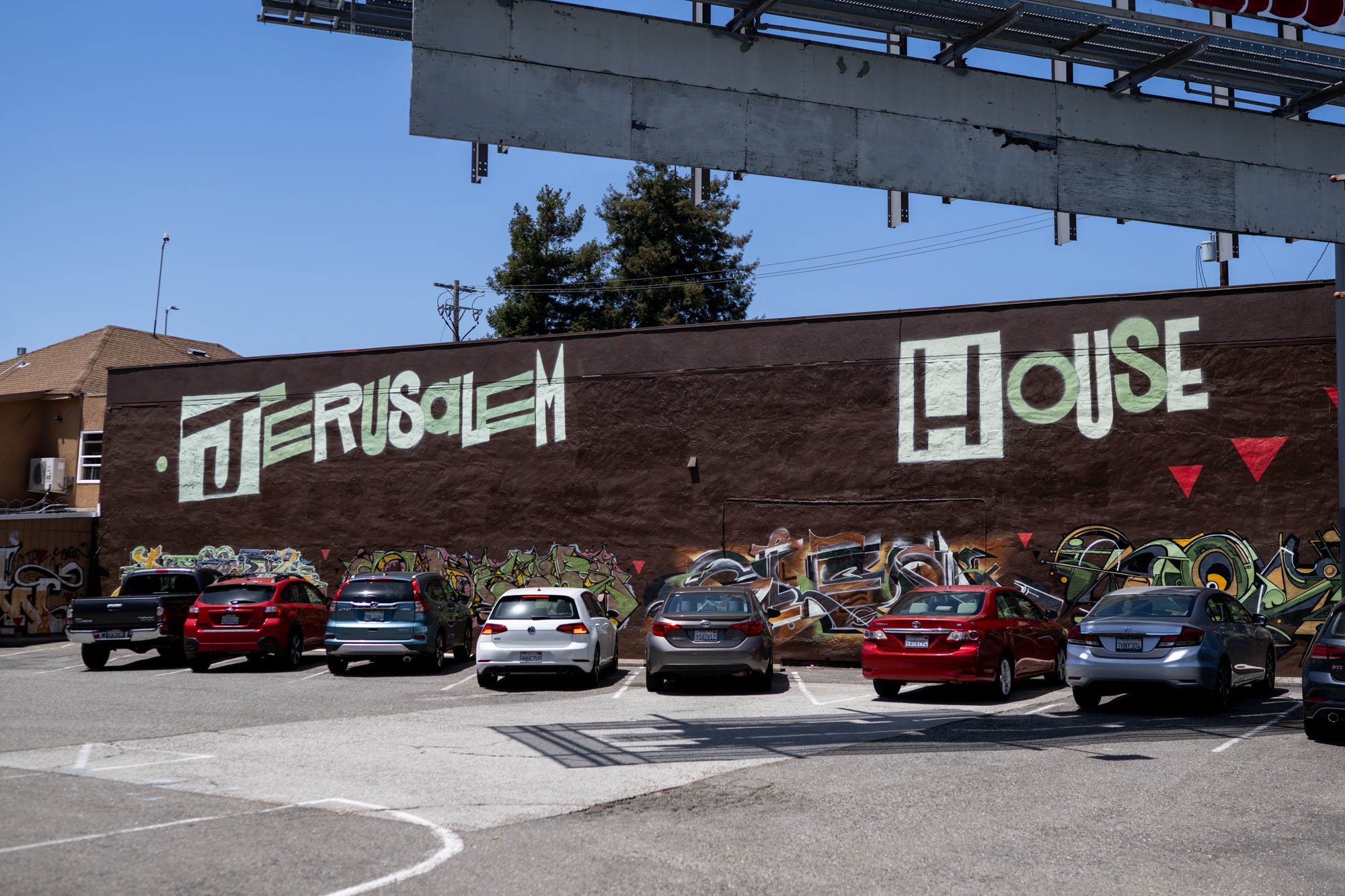
Oakland’s Jerusalem Coffee House Owner, Supporters Push Back on Antisemitism Lawsuits
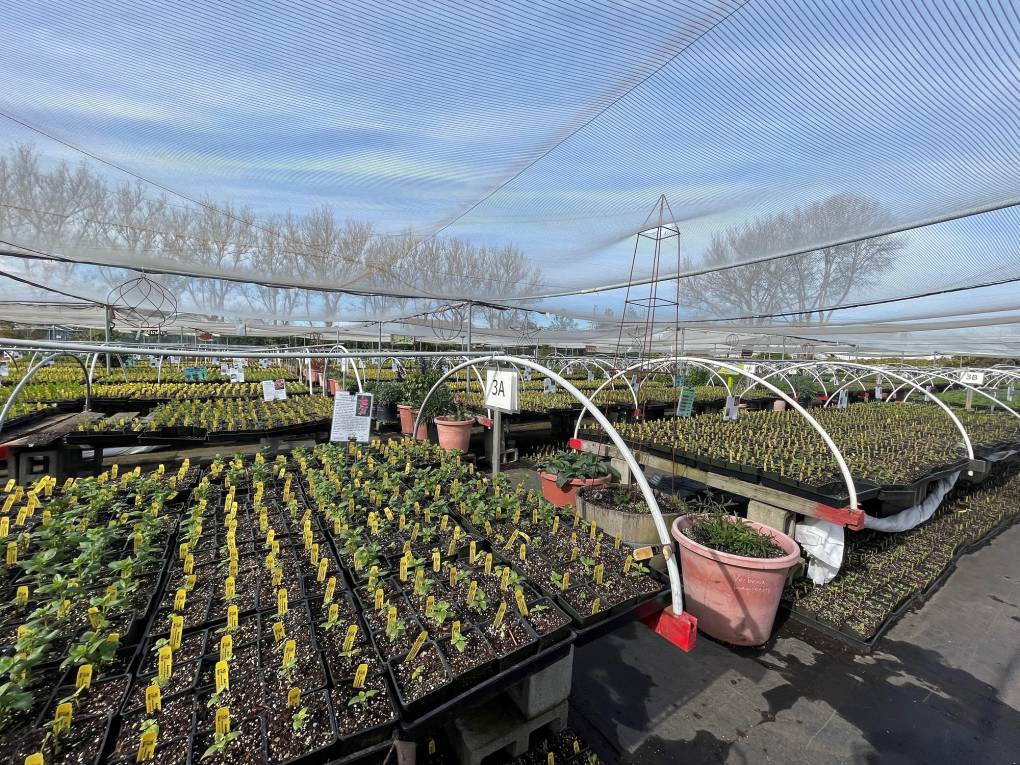
Richmond Nursery Employees Allege Owner Bullied Them Amid Abrupt Closure
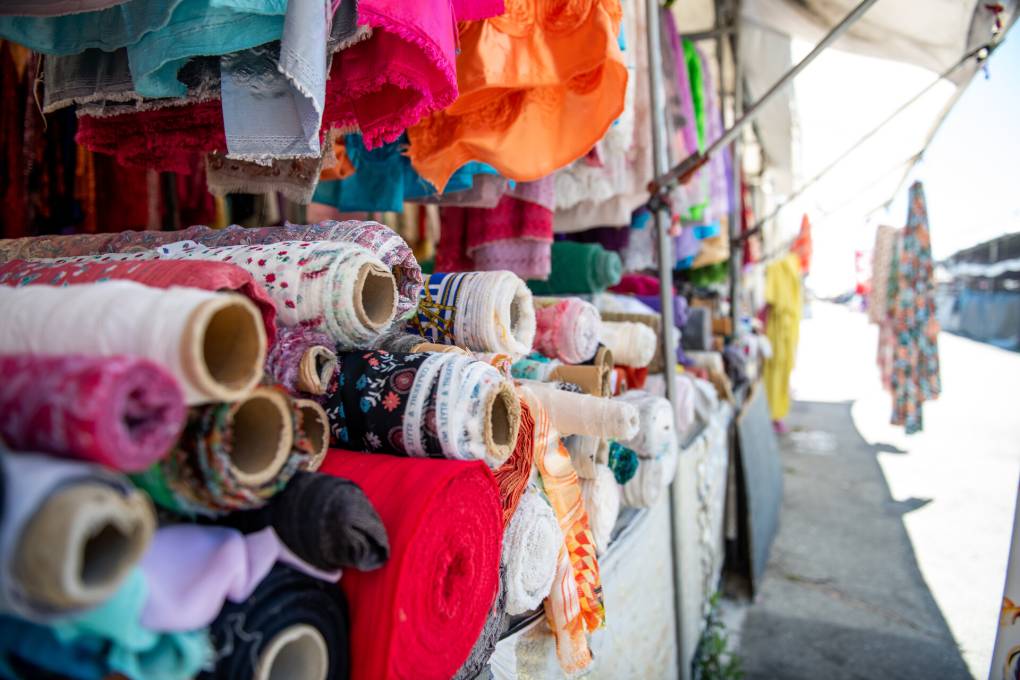
San José’s Flea Market, La Pulga, Has New Vendor Group Voicing Its Future
Facing Recall Anger From Shop Owners, Newsom Touts Small Business Roots
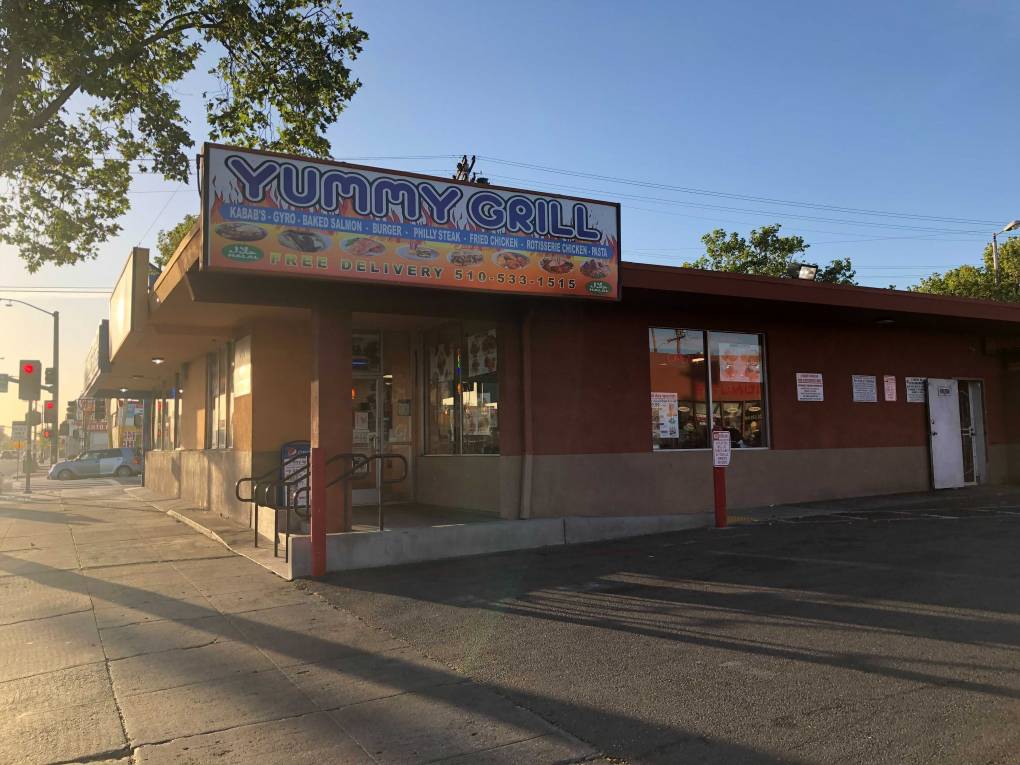
Unequal Distribution: How Businesses in East Oakland and Other Communities of Color Missed Out on PPP Loans
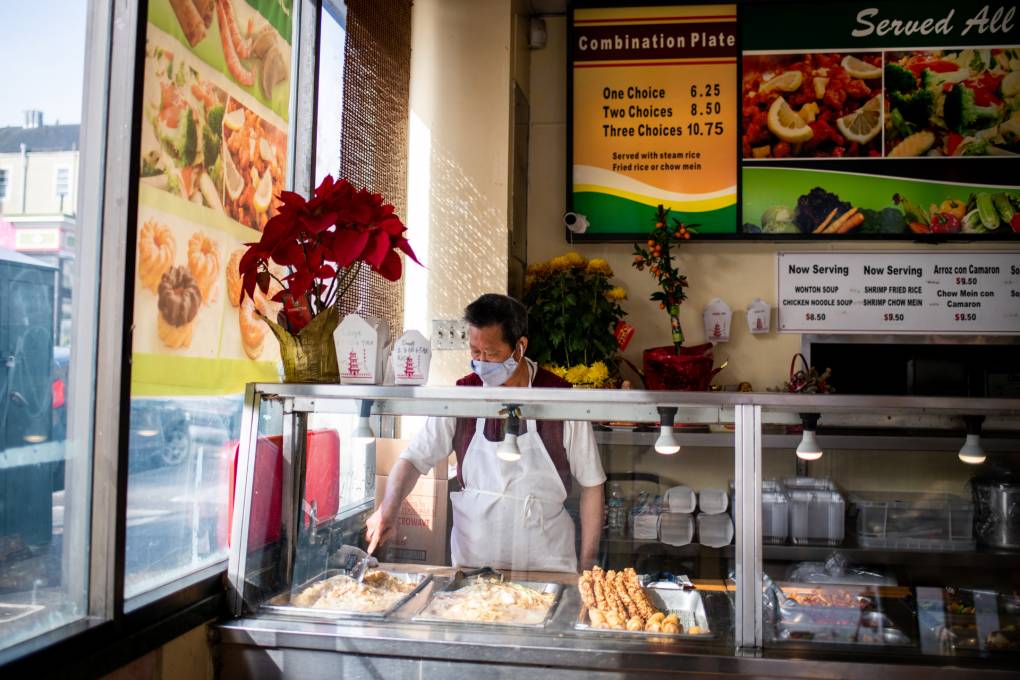
Why Donuts + Chinese Food = A Very Californian Combination
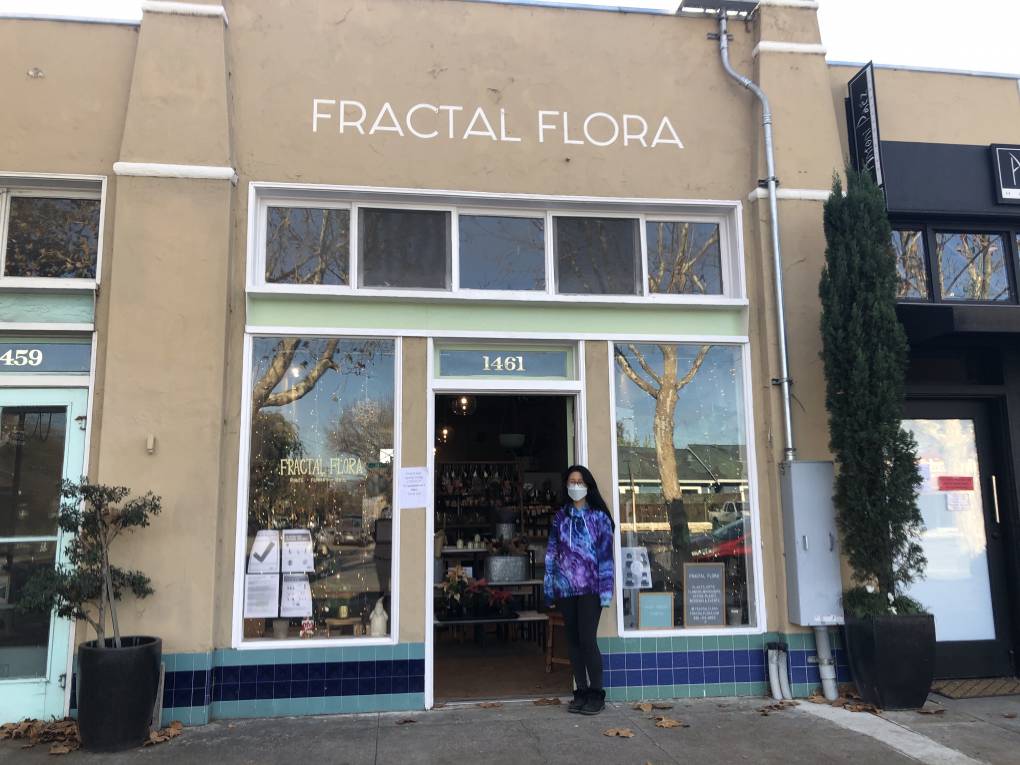
Pandemic Delivers a Bloom Boom for Plant Shops
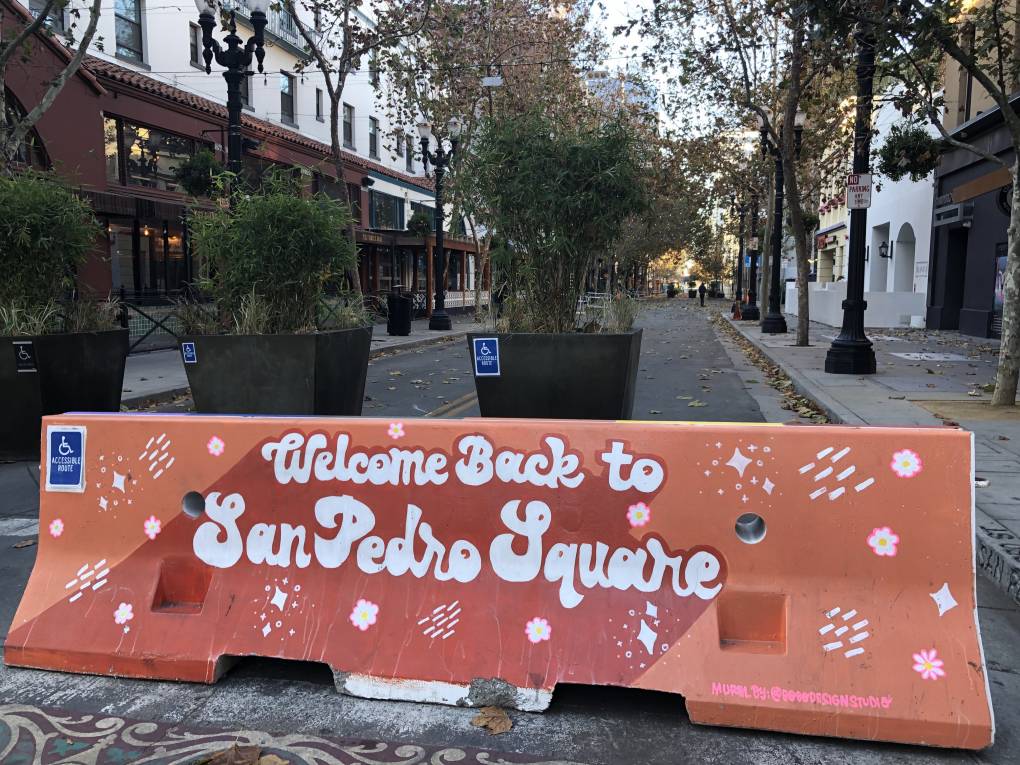
How the 'Shop Local' Message Is Helping San Jose Businesses Cling On
Sponsored
Player sponsored by
window.__IS_SSR__=true
window.__INITIAL_STATE__={
"attachmentsReducer": {
"audio_0": {
"type": "attachments",
"id": "audio_0",
"imgSizes": {
"kqedFullSize": {
"file": "https://ww2.kqed.org/news/wp-content/themes/KQED-unified/img/audio_bgs/background0.jpg"
}
}
},
"audio_1": {
"type": "attachments",
"id": "audio_1",
"imgSizes": {
"kqedFullSize": {
"file": "https://ww2.kqed.org/news/wp-content/themes/KQED-unified/img/audio_bgs/background1.jpg"
}
}
},
"audio_2": {
"type": "attachments",
"id": "audio_2",
"imgSizes": {
"kqedFullSize": {
"file": "https://ww2.kqed.org/news/wp-content/themes/KQED-unified/img/audio_bgs/background2.jpg"
}
}
},
"audio_3": {
"type": "attachments",
"id": "audio_3",
"imgSizes": {
"kqedFullSize": {
"file": "https://ww2.kqed.org/news/wp-content/themes/KQED-unified/img/audio_bgs/background3.jpg"
}
}
},
"audio_4": {
"type": "attachments",
"id": "audio_4",
"imgSizes": {
"kqedFullSize": {
"file": "https://ww2.kqed.org/news/wp-content/themes/KQED-unified/img/audio_bgs/background4.jpg"
}
}
},
"placeholder": {
"type": "attachments",
"id": "placeholder",
"imgSizes": {
"thumbnail": {
"file": "https://cdn.kqed.org/wp-content/uploads/2024/12/KQED-Default-Image-816638274-2000x1333-1-160x107.jpg",
"width": 160,
"height": 107,
"mimeType": "image/jpeg"
},
"medium": {
"file": "https://cdn.kqed.org/wp-content/uploads/2024/12/KQED-Default-Image-816638274-2000x1333-1-800x533.jpg",
"width": 800,
"height": 533,
"mimeType": "image/jpeg"
},
"medium_large": {
"file": "https://cdn.kqed.org/wp-content/uploads/2024/12/KQED-Default-Image-816638274-2000x1333-1-768x512.jpg",
"width": 768,
"height": 512,
"mimeType": "image/jpeg"
},
"large": {
"file": "https://cdn.kqed.org/wp-content/uploads/2024/12/KQED-Default-Image-816638274-2000x1333-1-1020x680.jpg",
"width": 1020,
"height": 680,
"mimeType": "image/jpeg"
},
"1536x1536": {
"file": "https://cdn.kqed.org/wp-content/uploads/2024/12/KQED-Default-Image-816638274-2000x1333-1-1536x1024.jpg",
"width": 1536,
"height": 1024,
"mimeType": "image/jpeg"
},
"fd-lrg": {
"file": "https://cdn.kqed.org/wp-content/uploads/2024/12/KQED-Default-Image-816638274-2000x1333-1-1536x1024.jpg",
"width": 1536,
"height": 1024,
"mimeType": "image/jpeg"
},
"fd-med": {
"file": "https://cdn.kqed.org/wp-content/uploads/2024/12/KQED-Default-Image-816638274-2000x1333-1-1020x680.jpg",
"width": 1020,
"height": 680,
"mimeType": "image/jpeg"
},
"fd-sm": {
"file": "https://cdn.kqed.org/wp-content/uploads/2024/12/KQED-Default-Image-816638274-2000x1333-1-800x533.jpg",
"width": 800,
"height": 533,
"mimeType": "image/jpeg"
},
"post-thumbnail": {
"file": "https://cdn.kqed.org/wp-content/uploads/2024/12/KQED-Default-Image-816638274-2000x1333-1-672x372.jpg",
"width": 672,
"height": 372,
"mimeType": "image/jpeg"
},
"twentyfourteen-full-width": {
"file": "https://cdn.kqed.org/wp-content/uploads/2024/12/KQED-Default-Image-816638274-2000x1333-1-1038x576.jpg",
"width": 1038,
"height": 576,
"mimeType": "image/jpeg"
},
"xxsmall": {
"file": "https://cdn.kqed.org/wp-content/uploads/2024/12/KQED-Default-Image-816638274-2000x1333-1-160x107.jpg",
"width": 160,
"height": 107,
"mimeType": "image/jpeg"
},
"xsmall": {
"file": "https://cdn.kqed.org/wp-content/uploads/2024/12/KQED-Default-Image-816638274-2000x1333-1-672x372.jpg",
"width": 672,
"height": 372,
"mimeType": "image/jpeg"
},
"small": {
"file": "https://cdn.kqed.org/wp-content/uploads/2024/12/KQED-Default-Image-816638274-2000x1333-1-672x372.jpg",
"width": 672,
"height": 372,
"mimeType": "image/jpeg"
},
"xlarge": {
"file": "https://cdn.kqed.org/wp-content/uploads/2024/12/KQED-Default-Image-816638274-2000x1333-1-1020x680.jpg",
"width": 1020,
"height": 680,
"mimeType": "image/jpeg"
},
"full-width": {
"file": "https://cdn.kqed.org/wp-content/uploads/2024/12/KQED-Default-Image-816638274-2000x1333-1-1920x1280.jpg",
"width": 1920,
"height": 1280,
"mimeType": "image/jpeg"
},
"guest-author-32": {
"file": "https://cdn.kqed.org/wp-content/uploads/2025/01/KQED-Default-Image-816638274-1333x1333-1-160x160.jpg",
"width": 32,
"height": 32,
"mimeType": "image/jpeg"
},
"guest-author-50": {
"file": "https://cdn.kqed.org/wp-content/uploads/2025/01/KQED-Default-Image-816638274-1333x1333-1-160x160.jpg",
"width": 50,
"height": 50,
"mimeType": "image/jpeg"
},
"guest-author-64": {
"file": "https://cdn.kqed.org/wp-content/uploads/2025/01/KQED-Default-Image-816638274-1333x1333-1-160x160.jpg",
"width": 64,
"height": 64,
"mimeType": "image/jpeg"
},
"guest-author-96": {
"file": "https://cdn.kqed.org/wp-content/uploads/2025/01/KQED-Default-Image-816638274-1333x1333-1-160x160.jpg",
"width": 96,
"height": 96,
"mimeType": "image/jpeg"
},
"guest-author-128": {
"file": "https://cdn.kqed.org/wp-content/uploads/2025/01/KQED-Default-Image-816638274-1333x1333-1-160x160.jpg",
"width": 128,
"height": 128,
"mimeType": "image/jpeg"
},
"detail": {
"file": "https://cdn.kqed.org/wp-content/uploads/2025/01/KQED-Default-Image-816638274-1333x1333-1-160x160.jpg",
"width": 160,
"height": 160,
"mimeType": "image/jpeg"
},
"kqedFullSize": {
"file": "https://cdn.kqed.org/wp-content/uploads/2024/12/KQED-Default-Image-816638274-2000x1333-1.jpg",
"width": 2000,
"height": 1333
}
}
},
"news_12035639": {
"type": "attachments",
"id": "news_12035639",
"meta": {
"index": "attachments_1716263798",
"site": "news",
"id": "12035639",
"found": true
},
"title": "Trump Administration Reciprocal Tariffs Affect Goods Around The World",
"publishDate": 1744391742,
"status": "inherit",
"parent": 12035636,
"modified": 1744391759,
"caption": "OAKLAND, CALIFORNIA - APRIL 09: In an aerial view, shipping containers are seen stacked on a dock at the Port of Oakland on April 09, 2025 in Oakland, California. (Photo by Justin Sullivan/Getty Images)",
"credit": null,
"altTag": null,
"description": null,
"imgSizes": {
"medium": {
"file": "https://cdn.kqed.org/wp-content/uploads/sites/10/2025/04/GettyImages-2209401664-800x563.jpg",
"width": 800,
"height": 563,
"mimeType": "image/jpeg"
},
"large": {
"file": "https://cdn.kqed.org/wp-content/uploads/sites/10/2025/04/GettyImages-2209401664-1020x718.jpg",
"width": 1020,
"height": 718,
"mimeType": "image/jpeg"
},
"thumbnail": {
"file": "https://cdn.kqed.org/wp-content/uploads/sites/10/2025/04/GettyImages-2209401664-160x113.jpg",
"width": 160,
"height": 113,
"mimeType": "image/jpeg"
},
"1536x1536": {
"file": "https://cdn.kqed.org/wp-content/uploads/sites/10/2025/04/GettyImages-2209401664-1536x1081.jpg",
"width": 1536,
"height": 1081,
"mimeType": "image/jpeg"
},
"2048x2048": {
"file": "https://cdn.kqed.org/wp-content/uploads/sites/10/2025/04/GettyImages-2209401664-2048x1441.jpg",
"width": 2048,
"height": 1441,
"mimeType": "image/jpeg"
},
"post-thumbnail": {
"file": "https://cdn.kqed.org/wp-content/uploads/sites/10/2025/04/GettyImages-2209401664-672x372.jpg",
"width": 672,
"height": 372,
"mimeType": "image/jpeg"
},
"twentyfourteen-full-width": {
"file": "https://cdn.kqed.org/wp-content/uploads/sites/10/2025/04/GettyImages-2209401664-1038x576.jpg",
"width": 1038,
"height": 576,
"mimeType": "image/jpeg"
},
"full-width": {
"file": "https://cdn.kqed.org/wp-content/uploads/sites/10/2025/04/GettyImages-2209401664-1920x1351.jpg",
"width": 1920,
"height": 1351,
"mimeType": "image/jpeg"
},
"kqedFullSize": {
"file": "https://cdn.kqed.org/wp-content/uploads/sites/10/2025/04/GettyImages-2209401664-scaled.jpg",
"width": 2560,
"height": 1801
}
},
"fetchFailed": false,
"isLoading": false
},
"news_12043850": {
"type": "attachments",
"id": "news_12043850",
"meta": {
"index": "attachments_1716263798",
"site": "news",
"id": "12043850",
"found": true
},
"title": "The Jerusalem Coffee House in Oakland on June 11, 2025.",
"publishDate": 1749681005,
"status": "inherit",
"parent": 0,
"modified": 1749681089,
"caption": "The Jerusalem Coffee House in Oakland on June 11, 2025.",
"credit": "Beth LaBerge/KQED",
"altTag": null,
"description": null,
"imgSizes": {
"thumbnail": {
"file": "https://cdn.kqed.org/wp-content/uploads/sites/10/2025/06/250611-OAKLANDCOFFEESHOP-02-BL-KQED-160x107.jpg",
"width": 160,
"height": 107,
"mimeType": "image/jpeg"
},
"1536x1536": {
"file": "https://cdn.kqed.org/wp-content/uploads/sites/10/2025/06/250611-OAKLANDCOFFEESHOP-02-BL-KQED-1536x1024.jpg",
"width": 1536,
"height": 1024,
"mimeType": "image/jpeg"
},
"post-thumbnail": {
"file": "https://cdn.kqed.org/wp-content/uploads/sites/10/2025/06/250611-OAKLANDCOFFEESHOP-02-BL-KQED-672x372.jpg",
"width": 672,
"height": 372,
"mimeType": "image/jpeg"
},
"twentyfourteen-full-width": {
"file": "https://cdn.kqed.org/wp-content/uploads/sites/10/2025/06/250611-OAKLANDCOFFEESHOP-02-BL-KQED-1038x576.jpg",
"width": 1038,
"height": 576,
"mimeType": "image/jpeg"
},
"kqedFullSize": {
"file": "https://cdn.kqed.org/wp-content/uploads/sites/10/2025/06/250611-OAKLANDCOFFEESHOP-02-BL-KQED.jpg",
"width": 2000,
"height": 1333
}
},
"fetchFailed": false,
"isLoading": false
},
"news_12008023": {
"type": "attachments",
"id": "news_12008023",
"meta": {
"index": "attachments_1716263798",
"site": "news",
"id": "12008023",
"found": true
},
"title": "Annie's Annuals 1",
"publishDate": 1728073670,
"status": "inherit",
"parent": 12007947,
"modified": 1728086367,
"caption": "Annie's Annuals and Perennials in Richmond, California, in February 2022. Annie’s, known for rare and beautiful plants, posted to social media on Thursday that it was closing after serving the East Bay community for more than 30 years.\n",
"credit": "Courtesy Kaylan Segev",
"altTag": null,
"description": null,
"imgSizes": {
"medium": {
"file": "https://cdn.kqed.org/wp-content/uploads/sites/10/2024/10/Annies-Annuals-1-800x600.jpg",
"width": 800,
"height": 600,
"mimeType": "image/jpeg"
},
"large": {
"file": "https://cdn.kqed.org/wp-content/uploads/sites/10/2024/10/Annies-Annuals-1-1020x765.jpg",
"width": 1020,
"height": 765,
"mimeType": "image/jpeg"
},
"thumbnail": {
"file": "https://cdn.kqed.org/wp-content/uploads/sites/10/2024/10/Annies-Annuals-1-160x120.jpg",
"width": 160,
"height": 120,
"mimeType": "image/jpeg"
},
"1536x1536": {
"file": "https://cdn.kqed.org/wp-content/uploads/sites/10/2024/10/Annies-Annuals-1-1536x1152.jpg",
"width": 1536,
"height": 1152,
"mimeType": "image/jpeg"
},
"post-thumbnail": {
"file": "https://cdn.kqed.org/wp-content/uploads/sites/10/2024/10/Annies-Annuals-1-672x372.jpg",
"width": 672,
"height": 372,
"mimeType": "image/jpeg"
},
"twentyfourteen-full-width": {
"file": "https://cdn.kqed.org/wp-content/uploads/sites/10/2024/10/Annies-Annuals-1-1038x576.jpg",
"width": 1038,
"height": 576,
"mimeType": "image/jpeg"
},
"full-width": {
"file": "https://cdn.kqed.org/wp-content/uploads/sites/10/2024/10/Annies-Annuals-1-1920x1440.jpg",
"width": 1920,
"height": 1440,
"mimeType": "image/jpeg"
},
"kqedFullSize": {
"file": "https://cdn.kqed.org/wp-content/uploads/sites/10/2024/10/Annies-Annuals-1.jpg",
"width": 2000,
"height": 1500
}
},
"fetchFailed": false,
"isLoading": false
},
"news_11951816": {
"type": "attachments",
"id": "news_11951816",
"meta": {
"index": "attachments_1716263798",
"site": "news",
"id": "11951816",
"found": true
},
"parent": 0,
"imgSizes": {
"twentyfourteen-full-width": {
"file": "https://ww2.kqed.org/app/uploads/sites/10/2023/05/RS49566_012_SanJose_FleaMarket_05262021-qut-1038x576.jpg",
"width": 1038,
"mimeType": "image/jpeg",
"height": 576
},
"thumbnail": {
"file": "https://ww2.kqed.org/app/uploads/sites/10/2023/05/RS49566_012_SanJose_FleaMarket_05262021-qut-160x107.jpg",
"width": 160,
"mimeType": "image/jpeg",
"height": 107
},
"post-thumbnail": {
"file": "https://ww2.kqed.org/app/uploads/sites/10/2023/05/RS49566_012_SanJose_FleaMarket_05262021-qut-672x372.jpg",
"width": 672,
"mimeType": "image/jpeg",
"height": 372
},
"kqedFullSize": {
"file": "https://ww2.kqed.org/app/uploads/sites/10/2023/05/RS49566_012_SanJose_FleaMarket_05262021-qut.jpg",
"width": 1920,
"height": 1280
},
"large": {
"file": "https://ww2.kqed.org/app/uploads/sites/10/2023/05/RS49566_012_SanJose_FleaMarket_05262021-qut-1020x680.jpg",
"width": 1020,
"mimeType": "image/jpeg",
"height": 680
},
"1536x1536": {
"file": "https://ww2.kqed.org/app/uploads/sites/10/2023/05/RS49566_012_SanJose_FleaMarket_05262021-qut-1536x1024.jpg",
"width": 1536,
"mimeType": "image/jpeg",
"height": 1024
},
"medium": {
"file": "https://ww2.kqed.org/app/uploads/sites/10/2023/05/RS49566_012_SanJose_FleaMarket_05262021-qut-800x533.jpg",
"width": 800,
"mimeType": "image/jpeg",
"height": 533
}
},
"publishDate": 1685552529,
"modified": 1685554630,
"caption": "A fabric stall at San José's Berryessa Flea Market on Wednesday, May 26, 2021. On May 17, 2023, a vendor group attended a public meeting to discuss the eventual closure of the market and advise the city on how to decide what to do with the hundreds of small businesses that stand to be displaced.",
"description": null,
"title": "A fabric stall at the San Jose Flea Market on Wednesday, May 26, 2021.",
"credit": "Beth LaBerge/KQED",
"status": "inherit",
"altTag": "Large spools of fabric in various multicolor and floral patterns are piled on top of each other inside an outdoor vendor stall that sells at a local flea market. Garments are seen hanging in the background.",
"fetchFailed": false,
"isLoading": false
},
"news_11882098": {
"type": "attachments",
"id": "news_11882098",
"meta": {
"index": "attachments_1716263798",
"site": "news",
"id": "11882098",
"found": true
},
"parent": 11881766,
"imgSizes": {
"twentyfourteen-full-width": {
"file": "https://ww2.kqed.org/app/uploads/sites/10/2021/07/RS50344_GettyImages-1317323951-qut-1038x576.jpg",
"width": 1038,
"mimeType": "image/jpeg",
"height": 576
},
"thumbnail": {
"file": "https://ww2.kqed.org/app/uploads/sites/10/2021/07/RS50344_GettyImages-1317323951-qut-160x107.jpg",
"width": 160,
"mimeType": "image/jpeg",
"height": 107
},
"post-thumbnail": {
"file": "https://ww2.kqed.org/app/uploads/sites/10/2021/07/RS50344_GettyImages-1317323951-qut-672x372.jpg",
"width": 672,
"mimeType": "image/jpeg",
"height": 372
},
"kqedFullSize": {
"file": "https://ww2.kqed.org/app/uploads/sites/10/2021/07/RS50344_GettyImages-1317323951-qut.jpg",
"width": 1920,
"height": 1287
},
"large": {
"file": "https://ww2.kqed.org/app/uploads/sites/10/2021/07/RS50344_GettyImages-1317323951-qut-1020x684.jpg",
"width": 1020,
"mimeType": "image/jpeg",
"height": 684
},
"1536x1536": {
"file": "https://ww2.kqed.org/app/uploads/sites/10/2021/07/RS50344_GettyImages-1317323951-qut-1536x1030.jpg",
"width": 1536,
"mimeType": "image/jpeg",
"height": 1030
},
"medium": {
"file": "https://ww2.kqed.org/app/uploads/sites/10/2021/07/RS50344_GettyImages-1317323951-qut-800x536.jpg",
"width": 800,
"mimeType": "image/jpeg",
"height": 536
}
},
"publishDate": 1626971018,
"modified": 1627410308,
"caption": "California Gov. Gavin Newsom announces a $100 billion economic recovery proposal for the state during a press conference at The Unity Council on May 10, 2021 in Oakland, California.",
"description": null,
"title": "California Governor Newsom Unveils His Economic Recovery Package For The State",
"credit": "Justin Sullivan/Getty Images",
"status": "inherit",
"altTag": null,
"fetchFailed": false,
"isLoading": false
},
"news_11872228": {
"type": "attachments",
"id": "news_11872228",
"meta": {
"index": "attachments_1716263798",
"site": "news",
"id": "11872228",
"found": true
},
"parent": 11872011,
"imgSizes": {
"twentyfourteen-full-width": {
"file": "https://ww2.kqed.org/app/uploads/sites/10/2021/05/Image-from-iOS-1038x576.jpg",
"width": 1038,
"mimeType": "image/jpeg",
"height": 576
},
"thumbnail": {
"file": "https://ww2.kqed.org/app/uploads/sites/10/2021/05/Image-from-iOS-160x120.jpg",
"width": 160,
"mimeType": "image/jpeg",
"height": 120
},
"post-thumbnail": {
"file": "https://ww2.kqed.org/app/uploads/sites/10/2021/05/Image-from-iOS-672x372.jpg",
"width": 672,
"mimeType": "image/jpeg",
"height": 372
},
"kqedFullSize": {
"file": "https://ww2.kqed.org/app/uploads/sites/10/2021/05/Image-from-iOS-scaled.jpg",
"width": 2560,
"height": 1920
},
"2048x2048": {
"file": "https://ww2.kqed.org/app/uploads/sites/10/2021/05/Image-from-iOS-2048x1536.jpg",
"width": 2048,
"mimeType": "image/jpeg",
"height": 1536
},
"large": {
"file": "https://ww2.kqed.org/app/uploads/sites/10/2021/05/Image-from-iOS-1020x765.jpg",
"width": 1020,
"mimeType": "image/jpeg",
"height": 765
},
"1536x1536": {
"file": "https://ww2.kqed.org/app/uploads/sites/10/2021/05/Image-from-iOS-1536x1152.jpg",
"width": 1536,
"mimeType": "image/jpeg",
"height": 1152
},
"full-width": {
"file": "https://ww2.kqed.org/app/uploads/sites/10/2021/05/Image-from-iOS-1920x1440.jpg",
"width": 1920,
"mimeType": "image/jpeg",
"height": 1440
},
"medium": {
"file": "https://ww2.kqed.org/app/uploads/sites/10/2021/05/Image-from-iOS-800x600.jpg",
"width": 800,
"mimeType": "image/jpeg",
"height": 600
}
},
"publishDate": 1620170434,
"modified": 1620767681,
"caption": "Yummy Grill, an Afghan kebab restaurant on International Boulevard, has struggled through the pandemic. After three failed attempts applying for a PPP loan through Chase Bank, it just recently received one through a Utah-based small-business specialist.",
"description": "Yummy Grill, an Afghan kebab restaurant on International Boulevard, has struggled through the pandemic. Only five percent of businesses in this neighborhood who applied for a PPP loan, received one. Yummy Grill only recently received PPP funding through Lendio, a Utah-based small business specialist.",
"title": "Yummy Grill, an Afghan kebab restaurant on International Boulevard, has struggled through the pandemic. Only five percent of businesses in this neighborhood who applied for a PPP loan, received one. Yummy Grill only recently received PPP funding through Lendio, a Utah-based small business specialist.",
"credit": "Adhiti Bandlamudi/KQED",
"status": "inherit",
"altTag": "Yummy Grill, an Afghan kebab restaurant on International Boulevard, has struggled through the pandemic. Only five percent of businesses in this neighborhood who applied for a PPP loan, received one. Yummy Grill only recently received PPP funding through Lendio, a Utah-based small business specialist.",
"fetchFailed": false,
"isLoading": false
},
"news_11871925": {
"type": "attachments",
"id": "news_11871925",
"meta": {
"index": "attachments_1716263798",
"site": "news",
"id": "11871925",
"found": true
},
"parent": 11871915,
"imgSizes": {
"twentyfourteen-full-width": {
"file": "https://ww2.kqed.org/app/uploads/sites/10/2021/04/Chinese-and-donuts1-1038x576.jpg",
"width": 1038,
"mimeType": "image/jpeg",
"height": 576
},
"thumbnail": {
"file": "https://ww2.kqed.org/app/uploads/sites/10/2021/04/Chinese-and-donuts1-160x107.jpg",
"width": 160,
"mimeType": "image/jpeg",
"height": 107
},
"post-thumbnail": {
"file": "https://ww2.kqed.org/app/uploads/sites/10/2021/04/Chinese-and-donuts1-672x372.jpg",
"width": 672,
"mimeType": "image/jpeg",
"height": 372
},
"kqedFullSize": {
"file": "https://ww2.kqed.org/app/uploads/sites/10/2021/04/Chinese-and-donuts1.jpg",
"width": 1920,
"height": 1280
},
"large": {
"file": "https://ww2.kqed.org/app/uploads/sites/10/2021/04/Chinese-and-donuts1-1020x680.jpg",
"width": 1020,
"mimeType": "image/jpeg",
"height": 680
},
"1536x1536": {
"file": "https://ww2.kqed.org/app/uploads/sites/10/2021/04/Chinese-and-donuts1-1536x1024.jpg",
"width": 1536,
"mimeType": "image/jpeg",
"height": 1024
},
"medium": {
"file": "https://ww2.kqed.org/app/uploads/sites/10/2021/04/Chinese-and-donuts1-800x533.jpg",
"width": 800,
"mimeType": "image/jpeg",
"height": 533
}
},
"publishDate": 1619824939,
"modified": 1619825059,
"caption": "An employee at China Express, a restaurant serving chinese food and doughnuts, on 24th and Mission Streets in San Francisco on March 19, 2021.",
"description": null,
"title": "Chinese-and-donuts1",
"credit": "Beth LaBerge/KQED",
"status": "inherit",
"altTag": "An employee at China Express on 24th and Mission Streets.",
"fetchFailed": false,
"isLoading": false
},
"news_11853185": {
"type": "attachments",
"id": "news_11853185",
"meta": {
"index": "attachments_1716263798",
"site": "news",
"id": "11853185",
"found": true
},
"parent": 11853032,
"imgSizes": {
"apple_news_ca_landscape_5_5": {
"file": "https://ww2.kqed.org/app/uploads/sites/10/2020/12/IMG_9191-1044x783.jpg",
"width": 1044,
"mimeType": "image/jpeg",
"height": 783
},
"apple_news_ca_square_4_0": {
"file": "https://ww2.kqed.org/app/uploads/sites/10/2020/12/IMG_9191-470x470.jpg",
"width": 470,
"mimeType": "image/jpeg",
"height": 470
},
"twentyfourteen-full-width": {
"file": "https://ww2.kqed.org/app/uploads/sites/10/2020/12/IMG_9191-1038x576.jpg",
"width": 1038,
"mimeType": "image/jpeg",
"height": 576
},
"thumbnail": {
"file": "https://ww2.kqed.org/app/uploads/sites/10/2020/12/IMG_9191-160x120.jpg",
"width": 160,
"mimeType": "image/jpeg",
"height": 120
},
"post-thumbnail": {
"file": "https://ww2.kqed.org/app/uploads/sites/10/2020/12/IMG_9191-672x372.jpg",
"width": 672,
"mimeType": "image/jpeg",
"height": 372
},
"kqedFullSize": {
"file": "https://ww2.kqed.org/app/uploads/sites/10/2020/12/IMG_9191-scaled.jpg",
"width": 2560,
"height": 1920
},
"2048x2048": {
"file": "https://ww2.kqed.org/app/uploads/sites/10/2020/12/IMG_9191-2048x1536.jpg",
"width": 2048,
"mimeType": "image/jpeg",
"height": 1536
},
"apple_news_ca_landscape_4_7": {
"file": "https://ww2.kqed.org/app/uploads/sites/10/2020/12/IMG_9191-632x474.jpg",
"width": 632,
"mimeType": "image/jpeg",
"height": 474
},
"large": {
"file": "https://ww2.kqed.org/app/uploads/sites/10/2020/12/IMG_9191-1020x765.jpg",
"width": 1020,
"mimeType": "image/jpeg",
"height": 765
},
"apple_news_ca_landscape_4_0": {
"file": "https://ww2.kqed.org/app/uploads/sites/10/2020/12/IMG_9191-536x402.jpg",
"width": 536,
"mimeType": "image/jpeg",
"height": 402
},
"apple_news_ca_portrait_12_9": {
"file": "https://ww2.kqed.org/app/uploads/sites/10/2020/12/IMG_9191-1122x1496.jpg",
"width": 1122,
"mimeType": "image/jpeg",
"height": 1496
},
"medium": {
"file": "https://ww2.kqed.org/app/uploads/sites/10/2020/12/IMG_9191-800x600.jpg",
"width": 800,
"mimeType": "image/jpeg",
"height": 600
},
"apple_news_ca_portrait_4_0": {
"file": "https://ww2.kqed.org/app/uploads/sites/10/2020/12/IMG_9191-354x472.jpg",
"width": 354,
"mimeType": "image/jpeg",
"height": 472
},
"apple_news_ca_portrait_9_7": {
"file": "https://ww2.kqed.org/app/uploads/sites/10/2020/12/IMG_9191-840x1120.jpg",
"width": 840,
"mimeType": "image/jpeg",
"height": 1120
},
"apple_news_ca_landscape_12_9": {
"file": "https://ww2.kqed.org/app/uploads/sites/10/2020/12/IMG_9191-1832x1374.jpg",
"width": 1832,
"mimeType": "image/jpeg",
"height": 1374
},
"apple_news_ca_square_9_7": {
"file": "https://ww2.kqed.org/app/uploads/sites/10/2020/12/IMG_9191-1104x1104.jpg",
"width": 1104,
"mimeType": "image/jpeg",
"height": 1104
},
"1536x1536": {
"file": "https://ww2.kqed.org/app/uploads/sites/10/2020/12/IMG_9191-1536x1152.jpg",
"width": 1536,
"mimeType": "image/jpeg",
"height": 1152
},
"apple_news_ca_portrait_4_7": {
"file": "https://ww2.kqed.org/app/uploads/sites/10/2020/12/IMG_9191-414x552.jpg",
"width": 414,
"mimeType": "image/jpeg",
"height": 552
},
"apple_news_ca_square_12_9": {
"file": "https://ww2.kqed.org/app/uploads/sites/10/2020/12/IMG_9191-1472x1472.jpg",
"width": 1472,
"mimeType": "image/jpeg",
"height": 1472
},
"apple_news_ca_portrait_5_5": {
"file": "https://ww2.kqed.org/app/uploads/sites/10/2020/12/IMG_9191-687x916.jpg",
"width": 687,
"mimeType": "image/jpeg",
"height": 916
},
"full-width": {
"file": "https://ww2.kqed.org/app/uploads/sites/10/2020/12/IMG_9191-1920x1440.jpg",
"width": 1920,
"mimeType": "image/jpeg",
"height": 1440
},
"apple_news_ca_square_4_7": {
"file": "https://ww2.kqed.org/app/uploads/sites/10/2020/12/IMG_9191-550x550.jpg",
"width": 550,
"mimeType": "image/jpeg",
"height": 550
},
"apple_news_ca_landscape_9_7": {
"file": "https://ww2.kqed.org/app/uploads/sites/10/2020/12/IMG_9191-1376x1032.jpg",
"width": 1376,
"mimeType": "image/jpeg",
"height": 1032
},
"apple_news_ca_square_5_5": {
"file": "https://ww2.kqed.org/app/uploads/sites/10/2020/12/IMG_9191-912x912.jpg",
"width": 912,
"mimeType": "image/jpeg",
"height": 912
}
},
"publishDate": 1609289317,
"modified": 1609289390,
"caption": "Yuri Kim stands outside her newly renovated store, Fractal Flora in San Jose. Kim has seen a boost in plant sales during the pandemic.",
"description": "Yuri Kim stands outside her newly renovated store, Fractal Flora in San Jose. Kim has seen a boost in plant sales during the pandemic.",
"title": "Yuri Kim stands outside her newly renovated store, Fractal Flora in San Jose. Kim has seen a boost in plant sales during the pandemic.",
"credit": "Adhiti/Bandlamudi/KQED",
"status": "inherit",
"altTag": "Yuri Kim stands outside her newly renovated store, Fractal Flora in San Jose. Kim has seen a boost in plant sales during the pandemic.",
"fetchFailed": false,
"isLoading": false
},
"news_11852931": {
"type": "attachments",
"id": "news_11852931",
"meta": {
"index": "attachments_1716263798",
"site": "news",
"id": "11852931",
"found": true
},
"parent": 11852317,
"imgSizes": {
"apple_news_ca_landscape_5_5": {
"file": "https://ww2.kqed.org/app/uploads/sites/10/2020/12/IMG_9205-1044x783.jpg",
"width": 1044,
"mimeType": "image/jpeg",
"height": 783
},
"apple_news_ca_square_4_0": {
"file": "https://ww2.kqed.org/app/uploads/sites/10/2020/12/IMG_9205-470x470.jpg",
"width": 470,
"mimeType": "image/jpeg",
"height": 470
},
"twentyfourteen-full-width": {
"file": "https://ww2.kqed.org/app/uploads/sites/10/2020/12/IMG_9205-1038x576.jpg",
"width": 1038,
"mimeType": "image/jpeg",
"height": 576
},
"thumbnail": {
"file": "https://ww2.kqed.org/app/uploads/sites/10/2020/12/IMG_9205-160x120.jpg",
"width": 160,
"mimeType": "image/jpeg",
"height": 120
},
"post-thumbnail": {
"file": "https://ww2.kqed.org/app/uploads/sites/10/2020/12/IMG_9205-672x372.jpg",
"width": 672,
"mimeType": "image/jpeg",
"height": 372
},
"kqedFullSize": {
"file": "https://ww2.kqed.org/app/uploads/sites/10/2020/12/IMG_9205-scaled.jpg",
"width": 2560,
"height": 1920
},
"2048x2048": {
"file": "https://ww2.kqed.org/app/uploads/sites/10/2020/12/IMG_9205-2048x1536.jpg",
"width": 2048,
"mimeType": "image/jpeg",
"height": 1536
},
"apple_news_ca_landscape_4_7": {
"file": "https://ww2.kqed.org/app/uploads/sites/10/2020/12/IMG_9205-632x474.jpg",
"width": 632,
"mimeType": "image/jpeg",
"height": 474
},
"large": {
"file": "https://ww2.kqed.org/app/uploads/sites/10/2020/12/IMG_9205-1020x765.jpg",
"width": 1020,
"mimeType": "image/jpeg",
"height": 765
},
"apple_news_ca_landscape_4_0": {
"file": "https://ww2.kqed.org/app/uploads/sites/10/2020/12/IMG_9205-536x402.jpg",
"width": 536,
"mimeType": "image/jpeg",
"height": 402
},
"apple_news_ca_portrait_12_9": {
"file": "https://ww2.kqed.org/app/uploads/sites/10/2020/12/IMG_9205-1122x1496.jpg",
"width": 1122,
"mimeType": "image/jpeg",
"height": 1496
},
"medium": {
"file": "https://ww2.kqed.org/app/uploads/sites/10/2020/12/IMG_9205-800x600.jpg",
"width": 800,
"mimeType": "image/jpeg",
"height": 600
},
"apple_news_ca_portrait_4_0": {
"file": "https://ww2.kqed.org/app/uploads/sites/10/2020/12/IMG_9205-354x472.jpg",
"width": 354,
"mimeType": "image/jpeg",
"height": 472
},
"apple_news_ca_portrait_9_7": {
"file": "https://ww2.kqed.org/app/uploads/sites/10/2020/12/IMG_9205-840x1120.jpg",
"width": 840,
"mimeType": "image/jpeg",
"height": 1120
},
"apple_news_ca_landscape_12_9": {
"file": "https://ww2.kqed.org/app/uploads/sites/10/2020/12/IMG_9205-1832x1374.jpg",
"width": 1832,
"mimeType": "image/jpeg",
"height": 1374
},
"apple_news_ca_square_9_7": {
"file": "https://ww2.kqed.org/app/uploads/sites/10/2020/12/IMG_9205-1104x1104.jpg",
"width": 1104,
"mimeType": "image/jpeg",
"height": 1104
},
"1536x1536": {
"file": "https://ww2.kqed.org/app/uploads/sites/10/2020/12/IMG_9205-1536x1152.jpg",
"width": 1536,
"mimeType": "image/jpeg",
"height": 1152
},
"apple_news_ca_portrait_4_7": {
"file": "https://ww2.kqed.org/app/uploads/sites/10/2020/12/IMG_9205-414x552.jpg",
"width": 414,
"mimeType": "image/jpeg",
"height": 552
},
"apple_news_ca_square_12_9": {
"file": "https://ww2.kqed.org/app/uploads/sites/10/2020/12/IMG_9205-1472x1472.jpg",
"width": 1472,
"mimeType": "image/jpeg",
"height": 1472
},
"apple_news_ca_portrait_5_5": {
"file": "https://ww2.kqed.org/app/uploads/sites/10/2020/12/IMG_9205-687x916.jpg",
"width": 687,
"mimeType": "image/jpeg",
"height": 916
},
"full-width": {
"file": "https://ww2.kqed.org/app/uploads/sites/10/2020/12/IMG_9205-1920x1440.jpg",
"width": 1920,
"mimeType": "image/jpeg",
"height": 1440
},
"apple_news_ca_square_4_7": {
"file": "https://ww2.kqed.org/app/uploads/sites/10/2020/12/IMG_9205-550x550.jpg",
"width": 550,
"mimeType": "image/jpeg",
"height": 550
},
"apple_news_ca_landscape_9_7": {
"file": "https://ww2.kqed.org/app/uploads/sites/10/2020/12/IMG_9205-1376x1032.jpg",
"width": 1376,
"mimeType": "image/jpeg",
"height": 1032
},
"apple_news_ca_square_5_5": {
"file": "https://ww2.kqed.org/app/uploads/sites/10/2020/12/IMG_9205-912x912.jpg",
"width": 912,
"mimeType": "image/jpeg",
"height": 912
}
},
"publishDate": 1609185940,
"modified": 1609202838,
"caption": "Even during the COVID-19 pandemic, San Pedro Square was a lively part of downtown San Jose. But with the latest restrictions shutting down outdoor and indoor dining, the square has become a \"ghost town.\"",
"description": "Even during the COVID-19 pandemic, San Pedro Square was a lively part of downtown San Jose. But with the latest restrictions shutting down outdoor and indoor dining, the square has become a \"ghost town\".",
"title": "Even during the COVID-19 pandemic, San Pedro Square was a lively part of downtown San Jose. But with the latest restrictions shutting down outdoor and indoor dining, the square has become a \"ghost town\".",
"credit": "Adhiti Bandlamudi/KQED",
"status": "inherit",
"altTag": "Even during the COVID-19 pandemic, San Pedro Square was a lively part of downtown San Jose. But with the latest restrictions shutting down outdoor and indoor dining, the square has become a \"ghost town\".",
"fetchFailed": false,
"isLoading": false
}
},
"audioPlayerReducer": {
"postId": "stream_live",
"isPaused": true,
"isPlaying": false,
"pfsActive": false,
"pledgeModalIsOpen": true,
"playerDrawerIsOpen": false
},
"authorsReducer": {
"gmarzorati": {
"type": "authors",
"id": "227",
"meta": {
"index": "authors_1716337520",
"id": "227",
"found": true
},
"name": "Guy Marzorati",
"firstName": "Guy",
"lastName": "Marzorati",
"slug": "gmarzorati",
"email": "gmarzorati@KQED.org",
"display_author_email": true,
"staff_mastheads": [
"news"
],
"title": "Correspondent",
"bio": "Guy Marzorati is a correspondent on KQED's California Politics and Government Desk, based in San Jose. A graduate of Santa Clara University, Guy joined KQED in 2013. He reports on state and local politics and produces KQED's digital voter guide.",
"avatar": "https://secure.gravatar.com/avatar/e7038b8dbfd55b104369b76b1cd0b9de?s=600&d=blank&r=g",
"twitter": "guymarzorati",
"facebook": null,
"instagram": null,
"linkedin": null,
"sites": [
{
"site": "",
"roles": [
"editor"
]
},
{
"site": "news",
"roles": [
"editor"
]
},
{
"site": "science",
"roles": [
"editor"
]
},
{
"site": "forum",
"roles": [
"editor"
]
},
{
"site": "elections",
"roles": [
"editor"
]
},
{
"site": "liveblog",
"roles": [
"editor"
]
}
],
"headData": {
"title": "Guy Marzorati | KQED",
"description": "Correspondent",
"ogImgSrc": "https://secure.gravatar.com/avatar/e7038b8dbfd55b104369b76b1cd0b9de?s=600&d=blank&r=g",
"twImgSrc": "https://secure.gravatar.com/avatar/e7038b8dbfd55b104369b76b1cd0b9de?s=600&d=blank&r=g"
},
"isLoading": false,
"link": "/author/gmarzorati"
},
"matthewgreen": {
"type": "authors",
"id": "1263",
"meta": {
"index": "authors_1716337520",
"id": "1263",
"found": true
},
"name": "Matthew Green",
"firstName": "Matthew",
"lastName": "Green",
"slug": "matthewgreen",
"email": "mgreen@kqed.org",
"display_author_email": false,
"staff_mastheads": [],
"title": "KQED Editor/Reporter",
"bio": "Matthew Green is a digital media producer for KQED News. He previously produced \u003ca href=\"http://www.kqed.org/lowdown\">The Lowdown\u003c/a>, KQED’s multimedia news education blog. Matthew's written for numerous Bay Area publications, including the Oakland Tribune and San Francisco Chronicle. He also taught journalism classes at Fremont High School in East Oakland.\r\n\r\nEmail: mgreen@kqed.org; Twitter: @MGreenKQED",
"avatar": "https://secure.gravatar.com/avatar/3bf498d1267ca02c8494f33d8cfc575e?s=600&d=blank&r=g",
"twitter": "MGreenKQED",
"facebook": null,
"instagram": null,
"linkedin": null,
"sites": [
{
"site": "news",
"roles": []
},
{
"site": "lowdown",
"roles": []
},
{
"site": "science",
"roles": []
},
{
"site": "education",
"roles": []
},
{
"site": "quest",
"roles": []
},
{
"site": "liveblog",
"roles": []
}
],
"headData": {
"title": "Matthew Green | KQED",
"description": "KQED Editor/Reporter",
"ogImgSrc": "https://secure.gravatar.com/avatar/3bf498d1267ca02c8494f33d8cfc575e?s=600&d=blank&r=g",
"twImgSrc": "https://secure.gravatar.com/avatar/3bf498d1267ca02c8494f33d8cfc575e?s=600&d=blank&r=g"
},
"isLoading": false,
"link": "/author/matthewgreen"
},
"shossaini": {
"type": "authors",
"id": "3214",
"meta": {
"index": "authors_1716337520",
"id": "3214",
"found": true
},
"name": "Sara Hossaini",
"firstName": "Sara",
"lastName": "Hossaini",
"slug": "shossaini",
"email": "shossaini@kqed.org",
"display_author_email": true,
"staff_mastheads": [
"news"
],
"title": "KQED Reporter",
"bio": "Sara Hossaini came to general assignment reporting at KQED in 2013 after two winters reporting at Wyoming Public Radio. She holds a bachelor's degree in broadcast journalism from the University of Nebraska-Lincoln. Her radio romance began after a bitter breakup with documentary film (Ok, maybe it's still complicated). Her first simultaneous jobs in San Francisco were as Associate Producer on a PBS film series through the Center for Asian American Media and as a butler. She likes to trot, plot and make things with her hands.",
"avatar": "https://secure.gravatar.com/avatar/060e9f56b9554e17942e89f413242774?s=600&d=blank&r=g",
"twitter": "mshossaini",
"facebook": null,
"instagram": null,
"linkedin": null,
"sites": [
{
"site": "news",
"roles": [
"author"
]
},
{
"site": "stateofhealth",
"roles": [
"author"
]
}
],
"headData": {
"title": "Sara Hossaini | KQED",
"description": "KQED Reporter",
"ogImgSrc": "https://secure.gravatar.com/avatar/060e9f56b9554e17942e89f413242774?s=600&d=blank&r=g",
"twImgSrc": "https://secure.gravatar.com/avatar/060e9f56b9554e17942e89f413242774?s=600&d=blank&r=g"
},
"isLoading": false,
"link": "/author/shossaini"
},
"ecruzguevarra": {
"type": "authors",
"id": "8654",
"meta": {
"index": "authors_1716337520",
"id": "8654",
"found": true
},
"name": "Ericka Cruz Guevarra",
"firstName": "Ericka",
"lastName": "Cruz Guevarra",
"slug": "ecruzguevarra",
"email": "ecruzguevarra@kqed.org",
"display_author_email": true,
"staff_mastheads": [
"news"
],
"title": "Producer, The Bay Podcast",
"bio": "Ericka Cruz Guevarra is host of \u003ca href=\"https://www.kqed.org/podcasts/thebay\">\u003cem>The Bay\u003c/em>\u003c/a> podcast at KQED. Before host, she was the show’s producer. Her work in that capacity includes a three-part reported series on policing in Vallejo, which won a 2020 excellence in journalism award from the Society of Professional Journalists. Ericka has worked as a breaking news reporter at Oregon Public Broadcasting, helped produce the Code Switch podcast, and was KQED’s inaugural Raul Ramirez Diversity Fund intern. She’s also an alumna of NPR’s Next Generation Radio program. Send her an email if you have strong feelings about whether Fairfield and Suisun City are the Bay. Ericka is represented by SAG-AFTRA.",
"avatar": "https://secure.gravatar.com/avatar/25e5ab8d3d53fad2dcc7bb2b5c506b1a?s=600&d=blank&r=g",
"twitter": "NotoriousECG",
"facebook": null,
"instagram": null,
"linkedin": null,
"sites": [
{
"site": "arts",
"roles": [
"subscriber"
]
},
{
"site": "news",
"roles": [
"editor",
"manage_categories"
]
},
{
"site": "futureofyou",
"roles": [
"subscriber"
]
},
{
"site": "stateofhealth",
"roles": [
"subscriber"
]
},
{
"site": "science",
"roles": [
"editor"
]
},
{
"site": "forum",
"roles": [
"subscriber"
]
}
],
"headData": {
"title": "Ericka Cruz Guevarra | KQED",
"description": "Producer, The Bay Podcast",
"ogImgSrc": "https://secure.gravatar.com/avatar/25e5ab8d3d53fad2dcc7bb2b5c506b1a?s=600&d=blank&r=g",
"twImgSrc": "https://secure.gravatar.com/avatar/25e5ab8d3d53fad2dcc7bb2b5c506b1a?s=600&d=blank&r=g"
},
"isLoading": false,
"link": "/author/ecruzguevarra"
},
"aehsanipour": {
"type": "authors",
"id": "11580",
"meta": {
"index": "authors_1716337520",
"id": "11580",
"found": true
},
"name": "Asal Ehsanipour",
"firstName": "Asal",
"lastName": "Ehsanipour",
"slug": "aehsanipour",
"email": "aehsanipour@kqed.org",
"display_author_email": false,
"staff_mastheads": [],
"title": "Reporter and Producer",
"bio": "Asal Ehsanipour is a producer and reporter for Rightnowish, Bay Curious and The California Report Magazine. She is also a producer for \u003ca href=\"https://www.thedoubleshift.com/\">The Double Shift\u003c/a>, a podcast about a new generation of working mothers. In 2018, Asal was named an Emerging Journalist Fellow by the Journalism and Women’s Symposium. Her work has appeared on KQED, KALW, PRI’s The World, and in several food and travel publications.",
"avatar": "https://secure.gravatar.com/avatar/c0e210438f5dca1b76921ff9f0eada52?s=600&d=blank&r=g",
"twitter": null,
"facebook": null,
"instagram": null,
"linkedin": null,
"sites": [
{
"site": "arts",
"roles": []
},
{
"site": "news",
"roles": [
"author",
"edit_others_posts"
]
}
],
"headData": {
"title": "Asal Ehsanipour | KQED",
"description": "Reporter and Producer",
"ogImgSrc": "https://secure.gravatar.com/avatar/c0e210438f5dca1b76921ff9f0eada52?s=600&d=blank&r=g",
"twImgSrc": "https://secure.gravatar.com/avatar/c0e210438f5dca1b76921ff9f0eada52?s=600&d=blank&r=g"
},
"isLoading": false,
"link": "/author/aehsanipour"
},
"amontecillo": {
"type": "authors",
"id": "11649",
"meta": {
"index": "authors_1716337520",
"id": "11649",
"found": true
},
"name": "Alan Montecillo",
"firstName": "Alan",
"lastName": "Montecillo",
"slug": "amontecillo",
"email": "amontecillo@kqed.org",
"display_author_email": false,
"staff_mastheads": [
"news"
],
"title": "KQED Contributor",
"bio": "Alan Montecillo is the senior editor of \u003cem>\u003ca href=\"http://kqed.org/thebay\">The Bay\u003c/a>, \u003c/em> KQED's local news podcast. Before moving to the Bay Area, he worked as a senior talk show producer for WILL in Champaign-Urbana, Illinois and at Oregon Public Broadcasting in Portland, Oregon. He has won journalism awards from the Society of Professional Journalists Northern California, the Public Media Journalists Association, The Signal Awards, and has also received a regional Edward R. Murrow award. Alan is a Filipino American from Hong Kong and a graduate of Reed College.",
"avatar": "https://secure.gravatar.com/avatar/d5e4e7a76481969ccba76f4e2b5ccabc?s=600&d=blank&r=g",
"twitter": "alanmontecillo",
"facebook": null,
"instagram": null,
"linkedin": null,
"sites": [
{
"site": "",
"roles": [
"editor"
]
},
{
"site": "news",
"roles": [
"editor",
"manage_categories"
]
}
],
"headData": {
"title": "Alan Montecillo | KQED",
"description": "KQED Contributor",
"ogImgSrc": "https://secure.gravatar.com/avatar/d5e4e7a76481969ccba76f4e2b5ccabc?s=600&d=blank&r=g",
"twImgSrc": "https://secure.gravatar.com/avatar/d5e4e7a76481969ccba76f4e2b5ccabc?s=600&d=blank&r=g"
},
"isLoading": false,
"link": "/author/amontecillo"
},
"abandlamudi": {
"type": "authors",
"id": "11672",
"meta": {
"index": "authors_1716337520",
"id": "11672",
"found": true
},
"name": "Adhiti Bandlamudi",
"firstName": "Adhiti",
"lastName": "Bandlamudi",
"slug": "abandlamudi",
"email": "abandlamudi@kqed.org",
"display_author_email": false,
"staff_mastheads": [
"news"
],
"title": "KQED Housing Reporter",
"bio": "Adhiti Bandlamudi reports for KQED's Housing desk. She focuses on how housing gets built across the Bay Area. Before joining KQED in 2020, she reported for WUNC in Durham, North Carolina, WABE in Atlanta, Georgia and Capital Public Radio in Sacramento. In 2017, she was awarded a Kroc Fellowship at NPR where she reported on everything from sprinkles to the Golden State Killer's arrest. When she's not reporting, she's baking new recipes in her kitchen or watching movies with friends and family. She's originally from Georgia and has strong opinions about Great British Bake Off.",
"avatar": "https://secure.gravatar.com/avatar/868129c8b257bb99a3500e2c86a65400?s=600&d=mm&r=g",
"twitter": "oddity_adhiti",
"facebook": null,
"instagram": null,
"linkedin": null,
"sites": [
{
"site": "arts",
"roles": [
"author"
]
},
{
"site": "news",
"roles": [
"editor"
]
},
{
"site": "liveblog",
"roles": [
"author"
]
}
],
"headData": {
"title": "Adhiti Bandlamudi | KQED",
"description": "KQED Housing Reporter",
"ogImgSrc": "https://secure.gravatar.com/avatar/868129c8b257bb99a3500e2c86a65400?s=600&d=mm&r=g",
"twImgSrc": "https://secure.gravatar.com/avatar/868129c8b257bb99a3500e2c86a65400?s=600&d=mm&r=g"
},
"isLoading": false,
"link": "/author/abandlamudi"
},
"jessicakariisa": {
"type": "authors",
"id": "11831",
"meta": {
"index": "authors_1716337520",
"id": "11831",
"found": true
},
"name": "Jessica Kariisa",
"firstName": "Jessica",
"lastName": "Kariisa",
"slug": "jessicakariisa",
"email": "jkariisa@kqed.org",
"display_author_email": false,
"staff_mastheads": [
"news"
],
"title": "Producer, The Bay",
"bio": "Jessica Kariisa is the producer of The Bay. She first joined KQED as an intern for The California Report Magazine, after which she became an on-call producer. She reported a Bay Curious episode on the use of rap lyrics in criminal trials which won a Society of Professional Journalists award in 2023 for Excellence in Features Journalism and the 2023 Signal Award for Best Conversation Starter. She’s worked on podcasts for Snap Judgment and American Public Media. Before embarking on her audio career, she was a music journalist.\r\n\r\nJessica Kariisa is represented by SAG-AFTRA.",
"avatar": "https://secure.gravatar.com/avatar/4afd355fd24f5515aeab77fd6c72b671?s=600&d=blank&r=g",
"twitter": null,
"facebook": null,
"instagram": null,
"linkedin": null,
"sites": [
{
"site": "arts",
"roles": [
"author"
]
},
{
"site": "news",
"roles": [
"editor",
"manage_categories"
]
}
],
"headData": {
"title": "Jessica Kariisa | KQED",
"description": "Producer, The Bay",
"ogImgSrc": "https://secure.gravatar.com/avatar/4afd355fd24f5515aeab77fd6c72b671?s=600&d=blank&r=g",
"twImgSrc": "https://secure.gravatar.com/avatar/4afd355fd24f5515aeab77fd6c72b671?s=600&d=blank&r=g"
},
"isLoading": false,
"link": "/author/jessicakariisa"
},
"kdebenedetti": {
"type": "authors",
"id": "11913",
"meta": {
"index": "authors_1716337520",
"id": "11913",
"found": true
},
"name": "Katie DeBenedetti",
"firstName": "Katie",
"lastName": "DeBenedetti",
"slug": "kdebenedetti",
"email": "kdebenedetti@kqed.org",
"display_author_email": false,
"staff_mastheads": [
"news",
"science"
],
"title": "KQED Contributor",
"bio": "Katie DeBenedetti is a digital reporter covering daily news for the Express Desk. Prior to joining KQED as a culture reporting intern in January 2024, she covered education and city government for the Napa Valley Register.",
"avatar": "https://secure.gravatar.com/avatar/6e31073cb8f7e4214ab03f42771d0f45?s=600&d=blank&r=g",
"twitter": null,
"facebook": null,
"instagram": null,
"linkedin": null,
"sites": [
{
"site": "news",
"roles": [
"author"
]
},
{
"site": "science",
"roles": [
"author"
]
},
{
"site": "liveblog",
"roles": [
"author"
]
}
],
"headData": {
"title": "Katie DeBenedetti | KQED",
"description": "KQED Contributor",
"ogImgSrc": "https://secure.gravatar.com/avatar/6e31073cb8f7e4214ab03f42771d0f45?s=600&d=blank&r=g",
"twImgSrc": "https://secure.gravatar.com/avatar/6e31073cb8f7e4214ab03f42771d0f45?s=600&d=blank&r=g"
},
"isLoading": false,
"link": "/author/kdebenedetti"
}
},
"breakingNewsReducer": {},
"pagesReducer": {},
"postsReducer": {
"stream_live": {
"type": "live",
"id": "stream_live",
"audioUrl": "https://streams.kqed.org/kqedradio",
"title": "Live Stream",
"excerpt": "Live Stream information currently unavailable.",
"link": "/radio",
"featImg": "",
"label": {
"name": "KQED Live",
"link": "/"
}
},
"stream_kqedNewscast": {
"type": "posts",
"id": "stream_kqedNewscast",
"audioUrl": "https://www.kqed.org/.stream/anon/radio/RDnews/newscast.mp3?_=1",
"title": "KQED Newscast",
"featImg": "",
"label": {
"name": "88.5 FM",
"link": "/"
}
},
"news_12064613": {
"type": "posts",
"id": "news_12064613",
"meta": {
"index": "posts_1716263798",
"site": "news",
"id": "12064613",
"score": null,
"sort": [
1763550030000
]
},
"guestAuthors": [],
"slug": "2025-bay-area-business-trump-tariffs-hit",
"title": "Inside One Bay Area Business Rocked by Trump’s Tariffs",
"publishDate": 1763550030,
"format": "audio",
"headTitle": "Inside One Bay Area Business Rocked by Trump’s Tariffs | KQED",
"labelTerm": {},
"content": "\u003cp>\u003cspan style=\"font-weight: 400\">President Donald Trump promised to curb inflation and uplift American businesses and the economy when he announced tariffs on hundreds of goods and products earlier this year. Today we talk with The San Francisco Standard’s \u003c/span>\u003ca href=\"https://sfstandard.com/author/jillian-donfro/\">Jillian D’Onfro\u003c/a>, \u003cspan style=\"font-weight: 400\">about whether Bay Area businesses say the tariffs have lived up to their promise. \u003c/span>\u003c/p>\n\u003cp>\u003cstrong>Links:\u003c/strong>\u003c/p>\n\u003cul>\n\u003cli style=\"font-weight: 400\">\u003ca href=\"https://sfstandard.com/2025/10/27/diaspora-spice-tariffs-india-smbs-trump/\">\u003cspan style=\"font-weight: 400\">SF Standard: ‘Devastating’: What 7 months of tariffs have done to one popular business\u003c/span>\u003c/a>\u003c/li>\n\u003c/ul>\n\u003cp>\u003ci>\u003cspan style=\"font-weight: 400\">Some members of the KQED podcast team are represented by The Screen Actors Guild, American Federation of Television and Radio Artists, San Francisco-Northern California Local.\u003c/span>\u003c/i>\u003c/p>\n\u003cp>\u003c!-- iframe plugin v.4.3 wordpress.org/plugins/iframe/ -->\u003cbr>\n\u003ciframe loading=\"lazy\" frameborder=\"0\" height=\"200\" scrolling=\"no\" src=\"https://playlist.megaphone.fm?e=KQINC1456636847&light=true\" width=\"100%\" class=\"iframe-class\">\u003c/iframe>\u003c/p>\n\u003cp>\u003cstrong>Donald Trump \u003c/strong>[00:00:05] My fellow Americans, this is Liberation Day. Waiting for a long time.\u003c/p>\n\u003cp>[ad fullwidth]\u003c/p>\n\u003cp>\u003cstrong>Ericka Cruz Guevarra \u003c/strong>[00:00:12] Back in April, President Donald Trump stood at a podium with at least five large American flags draped behind him to announce what he called a Declaration of Economic Independence, aka broad and wide-ranging tariffs on hundreds of goods and countries. Trump promised the tariffs would bring back jobs and manufacturing to the US. And that American businesses, we’re going to reap the benefits.\u003c/p>\n\u003cp>\u003cstrong>Donald Trump \u003c/strong>[00:00:45] And ultimately, more production at home will mean stronger competition and lower prices for consumers. This will be indeed the golden age of Americans coming back, and we’re going to come back very strongly.\u003c/p>\n\u003cp>\u003cstrong>Ericka Cruz Guevarra \u003c/strong>[00:01:02] It’s been months of back and forth over tariffs since Trump took office. And between promises of new jobs and thriving American businesses, the San Francisco Standard’s business reporter Jillian D’Ontro wondered, have Bay Area businesses reaped the benefits?\u003c/p>\n\u003cp>\u003cstrong>Jillian D’Onfro \u003c/strong>[00:01:22] By and large, it feels like the folks that I’ve talked to are suffering, not benefiting from these tariffs.\u003c/p>\n\u003cp>\u003cstrong>Ericka Cruz Guevarra \u003c/strong>[00:01:30] Today we talk with Jillian about how one beloved food business in the Bay Area is doing in the year of tariffs.\u003c/p>\n\u003cp>\u003cstrong>Jillian D’Onfro \u003c/strong>[00:01:46] When Trump first announced these so-called Liberation Day tariffs, they were incredibly broad.\u003c/p>\n\u003cp>\u003cstrong>Jillian D’Onfro \u003c/strong>[00:01:56] There were two main missions. One was to sort of fix the US trade deficit. And the other was ostensibly to help American manufacturers by making it more attractive for folks not to import things from other countries, but to use American manufacturers to source their goods. Almost every country was slapped with some sort of increased tariff. There were certain products that had higher tariffs, steel and aluminum in particular. There were certain countries as well. So China and India were actually two that stuck out with really high tariffs. Basically, they impacted everyone. Every small business that I’d been talking to, every consumer was gonna see the impact of these tariffs in some way. So it was definitely a big story.\u003c/p>\n\u003cp>\u003cstrong>Ericka Cruz Guevarra \u003c/strong>[00:02:41] But it wasn’t just that, it was also, I feel like just so much chaos, just months and months of back and forth and uncertainty around these tariffs.\u003c/p>\n\u003cp>\u003cstrong>Jillian D’Onfro \u003c/strong>[00:02:54] There were, you know, tariffs that were announced at one price point and then negotiations would happen and then maybe they were gonna be lowered to another percentage, but oh wait, just kidding. Those are gonna stay at their original tariff amount. Unless you are following this religiously, it could be really hard to keep track of. If you think about a small business owner who’s being impacted. They’re dealing with a million things as part of running their business and then now they also have to add on paying attention to geopolitics.\u003c/p>\n\u003cp>\u003cstrong>Ericka Cruz Guevarra \u003c/strong>[00:03:31] You’re reporting focused on food businesses specifically. Why food businesses?\u003c/p>\n\u003cp>\u003cstrong>Jillian D’Onfro \u003c/strong>[00:03:37] Yeah, I think some of the headline grabbing tariffs were on things like cars, which maybe you’re not buying very often, or goods that might be used to make a house, but not everyone is really going through a new home purchase very often. So those just felt less relevant than food, which is universal, and it’s something that not only does everyone think about every day because we all need food to survive, but something that you’re buying often. And so if you’re… Going to see impacts on food prices, you’re going to feel that very concretely in your day-to-day life as a consumer.\u003c/p>\n\u003cp>\u003cstrong>Sana Javeri Kadri \u003c/strong>[00:04:09] I am an American who runs an American company who has American children. I would love for American manufacturing to flourish, but we also all want cinnamon. Cinnamon comes from India and Sri Lanka. Why are we taxing that?\u003c/p>\n\u003cp>\u003cstrong>Jillian D’Onfro \u003c/strong>[00:04:23] I talked to a local business owner, Sana Javeri Kadri, the founder and CEO of Diaspora Spice, who has been importing spices from India and Sri Lanka.\u003c/p>\n\u003cp>\u003cstrong>Sana Javeri Kadri \u003c/strong>[00:04:34] We’re a very Bay Area business to start, but then orders started pouring in from all over the country.\u003c/p>\n\u003cp>\u003cstrong>Jillian D’Onfro \u003c/strong>[00:04:40] She’s been running Diaspora Co. For about eight years, and the whole vision is really to have high quality single source spices, which are purchased from local family farms in India and Sri Lanka, where the farmers who are producing those spices are paid a lot better than they would be if they were selling to the commodity markets.\u003c/p>\n\u003cp>\u003cstrong>Sana Javeri Kadri \u003c/strong>[00:05:03] People were like, wait, we want nice turmeric too. Like you have freshly harvested turmeric from a regenerative like family farm in India. Yes, we would like that.\u003c/p>\n\u003cp>\u003cstrong>Ericka Cruz Guevarra \u003c/strong>[00:05:14] And who are her customers? Like, who is she selling these spices to?\u003c/p>\n\u003cp>\u003cstrong>Jillian D’Onfro \u003c/strong>[00:05:19] Yeah, so a lot of her sales actually come from people like you and me, direct to consumers. So she has a website where she sells her spices directly to people who really want to buy them. And then the other side is she has the wholesale business. So you could be in a specialty grocery store and see Diaspora Spice Co. Products on the shelves. And she has smaller part of her business where she sales to certain chefs or restaurants as well.\u003c/p>\n\u003cp>\u003cstrong>Ericka Cruz Guevarra \u003c/strong>[00:05:44] Like Chez Panisse in Berkeley, right? Yeah, big customer. So she really is focused on these really high quality spices and on paying farmers well. And then Trump announced these tariffs. Where was Sana when she heard the news of the tariffs? Yeah.\u003c/p>\n\u003cp>\u003cstrong>Jillian D’Onfro \u003c/strong>[00:06:10] She was actually on a rare vacation in South Korea.\u003c/p>\n\u003cp>\u003cstrong>Sana Javeri Kadri \u003c/strong>[00:06:14] I think I had just had a facial, which was like, I hadn’t had a face in five years, or maybe six years. And I had come out of this like magical spa day being like, the world is our oyster and we’re gonna take over. And was hit with, you know, I think back then it was 26% tariffs for India and 44% tariffs from Sri Lanka.\u003c/p>\n\u003cp>\u003cstrong>Jillian D’Onfro \u003c/strong>[00:06:40] The two countries that she exports from India and Sri Lanka were both initially hit with pretty high tariffs. So Sri Lanka’s tariffs ended up being lowered after some negotiations, but India’s tariffs actually went up. So it had a very big impact on our business.\u003c/p>\n\u003cp>\u003cstrong>Sana Javeri Kadri \u003c/strong>[00:06:57] And even with those numbers, I was like, I can’t sustain that, I won’t survive that.\u003c/p>\n\u003cp>\u003cstrong>Ericka Cruz Guevarra \u003c/strong>[00:07:05] I mean, just to sort of walk through how tariffs like this really trickle down and affect a business, like how exactly do these tariffs get passed down to someone like Sana?\u003c/p>\n\u003cp>\u003cstrong>Jillian D’Onfro \u003c/strong>[00:07:19] Yeah, so when I was trying to visualize this myself, I kind of started with the idea of a container ship. Like, think of Sana’s imports coming on this big container ship, and when it gets from, say, India to the U.S., she then has to pay an import tax or that tariff on the goods to get them off the ship and bring them basically into America where she can then sell them.\u003c/p>\n\u003cp>\u003cstrong>Ericka Cruz Guevarra \u003c/strong>[00:07:42] And how much was that looking like for her?\u003c/p>\n\u003cp>\u003cstrong>Jillian D’Onfro \u003c/strong>[00:07:44] It was very high. So again, tariffs on India went up to about 50%.\u003c/p>\n\u003cp>\u003cstrong>Sana Javeri Kadri \u003c/strong>[00:07:51] Before that, we paid a 2.4% tariff on some products, if that, and became 50% tariffs from India. So if I’m bringing a container of spices, which is like 15,000 kilograms of spices into the country, I’m paying a tariff from that entire container. So that tariff right off the bat is maybe 60K, 70K that I have to pay upfront to the U.S. Government to get my product in.\u003c/p>\n\u003cp>\u003cstrong>Jillian D’Onfro \u003c/strong>[00:08:16] All in, Sana told me that she spent about $200,000 that she wasn’t expecting to spend on tariffs.\u003c/p>\n\u003cp>\u003cstrong>Ericka Cruz Guevarra \u003c/strong>[00:08:22] Oh my god. And for a small business, I just can’t even imagine how.\u003c/p>\n\u003cp>\u003cstrong>Jillian D’Onfro \u003c/strong>[00:08:29] Yeah, especially when you weren’t building it into your financial planning from the beginning of the year. She had really expected 2025 to be a year that was very successful for Diaspora, where they were finally gonna hit profitability and she had all these big plans and then suddenly, boom, tariffs.\u003c/p>\n\u003cp>\u003cstrong>Sana Javeri Kadri \u003c/strong>[00:08:51] We were gonna do three more blends that we just couldn’t develop or source. We were going to hire a couple of roles that we didn’t hire. I took a pay cut. Like we just had to freeze things.\u003c/p>\n\u003cp>\u003cstrong>Ericka Cruz Guevarra \u003c/strong>[00:09:07] So how is Sana swinging this? I’m assuming this means that she’s raising her prices.\u003c/p>\n\u003cp>\u003cstrong>Jillian D’Onfro \u003c/strong>[00:09:33] Yes. When we talked, she reflected that if she had not been on that family vacation, she might have asked her loyal customers to stock up right away and then raise prices sooner.\u003c/p>\n\u003cp>\u003cstrong>Sana Javeri Kadri \u003c/strong>[00:09:46] Terrified to raise prices because I was like, what if all my customers leave? What if nobody buys from us anymore? We were already expensive. Inflation is really high. All of our paychecks don’t go as far as they used to. I’m doing what I can barely afford to buy.\u003c/p>\n\u003cp>\u003cstrong>Jillian D’Onfro \u003c/strong>[00:10:01] Instead of doing that, she just swallowed the increased price for a while. And while she did eventually increase prices, it wasn’t for months. And so she had already spent a lot of money on these tariffs.\u003c/p>\n\u003cp>\u003cstrong>Sana Javeri Kadri \u003c/strong>[00:10:15] Late September, early October, we increased our prices about 15%. And I think the heartbreaking thing about that is that like, even that doesn’t cover it.\u003c/p>\n\u003cp>\u003cstrong>Ericka Cruz Guevarra \u003c/strong>[00:10:28] How are her consumers or her customers responding to these price increases?\u003c/p>\n\u003cp>\u003cstrong>Jillian D’Onfro \u003c/strong>[00:10:34] I watched the Instagram video where she first announced price increases and I was actually shocked by how positive a lot of the comments on that post were.\u003c/p>\n\u003cp>\u003cstrong>Sana Javeri Kadri \u003c/strong>[00:10:44] We had to pay a 60K tariff bill, I think in August, and I talked to our community about it, and they raised well, well above that.\u003c/p>\n\u003cp>\u003cstrong>Jillian D’Onfro \u003c/strong>[00:11:00] Talking to her, I understood that she really has felt that her loyal customers have supported her through it. I think the challenge is what customers don’t you gain who would have been new customers and then maybe they see the price point and decide they can’t afford it right now. But certainly it sounds like customers who have been buying from her and using her spices for years really stepped up and supported despite the price increases.\u003c/p>\n\u003cp>\u003cstrong>Ericka Cruz Guevarra \u003c/strong>[00:11:29] And you talked at the top about how President Trump’s rationale for the tariffs is really about bringing back American manufacturing, helping American businesses. How does that logic hold up when talking about a food business or a business like Sana’s, which is an American small business?\u003c/p>\n\u003cp>\u003cstrong>Jillian D’Onfro \u003c/strong>[00:11:52] Yeah, by and large, it feels like the folks that I’ve talked to are suffering, not benefiting from these tariffs. In addition to Sana, I talked to Fellow Coffee, who’s a maker of artisanal coffee tools in the Bay Area. And he’s suffered hugely as well, because even though he is American company selling products here, he has some things that he can only import from China. This year, his profitability, like Sana’s, has been completely wiped off the map. And he had to import a lot less than he expected to because of these new tariffs. So instead of feeling empowered by these tariffs, the small business owners that I’ve talked to are feeling really threatened. Because in a lot of cases, there just isn’t manufacturing capability here in the US to supply the products that they need. They feel like they can only get them from abroad.\u003c/p>\n\u003cp>\u003cstrong>Ericka Cruz Guevarra \u003c/strong>[00:12:49] It seems like that’s just the reality of our economy, is it does rely on this sort of global system, and you can’t grow every spice in the US.\u003c/p>\n\u003cp>\u003cstrong>Jillian D’Onfro \u003c/strong>[00:13:00] Totally. And in fact, like pretty much none of diaspora spices can grow in the US.\u003c/p>\n\u003cp>\u003cstrong>Sana Javeri Kadri \u003c/strong>[00:13:06] Most spices are not indigenous to the Americas, right? Vanilla is indigenous to be Americas, nothing else is. So if you want cinnamon, it has to come from somewhere else. If you want coriander, which is one of the primary ingredients in hot dogs, it has come from someone else. I think a lot of folks, you know, initially were like, okay, we don’t need those exotic ingredients, but nobody stopped drinking coffee or baking apple pie. Highly American dishes require globalized ingredients.\u003c/p>\n\u003cp>\u003cstrong>Ericka Cruz Guevarra \u003c/strong>[00:13:42] Jillian, I feel like one aspect of this whole tariff saga is just like how quickly things can change out of nowhere. So what is Sana’s situation at this point?\u003c/p>\n\u003cp>\u003cstrong>Jillian D’Onfro \u003c/strong>[00:13:52] Yeah, she actually got some really good news. The latest out of the Trump administration is there actually are going to be some exemptions to tariffs on certain foods, and so beef, certain fruits, and spices. So it’s actually a huge Hail Mary for diaspora, because now a lot of the things that have been taxed so highly or have really high import tax no longer will.\u003c/p>\n\u003cp>\u003cstrong>Sana Javeri Kadri \u003c/strong>[00:14:17] Of course it’s joyous, like it means that for the future we are not like so existentially terrified and constantly having panic attacks about like how we’re going to run things. Now I just want to refund on all the money we’ve already paid them.\u003c/p>\n\u003cp>\u003cstrong>Jillian D’Onfro \u003c/strong>[00:14:39] Not just for food businesses, but for businesses overall. There is a case that just heard oral arguments with the Supreme Court earlier this month that was brought by a group of small businesses arguing that Trump’s Liberation Day tariffs actually weren’t legal, that the emergency law that he used to put them in place doesn’t actually apply. And so that case is ongoing. If this case does go through in such a way that Trumps’ tariffs were deemed illegal. Businesses have a chance of seeing refunds on those tariffs that they have already paid.\u003c/p>\n\u003cp>\u003cstrong>Ericka Cruz Guevarra \u003c/strong>[00:15:12] Oh wow, I imagine that would be a huge deal for someone like Sana.\u003c/p>\n\u003cp>\u003cstrong>Jillian D’Onfro \u003c/strong>[00:15:17] It would be a huge deal. It would also have a lot of uncertainty about when any sort of refund might come. The process of refunding businesses would be incredibly complicated and probably take a long time. So there’s definitely hope, but a lot uncertainty about what that hope could actually manifest itself like.\u003c/p>\n\u003cp>\u003cstrong>Ericka Cruz Guevarra \u003c/strong>[00:15:37] Right, I can’t even imagine who’s, whoever’s job that is. I don’t want it. Me neither. What does that mean for her? Is she out of the water now or how is she feeling?\u003c/p>\n\u003cp>\u003cstrong>Jillian D’Onfro \u003c/strong>[00:15:49] I wouldn’t say out of the water. For one thing, she has already spent that $200,000 on tariffs already.\u003c/p>\n\u003cp>\u003cstrong>Sana Javeri Kadri \u003c/strong>[00:16:00] Yeah, we don’t automatically get to rewind to March. We are now having to like re-accelerate after like a forced slow down. I’m really hopeful that we can do that, but it’s gonna take sometime.\u003c/p>\n\u003cp>\u003cstrong>Jillian D’Onfro \u003c/strong>[00:16:14] This exemption will be helpful for some, but there are a lot of things that are not included. So I think food businesses in the Bay Area are still going to be feeling all the other tariffs that aren’t part of these exemptions. And consumers are still going to being seeing a lot things that they’re buying at the grocery store of higher prices than they did at this time last year.\u003c/p>\n\u003cp>\u003cstrong>Ericka Cruz Guevarra \u003c/strong>[00:16:38] They’re going to feel it and, so will we. Through Christmas and the holidays. And I mean, it seems like in some ways the damage has already been done. And I can’t imagine how some businesses might even have survived.\u003c/p>\n\u003cp>\u003cstrong>Jillian D’Onfro \u003c/strong>[00:16:54] Oh, yeah. I mean, we got to talk to DiasporaCo because they still exist, but there’s businesses that probably had to fold.\u003c/p>\n\u003cp>\u003cstrong>Ericka Cruz Guevarra \u003c/strong>[00:17:07] Have you been out holiday shopping yet? Like what’s your sense of the vibes and the climate, especially at local businesses this holiday season?\u003c/p>\n\u003cp>[ad floatright]\u003c/p>\n\u003cp>\u003cstrong>Jillian D’Onfro \u003c/strong>[00:17:17] Yeah, I would say I’ve not done my holiday shopping yet. I’m not that early. But I actually think the vibe at small businesses is that for them, they’re hoping that there can be sort of a rallying cry of consumers this holiday season to support them, because they have had such a tough year with these tariffs. And so shop locals always sort of an anthem that comes out around the holidays, but I think in particular this year.\u003c/p>\n\n",
"blocks": [],
"excerpt": "Have Trump's tariffs lived up to their promise for local food businesses?",
"status": "publish",
"parent": 0,
"modified": 1763580340,
"stats": {
"hasAudio": true,
"hasVideo": false,
"hasChartOrMap": false,
"iframeSrcs": [],
"hasGoogleForm": false,
"hasGallery": false,
"hasHearkenModule": false,
"hasPolis": false,
"paragraphCount": 67,
"wordCount": 3257
},
"headData": {
"title": "Inside One Bay Area Business Rocked by Trump’s Tariffs | KQED",
"description": "Have Trump's tariffs lived up to their promise for local food businesses?",
"ogTitle": "",
"ogDescription": "",
"ogImgId": "",
"twTitle": "",
"twDescription": "",
"twImgId": "",
"schema": {
"@context": "https://schema.org",
"@type": "NewsArticle",
"headline": "Inside One Bay Area Business Rocked by Trump’s Tariffs",
"datePublished": "2025-11-19T03:00:30-08:00",
"dateModified": "2025-11-19T11:25:40-08:00",
"image": "https://cdn.kqed.org/wp-content/uploads/2020/02/KQED-OG-Image@1x.png",
"isAccessibleForFree": "True",
"publisher": {
"@type": "NewsMediaOrganization",
"@id": "https://www.kqed.org/#organization",
"name": "KQED",
"logo": "https://cdn.kqed.org/wp-content/uploads/2020/02/KQED-OG-Image@1x.png",
"url": "https://www.kqed.org",
"sameAs": [
"https://www.facebook.com/KQED",
"https://twitter.com/KQED",
"https://www.instagram.com/kqed/",
"https://www.tiktok.com/@kqedofficial",
"https://www.linkedin.com/company/kqed",
"https://www.youtube.com/channel/UCeC0IOo7i1P_61zVUWbJ4nw"
]
}
}
},
"primaryCategory": {
"termId": 8,
"slug": "news",
"name": "News"
},
"source": "The Bay",
"sourceUrl": "https://www.kqed.org/podcasts/thebay",
"audioUrl": "https://www.podtrac.com/pts/redirect.mp3/chrt.fm/track/G6C7C3/traffic.megaphone.fm/KQINC1456636847.mp3",
"sticky": false,
"nprStoryId": "kqed-12064613",
"templateType": "standard",
"featuredImageType": "standard",
"excludeFromSiteSearch": "Include",
"articleAge": "0",
"path": "/news/12064613/2025-bay-area-business-trump-tariffs-hit",
"audioTrackLength": null,
"parsedContent": [
{
"type": "contentString",
"content": "\u003cdiv class=\"post-body\">\u003cp>\u003cp>\u003cspan style=\"font-weight: 400\">President Donald Trump promised to curb inflation and uplift American businesses and the economy when he announced tariffs on hundreds of goods and products earlier this year. Today we talk with The San Francisco Standard’s \u003c/span>\u003ca href=\"https://sfstandard.com/author/jillian-donfro/\">Jillian D’Onfro\u003c/a>, \u003cspan style=\"font-weight: 400\">about whether Bay Area businesses say the tariffs have lived up to their promise. \u003c/span>\u003c/p>\n\u003cp>\u003cstrong>Links:\u003c/strong>\u003c/p>\n\u003cul>\n\u003cli style=\"font-weight: 400\">\u003ca href=\"https://sfstandard.com/2025/10/27/diaspora-spice-tariffs-india-smbs-trump/\">\u003cspan style=\"font-weight: 400\">SF Standard: ‘Devastating’: What 7 months of tariffs have done to one popular business\u003c/span>\u003c/a>\u003c/li>\n\u003c/ul>\n\u003cp>\u003ci>\u003cspan style=\"font-weight: 400\">Some members of the KQED podcast team are represented by The Screen Actors Guild, American Federation of Television and Radio Artists, San Francisco-Northern California Local.\u003c/span>\u003c/i>\u003c/p>\n\u003cp>\u003c!-- iframe plugin v.4.3 wordpress.org/plugins/iframe/ -->\u003cbr>\n\u003ciframe loading=\"lazy\" frameborder=\"0\" height=\"200\" scrolling=\"no\" src=\"https://playlist.megaphone.fm?e=KQINC1456636847&light=true\" width=\"100%\" class=\"iframe-class\">\u003c/iframe>\u003c/p>\n\u003cp>\u003cstrong>Donald Trump \u003c/strong>[00:00:05] My fellow Americans, this is Liberation Day. Waiting for a long time.\u003c/p>\n\u003cp>\u003c/p>\u003c/div>",
"attributes": {
"named": {},
"numeric": []
}
},
{
"type": "component",
"content": "",
"name": "ad",
"attributes": {
"named": {
"label": "fullwidth"
},
"numeric": [
"fullwidth"
]
}
},
{
"type": "contentString",
"content": "\u003cdiv class=\"post-body\">\u003cp>\u003c/p>\n\u003cp>\u003cstrong>Ericka Cruz Guevarra \u003c/strong>[00:00:12] Back in April, President Donald Trump stood at a podium with at least five large American flags draped behind him to announce what he called a Declaration of Economic Independence, aka broad and wide-ranging tariffs on hundreds of goods and countries. Trump promised the tariffs would bring back jobs and manufacturing to the US. And that American businesses, we’re going to reap the benefits.\u003c/p>\n\u003cp>\u003cstrong>Donald Trump \u003c/strong>[00:00:45] And ultimately, more production at home will mean stronger competition and lower prices for consumers. This will be indeed the golden age of Americans coming back, and we’re going to come back very strongly.\u003c/p>\n\u003cp>\u003cstrong>Ericka Cruz Guevarra \u003c/strong>[00:01:02] It’s been months of back and forth over tariffs since Trump took office. And between promises of new jobs and thriving American businesses, the San Francisco Standard’s business reporter Jillian D’Ontro wondered, have Bay Area businesses reaped the benefits?\u003c/p>\n\u003cp>\u003cstrong>Jillian D’Onfro \u003c/strong>[00:01:22] By and large, it feels like the folks that I’ve talked to are suffering, not benefiting from these tariffs.\u003c/p>\n\u003cp>\u003cstrong>Ericka Cruz Guevarra \u003c/strong>[00:01:30] Today we talk with Jillian about how one beloved food business in the Bay Area is doing in the year of tariffs.\u003c/p>\n\u003cp>\u003cstrong>Jillian D’Onfro \u003c/strong>[00:01:46] When Trump first announced these so-called Liberation Day tariffs, they were incredibly broad.\u003c/p>\n\u003cp>\u003cstrong>Jillian D’Onfro \u003c/strong>[00:01:56] There were two main missions. One was to sort of fix the US trade deficit. And the other was ostensibly to help American manufacturers by making it more attractive for folks not to import things from other countries, but to use American manufacturers to source their goods. Almost every country was slapped with some sort of increased tariff. There were certain products that had higher tariffs, steel and aluminum in particular. There were certain countries as well. So China and India were actually two that stuck out with really high tariffs. Basically, they impacted everyone. Every small business that I’d been talking to, every consumer was gonna see the impact of these tariffs in some way. So it was definitely a big story.\u003c/p>\n\u003cp>\u003cstrong>Ericka Cruz Guevarra \u003c/strong>[00:02:41] But it wasn’t just that, it was also, I feel like just so much chaos, just months and months of back and forth and uncertainty around these tariffs.\u003c/p>\n\u003cp>\u003cstrong>Jillian D’Onfro \u003c/strong>[00:02:54] There were, you know, tariffs that were announced at one price point and then negotiations would happen and then maybe they were gonna be lowered to another percentage, but oh wait, just kidding. Those are gonna stay at their original tariff amount. Unless you are following this religiously, it could be really hard to keep track of. If you think about a small business owner who’s being impacted. They’re dealing with a million things as part of running their business and then now they also have to add on paying attention to geopolitics.\u003c/p>\n\u003cp>\u003cstrong>Ericka Cruz Guevarra \u003c/strong>[00:03:31] You’re reporting focused on food businesses specifically. Why food businesses?\u003c/p>\n\u003cp>\u003cstrong>Jillian D’Onfro \u003c/strong>[00:03:37] Yeah, I think some of the headline grabbing tariffs were on things like cars, which maybe you’re not buying very often, or goods that might be used to make a house, but not everyone is really going through a new home purchase very often. So those just felt less relevant than food, which is universal, and it’s something that not only does everyone think about every day because we all need food to survive, but something that you’re buying often. And so if you’re… Going to see impacts on food prices, you’re going to feel that very concretely in your day-to-day life as a consumer.\u003c/p>\n\u003cp>\u003cstrong>Sana Javeri Kadri \u003c/strong>[00:04:09] I am an American who runs an American company who has American children. I would love for American manufacturing to flourish, but we also all want cinnamon. Cinnamon comes from India and Sri Lanka. Why are we taxing that?\u003c/p>\n\u003cp>\u003cstrong>Jillian D’Onfro \u003c/strong>[00:04:23] I talked to a local business owner, Sana Javeri Kadri, the founder and CEO of Diaspora Spice, who has been importing spices from India and Sri Lanka.\u003c/p>\n\u003cp>\u003cstrong>Sana Javeri Kadri \u003c/strong>[00:04:34] We’re a very Bay Area business to start, but then orders started pouring in from all over the country.\u003c/p>\n\u003cp>\u003cstrong>Jillian D’Onfro \u003c/strong>[00:04:40] She’s been running Diaspora Co. For about eight years, and the whole vision is really to have high quality single source spices, which are purchased from local family farms in India and Sri Lanka, where the farmers who are producing those spices are paid a lot better than they would be if they were selling to the commodity markets.\u003c/p>\n\u003cp>\u003cstrong>Sana Javeri Kadri \u003c/strong>[00:05:03] People were like, wait, we want nice turmeric too. Like you have freshly harvested turmeric from a regenerative like family farm in India. Yes, we would like that.\u003c/p>\n\u003cp>\u003cstrong>Ericka Cruz Guevarra \u003c/strong>[00:05:14] And who are her customers? Like, who is she selling these spices to?\u003c/p>\n\u003cp>\u003cstrong>Jillian D’Onfro \u003c/strong>[00:05:19] Yeah, so a lot of her sales actually come from people like you and me, direct to consumers. So she has a website where she sells her spices directly to people who really want to buy them. And then the other side is she has the wholesale business. So you could be in a specialty grocery store and see Diaspora Spice Co. Products on the shelves. And she has smaller part of her business where she sales to certain chefs or restaurants as well.\u003c/p>\n\u003cp>\u003cstrong>Ericka Cruz Guevarra \u003c/strong>[00:05:44] Like Chez Panisse in Berkeley, right? Yeah, big customer. So she really is focused on these really high quality spices and on paying farmers well. And then Trump announced these tariffs. Where was Sana when she heard the news of the tariffs? Yeah.\u003c/p>\n\u003cp>\u003cstrong>Jillian D’Onfro \u003c/strong>[00:06:10] She was actually on a rare vacation in South Korea.\u003c/p>\n\u003cp>\u003cstrong>Sana Javeri Kadri \u003c/strong>[00:06:14] I think I had just had a facial, which was like, I hadn’t had a face in five years, or maybe six years. And I had come out of this like magical spa day being like, the world is our oyster and we’re gonna take over. And was hit with, you know, I think back then it was 26% tariffs for India and 44% tariffs from Sri Lanka.\u003c/p>\n\u003cp>\u003cstrong>Jillian D’Onfro \u003c/strong>[00:06:40] The two countries that she exports from India and Sri Lanka were both initially hit with pretty high tariffs. So Sri Lanka’s tariffs ended up being lowered after some negotiations, but India’s tariffs actually went up. So it had a very big impact on our business.\u003c/p>\n\u003cp>\u003cstrong>Sana Javeri Kadri \u003c/strong>[00:06:57] And even with those numbers, I was like, I can’t sustain that, I won’t survive that.\u003c/p>\n\u003cp>\u003cstrong>Ericka Cruz Guevarra \u003c/strong>[00:07:05] I mean, just to sort of walk through how tariffs like this really trickle down and affect a business, like how exactly do these tariffs get passed down to someone like Sana?\u003c/p>\n\u003cp>\u003cstrong>Jillian D’Onfro \u003c/strong>[00:07:19] Yeah, so when I was trying to visualize this myself, I kind of started with the idea of a container ship. Like, think of Sana’s imports coming on this big container ship, and when it gets from, say, India to the U.S., she then has to pay an import tax or that tariff on the goods to get them off the ship and bring them basically into America where she can then sell them.\u003c/p>\n\u003cp>\u003cstrong>Ericka Cruz Guevarra \u003c/strong>[00:07:42] And how much was that looking like for her?\u003c/p>\n\u003cp>\u003cstrong>Jillian D’Onfro \u003c/strong>[00:07:44] It was very high. So again, tariffs on India went up to about 50%.\u003c/p>\n\u003cp>\u003cstrong>Sana Javeri Kadri \u003c/strong>[00:07:51] Before that, we paid a 2.4% tariff on some products, if that, and became 50% tariffs from India. So if I’m bringing a container of spices, which is like 15,000 kilograms of spices into the country, I’m paying a tariff from that entire container. So that tariff right off the bat is maybe 60K, 70K that I have to pay upfront to the U.S. Government to get my product in.\u003c/p>\n\u003cp>\u003cstrong>Jillian D’Onfro \u003c/strong>[00:08:16] All in, Sana told me that she spent about $200,000 that she wasn’t expecting to spend on tariffs.\u003c/p>\n\u003cp>\u003cstrong>Ericka Cruz Guevarra \u003c/strong>[00:08:22] Oh my god. And for a small business, I just can’t even imagine how.\u003c/p>\n\u003cp>\u003cstrong>Jillian D’Onfro \u003c/strong>[00:08:29] Yeah, especially when you weren’t building it into your financial planning from the beginning of the year. She had really expected 2025 to be a year that was very successful for Diaspora, where they were finally gonna hit profitability and she had all these big plans and then suddenly, boom, tariffs.\u003c/p>\n\u003cp>\u003cstrong>Sana Javeri Kadri \u003c/strong>[00:08:51] We were gonna do three more blends that we just couldn’t develop or source. We were going to hire a couple of roles that we didn’t hire. I took a pay cut. Like we just had to freeze things.\u003c/p>\n\u003cp>\u003cstrong>Ericka Cruz Guevarra \u003c/strong>[00:09:07] So how is Sana swinging this? I’m assuming this means that she’s raising her prices.\u003c/p>\n\u003cp>\u003cstrong>Jillian D’Onfro \u003c/strong>[00:09:33] Yes. When we talked, she reflected that if she had not been on that family vacation, she might have asked her loyal customers to stock up right away and then raise prices sooner.\u003c/p>\n\u003cp>\u003cstrong>Sana Javeri Kadri \u003c/strong>[00:09:46] Terrified to raise prices because I was like, what if all my customers leave? What if nobody buys from us anymore? We were already expensive. Inflation is really high. All of our paychecks don’t go as far as they used to. I’m doing what I can barely afford to buy.\u003c/p>\n\u003cp>\u003cstrong>Jillian D’Onfro \u003c/strong>[00:10:01] Instead of doing that, she just swallowed the increased price for a while. And while she did eventually increase prices, it wasn’t for months. And so she had already spent a lot of money on these tariffs.\u003c/p>\n\u003cp>\u003cstrong>Sana Javeri Kadri \u003c/strong>[00:10:15] Late September, early October, we increased our prices about 15%. And I think the heartbreaking thing about that is that like, even that doesn’t cover it.\u003c/p>\n\u003cp>\u003cstrong>Ericka Cruz Guevarra \u003c/strong>[00:10:28] How are her consumers or her customers responding to these price increases?\u003c/p>\n\u003cp>\u003cstrong>Jillian D’Onfro \u003c/strong>[00:10:34] I watched the Instagram video where she first announced price increases and I was actually shocked by how positive a lot of the comments on that post were.\u003c/p>\n\u003cp>\u003cstrong>Sana Javeri Kadri \u003c/strong>[00:10:44] We had to pay a 60K tariff bill, I think in August, and I talked to our community about it, and they raised well, well above that.\u003c/p>\n\u003cp>\u003cstrong>Jillian D’Onfro \u003c/strong>[00:11:00] Talking to her, I understood that she really has felt that her loyal customers have supported her through it. I think the challenge is what customers don’t you gain who would have been new customers and then maybe they see the price point and decide they can’t afford it right now. But certainly it sounds like customers who have been buying from her and using her spices for years really stepped up and supported despite the price increases.\u003c/p>\n\u003cp>\u003cstrong>Ericka Cruz Guevarra \u003c/strong>[00:11:29] And you talked at the top about how President Trump’s rationale for the tariffs is really about bringing back American manufacturing, helping American businesses. How does that logic hold up when talking about a food business or a business like Sana’s, which is an American small business?\u003c/p>\n\u003cp>\u003cstrong>Jillian D’Onfro \u003c/strong>[00:11:52] Yeah, by and large, it feels like the folks that I’ve talked to are suffering, not benefiting from these tariffs. In addition to Sana, I talked to Fellow Coffee, who’s a maker of artisanal coffee tools in the Bay Area. And he’s suffered hugely as well, because even though he is American company selling products here, he has some things that he can only import from China. This year, his profitability, like Sana’s, has been completely wiped off the map. And he had to import a lot less than he expected to because of these new tariffs. So instead of feeling empowered by these tariffs, the small business owners that I’ve talked to are feeling really threatened. Because in a lot of cases, there just isn’t manufacturing capability here in the US to supply the products that they need. They feel like they can only get them from abroad.\u003c/p>\n\u003cp>\u003cstrong>Ericka Cruz Guevarra \u003c/strong>[00:12:49] It seems like that’s just the reality of our economy, is it does rely on this sort of global system, and you can’t grow every spice in the US.\u003c/p>\n\u003cp>\u003cstrong>Jillian D’Onfro \u003c/strong>[00:13:00] Totally. And in fact, like pretty much none of diaspora spices can grow in the US.\u003c/p>\n\u003cp>\u003cstrong>Sana Javeri Kadri \u003c/strong>[00:13:06] Most spices are not indigenous to the Americas, right? Vanilla is indigenous to be Americas, nothing else is. So if you want cinnamon, it has to come from somewhere else. If you want coriander, which is one of the primary ingredients in hot dogs, it has come from someone else. I think a lot of folks, you know, initially were like, okay, we don’t need those exotic ingredients, but nobody stopped drinking coffee or baking apple pie. Highly American dishes require globalized ingredients.\u003c/p>\n\u003cp>\u003cstrong>Ericka Cruz Guevarra \u003c/strong>[00:13:42] Jillian, I feel like one aspect of this whole tariff saga is just like how quickly things can change out of nowhere. So what is Sana’s situation at this point?\u003c/p>\n\u003cp>\u003cstrong>Jillian D’Onfro \u003c/strong>[00:13:52] Yeah, she actually got some really good news. The latest out of the Trump administration is there actually are going to be some exemptions to tariffs on certain foods, and so beef, certain fruits, and spices. So it’s actually a huge Hail Mary for diaspora, because now a lot of the things that have been taxed so highly or have really high import tax no longer will.\u003c/p>\n\u003cp>\u003cstrong>Sana Javeri Kadri \u003c/strong>[00:14:17] Of course it’s joyous, like it means that for the future we are not like so existentially terrified and constantly having panic attacks about like how we’re going to run things. Now I just want to refund on all the money we’ve already paid them.\u003c/p>\n\u003cp>\u003cstrong>Jillian D’Onfro \u003c/strong>[00:14:39] Not just for food businesses, but for businesses overall. There is a case that just heard oral arguments with the Supreme Court earlier this month that was brought by a group of small businesses arguing that Trump’s Liberation Day tariffs actually weren’t legal, that the emergency law that he used to put them in place doesn’t actually apply. And so that case is ongoing. If this case does go through in such a way that Trumps’ tariffs were deemed illegal. Businesses have a chance of seeing refunds on those tariffs that they have already paid.\u003c/p>\n\u003cp>\u003cstrong>Ericka Cruz Guevarra \u003c/strong>[00:15:12] Oh wow, I imagine that would be a huge deal for someone like Sana.\u003c/p>\n\u003cp>\u003cstrong>Jillian D’Onfro \u003c/strong>[00:15:17] It would be a huge deal. It would also have a lot of uncertainty about when any sort of refund might come. The process of refunding businesses would be incredibly complicated and probably take a long time. So there’s definitely hope, but a lot uncertainty about what that hope could actually manifest itself like.\u003c/p>\n\u003cp>\u003cstrong>Ericka Cruz Guevarra \u003c/strong>[00:15:37] Right, I can’t even imagine who’s, whoever’s job that is. I don’t want it. Me neither. What does that mean for her? Is she out of the water now or how is she feeling?\u003c/p>\n\u003cp>\u003cstrong>Jillian D’Onfro \u003c/strong>[00:15:49] I wouldn’t say out of the water. For one thing, she has already spent that $200,000 on tariffs already.\u003c/p>\n\u003cp>\u003cstrong>Sana Javeri Kadri \u003c/strong>[00:16:00] Yeah, we don’t automatically get to rewind to March. We are now having to like re-accelerate after like a forced slow down. I’m really hopeful that we can do that, but it’s gonna take sometime.\u003c/p>\n\u003cp>\u003cstrong>Jillian D’Onfro \u003c/strong>[00:16:14] This exemption will be helpful for some, but there are a lot of things that are not included. So I think food businesses in the Bay Area are still going to be feeling all the other tariffs that aren’t part of these exemptions. And consumers are still going to being seeing a lot things that they’re buying at the grocery store of higher prices than they did at this time last year.\u003c/p>\n\u003cp>\u003cstrong>Ericka Cruz Guevarra \u003c/strong>[00:16:38] They’re going to feel it and, so will we. Through Christmas and the holidays. And I mean, it seems like in some ways the damage has already been done. And I can’t imagine how some businesses might even have survived.\u003c/p>\n\u003cp>\u003cstrong>Jillian D’Onfro \u003c/strong>[00:16:54] Oh, yeah. I mean, we got to talk to DiasporaCo because they still exist, but there’s businesses that probably had to fold.\u003c/p>\n\u003cp>\u003cstrong>Ericka Cruz Guevarra \u003c/strong>[00:17:07] Have you been out holiday shopping yet? Like what’s your sense of the vibes and the climate, especially at local businesses this holiday season?\u003c/p>\n\u003cp>\u003c/p>\u003c/div>",
"attributes": {
"named": {},
"numeric": []
}
},
{
"type": "component",
"content": "",
"name": "ad",
"attributes": {
"named": {
"label": "floatright"
},
"numeric": [
"floatright"
]
}
},
{
"type": "contentString",
"content": "\u003cdiv class=\"post-body\">\u003cp>\u003c/p>\n\u003cp>\u003cstrong>Jillian D’Onfro \u003c/strong>[00:17:17] Yeah, I would say I’ve not done my holiday shopping yet. I’m not that early. But I actually think the vibe at small businesses is that for them, they’re hoping that there can be sort of a rallying cry of consumers this holiday season to support them, because they have had such a tough year with these tariffs. And so shop locals always sort of an anthem that comes out around the holidays, but I think in particular this year.\u003c/p>\n\n\u003c/div>\u003c/p>",
"attributes": {
"named": {},
"numeric": []
}
}
],
"link": "/news/12064613/2025-bay-area-business-trump-tariffs-hit",
"authors": [
"8654",
"11831",
"11649"
],
"categories": [
"news_8"
],
"tags": [
"news_36119",
"news_1323",
"news_36120",
"news_33812",
"news_20920",
"news_23908",
"news_22598"
],
"featImg": "news_12035639",
"label": "source_news_12064613"
},
"news_12050273": {
"type": "posts",
"id": "news_12050273",
"meta": {
"index": "posts_1716263798",
"site": "news",
"id": "12050273",
"score": null,
"sort": [
1753966855000
]
},
"guestAuthors": [],
"slug": "oaklands-jerusalem-coffee-house-owner-supporters-push-back-on-antisemitism-lawsuits",
"title": "Oakland’s Jerusalem Coffee House Owner, Supporters Push Back on Antisemitism Lawsuits",
"publishDate": 1753966855,
"format": "standard",
"headTitle": "Oakland’s Jerusalem Coffee House Owner, Supporters Push Back on Antisemitism Lawsuits | KQED",
"labelTerm": {
"site": "news"
},
"content": "\u003cp>At the quiet perimeter of Oakland’s Temescal District, about 100 community members on Wednesday came out in support of \u003ca href=\"https://www.kqed.org/news/12043803/feds-sue-jerusalem-coffee-an-oakland-cafe-that-allegedly-kicked-out-jewish-customers\">Jerusalem Coffee House\u003c/a>, a Palestinian-owned coffee shop facing three lawsuits over alleged antisemitism.\u003c/p>\n\u003cp>Owner Abdulrahim Harara stood at a morning press conference alongside rabbis, lawyers, patrons and other allies who said the legal campaign against him reflects a broader pattern. They accused pro-Israel groups and officials of using legal tactics to silence Palestinian voices in the U.S. under the guise of combating hate, all while ignoring or abetting an Israeli assault on Gaza so dire that even the strip’s only \u003cspan style=\"margin: 0px;padding: 0px\">remaining\u003ca href=\"https://www.ap.org/the-definitive-source/announcements/joint-statement-on-gaza-from-afp-ap-bbc-reuters/\" target=\"_blank\" rel=\"noopener\"> journalists\u003c/a>\u003c/span> are starving to death.\u003c/p>\n\u003cp>“We have been forced to be traumatized, to witness this genocide, and to not have our government do anything about it,” said U.S. Army veteran and street medic Ethos de Leon, “and in fact what they’re doing is attacking good people that run this coffee shop and provide community resources instead.”\u003c/p>\n\u003cp>[ad fullwidth]\u003c/p>\n\u003cp>In spring, two separate Jewish patrons filed civil suits claiming that Harara kicked them out for wearing caps emblazoned with the \u003ca href=\"https://brandeiscenter.com/wp-content/uploads/2025/03/MAN-KICKED-OUT-OF-OAKLAND-CAFE-FOR-BEING-JEWISH-SUES-OWNER-2.pdf\">Star of David,\u003c/a> one with the additional phrase \u003ca href=\"https://www.beneschlaw.com/resources/benesch-and-adl-sue-cafe-for-discriminating-against-jewish-customer.html\">“Am Yisrael Chai”\u003c/a> or “the people of Israel live”. Last month, the U.S. Department of Justice added its own \u003ca href=\"https://www.kqed.org/news/12043803/feds-sue-jerusalem-coffee-an-oakland-cafe-that-allegedly-kicked-out-jewish-customers\">claim\u003c/a>.\u003c/p>\n\u003cp>Groups like \u003ca href=\"https://www.jewishvoiceforpeace.org/\">Jewish Voice for Peace\u003c/a> leaped into action, sending out alerts to members, including Peter Truskier, an East Bay resident and descendant of Holocaust survivors from Poland.\u003c/p>\n\u003cfigure id=\"attachment_12043849\" class=\"wp-caption aligncenter\" style=\"max-width: 2000px\">\u003cimg loading=\"lazy\" decoding=\"async\" class=\"size-full wp-image-12043849\" src=\"https://cdn.kqed.org/wp-content/uploads/sites/10/2025/06/250611-OAKLANDCOFFEESHOP-01-BL-KQED.jpg\" alt=\"\" width=\"2000\" height=\"1333\" srcset=\"https://cdn.kqed.org/wp-content/uploads/sites/10/2025/06/250611-OAKLANDCOFFEESHOP-01-BL-KQED.jpg 2000w, https://cdn.kqed.org/wp-content/uploads/sites/10/2025/06/250611-OAKLANDCOFFEESHOP-01-BL-KQED-160x107.jpg 160w, https://cdn.kqed.org/wp-content/uploads/sites/10/2025/06/250611-OAKLANDCOFFEESHOP-01-BL-KQED-1536x1024.jpg 1536w\" sizes=\"auto, (max-width: 2000px) 100vw, 2000px\">\u003cfigcaption class=\"wp-caption-text\">The Jerusalem Coffee House in Oakland on June 11, 2025. \u003ccite>(Beth LaBerge/KQED)\u003c/cite>\u003c/figcaption>\u003c/figure>\n\u003cp>“Since then, I’ve become friends with Abdulrahim, and I have to say that there’s no antisemitism I’ve felt at this coffee house,” Truskier said. “In fact, I’ve felt nothing but welcome. It’s like coming to a family establishment. So the main thing that I want to say is that antisemitism and anti-Zionism are not the same thing.”\u003c/p>\n\u003cp>But the issue is not political, according to the New York-based attorney representing Jonathan Hirsch, one of the men suing Harara and the East Bay Community Space, which rents the space to the cafe.\u003c/p>\n\u003cp>“I’m confident that that’s exactly how they’re going to try to paint Mr. Hirsch,” Brandeis Center senior counsel Omer Wiczyk said. “That’s already what they’re trying to do is paint him as an activist who went there to cause a scene. Unfortunately for them, the evidence totally belies that claim.”[aside postID=news_12043803 hero='https://cdn.kqed.org/wp-content/uploads/sites/10/2025/06/250611-OAKLANDCOFFEESHOP-07-BL-KQED.jpg']Wiczyk said that far from being a provocateur hoping to lay a discrimination trap for Harara, Hirsch was simply looking for a bathroom for his child after getting a hot dog across the street when he went to Jerusalem Coffee House. He said the incident represents a basic violation of civil rights.\u003c/p>\n\u003cp>In a viral video of part of the October confrontation, Harara is seen telling Hirsch to leave because his hat is violent, not because he is Jewish.\u003c/p>\n\u003cp>“I’m not asking you to leave because of that,” Harara said. “Are you a Zionist? Then get out!”\u003c/p>\n\u003cp>Harara, whose family is from Gaza and maintains that Israel is committing genocide, told KQED last month he adamantly denies he was being antisemitic in either of the incidents.\u003c/p>\n\u003cp>In an adjacent space, used to host health care worker meetups and self-defense classes for Muslim women, Harara told the diverse crowd on Wednesday that “Zionist lobbying groups masquerading as civil rights organizations” are “terrified of our unity.”\u003c/p>\n\u003cp>“Death has crept into every crevice of life in Gaza, and yet despite the violence we have endured,” Harara said, “my heart remains faithfully tethered to a justice greater than anything the human mind can comprehend.”\u003c/p>\n\u003cp>\u003c/p>\n",
"blocks": [],
"excerpt": "Owner Abdulrahim Harara and others said the lawsuits — including one from the U.S. Department of Justice — reflect a broader pattern of trying to silence Palestinian voices.",
"status": "publish",
"parent": 0,
"modified": 1753982778,
"stats": {
"hasAudio": false,
"hasVideo": false,
"hasChartOrMap": false,
"iframeSrcs": [],
"hasGoogleForm": false,
"hasGallery": false,
"hasHearkenModule": false,
"hasPolis": false,
"paragraphCount": 15,
"wordCount": 676
},
"headData": {
"title": "Oakland’s Jerusalem Coffee House Owner, Supporters Push Back on Antisemitism Lawsuits | KQED",
"description": "Owner Abdulrahim Harara and others said the lawsuits — including one from the U.S. Department of Justice — reflect a broader pattern of trying to silence Palestinian voices.",
"ogTitle": "",
"ogDescription": "",
"ogImgId": "",
"twTitle": "",
"twDescription": "",
"twImgId": "",
"schema": {
"@context": "https://schema.org",
"@type": "NewsArticle",
"headline": "Oakland’s Jerusalem Coffee House Owner, Supporters Push Back on Antisemitism Lawsuits",
"datePublished": "2025-07-31T06:00:55-07:00",
"dateModified": "2025-07-31T10:26:18-07:00",
"image": "https://cdn.kqed.org/wp-content/uploads/2020/02/KQED-OG-Image@1x.png",
"isAccessibleForFree": "True",
"publisher": {
"@type": "NewsMediaOrganization",
"@id": "https://www.kqed.org/#organization",
"name": "KQED",
"logo": "https://cdn.kqed.org/wp-content/uploads/2020/02/KQED-OG-Image@1x.png",
"url": "https://www.kqed.org",
"sameAs": [
"https://www.facebook.com/KQED",
"https://twitter.com/KQED",
"https://www.instagram.com/kqed/",
"https://www.tiktok.com/@kqedofficial",
"https://www.linkedin.com/company/kqed",
"https://www.youtube.com/channel/UCeC0IOo7i1P_61zVUWbJ4nw"
]
}
}
},
"primaryCategory": {
"termId": 8,
"slug": "news",
"name": "News"
},
"audioUrl": "https://traffic.omny.fm/d/clips/0af137ef-751e-4b19-a055-aaef00d2d578/ffca7e9f-6831-41c5-bcaf-aaef00f5a073/d5fba037-652b-4229-b6d3-b32b011c5fc5/audio.mp3",
"sticky": false,
"nprStoryId": "kqed-12050273",
"templateType": "standard",
"featuredImageType": "standard",
"excludeFromSiteSearch": "Include",
"articleAge": "0",
"path": "/news/12050273/oaklands-jerusalem-coffee-house-owner-supporters-push-back-on-antisemitism-lawsuits",
"audioTrackLength": null,
"parsedContent": [
{
"type": "contentString",
"content": "\u003cdiv class=\"post-body\">\u003cp>\u003cp>At the quiet perimeter of Oakland’s Temescal District, about 100 community members on Wednesday came out in support of \u003ca href=\"https://www.kqed.org/news/12043803/feds-sue-jerusalem-coffee-an-oakland-cafe-that-allegedly-kicked-out-jewish-customers\">Jerusalem Coffee House\u003c/a>, a Palestinian-owned coffee shop facing three lawsuits over alleged antisemitism.\u003c/p>\n\u003cp>Owner Abdulrahim Harara stood at a morning press conference alongside rabbis, lawyers, patrons and other allies who said the legal campaign against him reflects a broader pattern. They accused pro-Israel groups and officials of using legal tactics to silence Palestinian voices in the U.S. under the guise of combating hate, all while ignoring or abetting an Israeli assault on Gaza so dire that even the strip’s only \u003cspan style=\"margin: 0px;padding: 0px\">remaining\u003ca href=\"https://www.ap.org/the-definitive-source/announcements/joint-statement-on-gaza-from-afp-ap-bbc-reuters/\" target=\"_blank\" rel=\"noopener\"> journalists\u003c/a>\u003c/span> are starving to death.\u003c/p>\n\u003cp>“We have been forced to be traumatized, to witness this genocide, and to not have our government do anything about it,” said U.S. Army veteran and street medic Ethos de Leon, “and in fact what they’re doing is attacking good people that run this coffee shop and provide community resources instead.”\u003c/p>\n\u003cp>\u003c/p>\u003c/div>",
"attributes": {
"named": {},
"numeric": []
}
},
{
"type": "component",
"content": "",
"name": "ad",
"attributes": {
"named": {
"label": "fullwidth"
},
"numeric": [
"fullwidth"
]
}
},
{
"type": "contentString",
"content": "\u003cdiv class=\"post-body\">\u003cp>\u003c/p>\n\u003cp>In spring, two separate Jewish patrons filed civil suits claiming that Harara kicked them out for wearing caps emblazoned with the \u003ca href=\"https://brandeiscenter.com/wp-content/uploads/2025/03/MAN-KICKED-OUT-OF-OAKLAND-CAFE-FOR-BEING-JEWISH-SUES-OWNER-2.pdf\">Star of David,\u003c/a> one with the additional phrase \u003ca href=\"https://www.beneschlaw.com/resources/benesch-and-adl-sue-cafe-for-discriminating-against-jewish-customer.html\">“Am Yisrael Chai”\u003c/a> or “the people of Israel live”. Last month, the U.S. Department of Justice added its own \u003ca href=\"https://www.kqed.org/news/12043803/feds-sue-jerusalem-coffee-an-oakland-cafe-that-allegedly-kicked-out-jewish-customers\">claim\u003c/a>.\u003c/p>\n\u003cp>Groups like \u003ca href=\"https://www.jewishvoiceforpeace.org/\">Jewish Voice for Peace\u003c/a> leaped into action, sending out alerts to members, including Peter Truskier, an East Bay resident and descendant of Holocaust survivors from Poland.\u003c/p>\n\u003cfigure id=\"attachment_12043849\" class=\"wp-caption aligncenter\" style=\"max-width: 2000px\">\u003cimg loading=\"lazy\" decoding=\"async\" class=\"size-full wp-image-12043849\" src=\"https://cdn.kqed.org/wp-content/uploads/sites/10/2025/06/250611-OAKLANDCOFFEESHOP-01-BL-KQED.jpg\" alt=\"\" width=\"2000\" height=\"1333\" srcset=\"https://cdn.kqed.org/wp-content/uploads/sites/10/2025/06/250611-OAKLANDCOFFEESHOP-01-BL-KQED.jpg 2000w, https://cdn.kqed.org/wp-content/uploads/sites/10/2025/06/250611-OAKLANDCOFFEESHOP-01-BL-KQED-160x107.jpg 160w, https://cdn.kqed.org/wp-content/uploads/sites/10/2025/06/250611-OAKLANDCOFFEESHOP-01-BL-KQED-1536x1024.jpg 1536w\" sizes=\"auto, (max-width: 2000px) 100vw, 2000px\">\u003cfigcaption class=\"wp-caption-text\">The Jerusalem Coffee House in Oakland on June 11, 2025. \u003ccite>(Beth LaBerge/KQED)\u003c/cite>\u003c/figcaption>\u003c/figure>\n\u003cp>“Since then, I’ve become friends with Abdulrahim, and I have to say that there’s no antisemitism I’ve felt at this coffee house,” Truskier said. “In fact, I’ve felt nothing but welcome. It’s like coming to a family establishment. So the main thing that I want to say is that antisemitism and anti-Zionism are not the same thing.”\u003c/p>\n\u003cp>But the issue is not political, according to the New York-based attorney representing Jonathan Hirsch, one of the men suing Harara and the East Bay Community Space, which rents the space to the cafe.\u003c/p>\n\u003cp>“I’m confident that that’s exactly how they’re going to try to paint Mr. Hirsch,” Brandeis Center senior counsel Omer Wiczyk said. “That’s already what they’re trying to do is paint him as an activist who went there to cause a scene. Unfortunately for them, the evidence totally belies that claim.”\u003c/p>\u003c/div>",
"attributes": {
"named": {},
"numeric": []
}
},
{
"type": "component",
"content": "",
"name": "aside",
"attributes": {
"named": {
"postid": "news_12043803",
"hero": "https://cdn.kqed.org/wp-content/uploads/sites/10/2025/06/250611-OAKLANDCOFFEESHOP-07-BL-KQED.jpg",
"label": ""
},
"numeric": []
}
},
{
"type": "contentString",
"content": "\u003cdiv class=\"post-body\">\u003cp>Wiczyk said that far from being a provocateur hoping to lay a discrimination trap for Harara, Hirsch was simply looking for a bathroom for his child after getting a hot dog across the street when he went to Jerusalem Coffee House. He said the incident represents a basic violation of civil rights.\u003c/p>\n\u003cp>In a viral video of part of the October confrontation, Harara is seen telling Hirsch to leave because his hat is violent, not because he is Jewish.\u003c/p>\n\u003cp>“I’m not asking you to leave because of that,” Harara said. “Are you a Zionist? Then get out!”\u003c/p>\n\u003cp>Harara, whose family is from Gaza and maintains that Israel is committing genocide, told KQED last month he adamantly denies he was being antisemitic in either of the incidents.\u003c/p>\n\u003cp>In an adjacent space, used to host health care worker meetups and self-defense classes for Muslim women, Harara told the diverse crowd on Wednesday that “Zionist lobbying groups masquerading as civil rights organizations” are “terrified of our unity.”\u003c/p>\n\u003cp>“Death has crept into every crevice of life in Gaza, and yet despite the violence we have endured,” Harara said, “my heart remains faithfully tethered to a justice greater than anything the human mind can comprehend.”\u003c/p>\n\u003cp>\u003c/p>\n\u003c/div>\u003c/p>",
"attributes": {
"named": {},
"numeric": []
}
}
],
"link": "/news/12050273/oaklands-jerusalem-coffee-house-owner-supporters-push-back-on-antisemitism-lawsuits",
"authors": [
"3214"
],
"categories": [
"news_28250",
"news_8",
"news_13"
],
"tags": [
"news_24276",
"news_1386",
"news_34215",
"news_1323",
"news_18352",
"news_27626",
"news_6631",
"news_1741",
"news_33333",
"news_34054",
"news_17968",
"news_20920"
],
"featImg": "news_12043850",
"label": "news"
},
"news_12007947": {
"type": "posts",
"id": "news_12007947",
"meta": {
"index": "posts_1716263798",
"site": "news",
"id": "12007947",
"score": null,
"sort": [
1728126029000
]
},
"guestAuthors": [],
"slug": "richmond-nursery-employees-allege-owners-bullying-abrupt-closure",
"title": "Richmond Nursery Employees Allege Owner Bullied Them Amid Abrupt Closure",
"publishDate": 1728126029,
"format": "standard",
"headTitle": "Richmond Nursery Employees Allege Owner Bullied Them Amid Abrupt Closure | KQED",
"labelTerm": {
"site": "news"
},
"content": "\u003cp>After a famed Richmond nursery abruptly shut down Thursday, former and current employees are accusing its owner of being a “bully” and driving the business into the ground.\u003c/p>\n\u003cp>Sarah Hundley took over Annie’s Annuals and Perennials when owner Annie Hayes retired in 2021 after 30 years of running the nursery known for rare and beautiful plant varietals, native plants and knowledgeable staff. In a note posted on the company’s social media on Thursday and attributed to her, Hundley said that health issues had played a significant role in needing to shut down the nursery.\u003c/p>\n\u003cp>“Despite my best efforts, the challenges — both personal and business-related — escalated much faster than I ever anticipated, and I could no longer maintain business operations,” the statement reads.\u003c/p>\n\u003cp>[ad fullwidth]\u003c/p>\n\u003cp>Melanie Williams, who began working at Annie’s Annuals and Perennials in 2013, said that since Hundley took over, the business has gone downhill.\u003c/p>\n\u003cp>“A shady person bought a wonderful business. She was able to convince [Hayes] that she was a great person and [Hayes] believed her,” Williams told KQED. “We’ve been fighting ever since to keep our sanity and keep the business productive. Now that’s all gone.”\u003c/p>\n\u003cfigure id=\"attachment_12008025\" class=\"wp-caption aligncenter\" style=\"max-width: 2000px\">\u003cimg loading=\"lazy\" decoding=\"async\" class=\"size-full wp-image-12008025\" src=\"https://cdn.kqed.org/wp-content/uploads/sites/10/2024/10/Annies-Annuals-3.jpg\" alt=\"\" width=\"2000\" height=\"1500\" srcset=\"https://cdn.kqed.org/wp-content/uploads/sites/10/2024/10/Annies-Annuals-3.jpg 2000w, https://cdn.kqed.org/wp-content/uploads/sites/10/2024/10/Annies-Annuals-3-800x600.jpg 800w, https://cdn.kqed.org/wp-content/uploads/sites/10/2024/10/Annies-Annuals-3-1020x765.jpg 1020w, https://cdn.kqed.org/wp-content/uploads/sites/10/2024/10/Annies-Annuals-3-160x120.jpg 160w, https://cdn.kqed.org/wp-content/uploads/sites/10/2024/10/Annies-Annuals-3-1536x1152.jpg 1536w, https://cdn.kqed.org/wp-content/uploads/sites/10/2024/10/Annies-Annuals-3-1920x1440.jpg 1920w\" sizes=\"(max-width: 2000px) 100vw, 2000px\">\u003cfigcaption class=\"wp-caption-text\">Sarah Hundley took over ownership of Annie’s Annuals and Perennials in 2021 after founder Annie Hayes’ 30-year tenure. \u003ccite>(Courtesy Kaylan Segev)\u003c/cite>\u003c/figcaption>\u003c/figure>\n\u003cp>On Tuesday, after KQED’s story was published, Hundley denied the allegations made by her former employees, saying that she cares about her employees.\u003c/p>\n\u003cp>“I have tried since the day I purchased Annie’s to make changes that would improve the lives and safety of each team member, and I closed the business in a way that I could best take care of them one last time by providing them with severance,” Hundley said via email.\u003c/p>\n\u003cp>Williams said that a condition of that severance was to not speak negatively of Hundley or the business.\u003c/p>\n\u003cp>Beth VanTassell, who had also worked at Annie’s since 2013, shared a story similar to Williams’.\u003c/p>\n\u003cp>VanTassell, who a colleague described as one of the “matriarchs” of the nursery, told KQED that soon after Hundley took over, she began acting verbally abusive to managers, seemingly in an effort to drive them to quit. Two other former employees, who spoke to KQED on the condition of anonymity for fear of retaliation and litigation, corroborated this claim.\u003c/p>\n\u003cp>According to Williams, only four of the roughly 10 managers on staff when Hundley became the owner remained by the time the business shut down this week, and three of those leaders had quit their managerial roles and come back on the condition that they would not have to interact with Hundley.\u003c/p>\n\u003cp>“I have so many coworkers who have left under mental, emotional and physical duress,” Williams said.\u003c/p>\n\u003cp>[aside postID=news_12006203 hero='https://cdn.kqed.org/wp-content/uploads/sites/10/2024/08/017_Richmond_ChevronRefinery_01132022_qed-1020x680.jpg']\u003c/p>\n\u003cp>VanTassell said that despite Hundley’s behavior, she didn’t want to leave her job and stayed because of the relationships she had with other employees, including several who worked under her.\u003c/p>\n\u003cp>She said one of the final straws came after Hundley repeatedly reprimanded her for placing an order and accusing her of spending too much money and causing budgetary strain on the business.\u003c/p>\n\u003cp>“She would call me to her office and just belittle me and tell me how horrible I was and how I was ruining everything for the business,” she told KQED.\u003c/p>\n\u003cp>After months of this, VanTassel said, Hundley yelled at her in front of coworkers during a managers’ meeting, kicked her out and told her she was no longer welcome at these high-level staff discussions. Williams and another coworker, Roxanne Seraphin, confirmed VanTassel’s telling of the events.\u003c/p>\n\u003cp>“I left the room, and I proceeded to fall on the ground and just burst into tears,” she told KQED.\u003c/p>\n\u003cp>“I continued to work until I knew that everybody that I cared about, and I was in charge of, was gone. And sure enough, they left,” VanTassell said. She left Annie’s in 2023.\u003c/p>\n\u003cp>Hundley said that VanTassell made the decision without consulting her, and it “cost the company a great deal of money that could not be recovered.”\u003c/p>\n\u003cp>Williams said that the business had been losing money for at least a few years, and there were signs that the nursery might close, but Wednesday’s announcement that they would be shutting down almost immediately came as a surprise.\u003c/p>\n\u003cp>She found out about the closure on Wednesday when another employee shared a photo of a letter they received. On Thursday, a message went out on social media alerting the public that it would shut down the same day.\u003c/p>\n\u003cp>Staff gathered at the nursery on Friday for a meeting to discuss severance, according to Williams.\u003c/p>\n\u003cp>Hundley said that current health issues she is experiencing needed to be addressed immediately, and made it impossible to run the nursery, which is a strenuous task. She said that she has not found a buyer for the business at this time.\u003c/p>\n\u003cp>It is unclear what will happen to the store’s current stock, though Williams said she believes a few employees might be retained to ensure the plants stay alive in the short term. Customers with gift cards or items to return were told they were not able to be accommodated, according to a \u003ca href=\"https://blog.anniesannuals.com/annies-annuals-closure_notice/\">frequently asked questions page\u003c/a> posted on the nursery’s website.\u003c/p>\n\u003cp>She isn’t sure what she’ll do next but said she’s worried about her coworkers — especially at least two households that two of Annie’s employees support.\u003c/p>\n\u003cp>“I love what I do, and that’s how everybody there feels. It’s a wonderful group of people, and we just couldn’t imagine it ending this way,” Williams said. “There were signs, but we didn’t see this coming.”\u003c/p>\n\u003cp>\u003cem>This story has been updated to include Sarah Hundley’s responses to KQED’s questions. \u003c/em>\u003c/p>\n\u003cp>\u003c/p>\n",
"blocks": [],
"excerpt": "Annie’s Annuals and Perennials, known for rare and beautiful plants, posted to social media on Thursday that it was closing after serving the East Bay community for more than 30 years.",
"status": "publish",
"parent": 0,
"modified": 1728592226,
"stats": {
"hasAudio": false,
"hasVideo": false,
"hasChartOrMap": false,
"iframeSrcs": [],
"hasGoogleForm": false,
"hasGallery": false,
"hasHearkenModule": false,
"hasPolis": false,
"paragraphCount": 30,
"wordCount": 1040
},
"headData": {
"title": "Richmond Nursery Employees Allege Owner Bullied Them Amid Abrupt Closure | KQED",
"description": "Annie’s Annuals and Perennials, known for rare and beautiful plants, posted to social media on Thursday that it was closing after serving the East Bay community for more than 30 years.",
"ogTitle": "",
"ogDescription": "",
"ogImgId": "",
"twTitle": "",
"twDescription": "",
"twImgId": "",
"schema": {
"@context": "https://schema.org",
"@type": "NewsArticle",
"headline": "Richmond Nursery Employees Allege Owner Bullied Them Amid Abrupt Closure",
"datePublished": "2024-10-05T04:00:29-07:00",
"dateModified": "2024-10-10T13:30:26-07:00",
"image": "https://cdn.kqed.org/wp-content/uploads/2020/02/KQED-OG-Image@1x.png",
"isAccessibleForFree": "True",
"publisher": {
"@type": "NewsMediaOrganization",
"@id": "https://www.kqed.org/#organization",
"name": "KQED",
"logo": "https://cdn.kqed.org/wp-content/uploads/2020/02/KQED-OG-Image@1x.png",
"url": "https://www.kqed.org",
"sameAs": [
"https://www.facebook.com/KQED",
"https://twitter.com/KQED",
"https://www.instagram.com/kqed/",
"https://www.tiktok.com/@kqedofficial",
"https://www.linkedin.com/company/kqed",
"https://www.youtube.com/channel/UCeC0IOo7i1P_61zVUWbJ4nw"
]
}
}
},
"sticky": false,
"nprStoryId": "kqed-12007947",
"excludeFromSiteSearch": "Include",
"articleAge": "0",
"path": "/news/12007947/richmond-nursery-employees-allege-owners-bullying-abrupt-closure",
"audioTrackLength": null,
"parsedContent": [
{
"type": "contentString",
"content": "\u003cdiv class=\"post-body\">\u003cp>\u003cp>After a famed Richmond nursery abruptly shut down Thursday, former and current employees are accusing its owner of being a “bully” and driving the business into the ground.\u003c/p>\n\u003cp>Sarah Hundley took over Annie’s Annuals and Perennials when owner Annie Hayes retired in 2021 after 30 years of running the nursery known for rare and beautiful plant varietals, native plants and knowledgeable staff. In a note posted on the company’s social media on Thursday and attributed to her, Hundley said that health issues had played a significant role in needing to shut down the nursery.\u003c/p>\n\u003cp>“Despite my best efforts, the challenges — both personal and business-related — escalated much faster than I ever anticipated, and I could no longer maintain business operations,” the statement reads.\u003c/p>\n\u003cp>\u003c/p>\u003c/div>",
"attributes": {
"named": {},
"numeric": []
}
},
{
"type": "component",
"content": "",
"name": "ad",
"attributes": {
"named": {
"label": "fullwidth"
},
"numeric": [
"fullwidth"
]
}
},
{
"type": "contentString",
"content": "\u003cdiv class=\"post-body\">\u003cp>\u003c/p>\n\u003cp>Melanie Williams, who began working at Annie’s Annuals and Perennials in 2013, said that since Hundley took over, the business has gone downhill.\u003c/p>\n\u003cp>“A shady person bought a wonderful business. She was able to convince [Hayes] that she was a great person and [Hayes] believed her,” Williams told KQED. “We’ve been fighting ever since to keep our sanity and keep the business productive. Now that’s all gone.”\u003c/p>\n\u003cfigure id=\"attachment_12008025\" class=\"wp-caption aligncenter\" style=\"max-width: 2000px\">\u003cimg loading=\"lazy\" decoding=\"async\" class=\"size-full wp-image-12008025\" src=\"https://cdn.kqed.org/wp-content/uploads/sites/10/2024/10/Annies-Annuals-3.jpg\" alt=\"\" width=\"2000\" height=\"1500\" srcset=\"https://cdn.kqed.org/wp-content/uploads/sites/10/2024/10/Annies-Annuals-3.jpg 2000w, https://cdn.kqed.org/wp-content/uploads/sites/10/2024/10/Annies-Annuals-3-800x600.jpg 800w, https://cdn.kqed.org/wp-content/uploads/sites/10/2024/10/Annies-Annuals-3-1020x765.jpg 1020w, https://cdn.kqed.org/wp-content/uploads/sites/10/2024/10/Annies-Annuals-3-160x120.jpg 160w, https://cdn.kqed.org/wp-content/uploads/sites/10/2024/10/Annies-Annuals-3-1536x1152.jpg 1536w, https://cdn.kqed.org/wp-content/uploads/sites/10/2024/10/Annies-Annuals-3-1920x1440.jpg 1920w\" sizes=\"(max-width: 2000px) 100vw, 2000px\">\u003cfigcaption class=\"wp-caption-text\">Sarah Hundley took over ownership of Annie’s Annuals and Perennials in 2021 after founder Annie Hayes’ 30-year tenure. \u003ccite>(Courtesy Kaylan Segev)\u003c/cite>\u003c/figcaption>\u003c/figure>\n\u003cp>On Tuesday, after KQED’s story was published, Hundley denied the allegations made by her former employees, saying that she cares about her employees.\u003c/p>\n\u003cp>“I have tried since the day I purchased Annie’s to make changes that would improve the lives and safety of each team member, and I closed the business in a way that I could best take care of them one last time by providing them with severance,” Hundley said via email.\u003c/p>\n\u003cp>Williams said that a condition of that severance was to not speak negatively of Hundley or the business.\u003c/p>\n\u003cp>Beth VanTassell, who had also worked at Annie’s since 2013, shared a story similar to Williams’.\u003c/p>\n\u003cp>VanTassell, who a colleague described as one of the “matriarchs” of the nursery, told KQED that soon after Hundley took over, she began acting verbally abusive to managers, seemingly in an effort to drive them to quit. Two other former employees, who spoke to KQED on the condition of anonymity for fear of retaliation and litigation, corroborated this claim.\u003c/p>\n\u003cp>According to Williams, only four of the roughly 10 managers on staff when Hundley became the owner remained by the time the business shut down this week, and three of those leaders had quit their managerial roles and come back on the condition that they would not have to interact with Hundley.\u003c/p>\n\u003cp>“I have so many coworkers who have left under mental, emotional and physical duress,” Williams said.\u003c/p>\n\u003cp>\u003c/p>\u003c/div>",
"attributes": {
"named": {},
"numeric": []
}
},
{
"type": "component",
"content": "",
"name": "aside",
"attributes": {
"named": {
"postid": "news_12006203",
"hero": "https://cdn.kqed.org/wp-content/uploads/sites/10/2024/08/017_Richmond_ChevronRefinery_01132022_qed-1020x680.jpg",
"label": ""
},
"numeric": []
}
},
{
"type": "contentString",
"content": "\u003cdiv class=\"post-body\">\u003cp>\u003c/p>\n\u003cp>VanTassell said that despite Hundley’s behavior, she didn’t want to leave her job and stayed because of the relationships she had with other employees, including several who worked under her.\u003c/p>\n\u003cp>She said one of the final straws came after Hundley repeatedly reprimanded her for placing an order and accusing her of spending too much money and causing budgetary strain on the business.\u003c/p>\n\u003cp>“She would call me to her office and just belittle me and tell me how horrible I was and how I was ruining everything for the business,” she told KQED.\u003c/p>\n\u003cp>After months of this, VanTassel said, Hundley yelled at her in front of coworkers during a managers’ meeting, kicked her out and told her she was no longer welcome at these high-level staff discussions. Williams and another coworker, Roxanne Seraphin, confirmed VanTassel’s telling of the events.\u003c/p>\n\u003cp>“I left the room, and I proceeded to fall on the ground and just burst into tears,” she told KQED.\u003c/p>\n\u003cp>“I continued to work until I knew that everybody that I cared about, and I was in charge of, was gone. And sure enough, they left,” VanTassell said. She left Annie’s in 2023.\u003c/p>\n\u003cp>Hundley said that VanTassell made the decision without consulting her, and it “cost the company a great deal of money that could not be recovered.”\u003c/p>\n\u003cp>Williams said that the business had been losing money for at least a few years, and there were signs that the nursery might close, but Wednesday’s announcement that they would be shutting down almost immediately came as a surprise.\u003c/p>\n\u003cp>She found out about the closure on Wednesday when another employee shared a photo of a letter they received. On Thursday, a message went out on social media alerting the public that it would shut down the same day.\u003c/p>\n\u003cp>Staff gathered at the nursery on Friday for a meeting to discuss severance, according to Williams.\u003c/p>\n\u003cp>Hundley said that current health issues she is experiencing needed to be addressed immediately, and made it impossible to run the nursery, which is a strenuous task. She said that she has not found a buyer for the business at this time.\u003c/p>\n\u003cp>It is unclear what will happen to the store’s current stock, though Williams said she believes a few employees might be retained to ensure the plants stay alive in the short term. Customers with gift cards or items to return were told they were not able to be accommodated, according to a \u003ca href=\"https://blog.anniesannuals.com/annies-annuals-closure_notice/\">frequently asked questions page\u003c/a> posted on the nursery’s website.\u003c/p>\n\u003cp>She isn’t sure what she’ll do next but said she’s worried about her coworkers — especially at least two households that two of Annie’s employees support.\u003c/p>\n\u003cp>“I love what I do, and that’s how everybody there feels. It’s a wonderful group of people, and we just couldn’t imagine it ending this way,” Williams said. “There were signs, but we didn’t see this coming.”\u003c/p>\n\u003cp>\u003cem>This story has been updated to include Sarah Hundley’s responses to KQED’s questions. \u003c/em>\u003c/p>\n\u003cp>\u003c/p>\n\u003c/div>\u003c/p>",
"attributes": {
"named": {},
"numeric": []
}
}
],
"link": "/news/12007947/richmond-nursery-employees-allege-owners-bullying-abrupt-closure",
"authors": [
"11913"
],
"categories": [
"news_31795",
"news_28250",
"news_8"
],
"tags": [
"news_1386",
"news_18352",
"news_27626",
"news_23518",
"news_579",
"news_20920",
"news_27734"
],
"featImg": "news_12008023",
"label": "news"
},
"news_11951100": {
"type": "posts",
"id": "news_11951100",
"meta": {
"index": "posts_1716263798",
"site": "news",
"id": "11951100",
"score": null,
"sort": [
1685557999000
]
},
"guestAuthors": [],
"slug": "san-joses-flea-market-la-pulga-has-new-vendor-group-voicing-its-future",
"title": "San José’s Flea Market, La Pulga, Has New Vendor Group Voicing Its Future",
"publishDate": 1685557999,
"format": "standard",
"headTitle": "San José’s Flea Market, La Pulga, Has New Vendor Group Voicing Its Future | KQED",
"labelTerm": {
"site": "news"
},
"content": "\u003cp>Discussions about the future of \u003ca href=\"https://www.kqed.org/arts/13905374/la-pulga-san-jose-flea-market-redevelopment-eulogy\">San José’s Berryessa Flea Market\u003c/a> are quietly underway. A group of vendors advising the city about the path ahead for the legendary bazaar began meeting this month ahead of what feels like a perennially impending closure.\u003c/p>\n\u003cp>The \u003ca href=\"https://www.kqed.org/news/11879717/san-jose-approves-plan-to-radically-transform-flea-market-site\">Flea Market Advisory Group\u003c/a> was created by the San José City Council in 2021, when the city approved an update to a rezoning plan that will eliminate most of the 60-acre market known as La Pulga to make way for housing and retail near the Berryessa/North San José BART station. The group is charged with advising the city on how best to aid \u003ca href=\"https://www.kqed.org/news/11916729/my-roots-are-at-the-flea-market-as-la-pulga-closure-looms-over-vendors-one-san-jose-family-weighs-the-future\">the hundreds of small businesses that will be displaced\u003c/a> by the development.\u003c/p>\n\u003cp>In the months ahead, the group is expected to address thorny issues such as how to divide a pool of financial compensation for vendors, and how to design the 5 acres of the current lot that will remain in the new project.\u003c/p>\n\u003cp>[ad fullwidth]\u003c/p>\n\u003cp>At the task force’s first meeting, held on May 17 at the Berryessa Community Center, the new vendor leaders spoke before a room of roughly 50 people. They heard from stand owners who are facing the immediate challenges of rising costs of parking and declining sales. Then there’s the open question of when exactly the market will close — and divided views on where vendors should go when it does.\u003c/p>\n\u003cp>“This is the first time that our voice is represented,” said advisory group member Alma Jacobo, after the first meeting. “It’s a victory and it’s a good way to move forward with our opinion.”\u003c/p>\n\u003cfigure id=\"attachment_11951122\" class=\"wp-caption aligncenter\" style=\"max-width: 1920px\">\u003cimg loading=\"lazy\" decoding=\"async\" class=\"size-full wp-image-11951122\" src=\"https://ww2.kqed.org/app/uploads/sites/10/2023/05/RS65913_20230517_kqed_berryessafleamarket-462-qut.jpg\" alt='A crowd of people, men and women, are sitting at tables listening intently to a speaker off camera. They each wear name tags that read, \"Roberto,\" \"Alma,\" and \"Erica.\" Many folks are seated in rows behind them inside this community meeting space.' width=\"1920\" height=\"1282\" srcset=\"https://cdn.kqed.org/wp-content/uploads/sites/10/2023/05/RS65913_20230517_kqed_berryessafleamarket-462-qut.jpg 1920w, https://cdn.kqed.org/wp-content/uploads/sites/10/2023/05/RS65913_20230517_kqed_berryessafleamarket-462-qut-800x534.jpg 800w, https://cdn.kqed.org/wp-content/uploads/sites/10/2023/05/RS65913_20230517_kqed_berryessafleamarket-462-qut-1020x681.jpg 1020w, https://cdn.kqed.org/wp-content/uploads/sites/10/2023/05/RS65913_20230517_kqed_berryessafleamarket-462-qut-160x107.jpg 160w, https://cdn.kqed.org/wp-content/uploads/sites/10/2023/05/RS65913_20230517_kqed_berryessafleamarket-462-qut-1536x1026.jpg 1536w\" sizes=\"(max-width: 1920px) 100vw, 1920px\">\u003cfigcaption class=\"wp-caption-text\">From left, Roberto Gonzalez, Alma Jacobo and Erika Barajas listen during a public meeting about the closure of La Pulga, the Berryessa Flea Market in San José. Gonzalez, Jacobo and Barajas are part of the city’s advisory group. \u003ccite>(Kori Suzuki/KQED)\u003c/cite>\u003c/figcaption>\u003c/figure>\n\u003cp>Jacobo’s family has operated an embroidery and silk screen business at the flea market for 35 years, printing shirts and uniforms for generations of San José small businesses. She said the advisory group recommendations should be informed by a thorough survey of vendors’ future plans. Some stand owners may decide to retire when the market closes, but others like Jacobo rely heavily on income from sales at the flea market.\u003c/p>\n\u003cp>[pullquote size=\"medium\" align=\"right\" citation=\"Alma Jacobo, advisory group member\"]‘This is the first time that our voice is represented. It’s a victory and it’s a good way to move forward with our opinion.’[/pullquote]\u003c/p>\n\u003cp>“I’m hoping that we find another spot where the culture and the main roots of the flea market are still intact,” she said.\u003c/p>\n\u003cp>Jacobo and 10 other advisory group members are tasked with counseling the city on how to spend a $7.5 million “vendor transition fund.” The flea market’s owners will pay $5 million, with a $2.5 million down payment coming from the city. The group will also provide input on the design of a 5-acre market that will house vendors in the new development, and keep vendors abreast of the market’s future plans.\u003c/p>\n\u003cp>That planning has been complicated by the market’s uncertain end date. The flea market’s slow demise was set in motion by a 2007 vote of the San José City Council to \u003ca href=\"https://www.mercurynews.com/2007/08/15/san-jose-council-approves-plan-to-rezone-flea-market-site/\">rezone the parcel along Berryessa Road\u003c/a> for a residential development plan proposed by the Bumb family, who owns the market. City leaders have argued the site’s transformation is necessary to advance the creation of dense housing near transit stops.\u003c/p>\n\u003cfigure id=\"attachment_11951105\" class=\"wp-caption aligncenter\" style=\"max-width: 1920px\">\u003cimg loading=\"lazy\" decoding=\"async\" class=\"size-full wp-image-11951105\" src=\"https://ww2.kqed.org/app/uploads/sites/10/2023/05/RS65901_20230517_kqed_berryessafleamarket-026-qut.jpg\" alt=\"A man's face is illuminated by outdoor lighting shining indoors as he sits among a large crowd listening to a speaker speak off camera. He has gray hair and a gray beard.\" width=\"1920\" height=\"1282\" srcset=\"https://cdn.kqed.org/wp-content/uploads/sites/10/2023/05/RS65901_20230517_kqed_berryessafleamarket-026-qut.jpg 1920w, https://cdn.kqed.org/wp-content/uploads/sites/10/2023/05/RS65901_20230517_kqed_berryessafleamarket-026-qut-800x534.jpg 800w, https://cdn.kqed.org/wp-content/uploads/sites/10/2023/05/RS65901_20230517_kqed_berryessafleamarket-026-qut-1020x681.jpg 1020w, https://cdn.kqed.org/wp-content/uploads/sites/10/2023/05/RS65901_20230517_kqed_berryessafleamarket-026-qut-160x107.jpg 160w, https://cdn.kqed.org/wp-content/uploads/sites/10/2023/05/RS65901_20230517_kqed_berryessafleamarket-026-qut-1536x1026.jpg 1536w\" sizes=\"(max-width: 1920px) 100vw, 1920px\">\u003cfigcaption class=\"wp-caption-text\">Jimmy Hernandez listens during a public meeting about the closure of the Berryessa Flea Market in San José, California. Hernandez, a longtime music and artwork vendor, is serving on the city’s advisory board. \u003ccite>(Kori Suzuki/KQED)\u003c/cite>\u003c/figcaption>\u003c/figure>\n\u003cp>Then, in 2021, the flea market owners returned to the council with a plan to increase the residential density at the site and add millions of square feet of potential commercial space. Vendors \u003ca href=\"https://www.kqed.org/news/11878548/san-jose-flea-market-leaders-end-hunger-strike-but-future-of-la-pulga-still-hangs-in-the-balance\">seized the opportunity to organize and leveraged the final vote\u003c/a> into financial support, the 5-acre market and the creation of the advisory group.\u003c/p>\n\u003cp>The deal stipulated that the market could close as soon as July 2024, with one-year eviction notices going to vendors the year prior. But in a recent filing with the city, the Bumb family disclosed that they would not issue closure notifications to vendors before Oct. 1, 2023 — meaning the earliest the flea market could close is Oct. 1, 2024.\u003c/p>\n\u003cp>[aside postID=news_11916729 hero='https://ww2.kqed.org/app/uploads/sites/10/2022/06/RS56053_20220402_SJFleaMarket_RamosWhites-07-2-qut-1020x680.jpg']\u003c/p>\n\u003cp>“We have no intention of closing right now,” said Patrick DeTar, a representative of the Bumb family, and the only non-vendor in the advisory group.\u003c/p>\n\u003cp>Adding to the uncertainty is the region’s diminished commercial real estate market, which could push development — and the eventual eviction notices — years into the future.\u003c/p>\n\u003cp>“The big challenge is this feeling that at any time it could be one year away, and that creates a sense of urgency that may not be needed, but certainly is understandable,” said San José City Councilmember David Cohen, whose district includes the flea market site.\u003c/p>\n\u003cp>Cohen said the advisory committee will have to balance a desire for a deliberative process — one that weighs the varied concerns of the vendor community — with the time-sensitive need to have a plan ready to go when the Bumb family begins issuing eviction notices.\u003c/p>\n\u003cp>Cohen added that he was excited to be “putting the future of the flea market in the hands of the vendors.” But some attendees at the meeting voiced a desire for the city to do more to ease the transition for vendors. Top of mind was the need for city staff to help disseminate information, because members of the advisory group said they are often too busy at their own stands to canvass the market and provide vendors updates about the task force’s work.\u003c/p>\n\u003cfigure id=\"attachment_11951118\" class=\"wp-caption aligncenter\" style=\"max-width: 1920px\">\u003cimg loading=\"lazy\" decoding=\"async\" class=\"size-full wp-image-11951118\" src=\"https://ww2.kqed.org/app/uploads/sites/10/2023/05/RS65919_20230517_kqed_berryessafleamarket-595-qut.jpg\" alt=\"Two men are standing about six feet apart from each other in a crowded room with a seated audience. They attend a city meeting and are speaking to each other.\" width=\"1920\" height=\"1277\" srcset=\"https://cdn.kqed.org/wp-content/uploads/sites/10/2023/05/RS65919_20230517_kqed_berryessafleamarket-595-qut.jpg 1920w, https://cdn.kqed.org/wp-content/uploads/sites/10/2023/05/RS65919_20230517_kqed_berryessafleamarket-595-qut-800x532.jpg 800w, https://cdn.kqed.org/wp-content/uploads/sites/10/2023/05/RS65919_20230517_kqed_berryessafleamarket-595-qut-1020x678.jpg 1020w, https://cdn.kqed.org/wp-content/uploads/sites/10/2023/05/RS65919_20230517_kqed_berryessafleamarket-595-qut-160x106.jpg 160w, https://cdn.kqed.org/wp-content/uploads/sites/10/2023/05/RS65919_20230517_kqed_berryessafleamarket-595-qut-1536x1022.jpg 1536w\" sizes=\"(max-width: 1920px) 100vw, 1920px\">\u003cfigcaption class=\"wp-caption-text\">Alex Ortega addresses San José city workers. Ortega’s family has sold fruit cups and agua fresca at the flea market for decades. He said he thinks the city should follow through on its promises to find a new location. \u003ccite>(Kori Suzuki/KQED)\u003c/cite>\u003c/figcaption>\u003c/figure>\n\u003cp>Alex Ortega, whose family has sold fruit cups and agua fresca for decades, said the city should go further, and follow through on promises to find a new location that can replicate the market’s current size. Ortega said the planned 5-acre market will lose the cross-pollination that occurs when customers seeking a wide variety of goods come to the sprawling lot.[pullquote size=\"medium\" align=\"right\" citation=\"Alex Ortega, advisory group member\"]‘If the city of San José can’t provide it for all of us, no vendor should be left behind.’[/pullquote]For years, city leaders — including Mayor Matt Mahan and his predecessor, Sam Liccardo — have vowed to hunt for a parcel that could house a new flea market. The names of possible options have remained stagnant, and include the Santa Clara County Fairgrounds, Lake Cunningham Park and the former Singleton landfill. But little progress has been made in securing a large piece of property for a future market.\u003c/p>\n\u003cp>Ortega said the vendors should use the transition fund to find their own plot of land, even if that means leaving the Bay Area.\u003c/p>\n\u003cp>“If the city of San José can’t provide it for all of us, no vendor should be left behind,” Ortega said. “And if they can’t, then we need to find a home that’s going to accept us, a city that’s going to accept us, a county that’s going to accept us.”\u003c/p>\n\u003cp>[ad floatright]\u003c/p>\n",
"blocks": [],
"excerpt": "When San José’s Berryessa Flea Market ultimately closes, hundreds of small businesses will be affected. Where do vendors go when it does? One group has answers. ",
"status": "publish",
"parent": 0,
"modified": 1721157361,
"stats": {
"hasAudio": false,
"hasVideo": false,
"hasChartOrMap": false,
"iframeSrcs": [],
"hasGoogleForm": false,
"hasGallery": false,
"hasHearkenModule": false,
"hasPolis": false,
"paragraphCount": 23,
"wordCount": 1354
},
"headData": {
"title": "San José’s Flea Market, La Pulga, Has New Vendor Group Voicing Its Future | KQED",
"description": "When San José’s Berryessa Flea Market ultimately closes, hundreds of small businesses will be affected. Where do vendors go when it does? One group has answers. ",
"ogTitle": "",
"ogDescription": "",
"ogImgId": "",
"twTitle": "",
"twDescription": "",
"twImgId": "",
"schema": {
"@context": "https://schema.org",
"@type": "NewsArticle",
"headline": "San José’s Flea Market, La Pulga, Has New Vendor Group Voicing Its Future",
"datePublished": "2023-05-31T11:33:19-07:00",
"dateModified": "2024-07-16T12:16:01-07:00",
"image": "https://cdn.kqed.org/wp-content/uploads/2020/02/KQED-OG-Image@1x.png",
"isAccessibleForFree": "True",
"publisher": {
"@type": "NewsMediaOrganization",
"@id": "https://www.kqed.org/#organization",
"name": "KQED",
"logo": "https://cdn.kqed.org/wp-content/uploads/2020/02/KQED-OG-Image@1x.png",
"url": "https://www.kqed.org",
"sameAs": [
"https://www.facebook.com/KQED",
"https://twitter.com/KQED",
"https://www.instagram.com/kqed/",
"https://www.tiktok.com/@kqedofficial",
"https://www.linkedin.com/company/kqed",
"https://www.youtube.com/channel/UCeC0IOo7i1P_61zVUWbJ4nw"
]
}
}
},
"sticky": false,
"excludeFromSiteSearch": "Include",
"articleAge": "0",
"path": "/news/11951100/san-joses-flea-market-la-pulga-has-new-vendor-group-voicing-its-future",
"audioTrackLength": null,
"parsedContent": [
{
"type": "contentString",
"content": "\u003cdiv class=\"post-body\">\u003cp>\u003cp>Discussions about the future of \u003ca href=\"https://www.kqed.org/arts/13905374/la-pulga-san-jose-flea-market-redevelopment-eulogy\">San José’s Berryessa Flea Market\u003c/a> are quietly underway. A group of vendors advising the city about the path ahead for the legendary bazaar began meeting this month ahead of what feels like a perennially impending closure.\u003c/p>\n\u003cp>The \u003ca href=\"https://www.kqed.org/news/11879717/san-jose-approves-plan-to-radically-transform-flea-market-site\">Flea Market Advisory Group\u003c/a> was created by the San José City Council in 2021, when the city approved an update to a rezoning plan that will eliminate most of the 60-acre market known as La Pulga to make way for housing and retail near the Berryessa/North San José BART station. The group is charged with advising the city on how best to aid \u003ca href=\"https://www.kqed.org/news/11916729/my-roots-are-at-the-flea-market-as-la-pulga-closure-looms-over-vendors-one-san-jose-family-weighs-the-future\">the hundreds of small businesses that will be displaced\u003c/a> by the development.\u003c/p>\n\u003cp>In the months ahead, the group is expected to address thorny issues such as how to divide a pool of financial compensation for vendors, and how to design the 5 acres of the current lot that will remain in the new project.\u003c/p>\n\u003cp>\u003c/p>\u003c/div>",
"attributes": {
"named": {},
"numeric": []
}
},
{
"type": "component",
"content": "",
"name": "ad",
"attributes": {
"named": {
"label": "fullwidth"
},
"numeric": [
"fullwidth"
]
}
},
{
"type": "contentString",
"content": "\u003cdiv class=\"post-body\">\u003cp>\u003c/p>\n\u003cp>At the task force’s first meeting, held on May 17 at the Berryessa Community Center, the new vendor leaders spoke before a room of roughly 50 people. They heard from stand owners who are facing the immediate challenges of rising costs of parking and declining sales. Then there’s the open question of when exactly the market will close — and divided views on where vendors should go when it does.\u003c/p>\n\u003cp>“This is the first time that our voice is represented,” said advisory group member Alma Jacobo, after the first meeting. “It’s a victory and it’s a good way to move forward with our opinion.”\u003c/p>\n\u003cfigure id=\"attachment_11951122\" class=\"wp-caption aligncenter\" style=\"max-width: 1920px\">\u003cimg loading=\"lazy\" decoding=\"async\" class=\"size-full wp-image-11951122\" src=\"https://ww2.kqed.org/app/uploads/sites/10/2023/05/RS65913_20230517_kqed_berryessafleamarket-462-qut.jpg\" alt='A crowd of people, men and women, are sitting at tables listening intently to a speaker off camera. They each wear name tags that read, \"Roberto,\" \"Alma,\" and \"Erica.\" Many folks are seated in rows behind them inside this community meeting space.' width=\"1920\" height=\"1282\" srcset=\"https://cdn.kqed.org/wp-content/uploads/sites/10/2023/05/RS65913_20230517_kqed_berryessafleamarket-462-qut.jpg 1920w, https://cdn.kqed.org/wp-content/uploads/sites/10/2023/05/RS65913_20230517_kqed_berryessafleamarket-462-qut-800x534.jpg 800w, https://cdn.kqed.org/wp-content/uploads/sites/10/2023/05/RS65913_20230517_kqed_berryessafleamarket-462-qut-1020x681.jpg 1020w, https://cdn.kqed.org/wp-content/uploads/sites/10/2023/05/RS65913_20230517_kqed_berryessafleamarket-462-qut-160x107.jpg 160w, https://cdn.kqed.org/wp-content/uploads/sites/10/2023/05/RS65913_20230517_kqed_berryessafleamarket-462-qut-1536x1026.jpg 1536w\" sizes=\"(max-width: 1920px) 100vw, 1920px\">\u003cfigcaption class=\"wp-caption-text\">From left, Roberto Gonzalez, Alma Jacobo and Erika Barajas listen during a public meeting about the closure of La Pulga, the Berryessa Flea Market in San José. Gonzalez, Jacobo and Barajas are part of the city’s advisory group. \u003ccite>(Kori Suzuki/KQED)\u003c/cite>\u003c/figcaption>\u003c/figure>\n\u003cp>Jacobo’s family has operated an embroidery and silk screen business at the flea market for 35 years, printing shirts and uniforms for generations of San José small businesses. She said the advisory group recommendations should be informed by a thorough survey of vendors’ future plans. Some stand owners may decide to retire when the market closes, but others like Jacobo rely heavily on income from sales at the flea market.\u003c/p>\n\u003cp>\u003c/p>\u003c/div>",
"attributes": {
"named": {},
"numeric": []
}
},
{
"type": "component",
"content": "‘This is the first time that our voice is represented. It’s a victory and it’s a good way to move forward with our opinion.’",
"name": "pullquote",
"attributes": {
"named": {
"size": "medium",
"align": "right",
"citation": "Alma Jacobo, advisory group member",
"label": ""
},
"numeric": []
}
},
{
"type": "contentString",
"content": "\u003cdiv class=\"post-body\">\u003cp>\u003c/p>\n\u003cp>“I’m hoping that we find another spot where the culture and the main roots of the flea market are still intact,” she said.\u003c/p>\n\u003cp>Jacobo and 10 other advisory group members are tasked with counseling the city on how to spend a $7.5 million “vendor transition fund.” The flea market’s owners will pay $5 million, with a $2.5 million down payment coming from the city. The group will also provide input on the design of a 5-acre market that will house vendors in the new development, and keep vendors abreast of the market’s future plans.\u003c/p>\n\u003cp>That planning has been complicated by the market’s uncertain end date. The flea market’s slow demise was set in motion by a 2007 vote of the San José City Council to \u003ca href=\"https://www.mercurynews.com/2007/08/15/san-jose-council-approves-plan-to-rezone-flea-market-site/\">rezone the parcel along Berryessa Road\u003c/a> for a residential development plan proposed by the Bumb family, who owns the market. City leaders have argued the site’s transformation is necessary to advance the creation of dense housing near transit stops.\u003c/p>\n\u003cfigure id=\"attachment_11951105\" class=\"wp-caption aligncenter\" style=\"max-width: 1920px\">\u003cimg loading=\"lazy\" decoding=\"async\" class=\"size-full wp-image-11951105\" src=\"https://ww2.kqed.org/app/uploads/sites/10/2023/05/RS65901_20230517_kqed_berryessafleamarket-026-qut.jpg\" alt=\"A man's face is illuminated by outdoor lighting shining indoors as he sits among a large crowd listening to a speaker speak off camera. He has gray hair and a gray beard.\" width=\"1920\" height=\"1282\" srcset=\"https://cdn.kqed.org/wp-content/uploads/sites/10/2023/05/RS65901_20230517_kqed_berryessafleamarket-026-qut.jpg 1920w, https://cdn.kqed.org/wp-content/uploads/sites/10/2023/05/RS65901_20230517_kqed_berryessafleamarket-026-qut-800x534.jpg 800w, https://cdn.kqed.org/wp-content/uploads/sites/10/2023/05/RS65901_20230517_kqed_berryessafleamarket-026-qut-1020x681.jpg 1020w, https://cdn.kqed.org/wp-content/uploads/sites/10/2023/05/RS65901_20230517_kqed_berryessafleamarket-026-qut-160x107.jpg 160w, https://cdn.kqed.org/wp-content/uploads/sites/10/2023/05/RS65901_20230517_kqed_berryessafleamarket-026-qut-1536x1026.jpg 1536w\" sizes=\"(max-width: 1920px) 100vw, 1920px\">\u003cfigcaption class=\"wp-caption-text\">Jimmy Hernandez listens during a public meeting about the closure of the Berryessa Flea Market in San José, California. Hernandez, a longtime music and artwork vendor, is serving on the city’s advisory board. \u003ccite>(Kori Suzuki/KQED)\u003c/cite>\u003c/figcaption>\u003c/figure>\n\u003cp>Then, in 2021, the flea market owners returned to the council with a plan to increase the residential density at the site and add millions of square feet of potential commercial space. Vendors \u003ca href=\"https://www.kqed.org/news/11878548/san-jose-flea-market-leaders-end-hunger-strike-but-future-of-la-pulga-still-hangs-in-the-balance\">seized the opportunity to organize and leveraged the final vote\u003c/a> into financial support, the 5-acre market and the creation of the advisory group.\u003c/p>\n\u003cp>The deal stipulated that the market could close as soon as July 2024, with one-year eviction notices going to vendors the year prior. But in a recent filing with the city, the Bumb family disclosed that they would not issue closure notifications to vendors before Oct. 1, 2023 — meaning the earliest the flea market could close is Oct. 1, 2024.\u003c/p>\n\u003cp>\u003c/p>\u003c/div>",
"attributes": {
"named": {},
"numeric": []
}
},
{
"type": "component",
"content": "",
"name": "aside",
"attributes": {
"named": {
"postid": "news_11916729",
"hero": "https://ww2.kqed.org/app/uploads/sites/10/2022/06/RS56053_20220402_SJFleaMarket_RamosWhites-07-2-qut-1020x680.jpg",
"label": ""
},
"numeric": []
}
},
{
"type": "contentString",
"content": "\u003cdiv class=\"post-body\">\u003cp>\u003c/p>\n\u003cp>“We have no intention of closing right now,” said Patrick DeTar, a representative of the Bumb family, and the only non-vendor in the advisory group.\u003c/p>\n\u003cp>Adding to the uncertainty is the region’s diminished commercial real estate market, which could push development — and the eventual eviction notices — years into the future.\u003c/p>\n\u003cp>“The big challenge is this feeling that at any time it could be one year away, and that creates a sense of urgency that may not be needed, but certainly is understandable,” said San José City Councilmember David Cohen, whose district includes the flea market site.\u003c/p>\n\u003cp>Cohen said the advisory committee will have to balance a desire for a deliberative process — one that weighs the varied concerns of the vendor community — with the time-sensitive need to have a plan ready to go when the Bumb family begins issuing eviction notices.\u003c/p>\n\u003cp>Cohen added that he was excited to be “putting the future of the flea market in the hands of the vendors.” But some attendees at the meeting voiced a desire for the city to do more to ease the transition for vendors. Top of mind was the need for city staff to help disseminate information, because members of the advisory group said they are often too busy at their own stands to canvass the market and provide vendors updates about the task force’s work.\u003c/p>\n\u003cfigure id=\"attachment_11951118\" class=\"wp-caption aligncenter\" style=\"max-width: 1920px\">\u003cimg loading=\"lazy\" decoding=\"async\" class=\"size-full wp-image-11951118\" src=\"https://ww2.kqed.org/app/uploads/sites/10/2023/05/RS65919_20230517_kqed_berryessafleamarket-595-qut.jpg\" alt=\"Two men are standing about six feet apart from each other in a crowded room with a seated audience. They attend a city meeting and are speaking to each other.\" width=\"1920\" height=\"1277\" srcset=\"https://cdn.kqed.org/wp-content/uploads/sites/10/2023/05/RS65919_20230517_kqed_berryessafleamarket-595-qut.jpg 1920w, https://cdn.kqed.org/wp-content/uploads/sites/10/2023/05/RS65919_20230517_kqed_berryessafleamarket-595-qut-800x532.jpg 800w, https://cdn.kqed.org/wp-content/uploads/sites/10/2023/05/RS65919_20230517_kqed_berryessafleamarket-595-qut-1020x678.jpg 1020w, https://cdn.kqed.org/wp-content/uploads/sites/10/2023/05/RS65919_20230517_kqed_berryessafleamarket-595-qut-160x106.jpg 160w, https://cdn.kqed.org/wp-content/uploads/sites/10/2023/05/RS65919_20230517_kqed_berryessafleamarket-595-qut-1536x1022.jpg 1536w\" sizes=\"(max-width: 1920px) 100vw, 1920px\">\u003cfigcaption class=\"wp-caption-text\">Alex Ortega addresses San José city workers. Ortega’s family has sold fruit cups and agua fresca at the flea market for decades. He said he thinks the city should follow through on its promises to find a new location. \u003ccite>(Kori Suzuki/KQED)\u003c/cite>\u003c/figcaption>\u003c/figure>\n\u003cp>Alex Ortega, whose family has sold fruit cups and agua fresca for decades, said the city should go further, and follow through on promises to find a new location that can replicate the market’s current size. Ortega said the planned 5-acre market will lose the cross-pollination that occurs when customers seeking a wide variety of goods come to the sprawling lot.\u003c/p>\u003c/div>",
"attributes": {
"named": {},
"numeric": []
}
},
{
"type": "component",
"content": "‘If the city of San José can’t provide it for all of us, no vendor should be left behind.’",
"name": "pullquote",
"attributes": {
"named": {
"size": "medium",
"align": "right",
"citation": "Alex Ortega, advisory group member",
"label": ""
},
"numeric": []
}
},
{
"type": "contentString",
"content": "\u003cdiv class=\"post-body\">\u003cp>For years, city leaders — including Mayor Matt Mahan and his predecessor, Sam Liccardo — have vowed to hunt for a parcel that could house a new flea market. The names of possible options have remained stagnant, and include the Santa Clara County Fairgrounds, Lake Cunningham Park and the former Singleton landfill. But little progress has been made in securing a large piece of property for a future market.\u003c/p>\n\u003cp>Ortega said the vendors should use the transition fund to find their own plot of land, even if that means leaving the Bay Area.\u003c/p>\n\u003cp>“If the city of San José can’t provide it for all of us, no vendor should be left behind,” Ortega said. “And if they can’t, then we need to find a home that’s going to accept us, a city that’s going to accept us, a county that’s going to accept us.”\u003c/p>\n\u003cp>\u003c/p>\u003c/div>",
"attributes": {
"named": {},
"numeric": []
}
},
{
"type": "component",
"content": "",
"name": "ad",
"attributes": {
"named": {
"label": "floatright"
},
"numeric": [
"floatright"
]
}
},
{
"type": "contentString",
"content": "\u003cdiv class=\"post-body\">\u003cp>\u003c/p>\n\u003c/div>\u003c/p>",
"attributes": {
"named": {},
"numeric": []
}
}
],
"link": "/news/11951100/san-joses-flea-market-la-pulga-has-new-vendor-group-voicing-its-future",
"authors": [
"227"
],
"categories": [
"news_8"
],
"tags": [
"news_27626",
"news_19904",
"news_31197",
"news_18541",
"news_29632",
"news_20920",
"news_27734"
],
"featImg": "news_11951816",
"label": "news"
},
"news_11881766": {
"type": "posts",
"id": "news_11881766",
"meta": {
"index": "posts_1716263798",
"site": "news",
"id": "11881766",
"score": null,
"sort": [
1626987084000
]
},
"parent": 0,
"labelTerm": {
"site": "news",
"term": 72
},
"blocks": [],
"publishDate": 1626987084,
"format": "audio",
"disqusTitle": "Facing Recall Anger From Shop Owners, Newsom Touts Small Business Roots",
"title": "Facing Recall Anger From Shop Owners, Newsom Touts Small Business Roots",
"headTitle": "The California Report | KQED News",
"content": "\u003cp>Moments after Gavin Newsom was sworn into a seat on the San Francisco Board of Supervisors in February of 1997, he promised that his experience running a small business would be the north star for his new life in politics.\u003c/p>\n\u003cp>\"I have a unique perspective standing before you today,\" said the 29-year-old supervisor who \"pledged to bring the board the benefit of his business background,\" as reported by the San Francisco Examiner at the time.\u003c/p>\n\u003cp>Newsom's experience running a wine store and restaurants are central to the political origin story California's governor still tells about himself today: the tale of an aspiring entrepreneur who railed against a stifling bureaucracy, until San Francisco's mayor at the time figured it would be better to have Newsom's persuasiveness and ingenuity inside the tent rather than outside complaining.\u003c/p>\n\u003cp>\"That guy Willie Brown was angry with me and shut me up by making me chair of the Parking and Traffic Commission, and here I am, it's all damn connected,\" said Newsom, at a press conference on small business relief held last month in Oakland.\u003c/p>\n\u003cp>Even after decades in politics, Newsom maintained that \"my identity is probably more, in terms of my own consciousness, in the context of right out of college opening a small business.\"\u003c/p>\n\u003cp>[ad fullwidth]\u003c/p>\n\u003cp>But nearly a quarter-century after Willie Brown appointed his protégé to the Board of Supervisors, launching his ultimate ascent to the governorship, Newsom is facing perhaps the most serious test of his political career. A recall election to remove him from office will take place on Sept. 14, driven in part by small business owners who say the governor treated their survival as an afterthought during his response to the COVID-19 pandemic.\u003c/p>\n\u003ch3>Small Business a 'Driving Force' in Recall\u003c/h3>\n\u003cp>In the campaign to get the recall question on the ballot and passed, \"small business owners have been a driving force,\" said Orrin Heatlie, the former Yolo County sheriff's sergeant who started the recall petition in early 2020. \"They’ve been shut out and put out of business.\"\u003c/p>\n\u003cp>Heatlie said independent shops around California served as designated locations for petition-signing, helping qualify the recall. And videos of anguished shop owners, like \u003ca href=\"https://laist.com/news/entertainment/why-are-film-shoots-allowed-when-outdoor-dining-isnt\" target=\"_blank\" rel=\"noopener noreferrer\">Sherman Oaks restauranteur Angela Marsden\u003c/a>, became viral symbols of anti-Newsom anger.\u003c/p>\n\u003cp>[pullquote size=\"medium\" align=\"right\" citation=\"Gretel Tiscornia, Calaveras County small business owner\"]'I don't know if Newsom ever can be considered one of us.'[/pullquote]As he campaigns to fight off the recall attempt, Newsom hopes his relief plans can ease the pain of proprietors who are struggling to stay on their feet after a year of closures and restrictions.\u003c/p>\n\u003cp>“The COVID-19 crisis has absolutely decimated small businesses all across the state,\" said Assemblywoman Cottie Petrie-Norris, D-Laguna Beach, chair of the Select Committee on Small Business and Entrepreneurship, at a hearing last week. \"Thousands of California small businesses have closed their doors forever, thousands more are teetering on the brink.”\u003c/p>\n\u003cp>Newsom's pandemic restrictions \u003ca href=\"https://www.kqed.org/news/11878318/california-and-florida-took-dramatically-divergent-pandemic-paths-who-did-better\" target=\"_blank\" rel=\"noopener noreferrer\">have been credited with saving thousands of lives\u003c/a>, and giving California a lower death rate than comparable states which had more open economies.\u003c/p>\n\u003cp>But many small businesses were left on shaky footing through multiple rounds of tightening rules and a tiered reopening plan that some found difficult to plan around.\u003c/p>\n\u003cp>“We’ve had a lot of sputtering — starting and stopping and then starting again and stopping,\" Dr. Robert Fairlie, professor of economics at UC Santa Cruz, told the committee. \"That’s been really difficult for small businesses and we had not seen that [in previous economic downturns].\"\u003c/p>\n\u003ch3>Calaveras County Shops Open Doors to Recall\u003c/h3>\n\u003cp>In addition to the feeling of whiplash, business owners like Gretel Tiscornia, of Calaveras County, thought the state's rules were giving big business a leg up early in the pandemic.\u003c/p>\n\u003cp>\"You have places like Walmart and Costco that are open all the time, serving hundreds of people in a short amount of time,\" she said. \"Super contradictory.\"\u003c/p>\n\u003cfigure id=\"attachment_11882106\" class=\"wp-caption alignnone\" style=\"max-width: 800px\">\u003cimg class=\"wp-image-11882106 size-medium\" src=\"https://ww2.kqed.org/app/uploads/sites/10/2021/07/RS50342_IMG_3172-qut-e1626973364627-800x600.jpg\" alt=\"\" width=\"800\" height=\"600\" srcset=\"https://ww2.kqed.org/app/uploads/sites/10/2021/07/RS50342_IMG_3172-qut-e1626973364627-800x600.jpg 800w, https://ww2.kqed.org/app/uploads/sites/10/2021/07/RS50342_IMG_3172-qut-e1626973364627-1020x765.jpg 1020w, https://ww2.kqed.org/app/uploads/sites/10/2021/07/RS50342_IMG_3172-qut-e1626973364627-160x120.jpg 160w, https://ww2.kqed.org/app/uploads/sites/10/2021/07/RS50342_IMG_3172-qut-e1626973364627-1536x1152.jpg 1536w, https://ww2.kqed.org/app/uploads/sites/10/2021/07/RS50342_IMG_3172-qut-e1626973364627.jpg 1920w\" sizes=\"(max-width: 800px) 100vw, 800px\">\u003cfigcaption class=\"wp-caption-text\">Gretel Tiscornia, owner of The Pickle Patch restaurant and Mingos on Main. 'I don't know if Newsom ever can be considered one of us,' she said. \u003ccite>(Guy Marzorati/KQED)\u003c/cite>\u003c/figcaption>\u003c/figure>\n\u003cp>Tiscornia runs The Pickle Patch, a restaurant in San Andreas, and Mingos on Main, a gift store in Angels Camp, where the historic main street of 19th century buildings with rhyolite walls evokes the region's Gold Rush legacy.\u003c/p>\n\u003cp>When Newsom announced a second stay-at-home order in December, Tiscornia ignored it — keeping her restaurant open for outdoor dining. As anti-Newsom sentiment rose in the weeks after the governor violated his own guidance by \u003ca href=\"https://www.kqed.org/news/11847570/gov-newsom-went-to-party-violated-own-virus-rules\" target=\"_blank\" rel=\"noopener noreferrer\">dining at The French Laundry restaurant\u003c/a>, Tiscornia made the recall petition available to customers at her stores.\u003c/p>\n\u003cp>\"Sometimes they came in just to sign that, they didn't have lunch, they didn't buy anything,\" said Tiscornia, who now serves on the Angels Camp City Council.\u003c/p>\n\u003cp>[aside label='More Recall Coverage' tag='newsom-recall']Eight miles to the northeast, in the bustling village of Murphys, Russell Irish is seeing visitors steadily return to his wine tasting room, Irish Vineyards. But things looked bleak last winter, when the shutdown order came just as Russell was catching up on his back rent payments.\u003c/p>\n\u003cp>Another closure would have meant potential bankruptcy, and a likely move out of the state, said Russell. Like Tiscornia and other local shop owners, he kept his doors open, and served as a hub for recall petition signing.\u003c/p>\n\u003cp>\"I just wanted to be part of the recall,\" he said. \"You can’t get a recall done or anything else done politically unless you have help. And for us to be a base for that help — where anybody from this area could come sign a petition — that’s where I felt like, sure, open my doors, come on in, sign it.\"\u003c/p>\n\u003cp>Recall organizers say roughly 900 business owners across California hosted petition-signing in their shops, helping fuel the grassroots movement against a governor who they feel abandoned his small business roots.\u003c/p>\n\u003cp>\"I don't know if Newsom ever can be considered one of us,\" Tiscornia said.\u003c/p>\n\u003ch3>A 'Point of Pride' for the Governor\u003c/h3>\n\u003cp>In recent weeks, as Newsom has traveled across the state to pitch his small businesses relief plan, he's argued that his personal history makes him uniquely qualified to help store owners recover from the recession.\u003c/p>\n\u003cp>After all, to find California's last governor who jumped from running a business into politics, you'd have to go back to James Rolph, the shipping and banking entrepreneur who was elected mayor of San Francisco, and then governor, in 1930.\u003c/p>\n\u003cp>\"It’s a big point of pride, it’s personal for me,\" said Newsom, after a visit to a San Francisco restaurant in June. \"I can’t express to you how many extraordinary things have happened in my life because I had the privilege to be behind a counter, serving other people.\"\u003c/p>\n\u003cp>Political consultant Ellie Schafer, who ran Newsom's first ever campaign in 1998, for supervisor, remembers a candidate intent on bringing relief to small business owners butting heads with city bureaucracy.\u003c/p>\n\u003cp>\"His focus was on small business, and that was really something that he ran strong on,\" said Schafer, founder and president of South Lawn Strategies.\u003c/p>\n\u003cp>Unlike your average shop owner, Newsom had well-publicized connections to some of San Francisco's elite families. Oil heir Gordon Getty was among the early investors in Newsom's first shop, PlumpJack Wine & Spirits. But Schafer said Newsom still dealt with bureaucratic hurdles in getting his early businesses off the ground.\u003c/p>\n\u003cfigure id=\"attachment_11882107\" class=\"wp-caption alignnone\" style=\"max-width: 765px\">\u003cimg class=\"size-full wp-image-11882107\" src=\"https://ww2.kqed.org/app/uploads/sites/10/2021/07/RS50346_IMG_3231-qut.jpg\" alt=\"\" width=\"765\" height=\"784\" srcset=\"https://ww2.kqed.org/app/uploads/sites/10/2021/07/RS50346_IMG_3231-qut.jpg 765w, https://ww2.kqed.org/app/uploads/sites/10/2021/07/RS50346_IMG_3231-qut-160x164.jpg 160w\" sizes=\"(max-width: 765px) 100vw, 765px\">\u003cfigcaption class=\"wp-caption-text\">In a mailer for his 1998 campaign for supervisor, Newsom promises to bring 'customer service' to city government.\u003c/figcaption>\u003c/figure>\n\u003cp>\"His philosophy at the time was like, 'If I'm running up against these roadblocks and I have the leg up that I have, what are other people who don't have these advantages running up against?' \" Schafer recalled. \"And he really, truly wanted to make their lives better.\"\u003c/p>\n\u003cp>In that first campaign, Newsom even saw fixes to the city's Muni metro system – the \u003ca href=\"https://www.sfgate.com/politics/article/Muni-Is-Top-Issue-In-Campaigns-for-S-F-2985652.php\" target=\"_blank\" rel=\"noopener noreferrer\">top issue for voters\u003c/a> – through an entrepreneurial lens. He wrote a ballot measure requiring city departments to create annual \"customer service plans,\" an idea which \u003ca href=\"https://sfelections.sfgov.org/november-3-1998-consolidated-general-election%E2%80%8B\" target=\"_blank\" rel=\"noopener noreferrer\">was approved by voters\u003c/a> as Newsom won a full-term on the board.\u003c/p>\n\u003cp>Now, as a governor presiding over California's flush budget coffers, Newsom is directing relief checks to businesses and waiving regulations in hopes of spurring a small business recovery.\u003c/p>\n\u003ch3>Can Grants to Businesses Spur Recovery?\u003c/h3>\n\u003cp>This spring, the governor signed executive orders extending the allowance of parklets for outdoor dining and the sale of alcoholic beverages to-go — and approved a tax cut for shops that received federal loans.\u003c/p>\n\u003cp>And the state budget he approved earlier this month added $1.5 billion to a small business grant program that his administration launched in December — making a total of $4 billion in grants available to companies making less than $2.5 million in annual revenue. So far, 155,471 small businesses and nonprofits have received over $1.8 billion in grants.\u003c/p>\n\u003cp>[pullquote size=\"medium\" align=\"right\" citation=\"Tyranny Allen, co-owner of BeastMode Barbershop in Oakland\"]'We shouldn’t blame the government, we shouldn’t blame Gavin Newsom, can’t blame the president. We have to come together.'[/pullquote]\"California is leading the nation in this type of relief grant program for small businesses,\" Tara Lynn Gray, director of California’s Office of the Small Business Advocate, told assemblymembers last week.\u003c/p>\n\u003cp>Tyranny Allen, co-owner of BeastMode Barbershop in Oakland, is among the entrepreneurs applauding Newsom's investment in small businesses. His barbershop, created in partnership with NFL running back Marshawn Lynch, opened just before the pandemic hit and was closed for 11 months. Because the shop's barbers are independent contractors, not employees, the business was ineligible for federal loans.\u003c/p>\n\u003cfigure id=\"attachment_11882110\" class=\"wp-caption alignnone\" style=\"max-width: 800px\">\u003cimg class=\"size-medium wp-image-11882110\" src=\"https://ww2.kqed.org/app/uploads/sites/10/2021/07/RS50343_IMG_3100-qut-800x709.jpg\" alt=\"\" width=\"800\" height=\"709\" srcset=\"https://ww2.kqed.org/app/uploads/sites/10/2021/07/RS50343_IMG_3100-qut-800x709.jpg 800w, https://ww2.kqed.org/app/uploads/sites/10/2021/07/RS50343_IMG_3100-qut-1020x904.jpg 1020w, https://ww2.kqed.org/app/uploads/sites/10/2021/07/RS50343_IMG_3100-qut-160x142.jpg 160w, https://ww2.kqed.org/app/uploads/sites/10/2021/07/RS50343_IMG_3100-qut-1536x1361.jpg 1536w, https://ww2.kqed.org/app/uploads/sites/10/2021/07/RS50343_IMG_3100-qut.jpg 1920w\" sizes=\"(max-width: 800px) 100vw, 800px\">\u003cfigcaption class=\"wp-caption-text\">Tyranny Allen, co-owner of BeastMode Barbershop in Oakland. 'We shouldn’t blame Gavin Newsom,' he said. 'We have to come together.' \u003ccite>(Guy Marzorati/KQED)\u003c/cite>\u003c/figcaption>\u003c/figure>\n\u003cp>Despite the closure, Allen said he doesn't harbor any resentment toward Newsom, who visited his shop last month on a tour of local small businesses.\u003c/p>\n\u003cp>\"We shouldn’t blame the government, we shouldn’t blame Gavin Newsom, can’t blame the president,\" Allen said. \"We have to come together and I think that’s the most important thing for us to do is come together as far as businesses are concerned.\"\u003c/p>\n\u003cp>Even with the state relief, the road to recovery will not be smooth for all business owners across the state. Advocates for independent store owners say Newsom will need to commit to boosting small businesses, even if he puts the recall in the rear view mirror.\u003c/p>\n\u003cp>One looming concern: commercial rent bills. During the pandemic shutdowns, most small businesses were only given a rent deferment by their landlords, not a reduction, said Mike Daniel, regional director of the Orange County Inland Empire Small Business Development Center, at the Assembly committee hearing.\u003c/p>\n\u003cp>[ad floatright]\u003c/p>\n\u003cp>\"That’s where most businesses are at right now, is that deferment is now coming due,\" he said. \"As [grants] start to subside and go away, what is next?\"\u003c/p>\n\n",
"disqusIdentifier": "11881766 https://ww2.kqed.org/news/?p=11881766",
"disqusUrl": "https://ww2.kqed.org/news/2021/07/22/facing-recall-anger-from-shop-owners-newsom-touts-small-business-roots/",
"stats": {
"hasVideo": false,
"hasChartOrMap": false,
"hasAudio": false,
"hasPolis": false,
"wordCount": 1897,
"hasGoogleForm": false,
"hasGallery": false,
"hasHearkenModule": false,
"iframeSrcs": [],
"paragraphCount": 43
},
"modified": 1627060916,
"excerpt": "Small businesses owners are a 'driving force' in the effort to recall Gov. Gavin Newsom. Can he win back their trust?",
"headData": {
"twImgId": "",
"twTitle": "",
"ogTitle": "",
"ogImgId": "",
"twDescription": "",
"description": "Small businesses owners are a 'driving force' in the effort to recall Gov. Gavin Newsom. Can he win back their trust?",
"title": "Facing Recall Anger From Shop Owners, Newsom Touts Small Business Roots | KQED",
"ogDescription": "",
"schema": {
"@context": "https://schema.org",
"@type": "NewsArticle",
"headline": "Facing Recall Anger From Shop Owners, Newsom Touts Small Business Roots",
"datePublished": "2021-07-22T13:51:24-07:00",
"dateModified": "2021-07-23T10:21:56-07:00",
"image": "https://cdn.kqed.org/wp-content/uploads/2020/02/KQED-OG-Image@1x.png",
"isAccessibleForFree": "True",
"publisher": {
"@type": "NewsMediaOrganization",
"@id": "https://www.kqed.org/#organization",
"name": "KQED",
"logo": "https://cdn.kqed.org/wp-content/uploads/2020/02/KQED-OG-Image@1x.png",
"url": "https://www.kqed.org",
"sameAs": [
"https://www.facebook.com/KQED",
"https://twitter.com/KQED",
"https://www.instagram.com/kqed/",
"https://www.tiktok.com/@kqedofficial",
"https://www.linkedin.com/company/kqed",
"https://www.youtube.com/channel/UCeC0IOo7i1P_61zVUWbJ4nw"
]
}
}
},
"guestAuthors": [],
"slug": "facing-recall-anger-from-shop-owners-newsom-touts-small-business-roots",
"status": "publish",
"audioUrl": "https://traffic.omny.fm/d/clips/0af137ef-751e-4b19-a055-aaef00d2d578/ffca7e9f-6831-41c5-bcaf-aaef00f5a073/dfa363d9-cf6c-4a91-adb0-ad6b010bf920/audio.mp3",
"path": "/news/11881766/facing-recall-anger-from-shop-owners-newsom-touts-small-business-roots",
"audioDuration": 273000,
"audioTrackLength": null,
"parsedContent": [
{
"type": "contentString",
"content": "\u003cdiv class=\"post-body\">\u003cp>\u003cp>Moments after Gavin Newsom was sworn into a seat on the San Francisco Board of Supervisors in February of 1997, he promised that his experience running a small business would be the north star for his new life in politics.\u003c/p>\n\u003cp>\"I have a unique perspective standing before you today,\" said the 29-year-old supervisor who \"pledged to bring the board the benefit of his business background,\" as reported by the San Francisco Examiner at the time.\u003c/p>\n\u003cp>Newsom's experience running a wine store and restaurants are central to the political origin story California's governor still tells about himself today: the tale of an aspiring entrepreneur who railed against a stifling bureaucracy, until San Francisco's mayor at the time figured it would be better to have Newsom's persuasiveness and ingenuity inside the tent rather than outside complaining.\u003c/p>\n\u003cp>\"That guy Willie Brown was angry with me and shut me up by making me chair of the Parking and Traffic Commission, and here I am, it's all damn connected,\" said Newsom, at a press conference on small business relief held last month in Oakland.\u003c/p>\n\u003cp>Even after decades in politics, Newsom maintained that \"my identity is probably more, in terms of my own consciousness, in the context of right out of college opening a small business.\"\u003c/p>\n\u003cp>\u003c/p>\u003c/div>",
"attributes": {
"named": {},
"numeric": []
}
},
{
"type": "component",
"content": "",
"name": "ad",
"attributes": {
"named": {
"label": "fullwidth"
},
"numeric": [
"fullwidth"
]
}
},
{
"type": "contentString",
"content": "\u003cdiv class=\"post-body\">\u003cp>\u003c/p>\n\u003cp>But nearly a quarter-century after Willie Brown appointed his protégé to the Board of Supervisors, launching his ultimate ascent to the governorship, Newsom is facing perhaps the most serious test of his political career. A recall election to remove him from office will take place on Sept. 14, driven in part by small business owners who say the governor treated their survival as an afterthought during his response to the COVID-19 pandemic.\u003c/p>\n\u003ch3>Small Business a 'Driving Force' in Recall\u003c/h3>\n\u003cp>In the campaign to get the recall question on the ballot and passed, \"small business owners have been a driving force,\" said Orrin Heatlie, the former Yolo County sheriff's sergeant who started the recall petition in early 2020. \"They’ve been shut out and put out of business.\"\u003c/p>\n\u003cp>Heatlie said independent shops around California served as designated locations for petition-signing, helping qualify the recall. And videos of anguished shop owners, like \u003ca href=\"https://laist.com/news/entertainment/why-are-film-shoots-allowed-when-outdoor-dining-isnt\" target=\"_blank\" rel=\"noopener noreferrer\">Sherman Oaks restauranteur Angela Marsden\u003c/a>, became viral symbols of anti-Newsom anger.\u003c/p>\n\u003cp>\u003c/p>\u003c/div>",
"attributes": {
"named": {},
"numeric": []
}
},
{
"type": "component",
"content": "'I don't know if Newsom ever can be considered one of us.'",
"name": "pullquote",
"attributes": {
"named": {
"size": "medium",
"align": "right",
"citation": "Gretel Tiscornia, Calaveras County small business owner",
"label": ""
},
"numeric": []
}
},
{
"type": "contentString",
"content": "\u003cdiv class=\"post-body\">\u003cp>As he campaigns to fight off the recall attempt, Newsom hopes his relief plans can ease the pain of proprietors who are struggling to stay on their feet after a year of closures and restrictions.\u003c/p>\n\u003cp>“The COVID-19 crisis has absolutely decimated small businesses all across the state,\" said Assemblywoman Cottie Petrie-Norris, D-Laguna Beach, chair of the Select Committee on Small Business and Entrepreneurship, at a hearing last week. \"Thousands of California small businesses have closed their doors forever, thousands more are teetering on the brink.”\u003c/p>\n\u003cp>Newsom's pandemic restrictions \u003ca href=\"https://www.kqed.org/news/11878318/california-and-florida-took-dramatically-divergent-pandemic-paths-who-did-better\" target=\"_blank\" rel=\"noopener noreferrer\">have been credited with saving thousands of lives\u003c/a>, and giving California a lower death rate than comparable states which had more open economies.\u003c/p>\n\u003cp>But many small businesses were left on shaky footing through multiple rounds of tightening rules and a tiered reopening plan that some found difficult to plan around.\u003c/p>\n\u003cp>“We’ve had a lot of sputtering — starting and stopping and then starting again and stopping,\" Dr. Robert Fairlie, professor of economics at UC Santa Cruz, told the committee. \"That’s been really difficult for small businesses and we had not seen that [in previous economic downturns].\"\u003c/p>\n\u003ch3>Calaveras County Shops Open Doors to Recall\u003c/h3>\n\u003cp>In addition to the feeling of whiplash, business owners like Gretel Tiscornia, of Calaveras County, thought the state's rules were giving big business a leg up early in the pandemic.\u003c/p>\n\u003cp>\"You have places like Walmart and Costco that are open all the time, serving hundreds of people in a short amount of time,\" she said. \"Super contradictory.\"\u003c/p>\n\u003cfigure id=\"attachment_11882106\" class=\"wp-caption alignnone\" style=\"max-width: 800px\">\u003cimg class=\"wp-image-11882106 size-medium\" src=\"https://ww2.kqed.org/app/uploads/sites/10/2021/07/RS50342_IMG_3172-qut-e1626973364627-800x600.jpg\" alt=\"\" width=\"800\" height=\"600\" srcset=\"https://ww2.kqed.org/app/uploads/sites/10/2021/07/RS50342_IMG_3172-qut-e1626973364627-800x600.jpg 800w, https://ww2.kqed.org/app/uploads/sites/10/2021/07/RS50342_IMG_3172-qut-e1626973364627-1020x765.jpg 1020w, https://ww2.kqed.org/app/uploads/sites/10/2021/07/RS50342_IMG_3172-qut-e1626973364627-160x120.jpg 160w, https://ww2.kqed.org/app/uploads/sites/10/2021/07/RS50342_IMG_3172-qut-e1626973364627-1536x1152.jpg 1536w, https://ww2.kqed.org/app/uploads/sites/10/2021/07/RS50342_IMG_3172-qut-e1626973364627.jpg 1920w\" sizes=\"(max-width: 800px) 100vw, 800px\">\u003cfigcaption class=\"wp-caption-text\">Gretel Tiscornia, owner of The Pickle Patch restaurant and Mingos on Main. 'I don't know if Newsom ever can be considered one of us,' she said. \u003ccite>(Guy Marzorati/KQED)\u003c/cite>\u003c/figcaption>\u003c/figure>\n\u003cp>Tiscornia runs The Pickle Patch, a restaurant in San Andreas, and Mingos on Main, a gift store in Angels Camp, where the historic main street of 19th century buildings with rhyolite walls evokes the region's Gold Rush legacy.\u003c/p>\n\u003cp>When Newsom announced a second stay-at-home order in December, Tiscornia ignored it — keeping her restaurant open for outdoor dining. As anti-Newsom sentiment rose in the weeks after the governor violated his own guidance by \u003ca href=\"https://www.kqed.org/news/11847570/gov-newsom-went-to-party-violated-own-virus-rules\" target=\"_blank\" rel=\"noopener noreferrer\">dining at The French Laundry restaurant\u003c/a>, Tiscornia made the recall petition available to customers at her stores.\u003c/p>\n\u003cp>\"Sometimes they came in just to sign that, they didn't have lunch, they didn't buy anything,\" said Tiscornia, who now serves on the Angels Camp City Council.\u003c/p>\n\u003cp>\u003c/p>\u003c/div>",
"attributes": {
"named": {},
"numeric": []
}
},
{
"type": "component",
"content": "",
"name": "aside",
"attributes": {
"named": {
"label": "More Recall Coverage ",
"tag": "newsom-recall"
},
"numeric": []
}
},
{
"type": "contentString",
"content": "\u003cdiv class=\"post-body\">\u003cp>Eight miles to the northeast, in the bustling village of Murphys, Russell Irish is seeing visitors steadily return to his wine tasting room, Irish Vineyards. But things looked bleak last winter, when the shutdown order came just as Russell was catching up on his back rent payments.\u003c/p>\n\u003cp>Another closure would have meant potential bankruptcy, and a likely move out of the state, said Russell. Like Tiscornia and other local shop owners, he kept his doors open, and served as a hub for recall petition signing.\u003c/p>\n\u003cp>\"I just wanted to be part of the recall,\" he said. \"You can’t get a recall done or anything else done politically unless you have help. And for us to be a base for that help — where anybody from this area could come sign a petition — that’s where I felt like, sure, open my doors, come on in, sign it.\"\u003c/p>\n\u003cp>Recall organizers say roughly 900 business owners across California hosted petition-signing in their shops, helping fuel the grassroots movement against a governor who they feel abandoned his small business roots.\u003c/p>\n\u003cp>\"I don't know if Newsom ever can be considered one of us,\" Tiscornia said.\u003c/p>\n\u003ch3>A 'Point of Pride' for the Governor\u003c/h3>\n\u003cp>In recent weeks, as Newsom has traveled across the state to pitch his small businesses relief plan, he's argued that his personal history makes him uniquely qualified to help store owners recover from the recession.\u003c/p>\n\u003cp>After all, to find California's last governor who jumped from running a business into politics, you'd have to go back to James Rolph, the shipping and banking entrepreneur who was elected mayor of San Francisco, and then governor, in 1930.\u003c/p>\n\u003cp>\"It’s a big point of pride, it’s personal for me,\" said Newsom, after a visit to a San Francisco restaurant in June. \"I can’t express to you how many extraordinary things have happened in my life because I had the privilege to be behind a counter, serving other people.\"\u003c/p>\n\u003cp>Political consultant Ellie Schafer, who ran Newsom's first ever campaign in 1998, for supervisor, remembers a candidate intent on bringing relief to small business owners butting heads with city bureaucracy.\u003c/p>\n\u003cp>\"His focus was on small business, and that was really something that he ran strong on,\" said Schafer, founder and president of South Lawn Strategies.\u003c/p>\n\u003cp>Unlike your average shop owner, Newsom had well-publicized connections to some of San Francisco's elite families. Oil heir Gordon Getty was among the early investors in Newsom's first shop, PlumpJack Wine & Spirits. But Schafer said Newsom still dealt with bureaucratic hurdles in getting his early businesses off the ground.\u003c/p>\n\u003cfigure id=\"attachment_11882107\" class=\"wp-caption alignnone\" style=\"max-width: 765px\">\u003cimg class=\"size-full wp-image-11882107\" src=\"https://ww2.kqed.org/app/uploads/sites/10/2021/07/RS50346_IMG_3231-qut.jpg\" alt=\"\" width=\"765\" height=\"784\" srcset=\"https://ww2.kqed.org/app/uploads/sites/10/2021/07/RS50346_IMG_3231-qut.jpg 765w, https://ww2.kqed.org/app/uploads/sites/10/2021/07/RS50346_IMG_3231-qut-160x164.jpg 160w\" sizes=\"(max-width: 765px) 100vw, 765px\">\u003cfigcaption class=\"wp-caption-text\">In a mailer for his 1998 campaign for supervisor, Newsom promises to bring 'customer service' to city government.\u003c/figcaption>\u003c/figure>\n\u003cp>\"His philosophy at the time was like, 'If I'm running up against these roadblocks and I have the leg up that I have, what are other people who don't have these advantages running up against?' \" Schafer recalled. \"And he really, truly wanted to make their lives better.\"\u003c/p>\n\u003cp>In that first campaign, Newsom even saw fixes to the city's Muni metro system – the \u003ca href=\"https://www.sfgate.com/politics/article/Muni-Is-Top-Issue-In-Campaigns-for-S-F-2985652.php\" target=\"_blank\" rel=\"noopener noreferrer\">top issue for voters\u003c/a> – through an entrepreneurial lens. He wrote a ballot measure requiring city departments to create annual \"customer service plans,\" an idea which \u003ca href=\"https://sfelections.sfgov.org/november-3-1998-consolidated-general-election%E2%80%8B\" target=\"_blank\" rel=\"noopener noreferrer\">was approved by voters\u003c/a> as Newsom won a full-term on the board.\u003c/p>\n\u003cp>Now, as a governor presiding over California's flush budget coffers, Newsom is directing relief checks to businesses and waiving regulations in hopes of spurring a small business recovery.\u003c/p>\n\u003ch3>Can Grants to Businesses Spur Recovery?\u003c/h3>\n\u003cp>This spring, the governor signed executive orders extending the allowance of parklets for outdoor dining and the sale of alcoholic beverages to-go — and approved a tax cut for shops that received federal loans.\u003c/p>\n\u003cp>And the state budget he approved earlier this month added $1.5 billion to a small business grant program that his administration launched in December — making a total of $4 billion in grants available to companies making less than $2.5 million in annual revenue. So far, 155,471 small businesses and nonprofits have received over $1.8 billion in grants.\u003c/p>\n\u003cp>\u003c/p>\u003c/div>",
"attributes": {
"named": {},
"numeric": []
}
},
{
"type": "component",
"content": "'We shouldn’t blame the government, we shouldn’t blame Gavin Newsom, can’t blame the president. We have to come together.'",
"name": "pullquote",
"attributes": {
"named": {
"size": "medium",
"align": "right",
"citation": "Tyranny Allen, co-owner of BeastMode Barbershop in Oakland",
"label": ""
},
"numeric": []
}
},
{
"type": "contentString",
"content": "\u003cdiv class=\"post-body\">\u003cp>\"California is leading the nation in this type of relief grant program for small businesses,\" Tara Lynn Gray, director of California’s Office of the Small Business Advocate, told assemblymembers last week.\u003c/p>\n\u003cp>Tyranny Allen, co-owner of BeastMode Barbershop in Oakland, is among the entrepreneurs applauding Newsom's investment in small businesses. His barbershop, created in partnership with NFL running back Marshawn Lynch, opened just before the pandemic hit and was closed for 11 months. Because the shop's barbers are independent contractors, not employees, the business was ineligible for federal loans.\u003c/p>\n\u003cfigure id=\"attachment_11882110\" class=\"wp-caption alignnone\" style=\"max-width: 800px\">\u003cimg class=\"size-medium wp-image-11882110\" src=\"https://ww2.kqed.org/app/uploads/sites/10/2021/07/RS50343_IMG_3100-qut-800x709.jpg\" alt=\"\" width=\"800\" height=\"709\" srcset=\"https://ww2.kqed.org/app/uploads/sites/10/2021/07/RS50343_IMG_3100-qut-800x709.jpg 800w, https://ww2.kqed.org/app/uploads/sites/10/2021/07/RS50343_IMG_3100-qut-1020x904.jpg 1020w, https://ww2.kqed.org/app/uploads/sites/10/2021/07/RS50343_IMG_3100-qut-160x142.jpg 160w, https://ww2.kqed.org/app/uploads/sites/10/2021/07/RS50343_IMG_3100-qut-1536x1361.jpg 1536w, https://ww2.kqed.org/app/uploads/sites/10/2021/07/RS50343_IMG_3100-qut.jpg 1920w\" sizes=\"(max-width: 800px) 100vw, 800px\">\u003cfigcaption class=\"wp-caption-text\">Tyranny Allen, co-owner of BeastMode Barbershop in Oakland. 'We shouldn’t blame Gavin Newsom,' he said. 'We have to come together.' \u003ccite>(Guy Marzorati/KQED)\u003c/cite>\u003c/figcaption>\u003c/figure>\n\u003cp>Despite the closure, Allen said he doesn't harbor any resentment toward Newsom, who visited his shop last month on a tour of local small businesses.\u003c/p>\n\u003cp>\"We shouldn’t blame the government, we shouldn’t blame Gavin Newsom, can’t blame the president,\" Allen said. \"We have to come together and I think that’s the most important thing for us to do is come together as far as businesses are concerned.\"\u003c/p>\n\u003cp>Even with the state relief, the road to recovery will not be smooth for all business owners across the state. Advocates for independent store owners say Newsom will need to commit to boosting small businesses, even if he puts the recall in the rear view mirror.\u003c/p>\n\u003cp>One looming concern: commercial rent bills. During the pandemic shutdowns, most small businesses were only given a rent deferment by their landlords, not a reduction, said Mike Daniel, regional director of the Orange County Inland Empire Small Business Development Center, at the Assembly committee hearing.\u003c/p>\n\u003cp>\u003c/p>\u003c/div>",
"attributes": {
"named": {},
"numeric": []
}
},
{
"type": "component",
"content": "",
"name": "ad",
"attributes": {
"named": {
"label": "floatright"
},
"numeric": [
"floatright"
]
}
},
{
"type": "contentString",
"content": "\u003cdiv class=\"post-body\">\u003cp>\u003c/p>\n\u003cp>\"That’s where most businesses are at right now, is that deferment is now coming due,\" he said. \"As [grants] start to subside and go away, what is next?\"\u003c/p>\n\n\u003c/div>\u003c/p>",
"attributes": {
"named": {},
"numeric": []
}
}
],
"link": "/news/11881766/facing-recall-anger-from-shop-owners-newsom-touts-small-business-roots",
"authors": [
"227"
],
"programs": [
"news_72"
],
"categories": [
"news_1758",
"news_8",
"news_13"
],
"tags": [
"news_18538",
"news_29465",
"news_16",
"news_28988",
"news_17968",
"news_21509",
"news_29647",
"news_20920",
"news_27734"
],
"featImg": "news_11882098",
"label": "news_72"
},
"news_11872011": {
"type": "posts",
"id": "news_11872011",
"meta": {
"index": "posts_1716263798",
"site": "news",
"id": "11872011",
"score": null,
"sort": [
1620770611000
]
},
"guestAuthors": [],
"slug": "unequal-distribution-how-businesses-in-east-oakland-and-other-communities-of-color-missed-out-on-ppp-loans",
"title": "Unequal Distribution: How Businesses in East Oakland and Other Communities of Color Missed Out on PPP Loans",
"publishDate": 1620770611,
"format": "standard",
"headTitle": "Unequal Distribution: How Businesses in East Oakland and Other Communities of Color Missed Out on PPP Loans | KQED",
"labelTerm": {
"site": "news"
},
"content": "\u003cp>International Boulevard in East Oakland lives up to its name. In particular, the stretch between 42nd and 83rd avenues is home to hundreds of Mexican panaderias, Vietnamese nail salons, Black barber shops and other minority-owned businesses.\u003c/p>\n\u003cp>Before COVID-19 hit, this busy thoroughfare was bustling with foot traffic. But more than a year into the pandemic, almost every other shop is boarded up or closed with metal gates.\u003c/p>\n\u003cp>Across the United States, as the pandemic ravaged local economies, scores of small-business owners applied for forgivable Paycheck Protection Program loans, a federal initiative that injected some $700 billion into businesses as much of the economy shut down. Many often waited months to receive support as they struggled to stay afloat.\u003c/p>\n\u003cp>[aside label=\"related coverage\" tag=\"paycheck-protection-program\"]Yet, \u003ca href=\"https://revealnews.org/article/which-neighborhoods-were-neglected-by-the-paycheck-protection-program/\">a Reveal analysis\u003c/a> of more than 5 million PPP loans issued during the first two rounds of funding from April through August found sweeping racial disparities in how that money was distributed, with businesses in largely white neighborhoods receiving loans at a far greater rate than those in neighborhoods with significant minority populations.\u003c/p>\n\u003cp>Such was the case in this stretch of East Oakland along International Boulevard, where just about 5% of businesses received PPP loans during that period, the analysis found.\u003c/p>\n\u003cp>Compare that to the 49% of businesses who received PPP loans in Montclair, a predominantly white neighborhood in the nearby Oakland Hills.\u003c/p>\n\u003cp>The loan data, which Reveal obtained after successfully suing the U.S. Small Business Administration, provides the number of loans issued per location, but does not include the number of applicants, which means the approval/denial rate in each area is unclear.\u003c/p>\n\u003cp>[Read more about the methodology of Reveal’s analysis \u003ca href=\"https://revealnews.org/article/which-neighborhoods-were-neglected-by-the-paycheck-protection-program/\">here\u003c/a>.]\u003c/p>\n\u003cp>Therefore, the low loan rates in many communities of color may have resulted from a large percentage of businesses not applying — as opposed to having had their applications rejected.\u003c/p>\n\u003cp>But the results are nonetheless disturbing to equitable lending advocates, who note that under federal law, banks must meet the credit needs of the communities they operate in, income notwithstanding. And regardless of whether businesses in many Black and brown communities simply didn’t apply for PPP loans or were rejected, the gaping disparities in reception rates suggest the program failed to effectively serve all communities equally, those advocates say.\u003c/p>\n\u003cp>Many small-business owners, particularly non-English speakers, say they\u003ca href=\"https://smallbusinessmajority.org/press-release/ppp-application-deadline-expires-small-business-majority-releases-stories-struggling-small-business-owners\"> struggled to navigate the complicated PPP application process\u003c/a> or find the resources needed to help them apply.\u003c/p>\n\u003cdiv style=\"width: 100%\" align=\"center\">\n\u003c!-- iframe plugin v.4.3 wordpress.org/plugins/iframe/ -->\u003cbr>\n\u003ciframe loading=\"lazy\" width=\"1000\" height=\"800\" frameborder=\"0\" src=\"https://mgreen.carto.com/builder/c0d6b729-9e21-460a-a814-fce1a83e060e/embed\" scrolling=\"yes\" class=\"iframe-class\">\u003c/iframe>\n\u003c/div>\n\u003ch2>\u003c/h2>\n\u003ch2>Questionable Distribution\u003c/h2>\n\u003cp>Farid Ahmed Bakhtary owns Yummy Grill, an Afghan kebab shop nestled between a strip mall and King Street on International Boulevard. He applied for a PPP loan through Chase Bank three different times, and was declined each time.\u003c/p>\n\u003cp>“We’ve gone through all this struggle and hardship,” Bakhtary said. “Hopefully, there is a light at the end of the tunnel.”\u003c/p>\n\u003cp>He eventually applied through \u003ca href=\"https://www.lendio.com/\">Lendio\u003c/a>, a Utah-based small-business specialist, to get his loan approved. “Some of these big banks, I think it’s not helping the small businesses,” Bakhtary said.\u003c/p>\n\u003cp>Iba Reller, a spokeswoman for Chase Bank, wouldn’t speak specifically about East Oakland or Yummy Grill, but said that nationally more than 32% of her bank’s PPP loans in 2020 were to small businesses in communities of color.\u003c/p>\n\u003cfigure id=\"attachment_11872235\" class=\"wp-caption aligncenter\" style=\"max-width: 2560px\">\u003cimg loading=\"lazy\" decoding=\"async\" class=\"wp-image-11872235 size-full\" src=\"https://ww2.kqed.org/app/uploads/sites/10/2021/05/Image-from-iOS-1-scaled.jpg\" alt=\"Similar to other once busy thoroughfares around the Bay, International Boulevard has suffered during the pandemic. After receiving little to no support from the federal government or banks, some businesses have been forced to close. \" width=\"2560\" height=\"1920\" srcset=\"https://cdn.kqed.org/wp-content/uploads/sites/10/2021/05/Image-from-iOS-1-scaled.jpg 2560w, https://cdn.kqed.org/wp-content/uploads/sites/10/2021/05/Image-from-iOS-1-800x600.jpg 800w, https://cdn.kqed.org/wp-content/uploads/sites/10/2021/05/Image-from-iOS-1-1020x765.jpg 1020w, https://cdn.kqed.org/wp-content/uploads/sites/10/2021/05/Image-from-iOS-1-160x120.jpg 160w, https://cdn.kqed.org/wp-content/uploads/sites/10/2021/05/Image-from-iOS-1-1536x1152.jpg 1536w, https://cdn.kqed.org/wp-content/uploads/sites/10/2021/05/Image-from-iOS-1-2048x1536.jpg 2048w, https://cdn.kqed.org/wp-content/uploads/sites/10/2021/05/Image-from-iOS-1-1920x1440.jpg 1920w\" sizes=\"auto, (max-width: 2560px) 100vw, 2560px\">\u003cfigcaption class=\"wp-caption-text\">Similar to other once-busy thoroughfares in cities around the Bay Area, International Boulevard in East Oakland has suffered during the pandemic. After receiving little to no support from the federal government or banks, some businesses have been forced to close. \u003ccite>(Adhiti Bandlamudi/KQED News)\u003c/cite>\u003c/figcaption>\u003c/figure>\n\u003cp>“Our goal has always been to help as many customers — and their employees — as possible,” Reller said in an email. “We proactively marketed the program specifically to minority-owned businesses, in English and in Spanish, to ensure awareness and how to apply.”\u003c/p>\n\u003cp>Still, Reveal’s analysis found that Chase Bank, one of the biggest PPP lenders, approved about 6,600 PPP loans during the first two rounds of the program in the \u003ca href=\"https://censusreporter.org/profiles/31000US41860-san-francisco-oakland-berkeley-ca-metro-area/\">San Francisco-Oakland-Berkeley metropolitan region\u003c/a> (which includes San Francisco, much of the East Bay and some cities in the South Bay and North Bay). But just over 250 of those went to businesses in predominantly Latinx commercial neighborhoods and a meager 14 to those in predominantly Black neighborhoods, while almost 3,000 went to businesses in white neighborhoods.\u003c/p>\n\u003ch3>‘We Knew There Was Going to Be a Problem’\u003c/h3>\n\u003cp>Paulina Gonzalez-Brito, executive director of the nonprofit \u003ca href=\"https://calreinvest.org/\">California Reinvestment Coalition\u003c/a>, says she was not surprised to find communities of color struggling to land support from the federal government’s PPP loan program.\u003c/p>\n\u003cp>“As soon as we saw the government was going to run the PPP program through the banks, we knew that there was going to be a problem for these small-business owners,” she said.\u003c/p>\n\u003cfigure id=\"attachment_11873194\" class=\"wp-caption alignright\" style=\"max-width: 640px\">\u003ca href=\"https://ww2.kqed.org/app/uploads/sites/10/2021/05/mcGAM-how-big-banks-distributed-ppp-loans-4-1.png\">\u003cimg loading=\"lazy\" decoding=\"async\" class=\"size-large wp-image-11873194\" src=\"https://ww2.kqed.org/app/uploads/sites/10/2021/05/mcGAM-how-big-banks-distributed-ppp-loans-4-1-1020x605.png\" alt=\"\" width=\"640\" height=\"380\" srcset=\"https://cdn.kqed.org/wp-content/uploads/sites/10/2021/05/mcGAM-how-big-banks-distributed-ppp-loans-4-1-1020x605.png 1020w, https://cdn.kqed.org/wp-content/uploads/sites/10/2021/05/mcGAM-how-big-banks-distributed-ppp-loans-4-1-800x474.png 800w, https://cdn.kqed.org/wp-content/uploads/sites/10/2021/05/mcGAM-how-big-banks-distributed-ppp-loans-4-1-160x95.png 160w, https://cdn.kqed.org/wp-content/uploads/sites/10/2021/05/mcGAM-how-big-banks-distributed-ppp-loans-4-1.png 1240w\" sizes=\"auto, (max-width: 640px) 100vw, 640px\">\u003c/a>\u003cfigcaption class=\"wp-caption-text\">Mixed neighborhoods refer to U.S. Census tracts with no racial majority. \u003cbr>Data provided by \u003ca href=\"https://revealnews.org/article/which-neighborhoods-were-neglected-by-the-paycheck-protection-program/\">Reveal\u003c/a> based on figures from the U.S. Small Business Administration, and the U.S. Census, Department of Housing and Urban Development, and Postal Service. \u003ccite>(Chart by Adhiti Bandlamudi)\u003c/cite>\u003c/figcaption>\u003c/figure>\n\u003cp>Chase Bank isn’t the only bank that made a disproportionate share of its PPP loan to businesses in predominantly white neighborhoods. On the whole, Latinx and Black neighborhoods in the Bay Area received the lowest percentage of PPP loans from all major banks and credit unions, further increasing the wealth gap already widened during the pandemic.\u003c/p>\n\u003cp>Gonzales-Brito is also concerned with how much big banks profited during the pandemic from individual retail customers. In the last three months of 2020, 12 of America’s 15 largest banks, including Chase Bank, Wells Fargo and Bank of America, each \u003ca href=\"https://prospect.org/economy/big-banks-charged-billions-in-overdraft-fees-during-pandemic/\">made more than $1 billion\u003c/a> in overdraft fees. Gonzalez-Brito points out that communities of color are more likely to be affected by these fees, especially during the pandemic.\u003c/p>\n\u003cp>“It’s the way our banks, for generations, have not worked for our communities,” she said.\u003c/p>\n\u003cp>\u003ci>Editor’s note: KQED is among the local businesses and media organizations that have received a Paycheck Protection Program loan. This helps us continue to provide essential information and service to our audiences during the COVID-19 pandemic.\u003c/i>\u003c/p>\n\u003cp>\u003cem>This story was done in collaboration with the Center for Investigative Reporting’s Reveal podcast. Read the original investigation, which looked at businesses in Southern California, \u003ca href=\"https://revealnews.org/article/rampant-racial-disparities-plagued-how-billions-of-dollars-in-PPP-loans-were-distributed-in-the-U.S/\">here\u003c/a>.\u003cbr>\n\u003c/em>\u003cbr>\n[ad fullwidth]\u003c/p>\n\u003cp>[ad floatright]\u003c/p>\n",
"blocks": [],
"excerpt": "The Paycheck Protection Program promised to support small businesses as they struggled through the pandemic. But businesses in predominantly white neighborhoods received a much greater percentage of PPP loans than those in neighborhoods of color. ",
"status": "publish",
"parent": 0,
"modified": 1740181441,
"stats": {
"hasAudio": false,
"hasVideo": false,
"hasChartOrMap": true,
"iframeSrcs": [
"https://mgreen.carto.com/builder/c0d6b729-9e21-460a-a814-fce1a83e060e/embed"
],
"hasGoogleForm": false,
"hasGallery": false,
"hasHearkenModule": false,
"hasPolis": false,
"paragraphCount": 25,
"wordCount": 1088
},
"headData": {
"title": "Unequal Distribution: How Businesses in East Oakland and Other Communities of Color Missed Out on PPP Loans | KQED",
"description": "The Paycheck Protection Program promised to support small businesses as they struggled through the pandemic. But businesses in predominantly white neighborhoods received a much greater percentage of PPP loans than those in neighborhoods of color. ",
"ogTitle": "",
"ogDescription": "",
"ogImgId": "",
"twTitle": "",
"twDescription": "",
"twImgId": "",
"schema": {
"@context": "https://schema.org",
"@type": "NewsArticle",
"headline": "Unequal Distribution: How Businesses in East Oakland and Other Communities of Color Missed Out on PPP Loans",
"datePublished": "2021-05-11T15:03:31-07:00",
"dateModified": "2025-02-21T15:44:01-08:00",
"image": "https://cdn.kqed.org/wp-content/uploads/2020/02/KQED-OG-Image@1x.png",
"isAccessibleForFree": "True",
"publisher": {
"@type": "NewsMediaOrganization",
"@id": "https://www.kqed.org/#organization",
"name": "KQED",
"logo": "https://cdn.kqed.org/wp-content/uploads/2020/02/KQED-OG-Image@1x.png",
"url": "https://www.kqed.org",
"sameAs": [
"https://www.facebook.com/KQED",
"https://twitter.com/KQED",
"https://www.instagram.com/kqed/",
"https://www.tiktok.com/@kqedofficial",
"https://www.linkedin.com/company/kqed",
"https://www.youtube.com/channel/UCeC0IOo7i1P_61zVUWbJ4nw"
]
}
}
},
"audioUrl": "https://traffic.omny.fm/d/clips/0af137ef-751e-4b19-a055-aaef00d2d578/ffca7e9f-6831-41c5-bcaf-aaef00f5a073/ee0d339d-4957-4373-99a6-ad1d012516e8/audio.mp3",
"sticky": false,
"excludeFromSiteSearch": "Include",
"articleAge": "0",
"path": "/news/11872011/unequal-distribution-how-businesses-in-east-oakland-and-other-communities-of-color-missed-out-on-ppp-loans",
"audioTrackLength": null,
"parsedContent": [
{
"type": "contentString",
"content": "\u003cdiv class=\"post-body\">\u003cp>\u003cp>International Boulevard in East Oakland lives up to its name. In particular, the stretch between 42nd and 83rd avenues is home to hundreds of Mexican panaderias, Vietnamese nail salons, Black barber shops and other minority-owned businesses.\u003c/p>\n\u003cp>Before COVID-19 hit, this busy thoroughfare was bustling with foot traffic. But more than a year into the pandemic, almost every other shop is boarded up or closed with metal gates.\u003c/p>\n\u003cp>Across the United States, as the pandemic ravaged local economies, scores of small-business owners applied for forgivable Paycheck Protection Program loans, a federal initiative that injected some $700 billion into businesses as much of the economy shut down. Many often waited months to receive support as they struggled to stay afloat.\u003c/p>\n\u003cp>\u003c/p>\u003c/div>",
"attributes": {
"named": {},
"numeric": []
}
},
{
"type": "component",
"content": "",
"name": "aside",
"attributes": {
"named": {
"label": "related coverage ",
"tag": "paycheck-protection-program"
},
"numeric": []
}
},
{
"type": "contentString",
"content": "\u003cdiv class=\"post-body\">\u003cp>Yet, \u003ca href=\"https://revealnews.org/article/which-neighborhoods-were-neglected-by-the-paycheck-protection-program/\">a Reveal analysis\u003c/a> of more than 5 million PPP loans issued during the first two rounds of funding from April through August found sweeping racial disparities in how that money was distributed, with businesses in largely white neighborhoods receiving loans at a far greater rate than those in neighborhoods with significant minority populations.\u003c/p>\n\u003cp>Such was the case in this stretch of East Oakland along International Boulevard, where just about 5% of businesses received PPP loans during that period, the analysis found.\u003c/p>\n\u003cp>Compare that to the 49% of businesses who received PPP loans in Montclair, a predominantly white neighborhood in the nearby Oakland Hills.\u003c/p>\n\u003cp>The loan data, which Reveal obtained after successfully suing the U.S. Small Business Administration, provides the number of loans issued per location, but does not include the number of applicants, which means the approval/denial rate in each area is unclear.\u003c/p>\n\u003cp>[Read more about the methodology of Reveal’s analysis \u003ca href=\"https://revealnews.org/article/which-neighborhoods-were-neglected-by-the-paycheck-protection-program/\">here\u003c/a>.]\u003c/p>\n\u003cp>Therefore, the low loan rates in many communities of color may have resulted from a large percentage of businesses not applying — as opposed to having had their applications rejected.\u003c/p>\n\u003cp>But the results are nonetheless disturbing to equitable lending advocates, who note that under federal law, banks must meet the credit needs of the communities they operate in, income notwithstanding. And regardless of whether businesses in many Black and brown communities simply didn’t apply for PPP loans or were rejected, the gaping disparities in reception rates suggest the program failed to effectively serve all communities equally, those advocates say.\u003c/p>\n\u003cp>Many small-business owners, particularly non-English speakers, say they\u003ca href=\"https://smallbusinessmajority.org/press-release/ppp-application-deadline-expires-small-business-majority-releases-stories-struggling-small-business-owners\"> struggled to navigate the complicated PPP application process\u003c/a> or find the resources needed to help them apply.\u003c/p>\n\u003cdiv style=\"width: 100%\" align=\"center\">\n\u003c!-- iframe plugin v.4.3 wordpress.org/plugins/iframe/ -->\u003cbr>\n\u003ciframe loading=\"lazy\" width=\"1000\" height=\"800\" frameborder=\"0\" src=\"https://mgreen.carto.com/builder/c0d6b729-9e21-460a-a814-fce1a83e060e/embed\" scrolling=\"yes\" class=\"iframe-class\">\u003c/iframe>\n\u003c/div>\n\u003ch2>\u003c/h2>\n\u003ch2>Questionable Distribution\u003c/h2>\n\u003cp>Farid Ahmed Bakhtary owns Yummy Grill, an Afghan kebab shop nestled between a strip mall and King Street on International Boulevard. He applied for a PPP loan through Chase Bank three different times, and was declined each time.\u003c/p>\n\u003cp>“We’ve gone through all this struggle and hardship,” Bakhtary said. “Hopefully, there is a light at the end of the tunnel.”\u003c/p>\n\u003cp>He eventually applied through \u003ca href=\"https://www.lendio.com/\">Lendio\u003c/a>, a Utah-based small-business specialist, to get his loan approved. “Some of these big banks, I think it’s not helping the small businesses,” Bakhtary said.\u003c/p>\n\u003cp>Iba Reller, a spokeswoman for Chase Bank, wouldn’t speak specifically about East Oakland or Yummy Grill, but said that nationally more than 32% of her bank’s PPP loans in 2020 were to small businesses in communities of color.\u003c/p>\n\u003cfigure id=\"attachment_11872235\" class=\"wp-caption aligncenter\" style=\"max-width: 2560px\">\u003cimg loading=\"lazy\" decoding=\"async\" class=\"wp-image-11872235 size-full\" src=\"https://ww2.kqed.org/app/uploads/sites/10/2021/05/Image-from-iOS-1-scaled.jpg\" alt=\"Similar to other once busy thoroughfares around the Bay, International Boulevard has suffered during the pandemic. After receiving little to no support from the federal government or banks, some businesses have been forced to close. \" width=\"2560\" height=\"1920\" srcset=\"https://cdn.kqed.org/wp-content/uploads/sites/10/2021/05/Image-from-iOS-1-scaled.jpg 2560w, https://cdn.kqed.org/wp-content/uploads/sites/10/2021/05/Image-from-iOS-1-800x600.jpg 800w, https://cdn.kqed.org/wp-content/uploads/sites/10/2021/05/Image-from-iOS-1-1020x765.jpg 1020w, https://cdn.kqed.org/wp-content/uploads/sites/10/2021/05/Image-from-iOS-1-160x120.jpg 160w, https://cdn.kqed.org/wp-content/uploads/sites/10/2021/05/Image-from-iOS-1-1536x1152.jpg 1536w, https://cdn.kqed.org/wp-content/uploads/sites/10/2021/05/Image-from-iOS-1-2048x1536.jpg 2048w, https://cdn.kqed.org/wp-content/uploads/sites/10/2021/05/Image-from-iOS-1-1920x1440.jpg 1920w\" sizes=\"auto, (max-width: 2560px) 100vw, 2560px\">\u003cfigcaption class=\"wp-caption-text\">Similar to other once-busy thoroughfares in cities around the Bay Area, International Boulevard in East Oakland has suffered during the pandemic. After receiving little to no support from the federal government or banks, some businesses have been forced to close. \u003ccite>(Adhiti Bandlamudi/KQED News)\u003c/cite>\u003c/figcaption>\u003c/figure>\n\u003cp>“Our goal has always been to help as many customers — and their employees — as possible,” Reller said in an email. “We proactively marketed the program specifically to minority-owned businesses, in English and in Spanish, to ensure awareness and how to apply.”\u003c/p>\n\u003cp>Still, Reveal’s analysis found that Chase Bank, one of the biggest PPP lenders, approved about 6,600 PPP loans during the first two rounds of the program in the \u003ca href=\"https://censusreporter.org/profiles/31000US41860-san-francisco-oakland-berkeley-ca-metro-area/\">San Francisco-Oakland-Berkeley metropolitan region\u003c/a> (which includes San Francisco, much of the East Bay and some cities in the South Bay and North Bay). But just over 250 of those went to businesses in predominantly Latinx commercial neighborhoods and a meager 14 to those in predominantly Black neighborhoods, while almost 3,000 went to businesses in white neighborhoods.\u003c/p>\n\u003ch3>‘We Knew There Was Going to Be a Problem’\u003c/h3>\n\u003cp>Paulina Gonzalez-Brito, executive director of the nonprofit \u003ca href=\"https://calreinvest.org/\">California Reinvestment Coalition\u003c/a>, says she was not surprised to find communities of color struggling to land support from the federal government’s PPP loan program.\u003c/p>\n\u003cp>“As soon as we saw the government was going to run the PPP program through the banks, we knew that there was going to be a problem for these small-business owners,” she said.\u003c/p>\n\u003cfigure id=\"attachment_11873194\" class=\"wp-caption alignright\" style=\"max-width: 640px\">\u003ca href=\"https://ww2.kqed.org/app/uploads/sites/10/2021/05/mcGAM-how-big-banks-distributed-ppp-loans-4-1.png\">\u003cimg loading=\"lazy\" decoding=\"async\" class=\"size-large wp-image-11873194\" src=\"https://ww2.kqed.org/app/uploads/sites/10/2021/05/mcGAM-how-big-banks-distributed-ppp-loans-4-1-1020x605.png\" alt=\"\" width=\"640\" height=\"380\" srcset=\"https://cdn.kqed.org/wp-content/uploads/sites/10/2021/05/mcGAM-how-big-banks-distributed-ppp-loans-4-1-1020x605.png 1020w, https://cdn.kqed.org/wp-content/uploads/sites/10/2021/05/mcGAM-how-big-banks-distributed-ppp-loans-4-1-800x474.png 800w, https://cdn.kqed.org/wp-content/uploads/sites/10/2021/05/mcGAM-how-big-banks-distributed-ppp-loans-4-1-160x95.png 160w, https://cdn.kqed.org/wp-content/uploads/sites/10/2021/05/mcGAM-how-big-banks-distributed-ppp-loans-4-1.png 1240w\" sizes=\"auto, (max-width: 640px) 100vw, 640px\">\u003c/a>\u003cfigcaption class=\"wp-caption-text\">Mixed neighborhoods refer to U.S. Census tracts with no racial majority. \u003cbr>Data provided by \u003ca href=\"https://revealnews.org/article/which-neighborhoods-were-neglected-by-the-paycheck-protection-program/\">Reveal\u003c/a> based on figures from the U.S. Small Business Administration, and the U.S. Census, Department of Housing and Urban Development, and Postal Service. \u003ccite>(Chart by Adhiti Bandlamudi)\u003c/cite>\u003c/figcaption>\u003c/figure>\n\u003cp>Chase Bank isn’t the only bank that made a disproportionate share of its PPP loan to businesses in predominantly white neighborhoods. On the whole, Latinx and Black neighborhoods in the Bay Area received the lowest percentage of PPP loans from all major banks and credit unions, further increasing the wealth gap already widened during the pandemic.\u003c/p>\n\u003cp>Gonzales-Brito is also concerned with how much big banks profited during the pandemic from individual retail customers. In the last three months of 2020, 12 of America’s 15 largest banks, including Chase Bank, Wells Fargo and Bank of America, each \u003ca href=\"https://prospect.org/economy/big-banks-charged-billions-in-overdraft-fees-during-pandemic/\">made more than $1 billion\u003c/a> in overdraft fees. Gonzalez-Brito points out that communities of color are more likely to be affected by these fees, especially during the pandemic.\u003c/p>\n\u003cp>“It’s the way our banks, for generations, have not worked for our communities,” she said.\u003c/p>\n\u003cp>\u003ci>Editor’s note: KQED is among the local businesses and media organizations that have received a Paycheck Protection Program loan. This helps us continue to provide essential information and service to our audiences during the COVID-19 pandemic.\u003c/i>\u003c/p>\n\u003cp>\u003cem>This story was done in collaboration with the Center for Investigative Reporting’s Reveal podcast. Read the original investigation, which looked at businesses in Southern California, \u003ca href=\"https://revealnews.org/article/rampant-racial-disparities-plagued-how-billions-of-dollars-in-PPP-loans-were-distributed-in-the-U.S/\">here\u003c/a>.\u003cbr>\n\u003c/em>\u003cbr>\n\u003c/p>\u003c/div>",
"attributes": {
"named": {},
"numeric": []
}
},
{
"type": "component",
"content": "",
"name": "ad",
"attributes": {
"named": {
"label": "fullwidth"
},
"numeric": [
"fullwidth"
]
}
},
{
"type": "contentString",
"content": "\u003cdiv class=\"post-body\">\u003cp>\u003c/p>\n\u003cp>\u003c/p>\u003c/div>",
"attributes": {
"named": {},
"numeric": []
}
},
{
"type": "component",
"content": "",
"name": "ad",
"attributes": {
"named": {
"label": "floatright"
},
"numeric": [
"floatright"
]
}
},
{
"type": "contentString",
"content": "\u003cdiv class=\"post-body\">\u003cp>\u003c/p>\n\u003c/div>\u003c/p>",
"attributes": {
"named": {},
"numeric": []
}
}
],
"link": "/news/11872011/unequal-distribution-how-businesses-in-east-oakland-and-other-communities-of-color-missed-out-on-ppp-loans",
"authors": [
"11672",
"1263"
],
"categories": [
"news_1758",
"news_18540",
"news_8"
],
"tags": [
"news_27510",
"news_69",
"news_18066",
"news_20013",
"news_27626",
"news_18543",
"news_27814",
"news_20920"
],
"featImg": "news_11872228",
"label": "news"
},
"news_11871915": {
"type": "posts",
"id": "news_11871915",
"meta": {
"index": "posts_1716263798",
"site": "news",
"id": "11871915",
"score": null,
"sort": [
1620295292000
]
},
"guestAuthors": [],
"slug": "why-donuts-chinese-food-a-very-californian-combination",
"title": "Why Donuts + Chinese Food = A Very Californian Combination",
"publishDate": 1620295292,
"format": "standard",
"headTitle": "Why Donuts + Chinese Food = A Very Californian Combination | KQED",
"labelTerm": {},
"content": "\u003cp> \u003ca href=\"#episode-transcript\">\u003ci>View the full episode transcript.\u003c/i>\u003c/a>\u003c/p>\n\u003cp>[dropcap]B[/dropcap]ay Curious listener Jaimie Cohen wants to learn more about the \u003ca href=\"https://time.com/2837756/donut-or-doughnut/\">doughnut\u003c/a> and Chinese food shops she’s seen around the Bay Area:\u003c/p>\n\u003cp>“Why are there restaurants that serve Chinese food, doughnuts and burgers all in one location? And why are there so many of them specifically in the Bay Area? What is the history of it happening here?”\u003c/p>\n\u003cp>[baycuriouspodcastinfo]\u003c/p>\n\u003cp>Doughnuts have long been a favorite \u003ca href=\"https://www.smithsonianmag.com/history/the-history-of-the-doughnut-150405177/\">American treat\u003c/a>. But what if you could get some lo mein or fried rice while grabbing a dozen of your favorite crullers? It’s a uniquely Californian combination with an unexpected history.\u003c/p>\n\u003ch3>Inside the Mission District’s ‘China Express and Donut’\u003c/h3>\n\u003cp>Those passing through the 24th Street / Mission BART station may have seen the doughnut shop that first piqued Jaimie Cohen’s curiosity. It sits right on the corner: “Chinese Food and Donuts” in bold red lettering.\u003c/p>\n\u003cp>[ad fullwidth]\u003c/p>\n\u003cp>The shop’s owner, Jolly Chan, immigrated from Cambodia in 1981. He started off in Los Angeles, where he lived until 1985 when he moved up to San Francisco and started China Express and Donut in 1993. “I continue until now,” Chan says.\u003c/p>\n\u003cp>The walls of Chan’s shop flash with neon signs spotlighting the two wildly different foods he serves. He points to his daily array of doughnuts: glazed, sugar and sprinkles. A few feet away, he also offers a buffet of Chinese food classics, including chicken fried rice, pot stickers and sweet and sour pork.\u003c/p>\n\u003cfigure id=\"attachment_11871927\" class=\"wp-caption aligncenter\" style=\"max-width: 1920px\">\u003cimg loading=\"lazy\" decoding=\"async\" class=\"wp-image-11871927 size-full\" src=\"https://ww2.kqed.org/app/uploads/sites/10/2021/04/Chinese-and-donuts3.jpg\" alt=\"People wait for the bus across the street from China Express, a restaurant serving chinese food and donuts, on 24th and Mission Streets in San Francisco\" width=\"1920\" height=\"1280\" srcset=\"https://cdn.kqed.org/wp-content/uploads/sites/10/2021/04/Chinese-and-donuts3.jpg 1920w, https://cdn.kqed.org/wp-content/uploads/sites/10/2021/04/Chinese-and-donuts3-800x533.jpg 800w, https://cdn.kqed.org/wp-content/uploads/sites/10/2021/04/Chinese-and-donuts3-1020x680.jpg 1020w, https://cdn.kqed.org/wp-content/uploads/sites/10/2021/04/Chinese-and-donuts3-160x107.jpg 160w, https://cdn.kqed.org/wp-content/uploads/sites/10/2021/04/Chinese-and-donuts3-1536x1024.jpg 1536w\" sizes=\"auto, (max-width: 1920px) 100vw, 1920px\">\u003cfigcaption class=\"wp-caption-text\">People wait for the bus across the street from China Express, a restaurant serving Chinese food and doughnuts, on 24th and Mission Streets in San Francisco on March 19, 2021. \u003ccite>(Beth LaBerge/KQED)\u003c/cite>\u003c/figcaption>\u003c/figure>\n\u003cp>“A little spicy, a little sweet,” he laughs.\u003c/p>\n\u003cp>The beauty of his operation is that regulars can grab their coffee and a doughnut in the morning and a plate of orange chicken in the afternoon — all for under $10, he says.\u003c/p>\n\u003cp>Chan learned the ins and outs of this deep fried duo when he first immigrated to Los Angeles. While working at a Chinese restaurant, he learned to make doughnuts from friends who had also recently immigrated from Cambodia.\u003c/p>\n\u003cp>Those friends, he said, learned from one very unlikely entrepreneur: “Ted Ngoy, the king of doughnut.”\u003c/p>\n\u003ch3>Ted Ngoy, the Donut King, Sweeps California\u003c/h3>\n\u003cp>[dropcap]T[/dropcap]he Donut King is largely responsible for building a doughnut dynasty across California.\u003c/p>\n\u003cp>Ted Ngoy fled Cambodia after the \u003ca href=\"https://www.ushmm.org/genocide-prevention/countries/cambodia/case-study/background/origins-of-the-khmer-rouge\">Khmer Rouge\u003c/a> rose to power during the country’s civil war. In 1975, he arrived at Camp Pendleton, a refugee camp in San Diego County, without a penny to his name. Ngoy was working at a gas station in Tustin, California to support his wife and three children when he smelled a sweet aroma from a nearby doughnut shop.\u003c/p>\n\u003cp>“I remember it was a slow night, about midnight, and there was no traffic,” says Ngoy in \u003ca href=\"https://www.imdb.com/title/tt10214496/\">\u003cem>The Donut King\u003c/em>\u003c/a>, a recent documentary about his life by filmmaker Alice Gu (premiering on KQED Channel 9, May 24, 2021 at 10pm). “I ran real fast to come to this window right here. I say, ‘Lady, I would like to buy some doughnut.’ She said, ‘Okay, I’ll sell you a dozen doughnut.'”\u003c/p>\n\u003cp>\u003c!-- iframe plugin v.4.3 wordpress.org/plugins/iframe/ -->\u003cbr>\n\u003ciframe loading=\"lazy\" width=\"1920\" height=\"480\" src=\"https://www.youtube.com/embed/sY2jXx0OP88\" title=\"YouTube video player\" frameborder=\"0\" allow=\"accelerometer; autoplay; clipboard-write; encrypted-media; gyroscope; picture-in-picture\" scrolling=\"yes\" class=\"iframe-class\">\u003c/iframe>\u003c/p>\n\u003cp>It was love at first bite. Ngoy set out to learn how to make doughnuts himself.\u003c/p>\n\u003cp>He applied and got accepted to a training program with \u003ca href=\"https://en.wikipedia.org/wiki/Winchell%27s_Donuts\">Winchell’s Donut House\u003c/a>, then the leading doughnut chain in California. The company gave him a store to manage, and before long, Ngoy scraped together the money to buy his own shop. Then he bought another and another. Within a decade, he owned 70 doughnut shops across California.\u003c/p>\n\u003cp>Those iconic pink doughnut boxes were his idea. Before Ngoy came along, doughnuts in the U.S were typically sold in a white box.\u003c/p>\n\u003cp>“One day I asked the salesman, ‘How about we create some kind of pink box?'” Ngoy says in The Donut King. “The pink box costs a lot less. Even a dime or two dimes. We can save a lot of money.”\u003c/p>\n\u003cp>Ngoy was a shrewd businessman who shared his fortune with other immigrants. He sponsored over 100 Cambodian families to immigrate to the United States and even welcomed them to stay in his mansion when they first arrived.\u003c/p>\n\u003cp>Ngoy also taught dozens of Cambodian immigrants to make doughnuts. At one point, there were \u003ca href=\"https://www.latimes.com/entertainment-arts/movies/story/2020-10-29/review-the-donut-king-documentary\">reportedly over 5,000\u003c/a> independent doughnut shops sprinkled across the state — roughly 90 percent of them owned by Cambodians. Initially, most of these immigrant-owned, mom and pop shops were concentrated in Southern California, but it was only a matter of time before they began migrating up to the Bay Area.\u003c/p>\n\u003ch3>Supporting One Another to Get Ahead\u003c/h3>\n\u003cp>Decades after Ngoy took California’s doughnut scene by storm, these fried sweet treats still represent the promise of a better life. Dorothy Chow of B & H Bakery Distributors, a Cambodian-American-owned company, supplies doughnut ingredients throughout Northern California.\u003c/p>\n\u003cfigure id=\"attachment_11871926\" class=\"wp-caption aligncenter\" style=\"max-width: 1920px\">\u003cimg loading=\"lazy\" decoding=\"async\" class=\"wp-image-11871926 size-full\" src=\"https://ww2.kqed.org/app/uploads/sites/10/2021/04/Chinese-and-donuts2.jpg\" alt=\"The donut case at China Express and Donuts on Mission Street in San Francisco\" width=\"1920\" height=\"1280\" srcset=\"https://cdn.kqed.org/wp-content/uploads/sites/10/2021/04/Chinese-and-donuts2.jpg 1920w, https://cdn.kqed.org/wp-content/uploads/sites/10/2021/04/Chinese-and-donuts2-800x533.jpg 800w, https://cdn.kqed.org/wp-content/uploads/sites/10/2021/04/Chinese-and-donuts2-1020x680.jpg 1020w, https://cdn.kqed.org/wp-content/uploads/sites/10/2021/04/Chinese-and-donuts2-160x107.jpg 160w, https://cdn.kqed.org/wp-content/uploads/sites/10/2021/04/Chinese-and-donuts2-1536x1024.jpg 1536w\" sizes=\"auto, (max-width: 1920px) 100vw, 1920px\">\u003cfigcaption class=\"wp-caption-text\">The doughnut case at China Express and Donut on Mission Street in San Francisco on April 16, 2021. \u003ccite>(Beth LaBerge/KQED)\u003c/cite>\u003c/figcaption>\u003c/figure>\n\u003cp>“Basically [B&H] started to try and create another option to help our own people,” says Chow.\u003c/p>\n\u003cp>Chow’s dad started running the business decades ago as an alternative to the giant companies that held a monopoly on doughnut supplies, Chow says. As a survivor of the \u003ca href=\"https://en.wikipedia.org/wiki/Cambodian_Civil_War\">Cambodian Civil War\u003c/a> and resulting \u003ca href=\"https://en.wikipedia.org/wiki/Cambodian_genocide\">genocide\u003c/a>, his singular motivation was to support refugees like himself.\u003c/p>\n\u003cp>“My dad is actually one of the first groups that escaped out of Cambodia,” says Chow. “He was caught into the labor camps that were happening at the time. He’s seen really horrific things. And I’m sure a lot of these doughnut shop owners have their own experiences.”\u003c/p>\n\u003cp>Going to her dad’s warehouse and selling doughnuts in the summer, Chow spent a lot of time with people who had just come from Cambodia. They worked hard to get a better life for their kids. And took advantage of the resources and knowledge around them in their community, learning to cook new cuisines and how to run businesses in America.\u003c/p>\n\u003cp>“If you’ve gone through war and you’ve been able to escape,” says Chow. “If you’ve lost your family and you’ve seen terrible things, owning a doughnut shop is a piece of cake.”\u003c/p>\n\u003ch3>Adapting to Survive and Thrive\u003c/h3>\n\u003cp>[dropcap]M[/dropcap]ost Cambodian-owned doughnut shops focus on the dessert. However, others have the space, skills and equipment to make high-profit fast foods that cater to American tastes, like hot dogs and hamburgers. Chow says a majority of these doughnut crossover shops are in urban spaces, including San Francisco and Oakland.\u003c/p>\n\u003cp>For China Express and Donut owner Jolly Chan, the combination of the two tasty treats came out of necessity. Everything in the Bay Area is so expensive, he says, “We have to sell more stuff to make up the rent and the expense.”\u003c/p>\n\u003cp>Doughnut shops in less expensive areas can afford to close when they’ve sold out, but that’s not an option for Chan. He decided to incorporate another food option to appeal to the lunch crowd. He says he considered burgers, but that would mean competing with the McDonald’s across the street. He thought Chinese food would help his shop stand out on a crowded corner.\u003c/p>\n\u003cfigure id=\"attachment_11871932\" class=\"wp-caption aligncenter\" style=\"max-width: 1920px\">\u003cimg loading=\"lazy\" decoding=\"async\" class=\"size-full wp-image-11871932\" src=\"https://ww2.kqed.org/app/uploads/sites/10/2021/04/Chinese-and-donuts5.jpg\" alt=\"\" width=\"1920\" height=\"1280\" srcset=\"https://cdn.kqed.org/wp-content/uploads/sites/10/2021/04/Chinese-and-donuts5.jpg 1920w, https://cdn.kqed.org/wp-content/uploads/sites/10/2021/04/Chinese-and-donuts5-800x533.jpg 800w, https://cdn.kqed.org/wp-content/uploads/sites/10/2021/04/Chinese-and-donuts5-1020x680.jpg 1020w, https://cdn.kqed.org/wp-content/uploads/sites/10/2021/04/Chinese-and-donuts5-160x107.jpg 160w, https://cdn.kqed.org/wp-content/uploads/sites/10/2021/04/Chinese-and-donuts5-1536x1024.jpg 1536w\" sizes=\"auto, (max-width: 1920px) 100vw, 1920px\">\u003cfigcaption class=\"wp-caption-text\">China Express employee Kyi Sin Hnin Htet helps a customer at the restaurant on 24th and Mission Streets in San Francisco on March 19, 2021. \u003ccite>(Beth LaBerge/KQED)\u003c/cite>\u003c/figcaption>\u003c/figure>\n\u003cp>Chan says the majority of his customers are locals and commuters — 80 percent are Latino.\u003c/p>\n\u003cp>“They love it,” he said. However, he has noticed a drop in business since the Mission District started gentrifying.\u003c/p>\n\u003cp>Chan says once Valencia Street started changing, younger people moved to the area. And they have different tastes.\u003c/p>\n\u003cp>“They don’t like the food that we sell, the doughnuts that we sell. They eat different food,” he says.\u003c/p>\n\u003cp>Chan’s shop specializes in old fashioned treats, like gooey raspberry jelly doughnuts or cake doughnuts with rainbow sprinkles.\u003c/p>\n\u003cp>“What doughnuts used to be,” he says. “The traditional doughnut.”\u003c/p>\n\u003cp>Neighboring independent doughnut shops like \u003ca href=\"https://dynamodonut.com/\">Dynamo Donut\u003c/a> that sell artisanal, seasonal and organic doughnuts at a much higher price point than Chan’s doughnuts are the new trend. And Chan says during the coronavirus shutdowns, his sales dropped more than 50 percent.\u003c/p>\n\u003cp>His business used to be a 50-50 split between customers who would do takeaway and those who would eat inside. During the pandemic, the takeaway orders didn’t make up for the loss of indoor dining.\u003c/p>\n\u003cp>As a Cambodian entrepreneur, Chan is no stranger to thriving under difficult circumstances. But, he says that if things don’t look up soon he’s not sure he can continue to adapt. He worries his shop won’t survive the next year.\u003c/p>\n\u003cp>“We cannot make it,” he says.\u003c/p>\n\u003cp>[baycuriousquestion]\u003c/p>\n\u003ch2 id=\"episode-transcript\">Episode Transcript\u003c/h2>\n\u003cp>\u003cspan style=\"font-weight: 400;\">\u003cbr>\n\u003c/span>\u003cb>Olivia Allen-Price:\u003c/b> \u003cspan style=\"font-weight: 400;\">This is Bay Curious, the show that answers listener questions about the San Francisco Bay Area. I’m Olivia Allen-Price.\u003c/span>\u003c/p>\n\u003cp>\u003cspan style=\"font-weight: 400;\">You know how most offices have a “food table?” Some communal spot where you might find extra lemons from someone’s tree … or a bag of leftover Halloween candy … or, on a lucky day, the fresh scones your baking-obsessed colleague whipped together that morning. At KQED, I can’t walk by our food table without taking a glance. You know, just in case something delicious is on offer. Nothing gets me quite as excited as when I spot a \u003c/span>\u003ci>\u003cspan style=\"font-weight: 400;\">little pink cardboard box. \u003c/span>\u003c/i>\u003cspan style=\"font-weight: 400;\">Under the flap await a dozen golden doughnuts – just waiting to become my second breakfast.\u003c/span>\u003c/p>\n\u003cp>\u003cspan style=\"font-weight: 400;\">This particular pink box is from a shop just a few blocks away in San Francisco’s Mission District that’s grabbed the attention of our question asker today, Jaime Cohen. Because they have more than donuts for sale…\u003c/span>\u003cspan style=\"font-weight: 400;\">\u003cbr>\n\u003c/span>\u003cspan style=\"font-weight: 400;\">\u003cbr>\n\u003c/span>\u003cb>Jamie Cohen: \u003c/b>\u003cspan style=\"font-weight: 400;\">So my question is, why are there restaurants that serve Chinese food, doughnuts, and burgers all in one location?\u003c/span>\u003cb>\u003cbr>\n\u003c/b>\u003cb>\u003cbr>\n\u003c/b>\u003cb>Olivia Allen-Price:\u003c/b>\u003cspan style=\"font-weight: 400;\">This is a winning combination Jamie has only seen in California and she wants to know why. Today on the show, we’re exploring the fascinating history and the \u003c/span>\u003ci>\u003cspan style=\"font-weight: 400;\">donut king\u003c/span>\u003c/i>\u003cspan style=\"font-weight: 400;\"> behind it all. This story first aired in 2021, but its one that still makes my mouth water. Stick around. \u003c/span>\u003c/p>\n\u003cp>\u003cspan style=\"font-weight: 400;\">[[SPONSOR MESSAGE]]\u003cbr>\n\u003c/span>\u003c/p>\n\u003cp>\u003cb>Olivia Allen-Price: \u003c/b>\u003cspan style=\"font-weight: 400;\">Reporter Asal Ehsanipour called Jamie Cohen to find out more about her obsession with donut places that \u003c/span>\u003ci>\u003cspan style=\"font-weight: 400;\">also \u003c/span>\u003c/i>\u003cspan style=\"font-weight: 400;\">serve Chinese food.\u003c/span>\u003c/p>\n\u003cp>\u003cb>Asal Ehsanipour: \u003c/b>\u003cspan style=\"font-weight: 400;\">Paint me a picture. Can you remember the first time that you saw a sign that said Chinese food and doughnuts, or doughnuts and hamburgers or whatever the combination is? What were you thinking? \u003c/span>\u003c/p>\n\u003cp>\u003cb>Jamie Cohen:\u003c/b> \u003cspan style=\"font-weight: 400;\">So the very first time we ever–I ever noticed it, it was my husband and I. We pointed it out to each other and it said doughnuts and Chinese food and hamburgers. Why are there so many of them? And specifically in the Bay Area– what is the history of it happening here?\u003c/span>\u003c/p>\n\u003cp>\u003cb>Asal Ehsanipour:\u003c/b>\u003cspan style=\"font-weight: 400;\"> I’ll see if I can find out. \u003c/span>\u003c/p>\n\u003cp>\u003cb>Jamie Cohen: \u003c/b>\u003cspan style=\"font-weight: 400;\">I want to know the history. What’s the history? \u003c/span>\u003c/p>\n\u003cp>\u003cb>Asal Ehsanipour: \u003c/b>\u003cspan style=\"font-weight: 400;\">OK, you got it.\u003c/span>\u003c/p>\n\u003cp>\u003cb>Jamie Cohen: \u003c/b>\u003cspan style=\"font-weight: 400;\">Okay, cool.\u003c/span>\u003c/p>\n\u003cp>\u003ci>\u003cspan style=\"font-weight: 400;\">[STREET NOISE]\u003c/span>\u003c/i>\u003c/p>\n\u003cp>\u003cb>Asal Ehsanipour: \u003c/b>\u003cspan style=\"font-weight: 400;\">If you’ve ever gotten off at the 24th Street / Mission BART station, you’ve probably seen the doughnut shop that first piqued Jaime’s curiosity. It’s right on the corner: “Chinese Food and Donuts” in bold red lettering. \u003c/span>\u003c/p>\n\u003cp>\u003cb>Asal Ehsanipour: \u003c/b>\u003cspan style=\"font-weight: 400;\">Did you eat breakfast today?\u003c/span>\u003c/p>\n\u003cp>\u003cb>Jolly Chan:\u003c/b>\u003cspan style=\"font-weight: 400;\"> Yes. Early mornings, sometimes I feel hungry. I just grab a doughnut. \u003c/span>\u003ci>\u003cspan style=\"font-weight: 400;\">[laugh]\u003c/span>\u003c/i>\u003c/p>\n\u003cp>\u003cb>Asal Ehsanipour: \u003c/b>\u003cspan style=\"font-weight: 400;\">This is Jolly Chan, the owner of China Express and Donut.\u003c/span>\u003c/p>\n\u003cp>\u003cb>Jolly Chan:\u003c/b>\u003cspan style=\"font-weight: 400;\"> I’m an immigrant from Cambodia. I came to United States in 1981 and I have my small business started in 1985 in Los Angeles. And I move up to San Francisco and have this corner store in early 1993. And continue until now.\u003c/span>\u003c/p>\n\u003cp>\u003cb>Asal Ehsanipour: \u003c/b>\u003cspan style=\"font-weight: 400;\">Jolly’s shop is understated. On the wall there are neon signs flashing the two wildly different foods he serves. \u003c/span>\u003c/p>\n\u003cp>\u003cb>Jolly Chan:\u003c/b>\u003cspan style=\"font-weight: 400;\"> The doughnut that we have every day – have glaze, have sugar.\u003c/span>\u003c/p>\n\u003cp>\u003cb>Asal Ehsanipour: \u003c/b>\u003cspan style=\"font-weight: 400;\">Doughnut holes, sprinkles, there’s chocolate. A few feet away — there’s a buffet style array of Chinese food classics. Like chicken fried rice, pot stickers, and sweet and sour pork. \u003c/span>\u003c/p>\n\u003cp>\u003cb>Jolly Chan: \u003c/b>\u003cspan style=\"font-weight: 400;\">The most popular item for the Chinese food is the hot chicken wings, the teriyaki chicken and the broccoli beef. \u003c/span>\u003c/p>\n\u003cp>\u003cb>Asal Ehsanipour: \u003c/b>\u003cspan style=\"font-weight: 400;\">What’s your favorite?\u003c/span>\u003c/p>\n\u003cp>\u003cb>Jolly Chan: \u003c/b>\u003cspan style=\"font-weight: 400;\">The hot wings and the broccoli. \u003c/span>\u003c/p>\n\u003cp>\u003cb>Asal Ehsanipour: \u003c/b>\u003cspan style=\"font-weight: 400;\">Jolly says the beauty of this operation is that people can buy lunch and dinner for under 10 bucks. \u003c/span>\u003c/p>\n\u003cp>\u003cb>Jolly Chan: \u003c/b>\u003cspan style=\"font-weight: 400;\">Yeah because it’s a local customer. Yeah. it’s not a tourist spot. It’s a local. \u003c/span>\u003c/p>\n\u003cp>\u003cb>Asal Ehsanipour: \u003c/b>\u003cspan style=\"font-weight: 400;\">Regulars can grab their coffee and a doughnut in the morning… And a plate of orange chicken in the afternoon. \u003c/span>\u003c/p>\n\u003cp>\u003cb>Jolly Chan: \u003c/b>\u003cspan style=\"font-weight: 400;\">A little spicy, a little sweet.\u003c/span>\u003c/p>\n\u003cp>\u003cb>Asal Ehsanipour: \u003c/b>\u003cspan style=\"font-weight: 400;\">To some, it may seem like an unconventional pairing. But for \u003c/span>\u003cspan style=\"font-weight: 400;\">Jolly, this deep fried duo makes perfect sense. \u003c/span>\u003c/p>\n\u003cp>\u003cb>Jolly Chan: \u003c/b>\u003cspan style=\"font-weight: 400;\">Yeah, because I know both. Donut and Chinese food. I used to cook Chinese food in Los Angeles.\u003c/span>\u003c/p>\n\u003cp>\u003cb>Asal Ehsanipour: \u003c/b>\u003cspan style=\"font-weight: 400;\">…Which is also where he learned how to make doughnuts. \u003c/span>\u003c/p>\n\u003cp>\u003cb>Jolly Chan: \u003c/b>\u003cspan style=\"font-weight: 400;\">Yeah I learned it from my friend and the friend learned, yeah, it from each other. \u003c/span>\u003c/p>\n\u003cp>\u003cb>Asal Ehsanipour: \u003c/b>\u003cspan style=\"font-weight: 400;\">And those friends learned from one very unlikely entrepreneur: \u003c/span>\u003c/p>\n\u003cp>\u003cb>Jolly Chan: \u003c/b>\u003cspan style=\"font-weight: 400;\">Ted Ngoy, the king of donut. \u003c/span>\u003ci>\u003cspan style=\"font-weight: 400;\">[laugh]\u003c/span>\u003c/i>\u003c/p>\n\u003cp>\u003cb>Asal Ehsanipour: \u003c/b>\u003cspan style=\"font-weight: 400;\">Ted Ngoy. The Donut \u003c/span>\u003ci>\u003cspan style=\"font-weight: 400;\">King\u003c/span>\u003c/i>\u003cspan style=\"font-weight: 400;\">.\u003c/span>\u003c/p>\n\u003cp>\u003cb>Donut King: \u003c/b>\u003cspan style=\"font-weight: 400;\">Donut time!\u003c/span>\u003c/p>\n\u003cp>\u003cb>Asal Ehsanipour: \u003c/b>\u003cspan style=\"font-weight: 400;\">The Donut King is pretty much single-handedly responsible for building a doughnut dynasty across California. Ted was a refugee who fled Cambodia after the Khmer Rouge rose to power during the country’s civil war. In 1975, he arrived in California without a penny to his name. One day, he was working at a gas station when he smelled a sweet aroma from a nearby doughnut shop. Here he is in a recent documentary made by Alice Gu, aptly called “The Donut King.\u003c/span>\u003c/p>\n\u003cp>\u003cb>Ted Ngoy:\u003c/b>\u003cspan style=\"font-weight: 400;\"> I remember it was a slow night, about midnight and there’s no traffic. I ran real fast to come to this window right here. I say, ‘Lady, I would like to buy some doughnut.’ She said, ‘Okay, I’ll sell you a dozen doughnut.’ I fell in love with doughnuts from that moment that I had a bite. Doughnuts remind me of a cake called nom-ko in Cambodia. \u003c/span>\u003c/p>\n\u003cp>\u003cb>Asal Ehsanipour: \u003c/b>\u003cspan style=\"font-weight: 400;\">It was love at first bite. Ted applied and got accepted to a training program with Winchell’s Donut House. Before long he’d scraped together the money to buy his own shop. And then another. And then another. Within a decade, he owned 70 doughnut shops across California. And, get this… Those iconic pink boxes? That was Ted. \u003c/span>\u003c/p>\n\u003cp>\u003cb>Ted Ngoy: \u003c/b>\u003cspan style=\"font-weight: 400;\">Before we come to the picture, American people always use a white box. One day I asked the salesman, say ‘How about we create some kind of pink box? The pink box costs a lot less. Even a dime or two dime. We can save a lot of money.\u003c/span>\u003c/p>\n\u003cp>\u003cb>Asal Ehsanipour: \u003c/b>\u003cspan style=\"font-weight: 400;\">Ted had a knack for business and he shared his fortune with other immigrants. He sponsored over 100 Cambodian families to immigrate to the US and when they arrived he would literally open up his mansion to them. And he taught them how to make donuts. At one point, there were reportedly over 5,000 independent doughnut shops sprinkled around the state. Roughly 90 percent were owned by Cambodians. Most were concentrated in Southern California but pretty soon these immigrant-owned mom and pop shops started opening up in the Bay Area. \u003c/span>\u003c/p>\n\u003cp>\u003cb>Dorothy Chow: \u003c/b>\u003cspan style=\"font-weight: 400;\">We distribute currently all throughout Northern California. \u003c/span>\u003c/p>\n\u003cp>\u003cb>Asal Ehsanipour: \u003c/b>\u003cspan style=\"font-weight: 400;\">This is Dorothy Chow of B and H Bakery Distributors, a Cambodian American-owned company that supplies doughnut ingredients\u003c/span>\u003cb>. \u003c/b>\u003c/p>\n\u003cp>\u003cb>Dorothy Chow: \u003c/b>\u003cspan style=\"font-weight: 400;\">Basically the whole purpose is it started to just try and create another option to help our own people. \u003c/span>\u003c/p>\n\u003cp>\u003cb>Asal Ehsanipour: \u003c/b>\u003cspan style=\"font-weight: 400;\">Dorothy’s dad started running the business decades ago as an alternative to the giant companies that held a monopoly on doughnut supplies. His singular motivation was to support Cambodian refugees like himself. \u003c/span>\u003c/p>\n\u003cp>\u003cb>Dorothy Chow: \u003c/b>\u003cspan style=\"font-weight: 400;\">My dad is actually one of the first groups that escaped out of Cambodia. And on top of that he was caught into the labor camps that were happening at the time. He’s seen really, really horrific things and I’m sure a lot of these doughnut shop owners have their own experiences. \u003c/span>\u003c/p>\n\u003cp>\u003cb>Asal Ehsanipour: \u003c/b>\u003cspan style=\"font-weight: 400;\">Going to her dad’s warehouse and selling donuts in the summer, Dorothy spent a lot of time with people who had just come from Cambodia. They worked hard to get a better life for their kids. And took advantage of the resources and knowledge around them in their community, learning to cook new cuisines and run businesses. \u003c/span>\u003c/p>\n\u003cp>\u003cb>Dorothy Chow: \u003c/b>\u003cspan style=\"font-weight: 400;\">I mean if you’ve gone through war and you’ve been able to escape. You’ve lost your family and you’ve seen terrible things, you know, owning a doughnuts shop is a piece of cake. \u003c/span>\u003ci>\u003cspan style=\"font-weight: 400;\">[laughs]\u003c/span>\u003c/i>\u003c/p>\n\u003cp>\u003cb>Asal Ehsanipour: \u003c/b>\u003cspan style=\"font-weight: 400;\">Of course, most of these shops deal strictly in doughnuts. But others have the space, skills, and equipment to make high profit fast foods that cater to Americans tastes, like hot dogs and hamburgers. \u003c/span>\u003c/p>\n\u003cp>\u003cb>Dorothy Chow:\u003c/b>\u003cspan style=\"font-weight: 400;\"> Why not make something that can make more money? You know, doughnuts are fast food that you can get. And they’re trying to do the same thing with that lunch category. \u003c/span>\u003c/p>\n\u003cp>\u003cb>Asal Ehsanipour: \u003c/b>\u003cspan style=\"font-weight: 400;\">Dorothy says there are more donut-Chinese crossover shops in urban areas – like San Francisco and Oakland. \u003c/span>\u003cspan style=\"font-weight: 400;\">The reason why? It’s back at Jolly Chan’s restaurant near the 24th Street Bart station. Hi, can I get a veggie deluxe please? And I’ll get a \u003c/span>\u003cspan style=\"font-weight: 400;\">doughnut\u003c/span>\u003cspan style=\"font-weight: 400;\">, too.\u003c/span>\u003c/p>\n\u003cp>\u003cb>Asal Ehsanipour: \u003c/b>\u003cspan style=\"font-weight: 400;\">Jolly Chan says, for him – the combination of doughnuts and Chinese food came out of necessity. \u003c/span>\u003c/p>\n\u003cp>\u003cb>Jolly Chan:\u003c/b>\u003cspan style=\"font-weight: 400;\"> The rent, the cost of employee, the cost of everything in Bay Area is higher than other places. We have to sell more stuff to make up the rent and the expense. \u003c/span>\u003c/p>\n\u003cp>\u003cb>Asal Ehsanipour: \u003c/b>\u003cspan style=\"font-weight: 400;\">Doughnut shops in less expensive areas can \u003c/span>\u003ci>\u003cspan style=\"font-weight: 400;\">afford\u003c/span>\u003c/i>\u003cspan style=\"font-weight: 400;\"> to close when they’ve sold out. But closing at noon is impossible in urban areas where the rents are higher. So Jolly had to incorporate another food option to appeal to the lunch crowd. He considered burgers, but that would mean competing with the McDonalds across the street. He already knew how to make Chinese food from his early days in the US, and it helped his shop stand out on a crowded corner. Jolly says his customers are local to the Mission District. \u003c/span>\u003c/p>\n\u003cp>\u003cb>Jolly Chan: \u003c/b>\u003cspan style=\"font-weight: 400;\">80 percent Latino. 80 percent Latino. They love it. \u003c/span>\u003c/p>\n\u003cp>\u003cb>Asal Ehsanipour: \u003c/b>\u003cspan style=\"font-weight: 400;\">Or, the folks that used to be local. That’s all changing now.\u003c/span>\u003c/p>\n\u003cp>\u003cb>Jolly Chan: \u003c/b>\u003cspan style=\"font-weight: 400;\">In the 90s a lot of Latino, a lot of live in this Mission District. But now after they develop the Valencia, yeah a lot of younger people. They are coming and they don’t like the way that we sell. The food that we sell. The donuts that we sell. They eat different food.\u003c/span>\u003c/p>\n\u003cp>\u003cb>Asal Ehsanipour: \u003c/b>\u003cspan style=\"font-weight: 400;\">Jolly says he’s struggled to keep up with the changes in the Mission. He specializes in the good old fashioned stuff. Like – those gooey raspberry jelly donuts, or cake donuts with rainbow sprinkles. \u003c/span>\u003c/p>\n\u003cp>\u003cb>Jolly Chan: \u003c/b>\u003cspan style=\"font-weight: 400;\">What donut used to be.\u003c/span>\u003cb>\u003cbr>\n\u003c/b>\u003c/p>\n\u003cp>\u003cb>Asal Ehsanipour: \u003c/b>\u003cspan style=\"font-weight: 400;\">What did donuts used to be?\u003c/span>\u003c/p>\n\u003cp>\u003cb>Jolly Chan: \u003c/b>\u003cspan style=\"font-weight: 400;\">The traditional donut. Not the one that they make up like a cake like a decoration that cost more than the regular one, yeah.\u003c/span>\u003c/p>\n\u003cp>\u003cb>Asal Ehsanipour: \u003c/b>\u003cspan style=\"font-weight: 400;\">He’s talking about shops like Dynamo Donuts on 24th Street just a few blocks over. They sell donuts that are local, artisanal, seasonal, organic – you get it. And that competition has been hard for Jolly. Cambodian entrepreneurs like Jolly Chan are survivors. They left their homeland. And through sheer grit, they were able to thrive here in California. But, according to Jolly, everything is changing so fast. And after all this time, he’s not sure he has the energy to keep up.\u003c/span>\u003c/p>\n\u003cp>\u003cb>Olivia Allen-Price: \u003c/b>\u003cspan style=\"font-weight: 400;\">That was reporter Asal Ehsanipour. We do have an update since this story aired. China Express and Donut DID survive the challenges of the pandemic. Jolly Chan still owns the shop, though he is looking for his next step. Retirement perhaps. The business is for sale. So if you’re interested, give him a call.\u003c/span>\u003c/p>\n\u003cp>\u003cspan style=\"font-weight: 400;\">We’ve got a brand new voting round to kick off the new year – Here’s what’s up for consideration: \u003c/span>\u003c/p>\n\u003cp>\u003cspan style=\"font-weight: 400;\">Who is “Stevens” and why is Stevens Creek in San Jose and Cupertino named after him or her?\u003c/span>\u003c/p>\n\u003cp>\u003cspan style=\"font-weight: 400;\">Why does San Jose have such a high concentration of Vietnamese people?\u003c/span>\u003c/p>\n\u003cp>I see peacocks sometimes in the East Foothills of San Jose. They certainly are not native to California. How did they get here?\u003c/p>\n\u003cp>\u003cspan style=\"font-weight: 400;\">Head to BayCuriuos.org to vote for which question you’d like to hear on the program. It only takes a few seconds! \u003c/span>\u003c/p>\n\u003cp>[ad floatright]\u003c/p>\n\u003cp>\u003cspan style=\"font-weight: 400;\">This episode of Bay Curious was made in 2021 by Katie McMurran, Suzie Racho and Katrina Schwartz. It was updated this week by Christopher Beale, Olivia Allen-Price, Amanda Font and Ana De Almeida Amaral. Our show is a production of member-supported KQED in San Francisco. I’m Olivia Allen-Price. Have a great week!\u003c/span>\u003c/p>\n\n",
"blocks": [],
"excerpt": "Small businesses that sell doughnuts and Chinese food are a common sight in California. Many of their owners are Cambodian immigrants who escaped the Khamer Rouge.",
"status": "publish",
"parent": 0,
"modified": 1735778093,
"stats": {
"hasAudio": false,
"hasVideo": true,
"hasChartOrMap": false,
"iframeSrcs": [],
"hasGoogleForm": false,
"hasGallery": false,
"hasHearkenModule": true,
"hasPolis": false,
"paragraphCount": 112,
"wordCount": 3805
},
"headData": {
"title": "Why Donuts + Chinese Food = A Very Californian Combination | KQED",
"description": "Small businesses that sell doughnuts and Chinese food are a common sight in California. Many of their owners are Cambodian immigrants who escaped the Khamer Rouge.",
"ogTitle": "",
"ogDescription": "",
"ogImgId": "",
"twTitle": "",
"twDescription": "",
"twImgId": "",
"schema": {
"@context": "https://schema.org",
"@type": "NewsArticle",
"headline": "Why Donuts + Chinese Food = A Very Californian Combination",
"datePublished": "2021-05-06T03:01:32-07:00",
"dateModified": "2025-01-01T16:34:53-08:00",
"image": "https://cdn.kqed.org/wp-content/uploads/2020/02/KQED-OG-Image@1x.png",
"isAccessibleForFree": "True",
"publisher": {
"@type": "NewsMediaOrganization",
"@id": "https://www.kqed.org/#organization",
"name": "KQED",
"logo": "https://cdn.kqed.org/wp-content/uploads/2020/02/KQED-OG-Image@1x.png",
"url": "https://www.kqed.org",
"sameAs": [
"https://www.facebook.com/KQED",
"https://twitter.com/KQED",
"https://www.instagram.com/kqed/",
"https://www.tiktok.com/@kqedofficial",
"https://www.linkedin.com/company/kqed",
"https://www.youtube.com/channel/UCeC0IOo7i1P_61zVUWbJ4nw"
]
}
}
},
"source": "Food",
"sourceUrl": "https://www.kqed.org/food",
"audioUrl": "https://www.podtrac.com/pts/redirect.mp3/traffic.megaphone.fm/KQINC7113675020.mp3?updated=1620241348",
"sticky": false,
"excludeFromSiteSearch": "Include",
"articleAge": "0",
"path": "/news/11871915/why-donuts-chinese-food-a-very-californian-combination",
"audioTrackLength": null,
"parsedContent": [
{
"type": "contentString",
"content": "\u003cdiv class=\"post-body\">\u003cp>\u003cp> \u003ca href=\"#episode-transcript\">\u003ci>View the full episode transcript.\u003c/i>\u003c/a>\u003c/p>\n\u003cp>\u003c/p>\u003cp>\u003cspan class=\"utils-parseShortcode-shortcodes-__dropcapShortcode__dropcap\">B\u003c/span>\u003c/p>\u003cp>ay Curious listener Jaimie Cohen wants to learn more about the \u003ca href=\"https://time.com/2837756/donut-or-doughnut/\">doughnut\u003c/a> and Chinese food shops she’s seen around the Bay Area:\u003c/p>\n\u003cp>“Why are there restaurants that serve Chinese food, doughnuts and burgers all in one location? And why are there so many of them specifically in the Bay Area? What is the history of it happening here?”\u003c/p>\n\u003cp>\u003c/p>\u003cp>\u003caside class=\"alignleft utils-parseShortcode-shortcodes-__bayCuriousPodcastShortcode__bayCurious\">\u003cimg src=https://cdn.kqed.org/wp-content/uploads/2023/02/bayCuriousLogo.png alt=\"Bay Curious Podcast\" loading=\"lazy\" />\n \u003ca href=\"/news/series/baycurious\">Bay Curious\u003c/a> is a podcast that answers your questions about the Bay Area.\n Subscribe on \u003ca href=\"https://itunes.apple.com/us/podcast/bay-curious/id1172473406\" target=\"_blank\" rel=\"noopener noreferrer\">Apple Podcasts\u003c/a>,\n \u003ca href=\"http://www.npr.org/podcasts/500557090/bay-curious\" target=\"_blank\" rel=\"noopener noreferrer\">NPR One\u003c/a> or your favorite podcast platform.\u003c/aside>\u003c/p>\u003cp>\u003c/p>\n\u003cp>Doughnuts have long been a favorite \u003ca href=\"https://www.smithsonianmag.com/history/the-history-of-the-doughnut-150405177/\">American treat\u003c/a>. But what if you could get some lo mein or fried rice while grabbing a dozen of your favorite crullers? It’s a uniquely Californian combination with an unexpected history.\u003c/p>\n\u003ch3>Inside the Mission District’s ‘China Express and Donut’\u003c/h3>\n\u003cp>Those passing through the 24th Street / Mission BART station may have seen the doughnut shop that first piqued Jaimie Cohen’s curiosity. It sits right on the corner: “Chinese Food and Donuts” in bold red lettering.\u003c/p>\n\u003cp>\u003c/p>\u003c/div>",
"attributes": {
"named": {},
"numeric": []
}
},
{
"type": "component",
"content": "",
"name": "ad",
"attributes": {
"named": {
"label": "fullwidth"
},
"numeric": [
"fullwidth"
]
}
},
{
"type": "contentString",
"content": "\u003cdiv class=\"post-body\">\u003cp>\u003c/p>\n\u003cp>The shop’s owner, Jolly Chan, immigrated from Cambodia in 1981. He started off in Los Angeles, where he lived until 1985 when he moved up to San Francisco and started China Express and Donut in 1993. “I continue until now,” Chan says.\u003c/p>\n\u003cp>The walls of Chan’s shop flash with neon signs spotlighting the two wildly different foods he serves. He points to his daily array of doughnuts: glazed, sugar and sprinkles. A few feet away, he also offers a buffet of Chinese food classics, including chicken fried rice, pot stickers and sweet and sour pork.\u003c/p>\n\u003cfigure id=\"attachment_11871927\" class=\"wp-caption aligncenter\" style=\"max-width: 1920px\">\u003cimg loading=\"lazy\" decoding=\"async\" class=\"wp-image-11871927 size-full\" src=\"https://ww2.kqed.org/app/uploads/sites/10/2021/04/Chinese-and-donuts3.jpg\" alt=\"People wait for the bus across the street from China Express, a restaurant serving chinese food and donuts, on 24th and Mission Streets in San Francisco\" width=\"1920\" height=\"1280\" srcset=\"https://cdn.kqed.org/wp-content/uploads/sites/10/2021/04/Chinese-and-donuts3.jpg 1920w, https://cdn.kqed.org/wp-content/uploads/sites/10/2021/04/Chinese-and-donuts3-800x533.jpg 800w, https://cdn.kqed.org/wp-content/uploads/sites/10/2021/04/Chinese-and-donuts3-1020x680.jpg 1020w, https://cdn.kqed.org/wp-content/uploads/sites/10/2021/04/Chinese-and-donuts3-160x107.jpg 160w, https://cdn.kqed.org/wp-content/uploads/sites/10/2021/04/Chinese-and-donuts3-1536x1024.jpg 1536w\" sizes=\"auto, (max-width: 1920px) 100vw, 1920px\">\u003cfigcaption class=\"wp-caption-text\">People wait for the bus across the street from China Express, a restaurant serving Chinese food and doughnuts, on 24th and Mission Streets in San Francisco on March 19, 2021. \u003ccite>(Beth LaBerge/KQED)\u003c/cite>\u003c/figcaption>\u003c/figure>\n\u003cp>“A little spicy, a little sweet,” he laughs.\u003c/p>\n\u003cp>The beauty of his operation is that regulars can grab their coffee and a doughnut in the morning and a plate of orange chicken in the afternoon — all for under $10, he says.\u003c/p>\n\u003cp>Chan learned the ins and outs of this deep fried duo when he first immigrated to Los Angeles. While working at a Chinese restaurant, he learned to make doughnuts from friends who had also recently immigrated from Cambodia.\u003c/p>\n\u003cp>Those friends, he said, learned from one very unlikely entrepreneur: “Ted Ngoy, the king of doughnut.”\u003c/p>\n\u003ch3>Ted Ngoy, the Donut King, Sweeps California\u003c/h3>\n\u003cp>\u003c/p>\u003cp>\u003cspan class=\"utils-parseShortcode-shortcodes-__dropcapShortcode__dropcap\">T\u003c/span>\u003c/p>\u003cp>he Donut King is largely responsible for building a doughnut dynasty across California.\u003c/p>\n\u003cp>Ted Ngoy fled Cambodia after the \u003ca href=\"https://www.ushmm.org/genocide-prevention/countries/cambodia/case-study/background/origins-of-the-khmer-rouge\">Khmer Rouge\u003c/a> rose to power during the country’s civil war. In 1975, he arrived at Camp Pendleton, a refugee camp in San Diego County, without a penny to his name. Ngoy was working at a gas station in Tustin, California to support his wife and three children when he smelled a sweet aroma from a nearby doughnut shop.\u003c/p>\n\u003cp>“I remember it was a slow night, about midnight, and there was no traffic,” says Ngoy in \u003ca href=\"https://www.imdb.com/title/tt10214496/\">\u003cem>The Donut King\u003c/em>\u003c/a>, a recent documentary about his life by filmmaker Alice Gu (premiering on KQED Channel 9, May 24, 2021 at 10pm). “I ran real fast to come to this window right here. I say, ‘Lady, I would like to buy some doughnut.’ She said, ‘Okay, I’ll sell you a dozen doughnut.'”\u003c/p>\n\u003cp>\u003c!-- iframe plugin v.4.3 wordpress.org/plugins/iframe/ -->\u003cbr>\n\u003ciframe loading=\"lazy\" width=\"1920\" height=\"480\" src=\"https://www.youtube.com/embed/sY2jXx0OP88\" title=\"YouTube video player\" frameborder=\"0\" allow=\"accelerometer; autoplay; clipboard-write; encrypted-media; gyroscope; picture-in-picture\" scrolling=\"yes\" class=\"iframe-class\">\u003c/iframe>\u003c/p>\n\u003cp>It was love at first bite. Ngoy set out to learn how to make doughnuts himself.\u003c/p>\n\u003cp>He applied and got accepted to a training program with \u003ca href=\"https://en.wikipedia.org/wiki/Winchell%27s_Donuts\">Winchell’s Donut House\u003c/a>, then the leading doughnut chain in California. The company gave him a store to manage, and before long, Ngoy scraped together the money to buy his own shop. Then he bought another and another. Within a decade, he owned 70 doughnut shops across California.\u003c/p>\n\u003cp>Those iconic pink doughnut boxes were his idea. Before Ngoy came along, doughnuts in the U.S were typically sold in a white box.\u003c/p>\n\u003cp>“One day I asked the salesman, ‘How about we create some kind of pink box?'” Ngoy says in The Donut King. “The pink box costs a lot less. Even a dime or two dimes. We can save a lot of money.”\u003c/p>\n\u003cp>Ngoy was a shrewd businessman who shared his fortune with other immigrants. He sponsored over 100 Cambodian families to immigrate to the United States and even welcomed them to stay in his mansion when they first arrived.\u003c/p>\n\u003cp>Ngoy also taught dozens of Cambodian immigrants to make doughnuts. At one point, there were \u003ca href=\"https://www.latimes.com/entertainment-arts/movies/story/2020-10-29/review-the-donut-king-documentary\">reportedly over 5,000\u003c/a> independent doughnut shops sprinkled across the state — roughly 90 percent of them owned by Cambodians. Initially, most of these immigrant-owned, mom and pop shops were concentrated in Southern California, but it was only a matter of time before they began migrating up to the Bay Area.\u003c/p>\n\u003ch3>Supporting One Another to Get Ahead\u003c/h3>\n\u003cp>Decades after Ngoy took California’s doughnut scene by storm, these fried sweet treats still represent the promise of a better life. Dorothy Chow of B & H Bakery Distributors, a Cambodian-American-owned company, supplies doughnut ingredients throughout Northern California.\u003c/p>\n\u003cfigure id=\"attachment_11871926\" class=\"wp-caption aligncenter\" style=\"max-width: 1920px\">\u003cimg loading=\"lazy\" decoding=\"async\" class=\"wp-image-11871926 size-full\" src=\"https://ww2.kqed.org/app/uploads/sites/10/2021/04/Chinese-and-donuts2.jpg\" alt=\"The donut case at China Express and Donuts on Mission Street in San Francisco\" width=\"1920\" height=\"1280\" srcset=\"https://cdn.kqed.org/wp-content/uploads/sites/10/2021/04/Chinese-and-donuts2.jpg 1920w, https://cdn.kqed.org/wp-content/uploads/sites/10/2021/04/Chinese-and-donuts2-800x533.jpg 800w, https://cdn.kqed.org/wp-content/uploads/sites/10/2021/04/Chinese-and-donuts2-1020x680.jpg 1020w, https://cdn.kqed.org/wp-content/uploads/sites/10/2021/04/Chinese-and-donuts2-160x107.jpg 160w, https://cdn.kqed.org/wp-content/uploads/sites/10/2021/04/Chinese-and-donuts2-1536x1024.jpg 1536w\" sizes=\"auto, (max-width: 1920px) 100vw, 1920px\">\u003cfigcaption class=\"wp-caption-text\">The doughnut case at China Express and Donut on Mission Street in San Francisco on April 16, 2021. \u003ccite>(Beth LaBerge/KQED)\u003c/cite>\u003c/figcaption>\u003c/figure>\n\u003cp>“Basically [B&H] started to try and create another option to help our own people,” says Chow.\u003c/p>\n\u003cp>Chow’s dad started running the business decades ago as an alternative to the giant companies that held a monopoly on doughnut supplies, Chow says. As a survivor of the \u003ca href=\"https://en.wikipedia.org/wiki/Cambodian_Civil_War\">Cambodian Civil War\u003c/a> and resulting \u003ca href=\"https://en.wikipedia.org/wiki/Cambodian_genocide\">genocide\u003c/a>, his singular motivation was to support refugees like himself.\u003c/p>\n\u003cp>“My dad is actually one of the first groups that escaped out of Cambodia,” says Chow. “He was caught into the labor camps that were happening at the time. He’s seen really horrific things. And I’m sure a lot of these doughnut shop owners have their own experiences.”\u003c/p>\n\u003cp>Going to her dad’s warehouse and selling doughnuts in the summer, Chow spent a lot of time with people who had just come from Cambodia. They worked hard to get a better life for their kids. And took advantage of the resources and knowledge around them in their community, learning to cook new cuisines and how to run businesses in America.\u003c/p>\n\u003cp>“If you’ve gone through war and you’ve been able to escape,” says Chow. “If you’ve lost your family and you’ve seen terrible things, owning a doughnut shop is a piece of cake.”\u003c/p>\n\u003ch3>Adapting to Survive and Thrive\u003c/h3>\n\u003cp>\u003c/p>\u003cp>\u003cspan class=\"utils-parseShortcode-shortcodes-__dropcapShortcode__dropcap\">M\u003c/span>\u003c/p>\u003cp>ost Cambodian-owned doughnut shops focus on the dessert. However, others have the space, skills and equipment to make high-profit fast foods that cater to American tastes, like hot dogs and hamburgers. Chow says a majority of these doughnut crossover shops are in urban spaces, including San Francisco and Oakland.\u003c/p>\n\u003cp>For China Express and Donut owner Jolly Chan, the combination of the two tasty treats came out of necessity. Everything in the Bay Area is so expensive, he says, “We have to sell more stuff to make up the rent and the expense.”\u003c/p>\n\u003cp>Doughnut shops in less expensive areas can afford to close when they’ve sold out, but that’s not an option for Chan. He decided to incorporate another food option to appeal to the lunch crowd. He says he considered burgers, but that would mean competing with the McDonald’s across the street. He thought Chinese food would help his shop stand out on a crowded corner.\u003c/p>\n\u003cfigure id=\"attachment_11871932\" class=\"wp-caption aligncenter\" style=\"max-width: 1920px\">\u003cimg loading=\"lazy\" decoding=\"async\" class=\"size-full wp-image-11871932\" src=\"https://ww2.kqed.org/app/uploads/sites/10/2021/04/Chinese-and-donuts5.jpg\" alt=\"\" width=\"1920\" height=\"1280\" srcset=\"https://cdn.kqed.org/wp-content/uploads/sites/10/2021/04/Chinese-and-donuts5.jpg 1920w, https://cdn.kqed.org/wp-content/uploads/sites/10/2021/04/Chinese-and-donuts5-800x533.jpg 800w, https://cdn.kqed.org/wp-content/uploads/sites/10/2021/04/Chinese-and-donuts5-1020x680.jpg 1020w, https://cdn.kqed.org/wp-content/uploads/sites/10/2021/04/Chinese-and-donuts5-160x107.jpg 160w, https://cdn.kqed.org/wp-content/uploads/sites/10/2021/04/Chinese-and-donuts5-1536x1024.jpg 1536w\" sizes=\"auto, (max-width: 1920px) 100vw, 1920px\">\u003cfigcaption class=\"wp-caption-text\">China Express employee Kyi Sin Hnin Htet helps a customer at the restaurant on 24th and Mission Streets in San Francisco on March 19, 2021. \u003ccite>(Beth LaBerge/KQED)\u003c/cite>\u003c/figcaption>\u003c/figure>\n\u003cp>Chan says the majority of his customers are locals and commuters — 80 percent are Latino.\u003c/p>\n\u003cp>“They love it,” he said. However, he has noticed a drop in business since the Mission District started gentrifying.\u003c/p>\n\u003cp>Chan says once Valencia Street started changing, younger people moved to the area. And they have different tastes.\u003c/p>\n\u003cp>“They don’t like the food that we sell, the doughnuts that we sell. They eat different food,” he says.\u003c/p>\n\u003cp>Chan’s shop specializes in old fashioned treats, like gooey raspberry jelly doughnuts or cake doughnuts with rainbow sprinkles.\u003c/p>\n\u003cp>“What doughnuts used to be,” he says. “The traditional doughnut.”\u003c/p>\n\u003cp>Neighboring independent doughnut shops like \u003ca href=\"https://dynamodonut.com/\">Dynamo Donut\u003c/a> that sell artisanal, seasonal and organic doughnuts at a much higher price point than Chan’s doughnuts are the new trend. And Chan says during the coronavirus shutdowns, his sales dropped more than 50 percent.\u003c/p>\n\u003cp>His business used to be a 50-50 split between customers who would do takeaway and those who would eat inside. During the pandemic, the takeaway orders didn’t make up for the loss of indoor dining.\u003c/p>\n\u003cp>As a Cambodian entrepreneur, Chan is no stranger to thriving under difficult circumstances. But, he says that if things don’t look up soon he’s not sure he can continue to adapt. He worries his shop won’t survive the next year.\u003c/p>\n\u003cp>“We cannot make it,” he says.\u003c/p>\n\u003cp>\u003c/p>\u003c/div>",
"attributes": {
"named": {},
"numeric": []
}
},
{
"type": "component",
"content": "",
"name": "baycuriousquestion",
"attributes": {
"named": {
"label": ""
},
"numeric": []
}
},
{
"type": "contentString",
"content": "\u003cdiv class=\"post-body\">\u003cp>\u003c/p>\n\u003ch2 id=\"episode-transcript\">Episode Transcript\u003c/h2>\n\u003cp>\u003cspan style=\"font-weight: 400;\">\u003cbr>\n\u003c/span>\u003cb>Olivia Allen-Price:\u003c/b> \u003cspan style=\"font-weight: 400;\">This is Bay Curious, the show that answers listener questions about the San Francisco Bay Area. I’m Olivia Allen-Price.\u003c/span>\u003c/p>\n\u003cp>\u003cspan style=\"font-weight: 400;\">You know how most offices have a “food table?” Some communal spot where you might find extra lemons from someone’s tree … or a bag of leftover Halloween candy … or, on a lucky day, the fresh scones your baking-obsessed colleague whipped together that morning. At KQED, I can’t walk by our food table without taking a glance. You know, just in case something delicious is on offer. Nothing gets me quite as excited as when I spot a \u003c/span>\u003ci>\u003cspan style=\"font-weight: 400;\">little pink cardboard box. \u003c/span>\u003c/i>\u003cspan style=\"font-weight: 400;\">Under the flap await a dozen golden doughnuts – just waiting to become my second breakfast.\u003c/span>\u003c/p>\n\u003cp>\u003cspan style=\"font-weight: 400;\">This particular pink box is from a shop just a few blocks away in San Francisco’s Mission District that’s grabbed the attention of our question asker today, Jaime Cohen. Because they have more than donuts for sale…\u003c/span>\u003cspan style=\"font-weight: 400;\">\u003cbr>\n\u003c/span>\u003cspan style=\"font-weight: 400;\">\u003cbr>\n\u003c/span>\u003cb>Jamie Cohen: \u003c/b>\u003cspan style=\"font-weight: 400;\">So my question is, why are there restaurants that serve Chinese food, doughnuts, and burgers all in one location?\u003c/span>\u003cb>\u003cbr>\n\u003c/b>\u003cb>\u003cbr>\n\u003c/b>\u003cb>Olivia Allen-Price:\u003c/b>\u003cspan style=\"font-weight: 400;\">This is a winning combination Jamie has only seen in California and she wants to know why. Today on the show, we’re exploring the fascinating history and the \u003c/span>\u003ci>\u003cspan style=\"font-weight: 400;\">donut king\u003c/span>\u003c/i>\u003cspan style=\"font-weight: 400;\"> behind it all. This story first aired in 2021, but its one that still makes my mouth water. Stick around. \u003c/span>\u003c/p>\n\u003cp>\u003cspan style=\"font-weight: 400;\">[[SPONSOR MESSAGE]]\u003cbr>\n\u003c/span>\u003c/p>\n\u003cp>\u003cb>Olivia Allen-Price: \u003c/b>\u003cspan style=\"font-weight: 400;\">Reporter Asal Ehsanipour called Jamie Cohen to find out more about her obsession with donut places that \u003c/span>\u003ci>\u003cspan style=\"font-weight: 400;\">also \u003c/span>\u003c/i>\u003cspan style=\"font-weight: 400;\">serve Chinese food.\u003c/span>\u003c/p>\n\u003cp>\u003cb>Asal Ehsanipour: \u003c/b>\u003cspan style=\"font-weight: 400;\">Paint me a picture. Can you remember the first time that you saw a sign that said Chinese food and doughnuts, or doughnuts and hamburgers or whatever the combination is? What were you thinking? \u003c/span>\u003c/p>\n\u003cp>\u003cb>Jamie Cohen:\u003c/b> \u003cspan style=\"font-weight: 400;\">So the very first time we ever–I ever noticed it, it was my husband and I. We pointed it out to each other and it said doughnuts and Chinese food and hamburgers. Why are there so many of them? And specifically in the Bay Area– what is the history of it happening here?\u003c/span>\u003c/p>\n\u003cp>\u003cb>Asal Ehsanipour:\u003c/b>\u003cspan style=\"font-weight: 400;\"> I’ll see if I can find out. \u003c/span>\u003c/p>\n\u003cp>\u003cb>Jamie Cohen: \u003c/b>\u003cspan style=\"font-weight: 400;\">I want to know the history. What’s the history? \u003c/span>\u003c/p>\n\u003cp>\u003cb>Asal Ehsanipour: \u003c/b>\u003cspan style=\"font-weight: 400;\">OK, you got it.\u003c/span>\u003c/p>\n\u003cp>\u003cb>Jamie Cohen: \u003c/b>\u003cspan style=\"font-weight: 400;\">Okay, cool.\u003c/span>\u003c/p>\n\u003cp>\u003ci>\u003cspan style=\"font-weight: 400;\">[STREET NOISE]\u003c/span>\u003c/i>\u003c/p>\n\u003cp>\u003cb>Asal Ehsanipour: \u003c/b>\u003cspan style=\"font-weight: 400;\">If you’ve ever gotten off at the 24th Street / Mission BART station, you’ve probably seen the doughnut shop that first piqued Jaime’s curiosity. It’s right on the corner: “Chinese Food and Donuts” in bold red lettering. \u003c/span>\u003c/p>\n\u003cp>\u003cb>Asal Ehsanipour: \u003c/b>\u003cspan style=\"font-weight: 400;\">Did you eat breakfast today?\u003c/span>\u003c/p>\n\u003cp>\u003cb>Jolly Chan:\u003c/b>\u003cspan style=\"font-weight: 400;\"> Yes. Early mornings, sometimes I feel hungry. I just grab a doughnut. \u003c/span>\u003ci>\u003cspan style=\"font-weight: 400;\">[laugh]\u003c/span>\u003c/i>\u003c/p>\n\u003cp>\u003cb>Asal Ehsanipour: \u003c/b>\u003cspan style=\"font-weight: 400;\">This is Jolly Chan, the owner of China Express and Donut.\u003c/span>\u003c/p>\n\u003cp>\u003cb>Jolly Chan:\u003c/b>\u003cspan style=\"font-weight: 400;\"> I’m an immigrant from Cambodia. I came to United States in 1981 and I have my small business started in 1985 in Los Angeles. And I move up to San Francisco and have this corner store in early 1993. And continue until now.\u003c/span>\u003c/p>\n\u003cp>\u003cb>Asal Ehsanipour: \u003c/b>\u003cspan style=\"font-weight: 400;\">Jolly’s shop is understated. On the wall there are neon signs flashing the two wildly different foods he serves. \u003c/span>\u003c/p>\n\u003cp>\u003cb>Jolly Chan:\u003c/b>\u003cspan style=\"font-weight: 400;\"> The doughnut that we have every day – have glaze, have sugar.\u003c/span>\u003c/p>\n\u003cp>\u003cb>Asal Ehsanipour: \u003c/b>\u003cspan style=\"font-weight: 400;\">Doughnut holes, sprinkles, there’s chocolate. A few feet away — there’s a buffet style array of Chinese food classics. Like chicken fried rice, pot stickers, and sweet and sour pork. \u003c/span>\u003c/p>\n\u003cp>\u003cb>Jolly Chan: \u003c/b>\u003cspan style=\"font-weight: 400;\">The most popular item for the Chinese food is the hot chicken wings, the teriyaki chicken and the broccoli beef. \u003c/span>\u003c/p>\n\u003cp>\u003cb>Asal Ehsanipour: \u003c/b>\u003cspan style=\"font-weight: 400;\">What’s your favorite?\u003c/span>\u003c/p>\n\u003cp>\u003cb>Jolly Chan: \u003c/b>\u003cspan style=\"font-weight: 400;\">The hot wings and the broccoli. \u003c/span>\u003c/p>\n\u003cp>\u003cb>Asal Ehsanipour: \u003c/b>\u003cspan style=\"font-weight: 400;\">Jolly says the beauty of this operation is that people can buy lunch and dinner for under 10 bucks. \u003c/span>\u003c/p>\n\u003cp>\u003cb>Jolly Chan: \u003c/b>\u003cspan style=\"font-weight: 400;\">Yeah because it’s a local customer. Yeah. it’s not a tourist spot. It’s a local. \u003c/span>\u003c/p>\n\u003cp>\u003cb>Asal Ehsanipour: \u003c/b>\u003cspan style=\"font-weight: 400;\">Regulars can grab their coffee and a doughnut in the morning… And a plate of orange chicken in the afternoon. \u003c/span>\u003c/p>\n\u003cp>\u003cb>Jolly Chan: \u003c/b>\u003cspan style=\"font-weight: 400;\">A little spicy, a little sweet.\u003c/span>\u003c/p>\n\u003cp>\u003cb>Asal Ehsanipour: \u003c/b>\u003cspan style=\"font-weight: 400;\">To some, it may seem like an unconventional pairing. But for \u003c/span>\u003cspan style=\"font-weight: 400;\">Jolly, this deep fried duo makes perfect sense. \u003c/span>\u003c/p>\n\u003cp>\u003cb>Jolly Chan: \u003c/b>\u003cspan style=\"font-weight: 400;\">Yeah, because I know both. Donut and Chinese food. I used to cook Chinese food in Los Angeles.\u003c/span>\u003c/p>\n\u003cp>\u003cb>Asal Ehsanipour: \u003c/b>\u003cspan style=\"font-weight: 400;\">…Which is also where he learned how to make doughnuts. \u003c/span>\u003c/p>\n\u003cp>\u003cb>Jolly Chan: \u003c/b>\u003cspan style=\"font-weight: 400;\">Yeah I learned it from my friend and the friend learned, yeah, it from each other. \u003c/span>\u003c/p>\n\u003cp>\u003cb>Asal Ehsanipour: \u003c/b>\u003cspan style=\"font-weight: 400;\">And those friends learned from one very unlikely entrepreneur: \u003c/span>\u003c/p>\n\u003cp>\u003cb>Jolly Chan: \u003c/b>\u003cspan style=\"font-weight: 400;\">Ted Ngoy, the king of donut. \u003c/span>\u003ci>\u003cspan style=\"font-weight: 400;\">[laugh]\u003c/span>\u003c/i>\u003c/p>\n\u003cp>\u003cb>Asal Ehsanipour: \u003c/b>\u003cspan style=\"font-weight: 400;\">Ted Ngoy. The Donut \u003c/span>\u003ci>\u003cspan style=\"font-weight: 400;\">King\u003c/span>\u003c/i>\u003cspan style=\"font-weight: 400;\">.\u003c/span>\u003c/p>\n\u003cp>\u003cb>Donut King: \u003c/b>\u003cspan style=\"font-weight: 400;\">Donut time!\u003c/span>\u003c/p>\n\u003cp>\u003cb>Asal Ehsanipour: \u003c/b>\u003cspan style=\"font-weight: 400;\">The Donut King is pretty much single-handedly responsible for building a doughnut dynasty across California. Ted was a refugee who fled Cambodia after the Khmer Rouge rose to power during the country’s civil war. In 1975, he arrived in California without a penny to his name. One day, he was working at a gas station when he smelled a sweet aroma from a nearby doughnut shop. Here he is in a recent documentary made by Alice Gu, aptly called “The Donut King.\u003c/span>\u003c/p>\n\u003cp>\u003cb>Ted Ngoy:\u003c/b>\u003cspan style=\"font-weight: 400;\"> I remember it was a slow night, about midnight and there’s no traffic. I ran real fast to come to this window right here. I say, ‘Lady, I would like to buy some doughnut.’ She said, ‘Okay, I’ll sell you a dozen doughnut.’ I fell in love with doughnuts from that moment that I had a bite. Doughnuts remind me of a cake called nom-ko in Cambodia. \u003c/span>\u003c/p>\n\u003cp>\u003cb>Asal Ehsanipour: \u003c/b>\u003cspan style=\"font-weight: 400;\">It was love at first bite. Ted applied and got accepted to a training program with Winchell’s Donut House. Before long he’d scraped together the money to buy his own shop. And then another. And then another. Within a decade, he owned 70 doughnut shops across California. And, get this… Those iconic pink boxes? That was Ted. \u003c/span>\u003c/p>\n\u003cp>\u003cb>Ted Ngoy: \u003c/b>\u003cspan style=\"font-weight: 400;\">Before we come to the picture, American people always use a white box. One day I asked the salesman, say ‘How about we create some kind of pink box? The pink box costs a lot less. Even a dime or two dime. We can save a lot of money.\u003c/span>\u003c/p>\n\u003cp>\u003cb>Asal Ehsanipour: \u003c/b>\u003cspan style=\"font-weight: 400;\">Ted had a knack for business and he shared his fortune with other immigrants. He sponsored over 100 Cambodian families to immigrate to the US and when they arrived he would literally open up his mansion to them. And he taught them how to make donuts. At one point, there were reportedly over 5,000 independent doughnut shops sprinkled around the state. Roughly 90 percent were owned by Cambodians. Most were concentrated in Southern California but pretty soon these immigrant-owned mom and pop shops started opening up in the Bay Area. \u003c/span>\u003c/p>\n\u003cp>\u003cb>Dorothy Chow: \u003c/b>\u003cspan style=\"font-weight: 400;\">We distribute currently all throughout Northern California. \u003c/span>\u003c/p>\n\u003cp>\u003cb>Asal Ehsanipour: \u003c/b>\u003cspan style=\"font-weight: 400;\">This is Dorothy Chow of B and H Bakery Distributors, a Cambodian American-owned company that supplies doughnut ingredients\u003c/span>\u003cb>. \u003c/b>\u003c/p>\n\u003cp>\u003cb>Dorothy Chow: \u003c/b>\u003cspan style=\"font-weight: 400;\">Basically the whole purpose is it started to just try and create another option to help our own people. \u003c/span>\u003c/p>\n\u003cp>\u003cb>Asal Ehsanipour: \u003c/b>\u003cspan style=\"font-weight: 400;\">Dorothy’s dad started running the business decades ago as an alternative to the giant companies that held a monopoly on doughnut supplies. His singular motivation was to support Cambodian refugees like himself. \u003c/span>\u003c/p>\n\u003cp>\u003cb>Dorothy Chow: \u003c/b>\u003cspan style=\"font-weight: 400;\">My dad is actually one of the first groups that escaped out of Cambodia. And on top of that he was caught into the labor camps that were happening at the time. He’s seen really, really horrific things and I’m sure a lot of these doughnut shop owners have their own experiences. \u003c/span>\u003c/p>\n\u003cp>\u003cb>Asal Ehsanipour: \u003c/b>\u003cspan style=\"font-weight: 400;\">Going to her dad’s warehouse and selling donuts in the summer, Dorothy spent a lot of time with people who had just come from Cambodia. They worked hard to get a better life for their kids. And took advantage of the resources and knowledge around them in their community, learning to cook new cuisines and run businesses. \u003c/span>\u003c/p>\n\u003cp>\u003cb>Dorothy Chow: \u003c/b>\u003cspan style=\"font-weight: 400;\">I mean if you’ve gone through war and you’ve been able to escape. You’ve lost your family and you’ve seen terrible things, you know, owning a doughnuts shop is a piece of cake. \u003c/span>\u003ci>\u003cspan style=\"font-weight: 400;\">[laughs]\u003c/span>\u003c/i>\u003c/p>\n\u003cp>\u003cb>Asal Ehsanipour: \u003c/b>\u003cspan style=\"font-weight: 400;\">Of course, most of these shops deal strictly in doughnuts. But others have the space, skills, and equipment to make high profit fast foods that cater to Americans tastes, like hot dogs and hamburgers. \u003c/span>\u003c/p>\n\u003cp>\u003cb>Dorothy Chow:\u003c/b>\u003cspan style=\"font-weight: 400;\"> Why not make something that can make more money? You know, doughnuts are fast food that you can get. And they’re trying to do the same thing with that lunch category. \u003c/span>\u003c/p>\n\u003cp>\u003cb>Asal Ehsanipour: \u003c/b>\u003cspan style=\"font-weight: 400;\">Dorothy says there are more donut-Chinese crossover shops in urban areas – like San Francisco and Oakland. \u003c/span>\u003cspan style=\"font-weight: 400;\">The reason why? It’s back at Jolly Chan’s restaurant near the 24th Street Bart station. Hi, can I get a veggie deluxe please? And I’ll get a \u003c/span>\u003cspan style=\"font-weight: 400;\">doughnut\u003c/span>\u003cspan style=\"font-weight: 400;\">, too.\u003c/span>\u003c/p>\n\u003cp>\u003cb>Asal Ehsanipour: \u003c/b>\u003cspan style=\"font-weight: 400;\">Jolly Chan says, for him – the combination of doughnuts and Chinese food came out of necessity. \u003c/span>\u003c/p>\n\u003cp>\u003cb>Jolly Chan:\u003c/b>\u003cspan style=\"font-weight: 400;\"> The rent, the cost of employee, the cost of everything in Bay Area is higher than other places. We have to sell more stuff to make up the rent and the expense. \u003c/span>\u003c/p>\n\u003cp>\u003cb>Asal Ehsanipour: \u003c/b>\u003cspan style=\"font-weight: 400;\">Doughnut shops in less expensive areas can \u003c/span>\u003ci>\u003cspan style=\"font-weight: 400;\">afford\u003c/span>\u003c/i>\u003cspan style=\"font-weight: 400;\"> to close when they’ve sold out. But closing at noon is impossible in urban areas where the rents are higher. So Jolly had to incorporate another food option to appeal to the lunch crowd. He considered burgers, but that would mean competing with the McDonalds across the street. He already knew how to make Chinese food from his early days in the US, and it helped his shop stand out on a crowded corner. Jolly says his customers are local to the Mission District. \u003c/span>\u003c/p>\n\u003cp>\u003cb>Jolly Chan: \u003c/b>\u003cspan style=\"font-weight: 400;\">80 percent Latino. 80 percent Latino. They love it. \u003c/span>\u003c/p>\n\u003cp>\u003cb>Asal Ehsanipour: \u003c/b>\u003cspan style=\"font-weight: 400;\">Or, the folks that used to be local. That’s all changing now.\u003c/span>\u003c/p>\n\u003cp>\u003cb>Jolly Chan: \u003c/b>\u003cspan style=\"font-weight: 400;\">In the 90s a lot of Latino, a lot of live in this Mission District. But now after they develop the Valencia, yeah a lot of younger people. They are coming and they don’t like the way that we sell. The food that we sell. The donuts that we sell. They eat different food.\u003c/span>\u003c/p>\n\u003cp>\u003cb>Asal Ehsanipour: \u003c/b>\u003cspan style=\"font-weight: 400;\">Jolly says he’s struggled to keep up with the changes in the Mission. He specializes in the good old fashioned stuff. Like – those gooey raspberry jelly donuts, or cake donuts with rainbow sprinkles. \u003c/span>\u003c/p>\n\u003cp>\u003cb>Jolly Chan: \u003c/b>\u003cspan style=\"font-weight: 400;\">What donut used to be.\u003c/span>\u003cb>\u003cbr>\n\u003c/b>\u003c/p>\n\u003cp>\u003cb>Asal Ehsanipour: \u003c/b>\u003cspan style=\"font-weight: 400;\">What did donuts used to be?\u003c/span>\u003c/p>\n\u003cp>\u003cb>Jolly Chan: \u003c/b>\u003cspan style=\"font-weight: 400;\">The traditional donut. Not the one that they make up like a cake like a decoration that cost more than the regular one, yeah.\u003c/span>\u003c/p>\n\u003cp>\u003cb>Asal Ehsanipour: \u003c/b>\u003cspan style=\"font-weight: 400;\">He’s talking about shops like Dynamo Donuts on 24th Street just a few blocks over. They sell donuts that are local, artisanal, seasonal, organic – you get it. And that competition has been hard for Jolly. Cambodian entrepreneurs like Jolly Chan are survivors. They left their homeland. And through sheer grit, they were able to thrive here in California. But, according to Jolly, everything is changing so fast. And after all this time, he’s not sure he has the energy to keep up.\u003c/span>\u003c/p>\n\u003cp>\u003cb>Olivia Allen-Price: \u003c/b>\u003cspan style=\"font-weight: 400;\">That was reporter Asal Ehsanipour. We do have an update since this story aired. China Express and Donut DID survive the challenges of the pandemic. Jolly Chan still owns the shop, though he is looking for his next step. Retirement perhaps. The business is for sale. So if you’re interested, give him a call.\u003c/span>\u003c/p>\n\u003cp>\u003cspan style=\"font-weight: 400;\">We’ve got a brand new voting round to kick off the new year – Here’s what’s up for consideration: \u003c/span>\u003c/p>\n\u003cp>\u003cspan style=\"font-weight: 400;\">Who is “Stevens” and why is Stevens Creek in San Jose and Cupertino named after him or her?\u003c/span>\u003c/p>\n\u003cp>\u003cspan style=\"font-weight: 400;\">Why does San Jose have such a high concentration of Vietnamese people?\u003c/span>\u003c/p>\n\u003cp>I see peacocks sometimes in the East Foothills of San Jose. They certainly are not native to California. How did they get here?\u003c/p>\n\u003cp>\u003cspan style=\"font-weight: 400;\">Head to BayCuriuos.org to vote for which question you’d like to hear on the program. It only takes a few seconds! \u003c/span>\u003c/p>\n\u003cp>\u003c/p>\u003c/div>",
"attributes": {
"named": {},
"numeric": []
}
},
{
"type": "component",
"content": "",
"name": "ad",
"attributes": {
"named": {
"label": "floatright"
},
"numeric": [
"floatright"
]
}
},
{
"type": "contentString",
"content": "\u003cdiv class=\"post-body\">\u003cp>\u003c/p>\n\u003cp>\u003cspan style=\"font-weight: 400;\">This episode of Bay Curious was made in 2021 by Katie McMurran, Suzie Racho and Katrina Schwartz. It was updated this week by Christopher Beale, Olivia Allen-Price, Amanda Font and Ana De Almeida Amaral. Our show is a production of member-supported KQED in San Francisco. I’m Olivia Allen-Price. Have a great week!\u003c/span>\u003c/p>\n\n\u003c/div>\u003c/p>",
"attributes": {
"named": {},
"numeric": []
}
}
],
"link": "/news/11871915/why-donuts-chinese-food-a-very-californian-combination",
"authors": [
"11580"
],
"programs": [
"news_33523",
"news_34552",
"news_28779"
],
"series": [
"news_17986"
],
"categories": [
"news_223",
"news_1758",
"news_24114",
"news_28250",
"news_8",
"news_33520"
],
"tags": [
"news_333",
"news_20920",
"news_519"
],
"featImg": "news_11871925",
"label": "source_news_11871915"
},
"news_11853032": {
"type": "posts",
"id": "news_11853032",
"meta": {
"index": "posts_1716263798",
"site": "news",
"id": "11853032",
"score": null,
"sort": [
1609366428000
]
},
"guestAuthors": [],
"slug": "pandemic-delivers-a-bloom-boom-for-plant-shops",
"title": "Pandemic Delivers a Bloom Boom for Plant Shops",
"publishDate": 1609366428,
"format": "standard",
"headTitle": "Pandemic Delivers a Bloom Boom for Plant Shops | KQED",
"labelTerm": {
"site": "news"
},
"content": "\u003cp>Like many small business owners, Yuri Kim has seen a lot of highs and lows during the pandemic. She received a Paycheck Protection Program (PPP) loan for her San Jose plant shop, \u003ca href=\"https://www.fractalflora.com/\">Fractal Flora\u003c/a>, in May, which helped pay the rent for a few months, but she had to lay off her six part-time employees.\u003c/p>\n\u003cp>“Should I even continue this business, or does it make more sense to just close it down?” Kim said she asked herself, repeatedly. “I’m so happy that I have an opportunity to still be here.”\u003c/p>\n\u003cp>Fractal Flora was part of San Jose’s \u003ca href=\"https://www.moment-sj.com/\">Moment\u003c/a> program, a small-business incubator in the city’s downtown that provides subsidized rent in converted garage spaces in San Pedro Square. After two years, the shops have to move out and find their own spaces. As her involvement with Moment rolled to a close, Kim was able to open a new store just a few miles away in the Rose Garden neighborhood of San Jose.\u003c/p>\n\u003cfigure id=\"attachment_11853186\" class=\"wp-caption aligncenter\" style=\"max-width: 800px\">\u003cimg loading=\"lazy\" decoding=\"async\" class=\"size-medium wp-image-11853186\" src=\"https://ww2.kqed.org/app/uploads/sites/10/2020/12/IMG_9181-800x600.jpeg\" alt=\"Kim's store is one of the few small businesses surviving during the pandemic. During the holidays, Kim noticed more people buying plants as gifts.\" width=\"800\" height=\"600\" srcset=\"https://cdn.kqed.org/wp-content/uploads/sites/10/2020/12/IMG_9181-800x600.jpeg 800w, https://cdn.kqed.org/wp-content/uploads/sites/10/2020/12/IMG_9181-1020x765.jpeg 1020w, https://cdn.kqed.org/wp-content/uploads/sites/10/2020/12/IMG_9181-160x120.jpeg 160w, https://cdn.kqed.org/wp-content/uploads/sites/10/2020/12/IMG_9181-1536x1152.jpeg 1536w, https://cdn.kqed.org/wp-content/uploads/sites/10/2020/12/IMG_9181-2048x1536.jpeg 2048w, https://cdn.kqed.org/wp-content/uploads/sites/10/2020/12/IMG_9181-1920x1440.jpeg 1920w, https://cdn.kqed.org/wp-content/uploads/sites/10/2020/12/IMG_9181-1832x1374.jpeg 1832w, https://cdn.kqed.org/wp-content/uploads/sites/10/2020/12/IMG_9181-1376x1032.jpeg 1376w, https://cdn.kqed.org/wp-content/uploads/sites/10/2020/12/IMG_9181-1044x783.jpeg 1044w, https://cdn.kqed.org/wp-content/uploads/sites/10/2020/12/IMG_9181-632x474.jpeg 632w, https://cdn.kqed.org/wp-content/uploads/sites/10/2020/12/IMG_9181-536x402.jpeg 536w\" sizes=\"(max-width: 800px) 100vw, 800px\">\u003cfigcaption class=\"wp-caption-text\">Yuri Kim’s store is one of the few small businesses surviving during the pandemic. During the holidays, Kim noticed more people buying plants as gifts. \u003ccite>(Adhiti Bandlamudi/KQED)\u003c/cite>\u003c/figcaption>\u003c/figure>\n\u003cp>During the first few months of the pandemic, Kim was selling less than what she was last year. But as the year wore on, sales slowly started to pick up.\u003c/p>\n\u003cp>“As you spend more time home and you’re less able to go outside, you want to make your space comfortable and beautiful,” Kim said. “Even the suppliers we purchase our plants from say their business has been better now than pre-pandemic because the interest in plants has grown so much.”\u003c/p>\n\u003cp>[ad fullwidth]\u003c/p>\n\u003cp>The sudden demand for succulents and pothos plants is no surprise to Rob Shibata, the owner of\u003ca href=\"http://www.mteden.com/\"> Mt. Eden Floral Company\u003c/a>, one of the largest floral wholesalers in the Bay Area.\u003c/p>\n\u003cp>“The millennials have shown a lot of interest in green plants,” Shibata said. “They’re apartment dwellers. They don’t have a lot of space, but they want to have something alive and meaningful to keep them company.”\u003c/p>\n\u003cfigure id=\"attachment_11853187\" class=\"wp-caption aligncenter\" style=\"max-width: 800px\">\u003cimg loading=\"lazy\" decoding=\"async\" class=\"size-medium wp-image-11853187\" src=\"https://ww2.kqed.org/app/uploads/sites/10/2020/12/IMG_9186-800x600.jpg\" alt=\"Fractal Flora sells a collection of house plants and fresh flowers. While the plant industry has seen an uptick in sales, the flower industry is slowly struggling by as it's reliant on large events that are restricted during the pandemic.\" width=\"800\" height=\"600\" srcset=\"https://cdn.kqed.org/wp-content/uploads/sites/10/2020/12/IMG_9186-800x600.jpg 800w, https://cdn.kqed.org/wp-content/uploads/sites/10/2020/12/IMG_9186-1020x765.jpg 1020w, https://cdn.kqed.org/wp-content/uploads/sites/10/2020/12/IMG_9186-160x120.jpg 160w, https://cdn.kqed.org/wp-content/uploads/sites/10/2020/12/IMG_9186-1536x1152.jpg 1536w, https://cdn.kqed.org/wp-content/uploads/sites/10/2020/12/IMG_9186-2048x1536.jpg 2048w, https://cdn.kqed.org/wp-content/uploads/sites/10/2020/12/IMG_9186-1920x1440.jpg 1920w, https://cdn.kqed.org/wp-content/uploads/sites/10/2020/12/IMG_9186-1832x1374.jpg 1832w, https://cdn.kqed.org/wp-content/uploads/sites/10/2020/12/IMG_9186-1376x1032.jpg 1376w, https://cdn.kqed.org/wp-content/uploads/sites/10/2020/12/IMG_9186-1044x783.jpg 1044w, https://cdn.kqed.org/wp-content/uploads/sites/10/2020/12/IMG_9186-632x474.jpg 632w, https://cdn.kqed.org/wp-content/uploads/sites/10/2020/12/IMG_9186-536x402.jpg 536w\" sizes=\"(max-width: 800px) 100vw, 800px\">\u003cfigcaption class=\"wp-caption-text\">Fractal Flora sells a collection of house plants and fresh flowers. While the plant industry has seen an uptick in sales, the flower industry is slowly struggling by since it’s reliant on large events that are restricted during the pandemic. \u003ccite>(Adhiti Bandlamudi/KQED)\u003c/cite>\u003c/figcaption>\u003c/figure>\n\u003cp>That said, even though Mt. Eden Floral Company has benefited some from the boom in plant sales, the 114-year-old company specializes in flowers. Shibata makes most of his money on orders for weddings, banquets and other large events that won’t be permitted for the foreseeable future.\u003c/p>\n\u003cp>“We have enough business to subsist,” Shibata said. “But we’re missing that event part to make us whole.”[aside postID=\"news_11852317,arts_13885663,science_1967293\" label=\"Related Coverage\"]\u003c/p>\n\u003cp>Shibata is waiting on Valentine’s Day and \u003ca href=\"https://www.kqed.org/news/11816925/bay-area-florists-wilting-under-shelter-in-place-restrictions\">Mother’s Day\u003c/a>, two of the biggest days of the year for the flower industry, to bring a bump to sales. In the meantime, he’s hoping people continue to buy flowers.\u003c/p>\n\u003cp>“I kind of had this imaginary conversation with my dad,” Shibata said. His late father ran the company before he died in 2015. “And I heard him say, ‘Well, [the pandemic] is not like the problem we had.’ ”\u003c/p>\n\u003cp>Shibata’s father ran the company during the 1940s and World War II. In 1942, after the attack on Pearl Harbor, more than 120,000 Japanese Americans, including Shibata’s father, were sent to concentration camps in California and beyond.\u003c/p>\n\u003cp>“He [would say], ‘When Japan bombed Pearl Harbor and the government came and we were forced to leave our business behind with one week’s notice and leave our homes behind with one week’s notice … that was a problem,’ ” Shibata said. “As terrible as it is for us, it wasn’t like … what they went through.”\u003c/p>\n\u003cp>\u003c/p>\n\u003cp>Given that, Shibata says he’s determined to get Mt. Eden Floral Company to its 115th year of service.\u003c/p>\n\n",
"blocks": [],
"excerpt": "The house plant industry has been doing surprisingly well during the coronavirus pandemic as people seek to beautify their homes.",
"status": "publish",
"parent": 0,
"modified": 1729027996,
"stats": {
"hasAudio": false,
"hasVideo": false,
"hasChartOrMap": false,
"iframeSrcs": [],
"hasGoogleForm": false,
"hasGallery": false,
"hasHearkenModule": false,
"hasPolis": false,
"paragraphCount": 16,
"wordCount": 713
},
"headData": {
"title": "Pandemic Delivers a Bloom Boom for Plant Shops | KQED",
"description": "The house plant industry has been doing surprisingly well during the coronavirus pandemic as people seek to beautify their homes.",
"ogTitle": "",
"ogDescription": "",
"ogImgId": "",
"twTitle": "",
"twDescription": "",
"twImgId": "",
"schema": {
"@context": "https://schema.org",
"@type": "NewsArticle",
"headline": "Pandemic Delivers a Bloom Boom for Plant Shops",
"datePublished": "2020-12-30T14:13:48-08:00",
"dateModified": "2024-10-15T14:33:16-07:00",
"image": "https://cdn.kqed.org/wp-content/uploads/2020/02/KQED-OG-Image@1x.png",
"isAccessibleForFree": "True",
"publisher": {
"@type": "NewsMediaOrganization",
"@id": "https://www.kqed.org/#organization",
"name": "KQED",
"logo": "https://cdn.kqed.org/wp-content/uploads/2020/02/KQED-OG-Image@1x.png",
"url": "https://www.kqed.org",
"sameAs": [
"https://www.facebook.com/KQED",
"https://twitter.com/KQED",
"https://www.instagram.com/kqed/",
"https://www.tiktok.com/@kqedofficial",
"https://www.linkedin.com/company/kqed",
"https://www.youtube.com/channel/UCeC0IOo7i1P_61zVUWbJ4nw"
]
}
}
},
"audioUrl": "https://www.kqed.org/.stream/anon/radio/RDnews/2020/12/BandlamudiPlantBusinessCOVID.mp3",
"sticky": false,
"path": "/news/11853032/pandemic-delivers-a-bloom-boom-for-plant-shops",
"audioTrackLength": null,
"parsedContent": [
{
"type": "contentString",
"content": "\u003cdiv class=\"post-body\">\u003cp>\u003cp>Like many small business owners, Yuri Kim has seen a lot of highs and lows during the pandemic. She received a Paycheck Protection Program (PPP) loan for her San Jose plant shop, \u003ca href=\"https://www.fractalflora.com/\">Fractal Flora\u003c/a>, in May, which helped pay the rent for a few months, but she had to lay off her six part-time employees.\u003c/p>\n\u003cp>“Should I even continue this business, or does it make more sense to just close it down?” Kim said she asked herself, repeatedly. “I’m so happy that I have an opportunity to still be here.”\u003c/p>\n\u003cp>Fractal Flora was part of San Jose’s \u003ca href=\"https://www.moment-sj.com/\">Moment\u003c/a> program, a small-business incubator in the city’s downtown that provides subsidized rent in converted garage spaces in San Pedro Square. After two years, the shops have to move out and find their own spaces. As her involvement with Moment rolled to a close, Kim was able to open a new store just a few miles away in the Rose Garden neighborhood of San Jose.\u003c/p>\n\u003cfigure id=\"attachment_11853186\" class=\"wp-caption aligncenter\" style=\"max-width: 800px\">\u003cimg loading=\"lazy\" decoding=\"async\" class=\"size-medium wp-image-11853186\" src=\"https://ww2.kqed.org/app/uploads/sites/10/2020/12/IMG_9181-800x600.jpeg\" alt=\"Kim's store is one of the few small businesses surviving during the pandemic. During the holidays, Kim noticed more people buying plants as gifts.\" width=\"800\" height=\"600\" srcset=\"https://cdn.kqed.org/wp-content/uploads/sites/10/2020/12/IMG_9181-800x600.jpeg 800w, https://cdn.kqed.org/wp-content/uploads/sites/10/2020/12/IMG_9181-1020x765.jpeg 1020w, https://cdn.kqed.org/wp-content/uploads/sites/10/2020/12/IMG_9181-160x120.jpeg 160w, https://cdn.kqed.org/wp-content/uploads/sites/10/2020/12/IMG_9181-1536x1152.jpeg 1536w, https://cdn.kqed.org/wp-content/uploads/sites/10/2020/12/IMG_9181-2048x1536.jpeg 2048w, https://cdn.kqed.org/wp-content/uploads/sites/10/2020/12/IMG_9181-1920x1440.jpeg 1920w, https://cdn.kqed.org/wp-content/uploads/sites/10/2020/12/IMG_9181-1832x1374.jpeg 1832w, https://cdn.kqed.org/wp-content/uploads/sites/10/2020/12/IMG_9181-1376x1032.jpeg 1376w, https://cdn.kqed.org/wp-content/uploads/sites/10/2020/12/IMG_9181-1044x783.jpeg 1044w, https://cdn.kqed.org/wp-content/uploads/sites/10/2020/12/IMG_9181-632x474.jpeg 632w, https://cdn.kqed.org/wp-content/uploads/sites/10/2020/12/IMG_9181-536x402.jpeg 536w\" sizes=\"(max-width: 800px) 100vw, 800px\">\u003cfigcaption class=\"wp-caption-text\">Yuri Kim’s store is one of the few small businesses surviving during the pandemic. During the holidays, Kim noticed more people buying plants as gifts. \u003ccite>(Adhiti Bandlamudi/KQED)\u003c/cite>\u003c/figcaption>\u003c/figure>\n\u003cp>During the first few months of the pandemic, Kim was selling less than what she was last year. But as the year wore on, sales slowly started to pick up.\u003c/p>\n\u003cp>“As you spend more time home and you’re less able to go outside, you want to make your space comfortable and beautiful,” Kim said. “Even the suppliers we purchase our plants from say their business has been better now than pre-pandemic because the interest in plants has grown so much.”\u003c/p>\n\u003cp>\u003c/p>\u003c/div>",
"attributes": {
"named": {},
"numeric": []
}
},
{
"type": "component",
"content": "",
"name": "ad",
"attributes": {
"named": {
"label": "fullwidth"
},
"numeric": [
"fullwidth"
]
}
},
{
"type": "contentString",
"content": "\u003cdiv class=\"post-body\">\u003cp>\u003c/p>\n\u003cp>The sudden demand for succulents and pothos plants is no surprise to Rob Shibata, the owner of\u003ca href=\"http://www.mteden.com/\"> Mt. Eden Floral Company\u003c/a>, one of the largest floral wholesalers in the Bay Area.\u003c/p>\n\u003cp>“The millennials have shown a lot of interest in green plants,” Shibata said. “They’re apartment dwellers. They don’t have a lot of space, but they want to have something alive and meaningful to keep them company.”\u003c/p>\n\u003cfigure id=\"attachment_11853187\" class=\"wp-caption aligncenter\" style=\"max-width: 800px\">\u003cimg loading=\"lazy\" decoding=\"async\" class=\"size-medium wp-image-11853187\" src=\"https://ww2.kqed.org/app/uploads/sites/10/2020/12/IMG_9186-800x600.jpg\" alt=\"Fractal Flora sells a collection of house plants and fresh flowers. While the plant industry has seen an uptick in sales, the flower industry is slowly struggling by as it's reliant on large events that are restricted during the pandemic.\" width=\"800\" height=\"600\" srcset=\"https://cdn.kqed.org/wp-content/uploads/sites/10/2020/12/IMG_9186-800x600.jpg 800w, https://cdn.kqed.org/wp-content/uploads/sites/10/2020/12/IMG_9186-1020x765.jpg 1020w, https://cdn.kqed.org/wp-content/uploads/sites/10/2020/12/IMG_9186-160x120.jpg 160w, https://cdn.kqed.org/wp-content/uploads/sites/10/2020/12/IMG_9186-1536x1152.jpg 1536w, https://cdn.kqed.org/wp-content/uploads/sites/10/2020/12/IMG_9186-2048x1536.jpg 2048w, https://cdn.kqed.org/wp-content/uploads/sites/10/2020/12/IMG_9186-1920x1440.jpg 1920w, https://cdn.kqed.org/wp-content/uploads/sites/10/2020/12/IMG_9186-1832x1374.jpg 1832w, https://cdn.kqed.org/wp-content/uploads/sites/10/2020/12/IMG_9186-1376x1032.jpg 1376w, https://cdn.kqed.org/wp-content/uploads/sites/10/2020/12/IMG_9186-1044x783.jpg 1044w, https://cdn.kqed.org/wp-content/uploads/sites/10/2020/12/IMG_9186-632x474.jpg 632w, https://cdn.kqed.org/wp-content/uploads/sites/10/2020/12/IMG_9186-536x402.jpg 536w\" sizes=\"(max-width: 800px) 100vw, 800px\">\u003cfigcaption class=\"wp-caption-text\">Fractal Flora sells a collection of house plants and fresh flowers. While the plant industry has seen an uptick in sales, the flower industry is slowly struggling by since it’s reliant on large events that are restricted during the pandemic. \u003ccite>(Adhiti Bandlamudi/KQED)\u003c/cite>\u003c/figcaption>\u003c/figure>\n\u003cp>That said, even though Mt. Eden Floral Company has benefited some from the boom in plant sales, the 114-year-old company specializes in flowers. Shibata makes most of his money on orders for weddings, banquets and other large events that won’t be permitted for the foreseeable future.\u003c/p>\n\u003cp>“We have enough business to subsist,” Shibata said. “But we’re missing that event part to make us whole.”\u003c/p>\u003c/div>",
"attributes": {
"named": {},
"numeric": []
}
},
{
"type": "component",
"content": "",
"name": "aside",
"attributes": {
"named": {
"postid": "news_11852317,arts_13885663,science_1967293",
"label": "Related Coverage "
},
"numeric": []
}
},
{
"type": "contentString",
"content": "\u003cdiv class=\"post-body\">\u003cp>\u003c/p>\n\u003cp>Shibata is waiting on Valentine’s Day and \u003ca href=\"https://www.kqed.org/news/11816925/bay-area-florists-wilting-under-shelter-in-place-restrictions\">Mother’s Day\u003c/a>, two of the biggest days of the year for the flower industry, to bring a bump to sales. In the meantime, he’s hoping people continue to buy flowers.\u003c/p>\n\u003cp>“I kind of had this imaginary conversation with my dad,” Shibata said. His late father ran the company before he died in 2015. “And I heard him say, ‘Well, [the pandemic] is not like the problem we had.’ ”\u003c/p>\n\u003cp>Shibata’s father ran the company during the 1940s and World War II. In 1942, after the attack on Pearl Harbor, more than 120,000 Japanese Americans, including Shibata’s father, were sent to concentration camps in California and beyond.\u003c/p>\n\u003cp>“He [would say], ‘When Japan bombed Pearl Harbor and the government came and we were forced to leave our business behind with one week’s notice and leave our homes behind with one week’s notice … that was a problem,’ ” Shibata said. “As terrible as it is for us, it wasn’t like … what they went through.”\u003c/p>\n\u003cp>\u003c/p>\n\u003cp>Given that, Shibata says he’s determined to get Mt. Eden Floral Company to its 115th year of service.\u003c/p>\n\n\u003c/div>\u003c/p>",
"attributes": {
"named": {},
"numeric": []
}
}
],
"link": "/news/11853032/pandemic-delivers-a-bloom-boom-for-plant-shops",
"authors": [
"11672"
],
"categories": [
"news_1758",
"news_457",
"news_8",
"news_248"
],
"tags": [
"news_27510",
"news_27504",
"news_18543",
"news_27814",
"news_23518",
"news_18541",
"news_20920",
"news_27734",
"news_21285",
"news_1631"
],
"featImg": "news_11853185",
"label": "news"
},
"news_11852317": {
"type": "posts",
"id": "news_11852317",
"meta": {
"index": "posts_1716263798",
"site": "news",
"id": "11852317",
"score": null,
"sort": [
1609198263000
]
},
"guestAuthors": [],
"slug": "how-the-shop-local-message-is-helping-san-jose-businesses-cling-on",
"title": "How the 'Shop Local' Message Is Helping San Jose Businesses Cling On",
"publishDate": 1609198263,
"format": "standard",
"headTitle": "How the ‘Shop Local’ Message Is Helping San Jose Businesses Cling On | KQED",
"labelTerm": {
"site": "news"
},
"content": "\u003cp>In September, Be’Anka Ashaolu and her sister Jeronica Macey opened \u003ca href=\"https://www.nirvanasoulcoffee.com/\">Nirvana Soul Coffee\u003c/a>, a small, colorful coffee shop in downtown San Jose centered around the concept of self-care.\u003c/p>\n\u003cp>Ashaolu says she was nervous to open a new business in the middle of a pandemic, but was pleasantly overwhelmed by the initial interest.\u003c/p>\n\u003cp>“It was emotional, we got so much support. We had lines down the block,” Ashaolu said.\u003c/p>\n\u003cp>Now, four months later, those lines have mostly petered out, Ashaolu says, although the cafe still draws crowds sometimes on weekends.\u003c/p>\n\u003cp>“We’re also getting better [at serving customers] … which is nice,” she said.\u003c/p>\n\u003cp>[ad fullwidth]\u003c/p>\n\u003cp>In the absence of steady in-store traffic, Ashaolu and Macey have leaned heavily on their \u003ca href=\"https://www.nirvanasoulcoffee.com/coffee\">online store\u003c/a> where customers can purchase coffee beans and gift cards even while the physical cafe is closed. And her small business isn’t alone in relying on an online platform during the pandemic.\u003c/p>\n\u003cp>A \u003ca href=\"https://nrf.com/media-center/press-releases/more-150-million-plan-shop-super-saturday\">survey\u003c/a> conducted by the National Retail Federation found 42% of shoppers intended to shop solely online due to the COVID-19 pandemic. Ashaolu built a robust online store so her customers could shop safely from home without having to check the latest restrictions from the county or city level.\u003c/p>\n\u003cp>“And I think there’s also a faction of people who understand that businesses also need to survive this,” Ashaolu said. “COVID is completely awful and there are people suffering health-wise, but businesses are suffering as well. So it’s how you reconcile those two things.”\u003c/p>\n\u003cp>Au Nguyen, the owner of San Jose clothing boutique \u003ca href=\"https://aulala.design/\">AuLaLa Design\u003c/a>, has also noticed her customers going out of their way to support her small business.\u003c/p>\n\u003cp>“People who actually shop here, they don’t need to because we’re not an essential business,” Nguyen said. “So for them to spend their money and open their wallets in these hard times — they either love our brand or they are truly, actively trying to support us.”\u003c/p>\n\u003cp>Nguyen opened her shop in San Jose’s San Pedro Square in July. Her boutique is part of the \u003ca href=\"https://www.moment-sj.com/\">Moment\u003c/a> program, a small-business incubator that provides subsidized rent in retrofitted garage spaces for nascent local businesses. She has been relying on San Pedro Square’s foot traffic as people dine outdoors and go for walks on the street, which is sectioned off from cars to allow safe pedestrian traffic.\u003c/p>\n\u003cp>[pullquote size=\"medium\" align=\"right\" citation=\"Scott Knies, executive director of the San Jose Downtown Association\"]‘We had started to see the light at the end of the tunnel and now that tunnel has been shifted back on us yet again … And there are some businesses that aren’t going to make it.’[/pullquote]But the strict \u003ca href=\"https://www.gov.ca.gov/wp-content/uploads/2020/12/12.3.20-Stay-at-Home-Order-ICU-Scenario.pdf\">stay-at-home restrictions\u003c/a> that Santa Clara County adopted in early December have decimated foot traffic.\u003c/p>\n\u003cp>“Foot traffic has declined dramatically. It’s almost like a ghost town on the weekdays, even on the weekends,” said Nguyen, who has relied on her online store to drive holiday sales. In any other year, Nguyen might have counted on Black Friday sales to get her through the winter. Now, she’s holding out until the lockdown is lifted and people can visit her shop in person again.\u003c/p>\n\u003cp>“I opened right after the first lockdown was lifted and a lot of people came out. They were just so confined for a while and that gave them a chance to get out and do something,” she said. “We were thriving during that time.”\u003c/p>\n\u003cp>Nguyen believes her online sales will keep her shop alive until at least early next year, when she expects the lockdown to lift and AuLaLa to have a boom in business again.\u003c/p>\n\u003cp>Scott Knies, executive director of the \u003ca href=\"https://sjdowntown.com/\">San Jose Downtown Association\u003c/a>, is nervous about how businesses like Nguyen’s will survive until Jan. 4, the last day of the Bay Area’s lockdown order.\u003c/p>\n\u003cp>“It’s harder than you think to go into hibernation and shut a business down completely,” Knies said. “Who knows on Jan. 5 what’s going to happen [when businesses can open again]? There’s exhaustion with a lot of these small businesses and tremendous vulnerability in this economic crisis.”\u003c/p>\n\u003cp>Before the pandemic hit, employees from large tech companies in San Jose (think Adobe and Sage Intacct) would eat and shop in the city’s downtown. Now that these companies have moved to a remote-work model, Knies is unsure of when people will return to downtown San Jose and patronize the local businesses.[aside postID=\"news_11838638,news_11851735,news_11847591\" label=\"Related Coverage\"]\u003c/p>\n\u003cp>“We had started to see the light at the end of the tunnel and now that tunnel has been shifted back on us yet again,” Knies said. “And there are some businesses that aren’t going to make it.”\u003c/p>\n\u003cp>The next round of federal aid provided by the \u003ca href=\"https://rules.house.gov/sites/democrats.rules.house.gov/files/BILLS-116HR133SA-RCP-116-68.pdf\">$900 billion stimulus package\u003c/a> Congress approved in December, which includes $285 billion for additional Paycheck Protection Program loans for small businesses, is too little coming too late, Knies said.\u003c/p>\n\u003cp>In the Bay Area, a \u003ca href=\"https://www.yelpeconomicaverage.com/business-closures-update-sep-2020.html\">Yelp survey\u003c/a> found that San Francisco and San Jose were among the metro areas with the highest permanent closure rates for businesses. Roughly 20 businesses per 1,000 in the state have temporarily or permanently closed their doors since March.\u003c/p>\n\u003cp>San Jose officials have launched a \u003ca href=\"https://www.sanjoseca.gov/Home/Components/News/News/2226/4699\">campaign\u003c/a> called #ShopLocalSJ to encourage residents to shop at small businesses during the holiday season. And in early December, Santa Clara County instituted a \u003ca href=\"https://www.sccgov.org/sites/d5/newsmedia/Pages/Supervisors_Push_for_Cap_on_Food_Delivery_Service_Fees.aspx\">cap on commissions\u003c/a> and fees charged by app-based delivery services, like Uber Eats and DoorDash. Through June 2021, those companies — which typically charge up to 30% commission — can only take 15% of the value of each order.\u003c/p>\n\u003cp>Knies still feels that it’s not enough to keep small businesses from falling by the wayside.\u003c/p>\n\u003cp>\u003c/p>\n\u003cp>“We would sure like to see our public support have the same sense of urgency that our businesses have,” Knies said. “What’s going on with this country that we can’t acknowledge how the heart and soul of every community in this nation is reflected in its small businesses?”\u003c/p>\n\n",
"blocks": [],
"excerpt": "The region's latest stay-at-home order is putting surviving small businesses in a bind again: Should they hibernate through the winter or try to break even during the lockdown?",
"status": "publish",
"parent": 0,
"modified": 1729028001,
"stats": {
"hasAudio": false,
"hasVideo": false,
"hasChartOrMap": false,
"iframeSrcs": [],
"hasGoogleForm": false,
"hasGallery": false,
"hasHearkenModule": false,
"hasPolis": false,
"paragraphCount": 26,
"wordCount": 1077
},
"headData": {
"title": "How the 'Shop Local' Message Is Helping San Jose Businesses Cling On | KQED",
"description": "The region's latest stay-at-home order is putting surviving small businesses in a bind again: Should they hibernate through the winter or try to break even during the lockdown?",
"ogTitle": "",
"ogDescription": "",
"ogImgId": "",
"twTitle": "",
"twDescription": "",
"twImgId": "",
"schema": {
"@context": "https://schema.org",
"@type": "NewsArticle",
"headline": "How the 'Shop Local' Message Is Helping San Jose Businesses Cling On",
"datePublished": "2020-12-28T15:31:03-08:00",
"dateModified": "2024-10-15T14:33:21-07:00",
"image": "https://cdn.kqed.org/wp-content/uploads/2020/02/KQED-OG-Image@1x.png",
"isAccessibleForFree": "True",
"publisher": {
"@type": "NewsMediaOrganization",
"@id": "https://www.kqed.org/#organization",
"name": "KQED",
"logo": "https://cdn.kqed.org/wp-content/uploads/2020/02/KQED-OG-Image@1x.png",
"url": "https://www.kqed.org",
"sameAs": [
"https://www.facebook.com/KQED",
"https://twitter.com/KQED",
"https://www.instagram.com/kqed/",
"https://www.tiktok.com/@kqedofficial",
"https://www.linkedin.com/company/kqed",
"https://www.youtube.com/channel/UCeC0IOo7i1P_61zVUWbJ4nw"
]
}
}
},
"audioUrl": "https://traffic.omny.fm/d/clips/0af137ef-751e-4b19-a055-aaef00d2d578/ffca7e9f-6831-41c5-bcaf-aaef00f5a073/40b7d1c2-7d6b-4615-a307-ac940135203f/audio.mp3",
"sticky": false,
"path": "/news/11852317/how-the-shop-local-message-is-helping-san-jose-businesses-cling-on",
"audioTrackLength": null,
"parsedContent": [
{
"type": "contentString",
"content": "\u003cdiv class=\"post-body\">\u003cp>\u003cp>In September, Be’Anka Ashaolu and her sister Jeronica Macey opened \u003ca href=\"https://www.nirvanasoulcoffee.com/\">Nirvana Soul Coffee\u003c/a>, a small, colorful coffee shop in downtown San Jose centered around the concept of self-care.\u003c/p>\n\u003cp>Ashaolu says she was nervous to open a new business in the middle of a pandemic, but was pleasantly overwhelmed by the initial interest.\u003c/p>\n\u003cp>“It was emotional, we got so much support. We had lines down the block,” Ashaolu said.\u003c/p>\n\u003cp>Now, four months later, those lines have mostly petered out, Ashaolu says, although the cafe still draws crowds sometimes on weekends.\u003c/p>\n\u003cp>“We’re also getting better [at serving customers] … which is nice,” she said.\u003c/p>\n\u003cp>\u003c/p>\u003c/div>",
"attributes": {
"named": {},
"numeric": []
}
},
{
"type": "component",
"content": "",
"name": "ad",
"attributes": {
"named": {
"label": "fullwidth"
},
"numeric": [
"fullwidth"
]
}
},
{
"type": "contentString",
"content": "\u003cdiv class=\"post-body\">\u003cp>\u003c/p>\n\u003cp>In the absence of steady in-store traffic, Ashaolu and Macey have leaned heavily on their \u003ca href=\"https://www.nirvanasoulcoffee.com/coffee\">online store\u003c/a> where customers can purchase coffee beans and gift cards even while the physical cafe is closed. And her small business isn’t alone in relying on an online platform during the pandemic.\u003c/p>\n\u003cp>A \u003ca href=\"https://nrf.com/media-center/press-releases/more-150-million-plan-shop-super-saturday\">survey\u003c/a> conducted by the National Retail Federation found 42% of shoppers intended to shop solely online due to the COVID-19 pandemic. Ashaolu built a robust online store so her customers could shop safely from home without having to check the latest restrictions from the county or city level.\u003c/p>\n\u003cp>“And I think there’s also a faction of people who understand that businesses also need to survive this,” Ashaolu said. “COVID is completely awful and there are people suffering health-wise, but businesses are suffering as well. So it’s how you reconcile those two things.”\u003c/p>\n\u003cp>Au Nguyen, the owner of San Jose clothing boutique \u003ca href=\"https://aulala.design/\">AuLaLa Design\u003c/a>, has also noticed her customers going out of their way to support her small business.\u003c/p>\n\u003cp>“People who actually shop here, they don’t need to because we’re not an essential business,” Nguyen said. “So for them to spend their money and open their wallets in these hard times — they either love our brand or they are truly, actively trying to support us.”\u003c/p>\n\u003cp>Nguyen opened her shop in San Jose’s San Pedro Square in July. Her boutique is part of the \u003ca href=\"https://www.moment-sj.com/\">Moment\u003c/a> program, a small-business incubator that provides subsidized rent in retrofitted garage spaces for nascent local businesses. She has been relying on San Pedro Square’s foot traffic as people dine outdoors and go for walks on the street, which is sectioned off from cars to allow safe pedestrian traffic.\u003c/p>\n\u003cp>\u003c/p>\u003c/div>",
"attributes": {
"named": {},
"numeric": []
}
},
{
"type": "component",
"content": "‘We had started to see the light at the end of the tunnel and now that tunnel has been shifted back on us yet again … And there are some businesses that aren’t going to make it.’",
"name": "pullquote",
"attributes": {
"named": {
"size": "medium",
"align": "right",
"citation": "Scott Knies, executive director of the San Jose Downtown Association",
"label": ""
},
"numeric": []
}
},
{
"type": "contentString",
"content": "\u003cdiv class=\"post-body\">\u003cp>But the strict \u003ca href=\"https://www.gov.ca.gov/wp-content/uploads/2020/12/12.3.20-Stay-at-Home-Order-ICU-Scenario.pdf\">stay-at-home restrictions\u003c/a> that Santa Clara County adopted in early December have decimated foot traffic.\u003c/p>\n\u003cp>“Foot traffic has declined dramatically. It’s almost like a ghost town on the weekdays, even on the weekends,” said Nguyen, who has relied on her online store to drive holiday sales. In any other year, Nguyen might have counted on Black Friday sales to get her through the winter. Now, she’s holding out until the lockdown is lifted and people can visit her shop in person again.\u003c/p>\n\u003cp>“I opened right after the first lockdown was lifted and a lot of people came out. They were just so confined for a while and that gave them a chance to get out and do something,” she said. “We were thriving during that time.”\u003c/p>\n\u003cp>Nguyen believes her online sales will keep her shop alive until at least early next year, when she expects the lockdown to lift and AuLaLa to have a boom in business again.\u003c/p>\n\u003cp>Scott Knies, executive director of the \u003ca href=\"https://sjdowntown.com/\">San Jose Downtown Association\u003c/a>, is nervous about how businesses like Nguyen’s will survive until Jan. 4, the last day of the Bay Area’s lockdown order.\u003c/p>\n\u003cp>“It’s harder than you think to go into hibernation and shut a business down completely,” Knies said. “Who knows on Jan. 5 what’s going to happen [when businesses can open again]? There’s exhaustion with a lot of these small businesses and tremendous vulnerability in this economic crisis.”\u003c/p>\n\u003cp>Before the pandemic hit, employees from large tech companies in San Jose (think Adobe and Sage Intacct) would eat and shop in the city’s downtown. Now that these companies have moved to a remote-work model, Knies is unsure of when people will return to downtown San Jose and patronize the local businesses.\u003c/p>\u003c/div>",
"attributes": {
"named": {},
"numeric": []
}
},
{
"type": "component",
"content": "",
"name": "aside",
"attributes": {
"named": {
"postid": "news_11838638,news_11851735,news_11847591",
"label": "Related Coverage "
},
"numeric": []
}
},
{
"type": "contentString",
"content": "\u003cdiv class=\"post-body\">\u003cp>\u003c/p>\n\u003cp>“We had started to see the light at the end of the tunnel and now that tunnel has been shifted back on us yet again,” Knies said. “And there are some businesses that aren’t going to make it.”\u003c/p>\n\u003cp>The next round of federal aid provided by the \u003ca href=\"https://rules.house.gov/sites/democrats.rules.house.gov/files/BILLS-116HR133SA-RCP-116-68.pdf\">$900 billion stimulus package\u003c/a> Congress approved in December, which includes $285 billion for additional Paycheck Protection Program loans for small businesses, is too little coming too late, Knies said.\u003c/p>\n\u003cp>In the Bay Area, a \u003ca href=\"https://www.yelpeconomicaverage.com/business-closures-update-sep-2020.html\">Yelp survey\u003c/a> found that San Francisco and San Jose were among the metro areas with the highest permanent closure rates for businesses. Roughly 20 businesses per 1,000 in the state have temporarily or permanently closed their doors since March.\u003c/p>\n\u003cp>San Jose officials have launched a \u003ca href=\"https://www.sanjoseca.gov/Home/Components/News/News/2226/4699\">campaign\u003c/a> called #ShopLocalSJ to encourage residents to shop at small businesses during the holiday season. And in early December, Santa Clara County instituted a \u003ca href=\"https://www.sccgov.org/sites/d5/newsmedia/Pages/Supervisors_Push_for_Cap_on_Food_Delivery_Service_Fees.aspx\">cap on commissions\u003c/a> and fees charged by app-based delivery services, like Uber Eats and DoorDash. Through June 2021, those companies — which typically charge up to 30% commission — can only take 15% of the value of each order.\u003c/p>\n\u003cp>Knies still feels that it’s not enough to keep small businesses from falling by the wayside.\u003c/p>\n\u003cp>\u003c/p>\n\u003cp>“We would sure like to see our public support have the same sense of urgency that our businesses have,” Knies said. “What’s going on with this country that we can’t acknowledge how the heart and soul of every community in this nation is reflected in its small businesses?”\u003c/p>\n\n\u003c/div>\u003c/p>",
"attributes": {
"named": {},
"numeric": []
}
}
],
"link": "/news/11852317/how-the-shop-local-message-is-helping-san-jose-businesses-cling-on",
"authors": [
"11672"
],
"categories": [
"news_8",
"news_248"
],
"tags": [
"news_27510",
"news_27504",
"news_18541",
"news_20920",
"news_1631"
],
"featImg": "news_11852931",
"label": "news"
}
},
"programsReducer": {
"all-things-considered": {
"id": "all-things-considered",
"title": "All Things Considered",
"info": "Every weekday, \u003cem>All Things Considered\u003c/em> hosts Robert Siegel, Audie Cornish, Ari Shapiro, and Kelly McEvers present the program's trademark mix of news, interviews, commentaries, reviews, and offbeat features. Michel Martin hosts on the weekends.",
"airtime": "MON-FRI 1pm-2pm, 4:30pm-6:30pm\u003cbr />SAT-SUN 5pm-6pm",
"imageSrc": "https://cdn.kqed.org/wp-content/uploads/2024/04/All-Things-Considered-Podcast-Tile-360x360-1.jpg",
"officialWebsiteLink": "https://www.npr.org/programs/all-things-considered/",
"meta": {
"site": "news",
"source": "npr"
},
"link": "/radio/program/all-things-considered"
},
"american-suburb-podcast": {
"id": "american-suburb-podcast",
"title": "American Suburb: The Podcast",
"tagline": "The flip side of gentrification, told through one town",
"info": "Gentrification is changing cities across America, forcing people from neighborhoods they have long called home. Call them the displaced. Now those priced out of the Bay Area are looking for a better life in an unlikely place. American Suburb follows this migration to one California town along the Delta, 45 miles from San Francisco. But is this once sleepy suburb ready for them?",
"imageSrc": "https://cdn.kqed.org/wp-content/uploads/2024/04/American-Suburb-Podcast-Tile-703x703-1.jpg",
"officialWebsiteLink": "/news/series/american-suburb-podcast",
"meta": {
"site": "news",
"source": "kqed",
"order": 19
},
"link": "/news/series/american-suburb-podcast/",
"subscribe": {
"npr": "https://rpb3r.app.goo.gl/RBrW",
"apple": "https://itunes.apple.com/WebObjects/MZStore.woa/wa/viewPodcast?mt=2&id=1287748328",
"tuneIn": "https://tunein.com/radio/American-Suburb-p1086805/",
"rss": "https://ww2.kqed.org/news/series/american-suburb-podcast/feed/podcast",
"google": "https://podcasts.google.com/feed/aHR0cHM6Ly9mZWVkcy5tZWdhcGhvbmUuZm0vS1FJTkMzMDExODgxNjA5"
}
},
"baycurious": {
"id": "baycurious",
"title": "Bay Curious",
"tagline": "Exploring the Bay Area, one question at a time",
"info": "KQED’s new podcast, Bay Curious, gets to the bottom of the mysteries — both profound and peculiar — that give the Bay Area its unique identity. And we’ll do it with your help! You ask the questions. You decide what Bay Curious investigates. And you join us on the journey to find the answers.",
"imageSrc": "https://cdn.kqed.org/wp-content/uploads/2024/04/Bay-Curious-Podcast-Tile-703x703-1.jpg",
"imageAlt": "\"KQED Bay Curious",
"officialWebsiteLink": "/news/series/baycurious",
"meta": {
"site": "news",
"source": "kqed",
"order": 3
},
"link": "/podcasts/baycurious",
"subscribe": {
"apple": "https://podcasts.apple.com/us/podcast/bay-curious/id1172473406",
"npr": "https://www.npr.org/podcasts/500557090/bay-curious",
"rss": "https://ww2.kqed.org/news/category/bay-curious-podcast/feed/podcast",
"google": "https://podcasts.google.com/feed/aHR0cHM6Ly93dzIua3FlZC5vcmcvbmV3cy9jYXRlZ29yeS9iYXktY3VyaW91cy1wb2RjYXN0L2ZlZWQvcG9kY2FzdA",
"stitcher": "https://www.stitcher.com/podcast/kqed/bay-curious",
"spotify": "https://open.spotify.com/show/6O76IdmhixfijmhTZLIJ8k"
}
},
"bbc-world-service": {
"id": "bbc-world-service",
"title": "BBC World Service",
"info": "The day's top stories from BBC News compiled twice daily in the week, once at weekends.",
"airtime": "MON-FRI 9pm-10pm, TUE-FRI 1am-2am",
"imageSrc": "https://cdn.kqed.org/wp-content/uploads/2024/04/BBC-World-Service-Podcast-Tile-360x360-1.jpg",
"officialWebsiteLink": "https://www.bbc.co.uk/sounds/play/live:bbc_world_service",
"meta": {
"site": "news",
"source": "BBC World Service"
},
"link": "/radio/program/bbc-world-service",
"subscribe": {
"apple": "https://itunes.apple.com/us/podcast/global-news-podcast/id135067274?mt=2",
"tuneIn": "https://tunein.com/radio/BBC-World-Service-p455581/",
"rss": "https://podcasts.files.bbci.co.uk/p02nq0gn.rss"
}
},
"californiareport": {
"id": "californiareport",
"title": "The California Report",
"tagline": "California, day by day",
"info": "KQED’s statewide radio news program providing daily coverage of issues, trends and public policy decisions.",
"imageSrc": "https://cdn.kqed.org/wp-content/uploads/2024/04/The-California-Report-Podcast-Tile-703x703-1.jpg",
"imageAlt": "KQED The California Report",
"officialWebsiteLink": "/californiareport",
"meta": {
"site": "news",
"source": "kqed",
"order": 8
},
"link": "/californiareport",
"subscribe": {
"apple": "https://podcasts.apple.com/us/podcast/kqeds-the-california-report/id79681292",
"google": "https://podcasts.google.com/feed/aHR0cHM6Ly9mZWVkcy5tZWdhcGhvbmUuZm0vS1FJTkM1MDAyODE4NTgz",
"npr": "https://www.npr.org/podcasts/432285393/the-california-report",
"stitcher": "https://www.stitcher.com/podcast/kqedfm-kqeds-the-california-report-podcast-8838",
"rss": "https://ww2.kqed.org/news/tag/tcram/feed/podcast"
}
},
"californiareportmagazine": {
"id": "californiareportmagazine",
"title": "The California Report Magazine",
"tagline": "Your state, your stories",
"info": "Every week, The California Report Magazine takes you on a road trip for the ears: to visit the places and meet the people who make California unique. The in-depth storytelling podcast from the California Report.",
"airtime": "FRI 4:30pm-5pm, 6:30pm-7pm, 11pm-11:30pm",
"imageSrc": "https://cdn.kqed.org/wp-content/uploads/2024/04/The-California-Report-Magazine-Podcast-Tile-703x703-1.jpg",
"imageAlt": "KQED The California Report Magazine",
"officialWebsiteLink": "/californiareportmagazine",
"meta": {
"site": "news",
"source": "kqed",
"order": 10
},
"link": "/californiareportmagazine",
"subscribe": {
"apple": "https://podcasts.apple.com/us/podcast/the-california-report-magazine/id1314750545",
"google": "https://podcasts.google.com/feed/aHR0cHM6Ly9mZWVkcy5tZWdhcGhvbmUuZm0vS1FJTkM3NjkwNjk1OTAz",
"npr": "https://www.npr.org/podcasts/564733126/the-california-report-magazine",
"stitcher": "https://www.stitcher.com/podcast/kqed/the-california-report-magazine",
"rss": "https://ww2.kqed.org/news/tag/tcrmag/feed/podcast"
}
},
"city-arts": {
"id": "city-arts",
"title": "City Arts & Lectures",
"info": "A one-hour radio program to hear celebrated writers, artists and thinkers address contemporary ideas and values, often discussing the creative process. Please note: tapes or transcripts are not available",
"imageSrc": "https://ww2.kqed.org/radio/wp-content/uploads/sites/50/2018/05/cityartsandlecture-300x300.jpg",
"officialWebsiteLink": "https://www.cityarts.net/",
"airtime": "SUN 1pm-2pm, TUE 10pm, WED 1am",
"meta": {
"site": "news",
"source": "City Arts & Lectures"
},
"link": "https://www.cityarts.net",
"subscribe": {
"tuneIn": "https://tunein.com/radio/City-Arts-and-Lectures-p692/",
"rss": "https://www.cityarts.net/feed/"
}
},
"closealltabs": {
"id": "closealltabs",
"title": "Close All Tabs",
"tagline": "Your irreverent guide to the trends redefining our world",
"info": "Close All Tabs breaks down how digital culture shapes our world through thoughtful insights and irreverent humor.",
"imageSrc": "https://cdn.kqed.org/wp-content/uploads/2025/02/CAT_2_Tile-scaled.jpg",
"imageAlt": "\"KQED Close All Tabs",
"officialWebsiteLink": "/podcasts/closealltabs",
"meta": {
"site": "news",
"source": "kqed",
"order": 1
},
"link": "/podcasts/closealltabs",
"subscribe": {
"apple": "https://podcasts.apple.com/us/podcast/close-all-tabs/id214663465",
"rss": "https://feeds.megaphone.fm/KQINC6993880386",
"amazon": "https://music.amazon.com/podcasts/92d9d4ac-67a3-4eed-b10a-fb45d45b1ef2/close-all-tabs",
"spotify": "https://open.spotify.com/show/6LAJFHnGK1pYXYzv6SIol6?si=deb0cae19813417c"
}
},
"code-switch-life-kit": {
"id": "code-switch-life-kit",
"title": "Code Switch / Life Kit",
"info": "\u003cem>Code Switch\u003c/em>, which listeners will hear in the first part of the hour, has fearless and much-needed conversations about race. Hosted by journalists of color, the show tackles the subject of race head-on, exploring how it impacts every part of society — from politics and pop culture to history, sports and more.\u003cbr />\u003cbr />\u003cem>Life Kit\u003c/em>, which will be in the second part of the hour, guides you through spaces and feelings no one prepares you for — from finances to mental health, from workplace microaggressions to imposter syndrome, from relationships to parenting. The show features experts with real world experience and shares their knowledge. Because everyone needs a little help being human.\u003cbr />\u003cbr />\u003ca href=\"https://www.npr.org/podcasts/510312/codeswitch\">\u003cem>Code Switch\u003c/em> offical site and podcast\u003c/a>\u003cbr />\u003ca href=\"https://www.npr.org/lifekit\">\u003cem>Life Kit\u003c/em> offical site and podcast\u003c/a>\u003cbr />",
"airtime": "SUN 9pm-10pm",
"imageSrc": "https://cdn.kqed.org/wp-content/uploads/2024/04/Code-Switch-Life-Kit-Podcast-Tile-360x360-1.jpg",
"meta": {
"site": "radio",
"source": "npr"
},
"link": "/radio/program/code-switch-life-kit",
"subscribe": {
"apple": "https://podcasts.apple.com/podcast/1112190608?mt=2&at=11l79Y&ct=nprdirectory",
"google": "https://podcasts.google.com/feed/aHR0cHM6Ly93d3cubnByLm9yZy9yc3MvcG9kY2FzdC5waHA_aWQ9NTEwMzEy",
"spotify": "https://open.spotify.com/show/3bExJ9JQpkwNhoHvaIIuyV",
"rss": "https://feeds.npr.org/510312/podcast.xml"
}
},
"commonwealth-club": {
"id": "commonwealth-club",
"title": "Commonwealth Club of California Podcast",
"info": "The Commonwealth Club of California is the nation's oldest and largest public affairs forum. As a non-partisan forum, The Club brings to the public airwaves diverse viewpoints on important topics. The Club's weekly radio broadcast - the oldest in the U.S., dating back to 1924 - is carried across the nation on public radio stations and is now podcasting. Our website archive features audio of our recent programs, as well as selected speeches from our long and distinguished history. This podcast feed is usually updated twice a week and is always un-edited.",
"airtime": "THU 10pm, FRI 1am",
"imageSrc": "https://cdn.kqed.org/wp-content/uploads/2024/04/Commonwealth-Club-Podcast-Tile-360x360-1.jpg",
"officialWebsiteLink": "https://www.commonwealthclub.org/podcasts",
"meta": {
"site": "news",
"source": "Commonwealth Club of California"
},
"link": "/radio/program/commonwealth-club",
"subscribe": {
"apple": "https://itunes.apple.com/us/podcast/commonwealth-club-of-california-podcast/id976334034?mt=2",
"google": "https://podcasts.google.com/feed/aHR0cDovL3d3dy5jb21tb253ZWFsdGhjbHViLm9yZy9hdWRpby9wb2RjYXN0L3dlZWtseS54bWw",
"tuneIn": "https://tunein.com/radio/Commonwealth-Club-of-California-p1060/"
}
},
"forum": {
"id": "forum",
"title": "Forum",
"tagline": "The conversation starts here",
"info": "KQED’s live call-in program discussing local, state, national and international issues, as well as in-depth interviews.",
"airtime": "MON-FRI 9am-11am, 10pm-11pm",
"imageSrc": "https://cdn.kqed.org/wp-content/uploads/2024/04/Forum-Podcast-Tile-703x703-1.jpg",
"imageAlt": "KQED Forum with Mina Kim and Alexis Madrigal",
"officialWebsiteLink": "/forum",
"meta": {
"site": "news",
"source": "kqed",
"order": 9
},
"link": "/forum",
"subscribe": {
"apple": "https://podcasts.apple.com/us/podcast/kqeds-forum/id73329719",
"google": "https://podcasts.google.com/feed/aHR0cHM6Ly9mZWVkcy5tZWdhcGhvbmUuZm0vS1FJTkM5NTU3MzgxNjMz",
"npr": "https://www.npr.org/podcasts/432307980/forum",
"stitcher": "https://www.stitcher.com/podcast/kqedfm-kqeds-forum-podcast",
"rss": "https://feeds.megaphone.fm/KQINC9557381633"
}
},
"freakonomics-radio": {
"id": "freakonomics-radio",
"title": "Freakonomics Radio",
"info": "Freakonomics Radio is a one-hour award-winning podcast and public-radio project hosted by Stephen Dubner, with co-author Steve Levitt as a regular guest. It is produced in partnership with WNYC.",
"imageSrc": "https://ww2.kqed.org/news/wp-content/uploads/sites/10/2018/05/freakonomicsRadio.png",
"officialWebsiteLink": "http://freakonomics.com/",
"airtime": "SUN 1am-2am, SAT 3pm-4pm",
"meta": {
"site": "radio",
"source": "WNYC"
},
"link": "/radio/program/freakonomics-radio",
"subscribe": {
"npr": "https://rpb3r.app.goo.gl/4s8b",
"apple": "https://itunes.apple.com/us/podcast/freakonomics-radio/id354668519",
"tuneIn": "https://tunein.com/podcasts/WNYC-Podcasts/Freakonomics-Radio-p272293/",
"rss": "https://feeds.feedburner.com/freakonomicsradio"
}
},
"fresh-air": {
"id": "fresh-air",
"title": "Fresh Air",
"info": "Hosted by Terry Gross, \u003cem>Fresh Air from WHYY\u003c/em> is the Peabody Award-winning weekday magazine of contemporary arts and issues. One of public radio's most popular programs, Fresh Air features intimate conversations with today's biggest luminaries.",
"airtime": "MON-FRI 7pm-8pm",
"imageSrc": "https://cdn.kqed.org/wp-content/uploads/2024/04/Fresh-Air-Podcast-Tile-360x360-1.jpg",
"officialWebsiteLink": "https://www.npr.org/programs/fresh-air/",
"meta": {
"site": "radio",
"source": "npr"
},
"link": "/radio/program/fresh-air",
"subscribe": {
"npr": "https://rpb3r.app.goo.gl/4s8b",
"apple": "https://itunes.apple.com/WebObjects/MZStore.woa/wa/viewPodcast?s=143441&mt=2&id=214089682&at=11l79Y&ct=nprdirectory",
"tuneIn": "https://tunein.com/radio/Fresh-Air-p17/",
"rss": "https://feeds.npr.org/381444908/podcast.xml"
}
},
"here-and-now": {
"id": "here-and-now",
"title": "Here & Now",
"info": "A live production of NPR and WBUR Boston, in collaboration with stations across the country, Here & Now reflects the fluid world of news as it's happening in the middle of the day, with timely, in-depth news, interviews and conversation. Hosted by Robin Young, Jeremy Hobson and Tonya Mosley.",
"airtime": "MON-THU 11am-12pm",
"imageSrc": "https://cdn.kqed.org/wp-content/uploads/2024/04/Here-And-Now-Podcast-Tile-360x360-1.jpg",
"officialWebsiteLink": "http://www.wbur.org/hereandnow",
"meta": {
"site": "news",
"source": "npr"
},
"link": "/radio/program/here-and-now",
"subsdcribe": {
"apple": "https://itunes.apple.com/WebObjects/MZStore.woa/wa/viewPodcast?mt=2&id=426698661",
"tuneIn": "https://tunein.com/radio/Here--Now-p211/",
"rss": "https://feeds.npr.org/510051/podcast.xml"
}
},
"hidden-brain": {
"id": "hidden-brain",
"title": "Hidden Brain",
"info": "Shankar Vedantam uses science and storytelling to reveal the unconscious patterns that drive human behavior, shape our choices and direct our relationships.",
"imageSrc": "https://ww2.kqed.org/radio/wp-content/uploads/sites/50/2018/05/hiddenbrain.jpg",
"officialWebsiteLink": "https://www.npr.org/series/423302056/hidden-brain",
"airtime": "SUN 7pm-8pm",
"meta": {
"site": "news",
"source": "NPR"
},
"link": "/radio/program/hidden-brain",
"subscribe": {
"apple": "https://itunes.apple.com/us/podcast/hidden-brain/id1028908750?mt=2",
"tuneIn": "https://tunein.com/podcasts/Science-Podcasts/Hidden-Brain-p787503/",
"rss": "https://feeds.npr.org/510308/podcast.xml"
}
},
"how-i-built-this": {
"id": "how-i-built-this",
"title": "How I Built This with Guy Raz",
"info": "Guy Raz dives into the stories behind some of the world's best known companies. How I Built This weaves a narrative journey about innovators, entrepreneurs and idealists—and the movements they built.",
"imageSrc": "https://ww2.kqed.org/news/wp-content/uploads/sites/10/2018/05/howIBuiltThis.png",
"officialWebsiteLink": "https://www.npr.org/podcasts/510313/how-i-built-this",
"airtime": "SUN 7:30pm-8pm",
"meta": {
"site": "news",
"source": "npr"
},
"link": "/radio/program/how-i-built-this",
"subscribe": {
"npr": "https://rpb3r.app.goo.gl/3zxy",
"apple": "https://itunes.apple.com/us/podcast/how-i-built-this-with-guy-raz/id1150510297?mt=2",
"tuneIn": "https://tunein.com/podcasts/Arts--Culture-Podcasts/How-I-Built-This-p910896/",
"rss": "https://feeds.npr.org/510313/podcast.xml"
}
},
"hyphenacion": {
"id": "hyphenacion",
"title": "Hyphenación",
"tagline": "Where conversation and cultura meet",
"info": "What kind of no sabo word is Hyphenación? For us, it’s about living within a hyphenation. Like being a third-gen Mexican-American from the Texas border now living that Bay Area Chicano life. Like Xorje! Each week we bring together a couple of hyphenated Latinos to talk all about personal life choices: family, careers, relationships, belonging … everything is on the table. ",
"imageSrc": "https://cdn.kqed.org/wp-content/uploads/2025/03/Hyphenacion_FinalAssets_PodcastTile.png",
"imageAlt": "KQED Hyphenación",
"officialWebsiteLink": "/podcasts/hyphenacion",
"meta": {
"site": "news",
"source": "kqed",
"order": 15
},
"link": "/podcasts/hyphenacion",
"subscribe": {
"apple": "https://podcasts.apple.com/us/podcast/hyphenaci%C3%B3n/id1191591838",
"spotify": "https://open.spotify.com/show/2p3Fifq96nw9BPcmFdIq0o?si=39209f7b25774f38",
"youtube": "https://www.youtube.com/c/kqedarts",
"amazon": "https://music.amazon.com/podcasts/6c3dd23c-93fb-4aab-97ba-1725fa6315f1/hyphenaci%C3%B3n",
"rss": "https://feeds.megaphone.fm/KQINC2275451163"
}
},
"jerrybrown": {
"id": "jerrybrown",
"title": "The Political Mind of Jerry Brown",
"tagline": "Lessons from a lifetime in politics",
"info": "The Political Mind of Jerry Brown brings listeners the wisdom of the former Governor, Mayor, and presidential candidate. Scott Shafer interviewed Brown for more than 40 hours, covering the former governor's life and half-century in the political game – and Brown has some lessons he'd like to share. ",
"imageSrc": "https://cdn.kqed.org/wp-content/uploads/2024/04/The-Political-Mind-of-Jerry-Brown-Podcast-Tile-703x703-1.jpg",
"imageAlt": "KQED The Political Mind of Jerry Brown",
"officialWebsiteLink": "/podcasts/jerrybrown",
"meta": {
"site": "news",
"source": "kqed",
"order": 18
},
"link": "/podcasts/jerrybrown",
"subscribe": {
"npr": "https://www.npr.org/podcasts/790253322/the-political-mind-of-jerry-brown",
"apple": "https://itunes.apple.com/us/podcast/id1492194549",
"rss": "https://ww2.kqed.org/news/series/jerrybrown/feed/podcast/",
"tuneIn": "http://tun.in/pjGcK",
"stitcher": "https://www.stitcher.com/podcast/kqed/the-political-mind-of-jerry-brown",
"spotify": "https://open.spotify.com/show/54C1dmuyFyKMFttY6X2j6r?si=K8SgRCoISNK6ZbjpXrX5-w",
"google": "https://podcasts.google.com/feed/aHR0cHM6Ly93dzIua3FlZC5vcmcvbmV3cy9zZXJpZXMvamVycnlicm93bi9mZWVkL3BvZGNhc3Qv"
}
},
"latino-usa": {
"id": "latino-usa",
"title": "Latino USA",
"airtime": "MON 1am-2am, SUN 6pm-7pm",
"info": "Latino USA, the radio journal of news and culture, is the only national, English-language radio program produced from a Latino perspective.",
"imageSrc": "https://ww2.kqed.org/radio/wp-content/uploads/sites/50/2018/04/latinoUsa.jpg",
"officialWebsiteLink": "http://latinousa.org/",
"meta": {
"site": "news",
"source": "npr"
},
"link": "/radio/program/latino-usa",
"subscribe": {
"npr": "https://rpb3r.app.goo.gl/xtTd",
"apple": "https://itunes.apple.com/WebObjects/MZStore.woa/wa/viewPodcast?s=143441&mt=2&id=79681317&at=11l79Y&ct=nprdirectory",
"tuneIn": "https://tunein.com/radio/Latino-USA-p621/",
"rss": "https://feeds.npr.org/510016/podcast.xml"
}
},
"marketplace": {
"id": "marketplace",
"title": "Marketplace",
"info": "Our flagship program, helmed by Kai Ryssdal, examines what the day in money delivered, through stories, conversations, newsworthy numbers and more. Updated Monday through Friday at about 3:30 p.m. PT.",
"airtime": "MON-FRI 4pm-4:30pm, MON-WED 6:30pm-7pm",
"imageSrc": "https://cdn.kqed.org/wp-content/uploads/2024/04/Marketplace-Podcast-Tile-360x360-1.jpg",
"officialWebsiteLink": "https://www.marketplace.org/",
"meta": {
"site": "news",
"source": "American Public Media"
},
"link": "/radio/program/marketplace",
"subscribe": {
"apple": "https://itunes.apple.com/WebObjects/MZStore.woa/wa/viewPodcast?s=143441&mt=2&id=201853034&at=11l79Y&ct=nprdirectory",
"tuneIn": "https://tunein.com/radio/APM-Marketplace-p88/",
"rss": "https://feeds.publicradio.org/public_feeds/marketplace-pm/rss/rss"
}
},
"masters-of-scale": {
"id": "masters-of-scale",
"title": "Masters of Scale",
"info": "Masters of Scale is an original podcast in which LinkedIn co-founder and Greylock Partner Reid Hoffman sets out to describe and prove theories that explain how great entrepreneurs take their companies from zero to a gazillion in ingenious fashion.",
"airtime": "Every other Wednesday June 12 through October 16 at 8pm (repeats Thursdays at 2am)",
"imageSrc": "https://cdn.kqed.org/wp-content/uploads/2024/04/Masters-of-Scale-Podcast-Tile-360x360-1.jpg",
"officialWebsiteLink": "https://mastersofscale.com/",
"meta": {
"site": "radio",
"source": "WaitWhat"
},
"link": "/radio/program/masters-of-scale",
"subscribe": {
"apple": "http://mastersofscale.app.link/",
"rss": "https://rss.art19.com/masters-of-scale"
}
},
"mindshift": {
"id": "mindshift",
"title": "MindShift",
"tagline": "A podcast about the future of learning and how we raise our kids",
"info": "The MindShift podcast explores the innovations in education that are shaping how kids learn. Hosts Ki Sung and Katrina Schwartz introduce listeners to educators, researchers, parents and students who are developing effective ways to improve how kids learn. We cover topics like how fed-up administrators are developing surprising tactics to deal with classroom disruptions; how listening to podcasts are helping kids develop reading skills; the consequences of overparenting; and why interdisciplinary learning can engage students on all ends of the traditional achievement spectrum. This podcast is part of the MindShift education site, a division of KQED News. KQED is an NPR/PBS member station based in San Francisco. You can also visit the MindShift website for episodes and supplemental blog posts or tweet us \u003ca href=\"https://twitter.com/MindShiftKQED\">@MindShiftKQED\u003c/a> or visit us at \u003ca href=\"/mindshift\">MindShift.KQED.org\u003c/a>",
"imageSrc": "https://cdn.kqed.org/wp-content/uploads/2024/04/Mindshift-Podcast-Tile-703x703-1.jpg",
"imageAlt": "KQED MindShift: How We Will Learn",
"officialWebsiteLink": "/mindshift/",
"meta": {
"site": "news",
"source": "kqed",
"order": 12
},
"link": "/podcasts/mindshift",
"subscribe": {
"apple": "https://podcasts.apple.com/us/podcast/mindshift-podcast/id1078765985",
"google": "https://podcasts.google.com/feed/aHR0cHM6Ly9mZWVkcy5tZWdhcGhvbmUuZm0vS1FJTkM1NzY0NjAwNDI5",
"npr": "https://www.npr.org/podcasts/464615685/mind-shift-podcast",
"stitcher": "https://www.stitcher.com/podcast/kqed/stories-teachers-share",
"spotify": "https://open.spotify.com/show/0MxSpNYZKNprFLCl7eEtyx"
}
},
"morning-edition": {
"id": "morning-edition",
"title": "Morning Edition",
"info": "\u003cem>Morning Edition\u003c/em> takes listeners around the country and the world with multi-faceted stories and commentaries every weekday. Hosts Steve Inskeep, David Greene and Rachel Martin bring you the latest breaking news and features to prepare you for the day.",
"airtime": "MON-FRI 3am-9am",
"imageSrc": "https://cdn.kqed.org/wp-content/uploads/2024/04/Morning-Edition-Podcast-Tile-360x360-1.jpg",
"officialWebsiteLink": "https://www.npr.org/programs/morning-edition/",
"meta": {
"site": "news",
"source": "npr"
},
"link": "/radio/program/morning-edition"
},
"onourwatch": {
"id": "onourwatch",
"title": "On Our Watch",
"tagline": "Deeply-reported investigative journalism",
"info": "For decades, the process for how police police themselves has been inconsistent – if not opaque. In some states, like California, these proceedings were completely hidden. After a new police transparency law unsealed scores of internal affairs files, our reporters set out to examine these cases and the shadow world of police discipline. On Our Watch brings listeners into the rooms where officers are questioned and witnesses are interrogated to find out who this system is really protecting. Is it the officers, or the public they've sworn to serve?",
"imageSrc": "https://cdn.kqed.org/wp-content/uploads/2024/04/On-Our-Watch-Podcast-Tile-703x703-1.jpg",
"imageAlt": "On Our Watch from NPR and KQED",
"officialWebsiteLink": "/podcasts/onourwatch",
"meta": {
"site": "news",
"source": "kqed",
"order": 11
},
"link": "/podcasts/onourwatch",
"subscribe": {
"apple": "https://podcasts.apple.com/podcast/id1567098962",
"google": "https://podcasts.google.com/feed/aHR0cHM6Ly9mZWVkcy5ucHIub3JnLzUxMDM2MC9wb2RjYXN0LnhtbD9zYz1nb29nbGVwb2RjYXN0cw",
"npr": "https://rpb3r.app.goo.gl/onourwatch",
"spotify": "https://open.spotify.com/show/0OLWoyizopu6tY1XiuX70x",
"tuneIn": "https://tunein.com/radio/On-Our-Watch-p1436229/",
"stitcher": "https://www.stitcher.com/show/on-our-watch",
"rss": "https://feeds.npr.org/510360/podcast.xml"
}
},
"on-the-media": {
"id": "on-the-media",
"title": "On The Media",
"info": "Our weekly podcast explores how the media 'sausage' is made, casts an incisive eye on fluctuations in the marketplace of ideas, and examines threats to the freedom of information and expression in America and abroad. For one hour a week, the show tries to lift the veil from the process of \"making media,\" especially news media, because it's through that lens that we see the world and the world sees us",
"airtime": "SUN 2pm-3pm, MON 12am-1am",
"imageSrc": "https://ww2.kqed.org/radio/wp-content/uploads/sites/50/2018/04/onTheMedia.png",
"officialWebsiteLink": "https://www.wnycstudios.org/shows/otm",
"meta": {
"site": "news",
"source": "wnyc"
},
"link": "/radio/program/on-the-media",
"subscribe": {
"apple": "https://itunes.apple.com/us/podcast/on-the-media/id73330715?mt=2",
"tuneIn": "https://tunein.com/radio/On-the-Media-p69/",
"rss": "http://feeds.wnyc.org/onthemedia"
}
},
"pbs-newshour": {
"id": "pbs-newshour",
"title": "PBS NewsHour",
"info": "Analysis, background reports and updates from the PBS NewsHour putting today's news in context.",
"airtime": "MON-FRI 3pm-4pm",
"imageSrc": "https://cdn.kqed.org/wp-content/uploads/2024/04/PBS-News-Hour-Podcast-Tile-360x360-1.jpg",
"officialWebsiteLink": "https://www.pbs.org/newshour/",
"meta": {
"site": "news",
"source": "pbs"
},
"link": "/radio/program/pbs-newshour",
"subscribe": {
"apple": "https://itunes.apple.com/us/podcast/pbs-newshour-full-show/id394432287?mt=2",
"tuneIn": "https://tunein.com/radio/PBS-NewsHour---Full-Show-p425698/",
"rss": "https://www.pbs.org/newshour/feeds/rss/podcasts/show"
}
},
"perspectives": {
"id": "perspectives",
"title": "Perspectives",
"tagline": "KQED's series of daily listener commentaries since 1991",
"info": "KQED's series of daily listener commentaries since 1991.",
"imageSrc": "https://cdn.kqed.org/wp-content/uploads/2025/01/Perspectives_Tile_Final.jpg",
"officialWebsiteLink": "/perspectives/",
"meta": {
"site": "radio",
"source": "kqed",
"order": 14
},
"link": "/perspectives",
"subscribe": {
"apple": "https://podcasts.apple.com/us/podcast/id73801135",
"npr": "https://www.npr.org/podcasts/432309616/perspectives",
"rss": "https://ww2.kqed.org/perspectives/category/perspectives/feed/",
"google": "https://podcasts.google.com/feed/aHR0cHM6Ly93dzIua3FlZC5vcmcvcGVyc3BlY3RpdmVzL2NhdGVnb3J5L3BlcnNwZWN0aXZlcy9mZWVkLw"
}
},
"planet-money": {
"id": "planet-money",
"title": "Planet Money",
"info": "The economy explained. Imagine you could call up a friend and say, Meet me at the bar and tell me what's going on with the economy. Now imagine that's actually a fun evening.",
"airtime": "SUN 3pm-4pm",
"imageSrc": "https://ww2.kqed.org/radio/wp-content/uploads/sites/50/2018/04/planetmoney.jpg",
"officialWebsiteLink": "https://www.npr.org/sections/money/",
"meta": {
"site": "news",
"source": "npr"
},
"link": "/radio/program/planet-money",
"subscribe": {
"npr": "https://rpb3r.app.goo.gl/M4f5",
"apple": "https://itunes.apple.com/us/podcast/planet-money/id290783428?mt=2",
"tuneIn": "https://tunein.com/podcasts/Business--Economics-Podcasts/Planet-Money-p164680/",
"rss": "https://feeds.npr.org/510289/podcast.xml"
}
},
"politicalbreakdown": {
"id": "politicalbreakdown",
"title": "Political Breakdown",
"tagline": "Politics from a personal perspective",
"info": "Political Breakdown is a new series that explores the political intersection of California and the nation. Each week hosts Scott Shafer and Marisa Lagos are joined with a new special guest to unpack politics -- with personality — and offer an insider’s glimpse at how politics happens.",
"airtime": "THU 6:30pm-7pm",
"imageSrc": "https://cdn.kqed.org/wp-content/uploads/2024/04/Political-Breakdown-2024-Podcast-Tile-703x703-1.jpg",
"imageAlt": "KQED Political Breakdown",
"officialWebsiteLink": "/podcasts/politicalbreakdown",
"meta": {
"site": "radio",
"source": "kqed",
"order": 5
},
"link": "/podcasts/politicalbreakdown",
"subscribe": {
"apple": "https://podcasts.apple.com/us/podcast/political-breakdown/id1327641087",
"google": "https://podcasts.google.com/feed/aHR0cHM6Ly9mZWVkcy5tZWdhcGhvbmUuZm0vS1FJTkM5Nzk2MzI2MTEx",
"npr": "https://www.npr.org/podcasts/572155894/political-breakdown",
"stitcher": "https://www.stitcher.com/podcast/kqed/political-breakdown",
"spotify": "https://open.spotify.com/show/07RVyIjIdk2WDuVehvBMoN",
"rss": "https://ww2.kqed.org/news/tag/political-breakdown/feed/podcast"
}
},
"possible": {
"id": "possible",
"title": "Possible",
"info": "Possible is hosted by entrepreneur Reid Hoffman and writer Aria Finger. Together in Possible, Hoffman and Finger lead enlightening discussions about building a brighter collective future. The show features interviews with visionary guests like Trevor Noah, Sam Altman and Janette Sadik-Khan. Possible paints an optimistic portrait of the world we can create through science, policy, business, art and our shared humanity. It asks: What if everything goes right for once? How can we get there? Each episode also includes a short fiction story generated by advanced AI GPT-4, serving as a thought-provoking springboard to speculate how humanity could leverage technology for good.",
"airtime": "SUN 2pm",
"imageSrc": "https://cdn.kqed.org/wp-content/uploads/2024/04/Possible-Podcast-Tile-360x360-1.jpg",
"officialWebsiteLink": "https://www.possible.fm/",
"meta": {
"site": "news",
"source": "Possible"
},
"link": "/radio/program/possible",
"subscribe": {
"apple": "https://podcasts.apple.com/us/podcast/possible/id1677184070",
"spotify": "https://open.spotify.com/show/730YpdUSNlMyPQwNnyjp4k"
}
},
"pri-the-world": {
"id": "pri-the-world",
"title": "PRI's The World: Latest Edition",
"info": "Each weekday, host Marco Werman and his team of producers bring you the world's most interesting stories in an hour of radio that reminds us just how small our planet really is.",
"airtime": "MON-FRI 2pm-3pm",
"imageSrc": "https://cdn.kqed.org/wp-content/uploads/2024/04/The-World-Podcast-Tile-360x360-1.jpg",
"officialWebsiteLink": "https://www.pri.org/programs/the-world",
"meta": {
"site": "news",
"source": "PRI"
},
"link": "/radio/program/pri-the-world",
"subscribe": {
"apple": "https://itunes.apple.com/us/podcast/pris-the-world-latest-edition/id278196007?mt=2",
"tuneIn": "https://tunein.com/podcasts/News--Politics-Podcasts/PRIs-The-World-p24/",
"rss": "http://feeds.feedburner.com/pri/theworld"
}
},
"radiolab": {
"id": "radiolab",
"title": "Radiolab",
"info": "A two-time Peabody Award-winner, Radiolab is an investigation told through sounds and stories, and centered around one big idea. In the Radiolab world, information sounds like music and science and culture collide. Hosted by Jad Abumrad and Robert Krulwich, the show is designed for listeners who demand skepticism, but appreciate wonder. WNYC Studios is the producer of other leading podcasts including Freakonomics Radio, Death, Sex & Money, On the Media and many more.",
"airtime": "SUN 12am-1am, SAT 2pm-3pm",
"imageSrc": "https://ww2.kqed.org/radio/wp-content/uploads/sites/50/2018/04/radiolab1400.png",
"officialWebsiteLink": "https://www.wnycstudios.org/shows/radiolab/",
"meta": {
"site": "science",
"source": "WNYC"
},
"link": "/radio/program/radiolab",
"subscribe": {
"apple": "https://itunes.apple.com/us/podcast/radiolab/id152249110?mt=2",
"tuneIn": "https://tunein.com/radio/RadioLab-p68032/",
"rss": "https://feeds.wnyc.org/radiolab"
}
},
"reveal": {
"id": "reveal",
"title": "Reveal",
"info": "Created by The Center for Investigative Reporting and PRX, Reveal is public radios first one-hour weekly radio show and podcast dedicated to investigative reporting. Credible, fact based and without a partisan agenda, Reveal combines the power and artistry of driveway moment storytelling with data-rich reporting on critically important issues. The result is stories that inform and inspire, arming our listeners with information to right injustices, hold the powerful accountable and improve lives.Reveal is hosted by Al Letson and showcases the award-winning work of CIR and newsrooms large and small across the nation. In a radio and podcast market crowded with choices, Reveal focuses on important and often surprising stories that illuminate the world for our listeners.",
"airtime": "SAT 4pm-5pm",
"imageSrc": "https://ww2.kqed.org/radio/wp-content/uploads/sites/50/2018/04/reveal300px.png",
"officialWebsiteLink": "https://www.revealnews.org/episodes/",
"meta": {
"site": "news",
"source": "npr"
},
"link": "/radio/program/reveal",
"subscribe": {
"apple": "https://itunes.apple.com/us/podcast/reveal/id886009669",
"tuneIn": "https://tunein.com/radio/Reveal-p679597/",
"rss": "http://feeds.revealradio.org/revealpodcast"
}
},
"rightnowish": {
"id": "rightnowish",
"title": "Rightnowish",
"tagline": "Art is where you find it",
"info": "Rightnowish digs into life in the Bay Area right now… ish. Journalist Pendarvis Harshaw takes us to galleries painted on the sides of liquor stores in West Oakland. We'll dance in warehouses in the Bayview, make smoothies with kids in South Berkeley, and listen to classical music in a 1984 Cutlass Supreme in Richmond. Every week, Pen talks to movers and shakers about how the Bay Area shapes what they create, and how they shape the place we call home.",
"imageSrc": "https://cdn.kqed.org/wp-content/uploads/2024/04/Rightnowish-Podcast-Tile-500x500-1.jpg",
"imageAlt": "KQED Rightnowish with Pendarvis Harshaw",
"officialWebsiteLink": "/podcasts/rightnowish",
"meta": {
"site": "arts",
"source": "kqed",
"order": 16
},
"link": "/podcasts/rightnowish",
"subscribe": {
"npr": "https://www.npr.org/podcasts/721590300/rightnowish",
"rss": "https://ww2.kqed.org/arts/programs/rightnowish/feed/podcast",
"apple": "https://podcasts.apple.com/us/podcast/rightnowish/id1482187648",
"stitcher": "https://www.stitcher.com/podcast/kqed/rightnowish",
"google": "https://podcasts.google.com/feed/aHR0cHM6Ly9mZWVkcy5tZWdhcGhvbmUuZm0vS1FJTkMxMjU5MTY3NDc4",
"spotify": "https://open.spotify.com/show/7kEJuafTzTVan7B78ttz1I"
}
},
"science-friday": {
"id": "science-friday",
"title": "Science Friday",
"info": "Science Friday is a weekly science talk show, broadcast live over public radio stations nationwide. Each week, the show focuses on science topics that are in the news and tries to bring an educated, balanced discussion to bear on the scientific issues at hand. Panels of expert guests join host Ira Flatow, a veteran science journalist, to discuss science and to take questions from listeners during the call-in portion of the program.",
"airtime": "FRI 11am-1pm",
"imageSrc": "https://cdn.kqed.org/wp-content/uploads/2024/04/Science-Friday-Podcast-Tile-360x360-1.jpg",
"officialWebsiteLink": "https://www.wnycstudios.org/shows/science-friday",
"meta": {
"site": "news",
"source": "npr"
},
"link": "/radio/program/science-friday",
"subscribe": {
"apple": "https://itunes.apple.com/WebObjects/MZStore.woa/wa/viewPodcast?s=143441&mt=2&id=73329284&at=11l79Y&ct=nprdirectory",
"tuneIn": "https://tunein.com/radio/Science-Friday-p394/",
"rss": "http://feeds.wnyc.org/science-friday"
}
},
"snap-judgment": {
"id": "snap-judgment",
"title": "Snap Judgment",
"tagline": "Real stories with killer beats",
"info": "The Snap Judgment radio show and podcast mixes real stories with killer beats to produce cinematic, dramatic radio. Snap's musical brand of storytelling dares listeners to see the world through the eyes of another. This is storytelling... with a BEAT!! Snap first aired on public radio stations nationwide in July 2010. Today, Snap Judgment airs on over 450 public radio stations and is brought to the airwaves by KQED & PRX.",
"airtime": "SAT 1pm-2pm, 9pm-10pm",
"imageSrc": "https://cdn.kqed.org/wp-content/uploads/2024/05/Snap-Judgment-Podcast-Tile-703x703-1.jpg",
"officialWebsiteLink": "https://snapjudgment.org",
"meta": {
"site": "arts",
"source": "kqed",
"order": 4
},
"link": "https://snapjudgment.org",
"subscribe": {
"apple": "https://podcasts.apple.com/us/podcast/snap-judgment/id283657561",
"npr": "https://www.npr.org/podcasts/449018144/snap-judgment",
"stitcher": "https://www.pandora.com/podcast/snap-judgment/PC:241?source=stitcher-sunset",
"spotify": "https://open.spotify.com/show/3Cct7ZWmxHNAtLgBTqjC5v",
"rss": "https://snap.feed.snapjudgment.org/"
}
},
"soldout": {
"id": "soldout",
"title": "SOLD OUT: Rethinking Housing in America",
"tagline": "A new future for housing",
"info": "Sold Out: Rethinking Housing in America",
"imageSrc": "https://cdn.kqed.org/wp-content/uploads/2024/04/Sold-Out-Podcast-Tile-703x703-1.jpg",
"imageAlt": "KQED Sold Out: Rethinking Housing in America",
"officialWebsiteLink": "/podcasts/soldout",
"meta": {
"site": "news",
"source": "kqed",
"order": 13
},
"link": "/podcasts/soldout",
"subscribe": {
"npr": "https://www.npr.org/podcasts/911586047/s-o-l-d-o-u-t-a-new-future-for-housing",
"apple": "https://podcasts.apple.com/us/podcast/introducing-sold-out-rethinking-housing-in-america/id1531354937",
"rss": "https://feeds.megaphone.fm/soldout",
"spotify": "https://open.spotify.com/show/38dTBSk2ISFoPiyYNoKn1X",
"stitcher": "https://www.stitcher.com/podcast/kqed/sold-out-rethinking-housing-in-america",
"tunein": "https://tunein.com/radio/SOLD-OUT-Rethinking-Housing-in-America-p1365871/",
"google": "https://podcasts.google.com/feed/aHR0cHM6Ly9mZWVkcy5tZWdhcGhvbmUuZm0vc29sZG91dA"
}
},
"spooked": {
"id": "spooked",
"title": "Spooked",
"tagline": "True-life supernatural stories",
"info": "",
"imageSrc": "https://cdn.kqed.org/wp-content/uploads/2024/10/Spooked-Podcast-Tile-703x703-1.jpg",
"imageAlt": "",
"officialWebsiteLink": "https://spookedpodcast.org/",
"meta": {
"site": "news",
"source": "kqed",
"order": 7
},
"link": "https://spookedpodcast.org/",
"subscribe": {
"apple": "https://podcasts.apple.com/us/podcast/spooked/id1279361017",
"npr": "https://www.npr.org/podcasts/549547848/snap-judgment-presents-spooked",
"spotify": "https://open.spotify.com/show/76571Rfl3m7PLJQZKQIGCT",
"rss": "https://feeds.simplecast.com/TBotaapn"
}
},
"tech-nation": {
"id": "tech-nation",
"title": "Tech Nation Radio Podcast",
"info": "Tech Nation is a weekly public radio program, hosted by Dr. Moira Gunn. Founded in 1993, it has grown from a simple interview show to a multi-faceted production, featuring conversations with noted technology and science leaders, and a weekly science and technology-related commentary.",
"airtime": "FRI 10pm",
"imageSrc": "https://cdn.kqed.org/wp-content/uploads/2024/04/Tech-Nation-Radio-Podcast-Tile-360x360-1.jpg",
"officialWebsiteLink": "http://technation.podomatic.com/",
"meta": {
"site": "science",
"source": "Tech Nation Media"
},
"link": "/radio/program/tech-nation",
"subscribe": {
"rss": "https://technation.podomatic.com/rss2.xml"
}
},
"ted-radio-hour": {
"id": "ted-radio-hour",
"title": "TED Radio Hour",
"info": "The TED Radio Hour is a journey through fascinating ideas, astonishing inventions, fresh approaches to old problems, and new ways to think and create.",
"airtime": "SUN 3pm-4pm, SAT 10pm-11pm",
"imageSrc": "https://ww2.kqed.org/radio/wp-content/uploads/sites/50/2018/04/tedRadioHour.jpg",
"officialWebsiteLink": "https://www.npr.org/programs/ted-radio-hour/?showDate=2018-06-22",
"meta": {
"site": "news",
"source": "npr"
},
"link": "/radio/program/ted-radio-hour",
"subscribe": {
"npr": "https://rpb3r.app.goo.gl/8vsS",
"apple": "https://itunes.apple.com/WebObjects/MZStore.woa/wa/viewPodcast?s=143441&mt=2&id=523121474&at=11l79Y&ct=nprdirectory",
"tuneIn": "https://tunein.com/radio/TED-Radio-Hour-p418021/",
"rss": "https://feeds.npr.org/510298/podcast.xml"
}
},
"thebay": {
"id": "thebay",
"title": "The Bay",
"tagline": "Local news to keep you rooted",
"info": "Host Devin Katayama walks you through the biggest story of the day with reporters and newsmakers.",
"imageSrc": "https://cdn.kqed.org/wp-content/uploads/2024/04/The-Bay-Podcast-Tile-703x703-1.jpg",
"imageAlt": "KQED The Bay",
"officialWebsiteLink": "/podcasts/thebay",
"meta": {
"site": "radio",
"source": "kqed",
"order": 2
},
"link": "/podcasts/thebay",
"subscribe": {
"apple": "https://podcasts.apple.com/us/podcast/the-bay/id1350043452",
"google": "https://podcasts.google.com/feed/aHR0cHM6Ly9mZWVkcy5tZWdhcGhvbmUuZm0vS1FJTkM4MjU5Nzg2MzI3",
"npr": "https://www.npr.org/podcasts/586725995/the-bay",
"stitcher": "https://www.stitcher.com/podcast/kqed/the-bay",
"spotify": "https://open.spotify.com/show/4BIKBKIujizLHlIlBNaAqQ",
"rss": "https://feeds.megaphone.fm/KQINC8259786327"
}
},
"thelatest": {
"id": "thelatest",
"title": "The Latest",
"tagline": "Trusted local news in real time",
"info": "",
"imageSrc": "https://cdn.kqed.org/wp-content/uploads/2025/05/The-Latest-2025-Podcast-Tile-703x703-1.jpg",
"imageAlt": "KQED The Latest",
"officialWebsiteLink": "/thelatest",
"meta": {
"site": "news",
"source": "kqed",
"order": 6
},
"link": "/thelatest",
"subscribe": {
"apple": "https://podcasts.apple.com/us/podcast/the-latest-from-kqed/id1197721799",
"npr": "https://www.npr.org/podcasts/1257949365/the-latest-from-k-q-e-d",
"spotify": "https://open.spotify.com/show/5KIIXMgM9GTi5AepwOYvIZ?si=bd3053fec7244dba",
"rss": "https://feeds.megaphone.fm/KQINC9137121918"
}
},
"theleap": {
"id": "theleap",
"title": "The Leap",
"tagline": "What if you closed your eyes, and jumped?",
"info": "Stories about people making dramatic, risky changes, told by award-winning public radio reporter Judy Campbell.",
"imageSrc": "https://cdn.kqed.org/wp-content/uploads/2024/04/The-Leap-Podcast-Tile-703x703-1.jpg",
"imageAlt": "KQED The Leap",
"officialWebsiteLink": "/podcasts/theleap",
"meta": {
"site": "news",
"source": "kqed",
"order": 17
},
"link": "/podcasts/theleap",
"subscribe": {
"apple": "https://podcasts.apple.com/us/podcast/the-leap/id1046668171",
"google": "https://podcasts.google.com/feed/aHR0cHM6Ly9mZWVkcy5tZWdhcGhvbmUuZm0vS1FJTkM0NTcwODQ2MjY2",
"npr": "https://www.npr.org/podcasts/447248267/the-leap",
"stitcher": "https://www.stitcher.com/podcast/kqed/the-leap",
"spotify": "https://open.spotify.com/show/3sSlVHHzU0ytLwuGs1SD1U",
"rss": "https://ww2.kqed.org/news/programs/the-leap/feed/podcast"
}
},
"the-moth-radio-hour": {
"id": "the-moth-radio-hour",
"title": "The Moth Radio Hour",
"info": "Since its launch in 1997, The Moth has presented thousands of true stories, told live and without notes, to standing-room-only crowds worldwide. Moth storytellers stand alone, under a spotlight, with only a microphone and a roomful of strangers. The storyteller and the audience embark on a high-wire act of shared experience which is both terrifying and exhilarating. Since 2008, The Moth podcast has featured many of our favorite stories told live on Moth stages around the country. For information on all of our programs and live events, visit themoth.org.",
"airtime": "SAT 8pm-9pm and SUN 11am-12pm",
"imageSrc": "https://ww2.kqed.org/radio/wp-content/uploads/sites/50/2018/04/theMoth.jpg",
"officialWebsiteLink": "https://themoth.org/",
"meta": {
"site": "arts",
"source": "prx"
},
"link": "/radio/program/the-moth-radio-hour",
"subscribe": {
"apple": "https://itunes.apple.com/us/podcast/the-moth-podcast/id275699983?mt=2",
"tuneIn": "https://tunein.com/radio/The-Moth-p273888/",
"rss": "http://feeds.themoth.org/themothpodcast"
}
},
"the-new-yorker-radio-hour": {
"id": "the-new-yorker-radio-hour",
"title": "The New Yorker Radio Hour",
"info": "The New Yorker Radio Hour is a weekly program presented by the magazine's editor, David Remnick, and produced by WNYC Studios and The New Yorker. Each episode features a diverse mix of interviews, profiles, storytelling, and an occasional burst of humor inspired by the magazine, and shaped by its writers, artists, and editors. This isn't a radio version of a magazine, but something all its own, reflecting the rich possibilities of audio storytelling and conversation. Theme music for the show was composed and performed by Merrill Garbus of tUnE-YArDs.",
"airtime": "SAT 10am-11am",
"imageSrc": "https://cdn.kqed.org/wp-content/uploads/2024/04/The-New-Yorker-Podcast-Tile-360x360-1.jpg",
"officialWebsiteLink": "https://www.wnycstudios.org/shows/tnyradiohour",
"meta": {
"site": "arts",
"source": "WNYC"
},
"link": "/radio/program/the-new-yorker-radio-hour",
"subscribe": {
"apple": "https://itunes.apple.com/us/podcast/id1050430296",
"tuneIn": "https://tunein.com/podcasts/WNYC-Podcasts/New-Yorker-Radio-Hour-p803804/",
"rss": "https://feeds.feedburner.com/newyorkerradiohour"
}
},
"the-sam-sanders-show": {
"id": "the-sam-sanders-show",
"title": "The Sam Sanders Show",
"info": "One of public radio's most dynamic voices, Sam Sanders helped launch The NPR Politics Podcast and hosted NPR's hit show It's Been A Minute. Now, the award-winning host returns with something brand new, The Sam Sanders Show. Every week, Sam Sanders and friends dig into the culture that shapes our lives: what's driving the biggest trends, how artists really think, and even the memes you can't stop scrolling past. Sam is beloved for his way of unpacking the world and bringing you up close to fresh currents and engaging conversations. The Sam Sanders Show is smart, funny and always a good time.",
"airtime": "FRI 12-1pm AND SAT 11am-12pm",
"imageSrc": "https://cdn.kqed.org/wp-content/uploads/2025/11/The-Sam-Sanders-Show-Podcast-Tile-400x400-1.jpg",
"officialWebsiteLink": "https://www.kcrw.com/shows/the-sam-sanders-show/latest",
"meta": {
"site": "arts",
"source": "KCRW"
},
"link": "https://www.kcrw.com/shows/the-sam-sanders-show/latest",
"subscribe": {
"rss": "https://feed.cdnstream1.com/zjb/feed/download/ac/28/59/ac28594c-e1d0-4231-8728-61865cdc80e8.xml"
}
},
"the-splendid-table": {
"id": "the-splendid-table",
"title": "The Splendid Table",
"info": "\u003cem>The Splendid Table\u003c/em> hosts our nation's conversations about cooking, sustainability and food culture.",
"imageSrc": "https://cdn.kqed.org/wp-content/uploads/2024/04/The-Splendid-Table-Podcast-Tile-360x360-1.jpg",
"officialWebsiteLink": "https://www.splendidtable.org/",
"airtime": "SUN 10-11 pm",
"meta": {
"site": "radio",
"source": "npr"
},
"link": "/radio/program/the-splendid-table"
},
"this-american-life": {
"id": "this-american-life",
"title": "This American Life",
"info": "This American Life is a weekly public radio show, heard by 2.2 million people on more than 500 stations. Another 2.5 million people download the weekly podcast. It is hosted by Ira Glass, produced in collaboration with Chicago Public Media, delivered to stations by PRX The Public Radio Exchange, and has won all of the major broadcasting awards.",
"airtime": "SAT 12pm-1pm, 7pm-8pm",
"imageSrc": "https://ww2.kqed.org/radio/wp-content/uploads/sites/50/2018/04/thisAmericanLife.png",
"officialWebsiteLink": "https://www.thisamericanlife.org/",
"meta": {
"site": "news",
"source": "wbez"
},
"link": "/radio/program/this-american-life",
"subscribe": {
"apple": "https://itunes.apple.com/WebObjects/MZStore.woa/wa/viewPodcast?s=143441&mt=2&id=201671138&at=11l79Y&ct=nprdirectory",
"rss": "https://www.thisamericanlife.org/podcast/rss.xml"
}
},
"tinydeskradio": {
"id": "tinydeskradio",
"title": "Tiny Desk Radio",
"info": "We're bringing the best of Tiny Desk to the airwaves, only on public radio.",
"airtime": "SUN 8pm and SAT 9pm",
"imageSrc": "https://cdn.kqed.org/wp-content/uploads/2025/04/300x300-For-Member-Station-Logo-Tiny-Desk-Radio-@2x.png",
"officialWebsiteLink": "https://www.npr.org/series/g-s1-52030/tiny-desk-radio",
"meta": {
"site": "news",
"source": "npr"
},
"link": "/radio/program/tinydeskradio",
"subscribe": {
"rss": "https://feeds.npr.org/g-s1-52030/rss.xml"
}
},
"wait-wait-dont-tell-me": {
"id": "wait-wait-dont-tell-me",
"title": "Wait Wait... Don't Tell Me!",
"info": "Peter Sagal and Bill Kurtis host the weekly NPR News quiz show alongside some of the best and brightest news and entertainment personalities.",
"airtime": "SUN 10am-11am, SAT 11am-12pm, SAT 6pm-7pm",
"imageSrc": "https://cdn.kqed.org/wp-content/uploads/2024/04/Wait-Wait-Podcast-Tile-300x300-1.jpg",
"officialWebsiteLink": "https://www.npr.org/programs/wait-wait-dont-tell-me/",
"meta": {
"site": "news",
"source": "npr"
},
"link": "/radio/program/wait-wait-dont-tell-me",
"subscribe": {
"npr": "https://rpb3r.app.goo.gl/Xogv",
"apple": "https://itunes.apple.com/WebObjects/MZStore.woa/wa/viewPodcast?s=143441&mt=2&id=121493804&at=11l79Y&ct=nprdirectory",
"tuneIn": "https://tunein.com/radio/Wait-Wait-Dont-Tell-Me-p46/",
"rss": "https://feeds.npr.org/344098539/podcast.xml"
}
},
"weekend-edition-saturday": {
"id": "weekend-edition-saturday",
"title": "Weekend Edition Saturday",
"info": "Weekend Edition Saturday wraps up the week's news and offers a mix of analysis and features on a wide range of topics, including arts, sports, entertainment, and human interest stories. The two-hour program is hosted by NPR's Peabody Award-winning Scott Simon.",
"airtime": "SAT 5am-10am",
"imageSrc": "https://cdn.kqed.org/wp-content/uploads/2024/04/Weekend-Edition-Podcast-Tile-360x360-1.jpg",
"officialWebsiteLink": "https://www.npr.org/programs/weekend-edition-saturday/",
"meta": {
"site": "news",
"source": "npr"
},
"link": "/radio/program/weekend-edition-saturday"
},
"weekend-edition-sunday": {
"id": "weekend-edition-sunday",
"title": "Weekend Edition Sunday",
"info": "Weekend Edition Sunday features interviews with newsmakers, artists, scientists, politicians, musicians, writers, theologians and historians. The program has covered news events from Nelson Mandela's 1990 release from a South African prison to the capture of Saddam Hussein.",
"airtime": "SUN 5am-10am",
"imageSrc": "https://cdn.kqed.org/wp-content/uploads/2024/04/Weekend-Edition-Podcast-Tile-360x360-1.jpg",
"officialWebsiteLink": "https://www.npr.org/programs/weekend-edition-sunday/",
"meta": {
"site": "news",
"source": "npr"
},
"link": "/radio/program/weekend-edition-sunday"
}
},
"racesReducer": {},
"racesGenElectionReducer": {},
"radioSchedulesReducer": {},
"listsReducer": {
"posts/news?tag=small-business": {
"isFetching": false,
"latestQuery": {
"from": 0,
"postsToRender": 9
},
"tag": null,
"vitalsOnly": true,
"totalRequested": 9,
"isLoading": false,
"isLoadingMore": true,
"total": {
"value": 25,
"relation": "eq"
},
"items": [
"news_12064613",
"news_12050273",
"news_12007947",
"news_11951100",
"news_11881766",
"news_11872011",
"news_11871915",
"news_11853032",
"news_11852317"
]
}
},
"recallGuideReducer": {
"intros": {},
"policy": {},
"candidates": {}
},
"savedArticleReducer": {
"articles": [],
"status": {}
},
"pfsSessionReducer": {},
"subscriptionsReducer": {},
"termsReducer": {
"about": {
"name": "About",
"type": "terms",
"id": "about",
"slug": "about",
"link": "/about",
"taxonomy": "site"
},
"arts": {
"name": "Arts & Culture",
"grouping": [
"arts",
"pop",
"trulyca"
],
"description": "KQED Arts provides daily in-depth coverage of the Bay Area's music, art, film, performing arts, literature and arts news, as well as cultural commentary and criticism.",
"type": "terms",
"id": "arts",
"slug": "arts",
"link": "/arts",
"taxonomy": "site"
},
"artschool": {
"name": "Art School",
"parent": "arts",
"type": "terms",
"id": "artschool",
"slug": "artschool",
"link": "/artschool",
"taxonomy": "site"
},
"bayareabites": {
"name": "KQED food",
"grouping": [
"food",
"bayareabites",
"checkplease"
],
"parent": "food",
"type": "terms",
"id": "bayareabites",
"slug": "bayareabites",
"link": "/food",
"taxonomy": "site"
},
"bayareahiphop": {
"name": "Bay Area Hiphop",
"type": "terms",
"id": "bayareahiphop",
"slug": "bayareahiphop",
"link": "/bayareahiphop",
"taxonomy": "site"
},
"campaign21": {
"name": "Campaign 21",
"type": "terms",
"id": "campaign21",
"slug": "campaign21",
"link": "/campaign21",
"taxonomy": "site"
},
"checkplease": {
"name": "KQED food",
"grouping": [
"food",
"bayareabites",
"checkplease"
],
"parent": "food",
"type": "terms",
"id": "checkplease",
"slug": "checkplease",
"link": "/food",
"taxonomy": "site"
},
"education": {
"name": "Education",
"grouping": [
"education"
],
"type": "terms",
"id": "education",
"slug": "education",
"link": "/education",
"taxonomy": "site"
},
"elections": {
"name": "Elections",
"type": "terms",
"id": "elections",
"slug": "elections",
"link": "/elections",
"taxonomy": "site"
},
"events": {
"name": "Events",
"type": "terms",
"id": "events",
"slug": "events",
"link": "/events",
"taxonomy": "site"
},
"event": {
"name": "Event",
"alias": "events",
"type": "terms",
"id": "event",
"slug": "event",
"link": "/event",
"taxonomy": "site"
},
"filmschoolshorts": {
"name": "Film School Shorts",
"type": "terms",
"id": "filmschoolshorts",
"slug": "filmschoolshorts",
"link": "/filmschoolshorts",
"taxonomy": "site"
},
"food": {
"name": "KQED food",
"grouping": [
"food",
"bayareabites",
"checkplease"
],
"type": "terms",
"id": "food",
"slug": "food",
"link": "/food",
"taxonomy": "site"
},
"forum": {
"name": "Forum",
"relatedContentQuery": "posts/forum?",
"parent": "news",
"type": "terms",
"id": "forum",
"slug": "forum",
"link": "/forum",
"taxonomy": "site"
},
"futureofyou": {
"name": "Future of You",
"grouping": [
"science",
"futureofyou"
],
"parent": "science",
"type": "terms",
"id": "futureofyou",
"slug": "futureofyou",
"link": "/futureofyou",
"taxonomy": "site"
},
"jpepinheart": {
"name": "KQED food",
"relatedContentQuery": "posts/food,bayareabites,checkplease",
"parent": "food",
"type": "terms",
"id": "jpepinheart",
"slug": "jpepinheart",
"link": "/food",
"taxonomy": "site"
},
"liveblog": {
"name": "Live Blog",
"type": "terms",
"id": "liveblog",
"slug": "liveblog",
"link": "/liveblog",
"taxonomy": "site"
},
"livetv": {
"name": "Live TV",
"parent": "tv",
"type": "terms",
"id": "livetv",
"slug": "livetv",
"link": "/livetv",
"taxonomy": "site"
},
"lowdown": {
"name": "The Lowdown",
"relatedContentQuery": "posts/lowdown?",
"parent": "news",
"type": "terms",
"id": "lowdown",
"slug": "lowdown",
"link": "/lowdown",
"taxonomy": "site"
},
"mindshift": {
"name": "Mindshift",
"parent": "news",
"description": "MindShift explores the future of education by highlighting the innovative – and sometimes counterintuitive – ways educators and parents are helping all children succeed.",
"type": "terms",
"id": "mindshift",
"slug": "mindshift",
"link": "/mindshift",
"taxonomy": "site"
},
"news": {
"name": "News",
"grouping": [
"news",
"forum"
],
"type": "terms",
"id": "news",
"slug": "news",
"link": "/news",
"taxonomy": "site"
},
"perspectives": {
"name": "Perspectives",
"parent": "radio",
"type": "terms",
"id": "perspectives",
"slug": "perspectives",
"link": "/perspectives",
"taxonomy": "site"
},
"podcasts": {
"name": "Podcasts",
"type": "terms",
"id": "podcasts",
"slug": "podcasts",
"link": "/podcasts",
"taxonomy": "site"
},
"pop": {
"name": "Pop",
"parent": "arts",
"type": "terms",
"id": "pop",
"slug": "pop",
"link": "/pop",
"taxonomy": "site"
},
"pressroom": {
"name": "Pressroom",
"type": "terms",
"id": "pressroom",
"slug": "pressroom",
"link": "/pressroom",
"taxonomy": "site"
},
"quest": {
"name": "Quest",
"parent": "science",
"type": "terms",
"id": "quest",
"slug": "quest",
"link": "/quest",
"taxonomy": "site"
},
"radio": {
"name": "Radio",
"grouping": [
"forum",
"perspectives"
],
"description": "Listen to KQED Public Radio – home of Forum and The California Report – on 88.5 FM in San Francisco, 89.3 FM in Sacramento, 88.3 FM in Santa Rosa and 88.1 FM in Martinez.",
"type": "terms",
"id": "radio",
"slug": "radio",
"link": "/radio",
"taxonomy": "site"
},
"root": {
"name": "KQED",
"image": "https://ww2.kqed.org/app/uploads/2020/02/KQED-OG-Image@1x.png",
"imageWidth": 1200,
"imageHeight": 630,
"headData": {
"title": "KQED | News, Radio, Podcasts, TV | Public Media for Northern California",
"description": "KQED provides public radio, television, and independent reporting on issues that matter to the Bay Area. We’re the NPR and PBS member station for Northern California."
},
"type": "terms",
"id": "root",
"slug": "root",
"link": "/root",
"taxonomy": "site"
},
"science": {
"name": "Science",
"grouping": [
"science",
"futureofyou"
],
"description": "KQED Science brings you award-winning science and environment coverage from the Bay Area and beyond.",
"type": "terms",
"id": "science",
"slug": "science",
"link": "/science",
"taxonomy": "site"
},
"stateofhealth": {
"name": "State of Health",
"parent": "science",
"type": "terms",
"id": "stateofhealth",
"slug": "stateofhealth",
"link": "/stateofhealth",
"taxonomy": "site"
},
"support": {
"name": "Support",
"type": "terms",
"id": "support",
"slug": "support",
"link": "/support",
"taxonomy": "site"
},
"thedolist": {
"name": "The Do List",
"parent": "arts",
"type": "terms",
"id": "thedolist",
"slug": "thedolist",
"link": "/thedolist",
"taxonomy": "site"
},
"trulyca": {
"name": "Truly CA",
"grouping": [
"arts",
"pop",
"trulyca"
],
"parent": "arts",
"type": "terms",
"id": "trulyca",
"slug": "trulyca",
"link": "/trulyca",
"taxonomy": "site"
},
"tv": {
"name": "TV",
"type": "terms",
"id": "tv",
"slug": "tv",
"link": "/tv",
"taxonomy": "site"
},
"voterguide": {
"name": "Voter Guide",
"parent": "elections",
"alias": "elections",
"type": "terms",
"id": "voterguide",
"slug": "voterguide",
"link": "/voterguide",
"taxonomy": "site"
},
"guiaelectoral": {
"name": "Guia Electoral",
"parent": "elections",
"alias": "elections",
"type": "terms",
"id": "guiaelectoral",
"slug": "guiaelectoral",
"link": "/guiaelectoral",
"taxonomy": "site"
},
"news_20920": {
"type": "terms",
"id": "news_20920",
"meta": {
"index": "terms_1716263798",
"site": "news",
"id": "20920",
"found": true
},
"relationships": {},
"featImg": null,
"name": "small business",
"description": null,
"taxonomy": "tag",
"headData": {
"twImgId": null,
"twTitle": null,
"ogTitle": null,
"ogImgId": null,
"twDescription": null,
"description": null,
"title": "small business Archives | KQED News",
"ogDescription": null,
"imageData": {
"ogImageSize": {
"file": "https://cdn.kqed.org/wp-content/uploads/2020/02/KQED-OG-Image@1x.png",
"width": 1200,
"height": 630
},
"twImageSize": {
"file": "https://cdn.kqed.org/wp-content/uploads/2020/02/KQED-OG-Image@1x.png"
},
"twitterCard": "summary_large_image"
}
},
"ttid": 20937,
"slug": "small-business",
"isLoading": false,
"link": "/news/tag/small-business"
},
"source_news_12064613": {
"type": "terms",
"id": "source_news_12064613",
"meta": {
"override": true
},
"name": "The Bay",
"link": "https://www.kqed.org/podcasts/thebay",
"isLoading": false
},
"source_news_11871915": {
"type": "terms",
"id": "source_news_11871915",
"meta": {
"override": true
},
"name": "Food",
"link": "https://www.kqed.org/food",
"isLoading": false
},
"news_8": {
"type": "terms",
"id": "news_8",
"meta": {
"index": "terms_1716263798",
"site": "news",
"id": "8",
"found": true
},
"relationships": {},
"featImg": null,
"name": "News",
"description": null,
"taxonomy": "category",
"headData": {
"twImgId": null,
"twTitle": null,
"ogTitle": null,
"ogImgId": null,
"twDescription": null,
"description": null,
"title": "News Archives | KQED News",
"ogDescription": null
},
"ttid": 8,
"slug": "news",
"isLoading": false,
"link": "/news/category/news"
},
"news_36119": {
"type": "terms",
"id": "news_36119",
"meta": {
"index": "terms_1716263798",
"site": "news",
"id": "36119",
"found": true
},
"relationships": {},
"name": "diaspora spice co",
"slug": "diaspora-spice-co",
"taxonomy": "tag",
"description": null,
"featImg": null,
"headData": {
"title": "diaspora spice co | KQED News",
"description": null,
"ogTitle": null,
"ogDescription": null,
"ogImgId": null,
"twTitle": null,
"twDescription": null,
"twImgId": null
},
"ttid": 36136,
"isLoading": false,
"link": "/news/tag/diaspora-spice-co"
},
"news_1323": {
"type": "terms",
"id": "news_1323",
"meta": {
"index": "terms_1716263798",
"site": "news",
"id": "1323",
"found": true
},
"relationships": {},
"featImg": null,
"name": "Donald Trump",
"description": null,
"taxonomy": "tag",
"headData": {
"twImgId": null,
"twTitle": null,
"ogTitle": null,
"ogImgId": null,
"twDescription": null,
"description": null,
"title": "Donald Trump Archives | KQED News",
"ogDescription": null
},
"ttid": 1335,
"slug": "donald-trump",
"isLoading": false,
"link": "/news/tag/donald-trump"
},
"news_36120": {
"type": "terms",
"id": "news_36120",
"meta": {
"index": "terms_1716263798",
"site": "news",
"id": "36120",
"found": true
},
"relationships": {},
"name": "food business",
"slug": "food-business",
"taxonomy": "tag",
"description": null,
"featImg": null,
"headData": {
"title": "food business | KQED News",
"description": null,
"ogTitle": null,
"ogDescription": null,
"ogImgId": null,
"twTitle": null,
"twDescription": null,
"twImgId": null
},
"ttid": 36137,
"isLoading": false,
"link": "/news/tag/food-business"
},
"news_33812": {
"type": "terms",
"id": "news_33812",
"meta": {
"index": "terms_1716263798",
"site": "news",
"id": "33812",
"found": true
},
"relationships": {},
"featImg": null,
"name": "Interests",
"description": null,
"taxonomy": "tag",
"headData": {
"twImgId": null,
"twTitle": null,
"ogTitle": null,
"ogImgId": null,
"twDescription": null,
"description": null,
"title": "Interests Archives | KQED News",
"ogDescription": null
},
"ttid": 33829,
"slug": "interests",
"isLoading": false,
"link": "/news/tag/interests"
},
"news_23908": {
"type": "terms",
"id": "news_23908",
"meta": {
"index": "terms_1716263798",
"site": "news",
"id": "23908",
"found": true
},
"relationships": {},
"featImg": null,
"name": "tariffs",
"description": null,
"taxonomy": "tag",
"headData": {
"twImgId": null,
"twTitle": null,
"ogTitle": null,
"ogImgId": null,
"twDescription": null,
"description": null,
"title": "tariffs Archives | KQED News",
"ogDescription": null
},
"ttid": 23925,
"slug": "tariffs",
"isLoading": false,
"link": "/news/tag/tariffs"
},
"news_22598": {
"type": "terms",
"id": "news_22598",
"meta": {
"index": "terms_1716263798",
"site": "news",
"id": "22598",
"found": true
},
"relationships": {},
"featImg": null,
"name": "The Bay",
"description": "\u003cimg class=\"alignnone size-medium wp-image-11638190\" src=\"https://ww2.kqed.org/news/wp-content/uploads/sites/10/2018/02/TheBay_1200x6301.png\" alt=\"\" />\r\n\u003cbr/>\r\n\r\nEvery good story starts local. So that’s where we start. \u003ci>The Bay\u003c/i> is storytelling for daily news. KQED host Devin Katayama talks with reporters to help us make sense of what’s happening in the Bay Area. One story. One conversation. One idea.\r\n\r\n\u003cstrong>Subscribe to The Bay:\u003c/strong>\r\n\r\n\u003ca href=\"https://itunes.apple.com/us/podcast/the-bay/id1350043452?mt=2\">\u003cimg src=\"https://ww2.kqed.org/news/wp-content/uploads/sites/10/2018/01/Listen_on_Apple_Podcasts_sRGB_US-e1515635079510.png\" />\u003c/a>",
"taxonomy": "tag",
"headData": {
"twImgId": null,
"twTitle": null,
"ogTitle": null,
"ogImgId": null,
"twDescription": null,
"description": "Every good story starts local. So that’s where we start. The Bay is storytelling for daily news. KQED host Devin Katayama talks with reporters to help us make sense of what’s happening in the Bay Area. One story. One conversation. One idea. Subscribe to The Bay:",
"title": "The Bay Archives | KQED News",
"ogDescription": null
},
"ttid": 22615,
"slug": "the-bay",
"isLoading": false,
"link": "/news/tag/the-bay"
},
"news_28250": {
"type": "terms",
"id": "news_28250",
"meta": {
"index": "terms_1716263798",
"site": "news",
"id": "28250",
"found": true
},
"relationships": {},
"featImg": null,
"name": "Local",
"description": null,
"taxonomy": "category",
"headData": {
"twImgId": null,
"twTitle": null,
"ogTitle": null,
"ogImgId": null,
"twDescription": null,
"description": null,
"title": "Local Archives | KQED News",
"ogDescription": null
},
"ttid": 28267,
"slug": "local",
"isLoading": false,
"link": "/news/category/local"
},
"news_13": {
"type": "terms",
"id": "news_13",
"meta": {
"index": "terms_1716263798",
"site": "news",
"id": "13",
"found": true
},
"relationships": {},
"name": "Politics",
"slug": "politics",
"taxonomy": "category",
"description": null,
"featImg": null,
"headData": {
"title": "Politics | KQED News",
"description": null,
"ogTitle": null,
"ogDescription": null,
"ogImgId": null,
"twTitle": null,
"twDescription": null,
"twImgId": null
},
"ttid": 13,
"isLoading": false,
"link": "/news/category/politics"
},
"news_24276": {
"type": "terms",
"id": "news_24276",
"meta": {
"index": "terms_1716263798",
"site": "news",
"id": "24276",
"found": true
},
"relationships": {},
"featImg": null,
"name": "Anti-Semitism",
"description": null,
"taxonomy": "tag",
"headData": {
"twImgId": null,
"twTitle": null,
"ogTitle": null,
"ogImgId": null,
"twDescription": null,
"description": null,
"title": "Anti-Semitism Archives | KQED News",
"ogDescription": null
},
"ttid": 24293,
"slug": "anti-semitism",
"isLoading": false,
"link": "/news/tag/anti-semitism"
},
"news_1386": {
"type": "terms",
"id": "news_1386",
"meta": {
"index": "terms_1716263798",
"site": "news",
"id": "1386",
"found": true
},
"relationships": {},
"featImg": null,
"name": "Bay Area",
"description": null,
"taxonomy": "tag",
"headData": {
"twImgId": null,
"twTitle": null,
"ogTitle": null,
"ogImgId": null,
"twDescription": null,
"description": null,
"title": "Bay Area Archives | KQED News",
"ogDescription": null
},
"ttid": 1398,
"slug": "bay-area",
"isLoading": false,
"link": "/news/tag/bay-area"
},
"news_34215": {
"type": "terms",
"id": "news_34215",
"meta": {
"index": "terms_1716263798",
"site": "news",
"id": "34215",
"found": true
},
"relationships": {},
"name": "coffee",
"slug": "coffee",
"taxonomy": "tag",
"description": null,
"featImg": null,
"headData": {
"title": "coffee Archives | KQED News",
"description": null,
"ogTitle": null,
"ogDescription": null,
"ogImgId": null,
"twTitle": null,
"twDescription": null,
"twImgId": null
},
"ttid": 34232,
"isLoading": false,
"link": "/news/tag/coffee"
},
"news_18352": {
"type": "terms",
"id": "news_18352",
"meta": {
"index": "terms_1716263798",
"site": "news",
"id": "18352",
"found": true
},
"relationships": {},
"featImg": null,
"name": "East Bay",
"description": null,
"taxonomy": "tag",
"headData": {
"twImgId": null,
"twTitle": null,
"ogTitle": null,
"ogImgId": null,
"twDescription": null,
"description": null,
"title": "East Bay Archives | KQED News",
"ogDescription": null
},
"ttid": 18386,
"slug": "east-bay",
"isLoading": false,
"link": "/news/tag/east-bay"
},
"news_27626": {
"type": "terms",
"id": "news_27626",
"meta": {
"index": "terms_1716263798",
"site": "news",
"id": "27626",
"found": true
},
"relationships": {},
"featImg": null,
"name": "featured-news",
"description": null,
"taxonomy": "tag",
"headData": {
"twImgId": null,
"twTitle": null,
"ogTitle": null,
"ogImgId": null,
"twDescription": null,
"description": null,
"title": "featured-news Archives | KQED News",
"ogDescription": null
},
"ttid": 27643,
"slug": "featured-news",
"isLoading": false,
"link": "/news/tag/featured-news"
},
"news_6631": {
"type": "terms",
"id": "news_6631",
"meta": {
"index": "terms_1716263798",
"site": "news",
"id": "6631",
"found": true
},
"relationships": {},
"featImg": null,
"name": "Gaza",
"description": null,
"taxonomy": "tag",
"headData": {
"twImgId": null,
"twTitle": null,
"ogTitle": null,
"ogImgId": null,
"twDescription": null,
"description": null,
"title": "Gaza Archives | KQED News",
"ogDescription": null
},
"ttid": 6655,
"slug": "gaza",
"isLoading": false,
"link": "/news/tag/gaza"
},
"news_1741": {
"type": "terms",
"id": "news_1741",
"meta": {
"index": "terms_1716263798",
"site": "news",
"id": "1741",
"found": true
},
"relationships": {},
"featImg": null,
"name": "Israel",
"description": null,
"taxonomy": "tag",
"headData": {
"twImgId": null,
"twTitle": null,
"ogTitle": null,
"ogImgId": null,
"twDescription": null,
"description": null,
"title": "Israel Archives | KQED News",
"ogDescription": null
},
"ttid": 1753,
"slug": "israel",
"isLoading": false,
"link": "/news/tag/israel"
},
"news_33333": {
"type": "terms",
"id": "news_33333",
"meta": {
"index": "terms_1716263798",
"site": "news",
"id": "33333",
"found": true
},
"relationships": {},
"featImg": null,
"name": "Israel-Hamas War",
"description": null,
"taxonomy": "tag",
"headData": {
"twImgId": null,
"twTitle": null,
"ogTitle": null,
"ogImgId": null,
"twDescription": null,
"description": null,
"title": "Israel-Hamas War Archives | KQED News",
"ogDescription": null
},
"ttid": 33350,
"slug": "israel-hamas-war",
"isLoading": false,
"link": "/news/tag/israel-hamas-war"
},
"news_34054": {
"type": "terms",
"id": "news_34054",
"meta": {
"index": "terms_1716263798",
"site": "news",
"id": "34054",
"found": true
},
"relationships": {},
"featImg": null,
"name": "oakland",
"description": null,
"taxonomy": "tag",
"headData": {
"twImgId": null,
"twTitle": null,
"ogTitle": null,
"ogImgId": null,
"twDescription": null,
"description": null,
"title": "oakland Archives | KQED News",
"ogDescription": null
},
"ttid": 34071,
"slug": "oakland",
"isLoading": false,
"link": "/news/tag/oakland"
},
"news_17968": {
"type": "terms",
"id": "news_17968",
"meta": {
"index": "terms_1716263798",
"site": "news",
"id": "17968",
"found": true
},
"relationships": {},
"name": "Politics",
"slug": "politics",
"taxonomy": "tag",
"description": null,
"featImg": null,
"headData": {
"title": "Politics | KQED News",
"description": null,
"ogTitle": null,
"ogDescription": null,
"ogImgId": null,
"twTitle": null,
"twDescription": null,
"twImgId": null
},
"ttid": 18002,
"isLoading": false,
"link": "/news/tag/politics"
},
"news_33734": {
"type": "terms",
"id": "news_33734",
"meta": {
"index": "terms_1716263798",
"site": "news",
"id": "33734",
"found": true
},
"relationships": {},
"featImg": null,
"name": "Local Politics",
"description": null,
"taxonomy": "interest",
"headData": {
"twImgId": null,
"twTitle": null,
"ogTitle": null,
"ogImgId": null,
"twDescription": null,
"description": null,
"title": "Local Politics Archives | KQED News",
"ogDescription": null
},
"ttid": 33751,
"slug": "local-politics",
"isLoading": false,
"link": "/news/interest/local-politics"
},
"news_33733": {
"type": "terms",
"id": "news_33733",
"meta": {
"index": "terms_1716263798",
"site": "news",
"id": "33733",
"found": true
},
"relationships": {},
"featImg": null,
"name": "News",
"description": null,
"taxonomy": "interest",
"headData": {
"twImgId": null,
"twTitle": null,
"ogTitle": null,
"ogImgId": null,
"twDescription": null,
"description": null,
"title": "News Archives | KQED News",
"ogDescription": null
},
"ttid": 33750,
"slug": "news",
"isLoading": false,
"link": "/news/interest/news"
},
"news_33730": {
"type": "terms",
"id": "news_33730",
"meta": {
"index": "terms_1716263798",
"site": "news",
"id": "33730",
"found": true
},
"relationships": {},
"featImg": null,
"name": "Oakland",
"description": null,
"taxonomy": "interest",
"headData": {
"twImgId": null,
"twTitle": null,
"ogTitle": null,
"ogImgId": null,
"twDescription": null,
"description": null,
"title": "Oakland Archives | KQED News",
"ogDescription": null
},
"ttid": 33747,
"slug": "oakland",
"isLoading": false,
"link": "/news/interest/oakland"
},
"news_31795": {
"type": "terms",
"id": "news_31795",
"meta": {
"index": "terms_1716263798",
"site": "news",
"id": "31795",
"found": true
},
"relationships": {},
"featImg": null,
"name": "California",
"description": null,
"taxonomy": "category",
"headData": {
"twImgId": null,
"twTitle": null,
"ogTitle": null,
"ogImgId": null,
"twDescription": null,
"description": null,
"title": "California Archives | KQED News",
"ogDescription": null
},
"ttid": 31812,
"slug": "california",
"isLoading": false,
"link": "/news/category/california"
},
"news_23518": {
"type": "terms",
"id": "news_23518",
"meta": {
"index": "terms_1716263798",
"site": "news",
"id": "23518",
"found": true
},
"relationships": {},
"featImg": null,
"name": "plants",
"description": null,
"taxonomy": "tag",
"headData": {
"twImgId": null,
"twTitle": null,
"ogTitle": null,
"ogImgId": null,
"twDescription": null,
"description": null,
"title": "plants Archives | KQED News",
"ogDescription": null
},
"ttid": 23535,
"slug": "plants",
"isLoading": false,
"link": "/news/tag/plants"
},
"news_579": {
"type": "terms",
"id": "news_579",
"meta": {
"index": "terms_1716263798",
"site": "news",
"id": "579",
"found": true
},
"relationships": {},
"featImg": null,
"name": "Richmond",
"description": null,
"taxonomy": "tag",
"headData": {
"twImgId": null,
"twTitle": null,
"ogTitle": null,
"ogImgId": null,
"twDescription": null,
"description": null,
"title": "Richmond Archives | KQED News",
"ogDescription": null
},
"ttid": 2717,
"slug": "richmond",
"isLoading": false,
"link": "/news/tag/richmond"
},
"news_27734": {
"type": "terms",
"id": "news_27734",
"meta": {
"index": "terms_1716263798",
"site": "news",
"id": "27734",
"found": true
},
"relationships": {},
"featImg": null,
"name": "small businesses",
"description": null,
"taxonomy": "tag",
"headData": {
"twImgId": null,
"twTitle": null,
"ogTitle": null,
"ogImgId": null,
"twDescription": null,
"description": null,
"title": "small businesses Archives | KQED News",
"ogDescription": null
},
"ttid": 27751,
"slug": "small-businesses",
"isLoading": false,
"link": "/news/tag/small-businesses"
},
"news_33741": {
"type": "terms",
"id": "news_33741",
"meta": {
"index": "terms_1716263798",
"site": "news",
"id": "33741",
"found": true
},
"relationships": {},
"featImg": null,
"name": "East Bay",
"description": null,
"taxonomy": "interest",
"headData": {
"twImgId": null,
"twTitle": null,
"ogTitle": null,
"ogImgId": null,
"twDescription": null,
"description": null,
"title": "East Bay Archives | KQED News",
"ogDescription": null
},
"ttid": 33758,
"slug": "east-bay",
"isLoading": false,
"link": "/news/interest/east-bay"
},
"news_19904": {
"type": "terms",
"id": "news_19904",
"meta": {
"index": "terms_1716263798",
"site": "news",
"id": "19904",
"found": true
},
"relationships": {},
"name": "Labor",
"slug": "labor",
"taxonomy": "tag",
"description": null,
"featImg": null,
"headData": {
"title": "Labor | KQED News",
"description": null,
"ogTitle": null,
"ogDescription": null,
"ogImgId": null,
"twTitle": null,
"twDescription": null,
"twImgId": null
},
"ttid": 19921,
"isLoading": false,
"link": "/news/tag/labor"
},
"news_31197": {
"type": "terms",
"id": "news_31197",
"meta": {
"index": "terms_1716263798",
"site": "news",
"id": "31197",
"found": true
},
"relationships": {},
"featImg": null,
"name": "matt mahan",
"description": null,
"taxonomy": "tag",
"headData": {
"twImgId": null,
"twTitle": null,
"ogTitle": null,
"ogImgId": null,
"twDescription": null,
"description": null,
"title": "matt mahan Archives | KQED News",
"ogDescription": null
},
"ttid": 31214,
"slug": "matt-mahan",
"isLoading": false,
"link": "/news/tag/matt-mahan"
},
"news_18541": {
"type": "terms",
"id": "news_18541",
"meta": {
"index": "terms_1716263798",
"site": "news",
"id": "18541",
"found": true
},
"relationships": {},
"featImg": null,
"name": "San Jose",
"description": null,
"taxonomy": "tag",
"headData": {
"twImgId": null,
"twTitle": null,
"ogTitle": null,
"ogImgId": null,
"twDescription": null,
"description": null,
"title": "San Jose Archives | KQED News",
"ogDescription": null
},
"ttid": 91,
"slug": "san-jose",
"isLoading": false,
"link": "/news/tag/san-jose"
},
"news_29632": {
"type": "terms",
"id": "news_29632",
"meta": {
"index": "terms_1716263798",
"site": "news",
"id": "29632",
"found": true
},
"relationships": {},
"name": "san jose flea market",
"slug": "san-jose-flea-market",
"taxonomy": "tag",
"description": null,
"featImg": null,
"headData": {
"title": "san jose flea market | KQED News",
"description": null,
"ogTitle": null,
"ogDescription": null,
"ogImgId": null,
"twTitle": null,
"twDescription": null,
"twImgId": null,
"metaRobotsNoIndex": "noindex"
},
"ttid": 29649,
"isLoading": false,
"link": "/news/tag/san-jose-flea-market"
},
"news_72": {
"type": "terms",
"id": "news_72",
"meta": {
"index": "terms_1716263798",
"site": "news",
"id": "72",
"found": true
},
"relationships": {},
"featImg": "https://ww2.kqed.org/app/uploads/sites/10/2014/10/TCR-2-Logo-Web-Banners-03.png",
"name": "The California Report",
"description": null,
"taxonomy": "program",
"headData": {
"twImgId": null,
"twTitle": null,
"ogTitle": null,
"ogImgId": null,
"twDescription": null,
"description": null,
"title": "The California Report Archives | KQED News",
"ogDescription": null
},
"ttid": 6969,
"slug": "the-california-report",
"isLoading": false,
"link": "/news/program/the-california-report"
},
"news_1758": {
"type": "terms",
"id": "news_1758",
"meta": {
"index": "terms_1716263798",
"site": "news",
"id": "1758",
"found": true
},
"relationships": {},
"featImg": null,
"name": "Economy",
"description": null,
"taxonomy": "category",
"headData": {
"twImgId": null,
"twTitle": null,
"ogTitle": null,
"ogImgId": null,
"twDescription": null,
"description": "Full coverage of the economy",
"title": "Economy Archives | KQED News",
"ogDescription": null
},
"ttid": 2648,
"slug": "economy",
"isLoading": false,
"link": "/news/category/economy"
},
"news_18538": {
"type": "terms",
"id": "news_18538",
"meta": {
"index": "terms_1716263798",
"site": "news",
"id": "18538",
"found": true
},
"relationships": {},
"featImg": null,
"name": "California",
"description": null,
"taxonomy": "tag",
"headData": {
"twImgId": null,
"twTitle": null,
"ogTitle": null,
"ogImgId": null,
"twDescription": null,
"description": null,
"title": "California Archives | KQED News",
"ogDescription": null
},
"ttid": 31,
"slug": "california",
"isLoading": false,
"link": "/news/tag/california"
},
"news_29465": {
"type": "terms",
"id": "news_29465",
"meta": {
"index": "terms_1716263798",
"site": "news",
"id": "29465",
"found": true
},
"relationships": {},
"featImg": null,
"name": "california recall",
"description": null,
"taxonomy": "tag",
"headData": {
"twImgId": null,
"twTitle": null,
"ogTitle": null,
"ogImgId": null,
"twDescription": null,
"description": null,
"title": "california recall Archives | KQED News",
"ogDescription": null
},
"ttid": 29482,
"slug": "california-recall",
"isLoading": false,
"link": "/news/tag/california-recall"
},
"news_16": {
"type": "terms",
"id": "news_16",
"meta": {
"index": "terms_1716263798",
"site": "news",
"id": "16",
"found": true
},
"relationships": {},
"featImg": null,
"name": "Gavin Newsom",
"description": null,
"taxonomy": "tag",
"headData": {
"twImgId": null,
"twTitle": null,
"ogTitle": null,
"ogImgId": null,
"twDescription": null,
"description": null,
"title": "Gavin Newsom Archives | KQED News",
"ogDescription": null
},
"ttid": 16,
"slug": "gavin-newsom",
"isLoading": false,
"link": "/news/tag/gavin-newsom"
},
"news_28988": {
"type": "terms",
"id": "news_28988",
"meta": {
"index": "terms_1716263798",
"site": "news",
"id": "28988",
"found": true
},
"relationships": {},
"featImg": null,
"name": "Newsom Recall",
"description": "KQED's coverage of the 2021 recall election.",
"taxonomy": "tag",
"headData": {
"twImgId": null,
"twTitle": null,
"ogTitle": null,
"ogImgId": null,
"twDescription": null,
"description": "KQED's coverage of the 2021 recall election.",
"title": "Newsom Recall Archives | KQED News",
"ogDescription": null
},
"ttid": 29005,
"slug": "newsom-recall",
"isLoading": false,
"link": "/news/tag/newsom-recall"
},
"news_21509": {
"type": "terms",
"id": "news_21509",
"meta": {
"index": "terms_1716263798",
"site": "news",
"id": "21509",
"found": true
},
"relationships": {},
"featImg": null,
"name": "recall",
"description": null,
"taxonomy": "tag",
"headData": {
"twImgId": null,
"twTitle": null,
"ogTitle": null,
"ogImgId": null,
"twDescription": null,
"description": null,
"title": "recall Archives | KQED News",
"ogDescription": null
},
"ttid": 21526,
"slug": "recall",
"isLoading": false,
"link": "/news/tag/recall"
},
"news_29647": {
"type": "terms",
"id": "news_29647",
"meta": {
"index": "terms_1716263798",
"site": "news",
"id": "29647",
"found": true
},
"relationships": {},
"featImg": null,
"name": "Recall election",
"description": null,
"taxonomy": "tag",
"headData": {
"twImgId": null,
"twTitle": null,
"ogTitle": null,
"ogImgId": null,
"twDescription": null,
"description": null,
"title": "Recall election Archives | KQED News",
"ogDescription": null
},
"ttid": 29664,
"slug": "recall-election",
"isLoading": false,
"link": "/news/tag/recall-election"
},
"news_18540": {
"type": "terms",
"id": "news_18540",
"meta": {
"index": "terms_1716263798",
"site": "news",
"id": "18540",
"found": true
},
"relationships": {},
"featImg": null,
"name": "Education",
"description": null,
"taxonomy": "category",
"headData": {
"twImgId": null,
"twTitle": null,
"ogTitle": null,
"ogImgId": null,
"twDescription": null,
"description": null,
"title": "Education Archives | KQED News",
"ogDescription": null
},
"ttid": 2595,
"slug": "education",
"isLoading": false,
"link": "/news/category/education"
},
"news_27510": {
"type": "terms",
"id": "news_27510",
"meta": {
"index": "terms_1716263798",
"site": "news",
"id": "27510",
"found": true
},
"relationships": {},
"featImg": null,
"name": "Adhiti Bandlamudi",
"description": null,
"taxonomy": "tag",
"headData": {
"twImgId": null,
"twTitle": null,
"ogTitle": null,
"ogImgId": null,
"twDescription": null,
"description": null,
"title": "Adhiti Bandlamudi Archives | KQED News",
"ogDescription": null
},
"ttid": 27527,
"slug": "adhiti-bandlamudi",
"isLoading": false,
"link": "/news/tag/adhiti-bandlamudi"
},
"news_69": {
"type": "terms",
"id": "news_69",
"meta": {
"index": "terms_1716263798",
"site": "news",
"id": "69",
"found": true
},
"relationships": {},
"name": "Banks",
"slug": "banks",
"taxonomy": "tag",
"description": null,
"featImg": null,
"headData": {
"title": "Banks | KQED News",
"description": null,
"ogTitle": null,
"ogDescription": null,
"ogImgId": null,
"twTitle": null,
"twDescription": null,
"twImgId": null
},
"ttid": 70,
"isLoading": false,
"link": "/news/tag/banks"
},
"news_18066": {
"type": "terms",
"id": "news_18066",
"meta": {
"index": "terms_1716263798",
"site": "news",
"id": "18066",
"found": true
},
"relationships": {},
"featImg": null,
"name": "east oakland",
"description": null,
"taxonomy": "tag",
"headData": {
"twImgId": null,
"twTitle": null,
"ogTitle": null,
"ogImgId": null,
"twDescription": null,
"description": null,
"title": "east oakland Archives | KQED News",
"ogDescription": null
},
"ttid": 18100,
"slug": "east-oakland",
"isLoading": false,
"link": "/news/tag/east-oakland"
},
"news_20013": {
"type": "terms",
"id": "news_20013",
"meta": {
"index": "terms_1716263798",
"site": "news",
"id": "20013",
"found": true
},
"relationships": {},
"featImg": null,
"name": "education",
"description": null,
"taxonomy": "tag",
"headData": {
"twImgId": null,
"twTitle": null,
"ogTitle": null,
"ogImgId": null,
"twDescription": null,
"description": null,
"title": "education Archives | KQED News",
"ogDescription": null
},
"ttid": 20030,
"slug": "education",
"isLoading": false,
"link": "/news/tag/education"
},
"news_18543": {
"type": "terms",
"id": "news_18543",
"meta": {
"index": "terms_1716263798",
"site": "news",
"id": "18543",
"found": true
},
"relationships": {},
"featImg": null,
"name": "Health",
"description": null,
"taxonomy": "tag",
"headData": {
"twImgId": null,
"twTitle": null,
"ogTitle": null,
"ogImgId": null,
"twDescription": null,
"description": null,
"title": "Health Archives | KQED News",
"ogDescription": null
},
"ttid": 466,
"slug": "health",
"isLoading": false,
"link": "/news/tag/health"
},
"news_27814": {
"type": "terms",
"id": "news_27814",
"meta": {
"index": "terms_1716263798",
"site": "news",
"id": "27814",
"found": true
},
"relationships": {},
"featImg": null,
"name": "Paycheck Protection Program",
"description": null,
"taxonomy": "tag",
"headData": {
"twImgId": null,
"twTitle": null,
"ogTitle": null,
"ogImgId": null,
"twDescription": null,
"description": null,
"title": "Paycheck Protection Program Archives | KQED News",
"ogDescription": null
},
"ttid": 27831,
"slug": "paycheck-protection-program",
"isLoading": false,
"link": "/news/tag/paycheck-protection-program"
},
"news_33523": {
"type": "terms",
"id": "news_33523",
"meta": {
"index": "terms_1716263798",
"site": "news",
"id": "33523",
"found": true
},
"relationships": {},
"featImg": null,
"name": "Bay Curious",
"description": null,
"taxonomy": "program",
"headData": {
"twImgId": null,
"twTitle": null,
"ogTitle": null,
"ogImgId": null,
"twDescription": null,
"description": null,
"title": "Bay Curious Archives | KQED News",
"ogDescription": null
},
"ttid": 33540,
"slug": "bay-curious",
"isLoading": false,
"link": "/news/program/bay-curious"
},
"news_34552": {
"type": "terms",
"id": "news_34552",
"meta": {
"index": "terms_1716263798",
"site": "news",
"id": "34552",
"found": true
},
"relationships": {},
"name": "baycurious",
"slug": "baycurious",
"taxonomy": "program",
"description": null,
"featImg": null,
"headData": {
"title": "baycurious | KQED News",
"description": null,
"ogTitle": null,
"ogDescription": null,
"ogImgId": null,
"twTitle": null,
"twDescription": null,
"twImgId": null
},
"ttid": 34569,
"isLoading": false,
"link": "/news/program/baycurious"
},
"news_28779": {
"type": "terms",
"id": "news_28779",
"meta": {
"index": "terms_1716263798",
"site": "news",
"id": "28779",
"found": true
},
"relationships": {},
"featImg": null,
"name": "The Bay",
"description": null,
"taxonomy": "program",
"headData": {
"twImgId": null,
"twTitle": null,
"ogTitle": null,
"ogImgId": null,
"twDescription": null,
"description": "The Bay is a daily news and culture program from KQED that covers the latest headlines, trends, and stories that matter to the Bay Area.",
"title": "The Bay Area Archives | KQED",
"ogDescription": null
},
"ttid": 28796,
"slug": "the-bay",
"isLoading": false,
"link": "/news/program/the-bay"
},
"news_17986": {
"type": "terms",
"id": "news_17986",
"meta": {
"index": "terms_1716263798",
"site": "news",
"id": "17986",
"found": true
},
"relationships": {},
"featImg": "https://ww2.kqed.org/app/uploads/sites/10/2016/11/BayCuriousLogoFinal01-e1493662037229.png",
"name": "Bay Curious",
"description": "\u003ch2>A podcast exploring the Bay Area one question at a time\u003c/h2>\r\n\r\n\u003caside>\r\n\u003cdiv style=\"width: 100%; padding-right: 20px;\">\r\n\r\nKQED’s \u003cstrong>Bay Curious\u003c/strong> gets to the bottom of the mysteries — both profound and peculiar — that give the Bay Area its unique identity. And we’ll do it with your help! You ask the questions. You decide what Bay Curious investigates. And you join us on the journey to find the answers.\r\n\u003cbr />\r\n\u003cspan class=\"alignleft\">\u003ca href=\"https://itunes.apple.com/us/podcast/id1172473406\">\u003cimg width=\"75px\" src=\"https://ww2.kqed.org/news/wp-content/uploads/sites/10/2016/11/DownloadOniTunes_100x100.png\">\u003c/a> \u003ca href=\"https://goo.gl/app/playmusic?ibi=com.google.PlayMusic&isi=691797987&ius=googleplaymusic&link=https://play.google.com/music/m/Ipi2mc5aqfen4nr2daayiziiyuy?t%3DBay_Curious\">\u003cimg width=\"75px\" src=\"https://ww2.kqed.org/news/wp-content/uploads/sites/10/2016/11/Google_Play_100x100.png\">\u003c/a>\u003c/span>\u003c/div>\r\n\u003c/aside> \r\n\u003ch2>What's your question?\u003c/h2>\r\n\u003cdiv id=\"huxq6\" class=\"curiosity-module\" data-pym-src=\"//modules.wearehearken.com/kqed/curiosity_modules/133\">\u003c/div>\r\n\u003cscript src=\"//assets.wearehearken.com/production/thirdparty/p.m.js\">\u003c/script>\r\n\u003ch2>Bay Curious monthly newsletter\u003c/h2>\r\nWe're launching it soon! \u003ca href=\"https://docs.google.com/forms/d/e/1FAIpQLSdEtzbyNbSQkRHCCAkKhoGiAl3Bd0zWxhk0ZseJ1KH_o_ZDjQ/viewform\" target=\"_blank\">Sign up\u003c/a> so you don't miss it when it drops.\r\n",
"taxonomy": "series",
"headData": {
"twImgId": null,
"twTitle": null,
"ogTitle": null,
"ogImgId": null,
"twDescription": null,
"description": "A podcast exploring the Bay Area one question at a time KQED’s Bay Curious gets to the bottom of the mysteries — both profound and peculiar — that give the Bay Area its unique identity. And we’ll do it with your help! You ask the questions. You decide what Bay Curious investigates. And you join us on the journey to find the answers. What's your question? Bay Curious monthly newsletter We're launching it soon! Sign up so you don't miss it when it drops.",
"title": "Bay Curious Archives | KQED News",
"ogDescription": null
},
"ttid": 18020,
"slug": "baycurious",
"isLoading": false,
"link": "/news/series/baycurious"
},
"news_223": {
"type": "terms",
"id": "news_223",
"meta": {
"index": "terms_1716263798",
"site": "news",
"id": "223",
"found": true
},
"relationships": {},
"featImg": null,
"name": "Arts and Culture",
"description": null,
"taxonomy": "category",
"headData": {
"twImgId": null,
"twTitle": null,
"ogTitle": null,
"ogImgId": null,
"twDescription": null,
"description": null,
"title": "Arts and Culture Archives | KQED News",
"ogDescription": null
},
"ttid": 231,
"slug": "arts-and-culture",
"isLoading": false,
"link": "/news/category/arts-and-culture"
},
"news_24114": {
"type": "terms",
"id": "news_24114",
"meta": {
"index": "terms_1716263798",
"site": "news",
"id": "24114",
"found": true
},
"relationships": {},
"featImg": null,
"name": "Food",
"description": null,
"taxonomy": "category",
"headData": {
"twImgId": null,
"twTitle": null,
"ogTitle": null,
"ogImgId": null,
"twDescription": null,
"description": null,
"title": "Food Archives | KQED News",
"ogDescription": null
},
"ttid": 24131,
"slug": "food",
"isLoading": false,
"link": "/news/category/food"
},
"news_33520": {
"type": "terms",
"id": "news_33520",
"meta": {
"index": "terms_1716263798",
"site": "news",
"id": "33520",
"found": true
},
"relationships": {},
"featImg": null,
"name": "Podcast",
"description": null,
"taxonomy": "category",
"headData": {
"twImgId": null,
"twTitle": null,
"ogTitle": null,
"ogImgId": null,
"twDescription": null,
"description": null,
"title": "Podcast Archives | KQED News",
"ogDescription": null
},
"ttid": 33537,
"slug": "podcast",
"isLoading": false,
"link": "/news/category/podcast"
},
"news_333": {
"type": "terms",
"id": "news_333",
"meta": {
"index": "terms_1716263798",
"site": "news",
"id": "333",
"found": true
},
"relationships": {},
"featImg": null,
"name": "Food",
"description": null,
"taxonomy": "tag",
"headData": {
"twImgId": null,
"twTitle": null,
"ogTitle": null,
"ogImgId": null,
"twDescription": null,
"description": null,
"title": "Food Archives | KQED News",
"ogDescription": null
},
"ttid": 341,
"slug": "food",
"isLoading": false,
"link": "/news/tag/food"
},
"news_519": {
"type": "terms",
"id": "news_519",
"meta": {
"index": "terms_1716263798",
"site": "news",
"id": "519",
"found": true
},
"relationships": {},
"featImg": null,
"name": "the Mission",
"description": null,
"taxonomy": "tag",
"headData": {
"twImgId": null,
"twTitle": null,
"ogTitle": null,
"ogImgId": null,
"twDescription": null,
"description": null,
"title": "the Mission Archives | KQED News",
"ogDescription": null
},
"ttid": 528,
"slug": "the-mission",
"isLoading": false,
"link": "/news/tag/the-mission"
},
"news_457": {
"type": "terms",
"id": "news_457",
"meta": {
"index": "terms_1716263798",
"site": "news",
"id": "457",
"found": true
},
"relationships": {},
"featImg": null,
"name": "Health",
"description": null,
"taxonomy": "category",
"headData": {
"twImgId": null,
"twTitle": null,
"ogTitle": null,
"ogImgId": null,
"twDescription": null,
"description": null,
"title": "Health Archives | KQED News",
"ogDescription": null
},
"ttid": 16998,
"slug": "health",
"isLoading": false,
"link": "/news/category/health"
},
"news_248": {
"type": "terms",
"id": "news_248",
"meta": {
"index": "terms_1716263798",
"site": "news",
"id": "248",
"found": true
},
"relationships": {},
"featImg": null,
"name": "Technology",
"description": null,
"taxonomy": "category",
"headData": {
"twImgId": null,
"twTitle": null,
"ogTitle": null,
"ogImgId": null,
"twDescription": null,
"description": null,
"title": "Technology Archives | KQED News",
"ogDescription": null
},
"ttid": 256,
"slug": "technology",
"isLoading": false,
"link": "/news/category/technology"
},
"news_27504": {
"type": "terms",
"id": "news_27504",
"meta": {
"index": "terms_1716263798",
"site": "news",
"id": "27504",
"found": true
},
"relationships": {},
"featImg": null,
"name": "covid-19",
"description": null,
"taxonomy": "tag",
"headData": {
"twImgId": null,
"twTitle": null,
"ogTitle": null,
"ogImgId": null,
"twDescription": null,
"description": null,
"title": "covid-19 Archives | KQED News",
"ogDescription": null
},
"ttid": 27521,
"slug": "covid-19",
"isLoading": false,
"link": "/news/tag/covid-19"
},
"news_21285": {
"type": "terms",
"id": "news_21285",
"meta": {
"index": "terms_1716263798",
"site": "news",
"id": "21285",
"found": true
},
"relationships": {},
"featImg": null,
"name": "South Bay",
"description": null,
"taxonomy": "tag",
"headData": {
"twImgId": null,
"twTitle": null,
"ogTitle": null,
"ogImgId": null,
"twDescription": null,
"description": null,
"title": "South Bay Archives | KQED News",
"ogDescription": null
},
"ttid": 21302,
"slug": "south-bay",
"isLoading": false,
"link": "/news/tag/south-bay"
},
"news_1631": {
"type": "terms",
"id": "news_1631",
"meta": {
"index": "terms_1716263798",
"site": "news",
"id": "1631",
"found": true
},
"relationships": {},
"name": "Technology",
"slug": "technology",
"taxonomy": "tag",
"description": null,
"featImg": null,
"headData": {
"title": "Technology | KQED News",
"description": null,
"ogTitle": null,
"ogDescription": null,
"ogImgId": null,
"twTitle": null,
"twDescription": null,
"twImgId": null
},
"ttid": 1643,
"isLoading": false,
"link": "/news/tag/technology"
}
},
"userAgentReducer": {
"userAgent": "Mozilla/5.0 AppleWebKit/537.36 (KHTML, like Gecko; compatible; ClaudeBot/1.0; +claudebot@anthropic.com)",
"isBot": true
},
"userPermissionsReducer": {
"wpLoggedIn": false
},
"localStorageReducer": {},
"browserHistoryReducer": [],
"eventsReducer": {},
"fssReducer": {},
"tvDailyScheduleReducer": {},
"tvWeeklyScheduleReducer": {},
"tvPrimetimeScheduleReducer": {},
"tvMonthlyScheduleReducer": {},
"userAccountReducer": {
"user": {
"email": null,
"emailStatus": "EMAIL_UNVALIDATED",
"loggedStatus": "LOGGED_OUT",
"loggingChecked": false,
"articles": [],
"firstName": null,
"lastName": null,
"phoneNumber": null,
"fetchingMembership": false,
"membershipError": false,
"memberships": [
{
"id": null,
"startDate": null,
"firstName": null,
"lastName": null,
"familyNumber": null,
"memberNumber": null,
"memberSince": null,
"expirationDate": null,
"pfsEligible": false,
"isSustaining": false,
"membershipLevel": "Prospect",
"membershipStatus": "Non Member",
"lastGiftDate": null,
"renewalDate": null,
"lastDonationAmount": null
}
]
},
"authModal": {
"isOpen": false,
"view": "LANDING_VIEW"
},
"error": null
},
"youthMediaReducer": {},
"checkPleaseReducer": {
"filterData": {},
"restaurantData": []
},
"location": {
"pathname": "/news/tag/small-business",
"previousPathname": "/"
}
}