Ericka Cruz Guevarra [00:00:12] Back in April, President Donald Trump stood at a podium with at least five large American flags draped behind him to announce what he called a Declaration of Economic Independence, aka broad and wide-ranging tariffs on hundreds of goods and countries. Trump promised the tariffs would bring back jobs and manufacturing to the US. And that American businesses, we’re going to reap the benefits.
Donald Trump [00:00:45] And ultimately, more production at home will mean stronger competition and lower prices for consumers. This will be indeed the golden age of Americans coming back, and we’re going to come back very strongly.
Ericka Cruz Guevarra [00:01:02] It’s been months of back and forth over tariffs since Trump took office. And between promises of new jobs and thriving American businesses, the San Francisco Standard’s business reporter Jillian D’Ontro wondered, have Bay Area businesses reaped the benefits?
Jillian D’Onfro [00:01:22] By and large, it feels like the folks that I’ve talked to are suffering, not benefiting from these tariffs.
Ericka Cruz Guevarra [00:01:30] Today we talk with Jillian about how one beloved food business in the Bay Area is doing in the year of tariffs.
Jillian D’Onfro [00:01:46] When Trump first announced these so-called Liberation Day tariffs, they were incredibly broad.
Jillian D’Onfro [00:01:56] There were two main missions. One was to sort of fix the US trade deficit. And the other was ostensibly to help American manufacturers by making it more attractive for folks not to import things from other countries, but to use American manufacturers to source their goods. Almost every country was slapped with some sort of increased tariff. There were certain products that had higher tariffs, steel and aluminum in particular. There were certain countries as well. So China and India were actually two that stuck out with really high tariffs. Basically, they impacted everyone. Every small business that I’d been talking to, every consumer was gonna see the impact of these tariffs in some way. So it was definitely a big story.
Ericka Cruz Guevarra [00:02:41] But it wasn’t just that, it was also, I feel like just so much chaos, just months and months of back and forth and uncertainty around these tariffs.
Jillian D’Onfro [00:02:54] There were, you know, tariffs that were announced at one price point and then negotiations would happen and then maybe they were gonna be lowered to another percentage, but oh wait, just kidding. Those are gonna stay at their original tariff amount. Unless you are following this religiously, it could be really hard to keep track of. If you think about a small business owner who’s being impacted. They’re dealing with a million things as part of running their business and then now they also have to add on paying attention to geopolitics.
Ericka Cruz Guevarra [00:03:31] You’re reporting focused on food businesses specifically. Why food businesses?
Jillian D’Onfro [00:03:37] Yeah, I think some of the headline grabbing tariffs were on things like cars, which maybe you’re not buying very often, or goods that might be used to make a house, but not everyone is really going through a new home purchase very often. So those just felt less relevant than food, which is universal, and it’s something that not only does everyone think about every day because we all need food to survive, but something that you’re buying often. And so if you’re… Going to see impacts on food prices, you’re going to feel that very concretely in your day-to-day life as a consumer.
Sana Javeri Kadri [00:04:09] I am an American who runs an American company who has American children. I would love for American manufacturing to flourish, but we also all want cinnamon. Cinnamon comes from India and Sri Lanka. Why are we taxing that?
Jillian D’Onfro [00:04:23] I talked to a local business owner, Sana Javeri Kadri, the founder and CEO of Diaspora Spice, who has been importing spices from India and Sri Lanka.
Sana Javeri Kadri [00:04:34] We’re a very Bay Area business to start, but then orders started pouring in from all over the country.
Jillian D’Onfro [00:04:40] She’s been running Diaspora Co. For about eight years, and the whole vision is really to have high quality single source spices, which are purchased from local family farms in India and Sri Lanka, where the farmers who are producing those spices are paid a lot better than they would be if they were selling to the commodity markets.
Sana Javeri Kadri [00:05:03] People were like, wait, we want nice turmeric too. Like you have freshly harvested turmeric from a regenerative like family farm in India. Yes, we would like that.
Ericka Cruz Guevarra [00:05:14] And who are her customers? Like, who is she selling these spices to?
Jillian D’Onfro [00:05:19] Yeah, so a lot of her sales actually come from people like you and me, direct to consumers. So she has a website where she sells her spices directly to people who really want to buy them. And then the other side is she has the wholesale business. So you could be in a specialty grocery store and see Diaspora Spice Co. Products on the shelves. And she has smaller part of her business where she sales to certain chefs or restaurants as well.
Ericka Cruz Guevarra [00:05:44] Like Chez Panisse in Berkeley, right? Yeah, big customer. So she really is focused on these really high quality spices and on paying farmers well. And then Trump announced these tariffs. Where was Sana when she heard the news of the tariffs? Yeah.
Jillian D’Onfro [00:06:10] She was actually on a rare vacation in South Korea.
Sana Javeri Kadri [00:06:14] I think I had just had a facial, which was like, I hadn’t had a face in five years, or maybe six years. And I had come out of this like magical spa day being like, the world is our oyster and we’re gonna take over. And was hit with, you know, I think back then it was 26% tariffs for India and 44% tariffs from Sri Lanka.
Jillian D’Onfro [00:06:40] The two countries that she exports from India and Sri Lanka were both initially hit with pretty high tariffs. So Sri Lanka’s tariffs ended up being lowered after some negotiations, but India’s tariffs actually went up. So it had a very big impact on our business.
Sana Javeri Kadri [00:06:57] And even with those numbers, I was like, I can’t sustain that, I won’t survive that.
Ericka Cruz Guevarra [00:07:05] I mean, just to sort of walk through how tariffs like this really trickle down and affect a business, like how exactly do these tariffs get passed down to someone like Sana?
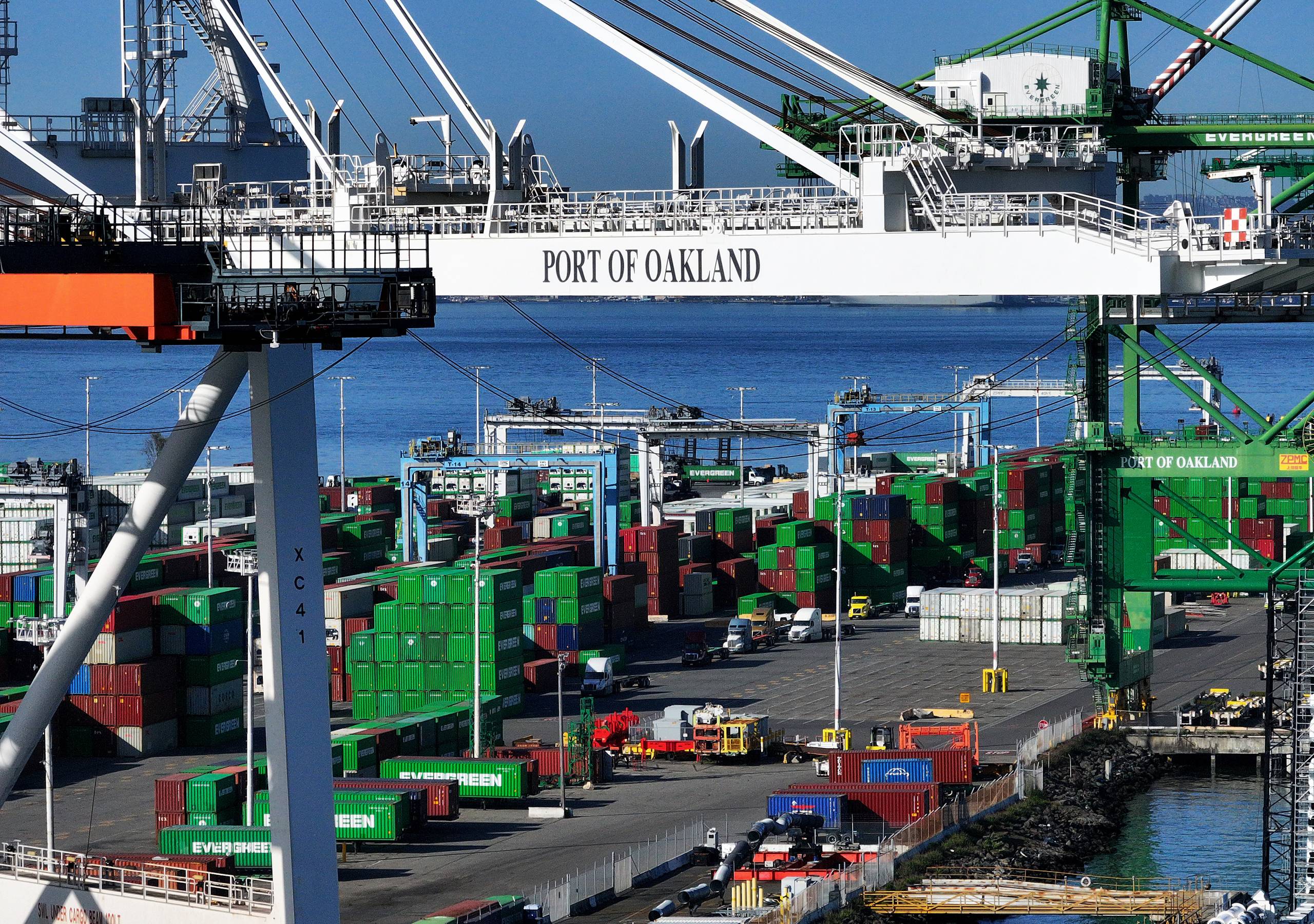
Jillian D’Onfro [00:07:19] Yeah, so when I was trying to visualize this myself, I kind of started with the idea of a container ship. Like, think of Sana’s imports coming on this big container ship, and when it gets from, say, India to the U.S., she then has to pay an import tax or that tariff on the goods to get them off the ship and bring them basically into America where she can then sell them.
Ericka Cruz Guevarra [00:07:42] And how much was that looking like for her?
Jillian D’Onfro [00:07:44] It was very high. So again, tariffs on India went up to about 50%.
Sana Javeri Kadri [00:07:51] Before that, we paid a 2.4% tariff on some products, if that, and became 50% tariffs from India. So if I’m bringing a container of spices, which is like 15,000 kilograms of spices into the country, I’m paying a tariff from that entire container. So that tariff right off the bat is maybe 60K, 70K that I have to pay upfront to the U.S. Government to get my product in.
Jillian D’Onfro [00:08:16] All in, Sana told me that she spent about $200,000 that she wasn’t expecting to spend on tariffs.
Ericka Cruz Guevarra [00:08:22] Oh my god. And for a small business, I just can’t even imagine how.
Jillian D’Onfro [00:08:29] Yeah, especially when you weren’t building it into your financial planning from the beginning of the year. She had really expected 2025 to be a year that was very successful for Diaspora, where they were finally gonna hit profitability and she had all these big plans and then suddenly, boom, tariffs.
Sana Javeri Kadri [00:08:51] We were gonna do three more blends that we just couldn’t develop or source. We were going to hire a couple of roles that we didn’t hire. I took a pay cut. Like we just had to freeze things.
Ericka Cruz Guevarra [00:09:07] So how is Sana swinging this? I’m assuming this means that she’s raising her prices.
Jillian D’Onfro [00:09:33] Yes. When we talked, she reflected that if she had not been on that family vacation, she might have asked her loyal customers to stock up right away and then raise prices sooner.
Sana Javeri Kadri [00:09:46] Terrified to raise prices because I was like, what if all my customers leave? What if nobody buys from us anymore? We were already expensive. Inflation is really high. All of our paychecks don’t go as far as they used to. I’m doing what I can barely afford to buy.
Jillian D’Onfro [00:10:01] Instead of doing that, she just swallowed the increased price for a while. And while she did eventually increase prices, it wasn’t for months. And so she had already spent a lot of money on these tariffs.
Sana Javeri Kadri [00:10:15] Late September, early October, we increased our prices about 15%. And I think the heartbreaking thing about that is that like, even that doesn’t cover it.
Ericka Cruz Guevarra [00:10:28] How are her consumers or her customers responding to these price increases?
Jillian D’Onfro [00:10:34] I watched the Instagram video where she first announced price increases and I was actually shocked by how positive a lot of the comments on that post were.
Sana Javeri Kadri [00:10:44] We had to pay a 60K tariff bill, I think in August, and I talked to our community about it, and they raised well, well above that.
Jillian D’Onfro [00:11:00] Talking to her, I understood that she really has felt that her loyal customers have supported her through it. I think the challenge is what customers don’t you gain who would have been new customers and then maybe they see the price point and decide they can’t afford it right now. But certainly it sounds like customers who have been buying from her and using her spices for years really stepped up and supported despite the price increases.
Ericka Cruz Guevarra [00:11:29] And you talked at the top about how President Trump’s rationale for the tariffs is really about bringing back American manufacturing, helping American businesses. How does that logic hold up when talking about a food business or a business like Sana’s, which is an American small business?
Jillian D’Onfro [00:11:52] Yeah, by and large, it feels like the folks that I’ve talked to are suffering, not benefiting from these tariffs. In addition to Sana, I talked to Fellow Coffee, who’s a maker of artisanal coffee tools in the Bay Area. And he’s suffered hugely as well, because even though he is American company selling products here, he has some things that he can only import from China. This year, his profitability, like Sana’s, has been completely wiped off the map. And he had to import a lot less than he expected to because of these new tariffs. So instead of feeling empowered by these tariffs, the small business owners that I’ve talked to are feeling really threatened. Because in a lot of cases, there just isn’t manufacturing capability here in the US to supply the products that they need. They feel like they can only get them from abroad.
Ericka Cruz Guevarra [00:12:49] It seems like that’s just the reality of our economy, is it does rely on this sort of global system, and you can’t grow every spice in the US.
Jillian D’Onfro [00:13:00] Totally. And in fact, like pretty much none of diaspora spices can grow in the US.
Sana Javeri Kadri [00:13:06] Most spices are not indigenous to the Americas, right? Vanilla is indigenous to be Americas, nothing else is. So if you want cinnamon, it has to come from somewhere else. If you want coriander, which is one of the primary ingredients in hot dogs, it has come from someone else. I think a lot of folks, you know, initially were like, okay, we don’t need those exotic ingredients, but nobody stopped drinking coffee or baking apple pie. Highly American dishes require globalized ingredients.
Ericka Cruz Guevarra [00:13:42] Jillian, I feel like one aspect of this whole tariff saga is just like how quickly things can change out of nowhere. So what is Sana’s situation at this point?
Jillian D’Onfro [00:13:52] Yeah, she actually got some really good news. The latest out of the Trump administration is there actually are going to be some exemptions to tariffs on certain foods, and so beef, certain fruits, and spices. So it’s actually a huge Hail Mary for diaspora, because now a lot of the things that have been taxed so highly or have really high import tax no longer will.
Sana Javeri Kadri [00:14:17] Of course it’s joyous, like it means that for the future we are not like so existentially terrified and constantly having panic attacks about like how we’re going to run things. Now I just want to refund on all the money we’ve already paid them.
Jillian D’Onfro [00:14:39] Not just for food businesses, but for businesses overall. There is a case that just heard oral arguments with the Supreme Court earlier this month that was brought by a group of small businesses arguing that Trump’s Liberation Day tariffs actually weren’t legal, that the emergency law that he used to put them in place doesn’t actually apply. And so that case is ongoing. If this case does go through in such a way that Trumps’ tariffs were deemed illegal. Businesses have a chance of seeing refunds on those tariffs that they have already paid.
Ericka Cruz Guevarra [00:15:12] Oh wow, I imagine that would be a huge deal for someone like Sana.
Jillian D’Onfro [00:15:17] It would be a huge deal. It would also have a lot of uncertainty about when any sort of refund might come. The process of refunding businesses would be incredibly complicated and probably take a long time. So there’s definitely hope, but a lot uncertainty about what that hope could actually manifest itself like.
Ericka Cruz Guevarra [00:15:37] Right, I can’t even imagine who’s, whoever’s job that is. I don’t want it. Me neither. What does that mean for her? Is she out of the water now or how is she feeling?
Jillian D’Onfro [00:15:49] I wouldn’t say out of the water. For one thing, she has already spent that $200,000 on tariffs already.
Sana Javeri Kadri [00:16:00] Yeah, we don’t automatically get to rewind to March. We are now having to like re-accelerate after like a forced slow down. I’m really hopeful that we can do that, but it’s gonna take sometime.
Jillian D’Onfro [00:16:14] This exemption will be helpful for some, but there are a lot of things that are not included. So I think food businesses in the Bay Area are still going to be feeling all the other tariffs that aren’t part of these exemptions. And consumers are still going to being seeing a lot things that they’re buying at the grocery store of higher prices than they did at this time last year.
Ericka Cruz Guevarra [00:16:38] They’re going to feel it and, so will we. Through Christmas and the holidays. And I mean, it seems like in some ways the damage has already been done. And I can’t imagine how some businesses might even have survived.
Jillian D’Onfro [00:16:54] Oh, yeah. I mean, we got to talk to DiasporaCo because they still exist, but there’s businesses that probably had to fold.
Ericka Cruz Guevarra [00:17:07] Have you been out holiday shopping yet? Like what’s your sense of the vibes and the climate, especially at local businesses this holiday season?