window.__IS_SSR__=true
window.__INITIAL_STATE__={
"attachmentsReducer": {
"audio_0": {
"type": "attachments",
"id": "audio_0",
"imgSizes": {
"kqedFullSize": {
"file": "https://ww2.kqed.org/news/wp-content/themes/KQED-unified/img/audio_bgs/background0.jpg"
}
}
},
"audio_1": {
"type": "attachments",
"id": "audio_1",
"imgSizes": {
"kqedFullSize": {
"file": "https://ww2.kqed.org/news/wp-content/themes/KQED-unified/img/audio_bgs/background1.jpg"
}
}
},
"audio_2": {
"type": "attachments",
"id": "audio_2",
"imgSizes": {
"kqedFullSize": {
"file": "https://ww2.kqed.org/news/wp-content/themes/KQED-unified/img/audio_bgs/background2.jpg"
}
}
},
"audio_3": {
"type": "attachments",
"id": "audio_3",
"imgSizes": {
"kqedFullSize": {
"file": "https://ww2.kqed.org/news/wp-content/themes/KQED-unified/img/audio_bgs/background3.jpg"
}
}
},
"audio_4": {
"type": "attachments",
"id": "audio_4",
"imgSizes": {
"kqedFullSize": {
"file": "https://ww2.kqed.org/news/wp-content/themes/KQED-unified/img/audio_bgs/background4.jpg"
}
}
},
"placeholder": {
"type": "attachments",
"id": "placeholder",
"imgSizes": {
"thumbnail": {
"file": "https://cdn.kqed.org/wp-content/uploads/2024/12/KQED-Default-Image-816638274-2000x1333-1-160x107.jpg",
"width": 160,
"height": 107,
"mimeType": "image/jpeg"
},
"medium": {
"file": "https://cdn.kqed.org/wp-content/uploads/2024/12/KQED-Default-Image-816638274-2000x1333-1-800x533.jpg",
"width": 800,
"height": 533,
"mimeType": "image/jpeg"
},
"medium_large": {
"file": "https://cdn.kqed.org/wp-content/uploads/2024/12/KQED-Default-Image-816638274-2000x1333-1-768x512.jpg",
"width": 768,
"height": 512,
"mimeType": "image/jpeg"
},
"large": {
"file": "https://cdn.kqed.org/wp-content/uploads/2024/12/KQED-Default-Image-816638274-2000x1333-1-1020x680.jpg",
"width": 1020,
"height": 680,
"mimeType": "image/jpeg"
},
"1536x1536": {
"file": "https://cdn.kqed.org/wp-content/uploads/2024/12/KQED-Default-Image-816638274-2000x1333-1-1536x1024.jpg",
"width": 1536,
"height": 1024,
"mimeType": "image/jpeg"
},
"fd-lrg": {
"file": "https://cdn.kqed.org/wp-content/uploads/2024/12/KQED-Default-Image-816638274-2000x1333-1-1536x1024.jpg",
"width": 1536,
"height": 1024,
"mimeType": "image/jpeg"
},
"fd-med": {
"file": "https://cdn.kqed.org/wp-content/uploads/2024/12/KQED-Default-Image-816638274-2000x1333-1-1020x680.jpg",
"width": 1020,
"height": 680,
"mimeType": "image/jpeg"
},
"fd-sm": {
"file": "https://cdn.kqed.org/wp-content/uploads/2024/12/KQED-Default-Image-816638274-2000x1333-1-800x533.jpg",
"width": 800,
"height": 533,
"mimeType": "image/jpeg"
},
"post-thumbnail": {
"file": "https://cdn.kqed.org/wp-content/uploads/2024/12/KQED-Default-Image-816638274-2000x1333-1-672x372.jpg",
"width": 672,
"height": 372,
"mimeType": "image/jpeg"
},
"twentyfourteen-full-width": {
"file": "https://cdn.kqed.org/wp-content/uploads/2024/12/KQED-Default-Image-816638274-2000x1333-1-1038x576.jpg",
"width": 1038,
"height": 576,
"mimeType": "image/jpeg"
},
"xxsmall": {
"file": "https://cdn.kqed.org/wp-content/uploads/2024/12/KQED-Default-Image-816638274-2000x1333-1-160x107.jpg",
"width": 160,
"height": 107,
"mimeType": "image/jpeg"
},
"xsmall": {
"file": "https://cdn.kqed.org/wp-content/uploads/2024/12/KQED-Default-Image-816638274-2000x1333-1-672x372.jpg",
"width": 672,
"height": 372,
"mimeType": "image/jpeg"
},
"small": {
"file": "https://cdn.kqed.org/wp-content/uploads/2024/12/KQED-Default-Image-816638274-2000x1333-1-672x372.jpg",
"width": 672,
"height": 372,
"mimeType": "image/jpeg"
},
"xlarge": {
"file": "https://cdn.kqed.org/wp-content/uploads/2024/12/KQED-Default-Image-816638274-2000x1333-1-1020x680.jpg",
"width": 1020,
"height": 680,
"mimeType": "image/jpeg"
},
"full-width": {
"file": "https://cdn.kqed.org/wp-content/uploads/2024/12/KQED-Default-Image-816638274-2000x1333-1-1920x1280.jpg",
"width": 1920,
"height": 1280,
"mimeType": "image/jpeg"
},
"guest-author-32": {
"file": "https://cdn.kqed.org/wp-content/uploads/2025/01/KQED-Default-Image-816638274-1333x1333-1-160x160.jpg",
"width": 32,
"height": 32,
"mimeType": "image/jpeg"
},
"guest-author-50": {
"file": "https://cdn.kqed.org/wp-content/uploads/2025/01/KQED-Default-Image-816638274-1333x1333-1-160x160.jpg",
"width": 50,
"height": 50,
"mimeType": "image/jpeg"
},
"guest-author-64": {
"file": "https://cdn.kqed.org/wp-content/uploads/2025/01/KQED-Default-Image-816638274-1333x1333-1-160x160.jpg",
"width": 64,
"height": 64,
"mimeType": "image/jpeg"
},
"guest-author-96": {
"file": "https://cdn.kqed.org/wp-content/uploads/2025/01/KQED-Default-Image-816638274-1333x1333-1-160x160.jpg",
"width": 96,
"height": 96,
"mimeType": "image/jpeg"
},
"guest-author-128": {
"file": "https://cdn.kqed.org/wp-content/uploads/2025/01/KQED-Default-Image-816638274-1333x1333-1-160x160.jpg",
"width": 128,
"height": 128,
"mimeType": "image/jpeg"
},
"detail": {
"file": "https://cdn.kqed.org/wp-content/uploads/2025/01/KQED-Default-Image-816638274-1333x1333-1-160x160.jpg",
"width": 160,
"height": 160,
"mimeType": "image/jpeg"
},
"kqedFullSize": {
"file": "https://cdn.kqed.org/wp-content/uploads/2024/12/KQED-Default-Image-816638274-2000x1333-1.jpg",
"width": 2000,
"height": 1333
}
}
},
"news_11661696": {
"type": "attachments",
"id": "news_11661696",
"meta": {
"index": "attachments_1716263798",
"site": "news",
"id": "11661696",
"found": true
},
"parent": 11661656,
"imgSizes": {
"small": {
"file": "https://ww2.kqed.org/app/uploads/sites/10/2018/04/GettyImages-928061394-520x347.jpg",
"width": 520,
"mimeType": "image/jpeg",
"height": 347
},
"twentyfourteen-full-width": {
"file": "https://ww2.kqed.org/app/uploads/sites/10/2018/04/GettyImages-928061394-1038x576.jpg",
"width": 1038,
"mimeType": "image/jpeg",
"height": 576
},
"thumbnail": {
"file": "https://ww2.kqed.org/app/uploads/sites/10/2018/04/GettyImages-928061394-160x107.jpg",
"width": 160,
"mimeType": "image/jpeg",
"height": 107
},
"fd-sm": {
"file": "https://ww2.kqed.org/app/uploads/sites/10/2018/04/GettyImages-928061394-960x640.jpg",
"width": 960,
"mimeType": "image/jpeg",
"height": 640
},
"post-thumbnail": {
"file": "https://ww2.kqed.org/app/uploads/sites/10/2018/04/GettyImages-928061394-672x372.jpg",
"width": 672,
"mimeType": "image/jpeg",
"height": 372
},
"xsmall": {
"file": "https://ww2.kqed.org/app/uploads/sites/10/2018/04/GettyImages-928061394-375x250.jpg",
"width": 375,
"mimeType": "image/jpeg",
"height": 250
},
"kqedFullSize": {
"file": "https://ww2.kqed.org/app/uploads/sites/10/2018/04/GettyImages-928061394.jpg",
"width": 3000,
"height": 2000
},
"large": {
"file": "https://ww2.kqed.org/app/uploads/sites/10/2018/04/GettyImages-928061394-1020x680.jpg",
"width": 1020,
"mimeType": "image/jpeg",
"height": 680
},
"xlarge": {
"file": "https://ww2.kqed.org/app/uploads/sites/10/2018/04/GettyImages-928061394-1180x787.jpg",
"width": 1180,
"mimeType": "image/jpeg",
"height": 787
},
"complete_open_graph": {
"file": "https://ww2.kqed.org/app/uploads/sites/10/2018/04/GettyImages-928061394-1200x800.jpg",
"width": 1200,
"mimeType": "image/jpeg",
"height": 800
},
"guest-author-50": {
"file": "https://ww2.kqed.org/app/uploads/sites/10/2018/04/GettyImages-928061394-50x50.jpg",
"width": 50,
"mimeType": "image/jpeg",
"height": 50
},
"guest-author-96": {
"file": "https://ww2.kqed.org/app/uploads/sites/10/2018/04/GettyImages-928061394-96x96.jpg",
"width": 96,
"mimeType": "image/jpeg",
"height": 96
},
"medium": {
"file": "https://ww2.kqed.org/app/uploads/sites/10/2018/04/GettyImages-928061394-800x533.jpg",
"width": 800,
"mimeType": "image/jpeg",
"height": 533
},
"guest-author-64": {
"file": "https://ww2.kqed.org/app/uploads/sites/10/2018/04/GettyImages-928061394-64x64.jpg",
"width": 64,
"mimeType": "image/jpeg",
"height": 64
},
"guest-author-32": {
"file": "https://ww2.kqed.org/app/uploads/sites/10/2018/04/GettyImages-928061394-32x32.jpg",
"width": 32,
"mimeType": "image/jpeg",
"height": 32
},
"fd-lrg": {
"file": "https://ww2.kqed.org/app/uploads/sites/10/2018/04/GettyImages-928061394-1920x1280.jpg",
"width": 1920,
"mimeType": "image/jpeg",
"height": 1280
},
"fd-med": {
"file": "https://ww2.kqed.org/app/uploads/sites/10/2018/04/GettyImages-928061394-1180x787.jpg",
"width": 1180,
"mimeType": "image/jpeg",
"height": 787
},
"full-width": {
"file": "https://ww2.kqed.org/app/uploads/sites/10/2018/04/GettyImages-928061394-1920x1280.jpg",
"width": 1920,
"mimeType": "image/jpeg",
"height": 1280
},
"detail": {
"file": "https://ww2.kqed.org/app/uploads/sites/10/2018/04/GettyImages-928061394-150x150.jpg",
"width": 150,
"mimeType": "image/jpeg",
"height": 150
},
"guest-author-128": {
"file": "https://ww2.kqed.org/app/uploads/sites/10/2018/04/GettyImages-928061394-128x128.jpg",
"width": 128,
"mimeType": "image/jpeg",
"height": 128
},
"xxsmall": {
"file": "https://ww2.kqed.org/app/uploads/sites/10/2018/04/GettyImages-928061394-240x160.jpg",
"width": 240,
"mimeType": "image/jpeg",
"height": 160
}
},
"publishDate": 1523558974,
"modified": 1523559013,
"caption": "House Speaker Paul Ryan (R-WI), speaks to the media while flanked by House Majority Leader Kevin McCarthy (R-CA), right, and House Majority Whip Steve Scalise (R-LA) after a meeting with House Republicans on Capitol Hill, on March 6, 2018 in Washington, DC. ",
"description": null,
"title": "Speaker Ryan And House Leadership Address The Media After Weekly Policy Conference",
"credit": "Mark Wilson/Getty Image",
"status": "inherit",
"isLoading": false,
"fetchFailed": false
},
"news_11655742": {
"type": "attachments",
"id": "news_11655742",
"meta": {
"index": "attachments_1716263798",
"site": "news",
"id": "11655742",
"found": true
},
"parent": 11655724,
"imgSizes": {
"small": {
"file": "https://ww2.kqed.org/app/uploads/sites/10/2018/03/kansasstreet2016-520x391.jpg",
"width": 520,
"mimeType": "image/jpeg",
"height": 391
},
"twentyfourteen-full-width": {
"file": "https://ww2.kqed.org/app/uploads/sites/10/2018/03/kansasstreet2016-1038x576.jpg",
"width": 1038,
"mimeType": "image/jpeg",
"height": 576
},
"thumbnail": {
"file": "https://ww2.kqed.org/app/uploads/sites/10/2018/03/kansasstreet2016-160x120.jpg",
"width": 160,
"mimeType": "image/jpeg",
"height": 120
},
"fd-sm": {
"file": "https://ww2.kqed.org/app/uploads/sites/10/2018/03/kansasstreet2016-960x723.jpg",
"width": 960,
"mimeType": "image/jpeg",
"height": 723
},
"post-thumbnail": {
"file": "https://ww2.kqed.org/app/uploads/sites/10/2018/03/kansasstreet2016-672x372.jpg",
"width": 672,
"mimeType": "image/jpeg",
"height": 372
},
"xsmall": {
"file": "https://ww2.kqed.org/app/uploads/sites/10/2018/03/kansasstreet2016-375x282.jpg",
"width": 375,
"mimeType": "image/jpeg",
"height": 282
},
"kqedFullSize": {
"file": "https://ww2.kqed.org/app/uploads/sites/10/2018/03/kansasstreet2016.jpg",
"width": 1920,
"height": 1445
},
"large": {
"file": "https://ww2.kqed.org/app/uploads/sites/10/2018/03/kansasstreet2016-1020x768.jpg",
"width": 1020,
"mimeType": "image/jpeg",
"height": 768
},
"xlarge": {
"file": "https://ww2.kqed.org/app/uploads/sites/10/2018/03/kansasstreet2016-1180x888.jpg",
"width": 1180,
"mimeType": "image/jpeg",
"height": 888
},
"guest-author-50": {
"file": "https://ww2.kqed.org/app/uploads/sites/10/2018/03/kansasstreet2016-50x50.jpg",
"width": 50,
"mimeType": "image/jpeg",
"height": 50
},
"guest-author-96": {
"file": "https://ww2.kqed.org/app/uploads/sites/10/2018/03/kansasstreet2016-96x96.jpg",
"width": 96,
"mimeType": "image/jpeg",
"height": 96
},
"medium": {
"file": "https://ww2.kqed.org/app/uploads/sites/10/2018/03/kansasstreet2016-800x602.jpg",
"width": 800,
"mimeType": "image/jpeg",
"height": 602
},
"guest-author-64": {
"file": "https://ww2.kqed.org/app/uploads/sites/10/2018/03/kansasstreet2016-64x64.jpg",
"width": 64,
"mimeType": "image/jpeg",
"height": 64
},
"guest-author-32": {
"file": "https://ww2.kqed.org/app/uploads/sites/10/2018/03/kansasstreet2016-32x32.jpg",
"width": 32,
"mimeType": "image/jpeg",
"height": 32
},
"fd-lrg": {
"file": "https://ww2.kqed.org/app/uploads/sites/10/2018/03/kansasstreet2016-1920x1445.jpg",
"width": 1920,
"mimeType": "image/jpeg",
"height": 1445
},
"fd-med": {
"file": "https://ww2.kqed.org/app/uploads/sites/10/2018/03/kansasstreet2016-1180x888.jpg",
"width": 1180,
"mimeType": "image/jpeg",
"height": 888
},
"full-width": {
"file": "https://ww2.kqed.org/app/uploads/sites/10/2018/03/kansasstreet2016-1920x1445.jpg",
"width": 1920,
"mimeType": "image/jpeg",
"height": 1445
},
"detail": {
"file": "https://ww2.kqed.org/app/uploads/sites/10/2018/03/kansasstreet2016-150x150.jpg",
"width": 150,
"mimeType": "image/jpeg",
"height": 150
},
"guest-author-128": {
"file": "https://ww2.kqed.org/app/uploads/sites/10/2018/03/kansasstreet2016-128x128.jpg",
"width": 128,
"mimeType": "image/jpeg",
"height": 128
},
"xxsmall": {
"file": "https://ww2.kqed.org/app/uploads/sites/10/2018/03/kansasstreet2016-240x181.jpg",
"width": 240,
"mimeType": "image/jpeg",
"height": 181
}
},
"publishDate": 1521061192,
"modified": 1544833833,
"caption": "A residential complex under construction in January 2016 near Eighth and Townsend streets in San Francisco's Design District.",
"description": null,
"title": "Housing-Kansas Street",
"credit": "Dan Brekke/KQED",
"status": "inherit",
"isLoading": false,
"fetchFailed": false
},
"news_11660903": {
"type": "attachments",
"id": "news_11660903",
"meta": {
"index": "attachments_1716263798",
"site": "news",
"id": "11660903",
"found": true
},
"parent": 11660902,
"imgSizes": {
"small": {
"file": "https://ww2.kqed.org/app/uploads/sites/10/2018/04/gettyimages-630089750_wide-b4004b9a471618c0563d2117a30d9c9a5c629bd8-520x292.jpg",
"width": 520,
"mimeType": "image/jpeg",
"height": 292
},
"thumbnail": {
"file": "https://ww2.kqed.org/app/uploads/sites/10/2018/04/gettyimages-630089750_wide-b4004b9a471618c0563d2117a30d9c9a5c629bd8-160x90.jpg",
"width": 160,
"mimeType": "image/jpeg",
"height": 90
},
"fd-sm": {
"file": "https://ww2.kqed.org/app/uploads/sites/10/2018/04/gettyimages-630089750_wide-b4004b9a471618c0563d2117a30d9c9a5c629bd8-960x539.jpg",
"width": 960,
"mimeType": "image/jpeg",
"height": 539
},
"post-thumbnail": {
"file": "https://ww2.kqed.org/app/uploads/sites/10/2018/04/gettyimages-630089750_wide-b4004b9a471618c0563d2117a30d9c9a5c629bd8-672x372.jpg",
"width": 672,
"mimeType": "image/jpeg",
"height": 372
},
"xsmall": {
"file": "https://ww2.kqed.org/app/uploads/sites/10/2018/04/gettyimages-630089750_wide-b4004b9a471618c0563d2117a30d9c9a5c629bd8-375x211.jpg",
"width": 375,
"mimeType": "image/jpeg",
"height": 211
},
"kqedFullSize": {
"file": "https://ww2.kqed.org/app/uploads/sites/10/2018/04/gettyimages-630089750_wide-b4004b9a471618c0563d2117a30d9c9a5c629bd8.jpg",
"width": 1018,
"height": 572
},
"guest-author-50": {
"file": "https://ww2.kqed.org/app/uploads/sites/10/2018/04/gettyimages-630089750_wide-b4004b9a471618c0563d2117a30d9c9a5c629bd8-50x50.jpg",
"width": 50,
"mimeType": "image/jpeg",
"height": 50
},
"guest-author-96": {
"file": "https://ww2.kqed.org/app/uploads/sites/10/2018/04/gettyimages-630089750_wide-b4004b9a471618c0563d2117a30d9c9a5c629bd8-96x96.jpg",
"width": 96,
"mimeType": "image/jpeg",
"height": 96
},
"medium": {
"file": "https://ww2.kqed.org/app/uploads/sites/10/2018/04/gettyimages-630089750_wide-b4004b9a471618c0563d2117a30d9c9a5c629bd8-800x450.jpg",
"width": 800,
"mimeType": "image/jpeg",
"height": 450
},
"guest-author-64": {
"file": "https://ww2.kqed.org/app/uploads/sites/10/2018/04/gettyimages-630089750_wide-b4004b9a471618c0563d2117a30d9c9a5c629bd8-64x64.jpg",
"width": 64,
"mimeType": "image/jpeg",
"height": 64
},
"guest-author-32": {
"file": "https://ww2.kqed.org/app/uploads/sites/10/2018/04/gettyimages-630089750_wide-b4004b9a471618c0563d2117a30d9c9a5c629bd8-32x32.jpg",
"width": 32,
"mimeType": "image/jpeg",
"height": 32
},
"detail": {
"file": "https://ww2.kqed.org/app/uploads/sites/10/2018/04/gettyimages-630089750_wide-b4004b9a471618c0563d2117a30d9c9a5c629bd8-150x150.jpg",
"width": 150,
"mimeType": "image/jpeg",
"height": 150
},
"guest-author-128": {
"file": "https://ww2.kqed.org/app/uploads/sites/10/2018/04/gettyimages-630089750_wide-b4004b9a471618c0563d2117a30d9c9a5c629bd8-128x128.jpg",
"width": 128,
"mimeType": "image/jpeg",
"height": 128
},
"xxsmall": {
"file": "https://ww2.kqed.org/app/uploads/sites/10/2018/04/gettyimages-630089750_wide-b4004b9a471618c0563d2117a30d9c9a5c629bd8-240x135.jpg",
"width": 240,
"mimeType": "image/jpeg",
"height": 135
}
},
"publishDate": 1523311282,
"modified": 1523311449,
"caption": "Attorney Michael Cohen arrives at Trump Tower for meetings with then-President-elect Donald Trump in December 2016.",
"description": "Attorney Michael Cohen arrives at Trump Tower for meetings with then-President-elect Donald Trump in December 2016",
"title": "Attorney Michael Cohen arrives at Trump Tower for meetings with then-President-elect Donald Trump in December 2016.",
"credit": "Bryan R. Smith/AFP/Getty Images",
"status": "inherit",
"isLoading": false,
"fetchFailed": false
},
"news_11660548": {
"type": "attachments",
"id": "news_11660548",
"meta": {
"index": "attachments_1716263798",
"site": "news",
"id": "11660548",
"found": true
},
"parent": 11660547,
"imgSizes": {
"small": {
"file": "https://ww2.kqed.org/app/uploads/sites/10/2018/04/ap_17223538470874-4ef3bc4597a8c06f3976ca0de64ed8af9f44bd3a-520x390.jpg",
"width": 520,
"mimeType": "image/jpeg",
"height": 390
},
"twentyfourteen-full-width": {
"file": "https://ww2.kqed.org/app/uploads/sites/10/2018/04/ap_17223538470874-4ef3bc4597a8c06f3976ca0de64ed8af9f44bd3a-1038x576.jpg",
"width": 1038,
"mimeType": "image/jpeg",
"height": 576
},
"thumbnail": {
"file": "https://ww2.kqed.org/app/uploads/sites/10/2018/04/ap_17223538470874-4ef3bc4597a8c06f3976ca0de64ed8af9f44bd3a-160x120.jpg",
"width": 160,
"mimeType": "image/jpeg",
"height": 120
},
"fd-sm": {
"file": "https://ww2.kqed.org/app/uploads/sites/10/2018/04/ap_17223538470874-4ef3bc4597a8c06f3976ca0de64ed8af9f44bd3a-960x720.jpg",
"width": 960,
"mimeType": "image/jpeg",
"height": 720
},
"post-thumbnail": {
"file": "https://ww2.kqed.org/app/uploads/sites/10/2018/04/ap_17223538470874-4ef3bc4597a8c06f3976ca0de64ed8af9f44bd3a-672x372.jpg",
"width": 672,
"mimeType": "image/jpeg",
"height": 372
},
"xsmall": {
"file": "https://ww2.kqed.org/app/uploads/sites/10/2018/04/ap_17223538470874-4ef3bc4597a8c06f3976ca0de64ed8af9f44bd3a-375x281.jpg",
"width": 375,
"mimeType": "image/jpeg",
"height": 281
},
"kqedFullSize": {
"file": "https://ww2.kqed.org/app/uploads/sites/10/2018/04/ap_17223538470874-4ef3bc4597a8c06f3976ca0de64ed8af9f44bd3a.jpg",
"width": 3212,
"height": 2409
},
"large": {
"file": "https://ww2.kqed.org/app/uploads/sites/10/2018/04/ap_17223538470874-4ef3bc4597a8c06f3976ca0de64ed8af9f44bd3a-1020x765.jpg",
"width": 1020,
"mimeType": "image/jpeg",
"height": 765
},
"xlarge": {
"file": "https://ww2.kqed.org/app/uploads/sites/10/2018/04/ap_17223538470874-4ef3bc4597a8c06f3976ca0de64ed8af9f44bd3a-1180x885.jpg",
"width": 1180,
"mimeType": "image/jpeg",
"height": 885
},
"guest-author-50": {
"file": "https://ww2.kqed.org/app/uploads/sites/10/2018/04/ap_17223538470874-4ef3bc4597a8c06f3976ca0de64ed8af9f44bd3a-50x50.jpg",
"width": 50,
"mimeType": "image/jpeg",
"height": 50
},
"guest-author-96": {
"file": "https://ww2.kqed.org/app/uploads/sites/10/2018/04/ap_17223538470874-4ef3bc4597a8c06f3976ca0de64ed8af9f44bd3a-96x96.jpg",
"width": 96,
"mimeType": "image/jpeg",
"height": 96
},
"medium": {
"file": "https://ww2.kqed.org/app/uploads/sites/10/2018/04/ap_17223538470874-4ef3bc4597a8c06f3976ca0de64ed8af9f44bd3a-800x600.jpg",
"width": 800,
"mimeType": "image/jpeg",
"height": 600
},
"guest-author-64": {
"file": "https://ww2.kqed.org/app/uploads/sites/10/2018/04/ap_17223538470874-4ef3bc4597a8c06f3976ca0de64ed8af9f44bd3a-64x64.jpg",
"width": 64,
"mimeType": "image/jpeg",
"height": 64
},
"guest-author-32": {
"file": "https://ww2.kqed.org/app/uploads/sites/10/2018/04/ap_17223538470874-4ef3bc4597a8c06f3976ca0de64ed8af9f44bd3a-32x32.jpg",
"width": 32,
"mimeType": "image/jpeg",
"height": 32
},
"fd-lrg": {
"file": "https://ww2.kqed.org/app/uploads/sites/10/2018/04/ap_17223538470874-4ef3bc4597a8c06f3976ca0de64ed8af9f44bd3a-1920x1440.jpg",
"width": 1920,
"mimeType": "image/jpeg",
"height": 1440
},
"fd-med": {
"file": "https://ww2.kqed.org/app/uploads/sites/10/2018/04/ap_17223538470874-4ef3bc4597a8c06f3976ca0de64ed8af9f44bd3a-1180x885.jpg",
"width": 1180,
"mimeType": "image/jpeg",
"height": 885
},
"full-width": {
"file": "https://ww2.kqed.org/app/uploads/sites/10/2018/04/ap_17223538470874-4ef3bc4597a8c06f3976ca0de64ed8af9f44bd3a-1920x1440.jpg",
"width": 1920,
"mimeType": "image/jpeg",
"height": 1440
},
"detail": {
"file": "https://ww2.kqed.org/app/uploads/sites/10/2018/04/ap_17223538470874-4ef3bc4597a8c06f3976ca0de64ed8af9f44bd3a-150x150.jpg",
"width": 150,
"mimeType": "image/jpeg",
"height": 150
},
"guest-author-128": {
"file": "https://ww2.kqed.org/app/uploads/sites/10/2018/04/ap_17223538470874-4ef3bc4597a8c06f3976ca0de64ed8af9f44bd3a-128x128.jpg",
"width": 128,
"mimeType": "image/jpeg",
"height": 128
},
"xxsmall": {
"file": "https://ww2.kqed.org/app/uploads/sites/10/2018/04/ap_17223538470874-4ef3bc4597a8c06f3976ca0de64ed8af9f44bd3a-240x180.jpg",
"width": 240,
"mimeType": "image/jpeg",
"height": 180
}
},
"publishDate": 1523118023,
"modified": 1523119482,
"caption": "President Trump's tweets delight supporters who say they find him honest, funny and refreshing. But his tweets distract and dismay his detractors, alienate many of his allies and misdirect much of the media.",
"description": null,
"title": "President Trump's tweets delight supporters who say they find him honest, funny and refreshing. But his tweets distract and dismay his detractors, alienate many of his allies and misdirect much of the media.",
"credit": "J. David Ake/AP",
"status": "inherit",
"isLoading": false,
"fetchFailed": false
},
"news_11660093": {
"type": "attachments",
"id": "news_11660093",
"meta": {
"index": "attachments_1716263798",
"site": "news",
"id": "11660093",
"found": true
},
"parent": 11659893,
"imgSizes": {
"small": {
"file": "https://ww2.kqed.org/app/uploads/sites/10/2018/04/SantaAnaRiverbedCampPath-520x347.jpg",
"width": 520,
"mimeType": "image/jpeg",
"height": 347
},
"twentyfourteen-full-width": {
"file": "https://ww2.kqed.org/app/uploads/sites/10/2018/04/SantaAnaRiverbedCampPath-1038x576.jpg",
"width": 1038,
"mimeType": "image/jpeg",
"height": 576
},
"thumbnail": {
"file": "https://ww2.kqed.org/app/uploads/sites/10/2018/04/SantaAnaRiverbedCampPath-160x107.jpg",
"width": 160,
"mimeType": "image/jpeg",
"height": 107
},
"fd-sm": {
"file": "https://ww2.kqed.org/app/uploads/sites/10/2018/04/SantaAnaRiverbedCampPath-960x640.jpg",
"width": 960,
"mimeType": "image/jpeg",
"height": 640
},
"post-thumbnail": {
"file": "https://ww2.kqed.org/app/uploads/sites/10/2018/04/SantaAnaRiverbedCampPath-672x372.jpg",
"width": 672,
"mimeType": "image/jpeg",
"height": 372
},
"xsmall": {
"file": "https://ww2.kqed.org/app/uploads/sites/10/2018/04/SantaAnaRiverbedCampPath-375x250.jpg",
"width": 375,
"mimeType": "image/jpeg",
"height": 250
},
"kqedFullSize": {
"file": "https://ww2.kqed.org/app/uploads/sites/10/2018/04/SantaAnaRiverbedCampPath.jpg",
"width": 1920,
"height": 1280
},
"large": {
"file": "https://ww2.kqed.org/app/uploads/sites/10/2018/04/SantaAnaRiverbedCampPath-1020x680.jpg",
"width": 1020,
"mimeType": "image/jpeg",
"height": 680
},
"xlarge": {
"file": "https://ww2.kqed.org/app/uploads/sites/10/2018/04/SantaAnaRiverbedCampPath-1180x787.jpg",
"width": 1180,
"mimeType": "image/jpeg",
"height": 787
},
"guest-author-50": {
"file": "https://ww2.kqed.org/app/uploads/sites/10/2018/04/SantaAnaRiverbedCampPath-50x50.jpg",
"width": 50,
"mimeType": "image/jpeg",
"height": 50
},
"guest-author-96": {
"file": "https://ww2.kqed.org/app/uploads/sites/10/2018/04/SantaAnaRiverbedCampPath-96x96.jpg",
"width": 96,
"mimeType": "image/jpeg",
"height": 96
},
"medium": {
"file": "https://ww2.kqed.org/app/uploads/sites/10/2018/04/SantaAnaRiverbedCampPath-800x533.jpg",
"width": 800,
"mimeType": "image/jpeg",
"height": 533
},
"guest-author-64": {
"file": "https://ww2.kqed.org/app/uploads/sites/10/2018/04/SantaAnaRiverbedCampPath-64x64.jpg",
"width": 64,
"mimeType": "image/jpeg",
"height": 64
},
"guest-author-32": {
"file": "https://ww2.kqed.org/app/uploads/sites/10/2018/04/SantaAnaRiverbedCampPath-32x32.jpg",
"width": 32,
"mimeType": "image/jpeg",
"height": 32
},
"fd-lrg": {
"file": "https://ww2.kqed.org/app/uploads/sites/10/2018/04/SantaAnaRiverbedCampPath-1920x1280.jpg",
"width": 1920,
"mimeType": "image/jpeg",
"height": 1280
},
"fd-med": {
"file": "https://ww2.kqed.org/app/uploads/sites/10/2018/04/SantaAnaRiverbedCampPath-1180x787.jpg",
"width": 1180,
"mimeType": "image/jpeg",
"height": 787
},
"full-width": {
"file": "https://ww2.kqed.org/app/uploads/sites/10/2018/04/SantaAnaRiverbedCampPath-1920x1280.jpg",
"width": 1920,
"mimeType": "image/jpeg",
"height": 1280
},
"detail": {
"file": "https://ww2.kqed.org/app/uploads/sites/10/2018/04/SantaAnaRiverbedCampPath-150x150.jpg",
"width": 150,
"mimeType": "image/jpeg",
"height": 150
},
"guest-author-128": {
"file": "https://ww2.kqed.org/app/uploads/sites/10/2018/04/SantaAnaRiverbedCampPath-128x128.jpg",
"width": 128,
"mimeType": "image/jpeg",
"height": 128
},
"xxsmall": {
"file": "https://ww2.kqed.org/app/uploads/sites/10/2018/04/SantaAnaRiverbedCampPath-240x160.jpg",
"width": 240,
"mimeType": "image/jpeg",
"height": 160
}
},
"publishDate": 1522962095,
"modified": 1522962234,
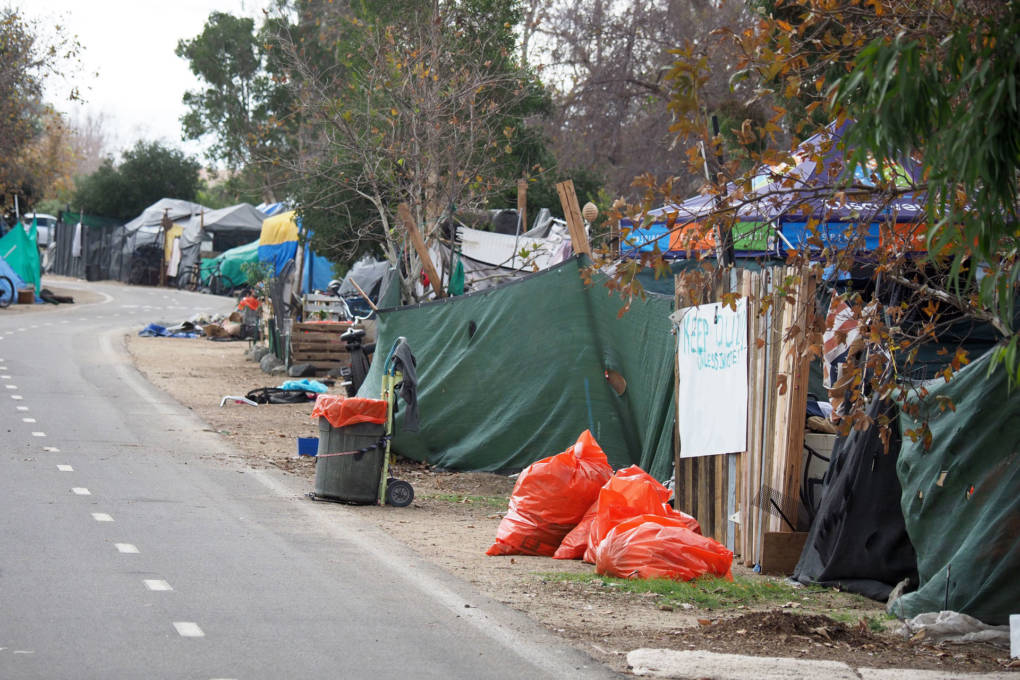
"caption": "Trash bags sit outside tents and tarps of a homeless encampment along the Santa Ana riverbed bicycle path near Angel Stadium in Anaheim on Jan. 25, 2018. Over 700 homeless people were evicted in February from encampments along the riverbed.",
"description": "Trash bags sit outside tents and tarps of a homeless encampment along the Santa Ana riverbed bicycle path near Angel Stadium in Anaheim on Jan. 25, 2018. Over 700 homeless people were evicted in February from encampments along the riverbed.",
"title": "SantaAnaRiverbedCampPath",
"credit": "ROBYN BECK/AFP/Getty Images",
"status": "inherit",
"isLoading": false,
"fetchFailed": false
},
"news_11658273": {
"type": "attachments",
"id": "news_11658273",
"meta": {
"index": "attachments_1716263798",
"site": "news",
"id": "11658273",
"found": true
},
"parent": 11658031,
"imgSizes": {
"small": {
"file": "https://ww2.kqed.org/app/uploads/sites/10/2018/03/WeedScale-520x327.jpg",
"width": 520,
"mimeType": "image/jpeg",
"height": 327
},
"twentyfourteen-full-width": {
"file": "https://ww2.kqed.org/app/uploads/sites/10/2018/03/WeedScale-1038x576.jpg",
"width": 1038,
"mimeType": "image/jpeg",
"height": 576
},
"thumbnail": {
"file": "https://ww2.kqed.org/app/uploads/sites/10/2018/03/WeedScale-160x101.jpg",
"width": 160,
"mimeType": "image/jpeg",
"height": 101
},
"fd-sm": {
"file": "https://ww2.kqed.org/app/uploads/sites/10/2018/03/WeedScale-960x604.jpg",
"width": 960,
"mimeType": "image/jpeg",
"height": 604
},
"post-thumbnail": {
"file": "https://ww2.kqed.org/app/uploads/sites/10/2018/03/WeedScale-672x372.jpg",
"width": 672,
"mimeType": "image/jpeg",
"height": 372
},
"xsmall": {
"file": "https://ww2.kqed.org/app/uploads/sites/10/2018/03/WeedScale-375x236.jpg",
"width": 375,
"mimeType": "image/jpeg",
"height": 236
},
"kqedFullSize": {
"file": "https://ww2.kqed.org/app/uploads/sites/10/2018/03/WeedScale.jpg",
"width": 1920,
"height": 1208
},
"large": {
"file": "https://ww2.kqed.org/app/uploads/sites/10/2018/03/WeedScale-1020x642.jpg",
"width": 1020,
"mimeType": "image/jpeg",
"height": 642
},
"xlarge": {
"file": "https://ww2.kqed.org/app/uploads/sites/10/2018/03/WeedScale-1180x742.jpg",
"width": 1180,
"mimeType": "image/jpeg",
"height": 742
},
"guest-author-50": {
"file": "https://ww2.kqed.org/app/uploads/sites/10/2018/03/WeedScale-50x50.jpg",
"width": 50,
"mimeType": "image/jpeg",
"height": 50
},
"guest-author-96": {
"file": "https://ww2.kqed.org/app/uploads/sites/10/2018/03/WeedScale-96x96.jpg",
"width": 96,
"mimeType": "image/jpeg",
"height": 96
},
"medium": {
"file": "https://ww2.kqed.org/app/uploads/sites/10/2018/03/WeedScale-800x503.jpg",
"width": 800,
"mimeType": "image/jpeg",
"height": 503
},
"guest-author-64": {
"file": "https://ww2.kqed.org/app/uploads/sites/10/2018/03/WeedScale-64x64.jpg",
"width": 64,
"mimeType": "image/jpeg",
"height": 64
},
"guest-author-32": {
"file": "https://ww2.kqed.org/app/uploads/sites/10/2018/03/WeedScale-32x32.jpg",
"width": 32,
"mimeType": "image/jpeg",
"height": 32
},
"fd-lrg": {
"file": "https://ww2.kqed.org/app/uploads/sites/10/2018/03/WeedScale-1920x1208.jpg",
"width": 1920,
"mimeType": "image/jpeg",
"height": 1208
},
"fd-med": {
"file": "https://ww2.kqed.org/app/uploads/sites/10/2018/03/WeedScale-1180x742.jpg",
"width": 1180,
"mimeType": "image/jpeg",
"height": 742
},
"full-width": {
"file": "https://ww2.kqed.org/app/uploads/sites/10/2018/03/WeedScale-1920x1208.jpg",
"width": 1920,
"mimeType": "image/jpeg",
"height": 1208
},
"detail": {
"file": "https://ww2.kqed.org/app/uploads/sites/10/2018/03/WeedScale-150x150.jpg",
"width": 150,
"mimeType": "image/jpeg",
"height": 150
},
"guest-author-128": {
"file": "https://ww2.kqed.org/app/uploads/sites/10/2018/03/WeedScale-128x128.jpg",
"width": 128,
"mimeType": "image/jpeg",
"height": 128
},
"xxsmall": {
"file": "https://ww2.kqed.org/app/uploads/sites/10/2018/03/WeedScale-240x151.jpg",
"width": 240,
"mimeType": "image/jpeg",
"height": 151
}
},
"publishDate": 1522187002,
"modified": 1522187061,
"caption": "The state went after Weedmaps.com — and it might crack down on Craigslist next.",
"description": "The state went after Weedmaps.com — and it might crack down on Craigslist next.",
"title": "WeedScale",
"credit": "FREDERIC J. BROWN/AFP/Getty Images",
"status": "inherit",
"isLoading": false,
"fetchFailed": false
},
"news_11657141": {
"type": "attachments",
"id": "news_11657141",
"meta": {
"index": "attachments_1716263798",
"site": "news",
"id": "11657141",
"found": true
},
"parent": 11657135,
"imgSizes": {
"small": {
"file": "https://ww2.kqed.org/app/uploads/sites/10/2018/03/gowest_032118_final-520x350.jpg",
"width": 520,
"mimeType": "image/jpeg",
"height": 350
},
"twentyfourteen-full-width": {
"file": "https://ww2.kqed.org/app/uploads/sites/10/2018/03/gowest_032118_final-1038x576.jpg",
"width": 1038,
"mimeType": "image/jpeg",
"height": 576
},
"thumbnail": {
"file": "https://ww2.kqed.org/app/uploads/sites/10/2018/03/gowest_032118_final-160x108.jpg",
"width": 160,
"mimeType": "image/jpeg",
"height": 108
},
"fd-sm": {
"file": "https://ww2.kqed.org/app/uploads/sites/10/2018/03/gowest_032118_final-960x647.jpg",
"width": 960,
"mimeType": "image/jpeg",
"height": 647
},
"post-thumbnail": {
"file": "https://ww2.kqed.org/app/uploads/sites/10/2018/03/gowest_032118_final-672x372.jpg",
"width": 672,
"mimeType": "image/jpeg",
"height": 372
},
"xsmall": {
"file": "https://ww2.kqed.org/app/uploads/sites/10/2018/03/gowest_032118_final-375x253.jpg",
"width": 375,
"mimeType": "image/jpeg",
"height": 253
},
"kqedFullSize": {
"file": "https://ww2.kqed.org/app/uploads/sites/10/2018/03/gowest_032118_final.jpg",
"width": 1920,
"height": 1294
},
"large": {
"file": "https://ww2.kqed.org/app/uploads/sites/10/2018/03/gowest_032118_final-1020x687.jpg",
"width": 1020,
"mimeType": "image/jpeg",
"height": 687
},
"xlarge": {
"file": "https://ww2.kqed.org/app/uploads/sites/10/2018/03/gowest_032118_final-1180x795.jpg",
"width": 1180,
"mimeType": "image/jpeg",
"height": 795
},
"guest-author-50": {
"file": "https://ww2.kqed.org/app/uploads/sites/10/2018/03/gowest_032118_final-50x50.jpg",
"width": 50,
"mimeType": "image/jpeg",
"height": 50
},
"guest-author-96": {
"file": "https://ww2.kqed.org/app/uploads/sites/10/2018/03/gowest_032118_final-96x96.jpg",
"width": 96,
"mimeType": "image/jpeg",
"height": 96
},
"medium": {
"file": "https://ww2.kqed.org/app/uploads/sites/10/2018/03/gowest_032118_final-800x539.jpg",
"width": 800,
"mimeType": "image/jpeg",
"height": 539
},
"guest-author-64": {
"file": "https://ww2.kqed.org/app/uploads/sites/10/2018/03/gowest_032118_final-64x64.jpg",
"width": 64,
"mimeType": "image/jpeg",
"height": 64
},
"guest-author-32": {
"file": "https://ww2.kqed.org/app/uploads/sites/10/2018/03/gowest_032118_final-32x32.jpg",
"width": 32,
"mimeType": "image/jpeg",
"height": 32
},
"fd-lrg": {
"file": "https://ww2.kqed.org/app/uploads/sites/10/2018/03/gowest_032118_final-1920x1294.jpg",
"width": 1920,
"mimeType": "image/jpeg",
"height": 1294
},
"fd-med": {
"file": "https://ww2.kqed.org/app/uploads/sites/10/2018/03/gowest_032118_final-1180x795.jpg",
"width": 1180,
"mimeType": "image/jpeg",
"height": 795
},
"full-width": {
"file": "https://ww2.kqed.org/app/uploads/sites/10/2018/03/gowest_032118_final-1920x1294.jpg",
"width": 1920,
"mimeType": "image/jpeg",
"height": 1294
},
"detail": {
"file": "https://ww2.kqed.org/app/uploads/sites/10/2018/03/gowest_032118_final-150x150.jpg",
"width": 150,
"mimeType": "image/jpeg",
"height": 150
},
"guest-author-128": {
"file": "https://ww2.kqed.org/app/uploads/sites/10/2018/03/gowest_032118_final-128x128.jpg",
"width": 128,
"mimeType": "image/jpeg",
"height": 128
},
"xxsmall": {
"file": "https://ww2.kqed.org/app/uploads/sites/10/2018/03/gowest_032118_final-240x162.jpg",
"width": 240,
"mimeType": "image/jpeg",
"height": 162
}
},
"publishDate": 1521662146,
"modified": 1521662167,
"caption": null,
"description": null,
"title": "gowest_032118_final",
"credit": null,
"status": "inherit",
"isLoading": false,
"fetchFailed": false
},
"news_11657091": {
"type": "attachments",
"id": "news_11657091",
"meta": {
"index": "attachments_1716263798",
"site": "news",
"id": "11657091",
"found": true
},
"parent": 11657090,
"imgSizes": {
"small": {
"file": "https://ww2.kqed.org/app/uploads/sites/10/2018/03/gettyimages-475157855-890852ec7848300ee093bd93b49383703d5034e3-520x390.jpg",
"width": 520,
"mimeType": "image/jpeg",
"height": 390
},
"twentyfourteen-full-width": {
"file": "https://ww2.kqed.org/app/uploads/sites/10/2018/03/gettyimages-475157855-890852ec7848300ee093bd93b49383703d5034e3-1038x576.jpg",
"width": 1038,
"mimeType": "image/jpeg",
"height": 576
},
"thumbnail": {
"file": "https://ww2.kqed.org/app/uploads/sites/10/2018/03/gettyimages-475157855-890852ec7848300ee093bd93b49383703d5034e3-160x120.jpg",
"width": 160,
"mimeType": "image/jpeg",
"height": 120
},
"fd-sm": {
"file": "https://ww2.kqed.org/app/uploads/sites/10/2018/03/gettyimages-475157855-890852ec7848300ee093bd93b49383703d5034e3-960x720.jpg",
"width": 960,
"mimeType": "image/jpeg",
"height": 720
},
"post-thumbnail": {
"file": "https://ww2.kqed.org/app/uploads/sites/10/2018/03/gettyimages-475157855-890852ec7848300ee093bd93b49383703d5034e3-672x372.jpg",
"width": 672,
"mimeType": "image/jpeg",
"height": 372
},
"xsmall": {
"file": "https://ww2.kqed.org/app/uploads/sites/10/2018/03/gettyimages-475157855-890852ec7848300ee093bd93b49383703d5034e3-375x281.jpg",
"width": 375,
"mimeType": "image/jpeg",
"height": 281
},
"kqedFullSize": {
"file": "https://ww2.kqed.org/app/uploads/sites/10/2018/03/gettyimages-475157855-890852ec7848300ee093bd93b49383703d5034e3-e1521659667142.jpg",
"width": 1920,
"height": 1439
},
"large": {
"file": "https://ww2.kqed.org/app/uploads/sites/10/2018/03/gettyimages-475157855-890852ec7848300ee093bd93b49383703d5034e3-1020x765.jpg",
"width": 1020,
"mimeType": "image/jpeg",
"height": 765
},
"xlarge": {
"file": "https://ww2.kqed.org/app/uploads/sites/10/2018/03/gettyimages-475157855-890852ec7848300ee093bd93b49383703d5034e3-1180x885.jpg",
"width": 1180,
"mimeType": "image/jpeg",
"height": 885
},
"guest-author-50": {
"file": "https://ww2.kqed.org/app/uploads/sites/10/2018/03/gettyimages-475157855-890852ec7848300ee093bd93b49383703d5034e3-50x50.jpg",
"width": 50,
"mimeType": "image/jpeg",
"height": 50
},
"guest-author-96": {
"file": "https://ww2.kqed.org/app/uploads/sites/10/2018/03/gettyimages-475157855-890852ec7848300ee093bd93b49383703d5034e3-96x96.jpg",
"width": 96,
"mimeType": "image/jpeg",
"height": 96
},
"medium": {
"file": "https://ww2.kqed.org/app/uploads/sites/10/2018/03/gettyimages-475157855-890852ec7848300ee093bd93b49383703d5034e3-800x600.jpg",
"width": 800,
"mimeType": "image/jpeg",
"height": 600
},
"guest-author-64": {
"file": "https://ww2.kqed.org/app/uploads/sites/10/2018/03/gettyimages-475157855-890852ec7848300ee093bd93b49383703d5034e3-64x64.jpg",
"width": 64,
"mimeType": "image/jpeg",
"height": 64
},
"guest-author-32": {
"file": "https://ww2.kqed.org/app/uploads/sites/10/2018/03/gettyimages-475157855-890852ec7848300ee093bd93b49383703d5034e3-32x32.jpg",
"width": 32,
"mimeType": "image/jpeg",
"height": 32
},
"fd-lrg": {
"file": "https://ww2.kqed.org/app/uploads/sites/10/2018/03/gettyimages-475157855-890852ec7848300ee093bd93b49383703d5034e3-1920x1439.jpg",
"width": 1920,
"mimeType": "image/jpeg",
"height": 1439
},
"fd-med": {
"file": "https://ww2.kqed.org/app/uploads/sites/10/2018/03/gettyimages-475157855-890852ec7848300ee093bd93b49383703d5034e3-1180x885.jpg",
"width": 1180,
"mimeType": "image/jpeg",
"height": 885
},
"full-width": {
"file": "https://ww2.kqed.org/app/uploads/sites/10/2018/03/gettyimages-475157855-890852ec7848300ee093bd93b49383703d5034e3-1920x1439.jpg",
"width": 1920,
"mimeType": "image/jpeg",
"height": 1439
},
"detail": {
"file": "https://ww2.kqed.org/app/uploads/sites/10/2018/03/gettyimages-475157855-890852ec7848300ee093bd93b49383703d5034e3-150x150.jpg",
"width": 150,
"mimeType": "image/jpeg",
"height": 150
},
"guest-author-128": {
"file": "https://ww2.kqed.org/app/uploads/sites/10/2018/03/gettyimages-475157855-890852ec7848300ee093bd93b49383703d5034e3-128x128.jpg",
"width": 128,
"mimeType": "image/jpeg",
"height": 128
},
"xxsmall": {
"file": "https://ww2.kqed.org/app/uploads/sites/10/2018/03/gettyimages-475157855-890852ec7848300ee093bd93b49383703d5034e3-240x180.jpg",
"width": 240,
"mimeType": "image/jpeg",
"height": 180
}
},
"publishDate": 1521659335,
"modified": 1521659671,
"caption": "A 1996 law sits at the heart of a major question about the modern Internet: How much responsibility should fall to online platforms for how their users act and get treated?",
"description": "A 1996 law sits at the heart of a major question about the modern Internet: How much responsibility should fall to online platforms for how their users act and get treated?",
"title": "A 1996 law sits at the heart of a major question about the modern Internet: How much responsibility should fall to online platforms for how their users act and get treated?",
"credit": "Oivind Hovland/Getty Images/Ikon Images",
"status": "inherit",
"isLoading": false,
"fetchFailed": false
},
"news_11657061": {
"type": "attachments",
"id": "news_11657061",
"meta": {
"index": "attachments_1716263798",
"site": "news",
"id": "11657061",
"found": true
},
"parent": 11657055,
"imgSizes": {
"small": {
"file": "https://ww2.kqed.org/app/uploads/sites/10/2018/03/GettyImages-927033286-520x347.jpg",
"width": 520,
"mimeType": "image/jpeg",
"height": 347
},
"twentyfourteen-full-width": {
"file": "https://ww2.kqed.org/app/uploads/sites/10/2018/03/GettyImages-927033286-1038x576.jpg",
"width": 1038,
"mimeType": "image/jpeg",
"height": 576
},
"thumbnail": {
"file": "https://ww2.kqed.org/app/uploads/sites/10/2018/03/GettyImages-927033286-160x107.jpg",
"width": 160,
"mimeType": "image/jpeg",
"height": 107
},
"fd-sm": {
"file": "https://ww2.kqed.org/app/uploads/sites/10/2018/03/GettyImages-927033286-960x640.jpg",
"width": 960,
"mimeType": "image/jpeg",
"height": 640
},
"post-thumbnail": {
"file": "https://ww2.kqed.org/app/uploads/sites/10/2018/03/GettyImages-927033286-672x372.jpg",
"width": 672,
"mimeType": "image/jpeg",
"height": 372
},
"xsmall": {
"file": "https://ww2.kqed.org/app/uploads/sites/10/2018/03/GettyImages-927033286-375x250.jpg",
"width": 375,
"mimeType": "image/jpeg",
"height": 250
},
"kqedFullSize": {
"file": "https://ww2.kqed.org/app/uploads/sites/10/2018/03/GettyImages-927033286-e1521655326866.jpg",
"width": 1920,
"height": 1280
},
"large": {
"file": "https://ww2.kqed.org/app/uploads/sites/10/2018/03/GettyImages-927033286-1020x680.jpg",
"width": 1020,
"mimeType": "image/jpeg",
"height": 680
},
"xlarge": {
"file": "https://ww2.kqed.org/app/uploads/sites/10/2018/03/GettyImages-927033286-1180x787.jpg",
"width": 1180,
"mimeType": "image/jpeg",
"height": 787
},
"guest-author-50": {
"file": "https://ww2.kqed.org/app/uploads/sites/10/2018/03/GettyImages-927033286-50x50.jpg",
"width": 50,
"mimeType": "image/jpeg",
"height": 50
},
"guest-author-96": {
"file": "https://ww2.kqed.org/app/uploads/sites/10/2018/03/GettyImages-927033286-96x96.jpg",
"width": 96,
"mimeType": "image/jpeg",
"height": 96
},
"medium": {
"file": "https://ww2.kqed.org/app/uploads/sites/10/2018/03/GettyImages-927033286-800x533.jpg",
"width": 800,
"mimeType": "image/jpeg",
"height": 533
},
"guest-author-64": {
"file": "https://ww2.kqed.org/app/uploads/sites/10/2018/03/GettyImages-927033286-64x64.jpg",
"width": 64,
"mimeType": "image/jpeg",
"height": 64
},
"guest-author-32": {
"file": "https://ww2.kqed.org/app/uploads/sites/10/2018/03/GettyImages-927033286-32x32.jpg",
"width": 32,
"mimeType": "image/jpeg",
"height": 32
},
"fd-lrg": {
"file": "https://ww2.kqed.org/app/uploads/sites/10/2018/03/GettyImages-927033286-1920x1280.jpg",
"width": 1920,
"mimeType": "image/jpeg",
"height": 1280
},
"fd-med": {
"file": "https://ww2.kqed.org/app/uploads/sites/10/2018/03/GettyImages-927033286-1180x787.jpg",
"width": 1180,
"mimeType": "image/jpeg",
"height": 787
},
"full-width": {
"file": "https://ww2.kqed.org/app/uploads/sites/10/2018/03/GettyImages-927033286-1920x1280.jpg",
"width": 1920,
"mimeType": "image/jpeg",
"height": 1280
},
"detail": {
"file": "https://ww2.kqed.org/app/uploads/sites/10/2018/03/GettyImages-927033286-150x150.jpg",
"width": 150,
"mimeType": "image/jpeg",
"height": 150
},
"guest-author-128": {
"file": "https://ww2.kqed.org/app/uploads/sites/10/2018/03/GettyImages-927033286-128x128.jpg",
"width": 128,
"mimeType": "image/jpeg",
"height": 128
},
"xxsmall": {
"file": "https://ww2.kqed.org/app/uploads/sites/10/2018/03/GettyImages-927033286-240x160.jpg",
"width": 240,
"mimeType": "image/jpeg",
"height": 160
}
},
"publishDate": 1521655288,
"modified": 1521668540,
"caption": "San Francisco became the largest U.S. city to ban the sale of fur items, a move that heartened animal lovers but frustrated niche business owners who say they're fed up with a city that dictates what retailers can or can't sell.",
"description": "San Francisco could become the largest U.S. city to ban the sale of fur items, a move that would hearten animal lovers but frustrate niche business owners who say they're fed up with a city that dictates what retailers can or can't sell.",
"title": "TOPSHOT-FASHION-FRANCE-GIVENCHY",
"credit": "Alain Jocard/AFP/Getty Images",
"status": "inherit",
"isLoading": false,
"fetchFailed": false
},
"news_11656355": {
"type": "attachments",
"id": "news_11656355",
"meta": {
"index": "attachments_1716263798",
"site": "news",
"id": "11656355",
"found": true
},
"parent": 11656354,
"imgSizes": {
"small": {
"file": "https://ww2.kqed.org/app/uploads/sites/10/2018/03/gettyimages-681974904-edit_custom-93c266cabf187acb4ee1331d8a518a11c588e427-520x346.jpg",
"width": 520,
"mimeType": "image/jpeg",
"height": 346
},
"twentyfourteen-full-width": {
"file": "https://ww2.kqed.org/app/uploads/sites/10/2018/03/gettyimages-681974904-edit_custom-93c266cabf187acb4ee1331d8a518a11c588e427-1038x576.jpg",
"width": 1038,
"mimeType": "image/jpeg",
"height": 576
},
"thumbnail": {
"file": "https://ww2.kqed.org/app/uploads/sites/10/2018/03/gettyimages-681974904-edit_custom-93c266cabf187acb4ee1331d8a518a11c588e427-160x107.jpg",
"width": 160,
"mimeType": "image/jpeg",
"height": 107
},
"fd-sm": {
"file": "https://ww2.kqed.org/app/uploads/sites/10/2018/03/gettyimages-681974904-edit_custom-93c266cabf187acb4ee1331d8a518a11c588e427-960x639.jpg",
"width": 960,
"mimeType": "image/jpeg",
"height": 639
},
"post-thumbnail": {
"file": "https://ww2.kqed.org/app/uploads/sites/10/2018/03/gettyimages-681974904-edit_custom-93c266cabf187acb4ee1331d8a518a11c588e427-672x372.jpg",
"width": 672,
"mimeType": "image/jpeg",
"height": 372
},
"xsmall": {
"file": "https://ww2.kqed.org/app/uploads/sites/10/2018/03/gettyimages-681974904-edit_custom-93c266cabf187acb4ee1331d8a518a11c588e427-375x250.jpg",
"width": 375,
"mimeType": "image/jpeg",
"height": 250
},
"kqedFullSize": {
"file": "https://ww2.kqed.org/app/uploads/sites/10/2018/03/gettyimages-681974904-edit_custom-93c266cabf187acb4ee1331d8a518a11c588e427.jpg",
"width": 3000,
"height": 1998
},
"large": {
"file": "https://ww2.kqed.org/app/uploads/sites/10/2018/03/gettyimages-681974904-edit_custom-93c266cabf187acb4ee1331d8a518a11c588e427-1020x679.jpg",
"width": 1020,
"mimeType": "image/jpeg",
"height": 679
},
"xlarge": {
"file": "https://ww2.kqed.org/app/uploads/sites/10/2018/03/gettyimages-681974904-edit_custom-93c266cabf187acb4ee1331d8a518a11c588e427-1180x786.jpg",
"width": 1180,
"mimeType": "image/jpeg",
"height": 786
},
"guest-author-50": {
"file": "https://ww2.kqed.org/app/uploads/sites/10/2018/03/gettyimages-681974904-edit_custom-93c266cabf187acb4ee1331d8a518a11c588e427-50x50.jpg",
"width": 50,
"mimeType": "image/jpeg",
"height": 50
},
"guest-author-96": {
"file": "https://ww2.kqed.org/app/uploads/sites/10/2018/03/gettyimages-681974904-edit_custom-93c266cabf187acb4ee1331d8a518a11c588e427-96x96.jpg",
"width": 96,
"mimeType": "image/jpeg",
"height": 96
},
"medium": {
"file": "https://ww2.kqed.org/app/uploads/sites/10/2018/03/gettyimages-681974904-edit_custom-93c266cabf187acb4ee1331d8a518a11c588e427-800x533.jpg",
"width": 800,
"mimeType": "image/jpeg",
"height": 533
},
"guest-author-64": {
"file": "https://ww2.kqed.org/app/uploads/sites/10/2018/03/gettyimages-681974904-edit_custom-93c266cabf187acb4ee1331d8a518a11c588e427-64x64.jpg",
"width": 64,
"mimeType": "image/jpeg",
"height": 64
},
"guest-author-32": {
"file": "https://ww2.kqed.org/app/uploads/sites/10/2018/03/gettyimages-681974904-edit_custom-93c266cabf187acb4ee1331d8a518a11c588e427-32x32.jpg",
"width": 32,
"mimeType": "image/jpeg",
"height": 32
},
"fd-lrg": {
"file": "https://ww2.kqed.org/app/uploads/sites/10/2018/03/gettyimages-681974904-edit_custom-93c266cabf187acb4ee1331d8a518a11c588e427-1920x1279.jpg",
"width": 1920,
"mimeType": "image/jpeg",
"height": 1279
},
"fd-med": {
"file": "https://ww2.kqed.org/app/uploads/sites/10/2018/03/gettyimages-681974904-edit_custom-93c266cabf187acb4ee1331d8a518a11c588e427-1180x786.jpg",
"width": 1180,
"mimeType": "image/jpeg",
"height": 786
},
"full-width": {
"file": "https://ww2.kqed.org/app/uploads/sites/10/2018/03/gettyimages-681974904-edit_custom-93c266cabf187acb4ee1331d8a518a11c588e427-1920x1279.jpg",
"width": 1920,
"mimeType": "image/jpeg",
"height": 1279
},
"detail": {
"file": "https://ww2.kqed.org/app/uploads/sites/10/2018/03/gettyimages-681974904-edit_custom-93c266cabf187acb4ee1331d8a518a11c588e427-150x150.jpg",
"width": 150,
"mimeType": "image/jpeg",
"height": 150
},
"guest-author-128": {
"file": "https://ww2.kqed.org/app/uploads/sites/10/2018/03/gettyimages-681974904-edit_custom-93c266cabf187acb4ee1331d8a518a11c588e427-128x128.jpg",
"width": 128,
"mimeType": "image/jpeg",
"height": 128
},
"xxsmall": {
"file": "https://ww2.kqed.org/app/uploads/sites/10/2018/03/gettyimages-681974904-edit_custom-93c266cabf187acb4ee1331d8a518a11c588e427-240x160.jpg",
"width": 240,
"mimeType": "image/jpeg",
"height": 160
}
},
"publishDate": 1521312838,
"modified": 1521313142,
"caption": "FBI Deputy Director Andrew McCabe's dismissal on Friday, just days before he was set to retire, puts his full pension and benefits package in jeopardy.",
"description": "FBI Deputy Director Andrew McCabe's dismissal on Friday, just days before he was set to retire, puts his full pension and benefits package in jeopardy.",
"title": "FBI Deputy Director Andrew McCabe's dismissal on Friday, just days before he was set to retire, puts his full pension and benefits package in jeopardy.",
"credit": "Alex Wong/Getty Images",
"status": "inherit",
"isLoading": false,
"fetchFailed": false
},
"news_11656071": {
"type": "attachments",
"id": "news_11656071",
"meta": {
"index": "attachments_1716263798",
"site": "news",
"id": "11656071",
"found": true
},
"parent": 11655838,
"imgSizes": {
"small": {
"file": "https://ww2.kqed.org/app/uploads/sites/10/2018/03/94Marchers-520x328.jpg",
"width": 520,
"mimeType": "image/jpeg",
"height": 328
},
"twentyfourteen-full-width": {
"file": "https://ww2.kqed.org/app/uploads/sites/10/2018/03/94Marchers-1038x576.jpg",
"width": 1038,
"mimeType": "image/jpeg",
"height": 576
},
"thumbnail": {
"file": "https://ww2.kqed.org/app/uploads/sites/10/2018/03/94Marchers-160x101.jpg",
"width": 160,
"mimeType": "image/jpeg",
"height": 101
},
"fd-sm": {
"file": "https://ww2.kqed.org/app/uploads/sites/10/2018/03/94Marchers-960x605.jpg",
"width": 960,
"mimeType": "image/jpeg",
"height": 605
},
"post-thumbnail": {
"file": "https://ww2.kqed.org/app/uploads/sites/10/2018/03/94Marchers-672x372.jpg",
"width": 672,
"mimeType": "image/jpeg",
"height": 372
},
"xsmall": {
"file": "https://ww2.kqed.org/app/uploads/sites/10/2018/03/94Marchers-375x236.jpg",
"width": 375,
"mimeType": "image/jpeg",
"height": 236
},
"kqedFullSize": {
"file": "https://ww2.kqed.org/app/uploads/sites/10/2018/03/94Marchers.jpg",
"width": 1180,
"height": 744
},
"large": {
"file": "https://ww2.kqed.org/app/uploads/sites/10/2018/03/94Marchers-1020x643.jpg",
"width": 1020,
"mimeType": "image/jpeg",
"height": 643
},
"xlarge": {
"file": "https://ww2.kqed.org/app/uploads/sites/10/2018/03/94Marchers-1180x744.jpg",
"width": 1180,
"mimeType": "image/jpeg",
"height": 744
},
"guest-author-50": {
"file": "https://ww2.kqed.org/app/uploads/sites/10/2018/03/94Marchers-50x50.jpg",
"width": 50,
"mimeType": "image/jpeg",
"height": 50
},
"guest-author-96": {
"file": "https://ww2.kqed.org/app/uploads/sites/10/2018/03/94Marchers-96x96.jpg",
"width": 96,
"mimeType": "image/jpeg",
"height": 96
},
"medium": {
"file": "https://ww2.kqed.org/app/uploads/sites/10/2018/03/94Marchers-800x504.jpg",
"width": 800,
"mimeType": "image/jpeg",
"height": 504
},
"guest-author-64": {
"file": "https://ww2.kqed.org/app/uploads/sites/10/2018/03/94Marchers-64x64.jpg",
"width": 64,
"mimeType": "image/jpeg",
"height": 64
},
"guest-author-32": {
"file": "https://ww2.kqed.org/app/uploads/sites/10/2018/03/94Marchers-32x32.jpg",
"width": 32,
"mimeType": "image/jpeg",
"height": 32
},
"fd-med": {
"file": "https://ww2.kqed.org/app/uploads/sites/10/2018/03/94Marchers-1180x744.jpg",
"width": 1180,
"mimeType": "image/jpeg",
"height": 744
},
"detail": {
"file": "https://ww2.kqed.org/app/uploads/sites/10/2018/03/94Marchers-150x150.jpg",
"width": 150,
"mimeType": "image/jpeg",
"height": 150
},
"guest-author-128": {
"file": "https://ww2.kqed.org/app/uploads/sites/10/2018/03/94Marchers-128x128.jpg",
"width": 128,
"mimeType": "image/jpeg",
"height": 128
},
"xxsmall": {
"file": "https://ww2.kqed.org/app/uploads/sites/10/2018/03/94Marchers-240x151.jpg",
"width": 240,
"mimeType": "image/jpeg",
"height": 151
}
},
"publishDate": 1521150709,
"modified": 1521150771,
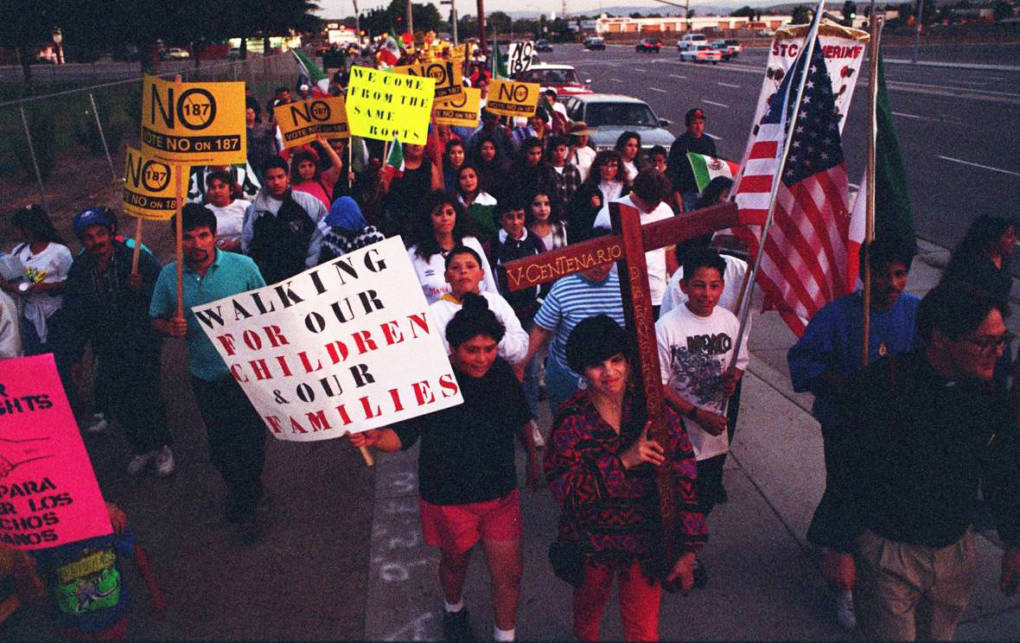
"caption": "About 200 demonstrators protesting Proposition 187 march along Senter Road in San Jose on Oct. 25, 1994. The march began in Morgan Hill and ended at St. Joseph's Cathedral in downtown San Jose.",
"description": "About 200 demonstrators protesting Proposition 187 march along Senter Road in San Jose on Oct. 25, 1994. The march began in Morgan Hill and ended at St. Joseph's Cathedral in downtown San Jose. ",
"title": "94Marchers",
"credit": "Patrick Tehan/Mercury News",
"status": "inherit",
"isLoading": false,
"fetchFailed": false
},
"news_11656308": {
"type": "attachments",
"id": "news_11656308",
"meta": {
"index": "attachments_1716263798",
"site": "news",
"id": "11656308",
"found": true
},
"parent": 11656303,
"imgSizes": {
"small": {
"file": "https://ww2.kqed.org/app/uploads/sites/10/2018/03/IMG_2937-520x390.jpg",
"width": 520,
"mimeType": "image/jpeg",
"height": 390
},
"twentyfourteen-full-width": {
"file": "https://ww2.kqed.org/app/uploads/sites/10/2018/03/IMG_2937-1038x576.jpg",
"width": 1038,
"mimeType": "image/jpeg",
"height": 576
},
"thumbnail": {
"file": "https://ww2.kqed.org/app/uploads/sites/10/2018/03/IMG_2937-160x120.jpg",
"width": 160,
"mimeType": "image/jpeg",
"height": 120
},
"fd-sm": {
"file": "https://ww2.kqed.org/app/uploads/sites/10/2018/03/IMG_2937-960x720.jpg",
"width": 960,
"mimeType": "image/jpeg",
"height": 720
},
"post-thumbnail": {
"file": "https://ww2.kqed.org/app/uploads/sites/10/2018/03/IMG_2937-672x372.jpg",
"width": 672,
"mimeType": "image/jpeg",
"height": 372
},
"xsmall": {
"file": "https://ww2.kqed.org/app/uploads/sites/10/2018/03/IMG_2937-375x281.jpg",
"width": 375,
"mimeType": "image/jpeg",
"height": 281
},
"kqedFullSize": {
"file": "https://ww2.kqed.org/app/uploads/sites/10/2018/03/IMG_2937.jpg",
"width": 4032,
"height": 3024
},
"large": {
"file": "https://ww2.kqed.org/app/uploads/sites/10/2018/03/IMG_2937-1020x765.jpg",
"width": 1020,
"mimeType": "image/jpeg",
"height": 765
},
"xlarge": {
"file": "https://ww2.kqed.org/app/uploads/sites/10/2018/03/IMG_2937-1180x885.jpg",
"width": 1180,
"mimeType": "image/jpeg",
"height": 885
},
"guest-author-50": {
"file": "https://ww2.kqed.org/app/uploads/sites/10/2018/03/IMG_2937-50x50.jpg",
"width": 50,
"mimeType": "image/jpeg",
"height": 50
},
"guest-author-96": {
"file": "https://ww2.kqed.org/app/uploads/sites/10/2018/03/IMG_2937-96x96.jpg",
"width": 96,
"mimeType": "image/jpeg",
"height": 96
},
"medium": {
"file": "https://ww2.kqed.org/app/uploads/sites/10/2018/03/IMG_2937-800x600.jpg",
"width": 800,
"mimeType": "image/jpeg",
"height": 600
},
"guest-author-64": {
"file": "https://ww2.kqed.org/app/uploads/sites/10/2018/03/IMG_2937-64x64.jpg",
"width": 64,
"mimeType": "image/jpeg",
"height": 64
},
"guest-author-32": {
"file": "https://ww2.kqed.org/app/uploads/sites/10/2018/03/IMG_2937-32x32.jpg",
"width": 32,
"mimeType": "image/jpeg",
"height": 32
},
"fd-lrg": {
"file": "https://ww2.kqed.org/app/uploads/sites/10/2018/03/IMG_2937-1920x1440.jpg",
"width": 1920,
"mimeType": "image/jpeg",
"height": 1440
},
"fd-med": {
"file": "https://ww2.kqed.org/app/uploads/sites/10/2018/03/IMG_2937-1180x885.jpg",
"width": 1180,
"mimeType": "image/jpeg",
"height": 885
},
"full-width": {
"file": "https://ww2.kqed.org/app/uploads/sites/10/2018/03/IMG_2937-1920x1440.jpg",
"width": 1920,
"mimeType": "image/jpeg",
"height": 1440
},
"detail": {
"file": "https://ww2.kqed.org/app/uploads/sites/10/2018/03/IMG_2937-150x150.jpg",
"width": 150,
"mimeType": "image/jpeg",
"height": 150
},
"guest-author-128": {
"file": "https://ww2.kqed.org/app/uploads/sites/10/2018/03/IMG_2937-128x128.jpg",
"width": 128,
"mimeType": "image/jpeg",
"height": 128
},
"xxsmall": {
"file": "https://ww2.kqed.org/app/uploads/sites/10/2018/03/IMG_2937-240x180.jpg",
"width": 240,
"mimeType": "image/jpeg",
"height": 180
}
},
"publishDate": 1521248620,
"modified": 1521248620,
"caption": null,
"description": null,
"title": "IMG_2937",
"credit": null,
"status": "inherit",
"isLoading": false,
"fetchFailed": false
}
},
"audioPlayerReducer": {
"postId": "stream_live",
"isPaused": true,
"isPlaying": false,
"pfsActive": false,
"pledgeModalIsOpen": true,
"playerDrawerIsOpen": false,
"liveAudioPlayStartedAt": 0,
"liveAudioPlayContext": ""
},
"authorsReducer": {
"byline_news_11661656": {
"type": "authors",
"id": "byline_news_11661656",
"meta": {
"override": true
},
"slug": "byline_news_11661656",
"name": "Alan Fram \u003cbr> Associated Press",
"isLoading": false
},
"byline_news_11660902": {
"type": "authors",
"id": "byline_news_11660902",
"meta": {
"override": true
},
"slug": "byline_news_11660902",
"name": "Ryan Lucas",
"isLoading": false
},
"byline_news_11660547": {
"type": "authors",
"id": "byline_news_11660547",
"meta": {
"override": true
},
"slug": "byline_news_11660547",
"name": "David Folkenflik",
"isLoading": false
},
"byline_news_11658031": {
"type": "authors",
"id": "byline_news_11658031",
"meta": {
"override": true
},
"slug": "byline_news_11658031",
"name": "Allen Young",
"isLoading": false
},
"byline_news_11657090": {
"type": "authors",
"id": "byline_news_11657090",
"meta": {
"override": true
},
"slug": "byline_news_11657090",
"name": "\u003cstrong>Alina Selyukh\u003c/strong>",
"isLoading": false
},
"byline_news_11657055": {
"type": "authors",
"id": "byline_news_11657055",
"meta": {
"override": true
},
"slug": "byline_news_11657055",
"name": "\u003cstrong>Janie Har\u003cbr /> Associated Press\u003c/strong>",
"isLoading": false
},
"byline_news_11656354": {
"type": "authors",
"id": "byline_news_11656354",
"meta": {
"override": true
},
"slug": "byline_news_11656354",
"name": "\u003cstrong>Carrie Johnson\u003c/strong>",
"isLoading": false
},
"danbrekke": {
"type": "authors",
"id": "222",
"meta": {
"index": "authors_1716337520",
"id": "222",
"found": true
},
"name": "Dan Brekke",
"firstName": "Dan",
"lastName": "Brekke",
"slug": "danbrekke",
"email": "dbrekke@kqed.org",
"display_author_email": true,
"staff_mastheads": [
"news",
"science"
],
"title": "KQED Editor and Reporter",
"bio": "Dan Brekke is a reporter and editor for KQED News, responsible for coverage of topics ranging from California water issues to the Bay Area's transportation challenges. In a newsroom career that began in Chicago in 1972, Dan has worked for \u003cem>The San Francisco Examiner,\u003c/em> Wired and TechTV and has been published in The New York Times, The New York Times Magazine, Business 2.0, Salon and elsewhere.\r\n\r\nSince joining KQED in 2007, Dan has reported, edited and produced both radio and online features and breaking news pieces. He has shared as both editor and reporter in four Society of Professional Journalists Norcal Excellence in Journalism awards and one Edward R. Murrow regional award. He was chosen for a spring 2017 residency at the Mesa Refuge to advance his research on California salmon.\r\n\r\nEmail Dan at: \u003ca href=\"mailto:dbrekke@kqed.org\">dbrekke@kqed.org\u003c/a>\r\n\r\n\u003cstrong>Twitter:\u003c/strong> \u003ca href=\"https://twitter.com/danbrekke\" rel=\"noopener noreferrer\">twitter.com/danbrekke\u003c/a>\r\n\u003cstrong>Facebook:\u003c/strong> \u003ca href=\"https://www.facebook.com/danbrekke\" rel=\"noopener noreferrer\">www.facebook.com/danbrekke\u003c/a>\r\n\u003cstrong>LinkedIn:\u003c/strong> \u003ca href=\"https://www.linkedin.com/in/danbrekke\" rel=\"noopener noreferrer\">www.linkedin.com/in/danbrekke\u003c/a>",
"avatar": "https://secure.gravatar.com/avatar/c8126230345efca3f7aa89b1a402be45?s=600&d=mm&r=g",
"twitter": "danbrekke",
"facebook": null,
"instagram": "https://www.instagram.com/dan.brekke/",
"linkedin": "https://www.linkedin.com/in/danbrekke/",
"sites": [
{
"site": "news",
"roles": [
"administrator",
"create_posts"
]
},
{
"site": "stateofhealth",
"roles": [
"editor"
]
},
{
"site": "science",
"roles": [
"editor"
]
},
{
"site": "quest",
"roles": [
"contributor"
]
},
{
"site": "food",
"roles": [
"contributor"
]
},
{
"site": "forum",
"roles": [
"contributor"
]
},
{
"site": "liveblog",
"roles": [
"editor"
]
}
],
"headData": {
"title": "Dan Brekke | KQED",
"description": "KQED Editor and Reporter",
"ogImgSrc": "https://secure.gravatar.com/avatar/c8126230345efca3f7aa89b1a402be45?s=600&d=mm&r=g",
"twImgSrc": "https://secure.gravatar.com/avatar/c8126230345efca3f7aa89b1a402be45?s=600&d=mm&r=g"
},
"isLoading": false,
"link": "/author/danbrekke"
},
"kqed": {
"type": "authors",
"id": "236",
"meta": {
"index": "authors_1716337520",
"id": "236",
"found": true
},
"name": "KQED News Staff",
"firstName": "KQED News Staff",
"lastName": null,
"slug": "kqed",
"email": "faq@kqed.org",
"display_author_email": false,
"staff_mastheads": [],
"title": null,
"bio": null,
"avatar": "https://secure.gravatar.com/avatar/ef0e801a68c4c54afa9180db14084167?s=600&d=blank&r=g",
"twitter": null,
"facebook": null,
"instagram": null,
"linkedin": null,
"sites": [
{
"site": "arts",
"roles": [
"contributor"
]
},
{
"site": "news",
"roles": [
"editor"
]
},
{
"site": "futureofyou",
"roles": [
"author"
]
}
],
"headData": {
"title": "KQED News Staff | KQED",
"description": null,
"ogImgSrc": "https://secure.gravatar.com/avatar/ef0e801a68c4c54afa9180db14084167?s=600&d=blank&r=g",
"twImgSrc": "https://secure.gravatar.com/avatar/ef0e801a68c4c54afa9180db14084167?s=600&d=blank&r=g"
},
"isLoading": false,
"link": "/author/kqed"
},
"pollystryker": {
"type": "authors",
"id": "250",
"meta": {
"index": "authors_1716337520",
"id": "250",
"found": true
},
"name": "Polly Stryker",
"firstName": "Polly",
"lastName": "Stryker",
"slug": "pollystryker",
"email": "pstryker@kqed.org",
"display_author_email": false,
"staff_mastheads": [
"science"
],
"title": "Editor",
"bio": "Polly Stryker is a former editor for KQED's Science desk. She and reporter/host Rachael Myrow produced the KQED podcast, \u003ca href=\"http://www.npr.org/podcasts/448072249/love-in-the-digital-age\">Love in the Digital Age\u003c/a>.\r\n\r\nPolly has worked for a variety of news and public affairs programs, including most recently as editor of \u003cem>The California Report\u003c/em>. She also edited \u003ca href=\"https://ww2.kqed.org/news/programs/the-california-report\" target=\"_blank\" rel=\"noopener noreferrer\">\u003cem>The California Report'\u003c/em>s\u003c/a> \u003ca href=\"http://www.californiareport.org/healthdialogues/\" target=\"_blank\" rel=\"noopener noreferrer\">“Health Dialogues.”\u003c/a> Before that, she was a producer on \u003cem>\u003ca href=\"http://www.scpr.org/programs/airtalk/\" target=\"_blank\" rel=\"noopener noreferrer\">AirTalk\u003c/a>\u003c/em> with Larry Mantle on \u003ca href=\"http://www.scpr.org/\" target=\"_blank\" rel=\"noopener noreferrer\">KPCC\u003c/a> radio, and \u003cem>\u003ca href=\"http://www.kpbs.org/news/midday-edition/\">These Days\u003c/a>\u003c/em> on KPBS. Polly’s work has won awards from the Radio and Television News Directors Association of Northern California, the Society of Professional Journalists (Southern California and Northern California chapters), the Radio and Television News Association. She's also won a Taste Award.\r\n\r\nShe considers herself to be a citizen of the world, having grown up in Cairo before coming to the United States. Polly speaks Arabic and can say, \"I’d like a martini, please\" in Swahili.",
"avatar": "https://secure.gravatar.com/avatar/5012854a99868cb15a517a876d88f736?s=600&d=blank&r=g",
"twitter": null,
"facebook": null,
"instagram": null,
"linkedin": null,
"sites": [
{
"site": "",
"roles": [
"editor"
]
},
{
"site": "arts",
"roles": [
"administrator"
]
},
{
"site": "news",
"roles": [
"subscriber"
]
},
{
"site": "stateofhealth",
"roles": [
"author"
]
},
{
"site": "science",
"roles": [
"editor"
]
},
{
"site": "forum",
"roles": [
"editor"
]
}
],
"headData": {
"title": "Polly Stryker | KQED",
"description": "Editor",
"ogImgSrc": "https://secure.gravatar.com/avatar/5012854a99868cb15a517a876d88f736?s=600&d=blank&r=g",
"twImgSrc": "https://secure.gravatar.com/avatar/5012854a99868cb15a517a876d88f736?s=600&d=blank&r=g"
},
"isLoading": false,
"link": "/author/pollystryker"
},
"markfiore": {
"type": "authors",
"id": "3236",
"meta": {
"index": "authors_1716337520",
"id": "3236",
"found": true
},
"name": "Mark Fiore",
"firstName": "Mark",
"lastName": "Fiore",
"slug": "markfiore",
"email": "mark@markfiore.com",
"display_author_email": false,
"staff_mastheads": [
"news"
],
"title": "KQED News Cartoonist",
"bio": "\u003ca href=\"http://www.MarkFiore.com\">MarkFiore.com\u003c/a> | \u003ca href=\"https://twitter.com/markfiore\">Follow on Twitter\u003c/a> | \u003ca href=\"https://www.facebook.com/pages/Mark-Fiore-Animated-Political-Cartoons/94451707396?ref=bookmarks\">Facebook\u003c/a> | \u003ca href=\"mailto:mark@markfiore.com\">email\u003c/a>\r\n\r\nPulitzer Prize-winner, Mark Fiore, who the Wall Street Journal has called “the undisputed guru of the form,” creates animated political cartoons in San Francisco, where his work has been featured regularly on the San Francisco Chronicle’s web site, SFGate.com. His work has appeared on Newsweek.com, Slate.com, CBSNews.com, MotherJones.com, DailyKos.com and NPR’s web site. Fiore’s political animation has appeared on CNN, Frontline, Bill Moyers Journal, Salon.com and cable and broadcast outlets across the globe.\r\n\r\nBeginning his professional life by drawing traditional political cartoons for newspapers, Fiore’s work appeared in publications ranging from the Washington Post to the Los Angeles Times. In the late 1990s, he began to experiment with animating political cartoons and, after a short stint at the San Jose Mercury News as their staff cartoonist, Fiore devoted all his energies to animation.\r\nGrowing up in California, Fiore also spent a good portion of his life in the backwoods of Idaho. It was this combination that shaped him politically. Mark majored in political science at Colorado College, where, in a perfect send-off for a cartoonist, he received his diploma in 1991 as commencement speaker Dick Cheney smiled approvingly.\r\nMark Fiore was awarded the Pulitzer Prize for political cartooning in 2010, a Robert F. Kennedy Journalism Award in 2004 and has twice received an Online Journalism Award for commentary from the Online News Association (2002, 2008). Fiore has received two awards for his work in new media from the National Cartoonists Society (2001, 2002), and in 2006 received The James Madison Freedom of Information Award from The Society of Professional Journalists.",
"avatar": "https://secure.gravatar.com/avatar/fc4e2a612b15b67bad0c6f0e1db4ca9b?s=600&d=blank&r=g",
"twitter": "MarkFiore",
"facebook": null,
"instagram": "https://www.instagram.com/markfiore/?hl=en",
"linkedin": null,
"sites": [
{
"site": "arts",
"roles": [
"contributor"
]
},
{
"site": "news",
"roles": [
"editor"
]
},
{
"site": "futureofyou",
"roles": [
"editor"
]
},
{
"site": "science",
"roles": [
"editor"
]
}
],
"headData": {
"title": "Mark Fiore | KQED",
"description": "KQED News Cartoonist",
"ogImgSrc": "https://secure.gravatar.com/avatar/fc4e2a612b15b67bad0c6f0e1db4ca9b?s=600&d=blank&r=g",
"twImgSrc": "https://secure.gravatar.com/avatar/fc4e2a612b15b67bad0c6f0e1db4ca9b?s=600&d=blank&r=g"
},
"isLoading": false,
"link": "/author/markfiore"
},
"fjhabvala": {
"type": "authors",
"id": "8659",
"meta": {
"index": "authors_1716337520",
"id": "8659",
"found": true
},
"name": "Farida Jhabvala Romero",
"firstName": "Farida",
"lastName": "Jhabvala Romero",
"slug": "fjhabvala",
"email": "fjhabvala@kqed.org",
"display_author_email": true,
"staff_mastheads": [
"news"
],
"title": "KQED Contributor",
"bio": "Farida Jhabvala Romero is a Labor Correspondent for KQED. She previously covered immigration. Farida was \u003ca href=\"https://www.ccnma.org/2022-most-influential-latina-journalists\">named\u003c/a> one of the 10 Most Influential Latina Journalists in California in 2022 by the California Chicano News Media Association. Her work has won awards from the Society of Professional Journalists (Northern California), as well as a national and regional Edward M. Murrow Award for the collaborative reporting projects “Dangerous Air” and “Graying California.” Before joining KQED, Farida worked as a producer at Radio Bilingüe, a national public radio network. Farida earned her master’s degree in journalism from Stanford University.",
"avatar": "https://secure.gravatar.com/avatar/f9f022d4e2609741874222a1e9d41f48fea74011aa7c615eef91d9a50c944ebe?s=600&d=blank&r=g",
"twitter": "FaridaJhabvala",
"bluesky": null,
"facebook": null,
"instagram": null,
"linkedin": "https://www.linkedin.com/in/faridajhabvala/",
"sites": [
{
"site": "news",
"roles": [
"editor"
]
},
{
"site": "stateofhealth",
"roles": [
"author"
]
},
{
"site": "liveblog",
"roles": [
"author"
]
}
],
"headData": {
"title": "Farida Jhabvala Romero | KQED",
"description": "KQED Contributor",
"ogImgSrc": "https://secure.gravatar.com/avatar/f9f022d4e2609741874222a1e9d41f48fea74011aa7c615eef91d9a50c944ebe?s=600&d=blank&r=g",
"twImgSrc": "https://secure.gravatar.com/avatar/f9f022d4e2609741874222a1e9d41f48fea74011aa7c615eef91d9a50c944ebe?s=600&d=blank&r=g"
},
"isLoading": false,
"link": "/author/fjhabvala"
}
},
"pagesReducer": {
"news_tag_politics": {
"type": "terms",
"id": "news_17968",
"meta": {
"index": "terms_1716263798",
"site": "news",
"id": "17968",
"score": 8.003446
},
"name": "Politics",
"slug": "politics",
"taxonomy": "tag",
"description": null,
"featImg": null,
"headData": {
"title": "Politics | KQED News",
"description": null,
"ogTitle": null,
"ogDescription": null,
"ogImgId": null,
"twTitle": null,
"twDescription": null,
"twImgId": null
},
"ttid": 18002,
"isLoading": false,
"title": "Politics",
"pageMeta": {
"site": "news",
"WpPageTemplate": "page-topic-editorial",
"currentPage": 249
},
"blocks": [
{
"blockName": "kqed/post-list",
"attrs": {
"layout": "cardArticle2",
"query": "posts/news?tag=politics",
"seeMore": false,
"paginated": true,
"page": 249
}
},
{
"blockName": "kqed/ad"
}
]
}
},
"pfsSessionReducer": {},
"postsReducer": {
"stream_live": {
"type": "live",
"id": "stream_live",
"audioUrl": "https://streams.kqed.org/kqedradio",
"title": "Live Stream",
"excerpt": "Live Stream information currently unavailable.",
"link": "/radio",
"featImg": "",
"label": {
"name": "KQED Live",
"link": "/"
}
},
"stream_kqedNewscast": {
"type": "posts",
"id": "stream_kqedNewscast",
"audioUrl": "https://www.kqed.org/.stream/anon/radio/RDnews/newscast.mp3?_=1",
"title": "KQED Newscast",
"featImg": "",
"label": {
"name": "88.5 FM",
"link": "/"
}
},
"news_11661656": {
"type": "posts",
"id": "news_11661656",
"meta": {
"index": "posts_1716263798",
"site": "news",
"id": "11661656",
"score": null,
"sort": [
1523556071000
]
},
"guestAuthors": [],
"slug": "californias-mccarthy-scalise-are-likely-contenders-for-house-speaker",
"title": "Who'll Follow Paul Ryan as Speaker? Contest Between McCarthy, Scalise Hums Below Radar",
"publishDate": 1523556071,
"format": "audio",
"headTitle": "Who’ll Follow Paul Ryan as Speaker? Contest Between McCarthy, Scalise Hums Below Radar | KQED",
"labelTerm": {
"term": 72,
"site": "news"
},
"content": "\u003cp>Some say it’s a fight between West and South. Or who might win an endorsement from President Trump. Or a test of who can woo conservatives.\u003c/p>\n\u003cp>But one thing was clear Thursday: Any maneuvering in the brewing showdown between California Rep. Kevin McCarthy and Louisiana Rep. Steve Scalise for House speaker was occurring below the radar, and the leading players were choosing their words carefully.\u003c/p>\n\u003cp>“I’ve heard from none of the candidates, and all of the mentioned candidates are not just friends, they’re close friends,” said Rep. Bradley Byrne, R-Ala.\u003c/p>\n\u003cp>A day earlier, House Speaker Paul Ryan told colleagues he wouldn’t seek re-election in November, implicitly starting the race to replace him. Disconcertingly for the GOP, Trump’s unpopularity and early Democratic momentum leave it unclear whether Ryan’s replacement will be speaker or minority leader.\u003c/p>\n\u003cp>For now, the chief contenders are McCarthy and Scalise, two affable lawmakers who knew each other as young party activists before arriving in Congress.\u003c/p>\n\u003cp>[ad fullwidth]\u003c/p>\n\u003cp>McCarthy, 53, is his party’s No. 2 House leader and was one of the earliest and steadiest backers of Trump’s presidential campaign.\u003c/p>\n\u003cp>If Trump weighs in to the contest, his clout could rally lawmakers behind his favored candidate, especially conservatives. But it could alienate moderates and others who want a leader who has their back, not necessarily the president’s. It’s uncertain whether Trump will intervene or for whom, though many suspect it would be McCarthy. White House officials declined comment.\u003c/p>\n\u003cp>McCarthy was elected in 2006 and rocketed into a leadership job in 2009, thanks to his campaigning for fellow Republicans. He replaced Eric Cantor as majority leader in 2014 after the Virginian unexpectedly lost a primary for his House seat and quit.\u003c/p>\n\u003cp>In 2015, McCarthy sought to succeed Speaker John Boehner, R-Ohio, who’d alienated conservatives who considered him insufficiently doctrinaire. McCarthy abruptly left that contest days later after failing to line up enough votes, and Ryan accepted the post.\u003c/p>\n\u003cp>Scalise, 52, the House GOP vote counter and No. 3 leader, was first elected a decade ago and had little national name recognition until tragedy thrust him into headlines. He was shot at a congressional baseball practice last year and is still recovering from his injuries, an ordeal that’s earned the conservative former state legislator broad respect.\u003c/p>\n\u003cp>“The strength he’s shown with his injury, I think, has heightened where he is” among colleagues, said Rep. Phil Roe, R-Tenn.\u003c/p>\n\u003cp>Scalise aides say he and Trump speak frequently, but they provided no detail. Trump visited Scalise in the hospital after his June 2017 shooting. Rep. John Shimkus, R-Ill., Scalise’s housemate in Washington, said Trump often calls Scalise out by name at events.\u003c/p>\n\u003cp>Neither Scalise nor McCarthy have acknowledged a race for Ryan’s job or definitively deny it.\u003c/p>\n\u003cp>“I’ve never run against Kevin and wouldn’t run against Kevin. He and I are good friends,” Scalise said Thursday on the Fox News Channel.\u003c/p>\n\u003cp>That comment put the onus on McCarthy to line up 218 votes, the number needed to become speaker next January should Republicans keep the majority. It was unclear what if any efforts were quietly underway to deny that support to McCarthy, but Scalise’s remarks essentially left himself as the alternative.\u003c/p>\n\u003cp>Lawmakers and GOP donors want a leader who can raise money, and there McCarthy has an advantage. He raised $8.75 million in the first quarter of this year and has done fundraisers for 40 GOP candidates, said a person familiar with his political operation. Scalise has raised $3 million, a record for House whips, and hosted almost 50 events, his aides said.\u003c/p>\n\u003cp>Neither man is known for rhetorical flourishes, with McCarthy, in particular, prone to sentences that defy the rules of grammar. And both have resume problems that fellow Republicans insisted they’d overcome.\u003c/p>\n\u003cp>In 2014, Scalise was discovered to have addressed a white supremacist group in 2002 founded by former Ku Klux Klan leader David Duke. Scalise apologized and said he’d been unaware of the group’s racial views.\u003c/p>\n\u003cp>McCarthy suggested in 2015 that a House committee probing the deadly 2012 raid on the U.S. embassy in Benghazi, Libya, had damaged Democratic presidential candidate Hillary Clinton’s poll numbers, undermining GOP arguments that the investigation wasn’t politically motivated.\u003c/p>\n\u003cp>That raised questions about his ability as a communicator, a key for party leaders.\u003c/p>\n\u003cp>Some Republicans prefer Scalise’s deep red state background to McCarthy’s bright blue California, since the GOP’s chief strongholds are in rural and red state districts.\u003c/p>\n\u003cp>Scalise is viewed as more conservative than McCarthy. That’s important in a House GOP conference that could grow more conservative after November, when many Republicans who are retiring or face likely defeat are moderates.\u003c/p>\n\u003cp>McCarthy has worked to improve his relationship with conservatives, including trying to craft legislation cutting spending from the government budget enacted recently.\u003c/p>\n\u003cp>Either man could cut a deal with the House Freedom Caucus. Those roughly 30 conservative members theoretically could deliver their votes to a contender in exchange for a promise to back a caucus member for a leadership post.\u003c/p>\n\u003cp>\u003cem>Associated Press writers Lisa Mascaro and Andrew Taylor contributed to this report.\u003c/em>\u003c/p>\n\u003cp>\u003c/p>\n\u003cp>This story has been updated.\u003c/p>\n\n",
"blocks": [],
"excerpt": "Many expect California Rep. Kevin McCarthy to be the next House speaker.",
"status": "publish",
"parent": 0,
"modified": 1721115541,
"stats": {
"hasAudio": false,
"hasVideo": false,
"hasChartOrMap": false,
"iframeSrcs": [],
"hasGoogleForm": false,
"hasGallery": false,
"hasHearkenModule": false,
"hasPolis": false,
"paragraphCount": 28,
"wordCount": 911
},
"headData": {
"title": "Who'll Follow Paul Ryan as Speaker? Contest Between McCarthy, Scalise Hums Below Radar | KQED",
"description": "Many expect California Rep. Kevin McCarthy to be the next House speaker.",
"ogTitle": "",
"ogDescription": "",
"ogImgId": "",
"twTitle": "",
"twDescription": "",
"twImgId": "",
"schema": {
"@context": "https://schema.org",
"@type": "NewsArticle",
"headline": "Who'll Follow Paul Ryan as Speaker? Contest Between McCarthy, Scalise Hums Below Radar",
"datePublished": "2018-04-12T11:01:11-07:00",
"dateModified": "2024-07-16T00:39:01-07:00",
"image": "https://cdn.kqed.org/wp-content/uploads/2020/02/KQED-OG-Image@1x.png",
"isAccessibleForFree": "True",
"publisher": {
"@type": "NewsMediaOrganization",
"@id": "https://www.kqed.org/#organization",
"name": "KQED",
"logo": "https://cdn.kqed.org/wp-content/uploads/2020/02/KQED-OG-Image@1x.png",
"url": "https://www.kqed.org",
"sameAs": [
"https://www.facebook.com/KQED",
"https://twitter.com/KQED",
"https://www.instagram.com/kqed/",
"https://www.tiktok.com/@kqedofficial",
"https://www.linkedin.com/company/kqed",
"https://www.youtube.com/channel/UCeC0IOo7i1P_61zVUWbJ4nw"
]
}
}
},
"audioUrl": "https://www.kqed.org/.stream/anon/radio/tcr/2018/04/McCarthySpeakerOrr180412.mp3",
"sticky": false,
"nprByline": "Alan Fram \u003cbr> Associated Press",
"path": "/news/11661656/californias-mccarthy-scalise-are-likely-contenders-for-house-speaker",
"audioDuration": 111000,
"audioTrackLength": null,
"parsedContent": [
{
"type": "contentString",
"content": "\u003cdiv class=\"post-body\">\u003cp>\u003cp>Some say it’s a fight between West and South. Or who might win an endorsement from President Trump. Or a test of who can woo conservatives.\u003c/p>\n\u003cp>But one thing was clear Thursday: Any maneuvering in the brewing showdown between California Rep. Kevin McCarthy and Louisiana Rep. Steve Scalise for House speaker was occurring below the radar, and the leading players were choosing their words carefully.\u003c/p>\n\u003cp>“I’ve heard from none of the candidates, and all of the mentioned candidates are not just friends, they’re close friends,” said Rep. Bradley Byrne, R-Ala.\u003c/p>\n\u003cp>A day earlier, House Speaker Paul Ryan told colleagues he wouldn’t seek re-election in November, implicitly starting the race to replace him. Disconcertingly for the GOP, Trump’s unpopularity and early Democratic momentum leave it unclear whether Ryan’s replacement will be speaker or minority leader.\u003c/p>\n\u003cp>For now, the chief contenders are McCarthy and Scalise, two affable lawmakers who knew each other as young party activists before arriving in Congress.\u003c/p>\n\u003cp>\u003c/p>\u003c/div>",
"attributes": {
"named": {},
"numeric": []
}
},
{
"type": "component",
"content": "",
"name": "ad",
"attributes": {
"named": {
"label": "fullwidth"
},
"numeric": [
"fullwidth"
]
}
},
{
"type": "contentString",
"content": "\u003cdiv class=\"post-body\">\u003cp>\u003c/p>\n\u003cp>McCarthy, 53, is his party’s No. 2 House leader and was one of the earliest and steadiest backers of Trump’s presidential campaign.\u003c/p>\n\u003cp>If Trump weighs in to the contest, his clout could rally lawmakers behind his favored candidate, especially conservatives. But it could alienate moderates and others who want a leader who has their back, not necessarily the president’s. It’s uncertain whether Trump will intervene or for whom, though many suspect it would be McCarthy. White House officials declined comment.\u003c/p>\n\u003cp>McCarthy was elected in 2006 and rocketed into a leadership job in 2009, thanks to his campaigning for fellow Republicans. He replaced Eric Cantor as majority leader in 2014 after the Virginian unexpectedly lost a primary for his House seat and quit.\u003c/p>\n\u003cp>In 2015, McCarthy sought to succeed Speaker John Boehner, R-Ohio, who’d alienated conservatives who considered him insufficiently doctrinaire. McCarthy abruptly left that contest days later after failing to line up enough votes, and Ryan accepted the post.\u003c/p>\n\u003cp>Scalise, 52, the House GOP vote counter and No. 3 leader, was first elected a decade ago and had little national name recognition until tragedy thrust him into headlines. He was shot at a congressional baseball practice last year and is still recovering from his injuries, an ordeal that’s earned the conservative former state legislator broad respect.\u003c/p>\n\u003cp>“The strength he’s shown with his injury, I think, has heightened where he is” among colleagues, said Rep. Phil Roe, R-Tenn.\u003c/p>\n\u003cp>Scalise aides say he and Trump speak frequently, but they provided no detail. Trump visited Scalise in the hospital after his June 2017 shooting. Rep. John Shimkus, R-Ill., Scalise’s housemate in Washington, said Trump often calls Scalise out by name at events.\u003c/p>\n\u003cp>Neither Scalise nor McCarthy have acknowledged a race for Ryan’s job or definitively deny it.\u003c/p>\n\u003cp>“I’ve never run against Kevin and wouldn’t run against Kevin. He and I are good friends,” Scalise said Thursday on the Fox News Channel.\u003c/p>\n\u003cp>That comment put the onus on McCarthy to line up 218 votes, the number needed to become speaker next January should Republicans keep the majority. It was unclear what if any efforts were quietly underway to deny that support to McCarthy, but Scalise’s remarks essentially left himself as the alternative.\u003c/p>\n\u003cp>Lawmakers and GOP donors want a leader who can raise money, and there McCarthy has an advantage. He raised $8.75 million in the first quarter of this year and has done fundraisers for 40 GOP candidates, said a person familiar with his political operation. Scalise has raised $3 million, a record for House whips, and hosted almost 50 events, his aides said.\u003c/p>\n\u003cp>Neither man is known for rhetorical flourishes, with McCarthy, in particular, prone to sentences that defy the rules of grammar. And both have resume problems that fellow Republicans insisted they’d overcome.\u003c/p>\n\u003cp>In 2014, Scalise was discovered to have addressed a white supremacist group in 2002 founded by former Ku Klux Klan leader David Duke. Scalise apologized and said he’d been unaware of the group’s racial views.\u003c/p>\n\u003cp>McCarthy suggested in 2015 that a House committee probing the deadly 2012 raid on the U.S. embassy in Benghazi, Libya, had damaged Democratic presidential candidate Hillary Clinton’s poll numbers, undermining GOP arguments that the investigation wasn’t politically motivated.\u003c/p>\n\u003cp>That raised questions about his ability as a communicator, a key for party leaders.\u003c/p>\n\u003cp>Some Republicans prefer Scalise’s deep red state background to McCarthy’s bright blue California, since the GOP’s chief strongholds are in rural and red state districts.\u003c/p>\n\u003cp>Scalise is viewed as more conservative than McCarthy. That’s important in a House GOP conference that could grow more conservative after November, when many Republicans who are retiring or face likely defeat are moderates.\u003c/p>\n\u003cp>McCarthy has worked to improve his relationship with conservatives, including trying to craft legislation cutting spending from the government budget enacted recently.\u003c/p>\n\u003cp>Either man could cut a deal with the House Freedom Caucus. Those roughly 30 conservative members theoretically could deliver their votes to a contender in exchange for a promise to back a caucus member for a leadership post.\u003c/p>\n\u003cp>\u003cem>Associated Press writers Lisa Mascaro and Andrew Taylor contributed to this report.\u003c/em>\u003c/p>\n\u003cp>\u003c/p>\n\u003cp>This story has been updated.\u003c/p>\n\n\u003c/div>\u003c/p>",
"attributes": {
"named": {},
"numeric": []
}
}
],
"link": "/news/11661656/californias-mccarthy-scalise-are-likely-contenders-for-house-speaker",
"authors": [
"byline_news_11661656"
],
"programs": [
"news_72"
],
"categories": [
"news_8",
"news_13"
],
"tags": [
"news_17968"
],
"featImg": "news_11661696",
"label": "news_72"
},
"news_11661229": {
"type": "posts",
"id": "news_11661229",
"meta": {
"index": "posts_1716263798",
"site": "news",
"id": "11661229",
"score": null,
"sort": [
1523411252000
]
},
"guestAuthors": [],
"slug": "with-legislative-clock-ticking-wiener-amends-controversial-development-bill",
"title": "With Legislative Clock Ticking, Wiener Amends Controversial Development Bill",
"publishDate": 1523411252,
"format": "standard",
"headTitle": "With Legislative Clock Ticking, Wiener Amends Controversial Development Bill | KQED",
"labelTerm": {
"term": 72,
"site": "news"
},
"content": "\u003cp>San Francisco state Sen. Scott Wiener describes his \u003ca href=\"https://leginfo.legislature.ca.gov/faces/billTextClient.xhtml?bill_id=201720180SB827\" rel=\"noopener\" target=\"_blank\">SB 827\u003c/a> — the lightning-rod legislation that has stirred statewide debate over housing policy with its mandate for intense development near transit — as “a very aggressive bill.” \u003c/p>\n\u003cp>But he has also been consistent in calling the bill, which would override key aspects of local zoning throughout the state and require cities to allow multi-story apartment or condo buildings within a half-mile of train stops and a quarter-mile of busy bus routes, as a work in progress.\u003c/p>\n\u003cp>The latest proof of that: Wiener introduced a second round of extensive amendments as the legislation moves toward a make-or-break committee hearing sometime in the next two weeks. \u003c/p>\n\u003cp>“I’ve said from the beginning … that we welcome constructive feedback, not only from supporters but from critics of the bill,” Wiener said Tuesday. “And over the last few months we’ve gotten some really amazing from people, including my colleagues, advocates, members of the community, local elected officials.”\u003c/p>\n\u003cp>The bill, introduced in early January and sponsored by pro-development “\u003ca href=\"https://cayimby.org/\" rel=\"noopener\" target=\"_blank\">Yes In My Back Yard\u003c/a>” activists backed largely by tech sector money, has aroused intense opposition among city officials and community groups throughout the state. \u003c/p>\n\u003cp>[ad fullwidth]\u003c/p>\n\u003cp>Supporters frame the measure as an urgent response to California’s growing housing affordability crisis, and one that makes wise use of investment in transit. Opponents criticize it for imposing state control over local planning decisions and as an instrument that could make displacement and gentrification in the state’s major cities worse. \u003c/p>\n\u003cp>Wiener’s first round of amendments, introduced last month, sought to calm displacement concerns by adding language to preserve local protections against evictions and building demolitions. The senator also added provisions requiring a right of return and payment of relocation expenses to tenants forced from their homes by development permitted under the bill. \u003c/p>\n\u003cp>With opposition continuing and the legislative clock ticking — under state Senate rules, the bill must clear the Transportation and Housing Committee by the end of the month — Wiener brought out a second round of amendments late Monday. \u003c/p>\n\u003cp>The revised bill scales back one of the its key density requirements, eliminating a provision that would have required local jurisdictions to permit buildings at least 85 feet tall on major streets near train stations, ferry terminals and along the busiest bus routes. The new height requirement would be 55 feet on those streets. \u003c/p>\n\u003cp>The amendments also add a more detailed description of the commuter bus lines that would define many of the areas that would qualify as “transit-rich” high-density development corridors.\u003c/p>\n\u003cp>The bill would also developers who build “transit-rich” projects permitted under the bill to pay for monthly transit passes to all residents in those new buildings. \u003c/p>\n\u003cp>Last year, Gov. Jerry Brown signed Wiener’s SB 35, an ambitious bill that seeks to streamline the permit approval process for affordable housing in cities that have lagged behind goals set in state law. \u003c/p>\n\u003cp>Wiener says winning passage of SB 827 will be a tougher fight. \u003c/p>\n\u003cp>\u003c/p>\n\u003cp>“This bill is harder than SB 35, first because we don’t have a whole housing package put together by the (legislative) leadership and the governor this year,” Wiener said. “We’re a little bit more on our own … the bill is not guaranteed to move forward.” \u003c/p>\n\n",
"blocks": [],
"excerpt": "Second round of amendments scales back height requirements for buildings that would be permitted near train stations and busy bus corridors. ",
"status": "publish",
"parent": 0,
"modified": 1721114888,
"stats": {
"hasAudio": false,
"hasVideo": false,
"hasChartOrMap": false,
"iframeSrcs": [],
"hasGoogleForm": false,
"hasGallery": false,
"hasHearkenModule": false,
"hasPolis": false,
"paragraphCount": 16,
"wordCount": 582
},
"headData": {
"title": "With Legislative Clock Ticking, Wiener Amends Controversial Development Bill | KQED",
"description": "Second round of amendments scales back height requirements for buildings that would be permitted near train stations and busy bus corridors. ",
"ogTitle": "",
"ogDescription": "",
"ogImgId": "",
"twTitle": "",
"twDescription": "",
"twImgId": "",
"schema": {
"@context": "https://schema.org",
"@type": "NewsArticle",
"headline": "With Legislative Clock Ticking, Wiener Amends Controversial Development Bill",
"datePublished": "2018-04-10T18:47:32-07:00",
"dateModified": "2024-07-16T00:28:08-07:00",
"image": "https://cdn.kqed.org/wp-content/uploads/2020/02/KQED-OG-Image@1x.png",
"isAccessibleForFree": "True",
"publisher": {
"@type": "NewsMediaOrganization",
"@id": "https://www.kqed.org/#organization",
"name": "KQED",
"logo": "https://cdn.kqed.org/wp-content/uploads/2020/02/KQED-OG-Image@1x.png",
"url": "https://www.kqed.org",
"sameAs": [
"https://www.facebook.com/KQED",
"https://twitter.com/KQED",
"https://www.instagram.com/kqed/",
"https://www.tiktok.com/@kqedofficial",
"https://www.linkedin.com/company/kqed",
"https://www.youtube.com/channel/UCeC0IOo7i1P_61zVUWbJ4nw"
]
}
}
},
"sticky": false,
"path": "/news/11661229/with-legislative-clock-ticking-wiener-amends-controversial-development-bill",
"audioTrackLength": null,
"parsedContent": [
{
"type": "contentString",
"content": "\u003cdiv class=\"post-body\">\u003cp>\u003cp>San Francisco state Sen. Scott Wiener describes his \u003ca href=\"https://leginfo.legislature.ca.gov/faces/billTextClient.xhtml?bill_id=201720180SB827\" rel=\"noopener\" target=\"_blank\">SB 827\u003c/a> — the lightning-rod legislation that has stirred statewide debate over housing policy with its mandate for intense development near transit — as “a very aggressive bill.” \u003c/p>\n\u003cp>But he has also been consistent in calling the bill, which would override key aspects of local zoning throughout the state and require cities to allow multi-story apartment or condo buildings within a half-mile of train stops and a quarter-mile of busy bus routes, as a work in progress.\u003c/p>\n\u003cp>The latest proof of that: Wiener introduced a second round of extensive amendments as the legislation moves toward a make-or-break committee hearing sometime in the next two weeks. \u003c/p>\n\u003cp>“I’ve said from the beginning … that we welcome constructive feedback, not only from supporters but from critics of the bill,” Wiener said Tuesday. “And over the last few months we’ve gotten some really amazing from people, including my colleagues, advocates, members of the community, local elected officials.”\u003c/p>\n\u003cp>The bill, introduced in early January and sponsored by pro-development “\u003ca href=\"https://cayimby.org/\" rel=\"noopener\" target=\"_blank\">Yes In My Back Yard\u003c/a>” activists backed largely by tech sector money, has aroused intense opposition among city officials and community groups throughout the state. \u003c/p>\n\u003cp>\u003c/p>\u003c/div>",
"attributes": {
"named": {},
"numeric": []
}
},
{
"type": "component",
"content": "",
"name": "ad",
"attributes": {
"named": {
"label": "fullwidth"
},
"numeric": [
"fullwidth"
]
}
},
{
"type": "contentString",
"content": "\u003cdiv class=\"post-body\">\u003cp>\u003c/p>\n\u003cp>Supporters frame the measure as an urgent response to California’s growing housing affordability crisis, and one that makes wise use of investment in transit. Opponents criticize it for imposing state control over local planning decisions and as an instrument that could make displacement and gentrification in the state’s major cities worse. \u003c/p>\n\u003cp>Wiener’s first round of amendments, introduced last month, sought to calm displacement concerns by adding language to preserve local protections against evictions and building demolitions. The senator also added provisions requiring a right of return and payment of relocation expenses to tenants forced from their homes by development permitted under the bill. \u003c/p>\n\u003cp>With opposition continuing and the legislative clock ticking — under state Senate rules, the bill must clear the Transportation and Housing Committee by the end of the month — Wiener brought out a second round of amendments late Monday. \u003c/p>\n\u003cp>The revised bill scales back one of the its key density requirements, eliminating a provision that would have required local jurisdictions to permit buildings at least 85 feet tall on major streets near train stations, ferry terminals and along the busiest bus routes. The new height requirement would be 55 feet on those streets. \u003c/p>\n\u003cp>The amendments also add a more detailed description of the commuter bus lines that would define many of the areas that would qualify as “transit-rich” high-density development corridors.\u003c/p>\n\u003cp>The bill would also developers who build “transit-rich” projects permitted under the bill to pay for monthly transit passes to all residents in those new buildings. \u003c/p>\n\u003cp>Last year, Gov. Jerry Brown signed Wiener’s SB 35, an ambitious bill that seeks to streamline the permit approval process for affordable housing in cities that have lagged behind goals set in state law. \u003c/p>\n\u003cp>Wiener says winning passage of SB 827 will be a tougher fight. \u003c/p>\n\u003cp>\u003c/p>\n\u003cp>“This bill is harder than SB 35, first because we don’t have a whole housing package put together by the (legislative) leadership and the governor this year,” Wiener said. “We’re a little bit more on our own … the bill is not guaranteed to move forward.” \u003c/p>\n\n\u003c/div>\u003c/p>",
"attributes": {
"named": {},
"numeric": []
}
}
],
"link": "/news/11661229/with-legislative-clock-ticking-wiener-amends-controversial-development-bill",
"authors": [
"222"
],
"programs": [
"news_72"
],
"categories": [
"news_6266",
"news_8",
"news_13",
"news_1397"
],
"tags": [
"news_17968",
"news_1217",
"news_17286"
],
"featImg": "news_11655742",
"label": "news_72"
},
"news_11660902": {
"type": "posts",
"id": "news_11660902",
"meta": {
"index": "posts_1716263798",
"site": "news",
"id": "11660902",
"score": null,
"sort": [
1523319300000
]
},
"guestAuthors": [],
"slug": "fbi-raids-office-of-longtime-trump-attorney-michael-cohen",
"title": "Trump Blasts 'Total Witch Hunt' After FBI Raids His Longtime Attorney's Office",
"publishDate": 1523319300,
"format": "standard",
"headTitle": "Trump Blasts ‘Total Witch Hunt’ After FBI Raids His Longtime Attorney’s Office | KQED",
"labelTerm": {},
"content": "\u003cp>\u003cstrong>Updated at 5:15 p.m. PST\u003c/strong>\u003c/p>\n\u003cp>President Trump unloaded on both Justice Department special counsel Robert Mueller and Attorney General Jeff Sessions, hours after federal agents raided the office of Trump’s longtime personal attorney Michael Cohen. \u003c/p>\n\u003cp>“It’s a disgraceful situation. It’s a total witch hunt,” Trump said on Monday. “When I saw this, when I heard about it, that is a whole new level of unfairness.”\u003c/p>\n\u003cp>It was not immediately clear why investigators targeted Cohen, but Cohen’s lawyer said the raids followed a referral from Mueller. The \u003ca href=\"https://www.nytimes.com/2018/04/09/us/politics/fbi-raids-office-of-trumps-longtime-lawyer-michael-cohen.html?smid=tw-share\">New York Times\u003c/a>\u003cem>,\u003c/em> which first reported the raid, said that it does not appear as though the Cohen search was directly linked to the Russia investigation. \u003c/p>\n\u003cp>The \u003cem>Times \u003c/em>\u003ca href=\"https://www.washingtonpost.com/politics/fbi-seizes-records-related-to-stormy-daniels-in-raid-of-trump-attorney-michael-cohens-office/2018/04/09/e3e43cf4-3c30-11e8-974f-aacd97698cef_story.html?utm_term=.f7ee6a2954a7\">and the Washington Post\u003c/a> reported Cohen is under investigation for possible bank fraud.\u003c/p>\n\u003cp>[ad fullwidth]\u003c/p>\n\u003cp>Nonetheless, a visibly agitated Trump, speaking to reporters before he met with military and national security officials about the ongoing situation in Syria, put blame on Mueller and Sessions. \u003c/p>\n\u003cp>Trump called Mueller’s team, which is investigating Russian interference in the 2016 election and any potential ties between the Trump campaign and Russia, “the most biased group of people.”\u003c/p>\n\u003cp>“These people have the biggest conflicts of interest I have ever seen. Democrats — all. Either Democrats or a couple of Republicans who worked for President Obama,” Trump said. Mueller is a Republican, and the U.S. attorney for the Southern District of New York \u003ca href=\"https://www.justice.gov/usao-sdny/pr/attorney-general-jeff-sessions-appoints-geoffrey-s-berman-interim-united-states\">was appointed in January\u003c/a>. \u003c/p>\n\u003cp>\u003c!-- iframe plugin v.4.3 wordpress.org/plugins/iframe/ -->\u003cbr>\n\u003ciframe loading=\"lazy\" src=\"https://www.npr.org/player/embed/600942396/600967266\" width=\"100%\" height=\"290\" frameborder=\"0\" scrolling=\"no\" title=\"NPR embedded audio player\" class=\"iframe-class\">\u003c/iframe>\u003c/p>\n\u003cp>As to whether or not he would fire Mueller, Trump gave his frequently used “\u003ca href=\"https://www.npr.org/2017/10/21/559011234/trump-teases-threatens-and-dodges-with-we-ll-see-what-happens\">we’ll see what happens\u003c/a>” response, reiterating that he believed that the investigation was “a pure and simple witch hunt” that should have been wrapped up long ago.\u003c/p>\n\u003cp>“Why don’t I just fire Mueller? Well, I think it’s a disgrace what’s going on. We’ll see what happens,” Trump said. \u003c/p>\n\u003cp>The president went on to attack Sessions — his own appointee — for \u003ca href=\"https://www.npr.org/2017/03/02/518198749/attorney-general-sessions-to-recuse-himself-from-any-trump-campaign-investigatio\">recusing himself\u003c/a> from the Russia investigation in March 2017. The recusal put Deputy Attorney General Rod Rosenstein in charge of the probe, and he appointed Mueller in May. \u003c/p>\n\u003cp>“The attorney general made a terrible mistake when he did this and when recused himself or he certainly should have let us know if he was going to recuse himself and we would have put a different attorney general in,” Trump said. “So he made what I consider to be a very terrible mistake for the country. But you’ll figure that out.”\u003c/p>\n\u003cp>Cohen’s attorney Stephen Ryan argued the FBI had overstepped its bounds in seizing “privileged communications” between Cohen and his clients.\u003c/p>\n\u003cp>“The decision by the U.S. Attorney’s Office in New York to conduct their investigation using search warrants is completely inappropriate and unnecessary,” Ryan said in a statement.\u003c/p>\n\u003cp>He continued: “It resulted in the unnecessary seizure of protected attorney client communications between a lawyer and his clients. These government tactics are also wrong because Mr. Cohen has cooperated completely with all government entities, including providing thousands of non-privileged documents to the Congress and sitting for depositions under oath.”\u003c/p>\n\u003cp>Michael Moore, a former U.S. Attorney for the Middle District of Georgia, told NPR that for investigators, “the possibility of evidence destruction is likely at the forefront of their concern.”\u003c/p>\n\u003cp>“Remember that they are also gathering evidence and testimony from other sources, so they may already be in possession of corroborating evidence,” Moore said. “That’s what makes this move in the investigation so interesting. For example, there is a reason that search warrants were issued for the particular locations.”\u003c/p>\n\u003cp>The FBI, the U.S. Attorney’s Office for the Southern District of New York and the special counsel’s office declined to comment on the search. \u003c/p>\n\u003cp>Cohen has worked for Trump for many years and is closely tied in with many of his business and personal matters.\u003c/p>\n\u003cp>For example, Cohen has admitted he paid adult film actress Stormy Daniels $130,000 just weeks before the 2016 election. Daniels called that part of a concerted effort to stop her from going public about what she says was a 2006 tryst with Trump.\u003c/p>\n\u003cp>The president denies any liaison with Daniels and denies he knew about the payment. Trump told reporters on Air Force One recently to ask Cohen about it.\u003c/p>\n\u003cp>The president also said he didn’t know where Cohen got the $130,000 to give to Daniels. Cohen has said he used his own “personal funds.”\u003c/p>\n\u003cp>Cohen also was the point of contact between the Trump Organization and government officials in Russia at a time when Trump wanted to build a Trump Tower in Moscow.\u003c/p>\n\u003cp>\u003c/p>\n\u003cp>Cohen \u003ca href=\"https://www.npr.org/2017/08/28/546873657/trump-lawyer-emailed-senior-russian-aide-about-real-estate-proposal\">acknowledged sending an email\u003c/a> to Russian President Vladimir Putin’s personal spokesman to ask about starting discussions about a major new real estate project in the Russian capital — discussions that Cohen said never got underway. \u003c/p>\n\u003cdiv class=\"fullattribution\">Copyright 2018 NPR. To see more, visit http://www.npr.org/.\u003cimg decoding=\"async\" src=\"https://www.google-analytics.com/__utm.gif?utmac=UA-5828686-4&utmdt=Trump+Blasts+%27Total+Witch+Hunt%27+After+FBI+Raids+His+Longtime+Attorney%27s+Office&utme=8(APIKey)9(MDAxOTAwOTE4MDEyMTkxMDAzNjczZDljZA004)\">\u003c/div>\n\n",
"blocks": [],
"excerpt": "The president unloaded on special counsel Robert Mueller's Russia investigation and Attorney General Jeff Sessions hours after the FBI executed search warrants against Michael Cohen. ",
"status": "publish",
"parent": 0,
"modified": 1721115440,
"stats": {
"hasAudio": false,
"hasVideo": false,
"hasChartOrMap": false,
"iframeSrcs": [],
"hasGoogleForm": false,
"hasGallery": false,
"hasHearkenModule": false,
"hasPolis": false,
"paragraphCount": 27,
"wordCount": 869
},
"headData": {
"title": "Trump Blasts 'Total Witch Hunt' After FBI Raids His Longtime Attorney's Office | KQED",
"description": "The president unloaded on special counsel Robert Mueller's Russia investigation and Attorney General Jeff Sessions hours after the FBI executed search warrants against Michael Cohen. ",
"ogTitle": "",
"ogDescription": "",
"ogImgId": "",
"twTitle": "",
"twDescription": "",
"twImgId": "",
"schema": {
"@context": "https://schema.org",
"@type": "NewsArticle",
"headline": "Trump Blasts 'Total Witch Hunt' After FBI Raids His Longtime Attorney's Office",
"datePublished": "2018-04-09T17:15:00-07:00",
"dateModified": "2024-07-16T00:37:20-07:00",
"image": "https://cdn.kqed.org/wp-content/uploads/2020/02/KQED-OG-Image@1x.png",
"isAccessibleForFree": "True",
"publisher": {
"@type": "NewsMediaOrganization",
"@id": "https://www.kqed.org/#organization",
"name": "KQED",
"logo": "https://cdn.kqed.org/wp-content/uploads/2020/02/KQED-OG-Image@1x.png",
"url": "https://www.kqed.org",
"sameAs": [
"https://www.facebook.com/KQED",
"https://twitter.com/KQED",
"https://www.instagram.com/kqed/",
"https://www.tiktok.com/@kqedofficial",
"https://www.linkedin.com/company/kqed",
"https://www.youtube.com/channel/UCeC0IOo7i1P_61zVUWbJ4nw"
]
}
}
},
"source": "NPR",
"sourceUrl": "https://www.npr.org/",
"sticky": false,
"nprImageCredit": "Bryan R. Smith",
"nprByline": "Ryan Lucas",
"nprImageAgency": "AFP/Getty Images",
"nprStoryId": "600942396",
"nprApiLink": "http://api.npr.org/query?id=600942396&apiKey=MDAxOTAwOTE4MDEyMTkxMDAzNjczZDljZA004",
"nprHtmlLink": "https://www.npr.org/2018/04/09/600942396/fbi-raids-office-of-trump-attorney-michael-cohen?ft=nprml&f=600942396",
"nprRetrievedStory": "1",
"nprPubDate": "Mon, 09 Apr 2018 20:14:00 -0400",
"nprStoryDate": "Mon, 09 Apr 2018 17:06:00 -0400",
"nprLastModifiedDate": "Mon, 09 Apr 2018 20:16:10 -0400",
"nprAudio": "https://ondemand.npr.org/anon.npr-mp3/npr/atc/2018/04/20180409_atc_attorney_cohen_raid.mp3?orgId=1&topicId=1014&d=242&p=2&story=600942396&ft=nprml&f=600942396",
"nprAudioM3u": "http://api.npr.org/m3u/1600967266-8640be.m3u?orgId=1&topicId=1014&d=242&p=2&story=600942396&ft=nprml&f=600942396",
"path": "/news/11660902/fbi-raids-office-of-longtime-trump-attorney-michael-cohen",
"audioUrl": "https://ondemand.npr.org/anon.npr-mp3/npr/atc/2018/04/20180409_atc_attorney_cohen_raid.mp3?orgId=1&topicId=1014&d=242&p=2&story=600942396&ft=nprml&f=600942396",
"audioTrackLength": null,
"parsedContent": [
{
"type": "contentString",
"content": "\u003cdiv class=\"post-body\">\u003cp>\u003cp>\u003cstrong>Updated at 5:15 p.m. PST\u003c/strong>\u003c/p>\n\u003cp>President Trump unloaded on both Justice Department special counsel Robert Mueller and Attorney General Jeff Sessions, hours after federal agents raided the office of Trump’s longtime personal attorney Michael Cohen. \u003c/p>\n\u003cp>“It’s a disgraceful situation. It’s a total witch hunt,” Trump said on Monday. “When I saw this, when I heard about it, that is a whole new level of unfairness.”\u003c/p>\n\u003cp>It was not immediately clear why investigators targeted Cohen, but Cohen’s lawyer said the raids followed a referral from Mueller. The \u003ca href=\"https://www.nytimes.com/2018/04/09/us/politics/fbi-raids-office-of-trumps-longtime-lawyer-michael-cohen.html?smid=tw-share\">New York Times\u003c/a>\u003cem>,\u003c/em> which first reported the raid, said that it does not appear as though the Cohen search was directly linked to the Russia investigation. \u003c/p>\n\u003cp>The \u003cem>Times \u003c/em>\u003ca href=\"https://www.washingtonpost.com/politics/fbi-seizes-records-related-to-stormy-daniels-in-raid-of-trump-attorney-michael-cohens-office/2018/04/09/e3e43cf4-3c30-11e8-974f-aacd97698cef_story.html?utm_term=.f7ee6a2954a7\">and the Washington Post\u003c/a> reported Cohen is under investigation for possible bank fraud.\u003c/p>\n\u003cp>\u003c/p>\u003c/div>",
"attributes": {
"named": {},
"numeric": []
}
},
{
"type": "component",
"content": "",
"name": "ad",
"attributes": {
"named": {
"label": "fullwidth"
},
"numeric": [
"fullwidth"
]
}
},
{
"type": "contentString",
"content": "\u003cdiv class=\"post-body\">\u003cp>\u003c/p>\n\u003cp>Nonetheless, a visibly agitated Trump, speaking to reporters before he met with military and national security officials about the ongoing situation in Syria, put blame on Mueller and Sessions. \u003c/p>\n\u003cp>Trump called Mueller’s team, which is investigating Russian interference in the 2016 election and any potential ties between the Trump campaign and Russia, “the most biased group of people.”\u003c/p>\n\u003cp>“These people have the biggest conflicts of interest I have ever seen. Democrats — all. Either Democrats or a couple of Republicans who worked for President Obama,” Trump said. Mueller is a Republican, and the U.S. attorney for the Southern District of New York \u003ca href=\"https://www.justice.gov/usao-sdny/pr/attorney-general-jeff-sessions-appoints-geoffrey-s-berman-interim-united-states\">was appointed in January\u003c/a>. \u003c/p>\n\u003cp>\u003c!-- iframe plugin v.4.3 wordpress.org/plugins/iframe/ -->\u003cbr>\n\u003ciframe loading=\"lazy\" src=\"https://www.npr.org/player/embed/600942396/600967266\" width=\"100%\" height=\"290\" frameborder=\"0\" scrolling=\"no\" title=\"NPR embedded audio player\" class=\"iframe-class\">\u003c/iframe>\u003c/p>\n\u003cp>As to whether or not he would fire Mueller, Trump gave his frequently used “\u003ca href=\"https://www.npr.org/2017/10/21/559011234/trump-teases-threatens-and-dodges-with-we-ll-see-what-happens\">we’ll see what happens\u003c/a>” response, reiterating that he believed that the investigation was “a pure and simple witch hunt” that should have been wrapped up long ago.\u003c/p>\n\u003cp>“Why don’t I just fire Mueller? Well, I think it’s a disgrace what’s going on. We’ll see what happens,” Trump said. \u003c/p>\n\u003cp>The president went on to attack Sessions — his own appointee — for \u003ca href=\"https://www.npr.org/2017/03/02/518198749/attorney-general-sessions-to-recuse-himself-from-any-trump-campaign-investigatio\">recusing himself\u003c/a> from the Russia investigation in March 2017. The recusal put Deputy Attorney General Rod Rosenstein in charge of the probe, and he appointed Mueller in May. \u003c/p>\n\u003cp>“The attorney general made a terrible mistake when he did this and when recused himself or he certainly should have let us know if he was going to recuse himself and we would have put a different attorney general in,” Trump said. “So he made what I consider to be a very terrible mistake for the country. But you’ll figure that out.”\u003c/p>\n\u003cp>Cohen’s attorney Stephen Ryan argued the FBI had overstepped its bounds in seizing “privileged communications” between Cohen and his clients.\u003c/p>\n\u003cp>“The decision by the U.S. Attorney’s Office in New York to conduct their investigation using search warrants is completely inappropriate and unnecessary,” Ryan said in a statement.\u003c/p>\n\u003cp>He continued: “It resulted in the unnecessary seizure of protected attorney client communications between a lawyer and his clients. These government tactics are also wrong because Mr. Cohen has cooperated completely with all government entities, including providing thousands of non-privileged documents to the Congress and sitting for depositions under oath.”\u003c/p>\n\u003cp>Michael Moore, a former U.S. Attorney for the Middle District of Georgia, told NPR that for investigators, “the possibility of evidence destruction is likely at the forefront of their concern.”\u003c/p>\n\u003cp>“Remember that they are also gathering evidence and testimony from other sources, so they may already be in possession of corroborating evidence,” Moore said. “That’s what makes this move in the investigation so interesting. For example, there is a reason that search warrants were issued for the particular locations.”\u003c/p>\n\u003cp>The FBI, the U.S. Attorney’s Office for the Southern District of New York and the special counsel’s office declined to comment on the search. \u003c/p>\n\u003cp>Cohen has worked for Trump for many years and is closely tied in with many of his business and personal matters.\u003c/p>\n\u003cp>For example, Cohen has admitted he paid adult film actress Stormy Daniels $130,000 just weeks before the 2016 election. Daniels called that part of a concerted effort to stop her from going public about what she says was a 2006 tryst with Trump.\u003c/p>\n\u003cp>The president denies any liaison with Daniels and denies he knew about the payment. Trump told reporters on Air Force One recently to ask Cohen about it.\u003c/p>\n\u003cp>The president also said he didn’t know where Cohen got the $130,000 to give to Daniels. Cohen has said he used his own “personal funds.”\u003c/p>\n\u003cp>Cohen also was the point of contact between the Trump Organization and government officials in Russia at a time when Trump wanted to build a Trump Tower in Moscow.\u003c/p>\n\u003cp>\u003c/p>\n\u003cp>Cohen \u003ca href=\"https://www.npr.org/2017/08/28/546873657/trump-lawyer-emailed-senior-russian-aide-about-real-estate-proposal\">acknowledged sending an email\u003c/a> to Russian President Vladimir Putin’s personal spokesman to ask about starting discussions about a major new real estate project in the Russian capital — discussions that Cohen said never got underway. \u003c/p>\n\u003cdiv class=\"fullattribution\">Copyright 2018 NPR. To see more, visit http://www.npr.org/.\u003cimg decoding=\"async\" src=\"https://www.google-analytics.com/__utm.gif?utmac=UA-5828686-4&utmdt=Trump+Blasts+%27Total+Witch+Hunt%27+After+FBI+Raids+His+Longtime+Attorney%27s+Office&utme=8(APIKey)9(MDAxOTAwOTE4MDEyMTkxMDAzNjczZDljZA004)\">\u003c/div>\n\n\u003c/div>\u003c/p>",
"attributes": {
"named": {},
"numeric": []
}
}
],
"link": "/news/11660902/fbi-raids-office-of-longtime-trump-attorney-michael-cohen",
"authors": [
"byline_news_11660902"
],
"programs": [
"news_72"
],
"categories": [
"news_8"
],
"tags": [
"news_1323",
"news_425",
"news_19542",
"news_20377",
"news_22945",
"news_17968",
"news_20963"
],
"affiliates": [
"news_253"
],
"featImg": "news_11660903",
"label": "source_news_11660902"
},
"news_11660547": {
"type": "posts",
"id": "news_11660547",
"meta": {
"index": "posts_1716263798",
"site": "news",
"id": "11660547",
"score": null,
"sort": [
1523119579000
]
},
"guestAuthors": [],
"slug": "analysis-in-trumps-twitter-feed-a-tale-of-sound-and-fury",
"title": "Analysis: In Trump's Twitter Feed, a Tale of Sound and Fury",
"publishDate": 1523119579,
"format": "standard",
"headTitle": "Analysis: In Trump’s Twitter Feed, a Tale of Sound and Fury | KQED",
"labelTerm": {},
"content": "\u003cp>As Franklin Delano Roosevelt was to radio with his reassuring “fireside chats” during the Great Depression, as John F. Kennedy was to television with addresses to the nation in moments of crisis, so too is Donald Trump a master of his mass medium of choice.\u003c/p>\n\u003cp>Trump proves his mastery of it daily. Sometimes hourly.\u003c/p>\n\u003cp>“There’s really no way to understand the administration except through the president’s Twitter account,” says Jameel Jaffer, director of the Knight First Amendment Center at Columbia University Law School.\u003c/p>\n\u003cp>The entertainment value would seemingly dominate.\u003c/p>\n\u003cp>Trump’s tweets delight those supporters who say they find him honest, funny and refreshing. By the same token, his tweets distract and dismay his detractors, alienate many of his allies and misdirect much of the media.\u003c/p>\n\u003cp>[ad fullwidth]\u003c/p>\n\u003cp>Yet as a substantive matter, these staccato statements cannot be ignored. They serve up invaluable real-time insight into the workings of the president’s mind, a rich resource for historians in the future that journalists mine in real time. As do his own aides, who scroll through his account to figure out what he’s thinking.\u003c/p>\n\u003cp>Clearly, attention must be paid — just not to exclusion of the impact of actual policy, executive orders, laws and the like. And major outlets are actually doing a pretty good job of covering those weighty matters.\u003c/p>\n\u003cp>It has been said that a president’s character is revealed in moments of crisis. Trump’s character may be perhaps be best revealed in bursts of 280 characters or less.\u003c/p>\n\u003cp>On the plus side, the public is getting an unfiltered and unprecedented view into the thinking of a sitting president. His immediate thoughts are not hidden or cast in carefully scrubbed prose.\u003c/p>\n\u003cp>On the other hand, Trump often declines to appeal to the better angels of our nature. The social media messages are often Hobbesian: nasty, brutish and short.\u003c/p>\n\u003cp>In February, Trump titled his retweet of a fan’s image depicting an ancient Wolf Blitzer in blackface this way: \u003ca href=\"https://twitter.com/realDonaldTrump/status/965221024496279552\">“The Fake News of big ratings loser CNN.”\u003c/a>\u003c/p>\n\u003cp>The president wrote that the Russians’ efforts to disrupt the 2016 elections succeeded because of the investigations of his administration: \u003ca href=\"https://twitter.com/realDonaldTrump/status/965212168449941505\">“They are laughing their asses off in in Moscow. Get smart America!”\u003c/a>\u003c/p>\n\u003cp>Trump even \u003ca href=\"https://twitter.com/realDonaldTrump/status/965079126829871104\">went after his own national security adviser\u003c/a>, Gen. H.R. McMaster for saying there was “incontrovertible” proof the Russians had sought to interfere with the presidential race: “General McMaster forgot to say that the results of the 2016 election were not impacted or changed by the Russians and that the only Collusion was between Russia and Crooked H, the DNC and the Dems.”\u003c/p>\n\u003cp>On Presidents Day,\u003ca href=\"https://www.cnn.com/2018/02/19/politics/trump-tweets-presidents-day/index.html\"> CNN’s Chris Cillizza\u003c/a> tallied these and other missives that he said were “totally unpresidential things” Trump had tweeted. All nine tweets on Cillizza’s list emerged during just the previous 72 hours. Trump \u003ca href=\"https://twitter.com/realDonaldTrump/status/976948306927607810\">announced McMaster’s subsequent firing\u003c/a> (where else?) on Twitter.\u003c/p>\n\u003cp>“Before social media, it was a lot more opaque,” says the journalist Emily Parker. “A lot of these conversations between leaders were happening behind closed doors and we had no idea what was going on.”\u003c/p>\n\u003cp>As a State Department official under President Barack Obama, Parker pushed for government officials to use such platforms to offer greater transparency. “People always said, ‘Oh, it would be so great if … we could get more public figures on Twitter and if they could speak directly to the public and speak directly to each other.’ ”\u003c/p>\n\u003cp>Parker still thinks it’s a good thing. Yet in retrospect, she concedes, instant transparency in the Trump era represents a case study in “be careful what you wish for.\u003c/p>\n\u003cp>“Now you can have leaders literally fighting in public in front of the entire world,” she says.\u003c/p>\n\u003cp>The current U.S. commander in chief \u003ca href=\"https://twitter.com/realdonaldtrump/status/911175246853664768\">called North Korean despot Kim Jong-un, \u003c/a>whose regime is developing long-range nuclear missiles, “obviously a madman” who “will be tested like never before.” Last summer, an Australian psychology professor and a German management professor released \u003ca href=\"https://link.springer.com/article/10.1007/s11187-017-9901-7\">their analysis of more than 35,000 Trump tweets\u003c/a> over an eight-year period.\u003c/p>\n\u003cp>They compared Trump to other entrepreneurial leaders and political figures and concluded his competitive nature, aversion to rules and norms, and his pursuit of change and creativity reflect characteristics that are important for successful entrepreneurs and political leadership.\u003c/p>\n\u003cp>They also found his tweets reveal him to be “comparatively” neurotic.\u003c/p>\n\u003cp>In comparing the president to other business leaders and politicians, the scholars cited models of behavior articulated by the early 20th century Austrian economist Joseph Schumpeter. Our president is more of a Trumpeter.\u003c/p>\n\u003cp>Trump sets policy, settles scores and swaps out personnel more on Twitter than in any forum. Obviously, news organizations must examine laws, policies, regulations, and all the rest — and they are, intently.\u003c/p>\n\u003cp>But to turn off Twitter is to embrace blind spots about this president.\u003c/p>\n\u003cp>On Twitter, Trump called his own attorney general, \u003ca href=\"https://twitter.com/realDonaldTrump/status/968856971075051521\">Jeff Sessions, “disgraceful.” \u003c/a>Just before the election, a tweet initialled personally by Trump from his campaign account \u003ca href=\"https://twitter.com/teamtrump/status/786616112700088320\">trafficked in some fairly common anti-Semitic language\u003c/a>: “Hillary Clinton meets in secret with international banks to plot the destruction of U.S. sovereignty.”\u003c/p>\n\u003cp>There are journalists and political figures who are adherents to a school of thought that says, simply: turn away. Trump adviser Kellyanne Conway says she’s among them. She argues the media uses his tweets to gin up airtime, stir controversy, and save itself from the hard business of covering government.\u003c/p>\n\u003cp>“I know it’s a heck of a lot easier to cover 140 characters here or there or what the president may be saying about the media here or there than it is to learn the finer points of how Medicaid is funded in this country,” Conway said last summer.\u003c/p>\n\u003cp>Her boss’s own demonstrable lack of interest in the finer points of policy was once more proved on Thursday. Trump made an unsupported claim that women coming to this country from Central America illegally are being raped at “levels that nobody’s ever seen before.” He then \u003ca href=\"https://twitter.com/ABC/status/981966387827556353\">literally tossed the pages of his prepared remarks\u003c/a> on tax policy in the air, calling them boring.\u003c/p>\n\u003cp>That Conway appearance last summer played out on Fox & Friends. It is a program which Trump watches closely — and \u003ca href=\"https://www.politico.com/magazine/story/2018/01/05/trump-media-feedback-loop-216248\">from which he takes direct inspiration\u003c/a> for \u003ca href=\"https://www.vox.com/2018/2/9/16997022/strikethrough-trump-fox-friends-feedback-loop-explained-tweet\">speaking points and for his policy priorities\u003c/a>. Especially on Twitter.\u003c/p>\n\u003cp>At the outset of the Trump administration, one media critic argued that newspapers should set aside a small box daily on a page deep inside the national section to handle his Tweets: cover it, but don’t give it front-page or top-of-the-newscast treatment.\u003c/p>\n\u003cp>That critic would be me.\u003c/p>\n\u003cp>Trump’s frequent estrangement from the truth in his tweets is so complete that it defies belief. Consider, his \u003ca href=\"https://twitter.com/realDonaldTrump/status/946728546633953285\">claims that Amazon’s shipping business costs\u003c/a> the U.S. Postal Service billions. By federal law, \u003ca href=\"http://www.politifact.com/truth-o-meter/statements/2018/apr/02/donald-trump/trump-usps-postal-service-amazon-losing-fortune/\">the USPS cannot deliver packages for less than cost\u003c/a>. Yet Trump’s attacks on Amazon (due at least in significant part to his frustration with \u003cem>The Washington Post\u003c/em>, privately owned by Amazon founder Jeff Bezos) at least temporarily shaved \u003ca href=\"https://www.bloomberg.com/news/articles/2018-03-28/amazon-takes-over-faang-decoupling-throne-after-trump-zeroes-in\">more than $50 billion\u003c/a> from that company’s market value.\u003c/p>\n\u003cp>Covering such tweets intently often leads to the debunking of claims that absent presidential authorship would not have deserved circulating, much less checking and debunking.\u003c/p>\n\u003cp>Yet I’m not sure that my proposed approach of relegating Trump’s feed to the back pages would have fully captured the state of play for the administration’s policy reversals, personal slams and personnel changes. Millions of people are sharing his thoughts, whether through MAGA hashtag advocacy or through hate-tweeting.\u003c/p>\n\u003cp>\u003ca href=\"https://www.npr.org/2017/06/07/531945516/free-speech-legal-center-threatens-to-sue-trump-for-blocking-twitter-users\">Columbia’s Jaffer sued the president\u003c/a> on behalf of several online critics whom Trump (or his aides) had blocked on Twitter. Jaffer says the nature of the platform makes a tweet like part of a city council meeting, promising a back-and-forth, not a one-way televised address. Blocking those critics prevents them from participating in public debates, Jaffer says, inhibiting their free speech on matters of public policy.\u003c/p>\n\u003cp>Of course, that isn’t all Trump does.\u003c/p>\n\u003cp>“He also uses it to insult people and to make bigoted remarks,” Jaffer says. “I don’t think there’s any question but that he’s lowered the tenor of political debate, and the Twitter account is maybe the largest part of it.”\u003c/p>\n\u003cp>Take Trump’s retweeting of anti-Muslim material posted on accounts operated by British far-right groups. Twitter has promised repeatedly to crack down on hate speech and took down the accounts of those groups. But it did not accede to the calls by some of Trump’s critics to suspend his account as well (though it was briefly taken down by a rogue Twitter employee).\u003c/p>\n\u003cp>“Blocking a world leader from Twitter or removing their controversial Tweets would hide important information people should be able to see and debate,” \u003ca href=\"https://blog.twitter.com/official/en_us/topics/company/2018/world-leaders-and-twitter.html\">the company said in a post in January\u003c/a>. “It would also not silence that leader, but it would certainly hamper necessary discussion around their words and actions.” (Through a corporate spokeswoman, Twitter declined to comment for this story.)\u003c/p>\n\u003cp>Jaffer, a former lawyer for the American Civil Liberties Union, agrees.\u003c/p>\n\u003cp>[ad floatright]\u003c/p>\n\u003cp>Trump’s tweets play best among his true believers but his tone is often willfully divisive rather than conventionally presidential. His feed is an ever-changing mood ring, often full of sound and fury, signifying sound and fury. Which we probably need to know about the person in the Oval Office. And which he serves up.\u003c/p>\n\u003cdiv class=\"fullattribution\">Copyright 2018 NPR. To see more, visit http://www.npr.org/.\u003cimg decoding=\"async\" src=\"https://www.google-analytics.com/__utm.gif?utmac=UA-5828686-4&utmdt=Analysis%3A+In+Trump%27s+Twitter+Feed%2C+A+Tale+Of+Sound+And+Fury+&utme=8(APIKey)9(MDAxOTAwOTE4MDEyMTkxMDAzNjczZDljZA004)\">\u003c/div>\n\n",
"blocks": [],
"excerpt": "Trump's tweets delight supporters who say they find him honest, funny and refreshing. But his tweets distract and dismay his detractors, alienate many of his allies and misdirect much of the media. ",
"status": "publish",
"parent": 0,
"modified": 1738179052,
"stats": {
"hasAudio": false,
"hasVideo": false,
"hasChartOrMap": false,
"iframeSrcs": [],
"hasGoogleForm": false,
"hasGallery": false,
"hasHearkenModule": false,
"hasPolis": false,
"paragraphCount": 43,
"wordCount": 1684
},
"headData": {
"title": "Analysis: In Trump's Twitter Feed, a Tale of Sound and Fury | KQED",
"description": "Trump's tweets delight supporters who say they find him honest, funny and refreshing. But his tweets distract and dismay his detractors, alienate many of his allies and misdirect much of the media. ",
"ogTitle": "",
"ogDescription": "",
"ogImgId": "",
"twTitle": "",
"twDescription": "",
"twImgId": "",
"schema": {
"@context": "https://schema.org",
"@type": "NewsArticle",
"headline": "Analysis: In Trump's Twitter Feed, a Tale of Sound and Fury",
"datePublished": "2018-04-07T09:46:19-07:00",
"dateModified": "2025-01-29T11:30:52-08:00",
"image": "https://cdn.kqed.org/wp-content/uploads/2020/02/KQED-OG-Image@1x.png",
"isAccessibleForFree": "True",
"publisher": {
"@type": "NewsMediaOrganization",
"@id": "https://www.kqed.org/#organization",
"name": "KQED",
"logo": "https://cdn.kqed.org/wp-content/uploads/2020/02/KQED-OG-Image@1x.png",
"url": "https://www.kqed.org",
"sameAs": [
"https://www.facebook.com/KQED",
"https://twitter.com/KQED",
"https://www.instagram.com/kqed/",
"https://www.tiktok.com/@kqedofficial",
"https://www.linkedin.com/company/kqed",
"https://www.youtube.com/channel/UCeC0IOo7i1P_61zVUWbJ4nw"
]
}
}
},
"source": "NPR",
"sourceUrl": "www.npr.org",
"sticky": false,
"nprImageCredit": "J. David Ake",
"nprByline": "David Folkenflik",
"nprImageAgency": "AP",
"nprStoryId": "600138358",
"nprApiLink": "http://api.npr.org/query?id=600138358&apiKey=MDAxOTAwOTE4MDEyMTkxMDAzNjczZDljZA004",
"nprHtmlLink": "https://www.npr.org/2018/04/07/600138358/analysis-in-trumps-twitter-feed-a-tale-of-sound-and-fury?ft=nprml&f=600138358",
"nprRetrievedStory": "1",
"nprPubDate": "Sat, 07 Apr 2018 07:01:00 -0400",
"nprStoryDate": "Sat, 07 Apr 2018 07:01:37 -0400",
"nprLastModifiedDate": "Sat, 07 Apr 2018 07:01:37 -0400",
"nprAudio": "https://ondemand.npr.org/anon.npr-mp3/npr/atc/2018/04/20180406_atc_trump_twitter_and_speech.mp3?orgId=1&topicId=1059&aggIds=598325820&d=339&p=2&story=600138358&ft=nprml&f=600138358",
"nprAudioM3u": "http://api.npr.org/m3u/1600394852-a3b1ee.m3u?orgId=1&topicId=1059&aggIds=598325820&d=339&p=2&story=600138358&ft=nprml&f=600138358",
"path": "/news/11660547/analysis-in-trumps-twitter-feed-a-tale-of-sound-and-fury",
"audioUrl": "https://ondemand.npr.org/anon.npr-mp3/npr/atc/2018/04/20180406_atc_trump_twitter_and_speech.mp3?orgId=1&topicId=1059&aggIds=598325820&d=339&p=2&story=600138358&ft=nprml&f=600138358",
"audioTrackLength": null,
"parsedContent": [
{
"type": "contentString",
"content": "\u003cdiv class=\"post-body\">\u003cp>\u003cp>As Franklin Delano Roosevelt was to radio with his reassuring “fireside chats” during the Great Depression, as John F. Kennedy was to television with addresses to the nation in moments of crisis, so too is Donald Trump a master of his mass medium of choice.\u003c/p>\n\u003cp>Trump proves his mastery of it daily. Sometimes hourly.\u003c/p>\n\u003cp>“There’s really no way to understand the administration except through the president’s Twitter account,” says Jameel Jaffer, director of the Knight First Amendment Center at Columbia University Law School.\u003c/p>\n\u003cp>The entertainment value would seemingly dominate.\u003c/p>\n\u003cp>Trump’s tweets delight those supporters who say they find him honest, funny and refreshing. By the same token, his tweets distract and dismay his detractors, alienate many of his allies and misdirect much of the media.\u003c/p>\n\u003cp>\u003c/p>\u003c/div>",
"attributes": {
"named": {},
"numeric": []
}
},
{
"type": "component",
"content": "",
"name": "ad",
"attributes": {
"named": {
"label": "fullwidth"
},
"numeric": [
"fullwidth"
]
}
},
{
"type": "contentString",
"content": "\u003cdiv class=\"post-body\">\u003cp>\u003c/p>\n\u003cp>Yet as a substantive matter, these staccato statements cannot be ignored. They serve up invaluable real-time insight into the workings of the president’s mind, a rich resource for historians in the future that journalists mine in real time. As do his own aides, who scroll through his account to figure out what he’s thinking.\u003c/p>\n\u003cp>Clearly, attention must be paid — just not to exclusion of the impact of actual policy, executive orders, laws and the like. And major outlets are actually doing a pretty good job of covering those weighty matters.\u003c/p>\n\u003cp>It has been said that a president’s character is revealed in moments of crisis. Trump’s character may be perhaps be best revealed in bursts of 280 characters or less.\u003c/p>\n\u003cp>On the plus side, the public is getting an unfiltered and unprecedented view into the thinking of a sitting president. His immediate thoughts are not hidden or cast in carefully scrubbed prose.\u003c/p>\n\u003cp>On the other hand, Trump often declines to appeal to the better angels of our nature. The social media messages are often Hobbesian: nasty, brutish and short.\u003c/p>\n\u003cp>In February, Trump titled his retweet of a fan’s image depicting an ancient Wolf Blitzer in blackface this way: \u003ca href=\"https://twitter.com/realDonaldTrump/status/965221024496279552\">“The Fake News of big ratings loser CNN.”\u003c/a>\u003c/p>\n\u003cp>The president wrote that the Russians’ efforts to disrupt the 2016 elections succeeded because of the investigations of his administration: \u003ca href=\"https://twitter.com/realDonaldTrump/status/965212168449941505\">“They are laughing their asses off in in Moscow. Get smart America!”\u003c/a>\u003c/p>\n\u003cp>Trump even \u003ca href=\"https://twitter.com/realDonaldTrump/status/965079126829871104\">went after his own national security adviser\u003c/a>, Gen. H.R. McMaster for saying there was “incontrovertible” proof the Russians had sought to interfere with the presidential race: “General McMaster forgot to say that the results of the 2016 election were not impacted or changed by the Russians and that the only Collusion was between Russia and Crooked H, the DNC and the Dems.”\u003c/p>\n\u003cp>On Presidents Day,\u003ca href=\"https://www.cnn.com/2018/02/19/politics/trump-tweets-presidents-day/index.html\"> CNN’s Chris Cillizza\u003c/a> tallied these and other missives that he said were “totally unpresidential things” Trump had tweeted. All nine tweets on Cillizza’s list emerged during just the previous 72 hours. Trump \u003ca href=\"https://twitter.com/realDonaldTrump/status/976948306927607810\">announced McMaster’s subsequent firing\u003c/a> (where else?) on Twitter.\u003c/p>\n\u003cp>“Before social media, it was a lot more opaque,” says the journalist Emily Parker. “A lot of these conversations between leaders were happening behind closed doors and we had no idea what was going on.”\u003c/p>\n\u003cp>As a State Department official under President Barack Obama, Parker pushed for government officials to use such platforms to offer greater transparency. “People always said, ‘Oh, it would be so great if … we could get more public figures on Twitter and if they could speak directly to the public and speak directly to each other.’ ”\u003c/p>\n\u003cp>Parker still thinks it’s a good thing. Yet in retrospect, she concedes, instant transparency in the Trump era represents a case study in “be careful what you wish for.\u003c/p>\n\u003cp>“Now you can have leaders literally fighting in public in front of the entire world,” she says.\u003c/p>\n\u003cp>The current U.S. commander in chief \u003ca href=\"https://twitter.com/realdonaldtrump/status/911175246853664768\">called North Korean despot Kim Jong-un, \u003c/a>whose regime is developing long-range nuclear missiles, “obviously a madman” who “will be tested like never before.” Last summer, an Australian psychology professor and a German management professor released \u003ca href=\"https://link.springer.com/article/10.1007/s11187-017-9901-7\">their analysis of more than 35,000 Trump tweets\u003c/a> over an eight-year period.\u003c/p>\n\u003cp>They compared Trump to other entrepreneurial leaders and political figures and concluded his competitive nature, aversion to rules and norms, and his pursuit of change and creativity reflect characteristics that are important for successful entrepreneurs and political leadership.\u003c/p>\n\u003cp>They also found his tweets reveal him to be “comparatively” neurotic.\u003c/p>\n\u003cp>In comparing the president to other business leaders and politicians, the scholars cited models of behavior articulated by the early 20th century Austrian economist Joseph Schumpeter. Our president is more of a Trumpeter.\u003c/p>\n\u003cp>Trump sets policy, settles scores and swaps out personnel more on Twitter than in any forum. Obviously, news organizations must examine laws, policies, regulations, and all the rest — and they are, intently.\u003c/p>\n\u003cp>But to turn off Twitter is to embrace blind spots about this president.\u003c/p>\n\u003cp>On Twitter, Trump called his own attorney general, \u003ca href=\"https://twitter.com/realDonaldTrump/status/968856971075051521\">Jeff Sessions, “disgraceful.” \u003c/a>Just before the election, a tweet initialled personally by Trump from his campaign account \u003ca href=\"https://twitter.com/teamtrump/status/786616112700088320\">trafficked in some fairly common anti-Semitic language\u003c/a>: “Hillary Clinton meets in secret with international banks to plot the destruction of U.S. sovereignty.”\u003c/p>\n\u003cp>There are journalists and political figures who are adherents to a school of thought that says, simply: turn away. Trump adviser Kellyanne Conway says she’s among them. She argues the media uses his tweets to gin up airtime, stir controversy, and save itself from the hard business of covering government.\u003c/p>\n\u003cp>“I know it’s a heck of a lot easier to cover 140 characters here or there or what the president may be saying about the media here or there than it is to learn the finer points of how Medicaid is funded in this country,” Conway said last summer.\u003c/p>\n\u003cp>Her boss’s own demonstrable lack of interest in the finer points of policy was once more proved on Thursday. Trump made an unsupported claim that women coming to this country from Central America illegally are being raped at “levels that nobody’s ever seen before.” He then \u003ca href=\"https://twitter.com/ABC/status/981966387827556353\">literally tossed the pages of his prepared remarks\u003c/a> on tax policy in the air, calling them boring.\u003c/p>\n\u003cp>That Conway appearance last summer played out on Fox & Friends. It is a program which Trump watches closely — and \u003ca href=\"https://www.politico.com/magazine/story/2018/01/05/trump-media-feedback-loop-216248\">from which he takes direct inspiration\u003c/a> for \u003ca href=\"https://www.vox.com/2018/2/9/16997022/strikethrough-trump-fox-friends-feedback-loop-explained-tweet\">speaking points and for his policy priorities\u003c/a>. Especially on Twitter.\u003c/p>\n\u003cp>At the outset of the Trump administration, one media critic argued that newspapers should set aside a small box daily on a page deep inside the national section to handle his Tweets: cover it, but don’t give it front-page or top-of-the-newscast treatment.\u003c/p>\n\u003cp>That critic would be me.\u003c/p>\n\u003cp>Trump’s frequent estrangement from the truth in his tweets is so complete that it defies belief. Consider, his \u003ca href=\"https://twitter.com/realDonaldTrump/status/946728546633953285\">claims that Amazon’s shipping business costs\u003c/a> the U.S. Postal Service billions. By federal law, \u003ca href=\"http://www.politifact.com/truth-o-meter/statements/2018/apr/02/donald-trump/trump-usps-postal-service-amazon-losing-fortune/\">the USPS cannot deliver packages for less than cost\u003c/a>. Yet Trump’s attacks on Amazon (due at least in significant part to his frustration with \u003cem>The Washington Post\u003c/em>, privately owned by Amazon founder Jeff Bezos) at least temporarily shaved \u003ca href=\"https://www.bloomberg.com/news/articles/2018-03-28/amazon-takes-over-faang-decoupling-throne-after-trump-zeroes-in\">more than $50 billion\u003c/a> from that company’s market value.\u003c/p>\n\u003cp>Covering such tweets intently often leads to the debunking of claims that absent presidential authorship would not have deserved circulating, much less checking and debunking.\u003c/p>\n\u003cp>Yet I’m not sure that my proposed approach of relegating Trump’s feed to the back pages would have fully captured the state of play for the administration’s policy reversals, personal slams and personnel changes. Millions of people are sharing his thoughts, whether through MAGA hashtag advocacy or through hate-tweeting.\u003c/p>\n\u003cp>\u003ca href=\"https://www.npr.org/2017/06/07/531945516/free-speech-legal-center-threatens-to-sue-trump-for-blocking-twitter-users\">Columbia’s Jaffer sued the president\u003c/a> on behalf of several online critics whom Trump (or his aides) had blocked on Twitter. Jaffer says the nature of the platform makes a tweet like part of a city council meeting, promising a back-and-forth, not a one-way televised address. Blocking those critics prevents them from participating in public debates, Jaffer says, inhibiting their free speech on matters of public policy.\u003c/p>\n\u003cp>Of course, that isn’t all Trump does.\u003c/p>\n\u003cp>“He also uses it to insult people and to make bigoted remarks,” Jaffer says. “I don’t think there’s any question but that he’s lowered the tenor of political debate, and the Twitter account is maybe the largest part of it.”\u003c/p>\n\u003cp>Take Trump’s retweeting of anti-Muslim material posted on accounts operated by British far-right groups. Twitter has promised repeatedly to crack down on hate speech and took down the accounts of those groups. But it did not accede to the calls by some of Trump’s critics to suspend his account as well (though it was briefly taken down by a rogue Twitter employee).\u003c/p>\n\u003cp>“Blocking a world leader from Twitter or removing their controversial Tweets would hide important information people should be able to see and debate,” \u003ca href=\"https://blog.twitter.com/official/en_us/topics/company/2018/world-leaders-and-twitter.html\">the company said in a post in January\u003c/a>. “It would also not silence that leader, but it would certainly hamper necessary discussion around their words and actions.” (Through a corporate spokeswoman, Twitter declined to comment for this story.)\u003c/p>\n\u003cp>Jaffer, a former lawyer for the American Civil Liberties Union, agrees.\u003c/p>\n\u003cp>\u003c/p>\u003c/div>",
"attributes": {
"named": {},
"numeric": []
}
},
{
"type": "component",
"content": "",
"name": "ad",
"attributes": {
"named": {
"label": "floatright"
},
"numeric": [
"floatright"
]
}
},
{
"type": "contentString",
"content": "\u003cdiv class=\"post-body\">\u003cp>\u003c/p>\n\u003cp>Trump’s tweets play best among his true believers but his tone is often willfully divisive rather than conventionally presidential. His feed is an ever-changing mood ring, often full of sound and fury, signifying sound and fury. Which we probably need to know about the person in the Oval Office. And which he serves up.\u003c/p>\n\u003cdiv class=\"fullattribution\">Copyright 2018 NPR. To see more, visit http://www.npr.org/.\u003cimg decoding=\"async\" src=\"https://www.google-analytics.com/__utm.gif?utmac=UA-5828686-4&utmdt=Analysis%3A+In+Trump%27s+Twitter+Feed%2C+A+Tale+Of+Sound+And+Fury+&utme=8(APIKey)9(MDAxOTAwOTE4MDEyMTkxMDAzNjczZDljZA004)\">\u003c/div>\n\n\u003c/div>\u003c/p>",
"attributes": {
"named": {},
"numeric": []
}
}
],
"link": "/news/11660547/analysis-in-trumps-twitter-feed-a-tale-of-sound-and-fury",
"authors": [
"byline_news_11660547"
],
"programs": [
"news_6944"
],
"categories": [
"news_13"
],
"tags": [
"news_1323",
"news_205",
"news_17968",
"news_346"
],
"featImg": "news_11660548",
"label": "source_news_11660547"
},
"news_11659893": {
"type": "posts",
"id": "news_11659893",
"meta": {
"index": "posts_1716263798",
"site": "news",
"id": "11659893",
"score": null,
"sort": [
1522967605000
]
},
"guestAuthors": [],
"slug": "federal-judge-holds-orange-county-cities-feet-to-the-fire-over-homeless-crisis",
"title": "Federal Judge Holds Orange County Cities' Feet to the Fire Over Homeless Crisis",
"publishDate": 1522967605,
"format": "audio",
"headTitle": "Federal Judge Holds Orange County Cities’ Feet to the Fire Over Homeless Crisis | KQED",
"labelTerm": {
"term": 72,
"site": "news"
},
"content": "\u003cp>Orange County officials have begun to \u003ca href=\"https://www.ocregister.com/2018/04/02/with-river-trail-cleared-of-homeless-orange-county-shifts-focus-to-santa-ana-civic-center-camp/\">clear about 200 homeless people\u003c/a> from the Santa Ana Civic Center’s Plaza of the Flags, the central plaza by City Hall and the federal courthouse.\u003c/p>\n\u003cp>Support services began to triage people on Monday, and that work is ongoing. Officials are using the earlier model of \u003ca href=\"https://www.kqed.org/news/11651208/orange-county-starts-clearing-river-encampments-issuing-motel-vouchers-to-homeless\" rel=\"noopener\" target=\"_blank\">how the homeless were evicted\u003c/a> — into temporary housing — from the Santa Ana Riverbank in February.\u003c/p>\n\u003cp>Both orders came from federal \u003ca href=\"https://www.cacd.uscourts.gov/honorable-david-o-carter\">Judge David O. Carter\u003c/a>, who is overseeing a \u003ca href=\"https://www.kqed.org/news/11647578/homeless-advocates-sue-to-stop-orange-county-from-clearing-riverbed-camps\" rel=\"noopener\" target=\"_blank\">lawsuit\u003c/a> filed by homeless advocates against the county to not simply evict people and move them along.\u003c/p>\n\u003cp>Carter invited stakeholders and the mayors of all 34 cities in Orange County for a Tuesday hearing focused on the ongoing wrangling over how to deal with the homelessness crisis. \u003c/p>\n\u003cp>His invitation came on the heels of an Orange County Board of Supervisors \u003ca href=\"https://www.kqed.org/news/11658250/orange-county-bows-to-pressure-abandons-plans-to-house-homeless\" rel=\"noopener\" target=\"_blank\">meeting last week that reversed course\u003c/a> on placement of temporary emergency shelters for about 400 people in the cities of Irvine, Laguna Niguel and Huntington Beach. \u003c/p>\n\u003cp>[ad fullwidth]\u003c/p>\n\u003cp>Residents of those cities protested loudly against having shelters in their cities, drawing charges of nimbyism from homeless advocates.\u003c/p>\n\u003cp>“We’ve got five of the wealthiest 20 cities in America. This is not about money. We are better than this,” Carter told a packed courtroom. \u003c/p>\n\u003cfigure id=\"attachment_11660108\" class=\"wp-caption aligncenter\" style=\"max-width: 800px\">\u003cimg loading=\"lazy\" decoding=\"async\" src=\"https://ww2.kqed.org/news/wp-content/uploads/sites/10/2018/04/JudgeCarter-800x464.jpg\" alt=\"Federal Judge David O. Carter (R) took the unusual step of personally touring the Santa Ana riverbank encampment before hundreds of homeless people were evicted from the area in February.\" width=\"800\" height=\"464\" class=\"size-medium wp-image-11660108\" srcset=\"https://cdn.kqed.org/wp-content/uploads/sites/10/2018/04/JudgeCarter-800x464.jpg 800w, https://cdn.kqed.org/wp-content/uploads/sites/10/2018/04/JudgeCarter-160x93.jpg 160w, https://cdn.kqed.org/wp-content/uploads/sites/10/2018/04/JudgeCarter-1020x591.jpg 1020w, https://cdn.kqed.org/wp-content/uploads/sites/10/2018/04/JudgeCarter.jpg 1920w, https://cdn.kqed.org/wp-content/uploads/sites/10/2018/04/JudgeCarter-1180x684.jpg 1180w, https://cdn.kqed.org/wp-content/uploads/sites/10/2018/04/JudgeCarter-960x557.jpg 960w, https://cdn.kqed.org/wp-content/uploads/sites/10/2018/04/JudgeCarter-240x139.jpg 240w, https://cdn.kqed.org/wp-content/uploads/sites/10/2018/04/JudgeCarter-375x217.jpg 375w, https://cdn.kqed.org/wp-content/uploads/sites/10/2018/04/JudgeCarter-520x301.jpg 520w\" sizes=\"auto, (max-width: 800px) 100vw, 800px\">\u003cfigcaption class=\"wp-caption-text\">Federal Judge David O. Carter (R) took the unusual step of personally touring the Santa Ana riverbank encampment before hundreds of homeless people were evicted from the area in February. \u003ccite>(Orange County Register/YouTube)\u003c/cite>\u003c/figcaption>\u003c/figure>\n\u003cp>It was clear that the judge was frustrated at the temporary shelter impasse — and the political impasse. He wanted to get things moving by bringing stakeholders in front of him to answer questions about what each city is doing toward sheltering a portion of Orange County’s homeless population, estimated at 5,000 people in 2017.\u003c/p>\n\u003cp>Orange County mirrors the story of California — 34 wealthy cities juxtaposed with substantial poverty and a growing divide between haves and have-nots. Add to this what Orange County Board of Supervisors Chair Andrew Do calls a “failure” of civic leadership over many years, and a homelessness crisis has blossomed.\u003c/p>\n\u003cp>Carter said the “good mayors” — the ones seeking solutions — were present in his courtroom for the hearing. He shamed those he called the “bad mayors” for being absent. \u003c/p>\n\u003cp>Mayors from Santa Ana, Orange, Anaheim, Fullerton, Garden Grove, Tustin and Irvine stood at a podium in front of the judge and spoke about the shelters in their cities, what they had done, what they would like to do. Carter grilled them, praised them and reminded the courtroom that he could issue a temporary restraining order on any city’s anti-camping ordinance to get officials to step up and build shelters in their communities.\u003c/p>\n\u003cp>Much of the talk was about money needed to create permanent supportive housing. Numbers flew around: Was there $500 million in an account? More? Less? Of money available that could be leveraged to help the homeless in Orange County, Carter said: “That money has been sitting there, chipmunked away. At the state level and in Orange County. And OC is disproportionate in the chipmunking. It’s embarrassing.” \u003c/p>\n\u003cp>The Board of Supervisors recently pledged around $90.5 million to help find permanent supportive housing for the homeless.\u003c/p>\n\u003ch3>Judge Carter vs. Irvine Mayor Donald Wagner\u003c/h3>\n\u003cp>The liveliest exchange came when Carter got Irvine Mayor Donald Wagner in his sights. \u003c/p>\n\u003cp>Wagner told the judge that Irvine has identified at least one other potential place to put some beds, and he explained Irvine’s outcry at the idea of the temporary shelter in the context of past experience, when churches tried to help the homeless and had trouble with a few violent people.\u003c/p>\n\u003cp>“I want this court to know that we appreciate you (Judge Carter) moving this forward and that Irvine stands ready to help,” said Wagner. \u003c/p>\n\u003cp>And then the judge questioned the mayor. Here’s how that went:\u003c/p>\n\u003cp>\u003cstrong>Judge David O. Carter\u003c/strong>: “Is this idea of regional responsibility acceptable to you? Are you dedicated right off the bat to the idea of holding your own down in South County? (and not moving people along to other cities like Santa Ana?)”\u003c/p>\n\u003cp>\u003cstrong>Irvine Mayor Donald Wagner\u003c/strong>: “We in Irvine have been accused of dumping (homeless people).”\u003c/p>\n\u003cp>\u003cstrong>Judge Carter\u003c/strong>: “Who accused you of that?”\u003c/p>\n\u003cp>\u003cstrong>Mayor Wagner\u003c/strong>: “I’ve read that in the press and on the blogs.”\u003c/p>\n\u003cp>\u003cstrong>Judge Carter\u003c/strong>: “There are three types of dumping.”\u003c/p>\n\u003cp>“One is what has been occurring,” Carter said, referring to homeless people being brought to Santa Ana to get an assessment, with nobody taking them back.\u003c/p>\n\u003cp>“The other kind is what you hear walking down that river. I’m blessed that I took those unorthodox walks down that (Santa Ana) river.” \u003c/p>\n\u003cp>Carter recalled how people told him that police picked them up and told them to get down to the Santa Ana River. And he invited Wagner to go out to the Civic Plaza homeless encampment with him.\u003c/p>\n\u003cp>“The third kind of dumping?” A fast transport system by some agencies.\u003c/p>\n\u003cp>\u003cstrong>Judge Carter\u003c/strong>: “So, which kind of dumping are you talking about?”\u003c/p>\n\u003cp>\u003cstrong>Mayor Wagner\u003c/strong>: “I’m going to tell you that we have done none of those things. I’ve been assured by our police that the only transport we do is contact the shelters in some of these other cities — do you have room? — and they are transported there. I am unaware of any efforts to transport them back. Irvine is fully behind the concept of regional centers. One of the problems we had with the tent city concept (the temporary shelter) was no mental health facilities, no job placement.”\u003c/p>\n\u003cp>Carter pressed Wagner on how much time his city needs for a site to be found and realized. The judge threatened to step in and invalidate (by temporary restraining order) the anti-camping ordinances, and told Wagner that if he did that, “you’ll be back” — because Wagner’s constituents would clamor for a solution over tent camps that the Irvine police would not be able to clear out legally.\u003c/p>\n\u003cp>\u003cstrong>Judge Carter\u003c/strong>: “Can you give me a time frame so we can get down to reality and a piece of property? I don’t care what it is, but you can’t keep shipping folks up here and turning them loose in Santa Ana.”\u003c/p>\n\u003cp>\u003cstrong>Mayor Wagner\u003c/strong>: “Your honor, I’m going to push back. We are not shipping people to Santa Ana… You want a date? We have started. We started before this morning, trying to find those places. Can I tell you how long it takes to get the appropriate wraparound services?” \u003c/p>\n\u003cp>But Wagner couldn’t give a date or a time frame for finding, funding and building an emergency shelter. He was able to set up a meeting for further discussion with the judge.\u003c/p>\n\u003cp>In spite of his frustration at the politics of finding solutions to the homeless crisis, Judge Carter sounded hopeful. \u003c/p>\n\u003cp>[ad floatright]\u003c/p>\n\u003cp>“One of the positive things that is happening is that there are coalitions of goodness happening. I’m going to give that time to keep fostering.”\u003c/p>\n\n",
"blocks": [],
"excerpt": "Judge David O. Carter reminded every Orange County city that he could pressure them to build shelters by issuing a restraining order on their anti-camping ordinances.",
"status": "publish",
"parent": 0,
"modified": 1740520302,
"stats": {
"hasAudio": false,
"hasVideo": false,
"hasChartOrMap": false,
"iframeSrcs": [],
"hasGoogleForm": false,
"hasGallery": false,
"hasHearkenModule": false,
"hasPolis": false,
"paragraphCount": 36,
"wordCount": 1248
},
"headData": {
"title": "Federal Judge Holds Orange County Cities' Feet to the Fire Over Homeless Crisis | KQED",
"description": "Judge David O. Carter reminded every Orange County city that he could pressure them to build shelters by issuing a restraining order on their anti-camping ordinances.",
"ogTitle": "",
"ogDescription": "",
"ogImgId": "",
"twTitle": "",
"twDescription": "",
"twImgId": "",
"schema": {
"@context": "https://schema.org",
"@type": "NewsArticle",
"headline": "Federal Judge Holds Orange County Cities' Feet to the Fire Over Homeless Crisis",
"datePublished": "2018-04-05T15:33:25-07:00",
"dateModified": "2025-02-25T13:51:42-08:00",
"image": "https://cdn.kqed.org/wp-content/uploads/2020/02/KQED-OG-Image@1x.png",
"isAccessibleForFree": "True",
"publisher": {
"@type": "NewsMediaOrganization",
"@id": "https://www.kqed.org/#organization",
"name": "KQED",
"logo": "https://cdn.kqed.org/wp-content/uploads/2020/02/KQED-OG-Image@1x.png",
"url": "https://www.kqed.org",
"sameAs": [
"https://www.facebook.com/KQED",
"https://twitter.com/KQED",
"https://www.instagram.com/kqed/",
"https://www.tiktok.com/@kqedofficial",
"https://www.linkedin.com/company/kqed",
"https://www.youtube.com/channel/UCeC0IOo7i1P_61zVUWbJ4nw"
]
}
}
},
"audioUrl": "https://www.kqed.org/.stream/anon/radio/tcr/2018/04/OCHomelessStrykerSepulvado2way.mp3",
"sticky": false,
"path": "/news/11659893/federal-judge-holds-orange-county-cities-feet-to-the-fire-over-homeless-crisis",
"audioTrackLength": null,
"parsedContent": [
{
"type": "contentString",
"content": "\u003cdiv class=\"post-body\">\u003cp>\u003cp>Orange County officials have begun to \u003ca href=\"https://www.ocregister.com/2018/04/02/with-river-trail-cleared-of-homeless-orange-county-shifts-focus-to-santa-ana-civic-center-camp/\">clear about 200 homeless people\u003c/a> from the Santa Ana Civic Center’s Plaza of the Flags, the central plaza by City Hall and the federal courthouse.\u003c/p>\n\u003cp>Support services began to triage people on Monday, and that work is ongoing. Officials are using the earlier model of \u003ca href=\"https://www.kqed.org/news/11651208/orange-county-starts-clearing-river-encampments-issuing-motel-vouchers-to-homeless\" rel=\"noopener\" target=\"_blank\">how the homeless were evicted\u003c/a> — into temporary housing — from the Santa Ana Riverbank in February.\u003c/p>\n\u003cp>Both orders came from federal \u003ca href=\"https://www.cacd.uscourts.gov/honorable-david-o-carter\">Judge David O. Carter\u003c/a>, who is overseeing a \u003ca href=\"https://www.kqed.org/news/11647578/homeless-advocates-sue-to-stop-orange-county-from-clearing-riverbed-camps\" rel=\"noopener\" target=\"_blank\">lawsuit\u003c/a> filed by homeless advocates against the county to not simply evict people and move them along.\u003c/p>\n\u003cp>Carter invited stakeholders and the mayors of all 34 cities in Orange County for a Tuesday hearing focused on the ongoing wrangling over how to deal with the homelessness crisis. \u003c/p>\n\u003cp>His invitation came on the heels of an Orange County Board of Supervisors \u003ca href=\"https://www.kqed.org/news/11658250/orange-county-bows-to-pressure-abandons-plans-to-house-homeless\" rel=\"noopener\" target=\"_blank\">meeting last week that reversed course\u003c/a> on placement of temporary emergency shelters for about 400 people in the cities of Irvine, Laguna Niguel and Huntington Beach. \u003c/p>\n\u003cp>\u003c/p>\u003c/div>",
"attributes": {
"named": {},
"numeric": []
}
},
{
"type": "component",
"content": "",
"name": "ad",
"attributes": {
"named": {
"label": "fullwidth"
},
"numeric": [
"fullwidth"
]
}
},
{
"type": "contentString",
"content": "\u003cdiv class=\"post-body\">\u003cp>\u003c/p>\n\u003cp>Residents of those cities protested loudly against having shelters in their cities, drawing charges of nimbyism from homeless advocates.\u003c/p>\n\u003cp>“We’ve got five of the wealthiest 20 cities in America. This is not about money. We are better than this,” Carter told a packed courtroom. \u003c/p>\n\u003cfigure id=\"attachment_11660108\" class=\"wp-caption aligncenter\" style=\"max-width: 800px\">\u003cimg loading=\"lazy\" decoding=\"async\" src=\"https://ww2.kqed.org/news/wp-content/uploads/sites/10/2018/04/JudgeCarter-800x464.jpg\" alt=\"Federal Judge David O. Carter (R) took the unusual step of personally touring the Santa Ana riverbank encampment before hundreds of homeless people were evicted from the area in February.\" width=\"800\" height=\"464\" class=\"size-medium wp-image-11660108\" srcset=\"https://cdn.kqed.org/wp-content/uploads/sites/10/2018/04/JudgeCarter-800x464.jpg 800w, https://cdn.kqed.org/wp-content/uploads/sites/10/2018/04/JudgeCarter-160x93.jpg 160w, https://cdn.kqed.org/wp-content/uploads/sites/10/2018/04/JudgeCarter-1020x591.jpg 1020w, https://cdn.kqed.org/wp-content/uploads/sites/10/2018/04/JudgeCarter.jpg 1920w, https://cdn.kqed.org/wp-content/uploads/sites/10/2018/04/JudgeCarter-1180x684.jpg 1180w, https://cdn.kqed.org/wp-content/uploads/sites/10/2018/04/JudgeCarter-960x557.jpg 960w, https://cdn.kqed.org/wp-content/uploads/sites/10/2018/04/JudgeCarter-240x139.jpg 240w, https://cdn.kqed.org/wp-content/uploads/sites/10/2018/04/JudgeCarter-375x217.jpg 375w, https://cdn.kqed.org/wp-content/uploads/sites/10/2018/04/JudgeCarter-520x301.jpg 520w\" sizes=\"auto, (max-width: 800px) 100vw, 800px\">\u003cfigcaption class=\"wp-caption-text\">Federal Judge David O. Carter (R) took the unusual step of personally touring the Santa Ana riverbank encampment before hundreds of homeless people were evicted from the area in February. \u003ccite>(Orange County Register/YouTube)\u003c/cite>\u003c/figcaption>\u003c/figure>\n\u003cp>It was clear that the judge was frustrated at the temporary shelter impasse — and the political impasse. He wanted to get things moving by bringing stakeholders in front of him to answer questions about what each city is doing toward sheltering a portion of Orange County’s homeless population, estimated at 5,000 people in 2017.\u003c/p>\n\u003cp>Orange County mirrors the story of California — 34 wealthy cities juxtaposed with substantial poverty and a growing divide between haves and have-nots. Add to this what Orange County Board of Supervisors Chair Andrew Do calls a “failure” of civic leadership over many years, and a homelessness crisis has blossomed.\u003c/p>\n\u003cp>Carter said the “good mayors” — the ones seeking solutions — were present in his courtroom for the hearing. He shamed those he called the “bad mayors” for being absent. \u003c/p>\n\u003cp>Mayors from Santa Ana, Orange, Anaheim, Fullerton, Garden Grove, Tustin and Irvine stood at a podium in front of the judge and spoke about the shelters in their cities, what they had done, what they would like to do. Carter grilled them, praised them and reminded the courtroom that he could issue a temporary restraining order on any city’s anti-camping ordinance to get officials to step up and build shelters in their communities.\u003c/p>\n\u003cp>Much of the talk was about money needed to create permanent supportive housing. Numbers flew around: Was there $500 million in an account? More? Less? Of money available that could be leveraged to help the homeless in Orange County, Carter said: “That money has been sitting there, chipmunked away. At the state level and in Orange County. And OC is disproportionate in the chipmunking. It’s embarrassing.” \u003c/p>\n\u003cp>The Board of Supervisors recently pledged around $90.5 million to help find permanent supportive housing for the homeless.\u003c/p>\n\u003ch3>Judge Carter vs. Irvine Mayor Donald Wagner\u003c/h3>\n\u003cp>The liveliest exchange came when Carter got Irvine Mayor Donald Wagner in his sights. \u003c/p>\n\u003cp>Wagner told the judge that Irvine has identified at least one other potential place to put some beds, and he explained Irvine’s outcry at the idea of the temporary shelter in the context of past experience, when churches tried to help the homeless and had trouble with a few violent people.\u003c/p>\n\u003cp>“I want this court to know that we appreciate you (Judge Carter) moving this forward and that Irvine stands ready to help,” said Wagner. \u003c/p>\n\u003cp>And then the judge questioned the mayor. Here’s how that went:\u003c/p>\n\u003cp>\u003cstrong>Judge David O. Carter\u003c/strong>: “Is this idea of regional responsibility acceptable to you? Are you dedicated right off the bat to the idea of holding your own down in South County? (and not moving people along to other cities like Santa Ana?)”\u003c/p>\n\u003cp>\u003cstrong>Irvine Mayor Donald Wagner\u003c/strong>: “We in Irvine have been accused of dumping (homeless people).”\u003c/p>\n\u003cp>\u003cstrong>Judge Carter\u003c/strong>: “Who accused you of that?”\u003c/p>\n\u003cp>\u003cstrong>Mayor Wagner\u003c/strong>: “I’ve read that in the press and on the blogs.”\u003c/p>\n\u003cp>\u003cstrong>Judge Carter\u003c/strong>: “There are three types of dumping.”\u003c/p>\n\u003cp>“One is what has been occurring,” Carter said, referring to homeless people being brought to Santa Ana to get an assessment, with nobody taking them back.\u003c/p>\n\u003cp>“The other kind is what you hear walking down that river. I’m blessed that I took those unorthodox walks down that (Santa Ana) river.” \u003c/p>\n\u003cp>Carter recalled how people told him that police picked them up and told them to get down to the Santa Ana River. And he invited Wagner to go out to the Civic Plaza homeless encampment with him.\u003c/p>\n\u003cp>“The third kind of dumping?” A fast transport system by some agencies.\u003c/p>\n\u003cp>\u003cstrong>Judge Carter\u003c/strong>: “So, which kind of dumping are you talking about?”\u003c/p>\n\u003cp>\u003cstrong>Mayor Wagner\u003c/strong>: “I’m going to tell you that we have done none of those things. I’ve been assured by our police that the only transport we do is contact the shelters in some of these other cities — do you have room? — and they are transported there. I am unaware of any efforts to transport them back. Irvine is fully behind the concept of regional centers. One of the problems we had with the tent city concept (the temporary shelter) was no mental health facilities, no job placement.”\u003c/p>\n\u003cp>Carter pressed Wagner on how much time his city needs for a site to be found and realized. The judge threatened to step in and invalidate (by temporary restraining order) the anti-camping ordinances, and told Wagner that if he did that, “you’ll be back” — because Wagner’s constituents would clamor for a solution over tent camps that the Irvine police would not be able to clear out legally.\u003c/p>\n\u003cp>\u003cstrong>Judge Carter\u003c/strong>: “Can you give me a time frame so we can get down to reality and a piece of property? I don’t care what it is, but you can’t keep shipping folks up here and turning them loose in Santa Ana.”\u003c/p>\n\u003cp>\u003cstrong>Mayor Wagner\u003c/strong>: “Your honor, I’m going to push back. We are not shipping people to Santa Ana… You want a date? We have started. We started before this morning, trying to find those places. Can I tell you how long it takes to get the appropriate wraparound services?” \u003c/p>\n\u003cp>But Wagner couldn’t give a date or a time frame for finding, funding and building an emergency shelter. He was able to set up a meeting for further discussion with the judge.\u003c/p>\n\u003cp>In spite of his frustration at the politics of finding solutions to the homeless crisis, Judge Carter sounded hopeful. \u003c/p>\n\u003cp>\u003c/p>\u003c/div>",
"attributes": {
"named": {},
"numeric": []
}
},
{
"type": "component",
"content": "",
"name": "ad",
"attributes": {
"named": {
"label": "floatright"
},
"numeric": [
"floatright"
]
}
},
{
"type": "contentString",
"content": "\u003cdiv class=\"post-body\">\u003cp>\u003c/p>\n\u003cp>“One of the positive things that is happening is that there are coalitions of goodness happening. I’m going to give that time to keep fostering.”\u003c/p>\n\n\u003c/div>\u003c/p>",
"attributes": {
"named": {},
"numeric": []
}
}
],
"link": "/news/11659893/federal-judge-holds-orange-county-cities-feet-to-the-fire-over-homeless-crisis",
"authors": [
"250"
],
"programs": [
"news_72"
],
"categories": [
"news_457",
"news_6266",
"news_6188",
"news_8",
"news_33520",
"news_13"
],
"tags": [
"news_18778",
"news_18538",
"news_4020",
"news_18371",
"news_17968",
"news_20583"
],
"featImg": "news_11660093",
"label": "news_72"
},
"news_11658031": {
"type": "posts",
"id": "news_11658031",
"meta": {
"index": "posts_1716263798",
"site": "news",
"id": "11658031",
"score": null,
"sort": [
1522187150000
]
},
"guestAuthors": [],
"slug": "some-california-marijuana-businesses-struggle-to-play-by-new-rules",
"title": "Some California Marijuana Businesses Struggle to Play by New Rules",
"publishDate": 1522187150,
"format": "audio",
"headTitle": "Some California Marijuana Businesses Struggle to Play by New Rules | KQED",
"labelTerm": {
"term": 72,
"site": "news"
},
"content": "\u003cp>If you type the numbers “420” into a Craigslist search, the site populates with scores of illegal marijuana delivery services. You get similar results by visiting \u003ca href=\"https://weedmaps.com/\">Weedmaps.com\u003c/a>, which is like Yelp for cannabis.\u003c/p>\n\u003cp>Under California’s \u003ca href=\"http://www.canorml.org/news/what_will_be_legal_and_what_wont_after_Prop_64\">legalization law\u003c/a>, cannabis businesses must display a state license number on any public advertisement. The state of California has approved more than 4,000 marijuana businesses since Jan. 1, when the sale of recreational cannabis became legal. But many more are still operating without a license.\u003c/p>\n\u003cp>The state sent cease-and-desist letters to hundreds of businesses in February, telling them to get licensed or possibly face civil and criminal penalties.\u003c/p>\n\u003cp>Weedmaps also received a cease-and-desist letter, but the Irvine-based company refused to stop. It argues that its online marketplace isn’t subject to the same rules as the cannabis businesses that advertise there. The bureau says it went after Weedmaps because it’s the largest online marketplace for cannabis, and might crack down on Craigslist next.\u003c/p>\n\u003cfigure id=\"attachment_11658067\" class=\"wp-caption aligncenter\" style=\"max-width: 800px\">\u003cimg loading=\"lazy\" decoding=\"async\" class=\"size-medium wp-image-11658067\" src=\"https://ww2.kqed.org/news/wp-content/uploads/sites/10/2018/03/CannabisControlBureau-800x513.jpg\" alt=\"The state Bureau of Cannabis Control is located in Rancho Cordova.\" width=\"800\" height=\"513\" srcset=\"https://cdn.kqed.org/wp-content/uploads/sites/10/2018/03/CannabisControlBureau.jpg 800w, https://cdn.kqed.org/wp-content/uploads/sites/10/2018/03/CannabisControlBureau-160x103.jpg 160w, https://cdn.kqed.org/wp-content/uploads/sites/10/2018/03/CannabisControlBureau-240x154.jpg 240w, https://cdn.kqed.org/wp-content/uploads/sites/10/2018/03/CannabisControlBureau-375x240.jpg 375w, https://cdn.kqed.org/wp-content/uploads/sites/10/2018/03/CannabisControlBureau-520x333.jpg 520w\" sizes=\"(max-width: 800px) 100vw, 800px\">\u003cfigcaption class=\"wp-caption-text\">The state Bureau of Cannabis Control is located in Rancho Cordova. \u003ccite>(Courtesy Allen Young)\u003c/cite>\u003c/figcaption>\u003c/figure>\n\u003cp>“There’s a lot of business models that don’t quite work under the statute now. So I think it’s working with these businesses to see how we can get people into compliance,” said Lori Ajax, chief of the state \u003ca href=\"http://www.bcc.ca.gov/\">Bureau of Cannabis Control\u003c/a>.\u003c/p>\n\u003cp>[ad fullwidth]\u003c/p>\n\u003cp>Ajax said the state hasn’t determined when it will begin levying fines.\u003c/p>\n\u003cp>Macai Polanksy is the president of the \u003ca href=\"https://www.facebook.com/pg/CCCAdelivers/posts/\">Cannabis Courier Association,\u003c/a> a small trade group that represents Sacramento marijuana delivery companies. Several members of the group were advertising on Weedmaps — all of them are now working to become licensed. After he received a cease-and-desist letter, Polanksy and his partners shut down their medical marijuana delivery business. Polansky said he feels unfairly targeted because he’s trying to play by the rules.\u003c/p>\n\u003cp>“Most of the people in the industry got into it because they are passionate about the plant and not because they are super savvy business people,” he said.\u003c/p>\n\u003cfigure id=\"attachment_11658264\" class=\"wp-caption aligncenter\" style=\"max-width: 800px\">\u003cimg loading=\"lazy\" decoding=\"async\" class=\"size-medium wp-image-11658264\" src=\"https://ww2.kqed.org/news/wp-content/uploads/sites/10/2018/03/LoriAjax-800x638.jpg\" alt=\"Lori Ajax leads the state Bureau of Cannabis Control.\" width=\"800\" height=\"638\" srcset=\"https://cdn.kqed.org/wp-content/uploads/sites/10/2018/03/LoriAjax-800x638.jpg 800w, https://cdn.kqed.org/wp-content/uploads/sites/10/2018/03/LoriAjax-160x128.jpg 160w, https://cdn.kqed.org/wp-content/uploads/sites/10/2018/03/LoriAjax-1020x814.jpg 1020w, https://cdn.kqed.org/wp-content/uploads/sites/10/2018/03/LoriAjax-1180x942.jpg 1180w, https://cdn.kqed.org/wp-content/uploads/sites/10/2018/03/LoriAjax-960x766.jpg 960w, https://cdn.kqed.org/wp-content/uploads/sites/10/2018/03/LoriAjax-240x192.jpg 240w, https://cdn.kqed.org/wp-content/uploads/sites/10/2018/03/LoriAjax-375x299.jpg 375w, https://cdn.kqed.org/wp-content/uploads/sites/10/2018/03/LoriAjax-520x415.jpg 520w, https://cdn.kqed.org/wp-content/uploads/sites/10/2018/03/LoriAjax.jpg 1500w\" sizes=\"(max-width: 800px) 100vw, 800px\">\u003cfigcaption class=\"wp-caption-text\">Lori Ajax leads the state Bureau of Cannabis Control. \u003ccite>(John Carr/Dept. of Alcoholic Beverage Control)\u003c/cite>\u003c/figcaption>\u003c/figure>\n\u003cp>Polanksy is developing a new business model, one he hopes will pass muster with the state. To get licensed under the new rules, he needs a storefront, security and ventilation systems, all of which cost tens of thousands of dollars.\u003c/p>\n\u003cp>That’s not the only challenge faced by businesses that are trying to become legitimate. Depending on the jurisdiction, the processing time for a local license takes up to nine months.\u003c/p>\n\u003cp>Meanwhile, Polanksy is losing money and living off his personal savings. Instead of making threats, he wishes government officials would do more to help people in his position.\u003c/p>\n\u003cp>He said if government officials “really were concerned about getting us into compliance, they would give us a path toward that.”\u003c/p>\n\u003cp>Alex Traverso, a spokesman for the bureau, said the state has tried to help businesses become permitted by holding workshops across California to raise awareness about the new law.\u003c/p>\n\u003cp>\u003c/p>\n\u003cp>But the black market continues to thrive. Business owners like Polanksy are undercut by others who don’t care to follow the rules — and who can still advertise on Weedmaps and Craigslist.\u003c/p>\n\n",
"blocks": [],
"excerpt": "The state approved more than 4,000 marijuana businesses since Jan. 1. But many more are still operating without a license.",
"status": "publish",
"parent": 0,
"modified": 1721115066,
"stats": {
"hasAudio": false,
"hasVideo": false,
"hasChartOrMap": false,
"iframeSrcs": [],
"hasGoogleForm": false,
"hasGallery": false,
"hasHearkenModule": false,
"hasPolis": false,
"paragraphCount": 16,
"wordCount": 558
},
"headData": {
"title": "Some California Marijuana Businesses Struggle to Play by New Rules | KQED",
"description": "The state approved more than 4,000 marijuana businesses since Jan. 1. But many more are still operating without a license.",
"ogTitle": "",
"ogDescription": "",
"ogImgId": "",
"twTitle": "",
"twDescription": "",
"twImgId": "",
"schema": {
"@context": "https://schema.org",
"@type": "NewsArticle",
"headline": "Some California Marijuana Businesses Struggle to Play by New Rules",
"datePublished": "2018-03-27T14:45:50-07:00",
"dateModified": "2024-07-16T00:31:06-07:00",
"image": "https://cdn.kqed.org/wp-content/uploads/2020/02/KQED-OG-Image@1x.png",
"isAccessibleForFree": "True",
"publisher": {
"@type": "NewsMediaOrganization",
"@id": "https://www.kqed.org/#organization",
"name": "KQED",
"logo": "https://cdn.kqed.org/wp-content/uploads/2020/02/KQED-OG-Image@1x.png",
"url": "https://www.kqed.org",
"sameAs": [
"https://www.facebook.com/KQED",
"https://twitter.com/KQED",
"https://www.instagram.com/kqed/",
"https://www.tiktok.com/@kqedofficial",
"https://www.linkedin.com/company/kqed",
"https://www.youtube.com/channel/UCeC0IOo7i1P_61zVUWbJ4nw"
]
}
}
},
"audioUrl": "https://www.kqed.org/.stream/anon/radio/tcr/2018/03/CaCannbisRulesYoung180326.mp3",
"sticky": false,
"nprByline": "Allen Young",
"path": "/news/11658031/some-california-marijuana-businesses-struggle-to-play-by-new-rules",
"audioTrackLength": null,
"parsedContent": [
{
"type": "contentString",
"content": "\u003cdiv class=\"post-body\">\u003cp>\u003cp>If you type the numbers “420” into a Craigslist search, the site populates with scores of illegal marijuana delivery services. You get similar results by visiting \u003ca href=\"https://weedmaps.com/\">Weedmaps.com\u003c/a>, which is like Yelp for cannabis.\u003c/p>\n\u003cp>Under California’s \u003ca href=\"http://www.canorml.org/news/what_will_be_legal_and_what_wont_after_Prop_64\">legalization law\u003c/a>, cannabis businesses must display a state license number on any public advertisement. The state of California has approved more than 4,000 marijuana businesses since Jan. 1, when the sale of recreational cannabis became legal. But many more are still operating without a license.\u003c/p>\n\u003cp>The state sent cease-and-desist letters to hundreds of businesses in February, telling them to get licensed or possibly face civil and criminal penalties.\u003c/p>\n\u003cp>Weedmaps also received a cease-and-desist letter, but the Irvine-based company refused to stop. It argues that its online marketplace isn’t subject to the same rules as the cannabis businesses that advertise there. The bureau says it went after Weedmaps because it’s the largest online marketplace for cannabis, and might crack down on Craigslist next.\u003c/p>\n\u003cfigure id=\"attachment_11658067\" class=\"wp-caption aligncenter\" style=\"max-width: 800px\">\u003cimg loading=\"lazy\" decoding=\"async\" class=\"size-medium wp-image-11658067\" src=\"https://ww2.kqed.org/news/wp-content/uploads/sites/10/2018/03/CannabisControlBureau-800x513.jpg\" alt=\"The state Bureau of Cannabis Control is located in Rancho Cordova.\" width=\"800\" height=\"513\" srcset=\"https://cdn.kqed.org/wp-content/uploads/sites/10/2018/03/CannabisControlBureau.jpg 800w, https://cdn.kqed.org/wp-content/uploads/sites/10/2018/03/CannabisControlBureau-160x103.jpg 160w, https://cdn.kqed.org/wp-content/uploads/sites/10/2018/03/CannabisControlBureau-240x154.jpg 240w, https://cdn.kqed.org/wp-content/uploads/sites/10/2018/03/CannabisControlBureau-375x240.jpg 375w, https://cdn.kqed.org/wp-content/uploads/sites/10/2018/03/CannabisControlBureau-520x333.jpg 520w\" sizes=\"(max-width: 800px) 100vw, 800px\">\u003cfigcaption class=\"wp-caption-text\">The state Bureau of Cannabis Control is located in Rancho Cordova. \u003ccite>(Courtesy Allen Young)\u003c/cite>\u003c/figcaption>\u003c/figure>\n\u003cp>“There’s a lot of business models that don’t quite work under the statute now. So I think it’s working with these businesses to see how we can get people into compliance,” said Lori Ajax, chief of the state \u003ca href=\"http://www.bcc.ca.gov/\">Bureau of Cannabis Control\u003c/a>.\u003c/p>\n\u003cp>\u003c/p>\u003c/div>",
"attributes": {
"named": {},
"numeric": []
}
},
{
"type": "component",
"content": "",
"name": "ad",
"attributes": {
"named": {
"label": "fullwidth"
},
"numeric": [
"fullwidth"
]
}
},
{
"type": "contentString",
"content": "\u003cdiv class=\"post-body\">\u003cp>\u003c/p>\n\u003cp>Ajax said the state hasn’t determined when it will begin levying fines.\u003c/p>\n\u003cp>Macai Polanksy is the president of the \u003ca href=\"https://www.facebook.com/pg/CCCAdelivers/posts/\">Cannabis Courier Association,\u003c/a> a small trade group that represents Sacramento marijuana delivery companies. Several members of the group were advertising on Weedmaps — all of them are now working to become licensed. After he received a cease-and-desist letter, Polanksy and his partners shut down their medical marijuana delivery business. Polansky said he feels unfairly targeted because he’s trying to play by the rules.\u003c/p>\n\u003cp>“Most of the people in the industry got into it because they are passionate about the plant and not because they are super savvy business people,” he said.\u003c/p>\n\u003cfigure id=\"attachment_11658264\" class=\"wp-caption aligncenter\" style=\"max-width: 800px\">\u003cimg loading=\"lazy\" decoding=\"async\" class=\"size-medium wp-image-11658264\" src=\"https://ww2.kqed.org/news/wp-content/uploads/sites/10/2018/03/LoriAjax-800x638.jpg\" alt=\"Lori Ajax leads the state Bureau of Cannabis Control.\" width=\"800\" height=\"638\" srcset=\"https://cdn.kqed.org/wp-content/uploads/sites/10/2018/03/LoriAjax-800x638.jpg 800w, https://cdn.kqed.org/wp-content/uploads/sites/10/2018/03/LoriAjax-160x128.jpg 160w, https://cdn.kqed.org/wp-content/uploads/sites/10/2018/03/LoriAjax-1020x814.jpg 1020w, https://cdn.kqed.org/wp-content/uploads/sites/10/2018/03/LoriAjax-1180x942.jpg 1180w, https://cdn.kqed.org/wp-content/uploads/sites/10/2018/03/LoriAjax-960x766.jpg 960w, https://cdn.kqed.org/wp-content/uploads/sites/10/2018/03/LoriAjax-240x192.jpg 240w, https://cdn.kqed.org/wp-content/uploads/sites/10/2018/03/LoriAjax-375x299.jpg 375w, https://cdn.kqed.org/wp-content/uploads/sites/10/2018/03/LoriAjax-520x415.jpg 520w, https://cdn.kqed.org/wp-content/uploads/sites/10/2018/03/LoriAjax.jpg 1500w\" sizes=\"(max-width: 800px) 100vw, 800px\">\u003cfigcaption class=\"wp-caption-text\">Lori Ajax leads the state Bureau of Cannabis Control. \u003ccite>(John Carr/Dept. of Alcoholic Beverage Control)\u003c/cite>\u003c/figcaption>\u003c/figure>\n\u003cp>Polanksy is developing a new business model, one he hopes will pass muster with the state. To get licensed under the new rules, he needs a storefront, security and ventilation systems, all of which cost tens of thousands of dollars.\u003c/p>\n\u003cp>That’s not the only challenge faced by businesses that are trying to become legitimate. Depending on the jurisdiction, the processing time for a local license takes up to nine months.\u003c/p>\n\u003cp>Meanwhile, Polanksy is losing money and living off his personal savings. Instead of making threats, he wishes government officials would do more to help people in his position.\u003c/p>\n\u003cp>He said if government officials “really were concerned about getting us into compliance, they would give us a path toward that.”\u003c/p>\n\u003cp>Alex Traverso, a spokesman for the bureau, said the state has tried to help businesses become permitted by holding workshops across California to raise awareness about the new law.\u003c/p>\n\u003cp>\u003c/p>\n\u003cp>But the black market continues to thrive. Business owners like Polanksy are undercut by others who don’t care to follow the rules — and who can still advertise on Weedmaps and Craigslist.\u003c/p>\n\n\u003c/div>\u003c/p>",
"attributes": {
"named": {},
"numeric": []
}
}
],
"link": "/news/11658031/some-california-marijuana-businesses-struggle-to-play-by-new-rules",
"authors": [
"byline_news_11658031"
],
"programs": [
"news_72"
],
"categories": [
"news_1758",
"news_6188",
"news_8",
"news_13"
],
"tags": [
"news_19963",
"news_20646",
"news_102",
"news_17968",
"news_19895"
],
"featImg": "news_11658273",
"label": "news_72"
},
"news_11657135": {
"type": "posts",
"id": "news_11657135",
"meta": {
"index": "posts_1716263798",
"site": "news",
"id": "11657135",
"score": null,
"sort": [
1521665648000
]
},
"guestAuthors": [],
"slug": "go-west-young-mink",
"title": "Go West, Young Mink!",
"publishDate": 1521665648,
"format": "standard",
"headTitle": "Go West, Young Mink! | KQED",
"labelTerm": {
"term": 18515,
"site": "news"
},
"content": "\u003cp>San Francisco supervisors voted unanimously to \u003ca href=\"http://bit.ly/fiorefurban\" target=\"_blank\" rel=\"noopener\">ban the sale of fur\u003c/a> apparel and accessories, although you’ll still be able to buy used fur products at vintage clothing shops.\u003c/p>\n\u003cp>San Francisco now joins Berkeley and West Hollywood in banning the sale of fur.\u003c/p>\n\u003cp>Animal welfare groups and most likely \u003ca href=\"https://goo.gl/images/gCpFHe\">these\u003c/a> \u003ca href=\"https://goo.gl/images/xjAUvp\" target=\"_blank\" rel=\"noopener\">guys\u003c/a> applaud the new law.\u003c/p>\n\u003cp>[ad fullwidth]\u003c/p>\u003cp>\u003c/p>\n",
"blocks": [],
"excerpt": "San Francisco supervisors voted unanimously to ban the sale of fur apparel and accessories. Do you support the fur ban? ",
"status": "publish",
"parent": 0,
"modified": 1721114972,
"stats": {
"hasAudio": false,
"hasVideo": false,
"hasChartOrMap": false,
"iframeSrcs": [],
"hasGoogleForm": false,
"hasGallery": false,
"hasHearkenModule": false,
"hasPolis": false,
"paragraphCount": 5,
"wordCount": 58
},
"headData": {
"title": "Go West, Young Mink! | KQED",
"description": "San Francisco supervisors voted unanimously to ban the sale of fur apparel and accessories. Do you support the fur ban? ",
"ogTitle": "",
"ogDescription": "",
"ogImgId": "",
"twTitle": "",
"twDescription": "",
"twImgId": "",
"schema": {
"@context": "https://schema.org",
"@type": "NewsArticle",
"headline": "Go West, Young Mink!",
"datePublished": "2018-03-21T13:54:08-07:00",
"dateModified": "2024-07-16T00:29:32-07:00",
"image": "https://cdn.kqed.org/wp-content/uploads/2020/02/KQED-OG-Image@1x.png",
"isAccessibleForFree": "True",
"publisher": {
"@type": "NewsMediaOrganization",
"@id": "https://www.kqed.org/#organization",
"name": "KQED",
"logo": "https://cdn.kqed.org/wp-content/uploads/2020/02/KQED-OG-Image@1x.png",
"url": "https://www.kqed.org",
"sameAs": [
"https://www.facebook.com/KQED",
"https://twitter.com/KQED",
"https://www.instagram.com/kqed/",
"https://www.tiktok.com/@kqedofficial",
"https://www.linkedin.com/company/kqed",
"https://www.youtube.com/channel/UCeC0IOo7i1P_61zVUWbJ4nw"
]
}
}
},
"sticky": false,
"path": "/news/11657135/go-west-young-mink",
"audioTrackLength": null,
"parsedContent": [
{
"type": "contentString",
"content": "\u003cdiv class=\"post-body\">\u003cp>\u003cp>San Francisco supervisors voted unanimously to \u003ca href=\"http://bit.ly/fiorefurban\" target=\"_blank\" rel=\"noopener\">ban the sale of fur\u003c/a> apparel and accessories, although you’ll still be able to buy used fur products at vintage clothing shops.\u003c/p>\n\u003cp>San Francisco now joins Berkeley and West Hollywood in banning the sale of fur.\u003c/p>\n\u003cp>Animal welfare groups and most likely \u003ca href=\"https://goo.gl/images/gCpFHe\">these\u003c/a> \u003ca href=\"https://goo.gl/images/xjAUvp\" target=\"_blank\" rel=\"noopener\">guys\u003c/a> applaud the new law.\u003c/p>\n\u003cp>\u003c/p>\u003c/div>",
"attributes": {
"named": {},
"numeric": []
}
},
{
"type": "component",
"content": "",
"name": "ad",
"attributes": {
"named": {
"label": "fullwidth"
},
"numeric": [
"fullwidth"
]
}
},
{
"type": "contentString",
"content": "\u003cdiv class=\"post-body\">\u003cp>\u003c/p>\u003cp>\u003c/p>\n\u003c/div>\u003c/p>",
"attributes": {
"named": {},
"numeric": []
}
}
],
"link": "/news/11657135/go-west-young-mink",
"authors": [
"3236"
],
"series": [
"news_18515"
],
"categories": [
"news_19906",
"news_6188",
"news_8",
"news_13"
],
"tags": [
"news_2549",
"news_18132",
"news_17725",
"news_20150",
"news_20949",
"news_17968"
],
"featImg": "news_11657141",
"label": "news_18515"
},
"news_11657090": {
"type": "posts",
"id": "news_11657090",
"meta": {
"index": "posts_1716263798",
"site": "news",
"id": "11657090",
"score": null,
"sort": [
1521660793000
]
},
"guestAuthors": [],
"slug": "section-230-a-key-legal-shield-for-facebook-google-is-about-to-change",
"title": "Section 230: A Key Legal Shield for Facebook, Google Is About to Change",
"publishDate": 1521660793,
"format": "audio",
"headTitle": "Section 230: A Key Legal Shield for Facebook, Google Is About to Change | KQED",
"labelTerm": {},
"content": "\u003cp>It’s 1995, and Chris Cox is on a plane reading a newspaper. One article about a recent court decision catches his eye. This moment, in a way, ends up changing his life — and, to this day, it continues to change ours.\u003c/p>\n\u003cp>The case that caught the congressman’s attention involved some posts on a bulletin board — the early-Internet precursor to today’s social media. The ruling led to a new law, co-authored by Cox and often called simply “Section 230.”\u003c/p>\n\u003cp>This 1996 statute became known as “\u003ca href=\"https://www.theverge.com/2017/8/1/16072680/cda-230-stop-enabling-sex-traffickers-act-liability-shield-senate-backpage\" target=\"_blank\" rel=\"noopener\">a core pillar of Internet freedom\u003c/a>” and “\u003ca href=\"https://www.theatlantic.com/business/archive/2013/09/the-law-that-gave-us-the-modern-internet-and-the-campaign-to-kill-it/279588/\" target=\"_blank\" rel=\"noopener\">the law that gave us modern Internet\u003c/a>” — a critical component of free speech online. But the journey of Section 230 runs through some of the darkest corners of the web. Most egregiously, the law has been used to defend Backpage.com, a website featuring ads for sex with children forced into prostitution.\u003c/p>\n\u003cp>Today, this law still sits at the heart of a major question about the modern Internet: \u003cem>How much responsibility do online platforms have for how their users behave or get treated? \u003c/em>\u003c/p>\n\u003cp>In the first major change to Section 230 in years, Congress is voting this week to make Internet companies take a little more responsibility than they have for content on their sites.\u003c/p>\n\u003cp>[ad fullwidth]\u003c/p>\n\u003cp>\u003cstrong>Library or newspaper?\u003c/strong>\u003c/p>\n\u003cp>The court decision that started it all had to do with some online posts about a company called Stratton Oakmont. On one finance-themed bulletin board, someone had accused the investment firm of fraud.\u003c/p>\n\u003cp>Years later, Stratton Oakmont’s crimes would be turned into a Hollywood film, “The Wolf of Wall Street.” But in 1994, the firm called the accusations libel and wanted to sue. But because it was the Internet, the posts were anonymous. So instead, the firm sued Prodigy, the online service that hosted the bulletin board.\u003c/p>\n\u003cp>Prodigy argued it couldn’t be responsible for a user’s post — like a library, it could not liable for what’s inside its books. Or, in now-familiar terms: It’s a platform, not a publisher.\u003c/p>\n\u003cp>The court disagreed, but for an unexpected reason: Prodigy moderated posts, cleaning up foul language. And because of that, the court treated Prodigy like a newspaper liable for its articles.\u003c/p>\n\u003cp>As Cox read about this ruling, he thought this was “exactly the wrong result”: How was this amazing new thing — the Internet — going to blossom, if companies got punished for \u003cem>trying \u003c/em>to keep things clean? “This struck me as a way to make the Internet a cesspool,” he says.\u003c/p>\n\u003cp>At this moment, Cox was flying from his home in California to return to Congress. Back at work, Cox, a Republican, teamed up with his friend, Oregon Democrat Ron Wyden, to rectify the court precedent.\u003c/p>\n\u003cp>Together, they produced Section 230 — perhaps the only 20-year-old statute to be claimed by Internet companies and advocates as technologically prescient.\u003c/p>\n\u003cfigure id=\"attachment_11657102\" class=\"wp-caption aligncenter\" style=\"max-width: 800px\">\u003cimg loading=\"lazy\" decoding=\"async\" class=\"size-medium wp-image-11657102\" src=\"https://ww2.kqed.org/news/wp-content/uploads/sites/10/2018/03/gettyimages-74894454-ff2dbd2102b9d83f3365f569745d84ed536b9ef1-s800-c85-800x600.jpg\" alt=\"Sen. Ron Wyden, D-Ore., (left) and Rep. Christopher Cox, R-Calif., speak about the Communications Decency Act at a news conference in 1997.\" width=\"800\" height=\"600\" srcset=\"https://cdn.kqed.org/wp-content/uploads/sites/10/2018/03/gettyimages-74894454-ff2dbd2102b9d83f3365f569745d84ed536b9ef1-s800-c85.jpg 800w, https://cdn.kqed.org/wp-content/uploads/sites/10/2018/03/gettyimages-74894454-ff2dbd2102b9d83f3365f569745d84ed536b9ef1-s800-c85-160x120.jpg 160w, https://cdn.kqed.org/wp-content/uploads/sites/10/2018/03/gettyimages-74894454-ff2dbd2102b9d83f3365f569745d84ed536b9ef1-s800-c85-240x180.jpg 240w, https://cdn.kqed.org/wp-content/uploads/sites/10/2018/03/gettyimages-74894454-ff2dbd2102b9d83f3365f569745d84ed536b9ef1-s800-c85-375x281.jpg 375w, https://cdn.kqed.org/wp-content/uploads/sites/10/2018/03/gettyimages-74894454-ff2dbd2102b9d83f3365f569745d84ed536b9ef1-s800-c85-520x390.jpg 520w\" sizes=\"(max-width: 800px) 100vw, 800px\">\u003cfigcaption class=\"wp-caption-text\">Sen. Ron Wyden, D-Ore., (left) and Rep. Christopher Cox, R-Calif., speak about the Communications Decency Act at a news conference in 1997. \u003ccite>(Douglas Graham/Congressional Quarterly/Getty Images)\u003c/cite>\u003c/figcaption>\u003c/figure>\n\u003cp>\u003cstrong>“The original purpose”\u003c/strong>\u003c/p>\n\u003cp>Section 230 lives inside the Communications Decency Act of 1996, and it gives websites broad legal immunity: With \u003ca href=\"https://www.law.cornell.edu/uscode/text/47/230\" target=\"_blank\" rel=\"noopener\">some exceptions\u003c/a>, online platforms can’t be sued for something posted by a user — and that remains true even if they act a little like publishers, by moderating posts or setting specific standards.\u003c/p>\n\u003cp>“Section 230 is as important as the First Amendment to protecting free speech online, certainly here in the U.S.,” says Emma Llanso, a free expression advocate at the Center for Democracy and Technology.\u003c/p>\n\u003cp>The argument goes that without Section 230, we would never have platforms like YouTube, Facebook, Twitter, Yelp or Reddit — sites that allow ordinary people to post opinions or write reviews.\u003c/p>\n\u003cp>It’s “the one line of federal code that has created more economic value in this country than any other,” says Michael Beckerman, who runs the Internet Association, which represents many of Silicon Valley’s largest companies.\u003c/p>\n\u003cp>But Section 230 is also tied to some of the worst stuff on the Internet, protecting sites when they host revenge porn, extremely gruesome videos or violent death threats. The broad leeway given to Internet companies represents “power without responsibility,” Georgetown University law professor Rebecca Tushnet wrote in an \u003ca href=\"https://scholarship.law.georgetown.edu/cgi/viewcontent.cgi?referer=https://www.google.com/&httpsredir=1&article=1078&context=fwps_papers\" target=\"_blank\" rel=\"noopener\">oft-cited paper\u003c/a>.\u003c/p>\n\u003cp>Cox says, “The original purpose of this law was to help clean up the Internet, not to facilitate people doing bad things on the Internet.”\u003c/p>\n\u003cp>\u003cstrong>“A Teflon shield”\u003c/strong>\u003c/p>\n\u003cp>The original purpose hasn’t always prevailed in court. And one specific example has prompted Congress to vote to amend Section 230 — the first cutback to websites’ protections in years.\u003c/p>\n\u003cp>It’s the case of Backpage.com, a site ostensibly for classifieds, but one well known for its adult-services ads. Among them — if you know what to look for — are sex ads featuring children forced into prostitution.\u003c/p>\n\u003cp>“All of those terms were indicative of an underage child — Lolita, fresh, new to town,” says Mary Mazzio, a filmmaker whose documentary \u003ca href=\"https://www.youtube.com/watch?v=Bq-PdMr7pTY\" target=\"_blank\" rel=\"noopener\">I Am Jane Doe\u003c/a> tells the story of several young girls sold for sex on Backpage.\u003c/p>\n\u003cp>Over the years, victims and their families brought case after case against Backpage — and lost. The website kept convincing judges across the country that Section 230 shielded it from liability for the posts of its users. Major digital-rights groups, including the Center for Democracy and Technology, argued that holding Backpage liable could have chilling effects for social media and other websites.\u003c/p>\n\u003cp>This bewildered Mazzio: “How is it possibly legal that a website that makes millions and millions of dollars has no accountability for this crime?” she says. “Section 230 has turned into a Teflon shield, not to protect free speech but to protect business revenue.”\u003c/p>\n\u003cp>The Supreme Court \u003ca href=\"https://www.reuters.com/article/us-usa-court-backpage/u-s-supreme-court-will-not-examine-tech-industry-legal-shield-idUSKBN14T1OR\" target=\"_blank\" rel=\"noopener\">last year declined\u003c/a> to hear victims’ appeal in the case of Backpage and Section 230.\u003c/p>\n\u003cfigure id=\"attachment_11657103\" class=\"wp-caption aligncenter\" style=\"max-width: 800px\">\u003cimg loading=\"lazy\" decoding=\"async\" class=\"size-medium wp-image-11657103\" src=\"https://ww2.kqed.org/news/wp-content/uploads/sites/10/2018/03/ap_17010723014058_custom-c331d1a425fbd4ea23a10bdbe84b51e9c2f3689a-s800-c85-800x532.jpg\" alt=\"Kubiiki P. wipes tears as she testifies at a 2017 Senate hearing, speaking about her young daughter being sold for sex on Backpage.com.\" width=\"800\" height=\"532\" srcset=\"https://cdn.kqed.org/wp-content/uploads/sites/10/2018/03/ap_17010723014058_custom-c331d1a425fbd4ea23a10bdbe84b51e9c2f3689a-s800-c85.jpg 800w, https://cdn.kqed.org/wp-content/uploads/sites/10/2018/03/ap_17010723014058_custom-c331d1a425fbd4ea23a10bdbe84b51e9c2f3689a-s800-c85-160x106.jpg 160w, https://cdn.kqed.org/wp-content/uploads/sites/10/2018/03/ap_17010723014058_custom-c331d1a425fbd4ea23a10bdbe84b51e9c2f3689a-s800-c85-240x160.jpg 240w, https://cdn.kqed.org/wp-content/uploads/sites/10/2018/03/ap_17010723014058_custom-c331d1a425fbd4ea23a10bdbe84b51e9c2f3689a-s800-c85-375x249.jpg 375w, https://cdn.kqed.org/wp-content/uploads/sites/10/2018/03/ap_17010723014058_custom-c331d1a425fbd4ea23a10bdbe84b51e9c2f3689a-s800-c85-520x346.jpg 520w\" sizes=\"(max-width: 800px) 100vw, 800px\">\u003cfigcaption class=\"wp-caption-text\">Kubiiki P. wipes tears as she testifies at a 2017 Senate hearing, speaking about her young daughter being sold for sex on Backpage.com. \u003ccite>(Cliff Owen/AP)\u003c/cite>\u003c/figcaption>\u003c/figure>\n\u003cp>\u003cstrong>“The judge-made law”\u003c/strong>\u003c/p>\n\u003cp>Eventually, \u003ca href=\"https://www.congress.gov/114/crpt/srpt214/CRPT-114srpt214.pdf\" target=\"_blank\" rel=\"noopener\">mounting evidence \u003c/a>showed that Backpage was \u003ca href=\"https://www.washingtonpost.com/local/public-safety/backpage-has-always-claimed-it-doesnt-control-sex-related-ads-new-documents-show-otherwise/2017/07/10/b3158ef6-553c-11e7-b38e-35fd8e0c288f_story.html?utm_term=.4bc40802346a\" target=\"_blank\" rel=\"noopener\">actively involved\u003c/a> in the sex ads. That means the site \u003cem>is\u003c/em> a publisher liable for its content. Backpage and its founders are now facing a federal grand jury in Arizona.\u003c/p>\n\u003cp>To Sen. Ron Wyden, co-author of the law, the Department of Justice missed the mark for not going after Backpage earlier, since Section 230 does not preclude federal criminal investigations.\u003c/p>\n\u003cp>Beyond Backpage, similar concerns continue to play out with sites that solicit revenge porn, publicly acknowledge potential risks to users or ignore harassment complaints.\u003c/p>\n\u003cp>“I’m afraid … the judge-made law has drifted away from the original purpose of the statute,” says Cox, who is now president of Morgan Lewis Consulting. He says he was shocked to learn how many Section 230 rulings have cited other rulings instead of the actual statute, stretching the law.\u003c/p>\n\u003cp>Cox argues that websites that are “involved in soliciting” unlawful materials or “connected to unlawful activity” should not be immune under Section 230. Congress should revisit the law, he says, and “make the statute longer and make it crystal clear.”\u003c/p>\n\u003cfigure id=\"attachment_11657110\" class=\"wp-caption aligncenter\" style=\"max-width: 800px\">\u003cimg loading=\"lazy\" decoding=\"async\" class=\"size-medium wp-image-11657110\" src=\"https://ww2.kqed.org/news/wp-content/uploads/sites/10/2018/03/ap_17024824143064_custom-d653a51b6064adee259e3179278a99f7730fb5e9-s800-c85-800x509.jpg\" alt=\"Backpage.com executives — CEO Carl Ferrer (from left), former owner James Larkin, Chief Operating Officer Andrew Padilla, former owner Michael Lacey -- are sworn in to testify before a Senate Homeland Security and Governmental Affairs subcommittee on investigations, Jan. 10, 2017.\" width=\"800\" height=\"509\" srcset=\"https://cdn.kqed.org/wp-content/uploads/sites/10/2018/03/ap_17024824143064_custom-d653a51b6064adee259e3179278a99f7730fb5e9-s800-c85.jpg 800w, https://cdn.kqed.org/wp-content/uploads/sites/10/2018/03/ap_17024824143064_custom-d653a51b6064adee259e3179278a99f7730fb5e9-s800-c85-160x102.jpg 160w, https://cdn.kqed.org/wp-content/uploads/sites/10/2018/03/ap_17024824143064_custom-d653a51b6064adee259e3179278a99f7730fb5e9-s800-c85-240x153.jpg 240w, https://cdn.kqed.org/wp-content/uploads/sites/10/2018/03/ap_17024824143064_custom-d653a51b6064adee259e3179278a99f7730fb5e9-s800-c85-375x239.jpg 375w, https://cdn.kqed.org/wp-content/uploads/sites/10/2018/03/ap_17024824143064_custom-d653a51b6064adee259e3179278a99f7730fb5e9-s800-c85-520x331.jpg 520w\" sizes=\"(max-width: 800px) 100vw, 800px\">\u003cfigcaption class=\"wp-caption-text\">Backpage.com executives — CEO Carl Ferrer (from left), former owner James Larkin, Chief Operating Officer Andrew Padilla, former owner Michael Lacey — are sworn in to testify before a Senate Homeland Security and Governmental Affairs subcommittee on investigations, Jan. 10, 2017. \u003ccite>(Cliff Owen/AP)\u003c/cite>\u003c/figcaption>\u003c/figure>\n\u003cp>\u003cstrong>Responsibility\u003c/strong>\u003c/p>\n\u003cp>Cox draws this distinction of websites like Backpage — \u003cem>involved \u003c/em>or \u003cem>connected \u003c/em>with their content — and sites that are “pure intermediaries.” He wouldn’t say whether that term applied to Facebook or Google.\u003c/p>\n\u003cp>Interestingly, the Internet giants themselves — as well as Wyden — talk about the law as being rooted in responsibility.\u003c/p>\n\u003cp>“The real key to Section 230,” Wyden says, “was making sure that companies in return for that protection — that they wouldn’t be sued indiscriminately — were being responsible in terms of policing their platforms.”\u003c/p>\n\u003cp>Beckerman of the Internet Association describes Section 230 as “not a blanket amnesty” but a call for responsible policing of platforms. The Internet companies say that on sex trafficking, they actively help investigate cases — and that generally, without Section 230, websites would resort to more censorship or decide to know as little as possible about what happens on their platforms.\u003c/p>\n\u003cp>But Danielle Citron, a University of Maryland law professor who authored the book “Hate Crimes in Cyberspace,” argues that responsibility is exactly what is missing from the law.\u003c/p>\n\u003cp>“Yes, let’s think about the consequences for speech,” she says, pointing to the flip side of the freewheeling Internet. “There are countless individuals who are chased offline as a result of cyber mobs and harassment.”\u003c/p>\n\u003cfigure id=\"attachment_11657112\" class=\"wp-caption aligncenter\" style=\"max-width: 800px\">\u003cimg loading=\"lazy\" decoding=\"async\" class=\"size-medium wp-image-11657112\" src=\"https://ww2.kqed.org/news/wp-content/uploads/sites/10/2018/03/ap_39348704874_custom-bc950dc456c6b4533b841bd5324e9216dc45c73c-s800-c85-800x531.jpg\" alt=\"People rally in 2014 at the Washington state Supreme Court, which heard a case filed by three victims of sex trafficking against Backpage.com, saying the website helped promote the exploitation of children.\" width=\"800\" height=\"531\" srcset=\"https://cdn.kqed.org/wp-content/uploads/sites/10/2018/03/ap_39348704874_custom-bc950dc456c6b4533b841bd5324e9216dc45c73c-s800-c85.jpg 800w, https://cdn.kqed.org/wp-content/uploads/sites/10/2018/03/ap_39348704874_custom-bc950dc456c6b4533b841bd5324e9216dc45c73c-s800-c85-160x106.jpg 160w, https://cdn.kqed.org/wp-content/uploads/sites/10/2018/03/ap_39348704874_custom-bc950dc456c6b4533b841bd5324e9216dc45c73c-s800-c85-240x159.jpg 240w, https://cdn.kqed.org/wp-content/uploads/sites/10/2018/03/ap_39348704874_custom-bc950dc456c6b4533b841bd5324e9216dc45c73c-s800-c85-375x249.jpg 375w, https://cdn.kqed.org/wp-content/uploads/sites/10/2018/03/ap_39348704874_custom-bc950dc456c6b4533b841bd5324e9216dc45c73c-s800-c85-520x345.jpg 520w\" sizes=\"(max-width: 800px) 100vw, 800px\">\u003cfigcaption class=\"wp-caption-text\">People rally in 2014 at the Washington state Supreme Court, which heard a case filed by three victims of sex trafficking against Backpage.com, saying the website helped promote the exploitation of children. \u003ccite>(Rachel La Corte/AP)\u003c/cite>\u003c/figcaption>\u003c/figure>\n\u003cp>\u003cstrong>A rift among companies\u003c/strong>\u003c/p>\n\u003cp>Politically, the story of Section 230 has recently taken a surprising turn.\u003c/p>\n\u003cp>The Backpage saga has galvanized lawmakers to act on bills amending Section 230 with the goal of stemming online sex trafficking. The legislation — already passed by the House and co-sponsored by a majority of the Senate — allows more state and civil lawsuits against websites related to online sex trafficking, for “knowingly assisting, supporting or facilitating” crimes.\u003c/p>\n\u003cp>The Senate is expected to pass the bill as early as Wednesday, sending it to President Trump for his signature. The White House has supported the legislation.\u003c/p>\n\u003cp>And for the first time, after years of staunch defiance, the Internet Association came out in support of legislation to change Section 230, shocking smaller Internet companies and digital-rights groups by breaking ranks.\u003c/p>\n\u003cp>The industry giants are narrowly threading the needle. After the bill passed the House, the Internet Association said the industry not only is “committed to ending trafficking online” but also “will defend against attempts to weaken these crucial protections” of Section 230.\u003c/p>\n\u003cp>“We all share the same goal,” the association’s Beckerman told NPR, “and that’s to ensure that victims are able to have justice they need, but also enable our companies to stop this practice.”\u003c/p>\n\u003cp>Engine, a group advocating on behalf of smaller Internet companies, argues that Silicon Valley behemoths like Google, Facebook and Twitter can handle more lawsuits and the legal uncertainty that would smother a startup.\u003c/p>\n\u003cp>\u003cstrong>Not the last challenge\u003c/strong>\u003c/p>\n\u003cp>Wyden points out that these are the very same platforms facing massive scrutiny for being manipulated by Russian operatives during the 2016 election, making it a politically touchy moment for the companies to fight over sex-trafficking legislation.\u003c/p>\n\u003cp>“The big companies have a lot of egg on their face over the election, and nobody wants to be seen as being soft on sex trafficking,” he says.\u003c/p>\n\u003cp>Wyden and Cox have opposed the legislation to amend Section 230, along with groups including Engine and the Center for Democracy and Technology. Opponents of the bill say it could lead to crimes moving deeper into the dark web and to websites resorting to more censorship or ignorance of what happens on their platforms to avoid liability.\u003c/p>\n\u003cp>Sen. Rob Portman, R-Ohio, author of the Senate bill, says the tech community “overreacted” to amending Section 230 “to the point that they weren’t willing to look at the obvious problem, which is that it’s been abused to sell people online.”\u003c/p>\n\u003cp>Wyden says all this should be a wake-up call for Silicon Valley:\u003c/p>\n\u003cp>“If the technology companies do not wake up to their responsibilities — and use the power 230 gives them — to better protect the public against sex trafficking and countries that try to hack our political system, you bet that companies can expect (this legislation) will not be the last challenge for them.”\u003c/p>\n\u003cp>\u003cem>NPR researcher Will Chase and Business Desk intern Ian Wren contributed to this report. \u003c/em>\u003c/p>\n\u003cp>[ad floatright]\u003c/p>\n\u003cp>Copyright 2018 NPR. To see more, visit http://www.npr.org/.\u003c/p>\n\n",
"blocks": [],
"excerpt": "The 1996 law is praised by the tech industry as the core pillar of Internet freedom. But its path also runs through some of the darkest corners of the Web, such as online sex trafficking of children.",
"status": "publish",
"parent": 0,
"modified": 1721115002,
"stats": {
"hasAudio": false,
"hasVideo": false,
"hasChartOrMap": false,
"iframeSrcs": [],
"hasGoogleForm": false,
"hasGallery": false,
"hasHearkenModule": false,
"hasPolis": false,
"paragraphCount": 59,
"wordCount": 2106
},
"headData": {
"title": "Section 230: A Key Legal Shield for Facebook, Google Is About to Change | KQED",
"description": "The 1996 law is praised by the tech industry as the core pillar of Internet freedom. But its path also runs through some of the darkest corners of the Web, such as online sex trafficking of children.",
"ogTitle": "",
"ogDescription": "",
"ogImgId": "",
"twTitle": "",
"twDescription": "",
"twImgId": "",
"schema": {
"@context": "https://schema.org",
"@type": "NewsArticle",
"headline": "Section 230: A Key Legal Shield for Facebook, Google Is About to Change",
"datePublished": "2018-03-21T12:33:13-07:00",
"dateModified": "2024-07-16T00:30:02-07:00",
"image": "https://cdn.kqed.org/wp-content/uploads/2020/02/KQED-OG-Image@1x.png",
"isAccessibleForFree": "True",
"publisher": {
"@type": "NewsMediaOrganization",
"@id": "https://www.kqed.org/#organization",
"name": "KQED",
"logo": "https://cdn.kqed.org/wp-content/uploads/2020/02/KQED-OG-Image@1x.png",
"url": "https://www.kqed.org",
"sameAs": [
"https://www.facebook.com/KQED",
"https://twitter.com/KQED",
"https://www.instagram.com/kqed/",
"https://www.tiktok.com/@kqedofficial",
"https://www.linkedin.com/company/kqed",
"https://www.youtube.com/channel/UCeC0IOo7i1P_61zVUWbJ4nw"
]
}
}
},
"source": "NPR",
"sourceUrl": "https://www.npr.org",
"audioUrl": "https://www.kqed.org/.stream/anon/radio/RDnews/2018/03/20180321mesection230akeylegalshieldforfacebookgoogleisabouttochange.mp3",
"sticky": false,
"nprImageCredit": "Oivind Hovland",
"nprByline": "\u003cstrong>Alina Selyukh\u003c/strong>",
"nprImageAgency": "Getty Images/Ikon Images",
"nprStoryId": "591622450",
"nprApiLink": "http://api.npr.org/query?id=591622450&apiKey=MDAxOTAwOTE4MDEyMTkxMDAzNjczZDljZA004",
"nprHtmlLink": "https://www.npr.org/sections/alltechconsidered/2018/03/21/591622450/section-230-a-key-legal-shield-for-facebook-google-is-about-to-change?ft=nprml&f=591622450",
"nprRetrievedStory": "1",
"nprPubDate": "Wed, 21 Mar 2018 11:39:00 -0400",
"nprStoryDate": "Wed, 21 Mar 2018 05:11:00 -0400",
"nprLastModifiedDate": "Wed, 21 Mar 2018 11:39:40 -0400",
"nprAudio": "https://ondemand.npr.org/anon.npr-mp3/npr/me/2018/03/20180321_me_section_230_a_key_legal_shield_for_facebook_google_is_about_to_change.mp3?orgId=1&topicId=1006&d=422&p=3&story=591622450&ft=nprml&f=591622450",
"nprAudioM3u": "http://api.npr.org/m3u/1595481756-8fdbdd.m3u?orgId=1&topicId=1006&d=422&p=3&story=591622450&ft=nprml&f=591622450",
"path": "/news/11657090/section-230-a-key-legal-shield-for-facebook-google-is-about-to-change",
"audioTrackLength": null,
"parsedContent": [
{
"type": "contentString",
"content": "\u003cdiv class=\"post-body\">\u003cp>\u003cp>It’s 1995, and Chris Cox is on a plane reading a newspaper. One article about a recent court decision catches his eye. This moment, in a way, ends up changing his life — and, to this day, it continues to change ours.\u003c/p>\n\u003cp>The case that caught the congressman’s attention involved some posts on a bulletin board — the early-Internet precursor to today’s social media. The ruling led to a new law, co-authored by Cox and often called simply “Section 230.”\u003c/p>\n\u003cp>This 1996 statute became known as “\u003ca href=\"https://www.theverge.com/2017/8/1/16072680/cda-230-stop-enabling-sex-traffickers-act-liability-shield-senate-backpage\" target=\"_blank\" rel=\"noopener\">a core pillar of Internet freedom\u003c/a>” and “\u003ca href=\"https://www.theatlantic.com/business/archive/2013/09/the-law-that-gave-us-the-modern-internet-and-the-campaign-to-kill-it/279588/\" target=\"_blank\" rel=\"noopener\">the law that gave us modern Internet\u003c/a>” — a critical component of free speech online. But the journey of Section 230 runs through some of the darkest corners of the web. Most egregiously, the law has been used to defend Backpage.com, a website featuring ads for sex with children forced into prostitution.\u003c/p>\n\u003cp>Today, this law still sits at the heart of a major question about the modern Internet: \u003cem>How much responsibility do online platforms have for how their users behave or get treated? \u003c/em>\u003c/p>\n\u003cp>In the first major change to Section 230 in years, Congress is voting this week to make Internet companies take a little more responsibility than they have for content on their sites.\u003c/p>\n\u003cp>\u003c/p>\u003c/div>",
"attributes": {
"named": {},
"numeric": []
}
},
{
"type": "component",
"content": "",
"name": "ad",
"attributes": {
"named": {
"label": "fullwidth"
},
"numeric": [
"fullwidth"
]
}
},
{
"type": "contentString",
"content": "\u003cdiv class=\"post-body\">\u003cp>\u003c/p>\n\u003cp>\u003cstrong>Library or newspaper?\u003c/strong>\u003c/p>\n\u003cp>The court decision that started it all had to do with some online posts about a company called Stratton Oakmont. On one finance-themed bulletin board, someone had accused the investment firm of fraud.\u003c/p>\n\u003cp>Years later, Stratton Oakmont’s crimes would be turned into a Hollywood film, “The Wolf of Wall Street.” But in 1994, the firm called the accusations libel and wanted to sue. But because it was the Internet, the posts were anonymous. So instead, the firm sued Prodigy, the online service that hosted the bulletin board.\u003c/p>\n\u003cp>Prodigy argued it couldn’t be responsible for a user’s post — like a library, it could not liable for what’s inside its books. Or, in now-familiar terms: It’s a platform, not a publisher.\u003c/p>\n\u003cp>The court disagreed, but for an unexpected reason: Prodigy moderated posts, cleaning up foul language. And because of that, the court treated Prodigy like a newspaper liable for its articles.\u003c/p>\n\u003cp>As Cox read about this ruling, he thought this was “exactly the wrong result”: How was this amazing new thing — the Internet — going to blossom, if companies got punished for \u003cem>trying \u003c/em>to keep things clean? “This struck me as a way to make the Internet a cesspool,” he says.\u003c/p>\n\u003cp>At this moment, Cox was flying from his home in California to return to Congress. Back at work, Cox, a Republican, teamed up with his friend, Oregon Democrat Ron Wyden, to rectify the court precedent.\u003c/p>\n\u003cp>Together, they produced Section 230 — perhaps the only 20-year-old statute to be claimed by Internet companies and advocates as technologically prescient.\u003c/p>\n\u003cfigure id=\"attachment_11657102\" class=\"wp-caption aligncenter\" style=\"max-width: 800px\">\u003cimg loading=\"lazy\" decoding=\"async\" class=\"size-medium wp-image-11657102\" src=\"https://ww2.kqed.org/news/wp-content/uploads/sites/10/2018/03/gettyimages-74894454-ff2dbd2102b9d83f3365f569745d84ed536b9ef1-s800-c85-800x600.jpg\" alt=\"Sen. Ron Wyden, D-Ore., (left) and Rep. Christopher Cox, R-Calif., speak about the Communications Decency Act at a news conference in 1997.\" width=\"800\" height=\"600\" srcset=\"https://cdn.kqed.org/wp-content/uploads/sites/10/2018/03/gettyimages-74894454-ff2dbd2102b9d83f3365f569745d84ed536b9ef1-s800-c85.jpg 800w, https://cdn.kqed.org/wp-content/uploads/sites/10/2018/03/gettyimages-74894454-ff2dbd2102b9d83f3365f569745d84ed536b9ef1-s800-c85-160x120.jpg 160w, https://cdn.kqed.org/wp-content/uploads/sites/10/2018/03/gettyimages-74894454-ff2dbd2102b9d83f3365f569745d84ed536b9ef1-s800-c85-240x180.jpg 240w, https://cdn.kqed.org/wp-content/uploads/sites/10/2018/03/gettyimages-74894454-ff2dbd2102b9d83f3365f569745d84ed536b9ef1-s800-c85-375x281.jpg 375w, https://cdn.kqed.org/wp-content/uploads/sites/10/2018/03/gettyimages-74894454-ff2dbd2102b9d83f3365f569745d84ed536b9ef1-s800-c85-520x390.jpg 520w\" sizes=\"(max-width: 800px) 100vw, 800px\">\u003cfigcaption class=\"wp-caption-text\">Sen. Ron Wyden, D-Ore., (left) and Rep. Christopher Cox, R-Calif., speak about the Communications Decency Act at a news conference in 1997. \u003ccite>(Douglas Graham/Congressional Quarterly/Getty Images)\u003c/cite>\u003c/figcaption>\u003c/figure>\n\u003cp>\u003cstrong>“The original purpose”\u003c/strong>\u003c/p>\n\u003cp>Section 230 lives inside the Communications Decency Act of 1996, and it gives websites broad legal immunity: With \u003ca href=\"https://www.law.cornell.edu/uscode/text/47/230\" target=\"_blank\" rel=\"noopener\">some exceptions\u003c/a>, online platforms can’t be sued for something posted by a user — and that remains true even if they act a little like publishers, by moderating posts or setting specific standards.\u003c/p>\n\u003cp>“Section 230 is as important as the First Amendment to protecting free speech online, certainly here in the U.S.,” says Emma Llanso, a free expression advocate at the Center for Democracy and Technology.\u003c/p>\n\u003cp>The argument goes that without Section 230, we would never have platforms like YouTube, Facebook, Twitter, Yelp or Reddit — sites that allow ordinary people to post opinions or write reviews.\u003c/p>\n\u003cp>It’s “the one line of federal code that has created more economic value in this country than any other,” says Michael Beckerman, who runs the Internet Association, which represents many of Silicon Valley’s largest companies.\u003c/p>\n\u003cp>But Section 230 is also tied to some of the worst stuff on the Internet, protecting sites when they host revenge porn, extremely gruesome videos or violent death threats. The broad leeway given to Internet companies represents “power without responsibility,” Georgetown University law professor Rebecca Tushnet wrote in an \u003ca href=\"https://scholarship.law.georgetown.edu/cgi/viewcontent.cgi?referer=https://www.google.com/&httpsredir=1&article=1078&context=fwps_papers\" target=\"_blank\" rel=\"noopener\">oft-cited paper\u003c/a>.\u003c/p>\n\u003cp>Cox says, “The original purpose of this law was to help clean up the Internet, not to facilitate people doing bad things on the Internet.”\u003c/p>\n\u003cp>\u003cstrong>“A Teflon shield”\u003c/strong>\u003c/p>\n\u003cp>The original purpose hasn’t always prevailed in court. And one specific example has prompted Congress to vote to amend Section 230 — the first cutback to websites’ protections in years.\u003c/p>\n\u003cp>It’s the case of Backpage.com, a site ostensibly for classifieds, but one well known for its adult-services ads. Among them — if you know what to look for — are sex ads featuring children forced into prostitution.\u003c/p>\n\u003cp>“All of those terms were indicative of an underage child — Lolita, fresh, new to town,” says Mary Mazzio, a filmmaker whose documentary \u003ca href=\"https://www.youtube.com/watch?v=Bq-PdMr7pTY\" target=\"_blank\" rel=\"noopener\">I Am Jane Doe\u003c/a> tells the story of several young girls sold for sex on Backpage.\u003c/p>\n\u003cp>Over the years, victims and their families brought case after case against Backpage — and lost. The website kept convincing judges across the country that Section 230 shielded it from liability for the posts of its users. Major digital-rights groups, including the Center for Democracy and Technology, argued that holding Backpage liable could have chilling effects for social media and other websites.\u003c/p>\n\u003cp>This bewildered Mazzio: “How is it possibly legal that a website that makes millions and millions of dollars has no accountability for this crime?” she says. “Section 230 has turned into a Teflon shield, not to protect free speech but to protect business revenue.”\u003c/p>\n\u003cp>The Supreme Court \u003ca href=\"https://www.reuters.com/article/us-usa-court-backpage/u-s-supreme-court-will-not-examine-tech-industry-legal-shield-idUSKBN14T1OR\" target=\"_blank\" rel=\"noopener\">last year declined\u003c/a> to hear victims’ appeal in the case of Backpage and Section 230.\u003c/p>\n\u003cfigure id=\"attachment_11657103\" class=\"wp-caption aligncenter\" style=\"max-width: 800px\">\u003cimg loading=\"lazy\" decoding=\"async\" class=\"size-medium wp-image-11657103\" src=\"https://ww2.kqed.org/news/wp-content/uploads/sites/10/2018/03/ap_17010723014058_custom-c331d1a425fbd4ea23a10bdbe84b51e9c2f3689a-s800-c85-800x532.jpg\" alt=\"Kubiiki P. wipes tears as she testifies at a 2017 Senate hearing, speaking about her young daughter being sold for sex on Backpage.com.\" width=\"800\" height=\"532\" srcset=\"https://cdn.kqed.org/wp-content/uploads/sites/10/2018/03/ap_17010723014058_custom-c331d1a425fbd4ea23a10bdbe84b51e9c2f3689a-s800-c85.jpg 800w, https://cdn.kqed.org/wp-content/uploads/sites/10/2018/03/ap_17010723014058_custom-c331d1a425fbd4ea23a10bdbe84b51e9c2f3689a-s800-c85-160x106.jpg 160w, https://cdn.kqed.org/wp-content/uploads/sites/10/2018/03/ap_17010723014058_custom-c331d1a425fbd4ea23a10bdbe84b51e9c2f3689a-s800-c85-240x160.jpg 240w, https://cdn.kqed.org/wp-content/uploads/sites/10/2018/03/ap_17010723014058_custom-c331d1a425fbd4ea23a10bdbe84b51e9c2f3689a-s800-c85-375x249.jpg 375w, https://cdn.kqed.org/wp-content/uploads/sites/10/2018/03/ap_17010723014058_custom-c331d1a425fbd4ea23a10bdbe84b51e9c2f3689a-s800-c85-520x346.jpg 520w\" sizes=\"(max-width: 800px) 100vw, 800px\">\u003cfigcaption class=\"wp-caption-text\">Kubiiki P. wipes tears as she testifies at a 2017 Senate hearing, speaking about her young daughter being sold for sex on Backpage.com. \u003ccite>(Cliff Owen/AP)\u003c/cite>\u003c/figcaption>\u003c/figure>\n\u003cp>\u003cstrong>“The judge-made law”\u003c/strong>\u003c/p>\n\u003cp>Eventually, \u003ca href=\"https://www.congress.gov/114/crpt/srpt214/CRPT-114srpt214.pdf\" target=\"_blank\" rel=\"noopener\">mounting evidence \u003c/a>showed that Backpage was \u003ca href=\"https://www.washingtonpost.com/local/public-safety/backpage-has-always-claimed-it-doesnt-control-sex-related-ads-new-documents-show-otherwise/2017/07/10/b3158ef6-553c-11e7-b38e-35fd8e0c288f_story.html?utm_term=.4bc40802346a\" target=\"_blank\" rel=\"noopener\">actively involved\u003c/a> in the sex ads. That means the site \u003cem>is\u003c/em> a publisher liable for its content. Backpage and its founders are now facing a federal grand jury in Arizona.\u003c/p>\n\u003cp>To Sen. Ron Wyden, co-author of the law, the Department of Justice missed the mark for not going after Backpage earlier, since Section 230 does not preclude federal criminal investigations.\u003c/p>\n\u003cp>Beyond Backpage, similar concerns continue to play out with sites that solicit revenge porn, publicly acknowledge potential risks to users or ignore harassment complaints.\u003c/p>\n\u003cp>“I’m afraid … the judge-made law has drifted away from the original purpose of the statute,” says Cox, who is now president of Morgan Lewis Consulting. He says he was shocked to learn how many Section 230 rulings have cited other rulings instead of the actual statute, stretching the law.\u003c/p>\n\u003cp>Cox argues that websites that are “involved in soliciting” unlawful materials or “connected to unlawful activity” should not be immune under Section 230. Congress should revisit the law, he says, and “make the statute longer and make it crystal clear.”\u003c/p>\n\u003cfigure id=\"attachment_11657110\" class=\"wp-caption aligncenter\" style=\"max-width: 800px\">\u003cimg loading=\"lazy\" decoding=\"async\" class=\"size-medium wp-image-11657110\" src=\"https://ww2.kqed.org/news/wp-content/uploads/sites/10/2018/03/ap_17024824143064_custom-d653a51b6064adee259e3179278a99f7730fb5e9-s800-c85-800x509.jpg\" alt=\"Backpage.com executives — CEO Carl Ferrer (from left), former owner James Larkin, Chief Operating Officer Andrew Padilla, former owner Michael Lacey -- are sworn in to testify before a Senate Homeland Security and Governmental Affairs subcommittee on investigations, Jan. 10, 2017.\" width=\"800\" height=\"509\" srcset=\"https://cdn.kqed.org/wp-content/uploads/sites/10/2018/03/ap_17024824143064_custom-d653a51b6064adee259e3179278a99f7730fb5e9-s800-c85.jpg 800w, https://cdn.kqed.org/wp-content/uploads/sites/10/2018/03/ap_17024824143064_custom-d653a51b6064adee259e3179278a99f7730fb5e9-s800-c85-160x102.jpg 160w, https://cdn.kqed.org/wp-content/uploads/sites/10/2018/03/ap_17024824143064_custom-d653a51b6064adee259e3179278a99f7730fb5e9-s800-c85-240x153.jpg 240w, https://cdn.kqed.org/wp-content/uploads/sites/10/2018/03/ap_17024824143064_custom-d653a51b6064adee259e3179278a99f7730fb5e9-s800-c85-375x239.jpg 375w, https://cdn.kqed.org/wp-content/uploads/sites/10/2018/03/ap_17024824143064_custom-d653a51b6064adee259e3179278a99f7730fb5e9-s800-c85-520x331.jpg 520w\" sizes=\"(max-width: 800px) 100vw, 800px\">\u003cfigcaption class=\"wp-caption-text\">Backpage.com executives — CEO Carl Ferrer (from left), former owner James Larkin, Chief Operating Officer Andrew Padilla, former owner Michael Lacey — are sworn in to testify before a Senate Homeland Security and Governmental Affairs subcommittee on investigations, Jan. 10, 2017. \u003ccite>(Cliff Owen/AP)\u003c/cite>\u003c/figcaption>\u003c/figure>\n\u003cp>\u003cstrong>Responsibility\u003c/strong>\u003c/p>\n\u003cp>Cox draws this distinction of websites like Backpage — \u003cem>involved \u003c/em>or \u003cem>connected \u003c/em>with their content — and sites that are “pure intermediaries.” He wouldn’t say whether that term applied to Facebook or Google.\u003c/p>\n\u003cp>Interestingly, the Internet giants themselves — as well as Wyden — talk about the law as being rooted in responsibility.\u003c/p>\n\u003cp>“The real key to Section 230,” Wyden says, “was making sure that companies in return for that protection — that they wouldn’t be sued indiscriminately — were being responsible in terms of policing their platforms.”\u003c/p>\n\u003cp>Beckerman of the Internet Association describes Section 230 as “not a blanket amnesty” but a call for responsible policing of platforms. The Internet companies say that on sex trafficking, they actively help investigate cases — and that generally, without Section 230, websites would resort to more censorship or decide to know as little as possible about what happens on their platforms.\u003c/p>\n\u003cp>But Danielle Citron, a University of Maryland law professor who authored the book “Hate Crimes in Cyberspace,” argues that responsibility is exactly what is missing from the law.\u003c/p>\n\u003cp>“Yes, let’s think about the consequences for speech,” she says, pointing to the flip side of the freewheeling Internet. “There are countless individuals who are chased offline as a result of cyber mobs and harassment.”\u003c/p>\n\u003cfigure id=\"attachment_11657112\" class=\"wp-caption aligncenter\" style=\"max-width: 800px\">\u003cimg loading=\"lazy\" decoding=\"async\" class=\"size-medium wp-image-11657112\" src=\"https://ww2.kqed.org/news/wp-content/uploads/sites/10/2018/03/ap_39348704874_custom-bc950dc456c6b4533b841bd5324e9216dc45c73c-s800-c85-800x531.jpg\" alt=\"People rally in 2014 at the Washington state Supreme Court, which heard a case filed by three victims of sex trafficking against Backpage.com, saying the website helped promote the exploitation of children.\" width=\"800\" height=\"531\" srcset=\"https://cdn.kqed.org/wp-content/uploads/sites/10/2018/03/ap_39348704874_custom-bc950dc456c6b4533b841bd5324e9216dc45c73c-s800-c85.jpg 800w, https://cdn.kqed.org/wp-content/uploads/sites/10/2018/03/ap_39348704874_custom-bc950dc456c6b4533b841bd5324e9216dc45c73c-s800-c85-160x106.jpg 160w, https://cdn.kqed.org/wp-content/uploads/sites/10/2018/03/ap_39348704874_custom-bc950dc456c6b4533b841bd5324e9216dc45c73c-s800-c85-240x159.jpg 240w, https://cdn.kqed.org/wp-content/uploads/sites/10/2018/03/ap_39348704874_custom-bc950dc456c6b4533b841bd5324e9216dc45c73c-s800-c85-375x249.jpg 375w, https://cdn.kqed.org/wp-content/uploads/sites/10/2018/03/ap_39348704874_custom-bc950dc456c6b4533b841bd5324e9216dc45c73c-s800-c85-520x345.jpg 520w\" sizes=\"(max-width: 800px) 100vw, 800px\">\u003cfigcaption class=\"wp-caption-text\">People rally in 2014 at the Washington state Supreme Court, which heard a case filed by three victims of sex trafficking against Backpage.com, saying the website helped promote the exploitation of children. \u003ccite>(Rachel La Corte/AP)\u003c/cite>\u003c/figcaption>\u003c/figure>\n\u003cp>\u003cstrong>A rift among companies\u003c/strong>\u003c/p>\n\u003cp>Politically, the story of Section 230 has recently taken a surprising turn.\u003c/p>\n\u003cp>The Backpage saga has galvanized lawmakers to act on bills amending Section 230 with the goal of stemming online sex trafficking. The legislation — already passed by the House and co-sponsored by a majority of the Senate — allows more state and civil lawsuits against websites related to online sex trafficking, for “knowingly assisting, supporting or facilitating” crimes.\u003c/p>\n\u003cp>The Senate is expected to pass the bill as early as Wednesday, sending it to President Trump for his signature. The White House has supported the legislation.\u003c/p>\n\u003cp>And for the first time, after years of staunch defiance, the Internet Association came out in support of legislation to change Section 230, shocking smaller Internet companies and digital-rights groups by breaking ranks.\u003c/p>\n\u003cp>The industry giants are narrowly threading the needle. After the bill passed the House, the Internet Association said the industry not only is “committed to ending trafficking online” but also “will defend against attempts to weaken these crucial protections” of Section 230.\u003c/p>\n\u003cp>“We all share the same goal,” the association’s Beckerman told NPR, “and that’s to ensure that victims are able to have justice they need, but also enable our companies to stop this practice.”\u003c/p>\n\u003cp>Engine, a group advocating on behalf of smaller Internet companies, argues that Silicon Valley behemoths like Google, Facebook and Twitter can handle more lawsuits and the legal uncertainty that would smother a startup.\u003c/p>\n\u003cp>\u003cstrong>Not the last challenge\u003c/strong>\u003c/p>\n\u003cp>Wyden points out that these are the very same platforms facing massive scrutiny for being manipulated by Russian operatives during the 2016 election, making it a politically touchy moment for the companies to fight over sex-trafficking legislation.\u003c/p>\n\u003cp>“The big companies have a lot of egg on their face over the election, and nobody wants to be seen as being soft on sex trafficking,” he says.\u003c/p>\n\u003cp>Wyden and Cox have opposed the legislation to amend Section 230, along with groups including Engine and the Center for Democracy and Technology. Opponents of the bill say it could lead to crimes moving deeper into the dark web and to websites resorting to more censorship or ignorance of what happens on their platforms to avoid liability.\u003c/p>\n\u003cp>Sen. Rob Portman, R-Ohio, author of the Senate bill, says the tech community “overreacted” to amending Section 230 “to the point that they weren’t willing to look at the obvious problem, which is that it’s been abused to sell people online.”\u003c/p>\n\u003cp>Wyden says all this should be a wake-up call for Silicon Valley:\u003c/p>\n\u003cp>“If the technology companies do not wake up to their responsibilities — and use the power 230 gives them — to better protect the public against sex trafficking and countries that try to hack our political system, you bet that companies can expect (this legislation) will not be the last challenge for them.”\u003c/p>\n\u003cp>\u003cem>NPR researcher Will Chase and Business Desk intern Ian Wren contributed to this report. \u003c/em>\u003c/p>\n\u003cp>\u003c/p>\u003c/div>",
"attributes": {
"named": {},
"numeric": []
}
},
{
"type": "component",
"content": "",
"name": "ad",
"attributes": {
"named": {
"label": "floatright"
},
"numeric": [
"floatright"
]
}
},
{
"type": "contentString",
"content": "\u003cdiv class=\"post-body\">\u003cp>\u003c/p>\n\u003cp>Copyright 2018 NPR. To see more, visit http://www.npr.org/.\u003c/p>\n\n\u003c/div>\u003c/p>",
"attributes": {
"named": {},
"numeric": []
}
}
],
"link": "/news/11657090/section-230-a-key-legal-shield-for-facebook-google-is-about-to-change",
"authors": [
"byline_news_11657090"
],
"programs": [
"news_6944",
"news_72"
],
"categories": [
"news_6188",
"news_8",
"news_248"
],
"tags": [
"news_249",
"news_93",
"news_3137",
"news_5568",
"news_17968"
],
"featImg": "news_11657091",
"label": "source_news_11657090"
},
"news_11657055": {
"type": "posts",
"id": "news_11657055",
"meta": {
"index": "posts_1716263798",
"site": "news",
"id": "11657055",
"score": null,
"sort": [
1521655755000
]
},
"guestAuthors": [],
"slug": "fur-is-dead-animal-welfare-groups-cheer-san-francisco-ban",
"title": "Fur Is Dead: Animal Welfare Groups Cheer San Francisco Ban",
"publishDate": 1521655755,
"format": "standard",
"headTitle": "Fur Is Dead: Animal Welfare Groups Cheer San Francisco Ban | KQED",
"labelTerm": {},
"content": "\u003cp>San Francisco supervisors voted unanimously to ban the sale of fur, further burnishing the city’s animal-loving credentials as it becomes the largest U.S. city to approve the prohibition.\u003c/p>\n\u003cp>Animal welfare advocates around the world cheered news of Tuesday’s vote, applauding the city for its compassion and hoping that the legislation will catch on.\u003c/p>\n\u003cp>The ban takes effect Jan. 1 and applies to apparel and accessories featuring real fur, including coats, key chains and gloves. An amendment added Tuesday allows furriers and other retailers to sell current inventory until Jan. 1, 2020.\u003c/p>\n\u003cp>Wayne Hsiung, co-founder of animal rights network Direct Action Everywhere, said in a statement that “this historic act will usher in a new wave of animal rights legislation across the globe.”\u003c/p>\n\u003cp>Retailers in San Francisco, however, balked at what they called another social mandate at the cost of their ability to make a living.\u003c/p>\n\u003cp>[ad fullwidth]\u003c/p>\n\u003cp>“It should be a citywide public vote, it shouldn’t be decided by the Board of Supervisors,” said Skip Pas, chief executive officer of West Coast Leather, which sells fur-trimmed items but deals largely in leather.\u003c/p>\n\u003cp>San Francisco, named for the patron saint of animals, has a reputation for a strong social conscience, often at a cost to businesses.\u003c/p>\n\u003cp>Its board banned the sale of menthol cigarettes and \u003ca href=\"https://www.kqed.org/stateofhealth/360841/fate-of-san-franciscos-ban-on-flavored-tobacco-products-is-now-up-to-voters\" rel=\"noopener\" target=\"_blank\">other flavored tobacco\u003c/a>, which voters will consider in June. In 2016, San Francisco approved what was then a groundbreaking paid parental leave law, requiring private employers to offer six weeks of fully paid leave.\u003c/p>\n\u003cp>Katy Tang, the supervisor behind the fur ban legislation, has successfully pushed to prohibit performances by exotic animals and to forbid the sale of non-rescue cats and dogs from pet stores.\u003c/p>\n\u003cp>https://twitter.com/SupervisorTang/status/976211125174902784\u003c/p>\n\u003cp>Mayor Mark Farrell said he plans to sign the legislation.\u003c/p>\n\u003cp>About 50 clothing and accessory retailers downtown will be affected by the legislation, said Jim Lazarus, senior vice president of public policy at the San Francisco Chamber of Commerce. Reselling vintage and used fur by outlets not usually in the business of trading fur, such as secondhand stores, pawn shops and nonprofits, will still be allowed.\u003c/p>\n\u003cp>The chamber estimates San Francisco fur sales account for at least $40 million a year. The city’s Office of Economic Analysis estimated fur sales at $11 million in 2012, based on census figures.\u003c/p>\n\u003cp>The city says even if sales numbers are much higher than its estimate a prohibition is unlikely to significantly harm the overall local economy.\u003c/p>\n\u003cp>The Fur Information Council of America and the International Fur Federation wrote to supervisors before the vote, seeking to partner with the city to launch a rigorous certification program that it said would ensure animal and environmental health.\u003c/p>\n\u003cp>The organizations did not have immediate comment on Tuesday’s vote.\u003c/p>\n\u003cp>The prohibition will hit retailers large and small, although smaller businesses will probably have a harder time adjusting. Luxury department stores Neiman Marcus and Saks Fifth Avenue both feature fur salons. Representatives for the stores did not respond to requests for comment.\u003c/p>\n\u003cp>Benjamin Lin, 72, owns B.B. Hawk in the South of Market neighborhood. His showroom features chinchilla, sable, fox and Blackglama mink.\u003c/p>\n\u003cp>He is considering keeping his current location but selling fur at a smaller place nearby, outside San Francisco.\u003c/p>\n\u003cp>“I cannot fight it,” he said of the ban. “I will not win. I do not have the energy and the money.”\u003c/p>\n\u003cp>\u003c/p>\n\u003cp>San Francisco joins two other California cities, West Hollywood and Berkeley, in saying no to fur.\u003c/p>\n\n",
"blocks": [],
"excerpt": "San Francisco became the largest U.S. city to ban the sale of fur items, a move that heartened animal lovers but frustrated niche business owners who say they're fed up with a city that dictates what retailers can or can't sell.",
"status": "publish",
"parent": 0,
"modified": 1721114977,
"stats": {
"hasAudio": false,
"hasVideo": false,
"hasChartOrMap": false,
"iframeSrcs": [],
"hasGoogleForm": false,
"hasGallery": false,
"hasHearkenModule": false,
"hasPolis": false,
"paragraphCount": 22,
"wordCount": 599
},
"headData": {
"title": "Fur Is Dead: Animal Welfare Groups Cheer San Francisco Ban | KQED",
"description": "San Francisco became the largest U.S. city to ban the sale of fur items, a move that heartened animal lovers but frustrated niche business owners who say they're fed up with a city that dictates what retailers can or can't sell.",
"ogTitle": "",
"ogDescription": "",
"ogImgId": "",
"twTitle": "",
"twDescription": "",
"twImgId": "",
"schema": {
"@context": "https://schema.org",
"@type": "NewsArticle",
"headline": "Fur Is Dead: Animal Welfare Groups Cheer San Francisco Ban",
"datePublished": "2018-03-21T11:09:15-07:00",
"dateModified": "2024-07-16T00:29:37-07:00",
"image": "https://cdn.kqed.org/wp-content/uploads/2020/02/KQED-OG-Image@1x.png",
"isAccessibleForFree": "True",
"publisher": {
"@type": "NewsMediaOrganization",
"@id": "https://www.kqed.org/#organization",
"name": "KQED",
"logo": "https://cdn.kqed.org/wp-content/uploads/2020/02/KQED-OG-Image@1x.png",
"url": "https://www.kqed.org",
"sameAs": [
"https://www.facebook.com/KQED",
"https://twitter.com/KQED",
"https://www.instagram.com/kqed/",
"https://www.tiktok.com/@kqedofficial",
"https://www.linkedin.com/company/kqed",
"https://www.youtube.com/channel/UCeC0IOo7i1P_61zVUWbJ4nw"
]
}
}
},
"source": "Associated Press",
"sticky": false,
"nprByline": "\u003cstrong>Janie Har\u003cbr /> Associated Press\u003c/strong>",
"path": "/news/11657055/fur-is-dead-animal-welfare-groups-cheer-san-francisco-ban",
"audioTrackLength": null,
"parsedContent": [
{
"type": "contentString",
"content": "\u003cdiv class=\"post-body\">\u003cp>\u003cp>San Francisco supervisors voted unanimously to ban the sale of fur, further burnishing the city’s animal-loving credentials as it becomes the largest U.S. city to approve the prohibition.\u003c/p>\n\u003cp>Animal welfare advocates around the world cheered news of Tuesday’s vote, applauding the city for its compassion and hoping that the legislation will catch on.\u003c/p>\n\u003cp>The ban takes effect Jan. 1 and applies to apparel and accessories featuring real fur, including coats, key chains and gloves. An amendment added Tuesday allows furriers and other retailers to sell current inventory until Jan. 1, 2020.\u003c/p>\n\u003cp>Wayne Hsiung, co-founder of animal rights network Direct Action Everywhere, said in a statement that “this historic act will usher in a new wave of animal rights legislation across the globe.”\u003c/p>\n\u003cp>Retailers in San Francisco, however, balked at what they called another social mandate at the cost of their ability to make a living.\u003c/p>\n\u003cp>\u003c/p>\u003c/div>",
"attributes": {
"named": {},
"numeric": []
}
},
{
"type": "component",
"content": "",
"name": "ad",
"attributes": {
"named": {
"label": "fullwidth"
},
"numeric": [
"fullwidth"
]
}
},
{
"type": "contentString",
"content": "\u003cdiv class=\"post-body\">\u003cp>\u003c/p>\n\u003cp>“It should be a citywide public vote, it shouldn’t be decided by the Board of Supervisors,” said Skip Pas, chief executive officer of West Coast Leather, which sells fur-trimmed items but deals largely in leather.\u003c/p>\n\u003cp>San Francisco, named for the patron saint of animals, has a reputation for a strong social conscience, often at a cost to businesses.\u003c/p>\n\u003cp>Its board banned the sale of menthol cigarettes and \u003ca href=\"https://www.kqed.org/stateofhealth/360841/fate-of-san-franciscos-ban-on-flavored-tobacco-products-is-now-up-to-voters\" rel=\"noopener\" target=\"_blank\">other flavored tobacco\u003c/a>, which voters will consider in June. In 2016, San Francisco approved what was then a groundbreaking paid parental leave law, requiring private employers to offer six weeks of fully paid leave.\u003c/p>\n\u003cp>Katy Tang, the supervisor behind the fur ban legislation, has successfully pushed to prohibit performances by exotic animals and to forbid the sale of non-rescue cats and dogs from pet stores.\u003c/p>\u003c/p>\u003c/div>",
"attributes": {
"named": {},
"numeric": []
}
},
{
"type": "component",
"content": "",
"name": "singleTwitterStatus",
"attributes": {
"named": {
"id": "976211125174902784"
},
"numeric": []
}
},
{
"type": "contentString",
"content": "\u003cdiv class=\"post-body\">\u003cp>\n\u003cp>Mayor Mark Farrell said he plans to sign the legislation.\u003c/p>\n\u003cp>About 50 clothing and accessory retailers downtown will be affected by the legislation, said Jim Lazarus, senior vice president of public policy at the San Francisco Chamber of Commerce. Reselling vintage and used fur by outlets not usually in the business of trading fur, such as secondhand stores, pawn shops and nonprofits, will still be allowed.\u003c/p>\n\u003cp>The chamber estimates San Francisco fur sales account for at least $40 million a year. The city’s Office of Economic Analysis estimated fur sales at $11 million in 2012, based on census figures.\u003c/p>\n\u003cp>The city says even if sales numbers are much higher than its estimate a prohibition is unlikely to significantly harm the overall local economy.\u003c/p>\n\u003cp>The Fur Information Council of America and the International Fur Federation wrote to supervisors before the vote, seeking to partner with the city to launch a rigorous certification program that it said would ensure animal and environmental health.\u003c/p>\n\u003cp>The organizations did not have immediate comment on Tuesday’s vote.\u003c/p>\n\u003cp>The prohibition will hit retailers large and small, although smaller businesses will probably have a harder time adjusting. Luxury department stores Neiman Marcus and Saks Fifth Avenue both feature fur salons. Representatives for the stores did not respond to requests for comment.\u003c/p>\n\u003cp>Benjamin Lin, 72, owns B.B. Hawk in the South of Market neighborhood. His showroom features chinchilla, sable, fox and Blackglama mink.\u003c/p>\n\u003cp>He is considering keeping his current location but selling fur at a smaller place nearby, outside San Francisco.\u003c/p>\n\u003cp>“I cannot fight it,” he said of the ban. “I will not win. I do not have the energy and the money.”\u003c/p>\n\u003cp>\u003c/p>\n\u003cp>San Francisco joins two other California cities, West Hollywood and Berkeley, in saying no to fur.\u003c/p>\n\n\u003c/div>\u003c/p>",
"attributes": {
"named": {},
"numeric": []
}
}
],
"link": "/news/11657055/fur-is-dead-animal-welfare-groups-cheer-san-francisco-ban",
"authors": [
"byline_news_11657055"
],
"programs": [
"news_6944",
"news_72"
],
"categories": [
"news_8"
],
"tags": [
"news_2549",
"news_18132",
"news_17968",
"news_38"
],
"featImg": "news_11657061",
"label": "source_news_11657055"
},
"news_11656354": {
"type": "posts",
"id": "news_11656354",
"meta": {
"index": "posts_1716263798",
"site": "news",
"id": "11656354",
"score": null,
"sort": [
1521313381000
]
},
"guestAuthors": [],
"slug": "justice-department-fires-embattled-fbi-deputy-director-just-short-of-retirement",
"title": "Justice Department Fires Embattled FBI Deputy Director Just Short of Retirement",
"publishDate": 1521313381,
"format": "standard",
"headTitle": "Justice Department Fires Embattled FBI Deputy Director Just Short of Retirement | KQED",
"labelTerm": {
"term": 6944,
"site": "news"
},
"content": "\u003cp>\u003cstrong>Updated at 12:30 a.m. ET Saturday\u003c/strong>\u003c/p>\n\u003cp>Attorney General Jeff Sessions fired outgoing FBI Deputy Director Andrew McCabe on Friday even though he was on the doorstep of retiring and receiving his pension after two decades of service to the bureau.\u003c/p>\n\u003cp>President Trump \u003ca href=\"https://twitter.com/realDonaldTrump/status/974859881827258369\">responded on Twitter\u003c/a> just after midnight Saturday, calling McCabe’s firing “a great day for the hard working men and women of the FBI – A great day for Democracy.”\u003c/p>\n\u003cp>https://twitter.com/realDonaldTrump/status/974859881827258369\u003c/p>\n\u003cp>The attorney general accepted an internal FBI recommendation that “concluded that Mr. McCabe had made an unauthorized disclosure to the news media and lacked candor − including under oath − on multiple occasions,” Sessions said in a statement.\u003c/p>\n\u003cp>[ad fullwidth]\u003c/p>\n\u003cp>The internal FBI investigation recommended dismissal over McCabe’s alleged “lack of candor” about contacts he had with a \u003cem>Wall Street Journal\u003c/em> reporter in 2016.\u003c/p>\n\u003cp>“[B]ased on the report of the Inspector General, the findings of the FBI Office of Professional Responsibility, and the recommendation of the Department’s senior career official, I have terminated the employment of Andrew McCabe effective immediately,” Sessions said.\u003c/p>\n\u003cp>“The FBI expects every employee to adhere to the highest standards of honesty, integrity, and accountability. As the OPR proposal stated, ‘all FBI employees know that lacking candor under oath results in dismissal and that our integrity is our brand,’ ” he said.\u003c/p>\n\u003cp>In a statement issued immediately after his termination was announced, McCabe said the decision was politically motivated. “The big picture is a tale of what can happen when law enforcement is politicized, public servants are attacked, and people who are supposed to cherish and protect our institutions become instruments for damaging those institutions and people,” McCabe said.\u003c/p>\n\u003cp>“Here is the reality,” he added. “I am being singled out and treated this way because of the role I played, the actions I took, and the events I witnessed in the aftermath of the firing of James Comey. The release of this report was accelerated only after my testimony to the House Intelligence Committee revealed that I would corroborate former Director Comey’s accounts of his discussions with the President. The OIG’s focus on me and this report became a part of an unprecedented effort by the Administration, driven by the President himself, to remove me from my position, destroy my reputation, and possibly strip me of a pension that I worked 21 years to earn. The accelerated release of the report, and the punitive actions taken in response, make sense only when viewed through this lens.”\u003c/p>\n\u003cp>McCabe announced his retirement from the bureau abruptly in January, and it was to take effect Sunday.\u003c/p>\n\u003cp>His dismissal, just days before he was set to retire, puts his full pension and benefits package in jeopardy and is an inglorious end to career of almost 22 years with the bureau.\u003c/p>\n\u003cp>\u003cstrong>A longtime target\u003c/strong>\u003c/p>\n\u003cp>Republicans have been attacking McCabe since the 2016 presidential campaign.\u003c/p>\n\u003cp>His wife, Jill, ran for a state legislative seat in Virginia as a Democrat and accepted campaign contributions via then-Gov. Terry McAuliffe, a Clinton loyalist. The FBI and Justice Department’s compliance offices found no problems with the situation, but Republicans called it a conflict of interest.\u003c/p>\n\u003cp>Even while he was on the campaign trail during the 2016 race and at times since taking office, Trump has complained about what he called McCabe’s bias and \u003ca href=\"https://twitter.com/realDonaldTrump/status/890207082926022656\">called for Sessions to fire him\u003c/a>.\u003c/p>\n\u003cp>https://twitter.com/realDonaldTrump/status/890207082926022656\u003c/p>\n\u003cp>https://twitter.com/realDonaldTrump/status/890208319566229504\u003c/p>\n\u003cp>By mid-December 2017, before McCabe was set to testify behind closed doors with the House intelligence committee, Rep. Trey Gowdy, R-S.C., alluded to McCabe’s rocky standing.\u003c/p>\n\u003cp>“I’ll be a little bit surprised if he’s still an employee of the FBI this time next week,” said Gowdy, who is also a member of the House Judiciary Committee which has oversight responsibility for the bureau, in a Dec. 15 \u003ca href=\"http://www.washingtonexaminer.com/trey-gowdy-hints-andrew-mccabe-may-not-be-fbi-deputy-director-for-long/article/2643725\">interview with Fox News\u003c/a>.\u003c/p>\n\u003cp>McCabe served as the acting director of the FBI for three months in 2017, after Trump abruptly \u003ca href=\"https://www.npr.org/2017/05/09/527663050/president-trump-fires-fbi-director-james-comey\">fired James Comey\u003c/a>, and before the current director, \u003ca href=\"https://www.npr.org/2017/08/01/540957441/christopher-wray-confirmed-as-next-fbi-director\">Christopher Wray\u003c/a>, was sworn in. McCabe made news in a congressional hearing in May by contradicting Trump.\u003c/p>\n\u003cp>The White House had said Trump fired Comey because he had lost the confidence of the FBI’s rank-and-file agents and workers — but McCabe, when asked, said that was not so.\u003c/p>\n\u003cp>“Director Comey enjoyed broad support within the FBI and still does to this day,” \u003ca href=\"https://www.npr.org/2017/05/11/527917539/mccabe-you-cannot-stop-the-fbi-from-doing-the-right-thing\">McCabe told lawmakers\u003c/a> soon after the president had ousted Comey.\u003c/p>\n\u003cp>Behind the scenes, Justice Department Inspector General Michael Horowitz was continuing to investigate Comey and McCabe and the bureau’s handling of an investigation into the Clinton Foundation. The IG’s office drafted a report that is believed to include the allegation that McCabe lacked candor with investigators about his contacts with a \u003cem>Wall Street Journal\u003c/em> reporter. In addition, the statement from Sessions late Friday said the IG’s office and the FBI’s Office of Professional Responsibility also faulted McCabe for “an unauthorized disclosure to the news media.”\u003c/p>\n\u003cp>Accordingly, the OPR recommended that McCabe lose his job.\u003c/p>\n\u003cp>People in McCabe’s camp said earlier this week that he has an explanation for any inconsistencies in his account of the conversations with the journalist and that in each instance, he went back and corrected the record, often citing the chaos around him and the FBI at the time. He had followed up with investigators as part of the Justice Department process.\u003c/p>\n\u003cp>In his statement Friday, McCabe explained events this way:\u003c/p>\n\u003cblockquote>\n\u003cp>“The investigation flows from my attempt to explain the FBI’s involvement and my supervision of investigations involving Hillary Clinton. I was being portrayed in the media over and over as a political partisan, accused of closing down investigations under political pressure. The FBI was portrayed as caving under that pressure, and making decisions for political rather than law enforcement purposes. Nothing was further from the truth. In fact, this entire investigation stems from my efforts, fully authorized under FBI rules, to set the record straight on behalf of the Bureau, and to make clear that we were continuing an investigation that people in DOJ opposed.”\u003c/p>\n\u003c/blockquote>\n\u003cp>McCabe added that his contacts with the reporter were “not a secret,” known to others at the FBI at the time including then-Director Comey, typical of the exchanges with the media he regularly oversaw as deputy director and the kind of work he continued under Director Wray.\u003c/p>\n\u003cp>“The investigation subsequently focused on who I talked to, when I talked to them, and so forth,” McCabe also said in his statement. “During these inquiries, I answered questions truthfully and as accurately as I could amidst the chaos that surrounded me. And when I thought my answers were misunderstood, I contacted investigators to correct them.”\u003c/p>\n\u003cp>\u003ca href=\"https://www.npr.org/2018/01/29/581597193/fbi-deputy-director-target-of-partisan-ire-is-retiring-as-he-planned\">In January\u003c/a>, when Wray attempted to move McCabe into another job to limit the FBI’s embarrassment when the IG report became public, McCabe abruptly announced his retirement. \u003ca href=\"https://www.npr.org/2017/12/23/573214452/trump-seizes-on-reports-fbis-deputy-director-plans-to-retire-in-early-2018\">His plan was to use up accumulated leave\u003c/a> he was due before his previously scheduled retirement date this month.\u003c/p>\n\u003cp>Trump and his supporters group McCabe with whom they call other bad actors inside the FBI, including two employees \u003ca href=\"https://www.npr.org/2017/12/02/568018387/mueller-removed-fbi-agent-from-russia-probe-over-anti-trump-messages\">who exchanged text messages critical of Trump in 2016\u003c/a>. That revelation also has embarrassed the FBI and fueled critics’ accusations that people inside the bureau \u003ca href=\"https://www.npr.org/2018/01/24/580068641/the-memo-the-bureau-and-the-missing-texts-get-caught-up-on-the-war-over-the-fbi\">abused their power to target Trump out of personal animus\u003c/a>.\u003c/p>\n\u003cp>\u003cstrong>A raw deal?\u003c/strong>\u003c/p>\n\u003cp>McCabe’s supporters, led by Comey, have said before Friday’s firing that McCabe has been badly mistreated. “Special Agent Andrew McCabe stood tall over the last 8 months, when small people were trying to tear down an institution we all depend on,” the former FBI director \u003ca href=\"https://twitter.com/Comey/status/958145125120663553\">wrote on Twitter \u003c/a>in late January when McCabe announced his retirement. “He served with distinction for two decades. I wish Andy well.”\u003c/p>\n\u003cp>https://twitter.com/Comey/status/958145125120663553\u003c/p>\n\u003cp>The FBI and Justice Department \u003ca href=\"https://www.npr.org/2018/02/26/588719252/what-you-need-to-know-about-russia-memo-mania-minority-report-edition\">and their allies in Congress\u003c/a> deny the charges of “bias” and say there is no deep conspiracy aimed at Trump, nor any wrongdoing in use of surveillance authority by the FBI or DOJ, as Republicans charge.\u003c/p>\n\u003cp>McCabe said Friday night that the attacks on him are part of a “larger effort” to “taint the FBI, law enforcement, and intelligence professionals more generally. It is part of this Administration’s ongoing war on the FBI and the efforts of the Special Counsel investigation [led by former FBI Director Robert Mueller], which continue to this day. Their persistence in this campaign only highlights the importance of the Special Counsel’s work.”\u003c/p>\n\u003cp>McCabe signaled that a long fight could be ahead over how Sessions chose to end his more than two decades of service to the FBI — and who and what motivated the decision to terminate him less than 48 hours before his planned retirement date.\u003c/p>\n\u003cp>“The President’s tweets have amplified and exacerbated it all,” McCabe said. “He called for my firing. He called for me to be stripped of my pension after more than 20 years of service. And all along [my family and I] have said nothing, never wanting to distract from the mission of the FBI by addressing the lies told and repeated about us.\u003c/p>\n\u003cp>“No more.”\u003c/p>\n\u003cp>McCabe’s lawyer said Friday night that attacks on McCabe “have come from the White House since last summer.”\u003c/p>\n\u003cp>“And it was quite clearly designed to put inappropriate pressure on the Attorney General to act accordingly,” attorney Michael Bromwich added. “This intervention by the White House in the DOJ disciplinary process is unprecedented, deeply unfair, and dangerous.”\u003c/p>\n\u003cp>While Sessions said the internal investigation that led to McCabe’s firing had been “extensive and fair” and had been undertaken “according to Department of Justice Procedure,” Bromwich said the process had been rushed, limiting the time he and McCabe had to access, review and analyze the relevant evidence in order to prepare a response.\u003c/p>\n\u003cp>“With so much at stake, this process has fallen far short of what Mr. McCabe deserved,” Bromwich said. “This concerted effort to accelerate the process in order to beat the ticking clock of his scheduled retirement violates any sense of decency and basic principles of fairness.”\u003c/p>\n\u003cp>McCabe said having his career end in this way was “incredibly disappointing and unfair.” But, he added, “it will not erase the important work I was privileged to be a part of, the results of which will in the end be revealed for the country to see.\u003c/p>\n\u003cp>“I have unfailing faith in the men and women of the FBI and I am confident that their efforts to seek justice will not be deterred.”\u003c/p>\n\u003cp>That sentiment had a familiar ring, as it echoed comments McCabe made during his first appearance on Capitol Hill less than 48 hours after Comey’s firing by Trump last year.\u003c/p>\n\u003cp>McCabe, then the acting FBI director, told members of Congress he was confident the bureau would continue to pursue the Justice Department’s Russia investigation and do its other work amid the controversy.\u003c/p>\n\u003cp>[ad floatright]\u003c/p>\n\u003cp>“You cannot stop the men and women of the FBI from doing the right thing,” \u003ca href=\"https://www.npr.org/2017/05/11/527917539/mccabe-you-cannot-stop-the-fbi-from-doing-the-right-thing\">he said\u003c/a>, “protecting the American people and upholding the Constitution.” \u003c/p>\n\u003cdiv class=\"fullattribution\">Copyright 2018 NPR. To see more, visit http://www.npr.org/.\u003cimg decoding=\"async\" src=\"https://www.google-analytics.com/__utm.gif?utmac=UA-5828686-4&utmdt=Justice+Department+Fires+Embattled+FBI+Deputy+Director+Just+Short+Of+Retirement&utme=8(APIKey)9(MDAxOTAwOTE4MDEyMTkxMDAzNjczZDljZA004)\">\u003c/div>\n\n",
"blocks": [],
"excerpt": "Andrew McCabe was set to retire Sunday. On Twitter, the president hailed the move as \"a great day for the hard working men and women of the FBI - A great day for Democracy.\"",
"status": "publish",
"parent": 0,
"modified": 1721113994,
"stats": {
"hasAudio": false,
"hasVideo": false,
"hasChartOrMap": false,
"iframeSrcs": [],
"hasGoogleForm": false,
"hasGallery": false,
"hasHearkenModule": false,
"hasPolis": false,
"paragraphCount": 47,
"wordCount": 1972
},
"headData": {
"title": "Justice Department Fires Embattled FBI Deputy Director Just Short of Retirement | KQED",
"description": "Andrew McCabe was set to retire Sunday. On Twitter, the president hailed the move as "a great day for the hard working men and women of the FBI - A great day for Democracy."",
"ogTitle": "",
"ogDescription": "",
"ogImgId": "",
"twTitle": "",
"twDescription": "",
"twImgId": "",
"schema": {
"@context": "https://schema.org",
"@type": "NewsArticle",
"headline": "Justice Department Fires Embattled FBI Deputy Director Just Short of Retirement",
"datePublished": "2018-03-17T12:03:01-07:00",
"dateModified": "2024-07-16T00:13:14-07:00",
"image": "https://cdn.kqed.org/wp-content/uploads/2020/02/KQED-OG-Image@1x.png",
"isAccessibleForFree": "True",
"publisher": {
"@type": "NewsMediaOrganization",
"@id": "https://www.kqed.org/#organization",
"name": "KQED",
"logo": "https://cdn.kqed.org/wp-content/uploads/2020/02/KQED-OG-Image@1x.png",
"url": "https://www.kqed.org",
"sameAs": [
"https://www.facebook.com/KQED",
"https://twitter.com/KQED",
"https://www.instagram.com/kqed/",
"https://www.tiktok.com/@kqedofficial",
"https://www.linkedin.com/company/kqed",
"https://www.youtube.com/channel/UCeC0IOo7i1P_61zVUWbJ4nw"
]
}
}
},
"sticky": false,
"nprImageCredit": "Alex Wong",
"nprByline": "\u003cstrong>Carrie Johnson\u003c/strong>",
"nprImageAgency": "Getty Images",
"nprStoryId": "571671917",
"nprApiLink": "http://api.npr.org/query?id=571671917&apiKey=MDAxOTAwOTE4MDEyMTkxMDAzNjczZDljZA004",
"nprHtmlLink": "https://www.npr.org/2018/03/16/571671917/justice-department-fires-embattled-fbi-deputy-director-just-short-of-retirement?ft=nprml&f=571671917",
"nprRetrievedStory": "1",
"nprPubDate": "Sat, 17 Mar 2018 12:04:00 -0400",
"nprStoryDate": "Fri, 16 Mar 2018 22:09:00 -0400",
"nprLastModifiedDate": "Sat, 17 Mar 2018 12:04:37 -0400",
"path": "/news/11656354/justice-department-fires-embattled-fbi-deputy-director-just-short-of-retirement",
"audioTrackLength": null,
"parsedContent": [
{
"type": "contentString",
"content": "\u003cdiv class=\"post-body\">\u003cp>\u003cp>\u003cstrong>Updated at 12:30 a.m. ET Saturday\u003c/strong>\u003c/p>\n\u003cp>Attorney General Jeff Sessions fired outgoing FBI Deputy Director Andrew McCabe on Friday even though he was on the doorstep of retiring and receiving his pension after two decades of service to the bureau.\u003c/p>\n\u003cp>President Trump \u003ca href=\"https://twitter.com/realDonaldTrump/status/974859881827258369\">responded on Twitter\u003c/a> just after midnight Saturday, calling McCabe’s firing “a great day for the hard working men and women of the FBI – A great day for Democracy.”\u003c/p>\u003c/p>\u003c/div>",
"attributes": {
"named": {},
"numeric": []
}
},
{
"type": "component",
"content": "",
"name": "singleTwitterStatus",
"attributes": {
"named": {
"id": "974859881827258369"
},
"numeric": []
}
},
{
"type": "contentString",
"content": "\u003cdiv class=\"post-body\">\u003cp>\n\u003cp>The attorney general accepted an internal FBI recommendation that “concluded that Mr. McCabe had made an unauthorized disclosure to the news media and lacked candor − including under oath − on multiple occasions,” Sessions said in a statement.\u003c/p>\n\u003cp>\u003c/p>\u003c/div>",
"attributes": {
"named": {},
"numeric": []
}
},
{
"type": "component",
"content": "",
"name": "ad",
"attributes": {
"named": {
"label": "fullwidth"
},
"numeric": [
"fullwidth"
]
}
},
{
"type": "contentString",
"content": "\u003cdiv class=\"post-body\">\u003cp>\u003c/p>\n\u003cp>The internal FBI investigation recommended dismissal over McCabe’s alleged “lack of candor” about contacts he had with a \u003cem>Wall Street Journal\u003c/em> reporter in 2016.\u003c/p>\n\u003cp>“[B]ased on the report of the Inspector General, the findings of the FBI Office of Professional Responsibility, and the recommendation of the Department’s senior career official, I have terminated the employment of Andrew McCabe effective immediately,” Sessions said.\u003c/p>\n\u003cp>“The FBI expects every employee to adhere to the highest standards of honesty, integrity, and accountability. As the OPR proposal stated, ‘all FBI employees know that lacking candor under oath results in dismissal and that our integrity is our brand,’ ” he said.\u003c/p>\n\u003cp>In a statement issued immediately after his termination was announced, McCabe said the decision was politically motivated. “The big picture is a tale of what can happen when law enforcement is politicized, public servants are attacked, and people who are supposed to cherish and protect our institutions become instruments for damaging those institutions and people,” McCabe said.\u003c/p>\n\u003cp>“Here is the reality,” he added. “I am being singled out and treated this way because of the role I played, the actions I took, and the events I witnessed in the aftermath of the firing of James Comey. The release of this report was accelerated only after my testimony to the House Intelligence Committee revealed that I would corroborate former Director Comey’s accounts of his discussions with the President. The OIG’s focus on me and this report became a part of an unprecedented effort by the Administration, driven by the President himself, to remove me from my position, destroy my reputation, and possibly strip me of a pension that I worked 21 years to earn. The accelerated release of the report, and the punitive actions taken in response, make sense only when viewed through this lens.”\u003c/p>\n\u003cp>McCabe announced his retirement from the bureau abruptly in January, and it was to take effect Sunday.\u003c/p>\n\u003cp>His dismissal, just days before he was set to retire, puts his full pension and benefits package in jeopardy and is an inglorious end to career of almost 22 years with the bureau.\u003c/p>\n\u003cp>\u003cstrong>A longtime target\u003c/strong>\u003c/p>\n\u003cp>Republicans have been attacking McCabe since the 2016 presidential campaign.\u003c/p>\n\u003cp>His wife, Jill, ran for a state legislative seat in Virginia as a Democrat and accepted campaign contributions via then-Gov. Terry McAuliffe, a Clinton loyalist. The FBI and Justice Department’s compliance offices found no problems with the situation, but Republicans called it a conflict of interest.\u003c/p>\n\u003cp>Even while he was on the campaign trail during the 2016 race and at times since taking office, Trump has complained about what he called McCabe’s bias and \u003ca href=\"https://twitter.com/realDonaldTrump/status/890207082926022656\">called for Sessions to fire him\u003c/a>.\u003c/p>\u003c/p>\u003c/div>",
"attributes": {
"named": {},
"numeric": []
}
},
{
"type": "component",
"content": "",
"name": "singleTwitterStatus",
"attributes": {
"named": {
"id": "890207082926022656"
},
"numeric": []
}
},
{
"type": "contentString",
"content": "\u003cdiv class=\"post-body\">\u003cp>\u003c/p>\u003c/div>",
"attributes": {
"named": {},
"numeric": []
}
},
{
"type": "component",
"content": "",
"name": "singleTwitterStatus",
"attributes": {
"named": {
"id": "890208319566229504"
},
"numeric": []
}
},
{
"type": "contentString",
"content": "\u003cdiv class=\"post-body\">\u003cp>\n\u003cp>By mid-December 2017, before McCabe was set to testify behind closed doors with the House intelligence committee, Rep. Trey Gowdy, R-S.C., alluded to McCabe’s rocky standing.\u003c/p>\n\u003cp>“I’ll be a little bit surprised if he’s still an employee of the FBI this time next week,” said Gowdy, who is also a member of the House Judiciary Committee which has oversight responsibility for the bureau, in a Dec. 15 \u003ca href=\"http://www.washingtonexaminer.com/trey-gowdy-hints-andrew-mccabe-may-not-be-fbi-deputy-director-for-long/article/2643725\">interview with Fox News\u003c/a>.\u003c/p>\n\u003cp>McCabe served as the acting director of the FBI for three months in 2017, after Trump abruptly \u003ca href=\"https://www.npr.org/2017/05/09/527663050/president-trump-fires-fbi-director-james-comey\">fired James Comey\u003c/a>, and before the current director, \u003ca href=\"https://www.npr.org/2017/08/01/540957441/christopher-wray-confirmed-as-next-fbi-director\">Christopher Wray\u003c/a>, was sworn in. McCabe made news in a congressional hearing in May by contradicting Trump.\u003c/p>\n\u003cp>The White House had said Trump fired Comey because he had lost the confidence of the FBI’s rank-and-file agents and workers — but McCabe, when asked, said that was not so.\u003c/p>\n\u003cp>“Director Comey enjoyed broad support within the FBI and still does to this day,” \u003ca href=\"https://www.npr.org/2017/05/11/527917539/mccabe-you-cannot-stop-the-fbi-from-doing-the-right-thing\">McCabe told lawmakers\u003c/a> soon after the president had ousted Comey.\u003c/p>\n\u003cp>Behind the scenes, Justice Department Inspector General Michael Horowitz was continuing to investigate Comey and McCabe and the bureau’s handling of an investigation into the Clinton Foundation. The IG’s office drafted a report that is believed to include the allegation that McCabe lacked candor with investigators about his contacts with a \u003cem>Wall Street Journal\u003c/em> reporter. In addition, the statement from Sessions late Friday said the IG’s office and the FBI’s Office of Professional Responsibility also faulted McCabe for “an unauthorized disclosure to the news media.”\u003c/p>\n\u003cp>Accordingly, the OPR recommended that McCabe lose his job.\u003c/p>\n\u003cp>People in McCabe’s camp said earlier this week that he has an explanation for any inconsistencies in his account of the conversations with the journalist and that in each instance, he went back and corrected the record, often citing the chaos around him and the FBI at the time. He had followed up with investigators as part of the Justice Department process.\u003c/p>\n\u003cp>In his statement Friday, McCabe explained events this way:\u003c/p>\n\u003cblockquote>\n\u003cp>“The investigation flows from my attempt to explain the FBI’s involvement and my supervision of investigations involving Hillary Clinton. I was being portrayed in the media over and over as a political partisan, accused of closing down investigations under political pressure. The FBI was portrayed as caving under that pressure, and making decisions for political rather than law enforcement purposes. Nothing was further from the truth. In fact, this entire investigation stems from my efforts, fully authorized under FBI rules, to set the record straight on behalf of the Bureau, and to make clear that we were continuing an investigation that people in DOJ opposed.”\u003c/p>\n\u003c/blockquote>\n\u003cp>McCabe added that his contacts with the reporter were “not a secret,” known to others at the FBI at the time including then-Director Comey, typical of the exchanges with the media he regularly oversaw as deputy director and the kind of work he continued under Director Wray.\u003c/p>\n\u003cp>“The investigation subsequently focused on who I talked to, when I talked to them, and so forth,” McCabe also said in his statement. “During these inquiries, I answered questions truthfully and as accurately as I could amidst the chaos that surrounded me. And when I thought my answers were misunderstood, I contacted investigators to correct them.”\u003c/p>\n\u003cp>\u003ca href=\"https://www.npr.org/2018/01/29/581597193/fbi-deputy-director-target-of-partisan-ire-is-retiring-as-he-planned\">In January\u003c/a>, when Wray attempted to move McCabe into another job to limit the FBI’s embarrassment when the IG report became public, McCabe abruptly announced his retirement. \u003ca href=\"https://www.npr.org/2017/12/23/573214452/trump-seizes-on-reports-fbis-deputy-director-plans-to-retire-in-early-2018\">His plan was to use up accumulated leave\u003c/a> he was due before his previously scheduled retirement date this month.\u003c/p>\n\u003cp>Trump and his supporters group McCabe with whom they call other bad actors inside the FBI, including two employees \u003ca href=\"https://www.npr.org/2017/12/02/568018387/mueller-removed-fbi-agent-from-russia-probe-over-anti-trump-messages\">who exchanged text messages critical of Trump in 2016\u003c/a>. That revelation also has embarrassed the FBI and fueled critics’ accusations that people inside the bureau \u003ca href=\"https://www.npr.org/2018/01/24/580068641/the-memo-the-bureau-and-the-missing-texts-get-caught-up-on-the-war-over-the-fbi\">abused their power to target Trump out of personal animus\u003c/a>.\u003c/p>\n\u003cp>\u003cstrong>A raw deal?\u003c/strong>\u003c/p>\n\u003cp>McCabe’s supporters, led by Comey, have said before Friday’s firing that McCabe has been badly mistreated. “Special Agent Andrew McCabe stood tall over the last 8 months, when small people were trying to tear down an institution we all depend on,” the former FBI director \u003ca href=\"https://twitter.com/Comey/status/958145125120663553\">wrote on Twitter \u003c/a>in late January when McCabe announced his retirement. “He served with distinction for two decades. I wish Andy well.”\u003c/p>\u003c/p>\u003c/div>",
"attributes": {
"named": {},
"numeric": []
}
},
{
"type": "component",
"content": "",
"name": "singleTwitterStatus",
"attributes": {
"named": {
"id": "958145125120663553"
},
"numeric": []
}
},
{
"type": "contentString",
"content": "\u003cdiv class=\"post-body\">\u003cp>\n\u003cp>The FBI and Justice Department \u003ca href=\"https://www.npr.org/2018/02/26/588719252/what-you-need-to-know-about-russia-memo-mania-minority-report-edition\">and their allies in Congress\u003c/a> deny the charges of “bias” and say there is no deep conspiracy aimed at Trump, nor any wrongdoing in use of surveillance authority by the FBI or DOJ, as Republicans charge.\u003c/p>\n\u003cp>McCabe said Friday night that the attacks on him are part of a “larger effort” to “taint the FBI, law enforcement, and intelligence professionals more generally. It is part of this Administration’s ongoing war on the FBI and the efforts of the Special Counsel investigation [led by former FBI Director Robert Mueller], which continue to this day. Their persistence in this campaign only highlights the importance of the Special Counsel’s work.”\u003c/p>\n\u003cp>McCabe signaled that a long fight could be ahead over how Sessions chose to end his more than two decades of service to the FBI — and who and what motivated the decision to terminate him less than 48 hours before his planned retirement date.\u003c/p>\n\u003cp>“The President’s tweets have amplified and exacerbated it all,” McCabe said. “He called for my firing. He called for me to be stripped of my pension after more than 20 years of service. And all along [my family and I] have said nothing, never wanting to distract from the mission of the FBI by addressing the lies told and repeated about us.\u003c/p>\n\u003cp>“No more.”\u003c/p>\n\u003cp>McCabe’s lawyer said Friday night that attacks on McCabe “have come from the White House since last summer.”\u003c/p>\n\u003cp>“And it was quite clearly designed to put inappropriate pressure on the Attorney General to act accordingly,” attorney Michael Bromwich added. “This intervention by the White House in the DOJ disciplinary process is unprecedented, deeply unfair, and dangerous.”\u003c/p>\n\u003cp>While Sessions said the internal investigation that led to McCabe’s firing had been “extensive and fair” and had been undertaken “according to Department of Justice Procedure,” Bromwich said the process had been rushed, limiting the time he and McCabe had to access, review and analyze the relevant evidence in order to prepare a response.\u003c/p>\n\u003cp>“With so much at stake, this process has fallen far short of what Mr. McCabe deserved,” Bromwich said. “This concerted effort to accelerate the process in order to beat the ticking clock of his scheduled retirement violates any sense of decency and basic principles of fairness.”\u003c/p>\n\u003cp>McCabe said having his career end in this way was “incredibly disappointing and unfair.” But, he added, “it will not erase the important work I was privileged to be a part of, the results of which will in the end be revealed for the country to see.\u003c/p>\n\u003cp>“I have unfailing faith in the men and women of the FBI and I am confident that their efforts to seek justice will not be deterred.”\u003c/p>\n\u003cp>That sentiment had a familiar ring, as it echoed comments McCabe made during his first appearance on Capitol Hill less than 48 hours after Comey’s firing by Trump last year.\u003c/p>\n\u003cp>McCabe, then the acting FBI director, told members of Congress he was confident the bureau would continue to pursue the Justice Department’s Russia investigation and do its other work amid the controversy.\u003c/p>\n\u003cp>\u003c/p>\u003c/div>",
"attributes": {
"named": {},
"numeric": []
}
},
{
"type": "component",
"content": "",
"name": "ad",
"attributes": {
"named": {
"label": "floatright"
},
"numeric": [
"floatright"
]
}
},
{
"type": "contentString",
"content": "\u003cdiv class=\"post-body\">\u003cp>\u003c/p>\n\u003cp>“You cannot stop the men and women of the FBI from doing the right thing,” \u003ca href=\"https://www.npr.org/2017/05/11/527917539/mccabe-you-cannot-stop-the-fbi-from-doing-the-right-thing\">he said\u003c/a>, “protecting the American people and upholding the Constitution.” \u003c/p>\n\u003cdiv class=\"fullattribution\">Copyright 2018 NPR. To see more, visit http://www.npr.org/.\u003cimg decoding=\"async\" src=\"https://www.google-analytics.com/__utm.gif?utmac=UA-5828686-4&utmdt=Justice+Department+Fires+Embattled+FBI+Deputy+Director+Just+Short+Of+Retirement&utme=8(APIKey)9(MDAxOTAwOTE4MDEyMTkxMDAzNjczZDljZA004)\">\u003c/div>\n\n\u003c/div>\u003c/p>",
"attributes": {
"named": {},
"numeric": []
}
}
],
"link": "/news/11656354/justice-department-fires-embattled-fbi-deputy-director-just-short-of-retirement",
"authors": [
"byline_news_11656354"
],
"programs": [
"news_6944"
],
"categories": [
"news_8",
"news_13"
],
"tags": [
"news_17968"
],
"featImg": "news_11656355",
"label": "news_6944"
},
"news_11655838": {
"type": "posts",
"id": "news_11655838",
"meta": {
"index": "posts_1716263798",
"site": "news",
"id": "11655838",
"score": null,
"sort": [
1521252070000
]
},
"guestAuthors": [],
"slug": "how-california-went-from-anti-illegal-immigration-to-sanctuary-state",
"title": "How California Went From Anti-Illegal Immigration to ‘Sanctuary State’",
"publishDate": 1521252070,
"format": "audio",
"headTitle": "How California Went From Anti-Illegal Immigration to ‘Sanctuary State’ | KQED",
"labelTerm": {
"term": 72,
"site": "news"
},
"content": "\u003cp>Amparo Cid traces her work as an attorney, helping recent immigrants and their families in the Central Valley fight injustices and potential deportation, to her experience as a child in 1994.\u003c/p>\n\u003cp>That was when California voters passed Proposition 187, an initiative that denied undocumented immigrants access to publicly funded services. Back then, many California officials blamed the federal government for not doing more to keep people from crossing the border illegally.\u003c/p>\n\u003cp>Today, the roles are reversed.\u003c/p>\n\u003cp>The federal government wants the state to cooperate more in immigration enforcement. It sued California over state laws meant to increase protections for undocumented immigrants without serious criminal backgrounds.\u003c/p>\n\u003cp>This week, as President Trump \u003ca href=\"https://www.kqed.org/news/11655435/trump-visits-san-diego-to-tour-border-wall-prototypes-amid-protests\" target=\"_blank\" rel=\"noopener\">visited California for the first time during his presidency\u003c/a>, he lambasted state elected officials over sanctuary policies, which he tweeted “put the safety and security of our entire nation at risk.”\u003c/p>\n\u003cp>[ad fullwidth]\u003c/p>\n\u003cp>To Cid, whose parents emigrated from Mexico, the perception of immigrants as a massive threat to the nation has striking parallels with California’s battle over Proposition 187. She believes just as she was impacted by the immigration debate in the state then, a younger generation is paying attention today.\u003c/p>\n\u003cp>“Kids are watching and hearing what’s coming out of federal decision-makers,” said Cid, 33. “And those kids are going to grow up to be phenomenal agents of change. They will know, because they are living in this moment of time, that you have to speak up.”\u003c/p>\n\u003cp>Cid compares that to her own experience as a fifth-grade student in Morgan Hill, a suburb of San Jose, when the debate over Proposition 187 was a turning point in her life and galvanized Latinos across the state.\u003c/p>\n\u003cp>“That was the very first time in my life that I was called a wetback,” said Cid, who was born in the area. “And these were kids that I went to school with since kindergarten!”\u003c/p>\n\u003cp>Although Proposition 187 was approved by voters, its major provisions were blocked by a federal court from being implemented.\u003c/p>\n\u003ch2>Tensions Surround Proposition 187\u003c/h2>\n\u003cp>At Cid’s church in Morgan Hill, St. Catherine of Alexandria, the Rev. Jon Pedigo got hate mail after preaching unity and support for immigrants to his white parishioners.\u003c/p>\n\u003cp>“They didn’t like what they heard at the pulpit because we were talking about immigrants, we were talking about rights,” said Pedigo, 57, a Bay Area native. “You know people are calling us communists or socialists or you guys are terrible people.”\u003c/p>\n\u003cp>At the time, California was experiencing a severe economic recession with more than 720,000 jobs being lost, according to a 1998 report by the Legislative Analyst’s Office. Those economic anxieties, coupled with a significant growth of the Latino population, contributed to racial tensions across the state.\u003c/p>\n\u003cp>With Proposition 187, which allowed the state to withhold services to people only suspected of being in the country illegally until their status was verified, many U.S.-born Latinos worried they would be racially profiled.\u003c/p>\n\u003cp>“It was a really stressful time. There was a sense that the entire Latino population of the state was being targeted,” said Gary Segura, dean of the Luskin School of Public Affairs at UCLA. “It really kind of was an open season on Latinos in the state.”\u003c/p>\n\u003cp>Pedigo decided parishioners against Proposition 187 would need to push back. He proposed a march to the cathedral in San Jose, 20 miles away.\u003c/p>\n\u003cfigure id=\"attachment_11655877\" class=\"wp-caption aligncenter\" style=\"max-width: 1920px\">\u003cimg loading=\"lazy\" decoding=\"async\" class=\"wp-image-11655877 size-full\" src=\"https://ww2.kqed.org/news/wp-content/uploads/sites/10/2018/03/RS29956_IMG_1405-qut-1.jpg\" alt=\"\" width=\"1920\" height=\"1280\" srcset=\"https://cdn.kqed.org/wp-content/uploads/sites/10/2018/03/RS29956_IMG_1405-qut-1.jpg 1920w, https://cdn.kqed.org/wp-content/uploads/sites/10/2018/03/RS29956_IMG_1405-qut-1-160x107.jpg 160w, https://cdn.kqed.org/wp-content/uploads/sites/10/2018/03/RS29956_IMG_1405-qut-1-800x533.jpg 800w, https://cdn.kqed.org/wp-content/uploads/sites/10/2018/03/RS29956_IMG_1405-qut-1-1020x680.jpg 1020w, https://cdn.kqed.org/wp-content/uploads/sites/10/2018/03/RS29956_IMG_1405-qut-1-1180x787.jpg 1180w, https://cdn.kqed.org/wp-content/uploads/sites/10/2018/03/RS29956_IMG_1405-qut-1-960x640.jpg 960w, https://cdn.kqed.org/wp-content/uploads/sites/10/2018/03/RS29956_IMG_1405-qut-1-240x160.jpg 240w, https://cdn.kqed.org/wp-content/uploads/sites/10/2018/03/RS29956_IMG_1405-qut-1-375x250.jpg 375w, https://cdn.kqed.org/wp-content/uploads/sites/10/2018/03/RS29956_IMG_1405-qut-1-520x347.jpg 520w\" sizes=\"(max-width: 1920px) 100vw, 1920px\">\u003cfigcaption class=\"wp-caption-text\">Father Jon Pedigo visits the Cathedral Basilica of St. Joseph in San Jose on February 15, 2018. Pedigo led a 20-mile march to the cathedral to protest Prop. 187 in 1994. \u003ccite>(Farida Jhabvala Romero/KQED)\u003c/cite>\u003c/figcaption>\u003c/figure>\n\u003ch2>Morgan Hill Parishioners March\u003c/h2>\n\u003cp>On Oct. 25, 1994, dozens of St. Catherine’s parishioners, including school-age children such as Cid, met in a run-down parking lot near downtown Morgan Hill and began their march north.\u003c/p>\n\u003cp>As they left town, passing apricot orchards and packing plants, Pedigo held a large wooden cross. Other marchers carried banners that read “No to discrimination” and “No to injustice,” said Jose Montemayor, now 70, a parishioner who helped organize the march.\u003c/p>\n\u003caside class=\"pullquote alignright\">‘No one recognized that there was people power in the immigrant community and their allies.’\u003ccite>Father Jon Pedigo\u003c/cite>\u003c/aside>\n\u003cp>“Prop. 187 opened up our eyes to the need of becoming more politically active,” said Montemayor, a naturalized U.S. citizen who began volunteering in voter registration drives due to the measure.\u003c/p>\n\u003cp>Even fatigue and hurting feet did not diminish the pride Nancy Gonzalez, then 14, sensed while marching with family and friends.\u003c/p>\n\u003cp>“It was very empowering,” said Gonzalez, now the mom of three children. “I thought ‘we are out here, we are marching. We may or we may not make a difference, but people are definitely going to see us.'”\u003c/p>\n\u003cp>By the time marchers reached downtown San Jose at dusk, the group had swelled to about 200 as other people joined along the way, said Pedigo.\u003c/p>\n\u003cfigure id=\"attachment_11655876\" class=\"wp-caption aligncenter\" style=\"max-width: 1920px\">\u003cimg loading=\"lazy\" decoding=\"async\" class=\"size-full wp-image-11655876\" src=\"https://ww2.kqed.org/news/wp-content/uploads/sites/10/2018/03/RS29960_IMG_1446-qut.jpg\" alt=\"\" width=\"1920\" height=\"1280\" srcset=\"https://cdn.kqed.org/wp-content/uploads/sites/10/2018/03/RS29960_IMG_1446-qut.jpg 1920w, https://cdn.kqed.org/wp-content/uploads/sites/10/2018/03/RS29960_IMG_1446-qut-160x107.jpg 160w, https://cdn.kqed.org/wp-content/uploads/sites/10/2018/03/RS29960_IMG_1446-qut-800x533.jpg 800w, https://cdn.kqed.org/wp-content/uploads/sites/10/2018/03/RS29960_IMG_1446-qut-1020x680.jpg 1020w, https://cdn.kqed.org/wp-content/uploads/sites/10/2018/03/RS29960_IMG_1446-qut-1180x787.jpg 1180w, https://cdn.kqed.org/wp-content/uploads/sites/10/2018/03/RS29960_IMG_1446-qut-960x640.jpg 960w, https://cdn.kqed.org/wp-content/uploads/sites/10/2018/03/RS29960_IMG_1446-qut-240x160.jpg 240w, https://cdn.kqed.org/wp-content/uploads/sites/10/2018/03/RS29960_IMG_1446-qut-375x250.jpg 375w, https://cdn.kqed.org/wp-content/uploads/sites/10/2018/03/RS29960_IMG_1446-qut-520x347.jpg 520w\" sizes=\"(max-width: 1920px) 100vw, 1920px\">\u003cfigcaption class=\"wp-caption-text\">Jose Montemayor at St. Catherine’s of Alexandria, his church of more than 40 years in Morgan Hill, Calif. on Feb 26, 2018. Montemayor helped organize a march against Prop. 187 led by Father Jon Pedigo. \u003ccite>(Farida Jhabvala Romero/KQED)\u003c/cite>\u003c/figcaption>\u003c/figure>\n\u003ch2>‘We Didn’t Know We Were That Powerful’\u003c/h2>\n\u003cp>The Morgan Hill marchers were greeted by thousands of supporters filling the streets of downtown San Jose, according to media reports.\u003c/p>\n\u003cp>One of them was Teresa Castellanos, then a union organizer and young mom.\u003c/p>\n\u003cp>“That night was such a beautiful night,” said Castellanos, a fourth-generation American. “That coming together to say we support each other, and we are a community here that contributes.”\u003c/p>\n\u003cp>Finally, Pedigo and the marchers streamed into the packed cathedral. While Pedigo took in the view of protesters inside holding candles, he had a realization.\u003c/p>\n\u003cp>“No one recognized that there was people power in the immigrant community and their allies,” said Pedigo, his voice breaking as he remembered that moment. “We didn’t know we were that powerful.”\u003c/p>\n\u003caside class=\"alignright\">\n\u003ch3>\u003ca href=\"https://www.kqed.org/news/11628908/how-latino-elites-are-paying-the-california-dream-forward\">How Latino Elites Are Paying the California Dream Forward\u003c/a>\u003c/h3>\n\u003cfigure>\u003ca href=\"https://www.kqed.org/news/11628908/how-latino-elites-are-paying-the-california-dream-forward\">\u003cimg decoding=\"async\" src=\"https://ww2.kqed.org/news/wp-content/uploads/sites/10/2017/11/DeLeon-1038x576.jpg\">\u003c/a>\u003c/figure>\n\u003c/aside>\n\u003cp>Observers credit the reaction to Proposition 187 with boosting Latino voter registration by about 1 million over the next decade, increasing the number of Latinos elected to state office, and shifting that voter population’s support to Democrats.\u003c/p>\n\u003cp>“It was a profound change in the state’s electorate and as a consequence, the California you see today politically is in many ways the product of the events of the 1990s,” said Segura at UCLA.\u003c/p>\n\u003cp>The Morgan Hill marchers and other supporters say that period of California history was very influential in their lives, impacting their career decisions and political inclinations.\u003c/p>\n\u003cp>“It changed my life basically,” said Gonzalez, who still lives in Morgan Hill. “Even if I didn’t have a voice back when I was 14, as soon as I turned 18 then I had a lot of responsibility.”\u003c/p>\n\u003cfigure id=\"attachment_11655873\" class=\"wp-caption aligncenter\" style=\"max-width: 1920px\">\u003cimg loading=\"lazy\" decoding=\"async\" class=\"size-full wp-image-11655873\" src=\"https://ww2.kqed.org/news/wp-content/uploads/sites/10/2018/03/RS29962_IMG_1453-qut.jpg\" alt=\"\" width=\"1920\" height=\"1280\" srcset=\"https://cdn.kqed.org/wp-content/uploads/sites/10/2018/03/RS29962_IMG_1453-qut.jpg 1920w, https://cdn.kqed.org/wp-content/uploads/sites/10/2018/03/RS29962_IMG_1453-qut-160x107.jpg 160w, https://cdn.kqed.org/wp-content/uploads/sites/10/2018/03/RS29962_IMG_1453-qut-800x533.jpg 800w, https://cdn.kqed.org/wp-content/uploads/sites/10/2018/03/RS29962_IMG_1453-qut-1020x680.jpg 1020w, https://cdn.kqed.org/wp-content/uploads/sites/10/2018/03/RS29962_IMG_1453-qut-1180x787.jpg 1180w, https://cdn.kqed.org/wp-content/uploads/sites/10/2018/03/RS29962_IMG_1453-qut-960x640.jpg 960w, https://cdn.kqed.org/wp-content/uploads/sites/10/2018/03/RS29962_IMG_1453-qut-240x160.jpg 240w, https://cdn.kqed.org/wp-content/uploads/sites/10/2018/03/RS29962_IMG_1453-qut-375x250.jpg 375w, https://cdn.kqed.org/wp-content/uploads/sites/10/2018/03/RS29962_IMG_1453-qut-520x347.jpg 520w\" sizes=\"(max-width: 1920px) 100vw, 1920px\">\u003cfigcaption class=\"wp-caption-text\">Nancy Gonzalez and her father, Jose, meet at her home in Morgan Hill, Calif. on Feb. 26, 2018. Gonzalez marched against Prop. 187 when she was 14 years old. \u003ccite>(Farida Jhabvala Romero/KQED)\u003c/cite>\u003c/figcaption>\u003c/figure>\n\u003cp>Gonzalez, Cid and their families vote every single election for Democrats, who they see as more supportive of families of color.\u003c/p>\n\u003cp>Pedigo now directs advocacy for Catholic Charities of Santa Clara County, one of the largest nonprofit agencies in the area.\u003c/p>\n\u003cp>And Castellanos has worked for 23 years to promote citizenship in immigrant communities. She sees clear similarities between the support Proposition 187 gained in California and the nationwide support for Trump administration policies and rhetoric on immigration.\u003c/p>\n\u003cp>“I think what we’re fighting about in this country right now is the definition of what is an American,” she said. “The lesson that California has is that when you are inclusive, when you grow with your community, when you acknowledge a diversity, that is an asset.”\u003c/p>\n\u003cp>\u003cem>\u003ca href=\"https://www.kqed.org/news/series/californiadream/\" target=\"_blank\" rel=\"noopener\">The California Dream series\u003c/a> is a statewide media collaboration of CALmatters, KPBS, KPCC, KQED and Capital Public Radio with support from the Corporation for Public Broadcasting, the James Irvine Foundation and the College Futures Foundation.\u003c/em>\u003c/p>\n\u003cp>[ad floatright]\u003c/p>\n\u003cp>\u003cimg loading=\"lazy\" decoding=\"async\" class=\"aligncenter size-medium wp-image-11660142\" src=\"https://ww2.kqed.org/news/wp-content/uploads/sites/10/2018/04/CADreamBanner-800x219.jpg\" alt=\"\" width=\"800\" height=\"219\" srcset=\"https://cdn.kqed.org/wp-content/uploads/sites/10/2018/04/CADreamBanner-800x219.jpg 800w, https://cdn.kqed.org/wp-content/uploads/sites/10/2018/04/CADreamBanner-160x44.jpg 160w, https://cdn.kqed.org/wp-content/uploads/sites/10/2018/04/CADreamBanner-1020x280.jpg 1020w, https://cdn.kqed.org/wp-content/uploads/sites/10/2018/04/CADreamBanner-1180x324.jpg 1180w, https://cdn.kqed.org/wp-content/uploads/sites/10/2018/04/CADreamBanner-960x263.jpg 960w, https://cdn.kqed.org/wp-content/uploads/sites/10/2018/04/CADreamBanner-240x66.jpg 240w, https://cdn.kqed.org/wp-content/uploads/sites/10/2018/04/CADreamBanner-375x103.jpg 375w, https://cdn.kqed.org/wp-content/uploads/sites/10/2018/04/CADreamBanner-520x143.jpg 520w, https://cdn.kqed.org/wp-content/uploads/sites/10/2018/04/CADreamBanner.jpg 1867w\" sizes=\"(max-width: 800px) 100vw, 800px\">\u003c/p>\n\n",
"blocks": [],
"excerpt": "The struggle over a 1994 ballot initiative that banned undocumented immigrants from most public services transformed the lives of protesters in a town near San Jose and sparked massive changes in state politics.",
"status": "publish",
"parent": 0,
"modified": 1721114863,
"stats": {
"hasAudio": false,
"hasVideo": false,
"hasChartOrMap": false,
"iframeSrcs": [],
"hasGoogleForm": false,
"hasGallery": false,
"hasHearkenModule": false,
"hasPolis": false,
"paragraphCount": 39,
"wordCount": 1392
},
"headData": {
"title": "How California Went From Anti-Illegal Immigration to ‘Sanctuary State’ | KQED",
"description": "The struggle over a 1994 ballot initiative that banned undocumented immigrants from most public services transformed the lives of protesters in a town near San Jose and sparked massive changes in state politics.",
"ogTitle": "",
"ogDescription": "",
"ogImgId": "",
"twTitle": "",
"twDescription": "",
"twImgId": "",
"schema": {
"@context": "https://schema.org",
"@type": "NewsArticle",
"headline": "How California Went From Anti-Illegal Immigration to ‘Sanctuary State’",
"datePublished": "2018-03-16T19:01:10-07:00",
"dateModified": "2024-07-16T00:27:43-07:00",
"image": "https://cdn.kqed.org/wp-content/uploads/2020/02/KQED-OG-Image@1x.png",
"isAccessibleForFree": "True",
"publisher": {
"@type": "NewsMediaOrganization",
"@id": "https://www.kqed.org/#organization",
"name": "KQED",
"logo": "https://cdn.kqed.org/wp-content/uploads/2020/02/KQED-OG-Image@1x.png",
"url": "https://www.kqed.org",
"sameAs": [
"https://www.facebook.com/KQED",
"https://twitter.com/KQED",
"https://www.instagram.com/kqed/",
"https://www.tiktok.com/@kqedofficial",
"https://www.linkedin.com/company/kqed",
"https://www.youtube.com/channel/UCeC0IOo7i1P_61zVUWbJ4nw"
]
}
}
},
"audioUrl": "https://www.kqed.org/.stream/anon/radio/tcrmag/2018/03/TCRMAG20180316a.mp3",
"sticky": false,
"path": "/news/11655838/how-california-went-from-anti-illegal-immigration-to-sanctuary-state",
"audioDuration": 564000,
"audioTrackLength": null,
"parsedContent": [
{
"type": "contentString",
"content": "\u003cdiv class=\"post-body\">\u003cp>\u003cp>Amparo Cid traces her work as an attorney, helping recent immigrants and their families in the Central Valley fight injustices and potential deportation, to her experience as a child in 1994.\u003c/p>\n\u003cp>That was when California voters passed Proposition 187, an initiative that denied undocumented immigrants access to publicly funded services. Back then, many California officials blamed the federal government for not doing more to keep people from crossing the border illegally.\u003c/p>\n\u003cp>Today, the roles are reversed.\u003c/p>\n\u003cp>The federal government wants the state to cooperate more in immigration enforcement. It sued California over state laws meant to increase protections for undocumented immigrants without serious criminal backgrounds.\u003c/p>\n\u003cp>This week, as President Trump \u003ca href=\"https://www.kqed.org/news/11655435/trump-visits-san-diego-to-tour-border-wall-prototypes-amid-protests\" target=\"_blank\" rel=\"noopener\">visited California for the first time during his presidency\u003c/a>, he lambasted state elected officials over sanctuary policies, which he tweeted “put the safety and security of our entire nation at risk.”\u003c/p>\n\u003cp>\u003c/p>\u003c/div>",
"attributes": {
"named": {},
"numeric": []
}
},
{
"type": "component",
"content": "",
"name": "ad",
"attributes": {
"named": {
"label": "fullwidth"
},
"numeric": [
"fullwidth"
]
}
},
{
"type": "contentString",
"content": "\u003cdiv class=\"post-body\">\u003cp>\u003c/p>\n\u003cp>To Cid, whose parents emigrated from Mexico, the perception of immigrants as a massive threat to the nation has striking parallels with California’s battle over Proposition 187. She believes just as she was impacted by the immigration debate in the state then, a younger generation is paying attention today.\u003c/p>\n\u003cp>“Kids are watching and hearing what’s coming out of federal decision-makers,” said Cid, 33. “And those kids are going to grow up to be phenomenal agents of change. They will know, because they are living in this moment of time, that you have to speak up.”\u003c/p>\n\u003cp>Cid compares that to her own experience as a fifth-grade student in Morgan Hill, a suburb of San Jose, when the debate over Proposition 187 was a turning point in her life and galvanized Latinos across the state.\u003c/p>\n\u003cp>“That was the very first time in my life that I was called a wetback,” said Cid, who was born in the area. “And these were kids that I went to school with since kindergarten!”\u003c/p>\n\u003cp>Although Proposition 187 was approved by voters, its major provisions were blocked by a federal court from being implemented.\u003c/p>\n\u003ch2>Tensions Surround Proposition 187\u003c/h2>\n\u003cp>At Cid’s church in Morgan Hill, St. Catherine of Alexandria, the Rev. Jon Pedigo got hate mail after preaching unity and support for immigrants to his white parishioners.\u003c/p>\n\u003cp>“They didn’t like what they heard at the pulpit because we were talking about immigrants, we were talking about rights,” said Pedigo, 57, a Bay Area native. “You know people are calling us communists or socialists or you guys are terrible people.”\u003c/p>\n\u003cp>At the time, California was experiencing a severe economic recession with more than 720,000 jobs being lost, according to a 1998 report by the Legislative Analyst’s Office. Those economic anxieties, coupled with a significant growth of the Latino population, contributed to racial tensions across the state.\u003c/p>\n\u003cp>With Proposition 187, which allowed the state to withhold services to people only suspected of being in the country illegally until their status was verified, many U.S.-born Latinos worried they would be racially profiled.\u003c/p>\n\u003cp>“It was a really stressful time. There was a sense that the entire Latino population of the state was being targeted,” said Gary Segura, dean of the Luskin School of Public Affairs at UCLA. “It really kind of was an open season on Latinos in the state.”\u003c/p>\n\u003cp>Pedigo decided parishioners against Proposition 187 would need to push back. He proposed a march to the cathedral in San Jose, 20 miles away.\u003c/p>\n\u003cfigure id=\"attachment_11655877\" class=\"wp-caption aligncenter\" style=\"max-width: 1920px\">\u003cimg loading=\"lazy\" decoding=\"async\" class=\"wp-image-11655877 size-full\" src=\"https://ww2.kqed.org/news/wp-content/uploads/sites/10/2018/03/RS29956_IMG_1405-qut-1.jpg\" alt=\"\" width=\"1920\" height=\"1280\" srcset=\"https://cdn.kqed.org/wp-content/uploads/sites/10/2018/03/RS29956_IMG_1405-qut-1.jpg 1920w, https://cdn.kqed.org/wp-content/uploads/sites/10/2018/03/RS29956_IMG_1405-qut-1-160x107.jpg 160w, https://cdn.kqed.org/wp-content/uploads/sites/10/2018/03/RS29956_IMG_1405-qut-1-800x533.jpg 800w, https://cdn.kqed.org/wp-content/uploads/sites/10/2018/03/RS29956_IMG_1405-qut-1-1020x680.jpg 1020w, https://cdn.kqed.org/wp-content/uploads/sites/10/2018/03/RS29956_IMG_1405-qut-1-1180x787.jpg 1180w, https://cdn.kqed.org/wp-content/uploads/sites/10/2018/03/RS29956_IMG_1405-qut-1-960x640.jpg 960w, https://cdn.kqed.org/wp-content/uploads/sites/10/2018/03/RS29956_IMG_1405-qut-1-240x160.jpg 240w, https://cdn.kqed.org/wp-content/uploads/sites/10/2018/03/RS29956_IMG_1405-qut-1-375x250.jpg 375w, https://cdn.kqed.org/wp-content/uploads/sites/10/2018/03/RS29956_IMG_1405-qut-1-520x347.jpg 520w\" sizes=\"(max-width: 1920px) 100vw, 1920px\">\u003cfigcaption class=\"wp-caption-text\">Father Jon Pedigo visits the Cathedral Basilica of St. Joseph in San Jose on February 15, 2018. Pedigo led a 20-mile march to the cathedral to protest Prop. 187 in 1994. \u003ccite>(Farida Jhabvala Romero/KQED)\u003c/cite>\u003c/figcaption>\u003c/figure>\n\u003ch2>Morgan Hill Parishioners March\u003c/h2>\n\u003cp>On Oct. 25, 1994, dozens of St. Catherine’s parishioners, including school-age children such as Cid, met in a run-down parking lot near downtown Morgan Hill and began their march north.\u003c/p>\n\u003cp>As they left town, passing apricot orchards and packing plants, Pedigo held a large wooden cross. Other marchers carried banners that read “No to discrimination” and “No to injustice,” said Jose Montemayor, now 70, a parishioner who helped organize the march.\u003c/p>\n\u003caside class=\"pullquote alignright\">‘No one recognized that there was people power in the immigrant community and their allies.’\u003ccite>Father Jon Pedigo\u003c/cite>\u003c/aside>\n\u003cp>“Prop. 187 opened up our eyes to the need of becoming more politically active,” said Montemayor, a naturalized U.S. citizen who began volunteering in voter registration drives due to the measure.\u003c/p>\n\u003cp>Even fatigue and hurting feet did not diminish the pride Nancy Gonzalez, then 14, sensed while marching with family and friends.\u003c/p>\n\u003cp>“It was very empowering,” said Gonzalez, now the mom of three children. “I thought ‘we are out here, we are marching. We may or we may not make a difference, but people are definitely going to see us.'”\u003c/p>\n\u003cp>By the time marchers reached downtown San Jose at dusk, the group had swelled to about 200 as other people joined along the way, said Pedigo.\u003c/p>\n\u003cfigure id=\"attachment_11655876\" class=\"wp-caption aligncenter\" style=\"max-width: 1920px\">\u003cimg loading=\"lazy\" decoding=\"async\" class=\"size-full wp-image-11655876\" src=\"https://ww2.kqed.org/news/wp-content/uploads/sites/10/2018/03/RS29960_IMG_1446-qut.jpg\" alt=\"\" width=\"1920\" height=\"1280\" srcset=\"https://cdn.kqed.org/wp-content/uploads/sites/10/2018/03/RS29960_IMG_1446-qut.jpg 1920w, https://cdn.kqed.org/wp-content/uploads/sites/10/2018/03/RS29960_IMG_1446-qut-160x107.jpg 160w, https://cdn.kqed.org/wp-content/uploads/sites/10/2018/03/RS29960_IMG_1446-qut-800x533.jpg 800w, https://cdn.kqed.org/wp-content/uploads/sites/10/2018/03/RS29960_IMG_1446-qut-1020x680.jpg 1020w, https://cdn.kqed.org/wp-content/uploads/sites/10/2018/03/RS29960_IMG_1446-qut-1180x787.jpg 1180w, https://cdn.kqed.org/wp-content/uploads/sites/10/2018/03/RS29960_IMG_1446-qut-960x640.jpg 960w, https://cdn.kqed.org/wp-content/uploads/sites/10/2018/03/RS29960_IMG_1446-qut-240x160.jpg 240w, https://cdn.kqed.org/wp-content/uploads/sites/10/2018/03/RS29960_IMG_1446-qut-375x250.jpg 375w, https://cdn.kqed.org/wp-content/uploads/sites/10/2018/03/RS29960_IMG_1446-qut-520x347.jpg 520w\" sizes=\"(max-width: 1920px) 100vw, 1920px\">\u003cfigcaption class=\"wp-caption-text\">Jose Montemayor at St. Catherine’s of Alexandria, his church of more than 40 years in Morgan Hill, Calif. on Feb 26, 2018. Montemayor helped organize a march against Prop. 187 led by Father Jon Pedigo. \u003ccite>(Farida Jhabvala Romero/KQED)\u003c/cite>\u003c/figcaption>\u003c/figure>\n\u003ch2>‘We Didn’t Know We Were That Powerful’\u003c/h2>\n\u003cp>The Morgan Hill marchers were greeted by thousands of supporters filling the streets of downtown San Jose, according to media reports.\u003c/p>\n\u003cp>One of them was Teresa Castellanos, then a union organizer and young mom.\u003c/p>\n\u003cp>“That night was such a beautiful night,” said Castellanos, a fourth-generation American. “That coming together to say we support each other, and we are a community here that contributes.”\u003c/p>\n\u003cp>Finally, Pedigo and the marchers streamed into the packed cathedral. While Pedigo took in the view of protesters inside holding candles, he had a realization.\u003c/p>\n\u003cp>“No one recognized that there was people power in the immigrant community and their allies,” said Pedigo, his voice breaking as he remembered that moment. “We didn’t know we were that powerful.”\u003c/p>\n\u003caside class=\"alignright\">\n\u003ch3>\u003ca href=\"https://www.kqed.org/news/11628908/how-latino-elites-are-paying-the-california-dream-forward\">How Latino Elites Are Paying the California Dream Forward\u003c/a>\u003c/h3>\n\u003cfigure>\u003ca href=\"https://www.kqed.org/news/11628908/how-latino-elites-are-paying-the-california-dream-forward\">\u003cimg decoding=\"async\" src=\"https://ww2.kqed.org/news/wp-content/uploads/sites/10/2017/11/DeLeon-1038x576.jpg\">\u003c/a>\u003c/figure>\n\u003c/aside>\n\u003cp>Observers credit the reaction to Proposition 187 with boosting Latino voter registration by about 1 million over the next decade, increasing the number of Latinos elected to state office, and shifting that voter population’s support to Democrats.\u003c/p>\n\u003cp>“It was a profound change in the state’s electorate and as a consequence, the California you see today politically is in many ways the product of the events of the 1990s,” said Segura at UCLA.\u003c/p>\n\u003cp>The Morgan Hill marchers and other supporters say that period of California history was very influential in their lives, impacting their career decisions and political inclinations.\u003c/p>\n\u003cp>“It changed my life basically,” said Gonzalez, who still lives in Morgan Hill. “Even if I didn’t have a voice back when I was 14, as soon as I turned 18 then I had a lot of responsibility.”\u003c/p>\n\u003cfigure id=\"attachment_11655873\" class=\"wp-caption aligncenter\" style=\"max-width: 1920px\">\u003cimg loading=\"lazy\" decoding=\"async\" class=\"size-full wp-image-11655873\" src=\"https://ww2.kqed.org/news/wp-content/uploads/sites/10/2018/03/RS29962_IMG_1453-qut.jpg\" alt=\"\" width=\"1920\" height=\"1280\" srcset=\"https://cdn.kqed.org/wp-content/uploads/sites/10/2018/03/RS29962_IMG_1453-qut.jpg 1920w, https://cdn.kqed.org/wp-content/uploads/sites/10/2018/03/RS29962_IMG_1453-qut-160x107.jpg 160w, https://cdn.kqed.org/wp-content/uploads/sites/10/2018/03/RS29962_IMG_1453-qut-800x533.jpg 800w, https://cdn.kqed.org/wp-content/uploads/sites/10/2018/03/RS29962_IMG_1453-qut-1020x680.jpg 1020w, https://cdn.kqed.org/wp-content/uploads/sites/10/2018/03/RS29962_IMG_1453-qut-1180x787.jpg 1180w, https://cdn.kqed.org/wp-content/uploads/sites/10/2018/03/RS29962_IMG_1453-qut-960x640.jpg 960w, https://cdn.kqed.org/wp-content/uploads/sites/10/2018/03/RS29962_IMG_1453-qut-240x160.jpg 240w, https://cdn.kqed.org/wp-content/uploads/sites/10/2018/03/RS29962_IMG_1453-qut-375x250.jpg 375w, https://cdn.kqed.org/wp-content/uploads/sites/10/2018/03/RS29962_IMG_1453-qut-520x347.jpg 520w\" sizes=\"(max-width: 1920px) 100vw, 1920px\">\u003cfigcaption class=\"wp-caption-text\">Nancy Gonzalez and her father, Jose, meet at her home in Morgan Hill, Calif. on Feb. 26, 2018. Gonzalez marched against Prop. 187 when she was 14 years old. \u003ccite>(Farida Jhabvala Romero/KQED)\u003c/cite>\u003c/figcaption>\u003c/figure>\n\u003cp>Gonzalez, Cid and their families vote every single election for Democrats, who they see as more supportive of families of color.\u003c/p>\n\u003cp>Pedigo now directs advocacy for Catholic Charities of Santa Clara County, one of the largest nonprofit agencies in the area.\u003c/p>\n\u003cp>And Castellanos has worked for 23 years to promote citizenship in immigrant communities. She sees clear similarities between the support Proposition 187 gained in California and the nationwide support for Trump administration policies and rhetoric on immigration.\u003c/p>\n\u003cp>“I think what we’re fighting about in this country right now is the definition of what is an American,” she said. “The lesson that California has is that when you are inclusive, when you grow with your community, when you acknowledge a diversity, that is an asset.”\u003c/p>\n\u003cp>\u003cem>\u003ca href=\"https://www.kqed.org/news/series/californiadream/\" target=\"_blank\" rel=\"noopener\">The California Dream series\u003c/a> is a statewide media collaboration of CALmatters, KPBS, KPCC, KQED and Capital Public Radio with support from the Corporation for Public Broadcasting, the James Irvine Foundation and the College Futures Foundation.\u003c/em>\u003c/p>\n\u003cp>\u003c/p>\u003c/div>",
"attributes": {
"named": {},
"numeric": []
}
},
{
"type": "component",
"content": "",
"name": "ad",
"attributes": {
"named": {
"label": "floatright"
},
"numeric": [
"floatright"
]
}
},
{
"type": "contentString",
"content": "\u003cdiv class=\"post-body\">\u003cp>\u003c/p>\n\u003cp>\u003cimg loading=\"lazy\" decoding=\"async\" class=\"aligncenter size-medium wp-image-11660142\" src=\"https://ww2.kqed.org/news/wp-content/uploads/sites/10/2018/04/CADreamBanner-800x219.jpg\" alt=\"\" width=\"800\" height=\"219\" srcset=\"https://cdn.kqed.org/wp-content/uploads/sites/10/2018/04/CADreamBanner-800x219.jpg 800w, https://cdn.kqed.org/wp-content/uploads/sites/10/2018/04/CADreamBanner-160x44.jpg 160w, https://cdn.kqed.org/wp-content/uploads/sites/10/2018/04/CADreamBanner-1020x280.jpg 1020w, https://cdn.kqed.org/wp-content/uploads/sites/10/2018/04/CADreamBanner-1180x324.jpg 1180w, https://cdn.kqed.org/wp-content/uploads/sites/10/2018/04/CADreamBanner-960x263.jpg 960w, https://cdn.kqed.org/wp-content/uploads/sites/10/2018/04/CADreamBanner-240x66.jpg 240w, https://cdn.kqed.org/wp-content/uploads/sites/10/2018/04/CADreamBanner-375x103.jpg 375w, https://cdn.kqed.org/wp-content/uploads/sites/10/2018/04/CADreamBanner-520x143.jpg 520w, https://cdn.kqed.org/wp-content/uploads/sites/10/2018/04/CADreamBanner.jpg 1867w\" sizes=\"(max-width: 800px) 100vw, 800px\">\u003c/p>\n\n\u003c/div>\u003c/p>",
"attributes": {
"named": {},
"numeric": []
}
}
],
"link": "/news/11655838/how-california-went-from-anti-illegal-immigration-to-sanctuary-state",
"authors": [
"8659"
],
"programs": [
"news_6944",
"news_72"
],
"series": [
"news_21879"
],
"categories": [
"news_1169",
"news_6188",
"news_8",
"news_13"
],
"tags": [
"news_19542",
"news_17968",
"news_20445",
"news_22719",
"news_17286",
"news_17041",
"news_244"
],
"featImg": "news_11656071",
"label": "news_72"
},
"news_11656303": {
"type": "posts",
"id": "news_11656303",
"meta": {
"index": "posts_1716263798",
"site": "news",
"id": "11656303",
"score": null,
"sort": [
1521248970000
]
},
"guestAuthors": [],
"slug": "california-politics-debate-over-arming-teachers-national-student-walkout",
"title": "California Politics, Debate Over Arming Teachers, National Student Walkout",
"publishDate": 1521248970,
"format": "video",
"headTitle": "California Politics, Debate Over Arming Teachers, National Student Walkout | KQED",
"labelTerm": {
"term": 7052,
"site": "news"
},
"content": "\u003cp>\u003cb>California Politics and Analysis\u003cbr>\n\u003c/b>\u003cspan style=\"font-weight: 400\">This week, President Trump made his first visit to California since taking office. He examined wall prototypes at the U.S.-Mexico border and criticized Gov. Jerry Brown and Oakland Mayor Libby Schaaf for their stances on immigration policy. Also this week, an Immigration and Customs Enforcement spokesman resigned, saying he did not want to be responsible for spreading falsehoods on behalf of the Trump administration. Plus, state lawmakers appointed the first undocumented immigrant to a statewide office, according to Senate President Pro Tem Kevin de León’s office.\u003c/span>\u003c/p>\n\u003cp>\u003cspan style=\"font-weight: 400\">Guests:\u003c/span>\u003c/p>\n\u003cul>\n\u003cli style=\"font-weight: 400\">\u003cspan style=\"font-weight: 400\">Lanhee Chen, Hoover Institution fellow\u003c/span>\u003c/li>\n\u003cli style=\"font-weight: 400\">\u003cspan style=\"font-weight: 400\">Carla Marinucci, Politico senior writer \u003c/span>\u003c/li>\n\u003cli style=\"font-weight: 400\">\u003cspan style=\"font-weight: 400\">Joe Garofoli, San Francisco Chronicle reporter\u003c/span>\u003c/li>\n\u003c/ul>\n\u003cp>\u003cb>The Debate Over Arming Teachers\u003cbr>\n\u003c/b>\u003cspan style=\"font-weight: 400\">One month after 17 people were killed at Marjory Stoneman Douglas High School in Parkland, Florida, a debate rages around whether to arm teachers in the classroom, energized by President Trump’s support for the proposal. We get the perspective of Bay Area educators and law enforcement.\u003c/span>\u003c/p>\n\u003cp>\u003cspan style=\"font-weight: 400\">Guests:\u003c/span>\u003c/p>\n\u003cul>\n\u003cli style=\"font-weight: 400\">\u003cspan style=\"font-weight: 400\">Chief Jeff Godown, Oakland Unified School District Police \u003c/span>\u003c/li>\n\u003cli style=\"font-weight: 400\">\u003cspan style=\"font-weight: 400\">Jill Tucker, San Francisco Chronicle education reporter\u003c/span>\u003c/li>\n\u003cli style=\"font-weight: 400\">\u003cspan style=\"font-weight: 400\">Peter Garellick, Pittsburg High School teacher \u003c/span>\u003c/li>\n\u003c/ul>\n\u003cp>\u003cb>#WalkoutWednesday at Encinal High School\u003cbr>\n\u003c/b>\u003cspan style=\"font-weight: 400\">Thousands of students across the country walked out of school on Wednesday to protest gun violence and what they see as continued inaction in Congress on gun control. We catch up with student Lily Conable, who organized a walkout of hundreds of students at Encinal High School in Alameda.\u003c/span>\u003c/p>\n\u003cp>[ad fullwidth]\u003c/p>\u003cp>\u003c/p>\n",
"blocks": [],
"excerpt": "Thousands of students across the country walked out of school on Wednesday to protest gun violence and what they see as continued inaction in Congress on gun control. ",
"status": "publish",
"parent": 0,
"modified": 1740613395,
"stats": {
"hasAudio": false,
"hasVideo": false,
"hasChartOrMap": false,
"iframeSrcs": [],
"hasGoogleForm": false,
"hasGallery": false,
"hasHearkenModule": false,
"hasPolis": false,
"paragraphCount": 7,
"wordCount": 244
},
"headData": {
"title": "California Politics, Debate Over Arming Teachers, National Student Walkout | KQED",
"description": "Thousands of students across the country walked out of school on Wednesday to protest gun violence and what they see as continued inaction in Congress on gun control. ",
"ogTitle": "",
"ogDescription": "",
"ogImgId": "",
"twTitle": "",
"twDescription": "",
"twImgId": "",
"schema": {
"@context": "https://schema.org",
"@type": "NewsArticle",
"headline": "California Politics, Debate Over Arming Teachers, National Student Walkout",
"datePublished": "2018-03-16T18:09:30-07:00",
"dateModified": "2025-02-26T15:43:15-08:00",
"image": "https://cdn.kqed.org/wp-content/uploads/2020/02/KQED-OG-Image@1x.png",
"isAccessibleForFree": "True",
"publisher": {
"@type": "NewsMediaOrganization",
"@id": "https://www.kqed.org/#organization",
"name": "KQED",
"logo": "https://cdn.kqed.org/wp-content/uploads/2020/02/KQED-OG-Image@1x.png",
"url": "https://www.kqed.org",
"sameAs": [
"https://www.facebook.com/KQED",
"https://twitter.com/KQED",
"https://www.instagram.com/kqed/",
"https://www.tiktok.com/@kqedofficial",
"https://www.linkedin.com/company/kqed",
"https://www.youtube.com/channel/UCeC0IOo7i1P_61zVUWbJ4nw"
]
}
}
},
"videoEmbed": "https://youtu.be/QKyJq8nv3Rs",
"sticky": false,
"path": "/news/11656303/california-politics-debate-over-arming-teachers-national-student-walkout",
"audioTrackLength": null,
"parsedContent": [
{
"type": "contentString",
"content": "\u003cdiv class=\"post-body\">\u003cp>\u003cp>\u003cb>California Politics and Analysis\u003cbr>\n\u003c/b>\u003cspan style=\"font-weight: 400\">This week, President Trump made his first visit to California since taking office. He examined wall prototypes at the U.S.-Mexico border and criticized Gov. Jerry Brown and Oakland Mayor Libby Schaaf for their stances on immigration policy. Also this week, an Immigration and Customs Enforcement spokesman resigned, saying he did not want to be responsible for spreading falsehoods on behalf of the Trump administration. Plus, state lawmakers appointed the first undocumented immigrant to a statewide office, according to Senate President Pro Tem Kevin de León’s office.\u003c/span>\u003c/p>\n\u003cp>\u003cspan style=\"font-weight: 400\">Guests:\u003c/span>\u003c/p>\n\u003cul>\n\u003cli style=\"font-weight: 400\">\u003cspan style=\"font-weight: 400\">Lanhee Chen, Hoover Institution fellow\u003c/span>\u003c/li>\n\u003cli style=\"font-weight: 400\">\u003cspan style=\"font-weight: 400\">Carla Marinucci, Politico senior writer \u003c/span>\u003c/li>\n\u003cli style=\"font-weight: 400\">\u003cspan style=\"font-weight: 400\">Joe Garofoli, San Francisco Chronicle reporter\u003c/span>\u003c/li>\n\u003c/ul>\n\u003cp>\u003cb>The Debate Over Arming Teachers\u003cbr>\n\u003c/b>\u003cspan style=\"font-weight: 400\">One month after 17 people were killed at Marjory Stoneman Douglas High School in Parkland, Florida, a debate rages around whether to arm teachers in the classroom, energized by President Trump’s support for the proposal. We get the perspective of Bay Area educators and law enforcement.\u003c/span>\u003c/p>\n\u003cp>\u003cspan style=\"font-weight: 400\">Guests:\u003c/span>\u003c/p>\n\u003cul>\n\u003cli style=\"font-weight: 400\">\u003cspan style=\"font-weight: 400\">Chief Jeff Godown, Oakland Unified School District Police \u003c/span>\u003c/li>\n\u003cli style=\"font-weight: 400\">\u003cspan style=\"font-weight: 400\">Jill Tucker, San Francisco Chronicle education reporter\u003c/span>\u003c/li>\n\u003cli style=\"font-weight: 400\">\u003cspan style=\"font-weight: 400\">Peter Garellick, Pittsburg High School teacher \u003c/span>\u003c/li>\n\u003c/ul>\n\u003cp>\u003cb>#WalkoutWednesday at Encinal High School\u003cbr>\n\u003c/b>\u003cspan style=\"font-weight: 400\">Thousands of students across the country walked out of school on Wednesday to protest gun violence and what they see as continued inaction in Congress on gun control. We catch up with student Lily Conable, who organized a walkout of hundreds of students at Encinal High School in Alameda.\u003c/span>\u003c/p>\n\u003cp>\u003c/p>\u003c/div>",
"attributes": {
"named": {},
"numeric": []
}
},
{
"type": "component",
"content": "",
"name": "ad",
"attributes": {
"named": {
"label": "fullwidth"
},
"numeric": [
"fullwidth"
]
}
},
{
"type": "contentString",
"content": "\u003cdiv class=\"post-body\">\u003cp>\u003c/p>\u003cp>\u003c/p>\n\u003c/div>\u003c/p>",
"attributes": {
"named": {},
"numeric": []
}
}
],
"link": "/news/11656303/california-politics-debate-over-arming-teachers-national-student-walkout",
"authors": [
"236"
],
"programs": [
"news_7052"
],
"categories": [
"news_34167",
"news_18540",
"news_1169",
"news_6188",
"news_8",
"news_13"
],
"tags": [
"news_18538",
"news_262",
"news_17725",
"news_1323",
"news_20013",
"news_22608",
"news_2795",
"news_21027",
"news_3682",
"news_20297",
"news_19177",
"news_21899",
"news_6905",
"news_22756",
"news_17968",
"news_745",
"news_3457",
"news_20529"
],
"featImg": "news_11656308",
"label": "news_7052"
}
},
"podcastsReducer": {
"isFetching": false,
"fetchFailed": false,
"hasFetched": false,
"podcasts": {}
},
"radioProgramsReducer": {
"isFetching": false,
"fetchFailed": false,
"hasFetched": false,
"radioPrograms": {}
},
"programsReducer": {
"all-things-considered": {
"id": "all-things-considered",
"title": "All Things Considered",
"info": "Every weekday, \u003cem>All Things Considered\u003c/em> hosts Robert Siegel, Audie Cornish, Ari Shapiro, and Kelly McEvers present the program's trademark mix of news, interviews, commentaries, reviews, and offbeat features. Michel Martin hosts on the weekends.",
"airtime": "MON-FRI 1pm-2pm, 4:30pm-6:30pm\u003cbr />SAT-SUN 5pm-6pm",
"imageSrc": "https://cdn.kqed.org/wp-content/uploads/2024/04/All-Things-Considered-Podcast-Tile-360x360-1.jpg",
"officialWebsiteLink": "https://www.npr.org/programs/all-things-considered/",
"meta": {
"site": "news",
"source": "npr"
},
"link": "/radio/program/all-things-considered"
},
"american-suburb-podcast": {
"id": "american-suburb-podcast",
"title": "American Suburb: The Podcast",
"tagline": "The flip side of gentrification, told through one town",
"info": "Gentrification is changing cities across America, forcing people from neighborhoods they have long called home. Call them the displaced. Now those priced out of the Bay Area are looking for a better life in an unlikely place. American Suburb follows this migration to one California town along the Delta, 45 miles from San Francisco. But is this once sleepy suburb ready for them?",
"imageSrc": "https://cdn.kqed.org/wp-content/uploads/2024/04/American-Suburb-Podcast-Tile-703x703-1.jpg",
"officialWebsiteLink": "/news/series/american-suburb-podcast",
"meta": {
"site": "news",
"source": "kqed",
"order": 19
},
"link": "/news/series/american-suburb-podcast/",
"subscribe": {
"npr": "https://rpb3r.app.goo.gl/RBrW",
"apple": "https://itunes.apple.com/WebObjects/MZStore.woa/wa/viewPodcast?mt=2&id=1287748328",
"tuneIn": "https://tunein.com/radio/American-Suburb-p1086805/",
"rss": "https://ww2.kqed.org/news/series/american-suburb-podcast/feed/podcast",
"google": "https://podcasts.google.com/feed/aHR0cHM6Ly9mZWVkcy5tZWdhcGhvbmUuZm0vS1FJTkMzMDExODgxNjA5"
}
},
"baycurious": {
"id": "baycurious",
"title": "Bay Curious",
"tagline": "Exploring the Bay Area, one question at a time",
"info": "KQED’s new podcast, Bay Curious, gets to the bottom of the mysteries — both profound and peculiar — that give the Bay Area its unique identity. And we’ll do it with your help! You ask the questions. You decide what Bay Curious investigates. And you join us on the journey to find the answers.",
"imageSrc": "https://cdn.kqed.org/wp-content/uploads/2024/04/Bay-Curious-Podcast-Tile-703x703-1.jpg",
"imageAlt": "KQED Bay Curious",
"officialWebsiteLink": "/news/series/baycurious",
"meta": {
"site": "news",
"source": "kqed",
"order": 3
},
"link": "/podcasts/baycurious",
"subscribe": {
"apple": "https://podcasts.apple.com/us/podcast/bay-curious/id1172473406",
"npr": "https://www.npr.org/podcasts/500557090/bay-curious",
"rss": "https://ww2.kqed.org/news/category/bay-curious-podcast/feed/podcast",
"amazon": "https://music.amazon.com/podcasts/9a90d476-aa04-455d-9a4c-0871ed6216d4/bay-curious",
"stitcher": "https://www.stitcher.com/podcast/kqed/bay-curious",
"spotify": "https://open.spotify.com/show/6O76IdmhixfijmhTZLIJ8k"
}
},
"bbc-world-service": {
"id": "bbc-world-service",
"title": "BBC World Service",
"info": "The day's top stories from BBC News compiled twice daily in the week, once at weekends.",
"airtime": "MON-FRI 9pm-10pm, TUE-FRI 1am-2am",
"imageSrc": "https://cdn.kqed.org/wp-content/uploads/2024/04/BBC-World-Service-Podcast-Tile-360x360-1.jpg",
"officialWebsiteLink": "https://www.bbc.co.uk/sounds/play/live:bbc_world_service",
"meta": {
"site": "news",
"source": "BBC World Service"
},
"link": "/radio/program/bbc-world-service",
"subscribe": {
"apple": "https://itunes.apple.com/us/podcast/global-news-podcast/id135067274?mt=2",
"tuneIn": "https://tunein.com/radio/BBC-World-Service-p455581/",
"rss": "https://podcasts.files.bbci.co.uk/p02nq0gn.rss"
}
},
"californiareport": {
"id": "californiareport",
"title": "The California Report",
"tagline": "California, day by day",
"info": "KQED’s statewide radio news program providing daily coverage of issues, trends and public policy decisions.",
"imageSrc": "https://cdn.kqed.org/wp-content/uploads/2024/04/The-California-Report-Podcast-Tile-703x703-1.jpg",
"imageAlt": "KQED The California Report",
"officialWebsiteLink": "/californiareport",
"meta": {
"site": "news",
"source": "kqed",
"order": 8
},
"link": "/californiareport",
"subscribe": {
"apple": "https://podcasts.apple.com/us/podcast/kqeds-the-california-report/id79681292",
"amazon": "https://music.amazon.com/podcasts/26099305-72af-4542-9dde-ac1807fe36d5/kqed-s-the-california-report",
"npr": "https://www.npr.org/podcasts/432285393/the-california-report",
"stitcher": "https://www.stitcher.com/podcast/kqedfm-kqeds-the-california-report-podcast-8838",
"rss": "https://ww2.kqed.org/news/tag/tcram/feed/podcast"
}
},
"californiareportmagazine": {
"id": "californiareportmagazine",
"title": "The California Report Magazine",
"tagline": "Your state, your stories",
"info": "Every week, The California Report Magazine takes you on a road trip for the ears: to visit the places and meet the people who make California unique. The in-depth storytelling podcast from the California Report.",
"airtime": "FRI 4:30pm-5pm, 6:30pm-7pm, 11pm-11:30pm",
"imageSrc": "https://cdn.kqed.org/wp-content/uploads/2024/04/The-California-Report-Magazine-Podcast-Tile-703x703-1.jpg",
"imageAlt": "KQED The California Report Magazine",
"officialWebsiteLink": "/californiareportmagazine",
"meta": {
"site": "news",
"source": "kqed",
"order": 10
},
"link": "/californiareportmagazine",
"subscribe": {
"apple": "https://podcasts.apple.com/us/podcast/the-california-report-magazine/id1314750545",
"google": "https://podcasts.google.com/feed/aHR0cHM6Ly9mZWVkcy5tZWdhcGhvbmUuZm0vS1FJTkM3NjkwNjk1OTAz",
"npr": "https://www.npr.org/podcasts/564733126/the-california-report-magazine",
"stitcher": "https://www.stitcher.com/podcast/kqed/the-california-report-magazine",
"rss": "https://ww2.kqed.org/news/tag/tcrmag/feed/podcast"
}
},
"city-arts": {
"id": "city-arts",
"title": "City Arts & Lectures",
"info": "A one-hour radio program to hear celebrated writers, artists and thinkers address contemporary ideas and values, often discussing the creative process. Please note: tapes or transcripts are not available",
"imageSrc": "https://ww2.kqed.org/radio/wp-content/uploads/sites/50/2018/05/cityartsandlecture-300x300.jpg",
"officialWebsiteLink": "https://www.cityarts.net/",
"airtime": "SUN 1pm-2pm, TUE 10pm, WED 1am",
"meta": {
"site": "news",
"source": "City Arts & Lectures"
},
"link": "https://www.cityarts.net",
"subscribe": {
"tuneIn": "https://tunein.com/radio/City-Arts-and-Lectures-p692/",
"rss": "https://www.cityarts.net/feed/"
}
},
"closealltabs": {
"id": "closealltabs",
"title": "Close All Tabs",
"tagline": "Your irreverent guide to the trends redefining our world",
"info": "Close All Tabs breaks down how digital culture shapes our world through thoughtful insights and irreverent humor.",
"imageSrc": "https://cdn.kqed.org/wp-content/uploads/2025/02/CAT_2_Tile-scaled.jpg",
"imageAlt": "KQED Close All Tabs",
"officialWebsiteLink": "/podcasts/closealltabs",
"meta": {
"site": "news",
"source": "kqed",
"order": 1
},
"link": "/podcasts/closealltabs",
"subscribe": {
"apple": "https://podcasts.apple.com/us/podcast/close-all-tabs/id214663465",
"rss": "https://feeds.megaphone.fm/KQINC6993880386",
"amazon": "https://music.amazon.com/podcasts/92d9d4ac-67a3-4eed-b10a-fb45d45b1ef2/close-all-tabs",
"spotify": "https://open.spotify.com/show/6LAJFHnGK1pYXYzv6SIol6?si=deb0cae19813417c"
}
},
"code-switch-life-kit": {
"id": "code-switch-life-kit",
"title": "Code Switch / Life Kit",
"info": "\u003cem>Code Switch\u003c/em>, which listeners will hear in the first part of the hour, has fearless and much-needed conversations about race. Hosted by journalists of color, the show tackles the subject of race head-on, exploring how it impacts every part of society — from politics and pop culture to history, sports and more.\u003cbr />\u003cbr />\u003cem>Life Kit\u003c/em>, which will be in the second part of the hour, guides you through spaces and feelings no one prepares you for — from finances to mental health, from workplace microaggressions to imposter syndrome, from relationships to parenting. The show features experts with real world experience and shares their knowledge. Because everyone needs a little help being human.\u003cbr />\u003cbr />\u003ca href=\"https://www.npr.org/podcasts/510312/codeswitch\">\u003cem>Code Switch\u003c/em> offical site and podcast\u003c/a>\u003cbr />\u003ca href=\"https://www.npr.org/lifekit\">\u003cem>Life Kit\u003c/em> offical site and podcast\u003c/a>\u003cbr />",
"airtime": "SUN 9pm-10pm",
"imageSrc": "https://cdn.kqed.org/wp-content/uploads/2024/04/Code-Switch-Life-Kit-Podcast-Tile-360x360-1.jpg",
"meta": {
"site": "radio",
"source": "npr"
},
"link": "/radio/program/code-switch-life-kit",
"subscribe": {
"apple": "https://podcasts.apple.com/podcast/1112190608?mt=2&at=11l79Y&ct=nprdirectory",
"google": "https://podcasts.google.com/feed/aHR0cHM6Ly93d3cubnByLm9yZy9yc3MvcG9kY2FzdC5waHA_aWQ9NTEwMzEy",
"spotify": "https://open.spotify.com/show/3bExJ9JQpkwNhoHvaIIuyV",
"rss": "https://feeds.npr.org/510312/podcast.xml"
}
},
"commonwealth-club": {
"id": "commonwealth-club",
"title": "Commonwealth Club of California Podcast",
"info": "The Commonwealth Club of California is the nation's oldest and largest public affairs forum. As a non-partisan forum, The Club brings to the public airwaves diverse viewpoints on important topics. The Club's weekly radio broadcast - the oldest in the U.S., dating back to 1924 - is carried across the nation on public radio stations and is now podcasting. Our website archive features audio of our recent programs, as well as selected speeches from our long and distinguished history. This podcast feed is usually updated twice a week and is always un-edited.",
"airtime": "THU 10pm, FRI 1am",
"imageSrc": "https://cdn.kqed.org/wp-content/uploads/2024/04/Commonwealth-Club-Podcast-Tile-360x360-1.jpg",
"officialWebsiteLink": "https://www.commonwealthclub.org/podcasts",
"meta": {
"site": "news",
"source": "Commonwealth Club of California"
},
"link": "/radio/program/commonwealth-club",
"subscribe": {
"apple": "https://itunes.apple.com/us/podcast/commonwealth-club-of-california-podcast/id976334034?mt=2",
"google": "https://podcasts.google.com/feed/aHR0cDovL3d3dy5jb21tb253ZWFsdGhjbHViLm9yZy9hdWRpby9wb2RjYXN0L3dlZWtseS54bWw",
"tuneIn": "https://tunein.com/radio/Commonwealth-Club-of-California-p1060/"
}
},
"forum": {
"id": "forum",
"title": "Forum",
"tagline": "The conversation starts here",
"info": "KQED’s live call-in program discussing local, state, national and international issues, as well as in-depth interviews.",
"airtime": "MON-FRI 9am-11am, 10pm-11pm",
"imageSrc": "https://cdn.kqed.org/wp-content/uploads/2024/04/Forum-Podcast-Tile-703x703-1.jpg",
"imageAlt": "KQED Forum with Mina Kim and Alexis Madrigal",
"officialWebsiteLink": "/forum",
"meta": {
"site": "news",
"source": "kqed",
"order": 9
},
"link": "/forum",
"subscribe": {
"apple": "https://podcasts.apple.com/us/podcast/kqeds-forum/id73329719",
"google": "https://podcasts.google.com/feed/aHR0cHM6Ly9mZWVkcy5tZWdhcGhvbmUuZm0vS1FJTkM5NTU3MzgxNjMz",
"npr": "https://www.npr.org/podcasts/432307980/forum",
"stitcher": "https://www.stitcher.com/podcast/kqedfm-kqeds-forum-podcast",
"rss": "https://feeds.megaphone.fm/KQINC9557381633"
}
},
"freakonomics-radio": {
"id": "freakonomics-radio",
"title": "Freakonomics Radio",
"info": "Freakonomics Radio is a one-hour award-winning podcast and public-radio project hosted by Stephen Dubner, with co-author Steve Levitt as a regular guest. It is produced in partnership with WNYC.",
"imageSrc": "https://ww2.kqed.org/news/wp-content/uploads/sites/10/2018/05/freakonomicsRadio.png",
"officialWebsiteLink": "http://freakonomics.com/",
"airtime": "SUN 1am-2am, SAT 3pm-4pm",
"meta": {
"site": "radio",
"source": "WNYC"
},
"link": "/radio/program/freakonomics-radio",
"subscribe": {
"npr": "https://rpb3r.app.goo.gl/4s8b",
"apple": "https://itunes.apple.com/us/podcast/freakonomics-radio/id354668519",
"tuneIn": "https://tunein.com/podcasts/WNYC-Podcasts/Freakonomics-Radio-p272293/",
"rss": "https://feeds.feedburner.com/freakonomicsradio"
}
},
"fresh-air": {
"id": "fresh-air",
"title": "Fresh Air",
"info": "Hosted by Terry Gross, \u003cem>Fresh Air from WHYY\u003c/em> is the Peabody Award-winning weekday magazine of contemporary arts and issues. One of public radio's most popular programs, Fresh Air features intimate conversations with today's biggest luminaries.",
"airtime": "MON-FRI 7pm-8pm",
"imageSrc": "https://cdn.kqed.org/wp-content/uploads/2024/04/Fresh-Air-Podcast-Tile-360x360-1.jpg",
"officialWebsiteLink": "https://www.npr.org/programs/fresh-air/",
"meta": {
"site": "radio",
"source": "npr"
},
"link": "/radio/program/fresh-air",
"subscribe": {
"npr": "https://rpb3r.app.goo.gl/4s8b",
"apple": "https://itunes.apple.com/WebObjects/MZStore.woa/wa/viewPodcast?s=143441&mt=2&id=214089682&at=11l79Y&ct=nprdirectory",
"tuneIn": "https://tunein.com/radio/Fresh-Air-p17/",
"rss": "https://feeds.npr.org/381444908/podcast.xml"
}
},
"here-and-now": {
"id": "here-and-now",
"title": "Here & Now",
"info": "A live production of NPR and WBUR Boston, in collaboration with stations across the country, Here & Now reflects the fluid world of news as it's happening in the middle of the day, with timely, in-depth news, interviews and conversation. Hosted by Robin Young, Jeremy Hobson and Tonya Mosley.",
"airtime": "MON-THU 11am-12pm",
"imageSrc": "https://cdn.kqed.org/wp-content/uploads/2024/04/Here-And-Now-Podcast-Tile-360x360-1.jpg",
"officialWebsiteLink": "http://www.wbur.org/hereandnow",
"meta": {
"site": "news",
"source": "npr"
},
"link": "/radio/program/here-and-now",
"subsdcribe": {
"apple": "https://itunes.apple.com/WebObjects/MZStore.woa/wa/viewPodcast?mt=2&id=426698661",
"tuneIn": "https://tunein.com/radio/Here--Now-p211/",
"rss": "https://feeds.npr.org/510051/podcast.xml"
}
},
"hidden-brain": {
"id": "hidden-brain",
"title": "Hidden Brain",
"info": "Shankar Vedantam uses science and storytelling to reveal the unconscious patterns that drive human behavior, shape our choices and direct our relationships.",
"imageSrc": "https://ww2.kqed.org/radio/wp-content/uploads/sites/50/2018/05/hiddenbrain.jpg",
"officialWebsiteLink": "https://www.npr.org/series/423302056/hidden-brain",
"airtime": "SUN 7pm-8pm",
"meta": {
"site": "news",
"source": "NPR"
},
"link": "/radio/program/hidden-brain",
"subscribe": {
"apple": "https://itunes.apple.com/us/podcast/hidden-brain/id1028908750?mt=2",
"tuneIn": "https://tunein.com/podcasts/Science-Podcasts/Hidden-Brain-p787503/",
"rss": "https://feeds.npr.org/510308/podcast.xml"
}
},
"how-i-built-this": {
"id": "how-i-built-this",
"title": "How I Built This with Guy Raz",
"info": "Guy Raz dives into the stories behind some of the world's best known companies. How I Built This weaves a narrative journey about innovators, entrepreneurs and idealists—and the movements they built.",
"imageSrc": "https://ww2.kqed.org/news/wp-content/uploads/sites/10/2018/05/howIBuiltThis.png",
"officialWebsiteLink": "https://www.npr.org/podcasts/510313/how-i-built-this",
"airtime": "SUN 7:30pm-8pm",
"meta": {
"site": "news",
"source": "npr"
},
"link": "/radio/program/how-i-built-this",
"subscribe": {
"npr": "https://rpb3r.app.goo.gl/3zxy",
"apple": "https://itunes.apple.com/us/podcast/how-i-built-this-with-guy-raz/id1150510297?mt=2",
"tuneIn": "https://tunein.com/podcasts/Arts--Culture-Podcasts/How-I-Built-This-p910896/",
"rss": "https://feeds.npr.org/510313/podcast.xml"
}
},
"hyphenacion": {
"id": "hyphenacion",
"title": "Hyphenación",
"tagline": "Where conversation and cultura meet",
"info": "What kind of no sabo word is Hyphenación? For us, it’s about living within a hyphenation. Like being a third-gen Mexican-American from the Texas border now living that Bay Area Chicano life. Like Xorje! Each week we bring together a couple of hyphenated Latinos to talk all about personal life choices: family, careers, relationships, belonging … everything is on the table. ",
"imageSrc": "https://cdn.kqed.org/wp-content/uploads/2025/03/Hyphenacion_FinalAssets_PodcastTile.png",
"imageAlt": "KQED Hyphenación",
"officialWebsiteLink": "/podcasts/hyphenacion",
"meta": {
"site": "news",
"source": "kqed",
"order": 15
},
"link": "/podcasts/hyphenacion",
"subscribe": {
"apple": "https://podcasts.apple.com/us/podcast/hyphenaci%C3%B3n/id1191591838",
"spotify": "https://open.spotify.com/show/2p3Fifq96nw9BPcmFdIq0o?si=39209f7b25774f38",
"youtube": "https://www.youtube.com/c/kqedarts",
"amazon": "https://music.amazon.com/podcasts/6c3dd23c-93fb-4aab-97ba-1725fa6315f1/hyphenaci%C3%B3n",
"rss": "https://feeds.megaphone.fm/KQINC2275451163"
}
},
"jerrybrown": {
"id": "jerrybrown",
"title": "The Political Mind of Jerry Brown",
"tagline": "Lessons from a lifetime in politics",
"info": "The Political Mind of Jerry Brown brings listeners the wisdom of the former Governor, Mayor, and presidential candidate. Scott Shafer interviewed Brown for more than 40 hours, covering the former governor's life and half-century in the political game – and Brown has some lessons he'd like to share. ",
"imageSrc": "https://cdn.kqed.org/wp-content/uploads/2024/04/The-Political-Mind-of-Jerry-Brown-Podcast-Tile-703x703-1.jpg",
"imageAlt": "KQED The Political Mind of Jerry Brown",
"officialWebsiteLink": "/podcasts/jerrybrown",
"meta": {
"site": "news",
"source": "kqed",
"order": 18
},
"link": "/podcasts/jerrybrown",
"subscribe": {
"npr": "https://www.npr.org/podcasts/790253322/the-political-mind-of-jerry-brown",
"apple": "https://itunes.apple.com/us/podcast/id1492194549",
"rss": "https://ww2.kqed.org/news/series/jerrybrown/feed/podcast/",
"tuneIn": "http://tun.in/pjGcK",
"stitcher": "https://www.stitcher.com/podcast/kqed/the-political-mind-of-jerry-brown",
"spotify": "https://open.spotify.com/show/54C1dmuyFyKMFttY6X2j6r?si=K8SgRCoISNK6ZbjpXrX5-w",
"amazon": "https://music.amazon.com/podcasts/44420f75-3b0e-4301-ab3b-16da6b09e543/the-political-mind-of-jerry-brown"
}
},
"latino-usa": {
"id": "latino-usa",
"title": "Latino USA",
"airtime": "MON 1am-2am, SUN 6pm-7pm",
"info": "Latino USA, the radio journal of news and culture, is the only national, English-language radio program produced from a Latino perspective.",
"imageSrc": "https://ww2.kqed.org/radio/wp-content/uploads/sites/50/2018/04/latinoUsa.jpg",
"officialWebsiteLink": "http://latinousa.org/",
"meta": {
"site": "news",
"source": "npr"
},
"link": "/radio/program/latino-usa",
"subscribe": {
"npr": "https://rpb3r.app.goo.gl/xtTd",
"apple": "https://itunes.apple.com/WebObjects/MZStore.woa/wa/viewPodcast?s=143441&mt=2&id=79681317&at=11l79Y&ct=nprdirectory",
"tuneIn": "https://tunein.com/radio/Latino-USA-p621/",
"rss": "https://feeds.npr.org/510016/podcast.xml"
}
},
"marketplace": {
"id": "marketplace",
"title": "Marketplace",
"info": "Our flagship program, helmed by Kai Ryssdal, examines what the day in money delivered, through stories, conversations, newsworthy numbers and more. Updated Monday through Friday at about 3:30 p.m. PT.",
"airtime": "MON-FRI 4pm-4:30pm, MON-WED 6:30pm-7pm",
"imageSrc": "https://cdn.kqed.org/wp-content/uploads/2024/04/Marketplace-Podcast-Tile-360x360-1.jpg",
"officialWebsiteLink": "https://www.marketplace.org/",
"meta": {
"site": "news",
"source": "American Public Media"
},
"link": "/radio/program/marketplace",
"subscribe": {
"apple": "https://itunes.apple.com/WebObjects/MZStore.woa/wa/viewPodcast?s=143441&mt=2&id=201853034&at=11l79Y&ct=nprdirectory",
"tuneIn": "https://tunein.com/radio/APM-Marketplace-p88/",
"rss": "https://feeds.publicradio.org/public_feeds/marketplace-pm/rss/rss"
}
},
"masters-of-scale": {
"id": "masters-of-scale",
"title": "Masters of Scale",
"info": "Masters of Scale is an original podcast in which LinkedIn co-founder and Greylock Partner Reid Hoffman sets out to describe and prove theories that explain how great entrepreneurs take their companies from zero to a gazillion in ingenious fashion.",
"airtime": "Every other Wednesday June 12 through October 16 at 8pm (repeats Thursdays at 2am)",
"imageSrc": "https://cdn.kqed.org/wp-content/uploads/2024/04/Masters-of-Scale-Podcast-Tile-360x360-1.jpg",
"officialWebsiteLink": "https://mastersofscale.com/",
"meta": {
"site": "radio",
"source": "WaitWhat"
},
"link": "/radio/program/masters-of-scale",
"subscribe": {
"apple": "http://mastersofscale.app.link/",
"rss": "https://rss.art19.com/masters-of-scale"
}
},
"mindshift": {
"id": "mindshift",
"title": "MindShift",
"tagline": "A podcast about the future of learning and how we raise our kids",
"info": "The MindShift podcast explores the innovations in education that are shaping how kids learn. Hosts Ki Sung and Katrina Schwartz introduce listeners to educators, researchers, parents and students who are developing effective ways to improve how kids learn. We cover topics like how fed-up administrators are developing surprising tactics to deal with classroom disruptions; how listening to podcasts are helping kids develop reading skills; the consequences of overparenting; and why interdisciplinary learning can engage students on all ends of the traditional achievement spectrum. This podcast is part of the MindShift education site, a division of KQED News. KQED is an NPR/PBS member station based in San Francisco. You can also visit the MindShift website for episodes and supplemental blog posts or tweet us \u003ca href=\"https://twitter.com/MindShiftKQED\">@MindShiftKQED\u003c/a> or visit us at \u003ca href=\"/mindshift\">MindShift.KQED.org\u003c/a>",
"imageSrc": "https://cdn.kqed.org/wp-content/uploads/2024/04/Mindshift-Podcast-Tile-703x703-1.jpg",
"imageAlt": "KQED MindShift: How We Will Learn",
"officialWebsiteLink": "/mindshift/",
"meta": {
"site": "news",
"source": "kqed",
"order": 12
},
"link": "/podcasts/mindshift",
"subscribe": {
"apple": "https://podcasts.apple.com/us/podcast/mindshift-podcast/id1078765985",
"google": "https://podcasts.google.com/feed/aHR0cHM6Ly9mZWVkcy5tZWdhcGhvbmUuZm0vS1FJTkM1NzY0NjAwNDI5",
"npr": "https://www.npr.org/podcasts/464615685/mind-shift-podcast",
"stitcher": "https://www.stitcher.com/podcast/kqed/stories-teachers-share",
"spotify": "https://open.spotify.com/show/0MxSpNYZKNprFLCl7eEtyx"
}
},
"morning-edition": {
"id": "morning-edition",
"title": "Morning Edition",
"info": "\u003cem>Morning Edition\u003c/em> takes listeners around the country and the world with multi-faceted stories and commentaries every weekday. Hosts Steve Inskeep, David Greene and Rachel Martin bring you the latest breaking news and features to prepare you for the day.",
"airtime": "MON-FRI 3am-9am",
"imageSrc": "https://cdn.kqed.org/wp-content/uploads/2024/04/Morning-Edition-Podcast-Tile-360x360-1.jpg",
"officialWebsiteLink": "https://www.npr.org/programs/morning-edition/",
"meta": {
"site": "news",
"source": "npr"
},
"link": "/radio/program/morning-edition"
},
"onourwatch": {
"id": "onourwatch",
"title": "On Our Watch",
"tagline": "Deeply-reported investigative journalism",
"info": "For decades, the process for how police police themselves has been inconsistent – if not opaque. In some states, like California, these proceedings were completely hidden. After a new police transparency law unsealed scores of internal affairs files, our reporters set out to examine these cases and the shadow world of police discipline. On Our Watch brings listeners into the rooms where officers are questioned and witnesses are interrogated to find out who this system is really protecting. Is it the officers, or the public they've sworn to serve?",
"imageSrc": "https://cdn.kqed.org/wp-content/uploads/2024/04/On-Our-Watch-Podcast-Tile-703x703-1.jpg",
"imageAlt": "On Our Watch from NPR and KQED",
"officialWebsiteLink": "/podcasts/onourwatch",
"meta": {
"site": "news",
"source": "kqed",
"order": 11
},
"link": "/podcasts/onourwatch",
"subscribe": {
"apple": "https://podcasts.apple.com/podcast/id1567098962",
"google": "https://podcasts.google.com/feed/aHR0cHM6Ly9mZWVkcy5ucHIub3JnLzUxMDM2MC9wb2RjYXN0LnhtbD9zYz1nb29nbGVwb2RjYXN0cw",
"npr": "https://rpb3r.app.goo.gl/onourwatch",
"spotify": "https://open.spotify.com/show/0OLWoyizopu6tY1XiuX70x",
"tuneIn": "https://tunein.com/radio/On-Our-Watch-p1436229/",
"stitcher": "https://www.stitcher.com/show/on-our-watch",
"rss": "https://feeds.npr.org/510360/podcast.xml"
}
},
"on-the-media": {
"id": "on-the-media",
"title": "On The Media",
"info": "Our weekly podcast explores how the media 'sausage' is made, casts an incisive eye on fluctuations in the marketplace of ideas, and examines threats to the freedom of information and expression in America and abroad. For one hour a week, the show tries to lift the veil from the process of \"making media,\" especially news media, because it's through that lens that we see the world and the world sees us",
"airtime": "SUN 2pm-3pm, MON 12am-1am",
"imageSrc": "https://ww2.kqed.org/radio/wp-content/uploads/sites/50/2018/04/onTheMedia.png",
"officialWebsiteLink": "https://www.wnycstudios.org/shows/otm",
"meta": {
"site": "news",
"source": "wnyc"
},
"link": "/radio/program/on-the-media",
"subscribe": {
"apple": "https://itunes.apple.com/us/podcast/on-the-media/id73330715?mt=2",
"tuneIn": "https://tunein.com/radio/On-the-Media-p69/",
"rss": "http://feeds.wnyc.org/onthemedia"
}
},
"pbs-newshour": {
"id": "pbs-newshour",
"title": "PBS NewsHour",
"info": "Analysis, background reports and updates from the PBS NewsHour putting today's news in context.",
"airtime": "MON-FRI 3pm-4pm",
"imageSrc": "https://cdn.kqed.org/wp-content/uploads/2024/04/PBS-News-Hour-Podcast-Tile-360x360-1.jpg",
"officialWebsiteLink": "https://www.pbs.org/newshour/",
"meta": {
"site": "news",
"source": "pbs"
},
"link": "/radio/program/pbs-newshour",
"subscribe": {
"apple": "https://itunes.apple.com/us/podcast/pbs-newshour-full-show/id394432287?mt=2",
"tuneIn": "https://tunein.com/radio/PBS-NewsHour---Full-Show-p425698/",
"rss": "https://www.pbs.org/newshour/feeds/rss/podcasts/show"
}
},
"perspectives": {
"id": "perspectives",
"title": "Perspectives",
"tagline": "KQED's series of daily listener commentaries since 1991",
"info": "KQED's series of daily listener commentaries since 1991.",
"imageSrc": "https://cdn.kqed.org/wp-content/uploads/2025/01/Perspectives_Tile_Final.jpg",
"imageAlt": "KQED Perspectives",
"officialWebsiteLink": "/perspectives/",
"meta": {
"site": "radio",
"source": "kqed",
"order": 14
},
"link": "/perspectives",
"subscribe": {
"apple": "https://podcasts.apple.com/us/podcast/id73801135",
"npr": "https://www.npr.org/podcasts/432309616/perspectives",
"rss": "https://ww2.kqed.org/perspectives/category/perspectives/feed/",
"google": "https://podcasts.google.com/feed/aHR0cHM6Ly93dzIua3FlZC5vcmcvcGVyc3BlY3RpdmVzL2NhdGVnb3J5L3BlcnNwZWN0aXZlcy9mZWVkLw"
}
},
"planet-money": {
"id": "planet-money",
"title": "Planet Money",
"info": "The economy explained. Imagine you could call up a friend and say, Meet me at the bar and tell me what's going on with the economy. Now imagine that's actually a fun evening.",
"airtime": "SUN 3pm-4pm",
"imageSrc": "https://ww2.kqed.org/radio/wp-content/uploads/sites/50/2018/04/planetmoney.jpg",
"officialWebsiteLink": "https://www.npr.org/sections/money/",
"meta": {
"site": "news",
"source": "npr"
},
"link": "/radio/program/planet-money",
"subscribe": {
"npr": "https://rpb3r.app.goo.gl/M4f5",
"apple": "https://itunes.apple.com/us/podcast/planet-money/id290783428?mt=2",
"tuneIn": "https://tunein.com/podcasts/Business--Economics-Podcasts/Planet-Money-p164680/",
"rss": "https://feeds.npr.org/510289/podcast.xml"
}
},
"politicalbreakdown": {
"id": "politicalbreakdown",
"title": "Political Breakdown",
"tagline": "Politics from a personal perspective",
"info": "Political Breakdown is a new series that explores the political intersection of California and the nation. Each week hosts Scott Shafer and Marisa Lagos are joined with a new special guest to unpack politics -- with personality — and offer an insider’s glimpse at how politics happens.",
"airtime": "THU 6:30pm-7pm",
"imageSrc": "https://cdn.kqed.org/wp-content/uploads/2024/04/Political-Breakdown-2024-Podcast-Tile-703x703-1.jpg",
"imageAlt": "KQED Political Breakdown",
"officialWebsiteLink": "/podcasts/politicalbreakdown",
"meta": {
"site": "radio",
"source": "kqed",
"order": 5
},
"link": "/podcasts/politicalbreakdown",
"subscribe": {
"apple": "https://podcasts.apple.com/us/podcast/political-breakdown/id1327641087",
"amazon": "https://music.amazon.com/podcasts/e0c2d153-ad36-4c8d-901d-f1da6a724824/political-breakdown",
"npr": "https://www.npr.org/podcasts/572155894/political-breakdown",
"stitcher": "https://www.stitcher.com/podcast/kqed/political-breakdown",
"spotify": "https://open.spotify.com/show/07RVyIjIdk2WDuVehvBMoN",
"rss": "https://ww2.kqed.org/news/tag/political-breakdown/feed/podcast"
}
},
"possible": {
"id": "possible",
"title": "Possible",
"info": "Possible is hosted by entrepreneur Reid Hoffman and writer Aria Finger. Together in Possible, Hoffman and Finger lead enlightening discussions about building a brighter collective future. The show features interviews with visionary guests like Trevor Noah, Sam Altman and Janette Sadik-Khan. Possible paints an optimistic portrait of the world we can create through science, policy, business, art and our shared humanity. It asks: What if everything goes right for once? How can we get there? Each episode also includes a short fiction story generated by advanced AI GPT-4, serving as a thought-provoking springboard to speculate how humanity could leverage technology for good.",
"airtime": "SUN 2pm",
"imageSrc": "https://cdn.kqed.org/wp-content/uploads/2024/04/Possible-Podcast-Tile-360x360-1.jpg",
"officialWebsiteLink": "https://www.possible.fm/",
"meta": {
"site": "news",
"source": "Possible"
},
"link": "/radio/program/possible",
"subscribe": {
"apple": "https://podcasts.apple.com/us/podcast/possible/id1677184070",
"spotify": "https://open.spotify.com/show/730YpdUSNlMyPQwNnyjp4k"
}
},
"pri-the-world": {
"id": "pri-the-world",
"title": "PRI's The World: Latest Edition",
"info": "Each weekday, host Marco Werman and his team of producers bring you the world's most interesting stories in an hour of radio that reminds us just how small our planet really is.",
"airtime": "MON-FRI 2pm-3pm",
"imageSrc": "https://cdn.kqed.org/wp-content/uploads/2024/04/The-World-Podcast-Tile-360x360-1.jpg",
"officialWebsiteLink": "https://www.pri.org/programs/the-world",
"meta": {
"site": "news",
"source": "PRI"
},
"link": "/radio/program/pri-the-world",
"subscribe": {
"apple": "https://itunes.apple.com/us/podcast/pris-the-world-latest-edition/id278196007?mt=2",
"tuneIn": "https://tunein.com/podcasts/News--Politics-Podcasts/PRIs-The-World-p24/",
"rss": "http://feeds.feedburner.com/pri/theworld"
}
},
"radiolab": {
"id": "radiolab",
"title": "Radiolab",
"info": "A two-time Peabody Award-winner, Radiolab is an investigation told through sounds and stories, and centered around one big idea. In the Radiolab world, information sounds like music and science and culture collide. Hosted by Jad Abumrad and Robert Krulwich, the show is designed for listeners who demand skepticism, but appreciate wonder. WNYC Studios is the producer of other leading podcasts including Freakonomics Radio, Death, Sex & Money, On the Media and many more.",
"airtime": "SUN 12am-1am, SAT 2pm-3pm",
"imageSrc": "https://ww2.kqed.org/radio/wp-content/uploads/sites/50/2018/04/radiolab1400.png",
"officialWebsiteLink": "https://www.wnycstudios.org/shows/radiolab/",
"meta": {
"site": "science",
"source": "WNYC"
},
"link": "/radio/program/radiolab",
"subscribe": {
"apple": "https://itunes.apple.com/us/podcast/radiolab/id152249110?mt=2",
"tuneIn": "https://tunein.com/radio/RadioLab-p68032/",
"rss": "https://feeds.wnyc.org/radiolab"
}
},
"reveal": {
"id": "reveal",
"title": "Reveal",
"info": "Created by The Center for Investigative Reporting and PRX, Reveal is public radios first one-hour weekly radio show and podcast dedicated to investigative reporting. Credible, fact based and without a partisan agenda, Reveal combines the power and artistry of driveway moment storytelling with data-rich reporting on critically important issues. The result is stories that inform and inspire, arming our listeners with information to right injustices, hold the powerful accountable and improve lives.Reveal is hosted by Al Letson and showcases the award-winning work of CIR and newsrooms large and small across the nation. In a radio and podcast market crowded with choices, Reveal focuses on important and often surprising stories that illuminate the world for our listeners.",
"airtime": "SAT 4pm-5pm",
"imageSrc": "https://ww2.kqed.org/radio/wp-content/uploads/sites/50/2018/04/reveal300px.png",
"officialWebsiteLink": "https://www.revealnews.org/episodes/",
"meta": {
"site": "news",
"source": "npr"
},
"link": "/radio/program/reveal",
"subscribe": {
"apple": "https://itunes.apple.com/us/podcast/reveal/id886009669",
"tuneIn": "https://tunein.com/radio/Reveal-p679597/",
"rss": "http://feeds.revealradio.org/revealpodcast"
}
},
"rightnowish": {
"id": "rightnowish",
"title": "Rightnowish",
"tagline": "Art is where you find it",
"info": "Rightnowish digs into life in the Bay Area right now… ish. Journalist Pendarvis Harshaw takes us to galleries painted on the sides of liquor stores in West Oakland. We'll dance in warehouses in the Bayview, make smoothies with kids in South Berkeley, and listen to classical music in a 1984 Cutlass Supreme in Richmond. Every week, Pen talks to movers and shakers about how the Bay Area shapes what they create, and how they shape the place we call home.",
"imageSrc": "https://cdn.kqed.org/wp-content/uploads/2024/04/Rightnowish-Podcast-Tile-500x500-1.jpg",
"imageAlt": "KQED Rightnowish with Pendarvis Harshaw",
"officialWebsiteLink": "/podcasts/rightnowish",
"meta": {
"site": "arts",
"source": "kqed",
"order": 16
},
"link": "/podcasts/rightnowish",
"subscribe": {
"npr": "https://www.npr.org/podcasts/721590300/rightnowish",
"rss": "https://ww2.kqed.org/arts/programs/rightnowish/feed/podcast",
"apple": "https://podcasts.apple.com/us/podcast/rightnowish/id1482187648",
"stitcher": "https://www.stitcher.com/podcast/kqed/rightnowish",
"google": "https://podcasts.google.com/feed/aHR0cHM6Ly9mZWVkcy5tZWdhcGhvbmUuZm0vS1FJTkMxMjU5MTY3NDc4",
"spotify": "https://open.spotify.com/show/7kEJuafTzTVan7B78ttz1I"
}
},
"science-friday": {
"id": "science-friday",
"title": "Science Friday",
"info": "Science Friday is a weekly science talk show, broadcast live over public radio stations nationwide. Each week, the show focuses on science topics that are in the news and tries to bring an educated, balanced discussion to bear on the scientific issues at hand. Panels of expert guests join host Ira Flatow, a veteran science journalist, to discuss science and to take questions from listeners during the call-in portion of the program.",
"airtime": "FRI 11am-1pm",
"imageSrc": "https://cdn.kqed.org/wp-content/uploads/2024/04/Science-Friday-Podcast-Tile-360x360-1.jpg",
"officialWebsiteLink": "https://www.wnycstudios.org/shows/science-friday",
"meta": {
"site": "news",
"source": "npr"
},
"link": "/radio/program/science-friday",
"subscribe": {
"apple": "https://itunes.apple.com/WebObjects/MZStore.woa/wa/viewPodcast?s=143441&mt=2&id=73329284&at=11l79Y&ct=nprdirectory",
"tuneIn": "https://tunein.com/radio/Science-Friday-p394/",
"rss": "http://feeds.wnyc.org/science-friday"
}
},
"snap-judgment": {
"id": "snap-judgment",
"title": "Snap Judgment",
"tagline": "Real stories with killer beats",
"info": "The Snap Judgment radio show and podcast mixes real stories with killer beats to produce cinematic, dramatic radio. Snap's musical brand of storytelling dares listeners to see the world through the eyes of another. This is storytelling... with a BEAT!! Snap first aired on public radio stations nationwide in July 2010. Today, Snap Judgment airs on over 450 public radio stations and is brought to the airwaves by KQED & PRX.",
"airtime": "SAT 1pm-2pm, 9pm-10pm",
"imageSrc": "https://cdn.kqed.org/wp-content/uploads/2024/05/Snap-Judgment-Podcast-Tile-703x703-1.jpg",
"imageAlt": "KQED Snap Judgment",
"officialWebsiteLink": "https://snapjudgment.org",
"meta": {
"site": "arts",
"source": "kqed",
"order": 4
},
"link": "https://snapjudgment.org",
"subscribe": {
"apple": "https://podcasts.apple.com/us/podcast/snap-judgment/id283657561",
"npr": "https://www.npr.org/podcasts/449018144/snap-judgment",
"stitcher": "https://www.pandora.com/podcast/snap-judgment/PC:241?source=stitcher-sunset",
"spotify": "https://open.spotify.com/show/3Cct7ZWmxHNAtLgBTqjC5v",
"rss": "https://snap.feed.snapjudgment.org/"
}
},
"soldout": {
"id": "soldout",
"title": "SOLD OUT: Rethinking Housing in America",
"tagline": "A new future for housing",
"info": "Sold Out: Rethinking Housing in America",
"imageSrc": "https://cdn.kqed.org/wp-content/uploads/2024/04/Sold-Out-Podcast-Tile-703x703-1.jpg",
"imageAlt": "KQED Sold Out: Rethinking Housing in America",
"officialWebsiteLink": "/podcasts/soldout",
"meta": {
"site": "news",
"source": "kqed",
"order": 13
},
"link": "/podcasts/soldout",
"subscribe": {
"npr": "https://www.npr.org/podcasts/911586047/s-o-l-d-o-u-t-a-new-future-for-housing",
"apple": "https://podcasts.apple.com/us/podcast/introducing-sold-out-rethinking-housing-in-america/id1531354937",
"rss": "https://feeds.megaphone.fm/soldout",
"spotify": "https://open.spotify.com/show/38dTBSk2ISFoPiyYNoKn1X",
"stitcher": "https://www.stitcher.com/podcast/kqed/sold-out-rethinking-housing-in-america",
"tunein": "https://tunein.com/radio/SOLD-OUT-Rethinking-Housing-in-America-p1365871/"
}
},
"spooked": {
"id": "spooked",
"title": "Spooked",
"tagline": "True-life supernatural stories",
"info": "",
"imageSrc": "https://cdn.kqed.org/wp-content/uploads/2024/10/Spooked-Podcast-Tile-703x703-1.jpg",
"imageAlt": "KQED Spooked",
"officialWebsiteLink": "https://spookedpodcast.org/",
"meta": {
"site": "news",
"source": "kqed",
"order": 7
},
"link": "https://spookedpodcast.org/",
"subscribe": {
"apple": "https://podcasts.apple.com/us/podcast/spooked/id1279361017",
"npr": "https://www.npr.org/podcasts/549547848/snap-judgment-presents-spooked",
"spotify": "https://open.spotify.com/show/76571Rfl3m7PLJQZKQIGCT",
"rss": "https://feeds.simplecast.com/TBotaapn"
}
},
"tech-nation": {
"id": "tech-nation",
"title": "Tech Nation Radio Podcast",
"info": "Tech Nation is a weekly public radio program, hosted by Dr. Moira Gunn. Founded in 1993, it has grown from a simple interview show to a multi-faceted production, featuring conversations with noted technology and science leaders, and a weekly science and technology-related commentary.",
"airtime": "FRI 10pm",
"imageSrc": "https://cdn.kqed.org/wp-content/uploads/2024/04/Tech-Nation-Radio-Podcast-Tile-360x360-1.jpg",
"officialWebsiteLink": "http://technation.podomatic.com/",
"meta": {
"site": "science",
"source": "Tech Nation Media"
},
"link": "/radio/program/tech-nation",
"subscribe": {
"rss": "https://technation.podomatic.com/rss2.xml"
}
},
"ted-radio-hour": {
"id": "ted-radio-hour",
"title": "TED Radio Hour",
"info": "The TED Radio Hour is a journey through fascinating ideas, astonishing inventions, fresh approaches to old problems, and new ways to think and create.",
"airtime": "SUN 3pm-4pm, SAT 10pm-11pm",
"imageSrc": "https://ww2.kqed.org/radio/wp-content/uploads/sites/50/2018/04/tedRadioHour.jpg",
"officialWebsiteLink": "https://www.npr.org/programs/ted-radio-hour/?showDate=2018-06-22",
"meta": {
"site": "news",
"source": "npr"
},
"link": "/radio/program/ted-radio-hour",
"subscribe": {
"npr": "https://rpb3r.app.goo.gl/8vsS",
"apple": "https://itunes.apple.com/WebObjects/MZStore.woa/wa/viewPodcast?s=143441&mt=2&id=523121474&at=11l79Y&ct=nprdirectory",
"tuneIn": "https://tunein.com/radio/TED-Radio-Hour-p418021/",
"rss": "https://feeds.npr.org/510298/podcast.xml"
}
},
"thebay": {
"id": "thebay",
"title": "The Bay",
"tagline": "Local news to keep you rooted",
"info": "Host Devin Katayama walks you through the biggest story of the day with reporters and newsmakers.",
"imageSrc": "https://cdn.kqed.org/wp-content/uploads/2024/04/The-Bay-Podcast-Tile-703x703-1.jpg",
"imageAlt": "KQED The Bay",
"officialWebsiteLink": "/podcasts/thebay",
"meta": {
"site": "radio",
"source": "kqed",
"order": 2
},
"link": "/podcasts/thebay",
"subscribe": {
"apple": "https://podcasts.apple.com/us/podcast/the-bay/id1350043452",
"amazon": "https://music.amazon.com/podcasts/d800ea4c-7a2c-42f2-b861-edaf78a5db0b/the-bay",
"npr": "https://www.npr.org/podcasts/586725995/the-bay",
"stitcher": "https://www.stitcher.com/podcast/kqed/the-bay",
"spotify": "https://open.spotify.com/show/4BIKBKIujizLHlIlBNaAqQ",
"rss": "https://feeds.megaphone.fm/KQINC8259786327"
}
},
"thelatest": {
"id": "thelatest",
"title": "The Latest",
"tagline": "Trusted local news in real time",
"info": "",
"imageSrc": "https://cdn.kqed.org/wp-content/uploads/2025/05/The-Latest-2025-Podcast-Tile-703x703-1.jpg",
"imageAlt": "KQED The Latest",
"officialWebsiteLink": "/thelatest",
"meta": {
"site": "news",
"source": "kqed",
"order": 6
},
"link": "/thelatest",
"subscribe": {
"apple": "https://podcasts.apple.com/us/podcast/the-latest-from-kqed/id1197721799",
"npr": "https://www.npr.org/podcasts/1257949365/the-latest-from-k-q-e-d",
"spotify": "https://open.spotify.com/show/5KIIXMgM9GTi5AepwOYvIZ?si=bd3053fec7244dba",
"rss": "https://feeds.megaphone.fm/KQINC9137121918"
}
},
"theleap": {
"id": "theleap",
"title": "The Leap",
"tagline": "What if you closed your eyes, and jumped?",
"info": "Stories about people making dramatic, risky changes, told by award-winning public radio reporter Judy Campbell.",
"imageSrc": "https://cdn.kqed.org/wp-content/uploads/2024/04/The-Leap-Podcast-Tile-703x703-1.jpg",
"imageAlt": "KQED The Leap",
"officialWebsiteLink": "/podcasts/theleap",
"meta": {
"site": "news",
"source": "kqed",
"order": 17
},
"link": "/podcasts/theleap",
"subscribe": {
"apple": "https://podcasts.apple.com/us/podcast/the-leap/id1046668171",
"npr": "https://www.npr.org/podcasts/447248267/the-leap",
"stitcher": "https://www.stitcher.com/podcast/kqed/the-leap",
"spotify": "https://open.spotify.com/show/3sSlVHHzU0ytLwuGs1SD1U",
"rss": "https://ww2.kqed.org/news/programs/the-leap/feed/podcast"
}
},
"the-moth-radio-hour": {
"id": "the-moth-radio-hour",
"title": "The Moth Radio Hour",
"info": "Since its launch in 1997, The Moth has presented thousands of true stories, told live and without notes, to standing-room-only crowds worldwide. Moth storytellers stand alone, under a spotlight, with only a microphone and a roomful of strangers. The storyteller and the audience embark on a high-wire act of shared experience which is both terrifying and exhilarating. Since 2008, The Moth podcast has featured many of our favorite stories told live on Moth stages around the country. For information on all of our programs and live events, visit themoth.org.",
"airtime": "SAT 8pm-9pm and SUN 11am-12pm",
"imageSrc": "https://ww2.kqed.org/radio/wp-content/uploads/sites/50/2018/04/theMoth.jpg",
"officialWebsiteLink": "https://themoth.org/",
"meta": {
"site": "arts",
"source": "prx"
},
"link": "/radio/program/the-moth-radio-hour",
"subscribe": {
"apple": "https://itunes.apple.com/us/podcast/the-moth-podcast/id275699983?mt=2",
"tuneIn": "https://tunein.com/radio/The-Moth-p273888/",
"rss": "http://feeds.themoth.org/themothpodcast"
}
},
"the-new-yorker-radio-hour": {
"id": "the-new-yorker-radio-hour",
"title": "The New Yorker Radio Hour",
"info": "The New Yorker Radio Hour is a weekly program presented by the magazine's editor, David Remnick, and produced by WNYC Studios and The New Yorker. Each episode features a diverse mix of interviews, profiles, storytelling, and an occasional burst of humor inspired by the magazine, and shaped by its writers, artists, and editors. This isn't a radio version of a magazine, but something all its own, reflecting the rich possibilities of audio storytelling and conversation. Theme music for the show was composed and performed by Merrill Garbus of tUnE-YArDs.",
"airtime": "SAT 10am-11am",
"imageSrc": "https://cdn.kqed.org/wp-content/uploads/2024/04/The-New-Yorker-Podcast-Tile-360x360-1.jpg",
"officialWebsiteLink": "https://www.wnycstudios.org/shows/tnyradiohour",
"meta": {
"site": "arts",
"source": "WNYC"
},
"link": "/radio/program/the-new-yorker-radio-hour",
"subscribe": {
"apple": "https://itunes.apple.com/us/podcast/id1050430296",
"tuneIn": "https://tunein.com/podcasts/WNYC-Podcasts/New-Yorker-Radio-Hour-p803804/",
"rss": "https://feeds.feedburner.com/newyorkerradiohour"
}
},
"the-sam-sanders-show": {
"id": "the-sam-sanders-show",
"title": "The Sam Sanders Show",
"info": "One of public radio's most dynamic voices, Sam Sanders helped launch The NPR Politics Podcast and hosted NPR's hit show It's Been A Minute. Now, the award-winning host returns with something brand new, The Sam Sanders Show. Every week, Sam Sanders and friends dig into the culture that shapes our lives: what's driving the biggest trends, how artists really think, and even the memes you can't stop scrolling past. Sam is beloved for his way of unpacking the world and bringing you up close to fresh currents and engaging conversations. The Sam Sanders Show is smart, funny and always a good time.",
"airtime": "FRI 12-1pm AND SAT 11am-12pm",
"imageSrc": "https://cdn.kqed.org/wp-content/uploads/2025/11/The-Sam-Sanders-Show-Podcast-Tile-400x400-1.jpg",
"officialWebsiteLink": "https://www.kcrw.com/shows/the-sam-sanders-show/latest",
"meta": {
"site": "arts",
"source": "KCRW"
},
"link": "https://www.kcrw.com/shows/the-sam-sanders-show/latest",
"subscribe": {
"rss": "https://feed.cdnstream1.com/zjb/feed/download/ac/28/59/ac28594c-e1d0-4231-8728-61865cdc80e8.xml"
}
},
"the-splendid-table": {
"id": "the-splendid-table",
"title": "The Splendid Table",
"info": "\u003cem>The Splendid Table\u003c/em> hosts our nation's conversations about cooking, sustainability and food culture.",
"imageSrc": "https://cdn.kqed.org/wp-content/uploads/2024/04/The-Splendid-Table-Podcast-Tile-360x360-1.jpg",
"officialWebsiteLink": "https://www.splendidtable.org/",
"airtime": "SUN 10-11 pm",
"meta": {
"site": "radio",
"source": "npr"
},
"link": "/radio/program/the-splendid-table"
},
"this-american-life": {
"id": "this-american-life",
"title": "This American Life",
"info": "This American Life is a weekly public radio show, heard by 2.2 million people on more than 500 stations. Another 2.5 million people download the weekly podcast. It is hosted by Ira Glass, produced in collaboration with Chicago Public Media, delivered to stations by PRX The Public Radio Exchange, and has won all of the major broadcasting awards.",
"airtime": "SAT 12pm-1pm, 7pm-8pm",
"imageSrc": "https://ww2.kqed.org/radio/wp-content/uploads/sites/50/2018/04/thisAmericanLife.png",
"officialWebsiteLink": "https://www.thisamericanlife.org/",
"meta": {
"site": "news",
"source": "wbez"
},
"link": "/radio/program/this-american-life",
"subscribe": {
"apple": "https://itunes.apple.com/WebObjects/MZStore.woa/wa/viewPodcast?s=143441&mt=2&id=201671138&at=11l79Y&ct=nprdirectory",
"rss": "https://www.thisamericanlife.org/podcast/rss.xml"
}
},
"tinydeskradio": {
"id": "tinydeskradio",
"title": "Tiny Desk Radio",
"info": "We're bringing the best of Tiny Desk to the airwaves, only on public radio.",
"airtime": "SUN 8pm and SAT 9pm",
"imageSrc": "https://cdn.kqed.org/wp-content/uploads/2025/04/300x300-For-Member-Station-Logo-Tiny-Desk-Radio-@2x.png",
"officialWebsiteLink": "https://www.npr.org/series/g-s1-52030/tiny-desk-radio",
"meta": {
"site": "news",
"source": "npr"
},
"link": "/radio/program/tinydeskradio",
"subscribe": {
"rss": "https://feeds.npr.org/g-s1-52030/rss.xml"
}
},
"wait-wait-dont-tell-me": {
"id": "wait-wait-dont-tell-me",
"title": "Wait Wait... Don't Tell Me!",
"info": "Peter Sagal and Bill Kurtis host the weekly NPR News quiz show alongside some of the best and brightest news and entertainment personalities.",
"airtime": "SUN 10am-11am, SAT 11am-12pm, SAT 6pm-7pm",
"imageSrc": "https://cdn.kqed.org/wp-content/uploads/2024/04/Wait-Wait-Podcast-Tile-300x300-1.jpg",
"officialWebsiteLink": "https://www.npr.org/programs/wait-wait-dont-tell-me/",
"meta": {
"site": "news",
"source": "npr"
},
"link": "/radio/program/wait-wait-dont-tell-me",
"subscribe": {
"npr": "https://rpb3r.app.goo.gl/Xogv",
"apple": "https://itunes.apple.com/WebObjects/MZStore.woa/wa/viewPodcast?s=143441&mt=2&id=121493804&at=11l79Y&ct=nprdirectory",
"tuneIn": "https://tunein.com/radio/Wait-Wait-Dont-Tell-Me-p46/",
"rss": "https://feeds.npr.org/344098539/podcast.xml"
}
},
"weekend-edition-saturday": {
"id": "weekend-edition-saturday",
"title": "Weekend Edition Saturday",
"info": "Weekend Edition Saturday wraps up the week's news and offers a mix of analysis and features on a wide range of topics, including arts, sports, entertainment, and human interest stories. The two-hour program is hosted by NPR's Peabody Award-winning Scott Simon.",
"airtime": "SAT 5am-10am",
"imageSrc": "https://cdn.kqed.org/wp-content/uploads/2024/04/Weekend-Edition-Podcast-Tile-360x360-1.jpg",
"officialWebsiteLink": "https://www.npr.org/programs/weekend-edition-saturday/",
"meta": {
"site": "news",
"source": "npr"
},
"link": "/radio/program/weekend-edition-saturday"
},
"weekend-edition-sunday": {
"id": "weekend-edition-sunday",
"title": "Weekend Edition Sunday",
"info": "Weekend Edition Sunday features interviews with newsmakers, artists, scientists, politicians, musicians, writers, theologians and historians. The program has covered news events from Nelson Mandela's 1990 release from a South African prison to the capture of Saddam Hussein.",
"airtime": "SUN 5am-10am",
"imageSrc": "https://cdn.kqed.org/wp-content/uploads/2024/04/Weekend-Edition-Podcast-Tile-360x360-1.jpg",
"officialWebsiteLink": "https://www.npr.org/programs/weekend-edition-sunday/",
"meta": {
"site": "news",
"source": "npr"
},
"link": "/radio/program/weekend-edition-sunday"
}
},
"racesReducer": {},
"racesGenElectionReducer": {},
"racesGenElection2026Reducer": {},
"radioSchedulesReducer": {},
"listsReducer": {
"posts/news?tag=politics": {
"isFetching": false,
"latestQuery": {
"from": 2976,
"size": 12
},
"vitalsOnly": false,
"totalRequested": 12,
"isLoading": false,
"isLoadingMore": true,
"total": {
"value": 3253,
"relation": "eq"
},
"items": [
"news_11661656",
"news_11661229",
"news_11660902",
"news_11660547",
"news_11659893",
"news_11658031",
"news_11657135",
"news_11657090",
"news_11657055",
"news_11656354",
"news_11655838",
"news_11656303"
],
"complete": true
}
},
"recallGuideReducer": {
"intros": {},
"policy": {},
"candidates": {}
},
"savedArticleReducer": {
"articles": [],
"status": {}
},
"newslettersReducer": {
"isFetching": false,
"fetchFailed": false,
"hasFetched": false,
"newsletters": {},
"isSubscribing": false,
"isUnsubscribing": false,
"subscribedNewsletters": {}
},
"termsReducer": {
"about": {
"name": "About",
"type": "terms",
"id": "about",
"slug": "about",
"link": "/about",
"taxonomy": "site"
},
"arts": {
"name": "Arts & Culture",
"grouping": [
"arts",
"pop",
"trulyca"
],
"description": "KQED Arts provides daily in-depth coverage of the Bay Area's music, art, film, performing arts, literature and arts news, as well as cultural commentary and criticism.",
"type": "terms",
"id": "arts",
"slug": "arts",
"link": "/arts",
"taxonomy": "site"
},
"artschool": {
"name": "Art School",
"parent": "arts",
"type": "terms",
"id": "artschool",
"slug": "artschool",
"link": "/artschool",
"taxonomy": "site"
},
"bayareabites": {
"name": "KQED food",
"grouping": [
"food",
"bayareabites",
"checkplease"
],
"parent": "food",
"type": "terms",
"id": "bayareabites",
"slug": "bayareabites",
"link": "/food",
"taxonomy": "site"
},
"bayareahiphop": {
"name": "Bay Area Hiphop",
"type": "terms",
"id": "bayareahiphop",
"slug": "bayareahiphop",
"link": "/bayareahiphop",
"taxonomy": "site"
},
"campaign21": {
"name": "Campaign 21",
"type": "terms",
"id": "campaign21",
"slug": "campaign21",
"link": "/campaign21",
"taxonomy": "site"
},
"careers": {
"name": "Careers",
"type": "terms",
"id": "careers",
"slug": "careers",
"link": "/careers",
"taxonomy": "site"
},
"checkplease": {
"name": "KQED food",
"grouping": [
"food",
"bayareabites",
"checkplease"
],
"parent": "food",
"type": "terms",
"id": "checkplease",
"slug": "checkplease",
"link": "/food",
"taxonomy": "site"
},
"education": {
"name": "Education",
"grouping": [
"education"
],
"type": "terms",
"id": "education",
"slug": "education",
"link": "/education",
"taxonomy": "site"
},
"elections": {
"name": "Elections",
"type": "terms",
"id": "elections",
"slug": "elections",
"link": "/elections",
"taxonomy": "site"
},
"events": {
"name": "Events",
"type": "terms",
"id": "events",
"slug": "events",
"link": "/events",
"taxonomy": "site"
},
"event": {
"name": "Event",
"alias": "events",
"type": "terms",
"id": "event",
"slug": "event",
"link": "/event",
"taxonomy": "site"
},
"filmschoolshorts": {
"name": "Film School Shorts",
"type": "terms",
"id": "filmschoolshorts",
"slug": "filmschoolshorts",
"link": "/filmschoolshorts",
"taxonomy": "site"
},
"food": {
"name": "KQED food",
"grouping": [
"food",
"bayareabites",
"checkplease"
],
"type": "terms",
"id": "food",
"slug": "food",
"link": "/food",
"taxonomy": "site"
},
"forum": {
"name": "Forum",
"relatedContentQuery": "posts/forum?",
"parent": "news",
"type": "terms",
"id": "forum",
"slug": "forum",
"link": "/forum",
"taxonomy": "site"
},
"futureofyou": {
"name": "Future of You",
"grouping": [
"science",
"futureofyou"
],
"parent": "science",
"type": "terms",
"id": "futureofyou",
"slug": "futureofyou",
"link": "/futureofyou",
"taxonomy": "site"
},
"jpepinheart": {
"name": "KQED food",
"relatedContentQuery": "posts/food,bayareabites,checkplease",
"parent": "food",
"type": "terms",
"id": "jpepinheart",
"slug": "jpepinheart",
"link": "/food",
"taxonomy": "site"
},
"liveblog": {
"name": "Live Blog",
"type": "terms",
"id": "liveblog",
"slug": "liveblog",
"link": "/liveblog",
"taxonomy": "site"
},
"livetv": {
"name": "Live TV",
"parent": "tv",
"type": "terms",
"id": "livetv",
"slug": "livetv",
"link": "/livetv",
"taxonomy": "site"
},
"lowdown": {
"name": "The Lowdown",
"relatedContentQuery": "posts/lowdown?",
"parent": "news",
"type": "terms",
"id": "lowdown",
"slug": "lowdown",
"link": "/lowdown",
"taxonomy": "site"
},
"mindshift": {
"name": "Mindshift",
"parent": "news",
"description": "MindShift explores the future of education by highlighting the innovative – and sometimes counterintuitive – ways educators and parents are helping all children succeed.",
"type": "terms",
"id": "mindshift",
"slug": "mindshift",
"link": "/mindshift",
"taxonomy": "site"
},
"news": {
"name": "News",
"grouping": [
"news",
"forum"
],
"type": "terms",
"id": "news",
"slug": "news",
"link": "/news",
"taxonomy": "site"
},
"newsletters": {
"name": "newsletters",
"type": "terms",
"id": "newsletters",
"slug": "newsletters",
"link": "/newsletters",
"taxonomy": "site"
},
"perspectives": {
"name": "Perspectives",
"parent": "radio",
"type": "terms",
"id": "perspectives",
"slug": "perspectives",
"link": "/perspectives",
"taxonomy": "site"
},
"podcasts": {
"name": "Podcasts",
"type": "terms",
"id": "podcasts",
"slug": "podcasts",
"link": "/podcasts",
"taxonomy": "site"
},
"pop": {
"name": "Pop",
"parent": "arts",
"type": "terms",
"id": "pop",
"slug": "pop",
"link": "/pop",
"taxonomy": "site"
},
"pressroom": {
"name": "Pressroom",
"type": "terms",
"id": "pressroom",
"slug": "pressroom",
"link": "/pressroom",
"taxonomy": "site"
},
"quest": {
"name": "Quest",
"parent": "science",
"type": "terms",
"id": "quest",
"slug": "quest",
"link": "/quest",
"taxonomy": "site"
},
"radio": {
"name": "Radio",
"grouping": [
"forum",
"perspectives"
],
"description": "Listen to KQED Public Radio – home of Forum and The California Report – on 88.5 FM in San Francisco, 89.3 FM in Sacramento, 88.3 FM in Santa Rosa and 88.1 FM in Martinez.",
"type": "terms",
"id": "radio",
"slug": "radio",
"link": "/radio",
"taxonomy": "site"
},
"root": {
"name": "KQED",
"image": "https://ww2.kqed.org/app/uploads/2020/02/KQED-OG-Image@1x.png",
"imageWidth": 1200,
"imageHeight": 630,
"headData": {
"title": "KQED | News, Radio, Podcasts, TV | Public Media for Northern California",
"description": "KQED provides public radio, television, and independent reporting on issues that matter to the Bay Area. We’re the NPR and PBS member station for Northern California."
},
"type": "terms",
"id": "root",
"slug": "root",
"link": "/root",
"taxonomy": "site"
},
"science": {
"name": "Science",
"grouping": [
"science",
"futureofyou"
],
"description": "KQED Science brings you award-winning science and environment coverage from the Bay Area and beyond.",
"type": "terms",
"id": "science",
"slug": "science",
"link": "/science",
"taxonomy": "site"
},
"stateofhealth": {
"name": "State of Health",
"parent": "science",
"type": "terms",
"id": "stateofhealth",
"slug": "stateofhealth",
"link": "/stateofhealth",
"taxonomy": "site"
},
"support": {
"name": "Support",
"type": "terms",
"id": "support",
"slug": "support",
"link": "/support",
"taxonomy": "site"
},
"thedolist": {
"name": "The Do List",
"parent": "arts",
"type": "terms",
"id": "thedolist",
"slug": "thedolist",
"link": "/thedolist",
"taxonomy": "site"
},
"trulyca": {
"name": "Truly CA",
"grouping": [
"arts",
"pop",
"trulyca"
],
"parent": "arts",
"type": "terms",
"id": "trulyca",
"slug": "trulyca",
"link": "/trulyca",
"taxonomy": "site"
},
"tv": {
"name": "TV",
"type": "terms",
"id": "tv",
"slug": "tv",
"link": "/tv",
"taxonomy": "site"
},
"voterguide": {
"name": "Voter Guide",
"parent": "elections",
"alias": "elections",
"type": "terms",
"id": "voterguide",
"slug": "voterguide",
"link": "/voterguide",
"taxonomy": "site"
},
"guiaelectoral": {
"name": "Guia Electoral",
"parent": "elections",
"alias": "elections",
"type": "terms",
"id": "guiaelectoral",
"slug": "guiaelectoral",
"link": "/guiaelectoral",
"taxonomy": "site"
},
"news_tag_politics": {
"isLoading": true
},
"news_17968": {
"type": "terms",
"id": "news_17968",
"meta": {
"index": "terms_1716263798",
"site": "news",
"id": "17968",
"found": true
},
"relationships": {},
"name": "Politics",
"slug": "politics",
"taxonomy": "tag",
"description": null,
"featImg": null,
"headData": {
"title": "Politics | KQED News",
"description": null,
"ogTitle": null,
"ogDescription": null,
"ogImgId": null,
"twTitle": null,
"twDescription": null,
"twImgId": null
},
"ttid": 18002,
"isLoading": false,
"link": "/news/tag/politics"
},
"source_news_11660902": {
"type": "terms",
"id": "source_news_11660902",
"meta": {
"override": true
},
"name": "NPR",
"link": "https://www.npr.org/",
"isLoading": false
},
"source_news_11660547": {
"type": "terms",
"id": "source_news_11660547",
"meta": {
"override": true
},
"name": "NPR",
"link": "www.npr.org",
"isLoading": false
},
"source_news_11657090": {
"type": "terms",
"id": "source_news_11657090",
"meta": {
"override": true
},
"name": "NPR",
"link": "https://www.npr.org",
"isLoading": false
},
"source_news_11657055": {
"type": "terms",
"id": "source_news_11657055",
"meta": {
"override": true
},
"name": "Associated Press",
"isLoading": false
},
"news_72": {
"type": "terms",
"id": "news_72",
"meta": {
"index": "terms_1716263798",
"site": "news",
"id": "72",
"found": true
},
"relationships": {},
"featImg": "https://ww2.kqed.org/app/uploads/sites/10/2014/10/TCR-2-Logo-Web-Banners-03.png",
"name": "The California Report",
"description": null,
"taxonomy": "program",
"headData": {
"twImgId": null,
"twTitle": null,
"ogTitle": null,
"ogImgId": null,
"twDescription": null,
"description": null,
"title": "The California Report Archives | KQED News",
"ogDescription": null
},
"ttid": 6969,
"slug": "the-california-report",
"isLoading": false,
"link": "/news/program/the-california-report"
},
"news_8": {
"type": "terms",
"id": "news_8",
"meta": {
"index": "terms_1716263798",
"site": "news",
"id": "8",
"found": true
},
"relationships": {},
"featImg": null,
"name": "News",
"description": null,
"taxonomy": "category",
"headData": {
"twImgId": null,
"twTitle": null,
"ogTitle": null,
"ogImgId": null,
"twDescription": null,
"description": null,
"title": "News Archives | KQED News",
"ogDescription": null
},
"ttid": 8,
"slug": "news",
"isLoading": false,
"link": "/news/category/news"
},
"news_13": {
"type": "terms",
"id": "news_13",
"meta": {
"index": "terms_1716263798",
"site": "news",
"id": "13",
"found": true
},
"relationships": {},
"name": "Politics",
"slug": "politics",
"taxonomy": "category",
"description": null,
"featImg": null,
"headData": {
"title": "Politics | KQED News",
"description": null,
"ogTitle": null,
"ogDescription": null,
"ogImgId": null,
"twTitle": null,
"twDescription": null,
"twImgId": null
},
"ttid": 13,
"isLoading": false,
"link": "/news/category/politics"
},
"news_6266": {
"type": "terms",
"id": "news_6266",
"meta": {
"index": "terms_1716263798",
"site": "news",
"id": "6266",
"found": true
},
"relationships": {},
"featImg": null,
"name": "Housing",
"description": null,
"taxonomy": "category",
"headData": {
"twImgId": null,
"twTitle": null,
"ogTitle": null,
"ogImgId": null,
"twDescription": null,
"description": null,
"title": "Housing Archives | KQED News",
"ogDescription": null
},
"ttid": 6290,
"slug": "housing",
"isLoading": false,
"link": "/news/category/housing"
},
"news_1397": {
"type": "terms",
"id": "news_1397",
"meta": {
"index": "terms_1716263798",
"site": "news",
"id": "1397",
"found": true
},
"relationships": {},
"featImg": null,
"name": "Transportation",
"description": null,
"taxonomy": "category",
"headData": {
"twImgId": null,
"twTitle": null,
"ogTitle": null,
"ogImgId": null,
"twDescription": null,
"description": null,
"title": "Transportation Archives | KQED News",
"ogDescription": null
},
"ttid": 1409,
"slug": "transportation",
"isLoading": false,
"link": "/news/category/transportation"
},
"news_1217": {
"type": "terms",
"id": "news_1217",
"meta": {
"index": "terms_1716263798",
"site": "news",
"id": "1217",
"found": true
},
"relationships": {},
"featImg": null,
"name": "Scott Wiener",
"description": null,
"taxonomy": "tag",
"headData": {
"twImgId": null,
"twTitle": null,
"ogTitle": null,
"ogImgId": null,
"twDescription": null,
"description": null,
"title": "Scott Wiener Archives | KQED News",
"ogDescription": null
},
"ttid": 1229,
"slug": "scott-wiener",
"isLoading": false,
"link": "/news/tag/scott-wiener"
},
"news_17286": {
"type": "terms",
"id": "news_17286",
"meta": {
"index": "terms_1716263798",
"site": "news",
"id": "17286",
"found": true
},
"relationships": {},
"featImg": null,
"name": "tcr",
"description": null,
"taxonomy": "tag",
"headData": {
"twImgId": null,
"twTitle": null,
"ogTitle": null,
"ogImgId": null,
"twDescription": null,
"description": null,
"title": "tcr Archives | KQED News",
"ogDescription": null
},
"ttid": 17318,
"slug": "tcr",
"isLoading": false,
"link": "/news/tag/tcr"
},
"news_1323": {
"type": "terms",
"id": "news_1323",
"meta": {
"index": "terms_1716263798",
"site": "news",
"id": "1323",
"found": true
},
"relationships": {},
"featImg": null,
"name": "Donald Trump",
"description": null,
"taxonomy": "tag",
"headData": {
"twImgId": null,
"twTitle": null,
"ogTitle": null,
"ogImgId": null,
"twDescription": null,
"description": null,
"title": "Donald Trump Archives | KQED News",
"ogDescription": null
},
"ttid": 1335,
"slug": "donald-trump",
"isLoading": false,
"link": "/news/tag/donald-trump"
},
"news_425": {
"type": "terms",
"id": "news_425",
"meta": {
"index": "terms_1716263798",
"site": "news",
"id": "425",
"found": true
},
"relationships": {},
"featImg": null,
"name": "FBI",
"description": null,
"taxonomy": "tag",
"headData": {
"twImgId": null,
"twTitle": null,
"ogTitle": null,
"ogImgId": null,
"twDescription": null,
"description": null,
"title": "FBI Archives | KQED News",
"ogDescription": null
},
"ttid": 434,
"slug": "fbi",
"isLoading": false,
"link": "/news/tag/fbi"
},
"news_19542": {
"type": "terms",
"id": "news_19542",
"meta": {
"index": "terms_1716263798",
"site": "news",
"id": "19542",
"found": true
},
"relationships": {},
"featImg": null,
"name": "featured",
"description": null,
"taxonomy": "tag",
"headData": {
"twImgId": null,
"twTitle": null,
"ogTitle": null,
"ogImgId": null,
"twDescription": null,
"description": null,
"title": "featured Archives | KQED News",
"ogDescription": null
},
"ttid": 19559,
"slug": "featured",
"isLoading": false,
"link": "/news/tag/featured"
},
"news_20377": {
"type": "terms",
"id": "news_20377",
"meta": {
"index": "terms_1716263798",
"site": "news",
"id": "20377",
"found": true
},
"relationships": {},
"featImg": null,
"name": "jeff sessions",
"description": null,
"taxonomy": "tag",
"headData": {
"twImgId": null,
"twTitle": null,
"ogTitle": null,
"ogImgId": null,
"twDescription": null,
"description": null,
"title": "jeff sessions Archives | KQED News",
"ogDescription": null
},
"ttid": 20394,
"slug": "jeff-sessions",
"isLoading": false,
"link": "/news/tag/jeff-sessions"
},
"news_22945": {
"type": "terms",
"id": "news_22945",
"meta": {
"index": "terms_1716263798",
"site": "news",
"id": "22945",
"found": true
},
"relationships": {},
"featImg": null,
"name": "Michael Cohen",
"description": null,
"taxonomy": "tag",
"headData": {
"twImgId": null,
"twTitle": null,
"ogTitle": null,
"ogImgId": null,
"twDescription": null,
"description": null,
"title": "Michael Cohen Archives | KQED News",
"ogDescription": null
},
"ttid": 22962,
"slug": "michael-cohen",
"isLoading": false,
"link": "/news/tag/michael-cohen"
},
"news_20963": {
"type": "terms",
"id": "news_20963",
"meta": {
"index": "terms_1716263798",
"site": "news",
"id": "20963",
"found": true
},
"relationships": {},
"featImg": null,
"name": "Robert Mueller",
"description": null,
"taxonomy": "tag",
"headData": {
"twImgId": null,
"twTitle": null,
"ogTitle": null,
"ogImgId": null,
"twDescription": null,
"description": null,
"title": "Robert Mueller Archives | KQED News",
"ogDescription": null
},
"ttid": 20980,
"slug": "robert-mueller",
"isLoading": false,
"link": "/news/tag/robert-mueller"
},
"news_253": {
"type": "terms",
"id": "news_253",
"meta": {
"index": "terms_1716263798",
"site": "news",
"id": "253",
"found": true
},
"relationships": {},
"featImg": null,
"name": "NPR",
"description": null,
"taxonomy": "affiliate",
"headData": {
"twImgId": null,
"twTitle": null,
"ogTitle": null,
"ogImgId": null,
"twDescription": null,
"description": "KQED is the NPR station for the Bay Area, providing award-winning news, programming, and community engagement.",
"title": "NPR Archives - Get the Latest News and Reports from California | KQED",
"ogDescription": null
},
"ttid": 7083,
"slug": "npr",
"isLoading": false,
"link": "/news/affiliate/npr"
},
"news_6944": {
"type": "terms",
"id": "news_6944",
"meta": {
"index": "terms_1716263798",
"site": "news",
"id": "6944",
"found": true
},
"relationships": {},
"featImg": "https://ww2.kqed.org/app/uploads/sites/10/2014/10/News-Fix-Logo-Web-Banners-04.png",
"name": "News Fix",
"description": null,
"taxonomy": "program",
"headData": {
"twImgId": null,
"twTitle": null,
"ogTitle": null,
"ogImgId": null,
"twDescription": null,
"description": "The News Fix is a daily news podcast from KQED that breaks down the latest headlines and provides in-depth analysis of the stories that matter to the Bay Area.",
"title": "News Fix - Daily Dose of Bay Area News | KQED",
"ogDescription": null
},
"ttid": 6968,
"slug": "news-fix",
"isLoading": false,
"link": "/news/program/news-fix"
},
"news_205": {
"type": "terms",
"id": "news_205",
"meta": {
"index": "terms_1716263798",
"site": "news",
"id": "205",
"found": true
},
"relationships": {},
"featImg": null,
"name": "Media",
"description": null,
"taxonomy": "tag",
"headData": {
"twImgId": null,
"twTitle": null,
"ogTitle": null,
"ogImgId": null,
"twDescription": null,
"description": null,
"title": "Media Archives | KQED News",
"ogDescription": null
},
"ttid": 213,
"slug": "media",
"isLoading": false,
"link": "/news/tag/media"
},
"news_346": {
"type": "terms",
"id": "news_346",
"meta": {
"index": "terms_1716263798",
"site": "news",
"id": "346",
"found": true
},
"relationships": {},
"featImg": null,
"name": "Twitter",
"description": null,
"taxonomy": "tag",
"headData": {
"twImgId": null,
"twTitle": null,
"ogTitle": null,
"ogImgId": null,
"twDescription": null,
"description": null,
"title": "Twitter Archives | KQED News",
"ogDescription": null
},
"ttid": 354,
"slug": "twitter",
"isLoading": false,
"link": "/news/tag/twitter"
},
"news_457": {
"type": "terms",
"id": "news_457",
"meta": {
"index": "terms_1716263798",
"site": "news",
"id": "457",
"found": true
},
"relationships": {},
"featImg": null,
"name": "Health",
"description": null,
"taxonomy": "category",
"headData": {
"twImgId": null,
"twTitle": null,
"ogTitle": null,
"ogImgId": null,
"twDescription": null,
"description": null,
"title": "Health Archives | KQED News",
"ogDescription": null
},
"ttid": 16998,
"slug": "health",
"isLoading": false,
"link": "/news/category/health"
},
"news_6188": {
"type": "terms",
"id": "news_6188",
"meta": {
"index": "terms_1716263798",
"site": "news",
"id": "6188",
"found": true
},
"relationships": {},
"featImg": null,
"name": "Law and Justice",
"description": null,
"taxonomy": "category",
"headData": {
"twImgId": null,
"twTitle": null,
"ogTitle": null,
"ogImgId": null,
"twDescription": null,
"description": null,
"title": "Law and Justice Archives | KQED News",
"ogDescription": null
},
"ttid": 6212,
"slug": "law-and-justice",
"isLoading": false,
"link": "/news/category/law-and-justice"
},
"news_33520": {
"type": "terms",
"id": "news_33520",
"meta": {
"index": "terms_1716263798",
"site": "news",
"id": "33520",
"found": true
},
"relationships": {},
"featImg": null,
"name": "Podcast",
"description": null,
"taxonomy": "category",
"headData": {
"twImgId": null,
"twTitle": null,
"ogTitle": null,
"ogImgId": null,
"twDescription": null,
"description": null,
"title": "Podcast Archives | KQED News",
"ogDescription": null
},
"ttid": 33537,
"slug": "podcast",
"isLoading": false,
"link": "/news/category/podcast"
},
"news_18778": {
"type": "terms",
"id": "news_18778",
"meta": {
"index": "terms_1716263798",
"site": "news",
"id": "18778",
"found": true
},
"relationships": {},
"featImg": null,
"name": "Anaheim",
"description": null,
"taxonomy": "tag",
"headData": {
"twImgId": null,
"twTitle": null,
"ogTitle": null,
"ogImgId": null,
"twDescription": null,
"description": null,
"title": "Anaheim Archives | KQED News",
"ogDescription": null
},
"ttid": 18795,
"slug": "anaheim",
"isLoading": false,
"link": "/news/tag/anaheim"
},
"news_18538": {
"type": "terms",
"id": "news_18538",
"meta": {
"index": "terms_1716263798",
"site": "news",
"id": "18538",
"found": true
},
"relationships": {},
"featImg": null,
"name": "California",
"description": null,
"taxonomy": "tag",
"headData": {
"twImgId": null,
"twTitle": null,
"ogTitle": null,
"ogImgId": null,
"twDescription": null,
"description": null,
"title": "California Archives | KQED News",
"ogDescription": null
},
"ttid": 31,
"slug": "california",
"isLoading": false,
"link": "/news/tag/california"
},
"news_4020": {
"type": "terms",
"id": "news_4020",
"meta": {
"index": "terms_1716263798",
"site": "news",
"id": "4020",
"found": true
},
"relationships": {},
"name": "Homelessness",
"slug": "homelessness",
"taxonomy": "tag",
"description": null,
"featImg": null,
"headData": {
"title": "Homelessness | KQED News",
"description": null,
"ogTitle": null,
"ogDescription": null,
"ogImgId": null,
"twTitle": null,
"twDescription": null,
"twImgId": null,
"metaRobotsNoIndex": "index"
},
"ttid": 4039,
"isLoading": false,
"link": "/news/tag/homelessness"
},
"news_18371": {
"type": "terms",
"id": "news_18371",
"meta": {
"index": "terms_1716263798",
"site": "news",
"id": "18371",
"found": true
},
"relationships": {},
"featImg": null,
"name": "orange county",
"description": null,
"taxonomy": "tag",
"headData": {
"twImgId": null,
"twTitle": null,
"ogTitle": null,
"ogImgId": null,
"twDescription": null,
"description": null,
"title": "orange county Archives | KQED News",
"ogDescription": null
},
"ttid": 18405,
"slug": "orange-county",
"isLoading": false,
"link": "/news/tag/orange-county"
},
"news_20583": {
"type": "terms",
"id": "news_20583",
"meta": {
"index": "terms_1716263798",
"site": "news",
"id": "20583",
"found": true
},
"relationships": {},
"featImg": null,
"name": "Santa Ana",
"description": null,
"taxonomy": "tag",
"headData": {
"twImgId": null,
"twTitle": null,
"ogTitle": null,
"ogImgId": null,
"twDescription": null,
"description": null,
"title": "Santa Ana Archives | KQED News",
"ogDescription": null
},
"ttid": 20600,
"slug": "santa-ana",
"isLoading": false,
"link": "/news/tag/santa-ana"
},
"news_1758": {
"type": "terms",
"id": "news_1758",
"meta": {
"index": "terms_1716263798",
"site": "news",
"id": "1758",
"found": true
},
"relationships": {},
"featImg": null,
"name": "Economy",
"description": null,
"taxonomy": "category",
"headData": {
"twImgId": null,
"twTitle": null,
"ogTitle": null,
"ogImgId": null,
"twDescription": null,
"description": "Full coverage of the economy",
"title": "Economy Archives | KQED News",
"ogDescription": null
},
"ttid": 2648,
"slug": "economy",
"isLoading": false,
"link": "/news/category/economy"
},
"news_19963": {
"type": "terms",
"id": "news_19963",
"meta": {
"index": "terms_1716263798",
"site": "news",
"id": "19963",
"found": true
},
"relationships": {},
"featImg": null,
"name": "Cannabis",
"description": null,
"taxonomy": "tag",
"headData": {
"twImgId": null,
"twTitle": null,
"ogTitle": null,
"ogImgId": null,
"twDescription": null,
"description": null,
"title": "Cannabis Archives | KQED News",
"ogDescription": null
},
"ttid": 19980,
"slug": "cannabis",
"isLoading": false,
"link": "/news/tag/cannabis"
},
"news_20646": {
"type": "terms",
"id": "news_20646",
"meta": {
"index": "terms_1716263798",
"site": "news",
"id": "20646",
"found": true
},
"relationships": {},
"name": "Craigslist",
"slug": "craigslist",
"taxonomy": "tag",
"description": null,
"featImg": null,
"headData": {
"title": "Craigslist | KQED News",
"description": null,
"ogTitle": null,
"ogDescription": null,
"ogImgId": null,
"twTitle": null,
"twDescription": null,
"twImgId": null,
"metaRobotsNoIndex": "noindex"
},
"ttid": 20663,
"isLoading": false,
"link": "/news/tag/craigslist"
},
"news_102": {
"type": "terms",
"id": "news_102",
"meta": {
"index": "terms_1716263798",
"site": "news",
"id": "102",
"found": true
},
"relationships": {},
"featImg": null,
"name": "marijuana",
"description": null,
"taxonomy": "tag",
"headData": {
"twImgId": null,
"twTitle": null,
"ogTitle": null,
"ogImgId": null,
"twDescription": null,
"description": null,
"title": "marijuana Archives | KQED News",
"ogDescription": null
},
"ttid": 106,
"slug": "marijuana",
"isLoading": false,
"link": "/news/tag/marijuana"
},
"news_19895": {
"type": "terms",
"id": "news_19895",
"meta": {
"index": "terms_1716263798",
"site": "news",
"id": "19895",
"found": true
},
"relationships": {},
"featImg": null,
"name": "Proposition 64",
"description": null,
"taxonomy": "tag",
"headData": {
"twImgId": null,
"twTitle": null,
"ogTitle": null,
"ogImgId": null,
"twDescription": null,
"description": null,
"title": "Proposition 64 Archives | KQED News",
"ogDescription": null
},
"ttid": 19912,
"slug": "proposition-64",
"isLoading": false,
"link": "/news/tag/proposition-64"
},
"news_18515": {
"type": "terms",
"id": "news_18515",
"meta": {
"index": "terms_1716263798",
"site": "news",
"id": "18515",
"found": true
},
"relationships": {},
"featImg": "https://ww2.kqed.org/app/uploads/sites/10/2015/09/DrawnBayHeader.jpg",
"name": "Mark Fiore: Drawn to the Bay",
"description": "\"Mark Fiore: Drawn to the Bay\" is a look at the Bay Area through the eyes of a longtime local cartoonist. Sometimes current, sometimes quirky, always interesting and engaging, you can find Drawn to the Bay here and on KQED’s Facebook, Twitter and Instagram feeds Monday through Friday. Mark Fiore is a Pulitzer Prize-winning political animator and cartoonist who hatched in California before the Intertubes were even invented.\r\n",
"taxonomy": "series",
"headData": {
"twImgId": null,
"twTitle": null,
"ogTitle": null,
"ogImgId": null,
"twDescription": null,
"description": "\"Mark Fiore: Drawn to the Bay\" is a look at the Bay Area through the eyes of a longtime local cartoonist. Sometimes current, sometimes quirky, always interesting and engaging, you can find Drawn to the Bay here and on KQED’s Facebook, Twitter and Instagram feeds Monday through Friday. Mark Fiore is a Pulitzer Prize-winning political animator and cartoonist who hatched in California before the Intertubes were even invented.",
"title": "Mark Fiore: Drawn to the Bay Archives | KQED News",
"ogDescription": null
},
"ttid": 18549,
"slug": "mark-fiore-drawn-to-the-bay",
"isLoading": false,
"link": "/news/series/mark-fiore-drawn-to-the-bay"
},
"news_19906": {
"type": "terms",
"id": "news_19906",
"meta": {
"index": "terms_1716263798",
"site": "news",
"id": "19906",
"found": true
},
"relationships": {},
"featImg": null,
"name": "Environment",
"description": null,
"taxonomy": "category",
"headData": {
"twImgId": null,
"twTitle": null,
"ogTitle": null,
"ogImgId": null,
"twDescription": null,
"description": null,
"title": "Environment Archives | KQED News",
"ogDescription": null
},
"ttid": 19923,
"slug": "environment",
"isLoading": false,
"link": "/news/category/environment"
},
"news_2549": {
"type": "terms",
"id": "news_2549",
"meta": {
"index": "terms_1716263798",
"site": "news",
"id": "2549",
"found": true
},
"relationships": {},
"featImg": null,
"name": "animal rights",
"description": null,
"taxonomy": "tag",
"headData": {
"twImgId": null,
"twTitle": null,
"ogTitle": null,
"ogImgId": null,
"twDescription": null,
"description": null,
"title": "animal rights Archives | KQED News",
"ogDescription": null
},
"ttid": 2564,
"slug": "animal-rights",
"isLoading": false,
"link": "/news/tag/animal-rights"
},
"news_18132": {
"type": "terms",
"id": "news_18132",
"meta": {
"index": "terms_1716263798",
"site": "news",
"id": "18132",
"found": true
},
"relationships": {},
"featImg": null,
"name": "animals",
"description": null,
"taxonomy": "tag",
"headData": {
"twImgId": null,
"twTitle": null,
"ogTitle": null,
"ogImgId": null,
"twDescription": null,
"description": null,
"title": "animals Archives | KQED News",
"ogDescription": null
},
"ttid": 18166,
"slug": "animals",
"isLoading": false,
"link": "/news/tag/animals"
},
"news_17725": {
"type": "terms",
"id": "news_17725",
"meta": {
"index": "terms_1716263798",
"site": "news",
"id": "17725",
"found": true
},
"relationships": {},
"featImg": null,
"name": "criminal justice",
"description": null,
"taxonomy": "tag",
"headData": {
"twImgId": null,
"twTitle": null,
"ogTitle": null,
"ogImgId": null,
"twDescription": null,
"description": null,
"title": "criminal justice Archives | KQED News",
"ogDescription": null
},
"ttid": 17759,
"slug": "criminal-justice",
"isLoading": false,
"link": "/news/tag/criminal-justice"
},
"news_20150": {
"type": "terms",
"id": "news_20150",
"meta": {
"index": "terms_1716263798",
"site": "news",
"id": "20150",
"found": true
},
"relationships": {},
"featImg": null,
"name": "exclude",
"description": null,
"taxonomy": "tag",
"headData": {
"twImgId": null,
"twTitle": null,
"ogTitle": null,
"ogImgId": null,
"twDescription": null,
"description": null,
"title": "exclude Archives | KQED News",
"ogDescription": null
},
"ttid": 20167,
"slug": "exclude",
"isLoading": false,
"link": "/news/tag/exclude"
},
"news_20949": {
"type": "terms",
"id": "news_20949",
"meta": {
"index": "terms_1716263798",
"site": "news",
"id": "20949",
"found": true
},
"relationships": {},
"featImg": null,
"name": "mark-fiore-drawn-to-the-bay-featured",
"description": null,
"taxonomy": "tag",
"headData": {
"twImgId": null,
"twTitle": null,
"ogTitle": null,
"ogImgId": null,
"twDescription": null,
"description": null,
"title": "mark-fiore-drawn-to-the-bay-featured Archives | KQED News",
"ogDescription": null
},
"ttid": 20966,
"slug": "mark-fiore-drawn-to-the-bay-featured",
"isLoading": false,
"link": "/news/tag/mark-fiore-drawn-to-the-bay-featured"
},
"news_248": {
"type": "terms",
"id": "news_248",
"meta": {
"index": "terms_1716263798",
"site": "news",
"id": "248",
"found": true
},
"relationships": {},
"featImg": null,
"name": "Technology",
"description": null,
"taxonomy": "category",
"headData": {
"twImgId": null,
"twTitle": null,
"ogTitle": null,
"ogImgId": null,
"twDescription": null,
"description": null,
"title": "Technology Archives | KQED News",
"ogDescription": null
},
"ttid": 256,
"slug": "technology",
"isLoading": false,
"link": "/news/category/technology"
},
"news_249": {
"type": "terms",
"id": "news_249",
"meta": {
"index": "terms_1716263798",
"site": "news",
"id": "249",
"found": true
},
"relationships": {},
"featImg": null,
"name": "Facebook",
"description": null,
"taxonomy": "tag",
"headData": {
"twImgId": null,
"twTitle": null,
"ogTitle": null,
"ogImgId": null,
"twDescription": null,
"description": null,
"title": "Facebook Archives | KQED News",
"ogDescription": null
},
"ttid": 257,
"slug": "facebook",
"isLoading": false,
"link": "/news/tag/facebook"
},
"news_93": {
"type": "terms",
"id": "news_93",
"meta": {
"index": "terms_1716263798",
"site": "news",
"id": "93",
"found": true
},
"relationships": {},
"featImg": null,
"name": "Google",
"description": null,
"taxonomy": "tag",
"headData": {
"twImgId": null,
"twTitle": null,
"ogTitle": null,
"ogImgId": null,
"twDescription": null,
"description": null,
"title": "Google Archives | KQED News",
"ogDescription": null
},
"ttid": 96,
"slug": "google",
"isLoading": false,
"link": "/news/tag/google"
},
"news_3137": {
"type": "terms",
"id": "news_3137",
"meta": {
"index": "terms_1716263798",
"site": "news",
"id": "3137",
"found": true
},
"relationships": {},
"featImg": null,
"name": "internet",
"description": null,
"taxonomy": "tag",
"headData": {
"twImgId": null,
"twTitle": null,
"ogTitle": null,
"ogImgId": null,
"twDescription": null,
"description": null,
"title": "internet Archives | KQED News",
"ogDescription": null
},
"ttid": 3155,
"slug": "internet",
"isLoading": false,
"link": "/news/tag/internet"
},
"news_5568": {
"type": "terms",
"id": "news_5568",
"meta": {
"index": "terms_1716263798",
"site": "news",
"id": "5568",
"found": true
},
"relationships": {},
"featImg": null,
"name": "isanyoneup",
"description": null,
"taxonomy": "tag",
"headData": {
"twImgId": null,
"twTitle": null,
"ogTitle": null,
"ogImgId": null,
"twDescription": null,
"description": null,
"title": "isanyoneup Archives | KQED News",
"ogDescription": null
},
"ttid": 5592,
"slug": "isanyoneup",
"isLoading": false,
"link": "/news/tag/isanyoneup"
},
"news_38": {
"type": "terms",
"id": "news_38",
"meta": {
"index": "terms_1716263798",
"site": "news",
"id": "38",
"found": true
},
"relationships": {},
"featImg": null,
"name": "San Francisco",
"description": null,
"taxonomy": "tag",
"headData": {
"twImgId": null,
"twTitle": null,
"ogTitle": null,
"ogImgId": null,
"twDescription": null,
"description": null,
"title": "San Francisco Archives | KQED News",
"ogDescription": null
},
"ttid": 58,
"slug": "san-francisco",
"isLoading": false,
"link": "/news/tag/san-francisco"
},
"news_21879": {
"type": "terms",
"id": "news_21879",
"meta": {
"index": "terms_1716263798",
"site": "news",
"id": "21879",
"found": true
},
"relationships": {},
"featImg": "https://ww2.kqed.org/app/uploads/sites/10/2017/10/interstate-1920x1080-tight-crop.jpg",
"name": "The California Dream",
"description": "\u003ch1>The California Dream\u003c/h1>\r\nYou became a Californian because someone in your family believed in a dream. A strong public education. The promise of a job. The weather. (Ahhh, the weather.) In its long history, the California Dream has meant different things to different people. Today, the state’s identity is in marked contrast to the rest of the country. The dream may still be alive, but it’s challenged at every corner.\r\n\r\nWhat does it mean today?\r\n\r\nKQED and mission-driven media organizations around the state will explore the California Dream starting this year. Reporters and producers will tell the personal stories and discuss the ideas that make up the history, future and current state of the California Dream.\r\n\r\nIs the dream still attainable for most people who live here? \u003ca href=\"https://www.kqed.org/news/11671006/what-was-your-familys-california-dream\">\u003cstrong>Tell us your California Dream story\u003c/strong>\u003c/a>.\r\n\r\n\u003ca href=\"https://www.kqed.org/news/11671006/what-was-your-familys-california-dream\">\u003cimg class=\"aligncenter size-medium wp-image-11660152\" src=\"https://ww2.kqed.org/news/wp-content/uploads/sites/10/2018/04/CADreamBanner-1-800x219.jpg\" alt=\"\" width=\"800\" height=\"219\" />\u003c/a>",
"taxonomy": "series",
"headData": {
"twImgId": null,
"twTitle": null,
"ogTitle": null,
"ogImgId": null,
"twDescription": null,
"description": "The California Dream You became a Californian because someone in your family believed in a dream. A strong public education. The promise of a job. The weather. (Ahhh, the weather.) In its long history, the California Dream has meant different things to different people. Today, the state’s identity is in marked contrast to the rest of the country. The dream may still be alive, but it’s challenged at every corner. What does it mean today? KQED and mission-driven media organizations around the state will explore the California Dream starting this year. Reporters and producers will tell the personal stories and discuss the ideas that make up the history, future and current state of the California Dream. Is the dream still attainable for most people who live here? Tell us your California Dream story.",
"title": "The California Dream Archives | KQED News",
"ogDescription": null
},
"ttid": 21896,
"slug": "californiadream",
"isLoading": false,
"link": "/news/series/californiadream"
},
"news_1169": {
"type": "terms",
"id": "news_1169",
"meta": {
"index": "terms_1716263798",
"site": "news",
"id": "1169",
"found": true
},
"relationships": {},
"featImg": null,
"name": "Immigration",
"description": null,
"taxonomy": "category",
"headData": {
"twImgId": null,
"twTitle": null,
"ogTitle": null,
"ogImgId": null,
"twDescription": null,
"description": null,
"title": "Immigration Archives | KQED News",
"ogDescription": null
},
"ttid": 1180,
"slug": "immigration",
"isLoading": false,
"link": "/news/category/immigration"
},
"news_20445": {
"type": "terms",
"id": "news_20445",
"meta": {
"index": "terms_1716263798",
"site": "news",
"id": "20445",
"found": true
},
"relationships": {},
"featImg": null,
"name": "Sanctuary Cities",
"description": null,
"taxonomy": "tag",
"headData": {
"twImgId": null,
"twTitle": null,
"ogTitle": null,
"ogImgId": null,
"twDescription": null,
"description": null,
"title": "Sanctuary Cities Archives | KQED News",
"ogDescription": null
},
"ttid": 20462,
"slug": "sanctuary-cities",
"isLoading": false,
"link": "/news/tag/sanctuary-cities"
},
"news_22719": {
"type": "terms",
"id": "news_22719",
"meta": {
"index": "terms_1716263798",
"site": "news",
"id": "22719",
"found": true
},
"relationships": {},
"featImg": null,
"name": "Sanctuary Policy",
"description": null,
"taxonomy": "tag",
"headData": {
"twImgId": null,
"twTitle": null,
"ogTitle": null,
"ogImgId": null,
"twDescription": null,
"description": null,
"title": "Sanctuary Policy Archives | KQED News",
"ogDescription": null
},
"ttid": 22736,
"slug": "sanctuary-policy",
"isLoading": false,
"link": "/news/tag/sanctuary-policy"
},
"news_17041": {
"type": "terms",
"id": "news_17041",
"meta": {
"index": "terms_1716263798",
"site": "news",
"id": "17041",
"found": true
},
"relationships": {},
"featImg": null,
"name": "the-california-report-featured",
"description": null,
"taxonomy": "tag",
"headData": {
"twImgId": null,
"twTitle": null,
"ogTitle": null,
"ogImgId": null,
"twDescription": null,
"description": null,
"title": "the-california-report-featured Archives | KQED News",
"ogDescription": null
},
"ttid": 17067,
"slug": "the-california-report-featured",
"isLoading": false,
"link": "/news/tag/the-california-report-featured"
},
"news_244": {
"type": "terms",
"id": "news_244",
"meta": {
"index": "terms_1716263798",
"site": "news",
"id": "244",
"found": true
},
"relationships": {},
"featImg": null,
"name": "undocumented immigrants",
"description": null,
"taxonomy": "tag",
"headData": {
"twImgId": null,
"twTitle": null,
"ogTitle": null,
"ogImgId": null,
"twDescription": null,
"description": null,
"title": "undocumented immigrants Archives | KQED News",
"ogDescription": null
},
"ttid": 252,
"slug": "undocumented-immigrants",
"isLoading": false,
"link": "/news/tag/undocumented-immigrants"
},
"news_7052": {
"type": "terms",
"id": "news_7052",
"meta": {
"index": "terms_1716263798",
"site": "news",
"id": "7052",
"found": true
},
"relationships": {
"ogImgId": {
"data": {
"type": "attachments",
"id": "news_117396"
}
}
},
"featImg": "https://ww2.kqed.org/app/uploads/sites/10/2014/10/KQED-Newsroom-Logo-Web-Banners-051.png",
"name": "KQED Newsroom",
"description": null,
"taxonomy": "program",
"headData": {
"twImgId": null,
"twTitle": null,
"ogTitle": "KQED Newsroom",
"ogImgId": "news_117396",
"twDescription": null,
"description": "KQED Newsroom airs every Friday on KQED-9",
"title": "KQED Newsroom | KQED Arts",
"ogDescription": "KQED Newsroom is our weekly show highlighting the issues that matter most to the people of Northern California."
},
"ttid": 7078,
"slug": "kqed-newsroom",
"isLoading": false,
"link": "/news/program/kqed-newsroom"
},
"news_34167": {
"type": "terms",
"id": "news_34167",
"meta": {
"index": "terms_1716263798",
"site": "news",
"id": "34167",
"found": true
},
"relationships": {},
"name": "Criminal Justice",
"slug": "criminal-justice",
"taxonomy": "category",
"description": null,
"featImg": null,
"headData": {
"title": "Criminal Justice Archives | KQED News",
"description": null,
"ogTitle": null,
"ogDescription": null,
"ogImgId": null,
"twTitle": null,
"twDescription": null,
"twImgId": null
},
"ttid": 34184,
"isLoading": false,
"link": "/news/category/criminal-justice"
},
"news_18540": {
"type": "terms",
"id": "news_18540",
"meta": {
"index": "terms_1716263798",
"site": "news",
"id": "18540",
"found": true
},
"relationships": {},
"featImg": null,
"name": "Education",
"description": null,
"taxonomy": "category",
"headData": {
"twImgId": null,
"twTitle": null,
"ogTitle": null,
"ogImgId": null,
"twDescription": null,
"description": null,
"title": "Education Archives | KQED News",
"ogDescription": null
},
"ttid": 2595,
"slug": "education",
"isLoading": false,
"link": "/news/category/education"
},
"news_262": {
"type": "terms",
"id": "news_262",
"meta": {
"index": "terms_1716263798",
"site": "news",
"id": "262",
"found": true
},
"relationships": {},
"featImg": null,
"name": "Carla Marinucci",
"description": null,
"taxonomy": "tag",
"headData": {
"twImgId": null,
"twTitle": null,
"ogTitle": null,
"ogImgId": null,
"twDescription": null,
"description": null,
"title": "Carla Marinucci Archives | KQED News",
"ogDescription": null
},
"ttid": 270,
"slug": "carla-marinucci",
"isLoading": false,
"link": "/news/tag/carla-marinucci"
},
"news_20013": {
"type": "terms",
"id": "news_20013",
"meta": {
"index": "terms_1716263798",
"site": "news",
"id": "20013",
"found": true
},
"relationships": {},
"featImg": null,
"name": "education",
"description": null,
"taxonomy": "tag",
"headData": {
"twImgId": null,
"twTitle": null,
"ogTitle": null,
"ogImgId": null,
"twDescription": null,
"description": null,
"title": "education Archives | KQED News",
"ogDescription": null
},
"ttid": 20030,
"slug": "education",
"isLoading": false,
"link": "/news/tag/education"
},
"news_22608": {
"type": "terms",
"id": "news_22608",
"meta": {
"index": "terms_1716263798",
"site": "news",
"id": "22608",
"found": true
},
"relationships": {},
"featImg": null,
"name": "Florida",
"description": null,
"taxonomy": "tag",
"headData": {
"twImgId": null,
"twTitle": null,
"ogTitle": null,
"ogImgId": null,
"twDescription": null,
"description": null,
"title": "Florida Archives | KQED News",
"ogDescription": null
},
"ttid": 22625,
"slug": "florida",
"isLoading": false,
"link": "/news/tag/florida"
},
"news_2795": {
"type": "terms",
"id": "news_2795",
"meta": {
"index": "terms_1716263798",
"site": "news",
"id": "2795",
"found": true
},
"relationships": {},
"featImg": null,
"name": "gun control",
"description": null,
"taxonomy": "tag",
"headData": {
"twImgId": null,
"twTitle": null,
"ogTitle": null,
"ogImgId": null,
"twDescription": null,
"description": null,
"title": "gun control Archives | KQED News",
"ogDescription": null
},
"ttid": 2813,
"slug": "gun-control",
"isLoading": false,
"link": "/news/tag/gun-control"
},
"news_21027": {
"type": "terms",
"id": "news_21027",
"meta": {
"index": "terms_1716263798",
"site": "news",
"id": "21027",
"found": true
},
"relationships": {},
"featImg": null,
"name": "ICE",
"description": null,
"taxonomy": "tag",
"headData": {
"twImgId": null,
"twTitle": null,
"ogTitle": null,
"ogImgId": null,
"twDescription": null,
"description": null,
"title": "ICE Archives | KQED News",
"ogDescription": null
},
"ttid": 21044,
"slug": "ice",
"isLoading": false,
"link": "/news/tag/ice"
},
"news_3682": {
"type": "terms",
"id": "news_3682",
"meta": {
"index": "terms_1716263798",
"site": "news",
"id": "3682",
"found": true
},
"relationships": {},
"featImg": null,
"name": "Joe Garofoli",
"description": null,
"taxonomy": "tag",
"headData": {
"twImgId": null,
"twTitle": null,
"ogTitle": null,
"ogImgId": null,
"twDescription": null,
"description": null,
"title": "Joe Garofoli Archives | KQED News",
"ogDescription": null
},
"ttid": 3700,
"slug": "joe-garofoli",
"isLoading": false,
"link": "/news/tag/joe-garofoli"
},
"news_20297": {
"type": "terms",
"id": "news_20297",
"meta": {
"index": "terms_1716263798",
"site": "news",
"id": "20297",
"found": true
},
"relationships": {},
"featImg": "https://ww2.kqed.org/app/uploads/sites/10/2014/10/KQED-Newsroom-Logo-Web-Banners-051.png",
"name": "KQED Newsroom Full Episodes",
"description": null,
"taxonomy": "tag",
"headData": {
"twImgId": null,
"twTitle": null,
"ogTitle": null,
"ogImgId": null,
"twDescription": null,
"description": null,
"title": "KQED Newsroom Full Episodes Archives | KQED News",
"ogDescription": null
},
"ttid": 20314,
"slug": "kqed-newsroom-episode",
"isLoading": false,
"link": "/news/tag/kqed-newsroom-episode"
},
"news_19177": {
"type": "terms",
"id": "news_19177",
"meta": {
"index": "terms_1716263798",
"site": "news",
"id": "19177",
"found": true
},
"relationships": {},
"featImg": null,
"name": "kqed-newsroom-featured",
"description": null,
"taxonomy": "tag",
"headData": {
"twImgId": null,
"twTitle": null,
"ogTitle": null,
"ogImgId": null,
"twDescription": null,
"description": null,
"title": "kqed-newsroom-featured Archives | KQED News",
"ogDescription": null
},
"ttid": 19194,
"slug": "kqed-newsroom-featured",
"isLoading": false,
"link": "/news/tag/kqed-newsroom-featured"
},
"news_21899": {
"type": "terms",
"id": "news_21899",
"meta": {
"index": "terms_1716263798",
"site": "news",
"id": "21899",
"found": true
},
"relationships": {},
"featImg": null,
"name": "Lanhee Chen",
"description": null,
"taxonomy": "tag",
"headData": {
"twImgId": null,
"twTitle": null,
"ogTitle": null,
"ogImgId": null,
"twDescription": null,
"description": null,
"title": "Lanhee Chen Archives | KQED News",
"ogDescription": null
},
"ttid": 21916,
"slug": "lanhee-chen",
"isLoading": false,
"link": "/news/tag/lanhee-chen"
},
"news_6905": {
"type": "terms",
"id": "news_6905",
"meta": {
"index": "terms_1716263798",
"site": "news",
"id": "6905",
"found": true
},
"relationships": {},
"featImg": null,
"name": "Libby Schaaf",
"description": null,
"taxonomy": "tag",
"headData": {
"twImgId": null,
"twTitle": null,
"ogTitle": null,
"ogImgId": null,
"twDescription": null,
"description": null,
"title": "Libby Schaaf Archives | KQED News",
"ogDescription": null
},
"ttid": 6929,
"slug": "libby-schaaf",
"isLoading": false,
"link": "/news/tag/libby-schaaf"
},
"news_22756": {
"type": "terms",
"id": "news_22756",
"meta": {
"index": "terms_1716263798",
"site": "news",
"id": "22756",
"found": true
},
"relationships": {},
"featImg": null,
"name": "National School Walkout",
"description": null,
"taxonomy": "tag",
"headData": {
"twImgId": null,
"twTitle": null,
"ogTitle": null,
"ogImgId": null,
"twDescription": null,
"description": null,
"title": "National School Walkout Archives | KQED News",
"ogDescription": null
},
"ttid": 22773,
"slug": "national-school-walkout",
"isLoading": false,
"link": "/news/tag/national-school-walkout"
},
"news_745": {
"type": "terms",
"id": "news_745",
"meta": {
"index": "terms_1716263798",
"site": "news",
"id": "745",
"found": true
},
"relationships": {},
"featImg": null,
"name": "protests",
"description": null,
"taxonomy": "tag",
"headData": {
"twImgId": null,
"twTitle": null,
"ogTitle": null,
"ogImgId": null,
"twDescription": null,
"description": null,
"title": "protests Archives | KQED News",
"ogDescription": null
},
"ttid": 754,
"slug": "protests",
"isLoading": false,
"link": "/news/tag/protests"
},
"news_3457": {
"type": "terms",
"id": "news_3457",
"meta": {
"index": "terms_1716263798",
"site": "news",
"id": "3457",
"found": true
},
"relationships": {},
"name": "Students",
"slug": "students",
"taxonomy": "tag",
"description": null,
"featImg": null,
"headData": {
"title": "Students | KQED News",
"description": null,
"ogTitle": null,
"ogDescription": null,
"ogImgId": null,
"twTitle": null,
"twDescription": null,
"twImgId": null
},
"ttid": 3475,
"isLoading": false,
"link": "/news/tag/students"
},
"news_20529": {
"type": "terms",
"id": "news_20529",
"meta": {
"index": "terms_1716263798",
"site": "news",
"id": "20529",
"found": true
},
"relationships": {},
"featImg": null,
"name": "U.S. Immigration and Customs Enforcement",
"description": null,
"taxonomy": "tag",
"headData": {
"twImgId": null,
"twTitle": null,
"ogTitle": null,
"ogImgId": null,
"twDescription": null,
"description": null,
"title": "U.S. Immigration and Customs Enforcement Archives | KQED News",
"ogDescription": null
},
"ttid": 20546,
"slug": "u-s-immigration-and-customs-enforcement",
"isLoading": false,
"link": "/news/tag/u-s-immigration-and-customs-enforcement"
}
},
"userPermissionsReducer": {
"wpLoggedIn": false
},
"eventsReducer": {},
"fssReducer": {},
"tvDailyScheduleReducer": {},
"tvWeeklyScheduleReducer": {},
"tvPrimetimeScheduleReducer": {},
"tvMonthlyScheduleReducer": {},
"userAccountReducer": {
"user": {
"email": null,
"emailStatus": "EMAIL_UNVALIDATED",
"loggedStatus": "LOGGED_OUT",
"loggingChecked": false,
"articles": [],
"firstName": null,
"lastName": null,
"phoneNumber": null,
"fetchingMembership": false,
"membershipError": false,
"memberships": [
{
"id": null,
"startDate": null,
"firstName": null,
"lastName": null,
"familyNumber": null,
"memberNumber": null,
"memberSince": null,
"expirationDate": null,
"pfsEligible": false,
"isSustaining": false,
"membershipLevel": "Prospect",
"membershipStatus": "Non Member",
"lastGiftDate": null,
"renewalDate": null,
"lastDonationAmount": null
}
]
},
"authModal": {
"isOpen": false,
"view": "LANDING_VIEW"
},
"error": null
},
"youthMediaReducer": {},
"checkPleaseReducer": {
"filterData": {
"region": {
"key": "Restaurant Region",
"filters": [
"Any Region"
]
},
"cuisine": {
"key": "Restaurant Cuisine",
"filters": [
"Any Cuisine"
]
}
},
"restaurantDataById": {},
"restaurantIdsSorted": [],
"error": null
},
"userAgentReducer": {
"userAgent": "Mozilla/5.0 AppleWebKit/537.36 (KHTML, like Gecko; compatible; ClaudeBot/1.0; +claudebot@anthropic.com)",
"isBot": true
}
}