window.__IS_SSR__=true
window.__INITIAL_STATE__={
"attachmentsReducer": {
"audio_0": {
"type": "attachments",
"id": "audio_0",
"imgSizes": {
"kqedFullSize": {
"file": "https://ww2.kqed.org/news/wp-content/themes/KQED-unified/img/audio_bgs/background0.jpg"
}
}
},
"audio_1": {
"type": "attachments",
"id": "audio_1",
"imgSizes": {
"kqedFullSize": {
"file": "https://ww2.kqed.org/news/wp-content/themes/KQED-unified/img/audio_bgs/background1.jpg"
}
}
},
"audio_2": {
"type": "attachments",
"id": "audio_2",
"imgSizes": {
"kqedFullSize": {
"file": "https://ww2.kqed.org/news/wp-content/themes/KQED-unified/img/audio_bgs/background2.jpg"
}
}
},
"audio_3": {
"type": "attachments",
"id": "audio_3",
"imgSizes": {
"kqedFullSize": {
"file": "https://ww2.kqed.org/news/wp-content/themes/KQED-unified/img/audio_bgs/background3.jpg"
}
}
},
"audio_4": {
"type": "attachments",
"id": "audio_4",
"imgSizes": {
"kqedFullSize": {
"file": "https://ww2.kqed.org/news/wp-content/themes/KQED-unified/img/audio_bgs/background4.jpg"
}
}
},
"placeholder": {
"type": "attachments",
"id": "placeholder",
"imgSizes": {
"thumbnail": {
"file": "https://cdn.kqed.org/wp-content/uploads/2024/12/KQED-Default-Image-816638274-2000x1333-1-160x107.jpg",
"width": 160,
"height": 107,
"mimeType": "image/jpeg"
},
"medium": {
"file": "https://cdn.kqed.org/wp-content/uploads/2024/12/KQED-Default-Image-816638274-2000x1333-1-800x533.jpg",
"width": 800,
"height": 533,
"mimeType": "image/jpeg"
},
"medium_large": {
"file": "https://cdn.kqed.org/wp-content/uploads/2024/12/KQED-Default-Image-816638274-2000x1333-1-768x512.jpg",
"width": 768,
"height": 512,
"mimeType": "image/jpeg"
},
"large": {
"file": "https://cdn.kqed.org/wp-content/uploads/2024/12/KQED-Default-Image-816638274-2000x1333-1-1020x680.jpg",
"width": 1020,
"height": 680,
"mimeType": "image/jpeg"
},
"1536x1536": {
"file": "https://cdn.kqed.org/wp-content/uploads/2024/12/KQED-Default-Image-816638274-2000x1333-1-1536x1024.jpg",
"width": 1536,
"height": 1024,
"mimeType": "image/jpeg"
},
"fd-lrg": {
"file": "https://cdn.kqed.org/wp-content/uploads/2024/12/KQED-Default-Image-816638274-2000x1333-1-1536x1024.jpg",
"width": 1536,
"height": 1024,
"mimeType": "image/jpeg"
},
"fd-med": {
"file": "https://cdn.kqed.org/wp-content/uploads/2024/12/KQED-Default-Image-816638274-2000x1333-1-1020x680.jpg",
"width": 1020,
"height": 680,
"mimeType": "image/jpeg"
},
"fd-sm": {
"file": "https://cdn.kqed.org/wp-content/uploads/2024/12/KQED-Default-Image-816638274-2000x1333-1-800x533.jpg",
"width": 800,
"height": 533,
"mimeType": "image/jpeg"
},
"post-thumbnail": {
"file": "https://cdn.kqed.org/wp-content/uploads/2024/12/KQED-Default-Image-816638274-2000x1333-1-672x372.jpg",
"width": 672,
"height": 372,
"mimeType": "image/jpeg"
},
"twentyfourteen-full-width": {
"file": "https://cdn.kqed.org/wp-content/uploads/2024/12/KQED-Default-Image-816638274-2000x1333-1-1038x576.jpg",
"width": 1038,
"height": 576,
"mimeType": "image/jpeg"
},
"xxsmall": {
"file": "https://cdn.kqed.org/wp-content/uploads/2024/12/KQED-Default-Image-816638274-2000x1333-1-160x107.jpg",
"width": 160,
"height": 107,
"mimeType": "image/jpeg"
},
"xsmall": {
"file": "https://cdn.kqed.org/wp-content/uploads/2024/12/KQED-Default-Image-816638274-2000x1333-1-672x372.jpg",
"width": 672,
"height": 372,
"mimeType": "image/jpeg"
},
"small": {
"file": "https://cdn.kqed.org/wp-content/uploads/2024/12/KQED-Default-Image-816638274-2000x1333-1-672x372.jpg",
"width": 672,
"height": 372,
"mimeType": "image/jpeg"
},
"xlarge": {
"file": "https://cdn.kqed.org/wp-content/uploads/2024/12/KQED-Default-Image-816638274-2000x1333-1-1020x680.jpg",
"width": 1020,
"height": 680,
"mimeType": "image/jpeg"
},
"full-width": {
"file": "https://cdn.kqed.org/wp-content/uploads/2024/12/KQED-Default-Image-816638274-2000x1333-1-1920x1280.jpg",
"width": 1920,
"height": 1280,
"mimeType": "image/jpeg"
},
"guest-author-32": {
"file": "https://cdn.kqed.org/wp-content/uploads/2025/01/KQED-Default-Image-816638274-1333x1333-1-160x160.jpg",
"width": 32,
"height": 32,
"mimeType": "image/jpeg"
},
"guest-author-50": {
"file": "https://cdn.kqed.org/wp-content/uploads/2025/01/KQED-Default-Image-816638274-1333x1333-1-160x160.jpg",
"width": 50,
"height": 50,
"mimeType": "image/jpeg"
},
"guest-author-64": {
"file": "https://cdn.kqed.org/wp-content/uploads/2025/01/KQED-Default-Image-816638274-1333x1333-1-160x160.jpg",
"width": 64,
"height": 64,
"mimeType": "image/jpeg"
},
"guest-author-96": {
"file": "https://cdn.kqed.org/wp-content/uploads/2025/01/KQED-Default-Image-816638274-1333x1333-1-160x160.jpg",
"width": 96,
"height": 96,
"mimeType": "image/jpeg"
},
"guest-author-128": {
"file": "https://cdn.kqed.org/wp-content/uploads/2025/01/KQED-Default-Image-816638274-1333x1333-1-160x160.jpg",
"width": 128,
"height": 128,
"mimeType": "image/jpeg"
},
"detail": {
"file": "https://cdn.kqed.org/wp-content/uploads/2025/01/KQED-Default-Image-816638274-1333x1333-1-160x160.jpg",
"width": 160,
"height": 160,
"mimeType": "image/jpeg"
},
"kqedFullSize": {
"file": "https://cdn.kqed.org/wp-content/uploads/2024/12/KQED-Default-Image-816638274-2000x1333-1.jpg",
"width": 2000,
"height": 1333
}
}
},
"news_11641925": {
"type": "attachments",
"id": "news_11641925",
"meta": {
"index": "attachments_1716263798",
"site": "news",
"id": "11641925",
"found": true
},
"parent": 11641922,
"imgSizes": {
"small": {
"file": "https://ww2.kqed.org/app/uploads/sites/10/2018/01/RS9144_476374685-520x346.jpg",
"width": 520,
"mimeType": "image/jpeg",
"height": 346
},
"twentyfourteen-full-width": {
"file": "https://ww2.kqed.org/app/uploads/sites/10/2018/01/RS9144_476374685-1038x576.jpg",
"width": 1038,
"mimeType": "image/jpeg",
"height": 576
},
"thumbnail": {
"file": "https://ww2.kqed.org/app/uploads/sites/10/2018/01/RS9144_476374685-160x106.jpg",
"width": 160,
"mimeType": "image/jpeg",
"height": 106
},
"fd-sm": {
"file": "https://ww2.kqed.org/app/uploads/sites/10/2018/01/RS9144_476374685-960x639.jpg",
"width": 960,
"mimeType": "image/jpeg",
"height": 639
},
"post-thumbnail": {
"file": "https://ww2.kqed.org/app/uploads/sites/10/2018/01/RS9144_476374685-672x372.jpg",
"width": 672,
"mimeType": "image/jpeg",
"height": 372
},
"xsmall": {
"file": "https://ww2.kqed.org/app/uploads/sites/10/2018/01/RS9144_476374685-375x249.jpg",
"width": 375,
"mimeType": "image/jpeg",
"height": 249
},
"kqedFullSize": {
"file": "https://ww2.kqed.org/app/uploads/sites/10/2018/01/RS9144_476374685-e1515878608198.jpg",
"width": 1920,
"height": 1277
},
"large": {
"file": "https://ww2.kqed.org/app/uploads/sites/10/2018/01/RS9144_476374685-1020x679.jpg",
"width": 1020,
"mimeType": "image/jpeg",
"height": 679
},
"xlarge": {
"file": "https://ww2.kqed.org/app/uploads/sites/10/2018/01/RS9144_476374685-1180x785.jpg",
"width": 1180,
"mimeType": "image/jpeg",
"height": 785
},
"guest-author-50": {
"file": "https://ww2.kqed.org/app/uploads/sites/10/2018/01/RS9144_476374685-50x50.jpg",
"width": 50,
"mimeType": "image/jpeg",
"height": 50
},
"guest-author-96": {
"file": "https://ww2.kqed.org/app/uploads/sites/10/2018/01/RS9144_476374685-96x96.jpg",
"width": 96,
"mimeType": "image/jpeg",
"height": 96
},
"medium": {
"file": "https://ww2.kqed.org/app/uploads/sites/10/2018/01/RS9144_476374685-800x532.jpg",
"width": 800,
"mimeType": "image/jpeg",
"height": 532
},
"guest-author-64": {
"file": "https://ww2.kqed.org/app/uploads/sites/10/2018/01/RS9144_476374685-64x64.jpg",
"width": 64,
"mimeType": "image/jpeg",
"height": 64
},
"guest-author-32": {
"file": "https://ww2.kqed.org/app/uploads/sites/10/2018/01/RS9144_476374685-32x32.jpg",
"width": 32,
"mimeType": "image/jpeg",
"height": 32
},
"fd-lrg": {
"file": "https://ww2.kqed.org/app/uploads/sites/10/2018/01/RS9144_476374685-1920x1277.jpg",
"width": 1920,
"mimeType": "image/jpeg",
"height": 1277
},
"fd-med": {
"file": "https://ww2.kqed.org/app/uploads/sites/10/2018/01/RS9144_476374685-1180x785.jpg",
"width": 1180,
"mimeType": "image/jpeg",
"height": 785
},
"full-width": {
"file": "https://ww2.kqed.org/app/uploads/sites/10/2018/01/RS9144_476374685-1920x1277.jpg",
"width": 1920,
"mimeType": "image/jpeg",
"height": 1277
},
"detail": {
"file": "https://ww2.kqed.org/app/uploads/sites/10/2018/01/RS9144_476374685-150x150.jpg",
"width": 150,
"mimeType": "image/jpeg",
"height": 150
},
"guest-author-128": {
"file": "https://ww2.kqed.org/app/uploads/sites/10/2018/01/RS9144_476374685-128x128.jpg",
"width": 128,
"mimeType": "image/jpeg",
"height": 128
},
"xxsmall": {
"file": "https://ww2.kqed.org/app/uploads/sites/10/2018/01/RS9144_476374685-240x160.jpg",
"width": 240,
"mimeType": "image/jpeg",
"height": 160
}
},
"publishDate": 1515878590,
"modified": 1539756212,
"caption": "California voters will decide next month on Proposition 6, a measure that would repeal higher fuel taxes and vehicle fees enacted in 2017. ",
"description": "Work is being done to collect enough signatures for another initiative that would repeal last year's hike in gas taxes.",
"title": "Gas Tax Repeal",
"credit": "Getty Images",
"status": "inherit",
"isLoading": false,
"fetchFailed": false
},
"news_11699143": {
"type": "attachments",
"id": "news_11699143",
"meta": {
"index": "attachments_1716263798",
"site": "news",
"id": "11699143",
"found": true
},
"parent": 11699097,
"imgSizes": {
"small": {
"file": "https://ww2.kqed.org/app/uploads/sites/10/2018/10/DuncanHunter-520x362.jpg",
"width": 520,
"mimeType": "image/jpeg",
"height": 362
},
"twentyfourteen-full-width": {
"file": "https://ww2.kqed.org/app/uploads/sites/10/2018/10/DuncanHunter-1038x576.jpg",
"width": 1038,
"mimeType": "image/jpeg",
"height": 576
},
"thumbnail": {
"file": "https://ww2.kqed.org/app/uploads/sites/10/2018/10/DuncanHunter-160x111.jpg",
"width": 160,
"mimeType": "image/jpeg",
"height": 111
},
"fd-sm": {
"file": "https://ww2.kqed.org/app/uploads/sites/10/2018/10/DuncanHunter-960x669.jpg",
"width": 960,
"mimeType": "image/jpeg",
"height": 669
},
"post-thumbnail": {
"file": "https://ww2.kqed.org/app/uploads/sites/10/2018/10/DuncanHunter-672x372.jpg",
"width": 672,
"mimeType": "image/jpeg",
"height": 372
},
"xsmall": {
"file": "https://ww2.kqed.org/app/uploads/sites/10/2018/10/DuncanHunter-375x261.jpg",
"width": 375,
"mimeType": "image/jpeg",
"height": 261
},
"kqedFullSize": {
"file": "https://ww2.kqed.org/app/uploads/sites/10/2018/10/DuncanHunter.jpg",
"width": 1920,
"height": 1337
},
"large": {
"file": "https://ww2.kqed.org/app/uploads/sites/10/2018/10/DuncanHunter-1020x710.jpg",
"width": 1020,
"mimeType": "image/jpeg",
"height": 710
},
"xlarge": {
"file": "https://ww2.kqed.org/app/uploads/sites/10/2018/10/DuncanHunter-1180x822.jpg",
"width": 1180,
"mimeType": "image/jpeg",
"height": 822
},
"complete_open_graph": {
"file": "https://ww2.kqed.org/app/uploads/sites/10/2018/10/DuncanHunter-1200x836.jpg",
"width": 1200,
"mimeType": "image/jpeg",
"height": 836
},
"guest-author-50": {
"file": "https://ww2.kqed.org/app/uploads/sites/10/2018/10/DuncanHunter-50x50.jpg",
"width": 50,
"mimeType": "image/jpeg",
"height": 50
},
"guest-author-96": {
"file": "https://ww2.kqed.org/app/uploads/sites/10/2018/10/DuncanHunter-96x96.jpg",
"width": 96,
"mimeType": "image/jpeg",
"height": 96
},
"medium": {
"file": "https://ww2.kqed.org/app/uploads/sites/10/2018/10/DuncanHunter-800x557.jpg",
"width": 800,
"mimeType": "image/jpeg",
"height": 557
},
"guest-author-64": {
"file": "https://ww2.kqed.org/app/uploads/sites/10/2018/10/DuncanHunter-64x64.jpg",
"width": 64,
"mimeType": "image/jpeg",
"height": 64
},
"guest-author-32": {
"file": "https://ww2.kqed.org/app/uploads/sites/10/2018/10/DuncanHunter-32x32.jpg",
"width": 32,
"mimeType": "image/jpeg",
"height": 32
},
"fd-lrg": {
"file": "https://ww2.kqed.org/app/uploads/sites/10/2018/10/DuncanHunter-1920x1337.jpg",
"width": 1920,
"mimeType": "image/jpeg",
"height": 1337
},
"fd-med": {
"file": "https://ww2.kqed.org/app/uploads/sites/10/2018/10/DuncanHunter-1180x822.jpg",
"width": 1180,
"mimeType": "image/jpeg",
"height": 822
},
"full-width": {
"file": "https://ww2.kqed.org/app/uploads/sites/10/2018/10/DuncanHunter-1920x1337.jpg",
"width": 1920,
"mimeType": "image/jpeg",
"height": 1337
},
"detail": {
"file": "https://ww2.kqed.org/app/uploads/sites/10/2018/10/DuncanHunter-150x150.jpg",
"width": 150,
"mimeType": "image/jpeg",
"height": 150
},
"guest-author-128": {
"file": "https://ww2.kqed.org/app/uploads/sites/10/2018/10/DuncanHunter-128x128.jpg",
"width": 128,
"mimeType": "image/jpeg",
"height": 128
},
"xxsmall": {
"file": "https://ww2.kqed.org/app/uploads/sites/10/2018/10/DuncanHunter-240x167.jpg",
"width": 240,
"mimeType": "image/jpeg",
"height": 167
}
},
"publishDate": 1539650273,
"modified": 1539650390,
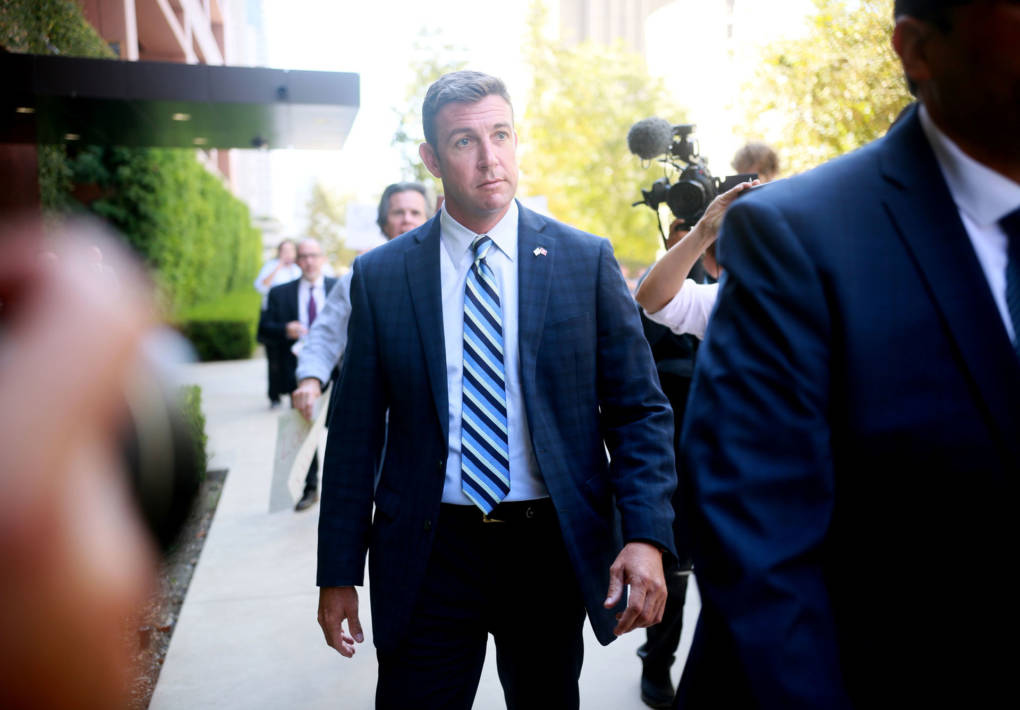
"caption": "Rep. Duncan Hunter walks out of the San Diego Federal Courthouse after an arraignment hearing on Aug. 23, 2018 in San Diego. Hunter and his wife Margaret pled not guilty to using more than $250,000 in campaign funds for personal use.",
"description": "Rep. Duncan Hunter walks out of the San Diego Federal Courthouse after an arraignment hearing on Aug. 23, 2018 in San Diego. Hunter and his wife Margaret pled not guilty to using more than $250,000 in campaign funds for personal use.",
"title": "DuncanHunter",
"credit": "Sandy Huffaker/Getty Images",
"status": "inherit",
"isLoading": false,
"fetchFailed": false
},
"news_11699102": {
"type": "attachments",
"id": "news_11699102",
"meta": {
"index": "attachments_1716263798",
"site": "news",
"id": "11699102",
"found": true
},
"parent": 11699086,
"imgSizes": {
"small": {
"file": "https://ww2.kqed.org/app/uploads/sites/10/2018/10/ferocious_101518_final-520x349.jpg",
"width": 520,
"mimeType": "image/jpeg",
"height": 349
},
"twentyfourteen-full-width": {
"file": "https://ww2.kqed.org/app/uploads/sites/10/2018/10/ferocious_101518_final-1038x576.jpg",
"width": 1038,
"mimeType": "image/jpeg",
"height": 576
},
"thumbnail": {
"file": "https://ww2.kqed.org/app/uploads/sites/10/2018/10/ferocious_101518_final-160x108.jpg",
"width": 160,
"mimeType": "image/jpeg",
"height": 108
},
"fd-sm": {
"file": "https://ww2.kqed.org/app/uploads/sites/10/2018/10/ferocious_101518_final-960x645.jpg",
"width": 960,
"mimeType": "image/jpeg",
"height": 645
},
"post-thumbnail": {
"file": "https://ww2.kqed.org/app/uploads/sites/10/2018/10/ferocious_101518_final-672x372.jpg",
"width": 672,
"mimeType": "image/jpeg",
"height": 372
},
"xsmall": {
"file": "https://ww2.kqed.org/app/uploads/sites/10/2018/10/ferocious_101518_final-375x252.jpg",
"width": 375,
"mimeType": "image/jpeg",
"height": 252
},
"kqedFullSize": {
"file": "https://ww2.kqed.org/app/uploads/sites/10/2018/10/ferocious_101518_final.jpg",
"width": 1920,
"height": 1290
},
"large": {
"file": "https://ww2.kqed.org/app/uploads/sites/10/2018/10/ferocious_101518_final-1020x685.jpg",
"width": 1020,
"mimeType": "image/jpeg",
"height": 685
},
"xlarge": {
"file": "https://ww2.kqed.org/app/uploads/sites/10/2018/10/ferocious_101518_final-1180x793.jpg",
"width": 1180,
"mimeType": "image/jpeg",
"height": 793
},
"complete_open_graph": {
"file": "https://ww2.kqed.org/app/uploads/sites/10/2018/10/ferocious_101518_final-1200x806.jpg",
"width": 1200,
"mimeType": "image/jpeg",
"height": 806
},
"guest-author-50": {
"file": "https://ww2.kqed.org/app/uploads/sites/10/2018/10/ferocious_101518_final-50x50.jpg",
"width": 50,
"mimeType": "image/jpeg",
"height": 50
},
"guest-author-96": {
"file": "https://ww2.kqed.org/app/uploads/sites/10/2018/10/ferocious_101518_final-96x96.jpg",
"width": 96,
"mimeType": "image/jpeg",
"height": 96
},
"medium": {
"file": "https://ww2.kqed.org/app/uploads/sites/10/2018/10/ferocious_101518_final-800x538.jpg",
"width": 800,
"mimeType": "image/jpeg",
"height": 538
},
"guest-author-64": {
"file": "https://ww2.kqed.org/app/uploads/sites/10/2018/10/ferocious_101518_final-64x64.jpg",
"width": 64,
"mimeType": "image/jpeg",
"height": 64
},
"guest-author-32": {
"file": "https://ww2.kqed.org/app/uploads/sites/10/2018/10/ferocious_101518_final-32x32.jpg",
"width": 32,
"mimeType": "image/jpeg",
"height": 32
},
"fd-lrg": {
"file": "https://ww2.kqed.org/app/uploads/sites/10/2018/10/ferocious_101518_final-1920x1290.jpg",
"width": 1920,
"mimeType": "image/jpeg",
"height": 1290
},
"fd-med": {
"file": "https://ww2.kqed.org/app/uploads/sites/10/2018/10/ferocious_101518_final-1180x793.jpg",
"width": 1180,
"mimeType": "image/jpeg",
"height": 793
},
"full-width": {
"file": "https://ww2.kqed.org/app/uploads/sites/10/2018/10/ferocious_101518_final-1920x1290.jpg",
"width": 1920,
"mimeType": "image/jpeg",
"height": 1290
},
"detail": {
"file": "https://ww2.kqed.org/app/uploads/sites/10/2018/10/ferocious_101518_final-150x150.jpg",
"width": 150,
"mimeType": "image/jpeg",
"height": 150
},
"guest-author-128": {
"file": "https://ww2.kqed.org/app/uploads/sites/10/2018/10/ferocious_101518_final-128x128.jpg",
"width": 128,
"mimeType": "image/jpeg",
"height": 128
},
"xxsmall": {
"file": "https://ww2.kqed.org/app/uploads/sites/10/2018/10/ferocious_101518_final-240x161.jpg",
"width": 240,
"mimeType": "image/jpeg",
"height": 161
}
},
"publishDate": 1539646578,
"modified": 1539646594,
"caption": null,
"description": null,
"title": "ferocious_101518_final",
"credit": null,
"status": "inherit",
"isLoading": false,
"fetchFailed": false
},
"news_11699058": {
"type": "attachments",
"id": "news_11699058",
"meta": {
"index": "attachments_1716263798",
"site": "news",
"id": "11699058",
"found": true
},
"parent": 11699057,
"imgSizes": {
"small": {
"file": "https://ww2.kqed.org/app/uploads/sites/10/2018/10/img-0085-4422f95f91aa3e7c0cce76c7d03eae6c8fbfb8cf-520x390.jpg",
"width": 520,
"mimeType": "image/jpeg",
"height": 390
},
"twentyfourteen-full-width": {
"file": "https://ww2.kqed.org/app/uploads/sites/10/2018/10/img-0085-4422f95f91aa3e7c0cce76c7d03eae6c8fbfb8cf-1038x576.jpg",
"width": 1038,
"mimeType": "image/jpeg",
"height": 576
},
"thumbnail": {
"file": "https://ww2.kqed.org/app/uploads/sites/10/2018/10/img-0085-4422f95f91aa3e7c0cce76c7d03eae6c8fbfb8cf-160x120.jpg",
"width": 160,
"mimeType": "image/jpeg",
"height": 120
},
"fd-sm": {
"file": "https://ww2.kqed.org/app/uploads/sites/10/2018/10/img-0085-4422f95f91aa3e7c0cce76c7d03eae6c8fbfb8cf-960x720.jpg",
"width": 960,
"mimeType": "image/jpeg",
"height": 720
},
"post-thumbnail": {
"file": "https://ww2.kqed.org/app/uploads/sites/10/2018/10/img-0085-4422f95f91aa3e7c0cce76c7d03eae6c8fbfb8cf-672x372.jpg",
"width": 672,
"mimeType": "image/jpeg",
"height": 372
},
"xsmall": {
"file": "https://ww2.kqed.org/app/uploads/sites/10/2018/10/img-0085-4422f95f91aa3e7c0cce76c7d03eae6c8fbfb8cf-375x281.jpg",
"width": 375,
"mimeType": "image/jpeg",
"height": 281
},
"kqedFullSize": {
"file": "https://ww2.kqed.org/app/uploads/sites/10/2018/10/img-0085-4422f95f91aa3e7c0cce76c7d03eae6c8fbfb8cf-e1539638188103.jpg",
"width": 1920,
"height": 1440
},
"large": {
"file": "https://ww2.kqed.org/app/uploads/sites/10/2018/10/img-0085-4422f95f91aa3e7c0cce76c7d03eae6c8fbfb8cf-1020x765.jpg",
"width": 1020,
"mimeType": "image/jpeg",
"height": 765
},
"xlarge": {
"file": "https://ww2.kqed.org/app/uploads/sites/10/2018/10/img-0085-4422f95f91aa3e7c0cce76c7d03eae6c8fbfb8cf-1180x885.jpg",
"width": 1180,
"mimeType": "image/jpeg",
"height": 885
},
"complete_open_graph": {
"file": "https://ww2.kqed.org/app/uploads/sites/10/2018/10/img-0085-4422f95f91aa3e7c0cce76c7d03eae6c8fbfb8cf-1200x900.jpg",
"width": 1200,
"mimeType": "image/jpeg",
"height": 900
},
"guest-author-50": {
"file": "https://ww2.kqed.org/app/uploads/sites/10/2018/10/img-0085-4422f95f91aa3e7c0cce76c7d03eae6c8fbfb8cf-50x50.jpg",
"width": 50,
"mimeType": "image/jpeg",
"height": 50
},
"guest-author-96": {
"file": "https://ww2.kqed.org/app/uploads/sites/10/2018/10/img-0085-4422f95f91aa3e7c0cce76c7d03eae6c8fbfb8cf-96x96.jpg",
"width": 96,
"mimeType": "image/jpeg",
"height": 96
},
"medium": {
"file": "https://ww2.kqed.org/app/uploads/sites/10/2018/10/img-0085-4422f95f91aa3e7c0cce76c7d03eae6c8fbfb8cf-800x600.jpg",
"width": 800,
"mimeType": "image/jpeg",
"height": 600
},
"guest-author-64": {
"file": "https://ww2.kqed.org/app/uploads/sites/10/2018/10/img-0085-4422f95f91aa3e7c0cce76c7d03eae6c8fbfb8cf-64x64.jpg",
"width": 64,
"mimeType": "image/jpeg",
"height": 64
},
"guest-author-32": {
"file": "https://ww2.kqed.org/app/uploads/sites/10/2018/10/img-0085-4422f95f91aa3e7c0cce76c7d03eae6c8fbfb8cf-32x32.jpg",
"width": 32,
"mimeType": "image/jpeg",
"height": 32
},
"fd-lrg": {
"file": "https://ww2.kqed.org/app/uploads/sites/10/2018/10/img-0085-4422f95f91aa3e7c0cce76c7d03eae6c8fbfb8cf-1920x1440.jpg",
"width": 1920,
"mimeType": "image/jpeg",
"height": 1440
},
"fd-med": {
"file": "https://ww2.kqed.org/app/uploads/sites/10/2018/10/img-0085-4422f95f91aa3e7c0cce76c7d03eae6c8fbfb8cf-1180x885.jpg",
"width": 1180,
"mimeType": "image/jpeg",
"height": 885
},
"full-width": {
"file": "https://ww2.kqed.org/app/uploads/sites/10/2018/10/img-0085-4422f95f91aa3e7c0cce76c7d03eae6c8fbfb8cf-1920x1440.jpg",
"width": 1920,
"mimeType": "image/jpeg",
"height": 1440
},
"detail": {
"file": "https://ww2.kqed.org/app/uploads/sites/10/2018/10/img-0085-4422f95f91aa3e7c0cce76c7d03eae6c8fbfb8cf-150x150.jpg",
"width": 150,
"mimeType": "image/jpeg",
"height": 150
},
"guest-author-128": {
"file": "https://ww2.kqed.org/app/uploads/sites/10/2018/10/img-0085-4422f95f91aa3e7c0cce76c7d03eae6c8fbfb8cf-128x128.jpg",
"width": 128,
"mimeType": "image/jpeg",
"height": 128
},
"xxsmall": {
"file": "https://ww2.kqed.org/app/uploads/sites/10/2018/10/img-0085-4422f95f91aa3e7c0cce76c7d03eae6c8fbfb8cf-240x180.jpg",
"width": 240,
"mimeType": "image/jpeg",
"height": 180
}
},
"publishDate": 1539638031,
"modified": 1539638178,
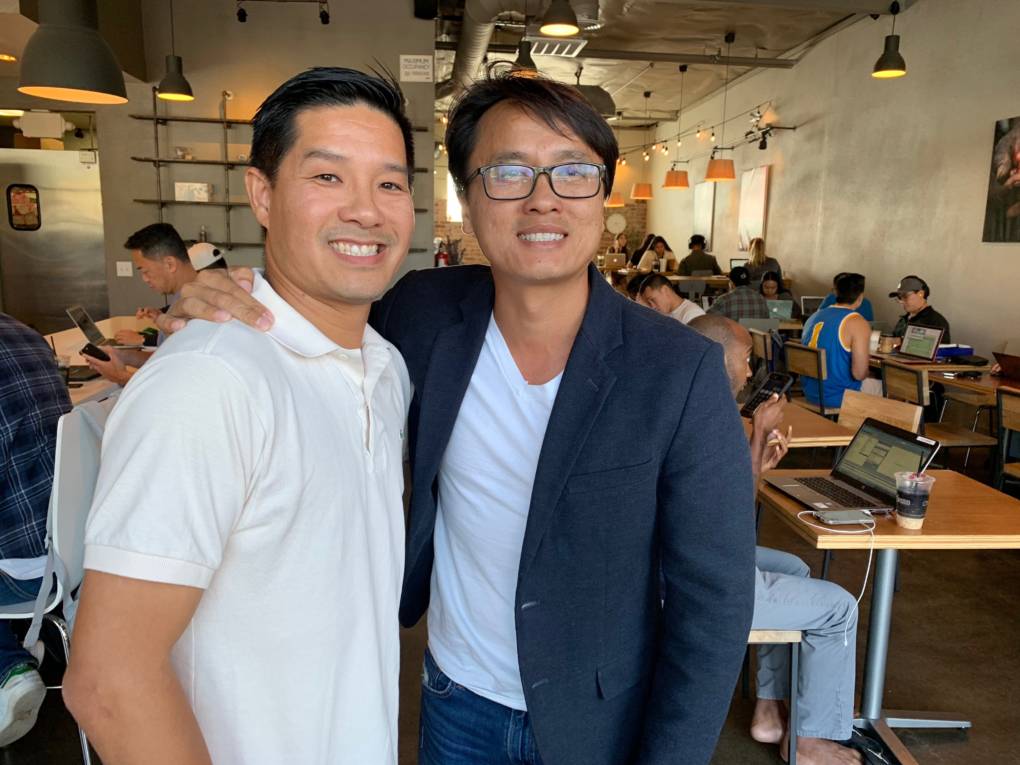
"caption": "Tam and Sonny Nguyen, Vietnamese-American business owners in the Orange County neighborhood of Little Saigon, say they see a \"stark difference\" between the generations not just in their politics, but in how they do business.",
"description": "Tam and Sonny Nguyen, Vietnamese-American business owners in the Orange County neighborhood of Little Saigon, say they see a \"stark difference\" between the generations not just in their politics, but in how they do business.",
"title": "Tam and Sonny Nguyen, Vietnamese-American business owners in the Orange County neighborhood of Little Saigon, say they see a \"stark difference\" between the generations not just in their politics, but in how they do business.",
"credit": "Chris Bentley/Here & Now",
"status": "inherit",
"isLoading": false,
"fetchFailed": false
},
"news_11696041": {
"type": "attachments",
"id": "news_11696041",
"meta": {
"index": "attachments_1716263798",
"site": "news",
"id": "11696041",
"found": true
},
"parent": 11695998,
"imgSizes": {
"small": {
"file": "https://ww2.kqed.org/app/uploads/sites/10/2018/10/GettyImages-453561243-520x347.jpg",
"width": 520,
"mimeType": "image/jpeg",
"height": 347
},
"twentyfourteen-full-width": {
"file": "https://ww2.kqed.org/app/uploads/sites/10/2018/10/GettyImages-453561243-1038x576.jpg",
"width": 1038,
"mimeType": "image/jpeg",
"height": 576
},
"thumbnail": {
"file": "https://ww2.kqed.org/app/uploads/sites/10/2018/10/GettyImages-453561243-160x107.jpg",
"width": 160,
"mimeType": "image/jpeg",
"height": 107
},
"fd-sm": {
"file": "https://ww2.kqed.org/app/uploads/sites/10/2018/10/GettyImages-453561243-960x640.jpg",
"width": 960,
"mimeType": "image/jpeg",
"height": 640
},
"post-thumbnail": {
"file": "https://ww2.kqed.org/app/uploads/sites/10/2018/10/GettyImages-453561243-672x372.jpg",
"width": 672,
"mimeType": "image/jpeg",
"height": 372
},
"xsmall": {
"file": "https://ww2.kqed.org/app/uploads/sites/10/2018/10/GettyImages-453561243-375x250.jpg",
"width": 375,
"mimeType": "image/jpeg",
"height": 250
},
"kqedFullSize": {
"file": "https://ww2.kqed.org/app/uploads/sites/10/2018/10/GettyImages-453561243-e1578690419580.jpg",
"width": 1920,
"height": 1281
},
"large": {
"file": "https://ww2.kqed.org/app/uploads/sites/10/2018/10/GettyImages-453561243-1020x680.jpg",
"width": 1020,
"mimeType": "image/jpeg",
"height": 680
},
"xlarge": {
"file": "https://ww2.kqed.org/app/uploads/sites/10/2018/10/GettyImages-453561243-1180x787.jpg",
"width": 1180,
"mimeType": "image/jpeg",
"height": 787
},
"complete_open_graph": {
"file": "https://ww2.kqed.org/app/uploads/sites/10/2018/10/GettyImages-453561243-1200x800.jpg",
"width": 1200,
"mimeType": "image/jpeg",
"height": 800
},
"guest-author-50": {
"file": "https://ww2.kqed.org/app/uploads/sites/10/2018/10/GettyImages-453561243-50x50.jpg",
"width": 50,
"mimeType": "image/jpeg",
"height": 50
},
"guest-author-96": {
"file": "https://ww2.kqed.org/app/uploads/sites/10/2018/10/GettyImages-453561243-96x96.jpg",
"width": 96,
"mimeType": "image/jpeg",
"height": 96
},
"medium": {
"file": "https://ww2.kqed.org/app/uploads/sites/10/2018/10/GettyImages-453561243-800x534.jpg",
"width": 800,
"mimeType": "image/jpeg",
"height": 534
},
"guest-author-64": {
"file": "https://ww2.kqed.org/app/uploads/sites/10/2018/10/GettyImages-453561243-64x64.jpg",
"width": 64,
"mimeType": "image/jpeg",
"height": 64
},
"guest-author-32": {
"file": "https://ww2.kqed.org/app/uploads/sites/10/2018/10/GettyImages-453561243-32x32.jpg",
"width": 32,
"mimeType": "image/jpeg",
"height": 32
},
"fd-lrg": {
"file": "https://ww2.kqed.org/app/uploads/sites/10/2018/10/GettyImages-453561243-1920x1281.jpg",
"width": 1920,
"mimeType": "image/jpeg",
"height": 1281
},
"fd-med": {
"file": "https://ww2.kqed.org/app/uploads/sites/10/2018/10/GettyImages-453561243-1180x787.jpg",
"width": 1180,
"mimeType": "image/jpeg",
"height": 787
},
"full-width": {
"file": "https://ww2.kqed.org/app/uploads/sites/10/2018/10/GettyImages-453561243-1920x1281.jpg",
"width": 1920,
"mimeType": "image/jpeg",
"height": 1281
},
"detail": {
"file": "https://ww2.kqed.org/app/uploads/sites/10/2018/10/GettyImages-453561243-150x150.jpg",
"width": 150,
"mimeType": "image/jpeg",
"height": 150
},
"guest-author-128": {
"file": "https://ww2.kqed.org/app/uploads/sites/10/2018/10/GettyImages-453561243-128x128.jpg",
"width": 128,
"mimeType": "image/jpeg",
"height": 128
},
"xxsmall": {
"file": "https://ww2.kqed.org/app/uploads/sites/10/2018/10/GettyImages-453561243-240x160.jpg",
"width": 240,
"mimeType": "image/jpeg",
"height": 160
}
},
"publishDate": 1538508157,
"modified": 1578690410,
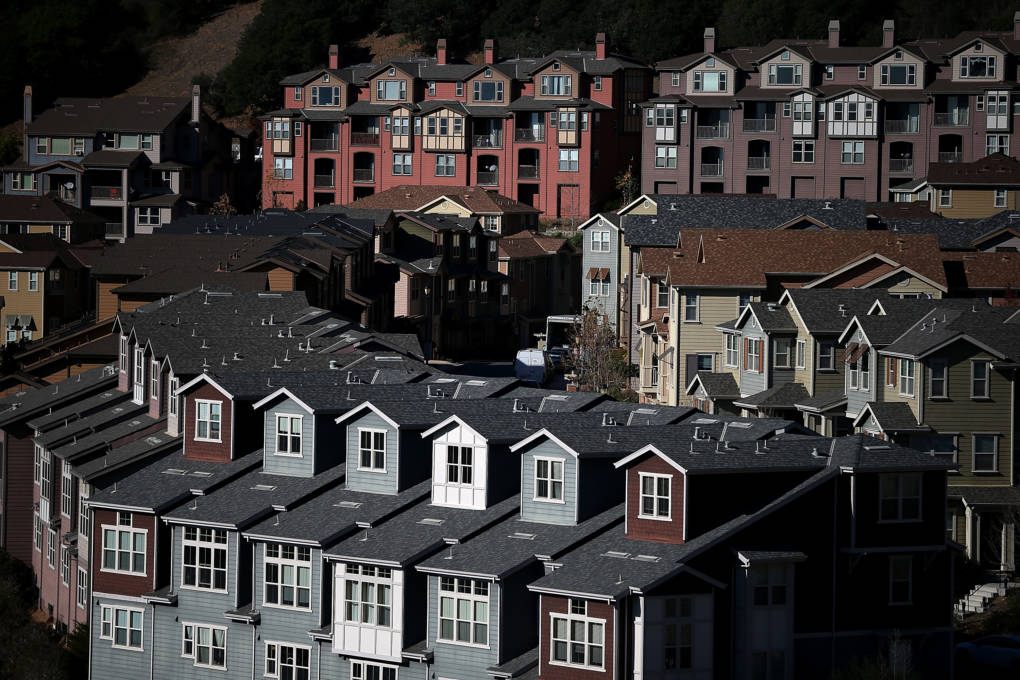
"caption": "Rows of homes line a street in a housing development in Oakland.",
"description": "Rows of homes line a street in a housing development in Oakland, California. Across California, homes constructed after 1995 and most single family homes are barred from having rent control. But if prop 10 passes, local cities could decide to allow these units to be covered by rent control. ",
"title": "Rows of homes line a street in a housing development in Oakland, California. Across California, homes constructed after 1995 and most single family homes are barred from having rent control. But if prop 10 passes, local cities could decide to allow these units to be covered by rent control.",
"credit": "Justin Sullivan/Getty Images",
"status": "inherit",
"isLoading": false,
"fetchFailed": false
},
"news_11696942": {
"type": "attachments",
"id": "news_11696942",
"meta": {
"index": "attachments_1716263798",
"site": "news",
"id": "11696942",
"found": true
},
"parent": 11696844,
"imgSizes": {
"small": {
"file": "https://ww2.kqed.org/app/uploads/sites/10/2018/10/RS33061_GettyImages-83205846-qut-520x347.jpg",
"width": 520,
"mimeType": "image/jpeg",
"height": 347
},
"twentyfourteen-full-width": {
"file": "https://ww2.kqed.org/app/uploads/sites/10/2018/10/RS33061_GettyImages-83205846-qut-1038x576.jpg",
"width": 1038,
"mimeType": "image/jpeg",
"height": 576
},
"thumbnail": {
"file": "https://ww2.kqed.org/app/uploads/sites/10/2018/10/RS33061_GettyImages-83205846-qut-160x107.jpg",
"width": 160,
"mimeType": "image/jpeg",
"height": 107
},
"fd-sm": {
"file": "https://ww2.kqed.org/app/uploads/sites/10/2018/10/RS33061_GettyImages-83205846-qut-960x640.jpg",
"width": 960,
"mimeType": "image/jpeg",
"height": 640
},
"post-thumbnail": {
"file": "https://ww2.kqed.org/app/uploads/sites/10/2018/10/RS33061_GettyImages-83205846-qut-672x372.jpg",
"width": 672,
"mimeType": "image/jpeg",
"height": 372
},
"xsmall": {
"file": "https://ww2.kqed.org/app/uploads/sites/10/2018/10/RS33061_GettyImages-83205846-qut-375x250.jpg",
"width": 375,
"mimeType": "image/jpeg",
"height": 250
},
"kqedFullSize": {
"file": "https://ww2.kqed.org/app/uploads/sites/10/2018/10/RS33061_GettyImages-83205846-qut.jpg",
"width": 1920,
"height": 1280
},
"large": {
"file": "https://ww2.kqed.org/app/uploads/sites/10/2018/10/RS33061_GettyImages-83205846-qut-1020x680.jpg",
"width": 1020,
"mimeType": "image/jpeg",
"height": 680
},
"xlarge": {
"file": "https://ww2.kqed.org/app/uploads/sites/10/2018/10/RS33061_GettyImages-83205846-qut-1180x787.jpg",
"width": 1180,
"mimeType": "image/jpeg",
"height": 787
},
"complete_open_graph": {
"file": "https://ww2.kqed.org/app/uploads/sites/10/2018/10/RS33061_GettyImages-83205846-qut-1200x800.jpg",
"width": 1200,
"mimeType": "image/jpeg",
"height": 800
},
"guest-author-50": {
"file": "https://ww2.kqed.org/app/uploads/sites/10/2018/10/RS33061_GettyImages-83205846-qut-50x50.jpg",
"width": 50,
"mimeType": "image/jpeg",
"height": 50
},
"guest-author-96": {
"file": "https://ww2.kqed.org/app/uploads/sites/10/2018/10/RS33061_GettyImages-83205846-qut-96x96.jpg",
"width": 96,
"mimeType": "image/jpeg",
"height": 96
},
"medium": {
"file": "https://ww2.kqed.org/app/uploads/sites/10/2018/10/RS33061_GettyImages-83205846-qut-800x533.jpg",
"width": 800,
"mimeType": "image/jpeg",
"height": 533
},
"guest-author-64": {
"file": "https://ww2.kqed.org/app/uploads/sites/10/2018/10/RS33061_GettyImages-83205846-qut-64x64.jpg",
"width": 64,
"mimeType": "image/jpeg",
"height": 64
},
"guest-author-32": {
"file": "https://ww2.kqed.org/app/uploads/sites/10/2018/10/RS33061_GettyImages-83205846-qut-32x32.jpg",
"width": 32,
"mimeType": "image/jpeg",
"height": 32
},
"fd-lrg": {
"file": "https://ww2.kqed.org/app/uploads/sites/10/2018/10/RS33061_GettyImages-83205846-qut-1920x1280.jpg",
"width": 1920,
"mimeType": "image/jpeg",
"height": 1280
},
"fd-med": {
"file": "https://ww2.kqed.org/app/uploads/sites/10/2018/10/RS33061_GettyImages-83205846-qut-1180x787.jpg",
"width": 1180,
"mimeType": "image/jpeg",
"height": 787
},
"full-width": {
"file": "https://ww2.kqed.org/app/uploads/sites/10/2018/10/RS33061_GettyImages-83205846-qut-1920x1280.jpg",
"width": 1920,
"mimeType": "image/jpeg",
"height": 1280
},
"detail": {
"file": "https://ww2.kqed.org/app/uploads/sites/10/2018/10/RS33061_GettyImages-83205846-qut-150x150.jpg",
"width": 150,
"mimeType": "image/jpeg",
"height": 150
},
"guest-author-128": {
"file": "https://ww2.kqed.org/app/uploads/sites/10/2018/10/RS33061_GettyImages-83205846-qut-128x128.jpg",
"width": 128,
"mimeType": "image/jpeg",
"height": 128
},
"xxsmall": {
"file": "https://ww2.kqed.org/app/uploads/sites/10/2018/10/RS33061_GettyImages-83205846-qut-240x160.jpg",
"width": 240,
"mimeType": "image/jpeg",
"height": 160
}
},
"publishDate": 1538779644,
"modified": 1538780021,
"caption": "Should EMT and ambulance workers be able to take uninterrupted off-duty breaks? That's one of three health-related propositions Californians are voting on this November. ",
"description": "Should EMT and ambulance workers be able to take uninterrupted off-duty breaks? That's one of three health-related propositions Californians are voting on this November. ",
"title": "California Budget Crisis Threatens Basic Services",
"credit": "David McNew/Getty Images",
"status": "inherit",
"isLoading": false,
"fetchFailed": false
},
"news_11696820": {
"type": "attachments",
"id": "news_11696820",
"meta": {
"index": "attachments_1716263798",
"site": "news",
"id": "11696820",
"found": true
},
"parent": 11696663,
"imgSizes": {
"small": {
"file": "https://ww2.kqed.org/app/uploads/sites/10/2018/10/RS33060_GettyImages-465175876-qut-520x339.jpg",
"width": 520,
"mimeType": "image/jpeg",
"height": 339
},
"twentyfourteen-full-width": {
"file": "https://ww2.kqed.org/app/uploads/sites/10/2018/10/RS33060_GettyImages-465175876-qut-1038x576.jpg",
"width": 1038,
"mimeType": "image/jpeg",
"height": 576
},
"thumbnail": {
"file": "https://ww2.kqed.org/app/uploads/sites/10/2018/10/RS33060_GettyImages-465175876-qut-160x104.jpg",
"width": 160,
"mimeType": "image/jpeg",
"height": 104
},
"fd-sm": {
"file": "https://ww2.kqed.org/app/uploads/sites/10/2018/10/RS33060_GettyImages-465175876-qut-960x627.jpg",
"width": 960,
"mimeType": "image/jpeg",
"height": 627
},
"post-thumbnail": {
"file": "https://ww2.kqed.org/app/uploads/sites/10/2018/10/RS33060_GettyImages-465175876-qut-672x372.jpg",
"width": 672,
"mimeType": "image/jpeg",
"height": 372
},
"xsmall": {
"file": "https://ww2.kqed.org/app/uploads/sites/10/2018/10/RS33060_GettyImages-465175876-qut-375x245.jpg",
"width": 375,
"mimeType": "image/jpeg",
"height": 245
},
"kqedFullSize": {
"file": "https://ww2.kqed.org/app/uploads/sites/10/2018/10/RS33060_GettyImages-465175876-qut.jpg",
"width": 1920,
"height": 1253
},
"large": {
"file": "https://ww2.kqed.org/app/uploads/sites/10/2018/10/RS33060_GettyImages-465175876-qut-1020x666.jpg",
"width": 1020,
"mimeType": "image/jpeg",
"height": 666
},
"xlarge": {
"file": "https://ww2.kqed.org/app/uploads/sites/10/2018/10/RS33060_GettyImages-465175876-qut-1180x770.jpg",
"width": 1180,
"mimeType": "image/jpeg",
"height": 770
},
"complete_open_graph": {
"file": "https://ww2.kqed.org/app/uploads/sites/10/2018/10/RS33060_GettyImages-465175876-qut-1200x783.jpg",
"width": 1200,
"mimeType": "image/jpeg",
"height": 783
},
"guest-author-50": {
"file": "https://ww2.kqed.org/app/uploads/sites/10/2018/10/RS33060_GettyImages-465175876-qut-50x50.jpg",
"width": 50,
"mimeType": "image/jpeg",
"height": 50
},
"guest-author-96": {
"file": "https://ww2.kqed.org/app/uploads/sites/10/2018/10/RS33060_GettyImages-465175876-qut-96x96.jpg",
"width": 96,
"mimeType": "image/jpeg",
"height": 96
},
"medium": {
"file": "https://ww2.kqed.org/app/uploads/sites/10/2018/10/RS33060_GettyImages-465175876-qut-800x522.jpg",
"width": 800,
"mimeType": "image/jpeg",
"height": 522
},
"guest-author-64": {
"file": "https://ww2.kqed.org/app/uploads/sites/10/2018/10/RS33060_GettyImages-465175876-qut-64x64.jpg",
"width": 64,
"mimeType": "image/jpeg",
"height": 64
},
"guest-author-32": {
"file": "https://ww2.kqed.org/app/uploads/sites/10/2018/10/RS33060_GettyImages-465175876-qut-32x32.jpg",
"width": 32,
"mimeType": "image/jpeg",
"height": 32
},
"fd-lrg": {
"file": "https://ww2.kqed.org/app/uploads/sites/10/2018/10/RS33060_GettyImages-465175876-qut-1920x1253.jpg",
"width": 1920,
"mimeType": "image/jpeg",
"height": 1253
},
"fd-med": {
"file": "https://ww2.kqed.org/app/uploads/sites/10/2018/10/RS33060_GettyImages-465175876-qut-1180x770.jpg",
"width": 1180,
"mimeType": "image/jpeg",
"height": 770
},
"full-width": {
"file": "https://ww2.kqed.org/app/uploads/sites/10/2018/10/RS33060_GettyImages-465175876-qut-1920x1253.jpg",
"width": 1920,
"mimeType": "image/jpeg",
"height": 1253
},
"detail": {
"file": "https://ww2.kqed.org/app/uploads/sites/10/2018/10/RS33060_GettyImages-465175876-qut-150x150.jpg",
"width": 150,
"mimeType": "image/jpeg",
"height": 150
},
"guest-author-128": {
"file": "https://ww2.kqed.org/app/uploads/sites/10/2018/10/RS33060_GettyImages-465175876-qut-128x128.jpg",
"width": 128,
"mimeType": "image/jpeg",
"height": 128
},
"xxsmall": {
"file": "https://ww2.kqed.org/app/uploads/sites/10/2018/10/RS33060_GettyImages-465175876-qut-240x157.jpg",
"width": 240,
"mimeType": "image/jpeg",
"height": 157
}
},
"publishDate": 1538768223,
"modified": 1539756247,
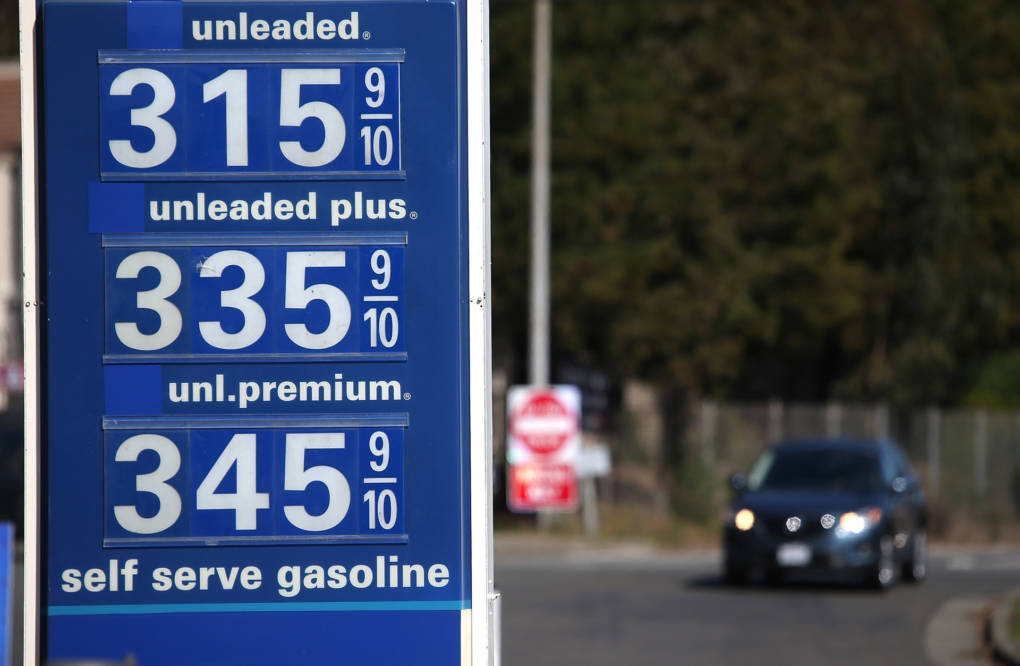
"caption": "It will be up to California voters next month to decide whether to repeal increased gas tax and vehicle fees passed last year by the state Legislature.",
"description": "It will be up to California voters this November to decide whether to repeal increased gas tax and vehicle fees passed by the state Legislature.",
"title": "Gas Tax Repeal",
"credit": "Justin Sullivan/Getty Images",
"status": "inherit",
"isLoading": false,
"fetchFailed": false
},
"news_11695932": {
"type": "attachments",
"id": "news_11695932",
"meta": {
"index": "attachments_1716263798",
"site": "news",
"id": "11695932",
"found": true
},
"parent": 11694776,
"imgSizes": {
"small": {
"file": "https://ww2.kqed.org/app/uploads/sites/10/2018/10/KatiePorter-520x400.jpg",
"width": 520,
"mimeType": "image/jpeg",
"height": 400
},
"twentyfourteen-full-width": {
"file": "https://ww2.kqed.org/app/uploads/sites/10/2018/10/KatiePorter-1038x576.jpg",
"width": 1038,
"mimeType": "image/jpeg",
"height": 576
},
"thumbnail": {
"file": "https://ww2.kqed.org/app/uploads/sites/10/2018/10/KatiePorter-160x123.jpg",
"width": 160,
"mimeType": "image/jpeg",
"height": 123
},
"fd-sm": {
"file": "https://ww2.kqed.org/app/uploads/sites/10/2018/10/KatiePorter-960x739.jpg",
"width": 960,
"mimeType": "image/jpeg",
"height": 739
},
"post-thumbnail": {
"file": "https://ww2.kqed.org/app/uploads/sites/10/2018/10/KatiePorter-672x372.jpg",
"width": 672,
"mimeType": "image/jpeg",
"height": 372
},
"xsmall": {
"file": "https://ww2.kqed.org/app/uploads/sites/10/2018/10/KatiePorter-375x288.jpg",
"width": 375,
"mimeType": "image/jpeg",
"height": 288
},
"kqedFullSize": {
"file": "https://ww2.kqed.org/app/uploads/sites/10/2018/10/KatiePorter.jpg",
"width": 1920,
"height": 1477
},
"large": {
"file": "https://ww2.kqed.org/app/uploads/sites/10/2018/10/KatiePorter-1020x785.jpg",
"width": 1020,
"mimeType": "image/jpeg",
"height": 785
},
"xlarge": {
"file": "https://ww2.kqed.org/app/uploads/sites/10/2018/10/KatiePorter-1180x908.jpg",
"width": 1180,
"mimeType": "image/jpeg",
"height": 908
},
"complete_open_graph": {
"file": "https://ww2.kqed.org/app/uploads/sites/10/2018/10/KatiePorter-1200x923.jpg",
"width": 1200,
"mimeType": "image/jpeg",
"height": 923
},
"guest-author-50": {
"file": "https://ww2.kqed.org/app/uploads/sites/10/2018/10/KatiePorter-50x50.jpg",
"width": 50,
"mimeType": "image/jpeg",
"height": 50
},
"guest-author-96": {
"file": "https://ww2.kqed.org/app/uploads/sites/10/2018/10/KatiePorter-96x96.jpg",
"width": 96,
"mimeType": "image/jpeg",
"height": 96
},
"medium": {
"file": "https://ww2.kqed.org/app/uploads/sites/10/2018/10/KatiePorter-800x615.jpg",
"width": 800,
"mimeType": "image/jpeg",
"height": 615
},
"guest-author-64": {
"file": "https://ww2.kqed.org/app/uploads/sites/10/2018/10/KatiePorter-64x64.jpg",
"width": 64,
"mimeType": "image/jpeg",
"height": 64
},
"guest-author-32": {
"file": "https://ww2.kqed.org/app/uploads/sites/10/2018/10/KatiePorter-32x32.jpg",
"width": 32,
"mimeType": "image/jpeg",
"height": 32
},
"fd-lrg": {
"file": "https://ww2.kqed.org/app/uploads/sites/10/2018/10/KatiePorter-1920x1477.jpg",
"width": 1920,
"mimeType": "image/jpeg",
"height": 1477
},
"fd-med": {
"file": "https://ww2.kqed.org/app/uploads/sites/10/2018/10/KatiePorter-1180x908.jpg",
"width": 1180,
"mimeType": "image/jpeg",
"height": 908
},
"full-width": {
"file": "https://ww2.kqed.org/app/uploads/sites/10/2018/10/KatiePorter-1920x1477.jpg",
"width": 1920,
"mimeType": "image/jpeg",
"height": 1477
},
"detail": {
"file": "https://ww2.kqed.org/app/uploads/sites/10/2018/10/KatiePorter-150x150.jpg",
"width": 150,
"mimeType": "image/jpeg",
"height": 150
},
"guest-author-128": {
"file": "https://ww2.kqed.org/app/uploads/sites/10/2018/10/KatiePorter-128x128.jpg",
"width": 128,
"mimeType": "image/jpeg",
"height": 128
},
"xxsmall": {
"file": "https://ww2.kqed.org/app/uploads/sites/10/2018/10/KatiePorter-240x185.jpg",
"width": 240,
"mimeType": "image/jpeg",
"height": 185
}
},
"publishDate": 1538447515,
"modified": 1538447614,
"caption": "Democratic congressional candidate Katie Porter waves to the crowd after former President Barack Obama introduced her at a Democratic rally in Anaheim on Sept. 8, 2018.",
"description": "Democratic congressional candidate Katie Porter waves to the crowd after former President Barack Obama introduced her at a Democratic rally in Anaheim on Sept. 8, 2018.",
"title": "KatiePorter",
"credit": " Barbara Davidson/Getty Images",
"status": "inherit",
"isLoading": false,
"fetchFailed": false
},
"news_11695127": {
"type": "attachments",
"id": "news_11695127",
"meta": {
"index": "attachments_1716263798",
"site": "news",
"id": "11695127",
"found": true
},
"parent": 11695064,
"imgSizes": {
"small": {
"file": "https://ww2.kqed.org/app/uploads/sites/10/2018/09/ford_featured01-520x222.jpg",
"width": 520,
"mimeType": "image/jpeg",
"height": 222
},
"twentyfourteen-full-width": {
"file": "https://ww2.kqed.org/app/uploads/sites/10/2018/09/ford_featured01-1038x576.jpg",
"width": 1038,
"mimeType": "image/jpeg",
"height": 576
},
"thumbnail": {
"file": "https://ww2.kqed.org/app/uploads/sites/10/2018/09/ford_featured01-160x68.jpg",
"width": 160,
"mimeType": "image/jpeg",
"height": 68
},
"fd-sm": {
"file": "https://ww2.kqed.org/app/uploads/sites/10/2018/09/ford_featured01-960x411.jpg",
"width": 960,
"mimeType": "image/jpeg",
"height": 411
},
"post-thumbnail": {
"file": "https://ww2.kqed.org/app/uploads/sites/10/2018/09/ford_featured01-672x372.jpg",
"width": 672,
"mimeType": "image/jpeg",
"height": 372
},
"xsmall": {
"file": "https://ww2.kqed.org/app/uploads/sites/10/2018/09/ford_featured01-375x160.jpg",
"width": 375,
"mimeType": "image/jpeg",
"height": 160
},
"kqedFullSize": {
"file": "https://ww2.kqed.org/app/uploads/sites/10/2018/09/ford_featured01.jpg",
"width": 1920,
"height": 821
},
"large": {
"file": "https://ww2.kqed.org/app/uploads/sites/10/2018/09/ford_featured01-1020x436.jpg",
"width": 1020,
"mimeType": "image/jpeg",
"height": 436
},
"xlarge": {
"file": "https://ww2.kqed.org/app/uploads/sites/10/2018/09/ford_featured01-1180x505.jpg",
"width": 1180,
"mimeType": "image/jpeg",
"height": 505
},
"complete_open_graph": {
"file": "https://ww2.kqed.org/app/uploads/sites/10/2018/09/ford_featured01-1200x513.jpg",
"width": 1200,
"mimeType": "image/jpeg",
"height": 513
},
"guest-author-50": {
"file": "https://ww2.kqed.org/app/uploads/sites/10/2018/09/ford_featured01-50x50.jpg",
"width": 50,
"mimeType": "image/jpeg",
"height": 50
},
"guest-author-96": {
"file": "https://ww2.kqed.org/app/uploads/sites/10/2018/09/ford_featured01-96x96.jpg",
"width": 96,
"mimeType": "image/jpeg",
"height": 96
},
"medium": {
"file": "https://ww2.kqed.org/app/uploads/sites/10/2018/09/ford_featured01-800x342.jpg",
"width": 800,
"mimeType": "image/jpeg",
"height": 342
},
"guest-author-64": {
"file": "https://ww2.kqed.org/app/uploads/sites/10/2018/09/ford_featured01-64x64.jpg",
"width": 64,
"mimeType": "image/jpeg",
"height": 64
},
"guest-author-32": {
"file": "https://ww2.kqed.org/app/uploads/sites/10/2018/09/ford_featured01-32x32.jpg",
"width": 32,
"mimeType": "image/jpeg",
"height": 32
},
"fd-lrg": {
"file": "https://ww2.kqed.org/app/uploads/sites/10/2018/09/ford_featured01-1920x821.jpg",
"width": 1920,
"mimeType": "image/jpeg",
"height": 821
},
"fd-med": {
"file": "https://ww2.kqed.org/app/uploads/sites/10/2018/09/ford_featured01-1180x505.jpg",
"width": 1180,
"mimeType": "image/jpeg",
"height": 505
},
"full-width": {
"file": "https://ww2.kqed.org/app/uploads/sites/10/2018/09/ford_featured01-1920x821.jpg",
"width": 1920,
"mimeType": "image/jpeg",
"height": 821
},
"detail": {
"file": "https://ww2.kqed.org/app/uploads/sites/10/2018/09/ford_featured01-150x150.jpg",
"width": 150,
"mimeType": "image/jpeg",
"height": 150
},
"guest-author-128": {
"file": "https://ww2.kqed.org/app/uploads/sites/10/2018/09/ford_featured01-128x128.jpg",
"width": 128,
"mimeType": "image/jpeg",
"height": 128
},
"xxsmall": {
"file": "https://ww2.kqed.org/app/uploads/sites/10/2018/09/ford_featured01-240x103.jpg",
"width": 240,
"mimeType": "image/jpeg",
"height": 103
}
},
"publishDate": 1538092611,
"modified": 1538092626,
"caption": null,
"description": null,
"title": "ford_featured01",
"credit": null,
"status": "inherit",
"isLoading": false,
"fetchFailed": false
},
"news_11694548": {
"type": "attachments",
"id": "news_11694548",
"meta": {
"index": "attachments_1716263798",
"site": "news",
"id": "11694548",
"found": true
},
"parent": 11694478,
"imgSizes": {
"small": {
"file": "https://ww2.kqed.org/app/uploads/sites/10/2018/09/kim-pic-520x390.jpg",
"width": 520,
"mimeType": "image/jpeg",
"height": 390
},
"twentyfourteen-full-width": {
"file": "https://ww2.kqed.org/app/uploads/sites/10/2018/09/kim-pic-1038x576.jpg",
"width": 1038,
"mimeType": "image/jpeg",
"height": 576
},
"thumbnail": {
"file": "https://ww2.kqed.org/app/uploads/sites/10/2018/09/kim-pic-160x120.jpg",
"width": 160,
"mimeType": "image/jpeg",
"height": 120
},
"fd-sm": {
"file": "https://ww2.kqed.org/app/uploads/sites/10/2018/09/kim-pic-960x720.jpg",
"width": 960,
"mimeType": "image/jpeg",
"height": 720
},
"post-thumbnail": {
"file": "https://ww2.kqed.org/app/uploads/sites/10/2018/09/kim-pic-672x372.jpg",
"width": 672,
"mimeType": "image/jpeg",
"height": 372
},
"xsmall": {
"file": "https://ww2.kqed.org/app/uploads/sites/10/2018/09/kim-pic-375x281.jpg",
"width": 375,
"mimeType": "image/jpeg",
"height": 281
},
"kqedFullSize": {
"file": "https://ww2.kqed.org/app/uploads/sites/10/2018/09/kim-pic.jpg",
"width": 4032,
"height": 3024
},
"large": {
"file": "https://ww2.kqed.org/app/uploads/sites/10/2018/09/kim-pic-1020x765.jpg",
"width": 1020,
"mimeType": "image/jpeg",
"height": 765
},
"xlarge": {
"file": "https://ww2.kqed.org/app/uploads/sites/10/2018/09/kim-pic-1180x885.jpg",
"width": 1180,
"mimeType": "image/jpeg",
"height": 885
},
"complete_open_graph": {
"file": "https://ww2.kqed.org/app/uploads/sites/10/2018/09/kim-pic-1200x900.jpg",
"width": 1200,
"mimeType": "image/jpeg",
"height": 900
},
"guest-author-50": {
"file": "https://ww2.kqed.org/app/uploads/sites/10/2018/09/kim-pic-50x50.jpg",
"width": 50,
"mimeType": "image/jpeg",
"height": 50
},
"guest-author-96": {
"file": "https://ww2.kqed.org/app/uploads/sites/10/2018/09/kim-pic-96x96.jpg",
"width": 96,
"mimeType": "image/jpeg",
"height": 96
},
"medium": {
"file": "https://ww2.kqed.org/app/uploads/sites/10/2018/09/kim-pic-800x600.jpg",
"width": 800,
"mimeType": "image/jpeg",
"height": 600
},
"guest-author-64": {
"file": "https://ww2.kqed.org/app/uploads/sites/10/2018/09/kim-pic-64x64.jpg",
"width": 64,
"mimeType": "image/jpeg",
"height": 64
},
"guest-author-32": {
"file": "https://ww2.kqed.org/app/uploads/sites/10/2018/09/kim-pic-32x32.jpg",
"width": 32,
"mimeType": "image/jpeg",
"height": 32
},
"fd-lrg": {
"file": "https://ww2.kqed.org/app/uploads/sites/10/2018/09/kim-pic-1920x1440.jpg",
"width": 1920,
"mimeType": "image/jpeg",
"height": 1440
},
"fd-med": {
"file": "https://ww2.kqed.org/app/uploads/sites/10/2018/09/kim-pic-1180x885.jpg",
"width": 1180,
"mimeType": "image/jpeg",
"height": 885
},
"full-width": {
"file": "https://ww2.kqed.org/app/uploads/sites/10/2018/09/kim-pic-1920x1440.jpg",
"width": 1920,
"mimeType": "image/jpeg",
"height": 1440
},
"detail": {
"file": "https://ww2.kqed.org/app/uploads/sites/10/2018/09/kim-pic-150x150.jpg",
"width": 150,
"mimeType": "image/jpeg",
"height": 150
},
"guest-author-128": {
"file": "https://ww2.kqed.org/app/uploads/sites/10/2018/09/kim-pic-128x128.jpg",
"width": 128,
"mimeType": "image/jpeg",
"height": 128
},
"xxsmall": {
"file": "https://ww2.kqed.org/app/uploads/sites/10/2018/09/kim-pic-240x180.jpg",
"width": 240,
"mimeType": "image/jpeg",
"height": 180
}
},
"publishDate": 1537906664,
"modified": 1537907050,
"caption": "Young Kim is hoping her local roots help her keep this Orange County congressional district in Republican hands.",
"description": null,
"title": "Young Kim campaigns",
"credit": "Scott Shafer/KQED",
"status": "inherit",
"isLoading": false,
"fetchFailed": false
},
"news_11694420": {
"type": "attachments",
"id": "news_11694420",
"meta": {
"index": "attachments_1716263798",
"site": "news",
"id": "11694420",
"found": true
},
"parent": 11694407,
"imgSizes": {
"small": {
"file": "https://ww2.kqed.org/app/uploads/sites/10/2018/09/TomCampbell-520x373.jpg",
"width": 520,
"mimeType": "image/jpeg",
"height": 373
},
"twentyfourteen-full-width": {
"file": "https://ww2.kqed.org/app/uploads/sites/10/2018/09/TomCampbell-1038x576.jpg",
"width": 1038,
"mimeType": "image/jpeg",
"height": 576
},
"thumbnail": {
"file": "https://ww2.kqed.org/app/uploads/sites/10/2018/09/TomCampbell-160x115.jpg",
"width": 160,
"mimeType": "image/jpeg",
"height": 115
},
"fd-sm": {
"file": "https://ww2.kqed.org/app/uploads/sites/10/2018/09/TomCampbell-960x688.jpg",
"width": 960,
"mimeType": "image/jpeg",
"height": 688
},
"post-thumbnail": {
"file": "https://ww2.kqed.org/app/uploads/sites/10/2018/09/TomCampbell-672x372.jpg",
"width": 672,
"mimeType": "image/jpeg",
"height": 372
},
"xsmall": {
"file": "https://ww2.kqed.org/app/uploads/sites/10/2018/09/TomCampbell-375x269.jpg",
"width": 375,
"mimeType": "image/jpeg",
"height": 269
},
"kqedFullSize": {
"file": "https://ww2.kqed.org/app/uploads/sites/10/2018/09/TomCampbell.jpg",
"width": 1920,
"height": 1376
},
"large": {
"file": "https://ww2.kqed.org/app/uploads/sites/10/2018/09/TomCampbell-1020x731.jpg",
"width": 1020,
"mimeType": "image/jpeg",
"height": 731
},
"xlarge": {
"file": "https://ww2.kqed.org/app/uploads/sites/10/2018/09/TomCampbell-1180x846.jpg",
"width": 1180,
"mimeType": "image/jpeg",
"height": 846
},
"complete_open_graph": {
"file": "https://ww2.kqed.org/app/uploads/sites/10/2018/09/TomCampbell-1200x860.jpg",
"width": 1200,
"mimeType": "image/jpeg",
"height": 860
},
"guest-author-50": {
"file": "https://ww2.kqed.org/app/uploads/sites/10/2018/09/TomCampbell-50x50.jpg",
"width": 50,
"mimeType": "image/jpeg",
"height": 50
},
"guest-author-96": {
"file": "https://ww2.kqed.org/app/uploads/sites/10/2018/09/TomCampbell-96x96.jpg",
"width": 96,
"mimeType": "image/jpeg",
"height": 96
},
"medium": {
"file": "https://ww2.kqed.org/app/uploads/sites/10/2018/09/TomCampbell-800x573.jpg",
"width": 800,
"mimeType": "image/jpeg",
"height": 573
},
"guest-author-64": {
"file": "https://ww2.kqed.org/app/uploads/sites/10/2018/09/TomCampbell-64x64.jpg",
"width": 64,
"mimeType": "image/jpeg",
"height": 64
},
"guest-author-32": {
"file": "https://ww2.kqed.org/app/uploads/sites/10/2018/09/TomCampbell-32x32.jpg",
"width": 32,
"mimeType": "image/jpeg",
"height": 32
},
"fd-lrg": {
"file": "https://ww2.kqed.org/app/uploads/sites/10/2018/09/TomCampbell-1920x1376.jpg",
"width": 1920,
"mimeType": "image/jpeg",
"height": 1376
},
"fd-med": {
"file": "https://ww2.kqed.org/app/uploads/sites/10/2018/09/TomCampbell-1180x846.jpg",
"width": 1180,
"mimeType": "image/jpeg",
"height": 846
},
"full-width": {
"file": "https://ww2.kqed.org/app/uploads/sites/10/2018/09/TomCampbell-1920x1376.jpg",
"width": 1920,
"mimeType": "image/jpeg",
"height": 1376
},
"detail": {
"file": "https://ww2.kqed.org/app/uploads/sites/10/2018/09/TomCampbell-150x150.jpg",
"width": 150,
"mimeType": "image/jpeg",
"height": 150
},
"guest-author-128": {
"file": "https://ww2.kqed.org/app/uploads/sites/10/2018/09/TomCampbell-128x128.jpg",
"width": 128,
"mimeType": "image/jpeg",
"height": 128
},
"xxsmall": {
"file": "https://ww2.kqed.org/app/uploads/sites/10/2018/09/TomCampbell-240x172.jpg",
"width": 240,
"mimeType": "image/jpeg",
"height": 172
}
},
"publishDate": 1537831151,
"modified": 1537831187,
"caption": "Disaffected former Republican Rep. Tom Campbell aims to launch a new political party in California.",
"description": "Disaffected former Republican Rep. Tom Campbell aims to launch a new political party in California.",
"title": "TomCampbell",
"credit": "David McNew/Getty Images",
"status": "inherit",
"isLoading": false,
"fetchFailed": false
}
},
"audioPlayerReducer": {
"postId": "stream_live",
"isPaused": true,
"isPlaying": false,
"pfsActive": false,
"pledgeModalIsOpen": true,
"playerDrawerIsOpen": false,
"liveAudioPlayStartedAt": 0,
"liveAudioPlayContext": ""
},
"authorsReducer": {
"byline_news_11699441": {
"type": "authors",
"id": "byline_news_11699441",
"meta": {
"override": true
},
"slug": "byline_news_11699441",
"name": "\u003cstrong>Sophia Bollag\u003cbr />Associated Press\u003c/strong>",
"isLoading": false
},
"byline_news_11699057": {
"type": "authors",
"id": "byline_news_11699057",
"meta": {
"override": true
},
"slug": "byline_news_11699057",
"name": "Samantha Raphelson \u003cbr> Jeremy Hobson \u003cbr> Chris Bentley",
"isLoading": false
},
"byline_news_11694407": {
"type": "authors",
"id": "byline_news_11694407",
"meta": {
"override": true
},
"slug": "byline_news_11694407",
"name": "\u003cstrong>\u003ca href=\"https://calmatters.org/articles/author/ben-christopher/\">Ben Christopher\u003c/a>\u003c/strong>",
"isLoading": false
},
"ohubertallen": {
"type": "authors",
"id": "102",
"meta": {
"index": "authors_1716337520",
"id": "102",
"found": true
},
"name": "Olivia Allen-Price",
"firstName": "Olivia",
"lastName": "Allen-Price",
"slug": "ohubertallen",
"email": "oallenprice@kqed.org",
"display_author_email": false,
"staff_mastheads": [
"news"
],
"title": "Senior Editor",
"bio": "Olivia Allen-Price is senior editor and host of the award-winning Bay Curious podcast. Prior to joining KQED in 2013, Olivia worked at The Baltimore Sun and The Virginian-Pilot in Norfolk, Va. She holds degrees in journalism and political science from Elon University. Her work has earned awards from the Society of Professional Journalists, the Hearst Foundation and Hearken. She loves to talk about running and curly hair.\r\n\r\nFollow: \u003ca href=\"https://twitter.com/oallenprice\">@oallenprice\u003c/a>\r\nEmail: \u003ca href=\"mailto:oallenprice@kqed.org\">oallenprice@kqed.org\u003c/a>",
"avatar": "https://secure.gravatar.com/avatar/07f7803c1f6be56f3be58ef276dfa64dce898502e0554408ef4858451a8294f7?s=600&d=blank&r=g",
"twitter": "oallenprice",
"bluesky": null,
"facebook": null,
"instagram": null,
"linkedin": null,
"sites": [
{
"site": "",
"roles": [
"editor"
]
},
{
"site": "arts",
"roles": [
"subscriber"
]
},
{
"site": "news",
"roles": [
"administrator"
]
},
{
"site": "pop",
"roles": [
"administrator"
]
},
{
"site": "bayareabites",
"roles": [
"contributor"
]
},
{
"site": "stateofhealth",
"roles": [
"administrator"
]
},
{
"site": "science",
"roles": [
"editor"
]
}
],
"headData": {
"title": "Olivia Allen-Price | KQED",
"description": "Senior Editor",
"ogImgSrc": "https://secure.gravatar.com/avatar/07f7803c1f6be56f3be58ef276dfa64dce898502e0554408ef4858451a8294f7?s=600&d=blank&r=g",
"twImgSrc": "https://secure.gravatar.com/avatar/07f7803c1f6be56f3be58ef276dfa64dce898502e0554408ef4858451a8294f7?s=600&d=blank&r=g"
},
"isLoading": false,
"link": "/author/ohubertallen"
},
"danbrekke": {
"type": "authors",
"id": "222",
"meta": {
"index": "authors_1716337520",
"id": "222",
"found": true
},
"name": "Dan Brekke",
"firstName": "Dan",
"lastName": "Brekke",
"slug": "danbrekke",
"email": "dbrekke@kqed.org",
"display_author_email": true,
"staff_mastheads": [
"news",
"science"
],
"title": "KQED Editor and Reporter",
"bio": "Dan Brekke is a reporter and editor for KQED News, responsible for coverage of topics ranging from California water issues to the Bay Area's transportation challenges. In a newsroom career that began in Chicago in 1972, Dan has worked for \u003cem>The San Francisco Examiner,\u003c/em> Wired and TechTV and has been published in The New York Times, The New York Times Magazine, Business 2.0, Salon and elsewhere.\r\n\r\nSince joining KQED in 2007, Dan has reported, edited and produced both radio and online features and breaking news pieces. He has shared as both editor and reporter in four Society of Professional Journalists Norcal Excellence in Journalism awards and one Edward R. Murrow regional award. He was chosen for a spring 2017 residency at the Mesa Refuge to advance his research on California salmon.\r\n\r\nEmail Dan at: \u003ca href=\"mailto:dbrekke@kqed.org\">dbrekke@kqed.org\u003c/a>\r\n\r\n\u003cstrong>Twitter:\u003c/strong> \u003ca href=\"https://twitter.com/danbrekke\" rel=\"noopener noreferrer\">twitter.com/danbrekke\u003c/a>\r\n\u003cstrong>Facebook:\u003c/strong> \u003ca href=\"https://www.facebook.com/danbrekke\" rel=\"noopener noreferrer\">www.facebook.com/danbrekke\u003c/a>\r\n\u003cstrong>LinkedIn:\u003c/strong> \u003ca href=\"https://www.linkedin.com/in/danbrekke\" rel=\"noopener noreferrer\">www.linkedin.com/in/danbrekke\u003c/a>",
"avatar": "https://secure.gravatar.com/avatar/c8126230345efca3f7aa89b1a402be45?s=600&d=mm&r=g",
"twitter": "danbrekke",
"facebook": null,
"instagram": "https://www.instagram.com/dan.brekke/",
"linkedin": "https://www.linkedin.com/in/danbrekke/",
"sites": [
{
"site": "news",
"roles": [
"administrator",
"create_posts"
]
},
{
"site": "stateofhealth",
"roles": [
"editor"
]
},
{
"site": "science",
"roles": [
"editor"
]
},
{
"site": "quest",
"roles": [
"contributor"
]
},
{
"site": "food",
"roles": [
"contributor"
]
},
{
"site": "forum",
"roles": [
"contributor"
]
},
{
"site": "liveblog",
"roles": [
"editor"
]
}
],
"headData": {
"title": "Dan Brekke | KQED",
"description": "KQED Editor and Reporter",
"ogImgSrc": "https://secure.gravatar.com/avatar/c8126230345efca3f7aa89b1a402be45?s=600&d=mm&r=g",
"twImgSrc": "https://secure.gravatar.com/avatar/c8126230345efca3f7aa89b1a402be45?s=600&d=mm&r=g"
},
"isLoading": false,
"link": "/author/danbrekke"
},
"gmarzorati": {
"type": "authors",
"id": "227",
"meta": {
"index": "authors_1716337520",
"id": "227",
"found": true
},
"name": "Guy Marzorati",
"firstName": "Guy",
"lastName": "Marzorati",
"slug": "gmarzorati",
"email": "gmarzorati@KQED.org",
"display_author_email": true,
"staff_mastheads": [
"news"
],
"title": "Correspondent",
"bio": "Guy Marzorati is a correspondent on KQED's California Politics and Government Desk, based in San Jose. A graduate of Santa Clara University, Guy joined KQED in 2013. He reports on state and local politics and produces KQED's digital voter guide.",
"avatar": "https://secure.gravatar.com/avatar/e7038b8dbfd55b104369b76b1cd0b9de?s=600&d=blank&r=g",
"twitter": "guymarzorati",
"facebook": null,
"instagram": null,
"linkedin": null,
"sites": [
{
"site": "",
"roles": [
"editor"
]
},
{
"site": "news",
"roles": [
"editor"
]
},
{
"site": "science",
"roles": [
"editor"
]
},
{
"site": "forum",
"roles": [
"editor"
]
},
{
"site": "elections",
"roles": [
"editor"
]
},
{
"site": "liveblog",
"roles": [
"editor"
]
}
],
"headData": {
"title": "Guy Marzorati | KQED",
"description": "Correspondent",
"ogImgSrc": "https://secure.gravatar.com/avatar/e7038b8dbfd55b104369b76b1cd0b9de?s=600&d=blank&r=g",
"twImgSrc": "https://secure.gravatar.com/avatar/e7038b8dbfd55b104369b76b1cd0b9de?s=600&d=blank&r=g"
},
"isLoading": false,
"link": "/author/gmarzorati"
},
"kqed": {
"type": "authors",
"id": "236",
"meta": {
"index": "authors_1716337520",
"id": "236",
"found": true
},
"name": "KQED News Staff",
"firstName": "KQED News Staff",
"lastName": null,
"slug": "kqed",
"email": "faq@kqed.org",
"display_author_email": false,
"staff_mastheads": [],
"title": null,
"bio": null,
"avatar": "https://secure.gravatar.com/avatar/ef0e801a68c4c54afa9180db14084167?s=600&d=blank&r=g",
"twitter": null,
"facebook": null,
"instagram": null,
"linkedin": null,
"sites": [
{
"site": "arts",
"roles": [
"contributor"
]
},
{
"site": "news",
"roles": [
"editor"
]
},
{
"site": "futureofyou",
"roles": [
"author"
]
}
],
"headData": {
"title": "KQED News Staff | KQED",
"description": null,
"ogImgSrc": "https://secure.gravatar.com/avatar/ef0e801a68c4c54afa9180db14084167?s=600&d=blank&r=g",
"twImgSrc": "https://secure.gravatar.com/avatar/ef0e801a68c4c54afa9180db14084167?s=600&d=blank&r=g"
},
"isLoading": false,
"link": "/author/kqed"
},
"scottshafer": {
"type": "authors",
"id": "255",
"meta": {
"index": "authors_1716337520",
"id": "255",
"found": true
},
"name": "Scott Shafer",
"firstName": "Scott",
"lastName": "Shafer",
"slug": "scottshafer",
"email": "sshafer@kqed.org",
"display_author_email": false,
"staff_mastheads": [
"news"
],
"title": "KQED Contributor",
"bio": "Scott Shafer is a senior editor with the KQED Politics and Government desk. He is co-host of Political Breakdown, the award-winning radio show and podcast with a personal take on the world of politics. Scott came to KQED in 1998 to host the statewide\u003cem> California Report\u003c/em>. Prior to that he had extended stints in politics and government\u003cem>.\u003c/em> He uses that inside experience at KQED in his, reporting, hosting and analysis for the politics desk. Scott collaborated \u003cem>Political Breakdown a\u003c/em>nd on \u003cem>The Political Mind of Jerry Brown, \u003c/em>an eight-part series about the life and extraordinary political career of the former governor. For fun, he plays water polo with the San Francisco Tsunami.",
"avatar": "https://secure.gravatar.com/avatar/a62ebae45b79d7aed1a39a0e3bf68104?s=600&d=blank&r=g",
"twitter": "scottshafer",
"bluesky": null,
"facebook": null,
"instagram": null,
"linkedin": null,
"sites": [
{
"site": "news",
"roles": [
"editor"
]
},
{
"site": "stateofhealth",
"roles": [
"author"
]
},
{
"site": "science",
"roles": [
"author"
]
},
{
"site": "forum",
"roles": [
"subscriber"
]
},
{
"site": "liveblog",
"roles": [
"author"
]
}
],
"headData": {
"title": "Scott Shafer | KQED",
"description": "KQED Contributor",
"ogImgSrc": "https://secure.gravatar.com/avatar/a62ebae45b79d7aed1a39a0e3bf68104?s=600&d=blank&r=g",
"twImgSrc": "https://secure.gravatar.com/avatar/a62ebae45b79d7aed1a39a0e3bf68104?s=600&d=blank&r=g"
},
"isLoading": false,
"link": "/author/scottshafer"
},
"adembosky": {
"type": "authors",
"id": "3205",
"meta": {
"index": "authors_1716337520",
"id": "3205",
"found": true
},
"name": "April Dembosky",
"firstName": "April",
"lastName": "Dembosky",
"slug": "adembosky",
"email": "adembosky@kqed.org",
"display_author_email": false,
"staff_mastheads": [
"news",
"science"
],
"title": "KQED Health Correspondent",
"bio": "April Dembosky is the health correspondent for KQED News and a regular contributor to NPR. She specializes in covering altered states of mind, from postpartum depression to methamphetamine-induced psychosis to the insanity defense. Her investigative series on insurance companies sidestepping mental health laws won multiple awards, including first place in beat reporting from the national Association of Health Care Journalists. She is the recipient of numerous other prizes and fellowships, including a national Edward R. Murrow award for investigative reporting, a Society of Professional Journalists award for long-form storytelling, and a Carter Center Fellowship for Mental Health Journalism.\r\n\r\nDembosky reported and produced \u003cem>Soundtrack of Silence\u003c/em>, an audio documentary about music and memory that is currently being made into a feature film by Paramount Pictures.\r\n\r\nBefore joining KQED in 2013, Dembosky covered technology and Silicon Valley for \u003cem>The Financial Times of London,\u003c/em> and contributed business and arts stories to \u003cem>Marketplace \u003c/em>and \u003cem>The New York Times.\u003c/em> She got her undergraduate degree in philosophy from Smith College and her master's in journalism from the University of California, Berkeley. She is a classically trained violinist and proud alum of the first symphony orchestra at Burning Man.",
"avatar": "https://secure.gravatar.com/avatar/ef92999be4ceb9ea60701e7dc276f813?s=600&d=blank&r=g",
"twitter": "adembosky",
"facebook": null,
"instagram": null,
"linkedin": null,
"sites": [
{
"site": "arts",
"roles": [
"author"
]
},
{
"site": "news",
"roles": [
"editor"
]
},
{
"site": "futureofyou",
"roles": [
"author"
]
},
{
"site": "stateofhealth",
"roles": [
"editor"
]
},
{
"site": "science",
"roles": [
"editor"
]
},
{
"site": "forum",
"roles": [
"editor"
]
}
],
"headData": {
"title": "April Dembosky | KQED",
"description": "KQED Health Correspondent",
"ogImgSrc": "https://secure.gravatar.com/avatar/ef92999be4ceb9ea60701e7dc276f813?s=600&d=blank&r=g",
"twImgSrc": "https://secure.gravatar.com/avatar/ef92999be4ceb9ea60701e7dc276f813?s=600&d=blank&r=g"
},
"isLoading": false,
"link": "/author/adembosky"
},
"markfiore": {
"type": "authors",
"id": "3236",
"meta": {
"index": "authors_1716337520",
"id": "3236",
"found": true
},
"name": "Mark Fiore",
"firstName": "Mark",
"lastName": "Fiore",
"slug": "markfiore",
"email": "mark@markfiore.com",
"display_author_email": false,
"staff_mastheads": [
"news"
],
"title": "KQED News Cartoonist",
"bio": "\u003ca href=\"http://www.MarkFiore.com\">MarkFiore.com\u003c/a> | \u003ca href=\"https://twitter.com/markfiore\">Follow on Twitter\u003c/a> | \u003ca href=\"https://www.facebook.com/pages/Mark-Fiore-Animated-Political-Cartoons/94451707396?ref=bookmarks\">Facebook\u003c/a> | \u003ca href=\"mailto:mark@markfiore.com\">email\u003c/a>\r\n\r\nPulitzer Prize-winner, Mark Fiore, who the Wall Street Journal has called “the undisputed guru of the form,” creates animated political cartoons in San Francisco, where his work has been featured regularly on the San Francisco Chronicle’s web site, SFGate.com. His work has appeared on Newsweek.com, Slate.com, CBSNews.com, MotherJones.com, DailyKos.com and NPR’s web site. Fiore’s political animation has appeared on CNN, Frontline, Bill Moyers Journal, Salon.com and cable and broadcast outlets across the globe.\r\n\r\nBeginning his professional life by drawing traditional political cartoons for newspapers, Fiore’s work appeared in publications ranging from the Washington Post to the Los Angeles Times. In the late 1990s, he began to experiment with animating political cartoons and, after a short stint at the San Jose Mercury News as their staff cartoonist, Fiore devoted all his energies to animation.\r\nGrowing up in California, Fiore also spent a good portion of his life in the backwoods of Idaho. It was this combination that shaped him politically. Mark majored in political science at Colorado College, where, in a perfect send-off for a cartoonist, he received his diploma in 1991 as commencement speaker Dick Cheney smiled approvingly.\r\nMark Fiore was awarded the Pulitzer Prize for political cartooning in 2010, a Robert F. Kennedy Journalism Award in 2004 and has twice received an Online Journalism Award for commentary from the Online News Association (2002, 2008). Fiore has received two awards for his work in new media from the National Cartoonists Society (2001, 2002), and in 2006 received The James Madison Freedom of Information Award from The Society of Professional Journalists.",
"avatar": "https://secure.gravatar.com/avatar/fc4e2a612b15b67bad0c6f0e1db4ca9b?s=600&d=blank&r=g",
"twitter": "MarkFiore",
"facebook": null,
"instagram": "https://www.instagram.com/markfiore/?hl=en",
"linkedin": null,
"sites": [
{
"site": "arts",
"roles": [
"contributor"
]
},
{
"site": "news",
"roles": [
"editor"
]
},
{
"site": "futureofyou",
"roles": [
"editor"
]
},
{
"site": "science",
"roles": [
"editor"
]
}
],
"headData": {
"title": "Mark Fiore | KQED",
"description": "KQED News Cartoonist",
"ogImgSrc": "https://secure.gravatar.com/avatar/fc4e2a612b15b67bad0c6f0e1db4ca9b?s=600&d=blank&r=g",
"twImgSrc": "https://secure.gravatar.com/avatar/fc4e2a612b15b67bad0c6f0e1db4ca9b?s=600&d=blank&r=g"
},
"isLoading": false,
"link": "/author/markfiore"
},
"mlagos": {
"type": "authors",
"id": "3239",
"meta": {
"index": "authors_1716337520",
"id": "3239",
"found": true
},
"name": "Marisa Lagos",
"firstName": "Marisa",
"lastName": "Lagos",
"slug": "mlagos",
"email": "mlagos@kqed.org",
"display_author_email": false,
"staff_mastheads": [
"news"
],
"title": "KQED Contributor",
"bio": "Marisa Lagos is a correspondent for KQED’s California Politics and Government Desk and co-hosts the award-winning show and podcast, Political Breakdown. At KQED, Lagos also conducts reporting, analysis and investigations into state, local and national politics for radio, TV, online and onstage. In 2022, she and co-host, Scott Shafer, moderated the only gubernatorial debate in California. In 2020, the \u003ci>Washington Post\u003c/i> named her one of the top political journalists in California; she was nominated for a Peabody and won several other awards for her work investigating the 2017 California wildfires. She has worked at the \u003ci>San Francisco Chronicle\u003c/i>, \u003ci>San Francisco Examiner\u003c/i> and \u003ci>Los Angeles Times\u003c/i>. A UC Santa Barbara graduate, she lives in San Francisco with her two sons and husband.",
"avatar": "https://secure.gravatar.com/avatar/a261a0d3696fc066871ef96b85b5e7d2?s=600&d=blank&r=g",
"twitter": "@mlagos",
"facebook": null,
"instagram": null,
"linkedin": null,
"sites": [
{
"site": "arts",
"roles": [
"author"
]
},
{
"site": "news",
"roles": [
"editor"
]
},
{
"site": "science",
"roles": [
"editor"
]
},
{
"site": "forum",
"roles": [
"author"
]
},
{
"site": "liveblog",
"roles": [
"author"
]
}
],
"headData": {
"title": "Marisa Lagos | KQED",
"description": "KQED Contributor",
"ogImgSrc": "https://secure.gravatar.com/avatar/a261a0d3696fc066871ef96b85b5e7d2?s=600&d=blank&r=g",
"twImgSrc": "https://secure.gravatar.com/avatar/a261a0d3696fc066871ef96b85b5e7d2?s=600&d=blank&r=g"
},
"isLoading": false,
"link": "/author/mlagos"
},
"jplaczek": {
"type": "authors",
"id": "8606",
"meta": {
"index": "authors_1716337520",
"id": "8606",
"found": true
},
"name": "Jessica Placzek",
"firstName": "Jessica",
"lastName": "Placzek",
"slug": "jplaczek",
"email": "jessicalplaczek@gmail.com",
"display_author_email": false,
"staff_mastheads": [
"news"
],
"title": "KQED Contributor",
"bio": "\u003cspan style=\"font-weight: 400;\">Jessica Placzek is a former senior editor of podcasts at KQED where she served as the editorial lead of the podcast department. She worked with shows like MindShift, Rightnowish, Consider This, SOLD OUT, Bay Curious and The Bay. She’s also been a reporter and audio producer at KQED, KPFA, and KALW. She taught audio production to men incarcerated at California State Prison Solano and edited pieces they produced for the Uncuffed podcast through KALW. In 2018 she co-hosted and produced the third season of Raw Material for SFMOMA. In New Orleans she wrote for the Nola Defender. Her work has also appeared on Marketplace, All Things Considered, The California Report, and Vice. You can find more at jessicaplaczek.com\u003c/span>",
"avatar": "https://secure.gravatar.com/avatar/4505f7be77b50826a2a1b8bd3a120685?s=600&d=blank&r=g",
"twitter": null,
"facebook": null,
"instagram": null,
"linkedin": null,
"sites": [
{
"site": "arts",
"roles": [
"editor"
]
},
{
"site": "news",
"roles": [
"subscriber"
]
},
{
"site": "stateofhealth",
"roles": [
"editor"
]
},
{
"site": "forum",
"roles": [
"editor"
]
}
],
"headData": {
"title": "Jessica Placzek | KQED",
"description": "KQED Contributor",
"ogImgSrc": "https://secure.gravatar.com/avatar/4505f7be77b50826a2a1b8bd3a120685?s=600&d=blank&r=g",
"twImgSrc": "https://secure.gravatar.com/avatar/4505f7be77b50826a2a1b8bd3a120685?s=600&d=blank&r=g"
},
"isLoading": false,
"link": "/author/jplaczek"
},
"lklivans": {
"type": "authors",
"id": "8648",
"meta": {
"index": "authors_1716337520",
"id": "8648",
"found": true
},
"name": "Laura Klivans",
"firstName": "Laura",
"lastName": "Klivans",
"slug": "lklivans",
"email": "lklivans@kqed.org",
"display_author_email": true,
"staff_mastheads": [
"news",
"science"
],
"title": "Reporter",
"bio": "Laura Klivans is an award-winning science reporter for KQED News, where she covers climate change with an eye on both groundbreaking progress and gaps in action. She is the former host of KQED's blockbuster video series about tiny, amazing animals, \u003cem>Deep Look\u003c/em>. Her work reaches national audiences through NPR, \u003cem>Here & Now, \u003c/em>PRI, and other major outlets. \r\n\r\nLaura’s won five Northern California Area Emmy Awards for Deep Look and First Place in the Greater Bay Area Journalism Awards for a podcast exploring how one Oakland neighborhood teamed up to reduce planet-heating pollution.\r\n\r\nBeyond her reporting, she hosts and moderates events. In the past, she taught audio storytelling at the UC Berkeley Graduate School of Journalism, led international education programs, worked with immigrants and refugees along the Thai-Burmese border, taught high schoolers sex ed, and was an actress. \r\n\r\nShe's a former UC Berkeley Human Rights Fellow, USC Center for Health Journalism's California Fellow and Coro Fellow in Public Affairs. Laura has a master’s in journalism from UC Berkeley, a master’s in education from Harvard, and an undergraduate degree from Northwestern University.\r\n\r\nShe loves trying to riddle the meaning out of vanity license plates.",
"avatar": "https://secure.gravatar.com/avatar/af8e757bb8ce7b7fee6160ba66e37327?s=600&d=blank&r=g",
"twitter": "lauraklivans",
"facebook": null,
"instagram": null,
"linkedin": null,
"sites": [
{
"site": "news",
"roles": [
"editor"
]
},
{
"site": "stateofhealth",
"roles": [
"contributor",
"editor"
]
},
{
"site": "science",
"roles": [
"editor"
]
},
{
"site": "forum",
"roles": [
"editor"
]
}
],
"headData": {
"title": "Laura Klivans | KQED",
"description": "Reporter",
"ogImgSrc": "https://secure.gravatar.com/avatar/af8e757bb8ce7b7fee6160ba66e37327?s=600&d=blank&r=g",
"twImgSrc": "https://secure.gravatar.com/avatar/af8e757bb8ce7b7fee6160ba66e37327?s=600&d=blank&r=g"
},
"isLoading": false,
"link": "/author/lklivans"
},
"korr": {
"type": "authors",
"id": "11200",
"meta": {
"index": "authors_1716337520",
"id": "11200",
"found": true
},
"name": "Katie Orr",
"firstName": "Katie",
"lastName": "Orr",
"slug": "korr",
"email": "korr@kqed.org",
"display_author_email": false,
"staff_mastheads": [],
"title": "KQED Contributor",
"bio": "Katie Orr was a Sacramento-based reporter for KQED's Politics and Government Desk, covering the state Capitol and a variety of issues including women in politics, voting and elections and legislation. Prior to joining KQED in 2016, Katie was state government reporter for Capital Public Radio in Sacramento. She's also worked for KPBS in San Diego, where she covered City Hall.\r\n\r\nKatie received her masters degree in political science from San Diego State University and holds a Bachelors degree in broadcast journalism from Arizona State University.\r\n\r\nIn 2015 Katie won a national Clarion Award for a series of stories she did on women in California politics. She's been honored by the Society for Professional Journalists and, in 2013, was named by \u003cem>The Washington Post\u003c/em> as one of the country's top state Capitol reporters. She's also reported for the award-winning documentary series \u003cem>The View from Here \u003c/em>and was part of the team that won national PRNDI and Gabriel Awards in 2015. She lives in Sacramento with her husband. Twitter: @1KatieOrr",
"avatar": "https://secure.gravatar.com/avatar/41a40b25845adc78f50808670860449e?s=600&d=blank&r=g",
"twitter": "1katieorr",
"facebook": null,
"instagram": null,
"linkedin": null,
"sites": [
{
"site": "news",
"roles": [
"subscriber"
]
},
{
"site": "stateofhealth",
"roles": [
"author"
]
},
{
"site": "forum",
"roles": [
"author"
]
}
],
"headData": {
"title": "Katie Orr | KQED",
"description": "KQED Contributor",
"ogImgSrc": "https://secure.gravatar.com/avatar/41a40b25845adc78f50808670860449e?s=600&d=blank&r=g",
"twImgSrc": "https://secure.gravatar.com/avatar/41a40b25845adc78f50808670860449e?s=600&d=blank&r=g"
},
"isLoading": false,
"link": "/author/korr"
},
"rlevi": {
"type": "authors",
"id": "11260",
"meta": {
"index": "authors_1716337520",
"id": "11260",
"found": true
},
"name": "Ryan Levi",
"firstName": "Ryan",
"lastName": "Levi",
"slug": "rlevi",
"email": "rlevi@KQED.org",
"display_author_email": false,
"staff_mastheads": [],
"title": "KQED Contributor",
"bio": "Ryan Levi was a reporter and podcast producer at KQED News from 2016-2019. He worked on \u003ca href=\"https://www.kqed.org/news/series/baycurious\">Bay Curious\u003c/a>, \u003ca href=\"https://www.kqed.org/news/tag/the-bay/\">The Bay, \u003c/a>and \u003ca href=\"https://podcasts.apple.com/us/podcast/the-california-report-magazine/id1314750545\">The California Report Magazine\u003c/a>, as well as hosting and producing the weekly \u003ca href=\"https://www.kqed.org/news/program/qedup/\">Q'ed Up podcast. \u003c/a>He also helped inaugurate KQED's weekend news coverage in 2017 as one of two original digital producers. Ryan holds degrees in multimedia journalism and Spanish from the University of Missouri.",
"avatar": "https://secure.gravatar.com/avatar/4cb2ddd028ac8807d1adf09609c5555d?s=600&d=blank&r=g",
"twitter": "ryan_levi",
"facebook": null,
"instagram": null,
"linkedin": null,
"sites": [
{
"site": "arts",
"roles": [
"editor"
]
},
{
"site": "news",
"roles": [
"subscriber"
]
},
{
"site": "stateofhealth",
"roles": [
"editor"
]
},
{
"site": "science",
"roles": [
"editor"
]
},
{
"site": "forum",
"roles": [
"administrator"
]
},
{
"site": "perspectives",
"roles": [
"administrator"
]
}
],
"headData": {
"title": "Ryan Levi | KQED",
"description": "KQED Contributor",
"ogImgSrc": "https://secure.gravatar.com/avatar/4cb2ddd028ac8807d1adf09609c5555d?s=600&d=blank&r=g",
"twImgSrc": "https://secure.gravatar.com/avatar/4cb2ddd028ac8807d1adf09609c5555d?s=600&d=blank&r=g"
},
"isLoading": false,
"link": "/author/rlevi"
},
"jsepulvado": {
"type": "authors",
"id": "11298",
"meta": {
"index": "authors_1716337520",
"id": "11298",
"found": true
},
"name": "John Sepulvado",
"firstName": "John",
"lastName": "Sepulvado",
"slug": "jsepulvado",
"email": "jsepulvado@KQED.org",
"display_author_email": false,
"staff_mastheads": [],
"title": null,
"bio": "John Sepulvado is a former morning host of \u003cem>The California Report\u003c/em>. Prior to joining KQED in September 2016, John was the local host of NPR’s \u003cem>Weekend Edition\u003c/em> at Oregon Public Broadcasting (OPB). He has also served as a producer for America Public Media’s \u003cem>Marketplace Weekend\u003c/em> and worked as a national correspondent for CNN and as news director at WUSF in Tampa, Florida. John has earned prestigious RTDNA Murrow and PRNDI awards for investigative reporting, and helped CNN take home a Peabody Award for coverage of the 2010 Gulf oil spill. John attended Florida A&M in Tallahassee and is also a member of Phi Theta Kappa. He left KQED in 2019.",
"avatar": "https://secure.gravatar.com/avatar/b976d3c4cf11750a793b670e5acb7a1c?s=600&d=blank&r=g",
"twitter": null,
"facebook": null,
"instagram": null,
"linkedin": null,
"sites": [
{
"site": "news",
"roles": [
"author",
"edit_others_posts"
]
}
],
"headData": {
"title": "John Sepulvado | KQED",
"description": null,
"ogImgSrc": "https://secure.gravatar.com/avatar/b976d3c4cf11750a793b670e5acb7a1c?s=600&d=blank&r=g",
"twImgSrc": "https://secure.gravatar.com/avatar/b976d3c4cf11750a793b670e5acb7a1c?s=600&d=blank&r=g"
},
"isLoading": false,
"link": "/author/jsepulvado"
},
"cfeibel": {
"type": "authors",
"id": "11314",
"meta": {
"index": "authors_1716337520",
"id": "11314",
"found": true
},
"name": "Carrie Feibel",
"firstName": "Carrie",
"lastName": "Feibel",
"slug": "cfeibel",
"email": "cfeibel@KQED.org",
"display_author_email": false,
"staff_mastheads": [],
"title": "KQED Contributor",
"bio": "Carrie Feibel is a former health editor at KQED, where she has also reported for radio and online. Her stories have appeared on the national NPR shows \u003cem>Morning Edition\u003c/em>, \u003cem>All Things Considered\u003c/em>, and \u003cem>Here & Now\u003c/em>, and on the national website, Kaiser Health News. Her print career included stints at the \u003cem>Houston Chronicle\u003c/em>, \u003cem>The (Bergen) Record,\u003c/em> and the Associated Press in New York City. A native of St. Louis, Feibel attended Cornell University, and earned a master's in journalism from Columbia University.",
"avatar": "https://secure.gravatar.com/avatar/c64a7e3c9a910e1bffd4ad32a5264aa9?s=600&d=blank&r=g",
"twitter": "KQEDHealth",
"facebook": null,
"instagram": null,
"linkedin": null,
"sites": [
{
"site": "news",
"roles": [
"subscriber"
]
},
{
"site": "stateofhealth",
"roles": [
"administrator"
]
}
],
"headData": {
"title": "Carrie Feibel | KQED",
"description": "KQED Contributor",
"ogImgSrc": "https://secure.gravatar.com/avatar/c64a7e3c9a910e1bffd4ad32a5264aa9?s=600&d=blank&r=g",
"twImgSrc": "https://secure.gravatar.com/avatar/c64a7e3c9a910e1bffd4ad32a5264aa9?s=600&d=blank&r=g"
},
"isLoading": false,
"link": "/author/cfeibel"
}
},
"pagesReducer": {
"news_tag_politics": {
"type": "terms",
"id": "news_17968",
"meta": {
"index": "terms_1716263798",
"site": "news",
"id": "17968",
"score": 8.002962
},
"name": "Politics",
"slug": "politics",
"taxonomy": "tag",
"description": null,
"featImg": null,
"headData": {
"title": "Politics | KQED News",
"description": null,
"ogTitle": null,
"ogDescription": null,
"ogImgId": null,
"twTitle": null,
"twDescription": null,
"twImgId": null
},
"ttid": 18002,
"isLoading": false,
"title": "Politics",
"pageMeta": {
"site": "news",
"WpPageTemplate": "page-topic-editorial",
"currentPage": 242
},
"blocks": [
{
"blockName": "kqed/post-list",
"attrs": {
"layout": "cardArticle2",
"query": "posts/news?tag=politics",
"seeMore": false,
"paginated": true,
"page": 242
}
},
{
"blockName": "kqed/ad"
}
]
}
},
"pfsSessionReducer": {},
"postsReducer": {
"stream_live": {
"type": "live",
"id": "stream_live",
"audioUrl": "https://streams.kqed.org/kqedradio",
"title": "Live Stream",
"excerpt": "Live Stream information currently unavailable.",
"link": "/radio",
"featImg": "",
"label": {
"name": "KQED Live",
"link": "/"
}
},
"stream_kqedNewscast": {
"type": "posts",
"id": "stream_kqedNewscast",
"audioUrl": "https://www.kqed.org/.stream/anon/radio/RDnews/newscast.mp3?_=1",
"title": "KQED Newscast",
"featImg": "",
"label": {
"name": "88.5 FM",
"link": "/"
}
},
"news_11699441": {
"type": "posts",
"id": "news_11699441",
"meta": {
"index": "posts_1716263798",
"site": "news",
"id": "11699441",
"score": null,
"sort": [
1539759670000
]
},
"guestAuthors": [],
"slug": "state-transportation-agency-worked-closely-with-gas-tax-backers-on-political-issues",
"title": "State Transportation Agency Worked Closely With Gas Tax Backers on Political Issues",
"publishDate": 1539759670,
"format": "standard",
"headTitle": "State Transportation Agency Worked Closely With Gas Tax Backers on Political Issues | KQED",
"labelTerm": {
"term": 72,
"site": "news"
},
"content": "\u003cp>SACRAMENTO — In the midst of the political battle to overturn California’s gas tax increase, the California State Transportation Agency coordinated frequently with a public affairs firm working to block the repeal on behalf of unions, construction companies and local government groups, emails obtained by The Associated Press show.\u003c/p>\n\u003cp>The \u003ca href=\"https://calsta.ca.gov/\" rel=\"noopener\" target=\"_blank\">State Transportation Agency\u003c/a> and Sacramento-based Bicker, Castillo & Fairbanks organized news conferences and other efforts last year to promote SB 1, the bill to raise the tax to fund road and bridge repairs. \u003c/p>\n\u003cp>After the Legislature passed the bill and Gov. Jerry Brown signed it, the agency and firm continued planning events and coordinating social media posts as opponents gathered signatures for repeal.\u003c/p>\n\u003cp>Three ethics experts interviewed by the AP said the emails raise concerns that the agency’s relationship with the firm was too close, but none saw a clear violation of campaign laws, which prohibit the use of public resources for political campaigns.\u003c/p>\n\u003cp>The repeal qualified for the November ballot in June. The firm, BCF, continues to work for the anti-repeal coalition, which includes the League of California Cities and the California Chamber of Commerce.\u003c/p>\n\u003cp>[ad fullwidth]\u003c/p>\n\u003cp>Some communications between BCF and the state agency involved politics, according to more than 200 emails from 2017 and the first half of this year obtained by the AP through the California Public Records Act.\u003c/p>\n\u003cp>Last fall, the agency and firm discussed opinion pieces “targeting” Rep. Darrell Issa, a Southern California Republican, and three other vulnerable GOP members of Congress. National Democratic leaders see those seats as key to winning control of the U.S. House.\u003c/p>\n\u003cp>In January, a BCF partner, Kathy Fairbanks, communicated with the agency about designing a campaign logo for Proposition 69, a June ballot measure involving how gas tax proceeds are spent. And an undated memo shows the agency and firm also planned to coordinate efforts for several months through the primary.\u003c/p>\n\u003cp>\u003cstrong>‘Way Over the Line’\u003c/strong> \u003c/p>\n\u003cp>Loyola Law School Professor and government ethics expert Jessica Levinson said the relationship between the firm and agency appears too close, and the exchange about the congressmen crossed an ethical line.\u003c/p>\n\u003cp>“I mean way over the line,” she said.\u003c/p>\n\u003cp>BCF and agency officials say the communications were appropriate to educate the public about the law and that they ramped down coordination when the firm took an official campaign role.\u003c/p>\n\u003cp>“Clearly the agency was trying to coordinate with the campaign, and they shouldn’t have,” said Bob Stern, a government ethics expert who helped write California’s campaign laws. But he added the actual amount of time government workers spent coordinating with the firm was likely minimal.\u003c/p>\n\u003cp>Ann Ravel, who served on the Federal Election Commission and California’s Fair Political Practices Commission, said the volume of emails raises questions about whether the agency aided one side.\u003c/p>\n\u003cp>“It seems like maybe it’s a little too cozy, but I wouldn’t say that it’s clearly inappropriate,” Ravel said.\u003c/p>\n\u003cp>SB 1 raised gas taxes by 12 cents per gallon and added higher diesel fuel taxes and vehicle fees to generate $5 billion annually. Proposition 6 on next month’s ballot would repeal the increase and require voters approve gas and vehicle tax increases.\u003c/p>\n\u003cp>The ballot measure is a centerpiece of California Republicans’ efforts to boost turnout. Republican congressional leaders, including House Speaker Paul Ryan of Wisconsin, Majority Leader Kevin McCarthy of Bakersfield and Orange County Rep. Mimi Walters, are among the repeal’s biggest financial backers.\u003c/p>\n\u003cp>Leaders of the repeal campaign have asked the federal government to investigate their claims that public resources have been used against them, based on emails and other documents that show local government workers discussing the repeal effort. Those documents are different from the ones the AP obtained. Opponents also circulated a video of a Caltrans contractor passing out anti-Proposition 6 fliers to drivers.\u003c/p>\n\u003cp>Caltrans, along with the California Highway Patrol and the Department of Motor Vehicles, is one of the agencies that’s part of the State Transportation Agency.\u003c/p>\n\u003cp>\u003cstrong>‘Trying to Be Good Stewards’\u003c/strong>\u003c/p>\n\u003cp>Melissa Figueroa, the agency’s deputy secretary for communications and strategic planning, said it’s the agency’s job to inform the public about the impact of laws, and it has done so in the past, including for California’s “motor voter” registration law.\u003c/p>\n\u003cp>“We’re trying to be good stewards of taxpayer dollars,” Figueroa said.\u003c/p>\n\u003cp>The agency communicated much less frequently with the firm and stopped coordinating social media posts once the official anti-Proposition 6 campaign started, Figueroa said.\u003c/p>\n\u003cp>“Prior to that point, it was more of a collaborative effort because they were not in campaign mode,” Figueroa said.\u003c/p>\n\u003cp>BCF partner Brandon Castillo said the coalition registered as a fundraising committee in December and officially became a ballot measure campaign in March to support June’s Proposition 69.\u003c/p>\n\u003cp>BCF and other gas tax supporters routinely asked the agency for information, but they did not coordinate on creating campaign materials, Figueroa said. The agency also fulfilled numerous public records requests filed by gas tax opponents, she said.\u003c/p>\n\u003cp>However, an undated memo outlining agency and coalition plans from March through the primary election shows the firm and the agency coordinated the timing of announcements and events. It details plans for the state to tout new construction projects while the coalition campaigned for Proposition 69.\u003c/p>\n\u003cp>The agency and coalition coordinated their schedules, but the agency wasn’t involved in campaigning for Proposition 69, Figueroa said.\u003c/p>\n\u003cp>Castillo sent the email about op-eds focused on GOP candidates on Sept. 20, 2017.\u003c/p>\n\u003cp>“Hey Melissa — We’re penning opeds (sic) targeting the following congressional republicans,” he wrote. He identified Reps. Jeff Denham, Steve Knight, Walters and Issa and asked Figueroa for information about projects funded by the gas tax increase in their districts.\u003c/p>\n\u003cp>At the time, the coalition was working to persuade California’s influential Republican congressional delegates to reject the repeal.\u003c/p>\n\u003cp>Several days after Castillo’s email, Figueroa suggested she or Brian Kelly, then the agency’s leader, help find an author for the piece targeting Issa, considered the most vulnerable California incumbent before he decided against seeking re-election.\u003c/p>\n\u003cp>Castillo responded saying coalition members were working on it and asked: “Do you have anyone in mind that could influence Republicans/Issa?”\u003c/p>\n\u003cp>The documents obtained by the AP don’t include further exchanges on the issue. In interviews, Castillo and Figueroa said the agency never suggested an author. Figueroa said she offered help because the op-ed would educate people in Issa’s district.\u003c/p>\n\u003cp>The piece ultimately was written by the mayor of Encinitas, a suburb north of San Diego, and ran the following month in the San Diego Union-Tribune. It touted projects in the district funded by the gas tax increase but didn’t mention Issa.\u003c/p>\n\u003cp>Levinson found the exchange surprising because it seemed to directly reference campaign activities.\u003cbr>\n“I don’t want to say it’s a smoking gun, but that is so much more explicit than I ever would have predicted they would be,” she said.\u003c/p>\n\u003cp>Prominent gas tax repeal supporters, including gubernatorial candidate John Cox and conservative activist Carl DeMaio, criticized the agency’s activity.\u003c/p>\n\u003cp>“It’s against the law, and it also shows that you can’t trust them with money,” DeMaio said. “I think that what you’re seeing is just the tip of the iceberg.”\u003c/p>\n\u003cp>[ad floatright]\u003c/p>\n\u003cp>\u003cem>Associated Press writers Don Thompson and Jonathan J. Cooper contributed to this report.\u003c/em>\u003c/p>\n\n",
"blocks": [],
"excerpt": "Ethics expert says cooperation between agency and firm retained to promote gas tax was 'way over the line.'",
"status": "publish",
"parent": 0,
"modified": 1721118605,
"stats": {
"hasAudio": false,
"hasVideo": false,
"hasChartOrMap": false,
"iframeSrcs": [],
"hasGoogleForm": false,
"hasGallery": false,
"hasHearkenModule": false,
"hasPolis": false,
"paragraphCount": 41,
"wordCount": 1298
},
"headData": {
"title": "State Transportation Agency Worked Closely With Gas Tax Backers on Political Issues | KQED",
"description": "Ethics expert says cooperation between agency and firm retained to promote gas tax was 'way over the line.'",
"ogTitle": "",
"ogDescription": "",
"ogImgId": "",
"twTitle": "",
"twDescription": "",
"twImgId": "",
"schema": {
"@context": "https://schema.org",
"@type": "NewsArticle",
"headline": "State Transportation Agency Worked Closely With Gas Tax Backers on Political Issues",
"datePublished": "2018-10-17T00:01:10-07:00",
"dateModified": "2024-07-16T01:30:05-07:00",
"image": "https://cdn.kqed.org/wp-content/uploads/2020/02/KQED-OG-Image@1x.png",
"isAccessibleForFree": "True",
"publisher": {
"@type": "NewsMediaOrganization",
"@id": "https://www.kqed.org/#organization",
"name": "KQED",
"logo": "https://cdn.kqed.org/wp-content/uploads/2020/02/KQED-OG-Image@1x.png",
"url": "https://www.kqed.org",
"sameAs": [
"https://www.facebook.com/KQED",
"https://twitter.com/KQED",
"https://www.instagram.com/kqed/",
"https://www.tiktok.com/@kqedofficial",
"https://www.linkedin.com/company/kqed",
"https://www.youtube.com/channel/UCeC0IOo7i1P_61zVUWbJ4nw"
]
}
}
},
"sticky": false,
"nprByline": "\u003cstrong>Sophia Bollag\u003cbr />Associated Press\u003c/strong>",
"path": "/news/11699441/state-transportation-agency-worked-closely-with-gas-tax-backers-on-political-issues",
"audioTrackLength": null,
"parsedContent": [
{
"type": "contentString",
"content": "\u003cdiv class=\"post-body\">\u003cp>\u003cp>SACRAMENTO — In the midst of the political battle to overturn California’s gas tax increase, the California State Transportation Agency coordinated frequently with a public affairs firm working to block the repeal on behalf of unions, construction companies and local government groups, emails obtained by The Associated Press show.\u003c/p>\n\u003cp>The \u003ca href=\"https://calsta.ca.gov/\" rel=\"noopener\" target=\"_blank\">State Transportation Agency\u003c/a> and Sacramento-based Bicker, Castillo & Fairbanks organized news conferences and other efforts last year to promote SB 1, the bill to raise the tax to fund road and bridge repairs. \u003c/p>\n\u003cp>After the Legislature passed the bill and Gov. Jerry Brown signed it, the agency and firm continued planning events and coordinating social media posts as opponents gathered signatures for repeal.\u003c/p>\n\u003cp>Three ethics experts interviewed by the AP said the emails raise concerns that the agency’s relationship with the firm was too close, but none saw a clear violation of campaign laws, which prohibit the use of public resources for political campaigns.\u003c/p>\n\u003cp>The repeal qualified for the November ballot in June. The firm, BCF, continues to work for the anti-repeal coalition, which includes the League of California Cities and the California Chamber of Commerce.\u003c/p>\n\u003cp>\u003c/p>\u003c/div>",
"attributes": {
"named": {},
"numeric": []
}
},
{
"type": "component",
"content": "",
"name": "ad",
"attributes": {
"named": {
"label": "fullwidth"
},
"numeric": [
"fullwidth"
]
}
},
{
"type": "contentString",
"content": "\u003cdiv class=\"post-body\">\u003cp>\u003c/p>\n\u003cp>Some communications between BCF and the state agency involved politics, according to more than 200 emails from 2017 and the first half of this year obtained by the AP through the California Public Records Act.\u003c/p>\n\u003cp>Last fall, the agency and firm discussed opinion pieces “targeting” Rep. Darrell Issa, a Southern California Republican, and three other vulnerable GOP members of Congress. National Democratic leaders see those seats as key to winning control of the U.S. House.\u003c/p>\n\u003cp>In January, a BCF partner, Kathy Fairbanks, communicated with the agency about designing a campaign logo for Proposition 69, a June ballot measure involving how gas tax proceeds are spent. And an undated memo shows the agency and firm also planned to coordinate efforts for several months through the primary.\u003c/p>\n\u003cp>\u003cstrong>‘Way Over the Line’\u003c/strong> \u003c/p>\n\u003cp>Loyola Law School Professor and government ethics expert Jessica Levinson said the relationship between the firm and agency appears too close, and the exchange about the congressmen crossed an ethical line.\u003c/p>\n\u003cp>“I mean way over the line,” she said.\u003c/p>\n\u003cp>BCF and agency officials say the communications were appropriate to educate the public about the law and that they ramped down coordination when the firm took an official campaign role.\u003c/p>\n\u003cp>“Clearly the agency was trying to coordinate with the campaign, and they shouldn’t have,” said Bob Stern, a government ethics expert who helped write California’s campaign laws. But he added the actual amount of time government workers spent coordinating with the firm was likely minimal.\u003c/p>\n\u003cp>Ann Ravel, who served on the Federal Election Commission and California’s Fair Political Practices Commission, said the volume of emails raises questions about whether the agency aided one side.\u003c/p>\n\u003cp>“It seems like maybe it’s a little too cozy, but I wouldn’t say that it’s clearly inappropriate,” Ravel said.\u003c/p>\n\u003cp>SB 1 raised gas taxes by 12 cents per gallon and added higher diesel fuel taxes and vehicle fees to generate $5 billion annually. Proposition 6 on next month’s ballot would repeal the increase and require voters approve gas and vehicle tax increases.\u003c/p>\n\u003cp>The ballot measure is a centerpiece of California Republicans’ efforts to boost turnout. Republican congressional leaders, including House Speaker Paul Ryan of Wisconsin, Majority Leader Kevin McCarthy of Bakersfield and Orange County Rep. Mimi Walters, are among the repeal’s biggest financial backers.\u003c/p>\n\u003cp>Leaders of the repeal campaign have asked the federal government to investigate their claims that public resources have been used against them, based on emails and other documents that show local government workers discussing the repeal effort. Those documents are different from the ones the AP obtained. Opponents also circulated a video of a Caltrans contractor passing out anti-Proposition 6 fliers to drivers.\u003c/p>\n\u003cp>Caltrans, along with the California Highway Patrol and the Department of Motor Vehicles, is one of the agencies that’s part of the State Transportation Agency.\u003c/p>\n\u003cp>\u003cstrong>‘Trying to Be Good Stewards’\u003c/strong>\u003c/p>\n\u003cp>Melissa Figueroa, the agency’s deputy secretary for communications and strategic planning, said it’s the agency’s job to inform the public about the impact of laws, and it has done so in the past, including for California’s “motor voter” registration law.\u003c/p>\n\u003cp>“We’re trying to be good stewards of taxpayer dollars,” Figueroa said.\u003c/p>\n\u003cp>The agency communicated much less frequently with the firm and stopped coordinating social media posts once the official anti-Proposition 6 campaign started, Figueroa said.\u003c/p>\n\u003cp>“Prior to that point, it was more of a collaborative effort because they were not in campaign mode,” Figueroa said.\u003c/p>\n\u003cp>BCF partner Brandon Castillo said the coalition registered as a fundraising committee in December and officially became a ballot measure campaign in March to support June’s Proposition 69.\u003c/p>\n\u003cp>BCF and other gas tax supporters routinely asked the agency for information, but they did not coordinate on creating campaign materials, Figueroa said. The agency also fulfilled numerous public records requests filed by gas tax opponents, she said.\u003c/p>\n\u003cp>However, an undated memo outlining agency and coalition plans from March through the primary election shows the firm and the agency coordinated the timing of announcements and events. It details plans for the state to tout new construction projects while the coalition campaigned for Proposition 69.\u003c/p>\n\u003cp>The agency and coalition coordinated their schedules, but the agency wasn’t involved in campaigning for Proposition 69, Figueroa said.\u003c/p>\n\u003cp>Castillo sent the email about op-eds focused on GOP candidates on Sept. 20, 2017.\u003c/p>\n\u003cp>“Hey Melissa — We’re penning opeds (sic) targeting the following congressional republicans,” he wrote. He identified Reps. Jeff Denham, Steve Knight, Walters and Issa and asked Figueroa for information about projects funded by the gas tax increase in their districts.\u003c/p>\n\u003cp>At the time, the coalition was working to persuade California’s influential Republican congressional delegates to reject the repeal.\u003c/p>\n\u003cp>Several days after Castillo’s email, Figueroa suggested she or Brian Kelly, then the agency’s leader, help find an author for the piece targeting Issa, considered the most vulnerable California incumbent before he decided against seeking re-election.\u003c/p>\n\u003cp>Castillo responded saying coalition members were working on it and asked: “Do you have anyone in mind that could influence Republicans/Issa?”\u003c/p>\n\u003cp>The documents obtained by the AP don’t include further exchanges on the issue. In interviews, Castillo and Figueroa said the agency never suggested an author. Figueroa said she offered help because the op-ed would educate people in Issa’s district.\u003c/p>\n\u003cp>The piece ultimately was written by the mayor of Encinitas, a suburb north of San Diego, and ran the following month in the San Diego Union-Tribune. It touted projects in the district funded by the gas tax increase but didn’t mention Issa.\u003c/p>\n\u003cp>Levinson found the exchange surprising because it seemed to directly reference campaign activities.\u003cbr>\n“I don’t want to say it’s a smoking gun, but that is so much more explicit than I ever would have predicted they would be,” she said.\u003c/p>\n\u003cp>Prominent gas tax repeal supporters, including gubernatorial candidate John Cox and conservative activist Carl DeMaio, criticized the agency’s activity.\u003c/p>\n\u003cp>“It’s against the law, and it also shows that you can’t trust them with money,” DeMaio said. “I think that what you’re seeing is just the tip of the iceberg.”\u003c/p>\n\u003cp>\u003c/p>\u003c/div>",
"attributes": {
"named": {},
"numeric": []
}
},
{
"type": "component",
"content": "",
"name": "ad",
"attributes": {
"named": {
"label": "floatright"
},
"numeric": [
"floatright"
]
}
},
{
"type": "contentString",
"content": "\u003cdiv class=\"post-body\">\u003cp>\u003c/p>\n\u003cp>\u003cem>Associated Press writers Don Thompson and Jonathan J. Cooper contributed to this report.\u003c/em>\u003c/p>\n\n\u003c/div>\u003c/p>",
"attributes": {
"named": {},
"numeric": []
}
}
],
"link": "/news/11699441/state-transportation-agency-worked-closely-with-gas-tax-backers-on-political-issues",
"authors": [
"byline_news_11699441"
],
"programs": [
"news_72"
],
"categories": [
"news_8",
"news_1397"
],
"tags": [
"news_17968",
"news_24207",
"news_423"
],
"featImg": "news_11641925",
"label": "news_72"
},
"news_11699097": {
"type": "posts",
"id": "news_11699097",
"meta": {
"index": "posts_1716263798",
"site": "news",
"id": "11699097",
"score": null,
"sort": [
1539652122000
]
},
"guestAuthors": [],
"slug": "indicted-rep-duncan-hunter-calls-his-opponent-a-muslim-infiltrator",
"title": "Indicted Rep. Duncan Hunter Calls His Opponent a 'Muslim Infiltrator'",
"publishDate": 1539652122,
"format": "audio",
"headTitle": "Indicted Rep. Duncan Hunter Calls His Opponent a ‘Muslim Infiltrator’ | KQED",
"labelTerm": {
"term": 72,
"site": "news"
},
"content": "\u003cp>Faced with the toughest race of his 10-year political career, Rep. Duncan Hunter (R-Alpine) is relentlessly attacking his opponent, Democrat Ammar Campa-Najjar in bigoted, xenophobic and false smears.\u003c/p>\n\u003cp>In a speech to a GOP women’s group at the end of September, Hunter called Muslims “disgusting.”\u003c/p>\n\u003cp>In that same speech, as well as in a subsequent television ad, Hunter falsely said Campa-Najjar changed his name three months ago to hide an affiliation with the late Palestinian leader Yasser Arafat. Hunter also falsely claimed that Campa-Najjar is a Muslim trying to “infiltrate” Congress.\u003c/p>\n\u003cp>“Radical Muslims are trying to infiltrate the U.S. government,” Hunter said, in audio obtained by the Times of San Diego. “You have more Islamists run for office at the federal level than ever before in U.S. history.”\u003c/p>\n\u003cp>Hunter’s campaign then released a television ad — widely criticized by national security experts — with the same false, bigoted claims. Then, this past weekend, Hunter’s campaign sent out a letter claiming that Campa-Najjar could not be trusted with national security information because he is “a member of the Najjar family, which have been heavily involved in terrorist operations and massacres.”\u003c/p>\n\u003cp>https://twitter.com/CalReportTweets/status/1051860551293235200\u003c/p>\n\u003cp>The letter was signed by three former Marine generals who are GOP lobbyists and have long been associated with Duncan Hunter and his family.\u003c/p>\n\u003cp>“If … Najjar should get elected and see secret information on U.S. military operations that would endanger members of the Najjar family in the Middle East, would he compromise U.S. operations to protect his relatives, the Najjars?” the letter goes on to ask.\u003c/p>\n\u003ch2>Who is Ammar Campa-Najjar?\u003c/h2>\n\u003cp>Born in East County San Diego, Ammar Campa-Najjar is the son of a Middle Eastern father and Latina mother. At age six, his father left the family, leaving Campa-Najjar to be raised by his mother. She raised him in an Eastlake Christian church. He said part of his involvement was a result of “looking for a father figure.”\u003c/p>\n\u003cp>“When your dad’s gone, you’re left looking for other people to fill that hole,” Campa-Najjar said in an interview with KQED.\u003c/p>\n\u003cfigure id=\"attachment_11699148\" class=\"wp-caption aligncenter\" style=\"max-width: 800px\">\u003cimg loading=\"lazy\" decoding=\"async\" class=\"size-medium wp-image-11699148\" src=\"https://ww2.kqed.org/news/wp-content/uploads/sites/10/2018/10/AmmarCampaNajjar-800x488.jpg\" alt=\"Ammar Campa-Najjar speaks at a recent campaign event.\" width=\"800\" height=\"488\" srcset=\"https://cdn.kqed.org/wp-content/uploads/sites/10/2018/10/AmmarCampaNajjar-800x488.jpg 800w, https://cdn.kqed.org/wp-content/uploads/sites/10/2018/10/AmmarCampaNajjar-160x98.jpg 160w, https://cdn.kqed.org/wp-content/uploads/sites/10/2018/10/AmmarCampaNajjar-1020x622.jpg 1020w, https://cdn.kqed.org/wp-content/uploads/sites/10/2018/10/AmmarCampaNajjar-1200x732.jpg 1200w, https://cdn.kqed.org/wp-content/uploads/sites/10/2018/10/AmmarCampaNajjar.jpg 1920w, https://cdn.kqed.org/wp-content/uploads/sites/10/2018/10/AmmarCampaNajjar-1180x720.jpg 1180w, https://cdn.kqed.org/wp-content/uploads/sites/10/2018/10/AmmarCampaNajjar-960x586.jpg 960w, https://cdn.kqed.org/wp-content/uploads/sites/10/2018/10/AmmarCampaNajjar-240x146.jpg 240w, https://cdn.kqed.org/wp-content/uploads/sites/10/2018/10/AmmarCampaNajjar-375x229.jpg 375w, https://cdn.kqed.org/wp-content/uploads/sites/10/2018/10/AmmarCampaNajjar-520x317.jpg 520w\" sizes=\"(max-width: 800px) 100vw, 800px\">\u003cfigcaption class=\"wp-caption-text\">Ammar Campa-Najjar speaks at a recent campaign event. \u003ccite>(Ariana Drehsler/KQED)\u003c/cite>\u003c/figcaption>\u003c/figure>\n\u003cp>Campa-Najjar was a self-described “knucklehead” in high school, and got into minor trouble with teachers for being flippant and defiant. He described being adrift as a young man, until reading “Dreams From My Father,” which Barack Obama wrote years before he was president.\u003c/p>\n\u003cp>“He had a huge influence on me, huge,” Campa-Najjar said. “I’m a skinny kid with a funny name. My dad wasn’t around. I was trying to figure out who I was, and what I was about.”\u003c/p>\n\u003cp>Campa-Najjar would end up working on Obama’s campaign, before going on to serve in the Obama administration and the U.S. Department of Labor.\u003c/p>\n\u003cp>And just as Obama was smeared with false rumors that he was secretly a Muslim extremist with ties to terrorist organizations, so too has Campa-Najjar. A Christian who held a White House security clearance, the 29-year-old Democrat said he expected Rep. Hunter to paint him as an outsider, even though both candidates are from the 50th Congressional District.\u003c/p>\n\u003cp>“On an emotional level, I was ready for it,” said Campa-Najjar. “And then when I saw [the ads], I’m like ‘this would be funny if this wasn’t so sad.’ It just shows that he’s threatened. I don’t pose a national security risk, but I sure as hell pose a risk to his seat.”\u003c/p>\n\u003cp>Recent polling from the L.A. Times and other organizations shows that Hunter and Campa-Najjar are statistically tied, with about 10 percent of this conservative district still undecided. More noteworthy is that Hunter has actually lost ground since releasing the anti-Muslim ads.\u003c/p>\n\u003cp>“We’ve had Republicans who came to our office, who said, ‘We were never going to vote for you, but now, Hunter has just gone too far.’” Campa-Najjar said. “The pennies he’s pinching together, that he has left after spending all his money on legal fees, he’s using to give me more name I.D.”\u003c/p>\n\u003cp>[ad fullwidth]\u003c/p>\n\u003cp>Those ads center around the fact the candidate’s grandfather was a Palestinian Liberation Organization militant who was killed during the 1972 Munich Massacre. Rep. Hunter points to this relationship as the basis for his anti-Muslim attacks.\u003c/p>\n\u003cp>“His grandfather was the mastermind and perpetrator of the 1972 Munich attacks against the Olympics Israeli athletes,” Hunter said in December. “That was his grandfather.”\u003c/p>\n\u003cp>Campa-Najjar is frank that one side of his family \u003cem>does\u003c/em> have ties to terror.\u003c/p>\n\u003cp>“I don’t know that grandfather, he died 15 years before I was born,” Campa-Najjar said. “I don’t know them. I know my mom. I know how hard she worked. I know what she sacrificed. And I know that if Hunter is focusing on this, he’s in a lot of trouble.”\u003c/p>\n\u003cp>“They have to go back three decades to drag up something I have nothing to do with to find questions about whether voters can trust me,” Campa-Najjar added. “I only have to go back three weeks to find questions of whether voters should trust Duncan Hunter.”\u003c/p>\n\u003ch2>Regardless of Election, Duncan Hunter Faces Uncertain Future\u003c/h2>\n\u003cp>The 50th Congressional District is a unique district in that its boundaries contain both some of the wealthiest and poorest neighborhoods in San Diego County.\u003c/p>\n\u003cp>There are dense urban cores in the district, as well as remote urban outposts high in the mountains. A five-minute drive can separate million-dollar tract houses from RV parks with rundown trailer homes.\u003c/p>\n\u003cp>While serious issues face the district, the race has largely become a referendum on Hunter after \u003ca href=\"https://www.kqed.org/news/11688089/california-rep-duncan-hunter-wife-indicted-on-corruption-charges\" target=\"_blank\" rel=\"noopener\">his federal indictment\u003c/a> this past summer for misusing campaign funds.\u003c/p>\n\u003cp>Shortly after federal officers charged Hunter, he took to Fox News where he \u003ca href=\"https://www.kqed.org/news/11688650/duncan-hunter-suggests-wife-to-blame-for-misusing-campaign-funds\" target=\"_blank\" rel=\"noopener\">appeared to blame his wife\u003c/a> for any wrongdoing. The indictment also contained unsavory details that Hunter misspent funds for shorts and claimed they were for the Wounded Warriors non-profit. The indictment also contains allegations that Hunter used campaign money to pay for everything from lavish vacations to fast-food trips.\u003c/p>\n\u003caside class=\"alignright\">\n\u003ch3>\u003ca href=\"https://www.kqed.org/news/11688650/duncan-hunter-suggests-wife-to-blame-for-misusing-campaign-funds\">Duncan Hunter Suggests Wife to Blame for Misusing Campaign Funds\u003c/a>\u003c/h3>\n\u003cfigure>\u003ca href=\"https://www.kqed.org/news/11688650/duncan-hunter-suggests-wife-to-blame-for-misusing-campaign-funds\">\u003cimg decoding=\"async\" src=\"https://ww2.kqed.org/news/wp-content/uploads/sites/10/2018/08/DuncanHunter-1180x769.jpg\" alt=\"\">\u003c/a>\u003c/figure>\n\u003c/aside>\n\u003cp>Hunter is a former Marine and father of three who served tours in Iraq and Afghanistan. He inherited the seat from his father, also named Duncan Hunter, who resigned in 2008 for a short-lived presidential run.\u003c/p>\n\u003cp>In his last election, the younger Hunter won the seat by 27 percentage points. Yet, after the criminal indictment — and his response on Fox News — Hunter has seen his polling plummet, resulting in a toss-up race.\u003c/p>\n\u003cp>As the political reality sets in that Hunter could potentially lose his seat, he has turned to conspiracy theories to explain his current problems. His opponent is part of a “Muslim infiltration.” His own legal trouble started when he was targeted by the “[Former U.S. Attorney General] Loretta Lynch and Obama.”\u003c/p>\n\u003cp>“There is a deep state,” Hunter said last month in Ramona. “The Justice Department is corrupt. And that should scare you out of your minds. Because the only oversight they have on them, is them.”\u003c/p>\n\u003cp>That message might resonate with voters in this staunchly conservative area, and there’s a reasonable chance Hunter will win re-election. Yet, less than a month after Election Day, on Dec. 3, Hunter is scheduled for another hearing in the criminal case against him.\u003c/p>\n\u003cp>“Whatever happens, I go on with my life,” Campa-Najjar said. “But Hunter, he goes on to court.”\u003c/p>\n\u003cp>[ad floatright]\u003c/p>\n",
"blocks": [],
"excerpt": "Hunter — indicted for using over $250,000 in campaign funds for personal expenses — is attacking his opponent, Ammar Campa-Najjar, claiming ‘radical Muslims are trying to infiltrate the U.S. government.’",
"status": "publish",
"parent": 0,
"modified": 1721118011,
"stats": {
"hasAudio": false,
"hasVideo": false,
"hasChartOrMap": false,
"iframeSrcs": [],
"hasGoogleForm": false,
"hasGallery": false,
"hasHearkenModule": false,
"hasPolis": false,
"paragraphCount": 33,
"wordCount": 1366
},
"headData": {
"title": "Indicted Rep. Duncan Hunter Calls His Opponent a 'Muslim Infiltrator' | KQED",
"description": "Hunter — indicted for using over $250,000 in campaign funds for personal expenses — is attacking his opponent, Ammar Campa-Najjar, claiming ‘radical Muslims are trying to infiltrate the U.S. government.’",
"ogTitle": "",
"ogDescription": "",
"ogImgId": "",
"twTitle": "",
"twDescription": "",
"twImgId": "",
"schema": {
"@context": "https://schema.org",
"@type": "NewsArticle",
"headline": "Indicted Rep. Duncan Hunter Calls His Opponent a 'Muslim Infiltrator'",
"datePublished": "2018-10-15T18:08:42-07:00",
"dateModified": "2024-07-16T01:20:11-07:00",
"image": "https://cdn.kqed.org/wp-content/uploads/2020/02/KQED-OG-Image@1x.png",
"isAccessibleForFree": "True",
"publisher": {
"@type": "NewsMediaOrganization",
"@id": "https://www.kqed.org/#organization",
"name": "KQED",
"logo": "https://cdn.kqed.org/wp-content/uploads/2020/02/KQED-OG-Image@1x.png",
"url": "https://www.kqed.org",
"sameAs": [
"https://www.facebook.com/KQED",
"https://twitter.com/KQED",
"https://www.instagram.com/kqed/",
"https://www.tiktok.com/@kqedofficial",
"https://www.linkedin.com/company/kqed",
"https://www.youtube.com/channel/UCeC0IOo7i1P_61zVUWbJ4nw"
]
}
}
},
"audioUrl": "https://www.kqed.org/.stream/anon/radio/tcr/2018/10/TCRAM20181015SepulvadoDuncanHunter.mp3",
"sticky": false,
"audioTrackLength": 399,
"path": "/news/11699097/indicted-rep-duncan-hunter-calls-his-opponent-a-muslim-infiltrator",
"parsedContent": [
{
"type": "contentString",
"content": "\u003cdiv class=\"post-body\">\u003cp>\u003cp>Faced with the toughest race of his 10-year political career, Rep. Duncan Hunter (R-Alpine) is relentlessly attacking his opponent, Democrat Ammar Campa-Najjar in bigoted, xenophobic and false smears.\u003c/p>\n\u003cp>In a speech to a GOP women’s group at the end of September, Hunter called Muslims “disgusting.”\u003c/p>\n\u003cp>In that same speech, as well as in a subsequent television ad, Hunter falsely said Campa-Najjar changed his name three months ago to hide an affiliation with the late Palestinian leader Yasser Arafat. Hunter also falsely claimed that Campa-Najjar is a Muslim trying to “infiltrate” Congress.\u003c/p>\n\u003cp>“Radical Muslims are trying to infiltrate the U.S. government,” Hunter said, in audio obtained by the Times of San Diego. “You have more Islamists run for office at the federal level than ever before in U.S. history.”\u003c/p>\n\u003cp>Hunter’s campaign then released a television ad — widely criticized by national security experts — with the same false, bigoted claims. Then, this past weekend, Hunter’s campaign sent out a letter claiming that Campa-Najjar could not be trusted with national security information because he is “a member of the Najjar family, which have been heavily involved in terrorist operations and massacres.”\u003c/p>\u003c/p>\u003c/div>",
"attributes": {
"named": {},
"numeric": []
}
},
{
"type": "component",
"content": "",
"name": "singleTwitterStatus",
"attributes": {
"named": {
"id": "1051860551293235200"
},
"numeric": []
}
},
{
"type": "contentString",
"content": "\u003cdiv class=\"post-body\">\u003cp>\n\u003cp>The letter was signed by three former Marine generals who are GOP lobbyists and have long been associated with Duncan Hunter and his family.\u003c/p>\n\u003cp>“If … Najjar should get elected and see secret information on U.S. military operations that would endanger members of the Najjar family in the Middle East, would he compromise U.S. operations to protect his relatives, the Najjars?” the letter goes on to ask.\u003c/p>\n\u003ch2>Who is Ammar Campa-Najjar?\u003c/h2>\n\u003cp>Born in East County San Diego, Ammar Campa-Najjar is the son of a Middle Eastern father and Latina mother. At age six, his father left the family, leaving Campa-Najjar to be raised by his mother. She raised him in an Eastlake Christian church. He said part of his involvement was a result of “looking for a father figure.”\u003c/p>\n\u003cp>“When your dad’s gone, you’re left looking for other people to fill that hole,” Campa-Najjar said in an interview with KQED.\u003c/p>\n\u003cfigure id=\"attachment_11699148\" class=\"wp-caption aligncenter\" style=\"max-width: 800px\">\u003cimg loading=\"lazy\" decoding=\"async\" class=\"size-medium wp-image-11699148\" src=\"https://ww2.kqed.org/news/wp-content/uploads/sites/10/2018/10/AmmarCampaNajjar-800x488.jpg\" alt=\"Ammar Campa-Najjar speaks at a recent campaign event.\" width=\"800\" height=\"488\" srcset=\"https://cdn.kqed.org/wp-content/uploads/sites/10/2018/10/AmmarCampaNajjar-800x488.jpg 800w, https://cdn.kqed.org/wp-content/uploads/sites/10/2018/10/AmmarCampaNajjar-160x98.jpg 160w, https://cdn.kqed.org/wp-content/uploads/sites/10/2018/10/AmmarCampaNajjar-1020x622.jpg 1020w, https://cdn.kqed.org/wp-content/uploads/sites/10/2018/10/AmmarCampaNajjar-1200x732.jpg 1200w, https://cdn.kqed.org/wp-content/uploads/sites/10/2018/10/AmmarCampaNajjar.jpg 1920w, https://cdn.kqed.org/wp-content/uploads/sites/10/2018/10/AmmarCampaNajjar-1180x720.jpg 1180w, https://cdn.kqed.org/wp-content/uploads/sites/10/2018/10/AmmarCampaNajjar-960x586.jpg 960w, https://cdn.kqed.org/wp-content/uploads/sites/10/2018/10/AmmarCampaNajjar-240x146.jpg 240w, https://cdn.kqed.org/wp-content/uploads/sites/10/2018/10/AmmarCampaNajjar-375x229.jpg 375w, https://cdn.kqed.org/wp-content/uploads/sites/10/2018/10/AmmarCampaNajjar-520x317.jpg 520w\" sizes=\"(max-width: 800px) 100vw, 800px\">\u003cfigcaption class=\"wp-caption-text\">Ammar Campa-Najjar speaks at a recent campaign event. \u003ccite>(Ariana Drehsler/KQED)\u003c/cite>\u003c/figcaption>\u003c/figure>\n\u003cp>Campa-Najjar was a self-described “knucklehead” in high school, and got into minor trouble with teachers for being flippant and defiant. He described being adrift as a young man, until reading “Dreams From My Father,” which Barack Obama wrote years before he was president.\u003c/p>\n\u003cp>“He had a huge influence on me, huge,” Campa-Najjar said. “I’m a skinny kid with a funny name. My dad wasn’t around. I was trying to figure out who I was, and what I was about.”\u003c/p>\n\u003cp>Campa-Najjar would end up working on Obama’s campaign, before going on to serve in the Obama administration and the U.S. Department of Labor.\u003c/p>\n\u003cp>And just as Obama was smeared with false rumors that he was secretly a Muslim extremist with ties to terrorist organizations, so too has Campa-Najjar. A Christian who held a White House security clearance, the 29-year-old Democrat said he expected Rep. Hunter to paint him as an outsider, even though both candidates are from the 50th Congressional District.\u003c/p>\n\u003cp>“On an emotional level, I was ready for it,” said Campa-Najjar. “And then when I saw [the ads], I’m like ‘this would be funny if this wasn’t so sad.’ It just shows that he’s threatened. I don’t pose a national security risk, but I sure as hell pose a risk to his seat.”\u003c/p>\n\u003cp>Recent polling from the L.A. Times and other organizations shows that Hunter and Campa-Najjar are statistically tied, with about 10 percent of this conservative district still undecided. More noteworthy is that Hunter has actually lost ground since releasing the anti-Muslim ads.\u003c/p>\n\u003cp>“We’ve had Republicans who came to our office, who said, ‘We were never going to vote for you, but now, Hunter has just gone too far.’” Campa-Najjar said. “The pennies he’s pinching together, that he has left after spending all his money on legal fees, he’s using to give me more name I.D.”\u003c/p>\n\u003cp>\u003c/p>\u003c/div>",
"attributes": {
"named": {},
"numeric": []
}
},
{
"type": "component",
"content": "",
"name": "ad",
"attributes": {
"named": {
"label": "fullwidth"
},
"numeric": [
"fullwidth"
]
}
},
{
"type": "contentString",
"content": "\u003cdiv class=\"post-body\">\u003cp>\u003c/p>\n\u003cp>Those ads center around the fact the candidate’s grandfather was a Palestinian Liberation Organization militant who was killed during the 1972 Munich Massacre. Rep. Hunter points to this relationship as the basis for his anti-Muslim attacks.\u003c/p>\n\u003cp>“His grandfather was the mastermind and perpetrator of the 1972 Munich attacks against the Olympics Israeli athletes,” Hunter said in December. “That was his grandfather.”\u003c/p>\n\u003cp>Campa-Najjar is frank that one side of his family \u003cem>does\u003c/em> have ties to terror.\u003c/p>\n\u003cp>“I don’t know that grandfather, he died 15 years before I was born,” Campa-Najjar said. “I don’t know them. I know my mom. I know how hard she worked. I know what she sacrificed. And I know that if Hunter is focusing on this, he’s in a lot of trouble.”\u003c/p>\n\u003cp>“They have to go back three decades to drag up something I have nothing to do with to find questions about whether voters can trust me,” Campa-Najjar added. “I only have to go back three weeks to find questions of whether voters should trust Duncan Hunter.”\u003c/p>\n\u003ch2>Regardless of Election, Duncan Hunter Faces Uncertain Future\u003c/h2>\n\u003cp>The 50th Congressional District is a unique district in that its boundaries contain both some of the wealthiest and poorest neighborhoods in San Diego County.\u003c/p>\n\u003cp>There are dense urban cores in the district, as well as remote urban outposts high in the mountains. A five-minute drive can separate million-dollar tract houses from RV parks with rundown trailer homes.\u003c/p>\n\u003cp>While serious issues face the district, the race has largely become a referendum on Hunter after \u003ca href=\"https://www.kqed.org/news/11688089/california-rep-duncan-hunter-wife-indicted-on-corruption-charges\" target=\"_blank\" rel=\"noopener\">his federal indictment\u003c/a> this past summer for misusing campaign funds.\u003c/p>\n\u003cp>Shortly after federal officers charged Hunter, he took to Fox News where he \u003ca href=\"https://www.kqed.org/news/11688650/duncan-hunter-suggests-wife-to-blame-for-misusing-campaign-funds\" target=\"_blank\" rel=\"noopener\">appeared to blame his wife\u003c/a> for any wrongdoing. The indictment also contained unsavory details that Hunter misspent funds for shorts and claimed they were for the Wounded Warriors non-profit. The indictment also contains allegations that Hunter used campaign money to pay for everything from lavish vacations to fast-food trips.\u003c/p>\n\u003caside class=\"alignright\">\n\u003ch3>\u003ca href=\"https://www.kqed.org/news/11688650/duncan-hunter-suggests-wife-to-blame-for-misusing-campaign-funds\">Duncan Hunter Suggests Wife to Blame for Misusing Campaign Funds\u003c/a>\u003c/h3>\n\u003cfigure>\u003ca href=\"https://www.kqed.org/news/11688650/duncan-hunter-suggests-wife-to-blame-for-misusing-campaign-funds\">\u003cimg decoding=\"async\" src=\"https://ww2.kqed.org/news/wp-content/uploads/sites/10/2018/08/DuncanHunter-1180x769.jpg\" alt=\"\">\u003c/a>\u003c/figure>\n\u003c/aside>\n\u003cp>Hunter is a former Marine and father of three who served tours in Iraq and Afghanistan. He inherited the seat from his father, also named Duncan Hunter, who resigned in 2008 for a short-lived presidential run.\u003c/p>\n\u003cp>In his last election, the younger Hunter won the seat by 27 percentage points. Yet, after the criminal indictment — and his response on Fox News — Hunter has seen his polling plummet, resulting in a toss-up race.\u003c/p>\n\u003cp>As the political reality sets in that Hunter could potentially lose his seat, he has turned to conspiracy theories to explain his current problems. His opponent is part of a “Muslim infiltration.” His own legal trouble started when he was targeted by the “[Former U.S. Attorney General] Loretta Lynch and Obama.”\u003c/p>\n\u003cp>“There is a deep state,” Hunter said last month in Ramona. “The Justice Department is corrupt. And that should scare you out of your minds. Because the only oversight they have on them, is them.”\u003c/p>\n\u003cp>That message might resonate with voters in this staunchly conservative area, and there’s a reasonable chance Hunter will win re-election. Yet, less than a month after Election Day, on Dec. 3, Hunter is scheduled for another hearing in the criminal case against him.\u003c/p>\n\u003cp>“Whatever happens, I go on with my life,” Campa-Najjar said. “But Hunter, he goes on to court.”\u003c/p>\n\u003cp>\u003c/p>\u003c/div>",
"attributes": {
"named": {},
"numeric": []
}
},
{
"type": "component",
"content": "",
"name": "ad",
"attributes": {
"named": {
"label": "floatright"
},
"numeric": [
"floatright"
]
}
},
{
"type": "contentString",
"content": "\u003cdiv class=\"post-body\">\u003cp>\u003c/p>\n\u003c/div>\u003c/p>",
"attributes": {
"named": {},
"numeric": []
}
}
],
"link": "/news/11699097/indicted-rep-duncan-hunter-calls-his-opponent-a-muslim-infiltrator",
"authors": [
"11298"
],
"programs": [
"news_72"
],
"categories": [
"news_1169",
"news_6188",
"news_8",
"news_13"
],
"tags": [
"news_17725",
"news_23993",
"news_20191",
"news_23228",
"news_1768",
"news_4272",
"news_17968",
"news_4486",
"news_17041"
],
"featImg": "news_11699143",
"label": "news_72"
},
"news_11699086": {
"type": "posts",
"id": "news_11699086",
"meta": {
"index": "posts_1716263798",
"site": "news",
"id": "11699086",
"score": null,
"sort": [
1539647915000
]
},
"guestAuthors": [],
"slug": "the-rabbit-avenger",
"title": "The Rabbit Avenger",
"publishDate": 1539647915,
"format": "standard",
"headTitle": "The Rabbit Avenger | KQED",
"labelTerm": {
"term": 72,
"site": "news"
},
"content": "\u003cp>As the race for his House seat tightens, Southern California Republican congressman Duncan Hunter is \u003ca href=\"https://www.kqed.org/news/11699097/indicted-rep-duncan-hunter-calls-his-opponent-a-muslim-infiltrator\" rel=\"noopener\" target=\"_blank\">accusing his opponent\u003c/a> of having dangerous terrorist connections.\u003c/p>\n\u003cp>https://twitter.com/CalReportTweets/status/1051860551293235200\u003c/p>\n\u003cp>Hunter and his wife were recently \u003ca href=\"https://www.kqed.org/news/11688650/duncan-hunter-suggests-wife-to-blame-for-misusing-campaign-funds\" rel=\"noopener\" target=\"_blank\">indicted\u003c/a> for using $250,000 in campaign funds for personal expenses, including flying their pet rabbit on a family vacation.\u003c/p>\n\u003cp>The Republican congressman referred to Muslims as “disgusting” and decried a deep state conspiracy that is out to get him and President Donald Trump.\u003c/p>\n\u003cp>Hunter’s opponent, Ammar Campa-Najjar, was born in San Diego County to a Mexican-American mother and Palestinian-American father.\u003c/p>\n\u003cp>It is true that Campa-Najjar’s grandfather \u003ca href=\"https://www.timesofisrael.com/congressional-candidate-distances-self-from-munich-terrorist-grandfather/\" target=\"_blank\" rel=\"noopener\">helped organize the 1972 Munich Olympics terror attack\u003c/a>, although the 28-year-old candidate never met his notorious relative.\u003c/p>\n\u003cp>[ad fullwidth]\u003c/p>\n\u003cp>\u003c/p>\n",
"blocks": [],
"excerpt": "As the race for his House seat tightens, indicted Southern California congressman Duncan Hunter is accusing his opponent of having dangerous terrorist connections. ",
"status": "publish",
"parent": 0,
"modified": 1721117780,
"stats": {
"hasAudio": false,
"hasVideo": false,
"hasChartOrMap": false,
"iframeSrcs": [],
"hasGoogleForm": false,
"hasGallery": false,
"hasHearkenModule": false,
"hasPolis": false,
"paragraphCount": 7,
"wordCount": 133
},
"headData": {
"title": "The Rabbit Avenger | KQED",
"description": "As the race for his House seat tightens, indicted Southern California congressman Duncan Hunter is accusing his opponent of having dangerous terrorist connections. ",
"ogTitle": "",
"ogDescription": "",
"ogImgId": "",
"twTitle": "",
"twDescription": "",
"twImgId": "",
"schema": {
"@context": "https://schema.org",
"@type": "NewsArticle",
"headline": "The Rabbit Avenger",
"datePublished": "2018-10-15T16:58:35-07:00",
"dateModified": "2024-07-16T01:16:20-07:00",
"image": "https://cdn.kqed.org/wp-content/uploads/2020/02/KQED-OG-Image@1x.png",
"isAccessibleForFree": "True",
"publisher": {
"@type": "NewsMediaOrganization",
"@id": "https://www.kqed.org/#organization",
"name": "KQED",
"logo": "https://cdn.kqed.org/wp-content/uploads/2020/02/KQED-OG-Image@1x.png",
"url": "https://www.kqed.org",
"sameAs": [
"https://www.facebook.com/KQED",
"https://twitter.com/KQED",
"https://www.instagram.com/kqed/",
"https://www.tiktok.com/@kqedofficial",
"https://www.linkedin.com/company/kqed",
"https://www.youtube.com/channel/UCeC0IOo7i1P_61zVUWbJ4nw"
]
}
}
},
"sticky": false,
"path": "/news/11699086/the-rabbit-avenger",
"audioTrackLength": null,
"parsedContent": [
{
"type": "contentString",
"content": "\u003cdiv class=\"post-body\">\u003cp>\u003cp>As the race for his House seat tightens, Southern California Republican congressman Duncan Hunter is \u003ca href=\"https://www.kqed.org/news/11699097/indicted-rep-duncan-hunter-calls-his-opponent-a-muslim-infiltrator\" rel=\"noopener\" target=\"_blank\">accusing his opponent\u003c/a> of having dangerous terrorist connections.\u003c/p>\u003c/p>\u003c/div>",
"attributes": {
"named": {},
"numeric": []
}
},
{
"type": "component",
"content": "",
"name": "singleTwitterStatus",
"attributes": {
"named": {
"id": "1051860551293235200"
},
"numeric": []
}
},
{
"type": "contentString",
"content": "\u003cdiv class=\"post-body\">\u003cp>\n\u003cp>Hunter and his wife were recently \u003ca href=\"https://www.kqed.org/news/11688650/duncan-hunter-suggests-wife-to-blame-for-misusing-campaign-funds\" rel=\"noopener\" target=\"_blank\">indicted\u003c/a> for using $250,000 in campaign funds for personal expenses, including flying their pet rabbit on a family vacation.\u003c/p>\n\u003cp>The Republican congressman referred to Muslims as “disgusting” and decried a deep state conspiracy that is out to get him and President Donald Trump.\u003c/p>\n\u003cp>Hunter’s opponent, Ammar Campa-Najjar, was born in San Diego County to a Mexican-American mother and Palestinian-American father.\u003c/p>\n\u003cp>It is true that Campa-Najjar’s grandfather \u003ca href=\"https://www.timesofisrael.com/congressional-candidate-distances-self-from-munich-terrorist-grandfather/\" target=\"_blank\" rel=\"noopener\">helped organize the 1972 Munich Olympics terror attack\u003c/a>, although the 28-year-old candidate never met his notorious relative.\u003c/p>\n\u003cp>\u003c/p>\u003c/div>",
"attributes": {
"named": {},
"numeric": []
}
},
{
"type": "component",
"content": "",
"name": "ad",
"attributes": {
"named": {
"label": "fullwidth"
},
"numeric": [
"fullwidth"
]
}
},
{
"type": "contentString",
"content": "\u003cdiv class=\"post-body\">\u003cp>\u003c/p>\n\u003cp>\u003c/p>\n\u003c/div>\u003c/p>",
"attributes": {
"named": {},
"numeric": []
}
}
],
"link": "/news/11699086/the-rabbit-avenger",
"authors": [
"3236"
],
"programs": [
"news_72"
],
"series": [
"news_18515"
],
"categories": [
"news_1169",
"news_6188",
"news_8",
"news_13"
],
"tags": [
"news_24007",
"news_23993",
"news_23394",
"news_20949",
"news_23969",
"news_17968",
"news_387"
],
"featImg": "news_11699102",
"label": "news_72"
},
"news_11699057": {
"type": "posts",
"id": "news_11699057",
"meta": {
"index": "posts_1716263798",
"site": "news",
"id": "11699057",
"score": null,
"sort": [
1539640063000
]
},
"guestAuthors": [],
"slug": "california-democrats-hope-asian-american-voters-can-help-flip-red-districts",
"title": "California Democrats Hope Asian-American Voters Can Help Flip Red Districts",
"publishDate": 1539640063,
"format": "standard",
"headTitle": "California Democrats Hope Asian-American Voters Can Help Flip Red Districts | KQED",
"labelTerm": {},
"content": "\u003cp>Asian-Americans are the fastest growing ethnic group in California, now making up \u003ca href=\"https://www.census.gov/quickfacts/ca\">more than 14 percent\u003c/a> of the population. It’s a slice of the demographic pie that has tripled since 1980.\u003c/p>\n\u003cp>And in historically red Orange County — where there are four races that the \u003ca href=\"https://www.cookpolitical.com/ratings/house-race-ratings\">Cook Political Report labels\u003c/a> as competitive — Democrats are hoping that \u003ca href=\"http://www.wbur.org/hereandnow/2018/10/10/asian-american-vote-orange-county\">Asian-American voters\u003c/a> could help turn the county blue.\u003c/p>\n\u003cp>According to the U.S. Census Bureau, Asian-Americans now make up \u003ca href=\"https://www.census.gov/quickfacts/orangecountycalifornia\">more than 20 percent\u003c/a> of Orange County residents. Mary Anne Foo, executive director of the Orange County Asian and Pacific Islander Community Alliance, says that many of these families have roots in the Philippines, China, Korea, Vietnam, Japan and more. This has been the case for decades, but the difference now is a greater number of those people were born in the U.S.\u003c/p>\n\u003cp>“You see more and more diversity here in Orange County,” she says, “and you’ll see more of a rise of second-generation [voters].”\u003c/p>\n\u003cp>Asian-Americans \u003ca href=\"http://www.people-press.org/2018/03/20/1-trends-in-party-affiliation-among-demographic-groups/\">tend to vote\u003c/a> Democratic, according to data from the Pew Research Center, with 65 percent identifying as Democrats or leaning Democratic and just 27 percent who identify as or sway Republican. When Pew first started tracking the Asian-American vote in 1998, 53 percent identified as Democrats compared with 33 percent Republican.\u003c/p>\n\u003cp>[ad fullwidth]\u003c/p>\n\u003cp>While Asian-Americans generally voted Democratic, those in Orange County are becoming even more progressive and politically active than their parents and grandparents, says Alex Kim, a Korean-American Republican who is currently the principal and CEO of Three Kings Public Affairs. He previously worked as a political consultant for Democrat James Hahn, the former mayor of Los Angeles, and former California Republican governor Arnold Schwarzenegger.\u003c/p>\n\u003cp>Among Korean-Americans in Orange County at least, the first generation leans more conservatively for the same reasons that Cuban-Americans and Vietnamese-Americans do, Kim says. Their political views are informed by where they came from: countries torn apart by trauma, war and financial distress.\u003c/p>\n\u003cp>Many of the first-generation Asian immigrants in Orange County are small-business owners running nail salons, dry cleaners and restaurants. Kim says they often use Korean community banks because decades ago it was difficult for them to get loans from American banks.\u003c/p>\n\u003caside class=\"pullquote alignright\">‘As a Republican, I’m helping a Democrat because it’s not just about party … And having not a single Korean-American in Congress right now … I would like to see a Korean-American on there to represent me.’\u003ccite>Alex Kim, Korean-American Republican, CEO of Three Kings Public Affairs\u003c/cite>\u003c/aside>\n\u003cp>The younger generation also is influenced by their environment, but in the opposite way, Kim says.\u003c/p>\n\u003cp>“A lot of these Korean-Americans that grew up in [the] second generation tend to grow up in urban areas,” he says. “Urban areas tend to focus more on progressive thinking than more of the conservative, suburban ideals.”\u003c/p>\n\u003cp>For Asian-American voters on both sides of the aisle, one of the key issues on their minds is immigration, Kim says. Many are concerned about President Trump’s policies on family separation at the U.S.-Mexico border and “the thought of eliminating” chain migration, he says.\u003c/p>\n\u003cp>“A lot of my relatives came here through chain migration, and the question of workforce and how a lot of the small businesses are [hiring] immigrants coming from that chain migration system,” Kim says. “It seems like Korean-Americans, the first generation, still are more majority loyal to Trump. They came here legally, a majority of them, and they believe that what he’s doing is fair for the country. But definitely my friends that lean more Democratic or liberal Republicans, progressive Republicans like myself, have definitely some qualms about that key issue.”\u003c/p>\n\u003cfigure id=\"attachment_11699059\" class=\"wp-caption aligncenter\" style=\"max-width: 800px\">\u003cimg loading=\"lazy\" decoding=\"async\" src=\"https://ww2.kqed.org/news/wp-content/uploads/sites/10/2018/10/vietnamese_signs_wide-2b7b8ceeb1c70e0d745c0d58b14b1b4436375a56-800x450.jpg\" alt=\"In the Orange County neighborhood known as Little Saigon, signs for political candidates with Vietnamese names line an intersection. The state's growing Asian-American population is expected to have an impact on the midterms in November.\" width=\"800\" height=\"450\" class=\"size-medium wp-image-11699059\">\u003cfigcaption class=\"wp-caption-text\">In the Orange County neighborhood known as Little Saigon, signs for political candidates with Vietnamese names line an intersection. The state’s growing Asian-American population is expected to have an impact on the midterms in November. \u003ccite>(Chris Bentley/Here & Now)\u003c/cite>\u003c/figcaption>\u003c/figure>\n\u003cp>For Vietnamese-Americans in Orange County, the politics also are shifting by generation, say Tam and Sonny Nguyen, Vietnamese-Americans who own businesses in the Orange County neighborhood known as Little Saigon.\u003c/p>\n\u003cp>They were born in Vietnam but raised in the U.S., Sonny says. “So we understand what it means to be an American, but we also understand our parents and where they came from,” he says.\u003c/p>\n\u003cp>Sonny says they can see a “stark difference” between the older and younger generations in not just their political views, but in how they do business. Vietnamese-American businesses were historically isolated because their owners came from a country where you couldn’t trust the government or corporations, he says. That’s why you’ll notice a lot of the businesses in Little Saigon are cash only, he adds.\u003c/p>\n\u003cp>“First generations, they’re known to be very fragmented, and you don’t want to collaborate,” he says. “And being an American and having inclusivity, I think that’s one of the reasons why we have grown, is because we do collaborate, and we’re showing our first [generation], our parents, that look, ‘We work closely with the cities. We are sharing our best practices.’ ”\u003c/p>\n\u003cp>On the streets of Little Saigon, the fence at a busy intersection is covered in political campaign signs. Nearly every candidate’s name is Vietnamese, but the \u003ca href=\"https://www.kqed.org/news/11694478/gop-retirement-leaves-socal-congressional-seat-up-for-grabs\" rel=\"noopener\" target=\"_blank\">only Asian-American running for Congress in Orange County this year\u003c/a> is 55-year-old Young Kim, a Korean-American Republican who worked for the lawmaker she is running to replace, Rep. Ed Royce.\u003c/p>\n\u003caside class=\"alignright\">\n\u003ch3>\u003ca href=\"https://www.kqed.org/news/11694478/gop-retirement-leaves-socal-congressional-seat-up-for-grabs\">GOP Retirement Leaves SoCal Congressional Seat Up for Grabs\u003c/a>\u003c/h3>\n\u003cfigure>\u003ca href=\"https://www.kqed.org/news/11694478/gop-retirement-leaves-socal-congressional-seat-up-for-grabs\">\u003cimg decoding=\"async\" src=\"https://ww2.kqed.org/news/wp-content/uploads/sites/10/2018/09/kim-pic-1038x576.jpg\" alt=\"\">\u003c/a>\u003c/figure>\n\u003c/aside>\n\u003cp>There hasn’t been a Korean-American in Congress since 1999, but three are on the ballot this November. Alex Kim says some Asian-American voters are more inclined to support a candidate that looks like them, regardless of party. Even though he’s a Republican, Alex Kim is working with a Korean-American Democrat who is running for office in Georgia.\u003c/p>\n\u003cp>“As a Republican, I’m helping a Democrat because it’s not just about party, it’s about also this connection, this ethnic connection,” he says. “And having not a single Korean-American in Congress right now, I’d rather, it doesn’t matter if they’re Democrat, Republican, I would like to see a Korean-American on there to represent me.”\u003c/p>\n\u003cp>That sentiment is in part a reaction to the way many Asian-Americans have been treated in this country as outsiders, Foo says. They still face discrimination in the workplace, education and housing.\u003c/p>\n\u003cp>“Asian-Americans, no matter how long they’ve been here, they get the question of you know, ‘Where are you really from?’ ” she says. “I’m fourth generation, my family’s been here since 1861, and I still get it. And so it makes people feel that they’re not really accepted, or they’re not really American.”\u003c/p>\n\u003cp>Politicians on both sides have a lot to gain from these Asian-American communities in Orange County, Foo says, adding that those who haven’t paid attention to them in the past are now.\u003c/p>\n\u003cp>But if Democrats expect to flip conservative districts in Orange County, they will have to convince Asian-Americans to show up on Election Day. Voter turnout among Asian-Americans has been \u003ca href=\"http://aapidata.com/blog/voting-gains-gaps/\">historically low\u003c/a> compared with other groups — just 49 percent in 2016.\u003c/p>\n\u003cp>But Foo says the global political situation across Asia, particularly the trade war with China and the situation in North Korea, is expected to drive more Asian-Americans to vote.\u003c/p>\n\u003cp>[ad floatright]\u003c/p>\n\u003cp>“I think that it makes people more interested in voting because they’re really concerned about what’s going to happen with trade, what’s going to happen with the relationships with [their] home country,” she says. “So you’ll see more people participating.” \u003c/p>\n\u003cdiv class=\"fullattribution\">Copyright 2018 NPR. To see more, visit http://www.npr.org/.\u003cimg decoding=\"async\" src=\"https://www.google-analytics.com/__utm.gif?utmac=UA-5828686-4&utmdt=California+Democrats+Hope+Asian-American+Voters+Can+Help+Flip+Red+Districts&utme=8(APIKey)9(MDAxOTAwOTE4MDEyMTkxMDAzNjczZDljZA004)\">\u003c/div>\n\n",
"blocks": [],
"excerpt": "In conservative Orange County, a growing Asian-American population could have an impact on some key competitive House races in the midterms.",
"status": "publish",
"parent": 0,
"modified": 1721112701,
"stats": {
"hasAudio": false,
"hasVideo": false,
"hasChartOrMap": false,
"iframeSrcs": [],
"hasGoogleForm": false,
"hasGallery": false,
"hasHearkenModule": false,
"hasPolis": false,
"paragraphCount": 27,
"wordCount": 1391
},
"headData": {
"title": "California Democrats Hope Asian-American Voters Can Help Flip Red Districts | KQED",
"description": "In conservative Orange County, a growing Asian-American population could have an impact on some key competitive House races in the midterms.",
"ogTitle": "",
"ogDescription": "",
"ogImgId": "",
"twTitle": "",
"twDescription": "",
"twImgId": "",
"schema": {
"@context": "https://schema.org",
"@type": "NewsArticle",
"headline": "California Democrats Hope Asian-American Voters Can Help Flip Red Districts",
"datePublished": "2018-10-15T14:47:43-07:00",
"dateModified": "2024-07-15T23:51:41-07:00",
"image": "https://cdn.kqed.org/wp-content/uploads/2020/02/KQED-OG-Image@1x.png",
"isAccessibleForFree": "True",
"publisher": {
"@type": "NewsMediaOrganization",
"@id": "https://www.kqed.org/#organization",
"name": "KQED",
"logo": "https://cdn.kqed.org/wp-content/uploads/2020/02/KQED-OG-Image@1x.png",
"url": "https://www.kqed.org",
"sameAs": [
"https://www.facebook.com/KQED",
"https://twitter.com/KQED",
"https://www.instagram.com/kqed/",
"https://www.tiktok.com/@kqedofficial",
"https://www.linkedin.com/company/kqed",
"https://www.youtube.com/channel/UCeC0IOo7i1P_61zVUWbJ4nw"
]
}
}
},
"source": "NPR",
"sourceUrl": "https://www.npr.org/",
"sticky": false,
"nprImageCredit": "Chris Bentley",
"nprByline": "Samantha Raphelson \u003cbr> Jeremy Hobson \u003cbr> Chris Bentley",
"nprImageAgency": "Here & Now",
"nprStoryId": "656393080",
"nprApiLink": "http://api.npr.org/query?id=656393080&apiKey=MDAxOTAwOTE4MDEyMTkxMDAzNjczZDljZA004",
"nprHtmlLink": "https://www.npr.org/2018/10/12/656393080/california-democrats-hope-asian-american-voters-can-help-flip-red-districts?ft=nprml&f=656393080",
"nprRetrievedStory": "1",
"nprPubDate": "Sun, 14 Oct 2018 20:03:00 -0400",
"nprStoryDate": "Fri, 12 Oct 2018 16:01:33 -0400",
"nprLastModifiedDate": "Sun, 14 Oct 2018 20:03:33 -0400",
"path": "/news/11699057/california-democrats-hope-asian-american-voters-can-help-flip-red-districts",
"audioTrackLength": null,
"parsedContent": [
{
"type": "contentString",
"content": "\u003cdiv class=\"post-body\">\u003cp>\u003cp>Asian-Americans are the fastest growing ethnic group in California, now making up \u003ca href=\"https://www.census.gov/quickfacts/ca\">more than 14 percent\u003c/a> of the population. It’s a slice of the demographic pie that has tripled since 1980.\u003c/p>\n\u003cp>And in historically red Orange County — where there are four races that the \u003ca href=\"https://www.cookpolitical.com/ratings/house-race-ratings\">Cook Political Report labels\u003c/a> as competitive — Democrats are hoping that \u003ca href=\"http://www.wbur.org/hereandnow/2018/10/10/asian-american-vote-orange-county\">Asian-American voters\u003c/a> could help turn the county blue.\u003c/p>\n\u003cp>According to the U.S. Census Bureau, Asian-Americans now make up \u003ca href=\"https://www.census.gov/quickfacts/orangecountycalifornia\">more than 20 percent\u003c/a> of Orange County residents. Mary Anne Foo, executive director of the Orange County Asian and Pacific Islander Community Alliance, says that many of these families have roots in the Philippines, China, Korea, Vietnam, Japan and more. This has been the case for decades, but the difference now is a greater number of those people were born in the U.S.\u003c/p>\n\u003cp>“You see more and more diversity here in Orange County,” she says, “and you’ll see more of a rise of second-generation [voters].”\u003c/p>\n\u003cp>Asian-Americans \u003ca href=\"http://www.people-press.org/2018/03/20/1-trends-in-party-affiliation-among-demographic-groups/\">tend to vote\u003c/a> Democratic, according to data from the Pew Research Center, with 65 percent identifying as Democrats or leaning Democratic and just 27 percent who identify as or sway Republican. When Pew first started tracking the Asian-American vote in 1998, 53 percent identified as Democrats compared with 33 percent Republican.\u003c/p>\n\u003cp>\u003c/p>\u003c/div>",
"attributes": {
"named": {},
"numeric": []
}
},
{
"type": "component",
"content": "",
"name": "ad",
"attributes": {
"named": {
"label": "fullwidth"
},
"numeric": [
"fullwidth"
]
}
},
{
"type": "contentString",
"content": "\u003cdiv class=\"post-body\">\u003cp>\u003c/p>\n\u003cp>While Asian-Americans generally voted Democratic, those in Orange County are becoming even more progressive and politically active than their parents and grandparents, says Alex Kim, a Korean-American Republican who is currently the principal and CEO of Three Kings Public Affairs. He previously worked as a political consultant for Democrat James Hahn, the former mayor of Los Angeles, and former California Republican governor Arnold Schwarzenegger.\u003c/p>\n\u003cp>Among Korean-Americans in Orange County at least, the first generation leans more conservatively for the same reasons that Cuban-Americans and Vietnamese-Americans do, Kim says. Their political views are informed by where they came from: countries torn apart by trauma, war and financial distress.\u003c/p>\n\u003cp>Many of the first-generation Asian immigrants in Orange County are small-business owners running nail salons, dry cleaners and restaurants. Kim says they often use Korean community banks because decades ago it was difficult for them to get loans from American banks.\u003c/p>\n\u003caside class=\"pullquote alignright\">‘As a Republican, I’m helping a Democrat because it’s not just about party … And having not a single Korean-American in Congress right now … I would like to see a Korean-American on there to represent me.’\u003ccite>Alex Kim, Korean-American Republican, CEO of Three Kings Public Affairs\u003c/cite>\u003c/aside>\n\u003cp>The younger generation also is influenced by their environment, but in the opposite way, Kim says.\u003c/p>\n\u003cp>“A lot of these Korean-Americans that grew up in [the] second generation tend to grow up in urban areas,” he says. “Urban areas tend to focus more on progressive thinking than more of the conservative, suburban ideals.”\u003c/p>\n\u003cp>For Asian-American voters on both sides of the aisle, one of the key issues on their minds is immigration, Kim says. Many are concerned about President Trump’s policies on family separation at the U.S.-Mexico border and “the thought of eliminating” chain migration, he says.\u003c/p>\n\u003cp>“A lot of my relatives came here through chain migration, and the question of workforce and how a lot of the small businesses are [hiring] immigrants coming from that chain migration system,” Kim says. “It seems like Korean-Americans, the first generation, still are more majority loyal to Trump. They came here legally, a majority of them, and they believe that what he’s doing is fair for the country. But definitely my friends that lean more Democratic or liberal Republicans, progressive Republicans like myself, have definitely some qualms about that key issue.”\u003c/p>\n\u003cfigure id=\"attachment_11699059\" class=\"wp-caption aligncenter\" style=\"max-width: 800px\">\u003cimg loading=\"lazy\" decoding=\"async\" src=\"https://ww2.kqed.org/news/wp-content/uploads/sites/10/2018/10/vietnamese_signs_wide-2b7b8ceeb1c70e0d745c0d58b14b1b4436375a56-800x450.jpg\" alt=\"In the Orange County neighborhood known as Little Saigon, signs for political candidates with Vietnamese names line an intersection. The state's growing Asian-American population is expected to have an impact on the midterms in November.\" width=\"800\" height=\"450\" class=\"size-medium wp-image-11699059\">\u003cfigcaption class=\"wp-caption-text\">In the Orange County neighborhood known as Little Saigon, signs for political candidates with Vietnamese names line an intersection. The state’s growing Asian-American population is expected to have an impact on the midterms in November. \u003ccite>(Chris Bentley/Here & Now)\u003c/cite>\u003c/figcaption>\u003c/figure>\n\u003cp>For Vietnamese-Americans in Orange County, the politics also are shifting by generation, say Tam and Sonny Nguyen, Vietnamese-Americans who own businesses in the Orange County neighborhood known as Little Saigon.\u003c/p>\n\u003cp>They were born in Vietnam but raised in the U.S., Sonny says. “So we understand what it means to be an American, but we also understand our parents and where they came from,” he says.\u003c/p>\n\u003cp>Sonny says they can see a “stark difference” between the older and younger generations in not just their political views, but in how they do business. Vietnamese-American businesses were historically isolated because their owners came from a country where you couldn’t trust the government or corporations, he says. That’s why you’ll notice a lot of the businesses in Little Saigon are cash only, he adds.\u003c/p>\n\u003cp>“First generations, they’re known to be very fragmented, and you don’t want to collaborate,” he says. “And being an American and having inclusivity, I think that’s one of the reasons why we have grown, is because we do collaborate, and we’re showing our first [generation], our parents, that look, ‘We work closely with the cities. We are sharing our best practices.’ ”\u003c/p>\n\u003cp>On the streets of Little Saigon, the fence at a busy intersection is covered in political campaign signs. Nearly every candidate’s name is Vietnamese, but the \u003ca href=\"https://www.kqed.org/news/11694478/gop-retirement-leaves-socal-congressional-seat-up-for-grabs\" rel=\"noopener\" target=\"_blank\">only Asian-American running for Congress in Orange County this year\u003c/a> is 55-year-old Young Kim, a Korean-American Republican who worked for the lawmaker she is running to replace, Rep. Ed Royce.\u003c/p>\n\u003caside class=\"alignright\">\n\u003ch3>\u003ca href=\"https://www.kqed.org/news/11694478/gop-retirement-leaves-socal-congressional-seat-up-for-grabs\">GOP Retirement Leaves SoCal Congressional Seat Up for Grabs\u003c/a>\u003c/h3>\n\u003cfigure>\u003ca href=\"https://www.kqed.org/news/11694478/gop-retirement-leaves-socal-congressional-seat-up-for-grabs\">\u003cimg decoding=\"async\" src=\"https://ww2.kqed.org/news/wp-content/uploads/sites/10/2018/09/kim-pic-1038x576.jpg\" alt=\"\">\u003c/a>\u003c/figure>\n\u003c/aside>\n\u003cp>There hasn’t been a Korean-American in Congress since 1999, but three are on the ballot this November. Alex Kim says some Asian-American voters are more inclined to support a candidate that looks like them, regardless of party. Even though he’s a Republican, Alex Kim is working with a Korean-American Democrat who is running for office in Georgia.\u003c/p>\n\u003cp>“As a Republican, I’m helping a Democrat because it’s not just about party, it’s about also this connection, this ethnic connection,” he says. “And having not a single Korean-American in Congress right now, I’d rather, it doesn’t matter if they’re Democrat, Republican, I would like to see a Korean-American on there to represent me.”\u003c/p>\n\u003cp>That sentiment is in part a reaction to the way many Asian-Americans have been treated in this country as outsiders, Foo says. They still face discrimination in the workplace, education and housing.\u003c/p>\n\u003cp>“Asian-Americans, no matter how long they’ve been here, they get the question of you know, ‘Where are you really from?’ ” she says. “I’m fourth generation, my family’s been here since 1861, and I still get it. And so it makes people feel that they’re not really accepted, or they’re not really American.”\u003c/p>\n\u003cp>Politicians on both sides have a lot to gain from these Asian-American communities in Orange County, Foo says, adding that those who haven’t paid attention to them in the past are now.\u003c/p>\n\u003cp>But if Democrats expect to flip conservative districts in Orange County, they will have to convince Asian-Americans to show up on Election Day. Voter turnout among Asian-Americans has been \u003ca href=\"http://aapidata.com/blog/voting-gains-gaps/\">historically low\u003c/a> compared with other groups — just 49 percent in 2016.\u003c/p>\n\u003cp>But Foo says the global political situation across Asia, particularly the trade war with China and the situation in North Korea, is expected to drive more Asian-Americans to vote.\u003c/p>\n\u003cp>\u003c/p>\u003c/div>",
"attributes": {
"named": {},
"numeric": []
}
},
{
"type": "component",
"content": "",
"name": "ad",
"attributes": {
"named": {
"label": "floatright"
},
"numeric": [
"floatright"
]
}
},
{
"type": "contentString",
"content": "\u003cdiv class=\"post-body\">\u003cp>\u003c/p>\n\u003cp>“I think that it makes people more interested in voting because they’re really concerned about what’s going to happen with trade, what’s going to happen with the relationships with [their] home country,” she says. “So you’ll see more people participating.” \u003c/p>\n\u003cdiv class=\"fullattribution\">Copyright 2018 NPR. To see more, visit http://www.npr.org/.\u003cimg decoding=\"async\" src=\"https://www.google-analytics.com/__utm.gif?utmac=UA-5828686-4&utmdt=California+Democrats+Hope+Asian-American+Voters+Can+Help+Flip+Red+Districts&utme=8(APIKey)9(MDAxOTAwOTE4MDEyMTkxMDAzNjczZDljZA004)\">\u003c/div>\n\n\u003c/div>\u003c/p>",
"attributes": {
"named": {},
"numeric": []
}
}
],
"link": "/news/11699057/california-democrats-hope-asian-american-voters-can-help-flip-red-districts",
"authors": [
"byline_news_11699057"
],
"programs": [
"news_72"
],
"categories": [
"news_1169",
"news_8",
"news_13"
],
"tags": [
"news_20075",
"news_23240",
"news_20191",
"news_23228",
"news_18371",
"news_17968",
"news_24198"
],
"affiliates": [
"news_253"
],
"featImg": "news_11699058",
"label": "source_news_11699057"
},
"news_11698639": {
"type": "posts",
"id": "news_11698639",
"meta": {
"index": "posts_1716263798",
"site": "news",
"id": "11698639",
"score": null,
"sort": [
1539391402000
]
},
"guestAuthors": [],
"slug": "election-2018-climate-change-proposition-c",
"title": "Climate Change Goals, Proposition C, Election 2018 Coverage",
"publishDate": 1539391402,
"format": "video",
"headTitle": "Climate Change Goals, Proposition C, Election 2018 Coverage | KQED",
"labelTerm": {
"term": 7052,
"site": "news"
},
"content": "\u003cp>\u003cb>Election 2018 Coverage\u003cbr>\n\u003c/b>\u003cspan style=\"font-weight: 400\">With the midterm elections around the corner, campaigns are moving into high gear for the final stretch. An unprecedented number of women are running for office nationwide, and the trend is holding true for California, where polls suggest that Democrats may pick up some congressional seats. Meanwhile, Republicans are looking to galvanize voters by raising anti-tax sentiment and campaigning for Proposition 6, which would repeal the gasoline tax hike and increased vehicle license fees adopted last year.\u003c/span>\u003c/p>\n\u003cp>\u003cb>Guests\u003c/b>\u003c/p>\n\u003cul>\n\u003cli style=\"font-weight: 400\">\u003cspan style=\"font-weight: 400\">Carla Marinucci, Politico senior writer\u003c/span>\u003c/li>\n\u003cli style=\"font-weight: 400\">\u003cspan style=\"font-weight: 400\">Katie Orr, KQED politics and government reporter\u003c/span>\u003c/li>\n\u003cli style=\"font-weight: 400\">\u003cspan style=\"font-weight: 400\">Tim Miller, Republican political consultant\u003c/span>\u003c/li>\n\u003c/ul>\n\u003cp>\u003cb>Climate Change Goals\u003cbr>\n\u003c/b>\u003cspan style=\"font-weight: 400\">This week, a new United Nations report sounded the alarm over worldwide climate again, warning that the most severe effects of climate change — increased flooding, drought, wildfires and heat waves — could start being felt as early as 2040. To avoid these crises, global carbon emissions would need to be slashed by 45 percent by 2030, according to the report. We talk with \u003cstrong>UC Berkeley professor of energy \u003c/strong>\u003c/span>\u003cb>Daniel Kammen\u003c/b>\u003cspan style=\"font-weight: 400\"> about what can be done to reach that goal.\u003c/span>\u003c/p>\n\u003cp>\u003cb>Proposition C: Taxing Businesses to Fund Homeless Services\u003cbr>\n\u003c/b>\u003cspan style=\"font-weight: 400\">Big tech companies have done well financially. So is it time for them to spend some of their profits locally to address homelessness? The proponents of Proposition C think so. The San Francisco ballot measure would tax big businesses to fund homeless services and build housing. This week, Proposition C got about $2 million from Salesforce and its CEO Marc Benioff.\u003c/span>\u003c/p>\n\u003cp>\u003cb>Guests:\u003c/b>\u003c/p>\n\u003cul>\n\u003cli style=\"font-weight: 400\">\u003cspan style=\"font-weight: 400\">Guy Marzorati, KQED politics and government reporter\u003c/span>\u003c/li>\n\u003cli style=\"font-weight: 400\">\u003cspan style=\"font-weight: 400\">Molly Turner, UC Berkeley Haas School of Business lecturer\u003c/span>\u003c/li>\n\u003c/ul>\n\u003cp>[ad fullwidth]\u003c/p>\u003cp>\u003c/p>\n",
"blocks": [],
"excerpt": "Should big tech help fund services for the homelessness? And what can be done to avert further climate change? Plus, Election 2018 coverage.",
"status": "publish",
"parent": 0,
"modified": 1726001358,
"stats": {
"hasAudio": false,
"hasVideo": false,
"hasChartOrMap": false,
"iframeSrcs": [],
"hasGoogleForm": false,
"hasGallery": false,
"hasHearkenModule": false,
"hasPolis": false,
"paragraphCount": 7,
"wordCount": 270
},
"headData": {
"title": "Climate Change Goals, Proposition C, Election 2018 Coverage | KQED",
"description": "Should big tech help fund services for the homelessness? And what can be done to avert further climate change? Plus, Election 2018 coverage.",
"ogTitle": "",
"ogDescription": "",
"ogImgId": "",
"twTitle": "",
"twDescription": "",
"twImgId": "",
"schema": {
"@context": "https://schema.org",
"@type": "NewsArticle",
"headline": "Climate Change Goals, Proposition C, Election 2018 Coverage",
"datePublished": "2018-10-12T17:43:22-07:00",
"dateModified": "2024-09-10T13:49:18-07:00",
"image": "https://cdn.kqed.org/wp-content/uploads/2020/02/KQED-OG-Image@1x.png",
"isAccessibleForFree": "True",
"publisher": {
"@type": "NewsMediaOrganization",
"@id": "https://www.kqed.org/#organization",
"name": "KQED",
"logo": "https://cdn.kqed.org/wp-content/uploads/2020/02/KQED-OG-Image@1x.png",
"url": "https://www.kqed.org",
"sameAs": [
"https://www.facebook.com/KQED",
"https://twitter.com/KQED",
"https://www.instagram.com/kqed/",
"https://www.tiktok.com/@kqedofficial",
"https://www.linkedin.com/company/kqed",
"https://www.youtube.com/channel/UCeC0IOo7i1P_61zVUWbJ4nw"
]
}
}
},
"videoEmbed": "https://youtu.be/pTx_hYCFtFM",
"sticky": false,
"path": "/news/11698639/election-2018-climate-change-proposition-c",
"audioTrackLength": null,
"parsedContent": [
{
"type": "contentString",
"content": "\u003cdiv class=\"post-body\">\u003cp>\u003cp>\u003cb>Election 2018 Coverage\u003cbr>\n\u003c/b>\u003cspan style=\"font-weight: 400\">With the midterm elections around the corner, campaigns are moving into high gear for the final stretch. An unprecedented number of women are running for office nationwide, and the trend is holding true for California, where polls suggest that Democrats may pick up some congressional seats. Meanwhile, Republicans are looking to galvanize voters by raising anti-tax sentiment and campaigning for Proposition 6, which would repeal the gasoline tax hike and increased vehicle license fees adopted last year.\u003c/span>\u003c/p>\n\u003cp>\u003cb>Guests\u003c/b>\u003c/p>\n\u003cul>\n\u003cli style=\"font-weight: 400\">\u003cspan style=\"font-weight: 400\">Carla Marinucci, Politico senior writer\u003c/span>\u003c/li>\n\u003cli style=\"font-weight: 400\">\u003cspan style=\"font-weight: 400\">Katie Orr, KQED politics and government reporter\u003c/span>\u003c/li>\n\u003cli style=\"font-weight: 400\">\u003cspan style=\"font-weight: 400\">Tim Miller, Republican political consultant\u003c/span>\u003c/li>\n\u003c/ul>\n\u003cp>\u003cb>Climate Change Goals\u003cbr>\n\u003c/b>\u003cspan style=\"font-weight: 400\">This week, a new United Nations report sounded the alarm over worldwide climate again, warning that the most severe effects of climate change — increased flooding, drought, wildfires and heat waves — could start being felt as early as 2040. To avoid these crises, global carbon emissions would need to be slashed by 45 percent by 2030, according to the report. We talk with \u003cstrong>UC Berkeley professor of energy \u003c/strong>\u003c/span>\u003cb>Daniel Kammen\u003c/b>\u003cspan style=\"font-weight: 400\"> about what can be done to reach that goal.\u003c/span>\u003c/p>\n\u003cp>\u003cb>Proposition C: Taxing Businesses to Fund Homeless Services\u003cbr>\n\u003c/b>\u003cspan style=\"font-weight: 400\">Big tech companies have done well financially. So is it time for them to spend some of their profits locally to address homelessness? The proponents of Proposition C think so. The San Francisco ballot measure would tax big businesses to fund homeless services and build housing. This week, Proposition C got about $2 million from Salesforce and its CEO Marc Benioff.\u003c/span>\u003c/p>\n\u003cp>\u003cb>Guests:\u003c/b>\u003c/p>\n\u003cul>\n\u003cli style=\"font-weight: 400\">\u003cspan style=\"font-weight: 400\">Guy Marzorati, KQED politics and government reporter\u003c/span>\u003c/li>\n\u003cli style=\"font-weight: 400\">\u003cspan style=\"font-weight: 400\">Molly Turner, UC Berkeley Haas School of Business lecturer\u003c/span>\u003c/li>\n\u003c/ul>\n\u003cp>\u003c/p>\u003c/div>",
"attributes": {
"named": {},
"numeric": []
}
},
{
"type": "component",
"content": "",
"name": "ad",
"attributes": {
"named": {
"label": "fullwidth"
},
"numeric": [
"fullwidth"
]
}
},
{
"type": "contentString",
"content": "\u003cdiv class=\"post-body\">\u003cp>\u003c/p>\u003cp>\u003c/p>\n\u003c/div>\u003c/p>",
"attributes": {
"named": {},
"numeric": []
}
}
],
"link": "/news/11698639/election-2018-climate-change-proposition-c",
"authors": [
"236"
],
"programs": [
"news_7052"
],
"categories": [
"news_34165",
"news_19906",
"news_8",
"news_13"
],
"tags": [
"news_23686",
"news_255",
"news_20191",
"news_23228",
"news_20297",
"news_19177",
"news_24446",
"news_17968",
"news_20164"
],
"label": "news_7052"
},
"news_11695998": {
"type": "posts",
"id": "news_11695998",
"meta": {
"index": "posts_1716263798",
"site": "news",
"id": "11695998",
"score": null,
"sort": [
1539338411000
]
},
"guestAuthors": [],
"slug": "should-californians-allow-rent-control-to-expand-prop-10-explained",
"title": "Should Californians Allow Rent Control to Expand? Proposition 10, Explained",
"publishDate": 1539338411,
"format": "audio",
"headTitle": "Should Californians Allow Rent Control to Expand? Proposition 10, Explained | KQED",
"labelTerm": {},
"content": "\u003cp>\u003cem>This whole week, Bay Curious is exploring the 11 statewide propositions on the California ballot for a mini-series we’re calling “Bay Curious Prop Week.” Each day, we’re dropping episodes looking at what the propositions are and how they came to be on the ballot in the first place. If you want to learn more about what’s on your California ballot, check out KQED’s \u003ca href=\"http://kqed.org/elections\" target=\"_blank\" rel=\"noopener\">2018 Voter Guide\u003c/a>.\u003c/em>\u003c/p>\n\u003cp>We’ll also be hosting a series of Facebook Live Q&As.\u003cbr />\n\u003ca href=\"https://www.facebook.com/events/146244569661530/\">Prop 5, Property Tax Transfer – 12 p.m., Oct. 17\u003c/a>\u003cbr />\n\u003ca href=\"https://www.facebook.com/events/1889420071352971/\">Prop 10, Rent Control – 12 p.m., Oct. 24\u003c/a>\u003c/p>\n\u003cp>You can replay our Q&A on \u003ca href=\"https://www.facebook.com/events/331161234107297/\"> Proposition 6, the gas tax repeal.\u003c/a>\u003c/p>\n\u003cp>Below is a lightly edited transcript of our episode on Proposition 10. If passed, it would repeal the Costa-Hawkins Rental Housing Act, which limits rent control across California.\u003c/p>\n\u003chr />\n\u003cp>OLIVIA ALLEN-PRICE: It might be the single biggest issue facing Californians…\u003c/p>\n\u003cp>\u003cem>Montage of news on cost of housing\u003c/em>\u003c/p>\n\u003cp>ALLEN-PRICE: I’m Olivia Allen-Price. In this episode for the Bay Curious Prop Week, we’re going to be hearing about rent control, the Costa-Hawkins Rental Housing Act and Prop 10. Here’s reporter Jessica Placzek\u003c/p>\n\u003cp>JESSICA PLACZEK: Prop 10 wants to overturn Costa-Hawkins. But what is Costa-Hawkins? To understand that, we need to go back to 1995. It was the year that Brad Pitt won sexiest man alive, Amazon sold its first book and one of my favorite Mariah Carey songs topped the charts…\u003c/p>\n\u003cp>\u003cem>“Fantasy” by Mariah Carey plays\u003c/em>\u003c/p>\n\u003cp>PLACZEK: But we’re here to talk about housing.\u003c/p>\n\u003cp>PLACZEK: At the time, the state was recovering from a housing slump and construction of new housing had slowed down. That’s when two politicians decided to try to curb rent control. The politicians were Democratic Senator Jim Costa and Republican Assembly Member Phil Hawkins. Together they drafted the Costa-Hawkins Rental Housing Act.\u003c/p>\n\u003cp>[baycuriouspodcastinfo]\u003c/p>\n\u003cp>MATT LEVIN: And it passed by one vote. That shapes rent control policy across California.\u003c/p>\n\u003cp>PLACZEK: This is Matt Levin, a data reporter for CalMatters and co-host of the housing podcast, “Gimme Shelter.”\u003c/p>\n\u003cp>PLACZEK: Now, Costa-Hawkins limits rent control in a few big ways. For example, it barred rent control on most single family homes and condos. So most of the suburbs can’t have rent control. It also barred rent control on new buildings. So if a building was constructed after the law took effect, that building cannot have rent control on it.\u003c/p>\n\u003cp>LEVIN: You can’t impose rent control on properties that were built after 1995.\u003c/p>\n\u003cp>PLACZEK: The thing is, before Costa-Hawkins was passed, about a dozen cities already had rent control laws. And some had their own cutoff dates that had been established earlier. Those dates were frozen by Costa-Hawkins. So in Oakland, the cutoff is in 1983. Berkeley in 1980. While in San Jose and San Francisco, nothing built after 1979 can have rent control.\u003c/p>\n\u003cp>LEVIN: And so anything new and nice looking in San Francisco is not going to have rent control on it.\u003c/p>\n\u003cp>PLACZEK: Another thing Costa-Hawkins changed: it eliminated vacancy control, which ties rent control to the apartment instead of the tenant. With Costa-Hawkins, we have vacancy decontrol, which means if a tenant moves out of a rent controlled apartment, landlords can raise the rent as high as they please.\u003c/p>\n\u003cp>LEVIN: I see old apartments all the time. They’re total pieces of crap, and they’re charging like a bazillion dollars, right? But once you get into that apartment, they’re limited in how much more they can raise it.\u003c/p>\n\u003cp>PLACZEK: Today, only 15 cities have rent control in California.\u003c/p>\n\u003cp>LEVIN: It’s really the bigger cities, so L.A., San Francisco, Oakland, San Jose…\u003c/p>\n\u003cp>PLACZEK: But because of Costa-Hawkins, many units in those cities are barred from having rent control.\u003c/p>\n\u003cp>PLACZEK: In California, more than one in five households pays over half its income on housing. People are looking for ways to ease housing costs and some are looking toward rent control. This actually won’t be the first attempt to overturn Costa-Hawkins. Earlier this year, a bill went before state legislators.\u003c/p>\n\u003cp>ASSEMBLYMAN DAVID CHIU: This bill required 4 votes to get out of this committee, at this time there are 3, so AB 1506 fails passage today.\u003c/p>\n\u003cp>PLACZEK: It didn’t get too far.\u003c/p>\n\u003cp>\u003cem>Audience boos\u003c/em>\u003c/p>\n\u003cp>[2018-prop prop=10]\u003c/p>\n\u003cp>ALLEN-PRICE: Ok, so now that you understand Costa-Hawkins, we can talk about Prop 10, which would upend that legislation. Here to talk about it with me is Guy Marzorati of the KQED Politics and Government Desk. Hey, Guy.\u003c/p>\n\u003cp>GUY MARZORATI: Hey!\u003c/p>\n\u003cp>ALLEN-PRICE: So walk us through Prop 10, what are we voting on?\u003c/p>\n\u003cp>MARZORATI: I think it’s easy to look at this as a measure all about rent control. I think it’s largely about local control. This is taking something, rent control, that’s been dominated by state laws over the last couple of decades, and it would turn it over to individual cities and counties in California and say, “if Proposition 10 passes, what do you want to do about rent control? How would you like to govern the prices of rent within your city or within your county?”\u003c/p>\n\u003cp>ALLEN-PRICE: So what does the prop actually say?\u003c/p>\n\u003cp>MARZORATI: It’s repealing Costa-Hawkins and taking us back to the time before that law when cities could implement their own rent control laws on an individual basis. And so you had some places like San Francisco, Berkeley, Oakland that already had rent control on the books before Costa-Hawkins. But you had the vast majority of California cities without any rent control laws.\u003c/p>\n\u003cp>ALLEN-PRICE: So if this passes and Costa-Hawkins is overturned, what does it actually mean? Like what happens the next day? Do we suddenly have rent control everywhere?\u003c/p>\n\u003cp>MARZORATI: No, you don’t. There would be some cities that had certain pieces of their rent control that were explicitly outlawed by Costa-Hawkins. If Costa-Hawkins goes away, they can have vacancy control once again. But for the vast majority of cities nothing would change the day after the election or once the elections are certified.\u003c/p>\n\u003cp>ALLEN-PRICE: So it’s not like we’re going to have a flood of rent control laws suddenly coming.\u003c/p>\n\u003cp>MARZORATI: Absolutely not. I think here in the Bay Area there’s really just been one city, Berkeley, that’s put forward a measure saying if Proposition 10 passes here’s exactly how we would change or how we would expand our rent control laws. They want to introduce rent control on a rolling basis for buildings. So as buildings hit their 20th birthday, they age into rent control. But for most cities they haven’t figured that out. And I think what you’re going to see is a lot of long public comment lines at local supervisor committees, city council committees, as cities possibly take rent control up after a possible post-Prop 10 future.\u003c/p>\n\u003cp>ALLEN-PRICE: And, in a nutshell, what would this mean for renters in California and what would this mean for landlords?\u003c/p>\n\u003cp>MARZORATI: So I think there’s limited actual research on what rent control does. And like every housing thing, it doesn’t happen in a vacuum. You have all of these other housing laws intersecting with it. I think broadly speaking, the research has shown that if you are a current renter, rent control helps you stay in your unit.\u003c/p>\n\u003cp>ALLEN-PRICE: If you have rent control.\u003c/p>\n\u003cp>MARZORATI: If you have rent control. And that’s particularly true if you’re a senior citizen and you may be on a fixed income. Rent control can help stabilize the amount that you’re paying out for rent and it can help you remain in a unit. On the flip side, the evidence shows that it is a disincentive to actually build housing. If a developer is limited in the amount that they can make off of a rental unit, well, maybe they’re not going to build rental units, maybe they’ll just build condominiums or apartments for sale. And as we know, California has a huge shortage of actual housing units. So that’s the fear. If you take away this incentive for development then we’re going to worsen our shortage of units.\u003c/p>\n\u003cp>ALLEN-PRICE: There have been a lot of rent control measures that have been on the ballots, on local ballots around the Bay Area, and I think predominantly those have not passed. Why is that and do you think that trend will hold for this statewide prop?\u003c/p>\n\u003cp>MARZORATI: Well I think the political reality is that landlords are well organized in the state. The Apartment Association has well funded campaigns. They’re very politically active. And so in the past you’ve seen some mixed success on local ballots in terms of rent control. Although there have also been recent rent control victories in Mountain View and other places.\u003c/p>\n\u003cp>MARZORATI: So it’s hard to say local measures haven’t done as well and predicate failure for this measure. I think there’s just a groundswell of energy around this idea of rent control because it’s really easy to sell, to just say “the rent is too darn high.”\u003c/p>\n\u003cp>ALLEN-PRICE: You can say damn, it’s a podcast.\u003c/p>\n\u003cp>[baycuriousbug]\u003c/p>\n\u003cp>MARZORATI: Too damn high! We need some kind of solution. All that said, the political reality is California is at an all time low of home-ownership rates. We know homeowners are usually more politically active, and renters by nature are more transient. So I think that’s a harder demographic to capture politically.\u003c/p>\n\u003cp>ALLEN-PRICE: So you mentioned who is supporting this prop. Who is against it?\u003c/p>\n\u003cp>MARZORATI: As you’d expect, developers are against it. They see this as a huge cut into their business. If local jurisdictions start to limit the amount that they can charge on rents, well then how are they going to finance these rental buildings? And maybe they’re just going to go and build market rate units and condos. Developers also fear that this would create a patchwork of different rules. I think one thing they like about Costa-Hawkins is that it’s a state mandate. It governs this huge market that they develop in. If all of a sudden every individual city has their own rent control laws, that can make business harder for them. So developers have been financially the biggest opponents of Prop 10.\u003c/p>\n\u003cp>ALLEN-PRICE: All right, well it’s going to be interesting to see how voters respond to this one.\u003c/p>\n\u003cp>MARZORATI: Yes, will be interesting to see.\u003c/p>\n\u003cp>ALLEN-PRICE: Guy Mazorati with the KQED Politics and Government Desk. Thank you.\u003c/p>\n\u003cp>MARZORATI: Thank you.\u003c/p>\n\u003cp>\u003cem>Theme music\u003c/em>\u003c/p>\n\u003cp>ALLEN-PRICE: If you want to know more about the Costa-Hawkins Rental Housing Act, or Proposition 10, Guy will be taking your questions in a Facebook Live on Oct. 24. You can go ahead and RSVP ahead of time so you’ll get a handy reminder when it rolls around. Get all the details at BayCurious.org.\u003c/p>\n\u003cp>ALLEN-PRICE: This episode was produced by Jessica Placzek.\u003c/p>\n\u003cp>ALLEN-PRICE: That’s it for Bay Curious Prop Week! Thanks so much for listening along. We hope this has been helpful and that you’ve learned a lot — I know I have. If you want to dig deeper into any of these propositions, you should check out KQED’s Voter Guide at kqed.org/elections. Next week we’ll be back to our regular schedule — dropping a new episode every Thursday. Prop Week was produced by Paul Lancour, Ryan Levi, Jessica Placzek, Vinnee Tong, Devin Katayama, Erika Aguliar and me, Olivia Allen-Price. Special thanks to Julie Caine and Guy Marzorati for their support. Bay Curious is made in San Francisco at KQED.\u003c/p>\n\u003cp>[baycuriousquestion]\u003c/p>\n",
"blocks": [],
"excerpt": "Proposition 10 aims to overturn the Costa-Hawkins Rental Housing act, which limits rent control throughout the state.",
"status": "publish",
"parent": 0,
"modified": 1721118409,
"stats": {
"hasAudio": false,
"hasVideo": false,
"hasChartOrMap": false,
"iframeSrcs": [],
"hasGoogleForm": false,
"hasGallery": false,
"hasHearkenModule": true,
"hasPolis": false,
"paragraphCount": 59,
"wordCount": 2060
},
"headData": {
"title": "Should Californians Allow Rent Control to Expand? Proposition 10, Explained | KQED",
"description": "Proposition 10 aims to overturn the Costa-Hawkins Rental Housing act, which limits rent control throughout the state.",
"ogTitle": "",
"ogDescription": "",
"ogImgId": "",
"twTitle": "",
"twDescription": "",
"twImgId": "",
"schema": {
"@context": "https://schema.org",
"@type": "NewsArticle",
"headline": "Should Californians Allow Rent Control to Expand? Proposition 10, Explained",
"datePublished": "2018-10-12T03:00:11-07:00",
"dateModified": "2024-07-16T01:26:49-07:00",
"image": "https://cdn.kqed.org/wp-content/uploads/2020/02/KQED-OG-Image@1x.png",
"isAccessibleForFree": "True",
"publisher": {
"@type": "NewsMediaOrganization",
"@id": "https://www.kqed.org/#organization",
"name": "KQED",
"logo": "https://cdn.kqed.org/wp-content/uploads/2020/02/KQED-OG-Image@1x.png",
"url": "https://www.kqed.org",
"sameAs": [
"https://www.facebook.com/KQED",
"https://twitter.com/KQED",
"https://www.instagram.com/kqed/",
"https://www.tiktok.com/@kqedofficial",
"https://www.linkedin.com/company/kqed",
"https://www.youtube.com/channel/UCeC0IOo7i1P_61zVUWbJ4nw"
]
}
}
},
"source": "Food",
"sourceUrl": "/food/",
"audioUrl": "https://www.kqed.org/.stream/anon/radio/new-bay-curious/2018/10/Prop10.mp3",
"sticky": false,
"audioTrackLength": 638,
"path": "/news/11695998/should-californians-allow-rent-control-to-expand-prop-10-explained",
"audioDuration": 655000,
"parsedContent": [
{
"type": "contentString",
"content": "\u003cdiv class=\"post-body\">\u003cp>\u003cp>\u003cem>This whole week, Bay Curious is exploring the 11 statewide propositions on the California ballot for a mini-series we’re calling “Bay Curious Prop Week.” Each day, we’re dropping episodes looking at what the propositions are and how they came to be on the ballot in the first place. If you want to learn more about what’s on your California ballot, check out KQED’s \u003ca href=\"http://kqed.org/elections\" target=\"_blank\" rel=\"noopener\">2018 Voter Guide\u003c/a>.\u003c/em>\u003c/p>\n\u003cp>We’ll also be hosting a series of Facebook Live Q&As.\u003cbr />\n\u003ca href=\"https://www.facebook.com/events/146244569661530/\">Prop 5, Property Tax Transfer – 12 p.m., Oct. 17\u003c/a>\u003cbr />\n\u003ca href=\"https://www.facebook.com/events/1889420071352971/\">Prop 10, Rent Control – 12 p.m., Oct. 24\u003c/a>\u003c/p>\n\u003cp>You can replay our Q&A on \u003ca href=\"https://www.facebook.com/events/331161234107297/\"> Proposition 6, the gas tax repeal.\u003c/a>\u003c/p>\n\u003cp>Below is a lightly edited transcript of our episode on Proposition 10. If passed, it would repeal the Costa-Hawkins Rental Housing Act, which limits rent control across California.\u003c/p>\n\u003chr />\n\u003cp>OLIVIA ALLEN-PRICE: It might be the single biggest issue facing Californians…\u003c/p>\n\u003cp>\u003cem>Montage of news on cost of housing\u003c/em>\u003c/p>\n\u003cp>ALLEN-PRICE: I’m Olivia Allen-Price. In this episode for the Bay Curious Prop Week, we’re going to be hearing about rent control, the Costa-Hawkins Rental Housing Act and Prop 10. Here’s reporter Jessica Placzek\u003c/p>\n\u003cp>JESSICA PLACZEK: Prop 10 wants to overturn Costa-Hawkins. But what is Costa-Hawkins? To understand that, we need to go back to 1995. It was the year that Brad Pitt won sexiest man alive, Amazon sold its first book and one of my favorite Mariah Carey songs topped the charts…\u003c/p>\n\u003cp>\u003cem>“Fantasy” by Mariah Carey plays\u003c/em>\u003c/p>\n\u003cp>PLACZEK: But we’re here to talk about housing.\u003c/p>\n\u003cp>PLACZEK: At the time, the state was recovering from a housing slump and construction of new housing had slowed down. That’s when two politicians decided to try to curb rent control. The politicians were Democratic Senator Jim Costa and Republican Assembly Member Phil Hawkins. Together they drafted the Costa-Hawkins Rental Housing Act.\u003c/p>\n\u003cp>\u003c/p>\u003cp>\u003caside class=\"alignleft utils-parseShortcode-shortcodes-__bayCuriousPodcastShortcode__bayCurious\">\u003cimg src=https://cdn.kqed.org/wp-content/uploads/2023/02/bayCuriousLogo.png alt=\"Bay Curious Podcast\" loading=\"lazy\" />\n \u003ca href=\"/news/series/baycurious\">Bay Curious\u003c/a> is a podcast that answers your questions about the Bay Area.\n Subscribe on \u003ca href=\"https://itunes.apple.com/us/podcast/bay-curious/id1172473406\" target=\"_blank\" rel=\"noopener noreferrer\">Apple Podcasts\u003c/a>,\n \u003ca href=\"http://www.npr.org/podcasts/500557090/bay-curious\" target=\"_blank\" rel=\"noopener noreferrer\">NPR One\u003c/a> or your favorite podcast platform.\u003c/aside>\u003c/p>\u003cp>\u003c/p>\n\u003cp>MATT LEVIN: And it passed by one vote. That shapes rent control policy across California.\u003c/p>\n\u003cp>PLACZEK: This is Matt Levin, a data reporter for CalMatters and co-host of the housing podcast, “Gimme Shelter.”\u003c/p>\n\u003cp>PLACZEK: Now, Costa-Hawkins limits rent control in a few big ways. For example, it barred rent control on most single family homes and condos. So most of the suburbs can’t have rent control. It also barred rent control on new buildings. So if a building was constructed after the law took effect, that building cannot have rent control on it.\u003c/p>\n\u003cp>LEVIN: You can’t impose rent control on properties that were built after 1995.\u003c/p>\n\u003cp>PLACZEK: The thing is, before Costa-Hawkins was passed, about a dozen cities already had rent control laws. And some had their own cutoff dates that had been established earlier. Those dates were frozen by Costa-Hawkins. So in Oakland, the cutoff is in 1983. Berkeley in 1980. While in San Jose and San Francisco, nothing built after 1979 can have rent control.\u003c/p>\n\u003cp>LEVIN: And so anything new and nice looking in San Francisco is not going to have rent control on it.\u003c/p>\n\u003cp>PLACZEK: Another thing Costa-Hawkins changed: it eliminated vacancy control, which ties rent control to the apartment instead of the tenant. With Costa-Hawkins, we have vacancy decontrol, which means if a tenant moves out of a rent controlled apartment, landlords can raise the rent as high as they please.\u003c/p>\n\u003cp>LEVIN: I see old apartments all the time. They’re total pieces of crap, and they’re charging like a bazillion dollars, right? But once you get into that apartment, they’re limited in how much more they can raise it.\u003c/p>\n\u003cp>PLACZEK: Today, only 15 cities have rent control in California.\u003c/p>\n\u003cp>LEVIN: It’s really the bigger cities, so L.A., San Francisco, Oakland, San Jose…\u003c/p>\n\u003cp>PLACZEK: But because of Costa-Hawkins, many units in those cities are barred from having rent control.\u003c/p>\n\u003cp>PLACZEK: In California, more than one in five households pays over half its income on housing. People are looking for ways to ease housing costs and some are looking toward rent control. This actually won’t be the first attempt to overturn Costa-Hawkins. Earlier this year, a bill went before state legislators.\u003c/p>\n\u003cp>ASSEMBLYMAN DAVID CHIU: This bill required 4 votes to get out of this committee, at this time there are 3, so AB 1506 fails passage today.\u003c/p>\n\u003cp>PLACZEK: It didn’t get too far.\u003c/p>\n\u003cp>\u003cem>Audience boos\u003c/em>\u003c/p>\n\u003cp>\u003c/p>\u003cp>\u003c/p>\u003cp>\u003c/p>\n\u003cp>ALLEN-PRICE: Ok, so now that you understand Costa-Hawkins, we can talk about Prop 10, which would upend that legislation. Here to talk about it with me is Guy Marzorati of the KQED Politics and Government Desk. Hey, Guy.\u003c/p>\n\u003cp>GUY MARZORATI: Hey!\u003c/p>\n\u003cp>ALLEN-PRICE: So walk us through Prop 10, what are we voting on?\u003c/p>\n\u003cp>MARZORATI: I think it’s easy to look at this as a measure all about rent control. I think it’s largely about local control. This is taking something, rent control, that’s been dominated by state laws over the last couple of decades, and it would turn it over to individual cities and counties in California and say, “if Proposition 10 passes, what do you want to do about rent control? How would you like to govern the prices of rent within your city or within your county?”\u003c/p>\n\u003cp>ALLEN-PRICE: So what does the prop actually say?\u003c/p>\n\u003cp>MARZORATI: It’s repealing Costa-Hawkins and taking us back to the time before that law when cities could implement their own rent control laws on an individual basis. And so you had some places like San Francisco, Berkeley, Oakland that already had rent control on the books before Costa-Hawkins. But you had the vast majority of California cities without any rent control laws.\u003c/p>\n\u003cp>ALLEN-PRICE: So if this passes and Costa-Hawkins is overturned, what does it actually mean? Like what happens the next day? Do we suddenly have rent control everywhere?\u003c/p>\n\u003cp>MARZORATI: No, you don’t. There would be some cities that had certain pieces of their rent control that were explicitly outlawed by Costa-Hawkins. If Costa-Hawkins goes away, they can have vacancy control once again. But for the vast majority of cities nothing would change the day after the election or once the elections are certified.\u003c/p>\n\u003cp>ALLEN-PRICE: So it’s not like we’re going to have a flood of rent control laws suddenly coming.\u003c/p>\n\u003cp>MARZORATI: Absolutely not. I think here in the Bay Area there’s really just been one city, Berkeley, that’s put forward a measure saying if Proposition 10 passes here’s exactly how we would change or how we would expand our rent control laws. They want to introduce rent control on a rolling basis for buildings. So as buildings hit their 20th birthday, they age into rent control. But for most cities they haven’t figured that out. And I think what you’re going to see is a lot of long public comment lines at local supervisor committees, city council committees, as cities possibly take rent control up after a possible post-Prop 10 future.\u003c/p>\n\u003cp>ALLEN-PRICE: And, in a nutshell, what would this mean for renters in California and what would this mean for landlords?\u003c/p>\n\u003cp>MARZORATI: So I think there’s limited actual research on what rent control does. And like every housing thing, it doesn’t happen in a vacuum. You have all of these other housing laws intersecting with it. I think broadly speaking, the research has shown that if you are a current renter, rent control helps you stay in your unit.\u003c/p>\n\u003cp>ALLEN-PRICE: If you have rent control.\u003c/p>\n\u003cp>MARZORATI: If you have rent control. And that’s particularly true if you’re a senior citizen and you may be on a fixed income. Rent control can help stabilize the amount that you’re paying out for rent and it can help you remain in a unit. On the flip side, the evidence shows that it is a disincentive to actually build housing. If a developer is limited in the amount that they can make off of a rental unit, well, maybe they’re not going to build rental units, maybe they’ll just build condominiums or apartments for sale. And as we know, California has a huge shortage of actual housing units. So that’s the fear. If you take away this incentive for development then we’re going to worsen our shortage of units.\u003c/p>\n\u003cp>ALLEN-PRICE: There have been a lot of rent control measures that have been on the ballots, on local ballots around the Bay Area, and I think predominantly those have not passed. Why is that and do you think that trend will hold for this statewide prop?\u003c/p>\n\u003cp>MARZORATI: Well I think the political reality is that landlords are well organized in the state. The Apartment Association has well funded campaigns. They’re very politically active. And so in the past you’ve seen some mixed success on local ballots in terms of rent control. Although there have also been recent rent control victories in Mountain View and other places.\u003c/p>\n\u003cp>MARZORATI: So it’s hard to say local measures haven’t done as well and predicate failure for this measure. I think there’s just a groundswell of energy around this idea of rent control because it’s really easy to sell, to just say “the rent is too darn high.”\u003c/p>\n\u003cp>ALLEN-PRICE: You can say damn, it’s a podcast.\u003c/p>\n\u003cp>\u003c/p>\u003cp>\u003caside class=\"alignleft utils-parseShortcode-shortcodes-__bayCuriousPodcastShortcode__bayCurious\">\u003cimg src=https://cdn.kqed.org/wp-content/uploads/2023/02/bayCuriousLogo.png alt=\"Bay Curious Podcast\" loading=\"lazy\" />\n What do you wonder about the Bay Area, its culture or people that you want KQED to investigate?\n \u003ca href=\"/news/series/baycurious\">Ask Bay Curious.\u003c/a>\u003c/aside>\u003c/p>\u003cp>\u003c/p>\n\u003cp>MARZORATI: Too damn high! We need some kind of solution. All that said, the political reality is California is at an all time low of home-ownership rates. We know homeowners are usually more politically active, and renters by nature are more transient. So I think that’s a harder demographic to capture politically.\u003c/p>\n\u003cp>ALLEN-PRICE: So you mentioned who is supporting this prop. Who is against it?\u003c/p>\n\u003cp>MARZORATI: As you’d expect, developers are against it. They see this as a huge cut into their business. If local jurisdictions start to limit the amount that they can charge on rents, well then how are they going to finance these rental buildings? And maybe they’re just going to go and build market rate units and condos. Developers also fear that this would create a patchwork of different rules. I think one thing they like about Costa-Hawkins is that it’s a state mandate. It governs this huge market that they develop in. If all of a sudden every individual city has their own rent control laws, that can make business harder for them. So developers have been financially the biggest opponents of Prop 10.\u003c/p>\n\u003cp>ALLEN-PRICE: All right, well it’s going to be interesting to see how voters respond to this one.\u003c/p>\n\u003cp>MARZORATI: Yes, will be interesting to see.\u003c/p>\n\u003cp>ALLEN-PRICE: Guy Mazorati with the KQED Politics and Government Desk. Thank you.\u003c/p>\n\u003cp>MARZORATI: Thank you.\u003c/p>\n\u003cp>\u003cem>Theme music\u003c/em>\u003c/p>\n\u003cp>ALLEN-PRICE: If you want to know more about the Costa-Hawkins Rental Housing Act, or Proposition 10, Guy will be taking your questions in a Facebook Live on Oct. 24. You can go ahead and RSVP ahead of time so you’ll get a handy reminder when it rolls around. Get all the details at BayCurious.org.\u003c/p>\n\u003cp>ALLEN-PRICE: This episode was produced by Jessica Placzek.\u003c/p>\n\u003cp>ALLEN-PRICE: That’s it for Bay Curious Prop Week! Thanks so much for listening along. We hope this has been helpful and that you’ve learned a lot — I know I have. If you want to dig deeper into any of these propositions, you should check out KQED’s Voter Guide at kqed.org/elections. Next week we’ll be back to our regular schedule — dropping a new episode every Thursday. Prop Week was produced by Paul Lancour, Ryan Levi, Jessica Placzek, Vinnee Tong, Devin Katayama, Erika Aguliar and me, Olivia Allen-Price. Special thanks to Julie Caine and Guy Marzorati for their support. Bay Curious is made in San Francisco at KQED.\u003c/p>\n\u003cp>\u003c/p>\u003c/div>",
"attributes": {
"named": {},
"numeric": []
}
},
{
"type": "component",
"content": "",
"name": "baycuriousquestion",
"attributes": {
"named": {
"label": ""
},
"numeric": []
}
},
{
"type": "contentString",
"content": "\u003cdiv class=\"post-body\">\u003cp>\u003c/p>\n\u003c/div>\u003c/p>",
"attributes": {
"named": {},
"numeric": []
}
}
],
"link": "/news/11695998/should-californians-allow-rent-control-to-expand-prop-10-explained",
"authors": [
"8606",
"102",
"227"
],
"programs": [
"news_33523"
],
"series": [
"news_17986"
],
"categories": [
"news_8",
"news_33520",
"news_13"
],
"tags": [
"news_18426",
"news_28606",
"news_23068",
"news_23547",
"news_20191",
"news_23394",
"news_17968",
"news_24455",
"news_23724",
"news_3924"
],
"featImg": "news_11696041",
"label": "source_news_11695998"
},
"news_11696844": {
"type": "posts",
"id": "news_11696844",
"meta": {
"index": "posts_1716263798",
"site": "news",
"id": "11696844",
"score": null,
"sort": [
1539252028000
]
},
"guestAuthors": [],
"slug": "voting-on-emt-breaks-childrens-hospitals-and-dialysis-props-4-8-and-11-explained",
"title": "Voting on EMT Breaks, Children's Hospitals and Dialysis Profits. Propositions 4, 8 and 11 Explained",
"publishDate": 1539252028,
"format": "audio",
"headTitle": "Voting on EMT Breaks, Children’s Hospitals and Dialysis Profits. Propositions 4, 8 and 11 Explained | KQED",
"labelTerm": {},
"content": "\u003cp>\u003cem>This whole week, Bay Curious is exploring the 11 statewide propositions on the California ballot for a mini-series we’re calling “Bay Curious Prop Week.” Each day, we’re dropping episodes looking at what the propositions are and how they came to be on the ballot in the first place. If you want to learn more about what’s on your California ballot, check out KQED’s \u003ca href=\"http://kqed.org/elections\" target=\"_blank\" rel=\"noopener\">2018 Voter Guide\u003c/a>.\u003c/em>\u003c/p>\n\u003cp>We’ll also be hosting a series of Facebook Live Q&As.\u003cbr>\n\u003ca href=\"https://www.facebook.com/events/146244569661530/\">Prop 5, Property Tax Transfer – 12 p.m., Oct. 17\u003c/a>\u003cbr>\n\u003ca href=\"https://www.facebook.com/events/1889420071352971/\">Prop 10, Rent Control – 12 p.m., Oct. 24\u003c/a>\u003c/p>\n\u003cp>You can replay our Q&A on \u003ca href=\"https://www.facebook.com/events/331161234107297/\"> Proposition 6, the gas tax repeal.\u003c/a>\u003c/p>\n\u003cp>Below is a transcript of our episode on Propositions 4, 8 and 11 — the three health-related propositions on the November ballot.\u003c/p>\n\u003chr>\n\u003cp>OLIVIA ALLEN-PRICE: Hey guys! Here we are, day four of Bay Curious Prop Week. I’m Olivia Allen-Price. If you’re just tuning in, all week we’ve been breaking down the 11 statewide initiatives on this November’s ballot. Today, we’ll look at the three health-related props. They’re easy to overlook but could have a big impact on you or someone you love. Stick around.\u003c/p>\n\u003cp>[ad fullwidth]\u003c/p>\n\u003cp>\u003cem>Theme music \u003c/em>\u003c/p>\n\u003cp>ALLEN-PRICE: All righty. Let’s dive in. The three props we’ll get to today are Proposition 11…\u003c/p>\n\u003cp>VOICE OVER: Should EMTs and paramedics be allowed to take off-duty breaks?\u003c/p>\n\u003cp>ALLEN-PRICE: Proposition 4…\u003c/p>\n\u003cp>VOICE OVER: Should California issue bonds to help with improvements at children’s hospitals?\u003cbr>\n[baycuriouspodcastinfo]\u003cbr>\nALLEN-PRICE: And Proposition 8…\u003c/p>\n\u003cp>VOICE OVER: Should the state cap how much profit dialysis clinics can make?\u003c/p>\n\u003cp>ALLEN-PRICE: First up on today’s tour is Prop 11. I headed to the newsroom and asked health reporter April Dembosky to let us know what it’s all about.\u003c/p>\n\u003cp>APRIL DEMBOSKY: Prop 11 asks voters to decide if EMTs and paramedics — the people who work on ambulances — should be allowed to take uninterrupted off-duty breaks. So when they take a rest break or go out on their lunch break, are they allowed to turn off their pagers and radios so they can get a true break.\u003c/p>\n\u003cp>[2018-prop prop=11]\u003c/p>\n\u003cp>ALLEN-PRICE: Now this is one of those props that is so specific and kind of in the weeds that it makes me think that there must be a story behind it.\u003c/p>\n\u003cp>DEMBOSKY: You are absolutely right. So here’s the status quo of how it works for ambulance drivers. They are on a 12-hour shift. You know, they’re responding to emergencies. Maybe they have a lull. They drive up to McDonald’s or Starbucks to take a break.\u003c/p>\n\u003cp>JASON BROLLINI: If I’m lucky, I can sit for 30 minutes and get a meal.\u003c/p>\n\u003cp>ALLEN-PRICE: This is Jason Brollini. He leads one of the main ambulance drivers unions.\u003c/p>\n\u003cp>BROLLINI: What a more common experience is, we order our food, and we’re interrupted at some point. Sometimes those interruptions are for true emergencies, but sometimes they’re not. Sometimes they’re non-emergency calls where there isn’t a life-threatening incident that needs to be mitigated.\u003c/p>\n\u003cp>DEMBOSKY: This is the way it’s been working in California for many, many years. But in 2016, there was a court case in California, and it was actually on behalf of security guards. Security guards also have to be on duty while they take breaks. And they said, “Hey, if I have to be on duty, I’m not actually on break.” And the Supreme Court agreed with them, said yep, when you look at California’s labor code, if you want to have a break, you have to actually be off duty. And so the ambulance industry looked at this and they thought, “Oh no, this is going to apply to us, too.” And so they said we don’t want to do that. We’re going to have this proposition instead to try to carve out a law that is specifically for paramedics and EMTs to just continue doing their job the way they always have.\u003c/p>\n\u003cp>ALLEN-PRICE: So this is really a preemptive proposition.\u003c/p>\n\u003cp>DEMBOSKY: Sort of because there were actually negotiations in the Legislature between ambulance companies and the unions who represent EMTs and paramedics. They tried to address this head on, and negotiations between those two parties broke down, and that’s why the ambulance industry then put Proposition 11 on the ballot.\u003c/p>\n\u003cp>ALLEN-PRICE: So ambulance drivers and workers, what’s their take on this?\u003c/p>\n\u003cp>DEMBOSKY: The ambulance staff, for the most part, says totally, we don’t want anybody getting hurt. If I’m on my lunch break and there’s a kid choking a couple blocks down the street…\u003c/p>\n\u003cp>BROLLINI: We are going to go to that call. 100 percent of the time.\u003c/p>\n\u003cp>DEMBOSKY: But at the same time, they’re saying we work these 12-hour shifts. Sometimes work is so busy that it’s six or seven hours before I get to take a lunch break.\u003c/p>\n\u003cp>BROLLINI: Starting to get dizzy and lightheaded because my blood sugar is low.\u003c/p>\n\u003cp>DEMBOSKY: Not only that, I just responded to this really stressful call, like, I could really use a few minutes to just decompress, get back to my baseline, eat some food. And so they want the workers to be at the top of their game.\u003c/p>\n\u003cp>ALLEN-PRICE: You know, why is the ambulance industry different from any other industry where people are entitled to a break? What makes them kind of unique here?\u003c/p>\n\u003cp>DEMBOSKY: Well it’s definitely the public safety issue, you know.\u003c/p>\n\u003cp>ALLEN-PRICE: While it is \u003cem>public\u003c/em> safety, about 75 percent of California’s 911 calls are answered by \u003cem>private\u003c/em> companies. Carol Meyer works for McCormick Ambulance Service.\u003c/p>\n\u003cp>CAROL MEYER: There is an individual who has a heart attack, and we can’t call that vehicle, we have to call the next vehicle that is available and not on a break. And minutes make a big difference when it’s life and death.\u003c/p>\n\u003cp>DEMBOSKY: Most ambulance companies have contracts with the counties where they work. You know, part of what they’re concerned about is that if you have one or two ambulances from your fleet that are just totally out of service, that could compromise how well and how quickly you can respond to those calls.\u003c/p>\n\u003cp>MEYER: Having those vehicles available so that if something happens they can be called is critical.\u003c/p>\n\u003cp>DEMBOSKY: So there’s a serious public safety issue, but it really does come down to money, and the Legislative Analyst’s Office estimated costs could go up 25 percent in order to have just enough extra ambulances on the road to cover people. And so when you start looking at cutting into those profit margins, you have these companies deciding whether or not it’s worth it for them to continue providing this service.\u003c/p>\n\u003cp>ALLEN-PRICE: So in a nutshell, a yes vote on Prop 11 would mean you think EMTs and paramedics should stay on call during their breaks. A no vote means in your eyes, ambulance companies should follow the same labor laws as everybody else. Next up is Proposition 4, one of the four bonds on the ballot this year. Now a bond is basically an IOU. The state sells a piece of paper that says if you give us the money we need now, we promise to pay you back later with interest. It’s a quick way for governments to get cash for big projects, and it’s a pretty safe investment for the people buying the bonds, too. Health reporter Laura Klivans explains what this bond, Proposition 4, would do.\u003c/p>\n\u003cp>[2018-prop prop=4]\u003c/p>\n\u003cp>LAURA KLIVANS: So this proposition is about the state being able to sell $1.5 billion in bonds so that they can use that to fund infrastructure improvements for children’s hospitals.\u003c/p>\n\u003cp>ALLEN-PRICE: The money from this bond will be used for capital improvements — essentially fixing up hospital buildings. Right now, a lot of hospitals are in the process of making seismic updates. These are required by the state to make their buildings safer in the event of an earthquake.\u003c/p>\n\u003cp>KLIVANS: The majority of the money will go to private nonprofit children’s hospitals. About 70 percent of it will. And then a good portion of it, about 18 percent, goes to the UC children’s hospitals and then other hospitals will get some of it too. And those are hospitals that will have, like, a children’s wing or a specific children’s program.\u003c/p>\n\u003cp>ALLEN-PRICE: Laura talked to Ann-Louise Kuhns, the president of the California Children’s Hospital Association. She says for an example of where this money could go locally, look to Children’s Hospital Oakland.\u003c/p>\n\u003cp>ANN-LOUISE KUHNS: You know, they provide some of the most specialized care for some of the most medically fragile kids in the state.\u003c/p>\n\u003cp>KLIVANS: They have a sickle cell program, and it’s one of two in the state. And they see about 700 patients a year.\u003c/p>\n\u003cp>KUHNS: And most of those patients are covered by Medi-Cal.\u003c/p>\n\u003cp>KLIVANS: Which is a program for low-income families.\u003c/p>\n\u003cp>KUHNS: Just the operational costs of running that center… just to run it the hospital loses about $3.5 million every year because what they receive from Medi-Cal isn’t sufficient to cover their costs.\u003c/p>\n\u003cp>KLIVANS: And part of the space that they use for that program is using buildings and facilities that are over 100 years old.\u003c/p>\n\u003cp>KUHNS: So they need to make infrastructure improvements. They need to modernize their pediatric intensive care unit and as well as their neonatal intensive care unit.\u003c/p>\n\u003cp>KLIVANS: So that’s what this bond would do. It would upgrade, like, the sickle cell wing at Children’s Hospital Oakland.\u003c/p>\n\u003cp>ALLEN-PRICE: So this is not exactly like a new bond initiative. We’ve seen similar bonds in 2004 and 2008 for children’s hospitals. Why is this a thing that just keeps coming onto our ballot?\u003c/p>\n\u003cp>KLIVANS: Great question. I also was curious about that, so I asked the folks behind the proposition, and they think that, no, we’re going to meet seismic requirements and then it’s going to be a while before we need any kind of money for infrastructure again like this.\u003cbr>\n[baycuriousbug]\u003cbr>\nALLEN-PRICE: Is anyone against this?\u003c/p>\n\u003cp>KLIVANS: I think people who would be against this are folks that realize that bonds come from somewhere. It’s not just free money. They need to be repaid. They need to be repaid with interest. And how is this money held accountable?\u003c/p>\n\u003cp>ALLEN-PRICE: You are a yes on Prop 4 if you think the state should use bonds to help to fund improvements at children’s hospitals. And you’re a no if you think they should find that money some other way.\u003c/p>\n\u003cp>\u003cem>Music\u003c/em>\u003c/p>\n\u003cp>ALLEN-PRICE: All righty. Last up we arrive at Proposition 8. It’s about reimbursement payouts from dialysis clinics. If that sounds super wonky to you, it’s because it is. But if passed, it would be groundbreaking regulation in the health care industry. People across the country are watching this one. I dropped in on health editor Carrie Feibel to learn more about it.\u003c/p>\n\u003cp>[2018-prop prop=8]\u003c/p>\n\u003cp>CARRIE FEIBEL: Hi, Olivia.\u003c/p>\n\u003cp>ALLEN-PRICE: How’s it going?\u003c/p>\n\u003cp>FEIBEL: Well, thanks.\u003c/p>\n\u003cp>ALLEN-PRICE: Could you start by telling us what is dialysis and who uses it?\u003c/p>\n\u003cp>FEIBEL: So dialysis is basically a machine that replaces your kidney, and for people who have failing kidneys — and many of them are waiting for a kidney transplant that hopefully they’ll get but some of them don’t — but they can live many, many years getting dialysis. It just cleans their blood of all the toxins and other things that our kidneys are usually doing. But you need to get it three times a week, three-to-four hours each. Which means that there has to be dialysis clinics near where people live, and there’s almost 600 clinics across California. So it’s a big industry.\u003c/p>\n\u003cp>ALLEN-PRICE: And these are all private clinics for the most part? Or…\u003c/p>\n\u003cp>FEIBEL: There’s a few that are owned by county hospitals and such. But for the most part they’re private clinics owned by for-profit companies, and there’s been more scrutiny lately on, you know, what the dialysis industry is up to and how much profit they’re making and that’s what brings us to this proposition.\u003c/p>\n\u003cp>ALLEN-PRICE: All right, so let’s get to this Prop 8. What are voters being asked to weigh in on here?\u003c/p>\n\u003cp>FEIBEL: Well this is a big deal at least in health care because basically California, if this passes, would be able to cap the amount of revenue a dialysis clinic company could get per patient and that would therefore indirectly cap how much profit and overhead they could take out of that clinic.\u003c/p>\n\u003cp>ALLEN-PRICE: This wouldn’t directly tell dialysis clinics what they can charge patients. Instead it would tell them they can only take in 15 percent more money than they spend on patient treatment. If they go over that 15 percent cap…\u003c/p>\n\u003cp>FEIBEL: Then they would have to rebate whoever paid for the dialysis, maybe the patient but more likely their insurance company.\u003c/p>\n\u003cp>ALLEN-PRICE: So who’s on which side of the story? Who’s for and against?\u003c/p>\n\u003cp>FEIBEL: The main sponsor of this is a union that has been trying to unionize dialysis clinic workers for a long time, and their hope is that this revenue cap would force the companies to reinvest in the clinic — put it into higher wages or better training for the workers or more drugs and tubing and supplies for the machines, which ultimately, the hope is, that would make a safer, more stable experience getting dialysis.\u003c/p>\n\u003cp>ALLEN-PRICE: So this would, in effect, force these companies to reinvest more of the funds than perhaps they’re reinvesting now. At least that’s what the unions think.\u003c/p>\n\u003cp>FEIBEL: That’s what the unions think, and that’s the whole thrust of it. And the dialysis companies say no that’s not what’s going to happen. What you’re actually going to do is really get into our business sheets and force us to close clinics. So it’s really unclear what the business ripple effect will be of this. And I think that the dialysis industry across the country is definitely watching this. If this happens here, they are afraid of a domino effect in all the states that could sort of potentially impact their bottom lines.\u003c/p>\n\u003cp>ALLEN-PRICE: So it’s a pretty radical ballot initiative really.\u003c/p>\n\u003cp>FEIBEL: It’s an experiment, for sure, pushing a big lever on an industry that’s important to a lot of Californians health.\u003c/p>\n\u003cp>ALLEN-PRICE: A vote for Prop 8 says you think this experiment is worth trying to get dialysis clinics to invest more in patient care. A no vote says this is too risky and could actually hurt patients by forcing clinics to shut down. That’s 10 props down and one more to go for Prop week. Today’s show was produced by Ryan Levi. Tomorrow we take on Prop 10 and the topic of rent control. Bay Curious is made in San Francisco at KQED. I’m Olivia Allen-Price.\u003c/p>\n\u003cp>[ad floatright]\u003c/p>\n\u003cp>[baycuriousquestion]\u003c/p>\n\n",
"blocks": [],
"excerpt": "Wonky and easy to overlook, these health-related propositions could have a big impact on Californians and the rest of the country.",
"status": "publish",
"parent": 0,
"modified": 1721118415,
"stats": {
"hasAudio": false,
"hasVideo": false,
"hasChartOrMap": false,
"iframeSrcs": [],
"hasGoogleForm": false,
"hasGallery": false,
"hasHearkenModule": true,
"hasPolis": false,
"paragraphCount": 77,
"wordCount": 2723
},
"headData": {
"title": "Voting on EMT Breaks, Children's Hospitals and Dialysis Profits. Propositions 4, 8 and 11 Explained | KQED",
"description": "Wonky and easy to overlook, these health-related propositions could have a big impact on Californians and the rest of the country.",
"ogTitle": "",
"ogDescription": "",
"ogImgId": "",
"twTitle": "",
"twDescription": "",
"twImgId": "",
"schema": {
"@context": "https://schema.org",
"@type": "NewsArticle",
"headline": "Voting on EMT Breaks, Children's Hospitals and Dialysis Profits. Propositions 4, 8 and 11 Explained",
"datePublished": "2018-10-11T03:00:28-07:00",
"dateModified": "2024-07-16T01:26:55-07:00",
"image": "https://cdn.kqed.org/wp-content/uploads/2020/02/KQED-OG-Image@1x.png",
"isAccessibleForFree": "True",
"publisher": {
"@type": "NewsMediaOrganization",
"@id": "https://www.kqed.org/#organization",
"name": "KQED",
"logo": "https://cdn.kqed.org/wp-content/uploads/2020/02/KQED-OG-Image@1x.png",
"url": "https://www.kqed.org",
"sameAs": [
"https://www.facebook.com/KQED",
"https://twitter.com/KQED",
"https://www.instagram.com/kqed/",
"https://www.tiktok.com/@kqedofficial",
"https://www.linkedin.com/company/kqed",
"https://www.youtube.com/channel/UCeC0IOo7i1P_61zVUWbJ4nw"
]
}
}
},
"source": "Bay Curious",
"sourceUrl": "https://www.kqed.org/news/series/baycurious",
"audioUrl": "https://www.kqed.org/.stream/anon/radio/new-bay-curious/2018/10/HealthProps.mp3",
"sticky": false,
"audioTrackLength": 803,
"path": "/news/11696844/voting-on-emt-breaks-childrens-hospitals-and-dialysis-props-4-8-and-11-explained",
"audioDuration": 820000,
"parsedContent": [
{
"type": "contentString",
"content": "\u003cdiv class=\"post-body\">\u003cp>\u003cp>\u003cem>This whole week, Bay Curious is exploring the 11 statewide propositions on the California ballot for a mini-series we’re calling “Bay Curious Prop Week.” Each day, we’re dropping episodes looking at what the propositions are and how they came to be on the ballot in the first place. If you want to learn more about what’s on your California ballot, check out KQED’s \u003ca href=\"http://kqed.org/elections\" target=\"_blank\" rel=\"noopener\">2018 Voter Guide\u003c/a>.\u003c/em>\u003c/p>\n\u003cp>We’ll also be hosting a series of Facebook Live Q&As.\u003cbr>\n\u003ca href=\"https://www.facebook.com/events/146244569661530/\">Prop 5, Property Tax Transfer – 12 p.m., Oct. 17\u003c/a>\u003cbr>\n\u003ca href=\"https://www.facebook.com/events/1889420071352971/\">Prop 10, Rent Control – 12 p.m., Oct. 24\u003c/a>\u003c/p>\n\u003cp>You can replay our Q&A on \u003ca href=\"https://www.facebook.com/events/331161234107297/\"> Proposition 6, the gas tax repeal.\u003c/a>\u003c/p>\n\u003cp>Below is a transcript of our episode on Propositions 4, 8 and 11 — the three health-related propositions on the November ballot.\u003c/p>\n\u003chr>\n\u003cp>OLIVIA ALLEN-PRICE: Hey guys! Here we are, day four of Bay Curious Prop Week. I’m Olivia Allen-Price. If you’re just tuning in, all week we’ve been breaking down the 11 statewide initiatives on this November’s ballot. Today, we’ll look at the three health-related props. They’re easy to overlook but could have a big impact on you or someone you love. Stick around.\u003c/p>\n\u003cp>\u003c/p>\u003c/div>",
"attributes": {
"named": {},
"numeric": []
}
},
{
"type": "component",
"content": "",
"name": "ad",
"attributes": {
"named": {
"label": "fullwidth"
},
"numeric": [
"fullwidth"
]
}
},
{
"type": "contentString",
"content": "\u003cdiv class=\"post-body\">\u003cp>\u003c/p>\n\u003cp>\u003cem>Theme music \u003c/em>\u003c/p>\n\u003cp>ALLEN-PRICE: All righty. Let’s dive in. The three props we’ll get to today are Proposition 11…\u003c/p>\n\u003cp>VOICE OVER: Should EMTs and paramedics be allowed to take off-duty breaks?\u003c/p>\n\u003cp>ALLEN-PRICE: Proposition 4…\u003c/p>\n\u003cp>VOICE OVER: Should California issue bonds to help with improvements at children’s hospitals?\u003cbr>\n\u003c/p>\u003cp>\u003caside class=\"alignleft utils-parseShortcode-shortcodes-__bayCuriousPodcastShortcode__bayCurious\">\u003cimg src=https://cdn.kqed.org/wp-content/uploads/2023/02/bayCuriousLogo.png alt=\"Bay Curious Podcast\" loading=\"lazy\" />\n \u003ca href=\"/news/series/baycurious\">Bay Curious\u003c/a> is a podcast that answers your questions about the Bay Area.\n Subscribe on \u003ca href=\"https://itunes.apple.com/us/podcast/bay-curious/id1172473406\" target=\"_blank\" rel=\"noopener noreferrer\">Apple Podcasts\u003c/a>,\n \u003ca href=\"http://www.npr.org/podcasts/500557090/bay-curious\" target=\"_blank\" rel=\"noopener noreferrer\">NPR One\u003c/a> or your favorite podcast platform.\u003c/aside>\u003c/p>\u003cp>\u003cbr>\nALLEN-PRICE: And Proposition 8…\u003c/p>\n\u003cp>VOICE OVER: Should the state cap how much profit dialysis clinics can make?\u003c/p>\n\u003cp>ALLEN-PRICE: First up on today’s tour is Prop 11. I headed to the newsroom and asked health reporter April Dembosky to let us know what it’s all about.\u003c/p>\n\u003cp>APRIL DEMBOSKY: Prop 11 asks voters to decide if EMTs and paramedics — the people who work on ambulances — should be allowed to take uninterrupted off-duty breaks. So when they take a rest break or go out on their lunch break, are they allowed to turn off their pagers and radios so they can get a true break.\u003c/p>\n\u003cp>\u003c/p>\u003cp>\u003c/p>\u003cp>\u003c/p>\n\u003cp>ALLEN-PRICE: Now this is one of those props that is so specific and kind of in the weeds that it makes me think that there must be a story behind it.\u003c/p>\n\u003cp>DEMBOSKY: You are absolutely right. So here’s the status quo of how it works for ambulance drivers. They are on a 12-hour shift. You know, they’re responding to emergencies. Maybe they have a lull. They drive up to McDonald’s or Starbucks to take a break.\u003c/p>\n\u003cp>JASON BROLLINI: If I’m lucky, I can sit for 30 minutes and get a meal.\u003c/p>\n\u003cp>ALLEN-PRICE: This is Jason Brollini. He leads one of the main ambulance drivers unions.\u003c/p>\n\u003cp>BROLLINI: What a more common experience is, we order our food, and we’re interrupted at some point. Sometimes those interruptions are for true emergencies, but sometimes they’re not. Sometimes they’re non-emergency calls where there isn’t a life-threatening incident that needs to be mitigated.\u003c/p>\n\u003cp>DEMBOSKY: This is the way it’s been working in California for many, many years. But in 2016, there was a court case in California, and it was actually on behalf of security guards. Security guards also have to be on duty while they take breaks. And they said, “Hey, if I have to be on duty, I’m not actually on break.” And the Supreme Court agreed with them, said yep, when you look at California’s labor code, if you want to have a break, you have to actually be off duty. And so the ambulance industry looked at this and they thought, “Oh no, this is going to apply to us, too.” And so they said we don’t want to do that. We’re going to have this proposition instead to try to carve out a law that is specifically for paramedics and EMTs to just continue doing their job the way they always have.\u003c/p>\n\u003cp>ALLEN-PRICE: So this is really a preemptive proposition.\u003c/p>\n\u003cp>DEMBOSKY: Sort of because there were actually negotiations in the Legislature between ambulance companies and the unions who represent EMTs and paramedics. They tried to address this head on, and negotiations between those two parties broke down, and that’s why the ambulance industry then put Proposition 11 on the ballot.\u003c/p>\n\u003cp>ALLEN-PRICE: So ambulance drivers and workers, what’s their take on this?\u003c/p>\n\u003cp>DEMBOSKY: The ambulance staff, for the most part, says totally, we don’t want anybody getting hurt. If I’m on my lunch break and there’s a kid choking a couple blocks down the street…\u003c/p>\n\u003cp>BROLLINI: We are going to go to that call. 100 percent of the time.\u003c/p>\n\u003cp>DEMBOSKY: But at the same time, they’re saying we work these 12-hour shifts. Sometimes work is so busy that it’s six or seven hours before I get to take a lunch break.\u003c/p>\n\u003cp>BROLLINI: Starting to get dizzy and lightheaded because my blood sugar is low.\u003c/p>\n\u003cp>DEMBOSKY: Not only that, I just responded to this really stressful call, like, I could really use a few minutes to just decompress, get back to my baseline, eat some food. And so they want the workers to be at the top of their game.\u003c/p>\n\u003cp>ALLEN-PRICE: You know, why is the ambulance industry different from any other industry where people are entitled to a break? What makes them kind of unique here?\u003c/p>\n\u003cp>DEMBOSKY: Well it’s definitely the public safety issue, you know.\u003c/p>\n\u003cp>ALLEN-PRICE: While it is \u003cem>public\u003c/em> safety, about 75 percent of California’s 911 calls are answered by \u003cem>private\u003c/em> companies. Carol Meyer works for McCormick Ambulance Service.\u003c/p>\n\u003cp>CAROL MEYER: There is an individual who has a heart attack, and we can’t call that vehicle, we have to call the next vehicle that is available and not on a break. And minutes make a big difference when it’s life and death.\u003c/p>\n\u003cp>DEMBOSKY: Most ambulance companies have contracts with the counties where they work. You know, part of what they’re concerned about is that if you have one or two ambulances from your fleet that are just totally out of service, that could compromise how well and how quickly you can respond to those calls.\u003c/p>\n\u003cp>MEYER: Having those vehicles available so that if something happens they can be called is critical.\u003c/p>\n\u003cp>DEMBOSKY: So there’s a serious public safety issue, but it really does come down to money, and the Legislative Analyst’s Office estimated costs could go up 25 percent in order to have just enough extra ambulances on the road to cover people. And so when you start looking at cutting into those profit margins, you have these companies deciding whether or not it’s worth it for them to continue providing this service.\u003c/p>\n\u003cp>ALLEN-PRICE: So in a nutshell, a yes vote on Prop 11 would mean you think EMTs and paramedics should stay on call during their breaks. A no vote means in your eyes, ambulance companies should follow the same labor laws as everybody else. Next up is Proposition 4, one of the four bonds on the ballot this year. Now a bond is basically an IOU. The state sells a piece of paper that says if you give us the money we need now, we promise to pay you back later with interest. It’s a quick way for governments to get cash for big projects, and it’s a pretty safe investment for the people buying the bonds, too. Health reporter Laura Klivans explains what this bond, Proposition 4, would do.\u003c/p>\n\u003cp>\u003c/p>\u003cp>\u003c/p>\u003cp>\u003c/p>\n\u003cp>LAURA KLIVANS: So this proposition is about the state being able to sell $1.5 billion in bonds so that they can use that to fund infrastructure improvements for children’s hospitals.\u003c/p>\n\u003cp>ALLEN-PRICE: The money from this bond will be used for capital improvements — essentially fixing up hospital buildings. Right now, a lot of hospitals are in the process of making seismic updates. These are required by the state to make their buildings safer in the event of an earthquake.\u003c/p>\n\u003cp>KLIVANS: The majority of the money will go to private nonprofit children’s hospitals. About 70 percent of it will. And then a good portion of it, about 18 percent, goes to the UC children’s hospitals and then other hospitals will get some of it too. And those are hospitals that will have, like, a children’s wing or a specific children’s program.\u003c/p>\n\u003cp>ALLEN-PRICE: Laura talked to Ann-Louise Kuhns, the president of the California Children’s Hospital Association. She says for an example of where this money could go locally, look to Children’s Hospital Oakland.\u003c/p>\n\u003cp>ANN-LOUISE KUHNS: You know, they provide some of the most specialized care for some of the most medically fragile kids in the state.\u003c/p>\n\u003cp>KLIVANS: They have a sickle cell program, and it’s one of two in the state. And they see about 700 patients a year.\u003c/p>\n\u003cp>KUHNS: And most of those patients are covered by Medi-Cal.\u003c/p>\n\u003cp>KLIVANS: Which is a program for low-income families.\u003c/p>\n\u003cp>KUHNS: Just the operational costs of running that center… just to run it the hospital loses about $3.5 million every year because what they receive from Medi-Cal isn’t sufficient to cover their costs.\u003c/p>\n\u003cp>KLIVANS: And part of the space that they use for that program is using buildings and facilities that are over 100 years old.\u003c/p>\n\u003cp>KUHNS: So they need to make infrastructure improvements. They need to modernize their pediatric intensive care unit and as well as their neonatal intensive care unit.\u003c/p>\n\u003cp>KLIVANS: So that’s what this bond would do. It would upgrade, like, the sickle cell wing at Children’s Hospital Oakland.\u003c/p>\n\u003cp>ALLEN-PRICE: So this is not exactly like a new bond initiative. We’ve seen similar bonds in 2004 and 2008 for children’s hospitals. Why is this a thing that just keeps coming onto our ballot?\u003c/p>\n\u003cp>KLIVANS: Great question. I also was curious about that, so I asked the folks behind the proposition, and they think that, no, we’re going to meet seismic requirements and then it’s going to be a while before we need any kind of money for infrastructure again like this.\u003cbr>\n\u003c/p>\u003cp>\u003caside class=\"alignleft utils-parseShortcode-shortcodes-__bayCuriousPodcastShortcode__bayCurious\">\u003cimg src=https://cdn.kqed.org/wp-content/uploads/2023/02/bayCuriousLogo.png alt=\"Bay Curious Podcast\" loading=\"lazy\" />\n What do you wonder about the Bay Area, its culture or people that you want KQED to investigate?\n \u003ca href=\"/news/series/baycurious\">Ask Bay Curious.\u003c/a>\u003c/aside>\u003c/p>\u003cp>\u003cbr>\nALLEN-PRICE: Is anyone against this?\u003c/p>\n\u003cp>KLIVANS: I think people who would be against this are folks that realize that bonds come from somewhere. It’s not just free money. They need to be repaid. They need to be repaid with interest. And how is this money held accountable?\u003c/p>\n\u003cp>ALLEN-PRICE: You are a yes on Prop 4 if you think the state should use bonds to help to fund improvements at children’s hospitals. And you’re a no if you think they should find that money some other way.\u003c/p>\n\u003cp>\u003cem>Music\u003c/em>\u003c/p>\n\u003cp>ALLEN-PRICE: All righty. Last up we arrive at Proposition 8. It’s about reimbursement payouts from dialysis clinics. If that sounds super wonky to you, it’s because it is. But if passed, it would be groundbreaking regulation in the health care industry. People across the country are watching this one. I dropped in on health editor Carrie Feibel to learn more about it.\u003c/p>\n\u003cp>\u003c/p>\u003cp>\u003c/p>\u003cp>\u003c/p>\n\u003cp>CARRIE FEIBEL: Hi, Olivia.\u003c/p>\n\u003cp>ALLEN-PRICE: How’s it going?\u003c/p>\n\u003cp>FEIBEL: Well, thanks.\u003c/p>\n\u003cp>ALLEN-PRICE: Could you start by telling us what is dialysis and who uses it?\u003c/p>\n\u003cp>FEIBEL: So dialysis is basically a machine that replaces your kidney, and for people who have failing kidneys — and many of them are waiting for a kidney transplant that hopefully they’ll get but some of them don’t — but they can live many, many years getting dialysis. It just cleans their blood of all the toxins and other things that our kidneys are usually doing. But you need to get it three times a week, three-to-four hours each. Which means that there has to be dialysis clinics near where people live, and there’s almost 600 clinics across California. So it’s a big industry.\u003c/p>\n\u003cp>ALLEN-PRICE: And these are all private clinics for the most part? Or…\u003c/p>\n\u003cp>FEIBEL: There’s a few that are owned by county hospitals and such. But for the most part they’re private clinics owned by for-profit companies, and there’s been more scrutiny lately on, you know, what the dialysis industry is up to and how much profit they’re making and that’s what brings us to this proposition.\u003c/p>\n\u003cp>ALLEN-PRICE: All right, so let’s get to this Prop 8. What are voters being asked to weigh in on here?\u003c/p>\n\u003cp>FEIBEL: Well this is a big deal at least in health care because basically California, if this passes, would be able to cap the amount of revenue a dialysis clinic company could get per patient and that would therefore indirectly cap how much profit and overhead they could take out of that clinic.\u003c/p>\n\u003cp>ALLEN-PRICE: This wouldn’t directly tell dialysis clinics what they can charge patients. Instead it would tell them they can only take in 15 percent more money than they spend on patient treatment. If they go over that 15 percent cap…\u003c/p>\n\u003cp>FEIBEL: Then they would have to rebate whoever paid for the dialysis, maybe the patient but more likely their insurance company.\u003c/p>\n\u003cp>ALLEN-PRICE: So who’s on which side of the story? Who’s for and against?\u003c/p>\n\u003cp>FEIBEL: The main sponsor of this is a union that has been trying to unionize dialysis clinic workers for a long time, and their hope is that this revenue cap would force the companies to reinvest in the clinic — put it into higher wages or better training for the workers or more drugs and tubing and supplies for the machines, which ultimately, the hope is, that would make a safer, more stable experience getting dialysis.\u003c/p>\n\u003cp>ALLEN-PRICE: So this would, in effect, force these companies to reinvest more of the funds than perhaps they’re reinvesting now. At least that’s what the unions think.\u003c/p>\n\u003cp>FEIBEL: That’s what the unions think, and that’s the whole thrust of it. And the dialysis companies say no that’s not what’s going to happen. What you’re actually going to do is really get into our business sheets and force us to close clinics. So it’s really unclear what the business ripple effect will be of this. And I think that the dialysis industry across the country is definitely watching this. If this happens here, they are afraid of a domino effect in all the states that could sort of potentially impact their bottom lines.\u003c/p>\n\u003cp>ALLEN-PRICE: So it’s a pretty radical ballot initiative really.\u003c/p>\n\u003cp>FEIBEL: It’s an experiment, for sure, pushing a big lever on an industry that’s important to a lot of Californians health.\u003c/p>\n\u003cp>ALLEN-PRICE: A vote for Prop 8 says you think this experiment is worth trying to get dialysis clinics to invest more in patient care. A no vote says this is too risky and could actually hurt patients by forcing clinics to shut down. That’s 10 props down and one more to go for Prop week. Today’s show was produced by Ryan Levi. Tomorrow we take on Prop 10 and the topic of rent control. Bay Curious is made in San Francisco at KQED. I’m Olivia Allen-Price.\u003c/p>\n\u003cp>\u003c/p>\u003c/div>",
"attributes": {
"named": {},
"numeric": []
}
},
{
"type": "component",
"content": "",
"name": "ad",
"attributes": {
"named": {
"label": "floatright"
},
"numeric": [
"floatright"
]
}
},
{
"type": "contentString",
"content": "\u003cdiv class=\"post-body\">\u003cp>\u003c/p>\n\u003cp>\u003c/p>\u003c/div>",
"attributes": {
"named": {},
"numeric": []
}
},
{
"type": "component",
"content": "",
"name": "baycuriousquestion",
"attributes": {
"named": {
"label": ""
},
"numeric": []
}
},
{
"type": "contentString",
"content": "\u003cdiv class=\"post-body\">\u003cp>\u003c/p>\n\n\u003c/div>\u003c/p>",
"attributes": {
"named": {},
"numeric": []
}
}
],
"link": "/news/11696844/voting-on-emt-breaks-childrens-hospitals-and-dialysis-props-4-8-and-11-explained",
"authors": [
"11260",
"102",
"3205",
"8648",
"11314"
],
"programs": [
"news_72",
"news_33523"
],
"series": [
"news_17986"
],
"categories": [
"news_457",
"news_8",
"news_33520",
"news_13"
],
"tags": [
"news_18426",
"news_28606",
"news_23591",
"news_20191",
"news_24504",
"news_19542",
"news_17968",
"news_24455",
"news_126"
],
"featImg": "news_11696942",
"label": "source_news_11696844"
},
"news_11696663": {
"type": "posts",
"id": "news_11696663",
"meta": {
"index": "posts_1716263798",
"site": "news",
"id": "11696663",
"score": null,
"sort": [
1538992856000
]
},
"guestAuthors": [],
"slug": "what-if-californians-repealed-the-gas-tax-prop-6-explained",
"title": "What If Californians Repealed the Gas Tax? Proposition 6, Explained",
"publishDate": 1538992856,
"format": "audio",
"headTitle": "What If Californians Repealed the Gas Tax? Proposition 6, Explained | KQED",
"labelTerm": {},
"content": "\u003cp>\u003cem>This whole week, Bay Curious is exploring the 11 statewide propositions on the California ballot for a mini-series we’re calling “Bay Curious Prop Week.” Each day, we’re dropping episodes looking at what the propositions are and how they came to be on the ballot in the first place.\u003c/em>\u003c/p>\n\u003cp>You can replay our Q&A on\u003c/p>\n\u003cp>We’ll also be hosting a series of Facebook Live Q&As.\u003cbr>\nProposition 6, Gas Tax Repeal – \u003ca href=\"https://www.facebook.com/events/331161234107297/\"> Watch a replay here\u003c/a>\u003cbr>\n\u003ca href=\"https://www.facebook.com/events/146244569661530/\">Prop 5, Property Tax Transfer – 12 p.m., Oct. 17\u003c/a>\u003cbr>\n\u003ca href=\"https://www.facebook.com/events/1889420071352971/\">Prop 10, Rent Control – 12 p.m., Oct. 24\u003c/a>\u003c/p>\n\u003cp>Below is a transcript of our episode on Proposition 6. If passed, it would repeal SB 1, the gas tax and vehicle fee increase passed by state lawmakers last year.\u003c/p>\n\u003chr>\n\u003caside class=\"alignleft\">\n\u003cdiv style=\"text-align: left\">\u003ca href=\"https://ww2.kqed.org/news/series/baycurious\" target=\"_blank\" rel=\"noopener\">\u003cimg decoding=\"async\" src=\"http://ww2.kqed.org/news/wp-content/uploads/sites/10/2016/11/Bay-Curious-Logo_Final-01.png\" alt=\"\">\u003c/a>\u003cbr>\n\u003ca href=\"http://ww2.kqed.org/news/series/baycurious\">Bay Curious\u003c/a> is a podcast that answers your questions about the Bay Area. Subscribe on \u003ca href=\"https://itunes.apple.com/us/podcast/bay-curious/id1172473406\" target=\"_blank\" rel=\"noopener\">Apple Podcasts\u003c/a>, \u003ca href=\"http://www.npr.org/podcasts/500557090/bay-curious\">NPR One\u003c/a> or your favorite podcast platform.\u003c/div>\n\u003c/aside>\n\u003cp>OLIVIA ALLEN-PRICE: I’m Olivia Allen-Price. This is Bay Curious. Election season is here, and if you’re anything like me, you wait until a day or two before Election Day to cram on the facts and decide how you’ll vote, especially on those confusing California ballot initiatives.\u003c/p>\n\u003cp>Each year I vow to do better, to start earlier, to not wait until the last minute. This is that year. Over the next five days we’ll be exploring the 11 statewide propositions that Californians are voting on — not just what the prop is about but also how it came to be on the ballot in the first place.\u003c/p>\n\u003cp>We’ll drop a new episode each day. Some will cover multiple props. Some just one. And by Friday afternoon you and I will be hella informed. We’re calling it Bay Curious Prop Week.\u003cbr>\n[ad fullwidth]\u003cbr>\n\u003cem>Theme music\u003c/em>\u003c/p>\n\u003cp>ALLEN-PRICE: First up is Proposition 6, the effort to repeal the state’s new gas tax and vehicle fees. It has become one of the top issues for Republicans in California this year. But before we dive into it, let’s first understand how the tax and fees were passed in the first place.\u003c/p>\n\u003cp>STATE LEGISLATURE: Colleagues, we are back in session… if everyone would take their seats.\u003c/p>\n\u003cp>ALLEN-PRICE: It’s Apr. 6, 2016. The state Senate had already been in session for nearly three hours by the time they arrived at Senate Bill 1.\u003c/p>\n\u003cp>STATE LEGISLATURE: SB 1 is a long-term solution to our transportation infrastructure problem in California.\u003c/p>\n\u003cp>KATIE ORR: I remember that night. It was super late.\u003c/p>\n\u003cp>ALLEN-PRICE: KQED politics and government reporter Katie Orr was there.\u003c/p>\n\u003cp>ORR: And they got the bare minimum number of votes they needed in each chamber to get it through.\u003c/p>\n\u003cp>STATE LEGISLATURE: Ayes 27, nos 11. The measure passes.\u003c/p>\n\u003cp>ALLEN-PRICE: And can you briefly just go through what was SB 1? What were they voting on?\u003c/p>\n\u003cp>ORR: SB 1 was a gas tax and vehicle fee increase. Gas, normal gas that we all use in our cars, went up by 12 cents a gallon. Diesel fuel went up by 20 cents a gallon. And then car registration fees went up between $25 and $175, depending on the value of the car. So all that money together is expected to bring in $5 billion a year over the next decade. And that money gets split between the state government and local governments to fix freeways, bridges, local roads… various infrastructure projects around the state.\u003c/p>\n\u003cp>ALLEN-PRICE: Gov. Jerry Brown was a big advocate of SB 1 and right after it passed the Legislature, he held an impromptu press conference outside his office.\u003c/p>\n\u003cp>GOV. JERRY BROWN: I really want to say, I appreciate being a Democrat and what the Democrats did tonight.\u003c/p>\n\u003cp>ORR: And all the Democrats were crowding around him. You know, everyone wants their picture with the governor.\u003c/p>\n\u003cp>BROWN: The Democratic Party is the party of doing things, and tonight we did something to fix the roads of California.\u003c/p>\n\u003cp>ORR: But it wasn’t too much longer after that when we started hearing talk about recall efforts and efforts to repeal this tax.\u003c/p>\n\u003cp>NEWS AUDIO: New at 6 o’clock. A new gas tax is set to go into effect in just a couple of months, but it may not be in place for long if one San Diegan has his way.\u003c/p>\n\u003cp>ALLEN-PRICE: So take me from that room where Jerry Brown is celebrating his big win, the pass of SB 1. You know, what is happening, what are the Republicans doing, sort of, from that moment through today?\u003c/p>\n\u003cp>ORR: So we see an organizing effort by various Republicans to try and overturn this new tax. You saw Carl DeMaio.\u003c/p>\n\u003cp>CARL DEMAIO: C-A-R-L D-E-capital M-A-I-O. Chairman, Reform California, Yes on 6.\u003c/p>\n\u003cp>ORR: He was a former city councilman in San Diego. He launched an effort. They got enough signatures, they put it on the ballot.\u003c/p>\n\u003cp>DEMAIO: The bottom line is we’ve got the second-highest gas tax in the country prior to this increase and yet we have some of the worst roads. Why is that? Well it’s not for lack of money. It’s really for lack of accountability.\u003c/p>\n\u003cp>ORR: You can make the argument to voters that, ‘hey, you already pay the state a lot of money. They have your money. They don’t need any more to fix the roads. What they need to do is manage the money they have better.’\u003cbr>\n[2018-prop prop=6]\u003cbr>\nALLEN-PRICE: So we get Proposition 6 on the ballot. What are we voting on? What is in Proposition 6?\u003c/p>\n\u003cp>ORR: So Proposition 6 would repeal the increased gas tax that went into effect in November. So that 12 extra cents on your gallon of gas, that 20 extra cents on your gallon of diesel and those increased fees at the DMV, that would all be repealed.\u003c/p>\n\u003cp>ALLEN-PRICE: But that’s not all Prop. 6 would do. KQED transportation editor Dan Brekke explains what else we’re voting on with this prop.\u003c/p>\n\u003cp>DAN BREKKE: The second big part of this is that it would amend the state constitution so that any future gasoline tax increases or increases in the vehicle fees would be subject to approval of the voters.\u003c/p>\n\u003cp>ALLEN-PRICE: What would that mean for the future if this did pass and you did have that constitutional change?\u003c/p>\n\u003cp>BREKKE: Well, it becomes politically sort of impossible to get a gas tax increase. I mean, we’ve had all sorts of what they call ballot box budgeting, and this would just be maybe the most radical example.\u003c/p>\n\u003cp>ORR: So it really takes a lot of power away from the Legislature and puts it back with the voters, which some people would see as a great thing. Legislators tend to think that it would leave them a little bit hamstrung.\u003c/p>\n\u003cp>ALLEN-PRICE: So why has this become sort of the marquee issue for Republicans in 2018?\u003c/p>\n\u003cp>ORR: There was fear, especially in the primary, that they would not have a candidate in the governor’s race. So there was concern that it would be Gavin Newsom and Antonio Villaraigosa, both Democrats, in November. If that happens, Republicans don’t have a lot of reason to come out to the polls. So they were thinking, ‘well, shoot, we need something on the ballot because this is a huge year for the congressional races as well.’ There are about seven seats in California that Democrats think they have a really good shot at flipping from Republican to Democrat, and if Republican voters aren’t at the polls because they don’t have a candidate, then that makes those odds a lot better for Democrats. So fortunately for the Republicans, they did get a candidate into the November election, John Cox. He’s a businessman from San Diego, but he doesn’t seem to be getting as much traction as Gavin Newsom, and the gas tax is what they’re counting on to get their core voters out to the polls.\u003c/p>\n\u003cp>ALLEN-PRICE: Now, even though everyone is talking about this as the gas tax repeal, and they’re talking about what you pay at the pump, Dan says it might actually be the vehicle fee increase that people really notice.\u003c/p>\n\u003cp>BREKKE: The fees are steep under SB 1. Your vehicle fee — and then there’s a new transportation fee — is based on the market value of your car. So we bought a car last year, and I get my first vehicle registration form in the mail and the fee is over $400. And over $400 at one time, you feel that. Twelve cents a gallon is sort of a slow drip. This is kind of like a big hit all at once.\u003c/p>\n\u003cp>ALLEN-PRICE: The kind of surprising thing is all this fighting might not even matter in a few years.\u003c/p>\n\u003cp>ORR: The interesting thing about the gas tax is we’re having this big argument about it, right? But no matter what they really do, the gas tax is going to keep declining because people are getting more fuel-efficient cars, so they need less gas. Some people are getting electric cars — they don’t need any gas. So fewer and fewer people are actually buying the gas we need them to buy to maintain the roads. So at some point, they’re going to have to come up with a new funding mechanism anyway. And I think if this gas tax is repealed, it would just kind of speed up that process.\u003c/p>\n\u003cp>ALLEN-PRICE: Wow. If this passes, if Prop. 6 passes, what happens?\u003c/p>\n\u003cp>BREKKE: Those taxes and fees are repealed, period, and any future taxes and fee increases will need to be approved by the voters.\u003c/p>\n\u003cp>ALLEN-PRICE: If this doesn’t pass, what message does that send?\u003c/p>\n\u003cp>ORR: Well, I think it sends a message that California is facing a lot of issues. I mean, our roads, our cost of living, the increase in the homeless population, and at some point — and Gov. Jerry Brown says this a lot in his speeches — you’re going to have to pay to fix it. Like, sorry. That’s just the reality of the situation. You’re going to have to pay to fix it.\u003c/p>\n\u003cp>ALLEN-PRICE: Thanks to KQED reporters Katie Orr and Dan Brekke for walking us through this one. If you’ve still got questions about the gas tax, I’ve got good news for you. We’re hosting a Facebook Live on Oct. 10 about the gas tax, and we’ll be answering your questions. You can go ahead and RSVP ahead of time, so you’ll get this handy reminder when it rolls around. Details at BayCurious.org.\u003c/p>\n\u003cp>ALLEN-PRICE: That’s one prop down and 10 more to go for Prop Week. Tomorrow, we’re talking about whether daylight saving time should be all the time, how much space animals deserve and our state’s favorite topic — water. Bay Curious is made in San Francisco at KQED. I’m Olivia Allen-Price.\u003c/p>\n\u003cp>[baycuriousquestion]\u003c/p>\n\u003cp>[ad floatright]\u003c/p>\n",
"blocks": [],
"excerpt": "Bay Curious Prop Week: If Proposition 6 is approved, it would repeal SB 1, the gas tax and vehicle fee increase passed by state lawmakers last year.",
"status": "publish",
"parent": 0,
"modified": 1721118436,
"stats": {
"hasAudio": false,
"hasVideo": false,
"hasChartOrMap": false,
"iframeSrcs": [],
"hasGoogleForm": false,
"hasGallery": false,
"hasHearkenModule": true,
"hasPolis": false,
"paragraphCount": 49,
"wordCount": 1932
},
"headData": {
"title": "What If Californians Repealed the Gas Tax? Proposition 6, Explained | KQED",
"description": "Bay Curious Prop Week: If Proposition 6 is approved, it would repeal SB 1, the gas tax and vehicle fee increase passed by state lawmakers last year.",
"ogTitle": "",
"ogDescription": "",
"ogImgId": "",
"twTitle": "",
"twDescription": "",
"twImgId": "",
"schema": {
"@context": "https://schema.org",
"@type": "NewsArticle",
"headline": "What If Californians Repealed the Gas Tax? Proposition 6, Explained",
"datePublished": "2018-10-08T03:00:56-07:00",
"dateModified": "2024-07-16T01:27:16-07:00",
"image": "https://cdn.kqed.org/wp-content/uploads/2020/02/KQED-OG-Image@1x.png",
"isAccessibleForFree": "True",
"publisher": {
"@type": "NewsMediaOrganization",
"@id": "https://www.kqed.org/#organization",
"name": "KQED",
"logo": "https://cdn.kqed.org/wp-content/uploads/2020/02/KQED-OG-Image@1x.png",
"url": "https://www.kqed.org",
"sameAs": [
"https://www.facebook.com/KQED",
"https://twitter.com/KQED",
"https://www.instagram.com/kqed/",
"https://www.tiktok.com/@kqedofficial",
"https://www.linkedin.com/company/kqed",
"https://www.youtube.com/channel/UCeC0IOo7i1P_61zVUWbJ4nw"
]
}
}
},
"source": "Bay Curious",
"sourceUrl": "https://www.kqed.org/news/series/baycurious",
"audioUrl": "https://www.kqed.org/.stream/anon/radio/new-bay-curious/2018/10/Prop6.mp3",
"sticky": false,
"audioTrackLength": 622,
"path": "/news/11696663/what-if-californians-repealed-the-gas-tax-prop-6-explained",
"parsedContent": [
{
"type": "contentString",
"content": "\u003cdiv class=\"post-body\">\u003cp>\u003cp>\u003cem>This whole week, Bay Curious is exploring the 11 statewide propositions on the California ballot for a mini-series we’re calling “Bay Curious Prop Week.” Each day, we’re dropping episodes looking at what the propositions are and how they came to be on the ballot in the first place.\u003c/em>\u003c/p>\n\u003cp>You can replay our Q&A on\u003c/p>\n\u003cp>We’ll also be hosting a series of Facebook Live Q&As.\u003cbr>\nProposition 6, Gas Tax Repeal – \u003ca href=\"https://www.facebook.com/events/331161234107297/\"> Watch a replay here\u003c/a>\u003cbr>\n\u003ca href=\"https://www.facebook.com/events/146244569661530/\">Prop 5, Property Tax Transfer – 12 p.m., Oct. 17\u003c/a>\u003cbr>\n\u003ca href=\"https://www.facebook.com/events/1889420071352971/\">Prop 10, Rent Control – 12 p.m., Oct. 24\u003c/a>\u003c/p>\n\u003cp>Below is a transcript of our episode on Proposition 6. If passed, it would repeal SB 1, the gas tax and vehicle fee increase passed by state lawmakers last year.\u003c/p>\n\u003chr>\n\u003caside class=\"alignleft\">\n\u003cdiv style=\"text-align: left\">\u003ca href=\"https://ww2.kqed.org/news/series/baycurious\" target=\"_blank\" rel=\"noopener\">\u003cimg decoding=\"async\" src=\"http://ww2.kqed.org/news/wp-content/uploads/sites/10/2016/11/Bay-Curious-Logo_Final-01.png\" alt=\"\">\u003c/a>\u003cbr>\n\u003ca href=\"http://ww2.kqed.org/news/series/baycurious\">Bay Curious\u003c/a> is a podcast that answers your questions about the Bay Area. Subscribe on \u003ca href=\"https://itunes.apple.com/us/podcast/bay-curious/id1172473406\" target=\"_blank\" rel=\"noopener\">Apple Podcasts\u003c/a>, \u003ca href=\"http://www.npr.org/podcasts/500557090/bay-curious\">NPR One\u003c/a> or your favorite podcast platform.\u003c/div>\n\u003c/aside>\n\u003cp>OLIVIA ALLEN-PRICE: I’m Olivia Allen-Price. This is Bay Curious. Election season is here, and if you’re anything like me, you wait until a day or two before Election Day to cram on the facts and decide how you’ll vote, especially on those confusing California ballot initiatives.\u003c/p>\n\u003cp>Each year I vow to do better, to start earlier, to not wait until the last minute. This is that year. Over the next five days we’ll be exploring the 11 statewide propositions that Californians are voting on — not just what the prop is about but also how it came to be on the ballot in the first place.\u003c/p>\n\u003cp>We’ll drop a new episode each day. Some will cover multiple props. Some just one. And by Friday afternoon you and I will be hella informed. We’re calling it Bay Curious Prop Week.\u003cbr>\n\u003c/p>\u003c/div>",
"attributes": {
"named": {},
"numeric": []
}
},
{
"type": "component",
"content": "",
"name": "ad",
"attributes": {
"named": {
"label": "fullwidth"
},
"numeric": [
"fullwidth"
]
}
},
{
"type": "contentString",
"content": "\u003cdiv class=\"post-body\">\u003cp>\u003cbr>\n\u003cem>Theme music\u003c/em>\u003c/p>\n\u003cp>ALLEN-PRICE: First up is Proposition 6, the effort to repeal the state’s new gas tax and vehicle fees. It has become one of the top issues for Republicans in California this year. But before we dive into it, let’s first understand how the tax and fees were passed in the first place.\u003c/p>\n\u003cp>STATE LEGISLATURE: Colleagues, we are back in session… if everyone would take their seats.\u003c/p>\n\u003cp>ALLEN-PRICE: It’s Apr. 6, 2016. The state Senate had already been in session for nearly three hours by the time they arrived at Senate Bill 1.\u003c/p>\n\u003cp>STATE LEGISLATURE: SB 1 is a long-term solution to our transportation infrastructure problem in California.\u003c/p>\n\u003cp>KATIE ORR: I remember that night. It was super late.\u003c/p>\n\u003cp>ALLEN-PRICE: KQED politics and government reporter Katie Orr was there.\u003c/p>\n\u003cp>ORR: And they got the bare minimum number of votes they needed in each chamber to get it through.\u003c/p>\n\u003cp>STATE LEGISLATURE: Ayes 27, nos 11. The measure passes.\u003c/p>\n\u003cp>ALLEN-PRICE: And can you briefly just go through what was SB 1? What were they voting on?\u003c/p>\n\u003cp>ORR: SB 1 was a gas tax and vehicle fee increase. Gas, normal gas that we all use in our cars, went up by 12 cents a gallon. Diesel fuel went up by 20 cents a gallon. And then car registration fees went up between $25 and $175, depending on the value of the car. So all that money together is expected to bring in $5 billion a year over the next decade. And that money gets split between the state government and local governments to fix freeways, bridges, local roads… various infrastructure projects around the state.\u003c/p>\n\u003cp>ALLEN-PRICE: Gov. Jerry Brown was a big advocate of SB 1 and right after it passed the Legislature, he held an impromptu press conference outside his office.\u003c/p>\n\u003cp>GOV. JERRY BROWN: I really want to say, I appreciate being a Democrat and what the Democrats did tonight.\u003c/p>\n\u003cp>ORR: And all the Democrats were crowding around him. You know, everyone wants their picture with the governor.\u003c/p>\n\u003cp>BROWN: The Democratic Party is the party of doing things, and tonight we did something to fix the roads of California.\u003c/p>\n\u003cp>ORR: But it wasn’t too much longer after that when we started hearing talk about recall efforts and efforts to repeal this tax.\u003c/p>\n\u003cp>NEWS AUDIO: New at 6 o’clock. A new gas tax is set to go into effect in just a couple of months, but it may not be in place for long if one San Diegan has his way.\u003c/p>\n\u003cp>ALLEN-PRICE: So take me from that room where Jerry Brown is celebrating his big win, the pass of SB 1. You know, what is happening, what are the Republicans doing, sort of, from that moment through today?\u003c/p>\n\u003cp>ORR: So we see an organizing effort by various Republicans to try and overturn this new tax. You saw Carl DeMaio.\u003c/p>\n\u003cp>CARL DEMAIO: C-A-R-L D-E-capital M-A-I-O. Chairman, Reform California, Yes on 6.\u003c/p>\n\u003cp>ORR: He was a former city councilman in San Diego. He launched an effort. They got enough signatures, they put it on the ballot.\u003c/p>\n\u003cp>DEMAIO: The bottom line is we’ve got the second-highest gas tax in the country prior to this increase and yet we have some of the worst roads. Why is that? Well it’s not for lack of money. It’s really for lack of accountability.\u003c/p>\n\u003cp>ORR: You can make the argument to voters that, ‘hey, you already pay the state a lot of money. They have your money. They don’t need any more to fix the roads. What they need to do is manage the money they have better.’\u003cbr>\n\u003c/p>\u003cp>\u003c/p>\u003cp>\u003cbr>\nALLEN-PRICE: So we get Proposition 6 on the ballot. What are we voting on? What is in Proposition 6?\u003c/p>\n\u003cp>ORR: So Proposition 6 would repeal the increased gas tax that went into effect in November. So that 12 extra cents on your gallon of gas, that 20 extra cents on your gallon of diesel and those increased fees at the DMV, that would all be repealed.\u003c/p>\n\u003cp>ALLEN-PRICE: But that’s not all Prop. 6 would do. KQED transportation editor Dan Brekke explains what else we’re voting on with this prop.\u003c/p>\n\u003cp>DAN BREKKE: The second big part of this is that it would amend the state constitution so that any future gasoline tax increases or increases in the vehicle fees would be subject to approval of the voters.\u003c/p>\n\u003cp>ALLEN-PRICE: What would that mean for the future if this did pass and you did have that constitutional change?\u003c/p>\n\u003cp>BREKKE: Well, it becomes politically sort of impossible to get a gas tax increase. I mean, we’ve had all sorts of what they call ballot box budgeting, and this would just be maybe the most radical example.\u003c/p>\n\u003cp>ORR: So it really takes a lot of power away from the Legislature and puts it back with the voters, which some people would see as a great thing. Legislators tend to think that it would leave them a little bit hamstrung.\u003c/p>\n\u003cp>ALLEN-PRICE: So why has this become sort of the marquee issue for Republicans in 2018?\u003c/p>\n\u003cp>ORR: There was fear, especially in the primary, that they would not have a candidate in the governor’s race. So there was concern that it would be Gavin Newsom and Antonio Villaraigosa, both Democrats, in November. If that happens, Republicans don’t have a lot of reason to come out to the polls. So they were thinking, ‘well, shoot, we need something on the ballot because this is a huge year for the congressional races as well.’ There are about seven seats in California that Democrats think they have a really good shot at flipping from Republican to Democrat, and if Republican voters aren’t at the polls because they don’t have a candidate, then that makes those odds a lot better for Democrats. So fortunately for the Republicans, they did get a candidate into the November election, John Cox. He’s a businessman from San Diego, but he doesn’t seem to be getting as much traction as Gavin Newsom, and the gas tax is what they’re counting on to get their core voters out to the polls.\u003c/p>\n\u003cp>ALLEN-PRICE: Now, even though everyone is talking about this as the gas tax repeal, and they’re talking about what you pay at the pump, Dan says it might actually be the vehicle fee increase that people really notice.\u003c/p>\n\u003cp>BREKKE: The fees are steep under SB 1. Your vehicle fee — and then there’s a new transportation fee — is based on the market value of your car. So we bought a car last year, and I get my first vehicle registration form in the mail and the fee is over $400. And over $400 at one time, you feel that. Twelve cents a gallon is sort of a slow drip. This is kind of like a big hit all at once.\u003c/p>\n\u003cp>ALLEN-PRICE: The kind of surprising thing is all this fighting might not even matter in a few years.\u003c/p>\n\u003cp>ORR: The interesting thing about the gas tax is we’re having this big argument about it, right? But no matter what they really do, the gas tax is going to keep declining because people are getting more fuel-efficient cars, so they need less gas. Some people are getting electric cars — they don’t need any gas. So fewer and fewer people are actually buying the gas we need them to buy to maintain the roads. So at some point, they’re going to have to come up with a new funding mechanism anyway. And I think if this gas tax is repealed, it would just kind of speed up that process.\u003c/p>\n\u003cp>ALLEN-PRICE: Wow. If this passes, if Prop. 6 passes, what happens?\u003c/p>\n\u003cp>BREKKE: Those taxes and fees are repealed, period, and any future taxes and fee increases will need to be approved by the voters.\u003c/p>\n\u003cp>ALLEN-PRICE: If this doesn’t pass, what message does that send?\u003c/p>\n\u003cp>ORR: Well, I think it sends a message that California is facing a lot of issues. I mean, our roads, our cost of living, the increase in the homeless population, and at some point — and Gov. Jerry Brown says this a lot in his speeches — you’re going to have to pay to fix it. Like, sorry. That’s just the reality of the situation. You’re going to have to pay to fix it.\u003c/p>\n\u003cp>ALLEN-PRICE: Thanks to KQED reporters Katie Orr and Dan Brekke for walking us through this one. If you’ve still got questions about the gas tax, I’ve got good news for you. We’re hosting a Facebook Live on Oct. 10 about the gas tax, and we’ll be answering your questions. You can go ahead and RSVP ahead of time, so you’ll get this handy reminder when it rolls around. Details at BayCurious.org.\u003c/p>\n\u003cp>ALLEN-PRICE: That’s one prop down and 10 more to go for Prop Week. Tomorrow, we’re talking about whether daylight saving time should be all the time, how much space animals deserve and our state’s favorite topic — water. Bay Curious is made in San Francisco at KQED. I’m Olivia Allen-Price.\u003c/p>\n\u003cp>\u003c/p>\u003c/div>",
"attributes": {
"named": {},
"numeric": []
}
},
{
"type": "component",
"content": "",
"name": "baycuriousquestion",
"attributes": {
"named": {
"label": ""
},
"numeric": []
}
},
{
"type": "contentString",
"content": "\u003cdiv class=\"post-body\">\u003cp>\u003c/p>\n\u003cp>\u003c/p>\u003c/div>",
"attributes": {
"named": {},
"numeric": []
}
},
{
"type": "component",
"content": "",
"name": "ad",
"attributes": {
"named": {
"label": "floatright"
},
"numeric": [
"floatright"
]
}
},
{
"type": "contentString",
"content": "\u003cdiv class=\"post-body\">\u003cp>\u003c/p>\n\u003c/div>\u003c/p>",
"attributes": {
"named": {},
"numeric": []
}
}
],
"link": "/news/11696663/what-if-californians-repealed-the-gas-tax-prop-6-explained",
"authors": [
"11260",
"102",
"11200",
"222"
],
"programs": [
"news_72",
"news_33523"
],
"series": [
"news_17986"
],
"categories": [
"news_8",
"news_33520",
"news_1397"
],
"tags": [
"news_18426",
"news_28606",
"news_20191",
"news_19105",
"news_17968",
"news_24455",
"news_24207"
],
"featImg": "news_11696820",
"label": "source_news_11696663"
},
"news_11694776": {
"type": "posts",
"id": "news_11694776",
"meta": {
"index": "posts_1716263798",
"site": "news",
"id": "11694776",
"score": null,
"sort": [
1538478043000
]
},
"guestAuthors": [],
"slug": "democrats-come-out-of-the-closet-in-historically-red-orange-county",
"title": "Democrats 'Come Out of the Closet' in Historically Red Orange County",
"publishDate": 1538478043,
"format": "audio",
"headTitle": "Democrats ‘Come Out of the Closet’ in Historically Red Orange County | KQED",
"labelTerm": {
"term": 72,
"site": "news"
},
"content": "\u003cp>IRVINE — It hasn’t always been easy to be a Democrat in the GOP stronghold of Orange County, but after Hillary Clinton became the first Democratic presidential candidate since 1936 to carry this county, Democrats here are energized and hopeful.\u003c/p>\n\u003cp>That’s playing out in local races, as Democrats try to claim technically nonpartisan seats on city councils and in mayor’s offices across this county of 3.2 million people.\u003c/p>\n\u003cp>And, it’s playing out with very real national consequences as Democrats try to flip four congressional seats currently held by Republicans — key seats in the Democrats’ efforts to retake the House of Representatives.\u003c/p>\n\u003cp>At a recent campaign event for one of those congressional candidates, Katie Porter, many people said they’re also just relieved to find like-minded neighbors.\u003c/p>\n\u003cp>Susen Kay, who remarked before asking Porter a question that it was nice to be in a room full of Democrats, said it hasn’t always felt friendly for Democrats here. She moved to Orange County in 1986 from Chicago, and said she’s always been of “liberal persuasion.”\u003c/p>\n\u003cp>[ad fullwidth]\u003c/p>\n\u003cp>“I have always felt like a minority here … and boy the tide is changing,” she said. “The last four, six, eight years you have a different sense in the community here.”\u003c/p>\n\u003cp>It may have changed because Orange County has changed. It’s become more diverse: Over the past 18 years, the white population has shrunk from 51 percent of the population to around 40 percent, as Latino and Asian-American populations have grown.\u003c/p>\n\u003cp>Perhaps even more telling? The gap between registered Republicans and Democrats has shrunk from 9 points in 2014, the last midterm election, to about 2 percentage points now.\u003c/p>\n\u003cp>Still, when asked if she’s optimistic about Porter’s chances of beating Rep. Mimi Walters, who has held the seat since 2014, Kay was emphatic.\u003c/p>\n\u003cp>“No!” she said. “And if anybody is optimistic, they should not be optimistic at all. This is a midterm, and if you look at the number of people who voted in the primary — the number of Democrats and independents versus Republicans — more Republicans still came out. No, they should not be confident she can win at all. They need to go out and get every vote and every house they can.”\u003c/p>\n\u003cp>But other Democrats are more hopeful.\u003c/p>\n\u003cfigure id=\"attachment_11694859\" class=\"wp-caption aligncenter\" style=\"max-width: 800px\">\u003cimg loading=\"lazy\" decoding=\"async\" class=\"size-medium wp-image-11694859\" src=\"https://ww2.kqed.org/news/wp-content/uploads/sites/10/2018/09/porter-town-hall-800x453.jpg\" alt=\"Congressional candidate Katie Porter speaks at a campaign event on September 19, 2018 in Irvine. Porter is one of four Democrats targeting Republican-held congressional seats in historically red Orange County.\" width=\"800\" height=\"453\">\u003cfigcaption class=\"wp-caption-text\">Congressional candidate Katie Porter speaks at a campaign event on September 19, 2018 in Irvine. Porter is one of four Democrats targeting Republican-held congressional seats in historically red Orange County. \u003ccite>(Marisa Lagos/KQED News)\u003c/cite>\u003c/figcaption>\u003c/figure>\n\u003cp>Fran Sdao, who chairs the local Democratic party, said President Trump’s low popularity with many voters has helped the party register more Democrats and even encouraged some Republicans to jump ship.\u003c/p>\n\u003cp>When asked if it feels different to tell people she’s a Democrat in Orange County than it did a decade ago, Sdao laughed.\u003c/p>\n\u003cp>“Well, first of all you wouldn’t have said it out loud,” she said, offering an example of how quickly the vibe has changed.\u003c/p>\n\u003cp>“A couple of years ago we had a new Democratic Club — the Democratic Women of South County — and we had women who didn’t want their husbands to know that they were joining a Democratic Club,” she said. “And some of it was because they owned businesses in their town, and it might not help their business — which is you know really hard as the chair of the party to hear. But that’s indicative of the attitude.”\u003c/p>\n\u003cp>But now, Sdao added, “The demographics in Orange County are changing. The older white Republicans are dying off — not to be mean, but they are. And you know new younger folks are moving in and in looking at things very differently.\u003c/p>\n\u003cp>“So now we’re loud and proud. We are out of the closet. We are on the street corner. We are marching in the streets, we’re on the beaches, we’re the malls,” she said.\u003c/p>\n\u003cp>Not surprisingly, Fred Whitaker, who heads up the county Republican party, disagreed that the decline in GOP voters will necessarily mean a blue wave washing over this county.\u003c/p>\n\u003cp>“We still control 66.6 percent of all seats,” he said “I think that we’re going to hold all of the seats because we have great organizational methods. And the voters on the Republican side are actually really highly motivated.”\u003c/p>\n\u003cp>\u003c/p>\n\u003cp>If he’s right, it will be a lot harder for Democrats to flip the House. But if Democrats win even some of the races they are targeting, it could have implications here and across the nation.\u003c/p>\n\n",
"blocks": [],
"excerpt": "Democrats in historically red Orange County are energized and trying to flip four congressional seats as well as local races. ",
"status": "publish",
"parent": 0,
"modified": 1721118323,
"stats": {
"hasAudio": false,
"hasVideo": false,
"hasChartOrMap": false,
"iframeSrcs": [],
"hasGoogleForm": false,
"hasGallery": false,
"hasHearkenModule": false,
"hasPolis": false,
"paragraphCount": 22,
"wordCount": 823
},
"headData": {
"title": "Democrats 'Come Out of the Closet' in Historically Red Orange County | KQED",
"description": "Democrats in historically red Orange County are energized and trying to flip four congressional seats as well as local races. ",
"ogTitle": "",
"ogDescription": "",
"ogImgId": "",
"twTitle": "",
"twDescription": "",
"twImgId": "",
"schema": {
"@context": "https://schema.org",
"@type": "NewsArticle",
"headline": "Democrats 'Come Out of the Closet' in Historically Red Orange County",
"datePublished": "2018-10-02T04:00:43-07:00",
"dateModified": "2024-07-16T01:25:23-07:00",
"image": "https://cdn.kqed.org/wp-content/uploads/2020/02/KQED-OG-Image@1x.png",
"isAccessibleForFree": "True",
"publisher": {
"@type": "NewsMediaOrganization",
"@id": "https://www.kqed.org/#organization",
"name": "KQED",
"logo": "https://cdn.kqed.org/wp-content/uploads/2020/02/KQED-OG-Image@1x.png",
"url": "https://www.kqed.org",
"sameAs": [
"https://www.facebook.com/KQED",
"https://twitter.com/KQED",
"https://www.instagram.com/kqed/",
"https://www.tiktok.com/@kqedofficial",
"https://www.linkedin.com/company/kqed",
"https://www.youtube.com/channel/UCeC0IOo7i1P_61zVUWbJ4nw"
]
}
}
},
"audioUrl": "https://www.kqed.org/.stream/anon/radio/tcr/2018/10/TCRAM20181002LagosOCDems.mp3",
"sticky": false,
"audioTrackLength": 155,
"path": "/news/11694776/democrats-come-out-of-the-closet-in-historically-red-orange-county",
"parsedContent": [
{
"type": "contentString",
"content": "\u003cdiv class=\"post-body\">\u003cp>\u003cp>IRVINE — It hasn’t always been easy to be a Democrat in the GOP stronghold of Orange County, but after Hillary Clinton became the first Democratic presidential candidate since 1936 to carry this county, Democrats here are energized and hopeful.\u003c/p>\n\u003cp>That’s playing out in local races, as Democrats try to claim technically nonpartisan seats on city councils and in mayor’s offices across this county of 3.2 million people.\u003c/p>\n\u003cp>And, it’s playing out with very real national consequences as Democrats try to flip four congressional seats currently held by Republicans — key seats in the Democrats’ efforts to retake the House of Representatives.\u003c/p>\n\u003cp>At a recent campaign event for one of those congressional candidates, Katie Porter, many people said they’re also just relieved to find like-minded neighbors.\u003c/p>\n\u003cp>Susen Kay, who remarked before asking Porter a question that it was nice to be in a room full of Democrats, said it hasn’t always felt friendly for Democrats here. She moved to Orange County in 1986 from Chicago, and said she’s always been of “liberal persuasion.”\u003c/p>\n\u003cp>\u003c/p>\u003c/div>",
"attributes": {
"named": {},
"numeric": []
}
},
{
"type": "component",
"content": "",
"name": "ad",
"attributes": {
"named": {
"label": "fullwidth"
},
"numeric": [
"fullwidth"
]
}
},
{
"type": "contentString",
"content": "\u003cdiv class=\"post-body\">\u003cp>\u003c/p>\n\u003cp>“I have always felt like a minority here … and boy the tide is changing,” she said. “The last four, six, eight years you have a different sense in the community here.”\u003c/p>\n\u003cp>It may have changed because Orange County has changed. It’s become more diverse: Over the past 18 years, the white population has shrunk from 51 percent of the population to around 40 percent, as Latino and Asian-American populations have grown.\u003c/p>\n\u003cp>Perhaps even more telling? The gap between registered Republicans and Democrats has shrunk from 9 points in 2014, the last midterm election, to about 2 percentage points now.\u003c/p>\n\u003cp>Still, when asked if she’s optimistic about Porter’s chances of beating Rep. Mimi Walters, who has held the seat since 2014, Kay was emphatic.\u003c/p>\n\u003cp>“No!” she said. “And if anybody is optimistic, they should not be optimistic at all. This is a midterm, and if you look at the number of people who voted in the primary — the number of Democrats and independents versus Republicans — more Republicans still came out. No, they should not be confident she can win at all. They need to go out and get every vote and every house they can.”\u003c/p>\n\u003cp>But other Democrats are more hopeful.\u003c/p>\n\u003cfigure id=\"attachment_11694859\" class=\"wp-caption aligncenter\" style=\"max-width: 800px\">\u003cimg loading=\"lazy\" decoding=\"async\" class=\"size-medium wp-image-11694859\" src=\"https://ww2.kqed.org/news/wp-content/uploads/sites/10/2018/09/porter-town-hall-800x453.jpg\" alt=\"Congressional candidate Katie Porter speaks at a campaign event on September 19, 2018 in Irvine. Porter is one of four Democrats targeting Republican-held congressional seats in historically red Orange County.\" width=\"800\" height=\"453\">\u003cfigcaption class=\"wp-caption-text\">Congressional candidate Katie Porter speaks at a campaign event on September 19, 2018 in Irvine. Porter is one of four Democrats targeting Republican-held congressional seats in historically red Orange County. \u003ccite>(Marisa Lagos/KQED News)\u003c/cite>\u003c/figcaption>\u003c/figure>\n\u003cp>Fran Sdao, who chairs the local Democratic party, said President Trump’s low popularity with many voters has helped the party register more Democrats and even encouraged some Republicans to jump ship.\u003c/p>\n\u003cp>When asked if it feels different to tell people she’s a Democrat in Orange County than it did a decade ago, Sdao laughed.\u003c/p>\n\u003cp>“Well, first of all you wouldn’t have said it out loud,” she said, offering an example of how quickly the vibe has changed.\u003c/p>\n\u003cp>“A couple of years ago we had a new Democratic Club — the Democratic Women of South County — and we had women who didn’t want their husbands to know that they were joining a Democratic Club,” she said. “And some of it was because they owned businesses in their town, and it might not help their business — which is you know really hard as the chair of the party to hear. But that’s indicative of the attitude.”\u003c/p>\n\u003cp>But now, Sdao added, “The demographics in Orange County are changing. The older white Republicans are dying off — not to be mean, but they are. And you know new younger folks are moving in and in looking at things very differently.\u003c/p>\n\u003cp>“So now we’re loud and proud. We are out of the closet. We are on the street corner. We are marching in the streets, we’re on the beaches, we’re the malls,” she said.\u003c/p>\n\u003cp>Not surprisingly, Fred Whitaker, who heads up the county Republican party, disagreed that the decline in GOP voters will necessarily mean a blue wave washing over this county.\u003c/p>\n\u003cp>“We still control 66.6 percent of all seats,” he said “I think that we’re going to hold all of the seats because we have great organizational methods. And the voters on the Republican side are actually really highly motivated.”\u003c/p>\n\u003cp>\u003c/p>\n\u003cp>If he’s right, it will be a lot harder for Democrats to flip the House. But if Democrats win even some of the races they are targeting, it could have implications here and across the nation.\u003c/p>\n\n\u003c/div>\u003c/p>",
"attributes": {
"named": {},
"numeric": []
}
}
],
"link": "/news/11694776/democrats-come-out-of-the-closet-in-historically-red-orange-county",
"authors": [
"3239"
],
"programs": [
"news_72"
],
"categories": [
"news_8",
"news_13"
],
"tags": [
"news_24007",
"news_20191",
"news_23394",
"news_23228",
"news_24206",
"news_23969",
"news_18371",
"news_17968",
"news_17041"
],
"featImg": "news_11695932",
"label": "news_72"
},
"news_11695064": {
"type": "posts",
"id": "news_11695064",
"meta": {
"index": "posts_1716263798",
"site": "news",
"id": "11695064",
"score": null,
"sort": [
1538094241000
]
},
"guestAuthors": [],
"slug": "live-cartooning-the-kavanaugh-hearing",
"title": "Live Cartooning the Kavanaugh Hearing",
"publishDate": 1538094241,
"format": "standard",
"headTitle": "Live Cartooning the Kavanaugh Hearing | KQED",
"labelTerm": {
"term": 72,
"site": "news"
},
"content": "\u003cp>The Senate Judiciary Committee \u003ca href=\"http://bit.ly/kavanaughhearing\" target=\"_blank\" rel=\"noopener\">heard testimony\u003c/a> Thursday from Supreme Court nominee Judge Brett Kavanaugh and Professor Christine Blasey Ford regarding allegations that the nominee sexually assaulted Ford when they were both in high school.\u003c/p>\n\u003cp>Here is a selection of quickly drawn cartoons from the hearing, which began with Ford’s testimony.\u003c/p>\n\u003cp>\u003cimg loading=\"lazy\" decoding=\"async\" class=\"alignnone size-medium wp-image-11695073\" src=\"https://ww2.kqed.org/news/wp-content/uploads/sites/10/2018/09/terrified01-800x597.jpg\" alt=\"Terrified by Mark Fiore\" width=\"800\" height=\"597\" srcset=\"https://cdn.kqed.org/wp-content/uploads/sites/10/2018/09/terrified01-800x597.jpg 800w, https://cdn.kqed.org/wp-content/uploads/sites/10/2018/09/terrified01-160x119.jpg 160w, https://cdn.kqed.org/wp-content/uploads/sites/10/2018/09/terrified01-1020x762.jpg 1020w, https://cdn.kqed.org/wp-content/uploads/sites/10/2018/09/terrified01-1200x896.jpg 1200w, https://cdn.kqed.org/wp-content/uploads/sites/10/2018/09/terrified01-1920x1434.jpg 1920w, https://cdn.kqed.org/wp-content/uploads/sites/10/2018/09/terrified01-1180x881.jpg 1180w, https://cdn.kqed.org/wp-content/uploads/sites/10/2018/09/terrified01-960x717.jpg 960w, https://cdn.kqed.org/wp-content/uploads/sites/10/2018/09/terrified01-240x179.jpg 240w, https://cdn.kqed.org/wp-content/uploads/sites/10/2018/09/terrified01-375x280.jpg 375w, https://cdn.kqed.org/wp-content/uploads/sites/10/2018/09/terrified01-520x388.jpg 520w\" sizes=\"(max-width: 800px) 100vw, 800px\">\u003c/p>\n\u003cp>Ford mentioned the difficulties her family has faced since she went public with her allegations.\u003c/p>\n\u003cp>\u003cimg loading=\"lazy\" decoding=\"async\" class=\"alignnone size-medium wp-image-11695074\" src=\"https://ww2.kqed.org/news/wp-content/uploads/sites/10/2018/09/blaseyford01-800x597.jpg\" alt=\"Far Worse by Mark Fiore\" width=\"800\" height=\"597\" srcset=\"https://cdn.kqed.org/wp-content/uploads/sites/10/2018/09/blaseyford01-800x597.jpg 800w, https://cdn.kqed.org/wp-content/uploads/sites/10/2018/09/blaseyford01-160x119.jpg 160w, https://cdn.kqed.org/wp-content/uploads/sites/10/2018/09/blaseyford01-1020x762.jpg 1020w, https://cdn.kqed.org/wp-content/uploads/sites/10/2018/09/blaseyford01-1200x896.jpg 1200w, https://cdn.kqed.org/wp-content/uploads/sites/10/2018/09/blaseyford01-1920x1434.jpg 1920w, https://cdn.kqed.org/wp-content/uploads/sites/10/2018/09/blaseyford01-1180x881.jpg 1180w, https://cdn.kqed.org/wp-content/uploads/sites/10/2018/09/blaseyford01-960x717.jpg 960w, https://cdn.kqed.org/wp-content/uploads/sites/10/2018/09/blaseyford01-240x179.jpg 240w, https://cdn.kqed.org/wp-content/uploads/sites/10/2018/09/blaseyford01-375x280.jpg 375w, https://cdn.kqed.org/wp-content/uploads/sites/10/2018/09/blaseyford01-520x388.jpg 520w\" sizes=\"(max-width: 800px) 100vw, 800px\">\u003c/p>\n\u003cp>Using terms familiar to a psychology professor, Ford related her experience in ways that were simultaneously emotional and clinical.\u003c/p>\n\u003cp>\u003cimg loading=\"lazy\" decoding=\"async\" class=\"alignnone size-medium wp-image-11695077\" src=\"https://ww2.kqed.org/news/wp-content/uploads/sites/10/2018/09/hippocampus01-800x518.jpg\" alt=\"Hippocampus by Mark Fiore\" width=\"800\" height=\"518\" srcset=\"https://cdn.kqed.org/wp-content/uploads/sites/10/2018/09/hippocampus01-800x518.jpg 800w, https://cdn.kqed.org/wp-content/uploads/sites/10/2018/09/hippocampus01-160x104.jpg 160w, https://cdn.kqed.org/wp-content/uploads/sites/10/2018/09/hippocampus01-1020x660.jpg 1020w, https://cdn.kqed.org/wp-content/uploads/sites/10/2018/09/hippocampus01-1200x777.jpg 1200w, https://cdn.kqed.org/wp-content/uploads/sites/10/2018/09/hippocampus01-1920x1243.jpg 1920w, https://cdn.kqed.org/wp-content/uploads/sites/10/2018/09/hippocampus01-1180x764.jpg 1180w, https://cdn.kqed.org/wp-content/uploads/sites/10/2018/09/hippocampus01-960x622.jpg 960w, https://cdn.kqed.org/wp-content/uploads/sites/10/2018/09/hippocampus01-240x155.jpg 240w, https://cdn.kqed.org/wp-content/uploads/sites/10/2018/09/hippocampus01-375x243.jpg 375w, https://cdn.kqed.org/wp-content/uploads/sites/10/2018/09/hippocampus01-520x337.jpg 520w\" sizes=\"(max-width: 800px) 100vw, 800px\">\u003c/p>\n\u003cp>Sen. Dianne Feinstein, the ranking Democrat on the Judiciary Committee, praised Ford and became the punching bag for Republicans, who throughout the day accused her of withholding the letter alleging sexual assault until Kavanaugh neared confirmation.\u003c/p>\n\u003cp>\u003cimg loading=\"lazy\" decoding=\"async\" class=\"alignnone size-medium wp-image-11695098\" src=\"https://ww2.kqed.org/news/wp-content/uploads/sites/10/2018/09/feinstein01-800x539.jpg\" alt=\"Strength and Bravery by Mark Fiore\" width=\"800\" height=\"539\" srcset=\"https://cdn.kqed.org/wp-content/uploads/sites/10/2018/09/feinstein01-800x539.jpg 800w, https://cdn.kqed.org/wp-content/uploads/sites/10/2018/09/feinstein01-160x108.jpg 160w, https://cdn.kqed.org/wp-content/uploads/sites/10/2018/09/feinstein01-1020x687.jpg 1020w, https://cdn.kqed.org/wp-content/uploads/sites/10/2018/09/feinstein01-1200x809.jpg 1200w, https://cdn.kqed.org/wp-content/uploads/sites/10/2018/09/feinstein01-1920x1294.jpg 1920w, https://cdn.kqed.org/wp-content/uploads/sites/10/2018/09/feinstein01-1180x795.jpg 1180w, https://cdn.kqed.org/wp-content/uploads/sites/10/2018/09/feinstein01-960x647.jpg 960w, https://cdn.kqed.org/wp-content/uploads/sites/10/2018/09/feinstein01-240x162.jpg 240w, https://cdn.kqed.org/wp-content/uploads/sites/10/2018/09/feinstein01-375x253.jpg 375w, https://cdn.kqed.org/wp-content/uploads/sites/10/2018/09/feinstein01-520x350.jpg 520w\" sizes=\"(max-width: 800px) 100vw, 800px\">\u003c/p>\n\u003cp>Christine Blasey Ford made references to her “beach friends,” and to talking about Kavanaugh on the beach in Aptos.\u003c/p>\n\u003cp>\u003cimg loading=\"lazy\" decoding=\"async\" class=\"alignnone size-medium wp-image-11695102\" src=\"https://ww2.kqed.org/news/wp-content/uploads/sites/10/2018/09/beach01-800x455.jpg\" alt=\"Beach Friends by Mark Fiore\" width=\"800\" height=\"455\" srcset=\"https://cdn.kqed.org/wp-content/uploads/sites/10/2018/09/beach01-800x455.jpg 800w, https://cdn.kqed.org/wp-content/uploads/sites/10/2018/09/beach01-160x91.jpg 160w, https://cdn.kqed.org/wp-content/uploads/sites/10/2018/09/beach01-1020x581.jpg 1020w, https://cdn.kqed.org/wp-content/uploads/sites/10/2018/09/beach01-1200x683.jpg 1200w, https://cdn.kqed.org/wp-content/uploads/sites/10/2018/09/beach01-1920x1093.jpg 1920w, https://cdn.kqed.org/wp-content/uploads/sites/10/2018/09/beach01-1180x672.jpg 1180w, https://cdn.kqed.org/wp-content/uploads/sites/10/2018/09/beach01-960x547.jpg 960w, https://cdn.kqed.org/wp-content/uploads/sites/10/2018/09/beach01-240x137.jpg 240w, https://cdn.kqed.org/wp-content/uploads/sites/10/2018/09/beach01-375x214.jpg 375w, https://cdn.kqed.org/wp-content/uploads/sites/10/2018/09/beach01-520x296.jpg 520w\" sizes=\"(max-width: 800px) 100vw, 800px\">\u003c/p>\n\u003cp>Republicans on the committee \u003ca href=\"https://www.npr.org/2018/09/26/651735137/sex-crimes-prosecutor-picked-for-kavanaugh-hearing-brings-decades-of-experience\" target=\"_blank\" rel=\"noopener\">chose a female veteran sex crimes prosecutor\u003c/a> to question Ford.\u003c/p>\n\u003cp>\u003cimg loading=\"lazy\" decoding=\"async\" class=\"alignnone size-medium wp-image-11695105\" src=\"https://ww2.kqed.org/news/wp-content/uploads/sites/10/2018/09/mitchell01-800x495.jpg\" alt=\"Mitchell by Mark Fiore\" width=\"800\" height=\"495\" srcset=\"https://cdn.kqed.org/wp-content/uploads/sites/10/2018/09/mitchell01-800x495.jpg 800w, https://cdn.kqed.org/wp-content/uploads/sites/10/2018/09/mitchell01-160x99.jpg 160w, https://cdn.kqed.org/wp-content/uploads/sites/10/2018/09/mitchell01-1020x631.jpg 1020w, https://cdn.kqed.org/wp-content/uploads/sites/10/2018/09/mitchell01-1200x743.jpg 1200w, https://cdn.kqed.org/wp-content/uploads/sites/10/2018/09/mitchell01-1920x1188.jpg 1920w, https://cdn.kqed.org/wp-content/uploads/sites/10/2018/09/mitchell01-1180x730.jpg 1180w, https://cdn.kqed.org/wp-content/uploads/sites/10/2018/09/mitchell01-960x594.jpg 960w, https://cdn.kqed.org/wp-content/uploads/sites/10/2018/09/mitchell01-240x149.jpg 240w, https://cdn.kqed.org/wp-content/uploads/sites/10/2018/09/mitchell01-375x232.jpg 375w, https://cdn.kqed.org/wp-content/uploads/sites/10/2018/09/mitchell01-520x322.jpg 520w\" sizes=\"(max-width: 800px) 100vw, 800px\">\u003c/p>\n\u003cp>Many looked forward to (or dreaded, depending on your politics) Sen. Kamala Harris’ questioning.\u003c/p>\n\u003cp>\u003cimg loading=\"lazy\" decoding=\"async\" class=\"alignnone size-medium wp-image-11695107\" src=\"https://ww2.kqed.org/news/wp-content/uploads/sites/10/2018/09/harris01-800x547.jpg\" alt=\"I Believe You by Mark Fiore\" width=\"800\" height=\"547\" srcset=\"https://cdn.kqed.org/wp-content/uploads/sites/10/2018/09/harris01-800x547.jpg 800w, https://cdn.kqed.org/wp-content/uploads/sites/10/2018/09/harris01-160x109.jpg 160w, https://cdn.kqed.org/wp-content/uploads/sites/10/2018/09/harris01-1020x697.jpg 1020w, https://cdn.kqed.org/wp-content/uploads/sites/10/2018/09/harris01-1200x820.jpg 1200w, https://cdn.kqed.org/wp-content/uploads/sites/10/2018/09/harris01-1920x1312.jpg 1920w, https://cdn.kqed.org/wp-content/uploads/sites/10/2018/09/harris01-1180x806.jpg 1180w, https://cdn.kqed.org/wp-content/uploads/sites/10/2018/09/harris01-960x656.jpg 960w, https://cdn.kqed.org/wp-content/uploads/sites/10/2018/09/harris01-240x164.jpg 240w, https://cdn.kqed.org/wp-content/uploads/sites/10/2018/09/harris01-375x256.jpg 375w, https://cdn.kqed.org/wp-content/uploads/sites/10/2018/09/harris01-520x355.jpg 520w\" sizes=\"(max-width: 800px) 100vw, 800px\">\u003c/p>\n\u003cp>After a lunch break, a visibly angry Judge Brett Kavanaugh testified.\u003c/p>\n\u003cp>\u003cimg loading=\"lazy\" decoding=\"async\" class=\"alignnone size-medium wp-image-11695108\" src=\"https://ww2.kqed.org/news/wp-content/uploads/sites/10/2018/09/kavanaugh01-800x604.jpg\" alt=\"Destroyed by Mark Fiore\" width=\"800\" height=\"604\" srcset=\"https://cdn.kqed.org/wp-content/uploads/sites/10/2018/09/kavanaugh01-800x604.jpg 800w, https://cdn.kqed.org/wp-content/uploads/sites/10/2018/09/kavanaugh01-160x121.jpg 160w, https://cdn.kqed.org/wp-content/uploads/sites/10/2018/09/kavanaugh01-1020x770.jpg 1020w, https://cdn.kqed.org/wp-content/uploads/sites/10/2018/09/kavanaugh01-1200x906.jpg 1200w, https://cdn.kqed.org/wp-content/uploads/sites/10/2018/09/kavanaugh01-1920x1449.jpg 1920w, https://cdn.kqed.org/wp-content/uploads/sites/10/2018/09/kavanaugh01-1180x891.jpg 1180w, https://cdn.kqed.org/wp-content/uploads/sites/10/2018/09/kavanaugh01-960x725.jpg 960w, https://cdn.kqed.org/wp-content/uploads/sites/10/2018/09/kavanaugh01-240x181.jpg 240w, https://cdn.kqed.org/wp-content/uploads/sites/10/2018/09/kavanaugh01-375x283.jpg 375w, https://cdn.kqed.org/wp-content/uploads/sites/10/2018/09/kavanaugh01-520x393.jpg 520w\" sizes=\"(max-width: 800px) 100vw, 800px\">\u003c/p>\n\u003cp>Throughout his testimony Kavanaugh was surprisingly emotional, choking up numerous times while recounting everything from his daughter praying to specific football workouts.\u003c/p>\n\u003cp>\u003cimg loading=\"lazy\" decoding=\"async\" class=\"alignnone size-medium wp-image-11695112\" src=\"https://ww2.kqed.org/news/wp-content/uploads/sites/10/2018/09/kavanaugh02-800x563.jpg\" alt=\"Cringed by Mark Fiore\" width=\"800\" height=\"563\" srcset=\"https://cdn.kqed.org/wp-content/uploads/sites/10/2018/09/kavanaugh02-800x563.jpg 800w, https://cdn.kqed.org/wp-content/uploads/sites/10/2018/09/kavanaugh02-160x113.jpg 160w, https://cdn.kqed.org/wp-content/uploads/sites/10/2018/09/kavanaugh02-1020x718.jpg 1020w, https://cdn.kqed.org/wp-content/uploads/sites/10/2018/09/kavanaugh02-1200x845.jpg 1200w, https://cdn.kqed.org/wp-content/uploads/sites/10/2018/09/kavanaugh02-1920x1352.jpg 1920w, https://cdn.kqed.org/wp-content/uploads/sites/10/2018/09/kavanaugh02-1180x831.jpg 1180w, https://cdn.kqed.org/wp-content/uploads/sites/10/2018/09/kavanaugh02-960x676.jpg 960w, https://cdn.kqed.org/wp-content/uploads/sites/10/2018/09/kavanaugh02-240x169.jpg 240w, https://cdn.kqed.org/wp-content/uploads/sites/10/2018/09/kavanaugh02-375x264.jpg 375w, https://cdn.kqed.org/wp-content/uploads/sites/10/2018/09/kavanaugh02-520x366.jpg 520w\" sizes=\"(max-width: 800px) 100vw, 800px\">\u003c/p>\n\u003cp>Kavanaugh became particularly incensed when he mentioned one of the other women who has recently gone public with her story of sexual assault.\u003c/p>\n\u003cp>\u003cimg loading=\"lazy\" decoding=\"async\" class=\"alignnone size-medium wp-image-11695115\" src=\"https://ww2.kqed.org/news/wp-content/uploads/sites/10/2018/09/ajoke01-800x708.jpg\" alt=\"A Joke by Mark Fiore\" width=\"800\" height=\"708\" srcset=\"https://cdn.kqed.org/wp-content/uploads/sites/10/2018/09/ajoke01-800x708.jpg 800w, https://cdn.kqed.org/wp-content/uploads/sites/10/2018/09/ajoke01-160x142.jpg 160w, https://cdn.kqed.org/wp-content/uploads/sites/10/2018/09/ajoke01-1020x902.jpg 1020w, https://cdn.kqed.org/wp-content/uploads/sites/10/2018/09/ajoke01-1200x1062.jpg 1200w, https://cdn.kqed.org/wp-content/uploads/sites/10/2018/09/ajoke01-1920x1699.jpg 1920w, https://cdn.kqed.org/wp-content/uploads/sites/10/2018/09/ajoke01-1180x1044.jpg 1180w, https://cdn.kqed.org/wp-content/uploads/sites/10/2018/09/ajoke01-960x849.jpg 960w, https://cdn.kqed.org/wp-content/uploads/sites/10/2018/09/ajoke01-240x212.jpg 240w, https://cdn.kqed.org/wp-content/uploads/sites/10/2018/09/ajoke01-375x332.jpg 375w, https://cdn.kqed.org/wp-content/uploads/sites/10/2018/09/ajoke01-520x460.jpg 520w\" sizes=\"(max-width: 800px) 100vw, 800px\">\u003c/p>\n\u003cp>Though the subject at hand was very serious, interpreting a teenager’s yearbook entry brought words never heard before in a Supreme Court confirmation hearing.\u003c/p>\n\u003cp>\u003cimg loading=\"lazy\" decoding=\"async\" class=\"alignnone size-medium wp-image-11695116\" src=\"https://ww2.kqed.org/news/wp-content/uploads/sites/10/2018/09/kavanaugh03-800x555.jpg\" alt=\"Flatulence by Mark Fiore\" width=\"800\" height=\"555\" srcset=\"https://cdn.kqed.org/wp-content/uploads/sites/10/2018/09/kavanaugh03-800x555.jpg 800w, https://cdn.kqed.org/wp-content/uploads/sites/10/2018/09/kavanaugh03-160x111.jpg 160w, https://cdn.kqed.org/wp-content/uploads/sites/10/2018/09/kavanaugh03-1020x707.jpg 1020w, https://cdn.kqed.org/wp-content/uploads/sites/10/2018/09/kavanaugh03-1200x832.jpg 1200w, https://cdn.kqed.org/wp-content/uploads/sites/10/2018/09/kavanaugh03-1920x1331.jpg 1920w, https://cdn.kqed.org/wp-content/uploads/sites/10/2018/09/kavanaugh03-1180x818.jpg 1180w, https://cdn.kqed.org/wp-content/uploads/sites/10/2018/09/kavanaugh03-960x666.jpg 960w, https://cdn.kqed.org/wp-content/uploads/sites/10/2018/09/kavanaugh03-240x166.jpg 240w, https://cdn.kqed.org/wp-content/uploads/sites/10/2018/09/kavanaugh03-375x260.jpg 375w, https://cdn.kqed.org/wp-content/uploads/sites/10/2018/09/kavanaugh03-520x361.jpg 520w\" sizes=\"(max-width: 800px) 100vw, 800px\">\u003c/p>\n\u003cp>Sen. Kamala Harris attempted to undermine Kavanaugh’s recitation of his numerous friends, letters and character witnesses.\u003c/p>\n\u003cp>\u003cimg loading=\"lazy\" decoding=\"async\" class=\"alignnone wp-image-11695132 size-medium\" src=\"https://ww2.kqed.org/news/wp-content/uploads/sites/10/2018/09/harris02a-800x523.jpg\" alt=\"Possible by Mark Fiore\" width=\"800\" height=\"523\" srcset=\"https://cdn.kqed.org/wp-content/uploads/sites/10/2018/09/harris02a-800x523.jpg 800w, https://cdn.kqed.org/wp-content/uploads/sites/10/2018/09/harris02a-160x105.jpg 160w, https://cdn.kqed.org/wp-content/uploads/sites/10/2018/09/harris02a-1020x667.jpg 1020w, https://cdn.kqed.org/wp-content/uploads/sites/10/2018/09/harris02a-1200x785.jpg 1200w, https://cdn.kqed.org/wp-content/uploads/sites/10/2018/09/harris02a-1920x1256.jpg 1920w, https://cdn.kqed.org/wp-content/uploads/sites/10/2018/09/harris02a-1180x772.jpg 1180w, https://cdn.kqed.org/wp-content/uploads/sites/10/2018/09/harris02a-960x628.jpg 960w, https://cdn.kqed.org/wp-content/uploads/sites/10/2018/09/harris02a-240x157.jpg 240w, https://cdn.kqed.org/wp-content/uploads/sites/10/2018/09/harris02a-375x245.jpg 375w, https://cdn.kqed.org/wp-content/uploads/sites/10/2018/09/harris02a-520x340.jpg 520w\" sizes=\"(max-width: 800px) 100vw, 800px\">\u003c/p>\n\u003cp>The committee might vote on the Kavanaugh nomination as early as Friday.\u003c/p>\n\u003cp>[ad fullwidth]\u003c/p>\n\u003cp>\u003c/p>\n",
"blocks": [],
"excerpt": "Like the rest of the nation, cartoonist Mark Fiore was glued to the TV as the Senate Judiciary Committee heard testimony from Supreme Court nominee Brett Kavanaugh and Christine Blasey Ford, who accuses Kavanaugh of sexual assault.",
"status": "publish",
"parent": 0,
"modified": 1721117832,
"stats": {
"hasAudio": false,
"hasVideo": false,
"hasChartOrMap": false,
"iframeSrcs": [],
"hasGoogleForm": false,
"hasGallery": false,
"hasHearkenModule": false,
"hasPolis": false,
"paragraphCount": 28,
"wordCount": 286
},
"headData": {
"title": "Live Cartooning the Kavanaugh Hearing | KQED",
"description": "Like the rest of the nation, cartoonist Mark Fiore was glued to the TV as the Senate Judiciary Committee heard testimony from Supreme Court nominee Brett Kavanaugh and Christine Blasey Ford, who accuses Kavanaugh of sexual assault.",
"ogTitle": "",
"ogDescription": "",
"ogImgId": "",
"twTitle": "",
"twDescription": "",
"twImgId": "",
"schema": {
"@context": "https://schema.org",
"@type": "NewsArticle",
"headline": "Live Cartooning the Kavanaugh Hearing",
"datePublished": "2018-09-27T17:24:01-07:00",
"dateModified": "2024-07-16T01:17:12-07:00",
"image": "https://cdn.kqed.org/wp-content/uploads/2020/02/KQED-OG-Image@1x.png",
"isAccessibleForFree": "True",
"publisher": {
"@type": "NewsMediaOrganization",
"@id": "https://www.kqed.org/#organization",
"name": "KQED",
"logo": "https://cdn.kqed.org/wp-content/uploads/2020/02/KQED-OG-Image@1x.png",
"url": "https://www.kqed.org",
"sameAs": [
"https://www.facebook.com/KQED",
"https://twitter.com/KQED",
"https://www.instagram.com/kqed/",
"https://www.tiktok.com/@kqedofficial",
"https://www.linkedin.com/company/kqed",
"https://www.youtube.com/channel/UCeC0IOo7i1P_61zVUWbJ4nw"
]
}
}
},
"sticky": false,
"path": "/news/11695064/live-cartooning-the-kavanaugh-hearing",
"audioTrackLength": null,
"parsedContent": [
{
"type": "contentString",
"content": "\u003cdiv class=\"post-body\">\u003cp>\u003cp>The Senate Judiciary Committee \u003ca href=\"http://bit.ly/kavanaughhearing\" target=\"_blank\" rel=\"noopener\">heard testimony\u003c/a> Thursday from Supreme Court nominee Judge Brett Kavanaugh and Professor Christine Blasey Ford regarding allegations that the nominee sexually assaulted Ford when they were both in high school.\u003c/p>\n\u003cp>Here is a selection of quickly drawn cartoons from the hearing, which began with Ford’s testimony.\u003c/p>\n\u003cp>\u003cimg loading=\"lazy\" decoding=\"async\" class=\"alignnone size-medium wp-image-11695073\" src=\"https://ww2.kqed.org/news/wp-content/uploads/sites/10/2018/09/terrified01-800x597.jpg\" alt=\"Terrified by Mark Fiore\" width=\"800\" height=\"597\" srcset=\"https://cdn.kqed.org/wp-content/uploads/sites/10/2018/09/terrified01-800x597.jpg 800w, https://cdn.kqed.org/wp-content/uploads/sites/10/2018/09/terrified01-160x119.jpg 160w, https://cdn.kqed.org/wp-content/uploads/sites/10/2018/09/terrified01-1020x762.jpg 1020w, https://cdn.kqed.org/wp-content/uploads/sites/10/2018/09/terrified01-1200x896.jpg 1200w, https://cdn.kqed.org/wp-content/uploads/sites/10/2018/09/terrified01-1920x1434.jpg 1920w, https://cdn.kqed.org/wp-content/uploads/sites/10/2018/09/terrified01-1180x881.jpg 1180w, https://cdn.kqed.org/wp-content/uploads/sites/10/2018/09/terrified01-960x717.jpg 960w, https://cdn.kqed.org/wp-content/uploads/sites/10/2018/09/terrified01-240x179.jpg 240w, https://cdn.kqed.org/wp-content/uploads/sites/10/2018/09/terrified01-375x280.jpg 375w, https://cdn.kqed.org/wp-content/uploads/sites/10/2018/09/terrified01-520x388.jpg 520w\" sizes=\"(max-width: 800px) 100vw, 800px\">\u003c/p>\n\u003cp>Ford mentioned the difficulties her family has faced since she went public with her allegations.\u003c/p>\n\u003cp>\u003cimg loading=\"lazy\" decoding=\"async\" class=\"alignnone size-medium wp-image-11695074\" src=\"https://ww2.kqed.org/news/wp-content/uploads/sites/10/2018/09/blaseyford01-800x597.jpg\" alt=\"Far Worse by Mark Fiore\" width=\"800\" height=\"597\" srcset=\"https://cdn.kqed.org/wp-content/uploads/sites/10/2018/09/blaseyford01-800x597.jpg 800w, https://cdn.kqed.org/wp-content/uploads/sites/10/2018/09/blaseyford01-160x119.jpg 160w, https://cdn.kqed.org/wp-content/uploads/sites/10/2018/09/blaseyford01-1020x762.jpg 1020w, https://cdn.kqed.org/wp-content/uploads/sites/10/2018/09/blaseyford01-1200x896.jpg 1200w, https://cdn.kqed.org/wp-content/uploads/sites/10/2018/09/blaseyford01-1920x1434.jpg 1920w, https://cdn.kqed.org/wp-content/uploads/sites/10/2018/09/blaseyford01-1180x881.jpg 1180w, https://cdn.kqed.org/wp-content/uploads/sites/10/2018/09/blaseyford01-960x717.jpg 960w, https://cdn.kqed.org/wp-content/uploads/sites/10/2018/09/blaseyford01-240x179.jpg 240w, https://cdn.kqed.org/wp-content/uploads/sites/10/2018/09/blaseyford01-375x280.jpg 375w, https://cdn.kqed.org/wp-content/uploads/sites/10/2018/09/blaseyford01-520x388.jpg 520w\" sizes=\"(max-width: 800px) 100vw, 800px\">\u003c/p>\n\u003cp>Using terms familiar to a psychology professor, Ford related her experience in ways that were simultaneously emotional and clinical.\u003c/p>\n\u003cp>\u003cimg loading=\"lazy\" decoding=\"async\" class=\"alignnone size-medium wp-image-11695077\" src=\"https://ww2.kqed.org/news/wp-content/uploads/sites/10/2018/09/hippocampus01-800x518.jpg\" alt=\"Hippocampus by Mark Fiore\" width=\"800\" height=\"518\" srcset=\"https://cdn.kqed.org/wp-content/uploads/sites/10/2018/09/hippocampus01-800x518.jpg 800w, https://cdn.kqed.org/wp-content/uploads/sites/10/2018/09/hippocampus01-160x104.jpg 160w, https://cdn.kqed.org/wp-content/uploads/sites/10/2018/09/hippocampus01-1020x660.jpg 1020w, https://cdn.kqed.org/wp-content/uploads/sites/10/2018/09/hippocampus01-1200x777.jpg 1200w, https://cdn.kqed.org/wp-content/uploads/sites/10/2018/09/hippocampus01-1920x1243.jpg 1920w, https://cdn.kqed.org/wp-content/uploads/sites/10/2018/09/hippocampus01-1180x764.jpg 1180w, https://cdn.kqed.org/wp-content/uploads/sites/10/2018/09/hippocampus01-960x622.jpg 960w, https://cdn.kqed.org/wp-content/uploads/sites/10/2018/09/hippocampus01-240x155.jpg 240w, https://cdn.kqed.org/wp-content/uploads/sites/10/2018/09/hippocampus01-375x243.jpg 375w, https://cdn.kqed.org/wp-content/uploads/sites/10/2018/09/hippocampus01-520x337.jpg 520w\" sizes=\"(max-width: 800px) 100vw, 800px\">\u003c/p>\n\u003cp>Sen. Dianne Feinstein, the ranking Democrat on the Judiciary Committee, praised Ford and became the punching bag for Republicans, who throughout the day accused her of withholding the letter alleging sexual assault until Kavanaugh neared confirmation.\u003c/p>\n\u003cp>\u003cimg loading=\"lazy\" decoding=\"async\" class=\"alignnone size-medium wp-image-11695098\" src=\"https://ww2.kqed.org/news/wp-content/uploads/sites/10/2018/09/feinstein01-800x539.jpg\" alt=\"Strength and Bravery by Mark Fiore\" width=\"800\" height=\"539\" srcset=\"https://cdn.kqed.org/wp-content/uploads/sites/10/2018/09/feinstein01-800x539.jpg 800w, https://cdn.kqed.org/wp-content/uploads/sites/10/2018/09/feinstein01-160x108.jpg 160w, https://cdn.kqed.org/wp-content/uploads/sites/10/2018/09/feinstein01-1020x687.jpg 1020w, https://cdn.kqed.org/wp-content/uploads/sites/10/2018/09/feinstein01-1200x809.jpg 1200w, https://cdn.kqed.org/wp-content/uploads/sites/10/2018/09/feinstein01-1920x1294.jpg 1920w, https://cdn.kqed.org/wp-content/uploads/sites/10/2018/09/feinstein01-1180x795.jpg 1180w, https://cdn.kqed.org/wp-content/uploads/sites/10/2018/09/feinstein01-960x647.jpg 960w, https://cdn.kqed.org/wp-content/uploads/sites/10/2018/09/feinstein01-240x162.jpg 240w, https://cdn.kqed.org/wp-content/uploads/sites/10/2018/09/feinstein01-375x253.jpg 375w, https://cdn.kqed.org/wp-content/uploads/sites/10/2018/09/feinstein01-520x350.jpg 520w\" sizes=\"(max-width: 800px) 100vw, 800px\">\u003c/p>\n\u003cp>Christine Blasey Ford made references to her “beach friends,” and to talking about Kavanaugh on the beach in Aptos.\u003c/p>\n\u003cp>\u003cimg loading=\"lazy\" decoding=\"async\" class=\"alignnone size-medium wp-image-11695102\" src=\"https://ww2.kqed.org/news/wp-content/uploads/sites/10/2018/09/beach01-800x455.jpg\" alt=\"Beach Friends by Mark Fiore\" width=\"800\" height=\"455\" srcset=\"https://cdn.kqed.org/wp-content/uploads/sites/10/2018/09/beach01-800x455.jpg 800w, https://cdn.kqed.org/wp-content/uploads/sites/10/2018/09/beach01-160x91.jpg 160w, https://cdn.kqed.org/wp-content/uploads/sites/10/2018/09/beach01-1020x581.jpg 1020w, https://cdn.kqed.org/wp-content/uploads/sites/10/2018/09/beach01-1200x683.jpg 1200w, https://cdn.kqed.org/wp-content/uploads/sites/10/2018/09/beach01-1920x1093.jpg 1920w, https://cdn.kqed.org/wp-content/uploads/sites/10/2018/09/beach01-1180x672.jpg 1180w, https://cdn.kqed.org/wp-content/uploads/sites/10/2018/09/beach01-960x547.jpg 960w, https://cdn.kqed.org/wp-content/uploads/sites/10/2018/09/beach01-240x137.jpg 240w, https://cdn.kqed.org/wp-content/uploads/sites/10/2018/09/beach01-375x214.jpg 375w, https://cdn.kqed.org/wp-content/uploads/sites/10/2018/09/beach01-520x296.jpg 520w\" sizes=\"(max-width: 800px) 100vw, 800px\">\u003c/p>\n\u003cp>Republicans on the committee \u003ca href=\"https://www.npr.org/2018/09/26/651735137/sex-crimes-prosecutor-picked-for-kavanaugh-hearing-brings-decades-of-experience\" target=\"_blank\" rel=\"noopener\">chose a female veteran sex crimes prosecutor\u003c/a> to question Ford.\u003c/p>\n\u003cp>\u003cimg loading=\"lazy\" decoding=\"async\" class=\"alignnone size-medium wp-image-11695105\" src=\"https://ww2.kqed.org/news/wp-content/uploads/sites/10/2018/09/mitchell01-800x495.jpg\" alt=\"Mitchell by Mark Fiore\" width=\"800\" height=\"495\" srcset=\"https://cdn.kqed.org/wp-content/uploads/sites/10/2018/09/mitchell01-800x495.jpg 800w, https://cdn.kqed.org/wp-content/uploads/sites/10/2018/09/mitchell01-160x99.jpg 160w, https://cdn.kqed.org/wp-content/uploads/sites/10/2018/09/mitchell01-1020x631.jpg 1020w, https://cdn.kqed.org/wp-content/uploads/sites/10/2018/09/mitchell01-1200x743.jpg 1200w, https://cdn.kqed.org/wp-content/uploads/sites/10/2018/09/mitchell01-1920x1188.jpg 1920w, https://cdn.kqed.org/wp-content/uploads/sites/10/2018/09/mitchell01-1180x730.jpg 1180w, https://cdn.kqed.org/wp-content/uploads/sites/10/2018/09/mitchell01-960x594.jpg 960w, https://cdn.kqed.org/wp-content/uploads/sites/10/2018/09/mitchell01-240x149.jpg 240w, https://cdn.kqed.org/wp-content/uploads/sites/10/2018/09/mitchell01-375x232.jpg 375w, https://cdn.kqed.org/wp-content/uploads/sites/10/2018/09/mitchell01-520x322.jpg 520w\" sizes=\"(max-width: 800px) 100vw, 800px\">\u003c/p>\n\u003cp>Many looked forward to (or dreaded, depending on your politics) Sen. Kamala Harris’ questioning.\u003c/p>\n\u003cp>\u003cimg loading=\"lazy\" decoding=\"async\" class=\"alignnone size-medium wp-image-11695107\" src=\"https://ww2.kqed.org/news/wp-content/uploads/sites/10/2018/09/harris01-800x547.jpg\" alt=\"I Believe You by Mark Fiore\" width=\"800\" height=\"547\" srcset=\"https://cdn.kqed.org/wp-content/uploads/sites/10/2018/09/harris01-800x547.jpg 800w, https://cdn.kqed.org/wp-content/uploads/sites/10/2018/09/harris01-160x109.jpg 160w, https://cdn.kqed.org/wp-content/uploads/sites/10/2018/09/harris01-1020x697.jpg 1020w, https://cdn.kqed.org/wp-content/uploads/sites/10/2018/09/harris01-1200x820.jpg 1200w, https://cdn.kqed.org/wp-content/uploads/sites/10/2018/09/harris01-1920x1312.jpg 1920w, https://cdn.kqed.org/wp-content/uploads/sites/10/2018/09/harris01-1180x806.jpg 1180w, https://cdn.kqed.org/wp-content/uploads/sites/10/2018/09/harris01-960x656.jpg 960w, https://cdn.kqed.org/wp-content/uploads/sites/10/2018/09/harris01-240x164.jpg 240w, https://cdn.kqed.org/wp-content/uploads/sites/10/2018/09/harris01-375x256.jpg 375w, https://cdn.kqed.org/wp-content/uploads/sites/10/2018/09/harris01-520x355.jpg 520w\" sizes=\"(max-width: 800px) 100vw, 800px\">\u003c/p>\n\u003cp>After a lunch break, a visibly angry Judge Brett Kavanaugh testified.\u003c/p>\n\u003cp>\u003cimg loading=\"lazy\" decoding=\"async\" class=\"alignnone size-medium wp-image-11695108\" src=\"https://ww2.kqed.org/news/wp-content/uploads/sites/10/2018/09/kavanaugh01-800x604.jpg\" alt=\"Destroyed by Mark Fiore\" width=\"800\" height=\"604\" srcset=\"https://cdn.kqed.org/wp-content/uploads/sites/10/2018/09/kavanaugh01-800x604.jpg 800w, https://cdn.kqed.org/wp-content/uploads/sites/10/2018/09/kavanaugh01-160x121.jpg 160w, https://cdn.kqed.org/wp-content/uploads/sites/10/2018/09/kavanaugh01-1020x770.jpg 1020w, https://cdn.kqed.org/wp-content/uploads/sites/10/2018/09/kavanaugh01-1200x906.jpg 1200w, https://cdn.kqed.org/wp-content/uploads/sites/10/2018/09/kavanaugh01-1920x1449.jpg 1920w, https://cdn.kqed.org/wp-content/uploads/sites/10/2018/09/kavanaugh01-1180x891.jpg 1180w, https://cdn.kqed.org/wp-content/uploads/sites/10/2018/09/kavanaugh01-960x725.jpg 960w, https://cdn.kqed.org/wp-content/uploads/sites/10/2018/09/kavanaugh01-240x181.jpg 240w, https://cdn.kqed.org/wp-content/uploads/sites/10/2018/09/kavanaugh01-375x283.jpg 375w, https://cdn.kqed.org/wp-content/uploads/sites/10/2018/09/kavanaugh01-520x393.jpg 520w\" sizes=\"(max-width: 800px) 100vw, 800px\">\u003c/p>\n\u003cp>Throughout his testimony Kavanaugh was surprisingly emotional, choking up numerous times while recounting everything from his daughter praying to specific football workouts.\u003c/p>\n\u003cp>\u003cimg loading=\"lazy\" decoding=\"async\" class=\"alignnone size-medium wp-image-11695112\" src=\"https://ww2.kqed.org/news/wp-content/uploads/sites/10/2018/09/kavanaugh02-800x563.jpg\" alt=\"Cringed by Mark Fiore\" width=\"800\" height=\"563\" srcset=\"https://cdn.kqed.org/wp-content/uploads/sites/10/2018/09/kavanaugh02-800x563.jpg 800w, https://cdn.kqed.org/wp-content/uploads/sites/10/2018/09/kavanaugh02-160x113.jpg 160w, https://cdn.kqed.org/wp-content/uploads/sites/10/2018/09/kavanaugh02-1020x718.jpg 1020w, https://cdn.kqed.org/wp-content/uploads/sites/10/2018/09/kavanaugh02-1200x845.jpg 1200w, https://cdn.kqed.org/wp-content/uploads/sites/10/2018/09/kavanaugh02-1920x1352.jpg 1920w, https://cdn.kqed.org/wp-content/uploads/sites/10/2018/09/kavanaugh02-1180x831.jpg 1180w, https://cdn.kqed.org/wp-content/uploads/sites/10/2018/09/kavanaugh02-960x676.jpg 960w, https://cdn.kqed.org/wp-content/uploads/sites/10/2018/09/kavanaugh02-240x169.jpg 240w, https://cdn.kqed.org/wp-content/uploads/sites/10/2018/09/kavanaugh02-375x264.jpg 375w, https://cdn.kqed.org/wp-content/uploads/sites/10/2018/09/kavanaugh02-520x366.jpg 520w\" sizes=\"(max-width: 800px) 100vw, 800px\">\u003c/p>\n\u003cp>Kavanaugh became particularly incensed when he mentioned one of the other women who has recently gone public with her story of sexual assault.\u003c/p>\n\u003cp>\u003cimg loading=\"lazy\" decoding=\"async\" class=\"alignnone size-medium wp-image-11695115\" src=\"https://ww2.kqed.org/news/wp-content/uploads/sites/10/2018/09/ajoke01-800x708.jpg\" alt=\"A Joke by Mark Fiore\" width=\"800\" height=\"708\" srcset=\"https://cdn.kqed.org/wp-content/uploads/sites/10/2018/09/ajoke01-800x708.jpg 800w, https://cdn.kqed.org/wp-content/uploads/sites/10/2018/09/ajoke01-160x142.jpg 160w, https://cdn.kqed.org/wp-content/uploads/sites/10/2018/09/ajoke01-1020x902.jpg 1020w, https://cdn.kqed.org/wp-content/uploads/sites/10/2018/09/ajoke01-1200x1062.jpg 1200w, https://cdn.kqed.org/wp-content/uploads/sites/10/2018/09/ajoke01-1920x1699.jpg 1920w, https://cdn.kqed.org/wp-content/uploads/sites/10/2018/09/ajoke01-1180x1044.jpg 1180w, https://cdn.kqed.org/wp-content/uploads/sites/10/2018/09/ajoke01-960x849.jpg 960w, https://cdn.kqed.org/wp-content/uploads/sites/10/2018/09/ajoke01-240x212.jpg 240w, https://cdn.kqed.org/wp-content/uploads/sites/10/2018/09/ajoke01-375x332.jpg 375w, https://cdn.kqed.org/wp-content/uploads/sites/10/2018/09/ajoke01-520x460.jpg 520w\" sizes=\"(max-width: 800px) 100vw, 800px\">\u003c/p>\n\u003cp>Though the subject at hand was very serious, interpreting a teenager’s yearbook entry brought words never heard before in a Supreme Court confirmation hearing.\u003c/p>\n\u003cp>\u003cimg loading=\"lazy\" decoding=\"async\" class=\"alignnone size-medium wp-image-11695116\" src=\"https://ww2.kqed.org/news/wp-content/uploads/sites/10/2018/09/kavanaugh03-800x555.jpg\" alt=\"Flatulence by Mark Fiore\" width=\"800\" height=\"555\" srcset=\"https://cdn.kqed.org/wp-content/uploads/sites/10/2018/09/kavanaugh03-800x555.jpg 800w, https://cdn.kqed.org/wp-content/uploads/sites/10/2018/09/kavanaugh03-160x111.jpg 160w, https://cdn.kqed.org/wp-content/uploads/sites/10/2018/09/kavanaugh03-1020x707.jpg 1020w, https://cdn.kqed.org/wp-content/uploads/sites/10/2018/09/kavanaugh03-1200x832.jpg 1200w, https://cdn.kqed.org/wp-content/uploads/sites/10/2018/09/kavanaugh03-1920x1331.jpg 1920w, https://cdn.kqed.org/wp-content/uploads/sites/10/2018/09/kavanaugh03-1180x818.jpg 1180w, https://cdn.kqed.org/wp-content/uploads/sites/10/2018/09/kavanaugh03-960x666.jpg 960w, https://cdn.kqed.org/wp-content/uploads/sites/10/2018/09/kavanaugh03-240x166.jpg 240w, https://cdn.kqed.org/wp-content/uploads/sites/10/2018/09/kavanaugh03-375x260.jpg 375w, https://cdn.kqed.org/wp-content/uploads/sites/10/2018/09/kavanaugh03-520x361.jpg 520w\" sizes=\"(max-width: 800px) 100vw, 800px\">\u003c/p>\n\u003cp>Sen. Kamala Harris attempted to undermine Kavanaugh’s recitation of his numerous friends, letters and character witnesses.\u003c/p>\n\u003cp>\u003cimg loading=\"lazy\" decoding=\"async\" class=\"alignnone wp-image-11695132 size-medium\" src=\"https://ww2.kqed.org/news/wp-content/uploads/sites/10/2018/09/harris02a-800x523.jpg\" alt=\"Possible by Mark Fiore\" width=\"800\" height=\"523\" srcset=\"https://cdn.kqed.org/wp-content/uploads/sites/10/2018/09/harris02a-800x523.jpg 800w, https://cdn.kqed.org/wp-content/uploads/sites/10/2018/09/harris02a-160x105.jpg 160w, https://cdn.kqed.org/wp-content/uploads/sites/10/2018/09/harris02a-1020x667.jpg 1020w, https://cdn.kqed.org/wp-content/uploads/sites/10/2018/09/harris02a-1200x785.jpg 1200w, https://cdn.kqed.org/wp-content/uploads/sites/10/2018/09/harris02a-1920x1256.jpg 1920w, https://cdn.kqed.org/wp-content/uploads/sites/10/2018/09/harris02a-1180x772.jpg 1180w, https://cdn.kqed.org/wp-content/uploads/sites/10/2018/09/harris02a-960x628.jpg 960w, https://cdn.kqed.org/wp-content/uploads/sites/10/2018/09/harris02a-240x157.jpg 240w, https://cdn.kqed.org/wp-content/uploads/sites/10/2018/09/harris02a-375x245.jpg 375w, https://cdn.kqed.org/wp-content/uploads/sites/10/2018/09/harris02a-520x340.jpg 520w\" sizes=\"(max-width: 800px) 100vw, 800px\">\u003c/p>\n\u003cp>The committee might vote on the Kavanaugh nomination as early as Friday.\u003c/p>\n\u003cp>\u003c/p>\u003c/div>",
"attributes": {
"named": {},
"numeric": []
}
},
{
"type": "component",
"content": "",
"name": "ad",
"attributes": {
"named": {
"label": "fullwidth"
},
"numeric": [
"fullwidth"
]
}
},
{
"type": "contentString",
"content": "\u003cdiv class=\"post-body\">\u003cp>\u003c/p>\n\u003cp>\u003c/p>\n\u003c/div>\u003c/p>",
"attributes": {
"named": {},
"numeric": []
}
}
],
"link": "/news/11695064/live-cartooning-the-kavanaugh-hearing",
"authors": [
"3236"
],
"programs": [
"news_72"
],
"series": [
"news_18515"
],
"categories": [
"news_6188",
"news_8",
"news_13"
],
"tags": [
"news_23686",
"news_24150",
"news_274",
"news_61",
"news_20949",
"news_17968",
"news_201",
"news_18037",
"news_1172"
],
"featImg": "news_11695127",
"label": "news_72"
},
"news_11694478": {
"type": "posts",
"id": "news_11694478",
"meta": {
"index": "posts_1716263798",
"site": "news",
"id": "11694478",
"score": null,
"sort": [
1537974928000
]
},
"guestAuthors": [],
"slug": "gop-retirement-leaves-socal-congressional-seat-up-for-grabs",
"title": "GOP Retirement Leaves SoCal Congressional Seat Up for Grabs",
"publishDate": 1537974928,
"format": "audio",
"headTitle": "GOP Retirement Leaves SoCal Congressional Seat Up for Grabs | KQED",
"labelTerm": {
"term": 72,
"site": "news"
},
"content": "\u003cp>Even before 13-term congressman Ed Royce, R-Fullerton, announced in January that he would retire rather than seek re-election, a bevy of Democrats had already jumped in to challenge him.\u003c/p>\n\u003cp>His 39th Congressional District, encompassing mostly Orange County and parts of Los Angeles and San Bernardino counties, is one of several in California where Hillary Clinton beat Donald Trump, even as voters there were re-electing their Republican member of Congress. Democrats figured Royce was beatable.\u003c/p>\n\u003cp>When he stepped aside, it scrambled everyone’s thinking, and Democrats suddenly worried that all those candidates would divide up the vote and allow two Republicans to end of up first and second in the top-two voting system, thereby facing off against each other in November. But that didn’t happen.\u003c/p>\n\u003cfigure id=\"attachment_11694547\" class=\"wp-caption alignright\" style=\"max-width: 800px\">\u003cimg loading=\"lazy\" decoding=\"async\" class=\"size-medium wp-image-11694547\" src=\"https://ww2.kqed.org/news/wp-content/uploads/sites/10/2018/09/gilpic-e1537925022916-800x600.jpg\" alt=\"\" width=\"800\" height=\"600\" srcset=\"https://cdn.kqed.org/wp-content/uploads/sites/10/2018/09/gilpic-e1537925022916-800x600.jpg 800w, https://cdn.kqed.org/wp-content/uploads/sites/10/2018/09/gilpic-e1537925022916-160x120.jpg 160w, https://cdn.kqed.org/wp-content/uploads/sites/10/2018/09/gilpic-e1537925022916-1020x765.jpg 1020w, https://cdn.kqed.org/wp-content/uploads/sites/10/2018/09/gilpic-e1537925022916-1200x900.jpg 1200w, https://cdn.kqed.org/wp-content/uploads/sites/10/2018/09/gilpic-e1537925022916-1920x1440.jpg 1920w, https://cdn.kqed.org/wp-content/uploads/sites/10/2018/09/gilpic-e1537925022916-1180x885.jpg 1180w, https://cdn.kqed.org/wp-content/uploads/sites/10/2018/09/gilpic-e1537925022916-960x720.jpg 960w, https://cdn.kqed.org/wp-content/uploads/sites/10/2018/09/gilpic-e1537925022916-240x180.jpg 240w, https://cdn.kqed.org/wp-content/uploads/sites/10/2018/09/gilpic-e1537925022916-375x281.jpg 375w, https://cdn.kqed.org/wp-content/uploads/sites/10/2018/09/gilpic-e1537925022916-520x390.jpg 520w\" sizes=\"(max-width: 800px) 100vw, 800px\">\u003cfigcaption class=\"wp-caption-text\">Gil Cisneros campaigns at a backyard event in the town of Walnut recently. \u003ccite>(Scott Shafer/KQED)\u003c/cite>\u003c/figcaption>\u003c/figure>\n\u003cp>The two survivors of the June primary are 55-year-old Republican Young Kim and 47-year-old Democrat Gil Cisneros. If she wins, it would make Kim the first Korean-American woman elected to Congress. A Cisneros victory would help Democrats reclaim the House.\u003c/p>\n\u003cp>On a recent weekday morning in the town of Brea, Kim made her pitch for why she should replace Royce when he leaves office. Kim worked as a staffer to Royce and is making her familiarity with the district a key talking point.\u003c/p>\n\u003cp>[ad fullwidth]\u003c/p>\n\u003cp>“So good to see everyone,” Kim told a crowd of about 40 people gathered on the patio of a Panera Bread store.\u003c/p>\n\u003cp>“You are my friends, you are my neighbors. You made the community a better place to live,” Kim says. She touches on safe issues like the economy and education, then ends her remarks with an echo of Trump. “Let’s go and make our communities and California and America great.”\u003c/p>\n\u003cp>Afterward, Kim denied she was referencing Trump, insisting, “I’ve always said that.” And while she promises to follow in Royce’s footsteps, Kim insists she’s not a partisan Republican. To make her point she says we need more compassion for immigrants here illegally, especially recipients of Deferred Action for Childhood Arrivals (DACA), the so-called Dreamers.\u003c/p>\n\u003cp>“They are now grown-ups,” Kim, herself an immigrant from South Korea, tells me. “They are not breaking any laws, they’re paying taxes, they’re helping our economy. We need them to stay here with some sort of legal status, and I’ll be very supportive of that.”\u003c/p>\n\u003cp>This district is mostly in Orange County, and it’s very diverse — roughly split among Latinos, Asians and Caucasians and with equal numbers of Democrats, Republicans and independent voters. It makes for interesting political crosscurrents.\u003c/p>\n\u003cp>For example, Carlos Muñiz, vice president of the Orange County Hispanic Chamber of Commerce here, says he supports Kim, but he doesn’t like the Trump administration’s stepped-up enforcement against immigrants here illegally.\u003c/p>\n\u003cp>“When ICE [U.S. Immigration and Customs Enforcement] comes out and there are a lot of raids, that impacts business,” Muñiz said. “Because now you’ve got 15 to 20 employees that you lost. Now you’ve got to replace those employees, and that takes three to four months.”\u003c/p>\n\u003cp>That sentiment was expressed by several Kim supporters, including some Latinos.\u003c/p>\n\u003cp>Kim’s opponent, Democrat and Latino Gil Cisneros, might just have the luck it will take to win this seat. In 2008, he won a record-breaking $266 million in the California Lottery. The Navy veteran and his wife started a foundation to help Latino students, and now he’s got his sights on Congress.\u003c/p>\n\u003cp>At a backyard campaign event in the town of Walnut recently, Cisneros noted that one big difference between him and his opponent is campaign funding.\u003c/p>\n\u003cp>“My opponent has taken thousands of dollars from PAC money,” Cisneros said. “She’s taking money from Big Oil. She’s taking money from the NRA. That’s who she’s going to serve in Congress.”\u003c/p>\n\u003cp>Cisneros is refusing all PAC money, including from labor unions. Of course a cynic might say he doesn’t need the cash since he struck it rich in the lottery.\u003c/p>\n\u003cp>Like many Democrats running this year, Cisneros is emphasizing his support for the Affordable Care Act, or Obamacare.\u003c/p>\n\u003cp>“When it comes to health care, my mother went 16 years without health care,” he said. “My dad, when he first developed diabetes, he went down to Tijuana to buy his diabetes medication. That shouldn’t happen in this country.”\u003c/p>\n\u003cp>Unlike Kim, who was elected to the state Assembly from here, Cisneros is a novice candidate and it shows. At the recent meet-and-greet event in Walnut, he seemed a bit socially awkward and struggled to connect with voters. Still, they seemed open to his message and candidacy.\u003c/p>\n\u003cp>The nonpartisan \u003ca href=\"https://www.cookpolitical.com/index.php/ratings/house-race-ratings\" target=\"_blank\" rel=\"noopener\">Cook Report\u003c/a> lists this race as one of five Republican-held seats in California that are now considered “toss-ups.”\u003c/p>\n\u003cp>A recent \u003ca href=\"https://www.monmouth.edu/polling-institute/reports/monmouthpoll_ca_091818/\" target=\"_blank\" rel=\"noopener\">Monmouth University poll\u003c/a> showed Kim with a slight lead over Cisneros among “potential voters” — but a majority of voters don’t really know either one of them. But Fullerton College political science professor Jodi Balma is skeptical that a blue wave is about to wash over the O.C.\u003c/p>\n\u003cp>“There’s still lots and lots of parts of Orange County that are rock-ribbed Republicans who are not gonna shift on that,” Balma said.\u003c/p>\n\u003cp>\u003c/p>\n\u003cp>In other words, for the Democrat to win here it will take a little luck — although not quite as much as winning the lottery.\u003c/p>\n\n",
"blocks": [],
"excerpt": "The nonpartisan Cook Report rates this Republican-held seat a \"toss-up.\"",
"status": "publish",
"parent": 0,
"modified": 1721118193,
"stats": {
"hasAudio": false,
"hasVideo": false,
"hasChartOrMap": false,
"iframeSrcs": [],
"hasGoogleForm": false,
"hasGallery": false,
"hasHearkenModule": false,
"hasPolis": false,
"paragraphCount": 26,
"wordCount": 986
},
"headData": {
"title": "GOP Retirement Leaves SoCal Congressional Seat Up for Grabs | KQED",
"description": "The nonpartisan Cook Report rates this Republican-held seat a "toss-up."",
"ogTitle": "",
"ogDescription": "",
"ogImgId": "",
"twTitle": "",
"twDescription": "",
"twImgId": "",
"schema": {
"@context": "https://schema.org",
"@type": "NewsArticle",
"headline": "GOP Retirement Leaves SoCal Congressional Seat Up for Grabs",
"datePublished": "2018-09-26T08:15:28-07:00",
"dateModified": "2024-07-16T01:23:13-07:00",
"image": "https://cdn.kqed.org/wp-content/uploads/2020/02/KQED-OG-Image@1x.png",
"isAccessibleForFree": "True",
"publisher": {
"@type": "NewsMediaOrganization",
"@id": "https://www.kqed.org/#organization",
"name": "KQED",
"logo": "https://cdn.kqed.org/wp-content/uploads/2020/02/KQED-OG-Image@1x.png",
"url": "https://www.kqed.org",
"sameAs": [
"https://www.facebook.com/KQED",
"https://twitter.com/KQED",
"https://www.instagram.com/kqed/",
"https://www.tiktok.com/@kqedofficial",
"https://www.linkedin.com/company/kqed",
"https://www.youtube.com/channel/UCeC0IOo7i1P_61zVUWbJ4nw"
]
}
}
},
"audioUrl": "https://www.kqed.org/.stream/anon/radio/tcr/2018/09/TCRAM20180921ShaferOCCongressionalRace.mp3",
"sticky": false,
"audioTrackLength": 159,
"path": "/news/11694478/gop-retirement-leaves-socal-congressional-seat-up-for-grabs",
"audioDuration": 173000,
"parsedContent": [
{
"type": "contentString",
"content": "\u003cdiv class=\"post-body\">\u003cp>\u003cp>Even before 13-term congressman Ed Royce, R-Fullerton, announced in January that he would retire rather than seek re-election, a bevy of Democrats had already jumped in to challenge him.\u003c/p>\n\u003cp>His 39th Congressional District, encompassing mostly Orange County and parts of Los Angeles and San Bernardino counties, is one of several in California where Hillary Clinton beat Donald Trump, even as voters there were re-electing their Republican member of Congress. Democrats figured Royce was beatable.\u003c/p>\n\u003cp>When he stepped aside, it scrambled everyone’s thinking, and Democrats suddenly worried that all those candidates would divide up the vote and allow two Republicans to end of up first and second in the top-two voting system, thereby facing off against each other in November. But that didn’t happen.\u003c/p>\n\u003cfigure id=\"attachment_11694547\" class=\"wp-caption alignright\" style=\"max-width: 800px\">\u003cimg loading=\"lazy\" decoding=\"async\" class=\"size-medium wp-image-11694547\" src=\"https://ww2.kqed.org/news/wp-content/uploads/sites/10/2018/09/gilpic-e1537925022916-800x600.jpg\" alt=\"\" width=\"800\" height=\"600\" srcset=\"https://cdn.kqed.org/wp-content/uploads/sites/10/2018/09/gilpic-e1537925022916-800x600.jpg 800w, https://cdn.kqed.org/wp-content/uploads/sites/10/2018/09/gilpic-e1537925022916-160x120.jpg 160w, https://cdn.kqed.org/wp-content/uploads/sites/10/2018/09/gilpic-e1537925022916-1020x765.jpg 1020w, https://cdn.kqed.org/wp-content/uploads/sites/10/2018/09/gilpic-e1537925022916-1200x900.jpg 1200w, https://cdn.kqed.org/wp-content/uploads/sites/10/2018/09/gilpic-e1537925022916-1920x1440.jpg 1920w, https://cdn.kqed.org/wp-content/uploads/sites/10/2018/09/gilpic-e1537925022916-1180x885.jpg 1180w, https://cdn.kqed.org/wp-content/uploads/sites/10/2018/09/gilpic-e1537925022916-960x720.jpg 960w, https://cdn.kqed.org/wp-content/uploads/sites/10/2018/09/gilpic-e1537925022916-240x180.jpg 240w, https://cdn.kqed.org/wp-content/uploads/sites/10/2018/09/gilpic-e1537925022916-375x281.jpg 375w, https://cdn.kqed.org/wp-content/uploads/sites/10/2018/09/gilpic-e1537925022916-520x390.jpg 520w\" sizes=\"(max-width: 800px) 100vw, 800px\">\u003cfigcaption class=\"wp-caption-text\">Gil Cisneros campaigns at a backyard event in the town of Walnut recently. \u003ccite>(Scott Shafer/KQED)\u003c/cite>\u003c/figcaption>\u003c/figure>\n\u003cp>The two survivors of the June primary are 55-year-old Republican Young Kim and 47-year-old Democrat Gil Cisneros. If she wins, it would make Kim the first Korean-American woman elected to Congress. A Cisneros victory would help Democrats reclaim the House.\u003c/p>\n\u003cp>On a recent weekday morning in the town of Brea, Kim made her pitch for why she should replace Royce when he leaves office. Kim worked as a staffer to Royce and is making her familiarity with the district a key talking point.\u003c/p>\n\u003cp>\u003c/p>\u003c/div>",
"attributes": {
"named": {},
"numeric": []
}
},
{
"type": "component",
"content": "",
"name": "ad",
"attributes": {
"named": {
"label": "fullwidth"
},
"numeric": [
"fullwidth"
]
}
},
{
"type": "contentString",
"content": "\u003cdiv class=\"post-body\">\u003cp>\u003c/p>\n\u003cp>“So good to see everyone,” Kim told a crowd of about 40 people gathered on the patio of a Panera Bread store.\u003c/p>\n\u003cp>“You are my friends, you are my neighbors. You made the community a better place to live,” Kim says. She touches on safe issues like the economy and education, then ends her remarks with an echo of Trump. “Let’s go and make our communities and California and America great.”\u003c/p>\n\u003cp>Afterward, Kim denied she was referencing Trump, insisting, “I’ve always said that.” And while she promises to follow in Royce’s footsteps, Kim insists she’s not a partisan Republican. To make her point she says we need more compassion for immigrants here illegally, especially recipients of Deferred Action for Childhood Arrivals (DACA), the so-called Dreamers.\u003c/p>\n\u003cp>“They are now grown-ups,” Kim, herself an immigrant from South Korea, tells me. “They are not breaking any laws, they’re paying taxes, they’re helping our economy. We need them to stay here with some sort of legal status, and I’ll be very supportive of that.”\u003c/p>\n\u003cp>This district is mostly in Orange County, and it’s very diverse — roughly split among Latinos, Asians and Caucasians and with equal numbers of Democrats, Republicans and independent voters. It makes for interesting political crosscurrents.\u003c/p>\n\u003cp>For example, Carlos Muñiz, vice president of the Orange County Hispanic Chamber of Commerce here, says he supports Kim, but he doesn’t like the Trump administration’s stepped-up enforcement against immigrants here illegally.\u003c/p>\n\u003cp>“When ICE [U.S. Immigration and Customs Enforcement] comes out and there are a lot of raids, that impacts business,” Muñiz said. “Because now you’ve got 15 to 20 employees that you lost. Now you’ve got to replace those employees, and that takes three to four months.”\u003c/p>\n\u003cp>That sentiment was expressed by several Kim supporters, including some Latinos.\u003c/p>\n\u003cp>Kim’s opponent, Democrat and Latino Gil Cisneros, might just have the luck it will take to win this seat. In 2008, he won a record-breaking $266 million in the California Lottery. The Navy veteran and his wife started a foundation to help Latino students, and now he’s got his sights on Congress.\u003c/p>\n\u003cp>At a backyard campaign event in the town of Walnut recently, Cisneros noted that one big difference between him and his opponent is campaign funding.\u003c/p>\n\u003cp>“My opponent has taken thousands of dollars from PAC money,” Cisneros said. “She’s taking money from Big Oil. She’s taking money from the NRA. That’s who she’s going to serve in Congress.”\u003c/p>\n\u003cp>Cisneros is refusing all PAC money, including from labor unions. Of course a cynic might say he doesn’t need the cash since he struck it rich in the lottery.\u003c/p>\n\u003cp>Like many Democrats running this year, Cisneros is emphasizing his support for the Affordable Care Act, or Obamacare.\u003c/p>\n\u003cp>“When it comes to health care, my mother went 16 years without health care,” he said. “My dad, when he first developed diabetes, he went down to Tijuana to buy his diabetes medication. That shouldn’t happen in this country.”\u003c/p>\n\u003cp>Unlike Kim, who was elected to the state Assembly from here, Cisneros is a novice candidate and it shows. At the recent meet-and-greet event in Walnut, he seemed a bit socially awkward and struggled to connect with voters. Still, they seemed open to his message and candidacy.\u003c/p>\n\u003cp>The nonpartisan \u003ca href=\"https://www.cookpolitical.com/index.php/ratings/house-race-ratings\" target=\"_blank\" rel=\"noopener\">Cook Report\u003c/a> lists this race as one of five Republican-held seats in California that are now considered “toss-ups.”\u003c/p>\n\u003cp>A recent \u003ca href=\"https://www.monmouth.edu/polling-institute/reports/monmouthpoll_ca_091818/\" target=\"_blank\" rel=\"noopener\">Monmouth University poll\u003c/a> showed Kim with a slight lead over Cisneros among “potential voters” — but a majority of voters don’t really know either one of them. But Fullerton College political science professor Jodi Balma is skeptical that a blue wave is about to wash over the O.C.\u003c/p>\n\u003cp>“There’s still lots and lots of parts of Orange County that are rock-ribbed Republicans who are not gonna shift on that,” Balma said.\u003c/p>\n\u003cp>\u003c/p>\n\u003cp>In other words, for the Democrat to win here it will take a little luck — although not quite as much as winning the lottery.\u003c/p>\n\n\u003c/div>\u003c/p>",
"attributes": {
"named": {},
"numeric": []
}
}
],
"link": "/news/11694478/gop-retirement-leaves-socal-congressional-seat-up-for-grabs",
"authors": [
"255"
],
"programs": [
"news_72"
],
"categories": [
"news_8",
"news_13"
],
"tags": [
"news_23240",
"news_20191",
"news_23394",
"news_23228",
"news_17968",
"news_24198"
],
"featImg": "news_11694548",
"label": "news_72"
},
"news_11694407": {
"type": "posts",
"id": "news_11694407",
"meta": {
"index": "posts_1716263798",
"site": "news",
"id": "11694407",
"score": null,
"sort": [
1537831991000
]
},
"guestAuthors": [],
"slug": "party-crasher-moderate-tom-campbell-aims-to-launch-new-political-party-in-california",
"title": "Party Crasher: Moderate Tom Campbell Aims to Launch New Political Party in California",
"publishDate": 1537831991,
"format": "standard",
"headTitle": "Party Crasher: Moderate Tom Campbell Aims to Launch New Political Party in California | KQED",
"labelTerm": {},
"content": "\u003cp>California state politics only comes in two flavors: Democrat or Republican. And according to the conventional wisdom, that isn’t changing anytime soon. We know because we asked.\u003c/p>\n\u003cp>Three weeks ago we teamed up with California Target Book to find out whether political insiders around the Capitol think a viable third party might emerge onto the California political scene by 2025. Not a single respondent in our Target Book Insider Track \u003ca href=\"https://calmatters.org/articles/blog/no-california-third-party-threat-insiders-say/\">Survey\u003c/a> said that it was “very likely.” Roughly two-thirds said the opposite.\u003c/p>\n\u003cp>But Tom Campbell — Chapman University law professor, former congressman, former state senator and former Republican — says they’re wrong.\u003c/p>\n\u003cp>He’s setting out to bust up the Republican-Democratic lock on political power in Sacramento by launching a third party. And he predicts candidates will be running for the Legislature under the new banner as soon as 2020.\u003c/p>\n\u003cp>He insists it might not even be that hard.\u003c/p>\n\u003cp>[ad fullwidth]\u003c/p>\n\u003cp>Under California law, a new political party can get on the ballot in one of two ways. One option is to gather roughly 700,000 signatures.\u003c/p>\n\u003cp>But there’s an alternative, which Campbell characterizes as the easier way: convince a little over 60,000 already registered voters to either go online or contact their county registrar and switch their registration to the new, still unnamed, party. With the right targeted email pitch, it could be pulled off under $100,000, he said. Revolutionize the state political system for less than a legislator’s annual salary.\u003c/p>\n\u003cp>Who might want to join the new party? Prospects abound.\u003c/p>\n\u003cp>Take the 4.9 million voters who identify with no political group at all, but simply register with “no party preference.” There are now more of those noncommitted voters than registered Republicans. Campbell would need to convince only 1 percent to join him.\u003c/p>\n\u003cdiv class=\"infogram-embed\" data-id=\"d32aa104-c042-423b-9872-22336d3303e5\" data-type=\"interactive\" data-title=\"Party Registration graphic\">\u003c/div>\n\u003cp>\u003cscript>!function(e,t,n,s){var i=\"InfogramEmbeds\",o=e.getElementsByTagName(t)[0],d=/^http:/.test(e.location)?\"http:\":\"https:\";if(/^\\/{2}/.test(s)&&(s=d+s),window[i]&&window[i].initialized)window[i].process&&window[i].process();else if(!e.getElementById(n)){var a=e.createElement(t);a.async=1,a.id=n,a.src=s,o.parentNode.insertBefore(a,o)}}(document,\"script\",\"infogram-async\",\"https://e.infogram.com/js/dist/embed-loader-min.js\");\u003c/script>\u003c/p>\n\u003cp>And a half-million Californians are registered with the American Independent Party — despite the fact that an L.A. Times \u003ca href=\"http://www.latimes.com/politics/la-pol-ca-road-map-american-independent-party-20180330-story.html\">survey\u003c/a> from two years ago found that a majority of them believe that makes them politically unaffiliated, not members of a party founded by segregationist George Wallace. Which they are.\u003c/p>\n\u003cp>“If we reached 83,000 of them, three-quarters would realize they had mis-registered, and might join the Center Party,” said Campbell.\u003c/p>\n\u003cp>Or if not the “Center Party,” then maybe the “Bear Flag Party.” He and his group of like-minded political independents — former independent state Sen. Quentin Kopp of San Francisco among them — have yet to settle on a name.\u003c/p>\n\u003cp>They haven’t settled on a platform either. One possible approach would be to provide an ideological home for disaffected Republicans and other wayward centrists — people like Campbell, who publicly \u003ca href=\"https://www.mercurynews.com/2016/08/18/tom-campbell-gop-should-vacate-donald-trump-nomination/\">ditched\u003c/a> the GOP when it embraced Donald Trump.\u003c/p>\n\u003cp>But Campbell said he can also imagine creating a platform-free organization that would simply let candidates run untethered from any major party.\u003c/p>\n\u003cp>Such candidates are currently barred from labeling themselves “independents,” since voters might confuse the term with Wallace’s old party. Instead, they have to use to the cumbersome “no party preference.” Steve Poizner, a former Republican himself, has adopted that identifier in his run for state insurance \u003ca href=\"https://elections.calmatters.org/2018/statewide-postings/insurance-commissioner/\">commissioner\u003c/a>.\u003c/p>\n\u003cp>But the “NPP” brand, to Campbell, implies apathy or indecisiveness.\u003c/p>\n\u003cp>“No Party Preference is a pejorative,” he said. A new party—even one with no ideological platform whatsoever—would allow a candidate to run outside the current party structure, “but without the scarlet letter of NPP,” he said.\u003c/p>\n\u003cp>According to a recent \u003ca href=\"https://www.voterstudygroup.org/publications/2018-voter-survey/spoiler-alert\">poll\u003c/a> by the bipartisan Democracy Fund Voter Study Group, two-thirds of Americans would welcome a third electoral choice. There was much less agreement over what this new party ought to actually stand for, with respondents split between the far left, far right, and the center.\u003c/p>\n\u003cp>“I think there are a whole number of logistical challenges to create a third party,” said Democratic Assemblyman Adam Gray from Merced. As former leader of the Assembly’s “mod caucus,” he regularly departs from his party on environmental issues, gun control and business regulation. He champions more moderation in state politics, but said it’s easier to do that through the existing parties:\u003c/p>\n\u003cp>“Maybe the silent majority of moderate Republicans and Democrats ought to take back our own parties from the fringe.”\u003c/p>\n\u003cp>\u003c/p>\n\u003cp>\u003cem>CALmatters.org is a nonprofit, nonpartisan media venture explaining California policies and politics.\u003c/em>\u003c/p>\n\n",
"blocks": [],
"excerpt": "The former congressman is setting out to bust up the Republican-Democratic lock on political power in Sacramento by launching a third party. And he predicts candidates will be running under the new banner as soon as 2020.\r\n",
"status": "publish",
"parent": 0,
"modified": 1721111051,
"stats": {
"hasAudio": false,
"hasVideo": false,
"hasChartOrMap": false,
"iframeSrcs": [],
"hasGoogleForm": false,
"hasGallery": false,
"hasHearkenModule": false,
"hasPolis": false,
"paragraphCount": 24,
"wordCount": 835
},
"headData": {
"title": "Party Crasher: Moderate Tom Campbell Aims to Launch New Political Party in California | KQED",
"description": "The former congressman is setting out to bust up the Republican-Democratic lock on political power in Sacramento by launching a third party. And he predicts candidates will be running under the new banner as soon as 2020.\r\n",
"ogTitle": "",
"ogDescription": "",
"ogImgId": "",
"twTitle": "",
"twDescription": "",
"twImgId": "",
"schema": {
"@context": "https://schema.org",
"@type": "NewsArticle",
"headline": "Party Crasher: Moderate Tom Campbell Aims to Launch New Political Party in California",
"datePublished": "2018-09-24T16:33:11-07:00",
"dateModified": "2024-07-15T23:24:11-07:00",
"image": "https://cdn.kqed.org/wp-content/uploads/2020/02/KQED-OG-Image@1x.png",
"isAccessibleForFree": "True",
"publisher": {
"@type": "NewsMediaOrganization",
"@id": "https://www.kqed.org/#organization",
"name": "KQED",
"logo": "https://cdn.kqed.org/wp-content/uploads/2020/02/KQED-OG-Image@1x.png",
"url": "https://www.kqed.org",
"sameAs": [
"https://www.facebook.com/KQED",
"https://twitter.com/KQED",
"https://www.instagram.com/kqed/",
"https://www.tiktok.com/@kqedofficial",
"https://www.linkedin.com/company/kqed",
"https://www.youtube.com/channel/UCeC0IOo7i1P_61zVUWbJ4nw"
]
}
}
},
"source": "CALmatters",
"sourceUrl": "https://calmatters.org/",
"sticky": false,
"nprByline": "\u003cstrong>\u003ca href=\"https://calmatters.org/articles/author/ben-christopher/\">Ben Christopher\u003c/a>\u003c/strong>",
"path": "/news/11694407/party-crasher-moderate-tom-campbell-aims-to-launch-new-political-party-in-california",
"audioTrackLength": null,
"parsedContent": [
{
"type": "contentString",
"content": "\u003cdiv class=\"post-body\">\u003cp>\u003cp>California state politics only comes in two flavors: Democrat or Republican. And according to the conventional wisdom, that isn’t changing anytime soon. We know because we asked.\u003c/p>\n\u003cp>Three weeks ago we teamed up with California Target Book to find out whether political insiders around the Capitol think a viable third party might emerge onto the California political scene by 2025. Not a single respondent in our Target Book Insider Track \u003ca href=\"https://calmatters.org/articles/blog/no-california-third-party-threat-insiders-say/\">Survey\u003c/a> said that it was “very likely.” Roughly two-thirds said the opposite.\u003c/p>\n\u003cp>But Tom Campbell — Chapman University law professor, former congressman, former state senator and former Republican — says they’re wrong.\u003c/p>\n\u003cp>He’s setting out to bust up the Republican-Democratic lock on political power in Sacramento by launching a third party. And he predicts candidates will be running for the Legislature under the new banner as soon as 2020.\u003c/p>\n\u003cp>He insists it might not even be that hard.\u003c/p>\n\u003cp>\u003c/p>\u003c/div>",
"attributes": {
"named": {},
"numeric": []
}
},
{
"type": "component",
"content": "",
"name": "ad",
"attributes": {
"named": {
"label": "fullwidth"
},
"numeric": [
"fullwidth"
]
}
},
{
"type": "contentString",
"content": "\u003cdiv class=\"post-body\">\u003cp>\u003c/p>\n\u003cp>Under California law, a new political party can get on the ballot in one of two ways. One option is to gather roughly 700,000 signatures.\u003c/p>\n\u003cp>But there’s an alternative, which Campbell characterizes as the easier way: convince a little over 60,000 already registered voters to either go online or contact their county registrar and switch their registration to the new, still unnamed, party. With the right targeted email pitch, it could be pulled off under $100,000, he said. Revolutionize the state political system for less than a legislator’s annual salary.\u003c/p>\n\u003cp>Who might want to join the new party? Prospects abound.\u003c/p>\n\u003cp>Take the 4.9 million voters who identify with no political group at all, but simply register with “no party preference.” There are now more of those noncommitted voters than registered Republicans. Campbell would need to convince only 1 percent to join him.\u003c/p>\n\u003cdiv class=\"infogram-embed\" data-id=\"d32aa104-c042-423b-9872-22336d3303e5\" data-type=\"interactive\" data-title=\"Party Registration graphic\">\u003c/div>\n\u003cp>\u003cscript>!function(e,t,n,s){var i=\"InfogramEmbeds\",o=e.getElementsByTagName(t)[0],d=/^http:/.test(e.location)?\"http:\":\"https:\";if(/^\\/{2}/.test(s)&&(s=d+s),window[i]&&window[i].initialized)window[i].process&&window[i].process();else if(!e.getElementById(n)){var a=e.createElement(t);a.async=1,a.id=n,a.src=s,o.parentNode.insertBefore(a,o)}}(document,\"script\",\"infogram-async\",\"https://e.infogram.com/js/dist/embed-loader-min.js\");\u003c/script>\u003c/p>\n\u003cp>And a half-million Californians are registered with the American Independent Party — despite the fact that an L.A. Times \u003ca href=\"http://www.latimes.com/politics/la-pol-ca-road-map-american-independent-party-20180330-story.html\">survey\u003c/a> from two years ago found that a majority of them believe that makes them politically unaffiliated, not members of a party founded by segregationist George Wallace. Which they are.\u003c/p>\n\u003cp>“If we reached 83,000 of them, three-quarters would realize they had mis-registered, and might join the Center Party,” said Campbell.\u003c/p>\n\u003cp>Or if not the “Center Party,” then maybe the “Bear Flag Party.” He and his group of like-minded political independents — former independent state Sen. Quentin Kopp of San Francisco among them — have yet to settle on a name.\u003c/p>\n\u003cp>They haven’t settled on a platform either. One possible approach would be to provide an ideological home for disaffected Republicans and other wayward centrists — people like Campbell, who publicly \u003ca href=\"https://www.mercurynews.com/2016/08/18/tom-campbell-gop-should-vacate-donald-trump-nomination/\">ditched\u003c/a> the GOP when it embraced Donald Trump.\u003c/p>\n\u003cp>But Campbell said he can also imagine creating a platform-free organization that would simply let candidates run untethered from any major party.\u003c/p>\n\u003cp>Such candidates are currently barred from labeling themselves “independents,” since voters might confuse the term with Wallace’s old party. Instead, they have to use to the cumbersome “no party preference.” Steve Poizner, a former Republican himself, has adopted that identifier in his run for state insurance \u003ca href=\"https://elections.calmatters.org/2018/statewide-postings/insurance-commissioner/\">commissioner\u003c/a>.\u003c/p>\n\u003cp>But the “NPP” brand, to Campbell, implies apathy or indecisiveness.\u003c/p>\n\u003cp>“No Party Preference is a pejorative,” he said. A new party—even one with no ideological platform whatsoever—would allow a candidate to run outside the current party structure, “but without the scarlet letter of NPP,” he said.\u003c/p>\n\u003cp>According to a recent \u003ca href=\"https://www.voterstudygroup.org/publications/2018-voter-survey/spoiler-alert\">poll\u003c/a> by the bipartisan Democracy Fund Voter Study Group, two-thirds of Americans would welcome a third electoral choice. There was much less agreement over what this new party ought to actually stand for, with respondents split between the far left, far right, and the center.\u003c/p>\n\u003cp>“I think there are a whole number of logistical challenges to create a third party,” said Democratic Assemblyman Adam Gray from Merced. As former leader of the Assembly’s “mod caucus,” he regularly departs from his party on environmental issues, gun control and business regulation. He champions more moderation in state politics, but said it’s easier to do that through the existing parties:\u003c/p>\n\u003cp>“Maybe the silent majority of moderate Republicans and Democrats ought to take back our own parties from the fringe.”\u003c/p>\n\u003cp>\u003c/p>\n\u003cp>\u003cem>CALmatters.org is a nonprofit, nonpartisan media venture explaining California policies and politics.\u003c/em>\u003c/p>\n\n\u003c/div>\u003c/p>",
"attributes": {
"named": {},
"numeric": []
}
}
],
"link": "/news/11694407/party-crasher-moderate-tom-campbell-aims-to-launch-new-political-party-in-california",
"authors": [
"byline_news_11694407"
],
"programs": [
"news_72"
],
"categories": [
"news_8",
"news_13"
],
"tags": [
"news_20191",
"news_19542",
"news_17968",
"news_2027"
],
"affiliates": [
"news_18481"
],
"featImg": "news_11694420",
"label": "source_news_11694407"
}
},
"podcastsReducer": {
"isFetching": false,
"fetchFailed": false,
"hasFetched": false,
"podcasts": {}
},
"radioProgramsReducer": {
"isFetching": false,
"fetchFailed": false,
"hasFetched": false,
"radioPrograms": {}
},
"programsReducer": {
"all-things-considered": {
"id": "all-things-considered",
"title": "All Things Considered",
"info": "Every weekday, \u003cem>All Things Considered\u003c/em> hosts Robert Siegel, Audie Cornish, Ari Shapiro, and Kelly McEvers present the program's trademark mix of news, interviews, commentaries, reviews, and offbeat features. Michel Martin hosts on the weekends.",
"airtime": "MON-FRI 1pm-2pm, 4:30pm-6:30pm\u003cbr />SAT-SUN 5pm-6pm",
"imageSrc": "https://cdn.kqed.org/wp-content/uploads/2024/04/All-Things-Considered-Podcast-Tile-360x360-1.jpg",
"officialWebsiteLink": "https://www.npr.org/programs/all-things-considered/",
"meta": {
"site": "news",
"source": "npr"
},
"link": "/radio/program/all-things-considered"
},
"american-suburb-podcast": {
"id": "american-suburb-podcast",
"title": "American Suburb: The Podcast",
"tagline": "The flip side of gentrification, told through one town",
"info": "Gentrification is changing cities across America, forcing people from neighborhoods they have long called home. Call them the displaced. Now those priced out of the Bay Area are looking for a better life in an unlikely place. American Suburb follows this migration to one California town along the Delta, 45 miles from San Francisco. But is this once sleepy suburb ready for them?",
"imageSrc": "https://cdn.kqed.org/wp-content/uploads/2024/04/American-Suburb-Podcast-Tile-703x703-1.jpg",
"officialWebsiteLink": "/news/series/american-suburb-podcast",
"meta": {
"site": "news",
"source": "kqed",
"order": 19
},
"link": "/news/series/american-suburb-podcast/",
"subscribe": {
"npr": "https://rpb3r.app.goo.gl/RBrW",
"apple": "https://itunes.apple.com/WebObjects/MZStore.woa/wa/viewPodcast?mt=2&id=1287748328",
"tuneIn": "https://tunein.com/radio/American-Suburb-p1086805/",
"rss": "https://ww2.kqed.org/news/series/american-suburb-podcast/feed/podcast",
"google": "https://podcasts.google.com/feed/aHR0cHM6Ly9mZWVkcy5tZWdhcGhvbmUuZm0vS1FJTkMzMDExODgxNjA5"
}
},
"baycurious": {
"id": "baycurious",
"title": "Bay Curious",
"tagline": "Exploring the Bay Area, one question at a time",
"info": "KQED’s new podcast, Bay Curious, gets to the bottom of the mysteries — both profound and peculiar — that give the Bay Area its unique identity. And we’ll do it with your help! You ask the questions. You decide what Bay Curious investigates. And you join us on the journey to find the answers.",
"imageSrc": "https://cdn.kqed.org/wp-content/uploads/2024/04/Bay-Curious-Podcast-Tile-703x703-1.jpg",
"imageAlt": "KQED Bay Curious",
"officialWebsiteLink": "/news/series/baycurious",
"meta": {
"site": "news",
"source": "kqed",
"order": 3
},
"link": "/podcasts/baycurious",
"subscribe": {
"apple": "https://podcasts.apple.com/us/podcast/bay-curious/id1172473406",
"npr": "https://www.npr.org/podcasts/500557090/bay-curious",
"rss": "https://ww2.kqed.org/news/category/bay-curious-podcast/feed/podcast",
"amazon": "https://music.amazon.com/podcasts/9a90d476-aa04-455d-9a4c-0871ed6216d4/bay-curious",
"stitcher": "https://www.stitcher.com/podcast/kqed/bay-curious",
"spotify": "https://open.spotify.com/show/6O76IdmhixfijmhTZLIJ8k"
}
},
"bbc-world-service": {
"id": "bbc-world-service",
"title": "BBC World Service",
"info": "The day's top stories from BBC News compiled twice daily in the week, once at weekends.",
"airtime": "MON-FRI 9pm-10pm, TUE-FRI 1am-2am",
"imageSrc": "https://cdn.kqed.org/wp-content/uploads/2024/04/BBC-World-Service-Podcast-Tile-360x360-1.jpg",
"officialWebsiteLink": "https://www.bbc.co.uk/sounds/play/live:bbc_world_service",
"meta": {
"site": "news",
"source": "BBC World Service"
},
"link": "/radio/program/bbc-world-service",
"subscribe": {
"apple": "https://itunes.apple.com/us/podcast/global-news-podcast/id135067274?mt=2",
"tuneIn": "https://tunein.com/radio/BBC-World-Service-p455581/",
"rss": "https://podcasts.files.bbci.co.uk/p02nq0gn.rss"
}
},
"californiareport": {
"id": "californiareport",
"title": "The California Report",
"tagline": "California, day by day",
"info": "KQED’s statewide radio news program providing daily coverage of issues, trends and public policy decisions.",
"imageSrc": "https://cdn.kqed.org/wp-content/uploads/2024/04/The-California-Report-Podcast-Tile-703x703-1.jpg",
"imageAlt": "KQED The California Report",
"officialWebsiteLink": "/californiareport",
"meta": {
"site": "news",
"source": "kqed",
"order": 8
},
"link": "/californiareport",
"subscribe": {
"apple": "https://podcasts.apple.com/us/podcast/kqeds-the-california-report/id79681292",
"amazon": "https://music.amazon.com/podcasts/26099305-72af-4542-9dde-ac1807fe36d5/kqed-s-the-california-report",
"npr": "https://www.npr.org/podcasts/432285393/the-california-report",
"stitcher": "https://www.stitcher.com/podcast/kqedfm-kqeds-the-california-report-podcast-8838",
"rss": "https://ww2.kqed.org/news/tag/tcram/feed/podcast"
}
},
"californiareportmagazine": {
"id": "californiareportmagazine",
"title": "The California Report Magazine",
"tagline": "Your state, your stories",
"info": "Every week, The California Report Magazine takes you on a road trip for the ears: to visit the places and meet the people who make California unique. The in-depth storytelling podcast from the California Report.",
"airtime": "FRI 4:30pm-5pm, 6:30pm-7pm, 11pm-11:30pm",
"imageSrc": "https://cdn.kqed.org/wp-content/uploads/2024/04/The-California-Report-Magazine-Podcast-Tile-703x703-1.jpg",
"imageAlt": "KQED The California Report Magazine",
"officialWebsiteLink": "/californiareportmagazine",
"meta": {
"site": "news",
"source": "kqed",
"order": 10
},
"link": "/californiareportmagazine",
"subscribe": {
"apple": "https://podcasts.apple.com/us/podcast/the-california-report-magazine/id1314750545",
"google": "https://podcasts.google.com/feed/aHR0cHM6Ly9mZWVkcy5tZWdhcGhvbmUuZm0vS1FJTkM3NjkwNjk1OTAz",
"npr": "https://www.npr.org/podcasts/564733126/the-california-report-magazine",
"stitcher": "https://www.stitcher.com/podcast/kqed/the-california-report-magazine",
"rss": "https://ww2.kqed.org/news/tag/tcrmag/feed/podcast"
}
},
"city-arts": {
"id": "city-arts",
"title": "City Arts & Lectures",
"info": "A one-hour radio program to hear celebrated writers, artists and thinkers address contemporary ideas and values, often discussing the creative process. Please note: tapes or transcripts are not available",
"imageSrc": "https://ww2.kqed.org/radio/wp-content/uploads/sites/50/2018/05/cityartsandlecture-300x300.jpg",
"officialWebsiteLink": "https://www.cityarts.net/",
"airtime": "SUN 1pm-2pm, TUE 10pm, WED 1am",
"meta": {
"site": "news",
"source": "City Arts & Lectures"
},
"link": "https://www.cityarts.net",
"subscribe": {
"tuneIn": "https://tunein.com/radio/City-Arts-and-Lectures-p692/",
"rss": "https://www.cityarts.net/feed/"
}
},
"closealltabs": {
"id": "closealltabs",
"title": "Close All Tabs",
"tagline": "Your irreverent guide to the trends redefining our world",
"info": "Close All Tabs breaks down how digital culture shapes our world through thoughtful insights and irreverent humor.",
"imageSrc": "https://cdn.kqed.org/wp-content/uploads/2025/02/CAT_2_Tile-scaled.jpg",
"imageAlt": "KQED Close All Tabs",
"officialWebsiteLink": "/podcasts/closealltabs",
"meta": {
"site": "news",
"source": "kqed",
"order": 1
},
"link": "/podcasts/closealltabs",
"subscribe": {
"apple": "https://podcasts.apple.com/us/podcast/close-all-tabs/id214663465",
"rss": "https://feeds.megaphone.fm/KQINC6993880386",
"amazon": "https://music.amazon.com/podcasts/92d9d4ac-67a3-4eed-b10a-fb45d45b1ef2/close-all-tabs",
"spotify": "https://open.spotify.com/show/6LAJFHnGK1pYXYzv6SIol6?si=deb0cae19813417c"
}
},
"code-switch-life-kit": {
"id": "code-switch-life-kit",
"title": "Code Switch / Life Kit",
"info": "\u003cem>Code Switch\u003c/em>, which listeners will hear in the first part of the hour, has fearless and much-needed conversations about race. Hosted by journalists of color, the show tackles the subject of race head-on, exploring how it impacts every part of society — from politics and pop culture to history, sports and more.\u003cbr />\u003cbr />\u003cem>Life Kit\u003c/em>, which will be in the second part of the hour, guides you through spaces and feelings no one prepares you for — from finances to mental health, from workplace microaggressions to imposter syndrome, from relationships to parenting. The show features experts with real world experience and shares their knowledge. Because everyone needs a little help being human.\u003cbr />\u003cbr />\u003ca href=\"https://www.npr.org/podcasts/510312/codeswitch\">\u003cem>Code Switch\u003c/em> offical site and podcast\u003c/a>\u003cbr />\u003ca href=\"https://www.npr.org/lifekit\">\u003cem>Life Kit\u003c/em> offical site and podcast\u003c/a>\u003cbr />",
"airtime": "SUN 9pm-10pm",
"imageSrc": "https://cdn.kqed.org/wp-content/uploads/2024/04/Code-Switch-Life-Kit-Podcast-Tile-360x360-1.jpg",
"meta": {
"site": "radio",
"source": "npr"
},
"link": "/radio/program/code-switch-life-kit",
"subscribe": {
"apple": "https://podcasts.apple.com/podcast/1112190608?mt=2&at=11l79Y&ct=nprdirectory",
"google": "https://podcasts.google.com/feed/aHR0cHM6Ly93d3cubnByLm9yZy9yc3MvcG9kY2FzdC5waHA_aWQ9NTEwMzEy",
"spotify": "https://open.spotify.com/show/3bExJ9JQpkwNhoHvaIIuyV",
"rss": "https://feeds.npr.org/510312/podcast.xml"
}
},
"commonwealth-club": {
"id": "commonwealth-club",
"title": "Commonwealth Club of California Podcast",
"info": "The Commonwealth Club of California is the nation's oldest and largest public affairs forum. As a non-partisan forum, The Club brings to the public airwaves diverse viewpoints on important topics. The Club's weekly radio broadcast - the oldest in the U.S., dating back to 1924 - is carried across the nation on public radio stations and is now podcasting. Our website archive features audio of our recent programs, as well as selected speeches from our long and distinguished history. This podcast feed is usually updated twice a week and is always un-edited.",
"airtime": "THU 10pm, FRI 1am",
"imageSrc": "https://cdn.kqed.org/wp-content/uploads/2024/04/Commonwealth-Club-Podcast-Tile-360x360-1.jpg",
"officialWebsiteLink": "https://www.commonwealthclub.org/podcasts",
"meta": {
"site": "news",
"source": "Commonwealth Club of California"
},
"link": "/radio/program/commonwealth-club",
"subscribe": {
"apple": "https://itunes.apple.com/us/podcast/commonwealth-club-of-california-podcast/id976334034?mt=2",
"google": "https://podcasts.google.com/feed/aHR0cDovL3d3dy5jb21tb253ZWFsdGhjbHViLm9yZy9hdWRpby9wb2RjYXN0L3dlZWtseS54bWw",
"tuneIn": "https://tunein.com/radio/Commonwealth-Club-of-California-p1060/"
}
},
"forum": {
"id": "forum",
"title": "Forum",
"tagline": "The conversation starts here",
"info": "KQED’s live call-in program discussing local, state, national and international issues, as well as in-depth interviews.",
"airtime": "MON-FRI 9am-11am, 10pm-11pm",
"imageSrc": "https://cdn.kqed.org/wp-content/uploads/2024/04/Forum-Podcast-Tile-703x703-1.jpg",
"imageAlt": "KQED Forum with Mina Kim and Alexis Madrigal",
"officialWebsiteLink": "/forum",
"meta": {
"site": "news",
"source": "kqed",
"order": 9
},
"link": "/forum",
"subscribe": {
"apple": "https://podcasts.apple.com/us/podcast/kqeds-forum/id73329719",
"google": "https://podcasts.google.com/feed/aHR0cHM6Ly9mZWVkcy5tZWdhcGhvbmUuZm0vS1FJTkM5NTU3MzgxNjMz",
"npr": "https://www.npr.org/podcasts/432307980/forum",
"stitcher": "https://www.stitcher.com/podcast/kqedfm-kqeds-forum-podcast",
"rss": "https://feeds.megaphone.fm/KQINC9557381633"
}
},
"freakonomics-radio": {
"id": "freakonomics-radio",
"title": "Freakonomics Radio",
"info": "Freakonomics Radio is a one-hour award-winning podcast and public-radio project hosted by Stephen Dubner, with co-author Steve Levitt as a regular guest. It is produced in partnership with WNYC.",
"imageSrc": "https://ww2.kqed.org/news/wp-content/uploads/sites/10/2018/05/freakonomicsRadio.png",
"officialWebsiteLink": "http://freakonomics.com/",
"airtime": "SUN 1am-2am, SAT 3pm-4pm",
"meta": {
"site": "radio",
"source": "WNYC"
},
"link": "/radio/program/freakonomics-radio",
"subscribe": {
"npr": "https://rpb3r.app.goo.gl/4s8b",
"apple": "https://itunes.apple.com/us/podcast/freakonomics-radio/id354668519",
"tuneIn": "https://tunein.com/podcasts/WNYC-Podcasts/Freakonomics-Radio-p272293/",
"rss": "https://feeds.feedburner.com/freakonomicsradio"
}
},
"fresh-air": {
"id": "fresh-air",
"title": "Fresh Air",
"info": "Hosted by Terry Gross, \u003cem>Fresh Air from WHYY\u003c/em> is the Peabody Award-winning weekday magazine of contemporary arts and issues. One of public radio's most popular programs, Fresh Air features intimate conversations with today's biggest luminaries.",
"airtime": "MON-FRI 7pm-8pm",
"imageSrc": "https://cdn.kqed.org/wp-content/uploads/2024/04/Fresh-Air-Podcast-Tile-360x360-1.jpg",
"officialWebsiteLink": "https://www.npr.org/programs/fresh-air/",
"meta": {
"site": "radio",
"source": "npr"
},
"link": "/radio/program/fresh-air",
"subscribe": {
"npr": "https://rpb3r.app.goo.gl/4s8b",
"apple": "https://itunes.apple.com/WebObjects/MZStore.woa/wa/viewPodcast?s=143441&mt=2&id=214089682&at=11l79Y&ct=nprdirectory",
"tuneIn": "https://tunein.com/radio/Fresh-Air-p17/",
"rss": "https://feeds.npr.org/381444908/podcast.xml"
}
},
"here-and-now": {
"id": "here-and-now",
"title": "Here & Now",
"info": "A live production of NPR and WBUR Boston, in collaboration with stations across the country, Here & Now reflects the fluid world of news as it's happening in the middle of the day, with timely, in-depth news, interviews and conversation. Hosted by Robin Young, Jeremy Hobson and Tonya Mosley.",
"airtime": "MON-THU 11am-12pm",
"imageSrc": "https://cdn.kqed.org/wp-content/uploads/2024/04/Here-And-Now-Podcast-Tile-360x360-1.jpg",
"officialWebsiteLink": "http://www.wbur.org/hereandnow",
"meta": {
"site": "news",
"source": "npr"
},
"link": "/radio/program/here-and-now",
"subsdcribe": {
"apple": "https://itunes.apple.com/WebObjects/MZStore.woa/wa/viewPodcast?mt=2&id=426698661",
"tuneIn": "https://tunein.com/radio/Here--Now-p211/",
"rss": "https://feeds.npr.org/510051/podcast.xml"
}
},
"hidden-brain": {
"id": "hidden-brain",
"title": "Hidden Brain",
"info": "Shankar Vedantam uses science and storytelling to reveal the unconscious patterns that drive human behavior, shape our choices and direct our relationships.",
"imageSrc": "https://ww2.kqed.org/radio/wp-content/uploads/sites/50/2018/05/hiddenbrain.jpg",
"officialWebsiteLink": "https://www.npr.org/series/423302056/hidden-brain",
"airtime": "SUN 7pm-8pm",
"meta": {
"site": "news",
"source": "NPR"
},
"link": "/radio/program/hidden-brain",
"subscribe": {
"apple": "https://itunes.apple.com/us/podcast/hidden-brain/id1028908750?mt=2",
"tuneIn": "https://tunein.com/podcasts/Science-Podcasts/Hidden-Brain-p787503/",
"rss": "https://feeds.npr.org/510308/podcast.xml"
}
},
"how-i-built-this": {
"id": "how-i-built-this",
"title": "How I Built This with Guy Raz",
"info": "Guy Raz dives into the stories behind some of the world's best known companies. How I Built This weaves a narrative journey about innovators, entrepreneurs and idealists—and the movements they built.",
"imageSrc": "https://ww2.kqed.org/news/wp-content/uploads/sites/10/2018/05/howIBuiltThis.png",
"officialWebsiteLink": "https://www.npr.org/podcasts/510313/how-i-built-this",
"airtime": "SUN 7:30pm-8pm",
"meta": {
"site": "news",
"source": "npr"
},
"link": "/radio/program/how-i-built-this",
"subscribe": {
"npr": "https://rpb3r.app.goo.gl/3zxy",
"apple": "https://itunes.apple.com/us/podcast/how-i-built-this-with-guy-raz/id1150510297?mt=2",
"tuneIn": "https://tunein.com/podcasts/Arts--Culture-Podcasts/How-I-Built-This-p910896/",
"rss": "https://feeds.npr.org/510313/podcast.xml"
}
},
"hyphenacion": {
"id": "hyphenacion",
"title": "Hyphenación",
"tagline": "Where conversation and cultura meet",
"info": "What kind of no sabo word is Hyphenación? For us, it’s about living within a hyphenation. Like being a third-gen Mexican-American from the Texas border now living that Bay Area Chicano life. Like Xorje! Each week we bring together a couple of hyphenated Latinos to talk all about personal life choices: family, careers, relationships, belonging … everything is on the table. ",
"imageSrc": "https://cdn.kqed.org/wp-content/uploads/2025/03/Hyphenacion_FinalAssets_PodcastTile.png",
"imageAlt": "KQED Hyphenación",
"officialWebsiteLink": "/podcasts/hyphenacion",
"meta": {
"site": "news",
"source": "kqed",
"order": 15
},
"link": "/podcasts/hyphenacion",
"subscribe": {
"apple": "https://podcasts.apple.com/us/podcast/hyphenaci%C3%B3n/id1191591838",
"spotify": "https://open.spotify.com/show/2p3Fifq96nw9BPcmFdIq0o?si=39209f7b25774f38",
"youtube": "https://www.youtube.com/c/kqedarts",
"amazon": "https://music.amazon.com/podcasts/6c3dd23c-93fb-4aab-97ba-1725fa6315f1/hyphenaci%C3%B3n",
"rss": "https://feeds.megaphone.fm/KQINC2275451163"
}
},
"jerrybrown": {
"id": "jerrybrown",
"title": "The Political Mind of Jerry Brown",
"tagline": "Lessons from a lifetime in politics",
"info": "The Political Mind of Jerry Brown brings listeners the wisdom of the former Governor, Mayor, and presidential candidate. Scott Shafer interviewed Brown for more than 40 hours, covering the former governor's life and half-century in the political game – and Brown has some lessons he'd like to share. ",
"imageSrc": "https://cdn.kqed.org/wp-content/uploads/2024/04/The-Political-Mind-of-Jerry-Brown-Podcast-Tile-703x703-1.jpg",
"imageAlt": "KQED The Political Mind of Jerry Brown",
"officialWebsiteLink": "/podcasts/jerrybrown",
"meta": {
"site": "news",
"source": "kqed",
"order": 18
},
"link": "/podcasts/jerrybrown",
"subscribe": {
"npr": "https://www.npr.org/podcasts/790253322/the-political-mind-of-jerry-brown",
"apple": "https://itunes.apple.com/us/podcast/id1492194549",
"rss": "https://ww2.kqed.org/news/series/jerrybrown/feed/podcast/",
"tuneIn": "http://tun.in/pjGcK",
"stitcher": "https://www.stitcher.com/podcast/kqed/the-political-mind-of-jerry-brown",
"spotify": "https://open.spotify.com/show/54C1dmuyFyKMFttY6X2j6r?si=K8SgRCoISNK6ZbjpXrX5-w",
"amazon": "https://music.amazon.com/podcasts/44420f75-3b0e-4301-ab3b-16da6b09e543/the-political-mind-of-jerry-brown"
}
},
"latino-usa": {
"id": "latino-usa",
"title": "Latino USA",
"airtime": "MON 1am-2am, SUN 6pm-7pm",
"info": "Latino USA, the radio journal of news and culture, is the only national, English-language radio program produced from a Latino perspective.",
"imageSrc": "https://ww2.kqed.org/radio/wp-content/uploads/sites/50/2018/04/latinoUsa.jpg",
"officialWebsiteLink": "http://latinousa.org/",
"meta": {
"site": "news",
"source": "npr"
},
"link": "/radio/program/latino-usa",
"subscribe": {
"npr": "https://rpb3r.app.goo.gl/xtTd",
"apple": "https://itunes.apple.com/WebObjects/MZStore.woa/wa/viewPodcast?s=143441&mt=2&id=79681317&at=11l79Y&ct=nprdirectory",
"tuneIn": "https://tunein.com/radio/Latino-USA-p621/",
"rss": "https://feeds.npr.org/510016/podcast.xml"
}
},
"marketplace": {
"id": "marketplace",
"title": "Marketplace",
"info": "Our flagship program, helmed by Kai Ryssdal, examines what the day in money delivered, through stories, conversations, newsworthy numbers and more. Updated Monday through Friday at about 3:30 p.m. PT.",
"airtime": "MON-FRI 4pm-4:30pm, MON-WED 6:30pm-7pm",
"imageSrc": "https://cdn.kqed.org/wp-content/uploads/2024/04/Marketplace-Podcast-Tile-360x360-1.jpg",
"officialWebsiteLink": "https://www.marketplace.org/",
"meta": {
"site": "news",
"source": "American Public Media"
},
"link": "/radio/program/marketplace",
"subscribe": {
"apple": "https://itunes.apple.com/WebObjects/MZStore.woa/wa/viewPodcast?s=143441&mt=2&id=201853034&at=11l79Y&ct=nprdirectory",
"tuneIn": "https://tunein.com/radio/APM-Marketplace-p88/",
"rss": "https://feeds.publicradio.org/public_feeds/marketplace-pm/rss/rss"
}
},
"masters-of-scale": {
"id": "masters-of-scale",
"title": "Masters of Scale",
"info": "Masters of Scale is an original podcast in which LinkedIn co-founder and Greylock Partner Reid Hoffman sets out to describe and prove theories that explain how great entrepreneurs take their companies from zero to a gazillion in ingenious fashion.",
"airtime": "Every other Wednesday June 12 through October 16 at 8pm (repeats Thursdays at 2am)",
"imageSrc": "https://cdn.kqed.org/wp-content/uploads/2024/04/Masters-of-Scale-Podcast-Tile-360x360-1.jpg",
"officialWebsiteLink": "https://mastersofscale.com/",
"meta": {
"site": "radio",
"source": "WaitWhat"
},
"link": "/radio/program/masters-of-scale",
"subscribe": {
"apple": "http://mastersofscale.app.link/",
"rss": "https://rss.art19.com/masters-of-scale"
}
},
"mindshift": {
"id": "mindshift",
"title": "MindShift",
"tagline": "A podcast about the future of learning and how we raise our kids",
"info": "The MindShift podcast explores the innovations in education that are shaping how kids learn. Hosts Ki Sung and Katrina Schwartz introduce listeners to educators, researchers, parents and students who are developing effective ways to improve how kids learn. We cover topics like how fed-up administrators are developing surprising tactics to deal with classroom disruptions; how listening to podcasts are helping kids develop reading skills; the consequences of overparenting; and why interdisciplinary learning can engage students on all ends of the traditional achievement spectrum. This podcast is part of the MindShift education site, a division of KQED News. KQED is an NPR/PBS member station based in San Francisco. You can also visit the MindShift website for episodes and supplemental blog posts or tweet us \u003ca href=\"https://twitter.com/MindShiftKQED\">@MindShiftKQED\u003c/a> or visit us at \u003ca href=\"/mindshift\">MindShift.KQED.org\u003c/a>",
"imageSrc": "https://cdn.kqed.org/wp-content/uploads/2024/04/Mindshift-Podcast-Tile-703x703-1.jpg",
"imageAlt": "KQED MindShift: How We Will Learn",
"officialWebsiteLink": "/mindshift/",
"meta": {
"site": "news",
"source": "kqed",
"order": 12
},
"link": "/podcasts/mindshift",
"subscribe": {
"apple": "https://podcasts.apple.com/us/podcast/mindshift-podcast/id1078765985",
"google": "https://podcasts.google.com/feed/aHR0cHM6Ly9mZWVkcy5tZWdhcGhvbmUuZm0vS1FJTkM1NzY0NjAwNDI5",
"npr": "https://www.npr.org/podcasts/464615685/mind-shift-podcast",
"stitcher": "https://www.stitcher.com/podcast/kqed/stories-teachers-share",
"spotify": "https://open.spotify.com/show/0MxSpNYZKNprFLCl7eEtyx"
}
},
"morning-edition": {
"id": "morning-edition",
"title": "Morning Edition",
"info": "\u003cem>Morning Edition\u003c/em> takes listeners around the country and the world with multi-faceted stories and commentaries every weekday. Hosts Steve Inskeep, David Greene and Rachel Martin bring you the latest breaking news and features to prepare you for the day.",
"airtime": "MON-FRI 3am-9am",
"imageSrc": "https://cdn.kqed.org/wp-content/uploads/2024/04/Morning-Edition-Podcast-Tile-360x360-1.jpg",
"officialWebsiteLink": "https://www.npr.org/programs/morning-edition/",
"meta": {
"site": "news",
"source": "npr"
},
"link": "/radio/program/morning-edition"
},
"onourwatch": {
"id": "onourwatch",
"title": "On Our Watch",
"tagline": "Deeply-reported investigative journalism",
"info": "For decades, the process for how police police themselves has been inconsistent – if not opaque. In some states, like California, these proceedings were completely hidden. After a new police transparency law unsealed scores of internal affairs files, our reporters set out to examine these cases and the shadow world of police discipline. On Our Watch brings listeners into the rooms where officers are questioned and witnesses are interrogated to find out who this system is really protecting. Is it the officers, or the public they've sworn to serve?",
"imageSrc": "https://cdn.kqed.org/wp-content/uploads/2024/04/On-Our-Watch-Podcast-Tile-703x703-1.jpg",
"imageAlt": "On Our Watch from NPR and KQED",
"officialWebsiteLink": "/podcasts/onourwatch",
"meta": {
"site": "news",
"source": "kqed",
"order": 11
},
"link": "/podcasts/onourwatch",
"subscribe": {
"apple": "https://podcasts.apple.com/podcast/id1567098962",
"google": "https://podcasts.google.com/feed/aHR0cHM6Ly9mZWVkcy5ucHIub3JnLzUxMDM2MC9wb2RjYXN0LnhtbD9zYz1nb29nbGVwb2RjYXN0cw",
"npr": "https://rpb3r.app.goo.gl/onourwatch",
"spotify": "https://open.spotify.com/show/0OLWoyizopu6tY1XiuX70x",
"tuneIn": "https://tunein.com/radio/On-Our-Watch-p1436229/",
"stitcher": "https://www.stitcher.com/show/on-our-watch",
"rss": "https://feeds.npr.org/510360/podcast.xml"
}
},
"on-the-media": {
"id": "on-the-media",
"title": "On The Media",
"info": "Our weekly podcast explores how the media 'sausage' is made, casts an incisive eye on fluctuations in the marketplace of ideas, and examines threats to the freedom of information and expression in America and abroad. For one hour a week, the show tries to lift the veil from the process of \"making media,\" especially news media, because it's through that lens that we see the world and the world sees us",
"airtime": "SUN 2pm-3pm, MON 12am-1am",
"imageSrc": "https://ww2.kqed.org/radio/wp-content/uploads/sites/50/2018/04/onTheMedia.png",
"officialWebsiteLink": "https://www.wnycstudios.org/shows/otm",
"meta": {
"site": "news",
"source": "wnyc"
},
"link": "/radio/program/on-the-media",
"subscribe": {
"apple": "https://itunes.apple.com/us/podcast/on-the-media/id73330715?mt=2",
"tuneIn": "https://tunein.com/radio/On-the-Media-p69/",
"rss": "http://feeds.wnyc.org/onthemedia"
}
},
"pbs-newshour": {
"id": "pbs-newshour",
"title": "PBS NewsHour",
"info": "Analysis, background reports and updates from the PBS NewsHour putting today's news in context.",
"airtime": "MON-FRI 3pm-4pm",
"imageSrc": "https://cdn.kqed.org/wp-content/uploads/2024/04/PBS-News-Hour-Podcast-Tile-360x360-1.jpg",
"officialWebsiteLink": "https://www.pbs.org/newshour/",
"meta": {
"site": "news",
"source": "pbs"
},
"link": "/radio/program/pbs-newshour",
"subscribe": {
"apple": "https://itunes.apple.com/us/podcast/pbs-newshour-full-show/id394432287?mt=2",
"tuneIn": "https://tunein.com/radio/PBS-NewsHour---Full-Show-p425698/",
"rss": "https://www.pbs.org/newshour/feeds/rss/podcasts/show"
}
},
"perspectives": {
"id": "perspectives",
"title": "Perspectives",
"tagline": "KQED's series of daily listener commentaries since 1991",
"info": "KQED's series of daily listener commentaries since 1991.",
"imageSrc": "https://cdn.kqed.org/wp-content/uploads/2025/01/Perspectives_Tile_Final.jpg",
"imageAlt": "KQED Perspectives",
"officialWebsiteLink": "/perspectives/",
"meta": {
"site": "radio",
"source": "kqed",
"order": 14
},
"link": "/perspectives",
"subscribe": {
"apple": "https://podcasts.apple.com/us/podcast/id73801135",
"npr": "https://www.npr.org/podcasts/432309616/perspectives",
"rss": "https://ww2.kqed.org/perspectives/category/perspectives/feed/",
"google": "https://podcasts.google.com/feed/aHR0cHM6Ly93dzIua3FlZC5vcmcvcGVyc3BlY3RpdmVzL2NhdGVnb3J5L3BlcnNwZWN0aXZlcy9mZWVkLw"
}
},
"planet-money": {
"id": "planet-money",
"title": "Planet Money",
"info": "The economy explained. Imagine you could call up a friend and say, Meet me at the bar and tell me what's going on with the economy. Now imagine that's actually a fun evening.",
"airtime": "SUN 3pm-4pm",
"imageSrc": "https://ww2.kqed.org/radio/wp-content/uploads/sites/50/2018/04/planetmoney.jpg",
"officialWebsiteLink": "https://www.npr.org/sections/money/",
"meta": {
"site": "news",
"source": "npr"
},
"link": "/radio/program/planet-money",
"subscribe": {
"npr": "https://rpb3r.app.goo.gl/M4f5",
"apple": "https://itunes.apple.com/us/podcast/planet-money/id290783428?mt=2",
"tuneIn": "https://tunein.com/podcasts/Business--Economics-Podcasts/Planet-Money-p164680/",
"rss": "https://feeds.npr.org/510289/podcast.xml"
}
},
"politicalbreakdown": {
"id": "politicalbreakdown",
"title": "Political Breakdown",
"tagline": "Politics from a personal perspective",
"info": "Political Breakdown is a new series that explores the political intersection of California and the nation. Each week hosts Scott Shafer and Marisa Lagos are joined with a new special guest to unpack politics -- with personality — and offer an insider’s glimpse at how politics happens.",
"airtime": "THU 6:30pm-7pm",
"imageSrc": "https://cdn.kqed.org/wp-content/uploads/2024/04/Political-Breakdown-2024-Podcast-Tile-703x703-1.jpg",
"imageAlt": "KQED Political Breakdown",
"officialWebsiteLink": "/podcasts/politicalbreakdown",
"meta": {
"site": "radio",
"source": "kqed",
"order": 5
},
"link": "/podcasts/politicalbreakdown",
"subscribe": {
"apple": "https://podcasts.apple.com/us/podcast/political-breakdown/id1327641087",
"amazon": "https://music.amazon.com/podcasts/e0c2d153-ad36-4c8d-901d-f1da6a724824/political-breakdown",
"npr": "https://www.npr.org/podcasts/572155894/political-breakdown",
"stitcher": "https://www.stitcher.com/podcast/kqed/political-breakdown",
"spotify": "https://open.spotify.com/show/07RVyIjIdk2WDuVehvBMoN",
"rss": "https://ww2.kqed.org/news/tag/political-breakdown/feed/podcast"
}
},
"possible": {
"id": "possible",
"title": "Possible",
"info": "Possible is hosted by entrepreneur Reid Hoffman and writer Aria Finger. Together in Possible, Hoffman and Finger lead enlightening discussions about building a brighter collective future. The show features interviews with visionary guests like Trevor Noah, Sam Altman and Janette Sadik-Khan. Possible paints an optimistic portrait of the world we can create through science, policy, business, art and our shared humanity. It asks: What if everything goes right for once? How can we get there? Each episode also includes a short fiction story generated by advanced AI GPT-4, serving as a thought-provoking springboard to speculate how humanity could leverage technology for good.",
"airtime": "SUN 2pm",
"imageSrc": "https://cdn.kqed.org/wp-content/uploads/2024/04/Possible-Podcast-Tile-360x360-1.jpg",
"officialWebsiteLink": "https://www.possible.fm/",
"meta": {
"site": "news",
"source": "Possible"
},
"link": "/radio/program/possible",
"subscribe": {
"apple": "https://podcasts.apple.com/us/podcast/possible/id1677184070",
"spotify": "https://open.spotify.com/show/730YpdUSNlMyPQwNnyjp4k"
}
},
"pri-the-world": {
"id": "pri-the-world",
"title": "PRI's The World: Latest Edition",
"info": "Each weekday, host Marco Werman and his team of producers bring you the world's most interesting stories in an hour of radio that reminds us just how small our planet really is.",
"airtime": "MON-FRI 2pm-3pm",
"imageSrc": "https://cdn.kqed.org/wp-content/uploads/2024/04/The-World-Podcast-Tile-360x360-1.jpg",
"officialWebsiteLink": "https://www.pri.org/programs/the-world",
"meta": {
"site": "news",
"source": "PRI"
},
"link": "/radio/program/pri-the-world",
"subscribe": {
"apple": "https://itunes.apple.com/us/podcast/pris-the-world-latest-edition/id278196007?mt=2",
"tuneIn": "https://tunein.com/podcasts/News--Politics-Podcasts/PRIs-The-World-p24/",
"rss": "http://feeds.feedburner.com/pri/theworld"
}
},
"radiolab": {
"id": "radiolab",
"title": "Radiolab",
"info": "A two-time Peabody Award-winner, Radiolab is an investigation told through sounds and stories, and centered around one big idea. In the Radiolab world, information sounds like music and science and culture collide. Hosted by Jad Abumrad and Robert Krulwich, the show is designed for listeners who demand skepticism, but appreciate wonder. WNYC Studios is the producer of other leading podcasts including Freakonomics Radio, Death, Sex & Money, On the Media and many more.",
"airtime": "SUN 12am-1am, SAT 2pm-3pm",
"imageSrc": "https://ww2.kqed.org/radio/wp-content/uploads/sites/50/2018/04/radiolab1400.png",
"officialWebsiteLink": "https://www.wnycstudios.org/shows/radiolab/",
"meta": {
"site": "science",
"source": "WNYC"
},
"link": "/radio/program/radiolab",
"subscribe": {
"apple": "https://itunes.apple.com/us/podcast/radiolab/id152249110?mt=2",
"tuneIn": "https://tunein.com/radio/RadioLab-p68032/",
"rss": "https://feeds.wnyc.org/radiolab"
}
},
"reveal": {
"id": "reveal",
"title": "Reveal",
"info": "Created by The Center for Investigative Reporting and PRX, Reveal is public radios first one-hour weekly radio show and podcast dedicated to investigative reporting. Credible, fact based and without a partisan agenda, Reveal combines the power and artistry of driveway moment storytelling with data-rich reporting on critically important issues. The result is stories that inform and inspire, arming our listeners with information to right injustices, hold the powerful accountable and improve lives.Reveal is hosted by Al Letson and showcases the award-winning work of CIR and newsrooms large and small across the nation. In a radio and podcast market crowded with choices, Reveal focuses on important and often surprising stories that illuminate the world for our listeners.",
"airtime": "SAT 4pm-5pm",
"imageSrc": "https://ww2.kqed.org/radio/wp-content/uploads/sites/50/2018/04/reveal300px.png",
"officialWebsiteLink": "https://www.revealnews.org/episodes/",
"meta": {
"site": "news",
"source": "npr"
},
"link": "/radio/program/reveal",
"subscribe": {
"apple": "https://itunes.apple.com/us/podcast/reveal/id886009669",
"tuneIn": "https://tunein.com/radio/Reveal-p679597/",
"rss": "http://feeds.revealradio.org/revealpodcast"
}
},
"rightnowish": {
"id": "rightnowish",
"title": "Rightnowish",
"tagline": "Art is where you find it",
"info": "Rightnowish digs into life in the Bay Area right now… ish. Journalist Pendarvis Harshaw takes us to galleries painted on the sides of liquor stores in West Oakland. We'll dance in warehouses in the Bayview, make smoothies with kids in South Berkeley, and listen to classical music in a 1984 Cutlass Supreme in Richmond. Every week, Pen talks to movers and shakers about how the Bay Area shapes what they create, and how they shape the place we call home.",
"imageSrc": "https://cdn.kqed.org/wp-content/uploads/2024/04/Rightnowish-Podcast-Tile-500x500-1.jpg",
"imageAlt": "KQED Rightnowish with Pendarvis Harshaw",
"officialWebsiteLink": "/podcasts/rightnowish",
"meta": {
"site": "arts",
"source": "kqed",
"order": 16
},
"link": "/podcasts/rightnowish",
"subscribe": {
"npr": "https://www.npr.org/podcasts/721590300/rightnowish",
"rss": "https://ww2.kqed.org/arts/programs/rightnowish/feed/podcast",
"apple": "https://podcasts.apple.com/us/podcast/rightnowish/id1482187648",
"stitcher": "https://www.stitcher.com/podcast/kqed/rightnowish",
"google": "https://podcasts.google.com/feed/aHR0cHM6Ly9mZWVkcy5tZWdhcGhvbmUuZm0vS1FJTkMxMjU5MTY3NDc4",
"spotify": "https://open.spotify.com/show/7kEJuafTzTVan7B78ttz1I"
}
},
"science-friday": {
"id": "science-friday",
"title": "Science Friday",
"info": "Science Friday is a weekly science talk show, broadcast live over public radio stations nationwide. Each week, the show focuses on science topics that are in the news and tries to bring an educated, balanced discussion to bear on the scientific issues at hand. Panels of expert guests join host Ira Flatow, a veteran science journalist, to discuss science and to take questions from listeners during the call-in portion of the program.",
"airtime": "FRI 11am-1pm",
"imageSrc": "https://cdn.kqed.org/wp-content/uploads/2024/04/Science-Friday-Podcast-Tile-360x360-1.jpg",
"officialWebsiteLink": "https://www.wnycstudios.org/shows/science-friday",
"meta": {
"site": "news",
"source": "npr"
},
"link": "/radio/program/science-friday",
"subscribe": {
"apple": "https://itunes.apple.com/WebObjects/MZStore.woa/wa/viewPodcast?s=143441&mt=2&id=73329284&at=11l79Y&ct=nprdirectory",
"tuneIn": "https://tunein.com/radio/Science-Friday-p394/",
"rss": "http://feeds.wnyc.org/science-friday"
}
},
"snap-judgment": {
"id": "snap-judgment",
"title": "Snap Judgment",
"tagline": "Real stories with killer beats",
"info": "The Snap Judgment radio show and podcast mixes real stories with killer beats to produce cinematic, dramatic radio. Snap's musical brand of storytelling dares listeners to see the world through the eyes of another. This is storytelling... with a BEAT!! Snap first aired on public radio stations nationwide in July 2010. Today, Snap Judgment airs on over 450 public radio stations and is brought to the airwaves by KQED & PRX.",
"airtime": "SAT 1pm-2pm, 9pm-10pm",
"imageSrc": "https://cdn.kqed.org/wp-content/uploads/2024/05/Snap-Judgment-Podcast-Tile-703x703-1.jpg",
"imageAlt": "KQED Snap Judgment",
"officialWebsiteLink": "https://snapjudgment.org",
"meta": {
"site": "arts",
"source": "kqed",
"order": 4
},
"link": "https://snapjudgment.org",
"subscribe": {
"apple": "https://podcasts.apple.com/us/podcast/snap-judgment/id283657561",
"npr": "https://www.npr.org/podcasts/449018144/snap-judgment",
"stitcher": "https://www.pandora.com/podcast/snap-judgment/PC:241?source=stitcher-sunset",
"spotify": "https://open.spotify.com/show/3Cct7ZWmxHNAtLgBTqjC5v",
"rss": "https://snap.feed.snapjudgment.org/"
}
},
"soldout": {
"id": "soldout",
"title": "SOLD OUT: Rethinking Housing in America",
"tagline": "A new future for housing",
"info": "Sold Out: Rethinking Housing in America",
"imageSrc": "https://cdn.kqed.org/wp-content/uploads/2024/04/Sold-Out-Podcast-Tile-703x703-1.jpg",
"imageAlt": "KQED Sold Out: Rethinking Housing in America",
"officialWebsiteLink": "/podcasts/soldout",
"meta": {
"site": "news",
"source": "kqed",
"order": 13
},
"link": "/podcasts/soldout",
"subscribe": {
"npr": "https://www.npr.org/podcasts/911586047/s-o-l-d-o-u-t-a-new-future-for-housing",
"apple": "https://podcasts.apple.com/us/podcast/introducing-sold-out-rethinking-housing-in-america/id1531354937",
"rss": "https://feeds.megaphone.fm/soldout",
"spotify": "https://open.spotify.com/show/38dTBSk2ISFoPiyYNoKn1X",
"stitcher": "https://www.stitcher.com/podcast/kqed/sold-out-rethinking-housing-in-america",
"tunein": "https://tunein.com/radio/SOLD-OUT-Rethinking-Housing-in-America-p1365871/"
}
},
"spooked": {
"id": "spooked",
"title": "Spooked",
"tagline": "True-life supernatural stories",
"info": "",
"imageSrc": "https://cdn.kqed.org/wp-content/uploads/2024/10/Spooked-Podcast-Tile-703x703-1.jpg",
"imageAlt": "KQED Spooked",
"officialWebsiteLink": "https://spookedpodcast.org/",
"meta": {
"site": "news",
"source": "kqed",
"order": 7
},
"link": "https://spookedpodcast.org/",
"subscribe": {
"apple": "https://podcasts.apple.com/us/podcast/spooked/id1279361017",
"npr": "https://www.npr.org/podcasts/549547848/snap-judgment-presents-spooked",
"spotify": "https://open.spotify.com/show/76571Rfl3m7PLJQZKQIGCT",
"rss": "https://feeds.simplecast.com/TBotaapn"
}
},
"tech-nation": {
"id": "tech-nation",
"title": "Tech Nation Radio Podcast",
"info": "Tech Nation is a weekly public radio program, hosted by Dr. Moira Gunn. Founded in 1993, it has grown from a simple interview show to a multi-faceted production, featuring conversations with noted technology and science leaders, and a weekly science and technology-related commentary.",
"airtime": "FRI 10pm",
"imageSrc": "https://cdn.kqed.org/wp-content/uploads/2024/04/Tech-Nation-Radio-Podcast-Tile-360x360-1.jpg",
"officialWebsiteLink": "http://technation.podomatic.com/",
"meta": {
"site": "science",
"source": "Tech Nation Media"
},
"link": "/radio/program/tech-nation",
"subscribe": {
"rss": "https://technation.podomatic.com/rss2.xml"
}
},
"ted-radio-hour": {
"id": "ted-radio-hour",
"title": "TED Radio Hour",
"info": "The TED Radio Hour is a journey through fascinating ideas, astonishing inventions, fresh approaches to old problems, and new ways to think and create.",
"airtime": "SUN 3pm-4pm, SAT 10pm-11pm",
"imageSrc": "https://ww2.kqed.org/radio/wp-content/uploads/sites/50/2018/04/tedRadioHour.jpg",
"officialWebsiteLink": "https://www.npr.org/programs/ted-radio-hour/?showDate=2018-06-22",
"meta": {
"site": "news",
"source": "npr"
},
"link": "/radio/program/ted-radio-hour",
"subscribe": {
"npr": "https://rpb3r.app.goo.gl/8vsS",
"apple": "https://itunes.apple.com/WebObjects/MZStore.woa/wa/viewPodcast?s=143441&mt=2&id=523121474&at=11l79Y&ct=nprdirectory",
"tuneIn": "https://tunein.com/radio/TED-Radio-Hour-p418021/",
"rss": "https://feeds.npr.org/510298/podcast.xml"
}
},
"thebay": {
"id": "thebay",
"title": "The Bay",
"tagline": "Local news to keep you rooted",
"info": "Host Devin Katayama walks you through the biggest story of the day with reporters and newsmakers.",
"imageSrc": "https://cdn.kqed.org/wp-content/uploads/2024/04/The-Bay-Podcast-Tile-703x703-1.jpg",
"imageAlt": "KQED The Bay",
"officialWebsiteLink": "/podcasts/thebay",
"meta": {
"site": "radio",
"source": "kqed",
"order": 2
},
"link": "/podcasts/thebay",
"subscribe": {
"apple": "https://podcasts.apple.com/us/podcast/the-bay/id1350043452",
"amazon": "https://music.amazon.com/podcasts/d800ea4c-7a2c-42f2-b861-edaf78a5db0b/the-bay",
"npr": "https://www.npr.org/podcasts/586725995/the-bay",
"stitcher": "https://www.stitcher.com/podcast/kqed/the-bay",
"spotify": "https://open.spotify.com/show/4BIKBKIujizLHlIlBNaAqQ",
"rss": "https://feeds.megaphone.fm/KQINC8259786327"
}
},
"thelatest": {
"id": "thelatest",
"title": "The Latest",
"tagline": "Trusted local news in real time",
"info": "",
"imageSrc": "https://cdn.kqed.org/wp-content/uploads/2025/05/The-Latest-2025-Podcast-Tile-703x703-1.jpg",
"imageAlt": "KQED The Latest",
"officialWebsiteLink": "/thelatest",
"meta": {
"site": "news",
"source": "kqed",
"order": 6
},
"link": "/thelatest",
"subscribe": {
"apple": "https://podcasts.apple.com/us/podcast/the-latest-from-kqed/id1197721799",
"npr": "https://www.npr.org/podcasts/1257949365/the-latest-from-k-q-e-d",
"spotify": "https://open.spotify.com/show/5KIIXMgM9GTi5AepwOYvIZ?si=bd3053fec7244dba",
"rss": "https://feeds.megaphone.fm/KQINC9137121918"
}
},
"theleap": {
"id": "theleap",
"title": "The Leap",
"tagline": "What if you closed your eyes, and jumped?",
"info": "Stories about people making dramatic, risky changes, told by award-winning public radio reporter Judy Campbell.",
"imageSrc": "https://cdn.kqed.org/wp-content/uploads/2024/04/The-Leap-Podcast-Tile-703x703-1.jpg",
"imageAlt": "KQED The Leap",
"officialWebsiteLink": "/podcasts/theleap",
"meta": {
"site": "news",
"source": "kqed",
"order": 17
},
"link": "/podcasts/theleap",
"subscribe": {
"apple": "https://podcasts.apple.com/us/podcast/the-leap/id1046668171",
"npr": "https://www.npr.org/podcasts/447248267/the-leap",
"stitcher": "https://www.stitcher.com/podcast/kqed/the-leap",
"spotify": "https://open.spotify.com/show/3sSlVHHzU0ytLwuGs1SD1U",
"rss": "https://ww2.kqed.org/news/programs/the-leap/feed/podcast"
}
},
"the-moth-radio-hour": {
"id": "the-moth-radio-hour",
"title": "The Moth Radio Hour",
"info": "Since its launch in 1997, The Moth has presented thousands of true stories, told live and without notes, to standing-room-only crowds worldwide. Moth storytellers stand alone, under a spotlight, with only a microphone and a roomful of strangers. The storyteller and the audience embark on a high-wire act of shared experience which is both terrifying and exhilarating. Since 2008, The Moth podcast has featured many of our favorite stories told live on Moth stages around the country. For information on all of our programs and live events, visit themoth.org.",
"airtime": "SAT 8pm-9pm and SUN 11am-12pm",
"imageSrc": "https://ww2.kqed.org/radio/wp-content/uploads/sites/50/2018/04/theMoth.jpg",
"officialWebsiteLink": "https://themoth.org/",
"meta": {
"site": "arts",
"source": "prx"
},
"link": "/radio/program/the-moth-radio-hour",
"subscribe": {
"apple": "https://itunes.apple.com/us/podcast/the-moth-podcast/id275699983?mt=2",
"tuneIn": "https://tunein.com/radio/The-Moth-p273888/",
"rss": "http://feeds.themoth.org/themothpodcast"
}
},
"the-new-yorker-radio-hour": {
"id": "the-new-yorker-radio-hour",
"title": "The New Yorker Radio Hour",
"info": "The New Yorker Radio Hour is a weekly program presented by the magazine's editor, David Remnick, and produced by WNYC Studios and The New Yorker. Each episode features a diverse mix of interviews, profiles, storytelling, and an occasional burst of humor inspired by the magazine, and shaped by its writers, artists, and editors. This isn't a radio version of a magazine, but something all its own, reflecting the rich possibilities of audio storytelling and conversation. Theme music for the show was composed and performed by Merrill Garbus of tUnE-YArDs.",
"airtime": "SAT 10am-11am",
"imageSrc": "https://cdn.kqed.org/wp-content/uploads/2024/04/The-New-Yorker-Podcast-Tile-360x360-1.jpg",
"officialWebsiteLink": "https://www.wnycstudios.org/shows/tnyradiohour",
"meta": {
"site": "arts",
"source": "WNYC"
},
"link": "/radio/program/the-new-yorker-radio-hour",
"subscribe": {
"apple": "https://itunes.apple.com/us/podcast/id1050430296",
"tuneIn": "https://tunein.com/podcasts/WNYC-Podcasts/New-Yorker-Radio-Hour-p803804/",
"rss": "https://feeds.feedburner.com/newyorkerradiohour"
}
},
"the-sam-sanders-show": {
"id": "the-sam-sanders-show",
"title": "The Sam Sanders Show",
"info": "One of public radio's most dynamic voices, Sam Sanders helped launch The NPR Politics Podcast and hosted NPR's hit show It's Been A Minute. Now, the award-winning host returns with something brand new, The Sam Sanders Show. Every week, Sam Sanders and friends dig into the culture that shapes our lives: what's driving the biggest trends, how artists really think, and even the memes you can't stop scrolling past. Sam is beloved for his way of unpacking the world and bringing you up close to fresh currents and engaging conversations. The Sam Sanders Show is smart, funny and always a good time.",
"airtime": "FRI 12-1pm AND SAT 11am-12pm",
"imageSrc": "https://cdn.kqed.org/wp-content/uploads/2025/11/The-Sam-Sanders-Show-Podcast-Tile-400x400-1.jpg",
"officialWebsiteLink": "https://www.kcrw.com/shows/the-sam-sanders-show/latest",
"meta": {
"site": "arts",
"source": "KCRW"
},
"link": "https://www.kcrw.com/shows/the-sam-sanders-show/latest",
"subscribe": {
"rss": "https://feed.cdnstream1.com/zjb/feed/download/ac/28/59/ac28594c-e1d0-4231-8728-61865cdc80e8.xml"
}
},
"the-splendid-table": {
"id": "the-splendid-table",
"title": "The Splendid Table",
"info": "\u003cem>The Splendid Table\u003c/em> hosts our nation's conversations about cooking, sustainability and food culture.",
"imageSrc": "https://cdn.kqed.org/wp-content/uploads/2024/04/The-Splendid-Table-Podcast-Tile-360x360-1.jpg",
"officialWebsiteLink": "https://www.splendidtable.org/",
"airtime": "SUN 10-11 pm",
"meta": {
"site": "radio",
"source": "npr"
},
"link": "/radio/program/the-splendid-table"
},
"this-american-life": {
"id": "this-american-life",
"title": "This American Life",
"info": "This American Life is a weekly public radio show, heard by 2.2 million people on more than 500 stations. Another 2.5 million people download the weekly podcast. It is hosted by Ira Glass, produced in collaboration with Chicago Public Media, delivered to stations by PRX The Public Radio Exchange, and has won all of the major broadcasting awards.",
"airtime": "SAT 12pm-1pm, 7pm-8pm",
"imageSrc": "https://ww2.kqed.org/radio/wp-content/uploads/sites/50/2018/04/thisAmericanLife.png",
"officialWebsiteLink": "https://www.thisamericanlife.org/",
"meta": {
"site": "news",
"source": "wbez"
},
"link": "/radio/program/this-american-life",
"subscribe": {
"apple": "https://itunes.apple.com/WebObjects/MZStore.woa/wa/viewPodcast?s=143441&mt=2&id=201671138&at=11l79Y&ct=nprdirectory",
"rss": "https://www.thisamericanlife.org/podcast/rss.xml"
}
},
"tinydeskradio": {
"id": "tinydeskradio",
"title": "Tiny Desk Radio",
"info": "We're bringing the best of Tiny Desk to the airwaves, only on public radio.",
"airtime": "SUN 8pm and SAT 9pm",
"imageSrc": "https://cdn.kqed.org/wp-content/uploads/2025/04/300x300-For-Member-Station-Logo-Tiny-Desk-Radio-@2x.png",
"officialWebsiteLink": "https://www.npr.org/series/g-s1-52030/tiny-desk-radio",
"meta": {
"site": "news",
"source": "npr"
},
"link": "/radio/program/tinydeskradio",
"subscribe": {
"rss": "https://feeds.npr.org/g-s1-52030/rss.xml"
}
},
"wait-wait-dont-tell-me": {
"id": "wait-wait-dont-tell-me",
"title": "Wait Wait... Don't Tell Me!",
"info": "Peter Sagal and Bill Kurtis host the weekly NPR News quiz show alongside some of the best and brightest news and entertainment personalities.",
"airtime": "SUN 10am-11am, SAT 11am-12pm, SAT 6pm-7pm",
"imageSrc": "https://cdn.kqed.org/wp-content/uploads/2024/04/Wait-Wait-Podcast-Tile-300x300-1.jpg",
"officialWebsiteLink": "https://www.npr.org/programs/wait-wait-dont-tell-me/",
"meta": {
"site": "news",
"source": "npr"
},
"link": "/radio/program/wait-wait-dont-tell-me",
"subscribe": {
"npr": "https://rpb3r.app.goo.gl/Xogv",
"apple": "https://itunes.apple.com/WebObjects/MZStore.woa/wa/viewPodcast?s=143441&mt=2&id=121493804&at=11l79Y&ct=nprdirectory",
"tuneIn": "https://tunein.com/radio/Wait-Wait-Dont-Tell-Me-p46/",
"rss": "https://feeds.npr.org/344098539/podcast.xml"
}
},
"weekend-edition-saturday": {
"id": "weekend-edition-saturday",
"title": "Weekend Edition Saturday",
"info": "Weekend Edition Saturday wraps up the week's news and offers a mix of analysis and features on a wide range of topics, including arts, sports, entertainment, and human interest stories. The two-hour program is hosted by NPR's Peabody Award-winning Scott Simon.",
"airtime": "SAT 5am-10am",
"imageSrc": "https://cdn.kqed.org/wp-content/uploads/2024/04/Weekend-Edition-Podcast-Tile-360x360-1.jpg",
"officialWebsiteLink": "https://www.npr.org/programs/weekend-edition-saturday/",
"meta": {
"site": "news",
"source": "npr"
},
"link": "/radio/program/weekend-edition-saturday"
},
"weekend-edition-sunday": {
"id": "weekend-edition-sunday",
"title": "Weekend Edition Sunday",
"info": "Weekend Edition Sunday features interviews with newsmakers, artists, scientists, politicians, musicians, writers, theologians and historians. The program has covered news events from Nelson Mandela's 1990 release from a South African prison to the capture of Saddam Hussein.",
"airtime": "SUN 5am-10am",
"imageSrc": "https://cdn.kqed.org/wp-content/uploads/2024/04/Weekend-Edition-Podcast-Tile-360x360-1.jpg",
"officialWebsiteLink": "https://www.npr.org/programs/weekend-edition-sunday/",
"meta": {
"site": "news",
"source": "npr"
},
"link": "/radio/program/weekend-edition-sunday"
}
},
"racesReducer": {},
"racesGenElectionReducer": {},
"racesGenElection2026Reducer": {},
"radioSchedulesReducer": {},
"listsReducer": {
"posts/news?tag=politics": {
"isFetching": false,
"latestQuery": {
"from": 2892,
"size": 12
},
"vitalsOnly": false,
"totalRequested": 12,
"isLoading": false,
"isLoadingMore": true,
"total": {
"value": 3253,
"relation": "eq"
},
"items": [
"news_11699441",
"news_11699097",
"news_11699086",
"news_11699057",
"news_11698639",
"news_11695998",
"news_11696844",
"news_11696663",
"news_11694776",
"news_11695064",
"news_11694478",
"news_11694407"
],
"complete": true
}
},
"recallGuideReducer": {
"intros": {},
"policy": {},
"candidates": {}
},
"savedArticleReducer": {
"articles": [],
"status": {}
},
"newslettersReducer": {
"isFetching": false,
"fetchFailed": false,
"hasFetched": false,
"newsletters": {},
"isSubscribing": false,
"isUnsubscribing": false,
"subscribedNewsletters": {}
},
"termsReducer": {
"about": {
"name": "About",
"type": "terms",
"id": "about",
"slug": "about",
"link": "/about",
"taxonomy": "site"
},
"arts": {
"name": "Arts & Culture",
"grouping": [
"arts",
"pop",
"trulyca"
],
"description": "KQED Arts provides daily in-depth coverage of the Bay Area's music, art, film, performing arts, literature and arts news, as well as cultural commentary and criticism.",
"type": "terms",
"id": "arts",
"slug": "arts",
"link": "/arts",
"taxonomy": "site"
},
"artschool": {
"name": "Art School",
"parent": "arts",
"type": "terms",
"id": "artschool",
"slug": "artschool",
"link": "/artschool",
"taxonomy": "site"
},
"bayareabites": {
"name": "KQED food",
"grouping": [
"food",
"bayareabites",
"checkplease"
],
"parent": "food",
"type": "terms",
"id": "bayareabites",
"slug": "bayareabites",
"link": "/food",
"taxonomy": "site"
},
"bayareahiphop": {
"name": "Bay Area Hiphop",
"type": "terms",
"id": "bayareahiphop",
"slug": "bayareahiphop",
"link": "/bayareahiphop",
"taxonomy": "site"
},
"campaign21": {
"name": "Campaign 21",
"type": "terms",
"id": "campaign21",
"slug": "campaign21",
"link": "/campaign21",
"taxonomy": "site"
},
"careers": {
"name": "Careers",
"type": "terms",
"id": "careers",
"slug": "careers",
"link": "/careers",
"taxonomy": "site"
},
"checkplease": {
"name": "KQED food",
"grouping": [
"food",
"bayareabites",
"checkplease"
],
"parent": "food",
"type": "terms",
"id": "checkplease",
"slug": "checkplease",
"link": "/food",
"taxonomy": "site"
},
"education": {
"name": "Education",
"grouping": [
"education"
],
"type": "terms",
"id": "education",
"slug": "education",
"link": "/education",
"taxonomy": "site"
},
"elections": {
"name": "Elections",
"type": "terms",
"id": "elections",
"slug": "elections",
"link": "/elections",
"taxonomy": "site"
},
"events": {
"name": "Events",
"type": "terms",
"id": "events",
"slug": "events",
"link": "/events",
"taxonomy": "site"
},
"event": {
"name": "Event",
"alias": "events",
"type": "terms",
"id": "event",
"slug": "event",
"link": "/event",
"taxonomy": "site"
},
"filmschoolshorts": {
"name": "Film School Shorts",
"type": "terms",
"id": "filmschoolshorts",
"slug": "filmschoolshorts",
"link": "/filmschoolshorts",
"taxonomy": "site"
},
"food": {
"name": "KQED food",
"grouping": [
"food",
"bayareabites",
"checkplease"
],
"type": "terms",
"id": "food",
"slug": "food",
"link": "/food",
"taxonomy": "site"
},
"forum": {
"name": "Forum",
"relatedContentQuery": "posts/forum?",
"parent": "news",
"type": "terms",
"id": "forum",
"slug": "forum",
"link": "/forum",
"taxonomy": "site"
},
"futureofyou": {
"name": "Future of You",
"grouping": [
"science",
"futureofyou"
],
"parent": "science",
"type": "terms",
"id": "futureofyou",
"slug": "futureofyou",
"link": "/futureofyou",
"taxonomy": "site"
},
"jpepinheart": {
"name": "KQED food",
"relatedContentQuery": "posts/food,bayareabites,checkplease",
"parent": "food",
"type": "terms",
"id": "jpepinheart",
"slug": "jpepinheart",
"link": "/food",
"taxonomy": "site"
},
"liveblog": {
"name": "Live Blog",
"type": "terms",
"id": "liveblog",
"slug": "liveblog",
"link": "/liveblog",
"taxonomy": "site"
},
"livetv": {
"name": "Live TV",
"parent": "tv",
"type": "terms",
"id": "livetv",
"slug": "livetv",
"link": "/livetv",
"taxonomy": "site"
},
"lowdown": {
"name": "The Lowdown",
"relatedContentQuery": "posts/lowdown?",
"parent": "news",
"type": "terms",
"id": "lowdown",
"slug": "lowdown",
"link": "/lowdown",
"taxonomy": "site"
},
"mindshift": {
"name": "Mindshift",
"parent": "news",
"description": "MindShift explores the future of education by highlighting the innovative – and sometimes counterintuitive – ways educators and parents are helping all children succeed.",
"type": "terms",
"id": "mindshift",
"slug": "mindshift",
"link": "/mindshift",
"taxonomy": "site"
},
"news": {
"name": "News",
"grouping": [
"news",
"forum"
],
"type": "terms",
"id": "news",
"slug": "news",
"link": "/news",
"taxonomy": "site"
},
"newsletters": {
"name": "newsletters",
"type": "terms",
"id": "newsletters",
"slug": "newsletters",
"link": "/newsletters",
"taxonomy": "site"
},
"perspectives": {
"name": "Perspectives",
"parent": "radio",
"type": "terms",
"id": "perspectives",
"slug": "perspectives",
"link": "/perspectives",
"taxonomy": "site"
},
"podcasts": {
"name": "Podcasts",
"type": "terms",
"id": "podcasts",
"slug": "podcasts",
"link": "/podcasts",
"taxonomy": "site"
},
"pop": {
"name": "Pop",
"parent": "arts",
"type": "terms",
"id": "pop",
"slug": "pop",
"link": "/pop",
"taxonomy": "site"
},
"pressroom": {
"name": "Pressroom",
"type": "terms",
"id": "pressroom",
"slug": "pressroom",
"link": "/pressroom",
"taxonomy": "site"
},
"quest": {
"name": "Quest",
"parent": "science",
"type": "terms",
"id": "quest",
"slug": "quest",
"link": "/quest",
"taxonomy": "site"
},
"radio": {
"name": "Radio",
"grouping": [
"forum",
"perspectives"
],
"description": "Listen to KQED Public Radio – home of Forum and The California Report – on 88.5 FM in San Francisco, 89.3 FM in Sacramento, 88.3 FM in Santa Rosa and 88.1 FM in Martinez.",
"type": "terms",
"id": "radio",
"slug": "radio",
"link": "/radio",
"taxonomy": "site"
},
"root": {
"name": "KQED",
"image": "https://ww2.kqed.org/app/uploads/2020/02/KQED-OG-Image@1x.png",
"imageWidth": 1200,
"imageHeight": 630,
"headData": {
"title": "KQED | News, Radio, Podcasts, TV | Public Media for Northern California",
"description": "KQED provides public radio, television, and independent reporting on issues that matter to the Bay Area. We’re the NPR and PBS member station for Northern California."
},
"type": "terms",
"id": "root",
"slug": "root",
"link": "/root",
"taxonomy": "site"
},
"science": {
"name": "Science",
"grouping": [
"science",
"futureofyou"
],
"description": "KQED Science brings you award-winning science and environment coverage from the Bay Area and beyond.",
"type": "terms",
"id": "science",
"slug": "science",
"link": "/science",
"taxonomy": "site"
},
"stateofhealth": {
"name": "State of Health",
"parent": "science",
"type": "terms",
"id": "stateofhealth",
"slug": "stateofhealth",
"link": "/stateofhealth",
"taxonomy": "site"
},
"support": {
"name": "Support",
"type": "terms",
"id": "support",
"slug": "support",
"link": "/support",
"taxonomy": "site"
},
"thedolist": {
"name": "The Do List",
"parent": "arts",
"type": "terms",
"id": "thedolist",
"slug": "thedolist",
"link": "/thedolist",
"taxonomy": "site"
},
"trulyca": {
"name": "Truly CA",
"grouping": [
"arts",
"pop",
"trulyca"
],
"parent": "arts",
"type": "terms",
"id": "trulyca",
"slug": "trulyca",
"link": "/trulyca",
"taxonomy": "site"
},
"tv": {
"name": "TV",
"type": "terms",
"id": "tv",
"slug": "tv",
"link": "/tv",
"taxonomy": "site"
},
"voterguide": {
"name": "Voter Guide",
"parent": "elections",
"alias": "elections",
"type": "terms",
"id": "voterguide",
"slug": "voterguide",
"link": "/voterguide",
"taxonomy": "site"
},
"guiaelectoral": {
"name": "Guia Electoral",
"parent": "elections",
"alias": "elections",
"type": "terms",
"id": "guiaelectoral",
"slug": "guiaelectoral",
"link": "/guiaelectoral",
"taxonomy": "site"
},
"news_tag_politics": {
"isLoading": true
},
"news_17968": {
"type": "terms",
"id": "news_17968",
"meta": {
"index": "terms_1716263798",
"site": "news",
"id": "17968",
"found": true
},
"relationships": {},
"name": "Politics",
"slug": "politics",
"taxonomy": "tag",
"description": null,
"featImg": null,
"headData": {
"title": "Politics | KQED News",
"description": null,
"ogTitle": null,
"ogDescription": null,
"ogImgId": null,
"twTitle": null,
"twDescription": null,
"twImgId": null
},
"ttid": 18002,
"isLoading": false,
"link": "/news/tag/politics"
},
"source_news_11699057": {
"type": "terms",
"id": "source_news_11699057",
"meta": {
"override": true
},
"name": "NPR",
"link": "https://www.npr.org/",
"isLoading": false
},
"source_news_11695998": {
"type": "terms",
"id": "source_news_11695998",
"meta": {
"override": true
},
"name": "Food",
"link": "/food/",
"isLoading": false
},
"source_news_11696844": {
"type": "terms",
"id": "source_news_11696844",
"meta": {
"override": true
},
"name": "Bay Curious",
"link": "https://www.kqed.org/news/series/baycurious",
"isLoading": false
},
"source_news_11696663": {
"type": "terms",
"id": "source_news_11696663",
"meta": {
"override": true
},
"name": "Bay Curious",
"link": "https://www.kqed.org/news/series/baycurious",
"isLoading": false
},
"source_news_11694407": {
"type": "terms",
"id": "source_news_11694407",
"meta": {
"override": true
},
"name": "CALmatters",
"link": "https://calmatters.org/",
"isLoading": false
},
"news_72": {
"type": "terms",
"id": "news_72",
"meta": {
"index": "terms_1716263798",
"site": "news",
"id": "72",
"found": true
},
"relationships": {},
"featImg": "https://ww2.kqed.org/app/uploads/sites/10/2014/10/TCR-2-Logo-Web-Banners-03.png",
"name": "The California Report",
"description": null,
"taxonomy": "program",
"headData": {
"twImgId": null,
"twTitle": null,
"ogTitle": null,
"ogImgId": null,
"twDescription": null,
"description": null,
"title": "The California Report Archives | KQED News",
"ogDescription": null
},
"ttid": 6969,
"slug": "the-california-report",
"isLoading": false,
"link": "/news/program/the-california-report"
},
"news_8": {
"type": "terms",
"id": "news_8",
"meta": {
"index": "terms_1716263798",
"site": "news",
"id": "8",
"found": true
},
"relationships": {},
"featImg": null,
"name": "News",
"description": null,
"taxonomy": "category",
"headData": {
"twImgId": null,
"twTitle": null,
"ogTitle": null,
"ogImgId": null,
"twDescription": null,
"description": null,
"title": "News Archives | KQED News",
"ogDescription": null
},
"ttid": 8,
"slug": "news",
"isLoading": false,
"link": "/news/category/news"
},
"news_1397": {
"type": "terms",
"id": "news_1397",
"meta": {
"index": "terms_1716263798",
"site": "news",
"id": "1397",
"found": true
},
"relationships": {},
"featImg": null,
"name": "Transportation",
"description": null,
"taxonomy": "category",
"headData": {
"twImgId": null,
"twTitle": null,
"ogTitle": null,
"ogImgId": null,
"twDescription": null,
"description": null,
"title": "Transportation Archives | KQED News",
"ogDescription": null
},
"ttid": 1409,
"slug": "transportation",
"isLoading": false,
"link": "/news/category/transportation"
},
"news_24207": {
"type": "terms",
"id": "news_24207",
"meta": {
"index": "terms_1716263798",
"site": "news",
"id": "24207",
"found": true
},
"relationships": {},
"featImg": null,
"name": "proposition 6",
"description": null,
"taxonomy": "tag",
"headData": {
"twImgId": null,
"twTitle": null,
"ogTitle": null,
"ogImgId": null,
"twDescription": null,
"description": null,
"title": "proposition 6 Archives | KQED News",
"ogDescription": null
},
"ttid": 24224,
"slug": "proposition-6",
"isLoading": false,
"link": "/news/tag/proposition-6"
},
"news_423": {
"type": "terms",
"id": "news_423",
"meta": {
"index": "terms_1716263798",
"site": "news",
"id": "423",
"found": true
},
"relationships": {},
"featImg": null,
"name": "taxes",
"description": null,
"taxonomy": "tag",
"headData": {
"twImgId": null,
"twTitle": null,
"ogTitle": null,
"ogImgId": null,
"twDescription": null,
"description": null,
"title": "taxes Archives | KQED News",
"ogDescription": null
},
"ttid": 432,
"slug": "taxes",
"isLoading": false,
"link": "/news/tag/taxes"
},
"news_1169": {
"type": "terms",
"id": "news_1169",
"meta": {
"index": "terms_1716263798",
"site": "news",
"id": "1169",
"found": true
},
"relationships": {},
"featImg": null,
"name": "Immigration",
"description": null,
"taxonomy": "category",
"headData": {
"twImgId": null,
"twTitle": null,
"ogTitle": null,
"ogImgId": null,
"twDescription": null,
"description": null,
"title": "Immigration Archives | KQED News",
"ogDescription": null
},
"ttid": 1180,
"slug": "immigration",
"isLoading": false,
"link": "/news/category/immigration"
},
"news_6188": {
"type": "terms",
"id": "news_6188",
"meta": {
"index": "terms_1716263798",
"site": "news",
"id": "6188",
"found": true
},
"relationships": {},
"featImg": null,
"name": "Law and Justice",
"description": null,
"taxonomy": "category",
"headData": {
"twImgId": null,
"twTitle": null,
"ogTitle": null,
"ogImgId": null,
"twDescription": null,
"description": null,
"title": "Law and Justice Archives | KQED News",
"ogDescription": null
},
"ttid": 6212,
"slug": "law-and-justice",
"isLoading": false,
"link": "/news/category/law-and-justice"
},
"news_13": {
"type": "terms",
"id": "news_13",
"meta": {
"index": "terms_1716263798",
"site": "news",
"id": "13",
"found": true
},
"relationships": {},
"name": "Politics",
"slug": "politics",
"taxonomy": "category",
"description": null,
"featImg": null,
"headData": {
"title": "Politics | KQED News",
"description": null,
"ogTitle": null,
"ogDescription": null,
"ogImgId": null,
"twTitle": null,
"twDescription": null,
"twImgId": null
},
"ttid": 13,
"isLoading": false,
"link": "/news/category/politics"
},
"news_17725": {
"type": "terms",
"id": "news_17725",
"meta": {
"index": "terms_1716263798",
"site": "news",
"id": "17725",
"found": true
},
"relationships": {},
"featImg": null,
"name": "criminal justice",
"description": null,
"taxonomy": "tag",
"headData": {
"twImgId": null,
"twTitle": null,
"ogTitle": null,
"ogImgId": null,
"twDescription": null,
"description": null,
"title": "criminal justice Archives | KQED News",
"ogDescription": null
},
"ttid": 17759,
"slug": "criminal-justice",
"isLoading": false,
"link": "/news/tag/criminal-justice"
},
"news_23993": {
"type": "terms",
"id": "news_23993",
"meta": {
"index": "terms_1716263798",
"site": "news",
"id": "23993",
"found": true
},
"relationships": {},
"featImg": null,
"name": "duncan hunter",
"description": null,
"taxonomy": "tag",
"headData": {
"twImgId": null,
"twTitle": null,
"ogTitle": null,
"ogImgId": null,
"twDescription": null,
"description": null,
"title": "duncan hunter Archives | KQED News",
"ogDescription": null
},
"ttid": 24010,
"slug": "duncan-hunter",
"isLoading": false,
"link": "/news/tag/duncan-hunter"
},
"news_20191": {
"type": "terms",
"id": "news_20191",
"meta": {
"index": "terms_1716263798",
"site": "news",
"id": "20191",
"found": true
},
"relationships": {},
"featImg": null,
"name": "election 2018",
"description": null,
"taxonomy": "tag",
"headData": {
"twImgId": null,
"twTitle": null,
"ogTitle": null,
"ogImgId": null,
"twDescription": null,
"description": null,
"title": "election 2018 Archives | KQED News",
"ogDescription": null
},
"ttid": 20208,
"slug": "election-2018",
"isLoading": false,
"link": "/news/tag/election-2018"
},
"news_23228": {
"type": "terms",
"id": "news_23228",
"meta": {
"index": "terms_1716263798",
"site": "news",
"id": "23228",
"found": true
},
"relationships": {},
"featImg": null,
"name": "House 2018",
"description": null,
"taxonomy": "tag",
"headData": {
"twImgId": null,
"twTitle": null,
"ogTitle": null,
"ogImgId": null,
"twDescription": null,
"description": null,
"title": "House 2018 Archives | KQED News",
"ogDescription": null
},
"ttid": 23245,
"slug": "house-2018",
"isLoading": false,
"link": "/news/tag/house-2018"
},
"news_1768": {
"type": "terms",
"id": "news_1768",
"meta": {
"index": "terms_1716263798",
"site": "news",
"id": "1768",
"found": true
},
"relationships": {},
"featImg": null,
"name": "Islam",
"description": null,
"taxonomy": "tag",
"headData": {
"twImgId": null,
"twTitle": null,
"ogTitle": null,
"ogImgId": null,
"twDescription": null,
"description": null,
"title": "Islam Archives | KQED News",
"ogDescription": null
},
"ttid": 1782,
"slug": "islam",
"isLoading": false,
"link": "/news/tag/islam"
},
"news_4272": {
"type": "terms",
"id": "news_4272",
"meta": {
"index": "terms_1716263798",
"site": "news",
"id": "4272",
"found": true
},
"relationships": {},
"featImg": null,
"name": "Muslims",
"description": null,
"taxonomy": "tag",
"headData": {
"twImgId": null,
"twTitle": null,
"ogTitle": null,
"ogImgId": null,
"twDescription": null,
"description": null,
"title": "Muslims Archives | KQED News",
"ogDescription": null
},
"ttid": 4291,
"slug": "muslims",
"isLoading": false,
"link": "/news/tag/muslims"
},
"news_4486": {
"type": "terms",
"id": "news_4486",
"meta": {
"index": "terms_1716263798",
"site": "news",
"id": "4486",
"found": true
},
"relationships": {},
"featImg": null,
"name": "San Diego",
"description": null,
"taxonomy": "tag",
"headData": {
"twImgId": null,
"twTitle": null,
"ogTitle": null,
"ogImgId": null,
"twDescription": null,
"description": null,
"title": "San Diego Archives | KQED News",
"ogDescription": null
},
"ttid": 4505,
"slug": "san-diego",
"isLoading": false,
"link": "/news/tag/san-diego"
},
"news_17041": {
"type": "terms",
"id": "news_17041",
"meta": {
"index": "terms_1716263798",
"site": "news",
"id": "17041",
"found": true
},
"relationships": {},
"featImg": null,
"name": "the-california-report-featured",
"description": null,
"taxonomy": "tag",
"headData": {
"twImgId": null,
"twTitle": null,
"ogTitle": null,
"ogImgId": null,
"twDescription": null,
"description": null,
"title": "the-california-report-featured Archives | KQED News",
"ogDescription": null
},
"ttid": 17067,
"slug": "the-california-report-featured",
"isLoading": false,
"link": "/news/tag/the-california-report-featured"
},
"news_18515": {
"type": "terms",
"id": "news_18515",
"meta": {
"index": "terms_1716263798",
"site": "news",
"id": "18515",
"found": true
},
"relationships": {},
"featImg": "https://ww2.kqed.org/app/uploads/sites/10/2015/09/DrawnBayHeader.jpg",
"name": "Mark Fiore: Drawn to the Bay",
"description": "\"Mark Fiore: Drawn to the Bay\" is a look at the Bay Area through the eyes of a longtime local cartoonist. Sometimes current, sometimes quirky, always interesting and engaging, you can find Drawn to the Bay here and on KQED’s Facebook, Twitter and Instagram feeds Monday through Friday. Mark Fiore is a Pulitzer Prize-winning political animator and cartoonist who hatched in California before the Intertubes were even invented.\r\n",
"taxonomy": "series",
"headData": {
"twImgId": null,
"twTitle": null,
"ogTitle": null,
"ogImgId": null,
"twDescription": null,
"description": "\"Mark Fiore: Drawn to the Bay\" is a look at the Bay Area through the eyes of a longtime local cartoonist. Sometimes current, sometimes quirky, always interesting and engaging, you can find Drawn to the Bay here and on KQED’s Facebook, Twitter and Instagram feeds Monday through Friday. Mark Fiore is a Pulitzer Prize-winning political animator and cartoonist who hatched in California before the Intertubes were even invented.",
"title": "Mark Fiore: Drawn to the Bay Archives | KQED News",
"ogDescription": null
},
"ttid": 18549,
"slug": "mark-fiore-drawn-to-the-bay",
"isLoading": false,
"link": "/news/series/mark-fiore-drawn-to-the-bay"
},
"news_24007": {
"type": "terms",
"id": "news_24007",
"meta": {
"index": "terms_1716263798",
"site": "news",
"id": "24007",
"found": true
},
"relationships": {},
"featImg": null,
"name": "Congress 2018",
"description": null,
"taxonomy": "tag",
"headData": {
"twImgId": null,
"twTitle": null,
"ogTitle": null,
"ogImgId": null,
"twDescription": null,
"description": null,
"title": "Congress 2018 Archives | KQED News",
"ogDescription": null
},
"ttid": 24024,
"slug": "congress-2018",
"isLoading": false,
"link": "/news/tag/congress-2018"
},
"news_23394": {
"type": "terms",
"id": "news_23394",
"meta": {
"index": "terms_1716263798",
"site": "news",
"id": "23394",
"found": true
},
"relationships": {},
"featImg": null,
"name": "elections",
"description": null,
"taxonomy": "tag",
"headData": {
"twImgId": null,
"twTitle": null,
"ogTitle": null,
"ogImgId": null,
"twDescription": null,
"description": null,
"title": "elections Archives | KQED News",
"ogDescription": null
},
"ttid": 23411,
"slug": "elections",
"isLoading": false,
"link": "/news/tag/elections"
},
"news_20949": {
"type": "terms",
"id": "news_20949",
"meta": {
"index": "terms_1716263798",
"site": "news",
"id": "20949",
"found": true
},
"relationships": {},
"featImg": null,
"name": "mark-fiore-drawn-to-the-bay-featured",
"description": null,
"taxonomy": "tag",
"headData": {
"twImgId": null,
"twTitle": null,
"ogTitle": null,
"ogImgId": null,
"twDescription": null,
"description": null,
"title": "mark-fiore-drawn-to-the-bay-featured Archives | KQED News",
"ogDescription": null
},
"ttid": 20966,
"slug": "mark-fiore-drawn-to-the-bay-featured",
"isLoading": false,
"link": "/news/tag/mark-fiore-drawn-to-the-bay-featured"
},
"news_23969": {
"type": "terms",
"id": "news_23969",
"meta": {
"index": "terms_1716263798",
"site": "news",
"id": "23969",
"found": true
},
"relationships": {},
"featImg": null,
"name": "midterms",
"description": null,
"taxonomy": "tag",
"headData": {
"twImgId": null,
"twTitle": null,
"ogTitle": null,
"ogImgId": null,
"twDescription": null,
"description": null,
"title": "midterms Archives | KQED News",
"ogDescription": null
},
"ttid": 23986,
"slug": "midterms",
"isLoading": false,
"link": "/news/tag/midterms"
},
"news_387": {
"type": "terms",
"id": "news_387",
"meta": {
"index": "terms_1716263798",
"site": "news",
"id": "387",
"found": true
},
"relationships": {},
"featImg": null,
"name": "U.S. House of Representatives",
"description": null,
"taxonomy": "tag",
"headData": {
"twImgId": null,
"twTitle": null,
"ogTitle": null,
"ogImgId": null,
"twDescription": null,
"description": null,
"title": "U.S. House of Representatives Archives | KQED News",
"ogDescription": null
},
"ttid": 395,
"slug": "u-s-house-of-representatives",
"isLoading": false,
"link": "/news/tag/u-s-house-of-representatives"
},
"news_20075": {
"type": "terms",
"id": "news_20075",
"meta": {
"index": "terms_1716263798",
"site": "news",
"id": "20075",
"found": true
},
"relationships": {},
"featImg": null,
"name": "asian americans",
"description": null,
"taxonomy": "tag",
"headData": {
"twImgId": null,
"twTitle": null,
"ogTitle": null,
"ogImgId": null,
"twDescription": null,
"description": null,
"title": "asian americans Archives | KQED News",
"ogDescription": null
},
"ttid": 20092,
"slug": "asian-americans",
"isLoading": false,
"link": "/news/tag/asian-americans"
},
"news_23240": {
"type": "terms",
"id": "news_23240",
"meta": {
"index": "terms_1716263798",
"site": "news",
"id": "23240",
"found": true
},
"relationships": {},
"featImg": null,
"name": "CD39",
"description": null,
"taxonomy": "tag",
"headData": {
"twImgId": null,
"twTitle": null,
"ogTitle": null,
"ogImgId": null,
"twDescription": null,
"description": null,
"title": "CD39 Archives | KQED News",
"ogDescription": null
},
"ttid": 23257,
"slug": "cd39",
"isLoading": false,
"link": "/news/tag/cd39"
},
"news_18371": {
"type": "terms",
"id": "news_18371",
"meta": {
"index": "terms_1716263798",
"site": "news",
"id": "18371",
"found": true
},
"relationships": {},
"featImg": null,
"name": "orange county",
"description": null,
"taxonomy": "tag",
"headData": {
"twImgId": null,
"twTitle": null,
"ogTitle": null,
"ogImgId": null,
"twDescription": null,
"description": null,
"title": "orange county Archives | KQED News",
"ogDescription": null
},
"ttid": 18405,
"slug": "orange-county",
"isLoading": false,
"link": "/news/tag/orange-county"
},
"news_24198": {
"type": "terms",
"id": "news_24198",
"meta": {
"index": "terms_1716263798",
"site": "news",
"id": "24198",
"found": true
},
"relationships": {},
"featImg": null,
"name": "Young Kim",
"description": null,
"taxonomy": "tag",
"headData": {
"twImgId": null,
"twTitle": null,
"ogTitle": null,
"ogImgId": null,
"twDescription": null,
"description": null,
"title": "Young Kim Archives | KQED News",
"ogDescription": null
},
"ttid": 24215,
"slug": "young-kim",
"isLoading": false,
"link": "/news/tag/young-kim"
},
"news_253": {
"type": "terms",
"id": "news_253",
"meta": {
"index": "terms_1716263798",
"site": "news",
"id": "253",
"found": true
},
"relationships": {},
"featImg": null,
"name": "NPR",
"description": null,
"taxonomy": "affiliate",
"headData": {
"twImgId": null,
"twTitle": null,
"ogTitle": null,
"ogImgId": null,
"twDescription": null,
"description": "KQED is the NPR station for the Bay Area, providing award-winning news, programming, and community engagement.",
"title": "NPR Archives - Get the Latest News and Reports from California | KQED",
"ogDescription": null
},
"ttid": 7083,
"slug": "npr",
"isLoading": false,
"link": "/news/affiliate/npr"
},
"news_7052": {
"type": "terms",
"id": "news_7052",
"meta": {
"index": "terms_1716263798",
"site": "news",
"id": "7052",
"found": true
},
"relationships": {
"ogImgId": {
"data": {
"type": "attachments",
"id": "news_117396"
}
}
},
"featImg": "https://ww2.kqed.org/app/uploads/sites/10/2014/10/KQED-Newsroom-Logo-Web-Banners-051.png",
"name": "KQED Newsroom",
"description": null,
"taxonomy": "program",
"headData": {
"twImgId": null,
"twTitle": null,
"ogTitle": "KQED Newsroom",
"ogImgId": "news_117396",
"twDescription": null,
"description": "KQED Newsroom airs every Friday on KQED-9",
"title": "KQED Newsroom | KQED Arts",
"ogDescription": "KQED Newsroom is our weekly show highlighting the issues that matter most to the people of Northern California."
},
"ttid": 7078,
"slug": "kqed-newsroom",
"isLoading": false,
"link": "/news/program/kqed-newsroom"
},
"news_34165": {
"type": "terms",
"id": "news_34165",
"meta": {
"index": "terms_1716263798",
"site": "news",
"id": "34165",
"found": true
},
"relationships": {},
"name": "Climate",
"slug": "climate",
"taxonomy": "category",
"description": null,
"featImg": null,
"headData": {
"title": "Climate Archives | KQED News",
"description": null,
"ogTitle": null,
"ogDescription": null,
"ogImgId": null,
"twTitle": null,
"twDescription": null,
"twImgId": null
},
"ttid": 34182,
"isLoading": false,
"link": "/news/category/climate"
},
"news_19906": {
"type": "terms",
"id": "news_19906",
"meta": {
"index": "terms_1716263798",
"site": "news",
"id": "19906",
"found": true
},
"relationships": {},
"featImg": null,
"name": "Environment",
"description": null,
"taxonomy": "category",
"headData": {
"twImgId": null,
"twTitle": null,
"ogTitle": null,
"ogImgId": null,
"twDescription": null,
"description": null,
"title": "Environment Archives | KQED News",
"ogDescription": null
},
"ttid": 19923,
"slug": "environment",
"isLoading": false,
"link": "/news/category/environment"
},
"news_23686": {
"type": "terms",
"id": "news_23686",
"meta": {
"index": "terms_1716263798",
"site": "news",
"id": "23686",
"found": true
},
"relationships": {},
"featImg": null,
"name": "Brett Kavanaugh",
"description": null,
"taxonomy": "tag",
"headData": {
"twImgId": null,
"twTitle": null,
"ogTitle": null,
"ogImgId": null,
"twDescription": null,
"description": null,
"title": "Brett Kavanaugh Archives | KQED News",
"ogDescription": null
},
"ttid": 23703,
"slug": "brett-kavanaugh",
"isLoading": false,
"link": "/news/tag/brett-kavanaugh"
},
"news_255": {
"type": "terms",
"id": "news_255",
"meta": {
"index": "terms_1716263798",
"site": "news",
"id": "255",
"found": true
},
"relationships": {},
"featImg": null,
"name": "climate change",
"description": null,
"taxonomy": "tag",
"headData": {
"twImgId": null,
"twTitle": null,
"ogTitle": null,
"ogImgId": null,
"twDescription": null,
"description": null,
"title": "climate change Archives | KQED News",
"ogDescription": null
},
"ttid": 263,
"slug": "climate-change",
"isLoading": false,
"link": "/news/tag/climate-change"
},
"news_20297": {
"type": "terms",
"id": "news_20297",
"meta": {
"index": "terms_1716263798",
"site": "news",
"id": "20297",
"found": true
},
"relationships": {},
"featImg": "https://ww2.kqed.org/app/uploads/sites/10/2014/10/KQED-Newsroom-Logo-Web-Banners-051.png",
"name": "KQED Newsroom Full Episodes",
"description": null,
"taxonomy": "tag",
"headData": {
"twImgId": null,
"twTitle": null,
"ogTitle": null,
"ogImgId": null,
"twDescription": null,
"description": null,
"title": "KQED Newsroom Full Episodes Archives | KQED News",
"ogDescription": null
},
"ttid": 20314,
"slug": "kqed-newsroom-episode",
"isLoading": false,
"link": "/news/tag/kqed-newsroom-episode"
},
"news_19177": {
"type": "terms",
"id": "news_19177",
"meta": {
"index": "terms_1716263798",
"site": "news",
"id": "19177",
"found": true
},
"relationships": {},
"featImg": null,
"name": "kqed-newsroom-featured",
"description": null,
"taxonomy": "tag",
"headData": {
"twImgId": null,
"twTitle": null,
"ogTitle": null,
"ogImgId": null,
"twDescription": null,
"description": null,
"title": "kqed-newsroom-featured Archives | KQED News",
"ogDescription": null
},
"ttid": 19194,
"slug": "kqed-newsroom-featured",
"isLoading": false,
"link": "/news/tag/kqed-newsroom-featured"
},
"news_24446": {
"type": "terms",
"id": "news_24446",
"meta": {
"index": "terms_1716263798",
"site": "news",
"id": "24446",
"found": true
},
"relationships": {},
"featImg": null,
"name": "local 2018",
"description": null,
"taxonomy": "tag",
"headData": {
"twImgId": null,
"twTitle": null,
"ogTitle": null,
"ogImgId": null,
"twDescription": null,
"description": null,
"title": "local 2018 Archives | KQED News",
"ogDescription": null
},
"ttid": 24463,
"slug": "local-2018",
"isLoading": false,
"link": "/news/tag/local-2018"
},
"news_20164": {
"type": "terms",
"id": "news_20164",
"meta": {
"index": "terms_1716263798",
"site": "news",
"id": "20164",
"found": true
},
"relationships": {},
"featImg": null,
"name": "Proposition C",
"description": null,
"taxonomy": "tag",
"headData": {
"twImgId": null,
"twTitle": null,
"ogTitle": null,
"ogImgId": null,
"twDescription": null,
"description": null,
"title": "Proposition C Archives | KQED News",
"ogDescription": null
},
"ttid": 20181,
"slug": "proposition-c",
"isLoading": false,
"link": "/news/tag/proposition-c"
},
"news_33523": {
"type": "terms",
"id": "news_33523",
"meta": {
"index": "terms_1716263798",
"site": "news",
"id": "33523",
"found": true
},
"relationships": {},
"featImg": null,
"name": "Bay Curious",
"description": null,
"taxonomy": "program",
"headData": {
"twImgId": null,
"twTitle": null,
"ogTitle": null,
"ogImgId": null,
"twDescription": null,
"description": null,
"title": "Bay Curious Archives | KQED News",
"ogDescription": null
},
"ttid": 33540,
"slug": "bay-curious",
"isLoading": false,
"link": "/news/program/bay-curious"
},
"news_17986": {
"type": "terms",
"id": "news_17986",
"meta": {
"index": "terms_1716263798",
"site": "news",
"id": "17986",
"found": true
},
"relationships": {},
"featImg": "https://ww2.kqed.org/app/uploads/sites/10/2016/11/BayCuriousLogoFinal01-e1493662037229.png",
"name": "Bay Curious",
"description": "\u003ch2>A podcast exploring the Bay Area one question at a time\u003c/h2>\r\n\r\n\u003caside>\r\n\u003cdiv style=\"width: 100%; padding-right: 20px;\">\r\n\r\nKQED’s \u003cstrong>Bay Curious\u003c/strong> gets to the bottom of the mysteries — both profound and peculiar — that give the Bay Area its unique identity. And we’ll do it with your help! You ask the questions. You decide what Bay Curious investigates. And you join us on the journey to find the answers.\r\n\u003cbr />\r\n\u003cspan class=\"alignleft\">\u003ca href=\"https://itunes.apple.com/us/podcast/id1172473406\">\u003cimg width=\"75px\" src=\"https://ww2.kqed.org/news/wp-content/uploads/sites/10/2016/11/DownloadOniTunes_100x100.png\">\u003c/a> \u003ca href=\"https://goo.gl/app/playmusic?ibi=com.google.PlayMusic&isi=691797987&ius=googleplaymusic&link=https://play.google.com/music/m/Ipi2mc5aqfen4nr2daayiziiyuy?t%3DBay_Curious\">\u003cimg width=\"75px\" src=\"https://ww2.kqed.org/news/wp-content/uploads/sites/10/2016/11/Google_Play_100x100.png\">\u003c/a>\u003c/span>\u003c/div>\r\n\u003c/aside> \r\n\u003ch2>What's your question?\u003c/h2>\r\n\u003cdiv id=\"huxq6\" class=\"curiosity-module\" data-pym-src=\"//modules.wearehearken.com/kqed/curiosity_modules/133\">\u003c/div>\r\n\u003cscript src=\"//assets.wearehearken.com/production/thirdparty/p.m.js\">\u003c/script>\r\n\u003ch2>Bay Curious monthly newsletter\u003c/h2>\r\nWe're launching it soon! \u003ca href=\"https://docs.google.com/forms/d/e/1FAIpQLSdEtzbyNbSQkRHCCAkKhoGiAl3Bd0zWxhk0ZseJ1KH_o_ZDjQ/viewform\" target=\"_blank\">Sign up\u003c/a> so you don't miss it when it drops.\r\n",
"taxonomy": "series",
"headData": {
"twImgId": null,
"twTitle": null,
"ogTitle": null,
"ogImgId": null,
"twDescription": null,
"description": "A podcast exploring the Bay Area one question at a time KQED’s Bay Curious gets to the bottom of the mysteries — both profound and peculiar — that give the Bay Area its unique identity. And we’ll do it with your help! You ask the questions. You decide what Bay Curious investigates. And you join us on the journey to find the answers. What's your question? Bay Curious monthly newsletter We're launching it soon! Sign up so you don't miss it when it drops.",
"title": "Bay Curious Archives | KQED News",
"ogDescription": null
},
"ttid": 18020,
"slug": "baycurious",
"isLoading": false,
"link": "/news/series/baycurious"
},
"news_33520": {
"type": "terms",
"id": "news_33520",
"meta": {
"index": "terms_1716263798",
"site": "news",
"id": "33520",
"found": true
},
"relationships": {},
"featImg": null,
"name": "Podcast",
"description": null,
"taxonomy": "category",
"headData": {
"twImgId": null,
"twTitle": null,
"ogTitle": null,
"ogImgId": null,
"twDescription": null,
"description": null,
"title": "Podcast Archives | KQED News",
"ogDescription": null
},
"ttid": 33537,
"slug": "podcast",
"isLoading": false,
"link": "/news/category/podcast"
},
"news_18426": {
"type": "terms",
"id": "news_18426",
"meta": {
"index": "terms_1716263798",
"site": "news",
"id": "18426",
"found": true
},
"relationships": {},
"featImg": null,
"name": "Bay Curious",
"description": null,
"taxonomy": "tag",
"headData": {
"twImgId": null,
"twTitle": null,
"ogTitle": null,
"ogImgId": null,
"twDescription": null,
"description": null,
"title": "Bay Curious Archives | KQED News",
"ogDescription": null
},
"ttid": 18460,
"slug": "bay-curious",
"isLoading": false,
"link": "/news/tag/bay-curious"
},
"news_28606": {
"type": "terms",
"id": "news_28606",
"meta": {
"index": "terms_1716263798",
"site": "news",
"id": "28606",
"found": true
},
"relationships": {},
"featImg": null,
"name": "Bay Curious Prop Fest",
"description": null,
"taxonomy": "tag",
"headData": {
"twImgId": null,
"twTitle": null,
"ogTitle": null,
"ogImgId": null,
"twDescription": null,
"description": null,
"title": "Bay Curious Prop Fest Archives | KQED News",
"ogDescription": null
},
"ttid": 28623,
"slug": "bay-curious-prop-fest",
"isLoading": false,
"link": "/news/tag/bay-curious-prop-fest"
},
"news_23068": {
"type": "terms",
"id": "news_23068",
"meta": {
"index": "terms_1716263798",
"site": "news",
"id": "23068",
"found": true
},
"relationships": {},
"featImg": null,
"name": "Costa-Hawkins",
"description": null,
"taxonomy": "tag",
"headData": {
"twImgId": null,
"twTitle": null,
"ogTitle": null,
"ogImgId": null,
"twDescription": null,
"description": null,
"title": "Costa-Hawkins Archives | KQED News",
"ogDescription": null
},
"ttid": 23085,
"slug": "costa-hawkins",
"isLoading": false,
"link": "/news/tag/costa-hawkins"
},
"news_23547": {
"type": "terms",
"id": "news_23547",
"meta": {
"index": "terms_1716263798",
"site": "news",
"id": "23547",
"found": true
},
"relationships": {},
"featImg": null,
"name": "Costa-Hawkins Rental Housing Act",
"description": null,
"taxonomy": "tag",
"headData": {
"twImgId": null,
"twTitle": null,
"ogTitle": null,
"ogImgId": null,
"twDescription": null,
"description": null,
"title": "Costa-Hawkins Rental Housing Act Archives | KQED News",
"ogDescription": null
},
"ttid": 23564,
"slug": "costa-hawkins-rental-housing-act",
"isLoading": false,
"link": "/news/tag/costa-hawkins-rental-housing-act"
},
"news_24455": {
"type": "terms",
"id": "news_24455",
"meta": {
"index": "terms_1716263798",
"site": "news",
"id": "24455",
"found": true
},
"relationships": {},
"featImg": null,
"name": "prop 2018",
"description": null,
"taxonomy": "tag",
"headData": {
"twImgId": null,
"twTitle": null,
"ogTitle": null,
"ogImgId": null,
"twDescription": null,
"description": null,
"title": "prop 2018 Archives | KQED News",
"ogDescription": null
},
"ttid": 24472,
"slug": "prop-2018",
"isLoading": false,
"link": "/news/tag/prop-2018"
},
"news_23724": {
"type": "terms",
"id": "news_23724",
"meta": {
"index": "terms_1716263798",
"site": "news",
"id": "23724",
"found": true
},
"relationships": {},
"featImg": null,
"name": "proposition 10",
"description": null,
"taxonomy": "tag",
"headData": {
"twImgId": null,
"twTitle": null,
"ogTitle": null,
"ogImgId": null,
"twDescription": null,
"description": null,
"title": "proposition 10 Archives | KQED News",
"ogDescription": null
},
"ttid": 23741,
"slug": "proposition-10",
"isLoading": false,
"link": "/news/tag/proposition-10"
},
"news_3924": {
"type": "terms",
"id": "news_3924",
"meta": {
"index": "terms_1716263798",
"site": "news",
"id": "3924",
"found": true
},
"relationships": {},
"name": "Rent Control",
"slug": "rent-control",
"taxonomy": "tag",
"description": null,
"featImg": null,
"headData": {
"title": "Rent Control | KQED News",
"description": null,
"ogTitle": null,
"ogDescription": null,
"ogImgId": null,
"twTitle": null,
"twDescription": null,
"twImgId": null
},
"ttid": 3943,
"isLoading": false,
"link": "/news/tag/rent-control"
},
"news_457": {
"type": "terms",
"id": "news_457",
"meta": {
"index": "terms_1716263798",
"site": "news",
"id": "457",
"found": true
},
"relationships": {},
"featImg": null,
"name": "Health",
"description": null,
"taxonomy": "category",
"headData": {
"twImgId": null,
"twTitle": null,
"ogTitle": null,
"ogImgId": null,
"twDescription": null,
"description": null,
"title": "Health Archives | KQED News",
"ogDescription": null
},
"ttid": 16998,
"slug": "health",
"isLoading": false,
"link": "/news/category/health"
},
"news_23591": {
"type": "terms",
"id": "news_23591",
"meta": {
"index": "terms_1716263798",
"site": "news",
"id": "23591",
"found": true
},
"relationships": {},
"featImg": null,
"name": "dialysis",
"description": null,
"taxonomy": "tag",
"headData": {
"twImgId": null,
"twTitle": null,
"ogTitle": null,
"ogImgId": null,
"twDescription": null,
"description": null,
"title": "dialysis Archives | KQED News",
"ogDescription": null
},
"ttid": 23608,
"slug": "dialysis",
"isLoading": false,
"link": "/news/tag/dialysis"
},
"news_24504": {
"type": "terms",
"id": "news_24504",
"meta": {
"index": "terms_1716263798",
"site": "news",
"id": "24504",
"found": true
},
"relationships": {},
"featImg": null,
"name": "emergency alerts",
"description": null,
"taxonomy": "tag",
"headData": {
"twImgId": null,
"twTitle": null,
"ogTitle": null,
"ogImgId": null,
"twDescription": null,
"description": null,
"title": "emergency alerts Archives | KQED News",
"ogDescription": null
},
"ttid": 24521,
"slug": "emergency-alerts",
"isLoading": false,
"link": "/news/tag/emergency-alerts"
},
"news_19542": {
"type": "terms",
"id": "news_19542",
"meta": {
"index": "terms_1716263798",
"site": "news",
"id": "19542",
"found": true
},
"relationships": {},
"featImg": null,
"name": "featured",
"description": null,
"taxonomy": "tag",
"headData": {
"twImgId": null,
"twTitle": null,
"ogTitle": null,
"ogImgId": null,
"twDescription": null,
"description": null,
"title": "featured Archives | KQED News",
"ogDescription": null
},
"ttid": 19559,
"slug": "featured",
"isLoading": false,
"link": "/news/tag/featured"
},
"news_126": {
"type": "terms",
"id": "news_126",
"meta": {
"index": "terms_1716263798",
"site": "news",
"id": "126",
"found": true
},
"relationships": {},
"featImg": null,
"name": "Proposition 8",
"description": null,
"taxonomy": "tag",
"headData": {
"twImgId": null,
"twTitle": null,
"ogTitle": null,
"ogImgId": null,
"twDescription": null,
"description": null,
"title": "Proposition 8 Archives | KQED News",
"ogDescription": null
},
"ttid": 130,
"slug": "proposition-8",
"isLoading": false,
"link": "/news/tag/proposition-8"
},
"news_19105": {
"type": "terms",
"id": "news_19105",
"meta": {
"index": "terms_1716263798",
"site": "news",
"id": "19105",
"found": true
},
"relationships": {},
"featImg": null,
"name": "gas tax",
"description": null,
"taxonomy": "tag",
"headData": {
"twImgId": null,
"twTitle": null,
"ogTitle": null,
"ogImgId": null,
"twDescription": null,
"description": null,
"title": "gas tax Archives | KQED News",
"ogDescription": null
},
"ttid": 19122,
"slug": "gas-tax",
"isLoading": false,
"link": "/news/tag/gas-tax"
},
"news_24206": {
"type": "terms",
"id": "news_24206",
"meta": {
"index": "terms_1716263798",
"site": "news",
"id": "24206",
"found": true
},
"relationships": {},
"featImg": null,
"name": "Katie Porter",
"description": null,
"taxonomy": "tag",
"headData": {
"twImgId": null,
"twTitle": null,
"ogTitle": null,
"ogImgId": null,
"twDescription": null,
"description": null,
"title": "Katie Porter Archives | KQED News",
"ogDescription": null
},
"ttid": 24223,
"slug": "katie-porter",
"isLoading": false,
"link": "/news/tag/katie-porter"
},
"news_24150": {
"type": "terms",
"id": "news_24150",
"meta": {
"index": "terms_1716263798",
"site": "news",
"id": "24150",
"found": true
},
"relationships": {},
"featImg": null,
"name": "Christine Blasey Ford",
"description": null,
"taxonomy": "tag",
"headData": {
"twImgId": null,
"twTitle": null,
"ogTitle": null,
"ogImgId": null,
"twDescription": null,
"description": null,
"title": "Christine Blasey Ford Archives | KQED News",
"ogDescription": null
},
"ttid": 24167,
"slug": "christine-blasey-ford",
"isLoading": false,
"link": "/news/tag/christine-blasey-ford"
},
"news_274": {
"type": "terms",
"id": "news_274",
"meta": {
"index": "terms_1716263798",
"site": "news",
"id": "274",
"found": true
},
"relationships": {},
"featImg": null,
"name": "Dianne Feinstein",
"description": null,
"taxonomy": "tag",
"headData": {
"twImgId": null,
"twTitle": null,
"ogTitle": null,
"ogImgId": null,
"twDescription": null,
"description": null,
"title": "Dianne Feinstein Archives | KQED News",
"ogDescription": null
},
"ttid": 282,
"slug": "dianne-feinstein",
"isLoading": false,
"link": "/news/tag/dianne-feinstein"
},
"news_61": {
"type": "terms",
"id": "news_61",
"meta": {
"index": "terms_1716263798",
"site": "news",
"id": "61",
"found": true
},
"relationships": {},
"name": "Kamala Harris",
"slug": "kamala-harris",
"taxonomy": "tag",
"description": "Browse all our stories on Vice President Kamala Harris, including archive coverage of her accomplishments — and controversies — during her time in Bay Area and California politics before 2020.\r\n\r\nThe Oakland-born, Berkeley-raised Harris was San Francisco district attorney from 2004–10, California attorney general from 2011–17 and United States senator for California from 2017–21. In 2020, she became the first woman, the first Black woman and the first South Asian woman to be elected to vice president.",
"featImg": null,
"headData": {
"title": "Kamala Harris Archives | KQED News",
"description": "Browse all our stories on Vice President Kamala Harris, including archive coverage of her accomplishments — and controversies — during her time in Bay Area and California politics before 2020. The Oakland-born, Berkeley-raised Harris was San Francisco district attorney from 2004–10, California attorney general from 2011–17 and United States senator for California from 2017–21. In 2020, she became the first woman, the first Black woman and the first South Asian woman to be elected to vice president.",
"ogTitle": null,
"ogDescription": null,
"ogImgId": null,
"twTitle": null,
"twDescription": null,
"twImgId": null
},
"ttid": 62,
"isLoading": false,
"link": "/news/tag/kamala-harris"
},
"news_201": {
"type": "terms",
"id": "news_201",
"meta": {
"index": "terms_1716263798",
"site": "news",
"id": "201",
"found": true
},
"relationships": {},
"featImg": null,
"name": "SCOTUS",
"description": null,
"taxonomy": "tag",
"headData": {
"twImgId": null,
"twTitle": null,
"ogTitle": null,
"ogImgId": null,
"twDescription": null,
"description": null,
"title": "SCOTUS Archives | KQED News",
"ogDescription": null
},
"ttid": 209,
"slug": "scotus",
"isLoading": false,
"link": "/news/tag/scotus"
},
"news_18037": {
"type": "terms",
"id": "news_18037",
"meta": {
"index": "terms_1716263798",
"site": "news",
"id": "18037",
"found": true
},
"relationships": {},
"featImg": null,
"name": "Supreme Court of the United States",
"description": null,
"taxonomy": "tag",
"headData": {
"twImgId": null,
"twTitle": null,
"ogTitle": null,
"ogImgId": null,
"twDescription": null,
"description": null,
"title": "Supreme Court of the United States Archives | KQED News",
"ogDescription": null
},
"ttid": 18071,
"slug": "supreme-court-of-the-united-states",
"isLoading": false,
"link": "/news/tag/supreme-court-of-the-united-states"
},
"news_1172": {
"type": "terms",
"id": "news_1172",
"meta": {
"index": "terms_1716263798",
"site": "news",
"id": "1172",
"found": true
},
"relationships": {},
"featImg": null,
"name": "U.S. Supreme Court",
"description": null,
"taxonomy": "tag",
"headData": {
"twImgId": null,
"twTitle": null,
"ogTitle": null,
"ogImgId": null,
"twDescription": null,
"description": null,
"title": "U.S. Supreme Court Archives | KQED News",
"ogDescription": null
},
"ttid": 1183,
"slug": "u-s-supreme-court",
"isLoading": false,
"link": "/news/tag/u-s-supreme-court"
},
"news_2027": {
"type": "terms",
"id": "news_2027",
"meta": {
"index": "terms_1716263798",
"site": "news",
"id": "2027",
"found": true
},
"relationships": {},
"featImg": null,
"name": "voting",
"description": null,
"taxonomy": "tag",
"headData": {
"twImgId": null,
"twTitle": null,
"ogTitle": null,
"ogImgId": null,
"twDescription": null,
"description": null,
"title": "voting Archives | KQED News",
"ogDescription": null
},
"ttid": 2042,
"slug": "voting",
"isLoading": false,
"link": "/news/tag/voting"
},
"news_18481": {
"type": "terms",
"id": "news_18481",
"meta": {
"index": "terms_1716263798",
"site": "news",
"id": "18481",
"found": true
},
"relationships": {},
"featImg": null,
"name": "CALmatters",
"description": null,
"taxonomy": "affiliate",
"headData": {
"twImgId": null,
"twTitle": null,
"ogTitle": null,
"ogImgId": null,
"twDescription": null,
"description": null,
"title": "CALmatters Archives | KQED Arts",
"ogDescription": null
},
"ttid": 18515,
"slug": "calmatters",
"isLoading": false,
"link": "/news/affiliate/calmatters"
}
},
"userPermissionsReducer": {
"wpLoggedIn": false
},
"eventsReducer": {},
"fssReducer": {},
"tvDailyScheduleReducer": {},
"tvWeeklyScheduleReducer": {},
"tvPrimetimeScheduleReducer": {},
"tvMonthlyScheduleReducer": {},
"userAccountReducer": {
"user": {
"email": null,
"emailStatus": "EMAIL_UNVALIDATED",
"loggedStatus": "LOGGED_OUT",
"loggingChecked": false,
"articles": [],
"firstName": null,
"lastName": null,
"phoneNumber": null,
"fetchingMembership": false,
"membershipError": false,
"memberships": [
{
"id": null,
"startDate": null,
"firstName": null,
"lastName": null,
"familyNumber": null,
"memberNumber": null,
"memberSince": null,
"expirationDate": null,
"pfsEligible": false,
"isSustaining": false,
"membershipLevel": "Prospect",
"membershipStatus": "Non Member",
"lastGiftDate": null,
"renewalDate": null,
"lastDonationAmount": null
}
]
},
"authModal": {
"isOpen": false,
"view": "LANDING_VIEW"
},
"error": null
},
"youthMediaReducer": {},
"checkPleaseReducer": {
"filterData": {
"region": {
"key": "Restaurant Region",
"filters": [
"Any Region"
]
},
"cuisine": {
"key": "Restaurant Cuisine",
"filters": [
"Any Cuisine"
]
}
},
"restaurantDataById": {},
"restaurantIdsSorted": [],
"error": null
},
"userAgentReducer": {
"userAgent": "Mozilla/5.0 AppleWebKit/537.36 (KHTML, like Gecko; compatible; ClaudeBot/1.0; +claudebot@anthropic.com)",
"isBot": true
}
}