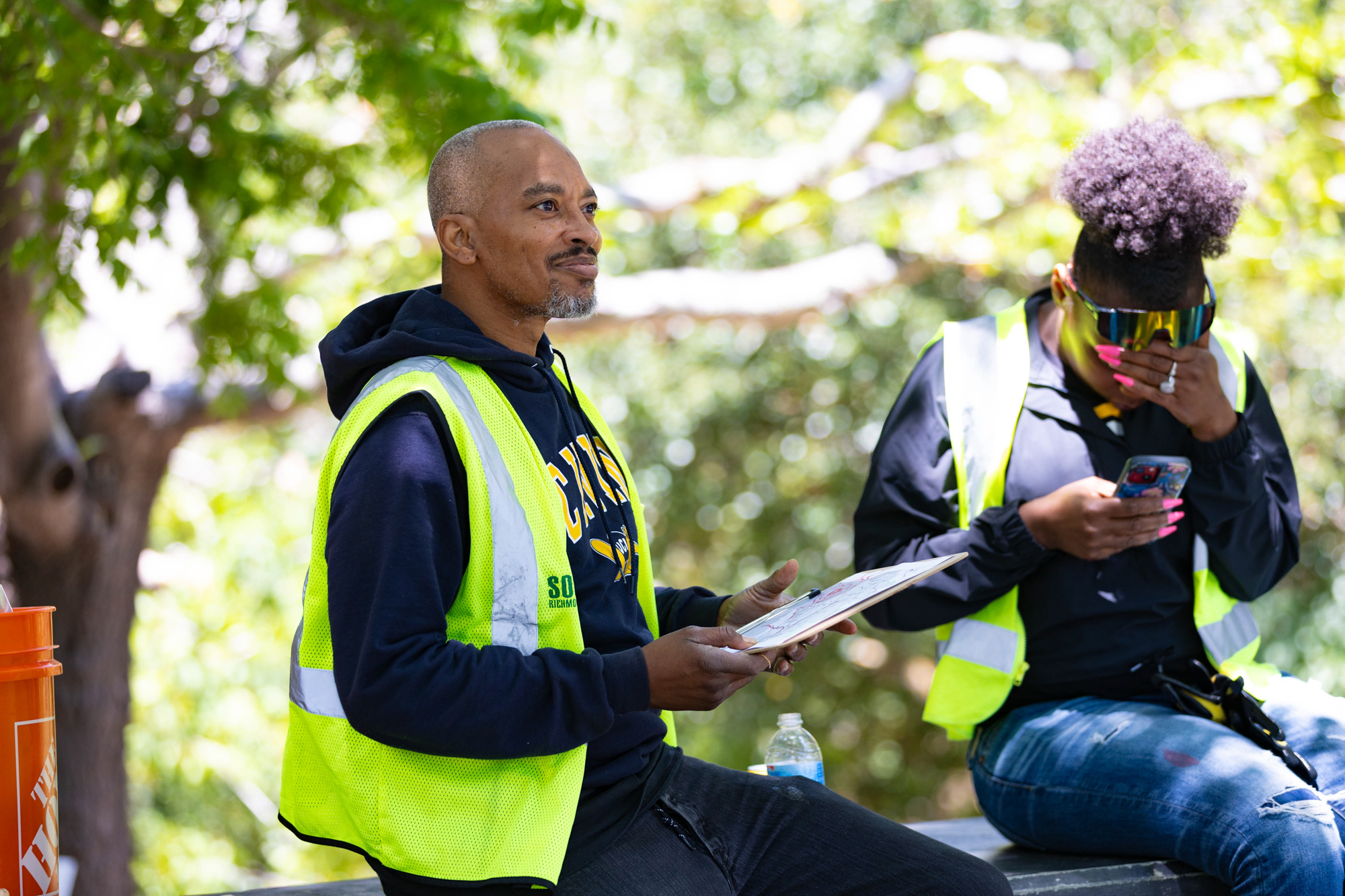
How a Bay Area Program Helps Unhoused Residents Become Protectors of Their Environment
Pinole Honors Punk Icons Green Day With Key to the City
East Bay Grandmother Facing Eviction Joins Forces With Land Trust to Buy Her Home — Thanks to New Law
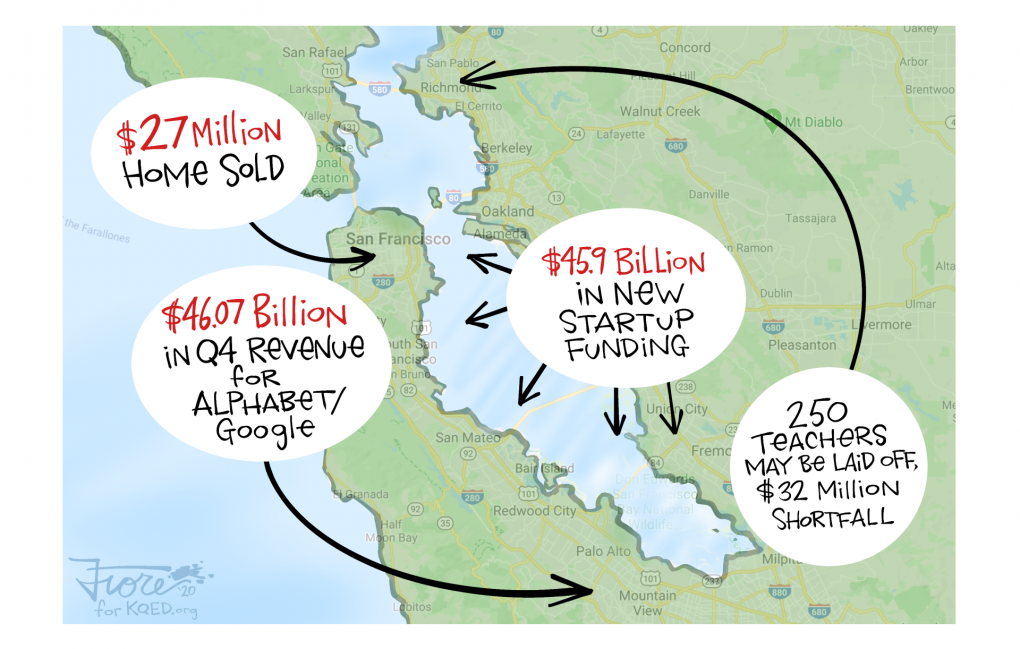
Layoffs and Budget Cuts Amid the Boom?
Ex-Deputy Who’s Now a Pinole Police Officer Paid for Sex, Was Accused of Abuse
Sponsored
Player sponsored by
window.__IS_SSR__=true
window.__INITIAL_STATE__={
"attachmentsReducer": {
"audio_0": {
"type": "attachments",
"id": "audio_0",
"imgSizes": {
"kqedFullSize": {
"file": "https://ww2.kqed.org/news/wp-content/themes/KQED-unified/img/audio_bgs/background0.jpg"
}
}
},
"audio_1": {
"type": "attachments",
"id": "audio_1",
"imgSizes": {
"kqedFullSize": {
"file": "https://ww2.kqed.org/news/wp-content/themes/KQED-unified/img/audio_bgs/background1.jpg"
}
}
},
"audio_2": {
"type": "attachments",
"id": "audio_2",
"imgSizes": {
"kqedFullSize": {
"file": "https://ww2.kqed.org/news/wp-content/themes/KQED-unified/img/audio_bgs/background2.jpg"
}
}
},
"audio_3": {
"type": "attachments",
"id": "audio_3",
"imgSizes": {
"kqedFullSize": {
"file": "https://ww2.kqed.org/news/wp-content/themes/KQED-unified/img/audio_bgs/background3.jpg"
}
}
},
"audio_4": {
"type": "attachments",
"id": "audio_4",
"imgSizes": {
"kqedFullSize": {
"file": "https://ww2.kqed.org/news/wp-content/themes/KQED-unified/img/audio_bgs/background4.jpg"
}
}
},
"placeholder": {
"type": "attachments",
"id": "placeholder",
"imgSizes": {
"thumbnail": {
"file": "https://cdn.kqed.org/wp-content/uploads/2024/12/KQED-Default-Image-816638274-2000x1333-1-160x107.jpg",
"width": 160,
"height": 107,
"mimeType": "image/jpeg"
},
"medium": {
"file": "https://cdn.kqed.org/wp-content/uploads/2024/12/KQED-Default-Image-816638274-2000x1333-1-800x533.jpg",
"width": 800,
"height": 533,
"mimeType": "image/jpeg"
},
"medium_large": {
"file": "https://cdn.kqed.org/wp-content/uploads/2024/12/KQED-Default-Image-816638274-2000x1333-1-768x512.jpg",
"width": 768,
"height": 512,
"mimeType": "image/jpeg"
},
"large": {
"file": "https://cdn.kqed.org/wp-content/uploads/2024/12/KQED-Default-Image-816638274-2000x1333-1-1020x680.jpg",
"width": 1020,
"height": 680,
"mimeType": "image/jpeg"
},
"1536x1536": {
"file": "https://cdn.kqed.org/wp-content/uploads/2024/12/KQED-Default-Image-816638274-2000x1333-1-1536x1024.jpg",
"width": 1536,
"height": 1024,
"mimeType": "image/jpeg"
},
"fd-lrg": {
"file": "https://cdn.kqed.org/wp-content/uploads/2024/12/KQED-Default-Image-816638274-2000x1333-1-1536x1024.jpg",
"width": 1536,
"height": 1024,
"mimeType": "image/jpeg"
},
"fd-med": {
"file": "https://cdn.kqed.org/wp-content/uploads/2024/12/KQED-Default-Image-816638274-2000x1333-1-1020x680.jpg",
"width": 1020,
"height": 680,
"mimeType": "image/jpeg"
},
"fd-sm": {
"file": "https://cdn.kqed.org/wp-content/uploads/2024/12/KQED-Default-Image-816638274-2000x1333-1-800x533.jpg",
"width": 800,
"height": 533,
"mimeType": "image/jpeg"
},
"post-thumbnail": {
"file": "https://cdn.kqed.org/wp-content/uploads/2024/12/KQED-Default-Image-816638274-2000x1333-1-672x372.jpg",
"width": 672,
"height": 372,
"mimeType": "image/jpeg"
},
"twentyfourteen-full-width": {
"file": "https://cdn.kqed.org/wp-content/uploads/2024/12/KQED-Default-Image-816638274-2000x1333-1-1038x576.jpg",
"width": 1038,
"height": 576,
"mimeType": "image/jpeg"
},
"xxsmall": {
"file": "https://cdn.kqed.org/wp-content/uploads/2024/12/KQED-Default-Image-816638274-2000x1333-1-160x107.jpg",
"width": 160,
"height": 107,
"mimeType": "image/jpeg"
},
"xsmall": {
"file": "https://cdn.kqed.org/wp-content/uploads/2024/12/KQED-Default-Image-816638274-2000x1333-1-672x372.jpg",
"width": 672,
"height": 372,
"mimeType": "image/jpeg"
},
"small": {
"file": "https://cdn.kqed.org/wp-content/uploads/2024/12/KQED-Default-Image-816638274-2000x1333-1-672x372.jpg",
"width": 672,
"height": 372,
"mimeType": "image/jpeg"
},
"xlarge": {
"file": "https://cdn.kqed.org/wp-content/uploads/2024/12/KQED-Default-Image-816638274-2000x1333-1-1020x680.jpg",
"width": 1020,
"height": 680,
"mimeType": "image/jpeg"
},
"full-width": {
"file": "https://cdn.kqed.org/wp-content/uploads/2024/12/KQED-Default-Image-816638274-2000x1333-1-1920x1280.jpg",
"width": 1920,
"height": 1280,
"mimeType": "image/jpeg"
},
"guest-author-32": {
"file": "https://cdn.kqed.org/wp-content/uploads/2025/01/KQED-Default-Image-816638274-1333x1333-1-160x160.jpg",
"width": 32,
"height": 32,
"mimeType": "image/jpeg"
},
"guest-author-50": {
"file": "https://cdn.kqed.org/wp-content/uploads/2025/01/KQED-Default-Image-816638274-1333x1333-1-160x160.jpg",
"width": 50,
"height": 50,
"mimeType": "image/jpeg"
},
"guest-author-64": {
"file": "https://cdn.kqed.org/wp-content/uploads/2025/01/KQED-Default-Image-816638274-1333x1333-1-160x160.jpg",
"width": 64,
"height": 64,
"mimeType": "image/jpeg"
},
"guest-author-96": {
"file": "https://cdn.kqed.org/wp-content/uploads/2025/01/KQED-Default-Image-816638274-1333x1333-1-160x160.jpg",
"width": 96,
"height": 96,
"mimeType": "image/jpeg"
},
"guest-author-128": {
"file": "https://cdn.kqed.org/wp-content/uploads/2025/01/KQED-Default-Image-816638274-1333x1333-1-160x160.jpg",
"width": 128,
"height": 128,
"mimeType": "image/jpeg"
},
"detail": {
"file": "https://cdn.kqed.org/wp-content/uploads/2025/01/KQED-Default-Image-816638274-1333x1333-1-160x160.jpg",
"width": 160,
"height": 160,
"mimeType": "image/jpeg"
},
"kqedFullSize": {
"file": "https://cdn.kqed.org/wp-content/uploads/2024/12/KQED-Default-Image-816638274-2000x1333-1.jpg",
"width": 2000,
"height": 1333
}
}
},
"news_12044676": {
"type": "attachments",
"id": "news_12044676",
"meta": {
"index": "attachments_1716263798",
"site": "news",
"id": "12044676",
"found": true
},
"title": "20250616_UNHOUSEDCREEKRESTORATION_GC-37-KQED",
"publishDate": 1750184018,
"status": "inherit",
"parent": 12058952,
"modified": 1760397367,
"caption": "Participants of the Pinole Creek Unhoused Stewards Pilot Program remove English Ivy, an invasive species, along Pinole Creek, in Pinole on June 16, 2025. Thousands of unhoused Californians live along streams, creeks and canals, often in conflict with environmental goals. The Pinole Creek Unhoused Stewards Pilot Program is betting it can be part of the solution.",
"credit": "Gina Castro/KQED",
"altTag": null,
"description": null,
"imgSizes": {
"thumbnail": {
"file": "https://cdn.kqed.org/wp-content/uploads/sites/10/2025/06/20250616_UNHOUSEDCREEKRESTORATION_GC-37-KQED-160x107.jpg",
"width": 160,
"height": 107,
"mimeType": "image/jpeg"
},
"1536x1536": {
"file": "https://cdn.kqed.org/wp-content/uploads/sites/10/2025/06/20250616_UNHOUSEDCREEKRESTORATION_GC-37-KQED-1536x1024.jpg",
"width": 1536,
"height": 1024,
"mimeType": "image/jpeg"
},
"post-thumbnail": {
"file": "https://cdn.kqed.org/wp-content/uploads/sites/10/2025/06/20250616_UNHOUSEDCREEKRESTORATION_GC-37-KQED-672x372.jpg",
"width": 672,
"height": 372,
"mimeType": "image/jpeg"
},
"twentyfourteen-full-width": {
"file": "https://cdn.kqed.org/wp-content/uploads/sites/10/2025/06/20250616_UNHOUSEDCREEKRESTORATION_GC-37-KQED-1038x576.jpg",
"width": 1038,
"height": 576,
"mimeType": "image/jpeg"
},
"kqedFullSize": {
"file": "https://cdn.kqed.org/wp-content/uploads/sites/10/2025/06/20250616_UNHOUSEDCREEKRESTORATION_GC-37-KQED.jpg",
"width": 2000,
"height": 1333
}
},
"fetchFailed": false,
"isLoading": false
},
"news_12005875": {
"type": "attachments",
"id": "news_12005875",
"meta": {
"index": "attachments_1716263798",
"site": "news",
"id": "12005875",
"found": true
},
"title": "20240922_GreenDayPinole_GC-59_qed",
"publishDate": 1727052499,
"status": "inherit",
"parent": 12005849,
"modified": 1727116976,
"caption": "Punk rock band Green Day holds Punk Bunny cups, the band’s coffee brand, celebrating the 30th anniversary of the band’s breakout album 'Dookie' and the 60th anniversary of 7-Eleven’s on-the-go coffee, outside of a 7-Eleven in Pinole, the band’s go-to-spot in high school, on Sept. 22, 2024.",
"credit": "Gina Castro/KQED",
"altTag": "Three men wearing black jackets and sunglasses hold coffee cups and a plaque with a key on it in front of a 7-Eleven store.",
"description": null,
"imgSizes": {
"medium": {
"file": "https://cdn.kqed.org/wp-content/uploads/sites/10/2024/09/20240922_GreenDayPinole_GC-59_qed-800x533.jpg",
"width": 800,
"height": 533,
"mimeType": "image/jpeg"
},
"large": {
"file": "https://cdn.kqed.org/wp-content/uploads/sites/10/2024/09/20240922_GreenDayPinole_GC-59_qed-1020x680.jpg",
"width": 1020,
"height": 680,
"mimeType": "image/jpeg"
},
"thumbnail": {
"file": "https://cdn.kqed.org/wp-content/uploads/sites/10/2024/09/20240922_GreenDayPinole_GC-59_qed-160x107.jpg",
"width": 160,
"height": 107,
"mimeType": "image/jpeg"
},
"1536x1536": {
"file": "https://cdn.kqed.org/wp-content/uploads/sites/10/2024/09/20240922_GreenDayPinole_GC-59_qed-1536x1024.jpg",
"width": 1536,
"height": 1024,
"mimeType": "image/jpeg"
},
"post-thumbnail": {
"file": "https://cdn.kqed.org/wp-content/uploads/sites/10/2024/09/20240922_GreenDayPinole_GC-59_qed-672x372.jpg",
"width": 672,
"height": 372,
"mimeType": "image/jpeg"
},
"twentyfourteen-full-width": {
"file": "https://cdn.kqed.org/wp-content/uploads/sites/10/2024/09/20240922_GreenDayPinole_GC-59_qed-1038x576.jpg",
"width": 1038,
"height": 576,
"mimeType": "image/jpeg"
},
"full-width": {
"file": "https://cdn.kqed.org/wp-content/uploads/sites/10/2024/09/20240922_GreenDayPinole_GC-59_qed-1920x1280.jpg",
"width": 1920,
"height": 1280,
"mimeType": "image/jpeg"
},
"kqedFullSize": {
"file": "https://cdn.kqed.org/wp-content/uploads/sites/10/2024/09/20240922_GreenDayPinole_GC-59_qed.jpg",
"width": 2000,
"height": 1333
}
},
"fetchFailed": false,
"isLoading": false
},
"news_11871096": {
"type": "attachments",
"id": "news_11871096",
"meta": {
"index": "attachments_1716263798",
"site": "news",
"id": "11871096",
"found": true
},
"parent": 11871064,
"imgSizes": {
"twentyfourteen-full-width": {
"file": "https://ww2.kqed.org/app/uploads/sites/10/2021/04/RS48808_047_Berkeley_JocelynForemanSigningCeremony_04232021-qut-1038x576.jpg",
"width": 1038,
"mimeType": "image/jpeg",
"height": 576
},
"thumbnail": {
"file": "https://ww2.kqed.org/app/uploads/sites/10/2021/04/RS48808_047_Berkeley_JocelynForemanSigningCeremony_04232021-qut-160x107.jpg",
"width": 160,
"mimeType": "image/jpeg",
"height": 107
},
"post-thumbnail": {
"file": "https://ww2.kqed.org/app/uploads/sites/10/2021/04/RS48808_047_Berkeley_JocelynForemanSigningCeremony_04232021-qut-672x372.jpg",
"width": 672,
"mimeType": "image/jpeg",
"height": 372
},
"kqedFullSize": {
"file": "https://ww2.kqed.org/app/uploads/sites/10/2021/04/RS48808_047_Berkeley_JocelynForemanSigningCeremony_04232021-qut.jpg",
"width": 1920,
"height": 1280
},
"large": {
"file": "https://ww2.kqed.org/app/uploads/sites/10/2021/04/RS48808_047_Berkeley_JocelynForemanSigningCeremony_04232021-qut-1020x680.jpg",
"width": 1020,
"mimeType": "image/jpeg",
"height": 680
},
"1536x1536": {
"file": "https://ww2.kqed.org/app/uploads/sites/10/2021/04/RS48808_047_Berkeley_JocelynForemanSigningCeremony_04232021-qut-1536x1024.jpg",
"width": 1536,
"mimeType": "image/jpeg",
"height": 1024
},
"medium": {
"file": "https://ww2.kqed.org/app/uploads/sites/10/2021/04/RS48808_047_Berkeley_JocelynForemanSigningCeremony_04232021-qut-800x533.jpg",
"width": 800,
"mimeType": "image/jpeg",
"height": 533
}
},
"publishDate": 1619367620,
"modified": 1619367646,
"caption": "Jocelyn Foreman poses with a Community Land Trust agreement during a signing ceremony and celebration at Malcolm X Elementary School in Berkeley on April 23, 2021.",
"description": "Jocelyn Foreman poses with a Community Land Trust agreement during a signing ceremony and celebration at Malcolm X Elementary School in Berkeley on April 23, 2021.",
"title": "RS48808_047_Berkeley_JocelynForemanSigningCeremony_04232021-qut",
"credit": "Beth LaBerge/KQED",
"status": "inherit",
"altTag": null,
"fetchFailed": false,
"isLoading": false
},
"news_11800728": {
"type": "attachments",
"id": "news_11800728",
"meta": {
"index": "attachments_1716263798",
"site": "news",
"id": "11800728",
"found": true
},
"parent": 11800722,
"imgSizes": {
"apple_news_ca_landscape_5_5": {
"file": "https://ww2.kqed.org/app/uploads/sites/10/2020/02/layoffs_020720_final_MF-1044x783.png",
"width": 1044,
"mimeType": "image/png",
"height": 783
},
"apple_news_ca_square_4_0": {
"file": "https://ww2.kqed.org/app/uploads/sites/10/2020/02/layoffs_020720_final_MF-470x470.png",
"width": 470,
"mimeType": "image/png",
"height": 470
},
"twentyfourteen-full-width": {
"file": "https://ww2.kqed.org/app/uploads/sites/10/2020/02/layoffs_020720_final_MF-1038x576.png",
"width": 1038,
"mimeType": "image/png",
"height": 576
},
"thumbnail": {
"file": "https://ww2.kqed.org/app/uploads/sites/10/2020/02/layoffs_020720_final_MF-160x102.png",
"width": 160,
"mimeType": "image/png",
"height": 102
},
"post-thumbnail": {
"file": "https://ww2.kqed.org/app/uploads/sites/10/2020/02/layoffs_020720_final_MF-672x372.png",
"width": 672,
"mimeType": "image/png",
"height": 372
},
"kqedFullSize": {
"file": "https://ww2.kqed.org/app/uploads/sites/10/2020/02/layoffs_020720_final_MF.png",
"width": 1920,
"height": 1222
},
"apple_news_ca_landscape_4_7": {
"file": "https://ww2.kqed.org/app/uploads/sites/10/2020/02/layoffs_020720_final_MF-632x474.png",
"width": 632,
"mimeType": "image/png",
"height": 474
},
"large": {
"file": "https://ww2.kqed.org/app/uploads/sites/10/2020/02/layoffs_020720_final_MF-1020x649.png",
"width": 1020,
"mimeType": "image/png",
"height": 649
},
"apple_news_ca_landscape_4_0": {
"file": "https://ww2.kqed.org/app/uploads/sites/10/2020/02/layoffs_020720_final_MF-536x402.png",
"width": 536,
"mimeType": "image/png",
"height": 402
},
"apple_news_ca_portrait_12_9": {
"file": "https://ww2.kqed.org/app/uploads/sites/10/2020/02/layoffs_020720_final_MF-1122x1222.png",
"width": 1122,
"mimeType": "image/png",
"height": 1222
},
"medium": {
"file": "https://ww2.kqed.org/app/uploads/sites/10/2020/02/layoffs_020720_final_MF-800x509.png",
"width": 800,
"mimeType": "image/png",
"height": 509
},
"apple_news_ca_portrait_4_0": {
"file": "https://ww2.kqed.org/app/uploads/sites/10/2020/02/layoffs_020720_final_MF-354x472.png",
"width": 354,
"mimeType": "image/png",
"height": 472
},
"apple_news_ca_portrait_9_7": {
"file": "https://ww2.kqed.org/app/uploads/sites/10/2020/02/layoffs_020720_final_MF-840x1120.png",
"width": 840,
"mimeType": "image/png",
"height": 1120
},
"apple_news_ca_landscape_12_9": {
"file": "https://ww2.kqed.org/app/uploads/sites/10/2020/02/layoffs_020720_final_MF-1832x1222.png",
"width": 1832,
"mimeType": "image/png",
"height": 1222
},
"apple_news_ca_square_9_7": {
"file": "https://ww2.kqed.org/app/uploads/sites/10/2020/02/layoffs_020720_final_MF-1104x1104.png",
"width": 1104,
"mimeType": "image/png",
"height": 1104
},
"apple_news_ca_portrait_4_7": {
"file": "https://ww2.kqed.org/app/uploads/sites/10/2020/02/layoffs_020720_final_MF-414x552.png",
"width": 414,
"mimeType": "image/png",
"height": 552
},
"apple_news_ca_square_12_9": {
"file": "https://ww2.kqed.org/app/uploads/sites/10/2020/02/layoffs_020720_final_MF-1472x1222.png",
"width": 1472,
"mimeType": "image/png",
"height": 1222
},
"apple_news_ca_portrait_5_5": {
"file": "https://ww2.kqed.org/app/uploads/sites/10/2020/02/layoffs_020720_final_MF-687x916.png",
"width": 687,
"mimeType": "image/png",
"height": 916
},
"full-width": {
"file": "https://ww2.kqed.org/app/uploads/sites/10/2020/02/layoffs_020720_final_MF-1920x1222.png",
"width": 1920,
"mimeType": "image/png",
"height": 1222
},
"apple_news_ca_square_4_7": {
"file": "https://ww2.kqed.org/app/uploads/sites/10/2020/02/layoffs_020720_final_MF-550x550.png",
"width": 550,
"mimeType": "image/png",
"height": 550
},
"apple_news_ca_landscape_9_7": {
"file": "https://ww2.kqed.org/app/uploads/sites/10/2020/02/layoffs_020720_final_MF-1376x1032.png",
"width": 1376,
"mimeType": "image/png",
"height": 1032
},
"apple_news_ca_square_5_5": {
"file": "https://ww2.kqed.org/app/uploads/sites/10/2020/02/layoffs_020720_final_MF-912x912.png",
"width": 912,
"mimeType": "image/png",
"height": 912
}
},
"publishDate": 1581120438,
"modified": 1581120493,
"caption": null,
"description": null,
"title": "layoffs_020720_final_MF",
"credit": null,
"status": "inherit",
"fetchFailed": false,
"isLoading": false
},
"news_11761105": {
"type": "attachments",
"id": "news_11761105",
"meta": {
"index": "attachments_1716263798",
"site": "news",
"id": "11761105",
"found": true
},
"parent": 11761103,
"imgSizes": {
"apple_news_ca_landscape_5_5": {
"file": "https://ww2.kqed.org/app/uploads/sites/10/2019/07/iStock-958707058-1044x783.jpg",
"width": 1044,
"mimeType": "image/jpeg",
"height": 783
},
"apple_news_ca_square_4_0": {
"file": "https://ww2.kqed.org/app/uploads/sites/10/2019/07/iStock-958707058-470x470.jpg",
"width": 470,
"mimeType": "image/jpeg",
"height": 470
},
"twentyfourteen-full-width": {
"file": "https://ww2.kqed.org/app/uploads/sites/10/2019/07/iStock-958707058-1038x576.jpg",
"width": 1038,
"mimeType": "image/jpeg",
"height": 576
},
"thumbnail": {
"file": "https://ww2.kqed.org/app/uploads/sites/10/2019/07/iStock-958707058-160x90.jpg",
"width": 160,
"mimeType": "image/jpeg",
"height": 90
},
"post-thumbnail": {
"file": "https://ww2.kqed.org/app/uploads/sites/10/2019/07/iStock-958707058-672x372.jpg",
"width": 672,
"mimeType": "image/jpeg",
"height": 372
},
"kqedFullSize": {
"file": "https://ww2.kqed.org/app/uploads/sites/10/2019/07/iStock-958707058.jpg",
"width": 1920,
"height": 1075
},
"apple_news_ca_landscape_4_7": {
"file": "https://ww2.kqed.org/app/uploads/sites/10/2019/07/iStock-958707058-632x474.jpg",
"width": 632,
"mimeType": "image/jpeg",
"height": 474
},
"large": {
"file": "https://ww2.kqed.org/app/uploads/sites/10/2019/07/iStock-958707058-1020x571.jpg",
"width": 1020,
"mimeType": "image/jpeg",
"height": 571
},
"complete_open_graph": {
"file": "https://ww2.kqed.org/app/uploads/sites/10/2019/07/iStock-958707058-1200x672.jpg",
"width": 1200,
"mimeType": "image/jpeg",
"height": 672
},
"apple_news_ca_landscape_4_0": {
"file": "https://ww2.kqed.org/app/uploads/sites/10/2019/07/iStock-958707058-536x402.jpg",
"width": 536,
"mimeType": "image/jpeg",
"height": 402
},
"apple_news_ca_portrait_12_9": {
"file": "https://ww2.kqed.org/app/uploads/sites/10/2019/07/iStock-958707058-1122x1075.jpg",
"width": 1122,
"mimeType": "image/jpeg",
"height": 1075
},
"medium": {
"file": "https://ww2.kqed.org/app/uploads/sites/10/2019/07/iStock-958707058-800x448.jpg",
"width": 800,
"mimeType": "image/jpeg",
"height": 448
},
"apple_news_ca_portrait_4_0": {
"file": "https://ww2.kqed.org/app/uploads/sites/10/2019/07/iStock-958707058-354x472.jpg",
"width": 354,
"mimeType": "image/jpeg",
"height": 472
},
"apple_news_ca_portrait_9_7": {
"file": "https://ww2.kqed.org/app/uploads/sites/10/2019/07/iStock-958707058-840x1075.jpg",
"width": 840,
"mimeType": "image/jpeg",
"height": 1075
},
"apple_news_ca_landscape_12_9": {
"file": "https://ww2.kqed.org/app/uploads/sites/10/2019/07/iStock-958707058-1832x1075.jpg",
"width": 1832,
"mimeType": "image/jpeg",
"height": 1075
},
"apple_news_ca_square_9_7": {
"file": "https://ww2.kqed.org/app/uploads/sites/10/2019/07/iStock-958707058-1104x1075.jpg",
"width": 1104,
"mimeType": "image/jpeg",
"height": 1075
},
"apple_news_ca_portrait_4_7": {
"file": "https://ww2.kqed.org/app/uploads/sites/10/2019/07/iStock-958707058-414x552.jpg",
"width": 414,
"mimeType": "image/jpeg",
"height": 552
},
"apple_news_ca_square_12_9": {
"file": "https://ww2.kqed.org/app/uploads/sites/10/2019/07/iStock-958707058-1472x1075.jpg",
"width": 1472,
"mimeType": "image/jpeg",
"height": 1075
},
"apple_news_ca_portrait_5_5": {
"file": "https://ww2.kqed.org/app/uploads/sites/10/2019/07/iStock-958707058-687x916.jpg",
"width": 687,
"mimeType": "image/jpeg",
"height": 916
},
"full-width": {
"file": "https://ww2.kqed.org/app/uploads/sites/10/2019/07/iStock-958707058-1920x1075.jpg",
"width": 1920,
"mimeType": "image/jpeg",
"height": 1075
},
"apple_news_ca_square_4_7": {
"file": "https://ww2.kqed.org/app/uploads/sites/10/2019/07/iStock-958707058-550x550.jpg",
"width": 550,
"mimeType": "image/jpeg",
"height": 550
},
"apple_news_ca_landscape_9_7": {
"file": "https://ww2.kqed.org/app/uploads/sites/10/2019/07/iStock-958707058-1376x1032.jpg",
"width": 1376,
"mimeType": "image/jpeg",
"height": 1032
},
"apple_news_ca_square_5_5": {
"file": "https://ww2.kqed.org/app/uploads/sites/10/2019/07/iStock-958707058-912x912.jpg",
"width": 912,
"mimeType": "image/jpeg",
"height": 912
}
},
"publishDate": 1563036410,
"modified": 1563036447,
"caption": null,
"description": null,
"title": "police siren off",
"credit": "iStock/Getty Images",
"status": "inherit",
"fetchFailed": false,
"isLoading": false
}
},
"audioPlayerReducer": {
"postId": "stream_live",
"isPaused": true,
"isPlaying": false,
"pfsActive": false,
"pledgeModalIsOpen": true,
"playerDrawerIsOpen": false
},
"authorsReducer": {
"byline_news_11761103": {
"type": "authors",
"id": "byline_news_11761103",
"meta": {
"override": true
},
"slug": "byline_news_11761103",
"name": "\u003ca href=\"https://www.mercurynews.com/author/thomas-peele/\" rel=\"noopener\" target=\"_blank\">Thomas Peele\u003c/a>, \u003ca href=\"https://www.eastbaytimes.com/author/nate-gartrell/\" rel=\"noopener\" target=\"_blank\">Nate Gartrell\u003c/a>\u003cbr />Bay Area News Group",
"isLoading": false
},
"kqed": {
"type": "authors",
"id": "236",
"meta": {
"index": "authors_1716337520",
"id": "236",
"found": true
},
"name": "KQED News Staff",
"firstName": "KQED News Staff",
"lastName": null,
"slug": "kqed",
"email": "faq@kqed.org",
"display_author_email": false,
"staff_mastheads": [],
"title": null,
"bio": null,
"avatar": "https://secure.gravatar.com/avatar/ef0e801a68c4c54afa9180db14084167?s=600&d=blank&r=g",
"twitter": null,
"facebook": null,
"instagram": null,
"linkedin": null,
"sites": [
{
"site": "arts",
"roles": [
"contributor"
]
},
{
"site": "news",
"roles": [
"editor"
]
},
{
"site": "futureofyou",
"roles": [
"author"
]
}
],
"headData": {
"title": "KQED News Staff | KQED",
"description": null,
"ogImgSrc": "https://secure.gravatar.com/avatar/ef0e801a68c4c54afa9180db14084167?s=600&d=blank&r=g",
"twImgSrc": "https://secure.gravatar.com/avatar/ef0e801a68c4c54afa9180db14084167?s=600&d=blank&r=g"
},
"isLoading": false,
"link": "/author/kqed"
},
"markfiore": {
"type": "authors",
"id": "3236",
"meta": {
"index": "authors_1716337520",
"id": "3236",
"found": true
},
"name": "Mark Fiore",
"firstName": "Mark",
"lastName": "Fiore",
"slug": "markfiore",
"email": "mark@markfiore.com",
"display_author_email": false,
"staff_mastheads": [
"news"
],
"title": "KQED News Cartoonist",
"bio": "\u003ca href=\"http://www.MarkFiore.com\">MarkFiore.com\u003c/a> | \u003ca href=\"https://twitter.com/markfiore\">Follow on Twitter\u003c/a> | \u003ca href=\"https://www.facebook.com/pages/Mark-Fiore-Animated-Political-Cartoons/94451707396?ref=bookmarks\">Facebook\u003c/a> | \u003ca href=\"mailto:mark@markfiore.com\">email\u003c/a>\r\n\r\nPulitzer Prize-winner, Mark Fiore, who the Wall Street Journal has called “the undisputed guru of the form,” creates animated political cartoons in San Francisco, where his work has been featured regularly on the San Francisco Chronicle’s web site, SFGate.com. His work has appeared on Newsweek.com, Slate.com, CBSNews.com, MotherJones.com, DailyKos.com and NPR’s web site. Fiore’s political animation has appeared on CNN, Frontline, Bill Moyers Journal, Salon.com and cable and broadcast outlets across the globe.\r\n\r\nBeginning his professional life by drawing traditional political cartoons for newspapers, Fiore’s work appeared in publications ranging from the Washington Post to the Los Angeles Times. In the late 1990s, he began to experiment with animating political cartoons and, after a short stint at the San Jose Mercury News as their staff cartoonist, Fiore devoted all his energies to animation.\r\nGrowing up in California, Fiore also spent a good portion of his life in the backwoods of Idaho. It was this combination that shaped him politically. Mark majored in political science at Colorado College, where, in a perfect send-off for a cartoonist, he received his diploma in 1991 as commencement speaker Dick Cheney smiled approvingly.\r\nMark Fiore was awarded the Pulitzer Prize for political cartooning in 2010, a Robert F. Kennedy Journalism Award in 2004 and has twice received an Online Journalism Award for commentary from the Online News Association (2002, 2008). Fiore has received two awards for his work in new media from the National Cartoonists Society (2001, 2002), and in 2006 received The James Madison Freedom of Information Award from The Society of Professional Journalists.",
"avatar": "https://secure.gravatar.com/avatar/fc4e2a612b15b67bad0c6f0e1db4ca9b?s=600&d=blank&r=g",
"twitter": "MarkFiore",
"facebook": null,
"instagram": "https://www.instagram.com/markfiore/?hl=en",
"linkedin": null,
"sites": [
{
"site": "arts",
"roles": [
"contributor"
]
},
{
"site": "news",
"roles": [
"editor"
]
},
{
"site": "futureofyou",
"roles": [
"editor"
]
},
{
"site": "science",
"roles": [
"editor"
]
}
],
"headData": {
"title": "Mark Fiore | KQED",
"description": "KQED News Cartoonist",
"ogImgSrc": "https://secure.gravatar.com/avatar/fc4e2a612b15b67bad0c6f0e1db4ca9b?s=600&d=blank&r=g",
"twImgSrc": "https://secure.gravatar.com/avatar/fc4e2a612b15b67bad0c6f0e1db4ca9b?s=600&d=blank&r=g"
},
"isLoading": false,
"link": "/author/markfiore"
},
"vrancano": {
"type": "authors",
"id": "11276",
"meta": {
"index": "authors_1716337520",
"id": "11276",
"found": true
},
"name": "Vanessa Rancaño",
"firstName": "Vanessa",
"lastName": "Rancaño",
"slug": "vrancano",
"email": "vrancano@kqed.org",
"display_author_email": false,
"staff_mastheads": [
"news"
],
"title": "Reporter, Housing",
"bio": "Vanessa Rancaño reports on housing and homelessness for KQED. She’s also covered education for the station and reported from the Central Valley. Her work has aired across public radio, from flagship national news shows to longform narrative podcasts. Before taking up a mic, she worked as a freelance print journalist. She’s been recognized with a number of national and regional awards. Vanessa grew up in California's Central Valley. She's a former NPR Kroc Fellow, and a graduate of the UC Berkeley Graduate School of Journalism.",
"avatar": "https://secure.gravatar.com/avatar/f6c0fc5d391c78710bcfc723f0636ef6?s=600&d=blank&r=g",
"twitter": "vanessarancano",
"facebook": null,
"instagram": null,
"linkedin": null,
"sites": [
{
"site": "arts",
"roles": [
"editor"
]
},
{
"site": "news",
"roles": [
"editor"
]
}
],
"headData": {
"title": "Vanessa Rancaño | KQED",
"description": "Reporter, Housing",
"ogImgSrc": "https://secure.gravatar.com/avatar/f6c0fc5d391c78710bcfc723f0636ef6?s=600&d=blank&r=g",
"twImgSrc": "https://secure.gravatar.com/avatar/f6c0fc5d391c78710bcfc723f0636ef6?s=600&d=blank&r=g"
},
"isLoading": false,
"link": "/author/vrancano"
},
"ebaldassari": {
"type": "authors",
"id": "11652",
"meta": {
"index": "authors_1716337520",
"id": "11652",
"found": true
},
"name": "Erin Baldassari",
"firstName": "Erin",
"lastName": "Baldassari",
"slug": "ebaldassari",
"email": "ebaldassari@KQED.org",
"display_author_email": true,
"staff_mastheads": [
"news"
],
"title": "Staff Writer",
"bio": "Erin Baldassari covers housing for KQED. She's a former print journalist and most recently worked as the transportation reporter for the \u003cem>Mercury News\u003c/em> and \u003cem>East Bay Times. \u003c/em>There, she focused on how the Bay Area’s housing shortage has changed the way people move around the region. She also served on the \u003cem>East Bay Times\u003c/em>’ 2017 Pulitzer Prize-winning team for coverage of the Ghost Ship Fire in Oakland. Prior to that, Erin worked as a breaking news and general assignment reporter for a variety of outlets in the Bay Area and the greater Boston area. A Tufts University alumna, Erin grew up in the foothills of the Sierra Nevada mountains and in Sonoma County. She is a life-long KQED listener.",
"avatar": "https://secure.gravatar.com/avatar/660ce35d088ca54ad606d7e941abc652?s=600&d=mm&r=g",
"twitter": "e_baldi",
"facebook": null,
"instagram": null,
"linkedin": null,
"sites": [
{
"site": "news",
"roles": [
"edit_others_posts",
"editor"
]
},
{
"site": "science",
"roles": [
"editor"
]
},
{
"site": "liveblog",
"roles": [
"editor"
]
}
],
"headData": {
"title": "Erin Baldassari | KQED",
"description": "Staff Writer",
"ogImgSrc": "https://secure.gravatar.com/avatar/660ce35d088ca54ad606d7e941abc652?s=600&d=mm&r=g",
"twImgSrc": "https://secure.gravatar.com/avatar/660ce35d088ca54ad606d7e941abc652?s=600&d=mm&r=g"
},
"isLoading": false,
"link": "/author/ebaldassari"
}
},
"breakingNewsReducer": {},
"pagesReducer": {},
"postsReducer": {
"stream_live": {
"type": "live",
"id": "stream_live",
"audioUrl": "https://streams.kqed.org/kqedradio",
"title": "Live Stream",
"excerpt": "Live Stream information currently unavailable.",
"link": "/radio",
"featImg": "",
"label": {
"name": "KQED Live",
"link": "/"
}
},
"stream_kqedNewscast": {
"type": "posts",
"id": "stream_kqedNewscast",
"audioUrl": "https://www.kqed.org/.stream/anon/radio/RDnews/newscast.mp3?_=1",
"title": "KQED Newscast",
"featImg": "",
"label": {
"name": "88.5 FM",
"link": "/"
}
},
"news_12058952": {
"type": "posts",
"id": "news_12058952",
"meta": {
"index": "posts_1716263798",
"site": "news",
"id": "12058952",
"score": null,
"sort": [
1760716847000
]
},
"guestAuthors": [],
"slug": "encampments-are-polluting-bay-area-creeks-can-those-who-live-there-help-restore-them",
"title": "How a Bay Area Program Helps Unhoused Residents Become Protectors of Their Environment",
"publishDate": 1760716847,
"format": "standard",
"headTitle": "How a Bay Area Program Helps Unhoused Residents Become Protectors of Their Environment | KQED",
"labelTerm": {
"site": "news"
},
"content": "\u003cp>Outside his tent, among the dead leaves and saplings, Eric Adams keeps a neat stack of bags stuffed with garbage.\u003c/p>\n\u003cp>“I just try to pick it up and try to do the best that I can,” he said.\u003c/p>\n\u003cp>Adams is one of twenty-some people who live on a wooded strip of land tucked between a freeway and a busy street in \u003ca href=\"https://www.kqed.org/news/tag/el-sobrante\">El Sobrante\u003c/a>.\u003c/p>\n\u003cp>The 48-year-old keeps his patch tidy, but all around him the ground is strewn with plastic bags, food wrappers, even a mattress and a tire. He’s so fed up that he’s started confronting his neighbors.\u003c/p>\n\u003cp>[ad fullwidth]\u003c/p>\n\u003cp>“I’m like, ‘This is nasty,’” he said. “‘I don’t want to pick up this mess for you to throw it all back.’”\u003c/p>\n\u003cp>Adams doesn’t just pick up garbage. He pulls debris from the creek nearby and yanks out invasive ivy, “because I enjoy it,” he said.\u003c/p>\n\u003cp>He wasn’t always like this.\u003c/p>\n\u003cp>“I never thought I would give a damn,” he said. “I’m aware now.”\u003c/p>\n\u003cfigure id=\"attachment_12044675\" class=\"wp-caption aligncenter\" style=\"max-width: 2000px\">\u003cimg loading=\"lazy\" decoding=\"async\" class=\"size-full wp-image-12044675\" src=\"https://cdn.kqed.org/wp-content/uploads/sites/10/2025/06/20250616_UNHOUSEDCREEKRESTORATION_GC-34-KQED.jpg\" alt=\"\" width=\"2000\" height=\"1333\" srcset=\"https://cdn.kqed.org/wp-content/uploads/sites/10/2025/06/20250616_UNHOUSEDCREEKRESTORATION_GC-34-KQED.jpg 2000w, https://cdn.kqed.org/wp-content/uploads/sites/10/2025/06/20250616_UNHOUSEDCREEKRESTORATION_GC-34-KQED-160x107.jpg 160w, https://cdn.kqed.org/wp-content/uploads/sites/10/2025/06/20250616_UNHOUSEDCREEKRESTORATION_GC-34-KQED-1536x1024.jpg 1536w\" sizes=\"auto, (max-width: 2000px) 100vw, 2000px\">\u003cfigcaption class=\"wp-caption-text\">Participants of the Pinole Creek Unhoused Stewards Pilot Program remove English Ivy, an invasive species, along Pinole Creek, in Pinole on June 16, 2025. \u003ccite>(Gina Castro/KQED)\u003c/cite>\u003c/figcaption>\u003c/figure>\n\u003cp>That changed after Adams joined a pilot program teaching unhoused residents ecological literacy and creek restoration. It’s a novel approach to addressing the environmental harms brought on by the growing number of people setting up camp along creeks and canals as homelessness surges in California.\u003c/p>\n\u003cp>The eight-week program was put on this summer by the Contra Costa Resource Conservation District, the nonprofit \u003ca href=\"https://www.motherjones.com/politics/2025/05/sos-richmond-housing-crisis-california-homelessness/\">Safe Organized Spaces Richmond\u003c/a> and a pair of researchers. It’s part of \u003ca href=\"https://pasternack.ucdavis.edu/research/projects/stream-side-encampments\">a larger study\u003c/a> examining the intersection of homelessness, climate change, and urban streams across the Bay Area’s nine counties.\u003c/p>\n\u003cp>The researchers estimate 10% of California’s unhoused population — about 18,700 people — lives along waterways. In the absence of enough affordable housing and shelter, it feels like the best of bad options for many.\u003c/p>\n\u003cfigure id=\"attachment_12044669\" class=\"wp-caption aligncenter\" style=\"max-width: 2000px\">\u003cimg loading=\"lazy\" decoding=\"async\" class=\"wp-image-12044669 size-full\" src=\"https://cdn.kqed.org/wp-content/uploads/sites/10/2025/06/20250616_UNHOUSEDCREEKRESTORATION_GC-13-KQED.jpg\" alt=\"\" width=\"2000\" height=\"1333\" srcset=\"https://cdn.kqed.org/wp-content/uploads/sites/10/2025/06/20250616_UNHOUSEDCREEKRESTORATION_GC-13-KQED.jpg 2000w, https://cdn.kqed.org/wp-content/uploads/sites/10/2025/06/20250616_UNHOUSEDCREEKRESTORATION_GC-13-KQED-160x107.jpg 160w, https://cdn.kqed.org/wp-content/uploads/sites/10/2025/06/20250616_UNHOUSEDCREEKRESTORATION_GC-13-KQED-1536x1024.jpg 1536w\" sizes=\"auto, (max-width: 2000px) 100vw, 2000px\">\u003cfigcaption class=\"wp-caption-text\">A sign reading “Pinole Creek don’t trash it” is posted by Pinole Creek in Pinole on June 16, 2025. \u003ccite>(Gina Castro/KQED)\u003c/cite>\u003c/figcaption>\u003c/figure>\n\u003cp>“People like to be along streams because they’re out of sight, out of mind,” said Costanza Rampini, an environmental studies professor at San José State University and one of the study leads. She and her students interviewed more than 300 people living along waterways. “They’re not on our sidewalks where they’re going to be confronted more with local residents, with local law enforcement.”\u003c/p>\n\u003cp>That’s even more true since cities started cracking down on encampments last year. But people are also seeking out water for drinking, bathing and washing clothes, and for shade and softer ground to sleep on.\u003c/p>\n\u003cp>“The problem is it’s polluting the water,” said Eileen White, executive officer of the San Francisco Bay Regional Water Quality Control Board. “We want to protect our waterways, for the beauty, for the environment, for the wildlife.”\u003c/p>\n\u003ch2>Stewards of their streams\u003c/h2>\n\u003cp>The pilot program Adams joined was designed to test whether encampment residents could become partners in protecting streams.\u003c/p>\n\u003cp>Rampini’s hope is that the program can benefit the environment while improving people’s well-being and helping them stabilize their lives. “Can we provide opportunities for them to maybe make some income and feel a sense of usefulness and agency?” she said.\u003c/p>\n\u003cfigure id=\"attachment_12044672\" class=\"wp-caption aligncenter\" style=\"max-width: 2000px\">\u003cimg loading=\"lazy\" decoding=\"async\" class=\"size-full wp-image-12044672\" src=\"https://cdn.kqed.org/wp-content/uploads/sites/10/2025/06/20250616_UNHOUSEDCREEKRESTORATION_GC-20-KQED.jpg\" alt=\"\" width=\"2000\" height=\"1333\" srcset=\"https://cdn.kqed.org/wp-content/uploads/sites/10/2025/06/20250616_UNHOUSEDCREEKRESTORATION_GC-20-KQED.jpg 2000w, https://cdn.kqed.org/wp-content/uploads/sites/10/2025/06/20250616_UNHOUSEDCREEKRESTORATION_GC-20-KQED-160x107.jpg 160w, https://cdn.kqed.org/wp-content/uploads/sites/10/2025/06/20250616_UNHOUSEDCREEKRESTORATION_GC-20-KQED-1536x1024.jpg 1536w\" sizes=\"auto, (max-width: 2000px) 100vw, 2000px\">\u003cfigcaption class=\"wp-caption-text\">Ronnie Walker, a participant of the Pinole Creek Unhoused Stewards Pilot Program, pulls out English Ivy, an invasive species, along Pinole Creek in Pinole on June 16, 2025. \u003ccite>(Gina Castro/KQED)\u003c/cite>\u003c/figcaption>\u003c/figure>\n\u003cp>On a Friday afternoon this summer, Adams and a group of unhoused and formerly homeless men and women gathered along a stream behind the Pinole Library. They had just finished a class on erosion control and were putting it into practice.\u003c/p>\n\u003cp>Standing in the shade of tall trees, they trimmed willow branches into stakes and hammered them into the soil to stabilize the banks.\u003c/p>\n\u003cp>“Ooh! This is the kid in me now,” Adams said, scrambling down to the water.\u003c/p>\n\u003cp>Knee-deep in the creek, he and classmates Brianni Peters and Ronnie Walker scouted spots to drive the stakes.\u003c/p>\n\u003cp>“Hey, Eric! Look where I put mine,” Peters shouted. “I did it!”\u003c/p>\n\u003cfigure id=\"attachment_12044674\" class=\"wp-caption aligncenter\" style=\"max-width: 2000px\">\u003cimg loading=\"lazy\" decoding=\"async\" class=\"size-full wp-image-12044674\" src=\"https://cdn.kqed.org/wp-content/uploads/sites/10/2025/06/20250616_UNHOUSEDCREEKRESTORATION_GC-31-KQED.jpg\" alt=\"\" width=\"2000\" height=\"1333\" srcset=\"https://cdn.kqed.org/wp-content/uploads/sites/10/2025/06/20250616_UNHOUSEDCREEKRESTORATION_GC-31-KQED.jpg 2000w, https://cdn.kqed.org/wp-content/uploads/sites/10/2025/06/20250616_UNHOUSEDCREEKRESTORATION_GC-31-KQED-160x107.jpg 160w, https://cdn.kqed.org/wp-content/uploads/sites/10/2025/06/20250616_UNHOUSEDCREEKRESTORATION_GC-31-KQED-1536x1024.jpg 1536w\" sizes=\"auto, (max-width: 2000px) 100vw, 2000px\">\u003cfigcaption class=\"wp-caption-text\">Brianni Peters, a participant of the Pinole Creek Unhoused Stewards Pilot Program, right, speaks during a classroom session, outside of the Pinole Library, in Pinole on June 16, 2025. \u003ccite>(Gina Castro/KQED)\u003c/cite>\u003c/figcaption>\u003c/figure>\n\u003cp>They laughed as water splashed into Walker’s boots.\u003c/p>\n\u003cp>“My bad!” Adams said with a mischievous grin.\u003c/p>\n\u003cp>“I’m having fun, man,” Walker said. “I’m here for the journey.”\u003c/p>\n\u003cp>The group has also learned about steelhead trout and their habitat, studied invasive and native plants, and practiced other restoration techniques.\u003c/p>\n\u003cp>“I feel like I’m halfway a botanist right now,” said Walker, who’s 36 and has been homeless for three years. “I love the environment. I love being outside.”\u003c/p>\n\u003ch2>A dire need for cleanups\u003c/h2>\n\u003cp>As more encampments spring up along streams and canals, trash, human waste and chemicals are taking a toll on water quality, drawing pressure from regulators.\u003c/p>\n\u003cp>Nowhere in the Bay Area is this challenge more evident than in San José, where \u003ca href=\"https://sanjose.legistar.com/View.ashx?M=F&ID=14775079&GUID=75AEB53E-EE69-472A-AF32-C23354EC09CA\">at least 1,200 people\u003c/a> were living along streams earlier this year.\u003c/p>\n\u003cfigure id=\"attachment_12044671\" class=\"wp-caption aligncenter\" style=\"max-width: 2000px\">\u003cimg loading=\"lazy\" decoding=\"async\" class=\"size-full wp-image-12044671\" src=\"https://cdn.kqed.org/wp-content/uploads/sites/10/2025/06/20250616_UNHOUSEDCREEKRESTORATION_GC-18-KQED.jpg\" alt=\"\" width=\"2000\" height=\"1333\" srcset=\"https://cdn.kqed.org/wp-content/uploads/sites/10/2025/06/20250616_UNHOUSEDCREEKRESTORATION_GC-18-KQED.jpg 2000w, https://cdn.kqed.org/wp-content/uploads/sites/10/2025/06/20250616_UNHOUSEDCREEKRESTORATION_GC-18-KQED-160x107.jpg 160w, https://cdn.kqed.org/wp-content/uploads/sites/10/2025/06/20250616_UNHOUSEDCREEKRESTORATION_GC-18-KQED-1536x1024.jpg 1536w\" sizes=\"auto, (max-width: 2000px) 100vw, 2000px\">\u003cfigcaption class=\"wp-caption-text\">Participants of the Pinole Creek Unhoused Stewards Pilot Program remove English Ivy, an invasive species, along Pinole Creek, in Pinole on June 16, 2025. \u003ccite>(Gina Castro/KQED)\u003c/cite>\u003c/figcaption>\u003c/figure>\n\u003cp>“It was just unmanageable,” said Rajani Nair, deputy director of the Watershed Protection Division of the city’s Environmental Services Department. “The best solution was really to ensure these encampments are not living in the waterways.”\u003c/p>\n\u003cp>Under pressure from regulators, the \u003ca href=\"https://sanjose.legistar.com/LegislationDetail.aspx?ID=7652910&GUID=D042E67C-69C8-4595-9BD6-00019551F223&Options=&Search=\">city cleared encampments\u003c/a> from 16 miles of waterways last fiscal year. Workers hauled away almost 2,000 tons of trash and set up no-encampment zones.\u003c/p>\n\u003cp>It cost the city nearly $64 million, including the cost of building new shelters.\u003c/p>\n\u003cp>Officials say their efforts have led to healthier streams. But despite new shelter investments, there are still \u003ca href=\"https://news.santaclaracounty.gov/county-santa-clara-releases-preliminary-results-2025-point-time-homeless-count\">far more unsheltered people\u003c/a> than \u003ca href=\"https://sanjosespotlight.com/santa-clara-county-has-1-shelter-bed-for-every-3-homeless-people/\">beds in San José\u003c/a> and across the state. And, advocates say, what is available doesn’t work for everyone.\u003c/p>\n\u003cp>For some, the city’s tiny homes, motel shelters and sanctioned campgrounds offer a welcome alternative to creekside life. For others, giving up their belongings for a short-term placement is a losing bet, said Tristia Bauman, directing attorney of housing at the Law Foundation of Silicon Valley. “There are also many people who are in far worse situations, who will be far less able to be self-sufficient, who lost a lot of money and lost a lot of trust in the system,” Bauman said.\u003c/p>\n\u003cfigure id=\"attachment_12044668\" class=\"wp-caption aligncenter\" style=\"max-width: 2000px\">\u003cimg loading=\"lazy\" decoding=\"async\" class=\"size-full wp-image-12044668\" src=\"https://cdn.kqed.org/wp-content/uploads/sites/10/2025/06/20250616_UNHOUSEDCREEKRESTORATION_GC-10-KQED.jpg\" alt=\"\" width=\"2000\" height=\"1333\" srcset=\"https://cdn.kqed.org/wp-content/uploads/sites/10/2025/06/20250616_UNHOUSEDCREEKRESTORATION_GC-10-KQED.jpg 2000w, https://cdn.kqed.org/wp-content/uploads/sites/10/2025/06/20250616_UNHOUSEDCREEKRESTORATION_GC-10-KQED-160x107.jpg 160w, https://cdn.kqed.org/wp-content/uploads/sites/10/2025/06/20250616_UNHOUSEDCREEKRESTORATION_GC-10-KQED-1536x1024.jpg 1536w\" sizes=\"auto, (max-width: 2000px) 100vw, 2000px\">\u003cfigcaption class=\"wp-caption-text\">Adam Gelfand, Habitat Restoration Manager at Contra Costa Resource Conservation District, center, leads a classroom session for Pinole Creek Unhoused Stewards Pilot Program participants, outside of the Pinole Library, in Pinole on June 16, 2025. \u003ccite>(Gina Castro/KQED)\u003c/cite>\u003c/figcaption>\u003c/figure>\n\u003cp>As long as that’s the case, the researchers say people will find their way back to waterways.\u003c/p>\n\u003cp>“People are voting with their feet where they want to be,” UC Davis hydrology professor and study co-lead Greg Pasternack said. That’s why he and Rampini are looking for a way to work with encampment residents where they are.\u003c/p>\n\u003cp>“We have to find a way that the environmental goals of our society and the social goals of our society can coexist,” he said.\u003c/p>\n\u003cp>As a scientist who’s spent nearly three decades working in environmental restoration, Pasternack admits he didn’t always see things this way.\u003c/p>\n\u003cp>“I’ve dedicated my life — made major sacrifices — to try to help support the environment,” he said.\u003c/p>\n\u003cp>The time he’s spent studying encampments and talking with the people who live in them, shifted his perspective.\u003c/p>\n\u003cp>“I can’t look at the suffering of people and say that we should just ignore that, that the stream in and of itself is more important,” he said.\u003c/p>\n\u003ch2>Restoration as recovery\u003c/h2>\n\u003cp>There’s plenty of evidence that spending time in nature improves mental and physical health.\u003c/p>\n\u003cp>But, Rampini pointed out, “We haven’t really extended that idea to people experiencing homelessness, who may actually be dealing with … more mental and physical health issues than a majority of housed folks.”\u003c/p>\n\u003cp>She said the goal isn’t to turn restoration into a career track out of homelessness, but to test whether it can be beneficial for those living along waterways and at the fringes of society.\u003c/p>\n\u003cfigure id=\"attachment_12044670\" class=\"wp-caption aligncenter\" style=\"max-width: 2000px\">\u003cimg loading=\"lazy\" decoding=\"async\" class=\"size-full wp-image-12044670\" src=\"https://cdn.kqed.org/wp-content/uploads/sites/10/2025/06/20250616_UNHOUSEDCREEKRESTORATION_GC-14-KQED.jpg\" alt=\"\" width=\"2000\" height=\"1333\" srcset=\"https://cdn.kqed.org/wp-content/uploads/sites/10/2025/06/20250616_UNHOUSEDCREEKRESTORATION_GC-14-KQED.jpg 2000w, https://cdn.kqed.org/wp-content/uploads/sites/10/2025/06/20250616_UNHOUSEDCREEKRESTORATION_GC-14-KQED-160x107.jpg 160w, https://cdn.kqed.org/wp-content/uploads/sites/10/2025/06/20250616_UNHOUSEDCREEKRESTORATION_GC-14-KQED-1536x1024.jpg 1536w\" sizes=\"auto, (max-width: 2000px) 100vw, 2000px\">\u003cfigcaption class=\"wp-caption-text\">Participants of the Pinole Creek Unhoused Stewards Pilot Program do a group activity during a classroom session, outside of the Pinole Library, in Pinole on June 16, 2025. \u003ccite>(Gina Castro/KQED)\u003c/cite>\u003c/figcaption>\u003c/figure>\n\u003cp>Walker and Adams say it has.\u003c/p>\n\u003cp>“I never thought in a million years I’d be out here doing what I’m doing now. It’s so surreal. And it’s so relaxing,” Adams said. “There are a lot of things that went on in my lifetime, and I just get to sit here and just think about it and realize everything’s not all that bad.”\u003c/p>\n\u003cp>A few years ago, Adams said he was working as a substitute teacher. He has a college degree, a teenage son and he had a partner. Then his life unraveled. He said he got shot, his relationship fell apart, and he lost his closest family members.\u003c/p>\n\u003cp>“I lost my crutch, my grandmother, and I lost my dad, who was my best friend,” he said. His father had himself been homeless for much of Adams’ life.[aside postID=news_12054270 hero='https://cdn.kqed.org/wp-content/uploads/sites/10/2025/08/250820-HOUSINGFIRST_02100_TV-KQED.jpg']After his father’s death, Adams began spending more time on the streets with people who’d known him. He went from couch surfing to sleeping in his car to pitching a tent. He stopped working, and his drug problem got worse.\u003c/p>\n\u003cp>“I literally just gave up. I sat down,” he said.\u003c/p>\n\u003cp>After five years of homelessness and often-debilitating depression, he said the creek restoration program has given him motivation again. He was one of three participants kept on after the initial training and now earns $19 an hour doing part-time restoration work.\u003c/p>\n\u003cp>“They saw something inside of us, regardless of our living situation,” he said.\u003c/p>\n\u003cp>So far, the part-time work isn’t enough to get Adams out of his tent. But it’s given him something else.\u003c/p>\n\u003cp>“I feel like I got a purpose now in life,” he said.\u003c/p>\n\u003cp>Adams said he wants to keep learning ecology. He knows jobs in the field aren’t easy to come by, but if he could, he’d work full-time for the county conservation district — restoring the same creek he lives beside.\u003c/p>\n\u003cp>“I want this to be my creek,” he said. “I want to take pride in cleaning up this creek.”\u003c/p>\n\u003cp>[ad floatright]\u003c/p>\n",
"blocks": [],
"excerpt": "Thousands of unhoused Californians live along streams, creeks and canals, often in conflict with environmental goals. A Bay Area program is betting it can be part of the solution.",
"status": "publish",
"parent": 0,
"modified": 1760717039,
"stats": {
"hasAudio": false,
"hasVideo": false,
"hasChartOrMap": false,
"iframeSrcs": [],
"hasGoogleForm": false,
"hasGallery": false,
"hasHearkenModule": false,
"hasPolis": false,
"paragraphCount": 56,
"wordCount": 1934
},
"headData": {
"title": "How a Bay Area Program Helps Unhoused Residents Become Protectors of Their Environment | KQED",
"description": "Thousands of unhoused Californians live along streams, creeks and canals, often in conflict with environmental goals. A Bay Area program is betting it can be part of the solution.",
"ogTitle": "",
"ogDescription": "",
"ogImgId": "",
"twTitle": "",
"twDescription": "",
"twImgId": "",
"schema": {
"@context": "https://schema.org",
"@type": "NewsArticle",
"headline": "How a Bay Area Program Helps Unhoused Residents Become Protectors of Their Environment",
"datePublished": "2025-10-17T09:00:47-07:00",
"dateModified": "2025-10-17T09:03:59-07:00",
"image": "https://cdn.kqed.org/wp-content/uploads/2020/02/KQED-OG-Image@1x.png",
"isAccessibleForFree": "True",
"publisher": {
"@type": "NewsMediaOrganization",
"@id": "https://www.kqed.org/#organization",
"name": "KQED",
"logo": "https://cdn.kqed.org/wp-content/uploads/2020/02/KQED-OG-Image@1x.png",
"url": "https://www.kqed.org",
"sameAs": [
"https://www.facebook.com/KQED",
"https://twitter.com/KQED",
"https://www.instagram.com/kqed/",
"https://www.tiktok.com/@kqedofficial",
"https://www.linkedin.com/company/kqed",
"https://www.youtube.com/channel/UCeC0IOo7i1P_61zVUWbJ4nw"
]
}
}
},
"primaryCategory": {
"termId": 6266,
"slug": "housing",
"name": "Housing"
},
"audioUrl": "https://traffic.omny.fm/d/clips/0af137ef-751e-4b19-a055-aaef00d2d578/ffca7e9f-6831-41c5-bcaf-aaef00f5a073/4bab00d8-e94f-45c9-9602-b376011051e0/audio.mp3",
"sticky": false,
"nprStoryId": "kqed-12058952",
"templateType": "standard",
"featuredImageType": "standard",
"excludeFromSiteSearch": "Include",
"articleAge": "0",
"path": "/news/12058952/encampments-are-polluting-bay-area-creeks-can-those-who-live-there-help-restore-them",
"audioTrackLength": null,
"parsedContent": [
{
"type": "contentString",
"content": "\u003cdiv class=\"post-body\">\u003cp>\u003cp>Outside his tent, among the dead leaves and saplings, Eric Adams keeps a neat stack of bags stuffed with garbage.\u003c/p>\n\u003cp>“I just try to pick it up and try to do the best that I can,” he said.\u003c/p>\n\u003cp>Adams is one of twenty-some people who live on a wooded strip of land tucked between a freeway and a busy street in \u003ca href=\"https://www.kqed.org/news/tag/el-sobrante\">El Sobrante\u003c/a>.\u003c/p>\n\u003cp>The 48-year-old keeps his patch tidy, but all around him the ground is strewn with plastic bags, food wrappers, even a mattress and a tire. He’s so fed up that he’s started confronting his neighbors.\u003c/p>\n\u003cp>\u003c/p>\u003c/div>",
"attributes": {
"named": {},
"numeric": []
}
},
{
"type": "component",
"content": "",
"name": "ad",
"attributes": {
"named": {
"label": "fullwidth"
},
"numeric": [
"fullwidth"
]
}
},
{
"type": "contentString",
"content": "\u003cdiv class=\"post-body\">\u003cp>\u003c/p>\n\u003cp>“I’m like, ‘This is nasty,’” he said. “‘I don’t want to pick up this mess for you to throw it all back.’”\u003c/p>\n\u003cp>Adams doesn’t just pick up garbage. He pulls debris from the creek nearby and yanks out invasive ivy, “because I enjoy it,” he said.\u003c/p>\n\u003cp>He wasn’t always like this.\u003c/p>\n\u003cp>“I never thought I would give a damn,” he said. “I’m aware now.”\u003c/p>\n\u003cfigure id=\"attachment_12044675\" class=\"wp-caption aligncenter\" style=\"max-width: 2000px\">\u003cimg loading=\"lazy\" decoding=\"async\" class=\"size-full wp-image-12044675\" src=\"https://cdn.kqed.org/wp-content/uploads/sites/10/2025/06/20250616_UNHOUSEDCREEKRESTORATION_GC-34-KQED.jpg\" alt=\"\" width=\"2000\" height=\"1333\" srcset=\"https://cdn.kqed.org/wp-content/uploads/sites/10/2025/06/20250616_UNHOUSEDCREEKRESTORATION_GC-34-KQED.jpg 2000w, https://cdn.kqed.org/wp-content/uploads/sites/10/2025/06/20250616_UNHOUSEDCREEKRESTORATION_GC-34-KQED-160x107.jpg 160w, https://cdn.kqed.org/wp-content/uploads/sites/10/2025/06/20250616_UNHOUSEDCREEKRESTORATION_GC-34-KQED-1536x1024.jpg 1536w\" sizes=\"auto, (max-width: 2000px) 100vw, 2000px\">\u003cfigcaption class=\"wp-caption-text\">Participants of the Pinole Creek Unhoused Stewards Pilot Program remove English Ivy, an invasive species, along Pinole Creek, in Pinole on June 16, 2025. \u003ccite>(Gina Castro/KQED)\u003c/cite>\u003c/figcaption>\u003c/figure>\n\u003cp>That changed after Adams joined a pilot program teaching unhoused residents ecological literacy and creek restoration. It’s a novel approach to addressing the environmental harms brought on by the growing number of people setting up camp along creeks and canals as homelessness surges in California.\u003c/p>\n\u003cp>The eight-week program was put on this summer by the Contra Costa Resource Conservation District, the nonprofit \u003ca href=\"https://www.motherjones.com/politics/2025/05/sos-richmond-housing-crisis-california-homelessness/\">Safe Organized Spaces Richmond\u003c/a> and a pair of researchers. It’s part of \u003ca href=\"https://pasternack.ucdavis.edu/research/projects/stream-side-encampments\">a larger study\u003c/a> examining the intersection of homelessness, climate change, and urban streams across the Bay Area’s nine counties.\u003c/p>\n\u003cp>The researchers estimate 10% of California’s unhoused population — about 18,700 people — lives along waterways. In the absence of enough affordable housing and shelter, it feels like the best of bad options for many.\u003c/p>\n\u003cfigure id=\"attachment_12044669\" class=\"wp-caption aligncenter\" style=\"max-width: 2000px\">\u003cimg loading=\"lazy\" decoding=\"async\" class=\"wp-image-12044669 size-full\" src=\"https://cdn.kqed.org/wp-content/uploads/sites/10/2025/06/20250616_UNHOUSEDCREEKRESTORATION_GC-13-KQED.jpg\" alt=\"\" width=\"2000\" height=\"1333\" srcset=\"https://cdn.kqed.org/wp-content/uploads/sites/10/2025/06/20250616_UNHOUSEDCREEKRESTORATION_GC-13-KQED.jpg 2000w, https://cdn.kqed.org/wp-content/uploads/sites/10/2025/06/20250616_UNHOUSEDCREEKRESTORATION_GC-13-KQED-160x107.jpg 160w, https://cdn.kqed.org/wp-content/uploads/sites/10/2025/06/20250616_UNHOUSEDCREEKRESTORATION_GC-13-KQED-1536x1024.jpg 1536w\" sizes=\"auto, (max-width: 2000px) 100vw, 2000px\">\u003cfigcaption class=\"wp-caption-text\">A sign reading “Pinole Creek don’t trash it” is posted by Pinole Creek in Pinole on June 16, 2025. \u003ccite>(Gina Castro/KQED)\u003c/cite>\u003c/figcaption>\u003c/figure>\n\u003cp>“People like to be along streams because they’re out of sight, out of mind,” said Costanza Rampini, an environmental studies professor at San José State University and one of the study leads. She and her students interviewed more than 300 people living along waterways. “They’re not on our sidewalks where they’re going to be confronted more with local residents, with local law enforcement.”\u003c/p>\n\u003cp>That’s even more true since cities started cracking down on encampments last year. But people are also seeking out water for drinking, bathing and washing clothes, and for shade and softer ground to sleep on.\u003c/p>\n\u003cp>“The problem is it’s polluting the water,” said Eileen White, executive officer of the San Francisco Bay Regional Water Quality Control Board. “We want to protect our waterways, for the beauty, for the environment, for the wildlife.”\u003c/p>\n\u003ch2>Stewards of their streams\u003c/h2>\n\u003cp>The pilot program Adams joined was designed to test whether encampment residents could become partners in protecting streams.\u003c/p>\n\u003cp>Rampini’s hope is that the program can benefit the environment while improving people’s well-being and helping them stabilize their lives. “Can we provide opportunities for them to maybe make some income and feel a sense of usefulness and agency?” she said.\u003c/p>\n\u003cfigure id=\"attachment_12044672\" class=\"wp-caption aligncenter\" style=\"max-width: 2000px\">\u003cimg loading=\"lazy\" decoding=\"async\" class=\"size-full wp-image-12044672\" src=\"https://cdn.kqed.org/wp-content/uploads/sites/10/2025/06/20250616_UNHOUSEDCREEKRESTORATION_GC-20-KQED.jpg\" alt=\"\" width=\"2000\" height=\"1333\" srcset=\"https://cdn.kqed.org/wp-content/uploads/sites/10/2025/06/20250616_UNHOUSEDCREEKRESTORATION_GC-20-KQED.jpg 2000w, https://cdn.kqed.org/wp-content/uploads/sites/10/2025/06/20250616_UNHOUSEDCREEKRESTORATION_GC-20-KQED-160x107.jpg 160w, https://cdn.kqed.org/wp-content/uploads/sites/10/2025/06/20250616_UNHOUSEDCREEKRESTORATION_GC-20-KQED-1536x1024.jpg 1536w\" sizes=\"auto, (max-width: 2000px) 100vw, 2000px\">\u003cfigcaption class=\"wp-caption-text\">Ronnie Walker, a participant of the Pinole Creek Unhoused Stewards Pilot Program, pulls out English Ivy, an invasive species, along Pinole Creek in Pinole on June 16, 2025. \u003ccite>(Gina Castro/KQED)\u003c/cite>\u003c/figcaption>\u003c/figure>\n\u003cp>On a Friday afternoon this summer, Adams and a group of unhoused and formerly homeless men and women gathered along a stream behind the Pinole Library. They had just finished a class on erosion control and were putting it into practice.\u003c/p>\n\u003cp>Standing in the shade of tall trees, they trimmed willow branches into stakes and hammered them into the soil to stabilize the banks.\u003c/p>\n\u003cp>“Ooh! This is the kid in me now,” Adams said, scrambling down to the water.\u003c/p>\n\u003cp>Knee-deep in the creek, he and classmates Brianni Peters and Ronnie Walker scouted spots to drive the stakes.\u003c/p>\n\u003cp>“Hey, Eric! Look where I put mine,” Peters shouted. “I did it!”\u003c/p>\n\u003cfigure id=\"attachment_12044674\" class=\"wp-caption aligncenter\" style=\"max-width: 2000px\">\u003cimg loading=\"lazy\" decoding=\"async\" class=\"size-full wp-image-12044674\" src=\"https://cdn.kqed.org/wp-content/uploads/sites/10/2025/06/20250616_UNHOUSEDCREEKRESTORATION_GC-31-KQED.jpg\" alt=\"\" width=\"2000\" height=\"1333\" srcset=\"https://cdn.kqed.org/wp-content/uploads/sites/10/2025/06/20250616_UNHOUSEDCREEKRESTORATION_GC-31-KQED.jpg 2000w, https://cdn.kqed.org/wp-content/uploads/sites/10/2025/06/20250616_UNHOUSEDCREEKRESTORATION_GC-31-KQED-160x107.jpg 160w, https://cdn.kqed.org/wp-content/uploads/sites/10/2025/06/20250616_UNHOUSEDCREEKRESTORATION_GC-31-KQED-1536x1024.jpg 1536w\" sizes=\"auto, (max-width: 2000px) 100vw, 2000px\">\u003cfigcaption class=\"wp-caption-text\">Brianni Peters, a participant of the Pinole Creek Unhoused Stewards Pilot Program, right, speaks during a classroom session, outside of the Pinole Library, in Pinole on June 16, 2025. \u003ccite>(Gina Castro/KQED)\u003c/cite>\u003c/figcaption>\u003c/figure>\n\u003cp>They laughed as water splashed into Walker’s boots.\u003c/p>\n\u003cp>“My bad!” Adams said with a mischievous grin.\u003c/p>\n\u003cp>“I’m having fun, man,” Walker said. “I’m here for the journey.”\u003c/p>\n\u003cp>The group has also learned about steelhead trout and their habitat, studied invasive and native plants, and practiced other restoration techniques.\u003c/p>\n\u003cp>“I feel like I’m halfway a botanist right now,” said Walker, who’s 36 and has been homeless for three years. “I love the environment. I love being outside.”\u003c/p>\n\u003ch2>A dire need for cleanups\u003c/h2>\n\u003cp>As more encampments spring up along streams and canals, trash, human waste and chemicals are taking a toll on water quality, drawing pressure from regulators.\u003c/p>\n\u003cp>Nowhere in the Bay Area is this challenge more evident than in San José, where \u003ca href=\"https://sanjose.legistar.com/View.ashx?M=F&ID=14775079&GUID=75AEB53E-EE69-472A-AF32-C23354EC09CA\">at least 1,200 people\u003c/a> were living along streams earlier this year.\u003c/p>\n\u003cfigure id=\"attachment_12044671\" class=\"wp-caption aligncenter\" style=\"max-width: 2000px\">\u003cimg loading=\"lazy\" decoding=\"async\" class=\"size-full wp-image-12044671\" src=\"https://cdn.kqed.org/wp-content/uploads/sites/10/2025/06/20250616_UNHOUSEDCREEKRESTORATION_GC-18-KQED.jpg\" alt=\"\" width=\"2000\" height=\"1333\" srcset=\"https://cdn.kqed.org/wp-content/uploads/sites/10/2025/06/20250616_UNHOUSEDCREEKRESTORATION_GC-18-KQED.jpg 2000w, https://cdn.kqed.org/wp-content/uploads/sites/10/2025/06/20250616_UNHOUSEDCREEKRESTORATION_GC-18-KQED-160x107.jpg 160w, https://cdn.kqed.org/wp-content/uploads/sites/10/2025/06/20250616_UNHOUSEDCREEKRESTORATION_GC-18-KQED-1536x1024.jpg 1536w\" sizes=\"auto, (max-width: 2000px) 100vw, 2000px\">\u003cfigcaption class=\"wp-caption-text\">Participants of the Pinole Creek Unhoused Stewards Pilot Program remove English Ivy, an invasive species, along Pinole Creek, in Pinole on June 16, 2025. \u003ccite>(Gina Castro/KQED)\u003c/cite>\u003c/figcaption>\u003c/figure>\n\u003cp>“It was just unmanageable,” said Rajani Nair, deputy director of the Watershed Protection Division of the city’s Environmental Services Department. “The best solution was really to ensure these encampments are not living in the waterways.”\u003c/p>\n\u003cp>Under pressure from regulators, the \u003ca href=\"https://sanjose.legistar.com/LegislationDetail.aspx?ID=7652910&GUID=D042E67C-69C8-4595-9BD6-00019551F223&Options=&Search=\">city cleared encampments\u003c/a> from 16 miles of waterways last fiscal year. Workers hauled away almost 2,000 tons of trash and set up no-encampment zones.\u003c/p>\n\u003cp>It cost the city nearly $64 million, including the cost of building new shelters.\u003c/p>\n\u003cp>Officials say their efforts have led to healthier streams. But despite new shelter investments, there are still \u003ca href=\"https://news.santaclaracounty.gov/county-santa-clara-releases-preliminary-results-2025-point-time-homeless-count\">far more unsheltered people\u003c/a> than \u003ca href=\"https://sanjosespotlight.com/santa-clara-county-has-1-shelter-bed-for-every-3-homeless-people/\">beds in San José\u003c/a> and across the state. And, advocates say, what is available doesn’t work for everyone.\u003c/p>\n\u003cp>For some, the city’s tiny homes, motel shelters and sanctioned campgrounds offer a welcome alternative to creekside life. For others, giving up their belongings for a short-term placement is a losing bet, said Tristia Bauman, directing attorney of housing at the Law Foundation of Silicon Valley. “There are also many people who are in far worse situations, who will be far less able to be self-sufficient, who lost a lot of money and lost a lot of trust in the system,” Bauman said.\u003c/p>\n\u003cfigure id=\"attachment_12044668\" class=\"wp-caption aligncenter\" style=\"max-width: 2000px\">\u003cimg loading=\"lazy\" decoding=\"async\" class=\"size-full wp-image-12044668\" src=\"https://cdn.kqed.org/wp-content/uploads/sites/10/2025/06/20250616_UNHOUSEDCREEKRESTORATION_GC-10-KQED.jpg\" alt=\"\" width=\"2000\" height=\"1333\" srcset=\"https://cdn.kqed.org/wp-content/uploads/sites/10/2025/06/20250616_UNHOUSEDCREEKRESTORATION_GC-10-KQED.jpg 2000w, https://cdn.kqed.org/wp-content/uploads/sites/10/2025/06/20250616_UNHOUSEDCREEKRESTORATION_GC-10-KQED-160x107.jpg 160w, https://cdn.kqed.org/wp-content/uploads/sites/10/2025/06/20250616_UNHOUSEDCREEKRESTORATION_GC-10-KQED-1536x1024.jpg 1536w\" sizes=\"auto, (max-width: 2000px) 100vw, 2000px\">\u003cfigcaption class=\"wp-caption-text\">Adam Gelfand, Habitat Restoration Manager at Contra Costa Resource Conservation District, center, leads a classroom session for Pinole Creek Unhoused Stewards Pilot Program participants, outside of the Pinole Library, in Pinole on June 16, 2025. \u003ccite>(Gina Castro/KQED)\u003c/cite>\u003c/figcaption>\u003c/figure>\n\u003cp>As long as that’s the case, the researchers say people will find their way back to waterways.\u003c/p>\n\u003cp>“People are voting with their feet where they want to be,” UC Davis hydrology professor and study co-lead Greg Pasternack said. That’s why he and Rampini are looking for a way to work with encampment residents where they are.\u003c/p>\n\u003cp>“We have to find a way that the environmental goals of our society and the social goals of our society can coexist,” he said.\u003c/p>\n\u003cp>As a scientist who’s spent nearly three decades working in environmental restoration, Pasternack admits he didn’t always see things this way.\u003c/p>\n\u003cp>“I’ve dedicated my life — made major sacrifices — to try to help support the environment,” he said.\u003c/p>\n\u003cp>The time he’s spent studying encampments and talking with the people who live in them, shifted his perspective.\u003c/p>\n\u003cp>“I can’t look at the suffering of people and say that we should just ignore that, that the stream in and of itself is more important,” he said.\u003c/p>\n\u003ch2>Restoration as recovery\u003c/h2>\n\u003cp>There’s plenty of evidence that spending time in nature improves mental and physical health.\u003c/p>\n\u003cp>But, Rampini pointed out, “We haven’t really extended that idea to people experiencing homelessness, who may actually be dealing with … more mental and physical health issues than a majority of housed folks.”\u003c/p>\n\u003cp>She said the goal isn’t to turn restoration into a career track out of homelessness, but to test whether it can be beneficial for those living along waterways and at the fringes of society.\u003c/p>\n\u003cfigure id=\"attachment_12044670\" class=\"wp-caption aligncenter\" style=\"max-width: 2000px\">\u003cimg loading=\"lazy\" decoding=\"async\" class=\"size-full wp-image-12044670\" src=\"https://cdn.kqed.org/wp-content/uploads/sites/10/2025/06/20250616_UNHOUSEDCREEKRESTORATION_GC-14-KQED.jpg\" alt=\"\" width=\"2000\" height=\"1333\" srcset=\"https://cdn.kqed.org/wp-content/uploads/sites/10/2025/06/20250616_UNHOUSEDCREEKRESTORATION_GC-14-KQED.jpg 2000w, https://cdn.kqed.org/wp-content/uploads/sites/10/2025/06/20250616_UNHOUSEDCREEKRESTORATION_GC-14-KQED-160x107.jpg 160w, https://cdn.kqed.org/wp-content/uploads/sites/10/2025/06/20250616_UNHOUSEDCREEKRESTORATION_GC-14-KQED-1536x1024.jpg 1536w\" sizes=\"auto, (max-width: 2000px) 100vw, 2000px\">\u003cfigcaption class=\"wp-caption-text\">Participants of the Pinole Creek Unhoused Stewards Pilot Program do a group activity during a classroom session, outside of the Pinole Library, in Pinole on June 16, 2025. \u003ccite>(Gina Castro/KQED)\u003c/cite>\u003c/figcaption>\u003c/figure>\n\u003cp>Walker and Adams say it has.\u003c/p>\n\u003cp>“I never thought in a million years I’d be out here doing what I’m doing now. It’s so surreal. And it’s so relaxing,” Adams said. “There are a lot of things that went on in my lifetime, and I just get to sit here and just think about it and realize everything’s not all that bad.”\u003c/p>\n\u003cp>A few years ago, Adams said he was working as a substitute teacher. He has a college degree, a teenage son and he had a partner. Then his life unraveled. He said he got shot, his relationship fell apart, and he lost his closest family members.\u003c/p>\n\u003cp>“I lost my crutch, my grandmother, and I lost my dad, who was my best friend,” he said. His father had himself been homeless for much of Adams’ life.\u003c/p>\u003c/div>",
"attributes": {
"named": {},
"numeric": []
}
},
{
"type": "component",
"content": "",
"name": "aside",
"attributes": {
"named": {
"postid": "news_12054270",
"hero": "https://cdn.kqed.org/wp-content/uploads/sites/10/2025/08/250820-HOUSINGFIRST_02100_TV-KQED.jpg",
"label": ""
},
"numeric": []
}
},
{
"type": "contentString",
"content": "\u003cdiv class=\"post-body\">\u003cp>After his father’s death, Adams began spending more time on the streets with people who’d known him. He went from couch surfing to sleeping in his car to pitching a tent. He stopped working, and his drug problem got worse.\u003c/p>\n\u003cp>“I literally just gave up. I sat down,” he said.\u003c/p>\n\u003cp>After five years of homelessness and often-debilitating depression, he said the creek restoration program has given him motivation again. He was one of three participants kept on after the initial training and now earns $19 an hour doing part-time restoration work.\u003c/p>\n\u003cp>“They saw something inside of us, regardless of our living situation,” he said.\u003c/p>\n\u003cp>So far, the part-time work isn’t enough to get Adams out of his tent. But it’s given him something else.\u003c/p>\n\u003cp>“I feel like I got a purpose now in life,” he said.\u003c/p>\n\u003cp>Adams said he wants to keep learning ecology. He knows jobs in the field aren’t easy to come by, but if he could, he’d work full-time for the county conservation district — restoring the same creek he lives beside.\u003c/p>\n\u003cp>“I want this to be my creek,” he said. “I want to take pride in cleaning up this creek.”\u003c/p>\n\u003cp>\u003c/p>\u003c/div>",
"attributes": {
"named": {},
"numeric": []
}
},
{
"type": "component",
"content": "",
"name": "ad",
"attributes": {
"named": {
"label": "floatright"
},
"numeric": [
"floatright"
]
}
},
{
"type": "contentString",
"content": "\u003cdiv class=\"post-body\">\u003cp>\u003c/p>\n\u003c/div>\u003c/p>",
"attributes": {
"named": {},
"numeric": []
}
}
],
"link": "/news/12058952/encampments-are-polluting-bay-area-creeks-can-those-who-live-there-help-restore-them",
"authors": [
"11276"
],
"categories": [
"news_31795",
"news_6266",
"news_8"
],
"tags": [
"news_3921",
"news_1386",
"news_18538",
"news_20447",
"news_25968",
"news_18352",
"news_20023",
"news_31830",
"news_27626",
"news_4020",
"news_1775",
"news_26225",
"news_483"
],
"featImg": "news_12044676",
"label": "news"
},
"news_12005849": {
"type": "posts",
"id": "news_12005849",
"meta": {
"index": "posts_1716263798",
"site": "news",
"id": "12005849",
"score": null,
"sort": [
1727115695000
]
},
"guestAuthors": [],
"slug": "pinole-honors-punk-icons-green-day-with-key-to-the-city",
"title": "Pinole Honors Punk Icons Green Day With Key to the City",
"publishDate": 1727115695,
"format": "standard",
"headTitle": "Pinole Honors Punk Icons Green Day With Key to the City | KQED",
"labelTerm": {
"site": "news"
},
"content": "\u003cp>Hundreds of fans of the punk rock band Green Day cheered as Pinole city officials honored the band members for their impact and ties to the local community with the key to the city, a commemorative plaque and mural outside a 7-Eleven store on Sunday afternoon.\u003c/p>\n\u003cp>As eager fans wearing Green Day T-shirts waited for the band to show up, they sang along to their favorite songs and held instruments and memorabilia they hoped to get autographed.\u003c/p>\n\u003cfigure id=\"attachment_12005877\" class=\"wp-caption aligncenter\" style=\"max-width: 2000px\">\u003ca href=\"https://cdn.kqed.org/wp-content/uploads/sites/10/2024/09/20240922_GreenDayPinole_GC-63_qed.jpg\">\u003cimg loading=\"lazy\" decoding=\"async\" class=\"size-full wp-image-12005877\" src=\"https://cdn.kqed.org/wp-content/uploads/sites/10/2024/09/20240922_GreenDayPinole_GC-63_qed.jpg\" alt=\"A man wearing sun glasses writes on an object as several people reach out to him behind a gate.\" width=\"2000\" height=\"1333\" srcset=\"https://cdn.kqed.org/wp-content/uploads/sites/10/2024/09/20240922_GreenDayPinole_GC-63_qed.jpg 2000w, https://cdn.kqed.org/wp-content/uploads/sites/10/2024/09/20240922_GreenDayPinole_GC-63_qed-800x533.jpg 800w, https://cdn.kqed.org/wp-content/uploads/sites/10/2024/09/20240922_GreenDayPinole_GC-63_qed-1020x680.jpg 1020w, https://cdn.kqed.org/wp-content/uploads/sites/10/2024/09/20240922_GreenDayPinole_GC-63_qed-160x107.jpg 160w, https://cdn.kqed.org/wp-content/uploads/sites/10/2024/09/20240922_GreenDayPinole_GC-63_qed-1536x1024.jpg 1536w, https://cdn.kqed.org/wp-content/uploads/sites/10/2024/09/20240922_GreenDayPinole_GC-63_qed-1920x1280.jpg 1920w\" sizes=\"(max-width: 2000px) 100vw, 2000px\">\u003c/a>\u003cfigcaption class=\"wp-caption-text\">Green Day band member Billie Joe Armstrong signs autographs outside of a 7-Eleven in Pinole, the band’s go-to spot in high school. \u003ccite>(Gina Castro/KQED)\u003c/cite>\u003c/figcaption>\u003c/figure>\n\u003cp>“Just to be in close proximity with them is really exciting for me,” says Jasmine Buckles, who arrived in the morning from San Ramon to wait for the event. “I just went to their concert on Friday night at Oracle Park, and it was amazing.”\u003c/p>\n\u003cp>Buckles brought along Funko Pop figures modeled after the band members to get signed.\u003c/p>\n\u003cfigure id=\"attachment_12005873\" class=\"wp-caption aligncenter\" style=\"max-width: 2000px\">\u003ca href=\"https://cdn.kqed.org/wp-content/uploads/sites/10/2024/09/20240922_GreenDayPinole_GC-49_qed.jpg\">\u003cimg loading=\"lazy\" decoding=\"async\" class=\"size-full wp-image-12005873\" src=\"https://cdn.kqed.org/wp-content/uploads/sites/10/2024/09/20240922_GreenDayPinole_GC-49_qed.jpg\" alt=\"A person holds three toy figurines next to a crowd of people.\" width=\"2000\" height=\"1333\" srcset=\"https://cdn.kqed.org/wp-content/uploads/sites/10/2024/09/20240922_GreenDayPinole_GC-49_qed.jpg 2000w, https://cdn.kqed.org/wp-content/uploads/sites/10/2024/09/20240922_GreenDayPinole_GC-49_qed-800x533.jpg 800w, https://cdn.kqed.org/wp-content/uploads/sites/10/2024/09/20240922_GreenDayPinole_GC-49_qed-1020x680.jpg 1020w, https://cdn.kqed.org/wp-content/uploads/sites/10/2024/09/20240922_GreenDayPinole_GC-49_qed-160x107.jpg 160w, https://cdn.kqed.org/wp-content/uploads/sites/10/2024/09/20240922_GreenDayPinole_GC-49_qed-1536x1024.jpg 1536w, https://cdn.kqed.org/wp-content/uploads/sites/10/2024/09/20240922_GreenDayPinole_GC-49_qed-1920x1280.jpg 1920w\" sizes=\"(max-width: 2000px) 100vw, 2000px\">\u003c/a>\u003cfigcaption class=\"wp-caption-text\">A Green Day fan with Funko Pops of the Green Day band members attends the event honoring the band. \u003ccite>(Gina Castro/KQED)\u003c/cite>\u003c/figcaption>\u003c/figure>\n\u003cp>Green Day first formed in 1986 in the town of Rodeo, 3 miles north of Sunday’s event. Band members Billie Joe Armstrong and Mike Dirnt both attended Pinole Valley High School, right across the street from the 7-Eleven.\u003c/p>\n\u003cp>[ad fullwidth]\u003c/p>\n\u003cp>“I didn’t quite make it all the way through high school,” Armstrong says in a short speech. “But Mike did, and the day after he graduated from high school, we took off on our first tour.”\u003c/p>\n\u003cp>Calling the band’s return to Pinole a “full circle” moment, Armstrong acknowledged family and friends, including his mother, siblings and his first piano teacher.\u003c/p>\n\u003cp>The small crowd in Pinole paled in comparison to the 42,000 fans who came to see the band two nights earlier in a sold-out show at Oracle Park in San Francisco. Green Day is currently on a stadium tour, playing their albums “Dookie” and “American Idiot,” as well as their fan favorites. The tour ends on Sept. 28 at Petco Park in San Diego.\u003c/p>\n\u003cfigure id=\"attachment_12005874\" class=\"wp-caption aligncenter\" style=\"max-width: 2000px\">\u003ca href=\"https://cdn.kqed.org/wp-content/uploads/sites/10/2024/09/20240922_GreenDayPinole_GC-53_qed.jpg\">\u003cimg loading=\"lazy\" decoding=\"async\" class=\"size-full wp-image-12005874\" src=\"https://cdn.kqed.org/wp-content/uploads/sites/10/2024/09/20240922_GreenDayPinole_GC-53_qed.jpg\" alt=\"A woman holds her phone as a man leans in to pose for a photo behind a crow of people.\" width=\"2000\" height=\"1333\" srcset=\"https://cdn.kqed.org/wp-content/uploads/sites/10/2024/09/20240922_GreenDayPinole_GC-53_qed.jpg 2000w, https://cdn.kqed.org/wp-content/uploads/sites/10/2024/09/20240922_GreenDayPinole_GC-53_qed-800x533.jpg 800w, https://cdn.kqed.org/wp-content/uploads/sites/10/2024/09/20240922_GreenDayPinole_GC-53_qed-1020x680.jpg 1020w, https://cdn.kqed.org/wp-content/uploads/sites/10/2024/09/20240922_GreenDayPinole_GC-53_qed-160x107.jpg 160w, https://cdn.kqed.org/wp-content/uploads/sites/10/2024/09/20240922_GreenDayPinole_GC-53_qed-1536x1024.jpg 1536w, https://cdn.kqed.org/wp-content/uploads/sites/10/2024/09/20240922_GreenDayPinole_GC-53_qed-1920x1280.jpg 1920w\" sizes=\"(max-width: 2000px) 100vw, 2000px\">\u003c/a>\u003cfigcaption class=\"wp-caption-text\">Green Day band member Mike Dirnt takes a selfie with fan Alyssa Arriola of Reno outside of a 7-Eleven in Pinole. \u003ccite>(Gina Castro/KQED)\u003c/cite>\u003c/figcaption>\u003c/figure>\n\u003cp>Free coffee samples were provided by the band’s Punk Bunny Coffee brand. Green Day recently announced a partnership with 7-Eleven to release their Anniversary Blend of coffee, celebrating the 30th anniversary of their breakout album “Dookie,” as well as commemorating the convenience store’s 60th anniversary.\u003c/p>\n\u003cfigure id=\"attachment_12005871\" class=\"wp-caption aligncenter\" style=\"max-width: 2000px\">\u003ca href=\"https://cdn.kqed.org/wp-content/uploads/sites/10/2024/09/20240922_GreenDayPinole_GC-38_qed.jpg\">\u003cimg loading=\"lazy\" decoding=\"async\" class=\"size-full wp-image-12005871\" src=\"https://cdn.kqed.org/wp-content/uploads/sites/10/2024/09/20240922_GreenDayPinole_GC-38_qed.jpg\" alt=\"Two women and three men stand next to each other with one holding up a plaque with a key on it.\" width=\"2000\" height=\"1333\" srcset=\"https://cdn.kqed.org/wp-content/uploads/sites/10/2024/09/20240922_GreenDayPinole_GC-38_qed.jpg 2000w, https://cdn.kqed.org/wp-content/uploads/sites/10/2024/09/20240922_GreenDayPinole_GC-38_qed-800x533.jpg 800w, https://cdn.kqed.org/wp-content/uploads/sites/10/2024/09/20240922_GreenDayPinole_GC-38_qed-1020x680.jpg 1020w, https://cdn.kqed.org/wp-content/uploads/sites/10/2024/09/20240922_GreenDayPinole_GC-38_qed-160x107.jpg 160w, https://cdn.kqed.org/wp-content/uploads/sites/10/2024/09/20240922_GreenDayPinole_GC-38_qed-1536x1024.jpg 1536w, https://cdn.kqed.org/wp-content/uploads/sites/10/2024/09/20240922_GreenDayPinole_GC-38_qed-1920x1280.jpg 1920w\" sizes=\"(max-width: 2000px) 100vw, 2000px\">\u003c/a>\u003cfigcaption class=\"wp-caption-text\">Pinole Mayor Maureen Toms gives punk rock band Green Day the key to the city at the local 7-Eleven, honoring the band’s impact in their community. \u003ccite>(Gina Castro/KQED)\u003c/cite>\u003c/figcaption>\u003c/figure>\n\u003cp>“There absolutely is local pride in having them from Pinole, and of course coming back to visit us and having the kickoff for their coffee company right here locally,” Pinole Mayor Maureen Toms says. “The key to the city is just a symbolic gesture that we’re recognizing that these folks are important.”\u003c/p>\n\u003cfigure id=\"attachment_12005868\" class=\"wp-caption aligncenter\" style=\"max-width: 1975px\">\u003ca href=\"https://cdn.kqed.org/wp-content/uploads/sites/10/2024/09/20240922_GreenDayPinole_GC-26_qed.jpg\">\u003cimg loading=\"lazy\" decoding=\"async\" class=\"size-full wp-image-12005868\" src=\"https://cdn.kqed.org/wp-content/uploads/sites/10/2024/09/20240922_GreenDayPinole_GC-26_qed.jpg\" alt=\"A man holds a plaque with a key on it.\" width=\"1975\" height=\"1333\" srcset=\"https://cdn.kqed.org/wp-content/uploads/sites/10/2024/09/20240922_GreenDayPinole_GC-26_qed.jpg 1975w, https://cdn.kqed.org/wp-content/uploads/sites/10/2024/09/20240922_GreenDayPinole_GC-26_qed-800x540.jpg 800w, https://cdn.kqed.org/wp-content/uploads/sites/10/2024/09/20240922_GreenDayPinole_GC-26_qed-1020x688.jpg 1020w, https://cdn.kqed.org/wp-content/uploads/sites/10/2024/09/20240922_GreenDayPinole_GC-26_qed-160x108.jpg 160w, https://cdn.kqed.org/wp-content/uploads/sites/10/2024/09/20240922_GreenDayPinole_GC-26_qed-1536x1037.jpg 1536w, https://cdn.kqed.org/wp-content/uploads/sites/10/2024/09/20240922_GreenDayPinole_GC-26_qed-1920x1296.jpg 1920w\" sizes=\"(max-width: 1975px) 100vw, 1975px\">\u003c/a>\u003cfigcaption class=\"wp-caption-text\">Green Day band member Billie Joe Armstrong holds Pinole’s key to the city, presented to the band for their impact in the community. \u003ccite>(Gina Castro/KQED)\u003c/cite>\u003c/figcaption>\u003c/figure>\n\u003cp>Toms says representatives from Punk Bunny and Green Day reached out to city staff about plans for the plaque dedication, and they were excited to participate.\u003c/p>\n\u003cfigure id=\"attachment_12005867\" class=\"wp-caption aligncenter\" style=\"max-width: 2000px\">\u003ca href=\"https://cdn.kqed.org/wp-content/uploads/sites/10/2024/09/20240922_GreenDayPinole_GC-25_qed.jpg\">\u003cimg loading=\"lazy\" decoding=\"async\" class=\"size-full wp-image-12005867\" src=\"https://cdn.kqed.org/wp-content/uploads/sites/10/2024/09/20240922_GreenDayPinole_GC-25_qed.jpg\" alt=\"Someone's hand makes a punk rock gesture next to a plaque.\" width=\"2000\" height=\"1333\" srcset=\"https://cdn.kqed.org/wp-content/uploads/sites/10/2024/09/20240922_GreenDayPinole_GC-25_qed.jpg 2000w, https://cdn.kqed.org/wp-content/uploads/sites/10/2024/09/20240922_GreenDayPinole_GC-25_qed-800x533.jpg 800w, https://cdn.kqed.org/wp-content/uploads/sites/10/2024/09/20240922_GreenDayPinole_GC-25_qed-1020x680.jpg 1020w, https://cdn.kqed.org/wp-content/uploads/sites/10/2024/09/20240922_GreenDayPinole_GC-25_qed-160x107.jpg 160w, https://cdn.kqed.org/wp-content/uploads/sites/10/2024/09/20240922_GreenDayPinole_GC-25_qed-1536x1024.jpg 1536w, https://cdn.kqed.org/wp-content/uploads/sites/10/2024/09/20240922_GreenDayPinole_GC-25_qed-1920x1280.jpg 1920w\" sizes=\"(max-width: 2000px) 100vw, 2000px\">\u003c/a>\u003cfigcaption class=\"wp-caption-text\">Punk rock band Green Day gets presented with a plaque, honoring the band’s impact in the community, at a 7-Eleven in Pinole. The plaque pays tribute to the band’s lyrics. \u003ccite>(Gina Castro/KQED)\u003c/cite>\u003c/figcaption>\u003c/figure>\n\u003cp>Green Day’s commemorative plaque was unveiled outside of the 7-Eleven store, one of the band members’ frequent hangout spots in high school. The plaque featured lyrics from the song “Jesus of Suburbia,” reading, “At the center of the earth in the parking lot of the 7-Eleven… Billie, Mike and Tre were here.”\u003c/p>\n\u003cp>Band members also spray-painted their signatures on a mural dedicated to the band.\u003c/p>\n\u003cfigure id=\"attachment_12005872\" class=\"wp-caption aligncenter\" style=\"max-width: 2000px\">\u003ca href=\"https://cdn.kqed.org/wp-content/uploads/sites/10/2024/09/20240922_GreenDayPinole_GC-42_qed.jpg\">\u003cimg loading=\"lazy\" decoding=\"async\" class=\"size-full wp-image-12005872\" src=\"https://cdn.kqed.org/wp-content/uploads/sites/10/2024/09/20240922_GreenDayPinole_GC-42_qed.jpg\" alt=\"A man wearing sun glasses spray paints a wall.\" width=\"2000\" height=\"1333\" srcset=\"https://cdn.kqed.org/wp-content/uploads/sites/10/2024/09/20240922_GreenDayPinole_GC-42_qed.jpg 2000w, https://cdn.kqed.org/wp-content/uploads/sites/10/2024/09/20240922_GreenDayPinole_GC-42_qed-800x533.jpg 800w, https://cdn.kqed.org/wp-content/uploads/sites/10/2024/09/20240922_GreenDayPinole_GC-42_qed-1020x680.jpg 1020w, https://cdn.kqed.org/wp-content/uploads/sites/10/2024/09/20240922_GreenDayPinole_GC-42_qed-160x107.jpg 160w, https://cdn.kqed.org/wp-content/uploads/sites/10/2024/09/20240922_GreenDayPinole_GC-42_qed-1536x1024.jpg 1536w, https://cdn.kqed.org/wp-content/uploads/sites/10/2024/09/20240922_GreenDayPinole_GC-42_qed-1920x1280.jpg 1920w\" sizes=\"(max-width: 2000px) 100vw, 2000px\">\u003c/a>\u003cfigcaption class=\"wp-caption-text\">Green Day’s Billie Joe Armstrong spray paints his name on a mural in the band’s honor at a 7-Eleven in Pinole. \u003ccite>(Gina Castro/KQED)\u003c/cite>\u003c/figcaption>\u003c/figure>\n\u003cp>In his speech, bassist Mike Dirnt acknowledged how much attitudes about punk had changed since he and Armstrong walked the halls of Pinole Valley High School.\u003c/p>\n\u003cp>“I look around now and think, wow, half of us would have gotten beat up back then for looking the way we look now. And now, the same people who might have wanted to beat us up, they understand us, and we’re understood all around the planet. So this is an amazing thing. … Great things can come from anywhere,” Dirnt says.\u003c/p>\n\u003cfigure id=\"attachment_12005878\" class=\"wp-caption aligncenter\" style=\"max-width: 2000px\">\u003ca href=\"https://cdn.kqed.org/wp-content/uploads/sites/10/2024/09/20240922_GreenDayPinole_GC-33_qed.jpg\">\u003cimg loading=\"lazy\" decoding=\"async\" class=\"size-full wp-image-12005878\" src=\"https://cdn.kqed.org/wp-content/uploads/sites/10/2024/09/20240922_GreenDayPinole_GC-33_qed.jpg\" alt=\"Three men stand together next to a person in an animal mascot costume with their hands raised.\" width=\"2000\" height=\"1333\" srcset=\"https://cdn.kqed.org/wp-content/uploads/sites/10/2024/09/20240922_GreenDayPinole_GC-33_qed.jpg 2000w, https://cdn.kqed.org/wp-content/uploads/sites/10/2024/09/20240922_GreenDayPinole_GC-33_qed-800x533.jpg 800w, https://cdn.kqed.org/wp-content/uploads/sites/10/2024/09/20240922_GreenDayPinole_GC-33_qed-1020x680.jpg 1020w, https://cdn.kqed.org/wp-content/uploads/sites/10/2024/09/20240922_GreenDayPinole_GC-33_qed-160x107.jpg 160w, https://cdn.kqed.org/wp-content/uploads/sites/10/2024/09/20240922_GreenDayPinole_GC-33_qed-1536x1024.jpg 1536w, https://cdn.kqed.org/wp-content/uploads/sites/10/2024/09/20240922_GreenDayPinole_GC-33_qed-1920x1280.jpg 1920w\" sizes=\"(max-width: 2000px) 100vw, 2000px\">\u003c/a>\u003cfigcaption class=\"wp-caption-text\">Punk rock band Green Day gets presented with Pinole’s key to the city, a plaque and mural, honoring the band’s impact in the community. \u003ccite>(Gina Castro/KQED)\u003c/cite>\u003c/figcaption>\u003c/figure>\n\u003cp>“When you live here and are raised here, you feel like they’re just a part of everything that is the East Bay,” says Sarah Paine, who arrived early to the store with her 10-year-old daughter Virginia Gale waiting in anticipation. “They played their music, and you just knew they were icons. It was great. My teenage self is very happy right now.”\u003c/p>\n\u003cp>\u003c/p>\n\u003cp>\u003cem>KQED’s Spencer Whitney, Katherine Monahan and Gina Castro contributed reporting to this story.\u003c/em>\u003c/p>\n\n",
"blocks": [],
"excerpt": "Hundreds of fans lined up outside a 7-Eleven to cheer on Green Day as the band was presented with Pinole's key to the city, a commemorative plaque and mural honoring their impact.",
"status": "publish",
"parent": 0,
"modified": 1727117749,
"stats": {
"hasAudio": false,
"hasVideo": false,
"hasChartOrMap": false,
"iframeSrcs": [],
"hasGoogleForm": false,
"hasGallery": false,
"hasHearkenModule": false,
"hasPolis": false,
"paragraphCount": 19,
"wordCount": 948
},
"headData": {
"title": "Pinole Honors Punk Icons Green Day With Key to the City | KQED",
"description": "Hundreds of fans lined up outside a 7-Eleven to cheer on Green Day as the band was presented with Pinole's key to the city, a commemorative plaque and mural honoring their impact.",
"ogTitle": "",
"ogDescription": "",
"ogImgId": "",
"twTitle": "",
"twDescription": "",
"twImgId": "",
"schema": {
"@context": "https://schema.org",
"@type": "NewsArticle",
"headline": "Pinole Honors Punk Icons Green Day With Key to the City",
"datePublished": "2024-09-23T11:21:35-07:00",
"dateModified": "2024-09-23T11:55:49-07:00",
"image": "https://cdn.kqed.org/wp-content/uploads/2020/02/KQED-OG-Image@1x.png",
"isAccessibleForFree": "True",
"publisher": {
"@type": "NewsMediaOrganization",
"@id": "https://www.kqed.org/#organization",
"name": "KQED",
"logo": "https://cdn.kqed.org/wp-content/uploads/2020/02/KQED-OG-Image@1x.png",
"url": "https://www.kqed.org",
"sameAs": [
"https://www.facebook.com/KQED",
"https://twitter.com/KQED",
"https://www.instagram.com/kqed/",
"https://www.tiktok.com/@kqedofficial",
"https://www.linkedin.com/company/kqed",
"https://www.youtube.com/channel/UCeC0IOo7i1P_61zVUWbJ4nw"
]
}
}
},
"sticky": false,
"nprStoryId": "kqed-12005849",
"templateType": "standard",
"featuredImageType": "standard",
"excludeFromSiteSearch": "Include",
"articleAge": "0",
"path": "/news/12005849/pinole-honors-punk-icons-green-day-with-key-to-the-city",
"audioTrackLength": null,
"parsedContent": [
{
"type": "contentString",
"content": "\u003cdiv class=\"post-body\">\u003cp>\u003cp>Hundreds of fans of the punk rock band Green Day cheered as Pinole city officials honored the band members for their impact and ties to the local community with the key to the city, a commemorative plaque and mural outside a 7-Eleven store on Sunday afternoon.\u003c/p>\n\u003cp>As eager fans wearing Green Day T-shirts waited for the band to show up, they sang along to their favorite songs and held instruments and memorabilia they hoped to get autographed.\u003c/p>\n\u003cfigure id=\"attachment_12005877\" class=\"wp-caption aligncenter\" style=\"max-width: 2000px\">\u003ca href=\"https://cdn.kqed.org/wp-content/uploads/sites/10/2024/09/20240922_GreenDayPinole_GC-63_qed.jpg\">\u003cimg loading=\"lazy\" decoding=\"async\" class=\"size-full wp-image-12005877\" src=\"https://cdn.kqed.org/wp-content/uploads/sites/10/2024/09/20240922_GreenDayPinole_GC-63_qed.jpg\" alt=\"A man wearing sun glasses writes on an object as several people reach out to him behind a gate.\" width=\"2000\" height=\"1333\" srcset=\"https://cdn.kqed.org/wp-content/uploads/sites/10/2024/09/20240922_GreenDayPinole_GC-63_qed.jpg 2000w, https://cdn.kqed.org/wp-content/uploads/sites/10/2024/09/20240922_GreenDayPinole_GC-63_qed-800x533.jpg 800w, https://cdn.kqed.org/wp-content/uploads/sites/10/2024/09/20240922_GreenDayPinole_GC-63_qed-1020x680.jpg 1020w, https://cdn.kqed.org/wp-content/uploads/sites/10/2024/09/20240922_GreenDayPinole_GC-63_qed-160x107.jpg 160w, https://cdn.kqed.org/wp-content/uploads/sites/10/2024/09/20240922_GreenDayPinole_GC-63_qed-1536x1024.jpg 1536w, https://cdn.kqed.org/wp-content/uploads/sites/10/2024/09/20240922_GreenDayPinole_GC-63_qed-1920x1280.jpg 1920w\" sizes=\"(max-width: 2000px) 100vw, 2000px\">\u003c/a>\u003cfigcaption class=\"wp-caption-text\">Green Day band member Billie Joe Armstrong signs autographs outside of a 7-Eleven in Pinole, the band’s go-to spot in high school. \u003ccite>(Gina Castro/KQED)\u003c/cite>\u003c/figcaption>\u003c/figure>\n\u003cp>“Just to be in close proximity with them is really exciting for me,” says Jasmine Buckles, who arrived in the morning from San Ramon to wait for the event. “I just went to their concert on Friday night at Oracle Park, and it was amazing.”\u003c/p>\n\u003cp>Buckles brought along Funko Pop figures modeled after the band members to get signed.\u003c/p>\n\u003cfigure id=\"attachment_12005873\" class=\"wp-caption aligncenter\" style=\"max-width: 2000px\">\u003ca href=\"https://cdn.kqed.org/wp-content/uploads/sites/10/2024/09/20240922_GreenDayPinole_GC-49_qed.jpg\">\u003cimg loading=\"lazy\" decoding=\"async\" class=\"size-full wp-image-12005873\" src=\"https://cdn.kqed.org/wp-content/uploads/sites/10/2024/09/20240922_GreenDayPinole_GC-49_qed.jpg\" alt=\"A person holds three toy figurines next to a crowd of people.\" width=\"2000\" height=\"1333\" srcset=\"https://cdn.kqed.org/wp-content/uploads/sites/10/2024/09/20240922_GreenDayPinole_GC-49_qed.jpg 2000w, https://cdn.kqed.org/wp-content/uploads/sites/10/2024/09/20240922_GreenDayPinole_GC-49_qed-800x533.jpg 800w, https://cdn.kqed.org/wp-content/uploads/sites/10/2024/09/20240922_GreenDayPinole_GC-49_qed-1020x680.jpg 1020w, https://cdn.kqed.org/wp-content/uploads/sites/10/2024/09/20240922_GreenDayPinole_GC-49_qed-160x107.jpg 160w, https://cdn.kqed.org/wp-content/uploads/sites/10/2024/09/20240922_GreenDayPinole_GC-49_qed-1536x1024.jpg 1536w, https://cdn.kqed.org/wp-content/uploads/sites/10/2024/09/20240922_GreenDayPinole_GC-49_qed-1920x1280.jpg 1920w\" sizes=\"(max-width: 2000px) 100vw, 2000px\">\u003c/a>\u003cfigcaption class=\"wp-caption-text\">A Green Day fan with Funko Pops of the Green Day band members attends the event honoring the band. \u003ccite>(Gina Castro/KQED)\u003c/cite>\u003c/figcaption>\u003c/figure>\n\u003cp>Green Day first formed in 1986 in the town of Rodeo, 3 miles north of Sunday’s event. Band members Billie Joe Armstrong and Mike Dirnt both attended Pinole Valley High School, right across the street from the 7-Eleven.\u003c/p>\n\u003cp>\u003c/p>\u003c/div>",
"attributes": {
"named": {},
"numeric": []
}
},
{
"type": "component",
"content": "",
"name": "ad",
"attributes": {
"named": {
"label": "fullwidth"
},
"numeric": [
"fullwidth"
]
}
},
{
"type": "contentString",
"content": "\u003cdiv class=\"post-body\">\u003cp>\u003c/p>\n\u003cp>“I didn’t quite make it all the way through high school,” Armstrong says in a short speech. “But Mike did, and the day after he graduated from high school, we took off on our first tour.”\u003c/p>\n\u003cp>Calling the band’s return to Pinole a “full circle” moment, Armstrong acknowledged family and friends, including his mother, siblings and his first piano teacher.\u003c/p>\n\u003cp>The small crowd in Pinole paled in comparison to the 42,000 fans who came to see the band two nights earlier in a sold-out show at Oracle Park in San Francisco. Green Day is currently on a stadium tour, playing their albums “Dookie” and “American Idiot,” as well as their fan favorites. The tour ends on Sept. 28 at Petco Park in San Diego.\u003c/p>\n\u003cfigure id=\"attachment_12005874\" class=\"wp-caption aligncenter\" style=\"max-width: 2000px\">\u003ca href=\"https://cdn.kqed.org/wp-content/uploads/sites/10/2024/09/20240922_GreenDayPinole_GC-53_qed.jpg\">\u003cimg loading=\"lazy\" decoding=\"async\" class=\"size-full wp-image-12005874\" src=\"https://cdn.kqed.org/wp-content/uploads/sites/10/2024/09/20240922_GreenDayPinole_GC-53_qed.jpg\" alt=\"A woman holds her phone as a man leans in to pose for a photo behind a crow of people.\" width=\"2000\" height=\"1333\" srcset=\"https://cdn.kqed.org/wp-content/uploads/sites/10/2024/09/20240922_GreenDayPinole_GC-53_qed.jpg 2000w, https://cdn.kqed.org/wp-content/uploads/sites/10/2024/09/20240922_GreenDayPinole_GC-53_qed-800x533.jpg 800w, https://cdn.kqed.org/wp-content/uploads/sites/10/2024/09/20240922_GreenDayPinole_GC-53_qed-1020x680.jpg 1020w, https://cdn.kqed.org/wp-content/uploads/sites/10/2024/09/20240922_GreenDayPinole_GC-53_qed-160x107.jpg 160w, https://cdn.kqed.org/wp-content/uploads/sites/10/2024/09/20240922_GreenDayPinole_GC-53_qed-1536x1024.jpg 1536w, https://cdn.kqed.org/wp-content/uploads/sites/10/2024/09/20240922_GreenDayPinole_GC-53_qed-1920x1280.jpg 1920w\" sizes=\"(max-width: 2000px) 100vw, 2000px\">\u003c/a>\u003cfigcaption class=\"wp-caption-text\">Green Day band member Mike Dirnt takes a selfie with fan Alyssa Arriola of Reno outside of a 7-Eleven in Pinole. \u003ccite>(Gina Castro/KQED)\u003c/cite>\u003c/figcaption>\u003c/figure>\n\u003cp>Free coffee samples were provided by the band’s Punk Bunny Coffee brand. Green Day recently announced a partnership with 7-Eleven to release their Anniversary Blend of coffee, celebrating the 30th anniversary of their breakout album “Dookie,” as well as commemorating the convenience store’s 60th anniversary.\u003c/p>\n\u003cfigure id=\"attachment_12005871\" class=\"wp-caption aligncenter\" style=\"max-width: 2000px\">\u003ca href=\"https://cdn.kqed.org/wp-content/uploads/sites/10/2024/09/20240922_GreenDayPinole_GC-38_qed.jpg\">\u003cimg loading=\"lazy\" decoding=\"async\" class=\"size-full wp-image-12005871\" src=\"https://cdn.kqed.org/wp-content/uploads/sites/10/2024/09/20240922_GreenDayPinole_GC-38_qed.jpg\" alt=\"Two women and three men stand next to each other with one holding up a plaque with a key on it.\" width=\"2000\" height=\"1333\" srcset=\"https://cdn.kqed.org/wp-content/uploads/sites/10/2024/09/20240922_GreenDayPinole_GC-38_qed.jpg 2000w, https://cdn.kqed.org/wp-content/uploads/sites/10/2024/09/20240922_GreenDayPinole_GC-38_qed-800x533.jpg 800w, https://cdn.kqed.org/wp-content/uploads/sites/10/2024/09/20240922_GreenDayPinole_GC-38_qed-1020x680.jpg 1020w, https://cdn.kqed.org/wp-content/uploads/sites/10/2024/09/20240922_GreenDayPinole_GC-38_qed-160x107.jpg 160w, https://cdn.kqed.org/wp-content/uploads/sites/10/2024/09/20240922_GreenDayPinole_GC-38_qed-1536x1024.jpg 1536w, https://cdn.kqed.org/wp-content/uploads/sites/10/2024/09/20240922_GreenDayPinole_GC-38_qed-1920x1280.jpg 1920w\" sizes=\"(max-width: 2000px) 100vw, 2000px\">\u003c/a>\u003cfigcaption class=\"wp-caption-text\">Pinole Mayor Maureen Toms gives punk rock band Green Day the key to the city at the local 7-Eleven, honoring the band’s impact in their community. \u003ccite>(Gina Castro/KQED)\u003c/cite>\u003c/figcaption>\u003c/figure>\n\u003cp>“There absolutely is local pride in having them from Pinole, and of course coming back to visit us and having the kickoff for their coffee company right here locally,” Pinole Mayor Maureen Toms says. “The key to the city is just a symbolic gesture that we’re recognizing that these folks are important.”\u003c/p>\n\u003cfigure id=\"attachment_12005868\" class=\"wp-caption aligncenter\" style=\"max-width: 1975px\">\u003ca href=\"https://cdn.kqed.org/wp-content/uploads/sites/10/2024/09/20240922_GreenDayPinole_GC-26_qed.jpg\">\u003cimg loading=\"lazy\" decoding=\"async\" class=\"size-full wp-image-12005868\" src=\"https://cdn.kqed.org/wp-content/uploads/sites/10/2024/09/20240922_GreenDayPinole_GC-26_qed.jpg\" alt=\"A man holds a plaque with a key on it.\" width=\"1975\" height=\"1333\" srcset=\"https://cdn.kqed.org/wp-content/uploads/sites/10/2024/09/20240922_GreenDayPinole_GC-26_qed.jpg 1975w, https://cdn.kqed.org/wp-content/uploads/sites/10/2024/09/20240922_GreenDayPinole_GC-26_qed-800x540.jpg 800w, https://cdn.kqed.org/wp-content/uploads/sites/10/2024/09/20240922_GreenDayPinole_GC-26_qed-1020x688.jpg 1020w, https://cdn.kqed.org/wp-content/uploads/sites/10/2024/09/20240922_GreenDayPinole_GC-26_qed-160x108.jpg 160w, https://cdn.kqed.org/wp-content/uploads/sites/10/2024/09/20240922_GreenDayPinole_GC-26_qed-1536x1037.jpg 1536w, https://cdn.kqed.org/wp-content/uploads/sites/10/2024/09/20240922_GreenDayPinole_GC-26_qed-1920x1296.jpg 1920w\" sizes=\"(max-width: 1975px) 100vw, 1975px\">\u003c/a>\u003cfigcaption class=\"wp-caption-text\">Green Day band member Billie Joe Armstrong holds Pinole’s key to the city, presented to the band for their impact in the community. \u003ccite>(Gina Castro/KQED)\u003c/cite>\u003c/figcaption>\u003c/figure>\n\u003cp>Toms says representatives from Punk Bunny and Green Day reached out to city staff about plans for the plaque dedication, and they were excited to participate.\u003c/p>\n\u003cfigure id=\"attachment_12005867\" class=\"wp-caption aligncenter\" style=\"max-width: 2000px\">\u003ca href=\"https://cdn.kqed.org/wp-content/uploads/sites/10/2024/09/20240922_GreenDayPinole_GC-25_qed.jpg\">\u003cimg loading=\"lazy\" decoding=\"async\" class=\"size-full wp-image-12005867\" src=\"https://cdn.kqed.org/wp-content/uploads/sites/10/2024/09/20240922_GreenDayPinole_GC-25_qed.jpg\" alt=\"Someone's hand makes a punk rock gesture next to a plaque.\" width=\"2000\" height=\"1333\" srcset=\"https://cdn.kqed.org/wp-content/uploads/sites/10/2024/09/20240922_GreenDayPinole_GC-25_qed.jpg 2000w, https://cdn.kqed.org/wp-content/uploads/sites/10/2024/09/20240922_GreenDayPinole_GC-25_qed-800x533.jpg 800w, https://cdn.kqed.org/wp-content/uploads/sites/10/2024/09/20240922_GreenDayPinole_GC-25_qed-1020x680.jpg 1020w, https://cdn.kqed.org/wp-content/uploads/sites/10/2024/09/20240922_GreenDayPinole_GC-25_qed-160x107.jpg 160w, https://cdn.kqed.org/wp-content/uploads/sites/10/2024/09/20240922_GreenDayPinole_GC-25_qed-1536x1024.jpg 1536w, https://cdn.kqed.org/wp-content/uploads/sites/10/2024/09/20240922_GreenDayPinole_GC-25_qed-1920x1280.jpg 1920w\" sizes=\"(max-width: 2000px) 100vw, 2000px\">\u003c/a>\u003cfigcaption class=\"wp-caption-text\">Punk rock band Green Day gets presented with a plaque, honoring the band’s impact in the community, at a 7-Eleven in Pinole. The plaque pays tribute to the band’s lyrics. \u003ccite>(Gina Castro/KQED)\u003c/cite>\u003c/figcaption>\u003c/figure>\n\u003cp>Green Day’s commemorative plaque was unveiled outside of the 7-Eleven store, one of the band members’ frequent hangout spots in high school. The plaque featured lyrics from the song “Jesus of Suburbia,” reading, “At the center of the earth in the parking lot of the 7-Eleven… Billie, Mike and Tre were here.”\u003c/p>\n\u003cp>Band members also spray-painted their signatures on a mural dedicated to the band.\u003c/p>\n\u003cfigure id=\"attachment_12005872\" class=\"wp-caption aligncenter\" style=\"max-width: 2000px\">\u003ca href=\"https://cdn.kqed.org/wp-content/uploads/sites/10/2024/09/20240922_GreenDayPinole_GC-42_qed.jpg\">\u003cimg loading=\"lazy\" decoding=\"async\" class=\"size-full wp-image-12005872\" src=\"https://cdn.kqed.org/wp-content/uploads/sites/10/2024/09/20240922_GreenDayPinole_GC-42_qed.jpg\" alt=\"A man wearing sun glasses spray paints a wall.\" width=\"2000\" height=\"1333\" srcset=\"https://cdn.kqed.org/wp-content/uploads/sites/10/2024/09/20240922_GreenDayPinole_GC-42_qed.jpg 2000w, https://cdn.kqed.org/wp-content/uploads/sites/10/2024/09/20240922_GreenDayPinole_GC-42_qed-800x533.jpg 800w, https://cdn.kqed.org/wp-content/uploads/sites/10/2024/09/20240922_GreenDayPinole_GC-42_qed-1020x680.jpg 1020w, https://cdn.kqed.org/wp-content/uploads/sites/10/2024/09/20240922_GreenDayPinole_GC-42_qed-160x107.jpg 160w, https://cdn.kqed.org/wp-content/uploads/sites/10/2024/09/20240922_GreenDayPinole_GC-42_qed-1536x1024.jpg 1536w, https://cdn.kqed.org/wp-content/uploads/sites/10/2024/09/20240922_GreenDayPinole_GC-42_qed-1920x1280.jpg 1920w\" sizes=\"(max-width: 2000px) 100vw, 2000px\">\u003c/a>\u003cfigcaption class=\"wp-caption-text\">Green Day’s Billie Joe Armstrong spray paints his name on a mural in the band’s honor at a 7-Eleven in Pinole. \u003ccite>(Gina Castro/KQED)\u003c/cite>\u003c/figcaption>\u003c/figure>\n\u003cp>In his speech, bassist Mike Dirnt acknowledged how much attitudes about punk had changed since he and Armstrong walked the halls of Pinole Valley High School.\u003c/p>\n\u003cp>“I look around now and think, wow, half of us would have gotten beat up back then for looking the way we look now. And now, the same people who might have wanted to beat us up, they understand us, and we’re understood all around the planet. So this is an amazing thing. … Great things can come from anywhere,” Dirnt says.\u003c/p>\n\u003cfigure id=\"attachment_12005878\" class=\"wp-caption aligncenter\" style=\"max-width: 2000px\">\u003ca href=\"https://cdn.kqed.org/wp-content/uploads/sites/10/2024/09/20240922_GreenDayPinole_GC-33_qed.jpg\">\u003cimg loading=\"lazy\" decoding=\"async\" class=\"size-full wp-image-12005878\" src=\"https://cdn.kqed.org/wp-content/uploads/sites/10/2024/09/20240922_GreenDayPinole_GC-33_qed.jpg\" alt=\"Three men stand together next to a person in an animal mascot costume with their hands raised.\" width=\"2000\" height=\"1333\" srcset=\"https://cdn.kqed.org/wp-content/uploads/sites/10/2024/09/20240922_GreenDayPinole_GC-33_qed.jpg 2000w, https://cdn.kqed.org/wp-content/uploads/sites/10/2024/09/20240922_GreenDayPinole_GC-33_qed-800x533.jpg 800w, https://cdn.kqed.org/wp-content/uploads/sites/10/2024/09/20240922_GreenDayPinole_GC-33_qed-1020x680.jpg 1020w, https://cdn.kqed.org/wp-content/uploads/sites/10/2024/09/20240922_GreenDayPinole_GC-33_qed-160x107.jpg 160w, https://cdn.kqed.org/wp-content/uploads/sites/10/2024/09/20240922_GreenDayPinole_GC-33_qed-1536x1024.jpg 1536w, https://cdn.kqed.org/wp-content/uploads/sites/10/2024/09/20240922_GreenDayPinole_GC-33_qed-1920x1280.jpg 1920w\" sizes=\"(max-width: 2000px) 100vw, 2000px\">\u003c/a>\u003cfigcaption class=\"wp-caption-text\">Punk rock band Green Day gets presented with Pinole’s key to the city, a plaque and mural, honoring the band’s impact in the community. \u003ccite>(Gina Castro/KQED)\u003c/cite>\u003c/figcaption>\u003c/figure>\n\u003cp>“When you live here and are raised here, you feel like they’re just a part of everything that is the East Bay,” says Sarah Paine, who arrived early to the store with her 10-year-old daughter Virginia Gale waiting in anticipation. “They played their music, and you just knew they were icons. It was great. My teenage self is very happy right now.”\u003c/p>\n\u003cp>\u003c/p>\n\u003cp>\u003cem>KQED’s Spencer Whitney, Katherine Monahan and Gina Castro contributed reporting to this story.\u003c/em>\u003c/p>\n\n\u003c/div>\u003c/p>",
"attributes": {
"named": {},
"numeric": []
}
}
],
"link": "/news/12005849/pinole-honors-punk-icons-green-day-with-key-to-the-city",
"authors": [
"236"
],
"categories": [
"news_29992",
"news_223",
"news_8"
],
"tags": [
"news_34215",
"news_1425",
"news_26225"
],
"featImg": "news_12005875",
"label": "news"
},
"news_11871064": {
"type": "posts",
"id": "news_11871064",
"meta": {
"index": "posts_1716263798",
"site": "news",
"id": "11871064",
"score": null,
"sort": [
1619442062000
]
},
"guestAuthors": [],
"slug": "east-bay-tenant-land-trust-buy-foreclosed-home-in-early-test-of-new-california-law",
"title": "East Bay Grandmother Facing Eviction Joins Forces With Land Trust to Buy Her Home — Thanks to New Law",
"publishDate": 1619442062,
"format": "audio",
"headTitle": "East Bay Grandmother Facing Eviction Joins Forces With Land Trust to Buy Her Home — Thanks to New Law | KQED",
"labelTerm": {
"site": "news"
},
"content": "\u003cp>An East Bay woman who was facing eviction got a reprieve this week after a community land trust was able to purchase the home she was renting.\u003c/p>\n\u003cp>The mother of five and grandmother of three made history as an \u003ca href=\"https://www.kqed.org/news/11868037/grandma-challenges-real-estate-giant-in-early-test-of-new-california-law\" target=\"_blank\" rel=\"noopener noreferrer\">early test case\u003c/a> of a new California law designed to get more homes out of the hands of corporations and into the hands of homeowners. Now her new home will remain permanently affordable.\u003c/p>\n\u003cp>[pullquote size=\"medium\" align=\"right\" citation=\"Jocelyn Foreman\"]‘This house was so important to me. It was my opportunity to break the cycle, for myself and for my children.’[/pullquote]\u003ca href=\"https://sd09.senate.ca.gov/news/20200928-governor-signs-sb-1079-homes-homeowners-not-corporations\" target=\"_blank\" rel=\"noopener noreferrer\">Senate Bill 1079\u003c/a> — signed by Gov. Gavin Newsom last year — allows tenants of foreclosed homes, nonprofits and local governments an exclusive 45-day window to match the winning bid at auction.\u003c/p>\n\u003cp>Jocelyn Foreman had never expected to become a homeowner. The Berkeley native and her five children had been homeless for the better part of the past 20 years, couch surfing with relatives. She said she felt stuck in a cycle of poverty.\u003c/p>\n\u003cp>But all of that changed in the fall of 2018, when she found an affordable home to rent in Pinole.\u003c/p>\n\u003cp>“This house was so important to me,” she said Friday. “It was my opportunity to break the cycle, for myself and for my children.”\u003c/p>\n\u003cfigure id=\"attachment_11871098\" class=\"wp-caption alignnone\" style=\"max-width: 800px\">\u003cimg loading=\"lazy\" decoding=\"async\" class=\"size-medium wp-image-11871098\" src=\"https://ww2.kqed.org/app/uploads/sites/10/2021/04/RS48796_035_Berkeley_JocelynForemanSigningCeremony_04232021-qut-800x533.jpg\" alt=\"\" width=\"800\" height=\"533\" srcset=\"https://cdn.kqed.org/wp-content/uploads/sites/10/2021/04/RS48796_035_Berkeley_JocelynForemanSigningCeremony_04232021-qut-800x533.jpg 800w, https://cdn.kqed.org/wp-content/uploads/sites/10/2021/04/RS48796_035_Berkeley_JocelynForemanSigningCeremony_04232021-qut-1020x680.jpg 1020w, https://cdn.kqed.org/wp-content/uploads/sites/10/2021/04/RS48796_035_Berkeley_JocelynForemanSigningCeremony_04232021-qut-160x107.jpg 160w, https://cdn.kqed.org/wp-content/uploads/sites/10/2021/04/RS48796_035_Berkeley_JocelynForemanSigningCeremony_04232021-qut-1536x1024.jpg 1536w, https://cdn.kqed.org/wp-content/uploads/sites/10/2021/04/RS48796_035_Berkeley_JocelynForemanSigningCeremony_04232021-qut.jpg 1920w\" sizes=\"auto, (max-width: 800px) 100vw, 800px\">\u003cfigcaption class=\"wp-caption-text\">Jocelyn Foreman speaks during a signing ceremony and celebration at Malcolm X Elementary School in Berkeley on April 23, 2021. \u003ccite>(Beth LaBerge/KQED)\u003c/cite>\u003c/figcaption>\u003c/figure>\n\u003cp>But that house went into foreclosure last year after her landlord had trouble paying the mortgage. The foreclosure was delayed due to the pandemic, so the house didn’t go to auction until March of this year.\u003c/p>\n\u003cp>The winning bid was for $600,000. It had been made by Wedgewood Inc., a Southern California-based real estate flipper that specializes in flipping distressed homes.\u003c/p>\n\u003cp>The company drew national scrutiny in late 2019 when a group of Black, homeless mothers occupied a vacant house in West Oakland that Wedgewood had purchased at a foreclosure auction. The occupiers, who called themselves \u003ca href=\"https://www.kqed.org/news/11842392/how-moms-4-housing-changed-laws-and-inspired-a-movement\" target=\"_blank\" rel=\"noopener noreferrer\">Moms 4 Housing\u003c/a>, sought to spotlight increasing corporate ownership of housing, which they said had led to rising rents and growing homelessness.\u003c/p>\n\u003cp>[ad fullwidth]\u003c/p>\n\u003cp>A \u003ca href=\"https://www.kqed.org/news/11868037/grandma-challenges-real-estate-giant-in-early-test-of-new-california-law\" target=\"_blank\" rel=\"noopener noreferrer\">KQED investigation\u003c/a> found that despite the controversy, a global pandemic and mass unemployment, Wedgewood continued to buy homes across California — scooping up at least 276 properties through a network of shell companies between the start of the pandemic in mid-March 2020 and March of this year. All but 15 of those properties were single-family homes, like the three-bedroom home Foreman was renting in Pinole.\u003c/p>\n\u003cp>In an email to KQED, Wedgewood CEO Greg Geiser said he didn’t know much about Foreman’s house.\u003c/p>\n\u003cp>“All we know is we bought a house, and it is occupied,” he wrote.\u003c/p>\n\u003cp>Asked whether the company planned to evict Foreman or keep her on as a tenant, Geiser said in an interview with KQED they would do their best to work with her.\u003c/p>\n\u003cp>“It sounds like this woman is in a special situation, and we will deal with her,” he said. “We will come to a resolution with this.”\u003c/p>\n\u003cp>But Foreman doesn’t have to worry now about what that resolution would entail, or about being forced to leave the house. SB 1079 gave Foreman a fighting chance to buy the house herself — but not without help.\u003c/p>\n\u003cfigure id=\"attachment_11871099\" class=\"wp-caption alignnone\" style=\"max-width: 800px\">\u003cimg loading=\"lazy\" decoding=\"async\" class=\"size-medium wp-image-11871099\" src=\"https://ww2.kqed.org/app/uploads/sites/10/2021/04/RS48780_018_Berkeley_JocelynForemanSigningCeremony_04232021-qut-800x533.jpg\" alt=\"\" width=\"800\" height=\"533\" srcset=\"https://cdn.kqed.org/wp-content/uploads/sites/10/2021/04/RS48780_018_Berkeley_JocelynForemanSigningCeremony_04232021-qut-800x533.jpg 800w, https://cdn.kqed.org/wp-content/uploads/sites/10/2021/04/RS48780_018_Berkeley_JocelynForemanSigningCeremony_04232021-qut-1020x680.jpg 1020w, https://cdn.kqed.org/wp-content/uploads/sites/10/2021/04/RS48780_018_Berkeley_JocelynForemanSigningCeremony_04232021-qut-160x107.jpg 160w, https://cdn.kqed.org/wp-content/uploads/sites/10/2021/04/RS48780_018_Berkeley_JocelynForemanSigningCeremony_04232021-qut-1536x1024.jpg 1536w, https://cdn.kqed.org/wp-content/uploads/sites/10/2021/04/RS48780_018_Berkeley_JocelynForemanSigningCeremony_04232021-qut.jpg 1920w\" sizes=\"auto, (max-width: 800px) 100vw, 800px\">\u003cfigcaption class=\"wp-caption-text\">State Sen. Nancy Skinner, D-Berkeley, speaks next to Jocelyn Foreman during a signing ceremony and celebration at Malcolm X Elementary School in Berkeley on April 23, 2021. Skinner introduced and passed SB 1079. \u003ccite>(Beth LaBerge/KQED)\u003c/cite>\u003c/figcaption>\u003c/figure>\n\u003cp>After finding out about the foreclosure, she reached out to the Sustainable Economies Law Center, a nonprofit legal aid organization that helped put her in touch with the Northern California Land Trust.\u003c/p>\n\u003cp>[aside label=\"related coverage\" tag=\"affordable-housing\"]When Foreman came to the trust for help purchasing the home, it seemed like a long shot, said Francis McIlveen, director of real estate for the land trust.\u003c/p>\n\u003cp>“We’re a nonprofit. We don’t have cash,” he said. “We had three weeks to get $600,000.”\u003c/p>\n\u003cp>But Foreman’s community of supporters — including many parents and teachers from the Berkeley Unified School District, where Foreman works — came through. More than 900 donors contributed \u003ca href=\"https://secure.givelively.org/donate/berkeley-public-schools-fund/planting-seeds-with-jocelyn-foreman\" target=\"_blank\" rel=\"noopener noreferrer\">roughly $176,000\u003c/a> to her campaign, which helped enable the land trust to secure the financing it needed to purchase the home.\u003c/p>\n\u003cp>Under the terms of the deal, the land trust will maintain ownership of the property until Foreman can qualify for a traditional mortgage. At that time, she’ll have the opportunity to purchase the home. The land underneath the house will remain with the trust, so that if Foreman ever moves out or decides to sell, it will be sold at an affordable price to the next buyer.\u003c/p>\n\u003cp>McIlveen said a deal like this would not normally have been possible.\u003c/p>\n\u003cfigure id=\"attachment_11871100\" class=\"wp-caption alignnone\" style=\"max-width: 800px\">\u003cimg loading=\"lazy\" decoding=\"async\" class=\"size-medium wp-image-11871100\" src=\"https://ww2.kqed.org/app/uploads/sites/10/2021/04/RS48783_021_Berkeley_JocelynForemanSigningCeremony_04232021-qut-800x533.jpg\" alt=\"\" width=\"800\" height=\"533\" srcset=\"https://cdn.kqed.org/wp-content/uploads/sites/10/2021/04/RS48783_021_Berkeley_JocelynForemanSigningCeremony_04232021-qut-800x533.jpg 800w, https://cdn.kqed.org/wp-content/uploads/sites/10/2021/04/RS48783_021_Berkeley_JocelynForemanSigningCeremony_04232021-qut-1020x680.jpg 1020w, https://cdn.kqed.org/wp-content/uploads/sites/10/2021/04/RS48783_021_Berkeley_JocelynForemanSigningCeremony_04232021-qut-160x107.jpg 160w, https://cdn.kqed.org/wp-content/uploads/sites/10/2021/04/RS48783_021_Berkeley_JocelynForemanSigningCeremony_04232021-qut-1536x1024.jpg 1536w, https://cdn.kqed.org/wp-content/uploads/sites/10/2021/04/RS48783_021_Berkeley_JocelynForemanSigningCeremony_04232021-qut.jpg 1920w\" sizes=\"auto, (max-width: 800px) 100vw, 800px\">\u003cfigcaption class=\"wp-caption-text\">Jocelyn Foreman hugs her sister Janice Adam during a signing ceremony and celebration at Malcolm X Elementary School in Berkeley on April 23, 2021. \u003ccite>(Beth LaBerge/KQED)\u003c/cite>\u003c/figcaption>\u003c/figure>\n\u003cp>“This was a unicorn of a case,” McIlveen said, “because of who she is, because of the network of people around her, because of how much support she has in this community.”\u003c/p>\n\u003cp>To ensure SB 1079 is truly effective, McIlveen said it needs to come with funding so more would-be homeowners could benefit from the law. The trust, along with other land trusts across the state, is lobbying for $103.5 million in this year’s budget to help finance purchases like Foreman’s house in Pinole.\u003c/p>\n\u003cp>But for Foreman, her days of couch surfing with relatives are over.\u003c/p>\n\u003cp>“We’re here now,” she said. “I have a home.”\u003c/p>\n\u003cp>\u003c/p>\n",
"blocks": [],
"excerpt": "Jocelyn Foreman made history as an early test case of a new state law designed to get more homes out of the hands of corporations and into the hands of homeowners.",
"status": "publish",
"parent": 0,
"modified": 1738783879,
"stats": {
"hasAudio": false,
"hasVideo": false,
"hasChartOrMap": false,
"iframeSrcs": [],
"hasGoogleForm": false,
"hasGallery": false,
"hasHearkenModule": false,
"hasPolis": false,
"paragraphCount": 27,
"wordCount": 992
},
"headData": {
"title": "East Bay Grandmother Facing Eviction Joins Forces With Land Trust to Buy Her Home — Thanks to New Law | KQED",
"description": "Jocelyn Foreman made history as an early test case of a new state law designed to get more homes out of the hands of corporations and into the hands of homeowners.",
"ogTitle": "",
"ogDescription": "",
"ogImgId": "",
"twTitle": "",
"twDescription": "",
"twImgId": "",
"schema": {
"@context": "https://schema.org",
"@type": "NewsArticle",
"headline": "East Bay Grandmother Facing Eviction Joins Forces With Land Trust to Buy Her Home — Thanks to New Law",
"datePublished": "2021-04-26T06:01:02-07:00",
"dateModified": "2025-02-05T11:31:19-08:00",
"image": "https://cdn.kqed.org/wp-content/uploads/2020/02/KQED-OG-Image@1x.png",
"isAccessibleForFree": "True",
"publisher": {
"@type": "NewsMediaOrganization",
"@id": "https://www.kqed.org/#organization",
"name": "KQED",
"logo": "https://cdn.kqed.org/wp-content/uploads/2020/02/KQED-OG-Image@1x.png",
"url": "https://www.kqed.org",
"sameAs": [
"https://www.facebook.com/KQED",
"https://twitter.com/KQED",
"https://www.instagram.com/kqed/",
"https://www.tiktok.com/@kqedofficial",
"https://www.linkedin.com/company/kqed",
"https://www.youtube.com/channel/UCeC0IOo7i1P_61zVUWbJ4nw"
]
}
}
},
"audioUrl": "https://www.kqed.org/.stream/anon/radio/RDnews/2021/04/BaldassariJocelynsHouse.mp3",
"sticky": false,
"path": "/news/11871064/east-bay-tenant-land-trust-buy-foreclosed-home-in-early-test-of-new-california-law",
"audioTrackLength": null,
"parsedContent": [
{
"type": "contentString",
"content": "\u003cdiv class=\"post-body\">\u003cp>\u003cp>An East Bay woman who was facing eviction got a reprieve this week after a community land trust was able to purchase the home she was renting.\u003c/p>\n\u003cp>The mother of five and grandmother of three made history as an \u003ca href=\"https://www.kqed.org/news/11868037/grandma-challenges-real-estate-giant-in-early-test-of-new-california-law\" target=\"_blank\" rel=\"noopener noreferrer\">early test case\u003c/a> of a new California law designed to get more homes out of the hands of corporations and into the hands of homeowners. Now her new home will remain permanently affordable.\u003c/p>\n\u003cp>\u003c/p>\u003c/div>",
"attributes": {
"named": {},
"numeric": []
}
},
{
"type": "component",
"content": "‘This house was so important to me. It was my opportunity to break the cycle, for myself and for my children.’",
"name": "pullquote",
"attributes": {
"named": {
"size": "medium",
"align": "right",
"citation": "Jocelyn Foreman",
"label": ""
},
"numeric": []
}
},
{
"type": "contentString",
"content": "\u003cdiv class=\"post-body\">\u003cp>\u003ca href=\"https://sd09.senate.ca.gov/news/20200928-governor-signs-sb-1079-homes-homeowners-not-corporations\" target=\"_blank\" rel=\"noopener noreferrer\">Senate Bill 1079\u003c/a> — signed by Gov. Gavin Newsom last year — allows tenants of foreclosed homes, nonprofits and local governments an exclusive 45-day window to match the winning bid at auction.\u003c/p>\n\u003cp>Jocelyn Foreman had never expected to become a homeowner. The Berkeley native and her five children had been homeless for the better part of the past 20 years, couch surfing with relatives. She said she felt stuck in a cycle of poverty.\u003c/p>\n\u003cp>But all of that changed in the fall of 2018, when she found an affordable home to rent in Pinole.\u003c/p>\n\u003cp>“This house was so important to me,” she said Friday. “It was my opportunity to break the cycle, for myself and for my children.”\u003c/p>\n\u003cfigure id=\"attachment_11871098\" class=\"wp-caption alignnone\" style=\"max-width: 800px\">\u003cimg loading=\"lazy\" decoding=\"async\" class=\"size-medium wp-image-11871098\" src=\"https://ww2.kqed.org/app/uploads/sites/10/2021/04/RS48796_035_Berkeley_JocelynForemanSigningCeremony_04232021-qut-800x533.jpg\" alt=\"\" width=\"800\" height=\"533\" srcset=\"https://cdn.kqed.org/wp-content/uploads/sites/10/2021/04/RS48796_035_Berkeley_JocelynForemanSigningCeremony_04232021-qut-800x533.jpg 800w, https://cdn.kqed.org/wp-content/uploads/sites/10/2021/04/RS48796_035_Berkeley_JocelynForemanSigningCeremony_04232021-qut-1020x680.jpg 1020w, https://cdn.kqed.org/wp-content/uploads/sites/10/2021/04/RS48796_035_Berkeley_JocelynForemanSigningCeremony_04232021-qut-160x107.jpg 160w, https://cdn.kqed.org/wp-content/uploads/sites/10/2021/04/RS48796_035_Berkeley_JocelynForemanSigningCeremony_04232021-qut-1536x1024.jpg 1536w, https://cdn.kqed.org/wp-content/uploads/sites/10/2021/04/RS48796_035_Berkeley_JocelynForemanSigningCeremony_04232021-qut.jpg 1920w\" sizes=\"auto, (max-width: 800px) 100vw, 800px\">\u003cfigcaption class=\"wp-caption-text\">Jocelyn Foreman speaks during a signing ceremony and celebration at Malcolm X Elementary School in Berkeley on April 23, 2021. \u003ccite>(Beth LaBerge/KQED)\u003c/cite>\u003c/figcaption>\u003c/figure>\n\u003cp>But that house went into foreclosure last year after her landlord had trouble paying the mortgage. The foreclosure was delayed due to the pandemic, so the house didn’t go to auction until March of this year.\u003c/p>\n\u003cp>The winning bid was for $600,000. It had been made by Wedgewood Inc., a Southern California-based real estate flipper that specializes in flipping distressed homes.\u003c/p>\n\u003cp>The company drew national scrutiny in late 2019 when a group of Black, homeless mothers occupied a vacant house in West Oakland that Wedgewood had purchased at a foreclosure auction. The occupiers, who called themselves \u003ca href=\"https://www.kqed.org/news/11842392/how-moms-4-housing-changed-laws-and-inspired-a-movement\" target=\"_blank\" rel=\"noopener noreferrer\">Moms 4 Housing\u003c/a>, sought to spotlight increasing corporate ownership of housing, which they said had led to rising rents and growing homelessness.\u003c/p>\n\u003cp>\u003c/p>\u003c/div>",
"attributes": {
"named": {},
"numeric": []
}
},
{
"type": "component",
"content": "",
"name": "ad",
"attributes": {
"named": {
"label": "fullwidth"
},
"numeric": [
"fullwidth"
]
}
},
{
"type": "contentString",
"content": "\u003cdiv class=\"post-body\">\u003cp>\u003c/p>\n\u003cp>A \u003ca href=\"https://www.kqed.org/news/11868037/grandma-challenges-real-estate-giant-in-early-test-of-new-california-law\" target=\"_blank\" rel=\"noopener noreferrer\">KQED investigation\u003c/a> found that despite the controversy, a global pandemic and mass unemployment, Wedgewood continued to buy homes across California — scooping up at least 276 properties through a network of shell companies between the start of the pandemic in mid-March 2020 and March of this year. All but 15 of those properties were single-family homes, like the three-bedroom home Foreman was renting in Pinole.\u003c/p>\n\u003cp>In an email to KQED, Wedgewood CEO Greg Geiser said he didn’t know much about Foreman’s house.\u003c/p>\n\u003cp>“All we know is we bought a house, and it is occupied,” he wrote.\u003c/p>\n\u003cp>Asked whether the company planned to evict Foreman or keep her on as a tenant, Geiser said in an interview with KQED they would do their best to work with her.\u003c/p>\n\u003cp>“It sounds like this woman is in a special situation, and we will deal with her,” he said. “We will come to a resolution with this.”\u003c/p>\n\u003cp>But Foreman doesn’t have to worry now about what that resolution would entail, or about being forced to leave the house. SB 1079 gave Foreman a fighting chance to buy the house herself — but not without help.\u003c/p>\n\u003cfigure id=\"attachment_11871099\" class=\"wp-caption alignnone\" style=\"max-width: 800px\">\u003cimg loading=\"lazy\" decoding=\"async\" class=\"size-medium wp-image-11871099\" src=\"https://ww2.kqed.org/app/uploads/sites/10/2021/04/RS48780_018_Berkeley_JocelynForemanSigningCeremony_04232021-qut-800x533.jpg\" alt=\"\" width=\"800\" height=\"533\" srcset=\"https://cdn.kqed.org/wp-content/uploads/sites/10/2021/04/RS48780_018_Berkeley_JocelynForemanSigningCeremony_04232021-qut-800x533.jpg 800w, https://cdn.kqed.org/wp-content/uploads/sites/10/2021/04/RS48780_018_Berkeley_JocelynForemanSigningCeremony_04232021-qut-1020x680.jpg 1020w, https://cdn.kqed.org/wp-content/uploads/sites/10/2021/04/RS48780_018_Berkeley_JocelynForemanSigningCeremony_04232021-qut-160x107.jpg 160w, https://cdn.kqed.org/wp-content/uploads/sites/10/2021/04/RS48780_018_Berkeley_JocelynForemanSigningCeremony_04232021-qut-1536x1024.jpg 1536w, https://cdn.kqed.org/wp-content/uploads/sites/10/2021/04/RS48780_018_Berkeley_JocelynForemanSigningCeremony_04232021-qut.jpg 1920w\" sizes=\"auto, (max-width: 800px) 100vw, 800px\">\u003cfigcaption class=\"wp-caption-text\">State Sen. Nancy Skinner, D-Berkeley, speaks next to Jocelyn Foreman during a signing ceremony and celebration at Malcolm X Elementary School in Berkeley on April 23, 2021. Skinner introduced and passed SB 1079. \u003ccite>(Beth LaBerge/KQED)\u003c/cite>\u003c/figcaption>\u003c/figure>\n\u003cp>After finding out about the foreclosure, she reached out to the Sustainable Economies Law Center, a nonprofit legal aid organization that helped put her in touch with the Northern California Land Trust.\u003c/p>\n\u003cp>\u003c/p>\u003c/div>",
"attributes": {
"named": {},
"numeric": []
}
},
{
"type": "component",
"content": "",
"name": "aside",
"attributes": {
"named": {
"label": "related coverage ",
"tag": "affordable-housing"
},
"numeric": []
}
},
{
"type": "contentString",
"content": "\u003cdiv class=\"post-body\">\u003cp>When Foreman came to the trust for help purchasing the home, it seemed like a long shot, said Francis McIlveen, director of real estate for the land trust.\u003c/p>\n\u003cp>“We’re a nonprofit. We don’t have cash,” he said. “We had three weeks to get $600,000.”\u003c/p>\n\u003cp>But Foreman’s community of supporters — including many parents and teachers from the Berkeley Unified School District, where Foreman works — came through. More than 900 donors contributed \u003ca href=\"https://secure.givelively.org/donate/berkeley-public-schools-fund/planting-seeds-with-jocelyn-foreman\" target=\"_blank\" rel=\"noopener noreferrer\">roughly $176,000\u003c/a> to her campaign, which helped enable the land trust to secure the financing it needed to purchase the home.\u003c/p>\n\u003cp>Under the terms of the deal, the land trust will maintain ownership of the property until Foreman can qualify for a traditional mortgage. At that time, she’ll have the opportunity to purchase the home. The land underneath the house will remain with the trust, so that if Foreman ever moves out or decides to sell, it will be sold at an affordable price to the next buyer.\u003c/p>\n\u003cp>McIlveen said a deal like this would not normally have been possible.\u003c/p>\n\u003cfigure id=\"attachment_11871100\" class=\"wp-caption alignnone\" style=\"max-width: 800px\">\u003cimg loading=\"lazy\" decoding=\"async\" class=\"size-medium wp-image-11871100\" src=\"https://ww2.kqed.org/app/uploads/sites/10/2021/04/RS48783_021_Berkeley_JocelynForemanSigningCeremony_04232021-qut-800x533.jpg\" alt=\"\" width=\"800\" height=\"533\" srcset=\"https://cdn.kqed.org/wp-content/uploads/sites/10/2021/04/RS48783_021_Berkeley_JocelynForemanSigningCeremony_04232021-qut-800x533.jpg 800w, https://cdn.kqed.org/wp-content/uploads/sites/10/2021/04/RS48783_021_Berkeley_JocelynForemanSigningCeremony_04232021-qut-1020x680.jpg 1020w, https://cdn.kqed.org/wp-content/uploads/sites/10/2021/04/RS48783_021_Berkeley_JocelynForemanSigningCeremony_04232021-qut-160x107.jpg 160w, https://cdn.kqed.org/wp-content/uploads/sites/10/2021/04/RS48783_021_Berkeley_JocelynForemanSigningCeremony_04232021-qut-1536x1024.jpg 1536w, https://cdn.kqed.org/wp-content/uploads/sites/10/2021/04/RS48783_021_Berkeley_JocelynForemanSigningCeremony_04232021-qut.jpg 1920w\" sizes=\"auto, (max-width: 800px) 100vw, 800px\">\u003cfigcaption class=\"wp-caption-text\">Jocelyn Foreman hugs her sister Janice Adam during a signing ceremony and celebration at Malcolm X Elementary School in Berkeley on April 23, 2021. \u003ccite>(Beth LaBerge/KQED)\u003c/cite>\u003c/figcaption>\u003c/figure>\n\u003cp>“This was a unicorn of a case,” McIlveen said, “because of who she is, because of the network of people around her, because of how much support she has in this community.”\u003c/p>\n\u003cp>To ensure SB 1079 is truly effective, McIlveen said it needs to come with funding so more would-be homeowners could benefit from the law. The trust, along with other land trusts across the state, is lobbying for $103.5 million in this year’s budget to help finance purchases like Foreman’s house in Pinole.\u003c/p>\n\u003cp>But for Foreman, her days of couch surfing with relatives are over.\u003c/p>\n\u003cp>“We’re here now,” she said. “I have a home.”\u003c/p>\n\u003cp>\u003c/p>\n\u003c/div>\u003c/p>",
"attributes": {
"named": {},
"numeric": []
}
}
],
"link": "/news/11871064/east-bay-tenant-land-trust-buy-foreclosed-home-in-early-test-of-new-california-law",
"authors": [
"11652"
],
"categories": [
"news_6266",
"news_8"
],
"tags": [
"news_3921",
"news_24805",
"news_18538",
"news_27626",
"news_1775",
"news_3673",
"news_26225",
"news_27707"
],
"featImg": "news_11871096",
"label": "news"
},
"news_11800722": {
"type": "posts",
"id": "news_11800722",
"meta": {
"index": "posts_1716263798",
"site": "news",
"id": "11800722",
"score": null,
"sort": [
1581123293000
]
},
"parent": 0,
"labelTerm": {
"site": "news",
"term": 18515
},
"blocks": [],
"publishDate": 1581123293,
"format": "standard",
"disqusTitle": "Layoffs and Budget Cuts Amid the Boom?",
"title": "Layoffs and Budget Cuts Amid the Boom?",
"headTitle": "Mark Fiore: Drawn to the Bay | KQED News",
"content": "\u003cp>250 teachers in the West Contra Costa Unified School District \u003ca href=\"http://bit.ly/fioreteacherlayoffs\" target=\"_blank\" rel=\"noopener noreferrer\">may be laid off\u003c/a> as part of a plan to close a $32 million budget shortfall.\u003c/p>\n\u003cp>Wait, what?\u003c/p>\n\u003cp>In this time of \u003ca href=\"https://www.bizjournals.com/sanfrancisco/news/2019/05/06/pacific-heights-mansion-most-expensive-sold-2019.html\" target=\"_blank\" rel=\"noopener noreferrer\">glory\u003c/a>, \u003ca href=\"https://abc.xyz/investor/static/pdf/2019Q4_alphabet_earnings_release.pdf?cache=05bd9fe\" target=\"_blank\" rel=\"noopener noreferrer\">wealth\u003c/a> and \u003ca href=\"https://www.bizjournals.com/sanjose/news/2019/12/18/bay-area-venture-funding-report-crunchbase.html\" target=\"_blank\" rel=\"noopener noreferrer\">abundance\u003c/a>, we're actually talking about laying off teachers in the Richmond-based district?\u003c/p>\n\u003cp>The president of the United Teachers of Richmond union said that, after non-teaching staff is included, the district may lay off a total of 400 people.\u003c/p>\n\u003cp>Class sizes may increase and millions more may be cut from school budgets.\u003c/p>\n\u003cp>Isn't this the kind of thing that happens in a recession, not when the economy is going bonkers?\u003c/p>\n\u003cp>[ad fullwidth]\u003c/p>\n\u003cp>\u003c/p>\n",
"disqusIdentifier": "11800722 https://ww2.kqed.org/news/?p=11800722",
"disqusUrl": "https://ww2.kqed.org/news/2020/02/07/layoffs-and-budget-cuts-amid-the-boom/",
"stats": {
"hasVideo": false,
"hasChartOrMap": false,
"hasAudio": false,
"hasPolis": false,
"wordCount": 111,
"hasGoogleForm": false,
"hasGallery": false,
"hasHearkenModule": false,
"iframeSrcs": [],
"paragraphCount": 8
},
"modified": 1582144478,
"excerpt": "250 teachers in an East Bay school district may be laid off as part of a plan to close a $32 million budget shortfall.",
"headData": {
"twImgId": "",
"twTitle": "",
"ogTitle": "",
"ogImgId": "",
"twDescription": "",
"description": "250 teachers in an East Bay school district may be laid off as part of a plan to close a $32 million budget shortfall.",
"title": "Layoffs and Budget Cuts Amid the Boom? | KQED",
"ogDescription": "",
"schema": {
"@context": "https://schema.org",
"@type": "NewsArticle",
"headline": "Layoffs and Budget Cuts Amid the Boom?",
"datePublished": "2020-02-07T16:54:53-08:00",
"dateModified": "2020-02-19T12:34:38-08:00",
"image": "https://cdn.kqed.org/wp-content/uploads/2020/02/KQED-OG-Image@1x.png",
"isAccessibleForFree": "True",
"publisher": {
"@type": "NewsMediaOrganization",
"@id": "https://www.kqed.org/#organization",
"name": "KQED",
"logo": "https://cdn.kqed.org/wp-content/uploads/2020/02/KQED-OG-Image@1x.png",
"url": "https://www.kqed.org",
"sameAs": [
"https://www.facebook.com/KQED",
"https://twitter.com/KQED",
"https://www.instagram.com/kqed/",
"https://www.tiktok.com/@kqedofficial",
"https://www.linkedin.com/company/kqed",
"https://www.youtube.com/channel/UCeC0IOo7i1P_61zVUWbJ4nw"
]
}
}
},
"guestAuthors": [],
"slug": "layoffs-and-budget-cuts-amid-the-boom",
"status": "publish",
"path": "/news/11800722/layoffs-and-budget-cuts-amid-the-boom",
"audioTrackLength": null,
"parsedContent": [
{
"type": "contentString",
"content": "\u003cdiv class=\"post-body\">\u003cp>\u003cp>250 teachers in the West Contra Costa Unified School District \u003ca href=\"http://bit.ly/fioreteacherlayoffs\" target=\"_blank\" rel=\"noopener noreferrer\">may be laid off\u003c/a> as part of a plan to close a $32 million budget shortfall.\u003c/p>\n\u003cp>Wait, what?\u003c/p>\n\u003cp>In this time of \u003ca href=\"https://www.bizjournals.com/sanfrancisco/news/2019/05/06/pacific-heights-mansion-most-expensive-sold-2019.html\" target=\"_blank\" rel=\"noopener noreferrer\">glory\u003c/a>, \u003ca href=\"https://abc.xyz/investor/static/pdf/2019Q4_alphabet_earnings_release.pdf?cache=05bd9fe\" target=\"_blank\" rel=\"noopener noreferrer\">wealth\u003c/a> and \u003ca href=\"https://www.bizjournals.com/sanjose/news/2019/12/18/bay-area-venture-funding-report-crunchbase.html\" target=\"_blank\" rel=\"noopener noreferrer\">abundance\u003c/a>, we're actually talking about laying off teachers in the Richmond-based district?\u003c/p>\n\u003cp>The president of the United Teachers of Richmond union said that, after non-teaching staff is included, the district may lay off a total of 400 people.\u003c/p>\n\u003cp>Class sizes may increase and millions more may be cut from school budgets.\u003c/p>\n\u003cp>Isn't this the kind of thing that happens in a recession, not when the economy is going bonkers?\u003c/p>\n\u003cp>\u003c/p>\u003c/div>",
"attributes": {
"named": {},
"numeric": []
}
},
{
"type": "component",
"content": "",
"name": "ad",
"attributes": {
"named": {
"label": "fullwidth"
},
"numeric": [
"fullwidth"
]
}
},
{
"type": "contentString",
"content": "\u003cdiv class=\"post-body\">\u003cp>\u003c/p>\n\u003cp>\u003c/p>\n\u003c/div>\u003c/p>",
"attributes": {
"named": {},
"numeric": []
}
}
],
"link": "/news/11800722/layoffs-and-budget-cuts-amid-the-boom",
"authors": [
"3236"
],
"series": [
"news_18515"
],
"categories": [
"news_1758",
"news_18540",
"news_6266",
"news_8",
"news_248"
],
"tags": [
"news_20013",
"news_22285",
"news_1468",
"news_1775",
"news_352",
"news_20949",
"news_26225",
"news_579",
"news_23011",
"news_2044",
"news_27458"
],
"featImg": "news_11800728",
"label": "news_18515"
},
"news_11761103": {
"type": "posts",
"id": "news_11761103",
"meta": {
"index": "posts_1716263798",
"site": "news",
"id": "11761103",
"score": null,
"sort": [
1563109249000
]
},
"parent": 0,
"labelTerm": {
"site": "news"
},
"blocks": [],
"publishDate": 1563109249,
"format": "standard",
"disqusTitle": "Ex-Deputy Who’s Now a Pinole Police Officer Paid for Sex, Was Accused of Abuse",
"title": "Ex-Deputy Who’s Now a Pinole Police Officer Paid for Sex, Was Accused of Abuse",
"headTitle": "KQED News",
"content": "\u003cp>A Pinole cop who was fired as a deputy sheriff after filing a false police report in 2014 had also paid for a sex act at a massage parlor, court records show, contributing to his termination even as he portrayed himself as the victim of an aggressive masseuse whom he couldn't stop.\u003c/p>\n\u003cp>The newly discovered records also reveal that Pinole police Officer Josh Shavies, a former Washington State University football lineman, was accused during divorce proceedings in 2014 through 2016 of abusing his wife and whipping his children with belts, raising new questions about why Pinole hired him three years after the Alameda County Sheriff fired him in 2015 for matters unrelated to the abuse allegations.[pullquote size='small' align='right' citation='Michael Risher,\u003cbr>Attorney']'A person who has a documented history of lying and violent behavior and abuse has no business being a police officer in California.'[/pullquote]\u003c/p>\n\u003cp>Shavies did not answer repeated requests for an interview. In divorce filings, he denied his wife's abuse allegations and said he spanked the children as \"a normal part of child rearing,\" not mentioning a belt.\u003c/p>\n\u003cp>During a telephone interview from Florida where she now lives with the couple's son, Shavies' ex-wife said she exaggerated the allegations that he abused her because she was desperate to win custody of the child. But Christina Van Ness, a lawyer who represented her in the divorce, described her in an email as \"100 percent truthful.\"\u003c/p>\n\u003cp>The Bay Area News Group is not naming her because she said in divorce proceedings that she was a victim of abuse.\u003c/p>\n\u003cp>[ad fullwidth]\u003c/p>\n\u003cp>Last month the Alameda County Sheriff released documents under Senate Bill 1421, the state's new police transparency law, showing Shavies was \u003ca href=\"https://www.mercurynews.com/2019/06/29/former-deputy-fired-for-dishonesty-working-as-an-east-bay-cop/\" rel=\"noopener\" target=\"_blank\">fired for lying\u003c/a> to about a break-in at his home and damaged furniture. The documents did not include details about the massage parlor incident that also played a role in his termination. But Shavies himself exposed his unprofessional conduct by putting the full termination document in the divorce file, arguing that it showed that his wife was being vindictive when she alerted his bosses about his misconduct.\u003c/p>\n\u003cp>Contacted after the Alameda County disciplinary files were released, Pinole \u003ca href=\"https://www.kqed.org/news/11758566/pinole-police-chief-defends-hiring-fired-deputy-who-made-false-report\" rel=\"noopener\" target=\"_blank\">Police Chief Neil Gang said\u003c/a> he believed Shavies deserved a second chance in law enforcement and hired him to join the department in Pinole, a city of about 19,000 north of Richmond on San Pablo Bay in Contra Costa County.[aside postID='news_11758566' target=\"_blank\"]\u003c/p>\n\u003cp>After a reporter asked the chief about the further indiscretions revealed in Shavies' divorce file, Gang responded via email that he spoke with Shavies' ex-wife and was satisfied with her exaggeration explanation and continued to support Shavies. It was unclear what Gang knew about the domestic abuse allegations prior to being contacted by this news organization. He declined several interview requests.\u003c/p>\n\u003cp>When asked why Alameda County did not release the complete termination documents to this news agency, a sheriff's department spokesman said the massage parlor incident, which occurred when Shavies was off duty, did not fall under the law's disclosure requirements. If Shavies had been on duty at time, it would have fallen under SB 1421's broad definition of sexual abuse.\u003c/p>\n\u003cp>Court records show Ahern also fired Shavies for soliciting prostitution and for violating rules that require officers to \"conduct their private lives in such a manner as to reflect favorably on the agency.\"\u003c/p>\n\u003cp>Ahern also described Shavies as dishonest for his explanation after his then-wife questioned credit card charges from a Dublin massage parlor on the family account. Ahern wrote that Shavies claimed a masseuse suddenly pulled down his shorts when he only wanted a back massage, shocking him so much he could not stop her from committing the sex act, which he then paid for.\u003c/p>\n\u003cp>The sheriff wrote that Shavies knew the agency sometimes runs undercover sting operations in massage parlors like one he visited, and he \"violated the goals and efficiency\" of the Sheriff’s Office. He also wrote that Shavies' ex-wife had found other instances where he had visited sex workers, and that Shavies had searched online for massage parlors where sex was available on a website, “RubMaps.com.”[aside tag='police-records' hero=\"https://ww2.kqed.org/news/wp-content/uploads/sites/10/2019/03/Police-Art_1-1.gif\" heroLink=\"https://www.kqed.org/news/tag/police-records\" target=\"_blank\"]\u003c/p>\n\u003cp>\"It happened so quick,\" Shavies told investigators several times when asked why he didn't stop the unwanted sexual massage, according to an interview transcript in his divorce file. Shavies said he panicked, paid $80 on a credit card and left.\u003c/p>\n\u003cp>His wife questioned why there were two $40 charges to the Mayflower Massage Parlor on a credit card bill, later telling investigators that she was suspicious because Shavies didn't like massages. In a series of text messages, Shavies told her he had sore back and that a fellow deputy accompanied him and that he'd paid for two massages. But pressed, Shavies eventually told her the story about the masseuse pulling down his shorts.\u003c/p>\n\u003cp>Court records also show Shavies' now ex-wife accused him of physical abuse and of beating his sons with belts. In one instance, she wrote that he came home from work and flew into a rage because the couple's son refused to put on his pajamas and go to bed. Shavies came \"running up the stairs with (his) belt,\" she wrote, grabbed his son's wrist and lifted him off the ground and began \"to whip\" the child, who was about 4 or 5 years old at the time.\u003c/p>\n\u003cp>\"The belt was striking (the child's) midsection area, his arms, and his legs,\" she wrote, adding that Shavies landed about 12 blows before she could stop him.\u003c/p>\n\u003cp>A teacher at a Pleasanton's Lydiksen Elementary School called police after seeing marks on one of the boys in 2011. Police took a report and referred the matter to Child Protective Services, according to records.\u003c/p>\n\u003cp>Pleasanton Police, in an email, wrote they do not to have a copy of the 2011 incident report. Police routinely purge such records more than five years old.\u003c/p>\n\u003cp>A policing expert said someone with a record like Shavies' should not be in law enforcement.\u003c/p>\n\u003cp>\"A person who has a documented history of lying and violent behavior and abuse has no business being a police officer in California,\" said attorney Michael Risher, who formally worked for the ACLU of Northern California on police issues. \"Most police departments would say no.\"\u003c/p>\n\u003cp>Abuse allegations in the couple's divorce records include statements by Shavies’ ex-wife that he physically abused her by choking her, forcing her to orally copulate him, and pushing her out of a moving vehicle.\u003c/p>\n\u003cp>\"I know I look like an idiot for marrying him,\" she told sheriff's investigators in late 2014. In court papers, she wrote that the couple's marriage was \"full of abuse toward me. I never reported any of this violence during our relationship to law enforcement. I felt Josh believed he was 'above the law' and he was out of control ... I also knew documenting the abuse and obtaining a restraining order would affect his job, which in turn would further enrage Josh and provoke inevitable retaliation by him.\"\u003c/p>\n\u003cp>In a phone interview last week, her voice quavering and sometimes barely audible, she said repeatedly, \"I just wanted custody\" of their son and that she had \"blocked out\" much of what had happened.\u003c/p>\n\u003cp>\"I am not going to say I perjured myself,\" Shavies’ ex-wife, also a former Alameda County Sheriff's Deputy, said. She said that Shavies' beatings of their child and his children from a previous marriage were \"just because of the way he was raised. The choice of punishment was physical punishment.\"\u003c/p>\n\u003cp>She also said Shavies' family had asked her to speak with Pinole Police Chief Gang after a Bay Area News Group reporter called the chief and Shavies to ask about the abuse allegations. She said she and Shavies have an informal support agreement in which he provides her with money without a court order.\u003c/p>\n\u003cp>In divorce filings, Shavies acknowledged making mistakes but suggested that he was a victim because his wife had reported his misconduct to the Alameda County Sheriff. She was out to \"destroy\" him, he wrote, adding that she told him she wanted to make sure he lived \"in a hut.\" He wrote that he was shocked when Ahern fired him, because he considered his offenses \"minor.\"\u003c/p>\n\u003cp>\"There are multiple scenarios of deputies with far more egregious behavior resulting in a much lesser form of discipline,\" he wrote.\u003c/p>\n\u003cp>Sgt. Ray Kelly, a spokesman for the Alameda County Sheriff, said criminal charges weren't filed against Shavies in the massage parlor incident because there was no physical evidence and the sex worker was never identified.\u003c/p>\n\u003cp>Nor, Kelly said in a phone interview, did the department know of the domestic abuse allegations. \"If we had, we would have investigated immediately,\" he said.\u003c/p>\n\u003cp>[ad floatright]\u003c/p>\n\u003cp>\u003cem>This story was produced as part of the California Reporting Project, a collaboration of 40 newsrooms across the state to obtain and report on police misconduct and serious use of force records unsealed in 2019.\u003c/em>\u003c/p>\n\n",
"disqusIdentifier": "11761103 https://ww2.kqed.org/news/?p=11761103",
"disqusUrl": "https://ww2.kqed.org/news/2019/07/14/ex-deputy-whos-now-a-pinole-police-officer-paid-for-sex-was-accused-of-abuse/",
"stats": {
"hasVideo": false,
"hasChartOrMap": false,
"hasAudio": false,
"hasPolis": false,
"wordCount": 1550,
"hasGoogleForm": false,
"hasGallery": false,
"hasHearkenModule": false,
"iframeSrcs": [],
"paragraphCount": 32
},
"modified": 1563047989,
"excerpt": "Pinole's police chief has said the officer deserves a second chance.",
"headData": {
"twImgId": "",
"twTitle": "",
"ogTitle": "",
"ogImgId": "",
"twDescription": "",
"description": "Pinole's police chief has said the officer deserves a second chance.",
"title": "Ex-Deputy Who’s Now a Pinole Police Officer Paid for Sex, Was Accused of Abuse | KQED",
"ogDescription": "",
"schema": {
"@context": "https://schema.org",
"@type": "NewsArticle",
"headline": "Ex-Deputy Who’s Now a Pinole Police Officer Paid for Sex, Was Accused of Abuse",
"datePublished": "2019-07-14T06:00:49-07:00",
"dateModified": "2019-07-13T12:59:49-07:00",
"image": "https://cdn.kqed.org/wp-content/uploads/2020/02/KQED-OG-Image@1x.png",
"isAccessibleForFree": "True",
"publisher": {
"@type": "NewsMediaOrganization",
"@id": "https://www.kqed.org/#organization",
"name": "KQED",
"logo": "https://cdn.kqed.org/wp-content/uploads/2020/02/KQED-OG-Image@1x.png",
"url": "https://www.kqed.org",
"sameAs": [
"https://www.facebook.com/KQED",
"https://twitter.com/KQED",
"https://www.instagram.com/kqed/",
"https://www.tiktok.com/@kqedofficial",
"https://www.linkedin.com/company/kqed",
"https://www.youtube.com/channel/UCeC0IOo7i1P_61zVUWbJ4nw"
]
}
}
},
"guestAuthors": [],
"slug": "ex-deputy-whos-now-a-pinole-police-officer-paid-for-sex-was-accused-of-abuse",
"status": "publish",
"nprByline": "\u003ca href=\"https://www.mercurynews.com/author/thomas-peele/\" rel=\"noopener\" target=\"_blank\">Thomas Peele\u003c/a>, \u003ca href=\"https://www.eastbaytimes.com/author/nate-gartrell/\" rel=\"noopener\" target=\"_blank\">Nate Gartrell\u003c/a>\u003cbr />Bay Area News Group",
"path": "/news/11761103/ex-deputy-whos-now-a-pinole-police-officer-paid-for-sex-was-accused-of-abuse",
"audioTrackLength": null,
"parsedContent": [
{
"type": "contentString",
"content": "\u003cdiv class=\"post-body\">\u003cp>\u003cp>A Pinole cop who was fired as a deputy sheriff after filing a false police report in 2014 had also paid for a sex act at a massage parlor, court records show, contributing to his termination even as he portrayed himself as the victim of an aggressive masseuse whom he couldn't stop.\u003c/p>\n\u003cp>The newly discovered records also reveal that Pinole police Officer Josh Shavies, a former Washington State University football lineman, was accused during divorce proceedings in 2014 through 2016 of abusing his wife and whipping his children with belts, raising new questions about why Pinole hired him three years after the Alameda County Sheriff fired him in 2015 for matters unrelated to the abuse allegations.\u003c/p>\u003c/div>",
"attributes": {
"named": {},
"numeric": []
}
},
{
"type": "component",
"content": "'A person who has a documented history of lying and violent behavior and abuse has no business being a police officer in California.'",
"name": "pullquote",
"attributes": {
"named": {
"size": "small",
"align": "right",
"citation": "Michael Risher,\u003cbr>Attorney",
"label": ""
},
"numeric": []
}
},
{
"type": "contentString",
"content": "\u003cdiv class=\"post-body\">\u003cp>\u003c/p>\n\u003cp>Shavies did not answer repeated requests for an interview. In divorce filings, he denied his wife's abuse allegations and said he spanked the children as \"a normal part of child rearing,\" not mentioning a belt.\u003c/p>\n\u003cp>During a telephone interview from Florida where she now lives with the couple's son, Shavies' ex-wife said she exaggerated the allegations that he abused her because she was desperate to win custody of the child. But Christina Van Ness, a lawyer who represented her in the divorce, described her in an email as \"100 percent truthful.\"\u003c/p>\n\u003cp>The Bay Area News Group is not naming her because she said in divorce proceedings that she was a victim of abuse.\u003c/p>\n\u003cp>\u003c/p>\u003c/div>",
"attributes": {
"named": {},
"numeric": []
}
},
{
"type": "component",
"content": "",
"name": "ad",
"attributes": {
"named": {
"label": "fullwidth"
},
"numeric": [
"fullwidth"
]
}
},
{
"type": "contentString",
"content": "\u003cdiv class=\"post-body\">\u003cp>\u003c/p>\n\u003cp>Last month the Alameda County Sheriff released documents under Senate Bill 1421, the state's new police transparency law, showing Shavies was \u003ca href=\"https://www.mercurynews.com/2019/06/29/former-deputy-fired-for-dishonesty-working-as-an-east-bay-cop/\" rel=\"noopener\" target=\"_blank\">fired for lying\u003c/a> to about a break-in at his home and damaged furniture. The documents did not include details about the massage parlor incident that also played a role in his termination. But Shavies himself exposed his unprofessional conduct by putting the full termination document in the divorce file, arguing that it showed that his wife was being vindictive when she alerted his bosses about his misconduct.\u003c/p>\n\u003cp>Contacted after the Alameda County disciplinary files were released, Pinole \u003ca href=\"https://www.kqed.org/news/11758566/pinole-police-chief-defends-hiring-fired-deputy-who-made-false-report\" rel=\"noopener\" target=\"_blank\">Police Chief Neil Gang said\u003c/a> he believed Shavies deserved a second chance in law enforcement and hired him to join the department in Pinole, a city of about 19,000 north of Richmond on San Pablo Bay in Contra Costa County.\u003c/p>\u003c/div>",
"attributes": {
"named": {},
"numeric": []
}
},
{
"type": "component",
"content": "",
"name": "aside",
"attributes": {
"named": {
"postid": "news_11758566",
"target": "_blank",
"label": ""
},
"numeric": []
}
},
{
"type": "contentString",
"content": "\u003cdiv class=\"post-body\">\u003cp>\u003c/p>\n\u003cp>After a reporter asked the chief about the further indiscretions revealed in Shavies' divorce file, Gang responded via email that he spoke with Shavies' ex-wife and was satisfied with her exaggeration explanation and continued to support Shavies. It was unclear what Gang knew about the domestic abuse allegations prior to being contacted by this news organization. He declined several interview requests.\u003c/p>\n\u003cp>When asked why Alameda County did not release the complete termination documents to this news agency, a sheriff's department spokesman said the massage parlor incident, which occurred when Shavies was off duty, did not fall under the law's disclosure requirements. If Shavies had been on duty at time, it would have fallen under SB 1421's broad definition of sexual abuse.\u003c/p>\n\u003cp>Court records show Ahern also fired Shavies for soliciting prostitution and for violating rules that require officers to \"conduct their private lives in such a manner as to reflect favorably on the agency.\"\u003c/p>\n\u003cp>Ahern also described Shavies as dishonest for his explanation after his then-wife questioned credit card charges from a Dublin massage parlor on the family account. Ahern wrote that Shavies claimed a masseuse suddenly pulled down his shorts when he only wanted a back massage, shocking him so much he could not stop her from committing the sex act, which he then paid for.\u003c/p>\n\u003cp>The sheriff wrote that Shavies knew the agency sometimes runs undercover sting operations in massage parlors like one he visited, and he \"violated the goals and efficiency\" of the Sheriff’s Office. He also wrote that Shavies' ex-wife had found other instances where he had visited sex workers, and that Shavies had searched online for massage parlors where sex was available on a website, “RubMaps.com.”\u003c/p>\u003c/div>",
"attributes": {
"named": {},
"numeric": []
}
},
{
"type": "component",
"content": "",
"name": "aside",
"attributes": {
"named": {
"tag": "police-records",
"hero": "https://ww2.kqed.org/news/wp-content/uploads/sites/10/2019/03/Police-Art_1-1.gif",
"herolink": "https://www.kqed.org/news/tag/police-records",
"target": "_blank",
"label": ""
},
"numeric": []
}
},
{
"type": "contentString",
"content": "\u003cdiv class=\"post-body\">\u003cp>\u003c/p>\n\u003cp>\"It happened so quick,\" Shavies told investigators several times when asked why he didn't stop the unwanted sexual massage, according to an interview transcript in his divorce file. Shavies said he panicked, paid $80 on a credit card and left.\u003c/p>\n\u003cp>His wife questioned why there were two $40 charges to the Mayflower Massage Parlor on a credit card bill, later telling investigators that she was suspicious because Shavies didn't like massages. In a series of text messages, Shavies told her he had sore back and that a fellow deputy accompanied him and that he'd paid for two massages. But pressed, Shavies eventually told her the story about the masseuse pulling down his shorts.\u003c/p>\n\u003cp>Court records also show Shavies' now ex-wife accused him of physical abuse and of beating his sons with belts. In one instance, she wrote that he came home from work and flew into a rage because the couple's son refused to put on his pajamas and go to bed. Shavies came \"running up the stairs with (his) belt,\" she wrote, grabbed his son's wrist and lifted him off the ground and began \"to whip\" the child, who was about 4 or 5 years old at the time.\u003c/p>\n\u003cp>\"The belt was striking (the child's) midsection area, his arms, and his legs,\" she wrote, adding that Shavies landed about 12 blows before she could stop him.\u003c/p>\n\u003cp>A teacher at a Pleasanton's Lydiksen Elementary School called police after seeing marks on one of the boys in 2011. Police took a report and referred the matter to Child Protective Services, according to records.\u003c/p>\n\u003cp>Pleasanton Police, in an email, wrote they do not to have a copy of the 2011 incident report. Police routinely purge such records more than five years old.\u003c/p>\n\u003cp>A policing expert said someone with a record like Shavies' should not be in law enforcement.\u003c/p>\n\u003cp>\"A person who has a documented history of lying and violent behavior and abuse has no business being a police officer in California,\" said attorney Michael Risher, who formally worked for the ACLU of Northern California on police issues. \"Most police departments would say no.\"\u003c/p>\n\u003cp>Abuse allegations in the couple's divorce records include statements by Shavies’ ex-wife that he physically abused her by choking her, forcing her to orally copulate him, and pushing her out of a moving vehicle.\u003c/p>\n\u003cp>\"I know I look like an idiot for marrying him,\" she told sheriff's investigators in late 2014. In court papers, she wrote that the couple's marriage was \"full of abuse toward me. I never reported any of this violence during our relationship to law enforcement. I felt Josh believed he was 'above the law' and he was out of control ... I also knew documenting the abuse and obtaining a restraining order would affect his job, which in turn would further enrage Josh and provoke inevitable retaliation by him.\"\u003c/p>\n\u003cp>In a phone interview last week, her voice quavering and sometimes barely audible, she said repeatedly, \"I just wanted custody\" of their son and that she had \"blocked out\" much of what had happened.\u003c/p>\n\u003cp>\"I am not going to say I perjured myself,\" Shavies’ ex-wife, also a former Alameda County Sheriff's Deputy, said. She said that Shavies' beatings of their child and his children from a previous marriage were \"just because of the way he was raised. The choice of punishment was physical punishment.\"\u003c/p>\n\u003cp>She also said Shavies' family had asked her to speak with Pinole Police Chief Gang after a Bay Area News Group reporter called the chief and Shavies to ask about the abuse allegations. She said she and Shavies have an informal support agreement in which he provides her with money without a court order.\u003c/p>\n\u003cp>In divorce filings, Shavies acknowledged making mistakes but suggested that he was a victim because his wife had reported his misconduct to the Alameda County Sheriff. She was out to \"destroy\" him, he wrote, adding that she told him she wanted to make sure he lived \"in a hut.\" He wrote that he was shocked when Ahern fired him, because he considered his offenses \"minor.\"\u003c/p>\n\u003cp>\"There are multiple scenarios of deputies with far more egregious behavior resulting in a much lesser form of discipline,\" he wrote.\u003c/p>\n\u003cp>Sgt. Ray Kelly, a spokesman for the Alameda County Sheriff, said criminal charges weren't filed against Shavies in the massage parlor incident because there was no physical evidence and the sex worker was never identified.\u003c/p>\n\u003cp>Nor, Kelly said in a phone interview, did the department know of the domestic abuse allegations. \"If we had, we would have investigated immediately,\" he said.\u003c/p>\n\u003cp>\u003c/p>\u003c/div>",
"attributes": {
"named": {},
"numeric": []
}
},
{
"type": "component",
"content": "",
"name": "ad",
"attributes": {
"named": {
"label": "floatright"
},
"numeric": [
"floatright"
]
}
},
{
"type": "contentString",
"content": "\u003cdiv class=\"post-body\">\u003cp>\u003c/p>\n\u003cp>\u003cem>This story was produced as part of the California Reporting Project, a collaboration of 40 newsrooms across the state to obtain and report on police misconduct and serious use of force records unsealed in 2019.\u003c/em>\u003c/p>\n\n\u003c/div>\u003c/p>",
"attributes": {
"named": {},
"numeric": []
}
}
],
"link": "/news/11761103/ex-deputy-whos-now-a-pinole-police-officer-paid-for-sex-was-accused-of-abuse",
"authors": [
"byline_news_11761103"
],
"categories": [
"news_6188",
"news_8"
],
"tags": [
"news_18906",
"news_25303",
"news_26225",
"news_24767",
"news_20338"
],
"featImg": "news_11761105",
"label": "news"
}
},
"programsReducer": {
"all-things-considered": {
"id": "all-things-considered",
"title": "All Things Considered",
"info": "Every weekday, \u003cem>All Things Considered\u003c/em> hosts Robert Siegel, Audie Cornish, Ari Shapiro, and Kelly McEvers present the program's trademark mix of news, interviews, commentaries, reviews, and offbeat features. Michel Martin hosts on the weekends.",
"airtime": "MON-FRI 1pm-2pm, 4:30pm-6:30pm\u003cbr />SAT-SUN 5pm-6pm",
"imageSrc": "https://cdn.kqed.org/wp-content/uploads/2024/04/All-Things-Considered-Podcast-Tile-360x360-1.jpg",
"officialWebsiteLink": "https://www.npr.org/programs/all-things-considered/",
"meta": {
"site": "news",
"source": "npr"
},
"link": "/radio/program/all-things-considered"
},
"american-suburb-podcast": {
"id": "american-suburb-podcast",
"title": "American Suburb: The Podcast",
"tagline": "The flip side of gentrification, told through one town",
"info": "Gentrification is changing cities across America, forcing people from neighborhoods they have long called home. Call them the displaced. Now those priced out of the Bay Area are looking for a better life in an unlikely place. American Suburb follows this migration to one California town along the Delta, 45 miles from San Francisco. But is this once sleepy suburb ready for them?",
"imageSrc": "https://cdn.kqed.org/wp-content/uploads/2024/04/American-Suburb-Podcast-Tile-703x703-1.jpg",
"officialWebsiteLink": "/news/series/american-suburb-podcast",
"meta": {
"site": "news",
"source": "kqed",
"order": 19
},
"link": "/news/series/american-suburb-podcast/",
"subscribe": {
"npr": "https://rpb3r.app.goo.gl/RBrW",
"apple": "https://itunes.apple.com/WebObjects/MZStore.woa/wa/viewPodcast?mt=2&id=1287748328",
"tuneIn": "https://tunein.com/radio/American-Suburb-p1086805/",
"rss": "https://ww2.kqed.org/news/series/american-suburb-podcast/feed/podcast",
"google": "https://podcasts.google.com/feed/aHR0cHM6Ly9mZWVkcy5tZWdhcGhvbmUuZm0vS1FJTkMzMDExODgxNjA5"
}
},
"baycurious": {
"id": "baycurious",
"title": "Bay Curious",
"tagline": "Exploring the Bay Area, one question at a time",
"info": "KQED’s new podcast, Bay Curious, gets to the bottom of the mysteries — both profound and peculiar — that give the Bay Area its unique identity. And we’ll do it with your help! You ask the questions. You decide what Bay Curious investigates. And you join us on the journey to find the answers.",
"imageSrc": "https://cdn.kqed.org/wp-content/uploads/2024/04/Bay-Curious-Podcast-Tile-703x703-1.jpg",
"imageAlt": "\"KQED Bay Curious",
"officialWebsiteLink": "/news/series/baycurious",
"meta": {
"site": "news",
"source": "kqed",
"order": 3
},
"link": "/podcasts/baycurious",
"subscribe": {
"apple": "https://podcasts.apple.com/us/podcast/bay-curious/id1172473406",
"npr": "https://www.npr.org/podcasts/500557090/bay-curious",
"rss": "https://ww2.kqed.org/news/category/bay-curious-podcast/feed/podcast",
"google": "https://podcasts.google.com/feed/aHR0cHM6Ly93dzIua3FlZC5vcmcvbmV3cy9jYXRlZ29yeS9iYXktY3VyaW91cy1wb2RjYXN0L2ZlZWQvcG9kY2FzdA",
"stitcher": "https://www.stitcher.com/podcast/kqed/bay-curious",
"spotify": "https://open.spotify.com/show/6O76IdmhixfijmhTZLIJ8k"
}
},
"bbc-world-service": {
"id": "bbc-world-service",
"title": "BBC World Service",
"info": "The day's top stories from BBC News compiled twice daily in the week, once at weekends.",
"airtime": "MON-FRI 9pm-10pm, TUE-FRI 1am-2am",
"imageSrc": "https://cdn.kqed.org/wp-content/uploads/2024/04/BBC-World-Service-Podcast-Tile-360x360-1.jpg",
"officialWebsiteLink": "https://www.bbc.co.uk/sounds/play/live:bbc_world_service",
"meta": {
"site": "news",
"source": "BBC World Service"
},
"link": "/radio/program/bbc-world-service",
"subscribe": {
"apple": "https://itunes.apple.com/us/podcast/global-news-podcast/id135067274?mt=2",
"tuneIn": "https://tunein.com/radio/BBC-World-Service-p455581/",
"rss": "https://podcasts.files.bbci.co.uk/p02nq0gn.rss"
}
},
"californiareport": {
"id": "californiareport",
"title": "The California Report",
"tagline": "California, day by day",
"info": "KQED’s statewide radio news program providing daily coverage of issues, trends and public policy decisions.",
"imageSrc": "https://cdn.kqed.org/wp-content/uploads/2024/04/The-California-Report-Podcast-Tile-703x703-1.jpg",
"imageAlt": "KQED The California Report",
"officialWebsiteLink": "/californiareport",
"meta": {
"site": "news",
"source": "kqed",
"order": 8
},
"link": "/californiareport",
"subscribe": {
"apple": "https://podcasts.apple.com/us/podcast/kqeds-the-california-report/id79681292",
"google": "https://podcasts.google.com/feed/aHR0cHM6Ly9mZWVkcy5tZWdhcGhvbmUuZm0vS1FJTkM1MDAyODE4NTgz",
"npr": "https://www.npr.org/podcasts/432285393/the-california-report",
"stitcher": "https://www.stitcher.com/podcast/kqedfm-kqeds-the-california-report-podcast-8838",
"rss": "https://ww2.kqed.org/news/tag/tcram/feed/podcast"
}
},
"californiareportmagazine": {
"id": "californiareportmagazine",
"title": "The California Report Magazine",
"tagline": "Your state, your stories",
"info": "Every week, The California Report Magazine takes you on a road trip for the ears: to visit the places and meet the people who make California unique. The in-depth storytelling podcast from the California Report.",
"airtime": "FRI 4:30pm-5pm, 6:30pm-7pm, 11pm-11:30pm",
"imageSrc": "https://cdn.kqed.org/wp-content/uploads/2024/04/The-California-Report-Magazine-Podcast-Tile-703x703-1.jpg",
"imageAlt": "KQED The California Report Magazine",
"officialWebsiteLink": "/californiareportmagazine",
"meta": {
"site": "news",
"source": "kqed",
"order": 10
},
"link": "/californiareportmagazine",
"subscribe": {
"apple": "https://podcasts.apple.com/us/podcast/the-california-report-magazine/id1314750545",
"google": "https://podcasts.google.com/feed/aHR0cHM6Ly9mZWVkcy5tZWdhcGhvbmUuZm0vS1FJTkM3NjkwNjk1OTAz",
"npr": "https://www.npr.org/podcasts/564733126/the-california-report-magazine",
"stitcher": "https://www.stitcher.com/podcast/kqed/the-california-report-magazine",
"rss": "https://ww2.kqed.org/news/tag/tcrmag/feed/podcast"
}
},
"city-arts": {
"id": "city-arts",
"title": "City Arts & Lectures",
"info": "A one-hour radio program to hear celebrated writers, artists and thinkers address contemporary ideas and values, often discussing the creative process. Please note: tapes or transcripts are not available",
"imageSrc": "https://ww2.kqed.org/radio/wp-content/uploads/sites/50/2018/05/cityartsandlecture-300x300.jpg",
"officialWebsiteLink": "https://www.cityarts.net/",
"airtime": "SUN 1pm-2pm, TUE 10pm, WED 1am",
"meta": {
"site": "news",
"source": "City Arts & Lectures"
},
"link": "https://www.cityarts.net",
"subscribe": {
"tuneIn": "https://tunein.com/radio/City-Arts-and-Lectures-p692/",
"rss": "https://www.cityarts.net/feed/"
}
},
"closealltabs": {
"id": "closealltabs",
"title": "Close All Tabs",
"tagline": "Your irreverent guide to the trends redefining our world",
"info": "Close All Tabs breaks down how digital culture shapes our world through thoughtful insights and irreverent humor.",
"imageSrc": "https://cdn.kqed.org/wp-content/uploads/2025/02/CAT_2_Tile-scaled.jpg",
"imageAlt": "\"KQED Close All Tabs",
"officialWebsiteLink": "/podcasts/closealltabs",
"meta": {
"site": "news",
"source": "kqed",
"order": 1
},
"link": "/podcasts/closealltabs",
"subscribe": {
"apple": "https://podcasts.apple.com/us/podcast/close-all-tabs/id214663465",
"rss": "https://feeds.megaphone.fm/KQINC6993880386",
"amazon": "https://music.amazon.com/podcasts/92d9d4ac-67a3-4eed-b10a-fb45d45b1ef2/close-all-tabs",
"spotify": "https://open.spotify.com/show/6LAJFHnGK1pYXYzv6SIol6?si=deb0cae19813417c"
}
},
"code-switch-life-kit": {
"id": "code-switch-life-kit",
"title": "Code Switch / Life Kit",
"info": "\u003cem>Code Switch\u003c/em>, which listeners will hear in the first part of the hour, has fearless and much-needed conversations about race. Hosted by journalists of color, the show tackles the subject of race head-on, exploring how it impacts every part of society — from politics and pop culture to history, sports and more.\u003cbr />\u003cbr />\u003cem>Life Kit\u003c/em>, which will be in the second part of the hour, guides you through spaces and feelings no one prepares you for — from finances to mental health, from workplace microaggressions to imposter syndrome, from relationships to parenting. The show features experts with real world experience and shares their knowledge. Because everyone needs a little help being human.\u003cbr />\u003cbr />\u003ca href=\"https://www.npr.org/podcasts/510312/codeswitch\">\u003cem>Code Switch\u003c/em> offical site and podcast\u003c/a>\u003cbr />\u003ca href=\"https://www.npr.org/lifekit\">\u003cem>Life Kit\u003c/em> offical site and podcast\u003c/a>\u003cbr />",
"airtime": "SUN 9pm-10pm",
"imageSrc": "https://cdn.kqed.org/wp-content/uploads/2024/04/Code-Switch-Life-Kit-Podcast-Tile-360x360-1.jpg",
"meta": {
"site": "radio",
"source": "npr"
},
"link": "/radio/program/code-switch-life-kit",
"subscribe": {
"apple": "https://podcasts.apple.com/podcast/1112190608?mt=2&at=11l79Y&ct=nprdirectory",
"google": "https://podcasts.google.com/feed/aHR0cHM6Ly93d3cubnByLm9yZy9yc3MvcG9kY2FzdC5waHA_aWQ9NTEwMzEy",
"spotify": "https://open.spotify.com/show/3bExJ9JQpkwNhoHvaIIuyV",
"rss": "https://feeds.npr.org/510312/podcast.xml"
}
},
"commonwealth-club": {
"id": "commonwealth-club",
"title": "Commonwealth Club of California Podcast",
"info": "The Commonwealth Club of California is the nation's oldest and largest public affairs forum. As a non-partisan forum, The Club brings to the public airwaves diverse viewpoints on important topics. The Club's weekly radio broadcast - the oldest in the U.S., dating back to 1924 - is carried across the nation on public radio stations and is now podcasting. Our website archive features audio of our recent programs, as well as selected speeches from our long and distinguished history. This podcast feed is usually updated twice a week and is always un-edited.",
"airtime": "THU 10pm, FRI 1am",
"imageSrc": "https://cdn.kqed.org/wp-content/uploads/2024/04/Commonwealth-Club-Podcast-Tile-360x360-1.jpg",
"officialWebsiteLink": "https://www.commonwealthclub.org/podcasts",
"meta": {
"site": "news",
"source": "Commonwealth Club of California"
},
"link": "/radio/program/commonwealth-club",
"subscribe": {
"apple": "https://itunes.apple.com/us/podcast/commonwealth-club-of-california-podcast/id976334034?mt=2",
"google": "https://podcasts.google.com/feed/aHR0cDovL3d3dy5jb21tb253ZWFsdGhjbHViLm9yZy9hdWRpby9wb2RjYXN0L3dlZWtseS54bWw",
"tuneIn": "https://tunein.com/radio/Commonwealth-Club-of-California-p1060/"
}
},
"forum": {
"id": "forum",
"title": "Forum",
"tagline": "The conversation starts here",
"info": "KQED’s live call-in program discussing local, state, national and international issues, as well as in-depth interviews.",
"airtime": "MON-FRI 9am-11am, 10pm-11pm",
"imageSrc": "https://cdn.kqed.org/wp-content/uploads/2024/04/Forum-Podcast-Tile-703x703-1.jpg",
"imageAlt": "KQED Forum with Mina Kim and Alexis Madrigal",
"officialWebsiteLink": "/forum",
"meta": {
"site": "news",
"source": "kqed",
"order": 9
},
"link": "/forum",
"subscribe": {
"apple": "https://podcasts.apple.com/us/podcast/kqeds-forum/id73329719",
"google": "https://podcasts.google.com/feed/aHR0cHM6Ly9mZWVkcy5tZWdhcGhvbmUuZm0vS1FJTkM5NTU3MzgxNjMz",
"npr": "https://www.npr.org/podcasts/432307980/forum",
"stitcher": "https://www.stitcher.com/podcast/kqedfm-kqeds-forum-podcast",
"rss": "https://feeds.megaphone.fm/KQINC9557381633"
}
},
"freakonomics-radio": {
"id": "freakonomics-radio",
"title": "Freakonomics Radio",
"info": "Freakonomics Radio is a one-hour award-winning podcast and public-radio project hosted by Stephen Dubner, with co-author Steve Levitt as a regular guest. It is produced in partnership with WNYC.",
"imageSrc": "https://ww2.kqed.org/news/wp-content/uploads/sites/10/2018/05/freakonomicsRadio.png",
"officialWebsiteLink": "http://freakonomics.com/",
"airtime": "SUN 1am-2am, SAT 3pm-4pm",
"meta": {
"site": "radio",
"source": "WNYC"
},
"link": "/radio/program/freakonomics-radio",
"subscribe": {
"npr": "https://rpb3r.app.goo.gl/4s8b",
"apple": "https://itunes.apple.com/us/podcast/freakonomics-radio/id354668519",
"tuneIn": "https://tunein.com/podcasts/WNYC-Podcasts/Freakonomics-Radio-p272293/",
"rss": "https://feeds.feedburner.com/freakonomicsradio"
}
},
"fresh-air": {
"id": "fresh-air",
"title": "Fresh Air",
"info": "Hosted by Terry Gross, \u003cem>Fresh Air from WHYY\u003c/em> is the Peabody Award-winning weekday magazine of contemporary arts and issues. One of public radio's most popular programs, Fresh Air features intimate conversations with today's biggest luminaries.",
"airtime": "MON-FRI 7pm-8pm",
"imageSrc": "https://cdn.kqed.org/wp-content/uploads/2024/04/Fresh-Air-Podcast-Tile-360x360-1.jpg",
"officialWebsiteLink": "https://www.npr.org/programs/fresh-air/",
"meta": {
"site": "radio",
"source": "npr"
},
"link": "/radio/program/fresh-air",
"subscribe": {
"npr": "https://rpb3r.app.goo.gl/4s8b",
"apple": "https://itunes.apple.com/WebObjects/MZStore.woa/wa/viewPodcast?s=143441&mt=2&id=214089682&at=11l79Y&ct=nprdirectory",
"tuneIn": "https://tunein.com/radio/Fresh-Air-p17/",
"rss": "https://feeds.npr.org/381444908/podcast.xml"
}
},
"here-and-now": {
"id": "here-and-now",
"title": "Here & Now",
"info": "A live production of NPR and WBUR Boston, in collaboration with stations across the country, Here & Now reflects the fluid world of news as it's happening in the middle of the day, with timely, in-depth news, interviews and conversation. Hosted by Robin Young, Jeremy Hobson and Tonya Mosley.",
"airtime": "MON-THU 11am-12pm",
"imageSrc": "https://cdn.kqed.org/wp-content/uploads/2024/04/Here-And-Now-Podcast-Tile-360x360-1.jpg",
"officialWebsiteLink": "http://www.wbur.org/hereandnow",
"meta": {
"site": "news",
"source": "npr"
},
"link": "/radio/program/here-and-now",
"subsdcribe": {
"apple": "https://itunes.apple.com/WebObjects/MZStore.woa/wa/viewPodcast?mt=2&id=426698661",
"tuneIn": "https://tunein.com/radio/Here--Now-p211/",
"rss": "https://feeds.npr.org/510051/podcast.xml"
}
},
"hidden-brain": {
"id": "hidden-brain",
"title": "Hidden Brain",
"info": "Shankar Vedantam uses science and storytelling to reveal the unconscious patterns that drive human behavior, shape our choices and direct our relationships.",
"imageSrc": "https://ww2.kqed.org/radio/wp-content/uploads/sites/50/2018/05/hiddenbrain.jpg",
"officialWebsiteLink": "https://www.npr.org/series/423302056/hidden-brain",
"airtime": "SUN 7pm-8pm",
"meta": {
"site": "news",
"source": "NPR"
},
"link": "/radio/program/hidden-brain",
"subscribe": {
"apple": "https://itunes.apple.com/us/podcast/hidden-brain/id1028908750?mt=2",
"tuneIn": "https://tunein.com/podcasts/Science-Podcasts/Hidden-Brain-p787503/",
"rss": "https://feeds.npr.org/510308/podcast.xml"
}
},
"how-i-built-this": {
"id": "how-i-built-this",
"title": "How I Built This with Guy Raz",
"info": "Guy Raz dives into the stories behind some of the world's best known companies. How I Built This weaves a narrative journey about innovators, entrepreneurs and idealists—and the movements they built.",
"imageSrc": "https://ww2.kqed.org/news/wp-content/uploads/sites/10/2018/05/howIBuiltThis.png",
"officialWebsiteLink": "https://www.npr.org/podcasts/510313/how-i-built-this",
"airtime": "SUN 7:30pm-8pm",
"meta": {
"site": "news",
"source": "npr"
},
"link": "/radio/program/how-i-built-this",
"subscribe": {
"npr": "https://rpb3r.app.goo.gl/3zxy",
"apple": "https://itunes.apple.com/us/podcast/how-i-built-this-with-guy-raz/id1150510297?mt=2",
"tuneIn": "https://tunein.com/podcasts/Arts--Culture-Podcasts/How-I-Built-This-p910896/",
"rss": "https://feeds.npr.org/510313/podcast.xml"
}
},
"hyphenacion": {
"id": "hyphenacion",
"title": "Hyphenación",
"tagline": "Where conversation and cultura meet",
"info": "What kind of no sabo word is Hyphenación? For us, it’s about living within a hyphenation. Like being a third-gen Mexican-American from the Texas border now living that Bay Area Chicano life. Like Xorje! Each week we bring together a couple of hyphenated Latinos to talk all about personal life choices: family, careers, relationships, belonging … everything is on the table. ",
"imageSrc": "https://cdn.kqed.org/wp-content/uploads/2025/03/Hyphenacion_FinalAssets_PodcastTile.png",
"imageAlt": "KQED Hyphenación",
"officialWebsiteLink": "/podcasts/hyphenacion",
"meta": {
"site": "news",
"source": "kqed",
"order": 15
},
"link": "/podcasts/hyphenacion",
"subscribe": {
"apple": "https://podcasts.apple.com/us/podcast/hyphenaci%C3%B3n/id1191591838",
"spotify": "https://open.spotify.com/show/2p3Fifq96nw9BPcmFdIq0o?si=39209f7b25774f38",
"youtube": "https://www.youtube.com/c/kqedarts",
"amazon": "https://music.amazon.com/podcasts/6c3dd23c-93fb-4aab-97ba-1725fa6315f1/hyphenaci%C3%B3n",
"rss": "https://feeds.megaphone.fm/KQINC2275451163"
}
},
"jerrybrown": {
"id": "jerrybrown",
"title": "The Political Mind of Jerry Brown",
"tagline": "Lessons from a lifetime in politics",
"info": "The Political Mind of Jerry Brown brings listeners the wisdom of the former Governor, Mayor, and presidential candidate. Scott Shafer interviewed Brown for more than 40 hours, covering the former governor's life and half-century in the political game – and Brown has some lessons he'd like to share. ",
"imageSrc": "https://cdn.kqed.org/wp-content/uploads/2024/04/The-Political-Mind-of-Jerry-Brown-Podcast-Tile-703x703-1.jpg",
"imageAlt": "KQED The Political Mind of Jerry Brown",
"officialWebsiteLink": "/podcasts/jerrybrown",
"meta": {
"site": "news",
"source": "kqed",
"order": 18
},
"link": "/podcasts/jerrybrown",
"subscribe": {
"npr": "https://www.npr.org/podcasts/790253322/the-political-mind-of-jerry-brown",
"apple": "https://itunes.apple.com/us/podcast/id1492194549",
"rss": "https://ww2.kqed.org/news/series/jerrybrown/feed/podcast/",
"tuneIn": "http://tun.in/pjGcK",
"stitcher": "https://www.stitcher.com/podcast/kqed/the-political-mind-of-jerry-brown",
"spotify": "https://open.spotify.com/show/54C1dmuyFyKMFttY6X2j6r?si=K8SgRCoISNK6ZbjpXrX5-w",
"google": "https://podcasts.google.com/feed/aHR0cHM6Ly93dzIua3FlZC5vcmcvbmV3cy9zZXJpZXMvamVycnlicm93bi9mZWVkL3BvZGNhc3Qv"
}
},
"latino-usa": {
"id": "latino-usa",
"title": "Latino USA",
"airtime": "MON 1am-2am, SUN 6pm-7pm",
"info": "Latino USA, the radio journal of news and culture, is the only national, English-language radio program produced from a Latino perspective.",
"imageSrc": "https://ww2.kqed.org/radio/wp-content/uploads/sites/50/2018/04/latinoUsa.jpg",
"officialWebsiteLink": "http://latinousa.org/",
"meta": {
"site": "news",
"source": "npr"
},
"link": "/radio/program/latino-usa",
"subscribe": {
"npr": "https://rpb3r.app.goo.gl/xtTd",
"apple": "https://itunes.apple.com/WebObjects/MZStore.woa/wa/viewPodcast?s=143441&mt=2&id=79681317&at=11l79Y&ct=nprdirectory",
"tuneIn": "https://tunein.com/radio/Latino-USA-p621/",
"rss": "https://feeds.npr.org/510016/podcast.xml"
}
},
"marketplace": {
"id": "marketplace",
"title": "Marketplace",
"info": "Our flagship program, helmed by Kai Ryssdal, examines what the day in money delivered, through stories, conversations, newsworthy numbers and more. Updated Monday through Friday at about 3:30 p.m. PT.",
"airtime": "MON-FRI 4pm-4:30pm, MON-WED 6:30pm-7pm",
"imageSrc": "https://cdn.kqed.org/wp-content/uploads/2024/04/Marketplace-Podcast-Tile-360x360-1.jpg",
"officialWebsiteLink": "https://www.marketplace.org/",
"meta": {
"site": "news",
"source": "American Public Media"
},
"link": "/radio/program/marketplace",
"subscribe": {
"apple": "https://itunes.apple.com/WebObjects/MZStore.woa/wa/viewPodcast?s=143441&mt=2&id=201853034&at=11l79Y&ct=nprdirectory",
"tuneIn": "https://tunein.com/radio/APM-Marketplace-p88/",
"rss": "https://feeds.publicradio.org/public_feeds/marketplace-pm/rss/rss"
}
},
"masters-of-scale": {
"id": "masters-of-scale",
"title": "Masters of Scale",
"info": "Masters of Scale is an original podcast in which LinkedIn co-founder and Greylock Partner Reid Hoffman sets out to describe and prove theories that explain how great entrepreneurs take their companies from zero to a gazillion in ingenious fashion.",
"airtime": "Every other Wednesday June 12 through October 16 at 8pm (repeats Thursdays at 2am)",
"imageSrc": "https://cdn.kqed.org/wp-content/uploads/2024/04/Masters-of-Scale-Podcast-Tile-360x360-1.jpg",
"officialWebsiteLink": "https://mastersofscale.com/",
"meta": {
"site": "radio",
"source": "WaitWhat"
},
"link": "/radio/program/masters-of-scale",
"subscribe": {
"apple": "http://mastersofscale.app.link/",
"rss": "https://rss.art19.com/masters-of-scale"
}
},
"mindshift": {
"id": "mindshift",
"title": "MindShift",
"tagline": "A podcast about the future of learning and how we raise our kids",
"info": "The MindShift podcast explores the innovations in education that are shaping how kids learn. Hosts Ki Sung and Katrina Schwartz introduce listeners to educators, researchers, parents and students who are developing effective ways to improve how kids learn. We cover topics like how fed-up administrators are developing surprising tactics to deal with classroom disruptions; how listening to podcasts are helping kids develop reading skills; the consequences of overparenting; and why interdisciplinary learning can engage students on all ends of the traditional achievement spectrum. This podcast is part of the MindShift education site, a division of KQED News. KQED is an NPR/PBS member station based in San Francisco. You can also visit the MindShift website for episodes and supplemental blog posts or tweet us \u003ca href=\"https://twitter.com/MindShiftKQED\">@MindShiftKQED\u003c/a> or visit us at \u003ca href=\"/mindshift\">MindShift.KQED.org\u003c/a>",
"imageSrc": "https://cdn.kqed.org/wp-content/uploads/2024/04/Mindshift-Podcast-Tile-703x703-1.jpg",
"imageAlt": "KQED MindShift: How We Will Learn",
"officialWebsiteLink": "/mindshift/",
"meta": {
"site": "news",
"source": "kqed",
"order": 12
},
"link": "/podcasts/mindshift",
"subscribe": {
"apple": "https://podcasts.apple.com/us/podcast/mindshift-podcast/id1078765985",
"google": "https://podcasts.google.com/feed/aHR0cHM6Ly9mZWVkcy5tZWdhcGhvbmUuZm0vS1FJTkM1NzY0NjAwNDI5",
"npr": "https://www.npr.org/podcasts/464615685/mind-shift-podcast",
"stitcher": "https://www.stitcher.com/podcast/kqed/stories-teachers-share",
"spotify": "https://open.spotify.com/show/0MxSpNYZKNprFLCl7eEtyx"
}
},
"morning-edition": {
"id": "morning-edition",
"title": "Morning Edition",
"info": "\u003cem>Morning Edition\u003c/em> takes listeners around the country and the world with multi-faceted stories and commentaries every weekday. Hosts Steve Inskeep, David Greene and Rachel Martin bring you the latest breaking news and features to prepare you for the day.",
"airtime": "MON-FRI 3am-9am",
"imageSrc": "https://cdn.kqed.org/wp-content/uploads/2024/04/Morning-Edition-Podcast-Tile-360x360-1.jpg",
"officialWebsiteLink": "https://www.npr.org/programs/morning-edition/",
"meta": {
"site": "news",
"source": "npr"
},
"link": "/radio/program/morning-edition"
},
"onourwatch": {
"id": "onourwatch",
"title": "On Our Watch",
"tagline": "Deeply-reported investigative journalism",
"info": "For decades, the process for how police police themselves has been inconsistent – if not opaque. In some states, like California, these proceedings were completely hidden. After a new police transparency law unsealed scores of internal affairs files, our reporters set out to examine these cases and the shadow world of police discipline. On Our Watch brings listeners into the rooms where officers are questioned and witnesses are interrogated to find out who this system is really protecting. Is it the officers, or the public they've sworn to serve?",
"imageSrc": "https://cdn.kqed.org/wp-content/uploads/2024/04/On-Our-Watch-Podcast-Tile-703x703-1.jpg",
"imageAlt": "On Our Watch from NPR and KQED",
"officialWebsiteLink": "/podcasts/onourwatch",
"meta": {
"site": "news",
"source": "kqed",
"order": 11
},
"link": "/podcasts/onourwatch",
"subscribe": {
"apple": "https://podcasts.apple.com/podcast/id1567098962",
"google": "https://podcasts.google.com/feed/aHR0cHM6Ly9mZWVkcy5ucHIub3JnLzUxMDM2MC9wb2RjYXN0LnhtbD9zYz1nb29nbGVwb2RjYXN0cw",
"npr": "https://rpb3r.app.goo.gl/onourwatch",
"spotify": "https://open.spotify.com/show/0OLWoyizopu6tY1XiuX70x",
"tuneIn": "https://tunein.com/radio/On-Our-Watch-p1436229/",
"stitcher": "https://www.stitcher.com/show/on-our-watch",
"rss": "https://feeds.npr.org/510360/podcast.xml"
}
},
"on-the-media": {
"id": "on-the-media",
"title": "On The Media",
"info": "Our weekly podcast explores how the media 'sausage' is made, casts an incisive eye on fluctuations in the marketplace of ideas, and examines threats to the freedom of information and expression in America and abroad. For one hour a week, the show tries to lift the veil from the process of \"making media,\" especially news media, because it's through that lens that we see the world and the world sees us",
"airtime": "SUN 2pm-3pm, MON 12am-1am",
"imageSrc": "https://ww2.kqed.org/radio/wp-content/uploads/sites/50/2018/04/onTheMedia.png",
"officialWebsiteLink": "https://www.wnycstudios.org/shows/otm",
"meta": {
"site": "news",
"source": "wnyc"
},
"link": "/radio/program/on-the-media",
"subscribe": {
"apple": "https://itunes.apple.com/us/podcast/on-the-media/id73330715?mt=2",
"tuneIn": "https://tunein.com/radio/On-the-Media-p69/",
"rss": "http://feeds.wnyc.org/onthemedia"
}
},
"pbs-newshour": {
"id": "pbs-newshour",
"title": "PBS NewsHour",
"info": "Analysis, background reports and updates from the PBS NewsHour putting today's news in context.",
"airtime": "MON-FRI 3pm-4pm",
"imageSrc": "https://cdn.kqed.org/wp-content/uploads/2024/04/PBS-News-Hour-Podcast-Tile-360x360-1.jpg",
"officialWebsiteLink": "https://www.pbs.org/newshour/",
"meta": {
"site": "news",
"source": "pbs"
},
"link": "/radio/program/pbs-newshour",
"subscribe": {
"apple": "https://itunes.apple.com/us/podcast/pbs-newshour-full-show/id394432287?mt=2",
"tuneIn": "https://tunein.com/radio/PBS-NewsHour---Full-Show-p425698/",
"rss": "https://www.pbs.org/newshour/feeds/rss/podcasts/show"
}
},
"perspectives": {
"id": "perspectives",
"title": "Perspectives",
"tagline": "KQED's series of daily listener commentaries since 1991",
"info": "KQED's series of daily listener commentaries since 1991.",
"imageSrc": "https://cdn.kqed.org/wp-content/uploads/2025/01/Perspectives_Tile_Final.jpg",
"officialWebsiteLink": "/perspectives/",
"meta": {
"site": "radio",
"source": "kqed",
"order": 14
},
"link": "/perspectives",
"subscribe": {
"apple": "https://podcasts.apple.com/us/podcast/id73801135",
"npr": "https://www.npr.org/podcasts/432309616/perspectives",
"rss": "https://ww2.kqed.org/perspectives/category/perspectives/feed/",
"google": "https://podcasts.google.com/feed/aHR0cHM6Ly93dzIua3FlZC5vcmcvcGVyc3BlY3RpdmVzL2NhdGVnb3J5L3BlcnNwZWN0aXZlcy9mZWVkLw"
}
},
"planet-money": {
"id": "planet-money",
"title": "Planet Money",
"info": "The economy explained. Imagine you could call up a friend and say, Meet me at the bar and tell me what's going on with the economy. Now imagine that's actually a fun evening.",
"airtime": "SUN 3pm-4pm",
"imageSrc": "https://ww2.kqed.org/radio/wp-content/uploads/sites/50/2018/04/planetmoney.jpg",
"officialWebsiteLink": "https://www.npr.org/sections/money/",
"meta": {
"site": "news",
"source": "npr"
},
"link": "/radio/program/planet-money",
"subscribe": {
"npr": "https://rpb3r.app.goo.gl/M4f5",
"apple": "https://itunes.apple.com/us/podcast/planet-money/id290783428?mt=2",
"tuneIn": "https://tunein.com/podcasts/Business--Economics-Podcasts/Planet-Money-p164680/",
"rss": "https://feeds.npr.org/510289/podcast.xml"
}
},
"politicalbreakdown": {
"id": "politicalbreakdown",
"title": "Political Breakdown",
"tagline": "Politics from a personal perspective",
"info": "Political Breakdown is a new series that explores the political intersection of California and the nation. Each week hosts Scott Shafer and Marisa Lagos are joined with a new special guest to unpack politics -- with personality — and offer an insider’s glimpse at how politics happens.",
"airtime": "THU 6:30pm-7pm",
"imageSrc": "https://cdn.kqed.org/wp-content/uploads/2024/04/Political-Breakdown-2024-Podcast-Tile-703x703-1.jpg",
"imageAlt": "KQED Political Breakdown",
"officialWebsiteLink": "/podcasts/politicalbreakdown",
"meta": {
"site": "radio",
"source": "kqed",
"order": 5
},
"link": "/podcasts/politicalbreakdown",
"subscribe": {
"apple": "https://podcasts.apple.com/us/podcast/political-breakdown/id1327641087",
"google": "https://podcasts.google.com/feed/aHR0cHM6Ly9mZWVkcy5tZWdhcGhvbmUuZm0vS1FJTkM5Nzk2MzI2MTEx",
"npr": "https://www.npr.org/podcasts/572155894/political-breakdown",
"stitcher": "https://www.stitcher.com/podcast/kqed/political-breakdown",
"spotify": "https://open.spotify.com/show/07RVyIjIdk2WDuVehvBMoN",
"rss": "https://ww2.kqed.org/news/tag/political-breakdown/feed/podcast"
}
},
"possible": {
"id": "possible",
"title": "Possible",
"info": "Possible is hosted by entrepreneur Reid Hoffman and writer Aria Finger. Together in Possible, Hoffman and Finger lead enlightening discussions about building a brighter collective future. The show features interviews with visionary guests like Trevor Noah, Sam Altman and Janette Sadik-Khan. Possible paints an optimistic portrait of the world we can create through science, policy, business, art and our shared humanity. It asks: What if everything goes right for once? How can we get there? Each episode also includes a short fiction story generated by advanced AI GPT-4, serving as a thought-provoking springboard to speculate how humanity could leverage technology for good.",
"airtime": "SUN 2pm",
"imageSrc": "https://cdn.kqed.org/wp-content/uploads/2024/04/Possible-Podcast-Tile-360x360-1.jpg",
"officialWebsiteLink": "https://www.possible.fm/",
"meta": {
"site": "news",
"source": "Possible"
},
"link": "/radio/program/possible",
"subscribe": {
"apple": "https://podcasts.apple.com/us/podcast/possible/id1677184070",
"spotify": "https://open.spotify.com/show/730YpdUSNlMyPQwNnyjp4k"
}
},
"pri-the-world": {
"id": "pri-the-world",
"title": "PRI's The World: Latest Edition",
"info": "Each weekday, host Marco Werman and his team of producers bring you the world's most interesting stories in an hour of radio that reminds us just how small our planet really is.",
"airtime": "MON-FRI 2pm-3pm",
"imageSrc": "https://cdn.kqed.org/wp-content/uploads/2024/04/The-World-Podcast-Tile-360x360-1.jpg",
"officialWebsiteLink": "https://www.pri.org/programs/the-world",
"meta": {
"site": "news",
"source": "PRI"
},
"link": "/radio/program/pri-the-world",
"subscribe": {
"apple": "https://itunes.apple.com/us/podcast/pris-the-world-latest-edition/id278196007?mt=2",
"tuneIn": "https://tunein.com/podcasts/News--Politics-Podcasts/PRIs-The-World-p24/",
"rss": "http://feeds.feedburner.com/pri/theworld"
}
},
"radiolab": {
"id": "radiolab",
"title": "Radiolab",
"info": "A two-time Peabody Award-winner, Radiolab is an investigation told through sounds and stories, and centered around one big idea. In the Radiolab world, information sounds like music and science and culture collide. Hosted by Jad Abumrad and Robert Krulwich, the show is designed for listeners who demand skepticism, but appreciate wonder. WNYC Studios is the producer of other leading podcasts including Freakonomics Radio, Death, Sex & Money, On the Media and many more.",
"airtime": "SUN 12am-1am, SAT 2pm-3pm",
"imageSrc": "https://ww2.kqed.org/radio/wp-content/uploads/sites/50/2018/04/radiolab1400.png",
"officialWebsiteLink": "https://www.wnycstudios.org/shows/radiolab/",
"meta": {
"site": "science",
"source": "WNYC"
},
"link": "/radio/program/radiolab",
"subscribe": {
"apple": "https://itunes.apple.com/us/podcast/radiolab/id152249110?mt=2",
"tuneIn": "https://tunein.com/radio/RadioLab-p68032/",
"rss": "https://feeds.wnyc.org/radiolab"
}
},
"reveal": {
"id": "reveal",
"title": "Reveal",
"info": "Created by The Center for Investigative Reporting and PRX, Reveal is public radios first one-hour weekly radio show and podcast dedicated to investigative reporting. Credible, fact based and without a partisan agenda, Reveal combines the power and artistry of driveway moment storytelling with data-rich reporting on critically important issues. The result is stories that inform and inspire, arming our listeners with information to right injustices, hold the powerful accountable and improve lives.Reveal is hosted by Al Letson and showcases the award-winning work of CIR and newsrooms large and small across the nation. In a radio and podcast market crowded with choices, Reveal focuses on important and often surprising stories that illuminate the world for our listeners.",
"airtime": "SAT 4pm-5pm",
"imageSrc": "https://ww2.kqed.org/radio/wp-content/uploads/sites/50/2018/04/reveal300px.png",
"officialWebsiteLink": "https://www.revealnews.org/episodes/",
"meta": {
"site": "news",
"source": "npr"
},
"link": "/radio/program/reveal",
"subscribe": {
"apple": "https://itunes.apple.com/us/podcast/reveal/id886009669",
"tuneIn": "https://tunein.com/radio/Reveal-p679597/",
"rss": "http://feeds.revealradio.org/revealpodcast"
}
},
"rightnowish": {
"id": "rightnowish",
"title": "Rightnowish",
"tagline": "Art is where you find it",
"info": "Rightnowish digs into life in the Bay Area right now… ish. Journalist Pendarvis Harshaw takes us to galleries painted on the sides of liquor stores in West Oakland. We'll dance in warehouses in the Bayview, make smoothies with kids in South Berkeley, and listen to classical music in a 1984 Cutlass Supreme in Richmond. Every week, Pen talks to movers and shakers about how the Bay Area shapes what they create, and how they shape the place we call home.",
"imageSrc": "https://cdn.kqed.org/wp-content/uploads/2024/04/Rightnowish-Podcast-Tile-500x500-1.jpg",
"imageAlt": "KQED Rightnowish with Pendarvis Harshaw",
"officialWebsiteLink": "/podcasts/rightnowish",
"meta": {
"site": "arts",
"source": "kqed",
"order": 16
},
"link": "/podcasts/rightnowish",
"subscribe": {
"npr": "https://www.npr.org/podcasts/721590300/rightnowish",
"rss": "https://ww2.kqed.org/arts/programs/rightnowish/feed/podcast",
"apple": "https://podcasts.apple.com/us/podcast/rightnowish/id1482187648",
"stitcher": "https://www.stitcher.com/podcast/kqed/rightnowish",
"google": "https://podcasts.google.com/feed/aHR0cHM6Ly9mZWVkcy5tZWdhcGhvbmUuZm0vS1FJTkMxMjU5MTY3NDc4",
"spotify": "https://open.spotify.com/show/7kEJuafTzTVan7B78ttz1I"
}
},
"science-friday": {
"id": "science-friday",
"title": "Science Friday",
"info": "Science Friday is a weekly science talk show, broadcast live over public radio stations nationwide. Each week, the show focuses on science topics that are in the news and tries to bring an educated, balanced discussion to bear on the scientific issues at hand. Panels of expert guests join host Ira Flatow, a veteran science journalist, to discuss science and to take questions from listeners during the call-in portion of the program.",
"airtime": "FRI 11am-1pm",
"imageSrc": "https://cdn.kqed.org/wp-content/uploads/2024/04/Science-Friday-Podcast-Tile-360x360-1.jpg",
"officialWebsiteLink": "https://www.wnycstudios.org/shows/science-friday",
"meta": {
"site": "news",
"source": "npr"
},
"link": "/radio/program/science-friday",
"subscribe": {
"apple": "https://itunes.apple.com/WebObjects/MZStore.woa/wa/viewPodcast?s=143441&mt=2&id=73329284&at=11l79Y&ct=nprdirectory",
"tuneIn": "https://tunein.com/radio/Science-Friday-p394/",
"rss": "http://feeds.wnyc.org/science-friday"
}
},
"snap-judgment": {
"id": "snap-judgment",
"title": "Snap Judgment",
"tagline": "Real stories with killer beats",
"info": "The Snap Judgment radio show and podcast mixes real stories with killer beats to produce cinematic, dramatic radio. Snap's musical brand of storytelling dares listeners to see the world through the eyes of another. This is storytelling... with a BEAT!! Snap first aired on public radio stations nationwide in July 2010. Today, Snap Judgment airs on over 450 public radio stations and is brought to the airwaves by KQED & PRX.",
"airtime": "SAT 1pm-2pm, 9pm-10pm",
"imageSrc": "https://cdn.kqed.org/wp-content/uploads/2024/05/Snap-Judgment-Podcast-Tile-703x703-1.jpg",
"officialWebsiteLink": "https://snapjudgment.org",
"meta": {
"site": "arts",
"source": "kqed",
"order": 4
},
"link": "https://snapjudgment.org",
"subscribe": {
"apple": "https://podcasts.apple.com/us/podcast/snap-judgment/id283657561",
"npr": "https://www.npr.org/podcasts/449018144/snap-judgment",
"stitcher": "https://www.pandora.com/podcast/snap-judgment/PC:241?source=stitcher-sunset",
"spotify": "https://open.spotify.com/show/3Cct7ZWmxHNAtLgBTqjC5v",
"rss": "https://snap.feed.snapjudgment.org/"
}
},
"soldout": {
"id": "soldout",
"title": "SOLD OUT: Rethinking Housing in America",
"tagline": "A new future for housing",
"info": "Sold Out: Rethinking Housing in America",
"imageSrc": "https://cdn.kqed.org/wp-content/uploads/2024/04/Sold-Out-Podcast-Tile-703x703-1.jpg",
"imageAlt": "KQED Sold Out: Rethinking Housing in America",
"officialWebsiteLink": "/podcasts/soldout",
"meta": {
"site": "news",
"source": "kqed",
"order": 13
},
"link": "/podcasts/soldout",
"subscribe": {
"npr": "https://www.npr.org/podcasts/911586047/s-o-l-d-o-u-t-a-new-future-for-housing",
"apple": "https://podcasts.apple.com/us/podcast/introducing-sold-out-rethinking-housing-in-america/id1531354937",
"rss": "https://feeds.megaphone.fm/soldout",
"spotify": "https://open.spotify.com/show/38dTBSk2ISFoPiyYNoKn1X",
"stitcher": "https://www.stitcher.com/podcast/kqed/sold-out-rethinking-housing-in-america",
"tunein": "https://tunein.com/radio/SOLD-OUT-Rethinking-Housing-in-America-p1365871/",
"google": "https://podcasts.google.com/feed/aHR0cHM6Ly9mZWVkcy5tZWdhcGhvbmUuZm0vc29sZG91dA"
}
},
"spooked": {
"id": "spooked",
"title": "Spooked",
"tagline": "True-life supernatural stories",
"info": "",
"imageSrc": "https://cdn.kqed.org/wp-content/uploads/2024/10/Spooked-Podcast-Tile-703x703-1.jpg",
"imageAlt": "",
"officialWebsiteLink": "https://spookedpodcast.org/",
"meta": {
"site": "news",
"source": "kqed",
"order": 7
},
"link": "https://spookedpodcast.org/",
"subscribe": {
"apple": "https://podcasts.apple.com/us/podcast/spooked/id1279361017",
"npr": "https://www.npr.org/podcasts/549547848/snap-judgment-presents-spooked",
"spotify": "https://open.spotify.com/show/76571Rfl3m7PLJQZKQIGCT",
"rss": "https://feeds.simplecast.com/TBotaapn"
}
},
"tech-nation": {
"id": "tech-nation",
"title": "Tech Nation Radio Podcast",
"info": "Tech Nation is a weekly public radio program, hosted by Dr. Moira Gunn. Founded in 1993, it has grown from a simple interview show to a multi-faceted production, featuring conversations with noted technology and science leaders, and a weekly science and technology-related commentary.",
"airtime": "FRI 10pm",
"imageSrc": "https://cdn.kqed.org/wp-content/uploads/2024/04/Tech-Nation-Radio-Podcast-Tile-360x360-1.jpg",
"officialWebsiteLink": "http://technation.podomatic.com/",
"meta": {
"site": "science",
"source": "Tech Nation Media"
},
"link": "/radio/program/tech-nation",
"subscribe": {
"rss": "https://technation.podomatic.com/rss2.xml"
}
},
"ted-radio-hour": {
"id": "ted-radio-hour",
"title": "TED Radio Hour",
"info": "The TED Radio Hour is a journey through fascinating ideas, astonishing inventions, fresh approaches to old problems, and new ways to think and create.",
"airtime": "SUN 3pm-4pm, SAT 10pm-11pm",
"imageSrc": "https://ww2.kqed.org/radio/wp-content/uploads/sites/50/2018/04/tedRadioHour.jpg",
"officialWebsiteLink": "https://www.npr.org/programs/ted-radio-hour/?showDate=2018-06-22",
"meta": {
"site": "news",
"source": "npr"
},
"link": "/radio/program/ted-radio-hour",
"subscribe": {
"npr": "https://rpb3r.app.goo.gl/8vsS",
"apple": "https://itunes.apple.com/WebObjects/MZStore.woa/wa/viewPodcast?s=143441&mt=2&id=523121474&at=11l79Y&ct=nprdirectory",
"tuneIn": "https://tunein.com/radio/TED-Radio-Hour-p418021/",
"rss": "https://feeds.npr.org/510298/podcast.xml"
}
},
"thebay": {
"id": "thebay",
"title": "The Bay",
"tagline": "Local news to keep you rooted",
"info": "Host Devin Katayama walks you through the biggest story of the day with reporters and newsmakers.",
"imageSrc": "https://cdn.kqed.org/wp-content/uploads/2024/04/The-Bay-Podcast-Tile-703x703-1.jpg",
"imageAlt": "KQED The Bay",
"officialWebsiteLink": "/podcasts/thebay",
"meta": {
"site": "radio",
"source": "kqed",
"order": 2
},
"link": "/podcasts/thebay",
"subscribe": {
"apple": "https://podcasts.apple.com/us/podcast/the-bay/id1350043452",
"google": "https://podcasts.google.com/feed/aHR0cHM6Ly9mZWVkcy5tZWdhcGhvbmUuZm0vS1FJTkM4MjU5Nzg2MzI3",
"npr": "https://www.npr.org/podcasts/586725995/the-bay",
"stitcher": "https://www.stitcher.com/podcast/kqed/the-bay",
"spotify": "https://open.spotify.com/show/4BIKBKIujizLHlIlBNaAqQ",
"rss": "https://feeds.megaphone.fm/KQINC8259786327"
}
},
"thelatest": {
"id": "thelatest",
"title": "The Latest",
"tagline": "Trusted local news in real time",
"info": "",
"imageSrc": "https://cdn.kqed.org/wp-content/uploads/2025/05/The-Latest-2025-Podcast-Tile-703x703-1.jpg",
"imageAlt": "KQED The Latest",
"officialWebsiteLink": "/thelatest",
"meta": {
"site": "news",
"source": "kqed",
"order": 6
},
"link": "/thelatest",
"subscribe": {
"apple": "https://podcasts.apple.com/us/podcast/the-latest-from-kqed/id1197721799",
"npr": "https://www.npr.org/podcasts/1257949365/the-latest-from-k-q-e-d",
"spotify": "https://open.spotify.com/show/5KIIXMgM9GTi5AepwOYvIZ?si=bd3053fec7244dba",
"rss": "https://feeds.megaphone.fm/KQINC9137121918"
}
},
"theleap": {
"id": "theleap",
"title": "The Leap",
"tagline": "What if you closed your eyes, and jumped?",
"info": "Stories about people making dramatic, risky changes, told by award-winning public radio reporter Judy Campbell.",
"imageSrc": "https://cdn.kqed.org/wp-content/uploads/2024/04/The-Leap-Podcast-Tile-703x703-1.jpg",
"imageAlt": "KQED The Leap",
"officialWebsiteLink": "/podcasts/theleap",
"meta": {
"site": "news",
"source": "kqed",
"order": 17
},
"link": "/podcasts/theleap",
"subscribe": {
"apple": "https://podcasts.apple.com/us/podcast/the-leap/id1046668171",
"google": "https://podcasts.google.com/feed/aHR0cHM6Ly9mZWVkcy5tZWdhcGhvbmUuZm0vS1FJTkM0NTcwODQ2MjY2",
"npr": "https://www.npr.org/podcasts/447248267/the-leap",
"stitcher": "https://www.stitcher.com/podcast/kqed/the-leap",
"spotify": "https://open.spotify.com/show/3sSlVHHzU0ytLwuGs1SD1U",
"rss": "https://ww2.kqed.org/news/programs/the-leap/feed/podcast"
}
},
"the-moth-radio-hour": {
"id": "the-moth-radio-hour",
"title": "The Moth Radio Hour",
"info": "Since its launch in 1997, The Moth has presented thousands of true stories, told live and without notes, to standing-room-only crowds worldwide. Moth storytellers stand alone, under a spotlight, with only a microphone and a roomful of strangers. The storyteller and the audience embark on a high-wire act of shared experience which is both terrifying and exhilarating. Since 2008, The Moth podcast has featured many of our favorite stories told live on Moth stages around the country. For information on all of our programs and live events, visit themoth.org.",
"airtime": "SAT 8pm-9pm and SUN 11am-12pm",
"imageSrc": "https://ww2.kqed.org/radio/wp-content/uploads/sites/50/2018/04/theMoth.jpg",
"officialWebsiteLink": "https://themoth.org/",
"meta": {
"site": "arts",
"source": "prx"
},
"link": "/radio/program/the-moth-radio-hour",
"subscribe": {
"apple": "https://itunes.apple.com/us/podcast/the-moth-podcast/id275699983?mt=2",
"tuneIn": "https://tunein.com/radio/The-Moth-p273888/",
"rss": "http://feeds.themoth.org/themothpodcast"
}
},
"the-new-yorker-radio-hour": {
"id": "the-new-yorker-radio-hour",
"title": "The New Yorker Radio Hour",
"info": "The New Yorker Radio Hour is a weekly program presented by the magazine's editor, David Remnick, and produced by WNYC Studios and The New Yorker. Each episode features a diverse mix of interviews, profiles, storytelling, and an occasional burst of humor inspired by the magazine, and shaped by its writers, artists, and editors. This isn't a radio version of a magazine, but something all its own, reflecting the rich possibilities of audio storytelling and conversation. Theme music for the show was composed and performed by Merrill Garbus of tUnE-YArDs.",
"airtime": "SAT 10am-11am",
"imageSrc": "https://cdn.kqed.org/wp-content/uploads/2024/04/The-New-Yorker-Podcast-Tile-360x360-1.jpg",
"officialWebsiteLink": "https://www.wnycstudios.org/shows/tnyradiohour",
"meta": {
"site": "arts",
"source": "WNYC"
},
"link": "/radio/program/the-new-yorker-radio-hour",
"subscribe": {
"apple": "https://itunes.apple.com/us/podcast/id1050430296",
"tuneIn": "https://tunein.com/podcasts/WNYC-Podcasts/New-Yorker-Radio-Hour-p803804/",
"rss": "https://feeds.feedburner.com/newyorkerradiohour"
}
},
"the-sam-sanders-show": {
"id": "the-sam-sanders-show",
"title": "The Sam Sanders Show",
"info": "One of public radio's most dynamic voices, Sam Sanders helped launch The NPR Politics Podcast and hosted NPR's hit show It's Been A Minute. Now, the award-winning host returns with something brand new, The Sam Sanders Show. Every week, Sam Sanders and friends dig into the culture that shapes our lives: what's driving the biggest trends, how artists really think, and even the memes you can't stop scrolling past. Sam is beloved for his way of unpacking the world and bringing you up close to fresh currents and engaging conversations. The Sam Sanders Show is smart, funny and always a good time.",
"airtime": "FRI 12-1pm AND SAT 11am-12pm",
"imageSrc": "https://cdn.kqed.org/wp-content/uploads/2025/11/The-Sam-Sanders-Show-Podcast-Tile-400x400-1.jpg",
"officialWebsiteLink": "https://www.kcrw.com/shows/the-sam-sanders-show/latest",
"meta": {
"site": "arts",
"source": "KCRW"
},
"link": "https://www.kcrw.com/shows/the-sam-sanders-show/latest",
"subscribe": {
"rss": "https://feed.cdnstream1.com/zjb/feed/download/ac/28/59/ac28594c-e1d0-4231-8728-61865cdc80e8.xml"
}
},
"the-splendid-table": {
"id": "the-splendid-table",
"title": "The Splendid Table",
"info": "\u003cem>The Splendid Table\u003c/em> hosts our nation's conversations about cooking, sustainability and food culture.",
"imageSrc": "https://cdn.kqed.org/wp-content/uploads/2024/04/The-Splendid-Table-Podcast-Tile-360x360-1.jpg",
"officialWebsiteLink": "https://www.splendidtable.org/",
"airtime": "SUN 10-11 pm",
"meta": {
"site": "radio",
"source": "npr"
},
"link": "/radio/program/the-splendid-table"
},
"this-american-life": {
"id": "this-american-life",
"title": "This American Life",
"info": "This American Life is a weekly public radio show, heard by 2.2 million people on more than 500 stations. Another 2.5 million people download the weekly podcast. It is hosted by Ira Glass, produced in collaboration with Chicago Public Media, delivered to stations by PRX The Public Radio Exchange, and has won all of the major broadcasting awards.",
"airtime": "SAT 12pm-1pm, 7pm-8pm",
"imageSrc": "https://ww2.kqed.org/radio/wp-content/uploads/sites/50/2018/04/thisAmericanLife.png",
"officialWebsiteLink": "https://www.thisamericanlife.org/",
"meta": {
"site": "news",
"source": "wbez"
},
"link": "/radio/program/this-american-life",
"subscribe": {
"apple": "https://itunes.apple.com/WebObjects/MZStore.woa/wa/viewPodcast?s=143441&mt=2&id=201671138&at=11l79Y&ct=nprdirectory",
"rss": "https://www.thisamericanlife.org/podcast/rss.xml"
}
},
"tinydeskradio": {
"id": "tinydeskradio",
"title": "Tiny Desk Radio",
"info": "We're bringing the best of Tiny Desk to the airwaves, only on public radio.",
"airtime": "SUN 8pm and SAT 9pm",
"imageSrc": "https://cdn.kqed.org/wp-content/uploads/2025/04/300x300-For-Member-Station-Logo-Tiny-Desk-Radio-@2x.png",
"officialWebsiteLink": "https://www.npr.org/series/g-s1-52030/tiny-desk-radio",
"meta": {
"site": "news",
"source": "npr"
},
"link": "/radio/program/tinydeskradio",
"subscribe": {
"rss": "https://feeds.npr.org/g-s1-52030/rss.xml"
}
},
"wait-wait-dont-tell-me": {
"id": "wait-wait-dont-tell-me",
"title": "Wait Wait... Don't Tell Me!",
"info": "Peter Sagal and Bill Kurtis host the weekly NPR News quiz show alongside some of the best and brightest news and entertainment personalities.",
"airtime": "SUN 10am-11am, SAT 11am-12pm, SAT 6pm-7pm",
"imageSrc": "https://cdn.kqed.org/wp-content/uploads/2024/04/Wait-Wait-Podcast-Tile-300x300-1.jpg",
"officialWebsiteLink": "https://www.npr.org/programs/wait-wait-dont-tell-me/",
"meta": {
"site": "news",
"source": "npr"
},
"link": "/radio/program/wait-wait-dont-tell-me",
"subscribe": {
"npr": "https://rpb3r.app.goo.gl/Xogv",
"apple": "https://itunes.apple.com/WebObjects/MZStore.woa/wa/viewPodcast?s=143441&mt=2&id=121493804&at=11l79Y&ct=nprdirectory",
"tuneIn": "https://tunein.com/radio/Wait-Wait-Dont-Tell-Me-p46/",
"rss": "https://feeds.npr.org/344098539/podcast.xml"
}
},
"weekend-edition-saturday": {
"id": "weekend-edition-saturday",
"title": "Weekend Edition Saturday",
"info": "Weekend Edition Saturday wraps up the week's news and offers a mix of analysis and features on a wide range of topics, including arts, sports, entertainment, and human interest stories. The two-hour program is hosted by NPR's Peabody Award-winning Scott Simon.",
"airtime": "SAT 5am-10am",
"imageSrc": "https://cdn.kqed.org/wp-content/uploads/2024/04/Weekend-Edition-Podcast-Tile-360x360-1.jpg",
"officialWebsiteLink": "https://www.npr.org/programs/weekend-edition-saturday/",
"meta": {
"site": "news",
"source": "npr"
},
"link": "/radio/program/weekend-edition-saturday"
},
"weekend-edition-sunday": {
"id": "weekend-edition-sunday",
"title": "Weekend Edition Sunday",
"info": "Weekend Edition Sunday features interviews with newsmakers, artists, scientists, politicians, musicians, writers, theologians and historians. The program has covered news events from Nelson Mandela's 1990 release from a South African prison to the capture of Saddam Hussein.",
"airtime": "SUN 5am-10am",
"imageSrc": "https://cdn.kqed.org/wp-content/uploads/2024/04/Weekend-Edition-Podcast-Tile-360x360-1.jpg",
"officialWebsiteLink": "https://www.npr.org/programs/weekend-edition-sunday/",
"meta": {
"site": "news",
"source": "npr"
},
"link": "/radio/program/weekend-edition-sunday"
}
},
"racesReducer": {},
"racesGenElectionReducer": {},
"radioSchedulesReducer": {},
"listsReducer": {
"posts/news?tag=pinole": {
"isFetching": false,
"latestQuery": {
"from": 0,
"postsToRender": 9
},
"tag": null,
"vitalsOnly": true,
"totalRequested": 5,
"isLoading": false,
"isLoadingMore": true,
"total": {
"value": 5,
"relation": "eq"
},
"items": [
"news_12058952",
"news_12005849",
"news_11871064",
"news_11800722",
"news_11761103"
]
}
},
"recallGuideReducer": {
"intros": {},
"policy": {},
"candidates": {}
},
"savedArticleReducer": {
"articles": [],
"status": {}
},
"pfsSessionReducer": {},
"subscriptionsReducer": {},
"termsReducer": {
"about": {
"name": "About",
"type": "terms",
"id": "about",
"slug": "about",
"link": "/about",
"taxonomy": "site"
},
"arts": {
"name": "Arts & Culture",
"grouping": [
"arts",
"pop",
"trulyca"
],
"description": "KQED Arts provides daily in-depth coverage of the Bay Area's music, art, film, performing arts, literature and arts news, as well as cultural commentary and criticism.",
"type": "terms",
"id": "arts",
"slug": "arts",
"link": "/arts",
"taxonomy": "site"
},
"artschool": {
"name": "Art School",
"parent": "arts",
"type": "terms",
"id": "artschool",
"slug": "artschool",
"link": "/artschool",
"taxonomy": "site"
},
"bayareabites": {
"name": "KQED food",
"grouping": [
"food",
"bayareabites",
"checkplease"
],
"parent": "food",
"type": "terms",
"id": "bayareabites",
"slug": "bayareabites",
"link": "/food",
"taxonomy": "site"
},
"bayareahiphop": {
"name": "Bay Area Hiphop",
"type": "terms",
"id": "bayareahiphop",
"slug": "bayareahiphop",
"link": "/bayareahiphop",
"taxonomy": "site"
},
"campaign21": {
"name": "Campaign 21",
"type": "terms",
"id": "campaign21",
"slug": "campaign21",
"link": "/campaign21",
"taxonomy": "site"
},
"checkplease": {
"name": "KQED food",
"grouping": [
"food",
"bayareabites",
"checkplease"
],
"parent": "food",
"type": "terms",
"id": "checkplease",
"slug": "checkplease",
"link": "/food",
"taxonomy": "site"
},
"education": {
"name": "Education",
"grouping": [
"education"
],
"type": "terms",
"id": "education",
"slug": "education",
"link": "/education",
"taxonomy": "site"
},
"elections": {
"name": "Elections",
"type": "terms",
"id": "elections",
"slug": "elections",
"link": "/elections",
"taxonomy": "site"
},
"events": {
"name": "Events",
"type": "terms",
"id": "events",
"slug": "events",
"link": "/events",
"taxonomy": "site"
},
"event": {
"name": "Event",
"alias": "events",
"type": "terms",
"id": "event",
"slug": "event",
"link": "/event",
"taxonomy": "site"
},
"filmschoolshorts": {
"name": "Film School Shorts",
"type": "terms",
"id": "filmschoolshorts",
"slug": "filmschoolshorts",
"link": "/filmschoolshorts",
"taxonomy": "site"
},
"food": {
"name": "KQED food",
"grouping": [
"food",
"bayareabites",
"checkplease"
],
"type": "terms",
"id": "food",
"slug": "food",
"link": "/food",
"taxonomy": "site"
},
"forum": {
"name": "Forum",
"relatedContentQuery": "posts/forum?",
"parent": "news",
"type": "terms",
"id": "forum",
"slug": "forum",
"link": "/forum",
"taxonomy": "site"
},
"futureofyou": {
"name": "Future of You",
"grouping": [
"science",
"futureofyou"
],
"parent": "science",
"type": "terms",
"id": "futureofyou",
"slug": "futureofyou",
"link": "/futureofyou",
"taxonomy": "site"
},
"jpepinheart": {
"name": "KQED food",
"relatedContentQuery": "posts/food,bayareabites,checkplease",
"parent": "food",
"type": "terms",
"id": "jpepinheart",
"slug": "jpepinheart",
"link": "/food",
"taxonomy": "site"
},
"liveblog": {
"name": "Live Blog",
"type": "terms",
"id": "liveblog",
"slug": "liveblog",
"link": "/liveblog",
"taxonomy": "site"
},
"livetv": {
"name": "Live TV",
"parent": "tv",
"type": "terms",
"id": "livetv",
"slug": "livetv",
"link": "/livetv",
"taxonomy": "site"
},
"lowdown": {
"name": "The Lowdown",
"relatedContentQuery": "posts/lowdown?",
"parent": "news",
"type": "terms",
"id": "lowdown",
"slug": "lowdown",
"link": "/lowdown",
"taxonomy": "site"
},
"mindshift": {
"name": "Mindshift",
"parent": "news",
"description": "MindShift explores the future of education by highlighting the innovative – and sometimes counterintuitive – ways educators and parents are helping all children succeed.",
"type": "terms",
"id": "mindshift",
"slug": "mindshift",
"link": "/mindshift",
"taxonomy": "site"
},
"news": {
"name": "News",
"grouping": [
"news",
"forum"
],
"type": "terms",
"id": "news",
"slug": "news",
"link": "/news",
"taxonomy": "site"
},
"perspectives": {
"name": "Perspectives",
"parent": "radio",
"type": "terms",
"id": "perspectives",
"slug": "perspectives",
"link": "/perspectives",
"taxonomy": "site"
},
"podcasts": {
"name": "Podcasts",
"type": "terms",
"id": "podcasts",
"slug": "podcasts",
"link": "/podcasts",
"taxonomy": "site"
},
"pop": {
"name": "Pop",
"parent": "arts",
"type": "terms",
"id": "pop",
"slug": "pop",
"link": "/pop",
"taxonomy": "site"
},
"pressroom": {
"name": "Pressroom",
"type": "terms",
"id": "pressroom",
"slug": "pressroom",
"link": "/pressroom",
"taxonomy": "site"
},
"quest": {
"name": "Quest",
"parent": "science",
"type": "terms",
"id": "quest",
"slug": "quest",
"link": "/quest",
"taxonomy": "site"
},
"radio": {
"name": "Radio",
"grouping": [
"forum",
"perspectives"
],
"description": "Listen to KQED Public Radio – home of Forum and The California Report – on 88.5 FM in San Francisco, 89.3 FM in Sacramento, 88.3 FM in Santa Rosa and 88.1 FM in Martinez.",
"type": "terms",
"id": "radio",
"slug": "radio",
"link": "/radio",
"taxonomy": "site"
},
"root": {
"name": "KQED",
"image": "https://ww2.kqed.org/app/uploads/2020/02/KQED-OG-Image@1x.png",
"imageWidth": 1200,
"imageHeight": 630,
"headData": {
"title": "KQED | News, Radio, Podcasts, TV | Public Media for Northern California",
"description": "KQED provides public radio, television, and independent reporting on issues that matter to the Bay Area. We’re the NPR and PBS member station for Northern California."
},
"type": "terms",
"id": "root",
"slug": "root",
"link": "/root",
"taxonomy": "site"
},
"science": {
"name": "Science",
"grouping": [
"science",
"futureofyou"
],
"description": "KQED Science brings you award-winning science and environment coverage from the Bay Area and beyond.",
"type": "terms",
"id": "science",
"slug": "science",
"link": "/science",
"taxonomy": "site"
},
"stateofhealth": {
"name": "State of Health",
"parent": "science",
"type": "terms",
"id": "stateofhealth",
"slug": "stateofhealth",
"link": "/stateofhealth",
"taxonomy": "site"
},
"support": {
"name": "Support",
"type": "terms",
"id": "support",
"slug": "support",
"link": "/support",
"taxonomy": "site"
},
"thedolist": {
"name": "The Do List",
"parent": "arts",
"type": "terms",
"id": "thedolist",
"slug": "thedolist",
"link": "/thedolist",
"taxonomy": "site"
},
"trulyca": {
"name": "Truly CA",
"grouping": [
"arts",
"pop",
"trulyca"
],
"parent": "arts",
"type": "terms",
"id": "trulyca",
"slug": "trulyca",
"link": "/trulyca",
"taxonomy": "site"
},
"tv": {
"name": "TV",
"type": "terms",
"id": "tv",
"slug": "tv",
"link": "/tv",
"taxonomy": "site"
},
"voterguide": {
"name": "Voter Guide",
"parent": "elections",
"alias": "elections",
"type": "terms",
"id": "voterguide",
"slug": "voterguide",
"link": "/voterguide",
"taxonomy": "site"
},
"guiaelectoral": {
"name": "Guia Electoral",
"parent": "elections",
"alias": "elections",
"type": "terms",
"id": "guiaelectoral",
"slug": "guiaelectoral",
"link": "/guiaelectoral",
"taxonomy": "site"
},
"news_26225": {
"type": "terms",
"id": "news_26225",
"meta": {
"index": "terms_1716263798",
"site": "news",
"id": "26225",
"found": true
},
"relationships": {},
"name": "Pinole",
"slug": "pinole",
"taxonomy": "tag",
"description": null,
"featImg": null,
"headData": {
"title": "Pinole | KQED News",
"description": null,
"ogTitle": null,
"ogDescription": null,
"ogImgId": null,
"twTitle": null,
"twDescription": null,
"twImgId": null,
"metaRobotsNoIndex": "noindex",
"imageData": {
"ogImageSize": {
"file": "https://cdn.kqed.org/wp-content/uploads/2020/02/KQED-OG-Image@1x.png",
"width": 1200,
"height": 630
},
"twImageSize": {
"file": "https://cdn.kqed.org/wp-content/uploads/2020/02/KQED-OG-Image@1x.png"
},
"twitterCard": "summary_large_image"
}
},
"ttid": 26242,
"isLoading": false,
"link": "/news/tag/pinole"
},
"news_31795": {
"type": "terms",
"id": "news_31795",
"meta": {
"index": "terms_1716263798",
"site": "news",
"id": "31795",
"found": true
},
"relationships": {},
"featImg": null,
"name": "California",
"description": null,
"taxonomy": "category",
"headData": {
"twImgId": null,
"twTitle": null,
"ogTitle": null,
"ogImgId": null,
"twDescription": null,
"description": null,
"title": "California Archives | KQED News",
"ogDescription": null
},
"ttid": 31812,
"slug": "california",
"isLoading": false,
"link": "/news/category/california"
},
"news_6266": {
"type": "terms",
"id": "news_6266",
"meta": {
"index": "terms_1716263798",
"site": "news",
"id": "6266",
"found": true
},
"relationships": {},
"featImg": null,
"name": "Housing",
"description": null,
"taxonomy": "category",
"headData": {
"twImgId": null,
"twTitle": null,
"ogTitle": null,
"ogImgId": null,
"twDescription": null,
"description": null,
"title": "Housing Archives | KQED News",
"ogDescription": null
},
"ttid": 6290,
"slug": "housing",
"isLoading": false,
"link": "/news/category/housing"
},
"news_8": {
"type": "terms",
"id": "news_8",
"meta": {
"index": "terms_1716263798",
"site": "news",
"id": "8",
"found": true
},
"relationships": {},
"featImg": null,
"name": "News",
"description": null,
"taxonomy": "category",
"headData": {
"twImgId": null,
"twTitle": null,
"ogTitle": null,
"ogImgId": null,
"twDescription": null,
"description": null,
"title": "News Archives | KQED News",
"ogDescription": null
},
"ttid": 8,
"slug": "news",
"isLoading": false,
"link": "/news/category/news"
},
"news_3921": {
"type": "terms",
"id": "news_3921",
"meta": {
"index": "terms_1716263798",
"site": "news",
"id": "3921",
"found": true
},
"relationships": {},
"featImg": null,
"name": "affordable housing",
"description": null,
"taxonomy": "tag",
"headData": {
"twImgId": null,
"twTitle": null,
"ogTitle": null,
"ogImgId": null,
"twDescription": null,
"description": null,
"title": "affordable housing Archives | KQED News",
"ogDescription": null
},
"ttid": 3940,
"slug": "affordable-housing",
"isLoading": false,
"link": "/news/tag/affordable-housing"
},
"news_1386": {
"type": "terms",
"id": "news_1386",
"meta": {
"index": "terms_1716263798",
"site": "news",
"id": "1386",
"found": true
},
"relationships": {},
"featImg": null,
"name": "Bay Area",
"description": null,
"taxonomy": "tag",
"headData": {
"twImgId": null,
"twTitle": null,
"ogTitle": null,
"ogImgId": null,
"twDescription": null,
"description": null,
"title": "Bay Area Archives | KQED News",
"ogDescription": null
},
"ttid": 1398,
"slug": "bay-area",
"isLoading": false,
"link": "/news/tag/bay-area"
},
"news_18538": {
"type": "terms",
"id": "news_18538",
"meta": {
"index": "terms_1716263798",
"site": "news",
"id": "18538",
"found": true
},
"relationships": {},
"featImg": null,
"name": "California",
"description": null,
"taxonomy": "tag",
"headData": {
"twImgId": null,
"twTitle": null,
"ogTitle": null,
"ogImgId": null,
"twDescription": null,
"description": null,
"title": "California Archives | KQED News",
"ogDescription": null
},
"ttid": 31,
"slug": "california",
"isLoading": false,
"link": "/news/tag/california"
},
"news_20447": {
"type": "terms",
"id": "news_20447",
"meta": {
"index": "terms_1716263798",
"site": "news",
"id": "20447",
"found": true
},
"relationships": {},
"featImg": null,
"name": "California water",
"description": null,
"taxonomy": "tag",
"headData": {
"twImgId": null,
"twTitle": null,
"ogTitle": null,
"ogImgId": null,
"twDescription": null,
"description": null,
"title": "California water Archives | KQED News",
"ogDescription": null
},
"ttid": 20464,
"slug": "california-water",
"isLoading": false,
"link": "/news/tag/california-water"
},
"news_25968": {
"type": "terms",
"id": "news_25968",
"meta": {
"index": "terms_1716263798",
"site": "news",
"id": "25968",
"found": true
},
"relationships": {},
"featImg": null,
"name": "drug addiction",
"description": null,
"taxonomy": "tag",
"headData": {
"twImgId": null,
"twTitle": null,
"ogTitle": null,
"ogImgId": null,
"twDescription": null,
"description": null,
"title": "drug addiction Archives | KQED News",
"ogDescription": null
},
"ttid": 25985,
"slug": "drug-addiction",
"isLoading": false,
"link": "/news/tag/drug-addiction"
},
"news_18352": {
"type": "terms",
"id": "news_18352",
"meta": {
"index": "terms_1716263798",
"site": "news",
"id": "18352",
"found": true
},
"relationships": {},
"featImg": null,
"name": "East Bay",
"description": null,
"taxonomy": "tag",
"headData": {
"twImgId": null,
"twTitle": null,
"ogTitle": null,
"ogImgId": null,
"twDescription": null,
"description": null,
"title": "East Bay Archives | KQED News",
"ogDescription": null
},
"ttid": 18386,
"slug": "east-bay",
"isLoading": false,
"link": "/news/tag/east-bay"
},
"news_20023": {
"type": "terms",
"id": "news_20023",
"meta": {
"index": "terms_1716263798",
"site": "news",
"id": "20023",
"found": true
},
"relationships": {},
"featImg": null,
"name": "environment",
"description": null,
"taxonomy": "tag",
"headData": {
"twImgId": null,
"twTitle": null,
"ogTitle": null,
"ogImgId": null,
"twDescription": null,
"description": null,
"title": "environment Archives | KQED News",
"ogDescription": null
},
"ttid": 20040,
"slug": "environment",
"isLoading": false,
"link": "/news/tag/environment"
},
"news_31830": {
"type": "terms",
"id": "news_31830",
"meta": {
"index": "terms_1716263798",
"site": "news",
"id": "31830",
"found": true
},
"relationships": {},
"featImg": null,
"name": "environmental pollution",
"description": null,
"taxonomy": "tag",
"headData": {
"twImgId": null,
"twTitle": null,
"ogTitle": null,
"ogImgId": null,
"twDescription": null,
"description": null,
"title": "environmental pollution Archives | KQED News",
"ogDescription": null
},
"ttid": 31847,
"slug": "environmental-pollution",
"isLoading": false,
"link": "/news/tag/environmental-pollution"
},
"news_27626": {
"type": "terms",
"id": "news_27626",
"meta": {
"index": "terms_1716263798",
"site": "news",
"id": "27626",
"found": true
},
"relationships": {},
"featImg": null,
"name": "featured-news",
"description": null,
"taxonomy": "tag",
"headData": {
"twImgId": null,
"twTitle": null,
"ogTitle": null,
"ogImgId": null,
"twDescription": null,
"description": null,
"title": "featured-news Archives | KQED News",
"ogDescription": null
},
"ttid": 27643,
"slug": "featured-news",
"isLoading": false,
"link": "/news/tag/featured-news"
},
"news_4020": {
"type": "terms",
"id": "news_4020",
"meta": {
"index": "terms_1716263798",
"site": "news",
"id": "4020",
"found": true
},
"relationships": {},
"name": "Homelessness",
"slug": "homelessness",
"taxonomy": "tag",
"description": null,
"featImg": null,
"headData": {
"title": "Homelessness | KQED News",
"description": null,
"ogTitle": null,
"ogDescription": null,
"ogImgId": null,
"twTitle": null,
"twDescription": null,
"twImgId": null,
"metaRobotsNoIndex": "index"
},
"ttid": 4039,
"isLoading": false,
"link": "/news/tag/homelessness"
},
"news_1775": {
"type": "terms",
"id": "news_1775",
"meta": {
"index": "terms_1716263798",
"site": "news",
"id": "1775",
"found": true
},
"relationships": {},
"featImg": null,
"name": "housing",
"description": null,
"taxonomy": "tag",
"headData": {
"twImgId": null,
"twTitle": null,
"ogTitle": null,
"ogImgId": null,
"twDescription": null,
"description": null,
"title": "housing Archives | KQED News",
"ogDescription": null
},
"ttid": 1790,
"slug": "housing",
"isLoading": false,
"link": "/news/tag/housing"
},
"news_483": {
"type": "terms",
"id": "news_483",
"meta": {
"index": "terms_1716263798",
"site": "news",
"id": "483",
"found": true
},
"relationships": {},
"featImg": null,
"name": "water",
"description": null,
"taxonomy": "tag",
"headData": {
"twImgId": null,
"twTitle": null,
"ogTitle": null,
"ogImgId": null,
"twDescription": null,
"description": null,
"title": "water Archives | KQED News",
"ogDescription": null
},
"ttid": 492,
"slug": "water-2",
"isLoading": false,
"link": "/news/tag/water-2"
},
"news_33738": {
"type": "terms",
"id": "news_33738",
"meta": {
"index": "terms_1716263798",
"site": "news",
"id": "33738",
"found": true
},
"relationships": {},
"featImg": null,
"name": "California",
"description": null,
"taxonomy": "interest",
"headData": {
"twImgId": null,
"twTitle": null,
"ogTitle": null,
"ogImgId": null,
"twDescription": null,
"description": null,
"title": "California Archives | KQED News",
"ogDescription": null
},
"ttid": 33755,
"slug": "california",
"isLoading": false,
"link": "/news/interest/california"
},
"news_33739": {
"type": "terms",
"id": "news_33739",
"meta": {
"index": "terms_1716263798",
"site": "news",
"id": "33739",
"found": true
},
"relationships": {},
"featImg": null,
"name": "Housing",
"description": null,
"taxonomy": "interest",
"headData": {
"twImgId": null,
"twTitle": null,
"ogTitle": null,
"ogImgId": null,
"twDescription": null,
"description": null,
"title": "Housing Archives | KQED News",
"ogDescription": null
},
"ttid": 33756,
"slug": "housing",
"isLoading": false,
"link": "/news/interest/housing"
},
"news_33733": {
"type": "terms",
"id": "news_33733",
"meta": {
"index": "terms_1716263798",
"site": "news",
"id": "33733",
"found": true
},
"relationships": {},
"featImg": null,
"name": "News",
"description": null,
"taxonomy": "interest",
"headData": {
"twImgId": null,
"twTitle": null,
"ogTitle": null,
"ogImgId": null,
"twDescription": null,
"description": null,
"title": "News Archives | KQED News",
"ogDescription": null
},
"ttid": 33750,
"slug": "news",
"isLoading": false,
"link": "/news/interest/news"
},
"news_29992": {
"type": "terms",
"id": "news_29992",
"meta": {
"index": "terms_1716263798",
"site": "news",
"id": "29992",
"found": true
},
"relationships": {},
"featImg": null,
"name": "Arts",
"description": null,
"taxonomy": "category",
"headData": {
"twImgId": null,
"twTitle": null,
"ogTitle": null,
"ogImgId": null,
"twDescription": null,
"description": null,
"title": "Arts Archives | KQED News",
"ogDescription": null
},
"ttid": 30009,
"slug": "arts",
"isLoading": false,
"link": "/news/category/arts"
},
"news_223": {
"type": "terms",
"id": "news_223",
"meta": {
"index": "terms_1716263798",
"site": "news",
"id": "223",
"found": true
},
"relationships": {},
"featImg": null,
"name": "Arts and Culture",
"description": null,
"taxonomy": "category",
"headData": {
"twImgId": null,
"twTitle": null,
"ogTitle": null,
"ogImgId": null,
"twDescription": null,
"description": null,
"title": "Arts and Culture Archives | KQED News",
"ogDescription": null
},
"ttid": 231,
"slug": "arts-and-culture",
"isLoading": false,
"link": "/news/category/arts-and-culture"
},
"news_34215": {
"type": "terms",
"id": "news_34215",
"meta": {
"index": "terms_1716263798",
"site": "news",
"id": "34215",
"found": true
},
"relationships": {},
"name": "coffee",
"slug": "coffee",
"taxonomy": "tag",
"description": null,
"featImg": null,
"headData": {
"title": "coffee Archives | KQED News",
"description": null,
"ogTitle": null,
"ogDescription": null,
"ogImgId": null,
"twTitle": null,
"twDescription": null,
"twImgId": null
},
"ttid": 34232,
"isLoading": false,
"link": "/news/tag/coffee"
},
"news_1425": {
"type": "terms",
"id": "news_1425",
"meta": {
"index": "terms_1716263798",
"site": "news",
"id": "1425",
"found": true
},
"relationships": {},
"featImg": null,
"name": "music",
"description": null,
"taxonomy": "tag",
"headData": {
"twImgId": null,
"twTitle": null,
"ogTitle": null,
"ogImgId": null,
"twDescription": null,
"description": null,
"title": "music Archives | KQED News",
"ogDescription": null
},
"ttid": 1437,
"slug": "music",
"isLoading": false,
"link": "/news/tag/music"
},
"news_33736": {
"type": "terms",
"id": "news_33736",
"meta": {
"index": "terms_1716263798",
"site": "news",
"id": "33736",
"found": true
},
"relationships": {},
"featImg": null,
"name": "Arts and Culture",
"description": null,
"taxonomy": "interest",
"headData": {
"twImgId": null,
"twTitle": null,
"ogTitle": null,
"ogImgId": null,
"twDescription": null,
"description": null,
"title": "Arts and Culture Archives | KQED News",
"ogDescription": null
},
"ttid": 33753,
"slug": "arts-and-culture",
"isLoading": false,
"link": "/news/interest/arts-and-culture"
},
"news_33741": {
"type": "terms",
"id": "news_33741",
"meta": {
"index": "terms_1716263798",
"site": "news",
"id": "33741",
"found": true
},
"relationships": {},
"featImg": null,
"name": "East Bay",
"description": null,
"taxonomy": "interest",
"headData": {
"twImgId": null,
"twTitle": null,
"ogTitle": null,
"ogImgId": null,
"twDescription": null,
"description": null,
"title": "East Bay Archives | KQED News",
"ogDescription": null
},
"ttid": 33758,
"slug": "east-bay",
"isLoading": false,
"link": "/news/interest/east-bay"
},
"news_33749": {
"type": "terms",
"id": "news_33749",
"meta": {
"index": "terms_1716263798",
"site": "news",
"id": "33749",
"found": true
},
"relationships": {},
"featImg": null,
"name": "Entertainment",
"description": null,
"taxonomy": "interest",
"headData": {
"twImgId": null,
"twTitle": null,
"ogTitle": null,
"ogImgId": null,
"twDescription": null,
"description": null,
"title": "Entertainment Archives | KQED News",
"ogDescription": null
},
"ttid": 33766,
"slug": "entertainment",
"isLoading": false,
"link": "/news/interest/entertainment"
},
"news_24805": {
"type": "terms",
"id": "news_24805",
"meta": {
"index": "terms_1716263798",
"site": "news",
"id": "24805",
"found": true
},
"relationships": {},
"featImg": null,
"name": "affordable housing crisis",
"description": null,
"taxonomy": "tag",
"headData": {
"twImgId": null,
"twTitle": null,
"ogTitle": null,
"ogImgId": null,
"twDescription": null,
"description": null,
"title": "affordable housing crisis Archives | KQED News",
"ogDescription": null
},
"ttid": 24822,
"slug": "affordable-housing-crisis",
"isLoading": false,
"link": "/news/tag/affordable-housing-crisis"
},
"news_3673": {
"type": "terms",
"id": "news_3673",
"meta": {
"index": "terms_1716263798",
"site": "news",
"id": "3673",
"found": true
},
"relationships": {},
"featImg": null,
"name": "Nancy Skinner",
"description": null,
"taxonomy": "tag",
"headData": {
"twImgId": null,
"twTitle": null,
"ogTitle": null,
"ogImgId": null,
"twDescription": null,
"description": null,
"title": "Nancy Skinner Archives | KQED News",
"ogDescription": null
},
"ttid": 3691,
"slug": "nancy-skinner",
"isLoading": false,
"link": "/news/tag/nancy-skinner"
},
"news_27707": {
"type": "terms",
"id": "news_27707",
"meta": {
"index": "terms_1716263798",
"site": "news",
"id": "27707",
"found": true
},
"relationships": {},
"featImg": null,
"name": "tenants",
"description": null,
"taxonomy": "tag",
"headData": {
"twImgId": null,
"twTitle": null,
"ogTitle": null,
"ogImgId": null,
"twDescription": null,
"description": null,
"title": "tenants Archives | KQED News",
"ogDescription": null
},
"ttid": 27724,
"slug": "tenants",
"isLoading": false,
"link": "/news/tag/tenants"
},
"news_18515": {
"type": "terms",
"id": "news_18515",
"meta": {
"index": "terms_1716263798",
"site": "news",
"id": "18515",
"found": true
},
"relationships": {},
"featImg": "https://ww2.kqed.org/app/uploads/sites/10/2015/09/DrawnBayHeader.jpg",
"name": "Mark Fiore: Drawn to the Bay",
"description": "\"Mark Fiore: Drawn to the Bay\" is a look at the Bay Area through the eyes of a longtime local cartoonist. Sometimes current, sometimes quirky, always interesting and engaging, you can find Drawn to the Bay here and on KQED’s Facebook, Twitter and Instagram feeds Monday through Friday. Mark Fiore is a Pulitzer Prize-winning political animator and cartoonist who hatched in California before the Intertubes were even invented.\r\n",
"taxonomy": "series",
"headData": {
"twImgId": null,
"twTitle": null,
"ogTitle": null,
"ogImgId": null,
"twDescription": null,
"description": "\"Mark Fiore: Drawn to the Bay\" is a look at the Bay Area through the eyes of a longtime local cartoonist. Sometimes current, sometimes quirky, always interesting and engaging, you can find Drawn to the Bay here and on KQED’s Facebook, Twitter and Instagram feeds Monday through Friday. Mark Fiore is a Pulitzer Prize-winning political animator and cartoonist who hatched in California before the Intertubes were even invented.",
"title": "Mark Fiore: Drawn to the Bay Archives | KQED News",
"ogDescription": null
},
"ttid": 18549,
"slug": "mark-fiore-drawn-to-the-bay",
"isLoading": false,
"link": "/news/series/mark-fiore-drawn-to-the-bay"
},
"news_1758": {
"type": "terms",
"id": "news_1758",
"meta": {
"index": "terms_1716263798",
"site": "news",
"id": "1758",
"found": true
},
"relationships": {},
"featImg": null,
"name": "Economy",
"description": null,
"taxonomy": "category",
"headData": {
"twImgId": null,
"twTitle": null,
"ogTitle": null,
"ogImgId": null,
"twDescription": null,
"description": "Full coverage of the economy",
"title": "Economy Archives | KQED News",
"ogDescription": null
},
"ttid": 2648,
"slug": "economy",
"isLoading": false,
"link": "/news/category/economy"
},
"news_18540": {
"type": "terms",
"id": "news_18540",
"meta": {
"index": "terms_1716263798",
"site": "news",
"id": "18540",
"found": true
},
"relationships": {},
"featImg": null,
"name": "Education",
"description": null,
"taxonomy": "category",
"headData": {
"twImgId": null,
"twTitle": null,
"ogTitle": null,
"ogImgId": null,
"twDescription": null,
"description": null,
"title": "Education Archives | KQED News",
"ogDescription": null
},
"ttid": 2595,
"slug": "education",
"isLoading": false,
"link": "/news/category/education"
},
"news_248": {
"type": "terms",
"id": "news_248",
"meta": {
"index": "terms_1716263798",
"site": "news",
"id": "248",
"found": true
},
"relationships": {},
"featImg": null,
"name": "Technology",
"description": null,
"taxonomy": "category",
"headData": {
"twImgId": null,
"twTitle": null,
"ogTitle": null,
"ogImgId": null,
"twDescription": null,
"description": null,
"title": "Technology Archives | KQED News",
"ogDescription": null
},
"ttid": 256,
"slug": "technology",
"isLoading": false,
"link": "/news/category/technology"
},
"news_20013": {
"type": "terms",
"id": "news_20013",
"meta": {
"index": "terms_1716263798",
"site": "news",
"id": "20013",
"found": true
},
"relationships": {},
"featImg": null,
"name": "education",
"description": null,
"taxonomy": "tag",
"headData": {
"twImgId": null,
"twTitle": null,
"ogTitle": null,
"ogImgId": null,
"twDescription": null,
"description": null,
"title": "education Archives | KQED News",
"ogDescription": null
},
"ttid": 20030,
"slug": "education",
"isLoading": false,
"link": "/news/tag/education"
},
"news_22285": {
"type": "terms",
"id": "news_22285",
"meta": {
"index": "terms_1716263798",
"site": "news",
"id": "22285",
"found": true
},
"relationships": {},
"featImg": null,
"name": "El Cerrito",
"description": null,
"taxonomy": "tag",
"headData": {
"twImgId": null,
"twTitle": null,
"ogTitle": null,
"ogImgId": null,
"twDescription": null,
"description": null,
"title": "El Cerrito Archives | KQED News",
"ogDescription": null
},
"ttid": 22302,
"slug": "el-cerrito",
"isLoading": false,
"link": "/news/tag/el-cerrito"
},
"news_1468": {
"type": "terms",
"id": "news_1468",
"meta": {
"index": "terms_1716263798",
"site": "news",
"id": "1468",
"found": true
},
"relationships": {},
"name": "hercules",
"slug": "hercules",
"taxonomy": "tag",
"description": null,
"featImg": null,
"headData": {
"title": "hercules | KQED News",
"description": null,
"ogTitle": null,
"ogDescription": null,
"ogImgId": null,
"twTitle": null,
"twDescription": null,
"twImgId": null,
"metaRobotsNoIndex": "noindex"
},
"ttid": 1480,
"isLoading": false,
"link": "/news/tag/hercules"
},
"news_352": {
"type": "terms",
"id": "news_352",
"meta": {
"index": "terms_1716263798",
"site": "news",
"id": "352",
"found": true
},
"relationships": {},
"featImg": null,
"name": "layoffs",
"description": null,
"taxonomy": "tag",
"headData": {
"twImgId": null,
"twTitle": null,
"ogTitle": null,
"ogImgId": null,
"twDescription": null,
"description": null,
"title": "layoffs Archives | KQED News",
"ogDescription": null
},
"ttid": 360,
"slug": "layoffs",
"isLoading": false,
"link": "/news/tag/layoffs"
},
"news_20949": {
"type": "terms",
"id": "news_20949",
"meta": {
"index": "terms_1716263798",
"site": "news",
"id": "20949",
"found": true
},
"relationships": {},
"featImg": null,
"name": "mark-fiore-drawn-to-the-bay-featured",
"description": null,
"taxonomy": "tag",
"headData": {
"twImgId": null,
"twTitle": null,
"ogTitle": null,
"ogImgId": null,
"twDescription": null,
"description": null,
"title": "mark-fiore-drawn-to-the-bay-featured Archives | KQED News",
"ogDescription": null
},
"ttid": 20966,
"slug": "mark-fiore-drawn-to-the-bay-featured",
"isLoading": false,
"link": "/news/tag/mark-fiore-drawn-to-the-bay-featured"
},
"news_579": {
"type": "terms",
"id": "news_579",
"meta": {
"index": "terms_1716263798",
"site": "news",
"id": "579",
"found": true
},
"relationships": {},
"featImg": null,
"name": "Richmond",
"description": null,
"taxonomy": "tag",
"headData": {
"twImgId": null,
"twTitle": null,
"ogTitle": null,
"ogImgId": null,
"twDescription": null,
"description": null,
"title": "Richmond Archives | KQED News",
"ogDescription": null
},
"ttid": 2717,
"slug": "richmond",
"isLoading": false,
"link": "/news/tag/richmond"
},
"news_23011": {
"type": "terms",
"id": "news_23011",
"meta": {
"index": "terms_1716263798",
"site": "news",
"id": "23011",
"found": true
},
"relationships": {},
"featImg": null,
"name": "San Pablo",
"description": null,
"taxonomy": "tag",
"headData": {
"twImgId": null,
"twTitle": null,
"ogTitle": null,
"ogImgId": null,
"twDescription": null,
"description": null,
"title": "San Pablo Archives | KQED News",
"ogDescription": null
},
"ttid": 23028,
"slug": "san-pablo",
"isLoading": false,
"link": "/news/tag/san-pablo"
},
"news_2044": {
"type": "terms",
"id": "news_2044",
"meta": {
"index": "terms_1716263798",
"site": "news",
"id": "2044",
"found": true
},
"relationships": {},
"featImg": null,
"name": "teachers",
"description": null,
"taxonomy": "tag",
"headData": {
"twImgId": null,
"twTitle": null,
"ogTitle": null,
"ogImgId": null,
"twDescription": null,
"description": null,
"title": "teachers Archives | KQED News",
"ogDescription": null
},
"ttid": 2059,
"slug": "teachers",
"isLoading": false,
"link": "/news/tag/teachers"
},
"news_27458": {
"type": "terms",
"id": "news_27458",
"meta": {
"index": "terms_1716263798",
"site": "news",
"id": "27458",
"found": true
},
"relationships": {},
"featImg": null,
"name": "West Contra Costa Unified School District",
"description": null,
"taxonomy": "tag",
"headData": {
"twImgId": null,
"twTitle": null,
"ogTitle": null,
"ogImgId": null,
"twDescription": null,
"description": null,
"title": "West Contra Costa Unified School District Archives | KQED News",
"ogDescription": null
},
"ttid": 27475,
"slug": "west-contra-costa-unified-school-district",
"isLoading": false,
"link": "/news/tag/west-contra-costa-unified-school-district"
},
"news_6188": {
"type": "terms",
"id": "news_6188",
"meta": {
"index": "terms_1716263798",
"site": "news",
"id": "6188",
"found": true
},
"relationships": {},
"featImg": null,
"name": "Law and Justice",
"description": null,
"taxonomy": "category",
"headData": {
"twImgId": null,
"twTitle": null,
"ogTitle": null,
"ogImgId": null,
"twDescription": null,
"description": null,
"title": "Law and Justice Archives | KQED News",
"ogDescription": null
},
"ttid": 6212,
"slug": "law-and-justice",
"isLoading": false,
"link": "/news/category/law-and-justice"
},
"news_18906": {
"type": "terms",
"id": "news_18906",
"meta": {
"index": "terms_1716263798",
"site": "news",
"id": "18906",
"found": true
},
"relationships": {},
"featImg": null,
"name": "Alameda County Sheriff's Office",
"description": null,
"taxonomy": "tag",
"headData": {
"twImgId": null,
"twTitle": null,
"ogTitle": null,
"ogImgId": null,
"twDescription": null,
"description": null,
"title": "Alameda County Sheriff's Office Archives | KQED News",
"ogDescription": null
},
"ttid": 18923,
"slug": "alameda-county-sheriffs-office",
"isLoading": false,
"link": "/news/tag/alameda-county-sheriffs-office"
},
"news_25303": {
"type": "terms",
"id": "news_25303",
"meta": {
"index": "terms_1716263798",
"site": "news",
"id": "25303",
"found": true
},
"relationships": {},
"featImg": null,
"name": "californiareportingproject",
"description": null,
"taxonomy": "tag",
"headData": {
"twImgId": null,
"twTitle": null,
"ogTitle": null,
"ogImgId": null,
"twDescription": null,
"description": null,
"title": "californiareportingproject Archives | KQED News",
"ogDescription": null
},
"ttid": 25320,
"slug": "californiareportingproject",
"isLoading": false,
"link": "/news/tag/californiareportingproject"
},
"news_24767": {
"type": "terms",
"id": "news_24767",
"meta": {
"index": "terms_1716263798",
"site": "news",
"id": "24767",
"found": true
},
"relationships": {},
"featImg": null,
"name": "police records",
"description": null,
"taxonomy": "tag",
"headData": {
"twImgId": null,
"twTitle": null,
"ogTitle": null,
"ogImgId": null,
"twDescription": null,
"description": null,
"title": "police records Archives | KQED News",
"ogDescription": null
},
"ttid": 24784,
"slug": "police-records",
"isLoading": false,
"link": "/news/tag/police-records"
},
"news_20338": {
"type": "terms",
"id": "news_20338",
"meta": {
"index": "terms_1716263798",
"site": "news",
"id": "20338",
"found": true
},
"relationships": {},
"featImg": null,
"name": "Police sexual misconduct",
"description": null,
"taxonomy": "tag",
"headData": {
"twImgId": null,
"twTitle": null,
"ogTitle": null,
"ogImgId": null,
"twDescription": null,
"description": null,
"title": "Police sexual misconduct Archives | KQED News",
"ogDescription": null
},
"ttid": 20355,
"slug": "police-sexual-misconduct",
"isLoading": false,
"link": "/news/tag/police-sexual-misconduct"
}
},
"userAgentReducer": {
"userAgent": "Mozilla/5.0 AppleWebKit/537.36 (KHTML, like Gecko; compatible; ClaudeBot/1.0; +claudebot@anthropic.com)",
"isBot": true
},
"userPermissionsReducer": {
"wpLoggedIn": false
},
"localStorageReducer": {},
"browserHistoryReducer": [],
"eventsReducer": {},
"fssReducer": {},
"tvDailyScheduleReducer": {},
"tvWeeklyScheduleReducer": {},
"tvPrimetimeScheduleReducer": {},
"tvMonthlyScheduleReducer": {},
"userAccountReducer": {
"user": {
"email": null,
"emailStatus": "EMAIL_UNVALIDATED",
"loggedStatus": "LOGGED_OUT",
"loggingChecked": false,
"articles": [],
"firstName": null,
"lastName": null,
"phoneNumber": null,
"fetchingMembership": false,
"membershipError": false,
"memberships": [
{
"id": null,
"startDate": null,
"firstName": null,
"lastName": null,
"familyNumber": null,
"memberNumber": null,
"memberSince": null,
"expirationDate": null,
"pfsEligible": false,
"isSustaining": false,
"membershipLevel": "Prospect",
"membershipStatus": "Non Member",
"lastGiftDate": null,
"renewalDate": null,
"lastDonationAmount": null
}
]
},
"authModal": {
"isOpen": false,
"view": "LANDING_VIEW"
},
"error": null
},
"youthMediaReducer": {},
"checkPleaseReducer": {
"filterData": {},
"restaurantData": []
},
"location": {
"pathname": "/news/tag/pinole",
"previousPathname": "/"
}
}