window.__IS_SSR__=true
window.__INITIAL_STATE__={
"attachmentsReducer": {
"audio_0": {
"type": "attachments",
"id": "audio_0",
"imgSizes": {
"kqedFullSize": {
"file": "https://ww2.kqed.org/news/wp-content/themes/KQED-unified/img/audio_bgs/background0.jpg"
}
}
},
"audio_1": {
"type": "attachments",
"id": "audio_1",
"imgSizes": {
"kqedFullSize": {
"file": "https://ww2.kqed.org/news/wp-content/themes/KQED-unified/img/audio_bgs/background1.jpg"
}
}
},
"audio_2": {
"type": "attachments",
"id": "audio_2",
"imgSizes": {
"kqedFullSize": {
"file": "https://ww2.kqed.org/news/wp-content/themes/KQED-unified/img/audio_bgs/background2.jpg"
}
}
},
"audio_3": {
"type": "attachments",
"id": "audio_3",
"imgSizes": {
"kqedFullSize": {
"file": "https://ww2.kqed.org/news/wp-content/themes/KQED-unified/img/audio_bgs/background3.jpg"
}
}
},
"audio_4": {
"type": "attachments",
"id": "audio_4",
"imgSizes": {
"kqedFullSize": {
"file": "https://ww2.kqed.org/news/wp-content/themes/KQED-unified/img/audio_bgs/background4.jpg"
}
}
},
"placeholder": {
"type": "attachments",
"id": "placeholder",
"imgSizes": {
"thumbnail": {
"file": "https://cdn.kqed.org/wp-content/uploads/2024/12/KQED-Default-Image-816638274-2000x1333-1-160x107.jpg",
"width": 160,
"height": 107,
"mimeType": "image/jpeg"
},
"medium": {
"file": "https://cdn.kqed.org/wp-content/uploads/2024/12/KQED-Default-Image-816638274-2000x1333-1-800x533.jpg",
"width": 800,
"height": 533,
"mimeType": "image/jpeg"
},
"medium_large": {
"file": "https://cdn.kqed.org/wp-content/uploads/2024/12/KQED-Default-Image-816638274-2000x1333-1-768x512.jpg",
"width": 768,
"height": 512,
"mimeType": "image/jpeg"
},
"large": {
"file": "https://cdn.kqed.org/wp-content/uploads/2024/12/KQED-Default-Image-816638274-2000x1333-1-1020x680.jpg",
"width": 1020,
"height": 680,
"mimeType": "image/jpeg"
},
"1536x1536": {
"file": "https://cdn.kqed.org/wp-content/uploads/2024/12/KQED-Default-Image-816638274-2000x1333-1-1536x1024.jpg",
"width": 1536,
"height": 1024,
"mimeType": "image/jpeg"
},
"fd-lrg": {
"file": "https://cdn.kqed.org/wp-content/uploads/2024/12/KQED-Default-Image-816638274-2000x1333-1-1536x1024.jpg",
"width": 1536,
"height": 1024,
"mimeType": "image/jpeg"
},
"fd-med": {
"file": "https://cdn.kqed.org/wp-content/uploads/2024/12/KQED-Default-Image-816638274-2000x1333-1-1020x680.jpg",
"width": 1020,
"height": 680,
"mimeType": "image/jpeg"
},
"fd-sm": {
"file": "https://cdn.kqed.org/wp-content/uploads/2024/12/KQED-Default-Image-816638274-2000x1333-1-800x533.jpg",
"width": 800,
"height": 533,
"mimeType": "image/jpeg"
},
"post-thumbnail": {
"file": "https://cdn.kqed.org/wp-content/uploads/2024/12/KQED-Default-Image-816638274-2000x1333-1-672x372.jpg",
"width": 672,
"height": 372,
"mimeType": "image/jpeg"
},
"twentyfourteen-full-width": {
"file": "https://cdn.kqed.org/wp-content/uploads/2024/12/KQED-Default-Image-816638274-2000x1333-1-1038x576.jpg",
"width": 1038,
"height": 576,
"mimeType": "image/jpeg"
},
"xxsmall": {
"file": "https://cdn.kqed.org/wp-content/uploads/2024/12/KQED-Default-Image-816638274-2000x1333-1-160x107.jpg",
"width": 160,
"height": 107,
"mimeType": "image/jpeg"
},
"xsmall": {
"file": "https://cdn.kqed.org/wp-content/uploads/2024/12/KQED-Default-Image-816638274-2000x1333-1-672x372.jpg",
"width": 672,
"height": 372,
"mimeType": "image/jpeg"
},
"small": {
"file": "https://cdn.kqed.org/wp-content/uploads/2024/12/KQED-Default-Image-816638274-2000x1333-1-672x372.jpg",
"width": 672,
"height": 372,
"mimeType": "image/jpeg"
},
"xlarge": {
"file": "https://cdn.kqed.org/wp-content/uploads/2024/12/KQED-Default-Image-816638274-2000x1333-1-1020x680.jpg",
"width": 1020,
"height": 680,
"mimeType": "image/jpeg"
},
"full-width": {
"file": "https://cdn.kqed.org/wp-content/uploads/2024/12/KQED-Default-Image-816638274-2000x1333-1-1920x1280.jpg",
"width": 1920,
"height": 1280,
"mimeType": "image/jpeg"
},
"guest-author-32": {
"file": "https://cdn.kqed.org/wp-content/uploads/2025/01/KQED-Default-Image-816638274-1333x1333-1-160x160.jpg",
"width": 32,
"height": 32,
"mimeType": "image/jpeg"
},
"guest-author-50": {
"file": "https://cdn.kqed.org/wp-content/uploads/2025/01/KQED-Default-Image-816638274-1333x1333-1-160x160.jpg",
"width": 50,
"height": 50,
"mimeType": "image/jpeg"
},
"guest-author-64": {
"file": "https://cdn.kqed.org/wp-content/uploads/2025/01/KQED-Default-Image-816638274-1333x1333-1-160x160.jpg",
"width": 64,
"height": 64,
"mimeType": "image/jpeg"
},
"guest-author-96": {
"file": "https://cdn.kqed.org/wp-content/uploads/2025/01/KQED-Default-Image-816638274-1333x1333-1-160x160.jpg",
"width": 96,
"height": 96,
"mimeType": "image/jpeg"
},
"guest-author-128": {
"file": "https://cdn.kqed.org/wp-content/uploads/2025/01/KQED-Default-Image-816638274-1333x1333-1-160x160.jpg",
"width": 128,
"height": 128,
"mimeType": "image/jpeg"
},
"detail": {
"file": "https://cdn.kqed.org/wp-content/uploads/2025/01/KQED-Default-Image-816638274-1333x1333-1-160x160.jpg",
"width": 160,
"height": 160,
"mimeType": "image/jpeg"
},
"kqedFullSize": {
"file": "https://cdn.kqed.org/wp-content/uploads/2024/12/KQED-Default-Image-816638274-2000x1333-1.jpg",
"width": 2000,
"height": 1333
}
}
},
"news_11843617": {
"type": "attachments",
"id": "news_11843617",
"meta": {
"index": "attachments_1716263798",
"site": "news",
"id": "11843617",
"found": true
},
"parent": 11843472,
"imgSizes": {
"apple_news_ca_landscape_5_5": {
"file": "https://ww2.kqed.org/app/uploads/sites/10/2020/10/GettyImages-1188966862-1044x783.jpg",
"width": 1044,
"mimeType": "image/jpeg",
"height": 783
},
"apple_news_ca_square_4_0": {
"file": "https://ww2.kqed.org/app/uploads/sites/10/2020/10/GettyImages-1188966862-470x470.jpg",
"width": 470,
"mimeType": "image/jpeg",
"height": 470
},
"twentyfourteen-full-width": {
"file": "https://ww2.kqed.org/app/uploads/sites/10/2020/10/GettyImages-1188966862-1038x576.jpg",
"width": 1038,
"mimeType": "image/jpeg",
"height": 576
},
"thumbnail": {
"file": "https://ww2.kqed.org/app/uploads/sites/10/2020/10/GettyImages-1188966862-160x107.jpg",
"width": 160,
"mimeType": "image/jpeg",
"height": 107
},
"post-thumbnail": {
"file": "https://ww2.kqed.org/app/uploads/sites/10/2020/10/GettyImages-1188966862-672x372.jpg",
"width": 672,
"mimeType": "image/jpeg",
"height": 372
},
"kqedFullSize": {
"file": "https://ww2.kqed.org/app/uploads/sites/10/2020/10/GettyImages-1188966862-scaled-e1603507783184.jpg",
"width": 1920,
"height": 1280
},
"2048x2048": {
"file": "https://ww2.kqed.org/app/uploads/sites/10/2020/10/GettyImages-1188966862-2048x1365.jpg",
"width": 2048,
"mimeType": "image/jpeg",
"height": 1365
},
"apple_news_ca_landscape_4_7": {
"file": "https://ww2.kqed.org/app/uploads/sites/10/2020/10/GettyImages-1188966862-632x474.jpg",
"width": 632,
"mimeType": "image/jpeg",
"height": 474
},
"large": {
"file": "https://ww2.kqed.org/app/uploads/sites/10/2020/10/GettyImages-1188966862-1020x680.jpg",
"width": 1020,
"mimeType": "image/jpeg",
"height": 680
},
"apple_news_ca_landscape_4_0": {
"file": "https://ww2.kqed.org/app/uploads/sites/10/2020/10/GettyImages-1188966862-536x402.jpg",
"width": 536,
"mimeType": "image/jpeg",
"height": 402
},
"apple_news_ca_portrait_12_9": {
"file": "https://ww2.kqed.org/app/uploads/sites/10/2020/10/GettyImages-1188966862-1122x1496.jpg",
"width": 1122,
"mimeType": "image/jpeg",
"height": 1496
},
"medium": {
"file": "https://ww2.kqed.org/app/uploads/sites/10/2020/10/GettyImages-1188966862-800x533.jpg",
"width": 800,
"mimeType": "image/jpeg",
"height": 533
},
"apple_news_ca_portrait_4_0": {
"file": "https://ww2.kqed.org/app/uploads/sites/10/2020/10/GettyImages-1188966862-354x472.jpg",
"width": 354,
"mimeType": "image/jpeg",
"height": 472
},
"apple_news_ca_portrait_9_7": {
"file": "https://ww2.kqed.org/app/uploads/sites/10/2020/10/GettyImages-1188966862-840x1120.jpg",
"width": 840,
"mimeType": "image/jpeg",
"height": 1120
},
"apple_news_ca_landscape_12_9": {
"file": "https://ww2.kqed.org/app/uploads/sites/10/2020/10/GettyImages-1188966862-1832x1374.jpg",
"width": 1832,
"mimeType": "image/jpeg",
"height": 1374
},
"apple_news_ca_square_9_7": {
"file": "https://ww2.kqed.org/app/uploads/sites/10/2020/10/GettyImages-1188966862-1104x1104.jpg",
"width": 1104,
"mimeType": "image/jpeg",
"height": 1104
},
"1536x1536": {
"file": "https://ww2.kqed.org/app/uploads/sites/10/2020/10/GettyImages-1188966862-1536x1024.jpg",
"width": 1536,
"mimeType": "image/jpeg",
"height": 1024
},
"apple_news_ca_portrait_4_7": {
"file": "https://ww2.kqed.org/app/uploads/sites/10/2020/10/GettyImages-1188966862-414x552.jpg",
"width": 414,
"mimeType": "image/jpeg",
"height": 552
},
"apple_news_ca_square_12_9": {
"file": "https://ww2.kqed.org/app/uploads/sites/10/2020/10/GettyImages-1188966862-1472x1472.jpg",
"width": 1472,
"mimeType": "image/jpeg",
"height": 1472
},
"apple_news_ca_portrait_5_5": {
"file": "https://ww2.kqed.org/app/uploads/sites/10/2020/10/GettyImages-1188966862-687x916.jpg",
"width": 687,
"mimeType": "image/jpeg",
"height": 916
},
"full-width": {
"file": "https://ww2.kqed.org/app/uploads/sites/10/2020/10/GettyImages-1188966862-1920x1280.jpg",
"width": 1920,
"mimeType": "image/jpeg",
"height": 1280
},
"apple_news_ca_square_4_7": {
"file": "https://ww2.kqed.org/app/uploads/sites/10/2020/10/GettyImages-1188966862-550x550.jpg",
"width": 550,
"mimeType": "image/jpeg",
"height": 550
},
"apple_news_ca_landscape_9_7": {
"file": "https://ww2.kqed.org/app/uploads/sites/10/2020/10/GettyImages-1188966862-1376x1032.jpg",
"width": 1376,
"mimeType": "image/jpeg",
"height": 1032
},
"apple_news_ca_square_5_5": {
"file": "https://ww2.kqed.org/app/uploads/sites/10/2020/10/GettyImages-1188966862-912x912.jpg",
"width": 912,
"mimeType": "image/jpeg",
"height": 912
}
},
"publishDate": 1603507624,
"modified": 1629147738,
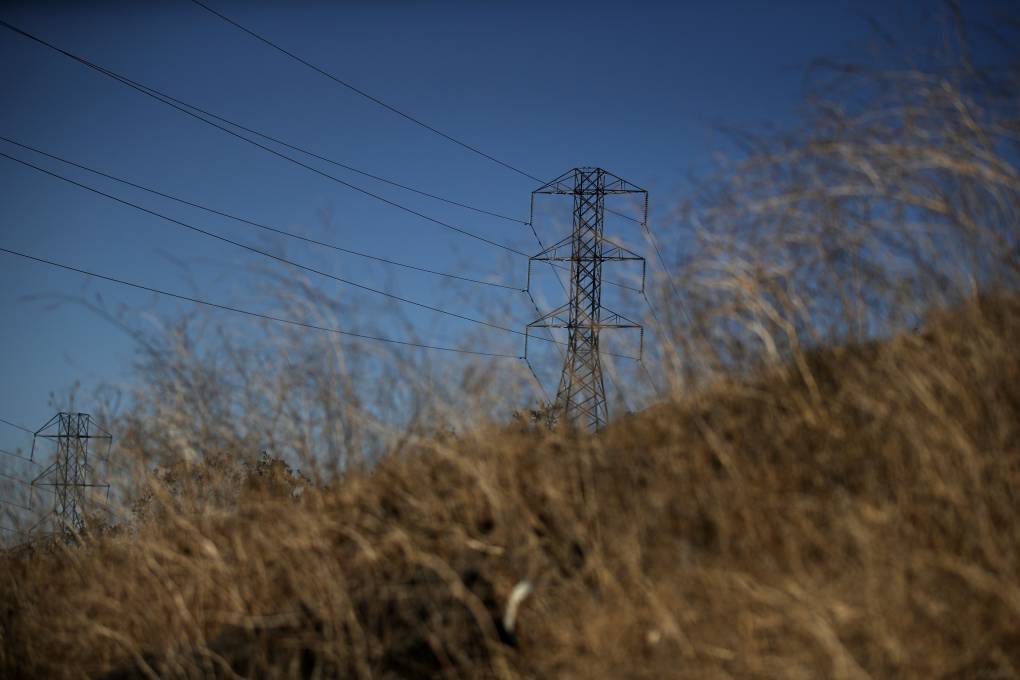
"caption": "PG&E power transmission lines near Santa Rosa as seen during a Nov. 2019 wildfire-safety power outage.",
"description": "PG&E power transmission lines near Santa Rosa as seen during a Nov. 2019 wildfire-safety power outage.",
"title": "PG&E Power Lines",
"credit": "Justin Sullivan/Getty Images",
"status": "inherit",
"altTag": "'''",
"fetchFailed": false,
"isLoading": false
},
"news_11887807": {
"type": "attachments",
"id": "news_11887807",
"meta": {
"index": "attachments_1716263798",
"site": "news",
"id": "11887807",
"found": true
},
"parent": 11887723,
"imgSizes": {
"twentyfourteen-full-width": {
"file": "https://ww2.kqed.org/app/uploads/sites/10/2021/09/GettyImages-1235058911-1038x576.jpg",
"width": 1038,
"mimeType": "image/jpeg",
"height": 576
},
"thumbnail": {
"file": "https://ww2.kqed.org/app/uploads/sites/10/2021/09/GettyImages-1235058911-160x106.jpg",
"width": 160,
"mimeType": "image/jpeg",
"height": 106
},
"post-thumbnail": {
"file": "https://ww2.kqed.org/app/uploads/sites/10/2021/09/GettyImages-1235058911-672x372.jpg",
"width": 672,
"mimeType": "image/jpeg",
"height": 372
},
"kqedFullSize": {
"file": "https://ww2.kqed.org/app/uploads/sites/10/2021/09/GettyImages-1235058911-scaled.jpg",
"width": 2560,
"height": 1696
},
"2048x2048": {
"file": "https://ww2.kqed.org/app/uploads/sites/10/2021/09/GettyImages-1235058911-2048x1357.jpg",
"width": 2048,
"mimeType": "image/jpeg",
"height": 1357
},
"large": {
"file": "https://ww2.kqed.org/app/uploads/sites/10/2021/09/GettyImages-1235058911-1020x676.jpg",
"width": 1020,
"mimeType": "image/jpeg",
"height": 676
},
"1536x1536": {
"file": "https://ww2.kqed.org/app/uploads/sites/10/2021/09/GettyImages-1235058911-1536x1018.jpg",
"width": 1536,
"mimeType": "image/jpeg",
"height": 1018
},
"full-width": {
"file": "https://ww2.kqed.org/app/uploads/sites/10/2021/09/GettyImages-1235058911-1920x1272.jpg",
"width": 1920,
"mimeType": "image/jpeg",
"height": 1272
},
"medium": {
"file": "https://ww2.kqed.org/app/uploads/sites/10/2021/09/GettyImages-1235058911-800x530.jpg",
"width": 800,
"mimeType": "image/jpeg",
"height": 530
}
},
"publishDate": 1631129991,
"modified": 1631146953,
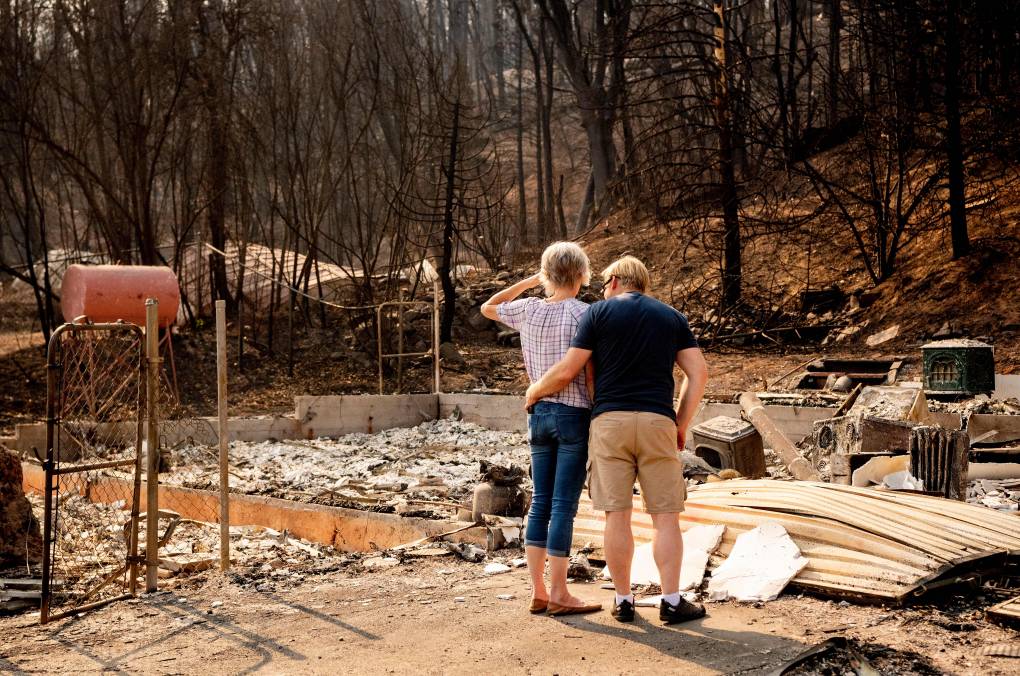
"caption": "Curtis Weight, right, embraces his wife Wendy Weight, left, as they view the remains of their home that burned in the Dixie Fire in Greenville on Sept. 4, 2021. In August, PG&E said its equipment may have been involved in the start of a small wildfire that merged with the Dixie Fire.",
"description": "Curtis Weight, right, embraces his wife Wendy Weight, left, as they view the remains of their home that burnt in the Dixie fire in Greenville, California on Saturday, September 4, 2021.",
"title": "US-FIRE",
"credit": "Josh Edelson/AFP via Getty Images",
"status": "inherit",
"altTag": "Two people embrace in front of scorched ruins and look away from the camera.",
"fetchFailed": false,
"isLoading": false
},
"news_11875085": {
"type": "attachments",
"id": "news_11875085",
"meta": {
"index": "attachments_1716263798",
"site": "news",
"id": "11875085",
"found": true
},
"parent": 11875034,
"imgSizes": {
"twentyfourteen-full-width": {
"file": "https://ww2.kqed.org/app/uploads/sites/10/2021/05/Paradise_Rally-1038x576.jpg",
"width": 1038,
"mimeType": "image/jpeg",
"height": 576
},
"thumbnail": {
"file": "https://ww2.kqed.org/app/uploads/sites/10/2021/05/Paradise_Rally-160x90.jpg",
"width": 160,
"mimeType": "image/jpeg",
"height": 90
},
"post-thumbnail": {
"file": "https://ww2.kqed.org/app/uploads/sites/10/2021/05/Paradise_Rally-672x372.jpg",
"width": 672,
"mimeType": "image/jpeg",
"height": 372
},
"kqedFullSize": {
"file": "https://ww2.kqed.org/app/uploads/sites/10/2021/05/Paradise_Rally.jpg",
"width": 1920,
"height": 1080
},
"large": {
"file": "https://ww2.kqed.org/app/uploads/sites/10/2021/05/Paradise_Rally-1020x574.jpg",
"width": 1020,
"mimeType": "image/jpeg",
"height": 574
},
"1536x1536": {
"file": "https://ww2.kqed.org/app/uploads/sites/10/2021/05/Paradise_Rally-1536x864.jpg",
"width": 1536,
"mimeType": "image/jpeg",
"height": 864
},
"medium": {
"file": "https://ww2.kqed.org/app/uploads/sites/10/2021/05/Paradise_Rally-800x450.jpg",
"width": 800,
"mimeType": "image/jpeg",
"height": 450
}
},
"publishDate": 1621888339,
"modified": 1629156954,
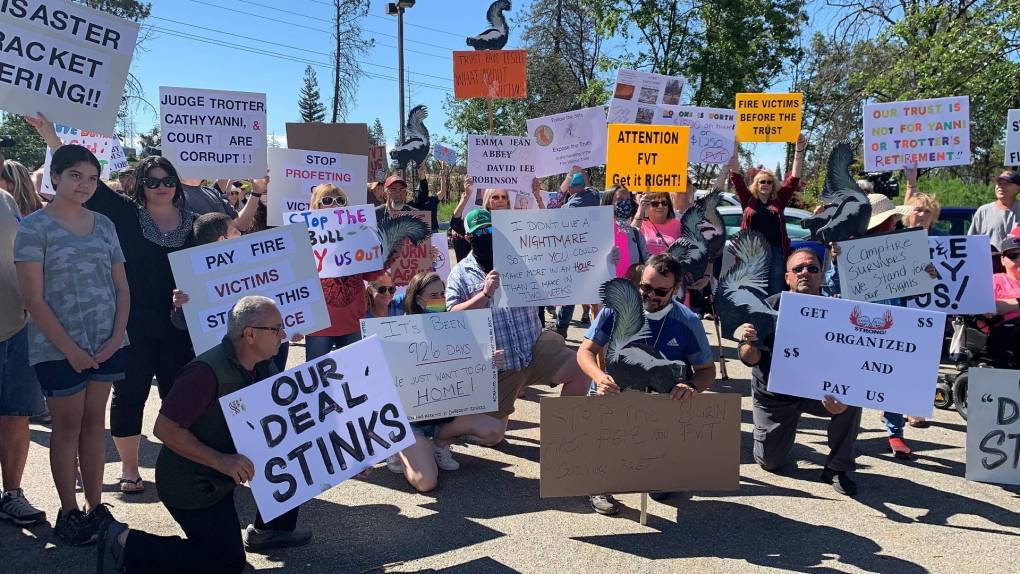
"caption": "Survivors of the 2018 Camp Fire gather in Paradise, California, on May 22, 2021, to protest runaway overhead expenses by the PG&E Fire Victim Trust.",
"description": null,
"title": "Paradise_Rally",
"credit": "Lily Jamali/KQED",
"status": "inherit",
"altTag": null,
"fetchFailed": false,
"isLoading": false
},
"news_11875094": {
"type": "attachments",
"id": "news_11875094",
"meta": {
"index": "attachments_1716263798",
"site": "news",
"id": "11875094",
"found": true
},
"parent": 11875034,
"imgSizes": {
"twentyfourteen-full-width": {
"file": "https://ww2.kqed.org/app/uploads/sites/10/2021/05/Paradise_Rally_2-1038x576.jpg",
"width": 1038,
"mimeType": "image/jpeg",
"height": 576
},
"thumbnail": {
"file": "https://ww2.kqed.org/app/uploads/sites/10/2021/05/Paradise_Rally_2-160x90.jpg",
"width": 160,
"mimeType": "image/jpeg",
"height": 90
},
"post-thumbnail": {
"file": "https://ww2.kqed.org/app/uploads/sites/10/2021/05/Paradise_Rally_2-672x372.jpg",
"width": 672,
"mimeType": "image/jpeg",
"height": 372
},
"kqedFullSize": {
"file": "https://ww2.kqed.org/app/uploads/sites/10/2021/05/Paradise_Rally_2.jpg",
"width": 1920,
"height": 1080
},
"large": {
"file": "https://ww2.kqed.org/app/uploads/sites/10/2021/05/Paradise_Rally_2-1020x574.jpg",
"width": 1020,
"mimeType": "image/jpeg",
"height": 574
},
"1536x1536": {
"file": "https://ww2.kqed.org/app/uploads/sites/10/2021/05/Paradise_Rally_2-1536x864.jpg",
"width": 1536,
"mimeType": "image/jpeg",
"height": 864
},
"medium": {
"file": "https://ww2.kqed.org/app/uploads/sites/10/2021/05/Paradise_Rally_2-800x450.jpg",
"width": 800,
"mimeType": "image/jpeg",
"height": 450
}
},
"publishDate": 1621888978,
"modified": 1631116709,
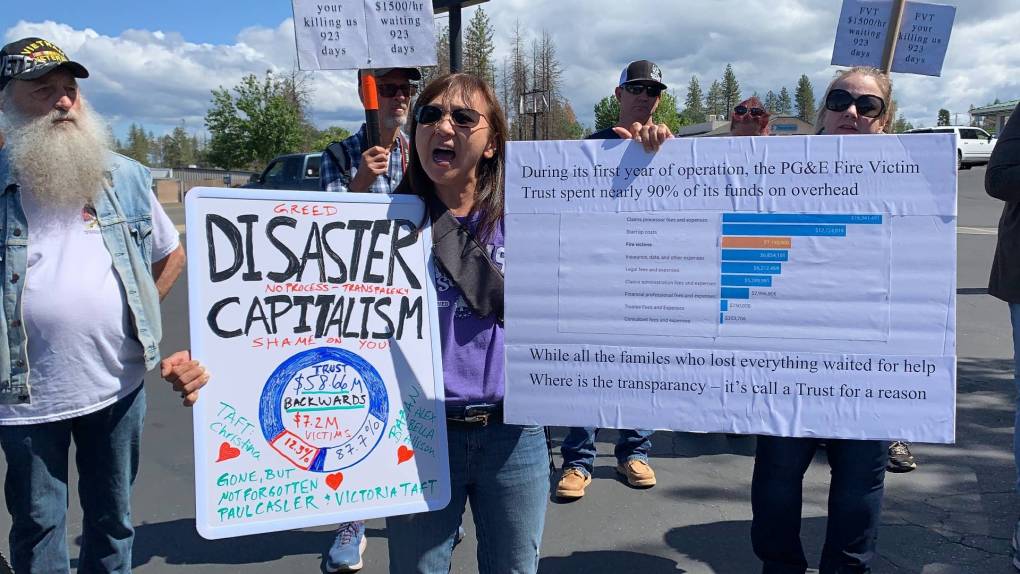
"caption": "Angela Casler attends a rally in Paradise on May 22, 2021 to protest runaway overhead expenses incurred by the PG&E Fire Victim Trust. Casler lost her father-in-law shortly after the Camp Fire. ",
"description": null,
"title": "Paradise_Rally_2",
"credit": "Lily Jamali/KQED",
"status": "inherit",
"altTag": null,
"fetchFailed": false,
"isLoading": false
},
"news_11873756": {
"type": "attachments",
"id": "news_11873756",
"meta": {
"index": "attachments_1716263798",
"site": "news",
"id": "11873756",
"found": true
},
"parent": 11873721,
"imgSizes": {
"twentyfourteen-full-width": {
"file": "https://ww2.kqed.org/app/uploads/sites/10/2021/05/Paradise-camp-fire-survivor-1038x576.jpg",
"width": 1038,
"mimeType": "image/jpeg",
"height": 576
},
"thumbnail": {
"file": "https://ww2.kqed.org/app/uploads/sites/10/2021/05/Paradise-camp-fire-survivor-160x105.jpg",
"width": 160,
"mimeType": "image/jpeg",
"height": 105
},
"post-thumbnail": {
"file": "https://ww2.kqed.org/app/uploads/sites/10/2021/05/Paradise-camp-fire-survivor-672x372.jpg",
"width": 672,
"mimeType": "image/jpeg",
"height": 372
},
"kqedFullSize": {
"file": "https://ww2.kqed.org/app/uploads/sites/10/2021/05/Paradise-camp-fire-survivor.jpg",
"width": 1920,
"height": 1261
},
"large": {
"file": "https://ww2.kqed.org/app/uploads/sites/10/2021/05/Paradise-camp-fire-survivor-1020x670.jpg",
"width": 1020,
"mimeType": "image/jpeg",
"height": 670
},
"1536x1536": {
"file": "https://ww2.kqed.org/app/uploads/sites/10/2021/05/Paradise-camp-fire-survivor-1536x1009.jpg",
"width": 1536,
"mimeType": "image/jpeg",
"height": 1009
},
"medium": {
"file": "https://ww2.kqed.org/app/uploads/sites/10/2021/05/Paradise-camp-fire-survivor-800x525.jpg",
"width": 800,
"mimeType": "image/jpeg",
"height": 525
}
},
"publishDate": 1621023490,
"modified": 1621026405,
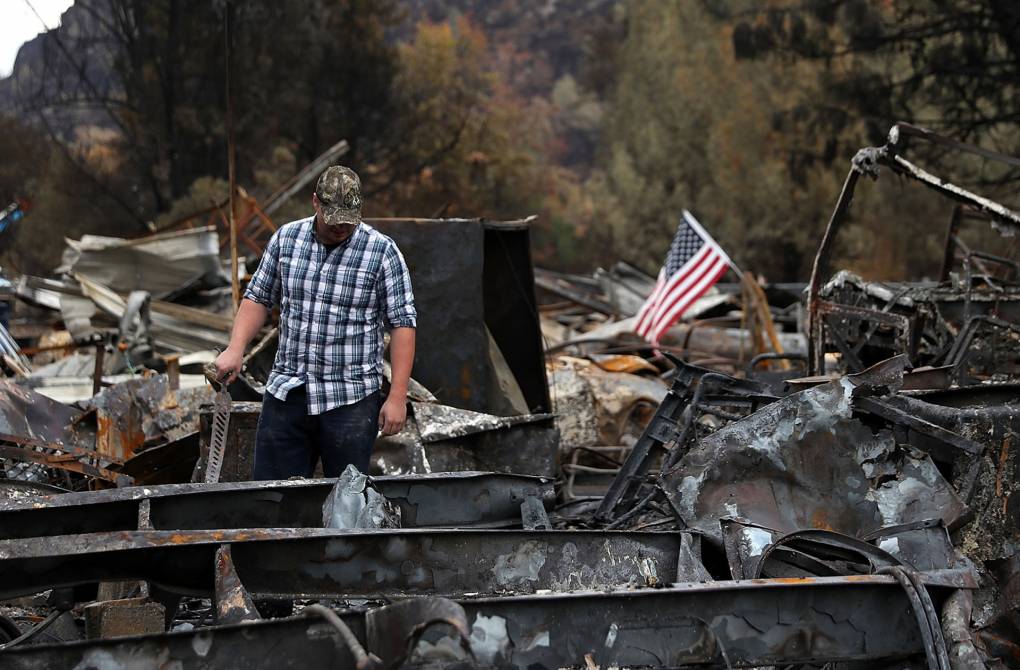
"caption": "Noah Fisher, a survivor of the PG&E-caused Camp Fire, looks over his destroyed home in Paradise in November 2018. The vast majority of the 67,000 victims of PG&E-caused fires have yet to see any money from a Fire Victim Trust, which has so far spent $51 million on overhead expenses.",
"description": "Noah Fisher, a survivor of the PG&E-caused Camp Fire, looks over his destroyed home in Paradise in Nov. 2018. The vast majority of the 67,000 victims of PG&E-caused fires have yet to see any money from a Fire Victim Trust which has so far spent $51 million on overhead expenses.",
"title": "Paradise-camp-fire-survivor",
"credit": "Justin Sullivan/Getty Images",
"status": "inherit",
"altTag": null,
"fetchFailed": false,
"isLoading": false
},
"news_11833769": {
"type": "attachments",
"id": "news_11833769",
"meta": {
"index": "attachments_1716263798",
"site": "news",
"id": "11833769",
"found": true
},
"title": "A PG&E worker cuts damaged power lines on November 13, 2018.",
"publishDate": 1597706831,
"status": "inherit",
"parent": 11833283,
"modified": 1726085600,
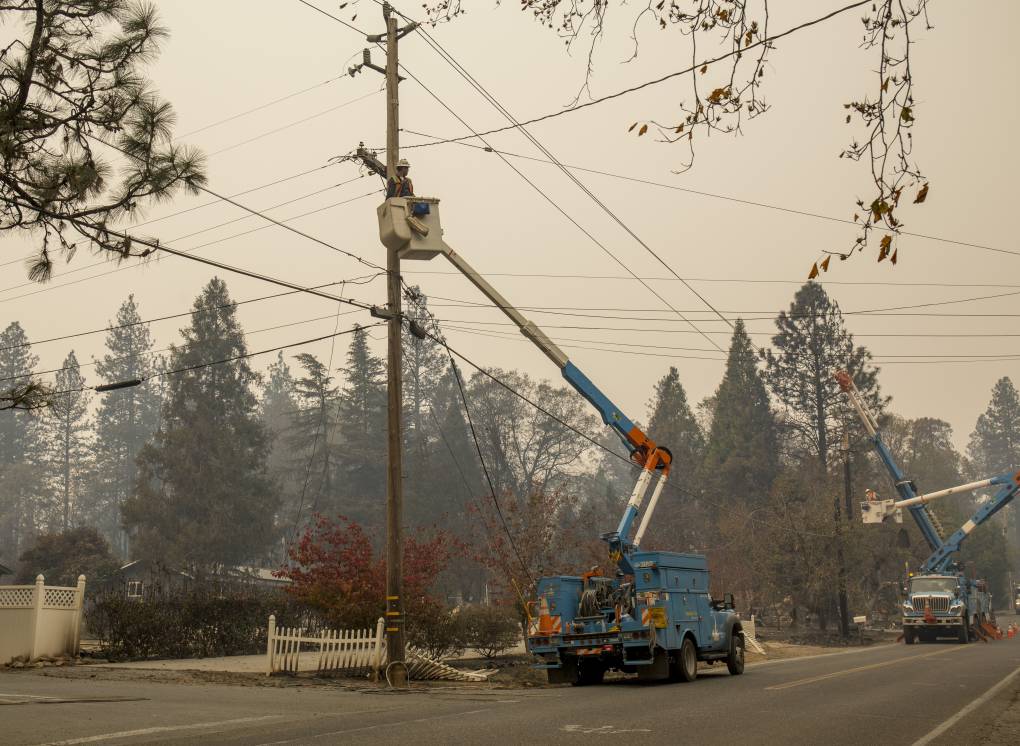
"caption": "PG&E workers cut damaged power lines near Paradise on Nov. 13, 2018, five days after a PG&E transmission line sparked the Camp Fire, the deadliest and most destructive wildfire in modern California history. ",
"credit": "Anne Wernikoff/KQED",
"altTag": "Two cranes hoist up two workers toward electrical lines. In the background is a smoky sky and trees.",
"description": "PG&E workers cut damaged power lines near Paradise on Nov. 13, 2018, five days after a PG&E transmission line sparked the Camp Fire, the deadliest and most destructive wildfire in modern California history. ",
"imgSizes": {
"medium": {
"file": "https://cdn.kqed.org/wp-content/uploads/sites/10/2020/08/PGE-Cuts-Line-After-Camp-Fire-2-800x585.jpg",
"width": 800,
"height": 585,
"mimeType": "image/jpeg"
},
"large": {
"file": "https://cdn.kqed.org/wp-content/uploads/sites/10/2020/08/PGE-Cuts-Line-After-Camp-Fire-2-1020x746.jpg",
"width": 1020,
"height": 746,
"mimeType": "image/jpeg"
},
"thumbnail": {
"file": "https://cdn.kqed.org/wp-content/uploads/sites/10/2020/08/PGE-Cuts-Line-After-Camp-Fire-2-160x117.jpg",
"width": 160,
"height": 117,
"mimeType": "image/jpeg"
},
"1536x1536": {
"file": "https://cdn.kqed.org/wp-content/uploads/sites/10/2020/08/PGE-Cuts-Line-After-Camp-Fire-2-1536x1124.jpg",
"width": 1536,
"height": 1124,
"mimeType": "image/jpeg"
},
"2048x2048": {
"file": "https://cdn.kqed.org/wp-content/uploads/sites/10/2020/08/PGE-Cuts-Line-After-Camp-Fire-2-2048x1499.jpg",
"width": 2048,
"height": 1499,
"mimeType": "image/jpeg"
},
"post-thumbnail": {
"file": "https://cdn.kqed.org/wp-content/uploads/sites/10/2020/08/PGE-Cuts-Line-After-Camp-Fire-2-672x372.jpg",
"width": 672,
"height": 372,
"mimeType": "image/jpeg"
},
"twentyfourteen-full-width": {
"file": "https://cdn.kqed.org/wp-content/uploads/sites/10/2020/08/PGE-Cuts-Line-After-Camp-Fire-2-1038x576.jpg",
"width": 1038,
"height": 576,
"mimeType": "image/jpeg"
},
"full-width": {
"file": "https://cdn.kqed.org/wp-content/uploads/sites/10/2020/08/PGE-Cuts-Line-After-Camp-Fire-2-1920x1405.jpg",
"width": 1920,
"height": 1405,
"mimeType": "image/jpeg"
},
"apple_news_ca_landscape_12_9": {
"file": "https://cdn.kqed.org/wp-content/uploads/sites/10/2020/08/PGE-Cuts-Line-After-Camp-Fire-2-1832x1374.jpg",
"width": 1832,
"height": 1374,
"mimeType": "image/jpeg"
},
"apple_news_ca_landscape_9_7": {
"file": "https://cdn.kqed.org/wp-content/uploads/sites/10/2020/08/PGE-Cuts-Line-After-Camp-Fire-2-1376x1032.jpg",
"width": 1376,
"height": 1032,
"mimeType": "image/jpeg"
},
"apple_news_ca_landscape_5_5": {
"file": "https://cdn.kqed.org/wp-content/uploads/sites/10/2020/08/PGE-Cuts-Line-After-Camp-Fire-2-1044x783.jpg",
"width": 1044,
"height": 783,
"mimeType": "image/jpeg"
},
"apple_news_ca_landscape_4_7": {
"file": "https://cdn.kqed.org/wp-content/uploads/sites/10/2020/08/PGE-Cuts-Line-After-Camp-Fire-2-632x474.jpg",
"width": 632,
"height": 474,
"mimeType": "image/jpeg"
},
"apple_news_ca_landscape_4_0": {
"file": "https://cdn.kqed.org/wp-content/uploads/sites/10/2020/08/PGE-Cuts-Line-After-Camp-Fire-2-536x402.jpg",
"width": 536,
"height": 402,
"mimeType": "image/jpeg"
},
"apple_news_ca_portrait_12_9": {
"file": "https://cdn.kqed.org/wp-content/uploads/sites/10/2020/08/PGE-Cuts-Line-After-Camp-Fire-2-1122x1496.jpg",
"width": 1122,
"height": 1496,
"mimeType": "image/jpeg"
},
"apple_news_ca_portrait_9_7": {
"file": "https://cdn.kqed.org/wp-content/uploads/sites/10/2020/08/PGE-Cuts-Line-After-Camp-Fire-2-840x1120.jpg",
"width": 840,
"height": 1120,
"mimeType": "image/jpeg"
},
"apple_news_ca_portrait_5_5": {
"file": "https://cdn.kqed.org/wp-content/uploads/sites/10/2020/08/PGE-Cuts-Line-After-Camp-Fire-2-687x916.jpg",
"width": 687,
"height": 916,
"mimeType": "image/jpeg"
},
"apple_news_ca_portrait_4_7": {
"file": "https://cdn.kqed.org/wp-content/uploads/sites/10/2020/08/PGE-Cuts-Line-After-Camp-Fire-2-414x552.jpg",
"width": 414,
"height": 552,
"mimeType": "image/jpeg"
},
"apple_news_ca_portrait_4_0": {
"file": "https://cdn.kqed.org/wp-content/uploads/sites/10/2020/08/PGE-Cuts-Line-After-Camp-Fire-2-354x472.jpg",
"width": 354,
"height": 472,
"mimeType": "image/jpeg"
},
"apple_news_ca_square_12_9": {
"file": "https://cdn.kqed.org/wp-content/uploads/sites/10/2020/08/PGE-Cuts-Line-After-Camp-Fire-2-1472x1472.jpg",
"width": 1472,
"height": 1472,
"mimeType": "image/jpeg"
},
"apple_news_ca_square_9_7": {
"file": "https://cdn.kqed.org/wp-content/uploads/sites/10/2020/08/PGE-Cuts-Line-After-Camp-Fire-2-1104x1104.jpg",
"width": 1104,
"height": 1104,
"mimeType": "image/jpeg"
},
"apple_news_ca_square_5_5": {
"file": "https://cdn.kqed.org/wp-content/uploads/sites/10/2020/08/PGE-Cuts-Line-After-Camp-Fire-2-912x912.jpg",
"width": 912,
"height": 912,
"mimeType": "image/jpeg"
},
"apple_news_ca_square_4_7": {
"file": "https://cdn.kqed.org/wp-content/uploads/sites/10/2020/08/PGE-Cuts-Line-After-Camp-Fire-2-550x550.jpg",
"width": 550,
"height": 550,
"mimeType": "image/jpeg"
},
"apple_news_ca_square_4_0": {
"file": "https://cdn.kqed.org/wp-content/uploads/sites/10/2020/08/PGE-Cuts-Line-After-Camp-Fire-2-470x470.jpg",
"width": 470,
"height": 470,
"mimeType": "image/jpeg"
},
"kqedFullSize": {
"file": "https://cdn.kqed.org/wp-content/uploads/sites/10/2020/08/PGE-Cuts-Line-After-Camp-Fire-2-scaled-e1597706943224.jpg",
"width": 1920,
"height": 1405
}
},
"fetchFailed": false,
"isLoading": false
},
"news_11872745": {
"type": "attachments",
"id": "news_11872745",
"meta": {
"index": "attachments_1716263798",
"site": "news",
"id": "11872745",
"found": true
},
"parent": 11872741,
"imgSizes": {
"twentyfourteen-full-width": {
"file": "https://ww2.kqed.org/app/uploads/sites/10/2021/05/overhead_050721_final-1038x576.png",
"width": 1038,
"mimeType": "image/png",
"height": 576
},
"thumbnail": {
"file": "https://ww2.kqed.org/app/uploads/sites/10/2021/05/overhead_050721_final-160x109.png",
"width": 160,
"mimeType": "image/png",
"height": 109
},
"post-thumbnail": {
"file": "https://ww2.kqed.org/app/uploads/sites/10/2021/05/overhead_050721_final-672x372.png",
"width": 672,
"mimeType": "image/png",
"height": 372
},
"kqedFullSize": {
"file": "https://ww2.kqed.org/app/uploads/sites/10/2021/05/overhead_050721_final.png",
"width": 1920,
"height": 1307
},
"large": {
"file": "https://ww2.kqed.org/app/uploads/sites/10/2021/05/overhead_050721_final-1020x694.png",
"width": 1020,
"mimeType": "image/png",
"height": 694
},
"1536x1536": {
"file": "https://ww2.kqed.org/app/uploads/sites/10/2021/05/overhead_050721_final-1536x1046.png",
"width": 1536,
"mimeType": "image/png",
"height": 1046
},
"medium": {
"file": "https://ww2.kqed.org/app/uploads/sites/10/2021/05/overhead_050721_final-800x545.png",
"width": 800,
"mimeType": "image/png",
"height": 545
}
},
"publishDate": 1620413583,
"modified": 1620413683,
"caption": null,
"description": null,
"title": "overhead_050721_final",
"credit": null,
"status": "inherit",
"altTag": "A Mark Fiore cartoon about the PG&E Fire Victim Trust that is charged with distributing money to fire victims. The cartoon shows a huge pile of money and a trustee making $1500 an hour balancing over the heads of destroyed homes with people standing down below looking upwards. The caption says, \"overhead.\"",
"fetchFailed": false,
"isLoading": false
},
"news_11872332": {
"type": "attachments",
"id": "news_11872332",
"meta": {
"index": "attachments_1716263798",
"site": "news",
"id": "11872332",
"found": true
},
"parent": 11872328,
"imgSizes": {
"twentyfourteen-full-width": {
"file": "https://ww2.kqed.org/app/uploads/sites/10/2021/05/Bill-Cook-Home-1038x576.jpg",
"width": 1038,
"mimeType": "image/jpeg",
"height": 576
},
"thumbnail": {
"file": "https://ww2.kqed.org/app/uploads/sites/10/2021/05/Bill-Cook-Home-160x105.jpg",
"width": 160,
"mimeType": "image/jpeg",
"height": 105
},
"post-thumbnail": {
"file": "https://ww2.kqed.org/app/uploads/sites/10/2021/05/Bill-Cook-Home-672x372.jpg",
"width": 672,
"mimeType": "image/jpeg",
"height": 372
},
"kqedFullSize": {
"file": "https://ww2.kqed.org/app/uploads/sites/10/2021/05/Bill-Cook-Home.jpg",
"width": 1920,
"height": 1262
},
"large": {
"file": "https://ww2.kqed.org/app/uploads/sites/10/2021/05/Bill-Cook-Home-1020x670.jpg",
"width": 1020,
"mimeType": "image/jpeg",
"height": 670
},
"1536x1536": {
"file": "https://ww2.kqed.org/app/uploads/sites/10/2021/05/Bill-Cook-Home-1536x1010.jpg",
"width": 1536,
"mimeType": "image/jpeg",
"height": 1010
},
"medium": {
"file": "https://ww2.kqed.org/app/uploads/sites/10/2021/05/Bill-Cook-Home-800x526.jpg",
"width": 800,
"mimeType": "image/jpeg",
"height": 526
}
},
"publishDate": 1620249583,
"modified": 1620256913,
"caption": "Bill Cook's family home in Paradise was destroyed by the Camp Fire, sparked by PG&E equipment in 2018. Like the vast majority of the 67,000 victims of multiple PG&E-related fires included in a December 2019 settlement with the company, Cook's family has yet to see a dime.",
"description": "Bill Cook's family home in Paradise was destroyed by the Camp Fire, sparked by PG&E equipment in 2018. Like the vast majority of the 67,000 victims of multiple PG&E-related fires included in a December 2019 settlement with the company, Cook's family has yet to see a dime.",
"title": "Bill-Cook-Home",
"credit": "Courtesy Bill Cook",
"status": "inherit",
"altTag": "burned remnants of Cook family home in Paradise",
"fetchFailed": false,
"isLoading": false
},
"news_11821168": {
"type": "attachments",
"id": "news_11821168",
"meta": {
"index": "attachments_1716263798",
"site": "news",
"id": "11821168",
"found": true
},
"parent": 11821101,
"imgSizes": {
"apple_news_ca_landscape_5_5": {
"file": "https://ww2.kqed.org/app/uploads/sites/10/2020/05/RS33171_GettyImages-865518916-qut-1044x783.jpg",
"width": 1044,
"mimeType": "image/jpeg",
"height": 783
},
"apple_news_ca_square_4_0": {
"file": "https://ww2.kqed.org/app/uploads/sites/10/2020/05/RS33171_GettyImages-865518916-qut-470x470.jpg",
"width": 470,
"mimeType": "image/jpeg",
"height": 470
},
"twentyfourteen-full-width": {
"file": "https://ww2.kqed.org/app/uploads/sites/10/2020/05/RS33171_GettyImages-865518916-qut-1038x576.jpg",
"width": 1038,
"mimeType": "image/jpeg",
"height": 576
},
"thumbnail": {
"file": "https://ww2.kqed.org/app/uploads/sites/10/2020/05/RS33171_GettyImages-865518916-qut-160x107.jpg",
"width": 160,
"mimeType": "image/jpeg",
"height": 107
},
"post-thumbnail": {
"file": "https://ww2.kqed.org/app/uploads/sites/10/2020/05/RS33171_GettyImages-865518916-qut-672x372.jpg",
"width": 672,
"mimeType": "image/jpeg",
"height": 372
},
"kqedFullSize": {
"file": "https://ww2.kqed.org/app/uploads/sites/10/2020/05/RS33171_GettyImages-865518916-qut-e1590620383458.jpg",
"width": 1919,
"height": 1279
},
"apple_news_ca_landscape_4_7": {
"file": "https://ww2.kqed.org/app/uploads/sites/10/2020/05/RS33171_GettyImages-865518916-qut-632x474.jpg",
"width": 632,
"mimeType": "image/jpeg",
"height": 474
},
"large": {
"file": "https://ww2.kqed.org/app/uploads/sites/10/2020/05/RS33171_GettyImages-865518916-qut-1020x680.jpg",
"width": 1020,
"mimeType": "image/jpeg",
"height": 680
},
"apple_news_ca_landscape_4_0": {
"file": "https://ww2.kqed.org/app/uploads/sites/10/2020/05/RS33171_GettyImages-865518916-qut-536x402.jpg",
"width": 536,
"mimeType": "image/jpeg",
"height": 402
},
"apple_news_ca_portrait_12_9": {
"file": "https://ww2.kqed.org/app/uploads/sites/10/2020/05/RS33171_GettyImages-865518916-qut-1122x1280.jpg",
"width": 1122,
"mimeType": "image/jpeg",
"height": 1280
},
"medium": {
"file": "https://ww2.kqed.org/app/uploads/sites/10/2020/05/RS33171_GettyImages-865518916-qut-800x533.jpg",
"width": 800,
"mimeType": "image/jpeg",
"height": 533
},
"apple_news_ca_portrait_4_0": {
"file": "https://ww2.kqed.org/app/uploads/sites/10/2020/05/RS33171_GettyImages-865518916-qut-354x472.jpg",
"width": 354,
"mimeType": "image/jpeg",
"height": 472
},
"apple_news_ca_portrait_9_7": {
"file": "https://ww2.kqed.org/app/uploads/sites/10/2020/05/RS33171_GettyImages-865518916-qut-840x1120.jpg",
"width": 840,
"mimeType": "image/jpeg",
"height": 1120
},
"apple_news_ca_landscape_12_9": {
"file": "https://ww2.kqed.org/app/uploads/sites/10/2020/05/RS33171_GettyImages-865518916-qut-1832x1280.jpg",
"width": 1832,
"mimeType": "image/jpeg",
"height": 1280
},
"apple_news_ca_square_9_7": {
"file": "https://ww2.kqed.org/app/uploads/sites/10/2020/05/RS33171_GettyImages-865518916-qut-1104x1104.jpg",
"width": 1104,
"mimeType": "image/jpeg",
"height": 1104
},
"apple_news_ca_portrait_4_7": {
"file": "https://ww2.kqed.org/app/uploads/sites/10/2020/05/RS33171_GettyImages-865518916-qut-414x552.jpg",
"width": 414,
"mimeType": "image/jpeg",
"height": 552
},
"apple_news_ca_square_12_9": {
"file": "https://ww2.kqed.org/app/uploads/sites/10/2020/05/RS33171_GettyImages-865518916-qut-1472x1280.jpg",
"width": 1472,
"mimeType": "image/jpeg",
"height": 1280
},
"apple_news_ca_portrait_5_5": {
"file": "https://ww2.kqed.org/app/uploads/sites/10/2020/05/RS33171_GettyImages-865518916-qut-687x916.jpg",
"width": 687,
"mimeType": "image/jpeg",
"height": 916
},
"full-width": {
"file": "https://ww2.kqed.org/app/uploads/sites/10/2020/05/RS33171_GettyImages-865518916-qut-1920x1280.jpg",
"width": 1920,
"mimeType": "image/jpeg",
"height": 1280
},
"apple_news_ca_square_4_7": {
"file": "https://ww2.kqed.org/app/uploads/sites/10/2020/05/RS33171_GettyImages-865518916-qut-550x550.jpg",
"width": 550,
"mimeType": "image/jpeg",
"height": 550
},
"apple_news_ca_landscape_9_7": {
"file": "https://ww2.kqed.org/app/uploads/sites/10/2020/05/RS33171_GettyImages-865518916-qut-1376x1032.jpg",
"width": 1376,
"mimeType": "image/jpeg",
"height": 1032
},
"apple_news_ca_square_5_5": {
"file": "https://ww2.kqed.org/app/uploads/sites/10/2020/05/RS33171_GettyImages-865518916-qut-912x912.jpg",
"width": 912,
"mimeType": "image/jpeg",
"height": 912
}
},
"publishDate": 1590620019,
"modified": 1590620366,
"caption": "Homes in Santa Rosa's Coffey Park neighborhood, destroyed by the 2017 Tubbs Fire.",
"description": "Homes in Santa Rosa's Coffey Park neighborhood, destroyed by the 2017 Tubbs Fire.",
"title": "Structures Destroyed By California Wine Country Wildfires Rises To 8400",
"credit": "Justin Sullivan/Getty Images",
"status": "inherit",
"fetchFailed": false,
"isLoading": false
}
},
"audioPlayerReducer": {
"postId": "stream_live",
"isPaused": true,
"isPlaying": false,
"pfsActive": false,
"pledgeModalIsOpen": true,
"playerDrawerIsOpen": false
},
"authorsReducer": {
"byline_news_11821101": {
"type": "authors",
"id": "byline_news_11821101",
"meta": {
"override": true
},
"slug": "byline_news_11821101",
"name": "Michael Liedtke\u003cbr>The Associated Press",
"isLoading": false
},
"scottshafer": {
"type": "authors",
"id": "255",
"meta": {
"index": "authors_1716337520",
"id": "255",
"found": true
},
"name": "Scott Shafer",
"firstName": "Scott",
"lastName": "Shafer",
"slug": "scottshafer",
"email": "sshafer@kqed.org",
"display_author_email": false,
"staff_mastheads": [
"news"
],
"title": "KQED Contributor",
"bio": "Scott Shafer is a senior editor with the KQED Politics and Government desk. He is co-host of Political Breakdown, the award-winning radio show and podcast with a personal take on the world of politics. Scott came to KQED in 1998 to host the statewide\u003cem> California Report\u003c/em>. Prior to that he had extended stints in politics and government\u003cem>.\u003c/em> He uses that inside experience at KQED in his, reporting, hosting and analysis for the politics desk. Scott collaborated \u003cem>Political Breakdown a\u003c/em>nd on \u003cem>The Political Mind of Jerry Brown, \u003c/em>an eight-part series about the life and extraordinary political career of the former governor. For fun, he plays water polo with the San Francisco Tsunami.",
"avatar": "https://secure.gravatar.com/avatar/a62ebae45b79d7aed1a39a0e3bf68104?s=600&d=blank&r=g",
"twitter": "scottshafer",
"bluesky": null,
"facebook": null,
"instagram": null,
"linkedin": null,
"sites": [
{
"site": "news",
"roles": [
"editor"
]
},
{
"site": "stateofhealth",
"roles": [
"author"
]
},
{
"site": "science",
"roles": [
"author"
]
},
{
"site": "forum",
"roles": [
"subscriber"
]
},
{
"site": "liveblog",
"roles": [
"author"
]
}
],
"headData": {
"title": "Scott Shafer | KQED",
"description": "KQED Contributor",
"ogImgSrc": "https://secure.gravatar.com/avatar/a62ebae45b79d7aed1a39a0e3bf68104?s=600&d=blank&r=g",
"twImgSrc": "https://secure.gravatar.com/avatar/a62ebae45b79d7aed1a39a0e3bf68104?s=600&d=blank&r=g"
},
"isLoading": false,
"link": "/author/scottshafer"
},
"markfiore": {
"type": "authors",
"id": "3236",
"meta": {
"index": "authors_1716337520",
"id": "3236",
"found": true
},
"name": "Mark Fiore",
"firstName": "Mark",
"lastName": "Fiore",
"slug": "markfiore",
"email": "mark@markfiore.com",
"display_author_email": false,
"staff_mastheads": [
"news"
],
"title": "KQED News Cartoonist",
"bio": "\u003ca href=\"http://www.MarkFiore.com\">MarkFiore.com\u003c/a> | \u003ca href=\"https://twitter.com/markfiore\">Follow on Twitter\u003c/a> | \u003ca href=\"https://www.facebook.com/pages/Mark-Fiore-Animated-Political-Cartoons/94451707396?ref=bookmarks\">Facebook\u003c/a> | \u003ca href=\"mailto:mark@markfiore.com\">email\u003c/a>\r\n\r\nPulitzer Prize-winner, Mark Fiore, who the Wall Street Journal has called “the undisputed guru of the form,” creates animated political cartoons in San Francisco, where his work has been featured regularly on the San Francisco Chronicle’s web site, SFGate.com. His work has appeared on Newsweek.com, Slate.com, CBSNews.com, MotherJones.com, DailyKos.com and NPR’s web site. Fiore’s political animation has appeared on CNN, Frontline, Bill Moyers Journal, Salon.com and cable and broadcast outlets across the globe.\r\n\r\nBeginning his professional life by drawing traditional political cartoons for newspapers, Fiore’s work appeared in publications ranging from the Washington Post to the Los Angeles Times. In the late 1990s, he began to experiment with animating political cartoons and, after a short stint at the San Jose Mercury News as their staff cartoonist, Fiore devoted all his energies to animation.\r\nGrowing up in California, Fiore also spent a good portion of his life in the backwoods of Idaho. It was this combination that shaped him politically. Mark majored in political science at Colorado College, where, in a perfect send-off for a cartoonist, he received his diploma in 1991 as commencement speaker Dick Cheney smiled approvingly.\r\nMark Fiore was awarded the Pulitzer Prize for political cartooning in 2010, a Robert F. Kennedy Journalism Award in 2004 and has twice received an Online Journalism Award for commentary from the Online News Association (2002, 2008). Fiore has received two awards for his work in new media from the National Cartoonists Society (2001, 2002), and in 2006 received The James Madison Freedom of Information Award from The Society of Professional Journalists.",
"avatar": "https://secure.gravatar.com/avatar/fc4e2a612b15b67bad0c6f0e1db4ca9b?s=600&d=blank&r=g",
"twitter": "MarkFiore",
"facebook": null,
"instagram": "https://www.instagram.com/markfiore/?hl=en",
"linkedin": null,
"sites": [
{
"site": "arts",
"roles": [
"contributor"
]
},
{
"site": "news",
"roles": [
"editor"
]
},
{
"site": "futureofyou",
"roles": [
"editor"
]
},
{
"site": "science",
"roles": [
"editor"
]
}
],
"headData": {
"title": "Mark Fiore | KQED",
"description": "KQED News Cartoonist",
"ogImgSrc": "https://secure.gravatar.com/avatar/fc4e2a612b15b67bad0c6f0e1db4ca9b?s=600&d=blank&r=g",
"twImgSrc": "https://secure.gravatar.com/avatar/fc4e2a612b15b67bad0c6f0e1db4ca9b?s=600&d=blank&r=g"
},
"isLoading": false,
"link": "/author/markfiore"
},
"mlagos": {
"type": "authors",
"id": "3239",
"meta": {
"index": "authors_1716337520",
"id": "3239",
"found": true
},
"name": "Marisa Lagos",
"firstName": "Marisa",
"lastName": "Lagos",
"slug": "mlagos",
"email": "mlagos@kqed.org",
"display_author_email": false,
"staff_mastheads": [
"news"
],
"title": "KQED Contributor",
"bio": "Marisa Lagos is a correspondent for KQED’s California Politics and Government Desk and co-hosts the award-winning show and podcast, Political Breakdown. At KQED, Lagos also conducts reporting, analysis and investigations into state, local and national politics for radio, TV, online and onstage. In 2022, she and co-host, Scott Shafer, moderated the only gubernatorial debate in California. In 2020, the \u003ci>Washington Post\u003c/i> named her one of the top political journalists in California; she was nominated for a Peabody and won several other awards for her work investigating the 2017 California wildfires. She has worked at the \u003ci>San Francisco Chronicle\u003c/i>, \u003ci>San Francisco Examiner\u003c/i> and \u003ci>Los Angeles Times\u003c/i>. A UC Santa Barbara graduate, she lives in San Francisco with her two sons and husband.",
"avatar": "https://secure.gravatar.com/avatar/a261a0d3696fc066871ef96b85b5e7d2?s=600&d=blank&r=g",
"twitter": "@mlagos",
"facebook": null,
"instagram": null,
"linkedin": null,
"sites": [
{
"site": "arts",
"roles": [
"author"
]
},
{
"site": "news",
"roles": [
"editor"
]
},
{
"site": "science",
"roles": [
"editor"
]
},
{
"site": "forum",
"roles": [
"author"
]
},
{
"site": "liveblog",
"roles": [
"author"
]
}
],
"headData": {
"title": "Marisa Lagos | KQED",
"description": "KQED Contributor",
"ogImgSrc": "https://secure.gravatar.com/avatar/a261a0d3696fc066871ef96b85b5e7d2?s=600&d=blank&r=g",
"twImgSrc": "https://secure.gravatar.com/avatar/a261a0d3696fc066871ef96b85b5e7d2?s=600&d=blank&r=g"
},
"isLoading": false,
"link": "/author/mlagos"
},
"dkatayama": {
"type": "authors",
"id": "7240",
"meta": {
"index": "authors_1716337520",
"id": "7240",
"found": true
},
"name": "Devin Katayama",
"firstName": "Devin",
"lastName": "Katayama",
"slug": "dkatayama",
"email": "dkatayama@kqed.org",
"display_author_email": true,
"staff_mastheads": [
"news"
],
"title": "Editor of Talent and Development",
"bio": "Devin Katayama is former Editor of Talent and Development for KQED. He supported our internship program and on-call staff by looking for equitable opportunities to improve the newsroom.\r\n\r\nHe previously hosted The Bay and American Suburb podcasts from KQED News. Prior to returning to the Bay Area in 2015, Devin was the education reporter for WFPL in Louisville and worked as a producer with radio stations in Chicago and Portland, OR. His work has appeared on NPR’s \u003cem>Morning Edition, All Things Considered, The Takeaway\u003c/em> and \u003cem>Here and Now.\u003c/em>\r\n\r\nDevin earned his MA in Journalism from Columbia College Chicago, where he was a Follett Fellow and the recipient of the 2011 Studs Terkel Community Media Workshop Scholarship for his story on Chicago's homeless youth. He won WBUR's 2014 Daniel Schorr award and a regional RTNDA Edward R. Murrow Award for his documentary \"At Risk\" that looked at issues facing some of Louisville's students. Devin has also received numerous local awards from the Associated Press and the Society of Professional Journalists.",
"avatar": "https://secure.gravatar.com/avatar/d0d2978a31002fb2de107921a8e18405?s=600&d=blank&r=g",
"twitter": "RadioDevin",
"facebook": null,
"instagram": null,
"linkedin": null,
"sites": [
{
"site": "arts",
"roles": []
},
{
"site": "news",
"roles": [
"author"
]
},
{
"site": "stateofhealth",
"roles": [
"author"
]
},
{
"site": "forum",
"roles": [
"editor"
]
},
{
"site": "perspectives",
"roles": [
"editor"
]
}
],
"headData": {
"title": "Devin Katayama | KQED",
"description": "Editor of Talent and Development",
"ogImgSrc": "https://secure.gravatar.com/avatar/d0d2978a31002fb2de107921a8e18405?s=600&d=blank&r=g",
"twImgSrc": "https://secure.gravatar.com/avatar/d0d2978a31002fb2de107921a8e18405?s=600&d=blank&r=g"
},
"isLoading": false,
"link": "/author/dkatayama"
},
"ecruzguevarra": {
"type": "authors",
"id": "8654",
"meta": {
"index": "authors_1716337520",
"id": "8654",
"found": true
},
"name": "Ericka Cruz Guevarra",
"firstName": "Ericka",
"lastName": "Cruz Guevarra",
"slug": "ecruzguevarra",
"email": "ecruzguevarra@kqed.org",
"display_author_email": true,
"staff_mastheads": [
"news"
],
"title": "Producer, The Bay Podcast",
"bio": "Ericka Cruz Guevarra is host of \u003ca href=\"https://www.kqed.org/podcasts/thebay\">\u003cem>The Bay\u003c/em>\u003c/a> podcast at KQED. Before host, she was the show’s producer. Her work in that capacity includes a three-part reported series on policing in Vallejo, which won a 2020 excellence in journalism award from the Society of Professional Journalists. Ericka has worked as a breaking news reporter at Oregon Public Broadcasting, helped produce the Code Switch podcast, and was KQED’s inaugural Raul Ramirez Diversity Fund intern. She’s also an alumna of NPR’s Next Generation Radio program. Send her an email if you have strong feelings about whether Fairfield and Suisun City are the Bay. Ericka is represented by SAG-AFTRA.",
"avatar": "https://secure.gravatar.com/avatar/25e5ab8d3d53fad2dcc7bb2b5c506b1a?s=600&d=blank&r=g",
"twitter": "NotoriousECG",
"facebook": null,
"instagram": null,
"linkedin": null,
"sites": [
{
"site": "arts",
"roles": [
"subscriber"
]
},
{
"site": "news",
"roles": [
"editor",
"manage_categories"
]
},
{
"site": "futureofyou",
"roles": [
"subscriber"
]
},
{
"site": "stateofhealth",
"roles": [
"subscriber"
]
},
{
"site": "science",
"roles": [
"editor"
]
},
{
"site": "forum",
"roles": [
"subscriber"
]
}
],
"headData": {
"title": "Ericka Cruz Guevarra | KQED",
"description": "Producer, The Bay Podcast",
"ogImgSrc": "https://secure.gravatar.com/avatar/25e5ab8d3d53fad2dcc7bb2b5c506b1a?s=600&d=blank&r=g",
"twImgSrc": "https://secure.gravatar.com/avatar/25e5ab8d3d53fad2dcc7bb2b5c506b1a?s=600&d=blank&r=g"
},
"isLoading": false,
"link": "/author/ecruzguevarra"
},
"ljamali": {
"type": "authors",
"id": "11552",
"meta": {
"index": "authors_1716337520",
"id": "11552",
"found": true
},
"name": "Lily Jamali",
"firstName": "Lily",
"lastName": "Jamali",
"slug": "ljamali",
"email": "ljamali@kqed.org",
"display_author_email": false,
"staff_mastheads": [],
"title": "KQED Contributor",
"bio": "Lily was the former co-host of the daily morning show, The California Report.",
"avatar": "https://secure.gravatar.com/avatar/dbf7b30d159e697731046a10d25a9e29?s=600&d=blank&r=g",
"twitter": "lilyjamali",
"facebook": null,
"instagram": null,
"linkedin": null,
"sites": [
{
"site": "news",
"roles": [
"create_posts",
"subscriber"
]
},
{
"site": "forum",
"roles": [
"editor"
]
}
],
"headData": {
"title": "Lily Jamali | KQED",
"description": "KQED Contributor",
"ogImgSrc": "https://secure.gravatar.com/avatar/dbf7b30d159e697731046a10d25a9e29?s=600&d=blank&r=g",
"twImgSrc": "https://secure.gravatar.com/avatar/dbf7b30d159e697731046a10d25a9e29?s=600&d=blank&r=g"
},
"isLoading": false,
"link": "/author/ljamali"
},
"amontecillo": {
"type": "authors",
"id": "11649",
"meta": {
"index": "authors_1716337520",
"id": "11649",
"found": true
},
"name": "Alan Montecillo",
"firstName": "Alan",
"lastName": "Montecillo",
"slug": "amontecillo",
"email": "amontecillo@kqed.org",
"display_author_email": false,
"staff_mastheads": [
"news"
],
"title": "KQED Contributor",
"bio": "Alan Montecillo is the senior editor of \u003cem>\u003ca href=\"http://kqed.org/thebay\">The Bay\u003c/a>, \u003c/em> KQED's local news podcast. Before moving to the Bay Area, he worked as a senior talk show producer for WILL in Champaign-Urbana, Illinois and at Oregon Public Broadcasting in Portland, Oregon. He has won journalism awards from the Society of Professional Journalists Northern California, the Public Media Journalists Association, The Signal Awards, and has also received a regional Edward R. Murrow award. Alan is a Filipino American from Hong Kong and a graduate of Reed College.",
"avatar": "https://secure.gravatar.com/avatar/d5e4e7a76481969ccba76f4e2b5ccabc?s=600&d=blank&r=g",
"twitter": "alanmontecillo",
"facebook": null,
"instagram": null,
"linkedin": null,
"sites": [
{
"site": "",
"roles": [
"editor"
]
},
{
"site": "news",
"roles": [
"editor",
"manage_categories"
]
}
],
"headData": {
"title": "Alan Montecillo | KQED",
"description": "KQED Contributor",
"ogImgSrc": "https://secure.gravatar.com/avatar/d5e4e7a76481969ccba76f4e2b5ccabc?s=600&d=blank&r=g",
"twImgSrc": "https://secure.gravatar.com/avatar/d5e4e7a76481969ccba76f4e2b5ccabc?s=600&d=blank&r=g"
},
"isLoading": false,
"link": "/author/amontecillo"
},
"smartos": {
"type": "authors",
"id": "11741",
"meta": {
"index": "authors_1716337520",
"id": "11741",
"found": true
},
"name": "Shaylyn Martos",
"firstName": "Shaylyn",
"lastName": "Martos",
"slug": "smartos",
"email": "smartos@kqed.org",
"display_author_email": false,
"staff_mastheads": [],
"title": "KQED Contributor",
"bio": null,
"avatar": "https://secure.gravatar.com/avatar/ca566efb61a864c9a7fff48e77d45f31?s=600&d=blank&r=g",
"twitter": "@shaylynmartos",
"facebook": null,
"instagram": null,
"linkedin": null,
"sites": [
{
"site": "news",
"roles": [
"author"
]
}
],
"headData": {
"title": "Shaylyn Martos | KQED",
"description": "KQED Contributor",
"ogImgSrc": "https://secure.gravatar.com/avatar/ca566efb61a864c9a7fff48e77d45f31?s=600&d=blank&r=g",
"twImgSrc": "https://secure.gravatar.com/avatar/ca566efb61a864c9a7fff48e77d45f31?s=600&d=blank&r=g"
},
"isLoading": false,
"link": "/author/smartos"
},
"mesquinca": {
"type": "authors",
"id": "11802",
"meta": {
"index": "authors_1716337520",
"id": "11802",
"found": true
},
"name": "Maria Esquinca",
"firstName": "Maria",
"lastName": "Esquinca",
"slug": "mesquinca",
"email": "mesquinca@kqed.org",
"display_author_email": false,
"staff_mastheads": [],
"title": "Producer, The Bay",
"bio": "María Esquinca is a producer of The Bay. Before that, she was a New York Women’s Foundation IGNITE Fellow at Latino USA. She worked at Radio Bilingue where she covered the San Joaquin Valley. Maria has interned at WLRN, News 21, The New York Times Student Journalism Institute and at Crain’s Detroit Business as a Dow Jones News Fund Business Reporting Intern. She is an MFA graduate from the University of Miami. In 2017, she graduated from the Walter Cronkite School of Journalism and Mass Communication with a Master of Mass Communication. A fronteriza, she was born in Ciudad Juárez, Chihuahua, Mexico and grew up in El Paso, Texas.",
"avatar": "https://secure.gravatar.com/avatar/77cedba18aae91da775038ba06dcd8d0?s=600&d=blank&r=g",
"twitter": "@m_esquinca",
"facebook": null,
"instagram": null,
"linkedin": null,
"sites": [
{
"site": "news",
"roles": []
}
],
"headData": {
"title": "Maria Esquinca | KQED",
"description": "Producer, The Bay",
"ogImgSrc": "https://secure.gravatar.com/avatar/77cedba18aae91da775038ba06dcd8d0?s=600&d=blank&r=g",
"twImgSrc": "https://secure.gravatar.com/avatar/77cedba18aae91da775038ba06dcd8d0?s=600&d=blank&r=g"
},
"isLoading": false,
"link": "/author/mesquinca"
}
},
"breakingNewsReducer": {},
"pagesReducer": {},
"postsReducer": {
"stream_live": {
"type": "live",
"id": "stream_live",
"audioUrl": "https://streams.kqed.org/kqedradio",
"title": "Live Stream",
"excerpt": "Live Stream information currently unavailable.",
"link": "/radio",
"featImg": "",
"label": {
"name": "KQED Live",
"link": "/"
}
},
"stream_kqedNewscast": {
"type": "posts",
"id": "stream_kqedNewscast",
"audioUrl": "https://www.kqed.org/.stream/anon/radio/RDnews/newscast.mp3?_=1",
"title": "KQED Newscast",
"featImg": "",
"label": {
"name": "88.5 FM",
"link": "/"
}
},
"news_11969443": {
"type": "posts",
"id": "news_11969443",
"meta": {
"index": "posts_1716263798",
"site": "news",
"id": "11969443",
"score": null,
"sort": [
1702292406000
]
},
"parent": 0,
"labelTerm": {},
"blocks": [],
"publishDate": 1702292406,
"format": "audio",
"title": "PG&E's CEO on the Future of the Beleaguered Utility",
"headTitle": "PG&E’s CEO on the Future of the Beleaguered Utility | KQED",
"content": "\u003cp>\u003ca href=\"#episode-transcript\">\u003ci>\u003cspan style=\"font-weight: 400\">View the full episode transcript.\u003c/span>\u003c/i>\u003c/a>\u003c/p>\n\u003cdiv class=\"card card--enclosed grey\">\n\u003cp id=\"embed-code\" class=\"inconsolata\">\u003cspan style=\"font-weight: 400\">Patti Poppe started a new job as CEO of PG&E in 2021, after the company emerged from bankruptcy for the second time in two decades. She sat down with KQED’s Marisa Lagos and Scott Shafer of the Political Breakdown podcast to discuss the future of the utility.\u003c/span>\u003c/p>\n\u003cp id=\"embed-code\" class=\"inconsolata\">\n\u003c!-- iframe plugin v.4.3 wordpress.org/plugins/iframe/ -->\u003cbr>\n\u003ciframe loading=\"lazy\" frameborder=\"0\" height=\"200\" scrolling=\"no\" src=\"https://playlist.megaphone.fm/?e=KQINC3044869307&light=true\" width=\"100%\" class=\"iframe-class\">\u003c/iframe>\n\u003c/p>\n\u003ch2 id=\"episode-transcript\">Episode Transcript\u003c/h2>\n\u003cp>\u003ci>\u003cspan style=\"font-weight: 400\">This is a computer-generated transcript. While our team has reviewed it, there may be errors.\u003c/span>\u003c/i>\u003c/p>\n\u003cp>\u003cstrong>Ericka Cruz Guevarra: \u003c/strong> I’m Ericka Cruz Guevarra and welcome to the bay. Local news to keep you rooted. Patti Poppe started a new job as CEO of Pacific Gas and Electric in 2021 after the company emerged from bankruptcy for the second time in two decades. And Poppe’s got her work cut out for her.\u003c/p>\n\u003cp>\u003cstrong>Ericka Cruz Guevarra: \u003c/strong>She leads a company that’s lost a lot of trust from customers who are now footing the bill for PG&E’s efforts to adapt to the threat of more wildfires. So today on the Bay, Poppe sits down with my colleagues Scott Shafer and Marisa Lagos of the Political Breakdown podcast to answer some tough questions. As the leader of California’s largest public utility. Stay with us.\u003c/p>\n\u003cp>\u003cstrong>Marisa Lagos: \u003c/strong>Well, before we talk about your current role, I do want to go back. You grew up in Michigan. I think your mom was a school principal and teacher. Your dad was a nuclear engineer. And I mean, this is a very big job in an area that does not have that historically always had women leaders. I’m curious, like how your parents jobs and your upbringing informed your career path?\u003c/p>\n\u003cp>\u003cstrong>Patti Poppe: \u003c/strong>Oh, well, that’s a great question. You know, I always would I always say my dad taught me how to be an engineer and my mom taught me how to be a leader. She was a great school principal. We all know that schools are such important places in the lives of so many people. And she was a great principal and a great leader for her teachers. So I got to see her do that, and that was always inspiring to me.\u003c/p>\n\u003cp>\u003cstrong>Scott Schafer: \u003c/strong>Well, and as Marisa said, you were probably found yourself being the only woman or one of the few women in rooms, whether it was in the corporate suites or even in some of the undergrad and business school and post-grad classes you took you took some really male, male oriented style engineering, industrial engineering, I mean, GM. What was that like? What did you learn from that? What difference would it make to have you in the room with those guys?\u003c/p>\n\u003cp>\u003cstrong>Patti Poppe: \u003c/strong>Well, since I had six sisters at home, I probably had plenty of women in my life telling me what to do. I was the baby, so I got lots of instruction, let’s just say. But I think growing up in automotive as an operator, as an engineer, you know, my dad really wanted me to be an engineer. He inspired and encouraged me to do so. None of my other sisters had been engineers, so I was sort of his last, last ditch effort to get one out of the bunch. And so I’m in this great pride and joy that way. But, you know, growing up in automotive, it was an interesting era at General Motors.\u003c/p>\n\u003cp>\u003cstrong>Patti Poppe: \u003c/strong>There actually were more women than you might expect. Mary Barra, the CEO at General Motors, she and I were contemporaries. She was a little bit ahead of me, but we had a lot of other really amazing women in operations. And so I grew up not actually thinking it was that strange. In fact, I felt like it was very well-received. And and maybe in some ways it was an advantage because people wanted to have more diverse leadership. And so maybe I got tested a little more early and pushed further and faster and, you know, was able to deliver when called. And so I feel good about what General Motors prepared me for professionally.\u003c/p>\n\u003cp>\u003cstrong>Marisa Lagos: \u003c/strong>How did you make the leap into energy? You went to DC Energy and then CMS. I think they’re both also investor in utilities in Michigan.\u003c/p>\n\u003cp>\u003cstrong>Patti Poppe: \u003c/strong>That’s right. That’s right. My well, my dad actually worked for Consumers Energy, CMS, Energy. So he retired from CMS. Energy had done built nuclear power plants around the country. And so I was familiar with energy, but had been in automotive and really at General Motors. We had to move around a lot. And I had young children and that’s one of the advantages of working for an energy company or a utility. We don’t have to move. And so my husband and I made a, you know, a family decision to settle in Michigan with our family and and raise our daughters. And so we we really made a personal decision that ended up being a really exciting professional move in the long run. Had I known, I had no idea at the time.\u003c/p>\n\u003cp>\u003cstrong>Scott Schafer: \u003c/strong>So you ended up transitioning to PG&E. You were hired roughly 2020. And, you know, that was a time when the company was still, you know, in bankruptcy emergency, emerging from bankruptcy, dealing with the aftermath of some devastating fires. What made you think that’s the job I want?\u003c/p>\n\u003cp>\u003cstrong>Marisa Lagos: \u003c/strong>That’s super easy.\u003c/p>\n\u003cp>\u003cstrong>Patti Poppe: \u003c/strong>Yeah, well, I did feel like I could help. I watched from afar what was happening here in California and specifically for Pigeon is such an iconic company. After everything the company had been through and the the customers and our communities had been through. I felt like PGE really needed an operating oriented leader. And I got a lot of calls. A lot of people called and asked me to consider taking the job.\u003c/p>\n\u003cp>\u003cstrong>Patti Poppe: \u003c/strong>And the first several calls, I was like, No, no, no. You know, I’m I’m in a great place in my hometown. Lived next door to my sister and next door to my dad. There was no reason for me to move. But then, as I really considered the seriousness of what was happening here, I. I truly felt compelled to come and make a difference.\u003c/p>\n\u003cp>\u003cstrong>Marisa Lagos: \u003c/strong>So it sounds like you wanted the challenge, because one of the things like prepping for this, I’m counting them up. I mean, before you arrived, the company had pled guilty or been found guilty of 90 felony counts and faced more like that. Feels like a bit of a red flag. I mean, what was your thought in terms of like what you could bring to the table that might be different?\u003c/p>\n\u003cp>\u003cstrong>Patti Poppe: \u003c/strong>Yeah. Well, I knew what it meant to run a very strong ethical and safe company, and I knew it was possible for PGD to. And what I know is that the people who work for Jini are not criminals. These are not bad people who set out to do harm. The people, the kind of people who are attracted to a utility and the kind of people who are attracted to PGE are your neighbors, your friends, your family. That set out to have a career at a company where they know they can make a difference in their hometown. And I wanted those people to feel valued and respected again.\u003c/p>\n\u003cp>\u003cstrong>Marisa Lagos: \u003c/strong>Can I push back that? I mean, yes, the line folks, I think, are all members of our community. But I mean, this is a company we were both there on the scene when San Bruno blew up. Right. This natural gas explosion. And that was just the first of many investigations that found shoddy record keeping, lying to regulators, covering up things in order to maximize profits. Like, can you say that everybody really had the community’s best interest in lines historically?\u003c/p>\n\u003cp>\u003cstrong>Patti Poppe: \u003c/strong>Yeah. So maybe I’m I’m talking generally there’s always the risk of bad apples for sure. And I guess maybe what I’m saying is that I knew that a company like this could be run well and that could be trustworthy, and that with the right kind of leadership and the right kind of focus on what is happening on the ground every day, not distracted by, you know, what’s new and interesting in the globe, but really focused on what’s happening here today. This company could be really important for the clean energy transition, for the ambitions of the state and the ambitions of the globe to thwart the effects of climate change. This company is essential to California’s ambition and the world’s I mean, we have no choice cast.\u003c/p>\n\u003cp>\u003cstrong>Marisa Lagos: \u003c/strong>We have no choice. We have to pay you guys, no matter what, as people who live in this region.\u003c/p>\n\u003cp>\u003cstrong>Scott Schafer: \u003c/strong>You said a moment ago that you thought that you could be an ethical ethically run company, which suggests that there were things that happened before you got there that weren’t so ethical. What what were you thinking?\u003c/p>\n\u003cp>\u003cstrong>Patti Poppe: \u003c/strong>Well, you know, I don’t I wasn’t here. And so it’s very hard for me.\u003c/p>\n\u003cp>\u003cstrong>Scott Schafer: \u003c/strong>But you must have looked at that pattern right before you took the job.\u003c/p>\n\u003cp>\u003cstrong>Patti Poppe: \u003c/strong>I mean, I saw the results of a lot of things that contributed to the outcomes that were so devastating to so many. And I knew that that did not have to be our future and that did not have to be the reality for the citizens of California who are served by PGE and that we could be a force for good. And so that that is really what I have been relentlessly focused on since the day I got here. My focus is on making sure that we are trustworthy, that we are honest and ethical and safe, and that we are doing what is necessary every single day to make it safer.\u003c/p>\n\u003cp>\u003cstrong>Marisa Lagos: \u003c/strong>Can I ask about the very structure of investor owned utilities? As somebody who did not come from a business or energy world? As I have covered and I’ve covered PGE and a lot of these tragedies for the last 20 years. Why should a public utility be publicly traded? Like, why should something that we all rely on be subject to the whims of Wall Street, the desire to, you know, make shareholders.\u003c/p>\n\u003cp>\u003cstrong>Scott Schafer: \u003c/strong>Quarterly earnings reports?\u003c/p>\n\u003cp>\u003cstrong>Marisa Lagos: \u003c/strong>Yeah. And and isn’t that in itself a conflict?\u003c/p>\n\u003cp>\u003cstrong>Patti Poppe: \u003c/strong>Yeah, that is a great question. And I will tell you, when I left automotive and went to the energy industry and I was I was running power plants, I had the same thought. I thought, wow, we why is it where we need to make a profit here? Shouldn’t we be doing like our public good? And then the more I learned and the more I understood, particularly the business model, where we have to attract huge sums of capital to invest in the infrastructure because customers don’t pay for that every they don’t pay for it real time. Customers make a mortgage payment, if you will, on all of the assets. But we have to get the money from the capital markets. And so what I learned is that investor owned utilities actually do have to compete.\u003c/p>\n\u003cp>\u003cstrong>Patti Poppe: \u003c/strong>We have to compete for capital. And when we compete for capital, we are benchmarked like crazy. Wall Street actually is a very important leg of the stool to make sure that we do good work. And when we don’t do good work, Wall Street exits. And so the fact that we have to attract capital actually helps create some real tension around our performance relative to our peers. And I can tell you, they rack and stack us and PGE was at the bottom of the list.\u003c/p>\n\u003cp>\u003cstrong>Marisa Lagos: \u003c/strong>When you say performance though, does that mean financial performance? Or?\u003c/p>\n\u003cp>\u003cstrong>Patti Poppe: \u003c/strong>I think you might be surprised. Our investors recognize that there’s a virtuous cycle. It starts with serving customers. When you serve customers well and you keep the system safe, then regulators are more apt to be able to approve the things that you need to invest in that. That’s when the investor gives their return. But they know if you lose trust with your regulator, you lose trust with your customers, You’re not going to get easy yeses and and follow through and support for your ambitions.\u003c/p>\n\u003cp>\u003cstrong>Scott Schafer: \u003c/strong>You know, the company, of course, went into bankruptcy, which is a way of restructuring debt. And, you know, a lot of people see that as a way of escaping responsibility with rate payers. In fact, many in Wall Street on Wall Street made kind of a killing. Some of the hedge funds and others, You know, how do you respond to that criticism? You know, that the only real winner of all that was was the company and the shareholders?\u003c/p>\n\u003cp>\u003cstrong>Marisa Lagos: \u003c/strong>And the company did come out very similar. Right. I mean, it’s structured the same at least.\u003c/p>\n\u003cp>\u003cstrong>Patti Poppe: \u003c/strong>Yeah, it is structured the same. And the state did have an option. I mean, the state had a choice to split up PG&E, or municipalizePG&E at that moment. But I think when they looked at all the calculus, the idea of. A breaking up. The company actually was not in the best interest of the people that we serve. And I will say that the company was not absolved of the of the debts in many ways. We’re still at a subinvestment grade.\u003c/p>\n\u003cp>\u003cstrong>Patti Poppe: \u003c/strong>We still have to work very hard to attract capital from the capital markets. So there’s no doubt and a lot of investors lost it all. And I want to just clarify one thing. When we talk about shareholders, it’s kind of interesting to me because a shareholder at a utility, I want to tell you who we’re talking about. We are not talking about the hedge funds. We’re not talking about the big fat cats.\u003c/p>\n\u003cp>\u003cstrong>Marisa Lagos: \u003c/strong>Well, we were for a small period.\u003c/p>\n\u003cp>\u003cstrong>Patti Poppe: \u003c/strong>We were, when we were in bankruptcy because those things, you know. Yes. They know how to come in and make their move. But a good utility, a utility like PGE, our shareholders, our moms and pop’s, heck, you guys, probably our shareholders, you might not know it, Right. But in your retirement funds, in your 401. KS, in the firefighters funds, in the police funds and the teachers, they’re invested in utilities and they are invested in PG And so shareholders at PG and E, our moms and pops and I want to keep my promise to them too. They’ve entrusted their life savings to a mutual fund or something and asking for a little return to come back. That’s what you need delivers. When we deliver profits, we deliver profits for those moms and pops who are funding the infrastructure that keeps people safe in California.\u003c/p>\n\u003cp>\u003cstrong>Marisa Lagos: \u003c/strong>I want to ask about corporate culture. We’ve been told that your motto is leading with love. And we mentioned earlier, you know, these decimating fires and natural gas explosion in San Bruno. Felony charges, bankruptcy. Like what was the morale like when you got there and how do you change that and potentially the culture of a company if that’s needed?\u003c/p>\n\u003cp>\u003cstrong>Patti Poppe: \u003c/strong>Well, culture change at PG is the number one priority because it’s through our people that we deliver what we do. And there is no doubt that people had were shaken about their role in the past, their role in the future. How do they make it right? It’s a big entity. What is PG and E and Leading with love is a fundamental tenet that I felt needed to interrupt business status quo to come in and say, Hello, I’m your new CEO and I lead with love. I got a lot of, like, reactions from them.\u003c/p>\n\u003cp>\u003cstrong>Patti Poppe: \u003c/strong>Yeah. Oh, yeah, she’s from Michigan, but, you know. Yeah. No, no, the Midwest for sure. And they they, you know, in fact, I had people say, you know what? You can’t say that you’re losing credibility. I said, All my friends get used to it because I think love is essential. Ingredient. Ingredient. You know, you look at professional athletes, for example, I’m a huge Golden State Warriors fan and have been for a long time, long before I moved here. Maybe that’s why I took the job.\u003c/p>\n\u003cp>\u003cstrong>Scott Schafer: \u003c/strong>Draymond Green is from Michigan.\u003c/p>\n\u003cp>\u003cstrong>Patti Poppe: \u003c/strong>Yeah, that’s true. Michigan State. But you know, the athletes very and the winning teams, of course they always talk about how they love their teammates, they love their coach, they love the players. Why is that full expression of joy of the game constrained to only professional athletes? Why we have you up here. There you go to talk about that. Hey, that’s.\u003c/p>\n\u003cp>\u003cstrong>Scott Schafer: \u003c/strong>Nice. You know, but in addition to the joy or maybe, you know, it adds to the joy are the salaries and the bonuses that a lot of the executives get. It’s a lot of money. I think you’re you make 51 million, I think, per year.\u003c/p>\n\u003cp>\u003cstrong>Patti Poppe: \u003c/strong>No, no, no, no. That was that was a one time Michael. I had already earned that money at my previous company. And the only way I wasn’t going to leave that on the table to take the job, so they paid me what I had made. 21 Yeah.\u003c/p>\n\u003cp>\u003cstrong>Scott Schafer: \u003c/strong>Okay. But there was also on the table, I think, $188 million in raises and bonuses for executives at a time when, you know, so many terrible things were happening. And I think a lot of people on the outside look and say, where is the accountability? Why do people working for companies that are either, you know, financially not doing well or doing bad things, you know, in out in the world, as with the wildfires and so on? Why are why are people getting rewarded?\u003c/p>\n\u003cp>\u003cstrong>Patti Poppe: \u003c/strong>Well, I will say this. To attract talent, there are market rates for leadership and and people can work a lot of places. When I joined Jeanie, the entire executive team was vacant, so there was no one there making money off what had happened. They had all been fired or had quit. I had to hire an entirely new team. I searched the entire world and the country for the best and brightest leaders, and I have to pay them to come. And they left good jobs. They did not need to come. There’s a market rate for talent, just like there’s a market rate for athletes, just like there’s a market rate for great radio broadcasters.\u003c/p>\n\u003cp>\u003cstrong>Scott Schafer: \u003c/strong>Not the same as athletes.\u003c/p>\n\u003cp>\u003cstrong>Patti Poppe: \u003c/strong>You know, Nor is mine. But, you know, I think that that this idea that that to invest in leadership. Is essential to turning the company around. And so to invest in leadership, there darn better be a return on investment for customers and for our coworkers to have the right leaders in place.\u003c/p>\n\u003cp>\u003cstrong>Marisa Lagos: \u003c/strong>Well, I want to talk about customers. We just saw approval of PG&E rates to go up for everyone in January. The average is going to be about $30 a month, which adds up over the course of a year to hundreds of dollars. Why is this happening? And especially given everything we’ve talked about, you know, you haven’t been CEO forever, but the customers have been paying for, you know, for a long time. And there’s been a lot in the past of evidence of not necessarily investing that money wisely or doing all the things that were promised under previous rates. So what’s the case? Two, two, two. And you already made it to the regulators, but to the rate payers that this is justified?\u003c/p>\n\u003cp>\u003cstrong>Patti Poppe: \u003c/strong>Yeah. Well, first of all, I when I first got here, I heard a lot of people say to me, oh my gosh, Jeannie chose profits over safety. You didn’t invest in the infrastructure. Well, I will tell you, the leadership team at the helm of Jeannie is very focused on delivering the safe infrastructure that will stand the test of time. That does cost something. The the good news is that rate increase that we requested and it’s a four year rate increase. We hadn’t had one in a couple of years. We put in for this rate increase.\u003c/p>\n\u003cp>\u003cstrong>Patti Poppe: \u003c/strong>There is some catch up for investments we’ve made in hardening the system and making the system safe to wildfire. We’ve had significant improvement in that area, which I’ll talk about. But the idea that over that four years, 2023, 2024, 2025 and 2026, the average the compound average rate increase for each of those four years is going to be around 3%. It just so happens the first year is the biggest bump and then actually it will come down next year and come down again the next year. There’s some catch up between 23 and 2024 that is embedded in that increase that will get spread back out over time.\u003c/p>\n\u003cp>\u003cstrong>Scott Schafer: \u003c/strong>And that is largely to underground a lot of the wires.\u003c/p>\n\u003cp>\u003cstrong>Patti Poppe: \u003c/strong>That the undergrounding is a small piece. It’s a lot. 85% of it is safety and infrastructure, though, investments all over the system. And the undergrounding was a small piece of that increase that the the regulators really wanted to see us do more. Could we do more and didn’t want to write a blank check and yes, tell us to go collect those dollars before we proved we could do it. I’m happy to report that this year we will have underground 350 miles of line that we have never done that before, almost double what we’ve ever done before.\u003c/p>\n\u003cp>\u003cstrong>Marisa Lagos: \u003c/strong>And for years we heard that was way too expensive. And so is that as the technology changes, it’s just we’re at a point where that just needs to happen.\u003c/p>\n\u003cp>\u003cstrong>Patti Poppe: \u003c/strong>Two things. One, the comparison to building overhead conductor, which has been the standard to what we’re doing today, takes into account all the vegetation management that we’re doing today that we were not doing before. PGE spends 1.52 $1.8 billion a year taking down trees, that’s a problem. Yeah. California, we need to save the trees and we need to instead of investing over $1 billion a year, invest that same amount in a capital investment, You actually can invest in that undergrounding for less. It is lower cost so than what we are doing today or before we weren’t doing as much vegetation management, so it wasn’t as much of a trade. But today we have to do it.\u003c/p>\n\u003cp>\u003cstrong>Scott Schafer: \u003c/strong>But didn’t the executives say they were doing it and a lot of it wasn’t getting done.\u003c/p>\n\u003cp>\u003cstrong>Patti Poppe: \u003c/strong>I, I can’t actually I don’t know that. I don’t know that to be true.\u003c/p>\n\u003cp>\u003cstrong>Scott Schafer: \u003c/strong>Another question, though, How much of this the problem with wildfires and you know lines trees falling lines getting you know sparking and so on, how much of that can be resolved, do you think, from undergrounding versus new technology or hardening the system, adding resiliency?\u003c/p>\n\u003cp>\u003cstrong>Patti Poppe: \u003c/strong>It is all of the above. And I will say on an underground and we talk about our 10,000 mile plan and I sometimes wish I had called it the 9442 mile plan because they’re very specific, Miles. These aren’t it isn’t an arbitrary 10,000. These are very specific high risk miles in the places where the trees are coming in contact with the lines.\u003c/p>\n\u003cp>\u003cstrong>Marisa Lagos: \u003c/strong>So in general, how would you explain to ratepayers sort of where we’re at? Because I think we’ve seen a pretty big increase over the past decade in all of the utilities in California, but we do have some of the highest rates in the country. And I think PJ&E is, you know, at 92% compared to like so Cal is like 89. I mean, it’s not a huge. But like, how do you explain that? What are we talking about here?\u003c/p>\n\u003cp>\u003cstrong>Patti Poppe: \u003c/strong>Well, I do think California’s ambition to lead the clean energy transition has led us to take make decisions in the past to invest in the future, invest in renewable projects, invest in in solar, when it wasn’t necessarily the lowest cost choice, but it was the right. Environmental choice. And here’s what I think is a very exciting postcard from the Future Peoples Household Energy wallet. Let me just call this your one wallet. What you pay for gasoline in your car, electricity and natural gas will get smaller as we decarbonize the economy.\u003c/p>\n\u003cp>\u003cstrong>Patti Poppe: \u003c/strong>And the more you transition to electric vehicles, the less you will spend on energy in total, because electricity is more efficient than gasoline and it is cheaper than gasoline by a lot. And so transitioning to electric vehicles, how much money a household spends on energy will go down as we decarbonize the economy.\u003c/p>\n\u003cp>\u003cstrong>Marisa Lagos: \u003c/strong>Thank you so much.\u003c/p>\n\u003cp>\u003cstrong>Patti Poppe: \u003c/strong>Yeah, Thank you.\u003c/p>\n\u003cp>\u003cstrong>Ericka Cruz Guevarra: \u003c/strong>That was Patti Poppe, the CEO of PG&E, speaking with KQED’s Scott Shafer. And Marisa Lagos on the Political Breakdown podcast, which you can find wherever you found the Bay. This episode was engineered by Christopher Beal and produced by Izzy Bloom. The Bay is a production of member supported KQED in San Francisco. I’m Ericka Cruz Guevarra. Peace.\u003c/p>\n\u003c/div>\n\u003cp>[ad fullwidth]\u003c/p>\u003cp>[ad floatright]\u003c/p>\n",
"stats": {
"hasVideo": false,
"hasChartOrMap": false,
"hasAudio": true,
"hasPolis": false,
"wordCount": 4533,
"hasGoogleForm": false,
"hasGallery": false,
"hasHearkenModule": false,
"iframeSrcs": [],
"paragraphCount": 67
},
"modified": 1702497169,
"excerpt": "Patti Pope, CEO of PG&E, sat down with KQED’s Marisa Lagos and Scott Shafer of the Political Breakdown podcast to discuss the future of the utility.\r\n",
"headData": {
"twImgId": "",
"twTitle": "",
"ogTitle": "",
"ogImgId": "",
"twDescription": "",
"description": "Patti Pope, CEO of PG&E, sat down with KQED’s Marisa Lagos and Scott Shafer of the Political Breakdown podcast to discuss the future of the utility.\r\n",
"title": "PG&E's CEO on the Future of the Beleaguered Utility | KQED",
"ogDescription": "",
"schema": {
"@context": "https://schema.org",
"@type": "NewsArticle",
"headline": "PG&E's CEO on the Future of the Beleaguered Utility",
"datePublished": "2023-12-11T03:00:06-08:00",
"dateModified": "2023-12-13T11:52:49-08:00",
"image": "https://cdn.kqed.org/wp-content/uploads/2020/02/KQED-OG-Image@1x.png",
"isAccessibleForFree": "True",
"publisher": {
"@type": "NewsMediaOrganization",
"@id": "https://www.kqed.org/#organization",
"name": "KQED",
"logo": "https://cdn.kqed.org/wp-content/uploads/2020/02/KQED-OG-Image@1x.png",
"url": "https://www.kqed.org",
"sameAs": [
"https://www.facebook.com/KQED",
"https://twitter.com/KQED",
"https://www.instagram.com/kqed/",
"https://www.tiktok.com/@kqedofficial",
"https://www.linkedin.com/company/kqed",
"https://www.youtube.com/channel/UCeC0IOo7i1P_61zVUWbJ4nw"
]
}
}
},
"guestAuthors": [],
"slug": "pges-ceo-on-the-future-of-the-beleaguered-utility",
"status": "publish",
"sourceUrl": "https://www.kqed.org/podcasts/thebay",
"audioUrl": "https://www.podtrac.com/pts/redirect.mp3/chrt.fm/track/G6C7C3/traffic.megaphone.fm/KQINC3044869307.mp3?updated=1702075183",
"excludeFromSiteSearch": "Include",
"sticky": false,
"source": "The Bay",
"articleAge": "0",
"path": "/news/11969443/pges-ceo-on-the-future-of-the-beleaguered-utility",
"audioTrackLength": null,
"parsedContent": [
{
"type": "contentString",
"content": "\u003cdiv class=\"post-body\">\u003cp>\u003cp>\u003ca href=\"#episode-transcript\">\u003ci>\u003cspan style=\"font-weight: 400\">View the full episode transcript.\u003c/span>\u003c/i>\u003c/a>\u003c/p>\n\u003cdiv class=\"card card--enclosed grey\">\n\u003cp id=\"embed-code\" class=\"inconsolata\">\u003cspan style=\"font-weight: 400\">Patti Poppe started a new job as CEO of PG&E in 2021, after the company emerged from bankruptcy for the second time in two decades. She sat down with KQED’s Marisa Lagos and Scott Shafer of the Political Breakdown podcast to discuss the future of the utility.\u003c/span>\u003c/p>\n\u003cp id=\"embed-code\" class=\"inconsolata\">\n\u003c!-- iframe plugin v.4.3 wordpress.org/plugins/iframe/ -->\u003cbr>\n\u003ciframe loading=\"lazy\" frameborder=\"0\" height=\"200\" scrolling=\"no\" src=\"https://playlist.megaphone.fm/?e=KQINC3044869307&light=true\" width=\"100%\" class=\"iframe-class\">\u003c/iframe>\u003c/div>",
"attributes": {
"named": {},
"numeric": []
}
},
{
"type": "contentString",
"content": "\u003cdiv class=\"post-content post-body\">\u003ch2 id=\"episode-transcript\">Episode Transcript\u003c/h2>\n\u003cp>\u003ci>\u003cspan style=\"font-weight: 400\">This is a computer-generated transcript. While our team has reviewed it, there may be errors.\u003c/span>\u003c/i>\u003c/p>\n\u003cp>\u003cstrong>Ericka Cruz Guevarra: \u003c/strong> I’m Ericka Cruz Guevarra and welcome to the bay. Local news to keep you rooted. Patti Poppe started a new job as CEO of Pacific Gas and Electric in 2021 after the company emerged from bankruptcy for the second time in two decades. And Poppe’s got her work cut out for her.\u003c/p>\n\u003cp>\u003cstrong>Ericka Cruz Guevarra: \u003c/strong>She leads a company that’s lost a lot of trust from customers who are now footing the bill for PG&E’s efforts to adapt to the threat of more wildfires. So today on the Bay, Poppe sits down with my colleagues Scott Shafer and Marisa Lagos of the Political Breakdown podcast to answer some tough questions. As the leader of California’s largest public utility. Stay with us.\u003c/p>\n\u003cp>\u003cstrong>Marisa Lagos: \u003c/strong>Well, before we talk about your current role, I do want to go back. You grew up in Michigan. I think your mom was a school principal and teacher. Your dad was a nuclear engineer. And I mean, this is a very big job in an area that does not have that historically always had women leaders. I’m curious, like how your parents jobs and your upbringing informed your career path?\u003c/p>\n\u003cp>\u003cstrong>Patti Poppe: \u003c/strong>Oh, well, that’s a great question. You know, I always would I always say my dad taught me how to be an engineer and my mom taught me how to be a leader. She was a great school principal. We all know that schools are such important places in the lives of so many people. And she was a great principal and a great leader for her teachers. So I got to see her do that, and that was always inspiring to me.\u003c/p>\n\u003cp>\u003cstrong>Scott Schafer: \u003c/strong>Well, and as Marisa said, you were probably found yourself being the only woman or one of the few women in rooms, whether it was in the corporate suites or even in some of the undergrad and business school and post-grad classes you took you took some really male, male oriented style engineering, industrial engineering, I mean, GM. What was that like? What did you learn from that? What difference would it make to have you in the room with those guys?\u003c/p>\n\u003cp>\u003cstrong>Patti Poppe: \u003c/strong>Well, since I had six sisters at home, I probably had plenty of women in my life telling me what to do. I was the baby, so I got lots of instruction, let’s just say. But I think growing up in automotive as an operator, as an engineer, you know, my dad really wanted me to be an engineer. He inspired and encouraged me to do so. None of my other sisters had been engineers, so I was sort of his last, last ditch effort to get one out of the bunch. And so I’m in this great pride and joy that way. But, you know, growing up in automotive, it was an interesting era at General Motors.\u003c/p>\n\u003cp>\u003cstrong>Patti Poppe: \u003c/strong>There actually were more women than you might expect. Mary Barra, the CEO at General Motors, she and I were contemporaries. She was a little bit ahead of me, but we had a lot of other really amazing women in operations. And so I grew up not actually thinking it was that strange. In fact, I felt like it was very well-received. And and maybe in some ways it was an advantage because people wanted to have more diverse leadership. And so maybe I got tested a little more early and pushed further and faster and, you know, was able to deliver when called. And so I feel good about what General Motors prepared me for professionally.\u003c/p>\n\u003cp>\u003cstrong>Marisa Lagos: \u003c/strong>How did you make the leap into energy? You went to DC Energy and then CMS. I think they’re both also investor in utilities in Michigan.\u003c/p>\n\u003cp>\u003cstrong>Patti Poppe: \u003c/strong>That’s right. That’s right. My well, my dad actually worked for Consumers Energy, CMS, Energy. So he retired from CMS. Energy had done built nuclear power plants around the country. And so I was familiar with energy, but had been in automotive and really at General Motors. We had to move around a lot. And I had young children and that’s one of the advantages of working for an energy company or a utility. We don’t have to move. And so my husband and I made a, you know, a family decision to settle in Michigan with our family and and raise our daughters. And so we we really made a personal decision that ended up being a really exciting professional move in the long run. Had I known, I had no idea at the time.\u003c/p>\n\u003cp>\u003cstrong>Scott Schafer: \u003c/strong>So you ended up transitioning to PG&E. You were hired roughly 2020. And, you know, that was a time when the company was still, you know, in bankruptcy emergency, emerging from bankruptcy, dealing with the aftermath of some devastating fires. What made you think that’s the job I want?\u003c/p>\n\u003cp>\u003cstrong>Marisa Lagos: \u003c/strong>That’s super easy.\u003c/p>\n\u003cp>\u003cstrong>Patti Poppe: \u003c/strong>Yeah, well, I did feel like I could help. I watched from afar what was happening here in California and specifically for Pigeon is such an iconic company. After everything the company had been through and the the customers and our communities had been through. I felt like PGE really needed an operating oriented leader. And I got a lot of calls. A lot of people called and asked me to consider taking the job.\u003c/p>\n\u003cp>\u003cstrong>Patti Poppe: \u003c/strong>And the first several calls, I was like, No, no, no. You know, I’m I’m in a great place in my hometown. Lived next door to my sister and next door to my dad. There was no reason for me to move. But then, as I really considered the seriousness of what was happening here, I. I truly felt compelled to come and make a difference.\u003c/p>\n\u003cp>\u003cstrong>Marisa Lagos: \u003c/strong>So it sounds like you wanted the challenge, because one of the things like prepping for this, I’m counting them up. I mean, before you arrived, the company had pled guilty or been found guilty of 90 felony counts and faced more like that. Feels like a bit of a red flag. I mean, what was your thought in terms of like what you could bring to the table that might be different?\u003c/p>\n\u003cp>\u003cstrong>Patti Poppe: \u003c/strong>Yeah. Well, I knew what it meant to run a very strong ethical and safe company, and I knew it was possible for PGD to. And what I know is that the people who work for Jini are not criminals. These are not bad people who set out to do harm. The people, the kind of people who are attracted to a utility and the kind of people who are attracted to PGE are your neighbors, your friends, your family. That set out to have a career at a company where they know they can make a difference in their hometown. And I wanted those people to feel valued and respected again.\u003c/p>\n\u003cp>\u003cstrong>Marisa Lagos: \u003c/strong>Can I push back that? I mean, yes, the line folks, I think, are all members of our community. But I mean, this is a company we were both there on the scene when San Bruno blew up. Right. This natural gas explosion. And that was just the first of many investigations that found shoddy record keeping, lying to regulators, covering up things in order to maximize profits. Like, can you say that everybody really had the community’s best interest in lines historically?\u003c/p>\n\u003cp>\u003cstrong>Patti Poppe: \u003c/strong>Yeah. So maybe I’m I’m talking generally there’s always the risk of bad apples for sure. And I guess maybe what I’m saying is that I knew that a company like this could be run well and that could be trustworthy, and that with the right kind of leadership and the right kind of focus on what is happening on the ground every day, not distracted by, you know, what’s new and interesting in the globe, but really focused on what’s happening here today. This company could be really important for the clean energy transition, for the ambitions of the state and the ambitions of the globe to thwart the effects of climate change. This company is essential to California’s ambition and the world’s I mean, we have no choice cast.\u003c/p>\n\u003cp>\u003cstrong>Marisa Lagos: \u003c/strong>We have no choice. We have to pay you guys, no matter what, as people who live in this region.\u003c/p>\n\u003cp>\u003cstrong>Scott Schafer: \u003c/strong>You said a moment ago that you thought that you could be an ethical ethically run company, which suggests that there were things that happened before you got there that weren’t so ethical. What what were you thinking?\u003c/p>\n\u003cp>\u003cstrong>Patti Poppe: \u003c/strong>Well, you know, I don’t I wasn’t here. And so it’s very hard for me.\u003c/p>\n\u003cp>\u003cstrong>Scott Schafer: \u003c/strong>But you must have looked at that pattern right before you took the job.\u003c/p>\n\u003cp>\u003cstrong>Patti Poppe: \u003c/strong>I mean, I saw the results of a lot of things that contributed to the outcomes that were so devastating to so many. And I knew that that did not have to be our future and that did not have to be the reality for the citizens of California who are served by PGE and that we could be a force for good. And so that that is really what I have been relentlessly focused on since the day I got here. My focus is on making sure that we are trustworthy, that we are honest and ethical and safe, and that we are doing what is necessary every single day to make it safer.\u003c/p>\n\u003cp>\u003cstrong>Marisa Lagos: \u003c/strong>Can I ask about the very structure of investor owned utilities? As somebody who did not come from a business or energy world? As I have covered and I’ve covered PGE and a lot of these tragedies for the last 20 years. Why should a public utility be publicly traded? Like, why should something that we all rely on be subject to the whims of Wall Street, the desire to, you know, make shareholders.\u003c/p>\n\u003cp>\u003cstrong>Scott Schafer: \u003c/strong>Quarterly earnings reports?\u003c/p>\n\u003cp>\u003cstrong>Marisa Lagos: \u003c/strong>Yeah. And and isn’t that in itself a conflict?\u003c/p>\n\u003cp>\u003cstrong>Patti Poppe: \u003c/strong>Yeah, that is a great question. And I will tell you, when I left automotive and went to the energy industry and I was I was running power plants, I had the same thought. I thought, wow, we why is it where we need to make a profit here? Shouldn’t we be doing like our public good? And then the more I learned and the more I understood, particularly the business model, where we have to attract huge sums of capital to invest in the infrastructure because customers don’t pay for that every they don’t pay for it real time. Customers make a mortgage payment, if you will, on all of the assets. But we have to get the money from the capital markets. And so what I learned is that investor owned utilities actually do have to compete.\u003c/p>\n\u003cp>\u003cstrong>Patti Poppe: \u003c/strong>We have to compete for capital. And when we compete for capital, we are benchmarked like crazy. Wall Street actually is a very important leg of the stool to make sure that we do good work. And when we don’t do good work, Wall Street exits. And so the fact that we have to attract capital actually helps create some real tension around our performance relative to our peers. And I can tell you, they rack and stack us and PGE was at the bottom of the list.\u003c/p>\n\u003cp>\u003cstrong>Marisa Lagos: \u003c/strong>When you say performance though, does that mean financial performance? Or?\u003c/p>\n\u003cp>\u003cstrong>Patti Poppe: \u003c/strong>I think you might be surprised. Our investors recognize that there’s a virtuous cycle. It starts with serving customers. When you serve customers well and you keep the system safe, then regulators are more apt to be able to approve the things that you need to invest in that. That’s when the investor gives their return. But they know if you lose trust with your regulator, you lose trust with your customers, You’re not going to get easy yeses and and follow through and support for your ambitions.\u003c/p>\n\u003cp>\u003cstrong>Scott Schafer: \u003c/strong>You know, the company, of course, went into bankruptcy, which is a way of restructuring debt. And, you know, a lot of people see that as a way of escaping responsibility with rate payers. In fact, many in Wall Street on Wall Street made kind of a killing. Some of the hedge funds and others, You know, how do you respond to that criticism? You know, that the only real winner of all that was was the company and the shareholders?\u003c/p>\n\u003cp>\u003cstrong>Marisa Lagos: \u003c/strong>And the company did come out very similar. Right. I mean, it’s structured the same at least.\u003c/p>\n\u003cp>\u003cstrong>Patti Poppe: \u003c/strong>Yeah, it is structured the same. And the state did have an option. I mean, the state had a choice to split up PG&E, or municipalizePG&E at that moment. But I think when they looked at all the calculus, the idea of. A breaking up. The company actually was not in the best interest of the people that we serve. And I will say that the company was not absolved of the of the debts in many ways. We’re still at a subinvestment grade.\u003c/p>\n\u003cp>\u003cstrong>Patti Poppe: \u003c/strong>We still have to work very hard to attract capital from the capital markets. So there’s no doubt and a lot of investors lost it all. And I want to just clarify one thing. When we talk about shareholders, it’s kind of interesting to me because a shareholder at a utility, I want to tell you who we’re talking about. We are not talking about the hedge funds. We’re not talking about the big fat cats.\u003c/p>\n\u003cp>\u003cstrong>Marisa Lagos: \u003c/strong>Well, we were for a small period.\u003c/p>\n\u003cp>\u003cstrong>Patti Poppe: \u003c/strong>We were, when we were in bankruptcy because those things, you know. Yes. They know how to come in and make their move. But a good utility, a utility like PGE, our shareholders, our moms and pop’s, heck, you guys, probably our shareholders, you might not know it, Right. But in your retirement funds, in your 401. KS, in the firefighters funds, in the police funds and the teachers, they’re invested in utilities and they are invested in PG And so shareholders at PG and E, our moms and pops and I want to keep my promise to them too. They’ve entrusted their life savings to a mutual fund or something and asking for a little return to come back. That’s what you need delivers. When we deliver profits, we deliver profits for those moms and pops who are funding the infrastructure that keeps people safe in California.\u003c/p>\n\u003cp>\u003cstrong>Marisa Lagos: \u003c/strong>I want to ask about corporate culture. We’ve been told that your motto is leading with love. And we mentioned earlier, you know, these decimating fires and natural gas explosion in San Bruno. Felony charges, bankruptcy. Like what was the morale like when you got there and how do you change that and potentially the culture of a company if that’s needed?\u003c/p>\n\u003cp>\u003cstrong>Patti Poppe: \u003c/strong>Well, culture change at PG is the number one priority because it’s through our people that we deliver what we do. And there is no doubt that people had were shaken about their role in the past, their role in the future. How do they make it right? It’s a big entity. What is PG and E and Leading with love is a fundamental tenet that I felt needed to interrupt business status quo to come in and say, Hello, I’m your new CEO and I lead with love. I got a lot of, like, reactions from them.\u003c/p>\n\u003cp>\u003cstrong>Patti Poppe: \u003c/strong>Yeah. Oh, yeah, she’s from Michigan, but, you know. Yeah. No, no, the Midwest for sure. And they they, you know, in fact, I had people say, you know what? You can’t say that you’re losing credibility. I said, All my friends get used to it because I think love is essential. Ingredient. Ingredient. You know, you look at professional athletes, for example, I’m a huge Golden State Warriors fan and have been for a long time, long before I moved here. Maybe that’s why I took the job.\u003c/p>\n\u003cp>\u003cstrong>Scott Schafer: \u003c/strong>Draymond Green is from Michigan.\u003c/p>\n\u003cp>\u003cstrong>Patti Poppe: \u003c/strong>Yeah, that’s true. Michigan State. But you know, the athletes very and the winning teams, of course they always talk about how they love their teammates, they love their coach, they love the players. Why is that full expression of joy of the game constrained to only professional athletes? Why we have you up here. There you go to talk about that. Hey, that’s.\u003c/p>\n\u003cp>\u003cstrong>Scott Schafer: \u003c/strong>Nice. You know, but in addition to the joy or maybe, you know, it adds to the joy are the salaries and the bonuses that a lot of the executives get. It’s a lot of money. I think you’re you make 51 million, I think, per year.\u003c/p>\n\u003cp>\u003cstrong>Patti Poppe: \u003c/strong>No, no, no, no. That was that was a one time Michael. I had already earned that money at my previous company. And the only way I wasn’t going to leave that on the table to take the job, so they paid me what I had made. 21 Yeah.\u003c/p>\n\u003cp>\u003cstrong>Scott Schafer: \u003c/strong>Okay. But there was also on the table, I think, $188 million in raises and bonuses for executives at a time when, you know, so many terrible things were happening. And I think a lot of people on the outside look and say, where is the accountability? Why do people working for companies that are either, you know, financially not doing well or doing bad things, you know, in out in the world, as with the wildfires and so on? Why are why are people getting rewarded?\u003c/p>\n\u003cp>\u003cstrong>Patti Poppe: \u003c/strong>Well, I will say this. To attract talent, there are market rates for leadership and and people can work a lot of places. When I joined Jeanie, the entire executive team was vacant, so there was no one there making money off what had happened. They had all been fired or had quit. I had to hire an entirely new team. I searched the entire world and the country for the best and brightest leaders, and I have to pay them to come. And they left good jobs. They did not need to come. There’s a market rate for talent, just like there’s a market rate for athletes, just like there’s a market rate for great radio broadcasters.\u003c/p>\n\u003cp>\u003cstrong>Scott Schafer: \u003c/strong>Not the same as athletes.\u003c/p>\n\u003cp>\u003cstrong>Patti Poppe: \u003c/strong>You know, Nor is mine. But, you know, I think that that this idea that that to invest in leadership. Is essential to turning the company around. And so to invest in leadership, there darn better be a return on investment for customers and for our coworkers to have the right leaders in place.\u003c/p>\n\u003cp>\u003cstrong>Marisa Lagos: \u003c/strong>Well, I want to talk about customers. We just saw approval of PG&E rates to go up for everyone in January. The average is going to be about $30 a month, which adds up over the course of a year to hundreds of dollars. Why is this happening? And especially given everything we’ve talked about, you know, you haven’t been CEO forever, but the customers have been paying for, you know, for a long time. And there’s been a lot in the past of evidence of not necessarily investing that money wisely or doing all the things that were promised under previous rates. So what’s the case? Two, two, two. And you already made it to the regulators, but to the rate payers that this is justified?\u003c/p>\n\u003cp>\u003cstrong>Patti Poppe: \u003c/strong>Yeah. Well, first of all, I when I first got here, I heard a lot of people say to me, oh my gosh, Jeannie chose profits over safety. You didn’t invest in the infrastructure. Well, I will tell you, the leadership team at the helm of Jeannie is very focused on delivering the safe infrastructure that will stand the test of time. That does cost something. The the good news is that rate increase that we requested and it’s a four year rate increase. We hadn’t had one in a couple of years. We put in for this rate increase.\u003c/p>\n\u003cp>\u003cstrong>Patti Poppe: \u003c/strong>There is some catch up for investments we’ve made in hardening the system and making the system safe to wildfire. We’ve had significant improvement in that area, which I’ll talk about. But the idea that over that four years, 2023, 2024, 2025 and 2026, the average the compound average rate increase for each of those four years is going to be around 3%. It just so happens the first year is the biggest bump and then actually it will come down next year and come down again the next year. There’s some catch up between 23 and 2024 that is embedded in that increase that will get spread back out over time.\u003c/p>\n\u003cp>\u003cstrong>Scott Schafer: \u003c/strong>And that is largely to underground a lot of the wires.\u003c/p>\n\u003cp>\u003cstrong>Patti Poppe: \u003c/strong>That the undergrounding is a small piece. It’s a lot. 85% of it is safety and infrastructure, though, investments all over the system. And the undergrounding was a small piece of that increase that the the regulators really wanted to see us do more. Could we do more and didn’t want to write a blank check and yes, tell us to go collect those dollars before we proved we could do it. I’m happy to report that this year we will have underground 350 miles of line that we have never done that before, almost double what we’ve ever done before.\u003c/p>\n\u003cp>\u003cstrong>Marisa Lagos: \u003c/strong>And for years we heard that was way too expensive. And so is that as the technology changes, it’s just we’re at a point where that just needs to happen.\u003c/p>\n\u003cp>\u003cstrong>Patti Poppe: \u003c/strong>Two things. One, the comparison to building overhead conductor, which has been the standard to what we’re doing today, takes into account all the vegetation management that we’re doing today that we were not doing before. PGE spends 1.52 $1.8 billion a year taking down trees, that’s a problem. Yeah. California, we need to save the trees and we need to instead of investing over $1 billion a year, invest that same amount in a capital investment, You actually can invest in that undergrounding for less. It is lower cost so than what we are doing today or before we weren’t doing as much vegetation management, so it wasn’t as much of a trade. But today we have to do it.\u003c/p>\n\u003cp>\u003cstrong>Scott Schafer: \u003c/strong>But didn’t the executives say they were doing it and a lot of it wasn’t getting done.\u003c/p>\n\u003cp>\u003cstrong>Patti Poppe: \u003c/strong>I, I can’t actually I don’t know that. I don’t know that to be true.\u003c/p>\n\u003cp>\u003cstrong>Scott Schafer: \u003c/strong>Another question, though, How much of this the problem with wildfires and you know lines trees falling lines getting you know sparking and so on, how much of that can be resolved, do you think, from undergrounding versus new technology or hardening the system, adding resiliency?\u003c/p>\n\u003cp>\u003cstrong>Patti Poppe: \u003c/strong>It is all of the above. And I will say on an underground and we talk about our 10,000 mile plan and I sometimes wish I had called it the 9442 mile plan because they’re very specific, Miles. These aren’t it isn’t an arbitrary 10,000. These are very specific high risk miles in the places where the trees are coming in contact with the lines.\u003c/p>\n\u003cp>\u003cstrong>Marisa Lagos: \u003c/strong>So in general, how would you explain to ratepayers sort of where we’re at? Because I think we’ve seen a pretty big increase over the past decade in all of the utilities in California, but we do have some of the highest rates in the country. And I think PJ&E is, you know, at 92% compared to like so Cal is like 89. I mean, it’s not a huge. But like, how do you explain that? What are we talking about here?\u003c/p>\n\u003cp>\u003cstrong>Patti Poppe: \u003c/strong>Well, I do think California’s ambition to lead the clean energy transition has led us to take make decisions in the past to invest in the future, invest in renewable projects, invest in in solar, when it wasn’t necessarily the lowest cost choice, but it was the right. Environmental choice. And here’s what I think is a very exciting postcard from the Future Peoples Household Energy wallet. Let me just call this your one wallet. What you pay for gasoline in your car, electricity and natural gas will get smaller as we decarbonize the economy.\u003c/p>\n\u003cp>\u003cstrong>Patti Poppe: \u003c/strong>And the more you transition to electric vehicles, the less you will spend on energy in total, because electricity is more efficient than gasoline and it is cheaper than gasoline by a lot. And so transitioning to electric vehicles, how much money a household spends on energy will go down as we decarbonize the economy.\u003c/p>\n\u003cp>\u003cstrong>Marisa Lagos: \u003c/strong>Thank you so much.\u003c/p>\n\u003cp>\u003cstrong>Patti Poppe: \u003c/strong>Yeah, Thank you.\u003c/p>\n\u003cp>\u003cstrong>Ericka Cruz Guevarra: \u003c/strong>That was Patti Poppe, the CEO of PG&E, speaking with KQED’s Scott Shafer. And Marisa Lagos on the Political Breakdown podcast, which you can find wherever you found the Bay. This episode was engineered by Christopher Beal and produced by Izzy Bloom. The Bay is a production of member supported KQED in San Francisco. I’m Ericka Cruz Guevarra. Peace.\u003c/p>\n\u003c/div>\n\u003cp>\u003c/p>\u003cp>\u003c/p>\n\u003c/div>"
}
],
"link": "/news/11969443/pges-ceo-on-the-future-of-the-beleaguered-utility",
"authors": [
"8654",
"255",
"3239",
"11649",
"11802"
],
"categories": [
"news_8"
],
"tags": [
"news_1066",
"news_140",
"news_24802",
"news_27132",
"news_33611",
"news_22598"
],
"featImg": "news_11843617",
"label": "source_news_11969443"
},
"news_11887723": {
"type": "posts",
"id": "news_11887723",
"meta": {
"index": "posts_1716263798",
"site": "news",
"id": "11887723",
"score": null,
"sort": [
1631130351000
]
},
"guestAuthors": [],
"slug": "sharks-are-circling-again-with-wildfires-come-lawyers-and-previous-survivors-have-a-warning",
"title": "'Sharks Are Circling Again': With Wildfires Come Lawyers, and Previous Survivors Have a Warning",
"publishDate": 1631130351,
"format": "standard",
"headTitle": "‘Sharks Are Circling Again’: With Wildfires Come Lawyers, and Previous Survivors Have a Warning | KQED",
"labelTerm": {
"site": "news"
},
"content": "\u003cp>Attorneys in the fast-growing wildfire litigation industry are racing to recruit victims of fires ravaging parts of Northern California, and they’re promising to take on a familiar target: PG&E.\u003c/p>\n\u003cp>In July, the \u003ca href=\"https://www.cpuc.ca.gov/-/media/cpuc-website/industries-and-topics/documents/wildfire/staff-investigations/pge-incident-report-20210713.pdf\">company disclosed\u003c/a> that its equipment \u003ca href=\"https://www.cpuc.ca.gov/-/media/cpuc-website/industries-and-topics/documents/wildfire/staff-investigations/pge-incident-report-210802-14927.pdf\">may have sparked two fires this year\u003c/a>, including the Dixie Fire, the largest single-origin fire in California history, which to date has engulfed nearly 1,400 square miles, destroying 1,282 structures and forcing thousands to evacuate.\u003c/p>\n\u003cp>[pullquote align=\"right\" size=\"medium\" citation=\"Victoria Gann, Camp Fire survivor\"]‘It’s like a free-for-fall.’[/pullquote]Prominent plaintiffs’ attorneys have swooped in even as the fire burns. As part of their campaign, they’ve plowed money into social media and launched websites touting their credentials.\u003c/p>\n\u003cp>They’ve held a steady stream of in-person and virtual town hall meetings, flying in from across California and around the country to lure in potential clients with everything from free food to face time with famed anti-PG&E activist Erin Brockovich.\u003c/p>\n\u003cp>Some attorneys have already begun the process of setting up shop in the small mountain towns of Quincy and Susanville, where many evacuees are stuck in limbo, staying in motels or with friends as they try to figure out what’s next.\u003c/p>\n\u003cfigure id=\"attachment_11887772\" class=\"wp-caption alignnone\" style=\"max-width: 932px\">\u003cimg loading=\"lazy\" decoding=\"async\" class=\"wp-image-11887772 size-full\" src=\"https://ww2.kqed.org/app/uploads/sites/10/2021/09/241500197_202297165226628_808619347310281914_n.jpg\" alt=\"Three people sit at an outdoor table amid Styrofoam containers and soda cans.\" width=\"932\" height=\"623\" srcset=\"https://cdn.kqed.org/wp-content/uploads/sites/10/2021/09/241500197_202297165226628_808619347310281914_n.jpg 932w, https://cdn.kqed.org/wp-content/uploads/sites/10/2021/09/241500197_202297165226628_808619347310281914_n-800x535.jpg 800w, https://cdn.kqed.org/wp-content/uploads/sites/10/2021/09/241500197_202297165226628_808619347310281914_n-160x107.jpg 160w\" sizes=\"(max-width: 932px) 100vw, 932px\">\u003cfigcaption class=\"wp-caption-text\">Sandy Sullens (right) and her husband, Bob, who recently lost their home of 51 years when the Dixie Fire destroyed the town of Greenville, at a barbecue for evacuees in Quincy, sponsored by the law firm Potter Handy, on Aug. 19, 2021. “We want to hear what’s being done and how they can help if you have insurance and you don’t get very much,” said Sullens. \u003ccite>(Paul Boger/KUNR)\u003c/cite>\u003c/figcaption>\u003c/figure>\n\u003cp>These lawyers claim they have experience getting massive settlements out of PG&E for survivors of earlier fires. But many of those families, who turned to these same lawyers after losing their homes and loved ones, still sleep in cars and trailers and now say they see a replay of the broken promises they say have traumatized them a second time. They offer a warning for today’s fire victims: Buyer beware.\u003c/p>\n\u003cp>“It’s like a free-for-fall,” said Victoria Gann, who lived in Paradise for 20 years before the Camp Fire destroyed the Sierra Nevada town in 2018. Three years later, she still lives in a trailer.\u003c/p>\n\u003cp>Gann is among the 70,000 survivors of wildfires sparked by PG&E equipment between 2015 and 2018 who were promised $13.5 billion in a settlement with the utility. Nearly two years later, most of those fire survivors have yet to receive a dime. “It’s only a disaster for the people it happened to. For everyone else, it seems to be a cash windfall,” she said.\u003c/p>\n\u003cp>The rush of attorneys into rural Northern California prompted Plumas County District Attorney David Hollister to \u003ca href=\"https://www.plumasnews.com/district-attorney-hollister-provides-information-regarding-legal-assistance-in-the-wake-of-the-dixie-fire/\">publish and distribute pamphlets\u003c/a> urging fire victims not to rush as they hire lawyers and contractors. It includes ethics guidance from the State Bar of California.\u003c/p>\n\u003cp>“The last thing we want is for people to be revictimized,” Hollister told KQED and NPR’s California Newsroom. “This is a big life-changing decision. So take a step back and make a good choice that’s going to protect you going forward.”\u003c/p>\n\u003cfigure id=\"attachment_11887782\" class=\"wp-caption alignnone\" style=\"max-width: 2560px\">\u003cimg loading=\"lazy\" decoding=\"async\" class=\"wp-image-11887782 size-full\" src=\"https://ww2.kqed.org/app/uploads/sites/10/2021/09/GettyImages-1070764800-scaled.jpg\" alt=\"One worker is on top of a crane next to a power line.\" width=\"2560\" height=\"1730\" srcset=\"https://cdn.kqed.org/wp-content/uploads/sites/10/2021/09/GettyImages-1070764800-scaled.jpg 2560w, https://cdn.kqed.org/wp-content/uploads/sites/10/2021/09/GettyImages-1070764800-800x541.jpg 800w, https://cdn.kqed.org/wp-content/uploads/sites/10/2021/09/GettyImages-1070764800-1020x689.jpg 1020w, https://cdn.kqed.org/wp-content/uploads/sites/10/2021/09/GettyImages-1070764800-160x108.jpg 160w, https://cdn.kqed.org/wp-content/uploads/sites/10/2021/09/GettyImages-1070764800-1536x1038.jpg 1536w, https://cdn.kqed.org/wp-content/uploads/sites/10/2021/09/GettyImages-1070764800-2048x1384.jpg 2048w, https://cdn.kqed.org/wp-content/uploads/sites/10/2021/09/GettyImages-1070764800-1920x1298.jpg 1920w\" sizes=\"(max-width: 2560px) 100vw, 2560px\">\u003cfigcaption class=\"wp-caption-text\">Several days after the Camp Fire destroyed the town of Paradise, PG&E crews repair power lines destroyed by flames on Nov. 21, 2018. As of Sept. 2021, a large number of the 70,000 survivors of PG&E-caused fires between 2015 and 2018 had not yet received any money from the Fire Victim Trust, set up in 2020 to distribute billions of dollars as part of a settlement. \u003ccite>(Justin Sullivan/KQED)\u003c/cite>\u003c/figcaption>\u003c/figure>\n\u003ch3>Lawyers haven’t delivered, survivors say\u003c/h3>\n\u003cp>The push by lawyers to sign up new survivors as clients has become something of a grim fire season tradition in California. Among the most prolific lawyers is Mikal Watts, a trial lawyer from Corpus Christi, Texas, who once told a community forum of fire victims in Sonoma County wine country that he \u003ca href=\"https://www.sfchronicle.com/business/article/PG-E-victims-lawyer-scrutinized-over-Wall-15241511.php\">wanted to “be your daddy.”\u003c/a>\u003c/p>\n\u003cp>[pullquote align=\"right\" size=\"medium\" citation=\"Mikal Watts, Trial lawyer to wildfire survivors\"]‘The way you level out the playing field is you assemble 16,000 people.’[/pullquote]On Wednesday, Watts could be found holding court at the Quincy Public Library, addressing those fleeing the Dixie Fire in person, with Brockovich and more fire victims joining on Zoom. “They have a ton of lawyers,” Watts said of PG&E, telling his audience the company was prepared to “crush you like a bug.”\u003c/p>\n\u003cp>“The way you level out the playing field is you assemble 16,000 people,” said Watts, who represented 16,000 survivors of PG&E fires during the company’s recent bankruptcy. “Now all of a sudden, you’ve got their attention and they’re quaking in their boots.”\u003c/p>\n\u003cp>But there’s rising concern among survivors of past fires who say these lawyers do not deliver what they promise.\u003c/p>\n\u003cp>In December 2019, Watts, along with other attorneys currently recruiting Dixie Fire survivors as clients, announced a settlement with PG&E that promised $13.5 billion in compensation for approximately 70,000 fire victims of the Camp Fire and other fires sparked by the company’s equipment between 2015 and 2018. But payments have been slow to come.\u003c/p>\n\u003cp>[aside postID=\"news_11884610\" hero=\"https://ww2.kqed.org/app/uploads/sites/10/2021/05/Paradise_Rally-1020x574.jpg\"]In May, \u003ca href=\"https://www.kqed.org/news/11872328/survivors-stuck-in-limbo-as-pge-fire-victim-trust-pays-out-50-million-in-fees\">KQED and NPR’s California Newsroom revealed\u003c/a> that in its first year of operation, the PG&E Fire Victim Trust spent more than $50 million on overhead, with the trustee, retired California Appeals Court Justice John Trotter, charging $1,500 an hour (he now \u003ca href=\"https://www.kqed.org/news/11884610/will-pges-fire-victims-ever-be-made-whole-never-says-trustee-overseeing-compensation\">claims to make $125,000 a month\u003c/a>). Since then, payments have sped up — with the trust saying it’s put approximately $740 million in the hands of fire victims.\u003c/p>\n\u003cp>But because half of the settlement came in the form of PG&E stock rather than cash, Trotter said it’s unlikely that fire survivors will get the amount that was promised. With the utility implicated in starting new fires every year, its stock price has languished.\u003c/p>\n\u003cp>When KQED and NPR’s California Newsroom asked Trotter in August when fire victims would be made whole, he said “they never will.”\u003c/p>\n\u003cp>Having to deal with the trust’s stock component is “unbearable,” he told us. When pressed, Trotter also said that in his decades as a trustee, he had never seen a victims’ settlement that included stock in the company that had harmed them.\u003cbr>\n[ad fullwidth]\u003c/p>\n\u003ch3>A “horrible” fire settlement\u003c/h3>\n\u003cp>In his Sept. 1 letter to fire victims who were promised money in the 2019 settlement, Trotter \u003ca href=\"https://www.firevictimtrust.com/Docs/Letter_from_the_Trustee_(9-1-21).pdf\">made an oblique reference to Watts\u003c/a>, saying some lawyers “eager to have their clients vote to approve PG&E’s emergence from bankruptcy, set unrealistic timelines for payments to be made after the Trust’s creation,” before quoting a description of Watts from a \u003ca href=\"https://www.wsj.com/articles/pg-e-wildfire-victims-still-unpaid-as-new-california-fires-weigh-on-companys-stock-11628674201\">recent article in The Wall Street Journal\u003c/a>.\u003c/p>\n\u003cp>[aside postID=\"news_11879943\" hero=\"https://ww2.kqed.org/app/uploads/sites/10/2020/02/Powell-Camp-Fire-1020x698.jpg\"]In his letter, Trotter said the trust was currently worth “approximately $2.5 billion less than promised.” (PG&E is set to fund the trust with a final $700 million cash installment after this fire season.) So far, the trust hasn’t sold any of its 478 million shares, which comprise a quarter of all PG&E stock.\u003c/p>\n\u003cp>Watts declined to be interviewed for this story. In an email to KQED and NPR’s California Newsroom, he did not address the discrepancy directly but said Trotter was “an honorable man in whom I have the utmost respect and confidence.” The PG&E bankruptcy settlement “was the second-largest tort settlement in American history at that time,” he added, “one I am very proud to have worked [on] with fine lawyers across California to achieve on behalf of all our clients.”\u003c/p>\n\u003cp>Watts continues to boast of the scale of relief he said he brokered for fire survivors. A website from his group offering legal services declares that he “led the negotiations with PG&E to raise the settlement negotiation from $8.4 billion to $13.5 billion, the largest settlement in bankruptcy history,” though the trust has never been worth that much in the year since PG&E funded it.\u003c/p>\n\u003cp>PG&E also declined to be interviewed and sent a statement.\u003c/p>\n\u003cp>“We empathize with the ongoing hardships many victims face, and remain steadfast in our commitment to make it safe for our customers and communities,” the statement read. “To deliver on this commitment, we are hardening our system, piloting new technologies, and taking other aggressive action to increase system safety.”\u003c/p>\n\u003cfigure id=\"attachment_11887779\" class=\"wp-caption alignnone\" style=\"max-width: 860px\">\u003cimg loading=\"lazy\" decoding=\"async\" class=\"wp-image-11887779 size-full\" src=\"https://ww2.kqed.org/app/uploads/sites/10/2021/09/Paradise_Rally_2-1020x574-1.jpg\" alt='A woman, yelling, holds up two big poster signs, one reading, \"Disaster Capitalism.\"' width=\"860\" height=\"574\" srcset=\"https://cdn.kqed.org/wp-content/uploads/sites/10/2021/09/Paradise_Rally_2-1020x574-1.jpg 860w, https://cdn.kqed.org/wp-content/uploads/sites/10/2021/09/Paradise_Rally_2-1020x574-1-800x534.jpg 800w, https://cdn.kqed.org/wp-content/uploads/sites/10/2021/09/Paradise_Rally_2-1020x574-1-160x107.jpg 160w\" sizes=\"(max-width: 860px) 100vw, 860px\">\u003cfigcaption class=\"wp-caption-text\">About a hundred survivors of the Camp Fire attended a rally in Paradise on May 22, 2021, to protest runaway overhead expenses incurred by the PG&E Fire Victim Trust. Angela Casler, left, lost her father-in-law shortly after the Camp Fire. \u003ccite>(Lily Jamali/KQED)\u003c/cite>\u003c/figcaption>\u003c/figure>\n\u003cp>Geoff Reed, a survivor of the 2018 Camp Fire, didn’t mince words when asked about the deal that Watts helped craft.\u003c/p>\n\u003cp>“The plan is horrible,” he said. Reed and his two daughters, who were 4 and 3 at the time of the fire, have lived in a cramped apartment in Redding since they lost everything. His older girl has nightmares from witnessing dead bodies during their escape from Paradise as the fire burned all around them. His younger daughter constantly worries that another blaze will come for them.\u003c/p>\n\u003cp>Reed said that, fresh off the experience of fleeing the fire, he signed up with Watts’s group after attending a town hall meeting featuring Brockovich, who gained fame for exposing PG&E’s water contamination cover-up in Hinkley, a desert town in San Bernardino County. Reed later learned that Brockovich was acting as a paid non-attorney spokesperson for the legal group headed up by Watts along with Doug Boxer, the son of former U.S. Senator Barbara Boxer.\u003c/p>\n\u003cp>“They hired Brockovich as a media mercenary and everybody fawns over her and flocks to her. I did,” Reed said. After he signed up, Reed says Brockovich stopped returning his calls. Jarred by the experience, he switched to a different legal group.\u003c/p>\n\u003cp>[pullquote align=\"right\" size=\"medium\" citation=\"Geoff Reed, Survivor of the 2018 Camp Fire\"]‘I thought we settled for $13.5 billion. Why didn’t PG&E put $13.5 billion in it?’[/pullquote]When KQED interviewed Brockovich last year, she responded to allegations that she has been unresponsive: “I travel a lot. There could be moments where I’m backlogged or I didn’t get back to somebody. I’m not going to sit here and tell you that I’m perfect.”\u003c/p>\n\u003cp>As fire survivors voted on their settlement last year, Brockovich \u003ca href=\"https://www.sfchronicle.com/opinion/openforum/article/Erin-Brockovich-Why-fire-victims-should-accept-15173053.php\">penned an opinion piece in The San Francisco Chronicle\u003c/a> urging them to vote in support of the settlement, and was quoted in two PG&E press releases touting the deal.\u003c/p>\n\u003cp>Reed called it “a legal con job. I know the outcome, as do thousands of us.” Reed said he’d received an initial $6,667 from the trust but was expecting far more: “I thought we settled for $13.5 billion. Why didn’t PG&E put $13.5 billion in it?”\u003c/p>\n\u003cp>According to Trotter, PG&E funded the Fire Victim Trust when shares were worth $9. That’s well below the $14.13 implied price they paid per share, a value derived by dividing the $6.75 billion in stock they were promised by the 478 million shares that PG&E actually gave them in the settlement.\u003c/p>\n\u003ch3>Lawyers backed by Wall Street\u003c/h3>\n\u003cp>As word of Watts and Boxer’s forum at the Quincy library leaked out on social media, a member of a \u003ca href=\"https://www.facebook.com/groups/573936233419008/posts/1017406632405297/\">Facebook group for 2015-2018 fire survivors\u003c/a> posted a screenshot with the caption “Ka-Ching,” drawing dozens of comments.\u003c/p>\n\u003cp>“The sharks are circling again,” commented Stephen Muser.\u003c/p>\n\u003cp>“No thx. We’re 3 years of waiting ourselves with the Campfire,” wrote Patricia Wenner.\u003c/p>\n\u003cp>Some even suggested that past fire survivors attend the event.\u003c/p>\n\u003cp>“All of us Camp Fire folks should join and ask questions about our claims—-,” commented Eva Shepherd.\u003c/p>\n\u003cp>Another commenter referenced the revelation last year that Watts had \u003ca href=\"https://www.kqed.org/news/11813173/attorney-for-pge-fire-victims-funded-by-wall-street-firms-hes-negotiating-against\">accepted litigation funding from some Wall Street hedge funds\u003c/a> negotiating against the interests of fire survivors, including his own clients.\u003c/p>\n\u003cp>When KQED was first to report on those ties, \u003ca href=\"https://www.kqed.org/news/11814494/wall-street-ties-of-lawyer-for-pge-fire-victims-have-some-survivors-querying-settlement-vote\">some fire victims and ethics experts said it raised red flags\u003c/a>, adding that Watts should have disclosed them to his clients.\u003c/p>\n\u003cp>[aside label ='More Stories' tag='camp-fire']At a town hall meeting last year, \u003ca href=\"https://youtu.be/TEwCjhG53C8?t=6545\">this reporter asked Watts\u003c/a> if he had accepted funding from the hedge fund Centerbridge Partners. He indicated that he had not. But when KQED neared publication on a story about it, Watts changed course, admitting to accepting the litigation funding from Centerbridge and others, and ultimately submitting a written disclosure to clients.\u003c/p>\n\u003cp>In his email to KQED and NPR’s California Newsroom for this story, Watts said there was no conflict of interest because he does not have a single line of financing. “I have access to funds from multiple sources relating to different kinds of cases I litigate across the country,” he said.\u003c/p>\n\u003cp>Last year, The Wall Street Journal reported that that particular line of credit \u003ca href=\"https://www.wsj.com/articles/as-pg-e-fire-victims-weigh-settlement-lawyers-role-attracts-scrutiny-11589198405\">was worth $100 million\u003c/a>, but toward the end of Wednesday’s recruitment event, Watts quoted a much larger amount, which he later told KQED stems from multiple lines of credit.\u003c/p>\n\u003cp>“I mentioned I’ve got access to a lot of money that I borrow from New York banks — $400 million of access so I can spend whatever it takes,” Watts told the audience. “They made up this cockamamie deal about Mikal’s loans are backed up by people that own part of PG&E and this and that. It’s all a bunch of nonsense.”\u003c/p>\n\u003cp>He told the audience of Dixie Fire survivors that he had refinanced the loans “to clean it all up.”\u003c/p>\n\u003cp>“They’ll come after me but don’t worry about it. It’s all white noise,” Watts concluded.\u003c/p>\n\u003cp>Digital flyers for the event included a photo of Brockovich, who appeared on the Zoom but never spoke and dropped off the livestream midway through.\u003c/p>\n\u003cfigure id=\"attachment_11887799\" class=\"wp-caption alignnone\" style=\"max-width: 932px\">\u003cimg loading=\"lazy\" decoding=\"async\" class=\"wp-image-11887799 size-full\" src=\"https://ww2.kqed.org/app/uploads/sites/10/2021/09/240579172_146869947616740_6151292893213842431_n.jpg\" alt=\"People sit at a group of picnic tables on a green lawn beneath tall trees.\" width=\"932\" height=\"623\" srcset=\"https://cdn.kqed.org/wp-content/uploads/sites/10/2021/09/240579172_146869947616740_6151292893213842431_n.jpg 932w, https://cdn.kqed.org/wp-content/uploads/sites/10/2021/09/240579172_146869947616740_6151292893213842431_n-800x535.jpg 800w, https://cdn.kqed.org/wp-content/uploads/sites/10/2021/09/240579172_146869947616740_6151292893213842431_n-160x107.jpg 160w\" sizes=\"(max-width: 932px) 100vw, 932px\">\u003cfigcaption class=\"wp-caption-text\">Last month, attorney Bret Cook organized a barbecue in Quincy for those displaced by the Dixie Fire. Not far from the food, attorneys placed a stack of legal contracts for potential wildfire victims to review. \u003ccite>(Paul Boger/KUNR)\u003c/cite>\u003c/figcaption>\u003c/figure>\n\u003ch3>Free food brings in wildfire survivors\u003c/h3>\n\u003cp>Watts is hardly the only attorney working to land recent fire victims as clients. KQED and NPR’s California Newsroom counted at least two dozen law firms posting ads and launching websites aimed at survivors of the Dixie Fire. They offer to represent them for damages ranging from property loss, emotional distress and displacement costs.\u003c/p>\n\u003cp>[pullquote align=\"right\" size=\"medium\" citation=\"Potter Handy, Attorney representing 200 victims of the Camp Fire,\"]‘It’s frustrating because of the bankruptcy … the clients in the Camp Fire got shortchanged.’[/pullquote]Last month, one firm organized a barbeque meal of smoked tri-tip and butterhorn rolls. For days, a flyer advertising it made the rounds of social media: “FREE DINNER,” it read. In smaller type below, it specified: “For those displaced due to the Dixie Fire Come Hungry!’\u003c/p>\n\u003cp>As ash fell from the sky, evacuee Sandy Sullens said she was there to learn more about what resources might be available to her.\u003c/p>\n\u003cp>“We want to hear what’s being done and how they can help if you have insurance and you don’t get very much,” said Sullens, who recently lost her home of 51 years when the Dixie Fire destroyed the town of Greenville.\u003c/p>\n\u003cp>“It’s the same story over and over and over again. PG&E. We’re not sure,” Sullens said.\u003c/p>\n\u003cp>The event was organized by a local attorney, Bret Cook, who is partnering with Potter Handy, a law firm based in San Diego. The firm recently \u003ca href=\"https://www.sfchronicle.com/bayarea/article/Disability-lawsuits-hit-S-F-Chinatown-and-state-16356130.php\">came under scrutiny\u003c/a> in San Francisco’s Chinatown for allegedly filing frivolous lawsuits against small businesses using the Americans with Disabilities Act. The city’s district attorney, Chesa Boudin, had floated the possibility of filing charges for criminal extortion against the firm, though no such charges were made in court.\u003c/p>\n\u003cp>Potter, who represented 200 victims of the Camp Fire, did not return an email seeking comment on his San Francisco litigation. But in an interview in Quincy he admitted to the flaws of the wildfire deal.\u003c/p>\n\u003cp>“It’s frustrating because of the bankruptcy,” Potter said. “The clients in the Camp Fire got shortchanged in the bankruptcy process and so that was frustrating, frankly. It’s rewarding to help them out but those clients still haven’t been fully paid.”\u003c/p>\n\u003cp>Not far from the food, Potter Handy attorneys had placed a stack of legal contracts for potential victims to review.\u003c/p>\n\u003cp>The contract states the terms: a contingency that would leave the lawyers with 25% of any potential reward.\u003c/p>\n\u003cp>[aside label ='More Coverage' tag='2021-wildfires']Cook has been the Sullens’s lawyer for years.\u003c/p>\n\u003cp>“We’re just providing some food for people evacuated from the Dixie Fire. It’s a way to give back to the community,” said Cook, who also lost his home and law office in Greenville. “It was a way of putting a little smile on their face.”\u003c/p>\n\u003cp>When asked if they’re here to enlist clients, Cook demurred.\u003c/p>\n\u003cp>“We’re not doing that, necessarily. People are asking us. And we’re certainly not going to say no. As I call around, having an avenue to rebuild brings them a sense of hope,” Cook said. “Some are ready to move to that next step and I want to make ourselves available in that case.”\u003c/p>\n\u003cp>\u003ci>Correction: An earlier version of this story misstated the correct name of the State Bar of California.\u003c/i>\u003c/p>\n\u003cp>\u003cem>Paul Boger of KUNR in Reno, Nevada, contributed reporting from Quincy.\u003c/em>\u003cbr>\n[ad fullwidth]\u003c/p>\n\u003cp>[ad floatright]\u003c/p>\n",
"blocks": [],
"excerpt": "Attorneys in the fast-growing wildfire litigation industry are racing to recruit victims of wildfires like the Camp and Dixie fires, but some past and current clients advise caution.",
"status": "publish",
"parent": 0,
"modified": 1722640442,
"stats": {
"hasAudio": false,
"hasVideo": false,
"hasChartOrMap": false,
"iframeSrcs": [],
"hasGoogleForm": false,
"hasGallery": false,
"hasHearkenModule": false,
"hasPolis": false,
"paragraphCount": 64,
"wordCount": 3207
},
"headData": {
"title": "'Sharks Are Circling Again': With Wildfires Come Lawyers, and Previous Survivors Have a Warning | KQED",
"description": "Attorneys in the fast-growing wildfire litigation industry are racing to recruit victims of wildfires like the Camp and Dixie fires, but some past and current clients advise caution.",
"ogTitle": "",
"ogDescription": "Attorneys in the fast-growing wildfire litigation industry are racing to recruit victims of wildfires like the Camp and Dixie Fire but some past and current clients advise caution.",
"ogImgId": "",
"twTitle": "",
"twDescription": "Attorneys in the fast-growing wildfire litigation industry are racing to recruit victims of wildfires like the Camp and Dixie Fire but some past and current clients advise caution.",
"twImgId": "",
"schema": {
"@context": "https://schema.org",
"@type": "NewsArticle",
"headline": "'Sharks Are Circling Again': With Wildfires Come Lawyers, and Previous Survivors Have a Warning",
"datePublished": "2021-09-08T12:45:51-07:00",
"dateModified": "2024-08-02T16:14:02-07:00",
"image": "https://cdn.kqed.org/wp-content/uploads/2020/02/KQED-OG-Image@1x.png",
"isAccessibleForFree": "True",
"publisher": {
"@type": "NewsMediaOrganization",
"@id": "https://www.kqed.org/#organization",
"name": "KQED",
"logo": "https://cdn.kqed.org/wp-content/uploads/2020/02/KQED-OG-Image@1x.png",
"url": "https://www.kqed.org",
"sameAs": [
"https://www.facebook.com/KQED",
"https://twitter.com/KQED",
"https://www.instagram.com/kqed/",
"https://www.tiktok.com/@kqedofficial",
"https://www.linkedin.com/company/kqed",
"https://www.youtube.com/channel/UCeC0IOo7i1P_61zVUWbJ4nw"
]
}
}
},
"sticky": false,
"path": "/news/11887723/sharks-are-circling-again-with-wildfires-come-lawyers-and-previous-survivors-have-a-warning",
"audioTrackLength": null,
"parsedContent": [
{
"type": "contentString",
"content": "\u003cdiv class=\"post-body\">\u003cp>\u003cp>Attorneys in the fast-growing wildfire litigation industry are racing to recruit victims of fires ravaging parts of Northern California, and they’re promising to take on a familiar target: PG&E.\u003c/p>\n\u003cp>In July, the \u003ca href=\"https://www.cpuc.ca.gov/-/media/cpuc-website/industries-and-topics/documents/wildfire/staff-investigations/pge-incident-report-20210713.pdf\">company disclosed\u003c/a> that its equipment \u003ca href=\"https://www.cpuc.ca.gov/-/media/cpuc-website/industries-and-topics/documents/wildfire/staff-investigations/pge-incident-report-210802-14927.pdf\">may have sparked two fires this year\u003c/a>, including the Dixie Fire, the largest single-origin fire in California history, which to date has engulfed nearly 1,400 square miles, destroying 1,282 structures and forcing thousands to evacuate.\u003c/p>\n\u003cp>\u003c/p>\u003c/div>",
"attributes": {
"named": {},
"numeric": []
}
},
{
"type": "component",
"content": "‘It’s like a free-for-fall.’",
"name": "pullquote",
"attributes": {
"named": {
"align": "right",
"size": "medium",
"citation": "Victoria Gann, Camp Fire survivor",
"label": ""
},
"numeric": []
}
},
{
"type": "contentString",
"content": "\u003cdiv class=\"post-body\">\u003cp>Prominent plaintiffs’ attorneys have swooped in even as the fire burns. As part of their campaign, they’ve plowed money into social media and launched websites touting their credentials.\u003c/p>\n\u003cp>They’ve held a steady stream of in-person and virtual town hall meetings, flying in from across California and around the country to lure in potential clients with everything from free food to face time with famed anti-PG&E activist Erin Brockovich.\u003c/p>\n\u003cp>Some attorneys have already begun the process of setting up shop in the small mountain towns of Quincy and Susanville, where many evacuees are stuck in limbo, staying in motels or with friends as they try to figure out what’s next.\u003c/p>\n\u003cfigure id=\"attachment_11887772\" class=\"wp-caption alignnone\" style=\"max-width: 932px\">\u003cimg loading=\"lazy\" decoding=\"async\" class=\"wp-image-11887772 size-full\" src=\"https://ww2.kqed.org/app/uploads/sites/10/2021/09/241500197_202297165226628_808619347310281914_n.jpg\" alt=\"Three people sit at an outdoor table amid Styrofoam containers and soda cans.\" width=\"932\" height=\"623\" srcset=\"https://cdn.kqed.org/wp-content/uploads/sites/10/2021/09/241500197_202297165226628_808619347310281914_n.jpg 932w, https://cdn.kqed.org/wp-content/uploads/sites/10/2021/09/241500197_202297165226628_808619347310281914_n-800x535.jpg 800w, https://cdn.kqed.org/wp-content/uploads/sites/10/2021/09/241500197_202297165226628_808619347310281914_n-160x107.jpg 160w\" sizes=\"(max-width: 932px) 100vw, 932px\">\u003cfigcaption class=\"wp-caption-text\">Sandy Sullens (right) and her husband, Bob, who recently lost their home of 51 years when the Dixie Fire destroyed the town of Greenville, at a barbecue for evacuees in Quincy, sponsored by the law firm Potter Handy, on Aug. 19, 2021. “We want to hear what’s being done and how they can help if you have insurance and you don’t get very much,” said Sullens. \u003ccite>(Paul Boger/KUNR)\u003c/cite>\u003c/figcaption>\u003c/figure>\n\u003cp>These lawyers claim they have experience getting massive settlements out of PG&E for survivors of earlier fires. But many of those families, who turned to these same lawyers after losing their homes and loved ones, still sleep in cars and trailers and now say they see a replay of the broken promises they say have traumatized them a second time. They offer a warning for today’s fire victims: Buyer beware.\u003c/p>\n\u003cp>“It’s like a free-for-fall,” said Victoria Gann, who lived in Paradise for 20 years before the Camp Fire destroyed the Sierra Nevada town in 2018. Three years later, she still lives in a trailer.\u003c/p>\n\u003cp>Gann is among the 70,000 survivors of wildfires sparked by PG&E equipment between 2015 and 2018 who were promised $13.5 billion in a settlement with the utility. Nearly two years later, most of those fire survivors have yet to receive a dime. “It’s only a disaster for the people it happened to. For everyone else, it seems to be a cash windfall,” she said.\u003c/p>\n\u003cp>The rush of attorneys into rural Northern California prompted Plumas County District Attorney David Hollister to \u003ca href=\"https://www.plumasnews.com/district-attorney-hollister-provides-information-regarding-legal-assistance-in-the-wake-of-the-dixie-fire/\">publish and distribute pamphlets\u003c/a> urging fire victims not to rush as they hire lawyers and contractors. It includes ethics guidance from the State Bar of California.\u003c/p>\n\u003cp>“The last thing we want is for people to be revictimized,” Hollister told KQED and NPR’s California Newsroom. “This is a big life-changing decision. So take a step back and make a good choice that’s going to protect you going forward.”\u003c/p>\n\u003cfigure id=\"attachment_11887782\" class=\"wp-caption alignnone\" style=\"max-width: 2560px\">\u003cimg loading=\"lazy\" decoding=\"async\" class=\"wp-image-11887782 size-full\" src=\"https://ww2.kqed.org/app/uploads/sites/10/2021/09/GettyImages-1070764800-scaled.jpg\" alt=\"One worker is on top of a crane next to a power line.\" width=\"2560\" height=\"1730\" srcset=\"https://cdn.kqed.org/wp-content/uploads/sites/10/2021/09/GettyImages-1070764800-scaled.jpg 2560w, https://cdn.kqed.org/wp-content/uploads/sites/10/2021/09/GettyImages-1070764800-800x541.jpg 800w, https://cdn.kqed.org/wp-content/uploads/sites/10/2021/09/GettyImages-1070764800-1020x689.jpg 1020w, https://cdn.kqed.org/wp-content/uploads/sites/10/2021/09/GettyImages-1070764800-160x108.jpg 160w, https://cdn.kqed.org/wp-content/uploads/sites/10/2021/09/GettyImages-1070764800-1536x1038.jpg 1536w, https://cdn.kqed.org/wp-content/uploads/sites/10/2021/09/GettyImages-1070764800-2048x1384.jpg 2048w, https://cdn.kqed.org/wp-content/uploads/sites/10/2021/09/GettyImages-1070764800-1920x1298.jpg 1920w\" sizes=\"(max-width: 2560px) 100vw, 2560px\">\u003cfigcaption class=\"wp-caption-text\">Several days after the Camp Fire destroyed the town of Paradise, PG&E crews repair power lines destroyed by flames on Nov. 21, 2018. As of Sept. 2021, a large number of the 70,000 survivors of PG&E-caused fires between 2015 and 2018 had not yet received any money from the Fire Victim Trust, set up in 2020 to distribute billions of dollars as part of a settlement. \u003ccite>(Justin Sullivan/KQED)\u003c/cite>\u003c/figcaption>\u003c/figure>\n\u003ch3>Lawyers haven’t delivered, survivors say\u003c/h3>\n\u003cp>The push by lawyers to sign up new survivors as clients has become something of a grim fire season tradition in California. Among the most prolific lawyers is Mikal Watts, a trial lawyer from Corpus Christi, Texas, who once told a community forum of fire victims in Sonoma County wine country that he \u003ca href=\"https://www.sfchronicle.com/business/article/PG-E-victims-lawyer-scrutinized-over-Wall-15241511.php\">wanted to “be your daddy.”\u003c/a>\u003c/p>\n\u003cp>\u003c/p>\u003c/div>",
"attributes": {
"named": {},
"numeric": []
}
},
{
"type": "component",
"content": "‘The way you level out the playing field is you assemble 16,000 people.’",
"name": "pullquote",
"attributes": {
"named": {
"align": "right",
"size": "medium",
"citation": "Mikal Watts, Trial lawyer to wildfire survivors",
"label": ""
},
"numeric": []
}
},
{
"type": "contentString",
"content": "\u003cdiv class=\"post-body\">\u003cp>On Wednesday, Watts could be found holding court at the Quincy Public Library, addressing those fleeing the Dixie Fire in person, with Brockovich and more fire victims joining on Zoom. “They have a ton of lawyers,” Watts said of PG&E, telling his audience the company was prepared to “crush you like a bug.”\u003c/p>\n\u003cp>“The way you level out the playing field is you assemble 16,000 people,” said Watts, who represented 16,000 survivors of PG&E fires during the company’s recent bankruptcy. “Now all of a sudden, you’ve got their attention and they’re quaking in their boots.”\u003c/p>\n\u003cp>But there’s rising concern among survivors of past fires who say these lawyers do not deliver what they promise.\u003c/p>\n\u003cp>In December 2019, Watts, along with other attorneys currently recruiting Dixie Fire survivors as clients, announced a settlement with PG&E that promised $13.5 billion in compensation for approximately 70,000 fire victims of the Camp Fire and other fires sparked by the company’s equipment between 2015 and 2018. But payments have been slow to come.\u003c/p>\n\u003cp>\u003c/p>\u003c/div>",
"attributes": {
"named": {},
"numeric": []
}
},
{
"type": "component",
"content": "",
"name": "aside",
"attributes": {
"named": {
"postid": "news_11884610",
"hero": "https://ww2.kqed.org/app/uploads/sites/10/2021/05/Paradise_Rally-1020x574.jpg",
"label": ""
},
"numeric": []
}
},
{
"type": "contentString",
"content": "\u003cdiv class=\"post-body\">\u003cp>In May, \u003ca href=\"https://www.kqed.org/news/11872328/survivors-stuck-in-limbo-as-pge-fire-victim-trust-pays-out-50-million-in-fees\">KQED and NPR’s California Newsroom revealed\u003c/a> that in its first year of operation, the PG&E Fire Victim Trust spent more than $50 million on overhead, with the trustee, retired California Appeals Court Justice John Trotter, charging $1,500 an hour (he now \u003ca href=\"https://www.kqed.org/news/11884610/will-pges-fire-victims-ever-be-made-whole-never-says-trustee-overseeing-compensation\">claims to make $125,000 a month\u003c/a>). Since then, payments have sped up — with the trust saying it’s put approximately $740 million in the hands of fire victims.\u003c/p>\n\u003cp>But because half of the settlement came in the form of PG&E stock rather than cash, Trotter said it’s unlikely that fire survivors will get the amount that was promised. With the utility implicated in starting new fires every year, its stock price has languished.\u003c/p>\n\u003cp>When KQED and NPR’s California Newsroom asked Trotter in August when fire victims would be made whole, he said “they never will.”\u003c/p>\n\u003cp>Having to deal with the trust’s stock component is “unbearable,” he told us. When pressed, Trotter also said that in his decades as a trustee, he had never seen a victims’ settlement that included stock in the company that had harmed them.\u003cbr>\n\u003c/p>\u003c/div>",
"attributes": {
"named": {},
"numeric": []
}
},
{
"type": "component",
"content": "",
"name": "ad",
"attributes": {
"named": {
"label": "fullwidth"
},
"numeric": [
"fullwidth"
]
}
},
{
"type": "contentString",
"content": "\u003cdiv class=\"post-body\">\u003cp>\u003c/p>\n\u003ch3>A “horrible” fire settlement\u003c/h3>\n\u003cp>In his Sept. 1 letter to fire victims who were promised money in the 2019 settlement, Trotter \u003ca href=\"https://www.firevictimtrust.com/Docs/Letter_from_the_Trustee_(9-1-21).pdf\">made an oblique reference to Watts\u003c/a>, saying some lawyers “eager to have their clients vote to approve PG&E’s emergence from bankruptcy, set unrealistic timelines for payments to be made after the Trust’s creation,” before quoting a description of Watts from a \u003ca href=\"https://www.wsj.com/articles/pg-e-wildfire-victims-still-unpaid-as-new-california-fires-weigh-on-companys-stock-11628674201\">recent article in The Wall Street Journal\u003c/a>.\u003c/p>\n\u003cp>\u003c/p>\u003c/div>",
"attributes": {
"named": {},
"numeric": []
}
},
{
"type": "component",
"content": "",
"name": "aside",
"attributes": {
"named": {
"postid": "news_11879943",
"hero": "https://ww2.kqed.org/app/uploads/sites/10/2020/02/Powell-Camp-Fire-1020x698.jpg",
"label": ""
},
"numeric": []
}
},
{
"type": "contentString",
"content": "\u003cdiv class=\"post-body\">\u003cp>In his letter, Trotter said the trust was currently worth “approximately $2.5 billion less than promised.” (PG&E is set to fund the trust with a final $700 million cash installment after this fire season.) So far, the trust hasn’t sold any of its 478 million shares, which comprise a quarter of all PG&E stock.\u003c/p>\n\u003cp>Watts declined to be interviewed for this story. In an email to KQED and NPR’s California Newsroom, he did not address the discrepancy directly but said Trotter was “an honorable man in whom I have the utmost respect and confidence.” The PG&E bankruptcy settlement “was the second-largest tort settlement in American history at that time,” he added, “one I am very proud to have worked [on] with fine lawyers across California to achieve on behalf of all our clients.”\u003c/p>\n\u003cp>Watts continues to boast of the scale of relief he said he brokered for fire survivors. A website from his group offering legal services declares that he “led the negotiations with PG&E to raise the settlement negotiation from $8.4 billion to $13.5 billion, the largest settlement in bankruptcy history,” though the trust has never been worth that much in the year since PG&E funded it.\u003c/p>\n\u003cp>PG&E also declined to be interviewed and sent a statement.\u003c/p>\n\u003cp>“We empathize with the ongoing hardships many victims face, and remain steadfast in our commitment to make it safe for our customers and communities,” the statement read. “To deliver on this commitment, we are hardening our system, piloting new technologies, and taking other aggressive action to increase system safety.”\u003c/p>\n\u003cfigure id=\"attachment_11887779\" class=\"wp-caption alignnone\" style=\"max-width: 860px\">\u003cimg loading=\"lazy\" decoding=\"async\" class=\"wp-image-11887779 size-full\" src=\"https://ww2.kqed.org/app/uploads/sites/10/2021/09/Paradise_Rally_2-1020x574-1.jpg\" alt='A woman, yelling, holds up two big poster signs, one reading, \"Disaster Capitalism.\"' width=\"860\" height=\"574\" srcset=\"https://cdn.kqed.org/wp-content/uploads/sites/10/2021/09/Paradise_Rally_2-1020x574-1.jpg 860w, https://cdn.kqed.org/wp-content/uploads/sites/10/2021/09/Paradise_Rally_2-1020x574-1-800x534.jpg 800w, https://cdn.kqed.org/wp-content/uploads/sites/10/2021/09/Paradise_Rally_2-1020x574-1-160x107.jpg 160w\" sizes=\"(max-width: 860px) 100vw, 860px\">\u003cfigcaption class=\"wp-caption-text\">About a hundred survivors of the Camp Fire attended a rally in Paradise on May 22, 2021, to protest runaway overhead expenses incurred by the PG&E Fire Victim Trust. Angela Casler, left, lost her father-in-law shortly after the Camp Fire. \u003ccite>(Lily Jamali/KQED)\u003c/cite>\u003c/figcaption>\u003c/figure>\n\u003cp>Geoff Reed, a survivor of the 2018 Camp Fire, didn’t mince words when asked about the deal that Watts helped craft.\u003c/p>\n\u003cp>“The plan is horrible,” he said. Reed and his two daughters, who were 4 and 3 at the time of the fire, have lived in a cramped apartment in Redding since they lost everything. His older girl has nightmares from witnessing dead bodies during their escape from Paradise as the fire burned all around them. His younger daughter constantly worries that another blaze will come for them.\u003c/p>\n\u003cp>Reed said that, fresh off the experience of fleeing the fire, he signed up with Watts’s group after attending a town hall meeting featuring Brockovich, who gained fame for exposing PG&E’s water contamination cover-up in Hinkley, a desert town in San Bernardino County. Reed later learned that Brockovich was acting as a paid non-attorney spokesperson for the legal group headed up by Watts along with Doug Boxer, the son of former U.S. Senator Barbara Boxer.\u003c/p>\n\u003cp>“They hired Brockovich as a media mercenary and everybody fawns over her and flocks to her. I did,” Reed said. After he signed up, Reed says Brockovich stopped returning his calls. Jarred by the experience, he switched to a different legal group.\u003c/p>\n\u003cp>\u003c/p>\u003c/div>",
"attributes": {
"named": {},
"numeric": []
}
},
{
"type": "component",
"content": "‘I thought we settled for $13.5 billion. Why didn’t PG&E put $13.5 billion in it?’",
"name": "pullquote",
"attributes": {
"named": {
"align": "right",
"size": "medium",
"citation": "Geoff Reed, Survivor of the 2018 Camp Fire",
"label": ""
},
"numeric": []
}
},
{
"type": "contentString",
"content": "\u003cdiv class=\"post-body\">\u003cp>When KQED interviewed Brockovich last year, she responded to allegations that she has been unresponsive: “I travel a lot. There could be moments where I’m backlogged or I didn’t get back to somebody. I’m not going to sit here and tell you that I’m perfect.”\u003c/p>\n\u003cp>As fire survivors voted on their settlement last year, Brockovich \u003ca href=\"https://www.sfchronicle.com/opinion/openforum/article/Erin-Brockovich-Why-fire-victims-should-accept-15173053.php\">penned an opinion piece in The San Francisco Chronicle\u003c/a> urging them to vote in support of the settlement, and was quoted in two PG&E press releases touting the deal.\u003c/p>\n\u003cp>Reed called it “a legal con job. I know the outcome, as do thousands of us.” Reed said he’d received an initial $6,667 from the trust but was expecting far more: “I thought we settled for $13.5 billion. Why didn’t PG&E put $13.5 billion in it?”\u003c/p>\n\u003cp>According to Trotter, PG&E funded the Fire Victim Trust when shares were worth $9. That’s well below the $14.13 implied price they paid per share, a value derived by dividing the $6.75 billion in stock they were promised by the 478 million shares that PG&E actually gave them in the settlement.\u003c/p>\n\u003ch3>Lawyers backed by Wall Street\u003c/h3>\n\u003cp>As word of Watts and Boxer’s forum at the Quincy library leaked out on social media, a member of a \u003ca href=\"https://www.facebook.com/groups/573936233419008/posts/1017406632405297/\">Facebook group for 2015-2018 fire survivors\u003c/a> posted a screenshot with the caption “Ka-Ching,” drawing dozens of comments.\u003c/p>\n\u003cp>“The sharks are circling again,” commented Stephen Muser.\u003c/p>\n\u003cp>“No thx. We’re 3 years of waiting ourselves with the Campfire,” wrote Patricia Wenner.\u003c/p>\n\u003cp>Some even suggested that past fire survivors attend the event.\u003c/p>\n\u003cp>“All of us Camp Fire folks should join and ask questions about our claims—-,” commented Eva Shepherd.\u003c/p>\n\u003cp>Another commenter referenced the revelation last year that Watts had \u003ca href=\"https://www.kqed.org/news/11813173/attorney-for-pge-fire-victims-funded-by-wall-street-firms-hes-negotiating-against\">accepted litigation funding from some Wall Street hedge funds\u003c/a> negotiating against the interests of fire survivors, including his own clients.\u003c/p>\n\u003cp>When KQED was first to report on those ties, \u003ca href=\"https://www.kqed.org/news/11814494/wall-street-ties-of-lawyer-for-pge-fire-victims-have-some-survivors-querying-settlement-vote\">some fire victims and ethics experts said it raised red flags\u003c/a>, adding that Watts should have disclosed them to his clients.\u003c/p>\n\u003cp>\u003c/p>\u003c/div>",
"attributes": {
"named": {},
"numeric": []
}
},
{
"type": "component",
"content": "",
"name": "aside",
"attributes": {
"named": {
"label": "More Stories ",
"tag": "camp-fire"
},
"numeric": []
}
},
{
"type": "contentString",
"content": "\u003cdiv class=\"post-body\">\u003cp>At a town hall meeting last year, \u003ca href=\"https://youtu.be/TEwCjhG53C8?t=6545\">this reporter asked Watts\u003c/a> if he had accepted funding from the hedge fund Centerbridge Partners. He indicated that he had not. But when KQED neared publication on a story about it, Watts changed course, admitting to accepting the litigation funding from Centerbridge and others, and ultimately submitting a written disclosure to clients.\u003c/p>\n\u003cp>In his email to KQED and NPR’s California Newsroom for this story, Watts said there was no conflict of interest because he does not have a single line of financing. “I have access to funds from multiple sources relating to different kinds of cases I litigate across the country,” he said.\u003c/p>\n\u003cp>Last year, The Wall Street Journal reported that that particular line of credit \u003ca href=\"https://www.wsj.com/articles/as-pg-e-fire-victims-weigh-settlement-lawyers-role-attracts-scrutiny-11589198405\">was worth $100 million\u003c/a>, but toward the end of Wednesday’s recruitment event, Watts quoted a much larger amount, which he later told KQED stems from multiple lines of credit.\u003c/p>\n\u003cp>“I mentioned I’ve got access to a lot of money that I borrow from New York banks — $400 million of access so I can spend whatever it takes,” Watts told the audience. “They made up this cockamamie deal about Mikal’s loans are backed up by people that own part of PG&E and this and that. It’s all a bunch of nonsense.”\u003c/p>\n\u003cp>He told the audience of Dixie Fire survivors that he had refinanced the loans “to clean it all up.”\u003c/p>\n\u003cp>“They’ll come after me but don’t worry about it. It’s all white noise,” Watts concluded.\u003c/p>\n\u003cp>Digital flyers for the event included a photo of Brockovich, who appeared on the Zoom but never spoke and dropped off the livestream midway through.\u003c/p>\n\u003cfigure id=\"attachment_11887799\" class=\"wp-caption alignnone\" style=\"max-width: 932px\">\u003cimg loading=\"lazy\" decoding=\"async\" class=\"wp-image-11887799 size-full\" src=\"https://ww2.kqed.org/app/uploads/sites/10/2021/09/240579172_146869947616740_6151292893213842431_n.jpg\" alt=\"People sit at a group of picnic tables on a green lawn beneath tall trees.\" width=\"932\" height=\"623\" srcset=\"https://cdn.kqed.org/wp-content/uploads/sites/10/2021/09/240579172_146869947616740_6151292893213842431_n.jpg 932w, https://cdn.kqed.org/wp-content/uploads/sites/10/2021/09/240579172_146869947616740_6151292893213842431_n-800x535.jpg 800w, https://cdn.kqed.org/wp-content/uploads/sites/10/2021/09/240579172_146869947616740_6151292893213842431_n-160x107.jpg 160w\" sizes=\"(max-width: 932px) 100vw, 932px\">\u003cfigcaption class=\"wp-caption-text\">Last month, attorney Bret Cook organized a barbecue in Quincy for those displaced by the Dixie Fire. Not far from the food, attorneys placed a stack of legal contracts for potential wildfire victims to review. \u003ccite>(Paul Boger/KUNR)\u003c/cite>\u003c/figcaption>\u003c/figure>\n\u003ch3>Free food brings in wildfire survivors\u003c/h3>\n\u003cp>Watts is hardly the only attorney working to land recent fire victims as clients. KQED and NPR’s California Newsroom counted at least two dozen law firms posting ads and launching websites aimed at survivors of the Dixie Fire. They offer to represent them for damages ranging from property loss, emotional distress and displacement costs.\u003c/p>\n\u003cp>\u003c/p>\u003c/div>",
"attributes": {
"named": {},
"numeric": []
}
},
{
"type": "component",
"content": "‘It’s frustrating because of the bankruptcy … the clients in the Camp Fire got shortchanged.’",
"name": "pullquote",
"attributes": {
"named": {
"align": "right",
"size": "medium",
"citation": "Potter Handy, Attorney representing 200 victims of the Camp Fire,",
"label": ""
},
"numeric": []
}
},
{
"type": "contentString",
"content": "\u003cdiv class=\"post-body\">\u003cp>Last month, one firm organized a barbeque meal of smoked tri-tip and butterhorn rolls. For days, a flyer advertising it made the rounds of social media: “FREE DINNER,” it read. In smaller type below, it specified: “For those displaced due to the Dixie Fire Come Hungry!’\u003c/p>\n\u003cp>As ash fell from the sky, evacuee Sandy Sullens said she was there to learn more about what resources might be available to her.\u003c/p>\n\u003cp>“We want to hear what’s being done and how they can help if you have insurance and you don’t get very much,” said Sullens, who recently lost her home of 51 years when the Dixie Fire destroyed the town of Greenville.\u003c/p>\n\u003cp>“It’s the same story over and over and over again. PG&E. We’re not sure,” Sullens said.\u003c/p>\n\u003cp>The event was organized by a local attorney, Bret Cook, who is partnering with Potter Handy, a law firm based in San Diego. The firm recently \u003ca href=\"https://www.sfchronicle.com/bayarea/article/Disability-lawsuits-hit-S-F-Chinatown-and-state-16356130.php\">came under scrutiny\u003c/a> in San Francisco’s Chinatown for allegedly filing frivolous lawsuits against small businesses using the Americans with Disabilities Act. The city’s district attorney, Chesa Boudin, had floated the possibility of filing charges for criminal extortion against the firm, though no such charges were made in court.\u003c/p>\n\u003cp>Potter, who represented 200 victims of the Camp Fire, did not return an email seeking comment on his San Francisco litigation. But in an interview in Quincy he admitted to the flaws of the wildfire deal.\u003c/p>\n\u003cp>“It’s frustrating because of the bankruptcy,” Potter said. “The clients in the Camp Fire got shortchanged in the bankruptcy process and so that was frustrating, frankly. It’s rewarding to help them out but those clients still haven’t been fully paid.”\u003c/p>\n\u003cp>Not far from the food, Potter Handy attorneys had placed a stack of legal contracts for potential victims to review.\u003c/p>\n\u003cp>The contract states the terms: a contingency that would leave the lawyers with 25% of any potential reward.\u003c/p>\n\u003cp>\u003c/p>\u003c/div>",
"attributes": {
"named": {},
"numeric": []
}
},
{
"type": "component",
"content": "",
"name": "aside",
"attributes": {
"named": {
"label": "More Coverage ",
"tag": "2021-wildfires"
},
"numeric": []
}
},
{
"type": "contentString",
"content": "\u003cdiv class=\"post-body\">\u003cp>Cook has been the Sullens’s lawyer for years.\u003c/p>\n\u003cp>“We’re just providing some food for people evacuated from the Dixie Fire. It’s a way to give back to the community,” said Cook, who also lost his home and law office in Greenville. “It was a way of putting a little smile on their face.”\u003c/p>\n\u003cp>When asked if they’re here to enlist clients, Cook demurred.\u003c/p>\n\u003cp>“We’re not doing that, necessarily. People are asking us. And we’re certainly not going to say no. As I call around, having an avenue to rebuild brings them a sense of hope,” Cook said. “Some are ready to move to that next step and I want to make ourselves available in that case.”\u003c/p>\n\u003cp>\u003ci>Correction: An earlier version of this story misstated the correct name of the State Bar of California.\u003c/i>\u003c/p>\n\u003cp>\u003cem>Paul Boger of KUNR in Reno, Nevada, contributed reporting from Quincy.\u003c/em>\u003cbr>\n\u003c/p>\u003c/div>",
"attributes": {
"named": {},
"numeric": []
}
},
{
"type": "component",
"content": "",
"name": "ad",
"attributes": {
"named": {
"label": "fullwidth"
},
"numeric": [
"fullwidth"
]
}
},
{
"type": "contentString",
"content": "\u003cdiv class=\"post-body\">\u003cp>\u003c/p>\n\u003cp>\u003c/p>\u003c/div>",
"attributes": {
"named": {},
"numeric": []
}
},
{
"type": "component",
"content": "",
"name": "ad",
"attributes": {
"named": {
"label": "floatright"
},
"numeric": [
"floatright"
]
}
},
{
"type": "contentString",
"content": "\u003cdiv class=\"post-body\">\u003cp>\u003c/p>\n\u003c/div>\u003c/p>",
"attributes": {
"named": {},
"numeric": []
}
}
],
"link": "/news/11887723/sharks-are-circling-again-with-wildfires-come-lawyers-and-previous-survivors-have-a-warning",
"authors": [
"11552"
],
"categories": [
"news_19906",
"news_8"
],
"tags": [
"news_29842",
"news_18538",
"news_24483",
"news_22753",
"news_140",
"news_27132",
"news_26848",
"news_29686",
"news_4463"
],
"featImg": "news_11887807",
"label": "news"
},
"news_11875846": {
"type": "posts",
"id": "news_11875846",
"meta": {
"index": "posts_1716263798",
"site": "news",
"id": "11875846",
"score": null,
"sort": [
1622232956000
]
},
"parent": 0,
"labelTerm": {
"site": "news"
},
"blocks": [],
"publishDate": 1622232956,
"format": "standard",
"disqusTitle": "'Unacceptable, Egregious:' Lawmakers Seek Probe of PG&E Fire Victim Trust",
"title": "'Unacceptable, Egregious:' Lawmakers Seek Probe of PG&E Fire Victim Trust",
"headTitle": "KQED News",
"content": "\u003cp>A bipartisan group of state lawmakers has asked for California Attorney General Rob Bonta to probe the spending and administration of the PG&E Fire Victim Trust.\u003c/p>\n\u003cp>The request comes after a \u003ca href=\"https://www.kqed.org/news/11872328/survivors-stuck-in-limbo-as-pge-fire-victim-trust-pays-out-50-million-in-fees\">KQED investigation\u003c/a> into overhead costs of the Trust, which was established as part of a December 2019 bankruptcy settlement between the utility and nearly 70,000 victims of fires caused by PG&E equipment.\u003c/p>\n\u003cp>The investigation found the Trust spent nearly 90% of outgoing funds on overhead last year, while the vast majority of fire victims waited for help.\u003c/p>\n\u003cp>\"We urge you to use the full authority of your office to review the fund’s recent expenditures and the fund’s administrators,\" said the \u003ca href=\"https://www.documentcloud.org/documents/20791380-special-victims-trust-ag-letter-legislature-5212021\">letter\u003c/a>, which was signed by 11 state senators and assemblymembers who represent areas impacted by PG&E fires between 2015 and 2018.\u003c/p>\n\u003cp>\u003ca href=\"https://ww2.kqed.org/app/uploads/sites/10/2021/05/pge-trust.jpeg\">\u003cimg class=\"size-full wp-image-11873739 aligncenter\" src=\"https://ww2.kqed.org/app/uploads/sites/10/2021/05/pge-trust.jpeg\" alt=\"\" width=\"1149\" height=\"1460\" srcset=\"https://ww2.kqed.org/app/uploads/sites/10/2021/05/pge-trust.jpeg 1149w, https://ww2.kqed.org/app/uploads/sites/10/2021/05/pge-trust-800x1017.jpeg 800w, https://ww2.kqed.org/app/uploads/sites/10/2021/05/pge-trust-1020x1296.jpeg 1020w, https://ww2.kqed.org/app/uploads/sites/10/2021/05/pge-trust-160x203.jpeg 160w\" sizes=\"(max-width: 1149px) 100vw, 1149px\">\u003c/a>\"We hear every week from residents who've been waiting two years for settlement payments that they are due. Their lives are on hold until they receive these dollars,\" said state Sen. Mike McGuire, D-Healdsburg, whose district includes parts of Sonoma County.\u003c/p>\n\u003cp>\"It's unacceptable. It's egregious and it has to change, and it's why we're calling on the trustee to expedite payments to fire survivors in Northern California,\" he added.\u003c/p>\n\u003cp>State Assemblymember James Gallagher, a Republican who represents the fire-ravaged town of Paradise, first announced last week on \u003ca href=\"https://www.kqed.org/forum/2010101883492/as-wildfire-survivors-await-settlement-fire-victim-trust-spends-51-million\">KQED Forum\u003c/a> that he and colleagues were preparing a letter calling for more transparency. KQED's investigation \"raises a lot of questions and concerns that need answers,\" Gallagher said. Others who signed on include state Sen. Bill Dodd, D-Napa, Assemblymember Cecilia Aguiar-Curry, D-Winters, and state Sen. Jim Nielsen, R-Tehama, all of whom have constituents harmed by fires caused by PG&E’s equipment and are waiting for compensation.\u003c/p>\n\u003cp>[pullquote size='medium' align='left' citation=\"State Sen. Mike McGuire\"]'It's unacceptable. It's egregious and it has to change, and it's why we're calling on the trustee to expedite payments to fire survivors in Northern California.'[/pullquote]\u003c/p>\n\u003cp>KQED found the Fire Victim Trust racked up $51 million in overhead last year, while $7 million was distributed to fire victims during that period. The investigation was based on an analysis of federal bankruptcy court filings, court transcripts and correspondence between the Fire Victim Trust and fire victims. The largest share of overhead expenses, $16.3 million, went to claims processor fees and expenses, and $12.7 million went to start-up costs. Another $6.8 million went to a line item described as \"insurance, data, and other expenses\" — nearly as much as went to the fire victims themselves.\u003c/p>\n\u003cp>\"This is outrageous,\" the lawmakers wrote to Bonta, \"especially in light of the fact that thousands of fire victims are struggling to rebuild their lives.\"\u003c/p>\n\u003cp>In response to an inquiry from KQED, Bonta’s office said the attorney general would not comment — even to confirm or deny — a potential investigation.\u003c/p>\n\u003cp>Members of Congress have also expressed outrage at the pace of payments to fire victims. In separate emails, Rep. Mike Thompson, D-St. Helena, and Rep. Doug LaMalfa, R-Richvale, \u003ca href=\"https://www.kqed.org/news/11873721/cascade-of-outrage-follows-investigation-into-pge-fire-victim-trust-expenses\">both called\u003c/a> for faster payouts.\u003c/p>\n\u003cp>[aside label=\"More Coverage:\" tag=\"fire-victims-trust\"]\u003c/p>\n\u003cp>The pace of payments has picked up in recent weeks. According to the most recent data available, the Trust had distributed $255.4 million as of May 19. Still, just 565 of nearly 70,000 people have had their claims processed and paid, the data shows. While the Trust collects its fees in full, those families are getting 30% of what they are owed. That’s partly a result of the terms of PG&E’s settlement agreement with fire victims. The company is funding the Trust half with cash and half with PG&E stock. Today, the Fire Victim Trust holds almost a quarter of PG&E shares.\u003c/p>\n\u003cp>One court filing showed the Fire Victim Trust’s trustee, retired California Appeals Court Justice John Trotter, charged the Fire Victim Trust $1,500 an hour. In a \u003ca href=\"https://www.youtube.com/watch?v=GX-ViYnWvfo\">video\u003c/a> released last week, he said he is now on a salary of $150,000 a month. All overhead costs come from funds set aside for fire victims.\u003c/p>\n\u003cp>The Trust did not offer comment for this story, and has declined all of KQED’s interview requests over the last month.\u003c/p>\n\u003cp>In his video message, Trotter acknowledged the frustration of fire victims even as he predicted more delays.\u003c/p>\n\u003cp>\"We're still walking uphill on this,\" Trotter said. \"We're not near the top yet. We're making progress. We're getting there. When we get to the top and down the other side, it will go much more quickly.\"\u003c/p>\n\u003cp>Fire victims say that’s not enough.\u003c/p>\n\u003cp>[pullquote size='medium' align='left' citation=\"John Trotter, Fire Victim Trust trustee\"]'We're making progress. We're getting there. When we get to the top and down the other side, it will go much more quickly.'[/pullquote]\u003c/p>\n\u003cp>Earlier this month, retired police chief Kirk Trostle wrote to U.S. Bankruptcy Judge Dennis Montali asking for more transparency from the Trust.\u003c/p>\n\u003cp>\"Families are still living in cars, travel trailers and FEMA trailers,\" wrote Trostle, who lost his home in Paradise in 2018, in a letter that cited KQED's reporting.\u003c/p>\n\u003cp>Last weekend, about 100 Camp Fire survivors staged a rally in Paradise to register their frustration, saying survivors have the right to know exactly where all of the Trust’s administrative dollars are going.\u003c/p>\n\u003cp>\"I thought that I was healing,\" said Teri Lindsay, whose daughter, Erika, wiped back tears as she watched. \"Until that report came out — it changed my life and took me back to the day. I did not realize how well they’re being paid and we’re living in squalor still.\"\u003c/p>\n\u003cp>\u003c!-- iframe plugin v.4.3 wordpress.org/plugins/iframe/ -->\u003cbr>\n\u003ciframe src=\"https://embed.documentcloud.org/documents/20792824-special-victims-trust-ag-letter-legislature-5212021/?embed=1&responsive=1&title=1\" width=\"800\" height=\"1000\" scrolling=\"yes\" class=\"iframe-class\" frameborder=\"0\">\u003c/iframe>\u003c/p>\n\u003cp>[ad fullwidth]\u003c/p>\n\u003cp>\u003c/p>\n",
"disqusIdentifier": "11875846 https://ww2.kqed.org/news/?p=11875846",
"disqusUrl": "https://ww2.kqed.org/news/2021/05/28/unacceptable-egregious-lawmakers-seek-probe-of-pge-fire-victim-trust/",
"stats": {
"hasVideo": false,
"hasChartOrMap": true,
"hasAudio": false,
"hasPolis": false,
"wordCount": 990,
"hasGoogleForm": false,
"hasGallery": false,
"hasHearkenModule": false,
"iframeSrcs": [
"https://embed.documentcloud.org/documents/20792824-special-victims-trust-ag-letter-legislature-5212021/"
],
"paragraphCount": 27
},
"modified": 1622234571,
"excerpt": "State lawmakers are urging California Attorney General Rob Bonta to review the spending and administration of the PG&E Fire Victim Trust.",
"headData": {
"twImgId": "",
"twTitle": "",
"ogTitle": "",
"ogImgId": "",
"twDescription": "",
"description": "State lawmakers are urging California Attorney General Rob Bonta to review the spending and administration of the PG&E Fire Victim Trust.",
"title": "'Unacceptable, Egregious:' Lawmakers Seek Probe of PG&E Fire Victim Trust | KQED",
"ogDescription": "",
"schema": {
"@context": "https://schema.org",
"@type": "NewsArticle",
"headline": "'Unacceptable, Egregious:' Lawmakers Seek Probe of PG&E Fire Victim Trust",
"datePublished": "2021-05-28T13:15:56-07:00",
"dateModified": "2021-05-28T13:42:51-07:00",
"image": "https://cdn.kqed.org/wp-content/uploads/2020/02/KQED-OG-Image@1x.png",
"isAccessibleForFree": "True",
"publisher": {
"@type": "NewsMediaOrganization",
"@id": "https://www.kqed.org/#organization",
"name": "KQED",
"logo": "https://cdn.kqed.org/wp-content/uploads/2020/02/KQED-OG-Image@1x.png",
"url": "https://www.kqed.org",
"sameAs": [
"https://www.facebook.com/KQED",
"https://twitter.com/KQED",
"https://www.instagram.com/kqed/",
"https://www.tiktok.com/@kqedofficial",
"https://www.linkedin.com/company/kqed",
"https://www.youtube.com/channel/UCeC0IOo7i1P_61zVUWbJ4nw"
]
}
}
},
"guestAuthors": [],
"slug": "unacceptable-egregious-lawmakers-seek-probe-of-pge-fire-victim-trust",
"status": "publish",
"path": "/news/11875846/unacceptable-egregious-lawmakers-seek-probe-of-pge-fire-victim-trust",
"audioTrackLength": null,
"parsedContent": [
{
"type": "contentString",
"content": "\u003cdiv class=\"post-body\">\u003cp>\u003cp>A bipartisan group of state lawmakers has asked for California Attorney General Rob Bonta to probe the spending and administration of the PG&E Fire Victim Trust.\u003c/p>\n\u003cp>The request comes after a \u003ca href=\"https://www.kqed.org/news/11872328/survivors-stuck-in-limbo-as-pge-fire-victim-trust-pays-out-50-million-in-fees\">KQED investigation\u003c/a> into overhead costs of the Trust, which was established as part of a December 2019 bankruptcy settlement between the utility and nearly 70,000 victims of fires caused by PG&E equipment.\u003c/p>\n\u003cp>The investigation found the Trust spent nearly 90% of outgoing funds on overhead last year, while the vast majority of fire victims waited for help.\u003c/p>\n\u003cp>\"We urge you to use the full authority of your office to review the fund’s recent expenditures and the fund’s administrators,\" said the \u003ca href=\"https://www.documentcloud.org/documents/20791380-special-victims-trust-ag-letter-legislature-5212021\">letter\u003c/a>, which was signed by 11 state senators and assemblymembers who represent areas impacted by PG&E fires between 2015 and 2018.\u003c/p>\n\u003cp>\u003ca href=\"https://ww2.kqed.org/app/uploads/sites/10/2021/05/pge-trust.jpeg\">\u003cimg class=\"size-full wp-image-11873739 aligncenter\" src=\"https://ww2.kqed.org/app/uploads/sites/10/2021/05/pge-trust.jpeg\" alt=\"\" width=\"1149\" height=\"1460\" srcset=\"https://ww2.kqed.org/app/uploads/sites/10/2021/05/pge-trust.jpeg 1149w, https://ww2.kqed.org/app/uploads/sites/10/2021/05/pge-trust-800x1017.jpeg 800w, https://ww2.kqed.org/app/uploads/sites/10/2021/05/pge-trust-1020x1296.jpeg 1020w, https://ww2.kqed.org/app/uploads/sites/10/2021/05/pge-trust-160x203.jpeg 160w\" sizes=\"(max-width: 1149px) 100vw, 1149px\">\u003c/a>\"We hear every week from residents who've been waiting two years for settlement payments that they are due. Their lives are on hold until they receive these dollars,\" said state Sen. Mike McGuire, D-Healdsburg, whose district includes parts of Sonoma County.\u003c/p>\n\u003cp>\"It's unacceptable. It's egregious and it has to change, and it's why we're calling on the trustee to expedite payments to fire survivors in Northern California,\" he added.\u003c/p>\n\u003cp>State Assemblymember James Gallagher, a Republican who represents the fire-ravaged town of Paradise, first announced last week on \u003ca href=\"https://www.kqed.org/forum/2010101883492/as-wildfire-survivors-await-settlement-fire-victim-trust-spends-51-million\">KQED Forum\u003c/a> that he and colleagues were preparing a letter calling for more transparency. KQED's investigation \"raises a lot of questions and concerns that need answers,\" Gallagher said. Others who signed on include state Sen. Bill Dodd, D-Napa, Assemblymember Cecilia Aguiar-Curry, D-Winters, and state Sen. Jim Nielsen, R-Tehama, all of whom have constituents harmed by fires caused by PG&E’s equipment and are waiting for compensation.\u003c/p>\n\u003cp>\u003c/p>\u003c/div>",
"attributes": {
"named": {},
"numeric": []
}
},
{
"type": "component",
"content": "'It's unacceptable. It's egregious and it has to change, and it's why we're calling on the trustee to expedite payments to fire survivors in Northern California.'",
"name": "pullquote",
"attributes": {
"named": {
"size": "medium",
"align": "left",
"citation": "State Sen. Mike McGuire",
"label": ""
},
"numeric": []
}
},
{
"type": "contentString",
"content": "\u003cdiv class=\"post-body\">\u003cp>\u003c/p>\n\u003cp>KQED found the Fire Victim Trust racked up $51 million in overhead last year, while $7 million was distributed to fire victims during that period. The investigation was based on an analysis of federal bankruptcy court filings, court transcripts and correspondence between the Fire Victim Trust and fire victims. The largest share of overhead expenses, $16.3 million, went to claims processor fees and expenses, and $12.7 million went to start-up costs. Another $6.8 million went to a line item described as \"insurance, data, and other expenses\" — nearly as much as went to the fire victims themselves.\u003c/p>\n\u003cp>\"This is outrageous,\" the lawmakers wrote to Bonta, \"especially in light of the fact that thousands of fire victims are struggling to rebuild their lives.\"\u003c/p>\n\u003cp>In response to an inquiry from KQED, Bonta’s office said the attorney general would not comment — even to confirm or deny — a potential investigation.\u003c/p>\n\u003cp>Members of Congress have also expressed outrage at the pace of payments to fire victims. In separate emails, Rep. Mike Thompson, D-St. Helena, and Rep. Doug LaMalfa, R-Richvale, \u003ca href=\"https://www.kqed.org/news/11873721/cascade-of-outrage-follows-investigation-into-pge-fire-victim-trust-expenses\">both called\u003c/a> for faster payouts.\u003c/p>\n\u003cp>\u003c/p>\u003c/div>",
"attributes": {
"named": {},
"numeric": []
}
},
{
"type": "component",
"content": "",
"name": "aside",
"attributes": {
"named": {
"label": "More Coverage: ",
"tag": "fire-victims-trust"
},
"numeric": []
}
},
{
"type": "contentString",
"content": "\u003cdiv class=\"post-body\">\u003cp>\u003c/p>\n\u003cp>The pace of payments has picked up in recent weeks. According to the most recent data available, the Trust had distributed $255.4 million as of May 19. Still, just 565 of nearly 70,000 people have had their claims processed and paid, the data shows. While the Trust collects its fees in full, those families are getting 30% of what they are owed. That’s partly a result of the terms of PG&E’s settlement agreement with fire victims. The company is funding the Trust half with cash and half with PG&E stock. Today, the Fire Victim Trust holds almost a quarter of PG&E shares.\u003c/p>\n\u003cp>One court filing showed the Fire Victim Trust’s trustee, retired California Appeals Court Justice John Trotter, charged the Fire Victim Trust $1,500 an hour. In a \u003ca href=\"https://www.youtube.com/watch?v=GX-ViYnWvfo\">video\u003c/a> released last week, he said he is now on a salary of $150,000 a month. All overhead costs come from funds set aside for fire victims.\u003c/p>\n\u003cp>The Trust did not offer comment for this story, and has declined all of KQED’s interview requests over the last month.\u003c/p>\n\u003cp>In his video message, Trotter acknowledged the frustration of fire victims even as he predicted more delays.\u003c/p>\n\u003cp>\"We're still walking uphill on this,\" Trotter said. \"We're not near the top yet. We're making progress. We're getting there. When we get to the top and down the other side, it will go much more quickly.\"\u003c/p>\n\u003cp>Fire victims say that’s not enough.\u003c/p>\n\u003cp>\u003c/p>\u003c/div>",
"attributes": {
"named": {},
"numeric": []
}
},
{
"type": "component",
"content": "'We're making progress. We're getting there. When we get to the top and down the other side, it will go much more quickly.'",
"name": "pullquote",
"attributes": {
"named": {
"size": "medium",
"align": "left",
"citation": "John Trotter, Fire Victim Trust trustee",
"label": ""
},
"numeric": []
}
},
{
"type": "contentString",
"content": "\u003cdiv class=\"post-body\">\u003cp>\u003c/p>\n\u003cp>Earlier this month, retired police chief Kirk Trostle wrote to U.S. Bankruptcy Judge Dennis Montali asking for more transparency from the Trust.\u003c/p>\n\u003cp>\"Families are still living in cars, travel trailers and FEMA trailers,\" wrote Trostle, who lost his home in Paradise in 2018, in a letter that cited KQED's reporting.\u003c/p>\n\u003cp>Last weekend, about 100 Camp Fire survivors staged a rally in Paradise to register their frustration, saying survivors have the right to know exactly where all of the Trust’s administrative dollars are going.\u003c/p>\n\u003cp>\"I thought that I was healing,\" said Teri Lindsay, whose daughter, Erika, wiped back tears as she watched. \"Until that report came out — it changed my life and took me back to the day. I did not realize how well they’re being paid and we’re living in squalor still.\"\u003c/p>\n\u003cp>\u003c!-- iframe plugin v.4.3 wordpress.org/plugins/iframe/ -->\u003cbr>\n\u003ciframe src=\"https://embed.documentcloud.org/documents/20792824-special-victims-trust-ag-letter-legislature-5212021/?embed=1&responsive=1&title=1\" width=\"800\" height=\"1000\" scrolling=\"yes\" class=\"iframe-class\" frameborder=\"0\">\u003c/iframe>\u003c/p>\n\u003cp>\u003c/p>\u003c/div>",
"attributes": {
"named": {},
"numeric": []
}
},
{
"type": "component",
"content": "",
"name": "ad",
"attributes": {
"named": {
"label": "fullwidth"
},
"numeric": [
"fullwidth"
]
}
},
{
"type": "contentString",
"content": "\u003cdiv class=\"post-body\">\u003cp>\u003c/p>\n\u003cp>\u003c/p>\n\u003c/div>\u003c/p>",
"attributes": {
"named": {},
"numeric": []
}
}
],
"link": "/news/11875846/unacceptable-egregious-lawmakers-seek-probe-of-pge-fire-victim-trust",
"authors": [
"11552"
],
"categories": [
"news_19906",
"news_8"
],
"tags": [
"news_29433",
"news_140",
"news_27132",
"news_26848"
],
"featImg": "news_11875085",
"label": "news"
},
"news_11875034": {
"type": "posts",
"id": "news_11875034",
"meta": {
"index": "posts_1716263798",
"site": "news",
"id": "11875034",
"score": null,
"sort": [
1621899633000
]
},
"parent": 0,
"labelTerm": {
"site": "news",
"term": 72
},
"blocks": [],
"publishDate": 1621899633,
"format": "audio",
"disqusTitle": "Frustration and Tears as Camp Fire Survivors Protest PG&E Fire Trust",
"title": "Frustration and Tears as Camp Fire Survivors Protest PG&E Fire Trust",
"headTitle": "The California Report | KQED News",
"content": "\u003cp>Teri Lindsay said she had no intention of speaking at a fire survivors’ rally that drew about a hundred people to the Skyway in Paradise Saturday. But as her daughter, Erika, stood by her side — tears streaming down the young girl’s face — Lindsay voiced her frustration at her family’s living conditions 2.5 years after the 2018 Camp Fire.\u003c/p>\n\u003cp>\"Every time she sees smoke, she cries. She can’t heal until we can go home,\" Lindsay said of Erika, who was 7-years-old when the 2018 Camp Fire destroyed their house, and thousands of others in Paradise. The fire was caused by equipment belonging to PG&E. They’ve been living in a trailer overlooking a branch of Lake Oroville ever since.\u003c/p>\n\u003cp>Like the vast majority of the 70,000 fire victims of PG&E fires caused between 2015 and 2018, Lindsay has not yet received any money from the Fire Victim Trust. The Trust was set up last year to distribute billions of dollars as part of a settlement between fire survivors and PG&E.\u003c/p>\n\u003cfigure id=\"attachment_11875095\" class=\"wp-caption aligncenter\" style=\"max-width: 1904px\">\u003cimg class=\"size-full wp-image-11875095\" src=\"https://ww2.kqed.org/app/uploads/sites/10/2021/05/TeriErika.jpg\" alt=\"\" width=\"1904\" height=\"1004\" srcset=\"https://ww2.kqed.org/app/uploads/sites/10/2021/05/TeriErika.jpg 1904w, https://ww2.kqed.org/app/uploads/sites/10/2021/05/TeriErika-800x422.jpg 800w, https://ww2.kqed.org/app/uploads/sites/10/2021/05/TeriErika-1020x538.jpg 1020w, https://ww2.kqed.org/app/uploads/sites/10/2021/05/TeriErika-160x84.jpg 160w, https://ww2.kqed.org/app/uploads/sites/10/2021/05/TeriErika-1536x810.jpg 1536w\" sizes=\"(max-width: 1904px) 100vw, 1904px\">\u003cfigcaption class=\"wp-caption-text\">Teri Lindsay with daughter Erika, speaks at a rally in Paradise, Calif. on May 22, 2021. They lost their home in the 2018 Camp Fire. \u003ccite>(Lily Jamali/KQED)\u003c/cite>\u003c/figcaption>\u003c/figure>\n\u003cp>Lindsay said she was motivated to join this weekend’s rally after reading a \u003ca href=\"https://www.kqed.org/news/11872328/survivors-stuck-in-limbo-as-pge-fire-victim-trust-pays-out-50-million-in-fees\">KQED investigation\u003c/a>, published earlier this month, which showed that the Fire Victim Trust racked up $51 million in overhead costs last year while distributing $7 million to fire victims during that period. The investigation was based on KQED’s analysis of federal bankruptcy court filings, court transcripts and correspondence between the Fire Victim Trust and fire victims.\u003c/p>\n\u003cp>At the end of last year, fire victims had received less than 0.1% of the approximately $13.5 billion they were promised.\u003c/p>\n\u003cp>“I thought that I was healing. Until that report came out, it changed my life and took me back to the day. I did not realize how well they're being paid and we’re living in squalor still,” Lindsay said.\u003c/p>\n\u003cp>[pullquote size='medium' align='right' citation=\"Teri Lindsay, Camp Fire Survivor\"]'I did not realize how well they're being paid and we’re living in squalor still.'[/pullquote]\u003c/p>\n\u003cp>John Trotter, the retired California Appeals Court justice who runs the Fire Victim Trust, has declined KQED’s repeated interview requests. In a \u003ca href=\"https://www.youtube.com/watch?v=GX-ViYnWvfo\">YouTube video\u003c/a> released last week, he acknowledged the fire victims' frustration, but also predicted more delays.\u003c/p>\n\u003cp>\"The trust didn't create the settlement,\" Trotter said. \"We're still walking uphill on this. We're not near the top yet. We're making progress. We're getting there. When we get to the top and down the other side, it will go much more quickly.\"\u003c/p>\n\u003cp>According to the Trust, the pace of payments is picking up, with about $255.4 million distributed as of May 19. But, even then, only 565 of nearly 70,000 eligible families had their claims processed and paid, according to the data. In addition, those families are getting 30% of what they're owed while the Trust collects its own fees in full. Every dollar spent on overhead comes out of the fund for fire victims. One court filing, unearthed by KQED, showed Trotter charged the Fire Victim Trust $1,500 an hour. In the video, he said he had taken a pay cut — to a \"very adequate\" salary of $150,000 a month.\u003c/p>\n\u003cfigure id=\"attachment_11875085\" class=\"wp-caption aligncenter\" style=\"max-width: 1920px\">\u003cimg class=\"size-full wp-image-11875085\" src=\"https://ww2.kqed.org/app/uploads/sites/10/2021/05/Paradise_Rally.jpg\" alt=\"\" width=\"1920\" height=\"1080\" srcset=\"https://ww2.kqed.org/app/uploads/sites/10/2021/05/Paradise_Rally.jpg 1920w, https://ww2.kqed.org/app/uploads/sites/10/2021/05/Paradise_Rally-800x450.jpg 800w, https://ww2.kqed.org/app/uploads/sites/10/2021/05/Paradise_Rally-1020x574.jpg 1020w, https://ww2.kqed.org/app/uploads/sites/10/2021/05/Paradise_Rally-160x90.jpg 160w, https://ww2.kqed.org/app/uploads/sites/10/2021/05/Paradise_Rally-1536x864.jpg 1536w\" sizes=\"(max-width: 1920px) 100vw, 1920px\">\u003cfigcaption class=\"wp-caption-text\">Survivors of the 2018 Camp Fire gather in Paradise, Calif. on May 22, 2021 to protest runaway overhead expenses by the PG&E Fire Victim Trust. \u003ccite>( Lily Jamali/KQED)\u003c/cite>\u003c/figcaption>\u003c/figure>\n\u003cp>The 30% payment structure is partly a result of the terms of PG&E’s settlement with fire victims. The company has funded the Trust half with cash and half with PG&E stock. The arrangement, which has few precedents, made the fire victims significant shareholders in the utility and has complicated the task of administering the Trust, experts say.\u003c/p>\n\u003cp>[aside label='Related Coverage' tag='fire-victims-trust']\u003c/p>\n\u003cp>Since KQED’s investigation, members of Congress from both parties have demanded action. In separate emails, Rep. Mike Thompson, a Democrat, and Rep. Doug LaMalfa, a Republican, \u003ca href=\"https://www.kqed.org/news/11873721/cascade-of-outrage-follows-investigation-into-pge-fire-victim-trust-expenses\">both called\u003c/a> for faster payouts. James Gallagher, a state Assemblyman who represents Paradise, says KQED's investigation \"raises a lot of questions and concerns that need answers.\" In an interview on \u003ca href=\"https://www.kqed.org/forum/2010101883492/as-wildfire-survivors-await-settlement-fire-victim-trust-spends-51-million\">KQED Forum\u003c/a> this week, Gallagher said he and his colleagues were preparing a letter calling for more transparency.\u003c/p>\n\u003cp>Fire victims are making similar requests. \"Families are still living in cars, travel trailers and FEMA trailers,\" Kirk Trostle, a retired police chief who lost his home in Paradise in 2018, wrote to \u003ca href=\"https://www.documentcloud.org/documents/20707787-kirk-trostle-letter-to-judge-montali-regarding-fvt-5-12-21-3\">Judge Dennis Montali\u003c/a> on May 12, citing KQED's reporting.\u003c/p>\n\u003cp>\"Stating fire victims are languishing is an understatement,\" he added. \"I request you speed up the process to a sprint-like manner and direct the [Fire Victim Trust] to provide transparency and accountability.”\u003c/p>\n\u003cp>At Saturday’s rally, Camp Fire victim Sasha Poe reiterated those calls, saying survivors have the right to know where all of those administrative dollars are going.\u003c/p>\n\u003cp>\"The Trust is set up for fire victims,\" said Poe, who joined the rally along with her husband and children. \"Yet so many months and years down the line, fire victims haven't seen much.\"\u003c/p>\n\u003cp>[ad fullwidth]\u003c/p>\n\u003cp>\u003c/p>\n",
"disqusIdentifier": "11875034 https://ww2.kqed.org/news/?p=11875034",
"disqusUrl": "https://ww2.kqed.org/news/2021/05/24/frustration-and-tears-as-camp-fire-survivors-protest-pge-fire-trust/",
"stats": {
"hasVideo": false,
"hasChartOrMap": false,
"hasAudio": false,
"hasPolis": false,
"wordCount": 909,
"hasGoogleForm": false,
"hasGallery": false,
"hasHearkenModule": false,
"iframeSrcs": [],
"paragraphCount": 19
},
"modified": 1621973568,
"excerpt": "A fire survivors’ rally drew about a hundred people to the Skyway in Paradise Saturday. The vast majority of fire victims have not yet received any money from a trust that was set up last year to distribute billions of dollars as part of a settlement.\r\n",
"headData": {
"twImgId": "",
"twTitle": "",
"ogTitle": "",
"ogImgId": "",
"twDescription": "",
"description": "A fire survivors’ rally drew about a hundred people to the Skyway in Paradise Saturday. The vast majority of fire victims have not yet received any money from a trust that was set up last year to distribute billions of dollars as part of a settlement.\r\n",
"title": "Frustration and Tears as Camp Fire Survivors Protest PG&E Fire Trust | KQED",
"ogDescription": "",
"schema": {
"@context": "https://schema.org",
"@type": "NewsArticle",
"headline": "Frustration and Tears as Camp Fire Survivors Protest PG&E Fire Trust",
"datePublished": "2021-05-24T16:40:33-07:00",
"dateModified": "2021-05-25T13:12:48-07:00",
"image": "https://cdn.kqed.org/wp-content/uploads/2020/02/KQED-OG-Image@1x.png",
"isAccessibleForFree": "True",
"publisher": {
"@type": "NewsMediaOrganization",
"@id": "https://www.kqed.org/#organization",
"name": "KQED",
"logo": "https://cdn.kqed.org/wp-content/uploads/2020/02/KQED-OG-Image@1x.png",
"url": "https://www.kqed.org",
"sameAs": [
"https://www.facebook.com/KQED",
"https://twitter.com/KQED",
"https://www.instagram.com/kqed/",
"https://www.tiktok.com/@kqedofficial",
"https://www.linkedin.com/company/kqed",
"https://www.youtube.com/channel/UCeC0IOo7i1P_61zVUWbJ4nw"
]
}
}
},
"guestAuthors": [],
"slug": "frustration-and-tears-as-camp-fire-survivors-protest-pge-fire-trust",
"status": "publish",
"audioUrl": "https://traffic.omny.fm/d/clips/0af137ef-751e-4b19-a055-aaef00d2d578/ffca7e9f-6831-41c5-bcaf-aaef00f5a073/d2fd0dac-31a4-4ef4-b502-ad32010a7c8b/audio.mp3",
"path": "/news/11875034/frustration-and-tears-as-camp-fire-survivors-protest-pge-fire-trust",
"audioDuration": 162000,
"audioTrackLength": null,
"parsedContent": [
{
"type": "contentString",
"content": "\u003cdiv class=\"post-body\">\u003cp>\u003cp>Teri Lindsay said she had no intention of speaking at a fire survivors’ rally that drew about a hundred people to the Skyway in Paradise Saturday. But as her daughter, Erika, stood by her side — tears streaming down the young girl’s face — Lindsay voiced her frustration at her family’s living conditions 2.5 years after the 2018 Camp Fire.\u003c/p>\n\u003cp>\"Every time she sees smoke, she cries. She can’t heal until we can go home,\" Lindsay said of Erika, who was 7-years-old when the 2018 Camp Fire destroyed their house, and thousands of others in Paradise. The fire was caused by equipment belonging to PG&E. They’ve been living in a trailer overlooking a branch of Lake Oroville ever since.\u003c/p>\n\u003cp>Like the vast majority of the 70,000 fire victims of PG&E fires caused between 2015 and 2018, Lindsay has not yet received any money from the Fire Victim Trust. The Trust was set up last year to distribute billions of dollars as part of a settlement between fire survivors and PG&E.\u003c/p>\n\u003cfigure id=\"attachment_11875095\" class=\"wp-caption aligncenter\" style=\"max-width: 1904px\">\u003cimg class=\"size-full wp-image-11875095\" src=\"https://ww2.kqed.org/app/uploads/sites/10/2021/05/TeriErika.jpg\" alt=\"\" width=\"1904\" height=\"1004\" srcset=\"https://ww2.kqed.org/app/uploads/sites/10/2021/05/TeriErika.jpg 1904w, https://ww2.kqed.org/app/uploads/sites/10/2021/05/TeriErika-800x422.jpg 800w, https://ww2.kqed.org/app/uploads/sites/10/2021/05/TeriErika-1020x538.jpg 1020w, https://ww2.kqed.org/app/uploads/sites/10/2021/05/TeriErika-160x84.jpg 160w, https://ww2.kqed.org/app/uploads/sites/10/2021/05/TeriErika-1536x810.jpg 1536w\" sizes=\"(max-width: 1904px) 100vw, 1904px\">\u003cfigcaption class=\"wp-caption-text\">Teri Lindsay with daughter Erika, speaks at a rally in Paradise, Calif. on May 22, 2021. They lost their home in the 2018 Camp Fire. \u003ccite>(Lily Jamali/KQED)\u003c/cite>\u003c/figcaption>\u003c/figure>\n\u003cp>Lindsay said she was motivated to join this weekend’s rally after reading a \u003ca href=\"https://www.kqed.org/news/11872328/survivors-stuck-in-limbo-as-pge-fire-victim-trust-pays-out-50-million-in-fees\">KQED investigation\u003c/a>, published earlier this month, which showed that the Fire Victim Trust racked up $51 million in overhead costs last year while distributing $7 million to fire victims during that period. The investigation was based on KQED’s analysis of federal bankruptcy court filings, court transcripts and correspondence between the Fire Victim Trust and fire victims.\u003c/p>\n\u003cp>At the end of last year, fire victims had received less than 0.1% of the approximately $13.5 billion they were promised.\u003c/p>\n\u003cp>“I thought that I was healing. Until that report came out, it changed my life and took me back to the day. I did not realize how well they're being paid and we’re living in squalor still,” Lindsay said.\u003c/p>\n\u003cp>\u003c/p>\u003c/div>",
"attributes": {
"named": {},
"numeric": []
}
},
{
"type": "component",
"content": "'I did not realize how well they're being paid and we’re living in squalor still.'",
"name": "pullquote",
"attributes": {
"named": {
"size": "medium",
"align": "right",
"citation": "Teri Lindsay, Camp Fire Survivor",
"label": ""
},
"numeric": []
}
},
{
"type": "contentString",
"content": "\u003cdiv class=\"post-body\">\u003cp>\u003c/p>\n\u003cp>John Trotter, the retired California Appeals Court justice who runs the Fire Victim Trust, has declined KQED’s repeated interview requests. In a \u003ca href=\"https://www.youtube.com/watch?v=GX-ViYnWvfo\">YouTube video\u003c/a> released last week, he acknowledged the fire victims' frustration, but also predicted more delays.\u003c/p>\n\u003cp>\"The trust didn't create the settlement,\" Trotter said. \"We're still walking uphill on this. We're not near the top yet. We're making progress. We're getting there. When we get to the top and down the other side, it will go much more quickly.\"\u003c/p>\n\u003cp>According to the Trust, the pace of payments is picking up, with about $255.4 million distributed as of May 19. But, even then, only 565 of nearly 70,000 eligible families had their claims processed and paid, according to the data. In addition, those families are getting 30% of what they're owed while the Trust collects its own fees in full. Every dollar spent on overhead comes out of the fund for fire victims. One court filing, unearthed by KQED, showed Trotter charged the Fire Victim Trust $1,500 an hour. In the video, he said he had taken a pay cut — to a \"very adequate\" salary of $150,000 a month.\u003c/p>\n\u003cfigure id=\"attachment_11875085\" class=\"wp-caption aligncenter\" style=\"max-width: 1920px\">\u003cimg class=\"size-full wp-image-11875085\" src=\"https://ww2.kqed.org/app/uploads/sites/10/2021/05/Paradise_Rally.jpg\" alt=\"\" width=\"1920\" height=\"1080\" srcset=\"https://ww2.kqed.org/app/uploads/sites/10/2021/05/Paradise_Rally.jpg 1920w, https://ww2.kqed.org/app/uploads/sites/10/2021/05/Paradise_Rally-800x450.jpg 800w, https://ww2.kqed.org/app/uploads/sites/10/2021/05/Paradise_Rally-1020x574.jpg 1020w, https://ww2.kqed.org/app/uploads/sites/10/2021/05/Paradise_Rally-160x90.jpg 160w, https://ww2.kqed.org/app/uploads/sites/10/2021/05/Paradise_Rally-1536x864.jpg 1536w\" sizes=\"(max-width: 1920px) 100vw, 1920px\">\u003cfigcaption class=\"wp-caption-text\">Survivors of the 2018 Camp Fire gather in Paradise, Calif. on May 22, 2021 to protest runaway overhead expenses by the PG&E Fire Victim Trust. \u003ccite>( Lily Jamali/KQED)\u003c/cite>\u003c/figcaption>\u003c/figure>\n\u003cp>The 30% payment structure is partly a result of the terms of PG&E’s settlement with fire victims. The company has funded the Trust half with cash and half with PG&E stock. The arrangement, which has few precedents, made the fire victims significant shareholders in the utility and has complicated the task of administering the Trust, experts say.\u003c/p>\n\u003cp>\u003c/p>\u003c/div>",
"attributes": {
"named": {},
"numeric": []
}
},
{
"type": "component",
"content": "",
"name": "aside",
"attributes": {
"named": {
"label": "Related Coverage ",
"tag": "fire-victims-trust"
},
"numeric": []
}
},
{
"type": "contentString",
"content": "\u003cdiv class=\"post-body\">\u003cp>\u003c/p>\n\u003cp>Since KQED’s investigation, members of Congress from both parties have demanded action. In separate emails, Rep. Mike Thompson, a Democrat, and Rep. Doug LaMalfa, a Republican, \u003ca href=\"https://www.kqed.org/news/11873721/cascade-of-outrage-follows-investigation-into-pge-fire-victim-trust-expenses\">both called\u003c/a> for faster payouts. James Gallagher, a state Assemblyman who represents Paradise, says KQED's investigation \"raises a lot of questions and concerns that need answers.\" In an interview on \u003ca href=\"https://www.kqed.org/forum/2010101883492/as-wildfire-survivors-await-settlement-fire-victim-trust-spends-51-million\">KQED Forum\u003c/a> this week, Gallagher said he and his colleagues were preparing a letter calling for more transparency.\u003c/p>\n\u003cp>Fire victims are making similar requests. \"Families are still living in cars, travel trailers and FEMA trailers,\" Kirk Trostle, a retired police chief who lost his home in Paradise in 2018, wrote to \u003ca href=\"https://www.documentcloud.org/documents/20707787-kirk-trostle-letter-to-judge-montali-regarding-fvt-5-12-21-3\">Judge Dennis Montali\u003c/a> on May 12, citing KQED's reporting.\u003c/p>\n\u003cp>\"Stating fire victims are languishing is an understatement,\" he added. \"I request you speed up the process to a sprint-like manner and direct the [Fire Victim Trust] to provide transparency and accountability.”\u003c/p>\n\u003cp>At Saturday’s rally, Camp Fire victim Sasha Poe reiterated those calls, saying survivors have the right to know where all of those administrative dollars are going.\u003c/p>\n\u003cp>\"The Trust is set up for fire victims,\" said Poe, who joined the rally along with her husband and children. \"Yet so many months and years down the line, fire victims haven't seen much.\"\u003c/p>\n\u003cp>\u003c/p>\u003c/div>",
"attributes": {
"named": {},
"numeric": []
}
},
{
"type": "component",
"content": "",
"name": "ad",
"attributes": {
"named": {
"label": "fullwidth"
},
"numeric": [
"fullwidth"
]
}
},
{
"type": "contentString",
"content": "\u003cdiv class=\"post-body\">\u003cp>\u003c/p>\n\u003cp>\u003c/p>\n\u003c/div>\u003c/p>",
"attributes": {
"named": {},
"numeric": []
}
}
],
"link": "/news/11875034/frustration-and-tears-as-camp-fire-survivors-protest-pge-fire-trust",
"authors": [
"11552"
],
"programs": [
"news_72"
],
"categories": [
"news_19906",
"news_8"
],
"tags": [
"news_24483",
"news_29433",
"news_22753",
"news_140",
"news_27132",
"news_26848"
],
"featImg": "news_11875094",
"label": "news_72"
},
"news_11873721": {
"type": "posts",
"id": "news_11873721",
"meta": {
"index": "posts_1716263798",
"site": "news",
"id": "11873721",
"score": null,
"sort": [
1621025005000
]
},
"guestAuthors": [],
"slug": "cascade-of-outrage-follows-investigation-into-pge-fire-victim-trust-expenses",
"title": "Cascade of Outrage Follows Investigation Into PG&E Fire Victim Trust Expenses",
"publishDate": 1621025005,
"format": "standard",
"headTitle": "Cascade of Outrage Follows Investigation Into PG&E Fire Victim Trust Expenses | KQED",
"labelTerm": {
"site": "news"
},
"content": "\u003cp>Fire victims and public officials are calling for increased oversight of the Fire Victim Trust set up to distribute billions of dollars in compensation to families displaced by fires sparked by Pacific Gas and Electric Co. equipment. That’s following a \u003ca href=\"https://www.kqed.org/news/11872328/survivors-stuck-in-limbo-as-pge-fire-victim-trust-pays-out-50-million-in-fees\">KQED investigation\u003c/a>, which found the Trust spent $51 million on overhead last year, while the vast majority of fire victims haven’t received a dime.\u003c/p>\n\u003cp>On Wednesday, Kirk Trostle – a retired police chief who lost his home when the PG&E-sparked Camp Fire destroyed Paradise in 2018 – petitioned a federal judge to intervene.\u003c/p>\n\u003cp>“The administrative expenses are out of control,” Trostle \u003ca href=\"https://www.documentcloud.org/documents/20707787-kirk-trostle-letter-to-judge-montali-regarding-fvt-5-12-21-3\">wrote\u003c/a> to Bankruptcy Judge Dennis Montali, who has been overseeing PG&E’s bankruptcy proceedings, which led to the promise of $13.5 billion to be paid to 67,000 fire victims.\u003c/p>\n\u003cp>“Families are still living in cars, travel trailers, and FEMA trailers,” Trostle wrote Montali.\u003c/p>\n\u003cp>The multi-billion dollar settlement was announced in December 2019. At the end of the following year, KQED found, the Trust had paid out just $7 million.\u003c/p>\n\u003cp>[aside postID=news_11872328 hero='https://ww2.kqed.org/app/uploads/sites/10/2021/05/Bill-Cook-Home-1020x670.jpg']“Stating fire victims are languishing is an understatement,” Trostle added. “I request you speed up the process to a sprint-like manner and direct the [Fire Victim Trust] to provide transparency and accountability in the administration of the fire victims money.”\u003c/p>\n\u003cp>Judge Montali did not respond to KQED’s request for an interview. His assistant said his consistent practice is to decline such requests in an active pending case. The administrator of the Trust, John Trotter, whom KQED found \u003ca href=\"https://www.documentcloud.org/documents/20698873-m034139804869-rep-1404090738?responsive=1&title=1\">billed $1,500 an hour\u003c/a> while victims waited, has declined repeated requests to comment. The top claims administrator, Cathy Yanni, makes $1,250 an hour, records show, and the Trust has spent millions more on a host of legal and financial advisers.\u003c/p>\n\u003cp>Trostle’s petition comes amid a cascade of outrage following KQED’s investigation — from lawmakers, legal experts and fire survivors themselves.\u003c/p>\n\u003cfigure id=\"attachment_11873745\" class=\"wp-caption aligncenter\" style=\"max-width: 1920px\">\u003cimg loading=\"lazy\" decoding=\"async\" class=\"size-full wp-image-11873745\" src=\"https://ww2.kqed.org/app/uploads/sites/10/2021/05/Trostle.jpg\" alt=\"\" width=\"1920\" height=\"1442\" srcset=\"https://cdn.kqed.org/wp-content/uploads/sites/10/2021/05/Trostle.jpg 1920w, https://cdn.kqed.org/wp-content/uploads/sites/10/2021/05/Trostle-800x601.jpg 800w, https://cdn.kqed.org/wp-content/uploads/sites/10/2021/05/Trostle-1020x766.jpg 1020w, https://cdn.kqed.org/wp-content/uploads/sites/10/2021/05/Trostle-160x120.jpg 160w, https://cdn.kqed.org/wp-content/uploads/sites/10/2021/05/Trostle-1536x1154.jpg 1536w\" sizes=\"(max-width: 1920px) 100vw, 1920px\">\u003cfigcaption class=\"wp-caption-text\">Kirk Trostle, a retired police chief who lost his home when the PG&E-sparked Camp Fire destroyed Paradise in 2018, with his wife, Patty. \u003ccite>(Courtesy Kirk Trostle)\u003c/cite>\u003c/figcaption>\u003c/figure>\n\u003cp>U.S. Rep. Mike Thompson, a Democrat who represents Napa County and parts of Sonoma County, where thousands of fire survivors are also waiting for compensation, said the disparity uncovered by KQED “has a real and negative impact on people in our district who survived the fires and are still working to rebuild their lives.”\u003c/p>\n\u003cp>“Fire survivors have already been through so much and all parties involved must do everything they can to make survivors whole as fast as possible,” he said. A spokesperson for Sen. Dianne Feinstein said the senator is tracking the issue closely.\u003c/p>\n\u003cp>Rep. Doug LaMalfa, a Republican who represents Paradise, also expressed outrage.\u003c/p>\n\u003cp>“No victims’ compensation fund should see $1,500-an-hour lawyers, $1,250-an-hour administrators, and government taxes delaying disbursements or taking the lion’s share,” LaMalfa said.\u003c/p>\n\u003cp>“The victims of the fire are our priority. The settlement has been made and agreed to. Two years and $50 million is way too much time and overhead. This trustee-led process needs the trust put back in as it seems to have lost the focus on the victims who quickly need these funds.”\u003c/p>\n\u003cp>\u003ca href=\"https://ww2.kqed.org/app/uploads/sites/10/2021/05/pge-trust.jpeg\">\u003cimg loading=\"lazy\" decoding=\"async\" class=\"size-full wp-image-11873739 aligncenter\" src=\"https://ww2.kqed.org/app/uploads/sites/10/2021/05/pge-trust.jpeg\" alt=\"\" width=\"1149\" height=\"1460\" srcset=\"https://cdn.kqed.org/wp-content/uploads/sites/10/2021/05/pge-trust.jpeg 1149w, https://cdn.kqed.org/wp-content/uploads/sites/10/2021/05/pge-trust-800x1017.jpeg 800w, https://cdn.kqed.org/wp-content/uploads/sites/10/2021/05/pge-trust-1020x1296.jpeg 1020w, https://cdn.kqed.org/wp-content/uploads/sites/10/2021/05/pge-trust-160x203.jpeg 160w\" sizes=\"(max-width: 1149px) 100vw, 1149px\">\u003c/a>Meantime, in the state Legislature, Assemblyman James Gallagher, a Republican who represents Paradise, went on Facebook, \u003ca href=\"https://www.facebook.com/AssemblymanJamesGallagher/posts/2549431628685045\">posting\u003c/a> that KQED’s story “raises a lot of questions and concerns that need answers, both from the trustee and the bankruptcy court.”\u003c/p>\n\u003cp>“I think it’s really the bankruptcy court that needs to take action,” Gallagher told KQED. He also said it was time for Gov. Gavin Newsom to get involved.\u003c/p>\n\u003cp>“Seeing victims are not getting compensated in a timely fashion — that should rise to the top level,” Gallagher said. “[Newsom] is certainly commenting about a lot of things here lately. I would hope that this would be a top priority as well.”\u003c/p>\n\u003cp>[ad fullwidth]\u003c/p>\n\u003cp>Newsom’s office declined to comment. “We do not have any information to provide at this time,” said Amelia Matier, a spokesperson for Newsom.\u003c/p>\n\u003cp>The structure of the Trust has been controversial from the outset.\u003c/p>\n\u003cp>“Tell me why I shouldn’t think this is just a risk to have a very large amount of money be paid out without any kind of control over what happens,” Judge Montali said at a hearing last April.\u003c/p>\n\u003cp>But attorneys representing fire victims pleaded with Montali to approve Trotter’s appointment. Minutes later, Montali relented.\u003c/p>\n\u003cp>A major complicating factor in distributing claims is the fact that so much of the compensation to victims came in the form of PG&E stock, the value of which fluctuates daily. Once touted as worth $13.5 billion, today the amount available to pay victims is substantially less, thanks to the company’s flagging fortunes.\u003c/p>\n\u003cp>[aside label='Related Coverage' tag='pge']The fund is currently worth around $11 billion, with a final infusion of $700 million in cash from PG&E expected after the current fire season — in January.\u003c/p>\n\u003cp>“No one is slacking,” said Amy Bach, a consumer advocate on the Trust Oversight Committee. Other than Bach, the committee is exclusively comprised of mass tort attorneys despite calls for fire survivors to have a seat as well.\u003c/p>\n\u003cp>Last week, a spokesperson for the Fire Victim Trust said the Trust has increased its payments, and has so far distributed a total of $195.2 million to people who lost loved ones, homes and businesses to fires caused by PG&E. The spokesperson also said the Trust had made preliminary payments averaging about $13,000 to 9,532 of the 67,170 eligible families.\u003c/p>\n\u003cp>Still, that comes to less than 2% of the $13.5 billion promised.\u003c/p>\n\u003cp>“The problem is there are just a lot of claims and there’s a lot going down,” Bach said. “It’s hard for me to think there couldn’t have been some things to streamline, but with all the constraints that are on the team issuing payments and determinations, they seem to be extremely hamstrung by orders and legal agreements that were made a long time ago.”\u003c/p>\n\u003cp>Trostle had a front-row seat to discussions that led to the controversial settlement deal struck between PG&E and lawyers for fire victims in December 2019. At the time, he served on an 11-person committee representing fire survivors in PG&E’s most recent bankruptcy. But as it came time for fire victims to vote on the settlement last year, Trostle took the extraordinary step of resigning from the committee.\u003c/p>\n\u003cp>“PG&E’s reorganization plan is deeply flawed and very risky for all fire victims,” he \u003ca href=\"https://www.kqed.org/news/11808826/fire-survivor-resigns-in-protest-from-pge-bankruptcy-committee\">wrote in his resignation letter\u003c/a>.\u003c/p>\n\u003cp>He explained he had been advised by lawyers for the committee that speaking out would conflict with his duty to his fellow fire survivors. So he quit. He has since relocated to Tennessee.\u003c/p>\n\u003cp>\u003cem>This story is a collaborative project of NPR’s California Newsroom, including Northern California Public Media, CapRadio and KQED.\u003c/em>\u003c/p>\n\u003cp>[ad floatright]\u003c/p>\n",
"blocks": [],
"excerpt": "Fire victims and public officials want increased oversight of the Fire Victim Trust set up to distribute billions of dollars in compensation to families displaced by fires sparked by PG&E equipment.",
"status": "publish",
"parent": 0,
"modified": 1721128313,
"stats": {
"hasAudio": false,
"hasVideo": false,
"hasChartOrMap": false,
"iframeSrcs": [],
"hasGoogleForm": false,
"hasGallery": false,
"hasHearkenModule": false,
"hasPolis": false,
"paragraphCount": 32,
"wordCount": 1253
},
"headData": {
"title": "Cascade of Outrage Follows Investigation Into PG&E Fire Victim Trust Expenses | KQED",
"description": "Fire victims and public officials want increased oversight of the Fire Victim Trust set up to distribute billions of dollars in compensation to families displaced by fires sparked by PG&E equipment.",
"ogTitle": "",
"ogDescription": "",
"ogImgId": "",
"twTitle": "",
"twDescription": "",
"twImgId": "",
"schema": {
"@context": "https://schema.org",
"@type": "NewsArticle",
"headline": "Cascade of Outrage Follows Investigation Into PG&E Fire Victim Trust Expenses",
"datePublished": "2021-05-14T13:43:25-07:00",
"dateModified": "2024-07-16T04:11:53-07:00",
"image": "https://cdn.kqed.org/wp-content/uploads/2020/02/KQED-OG-Image@1x.png",
"isAccessibleForFree": "True",
"publisher": {
"@type": "NewsMediaOrganization",
"@id": "https://www.kqed.org/#organization",
"name": "KQED",
"logo": "https://cdn.kqed.org/wp-content/uploads/2020/02/KQED-OG-Image@1x.png",
"url": "https://www.kqed.org",
"sameAs": [
"https://www.facebook.com/KQED",
"https://twitter.com/KQED",
"https://www.instagram.com/kqed/",
"https://www.tiktok.com/@kqedofficial",
"https://www.linkedin.com/company/kqed",
"https://www.youtube.com/channel/UCeC0IOo7i1P_61zVUWbJ4nw"
]
}
}
},
"sticky": false,
"path": "/news/11873721/cascade-of-outrage-follows-investigation-into-pge-fire-victim-trust-expenses",
"audioTrackLength": null,
"parsedContent": [
{
"type": "contentString",
"content": "\u003cdiv class=\"post-body\">\u003cp>\u003cp>Fire victims and public officials are calling for increased oversight of the Fire Victim Trust set up to distribute billions of dollars in compensation to families displaced by fires sparked by Pacific Gas and Electric Co. equipment. That’s following a \u003ca href=\"https://www.kqed.org/news/11872328/survivors-stuck-in-limbo-as-pge-fire-victim-trust-pays-out-50-million-in-fees\">KQED investigation\u003c/a>, which found the Trust spent $51 million on overhead last year, while the vast majority of fire victims haven’t received a dime.\u003c/p>\n\u003cp>On Wednesday, Kirk Trostle – a retired police chief who lost his home when the PG&E-sparked Camp Fire destroyed Paradise in 2018 – petitioned a federal judge to intervene.\u003c/p>\n\u003cp>“The administrative expenses are out of control,” Trostle \u003ca href=\"https://www.documentcloud.org/documents/20707787-kirk-trostle-letter-to-judge-montali-regarding-fvt-5-12-21-3\">wrote\u003c/a> to Bankruptcy Judge Dennis Montali, who has been overseeing PG&E’s bankruptcy proceedings, which led to the promise of $13.5 billion to be paid to 67,000 fire victims.\u003c/p>\n\u003cp>“Families are still living in cars, travel trailers, and FEMA trailers,” Trostle wrote Montali.\u003c/p>\n\u003cp>The multi-billion dollar settlement was announced in December 2019. At the end of the following year, KQED found, the Trust had paid out just $7 million.\u003c/p>\n\u003cp>\u003c/p>\u003c/div>",
"attributes": {
"named": {},
"numeric": []
}
},
{
"type": "component",
"content": "",
"name": "aside",
"attributes": {
"named": {
"postid": "news_11872328",
"hero": "https://ww2.kqed.org/app/uploads/sites/10/2021/05/Bill-Cook-Home-1020x670.jpg",
"label": ""
},
"numeric": []
}
},
{
"type": "contentString",
"content": "\u003cdiv class=\"post-body\">\u003cp>“Stating fire victims are languishing is an understatement,” Trostle added. “I request you speed up the process to a sprint-like manner and direct the [Fire Victim Trust] to provide transparency and accountability in the administration of the fire victims money.”\u003c/p>\n\u003cp>Judge Montali did not respond to KQED’s request for an interview. His assistant said his consistent practice is to decline such requests in an active pending case. The administrator of the Trust, John Trotter, whom KQED found \u003ca href=\"https://www.documentcloud.org/documents/20698873-m034139804869-rep-1404090738?responsive=1&title=1\">billed $1,500 an hour\u003c/a> while victims waited, has declined repeated requests to comment. The top claims administrator, Cathy Yanni, makes $1,250 an hour, records show, and the Trust has spent millions more on a host of legal and financial advisers.\u003c/p>\n\u003cp>Trostle’s petition comes amid a cascade of outrage following KQED’s investigation — from lawmakers, legal experts and fire survivors themselves.\u003c/p>\n\u003cfigure id=\"attachment_11873745\" class=\"wp-caption aligncenter\" style=\"max-width: 1920px\">\u003cimg loading=\"lazy\" decoding=\"async\" class=\"size-full wp-image-11873745\" src=\"https://ww2.kqed.org/app/uploads/sites/10/2021/05/Trostle.jpg\" alt=\"\" width=\"1920\" height=\"1442\" srcset=\"https://cdn.kqed.org/wp-content/uploads/sites/10/2021/05/Trostle.jpg 1920w, https://cdn.kqed.org/wp-content/uploads/sites/10/2021/05/Trostle-800x601.jpg 800w, https://cdn.kqed.org/wp-content/uploads/sites/10/2021/05/Trostle-1020x766.jpg 1020w, https://cdn.kqed.org/wp-content/uploads/sites/10/2021/05/Trostle-160x120.jpg 160w, https://cdn.kqed.org/wp-content/uploads/sites/10/2021/05/Trostle-1536x1154.jpg 1536w\" sizes=\"(max-width: 1920px) 100vw, 1920px\">\u003cfigcaption class=\"wp-caption-text\">Kirk Trostle, a retired police chief who lost his home when the PG&E-sparked Camp Fire destroyed Paradise in 2018, with his wife, Patty. \u003ccite>(Courtesy Kirk Trostle)\u003c/cite>\u003c/figcaption>\u003c/figure>\n\u003cp>U.S. Rep. Mike Thompson, a Democrat who represents Napa County and parts of Sonoma County, where thousands of fire survivors are also waiting for compensation, said the disparity uncovered by KQED “has a real and negative impact on people in our district who survived the fires and are still working to rebuild their lives.”\u003c/p>\n\u003cp>“Fire survivors have already been through so much and all parties involved must do everything they can to make survivors whole as fast as possible,” he said. A spokesperson for Sen. Dianne Feinstein said the senator is tracking the issue closely.\u003c/p>\n\u003cp>Rep. Doug LaMalfa, a Republican who represents Paradise, also expressed outrage.\u003c/p>\n\u003cp>“No victims’ compensation fund should see $1,500-an-hour lawyers, $1,250-an-hour administrators, and government taxes delaying disbursements or taking the lion’s share,” LaMalfa said.\u003c/p>\n\u003cp>“The victims of the fire are our priority. The settlement has been made and agreed to. Two years and $50 million is way too much time and overhead. This trustee-led process needs the trust put back in as it seems to have lost the focus on the victims who quickly need these funds.”\u003c/p>\n\u003cp>\u003ca href=\"https://ww2.kqed.org/app/uploads/sites/10/2021/05/pge-trust.jpeg\">\u003cimg loading=\"lazy\" decoding=\"async\" class=\"size-full wp-image-11873739 aligncenter\" src=\"https://ww2.kqed.org/app/uploads/sites/10/2021/05/pge-trust.jpeg\" alt=\"\" width=\"1149\" height=\"1460\" srcset=\"https://cdn.kqed.org/wp-content/uploads/sites/10/2021/05/pge-trust.jpeg 1149w, https://cdn.kqed.org/wp-content/uploads/sites/10/2021/05/pge-trust-800x1017.jpeg 800w, https://cdn.kqed.org/wp-content/uploads/sites/10/2021/05/pge-trust-1020x1296.jpeg 1020w, https://cdn.kqed.org/wp-content/uploads/sites/10/2021/05/pge-trust-160x203.jpeg 160w\" sizes=\"(max-width: 1149px) 100vw, 1149px\">\u003c/a>Meantime, in the state Legislature, Assemblyman James Gallagher, a Republican who represents Paradise, went on Facebook, \u003ca href=\"https://www.facebook.com/AssemblymanJamesGallagher/posts/2549431628685045\">posting\u003c/a> that KQED’s story “raises a lot of questions and concerns that need answers, both from the trustee and the bankruptcy court.”\u003c/p>\n\u003cp>“I think it’s really the bankruptcy court that needs to take action,” Gallagher told KQED. He also said it was time for Gov. Gavin Newsom to get involved.\u003c/p>\n\u003cp>“Seeing victims are not getting compensated in a timely fashion — that should rise to the top level,” Gallagher said. “[Newsom] is certainly commenting about a lot of things here lately. I would hope that this would be a top priority as well.”\u003c/p>\n\u003cp>\u003c/p>\u003c/div>",
"attributes": {
"named": {},
"numeric": []
}
},
{
"type": "component",
"content": "",
"name": "ad",
"attributes": {
"named": {
"label": "fullwidth"
},
"numeric": [
"fullwidth"
]
}
},
{
"type": "contentString",
"content": "\u003cdiv class=\"post-body\">\u003cp>\u003c/p>\n\u003cp>Newsom’s office declined to comment. “We do not have any information to provide at this time,” said Amelia Matier, a spokesperson for Newsom.\u003c/p>\n\u003cp>The structure of the Trust has been controversial from the outset.\u003c/p>\n\u003cp>“Tell me why I shouldn’t think this is just a risk to have a very large amount of money be paid out without any kind of control over what happens,” Judge Montali said at a hearing last April.\u003c/p>\n\u003cp>But attorneys representing fire victims pleaded with Montali to approve Trotter’s appointment. Minutes later, Montali relented.\u003c/p>\n\u003cp>A major complicating factor in distributing claims is the fact that so much of the compensation to victims came in the form of PG&E stock, the value of which fluctuates daily. Once touted as worth $13.5 billion, today the amount available to pay victims is substantially less, thanks to the company’s flagging fortunes.\u003c/p>\n\u003cp>\u003c/p>\u003c/div>",
"attributes": {
"named": {},
"numeric": []
}
},
{
"type": "component",
"content": "",
"name": "aside",
"attributes": {
"named": {
"label": "Related Coverage ",
"tag": "pge"
},
"numeric": []
}
},
{
"type": "contentString",
"content": "\u003cdiv class=\"post-body\">\u003cp>The fund is currently worth around $11 billion, with a final infusion of $700 million in cash from PG&E expected after the current fire season — in January.\u003c/p>\n\u003cp>“No one is slacking,” said Amy Bach, a consumer advocate on the Trust Oversight Committee. Other than Bach, the committee is exclusively comprised of mass tort attorneys despite calls for fire survivors to have a seat as well.\u003c/p>\n\u003cp>Last week, a spokesperson for the Fire Victim Trust said the Trust has increased its payments, and has so far distributed a total of $195.2 million to people who lost loved ones, homes and businesses to fires caused by PG&E. The spokesperson also said the Trust had made preliminary payments averaging about $13,000 to 9,532 of the 67,170 eligible families.\u003c/p>\n\u003cp>Still, that comes to less than 2% of the $13.5 billion promised.\u003c/p>\n\u003cp>“The problem is there are just a lot of claims and there’s a lot going down,” Bach said. “It’s hard for me to think there couldn’t have been some things to streamline, but with all the constraints that are on the team issuing payments and determinations, they seem to be extremely hamstrung by orders and legal agreements that were made a long time ago.”\u003c/p>\n\u003cp>Trostle had a front-row seat to discussions that led to the controversial settlement deal struck between PG&E and lawyers for fire victims in December 2019. At the time, he served on an 11-person committee representing fire survivors in PG&E’s most recent bankruptcy. But as it came time for fire victims to vote on the settlement last year, Trostle took the extraordinary step of resigning from the committee.\u003c/p>\n\u003cp>“PG&E’s reorganization plan is deeply flawed and very risky for all fire victims,” he \u003ca href=\"https://www.kqed.org/news/11808826/fire-survivor-resigns-in-protest-from-pge-bankruptcy-committee\">wrote in his resignation letter\u003c/a>.\u003c/p>\n\u003cp>He explained he had been advised by lawyers for the committee that speaking out would conflict with his duty to his fellow fire survivors. So he quit. He has since relocated to Tennessee.\u003c/p>\n\u003cp>\u003cem>This story is a collaborative project of NPR’s California Newsroom, including Northern California Public Media, CapRadio and KQED.\u003c/em>\u003c/p>\n\u003cp>\u003c/p>\u003c/div>",
"attributes": {
"named": {},
"numeric": []
}
},
{
"type": "component",
"content": "",
"name": "ad",
"attributes": {
"named": {
"label": "floatright"
},
"numeric": [
"floatright"
]
}
},
{
"type": "contentString",
"content": "\u003cdiv class=\"post-body\">\u003cp>\u003c/p>\n\u003c/div>\u003c/p>",
"attributes": {
"named": {},
"numeric": []
}
}
],
"link": "/news/11873721/cascade-of-outrage-follows-investigation-into-pge-fire-victim-trust-expenses",
"authors": [
"11552"
],
"categories": [
"news_19906",
"news_8",
"news_13"
],
"tags": [
"news_24483",
"news_25772",
"news_21878",
"news_29433",
"news_24484",
"news_140",
"news_27132",
"news_26848",
"news_17968",
"news_4463"
],
"featImg": "news_11873756",
"label": "news"
},
"news_11873161": {
"type": "posts",
"id": "news_11873161",
"meta": {
"index": "posts_1716263798",
"site": "news",
"id": "11873161",
"score": null,
"sort": [
1620813603000
]
},
"parent": 0,
"labelTerm": {},
"blocks": [],
"publishDate": 1620813603,
"format": "audio",
"title": "The PG&E Fire Victim Trust Owes Billions to Survivors — and Most Are Still Waiting",
"headTitle": "The PG&E Fire Victim Trust Owes Billions to Survivors — and Most Are Still Waiting | KQED",
"content": "\u003cp>\u003cspan style=\"font-weight: 400\">The vast majority of the nearly 70,000 fire survivors are waiting for the compensation they’re owed as a result of PG&E’s bankruptcy settlement — while the trust responsible for managing the money racked up \u003ca href=\"https://www.kqed.org/news/11872328/survivors-stuck-in-limbo-as-pge-fire-victim-trust-pays-out-50-million-in-fees\">over $51 million in operating costs\u003c/a> in 2020. \u003c/span>\u003c/p>\n\u003cp>\u003cspan style=\"font-weight: 400\">Many families who have been displaced by fires caused by PG&E’s equipment are living in precarious situations. Some live unhoused or with relatives, and many have been forced to dip into savings while also experiencing the trauma of living with fear of fires. \u003c/span>\u003c/p>\n\u003cp>\u003cspan style=\"font-weight: 400\">So why are so many survivors still waiting?\u003cbr>\n\u003c/span>\u003c/p>\n\u003cp>\u003cspan style=\"font-weight: 400\">\u003cstrong>Guest\u003c/strong>: \u003c/span>\u003ca href=\"https://twitter.com/lilyjamali\">\u003cspan style=\"font-weight: 400\">Lily Jamali\u003c/span>\u003c/a>\u003cspan style=\"font-weight: 400\">, Co-host and correspondent at KQED’s The California Report\u003c/span>\u003c/p>\n\u003cp>Episode transcript \u003ca href=\"https://bit.ly/3bEwlbx\">here\u003c/a>.\u003c/p>\n\u003cp>[ad fullwidth]\u003c/p>\n\u003cp>\u003c/p>\n\u003cp>\u003cspan style=\"font-weight: 400\">Support The Bay by making a pledge \u003ca href=\"https://donate.kqed.org/thebay\">\u003cstrong>here\u003c/strong>\u003c/a>!\u003c/span>\u003c/p>\n\n",
"stats": {
"hasVideo": false,
"hasChartOrMap": false,
"hasAudio": false,
"hasPolis": false,
"wordCount": 133,
"hasGoogleForm": false,
"hasGallery": false,
"hasHearkenModule": false,
"iframeSrcs": [],
"paragraphCount": 8
},
"modified": 1700692932,
"excerpt": null,
"headData": {
"twImgId": "",
"twTitle": "",
"ogTitle": "",
"ogImgId": "",
"twDescription": "",
"description": "The vast majority of the nearly 70,000 fire survivors are waiting for the compensation they're owed as a result of PG&E's bankruptcy settlement — while the trust responsible for managing the money racked up over $51 million in operating costs in 2020. Many families who have been displaced by fires caused by PG&E’s equipment are",
"title": "The PG&E Fire Victim Trust Owes Billions to Survivors — and Most Are Still Waiting | KQED",
"ogDescription": "",
"schema": {
"@context": "https://schema.org",
"@type": "NewsArticle",
"headline": "The PG&E Fire Victim Trust Owes Billions to Survivors — and Most Are Still Waiting",
"datePublished": "2021-05-12T03:00:03-07:00",
"dateModified": "2023-11-22T14:42:12-08:00",
"image": "https://cdn.kqed.org/wp-content/uploads/2020/02/KQED-OG-Image@1x.png",
"isAccessibleForFree": "True",
"publisher": {
"@type": "NewsMediaOrganization",
"@id": "https://www.kqed.org/#organization",
"name": "KQED",
"logo": "https://cdn.kqed.org/wp-content/uploads/2020/02/KQED-OG-Image@1x.png",
"url": "https://www.kqed.org",
"sameAs": [
"https://www.facebook.com/KQED",
"https://twitter.com/KQED",
"https://www.instagram.com/kqed/",
"https://www.tiktok.com/@kqedofficial",
"https://www.linkedin.com/company/kqed",
"https://www.youtube.com/channel/UCeC0IOo7i1P_61zVUWbJ4nw"
]
}
}
},
"guestAuthors": [],
"slug": "the-pge-fire-victim-trust-owes-billions-to-survivors-and-most-are-still-waiting",
"status": "publish",
"sourceUrl": "https://www.kqed.org/podcasts/thebay",
"audioUrl": "https://www.podtrac.com/pts/redirect.mp3/traffic.megaphone.fm/KQINC1991560361.mp3?updated=1620780683",
"source": "The Bay",
"path": "/news/11873161/the-pge-fire-victim-trust-owes-billions-to-survivors-and-most-are-still-waiting",
"audioTrackLength": null,
"parsedContent": [
{
"type": "contentString",
"content": "\u003cdiv class=\"post-body\">\u003cp>\u003cp>\u003cspan style=\"font-weight: 400\">The vast majority of the nearly 70,000 fire survivors are waiting for the compensation they’re owed as a result of PG&E’s bankruptcy settlement — while the trust responsible for managing the money racked up \u003ca href=\"https://www.kqed.org/news/11872328/survivors-stuck-in-limbo-as-pge-fire-victim-trust-pays-out-50-million-in-fees\">over $51 million in operating costs\u003c/a> in 2020. \u003c/span>\u003c/p>\n\u003cp>\u003cspan style=\"font-weight: 400\">Many families who have been displaced by fires caused by PG&E’s equipment are living in precarious situations. Some live unhoused or with relatives, and many have been forced to dip into savings while also experiencing the trauma of living with fear of fires. \u003c/span>\u003c/p>\n\u003cp>\u003cspan style=\"font-weight: 400\">So why are so many survivors still waiting?\u003cbr>\n\u003c/span>\u003c/p>\n\u003cp>\u003cspan style=\"font-weight: 400\">\u003cstrong>Guest\u003c/strong>: \u003c/span>\u003ca href=\"https://twitter.com/lilyjamali\">\u003cspan style=\"font-weight: 400\">Lily Jamali\u003c/span>\u003c/a>\u003cspan style=\"font-weight: 400\">, Co-host and correspondent at KQED’s The California Report\u003c/span>\u003c/p>\n\u003cp>Episode transcript \u003ca href=\"https://bit.ly/3bEwlbx\">here\u003c/a>.\u003c/p>\n\u003cp>\u003c/p>\u003c/div>",
"attributes": {
"named": {},
"numeric": []
}
},
{
"type": "component",
"content": "",
"name": "ad",
"attributes": {
"named": {
"label": "fullwidth"
},
"numeric": [
"fullwidth"
]
}
},
{
"type": "contentString",
"content": "\u003cdiv class=\"post-body\">\u003cp>\u003c/p>\n\u003cp>\u003c/p>\n\u003cp>\u003cspan style=\"font-weight: 400\">Support The Bay by making a pledge \u003ca href=\"https://donate.kqed.org/thebay\">\u003cstrong>here\u003c/strong>\u003c/a>!\u003c/span>\u003c/p>\n\n\u003c/div>\u003c/p>",
"attributes": {
"named": {},
"numeric": []
}
}
],
"link": "/news/11873161/the-pge-fire-victim-trust-owes-billions-to-survivors-and-most-are-still-waiting",
"authors": [
"7240",
"11552",
"8654",
"11741",
"11649"
],
"programs": [
"news_28779"
],
"categories": [
"news_19906",
"news_8",
"news_33520"
],
"tags": [
"news_21236",
"news_29449",
"news_140",
"news_27132",
"news_22598",
"news_4463"
],
"featImg": "news_11833769",
"label": "source_news_11873161"
},
"news_11872741": {
"type": "posts",
"id": "news_11872741",
"meta": {
"index": "posts_1716263798",
"site": "news",
"id": "11872741",
"score": null,
"sort": [
1620415590000
]
},
"parent": 0,
"labelTerm": {
"site": "news",
"term": 18515
},
"blocks": [],
"publishDate": 1620415590,
"format": "standard",
"disqusTitle": "Burning Through the Bucks",
"title": "Burning Through the Bucks",
"headTitle": "Mark Fiore: Drawn to the Bay | KQED News",
"content": "\u003cp>A trustee who charges $1,500 an hour and a claims administrator who bills $1,250 hourly – during the first year of operation, the PG&E Fire Victim Trust \u003ca href=\"http://bit.ly/fiorepgefirevictimtrust\">spent nearly 90% of its funds on overhead\u003c/a>.\u003c/p>\n\u003cp>If I were making $1,500 an hour, I would not be very incentivized to work myself out of a job by quickly distributing the money that is owed to the 67,000 people who are part of the December 2019 PG&E settlement.\u003c/p>\n\u003cp>This . . . might . . . take . . . a . . . while.\u003c/p>\n\u003cp>In the meantime, the vast majority of people who lost everything in wildfires sparked by PG&E equipment haven't received a dime.\u003c/p>\n\u003cp>[ad fullwidth]\u003c/p>\n\u003cp>\u003c/p>\n",
"disqusIdentifier": "11872741 https://ww2.kqed.org/news/?p=11872741",
"disqusUrl": "https://ww2.kqed.org/news/2021/05/07/burning-through-the-bucks/",
"stats": {
"hasVideo": false,
"hasChartOrMap": false,
"hasAudio": false,
"hasPolis": false,
"wordCount": 115,
"hasGoogleForm": false,
"hasGallery": false,
"hasHearkenModule": false,
"iframeSrcs": [],
"paragraphCount": 6
},
"modified": 1620415590,
"excerpt": "A trustee who charges $1,500 an hour, a claims administrator who bills $1,250 hourly – during the first year of operation, the PG&E Fire Victim Trust spent nearly 90% of its funds on overhead. ",
"headData": {
"twImgId": "",
"twTitle": "",
"ogTitle": "",
"ogImgId": "",
"twDescription": "",
"description": "A trustee who charges $1,500 an hour, a claims administrator who bills $1,250 hourly – during the first year of operation, the PG&E Fire Victim Trust spent nearly 90% of its funds on overhead. ",
"title": "Burning Through the Bucks | KQED",
"ogDescription": "",
"schema": {
"@context": "https://schema.org",
"@type": "NewsArticle",
"headline": "Burning Through the Bucks",
"datePublished": "2021-05-07T12:26:30-07:00",
"dateModified": "2021-05-07T12:26:30-07:00",
"image": "https://cdn.kqed.org/wp-content/uploads/2020/02/KQED-OG-Image@1x.png",
"isAccessibleForFree": "True",
"publisher": {
"@type": "NewsMediaOrganization",
"@id": "https://www.kqed.org/#organization",
"name": "KQED",
"logo": "https://cdn.kqed.org/wp-content/uploads/2020/02/KQED-OG-Image@1x.png",
"url": "https://www.kqed.org",
"sameAs": [
"https://www.facebook.com/KQED",
"https://twitter.com/KQED",
"https://www.instagram.com/kqed/",
"https://www.tiktok.com/@kqedofficial",
"https://www.linkedin.com/company/kqed",
"https://www.youtube.com/channel/UCeC0IOo7i1P_61zVUWbJ4nw"
]
}
}
},
"guestAuthors": [],
"slug": "burning-through-the-bucks",
"status": "publish",
"path": "/news/11872741/burning-through-the-bucks",
"audioTrackLength": null,
"parsedContent": [
{
"type": "contentString",
"content": "\u003cdiv class=\"post-body\">\u003cp>\u003cp>A trustee who charges $1,500 an hour and a claims administrator who bills $1,250 hourly – during the first year of operation, the PG&E Fire Victim Trust \u003ca href=\"http://bit.ly/fiorepgefirevictimtrust\">spent nearly 90% of its funds on overhead\u003c/a>.\u003c/p>\n\u003cp>If I were making $1,500 an hour, I would not be very incentivized to work myself out of a job by quickly distributing the money that is owed to the 67,000 people who are part of the December 2019 PG&E settlement.\u003c/p>\n\u003cp>This . . . might . . . take . . . a . . . while.\u003c/p>\n\u003cp>In the meantime, the vast majority of people who lost everything in wildfires sparked by PG&E equipment haven't received a dime.\u003c/p>\n\u003cp>\u003c/p>\u003c/div>",
"attributes": {
"named": {},
"numeric": []
}
},
{
"type": "component",
"content": "",
"name": "ad",
"attributes": {
"named": {
"label": "fullwidth"
},
"numeric": [
"fullwidth"
]
}
},
{
"type": "contentString",
"content": "\u003cdiv class=\"post-body\">\u003cp>\u003c/p>\n\u003cp>\u003c/p>\n\u003c/div>\u003c/p>",
"attributes": {
"named": {},
"numeric": []
}
}
],
"link": "/news/11872741/burning-through-the-bucks",
"authors": [
"3236"
],
"series": [
"news_18515"
],
"categories": [
"news_19906",
"news_6188",
"news_13"
],
"tags": [
"news_21878",
"news_29433",
"news_20949",
"news_140",
"news_27132",
"news_4463"
],
"featImg": "news_11872745",
"label": "news_18515"
},
"news_11872328": {
"type": "posts",
"id": "news_11872328",
"meta": {
"index": "posts_1716263798",
"site": "news",
"id": "11872328",
"score": null,
"sort": [
1620288138000
]
},
"parent": 0,
"labelTerm": {
"site": "news",
"term": 72
},
"blocks": [],
"publishDate": 1620288138,
"format": "audio",
"disqusTitle": "Survivors Stuck in Limbo as PG&E Fire Victim Trust Pays Out $50 Million in Fees",
"title": "Survivors Stuck in Limbo as PG&E Fire Victim Trust Pays Out $50 Million in Fees",
"headTitle": "The California Report | KQED News",
"content": "\u003cp>Retired U.S. Foreign Service Officer Bill Cook lost his home in Paradise during the Camp Fire, the 2018 blaze \u003ca href=\"https://www.kqed.org/news/11824596/pge-pleads-guilty-to-84-deaths-in-wildfire-that-destroyed-paradise\">sparked by Pacific Gas & Electric Co. equipment\u003c/a> that ranks as the deadliest and most destructive fire in California history.\u003c/p>\n\u003cp>More than two years later, Cook, 70, and his family are barely scraping by. Like Cook, the vast majority of the 67,000 PG&E fire victims included in a \u003ca href=\"https://www.kqed.org/news/11791785/pge-axes-requirement-for-newsom-to-ok-13-5-billion-settlement-with-wildfire-victims\">December 2019 settlement\u003c/a> with the company have yet to see a dime. That's as lawyers and administrators have been paid millions, with the money coming directly from funds set aside to help survivors like Cook.\u003c/p>\n\u003cp>[pullquote size=\"medium\" align=\"right\" citation=\"Bill Cook, Camp Fire survivor\"]'They're paying themselves very well... It’s like everything is a black hole and nothing moves, and there’s nothing you can do about it.'[/pullquote]\u003c/p>\n\u003cp>A KQED investigation found that while they waited, a special Fire Victim Trust in charge of compensating survivors racked up $51 million in overhead costs last year. During that same period, the Trust disbursed just $7 million to fire victims – less than 0.1% of the \u003ca href=\"https://www.npr.org/2019/12/07/785775074/pg-e-announces-13-5-billion-settlement-of-claims-linked-to-california-wildfires\">$13.5 billion promised\u003c/a> – according to an analysis of federal bankruptcy court filings, court transcripts and correspondence between staff of the Fire Victim Trust and the victims themselves.\u003c/p>\n\u003cp>During its first year of operation, the Trust spent nearly 90% of its funds on overhead, while fire victims waited for help, KQED found.\u003c/p>\n\u003cp>Today, Cook lives 100 miles away from Paradise in Davis, where he shares a three-bedroom rental with his 68-year-old wife, Leslie, their four adult children and three grandchildren. He’s eaten into his savings to pay rent, which costs triple what he paid for his mortgage in Paradise.\u003c/p>\n\u003cp>\"You’re stuck,\" Cook said. \"You can’t go anywhere. You can’t get anything. You can’t move forward.\"\u003c/p>\n\u003cfigure id=\"attachment_11872334\" class=\"wp-caption aligncenter\" style=\"max-width: 1920px\">\u003cimg class=\"size-full wp-image-11872334\" src=\"https://ww2.kqed.org/app/uploads/sites/10/2021/05/Cook-Living-Room-Davis.jpg\" alt=\"\" width=\"1920\" height=\"1436\" srcset=\"https://ww2.kqed.org/app/uploads/sites/10/2021/05/Cook-Living-Room-Davis.jpg 1920w, https://ww2.kqed.org/app/uploads/sites/10/2021/05/Cook-Living-Room-Davis-800x598.jpg 800w, https://ww2.kqed.org/app/uploads/sites/10/2021/05/Cook-Living-Room-Davis-1020x763.jpg 1020w, https://ww2.kqed.org/app/uploads/sites/10/2021/05/Cook-Living-Room-Davis-160x120.jpg 160w, https://ww2.kqed.org/app/uploads/sites/10/2021/05/Cook-Living-Room-Davis-1536x1149.jpg 1536w\" sizes=\"(max-width: 1920px) 100vw, 1920px\">\u003cfigcaption class=\"wp-caption-text\">Bill Cook sits at a table in the three-bedroom rental home in Davis where he now lives with his wife, Leslie, their four adult children including Evan (left) and their three grandchildren. The family used paper dividers in the den to create another bedroom. \u003ccite>(Courtesy Bill Cook)\u003c/cite>\u003c/figcaption>\u003c/figure>\n\u003cp>Representatives for the Fire Victim Trust declined to be interviewed. An \u003ca href=\"https://www.documentcloud.org/documents/20698865-m034140771109-rep-2904080931?responsive=1&title=1\">annual report\u003c/a> filed in federal bankruptcy court last week by its trustee, John Trotter, reported $38.7 million spent on financial professionals, claims administrators, consultants and other operating expenses between July 1 and the end of 2020. Documents reviewed by KQED show the Trust took in an additional $12.7 million in funding provided by PG&E \u003ca href=\"https://www.documentcloud.org/documents/20698873-m034139804869-rep-1404090738?responsive=1&title=1\">last Spring\u003c/a> – cash spent to set up the claims process.\u003c/p>\n\u003cp>Trotter, a retired California Appeals Court judge, charges $1,500 an hour, according to another court \u003ca href=\"https://www.documentcloud.org/documents/20698873-m034139804869-rep-1404090738?responsive=1&title=1\">filing\u003c/a>, while claims administrator Cathy Yanni bills $1,250 an hour. Both work at Irvine-based JAMS, previously known as Judicial Arbitration and Mediation Services, Inc, one of the nation's largest private dispute resolution provider firms.\u003c/p>\n\u003cp>\"They're paying themselves very well. They have these enormous legal costs and there's not much to show for it,\" Cook said. \"It’s like everything is a black hole and nothing moves, and there’s nothing you can do about it.\"\u003c/p>\n\u003cp>\u003ca href=\"https://ww2.kqed.org/app/uploads/sites/10/2021/05/pge-trust.jpg\">\u003cimg class=\"aligncenter size-full wp-image-11872556\" src=\"https://ww2.kqed.org/app/uploads/sites/10/2021/05/pge-trust.jpg\" alt=\"\" width=\"1149\" height=\"1460\" srcset=\"https://ww2.kqed.org/app/uploads/sites/10/2021/05/pge-trust.jpg 1149w, https://ww2.kqed.org/app/uploads/sites/10/2021/05/pge-trust-800x1017.jpg 800w, https://ww2.kqed.org/app/uploads/sites/10/2021/05/pge-trust-1020x1296.jpg 1020w, https://ww2.kqed.org/app/uploads/sites/10/2021/05/pge-trust-160x203.jpg 160w\" sizes=\"(max-width: 1149px) 100vw, 1149px\">\u003c/a>\u003c/p>\n\u003cp>In November, Yanni told KQED she expected it would take two years to pay all victims with claims. Some fire survivors fear it will take much longer. The longer it takes, the higher the cost of overhead will be. Trotter wrote in April, in a \u003ca href=\"https://www.documentcloud.org/documents/20699521-letter_from_the_trustee_4-12-21?responsive=1&title=1\">letter addressed to fire victims\u003c/a>, that past claims processes he’s overseen ended up costing between 2% and 4% of overall funds, on average.\u003c/p>\n\u003cp>\"My goal is to keep the cost of administration below or as close to 1% as possible,\" Trotter wrote of the Fire Victim Trust.\u003c/p>\n\u003cp>PG&E announced its plans to enter Chapter 11 bankruptcy protection in January 2019, 10 weeks after its equipment sparked the Camp Fire, which \u003ca href=\"https://www.kqed.org/news/11824596/pge-pleads-guilty-to-84-deaths-in-wildfire-that-destroyed-paradise\">killed at least 85 people\u003c/a> and destroyed almost 19,000 homes and businesses in and around Paradise. The settlement with tens of thousands of fire victims resulted from those proceedings.\u003c/p>\n\u003cp>[aside postID=news_11833283 hero='https://ww2.kqed.org/app/uploads/sites/10/2020/08/PGE-Subcontractors-Inspect-1038x576.jpg']There were concerns about overhead expenses as early as last Spring, when U.S. bankruptcy judge Dennis Montali mulled whether to approve startup costs for the Fire Victim Trust.\u003c/p>\n\u003cp>\"Tell me why I shouldn't think this is just a risk to have a very large amount of money be paid out without any kind of control over what happens,\" Montali said at a hearing last April. Attorneys representing fire victims pleaded with Montali to approve Trotter’s appointment. Minutes later, Montali relented.\u003c/p>\n\u003cp>Montali was encouraged to greenlight the overhead by some of the fire victims’ own attorneys.\u003c/p>\n\u003cp>Gerald Singleton, an attorney who represents 6,500 fire victims and sits on the Fire Victim Trust Oversight Committee’s budget subcommittee, said he’s not concerned about the Trust’s overhead. \"When you’re talking about what they have to do, I certainly think the money is reasonable,\" he said.\u003c/p>\n\u003cp>\"The amounts they make are phenomenal. They're just incredible amounts,\" Singleton said. \"But that's what people at their level make.\"\u003c/p>\n\u003cp>Singleton agreed that the payments to victims have trickled out slowly, but he said the pace is picking up.\u003c/p>\n\u003cp>But Scott McNutt, a former California State Bar governor and veteran bankruptcy attorney told KQED the amounts are excessive for the meager results obtained so far and that the Trust \"has been completely non-transparent about what it’s doing for this money.\"\u003c/p>\n\u003cp>\"One of the hallmarks of the bankruptcy process is transparency,\" he said. \"One of the hallmarks of trust administration is transparency. That’s why they’re called trusts.\"\u003c/p>\n\u003cp>[ad fullwidth]\u003c/p>\n\u003cp>The process has been complicated by the terms of PG&E’s settlement with fire victims, which was funded half with cash and half with PG&E stock. The complicated arrangement, \u003ca href=\"https://www.kqed.org/news/11805766/pge-victims-weigh-rare-stock-funded-trust-amid-market-turmoil\">which has few precedents\u003c/a>, made the fire victims major shareholders in the utility and made administering the Trust far more complicated.\u003c/p>\n\u003cp>On Tuesday, a spokesperson for the Fire Victims Trust told KQED the Trust had increased its payments to families this year and had now put $195.2 million into the hands of those who lost loved ones, homes and businesses lost to fires caused by PG&E.\u003c/p>\n\u003cp>That figure still comes to less than 2% of the amount promised to families when they voted on the settlement last year. The spokesman also said the Trust had begun to make partial payments to a small percentage of families. Those partial payments, which average approximately $13,000, have gone to 9,532 of the 67,170 eligible families, a spokesperson for the Trust said.\u003c/p>\n\u003cp>Only 334 families have had their claims fully processed. Those families are \u003ca href=\"https://www.businesswire.com/news/home/20210312005517/en/Fire-Victim-Trust-to-Begin-Making-First-Pro-Rata-Payments-to-Fire-Victims\">getting 30% of what they’re owed\u003c/a>, the Trust said, while the Trust collects its own fees in full.\u003c/p>\n\u003cfigure id=\"attachment_11872435\" class=\"wp-caption aligncenter\" style=\"max-width: 800px\">\u003cimg class=\"size-full wp-image-11872435\" src=\"https://ww2.kqed.org/app/uploads/sites/10/2021/05/Pre-fire-Exterior-cook.jpg\" alt=\"\" width=\"800\" height=\"520\" srcset=\"https://ww2.kqed.org/app/uploads/sites/10/2021/05/Pre-fire-Exterior-cook.jpg 800w, https://ww2.kqed.org/app/uploads/sites/10/2021/05/Pre-fire-Exterior-cook-160x104.jpg 160w\" sizes=\"(max-width: 800px) 100vw, 800px\">\u003cfigcaption class=\"wp-caption-text\">The exterior of Bill Cook's family home in Paradise before it was destroyed by the Camp Fire in 2018. Two and a half years later, Cook and his family are barely scraping by, and haven't seen a dime from the Fire Victim Trust. \u003ccite>(Courtesy Bill Cook)\u003c/cite>\u003c/figcaption>\u003c/figure>\n\u003ch3>Who's Getting Paid\u003c/h3>\n\u003cp>The Trust’s annual report is short on details about who got paid, and how much. It reports operating expenses solely by category – $16.3 million “claims processor fees and expenses,” for example, and $6.8 million for “insurance, data and other expenses.”\u003c/p>\n\u003cp>The Trust declined to provide KQED with a list of companies it is working with and what it has paid them. But KQED’s review of documents identified more than half a dozen law firms and financial institutions that have profited off the Fire Victim Trust.\u003c/p>\n\u003cp>For example, the Trust told fire victims in an April letter that it had retained Richmond, Virginia-based BrownGreer for claims processing. John Trotter, the trustee, wrote that the firm, which specializes in resolving complex legal settlements, had 300 staff members \"committed to this project, including attorneys, project managers, analysts, claim reviewers, and software developers,\" and was adding staff.\u003c/p>\n\u003cp>The Trust also tallied $6.2 million in legal fees during the period. Again, the Trust refused to provide an accounting of this work. Last year, Trotter retained the firm \u003ca href=\"https://restructuring.primeclerk.com/pge/Home-DownloadPDF?id1=NDAxNjA3&id2=0\">Brown Rudnick\u003c/a> to represent him in bankruptcy court, and \u003ca href=\"https://docs.cpuc.ca.gov/PublishedDocs/Efile/G000/M344/K182/344182620.PDF\">Morgan Lewis\u003c/a> to represent him at the CPUC.\u003c/p>\n\u003cp>[aside label='Related Coverage' tag='pge']\u003c/p>\n\u003cp>Financial advisers have been paid $3 million. The Trust has retained the services of \u003ca href=\"https://www.firevictimtrust.com/Docs/Letter_from_the_Trustee.pdf\">Morgan Stanley and Houlihan Lokey\u003c/a> to monetize its vast holdings of PG&E stock, according to a January letter Trotter wrote to fire victims.\u003c/p>\n\u003cp>The Trust also listed $303,706 in unspecified consulting fees. The Trust’s public relations firm, Zumado, would not elaborate on what those fees entailed. Zumado also refused to comment on how much it has been paid by the Fire Victim Trust.\u003c/p>\n\u003cp>The accounting firm BDO \u003ca href=\"https://www.firevictimtrust.com/Docs/Fire_Victim_Trust_Annual_Report_2020.pdf\">prepared\u003c/a> the Trust’s annual report. Again, no one was willing to share any records about how much they were paid for that work.\u003c/p>\n\u003cp>KQED contacted all the firms, seeking confirmation that they received money from the Trust, and asking how much. BDO was the only one to respond but declined to answer questions.\u003c/p>\n\u003ch3>Falling Short by Design?\u003c/h3>\n\u003cp>As PG&E approached the end of its bankruptcy last year, Singleton and several other mass tort attorneys were busy persuading their fire victim clients to vote in favor of the complicated part-stock settlement. Some fire survivors \u003ca href=\"https://www.kqed.org/news/11801571/fire-victims-ask-judge-to-reconsider-13-5-billion-pge-settlement\">wrote to Judge Montali\u003c/a> expressing outrage at the idea of accepting stock in the company that harmed them.\u003c/p>\n\u003cp>Because of the stock component, the value of the Trust fluctuates every day. So far, the Fire Victim Trust’s financial advisers haven’t liquidated any shares as the stock price has languished. Today, the Trust holds almost a quarter of all PG&E shares.\u003c/p>\n\u003cp>Camp Fire survivor Mary Wallace was among a group of fire survivors who fought against the stock component last year. At the time, she argued in court it would slow down the process of compensating victims. To her, those concerns have come home to roost.\u003c/p>\n\u003cp>\"We’re still living in squalor,\" said Wallace, who lives in a shed with no insulation on her property in Paradise. \"We still don’t have anything. It’s beyond belief. I am thoroughly disappointed.\"\u003c/p>\n\u003cp>Wallace said she grew so disillusioned with the process, she abandoned her claim altogether.\u003c/p>\n\u003cp>\u003cem>This story is a collaborative project of NPR’s California Newsroom, including Northern California Public Media, CapRadio and KQED.\u003c/em>\u003c/p>\n\u003cp>[ad floatright]\u003c/p>\n",
"disqusIdentifier": "11872328 https://ww2.kqed.org/news/?p=11872328",
"disqusUrl": "https://ww2.kqed.org/news/2021/05/06/survivors-stuck-in-limbo-as-pge-fire-victim-trust-pays-out-50-million-in-fees/",
"stats": {
"hasVideo": false,
"hasChartOrMap": false,
"hasAudio": false,
"hasPolis": false,
"wordCount": 1817,
"hasGoogleForm": false,
"hasGallery": false,
"hasHearkenModule": false,
"iframeSrcs": [],
"paragraphCount": 43
},
"modified": 1621036408,
"excerpt": "In its first year of operation, the PG&E Fire Victim Trust spent nearly 90% of its funds on overhead expenses while families who lost their homes waited for help.",
"headData": {
"twImgId": "",
"twTitle": "",
"ogTitle": "",
"ogImgId": "",
"twDescription": "",
"description": "In its first year of operation, the PG&E Fire Victim Trust spent nearly 90% of its funds on overhead expenses while families who lost their homes waited for help.",
"title": "Survivors Stuck in Limbo as PG&E Fire Victim Trust Pays Out $50 Million in Fees | KQED",
"ogDescription": "",
"schema": {
"@context": "https://schema.org",
"@type": "NewsArticle",
"headline": "Survivors Stuck in Limbo as PG&E Fire Victim Trust Pays Out $50 Million in Fees",
"datePublished": "2021-05-06T01:02:18-07:00",
"dateModified": "2021-05-14T16:53:28-07:00",
"image": "https://cdn.kqed.org/wp-content/uploads/2020/02/KQED-OG-Image@1x.png",
"isAccessibleForFree": "True",
"publisher": {
"@type": "NewsMediaOrganization",
"@id": "https://www.kqed.org/#organization",
"name": "KQED",
"logo": "https://cdn.kqed.org/wp-content/uploads/2020/02/KQED-OG-Image@1x.png",
"url": "https://www.kqed.org",
"sameAs": [
"https://www.facebook.com/KQED",
"https://twitter.com/KQED",
"https://www.instagram.com/kqed/",
"https://www.tiktok.com/@kqedofficial",
"https://www.linkedin.com/company/kqed",
"https://www.youtube.com/channel/UCeC0IOo7i1P_61zVUWbJ4nw"
]
}
}
},
"guestAuthors": [],
"slug": "survivors-stuck-in-limbo-as-pge-fire-victim-trust-pays-out-50-million-in-fees",
"status": "publish",
"audioUrl": "https://traffic.omny.fm/d/clips/0af137ef-751e-4b19-a055-aaef00d2d578/ffca7e9f-6831-41c5-bcaf-aaef00f5a073/0f5a74eb-bcde-40aa-bd43-ad20011195d9/audio.mp3",
"path": "/news/11872328/survivors-stuck-in-limbo-as-pge-fire-victim-trust-pays-out-50-million-in-fees",
"audioDuration": 241000,
"audioTrackLength": null,
"parsedContent": [
{
"type": "contentString",
"content": "\u003cdiv class=\"post-body\">\u003cp>\u003cp>Retired U.S. Foreign Service Officer Bill Cook lost his home in Paradise during the Camp Fire, the 2018 blaze \u003ca href=\"https://www.kqed.org/news/11824596/pge-pleads-guilty-to-84-deaths-in-wildfire-that-destroyed-paradise\">sparked by Pacific Gas & Electric Co. equipment\u003c/a> that ranks as the deadliest and most destructive fire in California history.\u003c/p>\n\u003cp>More than two years later, Cook, 70, and his family are barely scraping by. Like Cook, the vast majority of the 67,000 PG&E fire victims included in a \u003ca href=\"https://www.kqed.org/news/11791785/pge-axes-requirement-for-newsom-to-ok-13-5-billion-settlement-with-wildfire-victims\">December 2019 settlement\u003c/a> with the company have yet to see a dime. That's as lawyers and administrators have been paid millions, with the money coming directly from funds set aside to help survivors like Cook.\u003c/p>\n\u003cp>\u003c/p>\u003c/div>",
"attributes": {
"named": {},
"numeric": []
}
},
{
"type": "component",
"content": "'They're paying themselves very well... It’s like everything is a black hole and nothing moves, and there’s nothing you can do about it.'",
"name": "pullquote",
"attributes": {
"named": {
"size": "medium",
"align": "right",
"citation": "Bill Cook, Camp Fire survivor",
"label": ""
},
"numeric": []
}
},
{
"type": "contentString",
"content": "\u003cdiv class=\"post-body\">\u003cp>\u003c/p>\n\u003cp>A KQED investigation found that while they waited, a special Fire Victim Trust in charge of compensating survivors racked up $51 million in overhead costs last year. During that same period, the Trust disbursed just $7 million to fire victims – less than 0.1% of the \u003ca href=\"https://www.npr.org/2019/12/07/785775074/pg-e-announces-13-5-billion-settlement-of-claims-linked-to-california-wildfires\">$13.5 billion promised\u003c/a> – according to an analysis of federal bankruptcy court filings, court transcripts and correspondence between staff of the Fire Victim Trust and the victims themselves.\u003c/p>\n\u003cp>During its first year of operation, the Trust spent nearly 90% of its funds on overhead, while fire victims waited for help, KQED found.\u003c/p>\n\u003cp>Today, Cook lives 100 miles away from Paradise in Davis, where he shares a three-bedroom rental with his 68-year-old wife, Leslie, their four adult children and three grandchildren. He’s eaten into his savings to pay rent, which costs triple what he paid for his mortgage in Paradise.\u003c/p>\n\u003cp>\"You’re stuck,\" Cook said. \"You can’t go anywhere. You can’t get anything. You can’t move forward.\"\u003c/p>\n\u003cfigure id=\"attachment_11872334\" class=\"wp-caption aligncenter\" style=\"max-width: 1920px\">\u003cimg class=\"size-full wp-image-11872334\" src=\"https://ww2.kqed.org/app/uploads/sites/10/2021/05/Cook-Living-Room-Davis.jpg\" alt=\"\" width=\"1920\" height=\"1436\" srcset=\"https://ww2.kqed.org/app/uploads/sites/10/2021/05/Cook-Living-Room-Davis.jpg 1920w, https://ww2.kqed.org/app/uploads/sites/10/2021/05/Cook-Living-Room-Davis-800x598.jpg 800w, https://ww2.kqed.org/app/uploads/sites/10/2021/05/Cook-Living-Room-Davis-1020x763.jpg 1020w, https://ww2.kqed.org/app/uploads/sites/10/2021/05/Cook-Living-Room-Davis-160x120.jpg 160w, https://ww2.kqed.org/app/uploads/sites/10/2021/05/Cook-Living-Room-Davis-1536x1149.jpg 1536w\" sizes=\"(max-width: 1920px) 100vw, 1920px\">\u003cfigcaption class=\"wp-caption-text\">Bill Cook sits at a table in the three-bedroom rental home in Davis where he now lives with his wife, Leslie, their four adult children including Evan (left) and their three grandchildren. The family used paper dividers in the den to create another bedroom. \u003ccite>(Courtesy Bill Cook)\u003c/cite>\u003c/figcaption>\u003c/figure>\n\u003cp>Representatives for the Fire Victim Trust declined to be interviewed. An \u003ca href=\"https://www.documentcloud.org/documents/20698865-m034140771109-rep-2904080931?responsive=1&title=1\">annual report\u003c/a> filed in federal bankruptcy court last week by its trustee, John Trotter, reported $38.7 million spent on financial professionals, claims administrators, consultants and other operating expenses between July 1 and the end of 2020. Documents reviewed by KQED show the Trust took in an additional $12.7 million in funding provided by PG&E \u003ca href=\"https://www.documentcloud.org/documents/20698873-m034139804869-rep-1404090738?responsive=1&title=1\">last Spring\u003c/a> – cash spent to set up the claims process.\u003c/p>\n\u003cp>Trotter, a retired California Appeals Court judge, charges $1,500 an hour, according to another court \u003ca href=\"https://www.documentcloud.org/documents/20698873-m034139804869-rep-1404090738?responsive=1&title=1\">filing\u003c/a>, while claims administrator Cathy Yanni bills $1,250 an hour. Both work at Irvine-based JAMS, previously known as Judicial Arbitration and Mediation Services, Inc, one of the nation's largest private dispute resolution provider firms.\u003c/p>\n\u003cp>\"They're paying themselves very well. They have these enormous legal costs and there's not much to show for it,\" Cook said. \"It’s like everything is a black hole and nothing moves, and there’s nothing you can do about it.\"\u003c/p>\n\u003cp>\u003ca href=\"https://ww2.kqed.org/app/uploads/sites/10/2021/05/pge-trust.jpg\">\u003cimg class=\"aligncenter size-full wp-image-11872556\" src=\"https://ww2.kqed.org/app/uploads/sites/10/2021/05/pge-trust.jpg\" alt=\"\" width=\"1149\" height=\"1460\" srcset=\"https://ww2.kqed.org/app/uploads/sites/10/2021/05/pge-trust.jpg 1149w, https://ww2.kqed.org/app/uploads/sites/10/2021/05/pge-trust-800x1017.jpg 800w, https://ww2.kqed.org/app/uploads/sites/10/2021/05/pge-trust-1020x1296.jpg 1020w, https://ww2.kqed.org/app/uploads/sites/10/2021/05/pge-trust-160x203.jpg 160w\" sizes=\"(max-width: 1149px) 100vw, 1149px\">\u003c/a>\u003c/p>\n\u003cp>In November, Yanni told KQED she expected it would take two years to pay all victims with claims. Some fire survivors fear it will take much longer. The longer it takes, the higher the cost of overhead will be. Trotter wrote in April, in a \u003ca href=\"https://www.documentcloud.org/documents/20699521-letter_from_the_trustee_4-12-21?responsive=1&title=1\">letter addressed to fire victims\u003c/a>, that past claims processes he’s overseen ended up costing between 2% and 4% of overall funds, on average.\u003c/p>\n\u003cp>\"My goal is to keep the cost of administration below or as close to 1% as possible,\" Trotter wrote of the Fire Victim Trust.\u003c/p>\n\u003cp>PG&E announced its plans to enter Chapter 11 bankruptcy protection in January 2019, 10 weeks after its equipment sparked the Camp Fire, which \u003ca href=\"https://www.kqed.org/news/11824596/pge-pleads-guilty-to-84-deaths-in-wildfire-that-destroyed-paradise\">killed at least 85 people\u003c/a> and destroyed almost 19,000 homes and businesses in and around Paradise. The settlement with tens of thousands of fire victims resulted from those proceedings.\u003c/p>\n\u003cp>\u003c/p>\u003c/div>",
"attributes": {
"named": {},
"numeric": []
}
},
{
"type": "component",
"content": "",
"name": "aside",
"attributes": {
"named": {
"postid": "news_11833283",
"hero": "https://ww2.kqed.org/app/uploads/sites/10/2020/08/PGE-Subcontractors-Inspect-1038x576.jpg",
"label": ""
},
"numeric": []
}
},
{
"type": "contentString",
"content": "\u003cdiv class=\"post-body\">\u003cp>There were concerns about overhead expenses as early as last Spring, when U.S. bankruptcy judge Dennis Montali mulled whether to approve startup costs for the Fire Victim Trust.\u003c/p>\n\u003cp>\"Tell me why I shouldn't think this is just a risk to have a very large amount of money be paid out without any kind of control over what happens,\" Montali said at a hearing last April. Attorneys representing fire victims pleaded with Montali to approve Trotter’s appointment. Minutes later, Montali relented.\u003c/p>\n\u003cp>Montali was encouraged to greenlight the overhead by some of the fire victims’ own attorneys.\u003c/p>\n\u003cp>Gerald Singleton, an attorney who represents 6,500 fire victims and sits on the Fire Victim Trust Oversight Committee’s budget subcommittee, said he’s not concerned about the Trust’s overhead. \"When you’re talking about what they have to do, I certainly think the money is reasonable,\" he said.\u003c/p>\n\u003cp>\"The amounts they make are phenomenal. They're just incredible amounts,\" Singleton said. \"But that's what people at their level make.\"\u003c/p>\n\u003cp>Singleton agreed that the payments to victims have trickled out slowly, but he said the pace is picking up.\u003c/p>\n\u003cp>But Scott McNutt, a former California State Bar governor and veteran bankruptcy attorney told KQED the amounts are excessive for the meager results obtained so far and that the Trust \"has been completely non-transparent about what it’s doing for this money.\"\u003c/p>\n\u003cp>\"One of the hallmarks of the bankruptcy process is transparency,\" he said. \"One of the hallmarks of trust administration is transparency. That’s why they’re called trusts.\"\u003c/p>\n\u003cp>\u003c/p>\u003c/div>",
"attributes": {
"named": {},
"numeric": []
}
},
{
"type": "component",
"content": "",
"name": "ad",
"attributes": {
"named": {
"label": "fullwidth"
},
"numeric": [
"fullwidth"
]
}
},
{
"type": "contentString",
"content": "\u003cdiv class=\"post-body\">\u003cp>\u003c/p>\n\u003cp>The process has been complicated by the terms of PG&E’s settlement with fire victims, which was funded half with cash and half with PG&E stock. The complicated arrangement, \u003ca href=\"https://www.kqed.org/news/11805766/pge-victims-weigh-rare-stock-funded-trust-amid-market-turmoil\">which has few precedents\u003c/a>, made the fire victims major shareholders in the utility and made administering the Trust far more complicated.\u003c/p>\n\u003cp>On Tuesday, a spokesperson for the Fire Victims Trust told KQED the Trust had increased its payments to families this year and had now put $195.2 million into the hands of those who lost loved ones, homes and businesses lost to fires caused by PG&E.\u003c/p>\n\u003cp>That figure still comes to less than 2% of the amount promised to families when they voted on the settlement last year. The spokesman also said the Trust had begun to make partial payments to a small percentage of families. Those partial payments, which average approximately $13,000, have gone to 9,532 of the 67,170 eligible families, a spokesperson for the Trust said.\u003c/p>\n\u003cp>Only 334 families have had their claims fully processed. Those families are \u003ca href=\"https://www.businesswire.com/news/home/20210312005517/en/Fire-Victim-Trust-to-Begin-Making-First-Pro-Rata-Payments-to-Fire-Victims\">getting 30% of what they’re owed\u003c/a>, the Trust said, while the Trust collects its own fees in full.\u003c/p>\n\u003cfigure id=\"attachment_11872435\" class=\"wp-caption aligncenter\" style=\"max-width: 800px\">\u003cimg class=\"size-full wp-image-11872435\" src=\"https://ww2.kqed.org/app/uploads/sites/10/2021/05/Pre-fire-Exterior-cook.jpg\" alt=\"\" width=\"800\" height=\"520\" srcset=\"https://ww2.kqed.org/app/uploads/sites/10/2021/05/Pre-fire-Exterior-cook.jpg 800w, https://ww2.kqed.org/app/uploads/sites/10/2021/05/Pre-fire-Exterior-cook-160x104.jpg 160w\" sizes=\"(max-width: 800px) 100vw, 800px\">\u003cfigcaption class=\"wp-caption-text\">The exterior of Bill Cook's family home in Paradise before it was destroyed by the Camp Fire in 2018. Two and a half years later, Cook and his family are barely scraping by, and haven't seen a dime from the Fire Victim Trust. \u003ccite>(Courtesy Bill Cook)\u003c/cite>\u003c/figcaption>\u003c/figure>\n\u003ch3>Who's Getting Paid\u003c/h3>\n\u003cp>The Trust’s annual report is short on details about who got paid, and how much. It reports operating expenses solely by category – $16.3 million “claims processor fees and expenses,” for example, and $6.8 million for “insurance, data and other expenses.”\u003c/p>\n\u003cp>The Trust declined to provide KQED with a list of companies it is working with and what it has paid them. But KQED’s review of documents identified more than half a dozen law firms and financial institutions that have profited off the Fire Victim Trust.\u003c/p>\n\u003cp>For example, the Trust told fire victims in an April letter that it had retained Richmond, Virginia-based BrownGreer for claims processing. John Trotter, the trustee, wrote that the firm, which specializes in resolving complex legal settlements, had 300 staff members \"committed to this project, including attorneys, project managers, analysts, claim reviewers, and software developers,\" and was adding staff.\u003c/p>\n\u003cp>The Trust also tallied $6.2 million in legal fees during the period. Again, the Trust refused to provide an accounting of this work. Last year, Trotter retained the firm \u003ca href=\"https://restructuring.primeclerk.com/pge/Home-DownloadPDF?id1=NDAxNjA3&id2=0\">Brown Rudnick\u003c/a> to represent him in bankruptcy court, and \u003ca href=\"https://docs.cpuc.ca.gov/PublishedDocs/Efile/G000/M344/K182/344182620.PDF\">Morgan Lewis\u003c/a> to represent him at the CPUC.\u003c/p>\n\u003cp>\u003c/p>\u003c/div>",
"attributes": {
"named": {},
"numeric": []
}
},
{
"type": "component",
"content": "",
"name": "aside",
"attributes": {
"named": {
"label": "Related Coverage ",
"tag": "pge"
},
"numeric": []
}
},
{
"type": "contentString",
"content": "\u003cdiv class=\"post-body\">\u003cp>\u003c/p>\n\u003cp>Financial advisers have been paid $3 million. The Trust has retained the services of \u003ca href=\"https://www.firevictimtrust.com/Docs/Letter_from_the_Trustee.pdf\">Morgan Stanley and Houlihan Lokey\u003c/a> to monetize its vast holdings of PG&E stock, according to a January letter Trotter wrote to fire victims.\u003c/p>\n\u003cp>The Trust also listed $303,706 in unspecified consulting fees. The Trust’s public relations firm, Zumado, would not elaborate on what those fees entailed. Zumado also refused to comment on how much it has been paid by the Fire Victim Trust.\u003c/p>\n\u003cp>The accounting firm BDO \u003ca href=\"https://www.firevictimtrust.com/Docs/Fire_Victim_Trust_Annual_Report_2020.pdf\">prepared\u003c/a> the Trust’s annual report. Again, no one was willing to share any records about how much they were paid for that work.\u003c/p>\n\u003cp>KQED contacted all the firms, seeking confirmation that they received money from the Trust, and asking how much. BDO was the only one to respond but declined to answer questions.\u003c/p>\n\u003ch3>Falling Short by Design?\u003c/h3>\n\u003cp>As PG&E approached the end of its bankruptcy last year, Singleton and several other mass tort attorneys were busy persuading their fire victim clients to vote in favor of the complicated part-stock settlement. Some fire survivors \u003ca href=\"https://www.kqed.org/news/11801571/fire-victims-ask-judge-to-reconsider-13-5-billion-pge-settlement\">wrote to Judge Montali\u003c/a> expressing outrage at the idea of accepting stock in the company that harmed them.\u003c/p>\n\u003cp>Because of the stock component, the value of the Trust fluctuates every day. So far, the Fire Victim Trust’s financial advisers haven’t liquidated any shares as the stock price has languished. Today, the Trust holds almost a quarter of all PG&E shares.\u003c/p>\n\u003cp>Camp Fire survivor Mary Wallace was among a group of fire survivors who fought against the stock component last year. At the time, she argued in court it would slow down the process of compensating victims. To her, those concerns have come home to roost.\u003c/p>\n\u003cp>\"We’re still living in squalor,\" said Wallace, who lives in a shed with no insulation on her property in Paradise. \"We still don’t have anything. It’s beyond belief. I am thoroughly disappointed.\"\u003c/p>\n\u003cp>Wallace said she grew so disillusioned with the process, she abandoned her claim altogether.\u003c/p>\n\u003cp>\u003cem>This story is a collaborative project of NPR’s California Newsroom, including Northern California Public Media, CapRadio and KQED.\u003c/em>\u003c/p>\n\u003cp>\u003c/p>\u003c/div>",
"attributes": {
"named": {},
"numeric": []
}
},
{
"type": "component",
"content": "",
"name": "ad",
"attributes": {
"named": {
"label": "floatright"
},
"numeric": [
"floatright"
]
}
},
{
"type": "contentString",
"content": "\u003cdiv class=\"post-body\">\u003cp>\u003c/p>\n\u003c/div>\u003c/p>",
"attributes": {
"named": {},
"numeric": []
}
}
],
"link": "/news/11872328/survivors-stuck-in-limbo-as-pge-fire-victim-trust-pays-out-50-million-in-fees",
"authors": [
"11552"
],
"programs": [
"news_72"
],
"categories": [
"news_19906",
"news_8"
],
"tags": [
"news_24483",
"news_27626",
"news_21878",
"news_29433",
"news_22753",
"news_140",
"news_24802",
"news_27132",
"news_4463"
],
"featImg": "news_11872332",
"label": "news_72"
},
"news_11821101": {
"type": "posts",
"id": "news_11821101",
"meta": {
"index": "posts_1716263798",
"site": "news",
"id": "11821101",
"score": null,
"sort": [
1590620434000
]
},
"parent": 0,
"labelTerm": {
"site": "news"
},
"blocks": [],
"publishDate": 1590620434,
"format": "standard",
"disqusTitle": "PG&E's Bankruptcy Trial Opens With Attacks on Wildfire Settlement Voting Process",
"title": "PG&E's Bankruptcy Trial Opens With Attacks on Wildfire Settlement Voting Process",
"headTitle": "KQED News",
"content": "\u003cp>An effort to block PG&E's path out of bankruptcy kicked off Wednesday's trial on the plan in bankruptcy court as critics of the utility questioned whether the overwhelming vote in favor of the plan by wildfire victims was tainted by conflicts of interest and shoddy counting.\u003c/p>\n\u003cp>PG&E's plan won support last week in a landslide, with victims overwhelmingly backing PG&E's $58 billion proposal to emerge from bankruptcy after a year-and-half. \u003c/p>\n\u003cp>But a challenge mounted by two critics of the plan launched the first day of a trial before U.S. Bankruptcy Judge Dennis Montali, who must approve the plan for PG&E to exit bankruptcy.\u003c/p>\n\u003cp>Will Abrams, a survivor of the deadly 2017 Tubbs Fire, and Francis Scarpulla, a lawyer representing a Northern California hospital destroyed in a 2018 fire, launched their attacks while questioning an executive for the firm that oversaw the voting.\u003c/p>\n\u003cp>[aside postID=news_11819900 hero='https://ww2.kqed.org/app/uploads/sites/10/2020/05/Camp-Fire-Aftermath-1038x576.jpg']They primarily focused on how the firm, Prime Clerk, mailed ballots to 87,000 claimants for losses suffered in wildfires caused by PG&E and whether the utility improperly influenced the process.\u003c/p>\n\u003cp>Nearly 45,000 ballots submitted by wildfire victims supported PG&E's plan while roughly 6,100 voted to reject it, according to Christina Pullo, a Prime Clerk vice president who testified during the trial conducted online because of the coronavirus pandemic.\u003c/p>\n\u003cp>Another 8,100 ballots from victims did not express a preference and nearly 2,000 other ballots weren't counted because they were received after a May 15 deadline or were disqualified for other reasons, Pullo testified.\u003c/p>\n\u003cp>Montali has previously said his decision on whether to approve or reject PG&E's plan will be heavily swayed by the wildfire victims whose lives were devastated by the utility's neglect. \u003c/p>\n\u003cp>[ad fullwidth]\u003c/p>\n\u003cp>California wildfires that erupted in 2017 and 2018 killed more than 100 people, resulting in PG&E agreeing to plead guilty to 84 felony counts of involuntary manslaughter. More than 27,000 homes and other buildings were also destroyed and the town of Paradise was wiped out.\u003c/p>\n\u003cp>[aside label='Related Coverage' tag='pge']PG&E's plan includes a $13.5 billion trust set up to pay the victims, though critics call that amount illusory since it includes $6.75 billion in PG&E stock that may be worth substantially less.\u003c/p>\n\u003cp>Abrams pointed out that Prime Clerk is owned by a credit rating firm that has previously owned large amounts of PG&E shares. He also noted that its CEO previously worked at one of the law firms representing PG&E. He said Wednesday's hearing didn't provide much in the way of clarity.\u003c/p>\n\u003cp>\"What the hearing provided was more questions than answers regarding the integrity of the vote, regarding the implications for PG&E, victims and the general public,\" Abrams said.\u003c/p>\n\u003cp>PG&E's chief financial officer, Jason Wells, is expected to face questions Thursday about the company's plan to nearly double its debt to almost $40 billion to finance its payments to wildfire victims, insurers and government agencies. \u003c/p>\n\u003cp>The heavy debt load is raising concerns about the utility's ability to raise additional money to cover an estimated $40 billion in badly needed improvements to its electrical grid.\u003c/p>\n\u003cp>Separately, California power regulators will also vote on the plan Thursday, from whom the company needs approval before June 30 to qualify for coverage from a state wildfire insurance fund.\u003c/p>\n\u003cp>\u003cem>This story includes reporting from KQED's Lily Jamali.\u003c/em>\u003c/p>\n\u003cp>\u003c/p>\n",
"disqusIdentifier": "11821101 https://ww2.kqed.org/news/?p=11821101",
"disqusUrl": "https://ww2.kqed.org/news/2020/05/27/pges-bankruptcy-trial-opens-with-attacks-on-wildfire-settlement-voting-process/",
"stats": {
"hasVideo": false,
"hasChartOrMap": false,
"hasAudio": false,
"hasPolis": false,
"wordCount": 613,
"hasGoogleForm": false,
"hasGallery": false,
"hasHearkenModule": false,
"iframeSrcs": [],
"paragraphCount": 18
},
"modified": 1590622589,
"excerpt": "Critics of PG&E questioned whether a vote by fire survivors in favor of the utility's plan was tainted by conflicts of interest and shoddy counting.",
"headData": {
"twImgId": "",
"twTitle": "",
"ogTitle": "",
"ogImgId": "",
"twDescription": "",
"description": "Critics of PG&E questioned whether a vote by fire survivors in favor of the utility's plan was tainted by conflicts of interest and shoddy counting.",
"title": "PG&E's Bankruptcy Trial Opens With Attacks on Wildfire Settlement Voting Process | KQED",
"ogDescription": "",
"schema": {
"@context": "https://schema.org",
"@type": "NewsArticle",
"headline": "PG&E's Bankruptcy Trial Opens With Attacks on Wildfire Settlement Voting Process",
"datePublished": "2020-05-27T16:00:34-07:00",
"dateModified": "2020-05-27T16:36:29-07:00",
"image": "https://cdn.kqed.org/wp-content/uploads/2020/02/KQED-OG-Image@1x.png",
"isAccessibleForFree": "True",
"publisher": {
"@type": "NewsMediaOrganization",
"@id": "https://www.kqed.org/#organization",
"name": "KQED",
"logo": "https://cdn.kqed.org/wp-content/uploads/2020/02/KQED-OG-Image@1x.png",
"url": "https://www.kqed.org",
"sameAs": [
"https://www.facebook.com/KQED",
"https://twitter.com/KQED",
"https://www.instagram.com/kqed/",
"https://www.tiktok.com/@kqedofficial",
"https://www.linkedin.com/company/kqed",
"https://www.youtube.com/channel/UCeC0IOo7i1P_61zVUWbJ4nw"
]
}
}
},
"guestAuthors": [],
"slug": "pges-bankruptcy-trial-opens-with-attacks-on-wildfire-settlement-voting-process",
"status": "publish",
"nprByline": "Michael Liedtke\u003cbr>The Associated Press",
"path": "/news/11821101/pges-bankruptcy-trial-opens-with-attacks-on-wildfire-settlement-voting-process",
"audioTrackLength": null,
"parsedContent": [
{
"type": "contentString",
"content": "\u003cdiv class=\"post-body\">\u003cp>\u003cp>An effort to block PG&E's path out of bankruptcy kicked off Wednesday's trial on the plan in bankruptcy court as critics of the utility questioned whether the overwhelming vote in favor of the plan by wildfire victims was tainted by conflicts of interest and shoddy counting.\u003c/p>\n\u003cp>PG&E's plan won support last week in a landslide, with victims overwhelmingly backing PG&E's $58 billion proposal to emerge from bankruptcy after a year-and-half. \u003c/p>\n\u003cp>But a challenge mounted by two critics of the plan launched the first day of a trial before U.S. Bankruptcy Judge Dennis Montali, who must approve the plan for PG&E to exit bankruptcy.\u003c/p>\n\u003cp>Will Abrams, a survivor of the deadly 2017 Tubbs Fire, and Francis Scarpulla, a lawyer representing a Northern California hospital destroyed in a 2018 fire, launched their attacks while questioning an executive for the firm that oversaw the voting.\u003c/p>\n\u003cp>\u003c/p>\u003c/div>",
"attributes": {
"named": {},
"numeric": []
}
},
{
"type": "component",
"content": "",
"name": "aside",
"attributes": {
"named": {
"postid": "news_11819900",
"hero": "https://ww2.kqed.org/app/uploads/sites/10/2020/05/Camp-Fire-Aftermath-1038x576.jpg",
"label": ""
},
"numeric": []
}
},
{
"type": "contentString",
"content": "\u003cdiv class=\"post-body\">\u003cp>They primarily focused on how the firm, Prime Clerk, mailed ballots to 87,000 claimants for losses suffered in wildfires caused by PG&E and whether the utility improperly influenced the process.\u003c/p>\n\u003cp>Nearly 45,000 ballots submitted by wildfire victims supported PG&E's plan while roughly 6,100 voted to reject it, according to Christina Pullo, a Prime Clerk vice president who testified during the trial conducted online because of the coronavirus pandemic.\u003c/p>\n\u003cp>Another 8,100 ballots from victims did not express a preference and nearly 2,000 other ballots weren't counted because they were received after a May 15 deadline or were disqualified for other reasons, Pullo testified.\u003c/p>\n\u003cp>Montali has previously said his decision on whether to approve or reject PG&E's plan will be heavily swayed by the wildfire victims whose lives were devastated by the utility's neglect. \u003c/p>\n\u003cp>\u003c/p>\u003c/div>",
"attributes": {
"named": {},
"numeric": []
}
},
{
"type": "component",
"content": "",
"name": "ad",
"attributes": {
"named": {
"label": "fullwidth"
},
"numeric": [
"fullwidth"
]
}
},
{
"type": "contentString",
"content": "\u003cdiv class=\"post-body\">\u003cp>\u003c/p>\n\u003cp>California wildfires that erupted in 2017 and 2018 killed more than 100 people, resulting in PG&E agreeing to plead guilty to 84 felony counts of involuntary manslaughter. More than 27,000 homes and other buildings were also destroyed and the town of Paradise was wiped out.\u003c/p>\n\u003cp>\u003c/p>\u003c/div>",
"attributes": {
"named": {},
"numeric": []
}
},
{
"type": "component",
"content": "",
"name": "aside",
"attributes": {
"named": {
"label": "Related Coverage ",
"tag": "pge"
},
"numeric": []
}
},
{
"type": "contentString",
"content": "\u003cdiv class=\"post-body\">\u003cp>PG&E's plan includes a $13.5 billion trust set up to pay the victims, though critics call that amount illusory since it includes $6.75 billion in PG&E stock that may be worth substantially less.\u003c/p>\n\u003cp>Abrams pointed out that Prime Clerk is owned by a credit rating firm that has previously owned large amounts of PG&E shares. He also noted that its CEO previously worked at one of the law firms representing PG&E. He said Wednesday's hearing didn't provide much in the way of clarity.\u003c/p>\n\u003cp>\"What the hearing provided was more questions than answers regarding the integrity of the vote, regarding the implications for PG&E, victims and the general public,\" Abrams said.\u003c/p>\n\u003cp>PG&E's chief financial officer, Jason Wells, is expected to face questions Thursday about the company's plan to nearly double its debt to almost $40 billion to finance its payments to wildfire victims, insurers and government agencies. \u003c/p>\n\u003cp>The heavy debt load is raising concerns about the utility's ability to raise additional money to cover an estimated $40 billion in badly needed improvements to its electrical grid.\u003c/p>\n\u003cp>Separately, California power regulators will also vote on the plan Thursday, from whom the company needs approval before June 30 to qualify for coverage from a state wildfire insurance fund.\u003c/p>\n\u003cp>\u003cem>This story includes reporting from KQED's Lily Jamali.\u003c/em>\u003c/p>\n\u003cp>\u003c/p>\n\u003c/div>\u003c/p>",
"attributes": {
"named": {},
"numeric": []
}
}
],
"link": "/news/11821101/pges-bankruptcy-trial-opens-with-attacks-on-wildfire-settlement-voting-process",
"authors": [
"byline_news_11821101"
],
"categories": [
"news_19906",
"news_6188",
"news_8"
],
"tags": [
"news_18538",
"news_25772",
"news_140",
"news_24802",
"news_27132",
"news_4463"
],
"featImg": "news_11821168",
"label": "news"
}
},
"programsReducer": {
"all-things-considered": {
"id": "all-things-considered",
"title": "All Things Considered",
"info": "Every weekday, \u003cem>All Things Considered\u003c/em> hosts Robert Siegel, Audie Cornish, Ari Shapiro, and Kelly McEvers present the program's trademark mix of news, interviews, commentaries, reviews, and offbeat features. Michel Martin hosts on the weekends.",
"airtime": "MON-FRI 1pm-2pm, 4:30pm-6:30pm\u003cbr />SAT-SUN 5pm-6pm",
"imageSrc": "https://cdn.kqed.org/wp-content/uploads/2024/04/All-Things-Considered-Podcast-Tile-360x360-1.jpg",
"officialWebsiteLink": "https://www.npr.org/programs/all-things-considered/",
"meta": {
"site": "news",
"source": "npr"
},
"link": "/radio/program/all-things-considered"
},
"american-suburb-podcast": {
"id": "american-suburb-podcast",
"title": "American Suburb: The Podcast",
"tagline": "The flip side of gentrification, told through one town",
"info": "Gentrification is changing cities across America, forcing people from neighborhoods they have long called home. Call them the displaced. Now those priced out of the Bay Area are looking for a better life in an unlikely place. American Suburb follows this migration to one California town along the Delta, 45 miles from San Francisco. But is this once sleepy suburb ready for them?",
"imageSrc": "https://cdn.kqed.org/wp-content/uploads/2024/04/American-Suburb-Podcast-Tile-703x703-1.jpg",
"officialWebsiteLink": "/news/series/american-suburb-podcast",
"meta": {
"site": "news",
"source": "kqed",
"order": 19
},
"link": "/news/series/american-suburb-podcast/",
"subscribe": {
"npr": "https://rpb3r.app.goo.gl/RBrW",
"apple": "https://itunes.apple.com/WebObjects/MZStore.woa/wa/viewPodcast?mt=2&id=1287748328",
"tuneIn": "https://tunein.com/radio/American-Suburb-p1086805/",
"rss": "https://ww2.kqed.org/news/series/american-suburb-podcast/feed/podcast",
"google": "https://podcasts.google.com/feed/aHR0cHM6Ly9mZWVkcy5tZWdhcGhvbmUuZm0vS1FJTkMzMDExODgxNjA5"
}
},
"baycurious": {
"id": "baycurious",
"title": "Bay Curious",
"tagline": "Exploring the Bay Area, one question at a time",
"info": "KQED’s new podcast, Bay Curious, gets to the bottom of the mysteries — both profound and peculiar — that give the Bay Area its unique identity. And we’ll do it with your help! You ask the questions. You decide what Bay Curious investigates. And you join us on the journey to find the answers.",
"imageSrc": "https://cdn.kqed.org/wp-content/uploads/2024/04/Bay-Curious-Podcast-Tile-703x703-1.jpg",
"imageAlt": "\"KQED Bay Curious",
"officialWebsiteLink": "/news/series/baycurious",
"meta": {
"site": "news",
"source": "kqed",
"order": 3
},
"link": "/podcasts/baycurious",
"subscribe": {
"apple": "https://podcasts.apple.com/us/podcast/bay-curious/id1172473406",
"npr": "https://www.npr.org/podcasts/500557090/bay-curious",
"rss": "https://ww2.kqed.org/news/category/bay-curious-podcast/feed/podcast",
"google": "https://podcasts.google.com/feed/aHR0cHM6Ly93dzIua3FlZC5vcmcvbmV3cy9jYXRlZ29yeS9iYXktY3VyaW91cy1wb2RjYXN0L2ZlZWQvcG9kY2FzdA",
"stitcher": "https://www.stitcher.com/podcast/kqed/bay-curious",
"spotify": "https://open.spotify.com/show/6O76IdmhixfijmhTZLIJ8k"
}
},
"bbc-world-service": {
"id": "bbc-world-service",
"title": "BBC World Service",
"info": "The day's top stories from BBC News compiled twice daily in the week, once at weekends.",
"airtime": "MON-FRI 9pm-10pm, TUE-FRI 1am-2am",
"imageSrc": "https://cdn.kqed.org/wp-content/uploads/2024/04/BBC-World-Service-Podcast-Tile-360x360-1.jpg",
"officialWebsiteLink": "https://www.bbc.co.uk/sounds/play/live:bbc_world_service",
"meta": {
"site": "news",
"source": "BBC World Service"
},
"link": "/radio/program/bbc-world-service",
"subscribe": {
"apple": "https://itunes.apple.com/us/podcast/global-news-podcast/id135067274?mt=2",
"tuneIn": "https://tunein.com/radio/BBC-World-Service-p455581/",
"rss": "https://podcasts.files.bbci.co.uk/p02nq0gn.rss"
}
},
"californiareport": {
"id": "californiareport",
"title": "The California Report",
"tagline": "California, day by day",
"info": "KQED’s statewide radio news program providing daily coverage of issues, trends and public policy decisions.",
"imageSrc": "https://cdn.kqed.org/wp-content/uploads/2024/04/The-California-Report-Podcast-Tile-703x703-1.jpg",
"imageAlt": "KQED The California Report",
"officialWebsiteLink": "/californiareport",
"meta": {
"site": "news",
"source": "kqed",
"order": 8
},
"link": "/californiareport",
"subscribe": {
"apple": "https://podcasts.apple.com/us/podcast/kqeds-the-california-report/id79681292",
"google": "https://podcasts.google.com/feed/aHR0cHM6Ly9mZWVkcy5tZWdhcGhvbmUuZm0vS1FJTkM1MDAyODE4NTgz",
"npr": "https://www.npr.org/podcasts/432285393/the-california-report",
"stitcher": "https://www.stitcher.com/podcast/kqedfm-kqeds-the-california-report-podcast-8838",
"rss": "https://ww2.kqed.org/news/tag/tcram/feed/podcast"
}
},
"californiareportmagazine": {
"id": "californiareportmagazine",
"title": "The California Report Magazine",
"tagline": "Your state, your stories",
"info": "Every week, The California Report Magazine takes you on a road trip for the ears: to visit the places and meet the people who make California unique. The in-depth storytelling podcast from the California Report.",
"airtime": "FRI 4:30pm-5pm, 6:30pm-7pm, 11pm-11:30pm",
"imageSrc": "https://cdn.kqed.org/wp-content/uploads/2024/04/The-California-Report-Magazine-Podcast-Tile-703x703-1.jpg",
"imageAlt": "KQED The California Report Magazine",
"officialWebsiteLink": "/californiareportmagazine",
"meta": {
"site": "news",
"source": "kqed",
"order": 10
},
"link": "/californiareportmagazine",
"subscribe": {
"apple": "https://podcasts.apple.com/us/podcast/the-california-report-magazine/id1314750545",
"google": "https://podcasts.google.com/feed/aHR0cHM6Ly9mZWVkcy5tZWdhcGhvbmUuZm0vS1FJTkM3NjkwNjk1OTAz",
"npr": "https://www.npr.org/podcasts/564733126/the-california-report-magazine",
"stitcher": "https://www.stitcher.com/podcast/kqed/the-california-report-magazine",
"rss": "https://ww2.kqed.org/news/tag/tcrmag/feed/podcast"
}
},
"city-arts": {
"id": "city-arts",
"title": "City Arts & Lectures",
"info": "A one-hour radio program to hear celebrated writers, artists and thinkers address contemporary ideas and values, often discussing the creative process. Please note: tapes or transcripts are not available",
"imageSrc": "https://ww2.kqed.org/radio/wp-content/uploads/sites/50/2018/05/cityartsandlecture-300x300.jpg",
"officialWebsiteLink": "https://www.cityarts.net/",
"airtime": "SUN 1pm-2pm, TUE 10pm, WED 1am",
"meta": {
"site": "news",
"source": "City Arts & Lectures"
},
"link": "https://www.cityarts.net",
"subscribe": {
"tuneIn": "https://tunein.com/radio/City-Arts-and-Lectures-p692/",
"rss": "https://www.cityarts.net/feed/"
}
},
"closealltabs": {
"id": "closealltabs",
"title": "Close All Tabs",
"tagline": "Your irreverent guide to the trends redefining our world",
"info": "Close All Tabs breaks down how digital culture shapes our world through thoughtful insights and irreverent humor.",
"imageSrc": "https://cdn.kqed.org/wp-content/uploads/2025/02/CAT_2_Tile-scaled.jpg",
"imageAlt": "\"KQED Close All Tabs",
"officialWebsiteLink": "/podcasts/closealltabs",
"meta": {
"site": "news",
"source": "kqed",
"order": 1
},
"link": "/podcasts/closealltabs",
"subscribe": {
"apple": "https://podcasts.apple.com/us/podcast/close-all-tabs/id214663465",
"rss": "https://feeds.megaphone.fm/KQINC6993880386",
"amazon": "https://music.amazon.com/podcasts/92d9d4ac-67a3-4eed-b10a-fb45d45b1ef2/close-all-tabs",
"spotify": "https://open.spotify.com/show/6LAJFHnGK1pYXYzv6SIol6?si=deb0cae19813417c"
}
},
"code-switch-life-kit": {
"id": "code-switch-life-kit",
"title": "Code Switch / Life Kit",
"info": "\u003cem>Code Switch\u003c/em>, which listeners will hear in the first part of the hour, has fearless and much-needed conversations about race. Hosted by journalists of color, the show tackles the subject of race head-on, exploring how it impacts every part of society — from politics and pop culture to history, sports and more.\u003cbr />\u003cbr />\u003cem>Life Kit\u003c/em>, which will be in the second part of the hour, guides you through spaces and feelings no one prepares you for — from finances to mental health, from workplace microaggressions to imposter syndrome, from relationships to parenting. The show features experts with real world experience and shares their knowledge. Because everyone needs a little help being human.\u003cbr />\u003cbr />\u003ca href=\"https://www.npr.org/podcasts/510312/codeswitch\">\u003cem>Code Switch\u003c/em> offical site and podcast\u003c/a>\u003cbr />\u003ca href=\"https://www.npr.org/lifekit\">\u003cem>Life Kit\u003c/em> offical site and podcast\u003c/a>\u003cbr />",
"airtime": "SUN 9pm-10pm",
"imageSrc": "https://cdn.kqed.org/wp-content/uploads/2024/04/Code-Switch-Life-Kit-Podcast-Tile-360x360-1.jpg",
"meta": {
"site": "radio",
"source": "npr"
},
"link": "/radio/program/code-switch-life-kit",
"subscribe": {
"apple": "https://podcasts.apple.com/podcast/1112190608?mt=2&at=11l79Y&ct=nprdirectory",
"google": "https://podcasts.google.com/feed/aHR0cHM6Ly93d3cubnByLm9yZy9yc3MvcG9kY2FzdC5waHA_aWQ9NTEwMzEy",
"spotify": "https://open.spotify.com/show/3bExJ9JQpkwNhoHvaIIuyV",
"rss": "https://feeds.npr.org/510312/podcast.xml"
}
},
"commonwealth-club": {
"id": "commonwealth-club",
"title": "Commonwealth Club of California Podcast",
"info": "The Commonwealth Club of California is the nation's oldest and largest public affairs forum. As a non-partisan forum, The Club brings to the public airwaves diverse viewpoints on important topics. The Club's weekly radio broadcast - the oldest in the U.S., dating back to 1924 - is carried across the nation on public radio stations and is now podcasting. Our website archive features audio of our recent programs, as well as selected speeches from our long and distinguished history. This podcast feed is usually updated twice a week and is always un-edited.",
"airtime": "THU 10pm, FRI 1am",
"imageSrc": "https://cdn.kqed.org/wp-content/uploads/2024/04/Commonwealth-Club-Podcast-Tile-360x360-1.jpg",
"officialWebsiteLink": "https://www.commonwealthclub.org/podcasts",
"meta": {
"site": "news",
"source": "Commonwealth Club of California"
},
"link": "/radio/program/commonwealth-club",
"subscribe": {
"apple": "https://itunes.apple.com/us/podcast/commonwealth-club-of-california-podcast/id976334034?mt=2",
"google": "https://podcasts.google.com/feed/aHR0cDovL3d3dy5jb21tb253ZWFsdGhjbHViLm9yZy9hdWRpby9wb2RjYXN0L3dlZWtseS54bWw",
"tuneIn": "https://tunein.com/radio/Commonwealth-Club-of-California-p1060/"
}
},
"forum": {
"id": "forum",
"title": "Forum",
"tagline": "The conversation starts here",
"info": "KQED’s live call-in program discussing local, state, national and international issues, as well as in-depth interviews.",
"airtime": "MON-FRI 9am-11am, 10pm-11pm",
"imageSrc": "https://cdn.kqed.org/wp-content/uploads/2024/04/Forum-Podcast-Tile-703x703-1.jpg",
"imageAlt": "KQED Forum with Mina Kim and Alexis Madrigal",
"officialWebsiteLink": "/forum",
"meta": {
"site": "news",
"source": "kqed",
"order": 9
},
"link": "/forum",
"subscribe": {
"apple": "https://podcasts.apple.com/us/podcast/kqeds-forum/id73329719",
"google": "https://podcasts.google.com/feed/aHR0cHM6Ly9mZWVkcy5tZWdhcGhvbmUuZm0vS1FJTkM5NTU3MzgxNjMz",
"npr": "https://www.npr.org/podcasts/432307980/forum",
"stitcher": "https://www.stitcher.com/podcast/kqedfm-kqeds-forum-podcast",
"rss": "https://feeds.megaphone.fm/KQINC9557381633"
}
},
"freakonomics-radio": {
"id": "freakonomics-radio",
"title": "Freakonomics Radio",
"info": "Freakonomics Radio is a one-hour award-winning podcast and public-radio project hosted by Stephen Dubner, with co-author Steve Levitt as a regular guest. It is produced in partnership with WNYC.",
"imageSrc": "https://ww2.kqed.org/news/wp-content/uploads/sites/10/2018/05/freakonomicsRadio.png",
"officialWebsiteLink": "http://freakonomics.com/",
"airtime": "SUN 1am-2am, SAT 3pm-4pm",
"meta": {
"site": "radio",
"source": "WNYC"
},
"link": "/radio/program/freakonomics-radio",
"subscribe": {
"npr": "https://rpb3r.app.goo.gl/4s8b",
"apple": "https://itunes.apple.com/us/podcast/freakonomics-radio/id354668519",
"tuneIn": "https://tunein.com/podcasts/WNYC-Podcasts/Freakonomics-Radio-p272293/",
"rss": "https://feeds.feedburner.com/freakonomicsradio"
}
},
"fresh-air": {
"id": "fresh-air",
"title": "Fresh Air",
"info": "Hosted by Terry Gross, \u003cem>Fresh Air from WHYY\u003c/em> is the Peabody Award-winning weekday magazine of contemporary arts and issues. One of public radio's most popular programs, Fresh Air features intimate conversations with today's biggest luminaries.",
"airtime": "MON-FRI 7pm-8pm",
"imageSrc": "https://cdn.kqed.org/wp-content/uploads/2024/04/Fresh-Air-Podcast-Tile-360x360-1.jpg",
"officialWebsiteLink": "https://www.npr.org/programs/fresh-air/",
"meta": {
"site": "radio",
"source": "npr"
},
"link": "/radio/program/fresh-air",
"subscribe": {
"npr": "https://rpb3r.app.goo.gl/4s8b",
"apple": "https://itunes.apple.com/WebObjects/MZStore.woa/wa/viewPodcast?s=143441&mt=2&id=214089682&at=11l79Y&ct=nprdirectory",
"tuneIn": "https://tunein.com/radio/Fresh-Air-p17/",
"rss": "https://feeds.npr.org/381444908/podcast.xml"
}
},
"here-and-now": {
"id": "here-and-now",
"title": "Here & Now",
"info": "A live production of NPR and WBUR Boston, in collaboration with stations across the country, Here & Now reflects the fluid world of news as it's happening in the middle of the day, with timely, in-depth news, interviews and conversation. Hosted by Robin Young, Jeremy Hobson and Tonya Mosley.",
"airtime": "MON-THU 11am-12pm",
"imageSrc": "https://cdn.kqed.org/wp-content/uploads/2024/04/Here-And-Now-Podcast-Tile-360x360-1.jpg",
"officialWebsiteLink": "http://www.wbur.org/hereandnow",
"meta": {
"site": "news",
"source": "npr"
},
"link": "/radio/program/here-and-now",
"subsdcribe": {
"apple": "https://itunes.apple.com/WebObjects/MZStore.woa/wa/viewPodcast?mt=2&id=426698661",
"tuneIn": "https://tunein.com/radio/Here--Now-p211/",
"rss": "https://feeds.npr.org/510051/podcast.xml"
}
},
"hidden-brain": {
"id": "hidden-brain",
"title": "Hidden Brain",
"info": "Shankar Vedantam uses science and storytelling to reveal the unconscious patterns that drive human behavior, shape our choices and direct our relationships.",
"imageSrc": "https://ww2.kqed.org/radio/wp-content/uploads/sites/50/2018/05/hiddenbrain.jpg",
"officialWebsiteLink": "https://www.npr.org/series/423302056/hidden-brain",
"airtime": "SUN 7pm-8pm",
"meta": {
"site": "news",
"source": "NPR"
},
"link": "/radio/program/hidden-brain",
"subscribe": {
"apple": "https://itunes.apple.com/us/podcast/hidden-brain/id1028908750?mt=2",
"tuneIn": "https://tunein.com/podcasts/Science-Podcasts/Hidden-Brain-p787503/",
"rss": "https://feeds.npr.org/510308/podcast.xml"
}
},
"how-i-built-this": {
"id": "how-i-built-this",
"title": "How I Built This with Guy Raz",
"info": "Guy Raz dives into the stories behind some of the world's best known companies. How I Built This weaves a narrative journey about innovators, entrepreneurs and idealists—and the movements they built.",
"imageSrc": "https://ww2.kqed.org/news/wp-content/uploads/sites/10/2018/05/howIBuiltThis.png",
"officialWebsiteLink": "https://www.npr.org/podcasts/510313/how-i-built-this",
"airtime": "SUN 7:30pm-8pm",
"meta": {
"site": "news",
"source": "npr"
},
"link": "/radio/program/how-i-built-this",
"subscribe": {
"npr": "https://rpb3r.app.goo.gl/3zxy",
"apple": "https://itunes.apple.com/us/podcast/how-i-built-this-with-guy-raz/id1150510297?mt=2",
"tuneIn": "https://tunein.com/podcasts/Arts--Culture-Podcasts/How-I-Built-This-p910896/",
"rss": "https://feeds.npr.org/510313/podcast.xml"
}
},
"hyphenacion": {
"id": "hyphenacion",
"title": "Hyphenación",
"tagline": "Where conversation and cultura meet",
"info": "What kind of no sabo word is Hyphenación? For us, it’s about living within a hyphenation. Like being a third-gen Mexican-American from the Texas border now living that Bay Area Chicano life. Like Xorje! Each week we bring together a couple of hyphenated Latinos to talk all about personal life choices: family, careers, relationships, belonging … everything is on the table. ",
"imageSrc": "https://cdn.kqed.org/wp-content/uploads/2025/03/Hyphenacion_FinalAssets_PodcastTile.png",
"imageAlt": "KQED Hyphenación",
"officialWebsiteLink": "/podcasts/hyphenacion",
"meta": {
"site": "news",
"source": "kqed",
"order": 15
},
"link": "/podcasts/hyphenacion",
"subscribe": {
"apple": "https://podcasts.apple.com/us/podcast/hyphenaci%C3%B3n/id1191591838",
"spotify": "https://open.spotify.com/show/2p3Fifq96nw9BPcmFdIq0o?si=39209f7b25774f38",
"youtube": "https://www.youtube.com/c/kqedarts",
"amazon": "https://music.amazon.com/podcasts/6c3dd23c-93fb-4aab-97ba-1725fa6315f1/hyphenaci%C3%B3n",
"rss": "https://feeds.megaphone.fm/KQINC2275451163"
}
},
"jerrybrown": {
"id": "jerrybrown",
"title": "The Political Mind of Jerry Brown",
"tagline": "Lessons from a lifetime in politics",
"info": "The Political Mind of Jerry Brown brings listeners the wisdom of the former Governor, Mayor, and presidential candidate. Scott Shafer interviewed Brown for more than 40 hours, covering the former governor's life and half-century in the political game – and Brown has some lessons he'd like to share. ",
"imageSrc": "https://cdn.kqed.org/wp-content/uploads/2024/04/The-Political-Mind-of-Jerry-Brown-Podcast-Tile-703x703-1.jpg",
"imageAlt": "KQED The Political Mind of Jerry Brown",
"officialWebsiteLink": "/podcasts/jerrybrown",
"meta": {
"site": "news",
"source": "kqed",
"order": 18
},
"link": "/podcasts/jerrybrown",
"subscribe": {
"npr": "https://www.npr.org/podcasts/790253322/the-political-mind-of-jerry-brown",
"apple": "https://itunes.apple.com/us/podcast/id1492194549",
"rss": "https://ww2.kqed.org/news/series/jerrybrown/feed/podcast/",
"tuneIn": "http://tun.in/pjGcK",
"stitcher": "https://www.stitcher.com/podcast/kqed/the-political-mind-of-jerry-brown",
"spotify": "https://open.spotify.com/show/54C1dmuyFyKMFttY6X2j6r?si=K8SgRCoISNK6ZbjpXrX5-w",
"google": "https://podcasts.google.com/feed/aHR0cHM6Ly93dzIua3FlZC5vcmcvbmV3cy9zZXJpZXMvamVycnlicm93bi9mZWVkL3BvZGNhc3Qv"
}
},
"latino-usa": {
"id": "latino-usa",
"title": "Latino USA",
"airtime": "MON 1am-2am, SUN 6pm-7pm",
"info": "Latino USA, the radio journal of news and culture, is the only national, English-language radio program produced from a Latino perspective.",
"imageSrc": "https://ww2.kqed.org/radio/wp-content/uploads/sites/50/2018/04/latinoUsa.jpg",
"officialWebsiteLink": "http://latinousa.org/",
"meta": {
"site": "news",
"source": "npr"
},
"link": "/radio/program/latino-usa",
"subscribe": {
"npr": "https://rpb3r.app.goo.gl/xtTd",
"apple": "https://itunes.apple.com/WebObjects/MZStore.woa/wa/viewPodcast?s=143441&mt=2&id=79681317&at=11l79Y&ct=nprdirectory",
"tuneIn": "https://tunein.com/radio/Latino-USA-p621/",
"rss": "https://feeds.npr.org/510016/podcast.xml"
}
},
"marketplace": {
"id": "marketplace",
"title": "Marketplace",
"info": "Our flagship program, helmed by Kai Ryssdal, examines what the day in money delivered, through stories, conversations, newsworthy numbers and more. Updated Monday through Friday at about 3:30 p.m. PT.",
"airtime": "MON-FRI 4pm-4:30pm, MON-WED 6:30pm-7pm",
"imageSrc": "https://cdn.kqed.org/wp-content/uploads/2024/04/Marketplace-Podcast-Tile-360x360-1.jpg",
"officialWebsiteLink": "https://www.marketplace.org/",
"meta": {
"site": "news",
"source": "American Public Media"
},
"link": "/radio/program/marketplace",
"subscribe": {
"apple": "https://itunes.apple.com/WebObjects/MZStore.woa/wa/viewPodcast?s=143441&mt=2&id=201853034&at=11l79Y&ct=nprdirectory",
"tuneIn": "https://tunein.com/radio/APM-Marketplace-p88/",
"rss": "https://feeds.publicradio.org/public_feeds/marketplace-pm/rss/rss"
}
},
"masters-of-scale": {
"id": "masters-of-scale",
"title": "Masters of Scale",
"info": "Masters of Scale is an original podcast in which LinkedIn co-founder and Greylock Partner Reid Hoffman sets out to describe and prove theories that explain how great entrepreneurs take their companies from zero to a gazillion in ingenious fashion.",
"airtime": "Every other Wednesday June 12 through October 16 at 8pm (repeats Thursdays at 2am)",
"imageSrc": "https://cdn.kqed.org/wp-content/uploads/2024/04/Masters-of-Scale-Podcast-Tile-360x360-1.jpg",
"officialWebsiteLink": "https://mastersofscale.com/",
"meta": {
"site": "radio",
"source": "WaitWhat"
},
"link": "/radio/program/masters-of-scale",
"subscribe": {
"apple": "http://mastersofscale.app.link/",
"rss": "https://rss.art19.com/masters-of-scale"
}
},
"mindshift": {
"id": "mindshift",
"title": "MindShift",
"tagline": "A podcast about the future of learning and how we raise our kids",
"info": "The MindShift podcast explores the innovations in education that are shaping how kids learn. Hosts Ki Sung and Katrina Schwartz introduce listeners to educators, researchers, parents and students who are developing effective ways to improve how kids learn. We cover topics like how fed-up administrators are developing surprising tactics to deal with classroom disruptions; how listening to podcasts are helping kids develop reading skills; the consequences of overparenting; and why interdisciplinary learning can engage students on all ends of the traditional achievement spectrum. This podcast is part of the MindShift education site, a division of KQED News. KQED is an NPR/PBS member station based in San Francisco. You can also visit the MindShift website for episodes and supplemental blog posts or tweet us \u003ca href=\"https://twitter.com/MindShiftKQED\">@MindShiftKQED\u003c/a> or visit us at \u003ca href=\"/mindshift\">MindShift.KQED.org\u003c/a>",
"imageSrc": "https://cdn.kqed.org/wp-content/uploads/2024/04/Mindshift-Podcast-Tile-703x703-1.jpg",
"imageAlt": "KQED MindShift: How We Will Learn",
"officialWebsiteLink": "/mindshift/",
"meta": {
"site": "news",
"source": "kqed",
"order": 12
},
"link": "/podcasts/mindshift",
"subscribe": {
"apple": "https://podcasts.apple.com/us/podcast/mindshift-podcast/id1078765985",
"google": "https://podcasts.google.com/feed/aHR0cHM6Ly9mZWVkcy5tZWdhcGhvbmUuZm0vS1FJTkM1NzY0NjAwNDI5",
"npr": "https://www.npr.org/podcasts/464615685/mind-shift-podcast",
"stitcher": "https://www.stitcher.com/podcast/kqed/stories-teachers-share",
"spotify": "https://open.spotify.com/show/0MxSpNYZKNprFLCl7eEtyx"
}
},
"morning-edition": {
"id": "morning-edition",
"title": "Morning Edition",
"info": "\u003cem>Morning Edition\u003c/em> takes listeners around the country and the world with multi-faceted stories and commentaries every weekday. Hosts Steve Inskeep, David Greene and Rachel Martin bring you the latest breaking news and features to prepare you for the day.",
"airtime": "MON-FRI 3am-9am",
"imageSrc": "https://cdn.kqed.org/wp-content/uploads/2024/04/Morning-Edition-Podcast-Tile-360x360-1.jpg",
"officialWebsiteLink": "https://www.npr.org/programs/morning-edition/",
"meta": {
"site": "news",
"source": "npr"
},
"link": "/radio/program/morning-edition"
},
"onourwatch": {
"id": "onourwatch",
"title": "On Our Watch",
"tagline": "Deeply-reported investigative journalism",
"info": "For decades, the process for how police police themselves has been inconsistent – if not opaque. In some states, like California, these proceedings were completely hidden. After a new police transparency law unsealed scores of internal affairs files, our reporters set out to examine these cases and the shadow world of police discipline. On Our Watch brings listeners into the rooms where officers are questioned and witnesses are interrogated to find out who this system is really protecting. Is it the officers, or the public they've sworn to serve?",
"imageSrc": "https://cdn.kqed.org/wp-content/uploads/2024/04/On-Our-Watch-Podcast-Tile-703x703-1.jpg",
"imageAlt": "On Our Watch from NPR and KQED",
"officialWebsiteLink": "/podcasts/onourwatch",
"meta": {
"site": "news",
"source": "kqed",
"order": 11
},
"link": "/podcasts/onourwatch",
"subscribe": {
"apple": "https://podcasts.apple.com/podcast/id1567098962",
"google": "https://podcasts.google.com/feed/aHR0cHM6Ly9mZWVkcy5ucHIub3JnLzUxMDM2MC9wb2RjYXN0LnhtbD9zYz1nb29nbGVwb2RjYXN0cw",
"npr": "https://rpb3r.app.goo.gl/onourwatch",
"spotify": "https://open.spotify.com/show/0OLWoyizopu6tY1XiuX70x",
"tuneIn": "https://tunein.com/radio/On-Our-Watch-p1436229/",
"stitcher": "https://www.stitcher.com/show/on-our-watch",
"rss": "https://feeds.npr.org/510360/podcast.xml"
}
},
"on-the-media": {
"id": "on-the-media",
"title": "On The Media",
"info": "Our weekly podcast explores how the media 'sausage' is made, casts an incisive eye on fluctuations in the marketplace of ideas, and examines threats to the freedom of information and expression in America and abroad. For one hour a week, the show tries to lift the veil from the process of \"making media,\" especially news media, because it's through that lens that we see the world and the world sees us",
"airtime": "SUN 2pm-3pm, MON 12am-1am",
"imageSrc": "https://ww2.kqed.org/radio/wp-content/uploads/sites/50/2018/04/onTheMedia.png",
"officialWebsiteLink": "https://www.wnycstudios.org/shows/otm",
"meta": {
"site": "news",
"source": "wnyc"
},
"link": "/radio/program/on-the-media",
"subscribe": {
"apple": "https://itunes.apple.com/us/podcast/on-the-media/id73330715?mt=2",
"tuneIn": "https://tunein.com/radio/On-the-Media-p69/",
"rss": "http://feeds.wnyc.org/onthemedia"
}
},
"pbs-newshour": {
"id": "pbs-newshour",
"title": "PBS NewsHour",
"info": "Analysis, background reports and updates from the PBS NewsHour putting today's news in context.",
"airtime": "MON-FRI 3pm-4pm",
"imageSrc": "https://cdn.kqed.org/wp-content/uploads/2024/04/PBS-News-Hour-Podcast-Tile-360x360-1.jpg",
"officialWebsiteLink": "https://www.pbs.org/newshour/",
"meta": {
"site": "news",
"source": "pbs"
},
"link": "/radio/program/pbs-newshour",
"subscribe": {
"apple": "https://itunes.apple.com/us/podcast/pbs-newshour-full-show/id394432287?mt=2",
"tuneIn": "https://tunein.com/radio/PBS-NewsHour---Full-Show-p425698/",
"rss": "https://www.pbs.org/newshour/feeds/rss/podcasts/show"
}
},
"perspectives": {
"id": "perspectives",
"title": "Perspectives",
"tagline": "KQED's series of daily listener commentaries since 1991",
"info": "KQED's series of daily listener commentaries since 1991.",
"imageSrc": "https://cdn.kqed.org/wp-content/uploads/2025/01/Perspectives_Tile_Final.jpg",
"officialWebsiteLink": "/perspectives/",
"meta": {
"site": "radio",
"source": "kqed",
"order": 14
},
"link": "/perspectives",
"subscribe": {
"apple": "https://podcasts.apple.com/us/podcast/id73801135",
"npr": "https://www.npr.org/podcasts/432309616/perspectives",
"rss": "https://ww2.kqed.org/perspectives/category/perspectives/feed/",
"google": "https://podcasts.google.com/feed/aHR0cHM6Ly93dzIua3FlZC5vcmcvcGVyc3BlY3RpdmVzL2NhdGVnb3J5L3BlcnNwZWN0aXZlcy9mZWVkLw"
}
},
"planet-money": {
"id": "planet-money",
"title": "Planet Money",
"info": "The economy explained. Imagine you could call up a friend and say, Meet me at the bar and tell me what's going on with the economy. Now imagine that's actually a fun evening.",
"airtime": "SUN 3pm-4pm",
"imageSrc": "https://ww2.kqed.org/radio/wp-content/uploads/sites/50/2018/04/planetmoney.jpg",
"officialWebsiteLink": "https://www.npr.org/sections/money/",
"meta": {
"site": "news",
"source": "npr"
},
"link": "/radio/program/planet-money",
"subscribe": {
"npr": "https://rpb3r.app.goo.gl/M4f5",
"apple": "https://itunes.apple.com/us/podcast/planet-money/id290783428?mt=2",
"tuneIn": "https://tunein.com/podcasts/Business--Economics-Podcasts/Planet-Money-p164680/",
"rss": "https://feeds.npr.org/510289/podcast.xml"
}
},
"politicalbreakdown": {
"id": "politicalbreakdown",
"title": "Political Breakdown",
"tagline": "Politics from a personal perspective",
"info": "Political Breakdown is a new series that explores the political intersection of California and the nation. Each week hosts Scott Shafer and Marisa Lagos are joined with a new special guest to unpack politics -- with personality — and offer an insider’s glimpse at how politics happens.",
"airtime": "THU 6:30pm-7pm",
"imageSrc": "https://cdn.kqed.org/wp-content/uploads/2024/04/Political-Breakdown-2024-Podcast-Tile-703x703-1.jpg",
"imageAlt": "KQED Political Breakdown",
"officialWebsiteLink": "/podcasts/politicalbreakdown",
"meta": {
"site": "radio",
"source": "kqed",
"order": 5
},
"link": "/podcasts/politicalbreakdown",
"subscribe": {
"apple": "https://podcasts.apple.com/us/podcast/political-breakdown/id1327641087",
"google": "https://podcasts.google.com/feed/aHR0cHM6Ly9mZWVkcy5tZWdhcGhvbmUuZm0vS1FJTkM5Nzk2MzI2MTEx",
"npr": "https://www.npr.org/podcasts/572155894/political-breakdown",
"stitcher": "https://www.stitcher.com/podcast/kqed/political-breakdown",
"spotify": "https://open.spotify.com/show/07RVyIjIdk2WDuVehvBMoN",
"rss": "https://ww2.kqed.org/news/tag/political-breakdown/feed/podcast"
}
},
"possible": {
"id": "possible",
"title": "Possible",
"info": "Possible is hosted by entrepreneur Reid Hoffman and writer Aria Finger. Together in Possible, Hoffman and Finger lead enlightening discussions about building a brighter collective future. The show features interviews with visionary guests like Trevor Noah, Sam Altman and Janette Sadik-Khan. Possible paints an optimistic portrait of the world we can create through science, policy, business, art and our shared humanity. It asks: What if everything goes right for once? How can we get there? Each episode also includes a short fiction story generated by advanced AI GPT-4, serving as a thought-provoking springboard to speculate how humanity could leverage technology for good.",
"airtime": "SUN 2pm",
"imageSrc": "https://cdn.kqed.org/wp-content/uploads/2024/04/Possible-Podcast-Tile-360x360-1.jpg",
"officialWebsiteLink": "https://www.possible.fm/",
"meta": {
"site": "news",
"source": "Possible"
},
"link": "/radio/program/possible",
"subscribe": {
"apple": "https://podcasts.apple.com/us/podcast/possible/id1677184070",
"spotify": "https://open.spotify.com/show/730YpdUSNlMyPQwNnyjp4k"
}
},
"pri-the-world": {
"id": "pri-the-world",
"title": "PRI's The World: Latest Edition",
"info": "Each weekday, host Marco Werman and his team of producers bring you the world's most interesting stories in an hour of radio that reminds us just how small our planet really is.",
"airtime": "MON-FRI 2pm-3pm",
"imageSrc": "https://cdn.kqed.org/wp-content/uploads/2024/04/The-World-Podcast-Tile-360x360-1.jpg",
"officialWebsiteLink": "https://www.pri.org/programs/the-world",
"meta": {
"site": "news",
"source": "PRI"
},
"link": "/radio/program/pri-the-world",
"subscribe": {
"apple": "https://itunes.apple.com/us/podcast/pris-the-world-latest-edition/id278196007?mt=2",
"tuneIn": "https://tunein.com/podcasts/News--Politics-Podcasts/PRIs-The-World-p24/",
"rss": "http://feeds.feedburner.com/pri/theworld"
}
},
"radiolab": {
"id": "radiolab",
"title": "Radiolab",
"info": "A two-time Peabody Award-winner, Radiolab is an investigation told through sounds and stories, and centered around one big idea. In the Radiolab world, information sounds like music and science and culture collide. Hosted by Jad Abumrad and Robert Krulwich, the show is designed for listeners who demand skepticism, but appreciate wonder. WNYC Studios is the producer of other leading podcasts including Freakonomics Radio, Death, Sex & Money, On the Media and many more.",
"airtime": "SUN 12am-1am, SAT 2pm-3pm",
"imageSrc": "https://ww2.kqed.org/radio/wp-content/uploads/sites/50/2018/04/radiolab1400.png",
"officialWebsiteLink": "https://www.wnycstudios.org/shows/radiolab/",
"meta": {
"site": "science",
"source": "WNYC"
},
"link": "/radio/program/radiolab",
"subscribe": {
"apple": "https://itunes.apple.com/us/podcast/radiolab/id152249110?mt=2",
"tuneIn": "https://tunein.com/radio/RadioLab-p68032/",
"rss": "https://feeds.wnyc.org/radiolab"
}
},
"reveal": {
"id": "reveal",
"title": "Reveal",
"info": "Created by The Center for Investigative Reporting and PRX, Reveal is public radios first one-hour weekly radio show and podcast dedicated to investigative reporting. Credible, fact based and without a partisan agenda, Reveal combines the power and artistry of driveway moment storytelling with data-rich reporting on critically important issues. The result is stories that inform and inspire, arming our listeners with information to right injustices, hold the powerful accountable and improve lives.Reveal is hosted by Al Letson and showcases the award-winning work of CIR and newsrooms large and small across the nation. In a radio and podcast market crowded with choices, Reveal focuses on important and often surprising stories that illuminate the world for our listeners.",
"airtime": "SAT 4pm-5pm",
"imageSrc": "https://ww2.kqed.org/radio/wp-content/uploads/sites/50/2018/04/reveal300px.png",
"officialWebsiteLink": "https://www.revealnews.org/episodes/",
"meta": {
"site": "news",
"source": "npr"
},
"link": "/radio/program/reveal",
"subscribe": {
"apple": "https://itunes.apple.com/us/podcast/reveal/id886009669",
"tuneIn": "https://tunein.com/radio/Reveal-p679597/",
"rss": "http://feeds.revealradio.org/revealpodcast"
}
},
"rightnowish": {
"id": "rightnowish",
"title": "Rightnowish",
"tagline": "Art is where you find it",
"info": "Rightnowish digs into life in the Bay Area right now… ish. Journalist Pendarvis Harshaw takes us to galleries painted on the sides of liquor stores in West Oakland. We'll dance in warehouses in the Bayview, make smoothies with kids in South Berkeley, and listen to classical music in a 1984 Cutlass Supreme in Richmond. Every week, Pen talks to movers and shakers about how the Bay Area shapes what they create, and how they shape the place we call home.",
"imageSrc": "https://cdn.kqed.org/wp-content/uploads/2024/04/Rightnowish-Podcast-Tile-500x500-1.jpg",
"imageAlt": "KQED Rightnowish with Pendarvis Harshaw",
"officialWebsiteLink": "/podcasts/rightnowish",
"meta": {
"site": "arts",
"source": "kqed",
"order": 16
},
"link": "/podcasts/rightnowish",
"subscribe": {
"npr": "https://www.npr.org/podcasts/721590300/rightnowish",
"rss": "https://ww2.kqed.org/arts/programs/rightnowish/feed/podcast",
"apple": "https://podcasts.apple.com/us/podcast/rightnowish/id1482187648",
"stitcher": "https://www.stitcher.com/podcast/kqed/rightnowish",
"google": "https://podcasts.google.com/feed/aHR0cHM6Ly9mZWVkcy5tZWdhcGhvbmUuZm0vS1FJTkMxMjU5MTY3NDc4",
"spotify": "https://open.spotify.com/show/7kEJuafTzTVan7B78ttz1I"
}
},
"science-friday": {
"id": "science-friday",
"title": "Science Friday",
"info": "Science Friday is a weekly science talk show, broadcast live over public radio stations nationwide. Each week, the show focuses on science topics that are in the news and tries to bring an educated, balanced discussion to bear on the scientific issues at hand. Panels of expert guests join host Ira Flatow, a veteran science journalist, to discuss science and to take questions from listeners during the call-in portion of the program.",
"airtime": "FRI 11am-1pm",
"imageSrc": "https://cdn.kqed.org/wp-content/uploads/2024/04/Science-Friday-Podcast-Tile-360x360-1.jpg",
"officialWebsiteLink": "https://www.wnycstudios.org/shows/science-friday",
"meta": {
"site": "news",
"source": "npr"
},
"link": "/radio/program/science-friday",
"subscribe": {
"apple": "https://itunes.apple.com/WebObjects/MZStore.woa/wa/viewPodcast?s=143441&mt=2&id=73329284&at=11l79Y&ct=nprdirectory",
"tuneIn": "https://tunein.com/radio/Science-Friday-p394/",
"rss": "http://feeds.wnyc.org/science-friday"
}
},
"snap-judgment": {
"id": "snap-judgment",
"title": "Snap Judgment",
"tagline": "Real stories with killer beats",
"info": "The Snap Judgment radio show and podcast mixes real stories with killer beats to produce cinematic, dramatic radio. Snap's musical brand of storytelling dares listeners to see the world through the eyes of another. This is storytelling... with a BEAT!! Snap first aired on public radio stations nationwide in July 2010. Today, Snap Judgment airs on over 450 public radio stations and is brought to the airwaves by KQED & PRX.",
"airtime": "SAT 1pm-2pm, 9pm-10pm",
"imageSrc": "https://cdn.kqed.org/wp-content/uploads/2024/05/Snap-Judgment-Podcast-Tile-703x703-1.jpg",
"officialWebsiteLink": "https://snapjudgment.org",
"meta": {
"site": "arts",
"source": "kqed",
"order": 4
},
"link": "https://snapjudgment.org",
"subscribe": {
"apple": "https://podcasts.apple.com/us/podcast/snap-judgment/id283657561",
"npr": "https://www.npr.org/podcasts/449018144/snap-judgment",
"stitcher": "https://www.pandora.com/podcast/snap-judgment/PC:241?source=stitcher-sunset",
"spotify": "https://open.spotify.com/show/3Cct7ZWmxHNAtLgBTqjC5v",
"rss": "https://snap.feed.snapjudgment.org/"
}
},
"soldout": {
"id": "soldout",
"title": "SOLD OUT: Rethinking Housing in America",
"tagline": "A new future for housing",
"info": "Sold Out: Rethinking Housing in America",
"imageSrc": "https://cdn.kqed.org/wp-content/uploads/2024/04/Sold-Out-Podcast-Tile-703x703-1.jpg",
"imageAlt": "KQED Sold Out: Rethinking Housing in America",
"officialWebsiteLink": "/podcasts/soldout",
"meta": {
"site": "news",
"source": "kqed",
"order": 13
},
"link": "/podcasts/soldout",
"subscribe": {
"npr": "https://www.npr.org/podcasts/911586047/s-o-l-d-o-u-t-a-new-future-for-housing",
"apple": "https://podcasts.apple.com/us/podcast/introducing-sold-out-rethinking-housing-in-america/id1531354937",
"rss": "https://feeds.megaphone.fm/soldout",
"spotify": "https://open.spotify.com/show/38dTBSk2ISFoPiyYNoKn1X",
"stitcher": "https://www.stitcher.com/podcast/kqed/sold-out-rethinking-housing-in-america",
"tunein": "https://tunein.com/radio/SOLD-OUT-Rethinking-Housing-in-America-p1365871/",
"google": "https://podcasts.google.com/feed/aHR0cHM6Ly9mZWVkcy5tZWdhcGhvbmUuZm0vc29sZG91dA"
}
},
"spooked": {
"id": "spooked",
"title": "Spooked",
"tagline": "True-life supernatural stories",
"info": "",
"imageSrc": "https://cdn.kqed.org/wp-content/uploads/2024/10/Spooked-Podcast-Tile-703x703-1.jpg",
"imageAlt": "",
"officialWebsiteLink": "https://spookedpodcast.org/",
"meta": {
"site": "news",
"source": "kqed",
"order": 7
},
"link": "https://spookedpodcast.org/",
"subscribe": {
"apple": "https://podcasts.apple.com/us/podcast/spooked/id1279361017",
"npr": "https://www.npr.org/podcasts/549547848/snap-judgment-presents-spooked",
"spotify": "https://open.spotify.com/show/76571Rfl3m7PLJQZKQIGCT",
"rss": "https://feeds.simplecast.com/TBotaapn"
}
},
"tech-nation": {
"id": "tech-nation",
"title": "Tech Nation Radio Podcast",
"info": "Tech Nation is a weekly public radio program, hosted by Dr. Moira Gunn. Founded in 1993, it has grown from a simple interview show to a multi-faceted production, featuring conversations with noted technology and science leaders, and a weekly science and technology-related commentary.",
"airtime": "FRI 10pm",
"imageSrc": "https://cdn.kqed.org/wp-content/uploads/2024/04/Tech-Nation-Radio-Podcast-Tile-360x360-1.jpg",
"officialWebsiteLink": "http://technation.podomatic.com/",
"meta": {
"site": "science",
"source": "Tech Nation Media"
},
"link": "/radio/program/tech-nation",
"subscribe": {
"rss": "https://technation.podomatic.com/rss2.xml"
}
},
"ted-radio-hour": {
"id": "ted-radio-hour",
"title": "TED Radio Hour",
"info": "The TED Radio Hour is a journey through fascinating ideas, astonishing inventions, fresh approaches to old problems, and new ways to think and create.",
"airtime": "SUN 3pm-4pm, SAT 10pm-11pm",
"imageSrc": "https://ww2.kqed.org/radio/wp-content/uploads/sites/50/2018/04/tedRadioHour.jpg",
"officialWebsiteLink": "https://www.npr.org/programs/ted-radio-hour/?showDate=2018-06-22",
"meta": {
"site": "news",
"source": "npr"
},
"link": "/radio/program/ted-radio-hour",
"subscribe": {
"npr": "https://rpb3r.app.goo.gl/8vsS",
"apple": "https://itunes.apple.com/WebObjects/MZStore.woa/wa/viewPodcast?s=143441&mt=2&id=523121474&at=11l79Y&ct=nprdirectory",
"tuneIn": "https://tunein.com/radio/TED-Radio-Hour-p418021/",
"rss": "https://feeds.npr.org/510298/podcast.xml"
}
},
"thebay": {
"id": "thebay",
"title": "The Bay",
"tagline": "Local news to keep you rooted",
"info": "Host Devin Katayama walks you through the biggest story of the day with reporters and newsmakers.",
"imageSrc": "https://cdn.kqed.org/wp-content/uploads/2024/04/The-Bay-Podcast-Tile-703x703-1.jpg",
"imageAlt": "KQED The Bay",
"officialWebsiteLink": "/podcasts/thebay",
"meta": {
"site": "radio",
"source": "kqed",
"order": 2
},
"link": "/podcasts/thebay",
"subscribe": {
"apple": "https://podcasts.apple.com/us/podcast/the-bay/id1350043452",
"google": "https://podcasts.google.com/feed/aHR0cHM6Ly9mZWVkcy5tZWdhcGhvbmUuZm0vS1FJTkM4MjU5Nzg2MzI3",
"npr": "https://www.npr.org/podcasts/586725995/the-bay",
"stitcher": "https://www.stitcher.com/podcast/kqed/the-bay",
"spotify": "https://open.spotify.com/show/4BIKBKIujizLHlIlBNaAqQ",
"rss": "https://feeds.megaphone.fm/KQINC8259786327"
}
},
"thelatest": {
"id": "thelatest",
"title": "The Latest",
"tagline": "Trusted local news in real time",
"info": "",
"imageSrc": "https://cdn.kqed.org/wp-content/uploads/2025/05/The-Latest-2025-Podcast-Tile-703x703-1.jpg",
"imageAlt": "KQED The Latest",
"officialWebsiteLink": "/thelatest",
"meta": {
"site": "news",
"source": "kqed",
"order": 6
},
"link": "/thelatest",
"subscribe": {
"apple": "https://podcasts.apple.com/us/podcast/the-latest-from-kqed/id1197721799",
"npr": "https://www.npr.org/podcasts/1257949365/the-latest-from-k-q-e-d",
"spotify": "https://open.spotify.com/show/5KIIXMgM9GTi5AepwOYvIZ?si=bd3053fec7244dba",
"rss": "https://feeds.megaphone.fm/KQINC9137121918"
}
},
"theleap": {
"id": "theleap",
"title": "The Leap",
"tagline": "What if you closed your eyes, and jumped?",
"info": "Stories about people making dramatic, risky changes, told by award-winning public radio reporter Judy Campbell.",
"imageSrc": "https://cdn.kqed.org/wp-content/uploads/2024/04/The-Leap-Podcast-Tile-703x703-1.jpg",
"imageAlt": "KQED The Leap",
"officialWebsiteLink": "/podcasts/theleap",
"meta": {
"site": "news",
"source": "kqed",
"order": 17
},
"link": "/podcasts/theleap",
"subscribe": {
"apple": "https://podcasts.apple.com/us/podcast/the-leap/id1046668171",
"google": "https://podcasts.google.com/feed/aHR0cHM6Ly9mZWVkcy5tZWdhcGhvbmUuZm0vS1FJTkM0NTcwODQ2MjY2",
"npr": "https://www.npr.org/podcasts/447248267/the-leap",
"stitcher": "https://www.stitcher.com/podcast/kqed/the-leap",
"spotify": "https://open.spotify.com/show/3sSlVHHzU0ytLwuGs1SD1U",
"rss": "https://ww2.kqed.org/news/programs/the-leap/feed/podcast"
}
},
"the-moth-radio-hour": {
"id": "the-moth-radio-hour",
"title": "The Moth Radio Hour",
"info": "Since its launch in 1997, The Moth has presented thousands of true stories, told live and without notes, to standing-room-only crowds worldwide. Moth storytellers stand alone, under a spotlight, with only a microphone and a roomful of strangers. The storyteller and the audience embark on a high-wire act of shared experience which is both terrifying and exhilarating. Since 2008, The Moth podcast has featured many of our favorite stories told live on Moth stages around the country. For information on all of our programs and live events, visit themoth.org.",
"airtime": "SAT 8pm-9pm and SUN 11am-12pm",
"imageSrc": "https://ww2.kqed.org/radio/wp-content/uploads/sites/50/2018/04/theMoth.jpg",
"officialWebsiteLink": "https://themoth.org/",
"meta": {
"site": "arts",
"source": "prx"
},
"link": "/radio/program/the-moth-radio-hour",
"subscribe": {
"apple": "https://itunes.apple.com/us/podcast/the-moth-podcast/id275699983?mt=2",
"tuneIn": "https://tunein.com/radio/The-Moth-p273888/",
"rss": "http://feeds.themoth.org/themothpodcast"
}
},
"the-new-yorker-radio-hour": {
"id": "the-new-yorker-radio-hour",
"title": "The New Yorker Radio Hour",
"info": "The New Yorker Radio Hour is a weekly program presented by the magazine's editor, David Remnick, and produced by WNYC Studios and The New Yorker. Each episode features a diverse mix of interviews, profiles, storytelling, and an occasional burst of humor inspired by the magazine, and shaped by its writers, artists, and editors. This isn't a radio version of a magazine, but something all its own, reflecting the rich possibilities of audio storytelling and conversation. Theme music for the show was composed and performed by Merrill Garbus of tUnE-YArDs.",
"airtime": "SAT 10am-11am",
"imageSrc": "https://cdn.kqed.org/wp-content/uploads/2024/04/The-New-Yorker-Podcast-Tile-360x360-1.jpg",
"officialWebsiteLink": "https://www.wnycstudios.org/shows/tnyradiohour",
"meta": {
"site": "arts",
"source": "WNYC"
},
"link": "/radio/program/the-new-yorker-radio-hour",
"subscribe": {
"apple": "https://itunes.apple.com/us/podcast/id1050430296",
"tuneIn": "https://tunein.com/podcasts/WNYC-Podcasts/New-Yorker-Radio-Hour-p803804/",
"rss": "https://feeds.feedburner.com/newyorkerradiohour"
}
},
"the-sam-sanders-show": {
"id": "the-sam-sanders-show",
"title": "The Sam Sanders Show",
"info": "One of public radio's most dynamic voices, Sam Sanders helped launch The NPR Politics Podcast and hosted NPR's hit show It's Been A Minute. Now, the award-winning host returns with something brand new, The Sam Sanders Show. Every week, Sam Sanders and friends dig into the culture that shapes our lives: what's driving the biggest trends, how artists really think, and even the memes you can't stop scrolling past. Sam is beloved for his way of unpacking the world and bringing you up close to fresh currents and engaging conversations. The Sam Sanders Show is smart, funny and always a good time.",
"airtime": "FRI 12-1pm AND SAT 11am-12pm",
"imageSrc": "https://cdn.kqed.org/wp-content/uploads/2025/11/The-Sam-Sanders-Show-Podcast-Tile-400x400-1.jpg",
"officialWebsiteLink": "https://www.kcrw.com/shows/the-sam-sanders-show/latest",
"meta": {
"site": "arts",
"source": "KCRW"
},
"link": "https://www.kcrw.com/shows/the-sam-sanders-show/latest",
"subscribe": {
"rss": "https://feed.cdnstream1.com/zjb/feed/download/ac/28/59/ac28594c-e1d0-4231-8728-61865cdc80e8.xml"
}
},
"the-splendid-table": {
"id": "the-splendid-table",
"title": "The Splendid Table",
"info": "\u003cem>The Splendid Table\u003c/em> hosts our nation's conversations about cooking, sustainability and food culture.",
"imageSrc": "https://cdn.kqed.org/wp-content/uploads/2024/04/The-Splendid-Table-Podcast-Tile-360x360-1.jpg",
"officialWebsiteLink": "https://www.splendidtable.org/",
"airtime": "SUN 10-11 pm",
"meta": {
"site": "radio",
"source": "npr"
},
"link": "/radio/program/the-splendid-table"
},
"this-american-life": {
"id": "this-american-life",
"title": "This American Life",
"info": "This American Life is a weekly public radio show, heard by 2.2 million people on more than 500 stations. Another 2.5 million people download the weekly podcast. It is hosted by Ira Glass, produced in collaboration with Chicago Public Media, delivered to stations by PRX The Public Radio Exchange, and has won all of the major broadcasting awards.",
"airtime": "SAT 12pm-1pm, 7pm-8pm",
"imageSrc": "https://ww2.kqed.org/radio/wp-content/uploads/sites/50/2018/04/thisAmericanLife.png",
"officialWebsiteLink": "https://www.thisamericanlife.org/",
"meta": {
"site": "news",
"source": "wbez"
},
"link": "/radio/program/this-american-life",
"subscribe": {
"apple": "https://itunes.apple.com/WebObjects/MZStore.woa/wa/viewPodcast?s=143441&mt=2&id=201671138&at=11l79Y&ct=nprdirectory",
"rss": "https://www.thisamericanlife.org/podcast/rss.xml"
}
},
"tinydeskradio": {
"id": "tinydeskradio",
"title": "Tiny Desk Radio",
"info": "We're bringing the best of Tiny Desk to the airwaves, only on public radio.",
"airtime": "SUN 8pm and SAT 9pm",
"imageSrc": "https://cdn.kqed.org/wp-content/uploads/2025/04/300x300-For-Member-Station-Logo-Tiny-Desk-Radio-@2x.png",
"officialWebsiteLink": "https://www.npr.org/series/g-s1-52030/tiny-desk-radio",
"meta": {
"site": "news",
"source": "npr"
},
"link": "/radio/program/tinydeskradio",
"subscribe": {
"rss": "https://feeds.npr.org/g-s1-52030/rss.xml"
}
},
"wait-wait-dont-tell-me": {
"id": "wait-wait-dont-tell-me",
"title": "Wait Wait... Don't Tell Me!",
"info": "Peter Sagal and Bill Kurtis host the weekly NPR News quiz show alongside some of the best and brightest news and entertainment personalities.",
"airtime": "SUN 10am-11am, SAT 11am-12pm, SAT 6pm-7pm",
"imageSrc": "https://cdn.kqed.org/wp-content/uploads/2024/04/Wait-Wait-Podcast-Tile-300x300-1.jpg",
"officialWebsiteLink": "https://www.npr.org/programs/wait-wait-dont-tell-me/",
"meta": {
"site": "news",
"source": "npr"
},
"link": "/radio/program/wait-wait-dont-tell-me",
"subscribe": {
"npr": "https://rpb3r.app.goo.gl/Xogv",
"apple": "https://itunes.apple.com/WebObjects/MZStore.woa/wa/viewPodcast?s=143441&mt=2&id=121493804&at=11l79Y&ct=nprdirectory",
"tuneIn": "https://tunein.com/radio/Wait-Wait-Dont-Tell-Me-p46/",
"rss": "https://feeds.npr.org/344098539/podcast.xml"
}
},
"weekend-edition-saturday": {
"id": "weekend-edition-saturday",
"title": "Weekend Edition Saturday",
"info": "Weekend Edition Saturday wraps up the week's news and offers a mix of analysis and features on a wide range of topics, including arts, sports, entertainment, and human interest stories. The two-hour program is hosted by NPR's Peabody Award-winning Scott Simon.",
"airtime": "SAT 5am-10am",
"imageSrc": "https://cdn.kqed.org/wp-content/uploads/2024/04/Weekend-Edition-Podcast-Tile-360x360-1.jpg",
"officialWebsiteLink": "https://www.npr.org/programs/weekend-edition-saturday/",
"meta": {
"site": "news",
"source": "npr"
},
"link": "/radio/program/weekend-edition-saturday"
},
"weekend-edition-sunday": {
"id": "weekend-edition-sunday",
"title": "Weekend Edition Sunday",
"info": "Weekend Edition Sunday features interviews with newsmakers, artists, scientists, politicians, musicians, writers, theologians and historians. The program has covered news events from Nelson Mandela's 1990 release from a South African prison to the capture of Saddam Hussein.",
"airtime": "SUN 5am-10am",
"imageSrc": "https://cdn.kqed.org/wp-content/uploads/2024/04/Weekend-Edition-Podcast-Tile-360x360-1.jpg",
"officialWebsiteLink": "https://www.npr.org/programs/weekend-edition-sunday/",
"meta": {
"site": "news",
"source": "npr"
},
"link": "/radio/program/weekend-edition-sunday"
}
},
"racesReducer": {},
"racesGenElectionReducer": {},
"radioSchedulesReducer": {},
"listsReducer": {
"posts/news?tag=pge-settlement": {
"isFetching": false,
"latestQuery": {
"from": 0,
"postsToRender": 9
},
"tag": null,
"vitalsOnly": true,
"totalRequested": 9,
"isLoading": false,
"isLoadingMore": true,
"total": {
"value": 21,
"relation": "eq"
},
"items": [
"news_11969443",
"news_11887723",
"news_11875846",
"news_11875034",
"news_11873721",
"news_11873161",
"news_11872741",
"news_11872328",
"news_11821101"
]
}
},
"recallGuideReducer": {
"intros": {},
"policy": {},
"candidates": {}
},
"savedArticleReducer": {
"articles": [],
"status": {}
},
"pfsSessionReducer": {},
"subscriptionsReducer": {},
"termsReducer": {
"about": {
"name": "About",
"type": "terms",
"id": "about",
"slug": "about",
"link": "/about",
"taxonomy": "site"
},
"arts": {
"name": "Arts & Culture",
"grouping": [
"arts",
"pop",
"trulyca"
],
"description": "KQED Arts provides daily in-depth coverage of the Bay Area's music, art, film, performing arts, literature and arts news, as well as cultural commentary and criticism.",
"type": "terms",
"id": "arts",
"slug": "arts",
"link": "/arts",
"taxonomy": "site"
},
"artschool": {
"name": "Art School",
"parent": "arts",
"type": "terms",
"id": "artschool",
"slug": "artschool",
"link": "/artschool",
"taxonomy": "site"
},
"bayareabites": {
"name": "KQED food",
"grouping": [
"food",
"bayareabites",
"checkplease"
],
"parent": "food",
"type": "terms",
"id": "bayareabites",
"slug": "bayareabites",
"link": "/food",
"taxonomy": "site"
},
"bayareahiphop": {
"name": "Bay Area Hiphop",
"type": "terms",
"id": "bayareahiphop",
"slug": "bayareahiphop",
"link": "/bayareahiphop",
"taxonomy": "site"
},
"campaign21": {
"name": "Campaign 21",
"type": "terms",
"id": "campaign21",
"slug": "campaign21",
"link": "/campaign21",
"taxonomy": "site"
},
"checkplease": {
"name": "KQED food",
"grouping": [
"food",
"bayareabites",
"checkplease"
],
"parent": "food",
"type": "terms",
"id": "checkplease",
"slug": "checkplease",
"link": "/food",
"taxonomy": "site"
},
"education": {
"name": "Education",
"grouping": [
"education"
],
"type": "terms",
"id": "education",
"slug": "education",
"link": "/education",
"taxonomy": "site"
},
"elections": {
"name": "Elections",
"type": "terms",
"id": "elections",
"slug": "elections",
"link": "/elections",
"taxonomy": "site"
},
"events": {
"name": "Events",
"type": "terms",
"id": "events",
"slug": "events",
"link": "/events",
"taxonomy": "site"
},
"event": {
"name": "Event",
"alias": "events",
"type": "terms",
"id": "event",
"slug": "event",
"link": "/event",
"taxonomy": "site"
},
"filmschoolshorts": {
"name": "Film School Shorts",
"type": "terms",
"id": "filmschoolshorts",
"slug": "filmschoolshorts",
"link": "/filmschoolshorts",
"taxonomy": "site"
},
"food": {
"name": "KQED food",
"grouping": [
"food",
"bayareabites",
"checkplease"
],
"type": "terms",
"id": "food",
"slug": "food",
"link": "/food",
"taxonomy": "site"
},
"forum": {
"name": "Forum",
"relatedContentQuery": "posts/forum?",
"parent": "news",
"type": "terms",
"id": "forum",
"slug": "forum",
"link": "/forum",
"taxonomy": "site"
},
"futureofyou": {
"name": "Future of You",
"grouping": [
"science",
"futureofyou"
],
"parent": "science",
"type": "terms",
"id": "futureofyou",
"slug": "futureofyou",
"link": "/futureofyou",
"taxonomy": "site"
},
"jpepinheart": {
"name": "KQED food",
"relatedContentQuery": "posts/food,bayareabites,checkplease",
"parent": "food",
"type": "terms",
"id": "jpepinheart",
"slug": "jpepinheart",
"link": "/food",
"taxonomy": "site"
},
"liveblog": {
"name": "Live Blog",
"type": "terms",
"id": "liveblog",
"slug": "liveblog",
"link": "/liveblog",
"taxonomy": "site"
},
"livetv": {
"name": "Live TV",
"parent": "tv",
"type": "terms",
"id": "livetv",
"slug": "livetv",
"link": "/livetv",
"taxonomy": "site"
},
"lowdown": {
"name": "The Lowdown",
"relatedContentQuery": "posts/lowdown?",
"parent": "news",
"type": "terms",
"id": "lowdown",
"slug": "lowdown",
"link": "/lowdown",
"taxonomy": "site"
},
"mindshift": {
"name": "Mindshift",
"parent": "news",
"description": "MindShift explores the future of education by highlighting the innovative – and sometimes counterintuitive – ways educators and parents are helping all children succeed.",
"type": "terms",
"id": "mindshift",
"slug": "mindshift",
"link": "/mindshift",
"taxonomy": "site"
},
"news": {
"name": "News",
"grouping": [
"news",
"forum"
],
"type": "terms",
"id": "news",
"slug": "news",
"link": "/news",
"taxonomy": "site"
},
"perspectives": {
"name": "Perspectives",
"parent": "radio",
"type": "terms",
"id": "perspectives",
"slug": "perspectives",
"link": "/perspectives",
"taxonomy": "site"
},
"podcasts": {
"name": "Podcasts",
"type": "terms",
"id": "podcasts",
"slug": "podcasts",
"link": "/podcasts",
"taxonomy": "site"
},
"pop": {
"name": "Pop",
"parent": "arts",
"type": "terms",
"id": "pop",
"slug": "pop",
"link": "/pop",
"taxonomy": "site"
},
"pressroom": {
"name": "Pressroom",
"type": "terms",
"id": "pressroom",
"slug": "pressroom",
"link": "/pressroom",
"taxonomy": "site"
},
"quest": {
"name": "Quest",
"parent": "science",
"type": "terms",
"id": "quest",
"slug": "quest",
"link": "/quest",
"taxonomy": "site"
},
"radio": {
"name": "Radio",
"grouping": [
"forum",
"perspectives"
],
"description": "Listen to KQED Public Radio – home of Forum and The California Report – on 88.5 FM in San Francisco, 89.3 FM in Sacramento, 88.3 FM in Santa Rosa and 88.1 FM in Martinez.",
"type": "terms",
"id": "radio",
"slug": "radio",
"link": "/radio",
"taxonomy": "site"
},
"root": {
"name": "KQED",
"image": "https://ww2.kqed.org/app/uploads/2020/02/KQED-OG-Image@1x.png",
"imageWidth": 1200,
"imageHeight": 630,
"headData": {
"title": "KQED | News, Radio, Podcasts, TV | Public Media for Northern California",
"description": "KQED provides public radio, television, and independent reporting on issues that matter to the Bay Area. We’re the NPR and PBS member station for Northern California."
},
"type": "terms",
"id": "root",
"slug": "root",
"link": "/root",
"taxonomy": "site"
},
"science": {
"name": "Science",
"grouping": [
"science",
"futureofyou"
],
"description": "KQED Science brings you award-winning science and environment coverage from the Bay Area and beyond.",
"type": "terms",
"id": "science",
"slug": "science",
"link": "/science",
"taxonomy": "site"
},
"stateofhealth": {
"name": "State of Health",
"parent": "science",
"type": "terms",
"id": "stateofhealth",
"slug": "stateofhealth",
"link": "/stateofhealth",
"taxonomy": "site"
},
"support": {
"name": "Support",
"type": "terms",
"id": "support",
"slug": "support",
"link": "/support",
"taxonomy": "site"
},
"thedolist": {
"name": "The Do List",
"parent": "arts",
"type": "terms",
"id": "thedolist",
"slug": "thedolist",
"link": "/thedolist",
"taxonomy": "site"
},
"trulyca": {
"name": "Truly CA",
"grouping": [
"arts",
"pop",
"trulyca"
],
"parent": "arts",
"type": "terms",
"id": "trulyca",
"slug": "trulyca",
"link": "/trulyca",
"taxonomy": "site"
},
"tv": {
"name": "TV",
"type": "terms",
"id": "tv",
"slug": "tv",
"link": "/tv",
"taxonomy": "site"
},
"voterguide": {
"name": "Voter Guide",
"parent": "elections",
"alias": "elections",
"type": "terms",
"id": "voterguide",
"slug": "voterguide",
"link": "/voterguide",
"taxonomy": "site"
},
"guiaelectoral": {
"name": "Guia Electoral",
"parent": "elections",
"alias": "elections",
"type": "terms",
"id": "guiaelectoral",
"slug": "guiaelectoral",
"link": "/guiaelectoral",
"taxonomy": "site"
},
"news_27132": {
"type": "terms",
"id": "news_27132",
"meta": {
"index": "terms_1716263798",
"site": "news",
"id": "27132",
"found": true
},
"relationships": {},
"featImg": null,
"name": "PG&E settlement",
"description": null,
"taxonomy": "tag",
"headData": {
"twImgId": null,
"twTitle": null,
"ogTitle": null,
"ogImgId": null,
"twDescription": null,
"description": null,
"title": "PG&E settlement Archives | KQED News",
"ogDescription": null,
"imageData": {
"ogImageSize": {
"file": "https://cdn.kqed.org/wp-content/uploads/2020/02/KQED-OG-Image@1x.png",
"width": 1200,
"height": 630
},
"twImageSize": {
"file": "https://cdn.kqed.org/wp-content/uploads/2020/02/KQED-OG-Image@1x.png"
},
"twitterCard": "summary_large_image"
}
},
"ttid": 27149,
"slug": "pge-settlement",
"isLoading": false,
"link": "/news/tag/pge-settlement"
},
"source_news_11969443": {
"type": "terms",
"id": "source_news_11969443",
"meta": {
"override": true
},
"name": "The Bay",
"link": "https://www.kqed.org/podcasts/thebay",
"isLoading": false
},
"source_news_11873161": {
"type": "terms",
"id": "source_news_11873161",
"meta": {
"override": true
},
"name": "The Bay",
"link": "https://www.kqed.org/podcasts/thebay",
"isLoading": false
},
"news_8": {
"type": "terms",
"id": "news_8",
"meta": {
"index": "terms_1716263798",
"site": "news",
"id": "8",
"found": true
},
"relationships": {},
"featImg": null,
"name": "News",
"description": null,
"taxonomy": "category",
"headData": {
"twImgId": null,
"twTitle": null,
"ogTitle": null,
"ogImgId": null,
"twDescription": null,
"description": null,
"title": "News Archives | KQED News",
"ogDescription": null
},
"ttid": 8,
"slug": "news",
"isLoading": false,
"link": "/news/category/news"
},
"news_1066": {
"type": "terms",
"id": "news_1066",
"meta": {
"index": "terms_1716263798",
"site": "news",
"id": "1066",
"found": true
},
"relationships": {},
"featImg": null,
"name": "California Public Utilities Commission",
"description": null,
"taxonomy": "tag",
"headData": {
"twImgId": null,
"twTitle": null,
"ogTitle": null,
"ogImgId": null,
"twDescription": null,
"description": null,
"title": "California Public Utilities Commission Archives | KQED News",
"ogDescription": null
},
"ttid": 1077,
"slug": "california-public-utilities-commission",
"isLoading": false,
"link": "/news/tag/california-public-utilities-commission"
},
"news_140": {
"type": "terms",
"id": "news_140",
"meta": {
"index": "terms_1716263798",
"site": "news",
"id": "140",
"found": true
},
"relationships": {},
"featImg": null,
"name": "PG&E",
"description": null,
"taxonomy": "tag",
"headData": {
"twImgId": null,
"twTitle": null,
"ogTitle": null,
"ogImgId": null,
"twDescription": null,
"description": null,
"title": "PG&E Archives | KQED News",
"ogDescription": null
},
"ttid": 144,
"slug": "pge",
"isLoading": false,
"link": "/news/tag/pge"
},
"news_24802": {
"type": "terms",
"id": "news_24802",
"meta": {
"index": "terms_1716263798",
"site": "news",
"id": "24802",
"found": true
},
"relationships": {},
"featImg": null,
"name": "PG&E bankruptcy",
"description": null,
"taxonomy": "tag",
"headData": {
"twImgId": null,
"twTitle": null,
"ogTitle": null,
"ogImgId": null,
"twDescription": null,
"description": null,
"title": "PG&E bankruptcy Archives | KQED News",
"ogDescription": null
},
"ttid": 24819,
"slug": "pge-bankruptcy",
"isLoading": false,
"link": "/news/tag/pge-bankruptcy"
},
"news_33611": {
"type": "terms",
"id": "news_33611",
"meta": {
"index": "terms_1716263798",
"site": "news",
"id": "33611",
"found": true
},
"relationships": {},
"featImg": null,
"name": "public utility",
"description": null,
"taxonomy": "tag",
"headData": {
"twImgId": null,
"twTitle": null,
"ogTitle": null,
"ogImgId": null,
"twDescription": null,
"description": null,
"title": "public utility Archives | KQED News",
"ogDescription": null
},
"ttid": 33628,
"slug": "public-utility",
"isLoading": false,
"link": "/news/tag/public-utility"
},
"news_22598": {
"type": "terms",
"id": "news_22598",
"meta": {
"index": "terms_1716263798",
"site": "news",
"id": "22598",
"found": true
},
"relationships": {},
"featImg": null,
"name": "The Bay",
"description": "\u003cimg class=\"alignnone size-medium wp-image-11638190\" src=\"https://ww2.kqed.org/news/wp-content/uploads/sites/10/2018/02/TheBay_1200x6301.png\" alt=\"\" />\r\n\u003cbr/>\r\n\r\nEvery good story starts local. So that’s where we start. \u003ci>The Bay\u003c/i> is storytelling for daily news. KQED host Devin Katayama talks with reporters to help us make sense of what’s happening in the Bay Area. One story. One conversation. One idea.\r\n\r\n\u003cstrong>Subscribe to The Bay:\u003c/strong>\r\n\r\n\u003ca href=\"https://itunes.apple.com/us/podcast/the-bay/id1350043452?mt=2\">\u003cimg src=\"https://ww2.kqed.org/news/wp-content/uploads/sites/10/2018/01/Listen_on_Apple_Podcasts_sRGB_US-e1515635079510.png\" />\u003c/a>",
"taxonomy": "tag",
"headData": {
"twImgId": null,
"twTitle": null,
"ogTitle": null,
"ogImgId": null,
"twDescription": null,
"description": "Every good story starts local. So that’s where we start. The Bay is storytelling for daily news. KQED host Devin Katayama talks with reporters to help us make sense of what’s happening in the Bay Area. One story. One conversation. One idea. Subscribe to The Bay:",
"title": "The Bay Archives | KQED News",
"ogDescription": null
},
"ttid": 22615,
"slug": "the-bay",
"isLoading": false,
"link": "/news/tag/the-bay"
},
"news_19906": {
"type": "terms",
"id": "news_19906",
"meta": {
"index": "terms_1716263798",
"site": "news",
"id": "19906",
"found": true
},
"relationships": {},
"featImg": null,
"name": "Environment",
"description": null,
"taxonomy": "category",
"headData": {
"twImgId": null,
"twTitle": null,
"ogTitle": null,
"ogImgId": null,
"twDescription": null,
"description": null,
"title": "Environment Archives | KQED News",
"ogDescription": null
},
"ttid": 19923,
"slug": "environment",
"isLoading": false,
"link": "/news/category/environment"
},
"news_29842": {
"type": "terms",
"id": "news_29842",
"meta": {
"index": "terms_1716263798",
"site": "news",
"id": "29842",
"found": true
},
"relationships": {},
"featImg": null,
"name": "caldor fire",
"description": null,
"taxonomy": "tag",
"headData": {
"twImgId": null,
"twTitle": null,
"ogTitle": null,
"ogImgId": null,
"twDescription": null,
"description": null,
"title": "caldor fire Archives | KQED News",
"ogDescription": null
},
"ttid": 29859,
"slug": "caldor-fire",
"isLoading": false,
"link": "/news/tag/caldor-fire"
},
"news_18538": {
"type": "terms",
"id": "news_18538",
"meta": {
"index": "terms_1716263798",
"site": "news",
"id": "18538",
"found": true
},
"relationships": {},
"featImg": null,
"name": "California",
"description": null,
"taxonomy": "tag",
"headData": {
"twImgId": null,
"twTitle": null,
"ogTitle": null,
"ogImgId": null,
"twDescription": null,
"description": null,
"title": "California Archives | KQED News",
"ogDescription": null
},
"ttid": 31,
"slug": "california",
"isLoading": false,
"link": "/news/tag/california"
},
"news_24483": {
"type": "terms",
"id": "news_24483",
"meta": {
"index": "terms_1716263798",
"site": "news",
"id": "24483",
"found": true
},
"relationships": {},
"featImg": null,
"name": "Camp Fire",
"description": null,
"taxonomy": "tag",
"headData": {
"twImgId": null,
"twTitle": null,
"ogTitle": null,
"ogImgId": null,
"twDescription": null,
"description": null,
"title": "Camp Fire Archives | KQED News",
"ogDescription": null
},
"ttid": 24500,
"slug": "camp-fire",
"isLoading": false,
"link": "/news/tag/camp-fire"
},
"news_22753": {
"type": "terms",
"id": "news_22753",
"meta": {
"index": "terms_1716263798",
"site": "news",
"id": "22753",
"found": true
},
"relationships": {},
"featImg": null,
"name": "Paradise",
"description": null,
"taxonomy": "tag",
"headData": {
"twImgId": null,
"twTitle": null,
"ogTitle": null,
"ogImgId": null,
"twDescription": null,
"description": null,
"title": "Paradise Archives | KQED News",
"ogDescription": null
},
"ttid": 22770,
"slug": "paradise",
"isLoading": false,
"link": "/news/tag/paradise"
},
"news_26848": {
"type": "terms",
"id": "news_26848",
"meta": {
"index": "terms_1716263798",
"site": "news",
"id": "26848",
"found": true
},
"relationships": {},
"featImg": null,
"name": "pg&e wildfire claims",
"description": null,
"taxonomy": "tag",
"headData": {
"twImgId": null,
"twTitle": null,
"ogTitle": null,
"ogImgId": null,
"twDescription": null,
"description": null,
"title": "pg&e wildfire claims Archives | KQED News",
"ogDescription": null
},
"ttid": 26865,
"slug": "pge-wildfire-claims",
"isLoading": false,
"link": "/news/tag/pge-wildfire-claims"
},
"news_29686": {
"type": "terms",
"id": "news_29686",
"meta": {
"index": "terms_1716263798",
"site": "news",
"id": "29686",
"found": true
},
"relationships": {},
"name": "plumas county",
"slug": "plumas-county",
"taxonomy": "tag",
"description": null,
"featImg": null,
"headData": {
"title": "plumas county | KQED News",
"description": null,
"ogTitle": null,
"ogDescription": null,
"ogImgId": null,
"twTitle": null,
"twDescription": null,
"twImgId": null,
"metaRobotsNoIndex": "noindex"
},
"ttid": 29703,
"isLoading": false,
"link": "/news/tag/plumas-county"
},
"news_4463": {
"type": "terms",
"id": "news_4463",
"meta": {
"index": "terms_1716263798",
"site": "news",
"id": "4463",
"found": true
},
"relationships": {},
"featImg": null,
"name": "wildfires",
"description": null,
"taxonomy": "tag",
"headData": {
"twImgId": null,
"twTitle": null,
"ogTitle": null,
"ogImgId": null,
"twDescription": null,
"description": null,
"title": "wildfires Archives | KQED News",
"ogDescription": null
},
"ttid": 4482,
"slug": "wildfires",
"isLoading": false,
"link": "/news/tag/wildfires"
},
"news_29433": {
"type": "terms",
"id": "news_29433",
"meta": {
"index": "terms_1716263798",
"site": "news",
"id": "29433",
"found": true
},
"relationships": {},
"featImg": null,
"name": "fire victims trust",
"description": null,
"taxonomy": "tag",
"headData": {
"twImgId": null,
"twTitle": null,
"ogTitle": null,
"ogImgId": null,
"twDescription": null,
"description": null,
"title": "fire victims trust Archives | KQED News",
"ogDescription": null
},
"ttid": 29450,
"slug": "fire-victims-trust",
"isLoading": false,
"link": "/news/tag/fire-victims-trust"
},
"news_72": {
"type": "terms",
"id": "news_72",
"meta": {
"index": "terms_1716263798",
"site": "news",
"id": "72",
"found": true
},
"relationships": {},
"featImg": "https://ww2.kqed.org/app/uploads/sites/10/2014/10/TCR-2-Logo-Web-Banners-03.png",
"name": "The California Report",
"description": null,
"taxonomy": "program",
"headData": {
"twImgId": null,
"twTitle": null,
"ogTitle": null,
"ogImgId": null,
"twDescription": null,
"description": null,
"title": "The California Report Archives | KQED News",
"ogDescription": null
},
"ttid": 6969,
"slug": "the-california-report",
"isLoading": false,
"link": "/news/program/the-california-report"
},
"news_13": {
"type": "terms",
"id": "news_13",
"meta": {
"index": "terms_1716263798",
"site": "news",
"id": "13",
"found": true
},
"relationships": {},
"name": "Politics",
"slug": "politics",
"taxonomy": "category",
"description": null,
"featImg": null,
"headData": {
"title": "Politics | KQED News",
"description": null,
"ogTitle": null,
"ogDescription": null,
"ogImgId": null,
"twTitle": null,
"twDescription": null,
"twImgId": null
},
"ttid": 13,
"isLoading": false,
"link": "/news/category/politics"
},
"news_25772": {
"type": "terms",
"id": "news_25772",
"meta": {
"index": "terms_1716263798",
"site": "news",
"id": "25772",
"found": true
},
"relationships": {},
"featImg": null,
"name": "Dennis Montali",
"description": null,
"taxonomy": "tag",
"headData": {
"twImgId": null,
"twTitle": null,
"ogTitle": null,
"ogImgId": null,
"twDescription": null,
"description": null,
"title": "Dennis Montali Archives | KQED News",
"ogDescription": null
},
"ttid": 25789,
"slug": "dennis-montali",
"isLoading": false,
"link": "/news/tag/dennis-montali"
},
"news_21878": {
"type": "terms",
"id": "news_21878",
"meta": {
"index": "terms_1716263798",
"site": "news",
"id": "21878",
"found": true
},
"relationships": {},
"featImg": null,
"name": "fire victims",
"description": null,
"taxonomy": "tag",
"headData": {
"twImgId": null,
"twTitle": null,
"ogTitle": null,
"ogImgId": null,
"twDescription": null,
"description": null,
"title": "fire victims Archives | KQED News",
"ogDescription": null
},
"ttid": 21895,
"slug": "fire-victims",
"isLoading": false,
"link": "/news/tag/fire-victims"
},
"news_24484": {
"type": "terms",
"id": "news_24484",
"meta": {
"index": "terms_1716263798",
"site": "news",
"id": "24484",
"found": true
},
"relationships": {},
"featImg": null,
"name": "mike thompson",
"description": null,
"taxonomy": "tag",
"headData": {
"twImgId": null,
"twTitle": null,
"ogTitle": null,
"ogImgId": null,
"twDescription": null,
"description": null,
"title": "mike thompson Archives | KQED News",
"ogDescription": null
},
"ttid": 24501,
"slug": "mike-thompson",
"isLoading": false,
"link": "/news/tag/mike-thompson"
},
"news_17968": {
"type": "terms",
"id": "news_17968",
"meta": {
"index": "terms_1716263798",
"site": "news",
"id": "17968",
"found": true
},
"relationships": {},
"name": "Politics",
"slug": "politics",
"taxonomy": "tag",
"description": null,
"featImg": null,
"headData": {
"title": "Politics | KQED News",
"description": null,
"ogTitle": null,
"ogDescription": null,
"ogImgId": null,
"twTitle": null,
"twDescription": null,
"twImgId": null
},
"ttid": 18002,
"isLoading": false,
"link": "/news/tag/politics"
},
"news_28779": {
"type": "terms",
"id": "news_28779",
"meta": {
"index": "terms_1716263798",
"site": "news",
"id": "28779",
"found": true
},
"relationships": {},
"featImg": null,
"name": "The Bay",
"description": null,
"taxonomy": "program",
"headData": {
"twImgId": null,
"twTitle": null,
"ogTitle": null,
"ogImgId": null,
"twDescription": null,
"description": "The Bay is a daily news and culture program from KQED that covers the latest headlines, trends, and stories that matter to the Bay Area.",
"title": "The Bay Area Archives | KQED",
"ogDescription": null
},
"ttid": 28796,
"slug": "the-bay",
"isLoading": false,
"link": "/news/program/the-bay"
},
"news_33520": {
"type": "terms",
"id": "news_33520",
"meta": {
"index": "terms_1716263798",
"site": "news",
"id": "33520",
"found": true
},
"relationships": {},
"featImg": null,
"name": "Podcast",
"description": null,
"taxonomy": "category",
"headData": {
"twImgId": null,
"twTitle": null,
"ogTitle": null,
"ogImgId": null,
"twDescription": null,
"description": null,
"title": "Podcast Archives | KQED News",
"ogDescription": null
},
"ttid": 33537,
"slug": "podcast",
"isLoading": false,
"link": "/news/category/podcast"
},
"news_21236": {
"type": "terms",
"id": "news_21236",
"meta": {
"index": "terms_1716263798",
"site": "news",
"id": "21236",
"found": true
},
"relationships": {},
"featImg": null,
"name": "fire season",
"description": null,
"taxonomy": "tag",
"headData": {
"twImgId": null,
"twTitle": null,
"ogTitle": null,
"ogImgId": null,
"twDescription": null,
"description": null,
"title": "fire season Archives | KQED News",
"ogDescription": null
},
"ttid": 21253,
"slug": "fire-season",
"isLoading": false,
"link": "/news/tag/fire-season"
},
"news_18515": {
"type": "terms",
"id": "news_18515",
"meta": {
"index": "terms_1716263798",
"site": "news",
"id": "18515",
"found": true
},
"relationships": {},
"featImg": "https://ww2.kqed.org/app/uploads/sites/10/2015/09/DrawnBayHeader.jpg",
"name": "Mark Fiore: Drawn to the Bay",
"description": "\"Mark Fiore: Drawn to the Bay\" is a look at the Bay Area through the eyes of a longtime local cartoonist. Sometimes current, sometimes quirky, always interesting and engaging, you can find Drawn to the Bay here and on KQED’s Facebook, Twitter and Instagram feeds Monday through Friday. Mark Fiore is a Pulitzer Prize-winning political animator and cartoonist who hatched in California before the Intertubes were even invented.\r\n",
"taxonomy": "series",
"headData": {
"twImgId": null,
"twTitle": null,
"ogTitle": null,
"ogImgId": null,
"twDescription": null,
"description": "\"Mark Fiore: Drawn to the Bay\" is a look at the Bay Area through the eyes of a longtime local cartoonist. Sometimes current, sometimes quirky, always interesting and engaging, you can find Drawn to the Bay here and on KQED’s Facebook, Twitter and Instagram feeds Monday through Friday. Mark Fiore is a Pulitzer Prize-winning political animator and cartoonist who hatched in California before the Intertubes were even invented.",
"title": "Mark Fiore: Drawn to the Bay Archives | KQED News",
"ogDescription": null
},
"ttid": 18549,
"slug": "mark-fiore-drawn-to-the-bay",
"isLoading": false,
"link": "/news/series/mark-fiore-drawn-to-the-bay"
},
"news_6188": {
"type": "terms",
"id": "news_6188",
"meta": {
"index": "terms_1716263798",
"site": "news",
"id": "6188",
"found": true
},
"relationships": {},
"featImg": null,
"name": "Law and Justice",
"description": null,
"taxonomy": "category",
"headData": {
"twImgId": null,
"twTitle": null,
"ogTitle": null,
"ogImgId": null,
"twDescription": null,
"description": null,
"title": "Law and Justice Archives | KQED News",
"ogDescription": null
},
"ttid": 6212,
"slug": "law-and-justice",
"isLoading": false,
"link": "/news/category/law-and-justice"
},
"news_20949": {
"type": "terms",
"id": "news_20949",
"meta": {
"index": "terms_1716263798",
"site": "news",
"id": "20949",
"found": true
},
"relationships": {},
"featImg": null,
"name": "mark-fiore-drawn-to-the-bay-featured",
"description": null,
"taxonomy": "tag",
"headData": {
"twImgId": null,
"twTitle": null,
"ogTitle": null,
"ogImgId": null,
"twDescription": null,
"description": null,
"title": "mark-fiore-drawn-to-the-bay-featured Archives | KQED News",
"ogDescription": null
},
"ttid": 20966,
"slug": "mark-fiore-drawn-to-the-bay-featured",
"isLoading": false,
"link": "/news/tag/mark-fiore-drawn-to-the-bay-featured"
},
"news_27626": {
"type": "terms",
"id": "news_27626",
"meta": {
"index": "terms_1716263798",
"site": "news",
"id": "27626",
"found": true
},
"relationships": {},
"featImg": null,
"name": "featured-news",
"description": null,
"taxonomy": "tag",
"headData": {
"twImgId": null,
"twTitle": null,
"ogTitle": null,
"ogImgId": null,
"twDescription": null,
"description": null,
"title": "featured-news Archives | KQED News",
"ogDescription": null
},
"ttid": 27643,
"slug": "featured-news",
"isLoading": false,
"link": "/news/tag/featured-news"
}
},
"userAgentReducer": {
"userAgent": "Mozilla/5.0 AppleWebKit/537.36 (KHTML, like Gecko; compatible; ClaudeBot/1.0; +claudebot@anthropic.com)",
"isBot": true
},
"userPermissionsReducer": {
"wpLoggedIn": false
},
"localStorageReducer": {},
"browserHistoryReducer": [],
"eventsReducer": {},
"fssReducer": {},
"tvDailyScheduleReducer": {},
"tvWeeklyScheduleReducer": {},
"tvPrimetimeScheduleReducer": {},
"tvMonthlyScheduleReducer": {},
"userAccountReducer": {
"user": {
"email": null,
"emailStatus": "EMAIL_UNVALIDATED",
"loggedStatus": "LOGGED_OUT",
"loggingChecked": false,
"articles": [],
"firstName": null,
"lastName": null,
"phoneNumber": null,
"fetchingMembership": false,
"membershipError": false,
"memberships": [
{
"id": null,
"startDate": null,
"firstName": null,
"lastName": null,
"familyNumber": null,
"memberNumber": null,
"memberSince": null,
"expirationDate": null,
"pfsEligible": false,
"isSustaining": false,
"membershipLevel": "Prospect",
"membershipStatus": "Non Member",
"lastGiftDate": null,
"renewalDate": null,
"lastDonationAmount": null
}
]
},
"authModal": {
"isOpen": false,
"view": "LANDING_VIEW"
},
"error": null
},
"youthMediaReducer": {},
"checkPleaseReducer": {
"filterData": {
"region": {
"key": "Restaurant Region",
"filters": [
"Any Region"
]
},
"cuisine": {
"key": "Restaurant Cuisine",
"filters": [
"Any Cuisine"
]
}
},
"restaurantDataById": {},
"restaurantIdsSorted": [],
"error": null
},
"location": {
"pathname": "/news/tag/pge-settlement",
"previousPathname": "/"
}
}