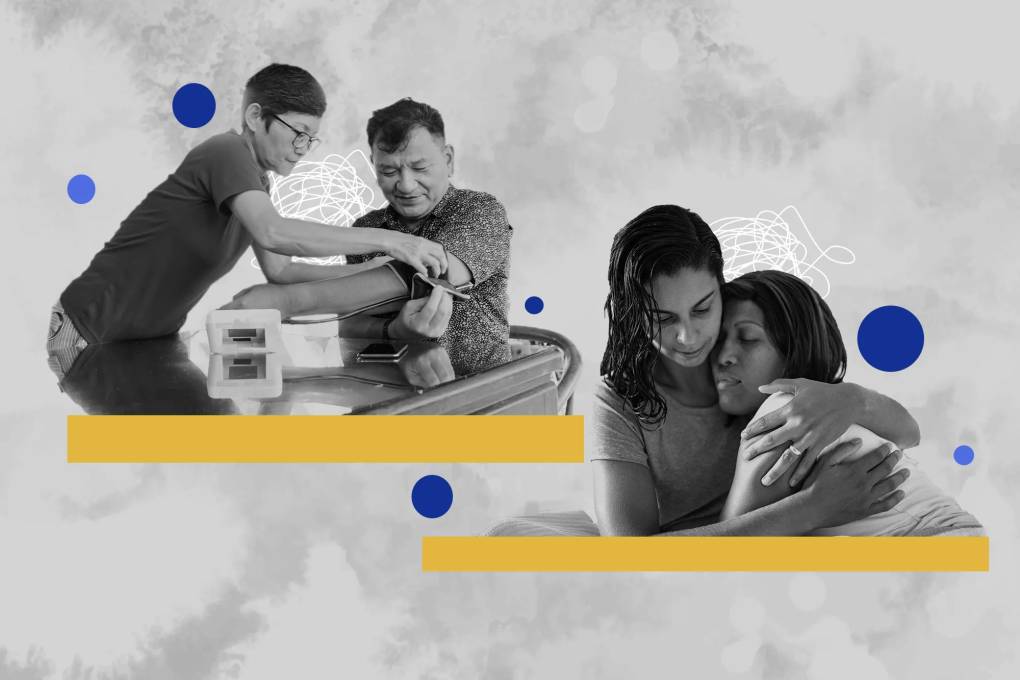
Paid Family Leave in California Keeps Women Employed, Says New Study
Paid Family Leave Just Turned 20. Will Newsom Expand It?
No Expanded Paid Family Leave, Disability Under Latest California Budget Agreement
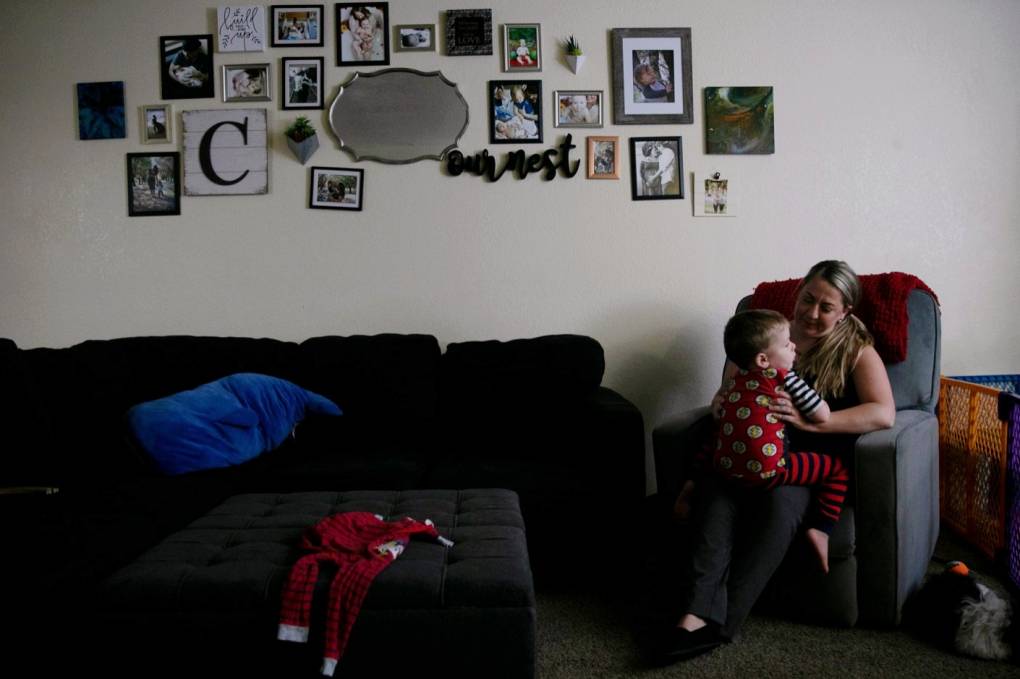
For Some Californians, Family Leave Is 'Unattainable.' This Bill Seeks to Change That
How to File for Unemployment in California During the Coronavirus Pandemic
Who Benefits From San Francisco’s Paid Leave For New Parents?
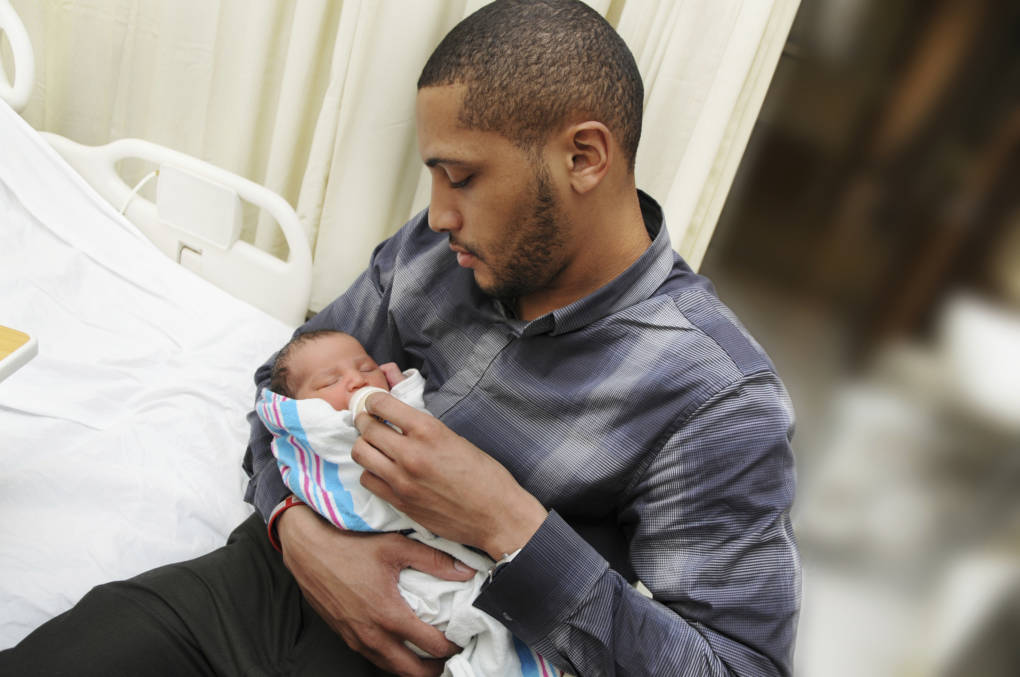
Pregnant or Trying? Here’s How to Get the Most out of California’s New Paid Family Leave Law
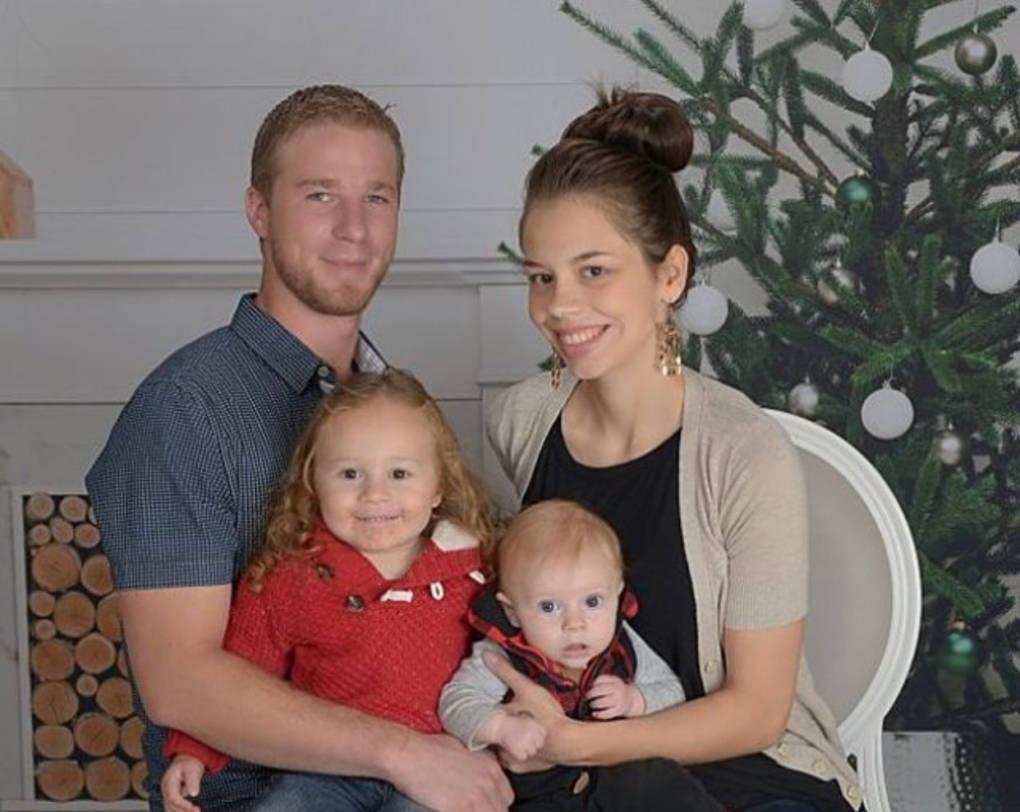
Participation in California's Paid Family Leave Program is Growing, But Who's Benefiting?
Player sponsored by
window.__IS_SSR__=true
window.__INITIAL_STATE__={
"attachmentsReducer": {
"audio_0": {
"type": "attachments",
"id": "audio_0",
"imgSizes": {
"kqedFullSize": {
"file": "https://ww2.kqed.org/news/wp-content/themes/KQED-unified/img/audio_bgs/background0.jpg"
}
}
},
"audio_1": {
"type": "attachments",
"id": "audio_1",
"imgSizes": {
"kqedFullSize": {
"file": "https://ww2.kqed.org/news/wp-content/themes/KQED-unified/img/audio_bgs/background1.jpg"
}
}
},
"audio_2": {
"type": "attachments",
"id": "audio_2",
"imgSizes": {
"kqedFullSize": {
"file": "https://ww2.kqed.org/news/wp-content/themes/KQED-unified/img/audio_bgs/background2.jpg"
}
}
},
"audio_3": {
"type": "attachments",
"id": "audio_3",
"imgSizes": {
"kqedFullSize": {
"file": "https://ww2.kqed.org/news/wp-content/themes/KQED-unified/img/audio_bgs/background3.jpg"
}
}
},
"audio_4": {
"type": "attachments",
"id": "audio_4",
"imgSizes": {
"kqedFullSize": {
"file": "https://ww2.kqed.org/news/wp-content/themes/KQED-unified/img/audio_bgs/background4.jpg"
}
}
},
"placeholder": {
"type": "attachments",
"id": "placeholder",
"imgSizes": {
"thumbnail": {
"file": "https://cdn.kqed.org/wp-content/uploads/2024/12/KQED-Default-Image-816638274-2000x1333-1-160x107.jpg",
"width": 160,
"height": 107,
"mimeType": "image/jpeg"
},
"medium": {
"file": "https://cdn.kqed.org/wp-content/uploads/2024/12/KQED-Default-Image-816638274-2000x1333-1-800x533.jpg",
"width": 800,
"height": 533,
"mimeType": "image/jpeg"
},
"medium_large": {
"file": "https://cdn.kqed.org/wp-content/uploads/2024/12/KQED-Default-Image-816638274-2000x1333-1-768x512.jpg",
"width": 768,
"height": 512,
"mimeType": "image/jpeg"
},
"large": {
"file": "https://cdn.kqed.org/wp-content/uploads/2024/12/KQED-Default-Image-816638274-2000x1333-1-1020x680.jpg",
"width": 1020,
"height": 680,
"mimeType": "image/jpeg"
},
"1536x1536": {
"file": "https://cdn.kqed.org/wp-content/uploads/2024/12/KQED-Default-Image-816638274-2000x1333-1-1536x1024.jpg",
"width": 1536,
"height": 1024,
"mimeType": "image/jpeg"
},
"fd-lrg": {
"file": "https://cdn.kqed.org/wp-content/uploads/2024/12/KQED-Default-Image-816638274-2000x1333-1-1536x1024.jpg",
"width": 1536,
"height": 1024,
"mimeType": "image/jpeg"
},
"fd-med": {
"file": "https://cdn.kqed.org/wp-content/uploads/2024/12/KQED-Default-Image-816638274-2000x1333-1-1020x680.jpg",
"width": 1020,
"height": 680,
"mimeType": "image/jpeg"
},
"fd-sm": {
"file": "https://cdn.kqed.org/wp-content/uploads/2024/12/KQED-Default-Image-816638274-2000x1333-1-800x533.jpg",
"width": 800,
"height": 533,
"mimeType": "image/jpeg"
},
"post-thumbnail": {
"file": "https://cdn.kqed.org/wp-content/uploads/2024/12/KQED-Default-Image-816638274-2000x1333-1-672x372.jpg",
"width": 672,
"height": 372,
"mimeType": "image/jpeg"
},
"twentyfourteen-full-width": {
"file": "https://cdn.kqed.org/wp-content/uploads/2024/12/KQED-Default-Image-816638274-2000x1333-1-1038x576.jpg",
"width": 1038,
"height": 576,
"mimeType": "image/jpeg"
},
"xxsmall": {
"file": "https://cdn.kqed.org/wp-content/uploads/2024/12/KQED-Default-Image-816638274-2000x1333-1-160x107.jpg",
"width": 160,
"height": 107,
"mimeType": "image/jpeg"
},
"xsmall": {
"file": "https://cdn.kqed.org/wp-content/uploads/2024/12/KQED-Default-Image-816638274-2000x1333-1-672x372.jpg",
"width": 672,
"height": 372,
"mimeType": "image/jpeg"
},
"small": {
"file": "https://cdn.kqed.org/wp-content/uploads/2024/12/KQED-Default-Image-816638274-2000x1333-1-672x372.jpg",
"width": 672,
"height": 372,
"mimeType": "image/jpeg"
},
"xlarge": {
"file": "https://cdn.kqed.org/wp-content/uploads/2024/12/KQED-Default-Image-816638274-2000x1333-1-1020x680.jpg",
"width": 1020,
"height": 680,
"mimeType": "image/jpeg"
},
"full-width": {
"file": "https://cdn.kqed.org/wp-content/uploads/2024/12/KQED-Default-Image-816638274-2000x1333-1-1920x1280.jpg",
"width": 1920,
"height": 1280,
"mimeType": "image/jpeg"
},
"guest-author-32": {
"file": "https://cdn.kqed.org/wp-content/uploads/2025/01/KQED-Default-Image-816638274-1333x1333-1-160x160.jpg",
"width": 32,
"height": 32,
"mimeType": "image/jpeg"
},
"guest-author-50": {
"file": "https://cdn.kqed.org/wp-content/uploads/2025/01/KQED-Default-Image-816638274-1333x1333-1-160x160.jpg",
"width": 50,
"height": 50,
"mimeType": "image/jpeg"
},
"guest-author-64": {
"file": "https://cdn.kqed.org/wp-content/uploads/2025/01/KQED-Default-Image-816638274-1333x1333-1-160x160.jpg",
"width": 64,
"height": 64,
"mimeType": "image/jpeg"
},
"guest-author-96": {
"file": "https://cdn.kqed.org/wp-content/uploads/2025/01/KQED-Default-Image-816638274-1333x1333-1-160x160.jpg",
"width": 96,
"height": 96,
"mimeType": "image/jpeg"
},
"guest-author-128": {
"file": "https://cdn.kqed.org/wp-content/uploads/2025/01/KQED-Default-Image-816638274-1333x1333-1-160x160.jpg",
"width": 128,
"height": 128,
"mimeType": "image/jpeg"
},
"detail": {
"file": "https://cdn.kqed.org/wp-content/uploads/2025/01/KQED-Default-Image-816638274-1333x1333-1-160x160.jpg",
"width": 160,
"height": 160,
"mimeType": "image/jpeg"
},
"kqedFullSize": {
"file": "https://cdn.kqed.org/wp-content/uploads/2024/12/KQED-Default-Image-816638274-2000x1333-1.jpg",
"width": 2000,
"height": 1333
}
}
},
"news_11934996": {
"type": "attachments",
"id": "news_11934996",
"meta": {
"index": "attachments_1716263798",
"site": "news",
"id": "11934996",
"found": true
},
"parent": 11934993,
"imgSizes": {
"twentyfourteen-full-width": {
"file": "https://ww2.kqed.org/app/uploads/sites/10/2022/12/120922-Paid-Leave-Partner-CM-01-1038x576.jpg",
"width": 1038,
"mimeType": "image/jpeg",
"height": 576
},
"thumbnail": {
"file": "https://ww2.kqed.org/app/uploads/sites/10/2022/12/120922-Paid-Leave-Partner-CM-01-160x107.jpg",
"width": 160,
"mimeType": "image/jpeg",
"height": 107
},
"post-thumbnail": {
"file": "https://ww2.kqed.org/app/uploads/sites/10/2022/12/120922-Paid-Leave-Partner-CM-01-672x372.jpg",
"width": 672,
"mimeType": "image/jpeg",
"height": 372
},
"kqedFullSize": {
"file": "https://ww2.kqed.org/app/uploads/sites/10/2022/12/120922-Paid-Leave-Partner-CM-01.jpg",
"width": 2000,
"height": 1333
},
"large": {
"file": "https://ww2.kqed.org/app/uploads/sites/10/2022/12/120922-Paid-Leave-Partner-CM-01-1020x680.jpg",
"width": 1020,
"mimeType": "image/jpeg",
"height": 680
},
"1536x1536": {
"file": "https://ww2.kqed.org/app/uploads/sites/10/2022/12/120922-Paid-Leave-Partner-CM-01-1536x1024.jpg",
"width": 1536,
"mimeType": "image/jpeg",
"height": 1024
},
"full-width": {
"file": "https://ww2.kqed.org/app/uploads/sites/10/2022/12/120922-Paid-Leave-Partner-CM-01-1920x1280.jpg",
"width": 1920,
"mimeType": "image/jpeg",
"height": 1280
},
"medium": {
"file": "https://ww2.kqed.org/app/uploads/sites/10/2022/12/120922-Paid-Leave-Partner-CM-01-800x533.jpg",
"width": 800,
"mimeType": "image/jpeg",
"height": 533
}
},
"publishDate": 1670874616,
"modified": 1670881117,
"caption": "Access to paid family leave decreases the likelihood that women will leave a job if their spouse has serious health issues, according to a new study.",
"description": null,
"title": "120922-Paid-Leave-Partner-CM-01",
"credit": "Illustration by Miguel Gutierrez Jr./CalMatters/iStock",
"status": "inherit",
"altTag": "a photo illustration shows an older woman helping an older man put a blood pressure cuff on, and a younger woman hugging what appears to be an older woman family member",
"isLoading": false,
"fetchFailed": false
},
"news_11926571": {
"type": "attachments",
"id": "news_11926571",
"meta": {
"index": "attachments_1716263798",
"site": "news",
"id": "11926571",
"found": true
},
"parent": 11926528,
"imgSizes": {
"twentyfourteen-full-width": {
"file": "https://ww2.kqed.org/app/uploads/sites/10/2022/09/RS56209_GettyImages-1360473794-qut-1038x576.jpg",
"width": 1038,
"mimeType": "image/jpeg",
"height": 576
},
"thumbnail": {
"file": "https://ww2.kqed.org/app/uploads/sites/10/2022/09/RS56209_GettyImages-1360473794-qut-160x107.jpg",
"width": 160,
"mimeType": "image/jpeg",
"height": 107
},
"post-thumbnail": {
"file": "https://ww2.kqed.org/app/uploads/sites/10/2022/09/RS56209_GettyImages-1360473794-qut-672x372.jpg",
"width": 672,
"mimeType": "image/jpeg",
"height": 372
},
"kqedFullSize": {
"file": "https://ww2.kqed.org/app/uploads/sites/10/2022/09/RS56209_GettyImages-1360473794-qut.jpg",
"width": 1920,
"height": 1280
},
"large": {
"file": "https://ww2.kqed.org/app/uploads/sites/10/2022/09/RS56209_GettyImages-1360473794-qut-1020x680.jpg",
"width": 1020,
"mimeType": "image/jpeg",
"height": 680
},
"1536x1536": {
"file": "https://ww2.kqed.org/app/uploads/sites/10/2022/09/RS56209_GettyImages-1360473794-qut-1536x1024.jpg",
"width": 1536,
"mimeType": "image/jpeg",
"height": 1024
},
"medium": {
"file": "https://ww2.kqed.org/app/uploads/sites/10/2022/09/RS56209_GettyImages-1360473794-qut-800x533.jpg",
"width": 800,
"mimeType": "image/jpeg",
"height": 533
}
},
"publishDate": 1663965588,
"modified": 1663972743,
"caption": "As a new bill calls for the expansion of California's Paid Family Leave program, all eyes are on Gov. Gavin Newsom, who has yet to sign it.",
"description": "Governor Gavin Newsom headshot.",
"title": "SFChronicleNewsom",
"credit": "Brontë Wittpenn/The San Francisco Chronicle via Getty Images",
"status": "inherit",
"altTag": "Governor Gavin Newsom is wearing a navy suit and blue tie, looking away from the camera with finger pointing as he speaks.",
"isLoading": false,
"fetchFailed": false
},
"news_11918458": {
"type": "attachments",
"id": "news_11918458",
"meta": {
"index": "attachments_1716263798",
"site": "news",
"id": "11918458",
"found": true
},
"parent": 11918450,
"imgSizes": {
"twentyfourteen-full-width": {
"file": "https://ww2.kqed.org/app/uploads/sites/10/2022/06/RS20460_GettyImages-583816238-qut-1038x576.jpg",
"width": 1038,
"mimeType": "image/jpeg",
"height": 576
},
"thumbnail": {
"file": "https://ww2.kqed.org/app/uploads/sites/10/2022/06/RS20460_GettyImages-583816238-qut-160x107.jpg",
"width": 160,
"mimeType": "image/jpeg",
"height": 107
},
"post-thumbnail": {
"file": "https://ww2.kqed.org/app/uploads/sites/10/2022/06/RS20460_GettyImages-583816238-qut-672x372.jpg",
"width": 672,
"mimeType": "image/jpeg",
"height": 372
},
"kqedFullSize": {
"file": "https://ww2.kqed.org/app/uploads/sites/10/2022/06/RS20460_GettyImages-583816238-qut.jpg",
"width": 1920,
"height": 1283
},
"large": {
"file": "https://ww2.kqed.org/app/uploads/sites/10/2022/06/RS20460_GettyImages-583816238-qut-1020x682.jpg",
"width": 1020,
"mimeType": "image/jpeg",
"height": 682
},
"1536x1536": {
"file": "https://ww2.kqed.org/app/uploads/sites/10/2022/06/RS20460_GettyImages-583816238-qut-1536x1026.jpg",
"width": 1536,
"mimeType": "image/jpeg",
"height": 1026
},
"medium": {
"file": "https://ww2.kqed.org/app/uploads/sites/10/2022/06/RS20460_GettyImages-583816238-qut-800x535.jpg",
"width": 800,
"mimeType": "image/jpeg",
"height": 535
}
},
"publishDate": 1656548139,
"modified": 1656619581,
"caption": "Gov. Gavin Newsom speaks during Day Three of the Democratic National Convention at the Wells Fargo Center in Philadelphia, Pennsylvania, July 27, 2016.",
"description": null,
"title": "RS20460_GettyImages-583816238-qut",
"credit": "Nicholas Kamm/AFP/Getty Images",
"status": "inherit",
"altTag": "A man in a business suit stands at a podium with his left hand raised.",
"isLoading": false,
"fetchFailed": false
},
"news_11881050": {
"type": "attachments",
"id": "news_11881050",
"meta": {
"index": "attachments_1716263798",
"site": "news",
"id": "11881050",
"found": true
},
"parent": 11881047,
"imgSizes": {
"twentyfourteen-full-width": {
"file": "https://ww2.kqed.org/app/uploads/sites/10/2021/07/070821_FamilyLeave_AW_sized_08-1-1038x576.jpg",
"width": 1038,
"mimeType": "image/jpeg",
"height": 576
},
"thumbnail": {
"file": "https://ww2.kqed.org/app/uploads/sites/10/2021/07/070821_FamilyLeave_AW_sized_08-1-160x107.jpg",
"width": 160,
"mimeType": "image/jpeg",
"height": 107
},
"post-thumbnail": {
"file": "https://ww2.kqed.org/app/uploads/sites/10/2021/07/070821_FamilyLeave_AW_sized_08-1-672x372.jpg",
"width": 672,
"mimeType": "image/jpeg",
"height": 372
},
"kqedFullSize": {
"file": "https://ww2.kqed.org/app/uploads/sites/10/2021/07/070821_FamilyLeave_AW_sized_08-1.jpg",
"width": 1410,
"height": 939
},
"large": {
"file": "https://ww2.kqed.org/app/uploads/sites/10/2021/07/070821_FamilyLeave_AW_sized_08-1-1020x679.jpg",
"width": 1020,
"mimeType": "image/jpeg",
"height": 679
},
"medium": {
"file": "https://ww2.kqed.org/app/uploads/sites/10/2021/07/070821_FamilyLeave_AW_sized_08-1-800x533.jpg",
"width": 800,
"mimeType": "image/jpeg",
"height": 533
}
},
"publishDate": 1626205890,
"modified": 1626289655,
"caption": "Miranda Griswold cuddles her 3-year-old, Rhys, before bedtime at their Merced home on July 8, 2021. 'Six weeks is nothing,' Griswold said of the current family leave allotment. 'It’s barely time to recover [from C-section] and on top of navigating breast feeding.'",
"description": "Miranda Griswold cuddles her three-year-old, Rhys, before bedtime at their Merced home on July 8, 2021. “Six weeks is nothing,” Griswold said of the current family leave allotment. “It’s barely time to recover [from C-section] and on top of navigating breast feeding.”",
"title": "070821_FamilyLeave_AW_sized_08 (1)",
"credit": "Anne Wernikoff/CalMatters",
"status": "inherit",
"altTag": "An adult with blond hair sits on a couch and carries an infant. Both are in a dark living room. There are many photos hung on the wall besides them.",
"isLoading": false,
"fetchFailed": false
},
"news_11812025": {
"type": "attachments",
"id": "news_11812025",
"meta": {
"index": "attachments_1716263798",
"site": "news",
"id": "11812025",
"found": true
},
"parent": 11806938,
"imgSizes": {
"apple_news_ca_landscape_5_5": {
"file": "https://ww2.kqed.org/app/uploads/sites/10/2020/03/RS42106_004_KQED_EDD_UnemploymentApplication_03162020_8407-qut-1-1044x783.jpg",
"width": 1044,
"mimeType": "image/jpeg",
"height": 783
},
"apple_news_ca_square_4_0": {
"file": "https://ww2.kqed.org/app/uploads/sites/10/2020/03/RS42106_004_KQED_EDD_UnemploymentApplication_03162020_8407-qut-1-470x470.jpg",
"width": 470,
"mimeType": "image/jpeg",
"height": 470
},
"twentyfourteen-full-width": {
"file": "https://ww2.kqed.org/app/uploads/sites/10/2020/03/RS42106_004_KQED_EDD_UnemploymentApplication_03162020_8407-qut-1-1038x576.jpg",
"width": 1038,
"mimeType": "image/jpeg",
"height": 576
},
"thumbnail": {
"file": "https://ww2.kqed.org/app/uploads/sites/10/2020/03/RS42106_004_KQED_EDD_UnemploymentApplication_03162020_8407-qut-1-160x107.jpg",
"width": 160,
"mimeType": "image/jpeg",
"height": 107
},
"post-thumbnail": {
"file": "https://ww2.kqed.org/app/uploads/sites/10/2020/03/RS42106_004_KQED_EDD_UnemploymentApplication_03162020_8407-qut-1-672x372.jpg",
"width": 672,
"mimeType": "image/jpeg",
"height": 372
},
"kqedFullSize": {
"file": "https://ww2.kqed.org/app/uploads/sites/10/2020/03/RS42106_004_KQED_EDD_UnemploymentApplication_03162020_8407-qut-1.jpg",
"width": 1920,
"height": 1280
},
"apple_news_ca_landscape_4_7": {
"file": "https://ww2.kqed.org/app/uploads/sites/10/2020/03/RS42106_004_KQED_EDD_UnemploymentApplication_03162020_8407-qut-1-632x474.jpg",
"width": 632,
"mimeType": "image/jpeg",
"height": 474
},
"large": {
"file": "https://ww2.kqed.org/app/uploads/sites/10/2020/03/RS42106_004_KQED_EDD_UnemploymentApplication_03162020_8407-qut-1-1020x680.jpg",
"width": 1020,
"mimeType": "image/jpeg",
"height": 680
},
"apple_news_ca_landscape_4_0": {
"file": "https://ww2.kqed.org/app/uploads/sites/10/2020/03/RS42106_004_KQED_EDD_UnemploymentApplication_03162020_8407-qut-1-536x402.jpg",
"width": 536,
"mimeType": "image/jpeg",
"height": 402
},
"apple_news_ca_portrait_12_9": {
"file": "https://ww2.kqed.org/app/uploads/sites/10/2020/03/RS42106_004_KQED_EDD_UnemploymentApplication_03162020_8407-qut-1-1122x1280.jpg",
"width": 1122,
"mimeType": "image/jpeg",
"height": 1280
},
"medium": {
"file": "https://ww2.kqed.org/app/uploads/sites/10/2020/03/RS42106_004_KQED_EDD_UnemploymentApplication_03162020_8407-qut-1-800x533.jpg",
"width": 800,
"mimeType": "image/jpeg",
"height": 533
},
"apple_news_ca_portrait_4_0": {
"file": "https://ww2.kqed.org/app/uploads/sites/10/2020/03/RS42106_004_KQED_EDD_UnemploymentApplication_03162020_8407-qut-1-354x472.jpg",
"width": 354,
"mimeType": "image/jpeg",
"height": 472
},
"apple_news_ca_portrait_9_7": {
"file": "https://ww2.kqed.org/app/uploads/sites/10/2020/03/RS42106_004_KQED_EDD_UnemploymentApplication_03162020_8407-qut-1-840x1120.jpg",
"width": 840,
"mimeType": "image/jpeg",
"height": 1120
},
"apple_news_ca_landscape_12_9": {
"file": "https://ww2.kqed.org/app/uploads/sites/10/2020/03/RS42106_004_KQED_EDD_UnemploymentApplication_03162020_8407-qut-1-1832x1280.jpg",
"width": 1832,
"mimeType": "image/jpeg",
"height": 1280
},
"apple_news_ca_square_9_7": {
"file": "https://ww2.kqed.org/app/uploads/sites/10/2020/03/RS42106_004_KQED_EDD_UnemploymentApplication_03162020_8407-qut-1-1104x1104.jpg",
"width": 1104,
"mimeType": "image/jpeg",
"height": 1104
},
"apple_news_ca_portrait_4_7": {
"file": "https://ww2.kqed.org/app/uploads/sites/10/2020/03/RS42106_004_KQED_EDD_UnemploymentApplication_03162020_8407-qut-1-414x552.jpg",
"width": 414,
"mimeType": "image/jpeg",
"height": 552
},
"apple_news_ca_square_12_9": {
"file": "https://ww2.kqed.org/app/uploads/sites/10/2020/03/RS42106_004_KQED_EDD_UnemploymentApplication_03162020_8407-qut-1-1472x1280.jpg",
"width": 1472,
"mimeType": "image/jpeg",
"height": 1280
},
"apple_news_ca_portrait_5_5": {
"file": "https://ww2.kqed.org/app/uploads/sites/10/2020/03/RS42106_004_KQED_EDD_UnemploymentApplication_03162020_8407-qut-1-687x916.jpg",
"width": 687,
"mimeType": "image/jpeg",
"height": 916
},
"full-width": {
"file": "https://ww2.kqed.org/app/uploads/sites/10/2020/03/RS42106_004_KQED_EDD_UnemploymentApplication_03162020_8407-qut-1-1920x1280.jpg",
"width": 1920,
"mimeType": "image/jpeg",
"height": 1280
},
"apple_news_ca_square_4_7": {
"file": "https://ww2.kqed.org/app/uploads/sites/10/2020/03/RS42106_004_KQED_EDD_UnemploymentApplication_03162020_8407-qut-1-550x550.jpg",
"width": 550,
"mimeType": "image/jpeg",
"height": 550
},
"apple_news_ca_landscape_9_7": {
"file": "https://ww2.kqed.org/app/uploads/sites/10/2020/03/RS42106_004_KQED_EDD_UnemploymentApplication_03162020_8407-qut-1-1376x1032.jpg",
"width": 1376,
"mimeType": "image/jpeg",
"height": 1032
},
"apple_news_ca_square_5_5": {
"file": "https://ww2.kqed.org/app/uploads/sites/10/2020/03/RS42106_004_KQED_EDD_UnemploymentApplication_03162020_8407-qut-1-912x912.jpg",
"width": 912,
"mimeType": "image/jpeg",
"height": 912
}
},
"publishDate": 1586634094,
"modified": 1600720143,
"caption": "A woman looks at the Employment Development Department (EDD) website, where California residents can file for unemployment, on March 16, 2020.",
"description": null,
"title": "RS42106_004_KQED_EDD_UnemploymentApplication_03162020_8407-qut",
"credit": "Beth LaBerge/KQED",
"status": "inherit",
"isLoading": false,
"fetchFailed": false
},
"news_11828579": {
"type": "attachments",
"id": "news_11828579",
"meta": {
"index": "attachments_1716263798",
"site": "news",
"id": "11828579",
"found": true
},
"parent": 11828551,
"imgSizes": {
"apple_news_ca_landscape_5_5": {
"file": "https://ww2.kqed.org/app/uploads/sites/10/2020/07/RS43920_woman-carrying-a-baby-3242264-qut-1044x783.jpg",
"width": 1044,
"mimeType": "image/jpeg",
"height": 783
},
"apple_news_ca_square_4_0": {
"file": "https://ww2.kqed.org/app/uploads/sites/10/2020/07/RS43920_woman-carrying-a-baby-3242264-qut-470x470.jpg",
"width": 470,
"mimeType": "image/jpeg",
"height": 470
},
"twentyfourteen-full-width": {
"file": "https://ww2.kqed.org/app/uploads/sites/10/2020/07/RS43920_woman-carrying-a-baby-3242264-qut-1038x576.jpg",
"width": 1038,
"mimeType": "image/jpeg",
"height": 576
},
"thumbnail": {
"file": "https://ww2.kqed.org/app/uploads/sites/10/2020/07/RS43920_woman-carrying-a-baby-3242264-qut-160x107.jpg",
"width": 160,
"mimeType": "image/jpeg",
"height": 107
},
"post-thumbnail": {
"file": "https://ww2.kqed.org/app/uploads/sites/10/2020/07/RS43920_woman-carrying-a-baby-3242264-qut-672x372.jpg",
"width": 672,
"mimeType": "image/jpeg",
"height": 372
},
"kqedFullSize": {
"file": "https://ww2.kqed.org/app/uploads/sites/10/2020/07/RS43920_woman-carrying-a-baby-3242264-qut.jpg",
"width": 1920,
"height": 1280
},
"apple_news_ca_landscape_4_7": {
"file": "https://ww2.kqed.org/app/uploads/sites/10/2020/07/RS43920_woman-carrying-a-baby-3242264-qut-632x474.jpg",
"width": 632,
"mimeType": "image/jpeg",
"height": 474
},
"large": {
"file": "https://ww2.kqed.org/app/uploads/sites/10/2020/07/RS43920_woman-carrying-a-baby-3242264-qut-1020x680.jpg",
"width": 1020,
"mimeType": "image/jpeg",
"height": 680
},
"apple_news_ca_landscape_4_0": {
"file": "https://ww2.kqed.org/app/uploads/sites/10/2020/07/RS43920_woman-carrying-a-baby-3242264-qut-536x402.jpg",
"width": 536,
"mimeType": "image/jpeg",
"height": 402
},
"apple_news_ca_portrait_12_9": {
"file": "https://ww2.kqed.org/app/uploads/sites/10/2020/07/RS43920_woman-carrying-a-baby-3242264-qut-1122x1280.jpg",
"width": 1122,
"mimeType": "image/jpeg",
"height": 1280
},
"medium": {
"file": "https://ww2.kqed.org/app/uploads/sites/10/2020/07/RS43920_woman-carrying-a-baby-3242264-qut-800x533.jpg",
"width": 800,
"mimeType": "image/jpeg",
"height": 533
},
"apple_news_ca_portrait_4_0": {
"file": "https://ww2.kqed.org/app/uploads/sites/10/2020/07/RS43920_woman-carrying-a-baby-3242264-qut-354x472.jpg",
"width": 354,
"mimeType": "image/jpeg",
"height": 472
},
"apple_news_ca_portrait_9_7": {
"file": "https://ww2.kqed.org/app/uploads/sites/10/2020/07/RS43920_woman-carrying-a-baby-3242264-qut-840x1120.jpg",
"width": 840,
"mimeType": "image/jpeg",
"height": 1120
},
"apple_news_ca_landscape_12_9": {
"file": "https://ww2.kqed.org/app/uploads/sites/10/2020/07/RS43920_woman-carrying-a-baby-3242264-qut-1832x1280.jpg",
"width": 1832,
"mimeType": "image/jpeg",
"height": 1280
},
"apple_news_ca_square_9_7": {
"file": "https://ww2.kqed.org/app/uploads/sites/10/2020/07/RS43920_woman-carrying-a-baby-3242264-qut-1104x1104.jpg",
"width": 1104,
"mimeType": "image/jpeg",
"height": 1104
},
"1536x1536": {
"file": "https://ww2.kqed.org/app/uploads/sites/10/2020/07/RS43920_woman-carrying-a-baby-3242264-qut-1536x1024.jpg",
"width": 1536,
"mimeType": "image/jpeg",
"height": 1024
},
"apple_news_ca_portrait_4_7": {
"file": "https://ww2.kqed.org/app/uploads/sites/10/2020/07/RS43920_woman-carrying-a-baby-3242264-qut-414x552.jpg",
"width": 414,
"mimeType": "image/jpeg",
"height": 552
},
"apple_news_ca_square_12_9": {
"file": "https://ww2.kqed.org/app/uploads/sites/10/2020/07/RS43920_woman-carrying-a-baby-3242264-qut-1472x1280.jpg",
"width": 1472,
"mimeType": "image/jpeg",
"height": 1280
},
"apple_news_ca_portrait_5_5": {
"file": "https://ww2.kqed.org/app/uploads/sites/10/2020/07/RS43920_woman-carrying-a-baby-3242264-qut-687x916.jpg",
"width": 687,
"mimeType": "image/jpeg",
"height": 916
},
"apple_news_ca_square_4_7": {
"file": "https://ww2.kqed.org/app/uploads/sites/10/2020/07/RS43920_woman-carrying-a-baby-3242264-qut-550x550.jpg",
"width": 550,
"mimeType": "image/jpeg",
"height": 550
},
"apple_news_ca_landscape_9_7": {
"file": "https://ww2.kqed.org/app/uploads/sites/10/2020/07/RS43920_woman-carrying-a-baby-3242264-qut-1376x1032.jpg",
"width": 1376,
"mimeType": "image/jpeg",
"height": 1032
},
"apple_news_ca_square_5_5": {
"file": "https://ww2.kqed.org/app/uploads/sites/10/2020/07/RS43920_woman-carrying-a-baby-3242264-qut-912x912.jpg",
"width": 912,
"mimeType": "image/jpeg",
"height": 912
}
},
"publishDate": 1594431397,
"modified": 1594432384,
"caption": "According to the study, 13% more fathers opted for paid time off in the first year and a half after San Francisco’s policy was implemented, but there wasn’t a real change among mothers.",
"description": "According to the study, 13% more fathers opted for paid time off in the first year and a half after San Francisco’s policy was implemented, but there wasn’t a real change among mothers.",
"title": "woman carrying baby",
"credit": "Kristina Paukshtite/Pexels",
"status": "inherit",
"isLoading": false,
"fetchFailed": false
},
"news_11767857": {
"type": "attachments",
"id": "news_11767857",
"meta": {
"index": "attachments_1716263798",
"site": "news",
"id": "11767857",
"found": true
},
"parent": 11767839,
"imgSizes": {
"apple_news_ca_landscape_5_5": {
"file": "https://ww2.kqed.org/app/uploads/sites/10/2019/08/RS13988_iStock_000016287227_Large-1044x783.jpg",
"width": 1044,
"mimeType": "image/jpeg",
"height": 783
},
"apple_news_ca_square_4_0": {
"file": "https://ww2.kqed.org/app/uploads/sites/10/2019/08/RS13988_iStock_000016287227_Large-470x470.jpg",
"width": 470,
"mimeType": "image/jpeg",
"height": 470
},
"twentyfourteen-full-width": {
"file": "https://ww2.kqed.org/app/uploads/sites/10/2019/08/RS13988_iStock_000016287227_Large-1038x576.jpg",
"width": 1038,
"mimeType": "image/jpeg",
"height": 576
},
"thumbnail": {
"file": "https://ww2.kqed.org/app/uploads/sites/10/2019/08/RS13988_iStock_000016287227_Large-160x106.jpg",
"width": 160,
"mimeType": "image/jpeg",
"height": 106
},
"post-thumbnail": {
"file": "https://ww2.kqed.org/app/uploads/sites/10/2019/08/RS13988_iStock_000016287227_Large-672x372.jpg",
"width": 672,
"mimeType": "image/jpeg",
"height": 372
},
"kqedFullSize": {
"file": "https://ww2.kqed.org/app/uploads/sites/10/2019/08/RS13988_iStock_000016287227_Large-e1565907652467.jpg",
"width": 1920,
"height": 1275
},
"apple_news_ca_landscape_4_7": {
"file": "https://ww2.kqed.org/app/uploads/sites/10/2019/08/RS13988_iStock_000016287227_Large-632x474.jpg",
"width": 632,
"mimeType": "image/jpeg",
"height": 474
},
"large": {
"file": "https://ww2.kqed.org/app/uploads/sites/10/2019/08/RS13988_iStock_000016287227_Large-1020x677.jpg",
"width": 1020,
"mimeType": "image/jpeg",
"height": 677
},
"complete_open_graph": {
"file": "https://ww2.kqed.org/app/uploads/sites/10/2019/08/RS13988_iStock_000016287227_Large-1200x797.jpg",
"width": 1200,
"mimeType": "image/jpeg",
"height": 797
},
"apple_news_ca_landscape_4_0": {
"file": "https://ww2.kqed.org/app/uploads/sites/10/2019/08/RS13988_iStock_000016287227_Large-536x402.jpg",
"width": 536,
"mimeType": "image/jpeg",
"height": 402
},
"apple_news_ca_portrait_12_9": {
"file": "https://ww2.kqed.org/app/uploads/sites/10/2019/08/RS13988_iStock_000016287227_Large-1122x1496.jpg",
"width": 1122,
"mimeType": "image/jpeg",
"height": 1496
},
"medium": {
"file": "https://ww2.kqed.org/app/uploads/sites/10/2019/08/RS13988_iStock_000016287227_Large-800x531.jpg",
"width": 800,
"mimeType": "image/jpeg",
"height": 531
},
"apple_news_ca_portrait_4_0": {
"file": "https://ww2.kqed.org/app/uploads/sites/10/2019/08/RS13988_iStock_000016287227_Large-354x472.jpg",
"width": 354,
"mimeType": "image/jpeg",
"height": 472
},
"apple_news_ca_portrait_9_7": {
"file": "https://ww2.kqed.org/app/uploads/sites/10/2019/08/RS13988_iStock_000016287227_Large-840x1120.jpg",
"width": 840,
"mimeType": "image/jpeg",
"height": 1120
},
"apple_news_ca_landscape_12_9": {
"file": "https://ww2.kqed.org/app/uploads/sites/10/2019/08/RS13988_iStock_000016287227_Large-1832x1374.jpg",
"width": 1832,
"mimeType": "image/jpeg",
"height": 1374
},
"apple_news_ca_square_9_7": {
"file": "https://ww2.kqed.org/app/uploads/sites/10/2019/08/RS13988_iStock_000016287227_Large-1104x1104.jpg",
"width": 1104,
"mimeType": "image/jpeg",
"height": 1104
},
"apple_news_ca_portrait_4_7": {
"file": "https://ww2.kqed.org/app/uploads/sites/10/2019/08/RS13988_iStock_000016287227_Large-414x552.jpg",
"width": 414,
"mimeType": "image/jpeg",
"height": 552
},
"apple_news_ca_square_12_9": {
"file": "https://ww2.kqed.org/app/uploads/sites/10/2019/08/RS13988_iStock_000016287227_Large-1472x1472.jpg",
"width": 1472,
"mimeType": "image/jpeg",
"height": 1472
},
"apple_news_ca_portrait_5_5": {
"file": "https://ww2.kqed.org/app/uploads/sites/10/2019/08/RS13988_iStock_000016287227_Large-687x916.jpg",
"width": 687,
"mimeType": "image/jpeg",
"height": 916
},
"full-width": {
"file": "https://ww2.kqed.org/app/uploads/sites/10/2019/08/RS13988_iStock_000016287227_Large-1920x1275.jpg",
"width": 1920,
"mimeType": "image/jpeg",
"height": 1275
},
"apple_news_ca_square_4_7": {
"file": "https://ww2.kqed.org/app/uploads/sites/10/2019/08/RS13988_iStock_000016287227_Large-550x550.jpg",
"width": 550,
"mimeType": "image/jpeg",
"height": 550
},
"apple_news_ca_landscape_9_7": {
"file": "https://ww2.kqed.org/app/uploads/sites/10/2019/08/RS13988_iStock_000016287227_Large-1376x1032.jpg",
"width": 1376,
"mimeType": "image/jpeg",
"height": 1032
},
"apple_news_ca_square_5_5": {
"file": "https://ww2.kqed.org/app/uploads/sites/10/2019/08/RS13988_iStock_000016287227_Large-912x912.jpg",
"width": 912,
"mimeType": "image/jpeg",
"height": 912
}
},
"publishDate": 1565907615,
"modified": 1565907867,
"caption": "A father with his newborn baby. Under an expansion of California's paid family leave law, which goes into effect July 1, 2020, workers will be able to take up to eight weeks off with partial pay to bond with a new baby. ",
"description": null,
"title": "RS13988_iStock_000016287227_Large",
"credit": "iStock",
"status": "inherit",
"isLoading": false,
"fetchFailed": false
},
"news_11739137": {
"type": "attachments",
"id": "news_11739137",
"meta": {
"index": "attachments_1716263798",
"site": "news",
"id": "11739137",
"found": true
},
"parent": 11738215,
"imgSizes": {
"apple_news_ca_landscape_5_5": {
"file": "https://ww2.kqed.org/app/uploads/sites/10/2019/04/RS36473_Blake-Family-1044x783.jpeg",
"width": 1044,
"mimeType": "image/jpeg",
"height": 783
},
"apple_news_ca_square_4_0": {
"file": "https://ww2.kqed.org/app/uploads/sites/10/2019/04/RS36473_Blake-Family-470x470.jpeg",
"width": 470,
"mimeType": "image/jpeg",
"height": 470
},
"twentyfourteen-full-width": {
"file": "https://ww2.kqed.org/app/uploads/sites/10/2019/04/RS36473_Blake-Family-1038x576.jpeg",
"width": 1038,
"mimeType": "image/jpeg",
"height": 576
},
"thumbnail": {
"file": "https://ww2.kqed.org/app/uploads/sites/10/2019/04/RS36473_Blake-Family-160x127.jpeg",
"width": 160,
"mimeType": "image/jpeg",
"height": 127
},
"post-thumbnail": {
"file": "https://ww2.kqed.org/app/uploads/sites/10/2019/04/RS36473_Blake-Family-672x372.jpeg",
"width": 672,
"mimeType": "image/jpeg",
"height": 372
},
"kqedFullSize": {
"file": "https://ww2.kqed.org/app/uploads/sites/10/2019/04/RS36473_Blake-Family.jpeg",
"width": 1242,
"height": 989
},
"apple_news_ca_landscape_4_7": {
"file": "https://ww2.kqed.org/app/uploads/sites/10/2019/04/RS36473_Blake-Family-632x474.jpeg",
"width": 632,
"mimeType": "image/jpeg",
"height": 474
},
"large": {
"file": "https://ww2.kqed.org/app/uploads/sites/10/2019/04/RS36473_Blake-Family-1020x812.jpeg",
"width": 1020,
"mimeType": "image/jpeg",
"height": 812
},
"complete_open_graph": {
"file": "https://ww2.kqed.org/app/uploads/sites/10/2019/04/RS36473_Blake-Family-1200x956.jpeg",
"width": 1200,
"mimeType": "image/jpeg",
"height": 956
},
"guest-author-50": {
"file": "https://ww2.kqed.org/app/uploads/sites/10/2019/04/RS36473_Blake-Family-50x50.jpeg",
"width": 50,
"mimeType": "image/jpeg",
"height": 50
},
"guest-author-96": {
"file": "https://ww2.kqed.org/app/uploads/sites/10/2019/04/RS36473_Blake-Family-96x96.jpeg",
"width": 96,
"mimeType": "image/jpeg",
"height": 96
},
"apple_news_ca_landscape_4_0": {
"file": "https://ww2.kqed.org/app/uploads/sites/10/2019/04/RS36473_Blake-Family-536x402.jpeg",
"width": 536,
"mimeType": "image/jpeg",
"height": 402
},
"apple_news_ca_portrait_12_9": {
"file": "https://ww2.kqed.org/app/uploads/sites/10/2019/04/RS36473_Blake-Family-1122x989.jpeg",
"width": 1122,
"mimeType": "image/jpeg",
"height": 989
},
"medium": {
"file": "https://ww2.kqed.org/app/uploads/sites/10/2019/04/RS36473_Blake-Family-800x637.jpeg",
"width": 800,
"mimeType": "image/jpeg",
"height": 637
},
"guest-author-64": {
"file": "https://ww2.kqed.org/app/uploads/sites/10/2019/04/RS36473_Blake-Family-64x64.jpeg",
"width": 64,
"mimeType": "image/jpeg",
"height": 64
},
"guest-author-32": {
"file": "https://ww2.kqed.org/app/uploads/sites/10/2019/04/RS36473_Blake-Family-32x32.jpeg",
"width": 32,
"mimeType": "image/jpeg",
"height": 32
},
"apple_news_ca_portrait_4_0": {
"file": "https://ww2.kqed.org/app/uploads/sites/10/2019/04/RS36473_Blake-Family-354x472.jpeg",
"width": 354,
"mimeType": "image/jpeg",
"height": 472
},
"apple_news_ca_portrait_9_7": {
"file": "https://ww2.kqed.org/app/uploads/sites/10/2019/04/RS36473_Blake-Family-840x989.jpeg",
"width": 840,
"mimeType": "image/jpeg",
"height": 989
},
"apple_news_ca_square_9_7": {
"file": "https://ww2.kqed.org/app/uploads/sites/10/2019/04/RS36473_Blake-Family-1104x989.jpeg",
"width": 1104,
"mimeType": "image/jpeg",
"height": 989
},
"apple_news_ca_portrait_4_7": {
"file": "https://ww2.kqed.org/app/uploads/sites/10/2019/04/RS36473_Blake-Family-414x552.jpeg",
"width": 414,
"mimeType": "image/jpeg",
"height": 552
},
"apple_news_ca_portrait_5_5": {
"file": "https://ww2.kqed.org/app/uploads/sites/10/2019/04/RS36473_Blake-Family-687x916.jpeg",
"width": 687,
"mimeType": "image/jpeg",
"height": 916
},
"apple_news_ca_square_4_7": {
"file": "https://ww2.kqed.org/app/uploads/sites/10/2019/04/RS36473_Blake-Family-550x550.jpeg",
"width": 550,
"mimeType": "image/jpeg",
"height": 550
},
"guest-author-128": {
"file": "https://ww2.kqed.org/app/uploads/sites/10/2019/04/RS36473_Blake-Family-128x128.jpeg",
"width": 128,
"mimeType": "image/jpeg",
"height": 128
},
"apple_news_ca_square_5_5": {
"file": "https://ww2.kqed.org/app/uploads/sites/10/2019/04/RS36473_Blake-Family-912x912.jpeg",
"width": 912,
"mimeType": "image/jpeg",
"height": 912
}
},
"publishDate": 1554923732,
"modified": 1554923774,
"caption": "Blake Richardson with his sons Elias Andrew Richardson, Aiden Pax Richardson and his wife Desiree D’Ambrosio. Richardson took paid family leave after the births of his sons. But he couldn't afford to take the full six weeks he was entitled to.",
"description": "Blake Richardson with his sons Elias Andrew Richardson, Aiden Pax Richardson and his wife Desiree D’Ambrosio. Richardson took paid family leave after the births of his sons. But he couldn't afford to take the full six weeks he was entitled to.",
"title": "RS36473_Blake Family",
"credit": "Courtesy Blake Richardson",
"status": "inherit",
"isLoading": false,
"fetchFailed": false
}
},
"audioPlayerReducer": {
"postId": "stream_live",
"isPaused": true,
"isPlaying": false,
"pfsActive": false,
"pledgeModalIsOpen": true,
"playerDrawerIsOpen": false,
"liveAudioPlayStartedAt": 0,
"liveAudioPlayContext": ""
},
"authorsReducer": {
"byline_news_11934993": {
"type": "authors",
"id": "byline_news_11934993",
"meta": {
"override": true
},
"slug": "byline_news_11934993",
"name": "\u003ca href=\"https://calmatters.org/author/grace-gedye/\">Grace Gedye\u003c/a>",
"isLoading": false
},
"byline_news_11881047": {
"type": "authors",
"id": "byline_news_11881047",
"meta": {
"override": true
},
"slug": "byline_news_11881047",
"name": "\u003ca href=\"https://calmatters.org/author/sameea-kamal/\">Sameea Kamal\u003c/a>",
"isLoading": false
},
"byline_news_11767839": {
"type": "authors",
"id": "byline_news_11767839",
"meta": {
"override": true
},
"slug": "byline_news_11767839",
"name": "\u003ca href=\"https://calmatters.org/author/laurel-rosenhall/\">Lauren Rosenhall\u003c/a>\u003cbr>CalMatters",
"isLoading": false
},
"fjhabvala": {
"type": "authors",
"id": "8659",
"meta": {
"index": "authors_1716337520",
"id": "8659",
"found": true
},
"name": "Farida Jhabvala Romero",
"firstName": "Farida",
"lastName": "Jhabvala Romero",
"slug": "fjhabvala",
"email": "fjhabvala@kqed.org",
"display_author_email": true,
"staff_mastheads": [
"news"
],
"title": "KQED Contributor",
"bio": "\u003cspan style=\"font-weight: 400;\">Farida Jhabvala Romero is a Labor Correspondent for KQED. She previously covered immigration. Farida was \u003ca href=\"https://www.ccnma.org/2022-most-influential-latina-journalists\">named\u003c/a> one of the 10 Most Influential Latina Journalists in California in 2022 by the California Chicano News Media Association. Her work has won awards from the Society of Professional Journalists (Northern California), as well as a national and regional Edward M. Murrow Award for the collaborative reporting projects “Dangerous Air” and “Graying California.” \u003c/span>\u003cspan style=\"font-weight: 400;\">Before joining KQED, Farida worked as a producer at Radio Bilingüe, a national public radio network. Farida earned her master’s degree in journalism from Stanford University.\u003c/span>",
"avatar": "https://secure.gravatar.com/avatar/c3ab27c5554b67b478f80971e515aa02?s=600&d=blank&r=g",
"twitter": "FaridaJhabvala",
"facebook": null,
"instagram": null,
"linkedin": "https://www.linkedin.com/in/faridajhabvala/",
"sites": [
{
"site": "news",
"roles": [
"editor"
]
},
{
"site": "stateofhealth",
"roles": [
"author"
]
}
],
"headData": {
"title": "Farida Jhabvala Romero | KQED",
"description": "KQED Contributor",
"ogImgSrc": "https://secure.gravatar.com/avatar/c3ab27c5554b67b478f80971e515aa02?s=600&d=blank&r=g",
"twImgSrc": "https://secure.gravatar.com/avatar/c3ab27c5554b67b478f80971e515aa02?s=600&d=blank&r=g"
},
"isLoading": false,
"link": "/author/fjhabvala"
},
"korr": {
"type": "authors",
"id": "11200",
"meta": {
"index": "authors_1716337520",
"id": "11200",
"found": true
},
"name": "Katie Orr",
"firstName": "Katie",
"lastName": "Orr",
"slug": "korr",
"email": "korr@kqed.org",
"display_author_email": false,
"staff_mastheads": [],
"title": "KQED Contributor",
"bio": "Katie Orr was a Sacramento-based reporter for KQED's Politics and Government Desk, covering the state Capitol and a variety of issues including women in politics, voting and elections and legislation. Prior to joining KQED in 2016, Katie was state government reporter for Capital Public Radio in Sacramento. She's also worked for KPBS in San Diego, where she covered City Hall.\r\n\r\nKatie received her masters degree in political science from San Diego State University and holds a Bachelors degree in broadcast journalism from Arizona State University.\r\n\r\nIn 2015 Katie won a national Clarion Award for a series of stories she did on women in California politics. She's been honored by the Society for Professional Journalists and, in 2013, was named by \u003cem>The Washington Post\u003c/em> as one of the country's top state Capitol reporters. She's also reported for the award-winning documentary series \u003cem>The View from Here \u003c/em>and was part of the team that won national PRNDI and Gabriel Awards in 2015. She lives in Sacramento with her husband. Twitter: @1KatieOrr",
"avatar": "https://secure.gravatar.com/avatar/41a40b25845adc78f50808670860449e?s=600&d=blank&r=g",
"twitter": "1katieorr",
"facebook": null,
"instagram": null,
"linkedin": null,
"sites": [
{
"site": "news",
"roles": [
"subscriber"
]
},
{
"site": "stateofhealth",
"roles": [
"author"
]
},
{
"site": "forum",
"roles": [
"author"
]
}
],
"headData": {
"title": "Katie Orr | KQED",
"description": "KQED Contributor",
"ogImgSrc": "https://secure.gravatar.com/avatar/41a40b25845adc78f50808670860449e?s=600&d=blank&r=g",
"twImgSrc": "https://secure.gravatar.com/avatar/41a40b25845adc78f50808670860449e?s=600&d=blank&r=g"
},
"isLoading": false,
"link": "/author/korr"
},
"mwiley": {
"type": "authors",
"id": "11526",
"meta": {
"index": "authors_1716337520",
"id": "11526",
"found": true
},
"name": "Michelle Wiley",
"firstName": "Michelle",
"lastName": "Wiley",
"slug": "mwiley",
"email": "mwiley@KQED.org",
"display_author_email": true,
"staff_mastheads": [],
"title": null,
"bio": "Michelle Wiley was the senior editor of weekends.",
"avatar": "https://secure.gravatar.com/avatar/3b897d82a09e8587e8e73fa69fbcc635?s=600&d=blank&r=g",
"twitter": "michelleewiley",
"facebook": null,
"instagram": null,
"linkedin": null,
"sites": [
{
"site": "",
"roles": [
"editor"
]
},
{
"site": "arts",
"roles": [
"editor"
]
},
{
"site": "news",
"roles": [
"subscriber"
]
},
{
"site": "lowdown",
"roles": [
"editor"
]
},
{
"site": "science",
"roles": [
"editor"
]
},
{
"site": "podcasts",
"roles": [
"editor"
]
}
],
"headData": {
"title": "Michelle Wiley | KQED",
"description": null,
"ogImgSrc": "https://secure.gravatar.com/avatar/3b897d82a09e8587e8e73fa69fbcc635?s=600&d=blank&r=g",
"twImgSrc": "https://secure.gravatar.com/avatar/3b897d82a09e8587e8e73fa69fbcc635?s=600&d=blank&r=g"
},
"isLoading": false,
"link": "/author/mwiley"
},
"mfharvin": {
"type": "authors",
"id": "11583",
"meta": {
"index": "authors_1716337520",
"id": "11583",
"found": true
},
"name": "Mary Franklin Harvin",
"firstName": "Mary Franklin",
"lastName": "Harvin",
"slug": "mfharvin",
"email": "mfharvin@KQED.org",
"display_author_email": false,
"staff_mastheads": [
"news"
],
"title": "KQED Contributor",
"bio": null,
"avatar": "https://secure.gravatar.com/avatar/0e53510a7d48cfbdebfc9b11357d845f?s=600&d=blank&r=g",
"twitter": "EmEffHarvin",
"facebook": null,
"instagram": null,
"linkedin": null,
"sites": [
{
"site": "news",
"roles": [
"author",
"edit_others_posts"
]
},
{
"site": "science",
"roles": [
"editor"
]
}
],
"headData": {
"title": "Mary Franklin Harvin | KQED",
"description": "KQED Contributor",
"ogImgSrc": "https://secure.gravatar.com/avatar/0e53510a7d48cfbdebfc9b11357d845f?s=600&d=blank&r=g",
"twImgSrc": "https://secure.gravatar.com/avatar/0e53510a7d48cfbdebfc9b11357d845f?s=600&d=blank&r=g"
},
"isLoading": false,
"link": "/author/mfharvin"
},
"lsarah": {
"type": "authors",
"id": "11626",
"meta": {
"index": "authors_1716337520",
"id": "11626",
"found": true
},
"name": "Lakshmi Sarah",
"firstName": "Lakshmi",
"lastName": "Sarah",
"slug": "lsarah",
"email": "lsarah@kqed.org",
"display_author_email": false,
"staff_mastheads": [],
"title": "Digital Producer",
"bio": "Lakshmi Sarah is an educator, author and journalist with a focus on innovative storytelling. She has worked with newspapers, radio and magazines from Ahmedabad, India to Los Angeles, California. She has written and produced for Die Zeit, Global Voices, AJ+, KQED, Fusion Media Group and the New York Times.",
"avatar": "https://secure.gravatar.com/avatar/652dcaecd8b28826fc17a8b2d6bb4e93?s=600&d=blank&r=g",
"twitter": "lakitalki",
"facebook": null,
"instagram": "https://www.instagram.com/laki.talki/",
"linkedin": "https://www.linkedin.com/in/lakisarah/",
"sites": [
{
"site": "arts",
"roles": []
},
{
"site": "news",
"roles": []
},
{
"site": "bayareabites",
"roles": []
},
{
"site": "science",
"roles": []
}
],
"headData": {
"title": "Lakshmi Sarah | KQED",
"description": "Digital Producer",
"ogImgSrc": "https://secure.gravatar.com/avatar/652dcaecd8b28826fc17a8b2d6bb4e93?s=600&d=blank&r=g",
"twImgSrc": "https://secure.gravatar.com/avatar/652dcaecd8b28826fc17a8b2d6bb4e93?s=600&d=blank&r=g"
},
"isLoading": false,
"link": "/author/lsarah"
}
},
"pagesReducer": {
"news_tag_paid-family-leave": {
"type": "terms",
"id": "news_25405",
"meta": {
"index": "terms_1716263798",
"site": "news",
"id": "25405",
"score": 10.398907
},
"featImg": null,
"name": "Paid Family Leave",
"description": null,
"taxonomy": "tag",
"headData": {
"twImgId": null,
"twTitle": null,
"ogTitle": null,
"ogImgId": null,
"twDescription": null,
"description": null,
"title": "Paid Family Leave Archives | KQED News",
"ogDescription": null
},
"ttid": 25422,
"slug": "paid-family-leave",
"isLoading": false,
"title": "Paid Family Leave",
"pageMeta": {
"site": "news",
"WpPageTemplate": "page-topic-editorial"
},
"blocks": [
{
"blockName": "kqed/post-list",
"attrs": {
"layout": "cardArticle2",
"query": "posts/news?tag=paid-family-leave",
"seeMore": true
}
},
{
"blockName": "kqed/ad"
}
]
}
},
"pfsSessionReducer": {},
"postsReducer": {
"stream_live": {
"type": "live",
"id": "stream_live",
"audioUrl": "https://streams.kqed.org/kqedradio",
"title": "Live Stream",
"excerpt": "Live Stream information currently unavailable.",
"link": "/radio",
"featImg": "",
"label": {
"name": "KQED Live",
"link": "/"
}
},
"stream_kqedNewscast": {
"type": "posts",
"id": "stream_kqedNewscast",
"audioUrl": "https://www.kqed.org/.stream/anon/radio/RDnews/newscast.mp3?_=1",
"title": "KQED Newscast",
"featImg": "",
"label": {
"name": "88.5 FM",
"link": "/"
}
},
"news_11934993": {
"type": "posts",
"id": "news_11934993",
"meta": {
"index": "posts_1716263798",
"site": "news",
"id": "11934993",
"score": null,
"sort": [
1670881423000
]
},
"guestAuthors": [],
"slug": "paid-family-leave-in-california-keeps-women-employed-says-new-study",
"title": "Paid Family Leave in California Keeps Women Employed, Says New Study",
"publishDate": 1670881423,
"format": "standard",
"headTitle": "Paid Family Leave in California Keeps Women Employed, Says New Study | KQED",
"labelTerm": {
"term": 18481,
"site": "news"
},
"content": "\u003cp>If you work in California and your sister is undergoing cancer treatments, or your spouse gets knee surgery, you might be able to get paid while you take time off work to care for them.\u003c/p>\n\u003cp>It’s a less well-known part of California’s paid family leave benefit, which also covers new parents who leave work to care for and bond with their babies. Although the number of Californians, especially women, using paid leave for reasons beyond new babies has soared in the past two decades, still roughly \u003ca href=\"https://edd.ca.gov/siteassets/files/pdf_pub_ctr/de2530.pdf\">six times more use paid family leave to care for new children (PDF)\u003c/a> than use it to care for seriously ill family members.\u003c/p>\n\u003cp>While there’s \u003ca href=\"https://www.pewresearch.org/social-trends/2017/03/23/americans-widely-support-paid-family-and-medical-leave-but-differ-over-specific-policies/\">broad support for giving new parents paid time off\u003c/a> — a benefit that doesn’t exist across the U.S. — there’s less consensus around paid leave to care for ill family members. At the same time, research on the effects of paid family leave for anyone besides new parents has been limited.\u003c/p>\n\u003cp>A new study published today, though, finds that \u003ca href=\"https://www.nber.org/papers/w30739\">access to paid family leave decreases the likelihood that women leave a job if their spouse has serious health issues\u003c/a>.\u003c/p>\n\u003cp>\u003c!-- iframe plugin v.4.3 wordpress.org/plugins/iframe/ -->\u003cbr>\n\u003ciframe loading=\"lazy\" src=\"https://datawrapper.dwcdn.net/sBXr8/1/\" width=\"800\" height=\"600\" scrolling=\"yes\" class=\"iframe-class\" frameborder=\"0\">\u003c/iframe>\u003c/p>\n\u003cp>Researchers at Wellesley College and Stanford University looked at data for thousands of healthy, employed adults who had either a child undergoing surgery or hospitalization, or a spouse who had a health condition or a cognitive limitation and also had a major health event. They compared outcomes for people in California, New York and New Jersey before and after those states passed paid family leave, and also compared them to people in other states that lack family leave.\u003c/p>\n\u003cp>Women with spouses who had health issues saw the largest benefit. While all women were working at the outset, after their spouses had surgery or were hospitalized, roughly 10% of women left their jobs.\u003c/p>\n\u003cp>But, the study found, access to paid family leave more than halved the rate at which they left work. “We were surprised at how big this effect was,” said Maya Rossin-Slater, a health economist at Stanford and one of the paper’s authors.\u003c/p>\n\u003cp>[aside label=\"Related Stories\" postID=\"news_11926528,news_11881047,news_11904834\"]Rossin-Slater has seen the benefit play out in her own life: Her mother has taken paid leave twice for family caregiving purposes. Once was about 10 years ago, when Rossin-Slater herself had surgery, and the second time was more recently to care for Rossin-Slater’s uncle, who had cancer. “In fact, she was going to retire, but then she decided to not retire and instead use paid family leave,” Rossin-Slater said of her mom.\u003c/p>\n\u003cp>The study’s finding was concentrated among women with 12 or fewer years of education. Many women without college education work in low-paying jobs that don’t offer paid family leave benefits, Rossin-Slater said, so “in the absence of having a state-level program, these women by and large are left to kind of fend for themselves.”\u003c/p>\n\u003cp>Paid family leave didn’t have a meaningful impact on whether men stayed in their jobs if their spouses with a health condition had a major health event. Regardless of whether they had access to paid family leave, less than half of 1% of men in the study reported leaving their job to care for a family member or their home, Rossin-Slater said. “Just very few men do that, and so perhaps then it’s not surprising that [paid family leave] doesn’t really affect them,” she said.\u003c/p>\n\u003cp>Priyanka Anand, a health economist at George Mason University who has also studied the impacts of paid family leave, said she liked the research, particularly because it focuses on non-parental uses of paid leave, which has gotten little attention from researchers. There are strengths to the data the researchers used, she said, but one drawback is that a relatively small number of people actually had access to paid family leave: While more than 2,700 healthy spouses were in the sample, only 237 of them had access to paid family leave.\u003c/p>\n\u003cp>Some people are hesitant to take leave because they’re worried they might lose their job, or that they’ll be the first to go in future layoffs, or they’ll get passed over for raises or promotions, said Christina Irving, director of client services at San Francisco-based Family Caregiver Alliance.\u003c/p>\n\u003cp>[pullquote align=\"right\" size=\"medium\" citation=\"Maya Rossin-Slater, health economist, Stanford University\"]‘In the absence of having a state-level program, these women [in jobs without paid family leave] by and large are left to kind of fend for themselves.’[/pullquote]In 2020, state \u003ca href=\"https://leginfo.legislature.ca.gov/faces/billTextClient.xhtml?bill_id=201920200SB1383\">lawmakers expanded job protections for people who take leave\u003c/a>. Now, if you work at a company with five or more employees and meet work hour requirements, you can take unpaid leave to take care of a family member and be legally protected from losing your job. Previously, job protections generally covered people working at companies with at least 50 people at or near the worksite. Many people get both job protection and some pay during their leave, but the laws providing those two benefits are separate.\u003c/p>\n\u003cp>“Generally, folks are very concerned about how they can make sure that they keep their jobs,” said Katherine Wutchiett, senior staff attorney at Legal Aid at Work, a San Francisco nonprofit that provides legal services to lower-income workers. “If they have a spouse who’s facing a long-term disability and will be out of work, they might be the sole source of income for their family for the first time, making it all that more important that they’re able to keep their job.”\u003c/p>\n\u003cp>More change is coming in 2025, when \u003ca href=\"https://calmatters.org/california-divide/2022/09/paid-family-leave/\">lower-income workers will get to keep 90% of their paychecks\u003c/a> when they take paid family leave. Currently, workers get 60% to 70% of their wages when they take leave. Advocates pushed for the increase, saying that many lower-income workers couldn’t afford to take leave when it came with a large pay cut.\u003c/p>\n\u003cp>Another barrier to getting paid family leave is understanding what you’re eligible for and how, exactly, to get the benefits. Legal Aid at Work runs a hotline for people who have questions about paid leave and other workplace accommodations, or who need help with the process. It gets over 1,000 calls per year, according to Wutchiett.\u003c/p>\n\u003cp>Some version of paid family leave has been in place for nearly two decades. Yet, there’s still a need for lawyers who can help people through the process, said Rossin-Slater. That reflects negatively on how the program is being run, she said. “Ideally, people shouldn’t have to turn to a lawyer in order to be able to just access this benefit.”\u003c/p>\n\u003cp>[ad fullwidth]\u003c/p>\n\u003cp>[ad floatright]\u003c/p>\n",
"blocks": [],
"excerpt": "For women with spouses who have serious medical issues, access to paid family leave reduces the likelihood that they leave work, according to new research. ",
"status": "publish",
"parent": 0,
"modified": 1721136000,
"stats": {
"hasAudio": false,
"hasVideo": false,
"hasChartOrMap": true,
"iframeSrcs": [
"https://datawrapper.dwcdn.net/sBXr8/1/"
],
"hasGoogleForm": false,
"hasGallery": false,
"hasHearkenModule": false,
"hasPolis": false,
"paragraphCount": 20,
"wordCount": 1173
},
"headData": {
"title": "Paid Family Leave in California Keeps Women Employed, Says New Study | KQED",
"description": "For women with spouses who have serious medical issues, access to paid family leave reduces the likelihood that they leave work, according to new research. ",
"ogTitle": "",
"ogDescription": "",
"ogImgId": "",
"twTitle": "",
"twDescription": "",
"twImgId": "",
"schema": {
"@context": "https://schema.org",
"@type": "NewsArticle",
"headline": "Paid Family Leave in California Keeps Women Employed, Says New Study",
"datePublished": "2022-12-12T13:43:43-08:00",
"dateModified": "2024-07-16T06:20:00-07:00",
"image": "https://cdn.kqed.org/wp-content/uploads/2020/02/KQED-OG-Image@1x.png",
"isAccessibleForFree": "True",
"publisher": {
"@type": "NewsMediaOrganization",
"@id": "https://www.kqed.org/#organization",
"name": "KQED",
"logo": "https://cdn.kqed.org/wp-content/uploads/2020/02/KQED-OG-Image@1x.png",
"url": "https://www.kqed.org",
"sameAs": [
"https://www.facebook.com/KQED",
"https://twitter.com/KQED",
"https://www.instagram.com/kqed/",
"https://www.tiktok.com/@kqedofficial",
"https://www.linkedin.com/company/kqed",
"https://www.youtube.com/channel/UCeC0IOo7i1P_61zVUWbJ4nw"
]
}
}
},
"sticky": false,
"nprByline": "\u003ca href=\"https://calmatters.org/author/grace-gedye/\">Grace Gedye\u003c/a>",
"excludeFromSiteSearch": "Include",
"showOnAuthorArchivePages": "No",
"path": "/news/11934993/paid-family-leave-in-california-keeps-women-employed-says-new-study",
"audioTrackLength": null,
"parsedContent": [
{
"type": "contentString",
"content": "\u003cdiv class=\"post-body\">\u003cp>\u003cp>If you work in California and your sister is undergoing cancer treatments, or your spouse gets knee surgery, you might be able to get paid while you take time off work to care for them.\u003c/p>\n\u003cp>It’s a less well-known part of California’s paid family leave benefit, which also covers new parents who leave work to care for and bond with their babies. Although the number of Californians, especially women, using paid leave for reasons beyond new babies has soared in the past two decades, still roughly \u003ca href=\"https://edd.ca.gov/siteassets/files/pdf_pub_ctr/de2530.pdf\">six times more use paid family leave to care for new children (PDF)\u003c/a> than use it to care for seriously ill family members.\u003c/p>\n\u003cp>While there’s \u003ca href=\"https://www.pewresearch.org/social-trends/2017/03/23/americans-widely-support-paid-family-and-medical-leave-but-differ-over-specific-policies/\">broad support for giving new parents paid time off\u003c/a> — a benefit that doesn’t exist across the U.S. — there’s less consensus around paid leave to care for ill family members. At the same time, research on the effects of paid family leave for anyone besides new parents has been limited.\u003c/p>\n\u003cp>A new study published today, though, finds that \u003ca href=\"https://www.nber.org/papers/w30739\">access to paid family leave decreases the likelihood that women leave a job if their spouse has serious health issues\u003c/a>.\u003c/p>\n\u003cp>\u003c!-- iframe plugin v.4.3 wordpress.org/plugins/iframe/ -->\u003cbr>\n\u003ciframe loading=\"lazy\" src=\"https://datawrapper.dwcdn.net/sBXr8/1/\" width=\"800\" height=\"600\" scrolling=\"yes\" class=\"iframe-class\" frameborder=\"0\">\u003c/iframe>\u003c/p>\n\u003cp>Researchers at Wellesley College and Stanford University looked at data for thousands of healthy, employed adults who had either a child undergoing surgery or hospitalization, or a spouse who had a health condition or a cognitive limitation and also had a major health event. They compared outcomes for people in California, New York and New Jersey before and after those states passed paid family leave, and also compared them to people in other states that lack family leave.\u003c/p>\n\u003cp>Women with spouses who had health issues saw the largest benefit. While all women were working at the outset, after their spouses had surgery or were hospitalized, roughly 10% of women left their jobs.\u003c/p>\n\u003cp>But, the study found, access to paid family leave more than halved the rate at which they left work. “We were surprised at how big this effect was,” said Maya Rossin-Slater, a health economist at Stanford and one of the paper’s authors.\u003c/p>\n\u003cp>\u003c/p>\u003c/div>",
"attributes": {
"named": {},
"numeric": []
}
},
{
"type": "component",
"content": "",
"name": "aside",
"attributes": {
"named": {
"label": "Related Stories ",
"postid": "news_11926528,news_11881047,news_11904834"
},
"numeric": []
}
},
{
"type": "contentString",
"content": "\u003cdiv class=\"post-body\">\u003cp>Rossin-Slater has seen the benefit play out in her own life: Her mother has taken paid leave twice for family caregiving purposes. Once was about 10 years ago, when Rossin-Slater herself had surgery, and the second time was more recently to care for Rossin-Slater’s uncle, who had cancer. “In fact, she was going to retire, but then she decided to not retire and instead use paid family leave,” Rossin-Slater said of her mom.\u003c/p>\n\u003cp>The study’s finding was concentrated among women with 12 or fewer years of education. Many women without college education work in low-paying jobs that don’t offer paid family leave benefits, Rossin-Slater said, so “in the absence of having a state-level program, these women by and large are left to kind of fend for themselves.”\u003c/p>\n\u003cp>Paid family leave didn’t have a meaningful impact on whether men stayed in their jobs if their spouses with a health condition had a major health event. Regardless of whether they had access to paid family leave, less than half of 1% of men in the study reported leaving their job to care for a family member or their home, Rossin-Slater said. “Just very few men do that, and so perhaps then it’s not surprising that [paid family leave] doesn’t really affect them,” she said.\u003c/p>\n\u003cp>Priyanka Anand, a health economist at George Mason University who has also studied the impacts of paid family leave, said she liked the research, particularly because it focuses on non-parental uses of paid leave, which has gotten little attention from researchers. There are strengths to the data the researchers used, she said, but one drawback is that a relatively small number of people actually had access to paid family leave: While more than 2,700 healthy spouses were in the sample, only 237 of them had access to paid family leave.\u003c/p>\n\u003cp>Some people are hesitant to take leave because they’re worried they might lose their job, or that they’ll be the first to go in future layoffs, or they’ll get passed over for raises or promotions, said Christina Irving, director of client services at San Francisco-based Family Caregiver Alliance.\u003c/p>\n\u003cp>\u003c/p>\u003c/div>",
"attributes": {
"named": {},
"numeric": []
}
},
{
"type": "component",
"content": "‘In the absence of having a state-level program, these women [in jobs without paid family leave] by and large are left to kind of fend for themselves.’",
"name": "pullquote",
"attributes": {
"named": {
"align": "right",
"size": "medium",
"citation": "Maya Rossin-Slater, health economist, Stanford University",
"label": ""
},
"numeric": []
}
},
{
"type": "contentString",
"content": "\u003cdiv class=\"post-body\">\u003cp>In 2020, state \u003ca href=\"https://leginfo.legislature.ca.gov/faces/billTextClient.xhtml?bill_id=201920200SB1383\">lawmakers expanded job protections for people who take leave\u003c/a>. Now, if you work at a company with five or more employees and meet work hour requirements, you can take unpaid leave to take care of a family member and be legally protected from losing your job. Previously, job protections generally covered people working at companies with at least 50 people at or near the worksite. Many people get both job protection and some pay during their leave, but the laws providing those two benefits are separate.\u003c/p>\n\u003cp>“Generally, folks are very concerned about how they can make sure that they keep their jobs,” said Katherine Wutchiett, senior staff attorney at Legal Aid at Work, a San Francisco nonprofit that provides legal services to lower-income workers. “If they have a spouse who’s facing a long-term disability and will be out of work, they might be the sole source of income for their family for the first time, making it all that more important that they’re able to keep their job.”\u003c/p>\n\u003cp>More change is coming in 2025, when \u003ca href=\"https://calmatters.org/california-divide/2022/09/paid-family-leave/\">lower-income workers will get to keep 90% of their paychecks\u003c/a> when they take paid family leave. Currently, workers get 60% to 70% of their wages when they take leave. Advocates pushed for the increase, saying that many lower-income workers couldn’t afford to take leave when it came with a large pay cut.\u003c/p>\n\u003cp>Another barrier to getting paid family leave is understanding what you’re eligible for and how, exactly, to get the benefits. Legal Aid at Work runs a hotline for people who have questions about paid leave and other workplace accommodations, or who need help with the process. It gets over 1,000 calls per year, according to Wutchiett.\u003c/p>\n\u003cp>Some version of paid family leave has been in place for nearly two decades. Yet, there’s still a need for lawyers who can help people through the process, said Rossin-Slater. That reflects negatively on how the program is being run, she said. “Ideally, people shouldn’t have to turn to a lawyer in order to be able to just access this benefit.”\u003c/p>\n\u003cp>\u003c/p>\u003c/div>",
"attributes": {
"named": {},
"numeric": []
}
},
{
"type": "component",
"content": "",
"name": "ad",
"attributes": {
"named": {
"label": "fullwidth"
},
"numeric": [
"fullwidth"
]
}
},
{
"type": "contentString",
"content": "\u003cdiv class=\"post-body\">\u003cp>\u003c/p>\n\u003cp>\u003c/p>\u003c/div>",
"attributes": {
"named": {},
"numeric": []
}
},
{
"type": "component",
"content": "",
"name": "ad",
"attributes": {
"named": {
"label": "floatright"
},
"numeric": [
"floatright"
]
}
},
{
"type": "contentString",
"content": "\u003cdiv class=\"post-body\">\u003cp>\u003c/p>\n\u003c/div>\u003c/p>",
"attributes": {
"named": {},
"numeric": []
}
}
],
"link": "/news/11934993/paid-family-leave-in-california-keeps-women-employed-says-new-study",
"authors": [
"byline_news_11934993"
],
"categories": [
"news_1758",
"news_457",
"news_8"
],
"tags": [
"news_31080",
"news_19904",
"news_25405",
"news_2833"
],
"affiliates": [
"news_18481"
],
"featImg": "news_11934996",
"label": "news_18481"
},
"news_11926528": {
"type": "posts",
"id": "news_11926528",
"meta": {
"index": "posts_1716263798",
"site": "news",
"id": "11926528",
"score": null,
"sort": [
1663973054000
]
},
"guestAuthors": [],
"slug": "paid-family-leave-just-turned-20-will-newsom-expand-it",
"title": "Paid Family Leave Just Turned 20. Will Newsom Expand It?",
"publishDate": 1663973054,
"format": "standard",
"headTitle": "Paid Family Leave Just Turned 20. Will Newsom Expand It? | KQED",
"labelTerm": {
"site": "news"
},
"content": "\u003cp>\u003cspan style=\"font-weight: 400\">Twenty years ago, California became the first state in the nation to enact partial wage replacement benefits that have since enabled millions of workers to take time off to bond with a new child or care for a seriously ill relative.\u003c/span>\u003c/p>\n\u003cp>\u003cspan style=\"font-weight: 400\">California’s \u003c/span>\u003ca href=\"https://edd.ca.gov/disability/paid-family-leave/\">\u003cspan style=\"font-weight: 400\">Paid Family Leave\u003c/span>\u003c/a>\u003cspan style=\"font-weight: 400\"> was signed into law on Sept. 23, 2002, by then Gov. Gray Davis. With over $10 billion paid out to claimants in over \u003ca href=\"https://edd.ca.gov/siteassets/files/pdf_pub_ctr/de2530.pdf\">3.6 million claims\u003c/a> filed as of 2021, the program has been linked to enormous gains in the well-being of families, such as reduced infant mortality and better maternal physical and mental health. \u003c/span>\u003c/p>\n\u003cp>\u003cspan style=\"font-weight: 400\">And while opponents two decades ago \u003c/span>\u003ca href=\"https://www.americanprogress.org/article/celebrating-the-success-of-californias-paid-family-leave-act/\">argued the benefits would hurt small businesses\u003c/a> if too many employees took leave, the Bay Area Council Economic Institute \u003cspan style=\"font-weight: 400\">found\u003c/span>\u003cspan style=\"font-weight: 400\"> \u003ca href=\"https://www.bayareacouncil.org/press-releases/new-report-to-governors-paid-family-leave-task-force-highlights-key-effects-of-program-to-date/\">it has actually reduced labor costs\u003c/a> through worker retention. \u003c/span>\u003c/p>\n\u003cp>\u003cspan style=\"font-weight: 400\">Most of the state’s \u003c/span>\u003ca href=\"https://www.bls.gov/eag/eag.ca.htm\">\u003cspan style=\"font-weight: 400\">18.5 million workers\u003c/span>\u003c/a>\u003cspan style=\"font-weight: 400\"> contribute to the PFL program through \u003ca href=\"https://edd.ca.gov/siteassets/files/about_edd/pdf/edddiforecastmay22.pdf\">1.1% payroll deductions that are placed into a fund\u003c/a>\u003c/span>\u003cspan style=\"font-weight: 400\">. In exchange, eligible claimants get a fraction of their regular wages — usually 60% — for up to eight weeks.[pullquote size=\"medium\" align=\"right\" citation=\"Jenya Cassidy, director, California Work and Family Coalition\"]‘The signing of SB 951 would be the most impactful thing the governor could do now to ensure that workers and families of all incomes can benefit from our Paid Family Leave program. We really need him to do this if we want to realize the promise of California paid leave.’[/pullquote]\u003c/span>\u003c/p>\n\u003cp>\u003cspan style=\"font-weight: 400\">“Our nation-leading paid leave program is family- and small-business friendly, and it creates an equitable and inclusive model, we believe, for the rest of the country,” said Gov. Gavin Newsom, speaking at an event Thursday marking the program’s anniversary.\u003c/span>\u003c/p>\n\u003cp>\u003cspan style=\"font-weight: 400\">This comes as family advocates and working people are calling on the governor to sign a bill that would bolster access to paid caregiving time for families, especially lower-income residents.\u003c/span>\u003c/p>\n\u003cp>\u003cspan style=\"font-weight: 400\">Approved by lawmakers last month, \u003c/span>\u003ca href=\"https://leginfo.legislature.ca.gov/faces/billNavClient.xhtml?bill_id=202120220SB951\">\u003cspan style=\"font-weight: 400\">SB 951\u003c/span> \u003c/a>\u003cspan style=\"font-weight: 400\">would boost the wage replacement rate to 90% for people earning less than $57,000 a year, and 70% for all other eligible workers, starting on Jan. 1, 2025. \u003c/span>\u003c/p>\n\u003cp>\u003cspan style=\"font-weight: 400\">Supporters of the bill, which lacked any official opposition from the public, argue the rate increases are needed because often workers can’t afford to fully use the benefits they’ve paid for if they only receive slightly more than half their wages.\u003c/span>\u003c/p>\n\u003cp>\u003cspan style=\"font-weight: 400\">\u003ca href=\"https://www.kqed.org/news/11918450/workers-wont-get-expanded-paid-family-leave-disability-under-california-budget-agreement\">That pay cut was too drastic for Rosalba Contreras\u003c/a>, who made $15 an hour when she had her second baby in late 2017. The then-administrative assistant said she simply couldn’t afford rent and bills under paid leave, and had to return to the office after bonding with her newborn at home for just two weeks.\u003c/span>\u003c/p>\n\u003cp>\u003cspan style=\"font-weight: 400\">Looking back at what she describes as a “heartbreaking” experience, she believes more time to breastfeed and fully care for her baby, who was born prematurely, would have prevented speech and other developmental delays her now 5-year-old endures. \u003c/span>\u003c/p>\n\u003cp>\u003cspan style=\"font-weight: 400\">“I really, really wish I could have stayed at home with her to make sure that she was healthy before I returned back to work,” said Contreras, 37, who lives in San Bernardino County. “\u003c/span>\u003cspan style=\"font-weight: 400\">Because she wasn’t healthy. She wasn’t ready and I wasn’t ready. Neither of us were.”\u003c/span>\u003c/p>\n\u003cfigure id=\"attachment_11926580\" class=\"wp-caption alignnone\" style=\"max-width: 800px\">\u003cimg loading=\"lazy\" decoding=\"async\" class=\"wp-image-11926580 size-medium\" src=\"https://ww2.kqed.org/app/uploads/sites/10/2022/09/PFL-2020-visit-800x450.jpg\" alt='Six women of different races smile at the camera and one of the women holds up a hand-written sign that reads \"#Paid Leave For All Let New Families Bond\"' width=\"800\" height=\"450\" srcset=\"https://cdn.kqed.org/wp-content/uploads/sites/10/2022/09/PFL-2020-visit-800x450.jpg 800w, https://cdn.kqed.org/wp-content/uploads/sites/10/2022/09/PFL-2020-visit-1020x574.jpg 1020w, https://cdn.kqed.org/wp-content/uploads/sites/10/2022/09/PFL-2020-visit-160x90.jpg 160w, https://cdn.kqed.org/wp-content/uploads/sites/10/2022/09/PFL-2020-visit-1536x864.jpg 1536w, https://cdn.kqed.org/wp-content/uploads/sites/10/2022/09/PFL-2020-visit.jpg 1920w\" sizes=\"(max-width: 800px) 100vw, 800px\">\u003cfigcaption class=\"wp-caption-text\">Jenya Cassidy (second from left), who directs the California Work and Family Coalition, joins new moms, lactation consultants and caregivers to speak at the state Capitol about expanding access to paid family leave in January 2020. \u003ccite>(Photo courtesy of California Work and Family Coalition)\u003c/cite>\u003c/figcaption>\u003c/figure>\n\u003cp>\u003cspan style=\"font-weight: 400\">Californians earning less than $20,000 made up 37% of workers eligible for PFL, but only 14% of those workers used the benefits, according to \u003c/span>\u003ca href=\"https://calbudgetcenter.org/resources/paid-family-leave-program-is-out-of-reach-for-many-californians/\">\u003cspan style=\"font-weight: 400\">an analysis\u003c/span>\u003cspan style=\"font-weight: 400\"> by the California Budget and Policy Center\u003c/span>\u003c/a>. Other states with similar programs now offer a \u003ca href=\"https://calbudgetcenter.org/resources/paid-family-leave-and-state-disability-insurance-benefits-are-insufficient/\">higher wage-replacement rate than the Golden State\u003c/a>, including Oregon, where workers earning $15 an hour receive $600 per week, compared to $367 in California.\u003c/p>\n\u003cp>\u003cspan style=\"font-weight: 400\">Newsom, a parent of four children, campaigned for governor on an \u003c/span>\u003ca href=\"https://calmatters.org/politics/2019/05/newsom-budget-governor-dad-california-families-family-leave-diapers-preschool/\">\u003cspan style=\"font-weight: 400\">agenda\u003c/span>\u003cspan style=\"font-weight: 400\"> that featured helping working families and expanding services for kids\u003c/span>\u003c/a>. In 2020, as the pandemic raged, \u003ca href=\"https://www.gov.ca.gov/2020/09/17/governor-newsom-signs-bill-extending-job-protected-family-leave-to-nearly-6-million-californians/\">\u003cspan style=\"font-weight: 400\">he approved\u003c/span>\u003cspan style=\"font-weight: 400\"> legislation that expanded job-protected family\u003c/span>\u003c/a> leave to 6 million more Californians working in the private sector.\u003c/p>\n\u003cp>\u003cspan style=\"font-weight: 400\">Last year, \u003ca href=\"https://www.gov.ca.gov/wp-content/uploads/2021/09/AB-123-PDF.pdf\">Newsom vetoed a proposal\u003c/a> that would have raised leave payment rates, citing “significant new costs not included” in the budget. To cover expected new costs, SB 951 would get rid of a taxable ceiling that caps contributions once a worker’s yearly income reaches the $146,000 threshold. \u003c/span>\u003c/p>\n\u003cp>\u003cspan style=\"font-weight: 400\">Newsom has one week to sign or veto the proposal. If he vetoes the bill, which includes an extension of the current wage-replacement rate, payments will drop to 55% for all workers taking family leave. \u003c/span>\u003c/p>\n\u003cp>\u003cspan style=\"font-weight: 400\">“\u003c/span>\u003cspan style=\"font-weight: 400\">The signing of SB 951 would be the most impactful thing the governor could do now to ensure that workers and families of all incomes can benefit from our Paid Family Leave program,” said Jenya Cassidy, who directs the California Work and Family Coalition, the leading advocate \u003c/span>\u003cspan style=\"font-weight: 400\">for the program’s creation and for expanding the benefits to more working Californians. \u003c/span>\u003cspan style=\"font-weight: 400\">“We really need him to do this if we want to realize the promise of California paid leave.”\u003c/span>\u003c/p>\n\u003cp>[ad fullwidth]\u003c/p>\n\u003cp>\u003c/p>\n",
"blocks": [],
"excerpt": "On the 20th anniversary of the Paid Family Leave program, Gov. Gavin Newsom has yet to sign a new bill for the program's expansion.",
"status": "publish",
"parent": 0,
"modified": 1723498356,
"stats": {
"hasAudio": false,
"hasVideo": false,
"hasChartOrMap": false,
"iframeSrcs": [],
"hasGoogleForm": false,
"hasGallery": false,
"hasHearkenModule": false,
"hasPolis": false,
"paragraphCount": 18,
"wordCount": 911
},
"headData": {
"title": "Paid Family Leave Just Turned 20. Will Newsom Expand It? | KQED",
"description": "On the 20th anniversary of the Paid Family Leave program, Gov. Gavin Newsom has yet to sign a new bill for the program's expansion.",
"ogTitle": "",
"ogDescription": "",
"ogImgId": "",
"twTitle": "",
"twDescription": "",
"twImgId": "",
"schema": {
"@context": "https://schema.org",
"@type": "NewsArticle",
"headline": "Paid Family Leave Just Turned 20. Will Newsom Expand It?",
"datePublished": "2022-09-23T15:44:14-07:00",
"dateModified": "2024-08-12T14:32:36-07:00",
"image": "https://cdn.kqed.org/wp-content/uploads/2020/02/KQED-OG-Image@1x.png",
"isAccessibleForFree": "True",
"publisher": {
"@type": "NewsMediaOrganization",
"@id": "https://www.kqed.org/#organization",
"name": "KQED",
"logo": "https://cdn.kqed.org/wp-content/uploads/2020/02/KQED-OG-Image@1x.png",
"url": "https://www.kqed.org",
"sameAs": [
"https://www.facebook.com/KQED",
"https://twitter.com/KQED",
"https://www.instagram.com/kqed/",
"https://www.tiktok.com/@kqedofficial",
"https://www.linkedin.com/company/kqed",
"https://www.youtube.com/channel/UCeC0IOo7i1P_61zVUWbJ4nw"
]
}
}
},
"audioUrl": "https://traffic.omny.fm/d/clips/0af137ef-751e-4b19-a055-aaef00d2d578/ffca7e9f-6831-4[…]f-aaef00f5a073/197b5387-0839-4f53-8e46-af19013c0bf9/audio.mp3",
"sticky": false,
"excludeFromSiteSearch": "Include",
"showOnAuthorArchivePages": "No",
"path": "/news/11926528/paid-family-leave-just-turned-20-will-newsom-expand-it",
"audioTrackLength": null,
"parsedContent": [
{
"type": "contentString",
"content": "\u003cdiv class=\"post-body\">\u003cp>\u003cp>\u003cspan style=\"font-weight: 400\">Twenty years ago, California became the first state in the nation to enact partial wage replacement benefits that have since enabled millions of workers to take time off to bond with a new child or care for a seriously ill relative.\u003c/span>\u003c/p>\n\u003cp>\u003cspan style=\"font-weight: 400\">California’s \u003c/span>\u003ca href=\"https://edd.ca.gov/disability/paid-family-leave/\">\u003cspan style=\"font-weight: 400\">Paid Family Leave\u003c/span>\u003c/a>\u003cspan style=\"font-weight: 400\"> was signed into law on Sept. 23, 2002, by then Gov. Gray Davis. With over $10 billion paid out to claimants in over \u003ca href=\"https://edd.ca.gov/siteassets/files/pdf_pub_ctr/de2530.pdf\">3.6 million claims\u003c/a> filed as of 2021, the program has been linked to enormous gains in the well-being of families, such as reduced infant mortality and better maternal physical and mental health. \u003c/span>\u003c/p>\n\u003cp>\u003cspan style=\"font-weight: 400\">And while opponents two decades ago \u003c/span>\u003ca href=\"https://www.americanprogress.org/article/celebrating-the-success-of-californias-paid-family-leave-act/\">argued the benefits would hurt small businesses\u003c/a> if too many employees took leave, the Bay Area Council Economic Institute \u003cspan style=\"font-weight: 400\">found\u003c/span>\u003cspan style=\"font-weight: 400\"> \u003ca href=\"https://www.bayareacouncil.org/press-releases/new-report-to-governors-paid-family-leave-task-force-highlights-key-effects-of-program-to-date/\">it has actually reduced labor costs\u003c/a> through worker retention. \u003c/span>\u003c/p>\n\u003cp>\u003cspan style=\"font-weight: 400\">Most of the state’s \u003c/span>\u003ca href=\"https://www.bls.gov/eag/eag.ca.htm\">\u003cspan style=\"font-weight: 400\">18.5 million workers\u003c/span>\u003c/a>\u003cspan style=\"font-weight: 400\"> contribute to the PFL program through \u003ca href=\"https://edd.ca.gov/siteassets/files/about_edd/pdf/edddiforecastmay22.pdf\">1.1% payroll deductions that are placed into a fund\u003c/a>\u003c/span>\u003cspan style=\"font-weight: 400\">. In exchange, eligible claimants get a fraction of their regular wages — usually 60% — for up to eight weeks.\u003c/p>\u003c/div>",
"attributes": {
"named": {},
"numeric": []
}
},
{
"type": "component",
"content": "‘The signing of SB 951 would be the most impactful thing the governor could do now to ensure that workers and families of all incomes can benefit from our Paid Family Leave program. We really need him to do this if we want to realize the promise of California paid leave.’",
"name": "pullquote",
"attributes": {
"named": {
"size": "medium",
"align": "right",
"citation": "Jenya Cassidy, director, California Work and Family Coalition",
"label": ""
},
"numeric": []
}
},
{
"type": "contentString",
"content": "\u003cdiv class=\"post-body\">\u003cp>\u003c/span>\u003c/p>\n\u003cp>\u003cspan style=\"font-weight: 400\">“Our nation-leading paid leave program is family- and small-business friendly, and it creates an equitable and inclusive model, we believe, for the rest of the country,” said Gov. Gavin Newsom, speaking at an event Thursday marking the program’s anniversary.\u003c/span>\u003c/p>\n\u003cp>\u003cspan style=\"font-weight: 400\">This comes as family advocates and working people are calling on the governor to sign a bill that would bolster access to paid caregiving time for families, especially lower-income residents.\u003c/span>\u003c/p>\n\u003cp>\u003cspan style=\"font-weight: 400\">Approved by lawmakers last month, \u003c/span>\u003ca href=\"https://leginfo.legislature.ca.gov/faces/billNavClient.xhtml?bill_id=202120220SB951\">\u003cspan style=\"font-weight: 400\">SB 951\u003c/span> \u003c/a>\u003cspan style=\"font-weight: 400\">would boost the wage replacement rate to 90% for people earning less than $57,000 a year, and 70% for all other eligible workers, starting on Jan. 1, 2025. \u003c/span>\u003c/p>\n\u003cp>\u003cspan style=\"font-weight: 400\">Supporters of the bill, which lacked any official opposition from the public, argue the rate increases are needed because often workers can’t afford to fully use the benefits they’ve paid for if they only receive slightly more than half their wages.\u003c/span>\u003c/p>\n\u003cp>\u003cspan style=\"font-weight: 400\">\u003ca href=\"https://www.kqed.org/news/11918450/workers-wont-get-expanded-paid-family-leave-disability-under-california-budget-agreement\">That pay cut was too drastic for Rosalba Contreras\u003c/a>, who made $15 an hour when she had her second baby in late 2017. The then-administrative assistant said she simply couldn’t afford rent and bills under paid leave, and had to return to the office after bonding with her newborn at home for just two weeks.\u003c/span>\u003c/p>\n\u003cp>\u003cspan style=\"font-weight: 400\">Looking back at what she describes as a “heartbreaking” experience, she believes more time to breastfeed and fully care for her baby, who was born prematurely, would have prevented speech and other developmental delays her now 5-year-old endures. \u003c/span>\u003c/p>\n\u003cp>\u003cspan style=\"font-weight: 400\">“I really, really wish I could have stayed at home with her to make sure that she was healthy before I returned back to work,” said Contreras, 37, who lives in San Bernardino County. “\u003c/span>\u003cspan style=\"font-weight: 400\">Because she wasn’t healthy. She wasn’t ready and I wasn’t ready. Neither of us were.”\u003c/span>\u003c/p>\n\u003cfigure id=\"attachment_11926580\" class=\"wp-caption alignnone\" style=\"max-width: 800px\">\u003cimg loading=\"lazy\" decoding=\"async\" class=\"wp-image-11926580 size-medium\" src=\"https://ww2.kqed.org/app/uploads/sites/10/2022/09/PFL-2020-visit-800x450.jpg\" alt='Six women of different races smile at the camera and one of the women holds up a hand-written sign that reads \"#Paid Leave For All Let New Families Bond\"' width=\"800\" height=\"450\" srcset=\"https://cdn.kqed.org/wp-content/uploads/sites/10/2022/09/PFL-2020-visit-800x450.jpg 800w, https://cdn.kqed.org/wp-content/uploads/sites/10/2022/09/PFL-2020-visit-1020x574.jpg 1020w, https://cdn.kqed.org/wp-content/uploads/sites/10/2022/09/PFL-2020-visit-160x90.jpg 160w, https://cdn.kqed.org/wp-content/uploads/sites/10/2022/09/PFL-2020-visit-1536x864.jpg 1536w, https://cdn.kqed.org/wp-content/uploads/sites/10/2022/09/PFL-2020-visit.jpg 1920w\" sizes=\"(max-width: 800px) 100vw, 800px\">\u003cfigcaption class=\"wp-caption-text\">Jenya Cassidy (second from left), who directs the California Work and Family Coalition, joins new moms, lactation consultants and caregivers to speak at the state Capitol about expanding access to paid family leave in January 2020. \u003ccite>(Photo courtesy of California Work and Family Coalition)\u003c/cite>\u003c/figcaption>\u003c/figure>\n\u003cp>\u003cspan style=\"font-weight: 400\">Californians earning less than $20,000 made up 37% of workers eligible for PFL, but only 14% of those workers used the benefits, according to \u003c/span>\u003ca href=\"https://calbudgetcenter.org/resources/paid-family-leave-program-is-out-of-reach-for-many-californians/\">\u003cspan style=\"font-weight: 400\">an analysis\u003c/span>\u003cspan style=\"font-weight: 400\"> by the California Budget and Policy Center\u003c/span>\u003c/a>. Other states with similar programs now offer a \u003ca href=\"https://calbudgetcenter.org/resources/paid-family-leave-and-state-disability-insurance-benefits-are-insufficient/\">higher wage-replacement rate than the Golden State\u003c/a>, including Oregon, where workers earning $15 an hour receive $600 per week, compared to $367 in California.\u003c/p>\n\u003cp>\u003cspan style=\"font-weight: 400\">Newsom, a parent of four children, campaigned for governor on an \u003c/span>\u003ca href=\"https://calmatters.org/politics/2019/05/newsom-budget-governor-dad-california-families-family-leave-diapers-preschool/\">\u003cspan style=\"font-weight: 400\">agenda\u003c/span>\u003cspan style=\"font-weight: 400\"> that featured helping working families and expanding services for kids\u003c/span>\u003c/a>. In 2020, as the pandemic raged, \u003ca href=\"https://www.gov.ca.gov/2020/09/17/governor-newsom-signs-bill-extending-job-protected-family-leave-to-nearly-6-million-californians/\">\u003cspan style=\"font-weight: 400\">he approved\u003c/span>\u003cspan style=\"font-weight: 400\"> legislation that expanded job-protected family\u003c/span>\u003c/a> leave to 6 million more Californians working in the private sector.\u003c/p>\n\u003cp>\u003cspan style=\"font-weight: 400\">Last year, \u003ca href=\"https://www.gov.ca.gov/wp-content/uploads/2021/09/AB-123-PDF.pdf\">Newsom vetoed a proposal\u003c/a> that would have raised leave payment rates, citing “significant new costs not included” in the budget. To cover expected new costs, SB 951 would get rid of a taxable ceiling that caps contributions once a worker’s yearly income reaches the $146,000 threshold. \u003c/span>\u003c/p>\n\u003cp>\u003cspan style=\"font-weight: 400\">Newsom has one week to sign or veto the proposal. If he vetoes the bill, which includes an extension of the current wage-replacement rate, payments will drop to 55% for all workers taking family leave. \u003c/span>\u003c/p>\n\u003cp>\u003cspan style=\"font-weight: 400\">“\u003c/span>\u003cspan style=\"font-weight: 400\">The signing of SB 951 would be the most impactful thing the governor could do now to ensure that workers and families of all incomes can benefit from our Paid Family Leave program,” said Jenya Cassidy, who directs the California Work and Family Coalition, the leading advocate \u003c/span>\u003cspan style=\"font-weight: 400\">for the program’s creation and for expanding the benefits to more working Californians. \u003c/span>\u003cspan style=\"font-weight: 400\">“We really need him to do this if we want to realize the promise of California paid leave.”\u003c/span>\u003c/p>\n\u003cp>\u003c/p>\u003c/div>",
"attributes": {
"named": {},
"numeric": []
}
},
{
"type": "component",
"content": "",
"name": "ad",
"attributes": {
"named": {
"label": "fullwidth"
},
"numeric": [
"fullwidth"
]
}
},
{
"type": "contentString",
"content": "\u003cdiv class=\"post-body\">\u003cp>\u003c/p>\n\u003cp>\u003c/p>\n\u003c/div>\u003c/p>",
"attributes": {
"named": {},
"numeric": []
}
}
],
"link": "/news/11926528/paid-family-leave-just-turned-20-will-newsom-expand-it",
"authors": [
"8659"
],
"categories": [
"news_1758",
"news_8"
],
"tags": [
"news_27626",
"news_16",
"news_25405"
],
"featImg": "news_11926571",
"label": "news"
},
"news_11918450": {
"type": "posts",
"id": "news_11918450",
"meta": {
"index": "posts_1716263798",
"site": "news",
"id": "11918450",
"score": null,
"sort": [
1656621621000
]
},
"guestAuthors": [],
"slug": "workers-wont-get-expanded-paid-family-leave-disability-under-california-budget-agreement",
"title": "No Expanded Paid Family Leave, Disability Under Latest California Budget Agreement",
"publishDate": 1656621621,
"format": "standard",
"headTitle": "No Expanded Paid Family Leave, Disability Under Latest California Budget Agreement | KQED",
"labelTerm": {
"site": "news"
},
"content": "\u003cp>\u003cspan style=\"font-weight: 400\">When Rosalba Contreras delivered her second baby, she had a C-section, a surgical procedure where an incision is made in the abdomen. \u003c/span>\u003c/p>\n\u003cp>\u003cspan style=\"font-weight: 400\">Contreras developed a serious infection from the procedure, which required a second surgery and kept her hospitalized for about six weeks. She was unable to see her baby for most of that time, she said. \u003c/span>[pullquote size=\"medium\" align=\"right\" citation=\"Rosalba Contreras\"]‘I wish I would have been able to afford to stay home longer and bond with my baby, because bonding with her for only two weeks was really nothing.’[/pullquote]\u003c/p>\n\u003cp>\u003cspan style=\"font-weight: 400\">Then, after being released from the hospital, Contreras made the heart-wrenching decision to spend just two weeks at home with her daughter before going back to work as an administrative assistant. \u003c/span>\u003c/p>\n\u003cp>\u003cspan style=\"font-weight: 400\">She remembers crying almost daily at the office.\u003c/span>\u003c/p>\n\u003cp>\u003cspan style=\"font-weight: 400\">“It was very, very traumatic. I was really heartbroken,” said Contreras, 37, who lives in San Bernardino County. “I wish I would have been able to afford to stay home longer and bond with my baby, because bonding with her for only two weeks was really nothing.”\u003c/span>\u003c/p>\n\u003cfigure id=\"attachment_11918459\" class=\"wp-caption aligncenter\" style=\"max-width: 800px\">\u003ca href=\"https://ww2.kqed.org/app/uploads/sites/10/2022/06/IMG_7940.jpg\">\u003cimg loading=\"lazy\" decoding=\"async\" class=\"wp-image-11918459 size-medium\" src=\"https://ww2.kqed.org/app/uploads/sites/10/2022/06/IMG_7940-e1656626199105-800x722.jpg\" alt=\"A woman holds a baby while sitting on a couch in front of a cake with a lit candle on top.\" width=\"800\" height=\"722\" srcset=\"https://cdn.kqed.org/wp-content/uploads/sites/10/2022/06/IMG_7940-e1656626199105-800x722.jpg 800w, https://cdn.kqed.org/wp-content/uploads/sites/10/2022/06/IMG_7940-e1656626199105-1020x921.jpg 1020w, https://cdn.kqed.org/wp-content/uploads/sites/10/2022/06/IMG_7940-e1656626199105-160x144.jpg 160w, https://cdn.kqed.org/wp-content/uploads/sites/10/2022/06/IMG_7940-e1656626199105.jpg 1284w\" sizes=\"(max-width: 800px) 100vw, 800px\">\u003c/a>\u003cfigcaption class=\"wp-caption-text\">Rosalba Contreras celebrates the first birthday of her daughter Jayleen at home in Fontana, on Dec. 27, 2018. Contreras, who worked as an administrative assistant when she had Jayleen, says wage replacement rates for disability insurance and paid family leave are too low. \u003ccite>(Courtesy of Rosalba Contreras)\u003c/cite>\u003c/figcaption>\u003c/figure>\n\u003cp>\u003cspan style=\"font-weight: 400\">Contreras was eligible for at least eight more weeks of paid leave under state programs that support employees who lose income because they take time off to bond with a new child, to care for an ill relative or for personal health reasons. But the benefits offer just a fraction of a person’s wages, often 60%, and Contreras couldn’t subsist on just over half her salary for two more months.\u003c/span>\u003c/p>\n\u003cp>\u003cspan style=\"font-weight: 400\">“I had to borrow money from family and friends until I could go back” to work, said Contreras, whose medical bills skyrocketed to about $1,000 per month due to the second surgery and subsequent treatment. Her leave benefits offered less than $1,500 per month. \u003c/span>\u003c/p>\n\u003cp>\u003cspan style=\"font-weight: 400\">“The people who make less money get less pay from the benefits because it’s based on a percentage of what you make,” she said.\u003c/span>\u003c/p>\n\u003cp>\u003cspan style=\"font-weight: 400\">A bid by lawmakers to significantly increase the California State Disability Insurance and Paid Family Leave wage replacement benefits, especially for lower-income Californians, was left out of the \u003ca href=\"https://abgt.assembly.ca.gov/sites/abgt.assembly.ca.gov/files/Floor%20Report%20of%20the%202022-23%20Budget%20%28Updated%20June%2027%2C%202022%29.pdf\">$300 billion state \u003c/a>\u003c/span>\u003cspan style=\"font-weight: 400\">spending plan\u003c/span>\u003cspan style=\"font-weight: 400\"> Gov. Gavin Newsom and legislative leaders unveiled Sunday.\u003c/span>[aside postID=\"news_11914051,news_11913643\" label=\"Related Posts\"]\u003cspan style=\"font-weight: 400\">The budget item would have boosted benefits to between 70% and 90% of a person’s wages, offering the higher rate to employees making under $57,000 per year. The plan could still be implemented as part of trailer bills, according to legislative staffers. \u003c/span>\u003c/p>\n\u003cp>\u003cspan style=\"font-weight: 400\">An alternative path for the proposal to reach the governor’s desk is a bill that would raise the programs’ wage replacement rates starting in 2025\u003c/span>\u003cspan style=\"font-weight: 400\">.\u003c/span> \u003ca href=\"https://leginfo.legislature.ca.gov/faces/billNavClient.xhtml?bill_id=202120220SB951\">\u003cspan style=\"font-weight: 400\">SB 951\u003c/span>\u003c/a>\u003cspan style=\"font-weight: 400\">, by State Sen. Maria Elena Durazo (D-Los Angeles), is advancing in the Legislature.\u003c/span>\u003c/p>\n\u003cp>\u003cspan style=\"font-weight: 400\">Without any budgetary or legislative action, hundreds of thousands of Californians each year are set to see their \u003c/span>\u003ca href=\"https://edd.ca.gov/en/Disability/Disability_Insurance\">\u003cspan style=\"font-weight: 400\">disability\u003c/span>\u003c/a>\u003cspan style=\"font-weight: 400\"> and \u003c/span>\u003ca href=\"https://edd.ca.gov/disability/paid-family-leave/\">\u003cspan style=\"font-weight: 400\">family leave\u003c/span>\u003c/a>\u003cspan style=\"font-weight: 400\"> payments shrink to just 55% of their wages in 2023, due to the sunset of a bill that raised the rates to current levels. That will make the critical benefits even less affordable for lower-income workers, according to Kristin Schumacher, a policy analyst with the California Budget and Policy Center, a nonpartisan research nonprofit.\u003c/span>\u003c/p>\n\u003cp>\u003cspan style=\"font-weight: 400\">“Gov. Newsom has pitched himself as a champion of paid family leave, but he has ignored the largest barrier California workers face in taking time off — the benefit levels,” said Schumacher. \u003c/span>\u003cspan style=\"font-weight: 400\">“\u003c/span>\u003cspan style=\"font-weight: 400\">Newsom could still opt to do the right thing and increase the payment rates for paid family leave and the disability insurance program.” \u003c/span>\u003c/p>\n\u003cp>\u003cspan style=\"font-weight: 400\">Most California workers pay for these programs through a mandatory SDI payroll tax of 1.1%. The state uses those funds to provide workers partial wage replacement, which aims to ensure the SDI fund stays solvent. Workers are eligible to receive \u003c/span>\u003cspan style=\"font-weight: 400\">a maximum of \u003c/span>\u003cspan style=\"font-weight: 400\">52 weeks for disability insurance and up to eight weeks for paid family leave. \u003c/span>\u003c/p>\n\u003cp>\u003cspan style=\"font-weight: 400\">The SDI fund, which also pays family leave benefits, is forecasted to pay a total of \u003ca href=\"https://edd.ca.gov/siteassets/files/about_edd/pdf/edddiforecastoct21.pdf\">$10.6 billion in claims by the end of the year while maintaining a healthy balance of $2.4 billion\u003c/a>, according to the most recent \u003c/span>\u003cspan style=\"font-weight: 400\">estimates\u003c/span>\u003cspan style=\"font-weight: 400\"> by the Employment Development Department, which manages the programs.\u003c/span>\u003c/p>\n\u003cp>\u003cspan style=\"font-weight: 400\">Lower-income employees, who are disproportionately women and people of color, are much less likely to take advantage of the critical benefits even though they are taxed for them, state data shows. Paid family leave is linked to lower infant care costs for parents and \u003c/span>\u003ca href=\"https://www.newamerica.org/better-life-lab/reports/paid-family-leave-how-much-time-enough/maternal-health-and-wellbeing/\">\u003cspan style=\"font-weight: 400\">better health for babies and mothers\u003c/span>\u003c/a>.\u003c/p>\n\u003cp>\u003cspan style=\"font-weight: 400\">“We know that it’s not humane or cost-efficient to force back to work new parents, folks who are sick or injured, or their family caregivers before they’re ready,” said Katie Wutchiett, a staff attorney with Legal Aid at Work. “But by having a state disability insurance and paid family leave system that doesn’t provide enough income for families to live on, that’s exactly what we’re doing.”\u003c/span>\u003c/p>\n\u003cp>\u003cspan style=\"font-weight: 400\">\u003ca href=\"https://calbudgetcenter.org/resources/paid-family-leave-program-is-out-of-reach-for-many-californians/\">Californians with less than $20,000 in annual wages represented 37% of the workers who paid into the fund in 2020, but only 14% of those who used paid family leave\u003c/a>, according to a California Budget and Policy Center \u003c/span>\u003cspan style=\"font-weight: 400\">analysis\u003c/span>\u003cspan style=\"font-weight: 400\">.\u003c/span>\u003c/p>\n\u003cp>\u003cspan style=\"font-weight: 400\">The governor’s office declined to comment on the budget proposal or any negotiations. Last year, \u003ca href=\"https://www.gov.ca.gov/wp-content/uploads/2021/09/AB-123-PDF.pdf\">Newsom vetoed a bill that would have raised benefit payment rates\u003c/a>, arguing it was too costly. \u003c/span>\u003c/p>\n\u003cp>\u003cspan style=\"font-weight: 400\">This year, however, Durazo and other lawmakers offered a potential fix to raise more funds: eliminating \u003c/span>\u003cspan style=\"font-weight: 400\">a ceiling for taxable contributions that allows higher-income earners to stop paying the SDI tax on wages beyond $146,000. Under the new proposal, all eligible workers would keep paying the tax throughout the year, no matter how much they make. \u003c/span>\u003c/p>\n\u003cp>\u003cspan style=\"font-weight: 400\">An analysis \u003c/span>\u003cspan style=\"font-weight: 400\">by the Legislative Analyst’s Office estimates \u003c/span>\u003cspan style=\"font-weight: 400\">the change would likely offset new costs from higher wage replacement levels, although it’s uncertain how many more people would seek the benefits.\u003c/span>\u003cspan style=\"font-weight: 400\"> \u003c/span>\u003c/p>\n\u003cp>\u003cspan style=\"font-weight: 400\">“Right now, \u003c/span>\u003cspan style=\"font-weight: 400\">low-wage workers are essentially financing the leaves of more highly paid workers,” Wutchiett said. \u003c/span>\u003cspan style=\"font-weight: 400\">“\u003c/span>\u003cspan style=\"font-weight: 400\">Requiring wealthy people to pay the same percentage as the lowest-income workers seems pretty reasonable.” \u003c/span>\u003c/p>\n\u003cp>\u003cspan style=\"font-weight: 400\">It’s unclear whether Newsom agrees. \u003c/span>\u003c/p>\n\u003cp>\u003cspan style=\"font-weight: 400\">In May, Newsom offered to extend for a year the current benefit rates of 70% for very-low-income, part-time workers making under $27,000 annually, and 60% for all other employees. But that extension, which advocates like Wutchiett argue is insufficient, also was not included in the recent budget agreement with lawmakers.\u003c/span>\u003c/p>\n\u003cp>\u003cspan style=\"font-weight: 400\">Meanwhile, the consequences of not taking needed time off can be deadly, said Dr. Sharad Jain, a primary care doctor at the Sacramento County Health Center, which serves mostly lower-income patients. \u003c/span>\u003c/p>\n\u003cp>\u003cspan style=\"font-weight: 400\">Jain remembers a Latino man, a construction worker in his 50s, who should have applied for disability insurance to make the time for a lung biopsy, a CAT scan and treatment, but the patient was deterred because he believed the wage replacement rate was too low. \u003c/span>\u003c/p>\n\u003cp>\u003cspan style=\"font-weight: 400\">“When he spoke with our social worker, he said, ‘I have to go to work. Because if I don’t make my full salary, I’m not going to be able to support my family,’” Jain, a professor at the UC Davis School of Medicine, recalled.\u003c/span>\u003c/p>\n\u003cp>\u003cspan style=\"font-weight: 400\">That patient ended up receiving a cancer diagnosis too late, and he died prematurely, according to Jain, leaving his children and family without his support. That’s why Jain supports an increase in disability benefit payments, particularly for lower-wage workers.\u003c/span>\u003c/p>\n\u003cp>\u003cspan style=\"font-weight: 400\"> \u003c/span>\u003cspan style=\"font-weight: 400\">“I think that would do a huge amount to provide them with the freedom to make decisions that would optimize their health,” he said. “And for me, as a provider, I would love to see that happen because I think that would lead to a healthier community and ultimately lower cost to the system by early diagnosis and treatment.”\u003c/span>\u003c/p>\n\u003cp>[ad fullwidth]\u003c/p>\n\u003cp>[ad floatright]\u003c/p>\n",
"blocks": [],
"excerpt": "Without action, hundreds of thousands of Californians each year could see their disability insurance and paid family leave payments shrink to just 55% of their regular wages.",
"status": "publish",
"parent": 0,
"modified": 1721133819,
"stats": {
"hasAudio": false,
"hasVideo": false,
"hasChartOrMap": false,
"iframeSrcs": [],
"hasGoogleForm": false,
"hasGallery": false,
"hasHearkenModule": false,
"hasPolis": false,
"paragraphCount": 29,
"wordCount": 1419
},
"headData": {
"title": "No Expanded Paid Family Leave, Disability Under Latest California Budget Agreement | KQED",
"description": "Without action, hundreds of thousands of Californians each year could see their disability insurance and paid family leave payments shrink to just 55% of their regular wages.",
"ogTitle": "",
"ogDescription": "",
"ogImgId": "",
"twTitle": "",
"twDescription": "",
"twImgId": "",
"schema": {
"@context": "https://schema.org",
"@type": "NewsArticle",
"headline": "No Expanded Paid Family Leave, Disability Under Latest California Budget Agreement",
"datePublished": "2022-06-30T13:40:21-07:00",
"dateModified": "2024-07-16T05:43:39-07:00",
"image": "https://cdn.kqed.org/wp-content/uploads/2020/02/KQED-OG-Image@1x.png",
"isAccessibleForFree": "True",
"publisher": {
"@type": "NewsMediaOrganization",
"@id": "https://www.kqed.org/#organization",
"name": "KQED",
"logo": "https://cdn.kqed.org/wp-content/uploads/2020/02/KQED-OG-Image@1x.png",
"url": "https://www.kqed.org",
"sameAs": [
"https://www.facebook.com/KQED",
"https://twitter.com/KQED",
"https://www.instagram.com/kqed/",
"https://www.tiktok.com/@kqedofficial",
"https://www.linkedin.com/company/kqed",
"https://www.youtube.com/channel/UCeC0IOo7i1P_61zVUWbJ4nw"
]
}
}
},
"audioUrl": "https://traffic.omny.fm/d/clips/0af137ef-751e-4b19-a055-aaef00d2d578/ffca7e9f-6831-4[…]f-aaef00f5a073/e6c63216-5433-489d-beca-aec2010d9016/audio.mp3",
"sticky": false,
"excludeFromSiteSearch": "Include",
"path": "/news/11918450/workers-wont-get-expanded-paid-family-leave-disability-under-california-budget-agreement",
"audioTrackLength": null,
"parsedContent": [
{
"type": "contentString",
"content": "\u003cdiv class=\"post-body\">\u003cp>\u003cp>\u003cspan style=\"font-weight: 400\">When Rosalba Contreras delivered her second baby, she had a C-section, a surgical procedure where an incision is made in the abdomen. \u003c/span>\u003c/p>\n\u003cp>\u003cspan style=\"font-weight: 400\">Contreras developed a serious infection from the procedure, which required a second surgery and kept her hospitalized for about six weeks. She was unable to see her baby for most of that time, she said. \u003c/span>\u003c/p>\u003c/div>",
"attributes": {
"named": {},
"numeric": []
}
},
{
"type": "component",
"content": "‘I wish I would have been able to afford to stay home longer and bond with my baby, because bonding with her for only two weeks was really nothing.’",
"name": "pullquote",
"attributes": {
"named": {
"size": "medium",
"align": "right",
"citation": "Rosalba Contreras",
"label": ""
},
"numeric": []
}
},
{
"type": "contentString",
"content": "\u003cdiv class=\"post-body\">\u003cp>\u003c/p>\n\u003cp>\u003cspan style=\"font-weight: 400\">Then, after being released from the hospital, Contreras made the heart-wrenching decision to spend just two weeks at home with her daughter before going back to work as an administrative assistant. \u003c/span>\u003c/p>\n\u003cp>\u003cspan style=\"font-weight: 400\">She remembers crying almost daily at the office.\u003c/span>\u003c/p>\n\u003cp>\u003cspan style=\"font-weight: 400\">“It was very, very traumatic. I was really heartbroken,” said Contreras, 37, who lives in San Bernardino County. “I wish I would have been able to afford to stay home longer and bond with my baby, because bonding with her for only two weeks was really nothing.”\u003c/span>\u003c/p>\n\u003cfigure id=\"attachment_11918459\" class=\"wp-caption aligncenter\" style=\"max-width: 800px\">\u003ca href=\"https://ww2.kqed.org/app/uploads/sites/10/2022/06/IMG_7940.jpg\">\u003cimg loading=\"lazy\" decoding=\"async\" class=\"wp-image-11918459 size-medium\" src=\"https://ww2.kqed.org/app/uploads/sites/10/2022/06/IMG_7940-e1656626199105-800x722.jpg\" alt=\"A woman holds a baby while sitting on a couch in front of a cake with a lit candle on top.\" width=\"800\" height=\"722\" srcset=\"https://cdn.kqed.org/wp-content/uploads/sites/10/2022/06/IMG_7940-e1656626199105-800x722.jpg 800w, https://cdn.kqed.org/wp-content/uploads/sites/10/2022/06/IMG_7940-e1656626199105-1020x921.jpg 1020w, https://cdn.kqed.org/wp-content/uploads/sites/10/2022/06/IMG_7940-e1656626199105-160x144.jpg 160w, https://cdn.kqed.org/wp-content/uploads/sites/10/2022/06/IMG_7940-e1656626199105.jpg 1284w\" sizes=\"(max-width: 800px) 100vw, 800px\">\u003c/a>\u003cfigcaption class=\"wp-caption-text\">Rosalba Contreras celebrates the first birthday of her daughter Jayleen at home in Fontana, on Dec. 27, 2018. Contreras, who worked as an administrative assistant when she had Jayleen, says wage replacement rates for disability insurance and paid family leave are too low. \u003ccite>(Courtesy of Rosalba Contreras)\u003c/cite>\u003c/figcaption>\u003c/figure>\n\u003cp>\u003cspan style=\"font-weight: 400\">Contreras was eligible for at least eight more weeks of paid leave under state programs that support employees who lose income because they take time off to bond with a new child, to care for an ill relative or for personal health reasons. But the benefits offer just a fraction of a person’s wages, often 60%, and Contreras couldn’t subsist on just over half her salary for two more months.\u003c/span>\u003c/p>\n\u003cp>\u003cspan style=\"font-weight: 400\">“I had to borrow money from family and friends until I could go back” to work, said Contreras, whose medical bills skyrocketed to about $1,000 per month due to the second surgery and subsequent treatment. Her leave benefits offered less than $1,500 per month. \u003c/span>\u003c/p>\n\u003cp>\u003cspan style=\"font-weight: 400\">“The people who make less money get less pay from the benefits because it’s based on a percentage of what you make,” she said.\u003c/span>\u003c/p>\n\u003cp>\u003cspan style=\"font-weight: 400\">A bid by lawmakers to significantly increase the California State Disability Insurance and Paid Family Leave wage replacement benefits, especially for lower-income Californians, was left out of the \u003ca href=\"https://abgt.assembly.ca.gov/sites/abgt.assembly.ca.gov/files/Floor%20Report%20of%20the%202022-23%20Budget%20%28Updated%20June%2027%2C%202022%29.pdf\">$300 billion state \u003c/a>\u003c/span>\u003cspan style=\"font-weight: 400\">spending plan\u003c/span>\u003cspan style=\"font-weight: 400\"> Gov. Gavin Newsom and legislative leaders unveiled Sunday.\u003c/span>\u003c/p>\u003c/div>",
"attributes": {
"named": {},
"numeric": []
}
},
{
"type": "component",
"content": "",
"name": "aside",
"attributes": {
"named": {
"postid": "news_11914051,news_11913643",
"label": "Related Posts "
},
"numeric": []
}
},
{
"type": "contentString",
"content": "\u003cdiv class=\"post-body\">\u003cp>\u003cspan style=\"font-weight: 400\">The budget item would have boosted benefits to between 70% and 90% of a person’s wages, offering the higher rate to employees making under $57,000 per year. The plan could still be implemented as part of trailer bills, according to legislative staffers. \u003c/span>\u003c/p>\n\u003cp>\u003cspan style=\"font-weight: 400\">An alternative path for the proposal to reach the governor’s desk is a bill that would raise the programs’ wage replacement rates starting in 2025\u003c/span>\u003cspan style=\"font-weight: 400\">.\u003c/span> \u003ca href=\"https://leginfo.legislature.ca.gov/faces/billNavClient.xhtml?bill_id=202120220SB951\">\u003cspan style=\"font-weight: 400\">SB 951\u003c/span>\u003c/a>\u003cspan style=\"font-weight: 400\">, by State Sen. Maria Elena Durazo (D-Los Angeles), is advancing in the Legislature.\u003c/span>\u003c/p>\n\u003cp>\u003cspan style=\"font-weight: 400\">Without any budgetary or legislative action, hundreds of thousands of Californians each year are set to see their \u003c/span>\u003ca href=\"https://edd.ca.gov/en/Disability/Disability_Insurance\">\u003cspan style=\"font-weight: 400\">disability\u003c/span>\u003c/a>\u003cspan style=\"font-weight: 400\"> and \u003c/span>\u003ca href=\"https://edd.ca.gov/disability/paid-family-leave/\">\u003cspan style=\"font-weight: 400\">family leave\u003c/span>\u003c/a>\u003cspan style=\"font-weight: 400\"> payments shrink to just 55% of their wages in 2023, due to the sunset of a bill that raised the rates to current levels. That will make the critical benefits even less affordable for lower-income workers, according to Kristin Schumacher, a policy analyst with the California Budget and Policy Center, a nonpartisan research nonprofit.\u003c/span>\u003c/p>\n\u003cp>\u003cspan style=\"font-weight: 400\">“Gov. Newsom has pitched himself as a champion of paid family leave, but he has ignored the largest barrier California workers face in taking time off — the benefit levels,” said Schumacher. \u003c/span>\u003cspan style=\"font-weight: 400\">“\u003c/span>\u003cspan style=\"font-weight: 400\">Newsom could still opt to do the right thing and increase the payment rates for paid family leave and the disability insurance program.” \u003c/span>\u003c/p>\n\u003cp>\u003cspan style=\"font-weight: 400\">Most California workers pay for these programs through a mandatory SDI payroll tax of 1.1%. The state uses those funds to provide workers partial wage replacement, which aims to ensure the SDI fund stays solvent. Workers are eligible to receive \u003c/span>\u003cspan style=\"font-weight: 400\">a maximum of \u003c/span>\u003cspan style=\"font-weight: 400\">52 weeks for disability insurance and up to eight weeks for paid family leave. \u003c/span>\u003c/p>\n\u003cp>\u003cspan style=\"font-weight: 400\">The SDI fund, which also pays family leave benefits, is forecasted to pay a total of \u003ca href=\"https://edd.ca.gov/siteassets/files/about_edd/pdf/edddiforecastoct21.pdf\">$10.6 billion in claims by the end of the year while maintaining a healthy balance of $2.4 billion\u003c/a>, according to the most recent \u003c/span>\u003cspan style=\"font-weight: 400\">estimates\u003c/span>\u003cspan style=\"font-weight: 400\"> by the Employment Development Department, which manages the programs.\u003c/span>\u003c/p>\n\u003cp>\u003cspan style=\"font-weight: 400\">Lower-income employees, who are disproportionately women and people of color, are much less likely to take advantage of the critical benefits even though they are taxed for them, state data shows. Paid family leave is linked to lower infant care costs for parents and \u003c/span>\u003ca href=\"https://www.newamerica.org/better-life-lab/reports/paid-family-leave-how-much-time-enough/maternal-health-and-wellbeing/\">\u003cspan style=\"font-weight: 400\">better health for babies and mothers\u003c/span>\u003c/a>.\u003c/p>\n\u003cp>\u003cspan style=\"font-weight: 400\">“We know that it’s not humane or cost-efficient to force back to work new parents, folks who are sick or injured, or their family caregivers before they’re ready,” said Katie Wutchiett, a staff attorney with Legal Aid at Work. “But by having a state disability insurance and paid family leave system that doesn’t provide enough income for families to live on, that’s exactly what we’re doing.”\u003c/span>\u003c/p>\n\u003cp>\u003cspan style=\"font-weight: 400\">\u003ca href=\"https://calbudgetcenter.org/resources/paid-family-leave-program-is-out-of-reach-for-many-californians/\">Californians with less than $20,000 in annual wages represented 37% of the workers who paid into the fund in 2020, but only 14% of those who used paid family leave\u003c/a>, according to a California Budget and Policy Center \u003c/span>\u003cspan style=\"font-weight: 400\">analysis\u003c/span>\u003cspan style=\"font-weight: 400\">.\u003c/span>\u003c/p>\n\u003cp>\u003cspan style=\"font-weight: 400\">The governor’s office declined to comment on the budget proposal or any negotiations. Last year, \u003ca href=\"https://www.gov.ca.gov/wp-content/uploads/2021/09/AB-123-PDF.pdf\">Newsom vetoed a bill that would have raised benefit payment rates\u003c/a>, arguing it was too costly. \u003c/span>\u003c/p>\n\u003cp>\u003cspan style=\"font-weight: 400\">This year, however, Durazo and other lawmakers offered a potential fix to raise more funds: eliminating \u003c/span>\u003cspan style=\"font-weight: 400\">a ceiling for taxable contributions that allows higher-income earners to stop paying the SDI tax on wages beyond $146,000. Under the new proposal, all eligible workers would keep paying the tax throughout the year, no matter how much they make. \u003c/span>\u003c/p>\n\u003cp>\u003cspan style=\"font-weight: 400\">An analysis \u003c/span>\u003cspan style=\"font-weight: 400\">by the Legislative Analyst’s Office estimates \u003c/span>\u003cspan style=\"font-weight: 400\">the change would likely offset new costs from higher wage replacement levels, although it’s uncertain how many more people would seek the benefits.\u003c/span>\u003cspan style=\"font-weight: 400\"> \u003c/span>\u003c/p>\n\u003cp>\u003cspan style=\"font-weight: 400\">“Right now, \u003c/span>\u003cspan style=\"font-weight: 400\">low-wage workers are essentially financing the leaves of more highly paid workers,” Wutchiett said. \u003c/span>\u003cspan style=\"font-weight: 400\">“\u003c/span>\u003cspan style=\"font-weight: 400\">Requiring wealthy people to pay the same percentage as the lowest-income workers seems pretty reasonable.” \u003c/span>\u003c/p>\n\u003cp>\u003cspan style=\"font-weight: 400\">It’s unclear whether Newsom agrees. \u003c/span>\u003c/p>\n\u003cp>\u003cspan style=\"font-weight: 400\">In May, Newsom offered to extend for a year the current benefit rates of 70% for very-low-income, part-time workers making under $27,000 annually, and 60% for all other employees. But that extension, which advocates like Wutchiett argue is insufficient, also was not included in the recent budget agreement with lawmakers.\u003c/span>\u003c/p>\n\u003cp>\u003cspan style=\"font-weight: 400\">Meanwhile, the consequences of not taking needed time off can be deadly, said Dr. Sharad Jain, a primary care doctor at the Sacramento County Health Center, which serves mostly lower-income patients. \u003c/span>\u003c/p>\n\u003cp>\u003cspan style=\"font-weight: 400\">Jain remembers a Latino man, a construction worker in his 50s, who should have applied for disability insurance to make the time for a lung biopsy, a CAT scan and treatment, but the patient was deterred because he believed the wage replacement rate was too low. \u003c/span>\u003c/p>\n\u003cp>\u003cspan style=\"font-weight: 400\">“When he spoke with our social worker, he said, ‘I have to go to work. Because if I don’t make my full salary, I’m not going to be able to support my family,’” Jain, a professor at the UC Davis School of Medicine, recalled.\u003c/span>\u003c/p>\n\u003cp>\u003cspan style=\"font-weight: 400\">That patient ended up receiving a cancer diagnosis too late, and he died prematurely, according to Jain, leaving his children and family without his support. That’s why Jain supports an increase in disability benefit payments, particularly for lower-wage workers.\u003c/span>\u003c/p>\n\u003cp>\u003cspan style=\"font-weight: 400\"> \u003c/span>\u003cspan style=\"font-weight: 400\">“I think that would do a huge amount to provide them with the freedom to make decisions that would optimize their health,” he said. “And for me, as a provider, I would love to see that happen because I think that would lead to a healthier community and ultimately lower cost to the system by early diagnosis and treatment.”\u003c/span>\u003c/p>\n\u003cp>\u003c/p>\u003c/div>",
"attributes": {
"named": {},
"numeric": []
}
},
{
"type": "component",
"content": "",
"name": "ad",
"attributes": {
"named": {
"label": "fullwidth"
},
"numeric": [
"fullwidth"
]
}
},
{
"type": "contentString",
"content": "\u003cdiv class=\"post-body\">\u003cp>\u003c/p>\n\u003cp>\u003c/p>\u003c/div>",
"attributes": {
"named": {},
"numeric": []
}
},
{
"type": "component",
"content": "",
"name": "ad",
"attributes": {
"named": {
"label": "floatright"
},
"numeric": [
"floatright"
]
}
},
{
"type": "contentString",
"content": "\u003cdiv class=\"post-body\">\u003cp>\u003c/p>\n\u003c/div>\u003c/p>",
"attributes": {
"named": {},
"numeric": []
}
}
],
"link": "/news/11918450/workers-wont-get-expanded-paid-family-leave-disability-under-california-budget-agreement",
"authors": [
"8659"
],
"categories": [
"news_1169",
"news_8"
],
"tags": [
"news_31080",
"news_29228",
"news_25405",
"news_3733"
],
"featImg": "news_11918458",
"label": "news"
},
"news_11881047": {
"type": "posts",
"id": "news_11881047",
"meta": {
"index": "posts_1716263798",
"site": "news",
"id": "11881047",
"score": null,
"sort": [
1626222635000
]
},
"parent": 0,
"labelTerm": {},
"blocks": [],
"publishDate": 1626222635,
"format": "standard",
"disqusTitle": "For Some Californians, Family Leave Is 'Unattainable.' This Bill Seeks to Change That",
"title": "For Some Californians, Family Leave Is 'Unattainable.' This Bill Seeks to Change That",
"headTitle": "CALmatters | KQED News",
"content": "\u003cp>Miranda Griswold and her partner were thrilled to grow their family when they had their first child in 2018. The less thrilling part: adding baby costs to their existing expenses — alimony payments, student loans and credit card bills.\u003c/p>\n\u003cp>Griswold had a C-section and her doctor recommended she stay at her Merced home for six weeks of recovery time. Her fiance, who works at a commercial printing press, returned to work after one week of vacation because they couldn’t afford for him to take more time off using family leave, which would replace only 60% of his wages.\u003c/p>\n\u003cp>“There was no way we could make that percentage work,” said Griswold.\u003c/p>\n\u003cp>[pullquote align=\"right\" size=\"medium\" citation=\"Assemblymember Lorena Gonzalez\"]'I think it is cruel that ... we actually deduct the 1.2% from their paycheck and yet we are dangling something that is unattainable if you can’t afford it.'[/pullquote]That’s the case for many workers in California. Assemblymember Lorena Gonzalez, a Democrat from San Diego County, authored a bill this year to increase that percentage — making it more realistic for low-income earners to use the leave that they’re required to fund with 1.2% of every paycheck.\u003c/p>\n\u003cp>Assembly Bill 123, which the Assembly \u003ca href=\"https://leginfo.legislature.ca.gov/faces/billVotesClient.xhtml?bill_id=202120220AB123\">passed on a 65-0 vote\u003c/a> in May and is now in the Senate, would \u003ca href=\"https://leginfo.legislature.ca.gov/faces/billTextClient.xhtml?bill_id=202120220AB123\">increase the wage replacement rate\u003c/a> from at least 60% to 90% of a worker’s highest quarterly earnings in the past 18 months.\u003c/p>\n\u003cp>“I think it is cruel that we actually deduct the 1.2% from their paycheck and yet we are dangling something that is unattainable if you can’t afford it,” Gonzalez said in an interview.\u003cbr>\n[ad fullwidth]\u003cbr>\nUnder current law, California’s paid family leave is often being used by those who can more easily afford going without full pay.\u003c/p>\n\u003cp>Workers making less than $20,000 a year filed nearly 48,000 family leave claims in 2019, only slightly more than the 46,000 filed by those earning $100,000 or more a year, \u003ca href=\"https://www.edd.ca.gov/about_edd/pdf/Impact-of-Increasing-the-State-Disability-Insurance-Wage-Replacement.pdf\">according to the state Employment Development Department\u003c/a> (EDD). And between 2017 and 2019, the \u003ca href=\"https://www.edd.ca.gov/about_edd/pdf/Impact-of-Increasing-the-State-Disability-Insurance-Wage-Replacement.pdf\">number of claims from the lowest-wage workers declined\u003c/a> while claims by workers of every other income group increased, with claims from the highest earners rising most of all, by one-third.\u003c/p>\n\u003cp>\u003c!-- iframe plugin v.4.3 wordpress.org/plugins/iframe/ -->\u003cbr>\n\u003ciframe src=\"https://e.infogram.com/85faf7d8-12f0-4a13-96eb-d87eb3d4c7f7?src=embed\" title=\"Paid family leave claims\" width=\"800\" height=\"750\" scrolling=\"no\" frameborder=\"0\" style=\"border:none;\" allowfullscreen=\"allowfullscreen\" class=\"iframe-class\">\u003c/iframe>\u003c/p>\n\u003cp>In total in 2019, the state paid nearly $1.1 billion in family leave benefits, including $287 million to those making $100,000 or more a year. The maximum benefit is $1,300 a week, for as long as eight weeks. \u003c/p>\n\u003ch3>Expanding Access to Leave\u003c/h3>\n\u003cp>AB 123 is the latest in a series of efforts to make paid family leave a more financially realistic option for more employees.\u003c/p>\n\u003cp>In 2002, California became the first state to adopt a family leave benefit. It was included as an expansion of the state’s disability insurance program, compensating employees who took time off to care for a seriously ill family member or to bond with a new child.\u003c/p>\n\u003cp>[pullquote align=\"right\" size=\"medium\" citation=\"Jill Thompson, Audrey Irmas Project for Women and Girls’ Rights at Public Counsel\"]'I almost feel like low-wage workers are subsidizing the rest of us because they’re paying into the system but not reaping the benefits.'[/pullquote]In 2016, then-Assemblymember Jimmy Gomez of Los Angeles authored a bill to \u003ca href=\"https://leginfo.legislature.ca.gov/faces/billTextClient.xhtml?bill_id=201520160AB908\">increase wage replacements based on income\u003c/a>: 70% for those earning below one-third of the state average, and 60% for those who earn more.\u003c/p>\n\u003cp>In 2019, Gov. Gavin Newsom extended the amount of time employees could take off from six to eight weeks. And last year, he \u003ca href=\"https://leginfo.legislature.ca.gov/faces/billTextClient.xhtml?bill_id=201920200SB1383\">signed a bill\u003c/a> authored by Sen. Hannah-Beth Jackson of Santa Barbara, which expanded the law requiring large employers to \u003ca href=\"https://calmatters.org/politics/2020/09/family-leave-bill-working-moms/\">grant 12 weeks of unpaid leave\u003c/a> to any employer with at least five workers.\u003c/p>\n\u003cp>The wage replacement rates in the 2016 law were due to expire on Jan. 1, 2022. In the budget deal last month between Newsom and the Legislature, the higher rates were extended to Jan. 1, 2023.\u003c/p>\n\u003cp>The wage replacement of at least 90% was also advocated in a December 2020 report from the California Health and Human Services Agency \u003ca href=\"https://cdn-west-prod-chhs-01.dsh.ca.gov/chhs/uploads/2020/12/01104743/Master-Plan-for-Early-Learning-and-Care-Making-California-For-All-Kids-FINAL.pdf\">outlining a revamp of the state’s early learning and child care system\u003c/a>.\u003c/p>\n\u003cp>Jill Thompson, directing attorney of the Audrey Irmas Project for Women and Girls’ Rights at Public Counsel, said she would like to see the higher benefits available for at least the lowest-wage earners.\u003c/p>\n\u003cp>“I almost feel like low-wage workers are subsidizing the rest of us because they’re paying into the system but not reaping the benefits,” she said.\u003c/p>\n\u003cp>Now, full-time workers at small businesses making California’s current minimum wage of $13 an hour get $6.24 a week deducted from their paycheck for family leave. Their pay before taxes is $520 a week, which means a weekly benefit of $364 under current law.\u003c/p>\n\u003cp>“That amount is under the poverty line,” Thompson said. “They’re expected to live under the poverty limit? No wonder people don’t do it. It’s not viable.”\u003c/p>\n\u003cp>\u003c!-- iframe plugin v.4.3 wordpress.org/plugins/iframe/ -->\u003cbr>\n\u003ciframe src=\"https://e.infogram.com/eb949d75-af4b-4094-82b1-12bbcd53b706?src=embed\" title=\"Paid family leave for different employees\" width=\"800\" height=\"843\" scrolling=\"no\" frameborder=\"0\" style=\"border:none;\" allowfullscreen=\"allowfullscreen\" class=\"iframe-class\">\u003c/iframe>\u003c/p>\n\u003ch3>Paid Family Leave in Real Life\u003c/h3>\n\u003cp>For Jerry Sandoval, a 36-year old San Diego resident, the 60% wage replacement was not enough. He made about $1,000 a week in 2014 and took paid family leave after the birth of his daughter. But he went back to work after getting his first reduced paycheck.\u003c/p>\n\u003cp>Sandoval, who now helps advocate for increased wages with the California Work and Family Coalition, recalls his hustle as a new father, working in a hotel by day and a graveyard shift at a casino at night. For a few hours in between, he’d go home to spend time with his baby.\u003c/p>\n\u003cp>“It’s tough. You don’t realize how hard it is until you go through it,” he said. “I do feel like in the future, if I ever have to use paid leave, I want to be able to take full advantage of it.”\u003c/p>\n\u003cp>Even for higher wage-earners, the coronavirus pandemic added new layers of financial difficulty to trying to take California’s paid family leave.\u003c/p>\n\u003cp>Arissa Palmer, 44, of Orange, brought her mother-in-law for a visit from Maryland before the pandemic but she was unable to fly back. She suffers from dementia and needs care 24 hours a day. But with a mortgage to pay and a household to maintain, neither Palmer nor her husband could afford to take leave or hire someone to take care of her.\u003c/p>\n\u003cfigure id=\"attachment_11881098\" class=\"wp-caption alignnone\" style=\"max-width: 1024px\">\u003cimg class=\"size-full wp-image-11881098\" src=\"https://ww2.kqed.org/app/uploads/sites/10/2021/07/070821_FamilyLeave_AW_sized_10.jpg\" alt=\"Two adults are sitting on the couch, looking at a baby, who is resting on the lap of one of the adults. Another young child plays with a dog on the carpet not too far from them.\" width=\"1024\" height=\"682\" srcset=\"https://ww2.kqed.org/app/uploads/sites/10/2021/07/070821_FamilyLeave_AW_sized_10.jpg 1024w, https://ww2.kqed.org/app/uploads/sites/10/2021/07/070821_FamilyLeave_AW_sized_10-800x533.jpg 800w, https://ww2.kqed.org/app/uploads/sites/10/2021/07/070821_FamilyLeave_AW_sized_10-1020x679.jpg 1020w, https://ww2.kqed.org/app/uploads/sites/10/2021/07/070821_FamilyLeave_AW_sized_10-160x107.jpg 160w\" sizes=\"(max-width: 1024px) 100vw, 1024px\">\u003cfigcaption class=\"wp-caption-text\">Miranda Griswold dresses 23-month-old Jax for bed with her fiance, Matt Calhoun, while 3-year-old Rhys plays with the family dog at their Merced home on July 8, 2021. 'What are we doing to our families?' asked Griswold of the current family leave policy, and adds, 'there’s no support.' \u003ccite>(Anne Wernikoff/CalMatters)\u003c/cite>\u003c/figcaption>\u003c/figure>\n\u003cp>“We didn’t even know if it was safe to have someone in the home caring for her — and honestly, couldn’t even afford it,” she said.\u003c/p>\n\u003cp>Palmer switched jobs so she could work from home. She serves as the executive director of BreastfeedLA, which has been advocating for the passage of the bill alongside the Work and Family Coalition.\u003c/p>\n\u003cp>“Allowing that paid time where parents and the babies can learn to get to know each other and learn each other’s cues is so important,” she said.\u003c/p>\n\u003cfigure id=\"attachment_11881099\" class=\"wp-caption alignnone\" style=\"max-width: 1024px\">\u003cimg src=\"https://ww2.kqed.org/app/uploads/sites/10/2021/07/070821_FamilyLeave_AW_sized_04.jpg\" alt=\"The camera views at the arm of a child who plays with a toy train. The toy train is red and made of wood and moves around wooden railroad tracks that are set in a circle.\" width=\"1024\" height=\"682\" class=\"size-full wp-image-11881099\" srcset=\"https://ww2.kqed.org/app/uploads/sites/10/2021/07/070821_FamilyLeave_AW_sized_04.jpg 1024w, https://ww2.kqed.org/app/uploads/sites/10/2021/07/070821_FamilyLeave_AW_sized_04-800x533.jpg 800w, https://ww2.kqed.org/app/uploads/sites/10/2021/07/070821_FamilyLeave_AW_sized_04-1020x679.jpg 1020w, https://ww2.kqed.org/app/uploads/sites/10/2021/07/070821_FamilyLeave_AW_sized_04-160x107.jpg 160w\" sizes=\"(max-width: 1024px) 100vw, 1024px\">\u003cfigcaption class=\"wp-caption-text\">Matt Calhoun, plays with this son Rhys, 3, at their Merced home on July 8, 2021. Calhoun was only able to afford to take one week off from his job at a printing press when Rhys was born in 2018. \u003ccite>(Anne Wernikoff/CalMatters)\u003c/cite>\u003c/figcaption>\u003c/figure>\n\u003ch3>Looking at the Bottom Line\u003c/h3>\n\u003cp>The bill does not increase employer contributions; instead, it increases the amount that employees pay into the state family leave fund from each paycheck.\u003c/p>\n\u003cp>While businesses will adapt and accommodate leaves as needed, the bill may be a bad deal for employees, according to the Central Valley Business Federation.\u003c/p>\n\u003cp>[pullquote align=\"right\" size=\"medium\" citation=\"Clint Olivier, Business Federation of the Central Valley\"]'The state says, well, this is such a small amount of money the worker won’t be able to feel it. But the situation on the ground is much different.'[/pullquote]“In terms of this legislation, it’s a tax increase on everyday Californians, and so many workers in the state of California are having a hard time making ends meet with the cost of things going up,” said Clint Olivier, CEO of the federation, which represents about 70 businesses and associations across five counties, including Chevron and the California Association of Food Banks.\u003c/p>\n\u003cp>The bill would increase worker contributions by 0.1% to 0.2% per year, which Olivier estimates will be about $300 out of workers’ paychecks by 2025.\u003c/p>\n\u003cp>“The state says, well, this is such a small amount of money the worker won’t be able to feel it. But the situation on the ground is much different,” Olivier told CalMatters. “It begs the question: Who is in a better place to determine how that money is spent, the individual or the state? And so I believe it’s the individual.”\u003c/p>\n\u003cp>Miranda Griswold and her partner had their second child in 2019, when they had fewer debts to pay off. Her fiance picked up extra shifts beforehand, so his paychecks would be higher and he could take the full six weeks off.\u003c/p>\n\u003cp>“We still ended up having to save a ton to make up the difference. Rent is still due, bills are still due,” she said. “On the one hand I almost feel grateful that we got what we did. Having two kids, there’s no way I could have done it by myself.”\u003c/p>\n\u003cp>“At least California offers this,” she said. “But for a lot of families, it’s still not enough.”\u003cbr>\n[ad fullwidth]\u003c/p>\n\u003cp>[ad floatright]\u003c/p>\n",
"disqusIdentifier": "11881047 https://ww2.kqed.org/news/?p=11881047",
"disqusUrl": "https://ww2.kqed.org/news/2021/07/13/low-wage-workers-in-california-cant-afford-to-take-family-leave/",
"stats": {
"hasVideo": false,
"hasChartOrMap": true,
"hasAudio": false,
"hasPolis": false,
"wordCount": 1707,
"hasGoogleForm": false,
"hasGallery": false,
"hasHearkenModule": false,
"iframeSrcs": [
"https://e.infogram.com/85faf7d8-12f0-4a13-96eb-d87eb3d4c7f7",
"https://e.infogram.com/eb949d75-af4b-4094-82b1-12bbcd53b706"
],
"paragraphCount": 37
},
"modified": 1626289702,
"excerpt": "AB 123 would increase the wage replacement rate for employees in California who go on family leave. Currently, family leave is deducted from the paychecks of Californians.",
"headData": {
"twImgId": "",
"twTitle": "",
"ogTitle": "",
"ogImgId": "",
"twDescription": "",
"description": "AB 123 would increase the wage replacement rate for employees in California who go on family leave. Currently, family leave is deducted from the paychecks of Californians.",
"title": "For Some Californians, Family Leave Is 'Unattainable.' This Bill Seeks to Change That | KQED",
"ogDescription": "",
"schema": {
"@context": "https://schema.org",
"@type": "NewsArticle",
"headline": "For Some Californians, Family Leave Is 'Unattainable.' This Bill Seeks to Change That",
"datePublished": "2021-07-13T17:30:35-07:00",
"dateModified": "2021-07-14T12:08:22-07:00",
"image": "https://cdn.kqed.org/wp-content/uploads/2020/02/KQED-OG-Image@1x.png",
"isAccessibleForFree": "True",
"publisher": {
"@type": "NewsMediaOrganization",
"@id": "https://www.kqed.org/#organization",
"name": "KQED",
"logo": "https://cdn.kqed.org/wp-content/uploads/2020/02/KQED-OG-Image@1x.png",
"url": "https://www.kqed.org",
"sameAs": [
"https://www.facebook.com/KQED",
"https://twitter.com/KQED",
"https://www.instagram.com/kqed/",
"https://www.tiktok.com/@kqedofficial",
"https://www.linkedin.com/company/kqed",
"https://www.youtube.com/channel/UCeC0IOo7i1P_61zVUWbJ4nw"
]
}
}
},
"guestAuthors": [],
"slug": "low-wage-workers-in-california-cant-afford-to-take-family-leave",
"status": "publish",
"sourceUrl": "https://calmatters.org/",
"nprByline": "\u003ca href=\"https://calmatters.org/author/sameea-kamal/\">Sameea Kamal\u003c/a>",
"source": "CalMatters",
"path": "/news/11881047/low-wage-workers-in-california-cant-afford-to-take-family-leave",
"audioTrackLength": null,
"parsedContent": [
{
"type": "contentString",
"content": "\u003cdiv class=\"post-body\">\u003cp>\u003cp>Miranda Griswold and her partner were thrilled to grow their family when they had their first child in 2018. The less thrilling part: adding baby costs to their existing expenses — alimony payments, student loans and credit card bills.\u003c/p>\n\u003cp>Griswold had a C-section and her doctor recommended she stay at her Merced home for six weeks of recovery time. Her fiance, who works at a commercial printing press, returned to work after one week of vacation because they couldn’t afford for him to take more time off using family leave, which would replace only 60% of his wages.\u003c/p>\n\u003cp>“There was no way we could make that percentage work,” said Griswold.\u003c/p>\n\u003cp>\u003c/p>\u003c/div>",
"attributes": {
"named": {},
"numeric": []
}
},
{
"type": "component",
"content": "'I think it is cruel that ... we actually deduct the 1.2% from their paycheck and yet we are dangling something that is unattainable if you can’t afford it.'",
"name": "pullquote",
"attributes": {
"named": {
"align": "right",
"size": "medium",
"citation": "Assemblymember Lorena Gonzalez",
"label": ""
},
"numeric": []
}
},
{
"type": "contentString",
"content": "\u003cdiv class=\"post-body\">\u003cp>That’s the case for many workers in California. Assemblymember Lorena Gonzalez, a Democrat from San Diego County, authored a bill this year to increase that percentage — making it more realistic for low-income earners to use the leave that they’re required to fund with 1.2% of every paycheck.\u003c/p>\n\u003cp>Assembly Bill 123, which the Assembly \u003ca href=\"https://leginfo.legislature.ca.gov/faces/billVotesClient.xhtml?bill_id=202120220AB123\">passed on a 65-0 vote\u003c/a> in May and is now in the Senate, would \u003ca href=\"https://leginfo.legislature.ca.gov/faces/billTextClient.xhtml?bill_id=202120220AB123\">increase the wage replacement rate\u003c/a> from at least 60% to 90% of a worker’s highest quarterly earnings in the past 18 months.\u003c/p>\n\u003cp>“I think it is cruel that we actually deduct the 1.2% from their paycheck and yet we are dangling something that is unattainable if you can’t afford it,” Gonzalez said in an interview.\u003cbr>\n\u003c/p>\u003c/div>",
"attributes": {
"named": {},
"numeric": []
}
},
{
"type": "component",
"content": "",
"name": "ad",
"attributes": {
"named": {
"label": "fullwidth"
},
"numeric": [
"fullwidth"
]
}
},
{
"type": "contentString",
"content": "\u003cdiv class=\"post-body\">\u003cp>\u003cbr>\nUnder current law, California’s paid family leave is often being used by those who can more easily afford going without full pay.\u003c/p>\n\u003cp>Workers making less than $20,000 a year filed nearly 48,000 family leave claims in 2019, only slightly more than the 46,000 filed by those earning $100,000 or more a year, \u003ca href=\"https://www.edd.ca.gov/about_edd/pdf/Impact-of-Increasing-the-State-Disability-Insurance-Wage-Replacement.pdf\">according to the state Employment Development Department\u003c/a> (EDD). And between 2017 and 2019, the \u003ca href=\"https://www.edd.ca.gov/about_edd/pdf/Impact-of-Increasing-the-State-Disability-Insurance-Wage-Replacement.pdf\">number of claims from the lowest-wage workers declined\u003c/a> while claims by workers of every other income group increased, with claims from the highest earners rising most of all, by one-third.\u003c/p>\n\u003cp>\u003c!-- iframe plugin v.4.3 wordpress.org/plugins/iframe/ -->\u003cbr>\n\u003ciframe src=\"https://e.infogram.com/85faf7d8-12f0-4a13-96eb-d87eb3d4c7f7?src=embed\" title=\"Paid family leave claims\" width=\"800\" height=\"750\" scrolling=\"no\" frameborder=\"0\" style=\"border:none;\" allowfullscreen=\"allowfullscreen\" class=\"iframe-class\">\u003c/iframe>\u003c/p>\n\u003cp>In total in 2019, the state paid nearly $1.1 billion in family leave benefits, including $287 million to those making $100,000 or more a year. The maximum benefit is $1,300 a week, for as long as eight weeks. \u003c/p>\n\u003ch3>Expanding Access to Leave\u003c/h3>\n\u003cp>AB 123 is the latest in a series of efforts to make paid family leave a more financially realistic option for more employees.\u003c/p>\n\u003cp>In 2002, California became the first state to adopt a family leave benefit. It was included as an expansion of the state’s disability insurance program, compensating employees who took time off to care for a seriously ill family member or to bond with a new child.\u003c/p>\n\u003cp>\u003c/p>\u003c/div>",
"attributes": {
"named": {},
"numeric": []
}
},
{
"type": "component",
"content": "'I almost feel like low-wage workers are subsidizing the rest of us because they’re paying into the system but not reaping the benefits.'",
"name": "pullquote",
"attributes": {
"named": {
"align": "right",
"size": "medium",
"citation": "Jill Thompson, Audrey Irmas Project for Women and Girls’ Rights at Public Counsel",
"label": ""
},
"numeric": []
}
},
{
"type": "contentString",
"content": "\u003cdiv class=\"post-body\">\u003cp>In 2016, then-Assemblymember Jimmy Gomez of Los Angeles authored a bill to \u003ca href=\"https://leginfo.legislature.ca.gov/faces/billTextClient.xhtml?bill_id=201520160AB908\">increase wage replacements based on income\u003c/a>: 70% for those earning below one-third of the state average, and 60% for those who earn more.\u003c/p>\n\u003cp>In 2019, Gov. Gavin Newsom extended the amount of time employees could take off from six to eight weeks. And last year, he \u003ca href=\"https://leginfo.legislature.ca.gov/faces/billTextClient.xhtml?bill_id=201920200SB1383\">signed a bill\u003c/a> authored by Sen. Hannah-Beth Jackson of Santa Barbara, which expanded the law requiring large employers to \u003ca href=\"https://calmatters.org/politics/2020/09/family-leave-bill-working-moms/\">grant 12 weeks of unpaid leave\u003c/a> to any employer with at least five workers.\u003c/p>\n\u003cp>The wage replacement rates in the 2016 law were due to expire on Jan. 1, 2022. In the budget deal last month between Newsom and the Legislature, the higher rates were extended to Jan. 1, 2023.\u003c/p>\n\u003cp>The wage replacement of at least 90% was also advocated in a December 2020 report from the California Health and Human Services Agency \u003ca href=\"https://cdn-west-prod-chhs-01.dsh.ca.gov/chhs/uploads/2020/12/01104743/Master-Plan-for-Early-Learning-and-Care-Making-California-For-All-Kids-FINAL.pdf\">outlining a revamp of the state’s early learning and child care system\u003c/a>.\u003c/p>\n\u003cp>Jill Thompson, directing attorney of the Audrey Irmas Project for Women and Girls’ Rights at Public Counsel, said she would like to see the higher benefits available for at least the lowest-wage earners.\u003c/p>\n\u003cp>“I almost feel like low-wage workers are subsidizing the rest of us because they’re paying into the system but not reaping the benefits,” she said.\u003c/p>\n\u003cp>Now, full-time workers at small businesses making California’s current minimum wage of $13 an hour get $6.24 a week deducted from their paycheck for family leave. Their pay before taxes is $520 a week, which means a weekly benefit of $364 under current law.\u003c/p>\n\u003cp>“That amount is under the poverty line,” Thompson said. “They’re expected to live under the poverty limit? No wonder people don’t do it. It’s not viable.”\u003c/p>\n\u003cp>\u003c!-- iframe plugin v.4.3 wordpress.org/plugins/iframe/ -->\u003cbr>\n\u003ciframe src=\"https://e.infogram.com/eb949d75-af4b-4094-82b1-12bbcd53b706?src=embed\" title=\"Paid family leave for different employees\" width=\"800\" height=\"843\" scrolling=\"no\" frameborder=\"0\" style=\"border:none;\" allowfullscreen=\"allowfullscreen\" class=\"iframe-class\">\u003c/iframe>\u003c/p>\n\u003ch3>Paid Family Leave in Real Life\u003c/h3>\n\u003cp>For Jerry Sandoval, a 36-year old San Diego resident, the 60% wage replacement was not enough. He made about $1,000 a week in 2014 and took paid family leave after the birth of his daughter. But he went back to work after getting his first reduced paycheck.\u003c/p>\n\u003cp>Sandoval, who now helps advocate for increased wages with the California Work and Family Coalition, recalls his hustle as a new father, working in a hotel by day and a graveyard shift at a casino at night. For a few hours in between, he’d go home to spend time with his baby.\u003c/p>\n\u003cp>“It’s tough. You don’t realize how hard it is until you go through it,” he said. “I do feel like in the future, if I ever have to use paid leave, I want to be able to take full advantage of it.”\u003c/p>\n\u003cp>Even for higher wage-earners, the coronavirus pandemic added new layers of financial difficulty to trying to take California’s paid family leave.\u003c/p>\n\u003cp>Arissa Palmer, 44, of Orange, brought her mother-in-law for a visit from Maryland before the pandemic but she was unable to fly back. She suffers from dementia and needs care 24 hours a day. But with a mortgage to pay and a household to maintain, neither Palmer nor her husband could afford to take leave or hire someone to take care of her.\u003c/p>\n\u003cfigure id=\"attachment_11881098\" class=\"wp-caption alignnone\" style=\"max-width: 1024px\">\u003cimg class=\"size-full wp-image-11881098\" src=\"https://ww2.kqed.org/app/uploads/sites/10/2021/07/070821_FamilyLeave_AW_sized_10.jpg\" alt=\"Two adults are sitting on the couch, looking at a baby, who is resting on the lap of one of the adults. Another young child plays with a dog on the carpet not too far from them.\" width=\"1024\" height=\"682\" srcset=\"https://ww2.kqed.org/app/uploads/sites/10/2021/07/070821_FamilyLeave_AW_sized_10.jpg 1024w, https://ww2.kqed.org/app/uploads/sites/10/2021/07/070821_FamilyLeave_AW_sized_10-800x533.jpg 800w, https://ww2.kqed.org/app/uploads/sites/10/2021/07/070821_FamilyLeave_AW_sized_10-1020x679.jpg 1020w, https://ww2.kqed.org/app/uploads/sites/10/2021/07/070821_FamilyLeave_AW_sized_10-160x107.jpg 160w\" sizes=\"(max-width: 1024px) 100vw, 1024px\">\u003cfigcaption class=\"wp-caption-text\">Miranda Griswold dresses 23-month-old Jax for bed with her fiance, Matt Calhoun, while 3-year-old Rhys plays with the family dog at their Merced home on July 8, 2021. 'What are we doing to our families?' asked Griswold of the current family leave policy, and adds, 'there’s no support.' \u003ccite>(Anne Wernikoff/CalMatters)\u003c/cite>\u003c/figcaption>\u003c/figure>\n\u003cp>“We didn’t even know if it was safe to have someone in the home caring for her — and honestly, couldn’t even afford it,” she said.\u003c/p>\n\u003cp>Palmer switched jobs so she could work from home. She serves as the executive director of BreastfeedLA, which has been advocating for the passage of the bill alongside the Work and Family Coalition.\u003c/p>\n\u003cp>“Allowing that paid time where parents and the babies can learn to get to know each other and learn each other’s cues is so important,” she said.\u003c/p>\n\u003cfigure id=\"attachment_11881099\" class=\"wp-caption alignnone\" style=\"max-width: 1024px\">\u003cimg src=\"https://ww2.kqed.org/app/uploads/sites/10/2021/07/070821_FamilyLeave_AW_sized_04.jpg\" alt=\"The camera views at the arm of a child who plays with a toy train. The toy train is red and made of wood and moves around wooden railroad tracks that are set in a circle.\" width=\"1024\" height=\"682\" class=\"size-full wp-image-11881099\" srcset=\"https://ww2.kqed.org/app/uploads/sites/10/2021/07/070821_FamilyLeave_AW_sized_04.jpg 1024w, https://ww2.kqed.org/app/uploads/sites/10/2021/07/070821_FamilyLeave_AW_sized_04-800x533.jpg 800w, https://ww2.kqed.org/app/uploads/sites/10/2021/07/070821_FamilyLeave_AW_sized_04-1020x679.jpg 1020w, https://ww2.kqed.org/app/uploads/sites/10/2021/07/070821_FamilyLeave_AW_sized_04-160x107.jpg 160w\" sizes=\"(max-width: 1024px) 100vw, 1024px\">\u003cfigcaption class=\"wp-caption-text\">Matt Calhoun, plays with this son Rhys, 3, at their Merced home on July 8, 2021. Calhoun was only able to afford to take one week off from his job at a printing press when Rhys was born in 2018. \u003ccite>(Anne Wernikoff/CalMatters)\u003c/cite>\u003c/figcaption>\u003c/figure>\n\u003ch3>Looking at the Bottom Line\u003c/h3>\n\u003cp>The bill does not increase employer contributions; instead, it increases the amount that employees pay into the state family leave fund from each paycheck.\u003c/p>\n\u003cp>While businesses will adapt and accommodate leaves as needed, the bill may be a bad deal for employees, according to the Central Valley Business Federation.\u003c/p>\n\u003cp>\u003c/p>\u003c/div>",
"attributes": {
"named": {},
"numeric": []
}
},
{
"type": "component",
"content": "'The state says, well, this is such a small amount of money the worker won’t be able to feel it. But the situation on the ground is much different.'",
"name": "pullquote",
"attributes": {
"named": {
"align": "right",
"size": "medium",
"citation": "Clint Olivier, Business Federation of the Central Valley",
"label": ""
},
"numeric": []
}
},
{
"type": "contentString",
"content": "\u003cdiv class=\"post-body\">\u003cp>“In terms of this legislation, it’s a tax increase on everyday Californians, and so many workers in the state of California are having a hard time making ends meet with the cost of things going up,” said Clint Olivier, CEO of the federation, which represents about 70 businesses and associations across five counties, including Chevron and the California Association of Food Banks.\u003c/p>\n\u003cp>The bill would increase worker contributions by 0.1% to 0.2% per year, which Olivier estimates will be about $300 out of workers’ paychecks by 2025.\u003c/p>\n\u003cp>“The state says, well, this is such a small amount of money the worker won’t be able to feel it. But the situation on the ground is much different,” Olivier told CalMatters. “It begs the question: Who is in a better place to determine how that money is spent, the individual or the state? And so I believe it’s the individual.”\u003c/p>\n\u003cp>Miranda Griswold and her partner had their second child in 2019, when they had fewer debts to pay off. Her fiance picked up extra shifts beforehand, so his paychecks would be higher and he could take the full six weeks off.\u003c/p>\n\u003cp>“We still ended up having to save a ton to make up the difference. Rent is still due, bills are still due,” she said. “On the one hand I almost feel grateful that we got what we did. Having two kids, there’s no way I could have done it by myself.”\u003c/p>\n\u003cp>“At least California offers this,” she said. “But for a lot of families, it’s still not enough.”\u003cbr>\n\u003c/p>\u003c/div>",
"attributes": {
"named": {},
"numeric": []
}
},
{
"type": "component",
"content": "",
"name": "ad",
"attributes": {
"named": {
"label": "fullwidth"
},
"numeric": [
"fullwidth"
]
}
},
{
"type": "contentString",
"content": "\u003cdiv class=\"post-body\">\u003cp>\u003c/p>\n\u003cp>\u003c/p>\u003c/div>",
"attributes": {
"named": {},
"numeric": []
}
},
{
"type": "component",
"content": "",
"name": "ad",
"attributes": {
"named": {
"label": "floatright"
},
"numeric": [
"floatright"
]
}
},
{
"type": "contentString",
"content": "\u003cdiv class=\"post-body\">\u003cp>\u003c/p>\n\u003c/div>\u003c/p>",
"attributes": {
"named": {},
"numeric": []
}
}
],
"link": "/news/11881047/low-wage-workers-in-california-cant-afford-to-take-family-leave",
"authors": [
"byline_news_11881047"
],
"categories": [
"news_457",
"news_8"
],
"tags": [
"news_29671",
"news_18538",
"news_28339",
"news_18143",
"news_18919",
"news_29670",
"news_26062",
"news_25405",
"news_25523"
],
"affiliates": [
"news_18481"
],
"featImg": "news_11881050",
"label": "source_news_11881047"
},
"news_11806938": {
"type": "posts",
"id": "news_11806938",
"meta": {
"index": "posts_1716263798",
"site": "news",
"id": "11806938",
"score": null,
"sort": [
1597092322000
]
},
"parent": 0,
"labelTerm": {},
"blocks": [],
"publishDate": 1597092322,
"format": "audio",
"disqusTitle": "How to File for Unemployment in California During the Coronavirus Pandemic",
"title": "How to File for Unemployment in California During the Coronavirus Pandemic",
"headTitle": "KQED News",
"content": "\u003cp>\u003cem>Updated Oct. 6.\u003c/em>\u003c/p>\n\u003cp>\u003cem>California's Employment Development Department began accepting new applications for unemployment insurance on Oct. 5, after completing a two-week \"reset period.\"\u003c/em>\u003c/p>\n\u003cp>\u003cem>Developments and guidance on how to file for unemployment insurance have been changing rapidly. For additional support, please refer to the official \u003ca href=\"http://edd.ca.gov\" target=\"_blank\" rel=\"noopener noreferrer\">Employment Development Department website\u003c/a>, the \u003ca href=\"https://www.facebook.com/groups/3296311573733137\" target=\"_blank\" rel=\"noopener noreferrer\">Unofficial California Unemployment Help public group on Facebook\u003c/a> or refer to this resource \u003ca href=\"https://www.kqed.org/news/11820299/applying-for-unemployment-in-california-unofficial-facebook-group-creates-help-website\" target=\"_blank\" rel=\"noopener noreferrer\">created by volunteers\u003c/a>. \u003c/em>\u003c/p>\n\u003cp>\u003cstrong>Skip to:\u003c/strong>\u003c/p>\n\u003cul>\n\u003cli>\u003cstrong>\u003ca href=\"#disaster\">How to File for Disaster Unemployment\u003c/a>\u003c/strong>\u003c/li>\n\u003cli>\u003cstrong>\u003ca href=\"#change\">What's Changed During COVID-19?\u003c/a>\u003c/strong>\u003c/li>\n\u003cli>\u003cstrong>\u003ca href=\"#why\">Why Does it Take So Long to Get Paid?\u003c/a>\u003c/strong>\u003c/li>\n\u003cli>\u003cstrong>\u003ca href=\"#how\">How to File for Unemployment in California\u003c/a>\u003c/strong>\u003c/li>\n\u003cli>\u003cstrong>\u003ca href=\"#eligibility\">General Eligibility Requirements for California\u003c/a>\u003c/strong>\u003c/li>\n\u003cli>\u003cstrong>\u003ca href=\"#faq\">Frequently Asked Questions\u003c/a>\u003c/strong>\u003c/li>\n\u003cli>\u003cstrong>\u003ca href=\"#federal\">What Happens Next?\u003c/a>\u003c/strong>\u003c/li>\n\u003c/ul>\n\u003cfigure id=\"attachment_11831949\" class=\"wp-caption alignnone\" style=\"max-width: 524px\">\u003cimg class=\"wp-image-11831949 size-full\" src=\"https://ww2.kqed.org/app/uploads/sites/10/2020/04/Screen-Shot-2020-08-04-at-8.51.54-PM-e1596600437617.png\" alt=\"\" width=\"524\" height=\"697\" srcset=\"https://ww2.kqed.org/app/uploads/sites/10/2020/04/Screen-Shot-2020-08-04-at-8.51.54-PM-e1596600437617.png 524w, https://ww2.kqed.org/app/uploads/sites/10/2020/04/Screen-Shot-2020-08-04-at-8.51.54-PM-e1596600437617-160x213.png 160w, https://ww2.kqed.org/app/uploads/sites/10/2020/04/Screen-Shot-2020-08-04-at-8.51.54-PM-e1596600437617-414x552.png 414w, https://ww2.kqed.org/app/uploads/sites/10/2020/04/Screen-Shot-2020-08-04-at-8.51.54-PM-e1596600437617-354x472.png 354w\" sizes=\"(max-width: 524px) 100vw, 524px\">\u003cfigcaption class=\"wp-caption-text\">Source: California Employment Development Department \u003ccite>(Courtesy of CalMatters)\u003c/cite>\u003c/figcaption>\u003c/figure>\n\u003cp>Many Californians missing work because of the coronavirus can access benefits, including unemployment.\u003c/p>\n\u003cp>Benefits are not only for people who have been laid off, they also apply to caregivers, those who are quarantined and workers whose hours have been reduced.\u003c/p>\n\u003cp>However, California’s Employment Development Department (EDD) will halt accepting new unemployment claims until Oct. 5 while it tackles a massive backlog of cases and retools its website to process new cases more quickly. In the meantime, anyone filing an unemployment claim will be directed to a temporary website \u003ca href=\"https://edd.ca.gov/about_edd/pdf/edd-response-letter.pdf\">where they can leave their contact information\u003c/a>.\u003c/p>\n\u003ch3>\u003ca id=\"disaster\">\u003c/a>How to File for Disaster Unemployment\u003c/h3>\n\u003cp>\u003cstrong>Federal Disaster Unemployment Assistance\u003c/strong> (DUA) benefits are available for those who lost their jobs or businesses as a result of the wildfires beginning on August 14, 2020.\u003c/p>\n\u003cp>An \u003ca href=\"https://www.whitehouse.gov/briefings-statements/president-donald-j-trump-approves-california-disaster-declaration-082220/\" target=\"_blank\" rel=\"noopener noreferrer\">August 22 disaster declaration\u003c/a> provides disaster unemployment to those who do not qualify for the current state Unemployment Insurance.\u003c/p>\n\u003cp>A \u003ca href=\"https://www.edd.ca.gov/About_EDD/pdf/news-20-43.pdf\" target=\"_blank\" rel=\"noopener noreferrer\">press release\u003c/a> from the EDD encourages individuals to apply through the EDD and the deadline for filing a claim related to the fires is September 28, 2020.\u003c/p>\n\u003cp>Benefits are available to those in the following counties:\u003c/p>\n\u003cul>\n\u003cli>Lake\u003c/li>\n\u003cli>Monterey\u003c/li>\n\u003cli>Napa\u003c/li>\n\u003cli>Santa Cruz\u003c/li>\n\u003cli>San Mateo\u003c/li>\n\u003cli>Solano\u003c/li>\n\u003cli>Sonoma\u003c/li>\n\u003cli>Yolo\u003c/li>\n\u003c/ul>\n\u003cp>These unemployment benefits are available to those who meet any of the following criteria:\u003c/p>\n\u003cul>\n\u003cli>Worked or were a business owner or self-employed, or were scheduled to begin work or self-employment, in the disaster area.\u003c/li>\n\u003cli>Cannot reach work because of the disaster or can no longer work because of physical damage or destruction to the place of employment as a direct result of the disaster.\u003c/li>\n\u003cli>Can establish that the work or self-employment they can no longer perform was their primary source of income.\u003c/li>\n\u003cli>Cannot perform work or self-employment because of an injury as a direct result of the disaster.\u003c/li>\n\u003cli>Became the head of their households because of a death caused by the disaster.\u003c/li>\n\u003cli>Have applied for and used all regular unemployment benefits from any state, or do not qualify for regular unemployment benefits and remain unemployed as a direct result of the disaster.\u003c/li>\n\u003c/ul>\n\u003cp>To receive benefits, documentation must be submitted within 21 days from the day the DUA application is filed. Documentation includes:\u003c/p>\n\u003cul>\n\u003cli>Social Security number;\u003c/li>\n\u003cli>Copy of the most recent federal income tax form or check stubs, or;\u003c/li>\n\u003cli>Documentation to prove self-employment which can be obtained from banks, government entities, or affidavits from individuals having knowledge of an individual’s business.\u003c/li>\n\u003c/ul>\n\u003ch3>\u003ca id=\"change\">\u003c/a>What's Changed During COVID-19?\u003c/h3>\n\u003cp>From stimulus checks and enhanced unemployment to tax extensions and relaxed rules, the government — state and federal — is pulling strings everywhere to respond to the COVID-19 crisis.\u003c/p>\n\u003cul>\n\u003cli>\u003cstrong>Unemployment Insurance\u003c/strong> eligibility has been expanded and may include those who have to miss work to care for children. While benefits are typically capped at 26 weeks in a year, two new extensions allow for 13 and then 20 additional weeks.\u003c/li>\n\u003cli>\u003cstrong>Pandemic Unemployment Assistance\u003c/strong> is a new federal program that provides unemployment benefits ranging from $167-$450 per week to those ineligible for typical unemployment insurance, like freelancers, independent contractors, gig workers and people with limited work histories. COVID-19-related job impacts qualify workers for this program.\u003c/li>\n\u003c/ul>\n\u003cp>The reason for the drastic measures is clear. [aside postID=\"news_11830937\" label=\"More on Rent\"]Millions of Californians have been hit hard by the pandemic, particularly workers who are young, female or non-white. One survey showed a third of state residents don’t know how they’ll pay next month’s rent. Another researcher estimated that the rate of household food insecurity has doubled.\u003c/p>\n\u003ch3>\u003ca id=\"why\">\u003c/a>Why Does it Take So Long to Get Paid?\u003c/h3>\n\u003cp>This summer, the unemployment horror stories started to boil over. As out-of-work Californians \u003ca href=\"https://www.latimes.com/california/story/2020-07-11/california-covid-19-coronavirus-unemployment-calls-issues\" target=\"_blank\" rel=\"noopener noreferrer\">slogged through\u003c/a> “150 redials” to the unemployment office or \u003ca href=\"https://www.sfweekly.com/news/a-bureaucratic-nightmare-on-hold-with-the-edd/\" target=\"_blank\" rel=\"noopener noreferrer\">long waits\u003c/a> for checks docked for previously unknown penalties, \u003ca href=\"https://www.mercurynews.com/2020/07/08/coronavirus-unemployment-california-jobless-claims-backlog-jumps-layoff-job-tech-edd-ui-economy/\" target=\"_blank\" rel=\"noopener noreferrer\">The Mercury News reported\u003c/a> that just 3.1 million of the more than 5 million California workers who applied for benefits from March to May had received their first checks by early July.\u003c/p>\n\u003cp>In late September, officials at EDD made the decision to \u003ca href=\"https://www.kqed.org/news/11838939/california-to-pause-accepting-unemployment-claims-until-oct-5\">pause accepting unemployment claims\u003c/a> until early October, after the release of \u003ca href=\"https://www.govops.ca.gov/wp-content/uploads/sites/11/2020/09/Detailed-Assessment.pdf\">a \"strike team\" report\u003c/a> commissioned by Gov. Gavin Newsom that highlights the department's need for a massive overhaul to meet the demand of millions of people who are out of work.\u003c/p>\n\u003cp>The report, released Sept. 19, emphasizes that the department is wholly unequipped to handle its rapidly growing backlog of some 10,000 unemployment claims a day. In a letter to Newsom, EDD Director Sharon Hilliard said the \"pause\" would allow her department to catch up with its backlog and implement new technologies, strategies and protocols to tackle the overwhelming number of claims.\u003c/p>\n\u003cp>The department is once again accepting new unemployment insurance claims as of Oct. 5.\u003c/p>\n\u003cp>All over the state, public officials have been \u003ca href=\"https://www.sfchronicle.com/business/networth/article/SF-legislators-furious-California-EDD-limits-15383204.php\" target=\"_blank\" rel=\"noopener noreferrer\">demanding answers\u003c/a> and an audit of the EDD after delays process claims that in some cases stretched for months. Confusingly worded questions on forms and a lack of staff to update applications — in addition to reports of technical glitches and unexplained delays — still abound in Facebook support groups and news articles. Officials \u003ca href=\"https://edd.ca.gov/about_edd/coronavirus-2019/faqs/unemployment.htm\" target=\"_blank\" rel=\"noopener noreferrer\">say\u003c/a> that common reasons for holdups include identity verification, missing information on wages and application errors like incomplete work histories.\u003c/p>\n\u003cp>\u003ca href=\"https://www.kqed.org/coronavirusliveupdates/news/11838994/faster-streamlined-access-to-unemployment-benefits-is-two-weeks-away-newsom-says\">During its reboot\u003c/a>, the EDD worked to launch a system called \u003ca href=\"https://www.id.me\">ID.me\u003c/a> to automatically verify the identity of a claimant. The hope is the changes will make it easier for newcomers to file claims, mitigate fraud and help the department work through a backlog of cases. The department says more details about the rollout of the new system are coming soon.\u003c/p>\n\u003cp>There’s also no denying how drastically the workload has increased. The state processed eight times as many applications during the worst week so far of the coronavirus recession — 1,058,325 in the third week of March — than the worst week after the financial crisis, according to a \u003ca href=\"https://calmatters.org/economy/2020/07/unemployment-benefits-california-stimulus-ting/?_gl=1*1uwymxo*_ga*MTQxOTIzOTk2OC4xNTkyOTYxOTEy\" target=\"_blank\" rel=\"noopener noreferrer\">CalMatters analysis\u003c/a>.\u003c/p>\n\u003ch3>\u003ca id=\"how\">\u003c/a>How to File for Unemployment in California\u003c/h3>\n\u003cp>Californians who may be missing work because of the coronavirus can apply for benefits through the state's \u003ca href=\"https://www.edd.ca.gov/about_edd/coronavirus-2019.htm\" target=\"_blank\" rel=\"noopener noreferrer\">EDD\u003c/a> once the agency begins accepting new claims again on Oct. 5. Specific policies instituted as a result of the coronavirus can be seen \u003ca href=\"https://www.edd.ca.gov/about_edd/coronavirus-2019/faqs.htm\" target=\"_blank\" rel=\"noopener noreferrer\">here\u003c/a> (also available in \u003ca href=\"https://edd.ca.gov/about_edd/coronavirus-2019-espanol.htm\" target=\"_blank\" rel=\"noopener noreferrer\">Spanish\u003c/a>). The department is providing workers and caregivers various options to collect payment.\u003c/p>\n\u003cp>Sick or quarantined Californians who are unable to work as a result of the virus can file a \u003ca href=\"https://www.edd.ca.gov/Disability/How_to_File_a_DI_Claim_in_SDI_Online.htm\" target=\"_blank\" rel=\"noopener noreferrer\">disability insurance\u003c/a> claim online.\u003c/p>\n\u003cp>If you're unable to work because you're taking care of a sick or quarantined relative with COVID-19, you can file a \u003ca href=\"https://www.edd.ca.gov/Disability/How_to_File_a_PFL_Claim_in_SDI_Online.htm\" target=\"_blank\" rel=\"noopener noreferrer\">paid family leave \u003c/a>claim.\u003c/p>\n\u003cp>Those who have had reduced hours or have lost their job due to their employer shutting down operations can file an \u003ca href=\"https://www.edd.ca.gov/Unemployment/Filing_a_Claim.htm\" target=\"_blank\" rel=\"noopener noreferrer\">unemployment insurance\u003c/a> claim.\u003c/p>\n\u003cp>EDD encourages Californians to check the \u003ca href=\"https://edd.ca.gov/about_edd/coronavirus-2019.htm\" target=\"_blank\" rel=\"noopener noreferrer\">COVID-19 resources page\u003c/a> for developments.\u003c/p>\n\u003ch3>\u003ca id=\"eligibility\">\u003c/a>General Eligibility Requirements for California\u003c/h3>\n\u003cp>When filing for unemployment, you must have \u003ca href=\"https://fileunemployment.org/california/\">earned a certain threshold of wages\u003c/a> to establish a claim, and be:\u003c/p>\n\u003cul>\n\u003cli>Totally or partially unemployed\u003c/li>\n\u003cli>Unemployed through no fault of your own\u003c/li>\n\u003cli>Physically able to work\u003c/li>\n\u003cli>Available for work\u003c/li>\n\u003cli>Ready and willing to accept work immediately\u003c/li>\n\u003cli>Actively looking for work\u003c/li>\n\u003c/ul>\n\u003cp>In addition, according to EDD, you must continually meet eligibility requirements — meaning on a weekly basis you must continually prove the points above.\u003c/p>\n\u003cp>The federal government is allowing new options for states to amend their laws to provide unemployment insurance benefits related to COVID-19. For example, federal law now allows states to pay benefits where:\u003c/p>\n\u003cul>\n\u003cli>An employer temporarily ceases operations due to COVID-19, preventing employees from coming to work.\u003c/li>\n\u003cli>An individual is quarantined with the expectation of returning to work after the quarantine is over.\u003c/li>\n\u003cli>An individual leaves employment due to a risk of exposure or infection or to care for a family member.\u003c/li>\n\u003cli>In addition, federal law does not require an employee to quit in order to receive benefits due to the impact of COVID-19.\u003c/li>\n\u003c/ul>\n\u003ch3>\u003ca id=\"faq\">\u003c/a>Frequently Asked Questions on Unemployment\u003c/h3>\n\u003cp>Frequently asked questions continue to change. The EDD website has an updated list \u003ca href=\"https://edd.ca.gov/about_edd/coronavirus-2019/faqs.htm\" target=\"_blank\" rel=\"noopener noreferrer\">here\u003c/a>.\u003c/p>\n\u003ch4>Can I file for unemployment if I am self-employed, an independent contractor or gig worker?\u003c/h4>\n\u003cp>In certain cases, you may be eligible if you meet the following criteria:\u003c/p>\n\u003cul>\n\u003cli>You chose to contribute to unemployment \u003ca href=\"https://edd.ca.gov/pdf_pub_ctr/de231ec.pdf\" target=\"_blank\" rel=\"noopener noreferrer\">elective coverage\u003c/a> and paid contributions to be considered potentially eligible for benefits.\u003c/li>\n\u003cli>Your past employer made contributions on your behalf over the past five to 18 months.\u003c/li>\n\u003cli>You may have been misclassified as an independent contractor instead of an employee.\u003c/li>\n\u003cli>When filing for your unemployment claim, you will be asked for your last employer.\u003c/li>\n\u003c/ul>\n\u003cp>If you own your business or are self-employed, you should list yourself as your last employer. If you are an independent contractor, you should list yourself as your last employer. If you believe you are misclassified as an independent contractor instead of an employee, you should list the business you contract with as your last employer.\u003c/p>\n\u003cp>Be sure to include:\u003c/p>\n\u003cul>\n\u003cli>The employer name, phone number and address.\u003c/li>\n\u003cli>Type of work performed.\u003c/li>\n\u003cli>Dates worked.\u003c/li>\n\u003cli>Your gross wages and how you were paid (such as hourly or weekly).\u003c/li>\n\u003cli>If you are a gig worker, you should list your gig employer as your last employer.\u003c/li>\n\u003c/ul>\n\u003ch4>Would I qualify for benefits if I choose to stay home from work due to underlying health conditions and concerns about exposure to the virus?\u003c/h4>\n\u003cp>You can be eligible for benefits if you choose to stay home. Once you file your claim, the department will contact you if they need more information.\u003c/p>\n\u003ch4>Would I qualify for benefits if my child’s school shuts down and I have to miss work to care for that child who is not ill?\u003c/h4>\n\u003cp>You may be eligible for unemployment benefits. The EDD has said a representative will determine eligibility on a case-by-case basis by scheduling a phone interview. For example, you may be eligible for unemployment benefits if your employer has temporarily allowed you to work less than full-time hours due to your child care situation.\u003c/p>\n\u003cp>In such cases, you may be eligible for reduced benefits based on the amount of your weekly earnings, as long as you meet all other eligibility requirements. The department will contact you and your employer for information to determine your eligibility.\u003c/p>\n\u003ch4>Can I collect benefits if my child’s school shuts down and I have to stay home to care for my child if I’m not currently employed or I had to quit work because of my child care needs?\u003c/h4>\n\u003cp>You may be eligible for unemployment benefits. An EDD representative will determine eligibility on a case-by-case basis by scheduling a phone interview with you.\u003c/p>\n\u003ch4>Are benefits available if my employer reduces my hours or shuts down operations due to impacts of the coronavirus?\u003c/h4>\n\u003cp>If your employer reduced your hours or shut down operations due to COVID-19, you are encouraged to file a claim. Unemployment provides partial wage replacement to workers who lose their job or have their hours reduced, through no fault of their own. Workers who are temporarily unemployed due to COVID-19 and expected to return to work with their employer within a few weeks are not required to actively seek work each week. However, they must remain able, available and ready to work during their unemployment for each week of benefits claimed and meet all other eligibility criteria.\u003c/p>\n\u003ch4>How much can I collect in benefits with an unemployment insurance claim?\u003c/h4>\n\u003cp>You can use the \u003ca href=\"https://www.edd.ca.gov/Unemployment/UI-Calculator.htm\" target=\"_blank\" rel=\"noopener noreferrer\">unemployment insurance calculator\u003c/a> to help estimate your potential weekly benefit amount.\u003c/p>\n\u003ch4>Can I still collect unemployment benefits if I am able to work remotely from home?\u003c/h4>\n\u003cp>Working your full normal hours remotely would not qualify you for benefits. However, you could collect some benefits if your usual number of work hours are reduced through no fault of your own. The first $25 or 25% of your wages, whichever is the greater amount, is not counted as wages earned and will not be reduced from your weekly benefit amount. For example, if you earned $100 in a week, the department would not count $25 as wages and would only deduct $75 from your weekly benefit amount. For someone who has a weekly benefit amount of $450, they would be paid a reduced amount of $375.\u003c/p>\n\u003ch4>Can I collect disability and unemployment benefits at the same time?\u003c/h4>\n\u003cp>You have the right to apply and file a claim for unemployment and disability benefits at the same time, but you can only collect payments under one benefit program at a time. The EDD encourages people to file a claim under one program based on your circumstances or file under both programs if you are unsure of which program is most appropriate. The department has said they will review the facts and determine eligibility for the appropriate program.\u003c/p>\n\u003ch4>Can I start collecting disability benefits and then transition to an unemployment claim if my workplace operations continue to be impacted with a slowdown or shutdown?\u003c/h4>\n\u003cp>Yes. If your employer shuts down operations or reduces hours for workers while you are on your disability claim, you may apply for unemployment benefits at that time. The EDD said they will help determine the start of your unemployment claim as long as you meet all other eligibility requirements.\u003c/p>\n\u003ch4>Can I start collecting unemployment benefits because I am laid off or have had my work hours reduced, and then switch to a disability claim if I become sick?\u003c/h4>\n\u003cp>Yes. If you become sick while you are out of work, you can apply for a disability claim, which can provide a higher benefit amount if you’re eligible. A medical certification is required to substantiate your illness. If you are approved for a disability insurance claim, your unemployment claim will be suspended. If you recover but remain unemployed, you may then return to the remainder of your benefits as long as you remain out of work and are otherwise eligible. You will need to reapply to reopen your unemployment claim.\u003c/p>\n\u003ch4>Can I start collecting unemployment benefits because I am laid off or have had my work hours reduced, and then switch to a Paid Family Leave claim if I have to care for a family member who is sick?\u003c/h4>\n\u003cp>Yes. If you have a family member who becomes sick while you are out of work, you can apply for a Paid Family Leave claim which can provide a higher benefit amount. A medical certification is required to prove your family member’s illness. If you are approved for a \u003ca href=\"https://www.edd.ca.gov/Disability/How_to_File_a_PFL_Claim_in_SDI_Online.htm\" target=\"_blank\" rel=\"noopener noreferrer\">Paid Family Leave\u003c/a> claim, your Unemployment Insurance (UI) claim will be suspended. If you complete your Paid Family Leave claim and remain unemployed, you may then return to the remainder of your unemployment benefits as long as you are out of work and eligible. You will need to reapply to reopen your unemployment claim.\u003c/p>\n\u003cp>[ad fullwidth]\u003c/p>\n\u003ch3>\u003ca id=\"federal\">\u003c/a>What Happens Next?\u003c/h3>\n\u003cp>The first big challenge for Californians receiving (or still waiting to receive) unemployment benefits came on July 31 — the end of the last week for the federal $600-per-week supplement. But in August, a \u003ca href=\"https://www.whitehouse.gov/presidential-actions/memorandum-authorizing-needs-assistance-program-major-disaster-declarations-related-coronavirus-disease-2019/\">Presidential Memorandum\u003c/a> authorized a\u003ca href=\"https://edd.ca.gov/about_edd/coronavirus-2019/lost-wages-assistance.htm\"> Lost Wages Assistance\u003c/a> program, which provides Californians an additional $300 per week for up to six weeks, if an individual's weekly benefit amount is at least $100 per week.\u003c/p>\n\u003cp>Whether additional safety net funds will be made available is a big question for working class residents, especially those staring down the end of \u003ca href=\"https://calmatters.org/housing/2020/07/imperial-county-evictions-rules/\" target=\"_blank\" rel=\"noopener noreferrer\">short-term eviction protections\u003c/a>. Another large segment of the workforce at risk of falling through \u003ca href=\"https://calmatters.org/explainers/financial-help-coronavirus-in-california-is-it-enough/\" target=\"_blank\" rel=\"noopener noreferrer\">holes in the pandemic safety net\u003c/a> are working parents weighing \u003ca href=\"https://calmatters.org/education/2020/07/california-parents-education-pandemic/?_gl=1*op5e66*_ga*MTQxOTIzOTk2OC4xNTkyOTYxOTEy\" target=\"_blank\" rel=\"noopener noreferrer\">whether to quit their jobs\u003c/a> or reduce hours to supervise their children attending school remotely.\u003c/p>\n\u003cp>According to reporting by \u003ca href=\"https://calmatters.org/explainers/california-unemployment-benefits/#4212dfa0-ed24-437e-89f1-74c5db15fd82\" target=\"_blank\" rel=\"noopener noreferrer\">CalMatters\u003c/a>, the next question California legislators will have to answer is how they'll deal with the financial toll that paying out these claims will take on the state budget.\u003c/p>\n\u003ch3>Additional Sources of Financial Support\u003c/h3>\n\u003cp>For those in need of immediate relief, a group of companies and foundations have launched \u003ca href=\"https://onwardca.org/\" target=\"_blank\" rel=\"noopener noreferrer\">OnwardCA\u003c/a> — an initiative to get California workers essential services and back to work as soon as possible. Here you can search for food assistance, shelter and child care in addition to training and jobs.\u003c/p>\n\u003cp>\u003ca href=\"https://www.kqed.org/arts/13876893/emergency-funds-for-freelancers-creatives-losing-income-during-coronavirus\" target=\"_blank\" rel=\"noopener noreferrer\">Emergency Funds for Freelancers, Creatives Losing Income During Coronavirus\u003c/a> is a list of resources compiled by KQED Arts focusing on freelancers and creatives.\u003c/p>\n\u003cp>Corporations such as Facebook have funding available for \u003ca href=\"https://www.facebook.com/business/boost/grant\" target=\"_blank\" rel=\"noopener noreferrer\">small businesses\u003c/a>, and UberEats has \u003ca href=\"https://www.uber.com/newsroom/food-not-finances\" target=\"_blank\" rel=\"noopener noreferrer\">waived delivery fees\u003c/a> for independent restaurants.\u003c/p>\n\u003ch4>Support in San Francisco\u003c/h4>\n\u003cp>The city of San Francisco has launched a \u003ca href=\"https://sf.gov/give-city-respond-covid-19\" target=\"_blank\" rel=\"noopener noreferrer\">Give2SF fund\u003c/a> with a \u003ca href=\"https://www.sfchronicle.com/business/article/SF-starts-coronavirus-aid-fund-with-1-5-million-15130406.php#\" target=\"_blank\" rel=\"noopener noreferrer\">$1.5 million contribution from Salesforce\u003c/a> to “help protect the health of San Francisco and support the most vulnerable, including individuals, families, and local businesses.\" Additional resources for workers in San Francisco can be found \u003ca href=\"https://oewd.org/assistance-guidance-businesses-and-workers-impacted-covid-19#Employees%20Banner\" target=\"_blank\" rel=\"noopener noreferrer\">here\u003c/a>. There is also a \u003ca href=\"https://oewd.org/covid-19-small-business-resiliency-fund\" target=\"_blank\" rel=\"noopener noreferrer\">small business resiliency fund\u003c/a> for the city of San Francisco.\u003c/p>\n\u003ch4>Santa Clara County Assistance\u003c/h4>\n\u003cp>The Santa Clara County homelessness prevention system has \u003ca href=\"https://sacredheartcs.org/covid19/\" target=\"_blank\" rel=\"noopener noreferrer\">temporary financial assistance\u003c/a> available to help low-income residents of Santa Clara County who have lost income and are unable to pay rent as a result of COVID-related impacts.\u003c/p>\n\u003ch4>Open Health Insurance Enrollment\u003c/h4>\n\u003cp>If you've lost a job and no longer have health insurance, \u003ca href=\"https://www.coveredca.com/\" target=\"_blank\" rel=\"noopener noreferrer\">Covered California\u003c/a> has opened \u003ca href=\"https://www.kqed.org/news/11807676/covered-california-opens-special-enrollment-period-in-wake-of-coronavirus-crisis\" target=\"_blank\" rel=\"noopener noreferrer\">a special enrollment period \u003c/a>which means you can still get health insurance.\u003c/p>\n\u003cp>\u003cem>Additional reporting by Lauren Hepler and Stephen Council with \u003ca href=\"https://calmatters.org/explainers/california-unemployment-benefits/#9ef3cb94-c3eb-440f-8130-398e4b71191b\" target=\"_blank\" rel=\"noopener noreferrer\">CalMatters\u003c/a>.\u003c/em>\u003c/p>\n\u003cp>\u003cem>An earlier version of this story was originally published on March 17, 2020.\u003c/em>\u003c/p>\n\u003cp>[ad floatright]\u003c/p>\n",
"disqusIdentifier": "11806938 https://ww2.kqed.org/news/?p=11806938",
"disqusUrl": "https://ww2.kqed.org/news/2020/08/10/how-to-file-for-unemployment-in-california-during-the-coronavirus-pandemic/",
"stats": {
"hasVideo": false,
"hasChartOrMap": false,
"hasAudio": false,
"hasPolis": false,
"wordCount": 3049,
"hasGoogleForm": false,
"hasGallery": false,
"hasHearkenModule": false,
"iframeSrcs": [],
"paragraphCount": 58
},
"modified": 1610566932,
"excerpt": "A guide to navigating unemployment, disaster unemployment, paid family leave and disability insurance during coronavirus.",
"headData": {
"twImgId": "",
"twTitle": "",
"ogTitle": "",
"ogImgId": "",
"twDescription": "",
"description": "A guide to navigating unemployment, disaster unemployment, paid family leave and disability insurance during coronavirus.",
"title": "How to File for Unemployment in California During the Coronavirus Pandemic | KQED",
"ogDescription": "",
"schema": {
"@context": "https://schema.org",
"@type": "NewsArticle",
"headline": "How to File for Unemployment in California During the Coronavirus Pandemic",
"datePublished": "2020-08-10T13:45:22-07:00",
"dateModified": "2021-01-13T11:42:12-08:00",
"image": "https://cdn.kqed.org/wp-content/uploads/2020/02/KQED-OG-Image@1x.png",
"isAccessibleForFree": "True",
"publisher": {
"@type": "NewsMediaOrganization",
"@id": "https://www.kqed.org/#organization",
"name": "KQED",
"logo": "https://cdn.kqed.org/wp-content/uploads/2020/02/KQED-OG-Image@1x.png",
"url": "https://www.kqed.org",
"sameAs": [
"https://www.facebook.com/KQED",
"https://twitter.com/KQED",
"https://www.instagram.com/kqed/",
"https://www.tiktok.com/@kqedofficial",
"https://www.linkedin.com/company/kqed",
"https://www.youtube.com/channel/UCeC0IOo7i1P_61zVUWbJ4nw"
]
}
}
},
"guestAuthors": [],
"slug": "how-to-file-for-unemployment-in-california-during-the-coronavirus-pandemic",
"status": "publish",
"sourceUrl": "https://www.kqed.org/coronavirus",
"templateType": "standard",
"audioUrl": "https://traffic.omny.fm/d/clips/0af137ef-751e-4b19-a055-aaef00d2d578/ffca7e9f-6831-41c5-bcaf-aaef00f5a073/ac86a553-363f-4102-bda7-ab8901066bf4/audio.mp3",
"featuredImageType": "standard",
"source": "Coronavirus",
"path": "/news/11806938/how-to-file-for-unemployment-in-california-during-the-coronavirus-pandemic",
"audioDuration": null,
"audioTrackLength": null,
"parsedContent": [
{
"type": "contentString",
"content": "\u003cdiv class=\"post-body\">\u003cp>\u003cp>\u003cem>Updated Oct. 6.\u003c/em>\u003c/p>\n\u003cp>\u003cem>California's Employment Development Department began accepting new applications for unemployment insurance on Oct. 5, after completing a two-week \"reset period.\"\u003c/em>\u003c/p>\n\u003cp>\u003cem>Developments and guidance on how to file for unemployment insurance have been changing rapidly. For additional support, please refer to the official \u003ca href=\"http://edd.ca.gov\" target=\"_blank\" rel=\"noopener noreferrer\">Employment Development Department website\u003c/a>, the \u003ca href=\"https://www.facebook.com/groups/3296311573733137\" target=\"_blank\" rel=\"noopener noreferrer\">Unofficial California Unemployment Help public group on Facebook\u003c/a> or refer to this resource \u003ca href=\"https://www.kqed.org/news/11820299/applying-for-unemployment-in-california-unofficial-facebook-group-creates-help-website\" target=\"_blank\" rel=\"noopener noreferrer\">created by volunteers\u003c/a>. \u003c/em>\u003c/p>\n\u003cp>\u003cstrong>Skip to:\u003c/strong>\u003c/p>\n\u003cul>\n\u003cli>\u003cstrong>\u003ca href=\"#disaster\">How to File for Disaster Unemployment\u003c/a>\u003c/strong>\u003c/li>\n\u003cli>\u003cstrong>\u003ca href=\"#change\">What's Changed During COVID-19?\u003c/a>\u003c/strong>\u003c/li>\n\u003cli>\u003cstrong>\u003ca href=\"#why\">Why Does it Take So Long to Get Paid?\u003c/a>\u003c/strong>\u003c/li>\n\u003cli>\u003cstrong>\u003ca href=\"#how\">How to File for Unemployment in California\u003c/a>\u003c/strong>\u003c/li>\n\u003cli>\u003cstrong>\u003ca href=\"#eligibility\">General Eligibility Requirements for California\u003c/a>\u003c/strong>\u003c/li>\n\u003cli>\u003cstrong>\u003ca href=\"#faq\">Frequently Asked Questions\u003c/a>\u003c/strong>\u003c/li>\n\u003cli>\u003cstrong>\u003ca href=\"#federal\">What Happens Next?\u003c/a>\u003c/strong>\u003c/li>\n\u003c/ul>\n\u003cfigure id=\"attachment_11831949\" class=\"wp-caption alignnone\" style=\"max-width: 524px\">\u003cimg class=\"wp-image-11831949 size-full\" src=\"https://ww2.kqed.org/app/uploads/sites/10/2020/04/Screen-Shot-2020-08-04-at-8.51.54-PM-e1596600437617.png\" alt=\"\" width=\"524\" height=\"697\" srcset=\"https://ww2.kqed.org/app/uploads/sites/10/2020/04/Screen-Shot-2020-08-04-at-8.51.54-PM-e1596600437617.png 524w, https://ww2.kqed.org/app/uploads/sites/10/2020/04/Screen-Shot-2020-08-04-at-8.51.54-PM-e1596600437617-160x213.png 160w, https://ww2.kqed.org/app/uploads/sites/10/2020/04/Screen-Shot-2020-08-04-at-8.51.54-PM-e1596600437617-414x552.png 414w, https://ww2.kqed.org/app/uploads/sites/10/2020/04/Screen-Shot-2020-08-04-at-8.51.54-PM-e1596600437617-354x472.png 354w\" sizes=\"(max-width: 524px) 100vw, 524px\">\u003cfigcaption class=\"wp-caption-text\">Source: California Employment Development Department \u003ccite>(Courtesy of CalMatters)\u003c/cite>\u003c/figcaption>\u003c/figure>\n\u003cp>Many Californians missing work because of the coronavirus can access benefits, including unemployment.\u003c/p>\n\u003cp>Benefits are not only for people who have been laid off, they also apply to caregivers, those who are quarantined and workers whose hours have been reduced.\u003c/p>\n\u003cp>However, California’s Employment Development Department (EDD) will halt accepting new unemployment claims until Oct. 5 while it tackles a massive backlog of cases and retools its website to process new cases more quickly. In the meantime, anyone filing an unemployment claim will be directed to a temporary website \u003ca href=\"https://edd.ca.gov/about_edd/pdf/edd-response-letter.pdf\">where they can leave their contact information\u003c/a>.\u003c/p>\n\u003ch3>\u003ca id=\"disaster\">\u003c/a>How to File for Disaster Unemployment\u003c/h3>\n\u003cp>\u003cstrong>Federal Disaster Unemployment Assistance\u003c/strong> (DUA) benefits are available for those who lost their jobs or businesses as a result of the wildfires beginning on August 14, 2020.\u003c/p>\n\u003cp>An \u003ca href=\"https://www.whitehouse.gov/briefings-statements/president-donald-j-trump-approves-california-disaster-declaration-082220/\" target=\"_blank\" rel=\"noopener noreferrer\">August 22 disaster declaration\u003c/a> provides disaster unemployment to those who do not qualify for the current state Unemployment Insurance.\u003c/p>\n\u003cp>A \u003ca href=\"https://www.edd.ca.gov/About_EDD/pdf/news-20-43.pdf\" target=\"_blank\" rel=\"noopener noreferrer\">press release\u003c/a> from the EDD encourages individuals to apply through the EDD and the deadline for filing a claim related to the fires is September 28, 2020.\u003c/p>\n\u003cp>Benefits are available to those in the following counties:\u003c/p>\n\u003cul>\n\u003cli>Lake\u003c/li>\n\u003cli>Monterey\u003c/li>\n\u003cli>Napa\u003c/li>\n\u003cli>Santa Cruz\u003c/li>\n\u003cli>San Mateo\u003c/li>\n\u003cli>Solano\u003c/li>\n\u003cli>Sonoma\u003c/li>\n\u003cli>Yolo\u003c/li>\n\u003c/ul>\n\u003cp>These unemployment benefits are available to those who meet any of the following criteria:\u003c/p>\n\u003cul>\n\u003cli>Worked or were a business owner or self-employed, or were scheduled to begin work or self-employment, in the disaster area.\u003c/li>\n\u003cli>Cannot reach work because of the disaster or can no longer work because of physical damage or destruction to the place of employment as a direct result of the disaster.\u003c/li>\n\u003cli>Can establish that the work or self-employment they can no longer perform was their primary source of income.\u003c/li>\n\u003cli>Cannot perform work or self-employment because of an injury as a direct result of the disaster.\u003c/li>\n\u003cli>Became the head of their households because of a death caused by the disaster.\u003c/li>\n\u003cli>Have applied for and used all regular unemployment benefits from any state, or do not qualify for regular unemployment benefits and remain unemployed as a direct result of the disaster.\u003c/li>\n\u003c/ul>\n\u003cp>To receive benefits, documentation must be submitted within 21 days from the day the DUA application is filed. Documentation includes:\u003c/p>\n\u003cul>\n\u003cli>Social Security number;\u003c/li>\n\u003cli>Copy of the most recent federal income tax form or check stubs, or;\u003c/li>\n\u003cli>Documentation to prove self-employment which can be obtained from banks, government entities, or affidavits from individuals having knowledge of an individual’s business.\u003c/li>\n\u003c/ul>\n\u003ch3>\u003ca id=\"change\">\u003c/a>What's Changed During COVID-19?\u003c/h3>\n\u003cp>From stimulus checks and enhanced unemployment to tax extensions and relaxed rules, the government — state and federal — is pulling strings everywhere to respond to the COVID-19 crisis.\u003c/p>\n\u003cul>\n\u003cli>\u003cstrong>Unemployment Insurance\u003c/strong> eligibility has been expanded and may include those who have to miss work to care for children. While benefits are typically capped at 26 weeks in a year, two new extensions allow for 13 and then 20 additional weeks.\u003c/li>\n\u003cli>\u003cstrong>Pandemic Unemployment Assistance\u003c/strong> is a new federal program that provides unemployment benefits ranging from $167-$450 per week to those ineligible for typical unemployment insurance, like freelancers, independent contractors, gig workers and people with limited work histories. COVID-19-related job impacts qualify workers for this program.\u003c/li>\n\u003c/ul>\n\u003cp>The reason for the drastic measures is clear. \u003c/p>\u003c/div>",
"attributes": {
"named": {},
"numeric": []
}
},
{
"type": "component",
"content": "",
"name": "aside",
"attributes": {
"named": {
"postid": "news_11830937",
"label": "More on Rent "
},
"numeric": []
}
},
{
"type": "contentString",
"content": "\u003cdiv class=\"post-body\">\u003cp>Millions of Californians have been hit hard by the pandemic, particularly workers who are young, female or non-white. One survey showed a third of state residents don’t know how they’ll pay next month’s rent. Another researcher estimated that the rate of household food insecurity has doubled.\u003c/p>\n\u003ch3>\u003ca id=\"why\">\u003c/a>Why Does it Take So Long to Get Paid?\u003c/h3>\n\u003cp>This summer, the unemployment horror stories started to boil over. As out-of-work Californians \u003ca href=\"https://www.latimes.com/california/story/2020-07-11/california-covid-19-coronavirus-unemployment-calls-issues\" target=\"_blank\" rel=\"noopener noreferrer\">slogged through\u003c/a> “150 redials” to the unemployment office or \u003ca href=\"https://www.sfweekly.com/news/a-bureaucratic-nightmare-on-hold-with-the-edd/\" target=\"_blank\" rel=\"noopener noreferrer\">long waits\u003c/a> for checks docked for previously unknown penalties, \u003ca href=\"https://www.mercurynews.com/2020/07/08/coronavirus-unemployment-california-jobless-claims-backlog-jumps-layoff-job-tech-edd-ui-economy/\" target=\"_blank\" rel=\"noopener noreferrer\">The Mercury News reported\u003c/a> that just 3.1 million of the more than 5 million California workers who applied for benefits from March to May had received their first checks by early July.\u003c/p>\n\u003cp>In late September, officials at EDD made the decision to \u003ca href=\"https://www.kqed.org/news/11838939/california-to-pause-accepting-unemployment-claims-until-oct-5\">pause accepting unemployment claims\u003c/a> until early October, after the release of \u003ca href=\"https://www.govops.ca.gov/wp-content/uploads/sites/11/2020/09/Detailed-Assessment.pdf\">a \"strike team\" report\u003c/a> commissioned by Gov. Gavin Newsom that highlights the department's need for a massive overhaul to meet the demand of millions of people who are out of work.\u003c/p>\n\u003cp>The report, released Sept. 19, emphasizes that the department is wholly unequipped to handle its rapidly growing backlog of some 10,000 unemployment claims a day. In a letter to Newsom, EDD Director Sharon Hilliard said the \"pause\" would allow her department to catch up with its backlog and implement new technologies, strategies and protocols to tackle the overwhelming number of claims.\u003c/p>\n\u003cp>The department is once again accepting new unemployment insurance claims as of Oct. 5.\u003c/p>\n\u003cp>All over the state, public officials have been \u003ca href=\"https://www.sfchronicle.com/business/networth/article/SF-legislators-furious-California-EDD-limits-15383204.php\" target=\"_blank\" rel=\"noopener noreferrer\">demanding answers\u003c/a> and an audit of the EDD after delays process claims that in some cases stretched for months. Confusingly worded questions on forms and a lack of staff to update applications — in addition to reports of technical glitches and unexplained delays — still abound in Facebook support groups and news articles. Officials \u003ca href=\"https://edd.ca.gov/about_edd/coronavirus-2019/faqs/unemployment.htm\" target=\"_blank\" rel=\"noopener noreferrer\">say\u003c/a> that common reasons for holdups include identity verification, missing information on wages and application errors like incomplete work histories.\u003c/p>\n\u003cp>\u003ca href=\"https://www.kqed.org/coronavirusliveupdates/news/11838994/faster-streamlined-access-to-unemployment-benefits-is-two-weeks-away-newsom-says\">During its reboot\u003c/a>, the EDD worked to launch a system called \u003ca href=\"https://www.id.me\">ID.me\u003c/a> to automatically verify the identity of a claimant. The hope is the changes will make it easier for newcomers to file claims, mitigate fraud and help the department work through a backlog of cases. The department says more details about the rollout of the new system are coming soon.\u003c/p>\n\u003cp>There’s also no denying how drastically the workload has increased. The state processed eight times as many applications during the worst week so far of the coronavirus recession — 1,058,325 in the third week of March — than the worst week after the financial crisis, according to a \u003ca href=\"https://calmatters.org/economy/2020/07/unemployment-benefits-california-stimulus-ting/?_gl=1*1uwymxo*_ga*MTQxOTIzOTk2OC4xNTkyOTYxOTEy\" target=\"_blank\" rel=\"noopener noreferrer\">CalMatters analysis\u003c/a>.\u003c/p>\n\u003ch3>\u003ca id=\"how\">\u003c/a>How to File for Unemployment in California\u003c/h3>\n\u003cp>Californians who may be missing work because of the coronavirus can apply for benefits through the state's \u003ca href=\"https://www.edd.ca.gov/about_edd/coronavirus-2019.htm\" target=\"_blank\" rel=\"noopener noreferrer\">EDD\u003c/a> once the agency begins accepting new claims again on Oct. 5. Specific policies instituted as a result of the coronavirus can be seen \u003ca href=\"https://www.edd.ca.gov/about_edd/coronavirus-2019/faqs.htm\" target=\"_blank\" rel=\"noopener noreferrer\">here\u003c/a> (also available in \u003ca href=\"https://edd.ca.gov/about_edd/coronavirus-2019-espanol.htm\" target=\"_blank\" rel=\"noopener noreferrer\">Spanish\u003c/a>). The department is providing workers and caregivers various options to collect payment.\u003c/p>\n\u003cp>Sick or quarantined Californians who are unable to work as a result of the virus can file a \u003ca href=\"https://www.edd.ca.gov/Disability/How_to_File_a_DI_Claim_in_SDI_Online.htm\" target=\"_blank\" rel=\"noopener noreferrer\">disability insurance\u003c/a> claim online.\u003c/p>\n\u003cp>If you're unable to work because you're taking care of a sick or quarantined relative with COVID-19, you can file a \u003ca href=\"https://www.edd.ca.gov/Disability/How_to_File_a_PFL_Claim_in_SDI_Online.htm\" target=\"_blank\" rel=\"noopener noreferrer\">paid family leave \u003c/a>claim.\u003c/p>\n\u003cp>Those who have had reduced hours or have lost their job due to their employer shutting down operations can file an \u003ca href=\"https://www.edd.ca.gov/Unemployment/Filing_a_Claim.htm\" target=\"_blank\" rel=\"noopener noreferrer\">unemployment insurance\u003c/a> claim.\u003c/p>\n\u003cp>EDD encourages Californians to check the \u003ca href=\"https://edd.ca.gov/about_edd/coronavirus-2019.htm\" target=\"_blank\" rel=\"noopener noreferrer\">COVID-19 resources page\u003c/a> for developments.\u003c/p>\n\u003ch3>\u003ca id=\"eligibility\">\u003c/a>General Eligibility Requirements for California\u003c/h3>\n\u003cp>When filing for unemployment, you must have \u003ca href=\"https://fileunemployment.org/california/\">earned a certain threshold of wages\u003c/a> to establish a claim, and be:\u003c/p>\n\u003cul>\n\u003cli>Totally or partially unemployed\u003c/li>\n\u003cli>Unemployed through no fault of your own\u003c/li>\n\u003cli>Physically able to work\u003c/li>\n\u003cli>Available for work\u003c/li>\n\u003cli>Ready and willing to accept work immediately\u003c/li>\n\u003cli>Actively looking for work\u003c/li>\n\u003c/ul>\n\u003cp>In addition, according to EDD, you must continually meet eligibility requirements — meaning on a weekly basis you must continually prove the points above.\u003c/p>\n\u003cp>The federal government is allowing new options for states to amend their laws to provide unemployment insurance benefits related to COVID-19. For example, federal law now allows states to pay benefits where:\u003c/p>\n\u003cul>\n\u003cli>An employer temporarily ceases operations due to COVID-19, preventing employees from coming to work.\u003c/li>\n\u003cli>An individual is quarantined with the expectation of returning to work after the quarantine is over.\u003c/li>\n\u003cli>An individual leaves employment due to a risk of exposure or infection or to care for a family member.\u003c/li>\n\u003cli>In addition, federal law does not require an employee to quit in order to receive benefits due to the impact of COVID-19.\u003c/li>\n\u003c/ul>\n\u003ch3>\u003ca id=\"faq\">\u003c/a>Frequently Asked Questions on Unemployment\u003c/h3>\n\u003cp>Frequently asked questions continue to change. The EDD website has an updated list \u003ca href=\"https://edd.ca.gov/about_edd/coronavirus-2019/faqs.htm\" target=\"_blank\" rel=\"noopener noreferrer\">here\u003c/a>.\u003c/p>\n\u003ch4>Can I file for unemployment if I am self-employed, an independent contractor or gig worker?\u003c/h4>\n\u003cp>In certain cases, you may be eligible if you meet the following criteria:\u003c/p>\n\u003cul>\n\u003cli>You chose to contribute to unemployment \u003ca href=\"https://edd.ca.gov/pdf_pub_ctr/de231ec.pdf\" target=\"_blank\" rel=\"noopener noreferrer\">elective coverage\u003c/a> and paid contributions to be considered potentially eligible for benefits.\u003c/li>\n\u003cli>Your past employer made contributions on your behalf over the past five to 18 months.\u003c/li>\n\u003cli>You may have been misclassified as an independent contractor instead of an employee.\u003c/li>\n\u003cli>When filing for your unemployment claim, you will be asked for your last employer.\u003c/li>\n\u003c/ul>\n\u003cp>If you own your business or are self-employed, you should list yourself as your last employer. If you are an independent contractor, you should list yourself as your last employer. If you believe you are misclassified as an independent contractor instead of an employee, you should list the business you contract with as your last employer.\u003c/p>\n\u003cp>Be sure to include:\u003c/p>\n\u003cul>\n\u003cli>The employer name, phone number and address.\u003c/li>\n\u003cli>Type of work performed.\u003c/li>\n\u003cli>Dates worked.\u003c/li>\n\u003cli>Your gross wages and how you were paid (such as hourly or weekly).\u003c/li>\n\u003cli>If you are a gig worker, you should list your gig employer as your last employer.\u003c/li>\n\u003c/ul>\n\u003ch4>Would I qualify for benefits if I choose to stay home from work due to underlying health conditions and concerns about exposure to the virus?\u003c/h4>\n\u003cp>You can be eligible for benefits if you choose to stay home. Once you file your claim, the department will contact you if they need more information.\u003c/p>\n\u003ch4>Would I qualify for benefits if my child’s school shuts down and I have to miss work to care for that child who is not ill?\u003c/h4>\n\u003cp>You may be eligible for unemployment benefits. The EDD has said a representative will determine eligibility on a case-by-case basis by scheduling a phone interview. For example, you may be eligible for unemployment benefits if your employer has temporarily allowed you to work less than full-time hours due to your child care situation.\u003c/p>\n\u003cp>In such cases, you may be eligible for reduced benefits based on the amount of your weekly earnings, as long as you meet all other eligibility requirements. The department will contact you and your employer for information to determine your eligibility.\u003c/p>\n\u003ch4>Can I collect benefits if my child’s school shuts down and I have to stay home to care for my child if I’m not currently employed or I had to quit work because of my child care needs?\u003c/h4>\n\u003cp>You may be eligible for unemployment benefits. An EDD representative will determine eligibility on a case-by-case basis by scheduling a phone interview with you.\u003c/p>\n\u003ch4>Are benefits available if my employer reduces my hours or shuts down operations due to impacts of the coronavirus?\u003c/h4>\n\u003cp>If your employer reduced your hours or shut down operations due to COVID-19, you are encouraged to file a claim. Unemployment provides partial wage replacement to workers who lose their job or have their hours reduced, through no fault of their own. Workers who are temporarily unemployed due to COVID-19 and expected to return to work with their employer within a few weeks are not required to actively seek work each week. However, they must remain able, available and ready to work during their unemployment for each week of benefits claimed and meet all other eligibility criteria.\u003c/p>\n\u003ch4>How much can I collect in benefits with an unemployment insurance claim?\u003c/h4>\n\u003cp>You can use the \u003ca href=\"https://www.edd.ca.gov/Unemployment/UI-Calculator.htm\" target=\"_blank\" rel=\"noopener noreferrer\">unemployment insurance calculator\u003c/a> to help estimate your potential weekly benefit amount.\u003c/p>\n\u003ch4>Can I still collect unemployment benefits if I am able to work remotely from home?\u003c/h4>\n\u003cp>Working your full normal hours remotely would not qualify you for benefits. However, you could collect some benefits if your usual number of work hours are reduced through no fault of your own. The first $25 or 25% of your wages, whichever is the greater amount, is not counted as wages earned and will not be reduced from your weekly benefit amount. For example, if you earned $100 in a week, the department would not count $25 as wages and would only deduct $75 from your weekly benefit amount. For someone who has a weekly benefit amount of $450, they would be paid a reduced amount of $375.\u003c/p>\n\u003ch4>Can I collect disability and unemployment benefits at the same time?\u003c/h4>\n\u003cp>You have the right to apply and file a claim for unemployment and disability benefits at the same time, but you can only collect payments under one benefit program at a time. The EDD encourages people to file a claim under one program based on your circumstances or file under both programs if you are unsure of which program is most appropriate. The department has said they will review the facts and determine eligibility for the appropriate program.\u003c/p>\n\u003ch4>Can I start collecting disability benefits and then transition to an unemployment claim if my workplace operations continue to be impacted with a slowdown or shutdown?\u003c/h4>\n\u003cp>Yes. If your employer shuts down operations or reduces hours for workers while you are on your disability claim, you may apply for unemployment benefits at that time. The EDD said they will help determine the start of your unemployment claim as long as you meet all other eligibility requirements.\u003c/p>\n\u003ch4>Can I start collecting unemployment benefits because I am laid off or have had my work hours reduced, and then switch to a disability claim if I become sick?\u003c/h4>\n\u003cp>Yes. If you become sick while you are out of work, you can apply for a disability claim, which can provide a higher benefit amount if you’re eligible. A medical certification is required to substantiate your illness. If you are approved for a disability insurance claim, your unemployment claim will be suspended. If you recover but remain unemployed, you may then return to the remainder of your benefits as long as you remain out of work and are otherwise eligible. You will need to reapply to reopen your unemployment claim.\u003c/p>\n\u003ch4>Can I start collecting unemployment benefits because I am laid off or have had my work hours reduced, and then switch to a Paid Family Leave claim if I have to care for a family member who is sick?\u003c/h4>\n\u003cp>Yes. If you have a family member who becomes sick while you are out of work, you can apply for a Paid Family Leave claim which can provide a higher benefit amount. A medical certification is required to prove your family member’s illness. If you are approved for a \u003ca href=\"https://www.edd.ca.gov/Disability/How_to_File_a_PFL_Claim_in_SDI_Online.htm\" target=\"_blank\" rel=\"noopener noreferrer\">Paid Family Leave\u003c/a> claim, your Unemployment Insurance (UI) claim will be suspended. If you complete your Paid Family Leave claim and remain unemployed, you may then return to the remainder of your unemployment benefits as long as you are out of work and eligible. You will need to reapply to reopen your unemployment claim.\u003c/p>\n\u003cp>\u003c/p>\u003c/div>",
"attributes": {
"named": {},
"numeric": []
}
},
{
"type": "component",
"content": "",
"name": "ad",
"attributes": {
"named": {
"label": "fullwidth"
},
"numeric": [
"fullwidth"
]
}
},
{
"type": "contentString",
"content": "\u003cdiv class=\"post-body\">\u003cp>\u003c/p>\n\u003ch3>\u003ca id=\"federal\">\u003c/a>What Happens Next?\u003c/h3>\n\u003cp>The first big challenge for Californians receiving (or still waiting to receive) unemployment benefits came on July 31 — the end of the last week for the federal $600-per-week supplement. But in August, a \u003ca href=\"https://www.whitehouse.gov/presidential-actions/memorandum-authorizing-needs-assistance-program-major-disaster-declarations-related-coronavirus-disease-2019/\">Presidential Memorandum\u003c/a> authorized a\u003ca href=\"https://edd.ca.gov/about_edd/coronavirus-2019/lost-wages-assistance.htm\"> Lost Wages Assistance\u003c/a> program, which provides Californians an additional $300 per week for up to six weeks, if an individual's weekly benefit amount is at least $100 per week.\u003c/p>\n\u003cp>Whether additional safety net funds will be made available is a big question for working class residents, especially those staring down the end of \u003ca href=\"https://calmatters.org/housing/2020/07/imperial-county-evictions-rules/\" target=\"_blank\" rel=\"noopener noreferrer\">short-term eviction protections\u003c/a>. Another large segment of the workforce at risk of falling through \u003ca href=\"https://calmatters.org/explainers/financial-help-coronavirus-in-california-is-it-enough/\" target=\"_blank\" rel=\"noopener noreferrer\">holes in the pandemic safety net\u003c/a> are working parents weighing \u003ca href=\"https://calmatters.org/education/2020/07/california-parents-education-pandemic/?_gl=1*op5e66*_ga*MTQxOTIzOTk2OC4xNTkyOTYxOTEy\" target=\"_blank\" rel=\"noopener noreferrer\">whether to quit their jobs\u003c/a> or reduce hours to supervise their children attending school remotely.\u003c/p>\n\u003cp>According to reporting by \u003ca href=\"https://calmatters.org/explainers/california-unemployment-benefits/#4212dfa0-ed24-437e-89f1-74c5db15fd82\" target=\"_blank\" rel=\"noopener noreferrer\">CalMatters\u003c/a>, the next question California legislators will have to answer is how they'll deal with the financial toll that paying out these claims will take on the state budget.\u003c/p>\n\u003ch3>Additional Sources of Financial Support\u003c/h3>\n\u003cp>For those in need of immediate relief, a group of companies and foundations have launched \u003ca href=\"https://onwardca.org/\" target=\"_blank\" rel=\"noopener noreferrer\">OnwardCA\u003c/a> — an initiative to get California workers essential services and back to work as soon as possible. Here you can search for food assistance, shelter and child care in addition to training and jobs.\u003c/p>\n\u003cp>\u003ca href=\"https://www.kqed.org/arts/13876893/emergency-funds-for-freelancers-creatives-losing-income-during-coronavirus\" target=\"_blank\" rel=\"noopener noreferrer\">Emergency Funds for Freelancers, Creatives Losing Income During Coronavirus\u003c/a> is a list of resources compiled by KQED Arts focusing on freelancers and creatives.\u003c/p>\n\u003cp>Corporations such as Facebook have funding available for \u003ca href=\"https://www.facebook.com/business/boost/grant\" target=\"_blank\" rel=\"noopener noreferrer\">small businesses\u003c/a>, and UberEats has \u003ca href=\"https://www.uber.com/newsroom/food-not-finances\" target=\"_blank\" rel=\"noopener noreferrer\">waived delivery fees\u003c/a> for independent restaurants.\u003c/p>\n\u003ch4>Support in San Francisco\u003c/h4>\n\u003cp>The city of San Francisco has launched a \u003ca href=\"https://sf.gov/give-city-respond-covid-19\" target=\"_blank\" rel=\"noopener noreferrer\">Give2SF fund\u003c/a> with a \u003ca href=\"https://www.sfchronicle.com/business/article/SF-starts-coronavirus-aid-fund-with-1-5-million-15130406.php#\" target=\"_blank\" rel=\"noopener noreferrer\">$1.5 million contribution from Salesforce\u003c/a> to “help protect the health of San Francisco and support the most vulnerable, including individuals, families, and local businesses.\" Additional resources for workers in San Francisco can be found \u003ca href=\"https://oewd.org/assistance-guidance-businesses-and-workers-impacted-covid-19#Employees%20Banner\" target=\"_blank\" rel=\"noopener noreferrer\">here\u003c/a>. There is also a \u003ca href=\"https://oewd.org/covid-19-small-business-resiliency-fund\" target=\"_blank\" rel=\"noopener noreferrer\">small business resiliency fund\u003c/a> for the city of San Francisco.\u003c/p>\n\u003ch4>Santa Clara County Assistance\u003c/h4>\n\u003cp>The Santa Clara County homelessness prevention system has \u003ca href=\"https://sacredheartcs.org/covid19/\" target=\"_blank\" rel=\"noopener noreferrer\">temporary financial assistance\u003c/a> available to help low-income residents of Santa Clara County who have lost income and are unable to pay rent as a result of COVID-related impacts.\u003c/p>\n\u003ch4>Open Health Insurance Enrollment\u003c/h4>\n\u003cp>If you've lost a job and no longer have health insurance, \u003ca href=\"https://www.coveredca.com/\" target=\"_blank\" rel=\"noopener noreferrer\">Covered California\u003c/a> has opened \u003ca href=\"https://www.kqed.org/news/11807676/covered-california-opens-special-enrollment-period-in-wake-of-coronavirus-crisis\" target=\"_blank\" rel=\"noopener noreferrer\">a special enrollment period \u003c/a>which means you can still get health insurance.\u003c/p>\n\u003cp>\u003cem>Additional reporting by Lauren Hepler and Stephen Council with \u003ca href=\"https://calmatters.org/explainers/california-unemployment-benefits/#9ef3cb94-c3eb-440f-8130-398e4b71191b\" target=\"_blank\" rel=\"noopener noreferrer\">CalMatters\u003c/a>.\u003c/em>\u003c/p>\n\u003cp>\u003cem>An earlier version of this story was originally published on March 17, 2020.\u003c/em>\u003c/p>\n\u003cp>\u003c/p>\u003c/div>",
"attributes": {
"named": {},
"numeric": []
}
},
{
"type": "component",
"content": "",
"name": "ad",
"attributes": {
"named": {
"label": "floatright"
},
"numeric": [
"floatright"
]
}
},
{
"type": "contentString",
"content": "\u003cdiv class=\"post-body\">\u003cp>\u003c/p>\n\u003c/div>\u003c/p>",
"attributes": {
"named": {},
"numeric": []
}
}
],
"link": "/news/11806938/how-to-file-for-unemployment-in-california-during-the-coronavirus-pandemic",
"authors": [
"11626",
"11526",
"11583"
],
"categories": [
"news_1758",
"news_457",
"news_8"
],
"tags": [
"news_1386",
"news_18538",
"news_27350",
"news_29029",
"news_27504",
"news_27645",
"news_25405",
"news_27808",
"news_631",
"news_27765"
],
"featImg": "news_11812025",
"label": "source_news_11806938"
},
"news_11828551": {
"type": "posts",
"id": "news_11828551",
"meta": {
"index": "posts_1716263798",
"site": "news",
"id": "11828551",
"score": null,
"sort": [
1594472410000
]
},
"guestAuthors": [],
"slug": "who-benefits-from-san-franciscos-paid-leave-for-new-parents",
"title": "Who Benefits From San Francisco’s Paid Leave For New Parents?",
"publishDate": 1594472410,
"format": "standard",
"headTitle": "Who Benefits From San Francisco’s Paid Leave For New Parents? | KQED",
"labelTerm": {
"site": "news"
},
"content": "\u003cp>Back in 2017, San Francisco became the first city in the U.S. to offer new parents their full paychecks while they miss work to bond with their babies or adopted children.\u003c/p>\n\u003cp>But according to a study published this week in the health policy journal, Health Affairs, the historic law has limited reach among low-income families, who arguably need the benefits the most.\u003c/p>\n\u003cp>The \u003ca href=\"https://www.healthaffairs.org/doi/full/10.1377/hlthaff.2020.00157?utm_campaign=july2020issue&utm_medium=press&utm_content=Goodman&utm_source=mediaadvisory\">study\u003c/a> found that, among new mothers, low-income women were much less likely to understand the benefits or be eligible for them. That’s partly because these employees tend to be in jobs not covered by the ordinance, according to the study’s lead author, Julia Goodman, an assistant professor in the School of Public Health at Oregon Health and Science University.\u003c/p>\n\u003cp>“The intent of this policy was to provide full pay so that lower-income workers would be able to take advantage of them,” Goodman said. “But then some of the choices that were made in terms of who’s eligible, who’s covered, end up excluding those very workers.” [pullquote size='medium' align='right' citation='Julia Goodman, study author']‘The intent of this policy was to provide full pay so that lower-income workers would be able to take advantage of them … But then some of the choices that were made in terms of who’s eligible, who’s covered, end up excluding those very workers’[/pullquote]\u003c/p>\n\u003cp>San Francisco’s Paid Parental Leave \u003ca href=\"https://sfgov.org/olse/sites/default/files/FAQ%20March%202017.pdf\">ordinance\u003c/a> builds on California’s family leave program, which offers new parents between 60 and 70 percent of their wages for six weeks. In 2017, the city went further, requiring firms with 50 employees or more to cover the rest of workers’ paychecks. Now the city’s ordinance applies to all businesses with 20 employees or more.\u003c/p>\n\u003cp>Goodman and her colleagues set out to investigate whether San Francisco’s policy enabled more new parents to take time off, especially among low-income families who couldn’t get by with the state’s partial wage replacement program.\u003c/p>\n\u003cp>Researchers dug into data from the California Employment Development Department (EDD), which manages the state’s paid family leave program, to assess whether more people in San Francisco were taking leave.\u003c/p>\n\u003cp>Thirteen percent more fathers opted for paid time off in the first year and a half after San Francisco’s policy was implemented, but there wasn’t a real change among mothers, she said.\u003c/p>\n\u003cp>Historically, many men have not chosen to take paternity leave, so the finding that the program enticed more men to take leave in San Francisco made sense to Goodman.\u003c/p>\n\u003cp>“There’s just a lot more room for improvement among fathers,” she said. [ad fullwidth]\u003c/p>\n\u003cp>But why weren’t more mothers taking up the maternity leave benefits available to them? The researchers next conducted a survey of 1,300 mothers living in San Francisco and other Bay Area counties who gave birth in 2016 or 2017, before and after the ordinance went into effect.\u003c/p>\n\u003cp>To gauge women’s income, the researchers asked whether women were covered by Medicaid, the public health coverage for low-income people known as Medi-Cal in California.\u003c/p>\n\u003cp>They found that, among mothers working in San Francisco, only 10 percent of those covered by Medicaid were aware of their maternity leave benefits, compared with 60 percent of women without Medicaid.\u003c/p>\n\u003cp>In addition, only a third of these low-income workers were in jobs eligible for the city’s paid parental leave law, compared to two thirds of their wealthier counterparts.\u003c/p>\n\u003cp>“San Francisco’s paid leave ordinance has made really important strides making sure that a lot more new fathers are accessing paid leave, and that has really important implications for gender equity, for caregiving throughout the life of the child,” said Julia Parish, a senior staff attorney at the nonprofit Legal Aid At Work. [aside tag=\"paid-family-leave,low-income\" label=\"more coverage\"]\u003c/p>\n\u003cp>“But we also know that too many people are excluded. And so we need to fix those gaps to make sure that people have the same equitable access to these really fundamental policies to promote and protect health,” she said.\u003c/p>\n\u003cp>Seventy-six percent of employees in San Francisco work for firms with 20 or more employees, according to EDD \u003ca href=\"https://www.labormarketinfo.edd.ca.gov/LMID/Size_of_Business_Data.html\">figures\u003c/a>\u003c/p>\n\u003cp>City officials said businesses of that size are better equipped to handle the costs of the paid parental leave ordinance than smaller firms.\u003c/p>\n\u003cp>Sarah Owens, a spokeswoman for Mayor London Breed, defended the policy in a statement, noting it is providing more financial security to the many families who are using the benefits, something not measured in the study.\u003c/p>\n\u003cp>“Choosing between caring for a new child or putting food on the table should never be a choice that a new parent should have to make,” said Owens. “This program is a national model, encouraging many more families, and both mothers and fathers, to take parental leave.”\u003c/p>\n\u003cp>Owens also said that while the city welcomes the researcher’s evaluation of the program, it “may not fully represent the current situation in San Francisco.” She pointed out that the researchers surveyed mothers who gave birth in 2017, but the policy was not fully implemented in its current form until 2018.\u003c/p>\n\u003cp>Goodman said the process to apply for the benefits is complex, which may reduce the number of people who claim them.\u003c/p>\n\u003cp>“One way that it could be simplified is if they said now all businesses in San Francisco are covered … that would go a long way,” she said.\u003c/p>\n\u003cp>Alternatively, the state could expand its policy to provide full pay for lower income and other workers, she said.\u003c/p>\n\u003cp>City officials added they’ll continue efforts to inform workers about the program, especially in primarily non-English speaking communities.\u003c/p>\n\u003cp>\u003c/p>\n",
"blocks": [],
"excerpt": "A new study finds the historic law has limited reach among low-income families, who arguably need the benefits the most.",
"status": "publish",
"parent": 0,
"modified": 1721125616,
"stats": {
"hasAudio": false,
"hasVideo": false,
"hasChartOrMap": false,
"iframeSrcs": [],
"hasGoogleForm": false,
"hasGallery": false,
"hasHearkenModule": false,
"hasPolis": false,
"paragraphCount": 26,
"wordCount": 998
},
"headData": {
"title": "Who Benefits From San Francisco’s Paid Leave For New Parents? | KQED",
"description": "A new study finds the historic law has limited reach among low-income families, who arguably need the benefits the most.",
"ogTitle": "",
"ogDescription": "",
"ogImgId": "",
"twTitle": "",
"twDescription": "",
"twImgId": "",
"schema": {
"@context": "https://schema.org",
"@type": "NewsArticle",
"headline": "Who Benefits From San Francisco’s Paid Leave For New Parents?",
"datePublished": "2020-07-11T06:00:10-07:00",
"dateModified": "2024-07-16T03:26:56-07:00",
"image": "https://cdn.kqed.org/wp-content/uploads/2020/02/KQED-OG-Image@1x.png",
"isAccessibleForFree": "True",
"publisher": {
"@type": "NewsMediaOrganization",
"@id": "https://www.kqed.org/#organization",
"name": "KQED",
"logo": "https://cdn.kqed.org/wp-content/uploads/2020/02/KQED-OG-Image@1x.png",
"url": "https://www.kqed.org",
"sameAs": [
"https://www.facebook.com/KQED",
"https://twitter.com/KQED",
"https://www.instagram.com/kqed/",
"https://www.tiktok.com/@kqedofficial",
"https://www.linkedin.com/company/kqed",
"https://www.youtube.com/channel/UCeC0IOo7i1P_61zVUWbJ4nw"
]
}
}
},
"audioUrl": "https://www.kqed.org/.stream/anon/radio/RDnews/2020/07/RomeroParentalLeave2.mp3",
"sticky": false,
"templateType": "standard",
"featuredImageType": "standard",
"path": "/news/11828551/who-benefits-from-san-franciscos-paid-leave-for-new-parents",
"audioTrackLength": null,
"parsedContent": [
{
"type": "contentString",
"content": "\u003cdiv class=\"post-body\">\u003cp>\u003cp>Back in 2017, San Francisco became the first city in the U.S. to offer new parents their full paychecks while they miss work to bond with their babies or adopted children.\u003c/p>\n\u003cp>But according to a study published this week in the health policy journal, Health Affairs, the historic law has limited reach among low-income families, who arguably need the benefits the most.\u003c/p>\n\u003cp>The \u003ca href=\"https://www.healthaffairs.org/doi/full/10.1377/hlthaff.2020.00157?utm_campaign=july2020issue&utm_medium=press&utm_content=Goodman&utm_source=mediaadvisory\">study\u003c/a> found that, among new mothers, low-income women were much less likely to understand the benefits or be eligible for them. That’s partly because these employees tend to be in jobs not covered by the ordinance, according to the study’s lead author, Julia Goodman, an assistant professor in the School of Public Health at Oregon Health and Science University.\u003c/p>\n\u003cp>“The intent of this policy was to provide full pay so that lower-income workers would be able to take advantage of them,” Goodman said. “But then some of the choices that were made in terms of who’s eligible, who’s covered, end up excluding those very workers.” \u003c/p>\u003c/div>",
"attributes": {
"named": {},
"numeric": []
}
},
{
"type": "component",
"content": "‘The intent of this policy was to provide full pay so that lower-income workers would be able to take advantage of them … But then some of the choices that were made in terms of who’s eligible, who’s covered, end up excluding those very workers’",
"name": "pullquote",
"attributes": {
"named": {
"size": "medium",
"align": "right",
"citation": "Julia Goodman, study author",
"label": ""
},
"numeric": []
}
},
{
"type": "contentString",
"content": "\u003cdiv class=\"post-body\">\u003cp>\u003c/p>\n\u003cp>San Francisco’s Paid Parental Leave \u003ca href=\"https://sfgov.org/olse/sites/default/files/FAQ%20March%202017.pdf\">ordinance\u003c/a> builds on California’s family leave program, which offers new parents between 60 and 70 percent of their wages for six weeks. In 2017, the city went further, requiring firms with 50 employees or more to cover the rest of workers’ paychecks. Now the city’s ordinance applies to all businesses with 20 employees or more.\u003c/p>\n\u003cp>Goodman and her colleagues set out to investigate whether San Francisco’s policy enabled more new parents to take time off, especially among low-income families who couldn’t get by with the state’s partial wage replacement program.\u003c/p>\n\u003cp>Researchers dug into data from the California Employment Development Department (EDD), which manages the state’s paid family leave program, to assess whether more people in San Francisco were taking leave.\u003c/p>\n\u003cp>Thirteen percent more fathers opted for paid time off in the first year and a half after San Francisco’s policy was implemented, but there wasn’t a real change among mothers, she said.\u003c/p>\n\u003cp>Historically, many men have not chosen to take paternity leave, so the finding that the program enticed more men to take leave in San Francisco made sense to Goodman.\u003c/p>\n\u003cp>“There’s just a lot more room for improvement among fathers,” she said. \u003c/p>\u003c/div>",
"attributes": {
"named": {},
"numeric": []
}
},
{
"type": "component",
"content": "",
"name": "ad",
"attributes": {
"named": {
"label": "fullwidth"
},
"numeric": [
"fullwidth"
]
}
},
{
"type": "contentString",
"content": "\u003cdiv class=\"post-body\">\u003cp>\u003c/p>\n\u003cp>But why weren’t more mothers taking up the maternity leave benefits available to them? The researchers next conducted a survey of 1,300 mothers living in San Francisco and other Bay Area counties who gave birth in 2016 or 2017, before and after the ordinance went into effect.\u003c/p>\n\u003cp>To gauge women’s income, the researchers asked whether women were covered by Medicaid, the public health coverage for low-income people known as Medi-Cal in California.\u003c/p>\n\u003cp>They found that, among mothers working in San Francisco, only 10 percent of those covered by Medicaid were aware of their maternity leave benefits, compared with 60 percent of women without Medicaid.\u003c/p>\n\u003cp>In addition, only a third of these low-income workers were in jobs eligible for the city’s paid parental leave law, compared to two thirds of their wealthier counterparts.\u003c/p>\n\u003cp>“San Francisco’s paid leave ordinance has made really important strides making sure that a lot more new fathers are accessing paid leave, and that has really important implications for gender equity, for caregiving throughout the life of the child,” said Julia Parish, a senior staff attorney at the nonprofit Legal Aid At Work. \u003c/p>\u003c/div>",
"attributes": {
"named": {},
"numeric": []
}
},
{
"type": "component",
"content": "",
"name": "aside",
"attributes": {
"named": {
"tag": "paid-family-leave,low-income",
"label": "more coverage "
},
"numeric": []
}
},
{
"type": "contentString",
"content": "\u003cdiv class=\"post-body\">\u003cp>\u003c/p>\n\u003cp>“But we also know that too many people are excluded. And so we need to fix those gaps to make sure that people have the same equitable access to these really fundamental policies to promote and protect health,” she said.\u003c/p>\n\u003cp>Seventy-six percent of employees in San Francisco work for firms with 20 or more employees, according to EDD \u003ca href=\"https://www.labormarketinfo.edd.ca.gov/LMID/Size_of_Business_Data.html\">figures\u003c/a>\u003c/p>\n\u003cp>City officials said businesses of that size are better equipped to handle the costs of the paid parental leave ordinance than smaller firms.\u003c/p>\n\u003cp>Sarah Owens, a spokeswoman for Mayor London Breed, defended the policy in a statement, noting it is providing more financial security to the many families who are using the benefits, something not measured in the study.\u003c/p>\n\u003cp>“Choosing between caring for a new child or putting food on the table should never be a choice that a new parent should have to make,” said Owens. “This program is a national model, encouraging many more families, and both mothers and fathers, to take parental leave.”\u003c/p>\n\u003cp>Owens also said that while the city welcomes the researcher’s evaluation of the program, it “may not fully represent the current situation in San Francisco.” She pointed out that the researchers surveyed mothers who gave birth in 2017, but the policy was not fully implemented in its current form until 2018.\u003c/p>\n\u003cp>Goodman said the process to apply for the benefits is complex, which may reduce the number of people who claim them.\u003c/p>\n\u003cp>“One way that it could be simplified is if they said now all businesses in San Francisco are covered … that would go a long way,” she said.\u003c/p>\n\u003cp>Alternatively, the state could expand its policy to provide full pay for lower income and other workers, she said.\u003c/p>\n\u003cp>City officials added they’ll continue efforts to inform workers about the program, especially in primarily non-English speaking communities.\u003c/p>\n\u003cp>\u003c/p>\n\u003c/div>\u003c/p>",
"attributes": {
"named": {},
"numeric": []
}
}
],
"link": "/news/11828551/who-benefits-from-san-franciscos-paid-leave-for-new-parents",
"authors": [
"8659"
],
"categories": [
"news_457",
"news_28250",
"news_8"
],
"tags": [
"news_27626",
"news_21308",
"news_25405",
"news_689"
],
"featImg": "news_11828579",
"label": "news"
},
"news_11767839": {
"type": "posts",
"id": "news_11767839",
"meta": {
"index": "posts_1716263798",
"site": "news",
"id": "11767839",
"score": null,
"sort": [
1565908354000
]
},
"guestAuthors": [],
"slug": "pregnant-or-trying-heres-how-to-get-the-most-out-of-californias-new-paid-family-leave-law",
"title": "Pregnant or Trying? Here’s How to Get the Most out of California’s New Paid Family Leave Law",
"publishDate": 1565908354,
"format": "standard",
"headTitle": "Pregnant or Trying? Here’s How to Get the Most out of California’s New Paid Family Leave Law | KQED",
"labelTerm": {},
"content": "\u003cp>California recently approved a \u003ca href=\"https://calmatters.org/economy/2019/01/newsom-paid-family-leave-proposal-analyzed/\">longer paid family leave\u003c/a>, allowing workers whose pregnancies fall on the right side of the new law to take up to eight weeks off with partial pay to bond with a new baby. How’s that going to work? We asked the experts and read the fine print to help you figure it out now, before you’re too sleep deprived to think straight.\u003c/p>\n\u003cp>The ovulation calendar, that part’s on you.\u003c/p>\n\u003ch3>I’m about to have or adopt a baby. Do I get the longer paid leave?\u003c/h3>\n\u003cp>Probably not. The new eight-week plan kicks in on July 1, 2020. If you file a claim to take paid family leave before that date, you will likely be put on the current plan that allows for six weeks of paid leave, according to Loree Levy, deputy director of the Employment Development Department. She said the rules are still being finalized, but that’s how she expects it will work.\u003c/p>\n\u003cp>Remember: Paid family leave is on top of the six weeks of\u003ca href=\"https://www.dfeh.ca.gov/resources/frequently-asked-questions/employment-faqs/pregnancy-disability-leave-faqs/\"> disability pay\u003c/a> that women can get after childbirth.\u003c/p>\n\u003ch3>Can I take six weeks of paid family leave now and get two more weeks after July 1, 2020?\u003c/h3>\n\u003cp>Probably not, Levy said. Again, the rules aren’t final but that’s her expectation based on how changes have been made in the past.\u003c/p>\n\u003ch3>Does my baby have to be born after July 1, 2020, for me to take eight weeks of paid leave?\u003c/h3>\n\u003cp>Probably not. Whether you get six or eight weeks of paid leave will likely depend on the “effective date” you enter on the paperwork you file with the state, not when your baby is born or adopted. Same caveat as above: The rules are still in the works.\u003c/p>\n\u003cp>[aside label=\"related coverage\" tag=\"family-leave\"]\u003c/p>\n\u003cp>A glimmer of good news for families expecting a baby in the spring: If your baby is born before July 1 and you can wait to start taking paid leave, you may be able to get eight weeks of paid leave by putting a July 1, 2020, effective date on your claim.\u003c/p>\n\u003ch3>I’m not pregnant but my partner is. Do I get eight weeks of paid leave too?\u003c/h3>\n\u003cp>Yes. Both parents can take up to eight weeks of paid family leave.\u003c/p>\n\u003ch4>How much will I get paid?\u003c/h4>\n\u003cp>About 60% to 70% of your normal wages, \u003ca href=\"https://www.edd.ca.gov/Disability/Calculating_PFL_Benefit_Payment_Amounts.htm\">depending on your income\u003c/a>. Gov. Gavin Newsom has put together a task force to study how to increase that to 90% for low-income workers, but it hasn’t yet come up with a plan.\u003c/p>\n\u003cp>Some employers may allow you to take vacation time or provide other benefits to get your paycheck up to 100%, said Sebastian Chilco, an employment attorney with Littler, a law firm in San Francisco. Though you can file for paid family leave through the state without telling your employer, he recommends letting your company know so you can find out what other benefits are available.\u003c/p>\n\u003cp>“It’s a lot easier to deal with things in advance,” Chilco said.\u003c/p>\n\u003ch3>How do I know if I qualify for paid family leave?\u003c/h3>\n\u003cp>You need to have paid into the State Disability Insurance fund in the last five to 18 months. In general, this is a program for private sector workers, though some government employees also participate. Check your pay stub for payments to “CASDI” and \u003ca href=\"https://www.edd.ca.gov/Disability/Am_I_Eligible_for_PFL_Benefits.htm\" target=\"_blank\" rel=\"noopener\">click here\u003c/a> for more details.\u003c/p>\n\u003cp>\u003c!-- iframe plugin v.4.3 wordpress.org/plugins/iframe/ -->\u003cbr>\n\u003ciframe loading=\"lazy\" src=\"https://e.infogram.com/c01df46d-aa66-4d56-bc4b-5041f4eac695?src=embed\" title=\"paid family leave\" width=\"800\" height=\"850\" scrolling=\"no\" frameborder=\"0\" style=\"border:none;\" allowfullscreen=\"allowfullscreen\" class=\"iframe-class\">\u003c/iframe>\u003c/p>\n\u003ch3>Does my employer have to let me take the longer leave if I want it?\u003c/h3>\n\u003cp>Only in certain circumstances. If you have worked at your company for at least 26 hours a week over the last year \u003cem>and\u003c/em> your worksite has at least 20 employees, your employer has to hold your job for you while you take baby-bonding leave.\u003c/p>\n\u003cp>But smaller companies are not required to hold your job for you. That means about 25% of California workers are paying into the leave system but could be fired if they take it, said Jenna Gerry, an attorney at Legal Aid at Work.\u003c/p>\n\u003cp>Her group supported \u003ca href=\"http://leginfo.legislature.ca.gov/faces/billNavClient.xhtml?bill_id=201920200SB135\" target=\"_blank\" rel=\"noopener\">a bill\u003c/a> this year that would have aligned the rules “so if you qualify for paid family leave you also qualify for the right to take time off and return to your job after your leave,” Gerry said. The bill stalled, but advocates plan to try again next year.\u003c/p>\n\u003ch3>I thought Gov. Newsom proposed six months of paid leave for new parents. Why are you talking about eight weeks?\u003c/h3>\n\u003cp>It’s true that Newsom proposed six months of paid leave, saying in January that “there is no substitute for parents spending time with their children.”\u003c/p>\n\u003cp>[ad fullwidth]\u003c/p>\n\u003cp>But his idea is that each baby in California will be \u003ca href=\"https://calmatters.org/economy/2019/01/newsom-paid-family-leave-proposal-analyzed/\">cared for by a parent or close family member for six months\u003c/a>, not that each worker will get six months of paid leave. Newsom’s plan envisions two family members each taking two to four months off to care for their baby. So for two-parent families, the new eight-week paid leave gets pretty close to that goal. If one parent is the birth mother who also takes six weeks of pregnancy disability pay, the family would get 22 weeks of paid time off, or about five and a half months.\u003c/p>\n\u003cp>Newsom’s task force is studying how California could structure a paid leave plan that would allow six months of family care for every baby. It’s expected to make recommendations in November.\u003c/p>\n\u003ch3>Who’s paying for all this?\u003c/h3>\n\u003cp>You are, if you’re among the 95% of California workers who pay into the State Disability Insurance fund through a 1% tax on your paycheck. The state is lowering the amount of money held in the fund’s reserves to cover the cost of the additional two weeks of leave.\u003c/p>\n\u003ch3>Paid leave isn’t just for parents, though — right?\u003c/h3>\n\u003cp>Right. You can take six weeks of paid family leave to care for a seriously ill child, parent, parent-in-law, grandparent, grandchild, sibling, spouse or registered domestic partner. And that increases to eight weeks on July 1, 2020. But the job protection rules are a little different than they are for people taking leave to bond with a baby.\u003c/p>\n\u003cp>\u003ca href=\"http://calmatters.org/\">CalMatters.org\u003c/a> is a nonprofit, nonpartisan media venture explaining California policies and politics.\u003c/p>\n\u003cp>[ad floatright]\u003c/p>\n",
"blocks": [],
"excerpt": "Gov. Gavin Newsom just expanded California's paid family leave law. Will you and your baby make the most of it?\r\n",
"status": "publish",
"parent": 0,
"modified": 1721122569,
"stats": {
"hasAudio": false,
"hasVideo": false,
"hasChartOrMap": true,
"iframeSrcs": [
"https://e.infogram.com/c01df46d-aa66-4d56-bc4b-5041f4eac695"
],
"hasGoogleForm": false,
"hasGallery": false,
"hasHearkenModule": false,
"hasPolis": false,
"paragraphCount": 25,
"wordCount": 1091
},
"headData": {
"title": "Pregnant or Trying? Here’s How to Get the Most out of California’s New Paid Family Leave Law | KQED",
"description": "Gov. Gavin Newsom just expanded California's paid family leave law. Will you and your baby make the most of it?\r\n",
"ogTitle": "",
"ogDescription": "",
"ogImgId": "",
"twTitle": "",
"twDescription": "",
"twImgId": "",
"schema": {
"@context": "https://schema.org",
"@type": "NewsArticle",
"headline": "Pregnant or Trying? Here’s How to Get the Most out of California’s New Paid Family Leave Law",
"datePublished": "2019-08-15T15:32:34-07:00",
"dateModified": "2024-07-16T02:36:09-07:00",
"image": "https://cdn.kqed.org/wp-content/uploads/2020/02/KQED-OG-Image@1x.png",
"isAccessibleForFree": "True",
"publisher": {
"@type": "NewsMediaOrganization",
"@id": "https://www.kqed.org/#organization",
"name": "KQED",
"logo": "https://cdn.kqed.org/wp-content/uploads/2020/02/KQED-OG-Image@1x.png",
"url": "https://www.kqed.org",
"sameAs": [
"https://www.facebook.com/KQED",
"https://twitter.com/KQED",
"https://www.instagram.com/kqed/",
"https://www.tiktok.com/@kqedofficial",
"https://www.linkedin.com/company/kqed",
"https://www.youtube.com/channel/UCeC0IOo7i1P_61zVUWbJ4nw"
]
}
}
},
"source": "CalMatters",
"sourceUrl": "https://calmatters.org/",
"sticky": false,
"nprByline": "\u003ca href=\"https://calmatters.org/author/laurel-rosenhall/\">Lauren Rosenhall\u003c/a>\u003cbr>CalMatters",
"path": "/news/11767839/pregnant-or-trying-heres-how-to-get-the-most-out-of-californias-new-paid-family-leave-law",
"audioTrackLength": null,
"parsedContent": [
{
"type": "contentString",
"content": "\u003cdiv class=\"post-body\">\u003cp>\u003cp>California recently approved a \u003ca href=\"https://calmatters.org/economy/2019/01/newsom-paid-family-leave-proposal-analyzed/\">longer paid family leave\u003c/a>, allowing workers whose pregnancies fall on the right side of the new law to take up to eight weeks off with partial pay to bond with a new baby. How’s that going to work? We asked the experts and read the fine print to help you figure it out now, before you’re too sleep deprived to think straight.\u003c/p>\n\u003cp>The ovulation calendar, that part’s on you.\u003c/p>\n\u003ch3>I’m about to have or adopt a baby. Do I get the longer paid leave?\u003c/h3>\n\u003cp>Probably not. The new eight-week plan kicks in on July 1, 2020. If you file a claim to take paid family leave before that date, you will likely be put on the current plan that allows for six weeks of paid leave, according to Loree Levy, deputy director of the Employment Development Department. She said the rules are still being finalized, but that’s how she expects it will work.\u003c/p>\n\u003cp>Remember: Paid family leave is on top of the six weeks of\u003ca href=\"https://www.dfeh.ca.gov/resources/frequently-asked-questions/employment-faqs/pregnancy-disability-leave-faqs/\"> disability pay\u003c/a> that women can get after childbirth.\u003c/p>\n\u003ch3>Can I take six weeks of paid family leave now and get two more weeks after July 1, 2020?\u003c/h3>\n\u003cp>Probably not, Levy said. Again, the rules aren’t final but that’s her expectation based on how changes have been made in the past.\u003c/p>\n\u003ch3>Does my baby have to be born after July 1, 2020, for me to take eight weeks of paid leave?\u003c/h3>\n\u003cp>Probably not. Whether you get six or eight weeks of paid leave will likely depend on the “effective date” you enter on the paperwork you file with the state, not when your baby is born or adopted. Same caveat as above: The rules are still in the works.\u003c/p>\n\u003cp>\u003c/p>\u003c/div>",
"attributes": {
"named": {},
"numeric": []
}
},
{
"type": "component",
"content": "",
"name": "aside",
"attributes": {
"named": {
"label": "related coverage ",
"tag": "family-leave"
},
"numeric": []
}
},
{
"type": "contentString",
"content": "\u003cdiv class=\"post-body\">\u003cp>\u003c/p>\n\u003cp>A glimmer of good news for families expecting a baby in the spring: If your baby is born before July 1 and you can wait to start taking paid leave, you may be able to get eight weeks of paid leave by putting a July 1, 2020, effective date on your claim.\u003c/p>\n\u003ch3>I’m not pregnant but my partner is. Do I get eight weeks of paid leave too?\u003c/h3>\n\u003cp>Yes. Both parents can take up to eight weeks of paid family leave.\u003c/p>\n\u003ch4>How much will I get paid?\u003c/h4>\n\u003cp>About 60% to 70% of your normal wages, \u003ca href=\"https://www.edd.ca.gov/Disability/Calculating_PFL_Benefit_Payment_Amounts.htm\">depending on your income\u003c/a>. Gov. Gavin Newsom has put together a task force to study how to increase that to 90% for low-income workers, but it hasn’t yet come up with a plan.\u003c/p>\n\u003cp>Some employers may allow you to take vacation time or provide other benefits to get your paycheck up to 100%, said Sebastian Chilco, an employment attorney with Littler, a law firm in San Francisco. Though you can file for paid family leave through the state without telling your employer, he recommends letting your company know so you can find out what other benefits are available.\u003c/p>\n\u003cp>“It’s a lot easier to deal with things in advance,” Chilco said.\u003c/p>\n\u003ch3>How do I know if I qualify for paid family leave?\u003c/h3>\n\u003cp>You need to have paid into the State Disability Insurance fund in the last five to 18 months. In general, this is a program for private sector workers, though some government employees also participate. Check your pay stub for payments to “CASDI” and \u003ca href=\"https://www.edd.ca.gov/Disability/Am_I_Eligible_for_PFL_Benefits.htm\" target=\"_blank\" rel=\"noopener\">click here\u003c/a> for more details.\u003c/p>\n\u003cp>\u003c!-- iframe plugin v.4.3 wordpress.org/plugins/iframe/ -->\u003cbr>\n\u003ciframe loading=\"lazy\" src=\"https://e.infogram.com/c01df46d-aa66-4d56-bc4b-5041f4eac695?src=embed\" title=\"paid family leave\" width=\"800\" height=\"850\" scrolling=\"no\" frameborder=\"0\" style=\"border:none;\" allowfullscreen=\"allowfullscreen\" class=\"iframe-class\">\u003c/iframe>\u003c/p>\n\u003ch3>Does my employer have to let me take the longer leave if I want it?\u003c/h3>\n\u003cp>Only in certain circumstances. If you have worked at your company for at least 26 hours a week over the last year \u003cem>and\u003c/em> your worksite has at least 20 employees, your employer has to hold your job for you while you take baby-bonding leave.\u003c/p>\n\u003cp>But smaller companies are not required to hold your job for you. That means about 25% of California workers are paying into the leave system but could be fired if they take it, said Jenna Gerry, an attorney at Legal Aid at Work.\u003c/p>\n\u003cp>Her group supported \u003ca href=\"http://leginfo.legislature.ca.gov/faces/billNavClient.xhtml?bill_id=201920200SB135\" target=\"_blank\" rel=\"noopener\">a bill\u003c/a> this year that would have aligned the rules “so if you qualify for paid family leave you also qualify for the right to take time off and return to your job after your leave,” Gerry said. The bill stalled, but advocates plan to try again next year.\u003c/p>\n\u003ch3>I thought Gov. Newsom proposed six months of paid leave for new parents. Why are you talking about eight weeks?\u003c/h3>\n\u003cp>It’s true that Newsom proposed six months of paid leave, saying in January that “there is no substitute for parents spending time with their children.”\u003c/p>\n\u003cp>\u003c/p>\u003c/div>",
"attributes": {
"named": {},
"numeric": []
}
},
{
"type": "component",
"content": "",
"name": "ad",
"attributes": {
"named": {
"label": "fullwidth"
},
"numeric": [
"fullwidth"
]
}
},
{
"type": "contentString",
"content": "\u003cdiv class=\"post-body\">\u003cp>\u003c/p>\n\u003cp>But his idea is that each baby in California will be \u003ca href=\"https://calmatters.org/economy/2019/01/newsom-paid-family-leave-proposal-analyzed/\">cared for by a parent or close family member for six months\u003c/a>, not that each worker will get six months of paid leave. Newsom’s plan envisions two family members each taking two to four months off to care for their baby. So for two-parent families, the new eight-week paid leave gets pretty close to that goal. If one parent is the birth mother who also takes six weeks of pregnancy disability pay, the family would get 22 weeks of paid time off, or about five and a half months.\u003c/p>\n\u003cp>Newsom’s task force is studying how California could structure a paid leave plan that would allow six months of family care for every baby. It’s expected to make recommendations in November.\u003c/p>\n\u003ch3>Who’s paying for all this?\u003c/h3>\n\u003cp>You are, if you’re among the 95% of California workers who pay into the State Disability Insurance fund through a 1% tax on your paycheck. The state is lowering the amount of money held in the fund’s reserves to cover the cost of the additional two weeks of leave.\u003c/p>\n\u003ch3>Paid leave isn’t just for parents, though — right?\u003c/h3>\n\u003cp>Right. You can take six weeks of paid family leave to care for a seriously ill child, parent, parent-in-law, grandparent, grandchild, sibling, spouse or registered domestic partner. And that increases to eight weeks on July 1, 2020. But the job protection rules are a little different than they are for people taking leave to bond with a baby.\u003c/p>\n\u003cp>\u003ca href=\"http://calmatters.org/\">CalMatters.org\u003c/a> is a nonprofit, nonpartisan media venture explaining California policies and politics.\u003c/p>\n\u003cp>\u003c/p>\u003c/div>",
"attributes": {
"named": {},
"numeric": []
}
},
{
"type": "component",
"content": "",
"name": "ad",
"attributes": {
"named": {
"label": "floatright"
},
"numeric": [
"floatright"
]
}
},
{
"type": "contentString",
"content": "\u003cdiv class=\"post-body\">\u003cp>\u003c/p>\n\u003c/div>\u003c/p>",
"attributes": {
"named": {},
"numeric": []
}
}
],
"link": "/news/11767839/pregnant-or-trying-heres-how-to-get-the-most-out-of-californias-new-paid-family-leave-law",
"authors": [
"byline_news_11767839"
],
"programs": [
"news_72"
],
"categories": [
"news_457",
"news_8"
],
"tags": [
"news_18919",
"news_19542",
"news_19904",
"news_25405",
"news_21771",
"news_17041"
],
"featImg": "news_11767857",
"label": "source_news_11767839"
},
"news_11738215": {
"type": "posts",
"id": "news_11738215",
"meta": {
"index": "posts_1716263798",
"site": "news",
"id": "11738215",
"score": null,
"sort": [
1554969613000
]
},
"guestAuthors": [],
"slug": "participation-in-californias-paid-family-leave-program-is-grown-but-whos-benefiting",
"title": "Participation in California's Paid Family Leave Program is Growing, But Who's Benefiting?",
"publishDate": 1554969613,
"format": "standard",
"headTitle": "Participation in California’s Paid Family Leave Program is Growing, But Who’s Benefiting? | KQED",
"labelTerm": {},
"content": "\u003cp>Unlike workers in a lot of other states, many Californians have access to a state-run paid family leave program. Participation in the program is growing. But some lawmakers and others are concerned about who’s benefiting the most from paid leave — and who can’t afford to.\u003c/p>\n\u003cp>Santa Rosa union pipe-fitter apprentice Blake Richardson was able to take a bit of paid leave after both of his sons were born. But it didn’t work out quite the way he planned.\u003c/p>\n\u003cp>“With the first one, I remember applying for it, and I think we didn’t really see a payment from it until about two and a half, three weeks in,” he said.\u003c/p>\n\u003cp>When the payment arrived, Richardson soon realized it was too small to support his family and he quickly returned to work. His problem was common. In California paid leave is funded through a one percent tax on wages. It covers between 60 and 70 percent of salary. UC Berkeley Education and Public Policy Professor Bruce Fuller said that means people who make more, benefit more.\u003c/p>\n\u003cp>“It’s primarily upper middle class dads that are showing the steepest gain and interest in the program,” he said.\u003c/p>\n\u003cp>[ad fullwidth]\u003c/p>\n\u003cp>Fuller recently co-wrote \u003ca href=\"https://gse.berkeley.edu/sites/default/files/paid_family_leave_in_california_-_march_2019_-_land_fuller.pdf\">a report on the state’s paid leave program\u003c/a>. The way the tax is structured, wages are only taxed up to about $118,000 a year. That means high wage earners end up effectively paying a lower tax rate while getting a bigger payout.\u003c/p>\n\u003cp>Governor Gavin Newsom’s Chief of Staff Ann O’Leary has researched paid leave programs and says they need to be more fair to people who don’t make as much.\u003c/p>\n\u003cp>“We literally have made no progress for low wage workers in terms of paid family leave and paid parental leave,” she said. “Too many women have been left out and low wage men as well.”\u003c/p>\n\u003cp>Newsom’s administration has proposed \u003ca href=\"http://www.ebudget.ca.gov/2019-20/pdf/BudgetSummary/EarlyChildhood.pdf\">eventually expanding paid leave\u003c/a> to six months per new baby. It will also evaluate whether recent increases in how much workers receive on leave have helped low-income families use the program.\u003c/p>\n\u003cp>In that same vein, Assemblywoman Lorena Gonzalez (D-San Diego) is authoring a bill, \u003ca href=\"http://leginfo.legislature.ca.gov/faces/billNavClient.xhtml?bill_id=201920200AB196\">AB 196\u003c/a>, that would provide full wage replacement for eligible workers.\u003c/p>\n\u003cp>“We pass all these laws on accommodations for breastfeeding and child care,” she said. “But we know the best thing for a child and that mother is to stay home with the baby.”\u003c/p>\n\u003cp>The cost of Gonzalez’s bill is not yet know. Increases in the wage replacement could be paid for in a variety of ways, including lowering the reserve requirement for the \u003ca href=\"https://www.edd.ca.gov/about_edd/Quick_Statistics.htm\">Disability Insurance Fund\u003c/a> which currently contains \u003ca href=\"https://www.edd.ca.gov/about_edd/pdf/qsdi-Fund_Balance.pdf\">more than $3 billion\u003c/a>.\u003c/p>\n\u003cp>\u003c/p>\n\u003cp>Another measure from Sen. Hannah-Beth Jackson (D-Santa Barbara), \u003ca href=\"http://leginfo.legislature.ca.gov/faces/billNavClient.xhtml?bill_id=201920200SB135\">SB 135\u003c/a>, would expand the number of companies required to allow unpaid, job-protected leave.\u003c/p>\n\n",
"blocks": [],
"excerpt": "New research finds the program isn't working for many of those who need it the most.",
"status": "publish",
"parent": 0,
"modified": 1723498487,
"stats": {
"hasAudio": false,
"hasVideo": false,
"hasChartOrMap": false,
"iframeSrcs": [],
"hasGoogleForm": false,
"hasGallery": false,
"hasHearkenModule": false,
"hasPolis": false,
"paragraphCount": 15,
"wordCount": 504
},
"headData": {
"title": "Participation in California's Paid Family Leave Program is Growing, But Who's Benefiting? | KQED",
"description": "New research finds the program isn't working for many of those who need it the most.",
"ogTitle": "",
"ogDescription": "",
"ogImgId": "",
"twTitle": "",
"twDescription": "",
"twImgId": "",
"schema": {
"@context": "https://schema.org",
"@type": "NewsArticle",
"headline": "Participation in California's Paid Family Leave Program is Growing, But Who's Benefiting?",
"datePublished": "2019-04-11T01:00:13-07:00",
"dateModified": "2024-08-12T14:34:47-07:00",
"image": "https://cdn.kqed.org/wp-content/uploads/2020/02/KQED-OG-Image@1x.png",
"isAccessibleForFree": "True",
"publisher": {
"@type": "NewsMediaOrganization",
"@id": "https://www.kqed.org/#organization",
"name": "KQED",
"logo": "https://cdn.kqed.org/wp-content/uploads/2020/02/KQED-OG-Image@1x.png",
"url": "https://www.kqed.org",
"sameAs": [
"https://www.facebook.com/KQED",
"https://twitter.com/KQED",
"https://www.instagram.com/kqed/",
"https://www.tiktok.com/@kqedofficial",
"https://www.linkedin.com/company/kqed",
"https://www.youtube.com/channel/UCeC0IOo7i1P_61zVUWbJ4nw"
]
}
}
},
"source": "Food",
"sourceUrl": "https://www.kqed.org/food",
"sticky": false,
"path": "/news/11738215/participation-in-californias-paid-family-leave-program-is-grown-but-whos-benefiting",
"audioTrackLength": null,
"parsedContent": [
{
"type": "contentString",
"content": "\u003cdiv class=\"post-body\">\u003cp>\u003cp>Unlike workers in a lot of other states, many Californians have access to a state-run paid family leave program. Participation in the program is growing. But some lawmakers and others are concerned about who’s benefiting the most from paid leave — and who can’t afford to.\u003c/p>\n\u003cp>Santa Rosa union pipe-fitter apprentice Blake Richardson was able to take a bit of paid leave after both of his sons were born. But it didn’t work out quite the way he planned.\u003c/p>\n\u003cp>“With the first one, I remember applying for it, and I think we didn’t really see a payment from it until about two and a half, three weeks in,” he said.\u003c/p>\n\u003cp>When the payment arrived, Richardson soon realized it was too small to support his family and he quickly returned to work. His problem was common. In California paid leave is funded through a one percent tax on wages. It covers between 60 and 70 percent of salary. UC Berkeley Education and Public Policy Professor Bruce Fuller said that means people who make more, benefit more.\u003c/p>\n\u003cp>“It’s primarily upper middle class dads that are showing the steepest gain and interest in the program,” he said.\u003c/p>\n\u003cp>\u003c/p>\u003c/div>",
"attributes": {
"named": {},
"numeric": []
}
},
{
"type": "component",
"content": "",
"name": "ad",
"attributes": {
"named": {
"label": "fullwidth"
},
"numeric": [
"fullwidth"
]
}
},
{
"type": "contentString",
"content": "\u003cdiv class=\"post-body\">\u003cp>\u003c/p>\n\u003cp>Fuller recently co-wrote \u003ca href=\"https://gse.berkeley.edu/sites/default/files/paid_family_leave_in_california_-_march_2019_-_land_fuller.pdf\">a report on the state’s paid leave program\u003c/a>. The way the tax is structured, wages are only taxed up to about $118,000 a year. That means high wage earners end up effectively paying a lower tax rate while getting a bigger payout.\u003c/p>\n\u003cp>Governor Gavin Newsom’s Chief of Staff Ann O’Leary has researched paid leave programs and says they need to be more fair to people who don’t make as much.\u003c/p>\n\u003cp>“We literally have made no progress for low wage workers in terms of paid family leave and paid parental leave,” she said. “Too many women have been left out and low wage men as well.”\u003c/p>\n\u003cp>Newsom’s administration has proposed \u003ca href=\"http://www.ebudget.ca.gov/2019-20/pdf/BudgetSummary/EarlyChildhood.pdf\">eventually expanding paid leave\u003c/a> to six months per new baby. It will also evaluate whether recent increases in how much workers receive on leave have helped low-income families use the program.\u003c/p>\n\u003cp>In that same vein, Assemblywoman Lorena Gonzalez (D-San Diego) is authoring a bill, \u003ca href=\"http://leginfo.legislature.ca.gov/faces/billNavClient.xhtml?bill_id=201920200AB196\">AB 196\u003c/a>, that would provide full wage replacement for eligible workers.\u003c/p>\n\u003cp>“We pass all these laws on accommodations for breastfeeding and child care,” she said. “But we know the best thing for a child and that mother is to stay home with the baby.”\u003c/p>\n\u003cp>The cost of Gonzalez’s bill is not yet know. Increases in the wage replacement could be paid for in a variety of ways, including lowering the reserve requirement for the \u003ca href=\"https://www.edd.ca.gov/about_edd/Quick_Statistics.htm\">Disability Insurance Fund\u003c/a> which currently contains \u003ca href=\"https://www.edd.ca.gov/about_edd/pdf/qsdi-Fund_Balance.pdf\">more than $3 billion\u003c/a>.\u003c/p>\n\u003cp>\u003c/p>\n\u003cp>Another measure from Sen. Hannah-Beth Jackson (D-Santa Barbara), \u003ca href=\"http://leginfo.legislature.ca.gov/faces/billNavClient.xhtml?bill_id=201920200SB135\">SB 135\u003c/a>, would expand the number of companies required to allow unpaid, job-protected leave.\u003c/p>\n\n\u003c/div>\u003c/p>",
"attributes": {
"named": {},
"numeric": []
}
}
],
"link": "/news/11738215/participation-in-californias-paid-family-leave-program-is-grown-but-whos-benefiting",
"authors": [
"11200"
],
"programs": [
"news_72"
],
"series": [
"news_25328"
],
"categories": [
"news_8",
"news_13"
],
"tags": [
"news_2043",
"news_20013",
"news_16",
"news_25405",
"news_25327"
],
"featImg": "news_11739137",
"label": "source_news_11738215"
}
},
"podcastsReducer": {
"isFetching": false,
"fetchFailed": false,
"hasFetched": false,
"podcasts": {}
},
"radioProgramsReducer": {
"isFetching": false,
"fetchFailed": false,
"hasFetched": false,
"radioPrograms": {}
},
"programsReducer": {
"all-things-considered": {
"id": "all-things-considered",
"title": "All Things Considered",
"info": "Every weekday, \u003cem>All Things Considered\u003c/em> hosts Robert Siegel, Audie Cornish, Ari Shapiro, and Kelly McEvers present the program's trademark mix of news, interviews, commentaries, reviews, and offbeat features. Michel Martin hosts on the weekends.",
"airtime": "MON-FRI 1pm-2pm, 4:30pm-6:30pm\u003cbr />SAT-SUN 5pm-6pm",
"imageSrc": "https://cdn.kqed.org/wp-content/uploads/2024/04/All-Things-Considered-Podcast-Tile-360x360-1.jpg",
"officialWebsiteLink": "https://www.npr.org/programs/all-things-considered/",
"meta": {
"site": "news",
"source": "npr"
},
"link": "/radio/program/all-things-considered"
},
"american-suburb-podcast": {
"id": "american-suburb-podcast",
"title": "American Suburb: The Podcast",
"tagline": "The flip side of gentrification, told through one town",
"info": "Gentrification is changing cities across America, forcing people from neighborhoods they have long called home. Call them the displaced. Now those priced out of the Bay Area are looking for a better life in an unlikely place. American Suburb follows this migration to one California town along the Delta, 45 miles from San Francisco. But is this once sleepy suburb ready for them?",
"imageSrc": "https://cdn.kqed.org/wp-content/uploads/2024/04/American-Suburb-Podcast-Tile-703x703-1.jpg",
"officialWebsiteLink": "/news/series/american-suburb-podcast",
"meta": {
"site": "news",
"source": "kqed",
"order": 19
},
"link": "/news/series/american-suburb-podcast/",
"subscribe": {
"npr": "https://rpb3r.app.goo.gl/RBrW",
"apple": "https://itunes.apple.com/WebObjects/MZStore.woa/wa/viewPodcast?mt=2&id=1287748328",
"tuneIn": "https://tunein.com/radio/American-Suburb-p1086805/",
"rss": "https://ww2.kqed.org/news/series/american-suburb-podcast/feed/podcast",
"google": "https://podcasts.google.com/feed/aHR0cHM6Ly9mZWVkcy5tZWdhcGhvbmUuZm0vS1FJTkMzMDExODgxNjA5"
}
},
"baycurious": {
"id": "baycurious",
"title": "Bay Curious",
"tagline": "Exploring the Bay Area, one question at a time",
"info": "KQED’s new podcast, Bay Curious, gets to the bottom of the mysteries — both profound and peculiar — that give the Bay Area its unique identity. And we’ll do it with your help! You ask the questions. You decide what Bay Curious investigates. And you join us on the journey to find the answers.",
"imageSrc": "https://cdn.kqed.org/wp-content/uploads/2024/04/Bay-Curious-Podcast-Tile-703x703-1.jpg",
"imageAlt": "KQED Bay Curious",
"officialWebsiteLink": "/news/series/baycurious",
"meta": {
"site": "news",
"source": "kqed",
"order": 3
},
"link": "/podcasts/baycurious",
"subscribe": {
"apple": "https://podcasts.apple.com/us/podcast/bay-curious/id1172473406",
"npr": "https://www.npr.org/podcasts/500557090/bay-curious",
"rss": "https://ww2.kqed.org/news/category/bay-curious-podcast/feed/podcast",
"amazon": "https://music.amazon.com/podcasts/9a90d476-aa04-455d-9a4c-0871ed6216d4/bay-curious",
"stitcher": "https://www.stitcher.com/podcast/kqed/bay-curious",
"spotify": "https://open.spotify.com/show/6O76IdmhixfijmhTZLIJ8k"
}
},
"bbc-world-service": {
"id": "bbc-world-service",
"title": "BBC World Service",
"info": "The day's top stories from BBC News compiled twice daily in the week, once at weekends.",
"airtime": "MON-FRI 9pm-10pm, TUE-FRI 1am-2am",
"imageSrc": "https://cdn.kqed.org/wp-content/uploads/2024/04/BBC-World-Service-Podcast-Tile-360x360-1.jpg",
"officialWebsiteLink": "https://www.bbc.co.uk/sounds/play/live:bbc_world_service",
"meta": {
"site": "news",
"source": "BBC World Service"
},
"link": "/radio/program/bbc-world-service",
"subscribe": {
"apple": "https://itunes.apple.com/us/podcast/global-news-podcast/id135067274?mt=2",
"tuneIn": "https://tunein.com/radio/BBC-World-Service-p455581/",
"rss": "https://podcasts.files.bbci.co.uk/p02nq0gn.rss"
}
},
"californiareport": {
"id": "californiareport",
"title": "The California Report",
"tagline": "California, day by day",
"info": "KQED’s statewide radio news program providing daily coverage of issues, trends and public policy decisions.",
"imageSrc": "https://cdn.kqed.org/wp-content/uploads/2024/04/The-California-Report-Podcast-Tile-703x703-1.jpg",
"imageAlt": "KQED The California Report",
"officialWebsiteLink": "/californiareport",
"meta": {
"site": "news",
"source": "kqed",
"order": 8
},
"link": "/californiareport",
"subscribe": {
"apple": "https://podcasts.apple.com/us/podcast/kqeds-the-california-report/id79681292",
"amazon": "https://music.amazon.com/podcasts/26099305-72af-4542-9dde-ac1807fe36d5/kqed-s-the-california-report",
"npr": "https://www.npr.org/podcasts/432285393/the-california-report",
"stitcher": "https://www.stitcher.com/podcast/kqedfm-kqeds-the-california-report-podcast-8838",
"rss": "https://ww2.kqed.org/news/tag/tcram/feed/podcast"
}
},
"californiareportmagazine": {
"id": "californiareportmagazine",
"title": "The California Report Magazine",
"tagline": "Your state, your stories",
"info": "Every week, The California Report Magazine takes you on a road trip for the ears: to visit the places and meet the people who make California unique. The in-depth storytelling podcast from the California Report.",
"airtime": "FRI 4:30pm-5pm, 6:30pm-7pm, 11pm-11:30pm",
"imageSrc": "https://cdn.kqed.org/wp-content/uploads/2024/04/The-California-Report-Magazine-Podcast-Tile-703x703-1.jpg",
"imageAlt": "KQED The California Report Magazine",
"officialWebsiteLink": "/californiareportmagazine",
"meta": {
"site": "news",
"source": "kqed",
"order": 10
},
"link": "/californiareportmagazine",
"subscribe": {
"apple": "https://podcasts.apple.com/us/podcast/the-california-report-magazine/id1314750545",
"google": "https://podcasts.google.com/feed/aHR0cHM6Ly9mZWVkcy5tZWdhcGhvbmUuZm0vS1FJTkM3NjkwNjk1OTAz",
"npr": "https://www.npr.org/podcasts/564733126/the-california-report-magazine",
"stitcher": "https://www.stitcher.com/podcast/kqed/the-california-report-magazine",
"rss": "https://ww2.kqed.org/news/tag/tcrmag/feed/podcast"
}
},
"city-arts": {
"id": "city-arts",
"title": "City Arts & Lectures",
"info": "A one-hour radio program to hear celebrated writers, artists and thinkers address contemporary ideas and values, often discussing the creative process. Please note: tapes or transcripts are not available",
"imageSrc": "https://ww2.kqed.org/radio/wp-content/uploads/sites/50/2018/05/cityartsandlecture-300x300.jpg",
"officialWebsiteLink": "https://www.cityarts.net/",
"airtime": "SUN 1pm-2pm, TUE 10pm, WED 1am",
"meta": {
"site": "news",
"source": "City Arts & Lectures"
},
"link": "https://www.cityarts.net",
"subscribe": {
"tuneIn": "https://tunein.com/radio/City-Arts-and-Lectures-p692/",
"rss": "https://www.cityarts.net/feed/"
}
},
"closealltabs": {
"id": "closealltabs",
"title": "Close All Tabs",
"tagline": "Your irreverent guide to the trends redefining our world",
"info": "Close All Tabs breaks down how digital culture shapes our world through thoughtful insights and irreverent humor.",
"imageSrc": "https://cdn.kqed.org/wp-content/uploads/2025/02/CAT_2_Tile-scaled.jpg",
"imageAlt": "KQED Close All Tabs",
"officialWebsiteLink": "/podcasts/closealltabs",
"meta": {
"site": "news",
"source": "kqed",
"order": 1
},
"link": "/podcasts/closealltabs",
"subscribe": {
"apple": "https://podcasts.apple.com/us/podcast/close-all-tabs/id214663465",
"rss": "https://feeds.megaphone.fm/KQINC6993880386",
"amazon": "https://music.amazon.com/podcasts/92d9d4ac-67a3-4eed-b10a-fb45d45b1ef2/close-all-tabs",
"spotify": "https://open.spotify.com/show/6LAJFHnGK1pYXYzv6SIol6?si=deb0cae19813417c"
}
},
"code-switch-life-kit": {
"id": "code-switch-life-kit",
"title": "Code Switch / Life Kit",
"info": "\u003cem>Code Switch\u003c/em>, which listeners will hear in the first part of the hour, has fearless and much-needed conversations about race. Hosted by journalists of color, the show tackles the subject of race head-on, exploring how it impacts every part of society — from politics and pop culture to history, sports and more.\u003cbr />\u003cbr />\u003cem>Life Kit\u003c/em>, which will be in the second part of the hour, guides you through spaces and feelings no one prepares you for — from finances to mental health, from workplace microaggressions to imposter syndrome, from relationships to parenting. The show features experts with real world experience and shares their knowledge. Because everyone needs a little help being human.\u003cbr />\u003cbr />\u003ca href=\"https://www.npr.org/podcasts/510312/codeswitch\">\u003cem>Code Switch\u003c/em> offical site and podcast\u003c/a>\u003cbr />\u003ca href=\"https://www.npr.org/lifekit\">\u003cem>Life Kit\u003c/em> offical site and podcast\u003c/a>\u003cbr />",
"airtime": "SUN 9pm-10pm",
"imageSrc": "https://cdn.kqed.org/wp-content/uploads/2024/04/Code-Switch-Life-Kit-Podcast-Tile-360x360-1.jpg",
"meta": {
"site": "radio",
"source": "npr"
},
"link": "/radio/program/code-switch-life-kit",
"subscribe": {
"apple": "https://podcasts.apple.com/podcast/1112190608?mt=2&at=11l79Y&ct=nprdirectory",
"google": "https://podcasts.google.com/feed/aHR0cHM6Ly93d3cubnByLm9yZy9yc3MvcG9kY2FzdC5waHA_aWQ9NTEwMzEy",
"spotify": "https://open.spotify.com/show/3bExJ9JQpkwNhoHvaIIuyV",
"rss": "https://feeds.npr.org/510312/podcast.xml"
}
},
"commonwealth-club": {
"id": "commonwealth-club",
"title": "Commonwealth Club of California Podcast",
"info": "The Commonwealth Club of California is the nation's oldest and largest public affairs forum. As a non-partisan forum, The Club brings to the public airwaves diverse viewpoints on important topics. The Club's weekly radio broadcast - the oldest in the U.S., dating back to 1924 - is carried across the nation on public radio stations and is now podcasting. Our website archive features audio of our recent programs, as well as selected speeches from our long and distinguished history. This podcast feed is usually updated twice a week and is always un-edited.",
"airtime": "THU 10pm, FRI 1am",
"imageSrc": "https://cdn.kqed.org/wp-content/uploads/2024/04/Commonwealth-Club-Podcast-Tile-360x360-1.jpg",
"officialWebsiteLink": "https://www.commonwealthclub.org/podcasts",
"meta": {
"site": "news",
"source": "Commonwealth Club of California"
},
"link": "/radio/program/commonwealth-club",
"subscribe": {
"apple": "https://itunes.apple.com/us/podcast/commonwealth-club-of-california-podcast/id976334034?mt=2",
"google": "https://podcasts.google.com/feed/aHR0cDovL3d3dy5jb21tb253ZWFsdGhjbHViLm9yZy9hdWRpby9wb2RjYXN0L3dlZWtseS54bWw",
"tuneIn": "https://tunein.com/radio/Commonwealth-Club-of-California-p1060/"
}
},
"forum": {
"id": "forum",
"title": "Forum",
"tagline": "The conversation starts here",
"info": "KQED’s live call-in program discussing local, state, national and international issues, as well as in-depth interviews.",
"airtime": "MON-FRI 9am-11am, 10pm-11pm",
"imageSrc": "https://cdn.kqed.org/wp-content/uploads/2024/04/Forum-Podcast-Tile-703x703-1.jpg",
"imageAlt": "KQED Forum with Mina Kim and Alexis Madrigal",
"officialWebsiteLink": "/forum",
"meta": {
"site": "news",
"source": "kqed",
"order": 9
},
"link": "/forum",
"subscribe": {
"apple": "https://podcasts.apple.com/us/podcast/kqeds-forum/id73329719",
"google": "https://podcasts.google.com/feed/aHR0cHM6Ly9mZWVkcy5tZWdhcGhvbmUuZm0vS1FJTkM5NTU3MzgxNjMz",
"npr": "https://www.npr.org/podcasts/432307980/forum",
"stitcher": "https://www.stitcher.com/podcast/kqedfm-kqeds-forum-podcast",
"rss": "https://feeds.megaphone.fm/KQINC9557381633"
}
},
"freakonomics-radio": {
"id": "freakonomics-radio",
"title": "Freakonomics Radio",
"info": "Freakonomics Radio is a one-hour award-winning podcast and public-radio project hosted by Stephen Dubner, with co-author Steve Levitt as a regular guest. It is produced in partnership with WNYC.",
"imageSrc": "https://ww2.kqed.org/news/wp-content/uploads/sites/10/2018/05/freakonomicsRadio.png",
"officialWebsiteLink": "http://freakonomics.com/",
"airtime": "SUN 1am-2am, SAT 3pm-4pm",
"meta": {
"site": "radio",
"source": "WNYC"
},
"link": "/radio/program/freakonomics-radio",
"subscribe": {
"npr": "https://rpb3r.app.goo.gl/4s8b",
"apple": "https://itunes.apple.com/us/podcast/freakonomics-radio/id354668519",
"tuneIn": "https://tunein.com/podcasts/WNYC-Podcasts/Freakonomics-Radio-p272293/",
"rss": "https://feeds.feedburner.com/freakonomicsradio"
}
},
"fresh-air": {
"id": "fresh-air",
"title": "Fresh Air",
"info": "Hosted by Terry Gross, \u003cem>Fresh Air from WHYY\u003c/em> is the Peabody Award-winning weekday magazine of contemporary arts and issues. One of public radio's most popular programs, Fresh Air features intimate conversations with today's biggest luminaries.",
"airtime": "MON-FRI 7pm-8pm",
"imageSrc": "https://cdn.kqed.org/wp-content/uploads/2024/04/Fresh-Air-Podcast-Tile-360x360-1.jpg",
"officialWebsiteLink": "https://www.npr.org/programs/fresh-air/",
"meta": {
"site": "radio",
"source": "npr"
},
"link": "/radio/program/fresh-air",
"subscribe": {
"npr": "https://rpb3r.app.goo.gl/4s8b",
"apple": "https://itunes.apple.com/WebObjects/MZStore.woa/wa/viewPodcast?s=143441&mt=2&id=214089682&at=11l79Y&ct=nprdirectory",
"tuneIn": "https://tunein.com/radio/Fresh-Air-p17/",
"rss": "https://feeds.npr.org/381444908/podcast.xml"
}
},
"here-and-now": {
"id": "here-and-now",
"title": "Here & Now",
"info": "A live production of NPR and WBUR Boston, in collaboration with stations across the country, Here & Now reflects the fluid world of news as it's happening in the middle of the day, with timely, in-depth news, interviews and conversation. Hosted by Robin Young, Jeremy Hobson and Tonya Mosley.",
"airtime": "MON-THU 11am-12pm",
"imageSrc": "https://cdn.kqed.org/wp-content/uploads/2024/04/Here-And-Now-Podcast-Tile-360x360-1.jpg",
"officialWebsiteLink": "http://www.wbur.org/hereandnow",
"meta": {
"site": "news",
"source": "npr"
},
"link": "/radio/program/here-and-now",
"subsdcribe": {
"apple": "https://itunes.apple.com/WebObjects/MZStore.woa/wa/viewPodcast?mt=2&id=426698661",
"tuneIn": "https://tunein.com/radio/Here--Now-p211/",
"rss": "https://feeds.npr.org/510051/podcast.xml"
}
},
"hidden-brain": {
"id": "hidden-brain",
"title": "Hidden Brain",
"info": "Shankar Vedantam uses science and storytelling to reveal the unconscious patterns that drive human behavior, shape our choices and direct our relationships.",
"imageSrc": "https://ww2.kqed.org/radio/wp-content/uploads/sites/50/2018/05/hiddenbrain.jpg",
"officialWebsiteLink": "https://www.npr.org/series/423302056/hidden-brain",
"airtime": "SUN 7pm-8pm",
"meta": {
"site": "news",
"source": "NPR"
},
"link": "/radio/program/hidden-brain",
"subscribe": {
"apple": "https://itunes.apple.com/us/podcast/hidden-brain/id1028908750?mt=2",
"tuneIn": "https://tunein.com/podcasts/Science-Podcasts/Hidden-Brain-p787503/",
"rss": "https://feeds.npr.org/510308/podcast.xml"
}
},
"how-i-built-this": {
"id": "how-i-built-this",
"title": "How I Built This with Guy Raz",
"info": "Guy Raz dives into the stories behind some of the world's best known companies. How I Built This weaves a narrative journey about innovators, entrepreneurs and idealists—and the movements they built.",
"imageSrc": "https://ww2.kqed.org/news/wp-content/uploads/sites/10/2018/05/howIBuiltThis.png",
"officialWebsiteLink": "https://www.npr.org/podcasts/510313/how-i-built-this",
"airtime": "SUN 7:30pm-8pm",
"meta": {
"site": "news",
"source": "npr"
},
"link": "/radio/program/how-i-built-this",
"subscribe": {
"npr": "https://rpb3r.app.goo.gl/3zxy",
"apple": "https://itunes.apple.com/us/podcast/how-i-built-this-with-guy-raz/id1150510297?mt=2",
"tuneIn": "https://tunein.com/podcasts/Arts--Culture-Podcasts/How-I-Built-This-p910896/",
"rss": "https://feeds.npr.org/510313/podcast.xml"
}
},
"hyphenacion": {
"id": "hyphenacion",
"title": "Hyphenación",
"tagline": "Where conversation and cultura meet",
"info": "What kind of no sabo word is Hyphenación? For us, it’s about living within a hyphenation. Like being a third-gen Mexican-American from the Texas border now living that Bay Area Chicano life. Like Xorje! Each week we bring together a couple of hyphenated Latinos to talk all about personal life choices: family, careers, relationships, belonging … everything is on the table. ",
"imageSrc": "https://cdn.kqed.org/wp-content/uploads/2025/03/Hyphenacion_FinalAssets_PodcastTile.png",
"imageAlt": "KQED Hyphenación",
"officialWebsiteLink": "/podcasts/hyphenacion",
"meta": {
"site": "news",
"source": "kqed",
"order": 15
},
"link": "/podcasts/hyphenacion",
"subscribe": {
"apple": "https://podcasts.apple.com/us/podcast/hyphenaci%C3%B3n/id1191591838",
"spotify": "https://open.spotify.com/show/2p3Fifq96nw9BPcmFdIq0o?si=39209f7b25774f38",
"youtube": "https://www.youtube.com/c/kqedarts",
"amazon": "https://music.amazon.com/podcasts/6c3dd23c-93fb-4aab-97ba-1725fa6315f1/hyphenaci%C3%B3n",
"rss": "https://feeds.megaphone.fm/KQINC2275451163"
}
},
"jerrybrown": {
"id": "jerrybrown",
"title": "The Political Mind of Jerry Brown",
"tagline": "Lessons from a lifetime in politics",
"info": "The Political Mind of Jerry Brown brings listeners the wisdom of the former Governor, Mayor, and presidential candidate. Scott Shafer interviewed Brown for more than 40 hours, covering the former governor's life and half-century in the political game – and Brown has some lessons he'd like to share. ",
"imageSrc": "https://cdn.kqed.org/wp-content/uploads/2024/04/The-Political-Mind-of-Jerry-Brown-Podcast-Tile-703x703-1.jpg",
"imageAlt": "KQED The Political Mind of Jerry Brown",
"officialWebsiteLink": "/podcasts/jerrybrown",
"meta": {
"site": "news",
"source": "kqed",
"order": 18
},
"link": "/podcasts/jerrybrown",
"subscribe": {
"npr": "https://www.npr.org/podcasts/790253322/the-political-mind-of-jerry-brown",
"apple": "https://itunes.apple.com/us/podcast/id1492194549",
"rss": "https://ww2.kqed.org/news/series/jerrybrown/feed/podcast/",
"tuneIn": "http://tun.in/pjGcK",
"stitcher": "https://www.stitcher.com/podcast/kqed/the-political-mind-of-jerry-brown",
"spotify": "https://open.spotify.com/show/54C1dmuyFyKMFttY6X2j6r?si=K8SgRCoISNK6ZbjpXrX5-w",
"amazon": "https://music.amazon.com/podcasts/44420f75-3b0e-4301-ab3b-16da6b09e543/the-political-mind-of-jerry-brown"
}
},
"latino-usa": {
"id": "latino-usa",
"title": "Latino USA",
"airtime": "MON 1am-2am, SUN 6pm-7pm",
"info": "Latino USA, the radio journal of news and culture, is the only national, English-language radio program produced from a Latino perspective.",
"imageSrc": "https://ww2.kqed.org/radio/wp-content/uploads/sites/50/2018/04/latinoUsa.jpg",
"officialWebsiteLink": "http://latinousa.org/",
"meta": {
"site": "news",
"source": "npr"
},
"link": "/radio/program/latino-usa",
"subscribe": {
"npr": "https://rpb3r.app.goo.gl/xtTd",
"apple": "https://itunes.apple.com/WebObjects/MZStore.woa/wa/viewPodcast?s=143441&mt=2&id=79681317&at=11l79Y&ct=nprdirectory",
"tuneIn": "https://tunein.com/radio/Latino-USA-p621/",
"rss": "https://feeds.npr.org/510016/podcast.xml"
}
},
"marketplace": {
"id": "marketplace",
"title": "Marketplace",
"info": "Our flagship program, helmed by Kai Ryssdal, examines what the day in money delivered, through stories, conversations, newsworthy numbers and more. Updated Monday through Friday at about 3:30 p.m. PT.",
"airtime": "MON-FRI 4pm-4:30pm, MON-WED 6:30pm-7pm",
"imageSrc": "https://cdn.kqed.org/wp-content/uploads/2024/04/Marketplace-Podcast-Tile-360x360-1.jpg",
"officialWebsiteLink": "https://www.marketplace.org/",
"meta": {
"site": "news",
"source": "American Public Media"
},
"link": "/radio/program/marketplace",
"subscribe": {
"apple": "https://itunes.apple.com/WebObjects/MZStore.woa/wa/viewPodcast?s=143441&mt=2&id=201853034&at=11l79Y&ct=nprdirectory",
"tuneIn": "https://tunein.com/radio/APM-Marketplace-p88/",
"rss": "https://feeds.publicradio.org/public_feeds/marketplace-pm/rss/rss"
}
},
"masters-of-scale": {
"id": "masters-of-scale",
"title": "Masters of Scale",
"info": "Masters of Scale is an original podcast in which LinkedIn co-founder and Greylock Partner Reid Hoffman sets out to describe and prove theories that explain how great entrepreneurs take their companies from zero to a gazillion in ingenious fashion.",
"airtime": "Every other Wednesday June 12 through October 16 at 8pm (repeats Thursdays at 2am)",
"imageSrc": "https://cdn.kqed.org/wp-content/uploads/2024/04/Masters-of-Scale-Podcast-Tile-360x360-1.jpg",
"officialWebsiteLink": "https://mastersofscale.com/",
"meta": {
"site": "radio",
"source": "WaitWhat"
},
"link": "/radio/program/masters-of-scale",
"subscribe": {
"apple": "http://mastersofscale.app.link/",
"rss": "https://rss.art19.com/masters-of-scale"
}
},
"mindshift": {
"id": "mindshift",
"title": "MindShift",
"tagline": "A podcast about the future of learning and how we raise our kids",
"info": "The MindShift podcast explores the innovations in education that are shaping how kids learn. Hosts Ki Sung and Katrina Schwartz introduce listeners to educators, researchers, parents and students who are developing effective ways to improve how kids learn. We cover topics like how fed-up administrators are developing surprising tactics to deal with classroom disruptions; how listening to podcasts are helping kids develop reading skills; the consequences of overparenting; and why interdisciplinary learning can engage students on all ends of the traditional achievement spectrum. This podcast is part of the MindShift education site, a division of KQED News. KQED is an NPR/PBS member station based in San Francisco. You can also visit the MindShift website for episodes and supplemental blog posts or tweet us \u003ca href=\"https://twitter.com/MindShiftKQED\">@MindShiftKQED\u003c/a> or visit us at \u003ca href=\"/mindshift\">MindShift.KQED.org\u003c/a>",
"imageSrc": "https://cdn.kqed.org/wp-content/uploads/2024/04/Mindshift-Podcast-Tile-703x703-1.jpg",
"imageAlt": "KQED MindShift: How We Will Learn",
"officialWebsiteLink": "/mindshift/",
"meta": {
"site": "news",
"source": "kqed",
"order": 12
},
"link": "/podcasts/mindshift",
"subscribe": {
"apple": "https://podcasts.apple.com/us/podcast/mindshift-podcast/id1078765985",
"google": "https://podcasts.google.com/feed/aHR0cHM6Ly9mZWVkcy5tZWdhcGhvbmUuZm0vS1FJTkM1NzY0NjAwNDI5",
"npr": "https://www.npr.org/podcasts/464615685/mind-shift-podcast",
"stitcher": "https://www.stitcher.com/podcast/kqed/stories-teachers-share",
"spotify": "https://open.spotify.com/show/0MxSpNYZKNprFLCl7eEtyx"
}
},
"morning-edition": {
"id": "morning-edition",
"title": "Morning Edition",
"info": "\u003cem>Morning Edition\u003c/em> takes listeners around the country and the world with multi-faceted stories and commentaries every weekday. Hosts Steve Inskeep, David Greene and Rachel Martin bring you the latest breaking news and features to prepare you for the day.",
"airtime": "MON-FRI 3am-9am",
"imageSrc": "https://cdn.kqed.org/wp-content/uploads/2024/04/Morning-Edition-Podcast-Tile-360x360-1.jpg",
"officialWebsiteLink": "https://www.npr.org/programs/morning-edition/",
"meta": {
"site": "news",
"source": "npr"
},
"link": "/radio/program/morning-edition"
},
"onourwatch": {
"id": "onourwatch",
"title": "On Our Watch",
"tagline": "Deeply-reported investigative journalism",
"info": "For decades, the process for how police police themselves has been inconsistent – if not opaque. In some states, like California, these proceedings were completely hidden. After a new police transparency law unsealed scores of internal affairs files, our reporters set out to examine these cases and the shadow world of police discipline. On Our Watch brings listeners into the rooms where officers are questioned and witnesses are interrogated to find out who this system is really protecting. Is it the officers, or the public they've sworn to serve?",
"imageSrc": "https://cdn.kqed.org/wp-content/uploads/2024/04/On-Our-Watch-Podcast-Tile-703x703-1.jpg",
"imageAlt": "On Our Watch from NPR and KQED",
"officialWebsiteLink": "/podcasts/onourwatch",
"meta": {
"site": "news",
"source": "kqed",
"order": 11
},
"link": "/podcasts/onourwatch",
"subscribe": {
"apple": "https://podcasts.apple.com/podcast/id1567098962",
"google": "https://podcasts.google.com/feed/aHR0cHM6Ly9mZWVkcy5ucHIub3JnLzUxMDM2MC9wb2RjYXN0LnhtbD9zYz1nb29nbGVwb2RjYXN0cw",
"npr": "https://rpb3r.app.goo.gl/onourwatch",
"spotify": "https://open.spotify.com/show/0OLWoyizopu6tY1XiuX70x",
"tuneIn": "https://tunein.com/radio/On-Our-Watch-p1436229/",
"stitcher": "https://www.stitcher.com/show/on-our-watch",
"rss": "https://feeds.npr.org/510360/podcast.xml"
}
},
"on-the-media": {
"id": "on-the-media",
"title": "On The Media",
"info": "Our weekly podcast explores how the media 'sausage' is made, casts an incisive eye on fluctuations in the marketplace of ideas, and examines threats to the freedom of information and expression in America and abroad. For one hour a week, the show tries to lift the veil from the process of \"making media,\" especially news media, because it's through that lens that we see the world and the world sees us",
"airtime": "SUN 2pm-3pm, MON 12am-1am",
"imageSrc": "https://ww2.kqed.org/radio/wp-content/uploads/sites/50/2018/04/onTheMedia.png",
"officialWebsiteLink": "https://www.wnycstudios.org/shows/otm",
"meta": {
"site": "news",
"source": "wnyc"
},
"link": "/radio/program/on-the-media",
"subscribe": {
"apple": "https://itunes.apple.com/us/podcast/on-the-media/id73330715?mt=2",
"tuneIn": "https://tunein.com/radio/On-the-Media-p69/",
"rss": "http://feeds.wnyc.org/onthemedia"
}
},
"pbs-newshour": {
"id": "pbs-newshour",
"title": "PBS NewsHour",
"info": "Analysis, background reports and updates from the PBS NewsHour putting today's news in context.",
"airtime": "MON-FRI 3pm-4pm",
"imageSrc": "https://cdn.kqed.org/wp-content/uploads/2024/04/PBS-News-Hour-Podcast-Tile-360x360-1.jpg",
"officialWebsiteLink": "https://www.pbs.org/newshour/",
"meta": {
"site": "news",
"source": "pbs"
},
"link": "/radio/program/pbs-newshour",
"subscribe": {
"apple": "https://itunes.apple.com/us/podcast/pbs-newshour-full-show/id394432287?mt=2",
"tuneIn": "https://tunein.com/radio/PBS-NewsHour---Full-Show-p425698/",
"rss": "https://www.pbs.org/newshour/feeds/rss/podcasts/show"
}
},
"perspectives": {
"id": "perspectives",
"title": "Perspectives",
"tagline": "KQED's series of daily listener commentaries since 1991",
"info": "KQED's series of daily listener commentaries since 1991.",
"imageSrc": "https://cdn.kqed.org/wp-content/uploads/2025/01/Perspectives_Tile_Final.jpg",
"imageAlt": "KQED Perspectives",
"officialWebsiteLink": "/perspectives/",
"meta": {
"site": "radio",
"source": "kqed",
"order": 14
},
"link": "/perspectives",
"subscribe": {
"apple": "https://podcasts.apple.com/us/podcast/id73801135",
"npr": "https://www.npr.org/podcasts/432309616/perspectives",
"rss": "https://ww2.kqed.org/perspectives/category/perspectives/feed/",
"google": "https://podcasts.google.com/feed/aHR0cHM6Ly93dzIua3FlZC5vcmcvcGVyc3BlY3RpdmVzL2NhdGVnb3J5L3BlcnNwZWN0aXZlcy9mZWVkLw"
}
},
"planet-money": {
"id": "planet-money",
"title": "Planet Money",
"info": "The economy explained. Imagine you could call up a friend and say, Meet me at the bar and tell me what's going on with the economy. Now imagine that's actually a fun evening.",
"airtime": "SUN 3pm-4pm",
"imageSrc": "https://ww2.kqed.org/radio/wp-content/uploads/sites/50/2018/04/planetmoney.jpg",
"officialWebsiteLink": "https://www.npr.org/sections/money/",
"meta": {
"site": "news",
"source": "npr"
},
"link": "/radio/program/planet-money",
"subscribe": {
"npr": "https://rpb3r.app.goo.gl/M4f5",
"apple": "https://itunes.apple.com/us/podcast/planet-money/id290783428?mt=2",
"tuneIn": "https://tunein.com/podcasts/Business--Economics-Podcasts/Planet-Money-p164680/",
"rss": "https://feeds.npr.org/510289/podcast.xml"
}
},
"politicalbreakdown": {
"id": "politicalbreakdown",
"title": "Political Breakdown",
"tagline": "Politics from a personal perspective",
"info": "Political Breakdown is a new series that explores the political intersection of California and the nation. Each week hosts Scott Shafer and Marisa Lagos are joined with a new special guest to unpack politics -- with personality — and offer an insider’s glimpse at how politics happens.",
"airtime": "THU 6:30pm-7pm",
"imageSrc": "https://cdn.kqed.org/wp-content/uploads/2024/04/Political-Breakdown-2024-Podcast-Tile-703x703-1.jpg",
"imageAlt": "KQED Political Breakdown",
"officialWebsiteLink": "/podcasts/politicalbreakdown",
"meta": {
"site": "radio",
"source": "kqed",
"order": 5
},
"link": "/podcasts/politicalbreakdown",
"subscribe": {
"apple": "https://podcasts.apple.com/us/podcast/political-breakdown/id1327641087",
"amazon": "https://music.amazon.com/podcasts/e0c2d153-ad36-4c8d-901d-f1da6a724824/political-breakdown",
"npr": "https://www.npr.org/podcasts/572155894/political-breakdown",
"stitcher": "https://www.stitcher.com/podcast/kqed/political-breakdown",
"spotify": "https://open.spotify.com/show/07RVyIjIdk2WDuVehvBMoN",
"rss": "https://ww2.kqed.org/news/tag/political-breakdown/feed/podcast"
}
},
"possible": {
"id": "possible",
"title": "Possible",
"info": "Possible is hosted by entrepreneur Reid Hoffman and writer Aria Finger. Together in Possible, Hoffman and Finger lead enlightening discussions about building a brighter collective future. The show features interviews with visionary guests like Trevor Noah, Sam Altman and Janette Sadik-Khan. Possible paints an optimistic portrait of the world we can create through science, policy, business, art and our shared humanity. It asks: What if everything goes right for once? How can we get there? Each episode also includes a short fiction story generated by advanced AI GPT-4, serving as a thought-provoking springboard to speculate how humanity could leverage technology for good.",
"airtime": "SUN 2pm",
"imageSrc": "https://cdn.kqed.org/wp-content/uploads/2024/04/Possible-Podcast-Tile-360x360-1.jpg",
"officialWebsiteLink": "https://www.possible.fm/",
"meta": {
"site": "news",
"source": "Possible"
},
"link": "/radio/program/possible",
"subscribe": {
"apple": "https://podcasts.apple.com/us/podcast/possible/id1677184070",
"spotify": "https://open.spotify.com/show/730YpdUSNlMyPQwNnyjp4k"
}
},
"pri-the-world": {
"id": "pri-the-world",
"title": "PRI's The World: Latest Edition",
"info": "Each weekday, host Marco Werman and his team of producers bring you the world's most interesting stories in an hour of radio that reminds us just how small our planet really is.",
"airtime": "MON-FRI 2pm-3pm",
"imageSrc": "https://cdn.kqed.org/wp-content/uploads/2024/04/The-World-Podcast-Tile-360x360-1.jpg",
"officialWebsiteLink": "https://www.pri.org/programs/the-world",
"meta": {
"site": "news",
"source": "PRI"
},
"link": "/radio/program/pri-the-world",
"subscribe": {
"apple": "https://itunes.apple.com/us/podcast/pris-the-world-latest-edition/id278196007?mt=2",
"tuneIn": "https://tunein.com/podcasts/News--Politics-Podcasts/PRIs-The-World-p24/",
"rss": "http://feeds.feedburner.com/pri/theworld"
}
},
"radiolab": {
"id": "radiolab",
"title": "Radiolab",
"info": "A two-time Peabody Award-winner, Radiolab is an investigation told through sounds and stories, and centered around one big idea. In the Radiolab world, information sounds like music and science and culture collide. Hosted by Jad Abumrad and Robert Krulwich, the show is designed for listeners who demand skepticism, but appreciate wonder. WNYC Studios is the producer of other leading podcasts including Freakonomics Radio, Death, Sex & Money, On the Media and many more.",
"airtime": "SUN 12am-1am, SAT 2pm-3pm",
"imageSrc": "https://ww2.kqed.org/radio/wp-content/uploads/sites/50/2018/04/radiolab1400.png",
"officialWebsiteLink": "https://www.wnycstudios.org/shows/radiolab/",
"meta": {
"site": "science",
"source": "WNYC"
},
"link": "/radio/program/radiolab",
"subscribe": {
"apple": "https://itunes.apple.com/us/podcast/radiolab/id152249110?mt=2",
"tuneIn": "https://tunein.com/radio/RadioLab-p68032/",
"rss": "https://feeds.wnyc.org/radiolab"
}
},
"reveal": {
"id": "reveal",
"title": "Reveal",
"info": "Created by The Center for Investigative Reporting and PRX, Reveal is public radios first one-hour weekly radio show and podcast dedicated to investigative reporting. Credible, fact based and without a partisan agenda, Reveal combines the power and artistry of driveway moment storytelling with data-rich reporting on critically important issues. The result is stories that inform and inspire, arming our listeners with information to right injustices, hold the powerful accountable and improve lives.Reveal is hosted by Al Letson and showcases the award-winning work of CIR and newsrooms large and small across the nation. In a radio and podcast market crowded with choices, Reveal focuses on important and often surprising stories that illuminate the world for our listeners.",
"airtime": "SAT 4pm-5pm",
"imageSrc": "https://ww2.kqed.org/radio/wp-content/uploads/sites/50/2018/04/reveal300px.png",
"officialWebsiteLink": "https://www.revealnews.org/episodes/",
"meta": {
"site": "news",
"source": "npr"
},
"link": "/radio/program/reveal",
"subscribe": {
"apple": "https://itunes.apple.com/us/podcast/reveal/id886009669",
"tuneIn": "https://tunein.com/radio/Reveal-p679597/",
"rss": "http://feeds.revealradio.org/revealpodcast"
}
},
"rightnowish": {
"id": "rightnowish",
"title": "Rightnowish",
"tagline": "Art is where you find it",
"info": "Rightnowish digs into life in the Bay Area right now… ish. Journalist Pendarvis Harshaw takes us to galleries painted on the sides of liquor stores in West Oakland. We'll dance in warehouses in the Bayview, make smoothies with kids in South Berkeley, and listen to classical music in a 1984 Cutlass Supreme in Richmond. Every week, Pen talks to movers and shakers about how the Bay Area shapes what they create, and how they shape the place we call home.",
"imageSrc": "https://cdn.kqed.org/wp-content/uploads/2024/04/Rightnowish-Podcast-Tile-500x500-1.jpg",
"imageAlt": "KQED Rightnowish with Pendarvis Harshaw",
"officialWebsiteLink": "/podcasts/rightnowish",
"meta": {
"site": "arts",
"source": "kqed",
"order": 16
},
"link": "/podcasts/rightnowish",
"subscribe": {
"npr": "https://www.npr.org/podcasts/721590300/rightnowish",
"rss": "https://ww2.kqed.org/arts/programs/rightnowish/feed/podcast",
"apple": "https://podcasts.apple.com/us/podcast/rightnowish/id1482187648",
"stitcher": "https://www.stitcher.com/podcast/kqed/rightnowish",
"google": "https://podcasts.google.com/feed/aHR0cHM6Ly9mZWVkcy5tZWdhcGhvbmUuZm0vS1FJTkMxMjU5MTY3NDc4",
"spotify": "https://open.spotify.com/show/7kEJuafTzTVan7B78ttz1I"
}
},
"science-friday": {
"id": "science-friday",
"title": "Science Friday",
"info": "Science Friday is a weekly science talk show, broadcast live over public radio stations nationwide. Each week, the show focuses on science topics that are in the news and tries to bring an educated, balanced discussion to bear on the scientific issues at hand. Panels of expert guests join host Ira Flatow, a veteran science journalist, to discuss science and to take questions from listeners during the call-in portion of the program.",
"airtime": "FRI 11am-1pm",
"imageSrc": "https://cdn.kqed.org/wp-content/uploads/2024/04/Science-Friday-Podcast-Tile-360x360-1.jpg",
"officialWebsiteLink": "https://www.wnycstudios.org/shows/science-friday",
"meta": {
"site": "news",
"source": "npr"
},
"link": "/radio/program/science-friday",
"subscribe": {
"apple": "https://itunes.apple.com/WebObjects/MZStore.woa/wa/viewPodcast?s=143441&mt=2&id=73329284&at=11l79Y&ct=nprdirectory",
"tuneIn": "https://tunein.com/radio/Science-Friday-p394/",
"rss": "http://feeds.wnyc.org/science-friday"
}
},
"snap-judgment": {
"id": "snap-judgment",
"title": "Snap Judgment",
"tagline": "Real stories with killer beats",
"info": "The Snap Judgment radio show and podcast mixes real stories with killer beats to produce cinematic, dramatic radio. Snap's musical brand of storytelling dares listeners to see the world through the eyes of another. This is storytelling... with a BEAT!! Snap first aired on public radio stations nationwide in July 2010. Today, Snap Judgment airs on over 450 public radio stations and is brought to the airwaves by KQED & PRX.",
"airtime": "SAT 1pm-2pm, 9pm-10pm",
"imageSrc": "https://cdn.kqed.org/wp-content/uploads/2024/05/Snap-Judgment-Podcast-Tile-703x703-1.jpg",
"imageAlt": "KQED Snap Judgment",
"officialWebsiteLink": "https://snapjudgment.org",
"meta": {
"site": "arts",
"source": "kqed",
"order": 4
},
"link": "https://snapjudgment.org",
"subscribe": {
"apple": "https://podcasts.apple.com/us/podcast/snap-judgment/id283657561",
"npr": "https://www.npr.org/podcasts/449018144/snap-judgment",
"stitcher": "https://www.pandora.com/podcast/snap-judgment/PC:241?source=stitcher-sunset",
"spotify": "https://open.spotify.com/show/3Cct7ZWmxHNAtLgBTqjC5v",
"rss": "https://snap.feed.snapjudgment.org/"
}
},
"soldout": {
"id": "soldout",
"title": "SOLD OUT: Rethinking Housing in America",
"tagline": "A new future for housing",
"info": "Sold Out: Rethinking Housing in America",
"imageSrc": "https://cdn.kqed.org/wp-content/uploads/2024/04/Sold-Out-Podcast-Tile-703x703-1.jpg",
"imageAlt": "KQED Sold Out: Rethinking Housing in America",
"officialWebsiteLink": "/podcasts/soldout",
"meta": {
"site": "news",
"source": "kqed",
"order": 13
},
"link": "/podcasts/soldout",
"subscribe": {
"npr": "https://www.npr.org/podcasts/911586047/s-o-l-d-o-u-t-a-new-future-for-housing",
"apple": "https://podcasts.apple.com/us/podcast/introducing-sold-out-rethinking-housing-in-america/id1531354937",
"rss": "https://feeds.megaphone.fm/soldout",
"spotify": "https://open.spotify.com/show/38dTBSk2ISFoPiyYNoKn1X",
"stitcher": "https://www.stitcher.com/podcast/kqed/sold-out-rethinking-housing-in-america",
"tunein": "https://tunein.com/radio/SOLD-OUT-Rethinking-Housing-in-America-p1365871/"
}
},
"spooked": {
"id": "spooked",
"title": "Spooked",
"tagline": "True-life supernatural stories",
"info": "",
"imageSrc": "https://cdn.kqed.org/wp-content/uploads/2024/10/Spooked-Podcast-Tile-703x703-1.jpg",
"imageAlt": "KQED Spooked",
"officialWebsiteLink": "https://spookedpodcast.org/",
"meta": {
"site": "news",
"source": "kqed",
"order": 7
},
"link": "https://spookedpodcast.org/",
"subscribe": {
"apple": "https://podcasts.apple.com/us/podcast/spooked/id1279361017",
"npr": "https://www.npr.org/podcasts/549547848/snap-judgment-presents-spooked",
"spotify": "https://open.spotify.com/show/76571Rfl3m7PLJQZKQIGCT",
"rss": "https://feeds.simplecast.com/TBotaapn"
}
},
"tech-nation": {
"id": "tech-nation",
"title": "Tech Nation Radio Podcast",
"info": "Tech Nation is a weekly public radio program, hosted by Dr. Moira Gunn. Founded in 1993, it has grown from a simple interview show to a multi-faceted production, featuring conversations with noted technology and science leaders, and a weekly science and technology-related commentary.",
"airtime": "FRI 10pm",
"imageSrc": "https://cdn.kqed.org/wp-content/uploads/2024/04/Tech-Nation-Radio-Podcast-Tile-360x360-1.jpg",
"officialWebsiteLink": "http://technation.podomatic.com/",
"meta": {
"site": "science",
"source": "Tech Nation Media"
},
"link": "/radio/program/tech-nation",
"subscribe": {
"rss": "https://technation.podomatic.com/rss2.xml"
}
},
"ted-radio-hour": {
"id": "ted-radio-hour",
"title": "TED Radio Hour",
"info": "The TED Radio Hour is a journey through fascinating ideas, astonishing inventions, fresh approaches to old problems, and new ways to think and create.",
"airtime": "SUN 3pm-4pm, SAT 10pm-11pm",
"imageSrc": "https://ww2.kqed.org/radio/wp-content/uploads/sites/50/2018/04/tedRadioHour.jpg",
"officialWebsiteLink": "https://www.npr.org/programs/ted-radio-hour/?showDate=2018-06-22",
"meta": {
"site": "news",
"source": "npr"
},
"link": "/radio/program/ted-radio-hour",
"subscribe": {
"npr": "https://rpb3r.app.goo.gl/8vsS",
"apple": "https://itunes.apple.com/WebObjects/MZStore.woa/wa/viewPodcast?s=143441&mt=2&id=523121474&at=11l79Y&ct=nprdirectory",
"tuneIn": "https://tunein.com/radio/TED-Radio-Hour-p418021/",
"rss": "https://feeds.npr.org/510298/podcast.xml"
}
},
"thebay": {
"id": "thebay",
"title": "The Bay",
"tagline": "Local news to keep you rooted",
"info": "Host Devin Katayama walks you through the biggest story of the day with reporters and newsmakers.",
"imageSrc": "https://cdn.kqed.org/wp-content/uploads/2024/04/The-Bay-Podcast-Tile-703x703-1.jpg",
"imageAlt": "KQED The Bay",
"officialWebsiteLink": "/podcasts/thebay",
"meta": {
"site": "radio",
"source": "kqed",
"order": 2
},
"link": "/podcasts/thebay",
"subscribe": {
"apple": "https://podcasts.apple.com/us/podcast/the-bay/id1350043452",
"amazon": "https://music.amazon.com/podcasts/d800ea4c-7a2c-42f2-b861-edaf78a5db0b/the-bay",
"npr": "https://www.npr.org/podcasts/586725995/the-bay",
"stitcher": "https://www.stitcher.com/podcast/kqed/the-bay",
"spotify": "https://open.spotify.com/show/4BIKBKIujizLHlIlBNaAqQ",
"rss": "https://feeds.megaphone.fm/KQINC8259786327"
}
},
"thelatest": {
"id": "thelatest",
"title": "The Latest",
"tagline": "Trusted local news in real time",
"info": "",
"imageSrc": "https://cdn.kqed.org/wp-content/uploads/2025/05/The-Latest-2025-Podcast-Tile-703x703-1.jpg",
"imageAlt": "KQED The Latest",
"officialWebsiteLink": "/thelatest",
"meta": {
"site": "news",
"source": "kqed",
"order": 6
},
"link": "/thelatest",
"subscribe": {
"apple": "https://podcasts.apple.com/us/podcast/the-latest-from-kqed/id1197721799",
"npr": "https://www.npr.org/podcasts/1257949365/the-latest-from-k-q-e-d",
"spotify": "https://open.spotify.com/show/5KIIXMgM9GTi5AepwOYvIZ?si=bd3053fec7244dba",
"rss": "https://feeds.megaphone.fm/KQINC9137121918"
}
},
"theleap": {
"id": "theleap",
"title": "The Leap",
"tagline": "What if you closed your eyes, and jumped?",
"info": "Stories about people making dramatic, risky changes, told by award-winning public radio reporter Judy Campbell.",
"imageSrc": "https://cdn.kqed.org/wp-content/uploads/2024/04/The-Leap-Podcast-Tile-703x703-1.jpg",
"imageAlt": "KQED The Leap",
"officialWebsiteLink": "/podcasts/theleap",
"meta": {
"site": "news",
"source": "kqed",
"order": 17
},
"link": "/podcasts/theleap",
"subscribe": {
"apple": "https://podcasts.apple.com/us/podcast/the-leap/id1046668171",
"npr": "https://www.npr.org/podcasts/447248267/the-leap",
"stitcher": "https://www.stitcher.com/podcast/kqed/the-leap",
"spotify": "https://open.spotify.com/show/3sSlVHHzU0ytLwuGs1SD1U",
"rss": "https://ww2.kqed.org/news/programs/the-leap/feed/podcast"
}
},
"the-moth-radio-hour": {
"id": "the-moth-radio-hour",
"title": "The Moth Radio Hour",
"info": "Since its launch in 1997, The Moth has presented thousands of true stories, told live and without notes, to standing-room-only crowds worldwide. Moth storytellers stand alone, under a spotlight, with only a microphone and a roomful of strangers. The storyteller and the audience embark on a high-wire act of shared experience which is both terrifying and exhilarating. Since 2008, The Moth podcast has featured many of our favorite stories told live on Moth stages around the country. For information on all of our programs and live events, visit themoth.org.",
"airtime": "SAT 8pm-9pm and SUN 11am-12pm",
"imageSrc": "https://ww2.kqed.org/radio/wp-content/uploads/sites/50/2018/04/theMoth.jpg",
"officialWebsiteLink": "https://themoth.org/",
"meta": {
"site": "arts",
"source": "prx"
},
"link": "/radio/program/the-moth-radio-hour",
"subscribe": {
"apple": "https://itunes.apple.com/us/podcast/the-moth-podcast/id275699983?mt=2",
"tuneIn": "https://tunein.com/radio/The-Moth-p273888/",
"rss": "http://feeds.themoth.org/themothpodcast"
}
},
"the-new-yorker-radio-hour": {
"id": "the-new-yorker-radio-hour",
"title": "The New Yorker Radio Hour",
"info": "The New Yorker Radio Hour is a weekly program presented by the magazine's editor, David Remnick, and produced by WNYC Studios and The New Yorker. Each episode features a diverse mix of interviews, profiles, storytelling, and an occasional burst of humor inspired by the magazine, and shaped by its writers, artists, and editors. This isn't a radio version of a magazine, but something all its own, reflecting the rich possibilities of audio storytelling and conversation. Theme music for the show was composed and performed by Merrill Garbus of tUnE-YArDs.",
"airtime": "SAT 10am-11am",
"imageSrc": "https://cdn.kqed.org/wp-content/uploads/2024/04/The-New-Yorker-Podcast-Tile-360x360-1.jpg",
"officialWebsiteLink": "https://www.wnycstudios.org/shows/tnyradiohour",
"meta": {
"site": "arts",
"source": "WNYC"
},
"link": "/radio/program/the-new-yorker-radio-hour",
"subscribe": {
"apple": "https://itunes.apple.com/us/podcast/id1050430296",
"tuneIn": "https://tunein.com/podcasts/WNYC-Podcasts/New-Yorker-Radio-Hour-p803804/",
"rss": "https://feeds.feedburner.com/newyorkerradiohour"
}
},
"the-sam-sanders-show": {
"id": "the-sam-sanders-show",
"title": "The Sam Sanders Show",
"info": "One of public radio's most dynamic voices, Sam Sanders helped launch The NPR Politics Podcast and hosted NPR's hit show It's Been A Minute. Now, the award-winning host returns with something brand new, The Sam Sanders Show. Every week, Sam Sanders and friends dig into the culture that shapes our lives: what's driving the biggest trends, how artists really think, and even the memes you can't stop scrolling past. Sam is beloved for his way of unpacking the world and bringing you up close to fresh currents and engaging conversations. The Sam Sanders Show is smart, funny and always a good time.",
"airtime": "FRI 12-1pm AND SAT 11am-12pm",
"imageSrc": "https://cdn.kqed.org/wp-content/uploads/2025/11/The-Sam-Sanders-Show-Podcast-Tile-400x400-1.jpg",
"officialWebsiteLink": "https://www.kcrw.com/shows/the-sam-sanders-show/latest",
"meta": {
"site": "arts",
"source": "KCRW"
},
"link": "https://www.kcrw.com/shows/the-sam-sanders-show/latest",
"subscribe": {
"rss": "https://feed.cdnstream1.com/zjb/feed/download/ac/28/59/ac28594c-e1d0-4231-8728-61865cdc80e8.xml"
}
},
"the-splendid-table": {
"id": "the-splendid-table",
"title": "The Splendid Table",
"info": "\u003cem>The Splendid Table\u003c/em> hosts our nation's conversations about cooking, sustainability and food culture.",
"imageSrc": "https://cdn.kqed.org/wp-content/uploads/2024/04/The-Splendid-Table-Podcast-Tile-360x360-1.jpg",
"officialWebsiteLink": "https://www.splendidtable.org/",
"airtime": "SUN 10-11 pm",
"meta": {
"site": "radio",
"source": "npr"
},
"link": "/radio/program/the-splendid-table"
},
"this-american-life": {
"id": "this-american-life",
"title": "This American Life",
"info": "This American Life is a weekly public radio show, heard by 2.2 million people on more than 500 stations. Another 2.5 million people download the weekly podcast. It is hosted by Ira Glass, produced in collaboration with Chicago Public Media, delivered to stations by PRX The Public Radio Exchange, and has won all of the major broadcasting awards.",
"airtime": "SAT 12pm-1pm, 7pm-8pm",
"imageSrc": "https://ww2.kqed.org/radio/wp-content/uploads/sites/50/2018/04/thisAmericanLife.png",
"officialWebsiteLink": "https://www.thisamericanlife.org/",
"meta": {
"site": "news",
"source": "wbez"
},
"link": "/radio/program/this-american-life",
"subscribe": {
"apple": "https://itunes.apple.com/WebObjects/MZStore.woa/wa/viewPodcast?s=143441&mt=2&id=201671138&at=11l79Y&ct=nprdirectory",
"rss": "https://www.thisamericanlife.org/podcast/rss.xml"
}
},
"tinydeskradio": {
"id": "tinydeskradio",
"title": "Tiny Desk Radio",
"info": "We're bringing the best of Tiny Desk to the airwaves, only on public radio.",
"airtime": "SUN 8pm and SAT 9pm",
"imageSrc": "https://cdn.kqed.org/wp-content/uploads/2025/04/300x300-For-Member-Station-Logo-Tiny-Desk-Radio-@2x.png",
"officialWebsiteLink": "https://www.npr.org/series/g-s1-52030/tiny-desk-radio",
"meta": {
"site": "news",
"source": "npr"
},
"link": "/radio/program/tinydeskradio",
"subscribe": {
"rss": "https://feeds.npr.org/g-s1-52030/rss.xml"
}
},
"wait-wait-dont-tell-me": {
"id": "wait-wait-dont-tell-me",
"title": "Wait Wait... Don't Tell Me!",
"info": "Peter Sagal and Bill Kurtis host the weekly NPR News quiz show alongside some of the best and brightest news and entertainment personalities.",
"airtime": "SUN 10am-11am, SAT 11am-12pm, SAT 6pm-7pm",
"imageSrc": "https://cdn.kqed.org/wp-content/uploads/2024/04/Wait-Wait-Podcast-Tile-300x300-1.jpg",
"officialWebsiteLink": "https://www.npr.org/programs/wait-wait-dont-tell-me/",
"meta": {
"site": "news",
"source": "npr"
},
"link": "/radio/program/wait-wait-dont-tell-me",
"subscribe": {
"npr": "https://rpb3r.app.goo.gl/Xogv",
"apple": "https://itunes.apple.com/WebObjects/MZStore.woa/wa/viewPodcast?s=143441&mt=2&id=121493804&at=11l79Y&ct=nprdirectory",
"tuneIn": "https://tunein.com/radio/Wait-Wait-Dont-Tell-Me-p46/",
"rss": "https://feeds.npr.org/344098539/podcast.xml"
}
},
"weekend-edition-saturday": {
"id": "weekend-edition-saturday",
"title": "Weekend Edition Saturday",
"info": "Weekend Edition Saturday wraps up the week's news and offers a mix of analysis and features on a wide range of topics, including arts, sports, entertainment, and human interest stories. The two-hour program is hosted by NPR's Peabody Award-winning Scott Simon.",
"airtime": "SAT 5am-10am",
"imageSrc": "https://cdn.kqed.org/wp-content/uploads/2024/04/Weekend-Edition-Podcast-Tile-360x360-1.jpg",
"officialWebsiteLink": "https://www.npr.org/programs/weekend-edition-saturday/",
"meta": {
"site": "news",
"source": "npr"
},
"link": "/radio/program/weekend-edition-saturday"
},
"weekend-edition-sunday": {
"id": "weekend-edition-sunday",
"title": "Weekend Edition Sunday",
"info": "Weekend Edition Sunday features interviews with newsmakers, artists, scientists, politicians, musicians, writers, theologians and historians. The program has covered news events from Nelson Mandela's 1990 release from a South African prison to the capture of Saddam Hussein.",
"airtime": "SUN 5am-10am",
"imageSrc": "https://cdn.kqed.org/wp-content/uploads/2024/04/Weekend-Edition-Podcast-Tile-360x360-1.jpg",
"officialWebsiteLink": "https://www.npr.org/programs/weekend-edition-sunday/",
"meta": {
"site": "news",
"source": "npr"
},
"link": "/radio/program/weekend-edition-sunday"
}
},
"racesReducer": {},
"racesGenElectionReducer": {},
"racesGenElection2026Reducer": {},
"radioSchedulesReducer": {},
"listsReducer": {
"posts/news?tag=paid-family-leave": {
"isFetching": false,
"latestQuery": {
"from": 0,
"size": 9
},
"vitalsOnly": false,
"totalRequested": 8,
"isLoading": false,
"isLoadingMore": true,
"total": {
"value": 8,
"relation": "eq"
},
"items": [
"news_11934993",
"news_11926528",
"news_11918450",
"news_11881047",
"news_11806938",
"news_11828551",
"news_11767839",
"news_11738215"
],
"complete": true
}
},
"recallGuideReducer": {
"intros": {},
"policy": {},
"candidates": {}
},
"savedArticleReducer": {
"articles": [],
"status": {}
},
"newslettersReducer": {
"isFetching": false,
"fetchFailed": false,
"hasFetched": false,
"newsletters": {},
"isSubscribing": false,
"isUnsubscribing": false,
"subscribedNewsletters": {}
},
"termsReducer": {
"about": {
"name": "About",
"type": "terms",
"id": "about",
"slug": "about",
"link": "/about",
"taxonomy": "site"
},
"arts": {
"name": "Arts & Culture",
"grouping": [
"arts",
"pop",
"trulyca"
],
"description": "KQED Arts provides daily in-depth coverage of the Bay Area's music, art, film, performing arts, literature and arts news, as well as cultural commentary and criticism.",
"type": "terms",
"id": "arts",
"slug": "arts",
"link": "/arts",
"taxonomy": "site"
},
"artschool": {
"name": "Art School",
"parent": "arts",
"type": "terms",
"id": "artschool",
"slug": "artschool",
"link": "/artschool",
"taxonomy": "site"
},
"bayareabites": {
"name": "KQED food",
"grouping": [
"food",
"bayareabites",
"checkplease"
],
"parent": "food",
"type": "terms",
"id": "bayareabites",
"slug": "bayareabites",
"link": "/food",
"taxonomy": "site"
},
"bayareahiphop": {
"name": "Bay Area Hiphop",
"type": "terms",
"id": "bayareahiphop",
"slug": "bayareahiphop",
"link": "/bayareahiphop",
"taxonomy": "site"
},
"campaign21": {
"name": "Campaign 21",
"type": "terms",
"id": "campaign21",
"slug": "campaign21",
"link": "/campaign21",
"taxonomy": "site"
},
"careers": {
"name": "Careers",
"type": "terms",
"id": "careers",
"slug": "careers",
"link": "/careers",
"taxonomy": "site"
},
"checkplease": {
"name": "KQED food",
"grouping": [
"food",
"bayareabites",
"checkplease"
],
"parent": "food",
"type": "terms",
"id": "checkplease",
"slug": "checkplease",
"link": "/food",
"taxonomy": "site"
},
"education": {
"name": "Education",
"grouping": [
"education"
],
"type": "terms",
"id": "education",
"slug": "education",
"link": "/education",
"taxonomy": "site"
},
"elections": {
"name": "Elections",
"type": "terms",
"id": "elections",
"slug": "elections",
"link": "/elections",
"taxonomy": "site"
},
"events": {
"name": "Events",
"type": "terms",
"id": "events",
"slug": "events",
"link": "/events",
"taxonomy": "site"
},
"event": {
"name": "Event",
"alias": "events",
"type": "terms",
"id": "event",
"slug": "event",
"link": "/event",
"taxonomy": "site"
},
"filmschoolshorts": {
"name": "Film School Shorts",
"type": "terms",
"id": "filmschoolshorts",
"slug": "filmschoolshorts",
"link": "/filmschoolshorts",
"taxonomy": "site"
},
"food": {
"name": "KQED food",
"grouping": [
"food",
"bayareabites",
"checkplease"
],
"type": "terms",
"id": "food",
"slug": "food",
"link": "/food",
"taxonomy": "site"
},
"forum": {
"name": "Forum",
"relatedContentQuery": "posts/forum?",
"parent": "news",
"type": "terms",
"id": "forum",
"slug": "forum",
"link": "/forum",
"taxonomy": "site"
},
"futureofyou": {
"name": "Future of You",
"grouping": [
"science",
"futureofyou"
],
"parent": "science",
"type": "terms",
"id": "futureofyou",
"slug": "futureofyou",
"link": "/futureofyou",
"taxonomy": "site"
},
"jpepinheart": {
"name": "KQED food",
"relatedContentQuery": "posts/food,bayareabites,checkplease",
"parent": "food",
"type": "terms",
"id": "jpepinheart",
"slug": "jpepinheart",
"link": "/food",
"taxonomy": "site"
},
"liveblog": {
"name": "Live Blog",
"type": "terms",
"id": "liveblog",
"slug": "liveblog",
"link": "/liveblog",
"taxonomy": "site"
},
"livetv": {
"name": "Live TV",
"parent": "tv",
"type": "terms",
"id": "livetv",
"slug": "livetv",
"link": "/livetv",
"taxonomy": "site"
},
"lowdown": {
"name": "The Lowdown",
"relatedContentQuery": "posts/lowdown?",
"parent": "news",
"type": "terms",
"id": "lowdown",
"slug": "lowdown",
"link": "/lowdown",
"taxonomy": "site"
},
"mindshift": {
"name": "Mindshift",
"parent": "news",
"description": "MindShift explores the future of education by highlighting the innovative – and sometimes counterintuitive – ways educators and parents are helping all children succeed.",
"type": "terms",
"id": "mindshift",
"slug": "mindshift",
"link": "/mindshift",
"taxonomy": "site"
},
"news": {
"name": "News",
"grouping": [
"news",
"forum"
],
"type": "terms",
"id": "news",
"slug": "news",
"link": "/news",
"taxonomy": "site"
},
"newsletters": {
"name": "newsletters",
"type": "terms",
"id": "newsletters",
"slug": "newsletters",
"link": "/newsletters",
"taxonomy": "site"
},
"perspectives": {
"name": "Perspectives",
"parent": "radio",
"type": "terms",
"id": "perspectives",
"slug": "perspectives",
"link": "/perspectives",
"taxonomy": "site"
},
"podcasts": {
"name": "Podcasts",
"type": "terms",
"id": "podcasts",
"slug": "podcasts",
"link": "/podcasts",
"taxonomy": "site"
},
"pop": {
"name": "Pop",
"parent": "arts",
"type": "terms",
"id": "pop",
"slug": "pop",
"link": "/pop",
"taxonomy": "site"
},
"pressroom": {
"name": "Pressroom",
"type": "terms",
"id": "pressroom",
"slug": "pressroom",
"link": "/pressroom",
"taxonomy": "site"
},
"quest": {
"name": "Quest",
"parent": "science",
"type": "terms",
"id": "quest",
"slug": "quest",
"link": "/quest",
"taxonomy": "site"
},
"radio": {
"name": "Radio",
"grouping": [
"forum",
"perspectives"
],
"description": "Listen to KQED Public Radio – home of Forum and The California Report – on 88.5 FM in San Francisco, 89.3 FM in Sacramento, 88.3 FM in Santa Rosa and 88.1 FM in Martinez.",
"type": "terms",
"id": "radio",
"slug": "radio",
"link": "/radio",
"taxonomy": "site"
},
"root": {
"name": "KQED",
"image": "https://ww2.kqed.org/app/uploads/2020/02/KQED-OG-Image@1x.png",
"imageWidth": 1200,
"imageHeight": 630,
"headData": {
"title": "KQED | News, Radio, Podcasts, TV | Public Media for Northern California",
"description": "KQED provides public radio, television, and independent reporting on issues that matter to the Bay Area. We’re the NPR and PBS member station for Northern California."
},
"type": "terms",
"id": "root",
"slug": "root",
"link": "/root",
"taxonomy": "site"
},
"science": {
"name": "Science",
"grouping": [
"science",
"futureofyou"
],
"description": "KQED Science brings you award-winning science and environment coverage from the Bay Area and beyond.",
"type": "terms",
"id": "science",
"slug": "science",
"link": "/science",
"taxonomy": "site"
},
"stateofhealth": {
"name": "State of Health",
"parent": "science",
"type": "terms",
"id": "stateofhealth",
"slug": "stateofhealth",
"link": "/stateofhealth",
"taxonomy": "site"
},
"support": {
"name": "Support",
"type": "terms",
"id": "support",
"slug": "support",
"link": "/support",
"taxonomy": "site"
},
"thedolist": {
"name": "The Do List",
"parent": "arts",
"type": "terms",
"id": "thedolist",
"slug": "thedolist",
"link": "/thedolist",
"taxonomy": "site"
},
"trulyca": {
"name": "Truly CA",
"grouping": [
"arts",
"pop",
"trulyca"
],
"parent": "arts",
"type": "terms",
"id": "trulyca",
"slug": "trulyca",
"link": "/trulyca",
"taxonomy": "site"
},
"tv": {
"name": "TV",
"type": "terms",
"id": "tv",
"slug": "tv",
"link": "/tv",
"taxonomy": "site"
},
"voterguide": {
"name": "Voter Guide",
"parent": "elections",
"alias": "elections",
"type": "terms",
"id": "voterguide",
"slug": "voterguide",
"link": "/voterguide",
"taxonomy": "site"
},
"guiaelectoral": {
"name": "Guia Electoral",
"parent": "elections",
"alias": "elections",
"type": "terms",
"id": "guiaelectoral",
"slug": "guiaelectoral",
"link": "/guiaelectoral",
"taxonomy": "site"
},
"news_tag_paid-family-leave": {
"isLoading": true
},
"news_25405": {
"type": "terms",
"id": "news_25405",
"meta": {
"index": "terms_1716263798",
"site": "news",
"id": "25405",
"found": true
},
"relationships": {},
"featImg": null,
"name": "Paid Family Leave",
"description": null,
"taxonomy": "tag",
"headData": {
"twImgId": null,
"twTitle": null,
"ogTitle": null,
"ogImgId": null,
"twDescription": null,
"description": null,
"title": "Paid Family Leave Archives | KQED News",
"ogDescription": null
},
"ttid": 25422,
"slug": "paid-family-leave",
"isLoading": false,
"link": "/news/tag/paid-family-leave"
},
"source_news_11881047": {
"type": "terms",
"id": "source_news_11881047",
"meta": {
"override": true
},
"name": "CalMatters",
"link": "https://calmatters.org/",
"isLoading": false
},
"source_news_11806938": {
"type": "terms",
"id": "source_news_11806938",
"meta": {
"override": true
},
"name": "Coronavirus",
"link": "https://www.kqed.org/coronavirus",
"isLoading": false
},
"source_news_11767839": {
"type": "terms",
"id": "source_news_11767839",
"meta": {
"override": true
},
"name": "CalMatters",
"link": "https://calmatters.org/",
"isLoading": false
},
"source_news_11738215": {
"type": "terms",
"id": "source_news_11738215",
"meta": {
"override": true
},
"name": "Food",
"link": "https://www.kqed.org/food",
"isLoading": false
},
"news_1758": {
"type": "terms",
"id": "news_1758",
"meta": {
"index": "terms_1716263798",
"site": "news",
"id": "1758",
"found": true
},
"relationships": {},
"featImg": null,
"name": "Economy",
"description": null,
"taxonomy": "category",
"headData": {
"twImgId": null,
"twTitle": null,
"ogTitle": null,
"ogImgId": null,
"twDescription": null,
"description": "Full coverage of the economy",
"title": "Economy Archives | KQED News",
"ogDescription": null
},
"ttid": 2648,
"slug": "economy",
"isLoading": false,
"link": "/news/category/economy"
},
"news_457": {
"type": "terms",
"id": "news_457",
"meta": {
"index": "terms_1716263798",
"site": "news",
"id": "457",
"found": true
},
"relationships": {},
"featImg": null,
"name": "Health",
"description": null,
"taxonomy": "category",
"headData": {
"twImgId": null,
"twTitle": null,
"ogTitle": null,
"ogImgId": null,
"twDescription": null,
"description": null,
"title": "Health Archives | KQED News",
"ogDescription": null
},
"ttid": 16998,
"slug": "health",
"isLoading": false,
"link": "/news/category/health"
},
"news_8": {
"type": "terms",
"id": "news_8",
"meta": {
"index": "terms_1716263798",
"site": "news",
"id": "8",
"found": true
},
"relationships": {},
"featImg": null,
"name": "News",
"description": null,
"taxonomy": "category",
"headData": {
"twImgId": null,
"twTitle": null,
"ogTitle": null,
"ogImgId": null,
"twDescription": null,
"description": null,
"title": "News Archives | KQED News",
"ogDescription": null
},
"ttid": 8,
"slug": "news",
"isLoading": false,
"link": "/news/category/news"
},
"news_31080": {
"type": "terms",
"id": "news_31080",
"meta": {
"index": "terms_1716263798",
"site": "news",
"id": "31080",
"found": true
},
"relationships": {},
"featImg": null,
"name": "benefits",
"description": null,
"taxonomy": "tag",
"headData": {
"twImgId": null,
"twTitle": null,
"ogTitle": null,
"ogImgId": null,
"twDescription": null,
"description": null,
"title": "benefits Archives | KQED News",
"ogDescription": null
},
"ttid": 31097,
"slug": "benefits",
"isLoading": false,
"link": "/news/tag/benefits"
},
"news_19904": {
"type": "terms",
"id": "news_19904",
"meta": {
"index": "terms_1716263798",
"site": "news",
"id": "19904",
"found": true
},
"relationships": {},
"name": "Labor",
"slug": "labor",
"taxonomy": "tag",
"description": null,
"featImg": null,
"headData": {
"title": "Labor | KQED News",
"description": null,
"ogTitle": null,
"ogDescription": null,
"ogImgId": null,
"twTitle": null,
"twDescription": null,
"twImgId": null
},
"ttid": 19921,
"isLoading": false,
"link": "/news/tag/labor"
},
"news_2833": {
"type": "terms",
"id": "news_2833",
"meta": {
"index": "terms_1716263798",
"site": "news",
"id": "2833",
"found": true
},
"relationships": {},
"featImg": null,
"name": "women",
"description": null,
"taxonomy": "tag",
"headData": {
"twImgId": null,
"twTitle": null,
"ogTitle": null,
"ogImgId": null,
"twDescription": null,
"description": null,
"title": "women Archives | KQED News",
"ogDescription": null
},
"ttid": 2851,
"slug": "women",
"isLoading": false,
"link": "/news/tag/women"
},
"news_18481": {
"type": "terms",
"id": "news_18481",
"meta": {
"index": "terms_1716263798",
"site": "news",
"id": "18481",
"found": true
},
"relationships": {},
"featImg": null,
"name": "CALmatters",
"description": null,
"taxonomy": "affiliate",
"headData": {
"twImgId": null,
"twTitle": null,
"ogTitle": null,
"ogImgId": null,
"twDescription": null,
"description": null,
"title": "CALmatters Archives | KQED Arts",
"ogDescription": null
},
"ttid": 18515,
"slug": "calmatters",
"isLoading": false,
"link": "/news/affiliate/calmatters"
},
"news_27626": {
"type": "terms",
"id": "news_27626",
"meta": {
"index": "terms_1716263798",
"site": "news",
"id": "27626",
"found": true
},
"relationships": {},
"featImg": null,
"name": "featured-news",
"description": null,
"taxonomy": "tag",
"headData": {
"twImgId": null,
"twTitle": null,
"ogTitle": null,
"ogImgId": null,
"twDescription": null,
"description": null,
"title": "featured-news Archives | KQED News",
"ogDescription": null
},
"ttid": 27643,
"slug": "featured-news",
"isLoading": false,
"link": "/news/tag/featured-news"
},
"news_16": {
"type": "terms",
"id": "news_16",
"meta": {
"index": "terms_1716263798",
"site": "news",
"id": "16",
"found": true
},
"relationships": {},
"featImg": null,
"name": "Gavin Newsom",
"description": null,
"taxonomy": "tag",
"headData": {
"twImgId": null,
"twTitle": null,
"ogTitle": null,
"ogImgId": null,
"twDescription": null,
"description": null,
"title": "Gavin Newsom Archives | KQED News",
"ogDescription": null
},
"ttid": 16,
"slug": "gavin-newsom",
"isLoading": false,
"link": "/news/tag/gavin-newsom"
},
"news_1169": {
"type": "terms",
"id": "news_1169",
"meta": {
"index": "terms_1716263798",
"site": "news",
"id": "1169",
"found": true
},
"relationships": {},
"featImg": null,
"name": "Immigration",
"description": null,
"taxonomy": "category",
"headData": {
"twImgId": null,
"twTitle": null,
"ogTitle": null,
"ogImgId": null,
"twDescription": null,
"description": null,
"title": "Immigration Archives | KQED News",
"ogDescription": null
},
"ttid": 1180,
"slug": "immigration",
"isLoading": false,
"link": "/news/category/immigration"
},
"news_29228": {
"type": "terms",
"id": "news_29228",
"meta": {
"index": "terms_1716263798",
"site": "news",
"id": "29228",
"found": true
},
"relationships": {},
"featImg": null,
"name": "disability community",
"description": null,
"taxonomy": "tag",
"headData": {
"twImgId": null,
"twTitle": null,
"ogTitle": null,
"ogImgId": null,
"twDescription": null,
"description": null,
"title": "disability community Archives | KQED News",
"ogDescription": null
},
"ttid": 29245,
"slug": "disability-community",
"isLoading": false,
"link": "/news/tag/disability-community"
},
"news_3733": {
"type": "terms",
"id": "news_3733",
"meta": {
"index": "terms_1716263798",
"site": "news",
"id": "3733",
"found": true
},
"relationships": {},
"featImg": null,
"name": "wages",
"description": null,
"taxonomy": "tag",
"headData": {
"twImgId": null,
"twTitle": null,
"ogTitle": null,
"ogImgId": null,
"twDescription": null,
"description": null,
"title": "wages Archives | KQED News",
"ogDescription": null
},
"ttid": 3751,
"slug": "wages",
"isLoading": false,
"link": "/news/tag/wages"
},
"news_18538": {
"type": "terms",
"id": "news_18538",
"meta": {
"index": "terms_1716263798",
"site": "news",
"id": "18538",
"found": true
},
"relationships": {},
"featImg": null,
"name": "California",
"description": null,
"taxonomy": "tag",
"headData": {
"twImgId": null,
"twTitle": null,
"ogTitle": null,
"ogImgId": null,
"twDescription": null,
"description": null,
"title": "California Archives | KQED News",
"ogDescription": null
},
"ttid": 31,
"slug": "california",
"isLoading": false,
"link": "/news/tag/california"
},
"news_28339": {
"type": "terms",
"id": "news_28339",
"meta": {
"index": "terms_1716263798",
"site": "news",
"id": "28339",
"found": true
},
"relationships": {},
"featImg": null,
"name": "EDD",
"description": null,
"taxonomy": "tag",
"headData": {
"twImgId": null,
"twTitle": null,
"ogTitle": null,
"ogImgId": null,
"twDescription": null,
"description": null,
"title": "EDD Archives | KQED News",
"ogDescription": null
},
"ttid": 28356,
"slug": "edd",
"isLoading": false,
"link": "/news/tag/edd"
},
"news_18143": {
"type": "terms",
"id": "news_18143",
"meta": {
"index": "terms_1716263798",
"site": "news",
"id": "18143",
"found": true
},
"relationships": {},
"featImg": null,
"name": "family",
"description": null,
"taxonomy": "tag",
"headData": {
"twImgId": null,
"twTitle": null,
"ogTitle": null,
"ogImgId": null,
"twDescription": null,
"description": null,
"title": "family Archives | KQED News",
"ogDescription": null
},
"ttid": 18177,
"slug": "family",
"isLoading": false,
"link": "/news/tag/family"
},
"news_18919": {
"type": "terms",
"id": "news_18919",
"meta": {
"index": "terms_1716263798",
"site": "news",
"id": "18919",
"found": true
},
"relationships": {},
"featImg": null,
"name": "family leave",
"description": null,
"taxonomy": "tag",
"headData": {
"twImgId": null,
"twTitle": null,
"ogTitle": null,
"ogImgId": null,
"twDescription": null,
"description": null,
"title": "family leave Archives | KQED News",
"ogDescription": null
},
"ttid": 18936,
"slug": "family-leave",
"isLoading": false,
"link": "/news/tag/family-leave"
},
"news_26062": {
"type": "terms",
"id": "news_26062",
"meta": {
"index": "terms_1716263798",
"site": "news",
"id": "26062",
"found": true
},
"relationships": {},
"featImg": null,
"name": "lorena gonzalez",
"description": null,
"taxonomy": "tag",
"headData": {
"twImgId": null,
"twTitle": null,
"ogTitle": null,
"ogImgId": null,
"twDescription": null,
"description": null,
"title": "lorena gonzalez Archives | KQED News",
"ogDescription": null
},
"ttid": 26079,
"slug": "lorena-gonzalez",
"isLoading": false,
"link": "/news/tag/lorena-gonzalez"
},
"news_25523": {
"type": "terms",
"id": "news_25523",
"meta": {
"index": "terms_1716263798",
"site": "news",
"id": "25523",
"found": true
},
"relationships": {},
"featImg": null,
"name": "student loans",
"description": null,
"taxonomy": "tag",
"headData": {
"twImgId": null,
"twTitle": null,
"ogTitle": null,
"ogImgId": null,
"twDescription": null,
"description": null,
"title": "student loans Archives | KQED News",
"ogDescription": null
},
"ttid": 25540,
"slug": "student-loans",
"isLoading": false,
"link": "/news/tag/student-loans"
},
"news_1386": {
"type": "terms",
"id": "news_1386",
"meta": {
"index": "terms_1716263798",
"site": "news",
"id": "1386",
"found": true
},
"relationships": {},
"featImg": null,
"name": "Bay Area",
"description": null,
"taxonomy": "tag",
"headData": {
"twImgId": null,
"twTitle": null,
"ogTitle": null,
"ogImgId": null,
"twDescription": null,
"description": null,
"title": "Bay Area Archives | KQED News",
"ogDescription": null
},
"ttid": 1398,
"slug": "bay-area",
"isLoading": false,
"link": "/news/tag/bay-area"
},
"news_27350": {
"type": "terms",
"id": "news_27350",
"meta": {
"index": "terms_1716263798",
"site": "news",
"id": "27350",
"found": true
},
"relationships": {},
"featImg": null,
"name": "coronavirus",
"description": null,
"taxonomy": "tag",
"headData": {
"twImgId": null,
"twTitle": null,
"ogTitle": null,
"ogImgId": null,
"twDescription": null,
"description": null,
"title": "coronavirus Archives | KQED News",
"ogDescription": null
},
"ttid": 27367,
"slug": "coronavirus",
"isLoading": false,
"link": "/news/tag/coronavirus"
},
"news_29029": {
"type": "terms",
"id": "news_29029",
"meta": {
"index": "terms_1716263798",
"site": "news",
"id": "29029",
"found": true
},
"relationships": {},
"featImg": null,
"name": "Coronavirus Resources and Explainers",
"description": null,
"taxonomy": "tag",
"headData": {
"twImgId": null,
"twTitle": null,
"ogTitle": null,
"ogImgId": null,
"twDescription": null,
"description": null,
"title": "Coronavirus Resources and Explainers Archives | KQED News",
"ogDescription": null
},
"ttid": 29046,
"slug": "coronavirus-resources-and-explainers",
"isLoading": false,
"link": "/news/tag/coronavirus-resources-and-explainers"
},
"news_27504": {
"type": "terms",
"id": "news_27504",
"meta": {
"index": "terms_1716263798",
"site": "news",
"id": "27504",
"found": true
},
"relationships": {},
"featImg": null,
"name": "covid-19",
"description": null,
"taxonomy": "tag",
"headData": {
"twImgId": null,
"twTitle": null,
"ogTitle": null,
"ogImgId": null,
"twDescription": null,
"description": null,
"title": "covid-19 Archives | KQED News",
"ogDescription": null
},
"ttid": 27521,
"slug": "covid-19",
"isLoading": false,
"link": "/news/tag/covid-19"
},
"news_27808": {
"type": "terms",
"id": "news_27808",
"meta": {
"index": "terms_1716263798",
"site": "news",
"id": "27808",
"found": true
},
"relationships": {},
"featImg": null,
"name": "resource",
"description": null,
"taxonomy": "tag",
"headData": {
"twImgId": null,
"twTitle": null,
"ogTitle": null,
"ogImgId": null,
"twDescription": null,
"description": null,
"title": "resource Archives | KQED News",
"ogDescription": null
},
"ttid": 27825,
"slug": "resource",
"isLoading": false,
"link": "/news/tag/resource"
},
"news_631": {
"type": "terms",
"id": "news_631",
"meta": {
"index": "terms_1716263798",
"site": "news",
"id": "631",
"found": true
},
"relationships": {},
"featImg": null,
"name": "unemployment",
"description": null,
"taxonomy": "tag",
"headData": {
"twImgId": null,
"twTitle": null,
"ogTitle": null,
"ogImgId": null,
"twDescription": null,
"description": null,
"title": "unemployment Archives | KQED News",
"ogDescription": null
},
"ttid": 640,
"slug": "unemployment",
"isLoading": false,
"link": "/news/tag/unemployment"
},
"news_27765": {
"type": "terms",
"id": "news_27765",
"meta": {
"index": "terms_1716263798",
"site": "news",
"id": "27765",
"found": true
},
"relationships": {},
"featImg": null,
"name": "unemployment insurance",
"description": null,
"taxonomy": "tag",
"headData": {
"twImgId": null,
"twTitle": null,
"ogTitle": null,
"ogImgId": null,
"twDescription": null,
"description": null,
"title": "unemployment insurance Archives | KQED News",
"ogDescription": null
},
"ttid": 27782,
"slug": "unemployment-insurance",
"isLoading": false,
"link": "/news/tag/unemployment-insurance"
},
"news_28250": {
"type": "terms",
"id": "news_28250",
"meta": {
"index": "terms_1716263798",
"site": "news",
"id": "28250",
"found": true
},
"relationships": {},
"featImg": null,
"name": "Local",
"description": null,
"taxonomy": "category",
"headData": {
"twImgId": null,
"twTitle": null,
"ogTitle": null,
"ogImgId": null,
"twDescription": null,
"description": null,
"title": "Local Archives | KQED News",
"ogDescription": null
},
"ttid": 28267,
"slug": "local",
"isLoading": false,
"link": "/news/category/local"
},
"news_21308": {
"type": "terms",
"id": "news_21308",
"meta": {
"index": "terms_1716263798",
"site": "news",
"id": "21308",
"found": true
},
"relationships": {},
"featImg": null,
"name": "low-income",
"description": null,
"taxonomy": "tag",
"headData": {
"twImgId": null,
"twTitle": null,
"ogTitle": null,
"ogImgId": null,
"twDescription": null,
"description": null,
"title": "low-income Archives | KQED News",
"ogDescription": null
},
"ttid": 21325,
"slug": "low-income",
"isLoading": false,
"link": "/news/tag/low-income"
},
"news_689": {
"type": "terms",
"id": "news_689",
"meta": {
"index": "terms_1716263798",
"site": "news",
"id": "689",
"found": true
},
"relationships": {},
"featImg": null,
"name": "Parenting",
"description": null,
"taxonomy": "tag",
"headData": {
"twImgId": null,
"twTitle": null,
"ogTitle": null,
"ogImgId": null,
"twDescription": null,
"description": null,
"title": "Parenting Archives | KQED News",
"ogDescription": null
},
"ttid": 698,
"slug": "parenting",
"isLoading": false,
"link": "/news/tag/parenting"
},
"news_72": {
"type": "terms",
"id": "news_72",
"meta": {
"index": "terms_1716263798",
"site": "news",
"id": "72",
"found": true
},
"relationships": {},
"featImg": "https://ww2.kqed.org/app/uploads/sites/10/2014/10/TCR-2-Logo-Web-Banners-03.png",
"name": "The California Report",
"description": null,
"taxonomy": "program",
"headData": {
"twImgId": null,
"twTitle": null,
"ogTitle": null,
"ogImgId": null,
"twDescription": null,
"description": null,
"title": "The California Report Archives | KQED News",
"ogDescription": null
},
"ttid": 6969,
"slug": "the-california-report",
"isLoading": false,
"link": "/news/program/the-california-report"
},
"news_19542": {
"type": "terms",
"id": "news_19542",
"meta": {
"index": "terms_1716263798",
"site": "news",
"id": "19542",
"found": true
},
"relationships": {},
"featImg": null,
"name": "featured",
"description": null,
"taxonomy": "tag",
"headData": {
"twImgId": null,
"twTitle": null,
"ogTitle": null,
"ogImgId": null,
"twDescription": null,
"description": null,
"title": "featured Archives | KQED News",
"ogDescription": null
},
"ttid": 19559,
"slug": "featured",
"isLoading": false,
"link": "/news/tag/featured"
},
"news_21771": {
"type": "terms",
"id": "news_21771",
"meta": {
"index": "terms_1716263798",
"site": "news",
"id": "21771",
"found": true
},
"relationships": {},
"featImg": null,
"name": "pregnancy",
"description": null,
"taxonomy": "tag",
"headData": {
"twImgId": null,
"twTitle": null,
"ogTitle": null,
"ogImgId": null,
"twDescription": null,
"description": null,
"title": "pregnancy Archives | KQED News",
"ogDescription": null
},
"ttid": 21788,
"slug": "pregnancy",
"isLoading": false,
"link": "/news/tag/pregnancy"
},
"news_17041": {
"type": "terms",
"id": "news_17041",
"meta": {
"index": "terms_1716263798",
"site": "news",
"id": "17041",
"found": true
},
"relationships": {},
"featImg": null,
"name": "the-california-report-featured",
"description": null,
"taxonomy": "tag",
"headData": {
"twImgId": null,
"twTitle": null,
"ogTitle": null,
"ogImgId": null,
"twDescription": null,
"description": null,
"title": "the-california-report-featured Archives | KQED News",
"ogDescription": null
},
"ttid": 17067,
"slug": "the-california-report-featured",
"isLoading": false,
"link": "/news/tag/the-california-report-featured"
},
"news_25328": {
"type": "terms",
"id": "news_25328",
"meta": {
"index": "terms_1716263798",
"site": "news",
"id": "25328",
"found": true
},
"relationships": {},
"featImg": null,
"name": "Starting Blocks",
"description": "<img src=\"https://ww2.kqed.org/news/wp-content/uploads/sites/10/2019/03/startingblocks_v1-800x450.jpg\" alt=\"\" width=\"800\" height=\"450\" class=\"alignnone size-medium wp-image-11736117\" />",
"taxonomy": "series",
"headData": {
"twImgId": null,
"twTitle": null,
"ogTitle": null,
"ogImgId": null,
"twDescription": null,
"description": "<img src=\"https://ww2.kqed.org/news/wp-content/uploads/sites/10/2019/03/startingblocks_v1-800x450.jpg\" alt=\"\" width=\"800\" height=\"450\" class=\"alignnone size-medium wp-image-11736117\" />",
"title": "Starting Blocks Archives | KQED News",
"ogDescription": null
},
"ttid": 25345,
"slug": "starting-blocks",
"isLoading": false,
"link": "/news/series/starting-blocks"
},
"news_13": {
"type": "terms",
"id": "news_13",
"meta": {
"index": "terms_1716263798",
"site": "news",
"id": "13",
"found": true
},
"relationships": {},
"name": "Politics",
"slug": "politics",
"taxonomy": "category",
"description": null,
"featImg": null,
"headData": {
"title": "Politics | KQED News",
"description": null,
"ogTitle": null,
"ogDescription": null,
"ogImgId": null,
"twTitle": null,
"twDescription": null,
"twImgId": null
},
"ttid": 13,
"isLoading": false,
"link": "/news/category/politics"
},
"news_2043": {
"type": "terms",
"id": "news_2043",
"meta": {
"index": "terms_1716263798",
"site": "news",
"id": "2043",
"found": true
},
"relationships": {},
"featImg": null,
"name": "children",
"description": null,
"taxonomy": "tag",
"headData": {
"twImgId": null,
"twTitle": null,
"ogTitle": null,
"ogImgId": null,
"twDescription": null,
"description": null,
"title": "children Archives | KQED News",
"ogDescription": null
},
"ttid": 2058,
"slug": "children",
"isLoading": false,
"link": "/news/tag/children"
},
"news_20013": {
"type": "terms",
"id": "news_20013",
"meta": {
"index": "terms_1716263798",
"site": "news",
"id": "20013",
"found": true
},
"relationships": {},
"featImg": null,
"name": "education",
"description": null,
"taxonomy": "tag",
"headData": {
"twImgId": null,
"twTitle": null,
"ogTitle": null,
"ogImgId": null,
"twDescription": null,
"description": null,
"title": "education Archives | KQED News",
"ogDescription": null
},
"ttid": 20030,
"slug": "education",
"isLoading": false,
"link": "/news/tag/education"
},
"news_25327": {
"type": "terms",
"id": "news_25327",
"meta": {
"index": "terms_1716263798",
"site": "news",
"id": "25327",
"found": true
},
"relationships": {},
"featImg": null,
"name": "Starting Blocks",
"description": "\u003cimg class=\"alignnone size-medium wp-image-11736117\" src=\"https://ww2.kqed.org/news/wp-content/uploads/sites/10/2019/03/startingblocks_v1-800x450.jpg\" alt=\"\" width=\"800\" height=\"450\" />\r\n\r\nCalifornia likes to think of itself as “the nation’s coming attractions” or “the place where tomorrow is invented.” No question California does generate ideas, policies and technology that quickly spread across the country. But at the same time, for all California’s wealth, intellectual capital, energy and overall promise the state often fails at providing for the basic needs of its children.",
"taxonomy": "tag",
"headData": {
"twImgId": null,
"twTitle": null,
"ogTitle": null,
"ogImgId": null,
"twDescription": null,
"description": "California likes to think of itself as “the nation’s coming attractions” or “the place where tomorrow is invented.” No question California does generate ideas, policies and technology that quickly spread across the country. But at the same time, for all California’s wealth, intellectual capital, energy and overall promise the state often fails at providing for the basic needs of its children.",
"title": "Starting Blocks Archives | KQED News",
"ogDescription": null
},
"ttid": 25344,
"slug": "starting-blocks",
"isLoading": false,
"link": "/news/tag/starting-blocks"
}
},
"userPermissionsReducer": {
"wpLoggedIn": false
},
"eventsReducer": {},
"fssReducer": {},
"tvDailyScheduleReducer": {},
"tvWeeklyScheduleReducer": {},
"tvPrimetimeScheduleReducer": {},
"tvMonthlyScheduleReducer": {},
"userAccountReducer": {
"user": {
"email": null,
"emailStatus": "EMAIL_UNVALIDATED",
"loggedStatus": "LOGGED_OUT",
"loggingChecked": false,
"articles": [],
"firstName": null,
"lastName": null,
"phoneNumber": null,
"fetchingMembership": false,
"membershipError": false,
"memberships": [
{
"id": null,
"startDate": null,
"firstName": null,
"lastName": null,
"familyNumber": null,
"memberNumber": null,
"memberSince": null,
"expirationDate": null,
"pfsEligible": false,
"isSustaining": false,
"membershipLevel": "Prospect",
"membershipStatus": "Non Member",
"lastGiftDate": null,
"renewalDate": null,
"lastDonationAmount": null
}
]
},
"authModal": {
"isOpen": false,
"view": "LANDING_VIEW"
},
"error": null
},
"youthMediaReducer": {},
"checkPleaseReducer": {
"filterData": {
"region": {
"key": "Restaurant Region",
"filters": [
"Any Region"
]
},
"cuisine": {
"key": "Restaurant Cuisine",
"filters": [
"Any Cuisine"
]
}
},
"restaurantDataById": {},
"restaurantIdsSorted": [],
"error": null
},
"userAgentReducer": {
"userAgent": "Mozilla/5.0 AppleWebKit/537.36 (KHTML, like Gecko; compatible; ClaudeBot/1.0; +claudebot@anthropic.com)",
"isBot": true
}
}