window.__IS_SSR__=true
window.__INITIAL_STATE__={
"attachmentsReducer": {
"audio_0": {
"type": "attachments",
"id": "audio_0",
"imgSizes": {
"kqedFullSize": {
"file": "https://ww2.kqed.org/news/wp-content/themes/KQED-unified/img/audio_bgs/background0.jpg"
}
}
},
"audio_1": {
"type": "attachments",
"id": "audio_1",
"imgSizes": {
"kqedFullSize": {
"file": "https://ww2.kqed.org/news/wp-content/themes/KQED-unified/img/audio_bgs/background1.jpg"
}
}
},
"audio_2": {
"type": "attachments",
"id": "audio_2",
"imgSizes": {
"kqedFullSize": {
"file": "https://ww2.kqed.org/news/wp-content/themes/KQED-unified/img/audio_bgs/background2.jpg"
}
}
},
"audio_3": {
"type": "attachments",
"id": "audio_3",
"imgSizes": {
"kqedFullSize": {
"file": "https://ww2.kqed.org/news/wp-content/themes/KQED-unified/img/audio_bgs/background3.jpg"
}
}
},
"audio_4": {
"type": "attachments",
"id": "audio_4",
"imgSizes": {
"kqedFullSize": {
"file": "https://ww2.kqed.org/news/wp-content/themes/KQED-unified/img/audio_bgs/background4.jpg"
}
}
},
"placeholder": {
"type": "attachments",
"id": "placeholder",
"imgSizes": {
"thumbnail": {
"file": "https://cdn.kqed.org/wp-content/uploads/2024/12/KQED-Default-Image-816638274-2000x1333-1-160x107.jpg",
"width": 160,
"height": 107,
"mimeType": "image/jpeg"
},
"medium": {
"file": "https://cdn.kqed.org/wp-content/uploads/2024/12/KQED-Default-Image-816638274-2000x1333-1-800x533.jpg",
"width": 800,
"height": 533,
"mimeType": "image/jpeg"
},
"medium_large": {
"file": "https://cdn.kqed.org/wp-content/uploads/2024/12/KQED-Default-Image-816638274-2000x1333-1-768x512.jpg",
"width": 768,
"height": 512,
"mimeType": "image/jpeg"
},
"large": {
"file": "https://cdn.kqed.org/wp-content/uploads/2024/12/KQED-Default-Image-816638274-2000x1333-1-1020x680.jpg",
"width": 1020,
"height": 680,
"mimeType": "image/jpeg"
},
"1536x1536": {
"file": "https://cdn.kqed.org/wp-content/uploads/2024/12/KQED-Default-Image-816638274-2000x1333-1-1536x1024.jpg",
"width": 1536,
"height": 1024,
"mimeType": "image/jpeg"
},
"fd-lrg": {
"file": "https://cdn.kqed.org/wp-content/uploads/2024/12/KQED-Default-Image-816638274-2000x1333-1-1536x1024.jpg",
"width": 1536,
"height": 1024,
"mimeType": "image/jpeg"
},
"fd-med": {
"file": "https://cdn.kqed.org/wp-content/uploads/2024/12/KQED-Default-Image-816638274-2000x1333-1-1020x680.jpg",
"width": 1020,
"height": 680,
"mimeType": "image/jpeg"
},
"fd-sm": {
"file": "https://cdn.kqed.org/wp-content/uploads/2024/12/KQED-Default-Image-816638274-2000x1333-1-800x533.jpg",
"width": 800,
"height": 533,
"mimeType": "image/jpeg"
},
"post-thumbnail": {
"file": "https://cdn.kqed.org/wp-content/uploads/2024/12/KQED-Default-Image-816638274-2000x1333-1-672x372.jpg",
"width": 672,
"height": 372,
"mimeType": "image/jpeg"
},
"twentyfourteen-full-width": {
"file": "https://cdn.kqed.org/wp-content/uploads/2024/12/KQED-Default-Image-816638274-2000x1333-1-1038x576.jpg",
"width": 1038,
"height": 576,
"mimeType": "image/jpeg"
},
"xxsmall": {
"file": "https://cdn.kqed.org/wp-content/uploads/2024/12/KQED-Default-Image-816638274-2000x1333-1-160x107.jpg",
"width": 160,
"height": 107,
"mimeType": "image/jpeg"
},
"xsmall": {
"file": "https://cdn.kqed.org/wp-content/uploads/2024/12/KQED-Default-Image-816638274-2000x1333-1-672x372.jpg",
"width": 672,
"height": 372,
"mimeType": "image/jpeg"
},
"small": {
"file": "https://cdn.kqed.org/wp-content/uploads/2024/12/KQED-Default-Image-816638274-2000x1333-1-672x372.jpg",
"width": 672,
"height": 372,
"mimeType": "image/jpeg"
},
"xlarge": {
"file": "https://cdn.kqed.org/wp-content/uploads/2024/12/KQED-Default-Image-816638274-2000x1333-1-1020x680.jpg",
"width": 1020,
"height": 680,
"mimeType": "image/jpeg"
},
"full-width": {
"file": "https://cdn.kqed.org/wp-content/uploads/2024/12/KQED-Default-Image-816638274-2000x1333-1-1920x1280.jpg",
"width": 1920,
"height": 1280,
"mimeType": "image/jpeg"
},
"guest-author-32": {
"file": "https://cdn.kqed.org/wp-content/uploads/2025/01/KQED-Default-Image-816638274-1333x1333-1-160x160.jpg",
"width": 32,
"height": 32,
"mimeType": "image/jpeg"
},
"guest-author-50": {
"file": "https://cdn.kqed.org/wp-content/uploads/2025/01/KQED-Default-Image-816638274-1333x1333-1-160x160.jpg",
"width": 50,
"height": 50,
"mimeType": "image/jpeg"
},
"guest-author-64": {
"file": "https://cdn.kqed.org/wp-content/uploads/2025/01/KQED-Default-Image-816638274-1333x1333-1-160x160.jpg",
"width": 64,
"height": 64,
"mimeType": "image/jpeg"
},
"guest-author-96": {
"file": "https://cdn.kqed.org/wp-content/uploads/2025/01/KQED-Default-Image-816638274-1333x1333-1-160x160.jpg",
"width": 96,
"height": 96,
"mimeType": "image/jpeg"
},
"guest-author-128": {
"file": "https://cdn.kqed.org/wp-content/uploads/2025/01/KQED-Default-Image-816638274-1333x1333-1-160x160.jpg",
"width": 128,
"height": 128,
"mimeType": "image/jpeg"
},
"detail": {
"file": "https://cdn.kqed.org/wp-content/uploads/2025/01/KQED-Default-Image-816638274-1333x1333-1-160x160.jpg",
"width": 160,
"height": 160,
"mimeType": "image/jpeg"
},
"kqedFullSize": {
"file": "https://cdn.kqed.org/wp-content/uploads/2024/12/KQED-Default-Image-816638274-2000x1333-1.jpg",
"width": 2000,
"height": 1333
}
}
},
"news_11611992": {
"type": "attachments",
"id": "news_11611992",
"meta": {
"index": "attachments_1716263798",
"site": "news",
"id": "11611992",
"found": true
},
"parent": 11611991,
"imgSizes": {
"small": {
"file": "https://ww2.kqed.org/app/uploads/sites/10/2017/08/npr_122_wide-4e1488cd734c8812a6b304f99847aa6a1c68f932-520x293.jpg",
"width": 520,
"mimeType": "image/jpeg",
"height": 293
},
"twentyfourteen-full-width": {
"file": "https://ww2.kqed.org/app/uploads/sites/10/2017/08/npr_122_wide-4e1488cd734c8812a6b304f99847aa6a1c68f932-1038x576.jpg",
"width": 1038,
"mimeType": "image/jpeg",
"height": 576
},
"thumbnail": {
"file": "https://ww2.kqed.org/app/uploads/sites/10/2017/08/npr_122_wide-4e1488cd734c8812a6b304f99847aa6a1c68f932-160x90.jpg",
"width": 160,
"mimeType": "image/jpeg",
"height": 90
},
"fd-sm": {
"file": "https://ww2.kqed.org/app/uploads/sites/10/2017/08/npr_122_wide-4e1488cd734c8812a6b304f99847aa6a1c68f932-960x540.jpg",
"width": 960,
"mimeType": "image/jpeg",
"height": 540
},
"post-thumbnail": {
"file": "https://ww2.kqed.org/app/uploads/sites/10/2017/08/npr_122_wide-4e1488cd734c8812a6b304f99847aa6a1c68f932-672x372.jpg",
"width": 672,
"mimeType": "image/jpeg",
"height": 372
},
"xsmall": {
"file": "https://ww2.kqed.org/app/uploads/sites/10/2017/08/npr_122_wide-4e1488cd734c8812a6b304f99847aa6a1c68f932-375x211.jpg",
"width": 375,
"mimeType": "image/jpeg",
"height": 211
},
"kqedFullSize": {
"file": "https://ww2.kqed.org/app/uploads/sites/10/2017/08/npr_122_wide-4e1488cd734c8812a6b304f99847aa6a1c68f932-e1502815278504.jpg",
"width": 1920,
"height": 1080
},
"large": {
"file": "https://ww2.kqed.org/app/uploads/sites/10/2017/08/npr_122_wide-4e1488cd734c8812a6b304f99847aa6a1c68f932-1020x574.jpg",
"width": 1020,
"mimeType": "image/jpeg",
"height": 574
},
"xlarge": {
"file": "https://ww2.kqed.org/app/uploads/sites/10/2017/08/npr_122_wide-4e1488cd734c8812a6b304f99847aa6a1c68f932-1180x664.jpg",
"width": 1180,
"mimeType": "image/jpeg",
"height": 664
},
"guest-author-50": {
"file": "https://ww2.kqed.org/app/uploads/sites/10/2017/08/npr_122_wide-4e1488cd734c8812a6b304f99847aa6a1c68f932-50x50.jpg",
"width": 50,
"mimeType": "image/jpeg",
"height": 50
},
"guest-author-96": {
"file": "https://ww2.kqed.org/app/uploads/sites/10/2017/08/npr_122_wide-4e1488cd734c8812a6b304f99847aa6a1c68f932-96x96.jpg",
"width": 96,
"mimeType": "image/jpeg",
"height": 96
},
"medium": {
"file": "https://ww2.kqed.org/app/uploads/sites/10/2017/08/npr_122_wide-4e1488cd734c8812a6b304f99847aa6a1c68f932-800x450.jpg",
"width": 800,
"mimeType": "image/jpeg",
"height": 450
},
"guest-author-64": {
"file": "https://ww2.kqed.org/app/uploads/sites/10/2017/08/npr_122_wide-4e1488cd734c8812a6b304f99847aa6a1c68f932-64x64.jpg",
"width": 64,
"mimeType": "image/jpeg",
"height": 64
},
"guest-author-32": {
"file": "https://ww2.kqed.org/app/uploads/sites/10/2017/08/npr_122_wide-4e1488cd734c8812a6b304f99847aa6a1c68f932-32x32.jpg",
"width": 32,
"mimeType": "image/jpeg",
"height": 32
},
"fd-lrg": {
"file": "https://ww2.kqed.org/app/uploads/sites/10/2017/08/npr_122_wide-4e1488cd734c8812a6b304f99847aa6a1c68f932-1920x1080.jpg",
"width": 1920,
"mimeType": "image/jpeg",
"height": 1080
},
"fd-med": {
"file": "https://ww2.kqed.org/app/uploads/sites/10/2017/08/npr_122_wide-4e1488cd734c8812a6b304f99847aa6a1c68f932-1180x664.jpg",
"width": 1180,
"mimeType": "image/jpeg",
"height": 664
},
"full-width": {
"file": "https://ww2.kqed.org/app/uploads/sites/10/2017/08/npr_122_wide-4e1488cd734c8812a6b304f99847aa6a1c68f932-1920x1080.jpg",
"width": 1920,
"mimeType": "image/jpeg",
"height": 1080
},
"detail": {
"file": "https://ww2.kqed.org/app/uploads/sites/10/2017/08/npr_122_wide-4e1488cd734c8812a6b304f99847aa6a1c68f932-150x150.jpg",
"width": 150,
"mimeType": "image/jpeg",
"height": 150
},
"guest-author-128": {
"file": "https://ww2.kqed.org/app/uploads/sites/10/2017/08/npr_122_wide-4e1488cd734c8812a6b304f99847aa6a1c68f932-128x128.jpg",
"width": 128,
"mimeType": "image/jpeg",
"height": 128
},
"xxsmall": {
"file": "https://ww2.kqed.org/app/uploads/sites/10/2017/08/npr_122_wide-4e1488cd734c8812a6b304f99847aa6a1c68f932-240x135.jpg",
"width": 240,
"mimeType": "image/jpeg",
"height": 135
}
},
"publishDate": 1502815136,
"modified": 1502815272,
"caption": null,
"description": "Maria Fabrizio for NPR",
"title": "Maria Fabrizio for NPR",
"credit": "Maria Fabrizio for NPR",
"status": "inherit",
"isLoading": false,
"fetchFailed": false
},
"news_11085021": {
"type": "attachments",
"id": "news_11085021",
"meta": {
"index": "attachments_1716263798",
"site": "news",
"id": "11085021",
"found": true
},
"parent": 11081017,
"imgSizes": {
"twentyfourteen-full-width": {
"file": "https://ww2.kqed.org/app/uploads/sites/10/2016/09/sara-1038x576.jpg",
"width": 1038,
"mimeType": "image/jpeg",
"height": 576
},
"thumbnail": {
"file": "https://ww2.kqed.org/app/uploads/sites/10/2016/09/sara-400x300.jpg",
"width": 400,
"mimeType": "image/jpeg",
"height": 300
},
"fd-sm": {
"file": "https://ww2.kqed.org/app/uploads/sites/10/2016/09/sara-960x720.jpg",
"width": 960,
"mimeType": "image/jpeg",
"height": 720
},
"post-thumbnail": {
"file": "https://ww2.kqed.org/app/uploads/sites/10/2016/09/sara-672x372.jpg",
"width": 672,
"mimeType": "image/jpeg",
"height": 372
},
"kqedFullSize": {
"file": "https://ww2.kqed.org/app/uploads/sites/10/2016/09/sara.jpg",
"width": 3264,
"height": 2448
},
"large": {
"file": "https://ww2.kqed.org/app/uploads/sites/10/2016/09/sara-1920x1440.jpg",
"width": 1920,
"mimeType": "image/jpeg",
"height": 1440
},
"guest-author-50": {
"file": "https://ww2.kqed.org/app/uploads/sites/10/2016/09/sara-50x50.jpg",
"width": 50,
"mimeType": "image/jpeg",
"height": 50
},
"guest-author-96": {
"file": "https://ww2.kqed.org/app/uploads/sites/10/2016/09/sara-96x96.jpg",
"width": 96,
"mimeType": "image/jpeg",
"height": 96
},
"medium": {
"file": "https://ww2.kqed.org/app/uploads/sites/10/2016/09/sara-800x600.jpg",
"width": 800,
"mimeType": "image/jpeg",
"height": 600
},
"guest-author-64": {
"file": "https://ww2.kqed.org/app/uploads/sites/10/2016/09/sara-64x64.jpg",
"width": 64,
"mimeType": "image/jpeg",
"height": 64
},
"guest-author-32": {
"file": "https://ww2.kqed.org/app/uploads/sites/10/2016/09/sara-32x32.jpg",
"width": 32,
"mimeType": "image/jpeg",
"height": 32
},
"jmtc-small-thumb": {
"file": "https://ww2.kqed.org/app/uploads/sites/10/2016/09/sara-280x150.jpg",
"width": 280,
"mimeType": "image/jpeg",
"height": 150
},
"fd-lrg": {
"file": "https://ww2.kqed.org/app/uploads/sites/10/2016/09/sara-1920x1440.jpg",
"width": 1920,
"mimeType": "image/jpeg",
"height": 1440
},
"fd-med": {
"file": "https://ww2.kqed.org/app/uploads/sites/10/2016/09/sara-1180x885.jpg",
"width": 1180,
"mimeType": "image/jpeg",
"height": 885
},
"detail": {
"file": "https://ww2.kqed.org/app/uploads/sites/10/2016/09/sara-150x150.jpg",
"width": 150,
"mimeType": "image/jpeg",
"height": 150
},
"guest-author-128": {
"file": "https://ww2.kqed.org/app/uploads/sites/10/2016/09/sara-128x128.jpg",
"width": 128,
"mimeType": "image/jpeg",
"height": 128
}
},
"publishDate": 1473692475,
"modified": 1473803695,
"caption": "Sara Diamond and John Foster say they applied to schools in both Oakland and San Francisco for their daughter, Claire, who says she's looking forward to going to school back in Oakland. Claire (center) dries off from a water fight in her East Oakland neighborhood during the final days of summer.",
"description": null,
"title": "sara",
"credit": "Devin Katayama/KQED",
"status": "inherit",
"isLoading": false,
"fetchFailed": false
},
"news_11081601": {
"type": "attachments",
"id": "news_11081601",
"meta": {
"index": "attachments_1716263798",
"site": "news",
"id": "11081601",
"found": true
},
"parent": 11081427,
"imgSizes": {
"twentyfourteen-full-width": {
"file": "https://ww2.kqed.org/app/uploads/sites/10/2016/09/antwan-wilson-1038x576.jpg",
"width": 1038,
"mimeType": "image/jpeg",
"height": 576
},
"thumbnail": {
"file": "https://ww2.kqed.org/app/uploads/sites/10/2016/09/antwan-wilson-400x224.jpg",
"width": 400,
"mimeType": "image/jpeg",
"height": 224
},
"fd-sm": {
"file": "https://ww2.kqed.org/app/uploads/sites/10/2016/09/antwan-wilson-960x538.jpg",
"width": 960,
"mimeType": "image/jpeg",
"height": 538
},
"post-thumbnail": {
"file": "https://ww2.kqed.org/app/uploads/sites/10/2016/09/antwan-wilson-672x372.jpg",
"width": 672,
"mimeType": "image/jpeg",
"height": 372
},
"kqedFullSize": {
"file": "https://ww2.kqed.org/app/uploads/sites/10/2016/09/antwan-wilson.jpg",
"width": 1268,
"height": 711
},
"guest-author-50": {
"file": "https://ww2.kqed.org/app/uploads/sites/10/2016/09/antwan-wilson-50x50.jpg",
"width": 50,
"mimeType": "image/jpeg",
"height": 50
},
"guest-author-96": {
"file": "https://ww2.kqed.org/app/uploads/sites/10/2016/09/antwan-wilson-96x96.jpg",
"width": 96,
"mimeType": "image/jpeg",
"height": 96
},
"medium": {
"file": "https://ww2.kqed.org/app/uploads/sites/10/2016/09/antwan-wilson-800x449.jpg",
"width": 800,
"mimeType": "image/jpeg",
"height": 449
},
"guest-author-64": {
"file": "https://ww2.kqed.org/app/uploads/sites/10/2016/09/antwan-wilson-64x64.jpg",
"width": 64,
"mimeType": "image/jpeg",
"height": 64
},
"guest-author-32": {
"file": "https://ww2.kqed.org/app/uploads/sites/10/2016/09/antwan-wilson-32x32.jpg",
"width": 32,
"mimeType": "image/jpeg",
"height": 32
},
"jmtc-small-thumb": {
"file": "https://ww2.kqed.org/app/uploads/sites/10/2016/09/antwan-wilson-280x150.jpg",
"width": 280,
"mimeType": "image/jpeg",
"height": 150
},
"fd-med": {
"file": "https://ww2.kqed.org/app/uploads/sites/10/2016/09/antwan-wilson-1180x662.jpg",
"width": 1180,
"mimeType": "image/jpeg",
"height": 662
},
"detail": {
"file": "https://ww2.kqed.org/app/uploads/sites/10/2016/09/antwan-wilson-150x150.jpg",
"width": 150,
"mimeType": "image/jpeg",
"height": 150
},
"guest-author-128": {
"file": "https://ww2.kqed.org/app/uploads/sites/10/2016/09/antwan-wilson-128x128.jpg",
"width": 128,
"mimeType": "image/jpeg",
"height": 128
}
},
"publishDate": 1473462302,
"modified": 1473465759,
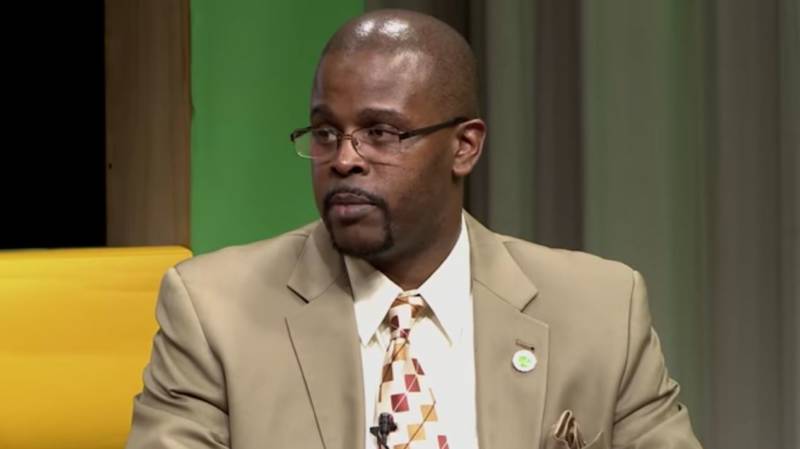
"caption": "A screen shot of Superintendent Antwan Wilson at a teacher effectiveness roundtable.",
"description": null,
"title": "antwan-wilson",
"credit": "Oakland Unified School District Youtube Channel",
"status": "inherit",
"isLoading": false,
"fetchFailed": false
},
"news_11076773": {
"type": "attachments",
"id": "news_11076773",
"meta": {
"index": "attachments_1716263798",
"site": "news",
"id": "11076773",
"found": true
},
"parent": 11076772,
"imgSizes": {
"twentyfourteen-full-width": {
"file": "https://ww2.kqed.org/app/uploads/sites/10/2016/09/AAFAI.org_-1038x576.jpg",
"width": 1038,
"mimeType": "image/jpeg",
"height": 576
},
"thumbnail": {
"file": "https://ww2.kqed.org/app/uploads/sites/10/2016/09/AAFAI.org_-400x267.jpg",
"width": 400,
"mimeType": "image/jpeg",
"height": 267
},
"fd-sm": {
"file": "https://ww2.kqed.org/app/uploads/sites/10/2016/09/AAFAI.org_-960x640.jpg",
"width": 960,
"mimeType": "image/jpeg",
"height": 640
},
"post-thumbnail": {
"file": "https://ww2.kqed.org/app/uploads/sites/10/2016/09/AAFAI.org_-672x372.jpg",
"width": 672,
"mimeType": "image/jpeg",
"height": 372
},
"kqedFullSize": {
"file": "https://ww2.kqed.org/app/uploads/sites/10/2016/09/AAFAI.org_.jpg",
"width": 6000,
"height": 4000
},
"large": {
"file": "https://ww2.kqed.org/app/uploads/sites/10/2016/09/AAFAI.org_-1920x1280.jpg",
"width": 1920,
"mimeType": "image/jpeg",
"height": 1280
},
"guest-author-50": {
"file": "https://ww2.kqed.org/app/uploads/sites/10/2016/09/AAFAI.org_-50x50.jpg",
"width": 50,
"mimeType": "image/jpeg",
"height": 50
},
"guest-author-96": {
"file": "https://ww2.kqed.org/app/uploads/sites/10/2016/09/AAFAI.org_-96x96.jpg",
"width": 96,
"mimeType": "image/jpeg",
"height": 96
},
"medium": {
"file": "https://ww2.kqed.org/app/uploads/sites/10/2016/09/AAFAI.org_-800x533.jpg",
"width": 800,
"mimeType": "image/jpeg",
"height": 533
},
"guest-author-64": {
"file": "https://ww2.kqed.org/app/uploads/sites/10/2016/09/AAFAI.org_-64x64.jpg",
"width": 64,
"mimeType": "image/jpeg",
"height": 64
},
"guest-author-32": {
"file": "https://ww2.kqed.org/app/uploads/sites/10/2016/09/AAFAI.org_-32x32.jpg",
"width": 32,
"mimeType": "image/jpeg",
"height": 32
},
"jmtc-small-thumb": {
"file": "https://ww2.kqed.org/app/uploads/sites/10/2016/09/AAFAI.org_-280x150.jpg",
"width": 280,
"mimeType": "image/jpeg",
"height": 150
},
"fd-lrg": {
"file": "https://ww2.kqed.org/app/uploads/sites/10/2016/09/AAFAI.org_-1920x1280.jpg",
"width": 1920,
"mimeType": "image/jpeg",
"height": 1280
},
"fd-med": {
"file": "https://ww2.kqed.org/app/uploads/sites/10/2016/09/AAFAI.org_-1180x787.jpg",
"width": 1180,
"mimeType": "image/jpeg",
"height": 787
},
"detail": {
"file": "https://ww2.kqed.org/app/uploads/sites/10/2016/09/AAFAI.org_-150x150.jpg",
"width": 150,
"mimeType": "image/jpeg",
"height": 150
},
"guest-author-128": {
"file": "https://ww2.kqed.org/app/uploads/sites/10/2016/09/AAFAI.org_-128x128.jpg",
"width": 128,
"mimeType": "image/jpeg",
"height": 128
}
},
"publishDate": 1473195963,
"modified": 1473196037,
"caption": "Sultanah Corbett poses after class with her students who have participated in the African American Female Achievement Initiative for the last two years.",
"description": null,
"title": "AAFAI.org",
"credit": "Devin Katayama/KQED",
"status": "inherit",
"isLoading": false,
"fetchFailed": false
},
"news_11077108": {
"type": "attachments",
"id": "news_11077108",
"meta": {
"index": "attachments_1716263798",
"site": "news",
"id": "11077108",
"found": true
},
"parent": 11060036,
"imgSizes": {
"twentyfourteen-full-width": {
"file": "https://ww2.kqed.org/app/uploads/sites/10/2017/09/RS21086_160906_sequoiaElementary_bhs07-qut-1038x576.jpg",
"width": 1038,
"mimeType": "image/jpeg",
"height": 576
},
"thumbnail": {
"file": "https://ww2.kqed.org/app/uploads/sites/10/2017/09/RS21086_160906_sequoiaElementary_bhs07-qut-400x267.jpg",
"width": 400,
"mimeType": "image/jpeg",
"height": 267
},
"fd-sm": {
"file": "https://ww2.kqed.org/app/uploads/sites/10/2017/09/RS21086_160906_sequoiaElementary_bhs07-qut-960x640.jpg",
"width": 960,
"mimeType": "image/jpeg",
"height": 640
},
"post-thumbnail": {
"file": "https://ww2.kqed.org/app/uploads/sites/10/2017/09/RS21086_160906_sequoiaElementary_bhs07-qut-672x372.jpg",
"width": 672,
"mimeType": "image/jpeg",
"height": 372
},
"kqedFullSize": {
"file": "https://ww2.kqed.org/app/uploads/sites/10/2017/09/RS21086_160906_sequoiaElementary_bhs07-qut.jpg",
"width": 1920,
"height": 1280
},
"large": {
"file": "https://ww2.kqed.org/app/uploads/sites/10/2017/09/RS21086_160906_sequoiaElementary_bhs07-qut-1920x1280.jpg",
"width": 1920,
"mimeType": "image/jpeg",
"height": 1280
},
"guest-author-50": {
"file": "https://ww2.kqed.org/app/uploads/sites/10/2017/09/RS21086_160906_sequoiaElementary_bhs07-qut-50x50.jpg",
"width": 50,
"mimeType": "image/jpeg",
"height": 50
},
"guest-author-96": {
"file": "https://ww2.kqed.org/app/uploads/sites/10/2017/09/RS21086_160906_sequoiaElementary_bhs07-qut-96x96.jpg",
"width": 96,
"mimeType": "image/jpeg",
"height": 96
},
"medium": {
"file": "https://ww2.kqed.org/app/uploads/sites/10/2017/09/RS21086_160906_sequoiaElementary_bhs07-qut-800x533.jpg",
"width": 800,
"mimeType": "image/jpeg",
"height": 533
},
"guest-author-64": {
"file": "https://ww2.kqed.org/app/uploads/sites/10/2017/09/RS21086_160906_sequoiaElementary_bhs07-qut-64x64.jpg",
"width": 64,
"mimeType": "image/jpeg",
"height": 64
},
"guest-author-32": {
"file": "https://ww2.kqed.org/app/uploads/sites/10/2017/09/RS21086_160906_sequoiaElementary_bhs07-qut-32x32.jpg",
"width": 32,
"mimeType": "image/jpeg",
"height": 32
},
"jmtc-small-thumb": {
"file": "https://ww2.kqed.org/app/uploads/sites/10/2017/09/RS21086_160906_sequoiaElementary_bhs07-qut-280x150.jpg",
"width": 280,
"mimeType": "image/jpeg",
"height": 150
},
"fd-lrg": {
"file": "https://ww2.kqed.org/app/uploads/sites/10/2017/09/RS21086_160906_sequoiaElementary_bhs07-qut-1920x1280.jpg",
"width": 1920,
"mimeType": "image/jpeg",
"height": 1280
},
"fd-med": {
"file": "https://ww2.kqed.org/app/uploads/sites/10/2017/09/RS21086_160906_sequoiaElementary_bhs07-qut-1180x787.jpg",
"width": 1180,
"mimeType": "image/jpeg",
"height": 787
},
"detail": {
"file": "https://ww2.kqed.org/app/uploads/sites/10/2017/09/RS21086_160906_sequoiaElementary_bhs07-qut-150x150.jpg",
"width": 150,
"mimeType": "image/jpeg",
"height": 150
},
"guest-author-128": {
"file": "https://ww2.kqed.org/app/uploads/sites/10/2017/09/RS21086_160906_sequoiaElementary_bhs07-qut-128x128.jpg",
"width": 128,
"mimeType": "image/jpeg",
"height": 128
}
},
"publishDate": 1473210634,
"modified": 1473210712,
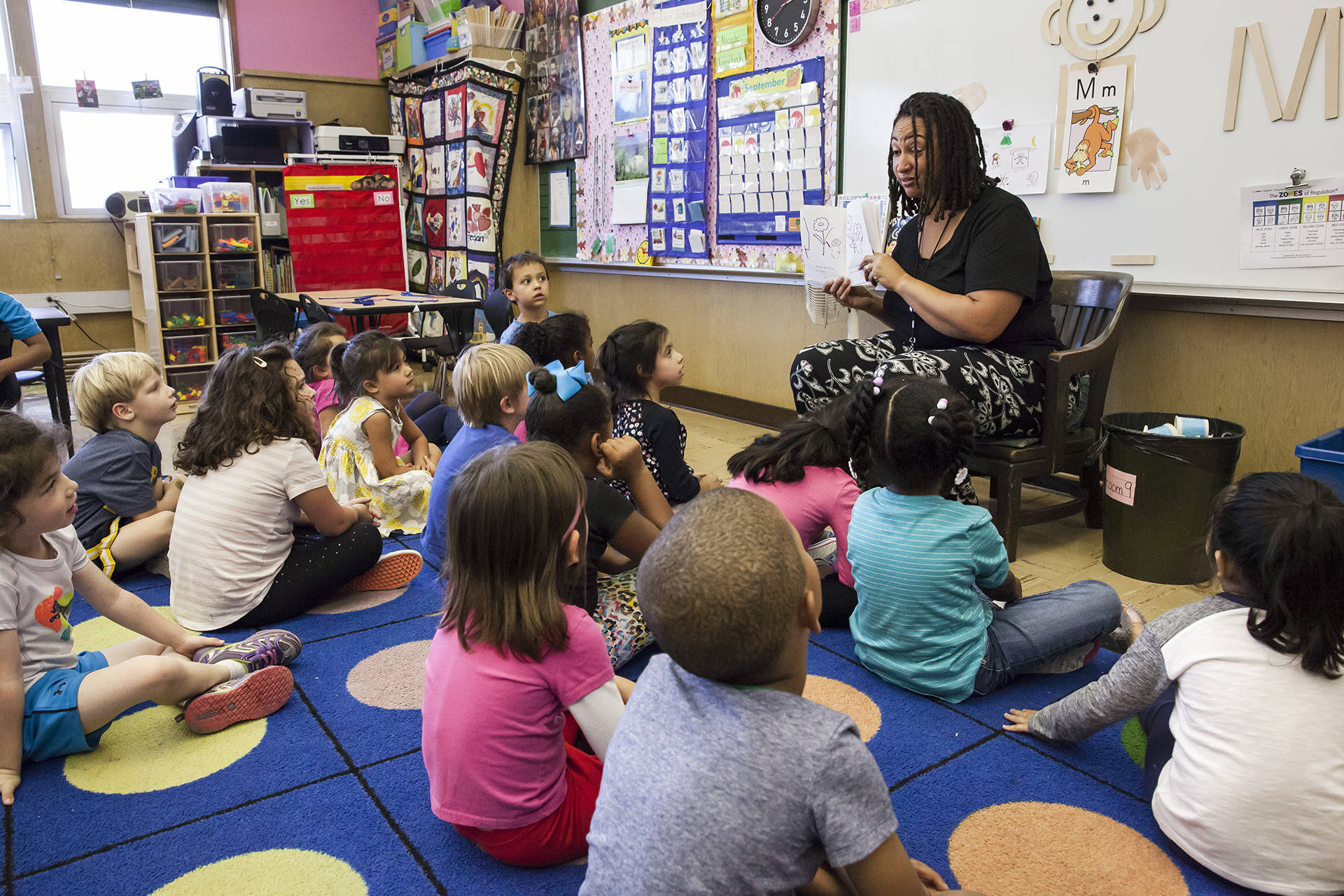
"caption": "Tontra Love, a transitional kindergarten teacher at Sequoia Elementary School in Oakland, reads to her students at the end of class on Sept. 6, 2016.",
"description": null,
"title": "RS21086_160906_sequoiaElementary_bhs07-qut",
"credit": "Brittany Hosea-Small/KQED",
"status": "inherit",
"isLoading": false,
"fetchFailed": false
},
"news_11066040": {
"type": "attachments",
"id": "news_11066040",
"meta": {
"index": "attachments_1716263798",
"site": "news",
"id": "11066040",
"found": true
},
"parent": 11061802,
"imgSizes": {
"twentyfourteen-full-width": {
"file": "https://ww2.kqed.org/app/uploads/sites/10/2016/08/MarinaandCelia1920-1038x576.jpg",
"width": 1038,
"mimeType": "image/jpeg",
"height": 576
},
"thumbnail": {
"file": "https://ww2.kqed.org/app/uploads/sites/10/2016/08/MarinaandCelia1920-400x267.jpg",
"width": 400,
"mimeType": "image/jpeg",
"height": 267
},
"fd-sm": {
"file": "https://ww2.kqed.org/app/uploads/sites/10/2016/08/MarinaandCelia1920-960x640.jpg",
"width": 960,
"mimeType": "image/jpeg",
"height": 640
},
"post-thumbnail": {
"file": "https://ww2.kqed.org/app/uploads/sites/10/2016/08/MarinaandCelia1920-672x372.jpg",
"width": 672,
"mimeType": "image/jpeg",
"height": 372
},
"kqedFullSize": {
"file": "https://ww2.kqed.org/app/uploads/sites/10/2016/08/MarinaandCelia1920.jpg",
"width": 1920,
"height": 1280
},
"large": {
"file": "https://ww2.kqed.org/app/uploads/sites/10/2016/08/MarinaandCelia1920-1920x1280.jpg",
"width": 1920,
"mimeType": "image/jpeg",
"height": 1280
},
"guest-author-50": {
"file": "https://ww2.kqed.org/app/uploads/sites/10/2016/08/MarinaandCelia1920-50x50.jpg",
"width": 50,
"mimeType": "image/jpeg",
"height": 50
},
"guest-author-96": {
"file": "https://ww2.kqed.org/app/uploads/sites/10/2016/08/MarinaandCelia1920-96x96.jpg",
"width": 96,
"mimeType": "image/jpeg",
"height": 96
},
"medium": {
"file": "https://ww2.kqed.org/app/uploads/sites/10/2016/08/MarinaandCelia1920-800x533.jpg",
"width": 800,
"mimeType": "image/jpeg",
"height": 533
},
"guest-author-64": {
"file": "https://ww2.kqed.org/app/uploads/sites/10/2016/08/MarinaandCelia1920-64x64.jpg",
"width": 64,
"mimeType": "image/jpeg",
"height": 64
},
"guest-author-32": {
"file": "https://ww2.kqed.org/app/uploads/sites/10/2016/08/MarinaandCelia1920-32x32.jpg",
"width": 32,
"mimeType": "image/jpeg",
"height": 32
},
"jmtc-small-thumb": {
"file": "https://ww2.kqed.org/app/uploads/sites/10/2016/08/MarinaandCelia1920-280x150.jpg",
"width": 280,
"mimeType": "image/jpeg",
"height": 150
},
"fd-lrg": {
"file": "https://ww2.kqed.org/app/uploads/sites/10/2016/08/MarinaandCelia1920-1920x1280.jpg",
"width": 1920,
"mimeType": "image/jpeg",
"height": 1280
},
"fd-med": {
"file": "https://ww2.kqed.org/app/uploads/sites/10/2016/08/MarinaandCelia1920-1180x787.jpg",
"width": 1180,
"mimeType": "image/jpeg",
"height": 787
},
"detail": {
"file": "https://ww2.kqed.org/app/uploads/sites/10/2016/08/MarinaandCelia1920-150x150.jpg",
"width": 150,
"mimeType": "image/jpeg",
"height": 150
},
"guest-author-128": {
"file": "https://ww2.kqed.org/app/uploads/sites/10/2016/08/MarinaandCelia1920-128x128.jpg",
"width": 128,
"mimeType": "image/jpeg",
"height": 128
}
},
"publishDate": 1472592315,
"modified": 1472603050,
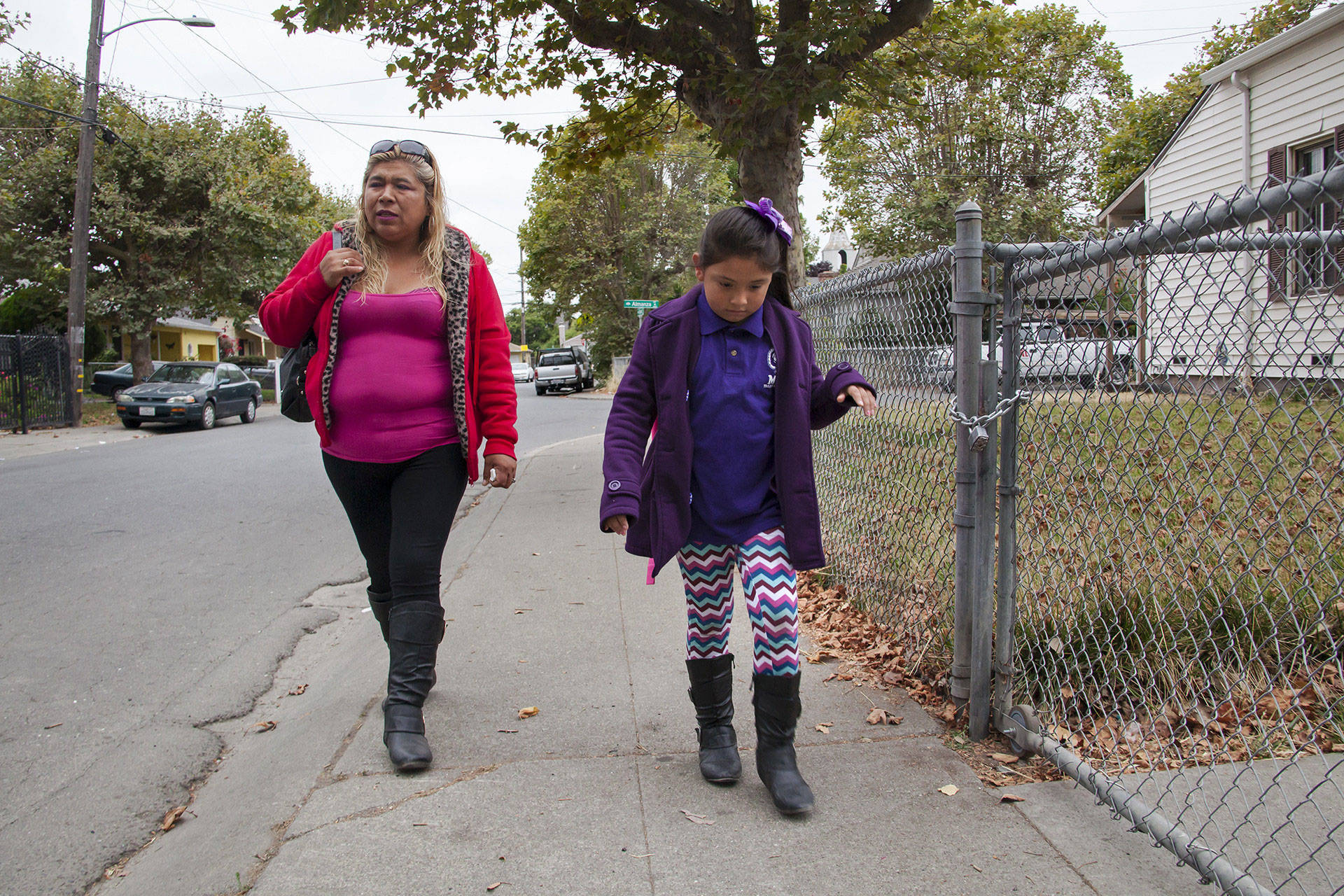
"caption": "Celia Fragoso, 7, walks with her mother, Marina Muñoz, through their Oakland neighborhood of Sobrante Park on Aug. 26, 2016, on the way to Madison Park Academy, where Celia attends school.",
"description": null,
"title": "MarinaandCelia1920",
"credit": "Brittany Hosea-Small/KQED",
"status": "inherit",
"isLoading": false,
"fetchFailed": false
},
"news_11064875": {
"type": "attachments",
"id": "news_11064875",
"meta": {
"index": "attachments_1716263798",
"site": "news",
"id": "11064875",
"found": true
},
"parent": 11059974,
"imgSizes": {
"twentyfourteen-full-width": {
"file": "https://ww2.kqed.org/app/uploads/sites/10/2017/08/schools-adjusted-1038x576.jpg",
"width": 1038,
"mimeType": "image/jpeg",
"height": 576
},
"thumbnail": {
"file": "https://ww2.kqed.org/app/uploads/sites/10/2017/08/schools-adjusted-400x181.jpg",
"width": 400,
"mimeType": "image/jpeg",
"height": 181
},
"fd-sm": {
"file": "https://ww2.kqed.org/app/uploads/sites/10/2017/08/schools-adjusted-960x435.jpg",
"width": 960,
"mimeType": "image/jpeg",
"height": 435
},
"post-thumbnail": {
"file": "https://ww2.kqed.org/app/uploads/sites/10/2017/08/schools-adjusted-672x372.jpg",
"width": 672,
"mimeType": "image/jpeg",
"height": 372
},
"kqedFullSize": {
"file": "https://ww2.kqed.org/app/uploads/sites/10/2017/08/schools-adjusted.jpg",
"width": 1920,
"height": 870
},
"large": {
"file": "https://ww2.kqed.org/app/uploads/sites/10/2017/08/schools-adjusted-1920x870.jpg",
"width": 1920,
"mimeType": "image/jpeg",
"height": 870
},
"guest-author-50": {
"file": "https://ww2.kqed.org/app/uploads/sites/10/2017/08/schools-adjusted-50x50.jpg",
"width": 50,
"mimeType": "image/jpeg",
"height": 50
},
"guest-author-96": {
"file": "https://ww2.kqed.org/app/uploads/sites/10/2017/08/schools-adjusted-96x96.jpg",
"width": 96,
"mimeType": "image/jpeg",
"height": 96
},
"medium": {
"file": "https://ww2.kqed.org/app/uploads/sites/10/2017/08/schools-adjusted-800x363.jpg",
"width": 800,
"mimeType": "image/jpeg",
"height": 363
},
"guest-author-64": {
"file": "https://ww2.kqed.org/app/uploads/sites/10/2017/08/schools-adjusted-64x64.jpg",
"width": 64,
"mimeType": "image/jpeg",
"height": 64
},
"guest-author-32": {
"file": "https://ww2.kqed.org/app/uploads/sites/10/2017/08/schools-adjusted-32x32.jpg",
"width": 32,
"mimeType": "image/jpeg",
"height": 32
},
"jmtc-small-thumb": {
"file": "https://ww2.kqed.org/app/uploads/sites/10/2017/08/schools-adjusted-280x150.jpg",
"width": 280,
"mimeType": "image/jpeg",
"height": 150
},
"fd-lrg": {
"file": "https://ww2.kqed.org/app/uploads/sites/10/2017/08/schools-adjusted-1920x870.jpg",
"width": 1920,
"mimeType": "image/jpeg",
"height": 870
},
"fd-med": {
"file": "https://ww2.kqed.org/app/uploads/sites/10/2017/08/schools-adjusted-1180x535.jpg",
"width": 1180,
"mimeType": "image/jpeg",
"height": 535
},
"detail": {
"file": "https://ww2.kqed.org/app/uploads/sites/10/2017/08/schools-adjusted-150x150.jpg",
"width": 150,
"mimeType": "image/jpeg",
"height": 150
},
"guest-author-128": {
"file": "https://ww2.kqed.org/app/uploads/sites/10/2017/08/schools-adjusted-128x128.jpg",
"width": 128,
"mimeType": "image/jpeg",
"height": 128
}
},
"publishDate": 1472498727,
"modified": 1472582521,
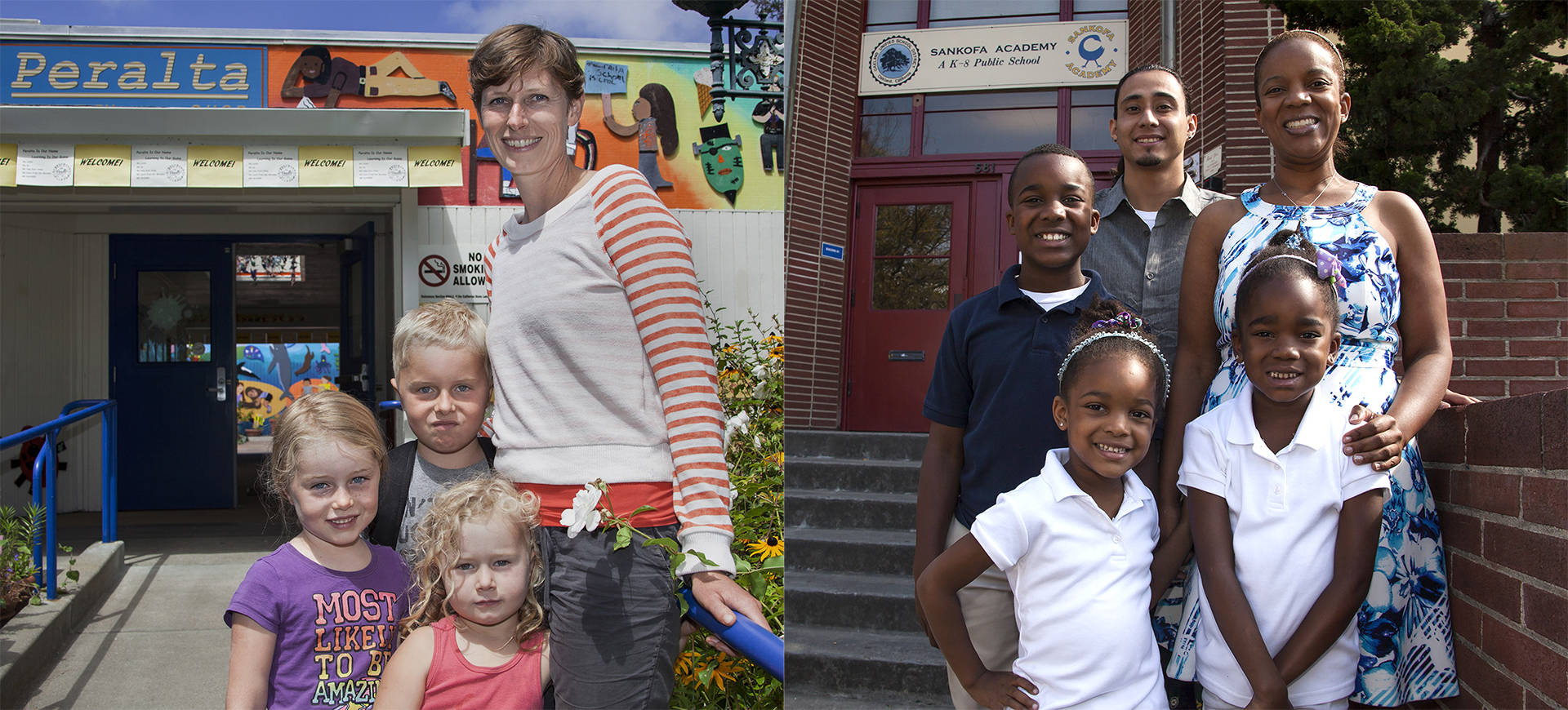
"caption": "Left photo: Eleanor Wohlfeiler poses for a photo with her three children in front of Peralta Elementary School in Oakland. Right photo: Kristin Smith and her family outside Sankofa Academy in Oakland.",
"description": null,
"title": "schools-adjusted",
"credit": "Brittany Hosea-Small",
"status": "inherit",
"isLoading": false,
"fetchFailed": false
},
"news_10968459": {
"type": "attachments",
"id": "news_10968459",
"meta": {
"index": "attachments_1716263798",
"site": "news",
"id": "10968459",
"found": true
},
"parent": 10968354,
"imgSizes": {
"twentyfourteen-full-width": {
"file": "https://ww2.kqed.org/app/uploads/sites/10/2016/05/RS19586_IMG_8795-qut-1038x576.jpg",
"width": 1038,
"mimeType": "image/jpeg",
"height": 576
},
"thumbnail": {
"file": "https://ww2.kqed.org/app/uploads/sites/10/2016/05/RS19586_IMG_8795-qut-400x300.jpg",
"width": 400,
"mimeType": "image/jpeg",
"height": 300
},
"fd-sm": {
"file": "https://ww2.kqed.org/app/uploads/sites/10/2016/05/RS19586_IMG_8795-qut-960x720.jpg",
"width": 960,
"mimeType": "image/jpeg",
"height": 720
},
"post-thumbnail": {
"file": "https://ww2.kqed.org/app/uploads/sites/10/2016/05/RS19586_IMG_8795-qut-672x372.jpg",
"width": 672,
"mimeType": "image/jpeg",
"height": 372
},
"kqedFullSize": {
"file": "https://ww2.kqed.org/app/uploads/sites/10/2016/05/RS19586_IMG_8795-qut.jpg",
"width": 1920,
"height": 1440
},
"large": {
"file": "https://ww2.kqed.org/app/uploads/sites/10/2016/05/RS19586_IMG_8795-qut-1920x1440.jpg",
"width": 1920,
"mimeType": "image/jpeg",
"height": 1440
},
"guest-author-50": {
"file": "https://ww2.kqed.org/app/uploads/sites/10/2016/05/RS19586_IMG_8795-qut-50x50.jpg",
"width": 50,
"mimeType": "image/jpeg",
"height": 50
},
"guest-author-96": {
"file": "https://ww2.kqed.org/app/uploads/sites/10/2016/05/RS19586_IMG_8795-qut-96x96.jpg",
"width": 96,
"mimeType": "image/jpeg",
"height": 96
},
"medium": {
"file": "https://ww2.kqed.org/app/uploads/sites/10/2016/05/RS19586_IMG_8795-qut-800x600.jpg",
"width": 800,
"mimeType": "image/jpeg",
"height": 600
},
"guest-author-64": {
"file": "https://ww2.kqed.org/app/uploads/sites/10/2016/05/RS19586_IMG_8795-qut-64x64.jpg",
"width": 64,
"mimeType": "image/jpeg",
"height": 64
},
"guest-author-32": {
"file": "https://ww2.kqed.org/app/uploads/sites/10/2016/05/RS19586_IMG_8795-qut-32x32.jpg",
"width": 32,
"mimeType": "image/jpeg",
"height": 32
},
"jmtc-small-thumb": {
"file": "https://ww2.kqed.org/app/uploads/sites/10/2016/05/RS19586_IMG_8795-qut-280x150.jpg",
"width": 280,
"mimeType": "image/jpeg",
"height": 150
},
"fd-lrg": {
"file": "https://ww2.kqed.org/app/uploads/sites/10/2016/05/RS19586_IMG_8795-qut-1920x1440.jpg",
"width": 1920,
"mimeType": "image/jpeg",
"height": 1440
},
"fd-med": {
"file": "https://ww2.kqed.org/app/uploads/sites/10/2016/05/RS19586_IMG_8795-qut-1180x885.jpg",
"width": 1180,
"mimeType": "image/jpeg",
"height": 885
},
"detail": {
"file": "https://ww2.kqed.org/app/uploads/sites/10/2016/05/RS19586_IMG_8795-qut-150x150.jpg",
"width": 150,
"mimeType": "image/jpeg",
"height": 150
},
"guest-author-128": {
"file": "https://ww2.kqed.org/app/uploads/sites/10/2016/05/RS19586_IMG_8795-qut-128x128.jpg",
"width": 128,
"mimeType": "image/jpeg",
"height": 128
}
},
"publishDate": 1464292974,
"modified": 1464301752,
"caption": "Special Education teacher Ismael Amendariz speaks to some of his students at Edna Brewer Middle School.",
"description": "Special Education teacher Ismael Amendariz speaks to some of his students at Edna Brewer Middle School on May 20, 2016. ",
"title": "Ismael Amendariz Edna Brewer",
"credit": "Sarah Tan/KQED",
"status": "inherit",
"isLoading": false,
"fetchFailed": false
},
"news_10895610": {
"type": "attachments",
"id": "news_10895610",
"meta": {
"index": "attachments_1716263798",
"site": "news",
"id": "10895610",
"found": true
},
"parent": 10891663,
"imgSizes": {
"twentyfourteen-full-width": {
"file": "https://ww2.kqed.org/app/uploads/sites/10/2016/03/RS18794_cues-sign-qut-1038x576.jpg",
"width": 1038,
"mimeType": "image/jpeg",
"height": 576
},
"thumbnail": {
"file": "https://ww2.kqed.org/app/uploads/sites/10/2016/03/RS18794_cues-sign-qut-400x225.jpg",
"width": 400,
"mimeType": "image/jpeg",
"height": 225
},
"fd-sm": {
"file": "https://ww2.kqed.org/app/uploads/sites/10/2016/03/RS18794_cues-sign-qut-960x540.jpg",
"width": 960,
"mimeType": "image/jpeg",
"height": 540
},
"post-thumbnail": {
"file": "https://ww2.kqed.org/app/uploads/sites/10/2016/03/RS18794_cues-sign-qut-672x372.jpg",
"width": 672,
"mimeType": "image/jpeg",
"height": 372
},
"kqedFullSize": {
"file": "https://ww2.kqed.org/app/uploads/sites/10/2016/03/RS18794_cues-sign-qut.jpg",
"width": 1920,
"height": 1080
},
"large": {
"file": "https://ww2.kqed.org/app/uploads/sites/10/2016/03/RS18794_cues-sign-qut-1920x1080.jpg",
"width": 1920,
"mimeType": "image/jpeg",
"height": 1080
},
"guest-author-96": {
"file": "https://ww2.kqed.org/app/uploads/sites/10/2016/03/RS18794_cues-sign-qut-96x96.jpg",
"width": 96,
"mimeType": "image/jpeg",
"height": 96
},
"medium": {
"file": "https://ww2.kqed.org/app/uploads/sites/10/2016/03/RS18794_cues-sign-qut-800x450.jpg",
"width": 800,
"mimeType": "image/jpeg",
"height": 450
},
"guest-author-64": {
"file": "https://ww2.kqed.org/app/uploads/sites/10/2016/03/RS18794_cues-sign-qut-64x64.jpg",
"width": 64,
"mimeType": "image/jpeg",
"height": 64
},
"guest-author-32": {
"file": "https://ww2.kqed.org/app/uploads/sites/10/2016/03/RS18794_cues-sign-qut-32x32.jpg",
"width": 32,
"mimeType": "image/jpeg",
"height": 32
},
"jmtc-small-thumb": {
"file": "https://ww2.kqed.org/app/uploads/sites/10/2016/03/RS18794_cues-sign-qut-280x150.jpg",
"width": 280,
"mimeType": "image/jpeg",
"height": 150
},
"fd-lrg": {
"file": "https://ww2.kqed.org/app/uploads/sites/10/2016/03/RS18794_cues-sign-qut-1920x1080.jpg",
"width": 1920,
"mimeType": "image/jpeg",
"height": 1080
},
"fd-med": {
"file": "https://ww2.kqed.org/app/uploads/sites/10/2016/03/RS18794_cues-sign-qut-1180x664.jpg",
"width": 1180,
"mimeType": "image/jpeg",
"height": 664
},
"detail": {
"file": "https://ww2.kqed.org/app/uploads/sites/10/2016/03/RS18794_cues-sign-qut-75x75.jpg",
"width": 75,
"mimeType": "image/jpeg",
"height": 75
},
"guest-author-128": {
"file": "https://ww2.kqed.org/app/uploads/sites/10/2016/03/RS18794_cues-sign-qut-128x128.jpg",
"width": 128,
"mimeType": "image/jpeg",
"height": 128
}
},
"publishDate": 1457982966,
"modified": 1457983204,
"caption": "Community United Elementary School is on International Boulevard in East Oakland.",
"description": null,
"title": "RS18794_cues sign-qut",
"credit": "Adam Grossberg/KQED",
"status": "inherit",
"isLoading": false,
"fetchFailed": false
},
"news_10561082": {
"type": "attachments",
"id": "news_10561082",
"meta": {
"index": "attachments_1716263798",
"site": "news",
"id": "10561082",
"found": true
},
"parent": 10560966,
"imgSizes": {
"jmtc-small-thumb": {
"file": "https://ww2.kqed.org/app/uploads/sites/10/2015/06/RS15466_David_Silver-qut-280x150.jpg",
"width": 280,
"mimeType": "image/jpeg",
"height": 150
},
"thumbnail": {
"file": "https://ww2.kqed.org/app/uploads/sites/10/2015/06/RS15466_David_Silver-qut-400x260.jpg",
"width": 400,
"mimeType": "image/jpeg",
"height": 260
},
"post-thumbnail": {
"file": "https://ww2.kqed.org/app/uploads/sites/10/2015/06/RS15466_David_Silver-qut-672x372.jpg",
"width": 672,
"mimeType": "image/jpeg",
"height": 372
},
"kqedFullSize": {
"file": "https://ww2.kqed.org/app/uploads/sites/10/2015/06/RS15466_David_Silver-qut.jpg",
"width": 768,
"height": 500
},
"guest-author-96": {
"file": "https://ww2.kqed.org/app/uploads/sites/10/2015/06/RS15466_David_Silver-qut-96x96.jpg",
"width": 96,
"mimeType": "image/jpeg",
"height": 96
},
"guest-author-64": {
"file": "https://ww2.kqed.org/app/uploads/sites/10/2015/06/RS15466_David_Silver-qut-64x64.jpg",
"width": 64,
"mimeType": "image/jpeg",
"height": 64
},
"detail": {
"file": "https://ww2.kqed.org/app/uploads/sites/10/2015/06/RS15466_David_Silver-qut-75x75.jpg",
"width": 75,
"mimeType": "image/jpeg",
"height": 75
},
"guest-author-32": {
"file": "https://ww2.kqed.org/app/uploads/sites/10/2015/06/RS15466_David_Silver-qut-32x32.jpg",
"width": 32,
"mimeType": "image/jpeg",
"height": 32
},
"guest-author-128": {
"file": "https://ww2.kqed.org/app/uploads/sites/10/2015/06/RS15466_David_Silver-qut-128x128.jpg",
"width": 128,
"mimeType": "image/jpeg",
"height": 128
}
},
"publishDate": 1434158335,
"modified": 1434348182,
"caption": "David Silver has been hired as Oakland's new director of education.",
"description": "David Silver has been hired as Oakland's new Director of Education.",
"title": "RS15466_David_Silver-qut",
"credit": "Courtesy of College Track",
"status": "inherit",
"isLoading": false,
"fetchFailed": false
},
"news_10504569": {
"type": "attachments",
"id": "news_10504569",
"meta": {
"index": "attachments_1716263798",
"site": "news",
"id": "10504569",
"found": true
},
"parent": 10491173,
"imgSizes": {
"twentyfourteen-full-width": {
"file": "https://ww2.kqed.org/app/uploads/sites/10/2015/04/jacqueline-on-porch-1038x576.jpg",
"width": 1038,
"mimeType": "image/jpeg",
"height": 576
},
"thumbnail": {
"file": "https://ww2.kqed.org/app/uploads/sites/10/2015/04/jacqueline-on-porch-400x247.jpg",
"width": 400,
"mimeType": "image/jpeg",
"height": 247
},
"fd-sm": {
"file": "https://ww2.kqed.org/app/uploads/sites/10/2015/04/jacqueline-on-porch-960x592.jpg",
"width": 960,
"mimeType": "image/jpeg",
"height": 592
},
"post-thumbnail": {
"file": "https://ww2.kqed.org/app/uploads/sites/10/2015/04/jacqueline-on-porch-672x372.jpg",
"width": 672,
"mimeType": "image/jpeg",
"height": 372
},
"kqedFullSize": {
"file": "https://ww2.kqed.org/app/uploads/sites/10/2015/04/jacqueline-on-porch.jpg",
"width": 1966,
"height": 1212
},
"large": {
"file": "https://ww2.kqed.org/app/uploads/sites/10/2015/04/jacqueline-on-porch-1440x888.jpg",
"width": 1440,
"mimeType": "image/jpeg",
"height": 888
},
"guest-author-96": {
"file": "https://ww2.kqed.org/app/uploads/sites/10/2015/04/jacqueline-on-porch-96x96.jpg",
"width": 96,
"mimeType": "image/jpeg",
"height": 96
},
"medium": {
"file": "https://ww2.kqed.org/app/uploads/sites/10/2015/04/jacqueline-on-porch-800x493.jpg",
"width": 800,
"mimeType": "image/jpeg",
"height": 493
},
"guest-author-64": {
"file": "https://ww2.kqed.org/app/uploads/sites/10/2015/04/jacqueline-on-porch-64x64.jpg",
"width": 64,
"mimeType": "image/jpeg",
"height": 64
},
"guest-author-32": {
"file": "https://ww2.kqed.org/app/uploads/sites/10/2015/04/jacqueline-on-porch-32x32.jpg",
"width": 32,
"mimeType": "image/jpeg",
"height": 32
},
"fd-med": {
"file": "https://ww2.kqed.org/app/uploads/sites/10/2015/04/jacqueline-on-porch-1180x727.jpg",
"width": 1180,
"mimeType": "image/jpeg",
"height": 727
},
"detail": {
"file": "https://ww2.kqed.org/app/uploads/sites/10/2015/04/jacqueline-on-porch-75x75.jpg",
"width": 75,
"mimeType": "image/jpeg",
"height": 75
},
"guest-author-128": {
"file": "https://ww2.kqed.org/app/uploads/sites/10/2015/04/jacqueline-on-porch-128x128.jpg",
"width": 128,
"mimeType": "image/jpeg",
"height": 128
}
},
"publishDate": 1430159717,
"modified": 1430322979,
"caption": "9-year-old Jacqueline Funes was paralyzed from the neck down after being shot in the neck while playing in front of her house. (Adam Grossberg/KQED)",
"description": null,
"title": "jacqueline-on-porch",
"credit": null,
"status": "inherit",
"isLoading": false,
"fetchFailed": false
},
"news_144127": {
"type": "attachments",
"id": "news_144127",
"meta": {
"index": "attachments_1716263798",
"site": "news",
"id": "144127",
"found": true
},
"parent": 144125,
"imgSizes": {
"kqedFullSize": {
"file": "https://ww2.kqed.org/app/uploads/sites/10/2014/08/kindergarten-659x431.jpg",
"width": 659,
"height": 431
}
},
"publishDate": 1407438878,
"modified": 1407438878,
"caption": "Oakland children wait in line at the St. Vincent de Paul meal program. (Anna Vignet/Oakland Local)",
"description": null,
"title": "kindergarten-659x431",
"credit": null,
"status": "inherit",
"isLoading": false,
"fetchFailed": false
}
},
"audioPlayerReducer": {
"postId": "stream_live",
"isPaused": true,
"isPlaying": false,
"pfsActive": false,
"pledgeModalIsOpen": true,
"playerDrawerIsOpen": false,
"liveAudioPlayStartedAt": 0,
"liveAudioPlayContext": ""
},
"authorsReducer": {
"byline_news_11611991": {
"type": "authors",
"id": "byline_news_11611991",
"meta": {
"override": true
},
"slug": "byline_news_11611991",
"name": "\u003cstrong>Charlie Stuip\u003cbr />NPR\u003c/strong>",
"isLoading": false
},
"jmcevoy": {
"type": "authors",
"id": "231",
"meta": {
"index": "authors_1716337520",
"id": "231",
"found": true
},
"name": "Julia McEvoy",
"firstName": "Julia",
"lastName": "McEvoy",
"slug": "jmcevoy",
"email": "jmcevoy@KQED.org",
"display_author_email": true,
"staff_mastheads": [
"news"
],
"title": "KQED Senior Editor",
"bio": "Julia McEvoy is KQED's Senior Editor, Education Equity.\r\n\r\nJulia heads KQED’s education coverage examining inequities students face in Bay Area and California schools, and reports on what it will take to educate the next generation.\r\n\r\nJulia's editorial work has received a Peabody Award, a Casey Medal for Coverage of Children and Families, several Edward R. Murrow awards, as well as awards from the Public Radio News Directors Inc. and the Society for Professional Journalists.",
"avatar": "https://secure.gravatar.com/avatar/aec3ce21abe02b302fd33638abd56a22?s=600&d=blank&r=g",
"twitter": "juliamcevoy1",
"facebook": null,
"instagram": null,
"linkedin": null,
"sites": [
{
"site": "news",
"roles": []
},
{
"site": "stateofhealth",
"roles": [
"author"
]
}
],
"headData": {
"title": "Julia McEvoy | KQED",
"description": "KQED Senior Editor",
"ogImgSrc": "https://secure.gravatar.com/avatar/aec3ce21abe02b302fd33638abd56a22?s=600&d=blank&r=g",
"twImgSrc": "https://secure.gravatar.com/avatar/aec3ce21abe02b302fd33638abd56a22?s=600&d=blank&r=g"
},
"isLoading": false,
"link": "/author/jmcevoy"
},
"kqed": {
"type": "authors",
"id": "236",
"meta": {
"index": "authors_1716337520",
"id": "236",
"found": true
},
"name": "KQED News Staff",
"firstName": "KQED News Staff",
"lastName": null,
"slug": "kqed",
"email": "faq@kqed.org",
"display_author_email": false,
"staff_mastheads": [],
"title": null,
"bio": null,
"avatar": "https://secure.gravatar.com/avatar/ef0e801a68c4c54afa9180db14084167?s=600&d=blank&r=g",
"twitter": null,
"facebook": null,
"instagram": null,
"linkedin": null,
"sites": [
{
"site": "arts",
"roles": [
"contributor"
]
},
{
"site": "news",
"roles": [
"editor"
]
},
{
"site": "futureofyou",
"roles": [
"author"
]
}
],
"headData": {
"title": "KQED News Staff | KQED",
"description": null,
"ogImgSrc": "https://secure.gravatar.com/avatar/ef0e801a68c4c54afa9180db14084167?s=600&d=blank&r=g",
"twImgSrc": "https://secure.gravatar.com/avatar/ef0e801a68c4c54afa9180db14084167?s=600&d=blank&r=g"
},
"isLoading": false,
"link": "/author/kqed"
},
"zstavely": {
"type": "authors",
"id": "3225",
"meta": {
"index": "authors_1716337520",
"id": "3225",
"found": true
},
"name": "Zaidee Stavely",
"firstName": "Zaidee",
"lastName": "Stavely",
"slug": "zstavely",
"email": "zstavely@gmail.com",
"display_author_email": false,
"staff_mastheads": [],
"title": "KQED Contributor",
"bio": "Zaidee Stavely is an award-winning reporter who writes about race, equity, immigration, and education.",
"avatar": "https://secure.gravatar.com/avatar/5154b3ee56a721c916ca429372ae629c?s=600&d=blank&r=g",
"twitter": null,
"facebook": null,
"instagram": null,
"linkedin": null,
"sites": [
{
"site": "news",
"roles": [
"subscriber"
]
},
{
"site": "mindshift",
"roles": [
"contributor"
]
}
],
"headData": {
"title": "Zaidee Stavely | KQED",
"description": "KQED Contributor",
"ogImgSrc": "https://secure.gravatar.com/avatar/5154b3ee56a721c916ca429372ae629c?s=600&d=blank&r=g",
"twImgSrc": "https://secure.gravatar.com/avatar/5154b3ee56a721c916ca429372ae629c?s=600&d=blank&r=g"
},
"isLoading": false,
"link": "/author/zstavely"
},
"dkatayama": {
"type": "authors",
"id": "7240",
"meta": {
"index": "authors_1716337520",
"id": "7240",
"found": true
},
"name": "Devin Katayama",
"firstName": "Devin",
"lastName": "Katayama",
"slug": "dkatayama",
"email": "dkatayama@kqed.org",
"display_author_email": true,
"staff_mastheads": [
"news"
],
"title": "Editor of Talent and Development",
"bio": "Devin Katayama is former Editor of Talent and Development for KQED. He supported our internship program and on-call staff by looking for equitable opportunities to improve the newsroom.\r\n\r\nHe previously hosted The Bay and American Suburb podcasts from KQED News. Prior to returning to the Bay Area in 2015, Devin was the education reporter for WFPL in Louisville and worked as a producer with radio stations in Chicago and Portland, OR. His work has appeared on NPR’s \u003cem>Morning Edition, All Things Considered, The Takeaway\u003c/em> and \u003cem>Here and Now.\u003c/em>\r\n\r\nDevin earned his MA in Journalism from Columbia College Chicago, where he was a Follett Fellow and the recipient of the 2011 Studs Terkel Community Media Workshop Scholarship for his story on Chicago's homeless youth. He won WBUR's 2014 Daniel Schorr award and a regional RTNDA Edward R. Murrow Award for his documentary \"At Risk\" that looked at issues facing some of Louisville's students. Devin has also received numerous local awards from the Associated Press and the Society of Professional Journalists.",
"avatar": "https://secure.gravatar.com/avatar/d0d2978a31002fb2de107921a8e18405?s=600&d=blank&r=g",
"twitter": "RadioDevin",
"facebook": null,
"instagram": null,
"linkedin": null,
"sites": [
{
"site": "arts",
"roles": []
},
{
"site": "news",
"roles": [
"author"
]
},
{
"site": "stateofhealth",
"roles": [
"author"
]
},
{
"site": "forum",
"roles": [
"editor"
]
},
{
"site": "perspectives",
"roles": [
"editor"
]
}
],
"headData": {
"title": "Devin Katayama | KQED",
"description": "Editor of Talent and Development",
"ogImgSrc": "https://secure.gravatar.com/avatar/d0d2978a31002fb2de107921a8e18405?s=600&d=blank&r=g",
"twImgSrc": "https://secure.gravatar.com/avatar/d0d2978a31002fb2de107921a8e18405?s=600&d=blank&r=g"
},
"isLoading": false,
"link": "/author/dkatayama"
},
"stan": {
"type": "authors",
"id": "11214",
"meta": {
"index": "authors_1716337520",
"id": "11214",
"found": true
},
"name": "Sarah Tan",
"firstName": "Sarah",
"lastName": "Tan",
"slug": "stan",
"email": "stan@KQED.org",
"display_author_email": false,
"staff_mastheads": [],
"title": null,
"bio": null,
"avatar": "https://secure.gravatar.com/avatar/71988f6db77b6876dbd9a5c23c1e6b9e?s=600&d=blank&r=g",
"twitter": null,
"facebook": null,
"instagram": null,
"linkedin": null,
"sites": [
{
"site": "news",
"roles": [
"author"
]
}
],
"headData": {
"title": "Sarah Tan | KQED",
"description": null,
"ogImgSrc": "https://secure.gravatar.com/avatar/71988f6db77b6876dbd9a5c23c1e6b9e?s=600&d=blank&r=g",
"twImgSrc": "https://secure.gravatar.com/avatar/71988f6db77b6876dbd9a5c23c1e6b9e?s=600&d=blank&r=g"
},
"isLoading": false,
"link": "/author/stan"
}
},
"pagesReducer": {
"news_tag_oakland-unified-school-district": {
"type": "terms",
"id": "news_1826",
"meta": {
"index": "terms_1716263798",
"site": "news",
"id": "1826",
"score": 10.403227
},
"featImg": null,
"name": "Oakland Unified School District",
"description": null,
"taxonomy": "tag",
"headData": {
"twImgId": null,
"twTitle": null,
"ogTitle": null,
"ogImgId": null,
"twDescription": null,
"description": null,
"title": "Oakland Unified School District Archives | KQED News",
"ogDescription": null
},
"ttid": 1841,
"slug": "oakland-unified-school-district",
"isLoading": false,
"title": "Oakland Unified School District",
"pageMeta": {
"site": "news",
"WpPageTemplate": "page-topic-editorial",
"currentPage": 11
},
"blocks": [
{
"blockName": "kqed/post-list",
"attrs": {
"layout": "cardArticle2",
"query": "posts/news?tag=oakland-unified-school-district",
"seeMore": false,
"paginated": true,
"page": 11
}
},
{
"blockName": "kqed/ad"
}
]
}
},
"pfsSessionReducer": {},
"postsReducer": {
"stream_live": {
"type": "live",
"id": "stream_live",
"audioUrl": "https://streams.kqed.org/kqedradio",
"title": "Live Stream",
"excerpt": "Live Stream information currently unavailable.",
"link": "/radio",
"featImg": "",
"label": {
"name": "KQED Live",
"link": "/"
}
},
"stream_kqedNewscast": {
"type": "posts",
"id": "stream_kqedNewscast",
"audioUrl": "https://www.kqed.org/.stream/anon/radio/RDnews/newscast.mp3?_=1",
"title": "KQED Newscast",
"featImg": "",
"label": {
"name": "88.5 FM",
"link": "/"
}
},
"news_11611991": {
"type": "posts",
"id": "news_11611991",
"meta": {
"index": "posts_1716263798",
"site": "news",
"id": "11611991",
"score": null,
"sort": [
1502815581000
]
},
"parent": 0,
"labelTerm": {},
"blocks": [],
"publishDate": 1502815581,
"format": "standard",
"disqusTitle": "Students Drive New Policies as K-12 Sexual Assault Investigations Rise",
"title": "Students Drive New Policies as K-12 Sexual Assault Investigations Rise",
"headTitle": "The California Report | KQED News",
"content": "\u003cp>The Oakland Unified School District in California recently revamped its sexual harassment and assault policy. I attended the school board vote with Andrea Zamora, 17, a rising high school senior who helped develop the new policy with a local nonprofit, Alliance for Girls.\u003c/p>\n\u003cp>\"I feel like all my hard work, and everything that we've all collaborated together, has paid off,\" Zamora told me.\u003c/p>\n\u003cp>\u003c!-- iframe plugin v.4.3 wordpress.org/plugins/iframe/ -->\u003cbr>\n\u003ciframe src=\"https://www.npr.org/player/embed/541670513/542468307\" width=\"100%\" height=\"290\" frameborder=\"0\" scrolling=\"no\" title=\"NPR embedded audio player\" class=\"iframe-class\">\u003c/iframe>\u003c/p>\n\u003cp>The \u003ca href=\"https://app.luminpdf.com/viewer/4Zk6YEAG47m6AzKpE/share?sk=2f01aec2-5503-4b9c-bcf6-5d8e4ce19f79\" target=\"_blank\" rel=\"noopener noreferrer\">new policy\u003c/a> designates a point person at each school to handle sexual assault and harassment, and lays out the reporting process transparently for students, teachers and parents alike. Before, Oakland's district had just one person – the district's ombudsperson – who was responsible for fielding sexual assault and harassment complaints from all \u003ca href=\"https://drive.google.com/file/d/0B6QEqRqzjxxzS1UwS1lXbFhaOUk/view?usp=sharing\" target=\"_blank\" rel=\"noopener noreferrer\">36,000 students\u003c/a>.\u003c/p>\n\u003cp>Putting policies like this one in place and training school staff can be expensive. At big school districts, it can run a quarter-million dollars.\u003c/p>\n\u003cp>[ad fullwidth]\u003c/p>\n\u003cp>As we were sitting and watching the school board pass the new policy, Zamora noticed her mom quietly wiping away tears. Then she, too, got choked up.\u003c/p>\n\u003cp>As Zamora became interested in how schools handle sexual harassment and assault, she started thinking differently about a tradition at her elementary school called \"Slap Ass Friday.\"\u003c/p>\n\u003cp>\"The girls were hiding, putting their butts behind the wall. And then guys would try to hit them,\" she said. \"The guys were like sharks.\"\u003c/p>\n\u003cp>Actually, I've had a run-in with Slap Ass Friday, too. I told Zamora, \"I just remember this little twerp sixth-grader like running across to me with his hand going up to me and, POW!\"\u003c/p>\n\u003cp>I also spoke to a teacher, Rori Abernethy, who used to teach math at Oakland High School and said she regularly addressed sexual harassment and assault between students.\u003c/p>\n\u003cp>\"I got burned out. I felt like I was doing lawyering more than teaching,\" Abernethy said. \"And that's a big reason why I left Oakland, because I really want to teach.\"\u003c/p>\n\u003cp>After almost a decade at Oakland High, Abernethy switched districts last year.\u003c/p>\n\u003cp>\"Just the day-to-day job of teaching is exhausting,\" she said. \"If another child comes and reports something, you can't just let it go. You have to do something. That's somebody's life.\"\u003c/p>\n\u003cp>In fact, federal law requires schools to look into sexual harassment and assault, which both fall under Title IX, a law most commonly associated with women's access to sports.\u003c/p>\n\u003cp>\"Title IX actually covers a surprisingly wide range of activities. It's an anti-discrimination statute,\" said William Koski, director of the Youth and Education Law Project at Stanford University. It can cover sexual harassment, sexual violence, etc.\u003c/p>\n\u003cp>\"Hostile environments\" are also covered under Title IX, said Koski. What is a hostile environment? Imagine sitting in second period next to a guy who assaulted you, or running into him alone in an empty hallway. The responsibility of creating a safe learning environment falls onto schools.\u003c/p>\n\u003cp>Title IX has been around since the 1970s, but in recent years it has been increasingly applied to sexual assault. Under Title IX, schools may even be accountable for off-campus assaults.\u003c/p>\n\u003cp>\"So, for instance, if there is sexual violence at a party, or something like that, it's entirely possible that the victim of that kind of sexual violence will feel quite uncomfortable at school,\" Koski explained.\u003c/p>\n\u003cp>After reporting a sexual assault, if students and parents are unhappy with the actions of their school, they are able to file a complaint with the federal government. The Office of Civil Rights at the Department of Education has the power to investigate schools for their handling of sexual violence. Since \u003ca href=\"https://www.scribd.com/document/247014431/OCR-Sexual-Violence-Open-Investigations-For-Elementary-And-Secondary-Schools\" target=\"_blank\" rel=\"noopener noreferrer\">2014\u003c/a>, those investigations are up more than \u003ca href=\"https://app.luminpdf.com/viewer/gtGXjsmCeBcLD9DDw/share?sk=6d16aa7d-0a4e-4f28-b5f6-54ba9deaa6a6\" target=\"_blank\" rel=\"noopener noreferrer\">500 percent\u003c/a>.\u003c/p>\n\u003cp>In one high-profile case at Gwinnett County Public Schools in Georgia, a teen girl says she was sexually assaulted by another student in an empty classroom. In her complaint to the Office of Civil Rights, she says that she was questioned by a school security officer after reporting the alleged assault.\u003c/p>\n\u003cp>He allegedly asked her, \"What were you wearing? Why didn't you tell your mom ASAP? Are you sure you didn't \u003cem>want\u003c/em> to have oral sex with him? Did you scream?\"\u003c/p>\n\u003cp>The Gwinnett County Public School district repeatedly declined our requests for an interview, but last year, a representative told \u003ca href=\"http://www.11alive.com/news/education/attorney-gwinnett-student-was-suspended-after-coming-forward-about-alleged-sex-assault/339406174\">local TV news reporters\u003c/a> that the investigation was conducted \"fairly, thoroughly and promptly,\" and that they believed the act was consensual. Both the accused and the accuser were suspended for having sex on campus.\u003c/p>\n\u003cp>For her part, the girl filed a complaint against the district to the Office of Civil Rights, arguing that her suspension amounts to retaliation for coming forward about her assault. In an email to Youth Radio, the girl has a message for schools:\u003c/p>\n\u003cp>\"My message is simple: It is your job to keep students safe. When a student comes forward and reports an assault, school officials must step up, provide support and take the report seriously.\"\u003c/p>\n\u003cp>This case is still under investigation by the Office of Civil Rights. Gwinnett County Public Schools has three open investigations for how they've handled sexual violence – among the highest of any school district in the country.\u003c/p>\n\u003cp>The Trump administration is \u003ca href=\"https://www.propublica.org/documents/item/3863019-doc00742420170609111824.html\" target=\"_blank\" rel=\"noopener noreferrer\">changing\u003c/a> how it handles these complaints. The Department of Education didn't respond to interview requests, but officials released a \u003ca href=\"https://www.documentcloud.org/documents/3866792-Us-Ed-Full-Statement.html\" target=\"_blank\" rel=\"noopener noreferrer\">statement\u003c/a> saying that the changes are meant to streamline investigations, which can currently take years. But critics argue that the administration is weakening requirements designed to protect schoolchildren and guard against systemic abuse, in a moment when sexual violence complaints in schools are on the rise.\u003c/p>\n\u003cp>\u003cem>This is a \u003ca href=\"http://www.youthradio.org\">Youth Radio\u003c/a> special report. \u003c/em>\u003c/p>\n\u003cp>\u003c/p>\n\u003cp>Copyright 2017 Youth Radio. To see more, visit \u003ca href=\"https://youthradio.org/\" target=\"_blank\" rel=\"noopener noreferrer\">Youth Radio\u003c/a>.\u003c/p>\n\n",
"disqusIdentifier": "11611991 https://ww2.kqed.org/news/?p=11611991",
"disqusUrl": "https://ww2.kqed.org/news/2017/08/15/students-drive-new-policies-as-k-12-sexual-assault-investigations-rise/",
"stats": {
"hasVideo": false,
"hasChartOrMap": false,
"hasAudio": false,
"hasPolis": false,
"wordCount": 954,
"hasGoogleForm": false,
"hasGallery": false,
"hasHearkenModule": false,
"iframeSrcs": [],
"paragraphCount": 30
},
"modified": 1502840056,
"excerpt": "Since 2014, sexual assault investigations conducted by the U.S. Department of Education's Office of Civil Rights are up nearly 500 percent in elementary, middle and high schools across the country.",
"headData": {
"twImgId": "",
"twTitle": "",
"ogTitle": "",
"ogImgId": "",
"twDescription": "",
"description": "Since 2014, sexual assault investigations conducted by the U.S. Department of Education's Office of Civil Rights are up nearly 500 percent in elementary, middle and high schools across the country.",
"title": "Students Drive New Policies as K-12 Sexual Assault Investigations Rise | KQED",
"ogDescription": "",
"schema": {
"@context": "https://schema.org",
"@type": "NewsArticle",
"headline": "Students Drive New Policies as K-12 Sexual Assault Investigations Rise",
"datePublished": "2017-08-15T09:46:21-07:00",
"dateModified": "2017-08-15T16:34:16-07:00",
"image": "https://cdn.kqed.org/wp-content/uploads/2020/02/KQED-OG-Image@1x.png",
"isAccessibleForFree": "True",
"publisher": {
"@type": "NewsMediaOrganization",
"@id": "https://www.kqed.org/#organization",
"name": "KQED",
"logo": "https://cdn.kqed.org/wp-content/uploads/2020/02/KQED-OG-Image@1x.png",
"url": "https://www.kqed.org",
"sameAs": [
"https://www.facebook.com/KQED",
"https://twitter.com/KQED",
"https://www.instagram.com/kqed/",
"https://www.tiktok.com/@kqedofficial",
"https://www.linkedin.com/company/kqed",
"https://www.youtube.com/channel/UCeC0IOo7i1P_61zVUWbJ4nw"
]
}
}
},
"guestAuthors": [],
"slug": "students-drive-new-policies-as-k-12-sexual-assault-investigations-rise",
"status": "publish",
"nprApiLink": "http://api.npr.org/query?id=541670513&apiKey=MDAxOTAwOTE4MDEyMTkxMDAzNjczZDljZA004",
"nprStoryDate": "Tue, 08 Aug 2017 16:26:00 -0400",
"nprLastModifiedDate": "Fri, 11 Aug 2017 13:57:11 -0400",
"nprHtmlLink": "http://www.npr.org/sections/ed/2017/08/08/541670513/students-pressure-reform-as-k-12-sexual-assault-investigations-rise?ft=nprml&f=541670513",
"nprAudio": "https://ondemand.npr.org/anon.npr-mp3/npr/atc/2017/08/20170809_atc_students_drive_new_policies_as_k-12_sexual_assault_investigations_rise.mp3?orgId=181596702&aggIds=4692815&d=362&p=2&story=541670513&t=progseg&e=542351245&seg=4&ft=nprml&f=541670513",
"nprImageAgency": "Maria Fabrizio for NPR",
"source": "NPR",
"nprAudioM3u": "http://api.npr.org/m3u/1542468307-7ee0f2.m3u?orgId=181596702&aggIds=4692815&d=362&p=2&story=541670513&t=progseg&e=542351245&seg=4&ft=nprml&f=541670513",
"nprStoryId": "541670513",
"sourceUrl": "http://www.npr.org/",
"nprByline": "\u003cstrong>Charlie Stuip\u003cbr />NPR\u003c/strong>",
"nprRetrievedStory": "1",
"nprPubDate": "Thu, 10 Aug 2017 10:31:00 -0400",
"path": "/news/11611991/students-drive-new-policies-as-k-12-sexual-assault-investigations-rise",
"audioUrl": "https://ondemand.npr.org/anon.npr-mp3/npr/atc/2017/08/20170809_atc_students_drive_new_policies_as_k-12_sexual_assault_investigations_rise.mp3?orgId=181596702&aggIds=4692815&d=362&p=2&story=541670513&t=progseg&e=542351245&seg=4&ft=nprml&f=541670513",
"audioTrackLength": null,
"parsedContent": [
{
"type": "contentString",
"content": "\u003cdiv class=\"post-body\">\u003cp>\u003cp>The Oakland Unified School District in California recently revamped its sexual harassment and assault policy. I attended the school board vote with Andrea Zamora, 17, a rising high school senior who helped develop the new policy with a local nonprofit, Alliance for Girls.\u003c/p>\n\u003cp>\"I feel like all my hard work, and everything that we've all collaborated together, has paid off,\" Zamora told me.\u003c/p>\n\u003cp>\u003c!-- iframe plugin v.4.3 wordpress.org/plugins/iframe/ -->\u003cbr>\n\u003ciframe src=\"https://www.npr.org/player/embed/541670513/542468307\" width=\"100%\" height=\"290\" frameborder=\"0\" scrolling=\"no\" title=\"NPR embedded audio player\" class=\"iframe-class\">\u003c/iframe>\u003c/p>\n\u003cp>The \u003ca href=\"https://app.luminpdf.com/viewer/4Zk6YEAG47m6AzKpE/share?sk=2f01aec2-5503-4b9c-bcf6-5d8e4ce19f79\" target=\"_blank\" rel=\"noopener noreferrer\">new policy\u003c/a> designates a point person at each school to handle sexual assault and harassment, and lays out the reporting process transparently for students, teachers and parents alike. Before, Oakland's district had just one person – the district's ombudsperson – who was responsible for fielding sexual assault and harassment complaints from all \u003ca href=\"https://drive.google.com/file/d/0B6QEqRqzjxxzS1UwS1lXbFhaOUk/view?usp=sharing\" target=\"_blank\" rel=\"noopener noreferrer\">36,000 students\u003c/a>.\u003c/p>\n\u003cp>Putting policies like this one in place and training school staff can be expensive. At big school districts, it can run a quarter-million dollars.\u003c/p>\n\u003cp>\u003c/p>\u003c/div>",
"attributes": {
"named": {},
"numeric": []
}
},
{
"type": "component",
"content": "",
"name": "ad",
"attributes": {
"named": {
"label": "fullwidth"
},
"numeric": [
"fullwidth"
]
}
},
{
"type": "contentString",
"content": "\u003cdiv class=\"post-body\">\u003cp>\u003c/p>\n\u003cp>As we were sitting and watching the school board pass the new policy, Zamora noticed her mom quietly wiping away tears. Then she, too, got choked up.\u003c/p>\n\u003cp>As Zamora became interested in how schools handle sexual harassment and assault, she started thinking differently about a tradition at her elementary school called \"Slap Ass Friday.\"\u003c/p>\n\u003cp>\"The girls were hiding, putting their butts behind the wall. And then guys would try to hit them,\" she said. \"The guys were like sharks.\"\u003c/p>\n\u003cp>Actually, I've had a run-in with Slap Ass Friday, too. I told Zamora, \"I just remember this little twerp sixth-grader like running across to me with his hand going up to me and, POW!\"\u003c/p>\n\u003cp>I also spoke to a teacher, Rori Abernethy, who used to teach math at Oakland High School and said she regularly addressed sexual harassment and assault between students.\u003c/p>\n\u003cp>\"I got burned out. I felt like I was doing lawyering more than teaching,\" Abernethy said. \"And that's a big reason why I left Oakland, because I really want to teach.\"\u003c/p>\n\u003cp>After almost a decade at Oakland High, Abernethy switched districts last year.\u003c/p>\n\u003cp>\"Just the day-to-day job of teaching is exhausting,\" she said. \"If another child comes and reports something, you can't just let it go. You have to do something. That's somebody's life.\"\u003c/p>\n\u003cp>In fact, federal law requires schools to look into sexual harassment and assault, which both fall under Title IX, a law most commonly associated with women's access to sports.\u003c/p>\n\u003cp>\"Title IX actually covers a surprisingly wide range of activities. It's an anti-discrimination statute,\" said William Koski, director of the Youth and Education Law Project at Stanford University. It can cover sexual harassment, sexual violence, etc.\u003c/p>\n\u003cp>\"Hostile environments\" are also covered under Title IX, said Koski. What is a hostile environment? Imagine sitting in second period next to a guy who assaulted you, or running into him alone in an empty hallway. The responsibility of creating a safe learning environment falls onto schools.\u003c/p>\n\u003cp>Title IX has been around since the 1970s, but in recent years it has been increasingly applied to sexual assault. Under Title IX, schools may even be accountable for off-campus assaults.\u003c/p>\n\u003cp>\"So, for instance, if there is sexual violence at a party, or something like that, it's entirely possible that the victim of that kind of sexual violence will feel quite uncomfortable at school,\" Koski explained.\u003c/p>\n\u003cp>After reporting a sexual assault, if students and parents are unhappy with the actions of their school, they are able to file a complaint with the federal government. The Office of Civil Rights at the Department of Education has the power to investigate schools for their handling of sexual violence. Since \u003ca href=\"https://www.scribd.com/document/247014431/OCR-Sexual-Violence-Open-Investigations-For-Elementary-And-Secondary-Schools\" target=\"_blank\" rel=\"noopener noreferrer\">2014\u003c/a>, those investigations are up more than \u003ca href=\"https://app.luminpdf.com/viewer/gtGXjsmCeBcLD9DDw/share?sk=6d16aa7d-0a4e-4f28-b5f6-54ba9deaa6a6\" target=\"_blank\" rel=\"noopener noreferrer\">500 percent\u003c/a>.\u003c/p>\n\u003cp>In one high-profile case at Gwinnett County Public Schools in Georgia, a teen girl says she was sexually assaulted by another student in an empty classroom. In her complaint to the Office of Civil Rights, she says that she was questioned by a school security officer after reporting the alleged assault.\u003c/p>\n\u003cp>He allegedly asked her, \"What were you wearing? Why didn't you tell your mom ASAP? Are you sure you didn't \u003cem>want\u003c/em> to have oral sex with him? Did you scream?\"\u003c/p>\n\u003cp>The Gwinnett County Public School district repeatedly declined our requests for an interview, but last year, a representative told \u003ca href=\"http://www.11alive.com/news/education/attorney-gwinnett-student-was-suspended-after-coming-forward-about-alleged-sex-assault/339406174\">local TV news reporters\u003c/a> that the investigation was conducted \"fairly, thoroughly and promptly,\" and that they believed the act was consensual. Both the accused and the accuser were suspended for having sex on campus.\u003c/p>\n\u003cp>For her part, the girl filed a complaint against the district to the Office of Civil Rights, arguing that her suspension amounts to retaliation for coming forward about her assault. In an email to Youth Radio, the girl has a message for schools:\u003c/p>\n\u003cp>\"My message is simple: It is your job to keep students safe. When a student comes forward and reports an assault, school officials must step up, provide support and take the report seriously.\"\u003c/p>\n\u003cp>This case is still under investigation by the Office of Civil Rights. Gwinnett County Public Schools has three open investigations for how they've handled sexual violence – among the highest of any school district in the country.\u003c/p>\n\u003cp>The Trump administration is \u003ca href=\"https://www.propublica.org/documents/item/3863019-doc00742420170609111824.html\" target=\"_blank\" rel=\"noopener noreferrer\">changing\u003c/a> how it handles these complaints. The Department of Education didn't respond to interview requests, but officials released a \u003ca href=\"https://www.documentcloud.org/documents/3866792-Us-Ed-Full-Statement.html\" target=\"_blank\" rel=\"noopener noreferrer\">statement\u003c/a> saying that the changes are meant to streamline investigations, which can currently take years. But critics argue that the administration is weakening requirements designed to protect schoolchildren and guard against systemic abuse, in a moment when sexual violence complaints in schools are on the rise.\u003c/p>\n\u003cp>\u003cem>This is a \u003ca href=\"http://www.youthradio.org\">Youth Radio\u003c/a> special report. \u003c/em>\u003c/p>\n\u003cp>\u003c/p>\n\u003cp>Copyright 2017 Youth Radio. To see more, visit \u003ca href=\"https://youthradio.org/\" target=\"_blank\" rel=\"noopener noreferrer\">Youth Radio\u003c/a>.\u003c/p>\n\n\u003c/div>\u003c/p>",
"attributes": {
"named": {},
"numeric": []
}
}
],
"link": "/news/11611991/students-drive-new-policies-as-k-12-sexual-assault-investigations-rise",
"authors": [
"byline_news_11611991"
],
"programs": [
"news_6944",
"news_72"
],
"categories": [
"news_8"
],
"tags": [
"news_1826"
],
"affiliates": [
"news_253"
],
"featImg": "news_11611992",
"label": "source_news_11611991"
},
"news_11081017": {
"type": "posts",
"id": "news_11081017",
"meta": {
"index": "posts_1716263798",
"site": "news",
"id": "11081017",
"score": null,
"sort": [
1473797004000
]
},
"parent": 0,
"labelTerm": {
"site": "news",
"term": 6944
},
"blocks": [],
"publishDate": 1473797004,
"format": "standard",
"disqusTitle": "Why Oakland Students Leave for Public Schools in Other Cities",
"title": "Why Oakland Students Leave for Public Schools in Other Cities",
"headTitle": "News Fix | KQED News",
"content": "\u003cp>John Foster and Sara Diamond didn’t leave the Oakland Unified School District because they were unhappy with their school choices.\u003c/p>\n\u003cp>They say they wanted an alternative to Oakland schools for practical reasons. Foster worked in San Francisco, where his daughter Claire's day care was also located. So father and daughter had a routine of commuting together from East Oakland.\u003c/p>\n\u003cp>“I would take her with a baby carrier and I would read to her on BART, and for several years that's how we did it,” said Foster.\u003c/p>\n\u003cp>Both parents were very pleased that Foster had this time together with Claire.\u003c/p>\n\u003cp>“We wanted to make sure we had those morning and evening commute hours with her as a family,” said Diamond, Claire’s mom.\u003c/p>\n\u003cp>[ad fullwidth]\u003c/p>\n\u003cp>When it came time to choose an elementary school for Claire, the couple applied for an interdistrict transfer to a San Francisco public school. Luckily, they were able to meet one of several qualifications that districts require in order to allow a student to leave one public school district to attend another.\u003c/p>\n\u003cp>They weighed the benefits of keeping Claire in an Oakland public school, but ultimately decided to preserve what family time they could. So they took the transfer, and the BART rides kept going.\u003c/p>\n\u003cp>Hundreds of Oakland families have asked to enroll their children in schools outside the district, but transfers \u003cem>into\u003c/em> the district are rare. Only a few dozen non-Oakland families apply to get into Oakland public schools. This migration of students from Oakland to Berkeley, Piedmont, San Leandro and other cities concerns the district, which now wants to study these families making the choice to leave.\u003c/p>\n\u003cp>\"It’s evidence of us not appealing to the community fully,\" said Charles Wilson, new director of district enrollment.\u003c/p>\n\u003cp>There are holes in the data kept by Oakland Unified. A KQED analysis found that though the district knows how many students requested transfers for recent school years -- 1,522 for 2015-16, for instance -- it doesn't keep an exact count of how many requests it receives or how many are approved.\u003c/p>\n\u003cp>Wilson said digital record keeping for interdistrict transfers started only a few years ago, and there was no formal process to collect the data.\u003c/p>\n\u003cfigure id=\"attachment_11085022\" class=\"wp-caption alignleft\" style=\"max-width: 800px\">\u003cimg class=\"size-medium wp-image-11085022\" src=\"http://ww2.kqed.org/news/wp-content/uploads/sites/10/2016/09/wilson-800x600.jpg\" alt=\"Charles Wilson became the new enrollment director for Oakland Unified earlier this year. He says he wants to find out which families are requesting interdistrict transfers down to the ZIP code to better understand where they're living and why they want to leave.\" width=\"800\" height=\"600\" srcset=\"https://ww2.kqed.org/app/uploads/sites/10/2016/09/wilson-800x600.jpg 800w, https://ww2.kqed.org/app/uploads/sites/10/2016/09/wilson-400x300.jpg 400w, https://ww2.kqed.org/app/uploads/sites/10/2016/09/wilson-1920x1440.jpg 1920w, https://ww2.kqed.org/app/uploads/sites/10/2016/09/wilson-1180x885.jpg 1180w, https://ww2.kqed.org/app/uploads/sites/10/2016/09/wilson-960x720.jpg 960w\" sizes=\"(max-width: 800px) 100vw, 800px\">\u003cfigcaption class=\"wp-caption-text\">Charles Wilson became the new enrollment director for Oakland Unified earlier this year. He says he wants to find out which families are requesting interdistrict transfers down to the ZIP code to better understand where they're living and why they want to leave. \u003ccite>(Devin Katayama/KQED)\u003c/cite>\u003c/figcaption>\u003c/figure>\n\u003cp>Wilson said his goal is to figure out who these students are and then hold focus groups with the families to see what the district can learn about why they’re choosing to leave -- beyond the reasons they’re giving for requesting the transfers.\u003c/p>\n\u003cp>“It is sort of the canary in the coal mine of the larger symptom of why are people not choosing Oakland public schools,” said Wilson.\u003c/p>\n\u003cp>The district estimates roughly a quarter of Oakland's school-age children are choosing schools other than Oakland public and charter schools. That’s about 16,000 students. Most are choosing private schools, but there isn’t a lot of information on these families that can help the district address their reasons for opting out of the district.\u003c/p>\n\u003cp>\u003cstrong>Why Families Say They're Requesting Other Districts\u003c/strong>\u003c/p>\n\u003cp>Families must meet certain criteria to be approved for an interdistrict transfer. Legitimate reasons include: the student's parent works in another district, the student has special health or safety concerns, a sibling attends another district, or a special program exists in another district.\u003c/p>\n\u003cp>But requesting a transfer just to attend a better school elsewhere doesn’t work, said Wilson. The accepting district also has to approve the transfer.\u003c/p>\n\u003cp>[chartSchoolReasons]\u003c/p>\n\u003cp>Data from the transfer application don’t always tell the full story.\u003c/p>\n\u003cp>Sara Diamond said the main reason she requested a transfer was to preserve family time. But she acknowledged that school quality did play a small role.\u003c/p>\n\u003cp>“Our general sense after comparing schools in both districts was that in general San Francisco was doing a better job at that time,” she said.\u003c/p>\n\u003cp>The primary reason interdistrict transfers are granted is because a parent or guardian works in the requested district. This makes up more than one-third of Oakland requests to transfer out.\u003c/p>\n\u003cp>Last year, 70 families said they wanted to transfer out because of health and safety concerns.\u003c/p>\n\u003cp>Many families are choosing to send their kids outside the district during key transitions, such as the beginning of middle and high school. About 41 percent of interdistrict transfers are requested in the high school years, with the largest number happening in ninth grade, the analysis showed.\u003c/p>\n\u003cp>Wilson notes the district loses its largest number of students in sixth grade, with many going to private schools.\u003c/p>\n\u003cp>KQED's map shows how many Oakland families requested to transfer for each school district. The data do not include how many were granted a transfer, but Wilson said about 80 to 90 percent of requests are approved.\u003c/p>\n\u003caside>Interdistrict Transfer Requests From Oakland to Other Districts, 2015-16\n\u003cp>\u003c!-- iframe plugin v.4.3 wordpress.org/plugins/iframe/ -->\u003cbr>\n\u003ciframe width=\"100%\" height=\"520\" frameborder=\"0\" src=\"https://kqednews.carto.com/viz/5b6ad846-7545-11e6-8277-0ef7f98ade21/embed_map\" scrolling=\"yes\" class=\"iframe-class\">\u003c/iframe>\u003c/p>\n\u003cp>\u003cspan style=\"font-size: 0.6255em;float: left\">Data from the Oakland Unified School District. School names are as written in the application.\u003c/span>\u003cbr>\n\u003cspan style=\"font-size: 0.6255em;float: right\">Lisa Pickoff-White/KQED\u003c/span>\u003c/p>\u003c/aside>\n\u003cp> \u003c/p>\n\u003cp>\u003cstrong>Berkeley Gets the Most Oakland Students\u003c/strong>\u003c/p>\n\u003cp>Oakland’s neighbors, including San Leandro, Alameda, Piedmont, San Francisco and Emeryville, get large chunks of Oakland students. Berkeley gets the most.\u003c/p>\n\u003cp>Over the last two years, the Berkeley Unified School District has accepted about 75 percent of all requests, said admissions manager Francisco Martinez. Most of those are for families who work for Berkeley Unified, he said. Last year, Berkeley had more than 700 interdistrict transfer students. Of those, about 40 percent were from Oakland.\u003c/p>\n\u003cp>School districts have some level of discretion for which students they accept. School boards in each district set those policies, and if interdistrict transfer students don’t maintain adequate eligibility, the district can send them back to the home district.\u003c/p>\n\u003cp>“If they are accepted, they have to have satisfactory grades, attendance and behavior,” Martinez said.\u003c/p>\n\u003cp>\u003cstrong>Coming Back to Oakland\u003c/strong>\u003c/p>\n\u003cp>As head of Oakland Unified enrollment, Wilson has made a few minor changes to the enrollment process to make families feel more welcome. But he said many families are still competing for a select few schools.\u003c/p>\n\u003cp>“The history of a school and a community lingers for many, many years even if the leadership and staff has changed and the culture has changed,” he said. “I don’t think the perceptions of quality about some of our secondary programs are really corroborated by what we’re really doing.”\u003c/p>\n\u003cp>As Claire was graduating from elementary school, her family applied to public, private and charter schools in both Oakland and San Francisco. But Claire is older now and she told her parents she wanted to go to school in Oakland.\u003c/p>\n\u003cp>This time around, Diamond says, she felt Oakland Unified was doing a better job educating kids. The family went on school visits and looked at classroom size, how long teachers and principals had been at the school and state test scores.\u003c/p>\n\u003cp>Her conclusion?\u003c/p>\n\u003cp>“The system is not broken, public schools are good, and diverse schools in diverse urban communities are good,” Diamond said.\u003c/p>\n\u003cp>[ad floatright]\u003c/p>\n\u003cp>The family was happy with their two middle school picks in Oakland, and now Claire is attending Edna Brewer, on 13th Avenue, the border between the city's Trestle Glen and Glenview neighborhoods. Still, when Claire gets to high school, Diamond said she will probably re-evaluate and go through the whole process again.\u003c/p>\n\n",
"disqusIdentifier": "11081017 http://ww2.kqed.org/news/?p=11081017",
"disqusUrl": "https://ww2.kqed.org/news/2016/09/13/why-oakland-students-leave-for-public-schools-in-other-cities/",
"stats": {
"hasVideo": false,
"hasChartOrMap": false,
"hasAudio": false,
"hasPolis": false,
"wordCount": 1293,
"hasGoogleForm": false,
"hasGallery": false,
"hasHearkenModule": false,
"iframeSrcs": [],
"paragraphCount": 43
},
"modified": 1473830717,
"excerpt": "Why do families opt out of Oakland's public schools? District wants to hold focus groups to find out. ",
"headData": {
"twImgId": "",
"twTitle": "",
"ogTitle": "",
"ogImgId": "",
"twDescription": "",
"description": "Why do families opt out of Oakland's public schools? District wants to hold focus groups to find out. ",
"title": "Why Oakland Students Leave for Public Schools in Other Cities | KQED",
"ogDescription": "",
"schema": {
"@context": "https://schema.org",
"@type": "NewsArticle",
"headline": "Why Oakland Students Leave for Public Schools in Other Cities",
"datePublished": "2016-09-13T13:03:24-07:00",
"dateModified": "2016-09-13T22:25:17-07:00",
"image": "https://cdn.kqed.org/wp-content/uploads/2020/02/KQED-OG-Image@1x.png",
"isAccessibleForFree": "True",
"publisher": {
"@type": "NewsMediaOrganization",
"@id": "https://www.kqed.org/#organization",
"name": "KQED",
"logo": "https://cdn.kqed.org/wp-content/uploads/2020/02/KQED-OG-Image@1x.png",
"url": "https://www.kqed.org",
"sameAs": [
"https://www.facebook.com/KQED",
"https://twitter.com/KQED",
"https://www.instagram.com/kqed/",
"https://www.tiktok.com/@kqedofficial",
"https://www.linkedin.com/company/kqed",
"https://www.youtube.com/channel/UCeC0IOo7i1P_61zVUWbJ4nw"
]
}
}
},
"guestAuthors": [],
"slug": "why-oakland-students-leave-for-public-schools-in-other-cities",
"status": "publish",
"nprStoryId": "493803312",
"path": "/news/11081017/why-oakland-students-leave-for-public-schools-in-other-cities",
"audioTrackLength": null,
"parsedContent": [
{
"type": "contentString",
"content": "\u003cdiv class=\"post-body\">\u003cp>\u003cp>John Foster and Sara Diamond didn’t leave the Oakland Unified School District because they were unhappy with their school choices.\u003c/p>\n\u003cp>They say they wanted an alternative to Oakland schools for practical reasons. Foster worked in San Francisco, where his daughter Claire's day care was also located. So father and daughter had a routine of commuting together from East Oakland.\u003c/p>\n\u003cp>“I would take her with a baby carrier and I would read to her on BART, and for several years that's how we did it,” said Foster.\u003c/p>\n\u003cp>Both parents were very pleased that Foster had this time together with Claire.\u003c/p>\n\u003cp>“We wanted to make sure we had those morning and evening commute hours with her as a family,” said Diamond, Claire’s mom.\u003c/p>\n\u003cp>\u003c/p>\u003c/div>",
"attributes": {
"named": {},
"numeric": []
}
},
{
"type": "component",
"content": "",
"name": "ad",
"attributes": {
"named": {
"label": "fullwidth"
},
"numeric": [
"fullwidth"
]
}
},
{
"type": "contentString",
"content": "\u003cdiv class=\"post-body\">\u003cp>\u003c/p>\n\u003cp>When it came time to choose an elementary school for Claire, the couple applied for an interdistrict transfer to a San Francisco public school. Luckily, they were able to meet one of several qualifications that districts require in order to allow a student to leave one public school district to attend another.\u003c/p>\n\u003cp>They weighed the benefits of keeping Claire in an Oakland public school, but ultimately decided to preserve what family time they could. So they took the transfer, and the BART rides kept going.\u003c/p>\n\u003cp>Hundreds of Oakland families have asked to enroll their children in schools outside the district, but transfers \u003cem>into\u003c/em> the district are rare. Only a few dozen non-Oakland families apply to get into Oakland public schools. This migration of students from Oakland to Berkeley, Piedmont, San Leandro and other cities concerns the district, which now wants to study these families making the choice to leave.\u003c/p>\n\u003cp>\"It’s evidence of us not appealing to the community fully,\" said Charles Wilson, new director of district enrollment.\u003c/p>\n\u003cp>There are holes in the data kept by Oakland Unified. A KQED analysis found that though the district knows how many students requested transfers for recent school years -- 1,522 for 2015-16, for instance -- it doesn't keep an exact count of how many requests it receives or how many are approved.\u003c/p>\n\u003cp>Wilson said digital record keeping for interdistrict transfers started only a few years ago, and there was no formal process to collect the data.\u003c/p>\n\u003cfigure id=\"attachment_11085022\" class=\"wp-caption alignleft\" style=\"max-width: 800px\">\u003cimg class=\"size-medium wp-image-11085022\" src=\"http://ww2.kqed.org/news/wp-content/uploads/sites/10/2016/09/wilson-800x600.jpg\" alt=\"Charles Wilson became the new enrollment director for Oakland Unified earlier this year. He says he wants to find out which families are requesting interdistrict transfers down to the ZIP code to better understand where they're living and why they want to leave.\" width=\"800\" height=\"600\" srcset=\"https://ww2.kqed.org/app/uploads/sites/10/2016/09/wilson-800x600.jpg 800w, https://ww2.kqed.org/app/uploads/sites/10/2016/09/wilson-400x300.jpg 400w, https://ww2.kqed.org/app/uploads/sites/10/2016/09/wilson-1920x1440.jpg 1920w, https://ww2.kqed.org/app/uploads/sites/10/2016/09/wilson-1180x885.jpg 1180w, https://ww2.kqed.org/app/uploads/sites/10/2016/09/wilson-960x720.jpg 960w\" sizes=\"(max-width: 800px) 100vw, 800px\">\u003cfigcaption class=\"wp-caption-text\">Charles Wilson became the new enrollment director for Oakland Unified earlier this year. He says he wants to find out which families are requesting interdistrict transfers down to the ZIP code to better understand where they're living and why they want to leave. \u003ccite>(Devin Katayama/KQED)\u003c/cite>\u003c/figcaption>\u003c/figure>\n\u003cp>Wilson said his goal is to figure out who these students are and then hold focus groups with the families to see what the district can learn about why they’re choosing to leave -- beyond the reasons they’re giving for requesting the transfers.\u003c/p>\n\u003cp>“It is sort of the canary in the coal mine of the larger symptom of why are people not choosing Oakland public schools,” said Wilson.\u003c/p>\n\u003cp>The district estimates roughly a quarter of Oakland's school-age children are choosing schools other than Oakland public and charter schools. That’s about 16,000 students. Most are choosing private schools, but there isn’t a lot of information on these families that can help the district address their reasons for opting out of the district.\u003c/p>\n\u003cp>\u003cstrong>Why Families Say They're Requesting Other Districts\u003c/strong>\u003c/p>\n\u003cp>Families must meet certain criteria to be approved for an interdistrict transfer. Legitimate reasons include: the student's parent works in another district, the student has special health or safety concerns, a sibling attends another district, or a special program exists in another district.\u003c/p>\n\u003cp>But requesting a transfer just to attend a better school elsewhere doesn’t work, said Wilson. The accepting district also has to approve the transfer.\u003c/p>\n\u003cp>[chartSchoolReasons]\u003c/p>\n\u003cp>Data from the transfer application don’t always tell the full story.\u003c/p>\n\u003cp>Sara Diamond said the main reason she requested a transfer was to preserve family time. But she acknowledged that school quality did play a small role.\u003c/p>\n\u003cp>“Our general sense after comparing schools in both districts was that in general San Francisco was doing a better job at that time,” she said.\u003c/p>\n\u003cp>The primary reason interdistrict transfers are granted is because a parent or guardian works in the requested district. This makes up more than one-third of Oakland requests to transfer out.\u003c/p>\n\u003cp>Last year, 70 families said they wanted to transfer out because of health and safety concerns.\u003c/p>\n\u003cp>Many families are choosing to send their kids outside the district during key transitions, such as the beginning of middle and high school. About 41 percent of interdistrict transfers are requested in the high school years, with the largest number happening in ninth grade, the analysis showed.\u003c/p>\n\u003cp>Wilson notes the district loses its largest number of students in sixth grade, with many going to private schools.\u003c/p>\n\u003cp>KQED's map shows how many Oakland families requested to transfer for each school district. The data do not include how many were granted a transfer, but Wilson said about 80 to 90 percent of requests are approved.\u003c/p>\n\u003caside>Interdistrict Transfer Requests From Oakland to Other Districts, 2015-16\n\u003cp>\u003c!-- iframe plugin v.4.3 wordpress.org/plugins/iframe/ -->\u003cbr>\n\u003ciframe width=\"100%\" height=\"520\" frameborder=\"0\" src=\"https://kqednews.carto.com/viz/5b6ad846-7545-11e6-8277-0ef7f98ade21/embed_map\" scrolling=\"yes\" class=\"iframe-class\">\u003c/iframe>\u003c/p>\n\u003cp>\u003cspan style=\"font-size: 0.6255em;float: left\">Data from the Oakland Unified School District. School names are as written in the application.\u003c/span>\u003cbr>\n\u003cspan style=\"font-size: 0.6255em;float: right\">Lisa Pickoff-White/KQED\u003c/span>\u003c/p>\u003c/aside>\n\u003cp> \u003c/p>\n\u003cp>\u003cstrong>Berkeley Gets the Most Oakland Students\u003c/strong>\u003c/p>\n\u003cp>Oakland’s neighbors, including San Leandro, Alameda, Piedmont, San Francisco and Emeryville, get large chunks of Oakland students. Berkeley gets the most.\u003c/p>\n\u003cp>Over the last two years, the Berkeley Unified School District has accepted about 75 percent of all requests, said admissions manager Francisco Martinez. Most of those are for families who work for Berkeley Unified, he said. Last year, Berkeley had more than 700 interdistrict transfer students. Of those, about 40 percent were from Oakland.\u003c/p>\n\u003cp>School districts have some level of discretion for which students they accept. School boards in each district set those policies, and if interdistrict transfer students don’t maintain adequate eligibility, the district can send them back to the home district.\u003c/p>\n\u003cp>“If they are accepted, they have to have satisfactory grades, attendance and behavior,” Martinez said.\u003c/p>\n\u003cp>\u003cstrong>Coming Back to Oakland\u003c/strong>\u003c/p>\n\u003cp>As head of Oakland Unified enrollment, Wilson has made a few minor changes to the enrollment process to make families feel more welcome. But he said many families are still competing for a select few schools.\u003c/p>\n\u003cp>“The history of a school and a community lingers for many, many years even if the leadership and staff has changed and the culture has changed,” he said. “I don’t think the perceptions of quality about some of our secondary programs are really corroborated by what we’re really doing.”\u003c/p>\n\u003cp>As Claire was graduating from elementary school, her family applied to public, private and charter schools in both Oakland and San Francisco. But Claire is older now and she told her parents she wanted to go to school in Oakland.\u003c/p>\n\u003cp>This time around, Diamond says, she felt Oakland Unified was doing a better job educating kids. The family went on school visits and looked at classroom size, how long teachers and principals had been at the school and state test scores.\u003c/p>\n\u003cp>Her conclusion?\u003c/p>\n\u003cp>“The system is not broken, public schools are good, and diverse schools in diverse urban communities are good,” Diamond said.\u003c/p>\n\u003cp>\u003c/p>\u003c/div>",
"attributes": {
"named": {},
"numeric": []
}
},
{
"type": "component",
"content": "",
"name": "ad",
"attributes": {
"named": {
"label": "floatright"
},
"numeric": [
"floatright"
]
}
},
{
"type": "contentString",
"content": "\u003cdiv class=\"post-body\">\u003cp>\u003c/p>\n\u003cp>The family was happy with their two middle school picks in Oakland, and now Claire is attending Edna Brewer, on 13th Avenue, the border between the city's Trestle Glen and Glenview neighborhoods. Still, when Claire gets to high school, Diamond said she will probably re-evaluate and go through the whole process again.\u003c/p>\n\n\u003c/div>\u003c/p>",
"attributes": {
"named": {},
"numeric": []
}
}
],
"link": "/news/11081017/why-oakland-students-leave-for-public-schools-in-other-cities",
"authors": [
"7240"
],
"programs": [
"news_6944"
],
"categories": [
"news_18540",
"news_8"
],
"tags": [
"news_19542",
"news_1826"
],
"featImg": "news_11085021",
"label": "news_6944"
},
"news_11081427": {
"type": "posts",
"id": "news_11081427",
"meta": {
"index": "posts_1716263798",
"site": "news",
"id": "11081427",
"score": null,
"sort": [
1473523202000
]
},
"guestAuthors": [],
"slug": "oakland-schools-chief-integration-more-complicated-than-you-think",
"title": "Oakland Schools Chief: Integration More Complicated Than You Think",
"publishDate": 1473523202,
"format": "standard",
"headTitle": "Oakland Schools Chief: Integration More Complicated Than You Think | KQED",
"labelTerm": {
"term": 6944,
"site": "news"
},
"content": "\u003cp>The head of Oakland public schools, Antwan Wilson, responded to KQED’s series on segregated schools in a sit-down interview with morning anchor Brian Watt. We wanted to know if he has a plan for trying to make Oakland Unified schools more equitable across racial, ethnic and socioeconomic lines.\u003c/p>\n\u003cp>[soundcloud url=”https://api.soundcloud.com/tracks/281996371″ params=”color=ff5500&auto_play=false&hide_related=false&show_comments=true&show_user=true&show_reposts=false” width=”100%” height=”166″ iframe=”true” /]\u003c/p>\n\u003cp>\u003cstrong>Do families in Oakland want schools to be more integrated?\u003c/strong>\u003c/p>\n\u003cp>I hear the word sometimes, integration. But I don’t always hear the willingness to make the decisions to be made. We have schools that are highly sought-after schools. Well, in order to achieve integration that means we limit the number of slots that some families have, which reduces access in that school, opens up access to other families, and then we make other schools available to students who otherwise wanted to go to a high-demand schools. In order to make that happen, it requires some sacrifice. Have I noticed a strong desire to make that type of sacrifice? No, I have not.\u003c/p>\n\u003cp>So we’re not asking families to give up anything. We’re saying we want to be thoughtful and help people understand the strength in other schools, help them understand the power of having families who have both social capital, political capital, attend those schools and how it benefits all children to be in schools with students of diverse backgrounds, experiences and interests. That takes more time. So when I hear these issues discussed in a vacuum — oh, you should just integrate — well that just opens up a powder keg.\u003c/p>\n\u003cp>[ad fullwidth]\u003c/p>\n\u003cp>\u003cstrong>It would help if kids could get to different schools with free transportation. Why isn’t the district providing this?\u003c/strong>\u003c/p>\n\u003cp>[contextly_sidebar id=”468GOXW9papC5Y3dVpVpha9poDqutlR4″]\u003c/p>\n\u003cp>Well, we are working on transportation, but it costs a lot of money. To talk about aspirations around integration, desegregation, and not talk about school funding to me is divorcing ourselves from reality a bit because we do have to talk about school funding, we do have to talk about the history of finances here and even in the city, and then also the disparities. We in Oakland are working on transportation solutions. I’ve been working on it for the last couple years. We are going to continue working on these issues. We’re working on a comprehensive effort to address transportation, but we can’t talk about that unless we talk about feeder patterns. Because if we’re just transporting kids the way we’re currently constructed, then you don’t have a thoughtful way of kids moving from elementary to middle to high, which helps reduce transportation costs, which makes using transportation as a potential solution for integration a part of it.\u003c/p>\n\u003cp>\u003cstrong>Does Oakland’s enrollment policy reinforce segregated schools?\u003c/strong>\u003c/p>\n\u003cp>I don’t think neighborhood policy in and of itself is an insurmountable obstacle. I think it does require an expansion of what we consider “neighborhood.” People think of neighborhood as the school down the street. Oakland isn’t really that large geographically, certainly in terms of importance, but geographically not that large. The school down the street, you walk several more blocks, and there’s another school. Many times you have individuals saying they want to go to the school right down the street. Well, in order achieve integration we need to expand what we consider neighborhoods, and say you are guaranteed a slot in one of these schools. Part of the formula involves making sure you have opportunities for students from different Zip codes to have access to schools as well.\u003c/p>\n\u003cp>Also, it requires strategic placement of programs, some exciting programs that might attract people in, and placing those into some neighborhoods that some families aren’t used to seeing programs placed in. And saying we absolutely believe in these programs and students having access, but what we want to do is to have you travel, which really isn’t that far, to this school to receive it. And have those available throughout to two-thirds of our district. It just so happens that some of those programs will be below 580, and it will require that type of reverse choice, as opposed to students to choosing to go up the hill.\u003c/p>\n\u003cp>\u003cstrong>If you’re going to achieve integration, you have to be intentional about it. What is the district doing to get there?\u003c/strong>\u003c/p>\n\u003cp>The No. 1 thing we want is to have a conversation around school quality and access to quality schools, and then create some structure so that we have good options so that families don’t feel like they’re forced to settle when making decisions for their children. That’s the first step. We can say all day long that you have to go to X school or Y school, but given the fact that we have many families who have means to make other decisions other than the places that they’re slotted into by the district, we want to make sure that families know that the options we’re making available to them, although they may not know about them, are places where their children have a good shot at getting a great education. So that’s the first step for us, and there are several more steps after that.\u003c/p>\n\u003cp>\u003cstrong>The White House is offering grants to districts that want to integrate their schools more socioeconomically. Is Oakland Unified going after those grants?\u003c/strong>\u003c/p>\n\u003cp>In order to be in a position to have a great shot at getting the grant, we want to show that we have great strategy, that we have a great deal of community will, political will and being willing to work with the various partners we’re going to need to work with in order to move the work. So yes, in short, we are interested in pursuing grants, but not just with the government, but also with some local organizations, some national philanthropic organizations that are helping us on issues of school design, on how to make choice and equity. Not just ideas but real things that can be achieved here in Oakland.\u003c/p>\n\u003cp>\u003cem>The conversation has been edited for clarity and length.\u003c/em>\u003c/p>\n\u003cp>[ad floatright]\u003c/p>\n\u003cp>\u003cem>To hear OUSD Superintendent Wilson answer questions on KQED’s Forum from Oaklanders about what it will take to desegregate more Oakland schools \u003ca href=\"https://ww2.kqed.org/forum/2016/09/07/oakland-public-schools-largely-segregated-by-race-class/\" target=\"_blank\" rel=\"noopener\">listen here.\u003c/a>\u003c/em>\u003c/p>\n\n",
"blocks": [],
"excerpt": "Oakland Unified School District chief Antwan Wilson responds to KQED's series on the city's segregated schools.",
"status": "publish",
"parent": 0,
"modified": 1721108810,
"stats": {
"hasAudio": false,
"hasVideo": false,
"hasChartOrMap": false,
"iframeSrcs": [],
"hasGoogleForm": false,
"hasGallery": false,
"hasHearkenModule": false,
"hasPolis": false,
"paragraphCount": 19,
"wordCount": 1121
},
"headData": {
"title": "Oakland Schools Chief: Integration More Complicated Than You Think | KQED",
"description": "Oakland Unified School District chief Antwan Wilson responds to KQED's series on the city's segregated schools.",
"ogTitle": "",
"ogDescription": "",
"ogImgId": "",
"twTitle": "",
"twDescription": "",
"twImgId": "",
"schema": {
"@context": "https://schema.org",
"@type": "NewsArticle",
"headline": "Oakland Schools Chief: Integration More Complicated Than You Think",
"datePublished": "2016-09-10T09:00:02-07:00",
"dateModified": "2024-07-15T22:46:50-07:00",
"image": "https://cdn.kqed.org/wp-content/uploads/2020/02/KQED-OG-Image@1x.png",
"isAccessibleForFree": "True",
"publisher": {
"@type": "NewsMediaOrganization",
"@id": "https://www.kqed.org/#organization",
"name": "KQED",
"logo": "https://cdn.kqed.org/wp-content/uploads/2020/02/KQED-OG-Image@1x.png",
"url": "https://www.kqed.org",
"sameAs": [
"https://www.facebook.com/KQED",
"https://twitter.com/KQED",
"https://www.instagram.com/kqed/",
"https://www.tiktok.com/@kqedofficial",
"https://www.linkedin.com/company/kqed",
"https://www.youtube.com/channel/UCeC0IOo7i1P_61zVUWbJ4nw"
]
}
}
},
"sticky": false,
"nprStoryId": "493415747",
"path": "/news/11081427/oakland-schools-chief-integration-more-complicated-than-you-think",
"audioTrackLength": null,
"parsedContent": [
{
"type": "contentString",
"content": "\u003cdiv class=\"post-body\">\u003cp>\u003cp>The head of Oakland public schools, Antwan Wilson, responded to KQED’s series on segregated schools in a sit-down interview with morning anchor Brian Watt. We wanted to know if he has a plan for trying to make Oakland Unified schools more equitable across racial, ethnic and socioeconomic lines.\u003c/p>\n\u003cp>\u003c/p>\u003cp>\u003cdiv class='utils-parseShortcode-shortcodes-__shortcodes__shortcodeWrapper'>\n \u003ciframe width='”100%”' height='”166″'\n scrolling='no' frameborder='no'\n src='https://w.soundcloud.com/player/?url=”https://api.soundcloud.com/tracks/281996371″&visual=true&”color=ff5500&auto_play=false&hide_related=false&show_comments=true&show_user=true&show_reposts=false”'\n title='”https://api.soundcloud.com/tracks/281996371″'>\n \u003c/iframe>\n \u003c/div>\u003c/p>\u003cp>\u003c/p>\n\u003cp>\u003cstrong>Do families in Oakland want schools to be more integrated?\u003c/strong>\u003c/p>\n\u003cp>I hear the word sometimes, integration. But I don’t always hear the willingness to make the decisions to be made. We have schools that are highly sought-after schools. Well, in order to achieve integration that means we limit the number of slots that some families have, which reduces access in that school, opens up access to other families, and then we make other schools available to students who otherwise wanted to go to a high-demand schools. In order to make that happen, it requires some sacrifice. Have I noticed a strong desire to make that type of sacrifice? No, I have not.\u003c/p>\n\u003cp>So we’re not asking families to give up anything. We’re saying we want to be thoughtful and help people understand the strength in other schools, help them understand the power of having families who have both social capital, political capital, attend those schools and how it benefits all children to be in schools with students of diverse backgrounds, experiences and interests. That takes more time. So when I hear these issues discussed in a vacuum — oh, you should just integrate — well that just opens up a powder keg.\u003c/p>\n\u003cp>\u003c/p>\u003c/div>",
"attributes": {
"named": {},
"numeric": []
}
},
{
"type": "component",
"content": "",
"name": "ad",
"attributes": {
"named": {
"label": "fullwidth"
},
"numeric": [
"fullwidth"
]
}
},
{
"type": "contentString",
"content": "\u003cdiv class=\"post-body\">\u003cp>\u003c/p>\n\u003cp>\u003cstrong>It would help if kids could get to different schools with free transportation. Why isn’t the district providing this?\u003c/strong>\u003c/p>\n\u003cp>\u003c/p>\u003cp>\u003c/p>\u003cp>\u003c/p>\n\u003cp>Well, we are working on transportation, but it costs a lot of money. To talk about aspirations around integration, desegregation, and not talk about school funding to me is divorcing ourselves from reality a bit because we do have to talk about school funding, we do have to talk about the history of finances here and even in the city, and then also the disparities. We in Oakland are working on transportation solutions. I’ve been working on it for the last couple years. We are going to continue working on these issues. We’re working on a comprehensive effort to address transportation, but we can’t talk about that unless we talk about feeder patterns. Because if we’re just transporting kids the way we’re currently constructed, then you don’t have a thoughtful way of kids moving from elementary to middle to high, which helps reduce transportation costs, which makes using transportation as a potential solution for integration a part of it.\u003c/p>\n\u003cp>\u003cstrong>Does Oakland’s enrollment policy reinforce segregated schools?\u003c/strong>\u003c/p>\n\u003cp>I don’t think neighborhood policy in and of itself is an insurmountable obstacle. I think it does require an expansion of what we consider “neighborhood.” People think of neighborhood as the school down the street. Oakland isn’t really that large geographically, certainly in terms of importance, but geographically not that large. The school down the street, you walk several more blocks, and there’s another school. Many times you have individuals saying they want to go to the school right down the street. Well, in order achieve integration we need to expand what we consider neighborhoods, and say you are guaranteed a slot in one of these schools. Part of the formula involves making sure you have opportunities for students from different Zip codes to have access to schools as well.\u003c/p>\n\u003cp>Also, it requires strategic placement of programs, some exciting programs that might attract people in, and placing those into some neighborhoods that some families aren’t used to seeing programs placed in. And saying we absolutely believe in these programs and students having access, but what we want to do is to have you travel, which really isn’t that far, to this school to receive it. And have those available throughout to two-thirds of our district. It just so happens that some of those programs will be below 580, and it will require that type of reverse choice, as opposed to students to choosing to go up the hill.\u003c/p>\n\u003cp>\u003cstrong>If you’re going to achieve integration, you have to be intentional about it. What is the district doing to get there?\u003c/strong>\u003c/p>\n\u003cp>The No. 1 thing we want is to have a conversation around school quality and access to quality schools, and then create some structure so that we have good options so that families don’t feel like they’re forced to settle when making decisions for their children. That’s the first step. We can say all day long that you have to go to X school or Y school, but given the fact that we have many families who have means to make other decisions other than the places that they’re slotted into by the district, we want to make sure that families know that the options we’re making available to them, although they may not know about them, are places where their children have a good shot at getting a great education. So that’s the first step for us, and there are several more steps after that.\u003c/p>\n\u003cp>\u003cstrong>The White House is offering grants to districts that want to integrate their schools more socioeconomically. Is Oakland Unified going after those grants?\u003c/strong>\u003c/p>\n\u003cp>In order to be in a position to have a great shot at getting the grant, we want to show that we have great strategy, that we have a great deal of community will, political will and being willing to work with the various partners we’re going to need to work with in order to move the work. So yes, in short, we are interested in pursuing grants, but not just with the government, but also with some local organizations, some national philanthropic organizations that are helping us on issues of school design, on how to make choice and equity. Not just ideas but real things that can be achieved here in Oakland.\u003c/p>\n\u003cp>\u003cem>The conversation has been edited for clarity and length.\u003c/em>\u003c/p>\n\u003cp>\u003c/p>\u003c/div>",
"attributes": {
"named": {},
"numeric": []
}
},
{
"type": "component",
"content": "",
"name": "ad",
"attributes": {
"named": {
"label": "floatright"
},
"numeric": [
"floatright"
]
}
},
{
"type": "contentString",
"content": "\u003cdiv class=\"post-body\">\u003cp>\u003c/p>\n\u003cp>\u003cem>To hear OUSD Superintendent Wilson answer questions on KQED’s Forum from Oaklanders about what it will take to desegregate more Oakland schools \u003ca href=\"https://ww2.kqed.org/forum/2016/09/07/oakland-public-schools-largely-segregated-by-race-class/\" target=\"_blank\" rel=\"noopener\">listen here.\u003c/a>\u003c/em>\u003c/p>\n\n\u003c/div>\u003c/p>",
"attributes": {
"named": {},
"numeric": []
}
}
],
"link": "/news/11081427/oakland-schools-chief-integration-more-complicated-than-you-think",
"authors": [
"231"
],
"programs": [
"news_6944"
],
"categories": [
"news_18540",
"news_8"
],
"tags": [
"news_20013",
"news_19542",
"news_1826",
"news_3366"
],
"featImg": "news_11081601",
"label": "news_6944"
},
"news_11076772": {
"type": "posts",
"id": "news_11076772",
"meta": {
"index": "posts_1716263798",
"site": "news",
"id": "11076772",
"score": null,
"sort": [
1473433242000
]
},
"parent": 0,
"labelTerm": {
"site": "news",
"term": 6944
},
"blocks": [],
"publishDate": 1473433242,
"format": "standard",
"disqusTitle": "Oakland Program Seeded Idea for District's New African-American Girls Initiative",
"title": "Oakland Program Seeded Idea for District's New African-American Girls Initiative",
"headTitle": "News Fix | KQED News",
"content": "\u003cp>The Oakland Unified School District has made a big push to help more African-American boys do better in school, creating an entire academic approach to boosting them. And that left Sultanah Corbett asking: What about our girls?\u003c/p>\n\u003cp>“The focus being on males is very unfair,” Corbett said, referring to the district's \u003ca href=\"http://www.ousd.org/Domain/78\" target=\"_blank\">African-American Male Achievement\u003c/a> initiative.\u003c/p>\n\u003cp>Nationwide, \u003ca href=\"http://blogs.edweek.org/edweek/rulesforengagement/CRDC%20School%20Discipline%20Snapshot.pdf\">black girls are suspended\u003c/a> at higher rates than any other ethnicity. And in Oakland African-American girls experience disproportionate suspension rates, and the district reported a slight uptick in expulsions of black girls last year. Corbett has been teaching third grade at Martin Luther King Jr. Elementary School and says she saw some of the issues her girls were dealing with.\u003c/p>\n\u003cp>“They have something called racial battle fatigue,\" said Corbett. \"We also pay attention to sexual battle fatigue. Girls on the day to day are made to look at themselves as not worthy enough, not strong enough, because they are female.\"\u003c/p>\n\u003cp>[soundcloud url=\"https://api.soundcloud.com/tracks/281997517\" params=\"color=ff5500&auto_play=false&hide_related=false&show_comments=true&show_user=true&show_reposts=false\" width=\"100%\" height=\"166\" iframe=\"true\" /]\u003c/p>\n\u003cp>As a result, Corbett began an after-school program in 2014 aimed at boosting girls' image of themselves and called it \u003ca href=\"http://www.aafai.org/\" target=\"_blank\">African American Female Achievement Initiative\u003c/a> (AAFAI). It was a natural move for this third-grade teacher with a master’s degree in equity and social justice in education.\u003c/p>\n\u003cp>[ad fullwidth]\u003c/p>\n\u003cp>At the after-school program at MLK Elementary you can sometimes find a group of girls singing their theme song.\u003c/p>\n\u003cp>“A - A - F - A - I. We’re here to be alive. Determined to survive. Strong. Bold. Smart. And fly.”\u003c/p>\n\u003cp>Corbett believes female students have unique issues that boys don’t. By creating the AAFAI program she wanted to give girls and educators a chance to call them out.\u003c/p>\n\u003cp>The girls get a dose of technology, song, dance, science and history focusing on female leaders like Madam C.J. Walker, a philanthropist and entrepreneur who created hair products for African-Americans in the early 1900s.\u003c/p>\n\u003cp>\"She inspired me to grow up being an inventor,\" said fourth-grader Eleyah Fale.\u003c/p>\n\u003cp>\u003cstrong>District Takes Note\u003c/strong>\u003c/p>\n\u003cp>Oakland Unified School District is now planning to scale up this kind of initiative to bring it districtwide. It may provide specific programming, curriculum and teacher training in an attempt to better serve Oakland’s black female student population.\u003c/p>\n\u003cp>When Corbett presented the program to the OUSD board in 2014, she envisioned a district office designated just for African-American girls, she said. At the time, her after-school program had only 20 students. It grew to about 35 students in the last school year, and now there are roughly 75 students participating, she said. Corbett also created several partnerships over that time and received seed money from OUSD to grow the program.\u003c/p>\n\u003cp>Last year, Corbett said she helped OUSD research what a larger systemwide African-American female initiative might look like.\u003c/p>\n\u003cp>The district recently announced its own African American Girls & Young Women Achievement initiative, which follows OUSD's nationally recognized \u003ca href=\"https://ww2.kqed.org/forum/2013/08/23/improving-the-odds-for-african-american-boys-in-oakland/\">African American Male Achievement initiative \u003c/a>that officially \u003ca href=\"http://www.ousd.org/page/495?q=5\">launched in 2010\u003c/a>. Since then, the district reports African-American male suspensions have been reduced. And graduation rates have increased along with attendance, said Chris Chatmon, deputy chief of equity and formerly the director and founder of AAMA.\u003c/p>\n\u003cp>Chatmon said the approach with boys is about changing school culture, teaching more relevant books that highlight different black leaders, and training teachers to better respond to the needs of black male students. And the focus needs to be consistent. “The key emphasis is during the school day, Monday through Friday,” he said.\u003c/p>\n\u003cp>Fewer students are being referred for an expulsion hearing, and last year the school board \u003ca href=\"http://www.sfgate.com/bayarea/article/Oakland-to-halt-school-suspensions-for-willful-6262461.php\">passed a policy\u003c/a> to stop suspending students for willful defiance.\u003c/p>\n\u003cp>But during the 2015-2016 school year, the number of black female students expelled ticked up from two the previous year to eight. African-American male expulsions increased from eight to nine. And Latino male expulsions increased from four to nine. The district also plans special programming for Latino students, said Chatmon.\u003c/p>\n\u003cp>AAFAI's Corbett said she looks forward to helping the district craft the initiative, including what will be measured and how success will be accomplished.\u003c/p>\n\u003cp>\"I need to be at the table. My voice is important,\" she said.\u003c/p>\n\u003cp>\u003c/p>\n\u003cp>Earlier this year she interviewed but didn't get the position as director of the district's African American Girls & Young Women Achievement initiative, Corbett said. The new director, Dr. Nzingha Dugas, starts Sept. 12.\u003c/p>\n\n",
"disqusIdentifier": "11076772 http://ww2.kqed.org/news/?p=11076772",
"disqusUrl": "https://ww2.kqed.org/news/2016/09/09/oakland-program-seeded-idea-for-districts-new-african-american-girls-initiative/",
"stats": {
"hasVideo": false,
"hasChartOrMap": false,
"hasAudio": false,
"hasPolis": false,
"wordCount": 792,
"hasGoogleForm": false,
"hasGallery": false,
"hasHearkenModule": false,
"iframeSrcs": [],
"paragraphCount": 24
},
"modified": 1473445647,
"excerpt": "Oakland Unified School District follows the lead of MLK Jr. Elementary School program to help black girls succeed.",
"headData": {
"twImgId": "",
"twTitle": "",
"ogTitle": "",
"ogImgId": "",
"twDescription": "",
"description": "Oakland Unified School District follows the lead of MLK Jr. Elementary School program to help black girls succeed.",
"title": "Oakland Program Seeded Idea for District's New African-American Girls Initiative | KQED",
"ogDescription": "",
"schema": {
"@context": "https://schema.org",
"@type": "NewsArticle",
"headline": "Oakland Program Seeded Idea for District's New African-American Girls Initiative",
"datePublished": "2016-09-09T08:00:42-07:00",
"dateModified": "2016-09-09T11:27:27-07:00",
"image": "https://cdn.kqed.org/wp-content/uploads/2020/02/KQED-OG-Image@1x.png",
"isAccessibleForFree": "True",
"publisher": {
"@type": "NewsMediaOrganization",
"@id": "https://www.kqed.org/#organization",
"name": "KQED",
"logo": "https://cdn.kqed.org/wp-content/uploads/2020/02/KQED-OG-Image@1x.png",
"url": "https://www.kqed.org",
"sameAs": [
"https://www.facebook.com/KQED",
"https://twitter.com/KQED",
"https://www.instagram.com/kqed/",
"https://www.tiktok.com/@kqedofficial",
"https://www.linkedin.com/company/kqed",
"https://www.youtube.com/channel/UCeC0IOo7i1P_61zVUWbJ4nw"
]
}
}
},
"guestAuthors": [],
"slug": "oakland-program-seeded-idea-for-districts-new-african-american-girls-initiative",
"status": "publish",
"nprStoryId": "493270263",
"path": "/news/11076772/oakland-program-seeded-idea-for-districts-new-african-american-girls-initiative",
"audioTrackLength": null,
"parsedContent": [
{
"type": "contentString",
"content": "\u003cdiv class=\"post-body\">\u003cp>\u003cp>The Oakland Unified School District has made a big push to help more African-American boys do better in school, creating an entire academic approach to boosting them. And that left Sultanah Corbett asking: What about our girls?\u003c/p>\n\u003cp>“The focus being on males is very unfair,” Corbett said, referring to the district's \u003ca href=\"http://www.ousd.org/Domain/78\" target=\"_blank\">African-American Male Achievement\u003c/a> initiative.\u003c/p>\n\u003cp>Nationwide, \u003ca href=\"http://blogs.edweek.org/edweek/rulesforengagement/CRDC%20School%20Discipline%20Snapshot.pdf\">black girls are suspended\u003c/a> at higher rates than any other ethnicity. And in Oakland African-American girls experience disproportionate suspension rates, and the district reported a slight uptick in expulsions of black girls last year. Corbett has been teaching third grade at Martin Luther King Jr. Elementary School and says she saw some of the issues her girls were dealing with.\u003c/p>\n\u003cp>“They have something called racial battle fatigue,\" said Corbett. \"We also pay attention to sexual battle fatigue. Girls on the day to day are made to look at themselves as not worthy enough, not strong enough, because they are female.\"\u003c/p>\n\u003cp>\u003c/p>\u003cp>\u003cdiv class='utils-parseShortcode-shortcodes-__shortcodes__shortcodeWrapper'>\n \u003ciframe width='100%' height='166'\n scrolling='no' frameborder='no'\n src='https://w.soundcloud.com/player/?url=https://api.soundcloud.com/tracks/281997517&visual=true&color=ff5500&auto_play=false&hide_related=false&show_comments=true&show_user=true&show_reposts=false'\n title='https://api.soundcloud.com/tracks/281997517'>\n \u003c/iframe>\n \u003c/div>\u003c/p>\u003cp>\u003c/p>\n\u003cp>As a result, Corbett began an after-school program in 2014 aimed at boosting girls' image of themselves and called it \u003ca href=\"http://www.aafai.org/\" target=\"_blank\">African American Female Achievement Initiative\u003c/a> (AAFAI). It was a natural move for this third-grade teacher with a master’s degree in equity and social justice in education.\u003c/p>\n\u003cp>\u003c/p>\u003c/div>",
"attributes": {
"named": {},
"numeric": []
}
},
{
"type": "component",
"content": "",
"name": "ad",
"attributes": {
"named": {
"label": "fullwidth"
},
"numeric": [
"fullwidth"
]
}
},
{
"type": "contentString",
"content": "\u003cdiv class=\"post-body\">\u003cp>\u003c/p>\n\u003cp>At the after-school program at MLK Elementary you can sometimes find a group of girls singing their theme song.\u003c/p>\n\u003cp>“A - A - F - A - I. We’re here to be alive. Determined to survive. Strong. Bold. Smart. And fly.”\u003c/p>\n\u003cp>Corbett believes female students have unique issues that boys don’t. By creating the AAFAI program she wanted to give girls and educators a chance to call them out.\u003c/p>\n\u003cp>The girls get a dose of technology, song, dance, science and history focusing on female leaders like Madam C.J. Walker, a philanthropist and entrepreneur who created hair products for African-Americans in the early 1900s.\u003c/p>\n\u003cp>\"She inspired me to grow up being an inventor,\" said fourth-grader Eleyah Fale.\u003c/p>\n\u003cp>\u003cstrong>District Takes Note\u003c/strong>\u003c/p>\n\u003cp>Oakland Unified School District is now planning to scale up this kind of initiative to bring it districtwide. It may provide specific programming, curriculum and teacher training in an attempt to better serve Oakland’s black female student population.\u003c/p>\n\u003cp>When Corbett presented the program to the OUSD board in 2014, she envisioned a district office designated just for African-American girls, she said. At the time, her after-school program had only 20 students. It grew to about 35 students in the last school year, and now there are roughly 75 students participating, she said. Corbett also created several partnerships over that time and received seed money from OUSD to grow the program.\u003c/p>\n\u003cp>Last year, Corbett said she helped OUSD research what a larger systemwide African-American female initiative might look like.\u003c/p>\n\u003cp>The district recently announced its own African American Girls & Young Women Achievement initiative, which follows OUSD's nationally recognized \u003ca href=\"https://ww2.kqed.org/forum/2013/08/23/improving-the-odds-for-african-american-boys-in-oakland/\">African American Male Achievement initiative \u003c/a>that officially \u003ca href=\"http://www.ousd.org/page/495?q=5\">launched in 2010\u003c/a>. Since then, the district reports African-American male suspensions have been reduced. And graduation rates have increased along with attendance, said Chris Chatmon, deputy chief of equity and formerly the director and founder of AAMA.\u003c/p>\n\u003cp>Chatmon said the approach with boys is about changing school culture, teaching more relevant books that highlight different black leaders, and training teachers to better respond to the needs of black male students. And the focus needs to be consistent. “The key emphasis is during the school day, Monday through Friday,” he said.\u003c/p>\n\u003cp>Fewer students are being referred for an expulsion hearing, and last year the school board \u003ca href=\"http://www.sfgate.com/bayarea/article/Oakland-to-halt-school-suspensions-for-willful-6262461.php\">passed a policy\u003c/a> to stop suspending students for willful defiance.\u003c/p>\n\u003cp>But during the 2015-2016 school year, the number of black female students expelled ticked up from two the previous year to eight. African-American male expulsions increased from eight to nine. And Latino male expulsions increased from four to nine. The district also plans special programming for Latino students, said Chatmon.\u003c/p>\n\u003cp>AAFAI's Corbett said she looks forward to helping the district craft the initiative, including what will be measured and how success will be accomplished.\u003c/p>\n\u003cp>\"I need to be at the table. My voice is important,\" she said.\u003c/p>\n\u003cp>\u003c/p>\n\u003cp>Earlier this year she interviewed but didn't get the position as director of the district's African American Girls & Young Women Achievement initiative, Corbett said. The new director, Dr. Nzingha Dugas, starts Sept. 12.\u003c/p>\n\n\u003c/div>\u003c/p>",
"attributes": {
"named": {},
"numeric": []
}
}
],
"link": "/news/11076772/oakland-program-seeded-idea-for-districts-new-african-american-girls-initiative",
"authors": [
"7240"
],
"programs": [
"news_6944"
],
"categories": [
"news_18540",
"news_8"
],
"tags": [
"news_1826"
],
"featImg": "news_11076773",
"label": "news_6944"
},
"news_11060036": {
"type": "posts",
"id": "news_11060036",
"meta": {
"index": "posts_1716263798",
"site": "news",
"id": "11060036",
"score": null,
"sort": [
1473263712000
]
},
"guestAuthors": [],
"slug": "gentrification-threatens-oaklands-few-truly-diverse-schools",
"title": "Gentrification Threatens Oakland's Few Truly Diverse Schools",
"publishDate": 1473263712,
"format": "image",
"headTitle": "Gentrification Threatens Oakland’s Few Truly Diverse Schools | KQED",
"labelTerm": {
"term": 6944,
"site": "news"
},
"content": "\u003cp>When \u003ca href=\"http://www.ousd.org/manzanitaseed\" target=\"_blank\" rel=\"noopener\">Manzanita SEED\u003c/a>, a Spanish-English dual immersion school, opened in Oakland’s Fruitvale neighborhood in 2005, it was serving almost exclusively low-income Latino, Asian and African-American families from nearby neighborhoods. Then, in 2011, the school won an award for closing the achievement gap.\u003c/p>\n\u003cp>“We just got bombarded with middle-class families from other neighborhoods who really had the means,” said parent and after-school director Simone Delucchi. “Maybe their children had gone to, like, fancy dual-language preschools, and now they can come and get this education, free.”\u003c/p>\n\u003cp>In three years, the number of white families at Manzanita SEED increased from six to 41. Today, white families make up 11 percent of the school population. In the same period, the number of families that qualified for free and reduced-price lunch dropped from 87 percent to 74 percent.\u003c/p>\n\u003cp>[soundcloud url=”https://api.soundcloud.com/tracks/281834358″ params=”color=ff5500&auto_play=false&hide_related=false&show_comments=true&show_user=true&show_reposts=false” width=”100%” height=”166″ iframe=”true” /]\u003c/p>\n\u003cp>On paper, this looks like a good move toward integration. But Delucchi was worried it could go too far because she was seeing more and more African-American families leave the school.\u003c/p>\n\u003cp>[ad fullwidth]\u003c/p>\n\u003cp>[contextly_sidebar id=”SLBPHXPBJhtkao6WRXqcvwsGpoDLaD6F”]\u003c/p>\n\u003cp>“We would have chunks of people leaving, and [when] we didn’t have that big of a population to begin with, it’s noticeable,” Delucchi said. “I started to openly advocate about us looking at what’s happening with black families as well as what’s happening with our Asian population, because they’re dwindling to nothing.”\u003c/p>\n\u003cp>It wasn’t just the number of better-off families that began displacing low-income kids, but the advantages they brought with them when trying to enroll their children. According to district policy, even if middle-class families are from outside the neighborhood, as long as they \u003ca href=\"http://www.ousd.org/Page/13841\" target=\"_blank\" rel=\"noopener\">apply by January\u003c/a>, they still get priority over families in the neighborhood who don’t apply on time.\u003c/p>\n\u003cfigure id=\"attachment_11076600\" class=\"wp-caption alignright\" style=\"max-width: 800px\">\u003cimg loading=\"lazy\" decoding=\"async\" class=\"size-medium wp-image-11076600\" src=\"http://ww2.kqed.org/news/wp-content/uploads/sites/10/2017/09/delucci-1920a-800x836.jpg\" alt=\"Simone Delucchi greets a mother at Manzanita SEED in Oakland's Fruitvale neighborhood. Delucchi and a group of parents are working to keep African-American families at the school.\" width=\"800\" height=\"836\" srcset=\"https://cdn.kqed.org/wp-content/uploads/sites/10/2017/09/delucci-1920a-800x836.jpg 800w, https://cdn.kqed.org/wp-content/uploads/sites/10/2017/09/delucci-1920a-400x418.jpg 400w, https://cdn.kqed.org/wp-content/uploads/sites/10/2017/09/delucci-1920a-960x1004.jpg 960w, https://cdn.kqed.org/wp-content/uploads/sites/10/2017/09/delucci-1920a-32x32.jpg 32w, https://cdn.kqed.org/wp-content/uploads/sites/10/2017/09/delucci-1920a.jpg 1100w\" sizes=\"(max-width: 800px) 100vw, 800px\">\u003cfigcaption class=\"wp-caption-text\">Simone Delucchi greets a mother at Manzanita SEED in Oakland’s Fruitvale neighborhood. Delucchi and a group of parents are working to keep African-American families at the school. \u003ccite>(Zaidee Stavely/KQED)\u003c/cite>\u003c/figcaption>\u003c/figure>\n\u003cp>“They would just enroll early and ensure they got their spot. While our neighborhood lower-income families who are maybe not formally educated, maybe don’t have any connections with teachers or the central office, they had no idea what the enrollment processes were in Oakland,” Delucchi said.\u003c/p>\n\u003cp>There’s a kind of momentum that builds up when more white and middle-class families come to a school in Oakland. The more of these families come, the more the school attracts others of similar backgrounds. People in the city talk about schools “flipping,” like real estate.\u003c/p>\n\u003cp>“You have to have a plan if you want it to come out differently, because the housing market doesn’t produce very many stable integrated neighborhoods that last,” said Gary Orfield, founder of the \u003ca href=\"https://www.civilrightsproject.ucla.edu/\" target=\"_blank\" rel=\"noopener\">Civil Rights Project\u003c/a> at UCLA and an expert on school segregation.\u003c/p>\n\u003cp>Nearby Berkeley Unified School District voluntarily integrated schools by race in the 1960s, and in 2004 added in household income and parent education. Berkeley Unified’s plan has \u003ca href=\"https://civilrightsproject.ucla.edu/research/k-12-education/integration-and-diversity/integration-defended-berkeley-unified2019s-strategy-to-maintain-school-diversity\" target=\"_blank\" rel=\"noopener\">held up in court\u003c/a>, in part because it takes these factors into account by using a block-by-block analysis of census data instead of by individual student.\u003c/p>\n\u003cp>Oakland, like most other school districts, has not yet taken that step. In order to integrate the schools, Oakland Unified officials say they have to improve the quality of schools in low-income neighborhoods by developing programs to attract middle-class families, like the dual-language program at Manzanita SEED.\u003c/p>\n\u003cp>“We can say all day long that you have to go to X school or Y school, but given the fact that we have many families that have means to make other decisions, we want to make sure that families know that the options we’re making available to them are going to be places where their children have a good shot of getting a good education,” said Oakland Unified Superintendent Antwan Wilson. “So that’s the first step.”\u003c/p>\n\u003cp>The problem is, there’s no plan in place to ensure that low-income children and children of color don’t get pushed out.\u003c/p>\n\u003cp>\u003cstrong>A Top School That ‘Flipped’\u003c/strong>\u003c/p>\n\u003cfigure id=\"attachment_11076601\" class=\"wp-caption alignleft\" style=\"max-width: 800px\">\u003cimg loading=\"lazy\" decoding=\"async\" class=\"wp-image-11076601 size-medium\" src=\"http://ww2.kqed.org/news/wp-content/uploads/sites/10/2017/09/Lethridge_bhs05-qut-800x544.jpg\" alt=\"Nikki Lethridge (left), Aria Lethridge-Gardner and Musashi “Moose” Lethridge look through family photos together from when both Nikki and her brother Moose attended Peralta Elementary School in Oakland.\" width=\"800\" height=\"544\" srcset=\"https://cdn.kqed.org/wp-content/uploads/sites/10/2017/09/Lethridge_bhs05-qut-800x544.jpg 800w, https://cdn.kqed.org/wp-content/uploads/sites/10/2017/09/Lethridge_bhs05-qut-400x272.jpg 400w, https://cdn.kqed.org/wp-content/uploads/sites/10/2017/09/Lethridge_bhs05-qut.jpg 1920w, https://cdn.kqed.org/wp-content/uploads/sites/10/2017/09/Lethridge_bhs05-qut-1180x803.jpg 1180w, https://cdn.kqed.org/wp-content/uploads/sites/10/2017/09/Lethridge_bhs05-qut-960x653.jpg 960w\" sizes=\"(max-width: 800px) 100vw, 800px\">\u003cfigcaption class=\"wp-caption-text\">Nikki Lethridge (left), Aria Lethridge-Gardner and Paul Musashi ‘Moose’ Lethridge look through family photos together from when both Nikki and her brother Moose attended Peralta Elementary School in Oakland. \u003ccite>(Brittany Hosea-Small/KQED)\u003c/cite>\u003c/figcaption>\u003c/figure>\n\u003cp>Peralta Elementary in North Oakland is now one of five district schools where more than half the students are white. And that’s remarkable because this is a city where just 9.7 percent of public school children are white.\u003c/p>\n\u003cp>When Nikki Lethridge looks at a picture of her sixth-grade class at Peralta in 1984, she gets nostalgic.\u003c/p>\n\u003cp>“It’s fun to think how really blended it was. You know, Asian, Latino, East Indian, black, white kids, mixed kids. I was part of the mixed kids group,” Lethridge laughs.\u003c/p>\n\u003cp>Nikki and her brother, Paul Musashi Lethridge, are African-American and Japanese-American. They know that the mix of kids at Peralta back then was rare.\u003c/p>\n\u003cp>“Coming from Peralta, I had a really specific view on how diversity works,” Paul says. “It’s like, it worked. It worked beautiful.”\u003c/p>\n\u003cp>Today, both siblings are still in the old neighborhood, living in the house they grew up in, just a few blocks from Peralta. But now Peralta’s racial and economic mix is very different.\u003c/p>\n\u003cp>Nikki sees it daily because her daughter is in fourth grade there.\u003c/p>\n\u003cp>“She’s having a great time, she has lots of friends,” Nikki said. “There are African-American children, but predominantly white now.”\u003c/p>\n\u003cfigure id=\"attachment_11076608\" class=\"wp-caption alignright\" style=\"max-width: 800px\">\u003cimg loading=\"lazy\" decoding=\"async\" class=\"wp-image-11076608 size-medium\" src=\"http://ww2.kqed.org/news/wp-content/uploads/sites/10/2017/09/Lethridge_bhs07-qut-800x634.jpg\" alt=\"Musashi “Moose” Lethridge holds a family photo of himself (top center) and his sister (bottom center) as children along with several other friends who grew up in their neighborhood in Oakland.\" width=\"800\" height=\"634\" srcset=\"https://cdn.kqed.org/wp-content/uploads/sites/10/2017/09/Lethridge_bhs07-qut-800x634.jpg 800w, https://cdn.kqed.org/wp-content/uploads/sites/10/2017/09/Lethridge_bhs07-qut-400x317.jpg 400w, https://cdn.kqed.org/wp-content/uploads/sites/10/2017/09/Lethridge_bhs07-qut.jpg 1920w, https://cdn.kqed.org/wp-content/uploads/sites/10/2017/09/Lethridge_bhs07-qut-1180x935.jpg 1180w, https://cdn.kqed.org/wp-content/uploads/sites/10/2017/09/Lethridge_bhs07-qut-960x761.jpg 960w\" sizes=\"(max-width: 800px) 100vw, 800px\">\u003cfigcaption class=\"wp-caption-text\">Paul Musashi ‘Moose’ Lethridge holds a family photo of himself (top center) and his sister (bottom center) as children, along with several other friends who grew up in their neighborhood in Oakland.\u003c/figcaption>\u003c/figure>\n\u003cp>Just 10 years ago, Peralta was 66 percent African-American and 21 percent white. Today, it’s 57 percent white and 16 percent African-American. Latinos make up 11 percent, kids of two or more races make up 12 percent, and Asians make up 3 percent. The free and reduced-price lunch numbers dropped from 53 percent to 22 percent in the last decade. If you look at last year’s kindergarten class, you’ll find it was \u003ca href=\"http://dq.cde.ca.gov/dataquest/Enrollment/EthnicGrade.aspx?cType=ALL&cGender=B&cYear=2015-16&Level=School&cSelect=Peralta%5EElementary--0161259-6002109&cChoice=SchEnrAll\" target=\"_blank\" rel=\"noopener\">71 percent white\u003c/a>.\u003c/p>\n\u003cp>What happened? The school became more and more successful, with a schoolwide program that integrates arts into the everyday curriculum. As the school became more attractive, more white and middle-class families began enrolling in the neighborhood school. In 2010 and 2011, Peralta won the same award Manzanita SEED did, for achieving high academic results with a socioeconomically disadvantaged population. Ironically, today Peralta would not be eligible for the same award, because it has too few low-income families. Home prices in the neighborhood have gone up, and many African-Americans have moved out.\u003c/p>\n\u003cp>“It happened pretty quick,” Paul said. “It’s kinda cushy up here. But then, one day I wake up and it’s \u003cem>really\u003c/em> cushy, and it’s nothing but Asian and white people. From what I see, it tells me that the people who can afford here look like that. And it’s not black people.”\u003c/p>\n\u003cp>\u003cstrong>Parents Take On Outreach\u003c/strong>\u003c/p>\n\u003cp>In the absence of a district plan to keep schools diverse, some parents and teachers have decided to take on the task themselves of doing intentional outreach to families who may otherwise miss the enrollment deadline.\u003c/p>\n\u003cp>At Manzanita SEED, Delucchi spends a lot of time trying to keep African-American parents at the school. She visits local child care and rec centers to tell low-income families of all ethnicities about the school and how to enroll, so they can get in the door during the open enrollment window. She and other parents also started a Black Family Engagement group.\u003c/p>\n\u003cp>“So they feel like they’re part of a network of people, they’re not in isolation, like swimming among all these other folks with no support,” said Delucchi.\u003c/p>\n\u003cp>At another Oakland school, Sequoia Elementary, teacher Tontra Love says principals have sometimes visited black or Latino churches or Buddhist temples to do outreach.\u003c/p>\n\u003cp>“I hope,” she said, “that all the little pieces we are doing help.”\u003c/p>\n\u003cp>\u003cstrong>Sequoia Teachers Make Diversity Outreach a Priority\u003c/strong>\u003c/p>\n\u003cp>\u003ca href=\"http://sequoiaschool.net/\" target=\"_blank\" rel=\"noopener\">Sequoia Elementary\u003c/a>, near Dimond Park, is one of a handful of schools in Oakland that actually have a good mix of Latino, Asian, African-American and white students. But Love says in recent years Sequoia has seen a slow decline in African-American students and low-income kids.\u003c/p>\n\u003cp>She says teachers here are determined to keep their school diverse, so they are not afraid to talk openly and directly about the importance of diversity.\u003c/p>\n\u003cp>“When parents talk about making it a better school,” Love says, “we say we want to make it a better school, too, but we want to make sure you’re interpreting better as still diverse in race, diverse in socioeconomic class, diverse in all different ways.”\u003c/p>\n\u003cp>Love says the school has made an effort to recruit and keep teachers of color, like her. And when potential kindergarten parents come to tour the school, Love always tells them about her son’s first day at Sequoia.\u003c/p>\n\u003cp>“His very first comment on the first day of school was, ‘I love my school because there’s kids that look like me,’ ” Love says. “And, you know, as a person of color, I knew how important that was for me. So part of you is so happy that your child has that same thing and you can relate. How sad when at 5, they’ve also been in situations where they already weren’t that, right? So that’s the story I start with.”\u003c/p>\n\u003cp>It’s that kind of clear talk that Love thinks attracts parents who value diversity, parents like Joel Tena.\u003c/p>\n\u003cp>“It was a wondrous moment, because we walked into the room, and we saw what we were looking for, which was quite frankly a reflection of Oakland,” Tena said. “My wife is Asian, I’m Latino. Our son is a little brown boy with long hair who loves to play soccer. And we wanted him to be part of a community that reflected our values and where we were coming from.”\u003c/p>\n\u003cp>Tena likes that at school his son plays soccer with a boy who speaks Arabic. He said Sequoia is teaching kids how to cross lines of race and class that adults in Oakland rarely do. But Tena is worried the neighborhood could be changing — that his school could flip.\u003c/p>\n\u003cp>“Most of the people who are moving in are white. When they’re able to go to school and they start looking around, they’re going to see Sequoia as the option for their kids to go to,” Tena said. “And unless there’s a plan in place to ensure that Sequoia retains the diversity it has right now, socioeconomic, class, race, it will be gone.”\u003c/p>\n\u003cp>[ad floatright]\u003c/p>\n\u003cp>\u003cem>Editor’s note: Reporter Zaidee Stavely and OUSD Superintendent Antwan Wilson spoke on \u003ca href=\"https://ww2.kqed.org/forum/2016/09/07/oakland-public-schools-largely-segregated-by-race-class/\" target=\"_blank\" rel=\"noopener\">KQED “Forum”\u003c/a> with host Michael Krasny from 9 a.m. to 10 a.m. Thursday, Sept. 8. \u003c/em>\u003c/p>\n\n",
"blocks": [],
"excerpt": "People in Oakland talk about schools 'flipping' from mostly students of color to mostly white students.",
"status": "publish",
"parent": 0,
"modified": 1721108820,
"stats": {
"hasAudio": false,
"hasVideo": false,
"hasChartOrMap": false,
"iframeSrcs": [],
"hasGoogleForm": false,
"hasGallery": false,
"hasHearkenModule": false,
"hasPolis": false,
"paragraphCount": 46,
"wordCount": 2029
},
"headData": {
"title": "Gentrification Threatens Oakland's Few Truly Diverse Schools | KQED",
"description": "People in Oakland talk about schools 'flipping' from mostly students of color to mostly white students.",
"ogTitle": "",
"ogDescription": "",
"ogImgId": "",
"twTitle": "",
"twDescription": "",
"twImgId": "",
"schema": {
"@context": "https://schema.org",
"@type": "NewsArticle",
"headline": "Gentrification Threatens Oakland's Few Truly Diverse Schools",
"datePublished": "2016-09-07T08:55:12-07:00",
"dateModified": "2024-07-15T22:47:00-07:00",
"image": "https://cdn.kqed.org/wp-content/uploads/2020/02/KQED-OG-Image@1x.png",
"isAccessibleForFree": "True",
"publisher": {
"@type": "NewsMediaOrganization",
"@id": "https://www.kqed.org/#organization",
"name": "KQED",
"logo": "https://cdn.kqed.org/wp-content/uploads/2020/02/KQED-OG-Image@1x.png",
"url": "https://www.kqed.org",
"sameAs": [
"https://www.facebook.com/KQED",
"https://twitter.com/KQED",
"https://www.instagram.com/kqed/",
"https://www.tiktok.com/@kqedofficial",
"https://www.linkedin.com/company/kqed",
"https://www.youtube.com/channel/UCeC0IOo7i1P_61zVUWbJ4nw"
]
}
}
},
"sticky": false,
"nprStoryId": "492974540",
"path": "/news/11060036/gentrification-threatens-oaklands-few-truly-diverse-schools",
"audioTrackLength": null,
"parsedContent": [
{
"type": "contentString",
"content": "\u003cdiv class=\"post-body\">\u003cp>\u003cp>When \u003ca href=\"http://www.ousd.org/manzanitaseed\" target=\"_blank\" rel=\"noopener\">Manzanita SEED\u003c/a>, a Spanish-English dual immersion school, opened in Oakland’s Fruitvale neighborhood in 2005, it was serving almost exclusively low-income Latino, Asian and African-American families from nearby neighborhoods. Then, in 2011, the school won an award for closing the achievement gap.\u003c/p>\n\u003cp>“We just got bombarded with middle-class families from other neighborhoods who really had the means,” said parent and after-school director Simone Delucchi. “Maybe their children had gone to, like, fancy dual-language preschools, and now they can come and get this education, free.”\u003c/p>\n\u003cp>In three years, the number of white families at Manzanita SEED increased from six to 41. Today, white families make up 11 percent of the school population. In the same period, the number of families that qualified for free and reduced-price lunch dropped from 87 percent to 74 percent.\u003c/p>\n\u003cp>\u003c/p>\u003cp>\u003cdiv class='utils-parseShortcode-shortcodes-__shortcodes__shortcodeWrapper'>\n \u003ciframe width='”100%”' height='”166″'\n scrolling='no' frameborder='no'\n src='https://w.soundcloud.com/player/?url=”https://api.soundcloud.com/tracks/281834358″&visual=true&”color=ff5500&auto_play=false&hide_related=false&show_comments=true&show_user=true&show_reposts=false”'\n title='”https://api.soundcloud.com/tracks/281834358″'>\n \u003c/iframe>\n \u003c/div>\u003c/p>\u003cp>\u003c/p>\n\u003cp>On paper, this looks like a good move toward integration. But Delucchi was worried it could go too far because she was seeing more and more African-American families leave the school.\u003c/p>\n\u003cp>\u003c/p>\u003c/div>",
"attributes": {
"named": {},
"numeric": []
}
},
{
"type": "component",
"content": "",
"name": "ad",
"attributes": {
"named": {
"label": "fullwidth"
},
"numeric": [
"fullwidth"
]
}
},
{
"type": "contentString",
"content": "\u003cdiv class=\"post-body\">\u003cp>\u003c/p>\n\u003cp>\u003c/p>\u003cp>\u003c/p>\u003cp>\u003c/p>\n\u003cp>“We would have chunks of people leaving, and [when] we didn’t have that big of a population to begin with, it’s noticeable,” Delucchi said. “I started to openly advocate about us looking at what’s happening with black families as well as what’s happening with our Asian population, because they’re dwindling to nothing.”\u003c/p>\n\u003cp>It wasn’t just the number of better-off families that began displacing low-income kids, but the advantages they brought with them when trying to enroll their children. According to district policy, even if middle-class families are from outside the neighborhood, as long as they \u003ca href=\"http://www.ousd.org/Page/13841\" target=\"_blank\" rel=\"noopener\">apply by January\u003c/a>, they still get priority over families in the neighborhood who don’t apply on time.\u003c/p>\n\u003cfigure id=\"attachment_11076600\" class=\"wp-caption alignright\" style=\"max-width: 800px\">\u003cimg loading=\"lazy\" decoding=\"async\" class=\"size-medium wp-image-11076600\" src=\"http://ww2.kqed.org/news/wp-content/uploads/sites/10/2017/09/delucci-1920a-800x836.jpg\" alt=\"Simone Delucchi greets a mother at Manzanita SEED in Oakland's Fruitvale neighborhood. Delucchi and a group of parents are working to keep African-American families at the school.\" width=\"800\" height=\"836\" srcset=\"https://cdn.kqed.org/wp-content/uploads/sites/10/2017/09/delucci-1920a-800x836.jpg 800w, https://cdn.kqed.org/wp-content/uploads/sites/10/2017/09/delucci-1920a-400x418.jpg 400w, https://cdn.kqed.org/wp-content/uploads/sites/10/2017/09/delucci-1920a-960x1004.jpg 960w, https://cdn.kqed.org/wp-content/uploads/sites/10/2017/09/delucci-1920a-32x32.jpg 32w, https://cdn.kqed.org/wp-content/uploads/sites/10/2017/09/delucci-1920a.jpg 1100w\" sizes=\"(max-width: 800px) 100vw, 800px\">\u003cfigcaption class=\"wp-caption-text\">Simone Delucchi greets a mother at Manzanita SEED in Oakland’s Fruitvale neighborhood. Delucchi and a group of parents are working to keep African-American families at the school. \u003ccite>(Zaidee Stavely/KQED)\u003c/cite>\u003c/figcaption>\u003c/figure>\n\u003cp>“They would just enroll early and ensure they got their spot. While our neighborhood lower-income families who are maybe not formally educated, maybe don’t have any connections with teachers or the central office, they had no idea what the enrollment processes were in Oakland,” Delucchi said.\u003c/p>\n\u003cp>There’s a kind of momentum that builds up when more white and middle-class families come to a school in Oakland. The more of these families come, the more the school attracts others of similar backgrounds. People in the city talk about schools “flipping,” like real estate.\u003c/p>\n\u003cp>“You have to have a plan if you want it to come out differently, because the housing market doesn’t produce very many stable integrated neighborhoods that last,” said Gary Orfield, founder of the \u003ca href=\"https://www.civilrightsproject.ucla.edu/\" target=\"_blank\" rel=\"noopener\">Civil Rights Project\u003c/a> at UCLA and an expert on school segregation.\u003c/p>\n\u003cp>Nearby Berkeley Unified School District voluntarily integrated schools by race in the 1960s, and in 2004 added in household income and parent education. Berkeley Unified’s plan has \u003ca href=\"https://civilrightsproject.ucla.edu/research/k-12-education/integration-and-diversity/integration-defended-berkeley-unified2019s-strategy-to-maintain-school-diversity\" target=\"_blank\" rel=\"noopener\">held up in court\u003c/a>, in part because it takes these factors into account by using a block-by-block analysis of census data instead of by individual student.\u003c/p>\n\u003cp>Oakland, like most other school districts, has not yet taken that step. In order to integrate the schools, Oakland Unified officials say they have to improve the quality of schools in low-income neighborhoods by developing programs to attract middle-class families, like the dual-language program at Manzanita SEED.\u003c/p>\n\u003cp>“We can say all day long that you have to go to X school or Y school, but given the fact that we have many families that have means to make other decisions, we want to make sure that families know that the options we’re making available to them are going to be places where their children have a good shot of getting a good education,” said Oakland Unified Superintendent Antwan Wilson. “So that’s the first step.”\u003c/p>\n\u003cp>The problem is, there’s no plan in place to ensure that low-income children and children of color don’t get pushed out.\u003c/p>\n\u003cp>\u003cstrong>A Top School That ‘Flipped’\u003c/strong>\u003c/p>\n\u003cfigure id=\"attachment_11076601\" class=\"wp-caption alignleft\" style=\"max-width: 800px\">\u003cimg loading=\"lazy\" decoding=\"async\" class=\"wp-image-11076601 size-medium\" src=\"http://ww2.kqed.org/news/wp-content/uploads/sites/10/2017/09/Lethridge_bhs05-qut-800x544.jpg\" alt=\"Nikki Lethridge (left), Aria Lethridge-Gardner and Musashi “Moose” Lethridge look through family photos together from when both Nikki and her brother Moose attended Peralta Elementary School in Oakland.\" width=\"800\" height=\"544\" srcset=\"https://cdn.kqed.org/wp-content/uploads/sites/10/2017/09/Lethridge_bhs05-qut-800x544.jpg 800w, https://cdn.kqed.org/wp-content/uploads/sites/10/2017/09/Lethridge_bhs05-qut-400x272.jpg 400w, https://cdn.kqed.org/wp-content/uploads/sites/10/2017/09/Lethridge_bhs05-qut.jpg 1920w, https://cdn.kqed.org/wp-content/uploads/sites/10/2017/09/Lethridge_bhs05-qut-1180x803.jpg 1180w, https://cdn.kqed.org/wp-content/uploads/sites/10/2017/09/Lethridge_bhs05-qut-960x653.jpg 960w\" sizes=\"(max-width: 800px) 100vw, 800px\">\u003cfigcaption class=\"wp-caption-text\">Nikki Lethridge (left), Aria Lethridge-Gardner and Paul Musashi ‘Moose’ Lethridge look through family photos together from when both Nikki and her brother Moose attended Peralta Elementary School in Oakland. \u003ccite>(Brittany Hosea-Small/KQED)\u003c/cite>\u003c/figcaption>\u003c/figure>\n\u003cp>Peralta Elementary in North Oakland is now one of five district schools where more than half the students are white. And that’s remarkable because this is a city where just 9.7 percent of public school children are white.\u003c/p>\n\u003cp>When Nikki Lethridge looks at a picture of her sixth-grade class at Peralta in 1984, she gets nostalgic.\u003c/p>\n\u003cp>“It’s fun to think how really blended it was. You know, Asian, Latino, East Indian, black, white kids, mixed kids. I was part of the mixed kids group,” Lethridge laughs.\u003c/p>\n\u003cp>Nikki and her brother, Paul Musashi Lethridge, are African-American and Japanese-American. They know that the mix of kids at Peralta back then was rare.\u003c/p>\n\u003cp>“Coming from Peralta, I had a really specific view on how diversity works,” Paul says. “It’s like, it worked. It worked beautiful.”\u003c/p>\n\u003cp>Today, both siblings are still in the old neighborhood, living in the house they grew up in, just a few blocks from Peralta. But now Peralta’s racial and economic mix is very different.\u003c/p>\n\u003cp>Nikki sees it daily because her daughter is in fourth grade there.\u003c/p>\n\u003cp>“She’s having a great time, she has lots of friends,” Nikki said. “There are African-American children, but predominantly white now.”\u003c/p>\n\u003cfigure id=\"attachment_11076608\" class=\"wp-caption alignright\" style=\"max-width: 800px\">\u003cimg loading=\"lazy\" decoding=\"async\" class=\"wp-image-11076608 size-medium\" src=\"http://ww2.kqed.org/news/wp-content/uploads/sites/10/2017/09/Lethridge_bhs07-qut-800x634.jpg\" alt=\"Musashi “Moose” Lethridge holds a family photo of himself (top center) and his sister (bottom center) as children along with several other friends who grew up in their neighborhood in Oakland.\" width=\"800\" height=\"634\" srcset=\"https://cdn.kqed.org/wp-content/uploads/sites/10/2017/09/Lethridge_bhs07-qut-800x634.jpg 800w, https://cdn.kqed.org/wp-content/uploads/sites/10/2017/09/Lethridge_bhs07-qut-400x317.jpg 400w, https://cdn.kqed.org/wp-content/uploads/sites/10/2017/09/Lethridge_bhs07-qut.jpg 1920w, https://cdn.kqed.org/wp-content/uploads/sites/10/2017/09/Lethridge_bhs07-qut-1180x935.jpg 1180w, https://cdn.kqed.org/wp-content/uploads/sites/10/2017/09/Lethridge_bhs07-qut-960x761.jpg 960w\" sizes=\"(max-width: 800px) 100vw, 800px\">\u003cfigcaption class=\"wp-caption-text\">Paul Musashi ‘Moose’ Lethridge holds a family photo of himself (top center) and his sister (bottom center) as children, along with several other friends who grew up in their neighborhood in Oakland.\u003c/figcaption>\u003c/figure>\n\u003cp>Just 10 years ago, Peralta was 66 percent African-American and 21 percent white. Today, it’s 57 percent white and 16 percent African-American. Latinos make up 11 percent, kids of two or more races make up 12 percent, and Asians make up 3 percent. The free and reduced-price lunch numbers dropped from 53 percent to 22 percent in the last decade. If you look at last year’s kindergarten class, you’ll find it was \u003ca href=\"http://dq.cde.ca.gov/dataquest/Enrollment/EthnicGrade.aspx?cType=ALL&cGender=B&cYear=2015-16&Level=School&cSelect=Peralta%5EElementary--0161259-6002109&cChoice=SchEnrAll\" target=\"_blank\" rel=\"noopener\">71 percent white\u003c/a>.\u003c/p>\n\u003cp>What happened? The school became more and more successful, with a schoolwide program that integrates arts into the everyday curriculum. As the school became more attractive, more white and middle-class families began enrolling in the neighborhood school. In 2010 and 2011, Peralta won the same award Manzanita SEED did, for achieving high academic results with a socioeconomically disadvantaged population. Ironically, today Peralta would not be eligible for the same award, because it has too few low-income families. Home prices in the neighborhood have gone up, and many African-Americans have moved out.\u003c/p>\n\u003cp>“It happened pretty quick,” Paul said. “It’s kinda cushy up here. But then, one day I wake up and it’s \u003cem>really\u003c/em> cushy, and it’s nothing but Asian and white people. From what I see, it tells me that the people who can afford here look like that. And it’s not black people.”\u003c/p>\n\u003cp>\u003cstrong>Parents Take On Outreach\u003c/strong>\u003c/p>\n\u003cp>In the absence of a district plan to keep schools diverse, some parents and teachers have decided to take on the task themselves of doing intentional outreach to families who may otherwise miss the enrollment deadline.\u003c/p>\n\u003cp>At Manzanita SEED, Delucchi spends a lot of time trying to keep African-American parents at the school. She visits local child care and rec centers to tell low-income families of all ethnicities about the school and how to enroll, so they can get in the door during the open enrollment window. She and other parents also started a Black Family Engagement group.\u003c/p>\n\u003cp>“So they feel like they’re part of a network of people, they’re not in isolation, like swimming among all these other folks with no support,” said Delucchi.\u003c/p>\n\u003cp>At another Oakland school, Sequoia Elementary, teacher Tontra Love says principals have sometimes visited black or Latino churches or Buddhist temples to do outreach.\u003c/p>\n\u003cp>“I hope,” she said, “that all the little pieces we are doing help.”\u003c/p>\n\u003cp>\u003cstrong>Sequoia Teachers Make Diversity Outreach a Priority\u003c/strong>\u003c/p>\n\u003cp>\u003ca href=\"http://sequoiaschool.net/\" target=\"_blank\" rel=\"noopener\">Sequoia Elementary\u003c/a>, near Dimond Park, is one of a handful of schools in Oakland that actually have a good mix of Latino, Asian, African-American and white students. But Love says in recent years Sequoia has seen a slow decline in African-American students and low-income kids.\u003c/p>\n\u003cp>She says teachers here are determined to keep their school diverse, so they are not afraid to talk openly and directly about the importance of diversity.\u003c/p>\n\u003cp>“When parents talk about making it a better school,” Love says, “we say we want to make it a better school, too, but we want to make sure you’re interpreting better as still diverse in race, diverse in socioeconomic class, diverse in all different ways.”\u003c/p>\n\u003cp>Love says the school has made an effort to recruit and keep teachers of color, like her. And when potential kindergarten parents come to tour the school, Love always tells them about her son’s first day at Sequoia.\u003c/p>\n\u003cp>“His very first comment on the first day of school was, ‘I love my school because there’s kids that look like me,’ ” Love says. “And, you know, as a person of color, I knew how important that was for me. So part of you is so happy that your child has that same thing and you can relate. How sad when at 5, they’ve also been in situations where they already weren’t that, right? So that’s the story I start with.”\u003c/p>\n\u003cp>It’s that kind of clear talk that Love thinks attracts parents who value diversity, parents like Joel Tena.\u003c/p>\n\u003cp>“It was a wondrous moment, because we walked into the room, and we saw what we were looking for, which was quite frankly a reflection of Oakland,” Tena said. “My wife is Asian, I’m Latino. Our son is a little brown boy with long hair who loves to play soccer. And we wanted him to be part of a community that reflected our values and where we were coming from.”\u003c/p>\n\u003cp>Tena likes that at school his son plays soccer with a boy who speaks Arabic. He said Sequoia is teaching kids how to cross lines of race and class that adults in Oakland rarely do. But Tena is worried the neighborhood could be changing — that his school could flip.\u003c/p>\n\u003cp>“Most of the people who are moving in are white. When they’re able to go to school and they start looking around, they’re going to see Sequoia as the option for their kids to go to,” Tena said. “And unless there’s a plan in place to ensure that Sequoia retains the diversity it has right now, socioeconomic, class, race, it will be gone.”\u003c/p>\n\u003cp>\u003c/p>\u003c/div>",
"attributes": {
"named": {},
"numeric": []
}
},
{
"type": "component",
"content": "",
"name": "ad",
"attributes": {
"named": {
"label": "floatright"
},
"numeric": [
"floatright"
]
}
},
{
"type": "contentString",
"content": "\u003cdiv class=\"post-body\">\u003cp>\u003c/p>\n\u003cp>\u003cem>Editor’s note: Reporter Zaidee Stavely and OUSD Superintendent Antwan Wilson spoke on \u003ca href=\"https://ww2.kqed.org/forum/2016/09/07/oakland-public-schools-largely-segregated-by-race-class/\" target=\"_blank\" rel=\"noopener\">KQED “Forum”\u003c/a> with host Michael Krasny from 9 a.m. to 10 a.m. Thursday, Sept. 8. \u003c/em>\u003c/p>\n\n\u003c/div>\u003c/p>",
"attributes": {
"named": {},
"numeric": []
}
}
],
"link": "/news/11060036/gentrification-threatens-oaklands-few-truly-diverse-schools",
"authors": [
"3225"
],
"programs": [
"news_6944"
],
"categories": [
"news_18540",
"news_8"
],
"tags": [
"news_20013",
"news_19542",
"news_1826",
"news_3366"
],
"featImg": "news_11077108",
"label": "news_6944"
},
"news_11061802": {
"type": "posts",
"id": "news_11061802",
"meta": {
"index": "posts_1716263798",
"site": "news",
"id": "11061802",
"score": null,
"sort": [
1472650241000
]
},
"guestAuthors": [],
"slug": "oakland-prides-itself-on-being-diverse-until-it-comes-time-to-send-kids-to-school",
"title": "Oakland Prides Itself on Being Diverse -- Until It Comes Time to Send Kids to School",
"publishDate": 1472650241,
"format": "standard",
"headTitle": "Oakland Prides Itself on Being Diverse — Until It Comes Time to Send Kids to School | KQED",
"labelTerm": {
"term": 6944,
"site": "news"
},
"content": "\u003cp>Walking her daughter to school in their neighborhood of Sobrante Park in East Oakland, Marina Muñoz passes an old mattress on the curb and several abandoned cars. Then she crosses an empty lot covered with old clothes and smelly trash.\u003c/p>\n\u003cp>“Here in East Oakland, we are all poor,” says Muñoz in Spanish. “Poor in everything, including education.”\u003c/p>\n\u003cp>Oakland prides itself on \u003ca href=\"http://dq.cde.ca.gov/dataquest/Enrollment/EthnicEnr.aspx?cChoice=DistEnrEth&cYear=2015-16&cSelect=0161259--Oakland+Unified&TheCounty=&cLevel=District&cTopic=Enrollment&myTimeFrame=S&cType=ALL&cGender=B\" target=\"_blank\" rel=\"noopener\">diversity\u003c/a>. Students in the district’s public and charter schools are 44 percent Latino, 26 percent African-American, 13 percent Asian and 9.7 percent white. But only a handful of its public schools fully reflect the district’s diversity. They are more likely to \u003ca href=\"http://dq.cde.ca.gov/dataquest/Enrollment/EthnicEnr.aspx?cChoice=DistEnrEth&cYear=2015-16&cSelect=0161259--Oakland+Unified&TheCounty=&cLevel=District&cTopic=Enrollment&myTimeFrame=S&cType=ALL&cGender=B\" target=\"_blank\" rel=\"noopener\">look like their own neighborhoods\u003c/a>, which are largely segregated by race and class. That’s due in large part to the district’s enrollment policy.\u003c/p>\n\u003cp>[soundcloud url=”https://api.soundcloud.com/tracks/280792006″ params=”color=ff5500&auto_play=false&hide_related=false&show_comments=true&show_user=true&show_reposts=false” width=”100%” height=”166″ iframe=”true” /]\u003c/p>\n\u003cp>Muñoz’s kids’ school, \u003ca href=\"http://www.ousd.org/madison\" target=\"_blank\" rel=\"noopener\">Madison Park Academy\u003c/a>, reflects the neighborhood. It’s 95 percent Latino and African-American, and almost all the kids qualify for free and reduced lunch. More than half the kids in elementary school are English learners. Latino kids make up the biggest ethnic group in Oakland’s public schools. They’re also the most isolated from other races and \u003ca href=\"https://www.civilrightsproject.ucla.edu/research/k-12-education/integration-and-diversity/brown-at-62-school-segregation-by-race-poverty-and-state/Brown-at-62-final-corrected-2.pdf\">the most concentrated\u003c/a> in high-poverty schools, here and across the state.\u003c/p>\n\u003cfigure id=\"attachment_11066041\" class=\"wp-caption alignright\" style=\"max-width: 800px\">\u003cimg loading=\"lazy\" decoding=\"async\" class=\"wp-image-11066041 size-medium\" src=\"http://ww2.kqed.org/news/wp-content/uploads/sites/10/2016/08/MarinaandCelia2-1920-800x533.jpg\" alt=\"Seven-year-old Celia Fragoso walks through her neighborhood in Madison Park in the morning on her way to Sobrante Park Elementary in Oakland on Aug. 26, 2016.\" width=\"800\" height=\"533\" srcset=\"https://cdn.kqed.org/wp-content/uploads/sites/10/2016/08/MarinaandCelia2-1920-800x533.jpg 800w, https://cdn.kqed.org/wp-content/uploads/sites/10/2016/08/MarinaandCelia2-1920-400x267.jpg 400w, https://cdn.kqed.org/wp-content/uploads/sites/10/2016/08/MarinaandCelia2-1920.jpg 1920w, https://cdn.kqed.org/wp-content/uploads/sites/10/2016/08/MarinaandCelia2-1920-1180x787.jpg 1180w, https://cdn.kqed.org/wp-content/uploads/sites/10/2016/08/MarinaandCelia2-1920-960x640.jpg 960w\" sizes=\"(max-width: 800px) 100vw, 800px\">\u003cfigcaption class=\"wp-caption-text\">Celia Fragoso, 7, walks through the Oakland neighborhood of Sobrante Park on her way to Madison Park Academy on Aug. 26, 2016. \u003ccite>(Brittany Hosea-Small/KQED)\u003c/cite>\u003c/figcaption>\u003c/figure>\n\u003cp>The principal at Madison Park Academy has made a lot of improvements in recent years, with a health clinic and wraparound services for kids and families. Still, the school has larger-than-average class sizes and low test scores, compared with the top-tier schools in the district.\u003c/p>\n\u003cp>[ad fullwidth]\u003c/p>\n\u003cp>That bothers Muñoz. She’s convinced her kids are not receiving the same quality education as kids in the wealthy Oakland hills. One of the most frustrating moments for her was last year, when her son was a junior in high school. She said he had a substitute teacher in one of his classes for months.\u003c/p>\n\u003cp>“He would say, ‘They’re not even teaching me anything. Mom, come get me, I’m not doing anything,’ ” Muñoz said. “How are we going to send our kids to college if we don’t have well-trained teachers?”\u003c/p>\n\u003cp>[contextly_sidebar id=”cAME9l7TY6coxsn97pgKZGFohsAMAHSB”]\u003c/p>\n\u003cp>Integrating schools is one way to give kids of color and low-income kids the same educational experience that white and wealthy kids are getting. But in California most school districts haven’t attempted to integrate, unless they they’ve been taken to court. Oakland is no exception. It offers a semblance of choice: Parents have to turn in six options for schools. But the district gives priority first to siblings, and then to families who live in the neighborhood.\u003c/p>\n\u003cp>Muñoz never even considered sending her children to one of the top-performing schools in the Oakland hills. When she first moved here from Mexico, it took her two months to even figure out how to enroll her kids, let alone send them to a school outside her neighborhood.\u003c/p>\n\u003cfigure id=\"attachment_11066042\" class=\"wp-caption alignleft\" style=\"max-width: 800px\">\u003cimg loading=\"lazy\" decoding=\"async\" class=\"wp-image-11066042 size-medium\" src=\"http://ww2.kqed.org/news/wp-content/uploads/sites/10/2016/08/MadisonPark1920-800x531.jpg\" alt=\"Abandoned trash sits along the sidewalk and in an empty lot on 105th Avenue in the Madison Park neighborhood in Oakland on Aug. 26, 2016.\" width=\"800\" height=\"531\" srcset=\"https://cdn.kqed.org/wp-content/uploads/sites/10/2016/08/MadisonPark1920-800x531.jpg 800w, https://cdn.kqed.org/wp-content/uploads/sites/10/2016/08/MadisonPark1920-400x266.jpg 400w, https://cdn.kqed.org/wp-content/uploads/sites/10/2016/08/MadisonPark1920.jpg 1920w, https://cdn.kqed.org/wp-content/uploads/sites/10/2016/08/MadisonPark1920-1180x784.jpg 1180w, https://cdn.kqed.org/wp-content/uploads/sites/10/2016/08/MadisonPark1920-960x638.jpg 960w\" sizes=\"(max-width: 800px) 100vw, 800px\">\u003cfigcaption class=\"wp-caption-text\">Abandoned trash sits along the sidewalk and in an empty lot on 105th Avenue in the Sobrante Park neighborhood of Oakland on Aug. 26, 2016. \u003ccite>(Brittany Hosea-Small/KQED)\u003c/cite>\u003c/figcaption>\u003c/figure>\n\u003cp>“I didn’t have a car, and it would have been too hard to walk far, or pay for the bus,” Muñoz said. “We wouldn’t have had enough money for food.”\u003c/p>\n\u003cp>Transportation is a serious issue in this district. Oakland Unified doesn’t offer free travel to get to a school outside your neighborhood, like some other districts. District officials say it would be too costly.\u003c/p>\n\u003cp>Even if Muñoz could get to a top-performing school in the hills, many of those schools wouldn’t have space for her kids because they\u003ca href=\"https://dashboards.ousd.org/views/SRADashboardSchool_FINAL_TServerEmbedded/SchoolChoice?%3Aembed=y&%3AshowShareOptions=true&%3Adisplay_count=no&%3AshowVizHome=no\" target=\"_blank\" rel=\"noopener\"> fill up with kids\u003c/a> from their own neighborhoods, which are mostly white and wealthy.\u003c/p>\n\u003cp>“I feel very strongly that there needs to be a conversation and a system put in place to desegregate the schools,” said former Oakland teacher Tanya Harris.\u003c/p>\n\u003cp>Harris used to teach at one of the top-performing schools in the district, \u003ca href=\"http://crockerschool.org/\">Crocker Highlands Elementary\u003c/a>. It’s a wealthy neighborhood, where the median home price is now more than $1 million. After teaching at Crocker Highlands for five years, Harris began working at schools in high-poverty neighborhoods, like where Marina Muñoz lives.\u003c/p>\n\u003cp>“And I would drive down that hill and past those beautiful, huge homes and tree-lined streets and I would get on the freeway, and get off and … it brought tears to my eyes. I thought, it’s like I live in a Third World country,” Harris said.\u003c/p>\n\u003cp>Harris says that stark inequity of poverty and wealth creates a two-tiered system of access.\u003c/p>\n\u003cp>“Access to everything,” Harris said. “Access to health care, dental care and eyeglasses, access to, obviously, jobs, access to grocery stores, access to the educational experience that kids and families deserve in order to interrupt these continuous cycles of poverty.”\u003c/p>\n\u003cfigure id=\"attachment_11066044\" class=\"wp-caption alignright\" style=\"max-width: 800px\">\u003cimg loading=\"lazy\" decoding=\"async\" class=\"size-medium wp-image-11066044\" src=\"http://ww2.kqed.org/news/wp-content/uploads/sites/10/2017/08/Crockerhighlands_1920-800x533.jpg\" alt=\"A view of houses along Grosvenor Place in the neighborhood known as Crocker Highlands in Oakland.\" width=\"800\" height=\"533\" srcset=\"https://cdn.kqed.org/wp-content/uploads/sites/10/2017/08/Crockerhighlands_1920-800x533.jpg 800w, https://cdn.kqed.org/wp-content/uploads/sites/10/2017/08/Crockerhighlands_1920-400x267.jpg 400w, https://cdn.kqed.org/wp-content/uploads/sites/10/2017/08/Crockerhighlands_1920.jpg 1920w, https://cdn.kqed.org/wp-content/uploads/sites/10/2017/08/Crockerhighlands_1920-1180x787.jpg 1180w, https://cdn.kqed.org/wp-content/uploads/sites/10/2017/08/Crockerhighlands_1920-960x640.jpg 960w\" sizes=\"(max-width: 800px) 100vw, 800px\">\u003cfigcaption class=\"wp-caption-text\">A view of houses along Grosvenor Place in the neighborhood known as Crocker Highlands in Oakland. \u003ccite>(Brittany Hosea-Small/KQED)\u003c/cite>\u003c/figcaption>\u003c/figure>\n\u003cp>And at wealthy schools?\u003c/p>\n\u003cp>“At Crocker, our kids had access to all kinds of enrichment. There was so much teacher autonomy for us to teach how we wanted to teach, and art was an integral part of everything we did. It was really hands-on, and kids did really amazing things,” Harris said.\u003c/p>\n\u003cp>She says at other schools there was less parent fundraising to provide resources and materials for those kinds of enrichment projects.\u003c/p>\n\u003cp>Back in 2003, when Harris first started teaching at Crocker Highlands, she says there was space for kids from outside the neighborhood, because many families living in the neighborhood were sending their kids to private school. So Crocker Highlands was more evenly divided, with about 40 percent African-American and 40 percent white students.\u003c/p>\n\u003cp>“My first PTA meeting, I’ll never forget it, the PTA members were talking about how important diversity was,” Harris said. “And then, several years into my experience there, that narrative shifted significantly.”\u003c/p>\n\u003cp>What happened was that Crocker Highlands families started working to get more of their neighbors to send their kids to Crocker, to invest in the neighborhood school and improve it.\u003c/p>\n\u003cp>“There was an active group that was working with the local Realtor, who was really intentional about selling homes to people who were going to be committed to sending their kids to Crocker,” Harris said. “So there was a real shift in the culture and climate in terms of accepting and embracing folks that were outside the little Crocker Highlands bubble.”\u003c/p>\n\u003cp>Over time, more and more African-American kids from outside the neighborhood were squeezed out. Today, 60 percent of Crocker Highlands’ students are white, and only 10 percent are black. Just 3 percent are English learners, compared with 30 percent districtwide, and only 8 percent qualify for free and reduced lunch, compared with more than three-quarters districtwide.\u003c/p>\n\u003cp>\u003c!-- iframe plugin v.4.3 wordpress.org/plugins/iframe/ -->\u003cbr>\n\u003ciframe loading=\"lazy\" src=\"//datawrapper.dwcdn.net/0b4qh/4/\" frameborder=\"0\" allowtransparency=\"true\" allowfullscreen=\"allowfullscreen\" webkitallowfullscreen=\"webkitallowfullscreen\" mozallowfullscreen=\"mozallowfullscreen\" oallowfullscreen=\"oallowfullscreen\" msallowfullscreen=\"msallowfullscreen\" width=\"800\" height=\"584\" scrolling=\"yes\" class=\"iframe-class\">\u003c/iframe>\u003c/p>\n\u003cp>“Our schools really reflect what is a housing segregation issue,” said Janelle Scott, an associate professor of education at UC Berkeley. “Our embracing of neighborhood schools, without any affirmative plan to interrupt neighborhood racial segregation patterns, means that our schools are largely going to look like our neighborhoods look, and our neighborhoods are quite segregated.”\u003c/p>\n\u003cp>That neighborhood segregation wasn’t by accident. Like in other cities across the country, segregation in Oakland was by design. In the early 20th century, real estate agents and mortgage companies refused to give loans to people of color, and homeowner associations had specific policies against renting or selling to African-Americans and Asian-Americans.\u003c/p>\n\u003cp>One of the \u003ca href=\"http://lakeshorehomes.net/\" target=\"_blank\" rel=\"noopener\">oldest of these homeowner associations\u003c/a> west of the Mississippi was founded in the Crocker Highlands neighborhood in 1917. The federal government outlawed racial covenants in 1968, but this Oakland neighborhood didn’t officially lift them until 1979. African-Americans have moved in and out of Crocker Highlands over the years, but today the neighborhood is mostly white.\u003c/p>\n\u003cp>Oakland Unified’s executive director of enrollment, Charles Wilson, recognizes that the existing neighborhood boundaries reinforce the legacy of housing segregation.\u003c/p>\n\u003cp>“So the challenge for us is how do we push against that, at the same time recognizing that everyone has a right to attend school close to their home?” Wilson said.\u003c/p>\n\u003cp>He says the district plans to apply for a federal grant to try to integrate the schools socioeconomically, maybe offering spaces at high-performing schools to kids from low-income neighborhoods.\u003c/p>\n\u003cp>“What if we were to say, we will never allow a school to become more than 80 percent free and reduced lunch or less than 60 percent?” Wilson said.\u003c/p>\n\u003cp>That’s still in the early planning stages, but Wilson says integration is a priority for the district.\u003c/p>\n\u003cp>“It’s also a very thorny issue that is going to require a lot of delicate movement to include the community in,” he said.\u003c/p>\n\u003cp>\u003cstrong>Integration Is a Hard Sell\u003c/strong>\u003c/p>\n\u003cp>School integration plans are often met with lawsuits, and white and wealthy parents fleeing to private schools. Neighboring \u003ca href=\"https://civilrightsproject.ucla.edu/research/k-12-education/integration-and-diversity/integration-defended-berkeley-unified2019s-strategy-to-maintain-school-diversity\" target=\"_blank\" rel=\"noopener\">Berkeley’s plan, however, held up in court\u003c/a>. It has neighborhood zones that run from the wealthy hills to the lower-income flatlands and uses block-by-block information to pull students from a wide range of races, incomes and levels of parent education.\u003c/p>\n\u003cp>Of course, Oakland is a different city. It has fewer white students and more students from low-income families. But Janelle Scott says that’s not a reason not to integrate. Oakland’s diversity, she says, is an incredible opportunity for people to really understand each other, across lines of race and class.\u003c/p>\n\u003cp>“We have large numbers of Latino, African-American and Asian students, but we see that many of those students never even go to school together. So for me, it really comes back to what kind of society do we want to have?” Scott said. “Do we want our children as young adults to be able to get along with each other, to know about each other, to be respectful of each other? And that is one of the reasons why advocates early on focused on schools, because it was a place where children could grow together and learn together.”\u003c/p>\n\u003cp>[ad floatright]\u003c/p>\n\u003cp>\u003cem>Don Clyde contributed to this post.\u003c/em>\u003c/p>\n\n",
"blocks": [],
"excerpt": "Only a handful of schools in Oakland truly reflect its diversity. One of the main reasons? The district enrollment policy.",
"status": "publish",
"parent": 0,
"modified": 1721108824,
"stats": {
"hasAudio": false,
"hasVideo": false,
"hasChartOrMap": true,
"iframeSrcs": [
"//datawrapper.dwcdn.net/0b4qh/4/"
],
"hasGoogleForm": false,
"hasGallery": false,
"hasHearkenModule": false,
"hasPolis": false,
"paragraphCount": 44,
"wordCount": 1898
},
"headData": {
"title": "Oakland Prides Itself on Being Diverse -- Until It Comes Time to Send Kids to School | KQED",
"description": "Only a handful of schools in Oakland truly reflect its diversity. One of the main reasons? The district enrollment policy.",
"ogTitle": "",
"ogDescription": "",
"ogImgId": "",
"twTitle": "",
"twDescription": "",
"twImgId": "",
"schema": {
"@context": "https://schema.org",
"@type": "NewsArticle",
"headline": "Oakland Prides Itself on Being Diverse -- Until It Comes Time to Send Kids to School",
"datePublished": "2016-08-31T06:30:41-07:00",
"dateModified": "2024-07-15T22:47:04-07:00",
"image": "https://cdn.kqed.org/wp-content/uploads/2020/02/KQED-OG-Image@1x.png",
"isAccessibleForFree": "True",
"publisher": {
"@type": "NewsMediaOrganization",
"@id": "https://www.kqed.org/#organization",
"name": "KQED",
"logo": "https://cdn.kqed.org/wp-content/uploads/2020/02/KQED-OG-Image@1x.png",
"url": "https://www.kqed.org",
"sameAs": [
"https://www.facebook.com/KQED",
"https://twitter.com/KQED",
"https://www.instagram.com/kqed/",
"https://www.tiktok.com/@kqedofficial",
"https://www.linkedin.com/company/kqed",
"https://www.youtube.com/channel/UCeC0IOo7i1P_61zVUWbJ4nw"
]
}
}
},
"sticky": false,
"nprStoryId": "492076809",
"path": "/news/11061802/oakland-prides-itself-on-being-diverse-until-it-comes-time-to-send-kids-to-school",
"audioTrackLength": null,
"parsedContent": [
{
"type": "contentString",
"content": "\u003cdiv class=\"post-body\">\u003cp>\u003cp>Walking her daughter to school in their neighborhood of Sobrante Park in East Oakland, Marina Muñoz passes an old mattress on the curb and several abandoned cars. Then she crosses an empty lot covered with old clothes and smelly trash.\u003c/p>\n\u003cp>“Here in East Oakland, we are all poor,” says Muñoz in Spanish. “Poor in everything, including education.”\u003c/p>\n\u003cp>Oakland prides itself on \u003ca href=\"http://dq.cde.ca.gov/dataquest/Enrollment/EthnicEnr.aspx?cChoice=DistEnrEth&cYear=2015-16&cSelect=0161259--Oakland+Unified&TheCounty=&cLevel=District&cTopic=Enrollment&myTimeFrame=S&cType=ALL&cGender=B\" target=\"_blank\" rel=\"noopener\">diversity\u003c/a>. Students in the district’s public and charter schools are 44 percent Latino, 26 percent African-American, 13 percent Asian and 9.7 percent white. But only a handful of its public schools fully reflect the district’s diversity. They are more likely to \u003ca href=\"http://dq.cde.ca.gov/dataquest/Enrollment/EthnicEnr.aspx?cChoice=DistEnrEth&cYear=2015-16&cSelect=0161259--Oakland+Unified&TheCounty=&cLevel=District&cTopic=Enrollment&myTimeFrame=S&cType=ALL&cGender=B\" target=\"_blank\" rel=\"noopener\">look like their own neighborhoods\u003c/a>, which are largely segregated by race and class. That’s due in large part to the district’s enrollment policy.\u003c/p>\n\u003cp>\u003c/p>\u003cp>\u003cdiv class='utils-parseShortcode-shortcodes-__shortcodes__shortcodeWrapper'>\n \u003ciframe width='”100%”' height='”166″'\n scrolling='no' frameborder='no'\n src='https://w.soundcloud.com/player/?url=”https://api.soundcloud.com/tracks/280792006″&visual=true&”color=ff5500&auto_play=false&hide_related=false&show_comments=true&show_user=true&show_reposts=false”'\n title='”https://api.soundcloud.com/tracks/280792006″'>\n \u003c/iframe>\n \u003c/div>\u003c/p>\u003cp>\u003c/p>\n\u003cp>Muñoz’s kids’ school, \u003ca href=\"http://www.ousd.org/madison\" target=\"_blank\" rel=\"noopener\">Madison Park Academy\u003c/a>, reflects the neighborhood. It’s 95 percent Latino and African-American, and almost all the kids qualify for free and reduced lunch. More than half the kids in elementary school are English learners. Latino kids make up the biggest ethnic group in Oakland’s public schools. They’re also the most isolated from other races and \u003ca href=\"https://www.civilrightsproject.ucla.edu/research/k-12-education/integration-and-diversity/brown-at-62-school-segregation-by-race-poverty-and-state/Brown-at-62-final-corrected-2.pdf\">the most concentrated\u003c/a> in high-poverty schools, here and across the state.\u003c/p>\n\u003cfigure id=\"attachment_11066041\" class=\"wp-caption alignright\" style=\"max-width: 800px\">\u003cimg loading=\"lazy\" decoding=\"async\" class=\"wp-image-11066041 size-medium\" src=\"http://ww2.kqed.org/news/wp-content/uploads/sites/10/2016/08/MarinaandCelia2-1920-800x533.jpg\" alt=\"Seven-year-old Celia Fragoso walks through her neighborhood in Madison Park in the morning on her way to Sobrante Park Elementary in Oakland on Aug. 26, 2016.\" width=\"800\" height=\"533\" srcset=\"https://cdn.kqed.org/wp-content/uploads/sites/10/2016/08/MarinaandCelia2-1920-800x533.jpg 800w, https://cdn.kqed.org/wp-content/uploads/sites/10/2016/08/MarinaandCelia2-1920-400x267.jpg 400w, https://cdn.kqed.org/wp-content/uploads/sites/10/2016/08/MarinaandCelia2-1920.jpg 1920w, https://cdn.kqed.org/wp-content/uploads/sites/10/2016/08/MarinaandCelia2-1920-1180x787.jpg 1180w, https://cdn.kqed.org/wp-content/uploads/sites/10/2016/08/MarinaandCelia2-1920-960x640.jpg 960w\" sizes=\"(max-width: 800px) 100vw, 800px\">\u003cfigcaption class=\"wp-caption-text\">Celia Fragoso, 7, walks through the Oakland neighborhood of Sobrante Park on her way to Madison Park Academy on Aug. 26, 2016. \u003ccite>(Brittany Hosea-Small/KQED)\u003c/cite>\u003c/figcaption>\u003c/figure>\n\u003cp>The principal at Madison Park Academy has made a lot of improvements in recent years, with a health clinic and wraparound services for kids and families. Still, the school has larger-than-average class sizes and low test scores, compared with the top-tier schools in the district.\u003c/p>\n\u003cp>\u003c/p>\u003c/div>",
"attributes": {
"named": {},
"numeric": []
}
},
{
"type": "component",
"content": "",
"name": "ad",
"attributes": {
"named": {
"label": "fullwidth"
},
"numeric": [
"fullwidth"
]
}
},
{
"type": "contentString",
"content": "\u003cdiv class=\"post-body\">\u003cp>\u003c/p>\n\u003cp>That bothers Muñoz. She’s convinced her kids are not receiving the same quality education as kids in the wealthy Oakland hills. One of the most frustrating moments for her was last year, when her son was a junior in high school. She said he had a substitute teacher in one of his classes for months.\u003c/p>\n\u003cp>“He would say, ‘They’re not even teaching me anything. Mom, come get me, I’m not doing anything,’ ” Muñoz said. “How are we going to send our kids to college if we don’t have well-trained teachers?”\u003c/p>\n\u003cp>\u003c/p>\u003cp>\u003c/p>\u003cp>\u003c/p>\n\u003cp>Integrating schools is one way to give kids of color and low-income kids the same educational experience that white and wealthy kids are getting. But in California most school districts haven’t attempted to integrate, unless they they’ve been taken to court. Oakland is no exception. It offers a semblance of choice: Parents have to turn in six options for schools. But the district gives priority first to siblings, and then to families who live in the neighborhood.\u003c/p>\n\u003cp>Muñoz never even considered sending her children to one of the top-performing schools in the Oakland hills. When she first moved here from Mexico, it took her two months to even figure out how to enroll her kids, let alone send them to a school outside her neighborhood.\u003c/p>\n\u003cfigure id=\"attachment_11066042\" class=\"wp-caption alignleft\" style=\"max-width: 800px\">\u003cimg loading=\"lazy\" decoding=\"async\" class=\"wp-image-11066042 size-medium\" src=\"http://ww2.kqed.org/news/wp-content/uploads/sites/10/2016/08/MadisonPark1920-800x531.jpg\" alt=\"Abandoned trash sits along the sidewalk and in an empty lot on 105th Avenue in the Madison Park neighborhood in Oakland on Aug. 26, 2016.\" width=\"800\" height=\"531\" srcset=\"https://cdn.kqed.org/wp-content/uploads/sites/10/2016/08/MadisonPark1920-800x531.jpg 800w, https://cdn.kqed.org/wp-content/uploads/sites/10/2016/08/MadisonPark1920-400x266.jpg 400w, https://cdn.kqed.org/wp-content/uploads/sites/10/2016/08/MadisonPark1920.jpg 1920w, https://cdn.kqed.org/wp-content/uploads/sites/10/2016/08/MadisonPark1920-1180x784.jpg 1180w, https://cdn.kqed.org/wp-content/uploads/sites/10/2016/08/MadisonPark1920-960x638.jpg 960w\" sizes=\"(max-width: 800px) 100vw, 800px\">\u003cfigcaption class=\"wp-caption-text\">Abandoned trash sits along the sidewalk and in an empty lot on 105th Avenue in the Sobrante Park neighborhood of Oakland on Aug. 26, 2016. \u003ccite>(Brittany Hosea-Small/KQED)\u003c/cite>\u003c/figcaption>\u003c/figure>\n\u003cp>“I didn’t have a car, and it would have been too hard to walk far, or pay for the bus,” Muñoz said. “We wouldn’t have had enough money for food.”\u003c/p>\n\u003cp>Transportation is a serious issue in this district. Oakland Unified doesn’t offer free travel to get to a school outside your neighborhood, like some other districts. District officials say it would be too costly.\u003c/p>\n\u003cp>Even if Muñoz could get to a top-performing school in the hills, many of those schools wouldn’t have space for her kids because they\u003ca href=\"https://dashboards.ousd.org/views/SRADashboardSchool_FINAL_TServerEmbedded/SchoolChoice?%3Aembed=y&%3AshowShareOptions=true&%3Adisplay_count=no&%3AshowVizHome=no\" target=\"_blank\" rel=\"noopener\"> fill up with kids\u003c/a> from their own neighborhoods, which are mostly white and wealthy.\u003c/p>\n\u003cp>“I feel very strongly that there needs to be a conversation and a system put in place to desegregate the schools,” said former Oakland teacher Tanya Harris.\u003c/p>\n\u003cp>Harris used to teach at one of the top-performing schools in the district, \u003ca href=\"http://crockerschool.org/\">Crocker Highlands Elementary\u003c/a>. It’s a wealthy neighborhood, where the median home price is now more than $1 million. After teaching at Crocker Highlands for five years, Harris began working at schools in high-poverty neighborhoods, like where Marina Muñoz lives.\u003c/p>\n\u003cp>“And I would drive down that hill and past those beautiful, huge homes and tree-lined streets and I would get on the freeway, and get off and … it brought tears to my eyes. I thought, it’s like I live in a Third World country,” Harris said.\u003c/p>\n\u003cp>Harris says that stark inequity of poverty and wealth creates a two-tiered system of access.\u003c/p>\n\u003cp>“Access to everything,” Harris said. “Access to health care, dental care and eyeglasses, access to, obviously, jobs, access to grocery stores, access to the educational experience that kids and families deserve in order to interrupt these continuous cycles of poverty.”\u003c/p>\n\u003cfigure id=\"attachment_11066044\" class=\"wp-caption alignright\" style=\"max-width: 800px\">\u003cimg loading=\"lazy\" decoding=\"async\" class=\"size-medium wp-image-11066044\" src=\"http://ww2.kqed.org/news/wp-content/uploads/sites/10/2017/08/Crockerhighlands_1920-800x533.jpg\" alt=\"A view of houses along Grosvenor Place in the neighborhood known as Crocker Highlands in Oakland.\" width=\"800\" height=\"533\" srcset=\"https://cdn.kqed.org/wp-content/uploads/sites/10/2017/08/Crockerhighlands_1920-800x533.jpg 800w, https://cdn.kqed.org/wp-content/uploads/sites/10/2017/08/Crockerhighlands_1920-400x267.jpg 400w, https://cdn.kqed.org/wp-content/uploads/sites/10/2017/08/Crockerhighlands_1920.jpg 1920w, https://cdn.kqed.org/wp-content/uploads/sites/10/2017/08/Crockerhighlands_1920-1180x787.jpg 1180w, https://cdn.kqed.org/wp-content/uploads/sites/10/2017/08/Crockerhighlands_1920-960x640.jpg 960w\" sizes=\"(max-width: 800px) 100vw, 800px\">\u003cfigcaption class=\"wp-caption-text\">A view of houses along Grosvenor Place in the neighborhood known as Crocker Highlands in Oakland. \u003ccite>(Brittany Hosea-Small/KQED)\u003c/cite>\u003c/figcaption>\u003c/figure>\n\u003cp>And at wealthy schools?\u003c/p>\n\u003cp>“At Crocker, our kids had access to all kinds of enrichment. There was so much teacher autonomy for us to teach how we wanted to teach, and art was an integral part of everything we did. It was really hands-on, and kids did really amazing things,” Harris said.\u003c/p>\n\u003cp>She says at other schools there was less parent fundraising to provide resources and materials for those kinds of enrichment projects.\u003c/p>\n\u003cp>Back in 2003, when Harris first started teaching at Crocker Highlands, she says there was space for kids from outside the neighborhood, because many families living in the neighborhood were sending their kids to private school. So Crocker Highlands was more evenly divided, with about 40 percent African-American and 40 percent white students.\u003c/p>\n\u003cp>“My first PTA meeting, I’ll never forget it, the PTA members were talking about how important diversity was,” Harris said. “And then, several years into my experience there, that narrative shifted significantly.”\u003c/p>\n\u003cp>What happened was that Crocker Highlands families started working to get more of their neighbors to send their kids to Crocker, to invest in the neighborhood school and improve it.\u003c/p>\n\u003cp>“There was an active group that was working with the local Realtor, who was really intentional about selling homes to people who were going to be committed to sending their kids to Crocker,” Harris said. “So there was a real shift in the culture and climate in terms of accepting and embracing folks that were outside the little Crocker Highlands bubble.”\u003c/p>\n\u003cp>Over time, more and more African-American kids from outside the neighborhood were squeezed out. Today, 60 percent of Crocker Highlands’ students are white, and only 10 percent are black. Just 3 percent are English learners, compared with 30 percent districtwide, and only 8 percent qualify for free and reduced lunch, compared with more than three-quarters districtwide.\u003c/p>\n\u003cp>\u003c!-- iframe plugin v.4.3 wordpress.org/plugins/iframe/ -->\u003cbr>\n\u003ciframe loading=\"lazy\" src=\"//datawrapper.dwcdn.net/0b4qh/4/\" frameborder=\"0\" allowtransparency=\"true\" allowfullscreen=\"allowfullscreen\" webkitallowfullscreen=\"webkitallowfullscreen\" mozallowfullscreen=\"mozallowfullscreen\" oallowfullscreen=\"oallowfullscreen\" msallowfullscreen=\"msallowfullscreen\" width=\"800\" height=\"584\" scrolling=\"yes\" class=\"iframe-class\">\u003c/iframe>\u003c/p>\n\u003cp>“Our schools really reflect what is a housing segregation issue,” said Janelle Scott, an associate professor of education at UC Berkeley. “Our embracing of neighborhood schools, without any affirmative plan to interrupt neighborhood racial segregation patterns, means that our schools are largely going to look like our neighborhoods look, and our neighborhoods are quite segregated.”\u003c/p>\n\u003cp>That neighborhood segregation wasn’t by accident. Like in other cities across the country, segregation in Oakland was by design. In the early 20th century, real estate agents and mortgage companies refused to give loans to people of color, and homeowner associations had specific policies against renting or selling to African-Americans and Asian-Americans.\u003c/p>\n\u003cp>One of the \u003ca href=\"http://lakeshorehomes.net/\" target=\"_blank\" rel=\"noopener\">oldest of these homeowner associations\u003c/a> west of the Mississippi was founded in the Crocker Highlands neighborhood in 1917. The federal government outlawed racial covenants in 1968, but this Oakland neighborhood didn’t officially lift them until 1979. African-Americans have moved in and out of Crocker Highlands over the years, but today the neighborhood is mostly white.\u003c/p>\n\u003cp>Oakland Unified’s executive director of enrollment, Charles Wilson, recognizes that the existing neighborhood boundaries reinforce the legacy of housing segregation.\u003c/p>\n\u003cp>“So the challenge for us is how do we push against that, at the same time recognizing that everyone has a right to attend school close to their home?” Wilson said.\u003c/p>\n\u003cp>He says the district plans to apply for a federal grant to try to integrate the schools socioeconomically, maybe offering spaces at high-performing schools to kids from low-income neighborhoods.\u003c/p>\n\u003cp>“What if we were to say, we will never allow a school to become more than 80 percent free and reduced lunch or less than 60 percent?” Wilson said.\u003c/p>\n\u003cp>That’s still in the early planning stages, but Wilson says integration is a priority for the district.\u003c/p>\n\u003cp>“It’s also a very thorny issue that is going to require a lot of delicate movement to include the community in,” he said.\u003c/p>\n\u003cp>\u003cstrong>Integration Is a Hard Sell\u003c/strong>\u003c/p>\n\u003cp>School integration plans are often met with lawsuits, and white and wealthy parents fleeing to private schools. Neighboring \u003ca href=\"https://civilrightsproject.ucla.edu/research/k-12-education/integration-and-diversity/integration-defended-berkeley-unified2019s-strategy-to-maintain-school-diversity\" target=\"_blank\" rel=\"noopener\">Berkeley’s plan, however, held up in court\u003c/a>. It has neighborhood zones that run from the wealthy hills to the lower-income flatlands and uses block-by-block information to pull students from a wide range of races, incomes and levels of parent education.\u003c/p>\n\u003cp>Of course, Oakland is a different city. It has fewer white students and more students from low-income families. But Janelle Scott says that’s not a reason not to integrate. Oakland’s diversity, she says, is an incredible opportunity for people to really understand each other, across lines of race and class.\u003c/p>\n\u003cp>“We have large numbers of Latino, African-American and Asian students, but we see that many of those students never even go to school together. So for me, it really comes back to what kind of society do we want to have?” Scott said. “Do we want our children as young adults to be able to get along with each other, to know about each other, to be respectful of each other? And that is one of the reasons why advocates early on focused on schools, because it was a place where children could grow together and learn together.”\u003c/p>\n\u003cp>\u003c/p>\u003c/div>",
"attributes": {
"named": {},
"numeric": []
}
},
{
"type": "component",
"content": "",
"name": "ad",
"attributes": {
"named": {
"label": "floatright"
},
"numeric": [
"floatright"
]
}
},
{
"type": "contentString",
"content": "\u003cdiv class=\"post-body\">\u003cp>\u003c/p>\n\u003cp>\u003cem>Don Clyde contributed to this post.\u003c/em>\u003c/p>\n\n\u003c/div>\u003c/p>",
"attributes": {
"named": {},
"numeric": []
}
}
],
"link": "/news/11061802/oakland-prides-itself-on-being-diverse-until-it-comes-time-to-send-kids-to-school",
"authors": [
"3225"
],
"programs": [
"news_6944"
],
"categories": [
"news_18540",
"news_8"
],
"tags": [
"news_20013",
"news_19542",
"news_1826",
"news_3366"
],
"featImg": "news_11066040",
"label": "news_6944"
},
"news_11059974": {
"type": "posts",
"id": "news_11059974",
"meta": {
"index": "posts_1716263798",
"site": "news",
"id": "11059974",
"score": null,
"sort": [
1472563815000
]
},
"guestAuthors": [],
"slug": "two-moms-choose-between-separate-and-unequal-schools-in-oakland",
"title": "Two Moms Choose Between Separate and Unequal Schools in Oakland",
"publishDate": 1472563815,
"format": "image",
"headTitle": "Two Moms Choose Between Separate and Unequal Schools in Oakland | KQED",
"labelTerm": {
"term": 6944,
"site": "news"
},
"content": "\u003cp>When Eleanor Wohlfeiler’s son, Eero, was in kindergarten, he was already talking openly about race.\u003c/p>\n\u003cp>“He came home from school one day and he said, ‘Mom, am I white?’ ” Wohlfeiler said. “I said, ‘Yeah, you’re white.’ And he paused and he said, ‘Are you white?’ I said, ‘Yep, that’s how it is in our family, we’re all white.’ And I was interested in that, because 6 is pretty old to figure out your race, but it’s a lot younger than a lot of white people. I know it’s older than people of color figure it out, but at least he got it before 13.”\u003c/p>\n\u003cp>For two years Eero attended \u003ca href=\"http://www.ousd.org/sankofa\" target=\"_blank\" rel=\"noopener\">Sankofa Academy\u003c/a>, where 73 percent of the students are African-American and 11 percent are Latino. \u003ca href=\"https://dashboards.ousd.org/views/SRADashboardSchool_FINAL_TServerEmbedded/SchoolDemographics?%3Aembed=y&%3AshowShareOptions=true&%3Adisplay_count=no&%3AshowVizHome=no\" target=\"_blank\" rel=\"noopener\">Close to 90 percent qualify for free and reduced-price lunch\u003c/a>. That’s pretty unusual for white kids in Oakland. Eero was one of only two white kids in his class the first year. The second year he was the only one.\u003c/p>\n\u003cp>[soundcloud url=”https://api.soundcloud.com/tracks/280615613″ params=”color=ff5500&auto_play=false&hide_related=false&show_comments=true&show_user=true&show_reposts=false” width=”100%” height=”166″ iframe=”true” /]\u003c/p>\n\u003cp>“Most of our white neighbors didn’t look at Sankofa,” Wohlfeiler said. “They wouldn’t even walk in the door. To us we wanted to not only walk in the door, but really look at what that meant.”\u003c/p>\n\u003cp>[ad fullwidth]\u003c/p>\n\u003cp>What it meant was complicated for Wohlfeiler. She said Eero was happy. Her family felt welcome at the school. But there were challenges common in schools that serve mostly low-income kids. Eero had an inexperienced teacher the first year, frequent substitutes the next.\u003c/p>\n\u003cp>“It was like the bottom-of-the-barrel substitutes. Sankofa did not have the resources to retain like a full-time sub,” said Wohlfeiler. “What I saw of it when I volunteered was real disrespect for the children as a form of crowd control. I was watching the children just shut down.”\u003c/p>\n\u003cfigure id=\"attachment_11064878\" class=\"wp-caption alignright\" style=\"max-width: 800px\">\u003cimg loading=\"lazy\" decoding=\"async\" class=\"wp-image-11064878 size-medium\" src=\"http://ww2.kqed.org/news/wp-content/uploads/sites/10/2017/08/Wohlfeiler-1920-3-800x533.jpg\" alt=\"Eleanor Wohlfeiler (center) and her husband Eric Pankonin with their three children Thistle, Esme and Eero (from left to right) in front of Peralta Elementary School before bicycling home. Both Eero and Esme are currently students at Peralta Elementary.\" width=\"800\" height=\"533\" srcset=\"https://cdn.kqed.org/wp-content/uploads/sites/10/2017/08/Wohlfeiler-1920-3-800x533.jpg 800w, https://cdn.kqed.org/wp-content/uploads/sites/10/2017/08/Wohlfeiler-1920-3-400x267.jpg 400w, https://cdn.kqed.org/wp-content/uploads/sites/10/2017/08/Wohlfeiler-1920-3.jpg 1920w, https://cdn.kqed.org/wp-content/uploads/sites/10/2017/08/Wohlfeiler-1920-3-1180x787.jpg 1180w, https://cdn.kqed.org/wp-content/uploads/sites/10/2017/08/Wohlfeiler-1920-3-960x640.jpg 960w\" sizes=\"(max-width: 800px) 100vw, 800px\">\u003cfigcaption class=\"wp-caption-text\">Eleanor Wohlfeiler (center) and her husband, Eric Pankonin, with their three children, Thistle, Esme and Eero (from left to right) in front of Peralta Elementary School before bicycling home. Both Eero and Esme are currently students at Peralta Elementary. \u003ccite>(Brittany Hosea-Small/KQED)\u003c/cite>\u003c/figcaption>\u003c/figure>\n\u003cp>Wohlfeiler said she didn’t think of Sankofa as a failing school. She just didn’t feel like it had the support it needed from the district. And there was another layer: Because Eero had gone to preschool, he was more prepared for kindergarten than many of his classmates who hadn’t. Wohlfeiler worried that he was getting the incorrect message that he was inherently smarter than other kids.\u003c/p>\n\u003cp>“He got a lot of feedback about that, like, ‘You’re so smart,’ and that felt really complicated for us. He’s the only white kid in his class, and I bet we had a lot more books on our shelf than other kids in his class, and that just did not feel right,” Wohlfeiler said.\u003c/p>\n\u003cp>She eventually decided to move Eero to another school, \u003ca href=\"http://www.peraltaschool.org\" target=\"_blank\" rel=\"noopener\">Peralta Elementary\u003c/a>, three blocks away. He started there last year. Peralta is an award-winning school. It has higher test scores and lower teacher turnover. There is art all over the walls and in the classrooms, and parents raise money to pay for classroom helpers.\u003c/p>\n\u003cp>[contextly_sidebar id=”Z4Y6trR259pzH8MkRON9UvULIGSdGweH”]\u003c/p>\n\u003cp>“And he was quick to tell me, there’s not a lot of black people in his class,” Wohlfeiler said.\u003c/p>\n\u003cp>\u003cstrong>Double Segregation by Race and Poverty\u003c/strong>\u003c/p>\n\u003cp>\u003ca href=\"https://dashboards.ousd.org/views/SRADashboardSchool_FINAL_TServerEmbedded/SchoolDemographics?%3Aembed=y&%3AshowShareOptions=true&%3Adisplay_count=no&%3AshowVizHome=no\" target=\"_blank\" rel=\"noopener\">Almost 60 percent of the students at Peralta are white\u003c/a>. Less than a fourth qualify for free and reduced-price lunch.\u003c/p>\n\u003cp>Eero had ended up in a pretty typical situation for a white child in Oakland. Only 9.6 percent of Oakland’s public school students are white — that includes charter students. But they’re concentrated in a handful of schools, where they are the majority.\u003c/p>\n\u003cp>\u003c!-- iframe plugin v.4.3 wordpress.org/plugins/iframe/ -->\u003cbr>\n\u003ciframe loading=\"lazy\" src=\"//datawrapper.dwcdn.net/PSbyI/1/\" frameborder=\"0\" allowtransparency=\"true\" allowfullscreen=\"allowfullscreen\" webkitallowfullscreen=\"webkitallowfullscreen\" mozallowfullscreen=\"mozallowfullscreen\" oallowfullscreen=\"oallowfullscreen\" msallowfullscreen=\"msallowfullscreen\" width=\"748\" height=\"450\" scrolling=\"yes\" class=\"iframe-class\">\u003c/iframe>\u003c/p>\n\u003cp>“There’s very high segregation of blacks and Latinos in the schools in Oakland,” said Gary Orfield, co-director of the UCLA Civil Rights Project and an expert on school segregation. “I would characterize it as severe.”\u003c/p>\n\u003cp>\u003ca href=\"https://civilrightsproject.ucla.edu/research/k-12-education/integration-and-diversity/segregating-california2019s-future-inequality-and-its-alternative-60-years-after-brown-v.-board-of-education/orfield-ee-segregating-california-future-brown-at.pdf\" target=\"_blank\" rel=\"noopener\">According to data compiled by the UCLA Civil Rights Project\u003c/a>, the average white student in Oakland goes to school with 37 percent low-income classmates. In contrast, African-American students in Oakland attend schools where 72 percent of fellow students are low income; for Latinos, it’s 84 percent.\u003c/p>\n\u003caside class=\"alignright\">\n\u003c!-- iframe plugin v.4.3 wordpress.org/plugins/iframe/ -->\u003cbr>\n\u003ciframe loading=\"lazy\" src=\"//datawrapper.dwcdn.net/62sly/1/\" frameborder=\"0\" allowtransparency=\"true\" allowfullscreen=\"allowfullscreen\" webkitallowfullscreen=\"webkitallowfullscreen\" mozallowfullscreen=\"mozallowfullscreen\" oallowfullscreen=\"oallowfullscreen\" msallowfullscreen=\"msallowfullscreen\" width=\"748\" height=\"400\" scrolling=\"yes\" class=\"iframe-class\">\u003c/iframe>\u003cbr>\n\u003c/aside>\n\u003cp>When you concentrate poverty and wealth like that, it creates separate and unequal schools, like Sankofa and Peralta. In fact, the larger the difference in the poverty rate at schools for kids of different races, \u003ca href=\"http://www.irp.wisc.edu/dispatch/racial-achievement-gap-and-high-poverty-schools/\" target=\"_blank\" rel=\"noopener\">the larger the racial achievement gap, according to some researchers\u003c/a>.\u003c/p>\n\u003cp>“Segregation, as you can see by these Oakland statistics, is double segregation by race and poverty, which is really crippling for a school,” said Orfield.\u003c/p>\n\u003cp>It’s crippling because schools with more poverty tend to have fewer parents with college degrees and fewer parents with time on their hands to volunteer in the classroom and raise funds. These schools have a harder time attracting and keeping quality teachers, and have kids dealing with a lot more social and emotional issues in the classroom because they may come to school hungry, or be hurting or scared because they live in neighborhoods that experience a disproportionate amount of gun violence, police brutality and poverty.\u003c/p>\n\u003cp>“Our kids are used to broken promises,” said Dana Saks, who directs Sankofa’s after-school program. “Our middle school students have been waiting since they first had a sixth grade for lockers. And the district keeps saying, ‘We’re going to get you lockers, we’re going to get you lockers, and they haven’t gotten them.’ And our kids are like, ‘Yeah, they’re not going to get us lockers. They don’t really care about us.’ ”\u003c/p>\n\u003cp>Oakland Unified recently renovated part of Sankofa and its playground. This year, the district is focusing on improving academics at Sankofa and a handful of other poor-performing schools. This has pretty much been the equity strategy here: \u003ca href=\"http://www.ousd.org/domain/3466\" target=\"_blank\" rel=\"noopener\">Make neighborhood schools more attractive and improve academic outcomes\u003c/a> for all kids, no matter where they attend school.\u003c/p>\n\u003cp>“The system is broken and diseased,” said OUSD’s director of enrollment, Charles Wilson. “If everybody went to their neighborhood schools, then we might see greater mixing, but there is sort of this pantheon of five or six schools that everyone wants to get into, all above Highway 13.”\u003c/p>\n\u003caside class=\"alignright\">\u003ca href=\"https://dashboards.ousd.org/views/SRADashboardSchool_FINAL_TServerEmbedded/SchoolDemographics?%3Aembed=y&%3AshowShareOptions=true&%3Adisplay_count=no&%3AshowVizHome=no\" target=\"_blank\" rel=\"noopener\">Check the demographics of every public school in the Oakland Unified School District.\u003c/a>\u003c/aside>\n\u003cp>Wilson said the district is looking into ways to integrate the schools socioeconomically, including redesigning programs at schools like Sankofa to make them more appealing to middle-class families, and changing the priority system to give kids from higher-poverty Zip codes more of a chance to enroll in high-performing schools. But that’s still in the planning stages.\u003c/p>\n\u003cp>\u003cstrong>Lack of District Policy Puts Onus on Parents to Integrate\u003c/strong>\u003c/p>\n\u003cp>The glaring concentration of race and poverty exists in schools all over the city. But these two schools, Peralta and Sankofa, bring the inequities into stark focus because they’re so close. The streets directly around Sankofa are actually zoned for both schools. It’s historically an African-American neighborhood. The former headquarters of the Black Panthers was nearby. But the neighborhood is rapidly becoming whiter and more affluent.\u003c/p>\n\u003cp>\u003ca href=\"https://dashboards.ousd.org/views/SRADashboardSchool_FINAL_TServerEmbedded/LiveGoGo?%3Aembed=y&%3AshowShareOptions=true&%3Adisplay_count=no&%3AshowVizHome=no\" target=\"_blank\" rel=\"noopener\">Most public school parents in the area\u003c/a> lobby to get into high-performing schools, as Eleanor Wohlfeiler did, or they choose charters, many of which are \u003ca href=\"http://dq.cde.ca.gov/dataquest/Enrollment/EthnicEnr.aspx?cChoice=DistEnrEt2&cYear=2015-16&cSelect=0161259--Oakland%20Unified&TheCounty=&cLevel=District&cTopic=Enrollment&myTimeFrame=S&cType=ALL&cGender=B\" target=\"_blank\" rel=\"noopener\">at least as segregated as district schools\u003c/a>. Nationwide, charters have been found to be \u003ca href=\"https://civilrightsproject.ucla.edu/research/k-12-education/integration-and-diversity/choice-without-equity-2009-report\" target=\"_blank\" rel=\"noopener\">more segregated\u003c/a>.\u003c/p>\n\u003cp>Orfield said middle-class parents shouldn’t be afraid of sending their kids to a high-poverty school. “One of the things that particularly white and Asian families don’t understand is that there is overwhelming evidence that privileged kids don’t lose [in a high-poverty school], because low-income kids are much more affected by school opportunity than middle-class kids,” said Gary Orfield. “You can have one group gain a lot and the other group not lose and win a lot in understanding of society. If done correctly, integration is a very powerful tool.”\u003c/p>\n\u003caside class=\"pullquote alignright\">‘One of the things that particularly white and Asian families don’t understand is that there is overwhelming evidence that privileged kids don’t lose [in a high-poverty school], because low-income kids are much more affected by school opportunity than middle-class kids.’\u003cbr>\n\u003ccite> Gary Orfield, co-director of the UCLA Civil Rights Project \u003c/cite>\u003c/aside>\n\u003cp>Like most school districts in California that have not been taken to court over segregation, OUSD has never implemented a full integration plan. So the school district relies on parents to do it of their own free will. But that puts parents in a position where they have to decide between a school that has everything they want for their kids, and a school where they would have to work to make it good for all kids.\u003c/p>\n\u003cp>“Middle-class parents are experts at gaming things,” said Janelle Scott, associate professor of education at UC Berkeley. “They have benefited from their own higher education, but also families who have taught them how to navigate complex systems. School districts have to be pretty savvy to make sure there is not this sense that one school is not dramatically better to get into, because parents will find a way to game that.”\u003c/p>\n\u003cp>Scott said part of any district’s integration plan has to be committing to spreading funds and teachers fairly across all schools.\u003c/p>\n\u003cp>“I hope that Oakland will mix it up a little bit,” said Sankofa parent leader Kristin Smith.\u003c/p>\n\u003cp>She said the concentration of poverty at Sankofa makes it hard to compete with a school like Peralta, where the kids have fewer needs, and where wealthier parents raise money and lobby the district to support the school. She said Sankofa’s principal has worked hard to get grants and work with community organizations to renovate the playground, build a music program and offer French classes, but she would like to have a full science program, more art and classroom aides.\u003c/p>\n\u003cp>“For OUSD’s portion of it, I would think they would want to make sure all schools at least appear to parents to be equitably served, so parents are choosing among a large pool of schools,” Smith said.\u003c/p>\n\u003cp>\u003cstrong> Wealthier Schools Must Welcome Parents of Color\u003c/strong>\u003c/p>\n\u003cp>Smith moved her son to Sankofa last year, the same year Eleanor Wohlfeiler moved her son out. Smith’s son previously attended a more diverse school in the Oakland hills called Kaiser Elementary. Smith misses the diversity but chose to leave after she found out her son had been pulled out of class for reading help for months and no one had notified her.\u003c/p>\n\u003cfigure id=\"attachment_11064877\" class=\"wp-caption alignright\" style=\"max-width: 800px\">\u003cimg loading=\"lazy\" decoding=\"async\" class=\"wp-image-11064877 size-medium\" src=\"http://ww2.kqed.org/news/wp-content/uploads/sites/10/2017/08/kristin-smith-1920-800x533.jpg\" alt=\"Kristin Smith (left) jokes with her daughter, 6-year-old Juliana Smith, while Kristin’s boyfriend Armando Diaz reads with Kristin’s 4-year-old daughter Gabriella Smith and 11-year-old son Dominic Smith.\" width=\"800\" height=\"533\" srcset=\"https://cdn.kqed.org/wp-content/uploads/sites/10/2017/08/kristin-smith-1920-800x533.jpg 800w, https://cdn.kqed.org/wp-content/uploads/sites/10/2017/08/kristin-smith-1920-400x267.jpg 400w, https://cdn.kqed.org/wp-content/uploads/sites/10/2017/08/kristin-smith-1920.jpg 1920w, https://cdn.kqed.org/wp-content/uploads/sites/10/2017/08/kristin-smith-1920-1180x787.jpg 1180w, https://cdn.kqed.org/wp-content/uploads/sites/10/2017/08/kristin-smith-1920-960x640.jpg 960w\" sizes=\"(max-width: 800px) 100vw, 800px\">\u003cfigcaption class=\"wp-caption-text\">Kristin Smith (left) jokes with her daughter, 6-year-old Juliana Smith, while Kristin’s boyfriend, Armando Diaz, reads with Kristin’s 4-year-old daughter, Gabriella Smith, and 11-year-old son, Dominic Smith. \u003ccite>(Brittany Hosea-Small/KQED)\u003c/cite>\u003c/figcaption>\u003c/figure>\n\u003cp>“I feel like perhaps if I had not been an African-American parent, I may have received information sooner,” said Smith.\u003c/p>\n\u003cp>How Smith felt is important, because to successfully integrate schools, it’s not just about getting more white parents to choose low-performing schools. High-performing schools also need to do a better job of welcoming families of color.\u003c/p>\n\u003cp>At Sankofa, Smith said her kids were excited to see so many other kids who look like them and Sankofa is giving them something they couldn’t get at just any school.\u003c/p>\n\u003cp>“As African-American students get older, you can lose yourself in the world,” said Smith. “Because you just don’t know anything about your history, you don’t know anything about your past. You don’t know you came from a strong people, or the triumphs they’ve had or the struggles they’ve had, so you have no frame of reference with which to project yourself in the world. And that’s something that all the students here receive.”\u003c/p>\n\u003cp>Sankofa is serving a lot of African-American families who feel unwelcome at other schools, she said.\u003c/p>\n\u003cp>Eleanor Wohlfeiler gets that. She knows families of color who have decided not to go to her son’s new school, Peralta, because there aren’t enough African-American teachers or students there. She knows her own children lost something when she moved them to a majority white school.\u003c/p>\n\u003cp>“This seems to me like the most important project of our time, to deal with equity and to deal with racism and to deal with privilege,” said Wohlfeiler. “And, you know, kids getting shot all over the country. And it’s so easy to ignore it. And I’m worried that the more white of a community my kids are in, the easier it is to ignore.”\u003c/p>\n\u003cp>[ad floatright]\u003c/p>\n\u003cp>\u003cem>Don Clyde contributed to this post.\u003c/em>\u003c/p>\n\n",
"blocks": [],
"excerpt": "Oakland prides itself on diversity, but its public schools are largely segregated by race and poverty. Two moms wrestled with this and came to very different decisions.",
"status": "publish",
"parent": 0,
"modified": 1721108829,
"stats": {
"hasAudio": false,
"hasVideo": false,
"hasChartOrMap": true,
"iframeSrcs": [
"//datawrapper.dwcdn.net/PSbyI/1/",
"//datawrapper.dwcdn.net/62sly/1/"
],
"hasGoogleForm": false,
"hasGallery": false,
"hasHearkenModule": false,
"hasPolis": false,
"paragraphCount": 47,
"wordCount": 2340
},
"headData": {
"title": "Two Moms Choose Between Separate and Unequal Schools in Oakland | KQED",
"description": "Oakland prides itself on diversity, but its public schools are largely segregated by race and poverty. Two moms wrestled with this and came to very different decisions.",
"ogTitle": "",
"ogDescription": "",
"ogImgId": "",
"twTitle": "",
"twDescription": "",
"twImgId": "",
"schema": {
"@context": "https://schema.org",
"@type": "NewsArticle",
"headline": "Two Moms Choose Between Separate and Unequal Schools in Oakland",
"datePublished": "2016-08-30T06:30:15-07:00",
"dateModified": "2024-07-15T22:47:09-07:00",
"image": "https://cdn.kqed.org/wp-content/uploads/2020/02/KQED-OG-Image@1x.png",
"isAccessibleForFree": "True",
"publisher": {
"@type": "NewsMediaOrganization",
"@id": "https://www.kqed.org/#organization",
"name": "KQED",
"logo": "https://cdn.kqed.org/wp-content/uploads/2020/02/KQED-OG-Image@1x.png",
"url": "https://www.kqed.org",
"sameAs": [
"https://www.facebook.com/KQED",
"https://twitter.com/KQED",
"https://www.instagram.com/kqed/",
"https://www.tiktok.com/@kqedofficial",
"https://www.linkedin.com/company/kqed",
"https://www.youtube.com/channel/UCeC0IOo7i1P_61zVUWbJ4nw"
]
}
}
},
"sticky": false,
"nprStoryId": "491928830",
"path": "/news/11059974/two-moms-choose-between-separate-and-unequal-schools-in-oakland",
"audioTrackLength": null,
"parsedContent": [
{
"type": "contentString",
"content": "\u003cdiv class=\"post-body\">\u003cp>\u003cp>When Eleanor Wohlfeiler’s son, Eero, was in kindergarten, he was already talking openly about race.\u003c/p>\n\u003cp>“He came home from school one day and he said, ‘Mom, am I white?’ ” Wohlfeiler said. “I said, ‘Yeah, you’re white.’ And he paused and he said, ‘Are you white?’ I said, ‘Yep, that’s how it is in our family, we’re all white.’ And I was interested in that, because 6 is pretty old to figure out your race, but it’s a lot younger than a lot of white people. I know it’s older than people of color figure it out, but at least he got it before 13.”\u003c/p>\n\u003cp>For two years Eero attended \u003ca href=\"http://www.ousd.org/sankofa\" target=\"_blank\" rel=\"noopener\">Sankofa Academy\u003c/a>, where 73 percent of the students are African-American and 11 percent are Latino. \u003ca href=\"https://dashboards.ousd.org/views/SRADashboardSchool_FINAL_TServerEmbedded/SchoolDemographics?%3Aembed=y&%3AshowShareOptions=true&%3Adisplay_count=no&%3AshowVizHome=no\" target=\"_blank\" rel=\"noopener\">Close to 90 percent qualify for free and reduced-price lunch\u003c/a>. That’s pretty unusual for white kids in Oakland. Eero was one of only two white kids in his class the first year. The second year he was the only one.\u003c/p>\n\u003cp>\u003c/p>\u003cp>\u003cdiv class='utils-parseShortcode-shortcodes-__shortcodes__shortcodeWrapper'>\n \u003ciframe width='”100%”' height='”166″'\n scrolling='no' frameborder='no'\n src='https://w.soundcloud.com/player/?url=”https://api.soundcloud.com/tracks/280615613″&visual=true&”color=ff5500&auto_play=false&hide_related=false&show_comments=true&show_user=true&show_reposts=false”'\n title='”https://api.soundcloud.com/tracks/280615613″'>\n \u003c/iframe>\n \u003c/div>\u003c/p>\u003cp>\u003c/p>\n\u003cp>“Most of our white neighbors didn’t look at Sankofa,” Wohlfeiler said. “They wouldn’t even walk in the door. To us we wanted to not only walk in the door, but really look at what that meant.”\u003c/p>\n\u003cp>\u003c/p>\u003c/div>",
"attributes": {
"named": {},
"numeric": []
}
},
{
"type": "component",
"content": "",
"name": "ad",
"attributes": {
"named": {
"label": "fullwidth"
},
"numeric": [
"fullwidth"
]
}
},
{
"type": "contentString",
"content": "\u003cdiv class=\"post-body\">\u003cp>\u003c/p>\n\u003cp>What it meant was complicated for Wohlfeiler. She said Eero was happy. Her family felt welcome at the school. But there were challenges common in schools that serve mostly low-income kids. Eero had an inexperienced teacher the first year, frequent substitutes the next.\u003c/p>\n\u003cp>“It was like the bottom-of-the-barrel substitutes. Sankofa did not have the resources to retain like a full-time sub,” said Wohlfeiler. “What I saw of it when I volunteered was real disrespect for the children as a form of crowd control. I was watching the children just shut down.”\u003c/p>\n\u003cfigure id=\"attachment_11064878\" class=\"wp-caption alignright\" style=\"max-width: 800px\">\u003cimg loading=\"lazy\" decoding=\"async\" class=\"wp-image-11064878 size-medium\" src=\"http://ww2.kqed.org/news/wp-content/uploads/sites/10/2017/08/Wohlfeiler-1920-3-800x533.jpg\" alt=\"Eleanor Wohlfeiler (center) and her husband Eric Pankonin with their three children Thistle, Esme and Eero (from left to right) in front of Peralta Elementary School before bicycling home. Both Eero and Esme are currently students at Peralta Elementary.\" width=\"800\" height=\"533\" srcset=\"https://cdn.kqed.org/wp-content/uploads/sites/10/2017/08/Wohlfeiler-1920-3-800x533.jpg 800w, https://cdn.kqed.org/wp-content/uploads/sites/10/2017/08/Wohlfeiler-1920-3-400x267.jpg 400w, https://cdn.kqed.org/wp-content/uploads/sites/10/2017/08/Wohlfeiler-1920-3.jpg 1920w, https://cdn.kqed.org/wp-content/uploads/sites/10/2017/08/Wohlfeiler-1920-3-1180x787.jpg 1180w, https://cdn.kqed.org/wp-content/uploads/sites/10/2017/08/Wohlfeiler-1920-3-960x640.jpg 960w\" sizes=\"(max-width: 800px) 100vw, 800px\">\u003cfigcaption class=\"wp-caption-text\">Eleanor Wohlfeiler (center) and her husband, Eric Pankonin, with their three children, Thistle, Esme and Eero (from left to right) in front of Peralta Elementary School before bicycling home. Both Eero and Esme are currently students at Peralta Elementary. \u003ccite>(Brittany Hosea-Small/KQED)\u003c/cite>\u003c/figcaption>\u003c/figure>\n\u003cp>Wohlfeiler said she didn’t think of Sankofa as a failing school. She just didn’t feel like it had the support it needed from the district. And there was another layer: Because Eero had gone to preschool, he was more prepared for kindergarten than many of his classmates who hadn’t. Wohlfeiler worried that he was getting the incorrect message that he was inherently smarter than other kids.\u003c/p>\n\u003cp>“He got a lot of feedback about that, like, ‘You’re so smart,’ and that felt really complicated for us. He’s the only white kid in his class, and I bet we had a lot more books on our shelf than other kids in his class, and that just did not feel right,” Wohlfeiler said.\u003c/p>\n\u003cp>She eventually decided to move Eero to another school, \u003ca href=\"http://www.peraltaschool.org\" target=\"_blank\" rel=\"noopener\">Peralta Elementary\u003c/a>, three blocks away. He started there last year. Peralta is an award-winning school. It has higher test scores and lower teacher turnover. There is art all over the walls and in the classrooms, and parents raise money to pay for classroom helpers.\u003c/p>\n\u003cp>\u003c/p>\u003cp>\u003c/p>\u003cp>\u003c/p>\n\u003cp>“And he was quick to tell me, there’s not a lot of black people in his class,” Wohlfeiler said.\u003c/p>\n\u003cp>\u003cstrong>Double Segregation by Race and Poverty\u003c/strong>\u003c/p>\n\u003cp>\u003ca href=\"https://dashboards.ousd.org/views/SRADashboardSchool_FINAL_TServerEmbedded/SchoolDemographics?%3Aembed=y&%3AshowShareOptions=true&%3Adisplay_count=no&%3AshowVizHome=no\" target=\"_blank\" rel=\"noopener\">Almost 60 percent of the students at Peralta are white\u003c/a>. Less than a fourth qualify for free and reduced-price lunch.\u003c/p>\n\u003cp>Eero had ended up in a pretty typical situation for a white child in Oakland. Only 9.6 percent of Oakland’s public school students are white — that includes charter students. But they’re concentrated in a handful of schools, where they are the majority.\u003c/p>\n\u003cp>\u003c!-- iframe plugin v.4.3 wordpress.org/plugins/iframe/ -->\u003cbr>\n\u003ciframe loading=\"lazy\" src=\"//datawrapper.dwcdn.net/PSbyI/1/\" frameborder=\"0\" allowtransparency=\"true\" allowfullscreen=\"allowfullscreen\" webkitallowfullscreen=\"webkitallowfullscreen\" mozallowfullscreen=\"mozallowfullscreen\" oallowfullscreen=\"oallowfullscreen\" msallowfullscreen=\"msallowfullscreen\" width=\"748\" height=\"450\" scrolling=\"yes\" class=\"iframe-class\">\u003c/iframe>\u003c/p>\n\u003cp>“There’s very high segregation of blacks and Latinos in the schools in Oakland,” said Gary Orfield, co-director of the UCLA Civil Rights Project and an expert on school segregation. “I would characterize it as severe.”\u003c/p>\n\u003cp>\u003ca href=\"https://civilrightsproject.ucla.edu/research/k-12-education/integration-and-diversity/segregating-california2019s-future-inequality-and-its-alternative-60-years-after-brown-v.-board-of-education/orfield-ee-segregating-california-future-brown-at.pdf\" target=\"_blank\" rel=\"noopener\">According to data compiled by the UCLA Civil Rights Project\u003c/a>, the average white student in Oakland goes to school with 37 percent low-income classmates. In contrast, African-American students in Oakland attend schools where 72 percent of fellow students are low income; for Latinos, it’s 84 percent.\u003c/p>\n\u003caside class=\"alignright\">\n\u003c!-- iframe plugin v.4.3 wordpress.org/plugins/iframe/ -->\u003cbr>\n\u003ciframe loading=\"lazy\" src=\"//datawrapper.dwcdn.net/62sly/1/\" frameborder=\"0\" allowtransparency=\"true\" allowfullscreen=\"allowfullscreen\" webkitallowfullscreen=\"webkitallowfullscreen\" mozallowfullscreen=\"mozallowfullscreen\" oallowfullscreen=\"oallowfullscreen\" msallowfullscreen=\"msallowfullscreen\" width=\"748\" height=\"400\" scrolling=\"yes\" class=\"iframe-class\">\u003c/iframe>\u003cbr>\n\u003c/aside>\n\u003cp>When you concentrate poverty and wealth like that, it creates separate and unequal schools, like Sankofa and Peralta. In fact, the larger the difference in the poverty rate at schools for kids of different races, \u003ca href=\"http://www.irp.wisc.edu/dispatch/racial-achievement-gap-and-high-poverty-schools/\" target=\"_blank\" rel=\"noopener\">the larger the racial achievement gap, according to some researchers\u003c/a>.\u003c/p>\n\u003cp>“Segregation, as you can see by these Oakland statistics, is double segregation by race and poverty, which is really crippling for a school,” said Orfield.\u003c/p>\n\u003cp>It’s crippling because schools with more poverty tend to have fewer parents with college degrees and fewer parents with time on their hands to volunteer in the classroom and raise funds. These schools have a harder time attracting and keeping quality teachers, and have kids dealing with a lot more social and emotional issues in the classroom because they may come to school hungry, or be hurting or scared because they live in neighborhoods that experience a disproportionate amount of gun violence, police brutality and poverty.\u003c/p>\n\u003cp>“Our kids are used to broken promises,” said Dana Saks, who directs Sankofa’s after-school program. “Our middle school students have been waiting since they first had a sixth grade for lockers. And the district keeps saying, ‘We’re going to get you lockers, we’re going to get you lockers, and they haven’t gotten them.’ And our kids are like, ‘Yeah, they’re not going to get us lockers. They don’t really care about us.’ ”\u003c/p>\n\u003cp>Oakland Unified recently renovated part of Sankofa and its playground. This year, the district is focusing on improving academics at Sankofa and a handful of other poor-performing schools. This has pretty much been the equity strategy here: \u003ca href=\"http://www.ousd.org/domain/3466\" target=\"_blank\" rel=\"noopener\">Make neighborhood schools more attractive and improve academic outcomes\u003c/a> for all kids, no matter where they attend school.\u003c/p>\n\u003cp>“The system is broken and diseased,” said OUSD’s director of enrollment, Charles Wilson. “If everybody went to their neighborhood schools, then we might see greater mixing, but there is sort of this pantheon of five or six schools that everyone wants to get into, all above Highway 13.”\u003c/p>\n\u003caside class=\"alignright\">\u003ca href=\"https://dashboards.ousd.org/views/SRADashboardSchool_FINAL_TServerEmbedded/SchoolDemographics?%3Aembed=y&%3AshowShareOptions=true&%3Adisplay_count=no&%3AshowVizHome=no\" target=\"_blank\" rel=\"noopener\">Check the demographics of every public school in the Oakland Unified School District.\u003c/a>\u003c/aside>\n\u003cp>Wilson said the district is looking into ways to integrate the schools socioeconomically, including redesigning programs at schools like Sankofa to make them more appealing to middle-class families, and changing the priority system to give kids from higher-poverty Zip codes more of a chance to enroll in high-performing schools. But that’s still in the planning stages.\u003c/p>\n\u003cp>\u003cstrong>Lack of District Policy Puts Onus on Parents to Integrate\u003c/strong>\u003c/p>\n\u003cp>The glaring concentration of race and poverty exists in schools all over the city. But these two schools, Peralta and Sankofa, bring the inequities into stark focus because they’re so close. The streets directly around Sankofa are actually zoned for both schools. It’s historically an African-American neighborhood. The former headquarters of the Black Panthers was nearby. But the neighborhood is rapidly becoming whiter and more affluent.\u003c/p>\n\u003cp>\u003ca href=\"https://dashboards.ousd.org/views/SRADashboardSchool_FINAL_TServerEmbedded/LiveGoGo?%3Aembed=y&%3AshowShareOptions=true&%3Adisplay_count=no&%3AshowVizHome=no\" target=\"_blank\" rel=\"noopener\">Most public school parents in the area\u003c/a> lobby to get into high-performing schools, as Eleanor Wohlfeiler did, or they choose charters, many of which are \u003ca href=\"http://dq.cde.ca.gov/dataquest/Enrollment/EthnicEnr.aspx?cChoice=DistEnrEt2&cYear=2015-16&cSelect=0161259--Oakland%20Unified&TheCounty=&cLevel=District&cTopic=Enrollment&myTimeFrame=S&cType=ALL&cGender=B\" target=\"_blank\" rel=\"noopener\">at least as segregated as district schools\u003c/a>. Nationwide, charters have been found to be \u003ca href=\"https://civilrightsproject.ucla.edu/research/k-12-education/integration-and-diversity/choice-without-equity-2009-report\" target=\"_blank\" rel=\"noopener\">more segregated\u003c/a>.\u003c/p>\n\u003cp>Orfield said middle-class parents shouldn’t be afraid of sending their kids to a high-poverty school. “One of the things that particularly white and Asian families don’t understand is that there is overwhelming evidence that privileged kids don’t lose [in a high-poverty school], because low-income kids are much more affected by school opportunity than middle-class kids,” said Gary Orfield. “You can have one group gain a lot and the other group not lose and win a lot in understanding of society. If done correctly, integration is a very powerful tool.”\u003c/p>\n\u003caside class=\"pullquote alignright\">‘One of the things that particularly white and Asian families don’t understand is that there is overwhelming evidence that privileged kids don’t lose [in a high-poverty school], because low-income kids are much more affected by school opportunity than middle-class kids.’\u003cbr>\n\u003ccite> Gary Orfield, co-director of the UCLA Civil Rights Project \u003c/cite>\u003c/aside>\n\u003cp>Like most school districts in California that have not been taken to court over segregation, OUSD has never implemented a full integration plan. So the school district relies on parents to do it of their own free will. But that puts parents in a position where they have to decide between a school that has everything they want for their kids, and a school where they would have to work to make it good for all kids.\u003c/p>\n\u003cp>“Middle-class parents are experts at gaming things,” said Janelle Scott, associate professor of education at UC Berkeley. “They have benefited from their own higher education, but also families who have taught them how to navigate complex systems. School districts have to be pretty savvy to make sure there is not this sense that one school is not dramatically better to get into, because parents will find a way to game that.”\u003c/p>\n\u003cp>Scott said part of any district’s integration plan has to be committing to spreading funds and teachers fairly across all schools.\u003c/p>\n\u003cp>“I hope that Oakland will mix it up a little bit,” said Sankofa parent leader Kristin Smith.\u003c/p>\n\u003cp>She said the concentration of poverty at Sankofa makes it hard to compete with a school like Peralta, where the kids have fewer needs, and where wealthier parents raise money and lobby the district to support the school. She said Sankofa’s principal has worked hard to get grants and work with community organizations to renovate the playground, build a music program and offer French classes, but she would like to have a full science program, more art and classroom aides.\u003c/p>\n\u003cp>“For OUSD’s portion of it, I would think they would want to make sure all schools at least appear to parents to be equitably served, so parents are choosing among a large pool of schools,” Smith said.\u003c/p>\n\u003cp>\u003cstrong> Wealthier Schools Must Welcome Parents of Color\u003c/strong>\u003c/p>\n\u003cp>Smith moved her son to Sankofa last year, the same year Eleanor Wohlfeiler moved her son out. Smith’s son previously attended a more diverse school in the Oakland hills called Kaiser Elementary. Smith misses the diversity but chose to leave after she found out her son had been pulled out of class for reading help for months and no one had notified her.\u003c/p>\n\u003cfigure id=\"attachment_11064877\" class=\"wp-caption alignright\" style=\"max-width: 800px\">\u003cimg loading=\"lazy\" decoding=\"async\" class=\"wp-image-11064877 size-medium\" src=\"http://ww2.kqed.org/news/wp-content/uploads/sites/10/2017/08/kristin-smith-1920-800x533.jpg\" alt=\"Kristin Smith (left) jokes with her daughter, 6-year-old Juliana Smith, while Kristin’s boyfriend Armando Diaz reads with Kristin’s 4-year-old daughter Gabriella Smith and 11-year-old son Dominic Smith.\" width=\"800\" height=\"533\" srcset=\"https://cdn.kqed.org/wp-content/uploads/sites/10/2017/08/kristin-smith-1920-800x533.jpg 800w, https://cdn.kqed.org/wp-content/uploads/sites/10/2017/08/kristin-smith-1920-400x267.jpg 400w, https://cdn.kqed.org/wp-content/uploads/sites/10/2017/08/kristin-smith-1920.jpg 1920w, https://cdn.kqed.org/wp-content/uploads/sites/10/2017/08/kristin-smith-1920-1180x787.jpg 1180w, https://cdn.kqed.org/wp-content/uploads/sites/10/2017/08/kristin-smith-1920-960x640.jpg 960w\" sizes=\"(max-width: 800px) 100vw, 800px\">\u003cfigcaption class=\"wp-caption-text\">Kristin Smith (left) jokes with her daughter, 6-year-old Juliana Smith, while Kristin’s boyfriend, Armando Diaz, reads with Kristin’s 4-year-old daughter, Gabriella Smith, and 11-year-old son, Dominic Smith. \u003ccite>(Brittany Hosea-Small/KQED)\u003c/cite>\u003c/figcaption>\u003c/figure>\n\u003cp>“I feel like perhaps if I had not been an African-American parent, I may have received information sooner,” said Smith.\u003c/p>\n\u003cp>How Smith felt is important, because to successfully integrate schools, it’s not just about getting more white parents to choose low-performing schools. High-performing schools also need to do a better job of welcoming families of color.\u003c/p>\n\u003cp>At Sankofa, Smith said her kids were excited to see so many other kids who look like them and Sankofa is giving them something they couldn’t get at just any school.\u003c/p>\n\u003cp>“As African-American students get older, you can lose yourself in the world,” said Smith. “Because you just don’t know anything about your history, you don’t know anything about your past. You don’t know you came from a strong people, or the triumphs they’ve had or the struggles they’ve had, so you have no frame of reference with which to project yourself in the world. And that’s something that all the students here receive.”\u003c/p>\n\u003cp>Sankofa is serving a lot of African-American families who feel unwelcome at other schools, she said.\u003c/p>\n\u003cp>Eleanor Wohlfeiler gets that. She knows families of color who have decided not to go to her son’s new school, Peralta, because there aren’t enough African-American teachers or students there. She knows her own children lost something when she moved them to a majority white school.\u003c/p>\n\u003cp>“This seems to me like the most important project of our time, to deal with equity and to deal with racism and to deal with privilege,” said Wohlfeiler. “And, you know, kids getting shot all over the country. And it’s so easy to ignore it. And I’m worried that the more white of a community my kids are in, the easier it is to ignore.”\u003c/p>\n\u003cp>\u003c/p>\u003c/div>",
"attributes": {
"named": {},
"numeric": []
}
},
{
"type": "component",
"content": "",
"name": "ad",
"attributes": {
"named": {
"label": "floatright"
},
"numeric": [
"floatright"
]
}
},
{
"type": "contentString",
"content": "\u003cdiv class=\"post-body\">\u003cp>\u003c/p>\n\u003cp>\u003cem>Don Clyde contributed to this post.\u003c/em>\u003c/p>\n\n\u003c/div>\u003c/p>",
"attributes": {
"named": {},
"numeric": []
}
}
],
"link": "/news/11059974/two-moms-choose-between-separate-and-unequal-schools-in-oakland",
"authors": [
"3225"
],
"programs": [
"news_6944"
],
"categories": [
"news_18540",
"news_8"
],
"tags": [
"news_20013",
"news_19542",
"news_1826",
"news_3366",
"news_18743"
],
"featImg": "news_11064875",
"label": "news_6944"
},
"news_10968354": {
"type": "posts",
"id": "news_10968354",
"meta": {
"index": "posts_1716263798",
"site": "news",
"id": "10968354",
"score": null,
"sort": [
1464303459000
]
},
"parent": 0,
"labelTerm": {
"site": "news",
"term": 6944
},
"blocks": [],
"publishDate": 1464303459,
"format": "standard",
"disqusTitle": "Some Oakland Parents Worry About Moves Planned for Schools' Special Ed Classes",
"title": "Some Oakland Parents Worry About Moves Planned for Schools' Special Ed Classes",
"headTitle": "News Fix | KQED News",
"content": "\u003cp>The Oakland Unified School District says that about 80 percent of its special education students attend programs in schools outside their neighborhoods. In an effort to change that and improve access to special ed services to students in East and West Oakland, the district is getting ready to move some of its programs to new locations.\u003c/p>\n\u003cp>But many families whose students will need to move to new campuses aren't happy with the change.\u003c/p>\n\u003cp>Five-year-old James Hubbard is one student who will be changing schools next year. He has autism, and his parents drive him 20 minutes every day from their home near Highland Hospital to attend a program at Charles P. Howard Elementary, just off Interstate 580 near the Oakland Zoo. The district is getting ready to move this program to Martin Luther King Jr. Elementary in West Oakland, a school that previously had no special education program.\u003c/p>\n\u003cp>James' mother, Sheila Hubbard, worries that the move will be disruptive, since James will have to get settled at a new school.\u003c/p>\n\u003cp>\"You know, my thing is, my son and his classmates are comfortable right where they are. They shouldn't have to move because of some balancing program,\" Hubbard says.\u003c/p>\n\u003cp>[ad fullwidth]\u003c/p>\n\u003cp>\u003c!-- iframe plugin v.4.3 wordpress.org/plugins/iframe/ -->\u003cbr>\n\u003ciframe width=\"100%\" height=\"166\" scrolling=\"no\" frameborder=\"no\" src=\"https://w.soundcloud.com/player/?url=https%3A//api.soundcloud.com/tracks/266085448&color=ff5500&auto_play=false&hide_related=false&show_comments=true&show_user=true&show_reposts=false\" class=\"iframe-class\">\u003c/iframe>\u003c/p>\n\u003cp>Currently, most special ed programs are clustered in more affluent neighborhoods in the hills, with fewer services in East and West Oakland flatland schools. Neena Bawa, coordinator of the district's special education program, says the move will benefit all students in the long run.\u003c/p>\n\u003cp>“We're looking at where we have unequitable distribution of programs. We know that there’s a need for a type of program in the east, and that’s how we were strategically moving. It’s not, 'Hey, we’re going to pick up this program and move it.' We’re looking at the big global picture,\" she says.\u003c/p>\n\u003cp>The end goal is that every neighborhood school will have a special education program. Kara Oettinger, also with the district, said their hope is that special education students can become more a part of their school community.\u003c/p>\n\u003cp>\"We want the kids to be able to go to the resident school, meet and socialize with peers that live in their neighborhood,\" she said.\u003c/p>\n\u003cp>At Edna Brewer Middle School, just off Park Boulevard in Oakland's Trestle Glen neighborhood, part of a decade-old special education program is being relocated to Alliance Academy, on East Oakland's 98th Avenue. Special education teacher Ismael Amendariz is concerned that students won't have access to as many resources and activities after the move, since Alliance has never had a special education program.\u003c/p>\n\u003cp>\"The question is like how do you define equity?\" he asked. \"Is equity being close to home, or is equity being at a school where you can be provided for?\"\u003c/p>\n\u003cp>The district has said that the Howard Elementary program is being moved to create both a \"continuum\" of grades, so that special education students can attend the same school from kindergarten through fifth grade, and a program closer to where most students in the program live. Both Howard and Martin Luther King perform about equally in standardized testing, but Mike Nguyen, a parent of another child attending the program at Howard, feels the West Oakland neighborhood around King, located at 10th and Market streets west of I-980, is more dangerous.\u003c/p>\n\u003cp>\"I actually kind of grew up in that neighborhood, and just knowing that there's a lot going on on those streets, it would make it honestly a little more unsafe for him, as an autistic student going there,\" Nguyen says. \"My son has a tendency to wander if unsupervised, and it's easier for him to be contained at Howard than at another site where it's more accessible to get out to the street or a neighborhood he's unfamiliar with.\"\u003c/p>\n\u003cp>A coalition of parents has been organizing to stop the moves since the district announced its plans last month.\u003c/p>\n\u003cp>James Hubbard's father -- James Sr. --- says that he and other parents are happy for their kids to attend a school outside their neighborhood if it means a better quality school.\u003c/p>\n\u003cp>\"It’s no inconvenience. We want the best education for our son,\" he says. \"And I can speak for the rest of the parents. They just want the best for their babies.\"\u003c/p>\n\u003cp>The district still plans to move ahead, while parents continue to push their case. Next month, they plan to meet with the district's superintendent to discuss their concerns.\u003c/p>\n\u003cp>\u003c/p>\n\u003cp>\"I'm so worried as a parent, because my son, you should just see him when he gets out of the car, he’s ready to go to school. He loves that environment,\" Sheila Hubbard says. \"And I’m just begging the district, don’t take that away from him.”\u003c/p>\n\n",
"disqusIdentifier": "10968354 http://ww2.kqed.org/news/?p=10968354",
"disqusUrl": "https://ww2.kqed.org/news/2016/05/26/some-oakland-parents-worry-about-moves-planned-for-schools-special-ed-classes/",
"stats": {
"hasVideo": false,
"hasChartOrMap": false,
"hasAudio": true,
"hasPolis": false,
"wordCount": 812,
"hasGoogleForm": false,
"hasGallery": false,
"hasHearkenModule": false,
"iframeSrcs": [],
"paragraphCount": 21
},
"modified": 1464306297,
"excerpt": "District officials say moving programs is designed to achieve equity for East and West Oakland families.",
"headData": {
"twImgId": "",
"twTitle": "",
"ogTitle": "",
"ogImgId": "",
"twDescription": "",
"description": "District officials say moving programs is designed to achieve equity for East and West Oakland families.",
"title": "Some Oakland Parents Worry About Moves Planned for Schools' Special Ed Classes | KQED",
"ogDescription": "",
"schema": {
"@context": "https://schema.org",
"@type": "NewsArticle",
"headline": "Some Oakland Parents Worry About Moves Planned for Schools' Special Ed Classes",
"datePublished": "2016-05-26T15:57:39-07:00",
"dateModified": "2016-05-26T16:44:57-07:00",
"image": "https://cdn.kqed.org/wp-content/uploads/2020/02/KQED-OG-Image@1x.png",
"isAccessibleForFree": "True",
"publisher": {
"@type": "NewsMediaOrganization",
"@id": "https://www.kqed.org/#organization",
"name": "KQED",
"logo": "https://cdn.kqed.org/wp-content/uploads/2020/02/KQED-OG-Image@1x.png",
"url": "https://www.kqed.org",
"sameAs": [
"https://www.facebook.com/KQED",
"https://twitter.com/KQED",
"https://www.instagram.com/kqed/",
"https://www.tiktok.com/@kqedofficial",
"https://www.linkedin.com/company/kqed",
"https://www.youtube.com/channel/UCeC0IOo7i1P_61zVUWbJ4nw"
]
}
}
},
"guestAuthors": [],
"slug": "some-oakland-parents-worry-about-moves-planned-for-schools-special-ed-classes",
"status": "publish",
"nprStoryId": "479661826",
"path": "/news/10968354/some-oakland-parents-worry-about-moves-planned-for-schools-special-ed-classes",
"audioTrackLength": null,
"parsedContent": [
{
"type": "contentString",
"content": "\u003cdiv class=\"post-body\">\u003cp>\u003cp>The Oakland Unified School District says that about 80 percent of its special education students attend programs in schools outside their neighborhoods. In an effort to change that and improve access to special ed services to students in East and West Oakland, the district is getting ready to move some of its programs to new locations.\u003c/p>\n\u003cp>But many families whose students will need to move to new campuses aren't happy with the change.\u003c/p>\n\u003cp>Five-year-old James Hubbard is one student who will be changing schools next year. He has autism, and his parents drive him 20 minutes every day from their home near Highland Hospital to attend a program at Charles P. Howard Elementary, just off Interstate 580 near the Oakland Zoo. The district is getting ready to move this program to Martin Luther King Jr. Elementary in West Oakland, a school that previously had no special education program.\u003c/p>\n\u003cp>James' mother, Sheila Hubbard, worries that the move will be disruptive, since James will have to get settled at a new school.\u003c/p>\n\u003cp>\"You know, my thing is, my son and his classmates are comfortable right where they are. They shouldn't have to move because of some balancing program,\" Hubbard says.\u003c/p>\n\u003cp>\u003c/p>\u003c/div>",
"attributes": {
"named": {},
"numeric": []
}
},
{
"type": "component",
"content": "",
"name": "ad",
"attributes": {
"named": {
"label": "fullwidth"
},
"numeric": [
"fullwidth"
]
}
},
{
"type": "contentString",
"content": "\u003cdiv class=\"post-body\">\u003cp>\u003c/p>\n\u003cp>\u003c!-- iframe plugin v.4.3 wordpress.org/plugins/iframe/ -->\u003cbr>\n\u003ciframe width=\"100%\" height=\"166\" scrolling=\"no\" frameborder=\"no\" src=\"https://w.soundcloud.com/player/?url=https%3A//api.soundcloud.com/tracks/266085448&color=ff5500&auto_play=false&hide_related=false&show_comments=true&show_user=true&show_reposts=false\" class=\"iframe-class\">\u003c/iframe>\u003c/p>\n\u003cp>Currently, most special ed programs are clustered in more affluent neighborhoods in the hills, with fewer services in East and West Oakland flatland schools. Neena Bawa, coordinator of the district's special education program, says the move will benefit all students in the long run.\u003c/p>\n\u003cp>“We're looking at where we have unequitable distribution of programs. We know that there’s a need for a type of program in the east, and that’s how we were strategically moving. It’s not, 'Hey, we’re going to pick up this program and move it.' We’re looking at the big global picture,\" she says.\u003c/p>\n\u003cp>The end goal is that every neighborhood school will have a special education program. Kara Oettinger, also with the district, said their hope is that special education students can become more a part of their school community.\u003c/p>\n\u003cp>\"We want the kids to be able to go to the resident school, meet and socialize with peers that live in their neighborhood,\" she said.\u003c/p>\n\u003cp>At Edna Brewer Middle School, just off Park Boulevard in Oakland's Trestle Glen neighborhood, part of a decade-old special education program is being relocated to Alliance Academy, on East Oakland's 98th Avenue. Special education teacher Ismael Amendariz is concerned that students won't have access to as many resources and activities after the move, since Alliance has never had a special education program.\u003c/p>\n\u003cp>\"The question is like how do you define equity?\" he asked. \"Is equity being close to home, or is equity being at a school where you can be provided for?\"\u003c/p>\n\u003cp>The district has said that the Howard Elementary program is being moved to create both a \"continuum\" of grades, so that special education students can attend the same school from kindergarten through fifth grade, and a program closer to where most students in the program live. Both Howard and Martin Luther King perform about equally in standardized testing, but Mike Nguyen, a parent of another child attending the program at Howard, feels the West Oakland neighborhood around King, located at 10th and Market streets west of I-980, is more dangerous.\u003c/p>\n\u003cp>\"I actually kind of grew up in that neighborhood, and just knowing that there's a lot going on on those streets, it would make it honestly a little more unsafe for him, as an autistic student going there,\" Nguyen says. \"My son has a tendency to wander if unsupervised, and it's easier for him to be contained at Howard than at another site where it's more accessible to get out to the street or a neighborhood he's unfamiliar with.\"\u003c/p>\n\u003cp>A coalition of parents has been organizing to stop the moves since the district announced its plans last month.\u003c/p>\n\u003cp>James Hubbard's father -- James Sr. --- says that he and other parents are happy for their kids to attend a school outside their neighborhood if it means a better quality school.\u003c/p>\n\u003cp>\"It’s no inconvenience. We want the best education for our son,\" he says. \"And I can speak for the rest of the parents. They just want the best for their babies.\"\u003c/p>\n\u003cp>The district still plans to move ahead, while parents continue to push their case. Next month, they plan to meet with the district's superintendent to discuss their concerns.\u003c/p>\n\u003cp>\u003c/p>\n\u003cp>\"I'm so worried as a parent, because my son, you should just see him when he gets out of the car, he’s ready to go to school. He loves that environment,\" Sheila Hubbard says. \"And I’m just begging the district, don’t take that away from him.”\u003c/p>\n\n\u003c/div>\u003c/p>",
"attributes": {
"named": {},
"numeric": []
}
}
],
"link": "/news/10968354/some-oakland-parents-worry-about-moves-planned-for-schools-special-ed-classes",
"authors": [
"11214"
],
"programs": [
"news_6944"
],
"categories": [
"news_18540",
"news_8"
],
"tags": [
"news_1826",
"news_4449"
],
"featImg": "news_10968459",
"label": "news_6944"
},
"news_10891663": {
"type": "posts",
"id": "news_10891663",
"meta": {
"index": "posts_1716263798",
"site": "news",
"id": "10891663",
"score": null,
"sort": [
1458594593000
]
},
"parent": 0,
"labelTerm": {
"site": "news",
"term": 6944
},
"blocks": [],
"publishDate": 1458594593,
"format": "standard",
"disqusTitle": "Students at East Oakland School Left Without Special Education for Months",
"title": "Students at East Oakland School Left Without Special Education for Months",
"headTitle": "News Fix | KQED News",
"content": "\u003cp>More than halfway through the school year, Oakland Unified School District still has teacher vacancies, and that's had an impact on special education students. As of February, the district had 14 teacher vacancies, six of which were for special education teachers. There were also 16 vacancies for special education aides.\u003c/p>\n\u003cp>Vacancies in special education leave some teachers with huge caseloads. At \u003cspan style=\"line-height: 1.5\">\u003ca href=\"http://www.ousd.org/communityunited\">Community United Elementary School\u003c/a> on International Boulevard in East Oakland, teachers and parents report kids with special needs spent months without the help they need.\u003c/span>\u003c/p>\n\u003cp>[soundcloud url=\"https://api.soundcloud.com/tracks/252389266\" params=\"color=ff5500&auto_play=false&hide_related=false&show_comments=true&show_user=true&show_reposts=false\" width=\"100%\" height=\"166\" iframe=\"true\" /]\u003c/p>\n\u003cp>Take 8-year-old Juan Diego. He's in second grade at Community United, known as CUES. His mom, Veronica Velasco, says last year a special education teacher pulled him out of class regularly to work with him one-on-one, and it really helped him begin to learn how to read and manage his emotions. But this year, she says, he hasn't gotten as much special attention, and she’s seen him fall farther and farther behind.\u003c/p>\n\u003cp>\"Since the teachers are busy with other kids, too, they work hard with him for the few minutes they can one-on-one, but it’s hard to keep him focused,\" said Velasco in Spanish. \"If things seem hard for him, he loses interest and he’s just lost in the clouds.\"\u003c/p>\n\u003cp>[ad fullwidth]\u003c/p>\n\u003cp>Juan Diego’s second-grade teacher, Pablo Pitcher-Deproto, along with several other teachers at this school, say none of their students were regularly pulled out for help, from the time school started in the fall until February.\u003c/p>\n\u003cp>\"As a teacher I’m trying, but I know I’m providing absolutely nothing to that student except safety, security and a place to be,\" Pitcher-Deproto said.\u003c/p>\n\u003cp>The Oakland Unified School District says the special education teacher assigned to CUES went out on medical leave the first week of school. So kids with special ed needs were assigned to Kimberly Lum, a special ed teacher at Futures, the school next door.\u003c/p>\n\u003cp>\"Last year I was only assigned to Futures, so I had about 15 students,\" Lum said. \"But then this year, they said, 'OK, well, we’re also going to throw in CUES as well.' So it’s been very stressful.\"\u003c/p>\n\u003cp>Lum’s caseload basically doubled. To complicate matters, she had no aide this school year. She had to juggle 28 students, the legal limit in California. She says at least 10 more students were left without any services at all.\u003c/p>\n\u003cp>\"What I’m most mad about is the students are losing out,\" Lum said. \"Invariably the child either sits and struggles to work or just doesn’t do the work, just sits there crying and saying, 'I can’t do the work,' which they can’t.\"\u003c/p>\n\u003cp>By January, teachers at CUES were increasingly frustrated. They say they sent letters to Oakland’s superintendent and to the California Department of Education, but received no response.\u003c/p>\n\u003cp>\"This wouldn’t happen at some other schools in the district, but because we are out in East Oakland, where a lot of people maybe aren’t going to speak up, this continually happens,\" said first-grade teacher Sarah Fuller.\u003c/p>\n\u003cp>Students at CUES are overwhelmingly from low-income families, most are Latino and African-American, and many have immigrant parents. The neighborhood is fraught with gun violence. Fuller says that, if anything, the district should pay closer attention to this school.\u003c/p>\n\u003cp>\"It’s a systemic problem. It’s not the students who aren’t making progress. It’s the grownups who aren’t giving them the tools to make progress,\" Fuller said.\u003c/p>\n\u003cp>In January the district finally assigned Lum an aide and in February hired a new special education teacher to see kids at Community United a few days a week.\u003c/p>\n\u003cp>\"We really, really care,\" said Neena Bawa, director of schools for Oakland Unified's \u003ca href=\"http://www.ousd.org/Domain/130\">Programs for Exceptional Children\u003c/a>. \"We really are trying our best and we really know that it’s important and a priority to make sure that all of our students, among all regions, all of Oakland Unified, all of their needs are being met.\"\u003c/p>\n\u003cp>Bawa says it’s hard to find special education teachers, so the district is starting to recruit early for next year. And she says all the students who didn’t get services this year will be compensated with extra time.\u003c/p>\n\u003cp>\"We’ll have the teacher calculate how many minutes have been missed and we meet with each family to determine how we can provide those minutes, whether it's in after school or at home, and get those services made up,\" Bawa said.\u003c/p>\n\u003cp>\u003c/p>\n\u003cp>Teachers at Community United question whether that’s enough. Even if the students get an hour of services each day, they say, there’s no way they’ll be able to catch up.\u003c/p>\n\n",
"disqusIdentifier": "10891663 http://ww2.kqed.org/news/?p=10891663",
"disqusUrl": "https://ww2.kqed.org/news/2016/03/21/students-at-east-oakland-school-left-without-special-education-for-months/",
"stats": {
"hasVideo": false,
"hasChartOrMap": false,
"hasAudio": false,
"hasPolis": false,
"wordCount": 871,
"hasGoogleForm": false,
"hasGallery": false,
"hasHearkenModule": false,
"iframeSrcs": [],
"paragraphCount": 22
},
"modified": 1458595578,
"excerpt": "Teachers at Community United Elementary say their students with special needs spent months without help.",
"headData": {
"twImgId": "",
"twTitle": "",
"ogTitle": "",
"ogImgId": "",
"twDescription": "",
"description": "Teachers at Community United Elementary say their students with special needs spent months without help.",
"title": "Students at East Oakland School Left Without Special Education for Months | KQED",
"ogDescription": "",
"schema": {
"@context": "https://schema.org",
"@type": "NewsArticle",
"headline": "Students at East Oakland School Left Without Special Education for Months",
"datePublished": "2016-03-21T14:09:53-07:00",
"dateModified": "2016-03-21T14:26:18-07:00",
"image": "https://cdn.kqed.org/wp-content/uploads/2020/02/KQED-OG-Image@1x.png",
"isAccessibleForFree": "True",
"publisher": {
"@type": "NewsMediaOrganization",
"@id": "https://www.kqed.org/#organization",
"name": "KQED",
"logo": "https://cdn.kqed.org/wp-content/uploads/2020/02/KQED-OG-Image@1x.png",
"url": "https://www.kqed.org",
"sameAs": [
"https://www.facebook.com/KQED",
"https://twitter.com/KQED",
"https://www.instagram.com/kqed/",
"https://www.tiktok.com/@kqedofficial",
"https://www.linkedin.com/company/kqed",
"https://www.youtube.com/channel/UCeC0IOo7i1P_61zVUWbJ4nw"
]
}
}
},
"guestAuthors": [],
"slug": "students-at-east-oakland-school-left-without-special-education-for-months",
"status": "publish",
"path": "/news/10891663/students-at-east-oakland-school-left-without-special-education-for-months",
"audioTrackLength": null,
"parsedContent": [
{
"type": "contentString",
"content": "\u003cdiv class=\"post-body\">\u003cp>\u003cp>More than halfway through the school year, Oakland Unified School District still has teacher vacancies, and that's had an impact on special education students. As of February, the district had 14 teacher vacancies, six of which were for special education teachers. There were also 16 vacancies for special education aides.\u003c/p>\n\u003cp>Vacancies in special education leave some teachers with huge caseloads. At \u003cspan style=\"line-height: 1.5\">\u003ca href=\"http://www.ousd.org/communityunited\">Community United Elementary School\u003c/a> on International Boulevard in East Oakland, teachers and parents report kids with special needs spent months without the help they need.\u003c/span>\u003c/p>\n\u003cp>\u003c/p>\u003cp>\u003cdiv class='utils-parseShortcode-shortcodes-__shortcodes__shortcodeWrapper'>\n \u003ciframe width='100%' height='166'\n scrolling='no' frameborder='no'\n src='https://w.soundcloud.com/player/?url=https://api.soundcloud.com/tracks/252389266&visual=true&color=ff5500&auto_play=false&hide_related=false&show_comments=true&show_user=true&show_reposts=false'\n title='https://api.soundcloud.com/tracks/252389266'>\n \u003c/iframe>\n \u003c/div>\u003c/p>\u003cp>\u003c/p>\n\u003cp>Take 8-year-old Juan Diego. He's in second grade at Community United, known as CUES. His mom, Veronica Velasco, says last year a special education teacher pulled him out of class regularly to work with him one-on-one, and it really helped him begin to learn how to read and manage his emotions. But this year, she says, he hasn't gotten as much special attention, and she’s seen him fall farther and farther behind.\u003c/p>\n\u003cp>\"Since the teachers are busy with other kids, too, they work hard with him for the few minutes they can one-on-one, but it’s hard to keep him focused,\" said Velasco in Spanish. \"If things seem hard for him, he loses interest and he’s just lost in the clouds.\"\u003c/p>\n\u003cp>\u003c/p>\u003c/div>",
"attributes": {
"named": {},
"numeric": []
}
},
{
"type": "component",
"content": "",
"name": "ad",
"attributes": {
"named": {
"label": "fullwidth"
},
"numeric": [
"fullwidth"
]
}
},
{
"type": "contentString",
"content": "\u003cdiv class=\"post-body\">\u003cp>\u003c/p>\n\u003cp>Juan Diego’s second-grade teacher, Pablo Pitcher-Deproto, along with several other teachers at this school, say none of their students were regularly pulled out for help, from the time school started in the fall until February.\u003c/p>\n\u003cp>\"As a teacher I’m trying, but I know I’m providing absolutely nothing to that student except safety, security and a place to be,\" Pitcher-Deproto said.\u003c/p>\n\u003cp>The Oakland Unified School District says the special education teacher assigned to CUES went out on medical leave the first week of school. So kids with special ed needs were assigned to Kimberly Lum, a special ed teacher at Futures, the school next door.\u003c/p>\n\u003cp>\"Last year I was only assigned to Futures, so I had about 15 students,\" Lum said. \"But then this year, they said, 'OK, well, we’re also going to throw in CUES as well.' So it’s been very stressful.\"\u003c/p>\n\u003cp>Lum’s caseload basically doubled. To complicate matters, she had no aide this school year. She had to juggle 28 students, the legal limit in California. She says at least 10 more students were left without any services at all.\u003c/p>\n\u003cp>\"What I’m most mad about is the students are losing out,\" Lum said. \"Invariably the child either sits and struggles to work or just doesn’t do the work, just sits there crying and saying, 'I can’t do the work,' which they can’t.\"\u003c/p>\n\u003cp>By January, teachers at CUES were increasingly frustrated. They say they sent letters to Oakland’s superintendent and to the California Department of Education, but received no response.\u003c/p>\n\u003cp>\"This wouldn’t happen at some other schools in the district, but because we are out in East Oakland, where a lot of people maybe aren’t going to speak up, this continually happens,\" said first-grade teacher Sarah Fuller.\u003c/p>\n\u003cp>Students at CUES are overwhelmingly from low-income families, most are Latino and African-American, and many have immigrant parents. The neighborhood is fraught with gun violence. Fuller says that, if anything, the district should pay closer attention to this school.\u003c/p>\n\u003cp>\"It’s a systemic problem. It’s not the students who aren’t making progress. It’s the grownups who aren’t giving them the tools to make progress,\" Fuller said.\u003c/p>\n\u003cp>In January the district finally assigned Lum an aide and in February hired a new special education teacher to see kids at Community United a few days a week.\u003c/p>\n\u003cp>\"We really, really care,\" said Neena Bawa, director of schools for Oakland Unified's \u003ca href=\"http://www.ousd.org/Domain/130\">Programs for Exceptional Children\u003c/a>. \"We really are trying our best and we really know that it’s important and a priority to make sure that all of our students, among all regions, all of Oakland Unified, all of their needs are being met.\"\u003c/p>\n\u003cp>Bawa says it’s hard to find special education teachers, so the district is starting to recruit early for next year. And she says all the students who didn’t get services this year will be compensated with extra time.\u003c/p>\n\u003cp>\"We’ll have the teacher calculate how many minutes have been missed and we meet with each family to determine how we can provide those minutes, whether it's in after school or at home, and get those services made up,\" Bawa said.\u003c/p>\n\u003cp>\u003c/p>\n\u003cp>Teachers at Community United question whether that’s enough. Even if the students get an hour of services each day, they say, there’s no way they’ll be able to catch up.\u003c/p>\n\n\u003c/div>\u003c/p>",
"attributes": {
"named": {},
"numeric": []
}
}
],
"link": "/news/10891663/students-at-east-oakland-school-left-without-special-education-for-months",
"authors": [
"3225"
],
"programs": [
"news_6944"
],
"categories": [
"news_18540",
"news_8"
],
"tags": [
"news_18",
"news_1826",
"news_4449"
],
"featImg": "news_10895610",
"label": "news_6944"
},
"news_10560966": {
"type": "posts",
"id": "news_10560966",
"meta": {
"index": "posts_1716263798",
"site": "news",
"id": "10560966",
"score": null,
"sort": [
1434376801000
]
},
"parent": 0,
"labelTerm": {
"site": "news",
"term": 6944
},
"blocks": [],
"publishDate": 1434376801,
"format": "standard",
"disqusTitle": "Meet David Silver, Oakland's New Education Director",
"title": "Meet David Silver, Oakland's New Education Director",
"headTitle": "News Fix | KQED News",
"content": "\u003cp>David Silver sees himself as a \"cheerleader\" for Oakland education and says the city needs to show a more united front in how it serves students.\u003c/p>\n\u003cp>\"We cannot be fractured in our efforts to support our kids,\" he said.\u003c/p>\n\u003cp>Mayor Libby Schaaf has hired the former Oakland principal as the city's new director of education. Silver was most recently the CEO of College Track, a national organization that helps underserved students graduate from college.\u003c/p>\n\u003cp>In his new role, he'll be responsible for creating partnerships with families, communities and the school district itself. In an interview Friday, Silver told KQED that by the fall, he and the mayor's office hope to have a strong plan for how the city will be supporting Oakland's public schools.\u003c/p>\n\u003cp>[soundcloud url=\"https://api.soundcloud.com/tracks/210089150\" params=\"auto_play=false&hide_related=false&show_comments=true&show_user=true&show_reposts=false&visual=true\" width=\"100%\" height=\"300\" iframe=\"true\" /]\u003c/p>\n\u003cp>The following Q-and-A has been edited for length.\u003c/p>\n\u003cp>[ad fullwidth]\u003c/p>\n\u003cp>\u003cstrong>Devin Katayama:\u003c/strong> It sounds like a huge task for one person. What role should the city play in Oakland's public school system?\u003c/p>\n\u003cp>\u003cstrong>David Silver:\u003c/strong> At the end of the day what we believe that Oakland needs is for everybody to be rowing in the same direction. I have been in Oakland for 18 years in education and I have never seen the alignment of a superintendent, a mayor, a city council, a school board and other community partners like we have today.\u003c/p>\n\u003cp>I think what's missing sometimes is relationships. And as a former teacher, as a former principal, as a former nonprofit leader, I want to utilize whatever relationships I have been able to use as well as the mayor has to be able to bring us together as a common vision and I think that common vision is around cradle-to-career.\u003c/p>\n\u003cp>It's very clear to me that there is widespread alignment on the idea that we need to take our most vulnerable population starting when they're born and provide more and better aligned resources for them.\u003c/p>\n\u003cp>\u003cstrong>Katayama:\u003c/strong> Is part of your job to bring in new money?\u003c/p>\n\u003cp>\u003cstrong>Silver:\u003c/strong> My philosophy is if you have the right ideas and if you have the right relationships, the resources will come. I think the mayor has done a great job in her first six months at building those relationships, and I think I will try to leverage those as well as the relationships of other people within the city to bring in more resources.\u003c/p>\n\u003cp>At the end of the day, yes, we need more resources in this city and we need to make sure that happens so I will be a partner in that. When people ask, \"So does this job have jurisdiction over X, Y or Z?\" What this job has is an opportunity to inspire. What this has is an opportunity to bring together a coalition towards a big vision.\u003c/p>\n\u003cp>\u003cstrong>Katayama:\u003c/strong> Are there any immediate or long-term initiatives that you have planned?\u003c/p>\n\u003cp>\u003cstrong>Silver:\u003c/strong> The biggest initiative that the mayor and I want to do is literally put together a cradle-to-career plan with specific ideas and benchmarks where we're going to have tangible impacts for kids.\u003c/p>\n\u003cp>\u003c/p>\n\u003cp>I think what makes it unique is if we were to launch something like an \"Oakland College Promise\" that is something that is not just at one level or another. We're talking about a three-legged stool where you're talking about 0-5, you're talking about K to 12 and you're talking about college into career.\u003c/p>\n\n",
"disqusIdentifier": "10560966 http://ww2.kqed.org/news/?p=10560966",
"disqusUrl": "https://ww2.kqed.org/news/2015/06/15/meet-david-silver-oaklands-new-education-director/",
"stats": {
"hasVideo": false,
"hasChartOrMap": false,
"hasAudio": false,
"hasPolis": false,
"wordCount": 614,
"hasGoogleForm": false,
"hasGallery": false,
"hasHearkenModule": false,
"iframeSrcs": [],
"paragraphCount": 18
},
"modified": 1434397332,
"excerpt": "Oakland Mayor Libby Schaaf names official to help craft 'cradle-to-career' strategy for city's kids.",
"headData": {
"twImgId": "",
"twTitle": "",
"ogTitle": "",
"ogImgId": "",
"twDescription": "",
"description": "Oakland Mayor Libby Schaaf names official to help craft 'cradle-to-career' strategy for city's kids.",
"title": "Meet David Silver, Oakland's New Education Director | KQED",
"ogDescription": "",
"schema": {
"@context": "https://schema.org",
"@type": "NewsArticle",
"headline": "Meet David Silver, Oakland's New Education Director",
"datePublished": "2015-06-15T07:00:01-07:00",
"dateModified": "2015-06-15T12:42:12-07:00",
"image": "https://cdn.kqed.org/wp-content/uploads/2020/02/KQED-OG-Image@1x.png",
"isAccessibleForFree": "True",
"publisher": {
"@type": "NewsMediaOrganization",
"@id": "https://www.kqed.org/#organization",
"name": "KQED",
"logo": "https://cdn.kqed.org/wp-content/uploads/2020/02/KQED-OG-Image@1x.png",
"url": "https://www.kqed.org",
"sameAs": [
"https://www.facebook.com/KQED",
"https://twitter.com/KQED",
"https://www.instagram.com/kqed/",
"https://www.tiktok.com/@kqedofficial",
"https://www.linkedin.com/company/kqed",
"https://www.youtube.com/channel/UCeC0IOo7i1P_61zVUWbJ4nw"
]
}
}
},
"guestAuthors": [],
"slug": "meet-david-silver-oaklands-new-education-director",
"status": "publish",
"path": "/news/10560966/meet-david-silver-oaklands-new-education-director",
"audioTrackLength": null,
"parsedContent": [
{
"type": "contentString",
"content": "\u003cdiv class=\"post-body\">\u003cp>\u003cp>David Silver sees himself as a \"cheerleader\" for Oakland education and says the city needs to show a more united front in how it serves students.\u003c/p>\n\u003cp>\"We cannot be fractured in our efforts to support our kids,\" he said.\u003c/p>\n\u003cp>Mayor Libby Schaaf has hired the former Oakland principal as the city's new director of education. Silver was most recently the CEO of College Track, a national organization that helps underserved students graduate from college.\u003c/p>\n\u003cp>In his new role, he'll be responsible for creating partnerships with families, communities and the school district itself. In an interview Friday, Silver told KQED that by the fall, he and the mayor's office hope to have a strong plan for how the city will be supporting Oakland's public schools.\u003c/p>\n\u003cp>\u003c/p>\u003cp>\u003cdiv class='utils-parseShortcode-shortcodes-__shortcodes__shortcodeWrapper'>\n \u003ciframe width='100%' height='300'\n scrolling='no' frameborder='no'\n src='https://w.soundcloud.com/player/?url=https://api.soundcloud.com/tracks/210089150&visual=true&auto_play=false&hide_related=false&show_comments=true&show_user=true&show_reposts=false&visual=true'\n title='https://api.soundcloud.com/tracks/210089150'>\n \u003c/iframe>\n \u003c/div>\u003c/p>\u003cp>\u003c/p>\n\u003cp>The following Q-and-A has been edited for length.\u003c/p>\n\u003cp>\u003c/p>\u003c/div>",
"attributes": {
"named": {},
"numeric": []
}
},
{
"type": "component",
"content": "",
"name": "ad",
"attributes": {
"named": {
"label": "fullwidth"
},
"numeric": [
"fullwidth"
]
}
},
{
"type": "contentString",
"content": "\u003cdiv class=\"post-body\">\u003cp>\u003c/p>\n\u003cp>\u003cstrong>Devin Katayama:\u003c/strong> It sounds like a huge task for one person. What role should the city play in Oakland's public school system?\u003c/p>\n\u003cp>\u003cstrong>David Silver:\u003c/strong> At the end of the day what we believe that Oakland needs is for everybody to be rowing in the same direction. I have been in Oakland for 18 years in education and I have never seen the alignment of a superintendent, a mayor, a city council, a school board and other community partners like we have today.\u003c/p>\n\u003cp>I think what's missing sometimes is relationships. And as a former teacher, as a former principal, as a former nonprofit leader, I want to utilize whatever relationships I have been able to use as well as the mayor has to be able to bring us together as a common vision and I think that common vision is around cradle-to-career.\u003c/p>\n\u003cp>It's very clear to me that there is widespread alignment on the idea that we need to take our most vulnerable population starting when they're born and provide more and better aligned resources for them.\u003c/p>\n\u003cp>\u003cstrong>Katayama:\u003c/strong> Is part of your job to bring in new money?\u003c/p>\n\u003cp>\u003cstrong>Silver:\u003c/strong> My philosophy is if you have the right ideas and if you have the right relationships, the resources will come. I think the mayor has done a great job in her first six months at building those relationships, and I think I will try to leverage those as well as the relationships of other people within the city to bring in more resources.\u003c/p>\n\u003cp>At the end of the day, yes, we need more resources in this city and we need to make sure that happens so I will be a partner in that. When people ask, \"So does this job have jurisdiction over X, Y or Z?\" What this job has is an opportunity to inspire. What this has is an opportunity to bring together a coalition towards a big vision.\u003c/p>\n\u003cp>\u003cstrong>Katayama:\u003c/strong> Are there any immediate or long-term initiatives that you have planned?\u003c/p>\n\u003cp>\u003cstrong>Silver:\u003c/strong> The biggest initiative that the mayor and I want to do is literally put together a cradle-to-career plan with specific ideas and benchmarks where we're going to have tangible impacts for kids.\u003c/p>\n\u003cp>\u003c/p>\n\u003cp>I think what makes it unique is if we were to launch something like an \"Oakland College Promise\" that is something that is not just at one level or another. We're talking about a three-legged stool where you're talking about 0-5, you're talking about K to 12 and you're talking about college into career.\u003c/p>\n\n\u003c/div>\u003c/p>",
"attributes": {
"named": {},
"numeric": []
}
}
],
"link": "/news/10560966/meet-david-silver-oaklands-new-education-director",
"authors": [
"7240"
],
"programs": [
"news_6944"
],
"categories": [
"news_18540",
"news_8"
],
"tags": [
"news_6905",
"news_18",
"news_1826"
],
"featImg": "news_10561082",
"label": "news_6944"
},
"news_10491173": {
"type": "posts",
"id": "news_10491173",
"meta": {
"index": "posts_1716263798",
"site": "news",
"id": "10491173",
"score": null,
"sort": [
1431129611000
]
},
"guestAuthors": [],
"slug": "an-oakland-9-year-old-shot-and-paralyzed-struggles-to-return-to-school",
"title": "An Oakland 9-Year-Old, Shot and Paralyzed, Struggles to Return to School",
"publishDate": 1431129611,
"format": "image",
"headTitle": "An Oakland 9-Year-Old, Shot and Paralyzed, Struggles to Return to School | KQED",
"labelTerm": {
"term": 72,
"site": "news"
},
"content": "\u003cp>\u003cspan style=\"font-size: 4.6875em;float: left;line-height: 0.733em;padding: 0.05em 0.1em 0 0;font-family: times, serif, georgia\">T\u003c/span>wo days before her ninth birthday last May, Jacqueline Funes was in her front yard, on 66th Avenue in East Oakland, playing with her little brother, Jonathan. A van stopped just down the street.\u003c/p>\n\u003cp>Inside their home, Jacqueline’s mom, Silvia Funes, heard gunfire. Jonathan went racing inside to his mom.\u003c/p>\n\u003cp>“Where’s Jackie?” she asked.\u003c/p>\n\u003cp>Outside, Jacqueline lay on the ground. She had been shot in the neck as two assailants from the van opened fire on a man walking nearby.\u003c/p>\n\u003cp>The shooting not only transformed the lives of Jacqueline and her family, but also those of her friends, her classmates and her teachers.\u003c/p>\n\u003cp>[ad fullwidth]\u003c/p>\n\u003cp>“She’ll probably never walk again,” says Liz Torres, who was Jacqueline’s second-grade teacher two years ago at Cox Academy, a charter school in East Oakland. “She’ll probably never use her hands, be able to take care of herself, hold a book again.”\u003c/p>\n\u003cp>Torres gets teary when she says this. There’s something about this shooting she can’t get over. For months after the Jacqueline was wounded, Torres found herself stopping by to visit, first in an Oakland hospital and later at her home.\u003cbr>\n\u003c!-- iframe plugin v.4.3 wordpress.org/plugins/iframe/ -->\u003cbr>\n\u003ciframe loading=\"lazy\" src=\"https://player.vimeo.com/video/126156795\" width=\"768\" height=\"432\" frameborder=\"0\" scrolling=\"yes\" class=\"iframe-class\">\u003c/iframe>\u003c/p>\n\u003cp>\u003cspan style=\"font-size: 4.6875em;float: left;line-height: 0.733em;padding: 0.05em 0.1em 0 0;font-family: times, serif, georgia\">O\u003c/span>ne afternoon in December, Jacqueline is lying in bed at home, a colorful blanket pulled up to her chest, when Torres arrives.\u003c/p>\n\u003cp>So far, almost two months after getting out of the hospital, no one from the Oakland Unified School District has come to Jacqueline’s house to help her with her schooling. Torres has been stopping by to bring her books.\u003c/p>\n\u003cp>“Have you been reading?” Torres asks her. She wants to make sure that Jacqueline, who’s a bookworm, keeps up that habit.\u003c/p>\n\u003cp>Timidly, Jacqueline answers, “Yes.”\u003c/p>\n\u003cp>“What?” Torres teases. “What have you been reading?”\u003c/p>\n\u003caside class=\"alignleft\">\n\u003ch2>\u003ca href=\"http://www.kqed.org/booksandbullets\" target=\"_blank\" rel=\"noopener\">Books and Bullets\u003c/a>\u003c/h2>\n\u003cp>This story is Part 1 in a three-part series.\u003c/p>\n\u003cul>\n\u003cli>\u003ca href=\"http://ww2.kqed.org/news/2015/04/28/an-oakland-9-year-old-shot-and-paralyzed-struggles-to-return-to-school\">An Oakland 9-Year-Old, Shot and Paralyzed, Struggles to Return to School\u003c/a>\u003c/li>\n\u003cli>\u003ca href=\"http://ww2.kqed.org/news/2015/04/29/violence-causes-ripple-effects-for-thousands-of-oakland-students\" target=\"_blank\" rel=\"noopener\">Violence Causes Ripple Effect for Thousands of Oakland Students\u003c/a>\u003c/li>\n\u003cli>\u003ca href=\"http://ww2.kqed.org/news/2015/04/30/mom-seeks-to-make-schools-better-for-kids-traumatized-by-violence\" target=\"_blank\" rel=\"noopener\">Mom Seeks to Make Schools Better for Kids Traumatized by Violence\u003c/a>\u003c/li>\n\u003c/ul>\n\u003c/aside>\n\u003cp>Jacqueline smiles and banters right back. “How old are you, Ms. Torres?”\u003c/p>\n\u003cp>Then, Jacqueline speaks softly to Torres.\u003c/p>\n\u003cp>“I dreamed something sad,” Jacqueline says. “That I can’t stand up, and then when I wake up, I start crying.”\u003c/p>\n\u003cp>Torres leans in closer to hear her.\u003c/p>\n\u003cp>“Why did they have to stop at my house?” Jacqueline asks. “Who were those guys, anyway?”\u003c/p>\n\u003cp>“I don’t know,” Torres answers. “It wasn’t fair, Jackie.”\u003c/p>\n\u003cp>Since the shooting, Jacqueline has been able to move only her head and one arm, but not her fingers. Now, she looks toward the windowsill, where six Disney princess figurines are lined up next to a music box. She asks her teacher to wind it up and open it. They sit still together for a few minutes, listening to a passage from “The Nutcracker.”\u003c/p>\n\u003cp>“Good I’m alive,” says Jacqueline.\u003c/p>\n\u003cp>“Yes, it’s really good you’re alive,” Torres answers.\u003c/p>\n\u003cp>Jacqueline has lost months of schooling. After she was shot, she went through five and a half months of rehabilitation at UCSF Benioff Children’s Hospital in Oakland.\u003c/p>\n\u003cfigure id=\"attachment_10504566\" class=\"wp-caption alignleft\" style=\"max-width: 400px\">\u003ca href=\"http://ww2.kqed.org/news/wp-content/uploads/sites/10/2015/04/silvia_-jackies-mom.jpg\">\u003cimg loading=\"lazy\" decoding=\"async\" class=\"size-thumbnail wp-image-10504566\" src=\"http://ww2.kqed.org/news/wp-content/uploads/sites/10/2015/04/silvia_-jackies-mom-400x241.jpg\" alt=\"Sylvia Funes was frustrated by how long it took the school district to send a teacher for in-home instruction. \" width=\"400\" height=\"241\" srcset=\"https://cdn.kqed.org/wp-content/uploads/sites/10/2015/04/silvia_-jackies-mom-400x241.jpg 400w, https://cdn.kqed.org/wp-content/uploads/sites/10/2015/04/silvia_-jackies-mom-800x482.jpg 800w, https://cdn.kqed.org/wp-content/uploads/sites/10/2015/04/silvia_-jackies-mom-1440x868.jpg 1440w, https://cdn.kqed.org/wp-content/uploads/sites/10/2015/04/silvia_-jackies-mom-1180x711.jpg 1180w, https://cdn.kqed.org/wp-content/uploads/sites/10/2015/04/silvia_-jackies-mom-960x579.jpg 960w\" sizes=\"(max-width: 400px) 100vw, 400px\">\u003c/a>\u003cfigcaption class=\"wp-caption-text\">Silvia Funes was frustrated by how long it took the school district to send a teacher for in-home instruction. \u003ccite>(Adam Grossberg/KQED)\u003c/cite>\u003c/figcaption>\u003c/figure>\n\u003cp>When she was released in October, the hospital sent an assessment to the school district. \u003ca href=\"http://www.cde.ca.gov/sp/eo/hh/hhprogramsummary.asp\">By law, the district had 10 working days to send a teacher\u003c/a> to her home, and \u003ca href=\"http://www.cde.ca.gov/sp/se/lr/\">15 days to begin assessments\u003c/a> to figure out what she would need to go back to school.\u003c/p>\n\u003cp>The family waited for two months. During that time, her mom, Silvia Funes, kept asking for help.\u003c/p>\n\u003cp>“The district hadn’t moved at all,” says Silvia Funes, in her native language, Spanish. “I think maybe they thought that she was just in recuperation, because they didn’t tell me anything. I went to the school, and they asked if a teacher had come. I said no, no one has come.”\u003c/p>\n\u003cp>Oakland district spokesman Troy Flint admits the district took too long and cites several reasons for the delay. He says the hospital did not give the district much advance notice that Jacqueline would be released. Then, he says there was some confusion within the district over whether to send a special education teacher. And on top of that, the district teachers assigned to deliver instruction to students at home had full caseloads in the fall.\u003c/p>\n\u003cp>Silvia Funes was frustrated because, without a teacher, Jacqueline was desperately bored at a time when schoolwork could have boosted her spirits.\u003c/p>\n\u003cp>“She can’t move her body,” Funes says. “But her mind is fine. She can read, she can yell, she can speak.”\u003c/p>\n\u003cfigure id=\"attachment_10504565\" class=\"wp-caption alignright\" style=\"max-width: 400px\">\u003ca href=\"http://ww2.kqed.org/news/wp-content/uploads/sites/10/2015/04/jackie-and-bullet.jpg\">\u003cimg loading=\"lazy\" decoding=\"async\" class=\"size-thumbnail wp-image-10504565\" src=\"http://ww2.kqed.org/news/wp-content/uploads/sites/10/2015/04/jackie-and-bullet-400x241.jpg\" alt=\"Jacquelyn Funes, 9, on her front porch. A bullet hole can be seen in the wall behind her. \" width=\"400\" height=\"241\" srcset=\"https://cdn.kqed.org/wp-content/uploads/sites/10/2015/04/jackie-and-bullet-400x241.jpg 400w, https://cdn.kqed.org/wp-content/uploads/sites/10/2015/04/jackie-and-bullet-800x481.jpg 800w, https://cdn.kqed.org/wp-content/uploads/sites/10/2015/04/jackie-and-bullet-1440x866.jpg 1440w, https://cdn.kqed.org/wp-content/uploads/sites/10/2015/04/jackie-and-bullet-1180x709.jpg 1180w, https://cdn.kqed.org/wp-content/uploads/sites/10/2015/04/jackie-and-bullet-960x577.jpg 960w\" sizes=\"(max-width: 400px) 100vw, 400px\">\u003c/a>\u003cfigcaption class=\"wp-caption-text\">Jacqueline Funes, 9, on her front porch. A bullet hole can be seen in the wall behind her. \u003ccite>(Adam Grossberg/KQED)\u003c/cite>\u003c/figcaption>\u003c/figure>\n\u003cp>\u003cspan style=\"font-size: 4.6875em;float: left;line-height: 0.733em;padding: 0.05em 0.1em 0 0;font-family: times, serif, georgia\">J\u003c/span>acqueline Funes is just one of hundreds of Oakland children whose lives have been drastically altered by violence.\u003c/p>\n\u003cp>Last year, 7 children under 18 were killed, and 88 children were wounded in shootings in the city, the Police Department says. In the previous nine years, 980 kids in Oakland visited emergency rooms for gunshot wounds, according to data from the California Office of Statewide Health Planning and Development.\u003c/p>\n\u003cp>Of course, this kind of trauma inflicts a wide range of psychic wounds on family and friends of those who have been shot. But it also exacts a heavy price on the educational lives of the victims and their schoolmates.\u003c/p>\n\u003cp>We know how many months Jacqueline is behind. But what about the impact on her little brother in second grade? On her neighbors and classmates? How does the fallout from this cumulative violence manifest itself in schools?\u003c/p>\n\u003cp>Jacqueline’s former teacher, Liz Torres, says she’s haunted by the hidden costs.\u003c/p>\n\u003cp>“How do you provide mental health services to hundreds and hundreds of kids? It’s the undetected ones that I’m worried about,” Torres says. “It’s the cousins of Jacqueline, it’s the best friend of Jacqueline, who is now just totally traumatized. It’s the kids that just heard about it, and now are susceptible, because they have all this anger.”\u003c/p>\n\u003cp>Most shootings in Oakland occur in the flatlands of East and West Oakland.\u003c/p>\n\u003cp>Jacqueline attended third grade at \u003ca href=\"http://www.ousd.k12.ca.us/communityunited\">Community United Elementary\u003c/a>. The school is in a neighborhood where shootings are so commonplace that it was locked down several times last year. One of the lockdowns this year was particularly bad, says Marisa Morales, Jacqueline’s third-grade teacher.\u003c/p>\n\u003cp>“There was a drive-by. It was a semiautomatic or something. There were multiple shots,” Morales says. “At 3 o’clock, we had just dismissed our students. We had students everywhere, and families, and kids, little kids. And everybody was just running, trying to get inside the building, trying to shut all the doors. That was a bad one. Most of the time, the lockdowns are so routine, the kids don’t even blink.”\u003c/p>\n\u003cp>\u003c!-- iframe plugin v.4.3 wordpress.org/plugins/iframe/ -->\u003cbr>\n\u003ciframe loading=\"lazy\" width=\"100%\" height=\"166\" scrolling=\"no\" frameborder=\"no\" src=\"https://w.soundcloud.com/player/?url=https%3A//api.soundcloud.com/tracks/202953712&color=ff5500&auto_play=false&hide_related=false&show_comments=true&show_user=true&show_reposts=false\" class=\"iframe-class\">\u003c/iframe>\u003c/p>\n\u003cp>Morales says there was a lot of fear and confusion in her classroom after Jacqueline was shot.\u003c/p>\n\u003cp>“Students were not really sure what had happened,” Morales says. “There were a lot of questions. They thought she might be dead. They didn’t really understand what it would mean that she was paralyzed. That was probably the hardest, explaining to them what that meant, that she was alive, but she couldn’t move.”\u003c/p>\n\u003cp>Students in safer neighorhoods just don’t have this burden.\u003c/p>\n\u003caside class=\"pullquote alignright\">‘Most of the time, the lockdowns are so routine, the kids don’t even blink.’\u003ccite>Marisa Morales, third-grade teacher in Oakland\u003c/cite>\u003c/aside>\n\u003cp>Nobody knows this better than Jacqueline’s second-grade teacher, Liz Torres. She now teaches at \u003ca href=\"http://www.montclairschool.com/\">Montclair Elementary\u003c/a>. It’s a school in the more affluent Oakland hills. The neighborhood doesn’t even register on the Police Department’s \u003ca href=\"http://ec2-54-235-79-104.compute-1.amazonaws.com/oak/groups/police/documents/webcontent/oak050934.pdf\">map of shootings\u003c/a> in the city.\u003c/p>\n\u003cp>Torres says students like Jacqueline and her classmates are at a major disadvantage.\u003c/p>\n\u003cp>“They’ve got so much more work to do than most of my students that walk through my door today at Montclair Elementary, ready to learn, full belly,” Torres says. “They didn’t just walk through a place where their mom was scared they might get shot. They didn’t have that experience.”\u003c/p>\n\u003cp>Torres is acutely aware her students at Montclair are getting an entirely different education from those on 66th Avenue.\u003c/p>\n\u003cp>“We’re in the same city. It’s the same tax dollars. It’s so inequitable,” Torres says. “It’s just, the distribution of support and resources is set up for this to happen.”\u003c/p>\n\u003cp>\u003cspan style=\"font-size: 4.6875em;float: left;line-height: 0.733em;padding: 0.05em 0.1em 0 0;font-family: times, serif, georgia\">B\u003c/span>y this spring, Torres had stopped visiting Jacqueline as often as she had last year. It was an emotional strain for her. And she knew that in January, the school district had finally sent a teacher to Jacqueline’s home to teach her two hours a day.\u003c/p>\n\u003cp>Jacqueline’s mom, Silvia Funes, wanted a full day of instruction.\u003c/p>\n\u003cfigure id=\"attachment_10504571\" class=\"wp-caption alignleft\" style=\"max-width: 400px\">\u003ca href=\"http://ww2.kqed.org/news/wp-content/uploads/sites/10/2015/04/jacqueline-school-bubbles.jpg\">\u003cimg loading=\"lazy\" decoding=\"async\" class=\"size-thumbnail wp-image-10504571\" src=\"http://ww2.kqed.org/news/wp-content/uploads/sites/10/2015/04/jacqueline-school-bubbles-400x305.jpg\" alt=\"Jacquelyn Funes was eager to return to her old school, even if it meant she was the only student in a wheelchair.\" width=\"400\" height=\"305\" srcset=\"https://cdn.kqed.org/wp-content/uploads/sites/10/2015/04/jacqueline-school-bubbles-400x305.jpg 400w, https://cdn.kqed.org/wp-content/uploads/sites/10/2015/04/jacqueline-school-bubbles-800x609.jpg 800w, https://cdn.kqed.org/wp-content/uploads/sites/10/2015/04/jacqueline-school-bubbles-1440x1097.jpg 1440w, https://cdn.kqed.org/wp-content/uploads/sites/10/2015/04/jacqueline-school-bubbles-1180x899.jpg 1180w, https://cdn.kqed.org/wp-content/uploads/sites/10/2015/04/jacqueline-school-bubbles-960x731.jpg 960w, https://cdn.kqed.org/wp-content/uploads/sites/10/2015/04/jacqueline-school-bubbles.jpg 1791w\" sizes=\"(max-width: 400px) 100vw, 400px\">\u003c/a>\u003cfigcaption class=\"wp-caption-text\">Jacqueline Funes was eager to return to her old school, even if it meant she was the only student in a wheelchair. \u003ccite>(Zaidee Stavely/KQED)\u003c/cite>\u003c/figcaption>\u003c/figure>\n\u003cp>“She doesn’t have schoolwork to do here,” says Funes. “That’s what I don’t understand. Why do they give her two hours of class, and count it for a whole day? I know that’s not enough, and it’s not right.”\u003c/p>\n\u003cp>Oakland schools spokesman Troy Flint said the two hours of instruction each day allowed the district to compensate for its earlier delays providing a teacher.\u003c/p>\n\u003cp>“Normally one hour a day of home instruction is the standard,” Flint says. “… In total now, she’s actually received more instruction in terms of total number of hours than if she’d just been receiving the normal complement all along. We have made up the missed time in terms of instruction.”\u003c/p>\n\u003cp>Those two hours a day motivated Jacqueline to get out of bed. She also had nurses coming every day of the week. She was learning how to operate a wheelchair with her head and play games on an iPad with a pointer she held in her mouth.\u003c/p>\n\u003cp>Silvia Funes says that, more than anything, Jacqueline wanted to return to school.\u003c/p>\n\u003cp>“She says she wants to go to the same school, because that’s where all her classmates are, and she loves her teacher, and her teacher loves her,” says Funes.\u003c/p>\n\u003cp>The district initially recommended Jacqueline go to a special school with other kids in wheelchairs and staff to help her. Jacqueline didn’t care for that idea.\u003c/p>\n\u003cp>“She said, ‘If I am in a wheelchair and there are no other kids in wheelchairs at my school, I don’t care,’ ” says Silvia Funes. “She doesn’t let anything stop her.”\u003c/p>\n\u003cp>Funes asked for another meeting to negotiate. And this time, the district agreed to have her return to Community United.\u003c/p>\n\u003cp>\u003cspan style=\"font-size: 4.6875em;float: left;line-height: 0.733em;padding: 0.05em 0.1em 0 0;font-family: times, serif, georgia\">E\u003c/span>arlier this month, almost a full year after she was shot, Jacqueline was back at school, in the fourth grade. She started by going a few hours a day.\u003c/p>\n\u003cfigure id=\"attachment_10504572\" class=\"wp-caption aligncenter\" style=\"max-width: 800px\">\u003ca href=\"http://ww2.kqed.org/news/wp-content/uploads/sites/10/2015/04/jacqueline-school.jpg\">\u003cimg loading=\"lazy\" decoding=\"async\" class=\"size-medium wp-image-10504572\" src=\"http://ww2.kqed.org/news/wp-content/uploads/sites/10/2015/04/jacqueline-school-800x549.jpg\" alt=\"Chris Beatty, assistive technology professional for Oakland's schools, shows Jacquelyn Funes how to operate a laptop with a sensor mounted on her forehead.\" width=\"800\" height=\"549\" srcset=\"https://cdn.kqed.org/wp-content/uploads/sites/10/2015/04/jacqueline-school-800x549.jpg 800w, https://cdn.kqed.org/wp-content/uploads/sites/10/2015/04/jacqueline-school-400x274.jpg 400w, https://cdn.kqed.org/wp-content/uploads/sites/10/2015/04/jacqueline-school-1440x988.jpg 1440w, https://cdn.kqed.org/wp-content/uploads/sites/10/2015/04/jacqueline-school-1180x810.jpg 1180w, https://cdn.kqed.org/wp-content/uploads/sites/10/2015/04/jacqueline-school-960x659.jpg 960w\" sizes=\"(max-width: 800px) 100vw, 800px\">\u003c/a>\u003cfigcaption class=\"wp-caption-text\">Chris Beatty, assistive technology professional for Oakland’s schools, shows Jacqueline Funes how to operate a laptop with a sensor mounted on her forehead. \u003ccite>(Zaidee Stavely/KQED)\u003c/cite>\u003c/figcaption>\u003c/figure>\n\u003cp>The other kids and teacher are glad to see her, greeting her joyfully on the playground.\u003c/p>\n\u003cp>It won’t be easy for Jacqueline. She has months of schooling to make up. In class, she sits at a table in the back, her nurse by her side at all times. To do math, the nurse straps a pencil onto the one hand Jacqueline can move, and guides it over the paper to finish equations.\u003c/p>\n\u003cp>Later, in the library, a technology professional sticks a tiny silver circle to her forehead that allows her to turn pages with a cursor on the computer.\u003c/p>\n\u003cp>One thing is certain: Jacqueline is determined to learn.\u003c/p>\n\u003cp>She tells her mom, “Once I can move my fingers, I’m going to do whatever it takes to grab a pencil.”\u003c/p>\n\u003caside class=\"aligncenter\">\n\u003cp>If you would like to give to the Funes family, you can send a check to:\u003cbr>\n Silvia Funes, c/o Veronica Carrillo, Community United Elementary School, 6701 International Blvd, Oakland, CA 94621.\u003c/p>\n\u003cp>If you would like to donate to an Oakland school like the one Jacqueline Funes attends, you can do so through the fiscal sponsor \u003ca href=\"https://osf.secure.nonprofitsoapbox.com/school-donation\" target=\"_blank\" rel=\"noopener\">Oakland Public Education Fund\u003c/a>.\u003c/p>\n\u003cp>You can find \u003ca href=\"http://www.donorschoose.org/donors/search.html?state=CA&community=1751:3\" target=\"_blank\" rel=\"noopener\">Donors Choose\u003c/a> projects started by teachers at Oakland schools for supplies they need for their classrooms here.\u003c/p>\n\u003cp>You can also give to \u003ca href=\"http://www.childrenshospitaloakland.org/main/giving.aspx\" target=\"_blank\" rel=\"noopener\">Children’s Hospital\u003c/a>.\u003c/p>\u003c/aside>\n\u003cp>\u003cem>This is the first part in our series about how chronic violence in some neighborhoods puts some kids at a disadvantage in school, even before they walk in the door.\u003c/em>\u003cbr>\n\u003cem>\u003cbr>\nThis report was produced in collaboration with \u003ca href=\"http://renjournalism.org/educational-opportunity-reporting-project/\">Renaissance Journalism’s Equity Reporting Project: Restoring the Promise of Education\u003c/a>, with funding from the Ford Foundation. Additional help from the \u003ca href=\"http://www.mesarefuge.org/\">Mesa Refuge\u003c/a>.\u003c/em>\u003c/p>\n\u003cp>[ad floatright]\u003c/p>\n\u003cp>\u003cem>Zaidee Stavely produjo un reportaje en español sobre Jacqueline Funes para Radio Bilingüe. Lo puedes leer y escuchar \u003ca href=\"http://radiobilingue.org/ultimas-noticias/nina-de-nueve-anos-paralizada-por-una-bala-perdida-lucha-para-seguir-estudiando/\" target=\"_blank\" rel=\"noopener\">aquí\u003c/a>.\u003c/em>\u003c/p>\n\n",
"blocks": [],
"excerpt": "Beyond medical challenges, Oakland girl has faced obstacles, including a slow response from the school district. ",
"status": "publish",
"parent": 0,
"modified": 1721150542,
"stats": {
"hasAudio": true,
"hasVideo": true,
"hasChartOrMap": false,
"iframeSrcs": [],
"hasGoogleForm": false,
"hasGallery": false,
"hasHearkenModule": false,
"hasPolis": false,
"paragraphCount": 72,
"wordCount": 2335
},
"headData": {
"title": "An Oakland 9-Year-Old, Shot and Paralyzed, Struggles to Return to School | KQED",
"description": "Beyond medical challenges, Oakland girl has faced obstacles, including a slow response from the school district. ",
"ogTitle": "",
"ogDescription": "",
"ogImgId": "",
"twTitle": "",
"twDescription": "",
"twImgId": "",
"schema": {
"@context": "https://schema.org",
"@type": "NewsArticle",
"headline": "An Oakland 9-Year-Old, Shot and Paralyzed, Struggles to Return to School",
"datePublished": "2015-05-08T17:00:11-07:00",
"dateModified": "2024-07-16T10:22:22-07:00",
"image": "https://cdn.kqed.org/wp-content/uploads/2020/02/KQED-OG-Image@1x.png",
"isAccessibleForFree": "True",
"publisher": {
"@type": "NewsMediaOrganization",
"@id": "https://www.kqed.org/#organization",
"name": "KQED",
"logo": "https://cdn.kqed.org/wp-content/uploads/2020/02/KQED-OG-Image@1x.png",
"url": "https://www.kqed.org",
"sameAs": [
"https://www.facebook.com/KQED",
"https://twitter.com/KQED",
"https://www.instagram.com/kqed/",
"https://www.tiktok.com/@kqedofficial",
"https://www.linkedin.com/company/kqed",
"https://www.youtube.com/channel/UCeC0IOo7i1P_61zVUWbJ4nw"
]
}
}
},
"sticky": false,
"customPermalink": "2015/04/28/an-oakland-9-year-old-shot-and-paralyzed-struggles-to-return-to-school/",
"path": "/news/10491173/an-oakland-9-year-old-shot-and-paralyzed-struggles-to-return-to-school",
"audioTrackLength": null,
"parsedContent": [
{
"type": "contentString",
"content": "\u003cdiv class=\"post-body\">\u003cp>\u003cp>\u003cspan style=\"font-size: 4.6875em;float: left;line-height: 0.733em;padding: 0.05em 0.1em 0 0;font-family: times, serif, georgia\">T\u003c/span>wo days before her ninth birthday last May, Jacqueline Funes was in her front yard, on 66th Avenue in East Oakland, playing with her little brother, Jonathan. A van stopped just down the street.\u003c/p>\n\u003cp>Inside their home, Jacqueline’s mom, Silvia Funes, heard gunfire. Jonathan went racing inside to his mom.\u003c/p>\n\u003cp>“Where’s Jackie?” she asked.\u003c/p>\n\u003cp>Outside, Jacqueline lay on the ground. She had been shot in the neck as two assailants from the van opened fire on a man walking nearby.\u003c/p>\n\u003cp>The shooting not only transformed the lives of Jacqueline and her family, but also those of her friends, her classmates and her teachers.\u003c/p>\n\u003cp>\u003c/p>\u003c/div>",
"attributes": {
"named": {},
"numeric": []
}
},
{
"type": "component",
"content": "",
"name": "ad",
"attributes": {
"named": {
"label": "fullwidth"
},
"numeric": [
"fullwidth"
]
}
},
{
"type": "contentString",
"content": "\u003cdiv class=\"post-body\">\u003cp>\u003c/p>\n\u003cp>“She’ll probably never walk again,” says Liz Torres, who was Jacqueline’s second-grade teacher two years ago at Cox Academy, a charter school in East Oakland. “She’ll probably never use her hands, be able to take care of herself, hold a book again.”\u003c/p>\n\u003cp>Torres gets teary when she says this. There’s something about this shooting she can’t get over. For months after the Jacqueline was wounded, Torres found herself stopping by to visit, first in an Oakland hospital and later at her home.\u003cbr>\n\u003c!-- iframe plugin v.4.3 wordpress.org/plugins/iframe/ -->\u003cbr>\n\u003ciframe loading=\"lazy\" src=\"https://player.vimeo.com/video/126156795\" width=\"768\" height=\"432\" frameborder=\"0\" scrolling=\"yes\" class=\"iframe-class\">\u003c/iframe>\u003c/p>\n\u003cp>\u003cspan style=\"font-size: 4.6875em;float: left;line-height: 0.733em;padding: 0.05em 0.1em 0 0;font-family: times, serif, georgia\">O\u003c/span>ne afternoon in December, Jacqueline is lying in bed at home, a colorful blanket pulled up to her chest, when Torres arrives.\u003c/p>\n\u003cp>So far, almost two months after getting out of the hospital, no one from the Oakland Unified School District has come to Jacqueline’s house to help her with her schooling. Torres has been stopping by to bring her books.\u003c/p>\n\u003cp>“Have you been reading?” Torres asks her. She wants to make sure that Jacqueline, who’s a bookworm, keeps up that habit.\u003c/p>\n\u003cp>Timidly, Jacqueline answers, “Yes.”\u003c/p>\n\u003cp>“What?” Torres teases. “What have you been reading?”\u003c/p>\n\u003caside class=\"alignleft\">\n\u003ch2>\u003ca href=\"http://www.kqed.org/booksandbullets\" target=\"_blank\" rel=\"noopener\">Books and Bullets\u003c/a>\u003c/h2>\n\u003cp>This story is Part 1 in a three-part series.\u003c/p>\n\u003cul>\n\u003cli>\u003ca href=\"http://ww2.kqed.org/news/2015/04/28/an-oakland-9-year-old-shot-and-paralyzed-struggles-to-return-to-school\">An Oakland 9-Year-Old, Shot and Paralyzed, Struggles to Return to School\u003c/a>\u003c/li>\n\u003cli>\u003ca href=\"http://ww2.kqed.org/news/2015/04/29/violence-causes-ripple-effects-for-thousands-of-oakland-students\" target=\"_blank\" rel=\"noopener\">Violence Causes Ripple Effect for Thousands of Oakland Students\u003c/a>\u003c/li>\n\u003cli>\u003ca href=\"http://ww2.kqed.org/news/2015/04/30/mom-seeks-to-make-schools-better-for-kids-traumatized-by-violence\" target=\"_blank\" rel=\"noopener\">Mom Seeks to Make Schools Better for Kids Traumatized by Violence\u003c/a>\u003c/li>\n\u003c/ul>\n\u003c/aside>\n\u003cp>Jacqueline smiles and banters right back. “How old are you, Ms. Torres?”\u003c/p>\n\u003cp>Then, Jacqueline speaks softly to Torres.\u003c/p>\n\u003cp>“I dreamed something sad,” Jacqueline says. “That I can’t stand up, and then when I wake up, I start crying.”\u003c/p>\n\u003cp>Torres leans in closer to hear her.\u003c/p>\n\u003cp>“Why did they have to stop at my house?” Jacqueline asks. “Who were those guys, anyway?”\u003c/p>\n\u003cp>“I don’t know,” Torres answers. “It wasn’t fair, Jackie.”\u003c/p>\n\u003cp>Since the shooting, Jacqueline has been able to move only her head and one arm, but not her fingers. Now, she looks toward the windowsill, where six Disney princess figurines are lined up next to a music box. She asks her teacher to wind it up and open it. They sit still together for a few minutes, listening to a passage from “The Nutcracker.”\u003c/p>\n\u003cp>“Good I’m alive,” says Jacqueline.\u003c/p>\n\u003cp>“Yes, it’s really good you’re alive,” Torres answers.\u003c/p>\n\u003cp>Jacqueline has lost months of schooling. After she was shot, she went through five and a half months of rehabilitation at UCSF Benioff Children’s Hospital in Oakland.\u003c/p>\n\u003cfigure id=\"attachment_10504566\" class=\"wp-caption alignleft\" style=\"max-width: 400px\">\u003ca href=\"http://ww2.kqed.org/news/wp-content/uploads/sites/10/2015/04/silvia_-jackies-mom.jpg\">\u003cimg loading=\"lazy\" decoding=\"async\" class=\"size-thumbnail wp-image-10504566\" src=\"http://ww2.kqed.org/news/wp-content/uploads/sites/10/2015/04/silvia_-jackies-mom-400x241.jpg\" alt=\"Sylvia Funes was frustrated by how long it took the school district to send a teacher for in-home instruction. \" width=\"400\" height=\"241\" srcset=\"https://cdn.kqed.org/wp-content/uploads/sites/10/2015/04/silvia_-jackies-mom-400x241.jpg 400w, https://cdn.kqed.org/wp-content/uploads/sites/10/2015/04/silvia_-jackies-mom-800x482.jpg 800w, https://cdn.kqed.org/wp-content/uploads/sites/10/2015/04/silvia_-jackies-mom-1440x868.jpg 1440w, https://cdn.kqed.org/wp-content/uploads/sites/10/2015/04/silvia_-jackies-mom-1180x711.jpg 1180w, https://cdn.kqed.org/wp-content/uploads/sites/10/2015/04/silvia_-jackies-mom-960x579.jpg 960w\" sizes=\"(max-width: 400px) 100vw, 400px\">\u003c/a>\u003cfigcaption class=\"wp-caption-text\">Silvia Funes was frustrated by how long it took the school district to send a teacher for in-home instruction. \u003ccite>(Adam Grossberg/KQED)\u003c/cite>\u003c/figcaption>\u003c/figure>\n\u003cp>When she was released in October, the hospital sent an assessment to the school district. \u003ca href=\"http://www.cde.ca.gov/sp/eo/hh/hhprogramsummary.asp\">By law, the district had 10 working days to send a teacher\u003c/a> to her home, and \u003ca href=\"http://www.cde.ca.gov/sp/se/lr/\">15 days to begin assessments\u003c/a> to figure out what she would need to go back to school.\u003c/p>\n\u003cp>The family waited for two months. During that time, her mom, Silvia Funes, kept asking for help.\u003c/p>\n\u003cp>“The district hadn’t moved at all,” says Silvia Funes, in her native language, Spanish. “I think maybe they thought that she was just in recuperation, because they didn’t tell me anything. I went to the school, and they asked if a teacher had come. I said no, no one has come.”\u003c/p>\n\u003cp>Oakland district spokesman Troy Flint admits the district took too long and cites several reasons for the delay. He says the hospital did not give the district much advance notice that Jacqueline would be released. Then, he says there was some confusion within the district over whether to send a special education teacher. And on top of that, the district teachers assigned to deliver instruction to students at home had full caseloads in the fall.\u003c/p>\n\u003cp>Silvia Funes was frustrated because, without a teacher, Jacqueline was desperately bored at a time when schoolwork could have boosted her spirits.\u003c/p>\n\u003cp>“She can’t move her body,” Funes says. “But her mind is fine. She can read, she can yell, she can speak.”\u003c/p>\n\u003cfigure id=\"attachment_10504565\" class=\"wp-caption alignright\" style=\"max-width: 400px\">\u003ca href=\"http://ww2.kqed.org/news/wp-content/uploads/sites/10/2015/04/jackie-and-bullet.jpg\">\u003cimg loading=\"lazy\" decoding=\"async\" class=\"size-thumbnail wp-image-10504565\" src=\"http://ww2.kqed.org/news/wp-content/uploads/sites/10/2015/04/jackie-and-bullet-400x241.jpg\" alt=\"Jacquelyn Funes, 9, on her front porch. A bullet hole can be seen in the wall behind her. \" width=\"400\" height=\"241\" srcset=\"https://cdn.kqed.org/wp-content/uploads/sites/10/2015/04/jackie-and-bullet-400x241.jpg 400w, https://cdn.kqed.org/wp-content/uploads/sites/10/2015/04/jackie-and-bullet-800x481.jpg 800w, https://cdn.kqed.org/wp-content/uploads/sites/10/2015/04/jackie-and-bullet-1440x866.jpg 1440w, https://cdn.kqed.org/wp-content/uploads/sites/10/2015/04/jackie-and-bullet-1180x709.jpg 1180w, https://cdn.kqed.org/wp-content/uploads/sites/10/2015/04/jackie-and-bullet-960x577.jpg 960w\" sizes=\"(max-width: 400px) 100vw, 400px\">\u003c/a>\u003cfigcaption class=\"wp-caption-text\">Jacqueline Funes, 9, on her front porch. A bullet hole can be seen in the wall behind her. \u003ccite>(Adam Grossberg/KQED)\u003c/cite>\u003c/figcaption>\u003c/figure>\n\u003cp>\u003cspan style=\"font-size: 4.6875em;float: left;line-height: 0.733em;padding: 0.05em 0.1em 0 0;font-family: times, serif, georgia\">J\u003c/span>acqueline Funes is just one of hundreds of Oakland children whose lives have been drastically altered by violence.\u003c/p>\n\u003cp>Last year, 7 children under 18 were killed, and 88 children were wounded in shootings in the city, the Police Department says. In the previous nine years, 980 kids in Oakland visited emergency rooms for gunshot wounds, according to data from the California Office of Statewide Health Planning and Development.\u003c/p>\n\u003cp>Of course, this kind of trauma inflicts a wide range of psychic wounds on family and friends of those who have been shot. But it also exacts a heavy price on the educational lives of the victims and their schoolmates.\u003c/p>\n\u003cp>We know how many months Jacqueline is behind. But what about the impact on her little brother in second grade? On her neighbors and classmates? How does the fallout from this cumulative violence manifest itself in schools?\u003c/p>\n\u003cp>Jacqueline’s former teacher, Liz Torres, says she’s haunted by the hidden costs.\u003c/p>\n\u003cp>“How do you provide mental health services to hundreds and hundreds of kids? It’s the undetected ones that I’m worried about,” Torres says. “It’s the cousins of Jacqueline, it’s the best friend of Jacqueline, who is now just totally traumatized. It’s the kids that just heard about it, and now are susceptible, because they have all this anger.”\u003c/p>\n\u003cp>Most shootings in Oakland occur in the flatlands of East and West Oakland.\u003c/p>\n\u003cp>Jacqueline attended third grade at \u003ca href=\"http://www.ousd.k12.ca.us/communityunited\">Community United Elementary\u003c/a>. The school is in a neighborhood where shootings are so commonplace that it was locked down several times last year. One of the lockdowns this year was particularly bad, says Marisa Morales, Jacqueline’s third-grade teacher.\u003c/p>\n\u003cp>“There was a drive-by. It was a semiautomatic or something. There were multiple shots,” Morales says. “At 3 o’clock, we had just dismissed our students. We had students everywhere, and families, and kids, little kids. And everybody was just running, trying to get inside the building, trying to shut all the doors. That was a bad one. Most of the time, the lockdowns are so routine, the kids don’t even blink.”\u003c/p>\n\u003cp>\u003c!-- iframe plugin v.4.3 wordpress.org/plugins/iframe/ -->\u003cbr>\n\u003ciframe loading=\"lazy\" width=\"100%\" height=\"166\" scrolling=\"no\" frameborder=\"no\" src=\"https://w.soundcloud.com/player/?url=https%3A//api.soundcloud.com/tracks/202953712&color=ff5500&auto_play=false&hide_related=false&show_comments=true&show_user=true&show_reposts=false\" class=\"iframe-class\">\u003c/iframe>\u003c/p>\n\u003cp>Morales says there was a lot of fear and confusion in her classroom after Jacqueline was shot.\u003c/p>\n\u003cp>“Students were not really sure what had happened,” Morales says. “There were a lot of questions. They thought she might be dead. They didn’t really understand what it would mean that she was paralyzed. That was probably the hardest, explaining to them what that meant, that she was alive, but she couldn’t move.”\u003c/p>\n\u003cp>Students in safer neighorhoods just don’t have this burden.\u003c/p>\n\u003caside class=\"pullquote alignright\">‘Most of the time, the lockdowns are so routine, the kids don’t even blink.’\u003ccite>Marisa Morales, third-grade teacher in Oakland\u003c/cite>\u003c/aside>\n\u003cp>Nobody knows this better than Jacqueline’s second-grade teacher, Liz Torres. She now teaches at \u003ca href=\"http://www.montclairschool.com/\">Montclair Elementary\u003c/a>. It’s a school in the more affluent Oakland hills. The neighborhood doesn’t even register on the Police Department’s \u003ca href=\"http://ec2-54-235-79-104.compute-1.amazonaws.com/oak/groups/police/documents/webcontent/oak050934.pdf\">map of shootings\u003c/a> in the city.\u003c/p>\n\u003cp>Torres says students like Jacqueline and her classmates are at a major disadvantage.\u003c/p>\n\u003cp>“They’ve got so much more work to do than most of my students that walk through my door today at Montclair Elementary, ready to learn, full belly,” Torres says. “They didn’t just walk through a place where their mom was scared they might get shot. They didn’t have that experience.”\u003c/p>\n\u003cp>Torres is acutely aware her students at Montclair are getting an entirely different education from those on 66th Avenue.\u003c/p>\n\u003cp>“We’re in the same city. It’s the same tax dollars. It’s so inequitable,” Torres says. “It’s just, the distribution of support and resources is set up for this to happen.”\u003c/p>\n\u003cp>\u003cspan style=\"font-size: 4.6875em;float: left;line-height: 0.733em;padding: 0.05em 0.1em 0 0;font-family: times, serif, georgia\">B\u003c/span>y this spring, Torres had stopped visiting Jacqueline as often as she had last year. It was an emotional strain for her. And she knew that in January, the school district had finally sent a teacher to Jacqueline’s home to teach her two hours a day.\u003c/p>\n\u003cp>Jacqueline’s mom, Silvia Funes, wanted a full day of instruction.\u003c/p>\n\u003cfigure id=\"attachment_10504571\" class=\"wp-caption alignleft\" style=\"max-width: 400px\">\u003ca href=\"http://ww2.kqed.org/news/wp-content/uploads/sites/10/2015/04/jacqueline-school-bubbles.jpg\">\u003cimg loading=\"lazy\" decoding=\"async\" class=\"size-thumbnail wp-image-10504571\" src=\"http://ww2.kqed.org/news/wp-content/uploads/sites/10/2015/04/jacqueline-school-bubbles-400x305.jpg\" alt=\"Jacquelyn Funes was eager to return to her old school, even if it meant she was the only student in a wheelchair.\" width=\"400\" height=\"305\" srcset=\"https://cdn.kqed.org/wp-content/uploads/sites/10/2015/04/jacqueline-school-bubbles-400x305.jpg 400w, https://cdn.kqed.org/wp-content/uploads/sites/10/2015/04/jacqueline-school-bubbles-800x609.jpg 800w, https://cdn.kqed.org/wp-content/uploads/sites/10/2015/04/jacqueline-school-bubbles-1440x1097.jpg 1440w, https://cdn.kqed.org/wp-content/uploads/sites/10/2015/04/jacqueline-school-bubbles-1180x899.jpg 1180w, https://cdn.kqed.org/wp-content/uploads/sites/10/2015/04/jacqueline-school-bubbles-960x731.jpg 960w, https://cdn.kqed.org/wp-content/uploads/sites/10/2015/04/jacqueline-school-bubbles.jpg 1791w\" sizes=\"(max-width: 400px) 100vw, 400px\">\u003c/a>\u003cfigcaption class=\"wp-caption-text\">Jacqueline Funes was eager to return to her old school, even if it meant she was the only student in a wheelchair. \u003ccite>(Zaidee Stavely/KQED)\u003c/cite>\u003c/figcaption>\u003c/figure>\n\u003cp>“She doesn’t have schoolwork to do here,” says Funes. “That’s what I don’t understand. Why do they give her two hours of class, and count it for a whole day? I know that’s not enough, and it’s not right.”\u003c/p>\n\u003cp>Oakland schools spokesman Troy Flint said the two hours of instruction each day allowed the district to compensate for its earlier delays providing a teacher.\u003c/p>\n\u003cp>“Normally one hour a day of home instruction is the standard,” Flint says. “… In total now, she’s actually received more instruction in terms of total number of hours than if she’d just been receiving the normal complement all along. We have made up the missed time in terms of instruction.”\u003c/p>\n\u003cp>Those two hours a day motivated Jacqueline to get out of bed. She also had nurses coming every day of the week. She was learning how to operate a wheelchair with her head and play games on an iPad with a pointer she held in her mouth.\u003c/p>\n\u003cp>Silvia Funes says that, more than anything, Jacqueline wanted to return to school.\u003c/p>\n\u003cp>“She says she wants to go to the same school, because that’s where all her classmates are, and she loves her teacher, and her teacher loves her,” says Funes.\u003c/p>\n\u003cp>The district initially recommended Jacqueline go to a special school with other kids in wheelchairs and staff to help her. Jacqueline didn’t care for that idea.\u003c/p>\n\u003cp>“She said, ‘If I am in a wheelchair and there are no other kids in wheelchairs at my school, I don’t care,’ ” says Silvia Funes. “She doesn’t let anything stop her.”\u003c/p>\n\u003cp>Funes asked for another meeting to negotiate. And this time, the district agreed to have her return to Community United.\u003c/p>\n\u003cp>\u003cspan style=\"font-size: 4.6875em;float: left;line-height: 0.733em;padding: 0.05em 0.1em 0 0;font-family: times, serif, georgia\">E\u003c/span>arlier this month, almost a full year after she was shot, Jacqueline was back at school, in the fourth grade. She started by going a few hours a day.\u003c/p>\n\u003cfigure id=\"attachment_10504572\" class=\"wp-caption aligncenter\" style=\"max-width: 800px\">\u003ca href=\"http://ww2.kqed.org/news/wp-content/uploads/sites/10/2015/04/jacqueline-school.jpg\">\u003cimg loading=\"lazy\" decoding=\"async\" class=\"size-medium wp-image-10504572\" src=\"http://ww2.kqed.org/news/wp-content/uploads/sites/10/2015/04/jacqueline-school-800x549.jpg\" alt=\"Chris Beatty, assistive technology professional for Oakland's schools, shows Jacquelyn Funes how to operate a laptop with a sensor mounted on her forehead.\" width=\"800\" height=\"549\" srcset=\"https://cdn.kqed.org/wp-content/uploads/sites/10/2015/04/jacqueline-school-800x549.jpg 800w, https://cdn.kqed.org/wp-content/uploads/sites/10/2015/04/jacqueline-school-400x274.jpg 400w, https://cdn.kqed.org/wp-content/uploads/sites/10/2015/04/jacqueline-school-1440x988.jpg 1440w, https://cdn.kqed.org/wp-content/uploads/sites/10/2015/04/jacqueline-school-1180x810.jpg 1180w, https://cdn.kqed.org/wp-content/uploads/sites/10/2015/04/jacqueline-school-960x659.jpg 960w\" sizes=\"(max-width: 800px) 100vw, 800px\">\u003c/a>\u003cfigcaption class=\"wp-caption-text\">Chris Beatty, assistive technology professional for Oakland’s schools, shows Jacqueline Funes how to operate a laptop with a sensor mounted on her forehead. \u003ccite>(Zaidee Stavely/KQED)\u003c/cite>\u003c/figcaption>\u003c/figure>\n\u003cp>The other kids and teacher are glad to see her, greeting her joyfully on the playground.\u003c/p>\n\u003cp>It won’t be easy for Jacqueline. She has months of schooling to make up. In class, she sits at a table in the back, her nurse by her side at all times. To do math, the nurse straps a pencil onto the one hand Jacqueline can move, and guides it over the paper to finish equations.\u003c/p>\n\u003cp>Later, in the library, a technology professional sticks a tiny silver circle to her forehead that allows her to turn pages with a cursor on the computer.\u003c/p>\n\u003cp>One thing is certain: Jacqueline is determined to learn.\u003c/p>\n\u003cp>She tells her mom, “Once I can move my fingers, I’m going to do whatever it takes to grab a pencil.”\u003c/p>\n\u003caside class=\"aligncenter\">\n\u003cp>If you would like to give to the Funes family, you can send a check to:\u003cbr>\n Silvia Funes, c/o Veronica Carrillo, Community United Elementary School, 6701 International Blvd, Oakland, CA 94621.\u003c/p>\n\u003cp>If you would like to donate to an Oakland school like the one Jacqueline Funes attends, you can do so through the fiscal sponsor \u003ca href=\"https://osf.secure.nonprofitsoapbox.com/school-donation\" target=\"_blank\" rel=\"noopener\">Oakland Public Education Fund\u003c/a>.\u003c/p>\n\u003cp>You can find \u003ca href=\"http://www.donorschoose.org/donors/search.html?state=CA&community=1751:3\" target=\"_blank\" rel=\"noopener\">Donors Choose\u003c/a> projects started by teachers at Oakland schools for supplies they need for their classrooms here.\u003c/p>\n\u003cp>You can also give to \u003ca href=\"http://www.childrenshospitaloakland.org/main/giving.aspx\" target=\"_blank\" rel=\"noopener\">Children’s Hospital\u003c/a>.\u003c/p>\u003c/aside>\n\u003cp>\u003cem>This is the first part in our series about how chronic violence in some neighborhoods puts some kids at a disadvantage in school, even before they walk in the door.\u003c/em>\u003cbr>\n\u003cem>\u003cbr>\nThis report was produced in collaboration with \u003ca href=\"http://renjournalism.org/educational-opportunity-reporting-project/\">Renaissance Journalism’s Equity Reporting Project: Restoring the Promise of Education\u003c/a>, with funding from the Ford Foundation. Additional help from the \u003ca href=\"http://www.mesarefuge.org/\">Mesa Refuge\u003c/a>.\u003c/em>\u003c/p>\n\u003cp>\u003c/p>\u003c/div>",
"attributes": {
"named": {},
"numeric": []
}
},
{
"type": "component",
"content": "",
"name": "ad",
"attributes": {
"named": {
"label": "floatright"
},
"numeric": [
"floatright"
]
}
},
{
"type": "contentString",
"content": "\u003cdiv class=\"post-body\">\u003cp>\u003c/p>\n\u003cp>\u003cem>Zaidee Stavely produjo un reportaje en español sobre Jacqueline Funes para Radio Bilingüe. Lo puedes leer y escuchar \u003ca href=\"http://radiobilingue.org/ultimas-noticias/nina-de-nueve-anos-paralizada-por-una-bala-perdida-lucha-para-seguir-estudiando/\" target=\"_blank\" rel=\"noopener\">aquí\u003c/a>.\u003c/em>\u003c/p>\n\n\u003c/div>\u003c/p>",
"attributes": {
"named": {},
"numeric": []
}
}
],
"link": "/news/10491173/an-oakland-9-year-old-shot-and-paralyzed-struggles-to-return-to-school",
"authors": [
"3225"
],
"programs": [
"news_6944",
"news_72"
],
"categories": [
"news_18540",
"news_8"
],
"tags": [
"news_20013",
"news_1826",
"news_150",
"news_18029"
],
"featImg": "news_10504569",
"label": "news_72"
},
"news_144125": {
"type": "posts",
"id": "news_144125",
"meta": {
"index": "posts_1716263798",
"site": "news",
"id": "144125",
"score": null,
"sort": [
1407456014000
]
},
"parent": 0,
"labelTerm": {
"site": "news",
"term": 6944
},
"blocks": [],
"publishDate": 1407456014,
"format": "aside",
"disqusTitle": "Only 40 Percent of Oakland Kindergartners Ready to Start School",
"title": "Only 40 Percent of Oakland Kindergartners Ready to Start School",
"headTitle": "News Fix | KQED News",
"content": "\u003cp>\u003cstrong>By Barbara Grady,\u003cbr>\n\u003ca href=\"http://oaklandlocal.com/2014/08/ready-for-kindergarten-in-oakland-hunger-and-fatigue-play-a-role/\" target=\"_blank\">Oakland Local\u003c/a>\u003c/strong>\u003c/p>\n\u003cfigure id=\"attachment_144127\" class=\"wp-caption aligncenter\" style=\"max-width: 659px\">\u003ca href=\"http://ww2.kqed.org/news/wp-content/uploads/sites/10/2014/08/kindergarten-659x431.jpg\">\u003cimg class=\"size-full wp-image-144127\" src=\"http://ww2.kqed.org/news/wp-content/uploads/sites/10/2014/08/kindergarten-659x431.jpg\" alt=\"Oakland children wait in line at the St. Vincent de Paul meal program. (Anna Vignet/Oakland Local)\" width=\"659\" height=\"431\">\u003c/a>\u003cfigcaption class=\"wp-caption-text\">Oakland children wait in line at the St. Vincent de Paul meal program. (Anna Vignet/Oakland Local)\u003c/figcaption>\u003c/figure>\n\u003cp>Most kids starting kindergarten in Oakland public schools are not ready for the demands of school.\u003c/p>\n\u003cp>What’s in their way? Hunger. Hunger and tiredness and illness, according to a report released this month. Here in America, in Oakland, hunger and its related afflictions are hindering kids.\u003c/p>\n\u003cp>In a detailed statistical report called \"\u003ca href=\"http://oaklandachieves.org/\" target=\"_blank\">Oakland Achieves\u003c/a>,\" the \u003ca href=\"http://www.goleadershipcenter.org/\" target=\"_blank\">Great Oakland Public Schools Leadership Center\u003c/a> and the \u003ca href=\"http://www.urbanstrategies.org/\" target=\"_blank\">Urban Strategies Council\u003c/a> looked at everything from graduation rates to state test scores to third grade reading to kindergarten readiness. It’s that last that’s among the most startling.\u003c/p>\n\u003caside class=\"pullquote alignleft\">\"We have a lot of students who come to school too tired. We just have to let them sleep or they won’t function.\"\u003cbr>\n-- Emma Coufal, Allendale Elementary kindergarten teacher\u003c/aside>\n\u003cp>Fewer than half of children entering kindergarten are considered “ready.” Only 40 percent have the pre-academic skills, as well as abilities in social expression, self-care and self-regulation to be ready for classroom learning. It is partly because of a shortage of preschool opportunities here.\u003c/p>\n\u003cp>[ad fullwidth]\u003c/p>\n\u003cp>Even more basically, however, their unpreparedness is about not getting enough nutrition and sleep. Among “factors strongly associated with school readiness” the report states that whether a child comes to school “hungry, tired or ill” was twice as important as the next most important factor.\u003c/p>\n\u003cp>That hunger is such a big issue would seem strange except for the line of people visible at the food pantry on 36th Street and San Pablo Avenue or at the \u003ca href=\"http://www.svdp-alameda.org/\" target=\"_blank\">St. Vincent de Paul\u003c/a>’s midday meal.\u003c/p>\n\u003cp>On a recent afternoon, 5-year-old Abria and her sister Asha were in line with their mother Regina. Their mother makes sure her girls get three meals a day, but since they have no kitchen in the shelter where they live, it is a huge strategic effort involving traveling around the city and spending hours in lines or walking.\u003c/p>\n\u003cp>“The Lord provides, so we can’t complain,” Regina said.\u003c/p>\n\u003cp>Over on San Pablo Avenue and 36th Street, the line goes 77 people deep as another soon-to-be kindergartener, Vanessa, and her mother, Ronnie, wait for their turn to get free groceries. It’s a long wait that will take all of that afternoon.\u003c/p>\n\u003cp>“For breakfast, we have food from WIC (\u003ca href=\"http://www.fns.usda.gov/wic/women-infants-and-children-wic\" target=\"_blank\">The Special Supplemental Nutrition Program for Women, Infants, and Children\u003c/a>),” Ronnie explains, and her children can get lunch at school. But summer is more challenging.\u003c/p>\n\u003cp>Bright-eyed and clearly athletic as she does acrobatics from the line, Abria is not hungry. But what if her mother were not willing to make such efforts? According to teachers, some parents are not.\u003c/p>\n\u003cp>Teacher Emma Coufal, who has been teaching kindergarten at Allendale Elementary in Oakland for the last three years, said that she sees these problems every day.\u003c/p>\n\u003cp>“We have a lot of students who come to school too tired,” Coufal said. “We just have to let them sleep or they won’t function. They sleep at their desk or on a beanbag chair in library.”\u003c/p>\n\u003cp>Other kids are malnourished, a first-world form of hunger.\u003c/p>\n\u003cp>“A lot of our kids eat poor food, like spicy chips and candy. It is hard to focus on learning when coming down from a sugar high,” Coufal said.\u003c/p>\n\u003cp>One of her students was found to have a high lead content in his blood from something he was eating.\u003c/p>\n\u003cp>Allendale serves both breakfast and lunch to all its students. But if students arrive at school too late for breakfast, they are also typically unfed, and listless or restless.\u003c/p>\n\u003cp>That hunger is an issue is not lost on the school district. Food programs have become a significant operation of the \u003ca href=\"http://ousd.k12.ca.us/\" target=\"_blank\">Oakland Unified School District\u003c/a>, which serves 21,500 lunches, 8,500 breakfasts, 8,400 snacks and 500 dinners every day to its students.\u003c/p>\n\u003cp>Recognizing the influence of hunger and nutrition, and how breakfast influences a child’s day, it serves breakfast at 75 of it 86 schools. It organizes fruit and vegetable farmers' markets at 22 school sites and has launched a farm-to-school program, and so most of its produce is farmed in Northern California.\u003c/p>\n\u003cp>Once children are old enough to attend school regularly, they may have more regular access to nutritious food.\u003c/p>\n\u003cp>Jennifer LeBarre, OUSD director of nutrition services, is well aware of the role hunger and nutrition play in academic success. To make the point, she asks adults if they’ve ever had to get through a workday without eating –- or even had to show up at a morning meeting without breakfast -- and to think about how unfocused and irritable most people are in such situations.\u003c/p>\n\u003cp>\u003cem>Read the full Oakland Achieves \u003ca href=\"https://oaklandachieves.files.wordpress.com/2013/02/oakland_achieve_report_july_2014final_lowres.pdf\" target=\"_blank\">report here\u003c/a>.\u003c/em>\u003c/p>\n\u003cp>\u003c/p>\n\u003cp>\u003cem>This story originally appeared on KQED News Associate site \u003ca href=\"http://oaklandlocal.com/\" target=\"_blank\">Oakland Local\u003c/a>.\u003c/em>\u003c/p>\n\n",
"disqusIdentifier": "144125 http://ww2.kqed.org/news/?p=144125",
"disqusUrl": "https://ww2.kqed.org/news/2014/08/07/only-forty-percent-of-oakland-kindergarteners-ready-to-start-school/",
"stats": {
"hasVideo": false,
"hasChartOrMap": false,
"hasAudio": false,
"hasPolis": false,
"wordCount": 838,
"hasGoogleForm": false,
"hasGallery": false,
"hasHearkenModule": false,
"iframeSrcs": [],
"paragraphCount": 26
},
"modified": 1549913657,
"excerpt": "\"Oakland Achieves\" partnership report digs into public school data to see where things stand.",
"headData": {
"twImgId": "",
"twTitle": "",
"ogTitle": "",
"ogImgId": "",
"twDescription": "",
"description": ""Oakland Achieves" partnership report digs into public school data to see where things stand.",
"title": "Only 40 Percent of Oakland Kindergartners Ready to Start School | KQED",
"ogDescription": "",
"schema": {
"@context": "https://schema.org",
"@type": "NewsArticle",
"headline": "Only 40 Percent of Oakland Kindergartners Ready to Start School",
"datePublished": "2014-08-07T17:00:14-07:00",
"dateModified": "2019-02-11T11:34:17-08:00",
"image": "https://cdn.kqed.org/wp-content/uploads/2020/02/KQED-OG-Image@1x.png",
"isAccessibleForFree": "True",
"publisher": {
"@type": "NewsMediaOrganization",
"@id": "https://www.kqed.org/#organization",
"name": "KQED",
"logo": "https://cdn.kqed.org/wp-content/uploads/2020/02/KQED-OG-Image@1x.png",
"url": "https://www.kqed.org",
"sameAs": [
"https://www.facebook.com/KQED",
"https://twitter.com/KQED",
"https://www.instagram.com/kqed/",
"https://www.tiktok.com/@kqedofficial",
"https://www.linkedin.com/company/kqed",
"https://www.youtube.com/channel/UCeC0IOo7i1P_61zVUWbJ4nw"
]
}
}
},
"guestAuthors": [],
"slug": "only-forty-percent-of-oakland-kindergarteners-ready-to-start-school",
"status": "publish",
"customPermalink": "2014/08/07/Oakland-kindergarten-readiness-schools/",
"path": "/news/144125/only-forty-percent-of-oakland-kindergarteners-ready-to-start-school",
"audioTrackLength": null,
"parsedContent": [
{
"type": "contentString",
"content": "\u003cdiv class=\"post-body\">\u003cp>\u003cp>\u003cstrong>By Barbara Grady,\u003cbr>\n\u003ca href=\"http://oaklandlocal.com/2014/08/ready-for-kindergarten-in-oakland-hunger-and-fatigue-play-a-role/\" target=\"_blank\">Oakland Local\u003c/a>\u003c/strong>\u003c/p>\n\u003cfigure id=\"attachment_144127\" class=\"wp-caption aligncenter\" style=\"max-width: 659px\">\u003ca href=\"http://ww2.kqed.org/news/wp-content/uploads/sites/10/2014/08/kindergarten-659x431.jpg\">\u003cimg class=\"size-full wp-image-144127\" src=\"http://ww2.kqed.org/news/wp-content/uploads/sites/10/2014/08/kindergarten-659x431.jpg\" alt=\"Oakland children wait in line at the St. Vincent de Paul meal program. (Anna Vignet/Oakland Local)\" width=\"659\" height=\"431\">\u003c/a>\u003cfigcaption class=\"wp-caption-text\">Oakland children wait in line at the St. Vincent de Paul meal program. (Anna Vignet/Oakland Local)\u003c/figcaption>\u003c/figure>\n\u003cp>Most kids starting kindergarten in Oakland public schools are not ready for the demands of school.\u003c/p>\n\u003cp>What’s in their way? Hunger. Hunger and tiredness and illness, according to a report released this month. Here in America, in Oakland, hunger and its related afflictions are hindering kids.\u003c/p>\n\u003cp>In a detailed statistical report called \"\u003ca href=\"http://oaklandachieves.org/\" target=\"_blank\">Oakland Achieves\u003c/a>,\" the \u003ca href=\"http://www.goleadershipcenter.org/\" target=\"_blank\">Great Oakland Public Schools Leadership Center\u003c/a> and the \u003ca href=\"http://www.urbanstrategies.org/\" target=\"_blank\">Urban Strategies Council\u003c/a> looked at everything from graduation rates to state test scores to third grade reading to kindergarten readiness. It’s that last that’s among the most startling.\u003c/p>\n\u003caside class=\"pullquote alignleft\">\"We have a lot of students who come to school too tired. We just have to let them sleep or they won’t function.\"\u003cbr>\n-- Emma Coufal, Allendale Elementary kindergarten teacher\u003c/aside>\n\u003cp>Fewer than half of children entering kindergarten are considered “ready.” Only 40 percent have the pre-academic skills, as well as abilities in social expression, self-care and self-regulation to be ready for classroom learning. It is partly because of a shortage of preschool opportunities here.\u003c/p>\n\u003cp>\u003c/p>\u003c/div>",
"attributes": {
"named": {},
"numeric": []
}
},
{
"type": "component",
"content": "",
"name": "ad",
"attributes": {
"named": {
"label": "fullwidth"
},
"numeric": [
"fullwidth"
]
}
},
{
"type": "contentString",
"content": "\u003cdiv class=\"post-body\">\u003cp>\u003c/p>\n\u003cp>Even more basically, however, their unpreparedness is about not getting enough nutrition and sleep. Among “factors strongly associated with school readiness” the report states that whether a child comes to school “hungry, tired or ill” was twice as important as the next most important factor.\u003c/p>\n\u003cp>That hunger is such a big issue would seem strange except for the line of people visible at the food pantry on 36th Street and San Pablo Avenue or at the \u003ca href=\"http://www.svdp-alameda.org/\" target=\"_blank\">St. Vincent de Paul\u003c/a>’s midday meal.\u003c/p>\n\u003cp>On a recent afternoon, 5-year-old Abria and her sister Asha were in line with their mother Regina. Their mother makes sure her girls get three meals a day, but since they have no kitchen in the shelter where they live, it is a huge strategic effort involving traveling around the city and spending hours in lines or walking.\u003c/p>\n\u003cp>“The Lord provides, so we can’t complain,” Regina said.\u003c/p>\n\u003cp>Over on San Pablo Avenue and 36th Street, the line goes 77 people deep as another soon-to-be kindergartener, Vanessa, and her mother, Ronnie, wait for their turn to get free groceries. It’s a long wait that will take all of that afternoon.\u003c/p>\n\u003cp>“For breakfast, we have food from WIC (\u003ca href=\"http://www.fns.usda.gov/wic/women-infants-and-children-wic\" target=\"_blank\">The Special Supplemental Nutrition Program for Women, Infants, and Children\u003c/a>),” Ronnie explains, and her children can get lunch at school. But summer is more challenging.\u003c/p>\n\u003cp>Bright-eyed and clearly athletic as she does acrobatics from the line, Abria is not hungry. But what if her mother were not willing to make such efforts? According to teachers, some parents are not.\u003c/p>\n\u003cp>Teacher Emma Coufal, who has been teaching kindergarten at Allendale Elementary in Oakland for the last three years, said that she sees these problems every day.\u003c/p>\n\u003cp>“We have a lot of students who come to school too tired,” Coufal said. “We just have to let them sleep or they won’t function. They sleep at their desk or on a beanbag chair in library.”\u003c/p>\n\u003cp>Other kids are malnourished, a first-world form of hunger.\u003c/p>\n\u003cp>“A lot of our kids eat poor food, like spicy chips and candy. It is hard to focus on learning when coming down from a sugar high,” Coufal said.\u003c/p>\n\u003cp>One of her students was found to have a high lead content in his blood from something he was eating.\u003c/p>\n\u003cp>Allendale serves both breakfast and lunch to all its students. But if students arrive at school too late for breakfast, they are also typically unfed, and listless or restless.\u003c/p>\n\u003cp>That hunger is an issue is not lost on the school district. Food programs have become a significant operation of the \u003ca href=\"http://ousd.k12.ca.us/\" target=\"_blank\">Oakland Unified School District\u003c/a>, which serves 21,500 lunches, 8,500 breakfasts, 8,400 snacks and 500 dinners every day to its students.\u003c/p>\n\u003cp>Recognizing the influence of hunger and nutrition, and how breakfast influences a child’s day, it serves breakfast at 75 of it 86 schools. It organizes fruit and vegetable farmers' markets at 22 school sites and has launched a farm-to-school program, and so most of its produce is farmed in Northern California.\u003c/p>\n\u003cp>Once children are old enough to attend school regularly, they may have more regular access to nutritious food.\u003c/p>\n\u003cp>Jennifer LeBarre, OUSD director of nutrition services, is well aware of the role hunger and nutrition play in academic success. To make the point, she asks adults if they’ve ever had to get through a workday without eating –- or even had to show up at a morning meeting without breakfast -- and to think about how unfocused and irritable most people are in such situations.\u003c/p>\n\u003cp>\u003cem>Read the full Oakland Achieves \u003ca href=\"https://oaklandachieves.files.wordpress.com/2013/02/oakland_achieve_report_july_2014final_lowres.pdf\" target=\"_blank\">report here\u003c/a>.\u003c/em>\u003c/p>\n\u003cp>\u003c/p>\n\u003cp>\u003cem>This story originally appeared on KQED News Associate site \u003ca href=\"http://oaklandlocal.com/\" target=\"_blank\">Oakland Local\u003c/a>.\u003c/em>\u003c/p>\n\n\u003c/div>\u003c/p>",
"attributes": {
"named": {},
"numeric": []
}
}
],
"link": "/news/144125/only-forty-percent-of-oakland-kindergarteners-ready-to-start-school",
"authors": [
"236"
],
"programs": [
"news_6944"
],
"categories": [
"news_18540",
"news_8"
],
"tags": [
"news_3202",
"news_1826",
"news_3366"
],
"affiliates": [
"news_1983"
],
"featImg": "news_144127",
"label": "news_6944"
}
},
"podcastsReducer": {
"isFetching": false,
"fetchFailed": false,
"hasFetched": false,
"podcasts": {}
},
"radioProgramsReducer": {
"isFetching": false,
"fetchFailed": false,
"hasFetched": false,
"radioPrograms": {}
},
"radioSearchSegmentsReducer": {},
"programsReducer": {
"all-things-considered": {
"id": "all-things-considered",
"title": "All Things Considered",
"info": "Every weekday, \u003cem>All Things Considered\u003c/em> hosts Robert Siegel, Audie Cornish, Ari Shapiro, and Kelly McEvers present the program's trademark mix of news, interviews, commentaries, reviews, and offbeat features. Michel Martin hosts on the weekends.",
"airtime": "MON-FRI 1pm-2pm, 4:30pm-6:30pm\u003cbr />SAT-SUN 5pm-6pm",
"imageSrc": "https://cdn.kqed.org/wp-content/uploads/2024/04/All-Things-Considered-Podcast-Tile-360x360-1.jpg",
"officialWebsiteLink": "https://www.npr.org/programs/all-things-considered/",
"meta": {
"site": "news",
"source": "npr"
},
"link": "/radio/program/all-things-considered"
},
"american-suburb-podcast": {
"id": "american-suburb-podcast",
"title": "American Suburb: The Podcast",
"tagline": "The flip side of gentrification, told through one town",
"info": "Gentrification is changing cities across America, forcing people from neighborhoods they have long called home. Call them the displaced. Now those priced out of the Bay Area are looking for a better life in an unlikely place. American Suburb follows this migration to one California town along the Delta, 45 miles from San Francisco. But is this once sleepy suburb ready for them?",
"imageSrc": "https://cdn.kqed.org/wp-content/uploads/2024/04/American-Suburb-Podcast-Tile-703x703-1.jpg",
"officialWebsiteLink": "/news/series/american-suburb-podcast",
"meta": {
"site": "news",
"source": "kqed",
"order": 19
},
"link": "/news/series/american-suburb-podcast/",
"subscribe": {
"npr": "https://rpb3r.app.goo.gl/RBrW",
"apple": "https://itunes.apple.com/WebObjects/MZStore.woa/wa/viewPodcast?mt=2&id=1287748328",
"tuneIn": "https://tunein.com/radio/American-Suburb-p1086805/",
"rss": "https://ww2.kqed.org/news/series/american-suburb-podcast/feed/podcast",
"google": "https://podcasts.google.com/feed/aHR0cHM6Ly9mZWVkcy5tZWdhcGhvbmUuZm0vS1FJTkMzMDExODgxNjA5"
}
},
"baycurious": {
"id": "baycurious",
"title": "Bay Curious",
"tagline": "Exploring the Bay Area, one question at a time",
"info": "KQED’s new podcast, Bay Curious, gets to the bottom of the mysteries — both profound and peculiar — that give the Bay Area its unique identity. And we’ll do it with your help! You ask the questions. You decide what Bay Curious investigates. And you join us on the journey to find the answers.",
"imageSrc": "https://cdn.kqed.org/wp-content/uploads/2024/04/Bay-Curious-Podcast-Tile-703x703-1.jpg",
"imageAlt": "KQED Bay Curious",
"officialWebsiteLink": "/news/series/baycurious",
"meta": {
"site": "news",
"source": "kqed",
"order": 3
},
"link": "/podcasts/baycurious",
"subscribe": {
"apple": "https://podcasts.apple.com/us/podcast/bay-curious/id1172473406",
"npr": "https://www.npr.org/podcasts/500557090/bay-curious",
"rss": "https://ww2.kqed.org/news/category/bay-curious-podcast/feed/podcast",
"amazon": "https://music.amazon.com/podcasts/9a90d476-aa04-455d-9a4c-0871ed6216d4/bay-curious",
"stitcher": "https://www.stitcher.com/podcast/kqed/bay-curious",
"spotify": "https://open.spotify.com/show/6O76IdmhixfijmhTZLIJ8k"
}
},
"bbc-world-service": {
"id": "bbc-world-service",
"title": "BBC World Service",
"info": "The day's top stories from BBC News compiled twice daily in the week, once at weekends.",
"airtime": "MON-FRI 9pm-10pm, TUE-FRI 1am-2am",
"imageSrc": "https://cdn.kqed.org/wp-content/uploads/2024/04/BBC-World-Service-Podcast-Tile-360x360-1.jpg",
"officialWebsiteLink": "https://www.bbc.co.uk/sounds/play/live:bbc_world_service",
"meta": {
"site": "news",
"source": "BBC World Service"
},
"link": "/radio/program/bbc-world-service",
"subscribe": {
"apple": "https://itunes.apple.com/us/podcast/global-news-podcast/id135067274?mt=2",
"tuneIn": "https://tunein.com/radio/BBC-World-Service-p455581/",
"rss": "https://podcasts.files.bbci.co.uk/p02nq0gn.rss"
}
},
"californiareport": {
"id": "californiareport",
"title": "The California Report",
"tagline": "California, day by day",
"info": "KQED’s statewide radio news program providing daily coverage of issues, trends and public policy decisions.",
"imageSrc": "https://cdn.kqed.org/wp-content/uploads/2024/04/The-California-Report-Podcast-Tile-703x703-1.jpg",
"imageAlt": "KQED The California Report",
"officialWebsiteLink": "/californiareport",
"meta": {
"site": "news",
"source": "kqed",
"order": 8
},
"link": "/californiareport",
"subscribe": {
"apple": "https://podcasts.apple.com/us/podcast/kqeds-the-california-report/id79681292",
"amazon": "https://music.amazon.com/podcasts/26099305-72af-4542-9dde-ac1807fe36d5/kqed-s-the-california-report",
"npr": "https://www.npr.org/podcasts/432285393/the-california-report",
"stitcher": "https://www.stitcher.com/podcast/kqedfm-kqeds-the-california-report-podcast-8838",
"rss": "https://ww2.kqed.org/news/tag/tcram/feed/podcast"
}
},
"californiareportmagazine": {
"id": "californiareportmagazine",
"title": "The California Report Magazine",
"tagline": "Your state, your stories",
"info": "Every week, The California Report Magazine takes you on a road trip for the ears: to visit the places and meet the people who make California unique. The in-depth storytelling podcast from the California Report.",
"airtime": "FRI 4:30pm-5pm, 6:30pm-7pm, 11pm-11:30pm",
"imageSrc": "https://cdn.kqed.org/wp-content/uploads/2024/04/The-California-Report-Magazine-Podcast-Tile-703x703-1.jpg",
"imageAlt": "KQED The California Report Magazine",
"officialWebsiteLink": "/californiareportmagazine",
"meta": {
"site": "news",
"source": "kqed",
"order": 10
},
"link": "/californiareportmagazine",
"subscribe": {
"apple": "https://podcasts.apple.com/us/podcast/the-california-report-magazine/id1314750545",
"google": "https://podcasts.google.com/feed/aHR0cHM6Ly9mZWVkcy5tZWdhcGhvbmUuZm0vS1FJTkM3NjkwNjk1OTAz",
"npr": "https://www.npr.org/podcasts/564733126/the-california-report-magazine",
"stitcher": "https://www.stitcher.com/podcast/kqed/the-california-report-magazine",
"rss": "https://ww2.kqed.org/news/tag/tcrmag/feed/podcast"
}
},
"city-arts": {
"id": "city-arts",
"title": "City Arts & Lectures",
"info": "A one-hour radio program to hear celebrated writers, artists and thinkers address contemporary ideas and values, often discussing the creative process. Please note: tapes or transcripts are not available",
"imageSrc": "https://ww2.kqed.org/radio/wp-content/uploads/sites/50/2018/05/cityartsandlecture-300x300.jpg",
"officialWebsiteLink": "https://www.cityarts.net/",
"airtime": "SUN 1pm-2pm, TUE 10pm, WED 1am",
"meta": {
"site": "news",
"source": "City Arts & Lectures"
},
"link": "https://www.cityarts.net",
"subscribe": {
"tuneIn": "https://tunein.com/radio/City-Arts-and-Lectures-p692/",
"rss": "https://www.cityarts.net/feed/"
}
},
"closealltabs": {
"id": "closealltabs",
"title": "Close All Tabs",
"tagline": "Your irreverent guide to the trends redefining our world",
"info": "Close All Tabs breaks down how digital culture shapes our world through thoughtful insights and irreverent humor.",
"imageSrc": "https://cdn.kqed.org/wp-content/uploads/2025/02/CAT_2_Tile-scaled.jpg",
"imageAlt": "KQED Close All Tabs",
"officialWebsiteLink": "/podcasts/closealltabs",
"meta": {
"site": "news",
"source": "kqed",
"order": 1
},
"link": "/podcasts/closealltabs",
"subscribe": {
"apple": "https://podcasts.apple.com/us/podcast/close-all-tabs/id214663465",
"rss": "https://feeds.megaphone.fm/KQINC6993880386",
"amazon": "https://music.amazon.com/podcasts/92d9d4ac-67a3-4eed-b10a-fb45d45b1ef2/close-all-tabs",
"spotify": "https://open.spotify.com/show/6LAJFHnGK1pYXYzv6SIol6?si=deb0cae19813417c"
}
},
"code-switch-life-kit": {
"id": "code-switch-life-kit",
"title": "Code Switch / Life Kit",
"info": "\u003cem>Code Switch\u003c/em>, which listeners will hear in the first part of the hour, has fearless and much-needed conversations about race. Hosted by journalists of color, the show tackles the subject of race head-on, exploring how it impacts every part of society — from politics and pop culture to history, sports and more.\u003cbr />\u003cbr />\u003cem>Life Kit\u003c/em>, which will be in the second part of the hour, guides you through spaces and feelings no one prepares you for — from finances to mental health, from workplace microaggressions to imposter syndrome, from relationships to parenting. The show features experts with real world experience and shares their knowledge. Because everyone needs a little help being human.\u003cbr />\u003cbr />\u003ca href=\"https://www.npr.org/podcasts/510312/codeswitch\">\u003cem>Code Switch\u003c/em> offical site and podcast\u003c/a>\u003cbr />\u003ca href=\"https://www.npr.org/lifekit\">\u003cem>Life Kit\u003c/em> offical site and podcast\u003c/a>\u003cbr />",
"airtime": "SUN 9pm-10pm",
"imageSrc": "https://cdn.kqed.org/wp-content/uploads/2024/04/Code-Switch-Life-Kit-Podcast-Tile-360x360-1.jpg",
"meta": {
"site": "radio",
"source": "npr"
},
"link": "/radio/program/code-switch-life-kit",
"subscribe": {
"apple": "https://podcasts.apple.com/podcast/1112190608?mt=2&at=11l79Y&ct=nprdirectory",
"google": "https://podcasts.google.com/feed/aHR0cHM6Ly93d3cubnByLm9yZy9yc3MvcG9kY2FzdC5waHA_aWQ9NTEwMzEy",
"spotify": "https://open.spotify.com/show/3bExJ9JQpkwNhoHvaIIuyV",
"rss": "https://feeds.npr.org/510312/podcast.xml"
}
},
"commonwealth-club": {
"id": "commonwealth-club",
"title": "Commonwealth Club of California Podcast",
"info": "The Commonwealth Club of California is the nation's oldest and largest public affairs forum. As a non-partisan forum, The Club brings to the public airwaves diverse viewpoints on important topics. The Club's weekly radio broadcast - the oldest in the U.S., dating back to 1924 - is carried across the nation on public radio stations and is now podcasting. Our website archive features audio of our recent programs, as well as selected speeches from our long and distinguished history. This podcast feed is usually updated twice a week and is always un-edited.",
"airtime": "THU 10pm, FRI 1am",
"imageSrc": "https://cdn.kqed.org/wp-content/uploads/2024/04/Commonwealth-Club-Podcast-Tile-360x360-1.jpg",
"officialWebsiteLink": "https://www.commonwealthclub.org/podcasts",
"meta": {
"site": "news",
"source": "Commonwealth Club of California"
},
"link": "/radio/program/commonwealth-club",
"subscribe": {
"apple": "https://itunes.apple.com/us/podcast/commonwealth-club-of-california-podcast/id976334034?mt=2",
"google": "https://podcasts.google.com/feed/aHR0cDovL3d3dy5jb21tb253ZWFsdGhjbHViLm9yZy9hdWRpby9wb2RjYXN0L3dlZWtseS54bWw",
"tuneIn": "https://tunein.com/radio/Commonwealth-Club-of-California-p1060/"
}
},
"forum": {
"id": "forum",
"title": "Forum",
"tagline": "The conversation starts here",
"info": "KQED’s live call-in program discussing local, state, national and international issues, as well as in-depth interviews.",
"airtime": "MON-FRI 9am-11am, 10pm-11pm",
"imageSrc": "https://cdn.kqed.org/wp-content/uploads/2024/04/Forum-Podcast-Tile-703x703-1.jpg",
"imageAlt": "KQED Forum with Mina Kim and Alexis Madrigal",
"officialWebsiteLink": "/forum",
"meta": {
"site": "news",
"source": "kqed",
"order": 9
},
"link": "/forum",
"subscribe": {
"apple": "https://podcasts.apple.com/us/podcast/kqeds-forum/id73329719",
"google": "https://podcasts.google.com/feed/aHR0cHM6Ly9mZWVkcy5tZWdhcGhvbmUuZm0vS1FJTkM5NTU3MzgxNjMz",
"npr": "https://www.npr.org/podcasts/432307980/forum",
"stitcher": "https://www.stitcher.com/podcast/kqedfm-kqeds-forum-podcast",
"rss": "https://feeds.megaphone.fm/KQINC9557381633"
}
},
"freakonomics-radio": {
"id": "freakonomics-radio",
"title": "Freakonomics Radio",
"info": "Freakonomics Radio is a one-hour award-winning podcast and public-radio project hosted by Stephen Dubner, with co-author Steve Levitt as a regular guest. It is produced in partnership with WNYC.",
"imageSrc": "https://ww2.kqed.org/news/wp-content/uploads/sites/10/2018/05/freakonomicsRadio.png",
"officialWebsiteLink": "http://freakonomics.com/",
"airtime": "SUN 1am-2am, SAT 3pm-4pm",
"meta": {
"site": "radio",
"source": "WNYC"
},
"link": "/radio/program/freakonomics-radio",
"subscribe": {
"npr": "https://rpb3r.app.goo.gl/4s8b",
"apple": "https://itunes.apple.com/us/podcast/freakonomics-radio/id354668519",
"tuneIn": "https://tunein.com/podcasts/WNYC-Podcasts/Freakonomics-Radio-p272293/",
"rss": "https://feeds.feedburner.com/freakonomicsradio"
}
},
"fresh-air": {
"id": "fresh-air",
"title": "Fresh Air",
"info": "Hosted by Terry Gross, \u003cem>Fresh Air from WHYY\u003c/em> is the Peabody Award-winning weekday magazine of contemporary arts and issues. One of public radio's most popular programs, Fresh Air features intimate conversations with today's biggest luminaries.",
"airtime": "MON-FRI 7pm-8pm",
"imageSrc": "https://cdn.kqed.org/wp-content/uploads/2024/04/Fresh-Air-Podcast-Tile-360x360-1.jpg",
"officialWebsiteLink": "https://www.npr.org/programs/fresh-air/",
"meta": {
"site": "radio",
"source": "npr"
},
"link": "/radio/program/fresh-air",
"subscribe": {
"npr": "https://rpb3r.app.goo.gl/4s8b",
"apple": "https://itunes.apple.com/WebObjects/MZStore.woa/wa/viewPodcast?s=143441&mt=2&id=214089682&at=11l79Y&ct=nprdirectory",
"tuneIn": "https://tunein.com/radio/Fresh-Air-p17/",
"rss": "https://feeds.npr.org/381444908/podcast.xml"
}
},
"here-and-now": {
"id": "here-and-now",
"title": "Here & Now",
"info": "A live production of NPR and WBUR Boston, in collaboration with stations across the country, Here & Now reflects the fluid world of news as it's happening in the middle of the day, with timely, in-depth news, interviews and conversation. Hosted by Robin Young, Jeremy Hobson and Tonya Mosley.",
"airtime": "MON-THU 11am-12pm",
"imageSrc": "https://cdn.kqed.org/wp-content/uploads/2024/04/Here-And-Now-Podcast-Tile-360x360-1.jpg",
"officialWebsiteLink": "http://www.wbur.org/hereandnow",
"meta": {
"site": "news",
"source": "npr"
},
"link": "/radio/program/here-and-now",
"subsdcribe": {
"apple": "https://itunes.apple.com/WebObjects/MZStore.woa/wa/viewPodcast?mt=2&id=426698661",
"tuneIn": "https://tunein.com/radio/Here--Now-p211/",
"rss": "https://feeds.npr.org/510051/podcast.xml"
}
},
"hidden-brain": {
"id": "hidden-brain",
"title": "Hidden Brain",
"info": "Shankar Vedantam uses science and storytelling to reveal the unconscious patterns that drive human behavior, shape our choices and direct our relationships.",
"imageSrc": "https://ww2.kqed.org/radio/wp-content/uploads/sites/50/2018/05/hiddenbrain.jpg",
"officialWebsiteLink": "https://www.npr.org/series/423302056/hidden-brain",
"airtime": "SUN 7pm-8pm",
"meta": {
"site": "news",
"source": "NPR"
},
"link": "/radio/program/hidden-brain",
"subscribe": {
"apple": "https://itunes.apple.com/us/podcast/hidden-brain/id1028908750?mt=2",
"tuneIn": "https://tunein.com/podcasts/Science-Podcasts/Hidden-Brain-p787503/",
"rss": "https://feeds.npr.org/510308/podcast.xml"
}
},
"how-i-built-this": {
"id": "how-i-built-this",
"title": "How I Built This with Guy Raz",
"info": "Guy Raz dives into the stories behind some of the world's best known companies. How I Built This weaves a narrative journey about innovators, entrepreneurs and idealists—and the movements they built.",
"imageSrc": "https://ww2.kqed.org/news/wp-content/uploads/sites/10/2018/05/howIBuiltThis.png",
"officialWebsiteLink": "https://www.npr.org/podcasts/510313/how-i-built-this",
"airtime": "SUN 7:30pm-8pm",
"meta": {
"site": "news",
"source": "npr"
},
"link": "/radio/program/how-i-built-this",
"subscribe": {
"npr": "https://rpb3r.app.goo.gl/3zxy",
"apple": "https://itunes.apple.com/us/podcast/how-i-built-this-with-guy-raz/id1150510297?mt=2",
"tuneIn": "https://tunein.com/podcasts/Arts--Culture-Podcasts/How-I-Built-This-p910896/",
"rss": "https://feeds.npr.org/510313/podcast.xml"
}
},
"hyphenacion": {
"id": "hyphenacion",
"title": "Hyphenación",
"tagline": "Where conversation and cultura meet",
"info": "What kind of no sabo word is Hyphenación? For us, it’s about living within a hyphenation. Like being a third-gen Mexican-American from the Texas border now living that Bay Area Chicano life. Like Xorje! Each week we bring together a couple of hyphenated Latinos to talk all about personal life choices: family, careers, relationships, belonging … everything is on the table. ",
"imageSrc": "https://cdn.kqed.org/wp-content/uploads/2025/03/Hyphenacion_FinalAssets_PodcastTile.png",
"imageAlt": "KQED Hyphenación",
"officialWebsiteLink": "/podcasts/hyphenacion",
"meta": {
"site": "news",
"source": "kqed",
"order": 15
},
"link": "/podcasts/hyphenacion",
"subscribe": {
"apple": "https://podcasts.apple.com/us/podcast/hyphenaci%C3%B3n/id1191591838",
"spotify": "https://open.spotify.com/show/2p3Fifq96nw9BPcmFdIq0o?si=39209f7b25774f38",
"youtube": "https://www.youtube.com/c/kqedarts",
"amazon": "https://music.amazon.com/podcasts/6c3dd23c-93fb-4aab-97ba-1725fa6315f1/hyphenaci%C3%B3n",
"rss": "https://feeds.megaphone.fm/KQINC2275451163"
}
},
"jerrybrown": {
"id": "jerrybrown",
"title": "The Political Mind of Jerry Brown",
"tagline": "Lessons from a lifetime in politics",
"info": "The Political Mind of Jerry Brown brings listeners the wisdom of the former Governor, Mayor, and presidential candidate. Scott Shafer interviewed Brown for more than 40 hours, covering the former governor's life and half-century in the political game – and Brown has some lessons he'd like to share. ",
"imageSrc": "https://cdn.kqed.org/wp-content/uploads/2024/04/The-Political-Mind-of-Jerry-Brown-Podcast-Tile-703x703-1.jpg",
"imageAlt": "KQED The Political Mind of Jerry Brown",
"officialWebsiteLink": "/podcasts/jerrybrown",
"meta": {
"site": "news",
"source": "kqed",
"order": 18
},
"link": "/podcasts/jerrybrown",
"subscribe": {
"npr": "https://www.npr.org/podcasts/790253322/the-political-mind-of-jerry-brown",
"apple": "https://itunes.apple.com/us/podcast/id1492194549",
"rss": "https://ww2.kqed.org/news/series/jerrybrown/feed/podcast/",
"tuneIn": "http://tun.in/pjGcK",
"stitcher": "https://www.stitcher.com/podcast/kqed/the-political-mind-of-jerry-brown",
"spotify": "https://open.spotify.com/show/54C1dmuyFyKMFttY6X2j6r?si=K8SgRCoISNK6ZbjpXrX5-w",
"amazon": "https://music.amazon.com/podcasts/44420f75-3b0e-4301-ab3b-16da6b09e543/the-political-mind-of-jerry-brown"
}
},
"latino-usa": {
"id": "latino-usa",
"title": "Latino USA",
"airtime": "MON 1am-2am, SUN 6pm-7pm",
"info": "Latino USA, the radio journal of news and culture, is the only national, English-language radio program produced from a Latino perspective.",
"imageSrc": "https://ww2.kqed.org/radio/wp-content/uploads/sites/50/2018/04/latinoUsa.jpg",
"officialWebsiteLink": "http://latinousa.org/",
"meta": {
"site": "news",
"source": "npr"
},
"link": "/radio/program/latino-usa",
"subscribe": {
"npr": "https://rpb3r.app.goo.gl/xtTd",
"apple": "https://itunes.apple.com/WebObjects/MZStore.woa/wa/viewPodcast?s=143441&mt=2&id=79681317&at=11l79Y&ct=nprdirectory",
"tuneIn": "https://tunein.com/radio/Latino-USA-p621/",
"rss": "https://feeds.npr.org/510016/podcast.xml"
}
},
"marketplace": {
"id": "marketplace",
"title": "Marketplace",
"info": "Our flagship program, helmed by Kai Ryssdal, examines what the day in money delivered, through stories, conversations, newsworthy numbers and more. Updated Monday through Friday at about 3:30 p.m. PT.",
"airtime": "MON-FRI 4pm-4:30pm, MON-WED 6:30pm-7pm",
"imageSrc": "https://cdn.kqed.org/wp-content/uploads/2024/04/Marketplace-Podcast-Tile-360x360-1.jpg",
"officialWebsiteLink": "https://www.marketplace.org/",
"meta": {
"site": "news",
"source": "American Public Media"
},
"link": "/radio/program/marketplace",
"subscribe": {
"apple": "https://itunes.apple.com/WebObjects/MZStore.woa/wa/viewPodcast?s=143441&mt=2&id=201853034&at=11l79Y&ct=nprdirectory",
"tuneIn": "https://tunein.com/radio/APM-Marketplace-p88/",
"rss": "https://feeds.publicradio.org/public_feeds/marketplace-pm/rss/rss"
}
},
"masters-of-scale": {
"id": "masters-of-scale",
"title": "Masters of Scale",
"info": "Masters of Scale is an original podcast in which LinkedIn co-founder and Greylock Partner Reid Hoffman sets out to describe and prove theories that explain how great entrepreneurs take their companies from zero to a gazillion in ingenious fashion.",
"airtime": "Every other Wednesday June 12 through October 16 at 8pm (repeats Thursdays at 2am)",
"imageSrc": "https://cdn.kqed.org/wp-content/uploads/2024/04/Masters-of-Scale-Podcast-Tile-360x360-1.jpg",
"officialWebsiteLink": "https://mastersofscale.com/",
"meta": {
"site": "radio",
"source": "WaitWhat"
},
"link": "/radio/program/masters-of-scale",
"subscribe": {
"apple": "http://mastersofscale.app.link/",
"rss": "https://rss.art19.com/masters-of-scale"
}
},
"mindshift": {
"id": "mindshift",
"title": "MindShift",
"tagline": "A podcast about the future of learning and how we raise our kids",
"info": "The MindShift podcast explores the innovations in education that are shaping how kids learn. Hosts Ki Sung and Katrina Schwartz introduce listeners to educators, researchers, parents and students who are developing effective ways to improve how kids learn. We cover topics like how fed-up administrators are developing surprising tactics to deal with classroom disruptions; how listening to podcasts are helping kids develop reading skills; the consequences of overparenting; and why interdisciplinary learning can engage students on all ends of the traditional achievement spectrum. This podcast is part of the MindShift education site, a division of KQED News. KQED is an NPR/PBS member station based in San Francisco. You can also visit the MindShift website for episodes and supplemental blog posts or tweet us \u003ca href=\"https://twitter.com/MindShiftKQED\">@MindShiftKQED\u003c/a> or visit us at \u003ca href=\"/mindshift\">MindShift.KQED.org\u003c/a>",
"imageSrc": "https://cdn.kqed.org/wp-content/uploads/2024/04/Mindshift-Podcast-Tile-703x703-1.jpg",
"imageAlt": "KQED MindShift: How We Will Learn",
"officialWebsiteLink": "/mindshift/",
"meta": {
"site": "news",
"source": "kqed",
"order": 12
},
"link": "/podcasts/mindshift",
"subscribe": {
"apple": "https://podcasts.apple.com/us/podcast/mindshift-podcast/id1078765985",
"google": "https://podcasts.google.com/feed/aHR0cHM6Ly9mZWVkcy5tZWdhcGhvbmUuZm0vS1FJTkM1NzY0NjAwNDI5",
"npr": "https://www.npr.org/podcasts/464615685/mind-shift-podcast",
"stitcher": "https://www.stitcher.com/podcast/kqed/stories-teachers-share",
"spotify": "https://open.spotify.com/show/0MxSpNYZKNprFLCl7eEtyx"
}
},
"morning-edition": {
"id": "morning-edition",
"title": "Morning Edition",
"info": "\u003cem>Morning Edition\u003c/em> takes listeners around the country and the world with multi-faceted stories and commentaries every weekday. Hosts Steve Inskeep, David Greene and Rachel Martin bring you the latest breaking news and features to prepare you for the day.",
"airtime": "MON-FRI 3am-9am",
"imageSrc": "https://cdn.kqed.org/wp-content/uploads/2024/04/Morning-Edition-Podcast-Tile-360x360-1.jpg",
"officialWebsiteLink": "https://www.npr.org/programs/morning-edition/",
"meta": {
"site": "news",
"source": "npr"
},
"link": "/radio/program/morning-edition"
},
"onourwatch": {
"id": "onourwatch",
"title": "On Our Watch",
"tagline": "Deeply-reported investigative journalism",
"info": "For decades, the process for how police police themselves has been inconsistent – if not opaque. In some states, like California, these proceedings were completely hidden. After a new police transparency law unsealed scores of internal affairs files, our reporters set out to examine these cases and the shadow world of police discipline. On Our Watch brings listeners into the rooms where officers are questioned and witnesses are interrogated to find out who this system is really protecting. Is it the officers, or the public they've sworn to serve?",
"imageSrc": "https://cdn.kqed.org/wp-content/uploads/2024/04/On-Our-Watch-Podcast-Tile-703x703-1.jpg",
"imageAlt": "On Our Watch from NPR and KQED",
"officialWebsiteLink": "/podcasts/onourwatch",
"meta": {
"site": "news",
"source": "kqed",
"order": 11
},
"link": "/podcasts/onourwatch",
"subscribe": {
"apple": "https://podcasts.apple.com/podcast/id1567098962",
"google": "https://podcasts.google.com/feed/aHR0cHM6Ly9mZWVkcy5ucHIub3JnLzUxMDM2MC9wb2RjYXN0LnhtbD9zYz1nb29nbGVwb2RjYXN0cw",
"npr": "https://rpb3r.app.goo.gl/onourwatch",
"spotify": "https://open.spotify.com/show/0OLWoyizopu6tY1XiuX70x",
"tuneIn": "https://tunein.com/radio/On-Our-Watch-p1436229/",
"stitcher": "https://www.stitcher.com/show/on-our-watch",
"rss": "https://feeds.npr.org/510360/podcast.xml"
}
},
"on-the-media": {
"id": "on-the-media",
"title": "On The Media",
"info": "Our weekly podcast explores how the media 'sausage' is made, casts an incisive eye on fluctuations in the marketplace of ideas, and examines threats to the freedom of information and expression in America and abroad. For one hour a week, the show tries to lift the veil from the process of \"making media,\" especially news media, because it's through that lens that we see the world and the world sees us",
"airtime": "SUN 2pm-3pm, MON 12am-1am",
"imageSrc": "https://ww2.kqed.org/radio/wp-content/uploads/sites/50/2018/04/onTheMedia.png",
"officialWebsiteLink": "https://www.wnycstudios.org/shows/otm",
"meta": {
"site": "news",
"source": "wnyc"
},
"link": "/radio/program/on-the-media",
"subscribe": {
"apple": "https://itunes.apple.com/us/podcast/on-the-media/id73330715?mt=2",
"tuneIn": "https://tunein.com/radio/On-the-Media-p69/",
"rss": "http://feeds.wnyc.org/onthemedia"
}
},
"pbs-newshour": {
"id": "pbs-newshour",
"title": "PBS NewsHour",
"info": "Analysis, background reports and updates from the PBS NewsHour putting today's news in context.",
"airtime": "MON-FRI 3pm-4pm",
"imageSrc": "https://cdn.kqed.org/wp-content/uploads/2024/04/PBS-News-Hour-Podcast-Tile-360x360-1.jpg",
"officialWebsiteLink": "https://www.pbs.org/newshour/",
"meta": {
"site": "news",
"source": "pbs"
},
"link": "/radio/program/pbs-newshour",
"subscribe": {
"apple": "https://itunes.apple.com/us/podcast/pbs-newshour-full-show/id394432287?mt=2",
"tuneIn": "https://tunein.com/radio/PBS-NewsHour---Full-Show-p425698/",
"rss": "https://www.pbs.org/newshour/feeds/rss/podcasts/show"
}
},
"perspectives": {
"id": "perspectives",
"title": "Perspectives",
"tagline": "KQED's series of daily listener commentaries since 1991",
"info": "KQED's series of daily listener commentaries since 1991.",
"imageSrc": "https://cdn.kqed.org/wp-content/uploads/2025/01/Perspectives_Tile_Final.jpg",
"imageAlt": "KQED Perspectives",
"officialWebsiteLink": "/perspectives/",
"meta": {
"site": "radio",
"source": "kqed",
"order": 14
},
"link": "/perspectives",
"subscribe": {
"apple": "https://podcasts.apple.com/us/podcast/id73801135",
"npr": "https://www.npr.org/podcasts/432309616/perspectives",
"rss": "https://ww2.kqed.org/perspectives/category/perspectives/feed/",
"google": "https://podcasts.google.com/feed/aHR0cHM6Ly93dzIua3FlZC5vcmcvcGVyc3BlY3RpdmVzL2NhdGVnb3J5L3BlcnNwZWN0aXZlcy9mZWVkLw"
}
},
"planet-money": {
"id": "planet-money",
"title": "Planet Money",
"info": "The economy explained. Imagine you could call up a friend and say, Meet me at the bar and tell me what's going on with the economy. Now imagine that's actually a fun evening.",
"airtime": "SUN 3pm-4pm",
"imageSrc": "https://ww2.kqed.org/radio/wp-content/uploads/sites/50/2018/04/planetmoney.jpg",
"officialWebsiteLink": "https://www.npr.org/sections/money/",
"meta": {
"site": "news",
"source": "npr"
},
"link": "/radio/program/planet-money",
"subscribe": {
"npr": "https://rpb3r.app.goo.gl/M4f5",
"apple": "https://itunes.apple.com/us/podcast/planet-money/id290783428?mt=2",
"tuneIn": "https://tunein.com/podcasts/Business--Economics-Podcasts/Planet-Money-p164680/",
"rss": "https://feeds.npr.org/510289/podcast.xml"
}
},
"politicalbreakdown": {
"id": "politicalbreakdown",
"title": "Political Breakdown",
"tagline": "Politics from a personal perspective",
"info": "Political Breakdown is a new series that explores the political intersection of California and the nation. Each week hosts Scott Shafer and Marisa Lagos are joined with a new special guest to unpack politics -- with personality — and offer an insider’s glimpse at how politics happens.",
"airtime": "THU 6:30pm-7pm",
"imageSrc": "https://cdn.kqed.org/wp-content/uploads/2024/04/Political-Breakdown-2024-Podcast-Tile-703x703-1.jpg",
"imageAlt": "KQED Political Breakdown",
"officialWebsiteLink": "/podcasts/politicalbreakdown",
"meta": {
"site": "radio",
"source": "kqed",
"order": 5
},
"link": "/podcasts/politicalbreakdown",
"subscribe": {
"apple": "https://podcasts.apple.com/us/podcast/political-breakdown/id1327641087",
"amazon": "https://music.amazon.com/podcasts/e0c2d153-ad36-4c8d-901d-f1da6a724824/political-breakdown",
"npr": "https://www.npr.org/podcasts/572155894/political-breakdown",
"stitcher": "https://www.stitcher.com/podcast/kqed/political-breakdown",
"spotify": "https://open.spotify.com/show/07RVyIjIdk2WDuVehvBMoN",
"rss": "https://ww2.kqed.org/news/tag/political-breakdown/feed/podcast"
}
},
"possible": {
"id": "possible",
"title": "Possible",
"info": "Possible is hosted by entrepreneur Reid Hoffman and writer Aria Finger. Together in Possible, Hoffman and Finger lead enlightening discussions about building a brighter collective future. The show features interviews with visionary guests like Trevor Noah, Sam Altman and Janette Sadik-Khan. Possible paints an optimistic portrait of the world we can create through science, policy, business, art and our shared humanity. It asks: What if everything goes right for once? How can we get there? Each episode also includes a short fiction story generated by advanced AI GPT-4, serving as a thought-provoking springboard to speculate how humanity could leverage technology for good.",
"airtime": "SUN 2pm",
"imageSrc": "https://cdn.kqed.org/wp-content/uploads/2024/04/Possible-Podcast-Tile-360x360-1.jpg",
"officialWebsiteLink": "https://www.possible.fm/",
"meta": {
"site": "news",
"source": "Possible"
},
"link": "/radio/program/possible",
"subscribe": {
"apple": "https://podcasts.apple.com/us/podcast/possible/id1677184070",
"spotify": "https://open.spotify.com/show/730YpdUSNlMyPQwNnyjp4k"
}
},
"pri-the-world": {
"id": "pri-the-world",
"title": "PRI's The World: Latest Edition",
"info": "Each weekday, host Marco Werman and his team of producers bring you the world's most interesting stories in an hour of radio that reminds us just how small our planet really is.",
"airtime": "MON-FRI 2pm-3pm",
"imageSrc": "https://cdn.kqed.org/wp-content/uploads/2024/04/The-World-Podcast-Tile-360x360-1.jpg",
"officialWebsiteLink": "https://www.pri.org/programs/the-world",
"meta": {
"site": "news",
"source": "PRI"
},
"link": "/radio/program/pri-the-world",
"subscribe": {
"apple": "https://itunes.apple.com/us/podcast/pris-the-world-latest-edition/id278196007?mt=2",
"tuneIn": "https://tunein.com/podcasts/News--Politics-Podcasts/PRIs-The-World-p24/",
"rss": "http://feeds.feedburner.com/pri/theworld"
}
},
"radiolab": {
"id": "radiolab",
"title": "Radiolab",
"info": "A two-time Peabody Award-winner, Radiolab is an investigation told through sounds and stories, and centered around one big idea. In the Radiolab world, information sounds like music and science and culture collide. Hosted by Jad Abumrad and Robert Krulwich, the show is designed for listeners who demand skepticism, but appreciate wonder. WNYC Studios is the producer of other leading podcasts including Freakonomics Radio, Death, Sex & Money, On the Media and many more.",
"airtime": "SUN 12am-1am, SAT 2pm-3pm",
"imageSrc": "https://ww2.kqed.org/radio/wp-content/uploads/sites/50/2018/04/radiolab1400.png",
"officialWebsiteLink": "https://www.wnycstudios.org/shows/radiolab/",
"meta": {
"site": "science",
"source": "WNYC"
},
"link": "/radio/program/radiolab",
"subscribe": {
"apple": "https://itunes.apple.com/us/podcast/radiolab/id152249110?mt=2",
"tuneIn": "https://tunein.com/radio/RadioLab-p68032/",
"rss": "https://feeds.wnyc.org/radiolab"
}
},
"reveal": {
"id": "reveal",
"title": "Reveal",
"info": "Created by The Center for Investigative Reporting and PRX, Reveal is public radios first one-hour weekly radio show and podcast dedicated to investigative reporting. Credible, fact based and without a partisan agenda, Reveal combines the power and artistry of driveway moment storytelling with data-rich reporting on critically important issues. The result is stories that inform and inspire, arming our listeners with information to right injustices, hold the powerful accountable and improve lives.Reveal is hosted by Al Letson and showcases the award-winning work of CIR and newsrooms large and small across the nation. In a radio and podcast market crowded with choices, Reveal focuses on important and often surprising stories that illuminate the world for our listeners.",
"airtime": "SAT 4pm-5pm",
"imageSrc": "https://ww2.kqed.org/radio/wp-content/uploads/sites/50/2018/04/reveal300px.png",
"officialWebsiteLink": "https://www.revealnews.org/episodes/",
"meta": {
"site": "news",
"source": "npr"
},
"link": "/radio/program/reveal",
"subscribe": {
"apple": "https://itunes.apple.com/us/podcast/reveal/id886009669",
"tuneIn": "https://tunein.com/radio/Reveal-p679597/",
"rss": "http://feeds.revealradio.org/revealpodcast"
}
},
"rightnowish": {
"id": "rightnowish",
"title": "Rightnowish",
"tagline": "Art is where you find it",
"info": "Rightnowish digs into life in the Bay Area right now… ish. Journalist Pendarvis Harshaw takes us to galleries painted on the sides of liquor stores in West Oakland. We'll dance in warehouses in the Bayview, make smoothies with kids in South Berkeley, and listen to classical music in a 1984 Cutlass Supreme in Richmond. Every week, Pen talks to movers and shakers about how the Bay Area shapes what they create, and how they shape the place we call home.",
"imageSrc": "https://cdn.kqed.org/wp-content/uploads/2024/04/Rightnowish-Podcast-Tile-500x500-1.jpg",
"imageAlt": "KQED Rightnowish with Pendarvis Harshaw",
"officialWebsiteLink": "/podcasts/rightnowish",
"meta": {
"site": "arts",
"source": "kqed",
"order": 16
},
"link": "/podcasts/rightnowish",
"subscribe": {
"npr": "https://www.npr.org/podcasts/721590300/rightnowish",
"rss": "https://ww2.kqed.org/arts/programs/rightnowish/feed/podcast",
"apple": "https://podcasts.apple.com/us/podcast/rightnowish/id1482187648",
"stitcher": "https://www.stitcher.com/podcast/kqed/rightnowish",
"google": "https://podcasts.google.com/feed/aHR0cHM6Ly9mZWVkcy5tZWdhcGhvbmUuZm0vS1FJTkMxMjU5MTY3NDc4",
"spotify": "https://open.spotify.com/show/7kEJuafTzTVan7B78ttz1I"
}
},
"science-friday": {
"id": "science-friday",
"title": "Science Friday",
"info": "Science Friday is a weekly science talk show, broadcast live over public radio stations nationwide. Each week, the show focuses on science topics that are in the news and tries to bring an educated, balanced discussion to bear on the scientific issues at hand. Panels of expert guests join host Ira Flatow, a veteran science journalist, to discuss science and to take questions from listeners during the call-in portion of the program.",
"airtime": "FRI 11am-1pm",
"imageSrc": "https://cdn.kqed.org/wp-content/uploads/2024/04/Science-Friday-Podcast-Tile-360x360-1.jpg",
"officialWebsiteLink": "https://www.wnycstudios.org/shows/science-friday",
"meta": {
"site": "news",
"source": "npr"
},
"link": "/radio/program/science-friday",
"subscribe": {
"apple": "https://itunes.apple.com/WebObjects/MZStore.woa/wa/viewPodcast?s=143441&mt=2&id=73329284&at=11l79Y&ct=nprdirectory",
"tuneIn": "https://tunein.com/radio/Science-Friday-p394/",
"rss": "http://feeds.wnyc.org/science-friday"
}
},
"snap-judgment": {
"id": "snap-judgment",
"title": "Snap Judgment",
"tagline": "Real stories with killer beats",
"info": "The Snap Judgment radio show and podcast mixes real stories with killer beats to produce cinematic, dramatic radio. Snap's musical brand of storytelling dares listeners to see the world through the eyes of another. This is storytelling... with a BEAT!! Snap first aired on public radio stations nationwide in July 2010. Today, Snap Judgment airs on over 450 public radio stations and is brought to the airwaves by KQED & PRX.",
"airtime": "SAT 1pm-2pm, 9pm-10pm",
"imageSrc": "https://cdn.kqed.org/wp-content/uploads/2024/05/Snap-Judgment-Podcast-Tile-703x703-1.jpg",
"imageAlt": "KQED Snap Judgment",
"officialWebsiteLink": "https://snapjudgment.org",
"meta": {
"site": "arts",
"source": "kqed",
"order": 4
},
"link": "https://snapjudgment.org",
"subscribe": {
"apple": "https://podcasts.apple.com/us/podcast/snap-judgment/id283657561",
"npr": "https://www.npr.org/podcasts/449018144/snap-judgment",
"stitcher": "https://www.pandora.com/podcast/snap-judgment/PC:241?source=stitcher-sunset",
"spotify": "https://open.spotify.com/show/3Cct7ZWmxHNAtLgBTqjC5v",
"rss": "https://snap.feed.snapjudgment.org/"
}
},
"soldout": {
"id": "soldout",
"title": "SOLD OUT: Rethinking Housing in America",
"tagline": "A new future for housing",
"info": "Sold Out: Rethinking Housing in America",
"imageSrc": "https://cdn.kqed.org/wp-content/uploads/2024/04/Sold-Out-Podcast-Tile-703x703-1.jpg",
"imageAlt": "KQED Sold Out: Rethinking Housing in America",
"officialWebsiteLink": "/podcasts/soldout",
"meta": {
"site": "news",
"source": "kqed",
"order": 13
},
"link": "/podcasts/soldout",
"subscribe": {
"npr": "https://www.npr.org/podcasts/911586047/s-o-l-d-o-u-t-a-new-future-for-housing",
"apple": "https://podcasts.apple.com/us/podcast/introducing-sold-out-rethinking-housing-in-america/id1531354937",
"rss": "https://feeds.megaphone.fm/soldout",
"spotify": "https://open.spotify.com/show/38dTBSk2ISFoPiyYNoKn1X",
"stitcher": "https://www.stitcher.com/podcast/kqed/sold-out-rethinking-housing-in-america",
"tunein": "https://tunein.com/radio/SOLD-OUT-Rethinking-Housing-in-America-p1365871/"
}
},
"spooked": {
"id": "spooked",
"title": "Spooked",
"tagline": "True-life supernatural stories",
"info": "",
"imageSrc": "https://cdn.kqed.org/wp-content/uploads/2024/10/Spooked-Podcast-Tile-703x703-1.jpg",
"imageAlt": "KQED Spooked",
"officialWebsiteLink": "https://spookedpodcast.org/",
"meta": {
"site": "news",
"source": "kqed",
"order": 7
},
"link": "https://spookedpodcast.org/",
"subscribe": {
"apple": "https://podcasts.apple.com/us/podcast/spooked/id1279361017",
"npr": "https://www.npr.org/podcasts/549547848/snap-judgment-presents-spooked",
"spotify": "https://open.spotify.com/show/76571Rfl3m7PLJQZKQIGCT",
"rss": "https://feeds.simplecast.com/TBotaapn"
}
},
"tech-nation": {
"id": "tech-nation",
"title": "Tech Nation Radio Podcast",
"info": "Tech Nation is a weekly public radio program, hosted by Dr. Moira Gunn. Founded in 1993, it has grown from a simple interview show to a multi-faceted production, featuring conversations with noted technology and science leaders, and a weekly science and technology-related commentary.",
"airtime": "FRI 10pm",
"imageSrc": "https://cdn.kqed.org/wp-content/uploads/2024/04/Tech-Nation-Radio-Podcast-Tile-360x360-1.jpg",
"officialWebsiteLink": "http://technation.podomatic.com/",
"meta": {
"site": "science",
"source": "Tech Nation Media"
},
"link": "/radio/program/tech-nation",
"subscribe": {
"rss": "https://technation.podomatic.com/rss2.xml"
}
},
"ted-radio-hour": {
"id": "ted-radio-hour",
"title": "TED Radio Hour",
"info": "The TED Radio Hour is a journey through fascinating ideas, astonishing inventions, fresh approaches to old problems, and new ways to think and create.",
"airtime": "SUN 3pm-4pm, SAT 10pm-11pm",
"imageSrc": "https://ww2.kqed.org/radio/wp-content/uploads/sites/50/2018/04/tedRadioHour.jpg",
"officialWebsiteLink": "https://www.npr.org/programs/ted-radio-hour/?showDate=2018-06-22",
"meta": {
"site": "news",
"source": "npr"
},
"link": "/radio/program/ted-radio-hour",
"subscribe": {
"npr": "https://rpb3r.app.goo.gl/8vsS",
"apple": "https://itunes.apple.com/WebObjects/MZStore.woa/wa/viewPodcast?s=143441&mt=2&id=523121474&at=11l79Y&ct=nprdirectory",
"tuneIn": "https://tunein.com/radio/TED-Radio-Hour-p418021/",
"rss": "https://feeds.npr.org/510298/podcast.xml"
}
},
"thebay": {
"id": "thebay",
"title": "The Bay",
"tagline": "Local news to keep you rooted",
"info": "Host Devin Katayama walks you through the biggest story of the day with reporters and newsmakers.",
"imageSrc": "https://cdn.kqed.org/wp-content/uploads/2024/04/The-Bay-Podcast-Tile-703x703-1.jpg",
"imageAlt": "KQED The Bay",
"officialWebsiteLink": "/podcasts/thebay",
"meta": {
"site": "radio",
"source": "kqed",
"order": 2
},
"link": "/podcasts/thebay",
"subscribe": {
"apple": "https://podcasts.apple.com/us/podcast/the-bay/id1350043452",
"amazon": "https://music.amazon.com/podcasts/d800ea4c-7a2c-42f2-b861-edaf78a5db0b/the-bay",
"npr": "https://www.npr.org/podcasts/586725995/the-bay",
"stitcher": "https://www.stitcher.com/podcast/kqed/the-bay",
"spotify": "https://open.spotify.com/show/4BIKBKIujizLHlIlBNaAqQ",
"rss": "https://feeds.megaphone.fm/KQINC8259786327"
}
},
"thelatest": {
"id": "thelatest",
"title": "The Latest",
"tagline": "Trusted local news in real time",
"info": "",
"imageSrc": "https://cdn.kqed.org/wp-content/uploads/2025/05/The-Latest-2025-Podcast-Tile-703x703-1.jpg",
"imageAlt": "KQED The Latest",
"officialWebsiteLink": "/thelatest",
"meta": {
"site": "news",
"source": "kqed",
"order": 6
},
"link": "/thelatest",
"subscribe": {
"apple": "https://podcasts.apple.com/us/podcast/the-latest-from-kqed/id1197721799",
"npr": "https://www.npr.org/podcasts/1257949365/the-latest-from-k-q-e-d",
"spotify": "https://open.spotify.com/show/5KIIXMgM9GTi5AepwOYvIZ?si=bd3053fec7244dba",
"rss": "https://feeds.megaphone.fm/KQINC9137121918"
}
},
"theleap": {
"id": "theleap",
"title": "The Leap",
"tagline": "What if you closed your eyes, and jumped?",
"info": "Stories about people making dramatic, risky changes, told by award-winning public radio reporter Judy Campbell.",
"imageSrc": "https://cdn.kqed.org/wp-content/uploads/2024/04/The-Leap-Podcast-Tile-703x703-1.jpg",
"imageAlt": "KQED The Leap",
"officialWebsiteLink": "/podcasts/theleap",
"meta": {
"site": "news",
"source": "kqed",
"order": 17
},
"link": "/podcasts/theleap",
"subscribe": {
"apple": "https://podcasts.apple.com/us/podcast/the-leap/id1046668171",
"npr": "https://www.npr.org/podcasts/447248267/the-leap",
"stitcher": "https://www.stitcher.com/podcast/kqed/the-leap",
"spotify": "https://open.spotify.com/show/3sSlVHHzU0ytLwuGs1SD1U",
"rss": "https://ww2.kqed.org/news/programs/the-leap/feed/podcast"
}
},
"the-moth-radio-hour": {
"id": "the-moth-radio-hour",
"title": "The Moth Radio Hour",
"info": "Since its launch in 1997, The Moth has presented thousands of true stories, told live and without notes, to standing-room-only crowds worldwide. Moth storytellers stand alone, under a spotlight, with only a microphone and a roomful of strangers. The storyteller and the audience embark on a high-wire act of shared experience which is both terrifying and exhilarating. Since 2008, The Moth podcast has featured many of our favorite stories told live on Moth stages around the country. For information on all of our programs and live events, visit themoth.org.",
"airtime": "SAT 8pm-9pm and SUN 11am-12pm",
"imageSrc": "https://ww2.kqed.org/radio/wp-content/uploads/sites/50/2018/04/theMoth.jpg",
"officialWebsiteLink": "https://themoth.org/",
"meta": {
"site": "arts",
"source": "prx"
},
"link": "/radio/program/the-moth-radio-hour",
"subscribe": {
"apple": "https://itunes.apple.com/us/podcast/the-moth-podcast/id275699983?mt=2",
"tuneIn": "https://tunein.com/radio/The-Moth-p273888/",
"rss": "http://feeds.themoth.org/themothpodcast"
}
},
"the-new-yorker-radio-hour": {
"id": "the-new-yorker-radio-hour",
"title": "The New Yorker Radio Hour",
"info": "The New Yorker Radio Hour is a weekly program presented by the magazine's editor, David Remnick, and produced by WNYC Studios and The New Yorker. Each episode features a diverse mix of interviews, profiles, storytelling, and an occasional burst of humor inspired by the magazine, and shaped by its writers, artists, and editors. This isn't a radio version of a magazine, but something all its own, reflecting the rich possibilities of audio storytelling and conversation. Theme music for the show was composed and performed by Merrill Garbus of tUnE-YArDs.",
"airtime": "SAT 10am-11am",
"imageSrc": "https://cdn.kqed.org/wp-content/uploads/2024/04/The-New-Yorker-Podcast-Tile-360x360-1.jpg",
"officialWebsiteLink": "https://www.wnycstudios.org/shows/tnyradiohour",
"meta": {
"site": "arts",
"source": "WNYC"
},
"link": "/radio/program/the-new-yorker-radio-hour",
"subscribe": {
"apple": "https://itunes.apple.com/us/podcast/id1050430296",
"tuneIn": "https://tunein.com/podcasts/WNYC-Podcasts/New-Yorker-Radio-Hour-p803804/",
"rss": "https://feeds.feedburner.com/newyorkerradiohour"
}
},
"the-sam-sanders-show": {
"id": "the-sam-sanders-show",
"title": "The Sam Sanders Show",
"info": "One of public radio's most dynamic voices, Sam Sanders helped launch The NPR Politics Podcast and hosted NPR's hit show It's Been A Minute. Now, the award-winning host returns with something brand new, The Sam Sanders Show. Every week, Sam Sanders and friends dig into the culture that shapes our lives: what's driving the biggest trends, how artists really think, and even the memes you can't stop scrolling past. Sam is beloved for his way of unpacking the world and bringing you up close to fresh currents and engaging conversations. The Sam Sanders Show is smart, funny and always a good time.",
"airtime": "FRI 12-1pm AND SAT 11am-12pm",
"imageSrc": "https://cdn.kqed.org/wp-content/uploads/2025/11/The-Sam-Sanders-Show-Podcast-Tile-400x400-1.jpg",
"officialWebsiteLink": "https://www.kcrw.com/shows/the-sam-sanders-show/latest",
"meta": {
"site": "arts",
"source": "KCRW"
},
"link": "https://www.kcrw.com/shows/the-sam-sanders-show/latest",
"subscribe": {
"rss": "https://feed.cdnstream1.com/zjb/feed/download/ac/28/59/ac28594c-e1d0-4231-8728-61865cdc80e8.xml"
}
},
"the-splendid-table": {
"id": "the-splendid-table",
"title": "The Splendid Table",
"info": "\u003cem>The Splendid Table\u003c/em> hosts our nation's conversations about cooking, sustainability and food culture.",
"imageSrc": "https://cdn.kqed.org/wp-content/uploads/2024/04/The-Splendid-Table-Podcast-Tile-360x360-1.jpg",
"officialWebsiteLink": "https://www.splendidtable.org/",
"airtime": "SUN 10-11 pm",
"meta": {
"site": "radio",
"source": "npr"
},
"link": "/radio/program/the-splendid-table"
},
"this-american-life": {
"id": "this-american-life",
"title": "This American Life",
"info": "This American Life is a weekly public radio show, heard by 2.2 million people on more than 500 stations. Another 2.5 million people download the weekly podcast. It is hosted by Ira Glass, produced in collaboration with Chicago Public Media, delivered to stations by PRX The Public Radio Exchange, and has won all of the major broadcasting awards.",
"airtime": "SAT 12pm-1pm, 7pm-8pm",
"imageSrc": "https://ww2.kqed.org/radio/wp-content/uploads/sites/50/2018/04/thisAmericanLife.png",
"officialWebsiteLink": "https://www.thisamericanlife.org/",
"meta": {
"site": "news",
"source": "wbez"
},
"link": "/radio/program/this-american-life",
"subscribe": {
"apple": "https://itunes.apple.com/WebObjects/MZStore.woa/wa/viewPodcast?s=143441&mt=2&id=201671138&at=11l79Y&ct=nprdirectory",
"rss": "https://www.thisamericanlife.org/podcast/rss.xml"
}
},
"tinydeskradio": {
"id": "tinydeskradio",
"title": "Tiny Desk Radio",
"info": "We're bringing the best of Tiny Desk to the airwaves, only on public radio.",
"airtime": "SUN 8pm and SAT 9pm",
"imageSrc": "https://cdn.kqed.org/wp-content/uploads/2025/04/300x300-For-Member-Station-Logo-Tiny-Desk-Radio-@2x.png",
"officialWebsiteLink": "https://www.npr.org/series/g-s1-52030/tiny-desk-radio",
"meta": {
"site": "news",
"source": "npr"
},
"link": "/radio/program/tinydeskradio",
"subscribe": {
"rss": "https://feeds.npr.org/g-s1-52030/rss.xml"
}
},
"wait-wait-dont-tell-me": {
"id": "wait-wait-dont-tell-me",
"title": "Wait Wait... Don't Tell Me!",
"info": "Peter Sagal and Bill Kurtis host the weekly NPR News quiz show alongside some of the best and brightest news and entertainment personalities.",
"airtime": "SUN 10am-11am, SAT 11am-12pm, SAT 6pm-7pm",
"imageSrc": "https://cdn.kqed.org/wp-content/uploads/2024/04/Wait-Wait-Podcast-Tile-300x300-1.jpg",
"officialWebsiteLink": "https://www.npr.org/programs/wait-wait-dont-tell-me/",
"meta": {
"site": "news",
"source": "npr"
},
"link": "/radio/program/wait-wait-dont-tell-me",
"subscribe": {
"npr": "https://rpb3r.app.goo.gl/Xogv",
"apple": "https://itunes.apple.com/WebObjects/MZStore.woa/wa/viewPodcast?s=143441&mt=2&id=121493804&at=11l79Y&ct=nprdirectory",
"tuneIn": "https://tunein.com/radio/Wait-Wait-Dont-Tell-Me-p46/",
"rss": "https://feeds.npr.org/344098539/podcast.xml"
}
},
"weekend-edition-saturday": {
"id": "weekend-edition-saturday",
"title": "Weekend Edition Saturday",
"info": "Weekend Edition Saturday wraps up the week's news and offers a mix of analysis and features on a wide range of topics, including arts, sports, entertainment, and human interest stories. The two-hour program is hosted by NPR's Peabody Award-winning Scott Simon.",
"airtime": "SAT 5am-10am",
"imageSrc": "https://cdn.kqed.org/wp-content/uploads/2024/04/Weekend-Edition-Podcast-Tile-360x360-1.jpg",
"officialWebsiteLink": "https://www.npr.org/programs/weekend-edition-saturday/",
"meta": {
"site": "news",
"source": "npr"
},
"link": "/radio/program/weekend-edition-saturday"
},
"weekend-edition-sunday": {
"id": "weekend-edition-sunday",
"title": "Weekend Edition Sunday",
"info": "Weekend Edition Sunday features interviews with newsmakers, artists, scientists, politicians, musicians, writers, theologians and historians. The program has covered news events from Nelson Mandela's 1990 release from a South African prison to the capture of Saddam Hussein.",
"airtime": "SUN 5am-10am",
"imageSrc": "https://cdn.kqed.org/wp-content/uploads/2024/04/Weekend-Edition-Podcast-Tile-360x360-1.jpg",
"officialWebsiteLink": "https://www.npr.org/programs/weekend-edition-sunday/",
"meta": {
"site": "news",
"source": "npr"
},
"link": "/radio/program/weekend-edition-sunday"
}
},
"racesReducer": {},
"racesGenElectionReducer": {},
"racesGenElection2026Reducer": {},
"radioSchedulesReducer": {},
"listsReducer": {
"posts/news?tag=oakland-unified-school-district": {
"isFetching": false,
"latestQuery": {
"from": 120,
"size": 12
},
"vitalsOnly": false,
"totalRequested": 12,
"isLoading": false,
"isLoadingMore": true,
"total": {
"value": 145,
"relation": "eq"
},
"items": [
"news_11611991",
"news_11081017",
"news_11081427",
"news_11076772",
"news_11060036",
"news_11061802",
"news_11059974",
"news_10968354",
"news_10891663",
"news_10560966",
"news_10491173",
"news_144125"
],
"complete": true
}
},
"recallGuideReducer": {
"intros": {},
"policy": {},
"candidates": {}
},
"savedArticleReducer": {
"articles": [],
"status": {}
},
"newslettersReducer": {
"isFetching": false,
"fetchFailed": false,
"hasFetched": false,
"newsletters": {},
"isSubscribing": false,
"isUnsubscribing": false,
"subscribedNewsletters": {}
},
"termsReducer": {
"about": {
"name": "About",
"type": "terms",
"id": "about",
"slug": "about",
"link": "/about",
"taxonomy": "site"
},
"arts": {
"name": "Arts & Culture",
"grouping": [
"arts",
"pop",
"trulyca"
],
"description": "KQED Arts provides daily in-depth coverage of the Bay Area's music, art, film, performing arts, literature and arts news, as well as cultural commentary and criticism.",
"type": "terms",
"id": "arts",
"slug": "arts",
"link": "/arts",
"taxonomy": "site"
},
"artschool": {
"name": "Art School",
"parent": "arts",
"type": "terms",
"id": "artschool",
"slug": "artschool",
"link": "/artschool",
"taxonomy": "site"
},
"bayareabites": {
"name": "KQED food",
"grouping": [
"food",
"bayareabites",
"checkplease"
],
"parent": "food",
"type": "terms",
"id": "bayareabites",
"slug": "bayareabites",
"link": "/food",
"taxonomy": "site"
},
"bayareahiphop": {
"name": "Bay Area Hiphop",
"type": "terms",
"id": "bayareahiphop",
"slug": "bayareahiphop",
"link": "/bayareahiphop",
"taxonomy": "site"
},
"campaign21": {
"name": "Campaign 21",
"type": "terms",
"id": "campaign21",
"slug": "campaign21",
"link": "/campaign21",
"taxonomy": "site"
},
"careers": {
"name": "Careers",
"type": "terms",
"id": "careers",
"slug": "careers",
"link": "/careers",
"taxonomy": "site"
},
"checkplease": {
"name": "KQED food",
"grouping": [
"food",
"bayareabites",
"checkplease"
],
"parent": "food",
"type": "terms",
"id": "checkplease",
"slug": "checkplease",
"link": "/food",
"taxonomy": "site"
},
"education": {
"name": "Education",
"grouping": [
"education"
],
"type": "terms",
"id": "education",
"slug": "education",
"link": "/education",
"taxonomy": "site"
},
"elections": {
"name": "Elections",
"type": "terms",
"id": "elections",
"slug": "elections",
"link": "/elections",
"taxonomy": "site"
},
"events": {
"name": "Events",
"type": "terms",
"id": "events",
"slug": "events",
"link": "/events",
"taxonomy": "site"
},
"event": {
"name": "Event",
"alias": "events",
"type": "terms",
"id": "event",
"slug": "event",
"link": "/event",
"taxonomy": "site"
},
"filmschoolshorts": {
"name": "Film School Shorts",
"type": "terms",
"id": "filmschoolshorts",
"slug": "filmschoolshorts",
"link": "/filmschoolshorts",
"taxonomy": "site"
},
"food": {
"name": "KQED food",
"grouping": [
"food",
"bayareabites",
"checkplease"
],
"type": "terms",
"id": "food",
"slug": "food",
"link": "/food",
"taxonomy": "site"
},
"forum": {
"name": "Forum",
"relatedContentQuery": "posts/forum?",
"parent": "news",
"type": "terms",
"id": "forum",
"slug": "forum",
"link": "/forum",
"taxonomy": "site"
},
"futureofyou": {
"name": "Future of You",
"grouping": [
"science",
"futureofyou"
],
"parent": "science",
"type": "terms",
"id": "futureofyou",
"slug": "futureofyou",
"link": "/futureofyou",
"taxonomy": "site"
},
"jpepinheart": {
"name": "KQED food",
"relatedContentQuery": "posts/food,bayareabites,checkplease",
"parent": "food",
"type": "terms",
"id": "jpepinheart",
"slug": "jpepinheart",
"link": "/food",
"taxonomy": "site"
},
"liveblog": {
"name": "Live Blog",
"type": "terms",
"id": "liveblog",
"slug": "liveblog",
"link": "/liveblog",
"taxonomy": "site"
},
"livetv": {
"name": "Live TV",
"parent": "tv",
"type": "terms",
"id": "livetv",
"slug": "livetv",
"link": "/livetv",
"taxonomy": "site"
},
"lowdown": {
"name": "The Lowdown",
"relatedContentQuery": "posts/lowdown?",
"parent": "news",
"type": "terms",
"id": "lowdown",
"slug": "lowdown",
"link": "/lowdown",
"taxonomy": "site"
},
"mindshift": {
"name": "Mindshift",
"parent": "news",
"description": "MindShift explores the future of education by highlighting the innovative – and sometimes counterintuitive – ways educators and parents are helping all children succeed.",
"type": "terms",
"id": "mindshift",
"slug": "mindshift",
"link": "/mindshift",
"taxonomy": "site"
},
"news": {
"name": "News",
"grouping": [
"news",
"forum"
],
"type": "terms",
"id": "news",
"slug": "news",
"link": "/news",
"taxonomy": "site"
},
"newsletters": {
"name": "newsletters",
"type": "terms",
"id": "newsletters",
"slug": "newsletters",
"link": "/newsletters",
"taxonomy": "site"
},
"perspectives": {
"name": "Perspectives",
"parent": "radio",
"type": "terms",
"id": "perspectives",
"slug": "perspectives",
"link": "/perspectives",
"taxonomy": "site"
},
"podcasts": {
"name": "Podcasts",
"type": "terms",
"id": "podcasts",
"slug": "podcasts",
"link": "/podcasts",
"taxonomy": "site"
},
"pop": {
"name": "Pop",
"parent": "arts",
"type": "terms",
"id": "pop",
"slug": "pop",
"link": "/pop",
"taxonomy": "site"
},
"pressroom": {
"name": "Pressroom",
"type": "terms",
"id": "pressroom",
"slug": "pressroom",
"link": "/pressroom",
"taxonomy": "site"
},
"quest": {
"name": "Quest",
"parent": "science",
"type": "terms",
"id": "quest",
"slug": "quest",
"link": "/quest",
"taxonomy": "site"
},
"radio": {
"name": "Radio",
"grouping": [
"forum",
"perspectives"
],
"description": "Listen to KQED Public Radio – home of Forum and The California Report – on 88.5 FM in San Francisco, 89.3 FM in Sacramento, 88.3 FM in Santa Rosa and 88.1 FM in Martinez.",
"type": "terms",
"id": "radio",
"slug": "radio",
"link": "/radio",
"taxonomy": "site"
},
"root": {
"name": "KQED",
"image": "https://ww2.kqed.org/app/uploads/2020/02/KQED-OG-Image@1x.png",
"imageWidth": 1200,
"imageHeight": 630,
"headData": {
"title": "KQED | News, Radio, Podcasts, TV | Public Media for Northern California",
"description": "KQED provides public radio, television, and independent reporting on issues that matter to the Bay Area. We’re the NPR and PBS member station for Northern California."
},
"type": "terms",
"id": "root",
"slug": "root",
"link": "/root",
"taxonomy": "site"
},
"science": {
"name": "Science",
"grouping": [
"science",
"futureofyou"
],
"description": "KQED Science brings you award-winning science and environment coverage from the Bay Area and beyond.",
"type": "terms",
"id": "science",
"slug": "science",
"link": "/science",
"taxonomy": "site"
},
"stateofhealth": {
"name": "State of Health",
"parent": "science",
"type": "terms",
"id": "stateofhealth",
"slug": "stateofhealth",
"link": "/stateofhealth",
"taxonomy": "site"
},
"support": {
"name": "Support",
"type": "terms",
"id": "support",
"slug": "support",
"link": "/support",
"taxonomy": "site"
},
"thedolist": {
"name": "The Do List",
"parent": "arts",
"type": "terms",
"id": "thedolist",
"slug": "thedolist",
"link": "/thedolist",
"taxonomy": "site"
},
"trulyca": {
"name": "Truly CA",
"grouping": [
"arts",
"pop",
"trulyca"
],
"parent": "arts",
"type": "terms",
"id": "trulyca",
"slug": "trulyca",
"link": "/trulyca",
"taxonomy": "site"
},
"tv": {
"name": "TV",
"type": "terms",
"id": "tv",
"slug": "tv",
"link": "/tv",
"taxonomy": "site"
},
"voterguide": {
"name": "Voter Guide",
"parent": "elections",
"alias": "elections",
"type": "terms",
"id": "voterguide",
"slug": "voterguide",
"link": "/voterguide",
"taxonomy": "site"
},
"guiaelectoral": {
"name": "Guia Electoral",
"parent": "elections",
"alias": "elections",
"type": "terms",
"id": "guiaelectoral",
"slug": "guiaelectoral",
"link": "/guiaelectoral",
"taxonomy": "site"
},
"news_tag_oakland-unified-school-district": {
"isLoading": true
},
"news_1826": {
"type": "terms",
"id": "news_1826",
"meta": {
"index": "terms_1716263798",
"site": "news",
"id": "1826",
"found": true
},
"relationships": {},
"featImg": null,
"name": "Oakland Unified School District",
"description": null,
"taxonomy": "tag",
"headData": {
"twImgId": null,
"twTitle": null,
"ogTitle": null,
"ogImgId": null,
"twDescription": null,
"description": null,
"title": "Oakland Unified School District Archives | KQED News",
"ogDescription": null
},
"ttid": 1841,
"slug": "oakland-unified-school-district",
"isLoading": false,
"link": "/news/tag/oakland-unified-school-district"
},
"source_news_11611991": {
"type": "terms",
"id": "source_news_11611991",
"meta": {
"override": true
},
"name": "NPR",
"link": "http://www.npr.org/",
"isLoading": false
},
"news_6944": {
"type": "terms",
"id": "news_6944",
"meta": {
"index": "terms_1716263798",
"site": "news",
"id": "6944",
"found": true
},
"relationships": {},
"featImg": "https://ww2.kqed.org/app/uploads/sites/10/2014/10/News-Fix-Logo-Web-Banners-04.png",
"name": "News Fix",
"description": null,
"taxonomy": "program",
"headData": {
"twImgId": null,
"twTitle": null,
"ogTitle": null,
"ogImgId": null,
"twDescription": null,
"description": "The News Fix is a daily news podcast from KQED that breaks down the latest headlines and provides in-depth analysis of the stories that matter to the Bay Area.",
"title": "News Fix - Daily Dose of Bay Area News | KQED",
"ogDescription": null
},
"ttid": 6968,
"slug": "news-fix",
"isLoading": false,
"link": "/news/program/news-fix"
},
"news_72": {
"type": "terms",
"id": "news_72",
"meta": {
"index": "terms_1716263798",
"site": "news",
"id": "72",
"found": true
},
"relationships": {},
"featImg": "https://ww2.kqed.org/app/uploads/sites/10/2014/10/TCR-2-Logo-Web-Banners-03.png",
"name": "The California Report",
"description": null,
"taxonomy": "program",
"headData": {
"twImgId": null,
"twTitle": null,
"ogTitle": null,
"ogImgId": null,
"twDescription": null,
"description": null,
"title": "The California Report Archives | KQED News",
"ogDescription": null
},
"ttid": 6969,
"slug": "the-california-report",
"isLoading": false,
"link": "/news/program/the-california-report"
},
"news_8": {
"type": "terms",
"id": "news_8",
"meta": {
"index": "terms_1716263798",
"site": "news",
"id": "8",
"found": true
},
"relationships": {},
"featImg": null,
"name": "News",
"description": null,
"taxonomy": "category",
"headData": {
"twImgId": null,
"twTitle": null,
"ogTitle": null,
"ogImgId": null,
"twDescription": null,
"description": null,
"title": "News Archives | KQED News",
"ogDescription": null
},
"ttid": 8,
"slug": "news",
"isLoading": false,
"link": "/news/category/news"
},
"news_253": {
"type": "terms",
"id": "news_253",
"meta": {
"index": "terms_1716263798",
"site": "news",
"id": "253",
"found": true
},
"relationships": {},
"featImg": null,
"name": "NPR",
"description": null,
"taxonomy": "affiliate",
"headData": {
"twImgId": null,
"twTitle": null,
"ogTitle": null,
"ogImgId": null,
"twDescription": null,
"description": "KQED is the NPR station for the Bay Area, providing award-winning news, programming, and community engagement.",
"title": "NPR Archives - Get the Latest News and Reports from California | KQED",
"ogDescription": null
},
"ttid": 7083,
"slug": "npr",
"isLoading": false,
"link": "/news/affiliate/npr"
},
"news_18540": {
"type": "terms",
"id": "news_18540",
"meta": {
"index": "terms_1716263798",
"site": "news",
"id": "18540",
"found": true
},
"relationships": {},
"featImg": null,
"name": "Education",
"description": null,
"taxonomy": "category",
"headData": {
"twImgId": null,
"twTitle": null,
"ogTitle": null,
"ogImgId": null,
"twDescription": null,
"description": null,
"title": "Education Archives | KQED News",
"ogDescription": null
},
"ttid": 2595,
"slug": "education",
"isLoading": false,
"link": "/news/category/education"
},
"news_19542": {
"type": "terms",
"id": "news_19542",
"meta": {
"index": "terms_1716263798",
"site": "news",
"id": "19542",
"found": true
},
"relationships": {},
"featImg": null,
"name": "featured",
"description": null,
"taxonomy": "tag",
"headData": {
"twImgId": null,
"twTitle": null,
"ogTitle": null,
"ogImgId": null,
"twDescription": null,
"description": null,
"title": "featured Archives | KQED News",
"ogDescription": null
},
"ttid": 19559,
"slug": "featured",
"isLoading": false,
"link": "/news/tag/featured"
},
"news_20013": {
"type": "terms",
"id": "news_20013",
"meta": {
"index": "terms_1716263798",
"site": "news",
"id": "20013",
"found": true
},
"relationships": {},
"featImg": null,
"name": "education",
"description": null,
"taxonomy": "tag",
"headData": {
"twImgId": null,
"twTitle": null,
"ogTitle": null,
"ogImgId": null,
"twDescription": null,
"description": null,
"title": "education Archives | KQED News",
"ogDescription": null
},
"ttid": 20030,
"slug": "education",
"isLoading": false,
"link": "/news/tag/education"
},
"news_3366": {
"type": "terms",
"id": "news_3366",
"meta": {
"index": "terms_1716263798",
"site": "news",
"id": "3366",
"found": true
},
"relationships": {},
"featImg": null,
"name": "OUSD",
"description": null,
"taxonomy": "tag",
"headData": {
"twImgId": null,
"twTitle": null,
"ogTitle": null,
"ogImgId": null,
"twDescription": null,
"description": null,
"title": "OUSD Archives | KQED News",
"ogDescription": null
},
"ttid": 3384,
"slug": "ousd",
"isLoading": false,
"link": "/news/tag/ousd"
},
"news_18743": {
"type": "terms",
"id": "news_18743",
"meta": {
"index": "terms_1716263798",
"site": "news",
"id": "18743",
"found": true
},
"relationships": {},
"featImg": null,
"name": "Stories Shared on Instagram",
"description": null,
"taxonomy": "tag",
"headData": {
"twImgId": null,
"twTitle": null,
"ogTitle": null,
"ogImgId": null,
"twDescription": null,
"description": null,
"title": "Stories Shared on Instagram Archives | KQED News",
"ogDescription": null
},
"ttid": 18760,
"slug": "insta",
"isLoading": false,
"link": "/news/tag/insta"
},
"news_4449": {
"type": "terms",
"id": "news_4449",
"meta": {
"index": "terms_1716263798",
"site": "news",
"id": "4449",
"found": true
},
"relationships": {},
"featImg": null,
"name": "special education",
"description": null,
"taxonomy": "tag",
"headData": {
"twImgId": null,
"twTitle": null,
"ogTitle": null,
"ogImgId": null,
"twDescription": null,
"description": null,
"title": "special education Archives | KQED News",
"ogDescription": null
},
"ttid": 4468,
"slug": "special-education",
"isLoading": false,
"link": "/news/tag/special-education"
},
"news_6905": {
"type": "terms",
"id": "news_6905",
"meta": {
"index": "terms_1716263798",
"site": "news",
"id": "6905",
"found": true
},
"relationships": {},
"featImg": null,
"name": "Libby Schaaf",
"description": null,
"taxonomy": "tag",
"headData": {
"twImgId": null,
"twTitle": null,
"ogTitle": null,
"ogImgId": null,
"twDescription": null,
"description": null,
"title": "Libby Schaaf Archives | KQED News",
"ogDescription": null
},
"ttid": 6929,
"slug": "libby-schaaf",
"isLoading": false,
"link": "/news/tag/libby-schaaf"
},
"news_150": {
"type": "terms",
"id": "news_150",
"meta": {
"index": "terms_1716263798",
"site": "news",
"id": "150",
"found": true
},
"relationships": {},
"featImg": null,
"name": "video",
"description": null,
"taxonomy": "tag",
"headData": {
"twImgId": null,
"twTitle": null,
"ogTitle": null,
"ogImgId": null,
"twDescription": null,
"description": null,
"title": "video Archives | KQED News",
"ogDescription": null
},
"ttid": 157,
"slug": "video",
"isLoading": false,
"link": "/news/tag/video"
},
"news_18029": {
"type": "terms",
"id": "news_18029",
"meta": {
"index": "terms_1716263798",
"site": "news",
"id": "18029",
"found": true
},
"relationships": {},
"featImg": null,
"name": "violence",
"description": null,
"taxonomy": "tag",
"headData": {
"twImgId": null,
"twTitle": null,
"ogTitle": null,
"ogImgId": null,
"twDescription": null,
"description": null,
"title": "violence Archives | KQED News",
"ogDescription": null
},
"ttid": 18063,
"slug": "violence",
"isLoading": false,
"link": "/news/tag/violence"
},
"news_3202": {
"type": "terms",
"id": "news_3202",
"meta": {
"index": "terms_1716263798",
"site": "news",
"id": "3202",
"found": true
},
"relationships": {},
"featImg": null,
"name": "Oakland schools",
"description": null,
"taxonomy": "tag",
"headData": {
"twImgId": null,
"twTitle": null,
"ogTitle": null,
"ogImgId": null,
"twDescription": null,
"description": null,
"title": "Oakland schools Archives | KQED News",
"ogDescription": null
},
"ttid": 3220,
"slug": "oakland-schools",
"isLoading": false,
"link": "/news/tag/oakland-schools"
},
"news_1983": {
"type": "terms",
"id": "news_1983",
"meta": {
"index": "terms_1716263798",
"site": "news",
"id": "1983",
"found": true
},
"relationships": {},
"featImg": null,
"name": "Oakland Local",
"description": null,
"taxonomy": "affiliate",
"headData": {
"twImgId": null,
"twTitle": null,
"ogTitle": null,
"ogImgId": null,
"twDescription": null,
"description": null,
"title": "Oakland Local Archives | KQED Arts",
"ogDescription": null
},
"ttid": 5255,
"slug": "oakland-local",
"isLoading": false,
"link": "/news/affiliate/oakland-local"
}
},
"userPermissionsReducer": {
"wpLoggedIn": false
},
"eventsReducer": {},
"fssReducer": {},
"tvDailyScheduleReducer": {},
"tvWeeklyScheduleReducer": {},
"tvPrimetimeScheduleReducer": {},
"tvMonthlyScheduleReducer": {},
"userAccountReducer": {
"user": {
"email": null,
"emailStatus": "EMAIL_UNVALIDATED",
"loggedStatus": "LOGGED_OUT",
"loggingChecked": false,
"articles": [],
"firstName": null,
"lastName": null,
"phoneNumber": null,
"fetchingMembership": false,
"membershipError": false,
"memberships": [
{
"id": null,
"startDate": null,
"firstName": null,
"lastName": null,
"familyNumber": null,
"memberNumber": null,
"memberSince": null,
"expirationDate": null,
"pfsEligible": false,
"isSustaining": false,
"membershipLevel": "Prospect",
"membershipStatus": "Non Member",
"lastGiftDate": null,
"renewalDate": null,
"lastDonationAmount": null
}
]
},
"authModal": {
"isOpen": false,
"view": "LANDING_VIEW"
},
"error": null
},
"youthMediaReducer": {},
"checkPleaseReducer": {
"filterData": {
"region": {
"key": "Restaurant Region",
"filters": [
"Any Region"
]
},
"cuisine": {
"key": "Restaurant Cuisine",
"filters": [
"Any Cuisine"
]
}
},
"restaurantDataById": {},
"restaurantIdsSorted": [],
"error": null
},
"userAgentReducer": {
"userAgent": "Mozilla/5.0 AppleWebKit/537.36 (KHTML, like Gecko; compatible; ClaudeBot/1.0; +claudebot@anthropic.com)",
"isBot": true
},
"requestOutcomesReducer": {
"notFound": []
}
}