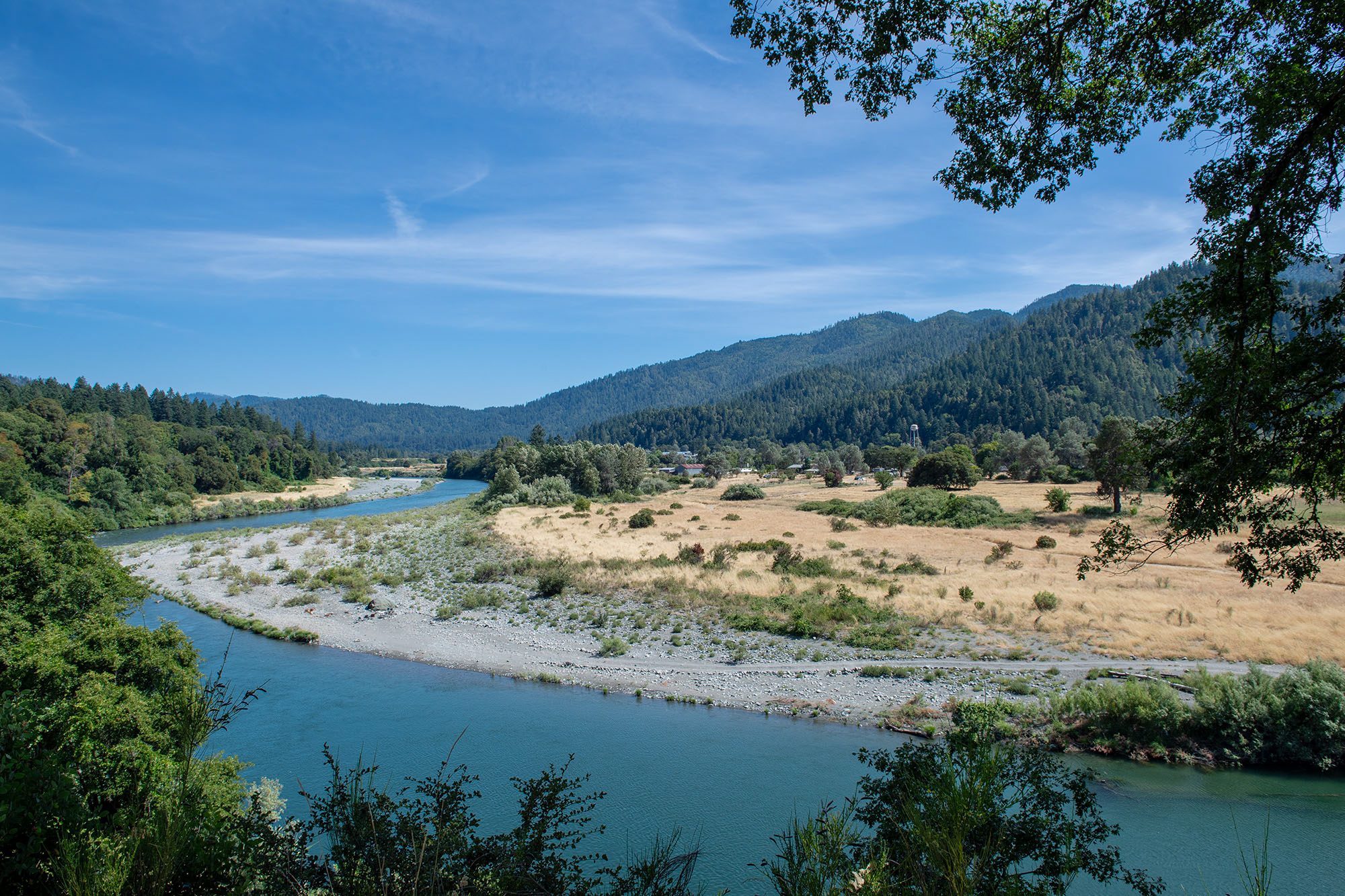
California Tribes Face Uncertain Future as USDA Food Assistance Program Ends
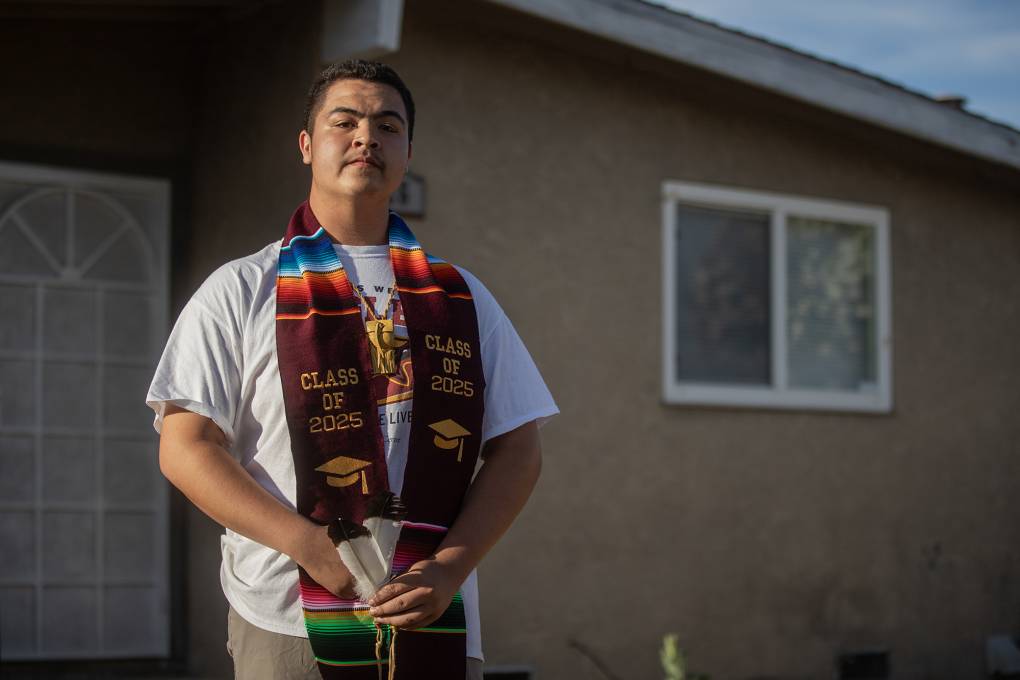
California Bill Aims to Ease Restrictions on Tribal Regalia at Graduation
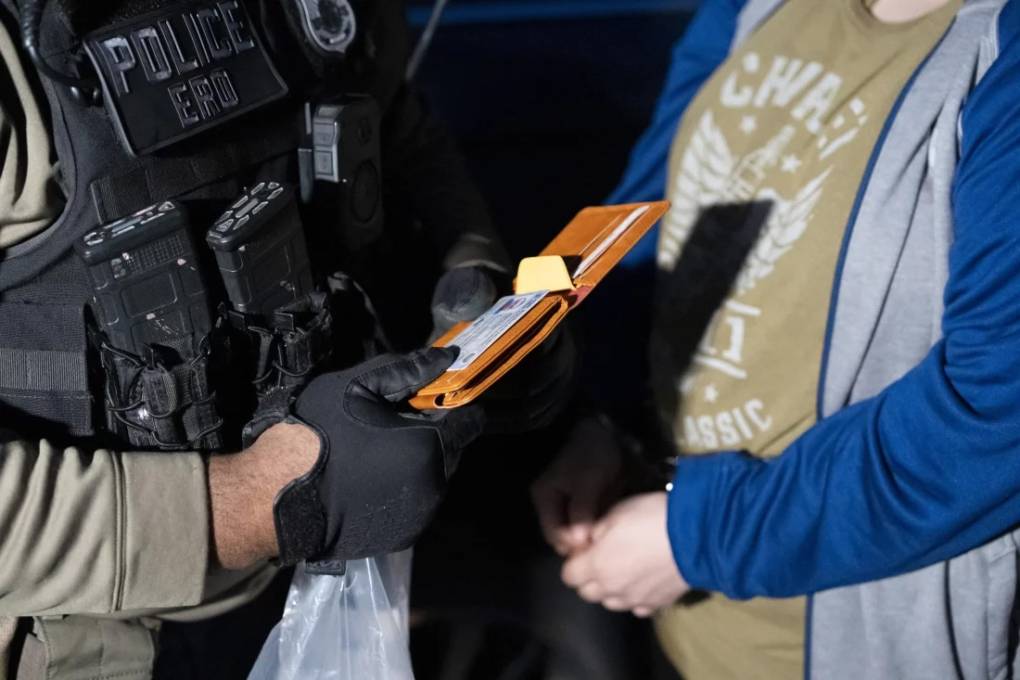
Fearing ICE Encounters, Tribal Leaders Offer Guidance to Native Americans
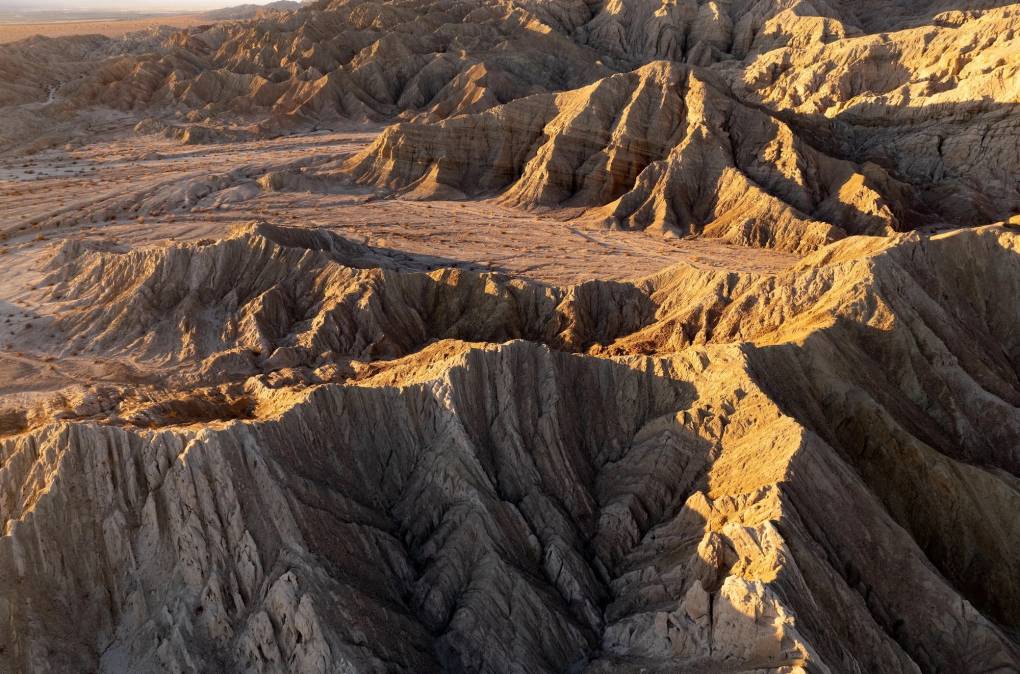
Biden to Create 2 New National Monuments in California Honoring Native Tribes
California’s Native Americans Can Soon Get Traditional Healing Covered by Medi-Cal
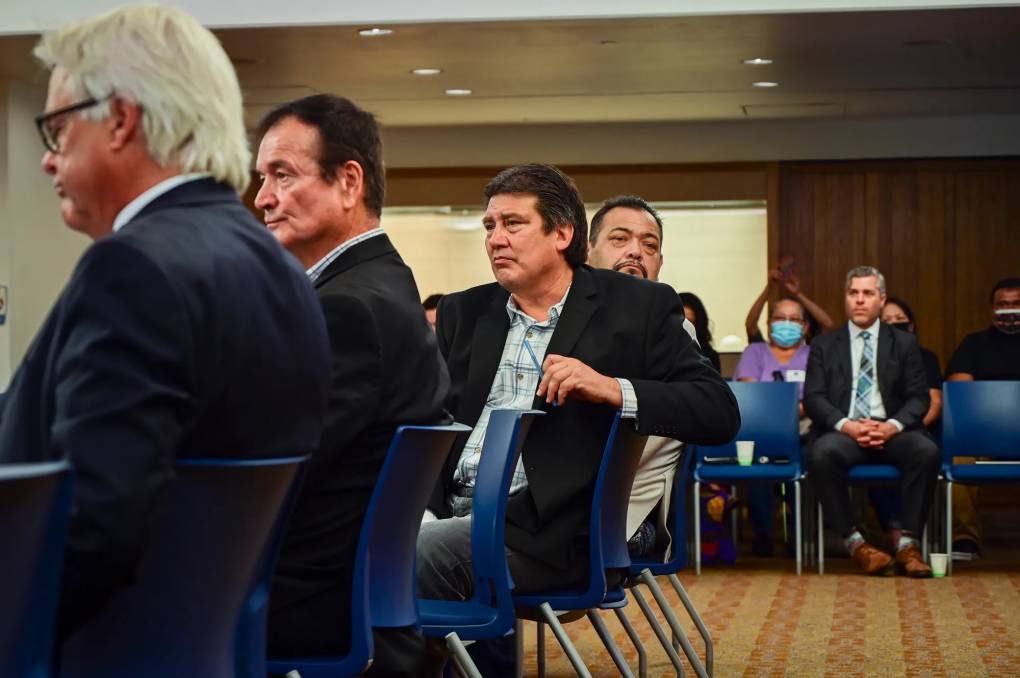
UC Hastings, Tribal Leaders Continue Talks on Name Change and Possible Reparations
'Where Did This Start?' In Yurok Domestic Violence Program, Understanding Generational Roots of Trauma Is Key
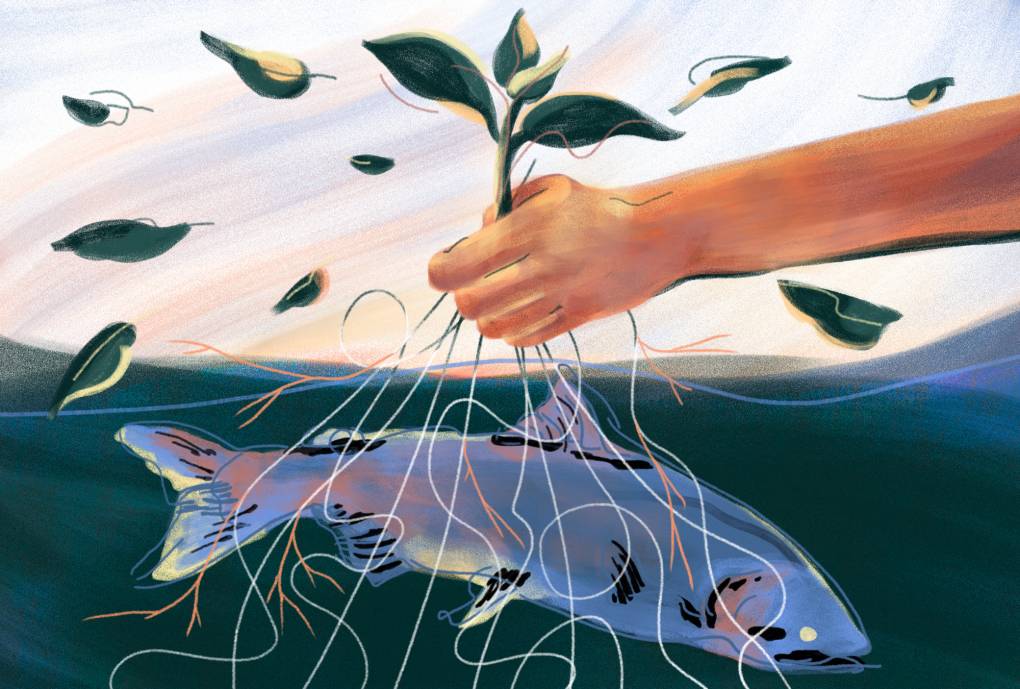
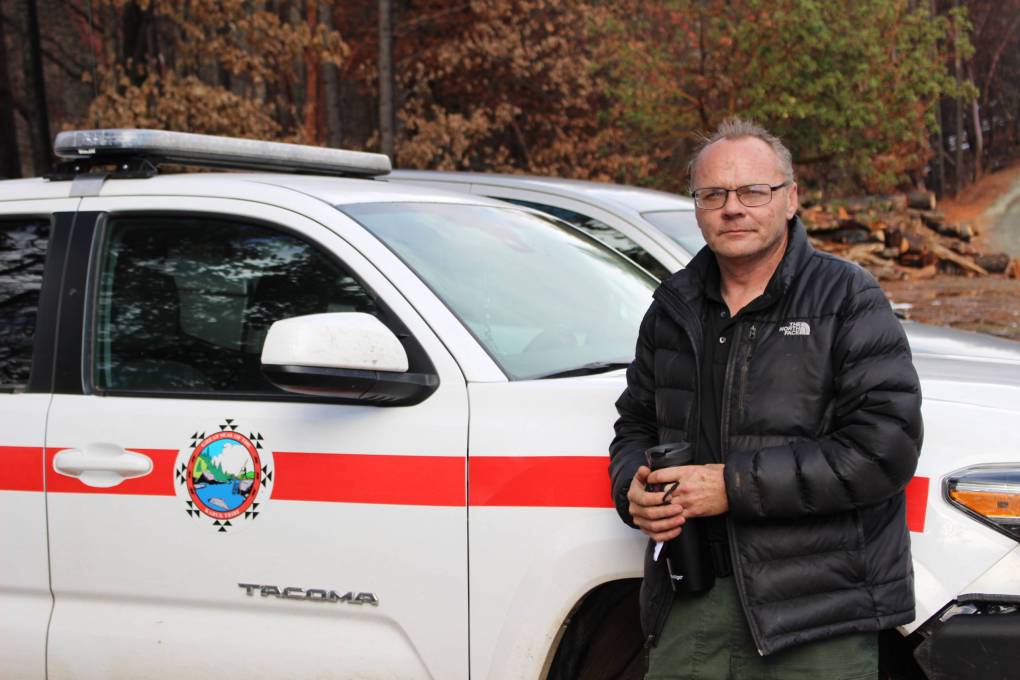
'Our Culture Is Being Taken Away From Us': The Karuk Tribe Pushes to Restore Native Burn Management to Protect Forests
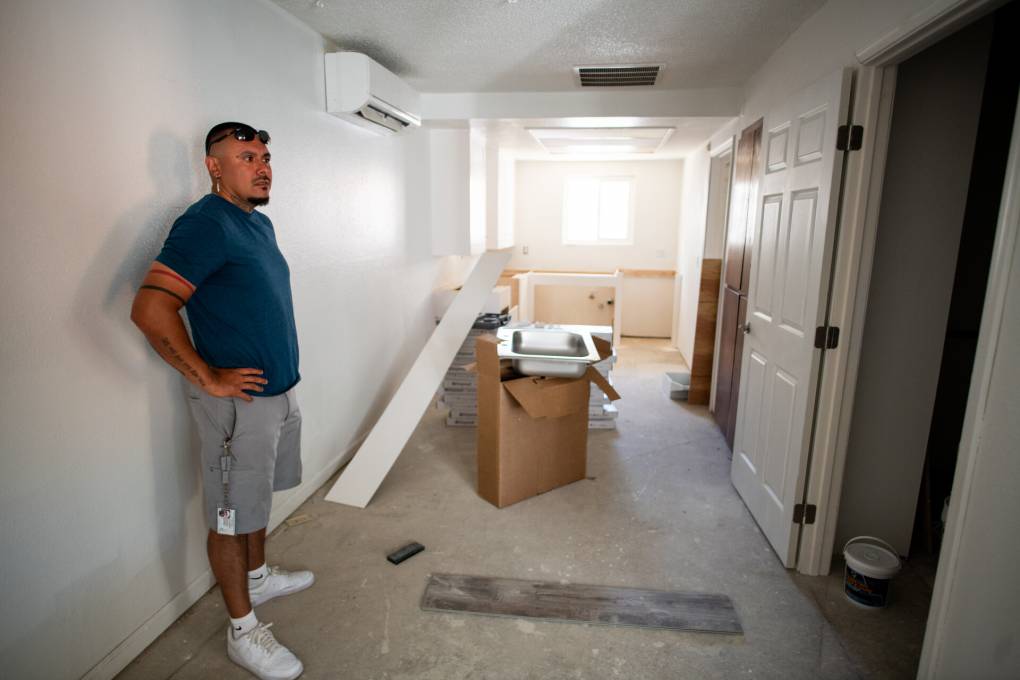
One Native American Tribe in Lake County is Creating Housing for Homeless Members
Sponsored
Player sponsored by
window.__IS_SSR__=true
window.__INITIAL_STATE__={
"attachmentsReducer": {
"audio_0": {
"type": "attachments",
"id": "audio_0",
"imgSizes": {
"kqedFullSize": {
"file": "https://ww2.kqed.org/news/wp-content/themes/KQED-unified/img/audio_bgs/background0.jpg"
}
}
},
"audio_1": {
"type": "attachments",
"id": "audio_1",
"imgSizes": {
"kqedFullSize": {
"file": "https://ww2.kqed.org/news/wp-content/themes/KQED-unified/img/audio_bgs/background1.jpg"
}
}
},
"audio_2": {
"type": "attachments",
"id": "audio_2",
"imgSizes": {
"kqedFullSize": {
"file": "https://ww2.kqed.org/news/wp-content/themes/KQED-unified/img/audio_bgs/background2.jpg"
}
}
},
"audio_3": {
"type": "attachments",
"id": "audio_3",
"imgSizes": {
"kqedFullSize": {
"file": "https://ww2.kqed.org/news/wp-content/themes/KQED-unified/img/audio_bgs/background3.jpg"
}
}
},
"audio_4": {
"type": "attachments",
"id": "audio_4",
"imgSizes": {
"kqedFullSize": {
"file": "https://ww2.kqed.org/news/wp-content/themes/KQED-unified/img/audio_bgs/background4.jpg"
}
}
},
"placeholder": {
"type": "attachments",
"id": "placeholder",
"imgSizes": {
"thumbnail": {
"file": "https://cdn.kqed.org/wp-content/uploads/2024/12/KQED-Default-Image-816638274-2000x1333-1-160x107.jpg",
"width": 160,
"height": 107,
"mimeType": "image/jpeg"
},
"medium": {
"file": "https://cdn.kqed.org/wp-content/uploads/2024/12/KQED-Default-Image-816638274-2000x1333-1-800x533.jpg",
"width": 800,
"height": 533,
"mimeType": "image/jpeg"
},
"medium_large": {
"file": "https://cdn.kqed.org/wp-content/uploads/2024/12/KQED-Default-Image-816638274-2000x1333-1-768x512.jpg",
"width": 768,
"height": 512,
"mimeType": "image/jpeg"
},
"large": {
"file": "https://cdn.kqed.org/wp-content/uploads/2024/12/KQED-Default-Image-816638274-2000x1333-1-1020x680.jpg",
"width": 1020,
"height": 680,
"mimeType": "image/jpeg"
},
"1536x1536": {
"file": "https://cdn.kqed.org/wp-content/uploads/2024/12/KQED-Default-Image-816638274-2000x1333-1-1536x1024.jpg",
"width": 1536,
"height": 1024,
"mimeType": "image/jpeg"
},
"fd-lrg": {
"file": "https://cdn.kqed.org/wp-content/uploads/2024/12/KQED-Default-Image-816638274-2000x1333-1-1536x1024.jpg",
"width": 1536,
"height": 1024,
"mimeType": "image/jpeg"
},
"fd-med": {
"file": "https://cdn.kqed.org/wp-content/uploads/2024/12/KQED-Default-Image-816638274-2000x1333-1-1020x680.jpg",
"width": 1020,
"height": 680,
"mimeType": "image/jpeg"
},
"fd-sm": {
"file": "https://cdn.kqed.org/wp-content/uploads/2024/12/KQED-Default-Image-816638274-2000x1333-1-800x533.jpg",
"width": 800,
"height": 533,
"mimeType": "image/jpeg"
},
"post-thumbnail": {
"file": "https://cdn.kqed.org/wp-content/uploads/2024/12/KQED-Default-Image-816638274-2000x1333-1-672x372.jpg",
"width": 672,
"height": 372,
"mimeType": "image/jpeg"
},
"twentyfourteen-full-width": {
"file": "https://cdn.kqed.org/wp-content/uploads/2024/12/KQED-Default-Image-816638274-2000x1333-1-1038x576.jpg",
"width": 1038,
"height": 576,
"mimeType": "image/jpeg"
},
"xxsmall": {
"file": "https://cdn.kqed.org/wp-content/uploads/2024/12/KQED-Default-Image-816638274-2000x1333-1-160x107.jpg",
"width": 160,
"height": 107,
"mimeType": "image/jpeg"
},
"xsmall": {
"file": "https://cdn.kqed.org/wp-content/uploads/2024/12/KQED-Default-Image-816638274-2000x1333-1-672x372.jpg",
"width": 672,
"height": 372,
"mimeType": "image/jpeg"
},
"small": {
"file": "https://cdn.kqed.org/wp-content/uploads/2024/12/KQED-Default-Image-816638274-2000x1333-1-672x372.jpg",
"width": 672,
"height": 372,
"mimeType": "image/jpeg"
},
"xlarge": {
"file": "https://cdn.kqed.org/wp-content/uploads/2024/12/KQED-Default-Image-816638274-2000x1333-1-1020x680.jpg",
"width": 1020,
"height": 680,
"mimeType": "image/jpeg"
},
"full-width": {
"file": "https://cdn.kqed.org/wp-content/uploads/2024/12/KQED-Default-Image-816638274-2000x1333-1-1920x1280.jpg",
"width": 1920,
"height": 1280,
"mimeType": "image/jpeg"
},
"guest-author-32": {
"file": "https://cdn.kqed.org/wp-content/uploads/2025/01/KQED-Default-Image-816638274-1333x1333-1-160x160.jpg",
"width": 32,
"height": 32,
"mimeType": "image/jpeg"
},
"guest-author-50": {
"file": "https://cdn.kqed.org/wp-content/uploads/2025/01/KQED-Default-Image-816638274-1333x1333-1-160x160.jpg",
"width": 50,
"height": 50,
"mimeType": "image/jpeg"
},
"guest-author-64": {
"file": "https://cdn.kqed.org/wp-content/uploads/2025/01/KQED-Default-Image-816638274-1333x1333-1-160x160.jpg",
"width": 64,
"height": 64,
"mimeType": "image/jpeg"
},
"guest-author-96": {
"file": "https://cdn.kqed.org/wp-content/uploads/2025/01/KQED-Default-Image-816638274-1333x1333-1-160x160.jpg",
"width": 96,
"height": 96,
"mimeType": "image/jpeg"
},
"guest-author-128": {
"file": "https://cdn.kqed.org/wp-content/uploads/2025/01/KQED-Default-Image-816638274-1333x1333-1-160x160.jpg",
"width": 128,
"height": 128,
"mimeType": "image/jpeg"
},
"detail": {
"file": "https://cdn.kqed.org/wp-content/uploads/2025/01/KQED-Default-Image-816638274-1333x1333-1-160x160.jpg",
"width": 160,
"height": 160,
"mimeType": "image/jpeg"
},
"kqedFullSize": {
"file": "https://cdn.kqed.org/wp-content/uploads/2024/12/KQED-Default-Image-816638274-2000x1333-1.jpg",
"width": 2000,
"height": 1333
}
}
},
"news_12046548": {
"type": "attachments",
"id": "news_12046548",
"meta": {
"index": "attachments_1716263798",
"site": "news",
"id": "12046548",
"found": true
},
"title": "25_06_25_TRIBE_FOOD_CUTS_MM_26.DSC_7866-KQED",
"publishDate": 1751302202,
"status": "inherit",
"parent": 0,
"modified": 1752611221,
"caption": "The Trinity River flows through the Hoopa Valley in Northern California. California tribes warn of rising food insecurity after the USDA cut a program supplying fresh, local food. In Humboldt County, the Hoopa Valley Tribe is scrambling to support its seniors and farmers.",
"credit": "Mark McKenna for KQED",
"altTag": null,
"description": null,
"imgSizes": {
"thumbnail": {
"file": "https://cdn.kqed.org/wp-content/uploads/sites/10/2025/06/25_06_25_TRIBE_FOOD_CUTS_MM_26.DSC_7866-KQED-160x107.jpg",
"width": 160,
"height": 107,
"mimeType": "image/jpeg"
},
"1536x1536": {
"file": "https://cdn.kqed.org/wp-content/uploads/sites/10/2025/06/25_06_25_TRIBE_FOOD_CUTS_MM_26.DSC_7866-KQED-1536x1024.jpg",
"width": 1536,
"height": 1024,
"mimeType": "image/jpeg"
},
"post-thumbnail": {
"file": "https://cdn.kqed.org/wp-content/uploads/sites/10/2025/06/25_06_25_TRIBE_FOOD_CUTS_MM_26.DSC_7866-KQED-672x372.jpg",
"width": 672,
"height": 372,
"mimeType": "image/jpeg"
},
"twentyfourteen-full-width": {
"file": "https://cdn.kqed.org/wp-content/uploads/sites/10/2025/06/25_06_25_TRIBE_FOOD_CUTS_MM_26.DSC_7866-KQED-1038x576.jpg",
"width": 1038,
"height": 576,
"mimeType": "image/jpeg"
},
"kqedFullSize": {
"file": "https://cdn.kqed.org/wp-content/uploads/sites/10/2025/06/25_06_25_TRIBE_FOOD_CUTS_MM_26.DSC_7866-KQED.jpg",
"width": 2000,
"height": 1333
}
},
"fetchFailed": false,
"isLoading": false
},
"news_12040721": {
"type": "attachments",
"id": "news_12040721",
"meta": {
"index": "attachments_1716263798",
"site": "news",
"id": "12040721",
"found": true
},
"title": "051425-Native-American-Regalia-LV-CM-08",
"publishDate": 1747596844,
"status": "inherit",
"parent": 12040718,
"modified": 1747597178,
"caption": "Ethan Molina wears his graduation stole as he stands in front of his home in Fresno on May 14, 2025. Molina, a member of the Pascua Yaqui Tribe in Arizona and a senior at Clovis West High, was told by the school district that he could not wear the stole to his graduation ceremony. ",
"credit": "Larry Valenzuela / CalMatters/CatchLight Local",
"altTag": "A man stands in front of a house wearing a colorful graduation stole.",
"description": null,
"imgSizes": {
"medium": {
"file": "https://cdn.kqed.org/wp-content/uploads/sites/10/2025/05/051425-Native-American-Regalia-LV-CM-08-800x533.jpg",
"width": 800,
"height": 533,
"mimeType": "image/jpeg"
},
"large": {
"file": "https://cdn.kqed.org/wp-content/uploads/sites/10/2025/05/051425-Native-American-Regalia-LV-CM-08-1020x680.jpg",
"width": 1020,
"height": 680,
"mimeType": "image/jpeg"
},
"thumbnail": {
"file": "https://cdn.kqed.org/wp-content/uploads/sites/10/2025/05/051425-Native-American-Regalia-LV-CM-08-160x107.jpg",
"width": 160,
"height": 107,
"mimeType": "image/jpeg"
},
"1536x1536": {
"file": "https://cdn.kqed.org/wp-content/uploads/sites/10/2025/05/051425-Native-American-Regalia-LV-CM-08-1536x1024.jpg",
"width": 1536,
"height": 1024,
"mimeType": "image/jpeg"
},
"post-thumbnail": {
"file": "https://cdn.kqed.org/wp-content/uploads/sites/10/2025/05/051425-Native-American-Regalia-LV-CM-08-672x372.jpg",
"width": 672,
"height": 372,
"mimeType": "image/jpeg"
},
"twentyfourteen-full-width": {
"file": "https://cdn.kqed.org/wp-content/uploads/sites/10/2025/05/051425-Native-American-Regalia-LV-CM-08-1038x576.jpg",
"width": 1038,
"height": 576,
"mimeType": "image/jpeg"
},
"full-width": {
"file": "https://cdn.kqed.org/wp-content/uploads/sites/10/2025/05/051425-Native-American-Regalia-LV-CM-08-1920x1280.jpg",
"width": 1920,
"height": 1280,
"mimeType": "image/jpeg"
},
"kqedFullSize": {
"file": "https://cdn.kqed.org/wp-content/uploads/sites/10/2025/05/051425-Native-American-Regalia-LV-CM-08.jpg",
"width": 2000,
"height": 1333
}
},
"fetchFailed": false,
"isLoading": false
},
"news_12024828": {
"type": "attachments",
"id": "news_12024828",
"meta": {
"index": "attachments_1716263798",
"site": "news",
"id": "12024828",
"found": true
},
"title": "npr.brightspotcdn copy",
"publishDate": 1738261923,
"status": "inherit",
"parent": 12024825,
"modified": 1738266167,
"caption": "U.S. Immigration and Customs Enforcement officers look at the identification of a person detained on Monday, Jan. 27, 2025, in Silver Spring, Maryland.",
"credit": "Alex Brandon/AP Photo",
"altTag": null,
"description": null,
"imgSizes": {
"medium": {
"file": "https://cdn.kqed.org/wp-content/uploads/sites/10/2025/01/npr.brightspotcdn-copy-56-800x533.jpg",
"width": 800,
"height": 533,
"mimeType": "image/jpeg"
},
"large": {
"file": "https://cdn.kqed.org/wp-content/uploads/sites/10/2025/01/npr.brightspotcdn-copy-56-1020x680.jpg",
"width": 1020,
"height": 680,
"mimeType": "image/jpeg"
},
"thumbnail": {
"file": "https://cdn.kqed.org/wp-content/uploads/sites/10/2025/01/npr.brightspotcdn-copy-56-160x107.jpg",
"width": 160,
"height": 107,
"mimeType": "image/jpeg"
},
"post-thumbnail": {
"file": "https://cdn.kqed.org/wp-content/uploads/sites/10/2025/01/npr.brightspotcdn-copy-56-672x372.jpg",
"width": 672,
"height": 372,
"mimeType": "image/jpeg"
},
"twentyfourteen-full-width": {
"file": "https://cdn.kqed.org/wp-content/uploads/sites/10/2025/01/npr.brightspotcdn-copy-56-1038x576.jpg",
"width": 1038,
"height": 576,
"mimeType": "image/jpeg"
},
"kqedFullSize": {
"file": "https://cdn.kqed.org/wp-content/uploads/sites/10/2025/01/npr.brightspotcdn-copy-56.jpg",
"width": 1100,
"height": 733
}
},
"fetchFailed": false,
"isLoading": false
},
"news_12020570": {
"type": "attachments",
"id": "news_12020570",
"meta": {
"index": "attachments_1716263798",
"site": "news",
"id": "12020570",
"found": true
},
"title": "Chuckwalla-1",
"publishDate": 1736275292,
"status": "inherit",
"parent": 12020561,
"modified": 1736275420,
"caption": "An aerial view of the Box Canyon-Mecca Hills area, part of the proposed Chuckwalla National Monument in California's eastern Coachella Valley. ",
"credit": "Courtesy of Protect \u003ca href=\"https://protectchuckwalla.org/\">Chuckwalla National Monument\u003c/a>",
"altTag": "An aerial view of a desert canyon.",
"description": null,
"imgSizes": {
"medium": {
"file": "https://cdn.kqed.org/wp-content/uploads/sites/10/2025/01/Chuckwalla-1-800x528.jpeg",
"width": 800,
"height": 528,
"mimeType": "image/jpeg"
},
"large": {
"file": "https://cdn.kqed.org/wp-content/uploads/sites/10/2025/01/Chuckwalla-1-1020x674.jpeg",
"width": 1020,
"height": 674,
"mimeType": "image/jpeg"
},
"thumbnail": {
"file": "https://cdn.kqed.org/wp-content/uploads/sites/10/2025/01/Chuckwalla-1-160x106.jpeg",
"width": 160,
"height": 106,
"mimeType": "image/jpeg"
},
"1536x1536": {
"file": "https://cdn.kqed.org/wp-content/uploads/sites/10/2025/01/Chuckwalla-1-1536x1015.jpeg",
"width": 1536,
"height": 1015,
"mimeType": "image/jpeg"
},
"post-thumbnail": {
"file": "https://cdn.kqed.org/wp-content/uploads/sites/10/2025/01/Chuckwalla-1-672x372.jpeg",
"width": 672,
"height": 372,
"mimeType": "image/jpeg"
},
"twentyfourteen-full-width": {
"file": "https://cdn.kqed.org/wp-content/uploads/sites/10/2025/01/Chuckwalla-1-1038x576.jpeg",
"width": 1038,
"height": 576,
"mimeType": "image/jpeg"
},
"full-width": {
"file": "https://cdn.kqed.org/wp-content/uploads/sites/10/2025/01/Chuckwalla-1-1920x1268.jpeg",
"width": 1920,
"height": 1268,
"mimeType": "image/jpeg"
},
"kqedFullSize": {
"file": "https://cdn.kqed.org/wp-content/uploads/sites/10/2025/01/Chuckwalla-1.jpeg",
"width": 2000,
"height": 1321
}
},
"fetchFailed": false,
"isLoading": false
},
"news_12010056": {
"type": "attachments",
"id": "news_12010056",
"meta": {
"index": "attachments_1716263798",
"site": "news",
"id": "12010056",
"found": true
},
"title": "Helen Waukazoo (back right), CEO Friendship House and 2009 Minerva Award winner listens with First Lady Maria Shriver to a drumming circle perform during a visit to the Friendship House in San Francisco, Calif. on Wednesday, March 3, 2010.",
"publishDate": 1729276385,
"status": "inherit",
"parent": 12010054,
"modified": 1729296436,
"caption": "Helen Waukazoo (back right), the former CEO of Friendship House, listens with former First Lady of California Maria Shriver to a drumming circle at the Friendship House in San Francisco on March 3, 2010.\n\n",
"credit": "Lea Suzuki/The San Francisco Chronicle via Getty Images",
"altTag": null,
"description": null,
"imgSizes": {
"medium": {
"file": "https://cdn.kqed.org/wp-content/uploads/sites/10/2024/10/GettyImages-1322038432-800x533.jpg",
"width": 800,
"height": 533,
"mimeType": "image/jpeg"
},
"large": {
"file": "https://cdn.kqed.org/wp-content/uploads/sites/10/2024/10/GettyImages-1322038432-1020x680.jpg",
"width": 1020,
"height": 680,
"mimeType": "image/jpeg"
},
"thumbnail": {
"file": "https://cdn.kqed.org/wp-content/uploads/sites/10/2024/10/GettyImages-1322038432-160x107.jpg",
"width": 160,
"height": 107,
"mimeType": "image/jpeg"
},
"1536x1536": {
"file": "https://cdn.kqed.org/wp-content/uploads/sites/10/2024/10/GettyImages-1322038432-1536x1024.jpg",
"width": 1536,
"height": 1024,
"mimeType": "image/jpeg"
},
"post-thumbnail": {
"file": "https://cdn.kqed.org/wp-content/uploads/sites/10/2024/10/GettyImages-1322038432-672x372.jpg",
"width": 672,
"height": 372,
"mimeType": "image/jpeg"
},
"twentyfourteen-full-width": {
"file": "https://cdn.kqed.org/wp-content/uploads/sites/10/2024/10/GettyImages-1322038432-1038x576.jpg",
"width": 1038,
"height": 576,
"mimeType": "image/jpeg"
},
"full-width": {
"file": "https://cdn.kqed.org/wp-content/uploads/sites/10/2024/10/GettyImages-1322038432-1920x1280.jpg",
"width": 1920,
"height": 1280,
"mimeType": "image/jpeg"
},
"kqedFullSize": {
"file": "https://cdn.kqed.org/wp-content/uploads/sites/10/2024/10/GettyImages-1322038432.jpg",
"width": 2000,
"height": 1333
}
},
"fetchFailed": false,
"isLoading": false
},
"news_11916536": {
"type": "attachments",
"id": "news_11916536",
"meta": {
"index": "attachments_1716263798",
"site": "news",
"id": "11916536",
"found": true
},
"parent": 11916527,
"imgSizes": {
"twentyfourteen-full-width": {
"file": "https://ww2.kqed.org/app/uploads/sites/10/2022/06/060322-HASTINGS-NAME-CHANGE-SL-CM-_1_-1038x576.jpg",
"width": 1038,
"mimeType": "image/jpeg",
"height": 576
},
"thumbnail": {
"file": "https://ww2.kqed.org/app/uploads/sites/10/2022/06/060322-HASTINGS-NAME-CHANGE-SL-CM-_1_-160x106.jpg",
"width": 160,
"mimeType": "image/jpeg",
"height": 106
},
"post-thumbnail": {
"file": "https://ww2.kqed.org/app/uploads/sites/10/2022/06/060322-HASTINGS-NAME-CHANGE-SL-CM-_1_-672x372.jpg",
"width": 672,
"mimeType": "image/jpeg",
"height": 372
},
"kqedFullSize": {
"file": "https://ww2.kqed.org/app/uploads/sites/10/2022/06/060322-HASTINGS-NAME-CHANGE-SL-CM-_1_.jpg",
"width": 2000,
"height": 1330
},
"large": {
"file": "https://ww2.kqed.org/app/uploads/sites/10/2022/06/060322-HASTINGS-NAME-CHANGE-SL-CM-_1_-1020x678.jpg",
"width": 1020,
"mimeType": "image/jpeg",
"height": 678
},
"1536x1536": {
"file": "https://ww2.kqed.org/app/uploads/sites/10/2022/06/060322-HASTINGS-NAME-CHANGE-SL-CM-_1_-1536x1021.jpg",
"width": 1536,
"mimeType": "image/jpeg",
"height": 1021
},
"full-width": {
"file": "https://ww2.kqed.org/app/uploads/sites/10/2022/06/060322-HASTINGS-NAME-CHANGE-SL-CM-_1_-1920x1277.jpg",
"width": 1920,
"mimeType": "image/jpeg",
"height": 1277
},
"medium": {
"file": "https://ww2.kqed.org/app/uploads/sites/10/2022/06/060322-HASTINGS-NAME-CHANGE-SL-CM-_1_-800x532.jpg",
"width": 800,
"mimeType": "image/jpeg",
"height": 532
}
},
"publishDate": 1654723624,
"modified": 1654800962,
"caption": "Round Valley Indian Tribes Tribal Council President James Russ (center) participates in a UC Hastings Board of Directors meeting about changing the name of the law school, on Friday, June 3, 2022, in San Francisco.",
"description": null,
"title": "060322-HASTINGS-NAME-CHANGE-SL-CM-_1_",
"credit": "Samantha Laurey/CalMatters",
"status": "inherit",
"altTag": "A group of men sit on chairs in a conference room.",
"fetchFailed": false,
"isLoading": false
},
"news_11888063": {
"type": "attachments",
"id": "news_11888063",
"meta": {
"index": "attachments_1716263798",
"site": "news",
"id": "11888063",
"found": true
},
"parent": 11888051,
"imgSizes": {
"twentyfourteen-full-width": {
"file": "https://ww2.kqed.org/app/uploads/sites/10/2021/09/dv-camag5-1038x576.jpg",
"width": 1038,
"mimeType": "image/jpeg",
"height": 576
},
"thumbnail": {
"file": "https://ww2.kqed.org/app/uploads/sites/10/2021/09/dv-camag5-160x108.jpg",
"width": 160,
"mimeType": "image/jpeg",
"height": 108
},
"post-thumbnail": {
"file": "https://ww2.kqed.org/app/uploads/sites/10/2021/09/dv-camag5-672x372.jpg",
"width": 672,
"mimeType": "image/jpeg",
"height": 372
},
"kqedFullSize": {
"file": "https://ww2.kqed.org/app/uploads/sites/10/2021/09/dv-camag5-e1631310091518.jpg",
"width": 1920,
"height": 1296
},
"large": {
"file": "https://ww2.kqed.org/app/uploads/sites/10/2021/09/dv-camag5-1020x689.jpg",
"width": 1020,
"mimeType": "image/jpeg",
"height": 689
},
"1536x1536": {
"file": "https://ww2.kqed.org/app/uploads/sites/10/2021/09/dv-camag5-1536x1037.jpg",
"width": 1536,
"mimeType": "image/jpeg",
"height": 1037
},
"full-width": {
"file": "https://ww2.kqed.org/app/uploads/sites/10/2021/09/dv-camag5-1920x1296.jpg",
"width": 1920,
"mimeType": "image/jpeg",
"height": 1296
},
"medium": {
"file": "https://ww2.kqed.org/app/uploads/sites/10/2021/09/dv-camag5-800x540.jpg",
"width": 800,
"mimeType": "image/jpeg",
"height": 540
}
},
"publishDate": 1631310073,
"modified": 1631310114,
"caption": null,
"description": null,
"title": "dv-camag5",
"credit": "Illustration by Anna Vignet/KQED",
"status": "inherit",
"altTag": null,
"fetchFailed": false,
"isLoading": false
},
"news_11878450": {
"type": "attachments",
"id": "news_11878450",
"meta": {
"index": "attachments_1716263798",
"site": "news",
"id": "11878450",
"found": true
},
"parent": 11878442,
"imgSizes": {
"twentyfourteen-full-width": {
"file": "https://ww2.kqed.org/app/uploads/sites/10/2021/06/IMG_1655-scaled-1-1038x576.jpg",
"width": 1038,
"mimeType": "image/jpeg",
"height": 576
},
"thumbnail": {
"file": "https://ww2.kqed.org/app/uploads/sites/10/2021/06/IMG_1655-scaled-1-160x107.jpg",
"width": 160,
"mimeType": "image/jpeg",
"height": 107
},
"post-thumbnail": {
"file": "https://ww2.kqed.org/app/uploads/sites/10/2021/06/IMG_1655-scaled-1-672x372.jpg",
"width": 672,
"mimeType": "image/jpeg",
"height": 372
},
"kqedFullSize": {
"file": "https://ww2.kqed.org/app/uploads/sites/10/2021/06/IMG_1655-scaled-1.jpg",
"width": 2560,
"height": 1707
},
"2048x2048": {
"file": "https://ww2.kqed.org/app/uploads/sites/10/2021/06/IMG_1655-scaled-1-2048x1366.jpg",
"width": 2048,
"mimeType": "image/jpeg",
"height": 1366
},
"large": {
"file": "https://ww2.kqed.org/app/uploads/sites/10/2021/06/IMG_1655-scaled-1-1020x680.jpg",
"width": 1020,
"mimeType": "image/jpeg",
"height": 680
},
"1536x1536": {
"file": "https://ww2.kqed.org/app/uploads/sites/10/2021/06/IMG_1655-scaled-1-1536x1024.jpg",
"width": 1536,
"mimeType": "image/jpeg",
"height": 1024
},
"full-width": {
"file": "https://ww2.kqed.org/app/uploads/sites/10/2021/06/IMG_1655-scaled-1-1920x1280.jpg",
"width": 1920,
"mimeType": "image/jpeg",
"height": 1280
},
"medium": {
"file": "https://ww2.kqed.org/app/uploads/sites/10/2021/06/IMG_1655-scaled-1-800x533.jpg",
"width": 800,
"mimeType": "image/jpeg",
"height": 533
}
},
"publishDate": 1623962351,
"modified": 1623962404,
"caption": "Scot Steinbring, fire management officer for the Karuk.",
"description": null,
"title": "IMG_1655-scaled",
"credit": "Danielle Venton",
"status": "inherit",
"altTag": null,
"fetchFailed": false,
"isLoading": false
},
"news_11877596": {
"type": "attachments",
"id": "news_11877596",
"meta": {
"index": "attachments_1716263798",
"site": "news",
"id": "11877596",
"found": true
},
"parent": 11877591,
"imgSizes": {
"twentyfourteen-full-width": {
"file": "https://ww2.kqed.org/app/uploads/sites/10/2021/06/RS49293_009_LakeCounty_ProjectHomekey_05142021-qut-1038x576.jpg",
"width": 1038,
"mimeType": "image/jpeg",
"height": 576
},
"thumbnail": {
"file": "https://ww2.kqed.org/app/uploads/sites/10/2021/06/RS49293_009_LakeCounty_ProjectHomekey_05142021-qut-160x107.jpg",
"width": 160,
"mimeType": "image/jpeg",
"height": 107
},
"post-thumbnail": {
"file": "https://ww2.kqed.org/app/uploads/sites/10/2021/06/RS49293_009_LakeCounty_ProjectHomekey_05142021-qut-672x372.jpg",
"width": 672,
"mimeType": "image/jpeg",
"height": 372
},
"kqedFullSize": {
"file": "https://ww2.kqed.org/app/uploads/sites/10/2021/06/RS49293_009_LakeCounty_ProjectHomekey_05142021-qut.jpg",
"width": 1920,
"height": 1280
},
"large": {
"file": "https://ww2.kqed.org/app/uploads/sites/10/2021/06/RS49293_009_LakeCounty_ProjectHomekey_05142021-qut-1020x680.jpg",
"width": 1020,
"mimeType": "image/jpeg",
"height": 680
},
"1536x1536": {
"file": "https://ww2.kqed.org/app/uploads/sites/10/2021/06/RS49293_009_LakeCounty_ProjectHomekey_05142021-qut-1536x1024.jpg",
"width": 1536,
"mimeType": "image/jpeg",
"height": 1024
},
"medium": {
"file": "https://ww2.kqed.org/app/uploads/sites/10/2021/06/RS49293_009_LakeCounty_ProjectHomekey_05142021-qut-800x533.jpg",
"width": 800,
"mimeType": "image/jpeg",
"height": 533
}
},
"publishDate": 1623362923,
"modified": 1623362960,
"caption": "An apartment in Lakeport, California being remodeled for new tenants with funds from Project Homekey on May 14, 2021.",
"description": null,
"title": "RS49293_009_LakeCounty_ProjectHomekey_05142021-qut",
"credit": "Beth LaBerge/KQED News",
"status": "inherit",
"altTag": null,
"fetchFailed": false,
"isLoading": false
}
},
"audioPlayerReducer": {
"postId": "stream_live",
"isPaused": true,
"isPlaying": false,
"pfsActive": false,
"pledgeModalIsOpen": true,
"playerDrawerIsOpen": false
},
"authorsReducer": {
"byline_news_12040718": {
"type": "authors",
"id": "byline_news_12040718",
"meta": {
"override": true
},
"slug": "byline_news_12040718",
"name": "\u003ca href=\"https://calmatters.org/author/carolyn-jones\">Carolyn Jones, \u003c/a>CalMatters",
"isLoading": false
},
"byline_news_12024825": {
"type": "authors",
"id": "byline_news_12024825",
"meta": {
"override": true
},
"slug": "byline_news_12024825",
"name": "\u003ca href=\"https://www.npr.org/people/1101057193/ximena-bustillo\">Ximena Bustillo\u003c/a>, NPR",
"isLoading": false
},
"byline_news_12020561": {
"type": "authors",
"id": "byline_news_12020561",
"meta": {
"override": true
},
"slug": "byline_news_12020561",
"name": "Colleen Long and Matthew Daly, Associated Press",
"isLoading": false
},
"byline_news_11916527": {
"type": "authors",
"id": "byline_news_11916527",
"meta": {
"override": true
},
"slug": "byline_news_11916527",
"name": "\u003ca href=\"https://calmatters.org/author/sindhu-ananthavel/\">Sindhu Ananthavel\u003c/a>",
"isLoading": false
},
"byline_news_11888051": {
"type": "authors",
"id": "byline_news_11888051",
"meta": {
"override": true
},
"slug": "byline_news_11888051",
"name": "\u003ca href=\"https://twitter.com/leeromney?lang=en\">Lee Romney\u003c/a>",
"isLoading": false
},
"kqed": {
"type": "authors",
"id": "236",
"meta": {
"index": "authors_1716337520",
"id": "236",
"found": true
},
"name": "KQED News Staff",
"firstName": "KQED News Staff",
"lastName": null,
"slug": "kqed",
"email": "faq@kqed.org",
"display_author_email": false,
"staff_mastheads": [],
"title": null,
"bio": null,
"avatar": "https://secure.gravatar.com/avatar/ef0e801a68c4c54afa9180db14084167?s=600&d=blank&r=g",
"twitter": null,
"facebook": null,
"instagram": null,
"linkedin": null,
"sites": [
{
"site": "arts",
"roles": [
"contributor"
]
},
{
"site": "news",
"roles": [
"editor"
]
},
{
"site": "futureofyou",
"roles": [
"author"
]
}
],
"headData": {
"title": "KQED News Staff | KQED",
"description": null,
"ogImgSrc": "https://secure.gravatar.com/avatar/ef0e801a68c4c54afa9180db14084167?s=600&d=blank&r=g",
"twImgSrc": "https://secure.gravatar.com/avatar/ef0e801a68c4c54afa9180db14084167?s=600&d=blank&r=g"
},
"isLoading": false,
"link": "/author/kqed"
},
"dkatayama": {
"type": "authors",
"id": "7240",
"meta": {
"index": "authors_1716337520",
"id": "7240",
"found": true
},
"name": "Devin Katayama",
"firstName": "Devin",
"lastName": "Katayama",
"slug": "dkatayama",
"email": "dkatayama@kqed.org",
"display_author_email": true,
"staff_mastheads": [
"news"
],
"title": "Editor of Talent and Development",
"bio": "Devin Katayama is former Editor of Talent and Development for KQED. He supported our internship program and on-call staff by looking for equitable opportunities to improve the newsroom.\r\n\r\nHe previously hosted The Bay and American Suburb podcasts from KQED News. Prior to returning to the Bay Area in 2015, Devin was the education reporter for WFPL in Louisville and worked as a producer with radio stations in Chicago and Portland, OR. His work has appeared on NPR’s \u003cem>Morning Edition, All Things Considered, The Takeaway\u003c/em> and \u003cem>Here and Now.\u003c/em>\r\n\r\nDevin earned his MA in Journalism from Columbia College Chicago, where he was a Follett Fellow and the recipient of the 2011 Studs Terkel Community Media Workshop Scholarship for his story on Chicago's homeless youth. He won WBUR's 2014 Daniel Schorr award and a regional RTNDA Edward R. Murrow Award for his documentary \"At Risk\" that looked at issues facing some of Louisville's students. Devin has also received numerous local awards from the Associated Press and the Society of Professional Journalists.",
"avatar": "https://secure.gravatar.com/avatar/d0d2978a31002fb2de107921a8e18405?s=600&d=blank&r=g",
"twitter": "RadioDevin",
"facebook": null,
"instagram": null,
"linkedin": null,
"sites": [
{
"site": "arts",
"roles": []
},
{
"site": "news",
"roles": [
"author"
]
},
{
"site": "stateofhealth",
"roles": [
"author"
]
},
{
"site": "forum",
"roles": [
"editor"
]
},
{
"site": "perspectives",
"roles": [
"editor"
]
}
],
"headData": {
"title": "Devin Katayama | KQED",
"description": "Editor of Talent and Development",
"ogImgSrc": "https://secure.gravatar.com/avatar/d0d2978a31002fb2de107921a8e18405?s=600&d=blank&r=g",
"twImgSrc": "https://secure.gravatar.com/avatar/d0d2978a31002fb2de107921a8e18405?s=600&d=blank&r=g"
},
"isLoading": false,
"link": "/author/dkatayama"
},
"ecruzguevarra": {
"type": "authors",
"id": "8654",
"meta": {
"index": "authors_1716337520",
"id": "8654",
"found": true
},
"name": "Ericka Cruz Guevarra",
"firstName": "Ericka",
"lastName": "Cruz Guevarra",
"slug": "ecruzguevarra",
"email": "ecruzguevarra@kqed.org",
"display_author_email": true,
"staff_mastheads": [
"news"
],
"title": "Producer, The Bay Podcast",
"bio": "Ericka Cruz Guevarra is host of \u003ca href=\"https://www.kqed.org/podcasts/thebay\">\u003cem>The Bay\u003c/em>\u003c/a> podcast at KQED. Before host, she was the show’s producer. Her work in that capacity includes a three-part reported series on policing in Vallejo, which won a 2020 excellence in journalism award from the Society of Professional Journalists. Ericka has worked as a breaking news reporter at Oregon Public Broadcasting, helped produce the Code Switch podcast, and was KQED’s inaugural Raul Ramirez Diversity Fund intern. She’s also an alumna of NPR’s Next Generation Radio program. Send her an email if you have strong feelings about whether Fairfield and Suisun City are the Bay. Ericka is represented by SAG-AFTRA.",
"avatar": "https://secure.gravatar.com/avatar/25e5ab8d3d53fad2dcc7bb2b5c506b1a?s=600&d=blank&r=g",
"twitter": "NotoriousECG",
"facebook": null,
"instagram": null,
"linkedin": null,
"sites": [
{
"site": "arts",
"roles": [
"subscriber"
]
},
{
"site": "news",
"roles": [
"editor",
"manage_categories"
]
},
{
"site": "futureofyou",
"roles": [
"subscriber"
]
},
{
"site": "stateofhealth",
"roles": [
"subscriber"
]
},
{
"site": "science",
"roles": [
"editor"
]
},
{
"site": "forum",
"roles": [
"subscriber"
]
}
],
"headData": {
"title": "Ericka Cruz Guevarra | KQED",
"description": "Producer, The Bay Podcast",
"ogImgSrc": "https://secure.gravatar.com/avatar/25e5ab8d3d53fad2dcc7bb2b5c506b1a?s=600&d=blank&r=g",
"twImgSrc": "https://secure.gravatar.com/avatar/25e5ab8d3d53fad2dcc7bb2b5c506b1a?s=600&d=blank&r=g"
},
"isLoading": false,
"link": "/author/ecruzguevarra"
},
"lesleymcclurg": {
"type": "authors",
"id": "11229",
"meta": {
"index": "authors_1716337520",
"id": "11229",
"found": true
},
"name": "Lesley McClurg",
"firstName": "Lesley",
"lastName": "McClurg",
"slug": "lesleymcclurg",
"email": "lmcclurg@KQED.org",
"display_author_email": false,
"staff_mastheads": [
"news",
"science"
],
"title": "KQED Health Correspondent",
"bio": "Lesley McClurg is a health correspondent and fill-in host whose work is regularly rebroadcast on NPR and PBS programs. She’s earned multiple regional Emmy awards, a national and a regional Edward R. Murrow award, and was named Best Beat Reporter by the Association of Health Care Journalists. The Society of Professional Journalists has recognized her work several times, and the Society of Environmental Journalists spotlighted her coverage of California’s historic drought.\r\n\r\nBefore joining KQED in 2016, Lesley covered food and sustainability for Capital Public Radio, environmental issues for Colorado Public Radio, and reported for KUOW and KCTS 9 in Seattle. Away from the newsroom, she loves skiing with her daughter, mountain biking with her partner, and playing with Ollie, the family’s goldendoodle. On deadline, she runs almost entirely on chocolate chips.\r\n\r\n ",
"avatar": "https://secure.gravatar.com/avatar/3fb78e873af3312f34d0bc1d60a07c7f?s=600&d=blank&r=g",
"twitter": "lesleywmcclurg",
"facebook": null,
"instagram": null,
"linkedin": null,
"sites": [
{
"site": "arts",
"roles": [
"author"
]
},
{
"site": "news",
"roles": [
"editor"
]
},
{
"site": "futureofyou",
"roles": [
"editor"
]
},
{
"site": "stateofhealth",
"roles": [
"author"
]
},
{
"site": "science",
"roles": [
"editor"
]
},
{
"site": "quest",
"roles": [
"subscriber"
]
},
{
"site": "forum",
"roles": [
"administrator"
]
},
{
"site": "liveblog",
"roles": [
"author"
]
}
],
"headData": {
"title": "Lesley McClurg | KQED",
"description": "KQED Health Correspondent",
"ogImgSrc": "https://secure.gravatar.com/avatar/3fb78e873af3312f34d0bc1d60a07c7f?s=600&d=blank&r=g",
"twImgSrc": "https://secure.gravatar.com/avatar/3fb78e873af3312f34d0bc1d60a07c7f?s=600&d=blank&r=g"
},
"isLoading": false,
"link": "/author/lesleymcclurg"
},
"amontecillo": {
"type": "authors",
"id": "11649",
"meta": {
"index": "authors_1716337520",
"id": "11649",
"found": true
},
"name": "Alan Montecillo",
"firstName": "Alan",
"lastName": "Montecillo",
"slug": "amontecillo",
"email": "amontecillo@kqed.org",
"display_author_email": false,
"staff_mastheads": [
"news"
],
"title": "KQED Contributor",
"bio": "Alan Montecillo is the senior editor of \u003cem>\u003ca href=\"http://kqed.org/thebay\">The Bay\u003c/a>, \u003c/em> KQED's local news podcast. Before moving to the Bay Area, he worked as a senior talk show producer for WILL in Champaign-Urbana, Illinois and at Oregon Public Broadcasting in Portland, Oregon. He has won journalism awards from the Society of Professional Journalists Northern California, the Public Media Journalists Association, The Signal Awards, and has also received a regional Edward R. Murrow award. Alan is a Filipino American from Hong Kong and a graduate of Reed College.",
"avatar": "https://secure.gravatar.com/avatar/d5e4e7a76481969ccba76f4e2b5ccabc?s=600&d=blank&r=g",
"twitter": "alanmontecillo",
"facebook": null,
"instagram": null,
"linkedin": null,
"sites": [
{
"site": "",
"roles": [
"editor"
]
},
{
"site": "news",
"roles": [
"editor",
"manage_categories"
]
}
],
"headData": {
"title": "Alan Montecillo | KQED",
"description": "KQED Contributor",
"ogImgSrc": "https://secure.gravatar.com/avatar/d5e4e7a76481969ccba76f4e2b5ccabc?s=600&d=blank&r=g",
"twImgSrc": "https://secure.gravatar.com/avatar/d5e4e7a76481969ccba76f4e2b5ccabc?s=600&d=blank&r=g"
},
"isLoading": false,
"link": "/author/amontecillo"
},
"msolomon": {
"type": "authors",
"id": "11651",
"meta": {
"index": "authors_1716337520",
"id": "11651",
"found": true
},
"name": "Molly Solomon",
"firstName": "Molly",
"lastName": "Solomon",
"slug": "msolomon",
"email": "msolomon@KQED.org",
"display_author_email": false,
"staff_mastheads": [
"news"
],
"title": "Senior Editor",
"bio": "Molly Solomon is the senior editor of KQED's California Politics and Government Desk. Previously, she was the station's editor-at-large, with a focus on editing early childhood education, politics, and criminal justice. Before that, she managed and edited statewide election coverage for The California Newsroom, a collaboration of local public radio stations, CalMatters and NPR. Molly joined KQED in 2019 to launch the station’s housing affordability desk, where she reported on homelessness, evictions and is the co-host of KQED’s housing podcast, SOLD OUT: Rethinking Housing in America. Before that, she was the Southwest Washington Bureau Chief for Oregon Public Broadcasting and a reporter at Hawaii Public Radio. Her stories have aired on NPR’s \u003cem>Morning Edition\u003c/em>, \u003cem>All Things Considered\u003c/em>, \u003cem>Here & Now\u003c/em>, \u003cem>Science Friday\u003c/em> and \u003cem>Marketplace\u003c/em>. Molly's award-winning reporting has been honored by the Best of the West, Edward R. Murrow awards, Society of Professional Journalists, National Headliner Awards, and the Asian American Journalists Association. Born and raised in Berkeley, Molly is a big fan of burritos and her scruffy terrier, Ollie.",
"avatar": "https://secure.gravatar.com/avatar/9ad9794616923d81c9a79897161545bd?s=600&d=blank&r=g",
"twitter": "solomonout",
"facebook": null,
"instagram": null,
"linkedin": null,
"sites": [
{
"site": "news",
"roles": [
"editor"
]
},
{
"site": "science",
"roles": [
"editor"
]
}
],
"headData": {
"title": "Molly Solomon | KQED",
"description": "Senior Editor",
"ogImgSrc": "https://secure.gravatar.com/avatar/9ad9794616923d81c9a79897161545bd?s=600&d=blank&r=g",
"twImgSrc": "https://secure.gravatar.com/avatar/9ad9794616923d81c9a79897161545bd?s=600&d=blank&r=g"
},
"isLoading": false,
"link": "/author/msolomon"
},
"ibloom": {
"type": "authors",
"id": "11805",
"meta": {
"index": "authors_1716337520",
"id": "11805",
"found": true
},
"name": "Izzy Bloom",
"firstName": "Izzy",
"lastName": "Bloom",
"slug": "ibloom",
"email": "ibloom@kqed.org",
"display_author_email": false,
"staff_mastheads": [],
"title": "KQED Reporter & Producer",
"bio": "Izzy is a reporter and producer on KQED's California Politics & Government Desk. She joined the desk in 2024 to produce Political Breakdown, covering local and national elections and attending the RNC and DNC in Milwaukee and Chicago. \r\n\r\nBefore that, Izzy was a producer on The California Report and reported long-form stories for The California Report Magazine. She was a finalist for the Third Coast/Richard H. Driehaus Foundation Competition and was awarded for her reporting on indigenous land back by the Society of Professional Journalists. Izzy received her master's in journalism from the University of California, Berkeley.",
"avatar": "https://secure.gravatar.com/avatar/c318d55506fa162aaca4e542df149485?s=600&d=blank&r=g",
"twitter": null,
"facebook": null,
"instagram": null,
"linkedin": null,
"sites": [
{
"site": "news",
"roles": [
"editor"
]
},
{
"site": "perspectives",
"roles": [
"editor"
]
}
],
"headData": {
"title": "Izzy Bloom | KQED",
"description": "KQED Reporter & Producer",
"ogImgSrc": "https://secure.gravatar.com/avatar/c318d55506fa162aaca4e542df149485?s=600&d=blank&r=g",
"twImgSrc": "https://secure.gravatar.com/avatar/c318d55506fa162aaca4e542df149485?s=600&d=blank&r=g"
},
"isLoading": false,
"link": "/author/ibloom"
}
},
"breakingNewsReducer": {},
"pagesReducer": {},
"postsReducer": {
"stream_live": {
"type": "live",
"id": "stream_live",
"audioUrl": "https://streams.kqed.org/kqedradio",
"title": "Live Stream",
"excerpt": "Live Stream information currently unavailable.",
"link": "/radio",
"featImg": "",
"label": {
"name": "KQED Live",
"link": "/"
}
},
"stream_kqedNewscast": {
"type": "posts",
"id": "stream_kqedNewscast",
"audioUrl": "https://www.kqed.org/.stream/anon/radio/RDnews/newscast.mp3?_=1",
"title": "KQED Newscast",
"featImg": "",
"label": {
"name": "88.5 FM",
"link": "/"
}
},
"news_12048098": {
"type": "posts",
"id": "news_12048098",
"meta": {
"index": "posts_1716263798",
"site": "news",
"id": "12048098",
"score": null,
"sort": [
1752676221000
]
},
"guestAuthors": [],
"slug": "california-tribes-face-uncertain-future-as-usda-food-assistance-program-ends",
"title": "California Tribes Face Uncertain Future as USDA Food Assistance Program Ends",
"publishDate": 1752676221,
"format": "standard",
"headTitle": "California Tribes Face Uncertain Future as USDA Food Assistance Program Ends | KQED",
"labelTerm": {
"site": "news"
},
"content": "\u003cp>Every Monday, Norma McAdams comes to the K’ima:w Medical Center on the Hoopa Valley Reservation in northeastern \u003ca href=\"https://www.kqed.org/news/tag/humboldt-county\">Humboldt County\u003c/a> and leaves with a box of fresh produce. Lately, she’s been experimenting with new recipes.\u003c/p>\n\u003cp>“I love yellow squash and zucchini with a little onion and make pasta out of the zucchini to cut back on the carbs,” said McAdams, a Hoopa Valley tribal member.\u003c/p>\n\u003cp>McAdams, 74, used to grow her own fruit and vegetables in a small backyard garden, but an osteoporosis diagnosis and a back injury have made gardening difficult in recent years. As she gets older, she said, eating healthy, locally grown food is more important than ever.\u003c/p>\n\u003cp>[ad fullwidth]\u003c/p>\n\u003cp>“Your immune system is susceptible to whatever you’re eating — is what you’re becoming — so it’s really important,” she said.\u003c/p>\n\u003cp>McAdams is one of 180 Hoopa Valley seniors who receives local produce, eggs and beef purchased through the U.S. Department of Agriculture’s Local Food Purchase Assistance program, known as LFPA.\u003c/p>\n\u003cfigure id=\"attachment_12046534\" class=\"wp-caption aligncenter\" style=\"max-width: 2000px\">\u003cimg loading=\"lazy\" decoding=\"async\" class=\"size-full wp-image-12046534\" src=\"https://cdn.kqed.org/wp-content/uploads/sites/10/2025/06/25_06_25_TRIBE_FOOD_CUTS_MM_00.DSC_7504-KQED.jpg\" alt=\"\" width=\"2000\" height=\"1333\" srcset=\"https://cdn.kqed.org/wp-content/uploads/sites/10/2025/06/25_06_25_TRIBE_FOOD_CUTS_MM_00.DSC_7504-KQED.jpg 2000w, https://cdn.kqed.org/wp-content/uploads/sites/10/2025/06/25_06_25_TRIBE_FOOD_CUTS_MM_00.DSC_7504-KQED-160x107.jpg 160w, https://cdn.kqed.org/wp-content/uploads/sites/10/2025/06/25_06_25_TRIBE_FOOD_CUTS_MM_00.DSC_7504-KQED-1536x1024.jpg 1536w\" sizes=\"auto, (max-width: 2000px) 100vw, 2000px\">\u003cfigcaption class=\"wp-caption-text\">Ken and Norma McAdams eat free lunch at the Senior Nutrition Center in Hoopa, California. Norma is on the board of the Klamath Trinity Resource Conservation District and benefits from the LFDA Program. \u003ccite>(Mark McKenna for KQED)\u003c/cite>\u003c/figcaption>\u003c/figure>\n\u003cp>The program launched in late 2021 under former President Joe Biden. It has since provided $88.5 million to California food banks and tribal governments — more than any other state — to purchase food from “local and socially disadvantaged” farmers. The program aims to strengthen local food systems weakened by the pandemic, especially in rural areas like the Hoopa Valley, where \u003ca href=\"https://data.census.gov/profile/Hoopa_Valley_Reservation,_CA?g=2500000US1490#income-and-poverty\">nearly 30% of residents\u003c/a> live in poverty, according to U.S. Census data.\u003c/p>\n\u003cp>In 2015, the Hoopa Valley was classified as a food desert after its only grocery store closed.\u003c/p>\n\u003cp>“It just helps augment our costs for food,” McAdams said. “So it’s very nutritious and helpful.”\u003c/p>\n\u003cp>In March, the Trump administration abruptly terminated the program, leaving tribes and food banks in California scrambling. Even money that had already been promised for reimbursements through 2025 was included in the cuts.[aside postID=news_11956856 hero='https://ww2.kqed.org/app/uploads/sites/10/2023/07/RS67156_230721-CoastMiwokLandMarin-04-BL-KQED-1020x680.jpg']“There were more than 500 farms that we had to notify: ‘Hey, we’re really sorry, we think this program could be frozen or ending,’” said Stacia Levenfeld, the chief executive officer of the California Association of Food Banks. “That’s a hard thing to talk to a farmer about who has food in the ground.”\u003c/p>\n\u003cp>A week later, the USDA backtracked, restoring already allocated funds but still canceling future program funding. Agriculture Secretary Brooke Rollins \u003ca href=\"https://www.foxnews.com/video/6371438880112\">justified the cuts\u003c/a> as “COVID-era funds” that had not been spent yet. The agency did not immediately respond to a request for comment.\u003c/p>\n\u003cp>Allie Hostler, a tribal member and the Klamath Trinity Resource Conservation District coordinator, runs LFPA for the tribe. She said the tribe has so far spent $105,000 of the $727,000 they were approved for reimbursement. Any funds not claimed by the end of the year will expire.\u003c/p>\n\u003cp>Hostler said the tribe sends food purchased through LFPA to the senior center first, reflecting a cultural priority of caring for their elders. The remaining food is then made available to the broader community, both tribal and nontribal.\u003c/p>\n\u003cp>“I think seniors are prone to living thrifty and pinching pennies. Many are on fixed incomes,” Hostler said. “Having access to food through this program sort of guarantees they’ll have locally produced healthy foods in their refrigerators and on their kitchen tables. Without that, I’m not sure how many will continue to buy healthy.”\u003c/p>\n\u003cfigure id=\"attachment_12046535\" class=\"wp-caption aligncenter\" style=\"max-width: 2000px\">\u003cimg loading=\"lazy\" decoding=\"async\" class=\"size-full wp-image-12046535\" src=\"https://cdn.kqed.org/wp-content/uploads/sites/10/2025/06/25_06_25_TRIBE_FOOD_CUTS_MM_03.DSC_7563-KQED.jpg\" alt=\"\" width=\"2000\" height=\"1333\" srcset=\"https://cdn.kqed.org/wp-content/uploads/sites/10/2025/06/25_06_25_TRIBE_FOOD_CUTS_MM_03.DSC_7563-KQED.jpg 2000w, https://cdn.kqed.org/wp-content/uploads/sites/10/2025/06/25_06_25_TRIBE_FOOD_CUTS_MM_03.DSC_7563-KQED-160x107.jpg 160w, https://cdn.kqed.org/wp-content/uploads/sites/10/2025/06/25_06_25_TRIBE_FOOD_CUTS_MM_03.DSC_7563-KQED-1536x1024.jpg 1536w\" sizes=\"auto, (max-width: 2000px) 100vw, 2000px\">\u003cfigcaption class=\"wp-caption-text\">Klamath Trinity Resource Conservation District Coordinator Allie Hostler, left, explains to Patty Clary that the can of salmon Clary is holding is packed in Tacoma, Washington, in partnership with a local Hoopa business. The canned salmon was purchased with money from the LFPA program. \u003ccite>(Mark McKenna for KQED)\u003c/cite>\u003c/figcaption>\u003c/figure>\n\u003cp>The cancellation doesn’t just hurt Hoopa Valley’s seniors. Hostler said the grant also meant reliable markets for local farmers and ranchers, as well as an opportunity to expand their operations.\u003c/p>\n\u003cp>“For our local farmers, it meant market stability,” she said. “It meant being able to sell every tomato that you grow.”\u003c/p>\n\u003cp>Even before the pandemic, the Hoopa Valley tribe was acutely aware of the dangers of being too reliant on outside food sources. The reservation spans nearly 90,000 acres of dense forests and mountains, bisected by the Trinity River in Northern California’s Humboldt County.\u003c/p>\n\u003cp>“We’re geographically isolated from larger highway systems where food comes and goes,” Hostler said, adding that the only place to buy food on the reservation for three years after the grocery store closed was the tribe’s gas station.[aside postID=news_11966087 hero='https://cdn.kqed.org/wp-content/uploads/sites/10/2023/10/231002-TULUWAT-ISLAND-01-KQED-1020x680.jpg']“One of the more healthier items you could get there is like a Lunchable, for example, or an orange juice,” she said. “But as far as food you can use to prepare a scratch-cooked meal was largely unavailable.”\u003c/p>\n\u003cp>Alternatively, McAdams said many people would drive to the Costco in Eureka, an hour and a half away on winding roads.\u003c/p>\n\u003cp>“It’s over a really rough road where you have to stop like five or six times,” McAdams said. “It’s not easy, especially if you’re disabled.”\u003c/p>\n\u003cp>The limited access to high-quality foods contributes to poor health conditions among Native Americans. Data from the Indian Health Service shows that American Indians and Alaska Natives \u003ca href=\"https://www.ihs.gov/newsroom/factsheets/disparities/\">face higher rates of chronic diseases\u003c/a> like diabetes and die much younger than other populations.\u003c/p>\n\u003cp>Today, the reservation has one tribally owned grocery store, but much of the food is still trucked in from Central Valley farms. Hostler said about half of the Trinity River’s water is diverted to those farms, mostly for agricultural purposes.\u003c/p>\n\u003cp>“When our water leaves this water system and fish die and the ecosystem suffers, it ships south to make cheap food, and then the food comes back up here in a truck,” Hostler said. “We’re paying for that food twice. We’re paying with our water, with our salmon and with our resources. And then we turn around and we pay money for it.”\u003c/p>\n\u003cfigure id=\"attachment_12046546\" class=\"wp-caption aligncenter\" style=\"max-width: 2000px\">\u003cimg loading=\"lazy\" decoding=\"async\" class=\"wp-image-12046546 size-full\" src=\"https://cdn.kqed.org/wp-content/uploads/sites/10/2025/06/25_06_25_TRIBE_FOOD_CUTS_MM_22.DSC_7827-KQED.jpg\" alt=\"\" width=\"2000\" height=\"1333\" srcset=\"https://cdn.kqed.org/wp-content/uploads/sites/10/2025/06/25_06_25_TRIBE_FOOD_CUTS_MM_22.DSC_7827-KQED.jpg 2000w, https://cdn.kqed.org/wp-content/uploads/sites/10/2025/06/25_06_25_TRIBE_FOOD_CUTS_MM_22.DSC_7827-KQED-160x107.jpg 160w, https://cdn.kqed.org/wp-content/uploads/sites/10/2025/06/25_06_25_TRIBE_FOOD_CUTS_MM_22.DSC_7827-KQED-1536x1024.jpg 1536w\" sizes=\"auto, (max-width: 2000px) 100vw, 2000px\">\u003cfigcaption class=\"wp-caption-text\">Tomatoes grown on land in Hoopa, California, owned by Marcellene Norton and leased to Danny Gaytan, will be purchased for the LFDA program. \u003ccite>(Mark McKenna for KQED)\u003c/cite>\u003c/figcaption>\u003c/figure>\n\u003cp>The food assistance program encouraged local farmers and ranchers to scale up, knowing they’d have a guaranteed buyer. Hostler said she had hoped the program would bolster the local supply chain enough to eventually supply the grocery store itself.\u003c/p>\n\u003cp>“I loved this program because it strengthens our local food system here, where we can grow our food with our resources, with our own people, on our own land and feed our community,” Hostler said. “To me, that is a functioning food system.”\u003c/p>\n\u003cp>Stephanie McKindley is one of those local farmers. Her four-acre farm is lined with rows of peach trees. For more than a decade, she has sold the peaches with her father and daughter at a stand in front of the town’s burger joint.\u003c/p>\n\u003cp>“People don’t have a lot of money here, so we just kind of work with what people have, and we basically just give them away,” she said.\u003c/p>\n\u003cfigure id=\"attachment_12046539\" class=\"wp-caption aligncenter\" style=\"max-width: 2000px\">\u003cimg loading=\"lazy\" decoding=\"async\" class=\"wp-image-12046539 size-full\" src=\"https://cdn.kqed.org/wp-content/uploads/sites/10/2025/06/25_06_25_TRIBE_FOOD_CUTS_MM_11.DSC_7648-KQED.jpg\" alt=\"\" width=\"2000\" height=\"1334\" srcset=\"https://cdn.kqed.org/wp-content/uploads/sites/10/2025/06/25_06_25_TRIBE_FOOD_CUTS_MM_11.DSC_7648-KQED.jpg 2000w, https://cdn.kqed.org/wp-content/uploads/sites/10/2025/06/25_06_25_TRIBE_FOOD_CUTS_MM_11.DSC_7648-KQED-160x107.jpg 160w, https://cdn.kqed.org/wp-content/uploads/sites/10/2025/06/25_06_25_TRIBE_FOOD_CUTS_MM_11.DSC_7648-KQED-1536x1025.jpg 1536w\" sizes=\"auto, (max-width: 2000px) 100vw, 2000px\">\u003cfigcaption class=\"wp-caption-text\">Stephanie McKindley checks on an Asian pear tree in her small orchard in Hoopa, California. \u003ccite>(Mark McKenna for KQED)\u003c/cite>\u003c/figcaption>\u003c/figure>\n\u003cp>But starting last year, she was able to sell the peaches to the senior center through the LFPA program instead.\u003c/p>\n\u003cp>“This was the first year that we actually got market value,” McKindley said.\u003c/p>\n\u003cp>As a result, McKindley and her sister decided to scale up their garden, growing corn, squash, tomatoes, pumpkins, herbs and cherries. She even hopes to dry seaweed for the senior program. Without the LFPA program next year, McKindley worries about the investments they’ve already put into their farm.\u003c/p>\n\u003cp>“There is a cost. There’s a lot of labor, seeds,” she said.\u003c/p>\n\u003cp>When the program ends in November, Hostler hopes to secure alternative markets, like the local school district, for farmers like McKindley. But seniors like McAdams might lose access to high-quality, healthy foods.\u003c/p>\n\u003cp>In a letter to Rollins in March, a dozen tribal associations \u003ca href=\"https://coalitionfortribalsovereignty.org/wp-content/uploads/2025/04/Tribal-Coalition-Letter-to-USDA_032425-FINAL.pdf\">urged the USDA\u003c/a> to reconsider the cuts, reminding Rollins about the United States’ federal treaty obligations to tribes in exchange for taking their land.\u003c/p>\n\u003cfigure id=\"attachment_12046536\" class=\"wp-caption aligncenter\" style=\"max-width: 2000px\">\u003cimg loading=\"lazy\" decoding=\"async\" class=\"wp-image-12046536 size-full\" src=\"https://cdn.kqed.org/wp-content/uploads/sites/10/2025/06/25_06_25_TRIBE_FOOD_CUTS_MM_04.DSC_7579-KQED.jpg\" alt=\"\" width=\"2000\" height=\"1333\" srcset=\"https://cdn.kqed.org/wp-content/uploads/sites/10/2025/06/25_06_25_TRIBE_FOOD_CUTS_MM_04.DSC_7579-KQED.jpg 2000w, https://cdn.kqed.org/wp-content/uploads/sites/10/2025/06/25_06_25_TRIBE_FOOD_CUTS_MM_04.DSC_7579-KQED-160x107.jpg 160w, https://cdn.kqed.org/wp-content/uploads/sites/10/2025/06/25_06_25_TRIBE_FOOD_CUTS_MM_04.DSC_7579-KQED-1536x1024.jpg 1536w\" sizes=\"auto, (max-width: 2000px) 100vw, 2000px\">\u003cfigcaption class=\"wp-caption-text\">The Senior Nutrition Center in Hoopa, California, serves free lunches and distributes food to seniors in the area. \u003ccite>(Mark McKenna for KQED)\u003c/cite>\u003c/figcaption>\u003c/figure>\n\u003cp>“Tribal programs and funding are provided on the basis of our unique political status and are legally required by trust and treaty obligations and the many statutes that implement those obligations,” the letter said.\u003c/p>\n\u003cp>Hostler doesn’t see the termination of LFPA specifically as a violation of the federal government’s legal obligation. But she worries the U.S. won’t honor its promise to provide certain basic services in return for taking their land. Today, the Hoopa Valley tribe occupies an area that is a third of their aboriginal territory.\u003c/p>\n\u003cp>“We don’t wanna stand at the federal government’s door with our hand out,” Hostler said. “I want to rely on ourselves. I want to rely on our land. I want to see restoration of our lands, of our river, of our fishery. That’s what federal obligations to the Hoopa people looks like to me.”\u003c/p>\n\u003cp>Seniors like McAdams could feel the cuts as early as next year. Without the program, McAdams said she and other elders will have to lean more on the younger generation. She hopes the tribe will be able to encourage their youth to care about food sustainability and teach them to garden, make jams and can fish like their ancestors have done for generations.\u003c/p>\n\u003cp>“It’s a little bit scary, but we’re hopeful,” McAdams said. “We’re really a community that helps take care of each other.”\u003c/p>\n\u003cp>[ad floatright]\u003c/p>\n",
"blocks": [],
"excerpt": "California tribes warn of rising food insecurity after the USDA cut a program supplying fresh, local food. In Humboldt County, the Hoopa Valley Tribe is scrambling to support its seniors and farmers.",
"status": "publish",
"parent": 0,
"modified": 1752767432,
"stats": {
"hasAudio": false,
"hasVideo": false,
"hasChartOrMap": false,
"iframeSrcs": [],
"hasGoogleForm": false,
"hasGallery": false,
"hasHearkenModule": false,
"hasPolis": false,
"paragraphCount": 39,
"wordCount": 1780
},
"headData": {
"title": "California Tribes Face Uncertain Future as USDA Food Assistance Program Ends | KQED",
"description": "California tribes warn of rising food insecurity after the USDA cut a program supplying fresh, local food. In Humboldt County, the Hoopa Valley Tribe is scrambling to support its seniors and farmers.",
"ogTitle": "",
"ogDescription": "",
"ogImgId": "",
"twTitle": "",
"twDescription": "",
"twImgId": "",
"schema": {
"@context": "https://schema.org",
"@type": "NewsArticle",
"headline": "California Tribes Face Uncertain Future as USDA Food Assistance Program Ends",
"datePublished": "2025-07-16T07:30:21-07:00",
"dateModified": "2025-07-17T08:50:32-07:00",
"image": "https://cdn.kqed.org/wp-content/uploads/2020/02/KQED-OG-Image@1x.png",
"isAccessibleForFree": "True",
"publisher": {
"@type": "NewsMediaOrganization",
"@id": "https://www.kqed.org/#organization",
"name": "KQED",
"logo": "https://cdn.kqed.org/wp-content/uploads/2020/02/KQED-OG-Image@1x.png",
"url": "https://www.kqed.org",
"sameAs": [
"https://www.facebook.com/KQED",
"https://twitter.com/KQED",
"https://www.instagram.com/kqed/",
"https://www.tiktok.com/@kqedofficial",
"https://www.linkedin.com/company/kqed",
"https://www.youtube.com/channel/UCeC0IOo7i1P_61zVUWbJ4nw"
]
}
}
},
"primaryCategory": {
"termId": 8,
"slug": "news",
"name": "News"
},
"audioUrl": "https://traffic.omny.fm/d/clips/0af137ef-751e-4b19-a055-aaef00d2d578/ffca7e9f-6831-41c5-bcaf-aaef00f5a073/a4c16ab0-2e58-470a-805f-b31a0114167b/audio.mp3",
"sticky": false,
"nprStoryId": "kqed-12048098",
"templateType": "standard",
"featuredImageType": "standard",
"excludeFromSiteSearch": "Include",
"articleAge": "0",
"path": "/news/12048098/california-tribes-face-uncertain-future-as-usda-food-assistance-program-ends",
"audioTrackLength": null,
"parsedContent": [
{
"type": "contentString",
"content": "\u003cdiv class=\"post-body\">\u003cp>\u003cp>Every Monday, Norma McAdams comes to the K’ima:w Medical Center on the Hoopa Valley Reservation in northeastern \u003ca href=\"https://www.kqed.org/news/tag/humboldt-county\">Humboldt County\u003c/a> and leaves with a box of fresh produce. Lately, she’s been experimenting with new recipes.\u003c/p>\n\u003cp>“I love yellow squash and zucchini with a little onion and make pasta out of the zucchini to cut back on the carbs,” said McAdams, a Hoopa Valley tribal member.\u003c/p>\n\u003cp>McAdams, 74, used to grow her own fruit and vegetables in a small backyard garden, but an osteoporosis diagnosis and a back injury have made gardening difficult in recent years. As she gets older, she said, eating healthy, locally grown food is more important than ever.\u003c/p>\n\u003cp>\u003c/p>\u003c/div>",
"attributes": {
"named": {},
"numeric": []
}
},
{
"type": "component",
"content": "",
"name": "ad",
"attributes": {
"named": {
"label": "fullwidth"
},
"numeric": [
"fullwidth"
]
}
},
{
"type": "contentString",
"content": "\u003cdiv class=\"post-body\">\u003cp>\u003c/p>\n\u003cp>“Your immune system is susceptible to whatever you’re eating — is what you’re becoming — so it’s really important,” she said.\u003c/p>\n\u003cp>McAdams is one of 180 Hoopa Valley seniors who receives local produce, eggs and beef purchased through the U.S. Department of Agriculture’s Local Food Purchase Assistance program, known as LFPA.\u003c/p>\n\u003cfigure id=\"attachment_12046534\" class=\"wp-caption aligncenter\" style=\"max-width: 2000px\">\u003cimg loading=\"lazy\" decoding=\"async\" class=\"size-full wp-image-12046534\" src=\"https://cdn.kqed.org/wp-content/uploads/sites/10/2025/06/25_06_25_TRIBE_FOOD_CUTS_MM_00.DSC_7504-KQED.jpg\" alt=\"\" width=\"2000\" height=\"1333\" srcset=\"https://cdn.kqed.org/wp-content/uploads/sites/10/2025/06/25_06_25_TRIBE_FOOD_CUTS_MM_00.DSC_7504-KQED.jpg 2000w, https://cdn.kqed.org/wp-content/uploads/sites/10/2025/06/25_06_25_TRIBE_FOOD_CUTS_MM_00.DSC_7504-KQED-160x107.jpg 160w, https://cdn.kqed.org/wp-content/uploads/sites/10/2025/06/25_06_25_TRIBE_FOOD_CUTS_MM_00.DSC_7504-KQED-1536x1024.jpg 1536w\" sizes=\"auto, (max-width: 2000px) 100vw, 2000px\">\u003cfigcaption class=\"wp-caption-text\">Ken and Norma McAdams eat free lunch at the Senior Nutrition Center in Hoopa, California. Norma is on the board of the Klamath Trinity Resource Conservation District and benefits from the LFDA Program. \u003ccite>(Mark McKenna for KQED)\u003c/cite>\u003c/figcaption>\u003c/figure>\n\u003cp>The program launched in late 2021 under former President Joe Biden. It has since provided $88.5 million to California food banks and tribal governments — more than any other state — to purchase food from “local and socially disadvantaged” farmers. The program aims to strengthen local food systems weakened by the pandemic, especially in rural areas like the Hoopa Valley, where \u003ca href=\"https://data.census.gov/profile/Hoopa_Valley_Reservation,_CA?g=2500000US1490#income-and-poverty\">nearly 30% of residents\u003c/a> live in poverty, according to U.S. Census data.\u003c/p>\n\u003cp>In 2015, the Hoopa Valley was classified as a food desert after its only grocery store closed.\u003c/p>\n\u003cp>“It just helps augment our costs for food,” McAdams said. “So it’s very nutritious and helpful.”\u003c/p>\n\u003cp>In March, the Trump administration abruptly terminated the program, leaving tribes and food banks in California scrambling. Even money that had already been promised for reimbursements through 2025 was included in the cuts.\u003c/p>\u003c/div>",
"attributes": {
"named": {},
"numeric": []
}
},
{
"type": "component",
"content": "",
"name": "aside",
"attributes": {
"named": {
"postid": "news_11956856",
"hero": "https://ww2.kqed.org/app/uploads/sites/10/2023/07/RS67156_230721-CoastMiwokLandMarin-04-BL-KQED-1020x680.jpg",
"label": ""
},
"numeric": []
}
},
{
"type": "contentString",
"content": "\u003cdiv class=\"post-body\">\u003cp>“There were more than 500 farms that we had to notify: ‘Hey, we’re really sorry, we think this program could be frozen or ending,’” said Stacia Levenfeld, the chief executive officer of the California Association of Food Banks. “That’s a hard thing to talk to a farmer about who has food in the ground.”\u003c/p>\n\u003cp>A week later, the USDA backtracked, restoring already allocated funds but still canceling future program funding. Agriculture Secretary Brooke Rollins \u003ca href=\"https://www.foxnews.com/video/6371438880112\">justified the cuts\u003c/a> as “COVID-era funds” that had not been spent yet. The agency did not immediately respond to a request for comment.\u003c/p>\n\u003cp>Allie Hostler, a tribal member and the Klamath Trinity Resource Conservation District coordinator, runs LFPA for the tribe. She said the tribe has so far spent $105,000 of the $727,000 they were approved for reimbursement. Any funds not claimed by the end of the year will expire.\u003c/p>\n\u003cp>Hostler said the tribe sends food purchased through LFPA to the senior center first, reflecting a cultural priority of caring for their elders. The remaining food is then made available to the broader community, both tribal and nontribal.\u003c/p>\n\u003cp>“I think seniors are prone to living thrifty and pinching pennies. Many are on fixed incomes,” Hostler said. “Having access to food through this program sort of guarantees they’ll have locally produced healthy foods in their refrigerators and on their kitchen tables. Without that, I’m not sure how many will continue to buy healthy.”\u003c/p>\n\u003cfigure id=\"attachment_12046535\" class=\"wp-caption aligncenter\" style=\"max-width: 2000px\">\u003cimg loading=\"lazy\" decoding=\"async\" class=\"size-full wp-image-12046535\" src=\"https://cdn.kqed.org/wp-content/uploads/sites/10/2025/06/25_06_25_TRIBE_FOOD_CUTS_MM_03.DSC_7563-KQED.jpg\" alt=\"\" width=\"2000\" height=\"1333\" srcset=\"https://cdn.kqed.org/wp-content/uploads/sites/10/2025/06/25_06_25_TRIBE_FOOD_CUTS_MM_03.DSC_7563-KQED.jpg 2000w, https://cdn.kqed.org/wp-content/uploads/sites/10/2025/06/25_06_25_TRIBE_FOOD_CUTS_MM_03.DSC_7563-KQED-160x107.jpg 160w, https://cdn.kqed.org/wp-content/uploads/sites/10/2025/06/25_06_25_TRIBE_FOOD_CUTS_MM_03.DSC_7563-KQED-1536x1024.jpg 1536w\" sizes=\"auto, (max-width: 2000px) 100vw, 2000px\">\u003cfigcaption class=\"wp-caption-text\">Klamath Trinity Resource Conservation District Coordinator Allie Hostler, left, explains to Patty Clary that the can of salmon Clary is holding is packed in Tacoma, Washington, in partnership with a local Hoopa business. The canned salmon was purchased with money from the LFPA program. \u003ccite>(Mark McKenna for KQED)\u003c/cite>\u003c/figcaption>\u003c/figure>\n\u003cp>The cancellation doesn’t just hurt Hoopa Valley’s seniors. Hostler said the grant also meant reliable markets for local farmers and ranchers, as well as an opportunity to expand their operations.\u003c/p>\n\u003cp>“For our local farmers, it meant market stability,” she said. “It meant being able to sell every tomato that you grow.”\u003c/p>\n\u003cp>Even before the pandemic, the Hoopa Valley tribe was acutely aware of the dangers of being too reliant on outside food sources. The reservation spans nearly 90,000 acres of dense forests and mountains, bisected by the Trinity River in Northern California’s Humboldt County.\u003c/p>\n\u003cp>“We’re geographically isolated from larger highway systems where food comes and goes,” Hostler said, adding that the only place to buy food on the reservation for three years after the grocery store closed was the tribe’s gas station.\u003c/p>\u003c/div>",
"attributes": {
"named": {},
"numeric": []
}
},
{
"type": "component",
"content": "",
"name": "aside",
"attributes": {
"named": {
"postid": "news_11966087",
"hero": "https://cdn.kqed.org/wp-content/uploads/sites/10/2023/10/231002-TULUWAT-ISLAND-01-KQED-1020x680.jpg",
"label": ""
},
"numeric": []
}
},
{
"type": "contentString",
"content": "\u003cdiv class=\"post-body\">\u003cp>“One of the more healthier items you could get there is like a Lunchable, for example, or an orange juice,” she said. “But as far as food you can use to prepare a scratch-cooked meal was largely unavailable.”\u003c/p>\n\u003cp>Alternatively, McAdams said many people would drive to the Costco in Eureka, an hour and a half away on winding roads.\u003c/p>\n\u003cp>“It’s over a really rough road where you have to stop like five or six times,” McAdams said. “It’s not easy, especially if you’re disabled.”\u003c/p>\n\u003cp>The limited access to high-quality foods contributes to poor health conditions among Native Americans. Data from the Indian Health Service shows that American Indians and Alaska Natives \u003ca href=\"https://www.ihs.gov/newsroom/factsheets/disparities/\">face higher rates of chronic diseases\u003c/a> like diabetes and die much younger than other populations.\u003c/p>\n\u003cp>Today, the reservation has one tribally owned grocery store, but much of the food is still trucked in from Central Valley farms. Hostler said about half of the Trinity River’s water is diverted to those farms, mostly for agricultural purposes.\u003c/p>\n\u003cp>“When our water leaves this water system and fish die and the ecosystem suffers, it ships south to make cheap food, and then the food comes back up here in a truck,” Hostler said. “We’re paying for that food twice. We’re paying with our water, with our salmon and with our resources. And then we turn around and we pay money for it.”\u003c/p>\n\u003cfigure id=\"attachment_12046546\" class=\"wp-caption aligncenter\" style=\"max-width: 2000px\">\u003cimg loading=\"lazy\" decoding=\"async\" class=\"wp-image-12046546 size-full\" src=\"https://cdn.kqed.org/wp-content/uploads/sites/10/2025/06/25_06_25_TRIBE_FOOD_CUTS_MM_22.DSC_7827-KQED.jpg\" alt=\"\" width=\"2000\" height=\"1333\" srcset=\"https://cdn.kqed.org/wp-content/uploads/sites/10/2025/06/25_06_25_TRIBE_FOOD_CUTS_MM_22.DSC_7827-KQED.jpg 2000w, https://cdn.kqed.org/wp-content/uploads/sites/10/2025/06/25_06_25_TRIBE_FOOD_CUTS_MM_22.DSC_7827-KQED-160x107.jpg 160w, https://cdn.kqed.org/wp-content/uploads/sites/10/2025/06/25_06_25_TRIBE_FOOD_CUTS_MM_22.DSC_7827-KQED-1536x1024.jpg 1536w\" sizes=\"auto, (max-width: 2000px) 100vw, 2000px\">\u003cfigcaption class=\"wp-caption-text\">Tomatoes grown on land in Hoopa, California, owned by Marcellene Norton and leased to Danny Gaytan, will be purchased for the LFDA program. \u003ccite>(Mark McKenna for KQED)\u003c/cite>\u003c/figcaption>\u003c/figure>\n\u003cp>The food assistance program encouraged local farmers and ranchers to scale up, knowing they’d have a guaranteed buyer. Hostler said she had hoped the program would bolster the local supply chain enough to eventually supply the grocery store itself.\u003c/p>\n\u003cp>“I loved this program because it strengthens our local food system here, where we can grow our food with our resources, with our own people, on our own land and feed our community,” Hostler said. “To me, that is a functioning food system.”\u003c/p>\n\u003cp>Stephanie McKindley is one of those local farmers. Her four-acre farm is lined with rows of peach trees. For more than a decade, she has sold the peaches with her father and daughter at a stand in front of the town’s burger joint.\u003c/p>\n\u003cp>“People don’t have a lot of money here, so we just kind of work with what people have, and we basically just give them away,” she said.\u003c/p>\n\u003cfigure id=\"attachment_12046539\" class=\"wp-caption aligncenter\" style=\"max-width: 2000px\">\u003cimg loading=\"lazy\" decoding=\"async\" class=\"wp-image-12046539 size-full\" src=\"https://cdn.kqed.org/wp-content/uploads/sites/10/2025/06/25_06_25_TRIBE_FOOD_CUTS_MM_11.DSC_7648-KQED.jpg\" alt=\"\" width=\"2000\" height=\"1334\" srcset=\"https://cdn.kqed.org/wp-content/uploads/sites/10/2025/06/25_06_25_TRIBE_FOOD_CUTS_MM_11.DSC_7648-KQED.jpg 2000w, https://cdn.kqed.org/wp-content/uploads/sites/10/2025/06/25_06_25_TRIBE_FOOD_CUTS_MM_11.DSC_7648-KQED-160x107.jpg 160w, https://cdn.kqed.org/wp-content/uploads/sites/10/2025/06/25_06_25_TRIBE_FOOD_CUTS_MM_11.DSC_7648-KQED-1536x1025.jpg 1536w\" sizes=\"auto, (max-width: 2000px) 100vw, 2000px\">\u003cfigcaption class=\"wp-caption-text\">Stephanie McKindley checks on an Asian pear tree in her small orchard in Hoopa, California. \u003ccite>(Mark McKenna for KQED)\u003c/cite>\u003c/figcaption>\u003c/figure>\n\u003cp>But starting last year, she was able to sell the peaches to the senior center through the LFPA program instead.\u003c/p>\n\u003cp>“This was the first year that we actually got market value,” McKindley said.\u003c/p>\n\u003cp>As a result, McKindley and her sister decided to scale up their garden, growing corn, squash, tomatoes, pumpkins, herbs and cherries. She even hopes to dry seaweed for the senior program. Without the LFPA program next year, McKindley worries about the investments they’ve already put into their farm.\u003c/p>\n\u003cp>“There is a cost. There’s a lot of labor, seeds,” she said.\u003c/p>\n\u003cp>When the program ends in November, Hostler hopes to secure alternative markets, like the local school district, for farmers like McKindley. But seniors like McAdams might lose access to high-quality, healthy foods.\u003c/p>\n\u003cp>In a letter to Rollins in March, a dozen tribal associations \u003ca href=\"https://coalitionfortribalsovereignty.org/wp-content/uploads/2025/04/Tribal-Coalition-Letter-to-USDA_032425-FINAL.pdf\">urged the USDA\u003c/a> to reconsider the cuts, reminding Rollins about the United States’ federal treaty obligations to tribes in exchange for taking their land.\u003c/p>\n\u003cfigure id=\"attachment_12046536\" class=\"wp-caption aligncenter\" style=\"max-width: 2000px\">\u003cimg loading=\"lazy\" decoding=\"async\" class=\"wp-image-12046536 size-full\" src=\"https://cdn.kqed.org/wp-content/uploads/sites/10/2025/06/25_06_25_TRIBE_FOOD_CUTS_MM_04.DSC_7579-KQED.jpg\" alt=\"\" width=\"2000\" height=\"1333\" srcset=\"https://cdn.kqed.org/wp-content/uploads/sites/10/2025/06/25_06_25_TRIBE_FOOD_CUTS_MM_04.DSC_7579-KQED.jpg 2000w, https://cdn.kqed.org/wp-content/uploads/sites/10/2025/06/25_06_25_TRIBE_FOOD_CUTS_MM_04.DSC_7579-KQED-160x107.jpg 160w, https://cdn.kqed.org/wp-content/uploads/sites/10/2025/06/25_06_25_TRIBE_FOOD_CUTS_MM_04.DSC_7579-KQED-1536x1024.jpg 1536w\" sizes=\"auto, (max-width: 2000px) 100vw, 2000px\">\u003cfigcaption class=\"wp-caption-text\">The Senior Nutrition Center in Hoopa, California, serves free lunches and distributes food to seniors in the area. \u003ccite>(Mark McKenna for KQED)\u003c/cite>\u003c/figcaption>\u003c/figure>\n\u003cp>“Tribal programs and funding are provided on the basis of our unique political status and are legally required by trust and treaty obligations and the many statutes that implement those obligations,” the letter said.\u003c/p>\n\u003cp>Hostler doesn’t see the termination of LFPA specifically as a violation of the federal government’s legal obligation. But she worries the U.S. won’t honor its promise to provide certain basic services in return for taking their land. Today, the Hoopa Valley tribe occupies an area that is a third of their aboriginal territory.\u003c/p>\n\u003cp>“We don’t wanna stand at the federal government’s door with our hand out,” Hostler said. “I want to rely on ourselves. I want to rely on our land. I want to see restoration of our lands, of our river, of our fishery. That’s what federal obligations to the Hoopa people looks like to me.”\u003c/p>\n\u003cp>Seniors like McAdams could feel the cuts as early as next year. Without the program, McAdams said she and other elders will have to lean more on the younger generation. She hopes the tribe will be able to encourage their youth to care about food sustainability and teach them to garden, make jams and can fish like their ancestors have done for generations.\u003c/p>\n\u003cp>“It’s a little bit scary, but we’re hopeful,” McAdams said. “We’re really a community that helps take care of each other.”\u003c/p>\n\u003cp>\u003c/p>\u003c/div>",
"attributes": {
"named": {},
"numeric": []
}
},
{
"type": "component",
"content": "",
"name": "ad",
"attributes": {
"named": {
"label": "floatright"
},
"numeric": [
"floatright"
]
}
},
{
"type": "contentString",
"content": "\u003cdiv class=\"post-body\">\u003cp>\u003c/p>\n\u003c/div>\u003c/p>",
"attributes": {
"named": {},
"numeric": []
}
}
],
"link": "/news/12048098/california-tribes-face-uncertain-future-as-usda-food-assistance-program-ends",
"authors": [
"11805"
],
"categories": [
"news_31795",
"news_8",
"news_13"
],
"tags": [
"news_18538",
"news_31791",
"news_1323",
"news_18163",
"news_27626",
"news_34377",
"news_23122",
"news_35634",
"news_5923",
"news_21512",
"news_1261",
"news_1262",
"news_17968",
"news_31753"
],
"featImg": "news_12046548",
"label": "news"
},
"news_12040718": {
"type": "posts",
"id": "news_12040718",
"meta": {
"index": "posts_1716263798",
"site": "news",
"id": "12040718",
"score": null,
"sort": [
1747603806000
]
},
"guestAuthors": [],
"slug": "california-bill-aims-to-ease-restrictions-on-tribal-regalia-at-graduation",
"title": "California Bill Aims to Ease Restrictions on Tribal Regalia at Graduation",
"publishDate": 1747603806,
"format": "standard",
"headTitle": "California Bill Aims to Ease Restrictions on Tribal Regalia at Graduation | KQED",
"labelTerm": {
"term": 18481,
"site": "news"
},
"content": "\u003cp>Eight years ago, California passed a law requiring high schools to allow students to wear eagle feathers, abalone necklaces and other regalia at graduations.\u003c/p>\n\u003cp>But so many schools — more than half, \u003ca href=\"https://www.myschoolmyrights.com/wp-content/uploads/2025/02/Violations-of-Indigenous-Students-Rights-at-Graduation-Report-Update.pdf\">by one estimation\u003c/a> — have thrown up roadblocks to implementing \u003ca href=\"https://leginfo.legislature.ca.gov/faces/billNavClient.xhtml?bill_id=201720180AB1248\">the law\u003c/a> that one lawmaker has brought the issue back to the Legislature.\u003c/p>\n\u003cp>“It’s very disappointing that even after all this time, some districts still aren’t compliant,” said Assemblyman James Ramos, a Democrat from San Bernardino, who’s sponsoring the current bill. “We hope this bill gets us where we need to be.”\u003c/p>\n\u003cp>Ramos’ bill, \u003ca href=\"https://calmatters.digitaldemocracy.org/bills/ca_202520260ab1369\">AB 1369\u003c/a>, eliminates the pre-approval process for students seeking to wear any type of cultural regalia at graduations, Native American or otherwise. Fifty-six percent of high schools allow students to wear regalia but only if they get advance permission, sometimes weeks before the ceremony, according to a 2024 \u003ca href=\"https://www.myschoolmyrights.com/wp-content/uploads/2025/02/Violations-of-Indigenous-Students-Rights-at-Graduation-Report-Update.pdf\">study\u003c/a> by the American Civil Liberties Union and California Indian Legal Services.\u003c/p>\n\u003cp>Schools say they need a pre-approval process — for all students, not just Native American students — because they want to ensure graduation adornments are respectful and appropriate. Students of other backgrounds also occasionally opt for adornments, such as kente cloths, and have to undergo the same approval process.\u003c/p>\n\u003cfigure id=\"attachment_12040725\" class=\"wp-caption aligncenter\" style=\"max-width: 2000px\">\u003ca href=\"https://cdn.kqed.org/wp-content/uploads/sites/10/2025/05/041822-James-Ramos-RL-CM-01.jpg\">\u003cimg loading=\"lazy\" decoding=\"async\" src=\"https://cdn.kqed.org/wp-content/uploads/sites/10/2025/05/041822-James-Ramos-RL-CM-01.jpg\" alt=\"A closeup side image of a man wearing glasses and a suit.\" width=\"2000\" height=\"1333\" class=\"size-full wp-image-12040725\" srcset=\"https://cdn.kqed.org/wp-content/uploads/sites/10/2025/05/041822-James-Ramos-RL-CM-01.jpg 2000w, https://cdn.kqed.org/wp-content/uploads/sites/10/2025/05/041822-James-Ramos-RL-CM-01-800x533.jpg 800w, https://cdn.kqed.org/wp-content/uploads/sites/10/2025/05/041822-James-Ramos-RL-CM-01-1020x680.jpg 1020w, https://cdn.kqed.org/wp-content/uploads/sites/10/2025/05/041822-James-Ramos-RL-CM-01-160x107.jpg 160w, https://cdn.kqed.org/wp-content/uploads/sites/10/2025/05/041822-James-Ramos-RL-CM-01-1536x1024.jpg 1536w, https://cdn.kqed.org/wp-content/uploads/sites/10/2025/05/041822-James-Ramos-RL-CM-01-1920x1280.jpg 1920w\" sizes=\"auto, (max-width: 2000px) 100vw, 2000px\">\u003c/a>\u003cfigcaption class=\"wp-caption-text\">Assemblymember James Ramos, a Democrat from Rancho Cucamonga, speaks during an assembly floor meeting at the state Capitol in Sacramento, on April 18, 2022. \u003ccite>(Rahul Lal / CalMatters)\u003c/cite>\u003c/figcaption>\u003c/figure>\n\u003cp>The bill, which passed the Assembly and is now working its way through the Senate, applies to any form of cultural regalia, although its definition of “cultural” is vague: “Cultural means recognized practices and traditions of a certain group of people.” That ambiguity is why a pre-approval process is necessary, some school districts say.\u003c/p>\n\u003cp>[ad fullwidth]\u003c/p>\n\u003cp>Native students, their families and tribes say it should be their decision as to what’s appropriate tribal attire, not the school district’s. They also say the approval process is too far in advance of the ceremony; often, students receive their regalia on the day of the event, sometimes as a gift from a grandparent or tribal elder. Showing up at graduation unsure of whether you’ll be allowed to wear a cherished piece of regalia can be nerve-wracking and embarrassing, Native students have said.\u003c/p>\n\u003ch2>‘Proud to be Native’\u003c/h2>\n\u003cp>Jennie Rocha, a freshman at Oregon State University, said she was nervous last year when she arrived at her graduation ceremony at Clovis North High wearing a Comanche stole that the school had initially denied.\u003c/p>\n\u003cp>The stole, provided by the tribal headquarters in Oklahoma, was inscribed with “we the people” in English and Comanche. When Rocha first applied for approval to wear it, she was denied. But after her father complained to the school board and local media reported on the dispute, the school granted approval.\u003c/p>\n\u003cp>“I wanted to wear it because I feel like everything I have is because of the Comanche. I wouldn’t be able to go to college without their support,” Rocha said. “I’m proud to be Native and I wanted to show that.”\u003c/p>\n\u003cp>Although there may have been delays and initial denials, Clovis Unified hasn’t ultimately stopped a student from wearing cultural adornments at graduation, said district spokesperson Kelly Avants. The district stands by its approval process as a way to minimize disruptions on the day of the graduation and screen out potentially offensive adornments.\u003c/p>\n\u003cp>Not having an approval process “creates an extremely vulnerable position for school districts and hinders the ability of staff to protect students from the trauma that comes from cultural appropriation, or a situation where someone intending to mock or harm a race or culture is able to do so because school administrators are not allowed to validate adornments,” Avants said in an email.\u003c/p>\n\u003cfigure id=\"attachment_12040724\" class=\"wp-caption aligncenter\" style=\"max-width: 2000px\">\u003ca href=\"https://cdn.kqed.org/wp-content/uploads/sites/10/2025/05/060524-Mt-Eden-HS_LE_CM_31.jpg\">\u003cimg loading=\"lazy\" decoding=\"async\" src=\"https://cdn.kqed.org/wp-content/uploads/sites/10/2025/05/060524-Mt-Eden-HS_LE_CM_31.jpg\" alt=\"The view from behind students seated and dressed in blue graduation gowns with an American flag draped over a seat.\" width=\"2000\" height=\"1333\" class=\"size-full wp-image-12040724\" srcset=\"https://cdn.kqed.org/wp-content/uploads/sites/10/2025/05/060524-Mt-Eden-HS_LE_CM_31.jpg 2000w, https://cdn.kqed.org/wp-content/uploads/sites/10/2025/05/060524-Mt-Eden-HS_LE_CM_31-800x533.jpg 800w, https://cdn.kqed.org/wp-content/uploads/sites/10/2025/05/060524-Mt-Eden-HS_LE_CM_31-1020x680.jpg 1020w, https://cdn.kqed.org/wp-content/uploads/sites/10/2025/05/060524-Mt-Eden-HS_LE_CM_31-160x107.jpg 160w, https://cdn.kqed.org/wp-content/uploads/sites/10/2025/05/060524-Mt-Eden-HS_LE_CM_31-1536x1024.jpg 1536w, https://cdn.kqed.org/wp-content/uploads/sites/10/2025/05/060524-Mt-Eden-HS_LE_CM_31-1920x1280.jpg 1920w\" sizes=\"auto, (max-width: 2000px) 100vw, 2000px\">\u003c/a>\u003cfigcaption class=\"wp-caption-text\">Students of Mt. Eden High School, a public high school in the Hayward Unified School District, attend their graduation ceremony in the Pioneer Amphitheater at Cal State University East Bay campus in Hayward, on June 5, 2024. \u003ccite>(Laure Andrillon for CalMatters)\u003c/cite>\u003c/figcaption>\u003c/figure>\n\u003cp>In Rocha’s case, the district initially denied the request because staff weren’t clear on personal elements of the stole and wanted to check with Comanche tribal leaders, Avants said. That caused a delay before the district ultimately approved the stole, she said. [aside postID=\"news_12024825,news_12027602\" label=\"Related Stories\"]\u003c/p>\n\u003cp>The Association of California School Administrators hasn’t taken a position on Ramos’ bill, but their attorneys apparently agree with Clovis’ stand.\u003c/p>\n\u003cp>“Districts have to have some parameters, otherwise you’re going to end up with a free-for-all on the night of graduation,” attorney Sloan Simmons said in an April \u003ca href=\"https://content.acsa.org/speakers-singers-and-sashes-planning-for-a-successful-graduation-ceremony-podcast/\">podcast\u003c/a> advising the state’s school administrators. “That’s the only rational way to handle this.”\u003c/p>\n\u003cp>The California Department of Education formed a task force to study the issue. The task force was supposed to create a report for the Legislature by April 2023, but it hasn’t yet. Meanwhile, the Department of Education is advising school districts to consult with local tribes if they opt to have a pre-approval process for regalia.\u003c/p>\n\u003ch2>Trump’s anti-DEI orders\u003c/h2>\n\u003cp>Another potential barrier to graduation regalia is President Donald Trump’s announcement in February that the federal government would \u003ca href=\"https://calmatters.org/education/k-12-education/2025/02/diversity-programs/\">withhold school funding\u003c/a> to districts that have diversity policies and programs, specifically mentioning graduation ceremonies. A judge \u003ca href=\"https://calmatters.org/education/k-12-education/2025/04/dei/\">temporarily blocked the order\u003c/a> last month, saying it was overly vague, and California more recently filed a \u003ca href=\"https://oag.ca.gov/system/files/attachments/press-docs/StateofNY%20v%20DOE%204.25.2025.pdf\">separate lawsuit\u003c/a> to stop the order.\u003c/p>\n\u003cp>Meanwhile, confusion persists over any school policy that singles out or gives special treatment to a particular ethnic group.\u003c/p>\n\u003cp>Heather Hostler, executive director of California Indian Legal Services and a member of the Hoopa Valley tribe in Humboldt County, said she’s not worried about Ramos’ bill defying Trump’s order because recognized tribes are sovereign nations over which the federal government has no authority, she said.\u003c/p>\n\u003cp>The push for tribal regalia started as a way to tout the accomplishments of Native students, whose graduation rate — 80% — lags behind the state average of 87%. It’s also a way to strengthen Native culture by raising awareness and giving Native communities something to rally around, Ramos said.\u003c/p>\n\u003cp>“When someone graduates, it’s a big deal,” Ramos said. “The whole tribal community comes together. It makes sense that you’d be gifted something for your accomplishment.”\u003c/p>\n\u003ch2>History of discrimination\u003c/h2>\n\u003cp>Other recent laws, many by Ramos, have also addressed the treatment of Native Americans in K-12 schools. One law bans \u003ca href=\"https://calmatters.digitaldemocracy.org/bills/ca_202320240ab3074\">Native American school mascots\u003c/a>. Another \u003ca href=\"https://calmatters.org/education/k-12-education/2024/10/native-american-history/\">updates history curriculum\u003c/a> to include the genocide of Native Californians.\u003c/p>\n\u003cp>These laws are meant to help reverse more than a century of discrimination against Native students in California schools, said Morning Star Gali, founder and executive director of Indigenous Justice, an advocacy group.\u003c/p>\n\u003cp>Until the 1970s, many Native young people were sent to boarding schools where they were forced to abandon their language and culture. History curriculum often glamorizes the Mission and Gold Rush eras, when Native tribes suffered devastating losses.\u003c/p>\n\u003cfigure id=\"attachment_12040723\" class=\"wp-caption aligncenter\" style=\"max-width: 2000px\">\u003ca href=\"https://cdn.kqed.org/wp-content/uploads/sites/10/2025/05/051425-Native-American-Regalia-LV-CM-09.jpg\">\u003cimg loading=\"lazy\" decoding=\"async\" src=\"https://cdn.kqed.org/wp-content/uploads/sites/10/2025/05/051425-Native-American-Regalia-LV-CM-09.jpg\" alt=\"A closeup of a person wearing a graduation stole while holding two feathers.\" width=\"2000\" height=\"1333\" class=\"size-full wp-image-12040723\" srcset=\"https://cdn.kqed.org/wp-content/uploads/sites/10/2025/05/051425-Native-American-Regalia-LV-CM-09.jpg 2000w, https://cdn.kqed.org/wp-content/uploads/sites/10/2025/05/051425-Native-American-Regalia-LV-CM-09-800x533.jpg 800w, https://cdn.kqed.org/wp-content/uploads/sites/10/2025/05/051425-Native-American-Regalia-LV-CM-09-1020x680.jpg 1020w, https://cdn.kqed.org/wp-content/uploads/sites/10/2025/05/051425-Native-American-Regalia-LV-CM-09-160x107.jpg 160w, https://cdn.kqed.org/wp-content/uploads/sites/10/2025/05/051425-Native-American-Regalia-LV-CM-09-1536x1024.jpg 1536w, https://cdn.kqed.org/wp-content/uploads/sites/10/2025/05/051425-Native-American-Regalia-LV-CM-09-1920x1280.jpg 1920w\" sizes=\"auto, (max-width: 2000px) 100vw, 2000px\">\u003c/a>\u003cfigcaption class=\"wp-caption-text\">Ethan Molina wears his graduation stole and holds a feather as he stands in front of his home in Fresno on May 14, 2025. Molina, a member of the Pascua Yaqui Tribe in Arizona and a senior at Clovis West High, was told by the school district that he could not wear the stole to his graduation ceremony. Photo by Larry Valenzuela, CalMatters/CatchLight Local \u003ccite>(Larry Valenzuela / CalMatters/CatchLight Local)\u003c/cite>\u003c/figcaption>\u003c/figure>\n\u003cp>In light of that, wearing tribal regalia at graduations “should not be a contentious issue,” Gali said. “Our young people deserve to walk with dignity and pride. To deny them that is a continued form of cultural extermination.”\u003c/p>\n\u003cp>Ethan Molina, a senior at Clovis West High School and a member of the Pascua Yaqui tribe, got district approval to wear an eagle feather on his mortarboard at graduation next month. The feather was a gift at a recent powwow.\u003c/p>\n\u003cp>But he did not get permission to wear a sash embroidered by his aunt for the occasion. The sash reads “Class of 2025,” sewn in burgundy, blue, orange and red, significant colors for the tribe.\u003c/p>\n\u003cfigure id=\"attachment_12040722\" class=\"wp-caption aligncenter\" style=\"max-width: 2000px\">\u003ca href=\"https://cdn.kqed.org/wp-content/uploads/sites/10/2025/05/051425-Native-American-Regalia-LV-CM-05.jpg\">\u003cimg loading=\"lazy\" decoding=\"async\" src=\"https://cdn.kqed.org/wp-content/uploads/sites/10/2025/05/051425-Native-American-Regalia-LV-CM-05.jpg\" alt=\"A man sits in front of a house wearing a colorful graduation stole.\" width=\"2000\" height=\"1333\" class=\"size-full wp-image-12040722\" srcset=\"https://cdn.kqed.org/wp-content/uploads/sites/10/2025/05/051425-Native-American-Regalia-LV-CM-05.jpg 2000w, https://cdn.kqed.org/wp-content/uploads/sites/10/2025/05/051425-Native-American-Regalia-LV-CM-05-800x533.jpg 800w, https://cdn.kqed.org/wp-content/uploads/sites/10/2025/05/051425-Native-American-Regalia-LV-CM-05-1020x680.jpg 1020w, https://cdn.kqed.org/wp-content/uploads/sites/10/2025/05/051425-Native-American-Regalia-LV-CM-05-160x107.jpg 160w, https://cdn.kqed.org/wp-content/uploads/sites/10/2025/05/051425-Native-American-Regalia-LV-CM-05-1536x1024.jpg 1536w, https://cdn.kqed.org/wp-content/uploads/sites/10/2025/05/051425-Native-American-Regalia-LV-CM-05-1920x1280.jpg 1920w\" sizes=\"auto, (max-width: 2000px) 100vw, 2000px\">\u003c/a>\u003cfigcaption class=\"wp-caption-text\">Ethan Molina wears his graduation stole as he stands in front of his home in Fresno on May 14, 2025. Molina, a member of the Pascua Yaqui Tribe in Arizona and a senior at Clovis West High, was told by the school district that he could not wear the stole to his graduation ceremony. Photo by Larry Valenzuela, CalMatters/CatchLight Local \u003ccite>(Larry Valenzuela / CalMatters/CatchLight Local)\u003c/cite>\u003c/figcaption>\u003c/figure>\n\u003cp>“I was confused,” Molina said. “It’s not political or anything. I didn’t really get why they’d deny it.”\u003c/p>\n\u003cp>His mother complained to the district and they’re waiting to hear a response. Meanwhile, Molina is just eager to graduate.\u003c/p>\n\u003cp>“I’m happy I get to wear the eagle feather,” he said. “But I’m also pretty excited about leaving school.”\u003c/p>\n\u003cp>[ad floatright]\u003c/p>\n\u003cp> \u003c/p>\n\n",
"blocks": [],
"excerpt": "Many school districts require students to undergo a lengthy process if they want to wear tribal or other cultural regalia at graduation. A new bill would eliminate those obstacles.",
"status": "publish",
"parent": 0,
"modified": 1747600253,
"stats": {
"hasAudio": false,
"hasVideo": false,
"hasChartOrMap": false,
"iframeSrcs": [],
"hasGoogleForm": false,
"hasGallery": false,
"hasHearkenModule": false,
"hasPolis": false,
"paragraphCount": 32,
"wordCount": 1558
},
"headData": {
"title": "California Bill Aims to Ease Restrictions on Tribal Regalia at Graduation | KQED",
"description": "Many school districts require students to undergo a lengthy process if they want to wear tribal or other cultural regalia at graduation. A new bill would eliminate those obstacles.",
"ogTitle": "",
"ogDescription": "",
"ogImgId": "",
"twTitle": "",
"twDescription": "",
"twImgId": "",
"schema": {
"@context": "https://schema.org",
"@type": "NewsArticle",
"headline": "California Bill Aims to Ease Restrictions on Tribal Regalia at Graduation",
"datePublished": "2025-05-18T14:30:06-07:00",
"dateModified": "2025-05-18T13:30:53-07:00",
"image": "https://cdn.kqed.org/wp-content/uploads/2020/02/KQED-OG-Image@1x.png",
"isAccessibleForFree": "True",
"publisher": {
"@type": "NewsMediaOrganization",
"@id": "https://www.kqed.org/#organization",
"name": "KQED",
"logo": "https://cdn.kqed.org/wp-content/uploads/2020/02/KQED-OG-Image@1x.png",
"url": "https://www.kqed.org",
"sameAs": [
"https://www.facebook.com/KQED",
"https://twitter.com/KQED",
"https://www.instagram.com/kqed/",
"https://www.tiktok.com/@kqedofficial",
"https://www.linkedin.com/company/kqed",
"https://www.youtube.com/channel/UCeC0IOo7i1P_61zVUWbJ4nw"
]
}
}
},
"sticky": false,
"nprByline": "\u003ca href=\"https://calmatters.org/author/carolyn-jones\">Carolyn Jones, \u003c/a>CalMatters",
"templateType": "standard",
"featuredImageType": "standard",
"excludeFromSiteSearch": "Include",
"showOnAuthorArchivePages": "No",
"articleAge": "0",
"path": "/news/12040718/california-bill-aims-to-ease-restrictions-on-tribal-regalia-at-graduation",
"audioTrackLength": null,
"parsedContent": [
{
"type": "contentString",
"content": "\u003cdiv class=\"post-body\">\u003cp>\u003cp>Eight years ago, California passed a law requiring high schools to allow students to wear eagle feathers, abalone necklaces and other regalia at graduations.\u003c/p>\n\u003cp>But so many schools — more than half, \u003ca href=\"https://www.myschoolmyrights.com/wp-content/uploads/2025/02/Violations-of-Indigenous-Students-Rights-at-Graduation-Report-Update.pdf\">by one estimation\u003c/a> — have thrown up roadblocks to implementing \u003ca href=\"https://leginfo.legislature.ca.gov/faces/billNavClient.xhtml?bill_id=201720180AB1248\">the law\u003c/a> that one lawmaker has brought the issue back to the Legislature.\u003c/p>\n\u003cp>“It’s very disappointing that even after all this time, some districts still aren’t compliant,” said Assemblyman James Ramos, a Democrat from San Bernardino, who’s sponsoring the current bill. “We hope this bill gets us where we need to be.”\u003c/p>\n\u003cp>Ramos’ bill, \u003ca href=\"https://calmatters.digitaldemocracy.org/bills/ca_202520260ab1369\">AB 1369\u003c/a>, eliminates the pre-approval process for students seeking to wear any type of cultural regalia at graduations, Native American or otherwise. Fifty-six percent of high schools allow students to wear regalia but only if they get advance permission, sometimes weeks before the ceremony, according to a 2024 \u003ca href=\"https://www.myschoolmyrights.com/wp-content/uploads/2025/02/Violations-of-Indigenous-Students-Rights-at-Graduation-Report-Update.pdf\">study\u003c/a> by the American Civil Liberties Union and California Indian Legal Services.\u003c/p>\n\u003cp>Schools say they need a pre-approval process — for all students, not just Native American students — because they want to ensure graduation adornments are respectful and appropriate. Students of other backgrounds also occasionally opt for adornments, such as kente cloths, and have to undergo the same approval process.\u003c/p>\n\u003cfigure id=\"attachment_12040725\" class=\"wp-caption aligncenter\" style=\"max-width: 2000px\">\u003ca href=\"https://cdn.kqed.org/wp-content/uploads/sites/10/2025/05/041822-James-Ramos-RL-CM-01.jpg\">\u003cimg loading=\"lazy\" decoding=\"async\" src=\"https://cdn.kqed.org/wp-content/uploads/sites/10/2025/05/041822-James-Ramos-RL-CM-01.jpg\" alt=\"A closeup side image of a man wearing glasses and a suit.\" width=\"2000\" height=\"1333\" class=\"size-full wp-image-12040725\" srcset=\"https://cdn.kqed.org/wp-content/uploads/sites/10/2025/05/041822-James-Ramos-RL-CM-01.jpg 2000w, https://cdn.kqed.org/wp-content/uploads/sites/10/2025/05/041822-James-Ramos-RL-CM-01-800x533.jpg 800w, https://cdn.kqed.org/wp-content/uploads/sites/10/2025/05/041822-James-Ramos-RL-CM-01-1020x680.jpg 1020w, https://cdn.kqed.org/wp-content/uploads/sites/10/2025/05/041822-James-Ramos-RL-CM-01-160x107.jpg 160w, https://cdn.kqed.org/wp-content/uploads/sites/10/2025/05/041822-James-Ramos-RL-CM-01-1536x1024.jpg 1536w, https://cdn.kqed.org/wp-content/uploads/sites/10/2025/05/041822-James-Ramos-RL-CM-01-1920x1280.jpg 1920w\" sizes=\"auto, (max-width: 2000px) 100vw, 2000px\">\u003c/a>\u003cfigcaption class=\"wp-caption-text\">Assemblymember James Ramos, a Democrat from Rancho Cucamonga, speaks during an assembly floor meeting at the state Capitol in Sacramento, on April 18, 2022. \u003ccite>(Rahul Lal / CalMatters)\u003c/cite>\u003c/figcaption>\u003c/figure>\n\u003cp>The bill, which passed the Assembly and is now working its way through the Senate, applies to any form of cultural regalia, although its definition of “cultural” is vague: “Cultural means recognized practices and traditions of a certain group of people.” That ambiguity is why a pre-approval process is necessary, some school districts say.\u003c/p>\n\u003cp>\u003c/p>\u003c/div>",
"attributes": {
"named": {},
"numeric": []
}
},
{
"type": "component",
"content": "",
"name": "ad",
"attributes": {
"named": {
"label": "fullwidth"
},
"numeric": [
"fullwidth"
]
}
},
{
"type": "contentString",
"content": "\u003cdiv class=\"post-body\">\u003cp>\u003c/p>\n\u003cp>Native students, their families and tribes say it should be their decision as to what’s appropriate tribal attire, not the school district’s. They also say the approval process is too far in advance of the ceremony; often, students receive their regalia on the day of the event, sometimes as a gift from a grandparent or tribal elder. Showing up at graduation unsure of whether you’ll be allowed to wear a cherished piece of regalia can be nerve-wracking and embarrassing, Native students have said.\u003c/p>\n\u003ch2>‘Proud to be Native’\u003c/h2>\n\u003cp>Jennie Rocha, a freshman at Oregon State University, said she was nervous last year when she arrived at her graduation ceremony at Clovis North High wearing a Comanche stole that the school had initially denied.\u003c/p>\n\u003cp>The stole, provided by the tribal headquarters in Oklahoma, was inscribed with “we the people” in English and Comanche. When Rocha first applied for approval to wear it, she was denied. But after her father complained to the school board and local media reported on the dispute, the school granted approval.\u003c/p>\n\u003cp>“I wanted to wear it because I feel like everything I have is because of the Comanche. I wouldn’t be able to go to college without their support,” Rocha said. “I’m proud to be Native and I wanted to show that.”\u003c/p>\n\u003cp>Although there may have been delays and initial denials, Clovis Unified hasn’t ultimately stopped a student from wearing cultural adornments at graduation, said district spokesperson Kelly Avants. The district stands by its approval process as a way to minimize disruptions on the day of the graduation and screen out potentially offensive adornments.\u003c/p>\n\u003cp>Not having an approval process “creates an extremely vulnerable position for school districts and hinders the ability of staff to protect students from the trauma that comes from cultural appropriation, or a situation where someone intending to mock or harm a race or culture is able to do so because school administrators are not allowed to validate adornments,” Avants said in an email.\u003c/p>\n\u003cfigure id=\"attachment_12040724\" class=\"wp-caption aligncenter\" style=\"max-width: 2000px\">\u003ca href=\"https://cdn.kqed.org/wp-content/uploads/sites/10/2025/05/060524-Mt-Eden-HS_LE_CM_31.jpg\">\u003cimg loading=\"lazy\" decoding=\"async\" src=\"https://cdn.kqed.org/wp-content/uploads/sites/10/2025/05/060524-Mt-Eden-HS_LE_CM_31.jpg\" alt=\"The view from behind students seated and dressed in blue graduation gowns with an American flag draped over a seat.\" width=\"2000\" height=\"1333\" class=\"size-full wp-image-12040724\" srcset=\"https://cdn.kqed.org/wp-content/uploads/sites/10/2025/05/060524-Mt-Eden-HS_LE_CM_31.jpg 2000w, https://cdn.kqed.org/wp-content/uploads/sites/10/2025/05/060524-Mt-Eden-HS_LE_CM_31-800x533.jpg 800w, https://cdn.kqed.org/wp-content/uploads/sites/10/2025/05/060524-Mt-Eden-HS_LE_CM_31-1020x680.jpg 1020w, https://cdn.kqed.org/wp-content/uploads/sites/10/2025/05/060524-Mt-Eden-HS_LE_CM_31-160x107.jpg 160w, https://cdn.kqed.org/wp-content/uploads/sites/10/2025/05/060524-Mt-Eden-HS_LE_CM_31-1536x1024.jpg 1536w, https://cdn.kqed.org/wp-content/uploads/sites/10/2025/05/060524-Mt-Eden-HS_LE_CM_31-1920x1280.jpg 1920w\" sizes=\"auto, (max-width: 2000px) 100vw, 2000px\">\u003c/a>\u003cfigcaption class=\"wp-caption-text\">Students of Mt. Eden High School, a public high school in the Hayward Unified School District, attend their graduation ceremony in the Pioneer Amphitheater at Cal State University East Bay campus in Hayward, on June 5, 2024. \u003ccite>(Laure Andrillon for CalMatters)\u003c/cite>\u003c/figcaption>\u003c/figure>\n\u003cp>In Rocha’s case, the district initially denied the request because staff weren’t clear on personal elements of the stole and wanted to check with Comanche tribal leaders, Avants said. That caused a delay before the district ultimately approved the stole, she said. \u003c/p>\u003c/div>",
"attributes": {
"named": {},
"numeric": []
}
},
{
"type": "component",
"content": "",
"name": "aside",
"attributes": {
"named": {
"postid": "news_12024825,news_12027602",
"label": "Related Stories "
},
"numeric": []
}
},
{
"type": "contentString",
"content": "\u003cdiv class=\"post-body\">\u003cp>\u003c/p>\n\u003cp>The Association of California School Administrators hasn’t taken a position on Ramos’ bill, but their attorneys apparently agree with Clovis’ stand.\u003c/p>\n\u003cp>“Districts have to have some parameters, otherwise you’re going to end up with a free-for-all on the night of graduation,” attorney Sloan Simmons said in an April \u003ca href=\"https://content.acsa.org/speakers-singers-and-sashes-planning-for-a-successful-graduation-ceremony-podcast/\">podcast\u003c/a> advising the state’s school administrators. “That’s the only rational way to handle this.”\u003c/p>\n\u003cp>The California Department of Education formed a task force to study the issue. The task force was supposed to create a report for the Legislature by April 2023, but it hasn’t yet. Meanwhile, the Department of Education is advising school districts to consult with local tribes if they opt to have a pre-approval process for regalia.\u003c/p>\n\u003ch2>Trump’s anti-DEI orders\u003c/h2>\n\u003cp>Another potential barrier to graduation regalia is President Donald Trump’s announcement in February that the federal government would \u003ca href=\"https://calmatters.org/education/k-12-education/2025/02/diversity-programs/\">withhold school funding\u003c/a> to districts that have diversity policies and programs, specifically mentioning graduation ceremonies. A judge \u003ca href=\"https://calmatters.org/education/k-12-education/2025/04/dei/\">temporarily blocked the order\u003c/a> last month, saying it was overly vague, and California more recently filed a \u003ca href=\"https://oag.ca.gov/system/files/attachments/press-docs/StateofNY%20v%20DOE%204.25.2025.pdf\">separate lawsuit\u003c/a> to stop the order.\u003c/p>\n\u003cp>Meanwhile, confusion persists over any school policy that singles out or gives special treatment to a particular ethnic group.\u003c/p>\n\u003cp>Heather Hostler, executive director of California Indian Legal Services and a member of the Hoopa Valley tribe in Humboldt County, said she’s not worried about Ramos’ bill defying Trump’s order because recognized tribes are sovereign nations over which the federal government has no authority, she said.\u003c/p>\n\u003cp>The push for tribal regalia started as a way to tout the accomplishments of Native students, whose graduation rate — 80% — lags behind the state average of 87%. It’s also a way to strengthen Native culture by raising awareness and giving Native communities something to rally around, Ramos said.\u003c/p>\n\u003cp>“When someone graduates, it’s a big deal,” Ramos said. “The whole tribal community comes together. It makes sense that you’d be gifted something for your accomplishment.”\u003c/p>\n\u003ch2>History of discrimination\u003c/h2>\n\u003cp>Other recent laws, many by Ramos, have also addressed the treatment of Native Americans in K-12 schools. One law bans \u003ca href=\"https://calmatters.digitaldemocracy.org/bills/ca_202320240ab3074\">Native American school mascots\u003c/a>. Another \u003ca href=\"https://calmatters.org/education/k-12-education/2024/10/native-american-history/\">updates history curriculum\u003c/a> to include the genocide of Native Californians.\u003c/p>\n\u003cp>These laws are meant to help reverse more than a century of discrimination against Native students in California schools, said Morning Star Gali, founder and executive director of Indigenous Justice, an advocacy group.\u003c/p>\n\u003cp>Until the 1970s, many Native young people were sent to boarding schools where they were forced to abandon their language and culture. History curriculum often glamorizes the Mission and Gold Rush eras, when Native tribes suffered devastating losses.\u003c/p>\n\u003cfigure id=\"attachment_12040723\" class=\"wp-caption aligncenter\" style=\"max-width: 2000px\">\u003ca href=\"https://cdn.kqed.org/wp-content/uploads/sites/10/2025/05/051425-Native-American-Regalia-LV-CM-09.jpg\">\u003cimg loading=\"lazy\" decoding=\"async\" src=\"https://cdn.kqed.org/wp-content/uploads/sites/10/2025/05/051425-Native-American-Regalia-LV-CM-09.jpg\" alt=\"A closeup of a person wearing a graduation stole while holding two feathers.\" width=\"2000\" height=\"1333\" class=\"size-full wp-image-12040723\" srcset=\"https://cdn.kqed.org/wp-content/uploads/sites/10/2025/05/051425-Native-American-Regalia-LV-CM-09.jpg 2000w, https://cdn.kqed.org/wp-content/uploads/sites/10/2025/05/051425-Native-American-Regalia-LV-CM-09-800x533.jpg 800w, https://cdn.kqed.org/wp-content/uploads/sites/10/2025/05/051425-Native-American-Regalia-LV-CM-09-1020x680.jpg 1020w, https://cdn.kqed.org/wp-content/uploads/sites/10/2025/05/051425-Native-American-Regalia-LV-CM-09-160x107.jpg 160w, https://cdn.kqed.org/wp-content/uploads/sites/10/2025/05/051425-Native-American-Regalia-LV-CM-09-1536x1024.jpg 1536w, https://cdn.kqed.org/wp-content/uploads/sites/10/2025/05/051425-Native-American-Regalia-LV-CM-09-1920x1280.jpg 1920w\" sizes=\"auto, (max-width: 2000px) 100vw, 2000px\">\u003c/a>\u003cfigcaption class=\"wp-caption-text\">Ethan Molina wears his graduation stole and holds a feather as he stands in front of his home in Fresno on May 14, 2025. Molina, a member of the Pascua Yaqui Tribe in Arizona and a senior at Clovis West High, was told by the school district that he could not wear the stole to his graduation ceremony. Photo by Larry Valenzuela, CalMatters/CatchLight Local \u003ccite>(Larry Valenzuela / CalMatters/CatchLight Local)\u003c/cite>\u003c/figcaption>\u003c/figure>\n\u003cp>In light of that, wearing tribal regalia at graduations “should not be a contentious issue,” Gali said. “Our young people deserve to walk with dignity and pride. To deny them that is a continued form of cultural extermination.”\u003c/p>\n\u003cp>Ethan Molina, a senior at Clovis West High School and a member of the Pascua Yaqui tribe, got district approval to wear an eagle feather on his mortarboard at graduation next month. The feather was a gift at a recent powwow.\u003c/p>\n\u003cp>But he did not get permission to wear a sash embroidered by his aunt for the occasion. The sash reads “Class of 2025,” sewn in burgundy, blue, orange and red, significant colors for the tribe.\u003c/p>\n\u003cfigure id=\"attachment_12040722\" class=\"wp-caption aligncenter\" style=\"max-width: 2000px\">\u003ca href=\"https://cdn.kqed.org/wp-content/uploads/sites/10/2025/05/051425-Native-American-Regalia-LV-CM-05.jpg\">\u003cimg loading=\"lazy\" decoding=\"async\" src=\"https://cdn.kqed.org/wp-content/uploads/sites/10/2025/05/051425-Native-American-Regalia-LV-CM-05.jpg\" alt=\"A man sits in front of a house wearing a colorful graduation stole.\" width=\"2000\" height=\"1333\" class=\"size-full wp-image-12040722\" srcset=\"https://cdn.kqed.org/wp-content/uploads/sites/10/2025/05/051425-Native-American-Regalia-LV-CM-05.jpg 2000w, https://cdn.kqed.org/wp-content/uploads/sites/10/2025/05/051425-Native-American-Regalia-LV-CM-05-800x533.jpg 800w, https://cdn.kqed.org/wp-content/uploads/sites/10/2025/05/051425-Native-American-Regalia-LV-CM-05-1020x680.jpg 1020w, https://cdn.kqed.org/wp-content/uploads/sites/10/2025/05/051425-Native-American-Regalia-LV-CM-05-160x107.jpg 160w, https://cdn.kqed.org/wp-content/uploads/sites/10/2025/05/051425-Native-American-Regalia-LV-CM-05-1536x1024.jpg 1536w, https://cdn.kqed.org/wp-content/uploads/sites/10/2025/05/051425-Native-American-Regalia-LV-CM-05-1920x1280.jpg 1920w\" sizes=\"auto, (max-width: 2000px) 100vw, 2000px\">\u003c/a>\u003cfigcaption class=\"wp-caption-text\">Ethan Molina wears his graduation stole as he stands in front of his home in Fresno on May 14, 2025. Molina, a member of the Pascua Yaqui Tribe in Arizona and a senior at Clovis West High, was told by the school district that he could not wear the stole to his graduation ceremony. Photo by Larry Valenzuela, CalMatters/CatchLight Local \u003ccite>(Larry Valenzuela / CalMatters/CatchLight Local)\u003c/cite>\u003c/figcaption>\u003c/figure>\n\u003cp>“I was confused,” Molina said. “It’s not political or anything. I didn’t really get why they’d deny it.”\u003c/p>\n\u003cp>His mother complained to the district and they’re waiting to hear a response. Meanwhile, Molina is just eager to graduate.\u003c/p>\n\u003cp>“I’m happy I get to wear the eagle feather,” he said. “But I’m also pretty excited about leaving school.”\u003c/p>\n\u003cp>\u003c/p>\u003c/div>",
"attributes": {
"named": {},
"numeric": []
}
},
{
"type": "component",
"content": "",
"name": "ad",
"attributes": {
"named": {
"label": "floatright"
},
"numeric": [
"floatright"
]
}
},
{
"type": "contentString",
"content": "\u003cdiv class=\"post-body\">\u003cp>\u003c/p>\n\u003cp> \u003c/p>\n\n\u003c/div>\u003c/p>",
"attributes": {
"named": {},
"numeric": []
}
}
],
"link": "/news/12040718/california-bill-aims-to-ease-restrictions-on-tribal-regalia-at-graduation",
"authors": [
"byline_news_12040718"
],
"categories": [
"news_18540",
"news_8"
],
"tags": [
"news_30911",
"news_31791",
"news_27967",
"news_1261"
],
"affiliates": [
"news_18481"
],
"featImg": "news_12040721",
"label": "news_18481"
},
"news_12024825": {
"type": "posts",
"id": "news_12024825",
"meta": {
"index": "posts_1716263798",
"site": "news",
"id": "12024825",
"score": null,
"sort": [
1738276218000
]
},
"guestAuthors": [],
"slug": "fearing-encounters-with-ice-tribal-leaders-offer-guidance-to-their-members",
"title": "Fearing ICE Encounters, Tribal Leaders Offer Guidance to Native Americans",
"publishDate": 1738276218,
"format": "standard",
"headTitle": "Fearing ICE Encounters, Tribal Leaders Offer Guidance to Native Americans | KQED",
"labelTerm": {
"term": 253,
"site": "news"
},
"content": "\u003cp>Tribal leaders across the country are preparing their members with information on what to do if federal law enforcement officials approach them as the Trump administration scales up deportation efforts.\u003c/p>\n\u003cp>The guidance — for members to carry their tribal identification cards with them at all times and know their rights if approached — follows what tribal leaders call concerning encounters with immigration officials.\u003c/p>\n\u003cp>Tribal advocates said that a history of state and federal officials not understanding tribal documents poses a threat to members.\u003c/p>\n\u003cp>“The history of being misidentified is long,” said Judith Le Blanc, executive director of the Native Organizers Alliance and a citizen of the Caddo Nation. “Our [U.S.] citizenship is so valuable to us, and we want to ensure that it is protected.”\u003c/p>\n\u003cp>Le Blanc said that with the Trump administration tapping other law enforcement agencies, such as the FBI and the Drug Enforcement Administration, for immigration duties, there is more room for distrust and confusion.\u003c/p>\n\u003ch2>Reported incidents have tribal members on high alert\u003c/h2>\n\u003cp>Just days after President Trump took office, reports began reaching tribal leaders in the Southwest about encounters with Immigration and Customs Enforcement (ICE) officers.\u003cstrong>\u003cem> \u003c/em>\u003c/strong>\u003c/p>\n\u003cp>While tribal leaders said several reports were unverified, \u003ca href=\"https://www.documentcloud.org/documents/25508164-democrats-letter-to-trump-on-ice-encountering-native-americans/\">a letter to Trump sent on Tuesday\u003c/a> from Democrats from Arizona, New Mexico and California said one confirmed incident in a New Mexico convenience store is “spreading fear in communities that have existed since time immemorial.”\u003c/p>\n\u003cp>The Democrats said that in the incident, an ICE officer questioned a Mescalero tribal member’s citizenship even after being shown tribal identification.\u003c/p>\n\u003cp>[ad fullwidth]\u003c/p>\n\u003cp>The letter to Trump urges him to direct ICE to accept tribal IDs as proof of U.S. citizenship. ICE did not respond to a request for comment.\u003c/p>\n\u003cp>“It’s never just been a random kind of thing to approach tribal members in some public place. It was usually really specifically targeted,” said Mescalero Apache Tribal President Thora Walsh Padilla. “We’re just concerned for our tribal members that somebody could be picked up not having all the necessary identification forms with them and who knows what could happen.”\u003c/p>\n\u003cp>The \u003ca href=\"https://mescaleroapachetribe.com/22804/how-to-respond-if-confronted-by-u-s-immigration-agents/\">Mescalero Apache\u003c/a> and \u003ca href=\"https://www.navajo-nsn.gov/Portals/0/Press%20Releases/2025/Jan/President%20Nygren%E2%80%99s%20statement%20on%20ICE%20concerns,%20for%20Jan.%2025.pdf\">Navajo Nation (PDF)\u003c/a> both put out press releases urging tribal members to carry their tribal and other identification with them at all times.\u003c/p>\n\u003cp>The Navajo Nation office of the president said reports received concerning their members could not be confirmed or substantiated, still the president acknowledged increased fear in the community and set up a \u003ca href=\"https://operationrainbowbridge.com/navajo-immigration-ice/\">hotline for reporting federal law enforcement activity\u003c/a>.\u003c/p>\n\u003cp>“Recent reports of negative interactions with federal immigration agents have raised concerns that have prompted fear and anxiety among our community members,” said Navajo President Buu Nygren. “We encourage individuals to remain calm and assured that our collaborative efforts with local, state, and federal law enforcement are ongoing to ensure community safety.”\u003c/p>\n\u003ch2>Tribes across the country brace for encounters\u003c/h2>\n\u003cp>Other tribes have put out similar statements, urging their members to always carry their identification cards. That includes the \u003ca href=\"https://wyofile.com/leaders-of-tribes-in-wyoming-warn-members-to-carry-id-amid-fears-of-harassment-by-immigration-enforcers/\">Northern Arapaho and Eastern Shoshone\u003c/a> in Wyoming.\u003c/p>\n\u003cp>Last week, the Winnebago Tribal Council in Nebraska \u003ca href=\"https://www.facebook.com/story.php?story_fbid=913628614277387&id=100068907714055&_rdr\">approved free tribal identification cards\u003c/a> for all aged \u003ca href=\"https://winnebagotribe.com/tribal-enrollment/\">tribal members\u003c/a> “as an effort to protect Tribal members of all ages from I.C.E.”\u003c/p>\n\u003cp>In Utah, \u003ca href=\"https://www.facebook.com/photo?fbid=939081231685019&set=a.606625288263950\">the Ute\u003c/a> and \u003ca href=\"https://www.facebook.com/PaiuteIndianTribeofUtah/posts/pfbid0b7dCYjZusCsTEyeA74cUkCuXqT3hNai7uATTAoBdzGGs639BDm5AsH3eJsZLv6Qfl\">Paiute tribes\u003c/a> called on members to notify tribal leadership of any ICE activity on tribal land and detailed how to respond if they encounter immigration officials. The measures are all preventative, the statements said.[aside label='Related Coverage' tag='native-americans']“There has been a recent federal response on illegal immigration in this country and those who are citizens may be improperly detained as part of these operations,” wrote Hope Silvas, Paiute Indian Tribe chair. “There have been no reports of ICE presence or improper detentions in our area, but it is our priority to ensure the safety of all of our Tribal members.”\u003c/p>\n\u003cp>After the election, Trump and immigration enforcement advisers said they would prioritize the arrests and deportation of public safety threats. However, they also warn that “\u003ca href=\"https://thehill.com/homenews/administration/5098555-trump-immigration-plan-sanctuary-cities/\">collateral arrests\u003c/a>” may also be made.\u003c/p>\n\u003cp>ICE’s operations have gained increased attention over the last week, including one set of arrests that included American citizens in Newark, N.J.\u003c/p>\n\u003cp>“U.S. Immigration and Customs Enforcement may encounter U.S. citizens while conducting field work and may request identification to establish an individual’s identity, as was the case during a targeted enforcement operation at a worksite in Newark, New Jersey,” an ICE spokesperson told NPR about American citizens arrested during that operation.\u003c/p>\n\u003cp>While testifying before the Senate, new Homeland Security Secretary Kristi Noem touted her relationship working with tribes as the governor of South Dakota. As governor, Noem had been \u003ca href=\"https://www.cnn.com/2024/05/22/politics/kristi-noem-tribal-lands-ban/index.html\">banned\u003c/a> from entering the lands of nine tribes in the state, though at least one tribe has since lifted that ban.\u003c/p>\n\u003cp>Still, with concerns about immigration enforcement, \u003ca href=\"https://www.keloland.com/keloland-com-original/tribes-issuing-free-id-cards-amid-ice-raids/\">several South Dakota tribes\u003c/a> are also among those temporarily waiving fees for tribal ID cards for their enrolled members.\u003c/p>\n\u003cp>Noem added that when it comes to the infrastructure of the southern U.S. border wall, there needs to be respect for tribal land.\u003c/p>\n\u003cp>Trump’s border wall construction during his first term as president was criticized by \u003ca href=\"https://www.npr.org/2017/02/23/516477313/border-wall-would-cut-across-land-sacred-to-native-tribe\">border tribes such as the Tohono O’odham in Arizona\u003c/a> for being built in the middle of sacred lands and ancestral burial grounds.\u003c/p>\n\u003cp>\u003c/p>\n",
"blocks": [],
"excerpt": "As the Trump administration scales up deportation efforts, tribal leaders are preparing their members with information on what to do if federal law enforcement officials approach them following what they call concerning encounters with immigration officers.",
"status": "publish",
"parent": 0,
"modified": 1738715661,
"stats": {
"hasAudio": false,
"hasVideo": false,
"hasChartOrMap": false,
"iframeSrcs": [],
"hasGoogleForm": false,
"hasGallery": false,
"hasHearkenModule": false,
"hasPolis": false,
"paragraphCount": 25,
"wordCount": 938
},
"headData": {
"title": "Fearing ICE Encounters, Tribal Leaders Offer Guidance to Native Americans | KQED",
"description": "As the Trump administration scales up deportation efforts, tribal leaders are preparing their members with information on what to do if federal law enforcement officials approach them following what they call concerning encounters with immigration officers.",
"ogTitle": "",
"ogDescription": "",
"ogImgId": "",
"twTitle": "",
"twDescription": "",
"twImgId": "",
"schema": {
"@context": "https://schema.org",
"@type": "NewsArticle",
"headline": "Fearing ICE Encounters, Tribal Leaders Offer Guidance to Native Americans",
"datePublished": "2025-01-30T14:30:18-08:00",
"dateModified": "2025-02-04T16:34:21-08:00",
"image": "https://cdn.kqed.org/wp-content/uploads/2020/02/KQED-OG-Image@1x.png",
"isAccessibleForFree": "True",
"publisher": {
"@type": "NewsMediaOrganization",
"@id": "https://www.kqed.org/#organization",
"name": "KQED",
"logo": "https://cdn.kqed.org/wp-content/uploads/2020/02/KQED-OG-Image@1x.png",
"url": "https://www.kqed.org",
"sameAs": [
"https://www.facebook.com/KQED",
"https://twitter.com/KQED",
"https://www.instagram.com/kqed/",
"https://www.tiktok.com/@kqedofficial",
"https://www.linkedin.com/company/kqed",
"https://www.youtube.com/channel/UCeC0IOo7i1P_61zVUWbJ4nw"
]
}
}
},
"sticky": false,
"nprByline": "\u003ca href=\"https://www.npr.org/people/1101057193/ximena-bustillo\">Ximena Bustillo\u003c/a>, NPR",
"nprStoryId": "kqed-12024825",
"excludeFromSiteSearch": "Include",
"showOnAuthorArchivePages": "No",
"articleAge": "0",
"path": "/news/12024825/fearing-encounters-with-ice-tribal-leaders-offer-guidance-to-their-members",
"audioTrackLength": null,
"parsedContent": [
{
"type": "contentString",
"content": "\u003cdiv class=\"post-body\">\u003cp>\u003cp>Tribal leaders across the country are preparing their members with information on what to do if federal law enforcement officials approach them as the Trump administration scales up deportation efforts.\u003c/p>\n\u003cp>The guidance — for members to carry their tribal identification cards with them at all times and know their rights if approached — follows what tribal leaders call concerning encounters with immigration officials.\u003c/p>\n\u003cp>Tribal advocates said that a history of state and federal officials not understanding tribal documents poses a threat to members.\u003c/p>\n\u003cp>“The history of being misidentified is long,” said Judith Le Blanc, executive director of the Native Organizers Alliance and a citizen of the Caddo Nation. “Our [U.S.] citizenship is so valuable to us, and we want to ensure that it is protected.”\u003c/p>\n\u003cp>Le Blanc said that with the Trump administration tapping other law enforcement agencies, such as the FBI and the Drug Enforcement Administration, for immigration duties, there is more room for distrust and confusion.\u003c/p>\n\u003ch2>Reported incidents have tribal members on high alert\u003c/h2>\n\u003cp>Just days after President Trump took office, reports began reaching tribal leaders in the Southwest about encounters with Immigration and Customs Enforcement (ICE) officers.\u003cstrong>\u003cem> \u003c/em>\u003c/strong>\u003c/p>\n\u003cp>While tribal leaders said several reports were unverified, \u003ca href=\"https://www.documentcloud.org/documents/25508164-democrats-letter-to-trump-on-ice-encountering-native-americans/\">a letter to Trump sent on Tuesday\u003c/a> from Democrats from Arizona, New Mexico and California said one confirmed incident in a New Mexico convenience store is “spreading fear in communities that have existed since time immemorial.”\u003c/p>\n\u003cp>The Democrats said that in the incident, an ICE officer questioned a Mescalero tribal member’s citizenship even after being shown tribal identification.\u003c/p>\n\u003cp>\u003c/p>\u003c/div>",
"attributes": {
"named": {},
"numeric": []
}
},
{
"type": "component",
"content": "",
"name": "ad",
"attributes": {
"named": {
"label": "fullwidth"
},
"numeric": [
"fullwidth"
]
}
},
{
"type": "contentString",
"content": "\u003cdiv class=\"post-body\">\u003cp>\u003c/p>\n\u003cp>The letter to Trump urges him to direct ICE to accept tribal IDs as proof of U.S. citizenship. ICE did not respond to a request for comment.\u003c/p>\n\u003cp>“It’s never just been a random kind of thing to approach tribal members in some public place. It was usually really specifically targeted,” said Mescalero Apache Tribal President Thora Walsh Padilla. “We’re just concerned for our tribal members that somebody could be picked up not having all the necessary identification forms with them and who knows what could happen.”\u003c/p>\n\u003cp>The \u003ca href=\"https://mescaleroapachetribe.com/22804/how-to-respond-if-confronted-by-u-s-immigration-agents/\">Mescalero Apache\u003c/a> and \u003ca href=\"https://www.navajo-nsn.gov/Portals/0/Press%20Releases/2025/Jan/President%20Nygren%E2%80%99s%20statement%20on%20ICE%20concerns,%20for%20Jan.%2025.pdf\">Navajo Nation (PDF)\u003c/a> both put out press releases urging tribal members to carry their tribal and other identification with them at all times.\u003c/p>\n\u003cp>The Navajo Nation office of the president said reports received concerning their members could not be confirmed or substantiated, still the president acknowledged increased fear in the community and set up a \u003ca href=\"https://operationrainbowbridge.com/navajo-immigration-ice/\">hotline for reporting federal law enforcement activity\u003c/a>.\u003c/p>\n\u003cp>“Recent reports of negative interactions with federal immigration agents have raised concerns that have prompted fear and anxiety among our community members,” said Navajo President Buu Nygren. “We encourage individuals to remain calm and assured that our collaborative efforts with local, state, and federal law enforcement are ongoing to ensure community safety.”\u003c/p>\n\u003ch2>Tribes across the country brace for encounters\u003c/h2>\n\u003cp>Other tribes have put out similar statements, urging their members to always carry their identification cards. That includes the \u003ca href=\"https://wyofile.com/leaders-of-tribes-in-wyoming-warn-members-to-carry-id-amid-fears-of-harassment-by-immigration-enforcers/\">Northern Arapaho and Eastern Shoshone\u003c/a> in Wyoming.\u003c/p>\n\u003cp>Last week, the Winnebago Tribal Council in Nebraska \u003ca href=\"https://www.facebook.com/story.php?story_fbid=913628614277387&id=100068907714055&_rdr\">approved free tribal identification cards\u003c/a> for all aged \u003ca href=\"https://winnebagotribe.com/tribal-enrollment/\">tribal members\u003c/a> “as an effort to protect Tribal members of all ages from I.C.E.”\u003c/p>\n\u003cp>In Utah, \u003ca href=\"https://www.facebook.com/photo?fbid=939081231685019&set=a.606625288263950\">the Ute\u003c/a> and \u003ca href=\"https://www.facebook.com/PaiuteIndianTribeofUtah/posts/pfbid0b7dCYjZusCsTEyeA74cUkCuXqT3hNai7uATTAoBdzGGs639BDm5AsH3eJsZLv6Qfl\">Paiute tribes\u003c/a> called on members to notify tribal leadership of any ICE activity on tribal land and detailed how to respond if they encounter immigration officials. The measures are all preventative, the statements said.\u003c/p>\u003c/div>",
"attributes": {
"named": {},
"numeric": []
}
},
{
"type": "component",
"content": "",
"name": "aside",
"attributes": {
"named": {
"label": "Related Coverage ",
"tag": "native-americans"
},
"numeric": []
}
},
{
"type": "contentString",
"content": "\u003cdiv class=\"post-body\">\u003cp>“There has been a recent federal response on illegal immigration in this country and those who are citizens may be improperly detained as part of these operations,” wrote Hope Silvas, Paiute Indian Tribe chair. “There have been no reports of ICE presence or improper detentions in our area, but it is our priority to ensure the safety of all of our Tribal members.”\u003c/p>\n\u003cp>After the election, Trump and immigration enforcement advisers said they would prioritize the arrests and deportation of public safety threats. However, they also warn that “\u003ca href=\"https://thehill.com/homenews/administration/5098555-trump-immigration-plan-sanctuary-cities/\">collateral arrests\u003c/a>” may also be made.\u003c/p>\n\u003cp>ICE’s operations have gained increased attention over the last week, including one set of arrests that included American citizens in Newark, N.J.\u003c/p>\n\u003cp>“U.S. Immigration and Customs Enforcement may encounter U.S. citizens while conducting field work and may request identification to establish an individual’s identity, as was the case during a targeted enforcement operation at a worksite in Newark, New Jersey,” an ICE spokesperson told NPR about American citizens arrested during that operation.\u003c/p>\n\u003cp>While testifying before the Senate, new Homeland Security Secretary Kristi Noem touted her relationship working with tribes as the governor of South Dakota. As governor, Noem had been \u003ca href=\"https://www.cnn.com/2024/05/22/politics/kristi-noem-tribal-lands-ban/index.html\">banned\u003c/a> from entering the lands of nine tribes in the state, though at least one tribe has since lifted that ban.\u003c/p>\n\u003cp>Still, with concerns about immigration enforcement, \u003ca href=\"https://www.keloland.com/keloland-com-original/tribes-issuing-free-id-cards-amid-ice-raids/\">several South Dakota tribes\u003c/a> are also among those temporarily waiving fees for tribal ID cards for their enrolled members.\u003c/p>\n\u003cp>Noem added that when it comes to the infrastructure of the southern U.S. border wall, there needs to be respect for tribal land.\u003c/p>\n\u003cp>Trump’s border wall construction during his first term as president was criticized by \u003ca href=\"https://www.npr.org/2017/02/23/516477313/border-wall-would-cut-across-land-sacred-to-native-tribe\">border tribes such as the Tohono O’odham in Arizona\u003c/a> for being built in the middle of sacred lands and ancestral burial grounds.\u003c/p>\n\u003cp>\u003c/p>\n\u003c/div>\u003c/p>",
"attributes": {
"named": {},
"numeric": []
}
}
],
"link": "/news/12024825/fearing-encounters-with-ice-tribal-leaders-offer-guidance-to-their-members",
"authors": [
"byline_news_12024825"
],
"categories": [
"news_1169",
"news_6188",
"news_8"
],
"tags": [
"news_29755",
"news_21027",
"news_20202",
"news_21512",
"news_1261",
"news_31753"
],
"affiliates": [
"news_253"
],
"featImg": "news_12024828",
"label": "news_253"
},
"news_12020561": {
"type": "posts",
"id": "news_12020561",
"meta": {
"index": "posts_1716263798",
"site": "news",
"id": "12020561",
"score": null,
"sort": [
1736275510000
]
},
"guestAuthors": [],
"slug": "biden-to-create-2-new-national-monuments-in-california-honoring-native-tribes",
"title": "Biden to Create 2 New National Monuments in California Honoring Native Tribes",
"publishDate": 1736275510,
"format": "standard",
"headTitle": "Biden to Create 2 New National Monuments in California Honoring Native Tribes | KQED",
"labelTerm": {
"site": "news"
},
"content": "\u003cp>President\u003ca href=\"https://apnews.com/hub/joe-biden\"> Joe Biden\u003c/a> is establishing two new national monuments in California that will honor Native American tribes, the White House confirmed Tuesday, as Biden seeks to conserve at least 30% of U.S. lands and waters by 2030.\u003c/p>\n\u003cp>Proclamations set to be signed Tuesday will create the Chuckwalla National Monument in Southern California near Joshua Tree National Park and the Sáttítla National Monument in Northern California. The declarations bar drilling and mining and other development on the 624,000-acre Chuckwalla site and the roughly 225,000 acres near the Oregon border in Northern California.\u003c/p>\n\u003cp>The \u003ca href=\"https://apnews.com/article/biden-national-monuments-california-8327a142dd7affdae72ca8ad4d99448f\">new monuments\u003c/a> will protect clean water for communities, honor areas of cultural significance to tribal nations and Indigenous peoples, and enhance access to nature, the White House said.\u003c/p>\n\u003cp>Biden, who has two weeks left in office, is set to visit Los Angeles and the Eastern Coachella Valley on Tuesday — joined by Gov. Gavin Newsom — after meeting on Monday with the \u003ca href=\"https://apnews.com/article/biden-new-orleans-attack-5c92619c079e2f104e42e1d7b8bea424\">families of the victims in the New Year’s attack\u003c/a> in New Orleans.\u003c/p>\n\u003cp>Biden announced Monday that he would \u003ca href=\"https://apnews.com/article/biden-offshore-drilling-trump-florida-atlantic-pacific-aa26f50e158fd4f9c24d368898244dce\">ban new offshore oil and gas drilling in most U.S. coastal waters,\u003c/a> including in California and other West Coast states. The plan is intended to block possible efforts by the incoming Trump administration to expand offshore drilling.\u003c/p>\n\u003cp>[ad fullwidth]\u003c/p>\n\u003cp>The flurry of activity has been in line with the Democratic president’s “America the Beautiful” initiative, launched in 2021, aimed at honoring tribal heritage, meeting \u003ca href=\"https://apnews.com/article/business-environment-and-nature-government-and-politics-2c5afd5a5466acf8a015a17ff014bb4b\">federal goals\u003c/a> to conserve 30% of public lands and waters by 2030 and addressing climate change.\u003c/p>\n\u003cp>The Pit River Tribe has worked to get the federal government to designate the Sáttítla National Monument. The area is a spiritual center for the Pit River and Modoc Tribes and encompasses mountain woodlands and meadows that are home to rare flowers and wildlife.\u003c/p>\n\u003cp>[aside label=\"related coverage\" tag=\"california-tribes\"]A number of Native American tribes and environmental groups recently began pushing Biden to designate the Chuckwalla National Monument, named after the large desert lizard. The monument would protect public lands south of Joshua Tree National Park, spanning the Coachella Valley region in the west to near the Colorado River.\u003c/p>\n\u003cp>Advocates say the monument will protect a tribal cultural landscape, ensure access to nature for local residents and preserve military history sites.\u003c/p>\n\u003cp>“The designation of the Chuckwalla and Sáttítla National Monuments in California marks an historic step toward protecting lands of profound cultural, ecological and historical significance for all Americans,” said Carrie Besnette Hauser, president and CEO of the nonprofit Trust for Public Land.\u003c/p>\n\u003cp>The new monuments “honor the enduring stewardship of Tribal Nations and the tireless efforts of local communities and conservation advocates who fought to safeguard these irreplaceable landscapes for future generations,” Hauser said.\u003c/p>\n\u003cp>National monuments like Chuckwalla and Sáttítla play a key role in addressing historical injustices and ensuring a more inclusive telling of America’s history, she said.\u003c/p>\n\u003cp>The Chuckwalla monument is intended to honor tribal sovereignty by including local tribes as co-stewards, following in the footsteps of a recent wave of monuments, such as the Bears Ears National Monument in Utah, which is \u003ca href=\"https://apnews.com/article/biden-travel-donald-trump-df1001411f59843d4b8e74c5fa7d05eb\">overseen in conjunction\u003c/a> with five tribal nations.\u003c/p>\n\u003cp>“The protection of the Chuckwalla National Monument brings the Quechan people an overwhelming sense of peace and joy,” the Fort Yuma Quechan Tribe said in a statement. “Tribes being reunited as stewards of this landscape is only the beginning of much-needed healing and restoration, and we are eager to fully rebuild our relationship to this place.”\u003c/p>\n\u003cp>In May, the Biden administration also \u003ca href=\"https://apnews.com/article/california-biden-monuments-8d144e6fac5626de8837cceb04a4f94e\">expanded two national monuments\u003c/a> in California — the San Gabriel Mountains in the south and Berryessa Snow Mountain in the north. In October, Biden \u003ca href=\"https://apnews.com/article/marine-sanctuary-chumash-indigenous-california-tribes-9f38e061464c14473c5da6e11a17cb3f\">designated the Chumash Heritage National Marine Sanctuary\u003c/a> along the coast of central California, which will include input from the local Chumash tribes on how the area is preserved.\u003c/p>\n\u003cp>\u003c/p>\n\u003cp>Last year, the Yurok Tribe in Northern California also became the \u003ca href=\"https://apnews.com/article/california-redwood-tribes-agreement-8bd1b41d9bdc716c5c3ab62010a4469c\">first Native people to manage tribal land\u003c/a> in partnership with the National Park Service under a historic memorandum of understanding signed by the tribe, Redwood National and State Parks and the nonprofit Save the Redwoods League, which is conveying the land to the tribe.\u003c/p>\n\n",
"blocks": [],
"excerpt": "Proclamations set to be signed Tuesday will create the Chuckwalla National Monument in Southern California near Joshua Tree National Park and the Sáttítla National Monument in Northern California, jointly protecting nearly 850,000 acres of land from drilling, mining and other development.",
"status": "publish",
"parent": 0,
"modified": 1736277587,
"stats": {
"hasAudio": false,
"hasVideo": false,
"hasChartOrMap": false,
"iframeSrcs": [],
"hasGoogleForm": false,
"hasGallery": false,
"hasHearkenModule": false,
"hasPolis": false,
"paragraphCount": 18,
"wordCount": 734
},
"headData": {
"title": "Biden to Create 2 New National Monuments in California Honoring Native Tribes | KQED",
"description": "Proclamations set to be signed Tuesday will create the Chuckwalla National Monument in Southern California near Joshua Tree National Park and the Sáttítla National Monument in Northern California, jointly protecting nearly 850,000 acres of land from drilling, mining and other development.",
"ogTitle": "",
"ogDescription": "",
"ogImgId": "",
"twTitle": "",
"twDescription": "",
"twImgId": "",
"schema": {
"@context": "https://schema.org",
"@type": "NewsArticle",
"headline": "Biden to Create 2 New National Monuments in California Honoring Native Tribes",
"datePublished": "2025-01-07T10:45:10-08:00",
"dateModified": "2025-01-07T11:19:47-08:00",
"image": "https://cdn.kqed.org/wp-content/uploads/2020/02/KQED-OG-Image@1x.png",
"isAccessibleForFree": "True",
"publisher": {
"@type": "NewsMediaOrganization",
"@id": "https://www.kqed.org/#organization",
"name": "KQED",
"logo": "https://cdn.kqed.org/wp-content/uploads/2020/02/KQED-OG-Image@1x.png",
"url": "https://www.kqed.org",
"sameAs": [
"https://www.facebook.com/KQED",
"https://twitter.com/KQED",
"https://www.instagram.com/kqed/",
"https://www.tiktok.com/@kqedofficial",
"https://www.linkedin.com/company/kqed",
"https://www.youtube.com/channel/UCeC0IOo7i1P_61zVUWbJ4nw"
]
}
}
},
"sticky": false,
"nprByline": "Colleen Long and Matthew Daly, Associated Press",
"nprStoryId": "kqed-12020561",
"excludeFromSiteSearch": "Include",
"showOnAuthorArchivePages": "No",
"articleAge": "0",
"path": "/news/12020561/biden-to-create-2-new-national-monuments-in-california-honoring-native-tribes",
"audioTrackLength": null,
"parsedContent": [
{
"type": "contentString",
"content": "\u003cdiv class=\"post-body\">\u003cp>\u003cp>President\u003ca href=\"https://apnews.com/hub/joe-biden\"> Joe Biden\u003c/a> is establishing two new national monuments in California that will honor Native American tribes, the White House confirmed Tuesday, as Biden seeks to conserve at least 30% of U.S. lands and waters by 2030.\u003c/p>\n\u003cp>Proclamations set to be signed Tuesday will create the Chuckwalla National Monument in Southern California near Joshua Tree National Park and the Sáttítla National Monument in Northern California. The declarations bar drilling and mining and other development on the 624,000-acre Chuckwalla site and the roughly 225,000 acres near the Oregon border in Northern California.\u003c/p>\n\u003cp>The \u003ca href=\"https://apnews.com/article/biden-national-monuments-california-8327a142dd7affdae72ca8ad4d99448f\">new monuments\u003c/a> will protect clean water for communities, honor areas of cultural significance to tribal nations and Indigenous peoples, and enhance access to nature, the White House said.\u003c/p>\n\u003cp>Biden, who has two weeks left in office, is set to visit Los Angeles and the Eastern Coachella Valley on Tuesday — joined by Gov. Gavin Newsom — after meeting on Monday with the \u003ca href=\"https://apnews.com/article/biden-new-orleans-attack-5c92619c079e2f104e42e1d7b8bea424\">families of the victims in the New Year’s attack\u003c/a> in New Orleans.\u003c/p>\n\u003cp>Biden announced Monday that he would \u003ca href=\"https://apnews.com/article/biden-offshore-drilling-trump-florida-atlantic-pacific-aa26f50e158fd4f9c24d368898244dce\">ban new offshore oil and gas drilling in most U.S. coastal waters,\u003c/a> including in California and other West Coast states. The plan is intended to block possible efforts by the incoming Trump administration to expand offshore drilling.\u003c/p>\n\u003cp>\u003c/p>\u003c/div>",
"attributes": {
"named": {},
"numeric": []
}
},
{
"type": "component",
"content": "",
"name": "ad",
"attributes": {
"named": {
"label": "fullwidth"
},
"numeric": [
"fullwidth"
]
}
},
{
"type": "contentString",
"content": "\u003cdiv class=\"post-body\">\u003cp>\u003c/p>\n\u003cp>The flurry of activity has been in line with the Democratic president’s “America the Beautiful” initiative, launched in 2021, aimed at honoring tribal heritage, meeting \u003ca href=\"https://apnews.com/article/business-environment-and-nature-government-and-politics-2c5afd5a5466acf8a015a17ff014bb4b\">federal goals\u003c/a> to conserve 30% of public lands and waters by 2030 and addressing climate change.\u003c/p>\n\u003cp>The Pit River Tribe has worked to get the federal government to designate the Sáttítla National Monument. The area is a spiritual center for the Pit River and Modoc Tribes and encompasses mountain woodlands and meadows that are home to rare flowers and wildlife.\u003c/p>\n\u003cp>\u003c/p>\u003c/div>",
"attributes": {
"named": {},
"numeric": []
}
},
{
"type": "component",
"content": "",
"name": "aside",
"attributes": {
"named": {
"label": "related coverage ",
"tag": "california-tribes"
},
"numeric": []
}
},
{
"type": "contentString",
"content": "\u003cdiv class=\"post-body\">\u003cp>A number of Native American tribes and environmental groups recently began pushing Biden to designate the Chuckwalla National Monument, named after the large desert lizard. The monument would protect public lands south of Joshua Tree National Park, spanning the Coachella Valley region in the west to near the Colorado River.\u003c/p>\n\u003cp>Advocates say the monument will protect a tribal cultural landscape, ensure access to nature for local residents and preserve military history sites.\u003c/p>\n\u003cp>“The designation of the Chuckwalla and Sáttítla National Monuments in California marks an historic step toward protecting lands of profound cultural, ecological and historical significance for all Americans,” said Carrie Besnette Hauser, president and CEO of the nonprofit Trust for Public Land.\u003c/p>\n\u003cp>The new monuments “honor the enduring stewardship of Tribal Nations and the tireless efforts of local communities and conservation advocates who fought to safeguard these irreplaceable landscapes for future generations,” Hauser said.\u003c/p>\n\u003cp>National monuments like Chuckwalla and Sáttítla play a key role in addressing historical injustices and ensuring a more inclusive telling of America’s history, she said.\u003c/p>\n\u003cp>The Chuckwalla monument is intended to honor tribal sovereignty by including local tribes as co-stewards, following in the footsteps of a recent wave of monuments, such as the Bears Ears National Monument in Utah, which is \u003ca href=\"https://apnews.com/article/biden-travel-donald-trump-df1001411f59843d4b8e74c5fa7d05eb\">overseen in conjunction\u003c/a> with five tribal nations.\u003c/p>\n\u003cp>“The protection of the Chuckwalla National Monument brings the Quechan people an overwhelming sense of peace and joy,” the Fort Yuma Quechan Tribe said in a statement. “Tribes being reunited as stewards of this landscape is only the beginning of much-needed healing and restoration, and we are eager to fully rebuild our relationship to this place.”\u003c/p>\n\u003cp>In May, the Biden administration also \u003ca href=\"https://apnews.com/article/california-biden-monuments-8d144e6fac5626de8837cceb04a4f94e\">expanded two national monuments\u003c/a> in California — the San Gabriel Mountains in the south and Berryessa Snow Mountain in the north. In October, Biden \u003ca href=\"https://apnews.com/article/marine-sanctuary-chumash-indigenous-california-tribes-9f38e061464c14473c5da6e11a17cb3f\">designated the Chumash Heritage National Marine Sanctuary\u003c/a> along the coast of central California, which will include input from the local Chumash tribes on how the area is preserved.\u003c/p>\n\u003cp>\u003c/p>\n\u003cp>Last year, the Yurok Tribe in Northern California also became the \u003ca href=\"https://apnews.com/article/california-redwood-tribes-agreement-8bd1b41d9bdc716c5c3ab62010a4469c\">first Native people to manage tribal land\u003c/a> in partnership with the National Park Service under a historic memorandum of understanding signed by the tribe, Redwood National and State Parks and the nonprofit Save the Redwoods League, which is conveying the land to the tribe.\u003c/p>\n\n\u003c/div>\u003c/p>",
"attributes": {
"named": {},
"numeric": []
}
}
],
"link": "/news/12020561/biden-to-create-2-new-national-monuments-in-california-honoring-native-tribes",
"authors": [
"byline_news_12020561"
],
"categories": [
"news_8",
"news_356"
],
"tags": [
"news_29052",
"news_31791",
"news_21074",
"news_20023",
"news_717",
"news_1261"
],
"featImg": "news_12020570",
"label": "news"
},
"news_12010054": {
"type": "posts",
"id": "news_12010054",
"meta": {
"index": "posts_1716263798",
"site": "news",
"id": "12010054",
"score": null,
"sort": [
1729277090000
]
},
"guestAuthors": [],
"slug": "californias-native-americans-can-soon-get-traditional-healing-covered-by-medi-cal",
"title": "California’s Native Americans Can Soon Get Traditional Healing Covered by Medi-Cal",
"publishDate": 1729277090,
"format": "standard",
"headTitle": "California’s Native Americans Can Soon Get Traditional Healing Covered by Medi-Cal | KQED",
"labelTerm": {
"site": "news"
},
"content": "\u003cp>Emery Tahy of San Francisco knows firsthand the struggles of \u003ca href=\"https://www.kqed.org/news/tag/addiction-treatment\">addiction and recovery\u003c/a> — a journey that, for him, is intertwined with his experience as a Native American.\u003c/p>\n\u003cp>In his twenties, Tahy landed on the streets of Phoenix, battling severe depression and alcohol-induced seizures. About four years ago, Tahy said, he was on the brink of suicide when his siblings intervened and petitioned for court-ordered treatment.\u003c/p>\n\u003cp>While Tahy was detoxing in a psychiatric ward, he learned about the \u003ca href=\"https://www.friendshiphousesf.org/\">Friendship House\u003c/a>, a Native-led recovery treatment program in San Francisco. As soon as he was released from the Arizona hospital, he headed to California.\u003c/p>\n\u003cp>“I knew immediately that I was in the right place,” said Tahy, 43. “A traditional practitioner did prayers for me. They shared some songs with me. They put me in the sweat lodge, and I could identify with those ceremonies. And from that day moving forward, I was able to reconnect to my spiritual and cultural upbringing.”\u003c/p>\n\u003cp>[ad fullwidth]\u003c/p>\n\u003cp>Now, for the first time, \u003ca href=\"https://www.kqed.org/news/tag/medi-cal\">Medi-Cal\u003c/a> is set to cover traditional health practices such as music therapy, sweat lodges and dancing to help the state’s Native American communities battle addiction to drugs and alcohol.\u003c/p>\n\u003cp>The Medi-Cal expansion will cover two new \u003ca href=\"https://www.medicaid.gov/medicaid/section-1115-demonstrations/downloads/ca-calaim-dmnstrn-appvl-10162024.pdf\" target=\"_blank\" rel=\"noopener\">categories of intervention\u003c/a>. People suffering from a substance use disorder can seek therapy from traditional healers who offer ceremonial rituals, or they can work with trusted figures within tribal communities, such as elected officials or spiritual leaders who offer psychological support, trauma counseling and recovery guidance.\u003c/p>\n\u003cp>California is home to the largest \u003ca href=\"https://www.kqed.org/news/tag/native-americans\">Native American\u003c/a> population in the U.S., and Gov. Gavin Newsom said in a press release announcing the expansion this week that the state is “committed to healing the \u003ca href=\"https://www.kqed.org/news/12009426/the-brutal-story-behind-californias-new-native-american-genocide-education-law\">historical wounds inflicted on tribes\u003c/a>, including the health disparities Native communities face.”\u003c/p>\n\u003cfigure id=\"attachment_12009971\" class=\"wp-caption alignright\" style=\"max-width: 1333px\">\u003cimg loading=\"lazy\" decoding=\"async\" class=\"size-full wp-image-12009971\" src=\"https://cdn.kqed.org/wp-content/uploads/sites/10/2024/10/241017-EMERY-TAHY-PHOTO-KQED.jpg\" alt=\"\" width=\"1333\" height=\"2000\" srcset=\"https://cdn.kqed.org/wp-content/uploads/sites/10/2024/10/241017-EMERY-TAHY-PHOTO-KQED.jpg 1333w, https://cdn.kqed.org/wp-content/uploads/sites/10/2024/10/241017-EMERY-TAHY-PHOTO-KQED-800x1200.jpg 800w, https://cdn.kqed.org/wp-content/uploads/sites/10/2024/10/241017-EMERY-TAHY-PHOTO-KQED-1020x1530.jpg 1020w, https://cdn.kqed.org/wp-content/uploads/sites/10/2024/10/241017-EMERY-TAHY-PHOTO-KQED-160x240.jpg 160w, https://cdn.kqed.org/wp-content/uploads/sites/10/2024/10/241017-EMERY-TAHY-PHOTO-KQED-1024x1536.jpg 1024w\" sizes=\"auto, (max-width: 1333px) 100vw, 1333px\">\u003cfigcaption class=\"wp-caption-text\">Emery Tahy found healing in the Friendship House, a Native-led recovery treatment program in San Francisco. \u003ccite>(Courtesy of Maira Garcia and AJ Aguilar/Native American Health Center)\u003c/cite>\u003c/figcaption>\u003c/figure>\n\u003cp>Tahy’s battle with alcoholism began when he was a small child. He said he took his first sip of beer when he was 4, surrounded by parents, uncles, aunts and grandparents who all drank heavily on the Navajo Nation.\u003c/p>\n\u003cp>“I’m a full-blooded American Indian,” Tahy said, recounting the difficulties he faced in his youth. “Growing up, I was subjected to a lot of prejudice, racism and segregation. I didn’t have any pride in who I was. I feel like drugs and alcohol were a way to cope with that shame. Alcohol helped me socialize and gave me courage.”\u003c/p>\n\u003cp>During his teenage years, Tahy drank and began dabbling in marijuana, cocaine and crystal meth. All the while, he said, his family instilled a meaningful relationship to his culture.\u003c/p>\n\u003cp>“I was always encouraged by my grandparents, on my mom’s side, to learn and be connected to traditional Navajo ways of life,” Tahy said. “There was a deep connection to family, land and ceremonial activities connected to seasonal changes.”\u003c/p>\n\u003cp>Tahy’s story is not unique. Native American communities suffer from some of the \u003ca href=\"https://americanaddictioncenters.org/addiction-statistics/native-americans\">highest rates\u003c/a> of substance abuse and overdose deaths in the country, and health experts have long argued that Western medicine alone cannot adequately treat substance use disorders in Native American populations.\u003c/p>\n\u003cp>The crisis is compounded by centuries of historical trauma, which is why the U.S. Centers for Medicare & Medicaid Services is also \u003ca href=\"https://www.cms.gov/newsroom/press-releases/biden-harris-administration-takes-groundbreaking-action-expand-health-care-access-covering\">offering coverage\u003c/a> for tribal communities in Arizona, New Mexico and Oregon.\u003c/p>\n\u003cp>Roselyn Tso, who directs the federal Indian Health Service, has championed this work and said that “these practices have sustained our people’s health for generations and continue to serve as a vital link between culture, science and wellness in many of our communities.”\u003c/p>\n\u003ch2>Bridging two worlds: Tradition and modern medicine\u003c/h2>\n\u003cp>While clinical approaches like detox, medication-assisted treatment and behavioral therapy are essential to treating substance use disorders, they often fail to address the cultural and spiritual needs of Native patients.\u003c/p>\n\u003cp>“Traditional practices are, by nature, holistic,” said Damian Chase-Begay, a researcher focused on American Indian health at the University of Montana. “They are treating the person physically, mentally, spiritually and emotionally. They benefit the whole being, not just the physical symptoms.”\u003c/p>\n\u003cp>For years, healthcare practitioners dedicated to Indigenous communities struggled with the limitations of what insurance would cover. Medi-Cal, the state’s Medicaid program for low-income residents, reimburses for medical prescriptions or talk therapy, but traditional healing methods were often excluded from coverage, leaving many Native American patients without access to treatments that aligned with their cultural values.\u003c/p>\n\u003cp>“What California is now covering under Medi-Cal is exactly what our Native communities have been asking to be covered for years,” Chase-Begay said. “This kind of support, had it been in place, could have helped stop some intergenerational trauma and substance use years ago. I’m so thrilled that it’s in place now, but it’s long overdue.”\u003c/p>\n\u003cp>[aside postID=news_12009555 hero='https://cdn.kqed.org/wp-content/uploads/sites/10/2024/10/241014-GREAT-REDWOOD-TRAIL-AW-01-1020x764.jpg']\u003c/p>\n\u003cp>\u003ca href=\"https://ncuih.org/wp-content/uploads/03.25.24-FINAL-design-of-2023-TH-Report.pdf\">Studies\u003c/a> have shown that integrating cultural practices into addiction treatment can lead to higher engagement and more positive recovery outcomes, though most of the current research is qualitative, not quantitative.\u003c/p>\n\u003cp>The new Medi-Cal policy is set to take effect next year, with Indian Health Service providers in qualifying counties able to request reimbursement for these services starting in January.\u003c/p>\n\u003cp>“It is vital that we honor our traditional ways of healing,” said Kiana Maillet, a licensed therapist in San Diego and a member of the Lone Pine Paiute-Shoshone Tribe. “Traditional healing is deeply ingrained in our cultures. Without it, we are missing a piece of who we are.”\u003c/p>\n\u003cp>As for Tahy, he hasn’t touched a drop of alcohol since starting therapy at Friendship House.\u003c/p>\n\u003cp>He now holds a full-time job as an evaluator for the Native American Health Center in San Francisco. Soon, he will complete a master’s degree in American Indian studies. And, a few months ago, he completed the San Francisco marathon.\u003c/p>\n\u003cp>\u003c/p>\n",
"blocks": [],
"excerpt": "The expanded Medi-Cal coverage includes culturally rooted health practices to treat addiction, such as music therapy, sweat lodges and drumming.",
"status": "publish",
"parent": 0,
"modified": 1738185633,
"stats": {
"hasAudio": false,
"hasVideo": false,
"hasChartOrMap": false,
"iframeSrcs": [],
"hasGoogleForm": false,
"hasGallery": false,
"hasHearkenModule": false,
"hasPolis": false,
"paragraphCount": 26,
"wordCount": 1056
},
"headData": {
"title": "California’s Native Americans Can Soon Get Traditional Healing Covered by Medi-Cal | KQED",
"description": "The expanded Medi-Cal coverage includes culturally rooted health practices to treat addiction, such as music therapy, sweat lodges and drumming.",
"ogTitle": "",
"ogDescription": "",
"ogImgId": "",
"twTitle": "",
"twDescription": "",
"twImgId": "",
"schema": {
"@context": "https://schema.org",
"@type": "NewsArticle",
"headline": "California’s Native Americans Can Soon Get Traditional Healing Covered by Medi-Cal",
"datePublished": "2024-10-18T11:44:50-07:00",
"dateModified": "2025-01-29T13:20:33-08:00",
"image": "https://cdn.kqed.org/wp-content/uploads/2020/02/KQED-OG-Image@1x.png",
"isAccessibleForFree": "True",
"publisher": {
"@type": "NewsMediaOrganization",
"@id": "https://www.kqed.org/#organization",
"name": "KQED",
"logo": "https://cdn.kqed.org/wp-content/uploads/2020/02/KQED-OG-Image@1x.png",
"url": "https://www.kqed.org",
"sameAs": [
"https://www.facebook.com/KQED",
"https://twitter.com/KQED",
"https://www.instagram.com/kqed/",
"https://www.tiktok.com/@kqedofficial",
"https://www.linkedin.com/company/kqed",
"https://www.youtube.com/channel/UCeC0IOo7i1P_61zVUWbJ4nw"
]
}
}
},
"sticky": false,
"nprStoryId": "kqed-12010054",
"excludeFromSiteSearch": "Include",
"articleAge": "0",
"path": "/news/12010054/californias-native-americans-can-soon-get-traditional-healing-covered-by-medi-cal",
"audioTrackLength": null,
"parsedContent": [
{
"type": "contentString",
"content": "\u003cdiv class=\"post-body\">\u003cp>\u003cp>Emery Tahy of San Francisco knows firsthand the struggles of \u003ca href=\"https://www.kqed.org/news/tag/addiction-treatment\">addiction and recovery\u003c/a> — a journey that, for him, is intertwined with his experience as a Native American.\u003c/p>\n\u003cp>In his twenties, Tahy landed on the streets of Phoenix, battling severe depression and alcohol-induced seizures. About four years ago, Tahy said, he was on the brink of suicide when his siblings intervened and petitioned for court-ordered treatment.\u003c/p>\n\u003cp>While Tahy was detoxing in a psychiatric ward, he learned about the \u003ca href=\"https://www.friendshiphousesf.org/\">Friendship House\u003c/a>, a Native-led recovery treatment program in San Francisco. As soon as he was released from the Arizona hospital, he headed to California.\u003c/p>\n\u003cp>“I knew immediately that I was in the right place,” said Tahy, 43. “A traditional practitioner did prayers for me. They shared some songs with me. They put me in the sweat lodge, and I could identify with those ceremonies. And from that day moving forward, I was able to reconnect to my spiritual and cultural upbringing.”\u003c/p>\n\u003cp>\u003c/p>\u003c/div>",
"attributes": {
"named": {},
"numeric": []
}
},
{
"type": "component",
"content": "",
"name": "ad",
"attributes": {
"named": {
"label": "fullwidth"
},
"numeric": [
"fullwidth"
]
}
},
{
"type": "contentString",
"content": "\u003cdiv class=\"post-body\">\u003cp>\u003c/p>\n\u003cp>Now, for the first time, \u003ca href=\"https://www.kqed.org/news/tag/medi-cal\">Medi-Cal\u003c/a> is set to cover traditional health practices such as music therapy, sweat lodges and dancing to help the state’s Native American communities battle addiction to drugs and alcohol.\u003c/p>\n\u003cp>The Medi-Cal expansion will cover two new \u003ca href=\"https://www.medicaid.gov/medicaid/section-1115-demonstrations/downloads/ca-calaim-dmnstrn-appvl-10162024.pdf\" target=\"_blank\" rel=\"noopener\">categories of intervention\u003c/a>. People suffering from a substance use disorder can seek therapy from traditional healers who offer ceremonial rituals, or they can work with trusted figures within tribal communities, such as elected officials or spiritual leaders who offer psychological support, trauma counseling and recovery guidance.\u003c/p>\n\u003cp>California is home to the largest \u003ca href=\"https://www.kqed.org/news/tag/native-americans\">Native American\u003c/a> population in the U.S., and Gov. Gavin Newsom said in a press release announcing the expansion this week that the state is “committed to healing the \u003ca href=\"https://www.kqed.org/news/12009426/the-brutal-story-behind-californias-new-native-american-genocide-education-law\">historical wounds inflicted on tribes\u003c/a>, including the health disparities Native communities face.”\u003c/p>\n\u003cfigure id=\"attachment_12009971\" class=\"wp-caption alignright\" style=\"max-width: 1333px\">\u003cimg loading=\"lazy\" decoding=\"async\" class=\"size-full wp-image-12009971\" src=\"https://cdn.kqed.org/wp-content/uploads/sites/10/2024/10/241017-EMERY-TAHY-PHOTO-KQED.jpg\" alt=\"\" width=\"1333\" height=\"2000\" srcset=\"https://cdn.kqed.org/wp-content/uploads/sites/10/2024/10/241017-EMERY-TAHY-PHOTO-KQED.jpg 1333w, https://cdn.kqed.org/wp-content/uploads/sites/10/2024/10/241017-EMERY-TAHY-PHOTO-KQED-800x1200.jpg 800w, https://cdn.kqed.org/wp-content/uploads/sites/10/2024/10/241017-EMERY-TAHY-PHOTO-KQED-1020x1530.jpg 1020w, https://cdn.kqed.org/wp-content/uploads/sites/10/2024/10/241017-EMERY-TAHY-PHOTO-KQED-160x240.jpg 160w, https://cdn.kqed.org/wp-content/uploads/sites/10/2024/10/241017-EMERY-TAHY-PHOTO-KQED-1024x1536.jpg 1024w\" sizes=\"auto, (max-width: 1333px) 100vw, 1333px\">\u003cfigcaption class=\"wp-caption-text\">Emery Tahy found healing in the Friendship House, a Native-led recovery treatment program in San Francisco. \u003ccite>(Courtesy of Maira Garcia and AJ Aguilar/Native American Health Center)\u003c/cite>\u003c/figcaption>\u003c/figure>\n\u003cp>Tahy’s battle with alcoholism began when he was a small child. He said he took his first sip of beer when he was 4, surrounded by parents, uncles, aunts and grandparents who all drank heavily on the Navajo Nation.\u003c/p>\n\u003cp>“I’m a full-blooded American Indian,” Tahy said, recounting the difficulties he faced in his youth. “Growing up, I was subjected to a lot of prejudice, racism and segregation. I didn’t have any pride in who I was. I feel like drugs and alcohol were a way to cope with that shame. Alcohol helped me socialize and gave me courage.”\u003c/p>\n\u003cp>During his teenage years, Tahy drank and began dabbling in marijuana, cocaine and crystal meth. All the while, he said, his family instilled a meaningful relationship to his culture.\u003c/p>\n\u003cp>“I was always encouraged by my grandparents, on my mom’s side, to learn and be connected to traditional Navajo ways of life,” Tahy said. “There was a deep connection to family, land and ceremonial activities connected to seasonal changes.”\u003c/p>\n\u003cp>Tahy’s story is not unique. Native American communities suffer from some of the \u003ca href=\"https://americanaddictioncenters.org/addiction-statistics/native-americans\">highest rates\u003c/a> of substance abuse and overdose deaths in the country, and health experts have long argued that Western medicine alone cannot adequately treat substance use disorders in Native American populations.\u003c/p>\n\u003cp>The crisis is compounded by centuries of historical trauma, which is why the U.S. Centers for Medicare & Medicaid Services is also \u003ca href=\"https://www.cms.gov/newsroom/press-releases/biden-harris-administration-takes-groundbreaking-action-expand-health-care-access-covering\">offering coverage\u003c/a> for tribal communities in Arizona, New Mexico and Oregon.\u003c/p>\n\u003cp>Roselyn Tso, who directs the federal Indian Health Service, has championed this work and said that “these practices have sustained our people’s health for generations and continue to serve as a vital link between culture, science and wellness in many of our communities.”\u003c/p>\n\u003ch2>Bridging two worlds: Tradition and modern medicine\u003c/h2>\n\u003cp>While clinical approaches like detox, medication-assisted treatment and behavioral therapy are essential to treating substance use disorders, they often fail to address the cultural and spiritual needs of Native patients.\u003c/p>\n\u003cp>“Traditional practices are, by nature, holistic,” said Damian Chase-Begay, a researcher focused on American Indian health at the University of Montana. “They are treating the person physically, mentally, spiritually and emotionally. They benefit the whole being, not just the physical symptoms.”\u003c/p>\n\u003cp>For years, healthcare practitioners dedicated to Indigenous communities struggled with the limitations of what insurance would cover. Medi-Cal, the state’s Medicaid program for low-income residents, reimburses for medical prescriptions or talk therapy, but traditional healing methods were often excluded from coverage, leaving many Native American patients without access to treatments that aligned with their cultural values.\u003c/p>\n\u003cp>“What California is now covering under Medi-Cal is exactly what our Native communities have been asking to be covered for years,” Chase-Begay said. “This kind of support, had it been in place, could have helped stop some intergenerational trauma and substance use years ago. I’m so thrilled that it’s in place now, but it’s long overdue.”\u003c/p>\n\u003cp>\u003c/p>\u003c/div>",
"attributes": {
"named": {},
"numeric": []
}
},
{
"type": "component",
"content": "",
"name": "aside",
"attributes": {
"named": {
"postid": "news_12009555",
"hero": "https://cdn.kqed.org/wp-content/uploads/sites/10/2024/10/241014-GREAT-REDWOOD-TRAIL-AW-01-1020x764.jpg",
"label": ""
},
"numeric": []
}
},
{
"type": "contentString",
"content": "\u003cdiv class=\"post-body\">\u003cp>\u003c/p>\n\u003cp>\u003ca href=\"https://ncuih.org/wp-content/uploads/03.25.24-FINAL-design-of-2023-TH-Report.pdf\">Studies\u003c/a> have shown that integrating cultural practices into addiction treatment can lead to higher engagement and more positive recovery outcomes, though most of the current research is qualitative, not quantitative.\u003c/p>\n\u003cp>The new Medi-Cal policy is set to take effect next year, with Indian Health Service providers in qualifying counties able to request reimbursement for these services starting in January.\u003c/p>\n\u003cp>“It is vital that we honor our traditional ways of healing,” said Kiana Maillet, a licensed therapist in San Diego and a member of the Lone Pine Paiute-Shoshone Tribe. “Traditional healing is deeply ingrained in our cultures. Without it, we are missing a piece of who we are.”\u003c/p>\n\u003cp>As for Tahy, he hasn’t touched a drop of alcohol since starting therapy at Friendship House.\u003c/p>\n\u003cp>He now holds a full-time job as an evaluator for the Native American Health Center in San Francisco. Soon, he will complete a master’s degree in American Indian studies. And, a few months ago, he completed the San Francisco marathon.\u003c/p>\n\u003cp>\u003c/p>\n\u003c/div>\u003c/p>",
"attributes": {
"named": {},
"numeric": []
}
}
],
"link": "/news/12010054/californias-native-americans-can-soon-get-traditional-healing-covered-by-medi-cal",
"authors": [
"11229"
],
"categories": [
"news_31795",
"news_457",
"news_8"
],
"tags": [
"news_18543",
"news_2605",
"news_21512",
"news_1261",
"news_1262"
],
"featImg": "news_12010056",
"label": "news"
},
"news_11916527": {
"type": "posts",
"id": "news_11916527",
"meta": {
"index": "posts_1716263798",
"site": "news",
"id": "11916527",
"score": null,
"sort": [
1654733490000
]
},
"parent": 0,
"labelTerm": {
"site": "news",
"term": 18481
},
"blocks": [],
"publishDate": 1654733490,
"format": "standard",
"disqusTitle": "UC Hastings, Tribal Leaders Continue Talks on Name Change and Possible Reparations",
"title": "UC Hastings, Tribal Leaders Continue Talks on Name Change and Possible Reparations",
"headTitle": "CALmatters | KQED News",
"content": "\u003cp>When the board of University of California Hastings College of the Law sat down last Friday to discuss the next steps in changing the school’s name, California tribal leaders were at the table with them.\u003c/p>\n\u003cp>The meeting of the two groups was the latest development in a years-long process to redress violence perpetrated against Indigenous Californians by the college’s founder, Serranus Clinton Hastings. The law school isn’t just getting a new name: Under a bill now pending in the Legislature, \u003ca href=\"https://leginfo.legislature.ca.gov/faces/billTextClient.xhtml?bill_id=202120220AB1936\">it would also make reparations to tribes affected by Hastings’ actions\u003c/a>.\u003c/p>\n\u003cp>Making sure tribal leaders are part of the conversation about the name change sets the tone for how restorative justice should be carried out, said the bill’s author, Assemblymember James Ramos, a Rancho Cucamonga Democrat and the first member of a California Native American tribe to serve in the state Legislature. Ramos is a member of the Serrano/Cahuilla Tribe.\u003c/p>\n\u003cp>“We’re laying the groundwork and a model for others to be able to follow when we’re dealing with these types of historical trauma that has been inflicted upon California Indian people,” he added.\u003c/p>\n\u003cp>The controversy dates back to 2017, when the university investigated how Hastings, the first chief justice of the California Supreme Court, promoted and funded massacres in the 1850s against the Yuki Tribe and other Indigenous Californians in the Eden Valley and Round Valley areas of what is now Mendocino County. A subsequent New York Times article looked at the university’s findings, sparking more widespread public outcry, and prompting the school’s board last year to sign off on the process of exploring a new name.\u003c/p>\n\u003cp>[ad fullwidth]\u003c/p>\n\u003cp>[aside label=\"Reparations in California\" link1=\"https://www.kqed.org/reparations,Explore why California launched the first-in-the-nation task force to study reparations for Black people\" hero=\"https://ww2.kqed.org/app/uploads/2022/02/RiCLandingPageGraphic-1020x574.png\"]“This has been a long road that has gotten us here, and the road will continue past this moment,” said the law school’s dean, David Faigman.\u003c/p>\n\u003cp>According to the university’s findings, Hastings funded hunting expeditions that led to the deaths of Yuki men, women and children; profited off the seizure of land following the massacres; and funded the college with a $100,000 donation.\u003c/p>\n\u003cp>James Russ, president of the Round Valley Indian Tribes Tribal Council, said the name change isn’t about placing blame.\u003c/p>\n\u003cp>“What we’re saying is this is what happened to our tribes historically, and it needs to be acknowledged,” he said.\u003c/p>\n\u003cp>The name-change process, though, remains contentious, with \u003ca href=\"https://www.nytimes.com/2022/03/17/us/new-name-california-law-school.html\">ongoing disagreement on what the college should be called\u003c/a>. During Friday’s meeting, members of the public urged the board to consider suggestions from tribal leaders.\u003c/p>\n\u003cp>One name proposed was “College of the Law: San Francisco.” Russ said tribal leaders pushed back against the proposal because of its connection to the Catholic mission system, which also perpetuated violence against California Indigenous people.\u003c/p>\n\u003cp>“To us, the name San Francisco means the same kind of death and destruction as the name Hastings, just a different time and place,” said Steve Brown, councilmember of the Yuki Committee. “We don’t feel restorative justice would be accomplished by substituting one name with a horrific history for another with an equally horrific history.”\u003c/p>\n\u003cp>Meanwhile, there’s also hope among some tribal representatives that the college will consider a Yuki name. The area where the massacres occurred was Yuki land, and other tribes were forcibly relocated there. Today, the confederated tribes of the Round Valley Indian Reservation include Yuki, Pit River, Little Lake Pomo, Nomlacki, Concow and Wailacki.\u003c/p>\n\u003cp>Brown urged board members to choose a name that includes two words from the Yuki language: Powe Nom, which means “one people.”\u003c/p>\n\u003cp>If a Yuki name is chosen, “all who attend and speak of this institution will be participating in the restorative justice process whenever the law school is mentioned, by speaking and helping revitalize the Yuki language,” said Yuki Committee Vice Chair Mona Oandasan during an April hearing on the bill.\u003c/p>\n\u003cp>The name change can’t happen without legislation, since the school was founded under the state’s education code. Ramos’ legislation, \u003ca href=\"https://leginfo.legislature.ca.gov/faces/billTextClient.xhtml?bill_id=202120220AB1936\">Assembly Bill 1936\u003c/a>, would authorize changing the college’s name with consultation from the Round Valley Indian Tribes and the Yuki Committee.\u003c/p>\n\u003cp>The bill also lays out restorative justice measures, including the creation of scholarships for Native students, installing memorials and developing ways for the school and its students to provide legal aid to tribes affected by the atrocities.[aside postID=\"news_11912123\" hero=\"https://ww2.kqed.org/app/uploads/sites/10/2022/04/ATN_611-Thumbnails-3-1038x576.png\"] The bill, approved on a 75-0 vote in the Assembly last month, is now before the Senate. At the same time, meetings will continue between the tribes and university leaders to settle on a new name, with the goal of adding it to the bill for lawmakers to vote on before the end of the legislative session in August.\u003c/p>\n\u003cp>UC Hastings is hardly the only university grappling with its history and namesakes.\u003c/p>\n\u003cp>In 2020, \u003ca href=\"https://news.berkeley.edu/2020/01/30/boalt-hall-denamed/#:~:text=Boalt%20and%20'The%20Chinese%20Question'&text=Out%20of%20respect%20for%20Elizabeth,law%20school%20relocated%20in%201951.\">UC Berkeley removed John Henry Boalt’s name from its law school building\u003c/a>, after racist anti-Chinese writings from the attorney were surfaced. And in 2017, \u003ca href=\"https://www.georgetown.edu/news/georgetown-to-rename-building-for-isaac-hawkins-one-of-272-enslaved-in-1838-sale/#:~:text=The%20university%20changed%20the%20name,during%20an%20April%2018%20ceremony.\">Georgetown University changed the names of two buildings\u003c/a> that had commemorated school presidents who oversaw the sale of 272 enslaved people in 1838.\u003c/p>\n\u003cp>Efforts at these universities have also put an emphasis on restorative justice. Along with the renaming, \u003ca href=\"https://abcnews.go.com/Politics/georgetown-university-announces-reparations-fund-benefit-descendants-slaves/story?id=66642286\">Georgetown offered preferred admission\u003c/a> to descendants of the 272 enslaved people. At Harvard University, after \u003ca href=\"https://news.harvard.edu/gazette/story/2022/04/slavery-probe-harvards-ties-inseparable-from-rise/\">research revealed deep links between slavery and past school presidents\u003c/a>, a university report recommended partnerships with community groups and relevant schools — such as historically Black colleges and universities — to benefit the descendants of those affected.\u003c/p>\n\u003cp>Some of the restorative justice efforts at Hastings have already begun. The university created an Indigenous Law Center and \u003ca href=\"https://www.uchastings.edu/2022/05/24/uc-hastings-students-will-give-free-legal-aid-to-indigenous-communities-this-summer/\">has established a fellowship for law students\u003c/a>, providing legal aid to Indigenous communities.\u003c/p>\n\u003cp>The renaming will cost UC Hastings an estimated $3 million, said university spokesperson Elizabeth Moore. A fiscal analysis of the bill states there would be \u003ca href=\"https://leginfo.legislature.ca.gov/faces/billAnalysisClient.xhtml?bill_id=202120220AB1936#\">ongoing costs of about $559,000\u003c/a> for the college’s Indigenous Law Center.\u003c/p>\n\u003cp>Other measures outlined in the bill include the formation of a nonprofit that would provide legal aid to tribal leaders on water and property rights' issues. The university also would create a memorial on its campus for the Yuki and Round Valley Indian tribes and establish scholarships for admitted law students who are tribal members.\u003c/p>\n\u003cp>Brown, of the Yuki Committee, said these initiatives would be a big step.\u003c/p>\n\u003cp>“The tribal council has ongoing issues with water rights and land boundaries,” said Brown. “The tribal members have legal issues with land and timber, so that pro bono legal advice will be helpful. The scholarships will help the tribe to become more educated and successful.”\u003c/p>\n\u003cp>Though a name hasn’t yet been chosen, both the school and tribes agree that the restorative justice measures ought to move forward. To Russ, of the Round Valley Indian Tribes Tribal Council, these conversations are the most critical part of the process.\u003c/p>\n\u003cp>“We want our story to be told. It’s not just about a name change, and we want our story to be told accurately,” he said.\u003c/p>\n\u003cp>[ad floatright]\u003c/p>\n\u003cp>\u003cem>Sindhu Ananthavel is a fellow with the \u003ca href=\"https://calmatters.org/projects/college-journalism-network/\">CalMatters College Journalism Network\u003c/a>, a collaboration between CalMatters and student journalists from across California. Marnette Federis, the network’s UC team leader, contributed to this report. This story and other higher education coverage are supported by the College Futures Foundation.\u003c/em>\u003c/p>\n\n",
"disqusIdentifier": "11916527 https://ww2.kqed.org/news/?p=11916527",
"disqusUrl": "https://ww2.kqed.org/news/2022/06/08/uc-hastings-would-have-to-change-name-offer-reparations-to-tribes-harmed-by-namesake-new-state-bill-says/",
"stats": {
"hasVideo": false,
"hasChartOrMap": false,
"hasAudio": false,
"hasPolis": false,
"wordCount": 1324,
"hasGoogleForm": false,
"hasGallery": false,
"hasHearkenModule": false,
"iframeSrcs": [],
"paragraphCount": 30
},
"modified": 1655316173,
"excerpt": "Debate continues over a new name for the UC Hastings law school, following revelations that its founder participated in massacres of Native Americans — and the California Assembly voted unanimously to support legislation requiring reparations.",
"headData": {
"twImgId": "",
"twTitle": "",
"ogTitle": "",
"ogImgId": "",
"twDescription": "",
"description": "Debate continues over a new name for the UC Hastings law school, following revelations that its founder participated in massacres of Native Americans — and the California Assembly voted unanimously to support legislation requiring reparations.",
"title": "UC Hastings, Tribal Leaders Continue Talks on Name Change and Possible Reparations | KQED",
"ogDescription": "",
"schema": {
"@context": "https://schema.org",
"@type": "NewsArticle",
"headline": "UC Hastings, Tribal Leaders Continue Talks on Name Change and Possible Reparations",
"datePublished": "2022-06-08T17:11:30-07:00",
"dateModified": "2022-06-15T11:02:53-07:00",
"image": "https://cdn.kqed.org/wp-content/uploads/2020/02/KQED-OG-Image@1x.png",
"isAccessibleForFree": "True",
"publisher": {
"@type": "NewsMediaOrganization",
"@id": "https://www.kqed.org/#organization",
"name": "KQED",
"logo": "https://cdn.kqed.org/wp-content/uploads/2020/02/KQED-OG-Image@1x.png",
"url": "https://www.kqed.org",
"sameAs": [
"https://www.facebook.com/KQED",
"https://twitter.com/KQED",
"https://www.instagram.com/kqed/",
"https://www.tiktok.com/@kqedofficial",
"https://www.linkedin.com/company/kqed",
"https://www.youtube.com/channel/UCeC0IOo7i1P_61zVUWbJ4nw"
]
}
}
},
"guestAuthors": [],
"slug": "uc-hastings-would-have-to-change-name-offer-reparations-to-tribes-harmed-by-namesake-new-state-bill-says",
"status": "publish",
"nprByline": "\u003ca href=\"https://calmatters.org/author/sindhu-ananthavel/\">Sindhu Ananthavel\u003c/a>",
"excludeFromSiteSearch": "Include",
"showOnAuthorArchivePages": "No",
"path": "/news/11916527/uc-hastings-would-have-to-change-name-offer-reparations-to-tribes-harmed-by-namesake-new-state-bill-says",
"audioTrackLength": null,
"parsedContent": [
{
"type": "contentString",
"content": "\u003cdiv class=\"post-body\">\u003cp>\u003cp>When the board of University of California Hastings College of the Law sat down last Friday to discuss the next steps in changing the school’s name, California tribal leaders were at the table with them.\u003c/p>\n\u003cp>The meeting of the two groups was the latest development in a years-long process to redress violence perpetrated against Indigenous Californians by the college’s founder, Serranus Clinton Hastings. The law school isn’t just getting a new name: Under a bill now pending in the Legislature, \u003ca href=\"https://leginfo.legislature.ca.gov/faces/billTextClient.xhtml?bill_id=202120220AB1936\">it would also make reparations to tribes affected by Hastings’ actions\u003c/a>.\u003c/p>\n\u003cp>Making sure tribal leaders are part of the conversation about the name change sets the tone for how restorative justice should be carried out, said the bill’s author, Assemblymember James Ramos, a Rancho Cucamonga Democrat and the first member of a California Native American tribe to serve in the state Legislature. Ramos is a member of the Serrano/Cahuilla Tribe.\u003c/p>\n\u003cp>“We’re laying the groundwork and a model for others to be able to follow when we’re dealing with these types of historical trauma that has been inflicted upon California Indian people,” he added.\u003c/p>\n\u003cp>The controversy dates back to 2017, when the university investigated how Hastings, the first chief justice of the California Supreme Court, promoted and funded massacres in the 1850s against the Yuki Tribe and other Indigenous Californians in the Eden Valley and Round Valley areas of what is now Mendocino County. A subsequent New York Times article looked at the university’s findings, sparking more widespread public outcry, and prompting the school’s board last year to sign off on the process of exploring a new name.\u003c/p>\n\u003cp>\u003c/p>\u003c/div>",
"attributes": {
"named": {},
"numeric": []
}
},
{
"type": "component",
"content": "",
"name": "ad",
"attributes": {
"named": {
"label": "fullwidth"
},
"numeric": [
"fullwidth"
]
}
},
{
"type": "contentString",
"content": "\u003cdiv class=\"post-body\">\u003cp>\u003c/p>\n\u003cp>\u003c/p>\u003c/div>",
"attributes": {
"named": {},
"numeric": []
}
},
{
"type": "component",
"content": "",
"name": "aside",
"attributes": {
"named": {
"label": "Reparations in California ",
"link1": "https://www.kqed.org/reparations,Explore why California launched the first-in-the-nation task force to study reparations for Black people",
"hero": "https://ww2.kqed.org/app/uploads/2022/02/RiCLandingPageGraphic-1020x574.png"
},
"numeric": []
}
},
{
"type": "contentString",
"content": "\u003cdiv class=\"post-body\">\u003cp>“This has been a long road that has gotten us here, and the road will continue past this moment,” said the law school’s dean, David Faigman.\u003c/p>\n\u003cp>According to the university’s findings, Hastings funded hunting expeditions that led to the deaths of Yuki men, women and children; profited off the seizure of land following the massacres; and funded the college with a $100,000 donation.\u003c/p>\n\u003cp>James Russ, president of the Round Valley Indian Tribes Tribal Council, said the name change isn’t about placing blame.\u003c/p>\n\u003cp>“What we’re saying is this is what happened to our tribes historically, and it needs to be acknowledged,” he said.\u003c/p>\n\u003cp>The name-change process, though, remains contentious, with \u003ca href=\"https://www.nytimes.com/2022/03/17/us/new-name-california-law-school.html\">ongoing disagreement on what the college should be called\u003c/a>. During Friday’s meeting, members of the public urged the board to consider suggestions from tribal leaders.\u003c/p>\n\u003cp>One name proposed was “College of the Law: San Francisco.” Russ said tribal leaders pushed back against the proposal because of its connection to the Catholic mission system, which also perpetuated violence against California Indigenous people.\u003c/p>\n\u003cp>“To us, the name San Francisco means the same kind of death and destruction as the name Hastings, just a different time and place,” said Steve Brown, councilmember of the Yuki Committee. “We don’t feel restorative justice would be accomplished by substituting one name with a horrific history for another with an equally horrific history.”\u003c/p>\n\u003cp>Meanwhile, there’s also hope among some tribal representatives that the college will consider a Yuki name. The area where the massacres occurred was Yuki land, and other tribes were forcibly relocated there. Today, the confederated tribes of the Round Valley Indian Reservation include Yuki, Pit River, Little Lake Pomo, Nomlacki, Concow and Wailacki.\u003c/p>\n\u003cp>Brown urged board members to choose a name that includes two words from the Yuki language: Powe Nom, which means “one people.”\u003c/p>\n\u003cp>If a Yuki name is chosen, “all who attend and speak of this institution will be participating in the restorative justice process whenever the law school is mentioned, by speaking and helping revitalize the Yuki language,” said Yuki Committee Vice Chair Mona Oandasan during an April hearing on the bill.\u003c/p>\n\u003cp>The name change can’t happen without legislation, since the school was founded under the state’s education code. Ramos’ legislation, \u003ca href=\"https://leginfo.legislature.ca.gov/faces/billTextClient.xhtml?bill_id=202120220AB1936\">Assembly Bill 1936\u003c/a>, would authorize changing the college’s name with consultation from the Round Valley Indian Tribes and the Yuki Committee.\u003c/p>\n\u003cp>The bill also lays out restorative justice measures, including the creation of scholarships for Native students, installing memorials and developing ways for the school and its students to provide legal aid to tribes affected by the atrocities.\u003c/p>\u003c/div>",
"attributes": {
"named": {},
"numeric": []
}
},
{
"type": "component",
"content": "",
"name": "aside",
"attributes": {
"named": {
"postid": "news_11912123",
"hero": "https://ww2.kqed.org/app/uploads/sites/10/2022/04/ATN_611-Thumbnails-3-1038x576.png",
"label": ""
},
"numeric": []
}
},
{
"type": "contentString",
"content": "\u003cdiv class=\"post-body\">\u003cp> The bill, approved on a 75-0 vote in the Assembly last month, is now before the Senate. At the same time, meetings will continue between the tribes and university leaders to settle on a new name, with the goal of adding it to the bill for lawmakers to vote on before the end of the legislative session in August.\u003c/p>\n\u003cp>UC Hastings is hardly the only university grappling with its history and namesakes.\u003c/p>\n\u003cp>In 2020, \u003ca href=\"https://news.berkeley.edu/2020/01/30/boalt-hall-denamed/#:~:text=Boalt%20and%20'The%20Chinese%20Question'&text=Out%20of%20respect%20for%20Elizabeth,law%20school%20relocated%20in%201951.\">UC Berkeley removed John Henry Boalt’s name from its law school building\u003c/a>, after racist anti-Chinese writings from the attorney were surfaced. And in 2017, \u003ca href=\"https://www.georgetown.edu/news/georgetown-to-rename-building-for-isaac-hawkins-one-of-272-enslaved-in-1838-sale/#:~:text=The%20university%20changed%20the%20name,during%20an%20April%2018%20ceremony.\">Georgetown University changed the names of two buildings\u003c/a> that had commemorated school presidents who oversaw the sale of 272 enslaved people in 1838.\u003c/p>\n\u003cp>Efforts at these universities have also put an emphasis on restorative justice. Along with the renaming, \u003ca href=\"https://abcnews.go.com/Politics/georgetown-university-announces-reparations-fund-benefit-descendants-slaves/story?id=66642286\">Georgetown offered preferred admission\u003c/a> to descendants of the 272 enslaved people. At Harvard University, after \u003ca href=\"https://news.harvard.edu/gazette/story/2022/04/slavery-probe-harvards-ties-inseparable-from-rise/\">research revealed deep links between slavery and past school presidents\u003c/a>, a university report recommended partnerships with community groups and relevant schools — such as historically Black colleges and universities — to benefit the descendants of those affected.\u003c/p>\n\u003cp>Some of the restorative justice efforts at Hastings have already begun. The university created an Indigenous Law Center and \u003ca href=\"https://www.uchastings.edu/2022/05/24/uc-hastings-students-will-give-free-legal-aid-to-indigenous-communities-this-summer/\">has established a fellowship for law students\u003c/a>, providing legal aid to Indigenous communities.\u003c/p>\n\u003cp>The renaming will cost UC Hastings an estimated $3 million, said university spokesperson Elizabeth Moore. A fiscal analysis of the bill states there would be \u003ca href=\"https://leginfo.legislature.ca.gov/faces/billAnalysisClient.xhtml?bill_id=202120220AB1936#\">ongoing costs of about $559,000\u003c/a> for the college’s Indigenous Law Center.\u003c/p>\n\u003cp>Other measures outlined in the bill include the formation of a nonprofit that would provide legal aid to tribal leaders on water and property rights' issues. The university also would create a memorial on its campus for the Yuki and Round Valley Indian tribes and establish scholarships for admitted law students who are tribal members.\u003c/p>\n\u003cp>Brown, of the Yuki Committee, said these initiatives would be a big step.\u003c/p>\n\u003cp>“The tribal council has ongoing issues with water rights and land boundaries,” said Brown. “The tribal members have legal issues with land and timber, so that pro bono legal advice will be helpful. The scholarships will help the tribe to become more educated and successful.”\u003c/p>\n\u003cp>Though a name hasn’t yet been chosen, both the school and tribes agree that the restorative justice measures ought to move forward. To Russ, of the Round Valley Indian Tribes Tribal Council, these conversations are the most critical part of the process.\u003c/p>\n\u003cp>“We want our story to be told. It’s not just about a name change, and we want our story to be told accurately,” he said.\u003c/p>\n\u003cp>\u003c/p>\u003c/div>",
"attributes": {
"named": {},
"numeric": []
}
},
{
"type": "component",
"content": "",
"name": "ad",
"attributes": {
"named": {
"label": "floatright"
},
"numeric": [
"floatright"
]
}
},
{
"type": "contentString",
"content": "\u003cdiv class=\"post-body\">\u003cp>\u003c/p>\n\u003cp>\u003cem>Sindhu Ananthavel is a fellow with the \u003ca href=\"https://calmatters.org/projects/college-journalism-network/\">CalMatters College Journalism Network\u003c/a>, a collaboration between CalMatters and student journalists from across California. Marnette Federis, the network’s UC team leader, contributed to this report. This story and other higher education coverage are supported by the College Futures Foundation.\u003c/em>\u003c/p>\n\n\u003c/div>\u003c/p>",
"attributes": {
"named": {},
"numeric": []
}
}
],
"link": "/news/11916527/uc-hastings-would-have-to-change-name-offer-reparations-to-tribes-harmed-by-namesake-new-state-bill-says",
"authors": [
"byline_news_11916527"
],
"categories": [
"news_8"
],
"tags": [
"news_1261",
"news_2923",
"news_21185"
],
"affiliates": [
"news_18481"
],
"featImg": "news_11916536",
"label": "news_18481"
},
"news_11888051": {
"type": "posts",
"id": "news_11888051",
"meta": {
"index": "posts_1716263798",
"site": "news",
"id": "11888051",
"score": null,
"sort": [
1631323812000
]
},
"parent": 0,
"labelTerm": {
"site": "news",
"term": 26731
},
"blocks": [],
"publishDate": 1631323812,
"format": "audio",
"disqusTitle": "'Where Did This Start?' In Yurok Domestic Violence Program, Understanding Generational Roots of Trauma Is Key",
"title": "'Where Did This Start?' In Yurok Domestic Violence Program, Understanding Generational Roots of Trauma Is Key",
"headTitle": "The California Report Magazine | KQED News",
"content": "\u003cp>\u003cem>Editor's Note: Due to the stigma of domestic violence in tribal communities, KQED is not using Mark and Lydia’s real names, or disclosing their location or tribal affiliation. This story contains depictions of violence and a description of racial slurs.\u003c/em>\u003c/p>\n\u003cp>[dropcap]A[/dropcap]s a kid, Mark often came home to a racket on the block. Then the truth would sink in. The hitting and screaming was coming from his house. His dad’s drinking made the beatings worse.\u003c/p>\n\u003cp>“He busted my mom’s teeth out with a rifle,” said Mark, who grew up in rural Northern California near the Oregon border. “I remember seeing this. So my first memories are of domestic violence. I was born into domestic violence.”\u003c/p>\n\u003cp>Mark, now in his early fifties, found out later that his father had been abused, beaten as a child. His dad was repeating what he had learned. And after Mark fell in love and began a relationship with Lydia, it wasn’t long before he carried the behavior forward again, himself. “I’m a typical Native American man,” he said. “There’s a thousand of me all around the area right now.”\u003c/p>\n\u003cp>Lydia, who had also experienced intergenerational violence and abuse in her family, stayed in the relationship. In time, she’d wind up facing a domestic violence charge herself, just like Mark.\u003c/p>\n\u003cp>[pullquote size=\"medium\" align=\"right\" citation=\"Mark\"]'I loved her and I loved my children, and I wanted to be better. But I didn’t know how to get there.'[/pullquote]A National Institute of Justice \u003ca href=\"https://nij.ojp.gov/topics/articles/violence-against-american-indian-and-alaska-native-women-and-men\">study from 2016\u003c/a> found that nearly 85% of American Indians and Alaska Natives had experienced violence in their lifetime, compared to a little over two-thirds for non-Hispanic whites. The rates of physical violence at the hands of an intimate partner were also markedly higher for Indigenous respondents.\u003c/p>\n\u003cp>At the root is trauma that dates back generations, all the way to colonizers' invasions. Mental health experts have \u003ca href=\"https://www.psychiatry.org/psychiatrists/cultural-competency/education/stress-and-trauma/indigenous-people\">defined that historical trauma\u003c/a> as “cumulative emotional and psychological wounding, over the lifespan and across generations, emanating from massive group trauma experiences.” In California, the forcible separation of Indigenous peoples from their lands, traditions and language are just some examples of the collective losses Native Americans have experienced.\u003c/p>\n\u003cp>Yet Mark and Lydia’s journey eventually brought healing – thanks in part to an approach to justice rooted in the region’s Indigenous cultural values, restorative more than punitive.\u003c/p>\n\u003cp>The key, Lydia said: “Going back and really finding out, ‘Where did this start?’”\u003c/p>\n\u003ch3>Cycles of abuse\u003c/h3>\n\u003cp>For Mark, the racial slurs began in elementary school. 'Wagon burner.' 'Dirty Indian.' He said he came home crying nearly every day. By now, his mom had left his dad and Mark had a step-father, who “taught me most of all the cultural things that I know,” he said. “He taught me how to fish. He taught me how to take care of my family.”\u003c/p>\n\u003cp>He also signed Mark up for boxing lessons, so he could learn to fight his bullies.\u003c/p>\n\u003cp>“I started busting people's noses and giving them black eyes, and they quit teasing me. That power was intoxicating,” he said. “Like a drug. It was addicting.”\u003c/p>\n\u003cp>[ad fullwidth]\u003c/p>\n\u003cp>Growing up, Lydia, also contended with trauma. Her dad had abused her mom, who left with Lydia when she was a baby to move in with her own mother. But Lydia’s grandma – who herself had been beaten and molested as a child, Lydia later learned – could be cruel, locking Lydia in a back room in the dark. Denying her food.\u003c/p>\n\u003cp>Mom was around, Lydia said, but had different priorities: “Drugs and alcohol and partying.” By age 15, Lydia was doing drugs, too, and couch surfing. She found a boyfriend – who beat her.\u003c/p>\n\u003cp>“I just really wanted to be loved,” she said, “and of course when they tell you, ‘I love you,’ you really want to believe it, even if you know it’s not true.\"\u003c/p>\n\u003ch3>Historical trauma\u003c/h3>\n\u003cp>Abby Abinanti is chief justice of the Yurok Tribe, whose ancestral lands in California stretch from Humboldt to Del Norte County near the Oregon border. In 1974, she became the \u003ca href=\"https://trellis.law/judge/abby.abinanti\">first Native American woman admitted to the State Bar of California\u003c/a>.\u003c/p>\n\u003cp>[pullquote size=\"medium\" align=\"right\" citation=\"Abby Abinanti, chief justice of the Yurok Tribe\"]'People covered up the dance sites, hid the regalia, weren’t allowed to speak the language. Language is something that comes out of what people think and believe... And so we learned another language that didn’t think and believe what we did.'[/pullquote]Legends and parables make it clear that domestic violence was not tolerated in traditional Yurok culture, said Abinanti, 73. Rather, it’s a relatively recent symptom of the wound of colonization. Treating that symptom without addressing the cause gets you nowhere.\u003c/p>\n\u003cp>“What you have to do is look at the context and where it came from,” she said. And in Northern California, “it came from things \u003ca href=\"https://www.csus.edu/indiv/t/tumminia/memorial.htm\">like boarding school, massacres and the Indian Slave Act\u003c/a>.”\u003c/p>\n\u003cp>The official title of the latter was “\u003ca href=\"https://www.courts.ca.gov/documents/IB.pdf\">The Act for the Government and Protection of Indians\u003c/a>.” Passed at California’s first Constitutional Convention in 1850, it allowed Indigenous children – and adults – to be indentured to white settlers.\u003c/p>\n\u003cp>“Many were captured in the North and sold down into the middle of the state and to the South,” Abinanti said, in many cases after witnessing the murder of their parents. Many escaped and ran home. But “the problem is they were adults,” she said, “and then they got into adult relationships and had children and had no idea how to parent. And had a lot of anger, frankly.”\u003c/p>\n\u003cfigure id=\"attachment_11888079\" class=\"wp-caption aligncenter\" style=\"max-width: 1920px\">\u003cimg class=\"size-full wp-image-11888079\" src=\"https://ww2.kqed.org/app/uploads/sites/10/2022/09/judgeabinanti.jpg\" alt=\"Profile shot of Judge Abby Abinanti standing outside\" width=\"1920\" height=\"1319\" srcset=\"https://ww2.kqed.org/app/uploads/sites/10/2022/09/judgeabinanti.jpg 1920w, https://ww2.kqed.org/app/uploads/sites/10/2022/09/judgeabinanti-800x550.jpg 800w, https://ww2.kqed.org/app/uploads/sites/10/2022/09/judgeabinanti-1020x701.jpg 1020w, https://ww2.kqed.org/app/uploads/sites/10/2022/09/judgeabinanti-160x110.jpg 160w, https://ww2.kqed.org/app/uploads/sites/10/2022/09/judgeabinanti-1536x1055.jpg 1536w\" sizes=\"(max-width: 1920px) 100vw, 1920px\">\u003cfigcaption class=\"wp-caption-text\">Abby Abinanti is chief justice of the Yurok Tribe, whose ancestral lands stretch through Humboldt and Del Norte counties, near the Oregon border. In 1974 she became the first Native American woman admitted to the State Bar of California. Her court’s approach to substance abuse and domestic violence is restorative more than punitive, and emphasizes cultural values as a key to healing offenders and the communities they’ve harmed. \u003ccite>(Courtesy of the Yurok Tribe)\u003c/cite>\u003c/figcaption>\u003c/figure>\n\u003cp>From the mid-19th Century through the 1960s, more trauma: U.S. officials forced Native American children across the country to attend government-run boarding schools designed, as one historian explains, “\u003ca href=\"https://www.motherjones.com/media/2017/10/native-american-boarding-schools-shadows-of-sherman-institute/\">to destroy that which was Indian and re-create people in the image of White America\u003c/a>.”\u003c/p>\n\u003cp>“People covered up the dance sites, hid the regalia, weren’t allowed to speak the language,” said Abinanti. And with cultural amnesia came pain and self-denial.\u003c/p>\n\u003cp>“Language is something that comes out of what people think and believe,” she said. “And so we learned another language that didn’t think and believe what we did.”\u003c/p>\n\u003ch3>Love and violence\u003c/h3>\n\u003cp>By the time Lydia turned 18 she’d been on her own for a while, walking four miles each way to a fast food job. But she cherished one cultural tradition: \u003ca href=\"https://earthjustice.org/features/klamath-salmon-yurok-tribe\">Salmon fishing\u003c/a>.\u003c/p>\n\u003cp>“And so I go down there,” she said. To the river.\u003c/p>\n\u003cp>“I see this beautiful girl step out of this truck,” Mark recalled. “And I thought, Oh man! There she is...I’m gonna marry that girl. But it was scary.”\u003c/p>\n\u003cp>“It was an automatic connection,” said Lydia. “I wanted this picture-perfect life. I knew there was a life without abuse.”\u003c/p>\n\u003cfigure id=\"attachment_11888134\" class=\"wp-caption aligncenter\" style=\"max-width: 1920px\">\u003cimg class=\"size-full wp-image-11888134\" src=\"https://ww2.kqed.org/app/uploads/sites/10/2022/09/SalmonFishing.jpg\" alt=\"\" width=\"1920\" height=\"1289\" srcset=\"https://ww2.kqed.org/app/uploads/sites/10/2022/09/SalmonFishing.jpg 1920w, https://ww2.kqed.org/app/uploads/sites/10/2022/09/SalmonFishing-800x537.jpg 800w, https://ww2.kqed.org/app/uploads/sites/10/2022/09/SalmonFishing-1020x685.jpg 1020w, https://ww2.kqed.org/app/uploads/sites/10/2022/09/SalmonFishing-160x107.jpg 160w, https://ww2.kqed.org/app/uploads/sites/10/2022/09/SalmonFishing-1536x1031.jpg 1536w\" sizes=\"(max-width: 1920px) 100vw, 1920px\">\u003cfigcaption class=\"wp-caption-text\">Yurok citizen Tasheena Natt fishes for salmon in the Klamath River. Salmon fishing is central to the Yurok culture and economy, and is considered a deeply spiritual practice. \u003ccite>(Courtesy of the Yurok Tribe)\u003c/cite>\u003c/figcaption>\u003c/figure>\n\u003cp>Soon, they were like glue on glue. They moved in together and decided to have a baby. Lydia quit drinking, drugs, cigarettes. She gave birth to a girl, and a couple of years later, a boy. But Mark was still partying. The fights began.\u003c/p>\n\u003cp>About five years in, it got physical. Mark slapped Lydia during an argument in the kitchen, giving her a fat lip. She ran to a neighbor’s apartment. And to her horror, that neighbor dialed 911. Lydia didn’t trust law enforcement. She said she’d learned that from her mom and grandmother. But the wheels were in motion. Police arrested Mark, and state prosecutors offered him a deal: If he attended a 52-week batterers intervention program, the charges would be dismissed.\u003c/p>\n\u003cp>Mark said he “participated fully.” He learned to walk away from a fight, to take a time out. It was progress. But he’d realize later how much he still didn’t know – about himself and the roots of his violence.\u003c/p>\n\u003cp>“I loved her and I loved my children, and I wanted to be better,” Mark said. “But I didn’t know how to get there.”\u003c/p>\n\u003ch3>Addiction in Indian Country\u003c/h3>\n\u003cp>After Mark completed his program, he said he “continued to work on myself and work on myself.” But, for four more years, he “was still using meth.” In the late '90s, he managed to quit. Then came the opioid explosion, “when the doctors were basically giving away, just as many as you want.”\u003c/p>\n\u003cp>As a laborer with regular injuries, he had access to that open tap. They both did. Addiction followed, \u003ca href=\"https://store.samhsa.gov/sites/default/files/d7/priv/sma14-4866.pdf\">another symptom of historical trauma\u003c/a> that \u003ca href=\"https://www.childwelfare.gov/topics/systemwide/diverse-populations/americanindian/mentalhealth/\">often goes hand in hand with domestic violence\u003c/a>.\u003c/p>\n\u003cp>[aside postID=news_11883520 hero='https://ww2.kqed.org/app/uploads/sites/10/2018/06/634_original-1180x887.jpg']“I would grab her by her arm and I would shake her and I’d do these things and I knew better,” Mark said.\u003c/p>\n\u003cp>They split up, on and off, for years. Then, in 2013, Mark quit the opioids. And they reunited, both of them clean and sober. Then, a few years later, a tragedy.\u003c/p>\n\u003cp>Their adult daughter died in a single-vehicle accident. Mark and Lydia sank into depression and isolation. Complicating matters, Mark said, they’d been trying to persuade their daughter to leave an abusive partner, and she was resisting. That caused a rift in their relationship with her, so “we didn’t get to spend the last years with her. It started creating this hell, this guilt.”\u003c/p>\n\u003cp>During a Sunday argument, Lydia scratched Mark’s nose while trying to knock a cigarette from his mouth. He called 911. This time, Lydia was arrested.\u003c/p>\n\u003cp>It just so happened, the couple’s adult son had a court date the next day – on a domestic violence charge. Lydia had planned to be there to support him. Instead, she showed up as another defendant in a jail jumpsuit. Charged with domestic abuse, too.\u003c/p>\n\u003cp>“I just can’t imagine how he must have felt,” Lydia said of her son, “to see me walk in there the next morning, on the other side.”\u003c/p>\n\u003ch3>A path to healing\u003c/h3>\n\u003cp>There’s \u003ca href=\"https://www.apa.org/monitor/2018/02/cover-healing-heritage\">growing consensus\u003c/a> in Indian Country across the nation that the most effective way to alleviate symptoms of historical trauma like domestic violence and substance abuse is to incorporate traditional cultural values and \u003ca href=\"https://www.dissentmagazine.org/online_articles/restorative-justice-in-indian-country\">forms of justice\u003c/a>. Thanks to a cultural renaissance, that is possible.\u003c/p>\n\u003cp>[pullquote size=\"medium\" align=\"right\" citation=\"Abby Abinanti, chief justice of the Yurok Tribe\"]'If you look at the state and federal system, they're very rights-based. Our culture is very responsibility-based. And the responsibilities are interlocking in family and in community. So you have to assist people to meet their responsibility and come back into community in a good way.'[/pullquote]Beginning in the 1970s, a new generation returned home to mine the stories of elders, \u003ca href=\"https://www.latimes.com/local/la-xpm-2013-feb-06-la-me-yurok-language-20130207-story.html\">revive the language\u003c/a>, and \u003ca href=\"https://www.documentcloud.org/documents/21060208-the-yurok-tribe-welcomes-you#document/p5/a2053772\">master the wisdom needed to bring back ceremonial dances\u003c/a>. Yurok Judge Abby Abinanti was among them, and decades later she would deepen her commitment.\u003c/p>\n\u003cp>In 2010, she began to expand the Yurok tribal justice system, launching a dedicated court docket to help tribal members struggling with substance abuse. To help participants repair the harm they’ve caused, so they could heal. So the community could heal. She called it \u003ca href=\"https://www.latimes.com/local/la-me-yurok-tribal-judge-20140305-dto-htmlstory.html\">Wellness Court\u003c/a>.\u003c/p>\n\u003cp>“If you look at the state and federal system, they're very rights-based,” Abinanti said. “Our culture is very responsibility-based. And the responsibilities are interlocking in family and in community. So you have to assist people to meet their responsibility and come back into community in a good way.”\u003c/p>\n\u003cp>State court judges started releasing Yurok defendants to Abinanti’s court – and seeing results. So in 2015, she decided it was time to reach more tribal members cycling through county jail. A laborious rolling cross-tally of two separate databases revealed which Yurok members were incarcerated and why. The most common offense: domestic violence.\u003c/p>\n\u003ch3>Walking the path\u003c/h3>\n\u003cp>Many defendants, it turned out, were in county jail for violating probation. For not completing the state’s 52 week batterer’s intervention program – the same one Mark had attended. One barrier was financial. Even at the lowest end of the sliding scale, the state program cost $1,000. There were transportation and child care problems, too.\u003c/p>\n\u003cp>So Abinanti’s team decided to create their own 52-week batterers’ program, one that drew on core cultural values, and get the state to certify it as an option for state court defendants.\u003c/p>\n\u003cp>The prevalence of domestic violence was startling yet unsurprising. Surveys and focus groups conducted a few years earlier by the \u003ca href=\"https://nctcc.org/\">Northern California Tribal Court Coalition\u003c/a> – a collective of tribal judges – revealed the scope of the crisis. Nearly half the women and a fifth of the men who \u003ca href=\"https://www.courtinnovation.org/sites/default/files/documents/NCTCC_Responses_D_V.pdf\">responded\u003c/a> said they’d been abused by a partner. Drugs and alcohol played a role about two-thirds of the time. Lack of trust in law enforcement and state court systems was common. So was a lack of awareness of services at the county level.\u003c/p>\n\u003cp>And participants “generally believed that these services lacked a necessary cultural component to ensure they were appropriate for a Native American population.”\u003c/p>\n\u003cp>The court coalition stepped up to help build the Yurok batterers program, funding the training for two facilitators. It launched in 2016, with state certification, the first of its kind in California.\u003c/p>\n\u003cp>The curriculum includes the basics: Take full responsibility for your actions and identify your triggers. Specific Yurok cultural practices aren’t on the agenda. Because, the only way to make the program pencil out was to open it to everyone – tribal members from throughout the region and non-tribal members, too.\u003c/p>\n\u003cfigure id=\"attachment_11888130\" class=\"wp-caption aligncenter\" style=\"max-width: 1920px\">\u003cimg class=\"size-full wp-image-11888130\" src=\"https://ww2.kqed.org/app/uploads/sites/10/2022/09/LoriNesbitt.jpg\" alt=\"\" width=\"1920\" height=\"1315\" srcset=\"https://ww2.kqed.org/app/uploads/sites/10/2022/09/LoriNesbitt.jpg 1920w, https://ww2.kqed.org/app/uploads/sites/10/2022/09/LoriNesbitt-800x548.jpg 800w, https://ww2.kqed.org/app/uploads/sites/10/2022/09/LoriNesbitt-1020x699.jpg 1020w, https://ww2.kqed.org/app/uploads/sites/10/2022/09/LoriNesbitt-160x110.jpg 160w, https://ww2.kqed.org/app/uploads/sites/10/2022/09/LoriNesbitt-1536x1052.jpg 1536w\" sizes=\"(max-width: 1920px) 100vw, 1920px\">\u003cfigcaption class=\"wp-caption-text\">Yurok tribal member Lori Nesbitt was the founding facilitator of the Yurok Batterers Intervention Program, which takes a restorative approach to healing and emphasizes the roots of intergenerational trauma. It rolled out in 2016 and is certified by the state as one of the 52-week programs available to domestic violence offenders in Northern California. Here, Nesbitt presents details of the program at a 2019 conference in Washington D.C. \u003ccite>(Courtesy of the Yurok Tribe)\u003c/cite>\u003c/figcaption>\u003c/figure>\n\u003cp>Still, Lori Nesbitt, the founding facilitator, said the whole approach stems from Yurok-style justice.\u003c/p>\n\u003cp>“Who are they and who is their family,” she explained, “and how can we walk the path with them?”\u003c/p>\n\u003cp>The total cost is $30, for a book. All participants make a family tree, and conduct an interview with a community elder outside their immediate family about that generation’s experiences with domestic abuse. Participants are pressed to identify not just the family members that led them astray, but the ones who taught them cultural practices and helped root them to a sense of self – whatever their culture. Most of all, Nesbitt said she acknowledges past pain as the deep generational roots of family violence come to light.\u003c/p>\n\u003cp>“Once you've gone through this program, you can kind of acknowledge that, ‘Yeah some things happened. And I've repaired those. I've forgiven myself,’ ” she said. “However they choose to find that forgiveness, to me, is their pathway to healing for the rest of their life.”\u003c/p>\n\u003ch3>Self-forgiveness\u003c/h3>\n\u003cp>After Lydia’s arrest, state prosecutors offered her the same deal as Mark. Complete a 52-week batterers intervention program and her charge would disappear. She chose the Yurok one.\u003c/p>\n\u003cp>“Instead of me being the victim all the time, I learned that I was also abuser,” she said. “I learned that I did that to my children. Because I had the choice to leave.”\u003c/p>\n\u003cp>The turning point: understanding the context of her trauma and the chain of traumas that came before.\u003c/p>\n\u003cp>“I learned how to love myself,” she said. “I’m just now feeling like I don’t walk around in shame.”\u003c/p>\n\u003cp>The couple separated after Lydia’s arrest. But while she worked her program, Mark went to counseling and to a Christian faith-based recovery program that, he said, flooded him with “realizations and epiphanies.”\u003c/p>\n\u003cp>“I started learning about what PTSD was,” he said, \"and what it does to your body and the fear and how it paralyzes you...just understanding my life.\"\u003c/p>\n\u003cp>They have now reunited, and both say a big part of their healing is participating in their own tribal community, giving back. Each has an idea that they believe would help tribal members affected by domestic violence.\u003c/p>\n\u003cp>Lydia’s is for a safe house for women and children, \"but it would have to be way up in the mountains, gated, with security. It would be a home with programs for them to heal, and the children to heal too.\"\u003c/p>\n\u003cp>Mark’s idea is specifically for men.\u003c/p>\n\u003cp>“They go into an isolated place where they're taught their culture, where they're taught to fish, to dance, to sing, to give to your elders. And then I want them to come out as a dance crew to show that strength,” he said. “There's going to be so much power, to recover those men. I just feel that so deep.”\u003c/p>\n\u003ch3>Resources\u003c/h3>\n\u003cul>\n\u003cli>\u003ca href=\"https://www.thehotline.org/\">National Domestic Violence Hotline\u003c/a> at 1-800-799-7233\u003c/li>\n\u003cli>\u003ca href=\"http://www.strongheartshelpline.org/\">StrongHearts Native Helpline\u003c/a> at 1-844-7NATIVE)\u003c/li>\n\u003cli>The \u003ca href=\"https://nctcc.org/\">Northern California Tribal Court Coalition\u003c/a> mobile app\u003c/li>\n\u003cli>\u003ca href=\"https://ccuih.org/red-women-rising-program/\">Red Women Rising\u003c/a>, for Native Americans living in urban areas\u003c/li>\n\u003c/ul>\n\u003cp>\u003cem>This story was made possible by Yurok tribal member \u003ca href=\"https://www.pli.edu/faculty/laura--woods-30562\">Laura Woods\u003c/a>, and documentary filmmaker \u003ca href=\"https://vimeo.com/219880229\">Luisa Conlon\u003c/a>. This story was produced by The California Report Magazine courtesy of \u003ca href=\"https://www.courts.ca.gov/policyadmin-jc.htm\">The Judicial Council of California\u003c/a>, which commissioned the \u003ca href=\"https://www.courts.ca.gov/14851.htm\">original version\u003c/a>.\u003c/em>\u003c/p>\n\u003cp>[ad floatright]\u003c/p>\n",
"disqusIdentifier": "11888051 https://ww2.kqed.org/news/?p=11888051",
"disqusUrl": "https://ww2.kqed.org/news/2021/09/10/where-did-this-start-in-yurok-domestic-violence-program-understanding-generational-roots-of-trauma-is-key/",
"stats": {
"hasVideo": false,
"hasChartOrMap": false,
"hasAudio": false,
"hasPolis": false,
"wordCount": 3189,
"hasGoogleForm": false,
"hasGallery": false,
"hasHearkenModule": false,
"iframeSrcs": [],
"paragraphCount": 67
},
"modified": 1631404575,
"excerpt": "Colonization forcibly severed Indigenous peoples from their lands, traditions and language in California, creating patterns of intergenerational trauma and abuse. One tribe is now working to heal perpetrators of domestic violence with a restorative approach that connects them to culture.",
"headData": {
"twImgId": "",
"twTitle": "",
"ogTitle": "",
"ogImgId": "",
"twDescription": "",
"description": "Colonization forcibly severed Indigenous peoples from their lands, traditions and language in California, creating patterns of intergenerational trauma and abuse. One tribe is now working to heal perpetrators of domestic violence with a restorative approach that connects them to culture.",
"title": "'Where Did This Start?' In Yurok Domestic Violence Program, Understanding Generational Roots of Trauma Is Key | KQED",
"ogDescription": "",
"schema": {
"@context": "https://schema.org",
"@type": "NewsArticle",
"headline": "'Where Did This Start?' In Yurok Domestic Violence Program, Understanding Generational Roots of Trauma Is Key",
"datePublished": "2021-09-10T18:30:12-07:00",
"dateModified": "2021-09-11T16:56:15-07:00",
"image": "https://cdn.kqed.org/wp-content/uploads/2020/02/KQED-OG-Image@1x.png",
"isAccessibleForFree": "True",
"publisher": {
"@type": "NewsMediaOrganization",
"@id": "https://www.kqed.org/#organization",
"name": "KQED",
"logo": "https://cdn.kqed.org/wp-content/uploads/2020/02/KQED-OG-Image@1x.png",
"url": "https://www.kqed.org",
"sameAs": [
"https://www.facebook.com/KQED",
"https://twitter.com/KQED",
"https://www.instagram.com/kqed/",
"https://www.tiktok.com/@kqedofficial",
"https://www.linkedin.com/company/kqed",
"https://www.youtube.com/channel/UCeC0IOo7i1P_61zVUWbJ4nw"
]
}
}
},
"guestAuthors": [],
"slug": "where-did-this-start-in-yurok-domestic-violence-program-understanding-generational-roots-of-trauma-is-key",
"status": "publish",
"audioUrl": "https://www.podtrac.com/pts/redirect.mp3/traffic.megaphone.fm/KQINC9346057492.mp3?updated=1631316734",
"nprByline": "\u003ca href=\"https://twitter.com/leeromney?lang=en\">Lee Romney\u003c/a>",
"path": "/news/11888051/where-did-this-start-in-yurok-domestic-violence-program-understanding-generational-roots-of-trauma-is-key",
"audioTrackLength": null,
"parsedContent": [
{
"type": "contentString",
"content": "\u003cdiv class=\"post-body\">\u003cp>\u003cp>\u003cem>Editor's Note: Due to the stigma of domestic violence in tribal communities, KQED is not using Mark and Lydia’s real names, or disclosing their location or tribal affiliation. This story contains depictions of violence and a description of racial slurs.\u003c/em>\u003c/p>\n\u003cp>\u003c/p>\u003cp>\u003cspan class=\"utils-parseShortcode-shortcodes-__dropcapShortcode__dropcap\">A\u003c/span>\u003c/p>\u003cp>s a kid, Mark often came home to a racket on the block. Then the truth would sink in. The hitting and screaming was coming from his house. His dad’s drinking made the beatings worse.\u003c/p>\n\u003cp>“He busted my mom’s teeth out with a rifle,” said Mark, who grew up in rural Northern California near the Oregon border. “I remember seeing this. So my first memories are of domestic violence. I was born into domestic violence.”\u003c/p>\n\u003cp>Mark, now in his early fifties, found out later that his father had been abused, beaten as a child. His dad was repeating what he had learned. And after Mark fell in love and began a relationship with Lydia, it wasn’t long before he carried the behavior forward again, himself. “I’m a typical Native American man,” he said. “There’s a thousand of me all around the area right now.”\u003c/p>\n\u003cp>Lydia, who had also experienced intergenerational violence and abuse in her family, stayed in the relationship. In time, she’d wind up facing a domestic violence charge herself, just like Mark.\u003c/p>\n\u003cp>\u003c/p>\u003c/div>",
"attributes": {
"named": {},
"numeric": []
}
},
{
"type": "component",
"content": "'I loved her and I loved my children, and I wanted to be better. But I didn’t know how to get there.'",
"name": "pullquote",
"attributes": {
"named": {
"size": "medium",
"align": "right",
"citation": "Mark",
"label": ""
},
"numeric": []
}
},
{
"type": "contentString",
"content": "\u003cdiv class=\"post-body\">\u003cp>A National Institute of Justice \u003ca href=\"https://nij.ojp.gov/topics/articles/violence-against-american-indian-and-alaska-native-women-and-men\">study from 2016\u003c/a> found that nearly 85% of American Indians and Alaska Natives had experienced violence in their lifetime, compared to a little over two-thirds for non-Hispanic whites. The rates of physical violence at the hands of an intimate partner were also markedly higher for Indigenous respondents.\u003c/p>\n\u003cp>At the root is trauma that dates back generations, all the way to colonizers' invasions. Mental health experts have \u003ca href=\"https://www.psychiatry.org/psychiatrists/cultural-competency/education/stress-and-trauma/indigenous-people\">defined that historical trauma\u003c/a> as “cumulative emotional and psychological wounding, over the lifespan and across generations, emanating from massive group trauma experiences.” In California, the forcible separation of Indigenous peoples from their lands, traditions and language are just some examples of the collective losses Native Americans have experienced.\u003c/p>\n\u003cp>Yet Mark and Lydia’s journey eventually brought healing – thanks in part to an approach to justice rooted in the region’s Indigenous cultural values, restorative more than punitive.\u003c/p>\n\u003cp>The key, Lydia said: “Going back and really finding out, ‘Where did this start?’”\u003c/p>\n\u003ch3>Cycles of abuse\u003c/h3>\n\u003cp>For Mark, the racial slurs began in elementary school. 'Wagon burner.' 'Dirty Indian.' He said he came home crying nearly every day. By now, his mom had left his dad and Mark had a step-father, who “taught me most of all the cultural things that I know,” he said. “He taught me how to fish. He taught me how to take care of my family.”\u003c/p>\n\u003cp>He also signed Mark up for boxing lessons, so he could learn to fight his bullies.\u003c/p>\n\u003cp>“I started busting people's noses and giving them black eyes, and they quit teasing me. That power was intoxicating,” he said. “Like a drug. It was addicting.”\u003c/p>\n\u003cp>\u003c/p>\u003c/div>",
"attributes": {
"named": {},
"numeric": []
}
},
{
"type": "component",
"content": "",
"name": "ad",
"attributes": {
"named": {
"label": "fullwidth"
},
"numeric": [
"fullwidth"
]
}
},
{
"type": "contentString",
"content": "\u003cdiv class=\"post-body\">\u003cp>\u003c/p>\n\u003cp>Growing up, Lydia, also contended with trauma. Her dad had abused her mom, who left with Lydia when she was a baby to move in with her own mother. But Lydia’s grandma – who herself had been beaten and molested as a child, Lydia later learned – could be cruel, locking Lydia in a back room in the dark. Denying her food.\u003c/p>\n\u003cp>Mom was around, Lydia said, but had different priorities: “Drugs and alcohol and partying.” By age 15, Lydia was doing drugs, too, and couch surfing. She found a boyfriend – who beat her.\u003c/p>\n\u003cp>“I just really wanted to be loved,” she said, “and of course when they tell you, ‘I love you,’ you really want to believe it, even if you know it’s not true.\"\u003c/p>\n\u003ch3>Historical trauma\u003c/h3>\n\u003cp>Abby Abinanti is chief justice of the Yurok Tribe, whose ancestral lands in California stretch from Humboldt to Del Norte County near the Oregon border. In 1974, she became the \u003ca href=\"https://trellis.law/judge/abby.abinanti\">first Native American woman admitted to the State Bar of California\u003c/a>.\u003c/p>\n\u003cp>\u003c/p>\u003c/div>",
"attributes": {
"named": {},
"numeric": []
}
},
{
"type": "component",
"content": "'People covered up the dance sites, hid the regalia, weren’t allowed to speak the language. Language is something that comes out of what people think and believe... And so we learned another language that didn’t think and believe what we did.'",
"name": "pullquote",
"attributes": {
"named": {
"size": "medium",
"align": "right",
"citation": "Abby Abinanti, chief justice of the Yurok Tribe",
"label": ""
},
"numeric": []
}
},
{
"type": "contentString",
"content": "\u003cdiv class=\"post-body\">\u003cp>Legends and parables make it clear that domestic violence was not tolerated in traditional Yurok culture, said Abinanti, 73. Rather, it’s a relatively recent symptom of the wound of colonization. Treating that symptom without addressing the cause gets you nowhere.\u003c/p>\n\u003cp>“What you have to do is look at the context and where it came from,” she said. And in Northern California, “it came from things \u003ca href=\"https://www.csus.edu/indiv/t/tumminia/memorial.htm\">like boarding school, massacres and the Indian Slave Act\u003c/a>.”\u003c/p>\n\u003cp>The official title of the latter was “\u003ca href=\"https://www.courts.ca.gov/documents/IB.pdf\">The Act for the Government and Protection of Indians\u003c/a>.” Passed at California’s first Constitutional Convention in 1850, it allowed Indigenous children – and adults – to be indentured to white settlers.\u003c/p>\n\u003cp>“Many were captured in the North and sold down into the middle of the state and to the South,” Abinanti said, in many cases after witnessing the murder of their parents. Many escaped and ran home. But “the problem is they were adults,” she said, “and then they got into adult relationships and had children and had no idea how to parent. And had a lot of anger, frankly.”\u003c/p>\n\u003cfigure id=\"attachment_11888079\" class=\"wp-caption aligncenter\" style=\"max-width: 1920px\">\u003cimg class=\"size-full wp-image-11888079\" src=\"https://ww2.kqed.org/app/uploads/sites/10/2022/09/judgeabinanti.jpg\" alt=\"Profile shot of Judge Abby Abinanti standing outside\" width=\"1920\" height=\"1319\" srcset=\"https://ww2.kqed.org/app/uploads/sites/10/2022/09/judgeabinanti.jpg 1920w, https://ww2.kqed.org/app/uploads/sites/10/2022/09/judgeabinanti-800x550.jpg 800w, https://ww2.kqed.org/app/uploads/sites/10/2022/09/judgeabinanti-1020x701.jpg 1020w, https://ww2.kqed.org/app/uploads/sites/10/2022/09/judgeabinanti-160x110.jpg 160w, https://ww2.kqed.org/app/uploads/sites/10/2022/09/judgeabinanti-1536x1055.jpg 1536w\" sizes=\"(max-width: 1920px) 100vw, 1920px\">\u003cfigcaption class=\"wp-caption-text\">Abby Abinanti is chief justice of the Yurok Tribe, whose ancestral lands stretch through Humboldt and Del Norte counties, near the Oregon border. In 1974 she became the first Native American woman admitted to the State Bar of California. Her court’s approach to substance abuse and domestic violence is restorative more than punitive, and emphasizes cultural values as a key to healing offenders and the communities they’ve harmed. \u003ccite>(Courtesy of the Yurok Tribe)\u003c/cite>\u003c/figcaption>\u003c/figure>\n\u003cp>From the mid-19th Century through the 1960s, more trauma: U.S. officials forced Native American children across the country to attend government-run boarding schools designed, as one historian explains, “\u003ca href=\"https://www.motherjones.com/media/2017/10/native-american-boarding-schools-shadows-of-sherman-institute/\">to destroy that which was Indian and re-create people in the image of White America\u003c/a>.”\u003c/p>\n\u003cp>“People covered up the dance sites, hid the regalia, weren’t allowed to speak the language,” said Abinanti. And with cultural amnesia came pain and self-denial.\u003c/p>\n\u003cp>“Language is something that comes out of what people think and believe,” she said. “And so we learned another language that didn’t think and believe what we did.”\u003c/p>\n\u003ch3>Love and violence\u003c/h3>\n\u003cp>By the time Lydia turned 18 she’d been on her own for a while, walking four miles each way to a fast food job. But she cherished one cultural tradition: \u003ca href=\"https://earthjustice.org/features/klamath-salmon-yurok-tribe\">Salmon fishing\u003c/a>.\u003c/p>\n\u003cp>“And so I go down there,” she said. To the river.\u003c/p>\n\u003cp>“I see this beautiful girl step out of this truck,” Mark recalled. “And I thought, Oh man! There she is...I’m gonna marry that girl. But it was scary.”\u003c/p>\n\u003cp>“It was an automatic connection,” said Lydia. “I wanted this picture-perfect life. I knew there was a life without abuse.”\u003c/p>\n\u003cfigure id=\"attachment_11888134\" class=\"wp-caption aligncenter\" style=\"max-width: 1920px\">\u003cimg class=\"size-full wp-image-11888134\" src=\"https://ww2.kqed.org/app/uploads/sites/10/2022/09/SalmonFishing.jpg\" alt=\"\" width=\"1920\" height=\"1289\" srcset=\"https://ww2.kqed.org/app/uploads/sites/10/2022/09/SalmonFishing.jpg 1920w, https://ww2.kqed.org/app/uploads/sites/10/2022/09/SalmonFishing-800x537.jpg 800w, https://ww2.kqed.org/app/uploads/sites/10/2022/09/SalmonFishing-1020x685.jpg 1020w, https://ww2.kqed.org/app/uploads/sites/10/2022/09/SalmonFishing-160x107.jpg 160w, https://ww2.kqed.org/app/uploads/sites/10/2022/09/SalmonFishing-1536x1031.jpg 1536w\" sizes=\"(max-width: 1920px) 100vw, 1920px\">\u003cfigcaption class=\"wp-caption-text\">Yurok citizen Tasheena Natt fishes for salmon in the Klamath River. Salmon fishing is central to the Yurok culture and economy, and is considered a deeply spiritual practice. \u003ccite>(Courtesy of the Yurok Tribe)\u003c/cite>\u003c/figcaption>\u003c/figure>\n\u003cp>Soon, they were like glue on glue. They moved in together and decided to have a baby. Lydia quit drinking, drugs, cigarettes. She gave birth to a girl, and a couple of years later, a boy. But Mark was still partying. The fights began.\u003c/p>\n\u003cp>About five years in, it got physical. Mark slapped Lydia during an argument in the kitchen, giving her a fat lip. She ran to a neighbor’s apartment. And to her horror, that neighbor dialed 911. Lydia didn’t trust law enforcement. She said she’d learned that from her mom and grandmother. But the wheels were in motion. Police arrested Mark, and state prosecutors offered him a deal: If he attended a 52-week batterers intervention program, the charges would be dismissed.\u003c/p>\n\u003cp>Mark said he “participated fully.” He learned to walk away from a fight, to take a time out. It was progress. But he’d realize later how much he still didn’t know – about himself and the roots of his violence.\u003c/p>\n\u003cp>“I loved her and I loved my children, and I wanted to be better,” Mark said. “But I didn’t know how to get there.”\u003c/p>\n\u003ch3>Addiction in Indian Country\u003c/h3>\n\u003cp>After Mark completed his program, he said he “continued to work on myself and work on myself.” But, for four more years, he “was still using meth.” In the late '90s, he managed to quit. Then came the opioid explosion, “when the doctors were basically giving away, just as many as you want.”\u003c/p>\n\u003cp>As a laborer with regular injuries, he had access to that open tap. They both did. Addiction followed, \u003ca href=\"https://store.samhsa.gov/sites/default/files/d7/priv/sma14-4866.pdf\">another symptom of historical trauma\u003c/a> that \u003ca href=\"https://www.childwelfare.gov/topics/systemwide/diverse-populations/americanindian/mentalhealth/\">often goes hand in hand with domestic violence\u003c/a>.\u003c/p>\n\u003cp>\u003c/p>\u003c/div>",
"attributes": {
"named": {},
"numeric": []
}
},
{
"type": "component",
"content": "",
"name": "aside",
"attributes": {
"named": {
"postid": "news_11883520",
"hero": "https://ww2.kqed.org/app/uploads/sites/10/2018/06/634_original-1180x887.jpg",
"label": ""
},
"numeric": []
}
},
{
"type": "contentString",
"content": "\u003cdiv class=\"post-body\">\u003cp>“I would grab her by her arm and I would shake her and I’d do these things and I knew better,” Mark said.\u003c/p>\n\u003cp>They split up, on and off, for years. Then, in 2013, Mark quit the opioids. And they reunited, both of them clean and sober. Then, a few years later, a tragedy.\u003c/p>\n\u003cp>Their adult daughter died in a single-vehicle accident. Mark and Lydia sank into depression and isolation. Complicating matters, Mark said, they’d been trying to persuade their daughter to leave an abusive partner, and she was resisting. That caused a rift in their relationship with her, so “we didn’t get to spend the last years with her. It started creating this hell, this guilt.”\u003c/p>\n\u003cp>During a Sunday argument, Lydia scratched Mark’s nose while trying to knock a cigarette from his mouth. He called 911. This time, Lydia was arrested.\u003c/p>\n\u003cp>It just so happened, the couple’s adult son had a court date the next day – on a domestic violence charge. Lydia had planned to be there to support him. Instead, she showed up as another defendant in a jail jumpsuit. Charged with domestic abuse, too.\u003c/p>\n\u003cp>“I just can’t imagine how he must have felt,” Lydia said of her son, “to see me walk in there the next morning, on the other side.”\u003c/p>\n\u003ch3>A path to healing\u003c/h3>\n\u003cp>There’s \u003ca href=\"https://www.apa.org/monitor/2018/02/cover-healing-heritage\">growing consensus\u003c/a> in Indian Country across the nation that the most effective way to alleviate symptoms of historical trauma like domestic violence and substance abuse is to incorporate traditional cultural values and \u003ca href=\"https://www.dissentmagazine.org/online_articles/restorative-justice-in-indian-country\">forms of justice\u003c/a>. Thanks to a cultural renaissance, that is possible.\u003c/p>\n\u003cp>\u003c/p>\u003c/div>",
"attributes": {
"named": {},
"numeric": []
}
},
{
"type": "component",
"content": "'If you look at the state and federal system, they're very rights-based. Our culture is very responsibility-based. And the responsibilities are interlocking in family and in community. So you have to assist people to meet their responsibility and come back into community in a good way.'",
"name": "pullquote",
"attributes": {
"named": {
"size": "medium",
"align": "right",
"citation": "Abby Abinanti, chief justice of the Yurok Tribe",
"label": ""
},
"numeric": []
}
},
{
"type": "contentString",
"content": "\u003cdiv class=\"post-body\">\u003cp>Beginning in the 1970s, a new generation returned home to mine the stories of elders, \u003ca href=\"https://www.latimes.com/local/la-xpm-2013-feb-06-la-me-yurok-language-20130207-story.html\">revive the language\u003c/a>, and \u003ca href=\"https://www.documentcloud.org/documents/21060208-the-yurok-tribe-welcomes-you#document/p5/a2053772\">master the wisdom needed to bring back ceremonial dances\u003c/a>. Yurok Judge Abby Abinanti was among them, and decades later she would deepen her commitment.\u003c/p>\n\u003cp>In 2010, she began to expand the Yurok tribal justice system, launching a dedicated court docket to help tribal members struggling with substance abuse. To help participants repair the harm they’ve caused, so they could heal. So the community could heal. She called it \u003ca href=\"https://www.latimes.com/local/la-me-yurok-tribal-judge-20140305-dto-htmlstory.html\">Wellness Court\u003c/a>.\u003c/p>\n\u003cp>“If you look at the state and federal system, they're very rights-based,” Abinanti said. “Our culture is very responsibility-based. And the responsibilities are interlocking in family and in community. So you have to assist people to meet their responsibility and come back into community in a good way.”\u003c/p>\n\u003cp>State court judges started releasing Yurok defendants to Abinanti’s court – and seeing results. So in 2015, she decided it was time to reach more tribal members cycling through county jail. A laborious rolling cross-tally of two separate databases revealed which Yurok members were incarcerated and why. The most common offense: domestic violence.\u003c/p>\n\u003ch3>Walking the path\u003c/h3>\n\u003cp>Many defendants, it turned out, were in county jail for violating probation. For not completing the state’s 52 week batterer’s intervention program – the same one Mark had attended. One barrier was financial. Even at the lowest end of the sliding scale, the state program cost $1,000. There were transportation and child care problems, too.\u003c/p>\n\u003cp>So Abinanti’s team decided to create their own 52-week batterers’ program, one that drew on core cultural values, and get the state to certify it as an option for state court defendants.\u003c/p>\n\u003cp>The prevalence of domestic violence was startling yet unsurprising. Surveys and focus groups conducted a few years earlier by the \u003ca href=\"https://nctcc.org/\">Northern California Tribal Court Coalition\u003c/a> – a collective of tribal judges – revealed the scope of the crisis. Nearly half the women and a fifth of the men who \u003ca href=\"https://www.courtinnovation.org/sites/default/files/documents/NCTCC_Responses_D_V.pdf\">responded\u003c/a> said they’d been abused by a partner. Drugs and alcohol played a role about two-thirds of the time. Lack of trust in law enforcement and state court systems was common. So was a lack of awareness of services at the county level.\u003c/p>\n\u003cp>And participants “generally believed that these services lacked a necessary cultural component to ensure they were appropriate for a Native American population.”\u003c/p>\n\u003cp>The court coalition stepped up to help build the Yurok batterers program, funding the training for two facilitators. It launched in 2016, with state certification, the first of its kind in California.\u003c/p>\n\u003cp>The curriculum includes the basics: Take full responsibility for your actions and identify your triggers. Specific Yurok cultural practices aren’t on the agenda. Because, the only way to make the program pencil out was to open it to everyone – tribal members from throughout the region and non-tribal members, too.\u003c/p>\n\u003cfigure id=\"attachment_11888130\" class=\"wp-caption aligncenter\" style=\"max-width: 1920px\">\u003cimg class=\"size-full wp-image-11888130\" src=\"https://ww2.kqed.org/app/uploads/sites/10/2022/09/LoriNesbitt.jpg\" alt=\"\" width=\"1920\" height=\"1315\" srcset=\"https://ww2.kqed.org/app/uploads/sites/10/2022/09/LoriNesbitt.jpg 1920w, https://ww2.kqed.org/app/uploads/sites/10/2022/09/LoriNesbitt-800x548.jpg 800w, https://ww2.kqed.org/app/uploads/sites/10/2022/09/LoriNesbitt-1020x699.jpg 1020w, https://ww2.kqed.org/app/uploads/sites/10/2022/09/LoriNesbitt-160x110.jpg 160w, https://ww2.kqed.org/app/uploads/sites/10/2022/09/LoriNesbitt-1536x1052.jpg 1536w\" sizes=\"(max-width: 1920px) 100vw, 1920px\">\u003cfigcaption class=\"wp-caption-text\">Yurok tribal member Lori Nesbitt was the founding facilitator of the Yurok Batterers Intervention Program, which takes a restorative approach to healing and emphasizes the roots of intergenerational trauma. It rolled out in 2016 and is certified by the state as one of the 52-week programs available to domestic violence offenders in Northern California. Here, Nesbitt presents details of the program at a 2019 conference in Washington D.C. \u003ccite>(Courtesy of the Yurok Tribe)\u003c/cite>\u003c/figcaption>\u003c/figure>\n\u003cp>Still, Lori Nesbitt, the founding facilitator, said the whole approach stems from Yurok-style justice.\u003c/p>\n\u003cp>“Who are they and who is their family,” she explained, “and how can we walk the path with them?”\u003c/p>\n\u003cp>The total cost is $30, for a book. All participants make a family tree, and conduct an interview with a community elder outside their immediate family about that generation’s experiences with domestic abuse. Participants are pressed to identify not just the family members that led them astray, but the ones who taught them cultural practices and helped root them to a sense of self – whatever their culture. Most of all, Nesbitt said she acknowledges past pain as the deep generational roots of family violence come to light.\u003c/p>\n\u003cp>“Once you've gone through this program, you can kind of acknowledge that, ‘Yeah some things happened. And I've repaired those. I've forgiven myself,’ ” she said. “However they choose to find that forgiveness, to me, is their pathway to healing for the rest of their life.”\u003c/p>\n\u003ch3>Self-forgiveness\u003c/h3>\n\u003cp>After Lydia’s arrest, state prosecutors offered her the same deal as Mark. Complete a 52-week batterers intervention program and her charge would disappear. She chose the Yurok one.\u003c/p>\n\u003cp>“Instead of me being the victim all the time, I learned that I was also abuser,” she said. “I learned that I did that to my children. Because I had the choice to leave.”\u003c/p>\n\u003cp>The turning point: understanding the context of her trauma and the chain of traumas that came before.\u003c/p>\n\u003cp>“I learned how to love myself,” she said. “I’m just now feeling like I don’t walk around in shame.”\u003c/p>\n\u003cp>The couple separated after Lydia’s arrest. But while she worked her program, Mark went to counseling and to a Christian faith-based recovery program that, he said, flooded him with “realizations and epiphanies.”\u003c/p>\n\u003cp>“I started learning about what PTSD was,” he said, \"and what it does to your body and the fear and how it paralyzes you...just understanding my life.\"\u003c/p>\n\u003cp>They have now reunited, and both say a big part of their healing is participating in their own tribal community, giving back. Each has an idea that they believe would help tribal members affected by domestic violence.\u003c/p>\n\u003cp>Lydia’s is for a safe house for women and children, \"but it would have to be way up in the mountains, gated, with security. It would be a home with programs for them to heal, and the children to heal too.\"\u003c/p>\n\u003cp>Mark’s idea is specifically for men.\u003c/p>\n\u003cp>“They go into an isolated place where they're taught their culture, where they're taught to fish, to dance, to sing, to give to your elders. And then I want them to come out as a dance crew to show that strength,” he said. “There's going to be so much power, to recover those men. I just feel that so deep.”\u003c/p>\n\u003ch3>Resources\u003c/h3>\n\u003cul>\n\u003cli>\u003ca href=\"https://www.thehotline.org/\">National Domestic Violence Hotline\u003c/a> at 1-800-799-7233\u003c/li>\n\u003cli>\u003ca href=\"http://www.strongheartshelpline.org/\">StrongHearts Native Helpline\u003c/a> at 1-844-7NATIVE)\u003c/li>\n\u003cli>The \u003ca href=\"https://nctcc.org/\">Northern California Tribal Court Coalition\u003c/a> mobile app\u003c/li>\n\u003cli>\u003ca href=\"https://ccuih.org/red-women-rising-program/\">Red Women Rising\u003c/a>, for Native Americans living in urban areas\u003c/li>\n\u003c/ul>\n\u003cp>\u003cem>This story was made possible by Yurok tribal member \u003ca href=\"https://www.pli.edu/faculty/laura--woods-30562\">Laura Woods\u003c/a>, and documentary filmmaker \u003ca href=\"https://vimeo.com/219880229\">Luisa Conlon\u003c/a>. This story was produced by The California Report Magazine courtesy of \u003ca href=\"https://www.courts.ca.gov/policyadmin-jc.htm\">The Judicial Council of California\u003c/a>, which commissioned the \u003ca href=\"https://www.courts.ca.gov/14851.htm\">original version\u003c/a>.\u003c/em>\u003c/p>\n\u003cp>\u003c/p>\u003c/div>",
"attributes": {
"named": {},
"numeric": []
}
},
{
"type": "component",
"content": "",
"name": "ad",
"attributes": {
"named": {
"label": "floatright"
},
"numeric": [
"floatright"
]
}
},
{
"type": "contentString",
"content": "\u003cdiv class=\"post-body\">\u003cp>\u003c/p>\n\u003c/div>\u003c/p>",
"attributes": {
"named": {},
"numeric": []
}
}
],
"link": "/news/11888051/where-did-this-start-in-yurok-domestic-violence-program-understanding-generational-roots-of-trauma-is-key",
"authors": [
"byline_news_11888051"
],
"programs": [
"news_26731"
],
"categories": [
"news_457",
"news_6188",
"news_8"
],
"tags": [
"news_18538",
"news_17759",
"news_6801",
"news_1261",
"news_1262",
"news_19976"
],
"featImg": "news_11888063",
"label": "news_26731"
},
"news_11878442": {
"type": "posts",
"id": "news_11878442",
"meta": {
"index": "posts_1716263798",
"site": "news",
"id": "11878442",
"score": null,
"sort": [
1624057152000
]
},
"guestAuthors": [],
"slug": "our-culture-is-being-taken-away-from-us-the-karuk-tribe-pushes-to-restore-native-burn-management-to-protect-forests",
"title": "'Our Culture Is Being Taken Away From Us': The Karuk Tribe Pushes to Restore Native Burn Management to Protect Forests",
"publishDate": 1624057152,
"format": "audio",
"headTitle": "‘Our Culture Is Being Taken Away From Us’: The Karuk Tribe Pushes to Restore Native Burn Management to Protect Forests | KQED",
"labelTerm": {},
"content": "\u003cp>\u003cem>\u003ca href=\"http://itunes.apple.com/us/podcast/the-california-report-magazine/id1314750545?mt=2\" target=\"_blank\" rel=\"noopener noreferrer\">Listen to this and more in-depth storytelling by subscribing to The California Report Magazine podcast.\u003c/a>\u003c/em>\u003c/p>\n\u003cp dir=\"ltr\">For thousands of years before contact with Europeans, the Karuk people, like many others, tended their land with fire. The Karuk tribe is one of the largest in California, spanning parts of Humboldt and Siskiyou counties along the Klamath River. When the federal government took over managing the forest, it stripped the Karuk people of their relationship with fire, and that has had profound effects. These days, the forest is overgrown, and thick with dry brush. Last fall, the massive Slater Fire decimated cultural sites and homes. KQED Science reporter Danielle Venton looks at the relationship between the Karuk and cultural burning, and their negotiations with the state of California to get that control back.\u003c/p>\n\u003cp dir=\"ltr\">You can find more of Danielle’s reporting on the Karuk \u003ca href=\"https://www.kqed.org/science/1973196/the-karuk-used-fire-to-manage-the-forest-for-centuries-now-they-want-to-do-that-again\">here.\u003c/a>\u003c/p>\n\u003cp>[ad fullwidth]\u003c/p>\n\u003cp>\u003c/p>\n",
"blocks": [],
"excerpt": null,
"status": "publish",
"parent": 0,
"modified": 1722640463,
"stats": {
"hasAudio": false,
"hasVideo": false,
"hasChartOrMap": false,
"iframeSrcs": [],
"hasGoogleForm": false,
"hasGallery": false,
"hasHearkenModule": false,
"hasPolis": false,
"paragraphCount": 3,
"wordCount": 147
},
"headData": {
"title": "'Our Culture Is Being Taken Away From Us': The Karuk Tribe Pushes to Restore Native Burn Management to Protect Forests | KQED",
"description": "Listen to this and more in-depth storytelling by subscribing to The California Report Magazine podcast. For thousands of years before contact with Europeans, the Karuk people, like many others, tended their land with fire. The Karuk tribe is one of the largest in California, spanning parts of Humboldt and Siskiyou counties along the Klamath River. When the federal government took over managing the forest, it stripped the Karuk people of their relationship with fire, and that has had profound effects. These days, the forest is overgrown, and thick with dry brush. Last fall, the massive Slater Fire decimated cultural sites",
"ogTitle": "",
"ogDescription": "",
"ogImgId": "",
"twTitle": "",
"twDescription": "",
"twImgId": "",
"schema": {
"@context": "https://schema.org",
"@type": "NewsArticle",
"headline": "'Our Culture Is Being Taken Away From Us': The Karuk Tribe Pushes to Restore Native Burn Management to Protect Forests",
"datePublished": "2021-06-18T15:59:12-07:00",
"dateModified": "2024-08-02T16:14:23-07:00",
"image": "https://cdn.kqed.org/wp-content/uploads/2020/02/KQED-OG-Image@1x.png",
"isAccessibleForFree": "True",
"publisher": {
"@type": "NewsMediaOrganization",
"@id": "https://www.kqed.org/#organization",
"name": "KQED",
"logo": "https://cdn.kqed.org/wp-content/uploads/2020/02/KQED-OG-Image@1x.png",
"url": "https://www.kqed.org",
"sameAs": [
"https://www.facebook.com/KQED",
"https://twitter.com/KQED",
"https://www.instagram.com/kqed/",
"https://www.tiktok.com/@kqedofficial",
"https://www.linkedin.com/company/kqed",
"https://www.youtube.com/channel/UCeC0IOo7i1P_61zVUWbJ4nw"
]
}
}
},
"source": "The California Report Magazine ",
"sourceUrl": "https://www.kqed.org/news/tag/tcrmag/ ",
"audioUrl": "https://www.podtrac.com/pts/redirect.mp3/traffic.megaphone.fm/KQINC4984529176.mp3",
"sticky": false,
"path": "/news/11878442/our-culture-is-being-taken-away-from-us-the-karuk-tribe-pushes-to-restore-native-burn-management-to-protect-forests",
"audioTrackLength": null,
"parsedContent": [
{
"type": "contentString",
"content": "\u003cdiv class=\"post-body\">\u003cp>\u003cp>\u003cem>\u003ca href=\"http://itunes.apple.com/us/podcast/the-california-report-magazine/id1314750545?mt=2\" target=\"_blank\" rel=\"noopener noreferrer\">Listen to this and more in-depth storytelling by subscribing to The California Report Magazine podcast.\u003c/a>\u003c/em>\u003c/p>\n\u003cp dir=\"ltr\">For thousands of years before contact with Europeans, the Karuk people, like many others, tended their land with fire. The Karuk tribe is one of the largest in California, spanning parts of Humboldt and Siskiyou counties along the Klamath River. When the federal government took over managing the forest, it stripped the Karuk people of their relationship with fire, and that has had profound effects. These days, the forest is overgrown, and thick with dry brush. Last fall, the massive Slater Fire decimated cultural sites and homes. KQED Science reporter Danielle Venton looks at the relationship between the Karuk and cultural burning, and their negotiations with the state of California to get that control back.\u003c/p>\n\u003cp dir=\"ltr\">You can find more of Danielle’s reporting on the Karuk \u003ca href=\"https://www.kqed.org/science/1973196/the-karuk-used-fire-to-manage-the-forest-for-centuries-now-they-want-to-do-that-again\">here.\u003c/a>\u003c/p>\n\u003cp>\u003c/p>\u003c/div>",
"attributes": {
"named": {},
"numeric": []
}
},
{
"type": "component",
"content": "",
"name": "ad",
"attributes": {
"named": {
"label": "fullwidth"
},
"numeric": [
"fullwidth"
]
}
},
{
"type": "contentString",
"content": "\u003cdiv class=\"post-body\">\u003cp>\u003c/p>\n\u003cp>\u003c/p>\n\u003c/div>\u003c/p>",
"attributes": {
"named": {},
"numeric": []
}
}
],
"link": "/news/11878442/our-culture-is-being-taken-away-from-us-the-karuk-tribe-pushes-to-restore-native-burn-management-to-protect-forests",
"authors": [
"236"
],
"programs": [
"news_72",
"news_26731"
],
"categories": [
"news_21291"
],
"tags": [
"news_27966",
"news_19978",
"news_1261",
"news_4463"
],
"featImg": "news_11878450",
"label": "source_news_11878442"
},
"news_11877591": {
"type": "posts",
"id": "news_11877591",
"meta": {
"index": "posts_1716263798",
"site": "news",
"id": "11877591",
"score": null,
"sort": [
1623405612000
]
},
"guestAuthors": [],
"slug": "lake-county-project-homekey-scotts-valley-tribe-pomo",
"title": "One Native American Tribe in Lake County is Creating Housing for Homeless Members",
"publishDate": 1623405612,
"format": "audio",
"headTitle": "One Native American Tribe in Lake County is Creating Housing for Homeless Members | KQED",
"labelTerm": {},
"content": "\u003cp>\u003cspan style=\"font-weight: 400\">The Scotts Valley Band of Pomo Indians doesn’t have its own reservation. Like many Native communities, many members also struggle with poverty and homelessness.\u003c/span>\u003c/p>\n\u003cp>\u003cspan style=\"font-weight: 400\">But recently, using funds from California’s ‘Project Homekey,’ the tribe bought an apartment building in Lake County to house members most in need. And leaders are also hoping it’ll be the start of a new community hub for the tribe.\u003c/span>\u003c/p>\n\u003cp>\u003cb>Guest: \u003c/b>\u003cspan style=\"font-weight: 400\">\u003ca href=\"http://twitter.com/solomonout\">Molly Solomon\u003c/a>, KQED housing affordability reporter\u003c/span>\u003c/p>\n\u003cp>\u003ci>Episode transcript \u003ca href=\"https://bit.ly/3vdkiZq\" target=\"_blank\" rel=\"noopener noreferrer\">here\u003c/a>. Subscribe to our newsletter \u003c/i>\u003ca href=\"https://docs.google.com/forms/d/e/1FAIpQLSfeiQTfCnzwvOkxyTf8kUNPHsaoishgMkbMpQ25W5UpHOn9bw/viewform\">\u003ci>here\u003c/i>\u003c/a>\u003ci>.\u003c/i>\u003c/p>\n\u003cp>\u003c!-- iframe plugin v.4.3 wordpress.org/plugins/iframe/ -->\u003cbr>\n\u003ciframe loading=\"lazy\" frameborder=\"0\" height=\"200\" scrolling=\"no\" src=\"https://playlist.megaphone.fm?e=KQINC5208407921\" width=\"100%\" class=\"iframe-class\">\u003c/iframe>\u003c/p>\n\u003cp>[ad fullwidth]\u003c/p>\n\u003cp>\u003c/p>\n\u003cp>\u003ci>Follow \u003c/i>\u003ca href=\"https://www.kqed.org/news/tag/the-bay\">\u003ci>The Bay\u003c/i>\u003c/a>\u003ci> to hear more local Bay Area stories like this one. New episodes are released Monday, Wednesday and Friday at 3 a.m. Find The Bay on \u003c/i>\u003ca href=\"https://podcasts.apple.com/us/podcast/the-bay/id1350043452?mt=2\">\u003ci>Apple Podcasts\u003c/i>\u003c/a>\u003ci>, \u003c/i>\u003ca href=\"https://open.spotify.com/show/4BIKBKIujizLHlIlBNaAqQ\">\u003ci>Spotify\u003c/i>\u003c/a>\u003ci>, \u003c/i>\u003ca href=\"https://www.stitcher.com/podcast/kqed/the-bay\">\u003ci>Stitcher\u003c/i>\u003c/a>\u003ci>, NPR One or via \u003c/i>\u003ca href=\"https://www.amazon.com/KQED-The-Bay-Flash-Briefing/dp/B07H6YYV23\">\u003ci>Alexa\u003c/i>\u003c/a>.\u003c/p>\n\u003carticle class=\"routes-Site-routes-Post-components-Post-components-PostMinisite-___PostMinisite__mpost\">\u003c/article>\n\u003cdiv class=\"routes-Site-routes-Post-components-Post-components-PostEmailSignup-___PostEmailSignup__postEmailSignup\">\n\u003cdiv class=\"components-EmailSignup-components-SignupNew-___SignupNew__signup wp-block-signup-new wp-block components-EmailSignup-components-SignupNew-___SignupNew__signup__precontained\">\n\u003cdiv>\n\u003cdiv class=\"components-EmailSignup-components-SignupNew-___SignupNew__signup_Content\">\n\u003cdiv class=\"components-EmailSignup-components-SignupNew-___SignupNew__signup_Header\">\u003c/div>\n\u003c/div>\n\u003c/div>\n\u003c/div>\n\u003c/div>\n\n",
"blocks": [],
"excerpt": null,
"status": "publish",
"parent": 0,
"modified": 1725927309,
"stats": {
"hasAudio": true,
"hasVideo": false,
"hasChartOrMap": false,
"iframeSrcs": [],
"hasGoogleForm": false,
"hasGallery": false,
"hasHearkenModule": false,
"hasPolis": false,
"paragraphCount": 8,
"wordCount": 132
},
"headData": {
"title": "One Native American Tribe in Lake County is Creating Housing for Homeless Members | KQED",
"description": "The Scotts Valley Band of Pomo Indians doesn’t have its own reservation. Like many Native communities, many members also struggle with poverty and homelessness. But recently, using funds from California’s ‘Project Homekey,’ the tribe bought an apartment building in Lake County to house members most in need. And leaders are also hoping it’ll be the start of a new community hub for the tribe. Guest: Molly Solomon, KQED housing affordability reporter Episode transcript here. Subscribe to our newsletter here. Follow The Bay to hear more local Bay Area stories like this one. New episodes are released Monday, Wednesday and Friday at",
"ogTitle": "",
"ogDescription": "",
"ogImgId": "",
"twTitle": "",
"twDescription": "",
"twImgId": "",
"schema": {
"@context": "https://schema.org",
"@type": "NewsArticle",
"headline": "One Native American Tribe in Lake County is Creating Housing for Homeless Members",
"datePublished": "2021-06-11T03:00:12-07:00",
"dateModified": "2024-09-09T17:15:09-07:00",
"image": "https://cdn.kqed.org/wp-content/uploads/2020/02/KQED-OG-Image@1x.png",
"isAccessibleForFree": "True",
"publisher": {
"@type": "NewsMediaOrganization",
"@id": "https://www.kqed.org/#organization",
"name": "KQED",
"logo": "https://cdn.kqed.org/wp-content/uploads/2020/02/KQED-OG-Image@1x.png",
"url": "https://www.kqed.org",
"sameAs": [
"https://www.facebook.com/KQED",
"https://twitter.com/KQED",
"https://www.instagram.com/kqed/",
"https://www.tiktok.com/@kqedofficial",
"https://www.linkedin.com/company/kqed",
"https://www.youtube.com/channel/UCeC0IOo7i1P_61zVUWbJ4nw"
]
}
}
},
"source": "The Bay",
"sourceUrl": "https://www.kqed.org/podcasts/thebay",
"audioUrl": "https://www.podtrac.com/pts/redirect.mp3/traffic.megaphone.fm/KQINC5208407921.mp3?updated=1623375558",
"sticky": false,
"path": "/news/11877591/lake-county-project-homekey-scotts-valley-tribe-pomo",
"audioTrackLength": null,
"parsedContent": [
{
"type": "contentString",
"content": "\u003cdiv class=\"post-body\">\u003cp>\u003cp>\u003cspan style=\"font-weight: 400\">The Scotts Valley Band of Pomo Indians doesn’t have its own reservation. Like many Native communities, many members also struggle with poverty and homelessness.\u003c/span>\u003c/p>\n\u003cp>\u003cspan style=\"font-weight: 400\">But recently, using funds from California’s ‘Project Homekey,’ the tribe bought an apartment building in Lake County to house members most in need. And leaders are also hoping it’ll be the start of a new community hub for the tribe.\u003c/span>\u003c/p>\n\u003cp>\u003cb>Guest: \u003c/b>\u003cspan style=\"font-weight: 400\">\u003ca href=\"http://twitter.com/solomonout\">Molly Solomon\u003c/a>, KQED housing affordability reporter\u003c/span>\u003c/p>\n\u003cp>\u003ci>Episode transcript \u003ca href=\"https://bit.ly/3vdkiZq\" target=\"_blank\" rel=\"noopener noreferrer\">here\u003c/a>. Subscribe to our newsletter \u003c/i>\u003ca href=\"https://docs.google.com/forms/d/e/1FAIpQLSfeiQTfCnzwvOkxyTf8kUNPHsaoishgMkbMpQ25W5UpHOn9bw/viewform\">\u003ci>here\u003c/i>\u003c/a>\u003ci>.\u003c/i>\u003c/p>\n\u003cp>\u003c!-- iframe plugin v.4.3 wordpress.org/plugins/iframe/ -->\u003cbr>\n\u003ciframe loading=\"lazy\" frameborder=\"0\" height=\"200\" scrolling=\"no\" src=\"https://playlist.megaphone.fm?e=KQINC5208407921\" width=\"100%\" class=\"iframe-class\">\u003c/iframe>\u003c/p>\n\u003cp>\u003c/p>\u003c/div>",
"attributes": {
"named": {},
"numeric": []
}
},
{
"type": "component",
"content": "",
"name": "ad",
"attributes": {
"named": {
"label": "fullwidth"
},
"numeric": [
"fullwidth"
]
}
},
{
"type": "contentString",
"content": "\u003cdiv class=\"post-body\">\u003cp>\u003c/p>\n\u003cp>\u003c/p>\n\u003cp>\u003ci>Follow \u003c/i>\u003ca href=\"https://www.kqed.org/news/tag/the-bay\">\u003ci>The Bay\u003c/i>\u003c/a>\u003ci> to hear more local Bay Area stories like this one. New episodes are released Monday, Wednesday and Friday at 3 a.m. Find The Bay on \u003c/i>\u003ca href=\"https://podcasts.apple.com/us/podcast/the-bay/id1350043452?mt=2\">\u003ci>Apple Podcasts\u003c/i>\u003c/a>\u003ci>, \u003c/i>\u003ca href=\"https://open.spotify.com/show/4BIKBKIujizLHlIlBNaAqQ\">\u003ci>Spotify\u003c/i>\u003c/a>\u003ci>, \u003c/i>\u003ca href=\"https://www.stitcher.com/podcast/kqed/the-bay\">\u003ci>Stitcher\u003c/i>\u003c/a>\u003ci>, NPR One or via \u003c/i>\u003ca href=\"https://www.amazon.com/KQED-The-Bay-Flash-Briefing/dp/B07H6YYV23\">\u003ci>Alexa\u003c/i>\u003c/a>.\u003c/p>\n\u003carticle class=\"routes-Site-routes-Post-components-Post-components-PostMinisite-___PostMinisite__mpost\">\u003c/article>\n\u003cdiv class=\"routes-Site-routes-Post-components-Post-components-PostEmailSignup-___PostEmailSignup__postEmailSignup\">\n\u003cdiv class=\"components-EmailSignup-components-SignupNew-___SignupNew__signup wp-block-signup-new wp-block components-EmailSignup-components-SignupNew-___SignupNew__signup__precontained\">\n\u003cdiv>\n\u003cdiv class=\"components-EmailSignup-components-SignupNew-___SignupNew__signup_Content\">\n\u003cdiv class=\"components-EmailSignup-components-SignupNew-___SignupNew__signup_Header\">\u003c/div>\n\u003c/div>\n\u003c/div>\n\u003c/div>\n\u003c/div>\n\n\u003c/div>\u003c/p>",
"attributes": {
"named": {},
"numeric": []
}
}
],
"link": "/news/11877591/lake-county-project-homekey-scotts-valley-tribe-pomo",
"authors": [
"7240",
"11651",
"8654",
"11649"
],
"programs": [
"news_28779"
],
"categories": [
"news_6266",
"news_8",
"news_33520"
],
"tags": [
"news_3921",
"news_1261",
"news_22598"
],
"featImg": "news_11877596",
"label": "source_news_11877591"
}
},
"programsReducer": {
"all-things-considered": {
"id": "all-things-considered",
"title": "All Things Considered",
"info": "Every weekday, \u003cem>All Things Considered\u003c/em> hosts Robert Siegel, Audie Cornish, Ari Shapiro, and Kelly McEvers present the program's trademark mix of news, interviews, commentaries, reviews, and offbeat features. Michel Martin hosts on the weekends.",
"airtime": "MON-FRI 1pm-2pm, 4:30pm-6:30pm\u003cbr />SAT-SUN 5pm-6pm",
"imageSrc": "https://cdn.kqed.org/wp-content/uploads/2024/04/All-Things-Considered-Podcast-Tile-360x360-1.jpg",
"officialWebsiteLink": "https://www.npr.org/programs/all-things-considered/",
"meta": {
"site": "news",
"source": "npr"
},
"link": "/radio/program/all-things-considered"
},
"american-suburb-podcast": {
"id": "american-suburb-podcast",
"title": "American Suburb: The Podcast",
"tagline": "The flip side of gentrification, told through one town",
"info": "Gentrification is changing cities across America, forcing people from neighborhoods they have long called home. Call them the displaced. Now those priced out of the Bay Area are looking for a better life in an unlikely place. American Suburb follows this migration to one California town along the Delta, 45 miles from San Francisco. But is this once sleepy suburb ready for them?",
"imageSrc": "https://cdn.kqed.org/wp-content/uploads/2024/04/American-Suburb-Podcast-Tile-703x703-1.jpg",
"officialWebsiteLink": "/news/series/american-suburb-podcast",
"meta": {
"site": "news",
"source": "kqed",
"order": 19
},
"link": "/news/series/american-suburb-podcast/",
"subscribe": {
"npr": "https://rpb3r.app.goo.gl/RBrW",
"apple": "https://itunes.apple.com/WebObjects/MZStore.woa/wa/viewPodcast?mt=2&id=1287748328",
"tuneIn": "https://tunein.com/radio/American-Suburb-p1086805/",
"rss": "https://ww2.kqed.org/news/series/american-suburb-podcast/feed/podcast",
"google": "https://podcasts.google.com/feed/aHR0cHM6Ly9mZWVkcy5tZWdhcGhvbmUuZm0vS1FJTkMzMDExODgxNjA5"
}
},
"baycurious": {
"id": "baycurious",
"title": "Bay Curious",
"tagline": "Exploring the Bay Area, one question at a time",
"info": "KQED’s new podcast, Bay Curious, gets to the bottom of the mysteries — both profound and peculiar — that give the Bay Area its unique identity. And we’ll do it with your help! You ask the questions. You decide what Bay Curious investigates. And you join us on the journey to find the answers.",
"imageSrc": "https://cdn.kqed.org/wp-content/uploads/2024/04/Bay-Curious-Podcast-Tile-703x703-1.jpg",
"imageAlt": "\"KQED Bay Curious",
"officialWebsiteLink": "/news/series/baycurious",
"meta": {
"site": "news",
"source": "kqed",
"order": 3
},
"link": "/podcasts/baycurious",
"subscribe": {
"apple": "https://podcasts.apple.com/us/podcast/bay-curious/id1172473406",
"npr": "https://www.npr.org/podcasts/500557090/bay-curious",
"rss": "https://ww2.kqed.org/news/category/bay-curious-podcast/feed/podcast",
"google": "https://podcasts.google.com/feed/aHR0cHM6Ly93dzIua3FlZC5vcmcvbmV3cy9jYXRlZ29yeS9iYXktY3VyaW91cy1wb2RjYXN0L2ZlZWQvcG9kY2FzdA",
"stitcher": "https://www.stitcher.com/podcast/kqed/bay-curious",
"spotify": "https://open.spotify.com/show/6O76IdmhixfijmhTZLIJ8k"
}
},
"bbc-world-service": {
"id": "bbc-world-service",
"title": "BBC World Service",
"info": "The day's top stories from BBC News compiled twice daily in the week, once at weekends.",
"airtime": "MON-FRI 9pm-10pm, TUE-FRI 1am-2am",
"imageSrc": "https://cdn.kqed.org/wp-content/uploads/2024/04/BBC-World-Service-Podcast-Tile-360x360-1.jpg",
"officialWebsiteLink": "https://www.bbc.co.uk/sounds/play/live:bbc_world_service",
"meta": {
"site": "news",
"source": "BBC World Service"
},
"link": "/radio/program/bbc-world-service",
"subscribe": {
"apple": "https://itunes.apple.com/us/podcast/global-news-podcast/id135067274?mt=2",
"tuneIn": "https://tunein.com/radio/BBC-World-Service-p455581/",
"rss": "https://podcasts.files.bbci.co.uk/p02nq0gn.rss"
}
},
"californiareport": {
"id": "californiareport",
"title": "The California Report",
"tagline": "California, day by day",
"info": "KQED’s statewide radio news program providing daily coverage of issues, trends and public policy decisions.",
"imageSrc": "https://cdn.kqed.org/wp-content/uploads/2024/04/The-California-Report-Podcast-Tile-703x703-1.jpg",
"imageAlt": "KQED The California Report",
"officialWebsiteLink": "/californiareport",
"meta": {
"site": "news",
"source": "kqed",
"order": 8
},
"link": "/californiareport",
"subscribe": {
"apple": "https://podcasts.apple.com/us/podcast/kqeds-the-california-report/id79681292",
"google": "https://podcasts.google.com/feed/aHR0cHM6Ly9mZWVkcy5tZWdhcGhvbmUuZm0vS1FJTkM1MDAyODE4NTgz",
"npr": "https://www.npr.org/podcasts/432285393/the-california-report",
"stitcher": "https://www.stitcher.com/podcast/kqedfm-kqeds-the-california-report-podcast-8838",
"rss": "https://ww2.kqed.org/news/tag/tcram/feed/podcast"
}
},
"californiareportmagazine": {
"id": "californiareportmagazine",
"title": "The California Report Magazine",
"tagline": "Your state, your stories",
"info": "Every week, The California Report Magazine takes you on a road trip for the ears: to visit the places and meet the people who make California unique. The in-depth storytelling podcast from the California Report.",
"airtime": "FRI 4:30pm-5pm, 6:30pm-7pm, 11pm-11:30pm",
"imageSrc": "https://cdn.kqed.org/wp-content/uploads/2024/04/The-California-Report-Magazine-Podcast-Tile-703x703-1.jpg",
"imageAlt": "KQED The California Report Magazine",
"officialWebsiteLink": "/californiareportmagazine",
"meta": {
"site": "news",
"source": "kqed",
"order": 10
},
"link": "/californiareportmagazine",
"subscribe": {
"apple": "https://podcasts.apple.com/us/podcast/the-california-report-magazine/id1314750545",
"google": "https://podcasts.google.com/feed/aHR0cHM6Ly9mZWVkcy5tZWdhcGhvbmUuZm0vS1FJTkM3NjkwNjk1OTAz",
"npr": "https://www.npr.org/podcasts/564733126/the-california-report-magazine",
"stitcher": "https://www.stitcher.com/podcast/kqed/the-california-report-magazine",
"rss": "https://ww2.kqed.org/news/tag/tcrmag/feed/podcast"
}
},
"city-arts": {
"id": "city-arts",
"title": "City Arts & Lectures",
"info": "A one-hour radio program to hear celebrated writers, artists and thinkers address contemporary ideas and values, often discussing the creative process. Please note: tapes or transcripts are not available",
"imageSrc": "https://ww2.kqed.org/radio/wp-content/uploads/sites/50/2018/05/cityartsandlecture-300x300.jpg",
"officialWebsiteLink": "https://www.cityarts.net/",
"airtime": "SUN 1pm-2pm, TUE 10pm, WED 1am",
"meta": {
"site": "news",
"source": "City Arts & Lectures"
},
"link": "https://www.cityarts.net",
"subscribe": {
"tuneIn": "https://tunein.com/radio/City-Arts-and-Lectures-p692/",
"rss": "https://www.cityarts.net/feed/"
}
},
"closealltabs": {
"id": "closealltabs",
"title": "Close All Tabs",
"tagline": "Your irreverent guide to the trends redefining our world",
"info": "Close All Tabs breaks down how digital culture shapes our world through thoughtful insights and irreverent humor.",
"imageSrc": "https://cdn.kqed.org/wp-content/uploads/2025/02/CAT_2_Tile-scaled.jpg",
"imageAlt": "\"KQED Close All Tabs",
"officialWebsiteLink": "/podcasts/closealltabs",
"meta": {
"site": "news",
"source": "kqed",
"order": 1
},
"link": "/podcasts/closealltabs",
"subscribe": {
"apple": "https://podcasts.apple.com/us/podcast/close-all-tabs/id214663465",
"rss": "https://feeds.megaphone.fm/KQINC6993880386",
"amazon": "https://music.amazon.com/podcasts/92d9d4ac-67a3-4eed-b10a-fb45d45b1ef2/close-all-tabs",
"spotify": "https://open.spotify.com/show/6LAJFHnGK1pYXYzv6SIol6?si=deb0cae19813417c"
}
},
"code-switch-life-kit": {
"id": "code-switch-life-kit",
"title": "Code Switch / Life Kit",
"info": "\u003cem>Code Switch\u003c/em>, which listeners will hear in the first part of the hour, has fearless and much-needed conversations about race. Hosted by journalists of color, the show tackles the subject of race head-on, exploring how it impacts every part of society — from politics and pop culture to history, sports and more.\u003cbr />\u003cbr />\u003cem>Life Kit\u003c/em>, which will be in the second part of the hour, guides you through spaces and feelings no one prepares you for — from finances to mental health, from workplace microaggressions to imposter syndrome, from relationships to parenting. The show features experts with real world experience and shares their knowledge. Because everyone needs a little help being human.\u003cbr />\u003cbr />\u003ca href=\"https://www.npr.org/podcasts/510312/codeswitch\">\u003cem>Code Switch\u003c/em> offical site and podcast\u003c/a>\u003cbr />\u003ca href=\"https://www.npr.org/lifekit\">\u003cem>Life Kit\u003c/em> offical site and podcast\u003c/a>\u003cbr />",
"airtime": "SUN 9pm-10pm",
"imageSrc": "https://cdn.kqed.org/wp-content/uploads/2024/04/Code-Switch-Life-Kit-Podcast-Tile-360x360-1.jpg",
"meta": {
"site": "radio",
"source": "npr"
},
"link": "/radio/program/code-switch-life-kit",
"subscribe": {
"apple": "https://podcasts.apple.com/podcast/1112190608?mt=2&at=11l79Y&ct=nprdirectory",
"google": "https://podcasts.google.com/feed/aHR0cHM6Ly93d3cubnByLm9yZy9yc3MvcG9kY2FzdC5waHA_aWQ9NTEwMzEy",
"spotify": "https://open.spotify.com/show/3bExJ9JQpkwNhoHvaIIuyV",
"rss": "https://feeds.npr.org/510312/podcast.xml"
}
},
"commonwealth-club": {
"id": "commonwealth-club",
"title": "Commonwealth Club of California Podcast",
"info": "The Commonwealth Club of California is the nation's oldest and largest public affairs forum. As a non-partisan forum, The Club brings to the public airwaves diverse viewpoints on important topics. The Club's weekly radio broadcast - the oldest in the U.S., dating back to 1924 - is carried across the nation on public radio stations and is now podcasting. Our website archive features audio of our recent programs, as well as selected speeches from our long and distinguished history. This podcast feed is usually updated twice a week and is always un-edited.",
"airtime": "THU 10pm, FRI 1am",
"imageSrc": "https://cdn.kqed.org/wp-content/uploads/2024/04/Commonwealth-Club-Podcast-Tile-360x360-1.jpg",
"officialWebsiteLink": "https://www.commonwealthclub.org/podcasts",
"meta": {
"site": "news",
"source": "Commonwealth Club of California"
},
"link": "/radio/program/commonwealth-club",
"subscribe": {
"apple": "https://itunes.apple.com/us/podcast/commonwealth-club-of-california-podcast/id976334034?mt=2",
"google": "https://podcasts.google.com/feed/aHR0cDovL3d3dy5jb21tb253ZWFsdGhjbHViLm9yZy9hdWRpby9wb2RjYXN0L3dlZWtseS54bWw",
"tuneIn": "https://tunein.com/radio/Commonwealth-Club-of-California-p1060/"
}
},
"forum": {
"id": "forum",
"title": "Forum",
"tagline": "The conversation starts here",
"info": "KQED’s live call-in program discussing local, state, national and international issues, as well as in-depth interviews.",
"airtime": "MON-FRI 9am-11am, 10pm-11pm",
"imageSrc": "https://cdn.kqed.org/wp-content/uploads/2024/04/Forum-Podcast-Tile-703x703-1.jpg",
"imageAlt": "KQED Forum with Mina Kim and Alexis Madrigal",
"officialWebsiteLink": "/forum",
"meta": {
"site": "news",
"source": "kqed",
"order": 9
},
"link": "/forum",
"subscribe": {
"apple": "https://podcasts.apple.com/us/podcast/kqeds-forum/id73329719",
"google": "https://podcasts.google.com/feed/aHR0cHM6Ly9mZWVkcy5tZWdhcGhvbmUuZm0vS1FJTkM5NTU3MzgxNjMz",
"npr": "https://www.npr.org/podcasts/432307980/forum",
"stitcher": "https://www.stitcher.com/podcast/kqedfm-kqeds-forum-podcast",
"rss": "https://feeds.megaphone.fm/KQINC9557381633"
}
},
"freakonomics-radio": {
"id": "freakonomics-radio",
"title": "Freakonomics Radio",
"info": "Freakonomics Radio is a one-hour award-winning podcast and public-radio project hosted by Stephen Dubner, with co-author Steve Levitt as a regular guest. It is produced in partnership with WNYC.",
"imageSrc": "https://ww2.kqed.org/news/wp-content/uploads/sites/10/2018/05/freakonomicsRadio.png",
"officialWebsiteLink": "http://freakonomics.com/",
"airtime": "SUN 1am-2am, SAT 3pm-4pm",
"meta": {
"site": "radio",
"source": "WNYC"
},
"link": "/radio/program/freakonomics-radio",
"subscribe": {
"npr": "https://rpb3r.app.goo.gl/4s8b",
"apple": "https://itunes.apple.com/us/podcast/freakonomics-radio/id354668519",
"tuneIn": "https://tunein.com/podcasts/WNYC-Podcasts/Freakonomics-Radio-p272293/",
"rss": "https://feeds.feedburner.com/freakonomicsradio"
}
},
"fresh-air": {
"id": "fresh-air",
"title": "Fresh Air",
"info": "Hosted by Terry Gross, \u003cem>Fresh Air from WHYY\u003c/em> is the Peabody Award-winning weekday magazine of contemporary arts and issues. One of public radio's most popular programs, Fresh Air features intimate conversations with today's biggest luminaries.",
"airtime": "MON-FRI 7pm-8pm",
"imageSrc": "https://cdn.kqed.org/wp-content/uploads/2024/04/Fresh-Air-Podcast-Tile-360x360-1.jpg",
"officialWebsiteLink": "https://www.npr.org/programs/fresh-air/",
"meta": {
"site": "radio",
"source": "npr"
},
"link": "/radio/program/fresh-air",
"subscribe": {
"npr": "https://rpb3r.app.goo.gl/4s8b",
"apple": "https://itunes.apple.com/WebObjects/MZStore.woa/wa/viewPodcast?s=143441&mt=2&id=214089682&at=11l79Y&ct=nprdirectory",
"tuneIn": "https://tunein.com/radio/Fresh-Air-p17/",
"rss": "https://feeds.npr.org/381444908/podcast.xml"
}
},
"here-and-now": {
"id": "here-and-now",
"title": "Here & Now",
"info": "A live production of NPR and WBUR Boston, in collaboration with stations across the country, Here & Now reflects the fluid world of news as it's happening in the middle of the day, with timely, in-depth news, interviews and conversation. Hosted by Robin Young, Jeremy Hobson and Tonya Mosley.",
"airtime": "MON-THU 11am-12pm",
"imageSrc": "https://cdn.kqed.org/wp-content/uploads/2024/04/Here-And-Now-Podcast-Tile-360x360-1.jpg",
"officialWebsiteLink": "http://www.wbur.org/hereandnow",
"meta": {
"site": "news",
"source": "npr"
},
"link": "/radio/program/here-and-now",
"subsdcribe": {
"apple": "https://itunes.apple.com/WebObjects/MZStore.woa/wa/viewPodcast?mt=2&id=426698661",
"tuneIn": "https://tunein.com/radio/Here--Now-p211/",
"rss": "https://feeds.npr.org/510051/podcast.xml"
}
},
"hidden-brain": {
"id": "hidden-brain",
"title": "Hidden Brain",
"info": "Shankar Vedantam uses science and storytelling to reveal the unconscious patterns that drive human behavior, shape our choices and direct our relationships.",
"imageSrc": "https://ww2.kqed.org/radio/wp-content/uploads/sites/50/2018/05/hiddenbrain.jpg",
"officialWebsiteLink": "https://www.npr.org/series/423302056/hidden-brain",
"airtime": "SUN 7pm-8pm",
"meta": {
"site": "news",
"source": "NPR"
},
"link": "/radio/program/hidden-brain",
"subscribe": {
"apple": "https://itunes.apple.com/us/podcast/hidden-brain/id1028908750?mt=2",
"tuneIn": "https://tunein.com/podcasts/Science-Podcasts/Hidden-Brain-p787503/",
"rss": "https://feeds.npr.org/510308/podcast.xml"
}
},
"how-i-built-this": {
"id": "how-i-built-this",
"title": "How I Built This with Guy Raz",
"info": "Guy Raz dives into the stories behind some of the world's best known companies. How I Built This weaves a narrative journey about innovators, entrepreneurs and idealists—and the movements they built.",
"imageSrc": "https://ww2.kqed.org/news/wp-content/uploads/sites/10/2018/05/howIBuiltThis.png",
"officialWebsiteLink": "https://www.npr.org/podcasts/510313/how-i-built-this",
"airtime": "SUN 7:30pm-8pm",
"meta": {
"site": "news",
"source": "npr"
},
"link": "/radio/program/how-i-built-this",
"subscribe": {
"npr": "https://rpb3r.app.goo.gl/3zxy",
"apple": "https://itunes.apple.com/us/podcast/how-i-built-this-with-guy-raz/id1150510297?mt=2",
"tuneIn": "https://tunein.com/podcasts/Arts--Culture-Podcasts/How-I-Built-This-p910896/",
"rss": "https://feeds.npr.org/510313/podcast.xml"
}
},
"hyphenacion": {
"id": "hyphenacion",
"title": "Hyphenación",
"tagline": "Where conversation and cultura meet",
"info": "What kind of no sabo word is Hyphenación? For us, it’s about living within a hyphenation. Like being a third-gen Mexican-American from the Texas border now living that Bay Area Chicano life. Like Xorje! Each week we bring together a couple of hyphenated Latinos to talk all about personal life choices: family, careers, relationships, belonging … everything is on the table. ",
"imageSrc": "https://cdn.kqed.org/wp-content/uploads/2025/03/Hyphenacion_FinalAssets_PodcastTile.png",
"imageAlt": "KQED Hyphenación",
"officialWebsiteLink": "/podcasts/hyphenacion",
"meta": {
"site": "news",
"source": "kqed",
"order": 15
},
"link": "/podcasts/hyphenacion",
"subscribe": {
"apple": "https://podcasts.apple.com/us/podcast/hyphenaci%C3%B3n/id1191591838",
"spotify": "https://open.spotify.com/show/2p3Fifq96nw9BPcmFdIq0o?si=39209f7b25774f38",
"youtube": "https://www.youtube.com/c/kqedarts",
"amazon": "https://music.amazon.com/podcasts/6c3dd23c-93fb-4aab-97ba-1725fa6315f1/hyphenaci%C3%B3n",
"rss": "https://feeds.megaphone.fm/KQINC2275451163"
}
},
"jerrybrown": {
"id": "jerrybrown",
"title": "The Political Mind of Jerry Brown",
"tagline": "Lessons from a lifetime in politics",
"info": "The Political Mind of Jerry Brown brings listeners the wisdom of the former Governor, Mayor, and presidential candidate. Scott Shafer interviewed Brown for more than 40 hours, covering the former governor's life and half-century in the political game – and Brown has some lessons he'd like to share. ",
"imageSrc": "https://cdn.kqed.org/wp-content/uploads/2024/04/The-Political-Mind-of-Jerry-Brown-Podcast-Tile-703x703-1.jpg",
"imageAlt": "KQED The Political Mind of Jerry Brown",
"officialWebsiteLink": "/podcasts/jerrybrown",
"meta": {
"site": "news",
"source": "kqed",
"order": 18
},
"link": "/podcasts/jerrybrown",
"subscribe": {
"npr": "https://www.npr.org/podcasts/790253322/the-political-mind-of-jerry-brown",
"apple": "https://itunes.apple.com/us/podcast/id1492194549",
"rss": "https://ww2.kqed.org/news/series/jerrybrown/feed/podcast/",
"tuneIn": "http://tun.in/pjGcK",
"stitcher": "https://www.stitcher.com/podcast/kqed/the-political-mind-of-jerry-brown",
"spotify": "https://open.spotify.com/show/54C1dmuyFyKMFttY6X2j6r?si=K8SgRCoISNK6ZbjpXrX5-w",
"google": "https://podcasts.google.com/feed/aHR0cHM6Ly93dzIua3FlZC5vcmcvbmV3cy9zZXJpZXMvamVycnlicm93bi9mZWVkL3BvZGNhc3Qv"
}
},
"latino-usa": {
"id": "latino-usa",
"title": "Latino USA",
"airtime": "MON 1am-2am, SUN 6pm-7pm",
"info": "Latino USA, the radio journal of news and culture, is the only national, English-language radio program produced from a Latino perspective.",
"imageSrc": "https://ww2.kqed.org/radio/wp-content/uploads/sites/50/2018/04/latinoUsa.jpg",
"officialWebsiteLink": "http://latinousa.org/",
"meta": {
"site": "news",
"source": "npr"
},
"link": "/radio/program/latino-usa",
"subscribe": {
"npr": "https://rpb3r.app.goo.gl/xtTd",
"apple": "https://itunes.apple.com/WebObjects/MZStore.woa/wa/viewPodcast?s=143441&mt=2&id=79681317&at=11l79Y&ct=nprdirectory",
"tuneIn": "https://tunein.com/radio/Latino-USA-p621/",
"rss": "https://feeds.npr.org/510016/podcast.xml"
}
},
"marketplace": {
"id": "marketplace",
"title": "Marketplace",
"info": "Our flagship program, helmed by Kai Ryssdal, examines what the day in money delivered, through stories, conversations, newsworthy numbers and more. Updated Monday through Friday at about 3:30 p.m. PT.",
"airtime": "MON-FRI 4pm-4:30pm, MON-WED 6:30pm-7pm",
"imageSrc": "https://cdn.kqed.org/wp-content/uploads/2024/04/Marketplace-Podcast-Tile-360x360-1.jpg",
"officialWebsiteLink": "https://www.marketplace.org/",
"meta": {
"site": "news",
"source": "American Public Media"
},
"link": "/radio/program/marketplace",
"subscribe": {
"apple": "https://itunes.apple.com/WebObjects/MZStore.woa/wa/viewPodcast?s=143441&mt=2&id=201853034&at=11l79Y&ct=nprdirectory",
"tuneIn": "https://tunein.com/radio/APM-Marketplace-p88/",
"rss": "https://feeds.publicradio.org/public_feeds/marketplace-pm/rss/rss"
}
},
"masters-of-scale": {
"id": "masters-of-scale",
"title": "Masters of Scale",
"info": "Masters of Scale is an original podcast in which LinkedIn co-founder and Greylock Partner Reid Hoffman sets out to describe and prove theories that explain how great entrepreneurs take their companies from zero to a gazillion in ingenious fashion.",
"airtime": "Every other Wednesday June 12 through October 16 at 8pm (repeats Thursdays at 2am)",
"imageSrc": "https://cdn.kqed.org/wp-content/uploads/2024/04/Masters-of-Scale-Podcast-Tile-360x360-1.jpg",
"officialWebsiteLink": "https://mastersofscale.com/",
"meta": {
"site": "radio",
"source": "WaitWhat"
},
"link": "/radio/program/masters-of-scale",
"subscribe": {
"apple": "http://mastersofscale.app.link/",
"rss": "https://rss.art19.com/masters-of-scale"
}
},
"mindshift": {
"id": "mindshift",
"title": "MindShift",
"tagline": "A podcast about the future of learning and how we raise our kids",
"info": "The MindShift podcast explores the innovations in education that are shaping how kids learn. Hosts Ki Sung and Katrina Schwartz introduce listeners to educators, researchers, parents and students who are developing effective ways to improve how kids learn. We cover topics like how fed-up administrators are developing surprising tactics to deal with classroom disruptions; how listening to podcasts are helping kids develop reading skills; the consequences of overparenting; and why interdisciplinary learning can engage students on all ends of the traditional achievement spectrum. This podcast is part of the MindShift education site, a division of KQED News. KQED is an NPR/PBS member station based in San Francisco. You can also visit the MindShift website for episodes and supplemental blog posts or tweet us \u003ca href=\"https://twitter.com/MindShiftKQED\">@MindShiftKQED\u003c/a> or visit us at \u003ca href=\"/mindshift\">MindShift.KQED.org\u003c/a>",
"imageSrc": "https://cdn.kqed.org/wp-content/uploads/2024/04/Mindshift-Podcast-Tile-703x703-1.jpg",
"imageAlt": "KQED MindShift: How We Will Learn",
"officialWebsiteLink": "/mindshift/",
"meta": {
"site": "news",
"source": "kqed",
"order": 12
},
"link": "/podcasts/mindshift",
"subscribe": {
"apple": "https://podcasts.apple.com/us/podcast/mindshift-podcast/id1078765985",
"google": "https://podcasts.google.com/feed/aHR0cHM6Ly9mZWVkcy5tZWdhcGhvbmUuZm0vS1FJTkM1NzY0NjAwNDI5",
"npr": "https://www.npr.org/podcasts/464615685/mind-shift-podcast",
"stitcher": "https://www.stitcher.com/podcast/kqed/stories-teachers-share",
"spotify": "https://open.spotify.com/show/0MxSpNYZKNprFLCl7eEtyx"
}
},
"morning-edition": {
"id": "morning-edition",
"title": "Morning Edition",
"info": "\u003cem>Morning Edition\u003c/em> takes listeners around the country and the world with multi-faceted stories and commentaries every weekday. Hosts Steve Inskeep, David Greene and Rachel Martin bring you the latest breaking news and features to prepare you for the day.",
"airtime": "MON-FRI 3am-9am",
"imageSrc": "https://cdn.kqed.org/wp-content/uploads/2024/04/Morning-Edition-Podcast-Tile-360x360-1.jpg",
"officialWebsiteLink": "https://www.npr.org/programs/morning-edition/",
"meta": {
"site": "news",
"source": "npr"
},
"link": "/radio/program/morning-edition"
},
"onourwatch": {
"id": "onourwatch",
"title": "On Our Watch",
"tagline": "Deeply-reported investigative journalism",
"info": "For decades, the process for how police police themselves has been inconsistent – if not opaque. In some states, like California, these proceedings were completely hidden. After a new police transparency law unsealed scores of internal affairs files, our reporters set out to examine these cases and the shadow world of police discipline. On Our Watch brings listeners into the rooms where officers are questioned and witnesses are interrogated to find out who this system is really protecting. Is it the officers, or the public they've sworn to serve?",
"imageSrc": "https://cdn.kqed.org/wp-content/uploads/2024/04/On-Our-Watch-Podcast-Tile-703x703-1.jpg",
"imageAlt": "On Our Watch from NPR and KQED",
"officialWebsiteLink": "/podcasts/onourwatch",
"meta": {
"site": "news",
"source": "kqed",
"order": 11
},
"link": "/podcasts/onourwatch",
"subscribe": {
"apple": "https://podcasts.apple.com/podcast/id1567098962",
"google": "https://podcasts.google.com/feed/aHR0cHM6Ly9mZWVkcy5ucHIub3JnLzUxMDM2MC9wb2RjYXN0LnhtbD9zYz1nb29nbGVwb2RjYXN0cw",
"npr": "https://rpb3r.app.goo.gl/onourwatch",
"spotify": "https://open.spotify.com/show/0OLWoyizopu6tY1XiuX70x",
"tuneIn": "https://tunein.com/radio/On-Our-Watch-p1436229/",
"stitcher": "https://www.stitcher.com/show/on-our-watch",
"rss": "https://feeds.npr.org/510360/podcast.xml"
}
},
"on-the-media": {
"id": "on-the-media",
"title": "On The Media",
"info": "Our weekly podcast explores how the media 'sausage' is made, casts an incisive eye on fluctuations in the marketplace of ideas, and examines threats to the freedom of information and expression in America and abroad. For one hour a week, the show tries to lift the veil from the process of \"making media,\" especially news media, because it's through that lens that we see the world and the world sees us",
"airtime": "SUN 2pm-3pm, MON 12am-1am",
"imageSrc": "https://ww2.kqed.org/radio/wp-content/uploads/sites/50/2018/04/onTheMedia.png",
"officialWebsiteLink": "https://www.wnycstudios.org/shows/otm",
"meta": {
"site": "news",
"source": "wnyc"
},
"link": "/radio/program/on-the-media",
"subscribe": {
"apple": "https://itunes.apple.com/us/podcast/on-the-media/id73330715?mt=2",
"tuneIn": "https://tunein.com/radio/On-the-Media-p69/",
"rss": "http://feeds.wnyc.org/onthemedia"
}
},
"pbs-newshour": {
"id": "pbs-newshour",
"title": "PBS NewsHour",
"info": "Analysis, background reports and updates from the PBS NewsHour putting today's news in context.",
"airtime": "MON-FRI 3pm-4pm",
"imageSrc": "https://cdn.kqed.org/wp-content/uploads/2024/04/PBS-News-Hour-Podcast-Tile-360x360-1.jpg",
"officialWebsiteLink": "https://www.pbs.org/newshour/",
"meta": {
"site": "news",
"source": "pbs"
},
"link": "/radio/program/pbs-newshour",
"subscribe": {
"apple": "https://itunes.apple.com/us/podcast/pbs-newshour-full-show/id394432287?mt=2",
"tuneIn": "https://tunein.com/radio/PBS-NewsHour---Full-Show-p425698/",
"rss": "https://www.pbs.org/newshour/feeds/rss/podcasts/show"
}
},
"perspectives": {
"id": "perspectives",
"title": "Perspectives",
"tagline": "KQED's series of daily listener commentaries since 1991",
"info": "KQED's series of daily listener commentaries since 1991.",
"imageSrc": "https://cdn.kqed.org/wp-content/uploads/2025/01/Perspectives_Tile_Final.jpg",
"officialWebsiteLink": "/perspectives/",
"meta": {
"site": "radio",
"source": "kqed",
"order": 14
},
"link": "/perspectives",
"subscribe": {
"apple": "https://podcasts.apple.com/us/podcast/id73801135",
"npr": "https://www.npr.org/podcasts/432309616/perspectives",
"rss": "https://ww2.kqed.org/perspectives/category/perspectives/feed/",
"google": "https://podcasts.google.com/feed/aHR0cHM6Ly93dzIua3FlZC5vcmcvcGVyc3BlY3RpdmVzL2NhdGVnb3J5L3BlcnNwZWN0aXZlcy9mZWVkLw"
}
},
"planet-money": {
"id": "planet-money",
"title": "Planet Money",
"info": "The economy explained. Imagine you could call up a friend and say, Meet me at the bar and tell me what's going on with the economy. Now imagine that's actually a fun evening.",
"airtime": "SUN 3pm-4pm",
"imageSrc": "https://ww2.kqed.org/radio/wp-content/uploads/sites/50/2018/04/planetmoney.jpg",
"officialWebsiteLink": "https://www.npr.org/sections/money/",
"meta": {
"site": "news",
"source": "npr"
},
"link": "/radio/program/planet-money",
"subscribe": {
"npr": "https://rpb3r.app.goo.gl/M4f5",
"apple": "https://itunes.apple.com/us/podcast/planet-money/id290783428?mt=2",
"tuneIn": "https://tunein.com/podcasts/Business--Economics-Podcasts/Planet-Money-p164680/",
"rss": "https://feeds.npr.org/510289/podcast.xml"
}
},
"politicalbreakdown": {
"id": "politicalbreakdown",
"title": "Political Breakdown",
"tagline": "Politics from a personal perspective",
"info": "Political Breakdown is a new series that explores the political intersection of California and the nation. Each week hosts Scott Shafer and Marisa Lagos are joined with a new special guest to unpack politics -- with personality — and offer an insider’s glimpse at how politics happens.",
"airtime": "THU 6:30pm-7pm",
"imageSrc": "https://cdn.kqed.org/wp-content/uploads/2024/04/Political-Breakdown-2024-Podcast-Tile-703x703-1.jpg",
"imageAlt": "KQED Political Breakdown",
"officialWebsiteLink": "/podcasts/politicalbreakdown",
"meta": {
"site": "radio",
"source": "kqed",
"order": 5
},
"link": "/podcasts/politicalbreakdown",
"subscribe": {
"apple": "https://podcasts.apple.com/us/podcast/political-breakdown/id1327641087",
"google": "https://podcasts.google.com/feed/aHR0cHM6Ly9mZWVkcy5tZWdhcGhvbmUuZm0vS1FJTkM5Nzk2MzI2MTEx",
"npr": "https://www.npr.org/podcasts/572155894/political-breakdown",
"stitcher": "https://www.stitcher.com/podcast/kqed/political-breakdown",
"spotify": "https://open.spotify.com/show/07RVyIjIdk2WDuVehvBMoN",
"rss": "https://ww2.kqed.org/news/tag/political-breakdown/feed/podcast"
}
},
"possible": {
"id": "possible",
"title": "Possible",
"info": "Possible is hosted by entrepreneur Reid Hoffman and writer Aria Finger. Together in Possible, Hoffman and Finger lead enlightening discussions about building a brighter collective future. The show features interviews with visionary guests like Trevor Noah, Sam Altman and Janette Sadik-Khan. Possible paints an optimistic portrait of the world we can create through science, policy, business, art and our shared humanity. It asks: What if everything goes right for once? How can we get there? Each episode also includes a short fiction story generated by advanced AI GPT-4, serving as a thought-provoking springboard to speculate how humanity could leverage technology for good.",
"airtime": "SUN 2pm",
"imageSrc": "https://cdn.kqed.org/wp-content/uploads/2024/04/Possible-Podcast-Tile-360x360-1.jpg",
"officialWebsiteLink": "https://www.possible.fm/",
"meta": {
"site": "news",
"source": "Possible"
},
"link": "/radio/program/possible",
"subscribe": {
"apple": "https://podcasts.apple.com/us/podcast/possible/id1677184070",
"spotify": "https://open.spotify.com/show/730YpdUSNlMyPQwNnyjp4k"
}
},
"pri-the-world": {
"id": "pri-the-world",
"title": "PRI's The World: Latest Edition",
"info": "Each weekday, host Marco Werman and his team of producers bring you the world's most interesting stories in an hour of radio that reminds us just how small our planet really is.",
"airtime": "MON-FRI 2pm-3pm",
"imageSrc": "https://cdn.kqed.org/wp-content/uploads/2024/04/The-World-Podcast-Tile-360x360-1.jpg",
"officialWebsiteLink": "https://www.pri.org/programs/the-world",
"meta": {
"site": "news",
"source": "PRI"
},
"link": "/radio/program/pri-the-world",
"subscribe": {
"apple": "https://itunes.apple.com/us/podcast/pris-the-world-latest-edition/id278196007?mt=2",
"tuneIn": "https://tunein.com/podcasts/News--Politics-Podcasts/PRIs-The-World-p24/",
"rss": "http://feeds.feedburner.com/pri/theworld"
}
},
"radiolab": {
"id": "radiolab",
"title": "Radiolab",
"info": "A two-time Peabody Award-winner, Radiolab is an investigation told through sounds and stories, and centered around one big idea. In the Radiolab world, information sounds like music and science and culture collide. Hosted by Jad Abumrad and Robert Krulwich, the show is designed for listeners who demand skepticism, but appreciate wonder. WNYC Studios is the producer of other leading podcasts including Freakonomics Radio, Death, Sex & Money, On the Media and many more.",
"airtime": "SUN 12am-1am, SAT 2pm-3pm",
"imageSrc": "https://ww2.kqed.org/radio/wp-content/uploads/sites/50/2018/04/radiolab1400.png",
"officialWebsiteLink": "https://www.wnycstudios.org/shows/radiolab/",
"meta": {
"site": "science",
"source": "WNYC"
},
"link": "/radio/program/radiolab",
"subscribe": {
"apple": "https://itunes.apple.com/us/podcast/radiolab/id152249110?mt=2",
"tuneIn": "https://tunein.com/radio/RadioLab-p68032/",
"rss": "https://feeds.wnyc.org/radiolab"
}
},
"reveal": {
"id": "reveal",
"title": "Reveal",
"info": "Created by The Center for Investigative Reporting and PRX, Reveal is public radios first one-hour weekly radio show and podcast dedicated to investigative reporting. Credible, fact based and without a partisan agenda, Reveal combines the power and artistry of driveway moment storytelling with data-rich reporting on critically important issues. The result is stories that inform and inspire, arming our listeners with information to right injustices, hold the powerful accountable and improve lives.Reveal is hosted by Al Letson and showcases the award-winning work of CIR and newsrooms large and small across the nation. In a radio and podcast market crowded with choices, Reveal focuses on important and often surprising stories that illuminate the world for our listeners.",
"airtime": "SAT 4pm-5pm",
"imageSrc": "https://ww2.kqed.org/radio/wp-content/uploads/sites/50/2018/04/reveal300px.png",
"officialWebsiteLink": "https://www.revealnews.org/episodes/",
"meta": {
"site": "news",
"source": "npr"
},
"link": "/radio/program/reveal",
"subscribe": {
"apple": "https://itunes.apple.com/us/podcast/reveal/id886009669",
"tuneIn": "https://tunein.com/radio/Reveal-p679597/",
"rss": "http://feeds.revealradio.org/revealpodcast"
}
},
"rightnowish": {
"id": "rightnowish",
"title": "Rightnowish",
"tagline": "Art is where you find it",
"info": "Rightnowish digs into life in the Bay Area right now… ish. Journalist Pendarvis Harshaw takes us to galleries painted on the sides of liquor stores in West Oakland. We'll dance in warehouses in the Bayview, make smoothies with kids in South Berkeley, and listen to classical music in a 1984 Cutlass Supreme in Richmond. Every week, Pen talks to movers and shakers about how the Bay Area shapes what they create, and how they shape the place we call home.",
"imageSrc": "https://cdn.kqed.org/wp-content/uploads/2024/04/Rightnowish-Podcast-Tile-500x500-1.jpg",
"imageAlt": "KQED Rightnowish with Pendarvis Harshaw",
"officialWebsiteLink": "/podcasts/rightnowish",
"meta": {
"site": "arts",
"source": "kqed",
"order": 16
},
"link": "/podcasts/rightnowish",
"subscribe": {
"npr": "https://www.npr.org/podcasts/721590300/rightnowish",
"rss": "https://ww2.kqed.org/arts/programs/rightnowish/feed/podcast",
"apple": "https://podcasts.apple.com/us/podcast/rightnowish/id1482187648",
"stitcher": "https://www.stitcher.com/podcast/kqed/rightnowish",
"google": "https://podcasts.google.com/feed/aHR0cHM6Ly9mZWVkcy5tZWdhcGhvbmUuZm0vS1FJTkMxMjU5MTY3NDc4",
"spotify": "https://open.spotify.com/show/7kEJuafTzTVan7B78ttz1I"
}
},
"science-friday": {
"id": "science-friday",
"title": "Science Friday",
"info": "Science Friday is a weekly science talk show, broadcast live over public radio stations nationwide. Each week, the show focuses on science topics that are in the news and tries to bring an educated, balanced discussion to bear on the scientific issues at hand. Panels of expert guests join host Ira Flatow, a veteran science journalist, to discuss science and to take questions from listeners during the call-in portion of the program.",
"airtime": "FRI 11am-1pm",
"imageSrc": "https://cdn.kqed.org/wp-content/uploads/2024/04/Science-Friday-Podcast-Tile-360x360-1.jpg",
"officialWebsiteLink": "https://www.wnycstudios.org/shows/science-friday",
"meta": {
"site": "news",
"source": "npr"
},
"link": "/radio/program/science-friday",
"subscribe": {
"apple": "https://itunes.apple.com/WebObjects/MZStore.woa/wa/viewPodcast?s=143441&mt=2&id=73329284&at=11l79Y&ct=nprdirectory",
"tuneIn": "https://tunein.com/radio/Science-Friday-p394/",
"rss": "http://feeds.wnyc.org/science-friday"
}
},
"snap-judgment": {
"id": "snap-judgment",
"title": "Snap Judgment",
"tagline": "Real stories with killer beats",
"info": "The Snap Judgment radio show and podcast mixes real stories with killer beats to produce cinematic, dramatic radio. Snap's musical brand of storytelling dares listeners to see the world through the eyes of another. This is storytelling... with a BEAT!! Snap first aired on public radio stations nationwide in July 2010. Today, Snap Judgment airs on over 450 public radio stations and is brought to the airwaves by KQED & PRX.",
"airtime": "SAT 1pm-2pm, 9pm-10pm",
"imageSrc": "https://cdn.kqed.org/wp-content/uploads/2024/05/Snap-Judgment-Podcast-Tile-703x703-1.jpg",
"officialWebsiteLink": "https://snapjudgment.org",
"meta": {
"site": "arts",
"source": "kqed",
"order": 4
},
"link": "https://snapjudgment.org",
"subscribe": {
"apple": "https://podcasts.apple.com/us/podcast/snap-judgment/id283657561",
"npr": "https://www.npr.org/podcasts/449018144/snap-judgment",
"stitcher": "https://www.pandora.com/podcast/snap-judgment/PC:241?source=stitcher-sunset",
"spotify": "https://open.spotify.com/show/3Cct7ZWmxHNAtLgBTqjC5v",
"rss": "https://snap.feed.snapjudgment.org/"
}
},
"soldout": {
"id": "soldout",
"title": "SOLD OUT: Rethinking Housing in America",
"tagline": "A new future for housing",
"info": "Sold Out: Rethinking Housing in America",
"imageSrc": "https://cdn.kqed.org/wp-content/uploads/2024/04/Sold-Out-Podcast-Tile-703x703-1.jpg",
"imageAlt": "KQED Sold Out: Rethinking Housing in America",
"officialWebsiteLink": "/podcasts/soldout",
"meta": {
"site": "news",
"source": "kqed",
"order": 13
},
"link": "/podcasts/soldout",
"subscribe": {
"npr": "https://www.npr.org/podcasts/911586047/s-o-l-d-o-u-t-a-new-future-for-housing",
"apple": "https://podcasts.apple.com/us/podcast/introducing-sold-out-rethinking-housing-in-america/id1531354937",
"rss": "https://feeds.megaphone.fm/soldout",
"spotify": "https://open.spotify.com/show/38dTBSk2ISFoPiyYNoKn1X",
"stitcher": "https://www.stitcher.com/podcast/kqed/sold-out-rethinking-housing-in-america",
"tunein": "https://tunein.com/radio/SOLD-OUT-Rethinking-Housing-in-America-p1365871/",
"google": "https://podcasts.google.com/feed/aHR0cHM6Ly9mZWVkcy5tZWdhcGhvbmUuZm0vc29sZG91dA"
}
},
"spooked": {
"id": "spooked",
"title": "Spooked",
"tagline": "True-life supernatural stories",
"info": "",
"imageSrc": "https://cdn.kqed.org/wp-content/uploads/2024/10/Spooked-Podcast-Tile-703x703-1.jpg",
"imageAlt": "",
"officialWebsiteLink": "https://spookedpodcast.org/",
"meta": {
"site": "news",
"source": "kqed",
"order": 7
},
"link": "https://spookedpodcast.org/",
"subscribe": {
"apple": "https://podcasts.apple.com/us/podcast/spooked/id1279361017",
"npr": "https://www.npr.org/podcasts/549547848/snap-judgment-presents-spooked",
"spotify": "https://open.spotify.com/show/76571Rfl3m7PLJQZKQIGCT",
"rss": "https://feeds.simplecast.com/TBotaapn"
}
},
"tech-nation": {
"id": "tech-nation",
"title": "Tech Nation Radio Podcast",
"info": "Tech Nation is a weekly public radio program, hosted by Dr. Moira Gunn. Founded in 1993, it has grown from a simple interview show to a multi-faceted production, featuring conversations with noted technology and science leaders, and a weekly science and technology-related commentary.",
"airtime": "FRI 10pm",
"imageSrc": "https://cdn.kqed.org/wp-content/uploads/2024/04/Tech-Nation-Radio-Podcast-Tile-360x360-1.jpg",
"officialWebsiteLink": "http://technation.podomatic.com/",
"meta": {
"site": "science",
"source": "Tech Nation Media"
},
"link": "/radio/program/tech-nation",
"subscribe": {
"rss": "https://technation.podomatic.com/rss2.xml"
}
},
"ted-radio-hour": {
"id": "ted-radio-hour",
"title": "TED Radio Hour",
"info": "The TED Radio Hour is a journey through fascinating ideas, astonishing inventions, fresh approaches to old problems, and new ways to think and create.",
"airtime": "SUN 3pm-4pm, SAT 10pm-11pm",
"imageSrc": "https://ww2.kqed.org/radio/wp-content/uploads/sites/50/2018/04/tedRadioHour.jpg",
"officialWebsiteLink": "https://www.npr.org/programs/ted-radio-hour/?showDate=2018-06-22",
"meta": {
"site": "news",
"source": "npr"
},
"link": "/radio/program/ted-radio-hour",
"subscribe": {
"npr": "https://rpb3r.app.goo.gl/8vsS",
"apple": "https://itunes.apple.com/WebObjects/MZStore.woa/wa/viewPodcast?s=143441&mt=2&id=523121474&at=11l79Y&ct=nprdirectory",
"tuneIn": "https://tunein.com/radio/TED-Radio-Hour-p418021/",
"rss": "https://feeds.npr.org/510298/podcast.xml"
}
},
"thebay": {
"id": "thebay",
"title": "The Bay",
"tagline": "Local news to keep you rooted",
"info": "Host Devin Katayama walks you through the biggest story of the day with reporters and newsmakers.",
"imageSrc": "https://cdn.kqed.org/wp-content/uploads/2024/04/The-Bay-Podcast-Tile-703x703-1.jpg",
"imageAlt": "KQED The Bay",
"officialWebsiteLink": "/podcasts/thebay",
"meta": {
"site": "radio",
"source": "kqed",
"order": 2
},
"link": "/podcasts/thebay",
"subscribe": {
"apple": "https://podcasts.apple.com/us/podcast/the-bay/id1350043452",
"google": "https://podcasts.google.com/feed/aHR0cHM6Ly9mZWVkcy5tZWdhcGhvbmUuZm0vS1FJTkM4MjU5Nzg2MzI3",
"npr": "https://www.npr.org/podcasts/586725995/the-bay",
"stitcher": "https://www.stitcher.com/podcast/kqed/the-bay",
"spotify": "https://open.spotify.com/show/4BIKBKIujizLHlIlBNaAqQ",
"rss": "https://feeds.megaphone.fm/KQINC8259786327"
}
},
"thelatest": {
"id": "thelatest",
"title": "The Latest",
"tagline": "Trusted local news in real time",
"info": "",
"imageSrc": "https://cdn.kqed.org/wp-content/uploads/2025/05/The-Latest-2025-Podcast-Tile-703x703-1.jpg",
"imageAlt": "KQED The Latest",
"officialWebsiteLink": "/thelatest",
"meta": {
"site": "news",
"source": "kqed",
"order": 6
},
"link": "/thelatest",
"subscribe": {
"apple": "https://podcasts.apple.com/us/podcast/the-latest-from-kqed/id1197721799",
"npr": "https://www.npr.org/podcasts/1257949365/the-latest-from-k-q-e-d",
"spotify": "https://open.spotify.com/show/5KIIXMgM9GTi5AepwOYvIZ?si=bd3053fec7244dba",
"rss": "https://feeds.megaphone.fm/KQINC9137121918"
}
},
"theleap": {
"id": "theleap",
"title": "The Leap",
"tagline": "What if you closed your eyes, and jumped?",
"info": "Stories about people making dramatic, risky changes, told by award-winning public radio reporter Judy Campbell.",
"imageSrc": "https://cdn.kqed.org/wp-content/uploads/2024/04/The-Leap-Podcast-Tile-703x703-1.jpg",
"imageAlt": "KQED The Leap",
"officialWebsiteLink": "/podcasts/theleap",
"meta": {
"site": "news",
"source": "kqed",
"order": 17
},
"link": "/podcasts/theleap",
"subscribe": {
"apple": "https://podcasts.apple.com/us/podcast/the-leap/id1046668171",
"google": "https://podcasts.google.com/feed/aHR0cHM6Ly9mZWVkcy5tZWdhcGhvbmUuZm0vS1FJTkM0NTcwODQ2MjY2",
"npr": "https://www.npr.org/podcasts/447248267/the-leap",
"stitcher": "https://www.stitcher.com/podcast/kqed/the-leap",
"spotify": "https://open.spotify.com/show/3sSlVHHzU0ytLwuGs1SD1U",
"rss": "https://ww2.kqed.org/news/programs/the-leap/feed/podcast"
}
},
"the-moth-radio-hour": {
"id": "the-moth-radio-hour",
"title": "The Moth Radio Hour",
"info": "Since its launch in 1997, The Moth has presented thousands of true stories, told live and without notes, to standing-room-only crowds worldwide. Moth storytellers stand alone, under a spotlight, with only a microphone and a roomful of strangers. The storyteller and the audience embark on a high-wire act of shared experience which is both terrifying and exhilarating. Since 2008, The Moth podcast has featured many of our favorite stories told live on Moth stages around the country. For information on all of our programs and live events, visit themoth.org.",
"airtime": "SAT 8pm-9pm and SUN 11am-12pm",
"imageSrc": "https://ww2.kqed.org/radio/wp-content/uploads/sites/50/2018/04/theMoth.jpg",
"officialWebsiteLink": "https://themoth.org/",
"meta": {
"site": "arts",
"source": "prx"
},
"link": "/radio/program/the-moth-radio-hour",
"subscribe": {
"apple": "https://itunes.apple.com/us/podcast/the-moth-podcast/id275699983?mt=2",
"tuneIn": "https://tunein.com/radio/The-Moth-p273888/",
"rss": "http://feeds.themoth.org/themothpodcast"
}
},
"the-new-yorker-radio-hour": {
"id": "the-new-yorker-radio-hour",
"title": "The New Yorker Radio Hour",
"info": "The New Yorker Radio Hour is a weekly program presented by the magazine's editor, David Remnick, and produced by WNYC Studios and The New Yorker. Each episode features a diverse mix of interviews, profiles, storytelling, and an occasional burst of humor inspired by the magazine, and shaped by its writers, artists, and editors. This isn't a radio version of a magazine, but something all its own, reflecting the rich possibilities of audio storytelling and conversation. Theme music for the show was composed and performed by Merrill Garbus of tUnE-YArDs.",
"airtime": "SAT 10am-11am",
"imageSrc": "https://cdn.kqed.org/wp-content/uploads/2024/04/The-New-Yorker-Podcast-Tile-360x360-1.jpg",
"officialWebsiteLink": "https://www.wnycstudios.org/shows/tnyradiohour",
"meta": {
"site": "arts",
"source": "WNYC"
},
"link": "/radio/program/the-new-yorker-radio-hour",
"subscribe": {
"apple": "https://itunes.apple.com/us/podcast/id1050430296",
"tuneIn": "https://tunein.com/podcasts/WNYC-Podcasts/New-Yorker-Radio-Hour-p803804/",
"rss": "https://feeds.feedburner.com/newyorkerradiohour"
}
},
"the-sam-sanders-show": {
"id": "the-sam-sanders-show",
"title": "The Sam Sanders Show",
"info": "One of public radio's most dynamic voices, Sam Sanders helped launch The NPR Politics Podcast and hosted NPR's hit show It's Been A Minute. Now, the award-winning host returns with something brand new, The Sam Sanders Show. Every week, Sam Sanders and friends dig into the culture that shapes our lives: what's driving the biggest trends, how artists really think, and even the memes you can't stop scrolling past. Sam is beloved for his way of unpacking the world and bringing you up close to fresh currents and engaging conversations. The Sam Sanders Show is smart, funny and always a good time.",
"airtime": "FRI 12-1pm AND SAT 11am-12pm",
"imageSrc": "https://cdn.kqed.org/wp-content/uploads/2025/11/The-Sam-Sanders-Show-Podcast-Tile-400x400-1.jpg",
"officialWebsiteLink": "https://www.kcrw.com/shows/the-sam-sanders-show/latest",
"meta": {
"site": "arts",
"source": "KCRW"
},
"link": "https://www.kcrw.com/shows/the-sam-sanders-show/latest",
"subscribe": {
"rss": "https://feed.cdnstream1.com/zjb/feed/download/ac/28/59/ac28594c-e1d0-4231-8728-61865cdc80e8.xml"
}
},
"the-splendid-table": {
"id": "the-splendid-table",
"title": "The Splendid Table",
"info": "\u003cem>The Splendid Table\u003c/em> hosts our nation's conversations about cooking, sustainability and food culture.",
"imageSrc": "https://cdn.kqed.org/wp-content/uploads/2024/04/The-Splendid-Table-Podcast-Tile-360x360-1.jpg",
"officialWebsiteLink": "https://www.splendidtable.org/",
"airtime": "SUN 10-11 pm",
"meta": {
"site": "radio",
"source": "npr"
},
"link": "/radio/program/the-splendid-table"
},
"this-american-life": {
"id": "this-american-life",
"title": "This American Life",
"info": "This American Life is a weekly public radio show, heard by 2.2 million people on more than 500 stations. Another 2.5 million people download the weekly podcast. It is hosted by Ira Glass, produced in collaboration with Chicago Public Media, delivered to stations by PRX The Public Radio Exchange, and has won all of the major broadcasting awards.",
"airtime": "SAT 12pm-1pm, 7pm-8pm",
"imageSrc": "https://ww2.kqed.org/radio/wp-content/uploads/sites/50/2018/04/thisAmericanLife.png",
"officialWebsiteLink": "https://www.thisamericanlife.org/",
"meta": {
"site": "news",
"source": "wbez"
},
"link": "/radio/program/this-american-life",
"subscribe": {
"apple": "https://itunes.apple.com/WebObjects/MZStore.woa/wa/viewPodcast?s=143441&mt=2&id=201671138&at=11l79Y&ct=nprdirectory",
"rss": "https://www.thisamericanlife.org/podcast/rss.xml"
}
},
"tinydeskradio": {
"id": "tinydeskradio",
"title": "Tiny Desk Radio",
"info": "We're bringing the best of Tiny Desk to the airwaves, only on public radio.",
"airtime": "SUN 8pm and SAT 9pm",
"imageSrc": "https://cdn.kqed.org/wp-content/uploads/2025/04/300x300-For-Member-Station-Logo-Tiny-Desk-Radio-@2x.png",
"officialWebsiteLink": "https://www.npr.org/series/g-s1-52030/tiny-desk-radio",
"meta": {
"site": "news",
"source": "npr"
},
"link": "/radio/program/tinydeskradio",
"subscribe": {
"rss": "https://feeds.npr.org/g-s1-52030/rss.xml"
}
},
"wait-wait-dont-tell-me": {
"id": "wait-wait-dont-tell-me",
"title": "Wait Wait... Don't Tell Me!",
"info": "Peter Sagal and Bill Kurtis host the weekly NPR News quiz show alongside some of the best and brightest news and entertainment personalities.",
"airtime": "SUN 10am-11am, SAT 11am-12pm, SAT 6pm-7pm",
"imageSrc": "https://cdn.kqed.org/wp-content/uploads/2024/04/Wait-Wait-Podcast-Tile-300x300-1.jpg",
"officialWebsiteLink": "https://www.npr.org/programs/wait-wait-dont-tell-me/",
"meta": {
"site": "news",
"source": "npr"
},
"link": "/radio/program/wait-wait-dont-tell-me",
"subscribe": {
"npr": "https://rpb3r.app.goo.gl/Xogv",
"apple": "https://itunes.apple.com/WebObjects/MZStore.woa/wa/viewPodcast?s=143441&mt=2&id=121493804&at=11l79Y&ct=nprdirectory",
"tuneIn": "https://tunein.com/radio/Wait-Wait-Dont-Tell-Me-p46/",
"rss": "https://feeds.npr.org/344098539/podcast.xml"
}
},
"weekend-edition-saturday": {
"id": "weekend-edition-saturday",
"title": "Weekend Edition Saturday",
"info": "Weekend Edition Saturday wraps up the week's news and offers a mix of analysis and features on a wide range of topics, including arts, sports, entertainment, and human interest stories. The two-hour program is hosted by NPR's Peabody Award-winning Scott Simon.",
"airtime": "SAT 5am-10am",
"imageSrc": "https://cdn.kqed.org/wp-content/uploads/2024/04/Weekend-Edition-Podcast-Tile-360x360-1.jpg",
"officialWebsiteLink": "https://www.npr.org/programs/weekend-edition-saturday/",
"meta": {
"site": "news",
"source": "npr"
},
"link": "/radio/program/weekend-edition-saturday"
},
"weekend-edition-sunday": {
"id": "weekend-edition-sunday",
"title": "Weekend Edition Sunday",
"info": "Weekend Edition Sunday features interviews with newsmakers, artists, scientists, politicians, musicians, writers, theologians and historians. The program has covered news events from Nelson Mandela's 1990 release from a South African prison to the capture of Saddam Hussein.",
"airtime": "SUN 5am-10am",
"imageSrc": "https://cdn.kqed.org/wp-content/uploads/2024/04/Weekend-Edition-Podcast-Tile-360x360-1.jpg",
"officialWebsiteLink": "https://www.npr.org/programs/weekend-edition-sunday/",
"meta": {
"site": "news",
"source": "npr"
},
"link": "/radio/program/weekend-edition-sunday"
}
},
"racesReducer": {},
"racesGenElectionReducer": {},
"radioSchedulesReducer": {},
"listsReducer": {
"posts/news?tag=native-american-issues": {
"isFetching": false,
"latestQuery": {
"from": 0,
"postsToRender": 9
},
"tag": null,
"vitalsOnly": true,
"totalRequested": 9,
"isLoading": false,
"isLoadingMore": true,
"total": {
"value": 22,
"relation": "eq"
},
"items": [
"news_12048098",
"news_12040718",
"news_12024825",
"news_12020561",
"news_12010054",
"news_11916527",
"news_11888051",
"news_11878442",
"news_11877591"
]
}
},
"recallGuideReducer": {
"intros": {},
"policy": {},
"candidates": {}
},
"savedArticleReducer": {
"articles": [],
"status": {}
},
"pfsSessionReducer": {},
"subscriptionsReducer": {},
"termsReducer": {
"about": {
"name": "About",
"type": "terms",
"id": "about",
"slug": "about",
"link": "/about",
"taxonomy": "site"
},
"arts": {
"name": "Arts & Culture",
"grouping": [
"arts",
"pop",
"trulyca"
],
"description": "KQED Arts provides daily in-depth coverage of the Bay Area's music, art, film, performing arts, literature and arts news, as well as cultural commentary and criticism.",
"type": "terms",
"id": "arts",
"slug": "arts",
"link": "/arts",
"taxonomy": "site"
},
"artschool": {
"name": "Art School",
"parent": "arts",
"type": "terms",
"id": "artschool",
"slug": "artschool",
"link": "/artschool",
"taxonomy": "site"
},
"bayareabites": {
"name": "KQED food",
"grouping": [
"food",
"bayareabites",
"checkplease"
],
"parent": "food",
"type": "terms",
"id": "bayareabites",
"slug": "bayareabites",
"link": "/food",
"taxonomy": "site"
},
"bayareahiphop": {
"name": "Bay Area Hiphop",
"type": "terms",
"id": "bayareahiphop",
"slug": "bayareahiphop",
"link": "/bayareahiphop",
"taxonomy": "site"
},
"campaign21": {
"name": "Campaign 21",
"type": "terms",
"id": "campaign21",
"slug": "campaign21",
"link": "/campaign21",
"taxonomy": "site"
},
"checkplease": {
"name": "KQED food",
"grouping": [
"food",
"bayareabites",
"checkplease"
],
"parent": "food",
"type": "terms",
"id": "checkplease",
"slug": "checkplease",
"link": "/food",
"taxonomy": "site"
},
"education": {
"name": "Education",
"grouping": [
"education"
],
"type": "terms",
"id": "education",
"slug": "education",
"link": "/education",
"taxonomy": "site"
},
"elections": {
"name": "Elections",
"type": "terms",
"id": "elections",
"slug": "elections",
"link": "/elections",
"taxonomy": "site"
},
"events": {
"name": "Events",
"type": "terms",
"id": "events",
"slug": "events",
"link": "/events",
"taxonomy": "site"
},
"event": {
"name": "Event",
"alias": "events",
"type": "terms",
"id": "event",
"slug": "event",
"link": "/event",
"taxonomy": "site"
},
"filmschoolshorts": {
"name": "Film School Shorts",
"type": "terms",
"id": "filmschoolshorts",
"slug": "filmschoolshorts",
"link": "/filmschoolshorts",
"taxonomy": "site"
},
"food": {
"name": "KQED food",
"grouping": [
"food",
"bayareabites",
"checkplease"
],
"type": "terms",
"id": "food",
"slug": "food",
"link": "/food",
"taxonomy": "site"
},
"forum": {
"name": "Forum",
"relatedContentQuery": "posts/forum?",
"parent": "news",
"type": "terms",
"id": "forum",
"slug": "forum",
"link": "/forum",
"taxonomy": "site"
},
"futureofyou": {
"name": "Future of You",
"grouping": [
"science",
"futureofyou"
],
"parent": "science",
"type": "terms",
"id": "futureofyou",
"slug": "futureofyou",
"link": "/futureofyou",
"taxonomy": "site"
},
"jpepinheart": {
"name": "KQED food",
"relatedContentQuery": "posts/food,bayareabites,checkplease",
"parent": "food",
"type": "terms",
"id": "jpepinheart",
"slug": "jpepinheart",
"link": "/food",
"taxonomy": "site"
},
"liveblog": {
"name": "Live Blog",
"type": "terms",
"id": "liveblog",
"slug": "liveblog",
"link": "/liveblog",
"taxonomy": "site"
},
"livetv": {
"name": "Live TV",
"parent": "tv",
"type": "terms",
"id": "livetv",
"slug": "livetv",
"link": "/livetv",
"taxonomy": "site"
},
"lowdown": {
"name": "The Lowdown",
"relatedContentQuery": "posts/lowdown?",
"parent": "news",
"type": "terms",
"id": "lowdown",
"slug": "lowdown",
"link": "/lowdown",
"taxonomy": "site"
},
"mindshift": {
"name": "Mindshift",
"parent": "news",
"description": "MindShift explores the future of education by highlighting the innovative – and sometimes counterintuitive – ways educators and parents are helping all children succeed.",
"type": "terms",
"id": "mindshift",
"slug": "mindshift",
"link": "/mindshift",
"taxonomy": "site"
},
"news": {
"name": "News",
"grouping": [
"news",
"forum"
],
"type": "terms",
"id": "news",
"slug": "news",
"link": "/news",
"taxonomy": "site"
},
"perspectives": {
"name": "Perspectives",
"parent": "radio",
"type": "terms",
"id": "perspectives",
"slug": "perspectives",
"link": "/perspectives",
"taxonomy": "site"
},
"podcasts": {
"name": "Podcasts",
"type": "terms",
"id": "podcasts",
"slug": "podcasts",
"link": "/podcasts",
"taxonomy": "site"
},
"pop": {
"name": "Pop",
"parent": "arts",
"type": "terms",
"id": "pop",
"slug": "pop",
"link": "/pop",
"taxonomy": "site"
},
"pressroom": {
"name": "Pressroom",
"type": "terms",
"id": "pressroom",
"slug": "pressroom",
"link": "/pressroom",
"taxonomy": "site"
},
"quest": {
"name": "Quest",
"parent": "science",
"type": "terms",
"id": "quest",
"slug": "quest",
"link": "/quest",
"taxonomy": "site"
},
"radio": {
"name": "Radio",
"grouping": [
"forum",
"perspectives"
],
"description": "Listen to KQED Public Radio – home of Forum and The California Report – on 88.5 FM in San Francisco, 89.3 FM in Sacramento, 88.3 FM in Santa Rosa and 88.1 FM in Martinez.",
"type": "terms",
"id": "radio",
"slug": "radio",
"link": "/radio",
"taxonomy": "site"
},
"root": {
"name": "KQED",
"image": "https://ww2.kqed.org/app/uploads/2020/02/KQED-OG-Image@1x.png",
"imageWidth": 1200,
"imageHeight": 630,
"headData": {
"title": "KQED | News, Radio, Podcasts, TV | Public Media for Northern California",
"description": "KQED provides public radio, television, and independent reporting on issues that matter to the Bay Area. We’re the NPR and PBS member station for Northern California."
},
"type": "terms",
"id": "root",
"slug": "root",
"link": "/root",
"taxonomy": "site"
},
"science": {
"name": "Science",
"grouping": [
"science",
"futureofyou"
],
"description": "KQED Science brings you award-winning science and environment coverage from the Bay Area and beyond.",
"type": "terms",
"id": "science",
"slug": "science",
"link": "/science",
"taxonomy": "site"
},
"stateofhealth": {
"name": "State of Health",
"parent": "science",
"type": "terms",
"id": "stateofhealth",
"slug": "stateofhealth",
"link": "/stateofhealth",
"taxonomy": "site"
},
"support": {
"name": "Support",
"type": "terms",
"id": "support",
"slug": "support",
"link": "/support",
"taxonomy": "site"
},
"thedolist": {
"name": "The Do List",
"parent": "arts",
"type": "terms",
"id": "thedolist",
"slug": "thedolist",
"link": "/thedolist",
"taxonomy": "site"
},
"trulyca": {
"name": "Truly CA",
"grouping": [
"arts",
"pop",
"trulyca"
],
"parent": "arts",
"type": "terms",
"id": "trulyca",
"slug": "trulyca",
"link": "/trulyca",
"taxonomy": "site"
},
"tv": {
"name": "TV",
"type": "terms",
"id": "tv",
"slug": "tv",
"link": "/tv",
"taxonomy": "site"
},
"voterguide": {
"name": "Voter Guide",
"parent": "elections",
"alias": "elections",
"type": "terms",
"id": "voterguide",
"slug": "voterguide",
"link": "/voterguide",
"taxonomy": "site"
},
"guiaelectoral": {
"name": "Guia Electoral",
"parent": "elections",
"alias": "elections",
"type": "terms",
"id": "guiaelectoral",
"slug": "guiaelectoral",
"link": "/guiaelectoral",
"taxonomy": "site"
},
"news_1261": {
"type": "terms",
"id": "news_1261",
"meta": {
"index": "terms_1716263798",
"site": "news",
"id": "1261",
"found": true
},
"relationships": {},
"featImg": null,
"name": "Native American Issues",
"description": null,
"taxonomy": "tag",
"headData": {
"twImgId": null,
"twTitle": null,
"ogTitle": null,
"ogImgId": null,
"twDescription": null,
"description": null,
"title": "Native American Issues Archives | KQED News",
"ogDescription": null,
"imageData": {
"ogImageSize": {
"file": "https://cdn.kqed.org/wp-content/uploads/2020/02/KQED-OG-Image@1x.png",
"width": 1200,
"height": 630
},
"twImageSize": {
"file": "https://cdn.kqed.org/wp-content/uploads/2020/02/KQED-OG-Image@1x.png"
},
"twitterCard": "summary_large_image"
}
},
"ttid": 1273,
"slug": "native-american-issues",
"isLoading": false,
"link": "/news/tag/native-american-issues"
},
"source_news_11878442": {
"type": "terms",
"id": "source_news_11878442",
"meta": {
"override": true
},
"name": "The California Report Magazine ",
"link": "https://www.kqed.org/news/tag/tcrmag/ ",
"isLoading": false
},
"source_news_11877591": {
"type": "terms",
"id": "source_news_11877591",
"meta": {
"override": true
},
"name": "The Bay",
"link": "https://www.kqed.org/podcasts/thebay",
"isLoading": false
},
"news_31795": {
"type": "terms",
"id": "news_31795",
"meta": {
"index": "terms_1716263798",
"site": "news",
"id": "31795",
"found": true
},
"relationships": {},
"featImg": null,
"name": "California",
"description": null,
"taxonomy": "category",
"headData": {
"twImgId": null,
"twTitle": null,
"ogTitle": null,
"ogImgId": null,
"twDescription": null,
"description": null,
"title": "California Archives | KQED News",
"ogDescription": null
},
"ttid": 31812,
"slug": "california",
"isLoading": false,
"link": "/news/category/california"
},
"news_8": {
"type": "terms",
"id": "news_8",
"meta": {
"index": "terms_1716263798",
"site": "news",
"id": "8",
"found": true
},
"relationships": {},
"featImg": null,
"name": "News",
"description": null,
"taxonomy": "category",
"headData": {
"twImgId": null,
"twTitle": null,
"ogTitle": null,
"ogImgId": null,
"twDescription": null,
"description": null,
"title": "News Archives | KQED News",
"ogDescription": null
},
"ttid": 8,
"slug": "news",
"isLoading": false,
"link": "/news/category/news"
},
"news_13": {
"type": "terms",
"id": "news_13",
"meta": {
"index": "terms_1716263798",
"site": "news",
"id": "13",
"found": true
},
"relationships": {},
"name": "Politics",
"slug": "politics",
"taxonomy": "category",
"description": null,
"featImg": null,
"headData": {
"title": "Politics | KQED News",
"description": null,
"ogTitle": null,
"ogDescription": null,
"ogImgId": null,
"twTitle": null,
"twDescription": null,
"twImgId": null
},
"ttid": 13,
"isLoading": false,
"link": "/news/category/politics"
},
"news_18538": {
"type": "terms",
"id": "news_18538",
"meta": {
"index": "terms_1716263798",
"site": "news",
"id": "18538",
"found": true
},
"relationships": {},
"featImg": null,
"name": "California",
"description": null,
"taxonomy": "tag",
"headData": {
"twImgId": null,
"twTitle": null,
"ogTitle": null,
"ogImgId": null,
"twDescription": null,
"description": null,
"title": "California Archives | KQED News",
"ogDescription": null
},
"ttid": 31,
"slug": "california",
"isLoading": false,
"link": "/news/tag/california"
},
"news_31791": {
"type": "terms",
"id": "news_31791",
"meta": {
"index": "terms_1716263798",
"site": "news",
"id": "31791",
"found": true
},
"relationships": {},
"featImg": null,
"name": "California tribes",
"description": null,
"taxonomy": "tag",
"headData": {
"twImgId": null,
"twTitle": null,
"ogTitle": null,
"ogImgId": null,
"twDescription": null,
"description": null,
"title": "California tribes Archives | KQED News",
"ogDescription": null
},
"ttid": 31808,
"slug": "california-tribes",
"isLoading": false,
"link": "/news/tag/california-tribes"
},
"news_1323": {
"type": "terms",
"id": "news_1323",
"meta": {
"index": "terms_1716263798",
"site": "news",
"id": "1323",
"found": true
},
"relationships": {},
"featImg": null,
"name": "Donald Trump",
"description": null,
"taxonomy": "tag",
"headData": {
"twImgId": null,
"twTitle": null,
"ogTitle": null,
"ogImgId": null,
"twDescription": null,
"description": null,
"title": "Donald Trump Archives | KQED News",
"ogDescription": null
},
"ttid": 1335,
"slug": "donald-trump",
"isLoading": false,
"link": "/news/tag/donald-trump"
},
"news_18163": {
"type": "terms",
"id": "news_18163",
"meta": {
"index": "terms_1716263798",
"site": "news",
"id": "18163",
"found": true
},
"relationships": {},
"featImg": null,
"name": "Farmers",
"description": null,
"taxonomy": "tag",
"headData": {
"twImgId": null,
"twTitle": null,
"ogTitle": null,
"ogImgId": null,
"twDescription": null,
"description": null,
"title": "Farmers Archives | KQED News",
"ogDescription": null
},
"ttid": 18197,
"slug": "farmers",
"isLoading": false,
"link": "/news/tag/farmers"
},
"news_27626": {
"type": "terms",
"id": "news_27626",
"meta": {
"index": "terms_1716263798",
"site": "news",
"id": "27626",
"found": true
},
"relationships": {},
"featImg": null,
"name": "featured-news",
"description": null,
"taxonomy": "tag",
"headData": {
"twImgId": null,
"twTitle": null,
"ogTitle": null,
"ogImgId": null,
"twDescription": null,
"description": null,
"title": "featured-news Archives | KQED News",
"ogDescription": null
},
"ttid": 27643,
"slug": "featured-news",
"isLoading": false,
"link": "/news/tag/featured-news"
},
"news_34377": {
"type": "terms",
"id": "news_34377",
"meta": {
"index": "terms_1716263798",
"site": "news",
"id": "34377",
"found": true
},
"relationships": {},
"name": "featured-politics",
"slug": "featured-politics",
"taxonomy": "tag",
"description": null,
"featImg": null,
"headData": {
"title": "featured-politics Archives | KQED News",
"description": null,
"ogTitle": null,
"ogDescription": null,
"ogImgId": null,
"twTitle": null,
"twDescription": null,
"twImgId": null
},
"ttid": 34394,
"isLoading": false,
"link": "/news/tag/featured-politics"
},
"news_23122": {
"type": "terms",
"id": "news_23122",
"meta": {
"index": "terms_1716263798",
"site": "news",
"id": "23122",
"found": true
},
"relationships": {},
"featImg": null,
"name": "food assistance",
"description": null,
"taxonomy": "tag",
"headData": {
"twImgId": null,
"twTitle": null,
"ogTitle": null,
"ogImgId": null,
"twDescription": null,
"description": null,
"title": "food assistance Archives | KQED News",
"ogDescription": null
},
"ttid": 23139,
"slug": "food-assistance",
"isLoading": false,
"link": "/news/tag/food-assistance"
},
"news_35634": {
"type": "terms",
"id": "news_35634",
"meta": {
"index": "terms_1716263798",
"site": "news",
"id": "35634",
"found": true
},
"relationships": {},
"name": "Hoopa Valley tribe",
"slug": "hoopa-valley-tribe",
"taxonomy": "tag",
"description": null,
"featImg": null,
"headData": {
"title": "Hoopa Valley tribe | KQED News",
"description": null,
"ogTitle": null,
"ogDescription": null,
"ogImgId": null,
"twTitle": null,
"twDescription": null,
"twImgId": null
},
"ttid": 35651,
"isLoading": false,
"link": "/news/tag/hoopa-valley-tribe"
},
"news_5923": {
"type": "terms",
"id": "news_5923",
"meta": {
"index": "terms_1716263798",
"site": "news",
"id": "5923",
"found": true
},
"relationships": {},
"featImg": null,
"name": "Humboldt County",
"description": null,
"taxonomy": "tag",
"headData": {
"twImgId": null,
"twTitle": null,
"ogTitle": null,
"ogImgId": null,
"twDescription": null,
"description": null,
"title": "Humboldt County Archives | KQED News",
"ogDescription": null
},
"ttid": 5947,
"slug": "humboldt-county",
"isLoading": false,
"link": "/news/tag/humboldt-county"
},
"news_21512": {
"type": "terms",
"id": "news_21512",
"meta": {
"index": "terms_1716263798",
"site": "news",
"id": "21512",
"found": true
},
"relationships": {},
"featImg": null,
"name": "Native American",
"description": null,
"taxonomy": "tag",
"headData": {
"twImgId": null,
"twTitle": null,
"ogTitle": null,
"ogImgId": null,
"twDescription": null,
"description": null,
"title": "Native American Archives | KQED News",
"ogDescription": null
},
"ttid": 21529,
"slug": "native-american",
"isLoading": false,
"link": "/news/tag/native-american"
},
"news_1262": {
"type": "terms",
"id": "news_1262",
"meta": {
"index": "terms_1716263798",
"site": "news",
"id": "1262",
"found": true
},
"relationships": {},
"featImg": null,
"name": "native americans",
"description": null,
"taxonomy": "tag",
"headData": {
"twImgId": null,
"twTitle": null,
"ogTitle": null,
"ogImgId": null,
"twDescription": null,
"description": null,
"title": "native americans Archives | KQED News",
"ogDescription": null
},
"ttid": 1274,
"slug": "native-americans",
"isLoading": false,
"link": "/news/tag/native-americans"
},
"news_17968": {
"type": "terms",
"id": "news_17968",
"meta": {
"index": "terms_1716263798",
"site": "news",
"id": "17968",
"found": true
},
"relationships": {},
"name": "Politics",
"slug": "politics",
"taxonomy": "tag",
"description": null,
"featImg": null,
"headData": {
"title": "Politics | KQED News",
"description": null,
"ogTitle": null,
"ogDescription": null,
"ogImgId": null,
"twTitle": null,
"twDescription": null,
"twImgId": null
},
"ttid": 18002,
"isLoading": false,
"link": "/news/tag/politics"
},
"news_31753": {
"type": "terms",
"id": "news_31753",
"meta": {
"index": "terms_1716263798",
"site": "news",
"id": "31753",
"found": true
},
"relationships": {},
"featImg": null,
"name": "tribes",
"description": null,
"taxonomy": "tag",
"headData": {
"twImgId": null,
"twTitle": null,
"ogTitle": null,
"ogImgId": null,
"twDescription": null,
"description": null,
"title": "tribes Archives | KQED News",
"ogDescription": null
},
"ttid": 31770,
"slug": "tribes",
"isLoading": false,
"link": "/news/tag/tribes"
},
"news_33738": {
"type": "terms",
"id": "news_33738",
"meta": {
"index": "terms_1716263798",
"site": "news",
"id": "33738",
"found": true
},
"relationships": {},
"featImg": null,
"name": "California",
"description": null,
"taxonomy": "interest",
"headData": {
"twImgId": null,
"twTitle": null,
"ogTitle": null,
"ogImgId": null,
"twDescription": null,
"description": null,
"title": "California Archives | KQED News",
"ogDescription": null
},
"ttid": 33755,
"slug": "california",
"isLoading": false,
"link": "/news/interest/california"
},
"news_33734": {
"type": "terms",
"id": "news_33734",
"meta": {
"index": "terms_1716263798",
"site": "news",
"id": "33734",
"found": true
},
"relationships": {},
"featImg": null,
"name": "Local Politics",
"description": null,
"taxonomy": "interest",
"headData": {
"twImgId": null,
"twTitle": null,
"ogTitle": null,
"ogImgId": null,
"twDescription": null,
"description": null,
"title": "Local Politics Archives | KQED News",
"ogDescription": null
},
"ttid": 33751,
"slug": "local-politics",
"isLoading": false,
"link": "/news/interest/local-politics"
},
"news_33733": {
"type": "terms",
"id": "news_33733",
"meta": {
"index": "terms_1716263798",
"site": "news",
"id": "33733",
"found": true
},
"relationships": {},
"featImg": null,
"name": "News",
"description": null,
"taxonomy": "interest",
"headData": {
"twImgId": null,
"twTitle": null,
"ogTitle": null,
"ogImgId": null,
"twDescription": null,
"description": null,
"title": "News Archives | KQED News",
"ogDescription": null
},
"ttid": 33750,
"slug": "news",
"isLoading": false,
"link": "/news/interest/news"
},
"news_18540": {
"type": "terms",
"id": "news_18540",
"meta": {
"index": "terms_1716263798",
"site": "news",
"id": "18540",
"found": true
},
"relationships": {},
"featImg": null,
"name": "Education",
"description": null,
"taxonomy": "category",
"headData": {
"twImgId": null,
"twTitle": null,
"ogTitle": null,
"ogImgId": null,
"twDescription": null,
"description": null,
"title": "Education Archives | KQED News",
"ogDescription": null
},
"ttid": 2595,
"slug": "education",
"isLoading": false,
"link": "/news/category/education"
},
"news_30911": {
"type": "terms",
"id": "news_30911",
"meta": {
"index": "terms_1716263798",
"site": "news",
"id": "30911",
"found": true
},
"relationships": {},
"featImg": null,
"name": "california schools",
"description": null,
"taxonomy": "tag",
"headData": {
"twImgId": null,
"twTitle": null,
"ogTitle": null,
"ogImgId": null,
"twDescription": null,
"description": null,
"title": "california schools Archives | KQED News",
"ogDescription": null
},
"ttid": 30928,
"slug": "california-schools",
"isLoading": false,
"link": "/news/tag/california-schools"
},
"news_27967": {
"type": "terms",
"id": "news_27967",
"meta": {
"index": "terms_1716263798",
"site": "news",
"id": "27967",
"found": true
},
"relationships": {},
"featImg": null,
"name": "graduation",
"description": null,
"taxonomy": "tag",
"headData": {
"twImgId": null,
"twTitle": null,
"ogTitle": null,
"ogImgId": null,
"twDescription": null,
"description": null,
"title": "graduation Archives | KQED News",
"ogDescription": null
},
"ttid": 27984,
"slug": "graduation",
"isLoading": false,
"link": "/news/tag/graduation"
},
"news_18481": {
"type": "terms",
"id": "news_18481",
"meta": {
"index": "terms_1716263798",
"site": "news",
"id": "18481",
"found": true
},
"relationships": {},
"featImg": null,
"name": "CALmatters",
"description": null,
"taxonomy": "affiliate",
"headData": {
"twImgId": null,
"twTitle": null,
"ogTitle": null,
"ogImgId": null,
"twDescription": null,
"description": null,
"title": "CALmatters Archives | KQED Arts",
"ogDescription": null
},
"ttid": 18515,
"slug": "calmatters",
"isLoading": false,
"link": "/news/affiliate/calmatters"
},
"news_33746": {
"type": "terms",
"id": "news_33746",
"meta": {
"index": "terms_1716263798",
"site": "news",
"id": "33746",
"found": true
},
"relationships": {},
"featImg": null,
"name": "Education",
"description": null,
"taxonomy": "interest",
"headData": {
"twImgId": null,
"twTitle": null,
"ogTitle": null,
"ogImgId": null,
"twDescription": null,
"description": null,
"title": "Education Archives | KQED News",
"ogDescription": null
},
"ttid": 33763,
"slug": "education",
"isLoading": false,
"link": "/news/interest/education"
},
"news_1169": {
"type": "terms",
"id": "news_1169",
"meta": {
"index": "terms_1716263798",
"site": "news",
"id": "1169",
"found": true
},
"relationships": {},
"featImg": null,
"name": "Immigration",
"description": null,
"taxonomy": "category",
"headData": {
"twImgId": null,
"twTitle": null,
"ogTitle": null,
"ogImgId": null,
"twDescription": null,
"description": null,
"title": "Immigration Archives | KQED News",
"ogDescription": null
},
"ttid": 1180,
"slug": "immigration",
"isLoading": false,
"link": "/news/category/immigration"
},
"news_6188": {
"type": "terms",
"id": "news_6188",
"meta": {
"index": "terms_1716263798",
"site": "news",
"id": "6188",
"found": true
},
"relationships": {},
"featImg": null,
"name": "Law and Justice",
"description": null,
"taxonomy": "category",
"headData": {
"twImgId": null,
"twTitle": null,
"ogTitle": null,
"ogImgId": null,
"twDescription": null,
"description": null,
"title": "Law and Justice Archives | KQED News",
"ogDescription": null
},
"ttid": 6212,
"slug": "law-and-justice",
"isLoading": false,
"link": "/news/category/law-and-justice"
},
"news_29755": {
"type": "terms",
"id": "news_29755",
"meta": {
"index": "terms_1716263798",
"site": "news",
"id": "29755",
"found": true
},
"relationships": {},
"featImg": null,
"name": "American indian",
"description": null,
"taxonomy": "tag",
"headData": {
"twImgId": null,
"twTitle": null,
"ogTitle": null,
"ogImgId": null,
"twDescription": null,
"description": null,
"title": "American indian Archives | KQED News",
"ogDescription": null
},
"ttid": 29772,
"slug": "american-indian",
"isLoading": false,
"link": "/news/tag/american-indian"
},
"news_21027": {
"type": "terms",
"id": "news_21027",
"meta": {
"index": "terms_1716263798",
"site": "news",
"id": "21027",
"found": true
},
"relationships": {},
"featImg": null,
"name": "ICE",
"description": null,
"taxonomy": "tag",
"headData": {
"twImgId": null,
"twTitle": null,
"ogTitle": null,
"ogImgId": null,
"twDescription": null,
"description": null,
"title": "ICE Archives | KQED News",
"ogDescription": null
},
"ttid": 21044,
"slug": "ice",
"isLoading": false,
"link": "/news/tag/ice"
},
"news_20202": {
"type": "terms",
"id": "news_20202",
"meta": {
"index": "terms_1716263798",
"site": "news",
"id": "20202",
"found": true
},
"relationships": {},
"featImg": null,
"name": "immigration",
"description": null,
"taxonomy": "tag",
"headData": {
"twImgId": null,
"twTitle": null,
"ogTitle": null,
"ogImgId": null,
"twDescription": null,
"description": null,
"title": "immigration Archives | KQED News",
"ogDescription": null
},
"ttid": 20219,
"slug": "immigration",
"isLoading": false,
"link": "/news/tag/immigration"
},
"news_253": {
"type": "terms",
"id": "news_253",
"meta": {
"index": "terms_1716263798",
"site": "news",
"id": "253",
"found": true
},
"relationships": {},
"featImg": null,
"name": "NPR",
"description": null,
"taxonomy": "affiliate",
"headData": {
"twImgId": null,
"twTitle": null,
"ogTitle": null,
"ogImgId": null,
"twDescription": null,
"description": "KQED is the NPR station for the Bay Area, providing award-winning news, programming, and community engagement.",
"title": "NPR Archives - Get the Latest News and Reports from California | KQED",
"ogDescription": null
},
"ttid": 7083,
"slug": "npr",
"isLoading": false,
"link": "/news/affiliate/npr"
},
"news_33748": {
"type": "terms",
"id": "news_33748",
"meta": {
"index": "terms_1716263798",
"site": "news",
"id": "33748",
"found": true
},
"relationships": {},
"featImg": null,
"name": "Immigration",
"description": null,
"taxonomy": "interest",
"headData": {
"twImgId": null,
"twTitle": null,
"ogTitle": null,
"ogImgId": null,
"twDescription": null,
"description": null,
"title": "Immigration Archives | KQED News",
"ogDescription": null
},
"ttid": 33765,
"slug": "immigration",
"isLoading": false,
"link": "/news/interest/immigration"
},
"news_356": {
"type": "terms",
"id": "news_356",
"meta": {
"index": "terms_1716263798",
"site": "news",
"id": "356",
"found": true
},
"relationships": {},
"featImg": null,
"name": "Science",
"description": null,
"taxonomy": "category",
"headData": {
"twImgId": null,
"twTitle": null,
"ogTitle": null,
"ogImgId": null,
"twDescription": null,
"description": null,
"title": "Science Archives | KQED News",
"ogDescription": null
},
"ttid": 364,
"slug": "science",
"isLoading": false,
"link": "/news/category/science"
},
"news_29052": {
"type": "terms",
"id": "news_29052",
"meta": {
"index": "terms_1716263798",
"site": "news",
"id": "29052",
"found": true
},
"relationships": {},
"featImg": null,
"name": "biden administration",
"description": null,
"taxonomy": "tag",
"headData": {
"twImgId": null,
"twTitle": null,
"ogTitle": null,
"ogImgId": null,
"twDescription": null,
"description": null,
"title": "biden administration Archives | KQED News",
"ogDescription": null
},
"ttid": 29069,
"slug": "biden-administration",
"isLoading": false,
"link": "/news/tag/biden-administration"
},
"news_21074": {
"type": "terms",
"id": "news_21074",
"meta": {
"index": "terms_1716263798",
"site": "news",
"id": "21074",
"found": true
},
"relationships": {},
"featImg": null,
"name": "Conservation",
"description": null,
"taxonomy": "tag",
"headData": {
"twImgId": null,
"twTitle": null,
"ogTitle": null,
"ogImgId": null,
"twDescription": null,
"description": null,
"title": "Conservation Archives | KQED News",
"ogDescription": null
},
"ttid": 21091,
"slug": "conservation",
"isLoading": false,
"link": "/news/tag/conservation"
},
"news_20023": {
"type": "terms",
"id": "news_20023",
"meta": {
"index": "terms_1716263798",
"site": "news",
"id": "20023",
"found": true
},
"relationships": {},
"featImg": null,
"name": "environment",
"description": null,
"taxonomy": "tag",
"headData": {
"twImgId": null,
"twTitle": null,
"ogTitle": null,
"ogImgId": null,
"twDescription": null,
"description": null,
"title": "environment Archives | KQED News",
"ogDescription": null
},
"ttid": 20040,
"slug": "environment",
"isLoading": false,
"link": "/news/tag/environment"
},
"news_717": {
"type": "terms",
"id": "news_717",
"meta": {
"index": "terms_1716263798",
"site": "news",
"id": "717",
"found": true
},
"relationships": {},
"featImg": null,
"name": "Joe Biden",
"description": null,
"taxonomy": "tag",
"headData": {
"twImgId": null,
"twTitle": null,
"ogTitle": null,
"ogImgId": null,
"twDescription": null,
"description": null,
"title": "Joe Biden Archives | KQED News",
"ogDescription": null
},
"ttid": 726,
"slug": "joe-biden",
"isLoading": false,
"link": "/news/tag/joe-biden"
},
"news_457": {
"type": "terms",
"id": "news_457",
"meta": {
"index": "terms_1716263798",
"site": "news",
"id": "457",
"found": true
},
"relationships": {},
"featImg": null,
"name": "Health",
"description": null,
"taxonomy": "category",
"headData": {
"twImgId": null,
"twTitle": null,
"ogTitle": null,
"ogImgId": null,
"twDescription": null,
"description": null,
"title": "Health Archives | KQED News",
"ogDescription": null
},
"ttid": 16998,
"slug": "health",
"isLoading": false,
"link": "/news/category/health"
},
"news_18543": {
"type": "terms",
"id": "news_18543",
"meta": {
"index": "terms_1716263798",
"site": "news",
"id": "18543",
"found": true
},
"relationships": {},
"featImg": null,
"name": "Health",
"description": null,
"taxonomy": "tag",
"headData": {
"twImgId": null,
"twTitle": null,
"ogTitle": null,
"ogImgId": null,
"twDescription": null,
"description": null,
"title": "Health Archives | KQED News",
"ogDescription": null
},
"ttid": 466,
"slug": "health",
"isLoading": false,
"link": "/news/tag/health"
},
"news_2605": {
"type": "terms",
"id": "news_2605",
"meta": {
"index": "terms_1716263798",
"site": "news",
"id": "2605",
"found": true
},
"relationships": {},
"featImg": null,
"name": "Medi-Cal",
"description": null,
"taxonomy": "tag",
"headData": {
"twImgId": null,
"twTitle": null,
"ogTitle": null,
"ogImgId": null,
"twDescription": null,
"description": null,
"title": "Medi-Cal Archives | KQED News",
"ogDescription": null
},
"ttid": 2621,
"slug": "medi-cal",
"isLoading": false,
"link": "/news/tag/medi-cal"
},
"news_33747": {
"type": "terms",
"id": "news_33747",
"meta": {
"index": "terms_1716263798",
"site": "news",
"id": "33747",
"found": true
},
"relationships": {},
"featImg": null,
"name": "Health",
"description": null,
"taxonomy": "interest",
"headData": {
"twImgId": null,
"twTitle": null,
"ogTitle": null,
"ogImgId": null,
"twDescription": null,
"description": null,
"title": "Health Archives | KQED News",
"ogDescription": null
},
"ttid": 33764,
"slug": "health",
"isLoading": false,
"link": "/news/interest/health"
},
"news_2923": {
"type": "terms",
"id": "news_2923",
"meta": {
"index": "terms_1716263798",
"site": "news",
"id": "2923",
"found": true
},
"relationships": {},
"featImg": null,
"name": "reparations",
"description": null,
"taxonomy": "tag",
"headData": {
"twImgId": null,
"twTitle": null,
"ogTitle": null,
"ogImgId": null,
"twDescription": null,
"description": null,
"title": "reparations Archives | KQED News",
"ogDescription": null
},
"ttid": 2941,
"slug": "reparations",
"isLoading": false,
"link": "/news/tag/reparations"
},
"news_21185": {
"type": "terms",
"id": "news_21185",
"meta": {
"index": "terms_1716263798",
"site": "news",
"id": "21185",
"found": true
},
"relationships": {},
"name": "UC Hastings College of the Law",
"slug": "uc-hastings-college-of-the-law",
"taxonomy": "tag",
"description": null,
"featImg": null,
"headData": {
"title": "UC Hastings College of the Law | KQED News",
"description": null,
"ogTitle": null,
"ogDescription": null,
"ogImgId": null,
"twTitle": null,
"twDescription": null,
"twImgId": null,
"metaRobotsNoIndex": "noindex"
},
"ttid": 21202,
"isLoading": false,
"link": "/news/tag/uc-hastings-college-of-the-law"
},
"news_26731": {
"type": "terms",
"id": "news_26731",
"meta": {
"index": "terms_1716263798",
"site": "news",
"id": "26731",
"found": true
},
"relationships": {},
"featImg": null,
"name": "The California Report Magazine",
"description": null,
"taxonomy": "program",
"headData": {
"twImgId": null,
"twTitle": null,
"ogTitle": null,
"ogImgId": null,
"twDescription": null,
"description": null,
"title": "The California Report Magazine Archives | KQED News",
"ogDescription": null
},
"ttid": 26748,
"slug": "the-california-report-magazine",
"isLoading": false,
"link": "/news/program/the-california-report-magazine"
},
"news_17759": {
"type": "terms",
"id": "news_17759",
"meta": {
"index": "terms_1716263798",
"site": "news",
"id": "17759",
"found": true
},
"relationships": {},
"featImg": null,
"name": "domestic violence",
"description": null,
"taxonomy": "tag",
"headData": {
"twImgId": null,
"twTitle": null,
"ogTitle": null,
"ogImgId": null,
"twDescription": null,
"description": null,
"title": "domestic violence Archives | KQED News",
"ogDescription": null
},
"ttid": 17793,
"slug": "domestic-violence",
"isLoading": false,
"link": "/news/tag/domestic-violence"
},
"news_6801": {
"type": "terms",
"id": "news_6801",
"meta": {
"index": "terms_1716263798",
"site": "news",
"id": "6801",
"found": true
},
"relationships": {},
"featImg": null,
"name": "Klamath River",
"description": null,
"taxonomy": "tag",
"headData": {
"twImgId": null,
"twTitle": null,
"ogTitle": null,
"ogImgId": null,
"twDescription": null,
"description": null,
"title": "Klamath River Archives | KQED News",
"ogDescription": null
},
"ttid": 6825,
"slug": "klamath-river",
"isLoading": false,
"link": "/news/tag/klamath-river"
},
"news_19976": {
"type": "terms",
"id": "news_19976",
"meta": {
"index": "terms_1716263798",
"site": "news",
"id": "19976",
"found": true
},
"relationships": {},
"featImg": null,
"name": "Yurok",
"description": null,
"taxonomy": "tag",
"headData": {
"twImgId": null,
"twTitle": null,
"ogTitle": null,
"ogImgId": null,
"twDescription": null,
"description": null,
"title": "Yurok Archives | KQED News",
"ogDescription": null
},
"ttid": 19993,
"slug": "yurok",
"isLoading": false,
"link": "/news/tag/yurok"
},
"news_72": {
"type": "terms",
"id": "news_72",
"meta": {
"index": "terms_1716263798",
"site": "news",
"id": "72",
"found": true
},
"relationships": {},
"featImg": "https://ww2.kqed.org/app/uploads/sites/10/2014/10/TCR-2-Logo-Web-Banners-03.png",
"name": "The California Report",
"description": null,
"taxonomy": "program",
"headData": {
"twImgId": null,
"twTitle": null,
"ogTitle": null,
"ogImgId": null,
"twDescription": null,
"description": null,
"title": "The California Report Archives | KQED News",
"ogDescription": null
},
"ttid": 6969,
"slug": "the-california-report",
"isLoading": false,
"link": "/news/program/the-california-report"
},
"news_21291": {
"type": "terms",
"id": "news_21291",
"meta": {
"index": "terms_1716263798",
"site": "news",
"id": "21291",
"found": true
},
"relationships": {},
"featImg": null,
"name": "Uncategorized",
"description": null,
"taxonomy": "category",
"headData": {
"twImgId": null,
"twTitle": null,
"ogTitle": null,
"ogImgId": null,
"twDescription": null,
"description": null,
"title": "Uncategorized Archives | KQED News",
"ogDescription": null
},
"ttid": 21308,
"slug": "uncategorized",
"isLoading": false,
"link": "/news/category/uncategorized"
},
"news_27966": {
"type": "terms",
"id": "news_27966",
"meta": {
"index": "terms_1716263798",
"site": "news",
"id": "27966",
"found": true
},
"relationships": {},
"featImg": null,
"name": "indigenous",
"description": null,
"taxonomy": "tag",
"headData": {
"twImgId": null,
"twTitle": null,
"ogTitle": null,
"ogImgId": null,
"twDescription": null,
"description": null,
"title": "indigenous Archives | KQED News",
"ogDescription": null
},
"ttid": 27983,
"slug": "indigenous",
"isLoading": false,
"link": "/news/tag/indigenous"
},
"news_19978": {
"type": "terms",
"id": "news_19978",
"meta": {
"index": "terms_1716263798",
"site": "news",
"id": "19978",
"found": true
},
"relationships": {},
"name": "Karuk",
"slug": "karuk",
"taxonomy": "tag",
"description": null,
"featImg": null,
"headData": {
"title": "Karuk | KQED News",
"description": null,
"ogTitle": null,
"ogDescription": null,
"ogImgId": null,
"twTitle": null,
"twDescription": null,
"twImgId": null,
"metaRobotsNoIndex": "noindex"
},
"ttid": 19995,
"isLoading": false,
"link": "/news/tag/karuk"
},
"news_4463": {
"type": "terms",
"id": "news_4463",
"meta": {
"index": "terms_1716263798",
"site": "news",
"id": "4463",
"found": true
},
"relationships": {},
"featImg": null,
"name": "wildfires",
"description": null,
"taxonomy": "tag",
"headData": {
"twImgId": null,
"twTitle": null,
"ogTitle": null,
"ogImgId": null,
"twDescription": null,
"description": null,
"title": "wildfires Archives | KQED News",
"ogDescription": null
},
"ttid": 4482,
"slug": "wildfires",
"isLoading": false,
"link": "/news/tag/wildfires"
},
"news_28779": {
"type": "terms",
"id": "news_28779",
"meta": {
"index": "terms_1716263798",
"site": "news",
"id": "28779",
"found": true
},
"relationships": {},
"featImg": null,
"name": "The Bay",
"description": null,
"taxonomy": "program",
"headData": {
"twImgId": null,
"twTitle": null,
"ogTitle": null,
"ogImgId": null,
"twDescription": null,
"description": "The Bay is a daily news and culture program from KQED that covers the latest headlines, trends, and stories that matter to the Bay Area.",
"title": "The Bay Area Archives | KQED",
"ogDescription": null
},
"ttid": 28796,
"slug": "the-bay",
"isLoading": false,
"link": "/news/program/the-bay"
},
"news_6266": {
"type": "terms",
"id": "news_6266",
"meta": {
"index": "terms_1716263798",
"site": "news",
"id": "6266",
"found": true
},
"relationships": {},
"featImg": null,
"name": "Housing",
"description": null,
"taxonomy": "category",
"headData": {
"twImgId": null,
"twTitle": null,
"ogTitle": null,
"ogImgId": null,
"twDescription": null,
"description": null,
"title": "Housing Archives | KQED News",
"ogDescription": null
},
"ttid": 6290,
"slug": "housing",
"isLoading": false,
"link": "/news/category/housing"
},
"news_33520": {
"type": "terms",
"id": "news_33520",
"meta": {
"index": "terms_1716263798",
"site": "news",
"id": "33520",
"found": true
},
"relationships": {},
"featImg": null,
"name": "Podcast",
"description": null,
"taxonomy": "category",
"headData": {
"twImgId": null,
"twTitle": null,
"ogTitle": null,
"ogImgId": null,
"twDescription": null,
"description": null,
"title": "Podcast Archives | KQED News",
"ogDescription": null
},
"ttid": 33537,
"slug": "podcast",
"isLoading": false,
"link": "/news/category/podcast"
},
"news_3921": {
"type": "terms",
"id": "news_3921",
"meta": {
"index": "terms_1716263798",
"site": "news",
"id": "3921",
"found": true
},
"relationships": {},
"featImg": null,
"name": "affordable housing",
"description": null,
"taxonomy": "tag",
"headData": {
"twImgId": null,
"twTitle": null,
"ogTitle": null,
"ogImgId": null,
"twDescription": null,
"description": null,
"title": "affordable housing Archives | KQED News",
"ogDescription": null
},
"ttid": 3940,
"slug": "affordable-housing",
"isLoading": false,
"link": "/news/tag/affordable-housing"
},
"news_22598": {
"type": "terms",
"id": "news_22598",
"meta": {
"index": "terms_1716263798",
"site": "news",
"id": "22598",
"found": true
},
"relationships": {},
"featImg": null,
"name": "The Bay",
"description": "\u003cimg class=\"alignnone size-medium wp-image-11638190\" src=\"https://ww2.kqed.org/news/wp-content/uploads/sites/10/2018/02/TheBay_1200x6301.png\" alt=\"\" />\r\n\u003cbr/>\r\n\r\nEvery good story starts local. So that’s where we start. \u003ci>The Bay\u003c/i> is storytelling for daily news. KQED host Devin Katayama talks with reporters to help us make sense of what’s happening in the Bay Area. One story. One conversation. One idea.\r\n\r\n\u003cstrong>Subscribe to The Bay:\u003c/strong>\r\n\r\n\u003ca href=\"https://itunes.apple.com/us/podcast/the-bay/id1350043452?mt=2\">\u003cimg src=\"https://ww2.kqed.org/news/wp-content/uploads/sites/10/2018/01/Listen_on_Apple_Podcasts_sRGB_US-e1515635079510.png\" />\u003c/a>",
"taxonomy": "tag",
"headData": {
"twImgId": null,
"twTitle": null,
"ogTitle": null,
"ogImgId": null,
"twDescription": null,
"description": "Every good story starts local. So that’s where we start. The Bay is storytelling for daily news. KQED host Devin Katayama talks with reporters to help us make sense of what’s happening in the Bay Area. One story. One conversation. One idea. Subscribe to The Bay:",
"title": "The Bay Archives | KQED News",
"ogDescription": null
},
"ttid": 22615,
"slug": "the-bay",
"isLoading": false,
"link": "/news/tag/the-bay"
}
},
"userAgentReducer": {
"userAgent": "Mozilla/5.0 AppleWebKit/537.36 (KHTML, like Gecko; compatible; ClaudeBot/1.0; +claudebot@anthropic.com)",
"isBot": true
},
"userPermissionsReducer": {
"wpLoggedIn": false
},
"localStorageReducer": {},
"browserHistoryReducer": [],
"eventsReducer": {},
"fssReducer": {},
"tvDailyScheduleReducer": {},
"tvWeeklyScheduleReducer": {},
"tvPrimetimeScheduleReducer": {},
"tvMonthlyScheduleReducer": {},
"userAccountReducer": {
"user": {
"email": null,
"emailStatus": "EMAIL_UNVALIDATED",
"loggedStatus": "LOGGED_OUT",
"loggingChecked": false,
"articles": [],
"firstName": null,
"lastName": null,
"phoneNumber": null,
"fetchingMembership": false,
"membershipError": false,
"memberships": [
{
"id": null,
"startDate": null,
"firstName": null,
"lastName": null,
"familyNumber": null,
"memberNumber": null,
"memberSince": null,
"expirationDate": null,
"pfsEligible": false,
"isSustaining": false,
"membershipLevel": "Prospect",
"membershipStatus": "Non Member",
"lastGiftDate": null,
"renewalDate": null,
"lastDonationAmount": null
}
]
},
"authModal": {
"isOpen": false,
"view": "LANDING_VIEW"
},
"error": null
},
"youthMediaReducer": {},
"checkPleaseReducer": {
"filterData": {},
"restaurantData": []
},
"location": {
"pathname": "/news/tag/native-american-issues",
"previousPathname": "/"
}
}