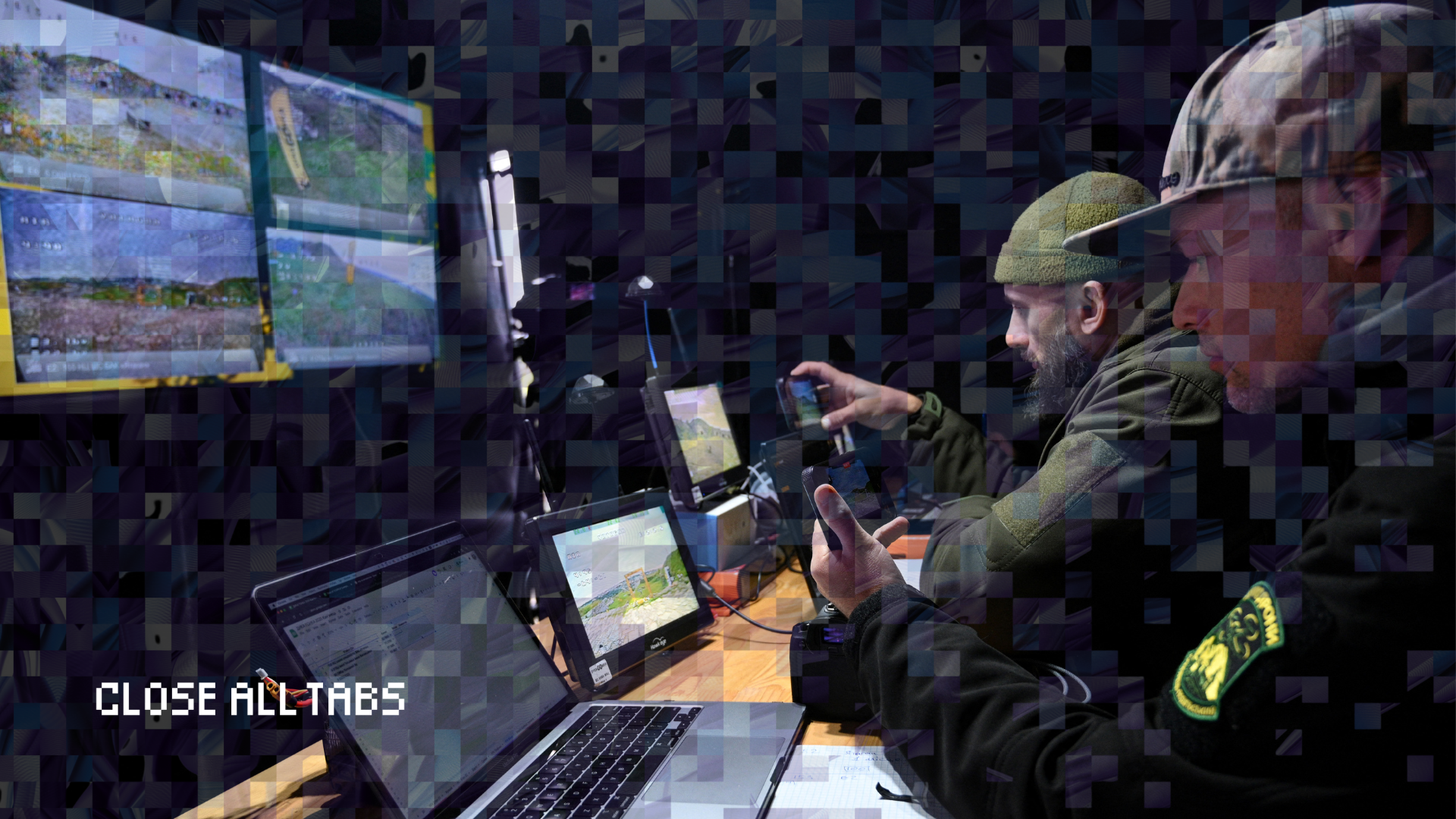
‘We Have To, and Are Proud To’: Silicon Valley Embraces the U.S. Military
Palestinian Activists Urge Oakland to Stop Military Shipments to Israel
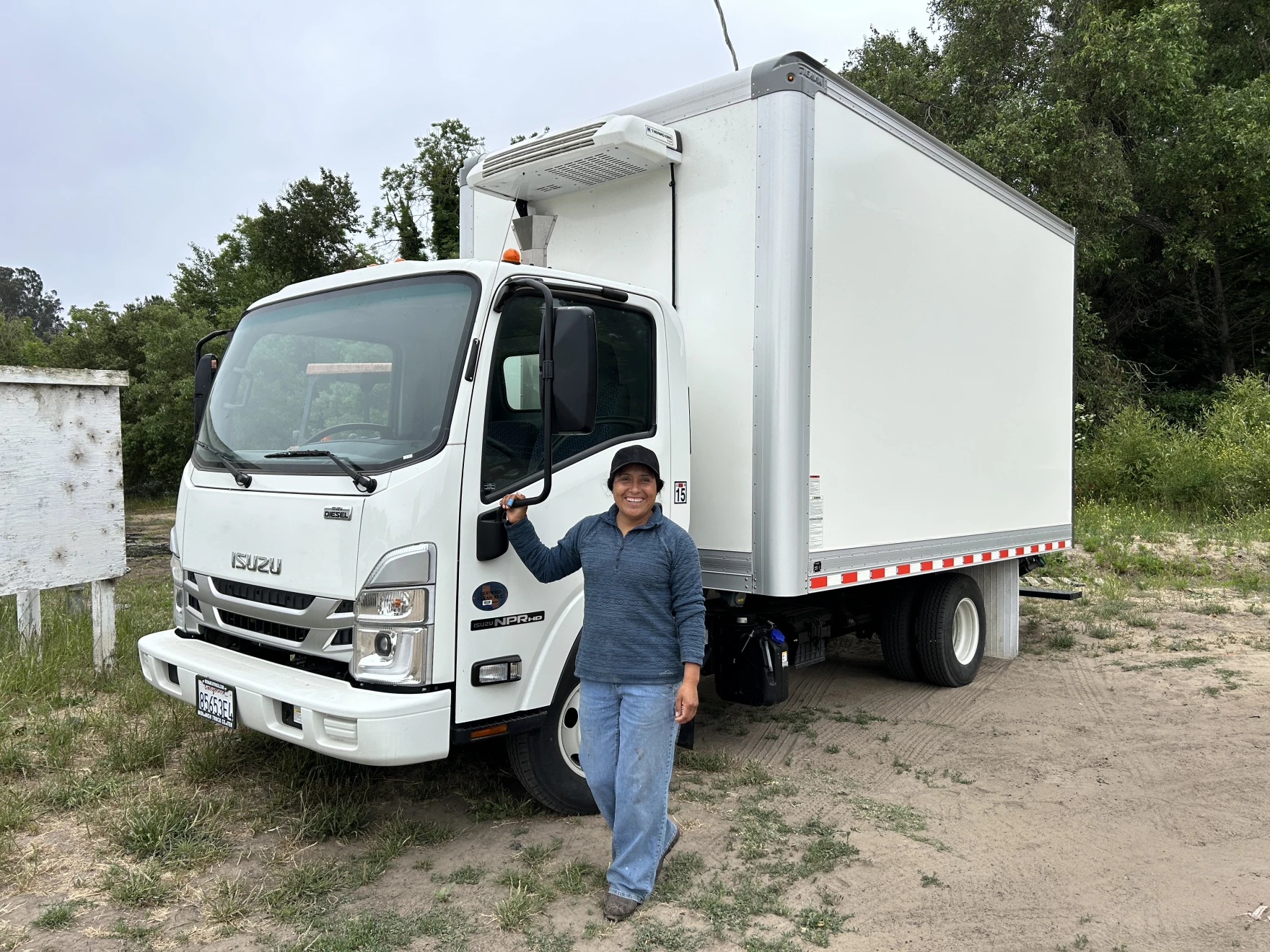
Sustainable Farming Practices Could Be Impacted By Federal Funding Cuts
The Presidio Pet Cemetery: A Resting Place for Furry Friends
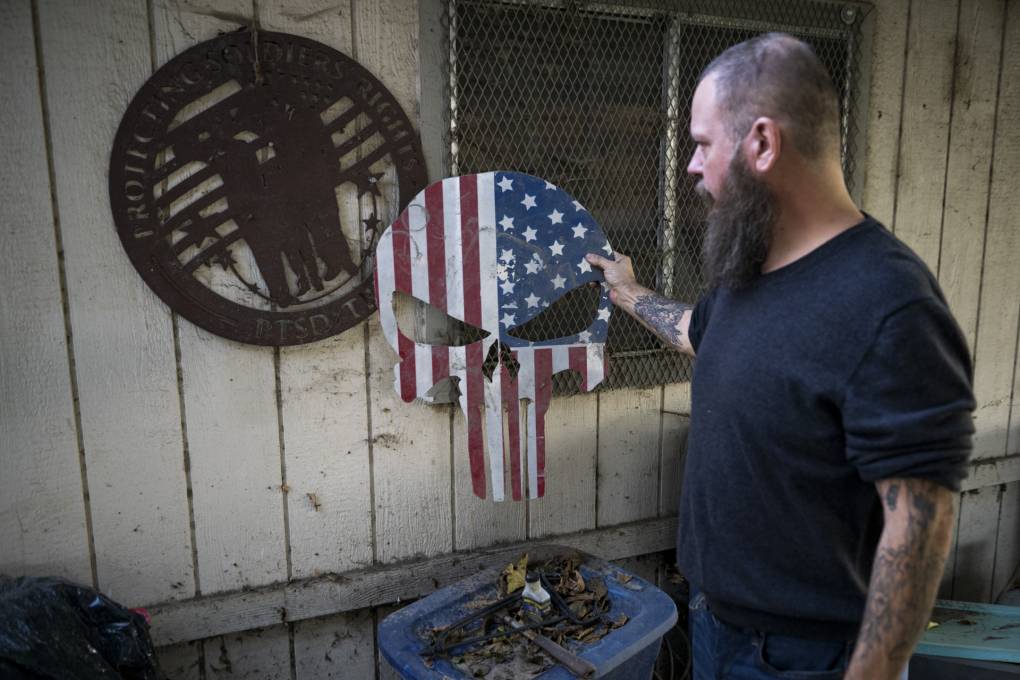
Murder, the Military and Radicalization: How Much Is Tied to a Lack of Support for Veterans?
Marin Was Once Armed With Nuclear Missiles. Thankfully, They Were Never Launched
Pentagon Releases New Policies Enabling Transgender People to Serve in the Military
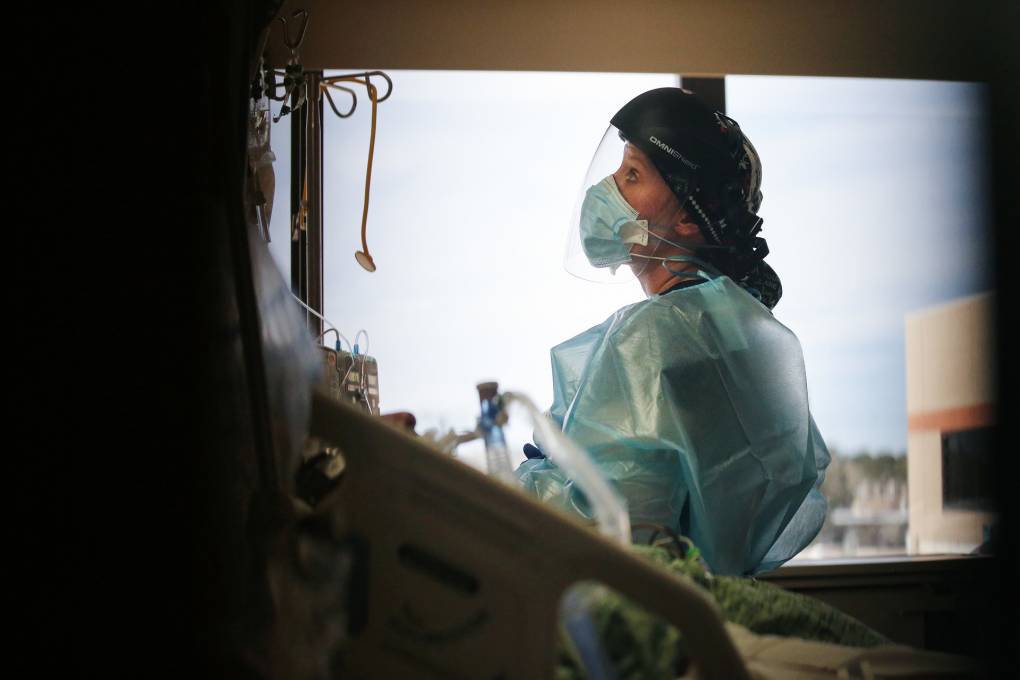
Hard-Hit California Hospitals Receive Military Support
Sponsored
Player sponsored by
window.__IS_SSR__=true
window.__INITIAL_STATE__={
"attachmentsReducer": {
"audio_0": {
"type": "attachments",
"id": "audio_0",
"imgSizes": {
"kqedFullSize": {
"file": "https://ww2.kqed.org/news/wp-content/themes/KQED-unified/img/audio_bgs/background0.jpg"
}
}
},
"audio_1": {
"type": "attachments",
"id": "audio_1",
"imgSizes": {
"kqedFullSize": {
"file": "https://ww2.kqed.org/news/wp-content/themes/KQED-unified/img/audio_bgs/background1.jpg"
}
}
},
"audio_2": {
"type": "attachments",
"id": "audio_2",
"imgSizes": {
"kqedFullSize": {
"file": "https://ww2.kqed.org/news/wp-content/themes/KQED-unified/img/audio_bgs/background2.jpg"
}
}
},
"audio_3": {
"type": "attachments",
"id": "audio_3",
"imgSizes": {
"kqedFullSize": {
"file": "https://ww2.kqed.org/news/wp-content/themes/KQED-unified/img/audio_bgs/background3.jpg"
}
}
},
"audio_4": {
"type": "attachments",
"id": "audio_4",
"imgSizes": {
"kqedFullSize": {
"file": "https://ww2.kqed.org/news/wp-content/themes/KQED-unified/img/audio_bgs/background4.jpg"
}
}
},
"placeholder": {
"type": "attachments",
"id": "placeholder",
"imgSizes": {
"thumbnail": {
"file": "https://cdn.kqed.org/wp-content/uploads/2024/12/KQED-Default-Image-816638274-2000x1333-1-160x107.jpg",
"width": 160,
"height": 107,
"mimeType": "image/jpeg"
},
"medium": {
"file": "https://cdn.kqed.org/wp-content/uploads/2024/12/KQED-Default-Image-816638274-2000x1333-1-800x533.jpg",
"width": 800,
"height": 533,
"mimeType": "image/jpeg"
},
"medium_large": {
"file": "https://cdn.kqed.org/wp-content/uploads/2024/12/KQED-Default-Image-816638274-2000x1333-1-768x512.jpg",
"width": 768,
"height": 512,
"mimeType": "image/jpeg"
},
"large": {
"file": "https://cdn.kqed.org/wp-content/uploads/2024/12/KQED-Default-Image-816638274-2000x1333-1-1020x680.jpg",
"width": 1020,
"height": 680,
"mimeType": "image/jpeg"
},
"1536x1536": {
"file": "https://cdn.kqed.org/wp-content/uploads/2024/12/KQED-Default-Image-816638274-2000x1333-1-1536x1024.jpg",
"width": 1536,
"height": 1024,
"mimeType": "image/jpeg"
},
"fd-lrg": {
"file": "https://cdn.kqed.org/wp-content/uploads/2024/12/KQED-Default-Image-816638274-2000x1333-1-1536x1024.jpg",
"width": 1536,
"height": 1024,
"mimeType": "image/jpeg"
},
"fd-med": {
"file": "https://cdn.kqed.org/wp-content/uploads/2024/12/KQED-Default-Image-816638274-2000x1333-1-1020x680.jpg",
"width": 1020,
"height": 680,
"mimeType": "image/jpeg"
},
"fd-sm": {
"file": "https://cdn.kqed.org/wp-content/uploads/2024/12/KQED-Default-Image-816638274-2000x1333-1-800x533.jpg",
"width": 800,
"height": 533,
"mimeType": "image/jpeg"
},
"post-thumbnail": {
"file": "https://cdn.kqed.org/wp-content/uploads/2024/12/KQED-Default-Image-816638274-2000x1333-1-672x372.jpg",
"width": 672,
"height": 372,
"mimeType": "image/jpeg"
},
"twentyfourteen-full-width": {
"file": "https://cdn.kqed.org/wp-content/uploads/2024/12/KQED-Default-Image-816638274-2000x1333-1-1038x576.jpg",
"width": 1038,
"height": 576,
"mimeType": "image/jpeg"
},
"xxsmall": {
"file": "https://cdn.kqed.org/wp-content/uploads/2024/12/KQED-Default-Image-816638274-2000x1333-1-160x107.jpg",
"width": 160,
"height": 107,
"mimeType": "image/jpeg"
},
"xsmall": {
"file": "https://cdn.kqed.org/wp-content/uploads/2024/12/KQED-Default-Image-816638274-2000x1333-1-672x372.jpg",
"width": 672,
"height": 372,
"mimeType": "image/jpeg"
},
"small": {
"file": "https://cdn.kqed.org/wp-content/uploads/2024/12/KQED-Default-Image-816638274-2000x1333-1-672x372.jpg",
"width": 672,
"height": 372,
"mimeType": "image/jpeg"
},
"xlarge": {
"file": "https://cdn.kqed.org/wp-content/uploads/2024/12/KQED-Default-Image-816638274-2000x1333-1-1020x680.jpg",
"width": 1020,
"height": 680,
"mimeType": "image/jpeg"
},
"full-width": {
"file": "https://cdn.kqed.org/wp-content/uploads/2024/12/KQED-Default-Image-816638274-2000x1333-1-1920x1280.jpg",
"width": 1920,
"height": 1280,
"mimeType": "image/jpeg"
},
"guest-author-32": {
"file": "https://cdn.kqed.org/wp-content/uploads/2025/01/KQED-Default-Image-816638274-1333x1333-1-160x160.jpg",
"width": 32,
"height": 32,
"mimeType": "image/jpeg"
},
"guest-author-50": {
"file": "https://cdn.kqed.org/wp-content/uploads/2025/01/KQED-Default-Image-816638274-1333x1333-1-160x160.jpg",
"width": 50,
"height": 50,
"mimeType": "image/jpeg"
},
"guest-author-64": {
"file": "https://cdn.kqed.org/wp-content/uploads/2025/01/KQED-Default-Image-816638274-1333x1333-1-160x160.jpg",
"width": 64,
"height": 64,
"mimeType": "image/jpeg"
},
"guest-author-96": {
"file": "https://cdn.kqed.org/wp-content/uploads/2025/01/KQED-Default-Image-816638274-1333x1333-1-160x160.jpg",
"width": 96,
"height": 96,
"mimeType": "image/jpeg"
},
"guest-author-128": {
"file": "https://cdn.kqed.org/wp-content/uploads/2025/01/KQED-Default-Image-816638274-1333x1333-1-160x160.jpg",
"width": 128,
"height": 128,
"mimeType": "image/jpeg"
},
"detail": {
"file": "https://cdn.kqed.org/wp-content/uploads/2025/01/KQED-Default-Image-816638274-1333x1333-1-160x160.jpg",
"width": 160,
"height": 160,
"mimeType": "image/jpeg"
},
"kqedFullSize": {
"file": "https://cdn.kqed.org/wp-content/uploads/2024/12/KQED-Default-Image-816638274-2000x1333-1.jpg",
"width": 2000,
"height": 1333
}
}
},
"news_12064677": {
"type": "attachments",
"id": "news_12064677",
"meta": {
"index": "attachments_1716263798",
"site": "news",
"id": "12064677",
"found": true
},
"title": "CAT Geeks of War_img",
"publishDate": 1763524148,
"status": "inherit",
"parent": 12064670,
"modified": 1763524292,
"caption": "A drone-racing event simulating combat conditions in Kamianets-Podilskyi, Ukraine, on Oct. 5, 2025. Drone technology has become increasingly central to the conflict. ",
"credit": "Photo by YURIY DYACHYSHYN/AFP via Getty Images",
"altTag": "Two Ukrainian service members sit inside a dimly lit mobile command center, monitoring several screens showing drone footage. Laptops, monitors, and handheld devices cover the desk in front of them. A pixelated overlay obscures parts of the image, and the ‘Close All Tabs’ logo appears in the lower left corner.",
"description": null,
"imgSizes": {
"thumbnail": {
"file": "https://cdn.kqed.org/wp-content/uploads/sites/10/2025/11/CAT-Geeks-of-War_img-160x90.png",
"width": 160,
"height": 90,
"mimeType": "image/png"
},
"1536x1536": {
"file": "https://cdn.kqed.org/wp-content/uploads/sites/10/2025/11/CAT-Geeks-of-War_img-1536x864.png",
"width": 1536,
"height": 864,
"mimeType": "image/png"
},
"post-thumbnail": {
"file": "https://cdn.kqed.org/wp-content/uploads/sites/10/2025/11/CAT-Geeks-of-War_img-672x372.png",
"width": 672,
"height": 372,
"mimeType": "image/png"
},
"twentyfourteen-full-width": {
"file": "https://cdn.kqed.org/wp-content/uploads/sites/10/2025/11/CAT-Geeks-of-War_img-1038x576.png",
"width": 1038,
"height": 576,
"mimeType": "image/png"
},
"npr-cds-wide": {
"file": "https://cdn.kqed.org/wp-content/uploads/sites/10/2025/11/CAT-Geeks-of-War_img-1200x675.png",
"width": 1200,
"height": 675,
"mimeType": "image/png"
},
"kqedFullSize": {
"file": "https://cdn.kqed.org/wp-content/uploads/sites/10/2025/11/CAT-Geeks-of-War_img.png",
"width": 1920,
"height": 1080
}
},
"fetchFailed": false,
"isLoading": false
},
"news_12054444": {
"type": "attachments",
"id": "news_12054444",
"meta": {
"index": "attachments_1716263798",
"site": "news",
"id": "12054444",
"found": true
},
"title": "President Trump Delivers Remarks, Announces Infrastructure Plan At White House",
"publishDate": 1756916263,
"status": "inherit",
"parent": 12054417,
"modified": 1756916263,
"caption": "WASHINGTON, DC - JANUARY 21: OpenAI CEO Sam Altman, accompanied by U.S. President Donald Trump, Oracle co-founder, CTO and Executive Chairman Larry Ellison (R), and SoftBank CEO Masayoshi Son (2nd-R), speaks during a news conference in the Roosevelt Room of the White House on January 21, 2025 in Washington, DC. Trump announced an investment in artificial intelligence (AI) infrastructure and took questions on a range of topics including his presidential pardons of Jan. 6 defendants, the war in Ukraine, cryptocurrencies and other topics. (Photo by Andrew Harnik/Getty Images)",
"credit": null,
"altTag": null,
"description": null,
"imgSizes": {
"thumbnail": {
"file": "https://cdn.kqed.org/wp-content/uploads/sites/10/2025/09/GettyImages-2194584857-160x107.jpg",
"width": 160,
"height": 107,
"mimeType": "image/jpeg"
},
"post-thumbnail": {
"file": "https://cdn.kqed.org/wp-content/uploads/sites/10/2025/09/GettyImages-2194584857-672x372.jpg",
"width": 672,
"height": 372,
"mimeType": "image/jpeg"
},
"twentyfourteen-full-width": {
"file": "https://cdn.kqed.org/wp-content/uploads/sites/10/2025/09/GettyImages-2194584857-1024x576.jpg",
"width": 1024,
"height": 576,
"mimeType": "image/jpeg"
},
"kqedFullSize": {
"file": "https://cdn.kqed.org/wp-content/uploads/sites/10/2025/09/GettyImages-2194584857.jpg",
"width": 1024,
"height": 683
}
},
"fetchFailed": false,
"isLoading": false
},
"news_12053653": {
"type": "attachments",
"id": "news_12053653",
"meta": {
"index": "attachments_1716263798",
"site": "news",
"id": "12053653",
"found": true
},
"title": "The entrance to the Oakland International Airport in Oakland on April 12, 2024.",
"publishDate": 1756159972,
"status": "inherit",
"parent": 12053637,
"modified": 1756159981,
"caption": "The entrance to the Oakland International Airport in Oakland on April 12, 2024.",
"credit": "Beth LaBerge/KQED",
"altTag": null,
"description": null,
"imgSizes": {
"thumbnail": {
"file": "https://cdn.kqed.org/wp-content/uploads/sites/10/2025/08/240412-OAKAirport-004-BL_qed-160x107.jpg",
"width": 160,
"height": 107,
"mimeType": "image/jpeg"
},
"1536x1536": {
"file": "https://cdn.kqed.org/wp-content/uploads/sites/10/2025/08/240412-OAKAirport-004-BL_qed-1536x1024.jpg",
"width": 1536,
"height": 1024,
"mimeType": "image/jpeg"
},
"post-thumbnail": {
"file": "https://cdn.kqed.org/wp-content/uploads/sites/10/2025/08/240412-OAKAirport-004-BL_qed-672x372.jpg",
"width": 672,
"height": 372,
"mimeType": "image/jpeg"
},
"twentyfourteen-full-width": {
"file": "https://cdn.kqed.org/wp-content/uploads/sites/10/2025/08/240412-OAKAirport-004-BL_qed-1038x576.jpg",
"width": 1038,
"height": 576,
"mimeType": "image/jpeg"
},
"kqedFullSize": {
"file": "https://cdn.kqed.org/wp-content/uploads/sites/10/2025/08/240412-OAKAirport-004-BL_qed.jpg",
"width": 2000,
"height": 1333
}
},
"fetchFailed": false,
"isLoading": false
},
"news_12044616": {
"type": "attachments",
"id": "news_12044616",
"meta": {
"index": "attachments_1716263798",
"site": "news",
"id": "12044616",
"found": true
},
"title": "sustainable-farming-68517226ea677",
"publishDate": 1750168129,
"status": "inherit",
"parent": 12044615,
"modified": 1750168160,
"caption": "Celsa Ortega stands beside her new truck, which she uses to deliver produce from her farm and other small farms.",
"credit": "Elena Neale-Sacks/KAZU News",
"altTag": null,
"description": null,
"imgSizes": {
"thumbnail": {
"file": "https://cdn.kqed.org/wp-content/uploads/sites/10/2025/06/sustainable-farming-68517226ea677-160x120.jpg",
"width": 160,
"height": 120,
"mimeType": "image/jpeg"
},
"1536x1536": {
"file": "https://cdn.kqed.org/wp-content/uploads/sites/10/2025/06/sustainable-farming-68517226ea677-1536x1152.jpg",
"width": 1536,
"height": 1152,
"mimeType": "image/jpeg"
},
"post-thumbnail": {
"file": "https://cdn.kqed.org/wp-content/uploads/sites/10/2025/06/sustainable-farming-68517226ea677-672x372.jpg",
"width": 672,
"height": 372,
"mimeType": "image/jpeg"
},
"twentyfourteen-full-width": {
"file": "https://cdn.kqed.org/wp-content/uploads/sites/10/2025/06/sustainable-farming-68517226ea677-1038x576.jpg",
"width": 1038,
"height": 576,
"mimeType": "image/jpeg"
},
"kqedFullSize": {
"file": "https://cdn.kqed.org/wp-content/uploads/sites/10/2025/06/sustainable-farming-68517226ea677.jpg",
"width": 1760,
"height": 1320
}
},
"fetchFailed": false,
"isLoading": false
},
"news_12009678": {
"type": "attachments",
"id": "news_12009678",
"meta": {
"index": "attachments_1716263798",
"site": "news",
"id": "12009678",
"found": true
},
"title": "241016-PRESIDIO PET CEMETERY-MD-05-KQED",
"publishDate": 1729111722,
"status": "inherit",
"parent": 12060830,
"modified": 1761074332,
"caption": "Tombstones at the Presidio of San Francisco Pet Cemetery in San Francisco on Oct. 16, 2024.",
"credit": "Martin do Nascimento/KQED",
"altTag": "Tombstones in a cemetery.",
"description": null,
"imgSizes": {
"medium": {
"file": "https://cdn.kqed.org/wp-content/uploads/sites/10/2024/10/241016-PRESIDIO-PET-CEMETERY-MD-05-KQED-800x533.jpg",
"width": 800,
"height": 533,
"mimeType": "image/jpeg"
},
"large": {
"file": "https://cdn.kqed.org/wp-content/uploads/sites/10/2024/10/241016-PRESIDIO-PET-CEMETERY-MD-05-KQED-1020x680.jpg",
"width": 1020,
"height": 680,
"mimeType": "image/jpeg"
},
"thumbnail": {
"file": "https://cdn.kqed.org/wp-content/uploads/sites/10/2024/10/241016-PRESIDIO-PET-CEMETERY-MD-05-KQED-160x107.jpg",
"width": 160,
"height": 107,
"mimeType": "image/jpeg"
},
"1536x1536": {
"file": "https://cdn.kqed.org/wp-content/uploads/sites/10/2024/10/241016-PRESIDIO-PET-CEMETERY-MD-05-KQED-1536x1024.jpg",
"width": 1536,
"height": 1024,
"mimeType": "image/jpeg"
},
"post-thumbnail": {
"file": "https://cdn.kqed.org/wp-content/uploads/sites/10/2024/10/241016-PRESIDIO-PET-CEMETERY-MD-05-KQED-672x372.jpg",
"width": 672,
"height": 372,
"mimeType": "image/jpeg"
},
"twentyfourteen-full-width": {
"file": "https://cdn.kqed.org/wp-content/uploads/sites/10/2024/10/241016-PRESIDIO-PET-CEMETERY-MD-05-KQED-1038x576.jpg",
"width": 1038,
"height": 576,
"mimeType": "image/jpeg"
},
"full-width": {
"file": "https://cdn.kqed.org/wp-content/uploads/sites/10/2024/10/241016-PRESIDIO-PET-CEMETERY-MD-05-KQED-1920x1280.jpg",
"width": 1920,
"height": 1280,
"mimeType": "image/jpeg"
},
"kqedFullSize": {
"file": "https://cdn.kqed.org/wp-content/uploads/sites/10/2024/10/241016-PRESIDIO-PET-CEMETERY-MD-05-KQED.jpg",
"width": 2000,
"height": 1333
}
},
"fetchFailed": false,
"isLoading": false
},
"news_11952255": {
"type": "attachments",
"id": "news_11952255",
"meta": {
"index": "attachments_1716263798",
"site": "news",
"id": "11952255",
"found": true
},
"parent": 0,
"imgSizes": {
"twentyfourteen-full-width": {
"file": "https://ww2.kqed.org/app/uploads/sites/10/2023/06/RS60389_014_KQED_JackGriffithTurlock_11142022-KQED-1038x576.jpg",
"width": 1038,
"mimeType": "image/jpeg",
"height": 576
},
"thumbnail": {
"file": "https://ww2.kqed.org/app/uploads/sites/10/2023/06/RS60389_014_KQED_JackGriffithTurlock_11142022-KQED-160x107.jpg",
"width": 160,
"mimeType": "image/jpeg",
"height": 107
},
"post-thumbnail": {
"file": "https://ww2.kqed.org/app/uploads/sites/10/2023/06/RS60389_014_KQED_JackGriffithTurlock_11142022-KQED-672x372.jpg",
"width": 672,
"mimeType": "image/jpeg",
"height": 372
},
"kqedFullSize": {
"file": "https://ww2.kqed.org/app/uploads/sites/10/2023/06/RS60389_014_KQED_JackGriffithTurlock_11142022-KQED.jpg",
"width": 1920,
"height": 1280
},
"large": {
"file": "https://ww2.kqed.org/app/uploads/sites/10/2023/06/RS60389_014_KQED_JackGriffithTurlock_11142022-KQED-1020x680.jpg",
"width": 1020,
"mimeType": "image/jpeg",
"height": 680
},
"1536x1536": {
"file": "https://ww2.kqed.org/app/uploads/sites/10/2023/06/RS60389_014_KQED_JackGriffithTurlock_11142022-KQED-1536x1024.jpg",
"width": 1536,
"mimeType": "image/jpeg",
"height": 1024
},
"medium": {
"file": "https://ww2.kqed.org/app/uploads/sites/10/2023/06/RS60389_014_KQED_JackGriffithTurlock_11142022-KQED-800x533.jpg",
"width": 800,
"mimeType": "image/jpeg",
"height": 533
}
},
"publishDate": 1686003040,
"modified": 1686073702,
"caption": "Veterans' advocate Jack Griffith holds a gift from a fellow veteran in the backyard of his home in Turlock, on Nov. 14, 2022, where he invites fellow veterans to talk and provides resources. Many veterans feel left behind by the VA, and more are committing crimes motivated by ideology, studies show.",
"description": null,
"title": "RS60389_014_KQED_JackGriffithTurlock_11142022-KQED",
"credit": "Beth LaBerge/KQED",
"status": "inherit",
"altTag": "A man with a long beard and shaved head holds a skull-shaped carving painted in the style of the American flag outdoors.",
"fetchFailed": false,
"isLoading": false
},
"news_11753253": {
"type": "attachments",
"id": "news_11753253",
"meta": {
"index": "attachments_1716263798",
"site": "news",
"id": "11753253",
"found": true
},
"parent": 11753198,
"imgSizes": {
"apple_news_ca_landscape_5_5": {
"file": "https://ww2.kqed.org/app/uploads/sites/10/2019/06/IMG_2008-1044x783.jpeg",
"width": 1044,
"mimeType": "image/jpeg",
"height": 783
},
"apple_news_ca_square_4_0": {
"file": "https://ww2.kqed.org/app/uploads/sites/10/2019/06/IMG_2008-470x470.jpeg",
"width": 470,
"mimeType": "image/jpeg",
"height": 470
},
"twentyfourteen-full-width": {
"file": "https://ww2.kqed.org/app/uploads/sites/10/2019/06/IMG_2008-1038x576.jpeg",
"width": 1038,
"mimeType": "image/jpeg",
"height": 576
},
"thumbnail": {
"file": "https://ww2.kqed.org/app/uploads/sites/10/2019/06/IMG_2008-160x120.jpeg",
"width": 160,
"mimeType": "image/jpeg",
"height": 120
},
"post-thumbnail": {
"file": "https://ww2.kqed.org/app/uploads/sites/10/2019/06/IMG_2008-672x372.jpeg",
"width": 672,
"mimeType": "image/jpeg",
"height": 372
},
"kqedFullSize": {
"file": "https://ww2.kqed.org/app/uploads/sites/10/2019/06/IMG_2008.jpeg",
"width": 1950,
"height": 1463
},
"apple_news_ca_landscape_4_7": {
"file": "https://ww2.kqed.org/app/uploads/sites/10/2019/06/IMG_2008-632x474.jpeg",
"width": 632,
"mimeType": "image/jpeg",
"height": 474
},
"large": {
"file": "https://ww2.kqed.org/app/uploads/sites/10/2019/06/IMG_2008-1020x765.jpeg",
"width": 1020,
"mimeType": "image/jpeg",
"height": 765
},
"complete_open_graph": {
"file": "https://ww2.kqed.org/app/uploads/sites/10/2019/06/IMG_2008-1200x900.jpeg",
"width": 1200,
"mimeType": "image/jpeg",
"height": 900
},
"apple_news_ca_landscape_4_0": {
"file": "https://ww2.kqed.org/app/uploads/sites/10/2019/06/IMG_2008-536x402.jpeg",
"width": 536,
"mimeType": "image/jpeg",
"height": 402
},
"apple_news_ca_portrait_12_9": {
"file": "https://ww2.kqed.org/app/uploads/sites/10/2019/06/IMG_2008-1122x1463.jpeg",
"width": 1122,
"mimeType": "image/jpeg",
"height": 1463
},
"medium": {
"file": "https://ww2.kqed.org/app/uploads/sites/10/2019/06/IMG_2008-800x600.jpeg",
"width": 800,
"mimeType": "image/jpeg",
"height": 600
},
"apple_news_ca_portrait_4_0": {
"file": "https://ww2.kqed.org/app/uploads/sites/10/2019/06/IMG_2008-354x472.jpeg",
"width": 354,
"mimeType": "image/jpeg",
"height": 472
},
"apple_news_ca_portrait_9_7": {
"file": "https://ww2.kqed.org/app/uploads/sites/10/2019/06/IMG_2008-840x1120.jpeg",
"width": 840,
"mimeType": "image/jpeg",
"height": 1120
},
"apple_news_ca_landscape_12_9": {
"file": "https://ww2.kqed.org/app/uploads/sites/10/2019/06/IMG_2008-1832x1374.jpeg",
"width": 1832,
"mimeType": "image/jpeg",
"height": 1374
},
"apple_news_ca_square_9_7": {
"file": "https://ww2.kqed.org/app/uploads/sites/10/2019/06/IMG_2008-1104x1104.jpeg",
"width": 1104,
"mimeType": "image/jpeg",
"height": 1104
},
"apple_news_ca_portrait_4_7": {
"file": "https://ww2.kqed.org/app/uploads/sites/10/2019/06/IMG_2008-414x552.jpeg",
"width": 414,
"mimeType": "image/jpeg",
"height": 552
},
"apple_news_ca_square_12_9": {
"file": "https://ww2.kqed.org/app/uploads/sites/10/2019/06/IMG_2008-1472x1463.jpeg",
"width": 1472,
"mimeType": "image/jpeg",
"height": 1463
},
"apple_news_ca_portrait_5_5": {
"file": "https://ww2.kqed.org/app/uploads/sites/10/2019/06/IMG_2008-687x916.jpeg",
"width": 687,
"mimeType": "image/jpeg",
"height": 916
},
"full-width": {
"file": "https://ww2.kqed.org/app/uploads/sites/10/2019/06/IMG_2008-1920x1440.jpeg",
"width": 1920,
"mimeType": "image/jpeg",
"height": 1440
},
"apple_news_ca_square_4_7": {
"file": "https://ww2.kqed.org/app/uploads/sites/10/2019/06/IMG_2008-550x550.jpeg",
"width": 550,
"mimeType": "image/jpeg",
"height": 550
},
"apple_news_ca_landscape_9_7": {
"file": "https://ww2.kqed.org/app/uploads/sites/10/2019/06/IMG_2008-1376x1032.jpeg",
"width": 1376,
"mimeType": "image/jpeg",
"height": 1032
},
"apple_news_ca_square_5_5": {
"file": "https://ww2.kqed.org/app/uploads/sites/10/2019/06/IMG_2008-912x912.jpeg",
"width": 912,
"mimeType": "image/jpeg",
"height": 912
}
},
"publishDate": 1559945991,
"modified": 1559946192,
"caption": "A Nike Hercules missile at the Marin Headlands site rises from its underground bunker on a huge elevator, to be raised into launch position. The Nikes were decommissioned in 1974.",
"description": "A Nike Hercules missile at the Marin Headlands site rises from its underground bunker on a huge elevator, to be raised into launch position. The Nikes were decommissioned in 1974.",
"title": "IMG_2008",
"credit": "Craig Miller/KQED",
"status": "inherit",
"fetchFailed": false,
"isLoading": false
},
"news_11867361": {
"type": "attachments",
"id": "news_11867361",
"meta": {
"index": "attachments_1716263798",
"site": "news",
"id": "11867361",
"found": true
},
"parent": 11867360,
"imgSizes": {
"twentyfourteen-full-width": {
"file": "https://ww2.kqed.org/app/uploads/sites/10/2021/03/ap_21082715419048-398a7cebbae7f1a0e69943c41bcc62b623094845-1038x576.jpg",
"width": 1038,
"mimeType": "image/jpeg",
"height": 576
},
"thumbnail": {
"file": "https://ww2.kqed.org/app/uploads/sites/10/2021/03/ap_21082715419048-398a7cebbae7f1a0e69943c41bcc62b623094845-160x120.jpg",
"width": 160,
"mimeType": "image/jpeg",
"height": 120
},
"post-thumbnail": {
"file": "https://ww2.kqed.org/app/uploads/sites/10/2021/03/ap_21082715419048-398a7cebbae7f1a0e69943c41bcc62b623094845-672x372.jpg",
"width": 672,
"mimeType": "image/jpeg",
"height": 372
},
"kqedFullSize": {
"file": "https://ww2.kqed.org/app/uploads/sites/10/2021/03/ap_21082715419048-398a7cebbae7f1a0e69943c41bcc62b623094845-scaled-e1617222470335.jpg",
"width": 1920,
"height": 1440
},
"2048x2048": {
"file": "https://ww2.kqed.org/app/uploads/sites/10/2021/03/ap_21082715419048-398a7cebbae7f1a0e69943c41bcc62b623094845-2048x1536.jpg",
"width": 2048,
"mimeType": "image/jpeg",
"height": 1536
},
"large": {
"file": "https://ww2.kqed.org/app/uploads/sites/10/2021/03/ap_21082715419048-398a7cebbae7f1a0e69943c41bcc62b623094845-1020x765.jpg",
"width": 1020,
"mimeType": "image/jpeg",
"height": 765
},
"1536x1536": {
"file": "https://ww2.kqed.org/app/uploads/sites/10/2021/03/ap_21082715419048-398a7cebbae7f1a0e69943c41bcc62b623094845-1536x1152.jpg",
"width": 1536,
"mimeType": "image/jpeg",
"height": 1152
},
"full-width": {
"file": "https://ww2.kqed.org/app/uploads/sites/10/2021/03/ap_21082715419048-398a7cebbae7f1a0e69943c41bcc62b623094845-1920x1440.jpg",
"width": 1920,
"mimeType": "image/jpeg",
"height": 1440
},
"medium": {
"file": "https://ww2.kqed.org/app/uploads/sites/10/2021/03/ap_21082715419048-398a7cebbae7f1a0e69943c41bcc62b623094845-800x600.jpg",
"width": 800,
"mimeType": "image/jpeg",
"height": 600
}
},
"publishDate": 1617222382,
"modified": 1617222510,
"caption": "Pentagon spokesman John Kirby speaks during a media briefing at the Pentagon last week.",
"description": "Pentagon spokesman John Kirby speaks during a media briefing at the Pentagon last week.\n",
"title": "Pentagon spokesman John Kirby speaks during a media briefing at the Pentagon last week.",
"credit": "Andrew Harnik/AP",
"status": "inherit",
"altTag": null,
"fetchFailed": false,
"isLoading": false
},
"news_11853268": {
"type": "attachments",
"id": "news_11853268",
"meta": {
"index": "attachments_1716263798",
"site": "news",
"id": "11853268",
"found": true
},
"parent": 11853248,
"imgSizes": {
"apple_news_ca_landscape_5_5": {
"file": "https://ww2.kqed.org/app/uploads/sites/10/2020/12/RS46498_GettyImages-1292815576-qut-1044x783.jpg",
"width": 1044,
"mimeType": "image/jpeg",
"height": 783
},
"apple_news_ca_square_4_0": {
"file": "https://ww2.kqed.org/app/uploads/sites/10/2020/12/RS46498_GettyImages-1292815576-qut-470x470.jpg",
"width": 470,
"mimeType": "image/jpeg",
"height": 470
},
"twentyfourteen-full-width": {
"file": "https://ww2.kqed.org/app/uploads/sites/10/2020/12/RS46498_GettyImages-1292815576-qut-1038x576.jpg",
"width": 1038,
"mimeType": "image/jpeg",
"height": 576
},
"thumbnail": {
"file": "https://ww2.kqed.org/app/uploads/sites/10/2020/12/RS46498_GettyImages-1292815576-qut-160x107.jpg",
"width": 160,
"mimeType": "image/jpeg",
"height": 107
},
"post-thumbnail": {
"file": "https://ww2.kqed.org/app/uploads/sites/10/2020/12/RS46498_GettyImages-1292815576-qut-672x372.jpg",
"width": 672,
"mimeType": "image/jpeg",
"height": 372
},
"kqedFullSize": {
"file": "https://ww2.kqed.org/app/uploads/sites/10/2020/12/RS46498_GettyImages-1292815576-qut.jpg",
"width": 1920,
"height": 1280
},
"apple_news_ca_landscape_4_7": {
"file": "https://ww2.kqed.org/app/uploads/sites/10/2020/12/RS46498_GettyImages-1292815576-qut-632x474.jpg",
"width": 632,
"mimeType": "image/jpeg",
"height": 474
},
"large": {
"file": "https://ww2.kqed.org/app/uploads/sites/10/2020/12/RS46498_GettyImages-1292815576-qut-1020x680.jpg",
"width": 1020,
"mimeType": "image/jpeg",
"height": 680
},
"apple_news_ca_landscape_4_0": {
"file": "https://ww2.kqed.org/app/uploads/sites/10/2020/12/RS46498_GettyImages-1292815576-qut-536x402.jpg",
"width": 536,
"mimeType": "image/jpeg",
"height": 402
},
"apple_news_ca_portrait_12_9": {
"file": "https://ww2.kqed.org/app/uploads/sites/10/2020/12/RS46498_GettyImages-1292815576-qut-1122x1280.jpg",
"width": 1122,
"mimeType": "image/jpeg",
"height": 1280
},
"medium": {
"file": "https://ww2.kqed.org/app/uploads/sites/10/2020/12/RS46498_GettyImages-1292815576-qut-800x533.jpg",
"width": 800,
"mimeType": "image/jpeg",
"height": 533
},
"apple_news_ca_portrait_4_0": {
"file": "https://ww2.kqed.org/app/uploads/sites/10/2020/12/RS46498_GettyImages-1292815576-qut-354x472.jpg",
"width": 354,
"mimeType": "image/jpeg",
"height": 472
},
"apple_news_ca_portrait_9_7": {
"file": "https://ww2.kqed.org/app/uploads/sites/10/2020/12/RS46498_GettyImages-1292815576-qut-840x1120.jpg",
"width": 840,
"mimeType": "image/jpeg",
"height": 1120
},
"apple_news_ca_landscape_12_9": {
"file": "https://ww2.kqed.org/app/uploads/sites/10/2020/12/RS46498_GettyImages-1292815576-qut-1832x1280.jpg",
"width": 1832,
"mimeType": "image/jpeg",
"height": 1280
},
"apple_news_ca_square_9_7": {
"file": "https://ww2.kqed.org/app/uploads/sites/10/2020/12/RS46498_GettyImages-1292815576-qut-1104x1104.jpg",
"width": 1104,
"mimeType": "image/jpeg",
"height": 1104
},
"1536x1536": {
"file": "https://ww2.kqed.org/app/uploads/sites/10/2020/12/RS46498_GettyImages-1292815576-qut-1536x1024.jpg",
"width": 1536,
"mimeType": "image/jpeg",
"height": 1024
},
"apple_news_ca_portrait_4_7": {
"file": "https://ww2.kqed.org/app/uploads/sites/10/2020/12/RS46498_GettyImages-1292815576-qut-414x552.jpg",
"width": 414,
"mimeType": "image/jpeg",
"height": 552
},
"apple_news_ca_square_12_9": {
"file": "https://ww2.kqed.org/app/uploads/sites/10/2020/12/RS46498_GettyImages-1292815576-qut-1472x1280.jpg",
"width": 1472,
"mimeType": "image/jpeg",
"height": 1280
},
"apple_news_ca_portrait_5_5": {
"file": "https://ww2.kqed.org/app/uploads/sites/10/2020/12/RS46498_GettyImages-1292815576-qut-687x916.jpg",
"width": 687,
"mimeType": "image/jpeg",
"height": 916
},
"apple_news_ca_square_4_7": {
"file": "https://ww2.kqed.org/app/uploads/sites/10/2020/12/RS46498_GettyImages-1292815576-qut-550x550.jpg",
"width": 550,
"mimeType": "image/jpeg",
"height": 550
},
"apple_news_ca_landscape_9_7": {
"file": "https://ww2.kqed.org/app/uploads/sites/10/2020/12/RS46498_GettyImages-1292815576-qut-1376x1032.jpg",
"width": 1376,
"mimeType": "image/jpeg",
"height": 1032
},
"apple_news_ca_square_5_5": {
"file": "https://ww2.kqed.org/app/uploads/sites/10/2020/12/RS46498_GettyImages-1292815576-qut-912x912.jpg",
"width": 912,
"mimeType": "image/jpeg",
"height": 912
}
},
"publishDate": 1609363555,
"modified": 1609369398,
"caption": "A clinician cares for a COVID-19 patient in the intensive care unit at Providence St. Mary Medical Center amid a surge in COVID-19 patients in Southern California on Dec. 23, 2020 in Apple Valley, California. ",
"description": "A clinician cares for a COVID-19 patient in the Intensive Care Unit (ICU) at Providence St. Mary Medical Center amid a surge in COVID-19 patients in Southern California on December 23, 2020 in Apple Valley, California. ",
"title": "San Bernardino Area Hospital Continues To Deal With Increase In Covid Cases",
"credit": "Mario Tama/Getty Images",
"status": "inherit",
"altTag": "\"\"",
"fetchFailed": false,
"isLoading": false
}
},
"audioPlayerReducer": {
"postId": "stream_live",
"isPaused": true,
"isPlaying": false,
"pfsActive": false,
"pledgeModalIsOpen": true,
"playerDrawerIsOpen": false
},
"authorsReducer": {
"byline_news_12064670": {
"type": "authors",
"id": "byline_news_12064670",
"meta": {
"override": true
},
"slug": "byline_news_12064670",
"name": "Erica Hellerstein",
"isLoading": false
},
"byline_news_11867360": {
"type": "authors",
"id": "byline_news_11867360",
"meta": {
"override": true
},
"slug": "byline_news_11867360",
"name": "Laurel Wamsley",
"isLoading": false
},
"cmiller": {
"type": "authors",
"id": "221",
"meta": {
"index": "authors_1716337520",
"id": "221",
"found": true
},
"name": "Craig Miller",
"firstName": "Craig",
"lastName": "Miller",
"slug": "cmiller",
"email": "craig@voxterra.net",
"display_author_email": false,
"staff_mastheads": [
"science"
],
"title": "Editor Emeritus, Science",
"bio": "Craig is a former KQED Science editor, specializing in weather, climate, water & energy issues, with a little seismology thrown in just to shake things up. Prior to that, he launched and led the station's award-winning multimedia project, Climate Watch. Craig is also an accomplished writer/producer of television documentaries, with a focus on natural resource issues.",
"avatar": "https://secure.gravatar.com/avatar/b91661df645e001a9cafe0861fa685f9?s=600&d=blank&r=g",
"twitter": "voxterra",
"facebook": null,
"instagram": null,
"linkedin": null,
"sites": [
{
"site": "news",
"roles": [
"author"
]
},
{
"site": "futureofyou",
"roles": [
"editor"
]
},
{
"site": "stateofhealth",
"roles": [
"author"
]
},
{
"site": "science",
"roles": [
"editor"
]
},
{
"site": "quest",
"roles": [
"editor"
]
}
],
"headData": {
"title": "Craig Miller | KQED",
"description": "Editor Emeritus, Science",
"ogImgSrc": "https://secure.gravatar.com/avatar/b91661df645e001a9cafe0861fa685f9?s=600&d=blank&r=g",
"twImgSrc": "https://secure.gravatar.com/avatar/b91661df645e001a9cafe0861fa685f9?s=600&d=blank&r=g"
},
"isLoading": false,
"link": "/author/cmiller"
},
"ecruzguevarra": {
"type": "authors",
"id": "8654",
"meta": {
"index": "authors_1716337520",
"id": "8654",
"found": true
},
"name": "Ericka Cruz Guevarra",
"firstName": "Ericka",
"lastName": "Cruz Guevarra",
"slug": "ecruzguevarra",
"email": "ecruzguevarra@kqed.org",
"display_author_email": true,
"staff_mastheads": [
"news"
],
"title": "Producer, The Bay Podcast",
"bio": "Ericka Cruz Guevarra is host of \u003ca href=\"https://www.kqed.org/podcasts/thebay\">\u003cem>The Bay\u003c/em>\u003c/a> podcast at KQED. Before host, she was the show’s producer. Her work in that capacity includes a three-part reported series on policing in Vallejo, which won a 2020 excellence in journalism award from the Society of Professional Journalists. Ericka has worked as a breaking news reporter at Oregon Public Broadcasting, helped produce the Code Switch podcast, and was KQED’s inaugural Raul Ramirez Diversity Fund intern. She’s also an alumna of NPR’s Next Generation Radio program. Send her an email if you have strong feelings about whether Fairfield and Suisun City are the Bay. Ericka is represented by SAG-AFTRA.",
"avatar": "https://secure.gravatar.com/avatar/25e5ab8d3d53fad2dcc7bb2b5c506b1a?s=600&d=blank&r=g",
"twitter": "NotoriousECG",
"facebook": null,
"instagram": null,
"linkedin": null,
"sites": [
{
"site": "arts",
"roles": [
"subscriber"
]
},
{
"site": "news",
"roles": [
"editor",
"manage_categories"
]
},
{
"site": "futureofyou",
"roles": [
"subscriber"
]
},
{
"site": "stateofhealth",
"roles": [
"subscriber"
]
},
{
"site": "science",
"roles": [
"editor"
]
},
{
"site": "forum",
"roles": [
"subscriber"
]
}
],
"headData": {
"title": "Ericka Cruz Guevarra | KQED",
"description": "Producer, The Bay Podcast",
"ogImgSrc": "https://secure.gravatar.com/avatar/25e5ab8d3d53fad2dcc7bb2b5c506b1a?s=600&d=blank&r=g",
"twImgSrc": "https://secure.gravatar.com/avatar/25e5ab8d3d53fad2dcc7bb2b5c506b1a?s=600&d=blank&r=g"
},
"isLoading": false,
"link": "/author/ecruzguevarra"
},
"ahall": {
"type": "authors",
"id": "11490",
"meta": {
"index": "authors_1716337520",
"id": "11490",
"found": true
},
"name": "Alex Hall",
"firstName": "Alex",
"lastName": "Hall",
"slug": "ahall",
"email": "ahall@kqed.org",
"display_author_email": false,
"staff_mastheads": [
"news"
],
"title": "KQED Enterprise & Accountability Reporter",
"bio": "Alex Hall is KQED's Enterprise and Accountability Reporter. She previously covered the Central Valley for five years from KQED's bureau in Fresno. Before joining KQED, Alex was an investigative reporting fellow at Wisconsin Public Radio and the Wisconsin Center for Investigative Journalism. She has also worked as a bilingual producer for NPR's investigative unit and freelance video producer for Reuters TV on the Latin America desk. She got her start in journalism in South America, where she worked as a radio producer and Spanish-English translator for CNN Chile. Her documentary and investigation into the series of deadly COVID-19 outbreaks at Foster Farms won a national Edward R. Murrow award and was named an Investigative Reporters & Editors award finalist. Alex's reporting for Reveal on the Wisconsin dairy industry's reliance on undocumented immigrant labor was made into a film, Los Lecheros, which won a regional Edward R. Murrow award for best news documentary.",
"avatar": "https://secure.gravatar.com/avatar/defcbeb88b0bf591ff9af41f22644051?s=600&d=blank&r=g",
"twitter": "@chalexhall",
"facebook": null,
"instagram": null,
"linkedin": null,
"sites": [
{
"site": "news",
"roles": [
"editor"
]
},
{
"site": "liveblog",
"roles": [
"author"
]
}
],
"headData": {
"title": "Alex Hall | KQED",
"description": "KQED Enterprise & Accountability Reporter",
"ogImgSrc": "https://secure.gravatar.com/avatar/defcbeb88b0bf591ff9af41f22644051?s=600&d=blank&r=g",
"twImgSrc": "https://secure.gravatar.com/avatar/defcbeb88b0bf591ff9af41f22644051?s=600&d=blank&r=g"
},
"isLoading": false,
"link": "/author/ahall"
},
"amontecillo": {
"type": "authors",
"id": "11649",
"meta": {
"index": "authors_1716337520",
"id": "11649",
"found": true
},
"name": "Alan Montecillo",
"firstName": "Alan",
"lastName": "Montecillo",
"slug": "amontecillo",
"email": "amontecillo@kqed.org",
"display_author_email": false,
"staff_mastheads": [
"news"
],
"title": "KQED Contributor",
"bio": "Alan Montecillo is the senior editor of \u003cem>\u003ca href=\"http://kqed.org/thebay\">The Bay\u003c/a>, \u003c/em> KQED's local news podcast. Before moving to the Bay Area, he worked as a senior talk show producer for WILL in Champaign-Urbana, Illinois and at Oregon Public Broadcasting in Portland, Oregon. He has won journalism awards from the Society of Professional Journalists Northern California, the Public Media Journalists Association, The Signal Awards, and has also received a regional Edward R. Murrow award. Alan is a Filipino American from Hong Kong and a graduate of Reed College.",
"avatar": "https://secure.gravatar.com/avatar/d5e4e7a76481969ccba76f4e2b5ccabc?s=600&d=blank&r=g",
"twitter": "alanmontecillo",
"facebook": null,
"instagram": null,
"linkedin": null,
"sites": [
{
"site": "",
"roles": [
"editor"
]
},
{
"site": "news",
"roles": [
"editor",
"manage_categories"
]
}
],
"headData": {
"title": "Alan Montecillo | KQED",
"description": "KQED Contributor",
"ogImgSrc": "https://secure.gravatar.com/avatar/d5e4e7a76481969ccba76f4e2b5ccabc?s=600&d=blank&r=g",
"twImgSrc": "https://secure.gravatar.com/avatar/d5e4e7a76481969ccba76f4e2b5ccabc?s=600&d=blank&r=g"
},
"isLoading": false,
"link": "/author/amontecillo"
},
"kmizuguchi": {
"type": "authors",
"id": "11739",
"meta": {
"index": "authors_1716337520",
"id": "11739",
"found": true
},
"name": "Keith Mizuguchi",
"firstName": "Keith",
"lastName": "Mizuguchi",
"slug": "kmizuguchi",
"email": "kmizuguchi@kqed.org",
"display_author_email": false,
"staff_mastheads": [],
"title": "KQED Contributor",
"bio": null,
"avatar": "https://secure.gravatar.com/avatar/ce1182f9924192ae5ea66d39a75cd7d1?s=600&d=blank&r=g",
"twitter": null,
"facebook": null,
"instagram": null,
"linkedin": null,
"sites": [
{
"site": "news",
"roles": [
"editor"
]
},
{
"site": "science",
"roles": [
"editor"
]
}
],
"headData": {
"title": "Keith Mizuguchi | KQED",
"description": "KQED Contributor",
"ogImgSrc": "https://secure.gravatar.com/avatar/ce1182f9924192ae5ea66d39a75cd7d1?s=600&d=blank&r=g",
"twImgSrc": "https://secure.gravatar.com/avatar/ce1182f9924192ae5ea66d39a75cd7d1?s=600&d=blank&r=g"
},
"isLoading": false,
"link": "/author/kmizuguchi"
},
"jlara": {
"type": "authors",
"id": "11761",
"meta": {
"index": "authors_1716337520",
"id": "11761",
"found": true
},
"name": "Juan Carlos Lara",
"firstName": "Juan Carlos",
"lastName": "Lara",
"slug": "jlara",
"email": "jlara@kqed.org",
"display_author_email": false,
"staff_mastheads": [],
"title": "KQED Contributor",
"bio": null,
"avatar": "https://secure.gravatar.com/avatar/19e2052b9b05657c5ff2af2121846e9c?s=600&d=blank&r=g",
"twitter": null,
"facebook": null,
"instagram": null,
"linkedin": null,
"sites": [
{
"site": "arts",
"roles": [
"editor"
]
},
{
"site": "news",
"roles": [
"editor"
]
},
{
"site": "forum",
"roles": [
"editor"
]
},
{
"site": "liveblog",
"roles": [
"contributor"
]
}
],
"headData": {
"title": "Juan Carlos Lara | KQED",
"description": "KQED Contributor",
"ogImgSrc": "https://secure.gravatar.com/avatar/19e2052b9b05657c5ff2af2121846e9c?s=600&d=blank&r=g",
"twImgSrc": "https://secure.gravatar.com/avatar/19e2052b9b05657c5ff2af2121846e9c?s=600&d=blank&r=g"
},
"isLoading": false,
"link": "/author/jlara"
},
"jessicakariisa": {
"type": "authors",
"id": "11831",
"meta": {
"index": "authors_1716337520",
"id": "11831",
"found": true
},
"name": "Jessica Kariisa",
"firstName": "Jessica",
"lastName": "Kariisa",
"slug": "jessicakariisa",
"email": "jkariisa@kqed.org",
"display_author_email": false,
"staff_mastheads": [
"news"
],
"title": "Producer, The Bay",
"bio": "Jessica Kariisa is the producer of The Bay. She first joined KQED as an intern for The California Report Magazine, after which she became an on-call producer. She reported a Bay Curious episode on the use of rap lyrics in criminal trials which won a Society of Professional Journalists award in 2023 for Excellence in Features Journalism and the 2023 Signal Award for Best Conversation Starter. She’s worked on podcasts for Snap Judgment and American Public Media. Before embarking on her audio career, she was a music journalist.\r\n\r\nJessica Kariisa is represented by SAG-AFTRA.",
"avatar": "https://secure.gravatar.com/avatar/4afd355fd24f5515aeab77fd6c72b671?s=600&d=blank&r=g",
"twitter": null,
"facebook": null,
"instagram": null,
"linkedin": null,
"sites": [
{
"site": "arts",
"roles": [
"author"
]
},
{
"site": "news",
"roles": [
"editor",
"manage_categories"
]
}
],
"headData": {
"title": "Jessica Kariisa | KQED",
"description": "Producer, The Bay",
"ogImgSrc": "https://secure.gravatar.com/avatar/4afd355fd24f5515aeab77fd6c72b671?s=600&d=blank&r=g",
"twImgSrc": "https://secure.gravatar.com/avatar/4afd355fd24f5515aeab77fd6c72b671?s=600&d=blank&r=g"
},
"isLoading": false,
"link": "/author/jessicakariisa"
},
"aamaral": {
"type": "authors",
"id": "11947",
"meta": {
"index": "authors_1716337520",
"id": "11947",
"found": true
},
"name": "Ana De Almeida Amaral",
"firstName": "Ana",
"lastName": "De Almeida Amaral",
"slug": "aamaral",
"email": "aamaral@kqed.org",
"display_author_email": false,
"staff_mastheads": [],
"title": "KQED Contributor",
"bio": null,
"avatar": "https://secure.gravatar.com/avatar/672b76ff04db4395a9d984fc88202b4e?s=600&d=blank&r=g",
"twitter": null,
"facebook": null,
"instagram": null,
"linkedin": null,
"sites": [
{
"site": "arts",
"roles": [
"editor"
]
}
],
"headData": {
"title": "Ana De Almeida Amaral | KQED",
"description": "KQED Contributor",
"ogImgSrc": "https://secure.gravatar.com/avatar/672b76ff04db4395a9d984fc88202b4e?s=600&d=blank&r=g",
"twImgSrc": "https://secure.gravatar.com/avatar/672b76ff04db4395a9d984fc88202b4e?s=600&d=blank&r=g"
},
"isLoading": false,
"link": "/author/aamaral"
}
},
"breakingNewsReducer": {},
"pagesReducer": {},
"postsReducer": {
"stream_live": {
"type": "live",
"id": "stream_live",
"audioUrl": "https://streams.kqed.org/kqedradio",
"title": "Live Stream",
"excerpt": "Live Stream information currently unavailable.",
"link": "/radio",
"featImg": "",
"label": {
"name": "KQED Live",
"link": "/"
}
},
"stream_kqedNewscast": {
"type": "posts",
"id": "stream_kqedNewscast",
"audioUrl": "https://www.kqed.org/.stream/anon/radio/RDnews/newscast.mp3?_=1",
"title": "KQED Newscast",
"featImg": "",
"label": {
"name": "88.5 FM",
"link": "/"
}
},
"news_12064670": {
"type": "posts",
"id": "news_12064670",
"meta": {
"index": "posts_1716263798",
"site": "news",
"id": "12064670",
"score": null,
"sort": [
1763550028000
]
},
"guestAuthors": [],
"slug": "meet-ukraines-geeks-of-war",
"title": "Meet Ukraine’s ‘Geeks of War’",
"publishDate": 1763550028,
"format": "audio",
"headTitle": "Meet Ukraine’s ‘Geeks of War’ | KQED",
"labelTerm": {},
"content": "\u003cp>\u003ca href=\"#episode-transcript\">\u003ci>View the full episode transcript.\u003c/i>\u003c/a>\u003c/p>\n\u003cp>The Ukraine-Russia war has been called the most technologically advanced war in history. Ukrainian citizens receive notifications about incoming missile and drone attacks through apps on their phones; remote-controlled drones swarm the front lines; and volunteer cyberwarfare units target Russian digital infrastructure. It’s all part of what some have dubbed Ukraine’s “Geeks of War.”\u003c/p>\n\u003cp>In this episode, investigative reporter Erica Hellerstein takes us to the digital front line. On a recent trip to Ukraine, she met a husband-and-wife duo running a DIY nonprofit that supplies tech to defense forces, toured the recently-bombed headquarters of one of the country’s biggest tech companies, and explored how a swarm of online accounts with Shiba Inu avatars is countering Russian propaganda.\u003c/p>\n\u003cp>Throughout, she looks at how Ukraine’s culture of tech innovation — and its surprising ties to Silicon Valley — are fueling the country’s resistance through an army of engineers, coders, hackers, and tinkerers.\u003c/p>\n\u003cp>\u003c!-- iframe plugin v.4.3 wordpress.org/plugins/iframe/ -->\u003cbr>\n\u003ciframe loading=\"lazy\" frameborder=\"0\" height=\"200\" scrolling=\"no\" src=\"https://playlist.megaphone.fm?e=KQINC5459549472\" width=\"100%\" class=\"iframe-class\">\u003c/iframe>\u003c/p>\n\u003cp>\u003cstrong>Guest: \u003c/strong>\u003c/p>\n\u003cul>\n\u003cli>\u003ca href=\"https://www.ericahellerstein.com/\">\u003cspan style=\"font-weight: 400\">Erica Hellerstein\u003c/span>\u003c/a>\u003cspan style=\"font-weight: 400\">, investigative journalist and feature writer\u003c/span>\u003c/li>\n\u003c/ul>\n\u003cp>\u003cstrong>Further Reading/Listening:\u003c/strong>\u003c/p>\n\u003cul>\n\u003cli>\u003ca href=\"https://www.wnycstudios.org/podcasts/tnyradiohour/articles/dexter-filkins-on-drones-and-the-future-of-warfare?tab=transcript\">\u003cspan style=\"font-weight: 400\">Dexter Filkins on Drones and the Future of Warfare\u003c/span>\u003c/a>\u003cspan style=\"font-weight: 400\"> — Adam Howard, \u003c/span>\u003ci>\u003cspan style=\"font-weight: 400\">WNYC\u003c/span>\u003c/i>\u003c/li>\n\u003cli>\u003ca href=\"https://www.kyivpost.com/post/47836\">\u003cspan style=\"font-weight: 400\">Lessons From the World’s First Full-Scale Cyberwar\u003c/span>\u003c/a>\u003cspan style=\"font-weight: 400\"> — David Kirichenko, \u003c/span>\u003ci>\u003cspan style=\"font-weight: 400\">Kyiv Post\u003c/span>\u003c/i>\u003c/li>\n\u003cli>\u003ca href=\"https://www.nytimes.com/2023/07/30/technology/russia-propaganda-video-games.html\">\u003cspan style=\"font-weight: 400\">Russia Takes Its Ukraine Information War Into Video Games\u003c/span>\u003c/a>\u003cspan style=\"font-weight: 400\"> — Steven Lee Myers and Kellen Browning, \u003c/span>\u003ci>\u003cspan style=\"font-weight: 400\">The New York Times\u003c/span>\u003c/i>\u003c/li>\n\u003cli>\u003ca href=\"https://www.politico.com/news/magazine/2025/08/27/ukraine-drones-war-russia-00514712?utm_source=perplexity\">\u003cspan style=\"font-weight: 400\">Why Ukraine remains the world’s most innovative war machine\u003c/span>\u003c/a>\u003cspan style=\"font-weight: 400\"> — Ibrahim Naber, \u003c/span>\u003ci>\u003cspan style=\"font-weight: 400\">Politico\u003c/span>\u003c/i>\u003c/li>\n\u003cli>\u003ca href=\"https://www.nytimes.com/interactive/2025/03/03/world/europe/ukraine-russia-war-drones-deaths.html\">\u003cspan style=\"font-weight: 400\">A Thousand Snipers in the Sky: The New War in Ukraine\u003c/span>\u003c/a>\u003cspan style=\"font-weight: 400\"> — Marc Santora, Lara Jakes, Andrew E. Kramer, Marco Hernandez and Liubov Sholudko, \u003c/span>\u003ci>\u003cspan style=\"font-weight: 400\">The New York Times\u003c/span>\u003c/i>\u003c/li>\n\u003c/ul>\n\u003cp>Want to give us feedback on the show? Shoot us an email at \u003ca href=\"mailto:CloseAllTabs@KQED.org\">CloseAllTabs@KQED.org\u003c/a>\u003c/p>\n\u003cp>\u003ca href=\"https://www.instagram.com/closealltabspod/\">Follow us on Instagram\u003c/a>\u003c/p>\n\u003cp>[ad fullwidth]\u003c/p>\n\u003ch2 id=\"episode-transcript\">Episode Transcript\u003c/h2>\n\u003cp>\u003ci>\u003cspan style=\"font-weight: 400\">This is a computer-generated transcript. While our team has reviewed it, there may be errors.\u003c/span>\u003c/i>\u003c/p>\n\u003cp>\u003cb>Morgan Sung, Host: \u003c/b>\u003cspan style=\"font-weight: 400\">Here on Close All Tabs, we cover all different sides of tech and the internet — the good, the bad, and the gray areas in between. Today, we’re doing something different, and taking our deep dive abroad. \u003c/span>\u003c/p>\n\u003cp>\u003cspan style=\"font-weight: 400\">The tech industry is increasingly intertwined with global conflict. Like how Silicon Valley’s AI obsession has fueled the automated warfare in Israel’s attacks on Gaza, or US bomb strikes in Iraq and Syria. So-called “defense tech” startups are attracting billions in funding. And like we’ve talked about on this show before, the Pentagon’s Cold War investments actually built Silicon Valley. This startup approach to weaponry has some pretty concerning implications for the future of war. And we’ve seen, in real time, the way these advancements in surveillance and automated warfare are being used to oppress people — like Palestinians in Gaza. \u003c/span>\u003c/p>\n\u003cp>\u003cspan style=\"font-weight: 400\">At the same time in another region plagued by conflict, Ukraine, tech culture has become a vital part of the country’s resistance against Russian aggression. \u003c/span>\u003c/p>\n\u003cp>\u003cspan style=\"font-weight: 400\">That’s the kind of story that Erica Hellerstein stumbled upon, as she prepared for her own trip to Ukraine. Erica is a Bay Area investigative journalist who reports on human rights, politics, and tech. Back in June, she spent three weeks around Kyiv on a reporting trip, working on a project about her own family’s roots in the country. \u003c/span>\u003c/p>\n\u003cp>\u003cspan style=\"font-weight: 400\">Just before her trip, she heard a story about a Ukrainian engineer who had worked for a Bay Area tech company, but left his job to join his country’s defense forces. It got her thinking about the connection between Silicon Valley and the Ukrainian fight against Russian occupation. She started digging and according to the people she talked to, the tech sector is part of the reason Ukraine is still standing today. \u003c/span>\u003c/p>\n\u003cp>\u003cspan style=\"font-weight: 400\">These are the Geeks of War — that’s what one Ukrainian drone operator nicknamed the group. Ukraine actually has a long history of technological innovation that is still alive today, and is fueling the country’s resistance through an army of engineers, coders, hackers, and tinkerers.\u003c/span>\u003c/p>\n\u003cp>\u003cspan style=\"font-weight: 400\">In this special episode, Erica will introduce us to a few of these “Geeks” and we’ll explore how this new generation is blurring the lines between the digital and physical battlefield — reshaping the next generation of conflict, and maybe even the future of war itself. I’ll let Erica take it from here. \u003c/span>\u003c/p>\n\u003cp>\u003cb>Erica Hellerstein, Reporter\u003c/b>\u003cspan style=\"font-weight: 400\">:\u003c/span> \u003cspan style=\"font-weight: 400\">It’s around 11:55 pm when the first alarm goes off.\u003c/span>\u003c/p>\n\u003cp>\u003ci>\u003cspan style=\"font-weight: 400\">[Alarm sounding from Air Alert app]\u003c/span>\u003c/i>\u003c/p>\n\u003cp>\u003cb>Erica Hellerstein\u003c/b>\u003cspan style=\"font-weight: 400\">:\u003c/span> \u003cspan style=\"font-weight: 400\">The noise shatters any illusion I had that my first night in Kyiv would be quiet or peaceful. I’ve been doomscrolling on my phone in a bomb shelter connected to my hotel in Kyiv. It’s surprisingly nice, with wifi, beverages, even bean bag chairs. On heavy nights of bombardment, like tonight, these sirens can go off multiple times and last for hours. \u003c/span>\u003c/p>\n\u003cp>\u003cspan style=\"font-weight: 400\">But most of the time I’m in Ukraine, I’m hearing these alarms digitally through an app on my phone called Air Alert. The Ukrainian government developed the app towards the beginning of the war, and it’s now been downloaded at least 27 million times. That’s in a country of 39 million people. \u003c/span>\u003cspan style=\"font-weight: 400\">\u003cbr>\n\u003c/span>\u003cspan style=\"font-weight: 400\">\u003cbr>\n\u003c/span>\u003cspan style=\"font-weight: 400\">Air Alert sounds a loud, jarring alarm whenever a Russian missile strike, or drone attack is detected in your region. And the voice telling you to find the nearest shelter? None other than Jedi master Luke Skywalker. \u003c/span>\u003c/p>\n\u003cp>\u003ci>\u003cspan style=\"font-weight: 400\">[Mark Hammill from Air Alert app]\u003c/span>\u003c/i>\u003ci>\u003cspan style=\"font-weight: 400\">\u003cbr>\n\u003c/span>\u003c/i>\u003ci>\u003cspan style=\"font-weight: 400\">Attention. Air raid alert. Proceed to the nearest shelter. \u003c/span>\u003c/i>\u003c/p>\n\u003cp>\u003cb>Erica Hellerstein\u003c/b>\u003cspan style=\"font-weight: 400\">: Or rather, Mark Hamill, the actor who \u003c/span>\u003ci>\u003cspan style=\"font-weight: 400\">played\u003c/span>\u003c/i>\u003cspan style=\"font-weight: 400\"> the beloved character in Star Wars. Hamill’s a vocal supporter of Ukraine so he pitched in to voice the English language version of the app.\u003c/span>\u003c/p>\n\u003cp>\u003ci>\u003cspan style=\"font-weight: 400\">[Mark Hammill from Air Alert app] \u003c/span>\u003c/i>\u003ci>\u003cspan style=\"font-weight: 400\">\u003cbr>\n\u003c/span>\u003c/i>\u003ci>\u003cspan style=\"font-weight: 400\">Don’t be careless. Your overconfidence is your weakness.\u003c/span>\u003c/i>\u003c/p>\n\u003cp>\u003cb>Erica Hellerstein\u003c/b>\u003cspan style=\"font-weight: 400\">: I’ve learned, though, that the app only gives you basic information. To get details, I go to a different app, Telegram, where I follow a volunteer-run channel that gives updates about what kinds of missiles, or drones, are in the air.\u003c/span>\u003c/p>\n\u003cp>\u003cspan style=\"font-weight: 400\">As if two apps aren’t enough, I’m also on WhatsApp messaging a group of journalists who are also in Kyiv. Some are in the same hotel shelter, others are sheltering in the hallways of their apartment buildings or metro stations. Everyone is sharing updates. “Drone flew right over our roof,” someone writes around 1 am. Another, two minutes later: “Loud explosion not far from my place.”\u003c/span>\u003c/p>\n\u003cp>\u003cspan style=\"font-weight: 400\">Finally, around 6am, another alert goes off. Once again, I hear a familiar voice.\u003c/span>\u003c/p>\n\u003cp>\u003ci>\u003cspan style=\"font-weight: 400\">[Mark Hammill from Air Alert app]\u003c/span>\u003c/i>\u003ci>\u003cspan style=\"font-weight: 400\">\u003cbr>\n\u003c/span>\u003c/i>\u003ci>\u003cspan style=\"font-weight: 400\">Attention. The air alert is over. May the Force be with you.\u003c/span>\u003c/i>\u003c/p>\n\u003cp>\u003cb>Erica Hellerstein\u003c/b>\u003cspan style=\"font-weight: 400\">:\u003c/span> \u003cspan style=\"font-weight: 400\">That means, at least for now, the skies in Kyiv are safe. But as dawn breaks, the scale of the destruction starts to come into focus. About two miles from where I’m staying, an apartment building was hit by a ballistic missile and reduced to rubble – there are reports of people still trapped inside. A Kyiv metro station and university were also hit. All told, ten people, including a child, were killed in the onslaught.\u003c/span>\u003c/p>\n\u003cp>\u003cspan style=\"font-weight: 400\">This has become a regular occurrence in Ukraine. People have been living through these kinds of attacks for years. Unable to sleep through the wails of the sirens, reading news about buildings blown up, civilians killed and then somehow, still managing to go about their daily lives – going to work, picking up their kids, celebrating birthday parties, getting married.\u003c/span>\u003c/p>\n\u003cp>\u003cspan style=\"font-weight: 400\">And beyond the apps like Air Alert, technology has become a centerpiece in this war — hacking software, killer drones, medical robots delivering supplies to the frontlines. It’s transforming how people experience war. Now, every aspect of our lives, including conflict, is mediated by our digital world. \u003c/span>\u003cspan style=\"font-weight: 400\">\u003cbr>\n\u003c/span>\u003cspan style=\"font-weight: 400\">\u003cbr>\n\u003c/span>\u003cspan style=\"font-weight: 400\">But the people behind the screens can be a little mysterious. I wanted to learn more about them. To understand the workers and whizzes changing what warfare looks like, with major implications for the rest of the world. I wanted to meet the self-styled “Geeks of War.” \u003c/span>\u003c/p>\n\u003cp>\u003cspan style=\"font-weight: 400\">And for that, we’ll need to open a new tab: \u003c/span>\u003ci>\u003cspan style=\"font-weight: 400\">[Typing sounds] \u003c/span>\u003c/i>\u003cspan style=\"font-weight: 400\">Meet the Geeks\u003c/span>\u003c/p>\n\u003cp>\u003cb>Erica Hellerstein\u003c/b>\u003cspan style=\"font-weight: 400\">: My first guide to the geeks is a couple I met in Lviv, which is a Western city in Ukraine. Dimko and Iryna Zhluktenko. They’re the co-founders of Dzyga’s Paw. It’s a Ukrainian nonprofit that donates defense technology to the frontlines. Both Iryna and Dimko used to work in tech. Dimko was a software engineer, Iryna a product analyst for the San Francisco-based tech company, JustAnswer. But after Russia invaded Ukraine, they quit their jobs and threw themselves into Dzyga’s Paw, which, by the way, is named after their adorable little fox-faced pup, Dzyga.\u003c/span>\u003c/p>\n\u003cp>\u003cspan style=\"font-weight: 400\">I stop by the organization’s headquarters one night. They greet me with a tour of the space. \u003c/span>\u003c/p>\n\u003cp>\u003cb>Iryna Zhluktenko: \u003c/b>\u003cspan style=\"font-weight: 400\">You can just come like this. So we used to live here, so this is actually, like a normal house location, but very old one is from 1906, so it’s more than 100 years old, and here you have our main working, like a little open space.\u003c/span>\u003c/p>\n\u003cp>\u003cb>Erica Hellerstein\u003c/b>\u003cspan style=\"font-weight: 400\">: There’s a small party happening, with some women playing an intimidating-looking card game in the kitchen.\u003c/span>\u003c/p>\n\u003cp>\u003cb>Iryna Zhluktenko: \u003c/b>\u003cspan style=\"font-weight: 400\">The girls are playing [inaudible] Do you know this game? No, you should try. \u003c/span>\u003c/p>\n\u003cp>\u003cb>Erica Hellerstein in tape: \u003c/b>\u003cspan style=\"font-weight: 400\">Okay, I’m horrible at cards.\u003c/span>\u003c/p>\n\u003cp>\u003cb>Erica Hellerstein: \u003c/b>\u003cspan style=\"font-weight: 400\">We pass an entire wall full of framed thank you letters from different military units. There’s another wall, too, full of patches from soldiers and volunteer fighters, some coming from the other side of the world.\u003c/span>\u003c/p>\n\u003cp>\u003cb>Erica Hellerstein in tape: \u003c/b>\u003cspan style=\"font-weight: 400\">Wow, I see Argentina. That’s far.\u003c/span>\u003c/p>\n\u003cp>\u003cb>Iryna Zhluktenko: \u003c/b>\u003cspan style=\"font-weight: 400\">That’s from, yeah, from international volunteer who’s fighting here in Ukraine, from Argentina. This is a Estonian one from Estonian cyber defense forces. \u003c/span>\u003c/p>\n\u003cp>\u003cb>Erica Hellerstein: \u003c/b>\u003cspan style=\"font-weight: 400\">Iryna shows me another decoration tacked to the wall: A downed Russian drone. And it’s in really good shape. So she decides to give it a whirl.\u003c/span>\u003c/p>\n\u003cp>\u003cb>Iryna Zhluktenko: \u003c/b>\u003cspan style=\"font-weight: 400\">Let me try to do it. So it turns on. And if I had a controller, if I had a like TX controller, I could launch it and start it, probably.\u003c/span>\u003c/p>\n\u003cp>\u003cb>Erica Hellerstein in tape:\u003c/b>\u003cspan style=\"font-weight: 400\"> So this is like a war treasure?\u003c/span>\u003c/p>\n\u003cp>\u003cb>Iryna Zhluktenko: \u003c/b>\u003cspan style=\"font-weight: 400\">Looted from Russians. Yes.\u003c/span>\u003c/p>\n\u003cp>\u003cb>Erica Hellerstein:\u003c/b>\u003cspan style=\"font-weight: 400\"> Once I tear myself away from the shiny objects, I sit down with Dimko, Iryna, and of course, Dzyga, who has extreme zoomies. \u003c/span>\u003c/p>\n\u003cp>\u003cb>Iryna Zhluktenko: \u003c/b>\u003cspan style=\"font-weight: 400\">She is the boss of the operation.\u003c/span>\u003ci>\u003cspan style=\"font-weight: 400\"> [Laughs]\u003c/span>\u003c/i>\u003c/p>\n\u003cp>\u003ci>\u003cspan style=\"font-weight: 400\">[Dzyga barks]\u003c/span>\u003c/i>\u003c/p>\n\u003cp>\u003cb>Erica Hellerstein:\u003c/b>\u003cspan style=\"font-weight: 400\"> They tell me that the project came about in the early months of the war. Of course, like so many other Ukrainians, they wanted to help. And they started to think about what they could bring to the table. And that’s when Dimko and Iryna, had their \u003c/span>\u003ci>\u003cspan style=\"font-weight: 400\">a-ha\u003c/span>\u003c/i>\u003cspan style=\"font-weight: 400\"> moment. “We’re nerds!” \u003c/span>\u003c/p>\n\u003cp>\u003cb>Dimko Zhluktenko\u003c/b>\u003cspan style=\"font-weight: 400\"> We’ve decided that well, we might just use our, uh, tech experience, our tech geekiness, uh, to, uh, innovate. Some of the approaches on the battlefield.\u003c/span>\u003c/p>\n\u003cp>\u003cb>Iryna Zhluktenko:\u003c/b>\u003cspan style=\"font-weight: 400\"> We figured out, okay, we can help better when our expertise is. So basically we started looking more into more advanced equipment. We started looking into drone and things like that and because we had friends in the military, uh, it was like our first point of contact because like we had people we could trust. And we started, you know, buying and supplying some tech devices.\u003c/span>\u003c/p>\n\u003cp>\u003cb>Erica Hellerstein:\u003c/b>\u003cspan style=\"font-weight: 400\"> They started with what their friends in the military really needed: equipment. Drones, Starlink units — which provide remote internet access – long-range encrypted radios, thermal cameras. Dzyga’s paw has since grown from a scrappy idea into a multi-million dollar nonprofit. In October alone, they delivered over $230,000 worth of equipment to the military, according to the organization. \u003c/span>\u003c/p>\n\u003cp>\u003cspan style=\"font-weight: 400\">And all of this high tech gear goes to soldiers and drone operators who are stationed near the frontlines.\u003c/span>\u003c/p>\n\u003cp>\u003cspan style=\"font-weight: 400\">They often work in hideouts, or command centers, miles from the front, flying drones by remote control while wearing a headset that shows exactly what the device sees through its camera. Other soldiers sit beside them, watching live maps on screens, calling out targets and coordinates in real time.\u003c/span>\u003c/p>\n\u003cp>\u003cspan style=\"font-weight: 400\">Dimko explains what these command centers look like in action.\u003c/span>\u003c/p>\n\u003cp>\u003cb>Dimko Zhluktenko:\u003c/b>\u003cspan style=\"font-weight: 400\"> Basically an underground shelter with, uh, tons of, uh, big ass four screen TVs or something. Uh, and guys looking like they just finished the MIT or something. \u003c/span>\u003c/p>\n\u003cp>\u003cspan style=\"font-weight: 400\">So literally geeks of the war, sitting in those command centers and analyzing what is happening at the battlefield, and then suggesting what decisions should be taken to be the most effective.\u003c/span>\u003c/p>\n\u003cp>\u003cb>Erica Hellerstein:\u003c/b>\u003cspan style=\"font-weight: 400\"> About a year ago, Dimko also enlisted as a drone operator for a Ukrainian military unit. \u003c/span>\u003c/p>\n\u003cp>\u003cb>Dimko Zhluktenko:\u003c/b>\u003cspan style=\"font-weight: 400\"> Because this is my chance to, uh, well defend my home, defend my family, and, uh, in the end defend my country.\u003c/span>\u003c/p>\n\u003cp>\u003cspan style=\"font-weight: 400\">Basically the job is to do the reconnaissance. Um, you have this big UAV that, uh, like a fixed wing kind of a thing that you launch in the air.\u003c/span>\u003c/p>\n\u003cp>\u003cb>Erica Hellerstein:\u003c/b>\u003cspan style=\"font-weight: 400\"> Drone warfare has quickly become one of the defining characteristics of this conflict. The kind Dimko pilots are called UAVs — or unmanned aerial vehicles. They look like small airplanes, and like Dimko said, they’re mainly used for reconnaissance.\u003c/span>\u003c/p>\n\u003cp>\u003cb>Dimko Zhluktenko: \u003c/b>\u003cspan style=\"font-weight: 400\">It has the radio connection, so you have the radio signal link, uh, to it. And, uh, you have the live stream from that, you stream that footage into one of the IT systems that we have, uh, in the armed forces.\u003c/span>\u003c/p>\n\u003cp>\u003cb>Erica Hellerstein in tape:\u003c/b>\u003cspan style=\"font-weight: 400\"> Okay \u003c/span>\u003c/p>\n\u003cp>\u003cb>Dimko Zhluktenko: \u003c/b>\u003cspan style=\"font-weight: 400\">So all of the people interested in the situation in the area. Can watch that live stream. \u003c/span>\u003c/p>\n\u003cp>\u003cb>Erica Hellerstein:\u003c/b>\u003cspan style=\"font-weight: 400\"> Then there’s this other kind of drone, called an FPV. That stands for first-person-view. They’re some of the most common drones on the battlefield right now. Once upon a time, these drones were mainly the toys of hobbyists and creatives. You know that insufferable wedding reel you saw on Instagram? Probably shot on an FPV drone.\u003c/span>\u003c/p>\n\u003cp>\u003cspan style=\"font-weight: 400\">When Russia invaded, the Ukrainian military started rolling them out on a massive scale. They cost next to nothing. They’re endlessly scalable, and for a country like Ukraine, with far fewer resources and manpower than Russia, they’ve been a game-changer. Drones that can be bought for just a few hundred dollars are now taking out Russian tanks and artillery worth millions.\u003c/span>\u003c/p>\n\u003cp>\u003cspan style=\"font-weight: 400\">There are swarms of these things buzzing around now on the front, some with cameras for spying, others loaded with explosives to detonate on their targets. And they’re responsible for massive damage. Drones now account for as much as seventy percent of casualties on both sides, according to Ukrainian officials.\u003c/span>\u003c/p>\n\u003cp>\u003cspan style=\"font-weight: 400\">Experts are already warning that this rapid, wide-scale shift could dramatically change the future of conflict. Other countries are likely to learn from or maybe adopt the technologies and tactics deployed in this war. And It’s not just militaries that can repurpose these technologies. Paramilitaries, militias, and extremist groups can all easily purchase and deploy drone technology. \u003c/span>\u003c/p>\n\u003cp>\u003cspan style=\"font-weight: 400\">As drone warfare becomes more lethal on the battlefield, Dimko tells me that his work is also getting more treacherous as the war progresses.\u003c/span>\u003c/p>\n\u003cp>\u003cb>Dimko Zhluktenko:\u003c/b>\u003cspan style=\"font-weight: 400\"> It is very and very dangerous because the kill zone is getting wider and wider because of the danger of FPV drones there in our direction.\u003c/span>\u003c/p>\n\u003cp>\u003cspan style=\"font-weight: 400\">We have a lot of, uh, Russian groups there, specifically hunting pilots like us.\u003c/span>\u003c/p>\n\u003cp>\u003cb>Erica Hellerstein:\u003c/b>\u003cspan style=\"font-weight: 400\"> But even though Dimko is now an official member of the Ukrainian military, the organization he helps run, Dzyga’s Paw, started completely outside of that system as a grassroots, volunteer mission. And now it’s directly helping units like his and this is really common. \u003c/span>\u003cspan style=\"font-weight: 400\">\u003cbr>\n\u003c/span>\u003cspan style=\"font-weight: 400\">\u003cbr>\n\u003c/span>\u003cspan style=\"font-weight: 400\">Ukraine is heavily dependent on volunteers. People like the Dzyga’s Paw team, delivering supplies to the frontlines, volunteer air defense groups that shoot down Russian drones in the middle of the night, or Ukrainian tech companies building safety apps for civilians. All of this experimentation, this volunteer work – it’s been a really important part of Ukraine’s survival. \u003c/span>\u003c/p>\n\u003cp>\u003cb>Iryna Zhluktenko: \u003c/b>\u003cspan style=\"font-weight: 400\">In a classic battlefield, it’d fail. But, um, it’s a constant competition of technology again and I still feel we are more rapid. We are more fast in terms of inventing something new. I wanna believe at least that, um, it all comes from our initial desire to survive and to fight for our country ’cause uh, there were many different people with different careers and professions, but, uh, huge part of them switched to thinking in this direction. \u003c/span>\u003c/p>\n\u003cp>\u003cb>Erica Hellerstein:\u003c/b>\u003cspan style=\"font-weight: 400\"> And this bottom-up, grassroots approach represents a fundamental difference between how Ukraine and Russia operate.\u003c/span>\u003c/p>\n\u003cp>\u003cb>Iryna Zhluktenko: \u003c/b>\u003cspan style=\"font-weight: 400\">Compared to Russia, it’s like they don’t have a, they like, everything is very like, top down. It’s controlled from the,yeah, from the state. So, indeed they have great engineers, but they are given like a task to develop something, to come up with a solution. While in Ukraine, it’s more of a like, grassroots thing and sometimes something brilliant just comes out of nowhere.\u003c/span>\u003c/p>\n\u003cp>\u003cb>Erica Hellerstein:\u003c/b>\u003cspan style=\"font-weight: 400\"> So how did Ukraine get here to this nimble and adaptive space for innovation and experimentation? And why does it all remind me so much of the tech culture in the Bay Area? We’ll get into that after this break. \u003c/span>\u003c/p>\n\u003cp>\u003cspan style=\"font-weight: 400\">Ok, we’re back. Time to open a new tab: [\u003c/span>\u003ci>\u003cspan style=\"font-weight: 400\">Typing sounds] \u003c/span>\u003c/i>\u003cspan style=\"font-weight: 400\">Ukraine’s culture of tech innovation.\u003c/span>\u003cspan style=\"font-weight: 400\">\u003cbr>\n\u003c/span>\u003cspan style=\"font-weight: 400\">\u003cbr>\n\u003c/span>\u003cspan style=\"font-weight: 400\">To help us understand Ukraine’s tech culture, we’re taking a visit to MacPaw — one of the most successful tech companies to come out of Ukraine before the war. They created the CleanMyMac software. I’m at the company’s headquarters in Kyiv.\u003c/span>\u003c/p>\n\u003cp>\u003cspan style=\"font-weight: 400\">This building was actually hit by a Russian missile back in December. There are still some traces of the attack around the building: Window glass damaged, parts of the exterior crumbling. Here’s MacPaw CEO Oleksandr Kosovan describing that day:\u003c/span>\u003c/p>\n\u003cp>\u003cb>Oleksandr Kosovan: \u003c/b>\u003cspan style=\"font-weight: 400\">The rockets were very powerful so they destroyed all the facade of the building. All the windows were shattered. A lot of damage inside the office, but nothing super critical. We were very lucky in that none of our employees were injured. It was scary.\u003c/span>\u003c/p>\n\u003cp>\u003cb>Erica Hellerstein:\u003c/b>\u003cspan style=\"font-weight: 400\"> MacPaw has built several digital tools to support Ukraine during the war, including an app to help Ukrainian companies check on employees after attacks, software that helps computers identify Russian malware, and a special VPN to help people in occupied territories circumvent Russian censorship.\u003c/span>\u003c/p>\n\u003cp>\u003cspan style=\"font-weight: 400\">While getting a tour of the MacPaw office, something catches my eye. It’s a wall filled with a collection of old Apple products from across the ages. It’s got ancient looking grey computers, and those bulky, colorful desktops that always felt to me like the computer version of a jolly rancher. \u003c/span>\u003c/p>\n\u003cp>\u003cb>Erica Hellerstein in tape:\u003c/b> \u003cb> \u003c/b>\u003cspan style=\"font-weight: 400\">I remember having these in school. It brings me back. Very nostalgic. \u003c/span>\u003c/p>\n\u003cp>\u003cb>Erica Hellerstein: \u003c/b>\u003cspan style=\"font-weight: 400\">Oleksandr created this wall as an homage to Apple, which has always been an inspiration to him. Before the war, he wanted to create a museum full of the company’s products. For now, this wall is a little shrine in the middle of the MacPaw office.\u003c/span>\u003c/p>\n\u003cp>\u003cspan style=\"font-weight: 400\">As a Bay Area resident, it’s kind of funny, being here and seeing traces of where I’m from all over the tech industry here. Granted, Silicon Valley is hugely influential but what surprises me is just how intertwined Silicon Valley and Ukraine’s tech industries are. Like how Iryna of Dzyga’s Paw worked for a San Francisco startup.\u003c/span>\u003c/p>\n\u003cp>\u003cspan style=\"font-weight: 400\">And this is not unusual I’m learning. \u003c/span>\u003cspan style=\"font-weight: 400\">For years, tech companies from San Francisco to San Jose have relied on Ukrainian engineers for their technical skills, English fluency, and lower labor costs. Companies like Google, Grammarly (which was founded by Ukrainians), Ring, JetBridge, and Caspio all had employees based in Ukraine when Russia began its full-scale invasion.\u003c/span>\u003c/p>\n\u003cp>\u003cspan style=\"font-weight: 400\">There’s a general cultural ethos here that feels familiar to my Bay Area sensibilities, like the food trucks, ping pong tables, and hoodies I see all over tech campuses in Kyiv. There was one friendship bracelet-wearing tech worker I talk to who tells me all about her recent ayahuasca healing journey in South America. I felt like I was back at home.\u003c/span>\u003c/p>\n\u003cp>\u003cspan style=\"font-weight: 400\">And then there are all the personal connections I notice with the Ukrainians I meet. Some worked for Bay Area companies. Or, have friends who live there for work. \u003c/span>\u003cspan style=\"font-weight: 400\">And since the war began, these transnational ties have become a quiet but meaningful network of support for Ukraine. \u003c/span>\u003cspan style=\"font-weight: 400\">The Silicon Valley–based nonprofit Nova Ukraine, which was co-founded by a former Facebook and Google employee from Kharkiv, has raised over $160 million in humanitarian aid.\u003c/span>\u003cspan style=\"font-weight: 400\">\u003cbr>\n\u003c/span>\u003cspan style=\"font-weight: 400\">\u003cbr>\n\u003c/span>\u003cspan style=\"font-weight: 400\">Iryna’s old employer, JustAnswer, \u003c/span>\u003cspan style=\"font-weight: 400\">has expanded its Ukrainian workforce. It funded a pediatric mental health center in the country as well. Caspio \u003c/span>\u003cspan style=\"font-weight: 400\">helped relocate dozens of Ukrainian staffers safely out of the country, and\u003c/span>\u003cspan style=\"font-weight: 400\"> continues supporting staff remotely. Sometimes, \u003c/span>\u003cspan style=\"font-weight: 400\">company Zoom calls will be interrupted by the wail of a siren telling Ukrainian workers to go to a bomb shelter. \u003c/span>\u003c/p>\n\u003cp>\u003cspan style=\"font-weight: 400\">While there’s a lot of overlap between these two parts of the world, the innovation mindset that runs through Ukraine’s tech sector has deep roots. It started long before Steve Jobs or Silicon Valley exploded onto the global scene, like, decades before.\u003c/span>\u003c/p>\n\u003cp>\u003cspan style=\"font-weight: 400\">In 1951, when Ukraine was still part of the USSR, engineers on the outskirts of Kyiv developed the first computer in all of Europe. They worked around the clock, under tough conditions, in a crumbling old building that was ravaged by bombing during WWII. The people who made this computer, they’re considered the godfathers of Ukrainian IT. \u003c/span>\u003cspan style=\"font-weight: 400\">Here’s Oleksandr again.\u003c/span>\u003c/p>\n\u003cp>\u003cb>Oleksandr Kosovan: \u003c/b>\u003cspan style=\"font-weight: 400\">Most of the, uh [inaudible] or IT on that era was actually originated from Ukraine. And um, beside that, there were like so many engineers, like my father was an engineer. There are so, so many great engineers that were working for this industry back then. And, and this basically were like the birth of the modern IT industry in Ukraine. So when the USSR collapsed, this talent and this, uh, uh, knowledge, uh, stayed in, in Ukraine.\u003c/span>\u003c/p>\n\u003cp>\u003cb>Erica Hellerstein:\u003c/b>\u003cspan style=\"font-weight: 400\"> And today, the industry those engineers helped to create now plays a significant role in Ukraine’s economy. In 2024, Ukraine’s IT sector contributed 3.4% to Ukraine’s GDP, behind only the agricultural industry, according to a report published by the IT Association of Ukraine. \u003c/span>\u003c/p>\n\u003cp>\u003cb>Oleksandr Kosovan: \u003c/b>\u003cspan style=\"font-weight: 400\">Literally hundreds of thousands of people joined, uh, Ukrainian army. They started to bring their experience and their, like, creative, uh, vision and approach, uh, to the Army. And they started to apply, uh, some changes from, from bottom up. Uh, because, uh, these generals here, they probably know how to, uh, find the war of previous era, uh, but they don’t, uh, definitely understand how they can apply these technologies in order to, to receive some, some advantage. \u003c/span>\u003c/p>\n\u003cp>\u003cb>Erica Hellerstein:\u003c/b>\u003cspan style=\"font-weight: 400\"> To this point, we’ve been mostly talking about the physical battlefield, like drones attacking targets in the real world. But a new frontline has emerged in this war — the internet. And the tools and tactics needed to fight in these spaces look completely different. \u003c/span>\u003c/p>\n\u003cp>\u003cspan style=\"font-weight: 400\">Let’s open a new tab. \u003c/span>\u003ci>\u003cspan style=\"font-weight: 400\">[Typing sounds] \u003c/span>\u003c/i>\u003cspan style=\"font-weight: 400\">The new digital battlefield.\u003cbr>\n\u003c/span>\u003cspan style=\"font-weight: 400\">\u003cbr>\n\u003c/span>\u003cspan style=\"font-weight: 400\">Our guide to this world is David Kirichenko, a fellow journalist who splits his time between the U.S. and Ukraine. \u003c/span>\u003c/p>\n\u003cp>\u003cb>David Kirichenko:\u003c/b>\u003cspan style=\"font-weight: 400\"> I’m a war journalist and since 2022, I’ve been working on the front lines, um, in Ukraine.\u003c/span>\u003cspan style=\"font-weight: 400\">\u003c/span>\u003c/p>\n\u003cp>\u003cb>Erica Hellerstein:\u003c/b>\u003cspan style=\"font-weight: 400\"> But he’s also been reporting on another front: the digital fight between the two countries. Because the information space between Russia and Ukraine has become its own proxy war, with each vying for support at home and abroad.\u003c/span>\u003c/p>\n\u003cp>\u003cb>David Kirichenko: \u003c/b>\u003cspan style=\"font-weight: 400\">It certainly has, I think, a very big impact on what goes on the physical battlefield just from the amount of influence and impact that you can have. \u003c/span>\u003cspan style=\"font-weight: 400\">\u003cbr>\n\u003c/span>\u003cspan style=\"font-weight: 400\">\u003cbr>\n\u003c/span>\u003cb>Erica Hellerstein: \u003c/b>\u003cspan style=\"font-weight: 400\">Russia’s a country long known for its sophisticated cyber warfare campaigns. In the current conflict, it’s been deploying vast amounts of disinformation online to weaken support for Ukraine around the world — on social media, fake news sites, even video games. This practice, as David points out, has deep roots, going back to the Cold War.\u003c/span>\u003c/p>\n\u003cp>\u003cb>David Kirichenko:\u003c/b>\u003cspan style=\"font-weight: 400\"> Even since the 1980s, the Russians first started out by building like a newspaper in India. It prints a fake story and then you have a, a more slightly more credible one, print that, and then everyone just starts citing it and it circulates around the world. And an MIT study showed that, um, like the fake news it it spreads like six, seven times faster than the truth.\u003c/span>\u003c/p>\n\u003cp>\u003cb>Erica Hellerstein: \u003c/b>\u003cspan style=\"font-weight: 400\">Enter: The Fellas. They’re a niche online community that has come together to fight Russian disinformation. They call themselves the North Atlantic Fellas Organization, or NAFO, for short. And because it’s the internet, their entire social media “army” has adopted the likeness of one very good boy: A Shiba Inu.\u003c/span>\u003c/p>\n\u003cp>\u003cspan style=\"font-weight: 400\">The members of this online battalion, who like to be called the Fellas, usually identify themselves on Twitter, or X, with a cartoon Shiba avatar. And they have one major purpose: To take up digital arms against Russian propaganda. \u003c/span>\u003c/p>\n\u003cp>\u003cspan style=\"font-weight: 400\">When a pro-Russian narrative pops up on social media, The Fellas leap into action. Their objective is to distract, mock and debunk the Kremlin’s talking points. Politico called the group “a sh*t posting, Twitter-trolling, dog-deploying social media army taking on Putin one meme at a time.” \u003c/span>\u003cspan style=\"font-weight: 400\">\u003cbr>\n\u003c/span>\u003cspan style=\"font-weight: 400\">\u003cbr>\n\u003c/span>\u003cspan style=\"font-weight: 400\">There are now thousands of Fellas out there in the digital dog fight. They’re an organic phenomenon, borne out of internet culture. And they make anyone who earnestly tries to engage with their trolling look ridiculous. “Oh, you’re fighting with a cartoon Shiba at 3 pm on a Tuesday? Don’t you have anything better to do?”\u003c/span>\u003c/p>\n\u003cp>\u003cb>David Kirichenko:\u003c/b>\u003cspan style=\"font-weight: 400\"> The best way to counter Russia propaganda is by mocking it, ridiculing it, and showing that like, this is how ridiculous it is. And like you just make a joke at it yourself by sharing it. Just the fact that, you know, over the years you had all these high-ranking Russian and then other officials engaging with cartoon dogs on, on Twitter.\u003c/span>\u003c/p>\n\u003cp>\u003cb>Erica Hellerstein: \u003c/b>\u003cspan style=\"font-weight: 400\">A less cheeky example of digital warfare is the IT Army of Ukraine. They’re a collective of volunteer hackers around the world who coordinate cyber attacks against Russia. They’ve attacked thousands of targets since the war began, from Russian banks to media outlets, and power grids. In June 2024, the group claimed responsibility for a large-scale cyberattack against Russia’s banking system, reportedly causing outages on banking websites, apps, and payment systems. \u003c/span>\u003c/p>\n\u003cp>\u003cspan style=\"font-weight: 400\">The IT Army of Ukraine isn’t a traditional military unit. It’s a sprawling, loosely organized network that runs primarily online. They post updates and send communications on their Telegram channel, where they have nearly 115,000 subscribers. They also have a website that lays out more information about their work and how to get involved. One page, for example, is titled: “Instructions for setting up attacks on the enemy country.”\u003c/span>\u003c/p>\n\u003cp>\u003cspan style=\"font-weight: 400\">David has also been reporting on this group. The IT Army’s spokesperson told him last year that its volunteer hackers had caused something like a billion dollars in damage from these attacks. David explains the anatomy of an attack.\u003c/span>\u003c/p>\n\u003cp>\u003cb>David Kirichenko:\u003c/b>\u003cspan style=\"font-weight: 400\"> You typically have people that you have the toolkit installed so it doesn’t interfere with your, your Netflix or slow down your internet. You couldn’t set it to, I want to run from like 12:00 AM to 6:00 PM, I’m gonna leave my computer on. So if the IT army, like, runs the botnet and wants to direct an attack, it has the access to the compute to be able to run it and send pings from a lot of different places to overwhelm, um, a system. \u003c/span>\u003cspan style=\"font-weight: 400\">\u003cbr>\n\u003c/span>\u003cspan style=\"font-weight: 400\">\u003cbr>\n\u003c/span>\u003cspan style=\"font-weight: 400\">And so they like posted the, the toolkit onto their website so anyone’s able to go and, and download it. And it’s pretty, pretty simple to install it. And, uh, all you gotta do is just make sure that your computer is running and contributing your compute power to the botnet so that it’s overwhelming, like services when the attack begins.\u003c/span>\u003c/p>\n\u003cp>\u003cspan style=\"font-weight: 400\">I’ve met people that said like, even my 12-year-old child is like doing these, uh, cyber attacks against Russia. They just download the toolkit and, you know, you set, you can even set a timer, allow your computer to participate in this botnet\u003c/span>\u003c/p>\n\u003cp>\u003cb>Erica Hellerstein: \u003c/b>\u003cspan style=\"font-weight: 400\">But these IT soldiers operate in a legally murky zone. There’s obviously something troubling about kids participating in cyberwar against another country. And, if someone participates in an attack from their couch on the other side of the world, are they breaking any laws?\u003c/span>\u003c/p>\n\u003cp>\u003cb>David Kirichenko:\u003c/b>\u003cspan style=\"font-weight: 400\"> It is a gray space. How do governments prepare to legislate for this. Like, are you a combatant If you’re engaging in like cyber warfare? Are you breaking any laws? Should governments build a cyber reserve or some sort of like legal framework for their, like, people to be able to participate in this stuff? I mean, it, you know what, if you’re in Poland and then you’re conducting some cyber attacks and the Russians are very upset and they can launch a missile and they claim that you’re an enemy combatant. And yeah, just it’s, it’s a very challenging space and for I think lawmakers.\u003c/span>\u003c/p>\n\u003cp>\u003cb>Erica Hellerstein: \u003c/b>\u003cspan style=\"font-weight: 400\">For all the reasons he just laid out, most of the people I spoke with wouldn’t talk openly about participating in the IT Army. Though one person told me that “literally everyone with a laptop did.” \u003c/span>\u003c/p>\n\u003cp>\u003cspan style=\"font-weight: 400\">Regardless, all these IT Army volunteers are having a real impact, David says. And this theme of a decentralized, grassroots approach as part of Ukraine’s strategy — chaotic with flashes of ingenuity — it keeps coming up. \u003c/span>\u003c/p>\n\u003cp>\u003cb>David Kirichenko:\u003c/b>\u003cspan style=\"font-weight: 400\"> It ties back to Ukraine’s, wider story of, it’s a volunteer driven war effort. Like Ukrainian soldiers across the frontline are just dependent on online communities and, and volunteers. And so just people around the world have had such a big impact, both in information space, getting supplies to soldiers. Um, and one of the other ways has been on the cyber realm. \u003c/span>\u003c/p>\n\u003cp>\u003cb>Erica Hellerstein: \u003c/b>\u003cspan style=\"font-weight: 400\">This grassroots system is pretty much the opposite of how \u003c/span>\u003ci>\u003cspan style=\"font-weight: 400\">Russia\u003c/span>\u003c/i>\u003cspan style=\"font-weight: 400\"> does things. Which is centralized, top down, structured. Just a few solutions, scaled across every single military unit. They’re two competing philosophies fueling this technological arms race between Russia and Ukraine. A war of who’s quicker to out-innovate the other side. \u003c/span>\u003c/p>\n\u003cp>\u003cb>David Kirichenko:\u003c/b>\u003cspan style=\"font-weight: 400\"> Ukraine is so decentralized, it’s kind of its biggest strength and biggest weaknesses. You have a zoo of solutions of every volunteer group. They’re making, they’re iterating, but then there’s so many different technologies and, and weapons, that everyone’s using different things and it’s hard to standardize, but then it also makes it very effective. But then the Russians learn what’s working and over time they can steer \u003c/span>\u003cspan style=\"font-weight: 400\">the\u003c/span>\u003cspan style=\"font-weight: 400\">, the whole war machine to focus on a, on a few things, and it’s sharing those lessons. \u003c/span>\u003c/p>\n\u003cp>\u003cb>Erica Hellerstein: \u003c/b>\u003cspan style=\"font-weight: 400\">And no matter how things end, what they’re coming up with is changing what war looks like altogether. With major implications.\u003c/span>\u003c/p>\n\u003cp>\u003cb>David Kirichenko:\u003c/b>\u003cspan style=\"font-weight: 400\"> Drones dominate not just the, the frontline itself, but it’s changed like naval warfare. Ukrainians’ naval drones have helped to neutralize a third of Russia’s Black Sea fleet, and they’re basically blockading Russia’s fleet that had to retreat from occupied Crimea. Ukraine has built, right, these ground robots that are becoming like mechanical medics, and the naval drones help shoot down multiple Russian helicopters, a couple of fighter jets. And those two fighter jets that were lost in Mayra, um, each like 50 million. So you can have a sea drone worth like 200, $300,000 with the, uh, missile worth that much or less, shooting down something that’s $50 million.\u003c/span>\u003c/p>\n\u003cp>\u003cspan style=\"font-weight: 400\">And so we’re going to continue to see the proliferation of like, cheaper, faster tech. And we gotta learn what, you know, how do we prepare for that?\u003c/span>\u003c/p>\n\u003cp>\u003cb>Erica Hellerstein: \u003c/b>\u003cspan style=\"font-weight: 400\">Technology is fundamentally a gray area. It’s built on these bursts of genius and promise, and also shows up in our modern world in dark and scary ways. It’s that first European computer, created out of the ashes of a bombed-out building in the Soviet Union. It’s Silicon Valley revolutionizing the world we now inhabit. For better, in some ways and in many ways, for worse: consolidating power, money, data, and influence, on an unimaginable scale.\u003c/span>\u003c/p>\n\u003cp>\u003cspan style=\"font-weight: 400\">And that’s the real story of the geeks of war. There are the lifesaving apps, like Air Alert, Telegram channels with real-time information about missiles and drones, VPNs connecting people in occupied territories to a bigger, broader, information ecosystem- Tools that are keeping people safe, connected and alive.\u003c/span>\u003c/p>\n\u003cp>\u003cspan style=\"font-weight: 400\">But there are also new technologies that are killing people, and the potentially catastrophic consequences of cyber saber-rattling. Destroyer drones, yes, they can give an underdog country like Ukraine an edge, but when you stop and think about their capabilities, the damage that can be unleashed with a tool literally anyone can buy for just a few hundred dollars, it’s terrifying. And then of course, there’s cyberwarfare, which can take down a whole country’s infrastructure, cripple power grids, communication networks, financial systems and thrust us all into completely uncharted geopolitical territory. \u003c/span>\u003c/p>\n\u003cp>\u003cspan style=\"font-weight: 400\">It reminds me of the early days of social media. When Google was still telling us not to be evil. When social networks were described as a revolutionary, democratizing force, helping to topple authoritarian regimes, organize mass protest, connect people all over the world. But we all know what actually happened was a lot more complicated than Big Tech’s aspirational mottos. The lens flipped. The narrative cracked. And now we’re living on the other side. \u003c/span>\u003c/p>\n\u003cp>\u003cspan style=\"font-weight: 400\">So what will be the story we tell about all these tools 10, 20 years from now? The technology we’re seeing in this war is opening up a new frontier. But who knows where it will be deployed next: What it will look like, who it will target. The geeks are showing us the future we just don’t know where it will lead.\u003c/span>\u003c/p>\n\u003cp>\u003cb>Morgan Sung, Host: \u003c/b>\u003cspan style=\"font-weight: 400\">Thanks to Erica Hellerstein for her reporting and collaboration on this episode. Erica’s reporting was supported by a fellowship through the International Women’s Media Foundation’s Women on the Ground: Reporting from Ukraine’s Unseen Frontlines Initiative in partnership with the Howard G. Buffett Foundation.\u003c/span>\u003c/p>\n\u003cp>\u003cspan style=\"font-weight: 400\">With that, it’s time to close all these tabs.\u003c/span>\u003c/p>\n\u003cp>\u003cspan style=\"font-weight: 400\">Close All Tabs is a production of KQED Studios in San Francisco, and is hosted by me, Morgan Sung.\u003c/span>\u003c/p>\n\u003cp>\u003cspan style=\"font-weight: 400\">This episode was produced by Maya Cueva and edited by Chris Egusa, who also composed our theme song and credits music. Additional music by APM. \u003c/span>\u003cspan style=\"font-weight: 400\">Chris Hambrick is our editor. Brendan Willard is our audio engineer.\u003c/span>\u003c/p>\n\u003cp>\u003cspan style=\"font-weight: 400\">Audience engagement support from Maha Sanad. Jen Chien is KQED’s director of podcasts. Katie Sprenger is our podcast operations manager, and Ethan Toven-Lindsey is our editor in chief.\u003c/span>\u003c/p>\n\u003cp>\u003cspan style=\"font-weight: 400\">Some members of the KQED podcast team are represented by the Screen Actors Guild, American Federation of Television and Radio Artists, San Francisco, Northern California local.\u003c/span>\u003c/p>\n\u003cp>\u003cspan style=\"font-weight: 400\">Keyboard sounds were recorded on my purple and pink dust silver K84 wired mechanical keyboard with Gateron red switches.\u003c/span>\u003c/p>\n\u003cp>\u003cspan style=\"font-weight: 400\">OK, and I know it’s a podcast cliche, but if you like these deep dives and want us to keep making more, it would really help us out if you could rate and review us on Spotify, Apple Podcasts, or wherever you listen to the show.\u003c/span>\u003c/p>\n\u003cp>\u003cspan style=\"font-weight: 400\">Thanks for listening.\u003c/span>\u003c/p>\n\u003cp>[ad floatright]\u003c/p>\n",
"blocks": [],
"excerpt": "How Ukraine’s engineers, coders, and DIY hackers are reshaping the war through drones, cyber attacks, and digital tools.",
"status": "publish",
"parent": 0,
"modified": 1763975736,
"stats": {
"hasAudio": true,
"hasVideo": false,
"hasChartOrMap": false,
"iframeSrcs": [],
"hasGoogleForm": false,
"hasGallery": false,
"hasHearkenModule": false,
"hasPolis": false,
"paragraphCount": 133,
"wordCount": 6337
},
"headData": {
"title": "Meet Ukraine’s ‘Geeks of War’ | KQED",
"description": "The Ukraine-Russia war has been called the most technologically advanced war in history. Ukrainian citizens receive notifications about incoming missile and drone attacks through apps on their phones; remote-controlled drones swarm the front lines; and volunteer cyberwarfare units target Russian digital infrastructure. It’s all part of what some have dubbed Ukraine’s “Geeks of War.”In this episode, investigative reporter Erica Hellerstein takes us to the digital front line. On a recent trip to Ukraine, she met a husband-and-wife duo running a DIY nonprofit that supplies tech to defense forces, toured the recently-bombed headquarters of one of the country’s biggest tech companies, and explored how a swarm of online accounts with Shiba Inu avatars is countering Russian propaganda. Throughout, she looks at how Ukraine’s culture of tech innovation — and its surprising ties to Silicon Valley — are fueling the country’s resistance through an army of engineers, coders, hackers, and tinkerers.",
"ogTitle": "",
"ogDescription": "",
"ogImgId": "",
"twTitle": "",
"twDescription": "",
"twImgId": "",
"socialDescription": "The Ukraine-Russia war has been called the most technologically advanced war in history. Ukrainian citizens receive notifications about incoming missile and drone attacks through apps on their phones; remote-controlled drones swarm the front lines; and volunteer cyberwarfare units target Russian digital infrastructure. It’s all part of what some have dubbed Ukraine’s “Geeks of War.”In this episode, investigative reporter Erica Hellerstein takes us to the digital front line. On a recent trip to Ukraine, she met a husband-and-wife duo running a DIY nonprofit that supplies tech to defense forces, toured the recently-bombed headquarters of one of the country’s biggest tech companies, and explored how a swarm of online accounts with Shiba Inu avatars is countering Russian propaganda. Throughout, she looks at how Ukraine’s culture of tech innovation — and its surprising ties to Silicon Valley — are fueling the country’s resistance through an army of engineers, coders, hackers, and tinkerers.",
"schema": {
"@context": "https://schema.org",
"@type": "NewsArticle",
"headline": "Meet Ukraine’s ‘Geeks of War’",
"datePublished": "2025-11-19T03:00:28-08:00",
"dateModified": "2025-11-24T01:15:36-08:00",
"image": "https://cdn.kqed.org/wp-content/uploads/2020/02/KQED-OG-Image@1x.png",
"isAccessibleForFree": "True",
"publisher": {
"@type": "NewsMediaOrganization",
"@id": "https://www.kqed.org/#organization",
"name": "KQED",
"logo": "https://cdn.kqed.org/wp-content/uploads/2020/02/KQED-OG-Image@1x.png",
"url": "https://www.kqed.org",
"sameAs": [
"https://www.facebook.com/KQED",
"https://twitter.com/KQED",
"https://www.instagram.com/kqed/",
"https://www.tiktok.com/@kqedofficial",
"https://www.linkedin.com/company/kqed",
"https://www.youtube.com/channel/UCeC0IOo7i1P_61zVUWbJ4nw"
]
}
}
},
"primaryCategory": {
"termId": 33520,
"slug": "podcast",
"name": "Podcast"
},
"source": "Close All Tabs",
"sourceUrl": "https://www.kqed.org/podcasts/closealltabs",
"audioUrl": "https://chrt.fm/track/G6C7C3/traffic.megaphone.fm/KQINC5459549472.mp3?updated=1763524379",
"sticky": false,
"nprByline": "Erica Hellerstein",
"nprStoryId": "kqed-12064670",
"templateType": "standard",
"featuredImageType": "standard",
"excludeFromSiteSearch": "Include",
"showOnAuthorArchivePages": "No",
"articleAge": "0",
"path": "/news/12064670/meet-ukraines-geeks-of-war",
"audioTrackLength": null,
"parsedContent": [
{
"type": "contentString",
"content": "\u003cdiv class=\"post-body\">\u003cp>\u003cp>\u003ca href=\"#episode-transcript\">\u003ci>View the full episode transcript.\u003c/i>\u003c/a>\u003c/p>\n\u003cp>The Ukraine-Russia war has been called the most technologically advanced war in history. Ukrainian citizens receive notifications about incoming missile and drone attacks through apps on their phones; remote-controlled drones swarm the front lines; and volunteer cyberwarfare units target Russian digital infrastructure. It’s all part of what some have dubbed Ukraine’s “Geeks of War.”\u003c/p>\n\u003cp>In this episode, investigative reporter Erica Hellerstein takes us to the digital front line. On a recent trip to Ukraine, she met a husband-and-wife duo running a DIY nonprofit that supplies tech to defense forces, toured the recently-bombed headquarters of one of the country’s biggest tech companies, and explored how a swarm of online accounts with Shiba Inu avatars is countering Russian propaganda.\u003c/p>\n\u003cp>Throughout, she looks at how Ukraine’s culture of tech innovation — and its surprising ties to Silicon Valley — are fueling the country’s resistance through an army of engineers, coders, hackers, and tinkerers.\u003c/p>\n\u003cp>\u003c!-- iframe plugin v.4.3 wordpress.org/plugins/iframe/ -->\u003cbr>\n\u003ciframe loading=\"lazy\" frameborder=\"0\" height=\"200\" scrolling=\"no\" src=\"https://playlist.megaphone.fm?e=KQINC5459549472\" width=\"100%\" class=\"iframe-class\">\u003c/iframe>\u003c/p>\n\u003cp>\u003cstrong>Guest: \u003c/strong>\u003c/p>\n\u003cul>\n\u003cli>\u003ca href=\"https://www.ericahellerstein.com/\">\u003cspan style=\"font-weight: 400\">Erica Hellerstein\u003c/span>\u003c/a>\u003cspan style=\"font-weight: 400\">, investigative journalist and feature writer\u003c/span>\u003c/li>\n\u003c/ul>\n\u003cp>\u003cstrong>Further Reading/Listening:\u003c/strong>\u003c/p>\n\u003cul>\n\u003cli>\u003ca href=\"https://www.wnycstudios.org/podcasts/tnyradiohour/articles/dexter-filkins-on-drones-and-the-future-of-warfare?tab=transcript\">\u003cspan style=\"font-weight: 400\">Dexter Filkins on Drones and the Future of Warfare\u003c/span>\u003c/a>\u003cspan style=\"font-weight: 400\"> — Adam Howard, \u003c/span>\u003ci>\u003cspan style=\"font-weight: 400\">WNYC\u003c/span>\u003c/i>\u003c/li>\n\u003cli>\u003ca href=\"https://www.kyivpost.com/post/47836\">\u003cspan style=\"font-weight: 400\">Lessons From the World’s First Full-Scale Cyberwar\u003c/span>\u003c/a>\u003cspan style=\"font-weight: 400\"> — David Kirichenko, \u003c/span>\u003ci>\u003cspan style=\"font-weight: 400\">Kyiv Post\u003c/span>\u003c/i>\u003c/li>\n\u003cli>\u003ca href=\"https://www.nytimes.com/2023/07/30/technology/russia-propaganda-video-games.html\">\u003cspan style=\"font-weight: 400\">Russia Takes Its Ukraine Information War Into Video Games\u003c/span>\u003c/a>\u003cspan style=\"font-weight: 400\"> — Steven Lee Myers and Kellen Browning, \u003c/span>\u003ci>\u003cspan style=\"font-weight: 400\">The New York Times\u003c/span>\u003c/i>\u003c/li>\n\u003cli>\u003ca href=\"https://www.politico.com/news/magazine/2025/08/27/ukraine-drones-war-russia-00514712?utm_source=perplexity\">\u003cspan style=\"font-weight: 400\">Why Ukraine remains the world’s most innovative war machine\u003c/span>\u003c/a>\u003cspan style=\"font-weight: 400\"> — Ibrahim Naber, \u003c/span>\u003ci>\u003cspan style=\"font-weight: 400\">Politico\u003c/span>\u003c/i>\u003c/li>\n\u003cli>\u003ca href=\"https://www.nytimes.com/interactive/2025/03/03/world/europe/ukraine-russia-war-drones-deaths.html\">\u003cspan style=\"font-weight: 400\">A Thousand Snipers in the Sky: The New War in Ukraine\u003c/span>\u003c/a>\u003cspan style=\"font-weight: 400\"> — Marc Santora, Lara Jakes, Andrew E. Kramer, Marco Hernandez and Liubov Sholudko, \u003c/span>\u003ci>\u003cspan style=\"font-weight: 400\">The New York Times\u003c/span>\u003c/i>\u003c/li>\n\u003c/ul>\n\u003cp>Want to give us feedback on the show? Shoot us an email at \u003ca href=\"mailto:CloseAllTabs@KQED.org\">CloseAllTabs@KQED.org\u003c/a>\u003c/p>\n\u003cp>\u003ca href=\"https://www.instagram.com/closealltabspod/\">Follow us on Instagram\u003c/a>\u003c/p>\n\u003cp>\u003c/p>\u003c/div>",
"attributes": {
"named": {},
"numeric": []
}
},
{
"type": "component",
"content": "",
"name": "ad",
"attributes": {
"named": {
"label": "fullwidth"
},
"numeric": [
"fullwidth"
]
}
},
{
"type": "contentString",
"content": "\u003cdiv class=\"post-body\">\u003cp>\u003c/p>\n\u003ch2 id=\"episode-transcript\">Episode Transcript\u003c/h2>\n\u003cp>\u003ci>\u003cspan style=\"font-weight: 400\">This is a computer-generated transcript. While our team has reviewed it, there may be errors.\u003c/span>\u003c/i>\u003c/p>\n\u003cp>\u003cb>Morgan Sung, Host: \u003c/b>\u003cspan style=\"font-weight: 400\">Here on Close All Tabs, we cover all different sides of tech and the internet — the good, the bad, and the gray areas in between. Today, we’re doing something different, and taking our deep dive abroad. \u003c/span>\u003c/p>\n\u003cp>\u003cspan style=\"font-weight: 400\">The tech industry is increasingly intertwined with global conflict. Like how Silicon Valley’s AI obsession has fueled the automated warfare in Israel’s attacks on Gaza, or US bomb strikes in Iraq and Syria. So-called “defense tech” startups are attracting billions in funding. And like we’ve talked about on this show before, the Pentagon’s Cold War investments actually built Silicon Valley. This startup approach to weaponry has some pretty concerning implications for the future of war. And we’ve seen, in real time, the way these advancements in surveillance and automated warfare are being used to oppress people — like Palestinians in Gaza. \u003c/span>\u003c/p>\n\u003cp>\u003cspan style=\"font-weight: 400\">At the same time in another region plagued by conflict, Ukraine, tech culture has become a vital part of the country’s resistance against Russian aggression. \u003c/span>\u003c/p>\n\u003cp>\u003cspan style=\"font-weight: 400\">That’s the kind of story that Erica Hellerstein stumbled upon, as she prepared for her own trip to Ukraine. Erica is a Bay Area investigative journalist who reports on human rights, politics, and tech. Back in June, she spent three weeks around Kyiv on a reporting trip, working on a project about her own family’s roots in the country. \u003c/span>\u003c/p>\n\u003cp>\u003cspan style=\"font-weight: 400\">Just before her trip, she heard a story about a Ukrainian engineer who had worked for a Bay Area tech company, but left his job to join his country’s defense forces. It got her thinking about the connection between Silicon Valley and the Ukrainian fight against Russian occupation. She started digging and according to the people she talked to, the tech sector is part of the reason Ukraine is still standing today. \u003c/span>\u003c/p>\n\u003cp>\u003cspan style=\"font-weight: 400\">These are the Geeks of War — that’s what one Ukrainian drone operator nicknamed the group. Ukraine actually has a long history of technological innovation that is still alive today, and is fueling the country’s resistance through an army of engineers, coders, hackers, and tinkerers.\u003c/span>\u003c/p>\n\u003cp>\u003cspan style=\"font-weight: 400\">In this special episode, Erica will introduce us to a few of these “Geeks” and we’ll explore how this new generation is blurring the lines between the digital and physical battlefield — reshaping the next generation of conflict, and maybe even the future of war itself. I’ll let Erica take it from here. \u003c/span>\u003c/p>\n\u003cp>\u003cb>Erica Hellerstein, Reporter\u003c/b>\u003cspan style=\"font-weight: 400\">:\u003c/span> \u003cspan style=\"font-weight: 400\">It’s around 11:55 pm when the first alarm goes off.\u003c/span>\u003c/p>\n\u003cp>\u003ci>\u003cspan style=\"font-weight: 400\">[Alarm sounding from Air Alert app]\u003c/span>\u003c/i>\u003c/p>\n\u003cp>\u003cb>Erica Hellerstein\u003c/b>\u003cspan style=\"font-weight: 400\">:\u003c/span> \u003cspan style=\"font-weight: 400\">The noise shatters any illusion I had that my first night in Kyiv would be quiet or peaceful. I’ve been doomscrolling on my phone in a bomb shelter connected to my hotel in Kyiv. It’s surprisingly nice, with wifi, beverages, even bean bag chairs. On heavy nights of bombardment, like tonight, these sirens can go off multiple times and last for hours. \u003c/span>\u003c/p>\n\u003cp>\u003cspan style=\"font-weight: 400\">But most of the time I’m in Ukraine, I’m hearing these alarms digitally through an app on my phone called Air Alert. The Ukrainian government developed the app towards the beginning of the war, and it’s now been downloaded at least 27 million times. That’s in a country of 39 million people. \u003c/span>\u003cspan style=\"font-weight: 400\">\u003cbr>\n\u003c/span>\u003cspan style=\"font-weight: 400\">\u003cbr>\n\u003c/span>\u003cspan style=\"font-weight: 400\">Air Alert sounds a loud, jarring alarm whenever a Russian missile strike, or drone attack is detected in your region. And the voice telling you to find the nearest shelter? None other than Jedi master Luke Skywalker. \u003c/span>\u003c/p>\n\u003cp>\u003ci>\u003cspan style=\"font-weight: 400\">[Mark Hammill from Air Alert app]\u003c/span>\u003c/i>\u003ci>\u003cspan style=\"font-weight: 400\">\u003cbr>\n\u003c/span>\u003c/i>\u003ci>\u003cspan style=\"font-weight: 400\">Attention. Air raid alert. Proceed to the nearest shelter. \u003c/span>\u003c/i>\u003c/p>\n\u003cp>\u003cb>Erica Hellerstein\u003c/b>\u003cspan style=\"font-weight: 400\">: Or rather, Mark Hamill, the actor who \u003c/span>\u003ci>\u003cspan style=\"font-weight: 400\">played\u003c/span>\u003c/i>\u003cspan style=\"font-weight: 400\"> the beloved character in Star Wars. Hamill’s a vocal supporter of Ukraine so he pitched in to voice the English language version of the app.\u003c/span>\u003c/p>\n\u003cp>\u003ci>\u003cspan style=\"font-weight: 400\">[Mark Hammill from Air Alert app] \u003c/span>\u003c/i>\u003ci>\u003cspan style=\"font-weight: 400\">\u003cbr>\n\u003c/span>\u003c/i>\u003ci>\u003cspan style=\"font-weight: 400\">Don’t be careless. Your overconfidence is your weakness.\u003c/span>\u003c/i>\u003c/p>\n\u003cp>\u003cb>Erica Hellerstein\u003c/b>\u003cspan style=\"font-weight: 400\">: I’ve learned, though, that the app only gives you basic information. To get details, I go to a different app, Telegram, where I follow a volunteer-run channel that gives updates about what kinds of missiles, or drones, are in the air.\u003c/span>\u003c/p>\n\u003cp>\u003cspan style=\"font-weight: 400\">As if two apps aren’t enough, I’m also on WhatsApp messaging a group of journalists who are also in Kyiv. Some are in the same hotel shelter, others are sheltering in the hallways of their apartment buildings or metro stations. Everyone is sharing updates. “Drone flew right over our roof,” someone writes around 1 am. Another, two minutes later: “Loud explosion not far from my place.”\u003c/span>\u003c/p>\n\u003cp>\u003cspan style=\"font-weight: 400\">Finally, around 6am, another alert goes off. Once again, I hear a familiar voice.\u003c/span>\u003c/p>\n\u003cp>\u003ci>\u003cspan style=\"font-weight: 400\">[Mark Hammill from Air Alert app]\u003c/span>\u003c/i>\u003ci>\u003cspan style=\"font-weight: 400\">\u003cbr>\n\u003c/span>\u003c/i>\u003ci>\u003cspan style=\"font-weight: 400\">Attention. The air alert is over. May the Force be with you.\u003c/span>\u003c/i>\u003c/p>\n\u003cp>\u003cb>Erica Hellerstein\u003c/b>\u003cspan style=\"font-weight: 400\">:\u003c/span> \u003cspan style=\"font-weight: 400\">That means, at least for now, the skies in Kyiv are safe. But as dawn breaks, the scale of the destruction starts to come into focus. About two miles from where I’m staying, an apartment building was hit by a ballistic missile and reduced to rubble – there are reports of people still trapped inside. A Kyiv metro station and university were also hit. All told, ten people, including a child, were killed in the onslaught.\u003c/span>\u003c/p>\n\u003cp>\u003cspan style=\"font-weight: 400\">This has become a regular occurrence in Ukraine. People have been living through these kinds of attacks for years. Unable to sleep through the wails of the sirens, reading news about buildings blown up, civilians killed and then somehow, still managing to go about their daily lives – going to work, picking up their kids, celebrating birthday parties, getting married.\u003c/span>\u003c/p>\n\u003cp>\u003cspan style=\"font-weight: 400\">And beyond the apps like Air Alert, technology has become a centerpiece in this war — hacking software, killer drones, medical robots delivering supplies to the frontlines. It’s transforming how people experience war. Now, every aspect of our lives, including conflict, is mediated by our digital world. \u003c/span>\u003cspan style=\"font-weight: 400\">\u003cbr>\n\u003c/span>\u003cspan style=\"font-weight: 400\">\u003cbr>\n\u003c/span>\u003cspan style=\"font-weight: 400\">But the people behind the screens can be a little mysterious. I wanted to learn more about them. To understand the workers and whizzes changing what warfare looks like, with major implications for the rest of the world. I wanted to meet the self-styled “Geeks of War.” \u003c/span>\u003c/p>\n\u003cp>\u003cspan style=\"font-weight: 400\">And for that, we’ll need to open a new tab: \u003c/span>\u003ci>\u003cspan style=\"font-weight: 400\">[Typing sounds] \u003c/span>\u003c/i>\u003cspan style=\"font-weight: 400\">Meet the Geeks\u003c/span>\u003c/p>\n\u003cp>\u003cb>Erica Hellerstein\u003c/b>\u003cspan style=\"font-weight: 400\">: My first guide to the geeks is a couple I met in Lviv, which is a Western city in Ukraine. Dimko and Iryna Zhluktenko. They’re the co-founders of Dzyga’s Paw. It’s a Ukrainian nonprofit that donates defense technology to the frontlines. Both Iryna and Dimko used to work in tech. Dimko was a software engineer, Iryna a product analyst for the San Francisco-based tech company, JustAnswer. But after Russia invaded Ukraine, they quit their jobs and threw themselves into Dzyga’s Paw, which, by the way, is named after their adorable little fox-faced pup, Dzyga.\u003c/span>\u003c/p>\n\u003cp>\u003cspan style=\"font-weight: 400\">I stop by the organization’s headquarters one night. They greet me with a tour of the space. \u003c/span>\u003c/p>\n\u003cp>\u003cb>Iryna Zhluktenko: \u003c/b>\u003cspan style=\"font-weight: 400\">You can just come like this. So we used to live here, so this is actually, like a normal house location, but very old one is from 1906, so it’s more than 100 years old, and here you have our main working, like a little open space.\u003c/span>\u003c/p>\n\u003cp>\u003cb>Erica Hellerstein\u003c/b>\u003cspan style=\"font-weight: 400\">: There’s a small party happening, with some women playing an intimidating-looking card game in the kitchen.\u003c/span>\u003c/p>\n\u003cp>\u003cb>Iryna Zhluktenko: \u003c/b>\u003cspan style=\"font-weight: 400\">The girls are playing [inaudible] Do you know this game? No, you should try. \u003c/span>\u003c/p>\n\u003cp>\u003cb>Erica Hellerstein in tape: \u003c/b>\u003cspan style=\"font-weight: 400\">Okay, I’m horrible at cards.\u003c/span>\u003c/p>\n\u003cp>\u003cb>Erica Hellerstein: \u003c/b>\u003cspan style=\"font-weight: 400\">We pass an entire wall full of framed thank you letters from different military units. There’s another wall, too, full of patches from soldiers and volunteer fighters, some coming from the other side of the world.\u003c/span>\u003c/p>\n\u003cp>\u003cb>Erica Hellerstein in tape: \u003c/b>\u003cspan style=\"font-weight: 400\">Wow, I see Argentina. That’s far.\u003c/span>\u003c/p>\n\u003cp>\u003cb>Iryna Zhluktenko: \u003c/b>\u003cspan style=\"font-weight: 400\">That’s from, yeah, from international volunteer who’s fighting here in Ukraine, from Argentina. This is a Estonian one from Estonian cyber defense forces. \u003c/span>\u003c/p>\n\u003cp>\u003cb>Erica Hellerstein: \u003c/b>\u003cspan style=\"font-weight: 400\">Iryna shows me another decoration tacked to the wall: A downed Russian drone. And it’s in really good shape. So she decides to give it a whirl.\u003c/span>\u003c/p>\n\u003cp>\u003cb>Iryna Zhluktenko: \u003c/b>\u003cspan style=\"font-weight: 400\">Let me try to do it. So it turns on. And if I had a controller, if I had a like TX controller, I could launch it and start it, probably.\u003c/span>\u003c/p>\n\u003cp>\u003cb>Erica Hellerstein in tape:\u003c/b>\u003cspan style=\"font-weight: 400\"> So this is like a war treasure?\u003c/span>\u003c/p>\n\u003cp>\u003cb>Iryna Zhluktenko: \u003c/b>\u003cspan style=\"font-weight: 400\">Looted from Russians. Yes.\u003c/span>\u003c/p>\n\u003cp>\u003cb>Erica Hellerstein:\u003c/b>\u003cspan style=\"font-weight: 400\"> Once I tear myself away from the shiny objects, I sit down with Dimko, Iryna, and of course, Dzyga, who has extreme zoomies. \u003c/span>\u003c/p>\n\u003cp>\u003cb>Iryna Zhluktenko: \u003c/b>\u003cspan style=\"font-weight: 400\">She is the boss of the operation.\u003c/span>\u003ci>\u003cspan style=\"font-weight: 400\"> [Laughs]\u003c/span>\u003c/i>\u003c/p>\n\u003cp>\u003ci>\u003cspan style=\"font-weight: 400\">[Dzyga barks]\u003c/span>\u003c/i>\u003c/p>\n\u003cp>\u003cb>Erica Hellerstein:\u003c/b>\u003cspan style=\"font-weight: 400\"> They tell me that the project came about in the early months of the war. Of course, like so many other Ukrainians, they wanted to help. And they started to think about what they could bring to the table. And that’s when Dimko and Iryna, had their \u003c/span>\u003ci>\u003cspan style=\"font-weight: 400\">a-ha\u003c/span>\u003c/i>\u003cspan style=\"font-weight: 400\"> moment. “We’re nerds!” \u003c/span>\u003c/p>\n\u003cp>\u003cb>Dimko Zhluktenko\u003c/b>\u003cspan style=\"font-weight: 400\"> We’ve decided that well, we might just use our, uh, tech experience, our tech geekiness, uh, to, uh, innovate. Some of the approaches on the battlefield.\u003c/span>\u003c/p>\n\u003cp>\u003cb>Iryna Zhluktenko:\u003c/b>\u003cspan style=\"font-weight: 400\"> We figured out, okay, we can help better when our expertise is. So basically we started looking more into more advanced equipment. We started looking into drone and things like that and because we had friends in the military, uh, it was like our first point of contact because like we had people we could trust. And we started, you know, buying and supplying some tech devices.\u003c/span>\u003c/p>\n\u003cp>\u003cb>Erica Hellerstein:\u003c/b>\u003cspan style=\"font-weight: 400\"> They started with what their friends in the military really needed: equipment. Drones, Starlink units — which provide remote internet access – long-range encrypted radios, thermal cameras. Dzyga’s paw has since grown from a scrappy idea into a multi-million dollar nonprofit. In October alone, they delivered over $230,000 worth of equipment to the military, according to the organization. \u003c/span>\u003c/p>\n\u003cp>\u003cspan style=\"font-weight: 400\">And all of this high tech gear goes to soldiers and drone operators who are stationed near the frontlines.\u003c/span>\u003c/p>\n\u003cp>\u003cspan style=\"font-weight: 400\">They often work in hideouts, or command centers, miles from the front, flying drones by remote control while wearing a headset that shows exactly what the device sees through its camera. Other soldiers sit beside them, watching live maps on screens, calling out targets and coordinates in real time.\u003c/span>\u003c/p>\n\u003cp>\u003cspan style=\"font-weight: 400\">Dimko explains what these command centers look like in action.\u003c/span>\u003c/p>\n\u003cp>\u003cb>Dimko Zhluktenko:\u003c/b>\u003cspan style=\"font-weight: 400\"> Basically an underground shelter with, uh, tons of, uh, big ass four screen TVs or something. Uh, and guys looking like they just finished the MIT or something. \u003c/span>\u003c/p>\n\u003cp>\u003cspan style=\"font-weight: 400\">So literally geeks of the war, sitting in those command centers and analyzing what is happening at the battlefield, and then suggesting what decisions should be taken to be the most effective.\u003c/span>\u003c/p>\n\u003cp>\u003cb>Erica Hellerstein:\u003c/b>\u003cspan style=\"font-weight: 400\"> About a year ago, Dimko also enlisted as a drone operator for a Ukrainian military unit. \u003c/span>\u003c/p>\n\u003cp>\u003cb>Dimko Zhluktenko:\u003c/b>\u003cspan style=\"font-weight: 400\"> Because this is my chance to, uh, well defend my home, defend my family, and, uh, in the end defend my country.\u003c/span>\u003c/p>\n\u003cp>\u003cspan style=\"font-weight: 400\">Basically the job is to do the reconnaissance. Um, you have this big UAV that, uh, like a fixed wing kind of a thing that you launch in the air.\u003c/span>\u003c/p>\n\u003cp>\u003cb>Erica Hellerstein:\u003c/b>\u003cspan style=\"font-weight: 400\"> Drone warfare has quickly become one of the defining characteristics of this conflict. The kind Dimko pilots are called UAVs — or unmanned aerial vehicles. They look like small airplanes, and like Dimko said, they’re mainly used for reconnaissance.\u003c/span>\u003c/p>\n\u003cp>\u003cb>Dimko Zhluktenko: \u003c/b>\u003cspan style=\"font-weight: 400\">It has the radio connection, so you have the radio signal link, uh, to it. And, uh, you have the live stream from that, you stream that footage into one of the IT systems that we have, uh, in the armed forces.\u003c/span>\u003c/p>\n\u003cp>\u003cb>Erica Hellerstein in tape:\u003c/b>\u003cspan style=\"font-weight: 400\"> Okay \u003c/span>\u003c/p>\n\u003cp>\u003cb>Dimko Zhluktenko: \u003c/b>\u003cspan style=\"font-weight: 400\">So all of the people interested in the situation in the area. Can watch that live stream. \u003c/span>\u003c/p>\n\u003cp>\u003cb>Erica Hellerstein:\u003c/b>\u003cspan style=\"font-weight: 400\"> Then there’s this other kind of drone, called an FPV. That stands for first-person-view. They’re some of the most common drones on the battlefield right now. Once upon a time, these drones were mainly the toys of hobbyists and creatives. You know that insufferable wedding reel you saw on Instagram? Probably shot on an FPV drone.\u003c/span>\u003c/p>\n\u003cp>\u003cspan style=\"font-weight: 400\">When Russia invaded, the Ukrainian military started rolling them out on a massive scale. They cost next to nothing. They’re endlessly scalable, and for a country like Ukraine, with far fewer resources and manpower than Russia, they’ve been a game-changer. Drones that can be bought for just a few hundred dollars are now taking out Russian tanks and artillery worth millions.\u003c/span>\u003c/p>\n\u003cp>\u003cspan style=\"font-weight: 400\">There are swarms of these things buzzing around now on the front, some with cameras for spying, others loaded with explosives to detonate on their targets. And they’re responsible for massive damage. Drones now account for as much as seventy percent of casualties on both sides, according to Ukrainian officials.\u003c/span>\u003c/p>\n\u003cp>\u003cspan style=\"font-weight: 400\">Experts are already warning that this rapid, wide-scale shift could dramatically change the future of conflict. Other countries are likely to learn from or maybe adopt the technologies and tactics deployed in this war. And It’s not just militaries that can repurpose these technologies. Paramilitaries, militias, and extremist groups can all easily purchase and deploy drone technology. \u003c/span>\u003c/p>\n\u003cp>\u003cspan style=\"font-weight: 400\">As drone warfare becomes more lethal on the battlefield, Dimko tells me that his work is also getting more treacherous as the war progresses.\u003c/span>\u003c/p>\n\u003cp>\u003cb>Dimko Zhluktenko:\u003c/b>\u003cspan style=\"font-weight: 400\"> It is very and very dangerous because the kill zone is getting wider and wider because of the danger of FPV drones there in our direction.\u003c/span>\u003c/p>\n\u003cp>\u003cspan style=\"font-weight: 400\">We have a lot of, uh, Russian groups there, specifically hunting pilots like us.\u003c/span>\u003c/p>\n\u003cp>\u003cb>Erica Hellerstein:\u003c/b>\u003cspan style=\"font-weight: 400\"> But even though Dimko is now an official member of the Ukrainian military, the organization he helps run, Dzyga’s Paw, started completely outside of that system as a grassroots, volunteer mission. And now it’s directly helping units like his and this is really common. \u003c/span>\u003cspan style=\"font-weight: 400\">\u003cbr>\n\u003c/span>\u003cspan style=\"font-weight: 400\">\u003cbr>\n\u003c/span>\u003cspan style=\"font-weight: 400\">Ukraine is heavily dependent on volunteers. People like the Dzyga’s Paw team, delivering supplies to the frontlines, volunteer air defense groups that shoot down Russian drones in the middle of the night, or Ukrainian tech companies building safety apps for civilians. All of this experimentation, this volunteer work – it’s been a really important part of Ukraine’s survival. \u003c/span>\u003c/p>\n\u003cp>\u003cb>Iryna Zhluktenko: \u003c/b>\u003cspan style=\"font-weight: 400\">In a classic battlefield, it’d fail. But, um, it’s a constant competition of technology again and I still feel we are more rapid. We are more fast in terms of inventing something new. I wanna believe at least that, um, it all comes from our initial desire to survive and to fight for our country ’cause uh, there were many different people with different careers and professions, but, uh, huge part of them switched to thinking in this direction. \u003c/span>\u003c/p>\n\u003cp>\u003cb>Erica Hellerstein:\u003c/b>\u003cspan style=\"font-weight: 400\"> And this bottom-up, grassroots approach represents a fundamental difference between how Ukraine and Russia operate.\u003c/span>\u003c/p>\n\u003cp>\u003cb>Iryna Zhluktenko: \u003c/b>\u003cspan style=\"font-weight: 400\">Compared to Russia, it’s like they don’t have a, they like, everything is very like, top down. It’s controlled from the,yeah, from the state. So, indeed they have great engineers, but they are given like a task to develop something, to come up with a solution. While in Ukraine, it’s more of a like, grassroots thing and sometimes something brilliant just comes out of nowhere.\u003c/span>\u003c/p>\n\u003cp>\u003cb>Erica Hellerstein:\u003c/b>\u003cspan style=\"font-weight: 400\"> So how did Ukraine get here to this nimble and adaptive space for innovation and experimentation? And why does it all remind me so much of the tech culture in the Bay Area? We’ll get into that after this break. \u003c/span>\u003c/p>\n\u003cp>\u003cspan style=\"font-weight: 400\">Ok, we’re back. Time to open a new tab: [\u003c/span>\u003ci>\u003cspan style=\"font-weight: 400\">Typing sounds] \u003c/span>\u003c/i>\u003cspan style=\"font-weight: 400\">Ukraine’s culture of tech innovation.\u003c/span>\u003cspan style=\"font-weight: 400\">\u003cbr>\n\u003c/span>\u003cspan style=\"font-weight: 400\">\u003cbr>\n\u003c/span>\u003cspan style=\"font-weight: 400\">To help us understand Ukraine’s tech culture, we’re taking a visit to MacPaw — one of the most successful tech companies to come out of Ukraine before the war. They created the CleanMyMac software. I’m at the company’s headquarters in Kyiv.\u003c/span>\u003c/p>\n\u003cp>\u003cspan style=\"font-weight: 400\">This building was actually hit by a Russian missile back in December. There are still some traces of the attack around the building: Window glass damaged, parts of the exterior crumbling. Here’s MacPaw CEO Oleksandr Kosovan describing that day:\u003c/span>\u003c/p>\n\u003cp>\u003cb>Oleksandr Kosovan: \u003c/b>\u003cspan style=\"font-weight: 400\">The rockets were very powerful so they destroyed all the facade of the building. All the windows were shattered. A lot of damage inside the office, but nothing super critical. We were very lucky in that none of our employees were injured. It was scary.\u003c/span>\u003c/p>\n\u003cp>\u003cb>Erica Hellerstein:\u003c/b>\u003cspan style=\"font-weight: 400\"> MacPaw has built several digital tools to support Ukraine during the war, including an app to help Ukrainian companies check on employees after attacks, software that helps computers identify Russian malware, and a special VPN to help people in occupied territories circumvent Russian censorship.\u003c/span>\u003c/p>\n\u003cp>\u003cspan style=\"font-weight: 400\">While getting a tour of the MacPaw office, something catches my eye. It’s a wall filled with a collection of old Apple products from across the ages. It’s got ancient looking grey computers, and those bulky, colorful desktops that always felt to me like the computer version of a jolly rancher. \u003c/span>\u003c/p>\n\u003cp>\u003cb>Erica Hellerstein in tape:\u003c/b> \u003cb> \u003c/b>\u003cspan style=\"font-weight: 400\">I remember having these in school. It brings me back. Very nostalgic. \u003c/span>\u003c/p>\n\u003cp>\u003cb>Erica Hellerstein: \u003c/b>\u003cspan style=\"font-weight: 400\">Oleksandr created this wall as an homage to Apple, which has always been an inspiration to him. Before the war, he wanted to create a museum full of the company’s products. For now, this wall is a little shrine in the middle of the MacPaw office.\u003c/span>\u003c/p>\n\u003cp>\u003cspan style=\"font-weight: 400\">As a Bay Area resident, it’s kind of funny, being here and seeing traces of where I’m from all over the tech industry here. Granted, Silicon Valley is hugely influential but what surprises me is just how intertwined Silicon Valley and Ukraine’s tech industries are. Like how Iryna of Dzyga’s Paw worked for a San Francisco startup.\u003c/span>\u003c/p>\n\u003cp>\u003cspan style=\"font-weight: 400\">And this is not unusual I’m learning. \u003c/span>\u003cspan style=\"font-weight: 400\">For years, tech companies from San Francisco to San Jose have relied on Ukrainian engineers for their technical skills, English fluency, and lower labor costs. Companies like Google, Grammarly (which was founded by Ukrainians), Ring, JetBridge, and Caspio all had employees based in Ukraine when Russia began its full-scale invasion.\u003c/span>\u003c/p>\n\u003cp>\u003cspan style=\"font-weight: 400\">There’s a general cultural ethos here that feels familiar to my Bay Area sensibilities, like the food trucks, ping pong tables, and hoodies I see all over tech campuses in Kyiv. There was one friendship bracelet-wearing tech worker I talk to who tells me all about her recent ayahuasca healing journey in South America. I felt like I was back at home.\u003c/span>\u003c/p>\n\u003cp>\u003cspan style=\"font-weight: 400\">And then there are all the personal connections I notice with the Ukrainians I meet. Some worked for Bay Area companies. Or, have friends who live there for work. \u003c/span>\u003cspan style=\"font-weight: 400\">And since the war began, these transnational ties have become a quiet but meaningful network of support for Ukraine. \u003c/span>\u003cspan style=\"font-weight: 400\">The Silicon Valley–based nonprofit Nova Ukraine, which was co-founded by a former Facebook and Google employee from Kharkiv, has raised over $160 million in humanitarian aid.\u003c/span>\u003cspan style=\"font-weight: 400\">\u003cbr>\n\u003c/span>\u003cspan style=\"font-weight: 400\">\u003cbr>\n\u003c/span>\u003cspan style=\"font-weight: 400\">Iryna’s old employer, JustAnswer, \u003c/span>\u003cspan style=\"font-weight: 400\">has expanded its Ukrainian workforce. It funded a pediatric mental health center in the country as well. Caspio \u003c/span>\u003cspan style=\"font-weight: 400\">helped relocate dozens of Ukrainian staffers safely out of the country, and\u003c/span>\u003cspan style=\"font-weight: 400\"> continues supporting staff remotely. Sometimes, \u003c/span>\u003cspan style=\"font-weight: 400\">company Zoom calls will be interrupted by the wail of a siren telling Ukrainian workers to go to a bomb shelter. \u003c/span>\u003c/p>\n\u003cp>\u003cspan style=\"font-weight: 400\">While there’s a lot of overlap between these two parts of the world, the innovation mindset that runs through Ukraine’s tech sector has deep roots. It started long before Steve Jobs or Silicon Valley exploded onto the global scene, like, decades before.\u003c/span>\u003c/p>\n\u003cp>\u003cspan style=\"font-weight: 400\">In 1951, when Ukraine was still part of the USSR, engineers on the outskirts of Kyiv developed the first computer in all of Europe. They worked around the clock, under tough conditions, in a crumbling old building that was ravaged by bombing during WWII. The people who made this computer, they’re considered the godfathers of Ukrainian IT. \u003c/span>\u003cspan style=\"font-weight: 400\">Here’s Oleksandr again.\u003c/span>\u003c/p>\n\u003cp>\u003cb>Oleksandr Kosovan: \u003c/b>\u003cspan style=\"font-weight: 400\">Most of the, uh [inaudible] or IT on that era was actually originated from Ukraine. And um, beside that, there were like so many engineers, like my father was an engineer. There are so, so many great engineers that were working for this industry back then. And, and this basically were like the birth of the modern IT industry in Ukraine. So when the USSR collapsed, this talent and this, uh, uh, knowledge, uh, stayed in, in Ukraine.\u003c/span>\u003c/p>\n\u003cp>\u003cb>Erica Hellerstein:\u003c/b>\u003cspan style=\"font-weight: 400\"> And today, the industry those engineers helped to create now plays a significant role in Ukraine’s economy. In 2024, Ukraine’s IT sector contributed 3.4% to Ukraine’s GDP, behind only the agricultural industry, according to a report published by the IT Association of Ukraine. \u003c/span>\u003c/p>\n\u003cp>\u003cb>Oleksandr Kosovan: \u003c/b>\u003cspan style=\"font-weight: 400\">Literally hundreds of thousands of people joined, uh, Ukrainian army. They started to bring their experience and their, like, creative, uh, vision and approach, uh, to the Army. And they started to apply, uh, some changes from, from bottom up. Uh, because, uh, these generals here, they probably know how to, uh, find the war of previous era, uh, but they don’t, uh, definitely understand how they can apply these technologies in order to, to receive some, some advantage. \u003c/span>\u003c/p>\n\u003cp>\u003cb>Erica Hellerstein:\u003c/b>\u003cspan style=\"font-weight: 400\"> To this point, we’ve been mostly talking about the physical battlefield, like drones attacking targets in the real world. But a new frontline has emerged in this war — the internet. And the tools and tactics needed to fight in these spaces look completely different. \u003c/span>\u003c/p>\n\u003cp>\u003cspan style=\"font-weight: 400\">Let’s open a new tab. \u003c/span>\u003ci>\u003cspan style=\"font-weight: 400\">[Typing sounds] \u003c/span>\u003c/i>\u003cspan style=\"font-weight: 400\">The new digital battlefield.\u003cbr>\n\u003c/span>\u003cspan style=\"font-weight: 400\">\u003cbr>\n\u003c/span>\u003cspan style=\"font-weight: 400\">Our guide to this world is David Kirichenko, a fellow journalist who splits his time between the U.S. and Ukraine. \u003c/span>\u003c/p>\n\u003cp>\u003cb>David Kirichenko:\u003c/b>\u003cspan style=\"font-weight: 400\"> I’m a war journalist and since 2022, I’ve been working on the front lines, um, in Ukraine.\u003c/span>\u003cspan style=\"font-weight: 400\">\u003c/span>\u003c/p>\n\u003cp>\u003cb>Erica Hellerstein:\u003c/b>\u003cspan style=\"font-weight: 400\"> But he’s also been reporting on another front: the digital fight between the two countries. Because the information space between Russia and Ukraine has become its own proxy war, with each vying for support at home and abroad.\u003c/span>\u003c/p>\n\u003cp>\u003cb>David Kirichenko: \u003c/b>\u003cspan style=\"font-weight: 400\">It certainly has, I think, a very big impact on what goes on the physical battlefield just from the amount of influence and impact that you can have. \u003c/span>\u003cspan style=\"font-weight: 400\">\u003cbr>\n\u003c/span>\u003cspan style=\"font-weight: 400\">\u003cbr>\n\u003c/span>\u003cb>Erica Hellerstein: \u003c/b>\u003cspan style=\"font-weight: 400\">Russia’s a country long known for its sophisticated cyber warfare campaigns. In the current conflict, it’s been deploying vast amounts of disinformation online to weaken support for Ukraine around the world — on social media, fake news sites, even video games. This practice, as David points out, has deep roots, going back to the Cold War.\u003c/span>\u003c/p>\n\u003cp>\u003cb>David Kirichenko:\u003c/b>\u003cspan style=\"font-weight: 400\"> Even since the 1980s, the Russians first started out by building like a newspaper in India. It prints a fake story and then you have a, a more slightly more credible one, print that, and then everyone just starts citing it and it circulates around the world. And an MIT study showed that, um, like the fake news it it spreads like six, seven times faster than the truth.\u003c/span>\u003c/p>\n\u003cp>\u003cb>Erica Hellerstein: \u003c/b>\u003cspan style=\"font-weight: 400\">Enter: The Fellas. They’re a niche online community that has come together to fight Russian disinformation. They call themselves the North Atlantic Fellas Organization, or NAFO, for short. And because it’s the internet, their entire social media “army” has adopted the likeness of one very good boy: A Shiba Inu.\u003c/span>\u003c/p>\n\u003cp>\u003cspan style=\"font-weight: 400\">The members of this online battalion, who like to be called the Fellas, usually identify themselves on Twitter, or X, with a cartoon Shiba avatar. And they have one major purpose: To take up digital arms against Russian propaganda. \u003c/span>\u003c/p>\n\u003cp>\u003cspan style=\"font-weight: 400\">When a pro-Russian narrative pops up on social media, The Fellas leap into action. Their objective is to distract, mock and debunk the Kremlin’s talking points. Politico called the group “a sh*t posting, Twitter-trolling, dog-deploying social media army taking on Putin one meme at a time.” \u003c/span>\u003cspan style=\"font-weight: 400\">\u003cbr>\n\u003c/span>\u003cspan style=\"font-weight: 400\">\u003cbr>\n\u003c/span>\u003cspan style=\"font-weight: 400\">There are now thousands of Fellas out there in the digital dog fight. They’re an organic phenomenon, borne out of internet culture. And they make anyone who earnestly tries to engage with their trolling look ridiculous. “Oh, you’re fighting with a cartoon Shiba at 3 pm on a Tuesday? Don’t you have anything better to do?”\u003c/span>\u003c/p>\n\u003cp>\u003cb>David Kirichenko:\u003c/b>\u003cspan style=\"font-weight: 400\"> The best way to counter Russia propaganda is by mocking it, ridiculing it, and showing that like, this is how ridiculous it is. And like you just make a joke at it yourself by sharing it. Just the fact that, you know, over the years you had all these high-ranking Russian and then other officials engaging with cartoon dogs on, on Twitter.\u003c/span>\u003c/p>\n\u003cp>\u003cb>Erica Hellerstein: \u003c/b>\u003cspan style=\"font-weight: 400\">A less cheeky example of digital warfare is the IT Army of Ukraine. They’re a collective of volunteer hackers around the world who coordinate cyber attacks against Russia. They’ve attacked thousands of targets since the war began, from Russian banks to media outlets, and power grids. In June 2024, the group claimed responsibility for a large-scale cyberattack against Russia’s banking system, reportedly causing outages on banking websites, apps, and payment systems. \u003c/span>\u003c/p>\n\u003cp>\u003cspan style=\"font-weight: 400\">The IT Army of Ukraine isn’t a traditional military unit. It’s a sprawling, loosely organized network that runs primarily online. They post updates and send communications on their Telegram channel, where they have nearly 115,000 subscribers. They also have a website that lays out more information about their work and how to get involved. One page, for example, is titled: “Instructions for setting up attacks on the enemy country.”\u003c/span>\u003c/p>\n\u003cp>\u003cspan style=\"font-weight: 400\">David has also been reporting on this group. The IT Army’s spokesperson told him last year that its volunteer hackers had caused something like a billion dollars in damage from these attacks. David explains the anatomy of an attack.\u003c/span>\u003c/p>\n\u003cp>\u003cb>David Kirichenko:\u003c/b>\u003cspan style=\"font-weight: 400\"> You typically have people that you have the toolkit installed so it doesn’t interfere with your, your Netflix or slow down your internet. You couldn’t set it to, I want to run from like 12:00 AM to 6:00 PM, I’m gonna leave my computer on. So if the IT army, like, runs the botnet and wants to direct an attack, it has the access to the compute to be able to run it and send pings from a lot of different places to overwhelm, um, a system. \u003c/span>\u003cspan style=\"font-weight: 400\">\u003cbr>\n\u003c/span>\u003cspan style=\"font-weight: 400\">\u003cbr>\n\u003c/span>\u003cspan style=\"font-weight: 400\">And so they like posted the, the toolkit onto their website so anyone’s able to go and, and download it. And it’s pretty, pretty simple to install it. And, uh, all you gotta do is just make sure that your computer is running and contributing your compute power to the botnet so that it’s overwhelming, like services when the attack begins.\u003c/span>\u003c/p>\n\u003cp>\u003cspan style=\"font-weight: 400\">I’ve met people that said like, even my 12-year-old child is like doing these, uh, cyber attacks against Russia. They just download the toolkit and, you know, you set, you can even set a timer, allow your computer to participate in this botnet\u003c/span>\u003c/p>\n\u003cp>\u003cb>Erica Hellerstein: \u003c/b>\u003cspan style=\"font-weight: 400\">But these IT soldiers operate in a legally murky zone. There’s obviously something troubling about kids participating in cyberwar against another country. And, if someone participates in an attack from their couch on the other side of the world, are they breaking any laws?\u003c/span>\u003c/p>\n\u003cp>\u003cb>David Kirichenko:\u003c/b>\u003cspan style=\"font-weight: 400\"> It is a gray space. How do governments prepare to legislate for this. Like, are you a combatant If you’re engaging in like cyber warfare? Are you breaking any laws? Should governments build a cyber reserve or some sort of like legal framework for their, like, people to be able to participate in this stuff? I mean, it, you know what, if you’re in Poland and then you’re conducting some cyber attacks and the Russians are very upset and they can launch a missile and they claim that you’re an enemy combatant. And yeah, just it’s, it’s a very challenging space and for I think lawmakers.\u003c/span>\u003c/p>\n\u003cp>\u003cb>Erica Hellerstein: \u003c/b>\u003cspan style=\"font-weight: 400\">For all the reasons he just laid out, most of the people I spoke with wouldn’t talk openly about participating in the IT Army. Though one person told me that “literally everyone with a laptop did.” \u003c/span>\u003c/p>\n\u003cp>\u003cspan style=\"font-weight: 400\">Regardless, all these IT Army volunteers are having a real impact, David says. And this theme of a decentralized, grassroots approach as part of Ukraine’s strategy — chaotic with flashes of ingenuity — it keeps coming up. \u003c/span>\u003c/p>\n\u003cp>\u003cb>David Kirichenko:\u003c/b>\u003cspan style=\"font-weight: 400\"> It ties back to Ukraine’s, wider story of, it’s a volunteer driven war effort. Like Ukrainian soldiers across the frontline are just dependent on online communities and, and volunteers. And so just people around the world have had such a big impact, both in information space, getting supplies to soldiers. Um, and one of the other ways has been on the cyber realm. \u003c/span>\u003c/p>\n\u003cp>\u003cb>Erica Hellerstein: \u003c/b>\u003cspan style=\"font-weight: 400\">This grassroots system is pretty much the opposite of how \u003c/span>\u003ci>\u003cspan style=\"font-weight: 400\">Russia\u003c/span>\u003c/i>\u003cspan style=\"font-weight: 400\"> does things. Which is centralized, top down, structured. Just a few solutions, scaled across every single military unit. They’re two competing philosophies fueling this technological arms race between Russia and Ukraine. A war of who’s quicker to out-innovate the other side. \u003c/span>\u003c/p>\n\u003cp>\u003cb>David Kirichenko:\u003c/b>\u003cspan style=\"font-weight: 400\"> Ukraine is so decentralized, it’s kind of its biggest strength and biggest weaknesses. You have a zoo of solutions of every volunteer group. They’re making, they’re iterating, but then there’s so many different technologies and, and weapons, that everyone’s using different things and it’s hard to standardize, but then it also makes it very effective. But then the Russians learn what’s working and over time they can steer \u003c/span>\u003cspan style=\"font-weight: 400\">the\u003c/span>\u003cspan style=\"font-weight: 400\">, the whole war machine to focus on a, on a few things, and it’s sharing those lessons. \u003c/span>\u003c/p>\n\u003cp>\u003cb>Erica Hellerstein: \u003c/b>\u003cspan style=\"font-weight: 400\">And no matter how things end, what they’re coming up with is changing what war looks like altogether. With major implications.\u003c/span>\u003c/p>\n\u003cp>\u003cb>David Kirichenko:\u003c/b>\u003cspan style=\"font-weight: 400\"> Drones dominate not just the, the frontline itself, but it’s changed like naval warfare. Ukrainians’ naval drones have helped to neutralize a third of Russia’s Black Sea fleet, and they’re basically blockading Russia’s fleet that had to retreat from occupied Crimea. Ukraine has built, right, these ground robots that are becoming like mechanical medics, and the naval drones help shoot down multiple Russian helicopters, a couple of fighter jets. And those two fighter jets that were lost in Mayra, um, each like 50 million. So you can have a sea drone worth like 200, $300,000 with the, uh, missile worth that much or less, shooting down something that’s $50 million.\u003c/span>\u003c/p>\n\u003cp>\u003cspan style=\"font-weight: 400\">And so we’re going to continue to see the proliferation of like, cheaper, faster tech. And we gotta learn what, you know, how do we prepare for that?\u003c/span>\u003c/p>\n\u003cp>\u003cb>Erica Hellerstein: \u003c/b>\u003cspan style=\"font-weight: 400\">Technology is fundamentally a gray area. It’s built on these bursts of genius and promise, and also shows up in our modern world in dark and scary ways. It’s that first European computer, created out of the ashes of a bombed-out building in the Soviet Union. It’s Silicon Valley revolutionizing the world we now inhabit. For better, in some ways and in many ways, for worse: consolidating power, money, data, and influence, on an unimaginable scale.\u003c/span>\u003c/p>\n\u003cp>\u003cspan style=\"font-weight: 400\">And that’s the real story of the geeks of war. There are the lifesaving apps, like Air Alert, Telegram channels with real-time information about missiles and drones, VPNs connecting people in occupied territories to a bigger, broader, information ecosystem- Tools that are keeping people safe, connected and alive.\u003c/span>\u003c/p>\n\u003cp>\u003cspan style=\"font-weight: 400\">But there are also new technologies that are killing people, and the potentially catastrophic consequences of cyber saber-rattling. Destroyer drones, yes, they can give an underdog country like Ukraine an edge, but when you stop and think about their capabilities, the damage that can be unleashed with a tool literally anyone can buy for just a few hundred dollars, it’s terrifying. And then of course, there’s cyberwarfare, which can take down a whole country’s infrastructure, cripple power grids, communication networks, financial systems and thrust us all into completely uncharted geopolitical territory. \u003c/span>\u003c/p>\n\u003cp>\u003cspan style=\"font-weight: 400\">It reminds me of the early days of social media. When Google was still telling us not to be evil. When social networks were described as a revolutionary, democratizing force, helping to topple authoritarian regimes, organize mass protest, connect people all over the world. But we all know what actually happened was a lot more complicated than Big Tech’s aspirational mottos. The lens flipped. The narrative cracked. And now we’re living on the other side. \u003c/span>\u003c/p>\n\u003cp>\u003cspan style=\"font-weight: 400\">So what will be the story we tell about all these tools 10, 20 years from now? The technology we’re seeing in this war is opening up a new frontier. But who knows where it will be deployed next: What it will look like, who it will target. The geeks are showing us the future we just don’t know where it will lead.\u003c/span>\u003c/p>\n\u003cp>\u003cb>Morgan Sung, Host: \u003c/b>\u003cspan style=\"font-weight: 400\">Thanks to Erica Hellerstein for her reporting and collaboration on this episode. Erica’s reporting was supported by a fellowship through the International Women’s Media Foundation’s Women on the Ground: Reporting from Ukraine’s Unseen Frontlines Initiative in partnership with the Howard G. Buffett Foundation.\u003c/span>\u003c/p>\n\u003cp>\u003cspan style=\"font-weight: 400\">With that, it’s time to close all these tabs.\u003c/span>\u003c/p>\n\u003cp>\u003cspan style=\"font-weight: 400\">Close All Tabs is a production of KQED Studios in San Francisco, and is hosted by me, Morgan Sung.\u003c/span>\u003c/p>\n\u003cp>\u003cspan style=\"font-weight: 400\">This episode was produced by Maya Cueva and edited by Chris Egusa, who also composed our theme song and credits music. Additional music by APM. \u003c/span>\u003cspan style=\"font-weight: 400\">Chris Hambrick is our editor. Brendan Willard is our audio engineer.\u003c/span>\u003c/p>\n\u003cp>\u003cspan style=\"font-weight: 400\">Audience engagement support from Maha Sanad. Jen Chien is KQED’s director of podcasts. Katie Sprenger is our podcast operations manager, and Ethan Toven-Lindsey is our editor in chief.\u003c/span>\u003c/p>\n\u003cp>\u003cspan style=\"font-weight: 400\">Some members of the KQED podcast team are represented by the Screen Actors Guild, American Federation of Television and Radio Artists, San Francisco, Northern California local.\u003c/span>\u003c/p>\n\u003cp>\u003cspan style=\"font-weight: 400\">Keyboard sounds were recorded on my purple and pink dust silver K84 wired mechanical keyboard with Gateron red switches.\u003c/span>\u003c/p>\n\u003cp>\u003cspan style=\"font-weight: 400\">OK, and I know it’s a podcast cliche, but if you like these deep dives and want us to keep making more, it would really help us out if you could rate and review us on Spotify, Apple Podcasts, or wherever you listen to the show.\u003c/span>\u003c/p>\n\u003cp>\u003cspan style=\"font-weight: 400\">Thanks for listening.\u003c/span>\u003c/p>\n\u003cp>\u003c/p>\u003c/div>",
"attributes": {
"named": {},
"numeric": []
}
},
{
"type": "component",
"content": "",
"name": "ad",
"attributes": {
"named": {
"label": "floatright"
},
"numeric": [
"floatright"
]
}
},
{
"type": "contentString",
"content": "\u003cdiv class=\"post-body\">\u003cp>\u003c/p>\n\u003c/div>\u003c/p>",
"attributes": {
"named": {},
"numeric": []
}
}
],
"link": "/news/12064670/meet-ukraines-geeks-of-war",
"authors": [
"byline_news_12064670"
],
"programs": [
"news_35082"
],
"categories": [
"news_33520"
],
"tags": [
"news_3137",
"news_34646",
"news_80",
"news_34545",
"news_20279",
"news_34586",
"news_1631",
"news_26723",
"news_30818"
],
"featImg": "news_12064677",
"label": "source_news_12064670"
},
"news_12054417": {
"type": "posts",
"id": "news_12054417",
"meta": {
"index": "posts_1716263798",
"site": "news",
"id": "12054417",
"score": null,
"sort": [
1756893638000
]
},
"guestAuthors": [],
"slug": "we-have-to-and-are-proud-to-big-tech-embraces-the-u-s-military",
"title": "‘We Have To, and Are Proud To’: Silicon Valley Embraces the U.S. Military",
"publishDate": 1756893638,
"format": "audio",
"headTitle": "‘We Have To, and Are Proud To’: Silicon Valley Embraces the U.S. Military | KQED",
"labelTerm": {},
"content": "\u003cp>A decade ago, most major tech companies swore off working with the U.S. military. Google, Meta and OpenAI even once had policies banning the use of AI in weapons.\u003c/p>\n\u003cp>But times have changed, and now Silicon Valley is fully embracing contracts and collaborations with the military. Sheera Frenkel, tech reporter with the New York Times, explains how and why this shift occurred.\u003c/p>\n\u003cp>\u003cem>\u003ci>Some members of the KQED podcast team are represented by The Screen Actors Guild, American Federation of Television and Radio Artists. San Francisco Northern California Local.\u003c/i>\u003c/em>\u003c/p>\n\u003cp>\u003cstrong>Links:\u003c/strong>\u003c/p>\n\u003cul>\n\u003cli>\u003ca href=\"https://www.nytimes.com/2025/08/04/technology/google-meta-openai-military-war.html\">The Militarization of Silicon Valley\u003c/a>\u003c/li>\n\u003c/ul>\n\u003cp>\u003c!-- iframe plugin v.4.3 wordpress.org/plugins/iframe/ -->\u003cbr>\n\u003ciframe loading=\"lazy\" frameborder=\"0\" height=\"200\" scrolling=\"no\" src=\"https://playlist.megaphone.fm?e=KQINC5559995627&light=true\" width=\"100%\" class=\"iframe-class\">\u003c/iframe>\u003c/p>\n\u003cp>[ad fullwidth]\u003c/p>\n\u003cp>\u003cem>This is a computer-generated transcript. While our team has reviewed it, there may be errors.\u003c/em>\u003c/p>\n\n\u003cp>\u003cstrong>Jessica Kariisa \u003c/strong>[00:00:00] I’m Jessica Kariisa, and welcome to The Bay, local news to keep you rooted.\u003c/p>\n\u003cp>\u003cstrong>Ambi \u003c/strong>[00:00:05] Ladies and gentlemen, welcome to the Army Jacket Ceremony and the Commissioning Ceremony for Detachment 201.\u003c/p>\n\u003cp>\u003cstrong>Jessica Kariisa \u003c/strong>[00:00:13] In June of this year, four current and former executives from Meta, OpenAI, and Palantir took center stage at a ceremony at the Joint Base Meyer Henderson Hall in Arlington, Virginia. Wearing combat gear and boots, the executives were there for their swearing-in ceremony as Lieutenant Colonels in Detachment 201. A new unit to advise the Army on new technology for use in combat.\u003c/p>\n\u003cp>\u003cstrong>Ambi \u003c/strong>[00:00:45] In an era defined by information warfare, automation, and digital disruption, the army needs skilled technologists in its ranks now more than ever.\u003c/p>\n\u003cp>\u003cstrong>Jessica Kariisa \u003c/strong>[00:00:58] Big tech has embraced the U.S. Military. It’s a dramatic shift from just a decade ago when most of Silicon Valley was firmly against helping the government wage war. These days, tech executives are singing a different tune.\u003c/p>\n\u003cp>\u003cstrong>Sheera Frenkel \u003c/strong>[00:01:14] You’re seeing a lot of posting about how great America is and how proud they are to be Americans doing business in America. That’s a shift and it’s really noticeable among the top executives.\u003c/p>\n\u003cp>\u003cstrong>Jessica Kariisa \u003c/strong>[00:01:30] Today, Sheera Frenkel from The New York Times talks with The Bay’s host, Ericka Cruz Guevarra, about how Silicon Valley changed its mind on working with the military.\u003c/p>\n\u003cp>\u003cstrong>Ericka Cruz Guevarra \u003c/strong>[00:01:51] Sheera, I guess how might you describe how tight Silicon Valley and the U.S. Government and U. S. Military in particular are these days?\u003c/p>\n\u003cp>\u003cstrong>Sheera Frenkel \u003c/strong>[00:02:01] We are in a moment of exceptional closeness between the U.S. government and Silicon Valley, and that is really unusual. Silicon Valley had its origins with funding from the U.S. Government. But until now, there has not been this kind of widespread across the board move of Silicon Valley, you know, big companies, executives working closely with the U S military and having the kind of technology that’s actually useful for them. This is a region that saw itself as liberal, progressive, independent, connecting the world. That was a big motto. This idea that it was really international and it was about the good of all humankind, and not something that was specifically wedded to kind of an American patriotism. There’ve been figures, there’ve been characters, there’s been companies that have been public about their want and their need to work with the U.S. Government, but as much as a decade ago, there was widespread protests across Silicon Valley by the employee base at the idea of working closely with the government.\u003c/p>\n\u003cp>\u003cstrong>Ericka Cruz Guevarra \u003c/strong>[00:03:12] Yeah, don’t be evil, right, as Google used to say. And I’m thinking, you mentioned the protests, I’m thinking back to 2018 and Google when there were these mass protests by employees there around Google’s involvement in a Pentagon program, right? Can you just remind me of that era of Google, of this like don’t-be-evil sort of motto?\u003c/p>\n\u003cp>\u003cstrong>Sheera Frenkel \u003c/strong>[00:03:38] That was an era where people came to work at Google, they would graduate from the top universities in the United States. And as people in their early 20s, they saw it as this just really sort of do good, do positive things for the world kind of company. And executives fed into it, this idea of it’s bottom-up kind of culture and we listen to every employee and if you guys protest, we want to hear about it.\u003c/p>\n\u003cp>\u003cstrong>News clip \u003c/strong>[00:04:03] A letter to Google CEO Sundar Pichai is signed by more than 3,000 Google workers. Here’s what it says, quote, we believe Google should not be in the business of war, therefore we ask that Project Maven be canceled and that Google draft publicize.\u003c/p>\n\u003cp>\u003cstrong>Sheera Frenkel \u003c/strong>[00:04:18] And so when Google employees came out en masse and said they did not want executives to pursue a contract with the U.S. Government with the Pentagon, executives listened and they backed down. And you saw employees at smaller companies across Silicon Valley taking note.\u003c/p>\n\u003cp>\u003cstrong>Ericka Cruz Guevarra \u003c/strong>[00:04:31] And I remember the protests not just being effective in stopping the collaboration with this program but it literally became policy at Google to not pursue contracts with the US Military right?\u003c/p>\n\u003cp>\u003cstrong>Sheera Frenkel \u003c/strong>[00:04:50] Three of the the biggest companies, Meta, OpenAI, and Google, all changed their terms of service so that they would not work with the U.S. Government and that specifically their AI technology wouldn’t be used to help build defense systems. It was literally, we’re going to create policy so that our systems can’t be used for defense or for military purposes. That’s how strongly these executives doubled down on what their employees were asking for.\u003c/p>\n\u003cp>\u003cstrong>Ericka Cruz Guevarra \u003c/strong>[00:05:16] Around this time, Sheera, is it fair to say that everyone in tech was pretty much against military contracts?\u003c/p>\n\u003cp>\u003cstrong>Sheera Frenkel \u003c/strong>[00:05:24] I wouldn’t say everyone because you had outliers. You had companies like Palantir, who was very outspoken about their work with the US government. They, in fact, sued the army to get a contract because they were so keen on being a tech company that was very out, very public, very aggressive about wanting to be a tech companies that worked with the U.S. Military.\u003c/p>\n\u003cp>\u003cstrong>Alex Karp \u003c/strong>[00:05:47] And while there, you had the idea for Palantir? Yeah, well, you know, post 9-11, I think the idea, again, it was Silicon Valley ought to be involved in fighting terrorism and protecting our civil liberties.\u003c/p>\n\u003cp>\u003cstrong>Sheera Frenkel \u003c/strong>[00:05:59] Alex Karp, the CEO of Palantir, talks about the importance of working with the government all the time.\u003c/p>\n\u003cp>\u003cstrong>Alex Karp \u003c/strong>[00:06:05] We are kind of the greatest democracy in the world, and we tend to win wars where the people believe in what they’re doing. Where the people think that there’s a trade-off between civil liberties and fighting cyber terrorists, it’s going to be very hard to win.\u003c/p>\n\u003cp>\u003cstrong>Sheera Frenkel \u003c/strong>[00:06:17] I just remember how clear it was that they were outliers at that time to what the rest of kind of the Silicon Valley companies were feeling and doing and saying.\u003c/p>\n\u003cp>\u003cstrong>Ericka Cruz Guevarra \u003c/strong>[00:06:31] And for folks who maybe aren’t as familiar with Palantir, what do they do?\u003c/p>\n\u003cp>\u003cstrong>Sheera Frenkel \u003c/strong>[00:06:35] Palantire is a funny company in that they had a certain mysterious aura around them for a long time, and I think they encouraged that by not saying much about what they did. They build systems. They build data systems that can analyze data, that can process it, that can draw conclusions. For instance, they work across the U.S. Federal government, and they’ll come into a place and say, right, here is all the data you sit on. We are not just going to organize it for you, we’re going to make it easy for you visualize it, to analyze it, our AI will draw conclusions. So for a long time, they were used by police departments, for instance, or they were used by different intelligence services to help look at their own data and sort of be able to understand it, even if you were not necessarily a technically minded person.\u003c/p>\n\u003cp>\u003cstrong>Ericka Cruz Guevarra \u003c/strong>[00:07:23] I guess we’re talking now because, as you’re just talking about, Palantir was sort of this outlier among tech companies, really among one of the only ones really working closely with the U.S. Military, but increasingly they’re someone that other tech companies are becoming more and more jealous of these days, it seems like.\u003c/p>\n\u003cp>\u003cstrong>Sheera Frenkel \u003c/strong>[00:07:44] Yeah, it’s really interesting. It’s come full circle. All these tech companies that, you know, stepped away from the US government are now looking at Palantir’s incredibly lucrative contracts across the US Government. Each one of these contracts can be worth hundreds of millions of dollars. And once you are working with the US government, they’re pretty faithful as clients. So you’re looking at these contracts that are going to give you amazing revenue year after year. And they want to work with American companies. They seek out American companies. And so I’ve heard some pretty senior executives at Meta and at Google say quite plainly, like, we’re jealous. We wish we were in there sooner.\u003c/p>\n\u003cp>\u003cstrong>Ericka Cruz Guevarra \u003c/strong>[00:08:26] What exactly has changed here? Like, how did a company like Google go from don’t be evil to now attempting, it looks like, to pursue contracts with the US military? Like, what is this change?\u003c/p>\n\u003cp>\u003cstrong>Sheera Frenkel \u003c/strong>[00:08:39] I think an executive at Google would say, well, we’ve rethought what it looks like to be evil. A couple things have happened in the last five years or so that have shifted their view. I think primarily the war in Ukraine, seeing the way that Russia and Ukraine have been fighting that war has really mobilized a lot of American executives into thinking that the US Army is not ready to fight the kind of wars that get fought now. Tanks and fighter jets and all that are always going to be part of the U.S. Military. But the way that drone warfare has shifted things, the way the AI systems have shifted both the way militaries collect intelligence and choose targets and select how to act, all of that is not possible without the kind of technical companies and expertise you have in Silicon Valley. And so there’s this sense of like, oh, well, if America goes to war and we’re they’re helping, we may not win. We also have seen a really radically shifting political climate in Silicon Valley. More and more executives have openly expressed support of Donald Trump and his administration. You hear a lot of people out here being like, well, I may not agree with everything that Trump does, but he’s good for business and he’s good for this. And you hear that kind of thing more and more. And so you have a certain willingness of executives to kind of come out and say, I want to work with Trump. I think it’s positive for me and my company to work with him.\u003c/p>\n\u003cp>\u003cstrong>Ericka Cruz Guevarra \u003c/strong>[00:10:25] I also have to imagine that money plays a big role here. You mentioned how many of these military contracts have a pretty big price tag on them. I mean, what role do you think that plays? And I know the president too has pledged to spend a lot more on the military.\u003c/p>\n\u003cp>\u003cstrong>Sheera Frenkel \u003c/strong>[00:10:45] Trump wants to put into place budgets that are going to see a lot of money flowing to the kind of new technology that Silicon Valley can produce. And so if you’re an executive out here, and not to name names, but you’ve decided to rename your company Meta because you think the Metaverse is the future. And then people are kind of like, well, I don’t know if I want to live in the Metaverse. I’m not sure that I want AR and VR goggles. And then the US military comes around and they’re like, Well, we’ll buy half a billion dollars worth of VR goggles because we want to train our soldiers on how to fight in war by putting them through battle scenarios. And suddenly, suddenly there’s a reason to name your company Meta. Suddenly there’s an actual client that wants to buy all that. And so it makes a lot of business sense for these companies to be in this way, and finding military applications for the technology they’ve been working on.\u003c/p>\n\u003cp>\u003cstrong>Ericka Cruz Guevarra \u003c/strong>[00:11:37] Yeah, you just mentioned Meta and these AR VR goggles. I mean, what are some examples, I guess, of this shift that is happening in Silicon Valley? And I guess what specifically to our tech executives saying?\u003c/p>\n\u003cp>\u003cstrong>Sheera Frenkel \u003c/strong>[00:11:53] You hear a lot of pride among tech executives that they’re working this closely with the U.S. Government, I like to look at their Instagram or their threads or their X pages because you can tell a lot by what they post. And if you look at them over the last, I’d say, year or so, you’re seeing a lot of like American flags flying in the background of posts. You’re seeing lot of posting about how great America is and how proud they are to be Americans doing business in America.\u003c/p>\n\u003cp>\u003cstrong>Sam Altman \u003c/strong>[00:12:22] Of course, we have to and are proud to and really want to engage in national security areas.\u003c/p>\n\u003cp>\u003cstrong>Sheera Frenkel \u003c/strong>[00:12:29] Sam Altman, the CEO of OpenAI, has started talking about the importance of working with the U.S. Government just in the last year.\u003c/p>\n\u003cp>\u003cstrong>Sam Altman \u003c/strong>[00:12:36] Part of AI to benefit all of humanity very clearly involves supporting the US and our allies to uphold democratic values around the world and to keep us safe. And this is like an integral part of our mission. This is not some side quest that maybe we think about at some point.\u003c/p>\n\u003cp>\u003cstrong>Sheera Frenkel \u003c/strong>[00:12:55] That’s a shift, and it’s really noticeable among the top executives. That’s something you’re really seeing at the top, and I think there is a gulf here between what executives are saying and posting and feeling about all this, and what the workforce is feeling about the direction that their companies are taking. You’ve also seen a lot of contracts signed. You’ve seen companies like OpenAI partnering with Andrel to use their AI technology to create weapons of the future. The question now isn’t whether the US is going to have autonomous weapons. It’s when will the US have autonomous weapons, and how quickly will companies like Google, or OpenAI, or Microsoft be able to use and pivot their AI technology to create these weapons.\u003c/p>\n\u003cp>\u003cstrong>Ericka Cruz Guevarra \u003c/strong>[00:13:46] I mean, this is making me think about Google back in 2018, as we were talking about earlier, and the role that the employees at these companies played in pushing back against this working with the US military. Are we seeing that same kind of pushback by tech employees in Silicon Valley now?\u003c/p>\n\u003cp>\u003cstrong>Sheera Frenkel \u003c/strong>[00:14:08] We are not seeing the kind of loud public pushback that we saw a little less than a decade ago. I spoke to quite a few engineers and employees at tech companies that are working with the U.S. Government who are worried. They’re sitting there and going, well, I joined this company because I believed in the ethos of connecting the world or do no evil. And now, I don’t know, I might be building an AI system that helps choose bombing targets faster for some future war, in which were you know, launching aerial strikes. I just think there’s this interesting moment where a lot of these people are asking themselves, do I feel good about the work I’m doing? But they’re doing it quietly, to be clear, because the last few years have seen a lot of layoffs across the big companies. And a lot of these people are worried for their jobs.\u003c/p>\n\u003cp>\u003cstrong>Ericka Cruz Guevarra \u003c/strong>[00:14:57] And we’ve seen that over the issue of Israel and Palestine, for example, at some of these tech companies, right? That there is real pushback happening now from the top.\u003c/p>\n\u003cp>\u003cstrong>Sheera Frenkel \u003c/strong>[00:15:08] Very much so. And a couple of the employees I spoke to looked specifically at Gaza as an example of a very AI driven war. I’ve written about this a lot about the systems that Israel built to be able to choose more targets to strike, to be to analyze intelligence quickly, to, you know, the facial recognition software that they’re deploying to use across Gaza. All of this are the kinds of systems that America is thinking about building. And you’re an employee, you’re looking at and you’re saying, is that the future of war?\u003c/p>\n\u003cp>\u003cstrong>Ericka Cruz Guevarra \u003c/strong>[00:15:40] I mean, Sheera, there’s obviously this moral opposition here. But I mean are there any other reasons why this collaboration between Silicon Valley and the US military is a maybe concerning trend? I mean I’m thinking about this technology and its use for surveillance in the US potentially even. I mean what are the other concerns around this?\u003c/p>\n\u003cp>\u003cstrong>Sheera Frenkel \u003c/strong>[00:16:08] I think the concerns are that you can’t put the genie back in the bottle. Technology can introduce different levels of surveillance that the US government can then choose to use as it wants to, right? And so there’s questions of how much more of a surveillance state does the US become. There are questions of, again, autonomous weapons. And every soldier I’ve met has talked about how the introduction of autonomous weapons removes one layer of humanity in war and that when it is robots firing at robots, it’s a very different war. And so there are people out there that are asking these questions of, do we want all these autonomous systems? What does that mean? Are we just making killing easier in the next conflict? And so, yes, anytime a technology is introduced, I think there’s a rush to kind of embrace that new technology. And then often a little like a beat later, like some would say a moment too late, there’s the question of, is this good?\u003c/p>\n\u003cp>[ad floatright]\u003c/p>\n\u003cp>\u003cstrong>Ericka Cruz Guevarra \u003c/strong>[00:17:14] Well, Sheera, thank you so much for sharing your reporting with us.\u003c/p>\n\n",
"blocks": [],
"excerpt": "Silicon Valley is fully embracing contracts and collaborations with the military. Sheera Frenkel, tech reporter with the New York Times, explains how and why this shift occurred.",
"status": "publish",
"parent": 0,
"modified": 1756928398,
"stats": {
"hasAudio": true,
"hasVideo": false,
"hasChartOrMap": false,
"iframeSrcs": [],
"hasGoogleForm": false,
"hasGallery": false,
"hasHearkenModule": false,
"hasPolis": false,
"paragraphCount": 50,
"wordCount": 3287
},
"headData": {
"title": "‘We Have To, and Are Proud To’: Silicon Valley Embraces the U.S. Military | KQED",
"description": "Silicon Valley is fully embracing contracts and collaborations with the military. Sheera Frenkel, tech reporter with the New York Times, explains how and why this shift occurred.",
"ogTitle": "",
"ogDescription": "",
"ogImgId": "",
"twTitle": "",
"twDescription": "",
"twImgId": "",
"schema": {
"@context": "https://schema.org",
"@type": "NewsArticle",
"headline": "‘We Have To, and Are Proud To’: Silicon Valley Embraces the U.S. Military",
"datePublished": "2025-09-03T03:00:38-07:00",
"dateModified": "2025-09-03T12:39:58-07:00",
"image": "https://cdn.kqed.org/wp-content/uploads/2020/02/KQED-OG-Image@1x.png",
"isAccessibleForFree": "True",
"publisher": {
"@type": "NewsMediaOrganization",
"@id": "https://www.kqed.org/#organization",
"name": "KQED",
"logo": "https://cdn.kqed.org/wp-content/uploads/2020/02/KQED-OG-Image@1x.png",
"url": "https://www.kqed.org",
"sameAs": [
"https://www.facebook.com/KQED",
"https://twitter.com/KQED",
"https://www.instagram.com/kqed/",
"https://www.tiktok.com/@kqedofficial",
"https://www.linkedin.com/company/kqed",
"https://www.youtube.com/channel/UCeC0IOo7i1P_61zVUWbJ4nw"
]
}
}
},
"primaryCategory": {
"termId": 8,
"slug": "news",
"name": "News"
},
"source": "The Bay",
"sourceUrl": "https://www.kqed.org/podcasts/thebay",
"audioUrl": "https://www.podtrac.com/pts/redirect.mp3/chrt.fm/track/G6C7C3/traffic.megaphone.fm/KQINC5559995627.mp3",
"sticky": false,
"nprStoryId": "kqed-12054417",
"templateType": "standard",
"featuredImageType": "standard",
"excludeFromSiteSearch": "Include",
"articleAge": "0",
"path": "/news/12054417/we-have-to-and-are-proud-to-big-tech-embraces-the-u-s-military",
"audioTrackLength": null,
"parsedContent": [
{
"type": "contentString",
"content": "\u003cdiv class=\"post-body\">\u003cp>\u003cp>A decade ago, most major tech companies swore off working with the U.S. military. Google, Meta and OpenAI even once had policies banning the use of AI in weapons.\u003c/p>\n\u003cp>But times have changed, and now Silicon Valley is fully embracing contracts and collaborations with the military. Sheera Frenkel, tech reporter with the New York Times, explains how and why this shift occurred.\u003c/p>\n\u003cp>\u003cem>\u003ci>Some members of the KQED podcast team are represented by The Screen Actors Guild, American Federation of Television and Radio Artists. San Francisco Northern California Local.\u003c/i>\u003c/em>\u003c/p>\n\u003cp>\u003cstrong>Links:\u003c/strong>\u003c/p>\n\u003cul>\n\u003cli>\u003ca href=\"https://www.nytimes.com/2025/08/04/technology/google-meta-openai-military-war.html\">The Militarization of Silicon Valley\u003c/a>\u003c/li>\n\u003c/ul>\n\u003cp>\u003c!-- iframe plugin v.4.3 wordpress.org/plugins/iframe/ -->\u003cbr>\n\u003ciframe loading=\"lazy\" frameborder=\"0\" height=\"200\" scrolling=\"no\" src=\"https://playlist.megaphone.fm?e=KQINC5559995627&light=true\" width=\"100%\" class=\"iframe-class\">\u003c/iframe>\u003c/p>\n\u003cp>\u003c/p>\u003c/div>",
"attributes": {
"named": {},
"numeric": []
}
},
{
"type": "component",
"content": "",
"name": "ad",
"attributes": {
"named": {
"label": "fullwidth"
},
"numeric": [
"fullwidth"
]
}
},
{
"type": "contentString",
"content": "\u003cdiv class=\"post-body\">\u003cp>\u003c/p>\n\u003cp>\u003cem>This is a computer-generated transcript. While our team has reviewed it, there may be errors.\u003c/em>\u003c/p>\n\n\u003cp>\u003cstrong>Jessica Kariisa \u003c/strong>[00:00:00] I’m Jessica Kariisa, and welcome to The Bay, local news to keep you rooted.\u003c/p>\n\u003cp>\u003cstrong>Ambi \u003c/strong>[00:00:05] Ladies and gentlemen, welcome to the Army Jacket Ceremony and the Commissioning Ceremony for Detachment 201.\u003c/p>\n\u003cp>\u003cstrong>Jessica Kariisa \u003c/strong>[00:00:13] In June of this year, four current and former executives from Meta, OpenAI, and Palantir took center stage at a ceremony at the Joint Base Meyer Henderson Hall in Arlington, Virginia. Wearing combat gear and boots, the executives were there for their swearing-in ceremony as Lieutenant Colonels in Detachment 201. A new unit to advise the Army on new technology for use in combat.\u003c/p>\n\u003cp>\u003cstrong>Ambi \u003c/strong>[00:00:45] In an era defined by information warfare, automation, and digital disruption, the army needs skilled technologists in its ranks now more than ever.\u003c/p>\n\u003cp>\u003cstrong>Jessica Kariisa \u003c/strong>[00:00:58] Big tech has embraced the U.S. Military. It’s a dramatic shift from just a decade ago when most of Silicon Valley was firmly against helping the government wage war. These days, tech executives are singing a different tune.\u003c/p>\n\u003cp>\u003cstrong>Sheera Frenkel \u003c/strong>[00:01:14] You’re seeing a lot of posting about how great America is and how proud they are to be Americans doing business in America. That’s a shift and it’s really noticeable among the top executives.\u003c/p>\n\u003cp>\u003cstrong>Jessica Kariisa \u003c/strong>[00:01:30] Today, Sheera Frenkel from The New York Times talks with The Bay’s host, Ericka Cruz Guevarra, about how Silicon Valley changed its mind on working with the military.\u003c/p>\n\u003cp>\u003cstrong>Ericka Cruz Guevarra \u003c/strong>[00:01:51] Sheera, I guess how might you describe how tight Silicon Valley and the U.S. Government and U. S. Military in particular are these days?\u003c/p>\n\u003cp>\u003cstrong>Sheera Frenkel \u003c/strong>[00:02:01] We are in a moment of exceptional closeness between the U.S. government and Silicon Valley, and that is really unusual. Silicon Valley had its origins with funding from the U.S. Government. But until now, there has not been this kind of widespread across the board move of Silicon Valley, you know, big companies, executives working closely with the U S military and having the kind of technology that’s actually useful for them. This is a region that saw itself as liberal, progressive, independent, connecting the world. That was a big motto. This idea that it was really international and it was about the good of all humankind, and not something that was specifically wedded to kind of an American patriotism. There’ve been figures, there’ve been characters, there’s been companies that have been public about their want and their need to work with the U.S. Government, but as much as a decade ago, there was widespread protests across Silicon Valley by the employee base at the idea of working closely with the government.\u003c/p>\n\u003cp>\u003cstrong>Ericka Cruz Guevarra \u003c/strong>[00:03:12] Yeah, don’t be evil, right, as Google used to say. And I’m thinking, you mentioned the protests, I’m thinking back to 2018 and Google when there were these mass protests by employees there around Google’s involvement in a Pentagon program, right? Can you just remind me of that era of Google, of this like don’t-be-evil sort of motto?\u003c/p>\n\u003cp>\u003cstrong>Sheera Frenkel \u003c/strong>[00:03:38] That was an era where people came to work at Google, they would graduate from the top universities in the United States. And as people in their early 20s, they saw it as this just really sort of do good, do positive things for the world kind of company. And executives fed into it, this idea of it’s bottom-up kind of culture and we listen to every employee and if you guys protest, we want to hear about it.\u003c/p>\n\u003cp>\u003cstrong>News clip \u003c/strong>[00:04:03] A letter to Google CEO Sundar Pichai is signed by more than 3,000 Google workers. Here’s what it says, quote, we believe Google should not be in the business of war, therefore we ask that Project Maven be canceled and that Google draft publicize.\u003c/p>\n\u003cp>\u003cstrong>Sheera Frenkel \u003c/strong>[00:04:18] And so when Google employees came out en masse and said they did not want executives to pursue a contract with the U.S. Government with the Pentagon, executives listened and they backed down. And you saw employees at smaller companies across Silicon Valley taking note.\u003c/p>\n\u003cp>\u003cstrong>Ericka Cruz Guevarra \u003c/strong>[00:04:31] And I remember the protests not just being effective in stopping the collaboration with this program but it literally became policy at Google to not pursue contracts with the US Military right?\u003c/p>\n\u003cp>\u003cstrong>Sheera Frenkel \u003c/strong>[00:04:50] Three of the the biggest companies, Meta, OpenAI, and Google, all changed their terms of service so that they would not work with the U.S. Government and that specifically their AI technology wouldn’t be used to help build defense systems. It was literally, we’re going to create policy so that our systems can’t be used for defense or for military purposes. That’s how strongly these executives doubled down on what their employees were asking for.\u003c/p>\n\u003cp>\u003cstrong>Ericka Cruz Guevarra \u003c/strong>[00:05:16] Around this time, Sheera, is it fair to say that everyone in tech was pretty much against military contracts?\u003c/p>\n\u003cp>\u003cstrong>Sheera Frenkel \u003c/strong>[00:05:24] I wouldn’t say everyone because you had outliers. You had companies like Palantir, who was very outspoken about their work with the US government. They, in fact, sued the army to get a contract because they were so keen on being a tech company that was very out, very public, very aggressive about wanting to be a tech companies that worked with the U.S. Military.\u003c/p>\n\u003cp>\u003cstrong>Alex Karp \u003c/strong>[00:05:47] And while there, you had the idea for Palantir? Yeah, well, you know, post 9-11, I think the idea, again, it was Silicon Valley ought to be involved in fighting terrorism and protecting our civil liberties.\u003c/p>\n\u003cp>\u003cstrong>Sheera Frenkel \u003c/strong>[00:05:59] Alex Karp, the CEO of Palantir, talks about the importance of working with the government all the time.\u003c/p>\n\u003cp>\u003cstrong>Alex Karp \u003c/strong>[00:06:05] We are kind of the greatest democracy in the world, and we tend to win wars where the people believe in what they’re doing. Where the people think that there’s a trade-off between civil liberties and fighting cyber terrorists, it’s going to be very hard to win.\u003c/p>\n\u003cp>\u003cstrong>Sheera Frenkel \u003c/strong>[00:06:17] I just remember how clear it was that they were outliers at that time to what the rest of kind of the Silicon Valley companies were feeling and doing and saying.\u003c/p>\n\u003cp>\u003cstrong>Ericka Cruz Guevarra \u003c/strong>[00:06:31] And for folks who maybe aren’t as familiar with Palantir, what do they do?\u003c/p>\n\u003cp>\u003cstrong>Sheera Frenkel \u003c/strong>[00:06:35] Palantire is a funny company in that they had a certain mysterious aura around them for a long time, and I think they encouraged that by not saying much about what they did. They build systems. They build data systems that can analyze data, that can process it, that can draw conclusions. For instance, they work across the U.S. Federal government, and they’ll come into a place and say, right, here is all the data you sit on. We are not just going to organize it for you, we’re going to make it easy for you visualize it, to analyze it, our AI will draw conclusions. So for a long time, they were used by police departments, for instance, or they were used by different intelligence services to help look at their own data and sort of be able to understand it, even if you were not necessarily a technically minded person.\u003c/p>\n\u003cp>\u003cstrong>Ericka Cruz Guevarra \u003c/strong>[00:07:23] I guess we’re talking now because, as you’re just talking about, Palantir was sort of this outlier among tech companies, really among one of the only ones really working closely with the U.S. Military, but increasingly they’re someone that other tech companies are becoming more and more jealous of these days, it seems like.\u003c/p>\n\u003cp>\u003cstrong>Sheera Frenkel \u003c/strong>[00:07:44] Yeah, it’s really interesting. It’s come full circle. All these tech companies that, you know, stepped away from the US government are now looking at Palantir’s incredibly lucrative contracts across the US Government. Each one of these contracts can be worth hundreds of millions of dollars. And once you are working with the US government, they’re pretty faithful as clients. So you’re looking at these contracts that are going to give you amazing revenue year after year. And they want to work with American companies. They seek out American companies. And so I’ve heard some pretty senior executives at Meta and at Google say quite plainly, like, we’re jealous. We wish we were in there sooner.\u003c/p>\n\u003cp>\u003cstrong>Ericka Cruz Guevarra \u003c/strong>[00:08:26] What exactly has changed here? Like, how did a company like Google go from don’t be evil to now attempting, it looks like, to pursue contracts with the US military? Like, what is this change?\u003c/p>\n\u003cp>\u003cstrong>Sheera Frenkel \u003c/strong>[00:08:39] I think an executive at Google would say, well, we’ve rethought what it looks like to be evil. A couple things have happened in the last five years or so that have shifted their view. I think primarily the war in Ukraine, seeing the way that Russia and Ukraine have been fighting that war has really mobilized a lot of American executives into thinking that the US Army is not ready to fight the kind of wars that get fought now. Tanks and fighter jets and all that are always going to be part of the U.S. Military. But the way that drone warfare has shifted things, the way the AI systems have shifted both the way militaries collect intelligence and choose targets and select how to act, all of that is not possible without the kind of technical companies and expertise you have in Silicon Valley. And so there’s this sense of like, oh, well, if America goes to war and we’re they’re helping, we may not win. We also have seen a really radically shifting political climate in Silicon Valley. More and more executives have openly expressed support of Donald Trump and his administration. You hear a lot of people out here being like, well, I may not agree with everything that Trump does, but he’s good for business and he’s good for this. And you hear that kind of thing more and more. And so you have a certain willingness of executives to kind of come out and say, I want to work with Trump. I think it’s positive for me and my company to work with him.\u003c/p>\n\u003cp>\u003cstrong>Ericka Cruz Guevarra \u003c/strong>[00:10:25] I also have to imagine that money plays a big role here. You mentioned how many of these military contracts have a pretty big price tag on them. I mean, what role do you think that plays? And I know the president too has pledged to spend a lot more on the military.\u003c/p>\n\u003cp>\u003cstrong>Sheera Frenkel \u003c/strong>[00:10:45] Trump wants to put into place budgets that are going to see a lot of money flowing to the kind of new technology that Silicon Valley can produce. And so if you’re an executive out here, and not to name names, but you’ve decided to rename your company Meta because you think the Metaverse is the future. And then people are kind of like, well, I don’t know if I want to live in the Metaverse. I’m not sure that I want AR and VR goggles. And then the US military comes around and they’re like, Well, we’ll buy half a billion dollars worth of VR goggles because we want to train our soldiers on how to fight in war by putting them through battle scenarios. And suddenly, suddenly there’s a reason to name your company Meta. Suddenly there’s an actual client that wants to buy all that. And so it makes a lot of business sense for these companies to be in this way, and finding military applications for the technology they’ve been working on.\u003c/p>\n\u003cp>\u003cstrong>Ericka Cruz Guevarra \u003c/strong>[00:11:37] Yeah, you just mentioned Meta and these AR VR goggles. I mean, what are some examples, I guess, of this shift that is happening in Silicon Valley? And I guess what specifically to our tech executives saying?\u003c/p>\n\u003cp>\u003cstrong>Sheera Frenkel \u003c/strong>[00:11:53] You hear a lot of pride among tech executives that they’re working this closely with the U.S. Government, I like to look at their Instagram or their threads or their X pages because you can tell a lot by what they post. And if you look at them over the last, I’d say, year or so, you’re seeing a lot of like American flags flying in the background of posts. You’re seeing lot of posting about how great America is and how proud they are to be Americans doing business in America.\u003c/p>\n\u003cp>\u003cstrong>Sam Altman \u003c/strong>[00:12:22] Of course, we have to and are proud to and really want to engage in national security areas.\u003c/p>\n\u003cp>\u003cstrong>Sheera Frenkel \u003c/strong>[00:12:29] Sam Altman, the CEO of OpenAI, has started talking about the importance of working with the U.S. Government just in the last year.\u003c/p>\n\u003cp>\u003cstrong>Sam Altman \u003c/strong>[00:12:36] Part of AI to benefit all of humanity very clearly involves supporting the US and our allies to uphold democratic values around the world and to keep us safe. And this is like an integral part of our mission. This is not some side quest that maybe we think about at some point.\u003c/p>\n\u003cp>\u003cstrong>Sheera Frenkel \u003c/strong>[00:12:55] That’s a shift, and it’s really noticeable among the top executives. That’s something you’re really seeing at the top, and I think there is a gulf here between what executives are saying and posting and feeling about all this, and what the workforce is feeling about the direction that their companies are taking. You’ve also seen a lot of contracts signed. You’ve seen companies like OpenAI partnering with Andrel to use their AI technology to create weapons of the future. The question now isn’t whether the US is going to have autonomous weapons. It’s when will the US have autonomous weapons, and how quickly will companies like Google, or OpenAI, or Microsoft be able to use and pivot their AI technology to create these weapons.\u003c/p>\n\u003cp>\u003cstrong>Ericka Cruz Guevarra \u003c/strong>[00:13:46] I mean, this is making me think about Google back in 2018, as we were talking about earlier, and the role that the employees at these companies played in pushing back against this working with the US military. Are we seeing that same kind of pushback by tech employees in Silicon Valley now?\u003c/p>\n\u003cp>\u003cstrong>Sheera Frenkel \u003c/strong>[00:14:08] We are not seeing the kind of loud public pushback that we saw a little less than a decade ago. I spoke to quite a few engineers and employees at tech companies that are working with the U.S. Government who are worried. They’re sitting there and going, well, I joined this company because I believed in the ethos of connecting the world or do no evil. And now, I don’t know, I might be building an AI system that helps choose bombing targets faster for some future war, in which were you know, launching aerial strikes. I just think there’s this interesting moment where a lot of these people are asking themselves, do I feel good about the work I’m doing? But they’re doing it quietly, to be clear, because the last few years have seen a lot of layoffs across the big companies. And a lot of these people are worried for their jobs.\u003c/p>\n\u003cp>\u003cstrong>Ericka Cruz Guevarra \u003c/strong>[00:14:57] And we’ve seen that over the issue of Israel and Palestine, for example, at some of these tech companies, right? That there is real pushback happening now from the top.\u003c/p>\n\u003cp>\u003cstrong>Sheera Frenkel \u003c/strong>[00:15:08] Very much so. And a couple of the employees I spoke to looked specifically at Gaza as an example of a very AI driven war. I’ve written about this a lot about the systems that Israel built to be able to choose more targets to strike, to be to analyze intelligence quickly, to, you know, the facial recognition software that they’re deploying to use across Gaza. All of this are the kinds of systems that America is thinking about building. And you’re an employee, you’re looking at and you’re saying, is that the future of war?\u003c/p>\n\u003cp>\u003cstrong>Ericka Cruz Guevarra \u003c/strong>[00:15:40] I mean, Sheera, there’s obviously this moral opposition here. But I mean are there any other reasons why this collaboration between Silicon Valley and the US military is a maybe concerning trend? I mean I’m thinking about this technology and its use for surveillance in the US potentially even. I mean what are the other concerns around this?\u003c/p>\n\u003cp>\u003cstrong>Sheera Frenkel \u003c/strong>[00:16:08] I think the concerns are that you can’t put the genie back in the bottle. Technology can introduce different levels of surveillance that the US government can then choose to use as it wants to, right? And so there’s questions of how much more of a surveillance state does the US become. There are questions of, again, autonomous weapons. And every soldier I’ve met has talked about how the introduction of autonomous weapons removes one layer of humanity in war and that when it is robots firing at robots, it’s a very different war. And so there are people out there that are asking these questions of, do we want all these autonomous systems? What does that mean? Are we just making killing easier in the next conflict? And so, yes, anytime a technology is introduced, I think there’s a rush to kind of embrace that new technology. And then often a little like a beat later, like some would say a moment too late, there’s the question of, is this good?\u003c/p>\n\u003cp>\u003c/p>\u003c/div>",
"attributes": {
"named": {},
"numeric": []
}
},
{
"type": "component",
"content": "",
"name": "ad",
"attributes": {
"named": {
"label": "floatright"
},
"numeric": [
"floatright"
]
}
},
{
"type": "contentString",
"content": "\u003cdiv class=\"post-body\">\u003cp>\u003c/p>\n\u003cp>\u003cstrong>Ericka Cruz Guevarra \u003c/strong>[00:17:14] Well, Sheera, thank you so much for sharing your reporting with us.\u003c/p>\n\n\u003c/div>\u003c/p>",
"attributes": {
"named": {},
"numeric": []
}
}
],
"link": "/news/12054417/we-have-to-and-are-proud-to-big-tech-embraces-the-u-s-military",
"authors": [
"8654",
"11831",
"11649"
],
"categories": [
"news_8"
],
"tags": [
"news_25184",
"news_34755",
"news_1323",
"news_33812",
"news_250",
"news_80",
"news_33543",
"news_34586",
"news_1631",
"news_22598"
],
"featImg": "news_12054444",
"label": "source_news_12054417"
},
"news_12053637": {
"type": "posts",
"id": "news_12053637",
"meta": {
"index": "posts_1716263798",
"site": "news",
"id": "12053637",
"score": null,
"sort": [
1756393237000
]
},
"guestAuthors": [],
"slug": "palestinian-activists-urge-oakland-to-stop-military-shipments-to-israel",
"title": "Palestinian Activists Urge Oakland to Stop Military Shipments to Israel",
"publishDate": 1756393237,
"format": "standard",
"headTitle": "Palestinian Activists Urge Oakland to Stop Military Shipments to Israel | KQED",
"labelTerm": {
"site": "news"
},
"content": "\u003cp>Palestinian activists are calling on \u003ca href=\"https://www.kqed.org/news/tag/oakland\">Oakland\u003c/a> officials to halt military cargo shipments through the city’s airport to Israel, saying the shipments have supported Israeli airstrikes on Gaza.\u003c/p>\n\u003cp>In a \u003ca href=\"https://armsembargonow.com/report\">report released Thursday\u003c/a>, the Palestinian Youth Movement said it documented at least 280 shipments of military equipment this year routed through Oakland San Francisco Bay Airport, often via FedEx, to Israel.\u003c/p>\n\u003cp>Shipping documents obtained by PYM and viewed by KQED show shipments appear to include replacement parts for the U.S.-made F-35 fighter jets, which Israel has used in aerial bombardments of Gaza. Nearly all were bound for Nevatim Airbase, where Israel stations its F-35 fleet.\u003c/p>\n\u003cp>[ad fullwidth]\u003c/p>\n\u003cp>The report calls these shipments “a striking example of civilian infrastructure being used to sustain and enable a military campaign that leading human rights organizations have described as genocide under the Genocide Convention.”\u003c/p>\n\u003cp>“This is happening at an alarming frequency, multiple days per week. Every single week,” said Aisha Nizar, a Palestinian Youth Movement organizer.\u003c/p>\n\u003cfigure id=\"attachment_12053971\" class=\"wp-caption aligncenter\" style=\"max-width: 2000px\">\u003cimg loading=\"lazy\" decoding=\"async\" class=\"size-full wp-image-12053971\" src=\"https://cdn.kqed.org/wp-content/uploads/sites/10/2025/08/20240829-SFSUGazarally-JY-011_qed.jpg\" alt=\"\" width=\"2000\" height=\"1333\" srcset=\"https://cdn.kqed.org/wp-content/uploads/sites/10/2025/08/20240829-SFSUGazarally-JY-011_qed.jpg 2000w, https://cdn.kqed.org/wp-content/uploads/sites/10/2025/08/20240829-SFSUGazarally-JY-011_qed-160x107.jpg 160w, https://cdn.kqed.org/wp-content/uploads/sites/10/2025/08/20240829-SFSUGazarally-JY-011_qed-1536x1024.jpg 1536w\" sizes=\"auto, (max-width: 2000px) 100vw, 2000px\">\u003cfigcaption class=\"wp-caption-text\">A Palestinian Youth Movement press conference and rally to announce the university’s divestments from weapons manufacturers at Malcolm X Plaza on campus in San Francisco on Aug. 29, 2024. \u003ccite>(Juliana Yamada/KQED)\u003c/cite>\u003c/figcaption>\u003c/figure>\n\u003cp>Kaley Skantz, OAK’s public information officer, said in a statement to KQED that the airport has no information about the contents of shipments by cargo carrier tenants and that all of FedEx’s flight and loading operations are carried out directly by FedEx employees.\u003c/p>\n\u003cp>She added that FedEx — which has recently faced criticism for its role in shipping military cargo — is the airport’s largest cargo carrier and accounts for most of the 1.1 billion pounds of air freight passing through annually.\u003c/p>\n\u003cp>One of the most notable items listed in the shipping documents is the BRU-68, a bomb release unit made for the \u003ca href=\"https://www.l3harris.com/all-capabilities/pneumatic-single-carriage-and-release-systems\">F-35 Lightning II\u003c/a> and capable of dropping \u003ca href=\"https://www.l3harris.com/sites/default/files/2020-08/l3harris-release-systems-product-catalog-sas.pdf\">2,000-pound bombs\u003c/a>.\u003c/p>\n\u003cp>“These are the same bombs that we have seen destroy hospitals, churches, mosques. They have leveled entire refugee camps over these past two years,” Nizar said. “And it’s concerning to us because this is being flown out of a civilian airport in a city that was \u003ca href=\"https://www.kqed.org/news/11968400/oakland-city-council-set-to-vote-on-gaza-cease-fire-resolution\">one of the first cities to call for a ceasefire\u003c/a>.”[aside postID=news_12047968 hero='https://cdn.kqed.org/wp-content/uploads/sites/10/2025/07/250630-HUMANITARIANPAROLEDEEPDIVE-13-BL-KQED.jpg']On July 13, 2024, \u003ca href=\"http://aljazeera.com/features/2024/7/13/israeli-air-raid-on-al-mawasi-kills-90-people-what-we-know-so-far\">Israel bombed the al-Mawasi camp\u003c/a> in southern Gaza, where officials said two senior Hamas members were hiding. The local health ministry said the strike killed at least 90 people and injured hundreds of others.\u003c/p>\n\u003cp>After the strike, Yoav Gallant, Israel’s Minister of Defense at the time, \u003ca href=\"https://x.com/yoavgallant/status/1812505691652808883\">posted to social media\u003c/a> a photo with fighter pilots, seated in front of what appeared to be an F-35.\u003c/p>\n\u003cp>Other F-35 parts in the shipments included components used to “guide weapons, power surveillance and targeting systems, and support critical flight operations — all essential to sustaining the combat readiness of Israel’s Air Force,” the report said.\u003c/p>\n\u003cp>“We are able to conclude, beyond reasonable doubt, that military cargo being shipped out of OAK has been used by the Israeli Air Force to carry out airstrikes and commit genocide in Gaza,” the report said.\u003c/p>\n\u003cp>International human rights groups have sharply criticized Israel for what some describe as indiscriminate bombing of Gaza.\u003c/p>\n\u003cp>A United Nations special committee investigating Israeli practices cited the use of heavy bombs in a report last year, concluding that Israel’s campaign in Gaza is consistent with the \u003ca href=\"https://www.ohchr.org/en/press-releases/2024/11/un-special-committee-finds-israels-warfare-methods-gaza-consistent-genocide\">characteristics of genocide\u003c/a>.\u003c/p>\n\u003cfigure id=\"attachment_12050066\" class=\"wp-caption aligncenter\" style=\"max-width: 2000px\">\u003cimg loading=\"lazy\" decoding=\"async\" class=\"size-full wp-image-12050066\" src=\"https://cdn.kqed.org/wp-content/uploads/sites/10/2025/07/GazaHumanitarianCrisisJuly2025Getty.jpg\" alt=\"\" width=\"2000\" height=\"1333\" srcset=\"https://cdn.kqed.org/wp-content/uploads/sites/10/2025/07/GazaHumanitarianCrisisJuly2025Getty.jpg 2000w, https://cdn.kqed.org/wp-content/uploads/sites/10/2025/07/GazaHumanitarianCrisisJuly2025Getty-160x107.jpg 160w, https://cdn.kqed.org/wp-content/uploads/sites/10/2025/07/GazaHumanitarianCrisisJuly2025Getty-1536x1024.jpg 1536w\" sizes=\"auto, (max-width: 2000px) 100vw, 2000px\">\u003cfigcaption class=\"wp-caption-text\">Thousands of Palestinians struggling with hunger in Gaza flock to the Zakim area in the north of the region to receive aid on July 22, 2025. \u003ccite>(Hamza Z. H. Qraiqea/Anadolu via Getty Images)\u003c/cite>\u003c/figcaption>\u003c/figure>\n\u003cp>“Israel’s means and methods of warfare, including its indiscriminate bombing campaign, resulted in the widespread killing of civilians and mass destruction of civilian infrastructure, raising grave concerns of violations under international humanitarian law,” the committee wrote.\u003c/p>\n\u003cp>Israel has rejected allegations of genocide and defended its actions, saying civilians receive advance notice to evacuate areas targeted for military operations. Israeli officials have also blamed Hamas for operating within population centers.\u003c/p>\n\u003cp>Documents reviewed by KQED, along with FedEx tracking data, show the cargo originated from the city of Tracy, home to a military equipment distribution depot operated by the \u003ca href=\"https://www.dla.mil/Distribution/Locations/San-Joaquin/\">Defense Logistics Agency\u003c/a>.[aside postID=news_12052642 hero='https://cdn.kqed.org/wp-content/uploads/sites/10/2025/08/GazaGetty.jpg']A 2021 post from the agency’s website said that, “Defense Logistics Agency Distribution San Joaquin, located in Tracy, California, was selected as the Wholesale Air Vehicle Storage and Distribution location for F-35 Lightning II aircraft parts.”\u003c/p>\n\u003cp>Organizers stressed that they were limited by information accessible through public or commercially available datasets and that the total number of shipments could be higher.\u003c/p>\n\u003cp>An investigation by Belgian news outlets \u003ca href=\"https://www.demorgen.be/snelnieuws/f-35-componenten-via-belgie-naar-israel-vredesactie-dient-klacht-in-strafbare-medewerking-aan-oorlogsmisdaden~b57ad7c0/?ref=ontheditch.com&referrer=https%3A%2F%2Fwww.ontheditch.com%2Ffedex-under-criminal-investigation%2F\">\u003cem>De Morgen\u003c/em>\u003c/a> and \u003ca href=\"https://www.lesoir.be/684075/article/2025-06-26/une-plainte-contre-fedex-pour-des-cargaisons-suspectes-destination-disrael?ref=ontheditch.com\">\u003cem>La Soir\u003c/em>\u003c/a> reported in June that FedEx transported F-35 parts through Belgium on their way to Israel. They also list Tracy as the origin of some of those shipments.\u003c/p>\n\u003cp>“As a matter of policy, FedEx does not disclose customer shipment details,” FedEx wrote in a statement.\u003c/p>\n\u003cp>PYM also examined a sample of 500 shipments to Israel routed through FedEx’s Global Superhub in Memphis, Tennessee, between April and June. Oakland was the second most frequent U.S. transit point, accounting for 16% of Israel-bound shipments, the report said.\u003c/p>\n\u003cp>“The frequency, consistency, and content of these shipments underscore Oakland’s role not as a peripheral transit point, but as a dependable conduit for critical military technologies,” the report said.\u003c/p>\n\u003cp>The group is calling on Oakland officials to end these shipments.\u003c/p>\n\u003cp>“Oakland has a history of standing against apartheid, standing against war. We are a city of social justice and shared values from different liberation struggles around the world,” Nizar said. “So what’s happening here is actually our responsibility as civil society organizations and civilian institutions to stop our participation in a genocide that we never consented to.”\u003c/p>\n\u003cp>\u003c/p>\n",
"blocks": [],
"excerpt": "A new report links hundreds of military shipments through Oakland’s airport to Israel’s F-35 fleet, raising concerns over U.S. supply chains and civilian infrastructure aiding the war in Gaza.",
"status": "publish",
"parent": 0,
"modified": 1756398988,
"stats": {
"hasAudio": false,
"hasVideo": false,
"hasChartOrMap": false,
"iframeSrcs": [],
"hasGoogleForm": false,
"hasGallery": false,
"hasHearkenModule": false,
"hasPolis": false,
"paragraphCount": 26,
"wordCount": 1045
},
"headData": {
"title": "Palestinian Activists Urge Oakland to Stop Military Shipments to Israel | KQED",
"description": "A new report links hundreds of military shipments through Oakland’s airport to Israel’s F-35 fleet, raising concerns over U.S. supply chains and civilian infrastructure aiding the war in Gaza.",
"ogTitle": "",
"ogDescription": "",
"ogImgId": "",
"twTitle": "",
"twDescription": "",
"twImgId": "",
"schema": {
"@context": "https://schema.org",
"@type": "NewsArticle",
"headline": "Palestinian Activists Urge Oakland to Stop Military Shipments to Israel",
"datePublished": "2025-08-28T08:00:37-07:00",
"dateModified": "2025-08-28T09:36:28-07:00",
"image": "https://cdn.kqed.org/wp-content/uploads/2020/02/KQED-OG-Image@1x.png",
"isAccessibleForFree": "True",
"publisher": {
"@type": "NewsMediaOrganization",
"@id": "https://www.kqed.org/#organization",
"name": "KQED",
"logo": "https://cdn.kqed.org/wp-content/uploads/2020/02/KQED-OG-Image@1x.png",
"url": "https://www.kqed.org",
"sameAs": [
"https://www.facebook.com/KQED",
"https://twitter.com/KQED",
"https://www.instagram.com/kqed/",
"https://www.tiktok.com/@kqedofficial",
"https://www.linkedin.com/company/kqed",
"https://www.youtube.com/channel/UCeC0IOo7i1P_61zVUWbJ4nw"
]
}
}
},
"primaryCategory": {
"termId": 8,
"slug": "news",
"name": "News"
},
"sticky": false,
"nprStoryId": "kqed-12053637",
"templateType": "standard",
"featuredImageType": "standard",
"excludeFromSiteSearch": "Include",
"articleAge": "0",
"path": "/news/12053637/palestinian-activists-urge-oakland-to-stop-military-shipments-to-israel",
"audioTrackLength": null,
"parsedContent": [
{
"type": "contentString",
"content": "\u003cdiv class=\"post-body\">\u003cp>\u003cp>Palestinian activists are calling on \u003ca href=\"https://www.kqed.org/news/tag/oakland\">Oakland\u003c/a> officials to halt military cargo shipments through the city’s airport to Israel, saying the shipments have supported Israeli airstrikes on Gaza.\u003c/p>\n\u003cp>In a \u003ca href=\"https://armsembargonow.com/report\">report released Thursday\u003c/a>, the Palestinian Youth Movement said it documented at least 280 shipments of military equipment this year routed through Oakland San Francisco Bay Airport, often via FedEx, to Israel.\u003c/p>\n\u003cp>Shipping documents obtained by PYM and viewed by KQED show shipments appear to include replacement parts for the U.S.-made F-35 fighter jets, which Israel has used in aerial bombardments of Gaza. Nearly all were bound for Nevatim Airbase, where Israel stations its F-35 fleet.\u003c/p>\n\u003cp>\u003c/p>\u003c/div>",
"attributes": {
"named": {},
"numeric": []
}
},
{
"type": "component",
"content": "",
"name": "ad",
"attributes": {
"named": {
"label": "fullwidth"
},
"numeric": [
"fullwidth"
]
}
},
{
"type": "contentString",
"content": "\u003cdiv class=\"post-body\">\u003cp>\u003c/p>\n\u003cp>The report calls these shipments “a striking example of civilian infrastructure being used to sustain and enable a military campaign that leading human rights organizations have described as genocide under the Genocide Convention.”\u003c/p>\n\u003cp>“This is happening at an alarming frequency, multiple days per week. Every single week,” said Aisha Nizar, a Palestinian Youth Movement organizer.\u003c/p>\n\u003cfigure id=\"attachment_12053971\" class=\"wp-caption aligncenter\" style=\"max-width: 2000px\">\u003cimg loading=\"lazy\" decoding=\"async\" class=\"size-full wp-image-12053971\" src=\"https://cdn.kqed.org/wp-content/uploads/sites/10/2025/08/20240829-SFSUGazarally-JY-011_qed.jpg\" alt=\"\" width=\"2000\" height=\"1333\" srcset=\"https://cdn.kqed.org/wp-content/uploads/sites/10/2025/08/20240829-SFSUGazarally-JY-011_qed.jpg 2000w, https://cdn.kqed.org/wp-content/uploads/sites/10/2025/08/20240829-SFSUGazarally-JY-011_qed-160x107.jpg 160w, https://cdn.kqed.org/wp-content/uploads/sites/10/2025/08/20240829-SFSUGazarally-JY-011_qed-1536x1024.jpg 1536w\" sizes=\"auto, (max-width: 2000px) 100vw, 2000px\">\u003cfigcaption class=\"wp-caption-text\">A Palestinian Youth Movement press conference and rally to announce the university’s divestments from weapons manufacturers at Malcolm X Plaza on campus in San Francisco on Aug. 29, 2024. \u003ccite>(Juliana Yamada/KQED)\u003c/cite>\u003c/figcaption>\u003c/figure>\n\u003cp>Kaley Skantz, OAK’s public information officer, said in a statement to KQED that the airport has no information about the contents of shipments by cargo carrier tenants and that all of FedEx’s flight and loading operations are carried out directly by FedEx employees.\u003c/p>\n\u003cp>She added that FedEx — which has recently faced criticism for its role in shipping military cargo — is the airport’s largest cargo carrier and accounts for most of the 1.1 billion pounds of air freight passing through annually.\u003c/p>\n\u003cp>One of the most notable items listed in the shipping documents is the BRU-68, a bomb release unit made for the \u003ca href=\"https://www.l3harris.com/all-capabilities/pneumatic-single-carriage-and-release-systems\">F-35 Lightning II\u003c/a> and capable of dropping \u003ca href=\"https://www.l3harris.com/sites/default/files/2020-08/l3harris-release-systems-product-catalog-sas.pdf\">2,000-pound bombs\u003c/a>.\u003c/p>\n\u003cp>“These are the same bombs that we have seen destroy hospitals, churches, mosques. They have leveled entire refugee camps over these past two years,” Nizar said. “And it’s concerning to us because this is being flown out of a civilian airport in a city that was \u003ca href=\"https://www.kqed.org/news/11968400/oakland-city-council-set-to-vote-on-gaza-cease-fire-resolution\">one of the first cities to call for a ceasefire\u003c/a>.”\u003c/p>\u003c/div>",
"attributes": {
"named": {},
"numeric": []
}
},
{
"type": "component",
"content": "",
"name": "aside",
"attributes": {
"named": {
"postid": "news_12047968",
"hero": "https://cdn.kqed.org/wp-content/uploads/sites/10/2025/07/250630-HUMANITARIANPAROLEDEEPDIVE-13-BL-KQED.jpg",
"label": ""
},
"numeric": []
}
},
{
"type": "contentString",
"content": "\u003cdiv class=\"post-body\">\u003cp>On July 13, 2024, \u003ca href=\"http://aljazeera.com/features/2024/7/13/israeli-air-raid-on-al-mawasi-kills-90-people-what-we-know-so-far\">Israel bombed the al-Mawasi camp\u003c/a> in southern Gaza, where officials said two senior Hamas members were hiding. The local health ministry said the strike killed at least 90 people and injured hundreds of others.\u003c/p>\n\u003cp>After the strike, Yoav Gallant, Israel’s Minister of Defense at the time, \u003ca href=\"https://x.com/yoavgallant/status/1812505691652808883\">posted to social media\u003c/a> a photo with fighter pilots, seated in front of what appeared to be an F-35.\u003c/p>\n\u003cp>Other F-35 parts in the shipments included components used to “guide weapons, power surveillance and targeting systems, and support critical flight operations — all essential to sustaining the combat readiness of Israel’s Air Force,” the report said.\u003c/p>\n\u003cp>“We are able to conclude, beyond reasonable doubt, that military cargo being shipped out of OAK has been used by the Israeli Air Force to carry out airstrikes and commit genocide in Gaza,” the report said.\u003c/p>\n\u003cp>International human rights groups have sharply criticized Israel for what some describe as indiscriminate bombing of Gaza.\u003c/p>\n\u003cp>A United Nations special committee investigating Israeli practices cited the use of heavy bombs in a report last year, concluding that Israel’s campaign in Gaza is consistent with the \u003ca href=\"https://www.ohchr.org/en/press-releases/2024/11/un-special-committee-finds-israels-warfare-methods-gaza-consistent-genocide\">characteristics of genocide\u003c/a>.\u003c/p>\n\u003cfigure id=\"attachment_12050066\" class=\"wp-caption aligncenter\" style=\"max-width: 2000px\">\u003cimg loading=\"lazy\" decoding=\"async\" class=\"size-full wp-image-12050066\" src=\"https://cdn.kqed.org/wp-content/uploads/sites/10/2025/07/GazaHumanitarianCrisisJuly2025Getty.jpg\" alt=\"\" width=\"2000\" height=\"1333\" srcset=\"https://cdn.kqed.org/wp-content/uploads/sites/10/2025/07/GazaHumanitarianCrisisJuly2025Getty.jpg 2000w, https://cdn.kqed.org/wp-content/uploads/sites/10/2025/07/GazaHumanitarianCrisisJuly2025Getty-160x107.jpg 160w, https://cdn.kqed.org/wp-content/uploads/sites/10/2025/07/GazaHumanitarianCrisisJuly2025Getty-1536x1024.jpg 1536w\" sizes=\"auto, (max-width: 2000px) 100vw, 2000px\">\u003cfigcaption class=\"wp-caption-text\">Thousands of Palestinians struggling with hunger in Gaza flock to the Zakim area in the north of the region to receive aid on July 22, 2025. \u003ccite>(Hamza Z. H. Qraiqea/Anadolu via Getty Images)\u003c/cite>\u003c/figcaption>\u003c/figure>\n\u003cp>“Israel’s means and methods of warfare, including its indiscriminate bombing campaign, resulted in the widespread killing of civilians and mass destruction of civilian infrastructure, raising grave concerns of violations under international humanitarian law,” the committee wrote.\u003c/p>\n\u003cp>Israel has rejected allegations of genocide and defended its actions, saying civilians receive advance notice to evacuate areas targeted for military operations. Israeli officials have also blamed Hamas for operating within population centers.\u003c/p>\n\u003cp>Documents reviewed by KQED, along with FedEx tracking data, show the cargo originated from the city of Tracy, home to a military equipment distribution depot operated by the \u003ca href=\"https://www.dla.mil/Distribution/Locations/San-Joaquin/\">Defense Logistics Agency\u003c/a>.\u003c/p>\u003c/div>",
"attributes": {
"named": {},
"numeric": []
}
},
{
"type": "component",
"content": "",
"name": "aside",
"attributes": {
"named": {
"postid": "news_12052642",
"hero": "https://cdn.kqed.org/wp-content/uploads/sites/10/2025/08/GazaGetty.jpg",
"label": ""
},
"numeric": []
}
},
{
"type": "contentString",
"content": "\u003cdiv class=\"post-body\">\u003cp>A 2021 post from the agency’s website said that, “Defense Logistics Agency Distribution San Joaquin, located in Tracy, California, was selected as the Wholesale Air Vehicle Storage and Distribution location for F-35 Lightning II aircraft parts.”\u003c/p>\n\u003cp>Organizers stressed that they were limited by information accessible through public or commercially available datasets and that the total number of shipments could be higher.\u003c/p>\n\u003cp>An investigation by Belgian news outlets \u003ca href=\"https://www.demorgen.be/snelnieuws/f-35-componenten-via-belgie-naar-israel-vredesactie-dient-klacht-in-strafbare-medewerking-aan-oorlogsmisdaden~b57ad7c0/?ref=ontheditch.com&referrer=https%3A%2F%2Fwww.ontheditch.com%2Ffedex-under-criminal-investigation%2F\">\u003cem>De Morgen\u003c/em>\u003c/a> and \u003ca href=\"https://www.lesoir.be/684075/article/2025-06-26/une-plainte-contre-fedex-pour-des-cargaisons-suspectes-destination-disrael?ref=ontheditch.com\">\u003cem>La Soir\u003c/em>\u003c/a> reported in June that FedEx transported F-35 parts through Belgium on their way to Israel. They also list Tracy as the origin of some of those shipments.\u003c/p>\n\u003cp>“As a matter of policy, FedEx does not disclose customer shipment details,” FedEx wrote in a statement.\u003c/p>\n\u003cp>PYM also examined a sample of 500 shipments to Israel routed through FedEx’s Global Superhub in Memphis, Tennessee, between April and June. Oakland was the second most frequent U.S. transit point, accounting for 16% of Israel-bound shipments, the report said.\u003c/p>\n\u003cp>“The frequency, consistency, and content of these shipments underscore Oakland’s role not as a peripheral transit point, but as a dependable conduit for critical military technologies,” the report said.\u003c/p>\n\u003cp>The group is calling on Oakland officials to end these shipments.\u003c/p>\n\u003cp>“Oakland has a history of standing against apartheid, standing against war. We are a city of social justice and shared values from different liberation struggles around the world,” Nizar said. “So what’s happening here is actually our responsibility as civil society organizations and civilian institutions to stop our participation in a genocide that we never consented to.”\u003c/p>\n\u003cp>\u003c/p>\n\u003c/div>\u003c/p>",
"attributes": {
"named": {},
"numeric": []
}
}
],
"link": "/news/12053637/palestinian-activists-urge-oakland-to-stop-military-shipments-to-israel",
"authors": [
"11761"
],
"categories": [
"news_31795",
"news_8",
"news_13"
],
"tags": [
"news_1386",
"news_18538",
"news_1323",
"news_34377",
"news_6631",
"news_20202",
"news_33333",
"news_80",
"news_34913",
"news_34054",
"news_33915",
"news_17968",
"news_21068",
"news_21417"
],
"featImg": "news_12053653",
"label": "news"
},
"news_12044615": {
"type": "posts",
"id": "news_12044615",
"meta": {
"index": "posts_1716263798",
"site": "news",
"id": "12044615",
"score": null,
"sort": [
1750186558000
]
},
"guestAuthors": [],
"slug": "sustainable-farming-practices-could-be-impacted-by-federal-funding-cuts",
"title": "Sustainable Farming Practices Could Be Impacted By Federal Funding Cuts",
"publishDate": 1750186558,
"format": "audio",
"headTitle": "Sustainable Farming Practices Could Be Impacted By Federal Funding Cuts | KQED",
"labelTerm": {},
"content": "\u003cp>\u003cb>Here are the morning’s top stories on Tuesday, June 17, 2025…\u003c/b>\u003c/p>\n\u003cul>\n\u003cli style=\"font-weight: 400\">\u003cspan style=\"font-weight: 400\">Federal dollars that help small growers experiment with farming more sustainably are drying up. Now, some farmers on the Central Coast are \u003c/span>\u003ca href=\"https://www.kazu.org/kazu-news/2025-06-13/researchers-got-millions-to-incentivize-sustainable-farming-in-the-salinas-valley-the-trump-administration-might-take-it-away\">\u003cspan style=\"font-weight: 400\">trying to find ways\u003c/span>\u003c/a>\u003cspan style=\"font-weight: 400\"> to keep their land nourished despite precarious funding. \u003c/span>\u003c/li>\n\u003cli style=\"font-weight: 400\">\u003cspan style=\"font-weight: 400\">A federal appeals court \u003c/span>\u003ca href=\"https://calmatters.org/politics/2025/06/national-guard-los-angeles-appeals-court/\">\u003cspan style=\"font-weight: 400\">will hear arguments Tuesday\u003c/span>\u003c/a>\u003cspan style=\"font-weight: 400\"> on President Donald Trump’s decision to send armed troops to Los Angeles in response to immigration protests.\u003c/span>\u003c/li>\n\u003cli>Governor Gavin Newsom and the state Legislature \u003ca href=\"https://calmatters.org/housing/homelessness/2025/06/california-homelessness-funding-budget/\">are proposing to gut\u003c/a> California’s main source of homelessness funding.\u003c/li>\n\u003c/ul>\n\u003ch2 class=\"ArtP-headline\">\u003ca href=\"https://www.kazu.org/kazu-news/2025-06-13/researchers-got-millions-to-incentivize-sustainable-farming-in-the-salinas-valley-the-trump-administration-might-take-it-away\">\u003cstrong>Researchers Got Millions To Incentivize Sustainable Farming In The Salinas Valley. But That Money May Be Going Away\u003c/strong>\u003c/a>\u003c/h2>\n\u003cp>Celsa Ortega walks up and down the rows of her 4.25-acre farm in Aromas in Monterey and San Benito counties on a cloudy morning in early June. She’s been farming for five years, but has only had her own plot for about a year. She’s currently growing lettuce and three different varieties of onion. “My biggest dream in agriculture is to understand the earth,” Ortega said, in Spanish.\u003c/p>\n\u003cp>A federally funded grant project aimed to foster that. Researchers at Cal State Monterey Bay \u003ca class=\"Link\" href=\"https://www.kazu.org/kazu-news/2024-12-17/cal-state-monterey-bay-researchers-are-expanding-climate-smart-practices-through-a-partnership-with-local-farmers\" target=\"_blank\" rel=\"noopener\" data-cms-ai=\"0\">\u003cu>got $5 million\u003c/u>\u003c/a> from the U.S. Department of Agriculture’s \u003ca class=\"Link\" href=\"https://www.usda.gov/climate-solutions/climate-smart-commodities\" target=\"_blank\" rel=\"noopener\" data-cms-ai=\"0\">\u003cu>Partnerships for Climate-Smart Commodities\u003c/u>\u003c/a> (PCSC) program last year to test the effectiveness of three climate-smart practices on farmland in the Salinas Valley: adding compost, planting cover crops, and reducing the amount of applied nitrogen fertilizer.\u003c/p>\n\u003cp>The term “climate-smart” refers to strategies farmers use to reduce greenhouse gas emissions from crop production and to make their operations more resilient to climate change. The grant was initially supposed to fund five years of research. But in April, researchers got a letter from the USDA stating their grant was getting cancelled—and not just theirs. The whole nationwide program was getting axed.\u003c/p>\n\u003cp>The USDA has since announced it was changing course. Instead of a full-blown termination, the PCSC program is getting revamped under a new name—Advancing Markets for Producers. Current grant recipients might be able to keep their funding as long as they comply with the new requirements.\u003c/p>\n\u003ch2 class=\"entry-title \">\u003ca href=\"https://calmatters.org/politics/2025/06/national-guard-los-angeles-appeals-court/\">\u003cstrong>Can Trump Keep Troops In LA? Appeals Court To Hear Case Tuesday\u003c/strong>\u003c/a>\u003c/h2>\n\u003cp>Governor Gavin Newsom had a \u003ca href=\"https://calmatters.org/justice/2025/06/los-angeles-marines-newsom-lawsuit/\" target=\"_blank\" rel=\"noreferrer noopener\">fleeting win against President Trump\u003c/a> last week when a federal judge handed down an order that would have halted Trump’s deployment of the National Guard in Los Angeles. Within hours of that decision, the 9th Circuit Court of Appeals suspended the ruling, allowing the troops to remain under Trump’s control. On Tuesday, the appeals court is scheduled to pick up where it left off in Newsom’s challenge to Trump’s order.\u003c/p>\n\u003cp>[ad fullwidth]\u003c/p>\n\u003cp>The narrow focus of the hearing — and the expected order from the judges sometime this week — has massive implications for California. Namely: Can Newsom reclaim command of the National Guard against Trump’s wishes?\u003c/p>\n\u003cp>The arguments will play out in front of a three-judge panel, two of whom \u003ca href=\"https://www.ca9.uscourts.gov/judicial-council/judges-seniority-list/\">were appointed by Trump\u003c/a> and one by former President Joe Biden, a Democrat. This isn’t the only hearing that’ll determine who gets control of the 4,000 guard members Trump deployed since June 7, after protests in the Los Angeles area erupted in response to federal immigration officers raiding work sites and arresting individuals they say are in the U.S. without authorization. Those protests \u003ca href=\"https://calmatters.org/newsletter/no-kings-california-protests/\">were in full force over the weekend\u003c/a>. On Friday, the lower court judge who initially sided with Newsom’s lawyers is expected to hold a hearing on whether to issue a preliminary injunction blocking Trump’s deployment of military personnel, including the Guard, to Los Angeles. For Newsom’s legal team to prevail in that hearing, they’ll have to clear a higher threshold of scrutiny. That’s because anyone seeking a preliminary injunction must demonstrate that the merits of their arguments will likely prevail \u003ca href=\"https://calmatters.org/justice/2025/06/los-angeles-marines-newsom-lawsuit/#:~:text=Breyer%E2%80%99s%20order%20was,appeal%20his%20ruling.\">in the full trial\u003c/a>.\u003c/p>\n\u003ch2 class=\"entry-title \">\u003ca href=\"https://calmatters.org/housing/homelessness/2025/06/california-homelessness-funding-budget/\">\u003cstrong>Proposed Budget Eliminates Funding For Homelessness\u003c/strong>\u003c/a>\u003c/h2>\n\u003cp>State leaders have been talking a lot lately about cleaning up California’s homeless encampments and moving people indoors. But the tentative budget they’ve drawn up for the upcoming year has many asking: With what money?\u003c/p>\n\u003cp>Both Gov. Gavin Newsom and the Legislature have \u003ca href=\"https://calmatters.org/politics/2025/06/california-budget-legislature-proposal/\">proposed gutting\u003c/a> the state’s main source of homelessness funding in the \u003ca href=\"https://sbud.senate.ca.gov/system/files/2025-06/legislature-s-version-of-the-budget-summary-sb-101-final.pdf\">2025-26 budget\u003c/a>, sending a wave of panic through the cities, counties and service providers that have been relying on that money for years. Now, those critics warn that thousands of Californians could end up back on the streets, undoing the tenuous progress the state has made in addressing the problem.\u003c/p>\n\u003cp>\u003c/p>\n\u003cp>“It’s extremely frustrating,” said San Jose Mayor Matt Mahan, whose city had been receiving about $30 million a year from that pot of homelessness funding — enough to pay for about 1,000 interim housing placements. “Residents of California tell us consistently that ending unsheltered homelessness is one of their very top priorities…So the idea that the state can’t make a substantial, consistent investment in residents’ top priority makes me question whether or not they’re really listening to the people of California.”\u003c/p>\n\n",
"blocks": [],
"excerpt": "Many grants were canceled by the USDA earlier this year.",
"status": "publish",
"parent": 0,
"modified": 1750186558,
"stats": {
"hasAudio": false,
"hasVideo": false,
"hasChartOrMap": false,
"iframeSrcs": [],
"hasGoogleForm": false,
"hasGallery": false,
"hasHearkenModule": false,
"hasPolis": false,
"paragraphCount": 13,
"wordCount": 908
},
"headData": {
"title": "Sustainable Farming Practices Could Be Impacted By Federal Funding Cuts | KQED",
"description": "Many grants were canceled by the USDA earlier this year.",
"ogTitle": "",
"ogDescription": "",
"ogImgId": "",
"twTitle": "",
"twDescription": "",
"twImgId": "",
"schema": {
"@context": "https://schema.org",
"@type": "NewsArticle",
"headline": "Sustainable Farming Practices Could Be Impacted By Federal Funding Cuts",
"datePublished": "2025-06-17T11:55:58-07:00",
"dateModified": "2025-06-17T11:55:58-07:00",
"image": "https://cdn.kqed.org/wp-content/uploads/2020/02/KQED-OG-Image@1x.png",
"isAccessibleForFree": "True",
"publisher": {
"@type": "NewsMediaOrganization",
"@id": "https://www.kqed.org/#organization",
"name": "KQED",
"logo": "https://cdn.kqed.org/wp-content/uploads/2020/02/KQED-OG-Image@1x.png",
"url": "https://www.kqed.org",
"sameAs": [
"https://www.facebook.com/KQED",
"https://twitter.com/KQED",
"https://www.instagram.com/kqed/",
"https://www.tiktok.com/@kqedofficial",
"https://www.linkedin.com/company/kqed",
"https://www.youtube.com/channel/UCeC0IOo7i1P_61zVUWbJ4nw"
]
}
}
},
"source": "The California Report",
"sourceUrl": "https://www.kqed.org/news/tag/tcrarchive/",
"audioUrl": "https://www.podtrac.com/pts/redirect.mp3/chrt.fm/track/G6C7C3/traffic.megaphone.fm/KQINC9042067722.mp3?updated=1750168902",
"sticky": false,
"nprStoryId": "kqed-12044615",
"templateType": "standard",
"featuredImageType": "standard",
"excludeFromSiteSearch": "Include",
"articleAge": "0",
"path": "/news/12044615/sustainable-farming-practices-could-be-impacted-by-federal-funding-cuts",
"audioTrackLength": null,
"parsedContent": [
{
"type": "contentString",
"content": "\u003cdiv class=\"post-body\">\u003cp>\u003cp>\u003cb>Here are the morning’s top stories on Tuesday, June 17, 2025…\u003c/b>\u003c/p>\n\u003cul>\n\u003cli style=\"font-weight: 400\">\u003cspan style=\"font-weight: 400\">Federal dollars that help small growers experiment with farming more sustainably are drying up. Now, some farmers on the Central Coast are \u003c/span>\u003ca href=\"https://www.kazu.org/kazu-news/2025-06-13/researchers-got-millions-to-incentivize-sustainable-farming-in-the-salinas-valley-the-trump-administration-might-take-it-away\">\u003cspan style=\"font-weight: 400\">trying to find ways\u003c/span>\u003c/a>\u003cspan style=\"font-weight: 400\"> to keep their land nourished despite precarious funding. \u003c/span>\u003c/li>\n\u003cli style=\"font-weight: 400\">\u003cspan style=\"font-weight: 400\">A federal appeals court \u003c/span>\u003ca href=\"https://calmatters.org/politics/2025/06/national-guard-los-angeles-appeals-court/\">\u003cspan style=\"font-weight: 400\">will hear arguments Tuesday\u003c/span>\u003c/a>\u003cspan style=\"font-weight: 400\"> on President Donald Trump’s decision to send armed troops to Los Angeles in response to immigration protests.\u003c/span>\u003c/li>\n\u003cli>Governor Gavin Newsom and the state Legislature \u003ca href=\"https://calmatters.org/housing/homelessness/2025/06/california-homelessness-funding-budget/\">are proposing to gut\u003c/a> California’s main source of homelessness funding.\u003c/li>\n\u003c/ul>\n\u003ch2 class=\"ArtP-headline\">\u003ca href=\"https://www.kazu.org/kazu-news/2025-06-13/researchers-got-millions-to-incentivize-sustainable-farming-in-the-salinas-valley-the-trump-administration-might-take-it-away\">\u003cstrong>Researchers Got Millions To Incentivize Sustainable Farming In The Salinas Valley. But That Money May Be Going Away\u003c/strong>\u003c/a>\u003c/h2>\n\u003cp>Celsa Ortega walks up and down the rows of her 4.25-acre farm in Aromas in Monterey and San Benito counties on a cloudy morning in early June. She’s been farming for five years, but has only had her own plot for about a year. She’s currently growing lettuce and three different varieties of onion. “My biggest dream in agriculture is to understand the earth,” Ortega said, in Spanish.\u003c/p>\n\u003cp>A federally funded grant project aimed to foster that. Researchers at Cal State Monterey Bay \u003ca class=\"Link\" href=\"https://www.kazu.org/kazu-news/2024-12-17/cal-state-monterey-bay-researchers-are-expanding-climate-smart-practices-through-a-partnership-with-local-farmers\" target=\"_blank\" rel=\"noopener\" data-cms-ai=\"0\">\u003cu>got $5 million\u003c/u>\u003c/a> from the U.S. Department of Agriculture’s \u003ca class=\"Link\" href=\"https://www.usda.gov/climate-solutions/climate-smart-commodities\" target=\"_blank\" rel=\"noopener\" data-cms-ai=\"0\">\u003cu>Partnerships for Climate-Smart Commodities\u003c/u>\u003c/a> (PCSC) program last year to test the effectiveness of three climate-smart practices on farmland in the Salinas Valley: adding compost, planting cover crops, and reducing the amount of applied nitrogen fertilizer.\u003c/p>\n\u003cp>The term “climate-smart” refers to strategies farmers use to reduce greenhouse gas emissions from crop production and to make their operations more resilient to climate change. The grant was initially supposed to fund five years of research. But in April, researchers got a letter from the USDA stating their grant was getting cancelled—and not just theirs. The whole nationwide program was getting axed.\u003c/p>\n\u003cp>The USDA has since announced it was changing course. Instead of a full-blown termination, the PCSC program is getting revamped under a new name—Advancing Markets for Producers. Current grant recipients might be able to keep their funding as long as they comply with the new requirements.\u003c/p>\n\u003ch2 class=\"entry-title \">\u003ca href=\"https://calmatters.org/politics/2025/06/national-guard-los-angeles-appeals-court/\">\u003cstrong>Can Trump Keep Troops In LA? Appeals Court To Hear Case Tuesday\u003c/strong>\u003c/a>\u003c/h2>\n\u003cp>Governor Gavin Newsom had a \u003ca href=\"https://calmatters.org/justice/2025/06/los-angeles-marines-newsom-lawsuit/\" target=\"_blank\" rel=\"noreferrer noopener\">fleeting win against President Trump\u003c/a> last week when a federal judge handed down an order that would have halted Trump’s deployment of the National Guard in Los Angeles. Within hours of that decision, the 9th Circuit Court of Appeals suspended the ruling, allowing the troops to remain under Trump’s control. On Tuesday, the appeals court is scheduled to pick up where it left off in Newsom’s challenge to Trump’s order.\u003c/p>\n\u003cp>\u003c/p>\u003c/div>",
"attributes": {
"named": {},
"numeric": []
}
},
{
"type": "component",
"content": "",
"name": "ad",
"attributes": {
"named": {
"label": "fullwidth"
},
"numeric": [
"fullwidth"
]
}
},
{
"type": "contentString",
"content": "\u003cdiv class=\"post-body\">\u003cp>\u003c/p>\n\u003cp>The narrow focus of the hearing — and the expected order from the judges sometime this week — has massive implications for California. Namely: Can Newsom reclaim command of the National Guard against Trump’s wishes?\u003c/p>\n\u003cp>The arguments will play out in front of a three-judge panel, two of whom \u003ca href=\"https://www.ca9.uscourts.gov/judicial-council/judges-seniority-list/\">were appointed by Trump\u003c/a> and one by former President Joe Biden, a Democrat. This isn’t the only hearing that’ll determine who gets control of the 4,000 guard members Trump deployed since June 7, after protests in the Los Angeles area erupted in response to federal immigration officers raiding work sites and arresting individuals they say are in the U.S. without authorization. Those protests \u003ca href=\"https://calmatters.org/newsletter/no-kings-california-protests/\">were in full force over the weekend\u003c/a>. On Friday, the lower court judge who initially sided with Newsom’s lawyers is expected to hold a hearing on whether to issue a preliminary injunction blocking Trump’s deployment of military personnel, including the Guard, to Los Angeles. For Newsom’s legal team to prevail in that hearing, they’ll have to clear a higher threshold of scrutiny. That’s because anyone seeking a preliminary injunction must demonstrate that the merits of their arguments will likely prevail \u003ca href=\"https://calmatters.org/justice/2025/06/los-angeles-marines-newsom-lawsuit/#:~:text=Breyer%E2%80%99s%20order%20was,appeal%20his%20ruling.\">in the full trial\u003c/a>.\u003c/p>\n\u003ch2 class=\"entry-title \">\u003ca href=\"https://calmatters.org/housing/homelessness/2025/06/california-homelessness-funding-budget/\">\u003cstrong>Proposed Budget Eliminates Funding For Homelessness\u003c/strong>\u003c/a>\u003c/h2>\n\u003cp>State leaders have been talking a lot lately about cleaning up California’s homeless encampments and moving people indoors. But the tentative budget they’ve drawn up for the upcoming year has many asking: With what money?\u003c/p>\n\u003cp>Both Gov. Gavin Newsom and the Legislature have \u003ca href=\"https://calmatters.org/politics/2025/06/california-budget-legislature-proposal/\">proposed gutting\u003c/a> the state’s main source of homelessness funding in the \u003ca href=\"https://sbud.senate.ca.gov/system/files/2025-06/legislature-s-version-of-the-budget-summary-sb-101-final.pdf\">2025-26 budget\u003c/a>, sending a wave of panic through the cities, counties and service providers that have been relying on that money for years. Now, those critics warn that thousands of Californians could end up back on the streets, undoing the tenuous progress the state has made in addressing the problem.\u003c/p>\n\u003cp>\u003c/p>\n\u003cp>“It’s extremely frustrating,” said San Jose Mayor Matt Mahan, whose city had been receiving about $30 million a year from that pot of homelessness funding — enough to pay for about 1,000 interim housing placements. “Residents of California tell us consistently that ending unsheltered homelessness is one of their very top priorities…So the idea that the state can’t make a substantial, consistent investment in residents’ top priority makes me question whether or not they’re really listening to the people of California.”\u003c/p>\n\n\u003c/div>\u003c/p>",
"attributes": {
"named": {},
"numeric": []
}
}
],
"link": "/news/12044615/sustainable-farming-practices-could-be-impacted-by-federal-funding-cuts",
"authors": [
"11739"
],
"programs": [
"news_72"
],
"categories": [
"news_33520",
"news_34018"
],
"tags": [
"news_4020",
"news_35554",
"news_80",
"news_79",
"news_35553",
"news_70",
"news_35552",
"news_21998",
"news_21268"
],
"featImg": "news_12044616",
"label": "source_news_12044615"
},
"news_12009656": {
"type": "posts",
"id": "news_12009656",
"meta": {
"index": "posts_1716263798",
"site": "news",
"id": "12009656",
"score": null,
"sort": [
1729159224000
]
},
"guestAuthors": [],
"slug": "the-presidio-pet-cemetery-a-resting-place-for-furry-friends",
"title": "The Presidio Pet Cemetery: A Resting Place for Furry Friends",
"publishDate": 1729159224,
"format": "standard",
"headTitle": "The Presidio Pet Cemetery: A Resting Place for Furry Friends | KQED",
"labelTerm": {
"term": 33523,
"site": "news"
},
"content": "\u003cp>\u003cem>\u003ca href=\"#episode-transcript\">View the full episode transcript.\u003c/a>\u003c/em>\u003c/p>\n\u003cp>San Francisco has long been a tough place to be dead. For the past hundred years, burying the dead within San Francisco city limits has been banned.\u003c/p>\n\u003cp>One exception to this rule was the Presidio Pet Cemetery — a paradise where the pets of military families were laid to rest for 52 years.\u003c/p>\n\u003cfigure id=\"attachment_12009679\" class=\"wp-caption aligncenter\" style=\"max-width: 2000px\">\u003ca href=\"https://cdn.kqed.org/wp-content/uploads/sites/10/2024/10/241016-PRESIDIO-PET-CEMETERY-MD-06-KQED.jpg\">\u003cimg loading=\"lazy\" decoding=\"async\" class=\"size-full wp-image-12009679\" src=\"https://cdn.kqed.org/wp-content/uploads/sites/10/2024/10/241016-PRESIDIO-PET-CEMETERY-MD-06-KQED.jpg\" alt=\"A building and cemetery in the distance underneath an overpass.\" width=\"2000\" height=\"1333\" srcset=\"https://cdn.kqed.org/wp-content/uploads/sites/10/2024/10/241016-PRESIDIO-PET-CEMETERY-MD-06-KQED.jpg 2000w, https://cdn.kqed.org/wp-content/uploads/sites/10/2024/10/241016-PRESIDIO-PET-CEMETERY-MD-06-KQED-800x533.jpg 800w, https://cdn.kqed.org/wp-content/uploads/sites/10/2024/10/241016-PRESIDIO-PET-CEMETERY-MD-06-KQED-1020x680.jpg 1020w, https://cdn.kqed.org/wp-content/uploads/sites/10/2024/10/241016-PRESIDIO-PET-CEMETERY-MD-06-KQED-160x107.jpg 160w, https://cdn.kqed.org/wp-content/uploads/sites/10/2024/10/241016-PRESIDIO-PET-CEMETERY-MD-06-KQED-1536x1024.jpg 1536w, https://cdn.kqed.org/wp-content/uploads/sites/10/2024/10/241016-PRESIDIO-PET-CEMETERY-MD-06-KQED-1920x1280.jpg 1920w\" sizes=\"auto, (max-width: 2000px) 100vw, 2000px\">\u003c/a>\u003cfigcaption class=\"wp-caption-text\">The Presidio of San Francisco Pet Cemetery in San Francisco on Oct. 16, 2024. \u003ccite>(Martin do Nascimento/KQED)\u003c/cite>\u003c/figcaption>\u003c/figure>\n\u003cp>Directly beneath the Presidio Parkway overpass, a small plot of land in the Presidio holds the remains of over 400 beloved pets. While the cemetery doesn’t have the tidy rows you might imagine, it’s still beautiful. It’s raw and overgrown, with big bushes of white and magenta flowers and charming wooden grave markers peeking out of the greenery. The cemetery is backdropped with a picturesque view of the Golden Gate Bridge.\u003cbr>\n[baycuriouspodcastinfo]\u003c/p>\n\u003cp>The pet cemetery has been in this spot for over 70 years now, surviving eras of active use, neglect, and restoration. It has been closed to new burials since 1994, but some San Franciscans have continued to bury their pets there despite health concerns.\u003c/p>\n\u003ch2>The history of this sacred space\u003c/h2>\n\u003cp>The pet cemetery was established in 1952, in the Presidio’s post-WWII era. At the time, the Presidio was still an active military base and it was undergoing big changes. As the baby boom was happening around the country, more families began living on the base.\u003c/p>\n\u003cp>[ad fullwidth]\u003c/p>\n\u003cp>“This was a time when the Presidio really took on a character of a community that had families,” says Rob Thomson, a Federal Preservation Officer for the Presidio Trust.\u003c/p>\n\u003cp>It was during this era that Lieutenant Colonel Joseph Swing established the pet cemetery so the military families on base could lay their beloved pets to rest.\u003c/p>\n\u003cp>Throughout the 1950s and 1960s, the cemetery was stewarded by Boy Scout Troop 70. Families could pay a fee of $1 and scouts would dig a grave and bury the pet. Many of the graves from this era can still be seen there today.\u003c/p>\n\u003cfigure id=\"attachment_12009677\" class=\"wp-caption aligncenter\" style=\"max-width: 2000px\">\u003ca href=\"https://cdn.kqed.org/wp-content/uploads/sites/10/2024/10/241016-PRESIDIO-PET-CEMETERY-MD-04-KQED.jpg\">\u003cimg loading=\"lazy\" decoding=\"async\" class=\"wp-image-12009677 size-full\" src=\"https://cdn.kqed.org/wp-content/uploads/sites/10/2024/10/241016-PRESIDIO-PET-CEMETERY-MD-04-KQED.jpg\" alt=\"A tombstone statue of a dog next another statue of a dog.\" width=\"2000\" height=\"1333\" srcset=\"https://cdn.kqed.org/wp-content/uploads/sites/10/2024/10/241016-PRESIDIO-PET-CEMETERY-MD-04-KQED.jpg 2000w, https://cdn.kqed.org/wp-content/uploads/sites/10/2024/10/241016-PRESIDIO-PET-CEMETERY-MD-04-KQED-800x533.jpg 800w, https://cdn.kqed.org/wp-content/uploads/sites/10/2024/10/241016-PRESIDIO-PET-CEMETERY-MD-04-KQED-1020x680.jpg 1020w, https://cdn.kqed.org/wp-content/uploads/sites/10/2024/10/241016-PRESIDIO-PET-CEMETERY-MD-04-KQED-160x107.jpg 160w, https://cdn.kqed.org/wp-content/uploads/sites/10/2024/10/241016-PRESIDIO-PET-CEMETERY-MD-04-KQED-1536x1024.jpg 1536w, https://cdn.kqed.org/wp-content/uploads/sites/10/2024/10/241016-PRESIDIO-PET-CEMETERY-MD-04-KQED-1920x1280.jpg 1920w\" sizes=\"auto, (max-width: 2000px) 100vw, 2000px\">\u003c/a>\u003cfigcaption class=\"wp-caption-text\">Dog memorial statues at the Presidio of San Francisco Pet Cemetery. \u003ccite>(Martin do Nascimento/KQED)\u003c/cite>\u003c/figcaption>\u003c/figure>\n\u003cp>The grave markers often contain sweet anecdotes about the pet being memorialized.\u003c/p>\n\u003cp>One headstone has a poem about Raspberry, the basset hound.\u003cbr>\n“It’s true, my basset has gone away.\u003cbr>\nI know we had to part, but she’ll be with me every day\u003cbr>\nwithin my loving heart.”\u003c/p>\n\u003cp>Another reads, “Frodo was a good turtle.” Another simply says, “We know love, we had this little dog.”\u003c/p>\n\u003cp>At some point, the Boy Scouts stopped tending to the grounds, and by the 1970s, after decades of use, the pet cemetery began to fall into disrepair. Phil Gioia remembers running past the cemetery in 1975 while he was stationed at the Presidio and says it was dilapidated and spooky. Many of the wooden gravestones had rotted and fallen.\u003c/p>\n\u003cp>It seemed like the cemetery had become a forgotten piece of land under the freeway overpass, and it may slowly turn to dust — but then life sprang anew.\u003c/p>\n\u003cp>Around 1976, a mysterious veteran was spotted caring for the space. He replaced rotting grave markers and tidied up the landscaping. He was mentioned in the Presidio’s newspaper, \u003cem>The Star Presidian,\u003c/em> but chose to remain anonymous. He told the newspaper that he wasn’t hoping to gain praise or notoriety but simply wanted to honor the memory of his own dog by caring for the cemetery.\u003c/p>\n\u003cp>Years later, Phil Gioia went back to the Presidio to bury his own beloved cat, Fremont. The stocky tabby was a polite and gentle cat named after famous explorer and military officer, John C. Fremont. After living for 16 years, Fremont the cat was laid to rest in the Presidio Pet Cemetery on Halloween.\u003c/p>\n\u003cp>“I’m sure he’s up there in cat heaven playing a harp with all the other cats, having a good time,” Gioia says.\u003c/p>\n\u003ch2>From military base to national park, the pet cemetery lives on\u003c/h2>\n\u003cp>In 1994, the Presidio transitioned from a military base to a national park and as massive renovations changed the Presidio, the pet cemetery remained. Since then, the Presidio Trust has worked to maintain the cemetery by carefully protecting it during construction projects in the area and by bringing the community together to \u003ca href=\"https://www.google.com/url?q=https://www.kqed.org/arts/13875686/dedicated-neighbors-keep-a-pet-cemetery-and-presidio-history-alive&sa=D&source=docs&ust=1729110574209800&usg=AOvVaw0meKJ4SUr-cbn1QAo_j-LB\">restore the space\u003c/a>.\u003c/p>\n\u003cfigure id=\"attachment_12009676\" class=\"wp-caption aligncenter\" style=\"max-width: 2000px\">\u003ca href=\"https://cdn.kqed.org/wp-content/uploads/sites/10/2024/10/241016-PRESIDIO-PET-CEMETERY-MD-03-KQED.jpg\">\u003cimg loading=\"lazy\" decoding=\"async\" class=\"size-full wp-image-12009676\" src=\"https://cdn.kqed.org/wp-content/uploads/sites/10/2024/10/241016-PRESIDIO-PET-CEMETERY-MD-03-KQED.jpg\" alt=\"Tombstones in a cemetery.\" width=\"2000\" height=\"1333\" srcset=\"https://cdn.kqed.org/wp-content/uploads/sites/10/2024/10/241016-PRESIDIO-PET-CEMETERY-MD-03-KQED.jpg 2000w, https://cdn.kqed.org/wp-content/uploads/sites/10/2024/10/241016-PRESIDIO-PET-CEMETERY-MD-03-KQED-800x533.jpg 800w, https://cdn.kqed.org/wp-content/uploads/sites/10/2024/10/241016-PRESIDIO-PET-CEMETERY-MD-03-KQED-1020x680.jpg 1020w, https://cdn.kqed.org/wp-content/uploads/sites/10/2024/10/241016-PRESIDIO-PET-CEMETERY-MD-03-KQED-160x107.jpg 160w, https://cdn.kqed.org/wp-content/uploads/sites/10/2024/10/241016-PRESIDIO-PET-CEMETERY-MD-03-KQED-1536x1024.jpg 1536w, https://cdn.kqed.org/wp-content/uploads/sites/10/2024/10/241016-PRESIDIO-PET-CEMETERY-MD-03-KQED-1920x1280.jpg 1920w\" sizes=\"auto, (max-width: 2000px) 100vw, 2000px\">\u003c/a>\u003cfigcaption class=\"wp-caption-text\">Tombstones at the Presidio of San Francisco Pet Cemetery in San Francisco on Oct. 16, 2024. \u003ccite>(Martin do Nascimento/KQED)\u003c/cite>\u003c/figcaption>\u003c/figure>\n\u003cp>Rob Thomson, from the Presidio Trust, says that the pet cemetery officially closed to new burials in 1994. However, if you look at the dates on many of the grave markers, it seems that, in practice, that might not be true. Many of the grave markers in the cemetery memorialize pets well into the 2000s. Some online Reddit posters even talk about clandestinely going to bury their pets there, too.\u003c/p>\n\u003cp>However, Thompson says this is very unsafe due to lead contamination in the cemetery’s dirt.\u003c/p>\n\u003cp>Prior to the construction of Presidio Parkway, the Doyle Drive overpass ran directly above the cemetery. Originally built in 1936, lead paint was used in its construction and contaminated the soil down below. Even after its demolition in 2012, digging in the pet cemetery can still pose health risks.\u003cbr>\n“It’s not in anybody’s interest to be digging around in the dirt out here,” says Thompson.\u003c/p>\n\u003cp>He warns, “It’s just not a healthy place for people to be digging in the dirt. So, we really discourage people from putting new burials in here. That being said, this is your national park … come here to enjoy the Presidio, but stay above ground.”\u003c/p>\n\u003cp>[baycuriousquestion]\u003c/p>\n\u003ch2 id=\"episode-transcript\">Episode Transcript\u003c/h2>\n\u003cp>\u003cb>Olivia Allen-Price:\u003c/b> San Francisco has long been a tough place to be dead. In 1900, burials within San Francisco city limits were banned. And then, about a decade later, most of the deceased who had been interred were unearthed and shipped down to Colma. This was a law of the land in San Francisco, with a few exceptions.\u003c/p>\n\u003cp>Today’s story takes us to the Presidio to talk about a unique burial site — one that’s not for humans but for pets.\u003c/p>\n\u003cp>\u003cem>[dog bark]\u003c/em>\u003c/p>\n\u003cp>Our question today comes from Willow. They are a Marin resident and parent to an adorable 8-pound schnoodle named Bluebell. Bluebell is a tiny, gray, fluffy-haired dog and a notorious fighter.\u003c/p>\n\u003cp>\u003cem>[dog growl]\u003c/em>\u003c/p>\n\u003cp>Willow wanted to know…\u003c/p>\n\u003cp>\u003cb>Willow Baker: \u003c/b>I was wondering what the story behind the pet cemetery is. I’ve always driven past it and wondered how it started, who takes care of it, and if you can still bury your pet here.\u003c/p>\n\u003cp>\u003cb>Olivia Allen-Price:\u003c/b> I’m Olivia Allen-Price. This week on Bay Curious, we’re heading to the Presidio pet cemetery to explore this special plot of land where more than 400 pets are laid to rest. Stay with us.\u003c/p>\n\u003cp>\u003cem>SPONSOR BREAK\u003c/em>\u003c/p>\n\u003cp>\u003cb>Olivia Allen-Price: \u003c/b>To help answer Willow’s question about the Presidio Pet Cemetery, we sent out KQED’s Bay Curious Intern, Ana De Almeida Amaral.\u003c/p>\n\u003cp>\u003cb>Ana De Almeida Amaral\u003c/b>: I ended up on the north side of the Presidio, on what feels like a backroad. It feels calm, except for the giant highway overpass directly above us — it’s the on-ramp to the Golden Gate Bridge. I’m here at the pet cemetery with Rob Thomson, a Federal Preservation Officer for the Presidio Trust.\u003c/p>\n\u003cp>\u003cb>Rob Thomson:\u003c/b> So mostly dogs and cats are buried here, but you also see your occasional goldfish. There’s even an iguana. There are some birds.\u003c/p>\n\u003cp>\u003cb>Ana De Almeida Amaral\u003c/b>: We step through a short, white picket fence into the cemetery that’s a little bit bigger than a tennis court — and as we are walking around, I realize it’s far more beautiful than I expected.\u003c/p>\n\u003cp>\u003cb>Ana De Almeida Amaral\u003c/b>: I feel like if you drove by it, you might not even realize it’s a cemetery because it is full of, like, these pink and magenta and white flowers. It’s beautiful.\u003c/p>\n\u003cp>Just beyond the cemetery, there’s a picture-perfect view of the Golden Gate Bridge. Rob and I start reading the grave markers. We come across a marker that says, “Woody, one great wiener dog.” Another says, “Frodo was a good turtle.” And one that simply says, “We know love. We had this little dog.”\u003c/p>\n\u003cp>There are four hundred and twenty documented burials here, but the cemetery doesn’t really have the clean rows you’d imagine, it’s overgrown with big bushes of flowers, and grave markers peek out. Most of them are made of wood and painted white, though some families have placed beautiful granite and stone grave markers. Walking through the cemetery, I start to get a sense of the love that is manifested in this place.\u003c/p>\n\u003cp>\u003cb>Ana De Almeida Amaral:\u003c/b> There’s this headstone that just says, “We loved you coco.”\u003c/p>\n\u003cp>The story of the Pet Cemetery starts long before it was even established.\u003c/p>\n\u003cp>\u003cb>Rob Thomson:\u003c/b> So right now, we’re in an area of the Presidio called Cavalry Bowl. It’s an area that has a long history, over 100 years of animal management for the Army right around us right now are four cavalry stables that used to house up to 100 horses and mules. Because really, for most of the 19th and about half of the 20th century, the Army literally ran on horsepower.\u003c/p>\n\u003cp>\u003cb>Ana De Almeida Amaral: \u003c/b>And this area is where those animals lived. You see, the Presidio of that time — the 1800s and early 1900s — was very different from the calm, picturesque national park it is today. It was an active military base filled with barracks, offices and soldiers in training. And notably, most of the men that were stationed here were single. That’s because, prior to the 20th century, many men in lower ranks of the military were not allowed to marry.\u003c/p>\n\u003cp>\u003cb>Rob Thomson:\u003c/b> That really started to change after World War II, when the Army got bigger, but also started to bring more and more women and more and more families as the demographics of not just the Army but the country as a whole.\u003c/p>\n\u003cp>\u003cb>Ana De Almeida Amaral: \u003c/b>Post WWII, the baby boom happened all over the country and also within the Presidio. And in a matter of years, the Presidio was no longer just the home of single men but to wives and children too. And in response, it was changing.\u003c/p>\n\u003cp>\u003cb>Rob Thomson: \u003c/b>We have buildings like a school being built here. There’s a theater, the bowling alley that a lot of people know. Those were all, you know, created by the Army in order to serve the families that lived here.\u003c/p>\n\u003cp>\u003cb>Ana De Almeida Amaral: \u003c/b>Once families started moving in, so did their pets. And so in 1952, Lieutenant Colonel Joseph Swing established the Presidio Pet Cemetery for service families to lay to rest their beloved pets. From the 1950s until the mid-’70s, families could pay a fee of $1 to Boy Scout Troop 70; the Boy Scouts would dig the grave and bury the pet. For the first 20 years of its existence, the pet cemetery was active and well taken care of by the Boy Scouts.\u003c/p>\n\u003cp>I met with Phil Gioia, who lived this new, family era of the Presidio while he was stationed here in 1975. He served on the base and would later go on to host his wedding reception at the Presidio officer’s club. He remembers how unique it was to have the pet cemetery as an official part of the base.\u003c/p>\n\u003cp>\u003cb>Phil Gioia:\u003c/b> I mean, some posts have a kind of an informal place where they buried pets. I remember being at West Point; there was kind of an unofficial place, not at all official, but here at the Presidio, I think it was pretty much, you know, official.\u003c/p>\n\u003cp>\u003cb>Ana De Almeida Amaral: \u003c/b>But at some point, the Boy Scouts stopped working on the cemetery. Many of the families who had buried their pets there moved — to different bases or otherwise. By the mid-’70s, the cemetery fell into disrepair, and it became a forgotten piece of land under the freeway overpass.\u003c/p>\n\u003cp>\u003cb>Phil Gioia:\u003c/b> I used to run every day at lunchtime, and I’d pass the cemetery, which was in a pretty dilapidated state in those days. It was kind of overgrown. A lot of the little tombstones were skewed and everything kind of looked like a spooky little graveyard.\u003c/p>\n\u003cp>\u003cb>Ana De Almeida Amaral: \u003c/b>It remained this way until a mysterious veteran was spotted repairing the cemetery. He is credited with replacing many of the rotting grave markers, caring for the landscaping, and bringing the space back from ruin. He’s mentioned in the Presidio’s newspaper in 1976, but he requested anonymity. He says that he wasn’t doing it for praise or recognition but to honor the memory of his own pup. Phil finished his military service in 1976 and left the base. But years later, he went back …\u003c/p>\n\u003cp>\u003cb>Phil Gioia:\u003c/b> We had a cat named Fremont who was named after John C. Fremont, he was an Army officer and he was called the Explorer. And our cat was always putting his nose in the things that he didn’t really belong. So we named it Fremont after John Fremont. And he was a great cat, he really was. We got him as a really tiny little kitten. He lasted 16 years, which is really old for a cat.\u003c/p>\n\u003cp>\u003cb>Ana De Almeida Amaral: \u003c/b>When Fremont passed, Phil called up a few of his buddies, and they went to bury him under a full moon.\u003c/p>\n\u003cp>\u003cb>Phil Gioia: \u003c/b>So we buried him on Halloween night and my friends knew the cat, they’d known him all the years or so. And then we went to the Presidio Officers Club and had dinner and quite a bit of a bottle of bourbon. I’m sure he’s. Up there in cat heaven playing a harp with all the other cats, you know, having a good time.\u003c/p>\n\u003cp>\u003cb>Ana De Almeida Amaral: \u003c/b>In the 90s, the Presidio transformed from a military base to a national park. The pet cemetery became part of this national park and, officially, it closed to new burials in 1994. But if you pay close attention to the dates on the gravestones, it seems like, realistically, that might not be the case. Some of the dates on grave markers show burials that occurred well into the 2000s. As one of the few places in the city where burials have been allowed in the past hundred years, it seems like San Franciscans have made good use of it. However, Rob, from the presidio trust, says that it’s really not safe to do that.\u003c/p>\n\u003cp>\u003cb>Rob Thomson: \u003c/b>I should mention that today, burials are not allowed any longer, mainly because it’s largely full, but also because the soil out here is contaminated with lead paint from the old Doyle Drive structure that was overhead. So it’s not in anybody’s interest to be digging around in the dirt out here.\u003c/p>\n\u003cp>\u003cstrong>Ana De Almeida Amaral: \u003c/strong>After learning all of this about the pet cemetery, I wanted to bring our question-asker, Willow, here. So we stopped at the cemetery to look around together and read some of the grave markers.\u003c/p>\n\u003cp>\u003cb>Willow Baker:\u003c/b> Raspberry’s says “It’s true. My basset has gone away. I know we had to part, but she’ll be with me every day with In my loving Heart from Ken.”\u003c/p>\n\u003cp>\u003cb>Willow Baker:\u003c/b> Having a space dedicated to pets is really special. You know, they give us so much love, and we create spaces to kind of honor them. And have them live on in some way, I think… It’s nice. I don’t know.\u003c/p>\n\u003cp>\u003cb>Ana De Almeida Amaral: \u003c/b>So, um, you can share as much or as little as you want, but a lot has kind of changed for you since you submitted that question.\u003c/p>\n\u003cp>\u003cb>Willow Baker:\u003c/b> Unfortunately, we did have to put our family dog to sleep, BlueBell. She was 14 and just got sick all of a sudden. She was a terrible dog. She was really awful. But we loved her.\u003c/p>\n\u003cp>\u003cb>Willow Baker: \u003c/b>She thought she was a big dog. She got into so many fights. She fought a raccoon and a deer and big dogs, and I hope that she’s terrorizing raccoons somewhere else now.\u003c/p>\n\u003cp>\u003cem>[laugh]\u003c/em>\u003c/p>\n\u003cp>\u003cb>Ana De Almeida Amaral: \u003c/b>Being there with Willow, I was reminded of just how painful it is to lose a furry friend who you love so much. It had been years since I remembered what that felt like — to have such a special love that crosses the boundaries of species. The pet cemetery has survived for over 70 years, through many states and transitions, brought back to life by community members, an anonymous veteran, and San Franciscans who clandestinely lay their pets to rest here.\u003c/p>\n\u003cp>A lot of people care about this little plot under the bridge, and I think it’s because this place exposes a really tender part of us. It reminds us just how much our pets mean to us and the lengths that we will go to love them, even after they are gone.\u003c/p>\n\u003cp>\u003cb>Olivia Allen-Price: \u003c/b>That was KQED’s Ana De Almeida Amaral. We want to dedicate this episode to Bluebell and her beloved fighting spirit.\u003c/p>\n\u003cp>Thanks to Willow Baker for asking this week’s question. If you’ve got a question you’d like to hear answered on Bay Curious, head to \u003ca href=\"https://www.kqed.org/podcasts/baycurious\">BayCurious.org\u003c/a> and ask! And while you’re there, be sure to sign up for the Bay Curious newsletter. It comes out once a month — so we’re not going to blow up your inbox — and features fascinating stories about our region. Again, that’s all at \u003ca href=\"https://www.kqed.org/podcasts/baycurious\">BayCurious.org\u003c/a>.\u003c/p>\n\u003cp>This Saturday, Oct. 19th, 2024, is KQED Fest! That’s right, KQED’s free block party with live musical performances, food, art, culture and more is back by popular demand. Bay Curious will take to the stage at noon for a deep dive into a few of the propositions on your ballot this year, so swing by and say hello! Find details and register for free at \u003ca href=\"https://www.kqed.org/events\">KQED.org/live\u003c/a>.\u003c/p>\n\u003cp>[ad floatright]\u003c/p>\n\u003cp>Bay Curious is made in San Francisco at member-supported KQED. Our show is made by Christopher Beal, Amanda Font, Ana De Almeida Amaral, and me, Olivia Allen-Price. Additional support from Jen Chien, Kaitie Sprenger, Maha Sanad, Holly Kernen and the whole KQED family. \u003cb>\u003cbr>\n\u003c/b>\u003cbr>\nI’m Olivia Allen-Price, and I hope you have a wonderful week.\u003c/p>\n\n",
"blocks": [],
"excerpt": "A look into the history of the Presidio Pet Cemetery — a paradise where the pets of military families were laid to rest for 52 years. ",
"status": "publish",
"parent": 0,
"modified": 1758150922,
"stats": {
"hasAudio": false,
"hasVideo": false,
"hasChartOrMap": false,
"iframeSrcs": [],
"hasGoogleForm": false,
"hasGallery": false,
"hasHearkenModule": true,
"hasPolis": false,
"paragraphCount": 72,
"wordCount": 3233
},
"headData": {
"title": "The Presidio Pet Cemetery: A Resting Place for Furry Friends | KQED",
"description": "A look into the history of the Presidio Pet Cemetery — a paradise where the pets of military families were laid to rest for 52 years. ",
"ogTitle": "",
"ogDescription": "",
"ogImgId": "",
"twTitle": "",
"twDescription": "",
"twImgId": "",
"schema": {
"@context": "https://schema.org",
"@type": "NewsArticle",
"headline": "The Presidio Pet Cemetery: A Resting Place for Furry Friends",
"datePublished": "2024-10-17T03:00:24-07:00",
"dateModified": "2025-09-17T16:15:22-07:00",
"image": "https://cdn.kqed.org/wp-content/uploads/2020/02/KQED-OG-Image@1x.png",
"isAccessibleForFree": "True",
"publisher": {
"@type": "NewsMediaOrganization",
"@id": "https://www.kqed.org/#organization",
"name": "KQED",
"logo": "https://cdn.kqed.org/wp-content/uploads/2020/02/KQED-OG-Image@1x.png",
"url": "https://www.kqed.org",
"sameAs": [
"https://www.facebook.com/KQED",
"https://twitter.com/KQED",
"https://www.instagram.com/kqed/",
"https://www.tiktok.com/@kqedofficial",
"https://www.linkedin.com/company/kqed",
"https://www.youtube.com/channel/UCeC0IOo7i1P_61zVUWbJ4nw"
]
}
}
},
"primaryCategory": {
"termId": 8,
"slug": "news",
"name": "News"
},
"audioUrl": "https://www.podtrac.com/pts/redirect.mp3/pdst.fm/e/chrt.fm/track/G6C7C3/traffic.megaphone.fm/KQINC6107635421.mp3?updated=1729138641",
"sticky": false,
"nprStoryId": "kqed-12009656",
"templateType": "standard",
"featuredImageType": "standard",
"excludeFromSiteSearch": "Include",
"articleAge": "0",
"path": "/news/12009656/the-presidio-pet-cemetery-a-resting-place-for-furry-friends",
"audioTrackLength": null,
"parsedContent": [
{
"type": "contentString",
"content": "\u003cdiv class=\"post-body\">\u003cp>\u003cp>\u003cem>\u003ca href=\"#episode-transcript\">View the full episode transcript.\u003c/a>\u003c/em>\u003c/p>\n\u003cp>San Francisco has long been a tough place to be dead. For the past hundred years, burying the dead within San Francisco city limits has been banned.\u003c/p>\n\u003cp>One exception to this rule was the Presidio Pet Cemetery — a paradise where the pets of military families were laid to rest for 52 years.\u003c/p>\n\u003cfigure id=\"attachment_12009679\" class=\"wp-caption aligncenter\" style=\"max-width: 2000px\">\u003ca href=\"https://cdn.kqed.org/wp-content/uploads/sites/10/2024/10/241016-PRESIDIO-PET-CEMETERY-MD-06-KQED.jpg\">\u003cimg loading=\"lazy\" decoding=\"async\" class=\"size-full wp-image-12009679\" src=\"https://cdn.kqed.org/wp-content/uploads/sites/10/2024/10/241016-PRESIDIO-PET-CEMETERY-MD-06-KQED.jpg\" alt=\"A building and cemetery in the distance underneath an overpass.\" width=\"2000\" height=\"1333\" srcset=\"https://cdn.kqed.org/wp-content/uploads/sites/10/2024/10/241016-PRESIDIO-PET-CEMETERY-MD-06-KQED.jpg 2000w, https://cdn.kqed.org/wp-content/uploads/sites/10/2024/10/241016-PRESIDIO-PET-CEMETERY-MD-06-KQED-800x533.jpg 800w, https://cdn.kqed.org/wp-content/uploads/sites/10/2024/10/241016-PRESIDIO-PET-CEMETERY-MD-06-KQED-1020x680.jpg 1020w, https://cdn.kqed.org/wp-content/uploads/sites/10/2024/10/241016-PRESIDIO-PET-CEMETERY-MD-06-KQED-160x107.jpg 160w, https://cdn.kqed.org/wp-content/uploads/sites/10/2024/10/241016-PRESIDIO-PET-CEMETERY-MD-06-KQED-1536x1024.jpg 1536w, https://cdn.kqed.org/wp-content/uploads/sites/10/2024/10/241016-PRESIDIO-PET-CEMETERY-MD-06-KQED-1920x1280.jpg 1920w\" sizes=\"auto, (max-width: 2000px) 100vw, 2000px\">\u003c/a>\u003cfigcaption class=\"wp-caption-text\">The Presidio of San Francisco Pet Cemetery in San Francisco on Oct. 16, 2024. \u003ccite>(Martin do Nascimento/KQED)\u003c/cite>\u003c/figcaption>\u003c/figure>\n\u003cp>Directly beneath the Presidio Parkway overpass, a small plot of land in the Presidio holds the remains of over 400 beloved pets. While the cemetery doesn’t have the tidy rows you might imagine, it’s still beautiful. It’s raw and overgrown, with big bushes of white and magenta flowers and charming wooden grave markers peeking out of the greenery. The cemetery is backdropped with a picturesque view of the Golden Gate Bridge.\u003cbr>\n\u003c/p>\u003cp>\u003caside class=\"alignleft utils-parseShortcode-shortcodes-__bayCuriousPodcastShortcode__bayCurious\">\u003cimg src=https://cdn.kqed.org/wp-content/uploads/2023/02/bayCuriousLogo.png alt=\"Bay Curious Podcast\" loading=\"lazy\" />\n \u003ca href=\"/news/series/baycurious\">Bay Curious\u003c/a> is a podcast that answers your questions about the Bay Area.\n Subscribe on \u003ca href=\"https://itunes.apple.com/us/podcast/bay-curious/id1172473406\" target=\"_blank\" rel=\"noopener noreferrer\">Apple Podcasts\u003c/a>,\n \u003ca href=\"http://www.npr.org/podcasts/500557090/bay-curious\" target=\"_blank\" rel=\"noopener noreferrer\">NPR One\u003c/a> or your favorite podcast platform.\u003c/aside>\u003c/p>\u003cp>\u003c/p>\n\u003cp>The pet cemetery has been in this spot for over 70 years now, surviving eras of active use, neglect, and restoration. It has been closed to new burials since 1994, but some San Franciscans have continued to bury their pets there despite health concerns.\u003c/p>\n\u003ch2>The history of this sacred space\u003c/h2>\n\u003cp>The pet cemetery was established in 1952, in the Presidio’s post-WWII era. At the time, the Presidio was still an active military base and it was undergoing big changes. As the baby boom was happening around the country, more families began living on the base.\u003c/p>\n\u003cp>\u003c/p>\u003c/div>",
"attributes": {
"named": {},
"numeric": []
}
},
{
"type": "component",
"content": "",
"name": "ad",
"attributes": {
"named": {
"label": "fullwidth"
},
"numeric": [
"fullwidth"
]
}
},
{
"type": "contentString",
"content": "\u003cdiv class=\"post-body\">\u003cp>\u003c/p>\n\u003cp>“This was a time when the Presidio really took on a character of a community that had families,” says Rob Thomson, a Federal Preservation Officer for the Presidio Trust.\u003c/p>\n\u003cp>It was during this era that Lieutenant Colonel Joseph Swing established the pet cemetery so the military families on base could lay their beloved pets to rest.\u003c/p>\n\u003cp>Throughout the 1950s and 1960s, the cemetery was stewarded by Boy Scout Troop 70. Families could pay a fee of $1 and scouts would dig a grave and bury the pet. Many of the graves from this era can still be seen there today.\u003c/p>\n\u003cfigure id=\"attachment_12009677\" class=\"wp-caption aligncenter\" style=\"max-width: 2000px\">\u003ca href=\"https://cdn.kqed.org/wp-content/uploads/sites/10/2024/10/241016-PRESIDIO-PET-CEMETERY-MD-04-KQED.jpg\">\u003cimg loading=\"lazy\" decoding=\"async\" class=\"wp-image-12009677 size-full\" src=\"https://cdn.kqed.org/wp-content/uploads/sites/10/2024/10/241016-PRESIDIO-PET-CEMETERY-MD-04-KQED.jpg\" alt=\"A tombstone statue of a dog next another statue of a dog.\" width=\"2000\" height=\"1333\" srcset=\"https://cdn.kqed.org/wp-content/uploads/sites/10/2024/10/241016-PRESIDIO-PET-CEMETERY-MD-04-KQED.jpg 2000w, https://cdn.kqed.org/wp-content/uploads/sites/10/2024/10/241016-PRESIDIO-PET-CEMETERY-MD-04-KQED-800x533.jpg 800w, https://cdn.kqed.org/wp-content/uploads/sites/10/2024/10/241016-PRESIDIO-PET-CEMETERY-MD-04-KQED-1020x680.jpg 1020w, https://cdn.kqed.org/wp-content/uploads/sites/10/2024/10/241016-PRESIDIO-PET-CEMETERY-MD-04-KQED-160x107.jpg 160w, https://cdn.kqed.org/wp-content/uploads/sites/10/2024/10/241016-PRESIDIO-PET-CEMETERY-MD-04-KQED-1536x1024.jpg 1536w, https://cdn.kqed.org/wp-content/uploads/sites/10/2024/10/241016-PRESIDIO-PET-CEMETERY-MD-04-KQED-1920x1280.jpg 1920w\" sizes=\"auto, (max-width: 2000px) 100vw, 2000px\">\u003c/a>\u003cfigcaption class=\"wp-caption-text\">Dog memorial statues at the Presidio of San Francisco Pet Cemetery. \u003ccite>(Martin do Nascimento/KQED)\u003c/cite>\u003c/figcaption>\u003c/figure>\n\u003cp>The grave markers often contain sweet anecdotes about the pet being memorialized.\u003c/p>\n\u003cp>One headstone has a poem about Raspberry, the basset hound.\u003cbr>\n“It’s true, my basset has gone away.\u003cbr>\nI know we had to part, but she’ll be with me every day\u003cbr>\nwithin my loving heart.”\u003c/p>\n\u003cp>Another reads, “Frodo was a good turtle.” Another simply says, “We know love, we had this little dog.”\u003c/p>\n\u003cp>At some point, the Boy Scouts stopped tending to the grounds, and by the 1970s, after decades of use, the pet cemetery began to fall into disrepair. Phil Gioia remembers running past the cemetery in 1975 while he was stationed at the Presidio and says it was dilapidated and spooky. Many of the wooden gravestones had rotted and fallen.\u003c/p>\n\u003cp>It seemed like the cemetery had become a forgotten piece of land under the freeway overpass, and it may slowly turn to dust — but then life sprang anew.\u003c/p>\n\u003cp>Around 1976, a mysterious veteran was spotted caring for the space. He replaced rotting grave markers and tidied up the landscaping. He was mentioned in the Presidio’s newspaper, \u003cem>The Star Presidian,\u003c/em> but chose to remain anonymous. He told the newspaper that he wasn’t hoping to gain praise or notoriety but simply wanted to honor the memory of his own dog by caring for the cemetery.\u003c/p>\n\u003cp>Years later, Phil Gioia went back to the Presidio to bury his own beloved cat, Fremont. The stocky tabby was a polite and gentle cat named after famous explorer and military officer, John C. Fremont. After living for 16 years, Fremont the cat was laid to rest in the Presidio Pet Cemetery on Halloween.\u003c/p>\n\u003cp>“I’m sure he’s up there in cat heaven playing a harp with all the other cats, having a good time,” Gioia says.\u003c/p>\n\u003ch2>From military base to national park, the pet cemetery lives on\u003c/h2>\n\u003cp>In 1994, the Presidio transitioned from a military base to a national park and as massive renovations changed the Presidio, the pet cemetery remained. Since then, the Presidio Trust has worked to maintain the cemetery by carefully protecting it during construction projects in the area and by bringing the community together to \u003ca href=\"https://www.google.com/url?q=https://www.kqed.org/arts/13875686/dedicated-neighbors-keep-a-pet-cemetery-and-presidio-history-alive&sa=D&source=docs&ust=1729110574209800&usg=AOvVaw0meKJ4SUr-cbn1QAo_j-LB\">restore the space\u003c/a>.\u003c/p>\n\u003cfigure id=\"attachment_12009676\" class=\"wp-caption aligncenter\" style=\"max-width: 2000px\">\u003ca href=\"https://cdn.kqed.org/wp-content/uploads/sites/10/2024/10/241016-PRESIDIO-PET-CEMETERY-MD-03-KQED.jpg\">\u003cimg loading=\"lazy\" decoding=\"async\" class=\"size-full wp-image-12009676\" src=\"https://cdn.kqed.org/wp-content/uploads/sites/10/2024/10/241016-PRESIDIO-PET-CEMETERY-MD-03-KQED.jpg\" alt=\"Tombstones in a cemetery.\" width=\"2000\" height=\"1333\" srcset=\"https://cdn.kqed.org/wp-content/uploads/sites/10/2024/10/241016-PRESIDIO-PET-CEMETERY-MD-03-KQED.jpg 2000w, https://cdn.kqed.org/wp-content/uploads/sites/10/2024/10/241016-PRESIDIO-PET-CEMETERY-MD-03-KQED-800x533.jpg 800w, https://cdn.kqed.org/wp-content/uploads/sites/10/2024/10/241016-PRESIDIO-PET-CEMETERY-MD-03-KQED-1020x680.jpg 1020w, https://cdn.kqed.org/wp-content/uploads/sites/10/2024/10/241016-PRESIDIO-PET-CEMETERY-MD-03-KQED-160x107.jpg 160w, https://cdn.kqed.org/wp-content/uploads/sites/10/2024/10/241016-PRESIDIO-PET-CEMETERY-MD-03-KQED-1536x1024.jpg 1536w, https://cdn.kqed.org/wp-content/uploads/sites/10/2024/10/241016-PRESIDIO-PET-CEMETERY-MD-03-KQED-1920x1280.jpg 1920w\" sizes=\"auto, (max-width: 2000px) 100vw, 2000px\">\u003c/a>\u003cfigcaption class=\"wp-caption-text\">Tombstones at the Presidio of San Francisco Pet Cemetery in San Francisco on Oct. 16, 2024. \u003ccite>(Martin do Nascimento/KQED)\u003c/cite>\u003c/figcaption>\u003c/figure>\n\u003cp>Rob Thomson, from the Presidio Trust, says that the pet cemetery officially closed to new burials in 1994. However, if you look at the dates on many of the grave markers, it seems that, in practice, that might not be true. Many of the grave markers in the cemetery memorialize pets well into the 2000s. Some online Reddit posters even talk about clandestinely going to bury their pets there, too.\u003c/p>\n\u003cp>However, Thompson says this is very unsafe due to lead contamination in the cemetery’s dirt.\u003c/p>\n\u003cp>Prior to the construction of Presidio Parkway, the Doyle Drive overpass ran directly above the cemetery. Originally built in 1936, lead paint was used in its construction and contaminated the soil down below. Even after its demolition in 2012, digging in the pet cemetery can still pose health risks.\u003cbr>\n“It’s not in anybody’s interest to be digging around in the dirt out here,” says Thompson.\u003c/p>\n\u003cp>He warns, “It’s just not a healthy place for people to be digging in the dirt. So, we really discourage people from putting new burials in here. That being said, this is your national park … come here to enjoy the Presidio, but stay above ground.”\u003c/p>\n\u003cp>\u003c/p>\u003c/div>",
"attributes": {
"named": {},
"numeric": []
}
},
{
"type": "component",
"content": "",
"name": "baycuriousquestion",
"attributes": {
"named": {
"label": ""
},
"numeric": []
}
},
{
"type": "contentString",
"content": "\u003cdiv class=\"post-body\">\u003cp>\u003c/p>\n\u003ch2 id=\"episode-transcript\">Episode Transcript\u003c/h2>\n\u003cp>\u003cb>Olivia Allen-Price:\u003c/b> San Francisco has long been a tough place to be dead. In 1900, burials within San Francisco city limits were banned. And then, about a decade later, most of the deceased who had been interred were unearthed and shipped down to Colma. This was a law of the land in San Francisco, with a few exceptions.\u003c/p>\n\u003cp>Today’s story takes us to the Presidio to talk about a unique burial site — one that’s not for humans but for pets.\u003c/p>\n\u003cp>\u003cem>[dog bark]\u003c/em>\u003c/p>\n\u003cp>Our question today comes from Willow. They are a Marin resident and parent to an adorable 8-pound schnoodle named Bluebell. Bluebell is a tiny, gray, fluffy-haired dog and a notorious fighter.\u003c/p>\n\u003cp>\u003cem>[dog growl]\u003c/em>\u003c/p>\n\u003cp>Willow wanted to know…\u003c/p>\n\u003cp>\u003cb>Willow Baker: \u003c/b>I was wondering what the story behind the pet cemetery is. I’ve always driven past it and wondered how it started, who takes care of it, and if you can still bury your pet here.\u003c/p>\n\u003cp>\u003cb>Olivia Allen-Price:\u003c/b> I’m Olivia Allen-Price. This week on Bay Curious, we’re heading to the Presidio pet cemetery to explore this special plot of land where more than 400 pets are laid to rest. Stay with us.\u003c/p>\n\u003cp>\u003cem>SPONSOR BREAK\u003c/em>\u003c/p>\n\u003cp>\u003cb>Olivia Allen-Price: \u003c/b>To help answer Willow’s question about the Presidio Pet Cemetery, we sent out KQED’s Bay Curious Intern, Ana De Almeida Amaral.\u003c/p>\n\u003cp>\u003cb>Ana De Almeida Amaral\u003c/b>: I ended up on the north side of the Presidio, on what feels like a backroad. It feels calm, except for the giant highway overpass directly above us — it’s the on-ramp to the Golden Gate Bridge. I’m here at the pet cemetery with Rob Thomson, a Federal Preservation Officer for the Presidio Trust.\u003c/p>\n\u003cp>\u003cb>Rob Thomson:\u003c/b> So mostly dogs and cats are buried here, but you also see your occasional goldfish. There’s even an iguana. There are some birds.\u003c/p>\n\u003cp>\u003cb>Ana De Almeida Amaral\u003c/b>: We step through a short, white picket fence into the cemetery that’s a little bit bigger than a tennis court — and as we are walking around, I realize it’s far more beautiful than I expected.\u003c/p>\n\u003cp>\u003cb>Ana De Almeida Amaral\u003c/b>: I feel like if you drove by it, you might not even realize it’s a cemetery because it is full of, like, these pink and magenta and white flowers. It’s beautiful.\u003c/p>\n\u003cp>Just beyond the cemetery, there’s a picture-perfect view of the Golden Gate Bridge. Rob and I start reading the grave markers. We come across a marker that says, “Woody, one great wiener dog.” Another says, “Frodo was a good turtle.” And one that simply says, “We know love. We had this little dog.”\u003c/p>\n\u003cp>There are four hundred and twenty documented burials here, but the cemetery doesn’t really have the clean rows you’d imagine, it’s overgrown with big bushes of flowers, and grave markers peek out. Most of them are made of wood and painted white, though some families have placed beautiful granite and stone grave markers. Walking through the cemetery, I start to get a sense of the love that is manifested in this place.\u003c/p>\n\u003cp>\u003cb>Ana De Almeida Amaral:\u003c/b> There’s this headstone that just says, “We loved you coco.”\u003c/p>\n\u003cp>The story of the Pet Cemetery starts long before it was even established.\u003c/p>\n\u003cp>\u003cb>Rob Thomson:\u003c/b> So right now, we’re in an area of the Presidio called Cavalry Bowl. It’s an area that has a long history, over 100 years of animal management for the Army right around us right now are four cavalry stables that used to house up to 100 horses and mules. Because really, for most of the 19th and about half of the 20th century, the Army literally ran on horsepower.\u003c/p>\n\u003cp>\u003cb>Ana De Almeida Amaral: \u003c/b>And this area is where those animals lived. You see, the Presidio of that time — the 1800s and early 1900s — was very different from the calm, picturesque national park it is today. It was an active military base filled with barracks, offices and soldiers in training. And notably, most of the men that were stationed here were single. That’s because, prior to the 20th century, many men in lower ranks of the military were not allowed to marry.\u003c/p>\n\u003cp>\u003cb>Rob Thomson:\u003c/b> That really started to change after World War II, when the Army got bigger, but also started to bring more and more women and more and more families as the demographics of not just the Army but the country as a whole.\u003c/p>\n\u003cp>\u003cb>Ana De Almeida Amaral: \u003c/b>Post WWII, the baby boom happened all over the country and also within the Presidio. And in a matter of years, the Presidio was no longer just the home of single men but to wives and children too. And in response, it was changing.\u003c/p>\n\u003cp>\u003cb>Rob Thomson: \u003c/b>We have buildings like a school being built here. There’s a theater, the bowling alley that a lot of people know. Those were all, you know, created by the Army in order to serve the families that lived here.\u003c/p>\n\u003cp>\u003cb>Ana De Almeida Amaral: \u003c/b>Once families started moving in, so did their pets. And so in 1952, Lieutenant Colonel Joseph Swing established the Presidio Pet Cemetery for service families to lay to rest their beloved pets. From the 1950s until the mid-’70s, families could pay a fee of $1 to Boy Scout Troop 70; the Boy Scouts would dig the grave and bury the pet. For the first 20 years of its existence, the pet cemetery was active and well taken care of by the Boy Scouts.\u003c/p>\n\u003cp>I met with Phil Gioia, who lived this new, family era of the Presidio while he was stationed here in 1975. He served on the base and would later go on to host his wedding reception at the Presidio officer’s club. He remembers how unique it was to have the pet cemetery as an official part of the base.\u003c/p>\n\u003cp>\u003cb>Phil Gioia:\u003c/b> I mean, some posts have a kind of an informal place where they buried pets. I remember being at West Point; there was kind of an unofficial place, not at all official, but here at the Presidio, I think it was pretty much, you know, official.\u003c/p>\n\u003cp>\u003cb>Ana De Almeida Amaral: \u003c/b>But at some point, the Boy Scouts stopped working on the cemetery. Many of the families who had buried their pets there moved — to different bases or otherwise. By the mid-’70s, the cemetery fell into disrepair, and it became a forgotten piece of land under the freeway overpass.\u003c/p>\n\u003cp>\u003cb>Phil Gioia:\u003c/b> I used to run every day at lunchtime, and I’d pass the cemetery, which was in a pretty dilapidated state in those days. It was kind of overgrown. A lot of the little tombstones were skewed and everything kind of looked like a spooky little graveyard.\u003c/p>\n\u003cp>\u003cb>Ana De Almeida Amaral: \u003c/b>It remained this way until a mysterious veteran was spotted repairing the cemetery. He is credited with replacing many of the rotting grave markers, caring for the landscaping, and bringing the space back from ruin. He’s mentioned in the Presidio’s newspaper in 1976, but he requested anonymity. He says that he wasn’t doing it for praise or recognition but to honor the memory of his own pup. Phil finished his military service in 1976 and left the base. But years later, he went back …\u003c/p>\n\u003cp>\u003cb>Phil Gioia:\u003c/b> We had a cat named Fremont who was named after John C. Fremont, he was an Army officer and he was called the Explorer. And our cat was always putting his nose in the things that he didn’t really belong. So we named it Fremont after John Fremont. And he was a great cat, he really was. We got him as a really tiny little kitten. He lasted 16 years, which is really old for a cat.\u003c/p>\n\u003cp>\u003cb>Ana De Almeida Amaral: \u003c/b>When Fremont passed, Phil called up a few of his buddies, and they went to bury him under a full moon.\u003c/p>\n\u003cp>\u003cb>Phil Gioia: \u003c/b>So we buried him on Halloween night and my friends knew the cat, they’d known him all the years or so. And then we went to the Presidio Officers Club and had dinner and quite a bit of a bottle of bourbon. I’m sure he’s. Up there in cat heaven playing a harp with all the other cats, you know, having a good time.\u003c/p>\n\u003cp>\u003cb>Ana De Almeida Amaral: \u003c/b>In the 90s, the Presidio transformed from a military base to a national park. The pet cemetery became part of this national park and, officially, it closed to new burials in 1994. But if you pay close attention to the dates on the gravestones, it seems like, realistically, that might not be the case. Some of the dates on grave markers show burials that occurred well into the 2000s. As one of the few places in the city where burials have been allowed in the past hundred years, it seems like San Franciscans have made good use of it. However, Rob, from the presidio trust, says that it’s really not safe to do that.\u003c/p>\n\u003cp>\u003cb>Rob Thomson: \u003c/b>I should mention that today, burials are not allowed any longer, mainly because it’s largely full, but also because the soil out here is contaminated with lead paint from the old Doyle Drive structure that was overhead. So it’s not in anybody’s interest to be digging around in the dirt out here.\u003c/p>\n\u003cp>\u003cstrong>Ana De Almeida Amaral: \u003c/strong>After learning all of this about the pet cemetery, I wanted to bring our question-asker, Willow, here. So we stopped at the cemetery to look around together and read some of the grave markers.\u003c/p>\n\u003cp>\u003cb>Willow Baker:\u003c/b> Raspberry’s says “It’s true. My basset has gone away. I know we had to part, but she’ll be with me every day with In my loving Heart from Ken.”\u003c/p>\n\u003cp>\u003cb>Willow Baker:\u003c/b> Having a space dedicated to pets is really special. You know, they give us so much love, and we create spaces to kind of honor them. And have them live on in some way, I think… It’s nice. I don’t know.\u003c/p>\n\u003cp>\u003cb>Ana De Almeida Amaral: \u003c/b>So, um, you can share as much or as little as you want, but a lot has kind of changed for you since you submitted that question.\u003c/p>\n\u003cp>\u003cb>Willow Baker:\u003c/b> Unfortunately, we did have to put our family dog to sleep, BlueBell. She was 14 and just got sick all of a sudden. She was a terrible dog. She was really awful. But we loved her.\u003c/p>\n\u003cp>\u003cb>Willow Baker: \u003c/b>She thought she was a big dog. She got into so many fights. She fought a raccoon and a deer and big dogs, and I hope that she’s terrorizing raccoons somewhere else now.\u003c/p>\n\u003cp>\u003cem>[laugh]\u003c/em>\u003c/p>\n\u003cp>\u003cb>Ana De Almeida Amaral: \u003c/b>Being there with Willow, I was reminded of just how painful it is to lose a furry friend who you love so much. It had been years since I remembered what that felt like — to have such a special love that crosses the boundaries of species. The pet cemetery has survived for over 70 years, through many states and transitions, brought back to life by community members, an anonymous veteran, and San Franciscans who clandestinely lay their pets to rest here.\u003c/p>\n\u003cp>A lot of people care about this little plot under the bridge, and I think it’s because this place exposes a really tender part of us. It reminds us just how much our pets mean to us and the lengths that we will go to love them, even after they are gone.\u003c/p>\n\u003cp>\u003cb>Olivia Allen-Price: \u003c/b>That was KQED’s Ana De Almeida Amaral. We want to dedicate this episode to Bluebell and her beloved fighting spirit.\u003c/p>\n\u003cp>Thanks to Willow Baker for asking this week’s question. If you’ve got a question you’d like to hear answered on Bay Curious, head to \u003ca href=\"https://www.kqed.org/podcasts/baycurious\">BayCurious.org\u003c/a> and ask! And while you’re there, be sure to sign up for the Bay Curious newsletter. It comes out once a month — so we’re not going to blow up your inbox — and features fascinating stories about our region. Again, that’s all at \u003ca href=\"https://www.kqed.org/podcasts/baycurious\">BayCurious.org\u003c/a>.\u003c/p>\n\u003cp>This Saturday, Oct. 19th, 2024, is KQED Fest! That’s right, KQED’s free block party with live musical performances, food, art, culture and more is back by popular demand. Bay Curious will take to the stage at noon for a deep dive into a few of the propositions on your ballot this year, so swing by and say hello! Find details and register for free at \u003ca href=\"https://www.kqed.org/events\">KQED.org/live\u003c/a>.\u003c/p>\n\u003cp>\u003c/p>\u003c/div>",
"attributes": {
"named": {},
"numeric": []
}
},
{
"type": "component",
"content": "",
"name": "ad",
"attributes": {
"named": {
"label": "floatright"
},
"numeric": [
"floatright"
]
}
},
{
"type": "contentString",
"content": "\u003cdiv class=\"post-body\">\u003cp>\u003c/p>\n\u003cp>Bay Curious is made in San Francisco at member-supported KQED. Our show is made by Christopher Beal, Amanda Font, Ana De Almeida Amaral, and me, Olivia Allen-Price. Additional support from Jen Chien, Kaitie Sprenger, Maha Sanad, Holly Kernen and the whole KQED family. \u003cb>\u003cbr>\n\u003c/b>\u003cbr>\nI’m Olivia Allen-Price, and I hope you have a wonderful week.\u003c/p>\n\n\u003c/div>\u003c/p>",
"attributes": {
"named": {},
"numeric": []
}
}
],
"link": "/news/12009656/the-presidio-pet-cemetery-a-resting-place-for-furry-friends",
"authors": [
"11947"
],
"programs": [
"news_33523"
],
"series": [
"news_17986"
],
"categories": [
"news_8",
"news_33520"
],
"tags": [
"news_80",
"news_6244",
"news_5663"
],
"featImg": "news_12009678",
"label": "news_33523"
},
"news_11952237": {
"type": "posts",
"id": "news_11952237",
"meta": {
"index": "posts_1716263798",
"site": "news",
"id": "11952237",
"score": null,
"sort": [
1686052890000
]
},
"guestAuthors": [],
"slug": "murder-the-military-and-radicalization-how-much-is-tied-to-a-lack-of-support-for-veterans",
"title": "Murder, the Military and Radicalization: How Much Is Tied to a Lack of Support for Veterans?",
"publishDate": 1686052890,
"format": "standard",
"headTitle": "Murder, the Military and Radicalization: How Much Is Tied to a Lack of Support for Veterans? | KQED",
"labelTerm": {
"site": "news"
},
"content": "\u003cp>\u003cem>Jessie Rush, Kenny Miksch and Simon Sage Ybarra were sentenced to six months in prison after admitting they destroyed evidence of their communication with fellow boogaloo militia member Steven Carrillo, who murdered two law enforcement officers as a racial uprising gripped California and the nation. Carrillo was captured on June 6, 2020.\u003c/em>\u003c/p>\n\u003cp>[dropcap]S[/dropcap]teven Carrillo saw the three sheriff’s deputies talking on the narrow, one-lane road leading to his father’s house in Ben Lomond, a small community in the Santa Cruz Mountains.\u003c/p>\n\u003cp>Concealed by the forest and gripping his rifle, Carrillo could hear them coordinating their approach.\u003c/p>\n\u003cp>The Santa Cruz County Sheriff’s Office was responding to a call about a white van with ammunition and bomb-making supplies that were visible through a window to a man installing game cameras around a nearby wooded property. The vehicle’s registration led officers to a one-room house with potted plants and a gun rack on the porch.\u003c/p>\n\u003cp>Three years ago today, on June 6, 2020, Carrillo was cornered. A week earlier, the active-duty Air Force sergeant had \u003ca href=\"https://www.kqed.org/news/11824604/man-charged-in-killings-of-oakland-federal-officer-santa-cruz-deputy-linked-to-right-wing-extremist-group\">killed a Federal Protective Service officer and wounded his partner in a drive-by shooting\u003c/a> in front of the Ronald V. Dellums Federal Building in Oakland as a large protest moved through the streets nearby.\u003c/p>\n\u003cp>[aside postID=news_11824604 hero='https://ww2.kqed.org/app/uploads/sites/10/2020/06/Carrillo-van-oakland-1020x631.jpg']Carrillo took out his phone and messaged members of the “1st Detachment, 1st California Grizzly Scouts,” a group of men he met on Facebook. The group associated itself with the anti-government \u003ca href=\"https://www.splcenter.org/hatewatch/2021/01/27/who-are-boogaloos-who-were-visible-capitol-and-later-rallies\">boogaloo movement\u003c/a>, which originated online and became a rallying point for those who believe a second Civil War looms. Adherents toted guns and wore Hawaiian shirts, which the movement has co-opted, at protests following George Floyd’s death.\u003c/p>\n\u003cp>For weeks before Carrillo’s rampage, the Grizzly Scouts had discussed violent confrontations with the government and attacks on law enforcement in group messages, prosecutors said. The group also trained together at a property in the Sierra foothills.\u003c/p>\n\u003cp>“They were looking for me. They found me by pure luck,” Carrillo wrote from his hideout, requesting backup. “Kit up and get here. There’s only one road in/out. Take them out when they’re coming in.”\u003c/p>\n\u003cp>“Dude. How the f— can we get to you in an hour,” one member responded.\u003c/p>\n\u003cp>“They’re waiting for reinforcements. I’m listening to them,” Carrillo replied. “Dudes, I offed a fed. They’re staging. Come help. I have cameras everywhere here. They’re waiting.”\u003c/p>\n\u003cp>Jessie Rush, a then-28-year-old U.S. Army veteran and the group’s founder, responded with an order.\u003c/p>\n\u003cp>“Dillo,” Rush wrote, using Carrillo’s code name, “factory reset your phone and exfil.”\u003c/p>\n\u003cp>\u003cem>Exfil\u003c/em> — short for exfiltration, a military term for the removal of units from an area.\u003c/p>\n\u003cp>Carrillo ignored the directive. Instead, he opened fire with his modified assault rifle, fatally wounding one officer and sending the other two running into the woods. They radioed to try to warn others of the ambush.\u003c/p>\n\u003cp>[ad fullwidth]\u003c/p>\n\u003cp>Before fleeing, Carrillo engaged in a shoot-out with California Highway Patrol officers who answered the distress call. He carjacked a Toyota Camry and ran over one of the Santa Cruz deputies on his way down the mountain. Shot in the hip, Carrillo used his own blood to write messages on the car — “Boog,” “Stop the duopoly” and “I became unreasonable” — before abandoning it. He was ultimately arrested in a backyard after neighbors tackled and restrained him.\u003c/p>\n\u003cp>According to prosecutors, the Grizzly Scouts moved quickly to delete evidence of their communication and files about the group’s structure and activity. But it was too late. Rush and two other members \u003ca href=\"https://www.justice.gov/usao-ndca/pr/four-militia-group-members-plead-guilty-obstruction-justice-conspiracy\">later pleaded guilty\u003c/a> to one count of conspiracy to destroy records in official proceedings. All three were sentenced to six months in prison. A fourth member pleaded guilty to obstruction of justice charges in addition to an unrelated charge. He was sentenced to more than 10 years.\u003c/p>\n\u003cp>Carrillo was given a life sentence.\u003c/p>\n\u003cp>[pullquote size=\"medium\" align=\"right\" citation=\"Michael Jensen, senior researcher, University of Maryland National Consortium for the Study of Terrorism and Responses to Terrorism (START)\"]‘This is not an uncommon story that we see in the veterans and the data that we’ve collected who [have been] radicalized to the point of committing crimes.’[/pullquote]In the three years since he was captured, significant attention has focused on Carrillo and his murders as well as \u003ca href=\"https://www.cohenmilstein.com/case-study/underwood-v-meta-platforms-inc-facebook\">the role social media played in connecting him with other extremists\u003c/a>. But scarce information is available about Rush, who grew up in Gilroy and created the Grizzly Scouts, gave the group its military structure and recruited Carrillo and other men throughout Northern California.\u003c/p>\n\u003cp>People who knew Rush told KQED they were puzzled by the charges against him. A firefighter and EMT who worked in private security, Rush worked alongside former law enforcement officers, and friends said he never openly expressed anti-police sentiment to them.\u003c/p>\n\u003cp>Rush and his attorney declined to be interviewed for this story. But a deep look into Rush’s background paints a portrait of a veteran seeking the camaraderie and sense of purpose he once found in the armed forces.\u003c/p>\n\u003cfigure id=\"attachment_11952311\" class=\"wp-caption aligncenter\" style=\"max-width: 1920px\">\u003cimg loading=\"lazy\" decoding=\"async\" class=\"size-full wp-image-11952311\" src=\"https://ww2.kqed.org/app/uploads/sites/10/2023/06/032511_Rush_03-KQED.jpg\" alt=\"Two men in military fatigues, one holding a firearm, pose for a photo.\" width=\"1920\" height=\"1275\" srcset=\"https://cdn.kqed.org/wp-content/uploads/sites/10/2023/06/032511_Rush_03-KQED.jpg 1920w, https://cdn.kqed.org/wp-content/uploads/sites/10/2023/06/032511_Rush_03-KQED-800x531.jpg 800w, https://cdn.kqed.org/wp-content/uploads/sites/10/2023/06/032511_Rush_03-KQED-1020x677.jpg 1020w, https://cdn.kqed.org/wp-content/uploads/sites/10/2023/06/032511_Rush_03-KQED-160x106.jpg 160w, https://cdn.kqed.org/wp-content/uploads/sites/10/2023/06/032511_Rush_03-KQED-1536x1020.jpg 1536w\" sizes=\"(max-width: 1920px) 100vw, 1920px\">\u003cfigcaption class=\"wp-caption-text\">Jessie Rush (right) sits on a newly constructed deck at Combat Outpost Qeysar, Afghanistan, in 2011, while the soldier beside him does tricep dips. \u003ccite>(Courtesy of Nathan Goodall)\u003c/cite>\u003c/figcaption>\u003c/figure>\n\u003cp>To report this story, KQED interviewed veterans, including several who served with Rush, researchers and a California lawmaker who called for Congressional hearings on the recruitment of veterans by extremist groups, to find out how vulnerable former soldiers are — and what steps the United States government is taking to identify at-risk veterans like Rush and provide them support.\u003c/p>\n\u003cp>“This is not an uncommon story that we see in the veterans and the data that we’ve collected who [have been] radicalized to the point of committing crimes,” said Dr. Michael Jensen, senior researcher at the University of Maryland’s National Consortium for the Study of Terrorism and Responses to Terrorism, or START.\u003c/p>\n\u003cp>According to a 2022 START study, on average, 6.9 individuals with military backgrounds committed crimes motivated by ideology per year from 1990 to 2010. Over the past decade, \u003ca href=\"https://www.documentcloud.org/documents/23830338-start-research-brief-april-2023\">that number has quintupled (PDF)\u003c/a>.\u003c/p>\n\u003cp>About 17% of defendants charged in connection to the Jan. 6, 2021, insurrection were current or former service members, including eight from California, according to START. For comparison, about 7% of the country’s adult population are veterans.\u003c/p>\n\u003cp>Excluding the Jan. 6 cases, \u003ca href=\"https://www.documentcloud.org/documents/23830338-start-research-brief-april-2023\">the rate of crimes committed by people with military backgrounds (PDF)\u003c/a> and motivated by political, social, religious or economic goals has more than tripled since 2010. The majority of cases are centered in the veteran community, as opposed to active-duty military.\u003c/p>\n\u003cp>In November, Stewart Rhodes, a former Army paratrooper and Yale Law School graduate who founded the far-right militia group the Oath Keepers, was convicted of seditious conspiracy and other charges for crimes related to the breach of the U.S. Capitol. On May 25, \u003ca href=\"https://www.nytimes.com/2023/05/25/us/politics/oath-keepers-stewart-rhodes-sentenced.html\">he was sentenced to 18 years in prison\u003c/a>. An Anti-Defamation League analysis of Oath Keepers membership data identified 117 active-duty military and estimated 1 in 10 had prior service.\u003c/p>\n\u003cp>[aside label='Related Coverage' tag='extremism,veterans']In January, three active-duty Marines were charged with crimes related to their alleged involvement on Jan. 6. One of the men, based at Camp Pendleton in Southern California, wrote in an Instagram direct message that he was “waiting for the boogaloo” or “Civil war 2,” according to court records.\u003c/p>\n\u003cp>In April, an Air National Guardsman suspected of leaking a trove of national security documents on the online platform Discord was arrested in Massachusetts. Federal court documents show Jack Teixeira, 21, possessed a “\u003ca href=\"https://www.documentcloud.org/documents/23824103-teixeira-governments-supplemental-motion\">virtual arsenal of weapons (PDF)\u003c/a>” and \u003ca href=\"https://www.documentcloud.org/documents/23824102-teixeira-declaration-of-luke-church-fbi-special-agent\">had discussed acts of violence online (PDF)\u003c/a>, according to prosecutors and the FBI.\u003c/p>\n\u003cp>As of April 2022, \u003ca href=\"https://www.splcenter.org/sites/default/files/splc-2021-year-in-hate-extremism-report.pdf\">there were 45 anti-government groups, including four militias, active in California (PDF)\u003c/a>, according to the Southern Poverty Law Center. Exactly how many veterans have been involved in extremist groups in the state is unknown due to the lack of consistent data, said Jon Lewis, research fellow at the Program on Extremism at George Washington University.\u003c/p>\n\u003cp>“Unlike cases stemming from support for foreign terrorist organizations like ISIS or al-Qaida, group membership in the Oath Keepers, Proud Boys, boogaloo movement, etc., is secondary and not a predicate for the criminal offense,” Lewis said. “We can identify cases in which that affiliation or ideology is explicitly identified, but it’s naturally limited by the failures of the federal and state governments to publicly share information related to these statistics.”\u003c/p>\n\u003cp>In 2021, not long after rioters stormed the Capitol, Defense Secretary Lloyd Austin \u003ca href=\"https://media.defense.gov/2021/Feb/05/2002577485/-1/-1/0/STAND-DOWN-TO-ADDRESS-EXTREMISM-IN-THE-RANKS.PDF\">ordered a military-wide stand-down to discuss extremism in the ranks (PDF)\u003c/a>. The House Committee on Veterans’ Affairs began a series of hearings investigating the issue later that year.\u003c/p>\n\u003cp>“A lot of the types of things we can do to help prevent veterans from dying by suicide are the very same things we can do to help veterans avoid being pulled into extremist and violent groups,” said Rep. Mark Takano, D-Riverside, the top Democrat on the committee who called for \u003ca href=\"https://www.documentcloud.org/documents/23832964-house-committee-on-veterans-affairs-the-importance-of-peer-support-in-preventing-domestic-violent-extremism\">the hearings (PDF)\u003c/a>.\u003c/p>\n\u003cp>Takano began looking into the issue in 2019 after a hearing about online scams targeting veterans led to research on which other groups target vets, according to a former member of his staff. Groups like the Oath Keepers, Proud Boys and Three Percenters \u003ca href=\"https://democrats-veterans.house.gov/imo/media/doc/Extremism%20Report.pdf\">target veterans because of their combat and weapons experience and the air of credibility they bring (PDF)\u003c/a> to an organization, according to an accompanying report.\u003c/p>\n\u003cp>“We need to raise our level of support for veterans to reduce these sort of upstream stressors that can lead to some veterans turning toward extremism,” said Takano.\u003c/p>\n\u003cp>But the hearings exposed \u003ca href=\"https://www.youtube.com/watch?v=RhHK4O7opHw\">sharp disagreement\u003c/a> in the federal government over whether time and resources should be allocated to understanding the problem — and whether one even exists. Republicans, including Mike Bost of Illinois, who is now the committee’s chair, said the hearings \u003ca href=\"https://veterans.house.gov/news/documentsingle.aspx?DocumentID=5922\">unfairly stigmatized veterans\u003c/a>.\u003c/p>\n\u003cfigure id=\"attachment_11952322\" class=\"wp-caption aligncenter\" style=\"max-width: 1920px\">\u003cimg loading=\"lazy\" decoding=\"async\" class=\"wp-image-11952322 size-full\" src=\"https://ww2.kqed.org/app/uploads/sites/10/2023/06/RS66108_GettyImages-1233119349-qut.jpg\" alt=\"A close-up of two middle-aged men in blue suits outside on a sunny day, both with trim, dark haircuts. The man on the right, who appears Latino, speaks into the ear of the other, who appears Asian. \" width=\"1920\" height=\"1280\" srcset=\"https://cdn.kqed.org/wp-content/uploads/sites/10/2023/06/RS66108_GettyImages-1233119349-qut.jpg 1920w, https://cdn.kqed.org/wp-content/uploads/sites/10/2023/06/RS66108_GettyImages-1233119349-qut-800x533.jpg 800w, https://cdn.kqed.org/wp-content/uploads/sites/10/2023/06/RS66108_GettyImages-1233119349-qut-1020x680.jpg 1020w, https://cdn.kqed.org/wp-content/uploads/sites/10/2023/06/RS66108_GettyImages-1233119349-qut-160x107.jpg 160w, https://cdn.kqed.org/wp-content/uploads/sites/10/2023/06/RS66108_GettyImages-1233119349-qut-1536x1024.jpg 1536w\" sizes=\"(max-width: 1920px) 100vw, 1920px\">\u003cfigcaption class=\"wp-caption-text\">Rep. Mark Takano (left) speaks with Rep. Raul Ruiz during a 2021 news conference with other members of the House Veterans Affairs’ Committee. \u003ccite>(Caroline Brehman/CQ-Roll Call via Getty Images)\u003c/cite>\u003c/figcaption>\u003c/figure>\n\u003cp>In July 2022, a Senate Armed Services Committee report \u003ca href=\"https://www.armed-services.senate.gov/imo/media/doc/fy23_ndaa_bill_report.pdf\">called for an immediate halt to defense programs looking into extremism (PDF)\u003c/a>, adding, “spending additional time and resources to combat exceptionally rare instances of extremism in the military is an inappropriate use of taxpayer funds.”\u003c/p>\n\u003cp>Republicans voted overwhelmingly in favor of the language while Democrats voted against it. One independent lawmaker tipped the balance in favor of the GOP.\u003c/p>\n\u003cp>Several months later, all House-passed provisions calling for further investigation of extremism in the military and broader society were \u003ca href=\"https://rollcall.com/2022/12/14/final-ndaa-removes-most-house-provisions-on-hate-groups/\">scaled back or removed from the final 2023 National Defense Authorization Act\u003c/a>.\u003c/p>\n\u003cp>A Defense Department spokesperson \u003ca href=\"https://www.defense.gov/News/Transcripts/Transcript/Article/3400498/sabrina-singh-deputy-press-secretary-holds-a-press-briefing/\">told reporters last month\u003c/a> that only one of the six recommendations issued by the agency’s Countering Extremism Working Group, created in the wake of Jan. 6, has been enacted.\u003c/p>\n\u003cp>Meanwhile, researchers say that while the involvement of veterans and active-duty military in criminal extremism is limited, it’s a problem that could be growing.\u003c/p>\n\u003cp>“When you look at the veteran population in our data set, there are really two types of veterans that radicalize: individuals that are looking for the camaraderie, the sense of purpose, the friendships that they had in the military,” Jensen said. “And they find it in these extremist organizations, groups like the Oath Keepers and Three Percenter organizations and the boogaloo movement.”\u003c/p>\n\u003cp>The second type typically experience mental health issues such as combat-related PTSD, in addition to that same desire for camaraderie and purpose, according to Jensen.\u003c/p>\n\u003cp>While it’s unclear exactly which factors drew Rush to the boogaloo movement, documents from multiple state and federal court cases reviewed by KQED, as well as interviews with military and extremism experts and people who knew Rush, point to numerous factors — social isolation, PTSD, challenges translating combat skills to the civilian workforce, relationship difficulties and unhealed trauma — that could have played a role.\u003c/p>\n\u003cp>In response to a text message from a KQED reporter, Rush, who was released from a federal prison in Santa Barbara County in November, wrote that he wanted to move on with his life.\u003c/p>\n\u003cp>“I made my mistakes,” he wrote. “I did my time, and I’m paying my debt to society.”\u003c/p>\n\u003ch2>Set up for failure\u003c/h2>\n\u003cp>“On the couch.” That’s the phrase Jack Griffith uses to describe the veterans he works with who need his help the most. In other words, those who are depressed, disinterested and unmotivated to leave the house or do much of anything.\u003c/p>\n\u003cp>“That’s why a lot of people make jokes about veterans living in their mom’s basement,” said Griffith, who runs Protecting Soldiers’ Rights, a nonprofit that assists veterans with post-traumatic stress disorder and traumatic brain injury, or TBI.\u003c/p>\n\u003cp>“They’re not coming out because of social anxiety,” he added. “They may have survivor’s guilt, they may have situational awareness that is going off all the time.”\u003c/p>\n\u003cfigure id=\"attachment_11951954\" class=\"wp-caption aligncenter\" style=\"max-width: 1920px\">\u003cimg loading=\"lazy\" decoding=\"async\" class=\"wp-image-11951954 size-full\" src=\"https://ww2.kqed.org/app/uploads/sites/10/2023/06/RS60385_011_KQED_JackGriffithTurlock_11142022-KQED.jpg\" alt=\"A white man with a long graying beard and shaved head leans against the edge of an above-ground swimming pool in the backyard of a home. He has tattoos on his arms and holds a cigarette in his left hands, and he wears baggy dark blue jeans and a dark gray sweatshirt.\" width=\"1920\" height=\"1280\" srcset=\"https://cdn.kqed.org/wp-content/uploads/sites/10/2023/06/RS60385_011_KQED_JackGriffithTurlock_11142022-KQED.jpg 1920w, https://cdn.kqed.org/wp-content/uploads/sites/10/2023/06/RS60385_011_KQED_JackGriffithTurlock_11142022-KQED-800x533.jpg 800w, https://cdn.kqed.org/wp-content/uploads/sites/10/2023/06/RS60385_011_KQED_JackGriffithTurlock_11142022-KQED-1020x680.jpg 1020w, https://cdn.kqed.org/wp-content/uploads/sites/10/2023/06/RS60385_011_KQED_JackGriffithTurlock_11142022-KQED-160x107.jpg 160w, https://cdn.kqed.org/wp-content/uploads/sites/10/2023/06/RS60385_011_KQED_JackGriffithTurlock_11142022-KQED-1536x1024.jpg 1536w\" sizes=\"(max-width: 1920px) 100vw, 1920px\">\u003cfigcaption class=\"wp-caption-text\">Veterans advocate Jack Griffith in his backyard in Turlock. \u003ccite>(Beth LaBerge/KQED)\u003c/cite>\u003c/figcaption>\u003c/figure>\n\u003cp>One afternoon last fall, Griffith, 41, sat at a wrought-iron table in his backyard in rural Turlock. As hummingbirds flitted around the porch, the stay-at-home dad with icy blue eyes and a long, scraggly beard lit a Camel cigarette.\u003c/p>\n\u003cp>Every so often, a cloud of dust drifted over the fence and coated the cars in the driveway as the farmer next door drove a tractor through his orchard.\u003c/p>\n\u003cp>Griffith served in the Army from 2008–2011 and deployed to Afghanistan. In 2009, he was awarded a Purple Heart after the vehicle he was riding in was hit by a 300-pound roadside bomb and he had to be medevaced out. Griffith started Protecting Soldiers’ Rights in 2016.\u003c/p>\n\u003cp>Nowadays, he receives about 10 calls a week from veterans, including some from out of state. They call with legal questions or questions about benefits. Some call on the verge of a panic attack. Many, like Rush, come over to Griffith’s house to sit in the backyard, smoke cigarettes and just talk.\u003c/p>\n\u003cp>The first time the two met in February 2019, Rush wasn’t “on the couch.” But Griffith suspected he was headed there.\u003c/p>\n\u003cp>“I can tell he was reminiscent of his military service. I’m reminiscent,” Griffith said, holding back tears.\u003c/p>\n\u003cp>[pullquote size=\"medium\" align=\"right\" citation=\"Anonymous veteran who served in Afghanistan with Jessie Rush\"]‘How do you convert kicking down doors and knowing how to kill people … How do you convert that into civilian work? You can’t. Unless you’re a security guard or a police officer.’[/pullquote]Rush was a cannon crewmember in the Army from November 2009–March 2014 and deployed to Afghanistan in March 2011. That year, the Gilroy Dispatch published a letter from Rush’s mother about her son’s unit distributing school supplies to Afghan children.\u003c/p>\n\u003cp>“I would like to share the following story about the humanity of war and the hearts of our soldiers in Afghanistan,” Christina Soares wrote. “Through all the bad they still made time to do good.”\u003c/p>\n\u003cp>Ten years later, Soares \u003ca href=\"http://documentcloud.org/documents/23832068-christina-soares-letter\">wrote another letter (PDF)\u003c/a>. This time, it was addressed to U.S. District Judge James Donato. Soares described Rush’s difficult childhood, his father’s abuse, the time he spent in an orphanage and foster care, and his time in the military.\u003c/p>\n\u003cp>“After deployment Jessie came home and I knew he was different,” Soares wrote. “He no longer had that twinkle in his eye or the innocence in his smile.”\u003c/p>\n\u003cp>In one instance, when Rush was home on leave and heard neighbors setting off fireworks, he “hit the floor in the fetal position and cried out for his brothers,” according to the letter.\u003c/p>\n\u003cp>In a December 2021 \u003ca href=\"https://www.documentcloud.org/documents/23834701-defendants-sentencing-memo-and-motion-for-variance\">sentencing memo (PDF)\u003c/a>, Rush’s attorney, Adam Pennella, wrote that Rush “observed carnage and death on a daily basis” in Afghanistan.\u003c/p>\n\u003cp>“This included attempting to save a civilian whose intestines were falling out by holding them in place with his hands,” Pennella wrote. “Others in his unit were injured and killed, including one of his closest friends from basic training. Then in the years after discharge, multiple of his friends from the military died (one from an overdose, another from a brain aneurism, and a third from suicide).”\u003c/p>\n\u003cp>In \u003ca href=\"https://www.documentcloud.org/documents/23832993-fowler-letter\">another letter (PDF)\u003c/a> to Judge Donato, retired Army Sgt. Charles Fowler said that Rush had struggled with PTSD but the U.S. Department of Veterans Affairs “did not offer Jessie much help in adjusting therapy or medications.” Fowler also wrote that he had talked with Rush about maintaining the skills they learned in the military, adding, “though we had to be careful because outside of the combat zone, we are not cleared to create our own rules of engagement to deal with items we deem as threats.”\u003c/p>\n\u003cp>According to the Department of Veterans Affairs National Center for PTSD, 29% of the men and women who served in Iraq and Afghanistan will experience symptoms of PTSD at some point in their lives. Carl Castro, director of Military and Veterans Programs at the University of Southern California’s Suzanne Dworak-Peck School of Social Work and a retired Army colonel, said PTSD is one of many factors that can lead a veteran to have an unsuccessful transition to civilian life.\u003c/p>\n\u003cp>A veteran might question who they are and whether the sacrifices made in going to war were worth it, according to Castro. One way to regain that sense of identity is to utilize military skills.\u003c/p>\n\u003cp>“They want to feel valued as a person,” Castro said. “And one way they do that is by joining an organization that values them, that will tell them, ‘We value you, you are important.’ And not only that, give them an important leadership role in the organization.”\u003c/p>\n\u003cp>One veteran who served in Afghanistan with Rush and spoke to KQED on condition of anonymity because of concerns about speaking publicly about a sensitive criminal case, said when he heard about Rush’s case, he wasn’t surprised someone from his unit had been involved in extremism.\u003c/p>\n\u003cp>“We all get set up for failure going into the armed forces,” he said. “Twenty-four seven, 365, we literally thought someone was going to cut our head off or shoot us. That can change the rest of your life.”\u003c/p>\n\u003cp>Once a soldier leaves the military, he added, job prospects can be limited.\u003c/p>\n\u003cp>“How do you convert kicking down doors and knowing how to kill people — and I can march with 20–30 pounds on my back, I can take apart a gun with my eyes closed in two minutes — how do you convert that into civilian work? You can’t. Unless you’re a security guard or a police officer,” he said.\u003c/p>\n\u003cp>Attempts to reach Rush’s family for comment were unsuccessful. In a Facebook message, Soares responded to a question about her son with, “You’re wasting your time ma’am.” After a reporter left a business card at Rush’s apartment, a woman identifying herself as “Julie” left a voicemail saying the reporter would be pepper-sprayed if they returned.\u003c/p>\n\u003cp>About a year after Griffith met Rush, Rush launched the Grizzly Scouts. “They say the west won’t boog, were [sic] here to gather like minded Californians who can network and establish local goon squads,” Rush wrote in the description of the Facebook group he started, according to prosecutors.\u003c/p>\n\u003cp>“I think that whole group, whatever the group was, it was more role-play for him,” Griffith said. “I’m afraid that maybe he was trying to impress. I’m hoping he was trying to impress. I just never saw it.”\u003c/p>\n\u003ch2>Paid to be paranoid\u003c/h2>\n\u003cp>Jerame Ayers sat behind the wheel of a white Jeep pickup truck at an intersection in Modesto and pointed out things the student beside him should be mindful of while working a private security protection job.\u003c/p>\n\u003cp>“Look at people in their cars,” Ayers said. “Keep an eye out for people doing anything unusual.”\u003c/p>\n\u003cp>Ayers, 46, wore a black baseball cap with a patch on the front showing the silhouette of a rifle over an American flag. The radio was tuned to SiriusXM Patriot. The two were driving to a mock protest scenario, part of the curriculum at the Academy for Professional Development, the Modesto trade school Ayers, an Army veteran, owns and operates. The school offers EMT and private security training courses.\u003c/p>\n\u003cp>“The problem is, everybody becomes paranoid who goes through my training. It never turns off,” he said. “You get paid to be paranoid.”\u003c/p>\n\u003cfigure id=\"attachment_11951971\" class=\"wp-caption aligncenter\" style=\"max-width: 1920px\">\u003cimg loading=\"lazy\" decoding=\"async\" class=\"wp-image-11951971 size-full\" src=\"https://ww2.kqed.org/app/uploads/sites/10/2023/06/RS60347_007_KQED_AcademyForProfDevelopment_11142022-KQED.jpg\" alt=\"A photo taken from the backseat of a vehicle from behind the driver's side. Blurry in the foreground, and in focus in the rearview mirror, we see a light-skinned man in a black baseball cap driving and looking to the right.\" width=\"1920\" height=\"1280\" srcset=\"https://cdn.kqed.org/wp-content/uploads/sites/10/2023/06/RS60347_007_KQED_AcademyForProfDevelopment_11142022-KQED.jpg 1920w, https://cdn.kqed.org/wp-content/uploads/sites/10/2023/06/RS60347_007_KQED_AcademyForProfDevelopment_11142022-KQED-800x533.jpg 800w, https://cdn.kqed.org/wp-content/uploads/sites/10/2023/06/RS60347_007_KQED_AcademyForProfDevelopment_11142022-KQED-1020x680.jpg 1020w, https://cdn.kqed.org/wp-content/uploads/sites/10/2023/06/RS60347_007_KQED_AcademyForProfDevelopment_11142022-KQED-160x107.jpg 160w, https://cdn.kqed.org/wp-content/uploads/sites/10/2023/06/RS60347_007_KQED_AcademyForProfDevelopment_11142022-KQED-1536x1024.jpg 1536w\" sizes=\"(max-width: 1920px) 100vw, 1920px\">\u003cfigcaption class=\"wp-caption-text\">Jerame Ayers, CEO of the Academy for Professional Development, teaches an executive protection class in Modesto on Nov. 14, 2022. Executive protection provides security for politicians, celebrities and anyone needing protection against public threats. \u003ccite>(Beth LaBerge/KQED)\u003c/cite>\u003c/figcaption>\u003c/figure>\n\u003cp>In 2019, shortly after he met Griffith, Rush enrolled in Ayers’ 30-day security specialist course, where students learn to guard high-profile clients like CEOs, politicians and celebrities.\u003c/p>\n\u003cp>As a career path, protection is popular with veterans who already possess some of the necessary skills, Ayers said. Jobs in the field can bridge the gap between combat and a return to civilian employment.\u003c/p>\n\u003cp>“That’s what I kind of teach them is reintegration,” Ayers said. “But do not let the warrior mindset fade off, because you’re going to need that in this industry.”\u003c/p>\n\u003cp>Rush taught EMT classes at the school and began working jobs in private security, an industry he was well suited for but one that “exacerbated his paranoia and vigilance,” according to his attorney Pennella.\u003c/p>\n\u003cp>Aside from periodically visiting his father, Rush mostly kept to himself, Griffith said.\u003c/p>\n\u003cp>“Jessie didn’t have a community,” Griffith said. “Jessie had an apartment. And he had a wife. And he had me and Jerame after that. He didn’t have people to have his back around here. He didn’t have people to even hang out with around here.”\u003c/p>\n\u003cp>Rush found his community online.\u003c/p>\n\u003cp>[pullquote size=\"medium\" align=\"right\" citation=\"William Braniff, director, START\"]‘[T]hink about the cyclical pattern in the United States of wars and wars ending, and then a small number of disgruntled, or perhaps traumatized, or otherwise disenfranchised veterans coming home from that war and engaging in domestic violent extremism. This is the story of the KKK … There’s a pattern here.’[/pullquote]According to a June 2022 report filed in state court on Carrillo’s “social history and mental decline,” Carrillo found Rush and the Grizzly Scouts in April 2020. After Carrillo joined Facebook groups in support of Second Amendment protections and libertarian ideals, the platform’s algorithm suggested other groups he might be interested in.\u003c/p>\n\u003cp>One of them was /K/alifornia Kommando, the Facebook group run by Rush, where prosecutors say he recruited for the Grizzly Scouts. Rush invited Carrillo to the Grizzly Scouts’ group chats and asked Carrillo to sign a liability release, a nondisclosure agreement and an employment application that requested information about Carrillo’s military experience. Rush also sent Carrillo a packing list for an in-person meeting.\u003c/p>\n\u003cp>Carrillo later described the Grizzly Scouts as a “paramilitary organization that viewed police as the enemy.” The group was mostly made up of veterans upset with the government for various reasons, including the state of the veteran health care system, according to the report.\u003c/p>\n\u003cfigure id=\"attachment_11952314\" class=\"wp-caption aligncenter\" style=\"max-width: 1920px\">\u003cimg loading=\"lazy\" decoding=\"async\" class=\"wp-image-11952314 size-full\" src=\"https://ww2.kqed.org/app/uploads/sites/10/2023/06/Grizzly-Scout-Selection-KQED.jpg\" alt=\"Screenshot of a web-based document, with some text highlighted in yellow.\" width=\"1920\" height=\"1275\" srcset=\"https://cdn.kqed.org/wp-content/uploads/sites/10/2023/06/Grizzly-Scout-Selection-KQED.jpg 1920w, https://cdn.kqed.org/wp-content/uploads/sites/10/2023/06/Grizzly-Scout-Selection-KQED-800x531.jpg 800w, https://cdn.kqed.org/wp-content/uploads/sites/10/2023/06/Grizzly-Scout-Selection-KQED-1020x677.jpg 1020w, https://cdn.kqed.org/wp-content/uploads/sites/10/2023/06/Grizzly-Scout-Selection-KQED-160x106.jpg 160w, https://cdn.kqed.org/wp-content/uploads/sites/10/2023/06/Grizzly-Scout-Selection-KQED-1536x1020.jpg 1536w\" sizes=\"(max-width: 1920px) 100vw, 1920px\">\u003cfigcaption class=\"wp-caption-text\">In this graphic first obtained and published by ProPublica, UC Berkeley Journalism’s Investigative Reporting Program and Frontline, candidates for the Grizzly Scouts are asked to provide details of their prior military experience and firearms training. \u003ccite>(Courtesy \u003ca href=\"https://www.propublica.org/article/i-felt-hate-more-than-anything-how-an-active-duty-airman-tried-to-start-a-civil-war\">ProPublica\u003c/a>)\u003c/cite>\u003c/figcaption>\u003c/figure>\n\u003cp>Court records show members of the group were given ranks. As commanding officer, Rush held the rank of major. Robert Jesus Blancas, a transient Castro Valley resident, was responsible for security and intelligence, while Kenny Miksch of San Lorenzo was in charge of training and firearms instruction. They were named first lieutenants. Simon Sage Ybarra of Los Gatos held the rank of corporal and was responsible for recruitment. Carrillo was made staff sergeant.\u003c/p>\n\u003cp>\u003ca href=\"https://s3.documentcloud.org/documents/22123771/indictment.pdf\">Members discussed tactics for killing police in a WhatsApp group chat labeled “209 Goon HQ” (PDF)\u003c/a>, a reference to the Central Valley area code, according to a March 2021 indictment. At one point, Rush messaged another member: “The gov spent 100s of thousands of dollars on training me, im gonna use that shit,” \u003ca href=\"https://www.documentcloud.org/documents/23558592-jessie-alexander-rush-government-sentencing-memorandum\">court records show (PDF)\u003c/a>.\u003c/p>\n\u003cp>In May 2020, Rush invited Carrillo to a secluded ranch east of Turlock and told him to bring guns, ammunition, a burner phone and other supplies. Carrillo met with the Grizzly Scouts twice — around May 9 and May 16. He returned home “energized and ecstatic, keenly focused on the mission of the group, and agitated about police misconduct,” Carrillo’s then-girlfriend said, according to the report.\u003c/p>\n\u003cp>Griffith and Ayers said Rush invited them to hang out with the Grizzly Scouts, but they declined. Neither thought the group was anything unusual. When Griffith asked Rush who would be there, he said Rush responded, “Like-minded people.”\u003c/p>\n\u003cfigure id=\"attachment_11951953\" class=\"wp-caption aligncenter\" style=\"max-width: 1920px\">\u003cimg loading=\"lazy\" decoding=\"async\" class=\"wp-image-11951953 size-full\" src=\"https://ww2.kqed.org/app/uploads/sites/10/2023/06/RS60383_007_KQED_JackGriffithTurlock_11142022-KQED.jpg\" alt=\"A middle-aged white man with a long, scraggly beard reaches over a chest-high wire fence to pet the nose of a white mutt, whose nose is in the air to reach the man's hand. They are surrounded by a scrubby lawn of dirt and grass, and sunlight filters through light green tree cover behind them, alongside a one-story shed with beige siding.\" width=\"1920\" height=\"1280\" srcset=\"https://cdn.kqed.org/wp-content/uploads/sites/10/2023/06/RS60383_007_KQED_JackGriffithTurlock_11142022-KQED.jpg 1920w, https://cdn.kqed.org/wp-content/uploads/sites/10/2023/06/RS60383_007_KQED_JackGriffithTurlock_11142022-KQED-800x533.jpg 800w, https://cdn.kqed.org/wp-content/uploads/sites/10/2023/06/RS60383_007_KQED_JackGriffithTurlock_11142022-KQED-1020x680.jpg 1020w, https://cdn.kqed.org/wp-content/uploads/sites/10/2023/06/RS60383_007_KQED_JackGriffithTurlock_11142022-KQED-160x107.jpg 160w, https://cdn.kqed.org/wp-content/uploads/sites/10/2023/06/RS60383_007_KQED_JackGriffithTurlock_11142022-KQED-1536x1024.jpg 1536w\" sizes=\"(max-width: 1920px) 100vw, 1920px\">\u003cfigcaption class=\"wp-caption-text\">Jack Griffith pets his dog at his home in Turlock. \u003ccite>(Beth LaBerge/KQED)\u003c/cite>\u003c/figcaption>\u003c/figure>\n\u003cp>Data show 84% of people with military backgrounds who committed extremist crimes from 1990 to 2021 did so after leaving the military. On average, crimes were committed 15 years after discharge, according to START.\u003c/p>\n\u003cp>One of the most infamous examples of violent extremism in U.S. history is the April 19, 1995, bombing of the Alfred P. Murrah Federal Building in Oklahoma City. Hundreds of people were injured by the blast that killed 168, 19 of whom were children. The perpetrator, Timothy McVeigh, was an Army veteran, private security guard and white supremacist assisted by a man he met in basic training.\u003c/p>\n\u003cp>“This is not illogical if you think about the cyclical pattern in the United States of wars and wars ending, and then a small number of disgruntled, or perhaps traumatized, or otherwise disenfranchised veterans coming home from that war and engaging in domestic violent extremism,” said William Braniff, director of START. “This is the story of the KKK, both after the Civil War, but then after World War I and II, in Korea and Vietnam. There’s a pattern here.”\u003c/p>\n\u003cp>Chris Buckley, an Army veteran who was a member of the Ku Klux Klan from 2013 to 2016 and now helps young people deradicalize as an intervention specialist with the nonprofit \u003ca href=\"https://www.parents4peace.org/our-team/\">Parents for Peace\u003c/a>, said there’s no shortage of reasons why veterans get involved in extremism. Buckley told KQED his own radicalization began inside the military. Learning to dehumanize his enemy was a tool that served him well emotionally in combat, but was never deactivated, he said.\u003c/p>\n\u003cp>“I come home with this hatred towards Muslims that was left completely unchecked,” said Buckley. “Then about six months after I got home, I started to have my experiences with PTSD. And I started to really break down mentally. Couple that with substance abuse.”\u003c/p>\n\u003cp>When he needed help, the KKK was there.\u003c/p>\n\u003cp>“They didn’t come at me with pitchforks, burning crosses and robes,” said Buckley, who testified in front of the House Committee on Veterans’ Affairs in March 2022. “They were like, ‘Hey, man, what’s going on, bro? Like, you need help with Christmas? Here’s some food, bro. Let’s take care of your family before we talk about what we do.’\u003c/p>\n\u003cp>“That was the first time anybody had reached out to help me. The VA wasn’t,” Buckley said.\u003c/p>\n\u003cp>In response to an email asking what the VA is doing to support veterans vulnerable to recruitment by extremist groups, Press Secretary Terrence Hayes said the agency is committed to educating veterans on how to identify disinformation and predatory practices.\u003c/p>\n\u003cp>“Like any group of Americans, the Veteran community is not a monolith. The overwhelming majority of Veterans neither commit nor condone extremism-related violence,” he wrote. “VA will take action where necessary to abide by laws that protect our country against a tiny minority committed to domestic violent extremism.”\u003c/p>\n\u003cp>Nicholas Sanders, who served as a medic in Afghanistan alongside Rush and is now a nurse in Texas, said groups like the Proud Boys and “other wannabe militias” prey on veterans searching for belonging.\u003c/p>\n\u003cp>“When I got out of the military, I worked at a military surplus store, and it was weekly,” he said. “People are handing me their cards like, ‘Hey, you know, we’ve got this club,’ or ‘We’ve got this group. We meet up on the weekends, bring your family and do all this.'”\u003c/p>\n\u003cp>Sanders was initially attracted to the displays of camaraderie.\u003c/p>\n\u003cp>“And then you start reading into it. You’re looking at their pictures and it’s like, ‘Oh, there’s only white people in here,’” he said. “It’s the equivalent of a gang to me. Gangs don’t prey on well-established people. Gangs prey on people that are looking for that acceptance and approval.”\u003c/p>\n\u003ch2>‘I offed a fed’\u003c/h2>\n\u003cp>In May 2020, the Grizzly Scouts prepared for an operation at a protest in Sacramento, according to prosecutors. Members distributed an “Operations Order” that identified law enforcement as “enemy forces.”\u003c/p>\n\u003cp>On May 27, 2020, Carrillo and Ybarra met behind a gas station in Los Gatos to assemble an assault rifle in the back of Carrillo’s van. The next day, Carrillo contacted Ybarra about attending a protest in Oakland, to “snipe some you know what’s.”\u003c/p>\n\u003cp>Ybarra didn’t respond. Instead he reached out to Rush, saying, “just wanted to make sure we are on the same page, and that targeting innocents doesn’t fly with me even if they are wearing a badge.”\u003c/p>\n\u003cp>Rush agreed, but said, “yea we need to actually develop targets and cases, be smart. They want war, then we bring em war.”\u003c/p>\n\u003cp>\u003ca href=\"https://www.documentcloud.org/documents/23558592-jessie-alexander-rush-government-sentencing-memorandum\">He went on (PDF)\u003c/a>: “We can start developing case files, gathering intel, and doing it just like big bro does.”\u003c/p>\n\u003cp>“im not about the fireworks,” he continued. “im more like a surgeon.”\u003c/p>\n\u003cp>On May 29, 2020, Carrillo rode to Oakland in a white van, allegedly driven by Robert Alvin Justus Jr., another man he met online. As they drove past the Federal Building, Carrillo flung open the sliding door and unloaded a fusillade of bullets toward two Federal Protective Service officers, \u003ca href=\"https://www.kqed.org/news/11824604/man-charged-in-killings-of-oakland-federal-officer-santa-cruz-deputy-linked-to-right-wing-extremist-group\">killing David Patrick Underwood, 53, and wounding Sombat Mifkovic\u003c/a>.\u003c/p>\n\u003cp>About a week later, Santa Cruz County Sheriff’s deputies were in Ben Lomond responding to a call about a white van with weapons inside. Carrillo ambushed the officers, killing Sgt. Damon Gutzwiller, 38, and wounding Deputy Alex Spencer, 32 at the time.\u003c/p>\n\u003cp>Later that day, Ybarra drove to Turlock to meet with Rush, prosecutors said, and group members conspired to erase conversations from their phones in which they discussed attacking police. Blancas destroyed Dropbox files related to the group’s structure, onboarding and operations, telling Ybarra a month later, “All physical files I had were literally burned.”\u003c/p>\n\u003cp>“He removed our platform and robbed our message,” Rush \u003ca href=\"https://www.documentcloud.org/documents/23832071-govuscourtscand375526170_1\">wrote to the Grizzly Scouts (PDF)\u003c/a>, referring to Carrillo. “Unfortunately we would almost have to wait for the next one. Which is disgusting.”\u003c/p>\n\u003cp>The Grizzly Scouts switched to a new messaging platform they thought would be more secure, according to prosecutors. A couple of weeks later, Rush began contacting members.\u003c/p>\n\u003cp>“Jump on [another communication’s platform] if you miss us were [sic] reinventing and if you wanna be apart [sic] of it we’d love to have you back,” Rush said to one member, according to court documents.\u003c/p>\n\u003ch2>Enough\u003c/h2>\n\u003cp>On an overcast afternoon last September, firearm enthusiasts inside a gun show at the Stanislaus County Fairgrounds perused tables stacked with Army fatigues, old tactical manuals, knives and bulletproof vests. Every so often, a loud jolt came from a corner where a stun gun was being demoed.\u003c/p>\n\u003cp>At one booth, a man and a woman wearing “California State Militia, 2nd Regiment” T-shirts answered a young man’s questions. Across the aisle, a group of men browsed ammunition magazines modified to hold no more than 10 rounds, per California law.\u003c/p>\n\u003cp>As he browsed the exhibits, stopping occasionally to talk with vendors, Ayers said he believed Rush may have talked about violence that he didn’t actually plan to carry out.\u003c/p>\n\u003cp>“Vets, we all get together and hang out,” Ayers said. “I think he got in over his head.”\u003c/p>\n\u003cp>In 2020, when coverage of Carrillo’s violence was on the news, Rush stopped by Ayers’ school and told him: “I know the two guys that are involved in that.”\u003c/p>\n\u003cfigure id=\"attachment_11951952\" class=\"wp-caption aligncenter\" style=\"max-width: 1920px\">\u003cimg loading=\"lazy\" decoding=\"async\" class=\"wp-image-11951952 size-full\" src=\"https://ww2.kqed.org/app/uploads/sites/10/2023/06/RS60374_037_KQED_AcademyForProfDevelopment_11142022-KQED.jpg\" alt=\"A white man looks seriously at the camera standing in front of a storefront at a strip mall next to a banner showing an insignia featuring a snake and two falcons. The man wears a black hat with an American flag, glasses, a dark fleece, and blue jeans.\" width=\"1920\" height=\"1280\" srcset=\"https://cdn.kqed.org/wp-content/uploads/sites/10/2023/06/RS60374_037_KQED_AcademyForProfDevelopment_11142022-KQED.jpg 1920w, https://cdn.kqed.org/wp-content/uploads/sites/10/2023/06/RS60374_037_KQED_AcademyForProfDevelopment_11142022-KQED-800x533.jpg 800w, https://cdn.kqed.org/wp-content/uploads/sites/10/2023/06/RS60374_037_KQED_AcademyForProfDevelopment_11142022-KQED-1020x680.jpg 1020w, https://cdn.kqed.org/wp-content/uploads/sites/10/2023/06/RS60374_037_KQED_AcademyForProfDevelopment_11142022-KQED-160x107.jpg 160w, https://cdn.kqed.org/wp-content/uploads/sites/10/2023/06/RS60374_037_KQED_AcademyForProfDevelopment_11142022-KQED-1536x1024.jpg 1536w\" sizes=\"(max-width: 1920px) 100vw, 1920px\">\u003cfigcaption class=\"wp-caption-text\">Jerame Ayers stands outside his school in Modesto, on Nov. 14, 2022. The school offers executive protection, physical security and EMT classes. \u003ccite>(Beth LaBerge/KQED)\u003c/cite>\u003c/figcaption>\u003c/figure>\n\u003cp>“I was like, ‘How’d that all go down?’ He’s like, ‘No, we all hung out. And those two individuals were at the place that we hung out,'” Ayers said. “I’m like, ‘I hope you’re not connected to them.’ He says, ‘I mean, other than meeting up with them, but I would never think they’d go do this.'”\u003c/p>\n\u003cp>In August that year, the FBI executed search warrants for Rush’s apartment and the homes of other Grizzly Scout members. When he found out about the raid, Ayers said he asked Rush if there was something he wasn’t telling him. “He’s like, ‘No,'” Ayers said.\u003c/p>\n\u003cp>Griffith, too, remembered the raid.\u003c/p>\n\u003cp>“And that was kind of where I was like, ‘This is federal territory, buddy,'” Griffith said. “We don’t touch this. This isn’t about PTSD and TBI. If the FBI is knocking [on] your door or kicking or whatever, that’s more serious than what we can handle.”\u003c/p>\n\u003cp>In April 2021, Ayers said, he received a text from Rush saying FBI agents wanted to meet with him.\u003c/p>\n\u003cp>“And I said, ‘They didn’t arrest you then, and now they want to talk to you?’ I go, ‘If they are going to talk to you, go there, do what you’re supposed to do,” Ayers said. “You participate, you do what you’re told.'”\u003c/p>\n\u003cp>When Griffith found out Rush was being summoned by federal agents, he drove to the meeting at a Turlock Police Department precinct to offer support. Rush was already handcuffed in the back of a black SUV when he arrived.\u003c/p>\n\u003cp>Rush and \u003ca href=\"https://www.documentcloud.org/documents/23834714-indictment\">other Grizzly Scout members were indicted (PDF)\u003c/a> on charges including conspiracy to destroy records in official proceedings, destruction of records in official proceedings and obstruction of official proceedings. At sentencing, \u003ca href=\"https://www.documentcloud.org/documents/23834715-sentencing-transcript-rush-ybarra-miksch\">Rush told the court he was “fearful and paranoid” (PDF)\u003c/a> at the time he created the Grizzly Scouts.\u003c/p>\n\u003cp>“I was exposed to so much rhetoric that seemed contradictory,” he said. “Things that were being said by the government on social media, the state, and just in the news in general just seems like it was pushing back against each other.”\u003c/p>\n\u003cp>Matthew O’Bryan, who served with Rush and stayed in contact with him, said the charges didn’t sound like Rush.\u003c/p>\n\u003cp>“He started [the group] so that veterans like him and me could have just a little bit of normalcy,” said O’Bryan, who wrote a letter on Rush’s behalf before sentencing. “He said that some guy in his group was apparently going off the deep end saying some crazy stuff, and that they all came after him because he was the one who put that stuff together just trying to help people.”\u003c/p>\n\u003cp>Like Rush, both Ybarra and Miksch pleaded guilty to one count of conspiracy to destroy records in official proceedings and were sentenced to six months in prison in May 2022. Both were released in November.\u003c/p>\n\u003cp>Blancas was sentenced to 10 ½ years after pleading guilty to charges tied to the Grizzly Scouts case and explicit conversations with underage girls that FBI agents uncovered during a search of his electronic devices. He is currently serving time at a federal prison in Fort Worth, Texas.\u003c/p>\n\u003cp>Carrillo is incarcerated at Mule Creek State Prison in Ione in Amador County. Through his attorney in the federal case, he declined to be interviewed.\u003c/p>\n\u003cfigure id=\"attachment_11951972\" class=\"wp-caption aligncenter\" style=\"max-width: 1920px\">\u003cimg loading=\"lazy\" decoding=\"async\" class=\"wp-image-11951972 size-full\" src=\"https://ww2.kqed.org/app/uploads/sites/10/2023/06/RS60375_005_KQED_JackGriffithTurlock_11142022-KQED.jpg\" alt=\"A white man with a long beard sits outdoors in the shade of a tree, at a table with a red table cloth. On the table in front of him are a pack of cigarettes, a lighter, a white mug, a cellphone, and a short stack of papers.\" width=\"1920\" height=\"1280\" srcset=\"https://cdn.kqed.org/wp-content/uploads/sites/10/2023/06/RS60375_005_KQED_JackGriffithTurlock_11142022-KQED.jpg 1920w, https://cdn.kqed.org/wp-content/uploads/sites/10/2023/06/RS60375_005_KQED_JackGriffithTurlock_11142022-KQED-800x533.jpg 800w, https://cdn.kqed.org/wp-content/uploads/sites/10/2023/06/RS60375_005_KQED_JackGriffithTurlock_11142022-KQED-1020x680.jpg 1020w, https://cdn.kqed.org/wp-content/uploads/sites/10/2023/06/RS60375_005_KQED_JackGriffithTurlock_11142022-KQED-160x107.jpg 160w, https://cdn.kqed.org/wp-content/uploads/sites/10/2023/06/RS60375_005_KQED_JackGriffithTurlock_11142022-KQED-1536x1024.jpg 1536w\" sizes=\"(max-width: 1920px) 100vw, 1920px\">\u003cfigcaption class=\"wp-caption-text\">Jack Griffith in his backyard in Turlock. \u003ccite>(Beth LaBerge/KQED)\u003c/cite>\u003c/figcaption>\u003c/figure>\n\u003cp>By November, the hummingbirds in Griffith’s backyard were gone. A stack of magazines sat on the table wrinkled, having been left out in the rain.\u003c/p>\n\u003cp>Griffith looked at a text he had received the previous morning. It was from Rush. Out of prison, he asked if Griffith wanted to hang out.\u003c/p>\n\u003cp>“I rose my hand, basically donating my life to this country,” Griffith said. “And that oath is not over. And it states foreign and domestic. That puts him in a column of which, if we were out in public, he would be a threat. We’re supposed to be on the same side and now I have to look at you as a threat. You’d be the one that I’m watching in a crowd.”\u003c/p>\n\u003cp>A few days later, the two went on a drive. Rush was tight-lipped, Griffith said.\u003c/p>\n\u003cp>“I really feel like I wasn’t enough,” Griffith said, choking back tears. “This is just as shocking as losing someone to suicide that you thought was on the right path. You put in all that work. You think everything’s going one direction, and then either they’re gone or they’re so far offtrack you don’t even realize it.”\u003c/p>\n\u003cp>[ad floatright]\u003c/p>\n",
"blocks": [],
"excerpt": "Many veterans feel left behind by Veterans Affairs — and more are committing crimes motivated by ideology, studies show. How much radicalization is in the ranks?",
"status": "publish",
"parent": 0,
"modified": 1721134761,
"stats": {
"hasAudio": false,
"hasVideo": false,
"hasChartOrMap": false,
"iframeSrcs": [],
"hasGoogleForm": false,
"hasGallery": false,
"hasHearkenModule": false,
"hasPolis": false,
"paragraphCount": 142,
"wordCount": 6638
},
"headData": {
"title": "Murder, the Military and Radicalization: How Much Is Tied to a Lack of Support for Veterans? | KQED",
"description": "Many veterans feel left behind by Veterans Affairs — and more are committing crimes motivated by ideology, studies show. How much radicalization is in the ranks?",
"ogTitle": "",
"ogDescription": "",
"ogImgId": "",
"twTitle": "",
"twDescription": "",
"twImgId": "",
"schema": {
"@context": "https://schema.org",
"@type": "NewsArticle",
"headline": "Murder, the Military and Radicalization: How Much Is Tied to a Lack of Support for Veterans?",
"datePublished": "2023-06-06T05:01:30-07:00",
"dateModified": "2024-07-16T05:59:21-07:00",
"image": "https://cdn.kqed.org/wp-content/uploads/2020/02/KQED-OG-Image@1x.png",
"isAccessibleForFree": "True",
"publisher": {
"@type": "NewsMediaOrganization",
"@id": "https://www.kqed.org/#organization",
"name": "KQED",
"logo": "https://cdn.kqed.org/wp-content/uploads/2020/02/KQED-OG-Image@1x.png",
"url": "https://www.kqed.org",
"sameAs": [
"https://www.facebook.com/KQED",
"https://twitter.com/KQED",
"https://www.instagram.com/kqed/",
"https://www.tiktok.com/@kqedofficial",
"https://www.linkedin.com/company/kqed",
"https://www.youtube.com/channel/UCeC0IOo7i1P_61zVUWbJ4nw"
]
}
}
},
"audioUrl": "https://traffic.omny.fm/d/clips/0af137ef-751e-4b19-a055-aaef00d2d578/ffca7e9f-6831-4[…]f-aaef00f5a073/374d3469-dac8-45f6-9e8d-b019011a4902/audio.mp3",
"sticky": false,
"excludeFromSiteSearch": "Include",
"articleAge": "0",
"path": "/news/11952237/murder-the-military-and-radicalization-how-much-is-tied-to-a-lack-of-support-for-veterans",
"audioTrackLength": null,
"parsedContent": [
{
"type": "contentString",
"content": "\u003cdiv class=\"post-body\">\u003cp>\u003cp>\u003cem>Jessie Rush, Kenny Miksch and Simon Sage Ybarra were sentenced to six months in prison after admitting they destroyed evidence of their communication with fellow boogaloo militia member Steven Carrillo, who murdered two law enforcement officers as a racial uprising gripped California and the nation. Carrillo was captured on June 6, 2020.\u003c/em>\u003c/p>\n\u003cp>\u003c/p>\u003cp>\u003cspan class=\"utils-parseShortcode-shortcodes-__dropcapShortcode__dropcap\">S\u003c/span>\u003c/p>\u003cp>teven Carrillo saw the three sheriff’s deputies talking on the narrow, one-lane road leading to his father’s house in Ben Lomond, a small community in the Santa Cruz Mountains.\u003c/p>\n\u003cp>Concealed by the forest and gripping his rifle, Carrillo could hear them coordinating their approach.\u003c/p>\n\u003cp>The Santa Cruz County Sheriff’s Office was responding to a call about a white van with ammunition and bomb-making supplies that were visible through a window to a man installing game cameras around a nearby wooded property. The vehicle’s registration led officers to a one-room house with potted plants and a gun rack on the porch.\u003c/p>\n\u003cp>Three years ago today, on June 6, 2020, Carrillo was cornered. A week earlier, the active-duty Air Force sergeant had \u003ca href=\"https://www.kqed.org/news/11824604/man-charged-in-killings-of-oakland-federal-officer-santa-cruz-deputy-linked-to-right-wing-extremist-group\">killed a Federal Protective Service officer and wounded his partner in a drive-by shooting\u003c/a> in front of the Ronald V. Dellums Federal Building in Oakland as a large protest moved through the streets nearby.\u003c/p>\n\u003cp>\u003c/p>\u003c/div>",
"attributes": {
"named": {},
"numeric": []
}
},
{
"type": "component",
"content": "",
"name": "aside",
"attributes": {
"named": {
"postid": "news_11824604",
"hero": "https://ww2.kqed.org/app/uploads/sites/10/2020/06/Carrillo-van-oakland-1020x631.jpg",
"label": ""
},
"numeric": []
}
},
{
"type": "contentString",
"content": "\u003cdiv class=\"post-body\">\u003cp>Carrillo took out his phone and messaged members of the “1st Detachment, 1st California Grizzly Scouts,” a group of men he met on Facebook. The group associated itself with the anti-government \u003ca href=\"https://www.splcenter.org/hatewatch/2021/01/27/who-are-boogaloos-who-were-visible-capitol-and-later-rallies\">boogaloo movement\u003c/a>, which originated online and became a rallying point for those who believe a second Civil War looms. Adherents toted guns and wore Hawaiian shirts, which the movement has co-opted, at protests following George Floyd’s death.\u003c/p>\n\u003cp>For weeks before Carrillo’s rampage, the Grizzly Scouts had discussed violent confrontations with the government and attacks on law enforcement in group messages, prosecutors said. The group also trained together at a property in the Sierra foothills.\u003c/p>\n\u003cp>“They were looking for me. They found me by pure luck,” Carrillo wrote from his hideout, requesting backup. “Kit up and get here. There’s only one road in/out. Take them out when they’re coming in.”\u003c/p>\n\u003cp>“Dude. How the f— can we get to you in an hour,” one member responded.\u003c/p>\n\u003cp>“They’re waiting for reinforcements. I’m listening to them,” Carrillo replied. “Dudes, I offed a fed. They’re staging. Come help. I have cameras everywhere here. They’re waiting.”\u003c/p>\n\u003cp>Jessie Rush, a then-28-year-old U.S. Army veteran and the group’s founder, responded with an order.\u003c/p>\n\u003cp>“Dillo,” Rush wrote, using Carrillo’s code name, “factory reset your phone and exfil.”\u003c/p>\n\u003cp>\u003cem>Exfil\u003c/em> — short for exfiltration, a military term for the removal of units from an area.\u003c/p>\n\u003cp>Carrillo ignored the directive. Instead, he opened fire with his modified assault rifle, fatally wounding one officer and sending the other two running into the woods. They radioed to try to warn others of the ambush.\u003c/p>\n\u003cp>\u003c/p>\u003c/div>",
"attributes": {
"named": {},
"numeric": []
}
},
{
"type": "component",
"content": "",
"name": "ad",
"attributes": {
"named": {
"label": "fullwidth"
},
"numeric": [
"fullwidth"
]
}
},
{
"type": "contentString",
"content": "\u003cdiv class=\"post-body\">\u003cp>\u003c/p>\n\u003cp>Before fleeing, Carrillo engaged in a shoot-out with California Highway Patrol officers who answered the distress call. He carjacked a Toyota Camry and ran over one of the Santa Cruz deputies on his way down the mountain. Shot in the hip, Carrillo used his own blood to write messages on the car — “Boog,” “Stop the duopoly” and “I became unreasonable” — before abandoning it. He was ultimately arrested in a backyard after neighbors tackled and restrained him.\u003c/p>\n\u003cp>According to prosecutors, the Grizzly Scouts moved quickly to delete evidence of their communication and files about the group’s structure and activity. But it was too late. Rush and two other members \u003ca href=\"https://www.justice.gov/usao-ndca/pr/four-militia-group-members-plead-guilty-obstruction-justice-conspiracy\">later pleaded guilty\u003c/a> to one count of conspiracy to destroy records in official proceedings. All three were sentenced to six months in prison. A fourth member pleaded guilty to obstruction of justice charges in addition to an unrelated charge. He was sentenced to more than 10 years.\u003c/p>\n\u003cp>Carrillo was given a life sentence.\u003c/p>\n\u003cp>\u003c/p>\u003c/div>",
"attributes": {
"named": {},
"numeric": []
}
},
{
"type": "component",
"content": "‘This is not an uncommon story that we see in the veterans and the data that we’ve collected who [have been] radicalized to the point of committing crimes.’",
"name": "pullquote",
"attributes": {
"named": {
"size": "medium",
"align": "right",
"citation": "Michael Jensen, senior researcher, University of Maryland National Consortium for the Study of Terrorism and Responses to Terrorism (START)",
"label": ""
},
"numeric": []
}
},
{
"type": "contentString",
"content": "\u003cdiv class=\"post-body\">\u003cp>In the three years since he was captured, significant attention has focused on Carrillo and his murders as well as \u003ca href=\"https://www.cohenmilstein.com/case-study/underwood-v-meta-platforms-inc-facebook\">the role social media played in connecting him with other extremists\u003c/a>. But scarce information is available about Rush, who grew up in Gilroy and created the Grizzly Scouts, gave the group its military structure and recruited Carrillo and other men throughout Northern California.\u003c/p>\n\u003cp>People who knew Rush told KQED they were puzzled by the charges against him. A firefighter and EMT who worked in private security, Rush worked alongside former law enforcement officers, and friends said he never openly expressed anti-police sentiment to them.\u003c/p>\n\u003cp>Rush and his attorney declined to be interviewed for this story. But a deep look into Rush’s background paints a portrait of a veteran seeking the camaraderie and sense of purpose he once found in the armed forces.\u003c/p>\n\u003cfigure id=\"attachment_11952311\" class=\"wp-caption aligncenter\" style=\"max-width: 1920px\">\u003cimg loading=\"lazy\" decoding=\"async\" class=\"size-full wp-image-11952311\" src=\"https://ww2.kqed.org/app/uploads/sites/10/2023/06/032511_Rush_03-KQED.jpg\" alt=\"Two men in military fatigues, one holding a firearm, pose for a photo.\" width=\"1920\" height=\"1275\" srcset=\"https://cdn.kqed.org/wp-content/uploads/sites/10/2023/06/032511_Rush_03-KQED.jpg 1920w, https://cdn.kqed.org/wp-content/uploads/sites/10/2023/06/032511_Rush_03-KQED-800x531.jpg 800w, https://cdn.kqed.org/wp-content/uploads/sites/10/2023/06/032511_Rush_03-KQED-1020x677.jpg 1020w, https://cdn.kqed.org/wp-content/uploads/sites/10/2023/06/032511_Rush_03-KQED-160x106.jpg 160w, https://cdn.kqed.org/wp-content/uploads/sites/10/2023/06/032511_Rush_03-KQED-1536x1020.jpg 1536w\" sizes=\"(max-width: 1920px) 100vw, 1920px\">\u003cfigcaption class=\"wp-caption-text\">Jessie Rush (right) sits on a newly constructed deck at Combat Outpost Qeysar, Afghanistan, in 2011, while the soldier beside him does tricep dips. \u003ccite>(Courtesy of Nathan Goodall)\u003c/cite>\u003c/figcaption>\u003c/figure>\n\u003cp>To report this story, KQED interviewed veterans, including several who served with Rush, researchers and a California lawmaker who called for Congressional hearings on the recruitment of veterans by extremist groups, to find out how vulnerable former soldiers are — and what steps the United States government is taking to identify at-risk veterans like Rush and provide them support.\u003c/p>\n\u003cp>“This is not an uncommon story that we see in the veterans and the data that we’ve collected who [have been] radicalized to the point of committing crimes,” said Dr. Michael Jensen, senior researcher at the University of Maryland’s National Consortium for the Study of Terrorism and Responses to Terrorism, or START.\u003c/p>\n\u003cp>According to a 2022 START study, on average, 6.9 individuals with military backgrounds committed crimes motivated by ideology per year from 1990 to 2010. Over the past decade, \u003ca href=\"https://www.documentcloud.org/documents/23830338-start-research-brief-april-2023\">that number has quintupled (PDF)\u003c/a>.\u003c/p>\n\u003cp>About 17% of defendants charged in connection to the Jan. 6, 2021, insurrection were current or former service members, including eight from California, according to START. For comparison, about 7% of the country’s adult population are veterans.\u003c/p>\n\u003cp>Excluding the Jan. 6 cases, \u003ca href=\"https://www.documentcloud.org/documents/23830338-start-research-brief-april-2023\">the rate of crimes committed by people with military backgrounds (PDF)\u003c/a> and motivated by political, social, religious or economic goals has more than tripled since 2010. The majority of cases are centered in the veteran community, as opposed to active-duty military.\u003c/p>\n\u003cp>In November, Stewart Rhodes, a former Army paratrooper and Yale Law School graduate who founded the far-right militia group the Oath Keepers, was convicted of seditious conspiracy and other charges for crimes related to the breach of the U.S. Capitol. On May 25, \u003ca href=\"https://www.nytimes.com/2023/05/25/us/politics/oath-keepers-stewart-rhodes-sentenced.html\">he was sentenced to 18 years in prison\u003c/a>. An Anti-Defamation League analysis of Oath Keepers membership data identified 117 active-duty military and estimated 1 in 10 had prior service.\u003c/p>\n\u003cp>\u003c/p>\u003c/div>",
"attributes": {
"named": {},
"numeric": []
}
},
{
"type": "component",
"content": "",
"name": "aside",
"attributes": {
"named": {
"label": "Related Coverage ",
"tag": "extremism,veterans"
},
"numeric": []
}
},
{
"type": "contentString",
"content": "\u003cdiv class=\"post-body\">\u003cp>In January, three active-duty Marines were charged with crimes related to their alleged involvement on Jan. 6. One of the men, based at Camp Pendleton in Southern California, wrote in an Instagram direct message that he was “waiting for the boogaloo” or “Civil war 2,” according to court records.\u003c/p>\n\u003cp>In April, an Air National Guardsman suspected of leaking a trove of national security documents on the online platform Discord was arrested in Massachusetts. Federal court documents show Jack Teixeira, 21, possessed a “\u003ca href=\"https://www.documentcloud.org/documents/23824103-teixeira-governments-supplemental-motion\">virtual arsenal of weapons (PDF)\u003c/a>” and \u003ca href=\"https://www.documentcloud.org/documents/23824102-teixeira-declaration-of-luke-church-fbi-special-agent\">had discussed acts of violence online (PDF)\u003c/a>, according to prosecutors and the FBI.\u003c/p>\n\u003cp>As of April 2022, \u003ca href=\"https://www.splcenter.org/sites/default/files/splc-2021-year-in-hate-extremism-report.pdf\">there were 45 anti-government groups, including four militias, active in California (PDF)\u003c/a>, according to the Southern Poverty Law Center. Exactly how many veterans have been involved in extremist groups in the state is unknown due to the lack of consistent data, said Jon Lewis, research fellow at the Program on Extremism at George Washington University.\u003c/p>\n\u003cp>“Unlike cases stemming from support for foreign terrorist organizations like ISIS or al-Qaida, group membership in the Oath Keepers, Proud Boys, boogaloo movement, etc., is secondary and not a predicate for the criminal offense,” Lewis said. “We can identify cases in which that affiliation or ideology is explicitly identified, but it’s naturally limited by the failures of the federal and state governments to publicly share information related to these statistics.”\u003c/p>\n\u003cp>In 2021, not long after rioters stormed the Capitol, Defense Secretary Lloyd Austin \u003ca href=\"https://media.defense.gov/2021/Feb/05/2002577485/-1/-1/0/STAND-DOWN-TO-ADDRESS-EXTREMISM-IN-THE-RANKS.PDF\">ordered a military-wide stand-down to discuss extremism in the ranks (PDF)\u003c/a>. The House Committee on Veterans’ Affairs began a series of hearings investigating the issue later that year.\u003c/p>\n\u003cp>“A lot of the types of things we can do to help prevent veterans from dying by suicide are the very same things we can do to help veterans avoid being pulled into extremist and violent groups,” said Rep. Mark Takano, D-Riverside, the top Democrat on the committee who called for \u003ca href=\"https://www.documentcloud.org/documents/23832964-house-committee-on-veterans-affairs-the-importance-of-peer-support-in-preventing-domestic-violent-extremism\">the hearings (PDF)\u003c/a>.\u003c/p>\n\u003cp>Takano began looking into the issue in 2019 after a hearing about online scams targeting veterans led to research on which other groups target vets, according to a former member of his staff. Groups like the Oath Keepers, Proud Boys and Three Percenters \u003ca href=\"https://democrats-veterans.house.gov/imo/media/doc/Extremism%20Report.pdf\">target veterans because of their combat and weapons experience and the air of credibility they bring (PDF)\u003c/a> to an organization, according to an accompanying report.\u003c/p>\n\u003cp>“We need to raise our level of support for veterans to reduce these sort of upstream stressors that can lead to some veterans turning toward extremism,” said Takano.\u003c/p>\n\u003cp>But the hearings exposed \u003ca href=\"https://www.youtube.com/watch?v=RhHK4O7opHw\">sharp disagreement\u003c/a> in the federal government over whether time and resources should be allocated to understanding the problem — and whether one even exists. Republicans, including Mike Bost of Illinois, who is now the committee’s chair, said the hearings \u003ca href=\"https://veterans.house.gov/news/documentsingle.aspx?DocumentID=5922\">unfairly stigmatized veterans\u003c/a>.\u003c/p>\n\u003cfigure id=\"attachment_11952322\" class=\"wp-caption aligncenter\" style=\"max-width: 1920px\">\u003cimg loading=\"lazy\" decoding=\"async\" class=\"wp-image-11952322 size-full\" src=\"https://ww2.kqed.org/app/uploads/sites/10/2023/06/RS66108_GettyImages-1233119349-qut.jpg\" alt=\"A close-up of two middle-aged men in blue suits outside on a sunny day, both with trim, dark haircuts. The man on the right, who appears Latino, speaks into the ear of the other, who appears Asian. \" width=\"1920\" height=\"1280\" srcset=\"https://cdn.kqed.org/wp-content/uploads/sites/10/2023/06/RS66108_GettyImages-1233119349-qut.jpg 1920w, https://cdn.kqed.org/wp-content/uploads/sites/10/2023/06/RS66108_GettyImages-1233119349-qut-800x533.jpg 800w, https://cdn.kqed.org/wp-content/uploads/sites/10/2023/06/RS66108_GettyImages-1233119349-qut-1020x680.jpg 1020w, https://cdn.kqed.org/wp-content/uploads/sites/10/2023/06/RS66108_GettyImages-1233119349-qut-160x107.jpg 160w, https://cdn.kqed.org/wp-content/uploads/sites/10/2023/06/RS66108_GettyImages-1233119349-qut-1536x1024.jpg 1536w\" sizes=\"(max-width: 1920px) 100vw, 1920px\">\u003cfigcaption class=\"wp-caption-text\">Rep. Mark Takano (left) speaks with Rep. Raul Ruiz during a 2021 news conference with other members of the House Veterans Affairs’ Committee. \u003ccite>(Caroline Brehman/CQ-Roll Call via Getty Images)\u003c/cite>\u003c/figcaption>\u003c/figure>\n\u003cp>In July 2022, a Senate Armed Services Committee report \u003ca href=\"https://www.armed-services.senate.gov/imo/media/doc/fy23_ndaa_bill_report.pdf\">called for an immediate halt to defense programs looking into extremism (PDF)\u003c/a>, adding, “spending additional time and resources to combat exceptionally rare instances of extremism in the military is an inappropriate use of taxpayer funds.”\u003c/p>\n\u003cp>Republicans voted overwhelmingly in favor of the language while Democrats voted against it. One independent lawmaker tipped the balance in favor of the GOP.\u003c/p>\n\u003cp>Several months later, all House-passed provisions calling for further investigation of extremism in the military and broader society were \u003ca href=\"https://rollcall.com/2022/12/14/final-ndaa-removes-most-house-provisions-on-hate-groups/\">scaled back or removed from the final 2023 National Defense Authorization Act\u003c/a>.\u003c/p>\n\u003cp>A Defense Department spokesperson \u003ca href=\"https://www.defense.gov/News/Transcripts/Transcript/Article/3400498/sabrina-singh-deputy-press-secretary-holds-a-press-briefing/\">told reporters last month\u003c/a> that only one of the six recommendations issued by the agency’s Countering Extremism Working Group, created in the wake of Jan. 6, has been enacted.\u003c/p>\n\u003cp>Meanwhile, researchers say that while the involvement of veterans and active-duty military in criminal extremism is limited, it’s a problem that could be growing.\u003c/p>\n\u003cp>“When you look at the veteran population in our data set, there are really two types of veterans that radicalize: individuals that are looking for the camaraderie, the sense of purpose, the friendships that they had in the military,” Jensen said. “And they find it in these extremist organizations, groups like the Oath Keepers and Three Percenter organizations and the boogaloo movement.”\u003c/p>\n\u003cp>The second type typically experience mental health issues such as combat-related PTSD, in addition to that same desire for camaraderie and purpose, according to Jensen.\u003c/p>\n\u003cp>While it’s unclear exactly which factors drew Rush to the boogaloo movement, documents from multiple state and federal court cases reviewed by KQED, as well as interviews with military and extremism experts and people who knew Rush, point to numerous factors — social isolation, PTSD, challenges translating combat skills to the civilian workforce, relationship difficulties and unhealed trauma — that could have played a role.\u003c/p>\n\u003cp>In response to a text message from a KQED reporter, Rush, who was released from a federal prison in Santa Barbara County in November, wrote that he wanted to move on with his life.\u003c/p>\n\u003cp>“I made my mistakes,” he wrote. “I did my time, and I’m paying my debt to society.”\u003c/p>\n\u003ch2>Set up for failure\u003c/h2>\n\u003cp>“On the couch.” That’s the phrase Jack Griffith uses to describe the veterans he works with who need his help the most. In other words, those who are depressed, disinterested and unmotivated to leave the house or do much of anything.\u003c/p>\n\u003cp>“That’s why a lot of people make jokes about veterans living in their mom’s basement,” said Griffith, who runs Protecting Soldiers’ Rights, a nonprofit that assists veterans with post-traumatic stress disorder and traumatic brain injury, or TBI.\u003c/p>\n\u003cp>“They’re not coming out because of social anxiety,” he added. “They may have survivor’s guilt, they may have situational awareness that is going off all the time.”\u003c/p>\n\u003cfigure id=\"attachment_11951954\" class=\"wp-caption aligncenter\" style=\"max-width: 1920px\">\u003cimg loading=\"lazy\" decoding=\"async\" class=\"wp-image-11951954 size-full\" src=\"https://ww2.kqed.org/app/uploads/sites/10/2023/06/RS60385_011_KQED_JackGriffithTurlock_11142022-KQED.jpg\" alt=\"A white man with a long graying beard and shaved head leans against the edge of an above-ground swimming pool in the backyard of a home. He has tattoos on his arms and holds a cigarette in his left hands, and he wears baggy dark blue jeans and a dark gray sweatshirt.\" width=\"1920\" height=\"1280\" srcset=\"https://cdn.kqed.org/wp-content/uploads/sites/10/2023/06/RS60385_011_KQED_JackGriffithTurlock_11142022-KQED.jpg 1920w, https://cdn.kqed.org/wp-content/uploads/sites/10/2023/06/RS60385_011_KQED_JackGriffithTurlock_11142022-KQED-800x533.jpg 800w, https://cdn.kqed.org/wp-content/uploads/sites/10/2023/06/RS60385_011_KQED_JackGriffithTurlock_11142022-KQED-1020x680.jpg 1020w, https://cdn.kqed.org/wp-content/uploads/sites/10/2023/06/RS60385_011_KQED_JackGriffithTurlock_11142022-KQED-160x107.jpg 160w, https://cdn.kqed.org/wp-content/uploads/sites/10/2023/06/RS60385_011_KQED_JackGriffithTurlock_11142022-KQED-1536x1024.jpg 1536w\" sizes=\"(max-width: 1920px) 100vw, 1920px\">\u003cfigcaption class=\"wp-caption-text\">Veterans advocate Jack Griffith in his backyard in Turlock. \u003ccite>(Beth LaBerge/KQED)\u003c/cite>\u003c/figcaption>\u003c/figure>\n\u003cp>One afternoon last fall, Griffith, 41, sat at a wrought-iron table in his backyard in rural Turlock. As hummingbirds flitted around the porch, the stay-at-home dad with icy blue eyes and a long, scraggly beard lit a Camel cigarette.\u003c/p>\n\u003cp>Every so often, a cloud of dust drifted over the fence and coated the cars in the driveway as the farmer next door drove a tractor through his orchard.\u003c/p>\n\u003cp>Griffith served in the Army from 2008–2011 and deployed to Afghanistan. In 2009, he was awarded a Purple Heart after the vehicle he was riding in was hit by a 300-pound roadside bomb and he had to be medevaced out. Griffith started Protecting Soldiers’ Rights in 2016.\u003c/p>\n\u003cp>Nowadays, he receives about 10 calls a week from veterans, including some from out of state. They call with legal questions or questions about benefits. Some call on the verge of a panic attack. Many, like Rush, come over to Griffith’s house to sit in the backyard, smoke cigarettes and just talk.\u003c/p>\n\u003cp>The first time the two met in February 2019, Rush wasn’t “on the couch.” But Griffith suspected he was headed there.\u003c/p>\n\u003cp>“I can tell he was reminiscent of his military service. I’m reminiscent,” Griffith said, holding back tears.\u003c/p>\n\u003cp>\u003c/p>\u003c/div>",
"attributes": {
"named": {},
"numeric": []
}
},
{
"type": "component",
"content": "‘How do you convert kicking down doors and knowing how to kill people … How do you convert that into civilian work? You can’t. Unless you’re a security guard or a police officer.’",
"name": "pullquote",
"attributes": {
"named": {
"size": "medium",
"align": "right",
"citation": "Anonymous veteran who served in Afghanistan with Jessie Rush",
"label": ""
},
"numeric": []
}
},
{
"type": "contentString",
"content": "\u003cdiv class=\"post-body\">\u003cp>Rush was a cannon crewmember in the Army from November 2009–March 2014 and deployed to Afghanistan in March 2011. That year, the Gilroy Dispatch published a letter from Rush’s mother about her son’s unit distributing school supplies to Afghan children.\u003c/p>\n\u003cp>“I would like to share the following story about the humanity of war and the hearts of our soldiers in Afghanistan,” Christina Soares wrote. “Through all the bad they still made time to do good.”\u003c/p>\n\u003cp>Ten years later, Soares \u003ca href=\"http://documentcloud.org/documents/23832068-christina-soares-letter\">wrote another letter (PDF)\u003c/a>. This time, it was addressed to U.S. District Judge James Donato. Soares described Rush’s difficult childhood, his father’s abuse, the time he spent in an orphanage and foster care, and his time in the military.\u003c/p>\n\u003cp>“After deployment Jessie came home and I knew he was different,” Soares wrote. “He no longer had that twinkle in his eye or the innocence in his smile.”\u003c/p>\n\u003cp>In one instance, when Rush was home on leave and heard neighbors setting off fireworks, he “hit the floor in the fetal position and cried out for his brothers,” according to the letter.\u003c/p>\n\u003cp>In a December 2021 \u003ca href=\"https://www.documentcloud.org/documents/23834701-defendants-sentencing-memo-and-motion-for-variance\">sentencing memo (PDF)\u003c/a>, Rush’s attorney, Adam Pennella, wrote that Rush “observed carnage and death on a daily basis” in Afghanistan.\u003c/p>\n\u003cp>“This included attempting to save a civilian whose intestines were falling out by holding them in place with his hands,” Pennella wrote. “Others in his unit were injured and killed, including one of his closest friends from basic training. Then in the years after discharge, multiple of his friends from the military died (one from an overdose, another from a brain aneurism, and a third from suicide).”\u003c/p>\n\u003cp>In \u003ca href=\"https://www.documentcloud.org/documents/23832993-fowler-letter\">another letter (PDF)\u003c/a> to Judge Donato, retired Army Sgt. Charles Fowler said that Rush had struggled with PTSD but the U.S. Department of Veterans Affairs “did not offer Jessie much help in adjusting therapy or medications.” Fowler also wrote that he had talked with Rush about maintaining the skills they learned in the military, adding, “though we had to be careful because outside of the combat zone, we are not cleared to create our own rules of engagement to deal with items we deem as threats.”\u003c/p>\n\u003cp>According to the Department of Veterans Affairs National Center for PTSD, 29% of the men and women who served in Iraq and Afghanistan will experience symptoms of PTSD at some point in their lives. Carl Castro, director of Military and Veterans Programs at the University of Southern California’s Suzanne Dworak-Peck School of Social Work and a retired Army colonel, said PTSD is one of many factors that can lead a veteran to have an unsuccessful transition to civilian life.\u003c/p>\n\u003cp>A veteran might question who they are and whether the sacrifices made in going to war were worth it, according to Castro. One way to regain that sense of identity is to utilize military skills.\u003c/p>\n\u003cp>“They want to feel valued as a person,” Castro said. “And one way they do that is by joining an organization that values them, that will tell them, ‘We value you, you are important.’ And not only that, give them an important leadership role in the organization.”\u003c/p>\n\u003cp>One veteran who served in Afghanistan with Rush and spoke to KQED on condition of anonymity because of concerns about speaking publicly about a sensitive criminal case, said when he heard about Rush’s case, he wasn’t surprised someone from his unit had been involved in extremism.\u003c/p>\n\u003cp>“We all get set up for failure going into the armed forces,” he said. “Twenty-four seven, 365, we literally thought someone was going to cut our head off or shoot us. That can change the rest of your life.”\u003c/p>\n\u003cp>Once a soldier leaves the military, he added, job prospects can be limited.\u003c/p>\n\u003cp>“How do you convert kicking down doors and knowing how to kill people — and I can march with 20–30 pounds on my back, I can take apart a gun with my eyes closed in two minutes — how do you convert that into civilian work? You can’t. Unless you’re a security guard or a police officer,” he said.\u003c/p>\n\u003cp>Attempts to reach Rush’s family for comment were unsuccessful. In a Facebook message, Soares responded to a question about her son with, “You’re wasting your time ma’am.” After a reporter left a business card at Rush’s apartment, a woman identifying herself as “Julie” left a voicemail saying the reporter would be pepper-sprayed if they returned.\u003c/p>\n\u003cp>About a year after Griffith met Rush, Rush launched the Grizzly Scouts. “They say the west won’t boog, were [sic] here to gather like minded Californians who can network and establish local goon squads,” Rush wrote in the description of the Facebook group he started, according to prosecutors.\u003c/p>\n\u003cp>“I think that whole group, whatever the group was, it was more role-play for him,” Griffith said. “I’m afraid that maybe he was trying to impress. I’m hoping he was trying to impress. I just never saw it.”\u003c/p>\n\u003ch2>Paid to be paranoid\u003c/h2>\n\u003cp>Jerame Ayers sat behind the wheel of a white Jeep pickup truck at an intersection in Modesto and pointed out things the student beside him should be mindful of while working a private security protection job.\u003c/p>\n\u003cp>“Look at people in their cars,” Ayers said. “Keep an eye out for people doing anything unusual.”\u003c/p>\n\u003cp>Ayers, 46, wore a black baseball cap with a patch on the front showing the silhouette of a rifle over an American flag. The radio was tuned to SiriusXM Patriot. The two were driving to a mock protest scenario, part of the curriculum at the Academy for Professional Development, the Modesto trade school Ayers, an Army veteran, owns and operates. The school offers EMT and private security training courses.\u003c/p>\n\u003cp>“The problem is, everybody becomes paranoid who goes through my training. It never turns off,” he said. “You get paid to be paranoid.”\u003c/p>\n\u003cfigure id=\"attachment_11951971\" class=\"wp-caption aligncenter\" style=\"max-width: 1920px\">\u003cimg loading=\"lazy\" decoding=\"async\" class=\"wp-image-11951971 size-full\" src=\"https://ww2.kqed.org/app/uploads/sites/10/2023/06/RS60347_007_KQED_AcademyForProfDevelopment_11142022-KQED.jpg\" alt=\"A photo taken from the backseat of a vehicle from behind the driver's side. Blurry in the foreground, and in focus in the rearview mirror, we see a light-skinned man in a black baseball cap driving and looking to the right.\" width=\"1920\" height=\"1280\" srcset=\"https://cdn.kqed.org/wp-content/uploads/sites/10/2023/06/RS60347_007_KQED_AcademyForProfDevelopment_11142022-KQED.jpg 1920w, https://cdn.kqed.org/wp-content/uploads/sites/10/2023/06/RS60347_007_KQED_AcademyForProfDevelopment_11142022-KQED-800x533.jpg 800w, https://cdn.kqed.org/wp-content/uploads/sites/10/2023/06/RS60347_007_KQED_AcademyForProfDevelopment_11142022-KQED-1020x680.jpg 1020w, https://cdn.kqed.org/wp-content/uploads/sites/10/2023/06/RS60347_007_KQED_AcademyForProfDevelopment_11142022-KQED-160x107.jpg 160w, https://cdn.kqed.org/wp-content/uploads/sites/10/2023/06/RS60347_007_KQED_AcademyForProfDevelopment_11142022-KQED-1536x1024.jpg 1536w\" sizes=\"(max-width: 1920px) 100vw, 1920px\">\u003cfigcaption class=\"wp-caption-text\">Jerame Ayers, CEO of the Academy for Professional Development, teaches an executive protection class in Modesto on Nov. 14, 2022. Executive protection provides security for politicians, celebrities and anyone needing protection against public threats. \u003ccite>(Beth LaBerge/KQED)\u003c/cite>\u003c/figcaption>\u003c/figure>\n\u003cp>In 2019, shortly after he met Griffith, Rush enrolled in Ayers’ 30-day security specialist course, where students learn to guard high-profile clients like CEOs, politicians and celebrities.\u003c/p>\n\u003cp>As a career path, protection is popular with veterans who already possess some of the necessary skills, Ayers said. Jobs in the field can bridge the gap between combat and a return to civilian employment.\u003c/p>\n\u003cp>“That’s what I kind of teach them is reintegration,” Ayers said. “But do not let the warrior mindset fade off, because you’re going to need that in this industry.”\u003c/p>\n\u003cp>Rush taught EMT classes at the school and began working jobs in private security, an industry he was well suited for but one that “exacerbated his paranoia and vigilance,” according to his attorney Pennella.\u003c/p>\n\u003cp>Aside from periodically visiting his father, Rush mostly kept to himself, Griffith said.\u003c/p>\n\u003cp>“Jessie didn’t have a community,” Griffith said. “Jessie had an apartment. And he had a wife. And he had me and Jerame after that. He didn’t have people to have his back around here. He didn’t have people to even hang out with around here.”\u003c/p>\n\u003cp>Rush found his community online.\u003c/p>\n\u003cp>\u003c/p>\u003c/div>",
"attributes": {
"named": {},
"numeric": []
}
},
{
"type": "component",
"content": "‘[T]hink about the cyclical pattern in the United States of wars and wars ending, and then a small number of disgruntled, or perhaps traumatized, or otherwise disenfranchised veterans coming home from that war and engaging in domestic violent extremism. This is the story of the KKK … There’s a pattern here.’",
"name": "pullquote",
"attributes": {
"named": {
"size": "medium",
"align": "right",
"citation": "William Braniff, director, START",
"label": ""
},
"numeric": []
}
},
{
"type": "contentString",
"content": "\u003cdiv class=\"post-body\">\u003cp>According to a June 2022 report filed in state court on Carrillo’s “social history and mental decline,” Carrillo found Rush and the Grizzly Scouts in April 2020. After Carrillo joined Facebook groups in support of Second Amendment protections and libertarian ideals, the platform’s algorithm suggested other groups he might be interested in.\u003c/p>\n\u003cp>One of them was /K/alifornia Kommando, the Facebook group run by Rush, where prosecutors say he recruited for the Grizzly Scouts. Rush invited Carrillo to the Grizzly Scouts’ group chats and asked Carrillo to sign a liability release, a nondisclosure agreement and an employment application that requested information about Carrillo’s military experience. Rush also sent Carrillo a packing list for an in-person meeting.\u003c/p>\n\u003cp>Carrillo later described the Grizzly Scouts as a “paramilitary organization that viewed police as the enemy.” The group was mostly made up of veterans upset with the government for various reasons, including the state of the veteran health care system, according to the report.\u003c/p>\n\u003cfigure id=\"attachment_11952314\" class=\"wp-caption aligncenter\" style=\"max-width: 1920px\">\u003cimg loading=\"lazy\" decoding=\"async\" class=\"wp-image-11952314 size-full\" src=\"https://ww2.kqed.org/app/uploads/sites/10/2023/06/Grizzly-Scout-Selection-KQED.jpg\" alt=\"Screenshot of a web-based document, with some text highlighted in yellow.\" width=\"1920\" height=\"1275\" srcset=\"https://cdn.kqed.org/wp-content/uploads/sites/10/2023/06/Grizzly-Scout-Selection-KQED.jpg 1920w, https://cdn.kqed.org/wp-content/uploads/sites/10/2023/06/Grizzly-Scout-Selection-KQED-800x531.jpg 800w, https://cdn.kqed.org/wp-content/uploads/sites/10/2023/06/Grizzly-Scout-Selection-KQED-1020x677.jpg 1020w, https://cdn.kqed.org/wp-content/uploads/sites/10/2023/06/Grizzly-Scout-Selection-KQED-160x106.jpg 160w, https://cdn.kqed.org/wp-content/uploads/sites/10/2023/06/Grizzly-Scout-Selection-KQED-1536x1020.jpg 1536w\" sizes=\"(max-width: 1920px) 100vw, 1920px\">\u003cfigcaption class=\"wp-caption-text\">In this graphic first obtained and published by ProPublica, UC Berkeley Journalism’s Investigative Reporting Program and Frontline, candidates for the Grizzly Scouts are asked to provide details of their prior military experience and firearms training. \u003ccite>(Courtesy \u003ca href=\"https://www.propublica.org/article/i-felt-hate-more-than-anything-how-an-active-duty-airman-tried-to-start-a-civil-war\">ProPublica\u003c/a>)\u003c/cite>\u003c/figcaption>\u003c/figure>\n\u003cp>Court records show members of the group were given ranks. As commanding officer, Rush held the rank of major. Robert Jesus Blancas, a transient Castro Valley resident, was responsible for security and intelligence, while Kenny Miksch of San Lorenzo was in charge of training and firearms instruction. They were named first lieutenants. Simon Sage Ybarra of Los Gatos held the rank of corporal and was responsible for recruitment. Carrillo was made staff sergeant.\u003c/p>\n\u003cp>\u003ca href=\"https://s3.documentcloud.org/documents/22123771/indictment.pdf\">Members discussed tactics for killing police in a WhatsApp group chat labeled “209 Goon HQ” (PDF)\u003c/a>, a reference to the Central Valley area code, according to a March 2021 indictment. At one point, Rush messaged another member: “The gov spent 100s of thousands of dollars on training me, im gonna use that shit,” \u003ca href=\"https://www.documentcloud.org/documents/23558592-jessie-alexander-rush-government-sentencing-memorandum\">court records show (PDF)\u003c/a>.\u003c/p>\n\u003cp>In May 2020, Rush invited Carrillo to a secluded ranch east of Turlock and told him to bring guns, ammunition, a burner phone and other supplies. Carrillo met with the Grizzly Scouts twice — around May 9 and May 16. He returned home “energized and ecstatic, keenly focused on the mission of the group, and agitated about police misconduct,” Carrillo’s then-girlfriend said, according to the report.\u003c/p>\n\u003cp>Griffith and Ayers said Rush invited them to hang out with the Grizzly Scouts, but they declined. Neither thought the group was anything unusual. When Griffith asked Rush who would be there, he said Rush responded, “Like-minded people.”\u003c/p>\n\u003cfigure id=\"attachment_11951953\" class=\"wp-caption aligncenter\" style=\"max-width: 1920px\">\u003cimg loading=\"lazy\" decoding=\"async\" class=\"wp-image-11951953 size-full\" src=\"https://ww2.kqed.org/app/uploads/sites/10/2023/06/RS60383_007_KQED_JackGriffithTurlock_11142022-KQED.jpg\" alt=\"A middle-aged white man with a long, scraggly beard reaches over a chest-high wire fence to pet the nose of a white mutt, whose nose is in the air to reach the man's hand. They are surrounded by a scrubby lawn of dirt and grass, and sunlight filters through light green tree cover behind them, alongside a one-story shed with beige siding.\" width=\"1920\" height=\"1280\" srcset=\"https://cdn.kqed.org/wp-content/uploads/sites/10/2023/06/RS60383_007_KQED_JackGriffithTurlock_11142022-KQED.jpg 1920w, https://cdn.kqed.org/wp-content/uploads/sites/10/2023/06/RS60383_007_KQED_JackGriffithTurlock_11142022-KQED-800x533.jpg 800w, https://cdn.kqed.org/wp-content/uploads/sites/10/2023/06/RS60383_007_KQED_JackGriffithTurlock_11142022-KQED-1020x680.jpg 1020w, https://cdn.kqed.org/wp-content/uploads/sites/10/2023/06/RS60383_007_KQED_JackGriffithTurlock_11142022-KQED-160x107.jpg 160w, https://cdn.kqed.org/wp-content/uploads/sites/10/2023/06/RS60383_007_KQED_JackGriffithTurlock_11142022-KQED-1536x1024.jpg 1536w\" sizes=\"(max-width: 1920px) 100vw, 1920px\">\u003cfigcaption class=\"wp-caption-text\">Jack Griffith pets his dog at his home in Turlock. \u003ccite>(Beth LaBerge/KQED)\u003c/cite>\u003c/figcaption>\u003c/figure>\n\u003cp>Data show 84% of people with military backgrounds who committed extremist crimes from 1990 to 2021 did so after leaving the military. On average, crimes were committed 15 years after discharge, according to START.\u003c/p>\n\u003cp>One of the most infamous examples of violent extremism in U.S. history is the April 19, 1995, bombing of the Alfred P. Murrah Federal Building in Oklahoma City. Hundreds of people were injured by the blast that killed 168, 19 of whom were children. The perpetrator, Timothy McVeigh, was an Army veteran, private security guard and white supremacist assisted by a man he met in basic training.\u003c/p>\n\u003cp>“This is not illogical if you think about the cyclical pattern in the United States of wars and wars ending, and then a small number of disgruntled, or perhaps traumatized, or otherwise disenfranchised veterans coming home from that war and engaging in domestic violent extremism,” said William Braniff, director of START. “This is the story of the KKK, both after the Civil War, but then after World War I and II, in Korea and Vietnam. There’s a pattern here.”\u003c/p>\n\u003cp>Chris Buckley, an Army veteran who was a member of the Ku Klux Klan from 2013 to 2016 and now helps young people deradicalize as an intervention specialist with the nonprofit \u003ca href=\"https://www.parents4peace.org/our-team/\">Parents for Peace\u003c/a>, said there’s no shortage of reasons why veterans get involved in extremism. Buckley told KQED his own radicalization began inside the military. Learning to dehumanize his enemy was a tool that served him well emotionally in combat, but was never deactivated, he said.\u003c/p>\n\u003cp>“I come home with this hatred towards Muslims that was left completely unchecked,” said Buckley. “Then about six months after I got home, I started to have my experiences with PTSD. And I started to really break down mentally. Couple that with substance abuse.”\u003c/p>\n\u003cp>When he needed help, the KKK was there.\u003c/p>\n\u003cp>“They didn’t come at me with pitchforks, burning crosses and robes,” said Buckley, who testified in front of the House Committee on Veterans’ Affairs in March 2022. “They were like, ‘Hey, man, what’s going on, bro? Like, you need help with Christmas? Here’s some food, bro. Let’s take care of your family before we talk about what we do.’\u003c/p>\n\u003cp>“That was the first time anybody had reached out to help me. The VA wasn’t,” Buckley said.\u003c/p>\n\u003cp>In response to an email asking what the VA is doing to support veterans vulnerable to recruitment by extremist groups, Press Secretary Terrence Hayes said the agency is committed to educating veterans on how to identify disinformation and predatory practices.\u003c/p>\n\u003cp>“Like any group of Americans, the Veteran community is not a monolith. The overwhelming majority of Veterans neither commit nor condone extremism-related violence,” he wrote. “VA will take action where necessary to abide by laws that protect our country against a tiny minority committed to domestic violent extremism.”\u003c/p>\n\u003cp>Nicholas Sanders, who served as a medic in Afghanistan alongside Rush and is now a nurse in Texas, said groups like the Proud Boys and “other wannabe militias” prey on veterans searching for belonging.\u003c/p>\n\u003cp>“When I got out of the military, I worked at a military surplus store, and it was weekly,” he said. “People are handing me their cards like, ‘Hey, you know, we’ve got this club,’ or ‘We’ve got this group. We meet up on the weekends, bring your family and do all this.'”\u003c/p>\n\u003cp>Sanders was initially attracted to the displays of camaraderie.\u003c/p>\n\u003cp>“And then you start reading into it. You’re looking at their pictures and it’s like, ‘Oh, there’s only white people in here,’” he said. “It’s the equivalent of a gang to me. Gangs don’t prey on well-established people. Gangs prey on people that are looking for that acceptance and approval.”\u003c/p>\n\u003ch2>‘I offed a fed’\u003c/h2>\n\u003cp>In May 2020, the Grizzly Scouts prepared for an operation at a protest in Sacramento, according to prosecutors. Members distributed an “Operations Order” that identified law enforcement as “enemy forces.”\u003c/p>\n\u003cp>On May 27, 2020, Carrillo and Ybarra met behind a gas station in Los Gatos to assemble an assault rifle in the back of Carrillo’s van. The next day, Carrillo contacted Ybarra about attending a protest in Oakland, to “snipe some you know what’s.”\u003c/p>\n\u003cp>Ybarra didn’t respond. Instead he reached out to Rush, saying, “just wanted to make sure we are on the same page, and that targeting innocents doesn’t fly with me even if they are wearing a badge.”\u003c/p>\n\u003cp>Rush agreed, but said, “yea we need to actually develop targets and cases, be smart. They want war, then we bring em war.”\u003c/p>\n\u003cp>\u003ca href=\"https://www.documentcloud.org/documents/23558592-jessie-alexander-rush-government-sentencing-memorandum\">He went on (PDF)\u003c/a>: “We can start developing case files, gathering intel, and doing it just like big bro does.”\u003c/p>\n\u003cp>“im not about the fireworks,” he continued. “im more like a surgeon.”\u003c/p>\n\u003cp>On May 29, 2020, Carrillo rode to Oakland in a white van, allegedly driven by Robert Alvin Justus Jr., another man he met online. As they drove past the Federal Building, Carrillo flung open the sliding door and unloaded a fusillade of bullets toward two Federal Protective Service officers, \u003ca href=\"https://www.kqed.org/news/11824604/man-charged-in-killings-of-oakland-federal-officer-santa-cruz-deputy-linked-to-right-wing-extremist-group\">killing David Patrick Underwood, 53, and wounding Sombat Mifkovic\u003c/a>.\u003c/p>\n\u003cp>About a week later, Santa Cruz County Sheriff’s deputies were in Ben Lomond responding to a call about a white van with weapons inside. Carrillo ambushed the officers, killing Sgt. Damon Gutzwiller, 38, and wounding Deputy Alex Spencer, 32 at the time.\u003c/p>\n\u003cp>Later that day, Ybarra drove to Turlock to meet with Rush, prosecutors said, and group members conspired to erase conversations from their phones in which they discussed attacking police. Blancas destroyed Dropbox files related to the group’s structure, onboarding and operations, telling Ybarra a month later, “All physical files I had were literally burned.”\u003c/p>\n\u003cp>“He removed our platform and robbed our message,” Rush \u003ca href=\"https://www.documentcloud.org/documents/23832071-govuscourtscand375526170_1\">wrote to the Grizzly Scouts (PDF)\u003c/a>, referring to Carrillo. “Unfortunately we would almost have to wait for the next one. Which is disgusting.”\u003c/p>\n\u003cp>The Grizzly Scouts switched to a new messaging platform they thought would be more secure, according to prosecutors. A couple of weeks later, Rush began contacting members.\u003c/p>\n\u003cp>“Jump on [another communication’s platform] if you miss us were [sic] reinventing and if you wanna be apart [sic] of it we’d love to have you back,” Rush said to one member, according to court documents.\u003c/p>\n\u003ch2>Enough\u003c/h2>\n\u003cp>On an overcast afternoon last September, firearm enthusiasts inside a gun show at the Stanislaus County Fairgrounds perused tables stacked with Army fatigues, old tactical manuals, knives and bulletproof vests. Every so often, a loud jolt came from a corner where a stun gun was being demoed.\u003c/p>\n\u003cp>At one booth, a man and a woman wearing “California State Militia, 2nd Regiment” T-shirts answered a young man’s questions. Across the aisle, a group of men browsed ammunition magazines modified to hold no more than 10 rounds, per California law.\u003c/p>\n\u003cp>As he browsed the exhibits, stopping occasionally to talk with vendors, Ayers said he believed Rush may have talked about violence that he didn’t actually plan to carry out.\u003c/p>\n\u003cp>“Vets, we all get together and hang out,” Ayers said. “I think he got in over his head.”\u003c/p>\n\u003cp>In 2020, when coverage of Carrillo’s violence was on the news, Rush stopped by Ayers’ school and told him: “I know the two guys that are involved in that.”\u003c/p>\n\u003cfigure id=\"attachment_11951952\" class=\"wp-caption aligncenter\" style=\"max-width: 1920px\">\u003cimg loading=\"lazy\" decoding=\"async\" class=\"wp-image-11951952 size-full\" src=\"https://ww2.kqed.org/app/uploads/sites/10/2023/06/RS60374_037_KQED_AcademyForProfDevelopment_11142022-KQED.jpg\" alt=\"A white man looks seriously at the camera standing in front of a storefront at a strip mall next to a banner showing an insignia featuring a snake and two falcons. The man wears a black hat with an American flag, glasses, a dark fleece, and blue jeans.\" width=\"1920\" height=\"1280\" srcset=\"https://cdn.kqed.org/wp-content/uploads/sites/10/2023/06/RS60374_037_KQED_AcademyForProfDevelopment_11142022-KQED.jpg 1920w, https://cdn.kqed.org/wp-content/uploads/sites/10/2023/06/RS60374_037_KQED_AcademyForProfDevelopment_11142022-KQED-800x533.jpg 800w, https://cdn.kqed.org/wp-content/uploads/sites/10/2023/06/RS60374_037_KQED_AcademyForProfDevelopment_11142022-KQED-1020x680.jpg 1020w, https://cdn.kqed.org/wp-content/uploads/sites/10/2023/06/RS60374_037_KQED_AcademyForProfDevelopment_11142022-KQED-160x107.jpg 160w, https://cdn.kqed.org/wp-content/uploads/sites/10/2023/06/RS60374_037_KQED_AcademyForProfDevelopment_11142022-KQED-1536x1024.jpg 1536w\" sizes=\"(max-width: 1920px) 100vw, 1920px\">\u003cfigcaption class=\"wp-caption-text\">Jerame Ayers stands outside his school in Modesto, on Nov. 14, 2022. The school offers executive protection, physical security and EMT classes. \u003ccite>(Beth LaBerge/KQED)\u003c/cite>\u003c/figcaption>\u003c/figure>\n\u003cp>“I was like, ‘How’d that all go down?’ He’s like, ‘No, we all hung out. And those two individuals were at the place that we hung out,'” Ayers said. “I’m like, ‘I hope you’re not connected to them.’ He says, ‘I mean, other than meeting up with them, but I would never think they’d go do this.'”\u003c/p>\n\u003cp>In August that year, the FBI executed search warrants for Rush’s apartment and the homes of other Grizzly Scout members. When he found out about the raid, Ayers said he asked Rush if there was something he wasn’t telling him. “He’s like, ‘No,'” Ayers said.\u003c/p>\n\u003cp>Griffith, too, remembered the raid.\u003c/p>\n\u003cp>“And that was kind of where I was like, ‘This is federal territory, buddy,'” Griffith said. “We don’t touch this. This isn’t about PTSD and TBI. If the FBI is knocking [on] your door or kicking or whatever, that’s more serious than what we can handle.”\u003c/p>\n\u003cp>In April 2021, Ayers said, he received a text from Rush saying FBI agents wanted to meet with him.\u003c/p>\n\u003cp>“And I said, ‘They didn’t arrest you then, and now they want to talk to you?’ I go, ‘If they are going to talk to you, go there, do what you’re supposed to do,” Ayers said. “You participate, you do what you’re told.'”\u003c/p>\n\u003cp>When Griffith found out Rush was being summoned by federal agents, he drove to the meeting at a Turlock Police Department precinct to offer support. Rush was already handcuffed in the back of a black SUV when he arrived.\u003c/p>\n\u003cp>Rush and \u003ca href=\"https://www.documentcloud.org/documents/23834714-indictment\">other Grizzly Scout members were indicted (PDF)\u003c/a> on charges including conspiracy to destroy records in official proceedings, destruction of records in official proceedings and obstruction of official proceedings. At sentencing, \u003ca href=\"https://www.documentcloud.org/documents/23834715-sentencing-transcript-rush-ybarra-miksch\">Rush told the court he was “fearful and paranoid” (PDF)\u003c/a> at the time he created the Grizzly Scouts.\u003c/p>\n\u003cp>“I was exposed to so much rhetoric that seemed contradictory,” he said. “Things that were being said by the government on social media, the state, and just in the news in general just seems like it was pushing back against each other.”\u003c/p>\n\u003cp>Matthew O’Bryan, who served with Rush and stayed in contact with him, said the charges didn’t sound like Rush.\u003c/p>\n\u003cp>“He started [the group] so that veterans like him and me could have just a little bit of normalcy,” said O’Bryan, who wrote a letter on Rush’s behalf before sentencing. “He said that some guy in his group was apparently going off the deep end saying some crazy stuff, and that they all came after him because he was the one who put that stuff together just trying to help people.”\u003c/p>\n\u003cp>Like Rush, both Ybarra and Miksch pleaded guilty to one count of conspiracy to destroy records in official proceedings and were sentenced to six months in prison in May 2022. Both were released in November.\u003c/p>\n\u003cp>Blancas was sentenced to 10 ½ years after pleading guilty to charges tied to the Grizzly Scouts case and explicit conversations with underage girls that FBI agents uncovered during a search of his electronic devices. He is currently serving time at a federal prison in Fort Worth, Texas.\u003c/p>\n\u003cp>Carrillo is incarcerated at Mule Creek State Prison in Ione in Amador County. Through his attorney in the federal case, he declined to be interviewed.\u003c/p>\n\u003cfigure id=\"attachment_11951972\" class=\"wp-caption aligncenter\" style=\"max-width: 1920px\">\u003cimg loading=\"lazy\" decoding=\"async\" class=\"wp-image-11951972 size-full\" src=\"https://ww2.kqed.org/app/uploads/sites/10/2023/06/RS60375_005_KQED_JackGriffithTurlock_11142022-KQED.jpg\" alt=\"A white man with a long beard sits outdoors in the shade of a tree, at a table with a red table cloth. On the table in front of him are a pack of cigarettes, a lighter, a white mug, a cellphone, and a short stack of papers.\" width=\"1920\" height=\"1280\" srcset=\"https://cdn.kqed.org/wp-content/uploads/sites/10/2023/06/RS60375_005_KQED_JackGriffithTurlock_11142022-KQED.jpg 1920w, https://cdn.kqed.org/wp-content/uploads/sites/10/2023/06/RS60375_005_KQED_JackGriffithTurlock_11142022-KQED-800x533.jpg 800w, https://cdn.kqed.org/wp-content/uploads/sites/10/2023/06/RS60375_005_KQED_JackGriffithTurlock_11142022-KQED-1020x680.jpg 1020w, https://cdn.kqed.org/wp-content/uploads/sites/10/2023/06/RS60375_005_KQED_JackGriffithTurlock_11142022-KQED-160x107.jpg 160w, https://cdn.kqed.org/wp-content/uploads/sites/10/2023/06/RS60375_005_KQED_JackGriffithTurlock_11142022-KQED-1536x1024.jpg 1536w\" sizes=\"(max-width: 1920px) 100vw, 1920px\">\u003cfigcaption class=\"wp-caption-text\">Jack Griffith in his backyard in Turlock. \u003ccite>(Beth LaBerge/KQED)\u003c/cite>\u003c/figcaption>\u003c/figure>\n\u003cp>By November, the hummingbirds in Griffith’s backyard were gone. A stack of magazines sat on the table wrinkled, having been left out in the rain.\u003c/p>\n\u003cp>Griffith looked at a text he had received the previous morning. It was from Rush. Out of prison, he asked if Griffith wanted to hang out.\u003c/p>\n\u003cp>“I rose my hand, basically donating my life to this country,” Griffith said. “And that oath is not over. And it states foreign and domestic. That puts him in a column of which, if we were out in public, he would be a threat. We’re supposed to be on the same side and now I have to look at you as a threat. You’d be the one that I’m watching in a crowd.”\u003c/p>\n\u003cp>A few days later, the two went on a drive. Rush was tight-lipped, Griffith said.\u003c/p>\n\u003cp>“I really feel like I wasn’t enough,” Griffith said, choking back tears. “This is just as shocking as losing someone to suicide that you thought was on the right path. You put in all that work. You think everything’s going one direction, and then either they’re gone or they’re so far offtrack you don’t even realize it.”\u003c/p>\n\u003cp>\u003c/p>\u003c/div>",
"attributes": {
"named": {},
"numeric": []
}
},
{
"type": "component",
"content": "",
"name": "ad",
"attributes": {
"named": {
"label": "floatright"
},
"numeric": [
"floatright"
]
}
},
{
"type": "contentString",
"content": "\u003cdiv class=\"post-body\">\u003cp>\u003c/p>\n\u003c/div>\u003c/p>",
"attributes": {
"named": {},
"numeric": []
}
}
],
"link": "/news/11952237/murder-the-military-and-radicalization-how-much-is-tied-to-a-lack-of-support-for-veterans",
"authors": [
"11490"
],
"categories": [
"news_31795",
"news_6188",
"news_8",
"news_13"
],
"tags": [
"news_17725",
"news_1416",
"news_29026",
"news_30202",
"news_27626",
"news_80",
"news_29025",
"news_28118",
"news_237"
],
"featImg": "news_11952255",
"label": "news"
},
"news_11753198": {
"type": "posts",
"id": "news_11753198",
"meta": {
"index": "posts_1716263798",
"site": "news",
"id": "11753198",
"score": null,
"sort": [
1619690484000
]
},
"guestAuthors": [],
"slug": "nuclear-missiles-in-marin-oh-yeah-in-fact-all-around-the-bay-at-one-time-2",
"title": "Marin Was Once Armed With Nuclear Missiles. Thankfully, They Were Never Launched",
"publishDate": 1619690484,
"format": "standard",
"headTitle": "Marin Was Once Armed With Nuclear Missiles. Thankfully, They Were Never Launched | KQED",
"labelTerm": {},
"content": "\u003cp>\u003cem>This article originally published on June 13, 2019.\u003c/em>\u003c/p>\n\u003cp>Throughout its history, the Bay Area has been a hotbed of military activity, from the original Army prison on \u003ca href=\"https://www.nps.gov/alca/learn/historyculture/alcatraz-military-timeline.htm\" target=\"_blank\" rel=\"noopener noreferrer\">Alcatraz Island\u003c/a>, to the building of nuclear submarines in Vallejo.\u003c/p>\n\u003cp>(One of the \u003ca href=\"http://www.mareislandmuseum.org/about_x404/lcs-mariano-vallejo/mariano-g-vallejo/\" target=\"_blank\" rel=\"noopener noreferrer\">nuclear subs\u003c/a> built there was named after Mariano Vallejo, one of California’s early statesmen. You can see the vertical “sail” of that sub on Mare Island today.)\u003c/p>\n\u003cp>It’s a mere shadow of what it was during World War II or even up until the mid-1990s, when you could still catch sight of subs slinking to and from the Mare Island shipyard or aircraft carriers putting in at Alameda Naval Air Station.\u003c/p>\n\u003cp>But did you know we also had missiles?\u003c/p>\n\u003cp>[ad fullwidth]\u003c/p>\n\u003cp>Bay Curious listener Chris Johanson has done a little bit of reading about the old Nike missile base in the Marin Headlands, which is \u003ca href=\"https://www.nps.gov/goga/nike-missile-site.htm\" target=\"_blank\" rel=\"noopener noreferrer\">now a museum\u003c/a> run by the National Park Service, and he knew that it had the ability to be equipped with nuclear missiles.\u003c/p>\n\u003cp>“But I wasn’t sure if they ever actually had nuclear missiles in the Headlands themselves,” Chris said.\u003c/p>\n\u003cp>Oh, yeah there were nuclear missiles.\u003c/p>\n\u003ch3>Last Line of Defense\u003c/h3>\n\u003cp>In the 1950s and ’60s, there were Nike Ajax and \u003ca href=\"http://nikemissile.org/IFC/nike_hercules.shtml\" target=\"_blank\" rel=\"noopener noreferrer\">Hercules missiles\u003c/a> based all over the Bay Area, not just in the Marin Headlands. There were batteries in Pacifica, Fremont, San Rafael and on Angel Island. They were built to be a last line of defense against air attack during the Cold War.\u003cbr>\n[youtube https://www.youtube.com/watch?v=D_tSIlMdZok&w=560&h=315]\u003c/p>\n\u003cp>They weren’t standing in vertical silos, as we think of land-based missiles today, but rather laid out horizontally in underground magazines, known as “the pit.” Each one was about the length of a school bus but much more sleek, like a set of lawn darts on steroids.\u003c/p>\n\u003cp>The missiles are essentially shells now, but until the 1970s they carried nuclear warheads with a maximum yield of 40 to 60 kilotons. One kiloton is equivalent to the energy force of 1,000 tons of dynamite.\u003c/p>\n\u003cp>“A lot of people think we exaggerate destruction,” said Jerry Feight, a former Air Force missileman who now leads tours of the site, “but it was not an exaggeration.”\u003c/p>\n\u003cp>[baycuriouspodcastinfo]\u003c/p>\n\u003cp>The \u003ca href=\"https://www.globalsecurity.org/wmd/systems/w31.htm\" target=\"_blank\" rel=\"noopener noreferrer\">W31 nuclear warheads\u003c/a> on the Nike were “variable yield;” crews could literally dial up the size of the detonation. At 40 kilotons, the young soldiers stationed at the Marin Headlands battery, designated SF-88, could with a single missile unleash an atomic force greater than the bombs dropped on Hiroshima and Nagasaki combined.\u003c/p>\n\u003cp>“Some people think that’s kind of a bit of overkill,” Feight recently told a tour group, “but if we had to fire, effectively you’re already at World War III because the target had been identified, the Navy and Air Force hadn’t been able to bring him down, and we’re goin’ to war.”\u003c/p>\n\u003ch3>‘If It Flies, It Dies’\u003c/h3>\n\u003cp>“You had this responsibility at a very young age,” said Dave Kreutzinger. He was stationed at SF-88 from 1967 to 1969.\u003c/p>\n\u003cp>“I came here when I was 18,” he remembered.\u003c/p>\n\u003cfigure id=\"attachment_11753257\" class=\"wp-caption alignleft\" style=\"max-width: 1806px\">\u003ca href=\"https://ww2.kqed.org/news/wp-content/uploads/sites/10/2019/06/IMG_2003.jpeg\">\u003cimg loading=\"lazy\" decoding=\"async\" class=\"size-full wp-image-11753257\" src=\"https://ww2.kqed.org/news/wp-content/uploads/sites/10/2019/06/IMG_2003.jpeg\" alt=\"Photo: Dave Kreutzinger in the missile magazine at SF-88\" width=\"1806\" height=\"1263\" srcset=\"https://cdn.kqed.org/wp-content/uploads/sites/10/2019/06/IMG_2003.jpeg 1806w, https://cdn.kqed.org/wp-content/uploads/sites/10/2019/06/IMG_2003-160x112.jpeg 160w, https://cdn.kqed.org/wp-content/uploads/sites/10/2019/06/IMG_2003-800x559.jpeg 800w, https://cdn.kqed.org/wp-content/uploads/sites/10/2019/06/IMG_2003-1020x713.jpeg 1020w, https://cdn.kqed.org/wp-content/uploads/sites/10/2019/06/IMG_2003-1200x839.jpeg 1200w\" sizes=\"(max-width: 1806px) 100vw, 1806px\">\u003c/a>\u003cfigcaption class=\"wp-caption-text\">Retired car dealer Dave Kreutzinger was among the young GIs who manned Marin’s Nike missile batteries in the 1960s. \u003ccite>(Craig Miller/KQED)\u003c/cite>\u003c/figcaption>\u003c/figure>\n\u003cp>By the time he was 19, he was the launch officer, though as a specialist 4, he held the rank equivalent of a corporal.\u003c/p>\n\u003cp>“The oldest guy out here was 28,” he said matter-of-factly. “Most of us were 19.”\u003c/p>\n\u003cp>Their job was to shoot down incoming Soviet bombers — most likely whole squadrons carrying atomic bombs in the 20-megaton range. That was the perceived threat when the Nikes were rolled out in 1954, less than a decade after the first atomic bombs were dropped on Japan to force surrender and end World War II.\u003c/p>\n\u003cp>The Army cohort of 120 or so crewing the Nike battery had one primary mission: to try to save the Bay Area from the same fate by launching a single missile that would vaporize anything in the air for a radius of 30 miles around the intercept — a statistic that gave rise to the unit’s charming motto: “If it flies, it dies.”\u003c/p>\n\u003cfigure id=\"attachment_11753261\" class=\"wp-caption aligncenter\" style=\"max-width: 1950px\">\u003ca href=\"https://ww2.kqed.org/news/wp-content/uploads/sites/10/2019/06/IMG_2011.jpeg\">\u003cimg loading=\"lazy\" decoding=\"async\" class=\"size-full wp-image-11753261\" src=\"https://ww2.kqed.org/news/wp-content/uploads/sites/10/2019/06/IMG_2011.jpeg\" alt=\"Photo: warhead housing\" width=\"1950\" height=\"1463\" srcset=\"https://cdn.kqed.org/wp-content/uploads/sites/10/2019/06/IMG_2011.jpeg 1950w, https://cdn.kqed.org/wp-content/uploads/sites/10/2019/06/IMG_2011-160x120.jpeg 160w, https://cdn.kqed.org/wp-content/uploads/sites/10/2019/06/IMG_2011-800x600.jpeg 800w, https://cdn.kqed.org/wp-content/uploads/sites/10/2019/06/IMG_2011-1020x765.jpeg 1020w, https://cdn.kqed.org/wp-content/uploads/sites/10/2019/06/IMG_2011-1200x900.jpeg 1200w, https://cdn.kqed.org/wp-content/uploads/sites/10/2019/06/IMG_2011-1920x1440.jpeg 1920w, https://cdn.kqed.org/wp-content/uploads/sites/10/2019/06/IMG_2011-1832x1374.jpeg 1832w, https://cdn.kqed.org/wp-content/uploads/sites/10/2019/06/IMG_2011-1376x1032.jpeg 1376w, https://cdn.kqed.org/wp-content/uploads/sites/10/2019/06/IMG_2011-1044x783.jpeg 1044w, https://cdn.kqed.org/wp-content/uploads/sites/10/2019/06/IMG_2011-632x474.jpeg 632w, https://cdn.kqed.org/wp-content/uploads/sites/10/2019/06/IMG_2011-536x402.jpeg 536w\" sizes=\"(max-width: 1950px) 100vw, 1950px\">\u003c/a>\u003cfigcaption class=\"wp-caption-text\">Housing for the W-31 nuclear warhead carried by the Nike Hercules missiles. These were “enhanced fission” devices that could release more than twice the energy of the bomb that devastated Nagasaki, Japan, at the end of World War II. \u003ccite>(Craig Miller/KQED)\u003c/cite>\u003c/figcaption>\u003c/figure>\n\u003cp>By the time Dave Kreutzinger was there, the primary threat had shifted to intercontinental ballistic missiles (ICBMs). But for years after the whole setup was obsolete, radar at SF-88 still swept the skies for 150 miles out, looking for Russian “Bear” bombers carrying nuclear weapons, something that Kreutzinger and his crew kind of took for granted.\u003c/p>\n\u003cp>“Actually, you didn’t think about it very much,” he said. “There was so much training, a lot of education went into being here. We knew the responsibility of it, but you practiced and practiced and practiced, and there’s a lot of testing involved to be sure that you have the mental ability to launch this weapon.”\u003c/p>\n\u003cp>By the time that would ever happen, of course, the U.S. would already be facing a nuclear attack from those incoming planes and/or missiles. It was taken for granted that a nuclear exchange with the Soviet Union would be the end of the world as we know it, a concept \u003ca href=\"http://www.nuclearfiles.org/menu/key-issues/nuclear-weapons/history/cold-war/strategy/strategy-mutual-assured-destruction.htm\" target=\"_blank\" rel=\"noopener noreferrer\">known as MAD\u003c/a> for “mutual assured destruction.” So, launching one of these Nike Hercules missiles would essentially mean that the apocalypse was already underway.\u003c/p>\n\u003cp>“We kind of knew,” Kreutzinger said, “but it wasn’t on the top of our minds that this was pretty much the end. It wasn’t something you thought about all the time.”\u003c/p>\n\u003cp>But the Nike crews also knew that launching one of their supersonic spears in anger would likely be their last living act. The Army didn’t mince around this fact. They told Kreutzinger and his fellow GIs flat-out what their life expectancy would be after an actual launch.\u003c/p>\n\u003cp>“Thirty minutes,” said Kreutzinger. “That was the thing that every crewman knew.”\u003c/p>\n\u003ch3>Prepared but Never Put Into Action\u003c/h3>\n\u003cp>Since Kreutzinger was still around to talk to us, that pretty well answers another question that Bay Curious listener Chris Johanson had: Were any of these missiles ever launched?\u003c/p>\n\u003cp>Thankfully, no — except for training flights in New Mexico — though the crews were called to battle stations with regularity when worrisome “bogeys” appeared on the radar.\u003c/p>\n\u003cp>The site was finally decommissioned in 1974 and the Park Service took it over. Since then, a small cadre of Cold War missile veterans has spent years cobbling parts together, often catching them just before they were scrapped, so that visitors can watch an actual Nike Hercules missile raised ominously on a giant elevator and hoisted into launch position at SF-88. Few visitors leave unimpressed.\u003c/p>\n\u003cp>Even more eerie was the feeling it gave Chris when Jerry Feight handed him the actual launch keys from 50 years ago.\u003c/p>\n\u003cp>“If you had those in your hand and it was of that era,” Feight calmly explained, “you could be part of sending the world to destruction.”\u003c/p>\n\u003cp>So, no pressure.\u003c/p>\n\u003cp>“No pressure,” agreed Chris, laughing nervously, “no pressure whatsoever.”\u003c/p>\n\u003cp>\u003cem>You can see veteran docents walk you through a mock launch sequence and answer all of your nuclear annihilation questions at the SF-88 site in the Marin Headlands on \u003ca href=\"https://www.nps.gov/goga/nike-missile-site.htm\" rel=\"noopener noreferrer\" target=\"_blank\">Saturday afternoons\u003c/a> from 12:30 p.m. to 3:30 p.m. During the COVID-19 pandemic, there are no tours.\u003c/em>\u003c/p>\n\u003cp>[ad floatright]\u003c/p>\n\u003cp>[baycuriousquestion]\u003c/p>\n\n",
"blocks": [],
"excerpt": "Veterans say the Cold War missile batteries that ringed the Bay Area packed nuclear warheads with a punch that more than equaled the Hiroshima and Nagasaki bombs combined.",
"status": "publish",
"parent": 0,
"modified": 1721154129,
"stats": {
"hasAudio": false,
"hasVideo": true,
"hasChartOrMap": false,
"iframeSrcs": [],
"hasGoogleForm": false,
"hasGallery": false,
"hasHearkenModule": true,
"hasPolis": false,
"paragraphCount": 38,
"wordCount": 1357
},
"headData": {
"title": "Marin Was Once Armed With Nuclear Missiles. Thankfully, They Were Never Launched | KQED",
"description": "Veterans say the Cold War missile batteries that ringed the Bay Area packed nuclear warheads with a punch that more than equaled the Hiroshima and Nagasaki bombs combined.",
"ogTitle": "",
"ogDescription": "",
"ogImgId": "",
"twTitle": "",
"twDescription": "",
"twImgId": "",
"schema": {
"@context": "https://schema.org",
"@type": "NewsArticle",
"headline": "Marin Was Once Armed With Nuclear Missiles. Thankfully, They Were Never Launched",
"datePublished": "2021-04-29T03:01:24-07:00",
"dateModified": "2024-07-16T11:22:09-07:00",
"image": "https://cdn.kqed.org/wp-content/uploads/2020/02/KQED-OG-Image@1x.png",
"isAccessibleForFree": "True",
"publisher": {
"@type": "NewsMediaOrganization",
"@id": "https://www.kqed.org/#organization",
"name": "KQED",
"logo": "https://cdn.kqed.org/wp-content/uploads/2020/02/KQED-OG-Image@1x.png",
"url": "https://www.kqed.org",
"sameAs": [
"https://www.facebook.com/KQED",
"https://twitter.com/KQED",
"https://www.instagram.com/kqed/",
"https://www.tiktok.com/@kqedofficial",
"https://www.linkedin.com/company/kqed",
"https://www.youtube.com/channel/UCeC0IOo7i1P_61zVUWbJ4nw"
]
}
}
},
"source": "Food",
"sourceUrl": "/food/",
"audioUrl": "https://www.podtrac.com/pts/redirect.mp3/traffic.megaphone.fm/KQINC4239887450.mp3?updated=1619131391",
"sticky": false,
"audioTrackLength": 544,
"path": "/news/11753198/nuclear-missiles-in-marin-oh-yeah-in-fact-all-around-the-bay-at-one-time-2",
"parsedContent": [
{
"type": "contentString",
"content": "\u003cdiv class=\"post-body\">\u003cp>\u003cp>\u003cem>This article originally published on June 13, 2019.\u003c/em>\u003c/p>\n\u003cp>Throughout its history, the Bay Area has been a hotbed of military activity, from the original Army prison on \u003ca href=\"https://www.nps.gov/alca/learn/historyculture/alcatraz-military-timeline.htm\" target=\"_blank\" rel=\"noopener noreferrer\">Alcatraz Island\u003c/a>, to the building of nuclear submarines in Vallejo.\u003c/p>\n\u003cp>(One of the \u003ca href=\"http://www.mareislandmuseum.org/about_x404/lcs-mariano-vallejo/mariano-g-vallejo/\" target=\"_blank\" rel=\"noopener noreferrer\">nuclear subs\u003c/a> built there was named after Mariano Vallejo, one of California’s early statesmen. You can see the vertical “sail” of that sub on Mare Island today.)\u003c/p>\n\u003cp>It’s a mere shadow of what it was during World War II or even up until the mid-1990s, when you could still catch sight of subs slinking to and from the Mare Island shipyard or aircraft carriers putting in at Alameda Naval Air Station.\u003c/p>\n\u003cp>But did you know we also had missiles?\u003c/p>\n\u003cp>\u003c/p>\u003c/div>",
"attributes": {
"named": {},
"numeric": []
}
},
{
"type": "component",
"content": "",
"name": "ad",
"attributes": {
"named": {
"label": "fullwidth"
},
"numeric": [
"fullwidth"
]
}
},
{
"type": "contentString",
"content": "\u003cdiv class=\"post-body\">\u003cp>\u003c/p>\n\u003cp>Bay Curious listener Chris Johanson has done a little bit of reading about the old Nike missile base in the Marin Headlands, which is \u003ca href=\"https://www.nps.gov/goga/nike-missile-site.htm\" target=\"_blank\" rel=\"noopener noreferrer\">now a museum\u003c/a> run by the National Park Service, and he knew that it had the ability to be equipped with nuclear missiles.\u003c/p>\n\u003cp>“But I wasn’t sure if they ever actually had nuclear missiles in the Headlands themselves,” Chris said.\u003c/p>\n\u003cp>Oh, yeah there were nuclear missiles.\u003c/p>\n\u003ch3>Last Line of Defense\u003c/h3>\n\u003cp>In the 1950s and ’60s, there were Nike Ajax and \u003ca href=\"http://nikemissile.org/IFC/nike_hercules.shtml\" target=\"_blank\" rel=\"noopener noreferrer\">Hercules missiles\u003c/a> based all over the Bay Area, not just in the Marin Headlands. There were batteries in Pacifica, Fremont, San Rafael and on Angel Island. They were built to be a last line of defense against air attack during the Cold War.\u003cbr>\n\u003c/p>\u003cp>\u003cspan class='utils-parseShortcode-shortcodes-__youtubeShortcode__embedYoutube'>\n \u003cspan class='utils-parseShortcode-shortcodes-__youtubeShortcode__embedYoutubeInside'>\n \u003ciframe\n loading='lazy'\n class='utils-parseShortcode-shortcodes-__youtubeShortcode__youtubePlayer'\n type='text/html'\n src='//www.youtube.com/embed/D_tSIlMdZok'\n title='//www.youtube.com/embed/D_tSIlMdZok'\n allowfullscreen='true'\n style='border:0;'>\u003c/iframe>\n \u003c/span>\n \u003c/span>\u003c/p>\u003cp>\u003c/p>\n\u003cp>They weren’t standing in vertical silos, as we think of land-based missiles today, but rather laid out horizontally in underground magazines, known as “the pit.” Each one was about the length of a school bus but much more sleek, like a set of lawn darts on steroids.\u003c/p>\n\u003cp>The missiles are essentially shells now, but until the 1970s they carried nuclear warheads with a maximum yield of 40 to 60 kilotons. One kiloton is equivalent to the energy force of 1,000 tons of dynamite.\u003c/p>\n\u003cp>“A lot of people think we exaggerate destruction,” said Jerry Feight, a former Air Force missileman who now leads tours of the site, “but it was not an exaggeration.”\u003c/p>\n\u003cp>\u003c/p>\u003cp>\u003caside class=\"alignleft utils-parseShortcode-shortcodes-__bayCuriousPodcastShortcode__bayCurious\">\u003cimg src=https://cdn.kqed.org/wp-content/uploads/2023/02/bayCuriousLogo.png alt=\"Bay Curious Podcast\" loading=\"lazy\" />\n \u003ca href=\"/news/series/baycurious\">Bay Curious\u003c/a> is a podcast that answers your questions about the Bay Area.\n Subscribe on \u003ca href=\"https://itunes.apple.com/us/podcast/bay-curious/id1172473406\" target=\"_blank\" rel=\"noopener noreferrer\">Apple Podcasts\u003c/a>,\n \u003ca href=\"http://www.npr.org/podcasts/500557090/bay-curious\" target=\"_blank\" rel=\"noopener noreferrer\">NPR One\u003c/a> or your favorite podcast platform.\u003c/aside>\u003c/p>\u003cp>\u003c/p>\n\u003cp>The \u003ca href=\"https://www.globalsecurity.org/wmd/systems/w31.htm\" target=\"_blank\" rel=\"noopener noreferrer\">W31 nuclear warheads\u003c/a> on the Nike were “variable yield;” crews could literally dial up the size of the detonation. At 40 kilotons, the young soldiers stationed at the Marin Headlands battery, designated SF-88, could with a single missile unleash an atomic force greater than the bombs dropped on Hiroshima and Nagasaki combined.\u003c/p>\n\u003cp>“Some people think that’s kind of a bit of overkill,” Feight recently told a tour group, “but if we had to fire, effectively you’re already at World War III because the target had been identified, the Navy and Air Force hadn’t been able to bring him down, and we’re goin’ to war.”\u003c/p>\n\u003ch3>‘If It Flies, It Dies’\u003c/h3>\n\u003cp>“You had this responsibility at a very young age,” said Dave Kreutzinger. He was stationed at SF-88 from 1967 to 1969.\u003c/p>\n\u003cp>“I came here when I was 18,” he remembered.\u003c/p>\n\u003cfigure id=\"attachment_11753257\" class=\"wp-caption alignleft\" style=\"max-width: 1806px\">\u003ca href=\"https://ww2.kqed.org/news/wp-content/uploads/sites/10/2019/06/IMG_2003.jpeg\">\u003cimg loading=\"lazy\" decoding=\"async\" class=\"size-full wp-image-11753257\" src=\"https://ww2.kqed.org/news/wp-content/uploads/sites/10/2019/06/IMG_2003.jpeg\" alt=\"Photo: Dave Kreutzinger in the missile magazine at SF-88\" width=\"1806\" height=\"1263\" srcset=\"https://cdn.kqed.org/wp-content/uploads/sites/10/2019/06/IMG_2003.jpeg 1806w, https://cdn.kqed.org/wp-content/uploads/sites/10/2019/06/IMG_2003-160x112.jpeg 160w, https://cdn.kqed.org/wp-content/uploads/sites/10/2019/06/IMG_2003-800x559.jpeg 800w, https://cdn.kqed.org/wp-content/uploads/sites/10/2019/06/IMG_2003-1020x713.jpeg 1020w, https://cdn.kqed.org/wp-content/uploads/sites/10/2019/06/IMG_2003-1200x839.jpeg 1200w\" sizes=\"(max-width: 1806px) 100vw, 1806px\">\u003c/a>\u003cfigcaption class=\"wp-caption-text\">Retired car dealer Dave Kreutzinger was among the young GIs who manned Marin’s Nike missile batteries in the 1960s. \u003ccite>(Craig Miller/KQED)\u003c/cite>\u003c/figcaption>\u003c/figure>\n\u003cp>By the time he was 19, he was the launch officer, though as a specialist 4, he held the rank equivalent of a corporal.\u003c/p>\n\u003cp>“The oldest guy out here was 28,” he said matter-of-factly. “Most of us were 19.”\u003c/p>\n\u003cp>Their job was to shoot down incoming Soviet bombers — most likely whole squadrons carrying atomic bombs in the 20-megaton range. That was the perceived threat when the Nikes were rolled out in 1954, less than a decade after the first atomic bombs were dropped on Japan to force surrender and end World War II.\u003c/p>\n\u003cp>The Army cohort of 120 or so crewing the Nike battery had one primary mission: to try to save the Bay Area from the same fate by launching a single missile that would vaporize anything in the air for a radius of 30 miles around the intercept — a statistic that gave rise to the unit’s charming motto: “If it flies, it dies.”\u003c/p>\n\u003cfigure id=\"attachment_11753261\" class=\"wp-caption aligncenter\" style=\"max-width: 1950px\">\u003ca href=\"https://ww2.kqed.org/news/wp-content/uploads/sites/10/2019/06/IMG_2011.jpeg\">\u003cimg loading=\"lazy\" decoding=\"async\" class=\"size-full wp-image-11753261\" src=\"https://ww2.kqed.org/news/wp-content/uploads/sites/10/2019/06/IMG_2011.jpeg\" alt=\"Photo: warhead housing\" width=\"1950\" height=\"1463\" srcset=\"https://cdn.kqed.org/wp-content/uploads/sites/10/2019/06/IMG_2011.jpeg 1950w, https://cdn.kqed.org/wp-content/uploads/sites/10/2019/06/IMG_2011-160x120.jpeg 160w, https://cdn.kqed.org/wp-content/uploads/sites/10/2019/06/IMG_2011-800x600.jpeg 800w, https://cdn.kqed.org/wp-content/uploads/sites/10/2019/06/IMG_2011-1020x765.jpeg 1020w, https://cdn.kqed.org/wp-content/uploads/sites/10/2019/06/IMG_2011-1200x900.jpeg 1200w, https://cdn.kqed.org/wp-content/uploads/sites/10/2019/06/IMG_2011-1920x1440.jpeg 1920w, https://cdn.kqed.org/wp-content/uploads/sites/10/2019/06/IMG_2011-1832x1374.jpeg 1832w, https://cdn.kqed.org/wp-content/uploads/sites/10/2019/06/IMG_2011-1376x1032.jpeg 1376w, https://cdn.kqed.org/wp-content/uploads/sites/10/2019/06/IMG_2011-1044x783.jpeg 1044w, https://cdn.kqed.org/wp-content/uploads/sites/10/2019/06/IMG_2011-632x474.jpeg 632w, https://cdn.kqed.org/wp-content/uploads/sites/10/2019/06/IMG_2011-536x402.jpeg 536w\" sizes=\"(max-width: 1950px) 100vw, 1950px\">\u003c/a>\u003cfigcaption class=\"wp-caption-text\">Housing for the W-31 nuclear warhead carried by the Nike Hercules missiles. These were “enhanced fission” devices that could release more than twice the energy of the bomb that devastated Nagasaki, Japan, at the end of World War II. \u003ccite>(Craig Miller/KQED)\u003c/cite>\u003c/figcaption>\u003c/figure>\n\u003cp>By the time Dave Kreutzinger was there, the primary threat had shifted to intercontinental ballistic missiles (ICBMs). But for years after the whole setup was obsolete, radar at SF-88 still swept the skies for 150 miles out, looking for Russian “Bear” bombers carrying nuclear weapons, something that Kreutzinger and his crew kind of took for granted.\u003c/p>\n\u003cp>“Actually, you didn’t think about it very much,” he said. “There was so much training, a lot of education went into being here. We knew the responsibility of it, but you practiced and practiced and practiced, and there’s a lot of testing involved to be sure that you have the mental ability to launch this weapon.”\u003c/p>\n\u003cp>By the time that would ever happen, of course, the U.S. would already be facing a nuclear attack from those incoming planes and/or missiles. It was taken for granted that a nuclear exchange with the Soviet Union would be the end of the world as we know it, a concept \u003ca href=\"http://www.nuclearfiles.org/menu/key-issues/nuclear-weapons/history/cold-war/strategy/strategy-mutual-assured-destruction.htm\" target=\"_blank\" rel=\"noopener noreferrer\">known as MAD\u003c/a> for “mutual assured destruction.” So, launching one of these Nike Hercules missiles would essentially mean that the apocalypse was already underway.\u003c/p>\n\u003cp>“We kind of knew,” Kreutzinger said, “but it wasn’t on the top of our minds that this was pretty much the end. It wasn’t something you thought about all the time.”\u003c/p>\n\u003cp>But the Nike crews also knew that launching one of their supersonic spears in anger would likely be their last living act. The Army didn’t mince around this fact. They told Kreutzinger and his fellow GIs flat-out what their life expectancy would be after an actual launch.\u003c/p>\n\u003cp>“Thirty minutes,” said Kreutzinger. “That was the thing that every crewman knew.”\u003c/p>\n\u003ch3>Prepared but Never Put Into Action\u003c/h3>\n\u003cp>Since Kreutzinger was still around to talk to us, that pretty well answers another question that Bay Curious listener Chris Johanson had: Were any of these missiles ever launched?\u003c/p>\n\u003cp>Thankfully, no — except for training flights in New Mexico — though the crews were called to battle stations with regularity when worrisome “bogeys” appeared on the radar.\u003c/p>\n\u003cp>The site was finally decommissioned in 1974 and the Park Service took it over. Since then, a small cadre of Cold War missile veterans has spent years cobbling parts together, often catching them just before they were scrapped, so that visitors can watch an actual Nike Hercules missile raised ominously on a giant elevator and hoisted into launch position at SF-88. Few visitors leave unimpressed.\u003c/p>\n\u003cp>Even more eerie was the feeling it gave Chris when Jerry Feight handed him the actual launch keys from 50 years ago.\u003c/p>\n\u003cp>“If you had those in your hand and it was of that era,” Feight calmly explained, “you could be part of sending the world to destruction.”\u003c/p>\n\u003cp>So, no pressure.\u003c/p>\n\u003cp>“No pressure,” agreed Chris, laughing nervously, “no pressure whatsoever.”\u003c/p>\n\u003cp>\u003cem>You can see veteran docents walk you through a mock launch sequence and answer all of your nuclear annihilation questions at the SF-88 site in the Marin Headlands on \u003ca href=\"https://www.nps.gov/goga/nike-missile-site.htm\" rel=\"noopener noreferrer\" target=\"_blank\">Saturday afternoons\u003c/a> from 12:30 p.m. to 3:30 p.m. During the COVID-19 pandemic, there are no tours.\u003c/em>\u003c/p>\n\u003cp>\u003c/p>\u003c/div>",
"attributes": {
"named": {},
"numeric": []
}
},
{
"type": "component",
"content": "",
"name": "ad",
"attributes": {
"named": {
"label": "floatright"
},
"numeric": [
"floatright"
]
}
},
{
"type": "contentString",
"content": "\u003cdiv class=\"post-body\">\u003cp>\u003c/p>\n\u003cp>\u003c/p>\u003c/div>",
"attributes": {
"named": {},
"numeric": []
}
},
{
"type": "component",
"content": "",
"name": "baycuriousquestion",
"attributes": {
"named": {
"label": ""
},
"numeric": []
}
},
{
"type": "contentString",
"content": "\u003cdiv class=\"post-body\">\u003cp>\u003c/p>\n\n\u003c/div>\u003c/p>",
"attributes": {
"named": {},
"numeric": []
}
}
],
"link": "/news/11753198/nuclear-missiles-in-marin-oh-yeah-in-fact-all-around-the-bay-at-one-time-2",
"authors": [
"221"
],
"programs": [
"news_33523"
],
"series": [
"news_17986"
],
"categories": [
"news_8",
"news_33520",
"news_356",
"news_248"
],
"tags": [
"news_6505",
"news_80"
],
"featImg": "news_11753253",
"label": "source_news_11753198"
},
"news_11867360": {
"type": "posts",
"id": "news_11867360",
"meta": {
"index": "posts_1716263798",
"site": "news",
"id": "11867360",
"score": null,
"sort": [
1617222857000
]
},
"guestAuthors": [],
"slug": "pentagon-releases-new-policies-enabling-transgender-people-to-serve-in-the-military",
"title": "Pentagon Releases New Policies Enabling Transgender People to Serve in the Military",
"publishDate": 1617222857,
"format": "standard",
"headTitle": "Pentagon Releases New Policies Enabling Transgender People to Serve in the Military | KQED",
"labelTerm": {},
"content": "\u003cp>The Pentagon announced \u003ca href=\"https://www.esd.whs.mil/Portals/54/Documents/DD/issuances/dodi/130028p.pdf?fbclid=IwAR04MlJmexeVCxVi8RBXPuaj_udFOMgyLfg3nw0D9QCKdcDpzXP14Ic7Al8\">new policies\u003c/a> on Wednesday that undo Trump-era rules that effectively banned transgender people from serving in the military.\u003c/p>\n\u003cp>The Department of Defense’s new regulations “allow transgender people who meet military standards to enlist and serve openly in their self-identified gender, and they will be able to get \u003ca href=\"https://www.esd.whs.mil/Portals/54/Documents/DD/issuances/dodi/613003v1p.PDF?ver=7cPFjXiGqfqNSF2HHw-X6w%3d%3d\">medically necessary transition-related care\u003c/a> authorized by law,” \u003ca href=\"https://apnews.com/article/joe-biden-politics-6ed9c78fe8caecc696f337147dbe7ea0\">according\u003c/a> to department officials who spoke on the condition of anonymity to The Associated Press.\u003c/p>\n\u003cp>The announcement coincides with International Transgender Day of Visibility.\u003c/p>\n\u003cp>Biden signed an executive order \u003ca href=\"https://www.npr.org/sections/president-biden-takes-office/2021/01/25/960338217/biden-repeals-trump-era-ban-on-transgender-soldiers\">repealing the transgender ban\u003c/a> in his first week in office in January. He told reporters then that the order will allow all “qualified Americans to serve their country in uniform.”\u003c/p>\n\u003cp>The president ordered the secretary of defense and the secretary of homeland security to begin the process of allowing transgender servicemembers to serve openly. The departments were asked to report back within 60 days.\u003c/p>\n\u003cp>[ad fullwidth]\u003c/p>\n\u003cp>Advocates for trans servicemembers cheered the news.\u003c/p>\n\u003cp>“We applaud this step to ensure the Department of Defense provides inclusive policy to attract and retain the best and brightest our nation has to offer,” said Air Force Lt. Col. Bree Fram, who is vice president of SPART*A, a transgender military advocacy organization.\u003c/p>\n\u003cp>“Military personnel reach maximum effectiveness when they have access to all medically necessary care and we are excited that this policy extends that access to transgender service members. Additionally, opening recruitment to transgender individuals ensures an extremely talented and motivated pool of people that this country needs have the opportunity to serve in uniform,” Fram said in a statement.\u003c/p>\n\u003cp>Trump \u003ca href=\"https://www.npr.org/2017/07/27/539559582/5-unanswered-questions-about-trumps-ban-on-transgender-troops\">initially ordered a ban on transgender troops\u003c/a> in a \u003ca href=\"https://www.npr.org/sections/thetwo-way/2017/07/26/539470211/trump-says-transgender-people-cant-serve-in-military\">series of tweets\u003c/a> in July 2017. A Defense Department panel drew up regulations to implement the ban, which was then \u003ca href=\"https://www.npr.org/sections/thetwo-way/2017/10/30/560847850/federal-judge-blocks-trumps-ban-on-transgender-service-members\">blocked by federal courts\u003c/a> before the U.S. Supreme Court \u003ca href=\"https://www.npr.org/2019/01/22/687368145/supreme-court-revives-trumps-ban-on-transgender-military-personnel-for-now\">allowed it to go forward\u003c/a> in early 2019.\u003c/p>\n\u003cp>[aside postID=news_11856890 hero='https://ww2.kqed.org/app/uploads/sites/10/2021/01/gettyimages-1230786188_custom-d97c8d4cfa61c967698cec14743d13b11510ba18-1020x622.jpg']In his order, Biden noted that in 2016, during the Obama administration, the secretary of defense concluded “that permitting transgender individuals to serve openly in the military was consistent with military readiness and with strength through diversity, such that transgender service members who could meet the required standards and procedures should be permitted to serve openly. The Secretary of Defense also concluded that it was appropriate to create a process that would enable service members to take steps to transition gender while serving.”\u003c/p>\n\u003cp>The policies announced Wednesday largely return to those created in 2016, though they were never fully enacted.\u003c/p>\n\u003cp>Drew Garza, whose plans to enlist were put on hold when Trump’s ban came into effect, \u003ca href=\"https://www.npr.org/2021/02/25/971261753/transgender-military-recruits-wait-for-policy-changes-to-be-formalized\">told NPR\u003c/a> last month that once Biden announced the repeal, he was quickly contacted by recruiters from the Army, Air Force and Marines.\u003c/p>\n\u003cp>\u003c/p>\n\u003cp>“I was like, yes,” he said. “I take it to mean: Now I’m being seen.” \u003c/p>\n\u003cdiv class=\"fullattribution\">Copyright 2021 NPR. To see more, visit \u003ca href=\"https://www.npr.org\">NPR.org\u003c/a>.\u003cimg decoding=\"async\" src=\"https://www.google-analytics.com/__utm.gif?utmac=UA-5828686-4&utmdt=Pentagon+Releases+New+Policies+Enabling+Transgender+People+To+Serve+In+The+Military&utme=8(APIKey)9(MDAxOTAwOTE4MDEyMTkxMDAzNjczZDljZA004)\">\u003c/div>\n\n",
"blocks": [],
"excerpt": "President Biden signed an executive order repealing the Trump transgender ban in his first week in office, directing the Pentagon to begin the process to allow transgender people to serve openly.",
"status": "publish",
"parent": 0,
"modified": 1738777766,
"stats": {
"hasAudio": false,
"hasVideo": false,
"hasChartOrMap": false,
"iframeSrcs": [],
"hasGoogleForm": false,
"hasGallery": false,
"hasHearkenModule": false,
"hasPolis": false,
"paragraphCount": 15,
"wordCount": 516
},
"headData": {
"title": "Pentagon Releases New Policies Enabling Transgender People to Serve in the Military | KQED",
"description": "President Biden signed an executive order repealing the Trump transgender ban in his first week in office, directing the Pentagon to begin the process to allow transgender people to serve openly.",
"ogTitle": "",
"ogDescription": "",
"ogImgId": "",
"twTitle": "",
"twDescription": "",
"twImgId": "",
"schema": {
"@context": "https://schema.org",
"@type": "NewsArticle",
"headline": "Pentagon Releases New Policies Enabling Transgender People to Serve in the Military",
"datePublished": "2021-03-31T13:34:17-07:00",
"dateModified": "2025-02-05T09:49:26-08:00",
"image": "https://cdn.kqed.org/wp-content/uploads/2020/02/KQED-OG-Image@1x.png",
"isAccessibleForFree": "True",
"publisher": {
"@type": "NewsMediaOrganization",
"@id": "https://www.kqed.org/#organization",
"name": "KQED",
"logo": "https://cdn.kqed.org/wp-content/uploads/2020/02/KQED-OG-Image@1x.png",
"url": "https://www.kqed.org",
"sameAs": [
"https://www.facebook.com/KQED",
"https://twitter.com/KQED",
"https://www.instagram.com/kqed/",
"https://www.tiktok.com/@kqedofficial",
"https://www.linkedin.com/company/kqed",
"https://www.youtube.com/channel/UCeC0IOo7i1P_61zVUWbJ4nw"
]
}
}
},
"source": "NPR",
"sourceUrl": "https://www.npr.org/",
"sticky": false,
"nprImageCredit": "Andrew Harnik",
"nprByline": "Laurel Wamsley",
"nprImageAgency": "AP",
"nprStoryId": "983118029",
"nprApiLink": "http://api.npr.org/query?id=983118029&apiKey=MDAxOTAwOTE4MDEyMTkxMDAzNjczZDljZA004",
"nprHtmlLink": "https://www.npr.org/2021/03/31/983118029/pentagon-releases-new-policies-enabling-transgender-people-to-serve-in-the-milit?ft=nprml&f=983118029",
"nprRetrievedStory": "1",
"nprPubDate": "Wed, 31 Mar 2021 15:32:00 -0400",
"nprStoryDate": "Wed, 31 Mar 2021 15:29:00 -0400",
"nprLastModifiedDate": "Wed, 31 Mar 2021 15:32:39 -0400",
"path": "/news/11867360/pentagon-releases-new-policies-enabling-transgender-people-to-serve-in-the-military",
"audioTrackLength": null,
"parsedContent": [
{
"type": "contentString",
"content": "\u003cdiv class=\"post-body\">\u003cp>\u003cp>The Pentagon announced \u003ca href=\"https://www.esd.whs.mil/Portals/54/Documents/DD/issuances/dodi/130028p.pdf?fbclid=IwAR04MlJmexeVCxVi8RBXPuaj_udFOMgyLfg3nw0D9QCKdcDpzXP14Ic7Al8\">new policies\u003c/a> on Wednesday that undo Trump-era rules that effectively banned transgender people from serving in the military.\u003c/p>\n\u003cp>The Department of Defense’s new regulations “allow transgender people who meet military standards to enlist and serve openly in their self-identified gender, and they will be able to get \u003ca href=\"https://www.esd.whs.mil/Portals/54/Documents/DD/issuances/dodi/613003v1p.PDF?ver=7cPFjXiGqfqNSF2HHw-X6w%3d%3d\">medically necessary transition-related care\u003c/a> authorized by law,” \u003ca href=\"https://apnews.com/article/joe-biden-politics-6ed9c78fe8caecc696f337147dbe7ea0\">according\u003c/a> to department officials who spoke on the condition of anonymity to The Associated Press.\u003c/p>\n\u003cp>The announcement coincides with International Transgender Day of Visibility.\u003c/p>\n\u003cp>Biden signed an executive order \u003ca href=\"https://www.npr.org/sections/president-biden-takes-office/2021/01/25/960338217/biden-repeals-trump-era-ban-on-transgender-soldiers\">repealing the transgender ban\u003c/a> in his first week in office in January. He told reporters then that the order will allow all “qualified Americans to serve their country in uniform.”\u003c/p>\n\u003cp>The president ordered the secretary of defense and the secretary of homeland security to begin the process of allowing transgender servicemembers to serve openly. The departments were asked to report back within 60 days.\u003c/p>\n\u003cp>\u003c/p>\u003c/div>",
"attributes": {
"named": {},
"numeric": []
}
},
{
"type": "component",
"content": "",
"name": "ad",
"attributes": {
"named": {
"label": "fullwidth"
},
"numeric": [
"fullwidth"
]
}
},
{
"type": "contentString",
"content": "\u003cdiv class=\"post-body\">\u003cp>\u003c/p>\n\u003cp>Advocates for trans servicemembers cheered the news.\u003c/p>\n\u003cp>“We applaud this step to ensure the Department of Defense provides inclusive policy to attract and retain the best and brightest our nation has to offer,” said Air Force Lt. Col. Bree Fram, who is vice president of SPART*A, a transgender military advocacy organization.\u003c/p>\n\u003cp>“Military personnel reach maximum effectiveness when they have access to all medically necessary care and we are excited that this policy extends that access to transgender service members. Additionally, opening recruitment to transgender individuals ensures an extremely talented and motivated pool of people that this country needs have the opportunity to serve in uniform,” Fram said in a statement.\u003c/p>\n\u003cp>Trump \u003ca href=\"https://www.npr.org/2017/07/27/539559582/5-unanswered-questions-about-trumps-ban-on-transgender-troops\">initially ordered a ban on transgender troops\u003c/a> in a \u003ca href=\"https://www.npr.org/sections/thetwo-way/2017/07/26/539470211/trump-says-transgender-people-cant-serve-in-military\">series of tweets\u003c/a> in July 2017. A Defense Department panel drew up regulations to implement the ban, which was then \u003ca href=\"https://www.npr.org/sections/thetwo-way/2017/10/30/560847850/federal-judge-blocks-trumps-ban-on-transgender-service-members\">blocked by federal courts\u003c/a> before the U.S. Supreme Court \u003ca href=\"https://www.npr.org/2019/01/22/687368145/supreme-court-revives-trumps-ban-on-transgender-military-personnel-for-now\">allowed it to go forward\u003c/a> in early 2019.\u003c/p>\n\u003cp>\u003c/p>\u003c/div>",
"attributes": {
"named": {},
"numeric": []
}
},
{
"type": "component",
"content": "",
"name": "aside",
"attributes": {
"named": {
"postid": "news_11856890",
"hero": "https://ww2.kqed.org/app/uploads/sites/10/2021/01/gettyimages-1230786188_custom-d97c8d4cfa61c967698cec14743d13b11510ba18-1020x622.jpg",
"label": ""
},
"numeric": []
}
},
{
"type": "contentString",
"content": "\u003cdiv class=\"post-body\">\u003cp>In his order, Biden noted that in 2016, during the Obama administration, the secretary of defense concluded “that permitting transgender individuals to serve openly in the military was consistent with military readiness and with strength through diversity, such that transgender service members who could meet the required standards and procedures should be permitted to serve openly. The Secretary of Defense also concluded that it was appropriate to create a process that would enable service members to take steps to transition gender while serving.”\u003c/p>\n\u003cp>The policies announced Wednesday largely return to those created in 2016, though they were never fully enacted.\u003c/p>\n\u003cp>Drew Garza, whose plans to enlist were put on hold when Trump’s ban came into effect, \u003ca href=\"https://www.npr.org/2021/02/25/971261753/transgender-military-recruits-wait-for-policy-changes-to-be-formalized\">told NPR\u003c/a> last month that once Biden announced the repeal, he was quickly contacted by recruiters from the Army, Air Force and Marines.\u003c/p>\n\u003cp>\u003c/p>\n\u003cp>“I was like, yes,” he said. “I take it to mean: Now I’m being seen.” \u003c/p>\n\u003cdiv class=\"fullattribution\">Copyright 2021 NPR. To see more, visit \u003ca href=\"https://www.npr.org\">NPR.org\u003c/a>.\u003cimg decoding=\"async\" src=\"https://www.google-analytics.com/__utm.gif?utmac=UA-5828686-4&utmdt=Pentagon+Releases+New+Policies+Enabling+Transgender+People+To+Serve+In+The+Military&utme=8(APIKey)9(MDAxOTAwOTE4MDEyMTkxMDAzNjczZDljZA004)\">\u003c/div>\n\n\u003c/div>\u003c/p>",
"attributes": {
"named": {},
"numeric": []
}
}
],
"link": "/news/11867360/pentagon-releases-new-policies-enabling-transgender-people-to-serve-in-the-military",
"authors": [
"byline_news_11867360"
],
"categories": [
"news_8",
"news_13"
],
"tags": [
"news_717",
"news_82",
"news_20004",
"news_19345",
"news_80",
"news_2486"
],
"featImg": "news_11867361",
"label": "source_news_11867360"
},
"news_11853248": {
"type": "posts",
"id": "news_11853248",
"meta": {
"index": "posts_1716263798",
"site": "news",
"id": "11853248",
"score": null,
"sort": [
1609367311000
]
},
"guestAuthors": [],
"slug": "hard-hit-california-hospitals-receive-military-support",
"title": "Hard-Hit California Hospitals Receive Military Support",
"publishDate": 1609367311,
"format": "image",
"headTitle": "Hard-Hit California Hospitals Receive Military Support | KQED",
"labelTerm": {
"site": "news"
},
"content": "\u003cp>A group of approximately 75 Department of Defense medical personnel have deployed to a handful of California hospitals in two of the state’s regions hardest hit by the pandemic.\u003c/p>\n\u003cp>Roughly 65 U.S. Air Force doctors, nurses and other medical staff from the 60th Medical Group at Travis Air Force Base and around 10 U.S. Army nurses from a Fort Carson, Colorado-based military medical unit, have arrived and begun onboarding at four hospitals: Adventist Health Lodi Memorial in Lodi, Dameron Hospital in Stockton, Community Regional Medical Center in Fresno and Arrowhead Regional Medical Center in Colton.\u003c/p>\n\u003cp>The deployment comes as California — and the entire country — is experiencing a devastating surge in COVID-19 cases. The hospitals selected are located in the San Joaquin Valley and Southern California, two regions of the state with 0% ICU bed capacity and currently under mandatory stay-at-home orders. On Tuesday, \u003ca href=\"https://www.kqed.org/coronavirusliveupdates/news/11853132/california-extends-stay-at-home-order-in-socal-san-joaquin-valley\">those orders were extended.\u003c/a>\u003c/p>\n\u003cp>“We are in the middle of a big surge and a crisis in our health care system,” Fresno County Interim Health Officer Dr. Rais Vohra said in a media briefing Tuesday. “We’ve seen more fatalities this month than through any other month of the pandemic here in Fresno County.”\u003c/p>\n\u003cp>During the briefing, Vohra highlighted a recent \u003ca href=\"https://www.cdph.ca.gov/Programs/CHCQ/LCP/Pages/AFL-20-91.aspx\">All Facilities Letter\u003c/a> from the California Department of Public Health, reminding hospitals to have and implement Crisis Care Continuum Guidelines if experiencing a surge in COVID-19 patients. Vohra said the standards indicate a disaster situation.\u003c/p>\n\u003cfigure id=\"attachment_11853269\" class=\"wp-caption aligncenter\" style=\"max-width: 1536px\">\u003cimg loading=\"lazy\" decoding=\"async\" class=\"wp-image-11853269 size-full\" src=\"https://ww2.kqed.org/app/uploads/sites/10/2020/12/CRMC-2-e1609365306356.png\" alt='\"\"' width=\"1536\" height=\"1305\" srcset=\"https://cdn.kqed.org/wp-content/uploads/sites/10/2020/12/CRMC-2-e1609365306356.png 1536w, https://cdn.kqed.org/wp-content/uploads/sites/10/2020/12/CRMC-2-e1609365306356-800x680.png 800w, https://cdn.kqed.org/wp-content/uploads/sites/10/2020/12/CRMC-2-e1609365306356-1020x867.png 1020w, https://cdn.kqed.org/wp-content/uploads/sites/10/2020/12/CRMC-2-e1609365306356-160x136.png 160w\" sizes=\"(max-width: 1536px) 100vw, 1536px\">\u003cfigcaption class=\"wp-caption-text\">Department of Defense military personnel begin onboarding at Community Regional Medical Center in Fresno. The U.S. Air Force and U.S. Army doctors, nurses and other medical staff will primarily focus on supporting the hospital’s intensive care unit. \u003ccite>(Courtesy of the Community Regional Medical Center)\u003c/cite>\u003c/figcaption>\u003c/figure>\n\u003cp>“We’ve experienced, and continue to experience, just really severe impacts to our health care system, both in the capacity to house patients and to take care of them, as well as resources related to personnel and staffing,” Vohra said.\u003c/p>\n\u003cp>Brooke McCollough, operations executive for Lodi Memorial and Dameron hospitals said the people who’ve contracted COVID-19 are often in the hospital for “many days” and can take a long time to recover.\u003c/p>\n\u003cp>“These patients are very sick,” McCollough said. “It’s not just old people, it’s all over the place, all over the board, as far as race, age. Of course people with more serious illnesses are more susceptible to having more serious illness. This is just something more than what we’ve ever been through in my career.”\u003c/p>\n\u003cp>[pullquote size='medium' align='right' citation='Fresno County Interim Health Officer Dr. Rais Vohra']‘We’ve experienced, and continue to experience, just really severe impacts to our health care system, both in the capacity to house patients and to take care of them, as well as resources related to personnel and staffing’[/pullquote]\u003c/p>\n\u003cp>Two physicians, two physician assistants, seven respiratory therapists, 24 registered nurses and other support staff arrived at the hospitals in San Joaquin County Tuesday, according to a Lodi Memorial hospital spokesperson.\u003c/p>\n\u003cp>McCollough said Lodi Memorial and Dameron hospitals are facilities that have space for greater ICU bed capacity, but not enough physicians and nurses to care for patients if they are admitted.\u003c/p>\n\u003cp>“This additional staff will allow us to accept patients in some of those beds,” McCollough said. “We’ve also tried to secure traveling nurses, but the whole country is after the same group of nurses, and so it’s very hard to get those nurses to accept a contract for your facility because they’re all being used by other places.”\u003c/p>\n\u003cp>McCollough said the additional staffing will allow the hospitals in Lodi and Stockton to double their ICU bed capacity and allow the facilities to accept patients transferred from other regional hospitals.\u003c/p>\n\u003cp>“That would be our first priority, to help offload some of their patients, COVID or non-COVID. This just allows us to accept more patients in general,” McCollough said. “Because we have beds, but we don’t have staff for those beds, this will allow us to put patients in those beds.” [aside tag=\"covid-19,coronavirus\" label=\"more coverage\"]\u003c/p>\n\u003cp>Approximately 15 U.S. Air Force and five U.S. Army military medical personnel, including doctors, nurses and respiratory technicians, began orientation at Community Regional Medical Center in Fresno on Tuesday, according to a military statement.\u003c/p>\n\u003cp>Dan Lynch, Fresno County’s director of emergency medical services, said the team’s primary mission is to support the hospital’s intensive care unit.\u003c/p>\n\u003cp>“Not only to sustain or maintain what they have available to them, but also to surge, to add in additional ICU beds to be used,” Lynch said, adding that the hospital does have the capacity to increase ICU bed availability.\u003c/p>\n\u003cp>“They just need the staffing and that’s what this will do,” Lynch said.\u003c/p>\n\u003cp>Col. Martin L. O’Donnell, public affairs officer with U.S. Army North (Fifth Army) said the personnel were expected to begin their first shifts Wednesday.\u003c/p>\n\u003cp>“The military medical personnel — doctors, nurses, respiratory therapists and others — are trained and certified in their respective fields. Many have deployed previously to support the whole-of-America response to the COVID-19 pandemic,” O’Donnell said. [ad fullwidth]\u003c/p>\n\u003cp>Assistance at these hospitals in Lodi, Stockton and Fresno was requested through the state by San Joaquin and Fresno counties’ emergency medical services agencies.\u003c/p>\n\u003cp>“States identify if and where they need federal support and then request it from [Federal Emergency Management Agency], which is the lead federal agency for the nation’s COVID-19 response, through what is called a mission assignment process. Once a mission assignment is approved, we work with U.S. Northern Command, the Department of Defense and the military services to quickly deploy forces to respond to affected areas,” O’Donnell said.\u003c/p>\n\u003cp>Several California facilities, including the hospitals in Lodi, Stockton and Fresno, \u003ca href=\"https://www.latimes.com/california/story/2020-07-19/military-medical-providers-california-hospitals-coronavirus-staffing-shortages\">previously received military support\u003c/a> to deal with the coronavirus surge over the summer.\u003c/p>\n\u003cp>Lynch said this assistance is critical at facilities like the Community Regional Medical Center in Fresno, which serves as the only Level 1 trauma center between Los Angeles and the Bay Area.\u003c/p>\n\u003cp>“Its ability to accept and care for critical patients must be preserved,” Lynch said.\u003c/p>\n\u003cp>The medical personnel are expected to be deployed for 30 days, with the opportunity to extend, McCollough said.\u003c/p>\n\u003cp>[ad floatright]\u003c/p>\n",
"blocks": [],
"excerpt": "The hospitals selected are located in the San Joaquin Valley and Southern California, two regions of the state with 0% ICU bed capacity and currently under mandatory stay-at-home orders.",
"status": "publish",
"parent": 0,
"modified": 1726006801,
"stats": {
"hasAudio": false,
"hasVideo": false,
"hasChartOrMap": false,
"iframeSrcs": [],
"hasGoogleForm": false,
"hasGallery": false,
"hasHearkenModule": false,
"hasPolis": false,
"paragraphCount": 27,
"wordCount": 1116
},
"headData": {
"title": "Hard-Hit California Hospitals Receive Military Support | KQED",
"description": "The hospitals selected are located in the San Joaquin Valley and Southern California, two regions of the state with 0% ICU bed capacity and currently under mandatory stay-at-home orders.",
"ogTitle": "",
"ogDescription": "",
"ogImgId": "",
"twTitle": "",
"twDescription": "",
"twImgId": "",
"schema": {
"@context": "https://schema.org",
"@type": "NewsArticle",
"headline": "Hard-Hit California Hospitals Receive Military Support",
"datePublished": "2020-12-30T14:28:31-08:00",
"dateModified": "2024-09-10T15:20:01-07:00",
"image": "https://cdn.kqed.org/wp-content/uploads/2020/02/KQED-OG-Image@1x.png",
"isAccessibleForFree": "True",
"publisher": {
"@type": "NewsMediaOrganization",
"@id": "https://www.kqed.org/#organization",
"name": "KQED",
"logo": "https://cdn.kqed.org/wp-content/uploads/2020/02/KQED-OG-Image@1x.png",
"url": "https://www.kqed.org",
"sameAs": [
"https://www.facebook.com/KQED",
"https://twitter.com/KQED",
"https://www.instagram.com/kqed/",
"https://www.tiktok.com/@kqedofficial",
"https://www.linkedin.com/company/kqed",
"https://www.youtube.com/channel/UCeC0IOo7i1P_61zVUWbJ4nw"
]
}
}
},
"sticky": false,
"path": "/news/11853248/hard-hit-california-hospitals-receive-military-support",
"audioTrackLength": null,
"parsedContent": [
{
"type": "contentString",
"content": "\u003cdiv class=\"post-body\">\u003cp>\u003cp>A group of approximately 75 Department of Defense medical personnel have deployed to a handful of California hospitals in two of the state’s regions hardest hit by the pandemic.\u003c/p>\n\u003cp>Roughly 65 U.S. Air Force doctors, nurses and other medical staff from the 60th Medical Group at Travis Air Force Base and around 10 U.S. Army nurses from a Fort Carson, Colorado-based military medical unit, have arrived and begun onboarding at four hospitals: Adventist Health Lodi Memorial in Lodi, Dameron Hospital in Stockton, Community Regional Medical Center in Fresno and Arrowhead Regional Medical Center in Colton.\u003c/p>\n\u003cp>The deployment comes as California — and the entire country — is experiencing a devastating surge in COVID-19 cases. The hospitals selected are located in the San Joaquin Valley and Southern California, two regions of the state with 0% ICU bed capacity and currently under mandatory stay-at-home orders. On Tuesday, \u003ca href=\"https://www.kqed.org/coronavirusliveupdates/news/11853132/california-extends-stay-at-home-order-in-socal-san-joaquin-valley\">those orders were extended.\u003c/a>\u003c/p>\n\u003cp>“We are in the middle of a big surge and a crisis in our health care system,” Fresno County Interim Health Officer Dr. Rais Vohra said in a media briefing Tuesday. “We’ve seen more fatalities this month than through any other month of the pandemic here in Fresno County.”\u003c/p>\n\u003cp>During the briefing, Vohra highlighted a recent \u003ca href=\"https://www.cdph.ca.gov/Programs/CHCQ/LCP/Pages/AFL-20-91.aspx\">All Facilities Letter\u003c/a> from the California Department of Public Health, reminding hospitals to have and implement Crisis Care Continuum Guidelines if experiencing a surge in COVID-19 patients. Vohra said the standards indicate a disaster situation.\u003c/p>\n\u003cfigure id=\"attachment_11853269\" class=\"wp-caption aligncenter\" style=\"max-width: 1536px\">\u003cimg loading=\"lazy\" decoding=\"async\" class=\"wp-image-11853269 size-full\" src=\"https://ww2.kqed.org/app/uploads/sites/10/2020/12/CRMC-2-e1609365306356.png\" alt='\"\"' width=\"1536\" height=\"1305\" srcset=\"https://cdn.kqed.org/wp-content/uploads/sites/10/2020/12/CRMC-2-e1609365306356.png 1536w, https://cdn.kqed.org/wp-content/uploads/sites/10/2020/12/CRMC-2-e1609365306356-800x680.png 800w, https://cdn.kqed.org/wp-content/uploads/sites/10/2020/12/CRMC-2-e1609365306356-1020x867.png 1020w, https://cdn.kqed.org/wp-content/uploads/sites/10/2020/12/CRMC-2-e1609365306356-160x136.png 160w\" sizes=\"(max-width: 1536px) 100vw, 1536px\">\u003cfigcaption class=\"wp-caption-text\">Department of Defense military personnel begin onboarding at Community Regional Medical Center in Fresno. The U.S. Air Force and U.S. Army doctors, nurses and other medical staff will primarily focus on supporting the hospital’s intensive care unit. \u003ccite>(Courtesy of the Community Regional Medical Center)\u003c/cite>\u003c/figcaption>\u003c/figure>\n\u003cp>“We’ve experienced, and continue to experience, just really severe impacts to our health care system, both in the capacity to house patients and to take care of them, as well as resources related to personnel and staffing,” Vohra said.\u003c/p>\n\u003cp>Brooke McCollough, operations executive for Lodi Memorial and Dameron hospitals said the people who’ve contracted COVID-19 are often in the hospital for “many days” and can take a long time to recover.\u003c/p>\n\u003cp>“These patients are very sick,” McCollough said. “It’s not just old people, it’s all over the place, all over the board, as far as race, age. Of course people with more serious illnesses are more susceptible to having more serious illness. This is just something more than what we’ve ever been through in my career.”\u003c/p>\n\u003cp>\u003c/p>\u003c/div>",
"attributes": {
"named": {},
"numeric": []
}
},
{
"type": "component",
"content": "‘We’ve experienced, and continue to experience, just really severe impacts to our health care system, both in the capacity to house patients and to take care of them, as well as resources related to personnel and staffing’",
"name": "pullquote",
"attributes": {
"named": {
"size": "medium",
"align": "right",
"citation": "Fresno County Interim Health Officer Dr. Rais Vohra",
"label": ""
},
"numeric": []
}
},
{
"type": "contentString",
"content": "\u003cdiv class=\"post-body\">\u003cp>\u003c/p>\n\u003cp>Two physicians, two physician assistants, seven respiratory therapists, 24 registered nurses and other support staff arrived at the hospitals in San Joaquin County Tuesday, according to a Lodi Memorial hospital spokesperson.\u003c/p>\n\u003cp>McCollough said Lodi Memorial and Dameron hospitals are facilities that have space for greater ICU bed capacity, but not enough physicians and nurses to care for patients if they are admitted.\u003c/p>\n\u003cp>“This additional staff will allow us to accept patients in some of those beds,” McCollough said. “We’ve also tried to secure traveling nurses, but the whole country is after the same group of nurses, and so it’s very hard to get those nurses to accept a contract for your facility because they’re all being used by other places.”\u003c/p>\n\u003cp>McCollough said the additional staffing will allow the hospitals in Lodi and Stockton to double their ICU bed capacity and allow the facilities to accept patients transferred from other regional hospitals.\u003c/p>\n\u003cp>“That would be our first priority, to help offload some of their patients, COVID or non-COVID. This just allows us to accept more patients in general,” McCollough said. “Because we have beds, but we don’t have staff for those beds, this will allow us to put patients in those beds.” \u003c/p>\u003c/div>",
"attributes": {
"named": {},
"numeric": []
}
},
{
"type": "component",
"content": "",
"name": "aside",
"attributes": {
"named": {
"tag": "covid-19,coronavirus",
"label": "more coverage "
},
"numeric": []
}
},
{
"type": "contentString",
"content": "\u003cdiv class=\"post-body\">\u003cp>\u003c/p>\n\u003cp>Approximately 15 U.S. Air Force and five U.S. Army military medical personnel, including doctors, nurses and respiratory technicians, began orientation at Community Regional Medical Center in Fresno on Tuesday, according to a military statement.\u003c/p>\n\u003cp>Dan Lynch, Fresno County’s director of emergency medical services, said the team’s primary mission is to support the hospital’s intensive care unit.\u003c/p>\n\u003cp>“Not only to sustain or maintain what they have available to them, but also to surge, to add in additional ICU beds to be used,” Lynch said, adding that the hospital does have the capacity to increase ICU bed availability.\u003c/p>\n\u003cp>“They just need the staffing and that’s what this will do,” Lynch said.\u003c/p>\n\u003cp>Col. Martin L. O’Donnell, public affairs officer with U.S. Army North (Fifth Army) said the personnel were expected to begin their first shifts Wednesday.\u003c/p>\n\u003cp>“The military medical personnel — doctors, nurses, respiratory therapists and others — are trained and certified in their respective fields. Many have deployed previously to support the whole-of-America response to the COVID-19 pandemic,” O’Donnell said. \u003c/p>\u003c/div>",
"attributes": {
"named": {},
"numeric": []
}
},
{
"type": "component",
"content": "",
"name": "ad",
"attributes": {
"named": {
"label": "fullwidth"
},
"numeric": [
"fullwidth"
]
}
},
{
"type": "contentString",
"content": "\u003cdiv class=\"post-body\">\u003cp>\u003c/p>\n\u003cp>Assistance at these hospitals in Lodi, Stockton and Fresno was requested through the state by San Joaquin and Fresno counties’ emergency medical services agencies.\u003c/p>\n\u003cp>“States identify if and where they need federal support and then request it from [Federal Emergency Management Agency], which is the lead federal agency for the nation’s COVID-19 response, through what is called a mission assignment process. Once a mission assignment is approved, we work with U.S. Northern Command, the Department of Defense and the military services to quickly deploy forces to respond to affected areas,” O’Donnell said.\u003c/p>\n\u003cp>Several California facilities, including the hospitals in Lodi, Stockton and Fresno, \u003ca href=\"https://www.latimes.com/california/story/2020-07-19/military-medical-providers-california-hospitals-coronavirus-staffing-shortages\">previously received military support\u003c/a> to deal with the coronavirus surge over the summer.\u003c/p>\n\u003cp>Lynch said this assistance is critical at facilities like the Community Regional Medical Center in Fresno, which serves as the only Level 1 trauma center between Los Angeles and the Bay Area.\u003c/p>\n\u003cp>“Its ability to accept and care for critical patients must be preserved,” Lynch said.\u003c/p>\n\u003cp>The medical personnel are expected to be deployed for 30 days, with the opportunity to extend, McCollough said.\u003c/p>\n\u003cp>\u003c/p>\u003c/div>",
"attributes": {
"named": {},
"numeric": []
}
},
{
"type": "component",
"content": "",
"name": "ad",
"attributes": {
"named": {
"label": "floatright"
},
"numeric": [
"floatright"
]
}
},
{
"type": "contentString",
"content": "\u003cdiv class=\"post-body\">\u003cp>\u003c/p>\n\u003c/div>\u003c/p>",
"attributes": {
"named": {},
"numeric": []
}
}
],
"link": "/news/11853248/hard-hit-california-hospitals-receive-military-support",
"authors": [
"11490"
],
"categories": [
"news_457",
"news_8"
],
"tags": [
"news_27350",
"news_27504",
"news_27626",
"news_18543",
"news_18659",
"news_80"
],
"featImg": "news_11853268",
"label": "news"
}
},
"programsReducer": {
"all-things-considered": {
"id": "all-things-considered",
"title": "All Things Considered",
"info": "Every weekday, \u003cem>All Things Considered\u003c/em> hosts Robert Siegel, Audie Cornish, Ari Shapiro, and Kelly McEvers present the program's trademark mix of news, interviews, commentaries, reviews, and offbeat features. Michel Martin hosts on the weekends.",
"airtime": "MON-FRI 1pm-2pm, 4:30pm-6:30pm\u003cbr />SAT-SUN 5pm-6pm",
"imageSrc": "https://cdn.kqed.org/wp-content/uploads/2024/04/All-Things-Considered-Podcast-Tile-360x360-1.jpg",
"officialWebsiteLink": "https://www.npr.org/programs/all-things-considered/",
"meta": {
"site": "news",
"source": "npr"
},
"link": "/radio/program/all-things-considered"
},
"american-suburb-podcast": {
"id": "american-suburb-podcast",
"title": "American Suburb: The Podcast",
"tagline": "The flip side of gentrification, told through one town",
"info": "Gentrification is changing cities across America, forcing people from neighborhoods they have long called home. Call them the displaced. Now those priced out of the Bay Area are looking for a better life in an unlikely place. American Suburb follows this migration to one California town along the Delta, 45 miles from San Francisco. But is this once sleepy suburb ready for them?",
"imageSrc": "https://cdn.kqed.org/wp-content/uploads/2024/04/American-Suburb-Podcast-Tile-703x703-1.jpg",
"officialWebsiteLink": "/news/series/american-suburb-podcast",
"meta": {
"site": "news",
"source": "kqed",
"order": 19
},
"link": "/news/series/american-suburb-podcast/",
"subscribe": {
"npr": "https://rpb3r.app.goo.gl/RBrW",
"apple": "https://itunes.apple.com/WebObjects/MZStore.woa/wa/viewPodcast?mt=2&id=1287748328",
"tuneIn": "https://tunein.com/radio/American-Suburb-p1086805/",
"rss": "https://ww2.kqed.org/news/series/american-suburb-podcast/feed/podcast",
"google": "https://podcasts.google.com/feed/aHR0cHM6Ly9mZWVkcy5tZWdhcGhvbmUuZm0vS1FJTkMzMDExODgxNjA5"
}
},
"baycurious": {
"id": "baycurious",
"title": "Bay Curious",
"tagline": "Exploring the Bay Area, one question at a time",
"info": "KQED’s new podcast, Bay Curious, gets to the bottom of the mysteries — both profound and peculiar — that give the Bay Area its unique identity. And we’ll do it with your help! You ask the questions. You decide what Bay Curious investigates. And you join us on the journey to find the answers.",
"imageSrc": "https://cdn.kqed.org/wp-content/uploads/2024/04/Bay-Curious-Podcast-Tile-703x703-1.jpg",
"imageAlt": "\"KQED Bay Curious",
"officialWebsiteLink": "/news/series/baycurious",
"meta": {
"site": "news",
"source": "kqed",
"order": 3
},
"link": "/podcasts/baycurious",
"subscribe": {
"apple": "https://podcasts.apple.com/us/podcast/bay-curious/id1172473406",
"npr": "https://www.npr.org/podcasts/500557090/bay-curious",
"rss": "https://ww2.kqed.org/news/category/bay-curious-podcast/feed/podcast",
"google": "https://podcasts.google.com/feed/aHR0cHM6Ly93dzIua3FlZC5vcmcvbmV3cy9jYXRlZ29yeS9iYXktY3VyaW91cy1wb2RjYXN0L2ZlZWQvcG9kY2FzdA",
"stitcher": "https://www.stitcher.com/podcast/kqed/bay-curious",
"spotify": "https://open.spotify.com/show/6O76IdmhixfijmhTZLIJ8k"
}
},
"bbc-world-service": {
"id": "bbc-world-service",
"title": "BBC World Service",
"info": "The day's top stories from BBC News compiled twice daily in the week, once at weekends.",
"airtime": "MON-FRI 9pm-10pm, TUE-FRI 1am-2am",
"imageSrc": "https://cdn.kqed.org/wp-content/uploads/2024/04/BBC-World-Service-Podcast-Tile-360x360-1.jpg",
"officialWebsiteLink": "https://www.bbc.co.uk/sounds/play/live:bbc_world_service",
"meta": {
"site": "news",
"source": "BBC World Service"
},
"link": "/radio/program/bbc-world-service",
"subscribe": {
"apple": "https://itunes.apple.com/us/podcast/global-news-podcast/id135067274?mt=2",
"tuneIn": "https://tunein.com/radio/BBC-World-Service-p455581/",
"rss": "https://podcasts.files.bbci.co.uk/p02nq0gn.rss"
}
},
"californiareport": {
"id": "californiareport",
"title": "The California Report",
"tagline": "California, day by day",
"info": "KQED’s statewide radio news program providing daily coverage of issues, trends and public policy decisions.",
"imageSrc": "https://cdn.kqed.org/wp-content/uploads/2024/04/The-California-Report-Podcast-Tile-703x703-1.jpg",
"imageAlt": "KQED The California Report",
"officialWebsiteLink": "/californiareport",
"meta": {
"site": "news",
"source": "kqed",
"order": 8
},
"link": "/californiareport",
"subscribe": {
"apple": "https://podcasts.apple.com/us/podcast/kqeds-the-california-report/id79681292",
"google": "https://podcasts.google.com/feed/aHR0cHM6Ly9mZWVkcy5tZWdhcGhvbmUuZm0vS1FJTkM1MDAyODE4NTgz",
"npr": "https://www.npr.org/podcasts/432285393/the-california-report",
"stitcher": "https://www.stitcher.com/podcast/kqedfm-kqeds-the-california-report-podcast-8838",
"rss": "https://ww2.kqed.org/news/tag/tcram/feed/podcast"
}
},
"californiareportmagazine": {
"id": "californiareportmagazine",
"title": "The California Report Magazine",
"tagline": "Your state, your stories",
"info": "Every week, The California Report Magazine takes you on a road trip for the ears: to visit the places and meet the people who make California unique. The in-depth storytelling podcast from the California Report.",
"airtime": "FRI 4:30pm-5pm, 6:30pm-7pm, 11pm-11:30pm",
"imageSrc": "https://cdn.kqed.org/wp-content/uploads/2024/04/The-California-Report-Magazine-Podcast-Tile-703x703-1.jpg",
"imageAlt": "KQED The California Report Magazine",
"officialWebsiteLink": "/californiareportmagazine",
"meta": {
"site": "news",
"source": "kqed",
"order": 10
},
"link": "/californiareportmagazine",
"subscribe": {
"apple": "https://podcasts.apple.com/us/podcast/the-california-report-magazine/id1314750545",
"google": "https://podcasts.google.com/feed/aHR0cHM6Ly9mZWVkcy5tZWdhcGhvbmUuZm0vS1FJTkM3NjkwNjk1OTAz",
"npr": "https://www.npr.org/podcasts/564733126/the-california-report-magazine",
"stitcher": "https://www.stitcher.com/podcast/kqed/the-california-report-magazine",
"rss": "https://ww2.kqed.org/news/tag/tcrmag/feed/podcast"
}
},
"city-arts": {
"id": "city-arts",
"title": "City Arts & Lectures",
"info": "A one-hour radio program to hear celebrated writers, artists and thinkers address contemporary ideas and values, often discussing the creative process. Please note: tapes or transcripts are not available",
"imageSrc": "https://ww2.kqed.org/radio/wp-content/uploads/sites/50/2018/05/cityartsandlecture-300x300.jpg",
"officialWebsiteLink": "https://www.cityarts.net/",
"airtime": "SUN 1pm-2pm, TUE 10pm, WED 1am",
"meta": {
"site": "news",
"source": "City Arts & Lectures"
},
"link": "https://www.cityarts.net",
"subscribe": {
"tuneIn": "https://tunein.com/radio/City-Arts-and-Lectures-p692/",
"rss": "https://www.cityarts.net/feed/"
}
},
"closealltabs": {
"id": "closealltabs",
"title": "Close All Tabs",
"tagline": "Your irreverent guide to the trends redefining our world",
"info": "Close All Tabs breaks down how digital culture shapes our world through thoughtful insights and irreverent humor.",
"imageSrc": "https://cdn.kqed.org/wp-content/uploads/2025/02/CAT_2_Tile-scaled.jpg",
"imageAlt": "\"KQED Close All Tabs",
"officialWebsiteLink": "/podcasts/closealltabs",
"meta": {
"site": "news",
"source": "kqed",
"order": 1
},
"link": "/podcasts/closealltabs",
"subscribe": {
"apple": "https://podcasts.apple.com/us/podcast/close-all-tabs/id214663465",
"rss": "https://feeds.megaphone.fm/KQINC6993880386",
"amazon": "https://music.amazon.com/podcasts/92d9d4ac-67a3-4eed-b10a-fb45d45b1ef2/close-all-tabs",
"spotify": "https://open.spotify.com/show/6LAJFHnGK1pYXYzv6SIol6?si=deb0cae19813417c"
}
},
"code-switch-life-kit": {
"id": "code-switch-life-kit",
"title": "Code Switch / Life Kit",
"info": "\u003cem>Code Switch\u003c/em>, which listeners will hear in the first part of the hour, has fearless and much-needed conversations about race. Hosted by journalists of color, the show tackles the subject of race head-on, exploring how it impacts every part of society — from politics and pop culture to history, sports and more.\u003cbr />\u003cbr />\u003cem>Life Kit\u003c/em>, which will be in the second part of the hour, guides you through spaces and feelings no one prepares you for — from finances to mental health, from workplace microaggressions to imposter syndrome, from relationships to parenting. The show features experts with real world experience and shares their knowledge. Because everyone needs a little help being human.\u003cbr />\u003cbr />\u003ca href=\"https://www.npr.org/podcasts/510312/codeswitch\">\u003cem>Code Switch\u003c/em> offical site and podcast\u003c/a>\u003cbr />\u003ca href=\"https://www.npr.org/lifekit\">\u003cem>Life Kit\u003c/em> offical site and podcast\u003c/a>\u003cbr />",
"airtime": "SUN 9pm-10pm",
"imageSrc": "https://cdn.kqed.org/wp-content/uploads/2024/04/Code-Switch-Life-Kit-Podcast-Tile-360x360-1.jpg",
"meta": {
"site": "radio",
"source": "npr"
},
"link": "/radio/program/code-switch-life-kit",
"subscribe": {
"apple": "https://podcasts.apple.com/podcast/1112190608?mt=2&at=11l79Y&ct=nprdirectory",
"google": "https://podcasts.google.com/feed/aHR0cHM6Ly93d3cubnByLm9yZy9yc3MvcG9kY2FzdC5waHA_aWQ9NTEwMzEy",
"spotify": "https://open.spotify.com/show/3bExJ9JQpkwNhoHvaIIuyV",
"rss": "https://feeds.npr.org/510312/podcast.xml"
}
},
"commonwealth-club": {
"id": "commonwealth-club",
"title": "Commonwealth Club of California Podcast",
"info": "The Commonwealth Club of California is the nation's oldest and largest public affairs forum. As a non-partisan forum, The Club brings to the public airwaves diverse viewpoints on important topics. The Club's weekly radio broadcast - the oldest in the U.S., dating back to 1924 - is carried across the nation on public radio stations and is now podcasting. Our website archive features audio of our recent programs, as well as selected speeches from our long and distinguished history. This podcast feed is usually updated twice a week and is always un-edited.",
"airtime": "THU 10pm, FRI 1am",
"imageSrc": "https://cdn.kqed.org/wp-content/uploads/2024/04/Commonwealth-Club-Podcast-Tile-360x360-1.jpg",
"officialWebsiteLink": "https://www.commonwealthclub.org/podcasts",
"meta": {
"site": "news",
"source": "Commonwealth Club of California"
},
"link": "/radio/program/commonwealth-club",
"subscribe": {
"apple": "https://itunes.apple.com/us/podcast/commonwealth-club-of-california-podcast/id976334034?mt=2",
"google": "https://podcasts.google.com/feed/aHR0cDovL3d3dy5jb21tb253ZWFsdGhjbHViLm9yZy9hdWRpby9wb2RjYXN0L3dlZWtseS54bWw",
"tuneIn": "https://tunein.com/radio/Commonwealth-Club-of-California-p1060/"
}
},
"forum": {
"id": "forum",
"title": "Forum",
"tagline": "The conversation starts here",
"info": "KQED’s live call-in program discussing local, state, national and international issues, as well as in-depth interviews.",
"airtime": "MON-FRI 9am-11am, 10pm-11pm",
"imageSrc": "https://cdn.kqed.org/wp-content/uploads/2024/04/Forum-Podcast-Tile-703x703-1.jpg",
"imageAlt": "KQED Forum with Mina Kim and Alexis Madrigal",
"officialWebsiteLink": "/forum",
"meta": {
"site": "news",
"source": "kqed",
"order": 9
},
"link": "/forum",
"subscribe": {
"apple": "https://podcasts.apple.com/us/podcast/kqeds-forum/id73329719",
"google": "https://podcasts.google.com/feed/aHR0cHM6Ly9mZWVkcy5tZWdhcGhvbmUuZm0vS1FJTkM5NTU3MzgxNjMz",
"npr": "https://www.npr.org/podcasts/432307980/forum",
"stitcher": "https://www.stitcher.com/podcast/kqedfm-kqeds-forum-podcast",
"rss": "https://feeds.megaphone.fm/KQINC9557381633"
}
},
"freakonomics-radio": {
"id": "freakonomics-radio",
"title": "Freakonomics Radio",
"info": "Freakonomics Radio is a one-hour award-winning podcast and public-radio project hosted by Stephen Dubner, with co-author Steve Levitt as a regular guest. It is produced in partnership with WNYC.",
"imageSrc": "https://ww2.kqed.org/news/wp-content/uploads/sites/10/2018/05/freakonomicsRadio.png",
"officialWebsiteLink": "http://freakonomics.com/",
"airtime": "SUN 1am-2am, SAT 3pm-4pm",
"meta": {
"site": "radio",
"source": "WNYC"
},
"link": "/radio/program/freakonomics-radio",
"subscribe": {
"npr": "https://rpb3r.app.goo.gl/4s8b",
"apple": "https://itunes.apple.com/us/podcast/freakonomics-radio/id354668519",
"tuneIn": "https://tunein.com/podcasts/WNYC-Podcasts/Freakonomics-Radio-p272293/",
"rss": "https://feeds.feedburner.com/freakonomicsradio"
}
},
"fresh-air": {
"id": "fresh-air",
"title": "Fresh Air",
"info": "Hosted by Terry Gross, \u003cem>Fresh Air from WHYY\u003c/em> is the Peabody Award-winning weekday magazine of contemporary arts and issues. One of public radio's most popular programs, Fresh Air features intimate conversations with today's biggest luminaries.",
"airtime": "MON-FRI 7pm-8pm",
"imageSrc": "https://cdn.kqed.org/wp-content/uploads/2024/04/Fresh-Air-Podcast-Tile-360x360-1.jpg",
"officialWebsiteLink": "https://www.npr.org/programs/fresh-air/",
"meta": {
"site": "radio",
"source": "npr"
},
"link": "/radio/program/fresh-air",
"subscribe": {
"npr": "https://rpb3r.app.goo.gl/4s8b",
"apple": "https://itunes.apple.com/WebObjects/MZStore.woa/wa/viewPodcast?s=143441&mt=2&id=214089682&at=11l79Y&ct=nprdirectory",
"tuneIn": "https://tunein.com/radio/Fresh-Air-p17/",
"rss": "https://feeds.npr.org/381444908/podcast.xml"
}
},
"here-and-now": {
"id": "here-and-now",
"title": "Here & Now",
"info": "A live production of NPR and WBUR Boston, in collaboration with stations across the country, Here & Now reflects the fluid world of news as it's happening in the middle of the day, with timely, in-depth news, interviews and conversation. Hosted by Robin Young, Jeremy Hobson and Tonya Mosley.",
"airtime": "MON-THU 11am-12pm",
"imageSrc": "https://cdn.kqed.org/wp-content/uploads/2024/04/Here-And-Now-Podcast-Tile-360x360-1.jpg",
"officialWebsiteLink": "http://www.wbur.org/hereandnow",
"meta": {
"site": "news",
"source": "npr"
},
"link": "/radio/program/here-and-now",
"subsdcribe": {
"apple": "https://itunes.apple.com/WebObjects/MZStore.woa/wa/viewPodcast?mt=2&id=426698661",
"tuneIn": "https://tunein.com/radio/Here--Now-p211/",
"rss": "https://feeds.npr.org/510051/podcast.xml"
}
},
"hidden-brain": {
"id": "hidden-brain",
"title": "Hidden Brain",
"info": "Shankar Vedantam uses science and storytelling to reveal the unconscious patterns that drive human behavior, shape our choices and direct our relationships.",
"imageSrc": "https://ww2.kqed.org/radio/wp-content/uploads/sites/50/2018/05/hiddenbrain.jpg",
"officialWebsiteLink": "https://www.npr.org/series/423302056/hidden-brain",
"airtime": "SUN 7pm-8pm",
"meta": {
"site": "news",
"source": "NPR"
},
"link": "/radio/program/hidden-brain",
"subscribe": {
"apple": "https://itunes.apple.com/us/podcast/hidden-brain/id1028908750?mt=2",
"tuneIn": "https://tunein.com/podcasts/Science-Podcasts/Hidden-Brain-p787503/",
"rss": "https://feeds.npr.org/510308/podcast.xml"
}
},
"how-i-built-this": {
"id": "how-i-built-this",
"title": "How I Built This with Guy Raz",
"info": "Guy Raz dives into the stories behind some of the world's best known companies. How I Built This weaves a narrative journey about innovators, entrepreneurs and idealists—and the movements they built.",
"imageSrc": "https://ww2.kqed.org/news/wp-content/uploads/sites/10/2018/05/howIBuiltThis.png",
"officialWebsiteLink": "https://www.npr.org/podcasts/510313/how-i-built-this",
"airtime": "SUN 7:30pm-8pm",
"meta": {
"site": "news",
"source": "npr"
},
"link": "/radio/program/how-i-built-this",
"subscribe": {
"npr": "https://rpb3r.app.goo.gl/3zxy",
"apple": "https://itunes.apple.com/us/podcast/how-i-built-this-with-guy-raz/id1150510297?mt=2",
"tuneIn": "https://tunein.com/podcasts/Arts--Culture-Podcasts/How-I-Built-This-p910896/",
"rss": "https://feeds.npr.org/510313/podcast.xml"
}
},
"hyphenacion": {
"id": "hyphenacion",
"title": "Hyphenación",
"tagline": "Where conversation and cultura meet",
"info": "What kind of no sabo word is Hyphenación? For us, it’s about living within a hyphenation. Like being a third-gen Mexican-American from the Texas border now living that Bay Area Chicano life. Like Xorje! Each week we bring together a couple of hyphenated Latinos to talk all about personal life choices: family, careers, relationships, belonging … everything is on the table. ",
"imageSrc": "https://cdn.kqed.org/wp-content/uploads/2025/03/Hyphenacion_FinalAssets_PodcastTile.png",
"imageAlt": "KQED Hyphenación",
"officialWebsiteLink": "/podcasts/hyphenacion",
"meta": {
"site": "news",
"source": "kqed",
"order": 15
},
"link": "/podcasts/hyphenacion",
"subscribe": {
"apple": "https://podcasts.apple.com/us/podcast/hyphenaci%C3%B3n/id1191591838",
"spotify": "https://open.spotify.com/show/2p3Fifq96nw9BPcmFdIq0o?si=39209f7b25774f38",
"youtube": "https://www.youtube.com/c/kqedarts",
"amazon": "https://music.amazon.com/podcasts/6c3dd23c-93fb-4aab-97ba-1725fa6315f1/hyphenaci%C3%B3n",
"rss": "https://feeds.megaphone.fm/KQINC2275451163"
}
},
"jerrybrown": {
"id": "jerrybrown",
"title": "The Political Mind of Jerry Brown",
"tagline": "Lessons from a lifetime in politics",
"info": "The Political Mind of Jerry Brown brings listeners the wisdom of the former Governor, Mayor, and presidential candidate. Scott Shafer interviewed Brown for more than 40 hours, covering the former governor's life and half-century in the political game – and Brown has some lessons he'd like to share. ",
"imageSrc": "https://cdn.kqed.org/wp-content/uploads/2024/04/The-Political-Mind-of-Jerry-Brown-Podcast-Tile-703x703-1.jpg",
"imageAlt": "KQED The Political Mind of Jerry Brown",
"officialWebsiteLink": "/podcasts/jerrybrown",
"meta": {
"site": "news",
"source": "kqed",
"order": 18
},
"link": "/podcasts/jerrybrown",
"subscribe": {
"npr": "https://www.npr.org/podcasts/790253322/the-political-mind-of-jerry-brown",
"apple": "https://itunes.apple.com/us/podcast/id1492194549",
"rss": "https://ww2.kqed.org/news/series/jerrybrown/feed/podcast/",
"tuneIn": "http://tun.in/pjGcK",
"stitcher": "https://www.stitcher.com/podcast/kqed/the-political-mind-of-jerry-brown",
"spotify": "https://open.spotify.com/show/54C1dmuyFyKMFttY6X2j6r?si=K8SgRCoISNK6ZbjpXrX5-w",
"google": "https://podcasts.google.com/feed/aHR0cHM6Ly93dzIua3FlZC5vcmcvbmV3cy9zZXJpZXMvamVycnlicm93bi9mZWVkL3BvZGNhc3Qv"
}
},
"latino-usa": {
"id": "latino-usa",
"title": "Latino USA",
"airtime": "MON 1am-2am, SUN 6pm-7pm",
"info": "Latino USA, the radio journal of news and culture, is the only national, English-language radio program produced from a Latino perspective.",
"imageSrc": "https://ww2.kqed.org/radio/wp-content/uploads/sites/50/2018/04/latinoUsa.jpg",
"officialWebsiteLink": "http://latinousa.org/",
"meta": {
"site": "news",
"source": "npr"
},
"link": "/radio/program/latino-usa",
"subscribe": {
"npr": "https://rpb3r.app.goo.gl/xtTd",
"apple": "https://itunes.apple.com/WebObjects/MZStore.woa/wa/viewPodcast?s=143441&mt=2&id=79681317&at=11l79Y&ct=nprdirectory",
"tuneIn": "https://tunein.com/radio/Latino-USA-p621/",
"rss": "https://feeds.npr.org/510016/podcast.xml"
}
},
"marketplace": {
"id": "marketplace",
"title": "Marketplace",
"info": "Our flagship program, helmed by Kai Ryssdal, examines what the day in money delivered, through stories, conversations, newsworthy numbers and more. Updated Monday through Friday at about 3:30 p.m. PT.",
"airtime": "MON-FRI 4pm-4:30pm, MON-WED 6:30pm-7pm",
"imageSrc": "https://cdn.kqed.org/wp-content/uploads/2024/04/Marketplace-Podcast-Tile-360x360-1.jpg",
"officialWebsiteLink": "https://www.marketplace.org/",
"meta": {
"site": "news",
"source": "American Public Media"
},
"link": "/radio/program/marketplace",
"subscribe": {
"apple": "https://itunes.apple.com/WebObjects/MZStore.woa/wa/viewPodcast?s=143441&mt=2&id=201853034&at=11l79Y&ct=nprdirectory",
"tuneIn": "https://tunein.com/radio/APM-Marketplace-p88/",
"rss": "https://feeds.publicradio.org/public_feeds/marketplace-pm/rss/rss"
}
},
"masters-of-scale": {
"id": "masters-of-scale",
"title": "Masters of Scale",
"info": "Masters of Scale is an original podcast in which LinkedIn co-founder and Greylock Partner Reid Hoffman sets out to describe and prove theories that explain how great entrepreneurs take their companies from zero to a gazillion in ingenious fashion.",
"airtime": "Every other Wednesday June 12 through October 16 at 8pm (repeats Thursdays at 2am)",
"imageSrc": "https://cdn.kqed.org/wp-content/uploads/2024/04/Masters-of-Scale-Podcast-Tile-360x360-1.jpg",
"officialWebsiteLink": "https://mastersofscale.com/",
"meta": {
"site": "radio",
"source": "WaitWhat"
},
"link": "/radio/program/masters-of-scale",
"subscribe": {
"apple": "http://mastersofscale.app.link/",
"rss": "https://rss.art19.com/masters-of-scale"
}
},
"mindshift": {
"id": "mindshift",
"title": "MindShift",
"tagline": "A podcast about the future of learning and how we raise our kids",
"info": "The MindShift podcast explores the innovations in education that are shaping how kids learn. Hosts Ki Sung and Katrina Schwartz introduce listeners to educators, researchers, parents and students who are developing effective ways to improve how kids learn. We cover topics like how fed-up administrators are developing surprising tactics to deal with classroom disruptions; how listening to podcasts are helping kids develop reading skills; the consequences of overparenting; and why interdisciplinary learning can engage students on all ends of the traditional achievement spectrum. This podcast is part of the MindShift education site, a division of KQED News. KQED is an NPR/PBS member station based in San Francisco. You can also visit the MindShift website for episodes and supplemental blog posts or tweet us \u003ca href=\"https://twitter.com/MindShiftKQED\">@MindShiftKQED\u003c/a> or visit us at \u003ca href=\"/mindshift\">MindShift.KQED.org\u003c/a>",
"imageSrc": "https://cdn.kqed.org/wp-content/uploads/2024/04/Mindshift-Podcast-Tile-703x703-1.jpg",
"imageAlt": "KQED MindShift: How We Will Learn",
"officialWebsiteLink": "/mindshift/",
"meta": {
"site": "news",
"source": "kqed",
"order": 12
},
"link": "/podcasts/mindshift",
"subscribe": {
"apple": "https://podcasts.apple.com/us/podcast/mindshift-podcast/id1078765985",
"google": "https://podcasts.google.com/feed/aHR0cHM6Ly9mZWVkcy5tZWdhcGhvbmUuZm0vS1FJTkM1NzY0NjAwNDI5",
"npr": "https://www.npr.org/podcasts/464615685/mind-shift-podcast",
"stitcher": "https://www.stitcher.com/podcast/kqed/stories-teachers-share",
"spotify": "https://open.spotify.com/show/0MxSpNYZKNprFLCl7eEtyx"
}
},
"morning-edition": {
"id": "morning-edition",
"title": "Morning Edition",
"info": "\u003cem>Morning Edition\u003c/em> takes listeners around the country and the world with multi-faceted stories and commentaries every weekday. Hosts Steve Inskeep, David Greene and Rachel Martin bring you the latest breaking news and features to prepare you for the day.",
"airtime": "MON-FRI 3am-9am",
"imageSrc": "https://cdn.kqed.org/wp-content/uploads/2024/04/Morning-Edition-Podcast-Tile-360x360-1.jpg",
"officialWebsiteLink": "https://www.npr.org/programs/morning-edition/",
"meta": {
"site": "news",
"source": "npr"
},
"link": "/radio/program/morning-edition"
},
"onourwatch": {
"id": "onourwatch",
"title": "On Our Watch",
"tagline": "Deeply-reported investigative journalism",
"info": "For decades, the process for how police police themselves has been inconsistent – if not opaque. In some states, like California, these proceedings were completely hidden. After a new police transparency law unsealed scores of internal affairs files, our reporters set out to examine these cases and the shadow world of police discipline. On Our Watch brings listeners into the rooms where officers are questioned and witnesses are interrogated to find out who this system is really protecting. Is it the officers, or the public they've sworn to serve?",
"imageSrc": "https://cdn.kqed.org/wp-content/uploads/2024/04/On-Our-Watch-Podcast-Tile-703x703-1.jpg",
"imageAlt": "On Our Watch from NPR and KQED",
"officialWebsiteLink": "/podcasts/onourwatch",
"meta": {
"site": "news",
"source": "kqed",
"order": 11
},
"link": "/podcasts/onourwatch",
"subscribe": {
"apple": "https://podcasts.apple.com/podcast/id1567098962",
"google": "https://podcasts.google.com/feed/aHR0cHM6Ly9mZWVkcy5ucHIub3JnLzUxMDM2MC9wb2RjYXN0LnhtbD9zYz1nb29nbGVwb2RjYXN0cw",
"npr": "https://rpb3r.app.goo.gl/onourwatch",
"spotify": "https://open.spotify.com/show/0OLWoyizopu6tY1XiuX70x",
"tuneIn": "https://tunein.com/radio/On-Our-Watch-p1436229/",
"stitcher": "https://www.stitcher.com/show/on-our-watch",
"rss": "https://feeds.npr.org/510360/podcast.xml"
}
},
"on-the-media": {
"id": "on-the-media",
"title": "On The Media",
"info": "Our weekly podcast explores how the media 'sausage' is made, casts an incisive eye on fluctuations in the marketplace of ideas, and examines threats to the freedom of information and expression in America and abroad. For one hour a week, the show tries to lift the veil from the process of \"making media,\" especially news media, because it's through that lens that we see the world and the world sees us",
"airtime": "SUN 2pm-3pm, MON 12am-1am",
"imageSrc": "https://ww2.kqed.org/radio/wp-content/uploads/sites/50/2018/04/onTheMedia.png",
"officialWebsiteLink": "https://www.wnycstudios.org/shows/otm",
"meta": {
"site": "news",
"source": "wnyc"
},
"link": "/radio/program/on-the-media",
"subscribe": {
"apple": "https://itunes.apple.com/us/podcast/on-the-media/id73330715?mt=2",
"tuneIn": "https://tunein.com/radio/On-the-Media-p69/",
"rss": "http://feeds.wnyc.org/onthemedia"
}
},
"pbs-newshour": {
"id": "pbs-newshour",
"title": "PBS NewsHour",
"info": "Analysis, background reports and updates from the PBS NewsHour putting today's news in context.",
"airtime": "MON-FRI 3pm-4pm",
"imageSrc": "https://cdn.kqed.org/wp-content/uploads/2024/04/PBS-News-Hour-Podcast-Tile-360x360-1.jpg",
"officialWebsiteLink": "https://www.pbs.org/newshour/",
"meta": {
"site": "news",
"source": "pbs"
},
"link": "/radio/program/pbs-newshour",
"subscribe": {
"apple": "https://itunes.apple.com/us/podcast/pbs-newshour-full-show/id394432287?mt=2",
"tuneIn": "https://tunein.com/radio/PBS-NewsHour---Full-Show-p425698/",
"rss": "https://www.pbs.org/newshour/feeds/rss/podcasts/show"
}
},
"perspectives": {
"id": "perspectives",
"title": "Perspectives",
"tagline": "KQED's series of daily listener commentaries since 1991",
"info": "KQED's series of daily listener commentaries since 1991.",
"imageSrc": "https://cdn.kqed.org/wp-content/uploads/2025/01/Perspectives_Tile_Final.jpg",
"officialWebsiteLink": "/perspectives/",
"meta": {
"site": "radio",
"source": "kqed",
"order": 14
},
"link": "/perspectives",
"subscribe": {
"apple": "https://podcasts.apple.com/us/podcast/id73801135",
"npr": "https://www.npr.org/podcasts/432309616/perspectives",
"rss": "https://ww2.kqed.org/perspectives/category/perspectives/feed/",
"google": "https://podcasts.google.com/feed/aHR0cHM6Ly93dzIua3FlZC5vcmcvcGVyc3BlY3RpdmVzL2NhdGVnb3J5L3BlcnNwZWN0aXZlcy9mZWVkLw"
}
},
"planet-money": {
"id": "planet-money",
"title": "Planet Money",
"info": "The economy explained. Imagine you could call up a friend and say, Meet me at the bar and tell me what's going on with the economy. Now imagine that's actually a fun evening.",
"airtime": "SUN 3pm-4pm",
"imageSrc": "https://ww2.kqed.org/radio/wp-content/uploads/sites/50/2018/04/planetmoney.jpg",
"officialWebsiteLink": "https://www.npr.org/sections/money/",
"meta": {
"site": "news",
"source": "npr"
},
"link": "/radio/program/planet-money",
"subscribe": {
"npr": "https://rpb3r.app.goo.gl/M4f5",
"apple": "https://itunes.apple.com/us/podcast/planet-money/id290783428?mt=2",
"tuneIn": "https://tunein.com/podcasts/Business--Economics-Podcasts/Planet-Money-p164680/",
"rss": "https://feeds.npr.org/510289/podcast.xml"
}
},
"politicalbreakdown": {
"id": "politicalbreakdown",
"title": "Political Breakdown",
"tagline": "Politics from a personal perspective",
"info": "Political Breakdown is a new series that explores the political intersection of California and the nation. Each week hosts Scott Shafer and Marisa Lagos are joined with a new special guest to unpack politics -- with personality — and offer an insider’s glimpse at how politics happens.",
"airtime": "THU 6:30pm-7pm",
"imageSrc": "https://cdn.kqed.org/wp-content/uploads/2024/04/Political-Breakdown-2024-Podcast-Tile-703x703-1.jpg",
"imageAlt": "KQED Political Breakdown",
"officialWebsiteLink": "/podcasts/politicalbreakdown",
"meta": {
"site": "radio",
"source": "kqed",
"order": 5
},
"link": "/podcasts/politicalbreakdown",
"subscribe": {
"apple": "https://podcasts.apple.com/us/podcast/political-breakdown/id1327641087",
"google": "https://podcasts.google.com/feed/aHR0cHM6Ly9mZWVkcy5tZWdhcGhvbmUuZm0vS1FJTkM5Nzk2MzI2MTEx",
"npr": "https://www.npr.org/podcasts/572155894/political-breakdown",
"stitcher": "https://www.stitcher.com/podcast/kqed/political-breakdown",
"spotify": "https://open.spotify.com/show/07RVyIjIdk2WDuVehvBMoN",
"rss": "https://ww2.kqed.org/news/tag/political-breakdown/feed/podcast"
}
},
"possible": {
"id": "possible",
"title": "Possible",
"info": "Possible is hosted by entrepreneur Reid Hoffman and writer Aria Finger. Together in Possible, Hoffman and Finger lead enlightening discussions about building a brighter collective future. The show features interviews with visionary guests like Trevor Noah, Sam Altman and Janette Sadik-Khan. Possible paints an optimistic portrait of the world we can create through science, policy, business, art and our shared humanity. It asks: What if everything goes right for once? How can we get there? Each episode also includes a short fiction story generated by advanced AI GPT-4, serving as a thought-provoking springboard to speculate how humanity could leverage technology for good.",
"airtime": "SUN 2pm",
"imageSrc": "https://cdn.kqed.org/wp-content/uploads/2024/04/Possible-Podcast-Tile-360x360-1.jpg",
"officialWebsiteLink": "https://www.possible.fm/",
"meta": {
"site": "news",
"source": "Possible"
},
"link": "/radio/program/possible",
"subscribe": {
"apple": "https://podcasts.apple.com/us/podcast/possible/id1677184070",
"spotify": "https://open.spotify.com/show/730YpdUSNlMyPQwNnyjp4k"
}
},
"pri-the-world": {
"id": "pri-the-world",
"title": "PRI's The World: Latest Edition",
"info": "Each weekday, host Marco Werman and his team of producers bring you the world's most interesting stories in an hour of radio that reminds us just how small our planet really is.",
"airtime": "MON-FRI 2pm-3pm",
"imageSrc": "https://cdn.kqed.org/wp-content/uploads/2024/04/The-World-Podcast-Tile-360x360-1.jpg",
"officialWebsiteLink": "https://www.pri.org/programs/the-world",
"meta": {
"site": "news",
"source": "PRI"
},
"link": "/radio/program/pri-the-world",
"subscribe": {
"apple": "https://itunes.apple.com/us/podcast/pris-the-world-latest-edition/id278196007?mt=2",
"tuneIn": "https://tunein.com/podcasts/News--Politics-Podcasts/PRIs-The-World-p24/",
"rss": "http://feeds.feedburner.com/pri/theworld"
}
},
"radiolab": {
"id": "radiolab",
"title": "Radiolab",
"info": "A two-time Peabody Award-winner, Radiolab is an investigation told through sounds and stories, and centered around one big idea. In the Radiolab world, information sounds like music and science and culture collide. Hosted by Jad Abumrad and Robert Krulwich, the show is designed for listeners who demand skepticism, but appreciate wonder. WNYC Studios is the producer of other leading podcasts including Freakonomics Radio, Death, Sex & Money, On the Media and many more.",
"airtime": "SUN 12am-1am, SAT 2pm-3pm",
"imageSrc": "https://ww2.kqed.org/radio/wp-content/uploads/sites/50/2018/04/radiolab1400.png",
"officialWebsiteLink": "https://www.wnycstudios.org/shows/radiolab/",
"meta": {
"site": "science",
"source": "WNYC"
},
"link": "/radio/program/radiolab",
"subscribe": {
"apple": "https://itunes.apple.com/us/podcast/radiolab/id152249110?mt=2",
"tuneIn": "https://tunein.com/radio/RadioLab-p68032/",
"rss": "https://feeds.wnyc.org/radiolab"
}
},
"reveal": {
"id": "reveal",
"title": "Reveal",
"info": "Created by The Center for Investigative Reporting and PRX, Reveal is public radios first one-hour weekly radio show and podcast dedicated to investigative reporting. Credible, fact based and without a partisan agenda, Reveal combines the power and artistry of driveway moment storytelling with data-rich reporting on critically important issues. The result is stories that inform and inspire, arming our listeners with information to right injustices, hold the powerful accountable and improve lives.Reveal is hosted by Al Letson and showcases the award-winning work of CIR and newsrooms large and small across the nation. In a radio and podcast market crowded with choices, Reveal focuses on important and often surprising stories that illuminate the world for our listeners.",
"airtime": "SAT 4pm-5pm",
"imageSrc": "https://ww2.kqed.org/radio/wp-content/uploads/sites/50/2018/04/reveal300px.png",
"officialWebsiteLink": "https://www.revealnews.org/episodes/",
"meta": {
"site": "news",
"source": "npr"
},
"link": "/radio/program/reveal",
"subscribe": {
"apple": "https://itunes.apple.com/us/podcast/reveal/id886009669",
"tuneIn": "https://tunein.com/radio/Reveal-p679597/",
"rss": "http://feeds.revealradio.org/revealpodcast"
}
},
"rightnowish": {
"id": "rightnowish",
"title": "Rightnowish",
"tagline": "Art is where you find it",
"info": "Rightnowish digs into life in the Bay Area right now… ish. Journalist Pendarvis Harshaw takes us to galleries painted on the sides of liquor stores in West Oakland. We'll dance in warehouses in the Bayview, make smoothies with kids in South Berkeley, and listen to classical music in a 1984 Cutlass Supreme in Richmond. Every week, Pen talks to movers and shakers about how the Bay Area shapes what they create, and how they shape the place we call home.",
"imageSrc": "https://cdn.kqed.org/wp-content/uploads/2024/04/Rightnowish-Podcast-Tile-500x500-1.jpg",
"imageAlt": "KQED Rightnowish with Pendarvis Harshaw",
"officialWebsiteLink": "/podcasts/rightnowish",
"meta": {
"site": "arts",
"source": "kqed",
"order": 16
},
"link": "/podcasts/rightnowish",
"subscribe": {
"npr": "https://www.npr.org/podcasts/721590300/rightnowish",
"rss": "https://ww2.kqed.org/arts/programs/rightnowish/feed/podcast",
"apple": "https://podcasts.apple.com/us/podcast/rightnowish/id1482187648",
"stitcher": "https://www.stitcher.com/podcast/kqed/rightnowish",
"google": "https://podcasts.google.com/feed/aHR0cHM6Ly9mZWVkcy5tZWdhcGhvbmUuZm0vS1FJTkMxMjU5MTY3NDc4",
"spotify": "https://open.spotify.com/show/7kEJuafTzTVan7B78ttz1I"
}
},
"science-friday": {
"id": "science-friday",
"title": "Science Friday",
"info": "Science Friday is a weekly science talk show, broadcast live over public radio stations nationwide. Each week, the show focuses on science topics that are in the news and tries to bring an educated, balanced discussion to bear on the scientific issues at hand. Panels of expert guests join host Ira Flatow, a veteran science journalist, to discuss science and to take questions from listeners during the call-in portion of the program.",
"airtime": "FRI 11am-1pm",
"imageSrc": "https://cdn.kqed.org/wp-content/uploads/2024/04/Science-Friday-Podcast-Tile-360x360-1.jpg",
"officialWebsiteLink": "https://www.wnycstudios.org/shows/science-friday",
"meta": {
"site": "news",
"source": "npr"
},
"link": "/radio/program/science-friday",
"subscribe": {
"apple": "https://itunes.apple.com/WebObjects/MZStore.woa/wa/viewPodcast?s=143441&mt=2&id=73329284&at=11l79Y&ct=nprdirectory",
"tuneIn": "https://tunein.com/radio/Science-Friday-p394/",
"rss": "http://feeds.wnyc.org/science-friday"
}
},
"snap-judgment": {
"id": "snap-judgment",
"title": "Snap Judgment",
"tagline": "Real stories with killer beats",
"info": "The Snap Judgment radio show and podcast mixes real stories with killer beats to produce cinematic, dramatic radio. Snap's musical brand of storytelling dares listeners to see the world through the eyes of another. This is storytelling... with a BEAT!! Snap first aired on public radio stations nationwide in July 2010. Today, Snap Judgment airs on over 450 public radio stations and is brought to the airwaves by KQED & PRX.",
"airtime": "SAT 1pm-2pm, 9pm-10pm",
"imageSrc": "https://cdn.kqed.org/wp-content/uploads/2024/05/Snap-Judgment-Podcast-Tile-703x703-1.jpg",
"officialWebsiteLink": "https://snapjudgment.org",
"meta": {
"site": "arts",
"source": "kqed",
"order": 4
},
"link": "https://snapjudgment.org",
"subscribe": {
"apple": "https://podcasts.apple.com/us/podcast/snap-judgment/id283657561",
"npr": "https://www.npr.org/podcasts/449018144/snap-judgment",
"stitcher": "https://www.pandora.com/podcast/snap-judgment/PC:241?source=stitcher-sunset",
"spotify": "https://open.spotify.com/show/3Cct7ZWmxHNAtLgBTqjC5v",
"rss": "https://snap.feed.snapjudgment.org/"
}
},
"soldout": {
"id": "soldout",
"title": "SOLD OUT: Rethinking Housing in America",
"tagline": "A new future for housing",
"info": "Sold Out: Rethinking Housing in America",
"imageSrc": "https://cdn.kqed.org/wp-content/uploads/2024/04/Sold-Out-Podcast-Tile-703x703-1.jpg",
"imageAlt": "KQED Sold Out: Rethinking Housing in America",
"officialWebsiteLink": "/podcasts/soldout",
"meta": {
"site": "news",
"source": "kqed",
"order": 13
},
"link": "/podcasts/soldout",
"subscribe": {
"npr": "https://www.npr.org/podcasts/911586047/s-o-l-d-o-u-t-a-new-future-for-housing",
"apple": "https://podcasts.apple.com/us/podcast/introducing-sold-out-rethinking-housing-in-america/id1531354937",
"rss": "https://feeds.megaphone.fm/soldout",
"spotify": "https://open.spotify.com/show/38dTBSk2ISFoPiyYNoKn1X",
"stitcher": "https://www.stitcher.com/podcast/kqed/sold-out-rethinking-housing-in-america",
"tunein": "https://tunein.com/radio/SOLD-OUT-Rethinking-Housing-in-America-p1365871/",
"google": "https://podcasts.google.com/feed/aHR0cHM6Ly9mZWVkcy5tZWdhcGhvbmUuZm0vc29sZG91dA"
}
},
"spooked": {
"id": "spooked",
"title": "Spooked",
"tagline": "True-life supernatural stories",
"info": "",
"imageSrc": "https://cdn.kqed.org/wp-content/uploads/2024/10/Spooked-Podcast-Tile-703x703-1.jpg",
"imageAlt": "",
"officialWebsiteLink": "https://spookedpodcast.org/",
"meta": {
"site": "news",
"source": "kqed",
"order": 7
},
"link": "https://spookedpodcast.org/",
"subscribe": {
"apple": "https://podcasts.apple.com/us/podcast/spooked/id1279361017",
"npr": "https://www.npr.org/podcasts/549547848/snap-judgment-presents-spooked",
"spotify": "https://open.spotify.com/show/76571Rfl3m7PLJQZKQIGCT",
"rss": "https://feeds.simplecast.com/TBotaapn"
}
},
"tech-nation": {
"id": "tech-nation",
"title": "Tech Nation Radio Podcast",
"info": "Tech Nation is a weekly public radio program, hosted by Dr. Moira Gunn. Founded in 1993, it has grown from a simple interview show to a multi-faceted production, featuring conversations with noted technology and science leaders, and a weekly science and technology-related commentary.",
"airtime": "FRI 10pm",
"imageSrc": "https://cdn.kqed.org/wp-content/uploads/2024/04/Tech-Nation-Radio-Podcast-Tile-360x360-1.jpg",
"officialWebsiteLink": "http://technation.podomatic.com/",
"meta": {
"site": "science",
"source": "Tech Nation Media"
},
"link": "/radio/program/tech-nation",
"subscribe": {
"rss": "https://technation.podomatic.com/rss2.xml"
}
},
"ted-radio-hour": {
"id": "ted-radio-hour",
"title": "TED Radio Hour",
"info": "The TED Radio Hour is a journey through fascinating ideas, astonishing inventions, fresh approaches to old problems, and new ways to think and create.",
"airtime": "SUN 3pm-4pm, SAT 10pm-11pm",
"imageSrc": "https://ww2.kqed.org/radio/wp-content/uploads/sites/50/2018/04/tedRadioHour.jpg",
"officialWebsiteLink": "https://www.npr.org/programs/ted-radio-hour/?showDate=2018-06-22",
"meta": {
"site": "news",
"source": "npr"
},
"link": "/radio/program/ted-radio-hour",
"subscribe": {
"npr": "https://rpb3r.app.goo.gl/8vsS",
"apple": "https://itunes.apple.com/WebObjects/MZStore.woa/wa/viewPodcast?s=143441&mt=2&id=523121474&at=11l79Y&ct=nprdirectory",
"tuneIn": "https://tunein.com/radio/TED-Radio-Hour-p418021/",
"rss": "https://feeds.npr.org/510298/podcast.xml"
}
},
"thebay": {
"id": "thebay",
"title": "The Bay",
"tagline": "Local news to keep you rooted",
"info": "Host Devin Katayama walks you through the biggest story of the day with reporters and newsmakers.",
"imageSrc": "https://cdn.kqed.org/wp-content/uploads/2024/04/The-Bay-Podcast-Tile-703x703-1.jpg",
"imageAlt": "KQED The Bay",
"officialWebsiteLink": "/podcasts/thebay",
"meta": {
"site": "radio",
"source": "kqed",
"order": 2
},
"link": "/podcasts/thebay",
"subscribe": {
"apple": "https://podcasts.apple.com/us/podcast/the-bay/id1350043452",
"google": "https://podcasts.google.com/feed/aHR0cHM6Ly9mZWVkcy5tZWdhcGhvbmUuZm0vS1FJTkM4MjU5Nzg2MzI3",
"npr": "https://www.npr.org/podcasts/586725995/the-bay",
"stitcher": "https://www.stitcher.com/podcast/kqed/the-bay",
"spotify": "https://open.spotify.com/show/4BIKBKIujizLHlIlBNaAqQ",
"rss": "https://feeds.megaphone.fm/KQINC8259786327"
}
},
"thelatest": {
"id": "thelatest",
"title": "The Latest",
"tagline": "Trusted local news in real time",
"info": "",
"imageSrc": "https://cdn.kqed.org/wp-content/uploads/2025/05/The-Latest-2025-Podcast-Tile-703x703-1.jpg",
"imageAlt": "KQED The Latest",
"officialWebsiteLink": "/thelatest",
"meta": {
"site": "news",
"source": "kqed",
"order": 6
},
"link": "/thelatest",
"subscribe": {
"apple": "https://podcasts.apple.com/us/podcast/the-latest-from-kqed/id1197721799",
"npr": "https://www.npr.org/podcasts/1257949365/the-latest-from-k-q-e-d",
"spotify": "https://open.spotify.com/show/5KIIXMgM9GTi5AepwOYvIZ?si=bd3053fec7244dba",
"rss": "https://feeds.megaphone.fm/KQINC9137121918"
}
},
"theleap": {
"id": "theleap",
"title": "The Leap",
"tagline": "What if you closed your eyes, and jumped?",
"info": "Stories about people making dramatic, risky changes, told by award-winning public radio reporter Judy Campbell.",
"imageSrc": "https://cdn.kqed.org/wp-content/uploads/2024/04/The-Leap-Podcast-Tile-703x703-1.jpg",
"imageAlt": "KQED The Leap",
"officialWebsiteLink": "/podcasts/theleap",
"meta": {
"site": "news",
"source": "kqed",
"order": 17
},
"link": "/podcasts/theleap",
"subscribe": {
"apple": "https://podcasts.apple.com/us/podcast/the-leap/id1046668171",
"google": "https://podcasts.google.com/feed/aHR0cHM6Ly9mZWVkcy5tZWdhcGhvbmUuZm0vS1FJTkM0NTcwODQ2MjY2",
"npr": "https://www.npr.org/podcasts/447248267/the-leap",
"stitcher": "https://www.stitcher.com/podcast/kqed/the-leap",
"spotify": "https://open.spotify.com/show/3sSlVHHzU0ytLwuGs1SD1U",
"rss": "https://ww2.kqed.org/news/programs/the-leap/feed/podcast"
}
},
"the-moth-radio-hour": {
"id": "the-moth-radio-hour",
"title": "The Moth Radio Hour",
"info": "Since its launch in 1997, The Moth has presented thousands of true stories, told live and without notes, to standing-room-only crowds worldwide. Moth storytellers stand alone, under a spotlight, with only a microphone and a roomful of strangers. The storyteller and the audience embark on a high-wire act of shared experience which is both terrifying and exhilarating. Since 2008, The Moth podcast has featured many of our favorite stories told live on Moth stages around the country. For information on all of our programs and live events, visit themoth.org.",
"airtime": "SAT 8pm-9pm and SUN 11am-12pm",
"imageSrc": "https://ww2.kqed.org/radio/wp-content/uploads/sites/50/2018/04/theMoth.jpg",
"officialWebsiteLink": "https://themoth.org/",
"meta": {
"site": "arts",
"source": "prx"
},
"link": "/radio/program/the-moth-radio-hour",
"subscribe": {
"apple": "https://itunes.apple.com/us/podcast/the-moth-podcast/id275699983?mt=2",
"tuneIn": "https://tunein.com/radio/The-Moth-p273888/",
"rss": "http://feeds.themoth.org/themothpodcast"
}
},
"the-new-yorker-radio-hour": {
"id": "the-new-yorker-radio-hour",
"title": "The New Yorker Radio Hour",
"info": "The New Yorker Radio Hour is a weekly program presented by the magazine's editor, David Remnick, and produced by WNYC Studios and The New Yorker. Each episode features a diverse mix of interviews, profiles, storytelling, and an occasional burst of humor inspired by the magazine, and shaped by its writers, artists, and editors. This isn't a radio version of a magazine, but something all its own, reflecting the rich possibilities of audio storytelling and conversation. Theme music for the show was composed and performed by Merrill Garbus of tUnE-YArDs.",
"airtime": "SAT 10am-11am",
"imageSrc": "https://cdn.kqed.org/wp-content/uploads/2024/04/The-New-Yorker-Podcast-Tile-360x360-1.jpg",
"officialWebsiteLink": "https://www.wnycstudios.org/shows/tnyradiohour",
"meta": {
"site": "arts",
"source": "WNYC"
},
"link": "/radio/program/the-new-yorker-radio-hour",
"subscribe": {
"apple": "https://itunes.apple.com/us/podcast/id1050430296",
"tuneIn": "https://tunein.com/podcasts/WNYC-Podcasts/New-Yorker-Radio-Hour-p803804/",
"rss": "https://feeds.feedburner.com/newyorkerradiohour"
}
},
"the-sam-sanders-show": {
"id": "the-sam-sanders-show",
"title": "The Sam Sanders Show",
"info": "One of public radio's most dynamic voices, Sam Sanders helped launch The NPR Politics Podcast and hosted NPR's hit show It's Been A Minute. Now, the award-winning host returns with something brand new, The Sam Sanders Show. Every week, Sam Sanders and friends dig into the culture that shapes our lives: what's driving the biggest trends, how artists really think, and even the memes you can't stop scrolling past. Sam is beloved for his way of unpacking the world and bringing you up close to fresh currents and engaging conversations. The Sam Sanders Show is smart, funny and always a good time.",
"airtime": "FRI 12-1pm AND SAT 11am-12pm",
"imageSrc": "https://cdn.kqed.org/wp-content/uploads/2025/11/The-Sam-Sanders-Show-Podcast-Tile-400x400-1.jpg",
"officialWebsiteLink": "https://www.kcrw.com/shows/the-sam-sanders-show/latest",
"meta": {
"site": "arts",
"source": "KCRW"
},
"link": "https://www.kcrw.com/shows/the-sam-sanders-show/latest",
"subscribe": {
"rss": "https://feed.cdnstream1.com/zjb/feed/download/ac/28/59/ac28594c-e1d0-4231-8728-61865cdc80e8.xml"
}
},
"the-splendid-table": {
"id": "the-splendid-table",
"title": "The Splendid Table",
"info": "\u003cem>The Splendid Table\u003c/em> hosts our nation's conversations about cooking, sustainability and food culture.",
"imageSrc": "https://cdn.kqed.org/wp-content/uploads/2024/04/The-Splendid-Table-Podcast-Tile-360x360-1.jpg",
"officialWebsiteLink": "https://www.splendidtable.org/",
"airtime": "SUN 10-11 pm",
"meta": {
"site": "radio",
"source": "npr"
},
"link": "/radio/program/the-splendid-table"
},
"this-american-life": {
"id": "this-american-life",
"title": "This American Life",
"info": "This American Life is a weekly public radio show, heard by 2.2 million people on more than 500 stations. Another 2.5 million people download the weekly podcast. It is hosted by Ira Glass, produced in collaboration with Chicago Public Media, delivered to stations by PRX The Public Radio Exchange, and has won all of the major broadcasting awards.",
"airtime": "SAT 12pm-1pm, 7pm-8pm",
"imageSrc": "https://ww2.kqed.org/radio/wp-content/uploads/sites/50/2018/04/thisAmericanLife.png",
"officialWebsiteLink": "https://www.thisamericanlife.org/",
"meta": {
"site": "news",
"source": "wbez"
},
"link": "/radio/program/this-american-life",
"subscribe": {
"apple": "https://itunes.apple.com/WebObjects/MZStore.woa/wa/viewPodcast?s=143441&mt=2&id=201671138&at=11l79Y&ct=nprdirectory",
"rss": "https://www.thisamericanlife.org/podcast/rss.xml"
}
},
"tinydeskradio": {
"id": "tinydeskradio",
"title": "Tiny Desk Radio",
"info": "We're bringing the best of Tiny Desk to the airwaves, only on public radio.",
"airtime": "SUN 8pm and SAT 9pm",
"imageSrc": "https://cdn.kqed.org/wp-content/uploads/2025/04/300x300-For-Member-Station-Logo-Tiny-Desk-Radio-@2x.png",
"officialWebsiteLink": "https://www.npr.org/series/g-s1-52030/tiny-desk-radio",
"meta": {
"site": "news",
"source": "npr"
},
"link": "/radio/program/tinydeskradio",
"subscribe": {
"rss": "https://feeds.npr.org/g-s1-52030/rss.xml"
}
},
"wait-wait-dont-tell-me": {
"id": "wait-wait-dont-tell-me",
"title": "Wait Wait... Don't Tell Me!",
"info": "Peter Sagal and Bill Kurtis host the weekly NPR News quiz show alongside some of the best and brightest news and entertainment personalities.",
"airtime": "SUN 10am-11am, SAT 11am-12pm, SAT 6pm-7pm",
"imageSrc": "https://cdn.kqed.org/wp-content/uploads/2024/04/Wait-Wait-Podcast-Tile-300x300-1.jpg",
"officialWebsiteLink": "https://www.npr.org/programs/wait-wait-dont-tell-me/",
"meta": {
"site": "news",
"source": "npr"
},
"link": "/radio/program/wait-wait-dont-tell-me",
"subscribe": {
"npr": "https://rpb3r.app.goo.gl/Xogv",
"apple": "https://itunes.apple.com/WebObjects/MZStore.woa/wa/viewPodcast?s=143441&mt=2&id=121493804&at=11l79Y&ct=nprdirectory",
"tuneIn": "https://tunein.com/radio/Wait-Wait-Dont-Tell-Me-p46/",
"rss": "https://feeds.npr.org/344098539/podcast.xml"
}
},
"weekend-edition-saturday": {
"id": "weekend-edition-saturday",
"title": "Weekend Edition Saturday",
"info": "Weekend Edition Saturday wraps up the week's news and offers a mix of analysis and features on a wide range of topics, including arts, sports, entertainment, and human interest stories. The two-hour program is hosted by NPR's Peabody Award-winning Scott Simon.",
"airtime": "SAT 5am-10am",
"imageSrc": "https://cdn.kqed.org/wp-content/uploads/2024/04/Weekend-Edition-Podcast-Tile-360x360-1.jpg",
"officialWebsiteLink": "https://www.npr.org/programs/weekend-edition-saturday/",
"meta": {
"site": "news",
"source": "npr"
},
"link": "/radio/program/weekend-edition-saturday"
},
"weekend-edition-sunday": {
"id": "weekend-edition-sunday",
"title": "Weekend Edition Sunday",
"info": "Weekend Edition Sunday features interviews with newsmakers, artists, scientists, politicians, musicians, writers, theologians and historians. The program has covered news events from Nelson Mandela's 1990 release from a South African prison to the capture of Saddam Hussein.",
"airtime": "SUN 5am-10am",
"imageSrc": "https://cdn.kqed.org/wp-content/uploads/2024/04/Weekend-Edition-Podcast-Tile-360x360-1.jpg",
"officialWebsiteLink": "https://www.npr.org/programs/weekend-edition-sunday/",
"meta": {
"site": "news",
"source": "npr"
},
"link": "/radio/program/weekend-edition-sunday"
}
},
"racesReducer": {},
"racesGenElectionReducer": {},
"radioSchedulesReducer": {},
"listsReducer": {
"posts/news?tag=military": {
"isFetching": false,
"latestQuery": {
"from": 0,
"postsToRender": 9
},
"tag": null,
"vitalsOnly": true,
"totalRequested": 9,
"isLoading": false,
"isLoadingMore": true,
"total": {
"value": 132,
"relation": "eq"
},
"items": [
"news_12064670",
"news_12054417",
"news_12053637",
"news_12044615",
"news_12009656",
"news_11952237",
"news_11753198",
"news_11867360",
"news_11853248"
]
}
},
"recallGuideReducer": {
"intros": {},
"policy": {},
"candidates": {}
},
"savedArticleReducer": {
"articles": [],
"status": {}
},
"pfsSessionReducer": {},
"subscriptionsReducer": {},
"termsReducer": {
"about": {
"name": "About",
"type": "terms",
"id": "about",
"slug": "about",
"link": "/about",
"taxonomy": "site"
},
"arts": {
"name": "Arts & Culture",
"grouping": [
"arts",
"pop",
"trulyca"
],
"description": "KQED Arts provides daily in-depth coverage of the Bay Area's music, art, film, performing arts, literature and arts news, as well as cultural commentary and criticism.",
"type": "terms",
"id": "arts",
"slug": "arts",
"link": "/arts",
"taxonomy": "site"
},
"artschool": {
"name": "Art School",
"parent": "arts",
"type": "terms",
"id": "artschool",
"slug": "artschool",
"link": "/artschool",
"taxonomy": "site"
},
"bayareabites": {
"name": "KQED food",
"grouping": [
"food",
"bayareabites",
"checkplease"
],
"parent": "food",
"type": "terms",
"id": "bayareabites",
"slug": "bayareabites",
"link": "/food",
"taxonomy": "site"
},
"bayareahiphop": {
"name": "Bay Area Hiphop",
"type": "terms",
"id": "bayareahiphop",
"slug": "bayareahiphop",
"link": "/bayareahiphop",
"taxonomy": "site"
},
"campaign21": {
"name": "Campaign 21",
"type": "terms",
"id": "campaign21",
"slug": "campaign21",
"link": "/campaign21",
"taxonomy": "site"
},
"checkplease": {
"name": "KQED food",
"grouping": [
"food",
"bayareabites",
"checkplease"
],
"parent": "food",
"type": "terms",
"id": "checkplease",
"slug": "checkplease",
"link": "/food",
"taxonomy": "site"
},
"education": {
"name": "Education",
"grouping": [
"education"
],
"type": "terms",
"id": "education",
"slug": "education",
"link": "/education",
"taxonomy": "site"
},
"elections": {
"name": "Elections",
"type": "terms",
"id": "elections",
"slug": "elections",
"link": "/elections",
"taxonomy": "site"
},
"events": {
"name": "Events",
"type": "terms",
"id": "events",
"slug": "events",
"link": "/events",
"taxonomy": "site"
},
"event": {
"name": "Event",
"alias": "events",
"type": "terms",
"id": "event",
"slug": "event",
"link": "/event",
"taxonomy": "site"
},
"filmschoolshorts": {
"name": "Film School Shorts",
"type": "terms",
"id": "filmschoolshorts",
"slug": "filmschoolshorts",
"link": "/filmschoolshorts",
"taxonomy": "site"
},
"food": {
"name": "KQED food",
"grouping": [
"food",
"bayareabites",
"checkplease"
],
"type": "terms",
"id": "food",
"slug": "food",
"link": "/food",
"taxonomy": "site"
},
"forum": {
"name": "Forum",
"relatedContentQuery": "posts/forum?",
"parent": "news",
"type": "terms",
"id": "forum",
"slug": "forum",
"link": "/forum",
"taxonomy": "site"
},
"futureofyou": {
"name": "Future of You",
"grouping": [
"science",
"futureofyou"
],
"parent": "science",
"type": "terms",
"id": "futureofyou",
"slug": "futureofyou",
"link": "/futureofyou",
"taxonomy": "site"
},
"jpepinheart": {
"name": "KQED food",
"relatedContentQuery": "posts/food,bayareabites,checkplease",
"parent": "food",
"type": "terms",
"id": "jpepinheart",
"slug": "jpepinheart",
"link": "/food",
"taxonomy": "site"
},
"liveblog": {
"name": "Live Blog",
"type": "terms",
"id": "liveblog",
"slug": "liveblog",
"link": "/liveblog",
"taxonomy": "site"
},
"livetv": {
"name": "Live TV",
"parent": "tv",
"type": "terms",
"id": "livetv",
"slug": "livetv",
"link": "/livetv",
"taxonomy": "site"
},
"lowdown": {
"name": "The Lowdown",
"relatedContentQuery": "posts/lowdown?",
"parent": "news",
"type": "terms",
"id": "lowdown",
"slug": "lowdown",
"link": "/lowdown",
"taxonomy": "site"
},
"mindshift": {
"name": "Mindshift",
"parent": "news",
"description": "MindShift explores the future of education by highlighting the innovative – and sometimes counterintuitive – ways educators and parents are helping all children succeed.",
"type": "terms",
"id": "mindshift",
"slug": "mindshift",
"link": "/mindshift",
"taxonomy": "site"
},
"news": {
"name": "News",
"grouping": [
"news",
"forum"
],
"type": "terms",
"id": "news",
"slug": "news",
"link": "/news",
"taxonomy": "site"
},
"perspectives": {
"name": "Perspectives",
"parent": "radio",
"type": "terms",
"id": "perspectives",
"slug": "perspectives",
"link": "/perspectives",
"taxonomy": "site"
},
"podcasts": {
"name": "Podcasts",
"type": "terms",
"id": "podcasts",
"slug": "podcasts",
"link": "/podcasts",
"taxonomy": "site"
},
"pop": {
"name": "Pop",
"parent": "arts",
"type": "terms",
"id": "pop",
"slug": "pop",
"link": "/pop",
"taxonomy": "site"
},
"pressroom": {
"name": "Pressroom",
"type": "terms",
"id": "pressroom",
"slug": "pressroom",
"link": "/pressroom",
"taxonomy": "site"
},
"quest": {
"name": "Quest",
"parent": "science",
"type": "terms",
"id": "quest",
"slug": "quest",
"link": "/quest",
"taxonomy": "site"
},
"radio": {
"name": "Radio",
"grouping": [
"forum",
"perspectives"
],
"description": "Listen to KQED Public Radio – home of Forum and The California Report – on 88.5 FM in San Francisco, 89.3 FM in Sacramento, 88.3 FM in Santa Rosa and 88.1 FM in Martinez.",
"type": "terms",
"id": "radio",
"slug": "radio",
"link": "/radio",
"taxonomy": "site"
},
"root": {
"name": "KQED",
"image": "https://ww2.kqed.org/app/uploads/2020/02/KQED-OG-Image@1x.png",
"imageWidth": 1200,
"imageHeight": 630,
"headData": {
"title": "KQED | News, Radio, Podcasts, TV | Public Media for Northern California",
"description": "KQED provides public radio, television, and independent reporting on issues that matter to the Bay Area. We’re the NPR and PBS member station for Northern California."
},
"type": "terms",
"id": "root",
"slug": "root",
"link": "/root",
"taxonomy": "site"
},
"science": {
"name": "Science",
"grouping": [
"science",
"futureofyou"
],
"description": "KQED Science brings you award-winning science and environment coverage from the Bay Area and beyond.",
"type": "terms",
"id": "science",
"slug": "science",
"link": "/science",
"taxonomy": "site"
},
"stateofhealth": {
"name": "State of Health",
"parent": "science",
"type": "terms",
"id": "stateofhealth",
"slug": "stateofhealth",
"link": "/stateofhealth",
"taxonomy": "site"
},
"support": {
"name": "Support",
"type": "terms",
"id": "support",
"slug": "support",
"link": "/support",
"taxonomy": "site"
},
"thedolist": {
"name": "The Do List",
"parent": "arts",
"type": "terms",
"id": "thedolist",
"slug": "thedolist",
"link": "/thedolist",
"taxonomy": "site"
},
"trulyca": {
"name": "Truly CA",
"grouping": [
"arts",
"pop",
"trulyca"
],
"parent": "arts",
"type": "terms",
"id": "trulyca",
"slug": "trulyca",
"link": "/trulyca",
"taxonomy": "site"
},
"tv": {
"name": "TV",
"type": "terms",
"id": "tv",
"slug": "tv",
"link": "/tv",
"taxonomy": "site"
},
"voterguide": {
"name": "Voter Guide",
"parent": "elections",
"alias": "elections",
"type": "terms",
"id": "voterguide",
"slug": "voterguide",
"link": "/voterguide",
"taxonomy": "site"
},
"guiaelectoral": {
"name": "Guia Electoral",
"parent": "elections",
"alias": "elections",
"type": "terms",
"id": "guiaelectoral",
"slug": "guiaelectoral",
"link": "/guiaelectoral",
"taxonomy": "site"
},
"news_80": {
"type": "terms",
"id": "news_80",
"meta": {
"index": "terms_1716263798",
"site": "news",
"id": "80",
"found": true
},
"relationships": {},
"featImg": null,
"name": "Military",
"description": null,
"taxonomy": "tag",
"headData": {
"twImgId": null,
"twTitle": null,
"ogTitle": null,
"ogImgId": null,
"twDescription": null,
"description": null,
"title": "Military Archives | KQED News",
"ogDescription": null,
"imageData": {
"ogImageSize": {
"file": "https://cdn.kqed.org/wp-content/uploads/2020/02/KQED-OG-Image@1x.png",
"width": 1200,
"height": 630
},
"twImageSize": {
"file": "https://cdn.kqed.org/wp-content/uploads/2020/02/KQED-OG-Image@1x.png"
},
"twitterCard": "summary_large_image"
}
},
"ttid": 81,
"slug": "military",
"isLoading": false,
"link": "/news/tag/military"
},
"source_news_12064670": {
"type": "terms",
"id": "source_news_12064670",
"meta": {
"override": true
},
"name": "Close All Tabs",
"link": "https://www.kqed.org/podcasts/closealltabs",
"isLoading": false
},
"source_news_12054417": {
"type": "terms",
"id": "source_news_12054417",
"meta": {
"override": true
},
"name": "The Bay",
"link": "https://www.kqed.org/podcasts/thebay",
"isLoading": false
},
"source_news_12044615": {
"type": "terms",
"id": "source_news_12044615",
"meta": {
"override": true
},
"name": "The California Report",
"link": "https://www.kqed.org/news/tag/tcrarchive/",
"isLoading": false
},
"source_news_11753198": {
"type": "terms",
"id": "source_news_11753198",
"meta": {
"override": true
},
"name": "Food",
"link": "/food/",
"isLoading": false
},
"source_news_11867360": {
"type": "terms",
"id": "source_news_11867360",
"meta": {
"override": true
},
"name": "NPR",
"link": "https://www.npr.org/",
"isLoading": false
},
"news_35082": {
"type": "terms",
"id": "news_35082",
"meta": {
"index": "terms_1716263798",
"site": "news",
"id": "35082",
"found": true
},
"relationships": {},
"name": "Close All Tabs",
"slug": "close-all-tabs",
"taxonomy": "program",
"description": null,
"featImg": null,
"headData": {
"title": "Close All Tabs | KQED News",
"description": null,
"ogTitle": null,
"ogDescription": null,
"ogImgId": null,
"twTitle": null,
"twDescription": null,
"twImgId": null
},
"ttid": 35099,
"isLoading": false,
"link": "/news/program/close-all-tabs"
},
"news_33520": {
"type": "terms",
"id": "news_33520",
"meta": {
"index": "terms_1716263798",
"site": "news",
"id": "33520",
"found": true
},
"relationships": {},
"featImg": null,
"name": "Podcast",
"description": null,
"taxonomy": "category",
"headData": {
"twImgId": null,
"twTitle": null,
"ogTitle": null,
"ogImgId": null,
"twDescription": null,
"description": null,
"title": "Podcast Archives | KQED News",
"ogDescription": null
},
"ttid": 33537,
"slug": "podcast",
"isLoading": false,
"link": "/news/category/podcast"
},
"news_3137": {
"type": "terms",
"id": "news_3137",
"meta": {
"index": "terms_1716263798",
"site": "news",
"id": "3137",
"found": true
},
"relationships": {},
"featImg": null,
"name": "internet",
"description": null,
"taxonomy": "tag",
"headData": {
"twImgId": null,
"twTitle": null,
"ogTitle": null,
"ogImgId": null,
"twDescription": null,
"description": null,
"title": "internet Archives | KQED News",
"ogDescription": null
},
"ttid": 3155,
"slug": "internet",
"isLoading": false,
"link": "/news/tag/internet"
},
"news_34646": {
"type": "terms",
"id": "news_34646",
"meta": {
"index": "terms_1716263798",
"site": "news",
"id": "34646",
"found": true
},
"relationships": {},
"name": "internet culture",
"slug": "internet-culture",
"taxonomy": "tag",
"description": null,
"featImg": null,
"headData": {
"title": "internet culture | KQED News",
"description": null,
"ogTitle": null,
"ogDescription": null,
"ogImgId": null,
"twTitle": null,
"twDescription": null,
"twImgId": null
},
"ttid": 34663,
"isLoading": false,
"link": "/news/tag/internet-culture"
},
"news_34545": {
"type": "terms",
"id": "news_34545",
"meta": {
"index": "terms_1716263798",
"site": "news",
"id": "34545",
"found": true
},
"relationships": {},
"name": "military equipment",
"slug": "military-equipment",
"taxonomy": "tag",
"description": null,
"featImg": null,
"headData": {
"title": "military equipment | KQED News",
"description": null,
"ogTitle": null,
"ogDescription": null,
"ogImgId": null,
"twTitle": null,
"twDescription": null,
"twImgId": null,
"metaRobotsNoIndex": "noindex"
},
"ttid": 34562,
"isLoading": false,
"link": "/news/tag/military-equipment"
},
"news_20279": {
"type": "terms",
"id": "news_20279",
"meta": {
"index": "terms_1716263798",
"site": "news",
"id": "20279",
"found": true
},
"relationships": {},
"featImg": null,
"name": "Russia",
"description": null,
"taxonomy": "tag",
"headData": {
"twImgId": null,
"twTitle": null,
"ogTitle": null,
"ogImgId": null,
"twDescription": null,
"description": null,
"title": "Russia Archives | KQED News",
"ogDescription": null
},
"ttid": 20296,
"slug": "russia",
"isLoading": false,
"link": "/news/tag/russia"
},
"news_34586": {
"type": "terms",
"id": "news_34586",
"meta": {
"index": "terms_1716263798",
"site": "news",
"id": "34586",
"found": true
},
"relationships": {},
"name": "Silicon Valley",
"slug": "silicon-valley",
"taxonomy": "tag",
"description": null,
"featImg": null,
"headData": {
"title": "Silicon Valley | KQED News",
"description": null,
"ogTitle": null,
"ogDescription": null,
"ogImgId": null,
"twTitle": null,
"twDescription": null,
"twImgId": null
},
"ttid": 34603,
"isLoading": false,
"link": "/news/tag/silicon-valley"
},
"news_1631": {
"type": "terms",
"id": "news_1631",
"meta": {
"index": "terms_1716263798",
"site": "news",
"id": "1631",
"found": true
},
"relationships": {},
"name": "Technology",
"slug": "technology",
"taxonomy": "tag",
"description": null,
"featImg": null,
"headData": {
"title": "Technology | KQED News",
"description": null,
"ogTitle": null,
"ogDescription": null,
"ogImgId": null,
"twTitle": null,
"twDescription": null,
"twImgId": null
},
"ttid": 1643,
"isLoading": false,
"link": "/news/tag/technology"
},
"news_26723": {
"type": "terms",
"id": "news_26723",
"meta": {
"index": "terms_1716263798",
"site": "news",
"id": "26723",
"found": true
},
"relationships": {},
"featImg": null,
"name": "ukraine",
"description": null,
"taxonomy": "tag",
"headData": {
"twImgId": null,
"twTitle": null,
"ogTitle": null,
"ogImgId": null,
"twDescription": null,
"description": null,
"title": "ukraine Archives | KQED News",
"ogDescription": null
},
"ttid": 26740,
"slug": "ukraine",
"isLoading": false,
"link": "/news/tag/ukraine"
},
"news_30818": {
"type": "terms",
"id": "news_30818",
"meta": {
"index": "terms_1716263798",
"site": "news",
"id": "30818",
"found": true
},
"relationships": {},
"featImg": null,
"name": "war in ukraine",
"description": null,
"taxonomy": "tag",
"headData": {
"twImgId": null,
"twTitle": null,
"ogTitle": null,
"ogImgId": null,
"twDescription": null,
"description": null,
"title": "war in ukraine Archives | KQED News",
"ogDescription": null
},
"ttid": 30835,
"slug": "war-in-ukraine",
"isLoading": false,
"link": "/news/tag/war-in-ukraine"
},
"news_33732": {
"type": "terms",
"id": "news_33732",
"meta": {
"index": "terms_1716263798",
"site": "news",
"id": "33732",
"found": true
},
"relationships": {},
"featImg": null,
"name": "Technology",
"description": null,
"taxonomy": "interest",
"headData": {
"twImgId": null,
"twTitle": null,
"ogTitle": null,
"ogImgId": null,
"twDescription": null,
"description": null,
"title": "Technology Archives | KQED News",
"ogDescription": null
},
"ttid": 33749,
"slug": "technology",
"isLoading": false,
"link": "/news/interest/technology"
},
"news_8": {
"type": "terms",
"id": "news_8",
"meta": {
"index": "terms_1716263798",
"site": "news",
"id": "8",
"found": true
},
"relationships": {},
"featImg": null,
"name": "News",
"description": null,
"taxonomy": "category",
"headData": {
"twImgId": null,
"twTitle": null,
"ogTitle": null,
"ogImgId": null,
"twDescription": null,
"description": null,
"title": "News Archives | KQED News",
"ogDescription": null
},
"ttid": 8,
"slug": "news",
"isLoading": false,
"link": "/news/category/news"
},
"news_25184": {
"type": "terms",
"id": "news_25184",
"meta": {
"index": "terms_1716263798",
"site": "news",
"id": "25184",
"found": true
},
"relationships": {},
"featImg": null,
"name": "AI",
"description": null,
"taxonomy": "tag",
"headData": {
"twImgId": null,
"twTitle": null,
"ogTitle": null,
"ogImgId": null,
"twDescription": null,
"description": null,
"title": "AI Archives | KQED News",
"ogDescription": null
},
"ttid": 25201,
"slug": "ai",
"isLoading": false,
"link": "/news/tag/ai"
},
"news_34755": {
"type": "terms",
"id": "news_34755",
"meta": {
"index": "terms_1716263798",
"site": "news",
"id": "34755",
"found": true
},
"relationships": {},
"name": "artificial intelligence",
"slug": "artificial-intelligence",
"taxonomy": "tag",
"description": null,
"featImg": null,
"headData": {
"title": "artificial intelligence | KQED News",
"description": null,
"ogTitle": null,
"ogDescription": null,
"ogImgId": null,
"twTitle": null,
"twDescription": null,
"twImgId": null
},
"ttid": 34772,
"isLoading": false,
"link": "/news/tag/artificial-intelligence"
},
"news_1323": {
"type": "terms",
"id": "news_1323",
"meta": {
"index": "terms_1716263798",
"site": "news",
"id": "1323",
"found": true
},
"relationships": {},
"featImg": null,
"name": "Donald Trump",
"description": null,
"taxonomy": "tag",
"headData": {
"twImgId": null,
"twTitle": null,
"ogTitle": null,
"ogImgId": null,
"twDescription": null,
"description": null,
"title": "Donald Trump Archives | KQED News",
"ogDescription": null
},
"ttid": 1335,
"slug": "donald-trump",
"isLoading": false,
"link": "/news/tag/donald-trump"
},
"news_33812": {
"type": "terms",
"id": "news_33812",
"meta": {
"index": "terms_1716263798",
"site": "news",
"id": "33812",
"found": true
},
"relationships": {},
"featImg": null,
"name": "Interests",
"description": null,
"taxonomy": "tag",
"headData": {
"twImgId": null,
"twTitle": null,
"ogTitle": null,
"ogImgId": null,
"twDescription": null,
"description": null,
"title": "Interests Archives | KQED News",
"ogDescription": null
},
"ttid": 33829,
"slug": "interests",
"isLoading": false,
"link": "/news/tag/interests"
},
"news_250": {
"type": "terms",
"id": "news_250",
"meta": {
"index": "terms_1716263798",
"site": "news",
"id": "250",
"found": true
},
"relationships": {},
"featImg": null,
"name": "Mark Zuckerberg",
"description": null,
"taxonomy": "tag",
"headData": {
"twImgId": null,
"twTitle": null,
"ogTitle": null,
"ogImgId": null,
"twDescription": null,
"description": null,
"title": "Mark Zuckerberg Archives | KQED News",
"ogDescription": null
},
"ttid": 258,
"slug": "mark-zuckerberg",
"isLoading": false,
"link": "/news/tag/mark-zuckerberg"
},
"news_33543": {
"type": "terms",
"id": "news_33543",
"meta": {
"index": "terms_1716263798",
"site": "news",
"id": "33543",
"found": true
},
"relationships": {},
"name": "Sam Altman",
"slug": "sam-altman",
"taxonomy": "tag",
"description": null,
"featImg": null,
"headData": {
"title": "Sam Altman | KQED News",
"description": null,
"ogTitle": null,
"ogDescription": null,
"ogImgId": null,
"twTitle": null,
"twDescription": null,
"twImgId": null,
"metaRobotsNoIndex": "noindex"
},
"ttid": 33560,
"isLoading": false,
"link": "/news/tag/sam-altman"
},
"news_22598": {
"type": "terms",
"id": "news_22598",
"meta": {
"index": "terms_1716263798",
"site": "news",
"id": "22598",
"found": true
},
"relationships": {},
"featImg": null,
"name": "The Bay",
"description": "\u003cimg class=\"alignnone size-medium wp-image-11638190\" src=\"https://ww2.kqed.org/news/wp-content/uploads/sites/10/2018/02/TheBay_1200x6301.png\" alt=\"\" />\r\n\u003cbr/>\r\n\r\nEvery good story starts local. So that’s where we start. \u003ci>The Bay\u003c/i> is storytelling for daily news. KQED host Devin Katayama talks with reporters to help us make sense of what’s happening in the Bay Area. One story. One conversation. One idea.\r\n\r\n\u003cstrong>Subscribe to The Bay:\u003c/strong>\r\n\r\n\u003ca href=\"https://itunes.apple.com/us/podcast/the-bay/id1350043452?mt=2\">\u003cimg src=\"https://ww2.kqed.org/news/wp-content/uploads/sites/10/2018/01/Listen_on_Apple_Podcasts_sRGB_US-e1515635079510.png\" />\u003c/a>",
"taxonomy": "tag",
"headData": {
"twImgId": null,
"twTitle": null,
"ogTitle": null,
"ogImgId": null,
"twDescription": null,
"description": "Every good story starts local. So that’s where we start. The Bay is storytelling for daily news. KQED host Devin Katayama talks with reporters to help us make sense of what’s happening in the Bay Area. One story. One conversation. One idea. Subscribe to The Bay:",
"title": "The Bay Archives | KQED News",
"ogDescription": null
},
"ttid": 22615,
"slug": "the-bay",
"isLoading": false,
"link": "/news/tag/the-bay"
},
"news_31795": {
"type": "terms",
"id": "news_31795",
"meta": {
"index": "terms_1716263798",
"site": "news",
"id": "31795",
"found": true
},
"relationships": {},
"featImg": null,
"name": "California",
"description": null,
"taxonomy": "category",
"headData": {
"twImgId": null,
"twTitle": null,
"ogTitle": null,
"ogImgId": null,
"twDescription": null,
"description": null,
"title": "California Archives | KQED News",
"ogDescription": null
},
"ttid": 31812,
"slug": "california",
"isLoading": false,
"link": "/news/category/california"
},
"news_13": {
"type": "terms",
"id": "news_13",
"meta": {
"index": "terms_1716263798",
"site": "news",
"id": "13",
"found": true
},
"relationships": {},
"name": "Politics",
"slug": "politics",
"taxonomy": "category",
"description": null,
"featImg": null,
"headData": {
"title": "Politics | KQED News",
"description": null,
"ogTitle": null,
"ogDescription": null,
"ogImgId": null,
"twTitle": null,
"twDescription": null,
"twImgId": null
},
"ttid": 13,
"isLoading": false,
"link": "/news/category/politics"
},
"news_1386": {
"type": "terms",
"id": "news_1386",
"meta": {
"index": "terms_1716263798",
"site": "news",
"id": "1386",
"found": true
},
"relationships": {},
"featImg": null,
"name": "Bay Area",
"description": null,
"taxonomy": "tag",
"headData": {
"twImgId": null,
"twTitle": null,
"ogTitle": null,
"ogImgId": null,
"twDescription": null,
"description": null,
"title": "Bay Area Archives | KQED News",
"ogDescription": null
},
"ttid": 1398,
"slug": "bay-area",
"isLoading": false,
"link": "/news/tag/bay-area"
},
"news_18538": {
"type": "terms",
"id": "news_18538",
"meta": {
"index": "terms_1716263798",
"site": "news",
"id": "18538",
"found": true
},
"relationships": {},
"featImg": null,
"name": "California",
"description": null,
"taxonomy": "tag",
"headData": {
"twImgId": null,
"twTitle": null,
"ogTitle": null,
"ogImgId": null,
"twDescription": null,
"description": null,
"title": "California Archives | KQED News",
"ogDescription": null
},
"ttid": 31,
"slug": "california",
"isLoading": false,
"link": "/news/tag/california"
},
"news_34377": {
"type": "terms",
"id": "news_34377",
"meta": {
"index": "terms_1716263798",
"site": "news",
"id": "34377",
"found": true
},
"relationships": {},
"name": "featured-politics",
"slug": "featured-politics",
"taxonomy": "tag",
"description": null,
"featImg": null,
"headData": {
"title": "featured-politics Archives | KQED News",
"description": null,
"ogTitle": null,
"ogDescription": null,
"ogImgId": null,
"twTitle": null,
"twDescription": null,
"twImgId": null
},
"ttid": 34394,
"isLoading": false,
"link": "/news/tag/featured-politics"
},
"news_6631": {
"type": "terms",
"id": "news_6631",
"meta": {
"index": "terms_1716263798",
"site": "news",
"id": "6631",
"found": true
},
"relationships": {},
"featImg": null,
"name": "Gaza",
"description": null,
"taxonomy": "tag",
"headData": {
"twImgId": null,
"twTitle": null,
"ogTitle": null,
"ogImgId": null,
"twDescription": null,
"description": null,
"title": "Gaza Archives | KQED News",
"ogDescription": null
},
"ttid": 6655,
"slug": "gaza",
"isLoading": false,
"link": "/news/tag/gaza"
},
"news_20202": {
"type": "terms",
"id": "news_20202",
"meta": {
"index": "terms_1716263798",
"site": "news",
"id": "20202",
"found": true
},
"relationships": {},
"featImg": null,
"name": "immigration",
"description": null,
"taxonomy": "tag",
"headData": {
"twImgId": null,
"twTitle": null,
"ogTitle": null,
"ogImgId": null,
"twDescription": null,
"description": null,
"title": "immigration Archives | KQED News",
"ogDescription": null
},
"ttid": 20219,
"slug": "immigration",
"isLoading": false,
"link": "/news/tag/immigration"
},
"news_33333": {
"type": "terms",
"id": "news_33333",
"meta": {
"index": "terms_1716263798",
"site": "news",
"id": "33333",
"found": true
},
"relationships": {},
"featImg": null,
"name": "Israel-Hamas War",
"description": null,
"taxonomy": "tag",
"headData": {
"twImgId": null,
"twTitle": null,
"ogTitle": null,
"ogImgId": null,
"twDescription": null,
"description": null,
"title": "Israel-Hamas War Archives | KQED News",
"ogDescription": null
},
"ttid": 33350,
"slug": "israel-hamas-war",
"isLoading": false,
"link": "/news/tag/israel-hamas-war"
},
"news_34913": {
"type": "terms",
"id": "news_34913",
"meta": {
"index": "terms_1716263798",
"site": "news",
"id": "34913",
"found": true
},
"relationships": {},
"name": "military bases",
"slug": "military-bases",
"taxonomy": "tag",
"description": null,
"featImg": null,
"headData": {
"title": "military bases | KQED News",
"description": null,
"ogTitle": null,
"ogDescription": null,
"ogImgId": null,
"twTitle": null,
"twDescription": null,
"twImgId": null
},
"ttid": 34930,
"isLoading": false,
"link": "/news/tag/military-bases"
},
"news_34054": {
"type": "terms",
"id": "news_34054",
"meta": {
"index": "terms_1716263798",
"site": "news",
"id": "34054",
"found": true
},
"relationships": {},
"featImg": null,
"name": "oakland",
"description": null,
"taxonomy": "tag",
"headData": {
"twImgId": null,
"twTitle": null,
"ogTitle": null,
"ogImgId": null,
"twDescription": null,
"description": null,
"title": "oakland Archives | KQED News",
"ogDescription": null
},
"ttid": 34071,
"slug": "oakland",
"isLoading": false,
"link": "/news/tag/oakland"
},
"news_33915": {
"type": "terms",
"id": "news_33915",
"meta": {
"index": "terms_1716263798",
"site": "news",
"id": "33915",
"found": true
},
"relationships": {},
"featImg": null,
"name": "Oakland Airport",
"description": null,
"taxonomy": "tag",
"headData": {
"twImgId": null,
"twTitle": null,
"ogTitle": null,
"ogImgId": null,
"twDescription": null,
"description": null,
"title": "Oakland Airport Archives | KQED News",
"ogDescription": null
},
"ttid": 33932,
"slug": "oakland-airport",
"isLoading": false,
"link": "/news/tag/oakland-airport"
},
"news_17968": {
"type": "terms",
"id": "news_17968",
"meta": {
"index": "terms_1716263798",
"site": "news",
"id": "17968",
"found": true
},
"relationships": {},
"name": "Politics",
"slug": "politics",
"taxonomy": "tag",
"description": null,
"featImg": null,
"headData": {
"title": "Politics | KQED News",
"description": null,
"ogTitle": null,
"ogDescription": null,
"ogImgId": null,
"twTitle": null,
"twDescription": null,
"twImgId": null
},
"ttid": 18002,
"isLoading": false,
"link": "/news/tag/politics"
},
"news_21068": {
"type": "terms",
"id": "news_21068",
"meta": {
"index": "terms_1716263798",
"site": "news",
"id": "21068",
"found": true
},
"relationships": {},
"featImg": null,
"name": "Tracy",
"description": null,
"taxonomy": "tag",
"headData": {
"twImgId": null,
"twTitle": null,
"ogTitle": null,
"ogImgId": null,
"twDescription": null,
"description": null,
"title": "Tracy Archives | KQED News",
"ogDescription": null
},
"ttid": 21085,
"slug": "tracy",
"isLoading": false,
"link": "/news/tag/tracy"
},
"news_21417": {
"type": "terms",
"id": "news_21417",
"meta": {
"index": "terms_1716263798",
"site": "news",
"id": "21417",
"found": true
},
"relationships": {},
"featImg": null,
"name": "U.S. Military",
"description": null,
"taxonomy": "tag",
"headData": {
"twImgId": null,
"twTitle": null,
"ogTitle": null,
"ogImgId": null,
"twDescription": null,
"description": null,
"title": "U.S. Military Archives | KQED News",
"ogDescription": null
},
"ttid": 21434,
"slug": "u-s-military",
"isLoading": false,
"link": "/news/tag/u-s-military"
},
"news_33738": {
"type": "terms",
"id": "news_33738",
"meta": {
"index": "terms_1716263798",
"site": "news",
"id": "33738",
"found": true
},
"relationships": {},
"featImg": null,
"name": "California",
"description": null,
"taxonomy": "interest",
"headData": {
"twImgId": null,
"twTitle": null,
"ogTitle": null,
"ogImgId": null,
"twDescription": null,
"description": null,
"title": "California Archives | KQED News",
"ogDescription": null
},
"ttid": 33755,
"slug": "california",
"isLoading": false,
"link": "/news/interest/california"
},
"news_33734": {
"type": "terms",
"id": "news_33734",
"meta": {
"index": "terms_1716263798",
"site": "news",
"id": "33734",
"found": true
},
"relationships": {},
"featImg": null,
"name": "Local Politics",
"description": null,
"taxonomy": "interest",
"headData": {
"twImgId": null,
"twTitle": null,
"ogTitle": null,
"ogImgId": null,
"twDescription": null,
"description": null,
"title": "Local Politics Archives | KQED News",
"ogDescription": null
},
"ttid": 33751,
"slug": "local-politics",
"isLoading": false,
"link": "/news/interest/local-politics"
},
"news_33733": {
"type": "terms",
"id": "news_33733",
"meta": {
"index": "terms_1716263798",
"site": "news",
"id": "33733",
"found": true
},
"relationships": {},
"featImg": null,
"name": "News",
"description": null,
"taxonomy": "interest",
"headData": {
"twImgId": null,
"twTitle": null,
"ogTitle": null,
"ogImgId": null,
"twDescription": null,
"description": null,
"title": "News Archives | KQED News",
"ogDescription": null
},
"ttid": 33750,
"slug": "news",
"isLoading": false,
"link": "/news/interest/news"
},
"news_72": {
"type": "terms",
"id": "news_72",
"meta": {
"index": "terms_1716263798",
"site": "news",
"id": "72",
"found": true
},
"relationships": {},
"featImg": "https://ww2.kqed.org/app/uploads/sites/10/2014/10/TCR-2-Logo-Web-Banners-03.png",
"name": "The California Report",
"description": null,
"taxonomy": "program",
"headData": {
"twImgId": null,
"twTitle": null,
"ogTitle": null,
"ogImgId": null,
"twDescription": null,
"description": null,
"title": "The California Report Archives | KQED News",
"ogDescription": null
},
"ttid": 6969,
"slug": "the-california-report",
"isLoading": false,
"link": "/news/program/the-california-report"
},
"news_34018": {
"type": "terms",
"id": "news_34018",
"meta": {
"index": "terms_1716263798",
"site": "news",
"id": "34018",
"found": true
},
"relationships": {},
"featImg": null,
"name": "tcr",
"description": null,
"taxonomy": "category",
"headData": {
"twImgId": null,
"twTitle": null,
"ogTitle": null,
"ogImgId": null,
"twDescription": null,
"description": null,
"title": "tcr Archives | KQED News",
"ogDescription": null
},
"ttid": 34035,
"slug": "tcr",
"isLoading": false,
"link": "/news/category/tcr"
},
"news_4020": {
"type": "terms",
"id": "news_4020",
"meta": {
"index": "terms_1716263798",
"site": "news",
"id": "4020",
"found": true
},
"relationships": {},
"name": "Homelessness",
"slug": "homelessness",
"taxonomy": "tag",
"description": null,
"featImg": null,
"headData": {
"title": "Homelessness | KQED News",
"description": null,
"ogTitle": null,
"ogDescription": null,
"ogImgId": null,
"twTitle": null,
"twDescription": null,
"twImgId": null,
"metaRobotsNoIndex": "index"
},
"ttid": 4039,
"isLoading": false,
"link": "/news/tag/homelessness"
},
"news_35554": {
"type": "terms",
"id": "news_35554",
"meta": {
"index": "terms_1716263798",
"site": "news",
"id": "35554",
"found": true
},
"relationships": {},
"name": "LA protests",
"slug": "la-protests",
"taxonomy": "tag",
"description": null,
"featImg": null,
"headData": {
"title": "LA protests | KQED News",
"description": null,
"ogTitle": null,
"ogDescription": null,
"ogImgId": null,
"twTitle": null,
"twDescription": null,
"twImgId": null
},
"ttid": 35571,
"isLoading": false,
"link": "/news/tag/la-protests"
},
"news_79": {
"type": "terms",
"id": "news_79",
"meta": {
"index": "terms_1716263798",
"site": "news",
"id": "79",
"found": true
},
"relationships": {},
"featImg": null,
"name": "National Guard",
"description": null,
"taxonomy": "tag",
"headData": {
"twImgId": null,
"twTitle": null,
"ogTitle": null,
"ogImgId": null,
"twDescription": null,
"description": null,
"title": "National Guard Archives | KQED News",
"ogDescription": null
},
"ttid": 80,
"slug": "national-guard",
"isLoading": false,
"link": "/news/tag/national-guard"
},
"news_35553": {
"type": "terms",
"id": "news_35553",
"meta": {
"index": "terms_1716263798",
"site": "news",
"id": "35553",
"found": true
},
"relationships": {},
"name": "research grants",
"slug": "research-grants",
"taxonomy": "tag",
"description": null,
"featImg": null,
"headData": {
"title": "research grants | KQED News",
"description": null,
"ogTitle": null,
"ogDescription": null,
"ogImgId": null,
"twTitle": null,
"twDescription": null,
"twImgId": null
},
"ttid": 35570,
"isLoading": false,
"link": "/news/tag/research-grants"
},
"news_70": {
"type": "terms",
"id": "news_70",
"meta": {
"index": "terms_1716263798",
"site": "news",
"id": "70",
"found": true
},
"relationships": {},
"featImg": null,
"name": "state budget",
"description": null,
"taxonomy": "tag",
"headData": {
"twImgId": null,
"twTitle": null,
"ogTitle": null,
"ogImgId": null,
"twDescription": null,
"description": null,
"title": "state budget Archives | KQED News",
"ogDescription": null
},
"ttid": 71,
"slug": "state-budget",
"isLoading": false,
"link": "/news/tag/state-budget"
},
"news_35552": {
"type": "terms",
"id": "news_35552",
"meta": {
"index": "terms_1716263798",
"site": "news",
"id": "35552",
"found": true
},
"relationships": {},
"name": "sustainable farming",
"slug": "sustainable-farming",
"taxonomy": "tag",
"description": null,
"featImg": null,
"headData": {
"title": "sustainable farming | KQED News",
"description": null,
"ogTitle": null,
"ogDescription": null,
"ogImgId": null,
"twTitle": null,
"twDescription": null,
"twImgId": null
},
"ttid": 35569,
"isLoading": false,
"link": "/news/tag/sustainable-farming"
},
"news_21998": {
"type": "terms",
"id": "news_21998",
"meta": {
"index": "terms_1716263798",
"site": "news",
"id": "21998",
"found": true
},
"relationships": {},
"featImg": null,
"name": "TCRAM",
"description": null,
"taxonomy": "tag",
"headData": {
"twImgId": null,
"twTitle": null,
"ogTitle": null,
"ogImgId": null,
"twDescription": null,
"description": null,
"title": "TCRAM Archives | KQED News",
"ogDescription": null
},
"ttid": 22015,
"slug": "tcram",
"isLoading": false,
"link": "/news/tag/tcram"
},
"news_21268": {
"type": "terms",
"id": "news_21268",
"meta": {
"index": "terms_1716263798",
"site": "news",
"id": "21268",
"found": true
},
"relationships": {},
"featImg": null,
"name": "tcrarchive",
"description": null,
"taxonomy": "tag",
"headData": {
"twImgId": null,
"twTitle": null,
"ogTitle": null,
"ogImgId": null,
"twDescription": null,
"description": null,
"title": "tcrarchive Archives | KQED News",
"ogDescription": null
},
"ttid": 21285,
"slug": "tcrarchive",
"isLoading": false,
"link": "/news/tag/tcrarchive"
},
"news_33523": {
"type": "terms",
"id": "news_33523",
"meta": {
"index": "terms_1716263798",
"site": "news",
"id": "33523",
"found": true
},
"relationships": {},
"featImg": null,
"name": "Bay Curious",
"description": null,
"taxonomy": "program",
"headData": {
"twImgId": null,
"twTitle": null,
"ogTitle": null,
"ogImgId": null,
"twDescription": null,
"description": null,
"title": "Bay Curious Archives | KQED News",
"ogDescription": null
},
"ttid": 33540,
"slug": "bay-curious",
"isLoading": false,
"link": "/news/program/bay-curious"
},
"news_17986": {
"type": "terms",
"id": "news_17986",
"meta": {
"index": "terms_1716263798",
"site": "news",
"id": "17986",
"found": true
},
"relationships": {},
"featImg": "https://ww2.kqed.org/app/uploads/sites/10/2016/11/BayCuriousLogoFinal01-e1493662037229.png",
"name": "Bay Curious",
"description": "\u003ch2>A podcast exploring the Bay Area one question at a time\u003c/h2>\r\n\r\n\u003caside>\r\n\u003cdiv style=\"width: 100%; padding-right: 20px;\">\r\n\r\nKQED’s \u003cstrong>Bay Curious\u003c/strong> gets to the bottom of the mysteries — both profound and peculiar — that give the Bay Area its unique identity. And we’ll do it with your help! You ask the questions. You decide what Bay Curious investigates. And you join us on the journey to find the answers.\r\n\u003cbr />\r\n\u003cspan class=\"alignleft\">\u003ca href=\"https://itunes.apple.com/us/podcast/id1172473406\">\u003cimg width=\"75px\" src=\"https://ww2.kqed.org/news/wp-content/uploads/sites/10/2016/11/DownloadOniTunes_100x100.png\">\u003c/a> \u003ca href=\"https://goo.gl/app/playmusic?ibi=com.google.PlayMusic&isi=691797987&ius=googleplaymusic&link=https://play.google.com/music/m/Ipi2mc5aqfen4nr2daayiziiyuy?t%3DBay_Curious\">\u003cimg width=\"75px\" src=\"https://ww2.kqed.org/news/wp-content/uploads/sites/10/2016/11/Google_Play_100x100.png\">\u003c/a>\u003c/span>\u003c/div>\r\n\u003c/aside> \r\n\u003ch2>What's your question?\u003c/h2>\r\n\u003cdiv id=\"huxq6\" class=\"curiosity-module\" data-pym-src=\"//modules.wearehearken.com/kqed/curiosity_modules/133\">\u003c/div>\r\n\u003cscript src=\"//assets.wearehearken.com/production/thirdparty/p.m.js\">\u003c/script>\r\n\u003ch2>Bay Curious monthly newsletter\u003c/h2>\r\nWe're launching it soon! \u003ca href=\"https://docs.google.com/forms/d/e/1FAIpQLSdEtzbyNbSQkRHCCAkKhoGiAl3Bd0zWxhk0ZseJ1KH_o_ZDjQ/viewform\" target=\"_blank\">Sign up\u003c/a> so you don't miss it when it drops.\r\n",
"taxonomy": "series",
"headData": {
"twImgId": null,
"twTitle": null,
"ogTitle": null,
"ogImgId": null,
"twDescription": null,
"description": "A podcast exploring the Bay Area one question at a time KQED’s Bay Curious gets to the bottom of the mysteries — both profound and peculiar — that give the Bay Area its unique identity. And we’ll do it with your help! You ask the questions. You decide what Bay Curious investigates. And you join us on the journey to find the answers. What's your question? Bay Curious monthly newsletter We're launching it soon! Sign up so you don't miss it when it drops.",
"title": "Bay Curious Archives | KQED News",
"ogDescription": null
},
"ttid": 18020,
"slug": "baycurious",
"isLoading": false,
"link": "/news/series/baycurious"
},
"news_6244": {
"type": "terms",
"id": "news_6244",
"meta": {
"index": "terms_1716263798",
"site": "news",
"id": "6244",
"found": true
},
"relationships": {},
"featImg": null,
"name": "pets",
"description": null,
"taxonomy": "tag",
"headData": {
"twImgId": null,
"twTitle": null,
"ogTitle": null,
"ogImgId": null,
"twDescription": null,
"description": null,
"title": "pets Archives | KQED News",
"ogDescription": null
},
"ttid": 6268,
"slug": "pets",
"isLoading": false,
"link": "/news/tag/pets"
},
"news_5663": {
"type": "terms",
"id": "news_5663",
"meta": {
"index": "terms_1716263798",
"site": "news",
"id": "5663",
"found": true
},
"relationships": {},
"featImg": null,
"name": "Presidio",
"description": null,
"taxonomy": "tag",
"headData": {
"twImgId": null,
"twTitle": null,
"ogTitle": null,
"ogImgId": null,
"twDescription": null,
"description": null,
"title": "Presidio Archives | KQED News",
"ogDescription": null
},
"ttid": 5687,
"slug": "presidio",
"isLoading": false,
"link": "/news/tag/presidio"
},
"news_33729": {
"type": "terms",
"id": "news_33729",
"meta": {
"index": "terms_1716263798",
"site": "news",
"id": "33729",
"found": true
},
"relationships": {},
"featImg": null,
"name": "San Francisco",
"description": null,
"taxonomy": "interest",
"headData": {
"twImgId": null,
"twTitle": null,
"ogTitle": null,
"ogImgId": null,
"twDescription": null,
"description": null,
"title": "San Francisco Archives | KQED News",
"ogDescription": null
},
"ttid": 33746,
"slug": "san-francisco",
"isLoading": false,
"link": "/news/interest/san-francisco"
},
"news_6188": {
"type": "terms",
"id": "news_6188",
"meta": {
"index": "terms_1716263798",
"site": "news",
"id": "6188",
"found": true
},
"relationships": {},
"featImg": null,
"name": "Law and Justice",
"description": null,
"taxonomy": "category",
"headData": {
"twImgId": null,
"twTitle": null,
"ogTitle": null,
"ogImgId": null,
"twDescription": null,
"description": null,
"title": "Law and Justice Archives | KQED News",
"ogDescription": null
},
"ttid": 6212,
"slug": "law-and-justice",
"isLoading": false,
"link": "/news/category/law-and-justice"
},
"news_17725": {
"type": "terms",
"id": "news_17725",
"meta": {
"index": "terms_1716263798",
"site": "news",
"id": "17725",
"found": true
},
"relationships": {},
"featImg": null,
"name": "criminal justice",
"description": null,
"taxonomy": "tag",
"headData": {
"twImgId": null,
"twTitle": null,
"ogTitle": null,
"ogImgId": null,
"twDescription": null,
"description": null,
"title": "criminal justice Archives | KQED News",
"ogDescription": null
},
"ttid": 17759,
"slug": "criminal-justice",
"isLoading": false,
"link": "/news/tag/criminal-justice"
},
"news_1416": {
"type": "terms",
"id": "news_1416",
"meta": {
"index": "terms_1716263798",
"site": "news",
"id": "1416",
"found": true
},
"relationships": {},
"featImg": null,
"name": "Department of Veterans Affairs",
"description": null,
"taxonomy": "tag",
"headData": {
"twImgId": null,
"twTitle": null,
"ogTitle": null,
"ogImgId": null,
"twDescription": null,
"description": null,
"title": "Department of Veterans Affairs Archives | KQED News",
"ogDescription": null
},
"ttid": 1428,
"slug": "department-of-veterans-affairs",
"isLoading": false,
"link": "/news/tag/department-of-veterans-affairs"
},
"news_29026": {
"type": "terms",
"id": "news_29026",
"meta": {
"index": "terms_1716263798",
"site": "news",
"id": "29026",
"found": true
},
"relationships": {},
"featImg": null,
"name": "extremism",
"description": null,
"taxonomy": "tag",
"headData": {
"twImgId": null,
"twTitle": null,
"ogTitle": null,
"ogImgId": null,
"twDescription": null,
"description": null,
"title": "extremism Archives | KQED News",
"ogDescription": null
},
"ttid": 29043,
"slug": "extremism",
"isLoading": false,
"link": "/news/tag/extremism"
},
"news_30202": {
"type": "terms",
"id": "news_30202",
"meta": {
"index": "terms_1716263798",
"site": "news",
"id": "30202",
"found": true
},
"relationships": {},
"featImg": null,
"name": "Far right extremism",
"description": null,
"taxonomy": "tag",
"headData": {
"twImgId": null,
"twTitle": null,
"ogTitle": null,
"ogImgId": null,
"twDescription": null,
"description": null,
"title": "Far right extremism Archives | KQED News",
"ogDescription": null
},
"ttid": 30219,
"slug": "far-right-extremism",
"isLoading": false,
"link": "/news/tag/far-right-extremism"
},
"news_27626": {
"type": "terms",
"id": "news_27626",
"meta": {
"index": "terms_1716263798",
"site": "news",
"id": "27626",
"found": true
},
"relationships": {},
"featImg": null,
"name": "featured-news",
"description": null,
"taxonomy": "tag",
"headData": {
"twImgId": null,
"twTitle": null,
"ogTitle": null,
"ogImgId": null,
"twDescription": null,
"description": null,
"title": "featured-news Archives | KQED News",
"ogDescription": null
},
"ttid": 27643,
"slug": "featured-news",
"isLoading": false,
"link": "/news/tag/featured-news"
},
"news_29025": {
"type": "terms",
"id": "news_29025",
"meta": {
"index": "terms_1716263798",
"site": "news",
"id": "29025",
"found": true
},
"relationships": {},
"featImg": null,
"name": "right-wing extremism",
"description": null,
"taxonomy": "tag",
"headData": {
"twImgId": null,
"twTitle": null,
"ogTitle": null,
"ogImgId": null,
"twDescription": null,
"description": null,
"title": "right-wing extremism Archives | KQED News",
"ogDescription": null
},
"ttid": 29042,
"slug": "right-wing-extremism",
"isLoading": false,
"link": "/news/tag/right-wing-extremism"
},
"news_28118": {
"type": "terms",
"id": "news_28118",
"meta": {
"index": "terms_1716263798",
"site": "news",
"id": "28118",
"found": true
},
"relationships": {},
"featImg": null,
"name": "steven carrillo",
"description": null,
"taxonomy": "tag",
"headData": {
"twImgId": null,
"twTitle": null,
"ogTitle": null,
"ogImgId": null,
"twDescription": null,
"description": null,
"title": "steven carrillo Archives | KQED News",
"ogDescription": null
},
"ttid": 28135,
"slug": "steven-carrillo",
"isLoading": false,
"link": "/news/tag/steven-carrillo"
},
"news_237": {
"type": "terms",
"id": "news_237",
"meta": {
"index": "terms_1716263798",
"site": "news",
"id": "237",
"found": true
},
"relationships": {},
"featImg": null,
"name": "veterans",
"description": null,
"taxonomy": "tag",
"headData": {
"twImgId": null,
"twTitle": null,
"ogTitle": null,
"ogImgId": null,
"twDescription": null,
"description": null,
"title": "veterans Archives | KQED News",
"ogDescription": null
},
"ttid": 245,
"slug": "veterans",
"isLoading": false,
"link": "/news/tag/veterans"
},
"news_356": {
"type": "terms",
"id": "news_356",
"meta": {
"index": "terms_1716263798",
"site": "news",
"id": "356",
"found": true
},
"relationships": {},
"featImg": null,
"name": "Science",
"description": null,
"taxonomy": "category",
"headData": {
"twImgId": null,
"twTitle": null,
"ogTitle": null,
"ogImgId": null,
"twDescription": null,
"description": null,
"title": "Science Archives | KQED News",
"ogDescription": null
},
"ttid": 364,
"slug": "science",
"isLoading": false,
"link": "/news/category/science"
},
"news_248": {
"type": "terms",
"id": "news_248",
"meta": {
"index": "terms_1716263798",
"site": "news",
"id": "248",
"found": true
},
"relationships": {},
"featImg": null,
"name": "Technology",
"description": null,
"taxonomy": "category",
"headData": {
"twImgId": null,
"twTitle": null,
"ogTitle": null,
"ogImgId": null,
"twDescription": null,
"description": null,
"title": "Technology Archives | KQED News",
"ogDescription": null
},
"ttid": 256,
"slug": "technology",
"isLoading": false,
"link": "/news/category/technology"
},
"news_6505": {
"type": "terms",
"id": "news_6505",
"meta": {
"index": "terms_1716263798",
"site": "news",
"id": "6505",
"found": true
},
"relationships": {},
"featImg": null,
"name": "Marin",
"description": null,
"taxonomy": "tag",
"headData": {
"twImgId": null,
"twTitle": null,
"ogTitle": null,
"ogImgId": null,
"twDescription": null,
"description": null,
"title": "Marin Archives | KQED News",
"ogDescription": null
},
"ttid": 6529,
"slug": "marin",
"isLoading": false,
"link": "/news/tag/marin"
},
"news_717": {
"type": "terms",
"id": "news_717",
"meta": {
"index": "terms_1716263798",
"site": "news",
"id": "717",
"found": true
},
"relationships": {},
"featImg": null,
"name": "Joe Biden",
"description": null,
"taxonomy": "tag",
"headData": {
"twImgId": null,
"twTitle": null,
"ogTitle": null,
"ogImgId": null,
"twDescription": null,
"description": null,
"title": "Joe Biden Archives | KQED News",
"ogDescription": null
},
"ttid": 726,
"slug": "joe-biden",
"isLoading": false,
"link": "/news/tag/joe-biden"
},
"news_82": {
"type": "terms",
"id": "news_82",
"meta": {
"index": "terms_1716263798",
"site": "news",
"id": "82",
"found": true
},
"relationships": {},
"featImg": null,
"name": "LGBT",
"description": null,
"taxonomy": "tag",
"headData": {
"twImgId": null,
"twTitle": null,
"ogTitle": null,
"ogImgId": null,
"twDescription": null,
"description": null,
"title": "LGBT Archives | KQED News",
"ogDescription": null
},
"ttid": 83,
"slug": "lgbt",
"isLoading": false,
"link": "/news/tag/lgbt"
},
"news_20004": {
"type": "terms",
"id": "news_20004",
"meta": {
"index": "terms_1716263798",
"site": "news",
"id": "20004",
"found": true
},
"relationships": {},
"featImg": null,
"name": "LGBTQ",
"description": null,
"taxonomy": "tag",
"headData": {
"twImgId": null,
"twTitle": null,
"ogTitle": null,
"ogImgId": null,
"twDescription": null,
"description": null,
"title": "LGBTQ Archives | KQED News",
"ogDescription": null
},
"ttid": 20021,
"slug": "lgbtq",
"isLoading": false,
"link": "/news/tag/lgbtq"
},
"news_19345": {
"type": "terms",
"id": "news_19345",
"meta": {
"index": "terms_1716263798",
"site": "news",
"id": "19345",
"found": true
},
"relationships": {},
"featImg": null,
"name": "LGBTQ rights",
"description": null,
"taxonomy": "tag",
"headData": {
"twImgId": null,
"twTitle": null,
"ogTitle": null,
"ogImgId": null,
"twDescription": null,
"description": null,
"title": "LGBTQ rights Archives | KQED News",
"ogDescription": null
},
"ttid": 19362,
"slug": "lgbtq-rights",
"isLoading": false,
"link": "/news/tag/lgbtq-rights"
},
"news_2486": {
"type": "terms",
"id": "news_2486",
"meta": {
"index": "terms_1716263798",
"site": "news",
"id": "2486",
"found": true
},
"relationships": {},
"featImg": null,
"name": "transgender",
"description": null,
"taxonomy": "tag",
"headData": {
"twImgId": null,
"twTitle": null,
"ogTitle": null,
"ogImgId": null,
"twDescription": null,
"description": null,
"title": "transgender Archives | KQED News",
"ogDescription": null
},
"ttid": 2501,
"slug": "transgender",
"isLoading": false,
"link": "/news/tag/transgender"
},
"news_457": {
"type": "terms",
"id": "news_457",
"meta": {
"index": "terms_1716263798",
"site": "news",
"id": "457",
"found": true
},
"relationships": {},
"featImg": null,
"name": "Health",
"description": null,
"taxonomy": "category",
"headData": {
"twImgId": null,
"twTitle": null,
"ogTitle": null,
"ogImgId": null,
"twDescription": null,
"description": null,
"title": "Health Archives | KQED News",
"ogDescription": null
},
"ttid": 16998,
"slug": "health",
"isLoading": false,
"link": "/news/category/health"
},
"news_27350": {
"type": "terms",
"id": "news_27350",
"meta": {
"index": "terms_1716263798",
"site": "news",
"id": "27350",
"found": true
},
"relationships": {},
"featImg": null,
"name": "coronavirus",
"description": null,
"taxonomy": "tag",
"headData": {
"twImgId": null,
"twTitle": null,
"ogTitle": null,
"ogImgId": null,
"twDescription": null,
"description": null,
"title": "coronavirus Archives | KQED News",
"ogDescription": null
},
"ttid": 27367,
"slug": "coronavirus",
"isLoading": false,
"link": "/news/tag/coronavirus"
},
"news_27504": {
"type": "terms",
"id": "news_27504",
"meta": {
"index": "terms_1716263798",
"site": "news",
"id": "27504",
"found": true
},
"relationships": {},
"featImg": null,
"name": "covid-19",
"description": null,
"taxonomy": "tag",
"headData": {
"twImgId": null,
"twTitle": null,
"ogTitle": null,
"ogImgId": null,
"twDescription": null,
"description": null,
"title": "covid-19 Archives | KQED News",
"ogDescription": null
},
"ttid": 27521,
"slug": "covid-19",
"isLoading": false,
"link": "/news/tag/covid-19"
},
"news_18543": {
"type": "terms",
"id": "news_18543",
"meta": {
"index": "terms_1716263798",
"site": "news",
"id": "18543",
"found": true
},
"relationships": {},
"featImg": null,
"name": "Health",
"description": null,
"taxonomy": "tag",
"headData": {
"twImgId": null,
"twTitle": null,
"ogTitle": null,
"ogImgId": null,
"twDescription": null,
"description": null,
"title": "Health Archives | KQED News",
"ogDescription": null
},
"ttid": 466,
"slug": "health",
"isLoading": false,
"link": "/news/tag/health"
},
"news_18659": {
"type": "terms",
"id": "news_18659",
"meta": {
"index": "terms_1716263798",
"site": "news",
"id": "18659",
"found": true
},
"relationships": {},
"featImg": null,
"name": "hospitals",
"description": null,
"taxonomy": "tag",
"headData": {
"twImgId": null,
"twTitle": null,
"ogTitle": null,
"ogImgId": null,
"twDescription": null,
"description": null,
"title": "hospitals Archives | KQED News",
"ogDescription": null
},
"ttid": 18676,
"slug": "hospitals",
"isLoading": false,
"link": "/news/tag/hospitals"
}
},
"userAgentReducer": {
"userAgent": "Mozilla/5.0 AppleWebKit/537.36 (KHTML, like Gecko; compatible; ClaudeBot/1.0; +claudebot@anthropic.com)",
"isBot": true
},
"userPermissionsReducer": {
"wpLoggedIn": false
},
"localStorageReducer": {},
"browserHistoryReducer": [],
"eventsReducer": {},
"fssReducer": {},
"tvDailyScheduleReducer": {},
"tvWeeklyScheduleReducer": {},
"tvPrimetimeScheduleReducer": {},
"tvMonthlyScheduleReducer": {},
"userAccountReducer": {
"user": {
"email": null,
"emailStatus": "EMAIL_UNVALIDATED",
"loggedStatus": "LOGGED_OUT",
"loggingChecked": false,
"articles": [],
"firstName": null,
"lastName": null,
"phoneNumber": null,
"fetchingMembership": false,
"membershipError": false,
"memberships": [
{
"id": null,
"startDate": null,
"firstName": null,
"lastName": null,
"familyNumber": null,
"memberNumber": null,
"memberSince": null,
"expirationDate": null,
"pfsEligible": false,
"isSustaining": false,
"membershipLevel": "Prospect",
"membershipStatus": "Non Member",
"lastGiftDate": null,
"renewalDate": null,
"lastDonationAmount": null
}
]
},
"authModal": {
"isOpen": false,
"view": "LANDING_VIEW"
},
"error": null
},
"youthMediaReducer": {},
"checkPleaseReducer": {
"filterData": {},
"restaurantData": []
},
"location": {
"pathname": "/news/tag/military",
"previousPathname": "/"
}
}