window.__IS_SSR__=true
window.__INITIAL_STATE__={
"attachmentsReducer": {
"audio_0": {
"type": "attachments",
"id": "audio_0",
"imgSizes": {
"kqedFullSize": {
"file": "https://ww2.kqed.org/news/wp-content/themes/KQED-unified/img/audio_bgs/background0.jpg"
}
}
},
"audio_1": {
"type": "attachments",
"id": "audio_1",
"imgSizes": {
"kqedFullSize": {
"file": "https://ww2.kqed.org/news/wp-content/themes/KQED-unified/img/audio_bgs/background1.jpg"
}
}
},
"audio_2": {
"type": "attachments",
"id": "audio_2",
"imgSizes": {
"kqedFullSize": {
"file": "https://ww2.kqed.org/news/wp-content/themes/KQED-unified/img/audio_bgs/background2.jpg"
}
}
},
"audio_3": {
"type": "attachments",
"id": "audio_3",
"imgSizes": {
"kqedFullSize": {
"file": "https://ww2.kqed.org/news/wp-content/themes/KQED-unified/img/audio_bgs/background3.jpg"
}
}
},
"audio_4": {
"type": "attachments",
"id": "audio_4",
"imgSizes": {
"kqedFullSize": {
"file": "https://ww2.kqed.org/news/wp-content/themes/KQED-unified/img/audio_bgs/background4.jpg"
}
}
},
"placeholder": {
"type": "attachments",
"id": "placeholder",
"imgSizes": {
"thumbnail": {
"file": "https://cdn.kqed.org/wp-content/uploads/2024/12/KQED-Default-Image-816638274-2000x1333-1-160x107.jpg",
"width": 160,
"height": 107,
"mimeType": "image/jpeg"
},
"medium": {
"file": "https://cdn.kqed.org/wp-content/uploads/2024/12/KQED-Default-Image-816638274-2000x1333-1-800x533.jpg",
"width": 800,
"height": 533,
"mimeType": "image/jpeg"
},
"medium_large": {
"file": "https://cdn.kqed.org/wp-content/uploads/2024/12/KQED-Default-Image-816638274-2000x1333-1-768x512.jpg",
"width": 768,
"height": 512,
"mimeType": "image/jpeg"
},
"large": {
"file": "https://cdn.kqed.org/wp-content/uploads/2024/12/KQED-Default-Image-816638274-2000x1333-1-1020x680.jpg",
"width": 1020,
"height": 680,
"mimeType": "image/jpeg"
},
"1536x1536": {
"file": "https://cdn.kqed.org/wp-content/uploads/2024/12/KQED-Default-Image-816638274-2000x1333-1-1536x1024.jpg",
"width": 1536,
"height": 1024,
"mimeType": "image/jpeg"
},
"fd-lrg": {
"file": "https://cdn.kqed.org/wp-content/uploads/2024/12/KQED-Default-Image-816638274-2000x1333-1-1536x1024.jpg",
"width": 1536,
"height": 1024,
"mimeType": "image/jpeg"
},
"fd-med": {
"file": "https://cdn.kqed.org/wp-content/uploads/2024/12/KQED-Default-Image-816638274-2000x1333-1-1020x680.jpg",
"width": 1020,
"height": 680,
"mimeType": "image/jpeg"
},
"fd-sm": {
"file": "https://cdn.kqed.org/wp-content/uploads/2024/12/KQED-Default-Image-816638274-2000x1333-1-800x533.jpg",
"width": 800,
"height": 533,
"mimeType": "image/jpeg"
},
"post-thumbnail": {
"file": "https://cdn.kqed.org/wp-content/uploads/2024/12/KQED-Default-Image-816638274-2000x1333-1-672x372.jpg",
"width": 672,
"height": 372,
"mimeType": "image/jpeg"
},
"twentyfourteen-full-width": {
"file": "https://cdn.kqed.org/wp-content/uploads/2024/12/KQED-Default-Image-816638274-2000x1333-1-1038x576.jpg",
"width": 1038,
"height": 576,
"mimeType": "image/jpeg"
},
"xxsmall": {
"file": "https://cdn.kqed.org/wp-content/uploads/2024/12/KQED-Default-Image-816638274-2000x1333-1-160x107.jpg",
"width": 160,
"height": 107,
"mimeType": "image/jpeg"
},
"xsmall": {
"file": "https://cdn.kqed.org/wp-content/uploads/2024/12/KQED-Default-Image-816638274-2000x1333-1-672x372.jpg",
"width": 672,
"height": 372,
"mimeType": "image/jpeg"
},
"small": {
"file": "https://cdn.kqed.org/wp-content/uploads/2024/12/KQED-Default-Image-816638274-2000x1333-1-672x372.jpg",
"width": 672,
"height": 372,
"mimeType": "image/jpeg"
},
"xlarge": {
"file": "https://cdn.kqed.org/wp-content/uploads/2024/12/KQED-Default-Image-816638274-2000x1333-1-1020x680.jpg",
"width": 1020,
"height": 680,
"mimeType": "image/jpeg"
},
"full-width": {
"file": "https://cdn.kqed.org/wp-content/uploads/2024/12/KQED-Default-Image-816638274-2000x1333-1-1920x1280.jpg",
"width": 1920,
"height": 1280,
"mimeType": "image/jpeg"
},
"guest-author-32": {
"file": "https://cdn.kqed.org/wp-content/uploads/2025/01/KQED-Default-Image-816638274-1333x1333-1-160x160.jpg",
"width": 32,
"height": 32,
"mimeType": "image/jpeg"
},
"guest-author-50": {
"file": "https://cdn.kqed.org/wp-content/uploads/2025/01/KQED-Default-Image-816638274-1333x1333-1-160x160.jpg",
"width": 50,
"height": 50,
"mimeType": "image/jpeg"
},
"guest-author-64": {
"file": "https://cdn.kqed.org/wp-content/uploads/2025/01/KQED-Default-Image-816638274-1333x1333-1-160x160.jpg",
"width": 64,
"height": 64,
"mimeType": "image/jpeg"
},
"guest-author-96": {
"file": "https://cdn.kqed.org/wp-content/uploads/2025/01/KQED-Default-Image-816638274-1333x1333-1-160x160.jpg",
"width": 96,
"height": 96,
"mimeType": "image/jpeg"
},
"guest-author-128": {
"file": "https://cdn.kqed.org/wp-content/uploads/2025/01/KQED-Default-Image-816638274-1333x1333-1-160x160.jpg",
"width": 128,
"height": 128,
"mimeType": "image/jpeg"
},
"detail": {
"file": "https://cdn.kqed.org/wp-content/uploads/2025/01/KQED-Default-Image-816638274-1333x1333-1-160x160.jpg",
"width": 160,
"height": 160,
"mimeType": "image/jpeg"
},
"kqedFullSize": {
"file": "https://cdn.kqed.org/wp-content/uploads/2024/12/KQED-Default-Image-816638274-2000x1333-1.jpg",
"width": 2000,
"height": 1333
}
}
},
"news_12081269": {
"type": "attachments",
"id": "news_12081269",
"meta": {
"index": "attachments_1716263798",
"site": "news",
"id": "12081269",
"found": true
},
"title": "medical-richmondside-rotocare",
"publishDate": 1777046794,
"status": "inherit",
"parent": 12081208,
"modified": 1777046824,
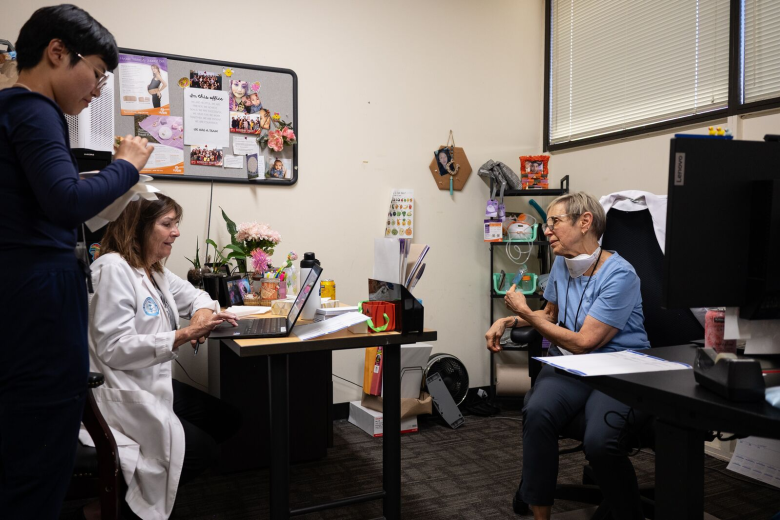
"caption": "Dr. Ellen Prodromou (left) and Dr. Jan Herr (right) run a monthly women’s health clinic at RotoCare, which provides free care for west Contra Costa County residents. ",
"credit": "Tyger Ligon for Richmondside",
"altTag": null,
"description": null,
"imgSizes": {
"thumbnail": {
"file": "https://cdn.kqed.org/wp-content/uploads/sites/10/2026/04/medical-richmondside-rotocare-160x107.png",
"width": 160,
"height": 107,
"mimeType": "image/png"
},
"post-thumbnail": {
"file": "https://cdn.kqed.org/wp-content/uploads/sites/10/2026/04/medical-richmondside-rotocare-672x372.png",
"width": 672,
"height": 372,
"mimeType": "image/png"
},
"npr-cds-square": {
"file": "https://cdn.kqed.org/wp-content/uploads/sites/10/2026/04/medical-richmondside-rotocare-600x520.png",
"width": 600,
"height": 520,
"mimeType": "image/png"
},
"kqedFullSize": {
"file": "https://cdn.kqed.org/wp-content/uploads/sites/10/2026/04/medical-richmondside-rotocare.png",
"width": 780,
"height": 520
}
},
"fetchFailed": false,
"isLoading": false
},
"news_12070142": {
"type": "attachments",
"id": "news_12070142",
"meta": {
"index": "attachments_1716263798",
"site": "news",
"id": "12070142",
"found": true
},
"title": "Emma's room 2",
"publishDate": 1768584118,
"status": "inherit",
"parent": 12070141,
"modified": 1768607308,
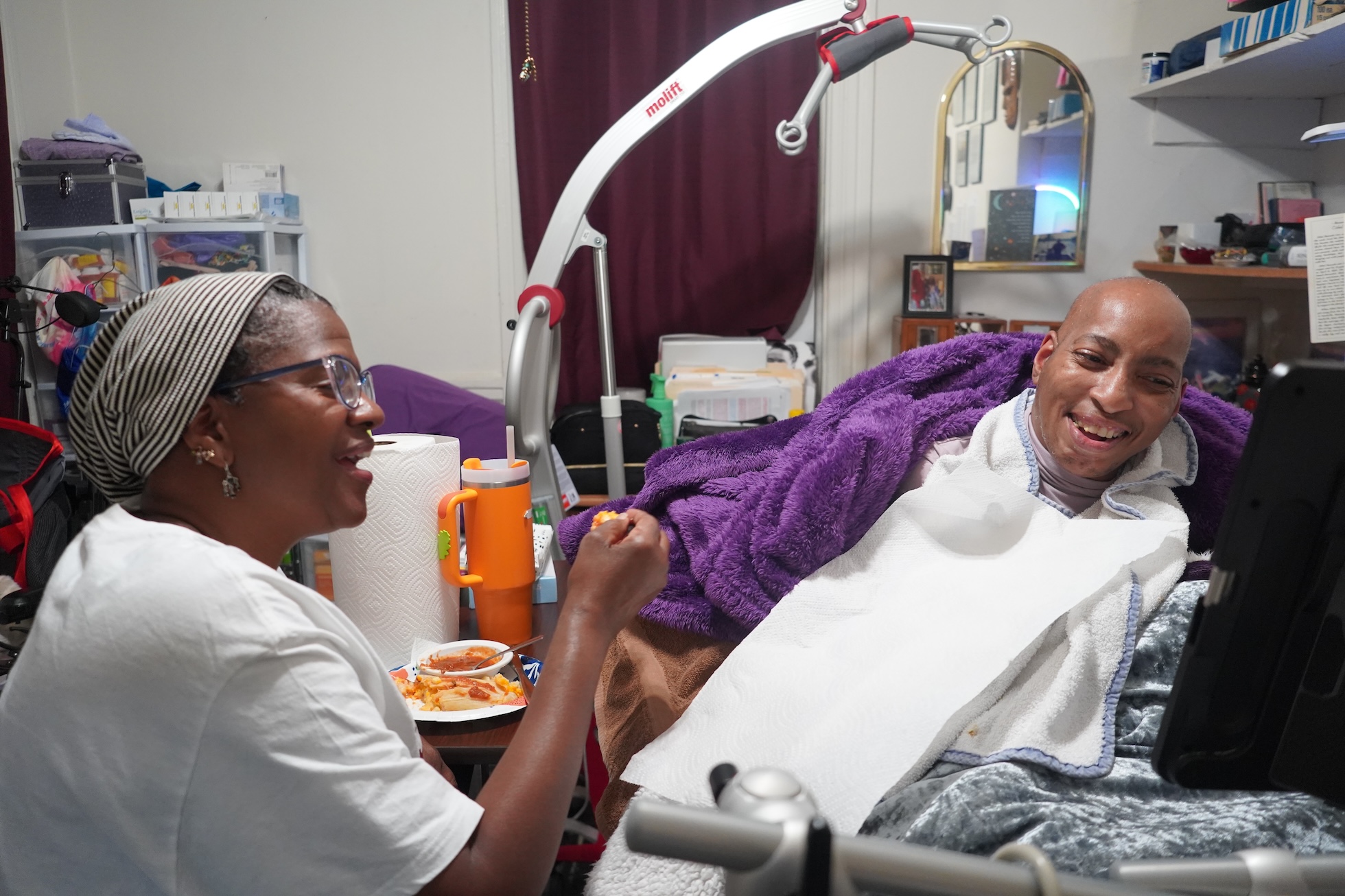
"caption": "Emma Denice Milligan and her caregiver, Wanda Kincy, laugh in her Oakland home on Dec. 12, 2025. ",
"credit": "Courtesy of Hyeyoon Cho",
"altTag": null,
"description": null,
"imgSizes": {
"thumbnail": {
"file": "https://cdn.kqed.org/wp-content/uploads/sites/10/2026/01/Emmas-room-2-160x107.jpg",
"width": 160,
"height": 107,
"mimeType": "image/jpeg"
},
"1536x1536": {
"file": "https://cdn.kqed.org/wp-content/uploads/sites/10/2026/01/Emmas-room-2-1536x1023.jpg",
"width": 1536,
"height": 1023,
"mimeType": "image/jpeg"
},
"post-thumbnail": {
"file": "https://cdn.kqed.org/wp-content/uploads/sites/10/2026/01/Emmas-room-2-672x372.jpg",
"width": 672,
"height": 372,
"mimeType": "image/jpeg"
},
"twentyfourteen-full-width": {
"file": "https://cdn.kqed.org/wp-content/uploads/sites/10/2026/01/Emmas-room-2-1038x576.jpg",
"width": 1038,
"height": 576,
"mimeType": "image/jpeg"
},
"npr-cds-wide": {
"file": "https://cdn.kqed.org/wp-content/uploads/sites/10/2026/01/Emmas-room-2-1200x675.jpg",
"width": 1200,
"height": 675,
"mimeType": "image/jpeg"
},
"kqedFullSize": {
"file": "https://cdn.kqed.org/wp-content/uploads/sites/10/2026/01/Emmas-room-2.jpg",
"width": 1960,
"height": 1306
}
},
"fetchFailed": false,
"isLoading": false
},
"news_12065499": {
"type": "attachments",
"id": "news_12065499",
"meta": {
"index": "attachments_1716263798",
"site": "news",
"id": "12065499",
"found": true
},
"title": "251124-DISABILITYJUSTICELEADERS00314_TV-KQED",
"publishDate": 1764191449,
"status": "inherit",
"parent": 0,
"modified": 1764883872,
"caption": "Brittanie Hernandez-Wilson, a disability justice activist, poses for a portrait at Lake Merritt in Oakland on Nov. 24, 2025. Hernandez-Wilson worked closely with Alice Wong, a disability justice leader who died in November.",
"credit": "Tâm Vũ/KQED",
"altTag": null,
"description": null,
"imgSizes": {
"thumbnail": {
"file": "https://cdn.kqed.org/wp-content/uploads/sites/10/2025/11/251124-DISABILITYJUSTICELEADERS00314_TV-KQED-160x107.jpg",
"width": 160,
"height": 107,
"mimeType": "image/jpeg"
},
"1536x1536": {
"file": "https://cdn.kqed.org/wp-content/uploads/sites/10/2025/11/251124-DISABILITYJUSTICELEADERS00314_TV-KQED-1536x1024.jpg",
"width": 1536,
"height": 1024,
"mimeType": "image/jpeg"
},
"post-thumbnail": {
"file": "https://cdn.kqed.org/wp-content/uploads/sites/10/2025/11/251124-DISABILITYJUSTICELEADERS00314_TV-KQED-672x372.jpg",
"width": 672,
"height": 372,
"mimeType": "image/jpeg"
},
"twentyfourteen-full-width": {
"file": "https://cdn.kqed.org/wp-content/uploads/sites/10/2025/11/251124-DISABILITYJUSTICELEADERS00314_TV-KQED-1038x576.jpg",
"width": 1038,
"height": 576,
"mimeType": "image/jpeg"
},
"npr-cds-wide": {
"file": "https://cdn.kqed.org/wp-content/uploads/sites/10/2025/11/251124-DISABILITYJUSTICELEADERS00314_TV-KQED-1200x675.jpg",
"width": 1200,
"height": 675,
"mimeType": "image/jpeg"
},
"kqedFullSize": {
"file": "https://cdn.kqed.org/wp-content/uploads/sites/10/2025/11/251124-DISABILITYJUSTICELEADERS00314_TV-KQED.jpg",
"width": 2000,
"height": 1333
}
},
"fetchFailed": false,
"isLoading": false
},
"news_12066344": {
"type": "attachments",
"id": "news_12066344",
"meta": {
"index": "attachments_1716263798",
"site": "news",
"id": "12066344",
"found": true
},
"title": "120125-Lena-Deacy-ZS-11",
"publishDate": 1765142405,
"status": "inherit",
"parent": 12066341,
"modified": 1765142472,
"caption": "Lena Deacy at her home in Culver City, on Dec. 1, 2025. ",
"credit": "Zaydee Sanchez/CalMatters",
"altTag": "A young woman with glasses and a pink shirt stands outside on a deck.",
"description": null,
"imgSizes": {
"thumbnail": {
"file": "https://cdn.kqed.org/wp-content/uploads/sites/10/2025/12/120125-Lena-Deacy-ZS-11-160x105.jpg",
"width": 160,
"height": 105,
"mimeType": "image/jpeg"
},
"1536x1536": {
"file": "https://cdn.kqed.org/wp-content/uploads/sites/10/2025/12/120125-Lena-Deacy-ZS-11-1536x1005.jpg",
"width": 1536,
"height": 1005,
"mimeType": "image/jpeg"
},
"post-thumbnail": {
"file": "https://cdn.kqed.org/wp-content/uploads/sites/10/2025/12/120125-Lena-Deacy-ZS-11-672x372.jpg",
"width": 672,
"height": 372,
"mimeType": "image/jpeg"
},
"twentyfourteen-full-width": {
"file": "https://cdn.kqed.org/wp-content/uploads/sites/10/2025/12/120125-Lena-Deacy-ZS-11-1038x576.jpg",
"width": 1038,
"height": 576,
"mimeType": "image/jpeg"
},
"npr-cds-wide": {
"file": "https://cdn.kqed.org/wp-content/uploads/sites/10/2025/12/120125-Lena-Deacy-ZS-11-1200x675.jpg",
"width": 1200,
"height": 675,
"mimeType": "image/jpeg"
},
"kqedFullSize": {
"file": "https://cdn.kqed.org/wp-content/uploads/sites/10/2025/12/120125-Lena-Deacy-ZS-11.jpg",
"width": 2000,
"height": 1309
}
},
"fetchFailed": false,
"isLoading": false
},
"news_12064468": {
"type": "attachments",
"id": "news_12064468",
"meta": {
"index": "attachments_1716263798",
"site": "news",
"id": "12064468",
"found": true
},
"title": "251113-SNAPdelaysfeature01143_TV_qed",
"publishDate": 1763421252,
"status": "inherit",
"parent": 0,
"modified": 1763659404,
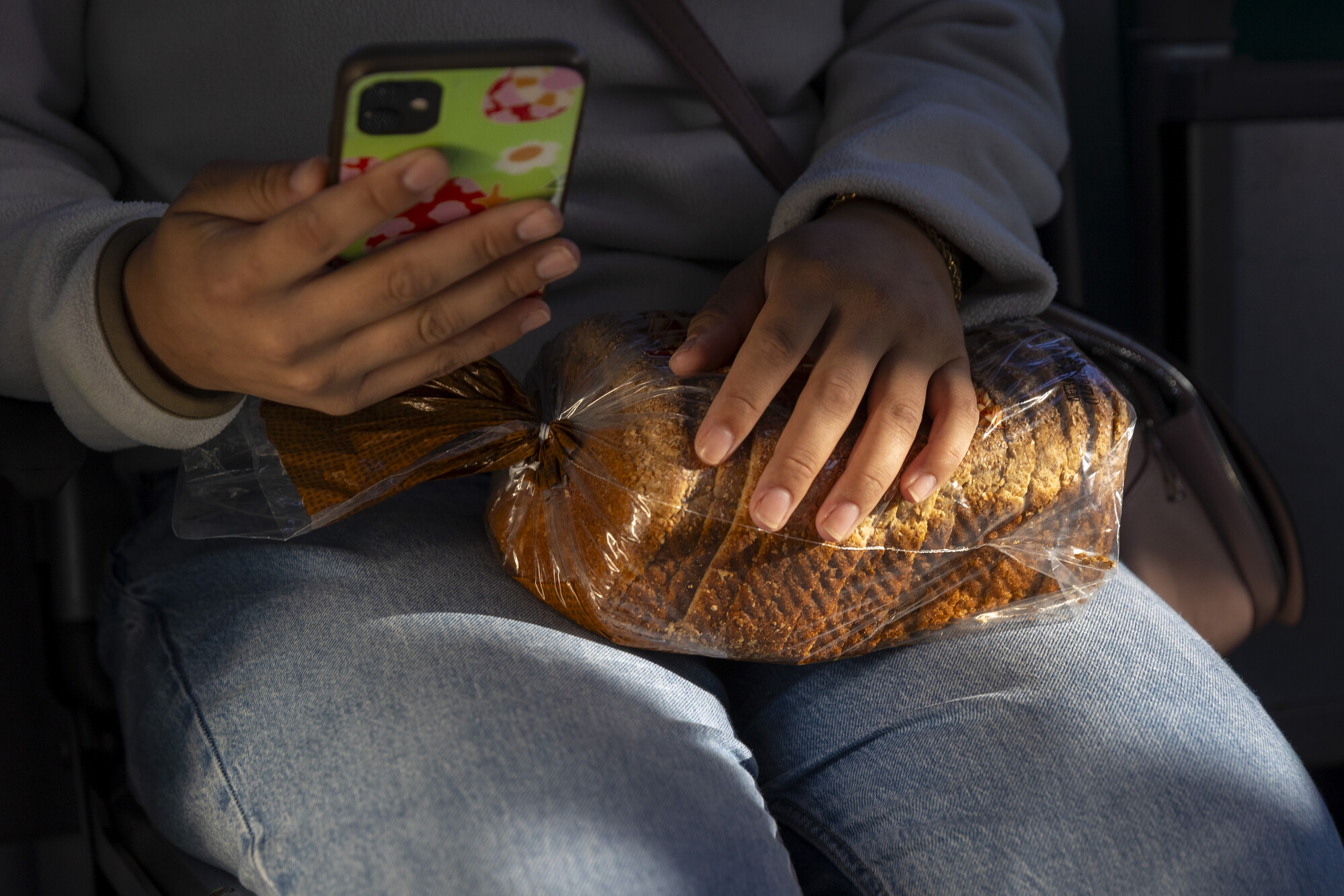
"caption": "Trozalla Smith rides the 96 bus while holding a loaf of bread in Alameda on Friday, Nov. 14, 2025. The government shutdown has delayed the distribution of SNAP benefits to recipients such as Ana Hoover and Trozalla Smith, who have had to turn to food pantries as an alternative.",
"credit": "Tâm Vũ/KQED",
"altTag": null,
"description": null,
"imgSizes": {
"thumbnail": {
"file": "https://cdn.kqed.org/wp-content/uploads/sites/10/2025/11/251113-SNAPdelaysfeature01143_TV_qed-160x107.jpg",
"width": 160,
"height": 107,
"mimeType": "image/jpeg"
},
"1536x1536": {
"file": "https://cdn.kqed.org/wp-content/uploads/sites/10/2025/11/251113-SNAPdelaysfeature01143_TV_qed-1536x1024.jpg",
"width": 1536,
"height": 1024,
"mimeType": "image/jpeg"
},
"post-thumbnail": {
"file": "https://cdn.kqed.org/wp-content/uploads/sites/10/2025/11/251113-SNAPdelaysfeature01143_TV_qed-672x372.jpg",
"width": 672,
"height": 372,
"mimeType": "image/jpeg"
},
"twentyfourteen-full-width": {
"file": "https://cdn.kqed.org/wp-content/uploads/sites/10/2025/11/251113-SNAPdelaysfeature01143_TV_qed-1038x576.jpg",
"width": 1038,
"height": 576,
"mimeType": "image/jpeg"
},
"npr-cds-wide": {
"file": "https://cdn.kqed.org/wp-content/uploads/sites/10/2025/11/251113-SNAPdelaysfeature01143_TV_qed-1200x675.jpg",
"width": 1200,
"height": 675,
"mimeType": "image/jpeg"
},
"kqedFullSize": {
"file": "https://cdn.kqed.org/wp-content/uploads/sites/10/2025/11/251113-SNAPdelaysfeature01143_TV_qed.jpg",
"width": 1999,
"height": 1333
}
},
"fetchFailed": false,
"isLoading": false
},
"news_12062986": {
"type": "attachments",
"id": "news_12062986",
"meta": {
"index": "attachments_1716263798",
"site": "news",
"id": "12062986",
"found": true
},
"title": "251104-MEASUREA-JG-1_qed",
"publishDate": 1762319901,
"status": "inherit",
"parent": 12062794,
"modified": 1762319974,
"caption": "Santa Clara County Supervisors Betty Duong, left, and Susan Ellenberg, right, speak to supporters of Measure A at a watch party in San Jose’s Willow Glen neighborhood shortly after initial voting results were released on Tuesday, Nov. 4, 2025.",
"credit": "Joseph Geha/KQED",
"altTag": null,
"description": null,
"imgSizes": {
"thumbnail": {
"file": "https://cdn.kqed.org/wp-content/uploads/sites/10/2025/11/251104-MEASUREA-JG-1_qed-160x107.jpg",
"width": 160,
"height": 107,
"mimeType": "image/jpeg"
},
"1536x1536": {
"file": "https://cdn.kqed.org/wp-content/uploads/sites/10/2025/11/251104-MEASUREA-JG-1_qed-1536x1024.jpg",
"width": 1536,
"height": 1024,
"mimeType": "image/jpeg"
},
"post-thumbnail": {
"file": "https://cdn.kqed.org/wp-content/uploads/sites/10/2025/11/251104-MEASUREA-JG-1_qed-672x372.jpg",
"width": 672,
"height": 372,
"mimeType": "image/jpeg"
},
"twentyfourteen-full-width": {
"file": "https://cdn.kqed.org/wp-content/uploads/sites/10/2025/11/251104-MEASUREA-JG-1_qed-1038x576.jpg",
"width": 1038,
"height": 576,
"mimeType": "image/jpeg"
},
"npr-cds-wide": {
"file": "https://cdn.kqed.org/wp-content/uploads/sites/10/2025/11/251104-MEASUREA-JG-1_qed-1200x675.jpg",
"width": 1200,
"height": 675,
"mimeType": "image/jpeg"
},
"kqedFullSize": {
"file": "https://cdn.kqed.org/wp-content/uploads/sites/10/2025/11/251104-MEASUREA-JG-1_qed.jpg",
"width": 1999,
"height": 1333
}
},
"fetchFailed": false,
"isLoading": false
},
"news_12057954": {
"type": "attachments",
"id": "news_12057954",
"meta": {
"index": "attachments_1716263798",
"site": "news",
"id": "12057954",
"found": true
},
"title": "20250923_MEDICAIDDISABILITY_GC-15-KQED",
"publishDate": 1759164379,
"status": "inherit",
"parent": 0,
"modified": 1759165152,
"caption": "Art student Douglas Morales, left, works on a painting in the art studio at the Arc in San Francisco on Sept. 23, 2025.",
"credit": "Gina Castro/KQED",
"altTag": null,
"description": null,
"imgSizes": {
"thumbnail": {
"file": "https://cdn.kqed.org/wp-content/uploads/sites/10/2025/09/20250923_MEDICAIDDISABILITY_GC-15-KQED-160x107.jpg",
"width": 160,
"height": 107,
"mimeType": "image/jpeg"
},
"1536x1536": {
"file": "https://cdn.kqed.org/wp-content/uploads/sites/10/2025/09/20250923_MEDICAIDDISABILITY_GC-15-KQED-1536x1024.jpg",
"width": 1536,
"height": 1024,
"mimeType": "image/jpeg"
},
"post-thumbnail": {
"file": "https://cdn.kqed.org/wp-content/uploads/sites/10/2025/09/20250923_MEDICAIDDISABILITY_GC-15-KQED-672x372.jpg",
"width": 672,
"height": 372,
"mimeType": "image/jpeg"
},
"twentyfourteen-full-width": {
"file": "https://cdn.kqed.org/wp-content/uploads/sites/10/2025/09/20250923_MEDICAIDDISABILITY_GC-15-KQED-1038x576.jpg",
"width": 1038,
"height": 576,
"mimeType": "image/jpeg"
},
"kqedFullSize": {
"file": "https://cdn.kqed.org/wp-content/uploads/sites/10/2025/09/20250923_MEDICAIDDISABILITY_GC-15-KQED.jpg",
"width": 2000,
"height": 1333
}
},
"fetchFailed": false,
"isLoading": false
},
"news_12057950": {
"type": "attachments",
"id": "news_12057950",
"meta": {
"index": "attachments_1716263798",
"site": "news",
"id": "12057950",
"found": true
},
"title": "20250923_MEDICAIDDISABILITY_GC-7-KQED",
"publishDate": 1759164363,
"status": "inherit",
"parent": 12058930,
"modified": 1759880440,
"caption": "Students Ruth Defoe, left, and Douglas Morales, right, work on art in the art studio at the Arc in San Francisco on Sept. 23, 2025.",
"credit": "Gina Castro/KQED",
"altTag": null,
"description": null,
"imgSizes": {
"thumbnail": {
"file": "https://cdn.kqed.org/wp-content/uploads/sites/10/2025/09/20250923_MEDICAIDDISABILITY_GC-7-KQED-160x107.jpg",
"width": 160,
"height": 107,
"mimeType": "image/jpeg"
},
"1536x1536": {
"file": "https://cdn.kqed.org/wp-content/uploads/sites/10/2025/09/20250923_MEDICAIDDISABILITY_GC-7-KQED-1536x1024.jpg",
"width": 1536,
"height": 1024,
"mimeType": "image/jpeg"
},
"post-thumbnail": {
"file": "https://cdn.kqed.org/wp-content/uploads/sites/10/2025/09/20250923_MEDICAIDDISABILITY_GC-7-KQED-672x372.jpg",
"width": 672,
"height": 372,
"mimeType": "image/jpeg"
},
"twentyfourteen-full-width": {
"file": "https://cdn.kqed.org/wp-content/uploads/sites/10/2025/09/20250923_MEDICAIDDISABILITY_GC-7-KQED-1038x576.jpg",
"width": 1038,
"height": 576,
"mimeType": "image/jpeg"
},
"kqedFullSize": {
"file": "https://cdn.kqed.org/wp-content/uploads/sites/10/2025/09/20250923_MEDICAIDDISABILITY_GC-7-KQED.jpg",
"width": 2000,
"height": 1333
}
},
"fetchFailed": false,
"isLoading": false
},
"news_12058485": {
"type": "attachments",
"id": "news_12058485",
"meta": {
"index": "attachments_1716263798",
"site": "news",
"id": "12058485",
"found": true
},
"title": "250924-ELECTION SJ MEASURE A_00613_TV-KQED",
"publishDate": 1759447261,
"status": "inherit",
"parent": 12060326,
"modified": 1760729538,
"caption": "A sign reads, “Vote yes on A, nurses and doctors agree,” outside Santa Clara Valley Medical Center in San José on Sept. 29, 2025. ",
"credit": "Tâm Vũ/KQED",
"altTag": null,
"description": null,
"imgSizes": {
"thumbnail": {
"file": "https://cdn.kqed.org/wp-content/uploads/sites/10/2025/10/250924-ELECTION-SJ-MEASURE-A_00613_TV-KQED-160x107.jpg",
"width": 160,
"height": 107,
"mimeType": "image/jpeg"
},
"1536x1536": {
"file": "https://cdn.kqed.org/wp-content/uploads/sites/10/2025/10/250924-ELECTION-SJ-MEASURE-A_00613_TV-KQED-1536x1024.jpg",
"width": 1536,
"height": 1024,
"mimeType": "image/jpeg"
},
"post-thumbnail": {
"file": "https://cdn.kqed.org/wp-content/uploads/sites/10/2025/10/250924-ELECTION-SJ-MEASURE-A_00613_TV-KQED-672x372.jpg",
"width": 672,
"height": 372,
"mimeType": "image/jpeg"
},
"twentyfourteen-full-width": {
"file": "https://cdn.kqed.org/wp-content/uploads/sites/10/2025/10/250924-ELECTION-SJ-MEASURE-A_00613_TV-KQED-1038x576.jpg",
"width": 1038,
"height": 576,
"mimeType": "image/jpeg"
},
"kqedFullSize": {
"file": "https://cdn.kqed.org/wp-content/uploads/sites/10/2025/10/250924-ELECTION-SJ-MEASURE-A_00613_TV-KQED.jpg",
"width": 2000,
"height": 1333
}
},
"fetchFailed": false,
"isLoading": false
}
},
"audioPlayerReducer": {
"postId": "stream_live",
"isPaused": true,
"isPlaying": false,
"pfsActive": false,
"pledgeModalIsOpen": true,
"playerDrawerIsOpen": false
},
"authorsReducer": {
"byline_news_12070141": {
"type": "authors",
"id": "byline_news_12070141",
"meta": {
"override": true
},
"slug": "byline_news_12070141",
"name": "Hyeyoon Cho",
"isLoading": false
},
"byline_news_12066341": {
"type": "authors",
"id": "byline_news_12066341",
"meta": {
"override": true
},
"slug": "byline_news_12066341",
"name": "\u003ca href=\"https://calmatters.org/author/carolyn-jones/\">Carolyn Jones, \u003c/a>CalMatters",
"isLoading": false
},
"gmarzorati": {
"type": "authors",
"id": "227",
"meta": {
"index": "authors_1716337520",
"id": "227",
"found": true
},
"name": "Guy Marzorati",
"firstName": "Guy",
"lastName": "Marzorati",
"slug": "gmarzorati",
"email": "gmarzorati@KQED.org",
"display_author_email": true,
"staff_mastheads": [
"news"
],
"title": "Correspondent",
"bio": "Guy Marzorati is a correspondent on KQED's California Politics and Government Desk, based in San Jose. A graduate of Santa Clara University, Guy joined KQED in 2013. He reports on state and local politics and produces KQED's digital voter guide.",
"avatar": "https://secure.gravatar.com/avatar/e7038b8dbfd55b104369b76b1cd0b9de?s=600&d=blank&r=g",
"twitter": "guymarzorati",
"facebook": null,
"instagram": null,
"linkedin": null,
"sites": [
{
"site": "",
"roles": [
"editor"
]
},
{
"site": "news",
"roles": [
"editor"
]
},
{
"site": "science",
"roles": [
"editor"
]
},
{
"site": "forum",
"roles": [
"editor"
]
},
{
"site": "elections",
"roles": [
"editor"
]
},
{
"site": "liveblog",
"roles": [
"editor"
]
}
],
"headData": {
"title": "Guy Marzorati | KQED",
"description": "Correspondent",
"ogImgSrc": "https://secure.gravatar.com/avatar/e7038b8dbfd55b104369b76b1cd0b9de?s=600&d=blank&r=g",
"twImgSrc": "https://secure.gravatar.com/avatar/e7038b8dbfd55b104369b76b1cd0b9de?s=600&d=blank&r=g"
},
"isLoading": false,
"link": "/author/gmarzorati"
},
"ecruzguevarra": {
"type": "authors",
"id": "8654",
"meta": {
"index": "authors_1716337520",
"id": "8654",
"found": true
},
"name": "Ericka Cruz Guevarra",
"firstName": "Ericka",
"lastName": "Cruz Guevarra",
"slug": "ecruzguevarra",
"email": "ecruzguevarra@kqed.org",
"display_author_email": true,
"staff_mastheads": [
"news"
],
"title": "Producer, The Bay Podcast",
"bio": "Ericka Cruz Guevarra is host of \u003ca href=\"https://www.kqed.org/podcasts/thebay\">\u003cem>The Bay\u003c/em>\u003c/a> podcast at KQED. Before host, she was the show’s producer. Her work in that capacity includes a three-part reported series on policing in Vallejo, which won a 2020 excellence in journalism award from the Society of Professional Journalists. Ericka has worked as a breaking news reporter at Oregon Public Broadcasting, helped produce the Code Switch podcast, and was KQED’s inaugural Raul Ramirez Diversity Fund intern. She’s also an alumna of NPR’s Next Generation Radio program. Send her an email if you have strong feelings about whether Fairfield and Suisun City are the Bay. Ericka is represented by SAG-AFTRA.",
"avatar": "https://secure.gravatar.com/avatar/25e5ab8d3d53fad2dcc7bb2b5c506b1a?s=600&d=blank&r=g",
"twitter": "NotoriousECG",
"facebook": null,
"instagram": null,
"linkedin": null,
"sites": [
{
"site": "arts",
"roles": [
"subscriber"
]
},
{
"site": "news",
"roles": [
"editor",
"manage_categories"
]
},
{
"site": "futureofyou",
"roles": [
"subscriber"
]
},
{
"site": "stateofhealth",
"roles": [
"subscriber"
]
},
{
"site": "science",
"roles": [
"editor"
]
},
{
"site": "forum",
"roles": [
"subscriber"
]
}
],
"headData": {
"title": "Ericka Cruz Guevarra | KQED",
"description": "Producer, The Bay Podcast",
"ogImgSrc": "https://secure.gravatar.com/avatar/25e5ab8d3d53fad2dcc7bb2b5c506b1a?s=600&d=blank&r=g",
"twImgSrc": "https://secure.gravatar.com/avatar/25e5ab8d3d53fad2dcc7bb2b5c506b1a?s=600&d=blank&r=g"
},
"isLoading": false,
"link": "/author/ecruzguevarra"
},
"amontecillo": {
"type": "authors",
"id": "11649",
"meta": {
"index": "authors_1716337520",
"id": "11649",
"found": true
},
"name": "Alan Montecillo",
"firstName": "Alan",
"lastName": "Montecillo",
"slug": "amontecillo",
"email": "amontecillo@kqed.org",
"display_author_email": false,
"staff_mastheads": [
"news"
],
"title": "KQED Contributor",
"bio": "Alan Montecillo is the senior editor of \u003cem>\u003ca href=\"http://kqed.org/thebay\">The Bay\u003c/a>, \u003c/em> KQED's local news podcast. Before moving to the Bay Area, he worked as a senior talk show producer for WILL in Champaign-Urbana, Illinois and at Oregon Public Broadcasting in Portland, Oregon. He has won journalism awards from the Society of Professional Journalists Northern California, the Public Media Journalists Association, The Signal Awards, and has also received a regional Edward R. Murrow award. Alan is a Filipino American from Hong Kong and a graduate of Reed College.",
"avatar": "https://secure.gravatar.com/avatar/d5e4e7a76481969ccba76f4e2b5ccabc?s=600&d=blank&r=g",
"twitter": "alanmontecillo",
"facebook": null,
"instagram": null,
"linkedin": null,
"sites": [
{
"site": "",
"roles": [
"editor"
]
},
{
"site": "news",
"roles": [
"editor",
"manage_categories"
]
}
],
"headData": {
"title": "Alan Montecillo | KQED",
"description": "KQED Contributor",
"ogImgSrc": "https://secure.gravatar.com/avatar/d5e4e7a76481969ccba76f4e2b5ccabc?s=600&d=blank&r=g",
"twImgSrc": "https://secure.gravatar.com/avatar/d5e4e7a76481969ccba76f4e2b5ccabc?s=600&d=blank&r=g"
},
"isLoading": false,
"link": "/author/amontecillo"
},
"ccabreralomeli": {
"type": "authors",
"id": "11708",
"meta": {
"index": "authors_1716337520",
"id": "11708",
"found": true
},
"name": "Carlos Cabrera-Lomelí",
"firstName": "Carlos",
"lastName": "Cabrera-Lomelí",
"slug": "ccabreralomeli",
"email": "ccabreralomeli@KQED.org",
"display_author_email": true,
"staff_mastheads": [
"news"
],
"title": "Community Reporter",
"bio": "Carlos Cabrera-Lomelí is a community reporter with KQED's digital engagement team. He also reports and co-produces for KQED's bilingual news hub KQED en Español. He grew up in San Francisco's Mission District and has previously worked with Univision, 48 Hills and REFORMA in Mexico City.",
"avatar": "https://secure.gravatar.com/avatar/e95ff80bb2eaf18a8f2af4dcf7ffb54b?s=600&d=mm&r=g",
"twitter": "@LomeliCabrera",
"facebook": null,
"instagram": null,
"linkedin": null,
"sites": [
{
"site": "arts",
"roles": [
"editor"
]
},
{
"site": "news",
"roles": [
"editor"
]
},
{
"site": "about",
"roles": [
"editor"
]
},
{
"site": "science",
"roles": [
"editor"
]
},
{
"site": "perspectives",
"roles": [
"editor"
]
},
{
"site": "elections",
"roles": [
"editor"
]
},
{
"site": "liveblog",
"roles": [
"contributor"
]
}
],
"headData": {
"title": "Carlos Cabrera-Lomelí | KQED",
"description": "Community Reporter",
"ogImgSrc": "https://secure.gravatar.com/avatar/e95ff80bb2eaf18a8f2af4dcf7ffb54b?s=600&d=mm&r=g",
"twImgSrc": "https://secure.gravatar.com/avatar/e95ff80bb2eaf18a8f2af4dcf7ffb54b?s=600&d=mm&r=g"
},
"isLoading": false,
"link": "/author/ccabreralomeli"
},
"kmizuguchi": {
"type": "authors",
"id": "11739",
"meta": {
"index": "authors_1716337520",
"id": "11739",
"found": true
},
"name": "Keith Mizuguchi",
"firstName": "Keith",
"lastName": "Mizuguchi",
"slug": "kmizuguchi",
"email": "kmizuguchi@kqed.org",
"display_author_email": false,
"staff_mastheads": [],
"title": "KQED Contributor",
"bio": null,
"avatar": "https://secure.gravatar.com/avatar/ce1182f9924192ae5ea66d39a75cd7d1?s=600&d=blank&r=g",
"twitter": null,
"facebook": null,
"instagram": null,
"linkedin": null,
"sites": [
{
"site": "news",
"roles": [
"editor"
]
},
{
"site": "science",
"roles": [
"editor"
]
}
],
"headData": {
"title": "Keith Mizuguchi | KQED",
"description": "KQED Contributor",
"ogImgSrc": "https://secure.gravatar.com/avatar/ce1182f9924192ae5ea66d39a75cd7d1?s=600&d=blank&r=g",
"twImgSrc": "https://secure.gravatar.com/avatar/ce1182f9924192ae5ea66d39a75cd7d1?s=600&d=blank&r=g"
},
"isLoading": false,
"link": "/author/kmizuguchi"
},
"ibloom": {
"type": "authors",
"id": "11805",
"meta": {
"index": "authors_1716337520",
"id": "11805",
"found": true
},
"name": "Izzy Bloom",
"firstName": "Izzy",
"lastName": "Bloom",
"slug": "ibloom",
"email": "ibloom@kqed.org",
"display_author_email": false,
"staff_mastheads": [],
"title": "KQED Reporter & Producer",
"bio": "Izzy is a reporter and producer on KQED's California Politics & Government Desk. She joined the desk in 2024 to produce Political Breakdown, covering local and national elections and attending the RNC and DNC in Milwaukee and Chicago. \r\n\r\nBefore that, Izzy was a producer on The California Report and reported long-form stories for The California Report Magazine. She was a finalist for the Third Coast/Richard H. Driehaus Foundation Competition and was awarded for her reporting on indigenous land back by the Society of Professional Journalists. Izzy received her master's in journalism from the University of California, Berkeley.",
"avatar": "https://secure.gravatar.com/avatar/c318d55506fa162aaca4e542df149485?s=600&d=blank&r=g",
"twitter": null,
"facebook": null,
"instagram": null,
"linkedin": null,
"sites": [
{
"site": "news",
"roles": [
"editor"
]
},
{
"site": "perspectives",
"roles": [
"editor"
]
}
],
"headData": {
"title": "Izzy Bloom | KQED",
"description": "KQED Reporter & Producer",
"ogImgSrc": "https://secure.gravatar.com/avatar/c318d55506fa162aaca4e542df149485?s=600&d=blank&r=g",
"twImgSrc": "https://secure.gravatar.com/avatar/c318d55506fa162aaca4e542df149485?s=600&d=blank&r=g"
},
"isLoading": false,
"link": "/author/ibloom"
},
"jessicakariisa": {
"type": "authors",
"id": "11831",
"meta": {
"index": "authors_1716337520",
"id": "11831",
"found": true
},
"name": "Jessica Kariisa",
"firstName": "Jessica",
"lastName": "Kariisa",
"slug": "jessicakariisa",
"email": "jkariisa@kqed.org",
"display_author_email": false,
"staff_mastheads": [
"news"
],
"title": "Producer, The Bay",
"bio": "Jessica Kariisa is the producer of The Bay. She first joined KQED as an intern for The California Report Magazine, after which she became an on-call producer. She reported a Bay Curious episode on the use of rap lyrics in criminal trials which won a Society of Professional Journalists award in 2023 for Excellence in Features Journalism and the 2023 Signal Award for Best Conversation Starter. She’s worked on podcasts for Snap Judgment and American Public Media. Before embarking on her audio career, she was a music journalist.\r\n\r\nJessica Kariisa is represented by SAG-AFTRA.",
"avatar": "https://secure.gravatar.com/avatar/4afd355fd24f5515aeab77fd6c72b671?s=600&d=blank&r=g",
"twitter": null,
"facebook": null,
"instagram": null,
"linkedin": null,
"sites": [
{
"site": "arts",
"roles": [
"author"
]
},
{
"site": "news",
"roles": [
"editor",
"manage_categories"
]
}
],
"headData": {
"title": "Jessica Kariisa | KQED",
"description": "Producer, The Bay",
"ogImgSrc": "https://secure.gravatar.com/avatar/4afd355fd24f5515aeab77fd6c72b671?s=600&d=blank&r=g",
"twImgSrc": "https://secure.gravatar.com/avatar/4afd355fd24f5515aeab77fd6c72b671?s=600&d=blank&r=g"
},
"isLoading": false,
"link": "/author/jessicakariisa"
},
"sjohnson": {
"type": "authors",
"id": "11840",
"meta": {
"index": "authors_1716337520",
"id": "11840",
"found": true
},
"name": "Sydney Johnson",
"firstName": "Sydney",
"lastName": "Johnson",
"slug": "sjohnson",
"email": "sjohnson@kqed.org",
"display_author_email": false,
"staff_mastheads": [
"news"
],
"title": "KQED Reporter",
"bio": "Sydney Johnson is a general assignment reporter at KQED. She previously reported on public health and city government at the San Francisco Examiner, and before that, she covered statewide education policy for EdSource. Her reporting has won multiple local, state and national awards. Sydney is a graduate of the University of California, Berkeley and lives in San Francisco.",
"avatar": "https://secure.gravatar.com/avatar/97855f2719b72ad6190b7c535fe642c8?s=600&d=blank&r=g",
"twitter": "sydneyfjohnson",
"facebook": null,
"instagram": null,
"linkedin": null,
"sites": [
{
"site": "news",
"roles": [
"editor"
]
}
],
"headData": {
"title": "Sydney Johnson | KQED",
"description": "KQED Reporter",
"ogImgSrc": "https://secure.gravatar.com/avatar/97855f2719b72ad6190b7c535fe642c8?s=600&d=blank&r=g",
"twImgSrc": "https://secure.gravatar.com/avatar/97855f2719b72ad6190b7c535fe642c8?s=600&d=blank&r=g"
},
"isLoading": false,
"link": "/author/sjohnson"
}
},
"breakingNewsReducer": {},
"pagesReducer": {},
"postsReducer": {
"stream_live": {
"type": "live",
"id": "stream_live",
"audioUrl": "https://streams.kqed.org/kqedradio",
"title": "Live Stream",
"excerpt": "Live Stream information currently unavailable.",
"link": "/radio",
"featImg": "",
"label": {
"name": "KQED Live",
"link": "/"
}
},
"stream_kqedNewscast": {
"type": "posts",
"id": "stream_kqedNewscast",
"audioUrl": "https://www.kqed.org/.stream/anon/radio/RDnews/newscast.mp3?_=1",
"title": "KQED Newscast",
"featImg": "",
"label": {
"name": "88.5 FM",
"link": "/"
}
},
"news_12081208": {
"type": "posts",
"id": "news_12081208",
"meta": {
"index": "posts_1716263798",
"site": "news",
"id": "12081208",
"score": null,
"sort": [
1777024834000
]
},
"guestAuthors": [],
"slug": "medi-cal-cuts-are-coming-contra-costa-county-is-bracing-for-impact",
"title": "Medi-Cal Cuts Are Coming. Contra Costa County Is Bracing for Impact",
"publishDate": 1777024834,
"format": "audio",
"headTitle": "Medi-Cal Cuts Are Coming. Contra Costa County Is Bracing for Impact | KQED",
"labelTerm": {},
"content": "\u003cp>The One Big Beautiful Bill Act, signed by President Donald Trump last year, will cut an estimated $900 billion to $1 trillion from Medicaid over the next decade. Between funding cuts and big changes to enrollment and eligibility requirements, residents who rely on Medi-Cal, California’s Medicaid program, are bracing for impact. Doctor and journalist Sejal Parekh explores how this is playing out in Contra Costa County.\u003c/p>\n\u003cp>\u003cstrong>Links:\u003c/strong>\u003c/p>\n\u003cul>\n\u003cli>\u003ca href=\"https://richmondside.org/2026/03/30/trump-medi-cal-cuts-contra-costa/\">Up to 93K Contra Costa County residents could lose health insurance under Trump cuts\u003c/a>\u003c/li>\n\u003c/ul>\n\u003cp>\u003c!-- iframe plugin v.4.3 wordpress.org/plugins/iframe/ -->\u003cbr>\n\u003ciframe loading=\"lazy\" frameborder=\"0\" height=\"200\" scrolling=\"no\" src=\"https://playlist.megaphone.fm?e=KQINC2727484835&light=true\" width=\"100%\" class=\"iframe-class\">\u003c/iframe>\u003c/p>\n\u003cp>\u003cspan class=\"\" title=\"\">\u003ci>Some members of the KQED podcast team are represented by The Screen Actors Guild, American Federation of Television and Radio Artists, San Francisco-Northern California Local.\u003c/i>\u003c/span>\u003c/p>\n\u003cp>[ad fullwidth]\u003c/p>\u003cp>\u003c/p>\n",
"blocks": [],
"excerpt": "The One Big Beautiful Bill Act, signed by President Donald Trump last year, will cut an estimated $900 billion to $1 trillion from Medicaid over the next decade.",
"status": "publish",
"parent": 0,
"modified": 1777047832,
"stats": {
"hasAudio": true,
"hasVideo": false,
"hasChartOrMap": false,
"iframeSrcs": [],
"hasGoogleForm": false,
"hasGallery": false,
"hasHearkenModule": false,
"hasPolis": false,
"paragraphCount": 6,
"wordCount": 112
},
"headData": {
"title": "Medi-Cal Cuts Are Coming. Contra Costa County Is Bracing for Impact | KQED",
"description": "The One Big Beautiful Bill Act, signed by President Donald Trump last year, will cut an estimated $900 billion to $1 trillion from Medicaid over the next decade.",
"ogTitle": "",
"ogDescription": "",
"ogImgId": "",
"twTitle": "",
"twDescription": "",
"twImgId": "",
"schema": {
"@context": "https://schema.org",
"@type": "NewsArticle",
"headline": "Medi-Cal Cuts Are Coming. Contra Costa County Is Bracing for Impact",
"datePublished": "2026-04-24T03:00:34-07:00",
"dateModified": "2026-04-24T09:23:52-07:00",
"image": "https://cdn.kqed.org/wp-content/uploads/2020/02/KQED-OG-Image@1x.png",
"isAccessibleForFree": "True",
"publisher": {
"@type": "NewsMediaOrganization",
"@id": "https://www.kqed.org/#organization",
"name": "KQED",
"logo": "https://cdn.kqed.org/wp-content/uploads/2020/02/KQED-OG-Image@1x.png",
"url": "https://www.kqed.org",
"sameAs": [
"https://www.facebook.com/KQED",
"https://twitter.com/KQED",
"https://www.instagram.com/kqed/",
"https://www.tiktok.com/@kqedofficial",
"https://www.linkedin.com/company/kqed",
"https://www.youtube.com/channel/UCeC0IOo7i1P_61zVUWbJ4nw"
]
}
}
},
"primaryCategory": {
"termId": 457,
"slug": "health",
"name": "Health"
},
"source": "The Bay",
"sourceUrl": "https://www.kqed.org/podcasts/thebay",
"audioUrl": "https://www.podtrac.com/pts/redirect.mp3/traffic.megaphone.fm/KQINC2727484835.mp3",
"sticky": false,
"nprStoryId": "kqed-12081208",
"templateType": "standard",
"featuredImageType": "standard",
"excludeFromSiteSearch": "Include",
"articleAge": "0",
"path": "/news/12081208/medi-cal-cuts-are-coming-contra-costa-county-is-bracing-for-impact",
"audioTrackLength": null,
"parsedContent": [
{
"type": "contentString",
"content": "\u003cdiv class=\"post-body\">\u003cp>\u003cp>The One Big Beautiful Bill Act, signed by President Donald Trump last year, will cut an estimated $900 billion to $1 trillion from Medicaid over the next decade. Between funding cuts and big changes to enrollment and eligibility requirements, residents who rely on Medi-Cal, California’s Medicaid program, are bracing for impact. Doctor and journalist Sejal Parekh explores how this is playing out in Contra Costa County.\u003c/p>\n\u003cp>\u003cstrong>Links:\u003c/strong>\u003c/p>\n\u003cul>\n\u003cli>\u003ca href=\"https://richmondside.org/2026/03/30/trump-medi-cal-cuts-contra-costa/\">Up to 93K Contra Costa County residents could lose health insurance under Trump cuts\u003c/a>\u003c/li>\n\u003c/ul>\n\u003cp>\u003c!-- iframe plugin v.4.3 wordpress.org/plugins/iframe/ -->\u003cbr>\n\u003ciframe loading=\"lazy\" frameborder=\"0\" height=\"200\" scrolling=\"no\" src=\"https://playlist.megaphone.fm?e=KQINC2727484835&light=true\" width=\"100%\" class=\"iframe-class\">\u003c/iframe>\u003c/p>\n\u003cp>\u003cspan class=\"\" title=\"\">\u003ci>Some members of the KQED podcast team are represented by The Screen Actors Guild, American Federation of Television and Radio Artists, San Francisco-Northern California Local.\u003c/i>\u003c/span>\u003c/p>\n\u003cp>\u003c/p>\u003c/div>",
"attributes": {
"named": {},
"numeric": []
}
},
{
"type": "component",
"content": "",
"name": "ad",
"attributes": {
"named": {
"label": "fullwidth"
},
"numeric": [
"fullwidth"
]
}
},
{
"type": "contentString",
"content": "\u003cdiv class=\"post-body\">\u003cp>\u003c/p>\u003cp>\u003c/p>\n\u003c/div>\u003c/p>",
"attributes": {
"named": {},
"numeric": []
}
}
],
"link": "/news/12081208/medi-cal-cuts-are-coming-contra-costa-county-is-bracing-for-impact",
"authors": [
"8654",
"11831",
"11649"
],
"categories": [
"news_457",
"news_8"
],
"tags": [
"news_1467",
"news_1323",
"news_35118",
"news_33812",
"news_2605",
"news_20666",
"news_579",
"news_22598"
],
"featImg": "news_12081269",
"label": "source_news_12081208"
},
"news_12070141": {
"type": "posts",
"id": "news_12070141",
"meta": {
"index": "posts_1716263798",
"site": "news",
"id": "12070141",
"score": null,
"sort": [
1768744841000
]
},
"guestAuthors": [],
"slug": "id-be-left-alone-medicaid-cuts-put-disabled-patients-in-home-care-at-risk",
"title": "‘I’d Be Left Alone’: Medicaid Cuts Put Disabled Patients’ In-Home Care at Risk",
"publishDate": 1768744841,
"format": "standard",
"headTitle": "‘I’d Be Left Alone’: Medicaid Cuts Put Disabled Patients’ In-Home Care at Risk | KQED",
"labelTerm": {
"site": "news"
},
"content": "\u003cp>Emma Denice Milligan can be a prankster. Her warm eyes, big smile and wheelchair can be misleading, said her caregiver, Wanda Kincy. But Emma once crashed a wedding and helped herself to the food. Another time, she put herself on a plane from \u003ca href=\"https://www.kqed.org/news/tag/oakland\">Oakland\u003c/a> to Chicago to meet her high school sweetheart without telling her caregivers.\u003c/p>\n\u003cp>Kincy points two fingers at her own eyes and then at Milligan’s. “I know you,” she said with a grin.\u003c/p>\n\u003cp>Kincy arrives at the Oakland home Milligan shares with her aunt and uncle at 8 a.m., five days a week, staying until at least 10 p.m. and overnight on Thursdays and Fridays. She helps Milligan, 57, get dressed, bathed and ready for her adult day program. Kincy books Milligan’s paratransit rides, times medication reminders and keeps track of the small details that make her independence possible.\u003c/p>\n\u003cp>[ad fullwidth]\u003c/p>\n\u003cp>The care Kincy provides is covered through California’s Medicaid program, also known as Medi-Cal. Federal cuts have many advocates worried about the future of such care.\u003c/p>\n\u003cp>Under federal law, most home- and community-based services are optional benefits, meaning states can choose whether to include services like personal care in their Medicaid plans and how broadly to offer them.\u003c/p>\n\u003cp>In California, Medicaid covers in-home supportive services to Californians who are elderly, blind or disabled and would otherwise be at risk of nursing home placement. The federal government reimburses California for about half of the cost of IHSS.\u003c/p>\n\u003cfigure id=\"attachment_12070295\" class=\"wp-caption aligncenter\" style=\"max-width: 2000px\">\u003cimg loading=\"lazy\" decoding=\"async\" class=\"size-full wp-image-12070295\" src=\"https://cdn.kqed.org/wp-content/uploads/sites/10/2026/01/InHomeCare2.jpg\" alt=\"\" width=\"2000\" height=\"1333\" srcset=\"https://cdn.kqed.org/wp-content/uploads/sites/10/2026/01/InHomeCare2.jpg 2000w, https://cdn.kqed.org/wp-content/uploads/sites/10/2026/01/InHomeCare2-160x107.jpg 160w, https://cdn.kqed.org/wp-content/uploads/sites/10/2026/01/InHomeCare2-1536x1024.jpg 1536w\" sizes=\"auto, (max-width: 2000px) 100vw, 2000px\">\u003cfigcaption class=\"wp-caption-text\">In her Oakland home on Dec. 12, 2025, Emma Denice Milligan smiles at her caregiver, Wanda Kincy, as Kincy recounts how Milligan has coped with the death of her mother, Carolyn Milligan, a human rights activist who worked on housing rights in Chicago and served Black communities in Oakland, in 2023. \u003ccite>(Courtesy of Hyeyoon Cho)\u003c/cite>\u003c/figcaption>\u003c/figure>\n\u003cp>In-home services enable Milligan’s family to hire Kincy to assist with daily personal care and household tasks so Milligan can remain safely in her family home.\u003c/p>\n\u003cp>“If I lose Wanda, then I would probably have to go to a facility,” she said. “People at the facility don’t care. I would be calling them for help, and they wouldn’t come. I’d be left alone and be wet all night, because I can’t go to the bathroom.”\u003c/p>\n\u003cp>Milligan has received IHSS on and off while living in both California and Chicago. In 2011, she moved to Oakland and has relied on the program continuously since. But there is a growing concern about how long the services can last.[aside postID=news_12068383 hero='https://ww2.kqed.org/app/uploads/sites/10/2020/04/001_KQED_Oakland_HighlandHospital_041152020-1020x680.jpg']In July, Congress approved roughly $1 trillion in Medicaid cuts over the next decade, beginning in 2026. Because the federal government pays roughly 54% of California’s total home- and community-based services costs, the impending cuts immediately raised alarm.\u003c/p>\n\u003cp>The \u003ca href=\"https://www.whitehouse.gov/articles/2025/06/myth-vs-fact-the-one-big-beautiful-bill/\">White House\u003c/a> has said the budget package would not affect Medicaid coverage for people with disabilities. Advocates warn the changes will nonetheless fall heavily on home- and community-based services, which aren’t protected like nursing home services. They say optional services are often the first to be reduced.\u003c/p>\n\u003cp>Hagar Dickman, a senior attorney at Justice in Aging, said the risk to in-home services is not theoretical. During last year’s state budget negotiations, she said, Gov. Gavin Newsom’s administration initially looked to IHSS as one of the first areas to cut when facing a projected shortfall.\u003c/p>\n\u003cp>“In the May budget revision, home- and community-based services were immediately on the table,” Dickman said.\u003c/p>\n\u003cp>The budget proposed \u003ca href=\"https://calbudgetcenter.org/resources/first-look-understanding-the-governors-2025-26-may-revision/#h-revised-budget-fails-to-invest-in-older-adults-and-californians-with-disabilities\">over $1 billion\u003c/a> in mostly ongoing cuts to in-home supportive services, including limits on provider pay and hours and the elimination of benefits for certain groups. Although this was not adopted in the final budget, a plan for freezing new Medi-Cal enrollments from undocumented adults, including IHSS eligibility, was adopted and is set to begin in 2026, while existing enrollees retain coverage. \u003c/p>\n\u003cfigure id=\"attachment_12070297\" class=\"wp-caption aligncenter\" style=\"max-width: 2000px\">\u003cimg loading=\"lazy\" decoding=\"async\" class=\"size-full wp-image-12070297\" src=\"https://cdn.kqed.org/wp-content/uploads/sites/10/2026/01/InHomeCare3.jpg\" alt=\"\" width=\"2000\" height=\"1333\" srcset=\"https://cdn.kqed.org/wp-content/uploads/sites/10/2026/01/InHomeCare3.jpg 2000w, https://cdn.kqed.org/wp-content/uploads/sites/10/2026/01/InHomeCare3-160x107.jpg 160w, https://cdn.kqed.org/wp-content/uploads/sites/10/2026/01/InHomeCare3-1536x1024.jpg 1536w\" sizes=\"auto, (max-width: 2000px) 100vw, 2000px\">\u003cfigcaption class=\"wp-caption-text\">Emma Denice Milligan jokes with Wanda Kincy in Ability Now, an Oakland-based adult day center for people with disabilities, on Nov. 20, 2025. \u003ccite>(Courtesy of Hyeyoon Cho)\u003c/cite>\u003c/figcaption>\u003c/figure>\n\u003cp>Dickman said this episode underscored how quickly optional services can be targeted.\u003c/p>\n\u003cp>“When states are under pressure, they go after HCBS [home- and community-based services] first because they’re optional under federal law,” she said.\u003c/p>\n\u003cp>Congress has agreed to restructure \u003ca href=\"https://calbudgetcenter.org/resources/how-federal-funding-cuts-threaten-the-health-of-californians/\">Medicaid\u003c/a> by reducing the federal government’s share of reimbursements, restricting how states raise Medicaid revenue and imposing new eligibility checks, work requirements and exclusions for certain immigrant groups.\u003c/p>\n\u003cp>A recent analysis by the \u003ca href=\"https://www.chcf.org/wp-content/uploads/2025/10/HowCutsMediCalHomeCommunityBasedServicesImpactCA.pdf\">California Health Care Foundation \u003c/a>suggests the consequences could be costly. If the state reduces HCBS by 10% in response to federal cuts, California could face roughly $1 billion in added Medicaid expenses as more residents are moved into institutional settings.[aside postID=news_12068555 hero='https://ww2.kqed.org/app/uploads/sites/10/2022/07/GettyImages-1197447255-1020x680.jpg']“The federal Medicaid cuts are an absolute disaster for HCBS,” said Sabrina Epstein, a policy analyst at Disability Rights California. She said the cuts will push many people off Medicaid, leaving them without access to the only program that funds round-the-clock in-home support.\u003c/p>\n\u003cp>“People will be forced into nursing homes or left to rely on unpaid family care,” Epstein said.\u003c/p>\n\u003cp>During the Great Recession, the federal government gave states more money for Medicaid. Researchers at UCSF and the Disability Rights Education and Defense Fund \u003ca href=\"https://geigergibson.publichealth.gwu.edu/sites/g/files/zaxdzs4421/files/2025-04/Kaye%20HCBS%20Cuts%202010-2012%20%282%29%20%281%29.pdf\">examined what happened\u003c/a> when Congress ended enhanced federal Medicaid funding to states between 2010 and 2012.\u003c/p>\n\u003cp>Every state responded by cutting home- and community-based services in some way — reducing benefits, the number of people covered, or both. Waiting lists for home care grew across the country.\u003c/p>\n\u003cp>California will not be able to absorb the loss if federal Medicaid cuts take effect in 2026, said Mike Pereira, executive director of Ala Costa Centers in Berkeley, which offers adult day services to people with developmental disabilities.\u003c/p>\n\u003cp>“We’re all bracing,” he said. “We’re watching the sand run out of the hourglass.”\u003c/p>\n\u003ch2>Round-the-clock care\u003c/h2>\n\u003cp>Milligan’s bedroom is crowded but intentional. A metal lift helps get her out of bed. A tray table holds adaptive cups and utensils. Framed photographs line the walls: Emma smiling at family gatherings, dressed up for celebrations, captured at different points in her life. One large portrait shows her late mother smiling for the camera.\u003c/p>\n\u003cp>Milligan’s uncle, Austin Long-Scott, is in his 80s and has Parkinson’s disease, which has increasingly limited what he can physically do. His wife, Ethel, is also in her 80s and not able to do as much as she used to do for Milligan.\u003c/p>\n\u003cp>“We used to stay with her 24/7,” Austin Long-Scott said. “We can’t do that anymore.”\u003c/p>\n\u003cfigure id=\"attachment_12070294\" class=\"wp-caption aligncenter\" style=\"max-width: 2000px\">\u003cimg loading=\"lazy\" decoding=\"async\" class=\"size-full wp-image-12070294\" src=\"https://cdn.kqed.org/wp-content/uploads/sites/10/2026/01/InHomeCare1.jpg\" alt=\"\" width=\"2000\" height=\"1333\" srcset=\"https://cdn.kqed.org/wp-content/uploads/sites/10/2026/01/InHomeCare1.jpg 2000w, https://cdn.kqed.org/wp-content/uploads/sites/10/2026/01/InHomeCare1-160x107.jpg 160w, https://cdn.kqed.org/wp-content/uploads/sites/10/2026/01/InHomeCare1-1536x1024.jpg 1536w\" sizes=\"auto, (max-width: 2000px) 100vw, 2000px\">\u003cfigcaption class=\"wp-caption-text\">Photos of Emma Denice Milligan with friends and pastors sit in the corner of her room in Oakland on Dec. 12, 2025. \u003ccite>(Courtesy of Hyeyoon Cho)\u003c/cite>\u003c/figcaption>\u003c/figure>\n\u003cp>In October, Milligan had a setback, spending weeks in the hospital as doctors struggled to manage severe chest and stomach pain. Kincy often stayed with her, helping communicate with nurses and doctors, monitoring pain levels and watching for changes.\u003c/p>\n\u003cp>Without IHSS, Long-Scott said, their options would be grim. Paying out of pocket to retain Kincy would be financially overwhelming.\u003c/p>\n\u003cp>Without a caregiver, Milligan would not be able to speak at churches and community organizations about disability justice or connect domestic violence survivors with resources, advocacy that she’s been committed to for more than a decade.[aside postID=news_12069772 hero='https://cdn.kqed.org/wp-content/uploads/sites/10/2026/01/011426_SF-VA-CUTS-_GH_013-KQED.jpg']Kincy reads the statements Milligan writes and facilitates questions from the audience. Their coordination allows Milligan to remain active in her community.\u003c/p>\n\u003cp>“The two of them just bonded,” Long-Scott said. “It was almost instant.”\u003c/p>\n\u003cp>In the afternoons, Milligan attends Ability Now Bay Area, a center for people with disabilities. There, she is developing a business idea on adaptive clothing, which grew out of her daily care needs. She wants to design garments secured with snaps, magnets or velcro — clothing that can be put on and taken off with minimal movement.\u003c/p>\n\u003cp>Fridays leave small joys for Milligan: browsing with Kincy at Macy’s Backstage in Pleasanton or getting dumplings in Alameda. Recently, at an outlet store in Berkeley, Kincy used her charms to talk a cashier into reducing the price of a new jacket for Milligan by 15%. They were thrilled about the bargain.\u003c/p>\n\u003cp>Milligan appreciates Kincy and the programs that enable her to remain vibrant in her community. “People I meet at Ability Now and the community around me understand me. They can relate,” she said. “Wanda and I always crack up when we’re there. They bring a lot of joy.”\u003c/p>\n\u003cp>\u003cem>This story is part of \u003c/em>\u003ca href=\"https://archive.is/o/DQQxE/https:/hub.journalism.berkeley.edu/thestakes/\">\u003cem>“The Stakes,”\u003c/em>\u003c/a>\u003cem> a UC Berkeley Journalism project on executive orders and actions affecting Californians and their communities.\u003c/em>\u003c/p>\n\u003cp>[ad floatright]\u003c/p>\n",
"blocks": [],
"excerpt": "After Congress approved roughly $1 trillion in Medicaid cuts over the next decade, California advocates are worried about the future of home-based care covered by Medi-Cal.\r\n",
"status": "publish",
"parent": 0,
"modified": 1769115366,
"stats": {
"hasAudio": false,
"hasVideo": false,
"hasChartOrMap": false,
"iframeSrcs": [],
"hasGoogleForm": false,
"hasGallery": false,
"hasHearkenModule": false,
"hasPolis": false,
"paragraphCount": 35,
"wordCount": 1557
},
"headData": {
"title": "‘I’d Be Left Alone’: Medicaid Cuts Put Disabled Patients’ In-Home Care at Risk | KQED",
"description": "After Congress approved roughly $1 trillion in Medicaid cuts over the next decade, California advocates are worried about the future of home-based care covered by Medi-Cal.\r\n",
"ogTitle": "",
"ogDescription": "",
"ogImgId": "",
"twTitle": "",
"twDescription": "",
"twImgId": "",
"schema": {
"@context": "https://schema.org",
"@type": "NewsArticle",
"headline": "‘I’d Be Left Alone’: Medicaid Cuts Put Disabled Patients’ In-Home Care at Risk",
"datePublished": "2026-01-18T06:00:41-08:00",
"dateModified": "2026-01-22T12:56:06-08:00",
"image": "https://cdn.kqed.org/wp-content/uploads/2020/02/KQED-OG-Image@1x.png",
"isAccessibleForFree": "True",
"publisher": {
"@type": "NewsMediaOrganization",
"@id": "https://www.kqed.org/#organization",
"name": "KQED",
"logo": "https://cdn.kqed.org/wp-content/uploads/2020/02/KQED-OG-Image@1x.png",
"url": "https://www.kqed.org",
"sameAs": [
"https://www.facebook.com/KQED",
"https://twitter.com/KQED",
"https://www.instagram.com/kqed/",
"https://www.tiktok.com/@kqedofficial",
"https://www.linkedin.com/company/kqed",
"https://www.youtube.com/channel/UCeC0IOo7i1P_61zVUWbJ4nw"
]
}
}
},
"primaryCategory": {
"termId": 457,
"slug": "health",
"name": "Health"
},
"sticky": false,
"nprByline": "Hyeyoon Cho",
"nprStoryId": "kqed-12070141",
"templateType": "standard",
"featuredImageType": "standard",
"excludeFromSiteSearch": "Include",
"showOnAuthorArchivePages": "No",
"articleAge": "0",
"path": "/news/12070141/id-be-left-alone-medicaid-cuts-put-disabled-patients-in-home-care-at-risk",
"audioTrackLength": null,
"parsedContent": [
{
"type": "contentString",
"content": "\u003cdiv class=\"post-body\">\u003cp>\u003cp>Emma Denice Milligan can be a prankster. Her warm eyes, big smile and wheelchair can be misleading, said her caregiver, Wanda Kincy. But Emma once crashed a wedding and helped herself to the food. Another time, she put herself on a plane from \u003ca href=\"https://www.kqed.org/news/tag/oakland\">Oakland\u003c/a> to Chicago to meet her high school sweetheart without telling her caregivers.\u003c/p>\n\u003cp>Kincy points two fingers at her own eyes and then at Milligan’s. “I know you,” she said with a grin.\u003c/p>\n\u003cp>Kincy arrives at the Oakland home Milligan shares with her aunt and uncle at 8 a.m., five days a week, staying until at least 10 p.m. and overnight on Thursdays and Fridays. She helps Milligan, 57, get dressed, bathed and ready for her adult day program. Kincy books Milligan’s paratransit rides, times medication reminders and keeps track of the small details that make her independence possible.\u003c/p>\n\u003cp>\u003c/p>\u003c/div>",
"attributes": {
"named": {},
"numeric": []
}
},
{
"type": "component",
"content": "",
"name": "ad",
"attributes": {
"named": {
"label": "fullwidth"
},
"numeric": [
"fullwidth"
]
}
},
{
"type": "contentString",
"content": "\u003cdiv class=\"post-body\">\u003cp>\u003c/p>\n\u003cp>The care Kincy provides is covered through California’s Medicaid program, also known as Medi-Cal. Federal cuts have many advocates worried about the future of such care.\u003c/p>\n\u003cp>Under federal law, most home- and community-based services are optional benefits, meaning states can choose whether to include services like personal care in their Medicaid plans and how broadly to offer them.\u003c/p>\n\u003cp>In California, Medicaid covers in-home supportive services to Californians who are elderly, blind or disabled and would otherwise be at risk of nursing home placement. The federal government reimburses California for about half of the cost of IHSS.\u003c/p>\n\u003cfigure id=\"attachment_12070295\" class=\"wp-caption aligncenter\" style=\"max-width: 2000px\">\u003cimg loading=\"lazy\" decoding=\"async\" class=\"size-full wp-image-12070295\" src=\"https://cdn.kqed.org/wp-content/uploads/sites/10/2026/01/InHomeCare2.jpg\" alt=\"\" width=\"2000\" height=\"1333\" srcset=\"https://cdn.kqed.org/wp-content/uploads/sites/10/2026/01/InHomeCare2.jpg 2000w, https://cdn.kqed.org/wp-content/uploads/sites/10/2026/01/InHomeCare2-160x107.jpg 160w, https://cdn.kqed.org/wp-content/uploads/sites/10/2026/01/InHomeCare2-1536x1024.jpg 1536w\" sizes=\"auto, (max-width: 2000px) 100vw, 2000px\">\u003cfigcaption class=\"wp-caption-text\">In her Oakland home on Dec. 12, 2025, Emma Denice Milligan smiles at her caregiver, Wanda Kincy, as Kincy recounts how Milligan has coped with the death of her mother, Carolyn Milligan, a human rights activist who worked on housing rights in Chicago and served Black communities in Oakland, in 2023. \u003ccite>(Courtesy of Hyeyoon Cho)\u003c/cite>\u003c/figcaption>\u003c/figure>\n\u003cp>In-home services enable Milligan’s family to hire Kincy to assist with daily personal care and household tasks so Milligan can remain safely in her family home.\u003c/p>\n\u003cp>“If I lose Wanda, then I would probably have to go to a facility,” she said. “People at the facility don’t care. I would be calling them for help, and they wouldn’t come. I’d be left alone and be wet all night, because I can’t go to the bathroom.”\u003c/p>\n\u003cp>Milligan has received IHSS on and off while living in both California and Chicago. In 2011, she moved to Oakland and has relied on the program continuously since. But there is a growing concern about how long the services can last.\u003c/p>\u003c/div>",
"attributes": {
"named": {},
"numeric": []
}
},
{
"type": "component",
"content": "",
"name": "aside",
"attributes": {
"named": {
"postid": "news_12068383",
"hero": "https://ww2.kqed.org/app/uploads/sites/10/2020/04/001_KQED_Oakland_HighlandHospital_041152020-1020x680.jpg",
"label": ""
},
"numeric": []
}
},
{
"type": "contentString",
"content": "\u003cdiv class=\"post-body\">\u003cp>In July, Congress approved roughly $1 trillion in Medicaid cuts over the next decade, beginning in 2026. Because the federal government pays roughly 54% of California’s total home- and community-based services costs, the impending cuts immediately raised alarm.\u003c/p>\n\u003cp>The \u003ca href=\"https://www.whitehouse.gov/articles/2025/06/myth-vs-fact-the-one-big-beautiful-bill/\">White House\u003c/a> has said the budget package would not affect Medicaid coverage for people with disabilities. Advocates warn the changes will nonetheless fall heavily on home- and community-based services, which aren’t protected like nursing home services. They say optional services are often the first to be reduced.\u003c/p>\n\u003cp>Hagar Dickman, a senior attorney at Justice in Aging, said the risk to in-home services is not theoretical. During last year’s state budget negotiations, she said, Gov. Gavin Newsom’s administration initially looked to IHSS as one of the first areas to cut when facing a projected shortfall.\u003c/p>\n\u003cp>“In the May budget revision, home- and community-based services were immediately on the table,” Dickman said.\u003c/p>\n\u003cp>The budget proposed \u003ca href=\"https://calbudgetcenter.org/resources/first-look-understanding-the-governors-2025-26-may-revision/#h-revised-budget-fails-to-invest-in-older-adults-and-californians-with-disabilities\">over $1 billion\u003c/a> in mostly ongoing cuts to in-home supportive services, including limits on provider pay and hours and the elimination of benefits for certain groups. Although this was not adopted in the final budget, a plan for freezing new Medi-Cal enrollments from undocumented adults, including IHSS eligibility, was adopted and is set to begin in 2026, while existing enrollees retain coverage. \u003c/p>\n\u003cfigure id=\"attachment_12070297\" class=\"wp-caption aligncenter\" style=\"max-width: 2000px\">\u003cimg loading=\"lazy\" decoding=\"async\" class=\"size-full wp-image-12070297\" src=\"https://cdn.kqed.org/wp-content/uploads/sites/10/2026/01/InHomeCare3.jpg\" alt=\"\" width=\"2000\" height=\"1333\" srcset=\"https://cdn.kqed.org/wp-content/uploads/sites/10/2026/01/InHomeCare3.jpg 2000w, https://cdn.kqed.org/wp-content/uploads/sites/10/2026/01/InHomeCare3-160x107.jpg 160w, https://cdn.kqed.org/wp-content/uploads/sites/10/2026/01/InHomeCare3-1536x1024.jpg 1536w\" sizes=\"auto, (max-width: 2000px) 100vw, 2000px\">\u003cfigcaption class=\"wp-caption-text\">Emma Denice Milligan jokes with Wanda Kincy in Ability Now, an Oakland-based adult day center for people with disabilities, on Nov. 20, 2025. \u003ccite>(Courtesy of Hyeyoon Cho)\u003c/cite>\u003c/figcaption>\u003c/figure>\n\u003cp>Dickman said this episode underscored how quickly optional services can be targeted.\u003c/p>\n\u003cp>“When states are under pressure, they go after HCBS [home- and community-based services] first because they’re optional under federal law,” she said.\u003c/p>\n\u003cp>Congress has agreed to restructure \u003ca href=\"https://calbudgetcenter.org/resources/how-federal-funding-cuts-threaten-the-health-of-californians/\">Medicaid\u003c/a> by reducing the federal government’s share of reimbursements, restricting how states raise Medicaid revenue and imposing new eligibility checks, work requirements and exclusions for certain immigrant groups.\u003c/p>\n\u003cp>A recent analysis by the \u003ca href=\"https://www.chcf.org/wp-content/uploads/2025/10/HowCutsMediCalHomeCommunityBasedServicesImpactCA.pdf\">California Health Care Foundation \u003c/a>suggests the consequences could be costly. If the state reduces HCBS by 10% in response to federal cuts, California could face roughly $1 billion in added Medicaid expenses as more residents are moved into institutional settings.\u003c/p>\u003c/div>",
"attributes": {
"named": {},
"numeric": []
}
},
{
"type": "component",
"content": "",
"name": "aside",
"attributes": {
"named": {
"postid": "news_12068555",
"hero": "https://ww2.kqed.org/app/uploads/sites/10/2022/07/GettyImages-1197447255-1020x680.jpg",
"label": ""
},
"numeric": []
}
},
{
"type": "contentString",
"content": "\u003cdiv class=\"post-body\">\u003cp>“The federal Medicaid cuts are an absolute disaster for HCBS,” said Sabrina Epstein, a policy analyst at Disability Rights California. She said the cuts will push many people off Medicaid, leaving them without access to the only program that funds round-the-clock in-home support.\u003c/p>\n\u003cp>“People will be forced into nursing homes or left to rely on unpaid family care,” Epstein said.\u003c/p>\n\u003cp>During the Great Recession, the federal government gave states more money for Medicaid. Researchers at UCSF and the Disability Rights Education and Defense Fund \u003ca href=\"https://geigergibson.publichealth.gwu.edu/sites/g/files/zaxdzs4421/files/2025-04/Kaye%20HCBS%20Cuts%202010-2012%20%282%29%20%281%29.pdf\">examined what happened\u003c/a> when Congress ended enhanced federal Medicaid funding to states between 2010 and 2012.\u003c/p>\n\u003cp>Every state responded by cutting home- and community-based services in some way — reducing benefits, the number of people covered, or both. Waiting lists for home care grew across the country.\u003c/p>\n\u003cp>California will not be able to absorb the loss if federal Medicaid cuts take effect in 2026, said Mike Pereira, executive director of Ala Costa Centers in Berkeley, which offers adult day services to people with developmental disabilities.\u003c/p>\n\u003cp>“We’re all bracing,” he said. “We’re watching the sand run out of the hourglass.”\u003c/p>\n\u003ch2>Round-the-clock care\u003c/h2>\n\u003cp>Milligan’s bedroom is crowded but intentional. A metal lift helps get her out of bed. A tray table holds adaptive cups and utensils. Framed photographs line the walls: Emma smiling at family gatherings, dressed up for celebrations, captured at different points in her life. One large portrait shows her late mother smiling for the camera.\u003c/p>\n\u003cp>Milligan’s uncle, Austin Long-Scott, is in his 80s and has Parkinson’s disease, which has increasingly limited what he can physically do. His wife, Ethel, is also in her 80s and not able to do as much as she used to do for Milligan.\u003c/p>\n\u003cp>“We used to stay with her 24/7,” Austin Long-Scott said. “We can’t do that anymore.”\u003c/p>\n\u003cfigure id=\"attachment_12070294\" class=\"wp-caption aligncenter\" style=\"max-width: 2000px\">\u003cimg loading=\"lazy\" decoding=\"async\" class=\"size-full wp-image-12070294\" src=\"https://cdn.kqed.org/wp-content/uploads/sites/10/2026/01/InHomeCare1.jpg\" alt=\"\" width=\"2000\" height=\"1333\" srcset=\"https://cdn.kqed.org/wp-content/uploads/sites/10/2026/01/InHomeCare1.jpg 2000w, https://cdn.kqed.org/wp-content/uploads/sites/10/2026/01/InHomeCare1-160x107.jpg 160w, https://cdn.kqed.org/wp-content/uploads/sites/10/2026/01/InHomeCare1-1536x1024.jpg 1536w\" sizes=\"auto, (max-width: 2000px) 100vw, 2000px\">\u003cfigcaption class=\"wp-caption-text\">Photos of Emma Denice Milligan with friends and pastors sit in the corner of her room in Oakland on Dec. 12, 2025. \u003ccite>(Courtesy of Hyeyoon Cho)\u003c/cite>\u003c/figcaption>\u003c/figure>\n\u003cp>In October, Milligan had a setback, spending weeks in the hospital as doctors struggled to manage severe chest and stomach pain. Kincy often stayed with her, helping communicate with nurses and doctors, monitoring pain levels and watching for changes.\u003c/p>\n\u003cp>Without IHSS, Long-Scott said, their options would be grim. Paying out of pocket to retain Kincy would be financially overwhelming.\u003c/p>\n\u003cp>Without a caregiver, Milligan would not be able to speak at churches and community organizations about disability justice or connect domestic violence survivors with resources, advocacy that she’s been committed to for more than a decade.\u003c/p>\u003c/div>",
"attributes": {
"named": {},
"numeric": []
}
},
{
"type": "component",
"content": "",
"name": "aside",
"attributes": {
"named": {
"postid": "news_12069772",
"hero": "https://cdn.kqed.org/wp-content/uploads/sites/10/2026/01/011426_SF-VA-CUTS-_GH_013-KQED.jpg",
"label": ""
},
"numeric": []
}
},
{
"type": "contentString",
"content": "\u003cdiv class=\"post-body\">\u003cp>Kincy reads the statements Milligan writes and facilitates questions from the audience. Their coordination allows Milligan to remain active in her community.\u003c/p>\n\u003cp>“The two of them just bonded,” Long-Scott said. “It was almost instant.”\u003c/p>\n\u003cp>In the afternoons, Milligan attends Ability Now Bay Area, a center for people with disabilities. There, she is developing a business idea on adaptive clothing, which grew out of her daily care needs. She wants to design garments secured with snaps, magnets or velcro — clothing that can be put on and taken off with minimal movement.\u003c/p>\n\u003cp>Fridays leave small joys for Milligan: browsing with Kincy at Macy’s Backstage in Pleasanton or getting dumplings in Alameda. Recently, at an outlet store in Berkeley, Kincy used her charms to talk a cashier into reducing the price of a new jacket for Milligan by 15%. They were thrilled about the bargain.\u003c/p>\n\u003cp>Milligan appreciates Kincy and the programs that enable her to remain vibrant in her community. “People I meet at Ability Now and the community around me understand me. They can relate,” she said. “Wanda and I always crack up when we’re there. They bring a lot of joy.”\u003c/p>\n\u003cp>\u003cem>This story is part of \u003c/em>\u003ca href=\"https://archive.is/o/DQQxE/https:/hub.journalism.berkeley.edu/thestakes/\">\u003cem>“The Stakes,”\u003c/em>\u003c/a>\u003cem> a UC Berkeley Journalism project on executive orders and actions affecting Californians and their communities.\u003c/em>\u003c/p>\n\u003cp>\u003c/p>\u003c/div>",
"attributes": {
"named": {},
"numeric": []
}
},
{
"type": "component",
"content": "",
"name": "ad",
"attributes": {
"named": {
"label": "floatright"
},
"numeric": [
"floatright"
]
}
},
{
"type": "contentString",
"content": "\u003cdiv class=\"post-body\">\u003cp>\u003c/p>\n\u003c/div>\u003c/p>",
"attributes": {
"named": {},
"numeric": []
}
}
],
"link": "/news/12070141/id-be-left-alone-medicaid-cuts-put-disabled-patients-in-home-care-at-risk",
"authors": [
"byline_news_12070141"
],
"categories": [
"news_31795",
"news_1758",
"news_457",
"news_8",
"news_13"
],
"tags": [
"news_18538",
"news_20149",
"news_1323",
"news_27626",
"news_35063",
"news_34927",
"news_18543",
"news_35118",
"news_2605",
"news_20666",
"news_17996",
"news_34054",
"news_17968"
],
"featImg": "news_12070142",
"label": "news"
},
"news_12065192": {
"type": "posts",
"id": "news_12065192",
"meta": {
"index": "posts_1716263798",
"site": "news",
"id": "12065192",
"score": null,
"sort": [
1765206048000
]
},
"guestAuthors": [],
"slug": "friends-honor-alice-wong-as-disabled-advocates-brace-for-deep-medicaid-cuts",
"title": "After Alice Wong’s Death, Her Friends Vow to Keep Fighting for Disability Justice",
"publishDate": 1765206048,
"format": "standard",
"headTitle": "After Alice Wong’s Death, Her Friends Vow to Keep Fighting for Disability Justice | KQED",
"labelTerm": {
"site": "news"
},
"content": "\u003cp>With a smile, Brittanie Hernandez-Wilson, 38, closes her eyes when she says her friend’s name. She pauses. A tear rolls down her cheek.\u003c/p>\n\u003cp>“There’s a real level of rage that I feel around Alice’s death,” she said.\u003c/p>\n\u003cp>It’s been \u003ca href=\"https://www.kqed.org/arts/13983848/alice-wong-disability-rights-activist-obituary\"> a month\u003c/a> since disability activist and author \u003ca href=\"https://www.kqed.org/forum/2010101912041/remembering-disability-activist-alice-wong\">Alice Wong\u003c/a> died in San Francisco. Since her passing, KQED has spoken with many of Wong’s friends and collaborators in the Bay Area to better understand what motivated her decades of organizing.\u003c/p>\n\u003cp>In her writings and public appearances, Wong spoke of the need for disabled people to advocate loudly for their health needs. This mission brought together a bold and effective network of advocates living with different disabilities. But now, folks are preparing for the biggest challenge yet: more than a trillion dollars in cuts to Medicaid and other social services in the coming decade, \u003ca href=\"https://www.kqed.org/news/12058930/medicaid-cuts-could-put-services-for-disabled-californians-at-risk\">slashing a lifeline\u003c/a> for disabled people nationwide.\u003c/p>\n\u003cp>[ad fullwidth]\u003c/p>\n\u003cp>“Alice fought like hell to exist in her body and mind every day,” said Hernandez-Wilson, who works for a nonprofit that advocates for domestic workers and caretakers. “There is a larger system at play that dictates if we are worthy enough of getting care.”\u003c/p>\n\u003cp>Raised in rural Minnesota, Hernandez-Wilson was the only student with a disability in her class and one of the few students of color in her entire school. “I was afraid that if I was labeled as a certain type of disabled person, I would be locked away in a classroom … that deep internalized ableism can really mess with your mind,” she said.\u003c/p>\n\u003cp>As an adult, she picked up \u003ca href=\"https://www.penguinrandomhouse.com/books/617802/disability-visibility-by-alice-wong/\">\u003cem>Disability Visibility: First-Person Stories from the Twenty-First Century\u003c/em>\u003c/a>, an anthology edited by Wong.\u003c/p>\n\u003cfigure id=\"attachment_12065500\" class=\"wp-caption aligncenter\" style=\"max-width: 2000px\">\u003cimg loading=\"lazy\" decoding=\"async\" class=\"size-full wp-image-12065500\" src=\"https://cdn.kqed.org/wp-content/uploads/sites/10/2025/11/251124-DISABILITYJUSTICELEADERS00424_TV-KQED.jpg\" alt=\"\" width=\"2000\" height=\"1333\" srcset=\"https://cdn.kqed.org/wp-content/uploads/sites/10/2025/11/251124-DISABILITYJUSTICELEADERS00424_TV-KQED.jpg 2000w, https://cdn.kqed.org/wp-content/uploads/sites/10/2025/11/251124-DISABILITYJUSTICELEADERS00424_TV-KQED-160x107.jpg 160w, https://cdn.kqed.org/wp-content/uploads/sites/10/2025/11/251124-DISABILITYJUSTICELEADERS00424_TV-KQED-1536x1024.jpg 1536w\" sizes=\"auto, (max-width: 2000px) 100vw, 2000px\">\u003cfigcaption class=\"wp-caption-text\">Sandy Ho, left, and Brittanie Hernandez-Wilson, right, hold hands at Lake Merritt in Oakland on Nov. 24, 2025. Hernandez-Wilson and Ho, who both worked closely with disability justice leader Alice Wong, are mourning their loss, yet continuing their fight for disability justice. \u003ccite>(Tâm Vũ/KQED)\u003c/cite>\u003c/figcaption>\u003c/figure>\n\u003cp>“It was the first time in my entire life that I really saw disabled people who looked like me embody self-love, embracing their body and mind,” she said. “It was like a hug from the universe.”\u003c/p>\n\u003cp>After Hernandez-Wilson moved to the Bay Area last year, Wong became her mentor and friend. They shared jokes, stories of old crushes and how each managed their health. Born with spinal muscular atrophy, Wong dealt with chronic health issues throughout her life. After a series of medical emergencies in 2022, she began communicating \u003ca href=\"https://www.kqed.org/perspectives/201601143471/alice-wong-i-still-have-a-voice-2\">through text-to-speech technology\u003c/a> and her family confirmed that her death was due to an infection.\u003c/p>\n\u003cp>“If the systems weren’t the way they are, many of our people would still be here,” said Hernandez-Wilson. But even after Wong’s passing, she said, a generation of activists mentored by her is ready to push forward a bolder vision of liberation for all disabled people.\u003c/p>\n\u003ch2>Centering the most marginalized\u003c/h2>\n\u003cp>Gifted with radiant charm and a disarming sense of humor, Wong, who was 51, built coalitions between different disabled communities. Cross-disability solidarity is \u003ca href=\"https://sinsinvalid.org/10-principles-of-disability-justice/\">a core principle of disability justice\u003c/a>, a framework developed over the last decade by queer and trans disabled activists of color in California.\u003c/p>\n\u003cp>In the 20th century, the primary objective for many disabled activists was securing equal employment, political participation and economic self-sufficiency — as outlined in the Americans with Disabilities Act of 1980.\u003c/p>\n\u003cfigure id=\"attachment_12065194\" class=\"wp-caption aligncenter\" style=\"max-width: 2000px\">\u003cimg loading=\"lazy\" decoding=\"async\" class=\"size-full wp-image-12065194\" src=\"https://cdn.kqed.org/wp-content/uploads/sites/10/2025/11/250813-DisabilityCulturalCenter-10_qed.jpg\" alt=\"\" width=\"2000\" height=\"1333\" srcset=\"https://cdn.kqed.org/wp-content/uploads/sites/10/2025/11/250813-DisabilityCulturalCenter-10_qed.jpg 2000w, https://cdn.kqed.org/wp-content/uploads/sites/10/2025/11/250813-DisabilityCulturalCenter-10_qed-160x107.jpg 160w, https://cdn.kqed.org/wp-content/uploads/sites/10/2025/11/250813-DisabilityCulturalCenter-10_qed-1536x1024.jpg 1536w\" sizes=\"auto, (max-width: 2000px) 100vw, 2000px\">\u003cfigcaption class=\"wp-caption-text\">Alice Wong, a disability rights activist and founder of the Disability Visibility Project, sits in the courtyard at the Disability Cultural Center on Aug. 13, 2025. \u003ccite>(Beth LaBerge/KQED)\u003c/cite>\u003c/figcaption>\u003c/figure>\n\u003cp>This organizing was rooted in the Bay Area: the independent living movement \u003ca href=\"https://www.kalw.org/news/2017-04-05/berkeley-disability-activists-took-cues-from-the-civil-rights-era-and-sparked-a-national-movement\">took off here in the 1970s\u003c/a>; activists in Berkeley created the state’s \u003ca href=\"https://www.pbs.org/wgbh/americanexperience/features/they-took-sledgehammers-sidewalks-heres-why-curb-cut-effect/\">first sidewalk curb cuts\u003c/a>; and in 1977, \u003ca href=\"https://www.kqed.org/arts/13966861/judith-heumann-disability-rights-uc-berkeley-center-independent-living\">more than 100 disabled protesters\u003c/a> occupied the San Francisco Federal Building to demand implementation of the rule that prohibited discrimination based on disability in federally funded programs.\u003c/p>\n\u003cp>Proponents of disability justice maintain that ableism affects everyone — particularly those living with disabilities — and call for a future free of all systems that oppress disabled people. This fight, Wong said in \u003ca href=\"https://www.buzzsprout.com/2003809/episodes/10799918-making-the-world-brighter-sassier-and-more-colorful-alice-wong-on-disability-justice\">a 2022 podcast\u003c/a>, “must center on the most marginalized.” Nowhere is this more necessary, she added, than in a post-COVID world.\u003c/p>\n\u003cp>While cities and states rushed to loosen pandemic restrictions, Wong pushed back and demanded hospitals — including her own care provider, UCSF — continue \u003ca href=\"https://disabilityvisibilityproject.com/2024/01/25/n95s4ucsf-call-to-action/\">requiring face masks\u003c/a> and expand \u003ca href=\"https://nursing.ucsf.edu/news/disability-and-health-care-conversation-activist-alice-wong\">research into treatments\u003c/a> for those living with long COVID.[aside postID=news_11984990 hero='https://cdn.kqed.org/wp-content/uploads/sites/10/2023/12/Featured-photo-horizontal-Alice-Wong-1020x574.png']That’s how she met Charlie McCone.\u003c/p>\n\u003cp>Before contracting COVID in 2020, McCone, 35, said he had never experienced a serious health problem before.\u003c/p>\n\u003cp>“When you go from biking 10 miles a day to work to being housebound indefinitely, losing your job and not having any answers from the medical system, it is absolutely devastating,” he said.\u003c/p>\n\u003cp>\u003ca href=\"https://www.kqed.org/news/tag/long-covid\">Long COVID\u003c/a> — a chronic condition that follows many coronavirus infections and still confounds researchers — permanently altered McCone’s life.\u003c/p>\n\u003cp>Searching for answers to his condition, he joined Twitter (now known as X). From his San Francisco home, he shared his experiences online, hoping more people would take long COVID seriously. But after two years, “I came to the realization that otherwise good and reasonable people are still completely unfazed by the fact that their next COVID infection could cause extreme harm to them or their family,” he said.\u003c/p>\n\u003cp>He started to feel rage at the injustices he saw.\u003c/p>\n\u003cp>“People disabled by this virus and those already disabled prior to the pandemic are being completely disregarded and considered disposable by the general public,” he said.\u003c/p>\n\u003ch2>Preparing for cuts\u003c/h2>\n\u003cp>While others recommended he temper his emotions online, Wong encouraged McCone to lean into them. They met in person for the first time in 2023 over tea and soon got to work: over the next year, their online network launched \u003ca href=\"https://disabilityvisibilityproject.com/2024/01/02/disabled-outrage-and-podsavejon/\">a massive social media campaign\u003c/a> to pressure federal lawmakers to address the needs of those with long COVID.\u003c/p>\n\u003cp>Their efforts would bear fruit in January 2024 when Sen. Bernie Sanders (I-Vermont) held the \u003ca href=\"https://www.npr.org/2024/01/20/1225862790/advocates-push-for-greater-investment-in-long-covid-research-at-senate-hearing\">first Congressional hearing\u003c/a> on long COVID. Patients and doctors testified and called for long-term investments in research. Democrats \u003ca href=\"https://www.kqed.org/news/12006894/bay-areas-long-covid-community-celebrates-moonshot-bill-for-10-billion-in-funding\">later proposed $10 billion\u003c/a> in funding for research, treatment and education.\u003c/p>\n\u003cfigure id=\"attachment_12052187\" class=\"wp-caption aligncenter\" style=\"max-width: 2000px\">\u003cimg loading=\"lazy\" decoding=\"async\" class=\"size-full wp-image-12052187\" src=\"https://cdn.kqed.org/wp-content/uploads/sites/10/2025/08/250813-DISABILITYCULTURALCENTER-05-KQED.jpg\" alt=\"\" width=\"2000\" height=\"1333\" srcset=\"https://cdn.kqed.org/wp-content/uploads/sites/10/2025/08/250813-DISABILITYCULTURALCENTER-05-KQED.jpg 2000w, https://cdn.kqed.org/wp-content/uploads/sites/10/2025/08/250813-DISABILITYCULTURALCENTER-05-KQED-160x107.jpg 160w, https://cdn.kqed.org/wp-content/uploads/sites/10/2025/08/250813-DISABILITYCULTURALCENTER-05-KQED-1536x1024.jpg 1536w\" sizes=\"auto, (max-width: 2000px) 100vw, 2000px\">\u003cfigcaption class=\"wp-caption-text\">(From left) Eli Gelardin, Director of the Mayor’s Office on Disability, speaks with Alice Wong, a disability rights activist, and Debbie Kaplan, Deputy Director of Programmatic Access, at the Disability Cultural Center on Aug. 13, 2025. \u003ccite>(Beth LaBerge/KQED)\u003c/cite>\u003c/figcaption>\u003c/figure>\n\u003cp>“Alice could make incredibly meaningful change through media,” McCone said, adding that folks living with long COVID need to keep sharing their stories — now more than ever.\u003c/p>\n\u003cp>Legislation to fund long COVID research has stalled since Republicans took control of Congress, but the Trump administration is moving quickly to implement \u003ca href=\"https://www.kqed.org/science/1997707/how-will-trumps-mega-bill-impact-health-care-in-california\">major health care reforms\u003c/a> outlined in the sweeping legislation known as the One Big Beautiful Bill.\u003c/p>\n\u003cp>The bill establishes \u003ca href=\"https://www.kqed.org/news/12047647/trumps-health-law-spurs-big-medi-cal-changes-what-californians-need-to-know\">new eligibility rules for Medi-Cal\u003c/a>, the state’s Medicaid program that covers over 15 million low-income Californians. State health officials predict that up to 3.4 million Medi-Cal recipients could lose their coverage in the coming years under new rules that include more frequent eligibility screenings and work requirements for certain groups. While the White House \u003ca href=\"https://www.whitehouse.gov/articles/2025/06/myth-vs-fact-the-one-big-beautiful-bill/\">insists\u003c/a> that the bill will not take coverage away from Americans with disabilities, \u003ca href=\"https://www.kqed.org/news/12058930/medicaid-cuts-could-put-services-for-disabled-californians-at-risk\">independent policy experts note\u003c/a> that California will lose matching federal funds as residents lose their Medi-Cal coverage.\u003c/p>\n\u003cp>State lawmakers could respond by \u003ca href=\"https://www.healthaffairs.org/content/forefront/history-repeats-faced-medicaid-cuts-states-reduced-support-older-adults-and-disabled\">cutting home and community-based services\u003c/a>, which allow people with disabilities to receive treatment, care and job training in their own communities rather than in institutions like nursing homes.\u003c/p>\n\u003cp>“If you really want people with disabilities to get jobs, then you don’t cut the health care that allows people to stay well enough to work,” said Silvia Yee, public policy director at the Berkeley-based Disability Rights Education and Defense Fund. “You don’t cut the services that help people with disabilities navigate hiring and settling into a job.”\u003c/p>\n\u003cp>Besides Medicaid changes, Yee noted that the One Big Beautiful Bill also failed to extend subsidies for people who bought health insurance through Affordable Care Act marketplaces like Covered California. Many people with a disability or chronic illness have an ACA insurance plan and will have to pay more to receive necessary care.\u003c/p>\n\u003cp>“These all seem like different cuts, but they affect the same pool of people,” Yee said. “All of this together makes it incredibly hard for people with disabilities to participate and live as part of the community.”\u003c/p>\n\u003ch2>‘The weight of carrying out disability justice’\u003c/h2>\n\u003cp>The future can quite often feel precarious when you’re disabled, said Sandy Ho, one of Wong’s closest friends and executive director of the Disability and Philanthropy Forum. Ho, originally from Boston, met Wong 15 years ago online. They didn’t meet in person until Ho moved to Oakland, but the bond of their friendship endured.\u003c/p>\n\u003cp>“There are always forces trying to take away our health care, and Alice understood that on a level that emboldened her to just say, ‘F— it all, either you’re with me, or you’re not,’” said Ho, who Wong tasked with carrying forward some of her unfinished projects, including her next book.\u003c/p>\n\u003cfigure id=\"attachment_12065498\" class=\"wp-caption aligncenter\" style=\"max-width: 2000px\">\u003cimg loading=\"lazy\" decoding=\"async\" class=\"size-full wp-image-12065498\" src=\"https://cdn.kqed.org/wp-content/uploads/sites/10/2025/11/251124-DISABILITYJUSTICELEADERS00080_TV-KQED.jpg\" alt=\"\" width=\"2000\" height=\"1333\" srcset=\"https://cdn.kqed.org/wp-content/uploads/sites/10/2025/11/251124-DISABILITYJUSTICELEADERS00080_TV-KQED.jpg 2000w, https://cdn.kqed.org/wp-content/uploads/sites/10/2025/11/251124-DISABILITYJUSTICELEADERS00080_TV-KQED-160x107.jpg 160w, https://cdn.kqed.org/wp-content/uploads/sites/10/2025/11/251124-DISABILITYJUSTICELEADERS00080_TV-KQED-1536x1024.jpg 1536w\" sizes=\"auto, (max-width: 2000px) 100vw, 2000px\">\u003cfigcaption class=\"wp-caption-text\">Sandy Ho, a disability justice activist, poses for a portrait at Lake Merritt in Oakland on Nov. 24, 2025. Ho worked closely with Alice Wong, a disability justice leader who died in November. \u003ccite>(Tâm Vũ/KQED)\u003c/cite>\u003c/figcaption>\u003c/figure>\n\u003cp>“So many of us got to witness her life and be a part of it on so many different levels,” she said, adding that Wong loved organizing dinner parties for her friends, bringing together artists, organizers, researchers and health care workers. “She is our future — the future looks like getting fed really well because disabled people deserve delicious things. Disabled people deserve joy, to have fun and create.”\u003c/p>\n\u003cp>This year also saw the death of another leader in the disabled community: Patty Berne — co-founder of the Bay Area-based performance group \u003ca href=\"https://sinsinvalid.org/about-sins/\">Sins Invalid\u003c/a> and one of the minds behind the disability justice framework — \u003ca href=\"https://19thnews.org/2025/08/patty-berne-obituary-disability-justice-movement/\">died last May in Berkeley\u003c/a>.\u003c/p>\n\u003cp>“One of the things that I have unfortunately experienced a lot in the disability community is grief,” said Rosemary McDonnell-Horita, a Berkeley-based writer who was a friend to Wong and Berne. “The depths of love also come with the depths of grief.”\u003c/p>\n\u003cp>Campaigns both online and in Sacramento \u003ca href=\"https://dredf.org/oppose-cuts-to-medi-cal/\">are already underway\u003c/a> to protect Medi-Cal funding that serves disabled Californians. Other friends of Wong are \u003ca href=\"https://llps.substack.com/p/alice-wong-was-crips-for-esims-for\">continuing her call\u003c/a> to help provide disabled Palestinians in Gaza with cellular data. And McDonnell-Horita plans to keep working on a project that Wong loudly cheered: a cookbook for disabled people by disabled people.\u003c/p>\n\u003cp>“We all now bear the weight of carrying out disability justice to the best of our ability,” she said.\u003c/p>\n\u003cp>[ad floatright]\u003c/p>\n",
"blocks": [],
"excerpt": "Friends, activists and policy experts reflect on Alice Wong’s legacy as looming Medicaid cuts threaten critical services for disabled people in California and nationwide.",
"status": "publish",
"parent": 0,
"modified": 1765247568,
"stats": {
"hasAudio": false,
"hasVideo": false,
"hasChartOrMap": false,
"iframeSrcs": [],
"hasGoogleForm": false,
"hasGallery": false,
"hasHearkenModule": false,
"hasPolis": false,
"paragraphCount": 39,
"wordCount": 1914
},
"headData": {
"title": "After Alice Wong’s Death, Her Friends Vow to Keep Fighting for Disability Justice | KQED",
"description": "Friends, activists and policy experts reflect on Alice Wong’s legacy as looming Medicaid cuts threaten critical services for disabled people in California and nationwide.",
"ogTitle": "",
"ogDescription": "",
"ogImgId": "",
"twTitle": "",
"twDescription": "",
"twImgId": "",
"schema": {
"@context": "https://schema.org",
"@type": "NewsArticle",
"headline": "After Alice Wong’s Death, Her Friends Vow to Keep Fighting for Disability Justice",
"datePublished": "2025-12-08T07:00:48-08:00",
"dateModified": "2025-12-08T18:32:48-08:00",
"image": "https://cdn.kqed.org/wp-content/uploads/2020/02/KQED-OG-Image@1x.png",
"isAccessibleForFree": "True",
"publisher": {
"@type": "NewsMediaOrganization",
"@id": "https://www.kqed.org/#organization",
"name": "KQED",
"logo": "https://cdn.kqed.org/wp-content/uploads/2020/02/KQED-OG-Image@1x.png",
"url": "https://www.kqed.org",
"sameAs": [
"https://www.facebook.com/KQED",
"https://twitter.com/KQED",
"https://www.instagram.com/kqed/",
"https://www.tiktok.com/@kqedofficial",
"https://www.linkedin.com/company/kqed",
"https://www.youtube.com/channel/UCeC0IOo7i1P_61zVUWbJ4nw"
]
}
}
},
"primaryCategory": {
"termId": 457,
"slug": "health",
"name": "Health"
},
"sticky": false,
"nprStoryId": "kqed-12065192",
"templateType": "standard",
"featuredImageType": "standard",
"excludeFromSiteSearch": "Include",
"articleAge": "0",
"path": "/news/12065192/friends-honor-alice-wong-as-disabled-advocates-brace-for-deep-medicaid-cuts",
"audioTrackLength": null,
"parsedContent": [
{
"type": "contentString",
"content": "\u003cdiv class=\"post-body\">\u003cp>\u003cp>With a smile, Brittanie Hernandez-Wilson, 38, closes her eyes when she says her friend’s name. She pauses. A tear rolls down her cheek.\u003c/p>\n\u003cp>“There’s a real level of rage that I feel around Alice’s death,” she said.\u003c/p>\n\u003cp>It’s been \u003ca href=\"https://www.kqed.org/arts/13983848/alice-wong-disability-rights-activist-obituary\"> a month\u003c/a> since disability activist and author \u003ca href=\"https://www.kqed.org/forum/2010101912041/remembering-disability-activist-alice-wong\">Alice Wong\u003c/a> died in San Francisco. Since her passing, KQED has spoken with many of Wong’s friends and collaborators in the Bay Area to better understand what motivated her decades of organizing.\u003c/p>\n\u003cp>In her writings and public appearances, Wong spoke of the need for disabled people to advocate loudly for their health needs. This mission brought together a bold and effective network of advocates living with different disabilities. But now, folks are preparing for the biggest challenge yet: more than a trillion dollars in cuts to Medicaid and other social services in the coming decade, \u003ca href=\"https://www.kqed.org/news/12058930/medicaid-cuts-could-put-services-for-disabled-californians-at-risk\">slashing a lifeline\u003c/a> for disabled people nationwide.\u003c/p>\n\u003cp>\u003c/p>\u003c/div>",
"attributes": {
"named": {},
"numeric": []
}
},
{
"type": "component",
"content": "",
"name": "ad",
"attributes": {
"named": {
"label": "fullwidth"
},
"numeric": [
"fullwidth"
]
}
},
{
"type": "contentString",
"content": "\u003cdiv class=\"post-body\">\u003cp>\u003c/p>\n\u003cp>“Alice fought like hell to exist in her body and mind every day,” said Hernandez-Wilson, who works for a nonprofit that advocates for domestic workers and caretakers. “There is a larger system at play that dictates if we are worthy enough of getting care.”\u003c/p>\n\u003cp>Raised in rural Minnesota, Hernandez-Wilson was the only student with a disability in her class and one of the few students of color in her entire school. “I was afraid that if I was labeled as a certain type of disabled person, I would be locked away in a classroom … that deep internalized ableism can really mess with your mind,” she said.\u003c/p>\n\u003cp>As an adult, she picked up \u003ca href=\"https://www.penguinrandomhouse.com/books/617802/disability-visibility-by-alice-wong/\">\u003cem>Disability Visibility: First-Person Stories from the Twenty-First Century\u003c/em>\u003c/a>, an anthology edited by Wong.\u003c/p>\n\u003cfigure id=\"attachment_12065500\" class=\"wp-caption aligncenter\" style=\"max-width: 2000px\">\u003cimg loading=\"lazy\" decoding=\"async\" class=\"size-full wp-image-12065500\" src=\"https://cdn.kqed.org/wp-content/uploads/sites/10/2025/11/251124-DISABILITYJUSTICELEADERS00424_TV-KQED.jpg\" alt=\"\" width=\"2000\" height=\"1333\" srcset=\"https://cdn.kqed.org/wp-content/uploads/sites/10/2025/11/251124-DISABILITYJUSTICELEADERS00424_TV-KQED.jpg 2000w, https://cdn.kqed.org/wp-content/uploads/sites/10/2025/11/251124-DISABILITYJUSTICELEADERS00424_TV-KQED-160x107.jpg 160w, https://cdn.kqed.org/wp-content/uploads/sites/10/2025/11/251124-DISABILITYJUSTICELEADERS00424_TV-KQED-1536x1024.jpg 1536w\" sizes=\"auto, (max-width: 2000px) 100vw, 2000px\">\u003cfigcaption class=\"wp-caption-text\">Sandy Ho, left, and Brittanie Hernandez-Wilson, right, hold hands at Lake Merritt in Oakland on Nov. 24, 2025. Hernandez-Wilson and Ho, who both worked closely with disability justice leader Alice Wong, are mourning their loss, yet continuing their fight for disability justice. \u003ccite>(Tâm Vũ/KQED)\u003c/cite>\u003c/figcaption>\u003c/figure>\n\u003cp>“It was the first time in my entire life that I really saw disabled people who looked like me embody self-love, embracing their body and mind,” she said. “It was like a hug from the universe.”\u003c/p>\n\u003cp>After Hernandez-Wilson moved to the Bay Area last year, Wong became her mentor and friend. They shared jokes, stories of old crushes and how each managed their health. Born with spinal muscular atrophy, Wong dealt with chronic health issues throughout her life. After a series of medical emergencies in 2022, she began communicating \u003ca href=\"https://www.kqed.org/perspectives/201601143471/alice-wong-i-still-have-a-voice-2\">through text-to-speech technology\u003c/a> and her family confirmed that her death was due to an infection.\u003c/p>\n\u003cp>“If the systems weren’t the way they are, many of our people would still be here,” said Hernandez-Wilson. But even after Wong’s passing, she said, a generation of activists mentored by her is ready to push forward a bolder vision of liberation for all disabled people.\u003c/p>\n\u003ch2>Centering the most marginalized\u003c/h2>\n\u003cp>Gifted with radiant charm and a disarming sense of humor, Wong, who was 51, built coalitions between different disabled communities. Cross-disability solidarity is \u003ca href=\"https://sinsinvalid.org/10-principles-of-disability-justice/\">a core principle of disability justice\u003c/a>, a framework developed over the last decade by queer and trans disabled activists of color in California.\u003c/p>\n\u003cp>In the 20th century, the primary objective for many disabled activists was securing equal employment, political participation and economic self-sufficiency — as outlined in the Americans with Disabilities Act of 1980.\u003c/p>\n\u003cfigure id=\"attachment_12065194\" class=\"wp-caption aligncenter\" style=\"max-width: 2000px\">\u003cimg loading=\"lazy\" decoding=\"async\" class=\"size-full wp-image-12065194\" src=\"https://cdn.kqed.org/wp-content/uploads/sites/10/2025/11/250813-DisabilityCulturalCenter-10_qed.jpg\" alt=\"\" width=\"2000\" height=\"1333\" srcset=\"https://cdn.kqed.org/wp-content/uploads/sites/10/2025/11/250813-DisabilityCulturalCenter-10_qed.jpg 2000w, https://cdn.kqed.org/wp-content/uploads/sites/10/2025/11/250813-DisabilityCulturalCenter-10_qed-160x107.jpg 160w, https://cdn.kqed.org/wp-content/uploads/sites/10/2025/11/250813-DisabilityCulturalCenter-10_qed-1536x1024.jpg 1536w\" sizes=\"auto, (max-width: 2000px) 100vw, 2000px\">\u003cfigcaption class=\"wp-caption-text\">Alice Wong, a disability rights activist and founder of the Disability Visibility Project, sits in the courtyard at the Disability Cultural Center on Aug. 13, 2025. \u003ccite>(Beth LaBerge/KQED)\u003c/cite>\u003c/figcaption>\u003c/figure>\n\u003cp>This organizing was rooted in the Bay Area: the independent living movement \u003ca href=\"https://www.kalw.org/news/2017-04-05/berkeley-disability-activists-took-cues-from-the-civil-rights-era-and-sparked-a-national-movement\">took off here in the 1970s\u003c/a>; activists in Berkeley created the state’s \u003ca href=\"https://www.pbs.org/wgbh/americanexperience/features/they-took-sledgehammers-sidewalks-heres-why-curb-cut-effect/\">first sidewalk curb cuts\u003c/a>; and in 1977, \u003ca href=\"https://www.kqed.org/arts/13966861/judith-heumann-disability-rights-uc-berkeley-center-independent-living\">more than 100 disabled protesters\u003c/a> occupied the San Francisco Federal Building to demand implementation of the rule that prohibited discrimination based on disability in federally funded programs.\u003c/p>\n\u003cp>Proponents of disability justice maintain that ableism affects everyone — particularly those living with disabilities — and call for a future free of all systems that oppress disabled people. This fight, Wong said in \u003ca href=\"https://www.buzzsprout.com/2003809/episodes/10799918-making-the-world-brighter-sassier-and-more-colorful-alice-wong-on-disability-justice\">a 2022 podcast\u003c/a>, “must center on the most marginalized.” Nowhere is this more necessary, she added, than in a post-COVID world.\u003c/p>\n\u003cp>While cities and states rushed to loosen pandemic restrictions, Wong pushed back and demanded hospitals — including her own care provider, UCSF — continue \u003ca href=\"https://disabilityvisibilityproject.com/2024/01/25/n95s4ucsf-call-to-action/\">requiring face masks\u003c/a> and expand \u003ca href=\"https://nursing.ucsf.edu/news/disability-and-health-care-conversation-activist-alice-wong\">research into treatments\u003c/a> for those living with long COVID.\u003c/p>\u003c/div>",
"attributes": {
"named": {},
"numeric": []
}
},
{
"type": "component",
"content": "",
"name": "aside",
"attributes": {
"named": {
"postid": "news_11984990",
"hero": "https://cdn.kqed.org/wp-content/uploads/sites/10/2023/12/Featured-photo-horizontal-Alice-Wong-1020x574.png",
"label": ""
},
"numeric": []
}
},
{
"type": "contentString",
"content": "\u003cdiv class=\"post-body\">\u003cp>That’s how she met Charlie McCone.\u003c/p>\n\u003cp>Before contracting COVID in 2020, McCone, 35, said he had never experienced a serious health problem before.\u003c/p>\n\u003cp>“When you go from biking 10 miles a day to work to being housebound indefinitely, losing your job and not having any answers from the medical system, it is absolutely devastating,” he said.\u003c/p>\n\u003cp>\u003ca href=\"https://www.kqed.org/news/tag/long-covid\">Long COVID\u003c/a> — a chronic condition that follows many coronavirus infections and still confounds researchers — permanently altered McCone’s life.\u003c/p>\n\u003cp>Searching for answers to his condition, he joined Twitter (now known as X). From his San Francisco home, he shared his experiences online, hoping more people would take long COVID seriously. But after two years, “I came to the realization that otherwise good and reasonable people are still completely unfazed by the fact that their next COVID infection could cause extreme harm to them or their family,” he said.\u003c/p>\n\u003cp>He started to feel rage at the injustices he saw.\u003c/p>\n\u003cp>“People disabled by this virus and those already disabled prior to the pandemic are being completely disregarded and considered disposable by the general public,” he said.\u003c/p>\n\u003ch2>Preparing for cuts\u003c/h2>\n\u003cp>While others recommended he temper his emotions online, Wong encouraged McCone to lean into them. They met in person for the first time in 2023 over tea and soon got to work: over the next year, their online network launched \u003ca href=\"https://disabilityvisibilityproject.com/2024/01/02/disabled-outrage-and-podsavejon/\">a massive social media campaign\u003c/a> to pressure federal lawmakers to address the needs of those with long COVID.\u003c/p>\n\u003cp>Their efforts would bear fruit in January 2024 when Sen. Bernie Sanders (I-Vermont) held the \u003ca href=\"https://www.npr.org/2024/01/20/1225862790/advocates-push-for-greater-investment-in-long-covid-research-at-senate-hearing\">first Congressional hearing\u003c/a> on long COVID. Patients and doctors testified and called for long-term investments in research. Democrats \u003ca href=\"https://www.kqed.org/news/12006894/bay-areas-long-covid-community-celebrates-moonshot-bill-for-10-billion-in-funding\">later proposed $10 billion\u003c/a> in funding for research, treatment and education.\u003c/p>\n\u003cfigure id=\"attachment_12052187\" class=\"wp-caption aligncenter\" style=\"max-width: 2000px\">\u003cimg loading=\"lazy\" decoding=\"async\" class=\"size-full wp-image-12052187\" src=\"https://cdn.kqed.org/wp-content/uploads/sites/10/2025/08/250813-DISABILITYCULTURALCENTER-05-KQED.jpg\" alt=\"\" width=\"2000\" height=\"1333\" srcset=\"https://cdn.kqed.org/wp-content/uploads/sites/10/2025/08/250813-DISABILITYCULTURALCENTER-05-KQED.jpg 2000w, https://cdn.kqed.org/wp-content/uploads/sites/10/2025/08/250813-DISABILITYCULTURALCENTER-05-KQED-160x107.jpg 160w, https://cdn.kqed.org/wp-content/uploads/sites/10/2025/08/250813-DISABILITYCULTURALCENTER-05-KQED-1536x1024.jpg 1536w\" sizes=\"auto, (max-width: 2000px) 100vw, 2000px\">\u003cfigcaption class=\"wp-caption-text\">(From left) Eli Gelardin, Director of the Mayor’s Office on Disability, speaks with Alice Wong, a disability rights activist, and Debbie Kaplan, Deputy Director of Programmatic Access, at the Disability Cultural Center on Aug. 13, 2025. \u003ccite>(Beth LaBerge/KQED)\u003c/cite>\u003c/figcaption>\u003c/figure>\n\u003cp>“Alice could make incredibly meaningful change through media,” McCone said, adding that folks living with long COVID need to keep sharing their stories — now more than ever.\u003c/p>\n\u003cp>Legislation to fund long COVID research has stalled since Republicans took control of Congress, but the Trump administration is moving quickly to implement \u003ca href=\"https://www.kqed.org/science/1997707/how-will-trumps-mega-bill-impact-health-care-in-california\">major health care reforms\u003c/a> outlined in the sweeping legislation known as the One Big Beautiful Bill.\u003c/p>\n\u003cp>The bill establishes \u003ca href=\"https://www.kqed.org/news/12047647/trumps-health-law-spurs-big-medi-cal-changes-what-californians-need-to-know\">new eligibility rules for Medi-Cal\u003c/a>, the state’s Medicaid program that covers over 15 million low-income Californians. State health officials predict that up to 3.4 million Medi-Cal recipients could lose their coverage in the coming years under new rules that include more frequent eligibility screenings and work requirements for certain groups. While the White House \u003ca href=\"https://www.whitehouse.gov/articles/2025/06/myth-vs-fact-the-one-big-beautiful-bill/\">insists\u003c/a> that the bill will not take coverage away from Americans with disabilities, \u003ca href=\"https://www.kqed.org/news/12058930/medicaid-cuts-could-put-services-for-disabled-californians-at-risk\">independent policy experts note\u003c/a> that California will lose matching federal funds as residents lose their Medi-Cal coverage.\u003c/p>\n\u003cp>State lawmakers could respond by \u003ca href=\"https://www.healthaffairs.org/content/forefront/history-repeats-faced-medicaid-cuts-states-reduced-support-older-adults-and-disabled\">cutting home and community-based services\u003c/a>, which allow people with disabilities to receive treatment, care and job training in their own communities rather than in institutions like nursing homes.\u003c/p>\n\u003cp>“If you really want people with disabilities to get jobs, then you don’t cut the health care that allows people to stay well enough to work,” said Silvia Yee, public policy director at the Berkeley-based Disability Rights Education and Defense Fund. “You don’t cut the services that help people with disabilities navigate hiring and settling into a job.”\u003c/p>\n\u003cp>Besides Medicaid changes, Yee noted that the One Big Beautiful Bill also failed to extend subsidies for people who bought health insurance through Affordable Care Act marketplaces like Covered California. Many people with a disability or chronic illness have an ACA insurance plan and will have to pay more to receive necessary care.\u003c/p>\n\u003cp>“These all seem like different cuts, but they affect the same pool of people,” Yee said. “All of this together makes it incredibly hard for people with disabilities to participate and live as part of the community.”\u003c/p>\n\u003ch2>‘The weight of carrying out disability justice’\u003c/h2>\n\u003cp>The future can quite often feel precarious when you’re disabled, said Sandy Ho, one of Wong’s closest friends and executive director of the Disability and Philanthropy Forum. Ho, originally from Boston, met Wong 15 years ago online. They didn’t meet in person until Ho moved to Oakland, but the bond of their friendship endured.\u003c/p>\n\u003cp>“There are always forces trying to take away our health care, and Alice understood that on a level that emboldened her to just say, ‘F— it all, either you’re with me, or you’re not,’” said Ho, who Wong tasked with carrying forward some of her unfinished projects, including her next book.\u003c/p>\n\u003cfigure id=\"attachment_12065498\" class=\"wp-caption aligncenter\" style=\"max-width: 2000px\">\u003cimg loading=\"lazy\" decoding=\"async\" class=\"size-full wp-image-12065498\" src=\"https://cdn.kqed.org/wp-content/uploads/sites/10/2025/11/251124-DISABILITYJUSTICELEADERS00080_TV-KQED.jpg\" alt=\"\" width=\"2000\" height=\"1333\" srcset=\"https://cdn.kqed.org/wp-content/uploads/sites/10/2025/11/251124-DISABILITYJUSTICELEADERS00080_TV-KQED.jpg 2000w, https://cdn.kqed.org/wp-content/uploads/sites/10/2025/11/251124-DISABILITYJUSTICELEADERS00080_TV-KQED-160x107.jpg 160w, https://cdn.kqed.org/wp-content/uploads/sites/10/2025/11/251124-DISABILITYJUSTICELEADERS00080_TV-KQED-1536x1024.jpg 1536w\" sizes=\"auto, (max-width: 2000px) 100vw, 2000px\">\u003cfigcaption class=\"wp-caption-text\">Sandy Ho, a disability justice activist, poses for a portrait at Lake Merritt in Oakland on Nov. 24, 2025. Ho worked closely with Alice Wong, a disability justice leader who died in November. \u003ccite>(Tâm Vũ/KQED)\u003c/cite>\u003c/figcaption>\u003c/figure>\n\u003cp>“So many of us got to witness her life and be a part of it on so many different levels,” she said, adding that Wong loved organizing dinner parties for her friends, bringing together artists, organizers, researchers and health care workers. “She is our future — the future looks like getting fed really well because disabled people deserve delicious things. Disabled people deserve joy, to have fun and create.”\u003c/p>\n\u003cp>This year also saw the death of another leader in the disabled community: Patty Berne — co-founder of the Bay Area-based performance group \u003ca href=\"https://sinsinvalid.org/about-sins/\">Sins Invalid\u003c/a> and one of the minds behind the disability justice framework — \u003ca href=\"https://19thnews.org/2025/08/patty-berne-obituary-disability-justice-movement/\">died last May in Berkeley\u003c/a>.\u003c/p>\n\u003cp>“One of the things that I have unfortunately experienced a lot in the disability community is grief,” said Rosemary McDonnell-Horita, a Berkeley-based writer who was a friend to Wong and Berne. “The depths of love also come with the depths of grief.”\u003c/p>\n\u003cp>Campaigns both online and in Sacramento \u003ca href=\"https://dredf.org/oppose-cuts-to-medi-cal/\">are already underway\u003c/a> to protect Medi-Cal funding that serves disabled Californians. Other friends of Wong are \u003ca href=\"https://llps.substack.com/p/alice-wong-was-crips-for-esims-for\">continuing her call\u003c/a> to help provide disabled Palestinians in Gaza with cellular data. And McDonnell-Horita plans to keep working on a project that Wong loudly cheered: a cookbook for disabled people by disabled people.\u003c/p>\n\u003cp>“We all now bear the weight of carrying out disability justice to the best of our ability,” she said.\u003c/p>\n\u003cp>\u003c/p>\u003c/div>",
"attributes": {
"named": {},
"numeric": []
}
},
{
"type": "component",
"content": "",
"name": "ad",
"attributes": {
"named": {
"label": "floatright"
},
"numeric": [
"floatright"
]
}
},
{
"type": "contentString",
"content": "\u003cdiv class=\"post-body\">\u003cp>\u003c/p>\n\u003c/div>\u003c/p>",
"attributes": {
"named": {},
"numeric": []
}
}
],
"link": "/news/12065192/friends-honor-alice-wong-as-disabled-advocates-brace-for-deep-medicaid-cuts",
"authors": [
"11708"
],
"categories": [
"news_457",
"news_28250",
"news_8",
"news_13"
],
"tags": [
"news_28001",
"news_32707",
"news_29228",
"news_25262",
"news_1323",
"news_35888",
"news_27626",
"news_18543",
"news_35118",
"news_2605",
"news_20666",
"news_17968",
"news_38"
],
"featImg": "news_12065499",
"label": "news"
},
"news_12066341": {
"type": "posts",
"id": "news_12066341",
"meta": {
"index": "posts_1716263798",
"site": "news",
"id": "12066341",
"score": null,
"sort": [
1765144824000
]
},
"guestAuthors": [],
"slug": "california-students-with-disabilities-fear-cuts-after-trumps-policy-changes",
"title": "California Students With Disabilities Fear Cuts After Trump's Policy Changes",
"publishDate": 1765144824,
"format": "standard",
"headTitle": "California Students With Disabilities Fear Cuts After Trump’s Policy Changes | KQED",
"labelTerm": {},
"content": "\u003cp>Sleep is a rare commodity at Lindsay Crain’s house. Most nights, she and her husband are up dozens of times, tending to their daughter’s seizures. The 16-year-old flails her arms, thrashes and kicks — sometimes for hours.\u003c/p>\n\u003cp>But these days, that’s not the only thing keeping Crain awake. The Culver City mother worries about how President Donald Trump’s myriad budget cuts could strip their daughter of services she needs to go to school, live at home and enjoy a degree of independence that would have been impossible a generation ago.\u003c/p>\n\u003cp>“Every family I know is terrified right now,” Crain said. “We still have to live our everyday lives, which are challenging enough, but now it feels like our kids’ futures are at stake.”\u003c/p>\n\u003cp>Trump’s budget includes \u003ca href=\"https://www.google.com/search?client=safari&rls=en&q=how+much+medicaid+cuts&ie=UTF-8&oe=UTF-8\">nearly $1 trillion in cuts\u003c/a> to Medicaid, which funds a wide swath of services to disabled children, including speech, occupational and physical therapy, wheelchairs, in-home aides and medical care. All children with physical, developmental or cognitive disabilities – in California, nearly 1 million – receive at least some services through Medicaid.\u003c/p>\n\u003cp>Meanwhile, at the U.S. Department of Education, Trump has gutted the Office of Civil Rights, which is among the agencies that enforce the 50-year-old law granting students with disabilities the right to attend school and receive an education appropriate to their needs. Before that law was enacted, students with disabilities often didn’t attend school at all.\u003c/p>\n\u003cp>[ad fullwidth]\u003c/p>\n\u003cp>“We have a delicate web of services that, combined, support a whole child, a whole family,” said Kristin Wright, executive director of inclusive practices and systems at the Sacramento County Office of Education and the former California state director of special education. “So when the basic foundational structure is upended, like Medicaid, for example, it’s not just one cut from a knife. It’s multiple.”\u003c/p>\n\u003cp>Republicans have also suggested moving the office of special education out of the Department of Education altogether and moving it to the Department of Health and Human Services. Disability rights advocates say that would bring a medical – rather than a social – lens to special education, which they described as a major reversal of progress.\u003c/p>\n\u003cp>Trump has chipped away at other rights protecting people with disabilities, as well. In September, the U.S. Department of Transportation said it \u003ca href=\"https://www.reuters.com/world/usdot-will-not-enforce-biden-wheelchair-passenger-protection-rule-2025-09-29/\">would not enforce a rule\u003c/a> that requires airlines to reimburse passengers for damaged or lost wheelchairs. Trump has also repeatedly used the word “\u003ca href=\"https://truthsocial.com/@realDonaldTrump/posts/115625429081411360\">retarded\u003c/a>,” widely considered a slur, \u003ca href=\"https://www.specialolympics.org/stories/news/resurgence-of-r-word-alarms-disability-advocates\">alarming advocates\u003c/a> who say it shows a lack of respect and understanding of the historical discrimination against people with disabilities. It’s all \u003ca href=\"https://www.newyorker.com/news/deep-state-diaries/donald-trumps-assault-on-disability-rights\">left some wondering\u003c/a> if the administration plans more cuts to hard-fought rights protecting people with disabilities.\u003c/p>\n\u003ch2>Fewer therapists, less equipment\u003c/h2>\n\u003cp>The Medicaid cuts may have the most immediate effect. People with developmental disabilities typically receive therapy, home visits from aides, equipment and other services through regional centers, a network of 21 mostly government-funded nonprofits in California that coordinate services for people with disabilities. The goal of regional centers is to help people with disabilities live as independently as possible.\u003cbr>\n[aside postID=\"mindshift_65382,news_12058726\" label=\"Related Stories\"]\u003cbr>\nMore than a third of regional centers’ funding comes from Medicaid, which is facing deep cuts under Trump’s budget. The money runs out at the end of January, and it’s unclear what services will be cut.\u003c/p>\n\u003cp>Schools also rely on Medicaid to pay for therapists, equipment, vision and hearing tests and other services that benefit all students, not just those with disabilities. In light of \u003ca href=\"https://calmatters.org/politics/2025/11/california-budget-lao-forecast/\">state budget uncertainty\u003c/a>, it’s not likely the state could backfill the loss of Medicaid funding, and schools would have to pare down their services.\u003c/p>\n\u003ch2>Uncertain futures\u003c/h2>\n\u003cp>For Lelah Coppedge, whose teenage son has cerebral palsy, the worst part is the uncertainty. She knows cuts are coming, but she doesn’t know when or what they’ll include.\u003c/p>\n\u003cp>“I go down this rabbit hole of worst-case scenarios,” said Coppedge, who lives in the Canoga Park neighborhood in Los Angeles. “Before this happened, I felt there was a clear path for my son. Now that path is going away, and it’s terrifying.”\u003c/p>\n\u003cp>Coppedge’s son, Jack, is a 16-year-old high school student who excels at algebra and physics. He loves video games and has a wide circle of friends at school. He uses a wheelchair and struggles with speech, communicating mostly through eye movements. He’ll look at his mom’s right hand to indicate “yes,” her left hand for “no.”\u003c/p>\n\u003cp>Coppedge and her husband rely on a nurse who comes four days a week to help Jack get dressed, get ready for bed and do other basic activities. Medicaid pays for the nurse, as well as other services like physical therapy. Even though Coppedge and her husband both work and have high-quality private health insurance, they could not afford Jack’s care without help from the government.\u003c/p>\n\u003cp>They also rely on the local regional center, which they assumed would help Jack after he graduates from high school, so he can remain at home, continue to hone his skills and generally live as independently as possible. If that funding vanishes, Coppedage worries Jack will someday end up in a facility where people don’t know him, don’t know how to communicate with him and don’t care about him.\u003c/p>\n\u003cp>“It feels like we’re going backward,” Coppedge said. “Half the time, I put my head in the sand because I’m just trying to manage the day-to-day. The rest of the time I worry that (the federal government) is looking at people like Jack as medical problems, not as unique people who want to have full, happy lives. It feels like that’s getting lost.”\u003c/p>\n\u003cp>The current uncertainty is stressful, but it’s even harder for families who are immigrants, Wright said. Those families are less likely to stand up for services they’re entitled to and are facing the extra fear of deportation. English learners, as well as low-income children, are disproportionately represented among students in special education, \u003ca href=\"https://dq.cde.ca.gov/dataquest/DQCensus/EnrELAS.aspx?cds=00&agglevel=State&year=2024-25\">according to state data\u003c/a>.\u003c/p>\n\u003cp>“That’s the other piece to all this — how it’s affecting immigrant families,” Wright said. “It’s a whole other level of anxiety and fear.”\u003c/p>\n\u003ch2>Decades of progress on the line\u003c/h2>\n\u003cp>Karma Quick-Panwala, an advocate at the nonprofit Disability Rights Education and Defense Fund, said she worries about the rollback of decades’ worth of progress that was hard-won by the disability rights community.\u003c/p>\n\u003cp>The \u003ca href=\"https://sites.ed.gov/idea/\">Individuals with Disabilities Education Act\u003c/a>, the 1975 law that created special education, actually predates the federal Department of Education. In fact, Congress created the department in part to oversee special education. Removing special ed would be a devastating blow to the disability community — not just because services might be curtailed, but philosophically, as well, Quick-Panwala said.\u003c/p>\n\u003cp>In the Department of Education, special education is under the purview of education experts who promote optimal ways to educate students with disabilities, so they can learn, graduate from high school and ideally go on to productive lives. In the Department of Health and Human Services, special education would no longer be overseen by educators but by those in the medical field, where they’re more likely to “look at disability as something to be cured or segregated and set aside,” Quick-Panwala said.\u003c/p>\n\u003cp>“The disability rights community has worked so hard and gave so much to make sure people with disabilities had a right to a meaningful education, so they could have gainful employment opportunities and participate in the world,” Quick-Panwala said. “The idea is that they wouldn’t just be present at school, but they would actually learn and thrive.”\u003c/p>\n\u003cp>For the time being, Wright, Quick-Panwala and other advocates are reminding families that federal funding might be shrinking, but the laws remain unchanged. Students are still entitled under federal law to the services outlined in their individual education plans, regardless of whether there’s money to pay for it. The funding will have to come from somewhere, at least for now, even if that means cutting it from another program. And California is unlikely to roll back its own special education protections, regardless of what happens in Washington, D.C.\u003c/p>\n\u003ch2>An imperfect but successful routine\u003c/h2>\n\u003cp>Those reassurances are scant comfort to Crain, whose daughter Lena will rely on government support her entire life. Born seven weeks prematurely, Lena has cerebral palsy, epilepsy, a cognitive impairment and is on the deaf-blind spectrum. But she has a 100-watt smile and a relentless spirit, Crain said. Even after the whole family has been up all night, Lena insists on going to school and getting the most out of every day.\u003c/p>\n\u003cfigure id=\"attachment_12066343\" class=\"wp-caption aligncenter\" style=\"max-width: 2000px\">\u003ca href=\"https://cdn.kqed.org/wp-content/uploads/sites/10/2025/12/120125-Lena-Deacy-ZS-13.jpg\">\u003cimg loading=\"lazy\" decoding=\"async\" class=\"size-full wp-image-12066343\" src=\"https://cdn.kqed.org/wp-content/uploads/sites/10/2025/12/120125-Lena-Deacy-ZS-13.jpg\" alt=\"A man and two women stand next to each other on a deck outside a home.\" width=\"2000\" height=\"1333\" srcset=\"https://cdn.kqed.org/wp-content/uploads/sites/10/2025/12/120125-Lena-Deacy-ZS-13.jpg 2000w, https://cdn.kqed.org/wp-content/uploads/sites/10/2025/12/120125-Lena-Deacy-ZS-13-160x107.jpg 160w, https://cdn.kqed.org/wp-content/uploads/sites/10/2025/12/120125-Lena-Deacy-ZS-13-1536x1024.jpg 1536w\" sizes=\"auto, (max-width: 2000px) 100vw, 2000px\">\u003c/a>\u003cfigcaption class=\"wp-caption-text\">From left, Jack Deacy, his daughter Lena Deacy, and Lindsay Crain at their home in Culver City on Dec. 1, 2025. The family fears potential Medicaid cuts because Lena, who has cerebral palsy, epilepsy and other medical conditions, relies on Medicaid-funded services for her daily care and well-being. \u003ccite>(Zaydee Sanchez/CalMatters)\u003c/cite>\u003c/figcaption>\u003c/figure>\n\u003cp>Funny and assertive, she has a few close friends and, like many teenagers, plenty of opinions about her parents. She loves her English teacher and spends most of her day in regular classrooms with help from an aide. Her favorite book is about Malala Yousafzai, the Pakistani activist who won a Nobel Peace Prize for fighting for girls’ right to an education.\u003c/p>\n\u003cp>Between school and home visits from aides and after-school therapists, Crain feels the family has pieced together an imperfect but mostly successful routine for Lena.\u003c/p>\n\u003cp>[ad floatright]\u003c/p>\n\u003cp>“Our entire lives are about teaching her self-advocacy, so she can have the most independent life possible,” Crain said. “Just because you need support doesn’t mean you can’t have a say in your life. There’s been so much work around the culture and the laws and the education system to make sure disabled people can make their own choices in life. We’re absolutely terrified of losing that.”\u003c/p>\n\n",
"blocks": [],
"excerpt": "Trump has cut funding to Medicaid, which pays for many services for students with disabilities. He also gutted the Office of Civil Rights, which helps enforce disability law.",
"status": "publish",
"parent": 0,
"modified": 1765143192,
"stats": {
"hasAudio": false,
"hasVideo": false,
"hasChartOrMap": false,
"iframeSrcs": [],
"hasGoogleForm": false,
"hasGallery": false,
"hasHearkenModule": false,
"hasPolis": false,
"paragraphCount": 29,
"wordCount": 1760
},
"headData": {
"title": "California Students With Disabilities Fear Cuts After Trump's Policy Changes | KQED",
"description": "Trump has cut funding to Medicaid, which pays for many services for students with disabilities. He also gutted the Office of Civil Rights, which helps enforce disability law.",
"ogTitle": "",
"ogDescription": "",
"ogImgId": "",
"twTitle": "",
"twDescription": "",
"twImgId": "",
"schema": {
"@context": "https://schema.org",
"@type": "NewsArticle",
"headline": "California Students With Disabilities Fear Cuts After Trump's Policy Changes",
"datePublished": "2025-12-07T14:00:24-08:00",
"dateModified": "2025-12-07T13:33:12-08:00",
"image": "https://cdn.kqed.org/wp-content/uploads/2020/02/KQED-OG-Image@1x.png",
"isAccessibleForFree": "True",
"publisher": {
"@type": "NewsMediaOrganization",
"@id": "https://www.kqed.org/#organization",
"name": "KQED",
"logo": "https://cdn.kqed.org/wp-content/uploads/2020/02/KQED-OG-Image@1x.png",
"url": "https://www.kqed.org",
"sameAs": [
"https://www.facebook.com/KQED",
"https://twitter.com/KQED",
"https://www.instagram.com/kqed/",
"https://www.tiktok.com/@kqedofficial",
"https://www.linkedin.com/company/kqed",
"https://www.youtube.com/channel/UCeC0IOo7i1P_61zVUWbJ4nw"
]
}
}
},
"primaryCategory": {
"termId": 8,
"slug": "news",
"name": "News"
},
"source": "CalMatters",
"sourceUrl": "https://calmatters.org/",
"sticky": false,
"nprByline": "\u003ca href=\"https://calmatters.org/author/carolyn-jones/\">Carolyn Jones, \u003c/a>CalMatters",
"templateType": "standard",
"featuredImageType": "standard",
"excludeFromSiteSearch": "Include",
"showOnAuthorArchivePages": "No",
"articleAge": "0",
"path": "/news/12066341/california-students-with-disabilities-fear-cuts-after-trumps-policy-changes",
"audioTrackLength": null,
"parsedContent": [
{
"type": "contentString",
"content": "\u003cdiv class=\"post-body\">\u003cp>\u003cp>Sleep is a rare commodity at Lindsay Crain’s house. Most nights, she and her husband are up dozens of times, tending to their daughter’s seizures. The 16-year-old flails her arms, thrashes and kicks — sometimes for hours.\u003c/p>\n\u003cp>But these days, that’s not the only thing keeping Crain awake. The Culver City mother worries about how President Donald Trump’s myriad budget cuts could strip their daughter of services she needs to go to school, live at home and enjoy a degree of independence that would have been impossible a generation ago.\u003c/p>\n\u003cp>“Every family I know is terrified right now,” Crain said. “We still have to live our everyday lives, which are challenging enough, but now it feels like our kids’ futures are at stake.”\u003c/p>\n\u003cp>Trump’s budget includes \u003ca href=\"https://www.google.com/search?client=safari&rls=en&q=how+much+medicaid+cuts&ie=UTF-8&oe=UTF-8\">nearly $1 trillion in cuts\u003c/a> to Medicaid, which funds a wide swath of services to disabled children, including speech, occupational and physical therapy, wheelchairs, in-home aides and medical care. All children with physical, developmental or cognitive disabilities – in California, nearly 1 million – receive at least some services through Medicaid.\u003c/p>\n\u003cp>Meanwhile, at the U.S. Department of Education, Trump has gutted the Office of Civil Rights, which is among the agencies that enforce the 50-year-old law granting students with disabilities the right to attend school and receive an education appropriate to their needs. Before that law was enacted, students with disabilities often didn’t attend school at all.\u003c/p>\n\u003cp>\u003c/p>\u003c/div>",
"attributes": {
"named": {},
"numeric": []
}
},
{
"type": "component",
"content": "",
"name": "ad",
"attributes": {
"named": {
"label": "fullwidth"
},
"numeric": [
"fullwidth"
]
}
},
{
"type": "contentString",
"content": "\u003cdiv class=\"post-body\">\u003cp>\u003c/p>\n\u003cp>“We have a delicate web of services that, combined, support a whole child, a whole family,” said Kristin Wright, executive director of inclusive practices and systems at the Sacramento County Office of Education and the former California state director of special education. “So when the basic foundational structure is upended, like Medicaid, for example, it’s not just one cut from a knife. It’s multiple.”\u003c/p>\n\u003cp>Republicans have also suggested moving the office of special education out of the Department of Education altogether and moving it to the Department of Health and Human Services. Disability rights advocates say that would bring a medical – rather than a social – lens to special education, which they described as a major reversal of progress.\u003c/p>\n\u003cp>Trump has chipped away at other rights protecting people with disabilities, as well. In September, the U.S. Department of Transportation said it \u003ca href=\"https://www.reuters.com/world/usdot-will-not-enforce-biden-wheelchair-passenger-protection-rule-2025-09-29/\">would not enforce a rule\u003c/a> that requires airlines to reimburse passengers for damaged or lost wheelchairs. Trump has also repeatedly used the word “\u003ca href=\"https://truthsocial.com/@realDonaldTrump/posts/115625429081411360\">retarded\u003c/a>,” widely considered a slur, \u003ca href=\"https://www.specialolympics.org/stories/news/resurgence-of-r-word-alarms-disability-advocates\">alarming advocates\u003c/a> who say it shows a lack of respect and understanding of the historical discrimination against people with disabilities. It’s all \u003ca href=\"https://www.newyorker.com/news/deep-state-diaries/donald-trumps-assault-on-disability-rights\">left some wondering\u003c/a> if the administration plans more cuts to hard-fought rights protecting people with disabilities.\u003c/p>\n\u003ch2>Fewer therapists, less equipment\u003c/h2>\n\u003cp>The Medicaid cuts may have the most immediate effect. People with developmental disabilities typically receive therapy, home visits from aides, equipment and other services through regional centers, a network of 21 mostly government-funded nonprofits in California that coordinate services for people with disabilities. The goal of regional centers is to help people with disabilities live as independently as possible.\u003cbr>\n\u003c/p>\u003c/div>",
"attributes": {
"named": {},
"numeric": []
}
},
{
"type": "component",
"content": "",
"name": "aside",
"attributes": {
"named": {
"postid": "mindshift_65382,news_12058726",
"label": "Related Stories "
},
"numeric": []
}
},
{
"type": "contentString",
"content": "\u003cdiv class=\"post-body\">\u003cp>\u003cbr>\nMore than a third of regional centers’ funding comes from Medicaid, which is facing deep cuts under Trump’s budget. The money runs out at the end of January, and it’s unclear what services will be cut.\u003c/p>\n\u003cp>Schools also rely on Medicaid to pay for therapists, equipment, vision and hearing tests and other services that benefit all students, not just those with disabilities. In light of \u003ca href=\"https://calmatters.org/politics/2025/11/california-budget-lao-forecast/\">state budget uncertainty\u003c/a>, it’s not likely the state could backfill the loss of Medicaid funding, and schools would have to pare down their services.\u003c/p>\n\u003ch2>Uncertain futures\u003c/h2>\n\u003cp>For Lelah Coppedge, whose teenage son has cerebral palsy, the worst part is the uncertainty. She knows cuts are coming, but she doesn’t know when or what they’ll include.\u003c/p>\n\u003cp>“I go down this rabbit hole of worst-case scenarios,” said Coppedge, who lives in the Canoga Park neighborhood in Los Angeles. “Before this happened, I felt there was a clear path for my son. Now that path is going away, and it’s terrifying.”\u003c/p>\n\u003cp>Coppedge’s son, Jack, is a 16-year-old high school student who excels at algebra and physics. He loves video games and has a wide circle of friends at school. He uses a wheelchair and struggles with speech, communicating mostly through eye movements. He’ll look at his mom’s right hand to indicate “yes,” her left hand for “no.”\u003c/p>\n\u003cp>Coppedge and her husband rely on a nurse who comes four days a week to help Jack get dressed, get ready for bed and do other basic activities. Medicaid pays for the nurse, as well as other services like physical therapy. Even though Coppedge and her husband both work and have high-quality private health insurance, they could not afford Jack’s care without help from the government.\u003c/p>\n\u003cp>They also rely on the local regional center, which they assumed would help Jack after he graduates from high school, so he can remain at home, continue to hone his skills and generally live as independently as possible. If that funding vanishes, Coppedage worries Jack will someday end up in a facility where people don’t know him, don’t know how to communicate with him and don’t care about him.\u003c/p>\n\u003cp>“It feels like we’re going backward,” Coppedge said. “Half the time, I put my head in the sand because I’m just trying to manage the day-to-day. The rest of the time I worry that (the federal government) is looking at people like Jack as medical problems, not as unique people who want to have full, happy lives. It feels like that’s getting lost.”\u003c/p>\n\u003cp>The current uncertainty is stressful, but it’s even harder for families who are immigrants, Wright said. Those families are less likely to stand up for services they’re entitled to and are facing the extra fear of deportation. English learners, as well as low-income children, are disproportionately represented among students in special education, \u003ca href=\"https://dq.cde.ca.gov/dataquest/DQCensus/EnrELAS.aspx?cds=00&agglevel=State&year=2024-25\">according to state data\u003c/a>.\u003c/p>\n\u003cp>“That’s the other piece to all this — how it’s affecting immigrant families,” Wright said. “It’s a whole other level of anxiety and fear.”\u003c/p>\n\u003ch2>Decades of progress on the line\u003c/h2>\n\u003cp>Karma Quick-Panwala, an advocate at the nonprofit Disability Rights Education and Defense Fund, said she worries about the rollback of decades’ worth of progress that was hard-won by the disability rights community.\u003c/p>\n\u003cp>The \u003ca href=\"https://sites.ed.gov/idea/\">Individuals with Disabilities Education Act\u003c/a>, the 1975 law that created special education, actually predates the federal Department of Education. In fact, Congress created the department in part to oversee special education. Removing special ed would be a devastating blow to the disability community — not just because services might be curtailed, but philosophically, as well, Quick-Panwala said.\u003c/p>\n\u003cp>In the Department of Education, special education is under the purview of education experts who promote optimal ways to educate students with disabilities, so they can learn, graduate from high school and ideally go on to productive lives. In the Department of Health and Human Services, special education would no longer be overseen by educators but by those in the medical field, where they’re more likely to “look at disability as something to be cured or segregated and set aside,” Quick-Panwala said.\u003c/p>\n\u003cp>“The disability rights community has worked so hard and gave so much to make sure people with disabilities had a right to a meaningful education, so they could have gainful employment opportunities and participate in the world,” Quick-Panwala said. “The idea is that they wouldn’t just be present at school, but they would actually learn and thrive.”\u003c/p>\n\u003cp>For the time being, Wright, Quick-Panwala and other advocates are reminding families that federal funding might be shrinking, but the laws remain unchanged. Students are still entitled under federal law to the services outlined in their individual education plans, regardless of whether there’s money to pay for it. The funding will have to come from somewhere, at least for now, even if that means cutting it from another program. And California is unlikely to roll back its own special education protections, regardless of what happens in Washington, D.C.\u003c/p>\n\u003ch2>An imperfect but successful routine\u003c/h2>\n\u003cp>Those reassurances are scant comfort to Crain, whose daughter Lena will rely on government support her entire life. Born seven weeks prematurely, Lena has cerebral palsy, epilepsy, a cognitive impairment and is on the deaf-blind spectrum. But she has a 100-watt smile and a relentless spirit, Crain said. Even after the whole family has been up all night, Lena insists on going to school and getting the most out of every day.\u003c/p>\n\u003cfigure id=\"attachment_12066343\" class=\"wp-caption aligncenter\" style=\"max-width: 2000px\">\u003ca href=\"https://cdn.kqed.org/wp-content/uploads/sites/10/2025/12/120125-Lena-Deacy-ZS-13.jpg\">\u003cimg loading=\"lazy\" decoding=\"async\" class=\"size-full wp-image-12066343\" src=\"https://cdn.kqed.org/wp-content/uploads/sites/10/2025/12/120125-Lena-Deacy-ZS-13.jpg\" alt=\"A man and two women stand next to each other on a deck outside a home.\" width=\"2000\" height=\"1333\" srcset=\"https://cdn.kqed.org/wp-content/uploads/sites/10/2025/12/120125-Lena-Deacy-ZS-13.jpg 2000w, https://cdn.kqed.org/wp-content/uploads/sites/10/2025/12/120125-Lena-Deacy-ZS-13-160x107.jpg 160w, https://cdn.kqed.org/wp-content/uploads/sites/10/2025/12/120125-Lena-Deacy-ZS-13-1536x1024.jpg 1536w\" sizes=\"auto, (max-width: 2000px) 100vw, 2000px\">\u003c/a>\u003cfigcaption class=\"wp-caption-text\">From left, Jack Deacy, his daughter Lena Deacy, and Lindsay Crain at their home in Culver City on Dec. 1, 2025. The family fears potential Medicaid cuts because Lena, who has cerebral palsy, epilepsy and other medical conditions, relies on Medicaid-funded services for her daily care and well-being. \u003ccite>(Zaydee Sanchez/CalMatters)\u003c/cite>\u003c/figcaption>\u003c/figure>\n\u003cp>Funny and assertive, she has a few close friends and, like many teenagers, plenty of opinions about her parents. She loves her English teacher and spends most of her day in regular classrooms with help from an aide. Her favorite book is about Malala Yousafzai, the Pakistani activist who won a Nobel Peace Prize for fighting for girls’ right to an education.\u003c/p>\n\u003cp>Between school and home visits from aides and after-school therapists, Crain feels the family has pieced together an imperfect but mostly successful routine for Lena.\u003c/p>\n\u003cp>\u003c/p>\u003c/div>",
"attributes": {
"named": {},
"numeric": []
}
},
{
"type": "component",
"content": "",
"name": "ad",
"attributes": {
"named": {
"label": "floatright"
},
"numeric": [
"floatright"
]
}
},
{
"type": "contentString",
"content": "\u003cdiv class=\"post-body\">\u003cp>\u003c/p>\n\u003cp>“Our entire lives are about teaching her self-advocacy, so she can have the most independent life possible,” Crain said. “Just because you need support doesn’t mean you can’t have a say in your life. There’s been so much work around the culture and the laws and the education system to make sure disabled people can make their own choices in life. We’re absolutely terrified of losing that.”\u003c/p>\n\n\u003c/div>\u003c/p>",
"attributes": {
"named": {},
"numeric": []
}
}
],
"link": "/news/12066341/california-students-with-disabilities-fear-cuts-after-trumps-policy-changes",
"authors": [
"byline_news_12066341"
],
"categories": [
"news_18540",
"news_8"
],
"tags": [
"news_29228",
"news_20666",
"news_4449",
"news_3457"
],
"affiliates": [
"news_18481"
],
"featImg": "news_12066344",
"label": "source_news_12066341"
},
"news_12065310": {
"type": "posts",
"id": "news_12065310",
"meta": {
"index": "posts_1716263798",
"site": "news",
"id": "12065310",
"score": null,
"sort": [
1764099840000
]
},
"guestAuthors": [],
"slug": "trumps-big-beautiful-bill-to-cost-san-francisco-400m-end-care-for-thousands",
"title": "Trump’s Big Beautiful Bill to Cost San Francisco $400 Million, End Care for Thousands",
"publishDate": 1764099840,
"format": "standard",
"headTitle": "Trump’s Big Beautiful Bill to Cost San Francisco $400 Million, End Care for Thousands | KQED",
"labelTerm": {
"site": "news"
},
"content": "\u003cp>President \u003ca href=\"https://www.kqed.org/news/tag/donald-trump\">Donald Trump\u003c/a>’s One Big Beautiful Bill Act is expected to cut hundreds of millions of dollars annually from \u003ca href=\"https://www.kqed.org/news/tag/san-francisco\">San Francisco\u003c/a>’s budget, with up to 50,000 people potentially losing access to public benefits.\u003c/p>\n\u003cp>That’s according to a new report from the San Francisco Department of Public Health and Human Services, which estimates the federal budget could cost the city up to $400 million annually once fully implemented in 2038.\u003c/p>\n\u003cp>“Our economy is recovering, and we made real progress eliminating hundreds of millions of dollars every year from our structural deficit,” Mayor Daniel Lurie said in a statement. “But these changes at the state and federal level represent a real threat to San Francisco, to our residents and to our budget.”\u003c/p>\n\u003cp>[ad fullwidth]\u003c/p>\n\u003cp>Signed into law on July 4, the Big Beautiful Bill, as it’s officially known, strips federal funding for a variety of public healthcare programs and the Supplemental Nutrition Assistance Program, while cutting taxes for the wealthiest Americans by tens of thousands of dollars.\u003c/p>\n\u003cp>The Department of Public Health stands to lose $315 million in 2027–28 alone, and the city’s Department of Human Services, which administers CalFresh, the state’s food stamp program, estimates it will lose $81 million annually. Around 21,000 San Franciscans could lose food benefits by 2027 if they do not have an income, largely due to newly imposed work requirements.\u003c/p>\n\u003cp>About 112,000 San Franciscans receive food assistance through CalFresh, according to the report.[aside postID=news_12064551 hero='https://cdn.kqed.org/wp-content/uploads/sites/10/2025/11/GettyImages-1352132356-2000x1333.jpg']“The strict work and paperwork requirements are really about layering on a whole lot of red tape,” said Tanis Crosby, executive director of the San Francisco-Marin Food Bank, adding that CalFresh and other SNAP programs already have income limits and work requirements. “This will all make a big administrative entanglement and create more burden and disinventive for people who need and deserve benefits to even apply.”\u003c/p>\n\u003cp>Between 25,000 and 50,000 San Franciscans are also projected to lose access to Medi-Cal, the report shows. Undocumented residents are particularly vulnerable to the cuts, and starting in January, Medi-Cal recipients will have more hurdles to jump through for benefits, including verifying their eligibility every six months rather than once per year.\u003c/p>\n\u003cp>The city is already charting out mitigation strategies, including keeping residents enrolled in benefits programs. It is also looking to expand programs like Healthy San Francisco, a city program that provides health coverage for residents who are not eligible for Medi-Cal and Medicare.\u003c/p>\n\u003cp>“Despite these actions, the City and County will face difficult financial decisions, and we will need to prioritize programs, services and staffing,” the report reads.\u003c/p>\n\u003cp>The dramatic projections come after the city earlier this year cut millions from its own budget in order to balance an $800 million shortfall.\u003c/p>\n\u003cp>“We are really concerned about what this means for people who are just struggling to make ends meet,” Crosby said. “We have among the highest rates of food insecurity … There is a lot of opportunity for bold change that we can make within our state.”\u003c/p>\n\u003cp>Lurie’s budget, passed earlier this year, anticipated federal cuts and included $400 million in reserves to help combat future shortfalls. The city is now preparing to start developing its next annual budget.\u003c/p>\n\u003cp>“Over the next several months, I will work with the Board of Supervisors, community leaders, and residents across the city to ensure we take care of San Franciscans and deliver another responsible budget that supports our residents and strengthens our recovery,” Lurie said.\u003c/p>\n\u003cp>\u003c/p>\n",
"blocks": [],
"excerpt": "President Donald Trump’s major budget bill is slated to cut $400 million annually in federal funding for San Francisco by 2038, according to a city report. ",
"status": "publish",
"parent": 0,
"modified": 1764112590,
"stats": {
"hasAudio": false,
"hasVideo": false,
"hasChartOrMap": false,
"iframeSrcs": [],
"hasGoogleForm": false,
"hasGallery": false,
"hasHearkenModule": false,
"hasPolis": false,
"paragraphCount": 15,
"wordCount": 629
},
"headData": {
"title": "Trump’s Big Beautiful Bill to Cost San Francisco $400 Million, End Care for Thousands | KQED",
"description": "President Donald Trump’s major budget bill is slated to cut $400 million annually in federal funding for San Francisco by 2038, according to a city report. ",
"ogTitle": "",
"ogDescription": "",
"ogImgId": "",
"twTitle": "",
"twDescription": "",
"twImgId": "",
"schema": {
"@context": "https://schema.org",
"@type": "NewsArticle",
"headline": "Trump’s Big Beautiful Bill to Cost San Francisco $400 Million, End Care for Thousands",
"datePublished": "2025-11-25T11:44:00-08:00",
"dateModified": "2025-11-25T15:16:30-08:00",
"image": "https://cdn.kqed.org/wp-content/uploads/2020/02/KQED-OG-Image@1x.png",
"isAccessibleForFree": "True",
"publisher": {
"@type": "NewsMediaOrganization",
"@id": "https://www.kqed.org/#organization",
"name": "KQED",
"logo": "https://cdn.kqed.org/wp-content/uploads/2020/02/KQED-OG-Image@1x.png",
"url": "https://www.kqed.org",
"sameAs": [
"https://www.facebook.com/KQED",
"https://twitter.com/KQED",
"https://www.instagram.com/kqed/",
"https://www.tiktok.com/@kqedofficial",
"https://www.linkedin.com/company/kqed",
"https://www.youtube.com/channel/UCeC0IOo7i1P_61zVUWbJ4nw"
]
}
}
},
"primaryCategory": {
"termId": 13,
"slug": "politics",
"name": "Politics"
},
"sticky": false,
"nprStoryId": "kqed-12065310",
"templateType": "standard",
"featuredImageType": "standard",
"excludeFromSiteSearch": "Include",
"articleAge": "0",
"path": "/news/12065310/trumps-big-beautiful-bill-to-cost-san-francisco-400m-end-care-for-thousands",
"audioTrackLength": null,
"parsedContent": [
{
"type": "contentString",
"content": "\u003cdiv class=\"post-body\">\u003cp>\u003cp>President \u003ca href=\"https://www.kqed.org/news/tag/donald-trump\">Donald Trump\u003c/a>’s One Big Beautiful Bill Act is expected to cut hundreds of millions of dollars annually from \u003ca href=\"https://www.kqed.org/news/tag/san-francisco\">San Francisco\u003c/a>’s budget, with up to 50,000 people potentially losing access to public benefits.\u003c/p>\n\u003cp>That’s according to a new report from the San Francisco Department of Public Health and Human Services, which estimates the federal budget could cost the city up to $400 million annually once fully implemented in 2038.\u003c/p>\n\u003cp>“Our economy is recovering, and we made real progress eliminating hundreds of millions of dollars every year from our structural deficit,” Mayor Daniel Lurie said in a statement. “But these changes at the state and federal level represent a real threat to San Francisco, to our residents and to our budget.”\u003c/p>\n\u003cp>\u003c/p>\u003c/div>",
"attributes": {
"named": {},
"numeric": []
}
},
{
"type": "component",
"content": "",
"name": "ad",
"attributes": {
"named": {
"label": "fullwidth"
},
"numeric": [
"fullwidth"
]
}
},
{
"type": "contentString",
"content": "\u003cdiv class=\"post-body\">\u003cp>\u003c/p>\n\u003cp>Signed into law on July 4, the Big Beautiful Bill, as it’s officially known, strips federal funding for a variety of public healthcare programs and the Supplemental Nutrition Assistance Program, while cutting taxes for the wealthiest Americans by tens of thousands of dollars.\u003c/p>\n\u003cp>The Department of Public Health stands to lose $315 million in 2027–28 alone, and the city’s Department of Human Services, which administers CalFresh, the state’s food stamp program, estimates it will lose $81 million annually. Around 21,000 San Franciscans could lose food benefits by 2027 if they do not have an income, largely due to newly imposed work requirements.\u003c/p>\n\u003cp>About 112,000 San Franciscans receive food assistance through CalFresh, according to the report.\u003c/p>\u003c/div>",
"attributes": {
"named": {},
"numeric": []
}
},
{
"type": "component",
"content": "",
"name": "aside",
"attributes": {
"named": {
"postid": "news_12064551",
"hero": "https://cdn.kqed.org/wp-content/uploads/sites/10/2025/11/GettyImages-1352132356-2000x1333.jpg",
"label": ""
},
"numeric": []
}
},
{
"type": "contentString",
"content": "\u003cdiv class=\"post-body\">\u003cp>“The strict work and paperwork requirements are really about layering on a whole lot of red tape,” said Tanis Crosby, executive director of the San Francisco-Marin Food Bank, adding that CalFresh and other SNAP programs already have income limits and work requirements. “This will all make a big administrative entanglement and create more burden and disinventive for people who need and deserve benefits to even apply.”\u003c/p>\n\u003cp>Between 25,000 and 50,000 San Franciscans are also projected to lose access to Medi-Cal, the report shows. Undocumented residents are particularly vulnerable to the cuts, and starting in January, Medi-Cal recipients will have more hurdles to jump through for benefits, including verifying their eligibility every six months rather than once per year.\u003c/p>\n\u003cp>The city is already charting out mitigation strategies, including keeping residents enrolled in benefits programs. It is also looking to expand programs like Healthy San Francisco, a city program that provides health coverage for residents who are not eligible for Medi-Cal and Medicare.\u003c/p>\n\u003cp>“Despite these actions, the City and County will face difficult financial decisions, and we will need to prioritize programs, services and staffing,” the report reads.\u003c/p>\n\u003cp>The dramatic projections come after the city earlier this year cut millions from its own budget in order to balance an $800 million shortfall.\u003c/p>\n\u003cp>“We are really concerned about what this means for people who are just struggling to make ends meet,” Crosby said. “We have among the highest rates of food insecurity … There is a lot of opportunity for bold change that we can make within our state.”\u003c/p>\n\u003cp>Lurie’s budget, passed earlier this year, anticipated federal cuts and included $400 million in reserves to help combat future shortfalls. The city is now preparing to start developing its next annual budget.\u003c/p>\n\u003cp>“Over the next several months, I will work with the Board of Supervisors, community leaders, and residents across the city to ensure we take care of San Franciscans and deliver another responsible budget that supports our residents and strengthens our recovery,” Lurie said.\u003c/p>\n\u003cp>\u003c/p>\n\u003c/div>\u003c/p>",
"attributes": {
"named": {},
"numeric": []
}
}
],
"link": "/news/12065310/trumps-big-beautiful-bill-to-cost-san-francisco-400m-end-care-for-thousands",
"authors": [
"11840"
],
"categories": [
"news_457",
"news_28250",
"news_8",
"news_13"
],
"tags": [
"news_34055",
"news_1323",
"news_29806",
"news_34377",
"news_35063",
"news_34927",
"news_23122",
"news_20337",
"news_21602",
"news_35118",
"news_2605",
"news_20666",
"news_17968",
"news_19960",
"news_38",
"news_22992"
],
"featImg": "news_12064468",
"label": "news"
},
"news_12062794": {
"type": "posts",
"id": "news_12062794",
"meta": {
"index": "posts_1716263798",
"site": "news",
"id": "12062794",
"score": null,
"sort": [
1762316981000
]
},
"guestAuthors": [],
"slug": "santa-clara-county-sales-tax-measure-appears-poised-to-pass-amid-federal-cuts",
"title": "Santa Clara County Sales Tax Measure Appears Poised to Pass Amid Federal Cuts",
"publishDate": 1762316981,
"format": "standard",
"headTitle": "Santa Clara County Sales Tax Measure Appears Poised to Pass Amid Federal Cuts | KQED",
"labelTerm": {
"site": "news"
},
"content": "\u003cp>A sales tax increase in Santa Clara County appeared headed for victory on Tuesday, signaling a willingness among South Bay voters to help backfill federal cuts to food and health care safety net programs.\u003c/p>\n\u003cp>\u003ca href=\"https://www.kqed.org/measure-a\">Measure A\u003c/a> was leading 57% to 43% in early returns on Tuesday.\u003c/p>\n\u003cp>“We’re calling it!” Supervisors Betty Duong and Susan Ellenberg said after results flashed across a flatscreen TV at a Yes on Measure A party in San José’s Willow Glen neighborhood.\u003c/p>\n\u003cp>[ad fullwidth]\u003c/p>\n\u003cp>The measure would increase the county sales tax by five-eighths of a cent for every one dollar spent, raising roughly $330 million annually. County leaders \u003ca href=\"https://www.kqed.org/news/12051250/santa-clara-county-voters-could-pay-more-sales-tax-due-to-trump-cuts\">placed it on the ballot\u003c/a> after President Donald Trump approved cuts to Medicaid and SNAP that will reduce county revenues by $1 billion a year by the end of the decade.\u003c/p>\n\u003cp>Home to four public hospitals, Santa Clara County \u003ca href=\"https://www.kqed.org/news/12059539/with-measure-a-santa-clara-county-hopes-to-keep-hospitals-afloat\">was uniquely vulnerable\u003c/a> to the historic cuts to Medicaid, the nation’s health care program for low-income residents and people with disabilities. Supporters of Measure A billed the measure as an opportunity for residents of the liberal county to push back against Republicans in Washington. The campaign closely aligned its messaging with the successful measure to redraw the state’s congressional lines to help Democrats win control of the U.S. House of Representatives.\u003c/p>\n\u003cp>“This is affirmation that the people of Santa Clara County are going to determine their own future, and they’ve decided that we will not allow for our health care system to go down,” Duong told KQED. “Had we not had the results we had tonight, had Measure A gone the other way, we would be looking at which hospital to close right now.”\u003c/p>\n\u003cp>Backers of Measure A acknowledged the new revenue would not fully make up for the loss of federal funding. The One Big Beautiful Bill Act that Trump signed this summer is expected to \u003ca href=\"https://www.kqed.org/science/1997707/how-will-trumps-mega-bill-impact-health-care-in-california\">reduce the number of people\u003c/a> eligible for Medicaid, known as Medi-Cal in California. As a result, the county will receive fewer direct payments and reimbursements for services, and county leaders said cuts to county health services are likely.\u003c/p>\n\u003cp>“The road ahead of us is daunting,” said Santa Clara County Executive James Williams. “We are facing hundreds of millions in cuts even with the passage of Measure A, but this gives us the fight.”\u003c/p>\n\u003cfigure id=\"attachment_12016848\" class=\"wp-caption aligncenter\" style=\"max-width: 1024px\">\u003cimg loading=\"lazy\" decoding=\"async\" class=\"size-full wp-image-12016848\" src=\"https://cdn.kqed.org/wp-content/uploads/sites/10/2024/12/GettyImages-1230183080.jpg\" alt=\"A large hospital building that says 'Santa Clara Valley Medical Center' in front.\" width=\"1024\" height=\"682\" srcset=\"https://cdn.kqed.org/wp-content/uploads/sites/10/2024/12/GettyImages-1230183080.jpg 1024w, https://cdn.kqed.org/wp-content/uploads/sites/10/2024/12/GettyImages-1230183080-800x533.jpg 800w, https://cdn.kqed.org/wp-content/uploads/sites/10/2024/12/GettyImages-1230183080-1020x679.jpg 1020w, https://cdn.kqed.org/wp-content/uploads/sites/10/2024/12/GettyImages-1230183080-160x107.jpg 160w\" sizes=\"auto, (max-width: 1024px) 100vw, 1024px\">\u003cfigcaption class=\"wp-caption-text\">Santa Clara Valley Medical Center stands on 751 South Bascom Avenue in San José on Sept. 29, 2025. \u003ccite>(Neal Waters/Anadolu Agency via Getty Images)\u003c/cite>\u003c/figcaption>\u003c/figure>\n\u003cp>Still, Measure A supporters argued the sales tax would allow the county to keep all four of its public hospitals open. In recent years, the county expanded its health system beyond Valley Medical Center to acquire struggling hospitals in the region: O’Connor Hospital and Regional Medical Center in San José and St. Louise Regional Hospital in Gilroy.\u003c/p>\n\u003cp>Politicians from across the South Bay’s political spectrum endorsed Measure A, including Assemblymember Patrick Ahrens, Rep. Ro Khanna, San José Mayor Matt Mahan and the entire Santa Clara County Board of Supervisors.[aside label=\"2025 California Special Election\" link1='https://www.kqed.org/measure-a,Learn about Measure A in Santa Clara County' hero=https://cdn.kqed.org/wp-content/uploads/2025/09/Aside-2025-Special-Election-Voter-Guide-Santa-Clara-County-Measure-A-1200x675-1.png]Opponents of Measure A included Cupertino Mayor Liang-Fang Chao and a handful of former mayors and city council members, including Rishi Kumar of Saratoga and Lydia Kou of Palo Alto.\u003c/p>\n\u003cp>They noted that because Measure A is a general tax, the revenue can technically be spent on any county service. They also argued a sales tax would fall disproportionately on lower-income residents.\u003c/p>\n\u003cp>Opponents also questioned the long-term viability of the county’s health system after the Medicaid cuts. The three hospital acquisitions have ballooned county health care spending, they said, and the sales tax increase was a Band-Aid solution that sidestepped a more serious reevaluation of county health spending.\u003c/p>\n\u003cp>Those messages were largely drowned out by a well-funded campaign in support of Measure A. The main campaign committee raised over $2.6 million through Oct. 31, including $525,000 from the Valley Health Foundation, a nonprofit supporting the county health system.\u003c/p>\n\u003cp>The campaign against Measure A reported virtually no fundraising beyond a $357 loan.\u003c/p>\n\u003cp>In the closing weeks of the campaign, opponents accused county leaders of improperly advocating for the sales tax hike.\u003c/p>\n\u003cp>Kumar \u003ca href=\"https://www.kqed.org/news/12060326/measure-a-opponents-criticize-county-mailer-ahead-of-election\">criticized a taxpayer-funded mailer\u003c/a> from the county that warned residents of looming health cuts in language closely mirroring the pro-Measure A arguments. The No on Measure A also filed a complaint last week with campaign finance regulators, accusing Sheriff Bob Jonsen of improperly campaigning for the measure while wearing his uniform.\u003c/p>\n\u003cp>“The people have spoken and I hope the county will spend the money judiciously,” Kumar said in a statement after Tuesday’s results.\u003c/p>\n\u003cp>The Yes on Measure A campaign sought to project unity with the popular redistricting measure, \u003ca href=\"https://www.kqed.org/news/12062781/proposition-50-passes-in-california-boosting-democrats-in-fight-for-us-house-control\">Proposition 50\u003c/a>.\u003c/p>\n\u003cp>A mailer in the final days of the campaign showed a shield inscribed with Measure A and Proposition 50 fending off an arrow labeled “Trump’s Agenda.”\u003c/p>\n\u003cp>“One Election, Two Ballot Measures to Protect California,” the mailer read.\u003c/p>\n\u003cp>\u003cem>KQED’s \u003ca href=\"https://www.kqed.org/author/jgeha\">Joseph Geha\u003c/a> contributed to this report.\u003c/em>\u003c/p>\n\u003cp>\u003c/p>\n",
"blocks": [],
"excerpt": "Santa Clara County voters appear to approve Measure A, a sales tax increase aimed at raising $330 million annually to offset deep federal cuts to Medicaid and food assistance programs that threaten local health services.",
"status": "publish",
"parent": 0,
"modified": 1762321986,
"stats": {
"hasAudio": false,
"hasVideo": false,
"hasChartOrMap": false,
"iframeSrcs": [],
"hasGoogleForm": false,
"hasGallery": false,
"hasHearkenModule": false,
"hasPolis": false,
"paragraphCount": 23,
"wordCount": 911
},
"headData": {
"title": "Santa Clara County Sales Tax Measure Appears Poised to Pass Amid Federal Cuts | KQED",
"description": "Santa Clara County voters appear to approve Measure A, a sales tax increase aimed at raising $330 million annually to offset deep federal cuts to Medicaid and food assistance programs that threaten local health services.",
"ogTitle": "",
"ogDescription": "",
"ogImgId": "",
"twTitle": "",
"twDescription": "",
"twImgId": "",
"schema": {
"@context": "https://schema.org",
"@type": "NewsArticle",
"headline": "Santa Clara County Sales Tax Measure Appears Poised to Pass Amid Federal Cuts",
"datePublished": "2025-11-04T20:29:41-08:00",
"dateModified": "2025-11-04T21:53:06-08:00",
"image": "https://cdn.kqed.org/wp-content/uploads/2020/02/KQED-OG-Image@1x.png",
"isAccessibleForFree": "True",
"publisher": {
"@type": "NewsMediaOrganization",
"@id": "https://www.kqed.org/#organization",
"name": "KQED",
"logo": "https://cdn.kqed.org/wp-content/uploads/2020/02/KQED-OG-Image@1x.png",
"url": "https://www.kqed.org",
"sameAs": [
"https://www.facebook.com/KQED",
"https://twitter.com/KQED",
"https://www.instagram.com/kqed/",
"https://www.tiktok.com/@kqedofficial",
"https://www.linkedin.com/company/kqed",
"https://www.youtube.com/channel/UCeC0IOo7i1P_61zVUWbJ4nw"
]
}
}
},
"primaryCategory": {
"termId": 13,
"slug": "politics",
"name": "Politics"
},
"sticky": false,
"nprStoryId": "kqed-12062794",
"templateType": "standard",
"featuredImageType": "standard",
"excludeFromSiteSearch": "Include",
"articleAge": "0",
"path": "/news/12062794/santa-clara-county-sales-tax-measure-appears-poised-to-pass-amid-federal-cuts",
"audioTrackLength": null,
"parsedContent": [
{
"type": "contentString",
"content": "\u003cdiv class=\"post-body\">\u003cp>\u003cp>A sales tax increase in Santa Clara County appeared headed for victory on Tuesday, signaling a willingness among South Bay voters to help backfill federal cuts to food and health care safety net programs.\u003c/p>\n\u003cp>\u003ca href=\"https://www.kqed.org/measure-a\">Measure A\u003c/a> was leading 57% to 43% in early returns on Tuesday.\u003c/p>\n\u003cp>“We’re calling it!” Supervisors Betty Duong and Susan Ellenberg said after results flashed across a flatscreen TV at a Yes on Measure A party in San José’s Willow Glen neighborhood.\u003c/p>\n\u003cp>\u003c/p>\u003c/div>",
"attributes": {
"named": {},
"numeric": []
}
},
{
"type": "component",
"content": "",
"name": "ad",
"attributes": {
"named": {
"label": "fullwidth"
},
"numeric": [
"fullwidth"
]
}
},
{
"type": "contentString",
"content": "\u003cdiv class=\"post-body\">\u003cp>\u003c/p>\n\u003cp>The measure would increase the county sales tax by five-eighths of a cent for every one dollar spent, raising roughly $330 million annually. County leaders \u003ca href=\"https://www.kqed.org/news/12051250/santa-clara-county-voters-could-pay-more-sales-tax-due-to-trump-cuts\">placed it on the ballot\u003c/a> after President Donald Trump approved cuts to Medicaid and SNAP that will reduce county revenues by $1 billion a year by the end of the decade.\u003c/p>\n\u003cp>Home to four public hospitals, Santa Clara County \u003ca href=\"https://www.kqed.org/news/12059539/with-measure-a-santa-clara-county-hopes-to-keep-hospitals-afloat\">was uniquely vulnerable\u003c/a> to the historic cuts to Medicaid, the nation’s health care program for low-income residents and people with disabilities. Supporters of Measure A billed the measure as an opportunity for residents of the liberal county to push back against Republicans in Washington. The campaign closely aligned its messaging with the successful measure to redraw the state’s congressional lines to help Democrats win control of the U.S. House of Representatives.\u003c/p>\n\u003cp>“This is affirmation that the people of Santa Clara County are going to determine their own future, and they’ve decided that we will not allow for our health care system to go down,” Duong told KQED. “Had we not had the results we had tonight, had Measure A gone the other way, we would be looking at which hospital to close right now.”\u003c/p>\n\u003cp>Backers of Measure A acknowledged the new revenue would not fully make up for the loss of federal funding. The One Big Beautiful Bill Act that Trump signed this summer is expected to \u003ca href=\"https://www.kqed.org/science/1997707/how-will-trumps-mega-bill-impact-health-care-in-california\">reduce the number of people\u003c/a> eligible for Medicaid, known as Medi-Cal in California. As a result, the county will receive fewer direct payments and reimbursements for services, and county leaders said cuts to county health services are likely.\u003c/p>\n\u003cp>“The road ahead of us is daunting,” said Santa Clara County Executive James Williams. “We are facing hundreds of millions in cuts even with the passage of Measure A, but this gives us the fight.”\u003c/p>\n\u003cfigure id=\"attachment_12016848\" class=\"wp-caption aligncenter\" style=\"max-width: 1024px\">\u003cimg loading=\"lazy\" decoding=\"async\" class=\"size-full wp-image-12016848\" src=\"https://cdn.kqed.org/wp-content/uploads/sites/10/2024/12/GettyImages-1230183080.jpg\" alt=\"A large hospital building that says 'Santa Clara Valley Medical Center' in front.\" width=\"1024\" height=\"682\" srcset=\"https://cdn.kqed.org/wp-content/uploads/sites/10/2024/12/GettyImages-1230183080.jpg 1024w, https://cdn.kqed.org/wp-content/uploads/sites/10/2024/12/GettyImages-1230183080-800x533.jpg 800w, https://cdn.kqed.org/wp-content/uploads/sites/10/2024/12/GettyImages-1230183080-1020x679.jpg 1020w, https://cdn.kqed.org/wp-content/uploads/sites/10/2024/12/GettyImages-1230183080-160x107.jpg 160w\" sizes=\"auto, (max-width: 1024px) 100vw, 1024px\">\u003cfigcaption class=\"wp-caption-text\">Santa Clara Valley Medical Center stands on 751 South Bascom Avenue in San José on Sept. 29, 2025. \u003ccite>(Neal Waters/Anadolu Agency via Getty Images)\u003c/cite>\u003c/figcaption>\u003c/figure>\n\u003cp>Still, Measure A supporters argued the sales tax would allow the county to keep all four of its public hospitals open. In recent years, the county expanded its health system beyond Valley Medical Center to acquire struggling hospitals in the region: O’Connor Hospital and Regional Medical Center in San José and St. Louise Regional Hospital in Gilroy.\u003c/p>\n\u003cp>Politicians from across the South Bay’s political spectrum endorsed Measure A, including Assemblymember Patrick Ahrens, Rep. Ro Khanna, San José Mayor Matt Mahan and the entire Santa Clara County Board of Supervisors.\u003c/p>\u003c/div>",
"attributes": {
"named": {},
"numeric": []
}
},
{
"type": "component",
"content": "",
"name": "aside",
"attributes": {
"named": {
"label": "2025 California Special Election ",
"link1": "https://www.kqed.org/measure-a,Learn about Measure A in Santa Clara County",
"hero": "https://cdn.kqed.org/wp-content/uploads/2025/09/Aside-2025-Special-Election-Voter-Guide-Santa-Clara-County-Measure-A-1200x675-1.png"
},
"numeric": []
}
},
{
"type": "contentString",
"content": "\u003cdiv class=\"post-body\">\u003cp>Opponents of Measure A included Cupertino Mayor Liang-Fang Chao and a handful of former mayors and city council members, including Rishi Kumar of Saratoga and Lydia Kou of Palo Alto.\u003c/p>\n\u003cp>They noted that because Measure A is a general tax, the revenue can technically be spent on any county service. They also argued a sales tax would fall disproportionately on lower-income residents.\u003c/p>\n\u003cp>Opponents also questioned the long-term viability of the county’s health system after the Medicaid cuts. The three hospital acquisitions have ballooned county health care spending, they said, and the sales tax increase was a Band-Aid solution that sidestepped a more serious reevaluation of county health spending.\u003c/p>\n\u003cp>Those messages were largely drowned out by a well-funded campaign in support of Measure A. The main campaign committee raised over $2.6 million through Oct. 31, including $525,000 from the Valley Health Foundation, a nonprofit supporting the county health system.\u003c/p>\n\u003cp>The campaign against Measure A reported virtually no fundraising beyond a $357 loan.\u003c/p>\n\u003cp>In the closing weeks of the campaign, opponents accused county leaders of improperly advocating for the sales tax hike.\u003c/p>\n\u003cp>Kumar \u003ca href=\"https://www.kqed.org/news/12060326/measure-a-opponents-criticize-county-mailer-ahead-of-election\">criticized a taxpayer-funded mailer\u003c/a> from the county that warned residents of looming health cuts in language closely mirroring the pro-Measure A arguments. The No on Measure A also filed a complaint last week with campaign finance regulators, accusing Sheriff Bob Jonsen of improperly campaigning for the measure while wearing his uniform.\u003c/p>\n\u003cp>“The people have spoken and I hope the county will spend the money judiciously,” Kumar said in a statement after Tuesday’s results.\u003c/p>\n\u003cp>The Yes on Measure A campaign sought to project unity with the popular redistricting measure, \u003ca href=\"https://www.kqed.org/news/12062781/proposition-50-passes-in-california-boosting-democrats-in-fight-for-us-house-control\">Proposition 50\u003c/a>.\u003c/p>\n\u003cp>A mailer in the final days of the campaign showed a shield inscribed with Measure A and Proposition 50 fending off an arrow labeled “Trump’s Agenda.”\u003c/p>\n\u003cp>“One Election, Two Ballot Measures to Protect California,” the mailer read.\u003c/p>\n\u003cp>\u003cem>KQED’s \u003ca href=\"https://www.kqed.org/author/jgeha\">Joseph Geha\u003c/a> contributed to this report.\u003c/em>\u003c/p>\n\u003cp>\u003c/p>\n\u003c/div>\u003c/p>",
"attributes": {
"named": {},
"numeric": []
}
}
],
"link": "/news/12062794/santa-clara-county-sales-tax-measure-appears-poised-to-pass-amid-federal-cuts",
"authors": [
"227"
],
"categories": [
"news_31795",
"news_457",
"news_28250",
"news_8",
"news_13"
],
"tags": [
"news_18538",
"news_1323",
"news_35929",
"news_18543",
"news_35118",
"news_18659",
"news_2605",
"news_20666",
"news_17968",
"news_18541",
"news_1749",
"news_18188",
"news_35930",
"news_21285",
"news_423"
],
"featImg": "news_12062986",
"label": "news"
},
"news_12058930": {
"type": "posts",
"id": "news_12058930",
"meta": {
"index": "posts_1716263798",
"site": "news",
"id": "12058930",
"score": null,
"sort": [
1759928407000
]
},
"guestAuthors": [],
"slug": "medicaid-cuts-could-put-services-for-disabled-californians-at-risk",
"title": "For Californians With Disabilities, Medicaid Cuts Could Mean Losing Not Just Services — But Freedom",
"publishDate": 1759928407,
"format": "standard",
"headTitle": "For Californians With Disabilities, Medicaid Cuts Could Mean Losing Not Just Services — But Freedom | KQED",
"labelTerm": {
"site": "news"
},
"content": "\u003cp>A fall-themed Snoopy jazz playlist hums throughout the art studio, rising just above the soft scratching of brushes on canvas. One person uses purple paint to carefully outline Squidward, his fourth SpongeBob-themed painting. Another artist prefers to paint airplanes, having previously worked at the airport.\u003c/p>\n\u003cp>Ron Ansley’s specialty is abstract paintings, often inspired by Tiggy, his cat who passed away. Today, he’s using oil pastels to outline an illustration of plates and cups sprouting cactuses.\u003c/p>\n\u003cp>“Making art is what I call a relaxation stress breaker,” Ansley said. “Mostly, I just like to express myself in painting.”\u003c/p>\n\u003cp>[ad fullwidth]\u003c/p>\n\u003cp>Ansley, 64, has autism and several physical disabilities, including deep vein thrombosis and cataracts. Since 2019, he’s been attending art classes three days a week at The Arc \u003ca href=\"https://www.kqed.org/news/tag/san-francisco\">San Francisco\u003c/a>. As the local chapter of the national Arc organization, the nonprofit serves about 800 adults with intellectual and developmental disabilities in the \u003ca href=\"https://www.kqed.org/news/tag/bay-area\">Bay Area\u003c/a>. In addition to art, music and cooking classes, The Arc helps clients find jobs, pursue higher education and navigate their health care.\u003c/p>\n\u003cp>Now, programs like these are at risk nationwide. When President Donald Trump signed into law his sweeping policy bill, dubbed the One Big Beautiful Bill, it included roughly $1 trillion in federal Medicaid cuts over the next decade.\u003c/p>\n\u003cfigure id=\"attachment_12057949\" class=\"wp-caption aligncenter\" style=\"max-width: 2000px\">\u003cimg loading=\"lazy\" decoding=\"async\" class=\"size-full wp-image-12057949\" src=\"https://cdn.kqed.org/wp-content/uploads/sites/10/2025/09/20250923_MEDICAIDDISABILITY_GC-2-KQED.jpg\" alt=\"\" width=\"2000\" height=\"1333\" srcset=\"https://cdn.kqed.org/wp-content/uploads/sites/10/2025/09/20250923_MEDICAIDDISABILITY_GC-2-KQED.jpg 2000w, https://cdn.kqed.org/wp-content/uploads/sites/10/2025/09/20250923_MEDICAIDDISABILITY_GC-2-KQED-160x107.jpg 160w, https://cdn.kqed.org/wp-content/uploads/sites/10/2025/09/20250923_MEDICAIDDISABILITY_GC-2-KQED-1536x1024.jpg 1536w\" sizes=\"auto, (max-width: 2000px) 100vw, 2000px\">\u003cfigcaption class=\"wp-caption-text\">Ronald Albert Ansley, a student in ArtReach, shows his painting of glass vases in the art studio at the Arc in San Francisco on Sept. 23, 2025. \u003ccite>(Gina Castro/KQED)\u003c/cite>\u003c/figcaption>\u003c/figure>\n\u003cp>Medicaid, called Medi-Cal in California, is best known for helping low-income people access health care, but it also funds services for people with disabilities.\u003c/p>\n\u003cp>The White House website claims Trump’s megabill \u003ca href=\"https://www.whitehouse.gov/articles/2025/06/myth-vs-fact-the-one-big-beautiful-bill/\">won’t impact Americans with disabilities\u003c/a>: “Rest assured, those with disabilities receiving Medicaid will receive no loss or change in coverage.”\u003c/p>\n\u003cp>Policy experts, however, say that while nothing in the bill specifically targets disability services, they’re unlikely to be left unscathed.\u003c/p>\n\u003cp>“Because people with disabilities are more likely to depend on Medi-Cal compared to the general population, we would argue that any cuts to this funding would disproportionately harm folks with a disability,” said Adriana Ramos-Yamamoto, a senior policy analyst at the California Budget and Policy Center. “They’re essentially destabilizing a whole program and system that supports these communities.”[aside postID=news_12058418 hero='https://cdn.kqed.org/wp-content/uploads/sites/10/2025/10/250924-ELECTION-SJ-MEASURE-A_00613_TV-KQED.jpg']The California Department of Health Care Services (DHCS) estimates the state could \u003ca href=\"https://ahea.assembly.ca.gov/system/files/2025-08/dhcs-slide-presentation.pdf\">lose $30 billion a year\u003c/a> in federal MediCal funding for the next decade. It falls to state legislators to close that gap when they take on next year’s budget.\u003c/p>\n\u003cp>Ramos-Yamamoto expects the state will drain money from a benefit known as home- and community-based care, which \u003ca href=\"https://www.dhcs.ca.gov/dataandstats/dashboards/Pages/LTSS-Dashboard.aspx\">serves more than 900,000 Californians\u003c/a>, according to 2022 data from DHCS.\u003c/p>\n\u003cp>Home- and community-based services are programs like those provided by The Arc, which allow people to live and work in their homes and communities rather than in institutions like nursing homes.\u003c/p>\n\u003cp>“During tough budget years, these home- and community-based services are at risk because they’re optional services and when budgets are tight, those are often times on the chopping block,” Ramos-Yamamoto said.\u003c/p>\n\u003cp>Federal law requires states to provide certain benefits, like nursing home services, to receive matching Medicaid dollars. Other benefits, like home- and community-based services, are considered optional. That means states can make changes to them — limiting enrollment, reducing benefits or cutting them entirely — when they face budgetary emergencies.\u003c/p>\n\u003cp>“During the Great Recession, just about every state in the country ended up cutting some of their home- and community-based services,” said William Dow, a professor at the UC Berkeley School of Public Health. “And these account for about half of the Medicaid optional service spending nationwide, and so they’re just ripe for cutting.”\u003c/p>\n\u003cfigure id=\"attachment_12057948\" class=\"wp-caption aligncenter\" style=\"max-width: 2000px\">\u003cimg loading=\"lazy\" decoding=\"async\" class=\"size-full wp-image-12057948\" src=\"https://cdn.kqed.org/wp-content/uploads/sites/10/2025/09/20250923_MEDICAIDDISABILITY_GC-1-KQED.jpg\" alt=\"\" width=\"2000\" height=\"1333\" srcset=\"https://cdn.kqed.org/wp-content/uploads/sites/10/2025/09/20250923_MEDICAIDDISABILITY_GC-1-KQED.jpg 2000w, https://cdn.kqed.org/wp-content/uploads/sites/10/2025/09/20250923_MEDICAIDDISABILITY_GC-1-KQED-160x107.jpg 160w, https://cdn.kqed.org/wp-content/uploads/sites/10/2025/09/20250923_MEDICAIDDISABILITY_GC-1-KQED-1536x1024.jpg 1536w\" sizes=\"auto, (max-width: 2000px) 100vw, 2000px\">\u003cfigcaption class=\"wp-caption-text\">Wecley Borges, a student in ArtReach, paints in the art studio at the Arc in San Francisco on Sept. 23, 2025. \u003ccite>(Gina Castro/KQED)\u003c/cite>\u003c/figcaption>\u003c/figure>\n\u003cp>In an email to KQED, the White House disputed that Medicaid changes will jeopardize home- and community-based services and pointed to a \u003ca href=\"https://www.kff.org/medicaid/health-provisions-in-the-2025-federal-budget-reconciliation-law/#2ca666ac-5d15-4454-8973-241566e22bb5\">provision in the bill\u003c/a> providing additional funding to expand access to this care.\u003c/p>\n\u003cp>However, Ramos-Yamamoto said it’s unlikely states will spend limited resources to make new investments in these services while facing billions of dollars in cuts elsewhere.\u003c/p>\n\u003cp>“Despite there being some promising revisions related to this HCBS expansion … it is really insignificant compared to the amount that Republicans in Congress and the Trump administration are cutting from Medicaid overall,” Ramos-Yamamoto said.\u003c/p>\n\u003cp>Kristen Pedersen, executive director of The Arc San Francisco, said even before these changes to Medicaid, disability services were underfunded. Most of The Arc’s programs have a 12-month waitlist with over 125 people waiting.[aside postID=news_12048636 hero='https://cdn.kqed.org/wp-content/uploads/sites/10/2025/05/npr.brightspotcdn-1020x680.jpg']“What’s really concerning for us is… knowing that funding is going to be sparse for a system that’s already pretty anemic as it is,” Pedersen said.\u003c/p>\n\u003cp>Pederson is most worried about their clients with complex needs, like Ansley.\u003c/p>\n\u003cp>“I think those folks are very much at risk of ending up in institutional settings,” she said. “As the funding depletes and you aren’t able to pay direct service workers for very skilled work that they do to support these individuals, I think that options are going to really decrease.”\u003c/p>\n\u003cp>In addition to attending art classes, Ansley lives at The Arc’s affordable housing project in San Francisco. He receives care from direct support professionals who take him to the grocery store and help him with his laundry, budgeting and medications.\u003c/p>\n\u003cp>For Ansley, the thought of losing his independent living services is terrifying.\u003c/p>\n\u003cp>“I’m an independent man. I just have to stay independent,” Ansley said. “I don’t want to end up in no nursing home. If I end up in a nursing home, I’m a nobody. I am just a number.”\u003c/p>\n\u003cp>Ansley also relies on a health advocate named Arlo Beckman, who takes him to doctor’s appointments and coordinates his health care services like insurance renewal. Beckman said that although home- and community-based care is deemed optional, it’s vital to people’s quality of life.\u003c/p>\n\u003cfigure id=\"attachment_12057950\" class=\"wp-caption aligncenter\" style=\"max-width: 2000px\">\u003cimg loading=\"lazy\" decoding=\"async\" class=\"size-full wp-image-12057950\" src=\"https://cdn.kqed.org/wp-content/uploads/sites/10/2025/09/20250923_MEDICAIDDISABILITY_GC-7-KQED.jpg\" alt=\"\" width=\"2000\" height=\"1333\" srcset=\"https://cdn.kqed.org/wp-content/uploads/sites/10/2025/09/20250923_MEDICAIDDISABILITY_GC-7-KQED.jpg 2000w, https://cdn.kqed.org/wp-content/uploads/sites/10/2025/09/20250923_MEDICAIDDISABILITY_GC-7-KQED-160x107.jpg 160w, https://cdn.kqed.org/wp-content/uploads/sites/10/2025/09/20250923_MEDICAIDDISABILITY_GC-7-KQED-1536x1024.jpg 1536w\" sizes=\"auto, (max-width: 2000px) 100vw, 2000px\">\u003cfigcaption class=\"wp-caption-text\">Students Ruth Defoe, left, and Douglas Morales, right, work on art in the art studio at the Arc in San Francisco on Sept. 23, 2025. \u003ccite>(Gina Castro/KQED)\u003c/cite>\u003c/figcaption>\u003c/figure>\n\u003cp>“In this world, we all consider in-home supportive services to be critical to our participants’ lives and their well-being,” Beckman said.\u003c/p>\n\u003cp>Many of The Arc’s clients rely on this support to hold jobs, volunteer in their communities and go to school. Any reductions in funding could mean less staff available for individualized services and even longer waitlists.\u003c/p>\n\u003cp>“I find that the clients that are more homebound are sad, more frequently struggle with mental health issues,” Beckman said. “I think we’re at a point where we understand how significantly being social and getting outside and just moving in general impacts both physical and mental health.”\u003c/p>\n\u003cp>Many of the changes to Medicaid don’t go into effect until after the 2026 midterm elections, but advocates are already pushing state leaders to uphold obligations as laid out in the \u003ca href=\"https://www.dds.ca.gov/transparency/laws-regulations/lanterman-act-and-related-laws/\">Lanterman Act\u003c/a>.\u003c/p>\n\u003cfigure id=\"attachment_12057951\" class=\"wp-caption aligncenter\" style=\"max-width: 2000px\">\u003cimg loading=\"lazy\" decoding=\"async\" class=\"size-full wp-image-12057951\" src=\"https://cdn.kqed.org/wp-content/uploads/sites/10/2025/09/20250923_MEDICAIDDISABILITY_GC-9-KQED.jpg\" alt=\"\" width=\"2000\" height=\"1333\" srcset=\"https://cdn.kqed.org/wp-content/uploads/sites/10/2025/09/20250923_MEDICAIDDISABILITY_GC-9-KQED.jpg 2000w, https://cdn.kqed.org/wp-content/uploads/sites/10/2025/09/20250923_MEDICAIDDISABILITY_GC-9-KQED-160x107.jpg 160w, https://cdn.kqed.org/wp-content/uploads/sites/10/2025/09/20250923_MEDICAIDDISABILITY_GC-9-KQED-1536x1024.jpg 1536w\" sizes=\"auto, (max-width: 2000px) 100vw, 2000px\">\u003cfigcaption class=\"wp-caption-text\">Drawers with art students’ names taped in ArtReach Studios at the Arc in San Francisco on Sept. 23, 2025. \u003ccite>(Gina Castro/KQED)\u003c/cite>\u003c/figcaption>\u003c/figure>\n\u003cp>The landmark law, passed in California in 1969, ensures people with developmental disabilities have the support to live full and inclusive lives.\u003c/p>\n\u003cp>“We just want to make sure that the balancing of the budget isn’t done on the backs of people with disabilities,” Pedersen said.\u003c/p>\n\u003cp>To offset the impending damage of federal cuts, some health care advocates have proposed a \u003ca href=\"https://www.sacbee.com/news/politics-government/capitol-alert/article311855234.html\">ballot measure to raise taxes on the ultra-rich\u003c/a>.\u003c/p>\n\u003cp>Santa Clara County has already put the question before voters, placing a \u003ca href=\"https://www.kqed.org/news/12058418/santa-clara-county-sales-tax-measure-a-pitched-to-offset-deep-medicaid-cuts-measure-a\">sales tax measure on a November special election ballot\u003c/a> to support the county’s health care system.\u003c/p>\n\u003cfigure id=\"attachment_12057952\" class=\"wp-caption aligncenter\" style=\"max-width: 2000px\">\u003cimg loading=\"lazy\" decoding=\"async\" class=\"size-full wp-image-12057952\" src=\"https://cdn.kqed.org/wp-content/uploads/sites/10/2025/09/20250923_MEDICAIDDISABILITY_GC-11-KQED.jpg\" alt=\"\" width=\"2000\" height=\"1333\" srcset=\"https://cdn.kqed.org/wp-content/uploads/sites/10/2025/09/20250923_MEDICAIDDISABILITY_GC-11-KQED.jpg 2000w, https://cdn.kqed.org/wp-content/uploads/sites/10/2025/09/20250923_MEDICAIDDISABILITY_GC-11-KQED-160x107.jpg 160w, https://cdn.kqed.org/wp-content/uploads/sites/10/2025/09/20250923_MEDICAIDDISABILITY_GC-11-KQED-1536x1024.jpg 1536w\" sizes=\"auto, (max-width: 2000px) 100vw, 2000px\">\u003cfigcaption class=\"wp-caption-text\">Ronald Albert Ansley poses for a portrait at the Arc in San Francisco on Sept. 23, 2025. \u003ccite>(Gina Castro/KQED)\u003c/cite>\u003c/figcaption>\u003c/figure>\n\u003cp>Pedersen said her organization is also approaching 2026 gubernatorial candidates, asking them to make a campaign pledge to prioritize disability services.\u003c/p>\n\u003cp>“We don’t really have someone right now who’s taking up that mantle,” Pedersen said. “That’s something we’re really working on at The Arc California level and just educating our new legislators.”\u003c/p>\n\u003cp>For now, as they wait for state lawmakers to unveil their budget plan, the disability community has to sit with uncertainty and the fear of what’s to come.\u003c/p>\n\u003cp>“It’s like you have to choose: medicine or food. Medicine or art supplies. Medicine or laundry money. Medicine or bus rides. Medicine or paying your bills,” Ansley said. “It’s the worst thing that is going to ruin people’s physical health and their mental health. I don’t like it at all.”\u003c/p>\n\u003cp>[ad floatright]\u003c/p>\n",
"blocks": [],
"excerpt": "Medicaid helps pay for programs that allow disabled Californians to live and work in their homes and communities, rather than in institutions. But federal cuts might endanger those services.",
"status": "publish",
"parent": 0,
"modified": 1759948659,
"stats": {
"hasAudio": false,
"hasVideo": false,
"hasChartOrMap": false,
"iframeSrcs": [],
"hasGoogleForm": false,
"hasGallery": false,
"hasHearkenModule": false,
"hasPolis": false,
"paragraphCount": 38,
"wordCount": 1597
},
"headData": {
"title": "For Californians With Disabilities, Medicaid Cuts Could Mean Losing Not Just Services — But Freedom | KQED",
"description": "Medicaid helps pay for programs that allow disabled Californians to live and work in their homes and communities, rather than in institutions. But federal cuts might endanger those services.",
"ogTitle": "",
"ogDescription": "",
"ogImgId": "",
"twTitle": "",
"twDescription": "",
"twImgId": "",
"schema": {
"@context": "https://schema.org",
"@type": "NewsArticle",
"headline": "For Californians With Disabilities, Medicaid Cuts Could Mean Losing Not Just Services — But Freedom",
"datePublished": "2025-10-08T06:00:07-07:00",
"dateModified": "2025-10-08T11:37:39-07:00",
"image": "https://cdn.kqed.org/wp-content/uploads/2020/02/KQED-OG-Image@1x.png",
"isAccessibleForFree": "True",
"publisher": {
"@type": "NewsMediaOrganization",
"@id": "https://www.kqed.org/#organization",
"name": "KQED",
"logo": "https://cdn.kqed.org/wp-content/uploads/2020/02/KQED-OG-Image@1x.png",
"url": "https://www.kqed.org",
"sameAs": [
"https://www.facebook.com/KQED",
"https://twitter.com/KQED",
"https://www.instagram.com/kqed/",
"https://www.tiktok.com/@kqedofficial",
"https://www.linkedin.com/company/kqed",
"https://www.youtube.com/channel/UCeC0IOo7i1P_61zVUWbJ4nw"
]
}
}
},
"primaryCategory": {
"termId": 13,
"slug": "politics",
"name": "Politics"
},
"audioUrl": "https://traffic.omny.fm/d/clips/0af137ef-751e-4b19-a055-aaef00d2d578/ffca7e9f-6831-4[…]f-aaef00f5a073/ec0bc706-7ec0-46d7-8459-b36e011225a3/audio.mp3",
"sticky": false,
"nprStoryId": "kqed-12058930",
"templateType": "standard",
"featuredImageType": "standard",
"excludeFromSiteSearch": "Include",
"articleAge": "0",
"path": "/news/12058930/medicaid-cuts-could-put-services-for-disabled-californians-at-risk",
"audioTrackLength": null,
"parsedContent": [
{
"type": "contentString",
"content": "\u003cdiv class=\"post-body\">\u003cp>\u003cp>A fall-themed Snoopy jazz playlist hums throughout the art studio, rising just above the soft scratching of brushes on canvas. One person uses purple paint to carefully outline Squidward, his fourth SpongeBob-themed painting. Another artist prefers to paint airplanes, having previously worked at the airport.\u003c/p>\n\u003cp>Ron Ansley’s specialty is abstract paintings, often inspired by Tiggy, his cat who passed away. Today, he’s using oil pastels to outline an illustration of plates and cups sprouting cactuses.\u003c/p>\n\u003cp>“Making art is what I call a relaxation stress breaker,” Ansley said. “Mostly, I just like to express myself in painting.”\u003c/p>\n\u003cp>\u003c/p>\u003c/div>",
"attributes": {
"named": {},
"numeric": []
}
},
{
"type": "component",
"content": "",
"name": "ad",
"attributes": {
"named": {
"label": "fullwidth"
},
"numeric": [
"fullwidth"
]
}
},
{
"type": "contentString",
"content": "\u003cdiv class=\"post-body\">\u003cp>\u003c/p>\n\u003cp>Ansley, 64, has autism and several physical disabilities, including deep vein thrombosis and cataracts. Since 2019, he’s been attending art classes three days a week at The Arc \u003ca href=\"https://www.kqed.org/news/tag/san-francisco\">San Francisco\u003c/a>. As the local chapter of the national Arc organization, the nonprofit serves about 800 adults with intellectual and developmental disabilities in the \u003ca href=\"https://www.kqed.org/news/tag/bay-area\">Bay Area\u003c/a>. In addition to art, music and cooking classes, The Arc helps clients find jobs, pursue higher education and navigate their health care.\u003c/p>\n\u003cp>Now, programs like these are at risk nationwide. When President Donald Trump signed into law his sweeping policy bill, dubbed the One Big Beautiful Bill, it included roughly $1 trillion in federal Medicaid cuts over the next decade.\u003c/p>\n\u003cfigure id=\"attachment_12057949\" class=\"wp-caption aligncenter\" style=\"max-width: 2000px\">\u003cimg loading=\"lazy\" decoding=\"async\" class=\"size-full wp-image-12057949\" src=\"https://cdn.kqed.org/wp-content/uploads/sites/10/2025/09/20250923_MEDICAIDDISABILITY_GC-2-KQED.jpg\" alt=\"\" width=\"2000\" height=\"1333\" srcset=\"https://cdn.kqed.org/wp-content/uploads/sites/10/2025/09/20250923_MEDICAIDDISABILITY_GC-2-KQED.jpg 2000w, https://cdn.kqed.org/wp-content/uploads/sites/10/2025/09/20250923_MEDICAIDDISABILITY_GC-2-KQED-160x107.jpg 160w, https://cdn.kqed.org/wp-content/uploads/sites/10/2025/09/20250923_MEDICAIDDISABILITY_GC-2-KQED-1536x1024.jpg 1536w\" sizes=\"auto, (max-width: 2000px) 100vw, 2000px\">\u003cfigcaption class=\"wp-caption-text\">Ronald Albert Ansley, a student in ArtReach, shows his painting of glass vases in the art studio at the Arc in San Francisco on Sept. 23, 2025. \u003ccite>(Gina Castro/KQED)\u003c/cite>\u003c/figcaption>\u003c/figure>\n\u003cp>Medicaid, called Medi-Cal in California, is best known for helping low-income people access health care, but it also funds services for people with disabilities.\u003c/p>\n\u003cp>The White House website claims Trump’s megabill \u003ca href=\"https://www.whitehouse.gov/articles/2025/06/myth-vs-fact-the-one-big-beautiful-bill/\">won’t impact Americans with disabilities\u003c/a>: “Rest assured, those with disabilities receiving Medicaid will receive no loss or change in coverage.”\u003c/p>\n\u003cp>Policy experts, however, say that while nothing in the bill specifically targets disability services, they’re unlikely to be left unscathed.\u003c/p>\n\u003cp>“Because people with disabilities are more likely to depend on Medi-Cal compared to the general population, we would argue that any cuts to this funding would disproportionately harm folks with a disability,” said Adriana Ramos-Yamamoto, a senior policy analyst at the California Budget and Policy Center. “They’re essentially destabilizing a whole program and system that supports these communities.”\u003c/p>\u003c/div>",
"attributes": {
"named": {},
"numeric": []
}
},
{
"type": "component",
"content": "",
"name": "aside",
"attributes": {
"named": {
"postid": "news_12058418",
"hero": "https://cdn.kqed.org/wp-content/uploads/sites/10/2025/10/250924-ELECTION-SJ-MEASURE-A_00613_TV-KQED.jpg",
"label": ""
},
"numeric": []
}
},
{
"type": "contentString",
"content": "\u003cdiv class=\"post-body\">\u003cp>The California Department of Health Care Services (DHCS) estimates the state could \u003ca href=\"https://ahea.assembly.ca.gov/system/files/2025-08/dhcs-slide-presentation.pdf\">lose $30 billion a year\u003c/a> in federal MediCal funding for the next decade. It falls to state legislators to close that gap when they take on next year’s budget.\u003c/p>\n\u003cp>Ramos-Yamamoto expects the state will drain money from a benefit known as home- and community-based care, which \u003ca href=\"https://www.dhcs.ca.gov/dataandstats/dashboards/Pages/LTSS-Dashboard.aspx\">serves more than 900,000 Californians\u003c/a>, according to 2022 data from DHCS.\u003c/p>\n\u003cp>Home- and community-based services are programs like those provided by The Arc, which allow people to live and work in their homes and communities rather than in institutions like nursing homes.\u003c/p>\n\u003cp>“During tough budget years, these home- and community-based services are at risk because they’re optional services and when budgets are tight, those are often times on the chopping block,” Ramos-Yamamoto said.\u003c/p>\n\u003cp>Federal law requires states to provide certain benefits, like nursing home services, to receive matching Medicaid dollars. Other benefits, like home- and community-based services, are considered optional. That means states can make changes to them — limiting enrollment, reducing benefits or cutting them entirely — when they face budgetary emergencies.\u003c/p>\n\u003cp>“During the Great Recession, just about every state in the country ended up cutting some of their home- and community-based services,” said William Dow, a professor at the UC Berkeley School of Public Health. “And these account for about half of the Medicaid optional service spending nationwide, and so they’re just ripe for cutting.”\u003c/p>\n\u003cfigure id=\"attachment_12057948\" class=\"wp-caption aligncenter\" style=\"max-width: 2000px\">\u003cimg loading=\"lazy\" decoding=\"async\" class=\"size-full wp-image-12057948\" src=\"https://cdn.kqed.org/wp-content/uploads/sites/10/2025/09/20250923_MEDICAIDDISABILITY_GC-1-KQED.jpg\" alt=\"\" width=\"2000\" height=\"1333\" srcset=\"https://cdn.kqed.org/wp-content/uploads/sites/10/2025/09/20250923_MEDICAIDDISABILITY_GC-1-KQED.jpg 2000w, https://cdn.kqed.org/wp-content/uploads/sites/10/2025/09/20250923_MEDICAIDDISABILITY_GC-1-KQED-160x107.jpg 160w, https://cdn.kqed.org/wp-content/uploads/sites/10/2025/09/20250923_MEDICAIDDISABILITY_GC-1-KQED-1536x1024.jpg 1536w\" sizes=\"auto, (max-width: 2000px) 100vw, 2000px\">\u003cfigcaption class=\"wp-caption-text\">Wecley Borges, a student in ArtReach, paints in the art studio at the Arc in San Francisco on Sept. 23, 2025. \u003ccite>(Gina Castro/KQED)\u003c/cite>\u003c/figcaption>\u003c/figure>\n\u003cp>In an email to KQED, the White House disputed that Medicaid changes will jeopardize home- and community-based services and pointed to a \u003ca href=\"https://www.kff.org/medicaid/health-provisions-in-the-2025-federal-budget-reconciliation-law/#2ca666ac-5d15-4454-8973-241566e22bb5\">provision in the bill\u003c/a> providing additional funding to expand access to this care.\u003c/p>\n\u003cp>However, Ramos-Yamamoto said it’s unlikely states will spend limited resources to make new investments in these services while facing billions of dollars in cuts elsewhere.\u003c/p>\n\u003cp>“Despite there being some promising revisions related to this HCBS expansion … it is really insignificant compared to the amount that Republicans in Congress and the Trump administration are cutting from Medicaid overall,” Ramos-Yamamoto said.\u003c/p>\n\u003cp>Kristen Pedersen, executive director of The Arc San Francisco, said even before these changes to Medicaid, disability services were underfunded. Most of The Arc’s programs have a 12-month waitlist with over 125 people waiting.\u003c/p>\u003c/div>",
"attributes": {
"named": {},
"numeric": []
}
},
{
"type": "component",
"content": "",
"name": "aside",
"attributes": {
"named": {
"postid": "news_12048636",
"hero": "https://cdn.kqed.org/wp-content/uploads/sites/10/2025/05/npr.brightspotcdn-1020x680.jpg",
"label": ""
},
"numeric": []
}
},
{
"type": "contentString",
"content": "\u003cdiv class=\"post-body\">\u003cp>“What’s really concerning for us is… knowing that funding is going to be sparse for a system that’s already pretty anemic as it is,” Pedersen said.\u003c/p>\n\u003cp>Pederson is most worried about their clients with complex needs, like Ansley.\u003c/p>\n\u003cp>“I think those folks are very much at risk of ending up in institutional settings,” she said. “As the funding depletes and you aren’t able to pay direct service workers for very skilled work that they do to support these individuals, I think that options are going to really decrease.”\u003c/p>\n\u003cp>In addition to attending art classes, Ansley lives at The Arc’s affordable housing project in San Francisco. He receives care from direct support professionals who take him to the grocery store and help him with his laundry, budgeting and medications.\u003c/p>\n\u003cp>For Ansley, the thought of losing his independent living services is terrifying.\u003c/p>\n\u003cp>“I’m an independent man. I just have to stay independent,” Ansley said. “I don’t want to end up in no nursing home. If I end up in a nursing home, I’m a nobody. I am just a number.”\u003c/p>\n\u003cp>Ansley also relies on a health advocate named Arlo Beckman, who takes him to doctor’s appointments and coordinates his health care services like insurance renewal. Beckman said that although home- and community-based care is deemed optional, it’s vital to people’s quality of life.\u003c/p>\n\u003cfigure id=\"attachment_12057950\" class=\"wp-caption aligncenter\" style=\"max-width: 2000px\">\u003cimg loading=\"lazy\" decoding=\"async\" class=\"size-full wp-image-12057950\" src=\"https://cdn.kqed.org/wp-content/uploads/sites/10/2025/09/20250923_MEDICAIDDISABILITY_GC-7-KQED.jpg\" alt=\"\" width=\"2000\" height=\"1333\" srcset=\"https://cdn.kqed.org/wp-content/uploads/sites/10/2025/09/20250923_MEDICAIDDISABILITY_GC-7-KQED.jpg 2000w, https://cdn.kqed.org/wp-content/uploads/sites/10/2025/09/20250923_MEDICAIDDISABILITY_GC-7-KQED-160x107.jpg 160w, https://cdn.kqed.org/wp-content/uploads/sites/10/2025/09/20250923_MEDICAIDDISABILITY_GC-7-KQED-1536x1024.jpg 1536w\" sizes=\"auto, (max-width: 2000px) 100vw, 2000px\">\u003cfigcaption class=\"wp-caption-text\">Students Ruth Defoe, left, and Douglas Morales, right, work on art in the art studio at the Arc in San Francisco on Sept. 23, 2025. \u003ccite>(Gina Castro/KQED)\u003c/cite>\u003c/figcaption>\u003c/figure>\n\u003cp>“In this world, we all consider in-home supportive services to be critical to our participants’ lives and their well-being,” Beckman said.\u003c/p>\n\u003cp>Many of The Arc’s clients rely on this support to hold jobs, volunteer in their communities and go to school. Any reductions in funding could mean less staff available for individualized services and even longer waitlists.\u003c/p>\n\u003cp>“I find that the clients that are more homebound are sad, more frequently struggle with mental health issues,” Beckman said. “I think we’re at a point where we understand how significantly being social and getting outside and just moving in general impacts both physical and mental health.”\u003c/p>\n\u003cp>Many of the changes to Medicaid don’t go into effect until after the 2026 midterm elections, but advocates are already pushing state leaders to uphold obligations as laid out in the \u003ca href=\"https://www.dds.ca.gov/transparency/laws-regulations/lanterman-act-and-related-laws/\">Lanterman Act\u003c/a>.\u003c/p>\n\u003cfigure id=\"attachment_12057951\" class=\"wp-caption aligncenter\" style=\"max-width: 2000px\">\u003cimg loading=\"lazy\" decoding=\"async\" class=\"size-full wp-image-12057951\" src=\"https://cdn.kqed.org/wp-content/uploads/sites/10/2025/09/20250923_MEDICAIDDISABILITY_GC-9-KQED.jpg\" alt=\"\" width=\"2000\" height=\"1333\" srcset=\"https://cdn.kqed.org/wp-content/uploads/sites/10/2025/09/20250923_MEDICAIDDISABILITY_GC-9-KQED.jpg 2000w, https://cdn.kqed.org/wp-content/uploads/sites/10/2025/09/20250923_MEDICAIDDISABILITY_GC-9-KQED-160x107.jpg 160w, https://cdn.kqed.org/wp-content/uploads/sites/10/2025/09/20250923_MEDICAIDDISABILITY_GC-9-KQED-1536x1024.jpg 1536w\" sizes=\"auto, (max-width: 2000px) 100vw, 2000px\">\u003cfigcaption class=\"wp-caption-text\">Drawers with art students’ names taped in ArtReach Studios at the Arc in San Francisco on Sept. 23, 2025. \u003ccite>(Gina Castro/KQED)\u003c/cite>\u003c/figcaption>\u003c/figure>\n\u003cp>The landmark law, passed in California in 1969, ensures people with developmental disabilities have the support to live full and inclusive lives.\u003c/p>\n\u003cp>“We just want to make sure that the balancing of the budget isn’t done on the backs of people with disabilities,” Pedersen said.\u003c/p>\n\u003cp>To offset the impending damage of federal cuts, some health care advocates have proposed a \u003ca href=\"https://www.sacbee.com/news/politics-government/capitol-alert/article311855234.html\">ballot measure to raise taxes on the ultra-rich\u003c/a>.\u003c/p>\n\u003cp>Santa Clara County has already put the question before voters, placing a \u003ca href=\"https://www.kqed.org/news/12058418/santa-clara-county-sales-tax-measure-a-pitched-to-offset-deep-medicaid-cuts-measure-a\">sales tax measure on a November special election ballot\u003c/a> to support the county’s health care system.\u003c/p>\n\u003cfigure id=\"attachment_12057952\" class=\"wp-caption aligncenter\" style=\"max-width: 2000px\">\u003cimg loading=\"lazy\" decoding=\"async\" class=\"size-full wp-image-12057952\" src=\"https://cdn.kqed.org/wp-content/uploads/sites/10/2025/09/20250923_MEDICAIDDISABILITY_GC-11-KQED.jpg\" alt=\"\" width=\"2000\" height=\"1333\" srcset=\"https://cdn.kqed.org/wp-content/uploads/sites/10/2025/09/20250923_MEDICAIDDISABILITY_GC-11-KQED.jpg 2000w, https://cdn.kqed.org/wp-content/uploads/sites/10/2025/09/20250923_MEDICAIDDISABILITY_GC-11-KQED-160x107.jpg 160w, https://cdn.kqed.org/wp-content/uploads/sites/10/2025/09/20250923_MEDICAIDDISABILITY_GC-11-KQED-1536x1024.jpg 1536w\" sizes=\"auto, (max-width: 2000px) 100vw, 2000px\">\u003cfigcaption class=\"wp-caption-text\">Ronald Albert Ansley poses for a portrait at the Arc in San Francisco on Sept. 23, 2025. \u003ccite>(Gina Castro/KQED)\u003c/cite>\u003c/figcaption>\u003c/figure>\n\u003cp>Pedersen said her organization is also approaching 2026 gubernatorial candidates, asking them to make a campaign pledge to prioritize disability services.\u003c/p>\n\u003cp>“We don’t really have someone right now who’s taking up that mantle,” Pedersen said. “That’s something we’re really working on at The Arc California level and just educating our new legislators.”\u003c/p>\n\u003cp>For now, as they wait for state lawmakers to unveil their budget plan, the disability community has to sit with uncertainty and the fear of what’s to come.\u003c/p>\n\u003cp>“It’s like you have to choose: medicine or food. Medicine or art supplies. Medicine or laundry money. Medicine or bus rides. Medicine or paying your bills,” Ansley said. “It’s the worst thing that is going to ruin people’s physical health and their mental health. I don’t like it at all.”\u003c/p>\n\u003cp>\u003c/p>\u003c/div>",
"attributes": {
"named": {},
"numeric": []
}
},
{
"type": "component",
"content": "",
"name": "ad",
"attributes": {
"named": {
"label": "floatright"
},
"numeric": [
"floatright"
]
}
},
{
"type": "contentString",
"content": "\u003cdiv class=\"post-body\">\u003cp>\u003c/p>\n\u003c/div>\u003c/p>",
"attributes": {
"named": {},
"numeric": []
}
}
],
"link": "/news/12058930/medicaid-cuts-could-put-services-for-disabled-californians-at-risk",
"authors": [
"11805"
],
"categories": [
"news_31795",
"news_457",
"news_28250",
"news_8",
"news_13"
],
"tags": [
"news_19133",
"news_18538",
"news_21845",
"news_25262",
"news_1323",
"news_34377",
"news_18543",
"news_35118",
"news_2605",
"news_30761",
"news_20666",
"news_26763",
"news_17968",
"news_38"
],
"featImg": "news_12057954",
"label": "news"
},
"news_12058726": {
"type": "posts",
"id": "news_12058726",
"meta": {
"index": "posts_1716263798",
"site": "news",
"id": "12058726",
"score": null,
"sort": [
1759772194000
]
},
"guestAuthors": [],
"slug": "following-medicaid-cuts-californians-with-intellectual-developmental-disabilities-face-uncertain-future",
"title": "Following Medicaid Cuts, Californians With Intellectual, Developmental Disabilities Face Uncertain Future",
"publishDate": 1759772194,
"format": "audio",
"headTitle": "Following Medicaid Cuts, Californians With Intellectual, Developmental Disabilities Face Uncertain Future | KQED",
"labelTerm": {},
"content": "\u003cp>\u003cb>Here are the morning’s top stories on Monday, October 6, 2025…\u003c/b>\u003c/p>\n\u003cul>\n\u003cli style=\"font-weight: 400\">\u003cspan style=\"font-weight: 400\">When President Donald Trump signed his sweeping policy bill this summer, it included $1 trillion in cuts to Medicaid, known here as Medi-Cal. The program is recognized for helping low-income people access health care, but it also funds services for people with intellectual and developmental disabilities. Now, \u003ca href=\"https://www.kqed.org/news/12058930/medicaid-cuts-could-put-services-for-disabled-californians-at-risk\">many Californians with disabilities\u003c/a> face an uncertain future.\u003c/span>\u003c/li>\n\u003cli>A federal judge \u003ca href=\"https://www.kqed.org/news/12058715/trumps-order-to-deploy-california-national-guard-to-oregon-sparks-legal-showdown\">has temporarily blocked\u003c/a> the Trump administration from deploying National Guard troops from California to Oregon.\u003c/li>\n\u003cli>California counties are allowed to inspect immigration detention centers under a state bill passed last year. But \u003ca href=\"https://calmatters.org/justice/2025/10/ice-detention-center-inspections/\">reporting from CalMatters\u003c/a> shows three of the four counties authorized to do inspections under state law haven’t done so.\u003c/li>\n\u003c/ul>\n\u003ch2>\u003ca href=\"https://www.kqed.org/news/12058930/medicaid-cuts-could-put-services-for-disabled-californians-at-risk\">\u003cstrong>Programs For Californians With Intellectual, Developmental Disabilities At Risk \u003c/strong>\u003c/a>\u003c/h2>\n\u003cp>A fall-themed Snoopy jazz playlist hums throughout the art studio, rising just above the soft scratching of brushes on canvas. One person uses purple paint to carefully outline Squidward, his fourth SpongeBob-themed painting. Another artist prefers to paint airplanes, having previously worked at the airport. Ron Ansley’s specialty is abstract paintings, often inspired by Tiggy, his cat who passed away. Today, he’s using oil pastels to outline an illustration of plates and cups sprouting cactuses. “Making art is what I call a relaxation stress breaker,” Ansley said. “Mostly, I just like to express myself in painting.”\u003c/p>\n\u003cp>Ansley, 64, has autism and several physical disabilities, including deep vein thrombosis and cataracts. Since 2019, he’s been attending art classes three days a week at The Arc \u003ca href=\"https://www.kqed.org/news/tag/san-francisco\">San Francisco\u003c/a>. As the local chapter of the national Arc organization, the nonprofit serves about 800 adults with intellectual and developmental disabilities in the \u003ca href=\"https://www.kqed.org/news/tag/bay-area\">Bay Area\u003c/a>. In addition to art, music and cooking classes, The Arc helps clients find jobs, pursue higher education and navigate their health care. Now, programs like these are at risk nationwide. When President Donald Trump signed into law his sweeping policy bill, dubbed the One Big Beautiful Bill, it included roughly $1 trillion in federal Medicaid cuts over the next decade.\u003c/p>\n\u003cp>Medicaid, called Medi-Cal in California, is best known for helping low-income people access health care, but it also funds services for people with disabilities. The White House website claims Trump’s megabill \u003ca href=\"https://www.whitehouse.gov/articles/2025/06/myth-vs-fact-the-one-big-beautiful-bill/\">won’t impact Americans with disabilities\u003c/a>: “Rest assured, those with disabilities receiving Medicaid will receive no loss or change in coverage.”\u003c/p>\n\u003cp>Policy experts, however, say that while nothing in the bill specifically targets disability services, they’re unlikely to be left unscathed. “Because people with disabilities are more likely to depend on Medi-Cal compared to the general population, we would argue that any cuts to this funding would disproportionately harm folks with a disability,” said Adriana Ramos-Yamamoto, a senior policy analyst at the California Budget and Policy Center. “They’re essentially destabilizing a whole program and system that supports these communities.”\u003c/p>\n\u003cp>[ad fullwidth]\u003c/p>\n\u003cp>The California Department of Health Care Services (DHCS) estimates the state could \u003ca href=\"https://ahea.assembly.ca.gov/system/files/2025-08/dhcs-slide-presentation.pdf\">lose $30 billion a year\u003c/a> in federal MediCal funding for the next decade. It falls to state legislators to close that gap when they take on next year’s budget. Ramos-Yamamoto expects the state will drain money from a benefit known as home- and community-based care, which \u003ca href=\"https://www.dhcs.ca.gov/dataandstats/dashboards/Pages/LTSS-Dashboard.aspx\">serves more than 900,000 Californians\u003c/a>, according to 2022 data from DHCS.\u003c/p>\n\u003ch2>\u003ca href=\"https://www.kqed.org/news/12058715/trumps-order-to-deploy-california-national-guard-to-oregon-sparks-legal-showdown\">\u003cstrong>Federal Judge Halts Trump’s Plan To Deploy California Troops To Oregon Protests\u003c/strong>\u003c/a>\u003c/h2>\n\u003cp>A federal judge in Oregon late Sunday halted the Trump administration from federalizing any out-of-state National Guard troops for \u003ca href=\"https://www.kqed.org/news/12058677/newsom-says-trump-is-sending-300-california-national-guard-members-to-oregon\">deployment to Oregon\u003c/a>, including hundreds from California. U.S. District Judge Karin Immergut held an emergency hearing after California joined Oregon’s lawsuit earlier in the day.\u003c/p>\n\u003cp>Gov. Gavin Newsom celebrated the ruling, calling it a “victory for American democracy itself.” In a post on X, he \u003ca href=\"https://x.com/CAgovernor/status/1975042264885035195\">wrote\u003c/a>, “Trump’s abuse of power won’t stand.”\u003c/p>\n\u003cp>The broader order comes a day after the same judge \u003ca href=\"https://www.opb.org/article/2025/10/04/portland-national-guard-deployment-judge-decision/\">temporarily blocked\u003c/a> the Trump administration from deploying Oregon’s National Guard in response to protests outside a U.S. Immigration and Customs Enforcement building in Portland.\u003c/p>\n\u003cp>The administration attempted to bypass that ruling by deploying troops from California. According to a memo from Defense Secretary Pete Hegseth filed in court, the president also ordered 400 Texas National Guard troops to “perform federal protection missions” in Chicago, Portland and potentially other major cities. The White House has increasingly turned to federalizing troops for deployment in U.S. cities, including earlier this summer in Los Angeles and Washington, D.C. President Donald Trump has also threatened to send troops to Chicago and on Tuesday mentioned San Francisco as a potential “training ground” during a speech to top military officials in Virginia.\u003c/p>\n\u003ch2 class=\"entry-title \">California Gave Counties Power To Inspect ICE Detention Centers. They’re Not Using It\u003c/h2>\n\u003cp>Three of the four California counties empowered to inspect federal \u003ca href=\"https://calmatters.org/tag/immigration/\" target=\"_blank\" rel=\"noreferrer noopener\">immigration\u003c/a> detention facilities have not done so, and the fourth has conducted only basic reviews of food this year, records obtained by CalMatters show.\u003c/p>\n\u003cp>If they were checking, local officials would be providing an additional layer of oversight at a time when the number of people held in detention centers has surged because of the \u003ca href=\"https://calmatters.org/justice/2025/08/immigrant-population-declines/\" target=\"_blank\" rel=\"noreferrer noopener\">Trump administration’s crackdown\u003c/a> on unauthorized immigrants.\u003c/p>\n\u003cp>Two state laws provide state, county and local officials the authority to review health and safety conditions in privately-run immigration detention facilities. The first, passed \u003ca href=\"https://legiscan.com/CA/text/AB103/id/1637414\" target=\"_blank\" rel=\"noreferrer noopener\">during the first Trump administration\u003c/a>, allows the attorney general’s office to inspect for violations of national detention standards and health or safety issues. The AG’s office has used that power to publish annual reports on conditions inside detention centers, including \u003ca href=\"https://calmatters.org/justice/2025/04/ice-detention-center-investigation/\" target=\"_blank\" rel=\"noreferrer noopener\">one this year\u003c/a> that alleged deficient mental health care. The second, a 2024 law, empowers counties to \u003ca href=\"https://calmatters.digitaldemocracy.org/bills/ca_202320240sb1132\" target=\"_blank\" rel=\"noreferrer noopener\">inspect privately run detention facilities\u003c/a>. In the past, counties have inspected jails and prisons, finding mold, rats, and other health violations. But county health officials have not used that power to inspect federal immigration detention facilities.\u003c/p>\n\u003cp>[ad floatright]\u003c/p>\n\u003cp>In Kern County — where three detention centers operate — the health officer, through an attorney, has said in testimony before a federal judge that he has “no intention” of exercising his new authority to inspect the facilities to ensure they comply with state and local health standards. The companies that manage the detention centers through contracts with the federal government say they take seriously their responsibility to adhere to federal standards and uphold human rights. One unsuccessfully sued to overturn the \u003ca href=\"https://californiahealthline.org/news/article/immigration-detention-centers-geo-group-health-inspection-lawsuit/\" target=\"_blank\" rel=\"noreferrer noopener\">new California inspection law\u003c/a>, alleging it was unnecessary and an intrusion on the federal government’s authority.\u003c/p>\n\n",
"blocks": [],
"excerpt": "Programs that help Californians with disabilities could face a significant cut in Medi-Cal funding.",
"status": "publish",
"parent": 0,
"modified": 1760122614,
"stats": {
"hasAudio": false,
"hasVideo": false,
"hasChartOrMap": false,
"iframeSrcs": [],
"hasGoogleForm": false,
"hasGallery": false,
"hasHearkenModule": false,
"hasPolis": false,
"paragraphCount": 16,
"wordCount": 1164
},
"headData": {
"title": "Following Medicaid Cuts, Californians With Intellectual, Developmental Disabilities Face Uncertain Future | KQED",
"description": "Programs that help Californians with disabilities could face a significant cut in Medi-Cal funding.",
"ogTitle": "",
"ogDescription": "",
"ogImgId": "",
"twTitle": "",
"twDescription": "",
"twImgId": "",
"schema": {
"@context": "https://schema.org",
"@type": "NewsArticle",
"headline": "Following Medicaid Cuts, Californians With Intellectual, Developmental Disabilities Face Uncertain Future",
"datePublished": "2025-10-06T10:36:34-07:00",
"dateModified": "2025-10-10T11:56:54-07:00",
"image": "https://cdn.kqed.org/wp-content/uploads/2020/02/KQED-OG-Image@1x.png",
"isAccessibleForFree": "True",
"publisher": {
"@type": "NewsMediaOrganization",
"@id": "https://www.kqed.org/#organization",
"name": "KQED",
"logo": "https://cdn.kqed.org/wp-content/uploads/2020/02/KQED-OG-Image@1x.png",
"url": "https://www.kqed.org",
"sameAs": [
"https://www.facebook.com/KQED",
"https://twitter.com/KQED",
"https://www.instagram.com/kqed/",
"https://www.tiktok.com/@kqedofficial",
"https://www.linkedin.com/company/kqed",
"https://www.youtube.com/channel/UCeC0IOo7i1P_61zVUWbJ4nw"
]
}
}
},
"primaryCategory": {
"termId": 33520,
"slug": "podcast",
"name": "Podcast"
},
"source": "The California Report",
"sourceUrl": "https://www.kqed.org/news/tag/tcrarchive/",
"audioUrl": "https://www.podtrac.com/pts/redirect.mp3/chrt.fm/track/G6C7C3/traffic.megaphone.fm/KQINC7983235874.mp3?updated=1759759326",
"sticky": false,
"nprStoryId": "kqed-12058726",
"templateType": "standard",
"featuredImageType": "standard",
"excludeFromSiteSearch": "Include",
"articleAge": "0",
"path": "/news/12058726/following-medicaid-cuts-californians-with-intellectual-developmental-disabilities-face-uncertain-future",
"audioTrackLength": null,
"parsedContent": [
{
"type": "contentString",
"content": "\u003cdiv class=\"post-body\">\u003cp>\u003cp>\u003cb>Here are the morning’s top stories on Monday, October 6, 2025…\u003c/b>\u003c/p>\n\u003cul>\n\u003cli style=\"font-weight: 400\">\u003cspan style=\"font-weight: 400\">When President Donald Trump signed his sweeping policy bill this summer, it included $1 trillion in cuts to Medicaid, known here as Medi-Cal. The program is recognized for helping low-income people access health care, but it also funds services for people with intellectual and developmental disabilities. Now, \u003ca href=\"https://www.kqed.org/news/12058930/medicaid-cuts-could-put-services-for-disabled-californians-at-risk\">many Californians with disabilities\u003c/a> face an uncertain future.\u003c/span>\u003c/li>\n\u003cli>A federal judge \u003ca href=\"https://www.kqed.org/news/12058715/trumps-order-to-deploy-california-national-guard-to-oregon-sparks-legal-showdown\">has temporarily blocked\u003c/a> the Trump administration from deploying National Guard troops from California to Oregon.\u003c/li>\n\u003cli>California counties are allowed to inspect immigration detention centers under a state bill passed last year. But \u003ca href=\"https://calmatters.org/justice/2025/10/ice-detention-center-inspections/\">reporting from CalMatters\u003c/a> shows three of the four counties authorized to do inspections under state law haven’t done so.\u003c/li>\n\u003c/ul>\n\u003ch2>\u003ca href=\"https://www.kqed.org/news/12058930/medicaid-cuts-could-put-services-for-disabled-californians-at-risk\">\u003cstrong>Programs For Californians With Intellectual, Developmental Disabilities At Risk \u003c/strong>\u003c/a>\u003c/h2>\n\u003cp>A fall-themed Snoopy jazz playlist hums throughout the art studio, rising just above the soft scratching of brushes on canvas. One person uses purple paint to carefully outline Squidward, his fourth SpongeBob-themed painting. Another artist prefers to paint airplanes, having previously worked at the airport. Ron Ansley’s specialty is abstract paintings, often inspired by Tiggy, his cat who passed away. Today, he’s using oil pastels to outline an illustration of plates and cups sprouting cactuses. “Making art is what I call a relaxation stress breaker,” Ansley said. “Mostly, I just like to express myself in painting.”\u003c/p>\n\u003cp>Ansley, 64, has autism and several physical disabilities, including deep vein thrombosis and cataracts. Since 2019, he’s been attending art classes three days a week at The Arc \u003ca href=\"https://www.kqed.org/news/tag/san-francisco\">San Francisco\u003c/a>. As the local chapter of the national Arc organization, the nonprofit serves about 800 adults with intellectual and developmental disabilities in the \u003ca href=\"https://www.kqed.org/news/tag/bay-area\">Bay Area\u003c/a>. In addition to art, music and cooking classes, The Arc helps clients find jobs, pursue higher education and navigate their health care. Now, programs like these are at risk nationwide. When President Donald Trump signed into law his sweeping policy bill, dubbed the One Big Beautiful Bill, it included roughly $1 trillion in federal Medicaid cuts over the next decade.\u003c/p>\n\u003cp>Medicaid, called Medi-Cal in California, is best known for helping low-income people access health care, but it also funds services for people with disabilities. The White House website claims Trump’s megabill \u003ca href=\"https://www.whitehouse.gov/articles/2025/06/myth-vs-fact-the-one-big-beautiful-bill/\">won’t impact Americans with disabilities\u003c/a>: “Rest assured, those with disabilities receiving Medicaid will receive no loss or change in coverage.”\u003c/p>\n\u003cp>Policy experts, however, say that while nothing in the bill specifically targets disability services, they’re unlikely to be left unscathed. “Because people with disabilities are more likely to depend on Medi-Cal compared to the general population, we would argue that any cuts to this funding would disproportionately harm folks with a disability,” said Adriana Ramos-Yamamoto, a senior policy analyst at the California Budget and Policy Center. “They’re essentially destabilizing a whole program and system that supports these communities.”\u003c/p>\n\u003cp>\u003c/p>\u003c/div>",
"attributes": {
"named": {},
"numeric": []
}
},
{
"type": "component",
"content": "",
"name": "ad",
"attributes": {
"named": {
"label": "fullwidth"
},
"numeric": [
"fullwidth"
]
}
},
{
"type": "contentString",
"content": "\u003cdiv class=\"post-body\">\u003cp>\u003c/p>\n\u003cp>The California Department of Health Care Services (DHCS) estimates the state could \u003ca href=\"https://ahea.assembly.ca.gov/system/files/2025-08/dhcs-slide-presentation.pdf\">lose $30 billion a year\u003c/a> in federal MediCal funding for the next decade. It falls to state legislators to close that gap when they take on next year’s budget. Ramos-Yamamoto expects the state will drain money from a benefit known as home- and community-based care, which \u003ca href=\"https://www.dhcs.ca.gov/dataandstats/dashboards/Pages/LTSS-Dashboard.aspx\">serves more than 900,000 Californians\u003c/a>, according to 2022 data from DHCS.\u003c/p>\n\u003ch2>\u003ca href=\"https://www.kqed.org/news/12058715/trumps-order-to-deploy-california-national-guard-to-oregon-sparks-legal-showdown\">\u003cstrong>Federal Judge Halts Trump’s Plan To Deploy California Troops To Oregon Protests\u003c/strong>\u003c/a>\u003c/h2>\n\u003cp>A federal judge in Oregon late Sunday halted the Trump administration from federalizing any out-of-state National Guard troops for \u003ca href=\"https://www.kqed.org/news/12058677/newsom-says-trump-is-sending-300-california-national-guard-members-to-oregon\">deployment to Oregon\u003c/a>, including hundreds from California. U.S. District Judge Karin Immergut held an emergency hearing after California joined Oregon’s lawsuit earlier in the day.\u003c/p>\n\u003cp>Gov. Gavin Newsom celebrated the ruling, calling it a “victory for American democracy itself.” In a post on X, he \u003ca href=\"https://x.com/CAgovernor/status/1975042264885035195\">wrote\u003c/a>, “Trump’s abuse of power won’t stand.”\u003c/p>\n\u003cp>The broader order comes a day after the same judge \u003ca href=\"https://www.opb.org/article/2025/10/04/portland-national-guard-deployment-judge-decision/\">temporarily blocked\u003c/a> the Trump administration from deploying Oregon’s National Guard in response to protests outside a U.S. Immigration and Customs Enforcement building in Portland.\u003c/p>\n\u003cp>The administration attempted to bypass that ruling by deploying troops from California. According to a memo from Defense Secretary Pete Hegseth filed in court, the president also ordered 400 Texas National Guard troops to “perform federal protection missions” in Chicago, Portland and potentially other major cities. The White House has increasingly turned to federalizing troops for deployment in U.S. cities, including earlier this summer in Los Angeles and Washington, D.C. President Donald Trump has also threatened to send troops to Chicago and on Tuesday mentioned San Francisco as a potential “training ground” during a speech to top military officials in Virginia.\u003c/p>\n\u003ch2 class=\"entry-title \">California Gave Counties Power To Inspect ICE Detention Centers. They’re Not Using It\u003c/h2>\n\u003cp>Three of the four California counties empowered to inspect federal \u003ca href=\"https://calmatters.org/tag/immigration/\" target=\"_blank\" rel=\"noreferrer noopener\">immigration\u003c/a> detention facilities have not done so, and the fourth has conducted only basic reviews of food this year, records obtained by CalMatters show.\u003c/p>\n\u003cp>If they were checking, local officials would be providing an additional layer of oversight at a time when the number of people held in detention centers has surged because of the \u003ca href=\"https://calmatters.org/justice/2025/08/immigrant-population-declines/\" target=\"_blank\" rel=\"noreferrer noopener\">Trump administration’s crackdown\u003c/a> on unauthorized immigrants.\u003c/p>\n\u003cp>Two state laws provide state, county and local officials the authority to review health and safety conditions in privately-run immigration detention facilities. The first, passed \u003ca href=\"https://legiscan.com/CA/text/AB103/id/1637414\" target=\"_blank\" rel=\"noreferrer noopener\">during the first Trump administration\u003c/a>, allows the attorney general’s office to inspect for violations of national detention standards and health or safety issues. The AG’s office has used that power to publish annual reports on conditions inside detention centers, including \u003ca href=\"https://calmatters.org/justice/2025/04/ice-detention-center-investigation/\" target=\"_blank\" rel=\"noreferrer noopener\">one this year\u003c/a> that alleged deficient mental health care. The second, a 2024 law, empowers counties to \u003ca href=\"https://calmatters.digitaldemocracy.org/bills/ca_202320240sb1132\" target=\"_blank\" rel=\"noreferrer noopener\">inspect privately run detention facilities\u003c/a>. In the past, counties have inspected jails and prisons, finding mold, rats, and other health violations. But county health officials have not used that power to inspect federal immigration detention facilities.\u003c/p>\n\u003cp>\u003c/p>\u003c/div>",
"attributes": {
"named": {},
"numeric": []
}
},
{
"type": "component",
"content": "",
"name": "ad",
"attributes": {
"named": {
"label": "floatright"
},
"numeric": [
"floatright"
]
}
},
{
"type": "contentString",
"content": "\u003cdiv class=\"post-body\">\u003cp>\u003c/p>\n\u003cp>In Kern County — where three detention centers operate — the health officer, through an attorney, has said in testimony before a federal judge that he has “no intention” of exercising his new authority to inspect the facilities to ensure they comply with state and local health standards. The companies that manage the detention centers through contracts with the federal government say they take seriously their responsibility to adhere to federal standards and uphold human rights. One unsuccessfully sued to overturn the \u003ca href=\"https://californiahealthline.org/news/article/immigration-detention-centers-geo-group-health-inspection-lawsuit/\" target=\"_blank\" rel=\"noreferrer noopener\">new California inspection law\u003c/a>, alleging it was unnecessary and an intrusion on the federal government’s authority.\u003c/p>\n\n\u003c/div>\u003c/p>",
"attributes": {
"named": {},
"numeric": []
}
}
],
"link": "/news/12058726/following-medicaid-cuts-californians-with-intellectual-developmental-disabilities-face-uncertain-future",
"authors": [
"11739"
],
"programs": [
"news_72"
],
"categories": [
"news_33520",
"news_34018"
],
"tags": [
"news_34553",
"news_20584",
"news_35950",
"news_35949",
"news_2605",
"news_20666",
"news_79",
"news_1024",
"news_21998",
"news_21268"
],
"featImg": "news_12057950",
"label": "source_news_12058726"
},
"news_12058418": {
"type": "posts",
"id": "news_12058418",
"meta": {
"index": "posts_1716263798",
"site": "news",
"id": "12058418",
"score": null,
"sort": [
1759759219000
]
},
"guestAuthors": [],
"slug": "santa-clara-county-sales-tax-measure-a-pitched-to-offset-deep-medicaid-cuts-measure-a",
"title": "Santa Clara County Sales Tax, Measure A, Pitched to Offset Deep Medicaid Cuts",
"publishDate": 1759759219,
"format": "standard",
"headTitle": "Santa Clara County Sales Tax, Measure A, Pitched to Offset Deep Medicaid Cuts | KQED",
"labelTerm": {
"site": "news"
},
"content": "\u003cp>The sun was just rising over \u003ca href=\"https://www.kqed.org/news/tag/santa-clara-county\">Santa Clara\u003c/a> Valley Medical Center when nurse Emiko Rivera arrived to begin her shift at the hospital’s burn center.\u003c/p>\n\u003cp>As one of the few certified burn centers in Northern California, Rivera’s team treats patients from across the region, caring for their wounds while also providing counseling and support to help them return to their jobs or schools.\u003c/p>\n\u003cp>“Our burn patients come in and sometimes are with us for months at a time with their injuries,” she said. “As a burn nurse, it is being with them day by day, being with their families, providing support in addition to providing their care and building those relationships so that we can have a successful recovery.”\u003c/p>\n\u003cp>[ad fullwidth]\u003c/p>\n\u003cp>Lately, a pall of uncertainty has spread over the sprawling Santa Clara Valley Medical Center campus. The One Big Beautiful Bill Act, signed by President Donald Trump in July, enacted \u003ca href=\"https://www.kqed.org/news/12033802/how-cuts-medicaid-republican-gains-california\">historic cuts\u003c/a> to Medicaid, the health care program for people with low incomes and disabilities. Medicaid — known as Medi-Cal in California — is the single largest revenue source for Santa Clara Valley Healthcare, the county health system that serves patients regardless of their ability to pay.\u003c/p>\n\u003cp>“The thing about burn injuries is that nobody is immune to a burn injury,” Rivera said. “It doesn’t matter if you are houseless or if you have millions of dollars. Everybody’s going to the same place, and that’s our burn center.”\u003c/p>\n\u003cfigure id=\"attachment_12058628\" class=\"wp-caption aligncenter\" style=\"max-width: 2000px\">\u003cimg loading=\"lazy\" decoding=\"async\" class=\"size-full wp-image-12058628\" src=\"https://cdn.kqed.org/wp-content/uploads/sites/10/2025/10/EmikoRivera1.jpg\" alt=\"\" width=\"2000\" height=\"1500\" srcset=\"https://cdn.kqed.org/wp-content/uploads/sites/10/2025/10/EmikoRivera1.jpg 2000w, https://cdn.kqed.org/wp-content/uploads/sites/10/2025/10/EmikoRivera1-160x120.jpg 160w, https://cdn.kqed.org/wp-content/uploads/sites/10/2025/10/EmikoRivera1-1536x1152.jpg 1536w\" sizes=\"auto, (max-width: 2000px) 100vw, 2000px\">\u003cfigcaption class=\"wp-caption-text\">Burn nurse Emiko Rivera treats patients at one of the region’s few certified burn centers. \u003ccite>(Guy Marzorati/KQED)\u003c/cite>\u003c/figcaption>\u003c/figure>\n\u003cp>For years, hospitals providing expensive emergency services to Medicaid patients have struggled to balance their books, especially in rural areas. But the latest federal cuts have spread the crisis to Silicon Valley, where local leaders are now \u003ca href=\"https://www.kqed.org/news/12051250/santa-clara-county-voters-could-pay-more-sales-tax-due-to-trump-cuts\">asking voters to provide a lifeline\u003c/a> in the form of Measure A, a sales tax increase on the ballot in November.\u003c/p>\n\u003cp>“This is the single largest revenue loss for the county organization, and therefore the services that we’re able to provide to the community, since the passage of Proposition 13,” Santa Clara County Executive James Williams told the Board of Supervisors in August.\u003c/p>\n\u003cp>The comparison to Proposition 13 is chilling for government finance officials. The 1978 ballot measure limited property tax increases and severely constricted local revenues. County leaders fear the Medicaid cuts could devastate California hospitals in the same way Proposition 13 decimated funding for the state’s public schools.[aside postID=news_12033802 hero='https://cdn.kqed.org/wp-content/uploads/sites/10/2025/03/250323-DEM-TOWN-HALLS-MD-14-KQED-1-1020x680.jpg']That’s especially true for public hospitals like Santa Clara Valley Medical Center. Facilities such as Zuckerberg San Francisco General Hospital and San Mateo Medical Center make up just 6% of hospitals in the state, but they operate more than half of California’s trauma and burn centers — and provide more than a third of hospital care for Medicaid patients or those without insurance, according to the California Association of Public Hospitals and Health Systems.\u003c/p>\n\u003cp>“The bottom line is this: Medicaid is the most significant revenue source for our health and hospital system,” Williams said.\u003c/p>\n\u003cp>After Williams’ warning, the Board of Supervisors voted unanimously to place Measure A on the Nov. 4 ballot.\u003c/p>\n\u003cp>The measure would raise the county sales tax by 0.625% for five years, bringing in an estimated $330 million annually. Supporters say that money is vital to avoid hospital closures, though it won’t make up for cuts projected to reach over $1 billion annually for Santa Clara County by the end of the decade.\u003c/p>\n\u003cp>Opponents of Measure A argue that the absence of federal support should force the county to re-evaluate whether it needs to operate four hospitals.\u003c/p>\n\u003ch2>Federal cuts reverberate statewide\u003c/h2>\n\u003cp>Across California, the Medicaid cuts are hitting struggling hospital systems.\u003c/p>\n\u003cp>Near Death Valley, the last hospital providing emergency care in southern Inyo County \u003ca href=\"https://calmatters.org/health/2025/09/inyo-hospital-closure-financial/\">has run out\u003c/a> of money. In Riverside, leaders of the Palo Verde Hospital recently \u003ca href=\"https://www.desertsun.com/story/news/health/2025/10/01/palo-verde-healthcare-district-files-for-bankruptcy-notifies-state-of-blythe-hospital-closure/86467143007/?gnt-cfr=1&gca-cat=p&gca-uir=true&gca-epti=z115501p117650c117650e006800v115501b0035xxd003565&gca-ft=147&gca-ds=sophi\">filed for bankruptcy\u003c/a>. And in Modoc County, the CEO of California’s smallest hospital, Surprise Valley Community Hospital, said its one emergency bed \u003ca href=\"https://www.chcf.org/resource/federal-medicaid-cuts-would-devastate-health-care-systems-californias-vast-rural-north/\">could close\u003c/a> because of the cuts.\u003c/p>\n\u003cfigure id=\"attachment_12058486\" class=\"wp-caption aligncenter\" style=\"max-width: 2000px\">\u003cimg loading=\"lazy\" decoding=\"async\" class=\"size-full wp-image-12058486\" src=\"https://cdn.kqed.org/wp-content/uploads/sites/10/2025/10/250924-ELECTION-SJ-MEASURE-A_00662_TV-KQED.jpg\" alt=\"\" width=\"2000\" height=\"1333\" srcset=\"https://cdn.kqed.org/wp-content/uploads/sites/10/2025/10/250924-ELECTION-SJ-MEASURE-A_00662_TV-KQED.jpg 2000w, https://cdn.kqed.org/wp-content/uploads/sites/10/2025/10/250924-ELECTION-SJ-MEASURE-A_00662_TV-KQED-160x107.jpg 160w, https://cdn.kqed.org/wp-content/uploads/sites/10/2025/10/250924-ELECTION-SJ-MEASURE-A_00662_TV-KQED-1536x1024.jpg 1536w\" sizes=\"auto, (max-width: 2000px) 100vw, 2000px\">\u003cfigcaption class=\"wp-caption-text\">Santa Clara Valley Medical Center stands on 751 South Bascom Avenue in San José on Sept. 29, 2025. Nurses and doctors such as Emiko Rivera from Santa Clara Valley Medical Center are supporting Measure A, a sales tax to raise county revenue in the face of Medicaid cuts. \u003ccite>(Tâm Vũ/KQED)\u003c/cite>\u003c/figcaption>\u003c/figure>\n\u003cp>“There’s no magic way to print money to offset the federal government backing away from their promise to be a partner for those that are most fragile in our community,” said Graham Knaus, CEO of the California State Association of Counties. “It makes the whole system collapse, and that’s exactly what we’re starting to see — first in some of these rural areas, but it’s not going to be limited to those areas.”\u003c/p>\n\u003cp>The One Big Beautiful Bill Act, formally known as H.R. 1, requires adult Medicaid recipients to prove they are working, volunteering or going to school. County workers will have to process the new eligibility checks, adding workloads that could cost counties hundreds of millions of dollars annually, according to the California State Association of Counties.\u003c/p>\n\u003cp>If Medicaid recipients lose eligibility, as expected, counties such as Santa Clara will receive fewer direct payments and reimbursements for services. Additionally, the federal share of emergency services for certain undocumented adults without children will drop from 90% to 50%.\u003c/p>\n\u003cp>“That too will be upwards of a $200 million-plus cost shift,” Knaus said. “And in health settings where they’re barely making it today before all this is happening.”\u003c/p>\n\u003cp>He said many counties could backfill health care funding by cutting from other parts of their budgets. Other hospitals could limit services or close altogether.\u003c/p>\n\u003ch2>A fight to keep hospitals open\u003c/h2>\n\u003cp>In Santa Clara County, officials say Measure A is the only way to keep all four public hospitals and 13 clinics open.\u003c/p>\n\u003cp>“Other counties, their response to this — to close the budget gap — is to close down their hospitals, close down emergency departments,” Supervisor Betty Duong said. “This county cannot let that happen without a fight.”\u003c/p>\n\u003cp>Duong said cutbacks to Santa Clara Valley Healthcare could also strain private hospitals, which would suddenly face increased demand for emergency services.\u003c/p>\n\u003cfigure id=\"attachment_12032773\" class=\"wp-caption aligncenter\" style=\"max-width: 2000px\">\u003cimg loading=\"lazy\" decoding=\"async\" class=\"size-full wp-image-12032773\" src=\"https://cdn.kqed.org/wp-content/uploads/sites/10/2025/03/20240324_SANTACLARAMEDICALSTRIKE_GC-20-KQED.jpg\" alt=\"\" width=\"2000\" height=\"1333\" srcset=\"https://cdn.kqed.org/wp-content/uploads/sites/10/2025/03/20240324_SANTACLARAMEDICALSTRIKE_GC-20-KQED.jpg 2000w, https://cdn.kqed.org/wp-content/uploads/sites/10/2025/03/20240324_SANTACLARAMEDICALSTRIKE_GC-20-KQED-800x533.jpg 800w, https://cdn.kqed.org/wp-content/uploads/sites/10/2025/03/20240324_SANTACLARAMEDICALSTRIKE_GC-20-KQED-1020x680.jpg 1020w, https://cdn.kqed.org/wp-content/uploads/sites/10/2025/03/20240324_SANTACLARAMEDICALSTRIKE_GC-20-KQED-160x107.jpg 160w, https://cdn.kqed.org/wp-content/uploads/sites/10/2025/03/20240324_SANTACLARAMEDICALSTRIKE_GC-20-KQED-1536x1024.jpg 1536w, https://cdn.kqed.org/wp-content/uploads/sites/10/2025/03/20240324_SANTACLARAMEDICALSTRIKE_GC-20-KQED-1920x1280.jpg 1920w\" sizes=\"auto, (max-width: 2000px) 100vw, 2000px\">\u003cfigcaption class=\"wp-caption-text\">The Santa Clara Valley Medical Center campus in San José on March 24, 2025. \u003ccite>(Gina Castro/KQED)\u003c/cite>\u003c/figcaption>\u003c/figure>\n\u003cp>Measure A has been endorsed by dozens of South Bay elected officials and labor groups.\u003c/p>\n\u003cp>The Yes on A campaign has raised over $2 million, with the largest contribution of $300,000 coming from SEIU 521, the union representing county health care workers. The Silicon Valley Community Foundation, developer and philanthropist John Sobrato, and the Valley Physicians Group have also each contributed more than $200,000.\u003c/p>\n\u003cp>Those donations have funded a campaign leaning into anti-Trump messaging. A recent Yes on A mailer declared, “Trump’s Cuts = Local Crisis.” Supporters hope turnout for Proposition 50, the redistricting measure also on the November ballot, boosts Democratic participation in reliably blue Santa Clara County.\u003c/p>\n\u003cp>“It is a chance for the residents of this county to say, ‘Hey, federal administration, we’re not going to take this lying down,’” Duong said.[aside postID=news_12051250 hero='https://cdn.kqed.org/wp-content/uploads/sites/10/2025/08/20240324_SantaClaraMedicalStrike_GC-33_qed.jpg']Opponents question whether county leaders are bailing water out of a sinking ocean liner. Over the past six years, the county purchased three private hospitals on the brink of closure — O’Connor Hospital and \u003ca href=\"https://www.kqed.org/news/12001214/santa-clara-county-plans-to-buy-east-san-jose-hospital-to-reverse-cuts-to-care\">Regional Medical Center in San José\u003c/a> and St. Louise Regional Hospital in Gilroy — to prevent a loss of emergency access that would have sent patients streaming to Valley Medical Center.\u003c/p>\n\u003cp>But those purchases significantly ballooned county payroll costs, a \u003ca href=\"https://www.mercurynews.com/2024/09/14/4-charts-that-shows-how-california-counties-spent-45-billion-on-employees-last-year/\">Bay Area News Group analysis\u003c/a> found. And the expansion was predicated on federal Medicaid funding that no longer exists.\u003c/p>\n\u003cp>“We need to decide — do we need all four hospitals?” said Cupertino Mayor Liang Chao, who opposes Measure A.\u003c/p>\n\u003cp>Chao said a sales tax increase will fall disproportionately on lower-income residents, and as a general-purpose tax, the revenue could technically be spent for any purpose.\u003c/p>\n\u003cp>“They are saying [Measure A] is targeted for health care, but it could be spent on anything,” Chao said. “So that’s kind of not very honest.”\u003c/p>\n\u003cp>The campaign against Measure A has not reported any financial contributions, but several former mayors — including Lydia Kou of Palo Alto, Rishi Kumar of Saratoga and Liz Lawler of Monte Sereno — have aligned against it.\u003c/p>\n\u003cp>“I think this is like a knee-jerk reaction to something happening in the federal government,” Chao said. “It’s kind of taking advantage of the federal cut as an excuse to tax the voters, rather than really looking at how do we solve a problem.”\u003c/p>\n\u003cp>Meanwhile, nearby hospitals are already buckling. Hazel Hawkins Memorial Hospital in San Benito is teetering after a private buyer \u003ca href=\"https://www.hazelhawkins.com/news/2025/august/insight-health-steps-away-from-lease-to-purchase/\">backed away\u003c/a> from a rescue deal, citing uncertainty in the wake of federal cuts. Williams, the Santa Clara County executive, predicts that could push more patients to Santa Clara’s hospitals.\u003c/p>\n\u003cp>At Valley Med, a $40 million burn unit expansion is underway to expand the unit from eight beds to 14. Rivera, the nurse, said she’s worried about how the cuts will affect the unit she has worked in for the last 17 years.\u003c/p>\n\u003cp>“There’s a lot of unknowns right now and uncertainty,” Rivera said. “But we will all be directly impacted in some way.”\u003c/p>\n\u003cp>[ad floatright]\u003c/p>\n",
"blocks": [],
"excerpt": "Public hospitals across California warn of closures as federal Medicaid cuts strain county budgets, leaving Santa Clara County leaders banking on Measure A to keep facilities open. ",
"status": "publish",
"parent": 0,
"modified": 1760380909,
"stats": {
"hasAudio": false,
"hasVideo": false,
"hasChartOrMap": false,
"iframeSrcs": [],
"hasGoogleForm": false,
"hasGallery": false,
"hasHearkenModule": false,
"hasPolis": false,
"paragraphCount": 37,
"wordCount": 1686
},
"headData": {
"title": "Santa Clara County Sales Tax, Measure A, Pitched to Offset Deep Medicaid Cuts | KQED",
"description": "Public hospitals across California warn of closures as federal Medicaid cuts strain county budgets, leaving Santa Clara County leaders banking on Measure A to keep facilities open. ",
"ogTitle": "",
"ogDescription": "",
"ogImgId": "",
"twTitle": "",
"twDescription": "",
"twImgId": "",
"schema": {
"@context": "https://schema.org",
"@type": "NewsArticle",
"headline": "Santa Clara County Sales Tax, Measure A, Pitched to Offset Deep Medicaid Cuts",
"datePublished": "2025-10-06T07:00:19-07:00",
"dateModified": "2025-10-13T11:41:49-07:00",
"image": "https://cdn.kqed.org/wp-content/uploads/2020/02/KQED-OG-Image@1x.png",
"isAccessibleForFree": "True",
"publisher": {
"@type": "NewsMediaOrganization",
"@id": "https://www.kqed.org/#organization",
"name": "KQED",
"logo": "https://cdn.kqed.org/wp-content/uploads/2020/02/KQED-OG-Image@1x.png",
"url": "https://www.kqed.org",
"sameAs": [
"https://www.facebook.com/KQED",
"https://twitter.com/KQED",
"https://www.instagram.com/kqed/",
"https://www.tiktok.com/@kqedofficial",
"https://www.linkedin.com/company/kqed",
"https://www.youtube.com/channel/UCeC0IOo7i1P_61zVUWbJ4nw"
]
}
}
},
"primaryCategory": {
"termId": 13,
"slug": "politics",
"name": "Politics"
},
"audioUrl": "https://traffic.omny.fm/d/clips/0af137ef-751e-4b19-a055-aaef00d2d578/ffca7e9f-6831-41c5-bcaf-aaef00f5a073/51dcaef2-e276-43c1-b88b-b37501147098/audio.mp3",
"sticky": false,
"nprStoryId": "kqed-12058418",
"templateType": "standard",
"featuredImageType": "standard",
"excludeFromSiteSearch": "Include",
"articleAge": "0",
"path": "/news/12058418/santa-clara-county-sales-tax-measure-a-pitched-to-offset-deep-medicaid-cuts-measure-a",
"audioTrackLength": null,
"parsedContent": [
{
"type": "contentString",
"content": "\u003cdiv class=\"post-body\">\u003cp>\u003cp>The sun was just rising over \u003ca href=\"https://www.kqed.org/news/tag/santa-clara-county\">Santa Clara\u003c/a> Valley Medical Center when nurse Emiko Rivera arrived to begin her shift at the hospital’s burn center.\u003c/p>\n\u003cp>As one of the few certified burn centers in Northern California, Rivera’s team treats patients from across the region, caring for their wounds while also providing counseling and support to help them return to their jobs or schools.\u003c/p>\n\u003cp>“Our burn patients come in and sometimes are with us for months at a time with their injuries,” she said. “As a burn nurse, it is being with them day by day, being with their families, providing support in addition to providing their care and building those relationships so that we can have a successful recovery.”\u003c/p>\n\u003cp>\u003c/p>\u003c/div>",
"attributes": {
"named": {},
"numeric": []
}
},
{
"type": "component",
"content": "",
"name": "ad",
"attributes": {
"named": {
"label": "fullwidth"
},
"numeric": [
"fullwidth"
]
}
},
{
"type": "contentString",
"content": "\u003cdiv class=\"post-body\">\u003cp>\u003c/p>\n\u003cp>Lately, a pall of uncertainty has spread over the sprawling Santa Clara Valley Medical Center campus. The One Big Beautiful Bill Act, signed by President Donald Trump in July, enacted \u003ca href=\"https://www.kqed.org/news/12033802/how-cuts-medicaid-republican-gains-california\">historic cuts\u003c/a> to Medicaid, the health care program for people with low incomes and disabilities. Medicaid — known as Medi-Cal in California — is the single largest revenue source for Santa Clara Valley Healthcare, the county health system that serves patients regardless of their ability to pay.\u003c/p>\n\u003cp>“The thing about burn injuries is that nobody is immune to a burn injury,” Rivera said. “It doesn’t matter if you are houseless or if you have millions of dollars. Everybody’s going to the same place, and that’s our burn center.”\u003c/p>\n\u003cfigure id=\"attachment_12058628\" class=\"wp-caption aligncenter\" style=\"max-width: 2000px\">\u003cimg loading=\"lazy\" decoding=\"async\" class=\"size-full wp-image-12058628\" src=\"https://cdn.kqed.org/wp-content/uploads/sites/10/2025/10/EmikoRivera1.jpg\" alt=\"\" width=\"2000\" height=\"1500\" srcset=\"https://cdn.kqed.org/wp-content/uploads/sites/10/2025/10/EmikoRivera1.jpg 2000w, https://cdn.kqed.org/wp-content/uploads/sites/10/2025/10/EmikoRivera1-160x120.jpg 160w, https://cdn.kqed.org/wp-content/uploads/sites/10/2025/10/EmikoRivera1-1536x1152.jpg 1536w\" sizes=\"auto, (max-width: 2000px) 100vw, 2000px\">\u003cfigcaption class=\"wp-caption-text\">Burn nurse Emiko Rivera treats patients at one of the region’s few certified burn centers. \u003ccite>(Guy Marzorati/KQED)\u003c/cite>\u003c/figcaption>\u003c/figure>\n\u003cp>For years, hospitals providing expensive emergency services to Medicaid patients have struggled to balance their books, especially in rural areas. But the latest federal cuts have spread the crisis to Silicon Valley, where local leaders are now \u003ca href=\"https://www.kqed.org/news/12051250/santa-clara-county-voters-could-pay-more-sales-tax-due-to-trump-cuts\">asking voters to provide a lifeline\u003c/a> in the form of Measure A, a sales tax increase on the ballot in November.\u003c/p>\n\u003cp>“This is the single largest revenue loss for the county organization, and therefore the services that we’re able to provide to the community, since the passage of Proposition 13,” Santa Clara County Executive James Williams told the Board of Supervisors in August.\u003c/p>\n\u003cp>The comparison to Proposition 13 is chilling for government finance officials. The 1978 ballot measure limited property tax increases and severely constricted local revenues. County leaders fear the Medicaid cuts could devastate California hospitals in the same way Proposition 13 decimated funding for the state’s public schools.\u003c/p>\u003c/div>",
"attributes": {
"named": {},
"numeric": []
}
},
{
"type": "component",
"content": "",
"name": "aside",
"attributes": {
"named": {
"postid": "news_12033802",
"hero": "https://cdn.kqed.org/wp-content/uploads/sites/10/2025/03/250323-DEM-TOWN-HALLS-MD-14-KQED-1-1020x680.jpg",
"label": ""
},
"numeric": []
}
},
{
"type": "contentString",
"content": "\u003cdiv class=\"post-body\">\u003cp>That’s especially true for public hospitals like Santa Clara Valley Medical Center. Facilities such as Zuckerberg San Francisco General Hospital and San Mateo Medical Center make up just 6% of hospitals in the state, but they operate more than half of California’s trauma and burn centers — and provide more than a third of hospital care for Medicaid patients or those without insurance, according to the California Association of Public Hospitals and Health Systems.\u003c/p>\n\u003cp>“The bottom line is this: Medicaid is the most significant revenue source for our health and hospital system,” Williams said.\u003c/p>\n\u003cp>After Williams’ warning, the Board of Supervisors voted unanimously to place Measure A on the Nov. 4 ballot.\u003c/p>\n\u003cp>The measure would raise the county sales tax by 0.625% for five years, bringing in an estimated $330 million annually. Supporters say that money is vital to avoid hospital closures, though it won’t make up for cuts projected to reach over $1 billion annually for Santa Clara County by the end of the decade.\u003c/p>\n\u003cp>Opponents of Measure A argue that the absence of federal support should force the county to re-evaluate whether it needs to operate four hospitals.\u003c/p>\n\u003ch2>Federal cuts reverberate statewide\u003c/h2>\n\u003cp>Across California, the Medicaid cuts are hitting struggling hospital systems.\u003c/p>\n\u003cp>Near Death Valley, the last hospital providing emergency care in southern Inyo County \u003ca href=\"https://calmatters.org/health/2025/09/inyo-hospital-closure-financial/\">has run out\u003c/a> of money. In Riverside, leaders of the Palo Verde Hospital recently \u003ca href=\"https://www.desertsun.com/story/news/health/2025/10/01/palo-verde-healthcare-district-files-for-bankruptcy-notifies-state-of-blythe-hospital-closure/86467143007/?gnt-cfr=1&gca-cat=p&gca-uir=true&gca-epti=z115501p117650c117650e006800v115501b0035xxd003565&gca-ft=147&gca-ds=sophi\">filed for bankruptcy\u003c/a>. And in Modoc County, the CEO of California’s smallest hospital, Surprise Valley Community Hospital, said its one emergency bed \u003ca href=\"https://www.chcf.org/resource/federal-medicaid-cuts-would-devastate-health-care-systems-californias-vast-rural-north/\">could close\u003c/a> because of the cuts.\u003c/p>\n\u003cfigure id=\"attachment_12058486\" class=\"wp-caption aligncenter\" style=\"max-width: 2000px\">\u003cimg loading=\"lazy\" decoding=\"async\" class=\"size-full wp-image-12058486\" src=\"https://cdn.kqed.org/wp-content/uploads/sites/10/2025/10/250924-ELECTION-SJ-MEASURE-A_00662_TV-KQED.jpg\" alt=\"\" width=\"2000\" height=\"1333\" srcset=\"https://cdn.kqed.org/wp-content/uploads/sites/10/2025/10/250924-ELECTION-SJ-MEASURE-A_00662_TV-KQED.jpg 2000w, https://cdn.kqed.org/wp-content/uploads/sites/10/2025/10/250924-ELECTION-SJ-MEASURE-A_00662_TV-KQED-160x107.jpg 160w, https://cdn.kqed.org/wp-content/uploads/sites/10/2025/10/250924-ELECTION-SJ-MEASURE-A_00662_TV-KQED-1536x1024.jpg 1536w\" sizes=\"auto, (max-width: 2000px) 100vw, 2000px\">\u003cfigcaption class=\"wp-caption-text\">Santa Clara Valley Medical Center stands on 751 South Bascom Avenue in San José on Sept. 29, 2025. Nurses and doctors such as Emiko Rivera from Santa Clara Valley Medical Center are supporting Measure A, a sales tax to raise county revenue in the face of Medicaid cuts. \u003ccite>(Tâm Vũ/KQED)\u003c/cite>\u003c/figcaption>\u003c/figure>\n\u003cp>“There’s no magic way to print money to offset the federal government backing away from their promise to be a partner for those that are most fragile in our community,” said Graham Knaus, CEO of the California State Association of Counties. “It makes the whole system collapse, and that’s exactly what we’re starting to see — first in some of these rural areas, but it’s not going to be limited to those areas.”\u003c/p>\n\u003cp>The One Big Beautiful Bill Act, formally known as H.R. 1, requires adult Medicaid recipients to prove they are working, volunteering or going to school. County workers will have to process the new eligibility checks, adding workloads that could cost counties hundreds of millions of dollars annually, according to the California State Association of Counties.\u003c/p>\n\u003cp>If Medicaid recipients lose eligibility, as expected, counties such as Santa Clara will receive fewer direct payments and reimbursements for services. Additionally, the federal share of emergency services for certain undocumented adults without children will drop from 90% to 50%.\u003c/p>\n\u003cp>“That too will be upwards of a $200 million-plus cost shift,” Knaus said. “And in health settings where they’re barely making it today before all this is happening.”\u003c/p>\n\u003cp>He said many counties could backfill health care funding by cutting from other parts of their budgets. Other hospitals could limit services or close altogether.\u003c/p>\n\u003ch2>A fight to keep hospitals open\u003c/h2>\n\u003cp>In Santa Clara County, officials say Measure A is the only way to keep all four public hospitals and 13 clinics open.\u003c/p>\n\u003cp>“Other counties, their response to this — to close the budget gap — is to close down their hospitals, close down emergency departments,” Supervisor Betty Duong said. “This county cannot let that happen without a fight.”\u003c/p>\n\u003cp>Duong said cutbacks to Santa Clara Valley Healthcare could also strain private hospitals, which would suddenly face increased demand for emergency services.\u003c/p>\n\u003cfigure id=\"attachment_12032773\" class=\"wp-caption aligncenter\" style=\"max-width: 2000px\">\u003cimg loading=\"lazy\" decoding=\"async\" class=\"size-full wp-image-12032773\" src=\"https://cdn.kqed.org/wp-content/uploads/sites/10/2025/03/20240324_SANTACLARAMEDICALSTRIKE_GC-20-KQED.jpg\" alt=\"\" width=\"2000\" height=\"1333\" srcset=\"https://cdn.kqed.org/wp-content/uploads/sites/10/2025/03/20240324_SANTACLARAMEDICALSTRIKE_GC-20-KQED.jpg 2000w, https://cdn.kqed.org/wp-content/uploads/sites/10/2025/03/20240324_SANTACLARAMEDICALSTRIKE_GC-20-KQED-800x533.jpg 800w, https://cdn.kqed.org/wp-content/uploads/sites/10/2025/03/20240324_SANTACLARAMEDICALSTRIKE_GC-20-KQED-1020x680.jpg 1020w, https://cdn.kqed.org/wp-content/uploads/sites/10/2025/03/20240324_SANTACLARAMEDICALSTRIKE_GC-20-KQED-160x107.jpg 160w, https://cdn.kqed.org/wp-content/uploads/sites/10/2025/03/20240324_SANTACLARAMEDICALSTRIKE_GC-20-KQED-1536x1024.jpg 1536w, https://cdn.kqed.org/wp-content/uploads/sites/10/2025/03/20240324_SANTACLARAMEDICALSTRIKE_GC-20-KQED-1920x1280.jpg 1920w\" sizes=\"auto, (max-width: 2000px) 100vw, 2000px\">\u003cfigcaption class=\"wp-caption-text\">The Santa Clara Valley Medical Center campus in San José on March 24, 2025. \u003ccite>(Gina Castro/KQED)\u003c/cite>\u003c/figcaption>\u003c/figure>\n\u003cp>Measure A has been endorsed by dozens of South Bay elected officials and labor groups.\u003c/p>\n\u003cp>The Yes on A campaign has raised over $2 million, with the largest contribution of $300,000 coming from SEIU 521, the union representing county health care workers. The Silicon Valley Community Foundation, developer and philanthropist John Sobrato, and the Valley Physicians Group have also each contributed more than $200,000.\u003c/p>\n\u003cp>Those donations have funded a campaign leaning into anti-Trump messaging. A recent Yes on A mailer declared, “Trump’s Cuts = Local Crisis.” Supporters hope turnout for Proposition 50, the redistricting measure also on the November ballot, boosts Democratic participation in reliably blue Santa Clara County.\u003c/p>\n\u003cp>“It is a chance for the residents of this county to say, ‘Hey, federal administration, we’re not going to take this lying down,’” Duong said.\u003c/p>\u003c/div>",
"attributes": {
"named": {},
"numeric": []
}
},
{
"type": "component",
"content": "",
"name": "aside",
"attributes": {
"named": {
"postid": "news_12051250",
"hero": "https://cdn.kqed.org/wp-content/uploads/sites/10/2025/08/20240324_SantaClaraMedicalStrike_GC-33_qed.jpg",
"label": ""
},
"numeric": []
}
},
{
"type": "contentString",
"content": "\u003cdiv class=\"post-body\">\u003cp>Opponents question whether county leaders are bailing water out of a sinking ocean liner. Over the past six years, the county purchased three private hospitals on the brink of closure — O’Connor Hospital and \u003ca href=\"https://www.kqed.org/news/12001214/santa-clara-county-plans-to-buy-east-san-jose-hospital-to-reverse-cuts-to-care\">Regional Medical Center in San José\u003c/a> and St. Louise Regional Hospital in Gilroy — to prevent a loss of emergency access that would have sent patients streaming to Valley Medical Center.\u003c/p>\n\u003cp>But those purchases significantly ballooned county payroll costs, a \u003ca href=\"https://www.mercurynews.com/2024/09/14/4-charts-that-shows-how-california-counties-spent-45-billion-on-employees-last-year/\">Bay Area News Group analysis\u003c/a> found. And the expansion was predicated on federal Medicaid funding that no longer exists.\u003c/p>\n\u003cp>“We need to decide — do we need all four hospitals?” said Cupertino Mayor Liang Chao, who opposes Measure A.\u003c/p>\n\u003cp>Chao said a sales tax increase will fall disproportionately on lower-income residents, and as a general-purpose tax, the revenue could technically be spent for any purpose.\u003c/p>\n\u003cp>“They are saying [Measure A] is targeted for health care, but it could be spent on anything,” Chao said. “So that’s kind of not very honest.”\u003c/p>\n\u003cp>The campaign against Measure A has not reported any financial contributions, but several former mayors — including Lydia Kou of Palo Alto, Rishi Kumar of Saratoga and Liz Lawler of Monte Sereno — have aligned against it.\u003c/p>\n\u003cp>“I think this is like a knee-jerk reaction to something happening in the federal government,” Chao said. “It’s kind of taking advantage of the federal cut as an excuse to tax the voters, rather than really looking at how do we solve a problem.”\u003c/p>\n\u003cp>Meanwhile, nearby hospitals are already buckling. Hazel Hawkins Memorial Hospital in San Benito is teetering after a private buyer \u003ca href=\"https://www.hazelhawkins.com/news/2025/august/insight-health-steps-away-from-lease-to-purchase/\">backed away\u003c/a> from a rescue deal, citing uncertainty in the wake of federal cuts. Williams, the Santa Clara County executive, predicts that could push more patients to Santa Clara’s hospitals.\u003c/p>\n\u003cp>At Valley Med, a $40 million burn unit expansion is underway to expand the unit from eight beds to 14. Rivera, the nurse, said she’s worried about how the cuts will affect the unit she has worked in for the last 17 years.\u003c/p>\n\u003cp>“There’s a lot of unknowns right now and uncertainty,” Rivera said. “But we will all be directly impacted in some way.”\u003c/p>\n\u003cp>\u003c/p>\u003c/div>",
"attributes": {
"named": {},
"numeric": []
}
},
{
"type": "component",
"content": "",
"name": "ad",
"attributes": {
"named": {
"label": "floatright"
},
"numeric": [
"floatright"
]
}
},
{
"type": "contentString",
"content": "\u003cdiv class=\"post-body\">\u003cp>\u003c/p>\n\u003c/div>\u003c/p>",
"attributes": {
"named": {},
"numeric": []
}
}
],
"link": "/news/12058418/santa-clara-county-sales-tax-measure-a-pitched-to-offset-deep-medicaid-cuts-measure-a",
"authors": [
"227"
],
"categories": [
"news_31795",
"news_28250",
"news_8",
"news_13"
],
"tags": [
"news_1323",
"news_35929",
"news_27626",
"news_34377",
"news_18543",
"news_35118",
"news_18659",
"news_20666",
"news_26763",
"news_17968",
"news_19960",
"news_18188",
"news_35930"
],
"featImg": "news_12058485",
"label": "news"
}
},
"programsReducer": {
"all-things-considered": {
"id": "all-things-considered",
"title": "All Things Considered",
"info": "Every weekday, \u003cem>All Things Considered\u003c/em> hosts Robert Siegel, Audie Cornish, Ari Shapiro, and Kelly McEvers present the program's trademark mix of news, interviews, commentaries, reviews, and offbeat features. Michel Martin hosts on the weekends.",
"airtime": "MON-FRI 1pm-2pm, 4:30pm-6:30pm\u003cbr />SAT-SUN 5pm-6pm",
"imageSrc": "https://cdn.kqed.org/wp-content/uploads/2024/04/All-Things-Considered-Podcast-Tile-360x360-1.jpg",
"officialWebsiteLink": "https://www.npr.org/programs/all-things-considered/",
"meta": {
"site": "news",
"source": "npr"
},
"link": "/radio/program/all-things-considered"
},
"american-suburb-podcast": {
"id": "american-suburb-podcast",
"title": "American Suburb: The Podcast",
"tagline": "The flip side of gentrification, told through one town",
"info": "Gentrification is changing cities across America, forcing people from neighborhoods they have long called home. Call them the displaced. Now those priced out of the Bay Area are looking for a better life in an unlikely place. American Suburb follows this migration to one California town along the Delta, 45 miles from San Francisco. But is this once sleepy suburb ready for them?",
"imageSrc": "https://cdn.kqed.org/wp-content/uploads/2024/04/American-Suburb-Podcast-Tile-703x703-1.jpg",
"officialWebsiteLink": "/news/series/american-suburb-podcast",
"meta": {
"site": "news",
"source": "kqed",
"order": 19
},
"link": "/news/series/american-suburb-podcast/",
"subscribe": {
"npr": "https://rpb3r.app.goo.gl/RBrW",
"apple": "https://itunes.apple.com/WebObjects/MZStore.woa/wa/viewPodcast?mt=2&id=1287748328",
"tuneIn": "https://tunein.com/radio/American-Suburb-p1086805/",
"rss": "https://ww2.kqed.org/news/series/american-suburb-podcast/feed/podcast",
"google": "https://podcasts.google.com/feed/aHR0cHM6Ly9mZWVkcy5tZWdhcGhvbmUuZm0vS1FJTkMzMDExODgxNjA5"
}
},
"baycurious": {
"id": "baycurious",
"title": "Bay Curious",
"tagline": "Exploring the Bay Area, one question at a time",
"info": "KQED’s new podcast, Bay Curious, gets to the bottom of the mysteries — both profound and peculiar — that give the Bay Area its unique identity. And we’ll do it with your help! You ask the questions. You decide what Bay Curious investigates. And you join us on the journey to find the answers.",
"imageSrc": "https://cdn.kqed.org/wp-content/uploads/2024/04/Bay-Curious-Podcast-Tile-703x703-1.jpg",
"imageAlt": "KQED Bay Curious",
"officialWebsiteLink": "/news/series/baycurious",
"meta": {
"site": "news",
"source": "kqed",
"order": 3
},
"link": "/podcasts/baycurious",
"subscribe": {
"apple": "https://podcasts.apple.com/us/podcast/bay-curious/id1172473406",
"npr": "https://www.npr.org/podcasts/500557090/bay-curious",
"rss": "https://ww2.kqed.org/news/category/bay-curious-podcast/feed/podcast",
"amazon": "https://music.amazon.com/podcasts/9a90d476-aa04-455d-9a4c-0871ed6216d4/bay-curious",
"stitcher": "https://www.stitcher.com/podcast/kqed/bay-curious",
"spotify": "https://open.spotify.com/show/6O76IdmhixfijmhTZLIJ8k"
}
},
"bbc-world-service": {
"id": "bbc-world-service",
"title": "BBC World Service",
"info": "The day's top stories from BBC News compiled twice daily in the week, once at weekends.",
"airtime": "MON-FRI 9pm-10pm, TUE-FRI 1am-2am",
"imageSrc": "https://cdn.kqed.org/wp-content/uploads/2024/04/BBC-World-Service-Podcast-Tile-360x360-1.jpg",
"officialWebsiteLink": "https://www.bbc.co.uk/sounds/play/live:bbc_world_service",
"meta": {
"site": "news",
"source": "BBC World Service"
},
"link": "/radio/program/bbc-world-service",
"subscribe": {
"apple": "https://itunes.apple.com/us/podcast/global-news-podcast/id135067274?mt=2",
"tuneIn": "https://tunein.com/radio/BBC-World-Service-p455581/",
"rss": "https://podcasts.files.bbci.co.uk/p02nq0gn.rss"
}
},
"californiareport": {
"id": "californiareport",
"title": "The California Report",
"tagline": "California, day by day",
"info": "KQED’s statewide radio news program providing daily coverage of issues, trends and public policy decisions.",
"imageSrc": "https://cdn.kqed.org/wp-content/uploads/2024/04/The-California-Report-Podcast-Tile-703x703-1.jpg",
"imageAlt": "KQED The California Report",
"officialWebsiteLink": "/californiareport",
"meta": {
"site": "news",
"source": "kqed",
"order": 8
},
"link": "/californiareport",
"subscribe": {
"apple": "https://podcasts.apple.com/us/podcast/kqeds-the-california-report/id79681292",
"google": "https://podcasts.google.com/feed/aHR0cHM6Ly9mZWVkcy5tZWdhcGhvbmUuZm0vS1FJTkM1MDAyODE4NTgz",
"npr": "https://www.npr.org/podcasts/432285393/the-california-report",
"stitcher": "https://www.stitcher.com/podcast/kqedfm-kqeds-the-california-report-podcast-8838",
"rss": "https://ww2.kqed.org/news/tag/tcram/feed/podcast"
}
},
"californiareportmagazine": {
"id": "californiareportmagazine",
"title": "The California Report Magazine",
"tagline": "Your state, your stories",
"info": "Every week, The California Report Magazine takes you on a road trip for the ears: to visit the places and meet the people who make California unique. The in-depth storytelling podcast from the California Report.",
"airtime": "FRI 4:30pm-5pm, 6:30pm-7pm, 11pm-11:30pm",
"imageSrc": "https://cdn.kqed.org/wp-content/uploads/2024/04/The-California-Report-Magazine-Podcast-Tile-703x703-1.jpg",
"imageAlt": "KQED The California Report Magazine",
"officialWebsiteLink": "/californiareportmagazine",
"meta": {
"site": "news",
"source": "kqed",
"order": 10
},
"link": "/californiareportmagazine",
"subscribe": {
"apple": "https://podcasts.apple.com/us/podcast/the-california-report-magazine/id1314750545",
"google": "https://podcasts.google.com/feed/aHR0cHM6Ly9mZWVkcy5tZWdhcGhvbmUuZm0vS1FJTkM3NjkwNjk1OTAz",
"npr": "https://www.npr.org/podcasts/564733126/the-california-report-magazine",
"stitcher": "https://www.stitcher.com/podcast/kqed/the-california-report-magazine",
"rss": "https://ww2.kqed.org/news/tag/tcrmag/feed/podcast"
}
},
"city-arts": {
"id": "city-arts",
"title": "City Arts & Lectures",
"info": "A one-hour radio program to hear celebrated writers, artists and thinkers address contemporary ideas and values, often discussing the creative process. Please note: tapes or transcripts are not available",
"imageSrc": "https://ww2.kqed.org/radio/wp-content/uploads/sites/50/2018/05/cityartsandlecture-300x300.jpg",
"officialWebsiteLink": "https://www.cityarts.net/",
"airtime": "SUN 1pm-2pm, TUE 10pm, WED 1am",
"meta": {
"site": "news",
"source": "City Arts & Lectures"
},
"link": "https://www.cityarts.net",
"subscribe": {
"tuneIn": "https://tunein.com/radio/City-Arts-and-Lectures-p692/",
"rss": "https://www.cityarts.net/feed/"
}
},
"closealltabs": {
"id": "closealltabs",
"title": "Close All Tabs",
"tagline": "Your irreverent guide to the trends redefining our world",
"info": "Close All Tabs breaks down how digital culture shapes our world through thoughtful insights and irreverent humor.",
"imageSrc": "https://cdn.kqed.org/wp-content/uploads/2025/02/CAT_2_Tile-scaled.jpg",
"imageAlt": "KQED Close All Tabs",
"officialWebsiteLink": "/podcasts/closealltabs",
"meta": {
"site": "news",
"source": "kqed",
"order": 1
},
"link": "/podcasts/closealltabs",
"subscribe": {
"apple": "https://podcasts.apple.com/us/podcast/close-all-tabs/id214663465",
"rss": "https://feeds.megaphone.fm/KQINC6993880386",
"amazon": "https://music.amazon.com/podcasts/92d9d4ac-67a3-4eed-b10a-fb45d45b1ef2/close-all-tabs",
"spotify": "https://open.spotify.com/show/6LAJFHnGK1pYXYzv6SIol6?si=deb0cae19813417c"
}
},
"code-switch-life-kit": {
"id": "code-switch-life-kit",
"title": "Code Switch / Life Kit",
"info": "\u003cem>Code Switch\u003c/em>, which listeners will hear in the first part of the hour, has fearless and much-needed conversations about race. Hosted by journalists of color, the show tackles the subject of race head-on, exploring how it impacts every part of society — from politics and pop culture to history, sports and more.\u003cbr />\u003cbr />\u003cem>Life Kit\u003c/em>, which will be in the second part of the hour, guides you through spaces and feelings no one prepares you for — from finances to mental health, from workplace microaggressions to imposter syndrome, from relationships to parenting. The show features experts with real world experience and shares their knowledge. Because everyone needs a little help being human.\u003cbr />\u003cbr />\u003ca href=\"https://www.npr.org/podcasts/510312/codeswitch\">\u003cem>Code Switch\u003c/em> offical site and podcast\u003c/a>\u003cbr />\u003ca href=\"https://www.npr.org/lifekit\">\u003cem>Life Kit\u003c/em> offical site and podcast\u003c/a>\u003cbr />",
"airtime": "SUN 9pm-10pm",
"imageSrc": "https://cdn.kqed.org/wp-content/uploads/2024/04/Code-Switch-Life-Kit-Podcast-Tile-360x360-1.jpg",
"meta": {
"site": "radio",
"source": "npr"
},
"link": "/radio/program/code-switch-life-kit",
"subscribe": {
"apple": "https://podcasts.apple.com/podcast/1112190608?mt=2&at=11l79Y&ct=nprdirectory",
"google": "https://podcasts.google.com/feed/aHR0cHM6Ly93d3cubnByLm9yZy9yc3MvcG9kY2FzdC5waHA_aWQ9NTEwMzEy",
"spotify": "https://open.spotify.com/show/3bExJ9JQpkwNhoHvaIIuyV",
"rss": "https://feeds.npr.org/510312/podcast.xml"
}
},
"commonwealth-club": {
"id": "commonwealth-club",
"title": "Commonwealth Club of California Podcast",
"info": "The Commonwealth Club of California is the nation's oldest and largest public affairs forum. As a non-partisan forum, The Club brings to the public airwaves diverse viewpoints on important topics. The Club's weekly radio broadcast - the oldest in the U.S., dating back to 1924 - is carried across the nation on public radio stations and is now podcasting. Our website archive features audio of our recent programs, as well as selected speeches from our long and distinguished history. This podcast feed is usually updated twice a week and is always un-edited.",
"airtime": "THU 10pm, FRI 1am",
"imageSrc": "https://cdn.kqed.org/wp-content/uploads/2024/04/Commonwealth-Club-Podcast-Tile-360x360-1.jpg",
"officialWebsiteLink": "https://www.commonwealthclub.org/podcasts",
"meta": {
"site": "news",
"source": "Commonwealth Club of California"
},
"link": "/radio/program/commonwealth-club",
"subscribe": {
"apple": "https://itunes.apple.com/us/podcast/commonwealth-club-of-california-podcast/id976334034?mt=2",
"google": "https://podcasts.google.com/feed/aHR0cDovL3d3dy5jb21tb253ZWFsdGhjbHViLm9yZy9hdWRpby9wb2RjYXN0L3dlZWtseS54bWw",
"tuneIn": "https://tunein.com/radio/Commonwealth-Club-of-California-p1060/"
}
},
"forum": {
"id": "forum",
"title": "Forum",
"tagline": "The conversation starts here",
"info": "KQED’s live call-in program discussing local, state, national and international issues, as well as in-depth interviews.",
"airtime": "MON-FRI 9am-11am, 10pm-11pm",
"imageSrc": "https://cdn.kqed.org/wp-content/uploads/2024/04/Forum-Podcast-Tile-703x703-1.jpg",
"imageAlt": "KQED Forum with Mina Kim and Alexis Madrigal",
"officialWebsiteLink": "/forum",
"meta": {
"site": "news",
"source": "kqed",
"order": 9
},
"link": "/forum",
"subscribe": {
"apple": "https://podcasts.apple.com/us/podcast/kqeds-forum/id73329719",
"google": "https://podcasts.google.com/feed/aHR0cHM6Ly9mZWVkcy5tZWdhcGhvbmUuZm0vS1FJTkM5NTU3MzgxNjMz",
"npr": "https://www.npr.org/podcasts/432307980/forum",
"stitcher": "https://www.stitcher.com/podcast/kqedfm-kqeds-forum-podcast",
"rss": "https://feeds.megaphone.fm/KQINC9557381633"
}
},
"freakonomics-radio": {
"id": "freakonomics-radio",
"title": "Freakonomics Radio",
"info": "Freakonomics Radio is a one-hour award-winning podcast and public-radio project hosted by Stephen Dubner, with co-author Steve Levitt as a regular guest. It is produced in partnership with WNYC.",
"imageSrc": "https://ww2.kqed.org/news/wp-content/uploads/sites/10/2018/05/freakonomicsRadio.png",
"officialWebsiteLink": "http://freakonomics.com/",
"airtime": "SUN 1am-2am, SAT 3pm-4pm",
"meta": {
"site": "radio",
"source": "WNYC"
},
"link": "/radio/program/freakonomics-radio",
"subscribe": {
"npr": "https://rpb3r.app.goo.gl/4s8b",
"apple": "https://itunes.apple.com/us/podcast/freakonomics-radio/id354668519",
"tuneIn": "https://tunein.com/podcasts/WNYC-Podcasts/Freakonomics-Radio-p272293/",
"rss": "https://feeds.feedburner.com/freakonomicsradio"
}
},
"fresh-air": {
"id": "fresh-air",
"title": "Fresh Air",
"info": "Hosted by Terry Gross, \u003cem>Fresh Air from WHYY\u003c/em> is the Peabody Award-winning weekday magazine of contemporary arts and issues. One of public radio's most popular programs, Fresh Air features intimate conversations with today's biggest luminaries.",
"airtime": "MON-FRI 7pm-8pm",
"imageSrc": "https://cdn.kqed.org/wp-content/uploads/2024/04/Fresh-Air-Podcast-Tile-360x360-1.jpg",
"officialWebsiteLink": "https://www.npr.org/programs/fresh-air/",
"meta": {
"site": "radio",
"source": "npr"
},
"link": "/radio/program/fresh-air",
"subscribe": {
"npr": "https://rpb3r.app.goo.gl/4s8b",
"apple": "https://itunes.apple.com/WebObjects/MZStore.woa/wa/viewPodcast?s=143441&mt=2&id=214089682&at=11l79Y&ct=nprdirectory",
"tuneIn": "https://tunein.com/radio/Fresh-Air-p17/",
"rss": "https://feeds.npr.org/381444908/podcast.xml"
}
},
"here-and-now": {
"id": "here-and-now",
"title": "Here & Now",
"info": "A live production of NPR and WBUR Boston, in collaboration with stations across the country, Here & Now reflects the fluid world of news as it's happening in the middle of the day, with timely, in-depth news, interviews and conversation. Hosted by Robin Young, Jeremy Hobson and Tonya Mosley.",
"airtime": "MON-THU 11am-12pm",
"imageSrc": "https://cdn.kqed.org/wp-content/uploads/2024/04/Here-And-Now-Podcast-Tile-360x360-1.jpg",
"officialWebsiteLink": "http://www.wbur.org/hereandnow",
"meta": {
"site": "news",
"source": "npr"
},
"link": "/radio/program/here-and-now",
"subsdcribe": {
"apple": "https://itunes.apple.com/WebObjects/MZStore.woa/wa/viewPodcast?mt=2&id=426698661",
"tuneIn": "https://tunein.com/radio/Here--Now-p211/",
"rss": "https://feeds.npr.org/510051/podcast.xml"
}
},
"hidden-brain": {
"id": "hidden-brain",
"title": "Hidden Brain",
"info": "Shankar Vedantam uses science and storytelling to reveal the unconscious patterns that drive human behavior, shape our choices and direct our relationships.",
"imageSrc": "https://ww2.kqed.org/radio/wp-content/uploads/sites/50/2018/05/hiddenbrain.jpg",
"officialWebsiteLink": "https://www.npr.org/series/423302056/hidden-brain",
"airtime": "SUN 7pm-8pm",
"meta": {
"site": "news",
"source": "NPR"
},
"link": "/radio/program/hidden-brain",
"subscribe": {
"apple": "https://itunes.apple.com/us/podcast/hidden-brain/id1028908750?mt=2",
"tuneIn": "https://tunein.com/podcasts/Science-Podcasts/Hidden-Brain-p787503/",
"rss": "https://feeds.npr.org/510308/podcast.xml"
}
},
"how-i-built-this": {
"id": "how-i-built-this",
"title": "How I Built This with Guy Raz",
"info": "Guy Raz dives into the stories behind some of the world's best known companies. How I Built This weaves a narrative journey about innovators, entrepreneurs and idealists—and the movements they built.",
"imageSrc": "https://ww2.kqed.org/news/wp-content/uploads/sites/10/2018/05/howIBuiltThis.png",
"officialWebsiteLink": "https://www.npr.org/podcasts/510313/how-i-built-this",
"airtime": "SUN 7:30pm-8pm",
"meta": {
"site": "news",
"source": "npr"
},
"link": "/radio/program/how-i-built-this",
"subscribe": {
"npr": "https://rpb3r.app.goo.gl/3zxy",
"apple": "https://itunes.apple.com/us/podcast/how-i-built-this-with-guy-raz/id1150510297?mt=2",
"tuneIn": "https://tunein.com/podcasts/Arts--Culture-Podcasts/How-I-Built-This-p910896/",
"rss": "https://feeds.npr.org/510313/podcast.xml"
}
},
"hyphenacion": {
"id": "hyphenacion",
"title": "Hyphenación",
"tagline": "Where conversation and cultura meet",
"info": "What kind of no sabo word is Hyphenación? For us, it’s about living within a hyphenation. Like being a third-gen Mexican-American from the Texas border now living that Bay Area Chicano life. Like Xorje! Each week we bring together a couple of hyphenated Latinos to talk all about personal life choices: family, careers, relationships, belonging … everything is on the table. ",
"imageSrc": "https://cdn.kqed.org/wp-content/uploads/2025/03/Hyphenacion_FinalAssets_PodcastTile.png",
"imageAlt": "KQED Hyphenación",
"officialWebsiteLink": "/podcasts/hyphenacion",
"meta": {
"site": "news",
"source": "kqed",
"order": 15
},
"link": "/podcasts/hyphenacion",
"subscribe": {
"apple": "https://podcasts.apple.com/us/podcast/hyphenaci%C3%B3n/id1191591838",
"spotify": "https://open.spotify.com/show/2p3Fifq96nw9BPcmFdIq0o?si=39209f7b25774f38",
"youtube": "https://www.youtube.com/c/kqedarts",
"amazon": "https://music.amazon.com/podcasts/6c3dd23c-93fb-4aab-97ba-1725fa6315f1/hyphenaci%C3%B3n",
"rss": "https://feeds.megaphone.fm/KQINC2275451163"
}
},
"jerrybrown": {
"id": "jerrybrown",
"title": "The Political Mind of Jerry Brown",
"tagline": "Lessons from a lifetime in politics",
"info": "The Political Mind of Jerry Brown brings listeners the wisdom of the former Governor, Mayor, and presidential candidate. Scott Shafer interviewed Brown for more than 40 hours, covering the former governor's life and half-century in the political game and Brown has some lessons he'd like to share. ",
"imageSrc": "https://cdn.kqed.org/wp-content/uploads/2024/04/The-Political-Mind-of-Jerry-Brown-Podcast-Tile-703x703-1.jpg",
"imageAlt": "KQED The Political Mind of Jerry Brown",
"officialWebsiteLink": "/podcasts/jerrybrown",
"meta": {
"site": "news",
"source": "kqed",
"order": 18
},
"link": "/podcasts/jerrybrown",
"subscribe": {
"npr": "https://www.npr.org/podcasts/790253322/the-political-mind-of-jerry-brown",
"apple": "https://itunes.apple.com/us/podcast/id1492194549",
"rss": "https://ww2.kqed.org/news/series/jerrybrown/feed/podcast/",
"tuneIn": "http://tun.in/pjGcK",
"stitcher": "https://www.stitcher.com/podcast/kqed/the-political-mind-of-jerry-brown",
"spotify": "https://open.spotify.com/show/54C1dmuyFyKMFttY6X2j6r?si=K8SgRCoISNK6ZbjpXrX5-w",
"google": "https://podcasts.google.com/feed/aHR0cHM6Ly93dzIua3FlZC5vcmcvbmV3cy9zZXJpZXMvamVycnlicm93bi9mZWVkL3BvZGNhc3Qv"
}
},
"latino-usa": {
"id": "latino-usa",
"title": "Latino USA",
"airtime": "MON 1am-2am, SUN 6pm-7pm",
"info": "Latino USA, the radio journal of news and culture, is the only national, English-language radio program produced from a Latino perspective.",
"imageSrc": "https://ww2.kqed.org/radio/wp-content/uploads/sites/50/2018/04/latinoUsa.jpg",
"officialWebsiteLink": "http://latinousa.org/",
"meta": {
"site": "news",
"source": "npr"
},
"link": "/radio/program/latino-usa",
"subscribe": {
"npr": "https://rpb3r.app.goo.gl/xtTd",
"apple": "https://itunes.apple.com/WebObjects/MZStore.woa/wa/viewPodcast?s=143441&mt=2&id=79681317&at=11l79Y&ct=nprdirectory",
"tuneIn": "https://tunein.com/radio/Latino-USA-p621/",
"rss": "https://feeds.npr.org/510016/podcast.xml"
}
},
"marketplace": {
"id": "marketplace",
"title": "Marketplace",
"info": "Our flagship program, helmed by Kai Ryssdal, examines what the day in money delivered, through stories, conversations, newsworthy numbers and more. Updated Monday through Friday at about 3:30 p.m. PT.",
"airtime": "MON-FRI 4pm-4:30pm, MON-WED 6:30pm-7pm",
"imageSrc": "https://cdn.kqed.org/wp-content/uploads/2024/04/Marketplace-Podcast-Tile-360x360-1.jpg",
"officialWebsiteLink": "https://www.marketplace.org/",
"meta": {
"site": "news",
"source": "American Public Media"
},
"link": "/radio/program/marketplace",
"subscribe": {
"apple": "https://itunes.apple.com/WebObjects/MZStore.woa/wa/viewPodcast?s=143441&mt=2&id=201853034&at=11l79Y&ct=nprdirectory",
"tuneIn": "https://tunein.com/radio/APM-Marketplace-p88/",
"rss": "https://feeds.publicradio.org/public_feeds/marketplace-pm/rss/rss"
}
},
"masters-of-scale": {
"id": "masters-of-scale",
"title": "Masters of Scale",
"info": "Masters of Scale is an original podcast in which LinkedIn co-founder and Greylock Partner Reid Hoffman sets out to describe and prove theories that explain how great entrepreneurs take their companies from zero to a gazillion in ingenious fashion.",
"airtime": "Every other Wednesday June 12 through October 16 at 8pm (repeats Thursdays at 2am)",
"imageSrc": "https://cdn.kqed.org/wp-content/uploads/2024/04/Masters-of-Scale-Podcast-Tile-360x360-1.jpg",
"officialWebsiteLink": "https://mastersofscale.com/",
"meta": {
"site": "radio",
"source": "WaitWhat"
},
"link": "/radio/program/masters-of-scale",
"subscribe": {
"apple": "http://mastersofscale.app.link/",
"rss": "https://rss.art19.com/masters-of-scale"
}
},
"mindshift": {
"id": "mindshift",
"title": "MindShift",
"tagline": "A podcast about the future of learning and how we raise our kids",
"info": "The MindShift podcast explores the innovations in education that are shaping how kids learn. Hosts Ki Sung and Katrina Schwartz introduce listeners to educators, researchers, parents and students who are developing effective ways to improve how kids learn. We cover topics like how fed-up administrators are developing surprising tactics to deal with classroom disruptions; how listening to podcasts are helping kids develop reading skills; the consequences of overparenting; and why interdisciplinary learning can engage students on all ends of the traditional achievement spectrum. This podcast is part of the MindShift education site, a division of KQED News. KQED is an NPR/PBS member station based in San Francisco. You can also visit the MindShift website for episodes and supplemental blog posts or tweet us \u003ca href=\"https://twitter.com/MindShiftKQED\">@MindShiftKQED\u003c/a> or visit us at \u003ca href=\"/mindshift\">MindShift.KQED.org\u003c/a>",
"imageSrc": "https://cdn.kqed.org/wp-content/uploads/2024/04/Mindshift-Podcast-Tile-703x703-1.jpg",
"imageAlt": "KQED MindShift: How We Will Learn",
"officialWebsiteLink": "/mindshift/",
"meta": {
"site": "news",
"source": "kqed",
"order": 12
},
"link": "/podcasts/mindshift",
"subscribe": {
"apple": "https://podcasts.apple.com/us/podcast/mindshift-podcast/id1078765985",
"google": "https://podcasts.google.com/feed/aHR0cHM6Ly9mZWVkcy5tZWdhcGhvbmUuZm0vS1FJTkM1NzY0NjAwNDI5",
"npr": "https://www.npr.org/podcasts/464615685/mind-shift-podcast",
"stitcher": "https://www.stitcher.com/podcast/kqed/stories-teachers-share",
"spotify": "https://open.spotify.com/show/0MxSpNYZKNprFLCl7eEtyx"
}
},
"morning-edition": {
"id": "morning-edition",
"title": "Morning Edition",
"info": "\u003cem>Morning Edition\u003c/em> takes listeners around the country and the world with multi-faceted stories and commentaries every weekday. Hosts Steve Inskeep, David Greene and Rachel Martin bring you the latest breaking news and features to prepare you for the day.",
"airtime": "MON-FRI 3am-9am",
"imageSrc": "https://cdn.kqed.org/wp-content/uploads/2024/04/Morning-Edition-Podcast-Tile-360x360-1.jpg",
"officialWebsiteLink": "https://www.npr.org/programs/morning-edition/",
"meta": {
"site": "news",
"source": "npr"
},
"link": "/radio/program/morning-edition"
},
"onourwatch": {
"id": "onourwatch",
"title": "On Our Watch",
"tagline": "Deeply-reported investigative journalism",
"info": "For decades, the process for how police police themselves has been inconsistent – if not opaque. In some states, like California, these proceedings were completely hidden. After a new police transparency law unsealed scores of internal affairs files, our reporters set out to examine these cases and the shadow world of police discipline. On Our Watch brings listeners into the rooms where officers are questioned and witnesses are interrogated to find out who this system is really protecting. Is it the officers, or the public they've sworn to serve?",
"imageSrc": "https://cdn.kqed.org/wp-content/uploads/2024/04/On-Our-Watch-Podcast-Tile-703x703-1.jpg",
"imageAlt": "On Our Watch from NPR and KQED",
"officialWebsiteLink": "/podcasts/onourwatch",
"meta": {
"site": "news",
"source": "kqed",
"order": 11
},
"link": "/podcasts/onourwatch",
"subscribe": {
"apple": "https://podcasts.apple.com/podcast/id1567098962",
"google": "https://podcasts.google.com/feed/aHR0cHM6Ly9mZWVkcy5ucHIub3JnLzUxMDM2MC9wb2RjYXN0LnhtbD9zYz1nb29nbGVwb2RjYXN0cw",
"npr": "https://rpb3r.app.goo.gl/onourwatch",
"spotify": "https://open.spotify.com/show/0OLWoyizopu6tY1XiuX70x",
"tuneIn": "https://tunein.com/radio/On-Our-Watch-p1436229/",
"stitcher": "https://www.stitcher.com/show/on-our-watch",
"rss": "https://feeds.npr.org/510360/podcast.xml"
}
},
"on-the-media": {
"id": "on-the-media",
"title": "On The Media",
"info": "Our weekly podcast explores how the media 'sausage' is made, casts an incisive eye on fluctuations in the marketplace of ideas, and examines threats to the freedom of information and expression in America and abroad. For one hour a week, the show tries to lift the veil from the process of \"making media,\" especially news media, because it's through that lens that we see the world and the world sees us",
"airtime": "SUN 2pm-3pm, MON 12am-1am",
"imageSrc": "https://ww2.kqed.org/radio/wp-content/uploads/sites/50/2018/04/onTheMedia.png",
"officialWebsiteLink": "https://www.wnycstudios.org/shows/otm",
"meta": {
"site": "news",
"source": "wnyc"
},
"link": "/radio/program/on-the-media",
"subscribe": {
"apple": "https://itunes.apple.com/us/podcast/on-the-media/id73330715?mt=2",
"tuneIn": "https://tunein.com/radio/On-the-Media-p69/",
"rss": "http://feeds.wnyc.org/onthemedia"
}
},
"pbs-newshour": {
"id": "pbs-newshour",
"title": "PBS NewsHour",
"info": "Analysis, background reports and updates from the PBS NewsHour putting today's news in context.",
"airtime": "MON-FRI 3pm-4pm",
"imageSrc": "https://cdn.kqed.org/wp-content/uploads/2024/04/PBS-News-Hour-Podcast-Tile-360x360-1.jpg",
"officialWebsiteLink": "https://www.pbs.org/newshour/",
"meta": {
"site": "news",
"source": "pbs"
},
"link": "/radio/program/pbs-newshour",
"subscribe": {
"apple": "https://itunes.apple.com/us/podcast/pbs-newshour-full-show/id394432287?mt=2",
"tuneIn": "https://tunein.com/radio/PBS-NewsHour---Full-Show-p425698/",
"rss": "https://www.pbs.org/newshour/feeds/rss/podcasts/show"
}
},
"perspectives": {
"id": "perspectives",
"title": "Perspectives",
"tagline": "KQED's series of daily listener commentaries since 1991",
"info": "KQED's series of daily listener commentaries since 1991.",
"imageSrc": "https://cdn.kqed.org/wp-content/uploads/2025/01/Perspectives_Tile_Final.jpg",
"imageAlt": "KQED Perspectives",
"officialWebsiteLink": "/perspectives/",
"meta": {
"site": "radio",
"source": "kqed",
"order": 14
},
"link": "/perspectives",
"subscribe": {
"apple": "https://podcasts.apple.com/us/podcast/id73801135",
"npr": "https://www.npr.org/podcasts/432309616/perspectives",
"rss": "https://ww2.kqed.org/perspectives/category/perspectives/feed/",
"google": "https://podcasts.google.com/feed/aHR0cHM6Ly93dzIua3FlZC5vcmcvcGVyc3BlY3RpdmVzL2NhdGVnb3J5L3BlcnNwZWN0aXZlcy9mZWVkLw"
}
},
"planet-money": {
"id": "planet-money",
"title": "Planet Money",
"info": "The economy explained. Imagine you could call up a friend and say, Meet me at the bar and tell me what's going on with the economy. Now imagine that's actually a fun evening.",
"airtime": "SUN 3pm-4pm",
"imageSrc": "https://ww2.kqed.org/radio/wp-content/uploads/sites/50/2018/04/planetmoney.jpg",
"officialWebsiteLink": "https://www.npr.org/sections/money/",
"meta": {
"site": "news",
"source": "npr"
},
"link": "/radio/program/planet-money",
"subscribe": {
"npr": "https://rpb3r.app.goo.gl/M4f5",
"apple": "https://itunes.apple.com/us/podcast/planet-money/id290783428?mt=2",
"tuneIn": "https://tunein.com/podcasts/Business--Economics-Podcasts/Planet-Money-p164680/",
"rss": "https://feeds.npr.org/510289/podcast.xml"
}
},
"politicalbreakdown": {
"id": "politicalbreakdown",
"title": "Political Breakdown",
"tagline": "Politics from a personal perspective",
"info": "Political Breakdown is a new series that explores the political intersection of California and the nation. Each week hosts Scott Shafer and Marisa Lagos are joined with a new special guest to unpack politics -- with personality — and offer an insider’s glimpse at how politics happens.",
"airtime": "THU 6:30pm-7pm",
"imageSrc": "https://cdn.kqed.org/wp-content/uploads/2024/04/Political-Breakdown-2024-Podcast-Tile-703x703-1.jpg",
"imageAlt": "KQED Political Breakdown",
"officialWebsiteLink": "/podcasts/politicalbreakdown",
"meta": {
"site": "radio",
"source": "kqed",
"order": 5
},
"link": "/podcasts/politicalbreakdown",
"subscribe": {
"apple": "https://podcasts.apple.com/us/podcast/political-breakdown/id1327641087",
"google": "https://podcasts.google.com/feed/aHR0cHM6Ly9mZWVkcy5tZWdhcGhvbmUuZm0vS1FJTkM5Nzk2MzI2MTEx",
"npr": "https://www.npr.org/podcasts/572155894/political-breakdown",
"stitcher": "https://www.stitcher.com/podcast/kqed/political-breakdown",
"spotify": "https://open.spotify.com/show/07RVyIjIdk2WDuVehvBMoN",
"rss": "https://ww2.kqed.org/news/tag/political-breakdown/feed/podcast"
}
},
"possible": {
"id": "possible",
"title": "Possible",
"info": "Possible is hosted by entrepreneur Reid Hoffman and writer Aria Finger. Together in Possible, Hoffman and Finger lead enlightening discussions about building a brighter collective future. The show features interviews with visionary guests like Trevor Noah, Sam Altman and Janette Sadik-Khan. Possible paints an optimistic portrait of the world we can create through science, policy, business, art and our shared humanity. It asks: What if everything goes right for once? How can we get there? Each episode also includes a short fiction story generated by advanced AI GPT-4, serving as a thought-provoking springboard to speculate how humanity could leverage technology for good.",
"airtime": "SUN 2pm",
"imageSrc": "https://cdn.kqed.org/wp-content/uploads/2024/04/Possible-Podcast-Tile-360x360-1.jpg",
"officialWebsiteLink": "https://www.possible.fm/",
"meta": {
"site": "news",
"source": "Possible"
},
"link": "/radio/program/possible",
"subscribe": {
"apple": "https://podcasts.apple.com/us/podcast/possible/id1677184070",
"spotify": "https://open.spotify.com/show/730YpdUSNlMyPQwNnyjp4k"
}
},
"pri-the-world": {
"id": "pri-the-world",
"title": "PRI's The World: Latest Edition",
"info": "Each weekday, host Marco Werman and his team of producers bring you the world's most interesting stories in an hour of radio that reminds us just how small our planet really is.",
"airtime": "MON-FRI 2pm-3pm",
"imageSrc": "https://cdn.kqed.org/wp-content/uploads/2024/04/The-World-Podcast-Tile-360x360-1.jpg",
"officialWebsiteLink": "https://www.pri.org/programs/the-world",
"meta": {
"site": "news",
"source": "PRI"
},
"link": "/radio/program/pri-the-world",
"subscribe": {
"apple": "https://itunes.apple.com/us/podcast/pris-the-world-latest-edition/id278196007?mt=2",
"tuneIn": "https://tunein.com/podcasts/News--Politics-Podcasts/PRIs-The-World-p24/",
"rss": "http://feeds.feedburner.com/pri/theworld"
}
},
"radiolab": {
"id": "radiolab",
"title": "Radiolab",
"info": "A two-time Peabody Award-winner, Radiolab is an investigation told through sounds and stories, and centered around one big idea. In the Radiolab world, information sounds like music and science and culture collide. Hosted by Jad Abumrad and Robert Krulwich, the show is designed for listeners who demand skepticism, but appreciate wonder. WNYC Studios is the producer of other leading podcasts including Freakonomics Radio, Death, Sex & Money, On the Media and many more.",
"airtime": "SUN 12am-1am, SAT 2pm-3pm",
"imageSrc": "https://ww2.kqed.org/radio/wp-content/uploads/sites/50/2018/04/radiolab1400.png",
"officialWebsiteLink": "https://www.wnycstudios.org/shows/radiolab/",
"meta": {
"site": "science",
"source": "WNYC"
},
"link": "/radio/program/radiolab",
"subscribe": {
"apple": "https://itunes.apple.com/us/podcast/radiolab/id152249110?mt=2",
"tuneIn": "https://tunein.com/radio/RadioLab-p68032/",
"rss": "https://feeds.wnyc.org/radiolab"
}
},
"reveal": {
"id": "reveal",
"title": "Reveal",
"info": "Created by The Center for Investigative Reporting and PRX, Reveal is public radios first one-hour weekly radio show and podcast dedicated to investigative reporting. Credible, fact based and without a partisan agenda, Reveal combines the power and artistry of driveway moment storytelling with data-rich reporting on critically important issues. The result is stories that inform and inspire, arming our listeners with information to right injustices, hold the powerful accountable and improve lives.Reveal is hosted by Al Letson and showcases the award-winning work of CIR and newsrooms large and small across the nation. In a radio and podcast market crowded with choices, Reveal focuses on important and often surprising stories that illuminate the world for our listeners.",
"airtime": "SAT 4pm-5pm",
"imageSrc": "https://ww2.kqed.org/radio/wp-content/uploads/sites/50/2018/04/reveal300px.png",
"officialWebsiteLink": "https://www.revealnews.org/episodes/",
"meta": {
"site": "news",
"source": "npr"
},
"link": "/radio/program/reveal",
"subscribe": {
"apple": "https://itunes.apple.com/us/podcast/reveal/id886009669",
"tuneIn": "https://tunein.com/radio/Reveal-p679597/",
"rss": "http://feeds.revealradio.org/revealpodcast"
}
},
"rightnowish": {
"id": "rightnowish",
"title": "Rightnowish",
"tagline": "Art is where you find it",
"info": "Rightnowish digs into life in the Bay Area right now… ish. Journalist Pendarvis Harshaw takes us to galleries painted on the sides of liquor stores in West Oakland. We'll dance in warehouses in the Bayview, make smoothies with kids in South Berkeley, and listen to classical music in a 1984 Cutlass Supreme in Richmond. Every week, Pen talks to movers and shakers about how the Bay Area shapes what they create, and how they shape the place we call home.",
"imageSrc": "https://cdn.kqed.org/wp-content/uploads/2024/04/Rightnowish-Podcast-Tile-500x500-1.jpg",
"imageAlt": "KQED Rightnowish with Pendarvis Harshaw",
"officialWebsiteLink": "/podcasts/rightnowish",
"meta": {
"site": "arts",
"source": "kqed",
"order": 16
},
"link": "/podcasts/rightnowish",
"subscribe": {
"npr": "https://www.npr.org/podcasts/721590300/rightnowish",
"rss": "https://ww2.kqed.org/arts/programs/rightnowish/feed/podcast",
"apple": "https://podcasts.apple.com/us/podcast/rightnowish/id1482187648",
"stitcher": "https://www.stitcher.com/podcast/kqed/rightnowish",
"google": "https://podcasts.google.com/feed/aHR0cHM6Ly9mZWVkcy5tZWdhcGhvbmUuZm0vS1FJTkMxMjU5MTY3NDc4",
"spotify": "https://open.spotify.com/show/7kEJuafTzTVan7B78ttz1I"
}
},
"science-friday": {
"id": "science-friday",
"title": "Science Friday",
"info": "Science Friday is a weekly science talk show, broadcast live over public radio stations nationwide. Each week, the show focuses on science topics that are in the news and tries to bring an educated, balanced discussion to bear on the scientific issues at hand. Panels of expert guests join host Ira Flatow, a veteran science journalist, to discuss science and to take questions from listeners during the call-in portion of the program.",
"airtime": "FRI 11am-1pm",
"imageSrc": "https://cdn.kqed.org/wp-content/uploads/2024/04/Science-Friday-Podcast-Tile-360x360-1.jpg",
"officialWebsiteLink": "https://www.wnycstudios.org/shows/science-friday",
"meta": {
"site": "news",
"source": "npr"
},
"link": "/radio/program/science-friday",
"subscribe": {
"apple": "https://itunes.apple.com/WebObjects/MZStore.woa/wa/viewPodcast?s=143441&mt=2&id=73329284&at=11l79Y&ct=nprdirectory",
"tuneIn": "https://tunein.com/radio/Science-Friday-p394/",
"rss": "http://feeds.wnyc.org/science-friday"
}
},
"snap-judgment": {
"id": "snap-judgment",
"title": "Snap Judgment",
"tagline": "Real stories with killer beats",
"info": "The Snap Judgment radio show and podcast mixes real stories with killer beats to produce cinematic, dramatic radio. Snap's musical brand of storytelling dares listeners to see the world through the eyes of another. This is storytelling... with a BEAT!! Snap first aired on public radio stations nationwide in July 2010. Today, Snap Judgment airs on over 450 public radio stations and is brought to the airwaves by KQED & PRX.",
"airtime": "SAT 1pm-2pm, 9pm-10pm",
"imageSrc": "https://cdn.kqed.org/wp-content/uploads/2024/05/Snap-Judgment-Podcast-Tile-703x703-1.jpg",
"imageAlt": "KQED Snap Judgment",
"officialWebsiteLink": "https://snapjudgment.org",
"meta": {
"site": "arts",
"source": "kqed",
"order": 4
},
"link": "https://snapjudgment.org",
"subscribe": {
"apple": "https://podcasts.apple.com/us/podcast/snap-judgment/id283657561",
"npr": "https://www.npr.org/podcasts/449018144/snap-judgment",
"stitcher": "https://www.pandora.com/podcast/snap-judgment/PC:241?source=stitcher-sunset",
"spotify": "https://open.spotify.com/show/3Cct7ZWmxHNAtLgBTqjC5v",
"rss": "https://snap.feed.snapjudgment.org/"
}
},
"soldout": {
"id": "soldout",
"title": "SOLD OUT: Rethinking Housing in America",
"tagline": "A new future for housing",
"info": "Sold Out: Rethinking Housing in America",
"imageSrc": "https://cdn.kqed.org/wp-content/uploads/2024/04/Sold-Out-Podcast-Tile-703x703-1.jpg",
"imageAlt": "KQED Sold Out: Rethinking Housing in America",
"officialWebsiteLink": "/podcasts/soldout",
"meta": {
"site": "news",
"source": "kqed",
"order": 13
},
"link": "/podcasts/soldout",
"subscribe": {
"npr": "https://www.npr.org/podcasts/911586047/s-o-l-d-o-u-t-a-new-future-for-housing",
"apple": "https://podcasts.apple.com/us/podcast/introducing-sold-out-rethinking-housing-in-america/id1531354937",
"rss": "https://feeds.megaphone.fm/soldout",
"spotify": "https://open.spotify.com/show/38dTBSk2ISFoPiyYNoKn1X",
"stitcher": "https://www.stitcher.com/podcast/kqed/sold-out-rethinking-housing-in-america",
"tunein": "https://tunein.com/radio/SOLD-OUT-Rethinking-Housing-in-America-p1365871/",
"google": "https://podcasts.google.com/feed/aHR0cHM6Ly9mZWVkcy5tZWdhcGhvbmUuZm0vc29sZG91dA"
}
},
"spooked": {
"id": "spooked",
"title": "Spooked",
"tagline": "True-life supernatural stories",
"info": "",
"imageSrc": "https://cdn.kqed.org/wp-content/uploads/2024/10/Spooked-Podcast-Tile-703x703-1.jpg",
"imageAlt": "KQED Spooked",
"officialWebsiteLink": "https://spookedpodcast.org/",
"meta": {
"site": "news",
"source": "kqed",
"order": 7
},
"link": "https://spookedpodcast.org/",
"subscribe": {
"apple": "https://podcasts.apple.com/us/podcast/spooked/id1279361017",
"npr": "https://www.npr.org/podcasts/549547848/snap-judgment-presents-spooked",
"spotify": "https://open.spotify.com/show/76571Rfl3m7PLJQZKQIGCT",
"rss": "https://feeds.simplecast.com/TBotaapn"
}
},
"tech-nation": {
"id": "tech-nation",
"title": "Tech Nation Radio Podcast",
"info": "Tech Nation is a weekly public radio program, hosted by Dr. Moira Gunn. Founded in 1993, it has grown from a simple interview show to a multi-faceted production, featuring conversations with noted technology and science leaders, and a weekly science and technology-related commentary.",
"airtime": "FRI 10pm",
"imageSrc": "https://cdn.kqed.org/wp-content/uploads/2024/04/Tech-Nation-Radio-Podcast-Tile-360x360-1.jpg",
"officialWebsiteLink": "http://technation.podomatic.com/",
"meta": {
"site": "science",
"source": "Tech Nation Media"
},
"link": "/radio/program/tech-nation",
"subscribe": {
"rss": "https://technation.podomatic.com/rss2.xml"
}
},
"ted-radio-hour": {
"id": "ted-radio-hour",
"title": "TED Radio Hour",
"info": "The TED Radio Hour is a journey through fascinating ideas, astonishing inventions, fresh approaches to old problems, and new ways to think and create.",
"airtime": "SUN 3pm-4pm, SAT 10pm-11pm",
"imageSrc": "https://ww2.kqed.org/radio/wp-content/uploads/sites/50/2018/04/tedRadioHour.jpg",
"officialWebsiteLink": "https://www.npr.org/programs/ted-radio-hour/?showDate=2018-06-22",
"meta": {
"site": "news",
"source": "npr"
},
"link": "/radio/program/ted-radio-hour",
"subscribe": {
"npr": "https://rpb3r.app.goo.gl/8vsS",
"apple": "https://itunes.apple.com/WebObjects/MZStore.woa/wa/viewPodcast?s=143441&mt=2&id=523121474&at=11l79Y&ct=nprdirectory",
"tuneIn": "https://tunein.com/radio/TED-Radio-Hour-p418021/",
"rss": "https://feeds.npr.org/510298/podcast.xml"
}
},
"thebay": {
"id": "thebay",
"title": "The Bay",
"tagline": "Local news to keep you rooted",
"info": "Host Devin Katayama walks you through the biggest story of the day with reporters and newsmakers.",
"imageSrc": "https://cdn.kqed.org/wp-content/uploads/2024/04/The-Bay-Podcast-Tile-703x703-1.jpg",
"imageAlt": "KQED The Bay",
"officialWebsiteLink": "/podcasts/thebay",
"meta": {
"site": "radio",
"source": "kqed",
"order": 2
},
"link": "/podcasts/thebay",
"subscribe": {
"apple": "https://podcasts.apple.com/us/podcast/the-bay/id1350043452",
"google": "https://podcasts.google.com/feed/aHR0cHM6Ly9mZWVkcy5tZWdhcGhvbmUuZm0vS1FJTkM4MjU5Nzg2MzI3",
"npr": "https://www.npr.org/podcasts/586725995/the-bay",
"stitcher": "https://www.stitcher.com/podcast/kqed/the-bay",
"spotify": "https://open.spotify.com/show/4BIKBKIujizLHlIlBNaAqQ",
"rss": "https://feeds.megaphone.fm/KQINC8259786327"
}
},
"thelatest": {
"id": "thelatest",
"title": "The Latest",
"tagline": "Trusted local news in real time",
"info": "",
"imageSrc": "https://cdn.kqed.org/wp-content/uploads/2025/05/The-Latest-2025-Podcast-Tile-703x703-1.jpg",
"imageAlt": "KQED The Latest",
"officialWebsiteLink": "/thelatest",
"meta": {
"site": "news",
"source": "kqed",
"order": 6
},
"link": "/thelatest",
"subscribe": {
"apple": "https://podcasts.apple.com/us/podcast/the-latest-from-kqed/id1197721799",
"npr": "https://www.npr.org/podcasts/1257949365/the-latest-from-k-q-e-d",
"spotify": "https://open.spotify.com/show/5KIIXMgM9GTi5AepwOYvIZ?si=bd3053fec7244dba",
"rss": "https://feeds.megaphone.fm/KQINC9137121918"
}
},
"theleap": {
"id": "theleap",
"title": "The Leap",
"tagline": "What if you closed your eyes, and jumped?",
"info": "Stories about people making dramatic, risky changes, told by award-winning public radio reporter Judy Campbell.",
"imageSrc": "https://cdn.kqed.org/wp-content/uploads/2024/04/The-Leap-Podcast-Tile-703x703-1.jpg",
"imageAlt": "KQED The Leap",
"officialWebsiteLink": "/podcasts/theleap",
"meta": {
"site": "news",
"source": "kqed",
"order": 17
},
"link": "/podcasts/theleap",
"subscribe": {
"apple": "https://podcasts.apple.com/us/podcast/the-leap/id1046668171",
"google": "https://podcasts.google.com/feed/aHR0cHM6Ly9mZWVkcy5tZWdhcGhvbmUuZm0vS1FJTkM0NTcwODQ2MjY2",
"npr": "https://www.npr.org/podcasts/447248267/the-leap",
"stitcher": "https://www.stitcher.com/podcast/kqed/the-leap",
"spotify": "https://open.spotify.com/show/3sSlVHHzU0ytLwuGs1SD1U",
"rss": "https://ww2.kqed.org/news/programs/the-leap/feed/podcast"
}
},
"the-moth-radio-hour": {
"id": "the-moth-radio-hour",
"title": "The Moth Radio Hour",
"info": "Since its launch in 1997, The Moth has presented thousands of true stories, told live and without notes, to standing-room-only crowds worldwide. Moth storytellers stand alone, under a spotlight, with only a microphone and a roomful of strangers. The storyteller and the audience embark on a high-wire act of shared experience which is both terrifying and exhilarating. Since 2008, The Moth podcast has featured many of our favorite stories told live on Moth stages around the country. For information on all of our programs and live events, visit themoth.org.",
"airtime": "SAT 8pm-9pm and SUN 11am-12pm",
"imageSrc": "https://ww2.kqed.org/radio/wp-content/uploads/sites/50/2018/04/theMoth.jpg",
"officialWebsiteLink": "https://themoth.org/",
"meta": {
"site": "arts",
"source": "prx"
},
"link": "/radio/program/the-moth-radio-hour",
"subscribe": {
"apple": "https://itunes.apple.com/us/podcast/the-moth-podcast/id275699983?mt=2",
"tuneIn": "https://tunein.com/radio/The-Moth-p273888/",
"rss": "http://feeds.themoth.org/themothpodcast"
}
},
"the-new-yorker-radio-hour": {
"id": "the-new-yorker-radio-hour",
"title": "The New Yorker Radio Hour",
"info": "The New Yorker Radio Hour is a weekly program presented by the magazine's editor, David Remnick, and produced by WNYC Studios and The New Yorker. Each episode features a diverse mix of interviews, profiles, storytelling, and an occasional burst of humor inspired by the magazine, and shaped by its writers, artists, and editors. This isn't a radio version of a magazine, but something all its own, reflecting the rich possibilities of audio storytelling and conversation. Theme music for the show was composed and performed by Merrill Garbus of tUnE-YArDs.",
"airtime": "SAT 10am-11am",
"imageSrc": "https://cdn.kqed.org/wp-content/uploads/2024/04/The-New-Yorker-Podcast-Tile-360x360-1.jpg",
"officialWebsiteLink": "https://www.wnycstudios.org/shows/tnyradiohour",
"meta": {
"site": "arts",
"source": "WNYC"
},
"link": "/radio/program/the-new-yorker-radio-hour",
"subscribe": {
"apple": "https://itunes.apple.com/us/podcast/id1050430296",
"tuneIn": "https://tunein.com/podcasts/WNYC-Podcasts/New-Yorker-Radio-Hour-p803804/",
"rss": "https://feeds.feedburner.com/newyorkerradiohour"
}
},
"the-sam-sanders-show": {
"id": "the-sam-sanders-show",
"title": "The Sam Sanders Show",
"info": "One of public radio's most dynamic voices, Sam Sanders helped launch The NPR Politics Podcast and hosted NPR's hit show It's Been A Minute. Now, the award-winning host returns with something brand new, The Sam Sanders Show. Every week, Sam Sanders and friends dig into the culture that shapes our lives: what's driving the biggest trends, how artists really think, and even the memes you can't stop scrolling past. Sam is beloved for his way of unpacking the world and bringing you up close to fresh currents and engaging conversations. The Sam Sanders Show is smart, funny and always a good time.",
"airtime": "FRI 12-1pm AND SAT 11am-12pm",
"imageSrc": "https://cdn.kqed.org/wp-content/uploads/2025/11/The-Sam-Sanders-Show-Podcast-Tile-400x400-1.jpg",
"officialWebsiteLink": "https://www.kcrw.com/shows/the-sam-sanders-show/latest",
"meta": {
"site": "arts",
"source": "KCRW"
},
"link": "https://www.kcrw.com/shows/the-sam-sanders-show/latest",
"subscribe": {
"rss": "https://feed.cdnstream1.com/zjb/feed/download/ac/28/59/ac28594c-e1d0-4231-8728-61865cdc80e8.xml"
}
},
"the-splendid-table": {
"id": "the-splendid-table",
"title": "The Splendid Table",
"info": "\u003cem>The Splendid Table\u003c/em> hosts our nation's conversations about cooking, sustainability and food culture.",
"imageSrc": "https://cdn.kqed.org/wp-content/uploads/2024/04/The-Splendid-Table-Podcast-Tile-360x360-1.jpg",
"officialWebsiteLink": "https://www.splendidtable.org/",
"airtime": "SUN 10-11 pm",
"meta": {
"site": "radio",
"source": "npr"
},
"link": "/radio/program/the-splendid-table"
},
"this-american-life": {
"id": "this-american-life",
"title": "This American Life",
"info": "This American Life is a weekly public radio show, heard by 2.2 million people on more than 500 stations. Another 2.5 million people download the weekly podcast. It is hosted by Ira Glass, produced in collaboration with Chicago Public Media, delivered to stations by PRX The Public Radio Exchange, and has won all of the major broadcasting awards.",
"airtime": "SAT 12pm-1pm, 7pm-8pm",
"imageSrc": "https://ww2.kqed.org/radio/wp-content/uploads/sites/50/2018/04/thisAmericanLife.png",
"officialWebsiteLink": "https://www.thisamericanlife.org/",
"meta": {
"site": "news",
"source": "wbez"
},
"link": "/radio/program/this-american-life",
"subscribe": {
"apple": "https://itunes.apple.com/WebObjects/MZStore.woa/wa/viewPodcast?s=143441&mt=2&id=201671138&at=11l79Y&ct=nprdirectory",
"rss": "https://www.thisamericanlife.org/podcast/rss.xml"
}
},
"tinydeskradio": {
"id": "tinydeskradio",
"title": "Tiny Desk Radio",
"info": "We're bringing the best of Tiny Desk to the airwaves, only on public radio.",
"airtime": "SUN 8pm and SAT 9pm",
"imageSrc": "https://cdn.kqed.org/wp-content/uploads/2025/04/300x300-For-Member-Station-Logo-Tiny-Desk-Radio-@2x.png",
"officialWebsiteLink": "https://www.npr.org/series/g-s1-52030/tiny-desk-radio",
"meta": {
"site": "news",
"source": "npr"
},
"link": "/radio/program/tinydeskradio",
"subscribe": {
"rss": "https://feeds.npr.org/g-s1-52030/rss.xml"
}
},
"wait-wait-dont-tell-me": {
"id": "wait-wait-dont-tell-me",
"title": "Wait Wait... Don't Tell Me!",
"info": "Peter Sagal and Bill Kurtis host the weekly NPR News quiz show alongside some of the best and brightest news and entertainment personalities.",
"airtime": "SUN 10am-11am, SAT 11am-12pm, SAT 6pm-7pm",
"imageSrc": "https://cdn.kqed.org/wp-content/uploads/2024/04/Wait-Wait-Podcast-Tile-300x300-1.jpg",
"officialWebsiteLink": "https://www.npr.org/programs/wait-wait-dont-tell-me/",
"meta": {
"site": "news",
"source": "npr"
},
"link": "/radio/program/wait-wait-dont-tell-me",
"subscribe": {
"npr": "https://rpb3r.app.goo.gl/Xogv",
"apple": "https://itunes.apple.com/WebObjects/MZStore.woa/wa/viewPodcast?s=143441&mt=2&id=121493804&at=11l79Y&ct=nprdirectory",
"tuneIn": "https://tunein.com/radio/Wait-Wait-Dont-Tell-Me-p46/",
"rss": "https://feeds.npr.org/344098539/podcast.xml"
}
},
"weekend-edition-saturday": {
"id": "weekend-edition-saturday",
"title": "Weekend Edition Saturday",
"info": "Weekend Edition Saturday wraps up the week's news and offers a mix of analysis and features on a wide range of topics, including arts, sports, entertainment, and human interest stories. The two-hour program is hosted by NPR's Peabody Award-winning Scott Simon.",
"airtime": "SAT 5am-10am",
"imageSrc": "https://cdn.kqed.org/wp-content/uploads/2024/04/Weekend-Edition-Podcast-Tile-360x360-1.jpg",
"officialWebsiteLink": "https://www.npr.org/programs/weekend-edition-saturday/",
"meta": {
"site": "news",
"source": "npr"
},
"link": "/radio/program/weekend-edition-saturday"
},
"weekend-edition-sunday": {
"id": "weekend-edition-sunday",
"title": "Weekend Edition Sunday",
"info": "Weekend Edition Sunday features interviews with newsmakers, artists, scientists, politicians, musicians, writers, theologians and historians. The program has covered news events from Nelson Mandela's 1990 release from a South African prison to the capture of Saddam Hussein.",
"airtime": "SUN 5am-10am",
"imageSrc": "https://cdn.kqed.org/wp-content/uploads/2024/04/Weekend-Edition-Podcast-Tile-360x360-1.jpg",
"officialWebsiteLink": "https://www.npr.org/programs/weekend-edition-sunday/",
"meta": {
"site": "news",
"source": "npr"
},
"link": "/radio/program/weekend-edition-sunday"
}
},
"racesReducer": {},
"racesGenElectionReducer": {},
"radioSchedulesReducer": {},
"listsReducer": {
"posts/news?tag=medicaid": {
"isFetching": false,
"latestQuery": {
"from": 0,
"postsToRender": 9
},
"tag": null,
"vitalsOnly": true,
"totalRequested": 9,
"isLoading": false,
"isLoadingMore": true,
"total": {
"value": 67,
"relation": "eq"
},
"items": [
"news_12081208",
"news_12070141",
"news_12065192",
"news_12066341",
"news_12065310",
"news_12062794",
"news_12058930",
"news_12058726",
"news_12058418"
]
}
},
"recallGuideReducer": {
"intros": {},
"policy": {},
"candidates": {}
},
"savedArticleReducer": {
"articles": [],
"status": {}
},
"pfsSessionReducer": {},
"subscriptionsReducer": {},
"termsReducer": {
"about": {
"name": "About",
"type": "terms",
"id": "about",
"slug": "about",
"link": "/about",
"taxonomy": "site"
},
"arts": {
"name": "Arts & Culture",
"grouping": [
"arts",
"pop",
"trulyca"
],
"description": "KQED Arts provides daily in-depth coverage of the Bay Area's music, art, film, performing arts, literature and arts news, as well as cultural commentary and criticism.",
"type": "terms",
"id": "arts",
"slug": "arts",
"link": "/arts",
"taxonomy": "site"
},
"artschool": {
"name": "Art School",
"parent": "arts",
"type": "terms",
"id": "artschool",
"slug": "artschool",
"link": "/artschool",
"taxonomy": "site"
},
"bayareabites": {
"name": "KQED food",
"grouping": [
"food",
"bayareabites",
"checkplease"
],
"parent": "food",
"type": "terms",
"id": "bayareabites",
"slug": "bayareabites",
"link": "/food",
"taxonomy": "site"
},
"bayareahiphop": {
"name": "Bay Area Hiphop",
"type": "terms",
"id": "bayareahiphop",
"slug": "bayareahiphop",
"link": "/bayareahiphop",
"taxonomy": "site"
},
"campaign21": {
"name": "Campaign 21",
"type": "terms",
"id": "campaign21",
"slug": "campaign21",
"link": "/campaign21",
"taxonomy": "site"
},
"checkplease": {
"name": "KQED food",
"grouping": [
"food",
"bayareabites",
"checkplease"
],
"parent": "food",
"type": "terms",
"id": "checkplease",
"slug": "checkplease",
"link": "/food",
"taxonomy": "site"
},
"education": {
"name": "Education",
"grouping": [
"education"
],
"type": "terms",
"id": "education",
"slug": "education",
"link": "/education",
"taxonomy": "site"
},
"elections": {
"name": "Elections",
"type": "terms",
"id": "elections",
"slug": "elections",
"link": "/elections",
"taxonomy": "site"
},
"events": {
"name": "Events",
"type": "terms",
"id": "events",
"slug": "events",
"link": "/events",
"taxonomy": "site"
},
"event": {
"name": "Event",
"alias": "events",
"type": "terms",
"id": "event",
"slug": "event",
"link": "/event",
"taxonomy": "site"
},
"filmschoolshorts": {
"name": "Film School Shorts",
"type": "terms",
"id": "filmschoolshorts",
"slug": "filmschoolshorts",
"link": "/filmschoolshorts",
"taxonomy": "site"
},
"food": {
"name": "KQED food",
"grouping": [
"food",
"bayareabites",
"checkplease"
],
"type": "terms",
"id": "food",
"slug": "food",
"link": "/food",
"taxonomy": "site"
},
"forum": {
"name": "Forum",
"relatedContentQuery": "posts/forum?",
"parent": "news",
"type": "terms",
"id": "forum",
"slug": "forum",
"link": "/forum",
"taxonomy": "site"
},
"futureofyou": {
"name": "Future of You",
"grouping": [
"science",
"futureofyou"
],
"parent": "science",
"type": "terms",
"id": "futureofyou",
"slug": "futureofyou",
"link": "/futureofyou",
"taxonomy": "site"
},
"jpepinheart": {
"name": "KQED food",
"relatedContentQuery": "posts/food,bayareabites,checkplease",
"parent": "food",
"type": "terms",
"id": "jpepinheart",
"slug": "jpepinheart",
"link": "/food",
"taxonomy": "site"
},
"liveblog": {
"name": "Live Blog",
"type": "terms",
"id": "liveblog",
"slug": "liveblog",
"link": "/liveblog",
"taxonomy": "site"
},
"livetv": {
"name": "Live TV",
"parent": "tv",
"type": "terms",
"id": "livetv",
"slug": "livetv",
"link": "/livetv",
"taxonomy": "site"
},
"lowdown": {
"name": "The Lowdown",
"relatedContentQuery": "posts/lowdown?",
"parent": "news",
"type": "terms",
"id": "lowdown",
"slug": "lowdown",
"link": "/lowdown",
"taxonomy": "site"
},
"mindshift": {
"name": "Mindshift",
"parent": "news",
"description": "MindShift explores the future of education by highlighting the innovative – and sometimes counterintuitive – ways educators and parents are helping all children succeed.",
"type": "terms",
"id": "mindshift",
"slug": "mindshift",
"link": "/mindshift",
"taxonomy": "site"
},
"news": {
"name": "News",
"grouping": [
"news",
"forum"
],
"type": "terms",
"id": "news",
"slug": "news",
"link": "/news",
"taxonomy": "site"
},
"perspectives": {
"name": "Perspectives",
"parent": "radio",
"type": "terms",
"id": "perspectives",
"slug": "perspectives",
"link": "/perspectives",
"taxonomy": "site"
},
"podcasts": {
"name": "Podcasts",
"type": "terms",
"id": "podcasts",
"slug": "podcasts",
"link": "/podcasts",
"taxonomy": "site"
},
"pop": {
"name": "Pop",
"parent": "arts",
"type": "terms",
"id": "pop",
"slug": "pop",
"link": "/pop",
"taxonomy": "site"
},
"pressroom": {
"name": "Pressroom",
"type": "terms",
"id": "pressroom",
"slug": "pressroom",
"link": "/pressroom",
"taxonomy": "site"
},
"quest": {
"name": "Quest",
"parent": "science",
"type": "terms",
"id": "quest",
"slug": "quest",
"link": "/quest",
"taxonomy": "site"
},
"radio": {
"name": "Radio",
"grouping": [
"forum",
"perspectives"
],
"description": "Listen to KQED Public Radio – home of Forum and The California Report – on 88.5 FM in San Francisco, 89.3 FM in Sacramento, 88.3 FM in Santa Rosa and 88.1 FM in Martinez.",
"type": "terms",
"id": "radio",
"slug": "radio",
"link": "/radio",
"taxonomy": "site"
},
"root": {
"name": "KQED",
"image": "https://ww2.kqed.org/app/uploads/2020/02/KQED-OG-Image@1x.png",
"imageWidth": 1200,
"imageHeight": 630,
"headData": {
"title": "KQED | News, Radio, Podcasts, TV | Public Media for Northern California",
"description": "KQED provides public radio, television, and independent reporting on issues that matter to the Bay Area. We’re the NPR and PBS member station for Northern California."
},
"type": "terms",
"id": "root",
"slug": "root",
"link": "/root",
"taxonomy": "site"
},
"science": {
"name": "Science",
"grouping": [
"science",
"futureofyou"
],
"description": "KQED Science brings you award-winning science and environment coverage from the Bay Area and beyond.",
"type": "terms",
"id": "science",
"slug": "science",
"link": "/science",
"taxonomy": "site"
},
"stateofhealth": {
"name": "State of Health",
"parent": "science",
"type": "terms",
"id": "stateofhealth",
"slug": "stateofhealth",
"link": "/stateofhealth",
"taxonomy": "site"
},
"support": {
"name": "Support",
"type": "terms",
"id": "support",
"slug": "support",
"link": "/support",
"taxonomy": "site"
},
"thedolist": {
"name": "The Do List",
"parent": "arts",
"type": "terms",
"id": "thedolist",
"slug": "thedolist",
"link": "/thedolist",
"taxonomy": "site"
},
"trulyca": {
"name": "Truly CA",
"grouping": [
"arts",
"pop",
"trulyca"
],
"parent": "arts",
"type": "terms",
"id": "trulyca",
"slug": "trulyca",
"link": "/trulyca",
"taxonomy": "site"
},
"tv": {
"name": "TV",
"type": "terms",
"id": "tv",
"slug": "tv",
"link": "/tv",
"taxonomy": "site"
},
"voterguide": {
"name": "Voter Guide",
"parent": "elections",
"alias": "elections",
"type": "terms",
"id": "voterguide",
"slug": "voterguide",
"link": "/voterguide",
"taxonomy": "site"
},
"guiaelectoral": {
"name": "Guia Electoral",
"parent": "elections",
"alias": "elections",
"type": "terms",
"id": "guiaelectoral",
"slug": "guiaelectoral",
"link": "/guiaelectoral",
"taxonomy": "site"
},
"news_20666": {
"type": "terms",
"id": "news_20666",
"meta": {
"index": "terms_1716263798",
"site": "news",
"id": "20666",
"found": true
},
"relationships": {},
"featImg": null,
"name": "Medicaid",
"description": null,
"taxonomy": "tag",
"headData": {
"twImgId": null,
"twTitle": null,
"ogTitle": null,
"ogImgId": null,
"twDescription": null,
"description": null,
"title": "Medicaid Archives | KQED News",
"ogDescription": null,
"imageData": {
"ogImageSize": {
"file": "https://cdn.kqed.org/wp-content/uploads/2020/02/KQED-OG-Image@1x.png",
"width": 1200,
"height": 630
},
"twImageSize": {
"file": "https://cdn.kqed.org/wp-content/uploads/2020/02/KQED-OG-Image@1x.png"
},
"twitterCard": "summary_large_image"
}
},
"ttid": 20683,
"slug": "medicaid",
"isLoading": false,
"link": "/news/tag/medicaid"
},
"source_news_12081208": {
"type": "terms",
"id": "source_news_12081208",
"meta": {
"override": true
},
"name": "The Bay",
"link": "https://www.kqed.org/podcasts/thebay",
"isLoading": false
},
"source_news_12066341": {
"type": "terms",
"id": "source_news_12066341",
"meta": {
"override": true
},
"name": "CalMatters",
"link": "https://calmatters.org/",
"isLoading": false
},
"source_news_12058726": {
"type": "terms",
"id": "source_news_12058726",
"meta": {
"override": true
},
"name": "The California Report",
"link": "https://www.kqed.org/news/tag/tcrarchive/",
"isLoading": false
},
"news_457": {
"type": "terms",
"id": "news_457",
"meta": {
"index": "terms_1716263798",
"site": "news",
"id": "457",
"found": true
},
"relationships": {},
"featImg": null,
"name": "Health",
"description": null,
"taxonomy": "category",
"headData": {
"twImgId": null,
"twTitle": null,
"ogTitle": null,
"ogImgId": null,
"twDescription": null,
"description": null,
"title": "Health Archives | KQED News",
"ogDescription": null
},
"ttid": 16998,
"slug": "health",
"isLoading": false,
"link": "/news/category/health"
},
"news_8": {
"type": "terms",
"id": "news_8",
"meta": {
"index": "terms_1716263798",
"site": "news",
"id": "8",
"found": true
},
"relationships": {},
"featImg": null,
"name": "News",
"description": null,
"taxonomy": "category",
"headData": {
"twImgId": null,
"twTitle": null,
"ogTitle": null,
"ogImgId": null,
"twDescription": null,
"description": null,
"title": "News Archives | KQED News",
"ogDescription": null
},
"ttid": 8,
"slug": "news",
"isLoading": false,
"link": "/news/category/news"
},
"news_1467": {
"type": "terms",
"id": "news_1467",
"meta": {
"index": "terms_1716263798",
"site": "news",
"id": "1467",
"found": true
},
"relationships": {},
"featImg": null,
"name": "Contra Costa County",
"description": null,
"taxonomy": "tag",
"headData": {
"twImgId": null,
"twTitle": null,
"ogTitle": null,
"ogImgId": null,
"twDescription": null,
"description": null,
"title": "Contra Costa County Archives | KQED News",
"ogDescription": null
},
"ttid": 1479,
"slug": "contra-costa-county",
"isLoading": false,
"link": "/news/tag/contra-costa-county"
},
"news_1323": {
"type": "terms",
"id": "news_1323",
"meta": {
"index": "terms_1716263798",
"site": "news",
"id": "1323",
"found": true
},
"relationships": {},
"featImg": null,
"name": "Donald Trump",
"description": null,
"taxonomy": "tag",
"headData": {
"twImgId": null,
"twTitle": null,
"ogTitle": null,
"ogImgId": null,
"twDescription": null,
"description": null,
"title": "Donald Trump Archives | KQED News",
"ogDescription": null
},
"ttid": 1335,
"slug": "donald-trump",
"isLoading": false,
"link": "/news/tag/donald-trump"
},
"news_35118": {
"type": "terms",
"id": "news_35118",
"meta": {
"index": "terms_1716263798",
"site": "news",
"id": "35118",
"found": true
},
"relationships": {},
"name": "health care",
"slug": "health-care",
"taxonomy": "tag",
"description": null,
"featImg": null,
"headData": {
"title": "health care | KQED News",
"description": null,
"ogTitle": null,
"ogDescription": null,
"ogImgId": null,
"twTitle": null,
"twDescription": null,
"twImgId": null
},
"ttid": 35135,
"isLoading": false,
"link": "/news/tag/health-care"
},
"news_33812": {
"type": "terms",
"id": "news_33812",
"meta": {
"index": "terms_1716263798",
"site": "news",
"id": "33812",
"found": true
},
"relationships": {},
"featImg": null,
"name": "Interests",
"description": null,
"taxonomy": "tag",
"headData": {
"twImgId": null,
"twTitle": null,
"ogTitle": null,
"ogImgId": null,
"twDescription": null,
"description": null,
"title": "Interests Archives | KQED News",
"ogDescription": null
},
"ttid": 33829,
"slug": "interests",
"isLoading": false,
"link": "/news/tag/interests"
},
"news_2605": {
"type": "terms",
"id": "news_2605",
"meta": {
"index": "terms_1716263798",
"site": "news",
"id": "2605",
"found": true
},
"relationships": {},
"featImg": null,
"name": "Medi-Cal",
"description": null,
"taxonomy": "tag",
"headData": {
"twImgId": null,
"twTitle": null,
"ogTitle": null,
"ogImgId": null,
"twDescription": null,
"description": null,
"title": "Medi-Cal Archives | KQED News",
"ogDescription": null
},
"ttid": 2621,
"slug": "medi-cal",
"isLoading": false,
"link": "/news/tag/medi-cal"
},
"news_579": {
"type": "terms",
"id": "news_579",
"meta": {
"index": "terms_1716263798",
"site": "news",
"id": "579",
"found": true
},
"relationships": {},
"featImg": null,
"name": "Richmond",
"description": null,
"taxonomy": "tag",
"headData": {
"twImgId": null,
"twTitle": null,
"ogTitle": null,
"ogImgId": null,
"twDescription": null,
"description": null,
"title": "Richmond Archives | KQED News",
"ogDescription": null
},
"ttid": 2717,
"slug": "richmond",
"isLoading": false,
"link": "/news/tag/richmond"
},
"news_22598": {
"type": "terms",
"id": "news_22598",
"meta": {
"index": "terms_1716263798",
"site": "news",
"id": "22598",
"found": true
},
"relationships": {},
"featImg": null,
"name": "The Bay",
"description": "\u003cimg class=\"alignnone size-medium wp-image-11638190\" src=\"https://ww2.kqed.org/news/wp-content/uploads/sites/10/2018/02/TheBay_1200x6301.png\" alt=\"\" />\r\n\u003cbr/>\r\n\r\nEvery good story starts local. So that’s where we start. \u003ci>The Bay\u003c/i> is storytelling for daily news. KQED host Devin Katayama talks with reporters to help us make sense of what’s happening in the Bay Area. One story. One conversation. One idea.\r\n\r\n\u003cstrong>Subscribe to The Bay:\u003c/strong>\r\n\r\n\u003ca href=\"https://itunes.apple.com/us/podcast/the-bay/id1350043452?mt=2\">\u003cimg src=\"https://ww2.kqed.org/news/wp-content/uploads/sites/10/2018/01/Listen_on_Apple_Podcasts_sRGB_US-e1515635079510.png\" />\u003c/a>",
"taxonomy": "tag",
"headData": {
"twImgId": null,
"twTitle": null,
"ogTitle": null,
"ogImgId": null,
"twDescription": null,
"description": "Every good story starts local. So that’s where we start. The Bay is storytelling for daily news. KQED host Devin Katayama talks with reporters to help us make sense of what’s happening in the Bay Area. One story. One conversation. One idea. Subscribe to The Bay:",
"title": "The Bay Archives | KQED News",
"ogDescription": null
},
"ttid": 22615,
"slug": "the-bay",
"isLoading": false,
"link": "/news/tag/the-bay"
},
"news_31795": {
"type": "terms",
"id": "news_31795",
"meta": {
"index": "terms_1716263798",
"site": "news",
"id": "31795",
"found": true
},
"relationships": {},
"featImg": null,
"name": "California",
"description": null,
"taxonomy": "category",
"headData": {
"twImgId": null,
"twTitle": null,
"ogTitle": null,
"ogImgId": null,
"twDescription": null,
"description": null,
"title": "California Archives | KQED News",
"ogDescription": null
},
"ttid": 31812,
"slug": "california",
"isLoading": false,
"link": "/news/category/california"
},
"news_1758": {
"type": "terms",
"id": "news_1758",
"meta": {
"index": "terms_1716263798",
"site": "news",
"id": "1758",
"found": true
},
"relationships": {},
"featImg": null,
"name": "Economy",
"description": null,
"taxonomy": "category",
"headData": {
"twImgId": null,
"twTitle": null,
"ogTitle": null,
"ogImgId": null,
"twDescription": null,
"description": "Full coverage of the economy",
"title": "Economy Archives | KQED News",
"ogDescription": null
},
"ttid": 2648,
"slug": "economy",
"isLoading": false,
"link": "/news/category/economy"
},
"news_13": {
"type": "terms",
"id": "news_13",
"meta": {
"index": "terms_1716263798",
"site": "news",
"id": "13",
"found": true
},
"relationships": {},
"name": "Politics",
"slug": "politics",
"taxonomy": "category",
"description": null,
"featImg": null,
"headData": {
"title": "Politics | KQED News",
"description": null,
"ogTitle": null,
"ogDescription": null,
"ogImgId": null,
"twTitle": null,
"twDescription": null,
"twImgId": null
},
"ttid": 13,
"isLoading": false,
"link": "/news/category/politics"
},
"news_18538": {
"type": "terms",
"id": "news_18538",
"meta": {
"index": "terms_1716263798",
"site": "news",
"id": "18538",
"found": true
},
"relationships": {},
"featImg": null,
"name": "California",
"description": null,
"taxonomy": "tag",
"headData": {
"twImgId": null,
"twTitle": null,
"ogTitle": null,
"ogImgId": null,
"twDescription": null,
"description": null,
"title": "California Archives | KQED News",
"ogDescription": null
},
"ttid": 31,
"slug": "california",
"isLoading": false,
"link": "/news/tag/california"
},
"news_20149": {
"type": "terms",
"id": "news_20149",
"meta": {
"index": "terms_1716263798",
"site": "news",
"id": "20149",
"found": true
},
"relationships": {},
"featImg": null,
"name": "Congress",
"description": null,
"taxonomy": "tag",
"headData": {
"twImgId": null,
"twTitle": null,
"ogTitle": null,
"ogImgId": null,
"twDescription": null,
"description": null,
"title": "Congress Archives | KQED News",
"ogDescription": null
},
"ttid": 20166,
"slug": "congress",
"isLoading": false,
"link": "/news/tag/congress"
},
"news_27626": {
"type": "terms",
"id": "news_27626",
"meta": {
"index": "terms_1716263798",
"site": "news",
"id": "27626",
"found": true
},
"relationships": {},
"featImg": null,
"name": "featured-news",
"description": null,
"taxonomy": "tag",
"headData": {
"twImgId": null,
"twTitle": null,
"ogTitle": null,
"ogImgId": null,
"twDescription": null,
"description": null,
"title": "featured-news Archives | KQED News",
"ogDescription": null
},
"ttid": 27643,
"slug": "featured-news",
"isLoading": false,
"link": "/news/tag/featured-news"
},
"news_35063": {
"type": "terms",
"id": "news_35063",
"meta": {
"index": "terms_1716263798",
"site": "news",
"id": "35063",
"found": true
},
"relationships": {},
"name": "federal funding",
"slug": "federal-funding",
"taxonomy": "tag",
"description": null,
"featImg": null,
"headData": {
"title": "federal funding | KQED News",
"description": null,
"ogTitle": null,
"ogDescription": null,
"ogImgId": null,
"twTitle": null,
"twDescription": null,
"twImgId": null
},
"ttid": 35080,
"isLoading": false,
"link": "/news/tag/federal-funding"
},
"news_34927": {
"type": "terms",
"id": "news_34927",
"meta": {
"index": "terms_1716263798",
"site": "news",
"id": "34927",
"found": true
},
"relationships": {},
"name": "federal funds",
"slug": "federal-funds",
"taxonomy": "tag",
"description": null,
"featImg": null,
"headData": {
"title": "federal funds | KQED News",
"description": null,
"ogTitle": null,
"ogDescription": null,
"ogImgId": null,
"twTitle": null,
"twDescription": null,
"twImgId": null
},
"ttid": 34944,
"isLoading": false,
"link": "/news/tag/federal-funds"
},
"news_18543": {
"type": "terms",
"id": "news_18543",
"meta": {
"index": "terms_1716263798",
"site": "news",
"id": "18543",
"found": true
},
"relationships": {},
"featImg": null,
"name": "Health",
"description": null,
"taxonomy": "tag",
"headData": {
"twImgId": null,
"twTitle": null,
"ogTitle": null,
"ogImgId": null,
"twDescription": null,
"description": null,
"title": "Health Archives | KQED News",
"ogDescription": null
},
"ttid": 466,
"slug": "health",
"isLoading": false,
"link": "/news/tag/health"
},
"news_17996": {
"type": "terms",
"id": "news_17996",
"meta": {
"index": "terms_1716263798",
"site": "news",
"id": "17996",
"found": true
},
"relationships": {},
"featImg": null,
"name": "News",
"description": null,
"taxonomy": "tag",
"headData": {
"twImgId": null,
"twTitle": null,
"ogTitle": null,
"ogImgId": null,
"twDescription": null,
"description": null,
"title": "News Archives | KQED News",
"ogDescription": null
},
"ttid": 18030,
"slug": "news",
"isLoading": false,
"link": "/news/tag/news"
},
"news_34054": {
"type": "terms",
"id": "news_34054",
"meta": {
"index": "terms_1716263798",
"site": "news",
"id": "34054",
"found": true
},
"relationships": {},
"featImg": null,
"name": "oakland",
"description": null,
"taxonomy": "tag",
"headData": {
"twImgId": null,
"twTitle": null,
"ogTitle": null,
"ogImgId": null,
"twDescription": null,
"description": null,
"title": "oakland Archives | KQED News",
"ogDescription": null
},
"ttid": 34071,
"slug": "oakland",
"isLoading": false,
"link": "/news/tag/oakland"
},
"news_17968": {
"type": "terms",
"id": "news_17968",
"meta": {
"index": "terms_1716263798",
"site": "news",
"id": "17968",
"found": true
},
"relationships": {},
"name": "Politics",
"slug": "politics",
"taxonomy": "tag",
"description": null,
"featImg": null,
"headData": {
"title": "Politics | KQED News",
"description": null,
"ogTitle": null,
"ogDescription": null,
"ogImgId": null,
"twTitle": null,
"twDescription": null,
"twImgId": null
},
"ttid": 18002,
"isLoading": false,
"link": "/news/tag/politics"
},
"news_33738": {
"type": "terms",
"id": "news_33738",
"meta": {
"index": "terms_1716263798",
"site": "news",
"id": "33738",
"found": true
},
"relationships": {},
"featImg": null,
"name": "California",
"description": null,
"taxonomy": "interest",
"headData": {
"twImgId": null,
"twTitle": null,
"ogTitle": null,
"ogImgId": null,
"twDescription": null,
"description": null,
"title": "California Archives | KQED News",
"ogDescription": null
},
"ttid": 33755,
"slug": "california",
"isLoading": false,
"link": "/news/interest/california"
},
"news_33747": {
"type": "terms",
"id": "news_33747",
"meta": {
"index": "terms_1716263798",
"site": "news",
"id": "33747",
"found": true
},
"relationships": {},
"featImg": null,
"name": "Health",
"description": null,
"taxonomy": "interest",
"headData": {
"twImgId": null,
"twTitle": null,
"ogTitle": null,
"ogImgId": null,
"twDescription": null,
"description": null,
"title": "Health Archives | KQED News",
"ogDescription": null
},
"ttid": 33764,
"slug": "health",
"isLoading": false,
"link": "/news/interest/health"
},
"news_33730": {
"type": "terms",
"id": "news_33730",
"meta": {
"index": "terms_1716263798",
"site": "news",
"id": "33730",
"found": true
},
"relationships": {},
"featImg": null,
"name": "Oakland",
"description": null,
"taxonomy": "interest",
"headData": {
"twImgId": null,
"twTitle": null,
"ogTitle": null,
"ogImgId": null,
"twDescription": null,
"description": null,
"title": "Oakland Archives | KQED News",
"ogDescription": null
},
"ttid": 33747,
"slug": "oakland",
"isLoading": false,
"link": "/news/interest/oakland"
},
"news_28250": {
"type": "terms",
"id": "news_28250",
"meta": {
"index": "terms_1716263798",
"site": "news",
"id": "28250",
"found": true
},
"relationships": {},
"featImg": null,
"name": "Local",
"description": null,
"taxonomy": "category",
"headData": {
"twImgId": null,
"twTitle": null,
"ogTitle": null,
"ogImgId": null,
"twDescription": null,
"description": null,
"title": "Local Archives | KQED News",
"ogDescription": null
},
"ttid": 28267,
"slug": "local",
"isLoading": false,
"link": "/news/category/local"
},
"news_28001": {
"type": "terms",
"id": "news_28001",
"meta": {
"index": "terms_1716263798",
"site": "news",
"id": "28001",
"found": true
},
"relationships": {},
"name": "Alice Wong",
"slug": "alice-wong",
"taxonomy": "tag",
"description": null,
"featImg": null,
"headData": {
"title": "Alice Wong | KQED News",
"description": null,
"ogTitle": null,
"ogDescription": null,
"ogImgId": null,
"twTitle": null,
"twDescription": null,
"twImgId": null,
"metaRobotsNoIndex": "noindex"
},
"ttid": 28018,
"isLoading": false,
"link": "/news/tag/alice-wong"
},
"news_32707": {
"type": "terms",
"id": "news_32707",
"meta": {
"index": "terms_1716263798",
"site": "news",
"id": "32707",
"found": true
},
"relationships": {},
"featImg": null,
"name": "audience-news",
"description": null,
"taxonomy": "tag",
"headData": {
"twImgId": null,
"twTitle": null,
"ogTitle": null,
"ogImgId": null,
"twDescription": null,
"description": null,
"title": "audience-news Archives | KQED News",
"ogDescription": null
},
"ttid": 32724,
"slug": "audience-news",
"isLoading": false,
"link": "/news/tag/audience-news"
},
"news_29228": {
"type": "terms",
"id": "news_29228",
"meta": {
"index": "terms_1716263798",
"site": "news",
"id": "29228",
"found": true
},
"relationships": {},
"featImg": null,
"name": "disability community",
"description": null,
"taxonomy": "tag",
"headData": {
"twImgId": null,
"twTitle": null,
"ogTitle": null,
"ogImgId": null,
"twDescription": null,
"description": null,
"title": "disability community Archives | KQED News",
"ogDescription": null
},
"ttid": 29245,
"slug": "disability-community",
"isLoading": false,
"link": "/news/tag/disability-community"
},
"news_25262": {
"type": "terms",
"id": "news_25262",
"meta": {
"index": "terms_1716263798",
"site": "news",
"id": "25262",
"found": true
},
"relationships": {},
"featImg": null,
"name": "disability rights",
"description": null,
"taxonomy": "tag",
"headData": {
"twImgId": null,
"twTitle": null,
"ogTitle": null,
"ogImgId": null,
"twDescription": null,
"description": null,
"title": "disability rights Archives | KQED News",
"ogDescription": null
},
"ttid": 25279,
"slug": "disability-rights",
"isLoading": false,
"link": "/news/tag/disability-rights"
},
"news_35888": {
"type": "terms",
"id": "news_35888",
"meta": {
"index": "terms_1716263798",
"site": "news",
"id": "35888",
"found": true
},
"relationships": {},
"name": "featured-audience-news",
"slug": "featured-audience-news",
"taxonomy": "tag",
"description": null,
"featImg": null,
"headData": {
"title": "featured-audience-news | KQED News",
"description": null,
"ogTitle": null,
"ogDescription": null,
"ogImgId": null,
"twTitle": null,
"twDescription": null,
"twImgId": null
},
"ttid": 35905,
"isLoading": false,
"link": "/news/tag/featured-audience-news"
},
"news_38": {
"type": "terms",
"id": "news_38",
"meta": {
"index": "terms_1716263798",
"site": "news",
"id": "38",
"found": true
},
"relationships": {},
"featImg": null,
"name": "San Francisco",
"description": null,
"taxonomy": "tag",
"headData": {
"twImgId": null,
"twTitle": null,
"ogTitle": null,
"ogImgId": null,
"twDescription": null,
"description": null,
"title": "San Francisco Archives | KQED News",
"ogDescription": null
},
"ttid": 58,
"slug": "san-francisco",
"isLoading": false,
"link": "/news/tag/san-francisco"
},
"news_33733": {
"type": "terms",
"id": "news_33733",
"meta": {
"index": "terms_1716263798",
"site": "news",
"id": "33733",
"found": true
},
"relationships": {},
"featImg": null,
"name": "News",
"description": null,
"taxonomy": "interest",
"headData": {
"twImgId": null,
"twTitle": null,
"ogTitle": null,
"ogImgId": null,
"twDescription": null,
"description": null,
"title": "News Archives | KQED News",
"ogDescription": null
},
"ttid": 33750,
"slug": "news",
"isLoading": false,
"link": "/news/interest/news"
},
"news_33729": {
"type": "terms",
"id": "news_33729",
"meta": {
"index": "terms_1716263798",
"site": "news",
"id": "33729",
"found": true
},
"relationships": {},
"featImg": null,
"name": "San Francisco",
"description": null,
"taxonomy": "interest",
"headData": {
"twImgId": null,
"twTitle": null,
"ogTitle": null,
"ogImgId": null,
"twDescription": null,
"description": null,
"title": "San Francisco Archives | KQED News",
"ogDescription": null
},
"ttid": 33746,
"slug": "san-francisco",
"isLoading": false,
"link": "/news/interest/san-francisco"
},
"news_18540": {
"type": "terms",
"id": "news_18540",
"meta": {
"index": "terms_1716263798",
"site": "news",
"id": "18540",
"found": true
},
"relationships": {},
"featImg": null,
"name": "Education",
"description": null,
"taxonomy": "category",
"headData": {
"twImgId": null,
"twTitle": null,
"ogTitle": null,
"ogImgId": null,
"twDescription": null,
"description": null,
"title": "Education Archives | KQED News",
"ogDescription": null
},
"ttid": 2595,
"slug": "education",
"isLoading": false,
"link": "/news/category/education"
},
"news_4449": {
"type": "terms",
"id": "news_4449",
"meta": {
"index": "terms_1716263798",
"site": "news",
"id": "4449",
"found": true
},
"relationships": {},
"featImg": null,
"name": "special education",
"description": null,
"taxonomy": "tag",
"headData": {
"twImgId": null,
"twTitle": null,
"ogTitle": null,
"ogImgId": null,
"twDescription": null,
"description": null,
"title": "special education Archives | KQED News",
"ogDescription": null
},
"ttid": 4468,
"slug": "special-education",
"isLoading": false,
"link": "/news/tag/special-education"
},
"news_3457": {
"type": "terms",
"id": "news_3457",
"meta": {
"index": "terms_1716263798",
"site": "news",
"id": "3457",
"found": true
},
"relationships": {},
"name": "Students",
"slug": "students",
"taxonomy": "tag",
"description": null,
"featImg": null,
"headData": {
"title": "Students | KQED News",
"description": null,
"ogTitle": null,
"ogDescription": null,
"ogImgId": null,
"twTitle": null,
"twDescription": null,
"twImgId": null
},
"ttid": 3475,
"isLoading": false,
"link": "/news/tag/students"
},
"news_18481": {
"type": "terms",
"id": "news_18481",
"meta": {
"index": "terms_1716263798",
"site": "news",
"id": "18481",
"found": true
},
"relationships": {},
"featImg": null,
"name": "CALmatters",
"description": null,
"taxonomy": "affiliate",
"headData": {
"twImgId": null,
"twTitle": null,
"ogTitle": null,
"ogImgId": null,
"twDescription": null,
"description": null,
"title": "CALmatters Archives | KQED Arts",
"ogDescription": null
},
"ttid": 18515,
"slug": "calmatters",
"isLoading": false,
"link": "/news/affiliate/calmatters"
},
"news_33746": {
"type": "terms",
"id": "news_33746",
"meta": {
"index": "terms_1716263798",
"site": "news",
"id": "33746",
"found": true
},
"relationships": {},
"featImg": null,
"name": "Education",
"description": null,
"taxonomy": "interest",
"headData": {
"twImgId": null,
"twTitle": null,
"ogTitle": null,
"ogImgId": null,
"twDescription": null,
"description": null,
"title": "Education Archives | KQED News",
"ogDescription": null
},
"ttid": 33763,
"slug": "education",
"isLoading": false,
"link": "/news/interest/education"
},
"news_34055": {
"type": "terms",
"id": "news_34055",
"meta": {
"index": "terms_1716263798",
"site": "news",
"id": "34055",
"found": true
},
"relationships": {},
"name": "Daniel Lurie",
"slug": "daniel-lurie",
"taxonomy": "tag",
"description": null,
"featImg": null,
"headData": {
"title": "Daniel Lurie | KQED News",
"description": null,
"ogTitle": null,
"ogDescription": null,
"ogImgId": null,
"twTitle": null,
"twDescription": null,
"twImgId": null
},
"ttid": 34072,
"isLoading": false,
"link": "/news/tag/daniel-lurie"
},
"news_29806": {
"type": "terms",
"id": "news_29806",
"meta": {
"index": "terms_1716263798",
"site": "news",
"id": "29806",
"found": true
},
"relationships": {},
"name": "EBT",
"slug": "ebt",
"taxonomy": "tag",
"description": null,
"featImg": null,
"headData": {
"title": "EBT | KQED News",
"description": null,
"ogTitle": null,
"ogDescription": null,
"ogImgId": null,
"twTitle": null,
"twDescription": null,
"twImgId": null,
"metaRobotsNoIndex": "noindex"
},
"ttid": 29823,
"isLoading": false,
"link": "/news/tag/ebt"
},
"news_34377": {
"type": "terms",
"id": "news_34377",
"meta": {
"index": "terms_1716263798",
"site": "news",
"id": "34377",
"found": true
},
"relationships": {},
"name": "featured-politics",
"slug": "featured-politics",
"taxonomy": "tag",
"description": null,
"featImg": null,
"headData": {
"title": "featured-politics Archives | KQED News",
"description": null,
"ogTitle": null,
"ogDescription": null,
"ogImgId": null,
"twTitle": null,
"twDescription": null,
"twImgId": null
},
"ttid": 34394,
"isLoading": false,
"link": "/news/tag/featured-politics"
},
"news_23122": {
"type": "terms",
"id": "news_23122",
"meta": {
"index": "terms_1716263798",
"site": "news",
"id": "23122",
"found": true
},
"relationships": {},
"featImg": null,
"name": "food assistance",
"description": null,
"taxonomy": "tag",
"headData": {
"twImgId": null,
"twTitle": null,
"ogTitle": null,
"ogImgId": null,
"twDescription": null,
"description": null,
"title": "food assistance Archives | KQED News",
"ogDescription": null
},
"ttid": 23139,
"slug": "food-assistance",
"isLoading": false,
"link": "/news/tag/food-assistance"
},
"news_20337": {
"type": "terms",
"id": "news_20337",
"meta": {
"index": "terms_1716263798",
"site": "news",
"id": "20337",
"found": true
},
"relationships": {},
"featImg": null,
"name": "food banks",
"description": null,
"taxonomy": "tag",
"headData": {
"twImgId": null,
"twTitle": null,
"ogTitle": null,
"ogImgId": null,
"twDescription": null,
"description": null,
"title": "food banks Archives | KQED News",
"ogDescription": null
},
"ttid": 20354,
"slug": "food-banks",
"isLoading": false,
"link": "/news/tag/food-banks"
},
"news_21602": {
"type": "terms",
"id": "news_21602",
"meta": {
"index": "terms_1716263798",
"site": "news",
"id": "21602",
"found": true
},
"relationships": {},
"featImg": null,
"name": "food insecurity",
"description": null,
"taxonomy": "tag",
"headData": {
"twImgId": null,
"twTitle": null,
"ogTitle": null,
"ogImgId": null,
"twDescription": null,
"description": null,
"title": "food insecurity Archives | KQED News",
"ogDescription": null
},
"ttid": 21619,
"slug": "food-insecurity",
"isLoading": false,
"link": "/news/tag/food-insecurity"
},
"news_19960": {
"type": "terms",
"id": "news_19960",
"meta": {
"index": "terms_1716263798",
"site": "news",
"id": "19960",
"found": true
},
"relationships": {},
"featImg": null,
"name": "public health",
"description": null,
"taxonomy": "tag",
"headData": {
"twImgId": null,
"twTitle": null,
"ogTitle": null,
"ogImgId": null,
"twDescription": null,
"description": null,
"title": "public health Archives | KQED News",
"ogDescription": null
},
"ttid": 19977,
"slug": "public-health",
"isLoading": false,
"link": "/news/tag/public-health"
},
"news_22992": {
"type": "terms",
"id": "news_22992",
"meta": {
"index": "terms_1716263798",
"site": "news",
"id": "22992",
"found": true
},
"relationships": {},
"featImg": null,
"name": "snap",
"description": null,
"taxonomy": "tag",
"headData": {
"twImgId": null,
"twTitle": null,
"ogTitle": null,
"ogImgId": null,
"twDescription": null,
"description": null,
"title": "snap Archives | KQED News",
"ogDescription": null
},
"ttid": 23009,
"slug": "snap",
"isLoading": false,
"link": "/news/tag/snap"
},
"news_35929": {
"type": "terms",
"id": "news_35929",
"meta": {
"index": "terms_1716263798",
"site": "news",
"id": "35929",
"found": true
},
"relationships": {},
"name": "Election 2025",
"slug": "election-2025",
"taxonomy": "tag",
"description": null,
"featImg": null,
"headData": {
"title": "Election 2025 | KQED News",
"description": null,
"ogTitle": null,
"ogDescription": null,
"ogImgId": null,
"twTitle": null,
"twDescription": null,
"twImgId": null
},
"ttid": 35946,
"isLoading": false,
"link": "/news/tag/election-2025"
},
"news_18659": {
"type": "terms",
"id": "news_18659",
"meta": {
"index": "terms_1716263798",
"site": "news",
"id": "18659",
"found": true
},
"relationships": {},
"featImg": null,
"name": "hospitals",
"description": null,
"taxonomy": "tag",
"headData": {
"twImgId": null,
"twTitle": null,
"ogTitle": null,
"ogImgId": null,
"twDescription": null,
"description": null,
"title": "hospitals Archives | KQED News",
"ogDescription": null
},
"ttid": 18676,
"slug": "hospitals",
"isLoading": false,
"link": "/news/tag/hospitals"
},
"news_18541": {
"type": "terms",
"id": "news_18541",
"meta": {
"index": "terms_1716263798",
"site": "news",
"id": "18541",
"found": true
},
"relationships": {},
"featImg": null,
"name": "San Jose",
"description": null,
"taxonomy": "tag",
"headData": {
"twImgId": null,
"twTitle": null,
"ogTitle": null,
"ogImgId": null,
"twDescription": null,
"description": null,
"title": "San Jose Archives | KQED News",
"ogDescription": null
},
"ttid": 91,
"slug": "san-jose",
"isLoading": false,
"link": "/news/tag/san-jose"
},
"news_1749": {
"type": "terms",
"id": "news_1749",
"meta": {
"index": "terms_1716263798",
"site": "news",
"id": "1749",
"found": true
},
"relationships": {},
"featImg": null,
"name": "Santa Clara",
"description": null,
"taxonomy": "tag",
"headData": {
"twImgId": null,
"twTitle": null,
"ogTitle": null,
"ogImgId": null,
"twDescription": null,
"description": null,
"title": "Santa Clara Archives | KQED News",
"ogDescription": null
},
"ttid": 1761,
"slug": "santa-clara",
"isLoading": false,
"link": "/news/tag/santa-clara"
},
"news_18188": {
"type": "terms",
"id": "news_18188",
"meta": {
"index": "terms_1716263798",
"site": "news",
"id": "18188",
"found": true
},
"relationships": {},
"featImg": null,
"name": "Santa Clara County",
"description": null,
"taxonomy": "tag",
"headData": {
"twImgId": null,
"twTitle": null,
"ogTitle": null,
"ogImgId": null,
"twDescription": null,
"description": null,
"title": "Santa Clara County Archives | KQED News",
"ogDescription": null
},
"ttid": 18222,
"slug": "santa-clara-county",
"isLoading": false,
"link": "/news/tag/santa-clara-county"
},
"news_35930": {
"type": "terms",
"id": "news_35930",
"meta": {
"index": "terms_1716263798",
"site": "news",
"id": "35930",
"found": true
},
"relationships": {},
"name": "Santa Clara Measure A",
"slug": "santa-clara-measure-a",
"taxonomy": "tag",
"description": null,
"featImg": null,
"headData": {
"title": "Santa Clara Measure A | KQED News",
"description": null,
"ogTitle": null,
"ogDescription": null,
"ogImgId": null,
"twTitle": null,
"twDescription": null,
"twImgId": null
},
"ttid": 35947,
"isLoading": false,
"link": "/news/tag/santa-clara-measure-a"
},
"news_21285": {
"type": "terms",
"id": "news_21285",
"meta": {
"index": "terms_1716263798",
"site": "news",
"id": "21285",
"found": true
},
"relationships": {},
"featImg": null,
"name": "South Bay",
"description": null,
"taxonomy": "tag",
"headData": {
"twImgId": null,
"twTitle": null,
"ogTitle": null,
"ogImgId": null,
"twDescription": null,
"description": null,
"title": "South Bay Archives | KQED News",
"ogDescription": null
},
"ttid": 21302,
"slug": "south-bay",
"isLoading": false,
"link": "/news/tag/south-bay"
},
"news_423": {
"type": "terms",
"id": "news_423",
"meta": {
"index": "terms_1716263798",
"site": "news",
"id": "423",
"found": true
},
"relationships": {},
"featImg": null,
"name": "taxes",
"description": null,
"taxonomy": "tag",
"headData": {
"twImgId": null,
"twTitle": null,
"ogTitle": null,
"ogImgId": null,
"twDescription": null,
"description": null,
"title": "taxes Archives | KQED News",
"ogDescription": null
},
"ttid": 432,
"slug": "taxes",
"isLoading": false,
"link": "/news/tag/taxes"
},
"news_33734": {
"type": "terms",
"id": "news_33734",
"meta": {
"index": "terms_1716263798",
"site": "news",
"id": "33734",
"found": true
},
"relationships": {},
"featImg": null,
"name": "Local Politics",
"description": null,
"taxonomy": "interest",
"headData": {
"twImgId": null,
"twTitle": null,
"ogTitle": null,
"ogImgId": null,
"twDescription": null,
"description": null,
"title": "Local Politics Archives | KQED News",
"ogDescription": null
},
"ttid": 33751,
"slug": "local-politics",
"isLoading": false,
"link": "/news/interest/local-politics"
},
"news_33731": {
"type": "terms",
"id": "news_33731",
"meta": {
"index": "terms_1716263798",
"site": "news",
"id": "33731",
"found": true
},
"relationships": {},
"featImg": null,
"name": "South Bay",
"description": null,
"taxonomy": "interest",
"headData": {
"twImgId": null,
"twTitle": null,
"ogTitle": null,
"ogImgId": null,
"twDescription": null,
"description": null,
"title": "South Bay Archives | KQED News",
"ogDescription": null
},
"ttid": 33748,
"slug": "south-bay",
"isLoading": false,
"link": "/news/interest/south-bay"
},
"news_19133": {
"type": "terms",
"id": "news_19133",
"meta": {
"index": "terms_1716263798",
"site": "news",
"id": "19133",
"found": true
},
"relationships": {},
"featImg": null,
"name": "Arts",
"description": null,
"taxonomy": "tag",
"headData": {
"twImgId": null,
"twTitle": null,
"ogTitle": null,
"ogImgId": null,
"twDescription": null,
"description": null,
"title": "Arts Archives | KQED News",
"ogDescription": null
},
"ttid": 19150,
"slug": "arts",
"isLoading": false,
"link": "/news/tag/arts"
},
"news_21845": {
"type": "terms",
"id": "news_21845",
"meta": {
"index": "terms_1716263798",
"site": "news",
"id": "21845",
"found": true
},
"relationships": {},
"featImg": null,
"name": "disability",
"description": null,
"taxonomy": "tag",
"headData": {
"twImgId": null,
"twTitle": null,
"ogTitle": null,
"ogImgId": null,
"twDescription": null,
"description": null,
"title": "disability Archives | KQED News",
"ogDescription": null
},
"ttid": 21862,
"slug": "disability",
"isLoading": false,
"link": "/news/tag/disability"
},
"news_30761": {
"type": "terms",
"id": "news_30761",
"meta": {
"index": "terms_1716263798",
"site": "news",
"id": "30761",
"found": true
},
"relationships": {},
"featImg": null,
"name": "Medi-Cal coverage",
"description": null,
"taxonomy": "tag",
"headData": {
"twImgId": null,
"twTitle": null,
"ogTitle": null,
"ogImgId": null,
"twDescription": null,
"description": null,
"title": "Medi-Cal coverage Archives | KQED News",
"ogDescription": null
},
"ttid": 30778,
"slug": "medi-cal-coverage",
"isLoading": false,
"link": "/news/tag/medi-cal-coverage"
},
"news_26763": {
"type": "terms",
"id": "news_26763",
"meta": {
"index": "terms_1716263798",
"site": "news",
"id": "26763",
"found": true
},
"relationships": {},
"featImg": null,
"name": "Medicare",
"description": null,
"taxonomy": "tag",
"headData": {
"twImgId": null,
"twTitle": null,
"ogTitle": null,
"ogImgId": null,
"twDescription": null,
"description": null,
"title": "Medicare Archives | KQED News",
"ogDescription": null
},
"ttid": 26780,
"slug": "medicare",
"isLoading": false,
"link": "/news/tag/medicare"
},
"news_72": {
"type": "terms",
"id": "news_72",
"meta": {
"index": "terms_1716263798",
"site": "news",
"id": "72",
"found": true
},
"relationships": {},
"featImg": "https://ww2.kqed.org/app/uploads/sites/10/2014/10/TCR-2-Logo-Web-Banners-03.png",
"name": "The California Report",
"description": null,
"taxonomy": "program",
"headData": {
"twImgId": null,
"twTitle": null,
"ogTitle": null,
"ogImgId": null,
"twDescription": null,
"description": null,
"title": "The California Report Archives | KQED News",
"ogDescription": null
},
"ttid": 6969,
"slug": "the-california-report",
"isLoading": false,
"link": "/news/program/the-california-report"
},
"news_33520": {
"type": "terms",
"id": "news_33520",
"meta": {
"index": "terms_1716263798",
"site": "news",
"id": "33520",
"found": true
},
"relationships": {},
"featImg": null,
"name": "Podcast",
"description": null,
"taxonomy": "category",
"headData": {
"twImgId": null,
"twTitle": null,
"ogTitle": null,
"ogImgId": null,
"twDescription": null,
"description": null,
"title": "Podcast Archives | KQED News",
"ogDescription": null
},
"ttid": 33537,
"slug": "podcast",
"isLoading": false,
"link": "/news/category/podcast"
},
"news_34018": {
"type": "terms",
"id": "news_34018",
"meta": {
"index": "terms_1716263798",
"site": "news",
"id": "34018",
"found": true
},
"relationships": {},
"featImg": null,
"name": "tcr",
"description": null,
"taxonomy": "category",
"headData": {
"twImgId": null,
"twTitle": null,
"ogTitle": null,
"ogImgId": null,
"twDescription": null,
"description": null,
"title": "tcr Archives | KQED News",
"ogDescription": null
},
"ttid": 34035,
"slug": "tcr",
"isLoading": false,
"link": "/news/category/tcr"
},
"news_34553": {
"type": "terms",
"id": "news_34553",
"meta": {
"index": "terms_1716263798",
"site": "news",
"id": "34553",
"found": true
},
"relationships": {},
"name": "developmental disabilities",
"slug": "developmental-disabilities",
"taxonomy": "tag",
"description": null,
"featImg": null,
"headData": {
"title": "developmental disabilities | KQED News",
"description": null,
"ogTitle": null,
"ogDescription": null,
"ogImgId": null,
"twTitle": null,
"twDescription": null,
"twImgId": null,
"metaRobotsNoIndex": "noindex"
},
"ttid": 34570,
"isLoading": false,
"link": "/news/tag/developmental-disabilities"
},
"news_20584": {
"type": "terms",
"id": "news_20584",
"meta": {
"index": "terms_1716263798",
"site": "news",
"id": "20584",
"found": true
},
"relationships": {},
"featImg": null,
"name": "immigration detention",
"description": null,
"taxonomy": "tag",
"headData": {
"twImgId": null,
"twTitle": null,
"ogTitle": null,
"ogImgId": null,
"twDescription": null,
"description": null,
"title": "immigration detention Archives | KQED News",
"ogDescription": null
},
"ttid": 20601,
"slug": "immigration-detention",
"isLoading": false,
"link": "/news/tag/immigration-detention"
},
"news_35950": {
"type": "terms",
"id": "news_35950",
"meta": {
"index": "terms_1716263798",
"site": "news",
"id": "35950",
"found": true
},
"relationships": {},
"name": "inspections",
"slug": "inspections",
"taxonomy": "tag",
"description": null,
"featImg": null,
"headData": {
"title": "inspections | KQED News",
"description": null,
"ogTitle": null,
"ogDescription": null,
"ogImgId": null,
"twTitle": null,
"twDescription": null,
"twImgId": null
},
"ttid": 35967,
"isLoading": false,
"link": "/news/tag/inspections"
},
"news_35949": {
"type": "terms",
"id": "news_35949",
"meta": {
"index": "terms_1716263798",
"site": "news",
"id": "35949",
"found": true
},
"relationships": {},
"name": "Intellectual disabilities",
"slug": "intellectual-disabilities",
"taxonomy": "tag",
"description": null,
"featImg": null,
"headData": {
"title": "Intellectual disabilities | KQED News",
"description": null,
"ogTitle": null,
"ogDescription": null,
"ogImgId": null,
"twTitle": null,
"twDescription": null,
"twImgId": null
},
"ttid": 35966,
"isLoading": false,
"link": "/news/tag/intellectual-disabilities"
},
"news_79": {
"type": "terms",
"id": "news_79",
"meta": {
"index": "terms_1716263798",
"site": "news",
"id": "79",
"found": true
},
"relationships": {},
"featImg": null,
"name": "National Guard",
"description": null,
"taxonomy": "tag",
"headData": {
"twImgId": null,
"twTitle": null,
"ogTitle": null,
"ogImgId": null,
"twDescription": null,
"description": null,
"title": "National Guard Archives | KQED News",
"ogDescription": null
},
"ttid": 80,
"slug": "national-guard",
"isLoading": false,
"link": "/news/tag/national-guard"
},
"news_1024": {
"type": "terms",
"id": "news_1024",
"meta": {
"index": "terms_1716263798",
"site": "news",
"id": "1024",
"found": true
},
"relationships": {},
"featImg": null,
"name": "oregon",
"description": null,
"taxonomy": "tag",
"headData": {
"twImgId": null,
"twTitle": null,
"ogTitle": null,
"ogImgId": null,
"twDescription": null,
"description": null,
"title": "oregon Archives | KQED News",
"ogDescription": null
},
"ttid": 1034,
"slug": "oregon",
"isLoading": false,
"link": "/news/tag/oregon"
},
"news_21998": {
"type": "terms",
"id": "news_21998",
"meta": {
"index": "terms_1716263798",
"site": "news",
"id": "21998",
"found": true
},
"relationships": {},
"featImg": null,
"name": "TCRAM",
"description": null,
"taxonomy": "tag",
"headData": {
"twImgId": null,
"twTitle": null,
"ogTitle": null,
"ogImgId": null,
"twDescription": null,
"description": null,
"title": "TCRAM Archives | KQED News",
"ogDescription": null
},
"ttid": 22015,
"slug": "tcram",
"isLoading": false,
"link": "/news/tag/tcram"
},
"news_21268": {
"type": "terms",
"id": "news_21268",
"meta": {
"index": "terms_1716263798",
"site": "news",
"id": "21268",
"found": true
},
"relationships": {},
"featImg": null,
"name": "tcrarchive",
"description": null,
"taxonomy": "tag",
"headData": {
"twImgId": null,
"twTitle": null,
"ogTitle": null,
"ogImgId": null,
"twDescription": null,
"description": null,
"title": "tcrarchive Archives | KQED News",
"ogDescription": null
},
"ttid": 21285,
"slug": "tcrarchive",
"isLoading": false,
"link": "/news/tag/tcrarchive"
}
},
"userAgentReducer": {
"userAgent": "Mozilla/5.0 AppleWebKit/537.36 (KHTML, like Gecko; compatible; ClaudeBot/1.0; +claudebot@anthropic.com)",
"isBot": true
},
"userPermissionsReducer": {
"wpLoggedIn": false
},
"localStorageReducer": {},
"browserHistoryReducer": [],
"eventsReducer": {},
"fssReducer": {},
"tvDailyScheduleReducer": {},
"tvWeeklyScheduleReducer": {},
"tvPrimetimeScheduleReducer": {},
"tvMonthlyScheduleReducer": {},
"userAccountReducer": {
"user": {
"email": null,
"emailStatus": "EMAIL_UNVALIDATED",
"loggedStatus": "LOGGED_OUT",
"loggingChecked": false,
"articles": [],
"firstName": null,
"lastName": null,
"phoneNumber": null,
"fetchingMembership": false,
"membershipError": false,
"memberships": [
{
"id": null,
"startDate": null,
"firstName": null,
"lastName": null,
"familyNumber": null,
"memberNumber": null,
"memberSince": null,
"expirationDate": null,
"pfsEligible": false,
"isSustaining": false,
"membershipLevel": "Prospect",
"membershipStatus": "Non Member",
"lastGiftDate": null,
"renewalDate": null,
"lastDonationAmount": null
}
]
},
"authModal": {
"isOpen": false,
"view": "LANDING_VIEW"
},
"error": null
},
"youthMediaReducer": {},
"checkPleaseReducer": {
"filterData": {
"region": {
"key": "Restaurant Region",
"filters": [
"Any Region"
]
},
"cuisine": {
"key": "Restaurant Cuisine",
"filters": [
"Any Cuisine"
]
}
},
"restaurantDataById": {},
"restaurantIdsSorted": [],
"error": null
},
"location": {
"pathname": "/news/tag/medicaid",
"previousPathname": "/"
}
}