window.__IS_SSR__=true
window.__INITIAL_STATE__={
"attachmentsReducer": {
"audio_0": {
"type": "attachments",
"id": "audio_0",
"imgSizes": {
"kqedFullSize": {
"file": "https://ww2.kqed.org/news/wp-content/themes/KQED-unified/img/audio_bgs/background0.jpg"
}
}
},
"audio_1": {
"type": "attachments",
"id": "audio_1",
"imgSizes": {
"kqedFullSize": {
"file": "https://ww2.kqed.org/news/wp-content/themes/KQED-unified/img/audio_bgs/background1.jpg"
}
}
},
"audio_2": {
"type": "attachments",
"id": "audio_2",
"imgSizes": {
"kqedFullSize": {
"file": "https://ww2.kqed.org/news/wp-content/themes/KQED-unified/img/audio_bgs/background2.jpg"
}
}
},
"audio_3": {
"type": "attachments",
"id": "audio_3",
"imgSizes": {
"kqedFullSize": {
"file": "https://ww2.kqed.org/news/wp-content/themes/KQED-unified/img/audio_bgs/background3.jpg"
}
}
},
"audio_4": {
"type": "attachments",
"id": "audio_4",
"imgSizes": {
"kqedFullSize": {
"file": "https://ww2.kqed.org/news/wp-content/themes/KQED-unified/img/audio_bgs/background4.jpg"
}
}
},
"placeholder": {
"type": "attachments",
"id": "placeholder",
"imgSizes": {
"thumbnail": {
"file": "https://cdn.kqed.org/wp-content/uploads/2024/12/KQED-Default-Image-816638274-2000x1333-1-160x107.jpg",
"width": 160,
"height": 107,
"mimeType": "image/jpeg"
},
"medium": {
"file": "https://cdn.kqed.org/wp-content/uploads/2024/12/KQED-Default-Image-816638274-2000x1333-1-800x533.jpg",
"width": 800,
"height": 533,
"mimeType": "image/jpeg"
},
"medium_large": {
"file": "https://cdn.kqed.org/wp-content/uploads/2024/12/KQED-Default-Image-816638274-2000x1333-1-768x512.jpg",
"width": 768,
"height": 512,
"mimeType": "image/jpeg"
},
"large": {
"file": "https://cdn.kqed.org/wp-content/uploads/2024/12/KQED-Default-Image-816638274-2000x1333-1-1020x680.jpg",
"width": 1020,
"height": 680,
"mimeType": "image/jpeg"
},
"1536x1536": {
"file": "https://cdn.kqed.org/wp-content/uploads/2024/12/KQED-Default-Image-816638274-2000x1333-1-1536x1024.jpg",
"width": 1536,
"height": 1024,
"mimeType": "image/jpeg"
},
"fd-lrg": {
"file": "https://cdn.kqed.org/wp-content/uploads/2024/12/KQED-Default-Image-816638274-2000x1333-1-1536x1024.jpg",
"width": 1536,
"height": 1024,
"mimeType": "image/jpeg"
},
"fd-med": {
"file": "https://cdn.kqed.org/wp-content/uploads/2024/12/KQED-Default-Image-816638274-2000x1333-1-1020x680.jpg",
"width": 1020,
"height": 680,
"mimeType": "image/jpeg"
},
"fd-sm": {
"file": "https://cdn.kqed.org/wp-content/uploads/2024/12/KQED-Default-Image-816638274-2000x1333-1-800x533.jpg",
"width": 800,
"height": 533,
"mimeType": "image/jpeg"
},
"post-thumbnail": {
"file": "https://cdn.kqed.org/wp-content/uploads/2024/12/KQED-Default-Image-816638274-2000x1333-1-672x372.jpg",
"width": 672,
"height": 372,
"mimeType": "image/jpeg"
},
"twentyfourteen-full-width": {
"file": "https://cdn.kqed.org/wp-content/uploads/2024/12/KQED-Default-Image-816638274-2000x1333-1-1038x576.jpg",
"width": 1038,
"height": 576,
"mimeType": "image/jpeg"
},
"xxsmall": {
"file": "https://cdn.kqed.org/wp-content/uploads/2024/12/KQED-Default-Image-816638274-2000x1333-1-160x107.jpg",
"width": 160,
"height": 107,
"mimeType": "image/jpeg"
},
"xsmall": {
"file": "https://cdn.kqed.org/wp-content/uploads/2024/12/KQED-Default-Image-816638274-2000x1333-1-672x372.jpg",
"width": 672,
"height": 372,
"mimeType": "image/jpeg"
},
"small": {
"file": "https://cdn.kqed.org/wp-content/uploads/2024/12/KQED-Default-Image-816638274-2000x1333-1-672x372.jpg",
"width": 672,
"height": 372,
"mimeType": "image/jpeg"
},
"xlarge": {
"file": "https://cdn.kqed.org/wp-content/uploads/2024/12/KQED-Default-Image-816638274-2000x1333-1-1020x680.jpg",
"width": 1020,
"height": 680,
"mimeType": "image/jpeg"
},
"full-width": {
"file": "https://cdn.kqed.org/wp-content/uploads/2024/12/KQED-Default-Image-816638274-2000x1333-1-1920x1280.jpg",
"width": 1920,
"height": 1280,
"mimeType": "image/jpeg"
},
"guest-author-32": {
"file": "https://cdn.kqed.org/wp-content/uploads/2025/01/KQED-Default-Image-816638274-1333x1333-1-160x160.jpg",
"width": 32,
"height": 32,
"mimeType": "image/jpeg"
},
"guest-author-50": {
"file": "https://cdn.kqed.org/wp-content/uploads/2025/01/KQED-Default-Image-816638274-1333x1333-1-160x160.jpg",
"width": 50,
"height": 50,
"mimeType": "image/jpeg"
},
"guest-author-64": {
"file": "https://cdn.kqed.org/wp-content/uploads/2025/01/KQED-Default-Image-816638274-1333x1333-1-160x160.jpg",
"width": 64,
"height": 64,
"mimeType": "image/jpeg"
},
"guest-author-96": {
"file": "https://cdn.kqed.org/wp-content/uploads/2025/01/KQED-Default-Image-816638274-1333x1333-1-160x160.jpg",
"width": 96,
"height": 96,
"mimeType": "image/jpeg"
},
"guest-author-128": {
"file": "https://cdn.kqed.org/wp-content/uploads/2025/01/KQED-Default-Image-816638274-1333x1333-1-160x160.jpg",
"width": 128,
"height": 128,
"mimeType": "image/jpeg"
},
"detail": {
"file": "https://cdn.kqed.org/wp-content/uploads/2025/01/KQED-Default-Image-816638274-1333x1333-1-160x160.jpg",
"width": 160,
"height": 160,
"mimeType": "image/jpeg"
},
"kqedFullSize": {
"file": "https://cdn.kqed.org/wp-content/uploads/2024/12/KQED-Default-Image-816638274-2000x1333-1.jpg",
"width": 2000,
"height": 1333
}
}
},
"news_12022546": {
"type": "attachments",
"id": "news_12022546",
"meta": {
"index": "attachments_1716263798",
"site": "news",
"id": "12022546",
"found": true
},
"title": "Powerful Winds Fuel Multiple Fires Across Los Angeles Area",
"publishDate": 1737051131,
"status": "inherit",
"parent": 12022540,
"modified": 1759949175,
"caption": "An aerial view of beachfront homes that burned in the Palisades Fire on Jan. 15, 2025, in Malibu, Los Angeles County. Nine months after the Palisades Fire ignited, killing 12 and destroying more than 6,800 structures, authorities announced that they've arrested and charged a suspect in connection to the start of the deadly blaze.",
"credit": "Mario Tama/Getty Images",
"altTag": null,
"description": null,
"imgSizes": {
"medium": {
"file": "https://cdn.kqed.org/wp-content/uploads/sites/10/2025/01/GettyImages-2194137909-800x546.jpg",
"width": 800,
"height": 546,
"mimeType": "image/jpeg"
},
"large": {
"file": "https://cdn.kqed.org/wp-content/uploads/sites/10/2025/01/GettyImages-2194137909-1020x696.jpg",
"width": 1020,
"height": 696,
"mimeType": "image/jpeg"
},
"thumbnail": {
"file": "https://cdn.kqed.org/wp-content/uploads/sites/10/2025/01/GettyImages-2194137909-160x109.jpg",
"width": 160,
"height": 109,
"mimeType": "image/jpeg"
},
"post-thumbnail": {
"file": "https://cdn.kqed.org/wp-content/uploads/sites/10/2025/01/GettyImages-2194137909-672x372.jpg",
"width": 672,
"height": 372,
"mimeType": "image/jpeg"
},
"twentyfourteen-full-width": {
"file": "https://cdn.kqed.org/wp-content/uploads/sites/10/2025/01/GettyImages-2194137909-1024x576.jpg",
"width": 1024,
"height": 576,
"mimeType": "image/jpeg"
},
"kqedFullSize": {
"file": "https://cdn.kqed.org/wp-content/uploads/sites/10/2025/01/GettyImages-2194137909.jpg",
"width": 1024,
"height": 699
}
},
"isLoading": false,
"fetchFailed": false
},
"news_12054930": {
"type": "attachments",
"id": "news_12054930",
"meta": {
"index": "attachments_1716263798",
"site": "news",
"id": "12054930",
"found": true
},
"title": "Los Angeles Fires Lawsuit",
"publishDate": 1757108254,
"status": "inherit",
"parent": 12054879,
"modified": 1757108358,
"caption": "FILE - A home burns in the Eaton Fire in Altadena, Calif., Jan. 8, 2025. (AP Photo/Nic Coury, File)",
"credit": "Nic Coury/AP Photo",
"altTag": null,
"description": null,
"imgSizes": {
"thumbnail": {
"file": "https://cdn.kqed.org/wp-content/uploads/sites/10/2025/09/AP_2025-160x107.jpg",
"width": 160,
"height": 107,
"mimeType": "image/jpeg"
},
"1536x1536": {
"file": "https://cdn.kqed.org/wp-content/uploads/sites/10/2025/09/AP_2025-1536x1024.jpg",
"width": 1536,
"height": 1024,
"mimeType": "image/jpeg"
},
"post-thumbnail": {
"file": "https://cdn.kqed.org/wp-content/uploads/sites/10/2025/09/AP_2025-672x372.jpg",
"width": 672,
"height": 372,
"mimeType": "image/jpeg"
},
"twentyfourteen-full-width": {
"file": "https://cdn.kqed.org/wp-content/uploads/sites/10/2025/09/AP_2025-1038x576.jpg",
"width": 1038,
"height": 576,
"mimeType": "image/jpeg"
},
"kqedFullSize": {
"file": "https://cdn.kqed.org/wp-content/uploads/sites/10/2025/09/AP_2025.jpg",
"width": 2000,
"height": 1333
}
},
"isLoading": false,
"fetchFailed": false
},
"news_12044826": {
"type": "attachments",
"id": "news_12044826",
"meta": {
"index": "attachments_1716263798",
"site": "news",
"id": "12044826",
"found": true
},
"title": "Protests Erupt In L.A. County Sparked By Federal Immigration Raids",
"publishDate": 1750202502,
"status": "inherit",
"parent": 12044637,
"modified": 1757026443,
"caption": "A police officer holds a less lethal rifle as protesters confront California National Guard soldiers and police outside of a federal building, as protests continue in Los Angeles following 3 days of clashes with police after a series of immigration raids on June 9, 2025. ",
"credit": "David McNew/Getty Images",
"altTag": null,
"description": null,
"imgSizes": {
"medium": {
"file": "https://cdn.kqed.org/wp-content/uploads/sites/10/2025/06/GettyImages-2219434485-2000x1333.jpg",
"width": 2000,
"height": 1333,
"mimeType": "image/jpeg"
},
"large": {
"file": "https://cdn.kqed.org/wp-content/uploads/sites/10/2025/06/GettyImages-2219434485-2000x1333.jpg",
"width": 2000,
"height": 1333,
"mimeType": "image/jpeg"
},
"thumbnail": {
"file": "https://cdn.kqed.org/wp-content/uploads/sites/10/2025/06/GettyImages-2219434485-160x107.jpg",
"width": 160,
"height": 107,
"mimeType": "image/jpeg"
},
"1536x1536": {
"file": "https://cdn.kqed.org/wp-content/uploads/sites/10/2025/06/GettyImages-2219434485-1536x1024.jpg",
"width": 1536,
"height": 1024,
"mimeType": "image/jpeg"
},
"2048x2048": {
"file": "https://cdn.kqed.org/wp-content/uploads/sites/10/2025/06/GettyImages-2219434485-2048x1365.jpg",
"width": 2048,
"height": 1365,
"mimeType": "image/jpeg"
},
"post-thumbnail": {
"file": "https://cdn.kqed.org/wp-content/uploads/sites/10/2025/06/GettyImages-2219434485-672x372.jpg",
"width": 672,
"height": 372,
"mimeType": "image/jpeg"
},
"twentyfourteen-full-width": {
"file": "https://cdn.kqed.org/wp-content/uploads/sites/10/2025/06/GettyImages-2219434485-1038x576.jpg",
"width": 1038,
"height": 576,
"mimeType": "image/jpeg"
},
"full-width": {
"file": "https://cdn.kqed.org/wp-content/uploads/sites/10/2025/06/GettyImages-2219434485-2000x1333.jpg",
"width": 2000,
"height": 1333,
"mimeType": "image/jpeg"
},
"kqedFullSize": {
"file": "https://cdn.kqed.org/wp-content/uploads/sites/10/2025/06/GettyImages-2219434485-scaled-e1753393070287.jpg",
"width": 2000,
"height": 1334
}
},
"isLoading": false,
"fetchFailed": false
},
"news_12049548": {
"type": "attachments",
"id": "news_12049548",
"meta": {
"index": "attachments_1716263798",
"site": "news",
"id": "12049548",
"found": true
},
"title": "Poets laureate from California to New Hampshire use their art form to comfort families grappling with pandemic fears, racial justice and social upheaval.",
"publishDate": 1753378389,
"status": "inherit",
"parent": 12049545,
"modified": 1753471406,
"caption": "Author Luis J. Rodriguez sits at Tía Chucha's Centro Cultural in Sylmar, which Rodriguez co-founded, on Saturday, November 28, 2020. His book of essays, From Our Land to Our Land, came out in February 2020. ",
"credit": "Mark Rightmire/MediaNews Group/Orange County Register via Getty Images",
"altTag": null,
"description": null,
"imgSizes": {
"medium": {
"file": "https://cdn.kqed.org/wp-content/uploads/sites/10/2025/07/GettyImages-1290177307-2000x1280.jpg",
"width": 2000,
"height": 1280,
"mimeType": "image/jpeg"
},
"large": {
"file": "https://cdn.kqed.org/wp-content/uploads/sites/10/2025/07/GettyImages-1290177307-2000x1280.jpg",
"width": 2000,
"height": 1280,
"mimeType": "image/jpeg"
},
"thumbnail": {
"file": "https://cdn.kqed.org/wp-content/uploads/sites/10/2025/07/GettyImages-1290177307-160x102.jpg",
"width": 160,
"height": 102,
"mimeType": "image/jpeg"
},
"1536x1536": {
"file": "https://cdn.kqed.org/wp-content/uploads/sites/10/2025/07/GettyImages-1290177307-1536x983.jpg",
"width": 1536,
"height": 983,
"mimeType": "image/jpeg"
},
"2048x2048": {
"file": "https://cdn.kqed.org/wp-content/uploads/sites/10/2025/07/GettyImages-1290177307-2048x1311.jpg",
"width": 2048,
"height": 1311,
"mimeType": "image/jpeg"
},
"post-thumbnail": {
"file": "https://cdn.kqed.org/wp-content/uploads/sites/10/2025/07/GettyImages-1290177307-672x372.jpg",
"width": 672,
"height": 372,
"mimeType": "image/jpeg"
},
"twentyfourteen-full-width": {
"file": "https://cdn.kqed.org/wp-content/uploads/sites/10/2025/07/GettyImages-1290177307-1038x576.jpg",
"width": 1038,
"height": 576,
"mimeType": "image/jpeg"
},
"full-width": {
"file": "https://cdn.kqed.org/wp-content/uploads/sites/10/2025/07/GettyImages-1290177307-2000x1280.jpg",
"width": 2000,
"height": 1280,
"mimeType": "image/jpeg"
},
"kqedFullSize": {
"file": "https://cdn.kqed.org/wp-content/uploads/sites/10/2025/07/GettyImages-1290177307-scaled-e1753378415984.jpg",
"width": 2000,
"height": 1280
}
},
"isLoading": false,
"fetchFailed": false
},
"news_12049519": {
"type": "attachments",
"id": "news_12049519",
"meta": {
"index": "attachments_1716263798",
"site": "news",
"id": "12049519",
"found": true
},
"title": "detainee-6882552d57e95",
"publishDate": 1753371990,
"status": "inherit",
"parent": 12049515,
"modified": 1753372082,
"caption": "Javier Diaz Santana center, is welcomed home by neighbors after he was detained by Immigration and Customs Enforcement.",
"credit": "Christina House/Los Angeles Times",
"altTag": null,
"description": null,
"imgSizes": {
"thumbnail": {
"file": "https://cdn.kqed.org/wp-content/uploads/sites/10/2025/07/detainee-6882552d57e95-160x107.jpg",
"width": 160,
"height": 107,
"mimeType": "image/jpeg"
},
"post-thumbnail": {
"file": "https://cdn.kqed.org/wp-content/uploads/sites/10/2025/07/detainee-6882552d57e95-672x372.jpg",
"width": 672,
"height": 372,
"mimeType": "image/jpeg"
},
"twentyfourteen-full-width": {
"file": "https://cdn.kqed.org/wp-content/uploads/sites/10/2025/07/detainee-6882552d57e95-1038x576.jpg",
"width": 1038,
"height": 576,
"mimeType": "image/jpeg"
},
"kqedFullSize": {
"file": "https://cdn.kqed.org/wp-content/uploads/sites/10/2025/07/detainee-6882552d57e95.jpg",
"width": 1200,
"height": 800
}
},
"isLoading": false,
"fetchFailed": false
},
"news_12044537": {
"type": "attachments",
"id": "news_12044537",
"meta": {
"index": "attachments_1716263798",
"site": "news",
"id": "12044537",
"found": true
},
"title": "IMG-0540-crop-2048x1365",
"publishDate": 1750017645,
"status": "inherit",
"parent": 12044536,
"modified": 1750091258,
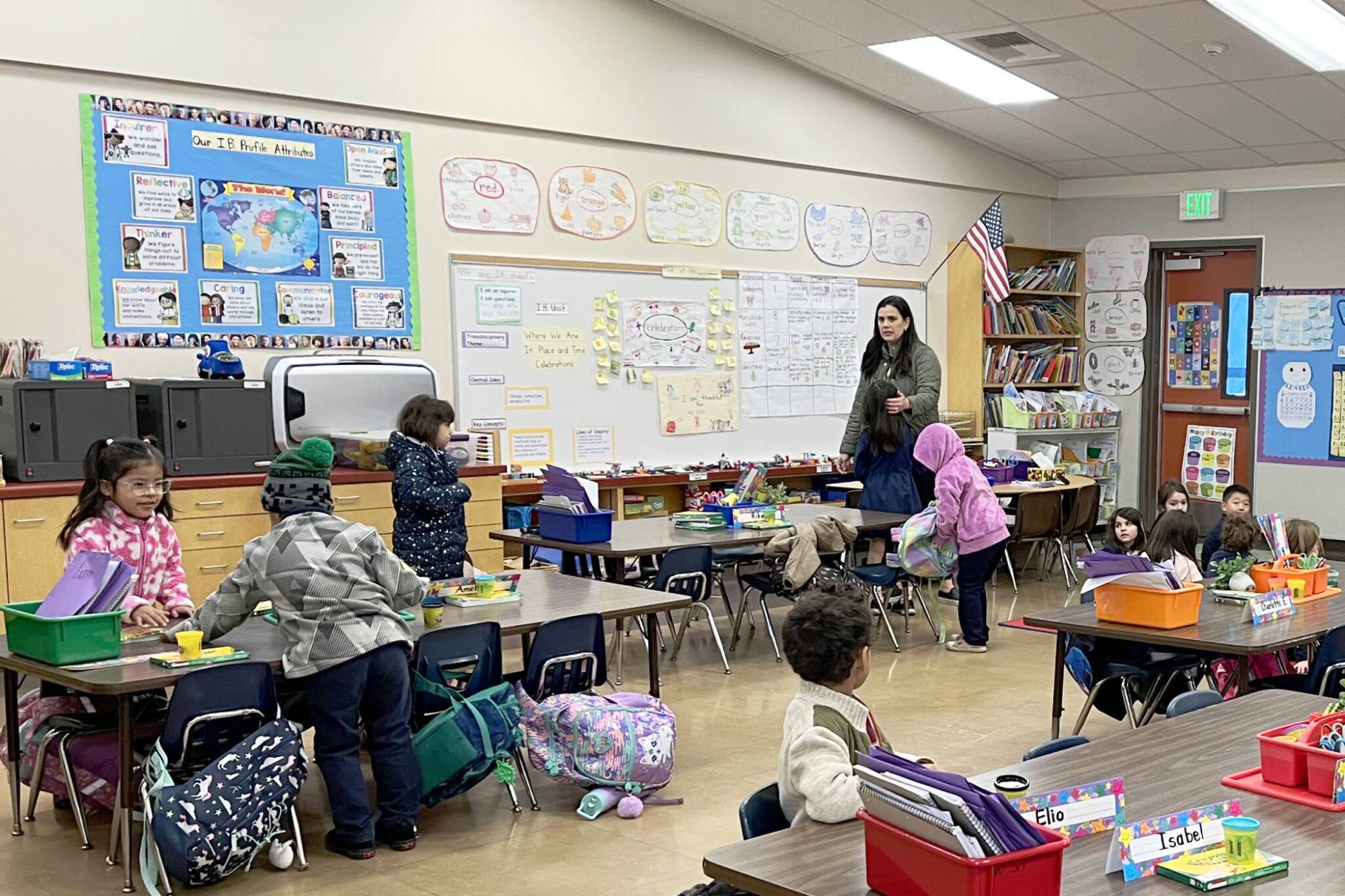
"caption": "Pasadena Unified School District students return to school after the Eaton fire.",
"credit": "Mallika Seshadri/EdSource",
"altTag": "A woman stands in front of several children in a classroom.",
"description": null,
"imgSizes": {
"medium": {
"file": "https://cdn.kqed.org/wp-content/uploads/sites/10/2025/06/IMG-0540-crop-2048x1365-1-2000x1333.jpg",
"width": 2000,
"height": 1333,
"mimeType": "image/jpeg"
},
"large": {
"file": "https://cdn.kqed.org/wp-content/uploads/sites/10/2025/06/IMG-0540-crop-2048x1365-1-2000x1333.jpg",
"width": 2000,
"height": 1333,
"mimeType": "image/jpeg"
},
"thumbnail": {
"file": "https://cdn.kqed.org/wp-content/uploads/sites/10/2025/06/IMG-0540-crop-2048x1365-1-160x107.jpg",
"width": 160,
"height": 107,
"mimeType": "image/jpeg"
},
"1536x1536": {
"file": "https://cdn.kqed.org/wp-content/uploads/sites/10/2025/06/IMG-0540-crop-2048x1365-1-1536x1024.jpg",
"width": 1536,
"height": 1024,
"mimeType": "image/jpeg"
},
"post-thumbnail": {
"file": "https://cdn.kqed.org/wp-content/uploads/sites/10/2025/06/IMG-0540-crop-2048x1365-1-672x372.jpg",
"width": 672,
"height": 372,
"mimeType": "image/jpeg"
},
"twentyfourteen-full-width": {
"file": "https://cdn.kqed.org/wp-content/uploads/sites/10/2025/06/IMG-0540-crop-2048x1365-1-1038x576.jpg",
"width": 1038,
"height": 576,
"mimeType": "image/jpeg"
},
"full-width": {
"file": "https://cdn.kqed.org/wp-content/uploads/sites/10/2025/06/IMG-0540-crop-2048x1365-1-2000x1333.jpg",
"width": 2000,
"height": 1333,
"mimeType": "image/jpeg"
},
"kqedFullSize": {
"file": "https://cdn.kqed.org/wp-content/uploads/sites/10/2025/06/IMG-0540-crop-2048x1365-1.jpg",
"width": 2048,
"height": 1365
}
},
"isLoading": false,
"fetchFailed": false
},
"news_12042581": {
"type": "attachments",
"id": "news_12042581",
"meta": {
"index": "attachments_1716263798",
"site": "news",
"id": "12042581",
"found": true
},
"title": "CLAIRE SCHWARTZ (L) AND NINA RAJ WITH A CHILD_S DRAWING RECOVERED BY RAJ AFTER THE EATON FIRE-KQED",
"publishDate": 1748987345,
"status": "inherit",
"parent": 0,
"modified": 1748987606,
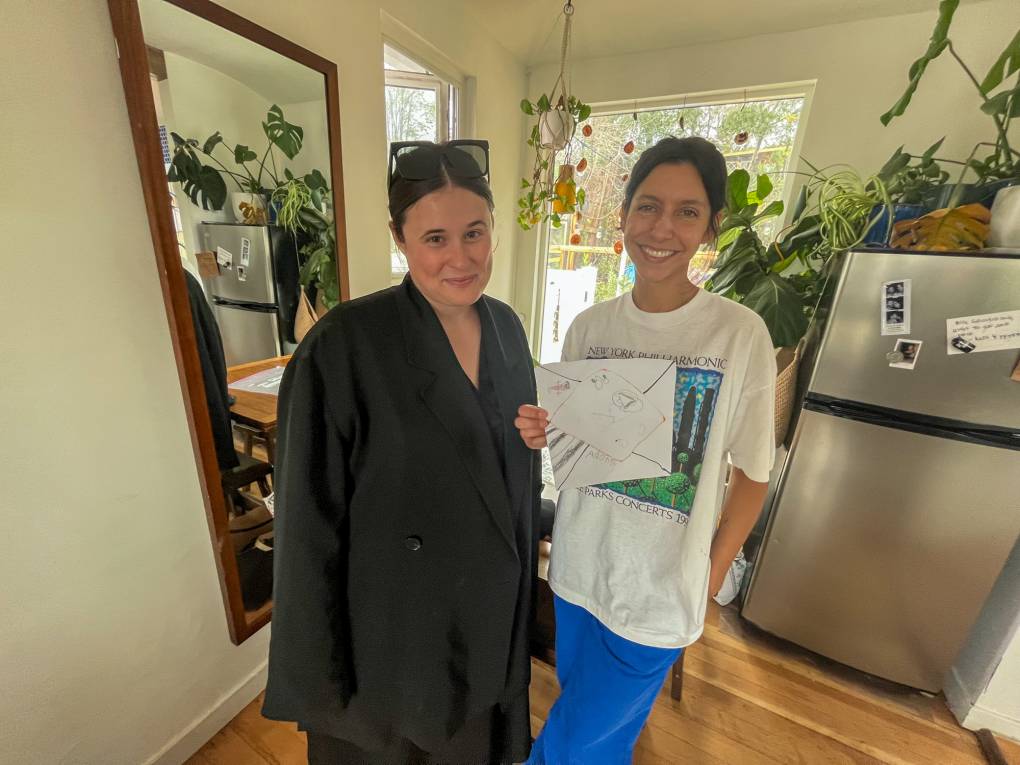
"caption": "Claire Schwartz (left) and Nina Raj with a child's drawing recovered by Raj after the Eaton Fire.",
"credit": "Steven Cuevas for KQED",
"altTag": null,
"description": null,
"imgSizes": {
"medium": {
"file": "https://cdn.kqed.org/wp-content/uploads/sites/10/2025/06/CLAIRE-SCHWARTZ-L-AND-NINA-RAJ-WITH-A-CHILD_S-DRAWING-RECOVERED-BY-RAJ-AFTER-THE-EATON-FIRE-KQED-800x600.jpg",
"width": 800,
"height": 600,
"mimeType": "image/jpeg"
},
"large": {
"file": "https://cdn.kqed.org/wp-content/uploads/sites/10/2025/06/CLAIRE-SCHWARTZ-L-AND-NINA-RAJ-WITH-A-CHILD_S-DRAWING-RECOVERED-BY-RAJ-AFTER-THE-EATON-FIRE-KQED-1020x765.jpg",
"width": 1020,
"height": 765,
"mimeType": "image/jpeg"
},
"thumbnail": {
"file": "https://cdn.kqed.org/wp-content/uploads/sites/10/2025/06/CLAIRE-SCHWARTZ-L-AND-NINA-RAJ-WITH-A-CHILD_S-DRAWING-RECOVERED-BY-RAJ-AFTER-THE-EATON-FIRE-KQED-160x120.jpg",
"width": 160,
"height": 120,
"mimeType": "image/jpeg"
},
"1536x1536": {
"file": "https://cdn.kqed.org/wp-content/uploads/sites/10/2025/06/CLAIRE-SCHWARTZ-L-AND-NINA-RAJ-WITH-A-CHILD_S-DRAWING-RECOVERED-BY-RAJ-AFTER-THE-EATON-FIRE-KQED-1536x1152.jpg",
"width": 1536,
"height": 1152,
"mimeType": "image/jpeg"
},
"post-thumbnail": {
"file": "https://cdn.kqed.org/wp-content/uploads/sites/10/2025/06/CLAIRE-SCHWARTZ-L-AND-NINA-RAJ-WITH-A-CHILD_S-DRAWING-RECOVERED-BY-RAJ-AFTER-THE-EATON-FIRE-KQED-672x372.jpg",
"width": 672,
"height": 372,
"mimeType": "image/jpeg"
},
"twentyfourteen-full-width": {
"file": "https://cdn.kqed.org/wp-content/uploads/sites/10/2025/06/CLAIRE-SCHWARTZ-L-AND-NINA-RAJ-WITH-A-CHILD_S-DRAWING-RECOVERED-BY-RAJ-AFTER-THE-EATON-FIRE-KQED-1038x576.jpg",
"width": 1038,
"height": 576,
"mimeType": "image/jpeg"
},
"full-width": {
"file": "https://cdn.kqed.org/wp-content/uploads/sites/10/2025/06/CLAIRE-SCHWARTZ-L-AND-NINA-RAJ-WITH-A-CHILD_S-DRAWING-RECOVERED-BY-RAJ-AFTER-THE-EATON-FIRE-KQED-1920x1440.jpg",
"width": 1920,
"height": 1440,
"mimeType": "image/jpeg"
},
"kqedFullSize": {
"file": "https://cdn.kqed.org/wp-content/uploads/sites/10/2025/06/CLAIRE-SCHWARTZ-L-AND-NINA-RAJ-WITH-A-CHILD_S-DRAWING-RECOVERED-BY-RAJ-AFTER-THE-EATON-FIRE-KQED.jpg",
"width": 2000,
"height": 1500
}
},
"isLoading": false,
"fetchFailed": false
},
"news_12043405": {
"type": "attachments",
"id": "news_12043405",
"meta": {
"index": "attachments_1716263798",
"site": "news",
"id": "12043405",
"found": true
},
"title": "Los Angeles Protest Racist Comments",
"publishDate": 1749502363,
"status": "inherit",
"parent": 12043348,
"modified": 1749502380,
"caption": "David Huerta, president of SEIU California speaks outside City Hall in Los Angeles during a protest to condemn the racist comments made in a 2021 by Los Angeles City Councilmembers, on Oct. 18, 2022.",
"credit": "Photo by Ringo Chiu via AP",
"altTag": null,
"description": null,
"imgSizes": {
"thumbnail": {
"file": "https://cdn.kqed.org/wp-content/uploads/sites/10/2025/06/101822-DAVID-HUERTA-AP-CM-01-KQED-160x107.jpg",
"width": 160,
"height": 107,
"mimeType": "image/jpeg"
},
"1536x1536": {
"file": "https://cdn.kqed.org/wp-content/uploads/sites/10/2025/06/101822-DAVID-HUERTA-AP-CM-01-KQED-1536x1024.jpg",
"width": 1536,
"height": 1024,
"mimeType": "image/jpeg"
},
"post-thumbnail": {
"file": "https://cdn.kqed.org/wp-content/uploads/sites/10/2025/06/101822-DAVID-HUERTA-AP-CM-01-KQED-672x372.jpg",
"width": 672,
"height": 372,
"mimeType": "image/jpeg"
},
"twentyfourteen-full-width": {
"file": "https://cdn.kqed.org/wp-content/uploads/sites/10/2025/06/101822-DAVID-HUERTA-AP-CM-01-KQED-1038x576.jpg",
"width": 1038,
"height": 576,
"mimeType": "image/jpeg"
},
"kqedFullSize": {
"file": "https://cdn.kqed.org/wp-content/uploads/sites/10/2025/06/101822-DAVID-HUERTA-AP-CM-01-KQED.jpg",
"width": 2000,
"height": 1333
}
},
"isLoading": false,
"fetchFailed": false
},
"news_12039302": {
"type": "attachments",
"id": "news_12039302",
"meta": {
"index": "attachments_1716263798",
"site": "news",
"id": "12039302",
"found": true
},
"title": "250507-CATALINA PLANT ECOLOGIST-NM-11-KQED",
"publishDate": 1746722663,
"status": "inherit",
"parent": 0,
"modified": 1746748131,
"caption": "A Catalina Ironwood sprout, rare tree and endemic to Catalina Island, in plant ecologist Kevin Alison's lab at the James H. Ackerman Plant Nursery on Catalina Island on May 7, 2025.",
"credit": "Nick Morrow for KQED",
"altTag": null,
"description": null,
"imgSizes": {
"medium": {
"file": "https://cdn.kqed.org/wp-content/uploads/sites/10/2025/05/250507-CATALINA-PLANT-ECOLOGIST-NM-11-KQED-800x533.jpg",
"width": 800,
"height": 533,
"mimeType": "image/jpeg"
},
"large": {
"file": "https://cdn.kqed.org/wp-content/uploads/sites/10/2025/05/250507-CATALINA-PLANT-ECOLOGIST-NM-11-KQED-1020x680.jpg",
"width": 1020,
"height": 680,
"mimeType": "image/jpeg"
},
"thumbnail": {
"file": "https://cdn.kqed.org/wp-content/uploads/sites/10/2025/05/250507-CATALINA-PLANT-ECOLOGIST-NM-11-KQED-160x107.jpg",
"width": 160,
"height": 107,
"mimeType": "image/jpeg"
},
"1536x1536": {
"file": "https://cdn.kqed.org/wp-content/uploads/sites/10/2025/05/250507-CATALINA-PLANT-ECOLOGIST-NM-11-KQED-1536x1024.jpg",
"width": 1536,
"height": 1024,
"mimeType": "image/jpeg"
},
"post-thumbnail": {
"file": "https://cdn.kqed.org/wp-content/uploads/sites/10/2025/05/250507-CATALINA-PLANT-ECOLOGIST-NM-11-KQED-672x372.jpg",
"width": 672,
"height": 372,
"mimeType": "image/jpeg"
},
"twentyfourteen-full-width": {
"file": "https://cdn.kqed.org/wp-content/uploads/sites/10/2025/05/250507-CATALINA-PLANT-ECOLOGIST-NM-11-KQED-1038x576.jpg",
"width": 1038,
"height": 576,
"mimeType": "image/jpeg"
},
"full-width": {
"file": "https://cdn.kqed.org/wp-content/uploads/sites/10/2025/05/250507-CATALINA-PLANT-ECOLOGIST-NM-11-KQED-1920x1280.jpg",
"width": 1920,
"height": 1280,
"mimeType": "image/jpeg"
},
"kqedFullSize": {
"file": "https://cdn.kqed.org/wp-content/uploads/sites/10/2025/05/250507-CATALINA-PLANT-ECOLOGIST-NM-11-KQED.jpg",
"width": 2000,
"height": 1333
}
},
"isLoading": false,
"fetchFailed": false
},
"news_12038764": {
"type": "attachments",
"id": "news_12038764",
"meta": {
"index": "attachments_1716263798",
"site": "news",
"id": "12038764",
"found": true
},
"title": "250505-SUZY DEGAZON-NM-05-KQED",
"publishDate": 1746471154,
"status": "inherit",
"parent": 0,
"modified": 1746547784,
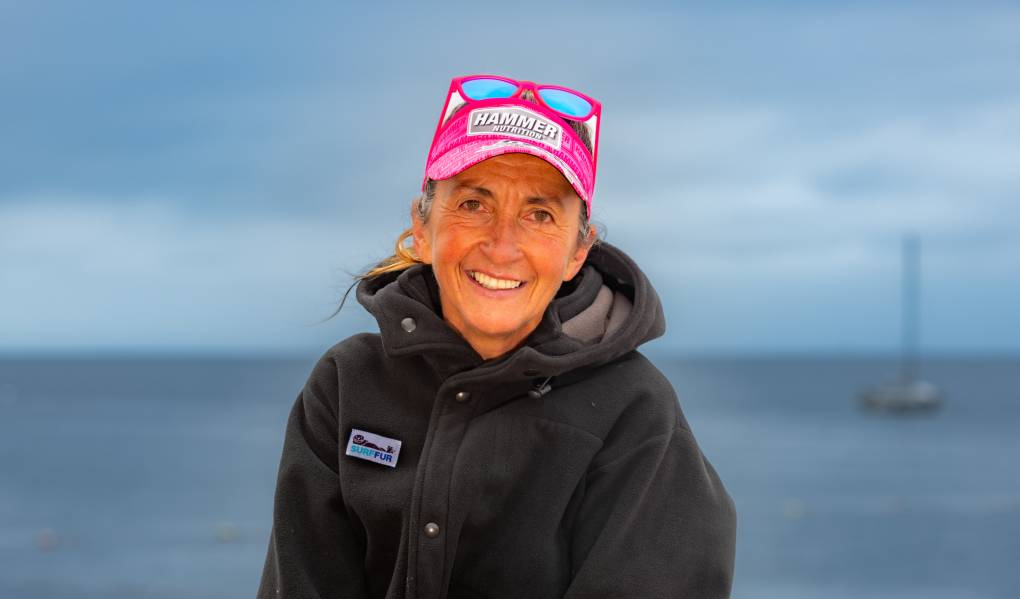
"caption": "Suzy Degazon at the Catalina Island Swim Club on Catalina Island on May 5, 2025.",
"credit": "Nick Morrow for KQED",
"altTag": null,
"description": null,
"imgSizes": {
"medium": {
"file": "https://cdn.kqed.org/wp-content/uploads/sites/10/2025/05/250505-SUZY-DEGAZON-NM-05-KQED-800x470.jpg",
"width": 800,
"height": 470,
"mimeType": "image/jpeg"
},
"large": {
"file": "https://cdn.kqed.org/wp-content/uploads/sites/10/2025/05/250505-SUZY-DEGAZON-NM-05-KQED-1020x599.jpg",
"width": 1020,
"height": 599,
"mimeType": "image/jpeg"
},
"thumbnail": {
"file": "https://cdn.kqed.org/wp-content/uploads/sites/10/2025/05/250505-SUZY-DEGAZON-NM-05-KQED-160x94.jpg",
"width": 160,
"height": 94,
"mimeType": "image/jpeg"
},
"1536x1536": {
"file": "https://cdn.kqed.org/wp-content/uploads/sites/10/2025/05/250505-SUZY-DEGAZON-NM-05-KQED-1536x902.jpg",
"width": 1536,
"height": 902,
"mimeType": "image/jpeg"
},
"post-thumbnail": {
"file": "https://cdn.kqed.org/wp-content/uploads/sites/10/2025/05/250505-SUZY-DEGAZON-NM-05-KQED-672x372.jpg",
"width": 672,
"height": 372,
"mimeType": "image/jpeg"
},
"twentyfourteen-full-width": {
"file": "https://cdn.kqed.org/wp-content/uploads/sites/10/2025/05/250505-SUZY-DEGAZON-NM-05-KQED-1038x576.jpg",
"width": 1038,
"height": 576,
"mimeType": "image/jpeg"
},
"full-width": {
"file": "https://cdn.kqed.org/wp-content/uploads/sites/10/2025/05/250505-SUZY-DEGAZON-NM-05-KQED-1920x1128.jpg",
"width": 1920,
"height": 1128,
"mimeType": "image/jpeg"
},
"kqedFullSize": {
"file": "https://cdn.kqed.org/wp-content/uploads/sites/10/2025/05/250505-SUZY-DEGAZON-NM-05-KQED.jpg",
"width": 2000,
"height": 1175
}
},
"isLoading": false,
"fetchFailed": false
},
"news_12037126": {
"type": "attachments",
"id": "news_12037126",
"meta": {
"index": "attachments_1716263798",
"site": "news",
"id": "12037126",
"found": true
},
"title": "The burnt remains of St. Marks Church.Altadena.CA",
"publishDate": 1745350823,
"status": "inherit",
"parent": 0,
"modified": 1745351316,
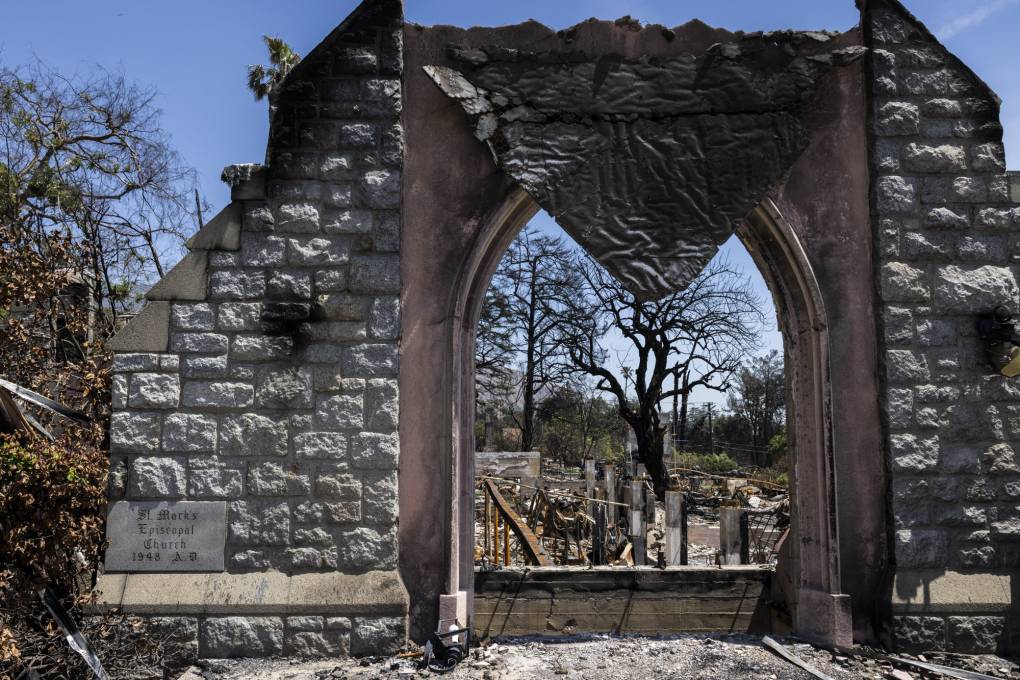
"caption": "The burnt remains of St. Marks Church.\nAltadena on April 20, 2025.",
"credit": "Mette Lampcov for KQED",
"altTag": null,
"description": null,
"imgSizes": {
"medium": {
"file": "https://cdn.kqed.org/wp-content/uploads/sites/10/2025/04/METTE.LAMPCOV.CHURCH.BELL-22-KQED-800x534.jpg",
"width": 800,
"height": 534,
"mimeType": "image/jpeg"
},
"large": {
"file": "https://cdn.kqed.org/wp-content/uploads/sites/10/2025/04/METTE.LAMPCOV.CHURCH.BELL-22-KQED-1020x680.jpg",
"width": 1020,
"height": 680,
"mimeType": "image/jpeg"
},
"thumbnail": {
"file": "https://cdn.kqed.org/wp-content/uploads/sites/10/2025/04/METTE.LAMPCOV.CHURCH.BELL-22-KQED-160x107.jpg",
"width": 160,
"height": 107,
"mimeType": "image/jpeg"
},
"1536x1536": {
"file": "https://cdn.kqed.org/wp-content/uploads/sites/10/2025/04/METTE.LAMPCOV.CHURCH.BELL-22-KQED-1536x1025.jpg",
"width": 1536,
"height": 1025,
"mimeType": "image/jpeg"
},
"post-thumbnail": {
"file": "https://cdn.kqed.org/wp-content/uploads/sites/10/2025/04/METTE.LAMPCOV.CHURCH.BELL-22-KQED-672x372.jpg",
"width": 672,
"height": 372,
"mimeType": "image/jpeg"
},
"twentyfourteen-full-width": {
"file": "https://cdn.kqed.org/wp-content/uploads/sites/10/2025/04/METTE.LAMPCOV.CHURCH.BELL-22-KQED-1038x576.jpg",
"width": 1038,
"height": 576,
"mimeType": "image/jpeg"
},
"full-width": {
"file": "https://cdn.kqed.org/wp-content/uploads/sites/10/2025/04/METTE.LAMPCOV.CHURCH.BELL-22-KQED-1920x1281.jpg",
"width": 1920,
"height": 1281,
"mimeType": "image/jpeg"
},
"kqedFullSize": {
"file": "https://cdn.kqed.org/wp-content/uploads/sites/10/2025/04/METTE.LAMPCOV.CHURCH.BELL-22-KQED.jpg",
"width": 2000,
"height": 1334
}
},
"isLoading": false,
"fetchFailed": false
},
"news_12034740": {
"type": "attachments",
"id": "news_12034740",
"meta": {
"index": "attachments_1716263798",
"site": "news",
"id": "12034740",
"found": true
},
"title": "250407-EL COMPA NEGRO-09-KQED",
"publishDate": 1744048105,
"status": "inherit",
"parent": 12037162,
"modified": 1745359113,
"caption": "El Compa Negro performs “Yo Soy Compton” in front of the Compton Art and History Museum. ",
"credit": "Aisha Wallace-Palomares for KQED",
"altTag": null,
"description": null,
"imgSizes": {
"medium": {
"file": "https://cdn.kqed.org/wp-content/uploads/sites/10/2025/04/250407-EL-COMPA-NEGRO-09-KQED-800x533.jpg",
"width": 800,
"height": 533,
"mimeType": "image/jpeg"
},
"large": {
"file": "https://cdn.kqed.org/wp-content/uploads/sites/10/2025/04/250407-EL-COMPA-NEGRO-09-KQED-1020x680.jpg",
"width": 1020,
"height": 680,
"mimeType": "image/jpeg"
},
"thumbnail": {
"file": "https://cdn.kqed.org/wp-content/uploads/sites/10/2025/04/250407-EL-COMPA-NEGRO-09-KQED-160x107.jpg",
"width": 160,
"height": 107,
"mimeType": "image/jpeg"
},
"1536x1536": {
"file": "https://cdn.kqed.org/wp-content/uploads/sites/10/2025/04/250407-EL-COMPA-NEGRO-09-KQED-1536x1024.jpg",
"width": 1536,
"height": 1024,
"mimeType": "image/jpeg"
},
"post-thumbnail": {
"file": "https://cdn.kqed.org/wp-content/uploads/sites/10/2025/04/250407-EL-COMPA-NEGRO-09-KQED-672x372.jpg",
"width": 672,
"height": 372,
"mimeType": "image/jpeg"
},
"twentyfourteen-full-width": {
"file": "https://cdn.kqed.org/wp-content/uploads/sites/10/2025/04/250407-EL-COMPA-NEGRO-09-KQED-1038x576.jpg",
"width": 1038,
"height": 576,
"mimeType": "image/jpeg"
},
"full-width": {
"file": "https://cdn.kqed.org/wp-content/uploads/sites/10/2025/04/250407-EL-COMPA-NEGRO-09-KQED-1920x1280.jpg",
"width": 1920,
"height": 1280,
"mimeType": "image/jpeg"
},
"kqedFullSize": {
"file": "https://cdn.kqed.org/wp-content/uploads/sites/10/2025/04/250407-EL-COMPA-NEGRO-09-KQED.jpg",
"width": 2000,
"height": 1333
}
},
"isLoading": false,
"fetchFailed": false
}
},
"audioPlayerReducer": {
"postId": "stream_live",
"isPaused": true,
"isPlaying": false,
"pfsActive": false,
"pledgeModalIsOpen": true,
"playerDrawerIsOpen": false,
"liveAudioPlayStartedAt": 0,
"liveAudioPlayContext": ""
},
"authorsReducer": {
"byline_news_12059123": {
"type": "authors",
"id": "byline_news_12059123",
"meta": {
"override": true
},
"slug": "byline_news_12059123",
"name": "Jacob Margolis, LAist",
"isLoading": false
},
"byline_news_12054879": {
"type": "authors",
"id": "byline_news_12054879",
"meta": {
"override": true
},
"slug": "byline_news_12054879",
"name": "Jaime Ding, The Associated Press",
"isLoading": false
},
"byline_news_12044536": {
"type": "authors",
"id": "byline_news_12044536",
"meta": {
"override": true
},
"slug": "byline_news_12044536",
"name": "\u003ca href=\"https://edsource.org/author/mseshadri\">Mallika Seshadri\u003c/a>, EdSource",
"isLoading": false
},
"byline_news_12043348": {
"type": "authors",
"id": "byline_news_12043348",
"meta": {
"override": true
},
"slug": "byline_news_12043348",
"name": "Jeanne Kuang, CalMatters",
"isLoading": false
},
"byline_news_12038795": {
"type": "authors",
"id": "byline_news_12038795",
"meta": {
"override": true
},
"slug": "byline_news_12038795",
"name": "Lusen Mendel ",
"isLoading": false
},
"byline_news_12038756": {
"type": "authors",
"id": "byline_news_12038756",
"meta": {
"override": true
},
"slug": "byline_news_12038756",
"name": "Steven Cuevas, Sonya Geiss",
"isLoading": false
},
"kqed": {
"type": "authors",
"id": "236",
"meta": {
"index": "authors_1716337520",
"id": "236",
"found": true
},
"name": "KQED News Staff",
"firstName": "KQED News Staff",
"lastName": null,
"slug": "kqed",
"email": "faq@kqed.org",
"display_author_email": false,
"staff_mastheads": [],
"title": null,
"bio": null,
"avatar": "https://secure.gravatar.com/avatar/ef0e801a68c4c54afa9180db14084167?s=600&d=blank&r=g",
"twitter": null,
"facebook": null,
"instagram": null,
"linkedin": null,
"sites": [
{
"site": "arts",
"roles": [
"contributor"
]
},
{
"site": "news",
"roles": [
"editor"
]
},
{
"site": "futureofyou",
"roles": [
"author"
]
}
],
"headData": {
"title": "KQED News Staff | KQED",
"description": null,
"ogImgSrc": "https://secure.gravatar.com/avatar/ef0e801a68c4c54afa9180db14084167?s=600&d=blank&r=g",
"twImgSrc": "https://secure.gravatar.com/avatar/ef0e801a68c4c54afa9180db14084167?s=600&d=blank&r=g"
},
"isLoading": false,
"link": "/author/kqed"
},
"scuevas": {
"type": "authors",
"id": "2600",
"meta": {
"index": "authors_1716337520",
"id": "2600",
"found": true
},
"name": "Steven Cuevas",
"firstName": "Steven",
"lastName": "Cuevas",
"slug": "scuevas",
"email": "scuevas@kqed.org",
"display_author_email": false,
"staff_mastheads": [],
"title": "KQED Contributor",
"bio": "Steven is a former Los Angeles bureau chief for The California Report.\r\n\r\nHe reports on an array of issues across the Southland, from immigration and regional politics to religion, the performing arts and pop culture.\r\n\r\nPrior to joining KQED in 2012, Steven covered Inland southern California for KPCC in Pasadena. He also helped establish the first newsroom at \u003ca href=\"http://kut.org/\">KUT\u003c/a> in Austin, Texas where he was a general assignment reporter.\r\n\r\nSteven has received numerous awards for his reporting including an RTNDA Edward R. Murrow Award for investigative reporting in addition to awards from the LA Press Club, the Associated Press and the Society for Professional Journalists.\r\n\r\nSteven grew up in and around San Francisco and now lives in Pasadena just a short jog from the foot of the San Gabriel Mountains.",
"avatar": "https://secure.gravatar.com/avatar/bbb0bb7b496f83ab350e23ad0dc7c81c?s=600&d=blank&r=g",
"twitter": null,
"facebook": null,
"instagram": null,
"linkedin": null,
"sites": [
{
"site": "news",
"roles": [
"contributor"
]
},
{
"site": "stateofhealth",
"roles": [
"author"
]
}
],
"headData": {
"title": "Steven Cuevas | KQED",
"description": "KQED Contributor",
"ogImgSrc": "https://secure.gravatar.com/avatar/bbb0bb7b496f83ab350e23ad0dc7c81c?s=600&d=blank&r=g",
"twImgSrc": "https://secure.gravatar.com/avatar/bbb0bb7b496f83ab350e23ad0dc7c81c?s=600&d=blank&r=g"
},
"isLoading": false,
"link": "/author/scuevas"
},
"mlagos": {
"type": "authors",
"id": "3239",
"meta": {
"index": "authors_1716337520",
"id": "3239",
"found": true
},
"name": "Marisa Lagos",
"firstName": "Marisa",
"lastName": "Lagos",
"slug": "mlagos",
"email": "mlagos@kqed.org",
"display_author_email": false,
"staff_mastheads": [
"news"
],
"title": "KQED Contributor",
"bio": "Marisa Lagos is a correspondent for KQED’s California Politics and Government Desk and co-hosts the award-winning show and podcast, Political Breakdown. At KQED, Lagos also conducts reporting, analysis and investigations into state, local and national politics for radio, TV, online and onstage. In 2022, she and co-host, Scott Shafer, moderated the only gubernatorial debate in California. In 2020, the \u003ci>Washington Post\u003c/i> named her one of the top political journalists in California; she was nominated for a Peabody and won several other awards for her work investigating the 2017 California wildfires. She has worked at the \u003ci>San Francisco Chronicle\u003c/i>, \u003ci>San Francisco Examiner\u003c/i> and \u003ci>Los Angeles Times\u003c/i>. A UC Santa Barbara graduate, she lives in San Francisco with her two sons and husband.",
"avatar": "https://secure.gravatar.com/avatar/a261a0d3696fc066871ef96b85b5e7d2?s=600&d=blank&r=g",
"twitter": "@mlagos",
"facebook": null,
"instagram": null,
"linkedin": null,
"sites": [
{
"site": "arts",
"roles": [
"author"
]
},
{
"site": "news",
"roles": [
"editor"
]
},
{
"site": "science",
"roles": [
"editor"
]
},
{
"site": "forum",
"roles": [
"author"
]
},
{
"site": "liveblog",
"roles": [
"author"
]
}
],
"headData": {
"title": "Marisa Lagos | KQED",
"description": "KQED Contributor",
"ogImgSrc": "https://secure.gravatar.com/avatar/a261a0d3696fc066871ef96b85b5e7d2?s=600&d=blank&r=g",
"twImgSrc": "https://secure.gravatar.com/avatar/a261a0d3696fc066871ef96b85b5e7d2?s=600&d=blank&r=g"
},
"isLoading": false,
"link": "/author/mlagos"
},
"kmizuguchi": {
"type": "authors",
"id": "11739",
"meta": {
"index": "authors_1716337520",
"id": "11739",
"found": true
},
"name": "Keith Mizuguchi",
"firstName": "Keith",
"lastName": "Mizuguchi",
"slug": "kmizuguchi",
"email": "kmizuguchi@kqed.org",
"display_author_email": false,
"staff_mastheads": [],
"title": "KQED Contributor",
"bio": null,
"avatar": "https://secure.gravatar.com/avatar/64d8a7de0723d4099b9fe4e915136103febcc20809abce228ee4415bcb237023?s=600&d=blank&r=g",
"twitter": null,
"bluesky": null,
"facebook": null,
"instagram": null,
"linkedin": null,
"sites": [
{
"site": "news",
"roles": [
"editor"
]
},
{
"site": "science",
"roles": [
"editor"
]
}
],
"headData": {
"title": "Keith Mizuguchi | KQED",
"description": "KQED Contributor",
"ogImgSrc": "https://secure.gravatar.com/avatar/64d8a7de0723d4099b9fe4e915136103febcc20809abce228ee4415bcb237023?s=600&d=blank&r=g",
"twImgSrc": "https://secure.gravatar.com/avatar/64d8a7de0723d4099b9fe4e915136103febcc20809abce228ee4415bcb237023?s=600&d=blank&r=g"
},
"isLoading": false,
"link": "/author/kmizuguchi"
},
"srascon": {
"type": "authors",
"id": "11816",
"meta": {
"index": "authors_1716337520",
"id": "11816",
"found": true
},
"name": "Steven Rascón",
"firstName": "Steven",
"lastName": "Rascón",
"slug": "srascon",
"email": "srascon@kqed.org",
"display_author_email": false,
"staff_mastheads": [],
"title": "KQED Contributor",
"bio": "Steven Rascón is a journalist and an audio producer from Northeast Los Angeles. He's a producer in the KQED news and podcast department. He was a producer for the KQED investigative series \u003cem>\u003ca href=\"https://www.kqed.org/news/11974730/1-welcome-to-the-family-s2-new-folsom/\">On Our Watch: New Folsom\u003c/a>.\u003c/em> His reporting has been featured in Cal Matters, KCRW, and WHYY. He's also the production manager for the radio show and podcast \u003cem>Reveal\u003c/em> from the Center for Investigative Reporting and PRX. He was part of the team that produced the Peabody nominated 7-part series \u003cem>\u003ca href=\"https://revealnews.org/mississippi-goddam/\">Mississippi Goddamn: The Ballad of Billey Joe\u003c/a>.\u003c/em> He's a graduate from the UC Berkeley Graduate School of Journalism.",
"avatar": "https://secure.gravatar.com/avatar/37610a357b875db673c4b0d1bdcd9db1?s=600&d=blank&r=g",
"twitter": "hola_rascon",
"facebook": null,
"instagram": null,
"linkedin": null,
"sites": [
{
"site": "arts",
"roles": [
"editor"
]
},
{
"site": "news",
"roles": [
"editor"
]
}
],
"headData": {
"title": "Steven Rascón | KQED",
"description": "KQED Contributor",
"ogImgSrc": "https://secure.gravatar.com/avatar/37610a357b875db673c4b0d1bdcd9db1?s=600&d=blank&r=g",
"twImgSrc": "https://secure.gravatar.com/avatar/37610a357b875db673c4b0d1bdcd9db1?s=600&d=blank&r=g"
},
"isLoading": false,
"link": "/author/srascon"
},
"sprabha": {
"type": "authors",
"id": "11976",
"meta": {
"index": "authors_1716337520",
"id": "11976",
"found": true
},
"name": "Srishti Prabha",
"firstName": "Srishti",
"lastName": "Prabha",
"slug": "sprabha",
"email": "sprabha@KQED.org",
"display_author_email": false,
"staff_mastheads": [],
"title": "KQED Contributor",
"bio": null,
"avatar": "https://secure.gravatar.com/avatar/cc4d8ef770090714faad7e1d24857f806d09340456c5734167b9a6361b175d7d?s=600&d=blank&r=g",
"twitter": null,
"bluesky": null,
"facebook": null,
"instagram": null,
"linkedin": null,
"sites": [
{
"site": "news",
"roles": [
"editor"
]
}
],
"headData": {
"title": "Srishti Prabha | KQED",
"description": "KQED Contributor",
"ogImgSrc": "https://secure.gravatar.com/avatar/cc4d8ef770090714faad7e1d24857f806d09340456c5734167b9a6361b175d7d?s=600&d=blank&r=g",
"twImgSrc": "https://secure.gravatar.com/avatar/cc4d8ef770090714faad7e1d24857f806d09340456c5734167b9a6361b175d7d?s=600&d=blank&r=g"
},
"isLoading": false,
"link": "/author/sprabha"
}
},
"pagesReducer": {
"news_tag_los-angeles-county": {
"type": "terms",
"id": "news_21238",
"meta": {
"index": "terms_1716263798",
"site": "news",
"id": "21238",
"score": 10.400978
},
"featImg": null,
"name": "Los Angeles County",
"description": null,
"taxonomy": "tag",
"headData": {
"twImgId": null,
"twTitle": null,
"ogTitle": null,
"ogImgId": null,
"twDescription": null,
"description": null,
"title": "Los Angeles County Archives | KQED News",
"ogDescription": null
},
"ttid": 21255,
"slug": "los-angeles-county",
"isLoading": false,
"title": "Los Angeles County",
"pageMeta": {
"site": "news",
"WpPageTemplate": "page-topic-editorial",
"currentPage": 2
},
"blocks": [
{
"blockName": "kqed/post-list",
"attrs": {
"layout": "cardArticle2",
"query": "posts/news?tag=los-angeles-county",
"seeMore": false,
"paginated": true,
"page": 2
}
},
{
"blockName": "kqed/ad"
}
]
}
},
"pfsSessionReducer": {},
"postsReducer": {
"stream_live": {
"type": "live",
"id": "stream_live",
"audioUrl": "https://streams.kqed.org/kqedradio",
"title": "Live Stream",
"excerpt": "Live Stream information currently unavailable.",
"link": "/radio",
"featImg": "",
"label": {
"name": "KQED Live",
"link": "/"
}
},
"stream_kqedNewscast": {
"type": "posts",
"id": "stream_kqedNewscast",
"audioUrl": "https://www.kqed.org/.stream/anon/radio/RDnews/newscast.mp3?_=1",
"title": "KQED Newscast",
"featImg": "",
"label": {
"name": "88.5 FM",
"link": "/"
}
},
"news_12059123": {
"type": "posts",
"id": "news_12059123",
"meta": {
"index": "posts_1716263798",
"site": "news",
"id": "12059123",
"score": null,
"sort": [
1759947343000
]
},
"guestAuthors": [],
"slug": "uber-driver-charged-in-connection-with-starting-the-palisades-fire",
"title": "Uber Driver Charged in Connection With Starting the Palisades Fire",
"publishDate": 1759947343,
"format": "standard",
"headTitle": "Uber Driver Charged in Connection With Starting the Palisades Fire | KQED",
"labelTerm": {
"term": 24117,
"site": "news"
},
"content": "\u003cp>Nine months after the \u003ca href=\"https://www.kqed.org/news/tag/palisades-fire\">Palisades Fire ignited\u003c/a>, killing 12 and destroying more than 6,800 structures, authorities announced that they’ve arrested and charged 29-year-old Jonathan Rinderknecht in connection to starting the deadly blaze.\u003c/p>\n\u003cp>Acting U.S. Attorney Bill Essayli said Rinderknecht was arrested Tuesday in Florida. He has been \u003ca href=\"https://cdn.kqed.org/wp-content/uploads/sites/10/2025/10/usa-v-rinderknecht.pdf\">charged\u003c/a> with destruction of property by means of fire, which is a felony that carries a minimum sentence of five years in federal prison.\u003c/p>\n\u003cp>The Bureau of Alcohol, Tobacco, Firearms and Explosives has been investigating since January and has determined that it was a reignition of an earlier fire. Officials said at a news conference Wednesday that Rinderknecht started that fire six days earlier while working as an Uber driver — around midnight on Jan. 1 — after dropping off a passenger.\u003c/p>\n\u003cp>[ad fullwidth]\u003c/p>\n\u003cp>The 8-acre Lachman Fire didn’t spread far as L.A. city and county helicopters made water drops and hand crews cut a fire line, helping to contain the blaze before moving on to mop up. Firefighters then patrolled the burned area to extinguish smoldering stumps, logs and piles of ash, as there was a risk of reignition later.\u003c/p>\n\u003cp>That’s exactly what appears to have happened.\u003c/p>\n\u003cfigure id=\"attachment_12059124\" class=\"wp-caption aligncenter\" style=\"max-width: 1584px\">\u003ca href=\"https://cdn.kqed.org/wp-content/uploads/sites/10/2025/10/Mug-shot-firtes.jpeg\">\u003cimg loading=\"lazy\" decoding=\"async\" class=\"size-full wp-image-12059124\" src=\"https://cdn.kqed.org/wp-content/uploads/sites/10/2025/10/Mug-shot-firtes.jpeg\" alt=\"\" width=\"1584\" height=\"892\" srcset=\"https://cdn.kqed.org/wp-content/uploads/sites/10/2025/10/Mug-shot-firtes.jpeg 1584w, https://cdn.kqed.org/wp-content/uploads/sites/10/2025/10/Mug-shot-firtes-160x90.jpeg 160w, https://cdn.kqed.org/wp-content/uploads/sites/10/2025/10/Mug-shot-firtes-1536x865.jpeg 1536w\" sizes=\"auto, (max-width: 1584px) 100vw, 1584px\">\u003c/a>\u003cfigcaption class=\"wp-caption-text\">This undated photo provided by the U.S. Attorney’s Office shows Jonathan Rinderknecht, a suspect in the Palisades Fire. \u003ccite>(Courtesy U.S. Attorney's Office )\u003c/cite>\u003c/figcaption>\u003c/figure>\n\u003cp>According to Essayli, the fire smoldered underground until strong winds on Jan. 7 caused the fire to surface and spread, becoming one of the most destructive fires on record.\u003c/p>\n\u003cp>Speculation about the case of the fire had centered on fireworks, but Essayli said that authorities have no evidence that’s the case. Rinderknecht reportedly lived in the Pacific Palisades, but had relocated to Florida since then.\u003c/p>\n\u003cp>Authorities gave no potential motive. They projected AI images, said to have been generated by the suspect, at a news conference.\u003c/p>\n\u003cfigure id=\"attachment_12059125\" class=\"wp-caption aligncenter\" style=\"max-width: 1584px\">\u003ca href=\"https://cdn.kqed.org/wp-content/uploads/sites/10/2025/10/AI-gen-fires.jpeg\">\u003cimg loading=\"lazy\" decoding=\"async\" class=\"size-full wp-image-12059125\" src=\"https://cdn.kqed.org/wp-content/uploads/sites/10/2025/10/AI-gen-fires.jpeg\" alt=\"\" width=\"1584\" height=\"906\" srcset=\"https://cdn.kqed.org/wp-content/uploads/sites/10/2025/10/AI-gen-fires.jpeg 1584w, https://cdn.kqed.org/wp-content/uploads/sites/10/2025/10/AI-gen-fires-160x92.jpeg 160w, https://cdn.kqed.org/wp-content/uploads/sites/10/2025/10/AI-gen-fires-1536x879.jpeg 1536w\" sizes=\"auto, (max-width: 1584px) 100vw, 1584px\">\u003c/a>\u003cfigcaption class=\"wp-caption-text\">AI-generated images were displayed by federal officials when they announced the arrest of a man in connection with the Palisades Fire. \u003ccite>(Courtesy U.S. Attorney's Office)\u003c/cite>\u003c/figcaption>\u003c/figure>\n\u003cp>In a statement, Los Angeles Mayor Karen Bass thanked federal and local investigators for the work that led to the arrest.\u003c/p>\n\u003cp>“Each day that families are displaced is a day too long,” Bass said, “and as we are working tirelessly to bring Angelenos home, we are also working towards closure and towards justice — and today is a step forward in that process.”\u003c/p>\n\u003ch2>The backstory\u003c/h2>\n\u003cp>The Palisades Fire sparked about 10:30 a.m. on Jan. 7, amid a massive windstorm in Southern California. By the time it was fully contained 24 days later, the fire had burned more than 23,000 acres and destroyed more than 6,800 structures and damaging 937 more. Twelve people were killed.\u003cbr>\n[aside postID=news_12058885 hero='https://cdn.kqed.org/wp-content/uploads/sites/10/2025/01/ReligiousCenterFirePasadenaJewishTempleGetty-1020x671.jpg']An \u003ca href=\"https://laist.com/news/climate-environment/la-county-emergency-response-after-action-reports-woolsey-palisades-eaton\">LAist review of after-action reports\u003c/a> released following the January fires and the 2018 Woolsey Fire — which killed three people and destroyed nearly 2,000 structures across L.A. and Ventura counties — found similar shortfalls in L.A. County’s emergency response. The reports offer similar recommendations for how to fix the issues too.\u003c/p>\n\u003cp>The L.A. County Sheriff’s Department told LAist it isn’t “reasonable or appropriate” to compare the reports, a sentiment echoed by the county Fire Department, which said in a statement that “hurricane-force winds that caused a never-before-seen ember cast and house-to-house ignition, the idea that recommendations in the Woolsey After-Action Report are strikingly similar to those in the Eaton/Palisades wildfires, we disagree.”\u003c/p>\n\u003cp>After the announcement of the arrest in the Palisades Fire, Bass said the Los Angeles Fire Department’s after-action report would be released soon.\u003c/p>\n\u003cp>\u003c/p>\n",
"blocks": [],
"excerpt": "Nine months after the Palisades Fire ignited, killing 12 and destroying more than 6,800 structures, authorities announced that they've arrested and charged a suspect in connection to the start of the deadly blaze.\r\n\r\n",
"status": "publish",
"parent": 0,
"modified": 1759950200,
"stats": {
"hasAudio": false,
"hasVideo": false,
"hasChartOrMap": false,
"iframeSrcs": [],
"hasGoogleForm": false,
"hasGallery": false,
"hasHearkenModule": false,
"hasPolis": false,
"paragraphCount": 15,
"wordCount": 653
},
"headData": {
"title": "Uber Driver Charged in Connection With Starting the Palisades Fire | KQED",
"description": "Nine months after the Palisades Fire ignited, killing 12 and destroying more than 6,800 structures, authorities announced that they've arrested and charged a suspect in connection to the start of the deadly blaze.\r\n\r\n",
"ogTitle": "",
"ogDescription": "",
"ogImgId": "",
"twTitle": "",
"twDescription": "",
"twImgId": "",
"schema": {
"@context": "https://schema.org",
"@type": "NewsArticle",
"headline": "Uber Driver Charged in Connection With Starting the Palisades Fire",
"datePublished": "2025-10-08T11:15:43-07:00",
"dateModified": "2025-10-08T12:03:20-07:00",
"image": "https://cdn.kqed.org/wp-content/uploads/2020/02/KQED-OG-Image@1x.png",
"isAccessibleForFree": "True",
"publisher": {
"@type": "NewsMediaOrganization",
"@id": "https://www.kqed.org/#organization",
"name": "KQED",
"logo": "https://cdn.kqed.org/wp-content/uploads/2020/02/KQED-OG-Image@1x.png",
"url": "https://www.kqed.org",
"sameAs": [
"https://www.facebook.com/KQED",
"https://twitter.com/KQED",
"https://www.instagram.com/kqed/",
"https://www.tiktok.com/@kqedofficial",
"https://www.linkedin.com/company/kqed",
"https://www.youtube.com/channel/UCeC0IOo7i1P_61zVUWbJ4nw"
]
}
}
},
"primaryCategory": {
"termId": 34167,
"slug": "criminal-justice",
"name": "Criminal Justice"
},
"sticky": false,
"nprByline": "Jacob Margolis, LAist",
"nprStoryId": "kqed-12059123",
"templateType": "standard",
"featuredImageType": "standard",
"excludeFromSiteSearch": "Include",
"showOnAuthorArchivePages": "No",
"articleAge": "0",
"path": "/news/12059123/uber-driver-charged-in-connection-with-starting-the-palisades-fire",
"audioTrackLength": null,
"parsedContent": [
{
"type": "contentString",
"content": "\u003cdiv class=\"post-body\">\u003cp>\u003cp>Nine months after the \u003ca href=\"https://www.kqed.org/news/tag/palisades-fire\">Palisades Fire ignited\u003c/a>, killing 12 and destroying more than 6,800 structures, authorities announced that they’ve arrested and charged 29-year-old Jonathan Rinderknecht in connection to starting the deadly blaze.\u003c/p>\n\u003cp>Acting U.S. Attorney Bill Essayli said Rinderknecht was arrested Tuesday in Florida. He has been \u003ca href=\"https://cdn.kqed.org/wp-content/uploads/sites/10/2025/10/usa-v-rinderknecht.pdf\">charged\u003c/a> with destruction of property by means of fire, which is a felony that carries a minimum sentence of five years in federal prison.\u003c/p>\n\u003cp>The Bureau of Alcohol, Tobacco, Firearms and Explosives has been investigating since January and has determined that it was a reignition of an earlier fire. Officials said at a news conference Wednesday that Rinderknecht started that fire six days earlier while working as an Uber driver — around midnight on Jan. 1 — after dropping off a passenger.\u003c/p>\n\u003cp>\u003c/p>\u003c/div>",
"attributes": {
"named": {},
"numeric": []
}
},
{
"type": "component",
"content": "",
"name": "ad",
"attributes": {
"named": {
"label": "fullwidth"
},
"numeric": [
"fullwidth"
]
}
},
{
"type": "contentString",
"content": "\u003cdiv class=\"post-body\">\u003cp>\u003c/p>\n\u003cp>The 8-acre Lachman Fire didn’t spread far as L.A. city and county helicopters made water drops and hand crews cut a fire line, helping to contain the blaze before moving on to mop up. Firefighters then patrolled the burned area to extinguish smoldering stumps, logs and piles of ash, as there was a risk of reignition later.\u003c/p>\n\u003cp>That’s exactly what appears to have happened.\u003c/p>\n\u003cfigure id=\"attachment_12059124\" class=\"wp-caption aligncenter\" style=\"max-width: 1584px\">\u003ca href=\"https://cdn.kqed.org/wp-content/uploads/sites/10/2025/10/Mug-shot-firtes.jpeg\">\u003cimg loading=\"lazy\" decoding=\"async\" class=\"size-full wp-image-12059124\" src=\"https://cdn.kqed.org/wp-content/uploads/sites/10/2025/10/Mug-shot-firtes.jpeg\" alt=\"\" width=\"1584\" height=\"892\" srcset=\"https://cdn.kqed.org/wp-content/uploads/sites/10/2025/10/Mug-shot-firtes.jpeg 1584w, https://cdn.kqed.org/wp-content/uploads/sites/10/2025/10/Mug-shot-firtes-160x90.jpeg 160w, https://cdn.kqed.org/wp-content/uploads/sites/10/2025/10/Mug-shot-firtes-1536x865.jpeg 1536w\" sizes=\"auto, (max-width: 1584px) 100vw, 1584px\">\u003c/a>\u003cfigcaption class=\"wp-caption-text\">This undated photo provided by the U.S. Attorney’s Office shows Jonathan Rinderknecht, a suspect in the Palisades Fire. \u003ccite>(Courtesy U.S. Attorney's Office )\u003c/cite>\u003c/figcaption>\u003c/figure>\n\u003cp>According to Essayli, the fire smoldered underground until strong winds on Jan. 7 caused the fire to surface and spread, becoming one of the most destructive fires on record.\u003c/p>\n\u003cp>Speculation about the case of the fire had centered on fireworks, but Essayli said that authorities have no evidence that’s the case. Rinderknecht reportedly lived in the Pacific Palisades, but had relocated to Florida since then.\u003c/p>\n\u003cp>Authorities gave no potential motive. They projected AI images, said to have been generated by the suspect, at a news conference.\u003c/p>\n\u003cfigure id=\"attachment_12059125\" class=\"wp-caption aligncenter\" style=\"max-width: 1584px\">\u003ca href=\"https://cdn.kqed.org/wp-content/uploads/sites/10/2025/10/AI-gen-fires.jpeg\">\u003cimg loading=\"lazy\" decoding=\"async\" class=\"size-full wp-image-12059125\" src=\"https://cdn.kqed.org/wp-content/uploads/sites/10/2025/10/AI-gen-fires.jpeg\" alt=\"\" width=\"1584\" height=\"906\" srcset=\"https://cdn.kqed.org/wp-content/uploads/sites/10/2025/10/AI-gen-fires.jpeg 1584w, https://cdn.kqed.org/wp-content/uploads/sites/10/2025/10/AI-gen-fires-160x92.jpeg 160w, https://cdn.kqed.org/wp-content/uploads/sites/10/2025/10/AI-gen-fires-1536x879.jpeg 1536w\" sizes=\"auto, (max-width: 1584px) 100vw, 1584px\">\u003c/a>\u003cfigcaption class=\"wp-caption-text\">AI-generated images were displayed by federal officials when they announced the arrest of a man in connection with the Palisades Fire. \u003ccite>(Courtesy U.S. Attorney's Office)\u003c/cite>\u003c/figcaption>\u003c/figure>\n\u003cp>In a statement, Los Angeles Mayor Karen Bass thanked federal and local investigators for the work that led to the arrest.\u003c/p>\n\u003cp>“Each day that families are displaced is a day too long,” Bass said, “and as we are working tirelessly to bring Angelenos home, we are also working towards closure and towards justice — and today is a step forward in that process.”\u003c/p>\n\u003ch2>The backstory\u003c/h2>\n\u003cp>The Palisades Fire sparked about 10:30 a.m. on Jan. 7, amid a massive windstorm in Southern California. By the time it was fully contained 24 days later, the fire had burned more than 23,000 acres and destroyed more than 6,800 structures and damaging 937 more. Twelve people were killed.\u003cbr>\n\u003c/p>\u003c/div>",
"attributes": {
"named": {},
"numeric": []
}
},
{
"type": "component",
"content": "",
"name": "aside",
"attributes": {
"named": {
"postid": "news_12058885",
"hero": "https://cdn.kqed.org/wp-content/uploads/sites/10/2025/01/ReligiousCenterFirePasadenaJewishTempleGetty-1020x671.jpg",
"label": ""
},
"numeric": []
}
},
{
"type": "contentString",
"content": "\u003cdiv class=\"post-body\">\u003cp>An \u003ca href=\"https://laist.com/news/climate-environment/la-county-emergency-response-after-action-reports-woolsey-palisades-eaton\">LAist review of after-action reports\u003c/a> released following the January fires and the 2018 Woolsey Fire — which killed three people and destroyed nearly 2,000 structures across L.A. and Ventura counties — found similar shortfalls in L.A. County’s emergency response. The reports offer similar recommendations for how to fix the issues too.\u003c/p>\n\u003cp>The L.A. County Sheriff’s Department told LAist it isn’t “reasonable or appropriate” to compare the reports, a sentiment echoed by the county Fire Department, which said in a statement that “hurricane-force winds that caused a never-before-seen ember cast and house-to-house ignition, the idea that recommendations in the Woolsey After-Action Report are strikingly similar to those in the Eaton/Palisades wildfires, we disagree.”\u003c/p>\n\u003cp>After the announcement of the arrest in the Palisades Fire, Bass said the Los Angeles Fire Department’s after-action report would be released soon.\u003c/p>\n\u003cp>\u003c/p>\n\u003c/div>\u003c/p>",
"attributes": {
"named": {},
"numeric": []
}
}
],
"link": "/news/12059123/uber-driver-charged-in-connection-with-starting-the-palisades-fire",
"authors": [
"byline_news_12059123"
],
"categories": [
"news_31795",
"news_34165",
"news_34167",
"news_8"
],
"tags": [
"news_18538",
"news_19204",
"news_255",
"news_22434",
"news_21238",
"news_34879",
"news_4523",
"news_4463"
],
"affiliates": [
"news_24117"
],
"featImg": "news_12022546",
"label": "news_24117"
},
"news_12054879": {
"type": "posts",
"id": "news_12054879",
"meta": {
"index": "posts_1716263798",
"site": "news",
"id": "12054879",
"score": null,
"sort": [
1757253641000
]
},
"guestAuthors": [],
"slug": "federal-government-sues-california-utility-alleging-equipment-sparked-deadly-wildfires",
"title": "Federal Government Sues California Utility, Alleging Equipment Sparked Deadly Wildfires",
"publishDate": 1757253641,
"format": "standard",
"headTitle": "Federal Government Sues California Utility, Alleging Equipment Sparked Deadly Wildfires | KQED",
"labelTerm": {
"site": "news"
},
"content": "\u003cp>The federal government filed two lawsuits Thursday against \u003ca href=\"https://www.kqed.org/news/tag/southern-california-edison\">Southern California Edison\u003c/a>, alleging the utility’s equipment sparked fires including January’s Eaton Fire in the Los Angeles area, which destroyed more than 9,400 structures and killed 17 people.\u003c/p>\n\u003cp>“The lawsuits filed today allege a troubling pattern of negligence resulting in death, destruction, and tens of millions of federal taxpayer dollars spent to clean up one utility company’s mistakes,” U.S. Attorney Bill Essayli said at a news conference Thursday.\u003c/p>\n\u003cp>The filings allege that Edison failed to properly maintain its power and transmission infrastructure in the area where the Eaton Fire ignited on Jan. 7. It asks for more than $40 million in damages to the federal, state and local governments.\u003c/p>\n\u003cp>[ad fullwidth]\u003c/p>\n\u003cp>Edison spokesperson Jeff Monford said the utility is reviewing the lawsuits.\u003c/p>\n\u003cp>“We continue our work to reduce the likelihood of our equipment starting a wildfire,” Monford said. “Southern California Edison is committed to wildfire mitigation through grid hardening, situational awareness and enhanced operational practices.”\u003c/p>\n\u003cp>The company has stated it operates three transmission towers in the Eaton Canyon area overlooking the unincorporated area of Altadena, which was ravaged by the fire. In early reports to the California Public Utility Commission, Edison has said it detected a “fault” on one of its transmission lines around the time that the Eaton Fire started.\u003c/p>\n\u003cfigure id=\"attachment_12021876\" class=\"wp-caption aligncenter\" style=\"max-width: 2000px\">\u003cimg loading=\"lazy\" decoding=\"async\" class=\"wp-image-12021876 size-full\" src=\"https://cdn.kqed.org/wp-content/uploads/sites/10/2025/01/SCELawsuitAP.jpg\" alt=\"\" width=\"2000\" height=\"1333\" srcset=\"https://cdn.kqed.org/wp-content/uploads/sites/10/2025/01/SCELawsuitAP.jpg 2000w, https://cdn.kqed.org/wp-content/uploads/sites/10/2025/01/SCELawsuitAP-800x533.jpg 800w, https://cdn.kqed.org/wp-content/uploads/sites/10/2025/01/SCELawsuitAP-1020x680.jpg 1020w, https://cdn.kqed.org/wp-content/uploads/sites/10/2025/01/SCELawsuitAP-160x107.jpg 160w, https://cdn.kqed.org/wp-content/uploads/sites/10/2025/01/SCELawsuitAP-1536x1024.jpg 1536w, https://cdn.kqed.org/wp-content/uploads/sites/10/2025/01/SCELawsuitAP-1920x1280.jpg 1920w\" sizes=\"auto, (max-width: 2000px) 100vw, 2000px\">\u003cfigcaption class=\"wp-caption-text\">Southern California Edison workers service a utility pole in the aftermath of the Eaton Fire on Jan. 12, 2025, in Altadena, California. \u003ccite>(Ethan Swope/AP Photo)\u003c/cite>\u003c/figcaption>\u003c/figure>\n\u003cp>In a July 31 report to the U.S. Securities and Exchange Commission, the utility said while it has “not conclusively determined” its equipment was responsible for the fire, there was “concerning circumstantial evidence” that suggests its transmission facilities in the area could have been associated with the starting of the fire.\u003c/p>\n\u003cp>It also said it was “not aware of evidence pointing to another possible source of ignition,” according to the report cited in the lawsuit.\u003c/p>\n\u003cp>Though the investigation into the fire is still ongoing, Essayli said the government is confident moving forward with the lawsuit, especially with fire season quickly approaching.\u003c/p>\n\u003cp>“There’s no reason to wait,” Essayli said. “We believe that the evidence is clear that Edison is at fault, and by their own admissions, no one else is at fault.”\u003cspan style=\"font-weight: 400\">[aside postID=science_1998021 hero='https://cdn.kqed.org/wp-content/uploads/sites/35/2025/08/240109-CAWindStorm-069_qed.jpg']\u003c/span>A second lawsuit filed Thursday alleges that Edison’s negligence led to the sparking of the Fairview Fire in September 2022, which scorched the San Bernardino National Forest in Riverside County.\u003c/p>\n\u003cp>According to the filing, a sagging power line in Hemet, California, operated by Edison came into contact with a Frontier Communications messenger cable, which created sparks and ignited the vegetation below.\u003c/p>\n\u003cp>That fire burned more than 21 square miles of forest, killing two people and destroying 44 structures. The government is seeking $37 million in damages incurred by the U.S. Forest Service.\u003c/p>\n\u003cp>Essayli said he will seek terms that prevent Edison from paying for the lawsuits by raising their utility rates.\u003c/p>\n\u003cp>Several Altadena residents who lost their homes sued Edison in January, days after the fire broke out. Their attorneys said at the time they believed Edison’s equipment caused it, pointing to video taken during the fire’s early minutes that showed a large blaze directly beneath electrical towers.\u003c/p>\n\u003cp>Los Angeles County sued Edison in March, seeking hundreds of millions of dollars for costs and damages sustained from the blaze.\u003c/p>\n\u003cp>\u003c/p>\n",
"blocks": [],
"excerpt": "The federal government has filed two lawsuits against Southern California Edison, alleging the utility’s equipment sparked fires in the Los Angeles area that destroyed thousands of structures and killed 17 people. ",
"status": "publish",
"parent": 0,
"modified": 1757111885,
"stats": {
"hasAudio": false,
"hasVideo": false,
"hasChartOrMap": false,
"iframeSrcs": [],
"hasGoogleForm": false,
"hasGallery": false,
"hasHearkenModule": false,
"hasPolis": false,
"paragraphCount": 17,
"wordCount": 610
},
"headData": {
"title": "Federal Government Sues California Utility, Alleging Equipment Sparked Deadly Wildfires | KQED",
"description": "The federal government has filed two lawsuits against Southern California Edison, alleging the utility’s equipment sparked fires in the Los Angeles area that destroyed thousands of structures and killed 17 people. ",
"ogTitle": "",
"ogDescription": "",
"ogImgId": "",
"twTitle": "",
"twDescription": "",
"twImgId": "",
"schema": {
"@context": "https://schema.org",
"@type": "NewsArticle",
"headline": "Federal Government Sues California Utility, Alleging Equipment Sparked Deadly Wildfires",
"datePublished": "2025-09-07T07:00:41-07:00",
"dateModified": "2025-09-05T15:38:05-07:00",
"image": "https://cdn.kqed.org/wp-content/uploads/2020/02/KQED-OG-Image@1x.png",
"isAccessibleForFree": "True",
"publisher": {
"@type": "NewsMediaOrganization",
"@id": "https://www.kqed.org/#organization",
"name": "KQED",
"logo": "https://cdn.kqed.org/wp-content/uploads/2020/02/KQED-OG-Image@1x.png",
"url": "https://www.kqed.org",
"sameAs": [
"https://www.facebook.com/KQED",
"https://twitter.com/KQED",
"https://www.instagram.com/kqed/",
"https://www.tiktok.com/@kqedofficial",
"https://www.linkedin.com/company/kqed",
"https://www.youtube.com/channel/UCeC0IOo7i1P_61zVUWbJ4nw"
]
}
}
},
"primaryCategory": {
"termId": 34165,
"slug": "climate",
"name": "Climate"
},
"sticky": false,
"nprByline": "Jaime Ding, The Associated Press",
"templateType": "standard",
"featuredImageType": "standard",
"excludeFromSiteSearch": "Include",
"showOnAuthorArchivePages": "No",
"articleAge": "0",
"path": "/news/12054879/federal-government-sues-california-utility-alleging-equipment-sparked-deadly-wildfires",
"audioTrackLength": null,
"parsedContent": [
{
"type": "contentString",
"content": "\u003cdiv class=\"post-body\">\u003cp>\u003cp>The federal government filed two lawsuits Thursday against \u003ca href=\"https://www.kqed.org/news/tag/southern-california-edison\">Southern California Edison\u003c/a>, alleging the utility’s equipment sparked fires including January’s Eaton Fire in the Los Angeles area, which destroyed more than 9,400 structures and killed 17 people.\u003c/p>\n\u003cp>“The lawsuits filed today allege a troubling pattern of negligence resulting in death, destruction, and tens of millions of federal taxpayer dollars spent to clean up one utility company’s mistakes,” U.S. Attorney Bill Essayli said at a news conference Thursday.\u003c/p>\n\u003cp>The filings allege that Edison failed to properly maintain its power and transmission infrastructure in the area where the Eaton Fire ignited on Jan. 7. It asks for more than $40 million in damages to the federal, state and local governments.\u003c/p>\n\u003cp>\u003c/p>\u003c/div>",
"attributes": {
"named": {},
"numeric": []
}
},
{
"type": "component",
"content": "",
"name": "ad",
"attributes": {
"named": {
"label": "fullwidth"
},
"numeric": [
"fullwidth"
]
}
},
{
"type": "contentString",
"content": "\u003cdiv class=\"post-body\">\u003cp>\u003c/p>\n\u003cp>Edison spokesperson Jeff Monford said the utility is reviewing the lawsuits.\u003c/p>\n\u003cp>“We continue our work to reduce the likelihood of our equipment starting a wildfire,” Monford said. “Southern California Edison is committed to wildfire mitigation through grid hardening, situational awareness and enhanced operational practices.”\u003c/p>\n\u003cp>The company has stated it operates three transmission towers in the Eaton Canyon area overlooking the unincorporated area of Altadena, which was ravaged by the fire. In early reports to the California Public Utility Commission, Edison has said it detected a “fault” on one of its transmission lines around the time that the Eaton Fire started.\u003c/p>\n\u003cfigure id=\"attachment_12021876\" class=\"wp-caption aligncenter\" style=\"max-width: 2000px\">\u003cimg loading=\"lazy\" decoding=\"async\" class=\"wp-image-12021876 size-full\" src=\"https://cdn.kqed.org/wp-content/uploads/sites/10/2025/01/SCELawsuitAP.jpg\" alt=\"\" width=\"2000\" height=\"1333\" srcset=\"https://cdn.kqed.org/wp-content/uploads/sites/10/2025/01/SCELawsuitAP.jpg 2000w, https://cdn.kqed.org/wp-content/uploads/sites/10/2025/01/SCELawsuitAP-800x533.jpg 800w, https://cdn.kqed.org/wp-content/uploads/sites/10/2025/01/SCELawsuitAP-1020x680.jpg 1020w, https://cdn.kqed.org/wp-content/uploads/sites/10/2025/01/SCELawsuitAP-160x107.jpg 160w, https://cdn.kqed.org/wp-content/uploads/sites/10/2025/01/SCELawsuitAP-1536x1024.jpg 1536w, https://cdn.kqed.org/wp-content/uploads/sites/10/2025/01/SCELawsuitAP-1920x1280.jpg 1920w\" sizes=\"auto, (max-width: 2000px) 100vw, 2000px\">\u003cfigcaption class=\"wp-caption-text\">Southern California Edison workers service a utility pole in the aftermath of the Eaton Fire on Jan. 12, 2025, in Altadena, California. \u003ccite>(Ethan Swope/AP Photo)\u003c/cite>\u003c/figcaption>\u003c/figure>\n\u003cp>In a July 31 report to the U.S. Securities and Exchange Commission, the utility said while it has “not conclusively determined” its equipment was responsible for the fire, there was “concerning circumstantial evidence” that suggests its transmission facilities in the area could have been associated with the starting of the fire.\u003c/p>\n\u003cp>It also said it was “not aware of evidence pointing to another possible source of ignition,” according to the report cited in the lawsuit.\u003c/p>\n\u003cp>Though the investigation into the fire is still ongoing, Essayli said the government is confident moving forward with the lawsuit, especially with fire season quickly approaching.\u003c/p>\n\u003cp>“There’s no reason to wait,” Essayli said. “We believe that the evidence is clear that Edison is at fault, and by their own admissions, no one else is at fault.”\u003cspan style=\"font-weight: 400\">\u003c/p>\u003c/div>",
"attributes": {
"named": {},
"numeric": []
}
},
{
"type": "component",
"content": "",
"name": "aside",
"attributes": {
"named": {
"postid": "science_1998021",
"hero": "https://cdn.kqed.org/wp-content/uploads/sites/35/2025/08/240109-CAWindStorm-069_qed.jpg",
"label": ""
},
"numeric": []
}
},
{
"type": "contentString",
"content": "\u003cdiv class=\"post-body\">\u003cp>\u003c/span>A second lawsuit filed Thursday alleges that Edison’s negligence led to the sparking of the Fairview Fire in September 2022, which scorched the San Bernardino National Forest in Riverside County.\u003c/p>\n\u003cp>According to the filing, a sagging power line in Hemet, California, operated by Edison came into contact with a Frontier Communications messenger cable, which created sparks and ignited the vegetation below.\u003c/p>\n\u003cp>That fire burned more than 21 square miles of forest, killing two people and destroying 44 structures. The government is seeking $37 million in damages incurred by the U.S. Forest Service.\u003c/p>\n\u003cp>Essayli said he will seek terms that prevent Edison from paying for the lawsuits by raising their utility rates.\u003c/p>\n\u003cp>Several Altadena residents who lost their homes sued Edison in January, days after the fire broke out. Their attorneys said at the time they believed Edison’s equipment caused it, pointing to video taken during the fire’s early minutes that showed a large blaze directly beneath electrical towers.\u003c/p>\n\u003cp>Los Angeles County sued Edison in March, seeking hundreds of millions of dollars for costs and damages sustained from the blaze.\u003c/p>\n\u003cp>\u003c/p>\n\u003c/div>\u003c/p>",
"attributes": {
"named": {},
"numeric": []
}
}
],
"link": "/news/12054879/federal-government-sues-california-utility-alleging-equipment-sparked-deadly-wildfires",
"authors": [
"byline_news_12054879"
],
"categories": [
"news_31795",
"news_34165",
"news_8"
],
"tags": [
"news_18538",
"news_34878",
"news_35397",
"news_4462",
"news_21238",
"news_22228",
"news_4463"
],
"featImg": "news_12054930",
"label": "news"
},
"news_12054700": {
"type": "posts",
"id": "news_12054700",
"meta": {
"index": "posts_1716263798",
"site": "news",
"id": "12054700",
"score": null,
"sort": [
1757026046000
]
},
"guestAuthors": [],
"slug": "newsom-trump-troop-stunt-cost-taxpayers-nearly-120-million",
"title": "Newsom: Trump Troop ‘Stunt’ Cost Taxpayers Nearly $120 Million",
"publishDate": 1757026046,
"format": "standard",
"headTitle": "Newsom: Trump Troop ‘Stunt’ Cost Taxpayers Nearly $120 Million | KQED",
"labelTerm": {
"site": "news"
},
"content": "\u003cp>President \u003ca href=\"https://www.kqed.org/news/tag/donald-trump\">Donald Trump\u003c/a>’s deployment of military troops to Los Angeles has cost U.S. taxpayers at least $118 million, said Gov. Gavin Newsom, who has sued over the president’s move.\u003c/p>\n\u003cp>The figure, Newsom’s office said Thursday, is based on an estimate compiled by the California National Guard. The Trump administration has not responded to a public information request for documents and records itemizing the cost of the military deployment, Newsom’s office stated.\u003c/p>\n\u003cp>[ad fullwidth]\u003c/p>\n\u003cp>The governor estimates that the June deployment of 4,000 National Guard soldiers and 700 U.S. Marines cost taxpayers $71 million in food, $37 million in payroll and another $9 million in other costs. Newsom called the deployment a “stunt” and a waste of resources.\u003c/p>\n\u003cp>The $118 million total is close to the \u003ca href=\"https://www.politico.com/news/2025/06/10/troops-deployed-to-la-will-cost-134m-pentagon-official-says-00396632\">$134 million estimate\u003c/a> provided to lawmakers by Defense Secretary Pete Hegseth earlier this summer, as the troops were being deployed.\u003c/p>\n\u003cfigure id=\"attachment_12049917\" class=\"wp-caption aligncenter\" style=\"max-width: 2000px\">\u003cimg loading=\"lazy\" decoding=\"async\" class=\"size-full wp-image-12049917\" src=\"https://cdn.kqed.org/wp-content/uploads/sites/10/2025/07/072525-Gavin-Newsom-Presser-AP-CM-01.jpg\" alt=\"\" width=\"2000\" height=\"1333\" srcset=\"https://cdn.kqed.org/wp-content/uploads/sites/10/2025/07/072525-Gavin-Newsom-Presser-AP-CM-01.jpg 2000w, https://cdn.kqed.org/wp-content/uploads/sites/10/2025/07/072525-Gavin-Newsom-Presser-AP-CM-01-160x107.jpg 160w, https://cdn.kqed.org/wp-content/uploads/sites/10/2025/07/072525-Gavin-Newsom-Presser-AP-CM-01-1536x1024.jpg 1536w\" sizes=\"auto, (max-width: 2000px) 100vw, 2000px\">\u003cfigcaption class=\"wp-caption-text\">Gov. Gavin Newsom calls for a new way for California to redraw its congressional district maps during a news conference in Sacramento on July 25, 2025. \u003ccite>(Rich Pedroncelli/AP Photo)\u003c/cite>\u003c/figcaption>\u003c/figure>\n\u003cp>“Let us not forget what this political theater is costing us all — millions of taxpayer dollars down the drain, an atrophy to the readiness of guards members across the nation, and unnecessary hardships to the families supporting those troops,” Newsom said in a written statement. “Talk about waste, fraud, and abuse.”\u003c/p>\n\u003cp>Trump dispatched the troops to L.A. in June as protests broke out in response to immigration raids. The president claimed that those protests amounted to a rebellion and that he had the power to seize control of California’s National Guard, which Newsom usually oversees.[aside postID=news_12054322 hero='https://cdn.kqed.org/wp-content/uploads/sites/10/2025/08/NationalGuardLAAP.jpg']The state sued and this week won a favorable ruling from U.S. District Court Judge Charles Breyer, who ordered Trump to stop allowing the 300 National Guard troops still in L.A. to conduct policing of civilians.\u003c/p>\n\u003cp>Breyer also ruled that the protests did not amount to a rebellion; the president has appealed, and the ruling remains on hold.\u003c/p>\n\u003cp>In announcing the costs, Newsom noted that fewer than one-fifth of the troops deployed to L.A. were actually utilized.\u003c/p>\n\u003cp>Trump has also sent troops to Washington, D.C. under the guise of fighting crime and said he plans to also send military units to Democrat-led cities, including Chicago.\u003c/p>\n\u003cp>Newsom, who has accused the president of trying to create his own national police force, called on other states to “do the math themselves.”\u003c/p>\n\u003cp>\u003c/p>\n",
"blocks": [],
"excerpt": "The California governor called President Donald Trump’s costly deployment of troops to Los Angeles “waste, fraud and abuse.”",
"status": "publish",
"parent": 0,
"modified": 1757027110,
"stats": {
"hasAudio": false,
"hasVideo": false,
"hasChartOrMap": false,
"iframeSrcs": [],
"hasGoogleForm": false,
"hasGallery": false,
"hasHearkenModule": false,
"hasPolis": false,
"paragraphCount": 12,
"wordCount": 445
},
"headData": {
"title": "Newsom: Trump Troop ‘Stunt’ Cost Taxpayers Nearly $120 Million | KQED",
"description": "The California governor called President Donald Trump’s costly deployment of troops to Los Angeles “waste, fraud and abuse.”",
"ogTitle": "",
"ogDescription": "",
"ogImgId": "",
"twTitle": "",
"twDescription": "",
"twImgId": "",
"schema": {
"@context": "https://schema.org",
"@type": "NewsArticle",
"headline": "Newsom: Trump Troop ‘Stunt’ Cost Taxpayers Nearly $120 Million",
"datePublished": "2025-09-04T15:47:26-07:00",
"dateModified": "2025-09-04T16:05:10-07:00",
"image": "https://cdn.kqed.org/wp-content/uploads/2020/02/KQED-OG-Image@1x.png",
"isAccessibleForFree": "True",
"publisher": {
"@type": "NewsMediaOrganization",
"@id": "https://www.kqed.org/#organization",
"name": "KQED",
"logo": "https://cdn.kqed.org/wp-content/uploads/2020/02/KQED-OG-Image@1x.png",
"url": "https://www.kqed.org",
"sameAs": [
"https://www.facebook.com/KQED",
"https://twitter.com/KQED",
"https://www.instagram.com/kqed/",
"https://www.tiktok.com/@kqedofficial",
"https://www.linkedin.com/company/kqed",
"https://www.youtube.com/channel/UCeC0IOo7i1P_61zVUWbJ4nw"
]
}
}
},
"primaryCategory": {
"termId": 1169,
"slug": "immigration",
"name": "Immigration"
},
"sticky": false,
"nprStoryId": "kqed-12054700",
"templateType": "standard",
"featuredImageType": "standard",
"excludeFromSiteSearch": "Include",
"articleAge": "0",
"path": "/news/12054700/newsom-trump-troop-stunt-cost-taxpayers-nearly-120-million",
"audioTrackLength": null,
"parsedContent": [
{
"type": "contentString",
"content": "\u003cdiv class=\"post-body\">\u003cp>\u003cp>President \u003ca href=\"https://www.kqed.org/news/tag/donald-trump\">Donald Trump\u003c/a>’s deployment of military troops to Los Angeles has cost U.S. taxpayers at least $118 million, said Gov. Gavin Newsom, who has sued over the president’s move.\u003c/p>\n\u003cp>The figure, Newsom’s office said Thursday, is based on an estimate compiled by the California National Guard. The Trump administration has not responded to a public information request for documents and records itemizing the cost of the military deployment, Newsom’s office stated.\u003c/p>\n\u003cp>\u003c/p>\u003c/div>",
"attributes": {
"named": {},
"numeric": []
}
},
{
"type": "component",
"content": "",
"name": "ad",
"attributes": {
"named": {
"label": "fullwidth"
},
"numeric": [
"fullwidth"
]
}
},
{
"type": "contentString",
"content": "\u003cdiv class=\"post-body\">\u003cp>\u003c/p>\n\u003cp>The governor estimates that the June deployment of 4,000 National Guard soldiers and 700 U.S. Marines cost taxpayers $71 million in food, $37 million in payroll and another $9 million in other costs. Newsom called the deployment a “stunt” and a waste of resources.\u003c/p>\n\u003cp>The $118 million total is close to the \u003ca href=\"https://www.politico.com/news/2025/06/10/troops-deployed-to-la-will-cost-134m-pentagon-official-says-00396632\">$134 million estimate\u003c/a> provided to lawmakers by Defense Secretary Pete Hegseth earlier this summer, as the troops were being deployed.\u003c/p>\n\u003cfigure id=\"attachment_12049917\" class=\"wp-caption aligncenter\" style=\"max-width: 2000px\">\u003cimg loading=\"lazy\" decoding=\"async\" class=\"size-full wp-image-12049917\" src=\"https://cdn.kqed.org/wp-content/uploads/sites/10/2025/07/072525-Gavin-Newsom-Presser-AP-CM-01.jpg\" alt=\"\" width=\"2000\" height=\"1333\" srcset=\"https://cdn.kqed.org/wp-content/uploads/sites/10/2025/07/072525-Gavin-Newsom-Presser-AP-CM-01.jpg 2000w, https://cdn.kqed.org/wp-content/uploads/sites/10/2025/07/072525-Gavin-Newsom-Presser-AP-CM-01-160x107.jpg 160w, https://cdn.kqed.org/wp-content/uploads/sites/10/2025/07/072525-Gavin-Newsom-Presser-AP-CM-01-1536x1024.jpg 1536w\" sizes=\"auto, (max-width: 2000px) 100vw, 2000px\">\u003cfigcaption class=\"wp-caption-text\">Gov. Gavin Newsom calls for a new way for California to redraw its congressional district maps during a news conference in Sacramento on July 25, 2025. \u003ccite>(Rich Pedroncelli/AP Photo)\u003c/cite>\u003c/figcaption>\u003c/figure>\n\u003cp>“Let us not forget what this political theater is costing us all — millions of taxpayer dollars down the drain, an atrophy to the readiness of guards members across the nation, and unnecessary hardships to the families supporting those troops,” Newsom said in a written statement. “Talk about waste, fraud, and abuse.”\u003c/p>\n\u003cp>Trump dispatched the troops to L.A. in June as protests broke out in response to immigration raids. The president claimed that those protests amounted to a rebellion and that he had the power to seize control of California’s National Guard, which Newsom usually oversees.\u003c/p>\u003c/div>",
"attributes": {
"named": {},
"numeric": []
}
},
{
"type": "component",
"content": "",
"name": "aside",
"attributes": {
"named": {
"postid": "news_12054322",
"hero": "https://cdn.kqed.org/wp-content/uploads/sites/10/2025/08/NationalGuardLAAP.jpg",
"label": ""
},
"numeric": []
}
},
{
"type": "contentString",
"content": "\u003cdiv class=\"post-body\">\u003cp>The state sued and this week won a favorable ruling from U.S. District Court Judge Charles Breyer, who ordered Trump to stop allowing the 300 National Guard troops still in L.A. to conduct policing of civilians.\u003c/p>\n\u003cp>Breyer also ruled that the protests did not amount to a rebellion; the president has appealed, and the ruling remains on hold.\u003c/p>\n\u003cp>In announcing the costs, Newsom noted that fewer than one-fifth of the troops deployed to L.A. were actually utilized.\u003c/p>\n\u003cp>Trump has also sent troops to Washington, D.C. under the guise of fighting crime and said he plans to also send military units to Democrat-led cities, including Chicago.\u003c/p>\n\u003cp>Newsom, who has accused the president of trying to create his own national police force, called on other states to “do the math themselves.”\u003c/p>\n\u003cp>\u003c/p>\n\u003c/div>\u003c/p>",
"attributes": {
"named": {},
"numeric": []
}
}
],
"link": "/news/12054700/newsom-trump-troop-stunt-cost-taxpayers-nearly-120-million",
"authors": [
"3239"
],
"categories": [
"news_31795",
"news_1169",
"news_8",
"news_13"
],
"tags": [
"news_18538",
"news_20098",
"news_1323",
"news_27626",
"news_16",
"news_20202",
"news_4",
"news_21238",
"news_20529"
],
"featImg": "news_12044826",
"label": "news"
},
"news_12049545": {
"type": "posts",
"id": "news_12049545",
"meta": {
"index": "posts_1716263798",
"site": "news",
"id": "12049545",
"score": null,
"sort": [
1753459219000
]
},
"guestAuthors": [],
"slug": "from-the-barrio-to-the-bookstore-las-former-poet-laureate-on-survival-and-storytelling",
"title": "From Barrio to Bookstore: LA’s Former Poet Laureate on Survival and Storytelling",
"publishDate": 1753459219,
"format": "standard",
"headTitle": "From Barrio to Bookstore: LA’s Former Poet Laureate on Survival and Storytelling | KQED",
"labelTerm": {
"term": 26731,
"site": "news"
},
"content": "\u003cp>\u003cem>This story is part of The California Report Magazine’s \u003ca href=\"https://www.kqed.org/news/tag/resilience\">series about resilient Californians\u003c/a>, and what lessons they may have for the rest of us.\u003c/em>\u003c/p>\n\u003cp>Luis Rodriguez grew up in South San Gabriel in \u003ca href=\"https://www.kqed.org/news/tag/los-angeles-county\">Los Angeles County\u003c/a> during the 1960s, in a largely Mexican immigrant neighborhood that he said embodies resilience.\u003c/p>\n\u003cp>He joined a gang at 11, was using heroin by 12, and was kicked out of his home by 15. But amidst the violence, addiction and housing insecurity, Rodriguez found a lifeline in books, and eventually became a celebrated writer, activist and L.A.’s poet laureate.\u003c/p>\n\u003cp>The American Library Association \u003ca href=\"https://www.ala.org/bbooks/frequentlychallengedbooks/decade2009\">listed\u003c/a> his 1993 memoir \u003cem>Always Running: La Vida Loca: Gang Days in L.A.\u003c/em> as one of the top banned books in the country. The book detailed how police brutality helped fuel gang culture, addressed drug use, explored sexual themes and traced the revolutionary ideals of the Chicano movement.\u003c/p>\n\u003cp>[ad fullwidth]\u003c/p>\n\u003cp>The memoir reflected Rodriguez’s drive to cultivate creative, empowering spaces — a vision he carried into his later work. In 2003, he founded \u003ca href=\"https://www.tiachucha.org/\">Tía Chucha’s Centro Cultural\u003c/a> in Sylmar to create a space for arts, literacy and creative engagement.\u003c/p>\n\u003cp>He joined \u003ca href=\"https://www.kqed.org/californiareportmagazine\">The California Report Magazine\u003c/a> \u003ca href=\"https://www.kqed.org/author/sasha-khokha\">host Sasha Khokha\u003c/a> for a conversation about how reading and writing helped him survive, breaking cycles of trauma and why, in the wake of violent raids and enforcement \u003ca href=\"https://www.kqed.org/news/12049326/as-ice-operations-expand-how-are-immigrant-allies-responding\">targeting L.A.’s immigrant communities\u003c/a>, creativity is key to resilience.\u003c/p>\n\u003cfigure id=\"attachment_12049570\" class=\"wp-caption aligncenter\" style=\"max-width: 2560px\">\u003cimg loading=\"lazy\" decoding=\"async\" class=\"size-full wp-image-12049570\" src=\"https://cdn.kqed.org/wp-content/uploads/sites/10/2025/07/GettyImages-567417339-scaled.jpg\" alt=\"\" width=\"2560\" height=\"1707\" srcset=\"https://cdn.kqed.org/wp-content/uploads/sites/10/2025/07/GettyImages-567417339-scaled.jpg 2560w, https://cdn.kqed.org/wp-content/uploads/sites/10/2025/07/GettyImages-567417339-2000x1333.jpg 2000w, https://cdn.kqed.org/wp-content/uploads/sites/10/2025/07/GettyImages-567417339-160x107.jpg 160w, https://cdn.kqed.org/wp-content/uploads/sites/10/2025/07/GettyImages-567417339-1536x1024.jpg 1536w, https://cdn.kqed.org/wp-content/uploads/sites/10/2025/07/GettyImages-567417339-2048x1365.jpg 2048w\" sizes=\"auto, (max-width: 2560px) 100vw, 2560px\">\u003cfigcaption class=\"wp-caption-text\">Poet, author, activist Luis Rodriguez reads a poem from his book ‘Poems Across the Pavement,’ at ‘Alivio,’ an open mic night in the garage of Eric Contreras. \u003ccite>(Robert Gauthier/Los Angeles Times via Getty Images)\u003c/cite>\u003c/figcaption>\u003c/figure>\n\u003cp>Below are excerpts from their conversation, edited for brevity and clarity. For the full interview, listen to the audio linked at the top of this story.\u003c/p>\n\u003ch2>On growing up voiceless:\u003c/h2>\n\u003cp>When I first went to school, I couldn’t speak English … I uttered some Spanish words in the classroom and the teacher slapped me across the face in front of the class. That impacts a six-year-old kid tremendously.\u003c/p>\n\u003cp>I had nowhere to go with it. I didn’t talk to anybody about it.[aside postID=news_12039743 hero='https://cdn.kqed.org/wp-content/uploads/sites/10/2025/05/Kid-Poems-Resilience_2--1020x659.jpg']It kept me voiceless for many, many years. I was a very shy — I would have to say a broken-down — kid. So self-contained, a very sensitive young man.\u003c/p>\n\u003cp>When we moved to South San Gabriel … it was one of the poorest neighborhoods in all of L.A. County. Dirt roads, no street lamps, little shacks surrounded by well-off white neighborhoods.\u003c/p>\n\u003cp>We were at war not just with poverty, but with a community that was watching us. The sheriff’s deputies — like an army — were used against us.\u003c/p>\n\u003cp>So that slap continued by other means: beaten by cops, harassed by teachers. And some of us joined a gang — I joined a gang at 11.\u003c/p>\n\u003ch2>On living and dying for the neighborhood:\u003c/h2>\n\u003cp>I didn’t think I was gonna make it. I never thought about what I was going to be. When you joined the barrio, the gang — we didn’t call it a gang — some of us dedicated everything for it. And that meant that we were going to live and die and if we had to, we were gonna kill for the neighborhood.\u003c/p>\n\u003cp>We were so tied into this web …. la vida loca [“the crazy life”]. It’s a web that holds you. But you’re not a fly in that web. You’re actually the spider. You’re putting yourself deeper and deeper in it.\u003c/p>\n\u003cp>Our sense was we were prepared to die if we had to. We were gonna die in a blaze of glory that, to us, was for the neighborhood, for the barrio.\u003c/p>\n\u003ch2>On being kicked out and finding books:\u003c/h2>\n\u003cp>I was 15 years old when my parents threw me out. I was already on drugs by 12, getting arrested, stealing, never coming home. I don’t blame them.\u003c/p>\n\u003cp>My mom would say, “Eres veneno,” you’re poison — “and I don’t want you to poison the rest of the family.”\u003c/p>\n\u003cfigure id=\"attachment_12049591\" class=\"wp-caption aligncenter\" style=\"max-width: 1280px\">\u003cimg loading=\"lazy\" decoding=\"async\" class=\"size-full wp-image-12049591\" src=\"https://cdn.kqed.org/wp-content/uploads/sites/10/2025/07/GettyImages-72160164.jpg\" alt=\"\" width=\"1280\" height=\"858\" srcset=\"https://cdn.kqed.org/wp-content/uploads/sites/10/2025/07/GettyImages-72160164.jpg 1280w, https://cdn.kqed.org/wp-content/uploads/sites/10/2025/07/GettyImages-72160164-160x107.jpg 160w\" sizes=\"auto, (max-width: 1280px) 100vw, 1280px\">\u003cfigcaption class=\"wp-caption-text\">Two young Chicano men ride on the hood of a car and raise their fist during a National Chicano Moratorium Committee march in opposition to the war in Vietnam, Los Angeles, Feb. 28, 1970. \u003ccite>(David Fenton/Getty Images)\u003c/cite>\u003c/figcaption>\u003c/figure>\n\u003cp>But they didn’t know that I would love books … that I’d spend hours in the library. It opened up my imagination. It brought out that sensitive kid again.\u003c/p>\n\u003cp>Once you’re tough, I don’t think you lose that toughness. But you can get multidimensional. Emotional balance, emotional threads — that normally get denied. And I was getting back to some of that with those books.\u003c/p>\n\u003ch2>On the library as salvation:\u003c/h2>\n\u003cp>When I was homeless in the streets of L.A., my favorite refuge was the library. That was really a saving grace.\u003c/p>\n\u003cp>I started reading the books I couldn’t even get in schools. From Ray Bradbury and Raymond Chandler to \u003cem>Charlotte’s Web\u003c/em> and Black Power books — Eldridge Cleaver, George Jackson, James Baldwin, Malcolm X — I ate all those books up.\u003c/p>\n\u003cp>There was a librarian — her name was Helene. She saw this rundown kid, saw that I was reading. She introduced me to a lot of books I wouldn’t have read. Librarians were open to a homeless Cholo and realized there’s a dream that could be made there in a world of nightmare.\u003c/p>\n\u003ch2>On how he was arrested during the Chicano Moratorium, a series of protests against the Vietnam War:\u003c/h2>\n\u003cp>They were gonna charge me for murder of three people during the so-called “East L.A. riots.”\u003c/p>\n\u003cp>The sheriff’s deputy said, “You guys started this, and three people died, you’re gonna be charged for this.”[aside postID=news_12040453 hero='https://cdn.kqed.org/wp-content/uploads/sites/10/2025/05/250509-JOHN-POWELL-MD-02-KQED-3-1020x680.jpg']In fact, all three people were killed by sheriff’s deputies or police, LAPD. The idea was, we were the impetus for them to attack the 30,000 people that had gathered against the Vietnam War in East L.A., the largest anti-war protest in a community of color at the time.\u003c/p>\n\u003cp>I saw terrible things. Deputies maced us in the bus while we were shackled. I saw one guy’s arm get broken. And I began to realize the power of the Chicano movement and how important it was.\u003c/p>\n\u003cp>Maybe I didn’t want to be fighting other barrios. Maybe I wanted to be a revolutionary, conscious soldier for change.\u003c/p>\n\u003cp>I was there for several days and nights. They’re not supposed to do more than 72 hours without being arraigned. [Then] they said, “Well, no charges, he’s out.”\u003c/p>\n\u003cp>I came in there as a gangster, and it politicized me.\u003c/p>\n\u003ch2>On discovering his voice in a jail cell:\u003c/h2>\n\u003cp>Somebody had a piece of paper and a pencil. Everybody was drawing or playing cards. I started to write.\u003c/p>\n\u003cp>I didn’t know what I was doing. I was just writing my thoughts.\u003c/p>\n\u003cfigure id=\"attachment_12049592\" class=\"wp-caption aligncenter\" style=\"max-width: 2000px\">\u003cimg loading=\"lazy\" decoding=\"async\" class=\"size-full wp-image-12049592\" src=\"https://cdn.kqed.org/wp-content/uploads/sites/10/2025/07/GettyImages-1290177311-scaled-e1753385339580.jpg\" alt=\"\" width=\"2000\" height=\"1299\">\u003cfigcaption class=\"wp-caption-text\">Kimberly Zuniga, left, of Panorama City, has author Luis J. Rodriguez, right, sign a book of his that she purchased at Tia Chucha’s Centro Cultural in Sylmar, on Saturday, Nov. 28, 2020. \u003ccite>(Mark Rightmire/MediaNews Group/Orange County Register via Getty Images)\u003c/cite>\u003c/figcaption>\u003c/figure>\n\u003cp>I had read enough books … maybe I had a little bit of language. Some of the writings I did there ended up in two poems in my books. That was the first idea I had — maybe I could be a writer, not just a reader.\u003c/p>\n\u003ch2>On fatherhood and generational healing:\u003c/h2>\n\u003cp>Whatever I went through, I never wanted my kids to go through it. But I couldn’t keep my son away from the gang.\u003c/p>\n\u003cp>We were living in Chicago at the time, in Humboldt Park. Rough, gang-ridden. He joined in. I tried to pull him out — and I realized, that’s me at 15 years old running away. And he was reliving my life. So I decided to dedicate myself to helping him, just not leave him, unlike my parents.\u003c/p>\n\u003cp>I told him, “Mijo, we’re gonna go on this roller coaster through hell, you and me. I’m going with you.”\u003c/p>\n\u003cp>I stood by him through all his imprisonment. When I got clean — it’s been 32 years now — he did too. He got out of prison 14 or 15 years ago.\u003c/p>\n\u003ch2>On collective change, shared struggle and resilience:\u003c/h2>\n\u003cp>The only way to break through the madness that we’re going through right now is for us to see the commonality we have and begin to think about how we can empower ourselves to begin to run things to have governance with our agency, our own ideas and our own interests.[aside postID=news_12039754 hero='https://cdn.kqed.org/wp-content/uploads/sites/10/2024/11/20241029_CAREGIVINGPOETS_GC-11-KQED-1020x680.jpg']I think resiliency has to be centered around creativity more than anything, and it keeps you intact.\u003c/p>\n\u003cp>To me, resiliency is keeping intact in the midst of chaos, in the midst of fire, in the midst of a lot of pain, a lot of trauma, that you’re still intact.\u003c/p>\n\u003cp>And what keeps you intact as a human being is that you have an imagination and that it’s abundant.\u003c/p>\n\u003cp>It’s inexhaustible, this beautiful well that we carry. And then if we can keep that intact, anything’s possible.\u003c/p>\n\u003ch2>On opening Tía Chucha’s Centro Cultural in Sylmar:\u003c/h2>\n\u003cp>We have a bookstore, but we also have a performance space. We also have workshop centers where we teach art, dance, theater, writing, painting, all kinds of things. And we also have an art gallery.\u003c/p>\n\u003cp>This is in a community of half a million people, which is about the size of Oakland — one of the largest Mexican and Central American communities in the U.S.\u003c/p>\n\u003cfigure id=\"attachment_12044826\" class=\"wp-caption aligncenter\" style=\"max-width: 2000px\">\u003ca href=\"https://cdn.kqed.org/wp-content/uploads/sites/10/2025/06/GettyImages-2219434485-scaled-e1753393070287.jpg\">\u003cimg loading=\"lazy\" decoding=\"async\" class=\"size-full wp-image-12044826\" src=\"https://cdn.kqed.org/wp-content/uploads/sites/10/2025/06/GettyImages-2219434485-scaled-e1753393070287.jpg\" alt=\"\" width=\"2000\" height=\"1334\">\u003c/a>\u003cfigcaption class=\"wp-caption-text\">A police officer holds a less lethal rifle as protesters confront California National Guard soldiers and police outside of a federal building as protests continue in Los Angeles following 3 days of clashes with police after a series of immigration raids on June 9, 2025. \u003ccite>(David McNew/Getty Images)\u003c/cite>\u003c/figcaption>\u003c/figure>\n\u003cp>There [were] no bookstores, no movie houses, no cultural cafes, no art galleries. We created a space. We’re the only ones doing it. It’s like any of these barrio neighborhoods. You can get liquor stores everywhere. You can buy guns anywhere. You can buy drugs anywhere, but you can’t buy a book.\u003c/p>\n\u003ch2>On what is happening with ICE raids in LA:\u003c/h2>\n\u003cp>There have been many peaceful, disciplined and creative protests in Los Angeles and surrounding areas, often with music, dance, poetry and more.\u003c/p>\n\u003cp>Communities have used apps to track ICE presence in the communities to warn undocumented people to stay away, but to also provide protestors locations they can go to. We’ve had defense teams, and even teams to go door-to-door to find out who needs food, since many people are not even going shopping. People have stepped up to work food carts for those who can no longer work the streets.\u003c/p>\n\u003ch2>On misconceptions he hopes to dispel about his community:\u003c/h2>\n\u003cp>Mexicans and Central Americans have roots in this land as deep as anyone who has ever been here. We are not immigrants. We have the DNA of Mexica (Aztec), Maya, Inca, but also Purepecha, Raramuri, Yoeme, Zapoteco, Mixteco, Otomi, Pipil, Lenca and many more, all related to the Shoshone, Paiute, Lakota, Ojibwa, Cherokee, Cheyenne and more.\u003c/p>\n\u003cp>While we may also have Spanish/Iberian and African [ancestry] after more than 500 years of conquest, colonization [and] slavery, we are not “foreigners” or “strangers.” We all belong, borders or no borders. We need to reexamine and realign to the real origins and histories of Mexicans/Central Americans.\u003c/p>\n\u003cp>[ad floatright]\u003c/p>\n",
"blocks": [],
"excerpt": "Luis Rodriguez grew up in South San Gabriel in Los Angeles County during the 1960s, in a largely Mexican immigrant neighborhood that he says embodies resilience.",
"status": "publish",
"parent": 0,
"modified": 1769795078,
"stats": {
"hasAudio": false,
"hasVideo": false,
"hasChartOrMap": false,
"iframeSrcs": [],
"hasGoogleForm": false,
"hasGallery": false,
"hasHearkenModule": false,
"hasPolis": false,
"paragraphCount": 48,
"wordCount": 2086
},
"headData": {
"title": "From Barrio to Bookstore: LA’s Former Poet Laureate on Survival and Storytelling | KQED",
"description": "Luis Rodriguez grew up in South San Gabriel in Los Angeles County during the 1960s, in a largely Mexican immigrant neighborhood that he says embodies resilience.",
"ogTitle": "",
"ogDescription": "",
"ogImgId": "",
"twTitle": "",
"twDescription": "",
"twImgId": "",
"schema": {
"@context": "https://schema.org",
"@type": "NewsArticle",
"headline": "From Barrio to Bookstore: LA’s Former Poet Laureate on Survival and Storytelling",
"datePublished": "2025-07-25T09:00:19-07:00",
"dateModified": "2026-01-30T09:44:38-08:00",
"image": "https://cdn.kqed.org/wp-content/uploads/2020/02/KQED-OG-Image@1x.png",
"isAccessibleForFree": "True",
"publisher": {
"@type": "NewsMediaOrganization",
"@id": "https://www.kqed.org/#organization",
"name": "KQED",
"logo": "https://cdn.kqed.org/wp-content/uploads/2020/02/KQED-OG-Image@1x.png",
"url": "https://www.kqed.org",
"sameAs": [
"https://www.facebook.com/KQED",
"https://twitter.com/KQED",
"https://www.instagram.com/kqed/",
"https://www.tiktok.com/@kqedofficial",
"https://www.linkedin.com/company/kqed",
"https://www.youtube.com/channel/UCeC0IOo7i1P_61zVUWbJ4nw"
]
}
}
},
"primaryCategory": {
"termId": 8,
"slug": "news",
"name": "News"
},
"audioUrl": "https://dcs-spotify.megaphone.fm/KQINC1496525070.mp3?key=648c672fc18afb6a2e3699721802f003&request_event_id=3c5ab878-8c4f-4cd4-a879-c6e3ba32c98f&session_id=3c5ab878-8c4f-4cd4-a879-c6e3ba32c98f&timetoken=1753398818_5CBBB15561C1577397FCEF42766EE582",
"sticky": false,
"WpOldSlug": "the-eaton-fire-hit-caltech-scientists-close-to-home-now-theyre-studying-the-toxic-aftermath-2",
"nprStoryId": "kqed-12049545",
"templateType": "standard",
"featuredImageType": "standard",
"excludeFromSiteSearch": "Include",
"showOnAuthorArchivePages": "No",
"articleAge": "0",
"path": "/news/12049545/from-the-barrio-to-the-bookstore-las-former-poet-laureate-on-survival-and-storytelling",
"audioTrackLength": null,
"parsedContent": [
{
"type": "contentString",
"content": "\u003cdiv class=\"post-body\">\u003cp>\u003cp>\u003cem>This story is part of The California Report Magazine’s \u003ca href=\"https://www.kqed.org/news/tag/resilience\">series about resilient Californians\u003c/a>, and what lessons they may have for the rest of us.\u003c/em>\u003c/p>\n\u003cp>Luis Rodriguez grew up in South San Gabriel in \u003ca href=\"https://www.kqed.org/news/tag/los-angeles-county\">Los Angeles County\u003c/a> during the 1960s, in a largely Mexican immigrant neighborhood that he said embodies resilience.\u003c/p>\n\u003cp>He joined a gang at 11, was using heroin by 12, and was kicked out of his home by 15. But amidst the violence, addiction and housing insecurity, Rodriguez found a lifeline in books, and eventually became a celebrated writer, activist and L.A.’s poet laureate.\u003c/p>\n\u003cp>The American Library Association \u003ca href=\"https://www.ala.org/bbooks/frequentlychallengedbooks/decade2009\">listed\u003c/a> his 1993 memoir \u003cem>Always Running: La Vida Loca: Gang Days in L.A.\u003c/em> as one of the top banned books in the country. The book detailed how police brutality helped fuel gang culture, addressed drug use, explored sexual themes and traced the revolutionary ideals of the Chicano movement.\u003c/p>\n\u003cp>\u003c/p>\u003c/div>",
"attributes": {
"named": {},
"numeric": []
}
},
{
"type": "component",
"content": "",
"name": "ad",
"attributes": {
"named": {
"label": "fullwidth"
},
"numeric": [
"fullwidth"
]
}
},
{
"type": "contentString",
"content": "\u003cdiv class=\"post-body\">\u003cp>\u003c/p>\n\u003cp>The memoir reflected Rodriguez’s drive to cultivate creative, empowering spaces — a vision he carried into his later work. In 2003, he founded \u003ca href=\"https://www.tiachucha.org/\">Tía Chucha’s Centro Cultural\u003c/a> in Sylmar to create a space for arts, literacy and creative engagement.\u003c/p>\n\u003cp>He joined \u003ca href=\"https://www.kqed.org/californiareportmagazine\">The California Report Magazine\u003c/a> \u003ca href=\"https://www.kqed.org/author/sasha-khokha\">host Sasha Khokha\u003c/a> for a conversation about how reading and writing helped him survive, breaking cycles of trauma and why, in the wake of violent raids and enforcement \u003ca href=\"https://www.kqed.org/news/12049326/as-ice-operations-expand-how-are-immigrant-allies-responding\">targeting L.A.’s immigrant communities\u003c/a>, creativity is key to resilience.\u003c/p>\n\u003cfigure id=\"attachment_12049570\" class=\"wp-caption aligncenter\" style=\"max-width: 2560px\">\u003cimg loading=\"lazy\" decoding=\"async\" class=\"size-full wp-image-12049570\" src=\"https://cdn.kqed.org/wp-content/uploads/sites/10/2025/07/GettyImages-567417339-scaled.jpg\" alt=\"\" width=\"2560\" height=\"1707\" srcset=\"https://cdn.kqed.org/wp-content/uploads/sites/10/2025/07/GettyImages-567417339-scaled.jpg 2560w, https://cdn.kqed.org/wp-content/uploads/sites/10/2025/07/GettyImages-567417339-2000x1333.jpg 2000w, https://cdn.kqed.org/wp-content/uploads/sites/10/2025/07/GettyImages-567417339-160x107.jpg 160w, https://cdn.kqed.org/wp-content/uploads/sites/10/2025/07/GettyImages-567417339-1536x1024.jpg 1536w, https://cdn.kqed.org/wp-content/uploads/sites/10/2025/07/GettyImages-567417339-2048x1365.jpg 2048w\" sizes=\"auto, (max-width: 2560px) 100vw, 2560px\">\u003cfigcaption class=\"wp-caption-text\">Poet, author, activist Luis Rodriguez reads a poem from his book ‘Poems Across the Pavement,’ at ‘Alivio,’ an open mic night in the garage of Eric Contreras. \u003ccite>(Robert Gauthier/Los Angeles Times via Getty Images)\u003c/cite>\u003c/figcaption>\u003c/figure>\n\u003cp>Below are excerpts from their conversation, edited for brevity and clarity. For the full interview, listen to the audio linked at the top of this story.\u003c/p>\n\u003ch2>On growing up voiceless:\u003c/h2>\n\u003cp>When I first went to school, I couldn’t speak English … I uttered some Spanish words in the classroom and the teacher slapped me across the face in front of the class. That impacts a six-year-old kid tremendously.\u003c/p>\n\u003cp>I had nowhere to go with it. I didn’t talk to anybody about it.\u003c/p>\u003c/div>",
"attributes": {
"named": {},
"numeric": []
}
},
{
"type": "component",
"content": "",
"name": "aside",
"attributes": {
"named": {
"postid": "news_12039743",
"hero": "https://cdn.kqed.org/wp-content/uploads/sites/10/2025/05/Kid-Poems-Resilience_2--1020x659.jpg",
"label": ""
},
"numeric": []
}
},
{
"type": "contentString",
"content": "\u003cdiv class=\"post-body\">\u003cp>It kept me voiceless for many, many years. I was a very shy — I would have to say a broken-down — kid. So self-contained, a very sensitive young man.\u003c/p>\n\u003cp>When we moved to South San Gabriel … it was one of the poorest neighborhoods in all of L.A. County. Dirt roads, no street lamps, little shacks surrounded by well-off white neighborhoods.\u003c/p>\n\u003cp>We were at war not just with poverty, but with a community that was watching us. The sheriff’s deputies — like an army — were used against us.\u003c/p>\n\u003cp>So that slap continued by other means: beaten by cops, harassed by teachers. And some of us joined a gang — I joined a gang at 11.\u003c/p>\n\u003ch2>On living and dying for the neighborhood:\u003c/h2>\n\u003cp>I didn’t think I was gonna make it. I never thought about what I was going to be. When you joined the barrio, the gang — we didn’t call it a gang — some of us dedicated everything for it. And that meant that we were going to live and die and if we had to, we were gonna kill for the neighborhood.\u003c/p>\n\u003cp>We were so tied into this web …. la vida loca [“the crazy life”]. It’s a web that holds you. But you’re not a fly in that web. You’re actually the spider. You’re putting yourself deeper and deeper in it.\u003c/p>\n\u003cp>Our sense was we were prepared to die if we had to. We were gonna die in a blaze of glory that, to us, was for the neighborhood, for the barrio.\u003c/p>\n\u003ch2>On being kicked out and finding books:\u003c/h2>\n\u003cp>I was 15 years old when my parents threw me out. I was already on drugs by 12, getting arrested, stealing, never coming home. I don’t blame them.\u003c/p>\n\u003cp>My mom would say, “Eres veneno,” you’re poison — “and I don’t want you to poison the rest of the family.”\u003c/p>\n\u003cfigure id=\"attachment_12049591\" class=\"wp-caption aligncenter\" style=\"max-width: 1280px\">\u003cimg loading=\"lazy\" decoding=\"async\" class=\"size-full wp-image-12049591\" src=\"https://cdn.kqed.org/wp-content/uploads/sites/10/2025/07/GettyImages-72160164.jpg\" alt=\"\" width=\"1280\" height=\"858\" srcset=\"https://cdn.kqed.org/wp-content/uploads/sites/10/2025/07/GettyImages-72160164.jpg 1280w, https://cdn.kqed.org/wp-content/uploads/sites/10/2025/07/GettyImages-72160164-160x107.jpg 160w\" sizes=\"auto, (max-width: 1280px) 100vw, 1280px\">\u003cfigcaption class=\"wp-caption-text\">Two young Chicano men ride on the hood of a car and raise their fist during a National Chicano Moratorium Committee march in opposition to the war in Vietnam, Los Angeles, Feb. 28, 1970. \u003ccite>(David Fenton/Getty Images)\u003c/cite>\u003c/figcaption>\u003c/figure>\n\u003cp>But they didn’t know that I would love books … that I’d spend hours in the library. It opened up my imagination. It brought out that sensitive kid again.\u003c/p>\n\u003cp>Once you’re tough, I don’t think you lose that toughness. But you can get multidimensional. Emotional balance, emotional threads — that normally get denied. And I was getting back to some of that with those books.\u003c/p>\n\u003ch2>On the library as salvation:\u003c/h2>\n\u003cp>When I was homeless in the streets of L.A., my favorite refuge was the library. That was really a saving grace.\u003c/p>\n\u003cp>I started reading the books I couldn’t even get in schools. From Ray Bradbury and Raymond Chandler to \u003cem>Charlotte’s Web\u003c/em> and Black Power books — Eldridge Cleaver, George Jackson, James Baldwin, Malcolm X — I ate all those books up.\u003c/p>\n\u003cp>There was a librarian — her name was Helene. She saw this rundown kid, saw that I was reading. She introduced me to a lot of books I wouldn’t have read. Librarians were open to a homeless Cholo and realized there’s a dream that could be made there in a world of nightmare.\u003c/p>\n\u003ch2>On how he was arrested during the Chicano Moratorium, a series of protests against the Vietnam War:\u003c/h2>\n\u003cp>They were gonna charge me for murder of three people during the so-called “East L.A. riots.”\u003c/p>\n\u003cp>The sheriff’s deputy said, “You guys started this, and three people died, you’re gonna be charged for this.”\u003c/p>\u003c/div>",
"attributes": {
"named": {},
"numeric": []
}
},
{
"type": "component",
"content": "",
"name": "aside",
"attributes": {
"named": {
"postid": "news_12040453",
"hero": "https://cdn.kqed.org/wp-content/uploads/sites/10/2025/05/250509-JOHN-POWELL-MD-02-KQED-3-1020x680.jpg",
"label": ""
},
"numeric": []
}
},
{
"type": "contentString",
"content": "\u003cdiv class=\"post-body\">\u003cp>In fact, all three people were killed by sheriff’s deputies or police, LAPD. The idea was, we were the impetus for them to attack the 30,000 people that had gathered against the Vietnam War in East L.A., the largest anti-war protest in a community of color at the time.\u003c/p>\n\u003cp>I saw terrible things. Deputies maced us in the bus while we were shackled. I saw one guy’s arm get broken. And I began to realize the power of the Chicano movement and how important it was.\u003c/p>\n\u003cp>Maybe I didn’t want to be fighting other barrios. Maybe I wanted to be a revolutionary, conscious soldier for change.\u003c/p>\n\u003cp>I was there for several days and nights. They’re not supposed to do more than 72 hours without being arraigned. [Then] they said, “Well, no charges, he’s out.”\u003c/p>\n\u003cp>I came in there as a gangster, and it politicized me.\u003c/p>\n\u003ch2>On discovering his voice in a jail cell:\u003c/h2>\n\u003cp>Somebody had a piece of paper and a pencil. Everybody was drawing or playing cards. I started to write.\u003c/p>\n\u003cp>I didn’t know what I was doing. I was just writing my thoughts.\u003c/p>\n\u003cfigure id=\"attachment_12049592\" class=\"wp-caption aligncenter\" style=\"max-width: 2000px\">\u003cimg loading=\"lazy\" decoding=\"async\" class=\"size-full wp-image-12049592\" src=\"https://cdn.kqed.org/wp-content/uploads/sites/10/2025/07/GettyImages-1290177311-scaled-e1753385339580.jpg\" alt=\"\" width=\"2000\" height=\"1299\">\u003cfigcaption class=\"wp-caption-text\">Kimberly Zuniga, left, of Panorama City, has author Luis J. Rodriguez, right, sign a book of his that she purchased at Tia Chucha’s Centro Cultural in Sylmar, on Saturday, Nov. 28, 2020. \u003ccite>(Mark Rightmire/MediaNews Group/Orange County Register via Getty Images)\u003c/cite>\u003c/figcaption>\u003c/figure>\n\u003cp>I had read enough books … maybe I had a little bit of language. Some of the writings I did there ended up in two poems in my books. That was the first idea I had — maybe I could be a writer, not just a reader.\u003c/p>\n\u003ch2>On fatherhood and generational healing:\u003c/h2>\n\u003cp>Whatever I went through, I never wanted my kids to go through it. But I couldn’t keep my son away from the gang.\u003c/p>\n\u003cp>We were living in Chicago at the time, in Humboldt Park. Rough, gang-ridden. He joined in. I tried to pull him out — and I realized, that’s me at 15 years old running away. And he was reliving my life. So I decided to dedicate myself to helping him, just not leave him, unlike my parents.\u003c/p>\n\u003cp>I told him, “Mijo, we’re gonna go on this roller coaster through hell, you and me. I’m going with you.”\u003c/p>\n\u003cp>I stood by him through all his imprisonment. When I got clean — it’s been 32 years now — he did too. He got out of prison 14 or 15 years ago.\u003c/p>\n\u003ch2>On collective change, shared struggle and resilience:\u003c/h2>\n\u003cp>The only way to break through the madness that we’re going through right now is for us to see the commonality we have and begin to think about how we can empower ourselves to begin to run things to have governance with our agency, our own ideas and our own interests.\u003c/p>\u003c/div>",
"attributes": {
"named": {},
"numeric": []
}
},
{
"type": "component",
"content": "",
"name": "aside",
"attributes": {
"named": {
"postid": "news_12039754",
"hero": "https://cdn.kqed.org/wp-content/uploads/sites/10/2024/11/20241029_CAREGIVINGPOETS_GC-11-KQED-1020x680.jpg",
"label": ""
},
"numeric": []
}
},
{
"type": "contentString",
"content": "\u003cdiv class=\"post-body\">\u003cp>I think resiliency has to be centered around creativity more than anything, and it keeps you intact.\u003c/p>\n\u003cp>To me, resiliency is keeping intact in the midst of chaos, in the midst of fire, in the midst of a lot of pain, a lot of trauma, that you’re still intact.\u003c/p>\n\u003cp>And what keeps you intact as a human being is that you have an imagination and that it’s abundant.\u003c/p>\n\u003cp>It’s inexhaustible, this beautiful well that we carry. And then if we can keep that intact, anything’s possible.\u003c/p>\n\u003ch2>On opening Tía Chucha’s Centro Cultural in Sylmar:\u003c/h2>\n\u003cp>We have a bookstore, but we also have a performance space. We also have workshop centers where we teach art, dance, theater, writing, painting, all kinds of things. And we also have an art gallery.\u003c/p>\n\u003cp>This is in a community of half a million people, which is about the size of Oakland — one of the largest Mexican and Central American communities in the U.S.\u003c/p>\n\u003cfigure id=\"attachment_12044826\" class=\"wp-caption aligncenter\" style=\"max-width: 2000px\">\u003ca href=\"https://cdn.kqed.org/wp-content/uploads/sites/10/2025/06/GettyImages-2219434485-scaled-e1753393070287.jpg\">\u003cimg loading=\"lazy\" decoding=\"async\" class=\"size-full wp-image-12044826\" src=\"https://cdn.kqed.org/wp-content/uploads/sites/10/2025/06/GettyImages-2219434485-scaled-e1753393070287.jpg\" alt=\"\" width=\"2000\" height=\"1334\">\u003c/a>\u003cfigcaption class=\"wp-caption-text\">A police officer holds a less lethal rifle as protesters confront California National Guard soldiers and police outside of a federal building as protests continue in Los Angeles following 3 days of clashes with police after a series of immigration raids on June 9, 2025. \u003ccite>(David McNew/Getty Images)\u003c/cite>\u003c/figcaption>\u003c/figure>\n\u003cp>There [were] no bookstores, no movie houses, no cultural cafes, no art galleries. We created a space. We’re the only ones doing it. It’s like any of these barrio neighborhoods. You can get liquor stores everywhere. You can buy guns anywhere. You can buy drugs anywhere, but you can’t buy a book.\u003c/p>\n\u003ch2>On what is happening with ICE raids in LA:\u003c/h2>\n\u003cp>There have been many peaceful, disciplined and creative protests in Los Angeles and surrounding areas, often with music, dance, poetry and more.\u003c/p>\n\u003cp>Communities have used apps to track ICE presence in the communities to warn undocumented people to stay away, but to also provide protestors locations they can go to. We’ve had defense teams, and even teams to go door-to-door to find out who needs food, since many people are not even going shopping. People have stepped up to work food carts for those who can no longer work the streets.\u003c/p>\n\u003ch2>On misconceptions he hopes to dispel about his community:\u003c/h2>\n\u003cp>Mexicans and Central Americans have roots in this land as deep as anyone who has ever been here. We are not immigrants. We have the DNA of Mexica (Aztec), Maya, Inca, but also Purepecha, Raramuri, Yoeme, Zapoteco, Mixteco, Otomi, Pipil, Lenca and many more, all related to the Shoshone, Paiute, Lakota, Ojibwa, Cherokee, Cheyenne and more.\u003c/p>\n\u003cp>While we may also have Spanish/Iberian and African [ancestry] after more than 500 years of conquest, colonization [and] slavery, we are not “foreigners” or “strangers.” We all belong, borders or no borders. We need to reexamine and realign to the real origins and histories of Mexicans/Central Americans.\u003c/p>\n\u003cp>\u003c/p>\u003c/div>",
"attributes": {
"named": {},
"numeric": []
}
},
{
"type": "component",
"content": "",
"name": "ad",
"attributes": {
"named": {
"label": "floatright"
},
"numeric": [
"floatright"
]
}
},
{
"type": "contentString",
"content": "\u003cdiv class=\"post-body\">\u003cp>\u003c/p>\n\u003c/div>\u003c/p>",
"attributes": {
"named": {},
"numeric": []
}
}
],
"link": "/news/12049545/from-the-barrio-to-the-bookstore-las-former-poet-laureate-on-survival-and-storytelling",
"authors": [
"11976"
],
"programs": [
"news_72",
"news_26731"
],
"categories": [
"news_31795",
"news_8",
"news_34018"
],
"tags": [
"news_32662",
"news_18538",
"news_20135",
"news_27626",
"news_86",
"news_20202",
"news_20857",
"news_4",
"news_21238",
"news_17996",
"news_1222",
"news_35872",
"news_35871",
"news_20851",
"news_30162"
],
"featImg": "news_12049548",
"label": "news_26731"
},
"news_12049515": {
"type": "posts",
"id": "news_12049515",
"meta": {
"index": "posts_1716263798",
"site": "news",
"id": "12049515",
"score": null,
"sort": [
1753379832000
]
},
"guestAuthors": [],
"slug": "daca-recipients-detention-highlights-concerns-for-immigrants-with-disabilities",
"title": "DACA Recipient's Detention Highlights Concerns For Immigrants With Disabilities",
"publishDate": 1753379832,
"format": "audio",
"headTitle": "DACA Recipient’s Detention Highlights Concerns For Immigrants With Disabilities | KQED",
"labelTerm": {},
"content": "\u003cp>\u003cb>Here are the morning’s top stories on Thursday, July 24, 2025…\u003c/b>\u003c/p>\n\u003cul>\n\u003cli style=\"font-weight: 400\">\u003cspan style=\"font-weight: 400\">A recent ICE arrest in Southern California is \u003c/span>\u003ca href=\"https://www.latimes.com/california/story/2025-07-22/ice-arrests-daca-recipient-at-california-car-wash\">\u003cspan style=\"font-weight: 400\">raising more questions\u003c/span>\u003c/a>\u003cspan style=\"font-weight: 400\"> about how immigration enforcement is being carried out and who gets caught in the crossfire. The man taken into custody is a DACA recipient. He’s deaf and primarily communicates through sign language. His ordeal, for the most part, left his friends and family in the dark, until he was finally able to return home.\u003c/span>\u003c/li>\n\u003cli style=\"font-weight: 400\">\u003cspan style=\"font-weight: 400\">California Attorney General Rob Bonta is asking a judge to bring LA County’s juvenile halls \u003c/span>\u003ca href=\"https://laist.com/news/criminal-justice/ca-attorney-general-asks-court-to-put-la-countys-juvenile-halls-under-state-control\">\u003cspan style=\"font-weight: 400\">under state control.\u003c/span>\u003c/a>\u003c/li>\n\u003cli>The new federal budget signed into law by President Donald Trump is expected \u003ca href=\"https://calmatters.org/health/2025/07/gop-budget-increases-health-insurance-costs/\">to negatively impact\u003c/a> many people enrolled in Covered California, the state’s marketplace for subsidized health plans.\u003c/li>\n\u003c/ul>\n\u003ch2>\u003ca href=\"https://www.latimes.com/california/story/2025-07-22/ice-arrests-daca-recipient-at-california-car-wash\">\u003cstrong>Deaf Immigrant Recounts Trauma After Being Detained By ICE\u003c/strong>\u003c/a>\u003c/h2>\n\u003cp>Javier Diaz Santana is deaf and primarily communicates through sign language. The 32-year-old came to the United States when he was five. His parents were worried about what services he would have access to to help with his disabilities. So they settled in South Los Angeles.\u003c/p>\n\u003cp>He went to a school that specializes in working with deaf and hard of hearing students. And he was able to build a life for himself. He got protection from the Deferred Action for Childhood Arrivals program, or DACA, in 2013 and has continually renewed it. He was hired at a car wash in Temple City in 2020 and has worked there ever since.\u003c/p>\n\u003cp>But last month, that business was one of several hit by immigration agents, as the Trump administration ratcheted up enforcement efforts across Southern California. Because of his disability, he couldn’t hear the commotion surrounding him. LA Times reporter Brittny Mejia, who spoke with Diaz Santana and his family, said he was eventually detained. “He was like, okay, they’re probably going to want to see my ID. So he takes his wallet out to show them. And he said that one of the agents took his wallet from him, with his real ID in it,” Mejia said. “And then he takes this phone out so he could tell them about his disability, because that’s how he can communicate. And they just take his phone away. They put him into one of the SUV’s. After they’ve handcuffed him, they start typing a message to him, ‘what country are you from?’ And he’s trying to gesture at them, I can’t sign, I can’t communicate, my hands are cuffed.”\u003c/p>\n\u003cp>He was eventually taken to a detention center in downtown Los Angeles. His family was trying to get in touch with him, but eventually, through an ICE locator, they found out he had been deported to El Paso, Texas. Immigration officials explained that being part of DACA does not give him legal status, but they didn’t explain why he was in custody, especially since he didn’t have a criminal record. Throughout this process, Diaz Santana said he was not given the accommodations for his disability. The federal government denies these claims, saying they gave him a communication board and an American Sign Language interpreter. But Diaz Santana tells the Times the first time anyone spoke to him in sign language was at his bond hearing, which was on July 2.\u003c/p>\n\u003cp>[ad fullwidth]\u003c/p>\n\u003cp>Mejia reports that Diaz Santana is back at work, but his family says he’s much more cautious about going out. He’s saddled with an ankle monitor and is afraid of getting it wet or straying too far from home, fearing he might get picked up by ICE again. The car wash has supported his efforts to get re-acclimated, and his attorney said that since his story was published, she’s received many messages from the community from people offering to help.\u003c/p>\n\u003ch2 class=\"ArticlePage-headline\">\u003ca href=\"https://laist.com/news/criminal-justice/ca-attorney-general-asks-court-to-put-la-countys-juvenile-halls-under-state-control\">\u003cstrong>CA Attorney General Wants Changes For LA County’s Juvenile Halls\u003c/strong>\u003c/a>\u003c/h2>\n\u003cp>California Attorney General Rob Bonta is asking a judge to put Los Angeles County juvenile halls \u003ca href=\"https://oag.ca.gov/news/press-releases/attorney-general-bonta-asks-court-place-los-angeles-county-juvenile-halls\">under state control.\u003c/a>\u003c/p>\n\u003cp>The move comes after a litany of scandals at county facilities, including overdoses and accusations of gladiator fights. “Let me be clear, this is the last resort,” Bonta said. “ But it’s also the one path left to protect the safety, dignity, and basic rights of the young people in these facilities.”\u003c/p>\n\u003cp>Bonta repeatedly laid blame on the county for failing to address the crises at its youth facilities. In 2021, the attorney general issued a judgement demanding the county come into compliance after a state investigation found that there were “unsafe and illegal” conditions at county juvenile halls. Bonta said Wednesday that the county was out of compliance with 75% of the provisions in that agreement. “ We gave the county numerous opportunities to fix this on its own,” he said.\u003c/p>\n\u003cp>Bonta is asking the Los Angeles County Superior Court to place the facilities\u003ca class=\"Link\" href=\"https://oag.ca.gov/system/files/attachments/press-docs/FILED%20Declaration_in_Support_of_Ex_Parte_Application.pdf\" target=\"_blank\" rel=\"noopener\" data-cms-ai=\"0\">\u003cu> into a receivership\u003c/u>\u003c/a>. The court-appointed receiver would be able to hire and fire county employees, create policies at the facilities and acquire equipment to bring the county into compliance, according to the court filing. The Los Angeles County Probation Department responded to the news calling Bonta’s filing misleading. In a statement, county spokesperson Vicky Waters said the department was concerned that the request seeks “expansive authority through an expedited court process.”\u003c/p>\n\u003ch2 class=\"entry-title \">\u003ca href=\"https://calmatters.org/health/2025/07/gop-budget-increases-health-insurance-costs/\">\u003cstrong>How GOP Budget Bill Will Affect The Cost Of California Health Insurance\u003c/strong>\u003c/a>\u003c/h2>\n\u003cp>Heather Altman quit her corporate job and opened an environmental consulting business in 2014 when the Affordable Care Act made it possible for her to afford independent health insurance. Her monthly premium for a platinum plan was $356.\u003c/p>\n\u003cp>Today, Altman has downgraded to a gold plan and pays $1,147 per month. That’s a 222% increase over the past decade for less comprehensive coverage. Medical inflation has always outpaced general inflation, but early analyses project premiums will increase even more dramatically as a result of the \u003ca href=\"https://www.congress.gov/bill/119th-congress/house-bill/1/text?s=1&r=1&q=%7B%22search%22%3A%22chamberActionDateCode%3A%5C%222025-07-01%7C119%7C17000%5C%22+AND+billIsReserved%3A%5C%22N%5C%22%22%7D\">reconciliation budget recently signed by President Donald Trump\u003c/a>, and Altman is worried she won’t be able to pay for health insurance any longer. “Since the Senate passed this monstrosity I’ve been trying to figure out how I can land on my feet,” Altman said.\u003c/p>\n\u003cp>Altman is one of nearly 2 million people in California who rely on the Affordable Care Act marketplace, commonly known as Obamacare or Covered California. The majority of enrollees are lower- to middle-income earners making $60,240 or less as individuals or $124,800 or less as a family of four. Nearly 800,000 people in California make half that amount.\u003c/p>\n\u003cp>[ad floatright]\u003c/p>\n\u003cp>President Trump’s budget bill made \u003ca href=\"https://www.kff.org/tracking-the-affordable-care-act-provisions-in-the-2025-budget-bill/\">significant changes to Covered California\u003c/a> that experts and \u003ca href=\"https://www.healthsystemtracker.org/brief/early-indications-of-the-impact-of-the-enhanced-premium-tax-credit-expiration-on-2026-marketplace-premiums/\">insurers\u003c/a> say will increase out-of-pocket costs for consumers. In California on average, premiums are expected to increase by 66%, or $101, per month starting next year without subsidies, according to \u003ca href=\"https://hbex.coveredca.com/data-research/library/Brief%201%20IRA%20ACA%20Premium%20Impacts%202025.pdf\">projections from Covered California\u003c/a>. Lower-income people will see even higher increases because they receive more subsidies. Those making less than 400% of the federal poverty level (about $60,240 per year for an individual) are projected to pay an average of $191 more monthly, according to Covered California data. More than 170,000 middle-income enrollees will lose financial assistance entirely. Some federal subsidies will still be available, but they are less comprehensive than the enhanced subsidies, and fewer people qualify.\u003c/p>\n\n",
"blocks": [],
"excerpt": "His ordeal, for the most part, left his friends and family in the dark, until he was finally able to return home.",
"status": "publish",
"parent": 0,
"modified": 1753379832,
"stats": {
"hasAudio": false,
"hasVideo": false,
"hasChartOrMap": false,
"iframeSrcs": [],
"hasGoogleForm": false,
"hasGallery": false,
"hasHearkenModule": false,
"hasPolis": false,
"paragraphCount": 16,
"wordCount": 1280
},
"headData": {
"title": "DACA Recipient's Detention Highlights Concerns For Immigrants With Disabilities | KQED",
"description": "His ordeal, for the most part, left his friends and family in the dark, until he was finally able to return home.",
"ogTitle": "",
"ogDescription": "",
"ogImgId": "",
"twTitle": "",
"twDescription": "",
"twImgId": "",
"schema": {
"@context": "https://schema.org",
"@type": "NewsArticle",
"headline": "DACA Recipient's Detention Highlights Concerns For Immigrants With Disabilities",
"datePublished": "2025-07-24T10:57:12-07:00",
"dateModified": "2025-07-24T10:57:12-07:00",
"image": "https://cdn.kqed.org/wp-content/uploads/2020/02/KQED-OG-Image@1x.png",
"isAccessibleForFree": "True",
"publisher": {
"@type": "NewsMediaOrganization",
"@id": "https://www.kqed.org/#organization",
"name": "KQED",
"logo": "https://cdn.kqed.org/wp-content/uploads/2020/02/KQED-OG-Image@1x.png",
"url": "https://www.kqed.org",
"sameAs": [
"https://www.facebook.com/KQED",
"https://twitter.com/KQED",
"https://www.instagram.com/kqed/",
"https://www.tiktok.com/@kqedofficial",
"https://www.linkedin.com/company/kqed",
"https://www.youtube.com/channel/UCeC0IOo7i1P_61zVUWbJ4nw"
]
}
}
},
"source": "The California Report",
"sourceUrl": "https://www.kqed.org/news/tag/tcrarchive/",
"audioUrl": "https://www.podtrac.com/pts/redirect.mp3/chrt.fm/track/G6C7C3/traffic.megaphone.fm/KQINC4469073593.mp3?updated=1753373492",
"sticky": false,
"nprStoryId": "kqed-12049515",
"templateType": "standard",
"featuredImageType": "standard",
"excludeFromSiteSearch": "Include",
"articleAge": "0",
"path": "/news/12049515/daca-recipients-detention-highlights-concerns-for-immigrants-with-disabilities",
"audioTrackLength": null,
"parsedContent": [
{
"type": "contentString",
"content": "\u003cdiv class=\"post-body\">\u003cp>\u003cp>\u003cb>Here are the morning’s top stories on Thursday, July 24, 2025…\u003c/b>\u003c/p>\n\u003cul>\n\u003cli style=\"font-weight: 400\">\u003cspan style=\"font-weight: 400\">A recent ICE arrest in Southern California is \u003c/span>\u003ca href=\"https://www.latimes.com/california/story/2025-07-22/ice-arrests-daca-recipient-at-california-car-wash\">\u003cspan style=\"font-weight: 400\">raising more questions\u003c/span>\u003c/a>\u003cspan style=\"font-weight: 400\"> about how immigration enforcement is being carried out and who gets caught in the crossfire. The man taken into custody is a DACA recipient. He’s deaf and primarily communicates through sign language. His ordeal, for the most part, left his friends and family in the dark, until he was finally able to return home.\u003c/span>\u003c/li>\n\u003cli style=\"font-weight: 400\">\u003cspan style=\"font-weight: 400\">California Attorney General Rob Bonta is asking a judge to bring LA County’s juvenile halls \u003c/span>\u003ca href=\"https://laist.com/news/criminal-justice/ca-attorney-general-asks-court-to-put-la-countys-juvenile-halls-under-state-control\">\u003cspan style=\"font-weight: 400\">under state control.\u003c/span>\u003c/a>\u003c/li>\n\u003cli>The new federal budget signed into law by President Donald Trump is expected \u003ca href=\"https://calmatters.org/health/2025/07/gop-budget-increases-health-insurance-costs/\">to negatively impact\u003c/a> many people enrolled in Covered California, the state’s marketplace for subsidized health plans.\u003c/li>\n\u003c/ul>\n\u003ch2>\u003ca href=\"https://www.latimes.com/california/story/2025-07-22/ice-arrests-daca-recipient-at-california-car-wash\">\u003cstrong>Deaf Immigrant Recounts Trauma After Being Detained By ICE\u003c/strong>\u003c/a>\u003c/h2>\n\u003cp>Javier Diaz Santana is deaf and primarily communicates through sign language. The 32-year-old came to the United States when he was five. His parents were worried about what services he would have access to to help with his disabilities. So they settled in South Los Angeles.\u003c/p>\n\u003cp>He went to a school that specializes in working with deaf and hard of hearing students. And he was able to build a life for himself. He got protection from the Deferred Action for Childhood Arrivals program, or DACA, in 2013 and has continually renewed it. He was hired at a car wash in Temple City in 2020 and has worked there ever since.\u003c/p>\n\u003cp>But last month, that business was one of several hit by immigration agents, as the Trump administration ratcheted up enforcement efforts across Southern California. Because of his disability, he couldn’t hear the commotion surrounding him. LA Times reporter Brittny Mejia, who spoke with Diaz Santana and his family, said he was eventually detained. “He was like, okay, they’re probably going to want to see my ID. So he takes his wallet out to show them. And he said that one of the agents took his wallet from him, with his real ID in it,” Mejia said. “And then he takes this phone out so he could tell them about his disability, because that’s how he can communicate. And they just take his phone away. They put him into one of the SUV’s. After they’ve handcuffed him, they start typing a message to him, ‘what country are you from?’ And he’s trying to gesture at them, I can’t sign, I can’t communicate, my hands are cuffed.”\u003c/p>\n\u003cp>He was eventually taken to a detention center in downtown Los Angeles. His family was trying to get in touch with him, but eventually, through an ICE locator, they found out he had been deported to El Paso, Texas. Immigration officials explained that being part of DACA does not give him legal status, but they didn’t explain why he was in custody, especially since he didn’t have a criminal record. Throughout this process, Diaz Santana said he was not given the accommodations for his disability. The federal government denies these claims, saying they gave him a communication board and an American Sign Language interpreter. But Diaz Santana tells the Times the first time anyone spoke to him in sign language was at his bond hearing, which was on July 2.\u003c/p>\n\u003cp>\u003c/p>\u003c/div>",
"attributes": {
"named": {},
"numeric": []
}
},
{
"type": "component",
"content": "",
"name": "ad",
"attributes": {
"named": {
"label": "fullwidth"
},
"numeric": [
"fullwidth"
]
}
},
{
"type": "contentString",
"content": "\u003cdiv class=\"post-body\">\u003cp>\u003c/p>\n\u003cp>Mejia reports that Diaz Santana is back at work, but his family says he’s much more cautious about going out. He’s saddled with an ankle monitor and is afraid of getting it wet or straying too far from home, fearing he might get picked up by ICE again. The car wash has supported his efforts to get re-acclimated, and his attorney said that since his story was published, she’s received many messages from the community from people offering to help.\u003c/p>\n\u003ch2 class=\"ArticlePage-headline\">\u003ca href=\"https://laist.com/news/criminal-justice/ca-attorney-general-asks-court-to-put-la-countys-juvenile-halls-under-state-control\">\u003cstrong>CA Attorney General Wants Changes For LA County’s Juvenile Halls\u003c/strong>\u003c/a>\u003c/h2>\n\u003cp>California Attorney General Rob Bonta is asking a judge to put Los Angeles County juvenile halls \u003ca href=\"https://oag.ca.gov/news/press-releases/attorney-general-bonta-asks-court-place-los-angeles-county-juvenile-halls\">under state control.\u003c/a>\u003c/p>\n\u003cp>The move comes after a litany of scandals at county facilities, including overdoses and accusations of gladiator fights. “Let me be clear, this is the last resort,” Bonta said. “ But it’s also the one path left to protect the safety, dignity, and basic rights of the young people in these facilities.”\u003c/p>\n\u003cp>Bonta repeatedly laid blame on the county for failing to address the crises at its youth facilities. In 2021, the attorney general issued a judgement demanding the county come into compliance after a state investigation found that there were “unsafe and illegal” conditions at county juvenile halls. Bonta said Wednesday that the county was out of compliance with 75% of the provisions in that agreement. “ We gave the county numerous opportunities to fix this on its own,” he said.\u003c/p>\n\u003cp>Bonta is asking the Los Angeles County Superior Court to place the facilities\u003ca class=\"Link\" href=\"https://oag.ca.gov/system/files/attachments/press-docs/FILED%20Declaration_in_Support_of_Ex_Parte_Application.pdf\" target=\"_blank\" rel=\"noopener\" data-cms-ai=\"0\">\u003cu> into a receivership\u003c/u>\u003c/a>. The court-appointed receiver would be able to hire and fire county employees, create policies at the facilities and acquire equipment to bring the county into compliance, according to the court filing. The Los Angeles County Probation Department responded to the news calling Bonta’s filing misleading. In a statement, county spokesperson Vicky Waters said the department was concerned that the request seeks “expansive authority through an expedited court process.”\u003c/p>\n\u003ch2 class=\"entry-title \">\u003ca href=\"https://calmatters.org/health/2025/07/gop-budget-increases-health-insurance-costs/\">\u003cstrong>How GOP Budget Bill Will Affect The Cost Of California Health Insurance\u003c/strong>\u003c/a>\u003c/h2>\n\u003cp>Heather Altman quit her corporate job and opened an environmental consulting business in 2014 when the Affordable Care Act made it possible for her to afford independent health insurance. Her monthly premium for a platinum plan was $356.\u003c/p>\n\u003cp>Today, Altman has downgraded to a gold plan and pays $1,147 per month. That’s a 222% increase over the past decade for less comprehensive coverage. Medical inflation has always outpaced general inflation, but early analyses project premiums will increase even more dramatically as a result of the \u003ca href=\"https://www.congress.gov/bill/119th-congress/house-bill/1/text?s=1&r=1&q=%7B%22search%22%3A%22chamberActionDateCode%3A%5C%222025-07-01%7C119%7C17000%5C%22+AND+billIsReserved%3A%5C%22N%5C%22%22%7D\">reconciliation budget recently signed by President Donald Trump\u003c/a>, and Altman is worried she won’t be able to pay for health insurance any longer. “Since the Senate passed this monstrosity I’ve been trying to figure out how I can land on my feet,” Altman said.\u003c/p>\n\u003cp>Altman is one of nearly 2 million people in California who rely on the Affordable Care Act marketplace, commonly known as Obamacare or Covered California. The majority of enrollees are lower- to middle-income earners making $60,240 or less as individuals or $124,800 or less as a family of four. Nearly 800,000 people in California make half that amount.\u003c/p>\n\u003cp>\u003c/p>\u003c/div>",
"attributes": {
"named": {},
"numeric": []
}
},
{
"type": "component",
"content": "",
"name": "ad",
"attributes": {
"named": {
"label": "floatright"
},
"numeric": [
"floatright"
]
}
},
{
"type": "contentString",
"content": "\u003cdiv class=\"post-body\">\u003cp>\u003c/p>\n\u003cp>President Trump’s budget bill made \u003ca href=\"https://www.kff.org/tracking-the-affordable-care-act-provisions-in-the-2025-budget-bill/\">significant changes to Covered California\u003c/a> that experts and \u003ca href=\"https://www.healthsystemtracker.org/brief/early-indications-of-the-impact-of-the-enhanced-premium-tax-credit-expiration-on-2026-marketplace-premiums/\">insurers\u003c/a> say will increase out-of-pocket costs for consumers. In California on average, premiums are expected to increase by 66%, or $101, per month starting next year without subsidies, according to \u003ca href=\"https://hbex.coveredca.com/data-research/library/Brief%201%20IRA%20ACA%20Premium%20Impacts%202025.pdf\">projections from Covered California\u003c/a>. Lower-income people will see even higher increases because they receive more subsidies. Those making less than 400% of the federal poverty level (about $60,240 per year for an individual) are projected to pay an average of $191 more monthly, according to Covered California data. More than 170,000 middle-income enrollees will lose financial assistance entirely. Some federal subsidies will still be available, but they are less comprehensive than the enhanced subsidies, and fewer people qualify.\u003c/p>\n\n\u003c/div>\u003c/p>",
"attributes": {
"named": {},
"numeric": []
}
}
],
"link": "/news/12049515/daca-recipients-detention-highlights-concerns-for-immigrants-with-disabilities",
"authors": [
"11739"
],
"programs": [
"news_72"
],
"categories": [
"news_33520",
"news_34018"
],
"tags": [
"news_5164",
"news_35258",
"news_35675",
"news_21238",
"news_21998",
"news_21268"
],
"featImg": "news_12049519",
"label": "source_news_12049515"
},
"news_12044536": {
"type": "posts",
"id": "news_12044536",
"meta": {
"index": "posts_1716263798",
"site": "news",
"id": "12044536",
"score": null,
"sort": [
1750026643000
]
},
"guestAuthors": [],
"slug": "students-showed-resilience-as-schools-recovered-from-l-a-fires",
"title": "Students Showed Resilience as Schools Recovered From LA Fires",
"publishDate": 1750026643,
"format": "standard",
"headTitle": "Students Showed Resilience as Schools Recovered From LA Fires | KQED",
"labelTerm": {
"term": 33681,
"site": "news"
},
"content": "\u003cp>Several weeks after students returned to Canyon Charter Elementary School following the Los Angeles fires in January, a second grade student at the school cried as his teacher packed up an absent friend’s belongings.\u003c/p>\n\u003cp>“What are you doing with this stuff?” the student asked, his grief ongoing, and mounting.\u003c/p>\n\u003cp>Katje Davis said it was difficult to explain that his friend was displaced by the Palisades fire and had to move to another school.\u003c/p>\n\u003cp>“This loss was hard,” Davis said. “But … we’re good teachers here. And we’ve figured out how to put the kids first.”\u003c/p>\n\u003cp>The second grader was one of hundreds who left the Los Angeles Unified School District, which lost two elementary schools to the fires, and the Pasadena Unified School District, which encompasses Altadena, and was the hardest hit.\u003c/p>\n\u003cp>[ad fullwidth]\u003c/p>\n\u003cp>And as the academic year comes to an end, teachers, administrators and experts have stressed that schools in areas affected by fires have remained a key source of stability, despite campuswide adjustments to a new normal and the ongoing grief expressed by students, many of whom lost their homes, pets and communities. Five months after the fires, students were back on track, making progress academically and emotionally.\u003c/p>\n\u003cp>“Schools provide a sense of continuity and safety for children,” said Pedro Noguera, the Emery Stoops and Joyce King Stoops Dean of USC’s Rossier School of Education. “And, that’s why it’s so important to be in school.”\u003c/p>\n\u003ch2>‘Nothing like COVID’: Returning to normalcy\u003c/h2>\n\u003cp>Despite losing some schools to the fire, \u003ca href=\"https://edsource.org/2025/los-angeles-schools-close-brace-for-more-fire-wind-and-ash/724794\">Los Angeles Unified and Pasadena Unified\u003c/a> were \u003ca href=\"https://edsource.org/2025/the-day-i-lost-my-house-school-communities-reel-from-eaton-palisades-fires/725439\">relatively quick to bring students back\u003c/a> and resume classes at their new locations. Many students returned by the end of January.\u003c/p>\n\u003cp>The schools that burned down were relocated to new campuses, so students could stay with the same campus community, classroom, classmates and teachers.\u003c/p>\n\u003cp>Parents at Canyon Charter Elementary were concerned about environmental risks, according to Davis, and many kept their kids home until the district completed a \u003ca class=\"external\" href=\"https://www.lausd.org/cms/lib/CA01000043/Centricity/Domain/135/Canyon%20Charter%20ES%20Fire%20Impact%20Assessment%20Report%20R1.pdf\" target=\"_blank\" rel=\"noopener\">Soil and Indoor Air Dust Report (PDF)\u003c/a> in late March.\u003c/p>\n\u003cp>In the months following the Eaton and Palisades fires, students who lived in impacted communities dealt with different circumstances and missed varying amounts of instruction. Some initially seemed happy to be back with their teacher and classmates; others struggled emotionally.\u003c/p>\n\u003cp>“This is nothing like Covid — because at Covid times, everybody was in the same boat,” Davis said. Her school was in a unique position — they were the closest to the burn zone but did not perish. They also didn’t have running water until mid-March.\u003c/p>\n\u003cp>Wendy Connor, a veteran first grade teacher at Marquez Charter Elementary School, which did burn down in Palisades, said the initial days and weeks after they resumed in January at Nora Sterry Elementary were geared toward students’ emotional well-being. [aside postID=\"news_12031140,news_12025436,news_12028438\" label=\"Related Stories\"]\u003c/p>\n\u003cp>Teachers started marking tardies in mid-February, she said, and she tried to cover only the essential parts of each lesson.\u003c/p>\n\u003cp>“We’re reading a story. We’re writing. We’re practicing spelling and writing sentences and things like that,” Connor said in an interview with EdSource in February. “But, we’re just not doing it for as long as we normally would. If there’s five questions for them to answer, maybe I’ll just have them do three.”\u003c/p>\n\u003cp>As the weeks rolled on and students started to settle into their new environments, Connor said she felt she had been able to steer her first graders back into a more normal school day.\u003c/p>\n\u003cp>By May, most of the kids at Marquez Charter Elementary had settled down and were happy at their new location, Connor told EdSource.\u003c/p>\n\u003cp>“There’s been some stories of a few different students from different classrooms whose parents wanted them to go to a different school … and the kids just refused to go. They wanted to stay at Marquez.”\u003c/p>\n\u003cp>The efforts at Pasadena Unified have yielded some surprising results, according to Julianne Reynoso, Pasadena Unified’s assistant superintendent of student wellness and support services.\u003c/p>\n\u003cp>Although 10,000 of the district’s 14,000 students were evacuated from the Eaton fire, the district’s diagnostic assessments show that the number of students performing at or above grade level in math and reading across elementary and middle school has increased between the August/September and March/April assessment periods.\u003c/p>\n\u003cp>Specifically, the number of elementary students who performed at mid- or above-grade level rose 15 percentage points in math and 14 percentage points in reading.\u003c/p>\n\u003cp>Among middle schoolers, math scores rose by 11 percentage points and 6 percentage points in reading.\u003c/p>\n\u003cp>An LAUSD spokesperson said in an email to EdSource that they do not have any data measuring the impacts of the Palisades fire on students at Palisades Charter Elementary and Marquez Charter Elementary.\u003c/p>\n\u003ch2>A changing landscape\u003c/h2>\n\u003cp>In the final weeks of the spring semester, the school day looked similar to what it was before the fires, with one notable exception. Connor’s class is a lot smaller. Only 12 of her 20 students came back, and she made the most of the smaller class size.\u003c/p>\n\u003cp>“When you have 20, you have to run around to like six different kids that need your help. When it’s only 12, it’s like two kids,” Connor said. “And then we end up with extra time in the afternoon, and we’re starting to do some more coding activities … [and] other enrichment-type activities.”\u003c/p>\n\u003cp>At least 89 students left Los Angeles Unified due to the fires, according to a district spokesperson, while Pasadena Unified lost roughly 420 students.\u003c/p>\n\u003cp>“We did have families that left us,” Reynoso said. Other families maintained long-distance commutes to keep their kids in the same district school. “But what’s interesting about it is that they said, ‘We’ll be back. This is just temporary for us,’ I hope that’s true.”\u003c/p>\n\u003cp>But the fires, coupled with fears around immigration enforcement, also led to an uptick in the district’s rate of chronic absenteeism.\u003c/p>\n\u003cp>At the same time, Reynoso said Los Angeles Unified unexpectedly gained 263 students. She speculates that this could be the result of a California executive order allowing students who were affected by the fires to attend schools in other districts.\u003c/p>\n\u003cp>But every fire is different.\u003c/p>\n\u003cp>According to Noguera from USC, many communities in \u003ca class=\"external\" href=\"https://en.wikipedia.org/wiki/Tubbs_Fire\" target=\"_blank\" rel=\"noopener\">Santa Rosa\u003c/a> and \u003ca href=\"https://edsource.org/2018/paradise-high-seniors-lost-almost-everything-in-camp-fire-but-are-determined-to-salvage-their-final-year/606170\">Paradise\u003c/a> that suffered losses after fires returned and rebuilt. However, he cautioned that a large-scale return of families might be less likely in Los Angeles.\u003c/p>\n\u003cp>“Not everybody who was there will come back or can afford to come back,” he said. “It’s a process that’s going to take time, and we will only know, with time, how it all comes together.”\u003c/p>\n\u003cp>\u003ca href=\"https://edsource.org/2025/students-return-fires-los-angeles/734370\">\u003cem>This story originally appeared in EdSource.\u003c/em>\u003c/a>\u003c/p>\n\u003cp>[ad floatright]\u003c/p>\n",
"blocks": [],
"excerpt": "The fires dislocated hundreds of families who transferred into and out of schools in LAUSD and Pasadena Unified.",
"status": "publish",
"parent": 0,
"modified": 1750091332,
"stats": {
"hasAudio": false,
"hasVideo": false,
"hasChartOrMap": false,
"iframeSrcs": [],
"hasGoogleForm": false,
"hasGallery": false,
"hasHearkenModule": false,
"hasPolis": false,
"paragraphCount": 35,
"wordCount": 1199
},
"headData": {
"title": "Students Showed Resilience as Schools Recovered From LA Fires | KQED",
"description": "The fires dislocated hundreds of families who transferred into and out of schools in LAUSD and Pasadena Unified.",
"ogTitle": "",
"ogDescription": "",
"ogImgId": "",
"twTitle": "",
"twDescription": "",
"twImgId": "",
"schema": {
"@context": "https://schema.org",
"@type": "NewsArticle",
"headline": "Students Showed Resilience as Schools Recovered From LA Fires",
"datePublished": "2025-06-15T15:30:43-07:00",
"dateModified": "2025-06-16T09:28:52-07:00",
"image": "https://cdn.kqed.org/wp-content/uploads/2020/02/KQED-OG-Image@1x.png",
"isAccessibleForFree": "True",
"publisher": {
"@type": "NewsMediaOrganization",
"@id": "https://www.kqed.org/#organization",
"name": "KQED",
"logo": "https://cdn.kqed.org/wp-content/uploads/2020/02/KQED-OG-Image@1x.png",
"url": "https://www.kqed.org",
"sameAs": [
"https://www.facebook.com/KQED",
"https://twitter.com/KQED",
"https://www.instagram.com/kqed/",
"https://www.tiktok.com/@kqedofficial",
"https://www.linkedin.com/company/kqed",
"https://www.youtube.com/channel/UCeC0IOo7i1P_61zVUWbJ4nw"
]
}
}
},
"sticky": false,
"nprByline": "\u003ca href=\"https://edsource.org/author/mseshadri\">Mallika Seshadri\u003c/a>, EdSource",
"nprStoryId": "kqed-12044536",
"templateType": "standard",
"featuredImageType": "standard",
"excludeFromSiteSearch": "Include",
"showOnAuthorArchivePages": "No",
"articleAge": "0",
"path": "/news/12044536/students-showed-resilience-as-schools-recovered-from-l-a-fires",
"audioTrackLength": null,
"parsedContent": [
{
"type": "contentString",
"content": "\u003cdiv class=\"post-body\">\u003cp>\u003cp>Several weeks after students returned to Canyon Charter Elementary School following the Los Angeles fires in January, a second grade student at the school cried as his teacher packed up an absent friend’s belongings.\u003c/p>\n\u003cp>“What are you doing with this stuff?” the student asked, his grief ongoing, and mounting.\u003c/p>\n\u003cp>Katje Davis said it was difficult to explain that his friend was displaced by the Palisades fire and had to move to another school.\u003c/p>\n\u003cp>“This loss was hard,” Davis said. “But … we’re good teachers here. And we’ve figured out how to put the kids first.”\u003c/p>\n\u003cp>The second grader was one of hundreds who left the Los Angeles Unified School District, which lost two elementary schools to the fires, and the Pasadena Unified School District, which encompasses Altadena, and was the hardest hit.\u003c/p>\n\u003cp>\u003c/p>\u003c/div>",
"attributes": {
"named": {},
"numeric": []
}
},
{
"type": "component",
"content": "",
"name": "ad",
"attributes": {
"named": {
"label": "fullwidth"
},
"numeric": [
"fullwidth"
]
}
},
{
"type": "contentString",
"content": "\u003cdiv class=\"post-body\">\u003cp>\u003c/p>\n\u003cp>And as the academic year comes to an end, teachers, administrators and experts have stressed that schools in areas affected by fires have remained a key source of stability, despite campuswide adjustments to a new normal and the ongoing grief expressed by students, many of whom lost their homes, pets and communities. Five months after the fires, students were back on track, making progress academically and emotionally.\u003c/p>\n\u003cp>“Schools provide a sense of continuity and safety for children,” said Pedro Noguera, the Emery Stoops and Joyce King Stoops Dean of USC’s Rossier School of Education. “And, that’s why it’s so important to be in school.”\u003c/p>\n\u003ch2>‘Nothing like COVID’: Returning to normalcy\u003c/h2>\n\u003cp>Despite losing some schools to the fire, \u003ca href=\"https://edsource.org/2025/los-angeles-schools-close-brace-for-more-fire-wind-and-ash/724794\">Los Angeles Unified and Pasadena Unified\u003c/a> were \u003ca href=\"https://edsource.org/2025/the-day-i-lost-my-house-school-communities-reel-from-eaton-palisades-fires/725439\">relatively quick to bring students back\u003c/a> and resume classes at their new locations. Many students returned by the end of January.\u003c/p>\n\u003cp>The schools that burned down were relocated to new campuses, so students could stay with the same campus community, classroom, classmates and teachers.\u003c/p>\n\u003cp>Parents at Canyon Charter Elementary were concerned about environmental risks, according to Davis, and many kept their kids home until the district completed a \u003ca class=\"external\" href=\"https://www.lausd.org/cms/lib/CA01000043/Centricity/Domain/135/Canyon%20Charter%20ES%20Fire%20Impact%20Assessment%20Report%20R1.pdf\" target=\"_blank\" rel=\"noopener\">Soil and Indoor Air Dust Report (PDF)\u003c/a> in late March.\u003c/p>\n\u003cp>In the months following the Eaton and Palisades fires, students who lived in impacted communities dealt with different circumstances and missed varying amounts of instruction. Some initially seemed happy to be back with their teacher and classmates; others struggled emotionally.\u003c/p>\n\u003cp>“This is nothing like Covid — because at Covid times, everybody was in the same boat,” Davis said. Her school was in a unique position — they were the closest to the burn zone but did not perish. They also didn’t have running water until mid-March.\u003c/p>\n\u003cp>Wendy Connor, a veteran first grade teacher at Marquez Charter Elementary School, which did burn down in Palisades, said the initial days and weeks after they resumed in January at Nora Sterry Elementary were geared toward students’ emotional well-being. \u003c/p>\u003c/div>",
"attributes": {
"named": {},
"numeric": []
}
},
{
"type": "component",
"content": "",
"name": "aside",
"attributes": {
"named": {
"postid": "news_12031140,news_12025436,news_12028438",
"label": "Related Stories "
},
"numeric": []
}
},
{
"type": "contentString",
"content": "\u003cdiv class=\"post-body\">\u003cp>\u003c/p>\n\u003cp>Teachers started marking tardies in mid-February, she said, and she tried to cover only the essential parts of each lesson.\u003c/p>\n\u003cp>“We’re reading a story. We’re writing. We’re practicing spelling and writing sentences and things like that,” Connor said in an interview with EdSource in February. “But, we’re just not doing it for as long as we normally would. If there’s five questions for them to answer, maybe I’ll just have them do three.”\u003c/p>\n\u003cp>As the weeks rolled on and students started to settle into their new environments, Connor said she felt she had been able to steer her first graders back into a more normal school day.\u003c/p>\n\u003cp>By May, most of the kids at Marquez Charter Elementary had settled down and were happy at their new location, Connor told EdSource.\u003c/p>\n\u003cp>“There’s been some stories of a few different students from different classrooms whose parents wanted them to go to a different school … and the kids just refused to go. They wanted to stay at Marquez.”\u003c/p>\n\u003cp>The efforts at Pasadena Unified have yielded some surprising results, according to Julianne Reynoso, Pasadena Unified’s assistant superintendent of student wellness and support services.\u003c/p>\n\u003cp>Although 10,000 of the district’s 14,000 students were evacuated from the Eaton fire, the district’s diagnostic assessments show that the number of students performing at or above grade level in math and reading across elementary and middle school has increased between the August/September and March/April assessment periods.\u003c/p>\n\u003cp>Specifically, the number of elementary students who performed at mid- or above-grade level rose 15 percentage points in math and 14 percentage points in reading.\u003c/p>\n\u003cp>Among middle schoolers, math scores rose by 11 percentage points and 6 percentage points in reading.\u003c/p>\n\u003cp>An LAUSD spokesperson said in an email to EdSource that they do not have any data measuring the impacts of the Palisades fire on students at Palisades Charter Elementary and Marquez Charter Elementary.\u003c/p>\n\u003ch2>A changing landscape\u003c/h2>\n\u003cp>In the final weeks of the spring semester, the school day looked similar to what it was before the fires, with one notable exception. Connor’s class is a lot smaller. Only 12 of her 20 students came back, and she made the most of the smaller class size.\u003c/p>\n\u003cp>“When you have 20, you have to run around to like six different kids that need your help. When it’s only 12, it’s like two kids,” Connor said. “And then we end up with extra time in the afternoon, and we’re starting to do some more coding activities … [and] other enrichment-type activities.”\u003c/p>\n\u003cp>At least 89 students left Los Angeles Unified due to the fires, according to a district spokesperson, while Pasadena Unified lost roughly 420 students.\u003c/p>\n\u003cp>“We did have families that left us,” Reynoso said. Other families maintained long-distance commutes to keep their kids in the same district school. “But what’s interesting about it is that they said, ‘We’ll be back. This is just temporary for us,’ I hope that’s true.”\u003c/p>\n\u003cp>But the fires, coupled with fears around immigration enforcement, also led to an uptick in the district’s rate of chronic absenteeism.\u003c/p>\n\u003cp>At the same time, Reynoso said Los Angeles Unified unexpectedly gained 263 students. She speculates that this could be the result of a California executive order allowing students who were affected by the fires to attend schools in other districts.\u003c/p>\n\u003cp>But every fire is different.\u003c/p>\n\u003cp>According to Noguera from USC, many communities in \u003ca class=\"external\" href=\"https://en.wikipedia.org/wiki/Tubbs_Fire\" target=\"_blank\" rel=\"noopener\">Santa Rosa\u003c/a> and \u003ca href=\"https://edsource.org/2018/paradise-high-seniors-lost-almost-everything-in-camp-fire-but-are-determined-to-salvage-their-final-year/606170\">Paradise\u003c/a> that suffered losses after fires returned and rebuilt. However, he cautioned that a large-scale return of families might be less likely in Los Angeles.\u003c/p>\n\u003cp>“Not everybody who was there will come back or can afford to come back,” he said. “It’s a process that’s going to take time, and we will only know, with time, how it all comes together.”\u003c/p>\n\u003cp>\u003ca href=\"https://edsource.org/2025/students-return-fires-los-angeles/734370\">\u003cem>This story originally appeared in EdSource.\u003c/em>\u003c/a>\u003c/p>\n\u003cp>\u003c/p>\u003c/div>",
"attributes": {
"named": {},
"numeric": []
}
},
{
"type": "component",
"content": "",
"name": "ad",
"attributes": {
"named": {
"label": "floatright"
},
"numeric": [
"floatright"
]
}
},
{
"type": "contentString",
"content": "\u003cdiv class=\"post-body\">\u003cp>\u003c/p>\n\u003c/div>\u003c/p>",
"attributes": {
"named": {},
"numeric": []
}
}
],
"link": "/news/12044536/students-showed-resilience-as-schools-recovered-from-l-a-fires",
"authors": [
"byline_news_12044536"
],
"categories": [
"news_18540",
"news_8"
],
"tags": [
"news_30911",
"news_34877",
"news_21238",
"news_18668",
"news_3457",
"news_2044"
],
"affiliates": [
"news_33681"
],
"featImg": "news_12044537",
"label": "news_33681"
},
"news_12043312": {
"type": "posts",
"id": "news_12043312",
"meta": {
"index": "posts_1716263798",
"site": "news",
"id": "12043312",
"score": null,
"sort": [
1749830426000
]
},
"guestAuthors": [],
"slug": "in-la-a-photo-detective-reunites-wildfire-survivors-with-lost-images",
"title": "In LA, A Photo Detective Reunites Wildfire Survivors with Lost Images",
"publishDate": 1749830426,
"format": "standard",
"headTitle": "In LA, A Photo Detective Reunites Wildfire Survivors with Lost Images | KQED",
"labelTerm": {
"term": 26731,
"site": "news"
},
"content": "\u003cp>Surprisingly, the fierce Santa Ana winds that whipped the \u003ca href=\"https://www.kqed.org/wildfires\">Palisades and Eaton fires\u003c/a> into deadly infernos in January \u003ca href=\"https://www.kqed.org/news/12038756/an-historic-altadena-church-lost-to-the-eaton-fire-begins-the-long-journey-to-resurrection\">spared many precious things\u003c/a> you’d think would have been the first to burn: old family photos, kids’ art, postcards, yearbook pages and even old sheet music.\u003c/p>\n\u003cp>Claire Schwartz, an Altadena resident, has made it her mission to help reunite those keepsakes with their owners.\u003c/p>\n\u003cp>On a recent morning, Schwartz stopped by a home in North Pasadena, where Nina Raj gingerly handed her a folded piece of paper. Schwartz carefully slipped it inside a plastic bag.\u003c/p>\n\u003cp>[ad fullwidth]\u003c/p>\n\u003cp>The treasure? A two-sided drawing that Raj found in her backyard after the fire. A crayon sketch of thick intersecting lines, a red and brown stick figure and a couple of abstract little squiggles in black. On one side, the word “Adonis” appeared. On the other: “Joseph.”\u003c/p>\n\u003cp>Raj is one of many\u003ca href=\"https://www.kqed.org/news/12033286/in-fire-scarred-altadena-these-residents-refused-to-leave\"> Altadena and Pasadena residents\u003c/a> who’ve contacted Schwartz about keepsakes they’ve found, after seeing Instagram posts on her \u003ca href=\"https://www.instagram.com/eatonfirefoundphotos/?hl=en\">Eaton Fire Found Photos page\u003c/a>, launched just days after the fire.\u003c/p>\n\u003cfigure id=\"attachment_12042580\" class=\"wp-caption alignright\" style=\"max-width: 1170px\">\u003ca href=\"https://cdn.kqed.org/wp-content/uploads/sites/10/2025/06/A-SOCIAL-MEDIA-POST-FROM-CLAIRE-SCHWARTZ_S-EATON-FIRE-FOUND-PHOTOS-PROJECT-KQED.jpg\">\u003cimg loading=\"lazy\" decoding=\"async\" class=\"size-full wp-image-12042580\" src=\"https://cdn.kqed.org/wp-content/uploads/sites/10/2025/06/A-SOCIAL-MEDIA-POST-FROM-CLAIRE-SCHWARTZ_S-EATON-FIRE-FOUND-PHOTOS-PROJECT-KQED.jpg\" alt=\"\" width=\"1170\" height=\"1525\" srcset=\"https://cdn.kqed.org/wp-content/uploads/sites/10/2025/06/A-SOCIAL-MEDIA-POST-FROM-CLAIRE-SCHWARTZ_S-EATON-FIRE-FOUND-PHOTOS-PROJECT-KQED.jpg 1170w, https://cdn.kqed.org/wp-content/uploads/sites/10/2025/06/A-SOCIAL-MEDIA-POST-FROM-CLAIRE-SCHWARTZ_S-EATON-FIRE-FOUND-PHOTOS-PROJECT-KQED-800x1043.jpg 800w, https://cdn.kqed.org/wp-content/uploads/sites/10/2025/06/A-SOCIAL-MEDIA-POST-FROM-CLAIRE-SCHWARTZ_S-EATON-FIRE-FOUND-PHOTOS-PROJECT-KQED-1020x1329.jpg 1020w, https://cdn.kqed.org/wp-content/uploads/sites/10/2025/06/A-SOCIAL-MEDIA-POST-FROM-CLAIRE-SCHWARTZ_S-EATON-FIRE-FOUND-PHOTOS-PROJECT-KQED-160x209.jpg 160w\" sizes=\"auto, (max-width: 1170px) 100vw, 1170px\">\u003c/a>\u003cfigcaption class=\"wp-caption-text\">A social media post from Claire Schwartz’s Eaton Fire Found Photos project. \u003ccite>(Via Facebook)\u003c/cite>\u003c/figcaption>\u003c/figure>\n\u003cp>“People … just message me and say ‘Hey, I found this,’ and we schedule a time for me to come by and pick it up,” Schwartz said.\u003c/p>\n\u003cp>Most of what Schwartz has rescued are precious family photos.\u003c/p>\n\u003cp>“I clean [them], put [them] in a nice safe glassine envelope, acid free, so nothing affects the integrity of the photograph, then I post it.”\u003c/p>\n\u003cp>After several days, Schwartz was able to locate Adonis, the artist, who turned out to be a kindergartener. The owner of Side Pie, a Grateful Dead-themed pizzeria destroyed in the fire, saw Schwartz’s social media post and remembered that his daughter went to school with a kid named Adonis. It was a match.\u003c/p>\n\u003cp>Schwartz was able to track down both Adonis and Joseph, the recipient of Adonis’s drawing. Great news, offset with some bad.\u003c/p>\n\u003cp>“Adonis, the artist, his family home burned (down). Joseph’s [family’s] home is still there. But they’re in the process of remediation, so everyone’s displaced,” Schwartz said.\u003c/p>\n\u003cp>The communication underscored the precarious living situations many Altadena residents now find themselves in.\u003c/p>\n\u003cp>“I’m in touch with both moms. They want to get together, they want the artwork back, but they’re so far away it’s just really hard to find a time to meet,” Schwartz said.\u003c/p>\n\u003cp>Schwartz and her partner live in South Altadena, not far from the Pasadena border. Their home survived, but many others on their block did not.\u003c/p>\n\u003cp>Walk north for a few minutes, and you’ll find entire square blocks with only chimneys, piles of rubble and crews clearing burned-out lots.[aside postID=news_12038756 hero='https://cdn.kqed.org/wp-content/uploads/sites/10/2025/04/METTE.LAMPCOV.CHURCH.BELL-22-KQED-1020x680.jpg']But somehow, through all this, scores of old snapshots and other fragile keepsakes, like the drawing found by Raj, did not burn.\u003c/p>\n\u003cp>Schwartz’s social media posts, which seek the owners of lost photos, sometimes amplify other, more old-school ways of searching.\u003c/p>\n\u003cp>Like a flyer Matthew Weiss stapled to a telephone pole in the middle of the fire zone. It showed a series of five family photos found in a parking lot of \u003ca href=\"https://www.kqed.org/news/12038756/an-historic-altadena-church-lost-to-the-eaton-fire-begins-the-long-journey-to-resurrection\">Saint Mark’s Episcopal Church, which was also destroyed in the fires. The flier also included \u003c/a>a brief message with a local phone number: “Found after Eaton Fire, looking for owner, please call.”\u003c/p>\n\u003cp>Weiss is a photojournalist from San Diego who grew up in Altadena. His parents were out of town when the Eaton Fire broke out, so he raced up north to check on their place.\u003c/p>\n\u003cp>Once he secured the house, Weiss hiked up into the burn zone on foot with his cameras and photographed the smoldering ruins of his former grade school, Saint Mark’s Elementary. He helped some strangers douse spot fires on the campus and later returned to the site with his fiancée.\u003c/p>\n\u003cp>“We just started walking around the perimeter of the school, and she saw a photo [on the ground],” Weiss said.\u003c/p>\n\u003cfigure id=\"attachment_12042585\" class=\"wp-caption aligncenter\" style=\"max-width: 2000px\">\u003ca href=\"https://cdn.kqed.org/wp-content/uploads/sites/10/2025/06/SOME-OF-THE-LOST-PHOTOS-MAY-OF-THEM-DAMAGED-THAT-STRANGERS-WERE-ABLE-TO-RETURN-TO-HOURI-MARGANIAN-VIA-THE-EATON-FIRE-FOUND-PHOTOS-PROJECT-KQED.jpg\">\u003cimg loading=\"lazy\" decoding=\"async\" class=\"size-full wp-image-12042585\" src=\"https://cdn.kqed.org/wp-content/uploads/sites/10/2025/06/SOME-OF-THE-LOST-PHOTOS-MAY-OF-THEM-DAMAGED-THAT-STRANGERS-WERE-ABLE-TO-RETURN-TO-HOURI-MARGANIAN-VIA-THE-EATON-FIRE-FOUND-PHOTOS-PROJECT-KQED.jpg\" alt=\"\" width=\"2000\" height=\"1500\" srcset=\"https://cdn.kqed.org/wp-content/uploads/sites/10/2025/06/SOME-OF-THE-LOST-PHOTOS-MAY-OF-THEM-DAMAGED-THAT-STRANGERS-WERE-ABLE-TO-RETURN-TO-HOURI-MARGANIAN-VIA-THE-EATON-FIRE-FOUND-PHOTOS-PROJECT-KQED.jpg 2000w, https://cdn.kqed.org/wp-content/uploads/sites/10/2025/06/SOME-OF-THE-LOST-PHOTOS-MAY-OF-THEM-DAMAGED-THAT-STRANGERS-WERE-ABLE-TO-RETURN-TO-HOURI-MARGANIAN-VIA-THE-EATON-FIRE-FOUND-PHOTOS-PROJECT-KQED-800x600.jpg 800w, https://cdn.kqed.org/wp-content/uploads/sites/10/2025/06/SOME-OF-THE-LOST-PHOTOS-MAY-OF-THEM-DAMAGED-THAT-STRANGERS-WERE-ABLE-TO-RETURN-TO-HOURI-MARGANIAN-VIA-THE-EATON-FIRE-FOUND-PHOTOS-PROJECT-KQED-1020x765.jpg 1020w, https://cdn.kqed.org/wp-content/uploads/sites/10/2025/06/SOME-OF-THE-LOST-PHOTOS-MAY-OF-THEM-DAMAGED-THAT-STRANGERS-WERE-ABLE-TO-RETURN-TO-HOURI-MARGANIAN-VIA-THE-EATON-FIRE-FOUND-PHOTOS-PROJECT-KQED-160x120.jpg 160w, https://cdn.kqed.org/wp-content/uploads/sites/10/2025/06/SOME-OF-THE-LOST-PHOTOS-MAY-OF-THEM-DAMAGED-THAT-STRANGERS-WERE-ABLE-TO-RETURN-TO-HOURI-MARGANIAN-VIA-THE-EATON-FIRE-FOUND-PHOTOS-PROJECT-KQED-1536x1152.jpg 1536w, https://cdn.kqed.org/wp-content/uploads/sites/10/2025/06/SOME-OF-THE-LOST-PHOTOS-MAY-OF-THEM-DAMAGED-THAT-STRANGERS-WERE-ABLE-TO-RETURN-TO-HOURI-MARGANIAN-VIA-THE-EATON-FIRE-FOUND-PHOTOS-PROJECT-KQED-1920x1440.jpg 1920w\" sizes=\"auto, (max-width: 2000px) 100vw, 2000px\">\u003c/a>\u003cfigcaption class=\"wp-caption-text\">Some of the lost photos, may of them damaged, that strangers were able to return to Houri Marganian via the Eaton Fire Found Photos project. \u003ccite>(Steven Cuevas for KQED)\u003c/cite>\u003c/figcaption>\u003c/figure>\n\u003cp>“That’s brilliant,” he remembered telling her. “We should look for more stuff! Let’s see what we can find, maybe we can get them back to the owners.”\u003c/p>\n\u003cp>The couple found even more personal photos along with a collage of Saint Mark’s students, the church’s gas bill and scorched pages from \u003cem>Aesop’s Fables\u003c/em>.\u003c/p>\n\u003cp>With Schwartz’s help, they figured out that the photos belonged to a family who lost them in the mad scramble to evacuate. Schwartz then returned the old photographs to the family.\u003c/p>\n\u003cp>“With each photo I find, I just keep thinking about the person who it belongs to, and what they must be experiencing, what they must be feeling right now,” Schwartz said.\u003c/p>\n\u003cp>Houri Marganian and her family were among the first to witness the explosive ferocity of the Eaton Fire. They live in a secluded foothill neighborhood, only about a mile east of where the fire ignited.\u003c/p>\n\u003cp>With the sun setting and the winds howling on Jan. 7, they raced out of their neighborhood believing they’d never see their home again. They hastily stuffed Marganian’s collection of thousands of family photos, neatly organized in about a dozen boxes, into the trunk of her husband’s car.\u003c/p>\n\u003cfigure id=\"attachment_12042584\" class=\"wp-caption aligncenter\" style=\"max-width: 2000px\">\u003ca href=\"https://cdn.kqed.org/wp-content/uploads/sites/10/2025/06/HOURI-MARGANIAN_S-HOLDS-A-PHOTOGRAPH-OF-HERSELF-AS-A-CHILD-IN-LEBANON-WHERE-SHE-GREW-UP-KQED.jpg\">\u003cimg loading=\"lazy\" decoding=\"async\" class=\"size-full wp-image-12042584\" src=\"https://cdn.kqed.org/wp-content/uploads/sites/10/2025/06/HOURI-MARGANIAN_S-HOLDS-A-PHOTOGRAPH-OF-HERSELF-AS-A-CHILD-IN-LEBANON-WHERE-SHE-GREW-UP-KQED.jpg\" alt=\"\" width=\"2000\" height=\"1500\" srcset=\"https://cdn.kqed.org/wp-content/uploads/sites/10/2025/06/HOURI-MARGANIAN_S-HOLDS-A-PHOTOGRAPH-OF-HERSELF-AS-A-CHILD-IN-LEBANON-WHERE-SHE-GREW-UP-KQED.jpg 2000w, https://cdn.kqed.org/wp-content/uploads/sites/10/2025/06/HOURI-MARGANIAN_S-HOLDS-A-PHOTOGRAPH-OF-HERSELF-AS-A-CHILD-IN-LEBANON-WHERE-SHE-GREW-UP-KQED-800x600.jpg 800w, https://cdn.kqed.org/wp-content/uploads/sites/10/2025/06/HOURI-MARGANIAN_S-HOLDS-A-PHOTOGRAPH-OF-HERSELF-AS-A-CHILD-IN-LEBANON-WHERE-SHE-GREW-UP-KQED-1020x765.jpg 1020w, https://cdn.kqed.org/wp-content/uploads/sites/10/2025/06/HOURI-MARGANIAN_S-HOLDS-A-PHOTOGRAPH-OF-HERSELF-AS-A-CHILD-IN-LEBANON-WHERE-SHE-GREW-UP-KQED-160x120.jpg 160w, https://cdn.kqed.org/wp-content/uploads/sites/10/2025/06/HOURI-MARGANIAN_S-HOLDS-A-PHOTOGRAPH-OF-HERSELF-AS-A-CHILD-IN-LEBANON-WHERE-SHE-GREW-UP-KQED-1536x1152.jpg 1536w, https://cdn.kqed.org/wp-content/uploads/sites/10/2025/06/HOURI-MARGANIAN_S-HOLDS-A-PHOTOGRAPH-OF-HERSELF-AS-A-CHILD-IN-LEBANON-WHERE-SHE-GREW-UP-KQED-1920x1440.jpg 1920w\" sizes=\"auto, (max-width: 2000px) 100vw, 2000px\">\u003c/a>\u003cfigcaption class=\"wp-caption-text\">Houri Marganian holds a photograph of herself as a child in Lebanon, where she grew up. \u003ccite>(Steven Cuevas for KQED)\u003c/cite>\u003c/figcaption>\u003c/figure>\n\u003cp>“He left the neighborhood, [then] the trunk popped open,” Marganian said.\u003c/p>\n\u003cp>The boxes tumbled out, and the ferocious winds did the rest, scattering decades of non-digitized photos in all directions.\u003c/p>\n\u003cp>“I was trying to collect them with my 12-year-old as the wind was blowing, suffocating us with the smoke, and we could see the embers coming down,” Marganian said. “Everything was happening so fast because of the wind.”\u003c/p>\n\u003cp>They gathered just a fraction of the photos before they had to keep moving.\u003c/p>\n\u003cp>At first, Marganian considered posting something online about the lost pictures. But after seeing the full extent of the devastation in Altadena and receiving confirmation that her own home survived, the photos seemed less important.\u003c/p>\n\u003cp>Then, she began getting some very surprising text messages.[aside postID=news_12033286 hero='https://cdn.kqed.org/wp-content/uploads/sites/10/2025/03/20250312_Stay-Behinds_JB_00010-1020x680.jpg']“Someone has your pictures up on their social media,“ Marganian said. “Random pictures like honeymoon pictures, pregnancy pictures, dating pictures.”\u003c/p>\n\u003cp>Through Schwartz, about a half dozen people have returned photos to the Marganian family so far. Some of the prints she got back, including images of her childhood in Lebanon, were damaged by smoke, soot and car tires.\u003c/p>\n\u003cp>Even though she’s only gotten back about 200 of the thousands of photos she lost that night, Marganian is grateful.\u003c/p>\n\u003cp>“I met some great people through this whole experience, and I’m just glad our house is here,” Marganian said. “My heart goes out to the ones that weren’t as fortunate.”\u003c/p>\n\u003cp>Schwartz’s project isn’t the first to create art or photography out of the devastation of wildfire.\u003c/p>\n\u003cfigure id=\"attachment_12042582\" class=\"wp-caption aligncenter\" style=\"max-width: 2000px\">\u003ca href=\"https://cdn.kqed.org/wp-content/uploads/sites/10/2025/06/HOURI-MARGANIAN-HOLDS-A-PHOTOGRAPH-DAMAGED-IN-THE-EATON-FIRE-OF-HERSELF-AND-A-FRIEND-KQED.jpg\">\u003cimg loading=\"lazy\" decoding=\"async\" class=\"size-full wp-image-12042582\" src=\"https://cdn.kqed.org/wp-content/uploads/sites/10/2025/06/HOURI-MARGANIAN-HOLDS-A-PHOTOGRAPH-DAMAGED-IN-THE-EATON-FIRE-OF-HERSELF-AND-A-FRIEND-KQED.jpg\" alt=\"\" width=\"2000\" height=\"1500\" srcset=\"https://cdn.kqed.org/wp-content/uploads/sites/10/2025/06/HOURI-MARGANIAN-HOLDS-A-PHOTOGRAPH-DAMAGED-IN-THE-EATON-FIRE-OF-HERSELF-AND-A-FRIEND-KQED.jpg 2000w, https://cdn.kqed.org/wp-content/uploads/sites/10/2025/06/HOURI-MARGANIAN-HOLDS-A-PHOTOGRAPH-DAMAGED-IN-THE-EATON-FIRE-OF-HERSELF-AND-A-FRIEND-KQED-800x600.jpg 800w, https://cdn.kqed.org/wp-content/uploads/sites/10/2025/06/HOURI-MARGANIAN-HOLDS-A-PHOTOGRAPH-DAMAGED-IN-THE-EATON-FIRE-OF-HERSELF-AND-A-FRIEND-KQED-1020x765.jpg 1020w, https://cdn.kqed.org/wp-content/uploads/sites/10/2025/06/HOURI-MARGANIAN-HOLDS-A-PHOTOGRAPH-DAMAGED-IN-THE-EATON-FIRE-OF-HERSELF-AND-A-FRIEND-KQED-160x120.jpg 160w, https://cdn.kqed.org/wp-content/uploads/sites/10/2025/06/HOURI-MARGANIAN-HOLDS-A-PHOTOGRAPH-DAMAGED-IN-THE-EATON-FIRE-OF-HERSELF-AND-A-FRIEND-KQED-1536x1152.jpg 1536w, https://cdn.kqed.org/wp-content/uploads/sites/10/2025/06/HOURI-MARGANIAN-HOLDS-A-PHOTOGRAPH-DAMAGED-IN-THE-EATON-FIRE-OF-HERSELF-AND-A-FRIEND-KQED-1920x1440.jpg 1920w\" sizes=\"auto, (max-width: 2000px) 100vw, 2000px\">\u003c/a>\u003cfigcaption class=\"wp-caption-text\">Houri Marganian holds a photograph, damaged in the Eaton Fire, of herself and a friend. \u003ccite>(Steven Cuevas for KQED)\u003c/cite>\u003c/figcaption>\u003c/figure>\n\u003cp>Norma Quintana, a photographer based in Napa, said the wind helped save treasured objects during the\u003ca href=\"https://www.kqed.org/news/11741498/a-third-of-homes-lost-in-2017-tubbs-fire-now-under-construction\"> 2017 Tubbs Fire\u003c/a>, which destroyed her family’s house.\u003c/p>\n\u003cp>“The wind was a gift,” Quintana said.\u003c/p>\n\u003cp>To cope with the grief and trauma, Quintana spent weeks sifting through the ashes of her property and painstakingly photographing things that survived, or barely survived. The work evolved into an exhibit of photographs and blackened keepsakes called\u003ca href=\"https://www.kqed.org/arts/13813058/a-photographer-turns-the-lens-on-her-own-homes-charred-remains\"> Forage from Fire\u003c/a>, shown in museums across the U.S. and Mexico.\u003c/p>\n\u003cp>She sees a kind of magic in the Eaton Fire Found Photos project.\u003c/p>\n\u003cp>[aside postID=news_12034277 hero='https://cdn.kqed.org/wp-content/uploads/sites/10/2025/04/20250328_Zorthian-Ranch_SK_17-1020x680.jpg']\u003c/p>\n\u003cp>“It doesn’t matter what shape [a photo or letter is] in,” Quintana said. “What’s important is that it holds an emotional connection. The fire may affect the physical part of that object, but it doesn’t take away the memory.”\u003c/p>\n\u003cp>Those fleeting moments, captured on film in a split second, can remind us of a childhood experience, a lost love or a beloved relative.\u003c/p>\n\u003cp>“The photo really is the most tangible connection,” Schwartz said. “It’s the closest we can get to kind of going back in time and revisiting a precious moment in our life.”\u003c/p>\n\u003cp>Schwartz feels like she’s doing something productive for her neighbors, who may be feeling powerless or overwhelmed in the fire’s aftermath.\u003c/p>\n\u003cp>“It’s not putting a roof over anybody’s head, but it maybe is bringing back a little bit of normalcy or comfort to somebody who might really need it,” she said. “That’s been helpful, feeling like I can help somebody else right now.”\u003c/p>\n\u003cp>[ad floatright]\u003c/p>\n",
"blocks": [],
"excerpt": "After the Eaton Fire, Altadena residents turned to social media to locate and return precious family photos and kids’ art.",
"status": "publish",
"parent": 0,
"modified": 1749589241,
"stats": {
"hasAudio": false,
"hasVideo": false,
"hasChartOrMap": false,
"iframeSrcs": [],
"hasGoogleForm": false,
"hasGallery": false,
"hasHearkenModule": false,
"hasPolis": false,
"paragraphCount": 48,
"wordCount": 1626
},
"headData": {
"title": "In LA, A Photo Detective Reunites Wildfire Survivors with Lost Images | KQED",
"description": "After the Eaton Fire, Altadena residents turned to social media to locate and return precious family photos and kids’ art.",
"ogTitle": "",
"ogDescription": "",
"ogImgId": "",
"twTitle": "",
"twDescription": "",
"twImgId": "",
"schema": {
"@context": "https://schema.org",
"@type": "NewsArticle",
"headline": "In LA, A Photo Detective Reunites Wildfire Survivors with Lost Images",
"datePublished": "2025-06-13T09:00:26-07:00",
"dateModified": "2025-06-10T14:00:41-07:00",
"image": "https://cdn.kqed.org/wp-content/uploads/2020/02/KQED-OG-Image@1x.png",
"isAccessibleForFree": "True",
"publisher": {
"@type": "NewsMediaOrganization",
"@id": "https://www.kqed.org/#organization",
"name": "KQED",
"logo": "https://cdn.kqed.org/wp-content/uploads/2020/02/KQED-OG-Image@1x.png",
"url": "https://www.kqed.org",
"sameAs": [
"https://www.facebook.com/KQED",
"https://twitter.com/KQED",
"https://www.instagram.com/kqed/",
"https://www.tiktok.com/@kqedofficial",
"https://www.linkedin.com/company/kqed",
"https://www.youtube.com/channel/UCeC0IOo7i1P_61zVUWbJ4nw"
]
}
}
},
"audioUrl": "https://traffic.omny.fm/d/clips/0af137ef-751e-4b19-a055-aaef00d2d578/ffca7e9f-6831-41c5-bcaf-aaef00f5a073/74cee27c-3373-40ff-b32c-b2f4013f09d2/audio.mp3",
"sticky": false,
"templateType": "standard",
"featuredImageType": "standard",
"excludeFromSiteSearch": "Include",
"articleAge": "0",
"path": "/news/12043312/in-la-a-photo-detective-reunites-wildfire-survivors-with-lost-images",
"audioTrackLength": null,
"parsedContent": [
{
"type": "contentString",
"content": "\u003cdiv class=\"post-body\">\u003cp>\u003cp>Surprisingly, the fierce Santa Ana winds that whipped the \u003ca href=\"https://www.kqed.org/wildfires\">Palisades and Eaton fires\u003c/a> into deadly infernos in January \u003ca href=\"https://www.kqed.org/news/12038756/an-historic-altadena-church-lost-to-the-eaton-fire-begins-the-long-journey-to-resurrection\">spared many precious things\u003c/a> you’d think would have been the first to burn: old family photos, kids’ art, postcards, yearbook pages and even old sheet music.\u003c/p>\n\u003cp>Claire Schwartz, an Altadena resident, has made it her mission to help reunite those keepsakes with their owners.\u003c/p>\n\u003cp>On a recent morning, Schwartz stopped by a home in North Pasadena, where Nina Raj gingerly handed her a folded piece of paper. Schwartz carefully slipped it inside a plastic bag.\u003c/p>\n\u003cp>\u003c/p>\u003c/div>",
"attributes": {
"named": {},
"numeric": []
}
},
{
"type": "component",
"content": "",
"name": "ad",
"attributes": {
"named": {
"label": "fullwidth"
},
"numeric": [
"fullwidth"
]
}
},
{
"type": "contentString",
"content": "\u003cdiv class=\"post-body\">\u003cp>\u003c/p>\n\u003cp>The treasure? A two-sided drawing that Raj found in her backyard after the fire. A crayon sketch of thick intersecting lines, a red and brown stick figure and a couple of abstract little squiggles in black. On one side, the word “Adonis” appeared. On the other: “Joseph.”\u003c/p>\n\u003cp>Raj is one of many\u003ca href=\"https://www.kqed.org/news/12033286/in-fire-scarred-altadena-these-residents-refused-to-leave\"> Altadena and Pasadena residents\u003c/a> who’ve contacted Schwartz about keepsakes they’ve found, after seeing Instagram posts on her \u003ca href=\"https://www.instagram.com/eatonfirefoundphotos/?hl=en\">Eaton Fire Found Photos page\u003c/a>, launched just days after the fire.\u003c/p>\n\u003cfigure id=\"attachment_12042580\" class=\"wp-caption alignright\" style=\"max-width: 1170px\">\u003ca href=\"https://cdn.kqed.org/wp-content/uploads/sites/10/2025/06/A-SOCIAL-MEDIA-POST-FROM-CLAIRE-SCHWARTZ_S-EATON-FIRE-FOUND-PHOTOS-PROJECT-KQED.jpg\">\u003cimg loading=\"lazy\" decoding=\"async\" class=\"size-full wp-image-12042580\" src=\"https://cdn.kqed.org/wp-content/uploads/sites/10/2025/06/A-SOCIAL-MEDIA-POST-FROM-CLAIRE-SCHWARTZ_S-EATON-FIRE-FOUND-PHOTOS-PROJECT-KQED.jpg\" alt=\"\" width=\"1170\" height=\"1525\" srcset=\"https://cdn.kqed.org/wp-content/uploads/sites/10/2025/06/A-SOCIAL-MEDIA-POST-FROM-CLAIRE-SCHWARTZ_S-EATON-FIRE-FOUND-PHOTOS-PROJECT-KQED.jpg 1170w, https://cdn.kqed.org/wp-content/uploads/sites/10/2025/06/A-SOCIAL-MEDIA-POST-FROM-CLAIRE-SCHWARTZ_S-EATON-FIRE-FOUND-PHOTOS-PROJECT-KQED-800x1043.jpg 800w, https://cdn.kqed.org/wp-content/uploads/sites/10/2025/06/A-SOCIAL-MEDIA-POST-FROM-CLAIRE-SCHWARTZ_S-EATON-FIRE-FOUND-PHOTOS-PROJECT-KQED-1020x1329.jpg 1020w, https://cdn.kqed.org/wp-content/uploads/sites/10/2025/06/A-SOCIAL-MEDIA-POST-FROM-CLAIRE-SCHWARTZ_S-EATON-FIRE-FOUND-PHOTOS-PROJECT-KQED-160x209.jpg 160w\" sizes=\"auto, (max-width: 1170px) 100vw, 1170px\">\u003c/a>\u003cfigcaption class=\"wp-caption-text\">A social media post from Claire Schwartz’s Eaton Fire Found Photos project. \u003ccite>(Via Facebook)\u003c/cite>\u003c/figcaption>\u003c/figure>\n\u003cp>“People … just message me and say ‘Hey, I found this,’ and we schedule a time for me to come by and pick it up,” Schwartz said.\u003c/p>\n\u003cp>Most of what Schwartz has rescued are precious family photos.\u003c/p>\n\u003cp>“I clean [them], put [them] in a nice safe glassine envelope, acid free, so nothing affects the integrity of the photograph, then I post it.”\u003c/p>\n\u003cp>After several days, Schwartz was able to locate Adonis, the artist, who turned out to be a kindergartener. The owner of Side Pie, a Grateful Dead-themed pizzeria destroyed in the fire, saw Schwartz’s social media post and remembered that his daughter went to school with a kid named Adonis. It was a match.\u003c/p>\n\u003cp>Schwartz was able to track down both Adonis and Joseph, the recipient of Adonis’s drawing. Great news, offset with some bad.\u003c/p>\n\u003cp>“Adonis, the artist, his family home burned (down). Joseph’s [family’s] home is still there. But they’re in the process of remediation, so everyone’s displaced,” Schwartz said.\u003c/p>\n\u003cp>The communication underscored the precarious living situations many Altadena residents now find themselves in.\u003c/p>\n\u003cp>“I’m in touch with both moms. They want to get together, they want the artwork back, but they’re so far away it’s just really hard to find a time to meet,” Schwartz said.\u003c/p>\n\u003cp>Schwartz and her partner live in South Altadena, not far from the Pasadena border. Their home survived, but many others on their block did not.\u003c/p>\n\u003cp>Walk north for a few minutes, and you’ll find entire square blocks with only chimneys, piles of rubble and crews clearing burned-out lots.\u003c/p>\u003c/div>",
"attributes": {
"named": {},
"numeric": []
}
},
{
"type": "component",
"content": "",
"name": "aside",
"attributes": {
"named": {
"postid": "news_12038756",
"hero": "https://cdn.kqed.org/wp-content/uploads/sites/10/2025/04/METTE.LAMPCOV.CHURCH.BELL-22-KQED-1020x680.jpg",
"label": ""
},
"numeric": []
}
},
{
"type": "contentString",
"content": "\u003cdiv class=\"post-body\">\u003cp>But somehow, through all this, scores of old snapshots and other fragile keepsakes, like the drawing found by Raj, did not burn.\u003c/p>\n\u003cp>Schwartz’s social media posts, which seek the owners of lost photos, sometimes amplify other, more old-school ways of searching.\u003c/p>\n\u003cp>Like a flyer Matthew Weiss stapled to a telephone pole in the middle of the fire zone. It showed a series of five family photos found in a parking lot of \u003ca href=\"https://www.kqed.org/news/12038756/an-historic-altadena-church-lost-to-the-eaton-fire-begins-the-long-journey-to-resurrection\">Saint Mark’s Episcopal Church, which was also destroyed in the fires. The flier also included \u003c/a>a brief message with a local phone number: “Found after Eaton Fire, looking for owner, please call.”\u003c/p>\n\u003cp>Weiss is a photojournalist from San Diego who grew up in Altadena. His parents were out of town when the Eaton Fire broke out, so he raced up north to check on their place.\u003c/p>\n\u003cp>Once he secured the house, Weiss hiked up into the burn zone on foot with his cameras and photographed the smoldering ruins of his former grade school, Saint Mark’s Elementary. He helped some strangers douse spot fires on the campus and later returned to the site with his fiancée.\u003c/p>\n\u003cp>“We just started walking around the perimeter of the school, and she saw a photo [on the ground],” Weiss said.\u003c/p>\n\u003cfigure id=\"attachment_12042585\" class=\"wp-caption aligncenter\" style=\"max-width: 2000px\">\u003ca href=\"https://cdn.kqed.org/wp-content/uploads/sites/10/2025/06/SOME-OF-THE-LOST-PHOTOS-MAY-OF-THEM-DAMAGED-THAT-STRANGERS-WERE-ABLE-TO-RETURN-TO-HOURI-MARGANIAN-VIA-THE-EATON-FIRE-FOUND-PHOTOS-PROJECT-KQED.jpg\">\u003cimg loading=\"lazy\" decoding=\"async\" class=\"size-full wp-image-12042585\" src=\"https://cdn.kqed.org/wp-content/uploads/sites/10/2025/06/SOME-OF-THE-LOST-PHOTOS-MAY-OF-THEM-DAMAGED-THAT-STRANGERS-WERE-ABLE-TO-RETURN-TO-HOURI-MARGANIAN-VIA-THE-EATON-FIRE-FOUND-PHOTOS-PROJECT-KQED.jpg\" alt=\"\" width=\"2000\" height=\"1500\" srcset=\"https://cdn.kqed.org/wp-content/uploads/sites/10/2025/06/SOME-OF-THE-LOST-PHOTOS-MAY-OF-THEM-DAMAGED-THAT-STRANGERS-WERE-ABLE-TO-RETURN-TO-HOURI-MARGANIAN-VIA-THE-EATON-FIRE-FOUND-PHOTOS-PROJECT-KQED.jpg 2000w, https://cdn.kqed.org/wp-content/uploads/sites/10/2025/06/SOME-OF-THE-LOST-PHOTOS-MAY-OF-THEM-DAMAGED-THAT-STRANGERS-WERE-ABLE-TO-RETURN-TO-HOURI-MARGANIAN-VIA-THE-EATON-FIRE-FOUND-PHOTOS-PROJECT-KQED-800x600.jpg 800w, https://cdn.kqed.org/wp-content/uploads/sites/10/2025/06/SOME-OF-THE-LOST-PHOTOS-MAY-OF-THEM-DAMAGED-THAT-STRANGERS-WERE-ABLE-TO-RETURN-TO-HOURI-MARGANIAN-VIA-THE-EATON-FIRE-FOUND-PHOTOS-PROJECT-KQED-1020x765.jpg 1020w, https://cdn.kqed.org/wp-content/uploads/sites/10/2025/06/SOME-OF-THE-LOST-PHOTOS-MAY-OF-THEM-DAMAGED-THAT-STRANGERS-WERE-ABLE-TO-RETURN-TO-HOURI-MARGANIAN-VIA-THE-EATON-FIRE-FOUND-PHOTOS-PROJECT-KQED-160x120.jpg 160w, https://cdn.kqed.org/wp-content/uploads/sites/10/2025/06/SOME-OF-THE-LOST-PHOTOS-MAY-OF-THEM-DAMAGED-THAT-STRANGERS-WERE-ABLE-TO-RETURN-TO-HOURI-MARGANIAN-VIA-THE-EATON-FIRE-FOUND-PHOTOS-PROJECT-KQED-1536x1152.jpg 1536w, https://cdn.kqed.org/wp-content/uploads/sites/10/2025/06/SOME-OF-THE-LOST-PHOTOS-MAY-OF-THEM-DAMAGED-THAT-STRANGERS-WERE-ABLE-TO-RETURN-TO-HOURI-MARGANIAN-VIA-THE-EATON-FIRE-FOUND-PHOTOS-PROJECT-KQED-1920x1440.jpg 1920w\" sizes=\"auto, (max-width: 2000px) 100vw, 2000px\">\u003c/a>\u003cfigcaption class=\"wp-caption-text\">Some of the lost photos, may of them damaged, that strangers were able to return to Houri Marganian via the Eaton Fire Found Photos project. \u003ccite>(Steven Cuevas for KQED)\u003c/cite>\u003c/figcaption>\u003c/figure>\n\u003cp>“That’s brilliant,” he remembered telling her. “We should look for more stuff! Let’s see what we can find, maybe we can get them back to the owners.”\u003c/p>\n\u003cp>The couple found even more personal photos along with a collage of Saint Mark’s students, the church’s gas bill and scorched pages from \u003cem>Aesop’s Fables\u003c/em>.\u003c/p>\n\u003cp>With Schwartz’s help, they figured out that the photos belonged to a family who lost them in the mad scramble to evacuate. Schwartz then returned the old photographs to the family.\u003c/p>\n\u003cp>“With each photo I find, I just keep thinking about the person who it belongs to, and what they must be experiencing, what they must be feeling right now,” Schwartz said.\u003c/p>\n\u003cp>Houri Marganian and her family were among the first to witness the explosive ferocity of the Eaton Fire. They live in a secluded foothill neighborhood, only about a mile east of where the fire ignited.\u003c/p>\n\u003cp>With the sun setting and the winds howling on Jan. 7, they raced out of their neighborhood believing they’d never see their home again. They hastily stuffed Marganian’s collection of thousands of family photos, neatly organized in about a dozen boxes, into the trunk of her husband’s car.\u003c/p>\n\u003cfigure id=\"attachment_12042584\" class=\"wp-caption aligncenter\" style=\"max-width: 2000px\">\u003ca href=\"https://cdn.kqed.org/wp-content/uploads/sites/10/2025/06/HOURI-MARGANIAN_S-HOLDS-A-PHOTOGRAPH-OF-HERSELF-AS-A-CHILD-IN-LEBANON-WHERE-SHE-GREW-UP-KQED.jpg\">\u003cimg loading=\"lazy\" decoding=\"async\" class=\"size-full wp-image-12042584\" src=\"https://cdn.kqed.org/wp-content/uploads/sites/10/2025/06/HOURI-MARGANIAN_S-HOLDS-A-PHOTOGRAPH-OF-HERSELF-AS-A-CHILD-IN-LEBANON-WHERE-SHE-GREW-UP-KQED.jpg\" alt=\"\" width=\"2000\" height=\"1500\" srcset=\"https://cdn.kqed.org/wp-content/uploads/sites/10/2025/06/HOURI-MARGANIAN_S-HOLDS-A-PHOTOGRAPH-OF-HERSELF-AS-A-CHILD-IN-LEBANON-WHERE-SHE-GREW-UP-KQED.jpg 2000w, https://cdn.kqed.org/wp-content/uploads/sites/10/2025/06/HOURI-MARGANIAN_S-HOLDS-A-PHOTOGRAPH-OF-HERSELF-AS-A-CHILD-IN-LEBANON-WHERE-SHE-GREW-UP-KQED-800x600.jpg 800w, https://cdn.kqed.org/wp-content/uploads/sites/10/2025/06/HOURI-MARGANIAN_S-HOLDS-A-PHOTOGRAPH-OF-HERSELF-AS-A-CHILD-IN-LEBANON-WHERE-SHE-GREW-UP-KQED-1020x765.jpg 1020w, https://cdn.kqed.org/wp-content/uploads/sites/10/2025/06/HOURI-MARGANIAN_S-HOLDS-A-PHOTOGRAPH-OF-HERSELF-AS-A-CHILD-IN-LEBANON-WHERE-SHE-GREW-UP-KQED-160x120.jpg 160w, https://cdn.kqed.org/wp-content/uploads/sites/10/2025/06/HOURI-MARGANIAN_S-HOLDS-A-PHOTOGRAPH-OF-HERSELF-AS-A-CHILD-IN-LEBANON-WHERE-SHE-GREW-UP-KQED-1536x1152.jpg 1536w, https://cdn.kqed.org/wp-content/uploads/sites/10/2025/06/HOURI-MARGANIAN_S-HOLDS-A-PHOTOGRAPH-OF-HERSELF-AS-A-CHILD-IN-LEBANON-WHERE-SHE-GREW-UP-KQED-1920x1440.jpg 1920w\" sizes=\"auto, (max-width: 2000px) 100vw, 2000px\">\u003c/a>\u003cfigcaption class=\"wp-caption-text\">Houri Marganian holds a photograph of herself as a child in Lebanon, where she grew up. \u003ccite>(Steven Cuevas for KQED)\u003c/cite>\u003c/figcaption>\u003c/figure>\n\u003cp>“He left the neighborhood, [then] the trunk popped open,” Marganian said.\u003c/p>\n\u003cp>The boxes tumbled out, and the ferocious winds did the rest, scattering decades of non-digitized photos in all directions.\u003c/p>\n\u003cp>“I was trying to collect them with my 12-year-old as the wind was blowing, suffocating us with the smoke, and we could see the embers coming down,” Marganian said. “Everything was happening so fast because of the wind.”\u003c/p>\n\u003cp>They gathered just a fraction of the photos before they had to keep moving.\u003c/p>\n\u003cp>At first, Marganian considered posting something online about the lost pictures. But after seeing the full extent of the devastation in Altadena and receiving confirmation that her own home survived, the photos seemed less important.\u003c/p>\n\u003cp>Then, she began getting some very surprising text messages.\u003c/p>\u003c/div>",
"attributes": {
"named": {},
"numeric": []
}
},
{
"type": "component",
"content": "",
"name": "aside",
"attributes": {
"named": {
"postid": "news_12033286",
"hero": "https://cdn.kqed.org/wp-content/uploads/sites/10/2025/03/20250312_Stay-Behinds_JB_00010-1020x680.jpg",
"label": ""
},
"numeric": []
}
},
{
"type": "contentString",
"content": "\u003cdiv class=\"post-body\">\u003cp>“Someone has your pictures up on their social media,“ Marganian said. “Random pictures like honeymoon pictures, pregnancy pictures, dating pictures.”\u003c/p>\n\u003cp>Through Schwartz, about a half dozen people have returned photos to the Marganian family so far. Some of the prints she got back, including images of her childhood in Lebanon, were damaged by smoke, soot and car tires.\u003c/p>\n\u003cp>Even though she’s only gotten back about 200 of the thousands of photos she lost that night, Marganian is grateful.\u003c/p>\n\u003cp>“I met some great people through this whole experience, and I’m just glad our house is here,” Marganian said. “My heart goes out to the ones that weren’t as fortunate.”\u003c/p>\n\u003cp>Schwartz’s project isn’t the first to create art or photography out of the devastation of wildfire.\u003c/p>\n\u003cfigure id=\"attachment_12042582\" class=\"wp-caption aligncenter\" style=\"max-width: 2000px\">\u003ca href=\"https://cdn.kqed.org/wp-content/uploads/sites/10/2025/06/HOURI-MARGANIAN-HOLDS-A-PHOTOGRAPH-DAMAGED-IN-THE-EATON-FIRE-OF-HERSELF-AND-A-FRIEND-KQED.jpg\">\u003cimg loading=\"lazy\" decoding=\"async\" class=\"size-full wp-image-12042582\" src=\"https://cdn.kqed.org/wp-content/uploads/sites/10/2025/06/HOURI-MARGANIAN-HOLDS-A-PHOTOGRAPH-DAMAGED-IN-THE-EATON-FIRE-OF-HERSELF-AND-A-FRIEND-KQED.jpg\" alt=\"\" width=\"2000\" height=\"1500\" srcset=\"https://cdn.kqed.org/wp-content/uploads/sites/10/2025/06/HOURI-MARGANIAN-HOLDS-A-PHOTOGRAPH-DAMAGED-IN-THE-EATON-FIRE-OF-HERSELF-AND-A-FRIEND-KQED.jpg 2000w, https://cdn.kqed.org/wp-content/uploads/sites/10/2025/06/HOURI-MARGANIAN-HOLDS-A-PHOTOGRAPH-DAMAGED-IN-THE-EATON-FIRE-OF-HERSELF-AND-A-FRIEND-KQED-800x600.jpg 800w, https://cdn.kqed.org/wp-content/uploads/sites/10/2025/06/HOURI-MARGANIAN-HOLDS-A-PHOTOGRAPH-DAMAGED-IN-THE-EATON-FIRE-OF-HERSELF-AND-A-FRIEND-KQED-1020x765.jpg 1020w, https://cdn.kqed.org/wp-content/uploads/sites/10/2025/06/HOURI-MARGANIAN-HOLDS-A-PHOTOGRAPH-DAMAGED-IN-THE-EATON-FIRE-OF-HERSELF-AND-A-FRIEND-KQED-160x120.jpg 160w, https://cdn.kqed.org/wp-content/uploads/sites/10/2025/06/HOURI-MARGANIAN-HOLDS-A-PHOTOGRAPH-DAMAGED-IN-THE-EATON-FIRE-OF-HERSELF-AND-A-FRIEND-KQED-1536x1152.jpg 1536w, https://cdn.kqed.org/wp-content/uploads/sites/10/2025/06/HOURI-MARGANIAN-HOLDS-A-PHOTOGRAPH-DAMAGED-IN-THE-EATON-FIRE-OF-HERSELF-AND-A-FRIEND-KQED-1920x1440.jpg 1920w\" sizes=\"auto, (max-width: 2000px) 100vw, 2000px\">\u003c/a>\u003cfigcaption class=\"wp-caption-text\">Houri Marganian holds a photograph, damaged in the Eaton Fire, of herself and a friend. \u003ccite>(Steven Cuevas for KQED)\u003c/cite>\u003c/figcaption>\u003c/figure>\n\u003cp>Norma Quintana, a photographer based in Napa, said the wind helped save treasured objects during the\u003ca href=\"https://www.kqed.org/news/11741498/a-third-of-homes-lost-in-2017-tubbs-fire-now-under-construction\"> 2017 Tubbs Fire\u003c/a>, which destroyed her family’s house.\u003c/p>\n\u003cp>“The wind was a gift,” Quintana said.\u003c/p>\n\u003cp>To cope with the grief and trauma, Quintana spent weeks sifting through the ashes of her property and painstakingly photographing things that survived, or barely survived. The work evolved into an exhibit of photographs and blackened keepsakes called\u003ca href=\"https://www.kqed.org/arts/13813058/a-photographer-turns-the-lens-on-her-own-homes-charred-remains\"> Forage from Fire\u003c/a>, shown in museums across the U.S. and Mexico.\u003c/p>\n\u003cp>She sees a kind of magic in the Eaton Fire Found Photos project.\u003c/p>\n\u003cp>\u003c/p>\u003c/div>",
"attributes": {
"named": {},
"numeric": []
}
},
{
"type": "component",
"content": "",
"name": "aside",
"attributes": {
"named": {
"postid": "news_12034277",
"hero": "https://cdn.kqed.org/wp-content/uploads/sites/10/2025/04/20250328_Zorthian-Ranch_SK_17-1020x680.jpg",
"label": ""
},
"numeric": []
}
},
{
"type": "contentString",
"content": "\u003cdiv class=\"post-body\">\u003cp>\u003c/p>\n\u003cp>“It doesn’t matter what shape [a photo or letter is] in,” Quintana said. “What’s important is that it holds an emotional connection. The fire may affect the physical part of that object, but it doesn’t take away the memory.”\u003c/p>\n\u003cp>Those fleeting moments, captured on film in a split second, can remind us of a childhood experience, a lost love or a beloved relative.\u003c/p>\n\u003cp>“The photo really is the most tangible connection,” Schwartz said. “It’s the closest we can get to kind of going back in time and revisiting a precious moment in our life.”\u003c/p>\n\u003cp>Schwartz feels like she’s doing something productive for her neighbors, who may be feeling powerless or overwhelmed in the fire’s aftermath.\u003c/p>\n\u003cp>“It’s not putting a roof over anybody’s head, but it maybe is bringing back a little bit of normalcy or comfort to somebody who might really need it,” she said. “That’s been helpful, feeling like I can help somebody else right now.”\u003c/p>\n\u003cp>\u003c/p>\u003c/div>",
"attributes": {
"named": {},
"numeric": []
}
},
{
"type": "component",
"content": "",
"name": "ad",
"attributes": {
"named": {
"label": "floatright"
},
"numeric": [
"floatright"
]
}
},
{
"type": "contentString",
"content": "\u003cdiv class=\"post-body\">\u003cp>\u003c/p>\n\u003c/div>\u003c/p>",
"attributes": {
"named": {},
"numeric": []
}
}
],
"link": "/news/12043312/in-la-a-photo-detective-reunites-wildfire-survivors-with-lost-images",
"authors": [
"2600"
],
"programs": [
"news_72",
"news_26731"
],
"categories": [
"news_31795",
"news_8",
"news_34018"
],
"tags": [
"news_255",
"news_34878",
"news_20023",
"news_4",
"news_21238",
"news_34879",
"news_28426",
"news_30233",
"news_34684"
],
"featImg": "news_12042581",
"label": "news_26731"
},
"news_12043348": {
"type": "posts",
"id": "news_12043348",
"meta": {
"index": "posts_1716263798",
"site": "news",
"id": "12043348",
"score": null,
"sort": [
1749492386000
]
},
"guestAuthors": [],
"slug": "everybody-stood-up-why-a-union-leaders-arrest-galvanized-california-democrats-on-immigration",
"title": "‘Everybody Stood Up’: Why a Union Leader’s Arrest Galvanized California Democrats on Immigration",
"publishDate": 1749492386,
"format": "standard",
"headTitle": "‘Everybody Stood Up’: Why a Union Leader’s Arrest Galvanized California Democrats on Immigration | KQED",
"labelTerm": {
"site": "news"
},
"content": "\u003cp>\u003cstrong>\u003cem>This story was originally published by \u003ca href=\"https://calmatters.org/\">CalMatters\u003c/a>. \u003ca href=\"https://calmatters.org/subscribe-to-calmatters/\">Sign up\u003c/a> for their newsletters.\u003c/em>\u003c/strong>\u003c/p>\n\u003cp>The union leader federal agents detained at an immigration protest in Los Angeles last week is well known to California’s Democratic leadership from his years of activism in and out of the Capitol.\u003c/p>\n\u003cp>That’s one reason so many leading Democrats jumped to his defense.\u003c/p>\n\u003cp>David Huerta, the 58-year-old president of a statewide janitor’s union and of the \u003ca href=\"https://seiu503.org/member_news/statement-condemning-the-detention-of-seiu-california-president-david-huerta/\">Service Employees International Union California\u003c/a>, was arrested by federal agents Friday outside a Los Angeles garment warehouse where \u003ca href=\"https://calmatters.org/justice/2025/06/national-guard-los-angeles/\">protesters gathered to watch and oppose\u003c/a> an apparent workplace immigration raid.\u003c/p>\n\u003cp>The denouncements poured in quickly after that.\u003c/p>\n\u003cp>[ad fullwidth]\u003c/p>\n\u003cp>“David Huerta is a respected leader, a patriot, and an advocate for working people,”\u003cbr>\nGov. Gavin Newsom said in a statement. “No one should ever be harmed for witnessing government action.”\u003c/p>\n\u003cp>At SEIU California, Huerta, who remains in federal custody, leads a union with nearly 750,000 members that is a heavyweight in statewide politics. It represents a wide range of workers, from nurses and university researchers to janitors and public sector employees.\u003c/p>\n\u003cfigure id=\"attachment_12043353\" class=\"wp-caption aligncenter\" style=\"max-width: 1536px\">\u003ca href=\"https://cdn.kqed.org/wp-content/uploads/sites/10/2025/06/060625_ICE-Raid-DTLA_JWBH_CM_18.jpg\">\u003cimg loading=\"lazy\" decoding=\"async\" class=\"size-full wp-image-12043353\" src=\"https://cdn.kqed.org/wp-content/uploads/sites/10/2025/06/060625_ICE-Raid-DTLA_JWBH_CM_18.jpg\" alt=\"\" width=\"1536\" height=\"1025\" srcset=\"https://cdn.kqed.org/wp-content/uploads/sites/10/2025/06/060625_ICE-Raid-DTLA_JWBH_CM_18.jpg 1536w, https://cdn.kqed.org/wp-content/uploads/sites/10/2025/06/060625_ICE-Raid-DTLA_JWBH_CM_18-160x107.jpg 160w\" sizes=\"auto, (max-width: 1536px) 100vw, 1536px\">\u003c/a>\u003cfigcaption class=\"wp-caption-text\">Federal Bureau of Investigation agents face off against protesters during an ICE raid at Ambiance Apparel in Downtown Los Angeles on June 6, 2025. \u003ccite>(Photo by J.W. Hendricks for CalMatters)\u003c/cite>\u003c/figcaption>\u003c/figure>\n\u003cp>It’s a major donor to Democratic candidates; an endorsement with its purple logo is a badge of honor for some lawmakers. The union’s recent victories include a \u003ca href=\"https://calmatters.org/health/2024/10/health-care-minimum-wage-date/\">$25 minimum wage\u003c/a> for all workers at health care facilities.\u003c/p>\n\u003cp>“Everyone knows him,” said Lorena Gonzalez, leader of the California Labor Federation, a politically powerful statewide group of unions. Huerta is also vice president of the federation’s board. “He’s been around for a very long time in the movement … We sounded the alarm and everybody stood up.”\u003c/p>\n\u003cp>Huerta is a U.S. citizen. His grandparents immigrated from Mexico to work in the fields, and his father was a Teamsters union member, he has said. He’s been organizing janitors since as early as the 1990s, led historic strikes in Los Angeles over wages and been involved with immigration politics for just as long.\u003c/p>\n\u003cp>[aside postID=news_12043314 hero='https://cdn.kqed.org/wp-content/uploads/sites/10/2025/06/250608-ICE-OUT-OF-THE-BAY-AC-05-KQED.jpg']\u003c/p>\n\u003cp>When federal authorities — working then under the now-defunct Immigration and Naturalization Service — swept through California’s airports in a post-9/11 crackdown on immigrant janitors and baggage handlers who were employed illegally, Huerta called for reforms that would allow more workers to get their papers.\u003c/p>\n\u003cp>As leader of the SEIU United Service Workers West, which represents janitors and security guards across California, he’s emphasized \u003ca href=\"https://obamawhitehouse.archives.gov/champions/promoting-citizenship-in-the-workplace/david-huerta\">English classes and citizenship\u003c/a> for members. In 2016, his union successfully pushed for the state to pass training and stronger harassment protections for janitors who often face sexual assault working alone on the night shift.\u003c/p>\n\u003cp>Senate President Pro Tem Mike McGuire criticized Immigration and Customs Enforcement’s “fascist tactics.” U.S. Senator Adam Schiff called it “part of a larger campaign of intimidation by the White House.”\u003c/p>\n\u003cp>By Saturday morning, Congressional Democratic leaders from around the country were criticizing the raids and calling for Huerta’s release.\u003c/p>\n\u003cp>Federal authorities accuse Huerta of obstructing agents, though the circumstances of his arrest remain blurry. Video posted Friday on social media by Assemblymember Isaac Bryan, a Culver City Democrat, appears to show agents in law enforcement vests pushing Huerta to the ground as protesters cry out nearby.\u003c/p>\n\u003cp>[aside postID=news_12043255 hero='https://cdn.kqed.org/wp-content/uploads/sites/10/2025/06/250608-ICE-OUT-OF-THE-BAY-AC-13-KQED.jpg']\u003c/p>\n\u003cp>Bill Essayli, the U.S. Attorney in Los Angeles, wrote on social media that Huerta had “deliberately obstructed” federal agents who had a judicial warrant by blocking their car. Ciaran McEvoy, spokesperson for Essayli’s office, would not share the warrant, saying only that the agents were “targeting employers and businesses believed to not be in compliance with federal immigration laws.”\u003c/p>\n\u003cp>The union leader is detained at the federal Metropolitan Detention Center in downtown LA and is scheduled to make an initial appearance Monday afternoon on charges of impeding a federal agent.\u003c/p>\n\u003cp>“Hard-working people, and members of our family and our community, are being treated like criminals,” Huerta said in a statement released by SEIU California after he was treated in the hospital for injuries during the arrest on Friday. “We all collectively have to object to this madness because this is not justice.”\u003c/p>\n\u003cp>The union is planning a protest Monday to call for his release.\u003c/p>\n\u003cp>“He represents a union that is a lot of immigrant women,” Gonzalez said. “He’s a constant and consistent voice for immigrant workers, and he’s been at the forefront of fighting for a path to citizenship and to stop deportations and workplace raids.”\u003c/p>\n\u003cp>At the warehouse where Huerta was arrested Friday, a crowd of workers’ advocates and other protesters had gathered to watch federal agents at Ambiance Apparel; an immigration raid \u003ca href=\"https://www.latimes.com/california/story/2025-06-06/immigration-sweeps-across-los-angeles\">was also reported\u003c/a> at Ambiance’s storefront in downtown LA’s garment district.\u003c/p>\n\u003cp>ICE reported that it served four search warrants that day, arresting 44 immigrants who were in the U.S. without authorization, all during worksite raids.\u003c/p>\n\u003cp>\u003cem>This article was \u003ca href=\"https://calmatters.org/justice/2025/06/seiu-leader-detained-immigration-protest/\">originally published on CalMatters\u003c/a> and was republished under the \u003ca href=\"https://creativecommons.org/licenses/by-nc-nd/4.0/\">Creative Commons Attribution-NonCommercial-NoDerivatives\u003c/a> license.\u003c/em>\u003c/p>\n\u003cp>\u003c/p>\n",
"blocks": [],
"excerpt": null,
"status": "publish",
"parent": 0,
"modified": 1749502384,
"stats": {
"hasAudio": false,
"hasVideo": false,
"hasChartOrMap": false,
"iframeSrcs": [],
"hasGoogleForm": false,
"hasGallery": false,
"hasHearkenModule": false,
"hasPolis": false,
"paragraphCount": 27,
"wordCount": 941
},
"headData": {
"title": "‘Everybody Stood Up’: Why a Union Leader’s Arrest Galvanized California Democrats on Immigration | KQED",
"description": "This story was originally published by CalMatters. Sign up for their newsletters. The union leader federal agents detained at an immigration protest in Los Angeles last week is well known to California’s Democratic leadership from his years of activism in and out of the Capitol. That’s one reason so many leading Democrats jumped to his defense. David Huerta, the 58-year-old president of a statewide janitor’s union and of the Service Employees International Union California, was arrested by federal agents Friday outside a Los Angeles garment warehouse where protesters gathered to watch and oppose an apparent workplace immigration raid. The denouncements",
"ogTitle": "",
"ogDescription": "",
"ogImgId": "",
"twTitle": "",
"twDescription": "",
"twImgId": "",
"schema": {
"@context": "https://schema.org",
"@type": "NewsArticle",
"headline": "‘Everybody Stood Up’: Why a Union Leader’s Arrest Galvanized California Democrats on Immigration",
"datePublished": "2025-06-09T11:06:26-07:00",
"dateModified": "2025-06-09T13:53:04-07:00",
"image": "https://cdn.kqed.org/wp-content/uploads/2020/02/KQED-OG-Image@1x.png",
"isAccessibleForFree": "True",
"publisher": {
"@type": "NewsMediaOrganization",
"@id": "https://www.kqed.org/#organization",
"name": "KQED",
"logo": "https://cdn.kqed.org/wp-content/uploads/2020/02/KQED-OG-Image@1x.png",
"url": "https://www.kqed.org",
"sameAs": [
"https://www.facebook.com/KQED",
"https://twitter.com/KQED",
"https://www.instagram.com/kqed/",
"https://www.tiktok.com/@kqedofficial",
"https://www.linkedin.com/company/kqed",
"https://www.youtube.com/channel/UCeC0IOo7i1P_61zVUWbJ4nw"
]
}
}
},
"sticky": false,
"nprByline": "Jeanne Kuang, CalMatters",
"nprStoryId": "kqed-12043348",
"templateType": "standard",
"featuredImageType": "standard",
"excludeFromSiteSearch": "Include",
"showOnAuthorArchivePages": "No",
"articleAge": "0",
"path": "/news/12043348/everybody-stood-up-why-a-union-leaders-arrest-galvanized-california-democrats-on-immigration",
"audioTrackLength": null,
"parsedContent": [
{
"type": "contentString",
"content": "\u003cdiv class=\"post-body\">\u003cp>\u003cp>\u003cstrong>\u003cem>This story was originally published by \u003ca href=\"https://calmatters.org/\">CalMatters\u003c/a>. \u003ca href=\"https://calmatters.org/subscribe-to-calmatters/\">Sign up\u003c/a> for their newsletters.\u003c/em>\u003c/strong>\u003c/p>\n\u003cp>The union leader federal agents detained at an immigration protest in Los Angeles last week is well known to California’s Democratic leadership from his years of activism in and out of the Capitol.\u003c/p>\n\u003cp>That’s one reason so many leading Democrats jumped to his defense.\u003c/p>\n\u003cp>David Huerta, the 58-year-old president of a statewide janitor’s union and of the \u003ca href=\"https://seiu503.org/member_news/statement-condemning-the-detention-of-seiu-california-president-david-huerta/\">Service Employees International Union California\u003c/a>, was arrested by federal agents Friday outside a Los Angeles garment warehouse where \u003ca href=\"https://calmatters.org/justice/2025/06/national-guard-los-angeles/\">protesters gathered to watch and oppose\u003c/a> an apparent workplace immigration raid.\u003c/p>\n\u003cp>The denouncements poured in quickly after that.\u003c/p>\n\u003cp>\u003c/p>\u003c/div>",
"attributes": {
"named": {},
"numeric": []
}
},
{
"type": "component",
"content": "",
"name": "ad",
"attributes": {
"named": {
"label": "fullwidth"
},
"numeric": [
"fullwidth"
]
}
},
{
"type": "contentString",
"content": "\u003cdiv class=\"post-body\">\u003cp>\u003c/p>\n\u003cp>“David Huerta is a respected leader, a patriot, and an advocate for working people,”\u003cbr>\nGov. Gavin Newsom said in a statement. “No one should ever be harmed for witnessing government action.”\u003c/p>\n\u003cp>At SEIU California, Huerta, who remains in federal custody, leads a union with nearly 750,000 members that is a heavyweight in statewide politics. It represents a wide range of workers, from nurses and university researchers to janitors and public sector employees.\u003c/p>\n\u003cfigure id=\"attachment_12043353\" class=\"wp-caption aligncenter\" style=\"max-width: 1536px\">\u003ca href=\"https://cdn.kqed.org/wp-content/uploads/sites/10/2025/06/060625_ICE-Raid-DTLA_JWBH_CM_18.jpg\">\u003cimg loading=\"lazy\" decoding=\"async\" class=\"size-full wp-image-12043353\" src=\"https://cdn.kqed.org/wp-content/uploads/sites/10/2025/06/060625_ICE-Raid-DTLA_JWBH_CM_18.jpg\" alt=\"\" width=\"1536\" height=\"1025\" srcset=\"https://cdn.kqed.org/wp-content/uploads/sites/10/2025/06/060625_ICE-Raid-DTLA_JWBH_CM_18.jpg 1536w, https://cdn.kqed.org/wp-content/uploads/sites/10/2025/06/060625_ICE-Raid-DTLA_JWBH_CM_18-160x107.jpg 160w\" sizes=\"auto, (max-width: 1536px) 100vw, 1536px\">\u003c/a>\u003cfigcaption class=\"wp-caption-text\">Federal Bureau of Investigation agents face off against protesters during an ICE raid at Ambiance Apparel in Downtown Los Angeles on June 6, 2025. \u003ccite>(Photo by J.W. Hendricks for CalMatters)\u003c/cite>\u003c/figcaption>\u003c/figure>\n\u003cp>It’s a major donor to Democratic candidates; an endorsement with its purple logo is a badge of honor for some lawmakers. The union’s recent victories include a \u003ca href=\"https://calmatters.org/health/2024/10/health-care-minimum-wage-date/\">$25 minimum wage\u003c/a> for all workers at health care facilities.\u003c/p>\n\u003cp>“Everyone knows him,” said Lorena Gonzalez, leader of the California Labor Federation, a politically powerful statewide group of unions. Huerta is also vice president of the federation’s board. “He’s been around for a very long time in the movement … We sounded the alarm and everybody stood up.”\u003c/p>\n\u003cp>Huerta is a U.S. citizen. His grandparents immigrated from Mexico to work in the fields, and his father was a Teamsters union member, he has said. He’s been organizing janitors since as early as the 1990s, led historic strikes in Los Angeles over wages and been involved with immigration politics for just as long.\u003c/p>\n\u003cp>\u003c/p>\u003c/div>",
"attributes": {
"named": {},
"numeric": []
}
},
{
"type": "component",
"content": "",
"name": "aside",
"attributes": {
"named": {
"postid": "news_12043314",
"hero": "https://cdn.kqed.org/wp-content/uploads/sites/10/2025/06/250608-ICE-OUT-OF-THE-BAY-AC-05-KQED.jpg",
"label": ""
},
"numeric": []
}
},
{
"type": "contentString",
"content": "\u003cdiv class=\"post-body\">\u003cp>\u003c/p>\n\u003cp>When federal authorities — working then under the now-defunct Immigration and Naturalization Service — swept through California’s airports in a post-9/11 crackdown on immigrant janitors and baggage handlers who were employed illegally, Huerta called for reforms that would allow more workers to get their papers.\u003c/p>\n\u003cp>As leader of the SEIU United Service Workers West, which represents janitors and security guards across California, he’s emphasized \u003ca href=\"https://obamawhitehouse.archives.gov/champions/promoting-citizenship-in-the-workplace/david-huerta\">English classes and citizenship\u003c/a> for members. In 2016, his union successfully pushed for the state to pass training and stronger harassment protections for janitors who often face sexual assault working alone on the night shift.\u003c/p>\n\u003cp>Senate President Pro Tem Mike McGuire criticized Immigration and Customs Enforcement’s “fascist tactics.” U.S. Senator Adam Schiff called it “part of a larger campaign of intimidation by the White House.”\u003c/p>\n\u003cp>By Saturday morning, Congressional Democratic leaders from around the country were criticizing the raids and calling for Huerta’s release.\u003c/p>\n\u003cp>Federal authorities accuse Huerta of obstructing agents, though the circumstances of his arrest remain blurry. Video posted Friday on social media by Assemblymember Isaac Bryan, a Culver City Democrat, appears to show agents in law enforcement vests pushing Huerta to the ground as protesters cry out nearby.\u003c/p>\n\u003cp>\u003c/p>\u003c/div>",
"attributes": {
"named": {},
"numeric": []
}
},
{
"type": "component",
"content": "",
"name": "aside",
"attributes": {
"named": {
"postid": "news_12043255",
"hero": "https://cdn.kqed.org/wp-content/uploads/sites/10/2025/06/250608-ICE-OUT-OF-THE-BAY-AC-13-KQED.jpg",
"label": ""
},
"numeric": []
}
},
{
"type": "contentString",
"content": "\u003cdiv class=\"post-body\">\u003cp>\u003c/p>\n\u003cp>Bill Essayli, the U.S. Attorney in Los Angeles, wrote on social media that Huerta had “deliberately obstructed” federal agents who had a judicial warrant by blocking their car. Ciaran McEvoy, spokesperson for Essayli’s office, would not share the warrant, saying only that the agents were “targeting employers and businesses believed to not be in compliance with federal immigration laws.”\u003c/p>\n\u003cp>The union leader is detained at the federal Metropolitan Detention Center in downtown LA and is scheduled to make an initial appearance Monday afternoon on charges of impeding a federal agent.\u003c/p>\n\u003cp>“Hard-working people, and members of our family and our community, are being treated like criminals,” Huerta said in a statement released by SEIU California after he was treated in the hospital for injuries during the arrest on Friday. “We all collectively have to object to this madness because this is not justice.”\u003c/p>\n\u003cp>The union is planning a protest Monday to call for his release.\u003c/p>\n\u003cp>“He represents a union that is a lot of immigrant women,” Gonzalez said. “He’s a constant and consistent voice for immigrant workers, and he’s been at the forefront of fighting for a path to citizenship and to stop deportations and workplace raids.”\u003c/p>\n\u003cp>At the warehouse where Huerta was arrested Friday, a crowd of workers’ advocates and other protesters had gathered to watch federal agents at Ambiance Apparel; an immigration raid \u003ca href=\"https://www.latimes.com/california/story/2025-06-06/immigration-sweeps-across-los-angeles\">was also reported\u003c/a> at Ambiance’s storefront in downtown LA’s garment district.\u003c/p>\n\u003cp>ICE reported that it served four search warrants that day, arresting 44 immigrants who were in the U.S. without authorization, all during worksite raids.\u003c/p>\n\u003cp>\u003cem>This article was \u003ca href=\"https://calmatters.org/justice/2025/06/seiu-leader-detained-immigration-protest/\">originally published on CalMatters\u003c/a> and was republished under the \u003ca href=\"https://creativecommons.org/licenses/by-nc-nd/4.0/\">Creative Commons Attribution-NonCommercial-NoDerivatives\u003c/a> license.\u003c/em>\u003c/p>\n\u003cp>\u003c/p>\n\u003c/div>\u003c/p>",
"attributes": {
"named": {},
"numeric": []
}
}
],
"link": "/news/12043348/everybody-stood-up-why-a-union-leaders-arrest-galvanized-california-democrats-on-immigration",
"authors": [
"byline_news_12043348"
],
"categories": [
"news_31795",
"news_1169",
"news_8"
],
"tags": [
"news_18538",
"news_20202",
"news_35293",
"news_19904",
"news_21238",
"news_214",
"news_20529"
],
"featImg": "news_12043405",
"label": "news"
},
"news_12039365": {
"type": "posts",
"id": "news_12039365",
"meta": {
"index": "posts_1716263798",
"site": "news",
"id": "12039365",
"score": null,
"sort": [
1746813622000
]
},
"guestAuthors": [],
"slug": "a-scientists-fight-to-save-catalina-islands-plant-biodiversity",
"title": "A Scientist’s Fight to Save Catalina Island’s Plant Biodiversity",
"publishDate": 1746813622,
"format": "standard",
"headTitle": "A Scientist’s Fight to Save Catalina Island’s Plant Biodiversity | KQED",
"labelTerm": {
"term": 26731,
"site": "news"
},
"content": "\u003cp>While driving home from work one day, Kevin Alison spotted a rare flower off the side of the road. From the window of his company’s white pick-up truck, he noticed a large, beautiful purple flower that’s known as a Phacelia — an endangered species of wildflower that grows off \u003ca href=\"https://www.kqed.org/news/tag/california-coast\">California’s coastal bluffs and islands\u003c/a>.\u003c/p>\n\u003cp>As a plant ecologist, Alison knew he had to get a sample of the flower. But when he returned to the same spot, a week later, he discovered the flower was gone. He assumed the flower would still be there. The Los Angeles County Fire Department had \u003ca href=\"https://www.kqed.org/news/12021125/la-fires-renew-debate-over-prescribed-burns-and-fire-preparedness-in-california\">recently cleared all the brush\u003c/a>. Alison would later join the department as a volunteer, not to put out fires, but so that he could potentially save another rare plant or flower from being swept up by accident.\u003c/p>\n\u003cp>Alison lives in the city of Avalon on Santa Catalina Island. It’s an hour-long ferry ride from the Port of Long Beach, right off the coast of L.A. County. The island is known for its scenic hiking trails, campsites, beaches and for being a popular tourist destination for cruise ships. But it’s also known for its biodiversity — the island is home to more than 60 different native plants and animals.\u003c/p>\n\u003cp>[ad fullwidth]\u003c/p>\n\u003cp>Forests, trees and rolling hills cover more than 88% of the island, which the Catalina Island Conservancy manages. As the Conservancy’s native plant manager, Alison’s job is to care for all the island’s plants, though he has an affinity for the rare ones. He spends his time in a lab deep inside Catalina’s interior with no cell service, where he clones plant tissue and propagates them. But his favorite part of the job is spending time amongst the groves of rare plants on the island. He compares his enthusiasm to that of a dog who is excited to play with a new toy.\u003c/p>\n\u003cp>“That’s how I feel whenever I show people the species that I love,” Alison told KQED.\u003c/p>\n\u003cfigure id=\"attachment_12039299\" class=\"wp-caption aligncenter\" style=\"max-width: 2000px\">\u003ca href=\"https://cdn.kqed.org/wp-content/uploads/sites/10/2025/05/250507-CATALINA-PLANT-ECOLOGIST-NM-QUAD-KQED.jpg\">\u003cimg loading=\"lazy\" decoding=\"async\" class=\"size-full wp-image-12039299\" src=\"https://cdn.kqed.org/wp-content/uploads/sites/10/2025/05/250507-CATALINA-PLANT-ECOLOGIST-NM-QUAD-KQED.jpg\" alt=\"\" width=\"2000\" height=\"1333\" srcset=\"https://cdn.kqed.org/wp-content/uploads/sites/10/2025/05/250507-CATALINA-PLANT-ECOLOGIST-NM-QUAD-KQED.jpg 2000w, https://cdn.kqed.org/wp-content/uploads/sites/10/2025/05/250507-CATALINA-PLANT-ECOLOGIST-NM-QUAD-KQED-800x533.jpg 800w, https://cdn.kqed.org/wp-content/uploads/sites/10/2025/05/250507-CATALINA-PLANT-ECOLOGIST-NM-QUAD-KQED-1020x680.jpg 1020w, https://cdn.kqed.org/wp-content/uploads/sites/10/2025/05/250507-CATALINA-PLANT-ECOLOGIST-NM-QUAD-KQED-160x107.jpg 160w, https://cdn.kqed.org/wp-content/uploads/sites/10/2025/05/250507-CATALINA-PLANT-ECOLOGIST-NM-QUAD-KQED-1536x1024.jpg 1536w, https://cdn.kqed.org/wp-content/uploads/sites/10/2025/05/250507-CATALINA-PLANT-ECOLOGIST-NM-QUAD-KQED-1920x1280.jpg 1920w\" sizes=\"auto, (max-width: 2000px) 100vw, 2000px\">\u003c/a>\u003cfigcaption class=\"wp-caption-text\">(Clockwise from top left) Island Rush-rose, Common Yarrow, Mission Manzanita and Catalina Island Mountain Mahogany grow at the James H. Ackerman Plant Nursery on Catalina Island on May 7, 2025. \u003ccite>(Nick Morrow for KQED)\u003c/cite>\u003c/figcaption>\u003c/figure>\n\u003cp>But cloning plant tissue can’t save the rare plants currently growing on the island. While walking through the Conservancy’s botanical garden, Alison pointed out the island’s native cherry tree, the Catalina Cherry. The leaves on top of the tree grow freely, but the bottom half appears snipped straight across. The marking, Alison said, is the browse line from the invasive mule deer who’ve been eating it.\u003c/p>\n\u003cp>The deer were brought over in the 1930s to boost hunting tourism. Without a natural predator, the number of deer grew over time and has indiscriminately munched on both the native and nonnative plants. As of 2023, the Conservancy said there were up to 1,800 deer on the island.\u003c/p>\n\u003cp>In \u003ca href=\"https://www.nytimes.com/2023/12/02/us/santa-catalina-island-california.html\">an interview\u003c/a> with the New York Times, Lauren Denhardt, senior director of conservation for the Catalina Island Conservancy, said the result of invasive species on the island “has eroded soil, depleted the food supply for other animals and, most alarming, allowed flammable shrubs and grasses to proliferate.”\u003c/p>\n\u003cp>[aside postID=news_12035344 hero='https://cdn.kqed.org/wp-content/uploads/sites/10/2025/04/250408-CAL-TECH-TESTING-113-ZS-KQED-1020x680.jpg']\u003c/p>\n\u003cp>The growth of these nonnative plants, she said, could create conditions akin to those that fueled the\u003ca href=\"https://www.kqed.org/news/11979610/after-the-fires-a-maui-community-creates-a-land-trust-to-keep-homes-in-local-hands\"> recent catastrophic fire\u003c/a> in Maui.\u003c/p>\n\u003cp>In the summer of 2023, the Conservancy proposed to remove the deer from the island using sharpshooters via helicopters. Although the Conservancy said this was the most humane way to address the invasive deer issue, locals were upset and started a campaign to save the island’s deer population. The Avalon residents won — a year later, the county’s Fish and Wildlife Commission rejected the plan.\u003c/p>\n\u003cp>In an emailed statement, the Conservancy wrote, “a healthy native plant ecosystem is the best defense against climate change and wildfire risk” and “invasive species, including mule deer, continue to harm Catalina and the rare plants and animals found only on this unique island. We are focused on finding lasting solutions to manage invasive species by working with agency partners, scientific experts and the broader community.”\u003c/p>\n\u003cp>The organization has been having conversations with the community and hearing a range of perspectives, including strong support.\u003c/p>\n\u003cp>“I think people are prone to care about something with eyes and a species that’s adorable, and I couldn’t agree more,” said Alison, about the controversy. He understands it’s much easier for people to have empathy for animals than for plants. But for Alison, the timing has made saving the island’s native plants more urgent than ever.\u003c/p>\n\u003cfigure id=\"attachment_12039293\" class=\"wp-caption aligncenter\" style=\"max-width: 2000px\">\u003ca href=\"https://cdn.kqed.org/wp-content/uploads/sites/10/2025/05/250507-CATALINA-PLANT-ECOLOGIST-NM-04-KQED.jpg\">\u003cimg loading=\"lazy\" decoding=\"async\" class=\"size-full wp-image-12039293\" src=\"https://cdn.kqed.org/wp-content/uploads/sites/10/2025/05/250507-CATALINA-PLANT-ECOLOGIST-NM-04-KQED.jpg\" alt=\"\" width=\"2000\" height=\"1333\" srcset=\"https://cdn.kqed.org/wp-content/uploads/sites/10/2025/05/250507-CATALINA-PLANT-ECOLOGIST-NM-04-KQED.jpg 2000w, https://cdn.kqed.org/wp-content/uploads/sites/10/2025/05/250507-CATALINA-PLANT-ECOLOGIST-NM-04-KQED-800x533.jpg 800w, https://cdn.kqed.org/wp-content/uploads/sites/10/2025/05/250507-CATALINA-PLANT-ECOLOGIST-NM-04-KQED-1020x680.jpg 1020w, https://cdn.kqed.org/wp-content/uploads/sites/10/2025/05/250507-CATALINA-PLANT-ECOLOGIST-NM-04-KQED-160x107.jpg 160w, https://cdn.kqed.org/wp-content/uploads/sites/10/2025/05/250507-CATALINA-PLANT-ECOLOGIST-NM-04-KQED-1536x1024.jpg 1536w, https://cdn.kqed.org/wp-content/uploads/sites/10/2025/05/250507-CATALINA-PLANT-ECOLOGIST-NM-04-KQED-1920x1280.jpg 1920w\" sizes=\"auto, (max-width: 2000px) 100vw, 2000px\">\u003c/a>\u003cfigcaption class=\"wp-caption-text\">Plant Ecologist Kevin Alison in his lab at the James H. Ackerman Plant Nursery on Catalina Island on May 7, 2025. \u003ccite>(Nick Morrow for KQED)\u003c/cite>\u003c/figcaption>\u003c/figure>\n\u003cp>One of the plants he studied that helped him get the job with the Conservancy was the Catalina Mountain Mahogany. A rare tree that has the appearance of a shrub, there are only about seven left in existence.\u003c/p>\n\u003cp>“They’ve been evolving for thousands of years, and that’s literally going extinct in front of my eyes,” Alison said.\u003c/p>\n\u003cp>The Conservancy’s herbarium archive keeps samples of rare plants grown on the island. It’s a room filled with filing cabinets where plant stems and seeds are stored inside folders with a description. Plant ecologists like Alison can use these “plant pressings” to trace back a plant’s DNA, almost like a 23andMe kit. If a plant were to ever go extinct, scientists could possibly use these plant pressings to clone it in a lab or, at the very least, keep a record of it.\u003c/p>\n\u003cp>That’s Alison’s hope.\u003c/p>\n\u003cp>“I may not be here down the road, but if I can help a species that I thought was so cool to thrive into the future for other people to enjoy, that’s a life well lived,” he said.”\u003c/p>\n\u003cp>\u003cem>Steven Rascón is a journalist and a radio producer from Northeast Los Angeles. He’s an associate producer for the podcast and radio show Reveal from the Center for Investigative Reporting. \u003c/em>\u003c/p>\n\u003cp>[ad floatright]\u003c/p>\n",
"blocks": [],
"excerpt": "The island, off the coast of L.A. County, is home to more than 60 rare native plants and animals. ",
"status": "publish",
"parent": 0,
"modified": 1746748477,
"stats": {
"hasAudio": false,
"hasVideo": false,
"hasChartOrMap": false,
"iframeSrcs": [],
"hasGoogleForm": false,
"hasGallery": false,
"hasHearkenModule": false,
"hasPolis": false,
"paragraphCount": 22,
"wordCount": 1099
},
"headData": {
"title": "A Scientist’s Fight to Save Catalina Island’s Plant Biodiversity | KQED",
"description": "The island, off the coast of L.A. County, is home to more than 60 rare native plants and animals. ",
"ogTitle": "",
"ogDescription": "",
"ogImgId": "",
"twTitle": "",
"twDescription": "",
"twImgId": "",
"schema": {
"@context": "https://schema.org",
"@type": "NewsArticle",
"headline": "A Scientist’s Fight to Save Catalina Island’s Plant Biodiversity",
"datePublished": "2025-05-09T11:00:22-07:00",
"dateModified": "2025-05-08T16:54:37-07:00",
"image": "https://cdn.kqed.org/wp-content/uploads/2020/02/KQED-OG-Image@1x.png",
"isAccessibleForFree": "True",
"publisher": {
"@type": "NewsMediaOrganization",
"@id": "https://www.kqed.org/#organization",
"name": "KQED",
"logo": "https://cdn.kqed.org/wp-content/uploads/2020/02/KQED-OG-Image@1x.png",
"url": "https://www.kqed.org",
"sameAs": [
"https://www.facebook.com/KQED",
"https://twitter.com/KQED",
"https://www.instagram.com/kqed/",
"https://www.tiktok.com/@kqedofficial",
"https://www.linkedin.com/company/kqed",
"https://www.youtube.com/channel/UCeC0IOo7i1P_61zVUWbJ4nw"
]
}
}
},
"audioUrl": "https://traffic.omny.fm/d/clips/0af137ef-751e-4b19-a055-aaef00d2d578/ffca7e9f-6831-41c5-bcaf-aaef00f5a073/8a48f62e-bb66-4416-a1fe-b2d60177fd4f/audio.mp3",
"sticky": false,
"nprStoryId": "kqed-12033286",
"templateType": "standard",
"featuredImageType": "standard",
"excludeFromSiteSearch": "Include",
"showOnAuthorArchivePages": "No",
"articleAge": "0",
"path": "/news/12039365/a-scientists-fight-to-save-catalina-islands-plant-biodiversity",
"audioTrackLength": null,
"parsedContent": [
{
"type": "contentString",
"content": "\u003cdiv class=\"post-body\">\u003cp>\u003cp>While driving home from work one day, Kevin Alison spotted a rare flower off the side of the road. From the window of his company’s white pick-up truck, he noticed a large, beautiful purple flower that’s known as a Phacelia — an endangered species of wildflower that grows off \u003ca href=\"https://www.kqed.org/news/tag/california-coast\">California’s coastal bluffs and islands\u003c/a>.\u003c/p>\n\u003cp>As a plant ecologist, Alison knew he had to get a sample of the flower. But when he returned to the same spot, a week later, he discovered the flower was gone. He assumed the flower would still be there. The Los Angeles County Fire Department had \u003ca href=\"https://www.kqed.org/news/12021125/la-fires-renew-debate-over-prescribed-burns-and-fire-preparedness-in-california\">recently cleared all the brush\u003c/a>. Alison would later join the department as a volunteer, not to put out fires, but so that he could potentially save another rare plant or flower from being swept up by accident.\u003c/p>\n\u003cp>Alison lives in the city of Avalon on Santa Catalina Island. It’s an hour-long ferry ride from the Port of Long Beach, right off the coast of L.A. County. The island is known for its scenic hiking trails, campsites, beaches and for being a popular tourist destination for cruise ships. But it’s also known for its biodiversity — the island is home to more than 60 different native plants and animals.\u003c/p>\n\u003cp>\u003c/p>\u003c/div>",
"attributes": {
"named": {},
"numeric": []
}
},
{
"type": "component",
"content": "",
"name": "ad",
"attributes": {
"named": {
"label": "fullwidth"
},
"numeric": [
"fullwidth"
]
}
},
{
"type": "contentString",
"content": "\u003cdiv class=\"post-body\">\u003cp>\u003c/p>\n\u003cp>Forests, trees and rolling hills cover more than 88% of the island, which the Catalina Island Conservancy manages. As the Conservancy’s native plant manager, Alison’s job is to care for all the island’s plants, though he has an affinity for the rare ones. He spends his time in a lab deep inside Catalina’s interior with no cell service, where he clones plant tissue and propagates them. But his favorite part of the job is spending time amongst the groves of rare plants on the island. He compares his enthusiasm to that of a dog who is excited to play with a new toy.\u003c/p>\n\u003cp>“That’s how I feel whenever I show people the species that I love,” Alison told KQED.\u003c/p>\n\u003cfigure id=\"attachment_12039299\" class=\"wp-caption aligncenter\" style=\"max-width: 2000px\">\u003ca href=\"https://cdn.kqed.org/wp-content/uploads/sites/10/2025/05/250507-CATALINA-PLANT-ECOLOGIST-NM-QUAD-KQED.jpg\">\u003cimg loading=\"lazy\" decoding=\"async\" class=\"size-full wp-image-12039299\" src=\"https://cdn.kqed.org/wp-content/uploads/sites/10/2025/05/250507-CATALINA-PLANT-ECOLOGIST-NM-QUAD-KQED.jpg\" alt=\"\" width=\"2000\" height=\"1333\" srcset=\"https://cdn.kqed.org/wp-content/uploads/sites/10/2025/05/250507-CATALINA-PLANT-ECOLOGIST-NM-QUAD-KQED.jpg 2000w, https://cdn.kqed.org/wp-content/uploads/sites/10/2025/05/250507-CATALINA-PLANT-ECOLOGIST-NM-QUAD-KQED-800x533.jpg 800w, https://cdn.kqed.org/wp-content/uploads/sites/10/2025/05/250507-CATALINA-PLANT-ECOLOGIST-NM-QUAD-KQED-1020x680.jpg 1020w, https://cdn.kqed.org/wp-content/uploads/sites/10/2025/05/250507-CATALINA-PLANT-ECOLOGIST-NM-QUAD-KQED-160x107.jpg 160w, https://cdn.kqed.org/wp-content/uploads/sites/10/2025/05/250507-CATALINA-PLANT-ECOLOGIST-NM-QUAD-KQED-1536x1024.jpg 1536w, https://cdn.kqed.org/wp-content/uploads/sites/10/2025/05/250507-CATALINA-PLANT-ECOLOGIST-NM-QUAD-KQED-1920x1280.jpg 1920w\" sizes=\"auto, (max-width: 2000px) 100vw, 2000px\">\u003c/a>\u003cfigcaption class=\"wp-caption-text\">(Clockwise from top left) Island Rush-rose, Common Yarrow, Mission Manzanita and Catalina Island Mountain Mahogany grow at the James H. Ackerman Plant Nursery on Catalina Island on May 7, 2025. \u003ccite>(Nick Morrow for KQED)\u003c/cite>\u003c/figcaption>\u003c/figure>\n\u003cp>But cloning plant tissue can’t save the rare plants currently growing on the island. While walking through the Conservancy’s botanical garden, Alison pointed out the island’s native cherry tree, the Catalina Cherry. The leaves on top of the tree grow freely, but the bottom half appears snipped straight across. The marking, Alison said, is the browse line from the invasive mule deer who’ve been eating it.\u003c/p>\n\u003cp>The deer were brought over in the 1930s to boost hunting tourism. Without a natural predator, the number of deer grew over time and has indiscriminately munched on both the native and nonnative plants. As of 2023, the Conservancy said there were up to 1,800 deer on the island.\u003c/p>\n\u003cp>In \u003ca href=\"https://www.nytimes.com/2023/12/02/us/santa-catalina-island-california.html\">an interview\u003c/a> with the New York Times, Lauren Denhardt, senior director of conservation for the Catalina Island Conservancy, said the result of invasive species on the island “has eroded soil, depleted the food supply for other animals and, most alarming, allowed flammable shrubs and grasses to proliferate.”\u003c/p>\n\u003cp>\u003c/p>\u003c/div>",
"attributes": {
"named": {},
"numeric": []
}
},
{
"type": "component",
"content": "",
"name": "aside",
"attributes": {
"named": {
"postid": "news_12035344",
"hero": "https://cdn.kqed.org/wp-content/uploads/sites/10/2025/04/250408-CAL-TECH-TESTING-113-ZS-KQED-1020x680.jpg",
"label": ""
},
"numeric": []
}
},
{
"type": "contentString",
"content": "\u003cdiv class=\"post-body\">\u003cp>\u003c/p>\n\u003cp>The growth of these nonnative plants, she said, could create conditions akin to those that fueled the\u003ca href=\"https://www.kqed.org/news/11979610/after-the-fires-a-maui-community-creates-a-land-trust-to-keep-homes-in-local-hands\"> recent catastrophic fire\u003c/a> in Maui.\u003c/p>\n\u003cp>In the summer of 2023, the Conservancy proposed to remove the deer from the island using sharpshooters via helicopters. Although the Conservancy said this was the most humane way to address the invasive deer issue, locals were upset and started a campaign to save the island’s deer population. The Avalon residents won — a year later, the county’s Fish and Wildlife Commission rejected the plan.\u003c/p>\n\u003cp>In an emailed statement, the Conservancy wrote, “a healthy native plant ecosystem is the best defense against climate change and wildfire risk” and “invasive species, including mule deer, continue to harm Catalina and the rare plants and animals found only on this unique island. We are focused on finding lasting solutions to manage invasive species by working with agency partners, scientific experts and the broader community.”\u003c/p>\n\u003cp>The organization has been having conversations with the community and hearing a range of perspectives, including strong support.\u003c/p>\n\u003cp>“I think people are prone to care about something with eyes and a species that’s adorable, and I couldn’t agree more,” said Alison, about the controversy. He understands it’s much easier for people to have empathy for animals than for plants. But for Alison, the timing has made saving the island’s native plants more urgent than ever.\u003c/p>\n\u003cfigure id=\"attachment_12039293\" class=\"wp-caption aligncenter\" style=\"max-width: 2000px\">\u003ca href=\"https://cdn.kqed.org/wp-content/uploads/sites/10/2025/05/250507-CATALINA-PLANT-ECOLOGIST-NM-04-KQED.jpg\">\u003cimg loading=\"lazy\" decoding=\"async\" class=\"size-full wp-image-12039293\" src=\"https://cdn.kqed.org/wp-content/uploads/sites/10/2025/05/250507-CATALINA-PLANT-ECOLOGIST-NM-04-KQED.jpg\" alt=\"\" width=\"2000\" height=\"1333\" srcset=\"https://cdn.kqed.org/wp-content/uploads/sites/10/2025/05/250507-CATALINA-PLANT-ECOLOGIST-NM-04-KQED.jpg 2000w, https://cdn.kqed.org/wp-content/uploads/sites/10/2025/05/250507-CATALINA-PLANT-ECOLOGIST-NM-04-KQED-800x533.jpg 800w, https://cdn.kqed.org/wp-content/uploads/sites/10/2025/05/250507-CATALINA-PLANT-ECOLOGIST-NM-04-KQED-1020x680.jpg 1020w, https://cdn.kqed.org/wp-content/uploads/sites/10/2025/05/250507-CATALINA-PLANT-ECOLOGIST-NM-04-KQED-160x107.jpg 160w, https://cdn.kqed.org/wp-content/uploads/sites/10/2025/05/250507-CATALINA-PLANT-ECOLOGIST-NM-04-KQED-1536x1024.jpg 1536w, https://cdn.kqed.org/wp-content/uploads/sites/10/2025/05/250507-CATALINA-PLANT-ECOLOGIST-NM-04-KQED-1920x1280.jpg 1920w\" sizes=\"auto, (max-width: 2000px) 100vw, 2000px\">\u003c/a>\u003cfigcaption class=\"wp-caption-text\">Plant Ecologist Kevin Alison in his lab at the James H. Ackerman Plant Nursery on Catalina Island on May 7, 2025. \u003ccite>(Nick Morrow for KQED)\u003c/cite>\u003c/figcaption>\u003c/figure>\n\u003cp>One of the plants he studied that helped him get the job with the Conservancy was the Catalina Mountain Mahogany. A rare tree that has the appearance of a shrub, there are only about seven left in existence.\u003c/p>\n\u003cp>“They’ve been evolving for thousands of years, and that’s literally going extinct in front of my eyes,” Alison said.\u003c/p>\n\u003cp>The Conservancy’s herbarium archive keeps samples of rare plants grown on the island. It’s a room filled with filing cabinets where plant stems and seeds are stored inside folders with a description. Plant ecologists like Alison can use these “plant pressings” to trace back a plant’s DNA, almost like a 23andMe kit. If a plant were to ever go extinct, scientists could possibly use these plant pressings to clone it in a lab or, at the very least, keep a record of it.\u003c/p>\n\u003cp>That’s Alison’s hope.\u003c/p>\n\u003cp>“I may not be here down the road, but if I can help a species that I thought was so cool to thrive into the future for other people to enjoy, that’s a life well lived,” he said.”\u003c/p>\n\u003cp>\u003cem>Steven Rascón is a journalist and a radio producer from Northeast Los Angeles. He’s an associate producer for the podcast and radio show Reveal from the Center for Investigative Reporting. \u003c/em>\u003c/p>\n\u003cp>\u003c/p>\u003c/div>",
"attributes": {
"named": {},
"numeric": []
}
},
{
"type": "component",
"content": "",
"name": "ad",
"attributes": {
"named": {
"label": "floatright"
},
"numeric": [
"floatright"
]
}
},
{
"type": "contentString",
"content": "\u003cdiv class=\"post-body\">\u003cp>\u003c/p>\n\u003c/div>\u003c/p>",
"attributes": {
"named": {},
"numeric": []
}
}
],
"link": "/news/12039365/a-scientists-fight-to-save-catalina-islands-plant-biodiversity",
"authors": [
"11816"
],
"programs": [
"news_72",
"news_26731"
],
"categories": [
"news_31795",
"news_19906",
"news_8"
],
"tags": [
"news_18538",
"news_27563",
"news_21238",
"news_17996",
"news_23518",
"news_28426",
"news_3187",
"news_30233"
],
"featImg": "news_12039302",
"label": "news_26731"
},
"news_12038795": {
"type": "posts",
"id": "news_12038795",
"meta": {
"index": "posts_1716263798",
"site": "news",
"id": "12038795",
"score": null,
"sort": [
1746802811000
]
},
"guestAuthors": [],
"slug": "on-catalina-island-a-resilient-swimmer-finds-freedom-in-open-water",
"title": "On Catalina Island, a Resilient Swimmer Finds Freedom in Open Water",
"publishDate": 1746802811,
"format": "standard",
"headTitle": "On Catalina Island, a Resilient Swimmer Finds Freedom in Open Water | KQED",
"labelTerm": {
"term": 26731,
"site": "news"
},
"content": "\u003cp>\u003cem>This story contains references to eating disorders and self-harm. \u003c/em>\u003c/p>\n\u003cp>Suzy Degazon moved to \u003ca href=\"https://www.kqed.org/news/11832103/the-forgotten-occupation-of-catalina-island\">Santa Catalina Island\u003c/a> because she wanted to be a fish. Most days, you can indeed find her in the ocean near Dive Park, either going for a morning swim at the surface or giving scuba diving tours of the kelp forest below. Often she does both.\u003c/p>\n\u003cp>Today, Degazon’s Instagram is overflowing with open water joy, but there was a time when she was too sick to walk, much less swim. To make it to Catalina, she first had to overcome a life-threatening eating disorder.\u003c/p>\n\u003cp>[ad fullwidth]\u003c/p>\n\u003cp>Degazon grew up in the English countryside, helping her parents manage a small hotel. She liked cooking with her mom, and she was good at it. When she was eight years old, she won a contest for a cake she made.\u003c/p>\n\u003cp>“I was just always going to be a pastry chef,” Degazon said.\u003c/p>\n\u003cp>Then she got sick. It started gradually when she was fifteen. She describes herself as a “wild child.” In school, teachers said she didn’t listen or pay attention. As a teenager, she went to AC/DC and Motörhead concerts. Degazon felt like she’d lost control of her life, so she began to avoid eating because it was the one thing she could control.\u003c/p>\n\u003cfigure id=\"attachment_12038760\" class=\"wp-caption alignright\" style=\"max-width: 1333px\">\u003ca href=\"https://cdn.kqed.org/wp-content/uploads/sites/10/2025/05/250505-SUZY-DEGAZON-NM-01-KQED.jpg\">\u003cimg loading=\"lazy\" decoding=\"async\" class=\"size-full wp-image-12038760\" src=\"https://cdn.kqed.org/wp-content/uploads/sites/10/2025/05/250505-SUZY-DEGAZON-NM-01-KQED.jpg\" alt=\"\" width=\"1333\" height=\"2000\" srcset=\"https://cdn.kqed.org/wp-content/uploads/sites/10/2025/05/250505-SUZY-DEGAZON-NM-01-KQED.jpg 1333w, https://cdn.kqed.org/wp-content/uploads/sites/10/2025/05/250505-SUZY-DEGAZON-NM-01-KQED-800x1200.jpg 800w, https://cdn.kqed.org/wp-content/uploads/sites/10/2025/05/250505-SUZY-DEGAZON-NM-01-KQED-1020x1530.jpg 1020w, https://cdn.kqed.org/wp-content/uploads/sites/10/2025/05/250505-SUZY-DEGAZON-NM-01-KQED-160x240.jpg 160w, https://cdn.kqed.org/wp-content/uploads/sites/10/2025/05/250505-SUZY-DEGAZON-NM-01-KQED-1024x1536.jpg 1024w\" sizes=\"auto, (max-width: 1333px) 100vw, 1333px\">\u003c/a>\u003cfigcaption class=\"wp-caption-text\">Suzy Degazón at the Catalina Island Swim Club on Catalina Island on May 5, 2025. \u003ccite>(Nick Morrow for KQED)\u003c/cite>\u003c/figcaption>\u003c/figure>\n\u003cp>None of this stopped her passion for baking. She went to pastry school and then moved to London. She worked in the noisy, fast-paced kitchen of a five-star hotel, making strawberry tartlets, chocolate eclairs, crème brûlées — if it had pastry in it, she made it. But she didn’t eat it.\u003c/p>\n\u003cp>She said she didn’t even feel hungry. “When you get dangerously thin with anorexia, you don’t know it,” Degazon said. “You’re in denial.”\u003c/p>\n\u003cp>One day, the police stopped her on the street and put her in a hospital for her own safety. She weighed 58 pounds.\u003c/p>\n\u003cp>“I couldn’t even stand up,” Degazon said. “I was really frail. I was on bed rest.”\u003c/p>\n\u003cp>Degazon had to stay in the hospital for a number of weeks. If the nurses gave her food, she’d hide it and flush it down the toilet. She had a sink in her room, and they replaced the drain pipe with a bucket.\u003c/p>\n\u003cp>In order to leave, Degazon had to put on weight, which Degazon said didn’t work long-term.\u003c/p>\n\u003cp>“You just eat, you get [to 80 pounds], you get out, and back you go,” Degazon said. “You have to fix up your noggin to get any help, really.”\u003c/p>\n\u003cp>Degazon cycled in and out of the hospital so many times that eventually a doctor told her family she would probably die.\u003c/p>\n\u003cp>One time, when she was in a hospital in York, she turned on the TV and saw people running a marathon.\u003c/p>\n\u003cp>“I remember telling the nurse, I want to be like that one day. I’m going to do a marathon,” Degazon recalled. “And the nurse turned around to me and said, ‘You can’t even run to the toilet.’”\u003c/p>\n\u003cp>After ten years, Degazon and her family needed a new solution to help her get better. Her grandfather suggested she go backpacking in Southeast Asia, like her brother had. Maybe that would help her break the cycle. So Degazon got her weight up to 80 pounds — enough to leave the hospital — and bought a ticket to Bangkok.\u003c/p>\n\u003cp>[aside postID=news_12035436 hero='https://cdn.kqed.org/wp-content/uploads/sites/10/2025/04/230401-Brittianna-Robinson-04-KQED-1020x680.jpg']\u003c/p>\n\u003cp>“I looked like a walking stick insect,” Degazon said. “But I was going to see the world. And I did.”\u003c/p>\n\u003cp>The freedom suited Degazon. No one called her names or nagged her about whether she was eating enough.\u003c/p>\n\u003cp>As she traveled, little things started to change. For example, in Singapore, she was with a group of people who were all buying doughnuts. Previously, Degazon would have avoided buying a doughnut or thrown the doughnut away as soon as possible.\u003c/p>\n\u003cp>This time, Degazon did something different. “We’re in [the doughnut shop] and I’m like, ‘I want to be normal. I’m going to eat a doughnut!’” She starts to nibble the doughnut, but it’s too much for her to eat it all at once, so she puts it in her pocket. She said it took her a whole week to eat it. “I didn’t throw it away. It was pretty stale at the end, but I ate that whole donut,” Degazon said. “I felt proud that I did that.”\u003c/p>\n\u003cp>Degazon kept traveling. In the Maldives, she learned to scuba dive. On her first time down, the instructor told her to squeeze her hand when she wanted to go back up.\u003c/p>\n\u003cp>Suzy never squeezed the instructor’s hand. “I just wanted to stay down there forever,” she said.\u003c/p>\n\u003cp>In the clear water of the Maldives, she saw turtles and tropical fish. She was captivated and also empowered. Visiting unfamiliar countries and underwater habitats gave her that control, that responsibility for herself, that she craved. She also fell in love with the ocean and decided to visit the Caribbean Islands.\u003c/p>\n\u003cfigure id=\"attachment_12038761\" class=\"wp-caption aligncenter\" style=\"max-width: 2000px\">\u003ca href=\"https://cdn.kqed.org/wp-content/uploads/sites/10/2025/05/250505-SUZY-DEGAZON-NM-02-KQED.jpg\">\u003cimg loading=\"lazy\" decoding=\"async\" class=\"size-full wp-image-12038761\" src=\"https://cdn.kqed.org/wp-content/uploads/sites/10/2025/05/250505-SUZY-DEGAZON-NM-02-KQED.jpg\" alt=\"\" width=\"2000\" height=\"1171\" srcset=\"https://cdn.kqed.org/wp-content/uploads/sites/10/2025/05/250505-SUZY-DEGAZON-NM-02-KQED.jpg 2000w, https://cdn.kqed.org/wp-content/uploads/sites/10/2025/05/250505-SUZY-DEGAZON-NM-02-KQED-800x468.jpg 800w, https://cdn.kqed.org/wp-content/uploads/sites/10/2025/05/250505-SUZY-DEGAZON-NM-02-KQED-1020x597.jpg 1020w, https://cdn.kqed.org/wp-content/uploads/sites/10/2025/05/250505-SUZY-DEGAZON-NM-02-KQED-160x94.jpg 160w, https://cdn.kqed.org/wp-content/uploads/sites/10/2025/05/250505-SUZY-DEGAZON-NM-02-KQED-1536x899.jpg 1536w, https://cdn.kqed.org/wp-content/uploads/sites/10/2025/05/250505-SUZY-DEGAZON-NM-02-KQED-1920x1124.jpg 1920w\" sizes=\"auto, (max-width: 2000px) 100vw, 2000px\">\u003c/a>\u003cfigcaption class=\"wp-caption-text\">Suzy Degazón snorkels at the Catalina Island Swim Club on Catalina Island on May 5, 2025. \u003ccite>(Nick Morrow for KQED)\u003c/cite>\u003c/figcaption>\u003c/figure>\n\u003cp>She was in Boquerón, Puerto Rico, when her transformation became clear. At first, she’d started running to rebuild her bone density. Soon, she was swimming in the ocean each day with more experienced friends. Then someone lent her a bicycle. “The next thing I know, I’m a triathlete,” Degazon said. “So I did a triple Ironman in France.”\u003c/p>\n\u003cp>The run alone is three marathons in a row. Degazon trained hard, but she also had a secret weapon: she knew how to break something big into little bites.\u003c/p>\n\u003cp>Degazon lived in Puerto Rico for thirteen years, representing the island as an international triathlete and ultraman competitor before many women were even doing Ironmans. In 1994, Suzy competed in the Sonoma Vineman, one of the first Ironmans in California. In 1997, she won 3rd place at Le Défi Mondial de l’Endurance in France. She earned sponsors and was on billboards across Puerto Rico.\u003c/p>\n\u003cp>[aside postID=news_12030626 hero='https://cdn.kqed.org/wp-content/uploads/sites/10/2025/03/20250312_Alicia-Portnoy_JB_00003-1020x680.jpg']\u003c/p>\n\u003cp>Most of all, Degazon figured out how to channel her obsessive-compulsive eating habits into a love for sports — sports that taught her to take care of her body, and keep it fueled.\u003c/p>\n\u003cp>But starving herself for ten years also caused irreversible damage to her body, including to her inner ear and auditory nerve. When Degazon applied for a work visa that required a medical exam, she received her first diagnosis of hearing loss.\u003c/p>\n\u003cp>It was a complete surprise. Looking back now, she suspects she’d had hearing loss her whole life. “But,” she added quickly, “I’ve never let that stop me!”\u003c/p>\n\u003cp>Degazon got hearing aids and moved forward. Eventually, she set her sights on California. She moved to LA to marry her soulmate, and then moved to Santa Catalina Island to teach scuba diving. Now she relishes the chance to show visitors the strange and wonderful creatures living in Catalina’s kelp forests, like the bright orange Garibaldi, the official marine state fish of California.\u003c/p>\n\u003cp>“Having anorexia was really bad, and so I always want to be alive,” Degazon said. “I want to live every day like it’s my last day.”\u003c/p>\n\u003cp>On a clear morning, Degazon barely got out of the water before she started passionately describing what she saw: big sheep crabs and abalone everywhere.\u003c/p>\n\u003cp>Then, spotting a pod of sea lions swimming close to shore, she jumped back in the water to get a closer look. It was barely 8 a.m., and it was already a good day to be alive.\u003c/p>\n\u003cp>[ad floatright]\u003c/p>\n",
"blocks": [],
"excerpt": "After a 10-year battle with an eating disorder, a Los Angeles County resident transformed her life, becoming a triathlete and professional scuba diver.\r\n",
"status": "publish",
"parent": 0,
"modified": 1747084756,
"stats": {
"hasAudio": false,
"hasVideo": false,
"hasChartOrMap": false,
"iframeSrcs": [],
"hasGoogleForm": false,
"hasGallery": false,
"hasHearkenModule": false,
"hasPolis": false,
"paragraphCount": 38,
"wordCount": 1426
},
"headData": {
"title": "On Catalina Island, a Resilient Swimmer Finds Freedom in Open Water | KQED",
"description": "After a 10-year battle with an eating disorder, a Los Angeles County resident transformed her life, becoming a triathlete and professional scuba diver.\r\n",
"ogTitle": "",
"ogDescription": "",
"ogImgId": "",
"twTitle": "",
"twDescription": "",
"twImgId": "",
"schema": {
"@context": "https://schema.org",
"@type": "NewsArticle",
"headline": "On Catalina Island, a Resilient Swimmer Finds Freedom in Open Water",
"datePublished": "2025-05-09T08:00:11-07:00",
"dateModified": "2025-05-12T14:19:16-07:00",
"image": "https://cdn.kqed.org/wp-content/uploads/2020/02/KQED-OG-Image@1x.png",
"isAccessibleForFree": "True",
"publisher": {
"@type": "NewsMediaOrganization",
"@id": "https://www.kqed.org/#organization",
"name": "KQED",
"logo": "https://cdn.kqed.org/wp-content/uploads/2020/02/KQED-OG-Image@1x.png",
"url": "https://www.kqed.org",
"sameAs": [
"https://www.facebook.com/KQED",
"https://twitter.com/KQED",
"https://www.instagram.com/kqed/",
"https://www.tiktok.com/@kqedofficial",
"https://www.linkedin.com/company/kqed",
"https://www.youtube.com/channel/UCeC0IOo7i1P_61zVUWbJ4nw"
]
}
}
},
"audioUrl": "https://traffic.omny.fm/d/clips/0af137ef-751e-4b19-a055-aaef00d2d578/ffca7e9f-6831-41c5-bcaf-aaef00f5a073/a1ab202c-2e44-4e5c-a53f-b2d501653f0a/audio.mp3",
"sticky": false,
"nprByline": "Lusen Mendel ",
"nprStoryId": "kqed-12038795",
"templateType": "standard",
"featuredImageType": "standard",
"excludeFromSiteSearch": "Include",
"showOnAuthorArchivePages": "No",
"articleAge": "0",
"path": "/news/12038795/on-catalina-island-a-resilient-swimmer-finds-freedom-in-open-water",
"audioTrackLength": null,
"parsedContent": [
{
"type": "contentString",
"content": "\u003cdiv class=\"post-body\">\u003cp>\u003cp>\u003cem>This story contains references to eating disorders and self-harm. \u003c/em>\u003c/p>\n\u003cp>Suzy Degazon moved to \u003ca href=\"https://www.kqed.org/news/11832103/the-forgotten-occupation-of-catalina-island\">Santa Catalina Island\u003c/a> because she wanted to be a fish. Most days, you can indeed find her in the ocean near Dive Park, either going for a morning swim at the surface or giving scuba diving tours of the kelp forest below. Often she does both.\u003c/p>\n\u003cp>Today, Degazon’s Instagram is overflowing with open water joy, but there was a time when she was too sick to walk, much less swim. To make it to Catalina, she first had to overcome a life-threatening eating disorder.\u003c/p>\n\u003cp>\u003c/p>\u003c/div>",
"attributes": {
"named": {},
"numeric": []
}
},
{
"type": "component",
"content": "",
"name": "ad",
"attributes": {
"named": {
"label": "fullwidth"
},
"numeric": [
"fullwidth"
]
}
},
{
"type": "contentString",
"content": "\u003cdiv class=\"post-body\">\u003cp>\u003c/p>\n\u003cp>Degazon grew up in the English countryside, helping her parents manage a small hotel. She liked cooking with her mom, and she was good at it. When she was eight years old, she won a contest for a cake she made.\u003c/p>\n\u003cp>“I was just always going to be a pastry chef,” Degazon said.\u003c/p>\n\u003cp>Then she got sick. It started gradually when she was fifteen. She describes herself as a “wild child.” In school, teachers said she didn’t listen or pay attention. As a teenager, she went to AC/DC and Motörhead concerts. Degazon felt like she’d lost control of her life, so she began to avoid eating because it was the one thing she could control.\u003c/p>\n\u003cfigure id=\"attachment_12038760\" class=\"wp-caption alignright\" style=\"max-width: 1333px\">\u003ca href=\"https://cdn.kqed.org/wp-content/uploads/sites/10/2025/05/250505-SUZY-DEGAZON-NM-01-KQED.jpg\">\u003cimg loading=\"lazy\" decoding=\"async\" class=\"size-full wp-image-12038760\" src=\"https://cdn.kqed.org/wp-content/uploads/sites/10/2025/05/250505-SUZY-DEGAZON-NM-01-KQED.jpg\" alt=\"\" width=\"1333\" height=\"2000\" srcset=\"https://cdn.kqed.org/wp-content/uploads/sites/10/2025/05/250505-SUZY-DEGAZON-NM-01-KQED.jpg 1333w, https://cdn.kqed.org/wp-content/uploads/sites/10/2025/05/250505-SUZY-DEGAZON-NM-01-KQED-800x1200.jpg 800w, https://cdn.kqed.org/wp-content/uploads/sites/10/2025/05/250505-SUZY-DEGAZON-NM-01-KQED-1020x1530.jpg 1020w, https://cdn.kqed.org/wp-content/uploads/sites/10/2025/05/250505-SUZY-DEGAZON-NM-01-KQED-160x240.jpg 160w, https://cdn.kqed.org/wp-content/uploads/sites/10/2025/05/250505-SUZY-DEGAZON-NM-01-KQED-1024x1536.jpg 1024w\" sizes=\"auto, (max-width: 1333px) 100vw, 1333px\">\u003c/a>\u003cfigcaption class=\"wp-caption-text\">Suzy Degazón at the Catalina Island Swim Club on Catalina Island on May 5, 2025. \u003ccite>(Nick Morrow for KQED)\u003c/cite>\u003c/figcaption>\u003c/figure>\n\u003cp>None of this stopped her passion for baking. She went to pastry school and then moved to London. She worked in the noisy, fast-paced kitchen of a five-star hotel, making strawberry tartlets, chocolate eclairs, crème brûlées — if it had pastry in it, she made it. But she didn’t eat it.\u003c/p>\n\u003cp>She said she didn’t even feel hungry. “When you get dangerously thin with anorexia, you don’t know it,” Degazon said. “You’re in denial.”\u003c/p>\n\u003cp>One day, the police stopped her on the street and put her in a hospital for her own safety. She weighed 58 pounds.\u003c/p>\n\u003cp>“I couldn’t even stand up,” Degazon said. “I was really frail. I was on bed rest.”\u003c/p>\n\u003cp>Degazon had to stay in the hospital for a number of weeks. If the nurses gave her food, she’d hide it and flush it down the toilet. She had a sink in her room, and they replaced the drain pipe with a bucket.\u003c/p>\n\u003cp>In order to leave, Degazon had to put on weight, which Degazon said didn’t work long-term.\u003c/p>\n\u003cp>“You just eat, you get [to 80 pounds], you get out, and back you go,” Degazon said. “You have to fix up your noggin to get any help, really.”\u003c/p>\n\u003cp>Degazon cycled in and out of the hospital so many times that eventually a doctor told her family she would probably die.\u003c/p>\n\u003cp>One time, when she was in a hospital in York, she turned on the TV and saw people running a marathon.\u003c/p>\n\u003cp>“I remember telling the nurse, I want to be like that one day. I’m going to do a marathon,” Degazon recalled. “And the nurse turned around to me and said, ‘You can’t even run to the toilet.’”\u003c/p>\n\u003cp>After ten years, Degazon and her family needed a new solution to help her get better. Her grandfather suggested she go backpacking in Southeast Asia, like her brother had. Maybe that would help her break the cycle. So Degazon got her weight up to 80 pounds — enough to leave the hospital — and bought a ticket to Bangkok.\u003c/p>\n\u003cp>\u003c/p>\u003c/div>",
"attributes": {
"named": {},
"numeric": []
}
},
{
"type": "component",
"content": "",
"name": "aside",
"attributes": {
"named": {
"postid": "news_12035436",
"hero": "https://cdn.kqed.org/wp-content/uploads/sites/10/2025/04/230401-Brittianna-Robinson-04-KQED-1020x680.jpg",
"label": ""
},
"numeric": []
}
},
{
"type": "contentString",
"content": "\u003cdiv class=\"post-body\">\u003cp>\u003c/p>\n\u003cp>“I looked like a walking stick insect,” Degazon said. “But I was going to see the world. And I did.”\u003c/p>\n\u003cp>The freedom suited Degazon. No one called her names or nagged her about whether she was eating enough.\u003c/p>\n\u003cp>As she traveled, little things started to change. For example, in Singapore, she was with a group of people who were all buying doughnuts. Previously, Degazon would have avoided buying a doughnut or thrown the doughnut away as soon as possible.\u003c/p>\n\u003cp>This time, Degazon did something different. “We’re in [the doughnut shop] and I’m like, ‘I want to be normal. I’m going to eat a doughnut!’” She starts to nibble the doughnut, but it’s too much for her to eat it all at once, so she puts it in her pocket. She said it took her a whole week to eat it. “I didn’t throw it away. It was pretty stale at the end, but I ate that whole donut,” Degazon said. “I felt proud that I did that.”\u003c/p>\n\u003cp>Degazon kept traveling. In the Maldives, she learned to scuba dive. On her first time down, the instructor told her to squeeze her hand when she wanted to go back up.\u003c/p>\n\u003cp>Suzy never squeezed the instructor’s hand. “I just wanted to stay down there forever,” she said.\u003c/p>\n\u003cp>In the clear water of the Maldives, she saw turtles and tropical fish. She was captivated and also empowered. Visiting unfamiliar countries and underwater habitats gave her that control, that responsibility for herself, that she craved. She also fell in love with the ocean and decided to visit the Caribbean Islands.\u003c/p>\n\u003cfigure id=\"attachment_12038761\" class=\"wp-caption aligncenter\" style=\"max-width: 2000px\">\u003ca href=\"https://cdn.kqed.org/wp-content/uploads/sites/10/2025/05/250505-SUZY-DEGAZON-NM-02-KQED.jpg\">\u003cimg loading=\"lazy\" decoding=\"async\" class=\"size-full wp-image-12038761\" src=\"https://cdn.kqed.org/wp-content/uploads/sites/10/2025/05/250505-SUZY-DEGAZON-NM-02-KQED.jpg\" alt=\"\" width=\"2000\" height=\"1171\" srcset=\"https://cdn.kqed.org/wp-content/uploads/sites/10/2025/05/250505-SUZY-DEGAZON-NM-02-KQED.jpg 2000w, https://cdn.kqed.org/wp-content/uploads/sites/10/2025/05/250505-SUZY-DEGAZON-NM-02-KQED-800x468.jpg 800w, https://cdn.kqed.org/wp-content/uploads/sites/10/2025/05/250505-SUZY-DEGAZON-NM-02-KQED-1020x597.jpg 1020w, https://cdn.kqed.org/wp-content/uploads/sites/10/2025/05/250505-SUZY-DEGAZON-NM-02-KQED-160x94.jpg 160w, https://cdn.kqed.org/wp-content/uploads/sites/10/2025/05/250505-SUZY-DEGAZON-NM-02-KQED-1536x899.jpg 1536w, https://cdn.kqed.org/wp-content/uploads/sites/10/2025/05/250505-SUZY-DEGAZON-NM-02-KQED-1920x1124.jpg 1920w\" sizes=\"auto, (max-width: 2000px) 100vw, 2000px\">\u003c/a>\u003cfigcaption class=\"wp-caption-text\">Suzy Degazón snorkels at the Catalina Island Swim Club on Catalina Island on May 5, 2025. \u003ccite>(Nick Morrow for KQED)\u003c/cite>\u003c/figcaption>\u003c/figure>\n\u003cp>She was in Boquerón, Puerto Rico, when her transformation became clear. At first, she’d started running to rebuild her bone density. Soon, she was swimming in the ocean each day with more experienced friends. Then someone lent her a bicycle. “The next thing I know, I’m a triathlete,” Degazon said. “So I did a triple Ironman in France.”\u003c/p>\n\u003cp>The run alone is three marathons in a row. Degazon trained hard, but she also had a secret weapon: she knew how to break something big into little bites.\u003c/p>\n\u003cp>Degazon lived in Puerto Rico for thirteen years, representing the island as an international triathlete and ultraman competitor before many women were even doing Ironmans. In 1994, Suzy competed in the Sonoma Vineman, one of the first Ironmans in California. In 1997, she won 3rd place at Le Défi Mondial de l’Endurance in France. She earned sponsors and was on billboards across Puerto Rico.\u003c/p>\n\u003cp>\u003c/p>\u003c/div>",
"attributes": {
"named": {},
"numeric": []
}
},
{
"type": "component",
"content": "",
"name": "aside",
"attributes": {
"named": {
"postid": "news_12030626",
"hero": "https://cdn.kqed.org/wp-content/uploads/sites/10/2025/03/20250312_Alicia-Portnoy_JB_00003-1020x680.jpg",
"label": ""
},
"numeric": []
}
},
{
"type": "contentString",
"content": "\u003cdiv class=\"post-body\">\u003cp>\u003c/p>\n\u003cp>Most of all, Degazon figured out how to channel her obsessive-compulsive eating habits into a love for sports — sports that taught her to take care of her body, and keep it fueled.\u003c/p>\n\u003cp>But starving herself for ten years also caused irreversible damage to her body, including to her inner ear and auditory nerve. When Degazon applied for a work visa that required a medical exam, she received her first diagnosis of hearing loss.\u003c/p>\n\u003cp>It was a complete surprise. Looking back now, she suspects she’d had hearing loss her whole life. “But,” she added quickly, “I’ve never let that stop me!”\u003c/p>\n\u003cp>Degazon got hearing aids and moved forward. Eventually, she set her sights on California. She moved to LA to marry her soulmate, and then moved to Santa Catalina Island to teach scuba diving. Now she relishes the chance to show visitors the strange and wonderful creatures living in Catalina’s kelp forests, like the bright orange Garibaldi, the official marine state fish of California.\u003c/p>\n\u003cp>“Having anorexia was really bad, and so I always want to be alive,” Degazon said. “I want to live every day like it’s my last day.”\u003c/p>\n\u003cp>On a clear morning, Degazon barely got out of the water before she started passionately describing what she saw: big sheep crabs and abalone everywhere.\u003c/p>\n\u003cp>Then, spotting a pod of sea lions swimming close to shore, she jumped back in the water to get a closer look. It was barely 8 a.m., and it was already a good day to be alive.\u003c/p>\n\u003cp>\u003c/p>\u003c/div>",
"attributes": {
"named": {},
"numeric": []
}
},
{
"type": "component",
"content": "",
"name": "ad",
"attributes": {
"named": {
"label": "floatright"
},
"numeric": [
"floatright"
]
}
},
{
"type": "contentString",
"content": "\u003cdiv class=\"post-body\">\u003cp>\u003c/p>\n\u003c/div>\u003c/p>",
"attributes": {
"named": {},
"numeric": []
}
}
],
"link": "/news/12038795/on-catalina-island-a-resilient-swimmer-finds-freedom-in-open-water",
"authors": [
"byline_news_12038795"
],
"programs": [
"news_72",
"news_26731"
],
"categories": [
"news_31795",
"news_19906",
"news_8"
],
"tags": [
"news_18538",
"news_27563",
"news_18543",
"news_21238",
"news_17996",
"news_28426",
"news_30233"
],
"featImg": "news_12038764",
"label": "news_26731"
},
"news_12038756": {
"type": "posts",
"id": "news_12038756",
"meta": {
"index": "posts_1716263798",
"site": "news",
"id": "12038756",
"score": null,
"sort": [
1746720050000
]
},
"guestAuthors": [],
"slug": "an-historic-altadena-church-lost-to-the-eaton-fire-begins-the-long-journey-to-resurrection",
"title": "An Historic Altadena Church, Lost to the Eaton Fire, Begins the Long Journey to Resurrection",
"publishDate": 1746720050,
"format": "standard",
"headTitle": "An Historic Altadena Church, Lost to the Eaton Fire, Begins the Long Journey to Resurrection | KQED",
"labelTerm": {
"term": 26731,
"site": "news"
},
"content": "\u003cp>Parishioner Bob Schaper knew what he was looking for had to be there somewhere in Saint Mark’s Episcopal Church in \u003ca href=\"https://www.kqed.org/news/12033286/in-fire-scarred-altadena-these-residents-refused-to-leave\">Altadena \u003c/a>— although there wasn’t much that remained.\u003c/p>\n\u003cp>“That is what’s left,” Schaper said, as he pointed to a blackened entryway that, since the devastating \u003ca href=\"https://www.kqed.org/news/tag/eaton-fire\">Eaton Fire\u003c/a>, now opened to a charred field of destruction. “The church burned down through the floors to the subsequent [kindergarten] school rooms below. Organ, pews, the beams, roof — everything is just gone, simply gone.”\u003c/p>\n\u003cp>An elementary school serving some 300 students, renovated just a few years ago, was also immolated, along with a two-story suite of parish offices and a day care center. But none of the destruction deterred Schaper from his mission. Without telling a soul, he zipped up a hazmat suit, slipped on a mask, laced up some heavy boots and got to work.\u003c/p>\n\u003cp>[ad fullwidth]\u003c/p>\n\u003cp>“I was in there with full gear, a sledgehammer and saws, cutting away pipe and chicken wire and finally through a hole about as big as a dinner plate. I look [through it] and there’s the words: ‘To the Glory of God,’” he said.\u003c/p>\n\u003cp>“And it’s just like, oh! There’s the bell!”\u003c/p>\n\u003cp>The church’s brass bell was a gift from the family of Dean Howe, a young parishioner who died from cancer at age 15. For nearly 60 years, it rang out at the start of Sunday services.\u003c/p>\n\u003cfigure id=\"attachment_12037127\" class=\"wp-caption aligncenter\" style=\"max-width: 2000px\">\u003ca href=\"https://cdn.kqed.org/wp-content/uploads/sites/10/2025/04/METTE.LAMPCOV.CHURCH.BELL-24-KQED.jpg\">\u003cimg loading=\"lazy\" decoding=\"async\" class=\"size-full wp-image-12037127\" src=\"https://cdn.kqed.org/wp-content/uploads/sites/10/2025/04/METTE.LAMPCOV.CHURCH.BELL-24-KQED.jpg\" alt=\"\" width=\"2000\" height=\"1334\" srcset=\"https://cdn.kqed.org/wp-content/uploads/sites/10/2025/04/METTE.LAMPCOV.CHURCH.BELL-24-KQED.jpg 2000w, https://cdn.kqed.org/wp-content/uploads/sites/10/2025/04/METTE.LAMPCOV.CHURCH.BELL-24-KQED-800x534.jpg 800w, https://cdn.kqed.org/wp-content/uploads/sites/10/2025/04/METTE.LAMPCOV.CHURCH.BELL-24-KQED-1020x680.jpg 1020w, https://cdn.kqed.org/wp-content/uploads/sites/10/2025/04/METTE.LAMPCOV.CHURCH.BELL-24-KQED-160x107.jpg 160w, https://cdn.kqed.org/wp-content/uploads/sites/10/2025/04/METTE.LAMPCOV.CHURCH.BELL-24-KQED-1536x1025.jpg 1536w, https://cdn.kqed.org/wp-content/uploads/sites/10/2025/04/METTE.LAMPCOV.CHURCH.BELL-24-KQED-1920x1281.jpg 1920w\" sizes=\"auto, (max-width: 2000px) 100vw, 2000px\">\u003c/a>\u003cfigcaption class=\"wp-caption-text\">The burnt remains of Saint Mark’s Church, in Altadena, on April 20, 2025. \u003ccite>(Mette Lampcov for KQED)\u003c/cite>\u003c/figcaption>\u003c/figure>\n\u003cp>For Matt Wright, another parishioner who helped lift the bell from the ashes, its discovery signaled hope for the church’s uncertain future.\u003c/p>\n\u003cp>“The bell will make its return when Saint Mark’s makes its return to Altadena Drive,” Wright said. “The bell will be a centerpiece of the new church sanctuary.”\u003c/p>\n\u003cp>By the second Sunday after the fire, Pastor Carri Grindon was leading the Saint Mark’s congregation at its new temporary home at Saint Barnabas Episcopal Church in the Eagle Rock neighborhood of Los Angeles — a roughly 20-minute drive from the Altadena campus.\u003c/p>\n\u003cp>She’s still processing the loss while making sure that everyone in the church community, many if not most of whom either lost homes or were temporarily displaced, is OK.\u003c/p>\n\u003cp>[aside postID=news_12033286 hero='https://cdn.kqed.org/wp-content/uploads/sites/10/2025/03/20250312_Stay-Behinds_JB_00010-1020x680.jpg']\u003c/p>\n\u003cp>“I’ve just been in this mode of, do the next thing, just take care of the next person, just plan the next gathering,” she said, speaking on the porch of the Saint Barnabas parish house.\u003c/p>\n\u003cp>A parishioner shared a video of the church engulfed in flames, while the Eaton Fire continued its furious march across the expanse of this tight-knit foothill community. Altadena is known for its hardiness and a wild, feral spirit. But this was too much. Grindon refused to believe her eyes until she arrived on site.\u003c/p>\n\u003cp>“There was something about standing on the site,” she said. “A church is a particular kind of loss because it [represents] all of these big moments in people’s lives. It’s unimaginable to not be able to be there again.”\u003c/p>\n\u003cp>Altadena lost more than a dozen places of worship in the Eaton Fire, including large campuses like Saint Mark’s and Altadena United Methodist, and storefront churches like Abounding Faith Ministries. Most have publicly expressed determination to rebuild.\u003c/p>\n\u003cp>But if rebuilding a home is challenging, rebuilding a faith community and its sanctuary is even harder, involving shared commitment, fundraising and a re-evaluation of priorities — all while maintaining a community that’s been scattered like embers blown by Santa Ana winds.\u003c/p>\n\u003cfigure id=\"attachment_12037122\" class=\"wp-caption aligncenter\" style=\"max-width: 2000px\">\u003ca href=\"https://cdn.kqed.org/wp-content/uploads/sites/10/2025/04/METTE.LAMPCOV.CHURCH.BELL-14-KQED.jpg\">\u003cimg loading=\"lazy\" decoding=\"async\" class=\"size-full wp-image-12037122\" src=\"https://cdn.kqed.org/wp-content/uploads/sites/10/2025/04/METTE.LAMPCOV.CHURCH.BELL-14-KQED.jpg\" alt=\"\" width=\"2000\" height=\"1334\" srcset=\"https://cdn.kqed.org/wp-content/uploads/sites/10/2025/04/METTE.LAMPCOV.CHURCH.BELL-14-KQED.jpg 2000w, https://cdn.kqed.org/wp-content/uploads/sites/10/2025/04/METTE.LAMPCOV.CHURCH.BELL-14-KQED-800x534.jpg 800w, https://cdn.kqed.org/wp-content/uploads/sites/10/2025/04/METTE.LAMPCOV.CHURCH.BELL-14-KQED-1020x680.jpg 1020w, https://cdn.kqed.org/wp-content/uploads/sites/10/2025/04/METTE.LAMPCOV.CHURCH.BELL-14-KQED-160x107.jpg 160w, https://cdn.kqed.org/wp-content/uploads/sites/10/2025/04/METTE.LAMPCOV.CHURCH.BELL-14-KQED-1536x1025.jpg 1536w, https://cdn.kqed.org/wp-content/uploads/sites/10/2025/04/METTE.LAMPCOV.CHURCH.BELL-14-KQED-1920x1281.jpg 1920w\" sizes=\"auto, (max-width: 2000px) 100vw, 2000px\">\u003c/a>\u003cfigcaption class=\"wp-caption-text\">The Saint Mark’s Episcopal Church of Altadena prepares to hold Easter services in their temporary home at Saint Barnabas Episcopal Church in Los Angeles on April 20, 2025. \u003ccite>(Mette Lampcov for KQED)\u003c/cite>\u003c/figcaption>\u003c/figure>\n\u003cp>Charlie Cutler has seen it before, as president of ChurchWest, which provides property and other insurance to ministries across California, Nevada and Arizona, including two other churches destroyed in the Eaton Fire. One of those churches — the Altadena Community Church, another historic sanctuary and school — was directly across the street from Saint Mark’s.\u003c/p>\n\u003cp>“We work with over 4,000 ministries in California, and we have at least one church that is a total loss every year,” he said. “And every single time the church says we want to rebuild.”\u003c/p>\n\u003cp>One of the Altadena churches that ChurchWest covered\u003c/p>\n\u003cp>But wanting to rebuild and actually doing it are very different things, he cautioned. Cutler said that before any blueprints are drawn up or any concrete is poured, each church community should ask itself some difficult questions. Is rebuilding really the best idea? Or even possible?\u003c/p>\n\u003cp>[aside postID=news_12035344 hero='https://cdn.kqed.org/wp-content/uploads/sites/10/2025/04/250408-CAL-TECH-TESTING-113-ZS-KQED-1020x680.jpg']\u003c/p>\n\u003cp>He pointed to a ChurchWest client that lost its sanctuary in the 2018 Camp Fire, which largely destroyed the Northern California town of Paradise. For that church, survival meant not rebuilding at all.\u003c/p>\n\u003cp>“Because there’s no people, because all the people have been displaced, and the members of the congregation had gone to Chico or moved out of the area completely, they saw a decline in attendance,” Cutler said.\u003c/p>\n\u003cp>“Meanwhile, there was a church down the street with similar beliefs and (the churches) consolidated,” he continued. “I think they created a very healthy church — they are now one congregation that’s come together.”\u003c/p>\n\u003cp>The congregation of Saint Mark’s Episcopal is a vibrant mix of ages, income levels and ethnicities. That’s helped by having an elementary school and kindergarten, which attracts young families and new parents.\u003c/p>\n\u003cp>On April 4, some 300 Saint Mark’s Elementary school kids sang the R&B classic “Stand by Me” for hundreds of parents, school officials and elected leaders at a ribbon-cutting ceremony for its new, temporary teaching space at EF Academy private school in Pasadena.\u003c/p>\n\u003cfigure id=\"attachment_12037119\" class=\"wp-caption aligncenter\" style=\"max-width: 2000px\">\u003cimg loading=\"lazy\" decoding=\"async\" class=\"size-full wp-image-12037119\" src=\"https://cdn.kqed.org/wp-content/uploads/sites/10/2025/04/METTE.LAMPCOV.CHURCH.BELL-6-KQED.jpg\" alt=\"\" width=\"2000\" height=\"1334\" srcset=\"https://cdn.kqed.org/wp-content/uploads/sites/10/2025/04/METTE.LAMPCOV.CHURCH.BELL-6-KQED.jpg 2000w, https://cdn.kqed.org/wp-content/uploads/sites/10/2025/04/METTE.LAMPCOV.CHURCH.BELL-6-KQED-800x534.jpg 800w, https://cdn.kqed.org/wp-content/uploads/sites/10/2025/04/METTE.LAMPCOV.CHURCH.BELL-6-KQED-1020x680.jpg 1020w, https://cdn.kqed.org/wp-content/uploads/sites/10/2025/04/METTE.LAMPCOV.CHURCH.BELL-6-KQED-160x107.jpg 160w, https://cdn.kqed.org/wp-content/uploads/sites/10/2025/04/METTE.LAMPCOV.CHURCH.BELL-6-KQED-1536x1025.jpg 1536w, https://cdn.kqed.org/wp-content/uploads/sites/10/2025/04/METTE.LAMPCOV.CHURCH.BELL-6-KQED-1920x1281.jpg 1920w\" sizes=\"auto, (max-width: 2000px) 100vw, 2000px\">\u003cfigcaption class=\"wp-caption-text\">Pastor Grindon holds Easter services for the congregation of St. Marks Episcopal Church of Altadena in their temporary home at St. Barnabas Episcopal Church in Los Angeles on April 20, 2025. \u003ccite>(Mette Lampcov for KQED)\u003c/cite>\u003c/figcaption>\u003c/figure>\n\u003cp>The new, “Saint Mark’s Village” offers over 2-dozen classrooms, administrative offices, and plenty of outdoor space on the Academy’s 16 acres — all at no cost to Saint Mark’s.\u003c/p>\n\u003cp>Even with such generosity, Pastor Grindon recognizes the immense challenges that lie ahead. Yes, the insurance money is in the bank. But even with that, she estimates a roughly $20 million shortfall and a rebuilding master plan that could span over two decades.\u003c/p>\n\u003cp>“We didn’t have the perfect campus,” Grindon said. “It’s beloved, but now that it’s gone, what would we do differently? We know that it’ll cost a lot to rebuild the church and school, and those costs are only going to go up. But we want to get back there.”\u003c/p>\n\u003cp>Grindon envisions a 20-year reconstruction and a roughly $20 million shortfall. She imagines fundraising over time, in phases. “There’s no way that we, just in a straight capital campaign within the community, are we going to get there,” she said, “unless some major angels show up.”\u003c/p>\n\u003cp>[aside postID=news_12034277 hero='https://cdn.kqed.org/wp-content/uploads/sites/10/2025/04/20250328_Zorthian-Ranch_SK_17-1020x680.jpg']\u003c/p>\n\u003cp>Schaper, who located Saint Mark’s church bell, said that the arduous process of rebuilding should not consume the spirit of the people who still fill the pews every Sunday at its temporary location in Los Angeles.\u003c/p>\n\u003cp>“We’re at church now, we’re doing church now,” Schaper said. “Saint Mark’s is going to continue to be a church.”\u003c/p>\n\u003cp>Now, in his retirement years, Schaper doesn’t know if he’ll be around when the new Saint Mark’s rises again. But it’s not something he’s given much thought to, choosing instead to focus on the hard work of keeping his church family’s head up, day by day.\u003c/p>\n\u003cp>“We must protect and keep our arms around the people themselves. We must maintain that as number one and then put a building around that,” he said. “We have to keep going because this is going to take longer than anyone thinks.”\u003c/p>\n\u003cfigure id=\"attachment_12039470\" class=\"wp-caption aligncenter\" style=\"max-width: 2000px\">\u003cimg loading=\"lazy\" decoding=\"async\" class=\"wp-image-12039470 size-full\" src=\"https://cdn.kqed.org/wp-content/uploads/sites/10/2025/05/METTE.LAMPCOV.CHURCH.BELL-DIPTYCH-KQED.jpg\" alt=\"\" width=\"2000\" height=\"672\" srcset=\"https://cdn.kqed.org/wp-content/uploads/sites/10/2025/05/METTE.LAMPCOV.CHURCH.BELL-DIPTYCH-KQED.jpg 2000w, https://cdn.kqed.org/wp-content/uploads/sites/10/2025/05/METTE.LAMPCOV.CHURCH.BELL-DIPTYCH-KQED-800x269.jpg 800w, https://cdn.kqed.org/wp-content/uploads/sites/10/2025/05/METTE.LAMPCOV.CHURCH.BELL-DIPTYCH-KQED-1020x343.jpg 1020w, https://cdn.kqed.org/wp-content/uploads/sites/10/2025/05/METTE.LAMPCOV.CHURCH.BELL-DIPTYCH-KQED-160x54.jpg 160w, https://cdn.kqed.org/wp-content/uploads/sites/10/2025/05/METTE.LAMPCOV.CHURCH.BELL-DIPTYCH-KQED-1536x516.jpg 1536w, https://cdn.kqed.org/wp-content/uploads/sites/10/2025/05/METTE.LAMPCOV.CHURCH.BELL-DIPTYCH-KQED-1920x645.jpg 1920w\" sizes=\"auto, (max-width: 2000px) 100vw, 2000px\">\u003cfigcaption class=\"wp-caption-text\">Children from the St. Marks Episcopal Church of Altadena congregation hunt for Easter eggs at their temporary home at St. Barnabas Episcopal Church in Los Angeles on April 20, 2025.\u003c/figcaption>\u003c/figure>\n\u003cp>When Schaper uncovered the church’s bronze bell, three other parishioners helped him dislodge it. Once free, they attached it to a pair of iron bars to carefully carry it from the ruins, “like Cleopatra” in her chair, parishioner Tom Horner said.\u003c/p>\n\u003cp>After the bell was carefully washed, the crew lifted it once more. Then, they rang it, for the first time since January 5, the Sunday before the Eaton Fire took almost everything.\u003c/p>\n\u003cp>[ad floatright]\u003c/p>\n",
"blocks": [],
"excerpt": "A church community in Los Angeles County discovers what it means to rebuild after this year’s wildfires. ",
"status": "publish",
"parent": 0,
"modified": 1746792820,
"stats": {
"hasAudio": false,
"hasVideo": false,
"hasChartOrMap": false,
"iframeSrcs": [],
"hasGoogleForm": false,
"hasGallery": false,
"hasHearkenModule": false,
"hasPolis": false,
"paragraphCount": 39,
"wordCount": 1595
},
"headData": {
"title": "An Historic Altadena Church, Lost to the Eaton Fire, Begins the Long Journey to Resurrection | KQED",
"description": "A church community in Los Angeles County discovers what it means to rebuild after this year’s wildfires. ",
"ogTitle": "",
"ogDescription": "",
"ogImgId": "",
"twTitle": "",
"twDescription": "",
"twImgId": "",
"schema": {
"@context": "https://schema.org",
"@type": "NewsArticle",
"headline": "An Historic Altadena Church, Lost to the Eaton Fire, Begins the Long Journey to Resurrection",
"datePublished": "2025-05-08T09:00:50-07:00",
"dateModified": "2025-05-09T05:13:40-07:00",
"image": "https://cdn.kqed.org/wp-content/uploads/2020/02/KQED-OG-Image@1x.png",
"isAccessibleForFree": "True",
"publisher": {
"@type": "NewsMediaOrganization",
"@id": "https://www.kqed.org/#organization",
"name": "KQED",
"logo": "https://cdn.kqed.org/wp-content/uploads/2020/02/KQED-OG-Image@1x.png",
"url": "https://www.kqed.org",
"sameAs": [
"https://www.facebook.com/KQED",
"https://twitter.com/KQED",
"https://www.instagram.com/kqed/",
"https://www.tiktok.com/@kqedofficial",
"https://www.linkedin.com/company/kqed",
"https://www.youtube.com/channel/UCeC0IOo7i1P_61zVUWbJ4nw"
]
}
}
},
"audioUrl": "https://traffic.omny.fm/d/clips/0af137ef-751e-4b19-a055-aaef00d2d578/ffca7e9f-6831-41c5-bcaf-aaef00f5a073/292f79ab-a434-4b90-b625-b2d501653f04/audio.mp3",
"sticky": false,
"nprByline": "Steven Cuevas, Sonya Geiss",
"nprStoryId": "kqed-12038756",
"templateType": "standard",
"featuredImageType": "standard",
"excludeFromSiteSearch": "Include",
"showOnAuthorArchivePages": "No",
"articleAge": "0",
"path": "/news/12038756/an-historic-altadena-church-lost-to-the-eaton-fire-begins-the-long-journey-to-resurrection",
"audioTrackLength": null,
"parsedContent": [
{
"type": "contentString",
"content": "\u003cdiv class=\"post-body\">\u003cp>\u003cp>Parishioner Bob Schaper knew what he was looking for had to be there somewhere in Saint Mark’s Episcopal Church in \u003ca href=\"https://www.kqed.org/news/12033286/in-fire-scarred-altadena-these-residents-refused-to-leave\">Altadena \u003c/a>— although there wasn’t much that remained.\u003c/p>\n\u003cp>“That is what’s left,” Schaper said, as he pointed to a blackened entryway that, since the devastating \u003ca href=\"https://www.kqed.org/news/tag/eaton-fire\">Eaton Fire\u003c/a>, now opened to a charred field of destruction. “The church burned down through the floors to the subsequent [kindergarten] school rooms below. Organ, pews, the beams, roof — everything is just gone, simply gone.”\u003c/p>\n\u003cp>An elementary school serving some 300 students, renovated just a few years ago, was also immolated, along with a two-story suite of parish offices and a day care center. But none of the destruction deterred Schaper from his mission. Without telling a soul, he zipped up a hazmat suit, slipped on a mask, laced up some heavy boots and got to work.\u003c/p>\n\u003cp>\u003c/p>\u003c/div>",
"attributes": {
"named": {},
"numeric": []
}
},
{
"type": "component",
"content": "",
"name": "ad",
"attributes": {
"named": {
"label": "fullwidth"
},
"numeric": [
"fullwidth"
]
}
},
{
"type": "contentString",
"content": "\u003cdiv class=\"post-body\">\u003cp>\u003c/p>\n\u003cp>“I was in there with full gear, a sledgehammer and saws, cutting away pipe and chicken wire and finally through a hole about as big as a dinner plate. I look [through it] and there’s the words: ‘To the Glory of God,’” he said.\u003c/p>\n\u003cp>“And it’s just like, oh! There’s the bell!”\u003c/p>\n\u003cp>The church’s brass bell was a gift from the family of Dean Howe, a young parishioner who died from cancer at age 15. For nearly 60 years, it rang out at the start of Sunday services.\u003c/p>\n\u003cfigure id=\"attachment_12037127\" class=\"wp-caption aligncenter\" style=\"max-width: 2000px\">\u003ca href=\"https://cdn.kqed.org/wp-content/uploads/sites/10/2025/04/METTE.LAMPCOV.CHURCH.BELL-24-KQED.jpg\">\u003cimg loading=\"lazy\" decoding=\"async\" class=\"size-full wp-image-12037127\" src=\"https://cdn.kqed.org/wp-content/uploads/sites/10/2025/04/METTE.LAMPCOV.CHURCH.BELL-24-KQED.jpg\" alt=\"\" width=\"2000\" height=\"1334\" srcset=\"https://cdn.kqed.org/wp-content/uploads/sites/10/2025/04/METTE.LAMPCOV.CHURCH.BELL-24-KQED.jpg 2000w, https://cdn.kqed.org/wp-content/uploads/sites/10/2025/04/METTE.LAMPCOV.CHURCH.BELL-24-KQED-800x534.jpg 800w, https://cdn.kqed.org/wp-content/uploads/sites/10/2025/04/METTE.LAMPCOV.CHURCH.BELL-24-KQED-1020x680.jpg 1020w, https://cdn.kqed.org/wp-content/uploads/sites/10/2025/04/METTE.LAMPCOV.CHURCH.BELL-24-KQED-160x107.jpg 160w, https://cdn.kqed.org/wp-content/uploads/sites/10/2025/04/METTE.LAMPCOV.CHURCH.BELL-24-KQED-1536x1025.jpg 1536w, https://cdn.kqed.org/wp-content/uploads/sites/10/2025/04/METTE.LAMPCOV.CHURCH.BELL-24-KQED-1920x1281.jpg 1920w\" sizes=\"auto, (max-width: 2000px) 100vw, 2000px\">\u003c/a>\u003cfigcaption class=\"wp-caption-text\">The burnt remains of Saint Mark’s Church, in Altadena, on April 20, 2025. \u003ccite>(Mette Lampcov for KQED)\u003c/cite>\u003c/figcaption>\u003c/figure>\n\u003cp>For Matt Wright, another parishioner who helped lift the bell from the ashes, its discovery signaled hope for the church’s uncertain future.\u003c/p>\n\u003cp>“The bell will make its return when Saint Mark’s makes its return to Altadena Drive,” Wright said. “The bell will be a centerpiece of the new church sanctuary.”\u003c/p>\n\u003cp>By the second Sunday after the fire, Pastor Carri Grindon was leading the Saint Mark’s congregation at its new temporary home at Saint Barnabas Episcopal Church in the Eagle Rock neighborhood of Los Angeles — a roughly 20-minute drive from the Altadena campus.\u003c/p>\n\u003cp>She’s still processing the loss while making sure that everyone in the church community, many if not most of whom either lost homes or were temporarily displaced, is OK.\u003c/p>\n\u003cp>\u003c/p>\u003c/div>",
"attributes": {
"named": {},
"numeric": []
}
},
{
"type": "component",
"content": "",
"name": "aside",
"attributes": {
"named": {
"postid": "news_12033286",
"hero": "https://cdn.kqed.org/wp-content/uploads/sites/10/2025/03/20250312_Stay-Behinds_JB_00010-1020x680.jpg",
"label": ""
},
"numeric": []
}
},
{
"type": "contentString",
"content": "\u003cdiv class=\"post-body\">\u003cp>\u003c/p>\n\u003cp>“I’ve just been in this mode of, do the next thing, just take care of the next person, just plan the next gathering,” she said, speaking on the porch of the Saint Barnabas parish house.\u003c/p>\n\u003cp>A parishioner shared a video of the church engulfed in flames, while the Eaton Fire continued its furious march across the expanse of this tight-knit foothill community. Altadena is known for its hardiness and a wild, feral spirit. But this was too much. Grindon refused to believe her eyes until she arrived on site.\u003c/p>\n\u003cp>“There was something about standing on the site,” she said. “A church is a particular kind of loss because it [represents] all of these big moments in people’s lives. It’s unimaginable to not be able to be there again.”\u003c/p>\n\u003cp>Altadena lost more than a dozen places of worship in the Eaton Fire, including large campuses like Saint Mark’s and Altadena United Methodist, and storefront churches like Abounding Faith Ministries. Most have publicly expressed determination to rebuild.\u003c/p>\n\u003cp>But if rebuilding a home is challenging, rebuilding a faith community and its sanctuary is even harder, involving shared commitment, fundraising and a re-evaluation of priorities — all while maintaining a community that’s been scattered like embers blown by Santa Ana winds.\u003c/p>\n\u003cfigure id=\"attachment_12037122\" class=\"wp-caption aligncenter\" style=\"max-width: 2000px\">\u003ca href=\"https://cdn.kqed.org/wp-content/uploads/sites/10/2025/04/METTE.LAMPCOV.CHURCH.BELL-14-KQED.jpg\">\u003cimg loading=\"lazy\" decoding=\"async\" class=\"size-full wp-image-12037122\" src=\"https://cdn.kqed.org/wp-content/uploads/sites/10/2025/04/METTE.LAMPCOV.CHURCH.BELL-14-KQED.jpg\" alt=\"\" width=\"2000\" height=\"1334\" srcset=\"https://cdn.kqed.org/wp-content/uploads/sites/10/2025/04/METTE.LAMPCOV.CHURCH.BELL-14-KQED.jpg 2000w, https://cdn.kqed.org/wp-content/uploads/sites/10/2025/04/METTE.LAMPCOV.CHURCH.BELL-14-KQED-800x534.jpg 800w, https://cdn.kqed.org/wp-content/uploads/sites/10/2025/04/METTE.LAMPCOV.CHURCH.BELL-14-KQED-1020x680.jpg 1020w, https://cdn.kqed.org/wp-content/uploads/sites/10/2025/04/METTE.LAMPCOV.CHURCH.BELL-14-KQED-160x107.jpg 160w, https://cdn.kqed.org/wp-content/uploads/sites/10/2025/04/METTE.LAMPCOV.CHURCH.BELL-14-KQED-1536x1025.jpg 1536w, https://cdn.kqed.org/wp-content/uploads/sites/10/2025/04/METTE.LAMPCOV.CHURCH.BELL-14-KQED-1920x1281.jpg 1920w\" sizes=\"auto, (max-width: 2000px) 100vw, 2000px\">\u003c/a>\u003cfigcaption class=\"wp-caption-text\">The Saint Mark’s Episcopal Church of Altadena prepares to hold Easter services in their temporary home at Saint Barnabas Episcopal Church in Los Angeles on April 20, 2025. \u003ccite>(Mette Lampcov for KQED)\u003c/cite>\u003c/figcaption>\u003c/figure>\n\u003cp>Charlie Cutler has seen it before, as president of ChurchWest, which provides property and other insurance to ministries across California, Nevada and Arizona, including two other churches destroyed in the Eaton Fire. One of those churches — the Altadena Community Church, another historic sanctuary and school — was directly across the street from Saint Mark’s.\u003c/p>\n\u003cp>“We work with over 4,000 ministries in California, and we have at least one church that is a total loss every year,” he said. “And every single time the church says we want to rebuild.”\u003c/p>\n\u003cp>One of the Altadena churches that ChurchWest covered\u003c/p>\n\u003cp>But wanting to rebuild and actually doing it are very different things, he cautioned. Cutler said that before any blueprints are drawn up or any concrete is poured, each church community should ask itself some difficult questions. Is rebuilding really the best idea? Or even possible?\u003c/p>\n\u003cp>\u003c/p>\u003c/div>",
"attributes": {
"named": {},
"numeric": []
}
},
{
"type": "component",
"content": "",
"name": "aside",
"attributes": {
"named": {
"postid": "news_12035344",
"hero": "https://cdn.kqed.org/wp-content/uploads/sites/10/2025/04/250408-CAL-TECH-TESTING-113-ZS-KQED-1020x680.jpg",
"label": ""
},
"numeric": []
}
},
{
"type": "contentString",
"content": "\u003cdiv class=\"post-body\">\u003cp>\u003c/p>\n\u003cp>He pointed to a ChurchWest client that lost its sanctuary in the 2018 Camp Fire, which largely destroyed the Northern California town of Paradise. For that church, survival meant not rebuilding at all.\u003c/p>\n\u003cp>“Because there’s no people, because all the people have been displaced, and the members of the congregation had gone to Chico or moved out of the area completely, they saw a decline in attendance,” Cutler said.\u003c/p>\n\u003cp>“Meanwhile, there was a church down the street with similar beliefs and (the churches) consolidated,” he continued. “I think they created a very healthy church — they are now one congregation that’s come together.”\u003c/p>\n\u003cp>The congregation of Saint Mark’s Episcopal is a vibrant mix of ages, income levels and ethnicities. That’s helped by having an elementary school and kindergarten, which attracts young families and new parents.\u003c/p>\n\u003cp>On April 4, some 300 Saint Mark’s Elementary school kids sang the R&B classic “Stand by Me” for hundreds of parents, school officials and elected leaders at a ribbon-cutting ceremony for its new, temporary teaching space at EF Academy private school in Pasadena.\u003c/p>\n\u003cfigure id=\"attachment_12037119\" class=\"wp-caption aligncenter\" style=\"max-width: 2000px\">\u003cimg loading=\"lazy\" decoding=\"async\" class=\"size-full wp-image-12037119\" src=\"https://cdn.kqed.org/wp-content/uploads/sites/10/2025/04/METTE.LAMPCOV.CHURCH.BELL-6-KQED.jpg\" alt=\"\" width=\"2000\" height=\"1334\" srcset=\"https://cdn.kqed.org/wp-content/uploads/sites/10/2025/04/METTE.LAMPCOV.CHURCH.BELL-6-KQED.jpg 2000w, https://cdn.kqed.org/wp-content/uploads/sites/10/2025/04/METTE.LAMPCOV.CHURCH.BELL-6-KQED-800x534.jpg 800w, https://cdn.kqed.org/wp-content/uploads/sites/10/2025/04/METTE.LAMPCOV.CHURCH.BELL-6-KQED-1020x680.jpg 1020w, https://cdn.kqed.org/wp-content/uploads/sites/10/2025/04/METTE.LAMPCOV.CHURCH.BELL-6-KQED-160x107.jpg 160w, https://cdn.kqed.org/wp-content/uploads/sites/10/2025/04/METTE.LAMPCOV.CHURCH.BELL-6-KQED-1536x1025.jpg 1536w, https://cdn.kqed.org/wp-content/uploads/sites/10/2025/04/METTE.LAMPCOV.CHURCH.BELL-6-KQED-1920x1281.jpg 1920w\" sizes=\"auto, (max-width: 2000px) 100vw, 2000px\">\u003cfigcaption class=\"wp-caption-text\">Pastor Grindon holds Easter services for the congregation of St. Marks Episcopal Church of Altadena in their temporary home at St. Barnabas Episcopal Church in Los Angeles on April 20, 2025. \u003ccite>(Mette Lampcov for KQED)\u003c/cite>\u003c/figcaption>\u003c/figure>\n\u003cp>The new, “Saint Mark’s Village” offers over 2-dozen classrooms, administrative offices, and plenty of outdoor space on the Academy’s 16 acres — all at no cost to Saint Mark’s.\u003c/p>\n\u003cp>Even with such generosity, Pastor Grindon recognizes the immense challenges that lie ahead. Yes, the insurance money is in the bank. But even with that, she estimates a roughly $20 million shortfall and a rebuilding master plan that could span over two decades.\u003c/p>\n\u003cp>“We didn’t have the perfect campus,” Grindon said. “It’s beloved, but now that it’s gone, what would we do differently? We know that it’ll cost a lot to rebuild the church and school, and those costs are only going to go up. But we want to get back there.”\u003c/p>\n\u003cp>Grindon envisions a 20-year reconstruction and a roughly $20 million shortfall. She imagines fundraising over time, in phases. “There’s no way that we, just in a straight capital campaign within the community, are we going to get there,” she said, “unless some major angels show up.”\u003c/p>\n\u003cp>\u003c/p>\u003c/div>",
"attributes": {
"named": {},
"numeric": []
}
},
{
"type": "component",
"content": "",
"name": "aside",
"attributes": {
"named": {
"postid": "news_12034277",
"hero": "https://cdn.kqed.org/wp-content/uploads/sites/10/2025/04/20250328_Zorthian-Ranch_SK_17-1020x680.jpg",
"label": ""
},
"numeric": []
}
},
{
"type": "contentString",
"content": "\u003cdiv class=\"post-body\">\u003cp>\u003c/p>\n\u003cp>Schaper, who located Saint Mark’s church bell, said that the arduous process of rebuilding should not consume the spirit of the people who still fill the pews every Sunday at its temporary location in Los Angeles.\u003c/p>\n\u003cp>“We’re at church now, we’re doing church now,” Schaper said. “Saint Mark’s is going to continue to be a church.”\u003c/p>\n\u003cp>Now, in his retirement years, Schaper doesn’t know if he’ll be around when the new Saint Mark’s rises again. But it’s not something he’s given much thought to, choosing instead to focus on the hard work of keeping his church family’s head up, day by day.\u003c/p>\n\u003cp>“We must protect and keep our arms around the people themselves. We must maintain that as number one and then put a building around that,” he said. “We have to keep going because this is going to take longer than anyone thinks.”\u003c/p>\n\u003cfigure id=\"attachment_12039470\" class=\"wp-caption aligncenter\" style=\"max-width: 2000px\">\u003cimg loading=\"lazy\" decoding=\"async\" class=\"wp-image-12039470 size-full\" src=\"https://cdn.kqed.org/wp-content/uploads/sites/10/2025/05/METTE.LAMPCOV.CHURCH.BELL-DIPTYCH-KQED.jpg\" alt=\"\" width=\"2000\" height=\"672\" srcset=\"https://cdn.kqed.org/wp-content/uploads/sites/10/2025/05/METTE.LAMPCOV.CHURCH.BELL-DIPTYCH-KQED.jpg 2000w, https://cdn.kqed.org/wp-content/uploads/sites/10/2025/05/METTE.LAMPCOV.CHURCH.BELL-DIPTYCH-KQED-800x269.jpg 800w, https://cdn.kqed.org/wp-content/uploads/sites/10/2025/05/METTE.LAMPCOV.CHURCH.BELL-DIPTYCH-KQED-1020x343.jpg 1020w, https://cdn.kqed.org/wp-content/uploads/sites/10/2025/05/METTE.LAMPCOV.CHURCH.BELL-DIPTYCH-KQED-160x54.jpg 160w, https://cdn.kqed.org/wp-content/uploads/sites/10/2025/05/METTE.LAMPCOV.CHURCH.BELL-DIPTYCH-KQED-1536x516.jpg 1536w, https://cdn.kqed.org/wp-content/uploads/sites/10/2025/05/METTE.LAMPCOV.CHURCH.BELL-DIPTYCH-KQED-1920x645.jpg 1920w\" sizes=\"auto, (max-width: 2000px) 100vw, 2000px\">\u003cfigcaption class=\"wp-caption-text\">Children from the St. Marks Episcopal Church of Altadena congregation hunt for Easter eggs at their temporary home at St. Barnabas Episcopal Church in Los Angeles on April 20, 2025.\u003c/figcaption>\u003c/figure>\n\u003cp>When Schaper uncovered the church’s bronze bell, three other parishioners helped him dislodge it. Once free, they attached it to a pair of iron bars to carefully carry it from the ruins, “like Cleopatra” in her chair, parishioner Tom Horner said.\u003c/p>\n\u003cp>After the bell was carefully washed, the crew lifted it once more. Then, they rang it, for the first time since January 5, the Sunday before the Eaton Fire took almost everything.\u003c/p>\n\u003cp>\u003c/p>\u003c/div>",
"attributes": {
"named": {},
"numeric": []
}
},
{
"type": "component",
"content": "",
"name": "ad",
"attributes": {
"named": {
"label": "floatright"
},
"numeric": [
"floatright"
]
}
},
{
"type": "contentString",
"content": "\u003cdiv class=\"post-body\">\u003cp>\u003c/p>\n\u003c/div>\u003c/p>",
"attributes": {
"named": {},
"numeric": []
}
}
],
"link": "/news/12038756/an-historic-altadena-church-lost-to-the-eaton-fire-begins-the-long-journey-to-resurrection",
"authors": [
"byline_news_12038756"
],
"programs": [
"news_72",
"news_26731"
],
"categories": [
"news_31795",
"news_19906",
"news_8"
],
"tags": [
"news_18538",
"news_21641",
"news_19204",
"news_255",
"news_34878",
"news_20023",
"news_27626",
"news_4",
"news_21238",
"news_17996",
"news_2672",
"news_856",
"news_4463"
],
"featImg": "news_12037126",
"label": "news_26731"
},
"news_12037030": {
"type": "posts",
"id": "news_12037030",
"meta": {
"index": "posts_1716263798",
"site": "news",
"id": "12037030",
"score": null,
"sort": [
1745604021000
]
},
"guestAuthors": [],
"slug": "history-of-japanese-american-care-homes-singing-corridos-in-compton-sf-hosts-trans-self-defense-class",
"title": "The Activist History of Japanese American Care Homes; Singing Corridos in Compton; SF Hosts Trans Self-Defense Class",
"publishDate": 1745604021,
"format": "standard",
"headTitle": "The Activist History of Japanese American Care Homes; Singing Corridos in Compton; SF Hosts Trans Self-Defense Class | KQED",
"labelTerm": {},
"content": "\u003cp>\u003cem>\u003ca href=\"http://itunes.apple.com/us/podcast/the-california-report-magazine/id1314750545?mt=2\" target=\"_blank\" rel=\"noopener noreferrer\">Listen to this and more in-depth storytelling by subscribing to The California Report Magazine podcast.\u003c/a>\u003c/em>\u003c/p>\n\u003ch2 class=\"routes-Site-routes-Post-Title-__Title__title\">\u003ca href=\"https://www.kqed.org/news/12025613/j-sei-home-closes-after-30-years-leaving-bay-area-japanese-seniors-in-need\">J-Sei Home Closes After 30 Years, Leaving Bay Area Japanese Seniors in Need\u003c/a>\u003c/h2>\n\u003cp>\u003cspan style=\"font-weight: 400\">The 1960s and 70s was a pivotal time for community activism, with the civil rights and anti-war movements, the Black Panther Party and student protests that established ethnic studies on college campuses. That activism led to a decades-old critical lifeline for Japanese American elders: culturally sensitive senior care homes. But in recent years, these kinds of homes have been closing down -including one in the Bay Area. As Cecilia Lei reports, the closures highlight how the Japanese-American community is at a crossroads. \u003c/span>\u003c/p>\n\u003ch2 class=\"routes-Site-routes-Post-Title-__Title__title\">\u003ca href=\"https://www.kqed.org/news/12037162/la-artist-el-compa-negro-plays-traditional-mexican-music-straight-outta-compton\">El Compa Negro Plays Traditional Mexican Music, Straight Outta Compton\u003c/a>\u003c/h2>\n\u003cp>\u003cspan style=\"font-weight: 400\">Compton is known for being the heart of West Coast rap from Dr. Dre .to Kendrick Lamar. But, Compton has changed– a lot. According to census data, the city’s demographics show over 70% of its residents identify as Latino or Hispanic. This shift can be seen and heard in an artist from Compton named Rhyan Lavelle Lowery, aka El Compa Negro. He’s a Black musician who sings corridos or Mexican storytelling songs. Reporter. Aisha Wallace Palomares takes us on a trip to meet him. \u003c/span>\u003c/p>\n\u003ch2 class=\"routes-Site-routes-Post-Title-__Title__title\">\u003ca href=\"https://www.kqed.org/news/12032731/amid-rising-threats-transgender-community-builds-bonds-san-francisco-self-defense-class\">Amid Rising Threats, Transgender Community Builds Bonds at This SF Self-Defense Class\u003c/a>\u003c/h2>\n\u003cp>\u003cspan style=\"font-weight: 400\">Many transgender, nonbinary and gender-expansive people are feeling vulnerable because of anti-trans policies from the Trump administration. There are a lot of efforts to fight for trans rights on the legal front but there’s also momentum to make sure trans and nonbinary people can defend themselves from threats of physical violence. KQED’s Bianca Taylor takes us to a free self-defense class in San Francisco’s Transgender District, the first legally recognized cultural district of its kind in the world. \u003c/span>\u003c/p>\n\u003cp>[ad fullwidth]\u003c/p>\n\u003cp>\u003c/p>\n",
"blocks": [],
"excerpt": " This week, CalTech scientists testing homes for toxins after the Eaton Fire and a youth advocate fighting for victims of sexual abuse and trafficking. ",
"status": "publish",
"parent": 0,
"modified": 1745600611,
"stats": {
"hasAudio": false,
"hasVideo": false,
"hasChartOrMap": false,
"iframeSrcs": [],
"hasGoogleForm": false,
"hasGallery": false,
"hasHearkenModule": false,
"hasPolis": false,
"paragraphCount": 6,
"wordCount": 325
},
"headData": {
"title": "The Activist History of Japanese American Care Homes; Singing Corridos in Compton; SF Hosts Trans Self-Defense Class | KQED",
"description": " This week, CalTech scientists testing homes for toxins after the Eaton Fire and a youth advocate fighting for victims of sexual abuse and trafficking. ",
"ogTitle": "",
"ogDescription": "",
"ogImgId": "",
"twTitle": "",
"twDescription": "",
"twImgId": "",
"schema": {
"@context": "https://schema.org",
"@type": "NewsArticle",
"headline": "The Activist History of Japanese American Care Homes; Singing Corridos in Compton; SF Hosts Trans Self-Defense Class",
"datePublished": "2025-04-25T11:00:21-07:00",
"dateModified": "2025-04-25T10:03:31-07:00",
"image": "https://cdn.kqed.org/wp-content/uploads/2020/02/KQED-OG-Image@1x.png",
"isAccessibleForFree": "True",
"publisher": {
"@type": "NewsMediaOrganization",
"@id": "https://www.kqed.org/#organization",
"name": "KQED",
"logo": "https://cdn.kqed.org/wp-content/uploads/2020/02/KQED-OG-Image@1x.png",
"url": "https://www.kqed.org",
"sameAs": [
"https://www.facebook.com/KQED",
"https://twitter.com/KQED",
"https://www.instagram.com/kqed/",
"https://www.tiktok.com/@kqedofficial",
"https://www.linkedin.com/company/kqed",
"https://www.youtube.com/channel/UCeC0IOo7i1P_61zVUWbJ4nw"
]
}
}
},
"source": "The California Report Magazine",
"sourceUrl": "https://www.kqed.org/news/tag/tcrmag/ ",
"audioUrl": "https:// https://www.podtrac.com/pts/redirect.mp3/chrt.fm/track/G6C7C3/traffic.megaphone.fm/KQINC2970759379.mp3?updated=1745453268",
"sticky": false,
"templateType": "standard",
"featuredImageType": "standard",
"excludeFromSiteSearch": "Include",
"articleAge": "0",
"path": "/news/12037030/history-of-japanese-american-care-homes-singing-corridos-in-compton-sf-hosts-trans-self-defense-class",
"audioTrackLength": null,
"parsedContent": [
{
"type": "contentString",
"content": "\u003cdiv class=\"post-body\">\u003cp>\u003cp>\u003cem>\u003ca href=\"http://itunes.apple.com/us/podcast/the-california-report-magazine/id1314750545?mt=2\" target=\"_blank\" rel=\"noopener noreferrer\">Listen to this and more in-depth storytelling by subscribing to The California Report Magazine podcast.\u003c/a>\u003c/em>\u003c/p>\n\u003ch2 class=\"routes-Site-routes-Post-Title-__Title__title\">\u003ca href=\"https://www.kqed.org/news/12025613/j-sei-home-closes-after-30-years-leaving-bay-area-japanese-seniors-in-need\">J-Sei Home Closes After 30 Years, Leaving Bay Area Japanese Seniors in Need\u003c/a>\u003c/h2>\n\u003cp>\u003cspan style=\"font-weight: 400\">The 1960s and 70s was a pivotal time for community activism, with the civil rights and anti-war movements, the Black Panther Party and student protests that established ethnic studies on college campuses. That activism led to a decades-old critical lifeline for Japanese American elders: culturally sensitive senior care homes. But in recent years, these kinds of homes have been closing down -including one in the Bay Area. As Cecilia Lei reports, the closures highlight how the Japanese-American community is at a crossroads. \u003c/span>\u003c/p>\n\u003ch2 class=\"routes-Site-routes-Post-Title-__Title__title\">\u003ca href=\"https://www.kqed.org/news/12037162/la-artist-el-compa-negro-plays-traditional-mexican-music-straight-outta-compton\">El Compa Negro Plays Traditional Mexican Music, Straight Outta Compton\u003c/a>\u003c/h2>\n\u003cp>\u003cspan style=\"font-weight: 400\">Compton is known for being the heart of West Coast rap from Dr. Dre .to Kendrick Lamar. But, Compton has changed– a lot. According to census data, the city’s demographics show over 70% of its residents identify as Latino or Hispanic. This shift can be seen and heard in an artist from Compton named Rhyan Lavelle Lowery, aka El Compa Negro. He’s a Black musician who sings corridos or Mexican storytelling songs. Reporter. Aisha Wallace Palomares takes us on a trip to meet him. \u003c/span>\u003c/p>\n\u003ch2 class=\"routes-Site-routes-Post-Title-__Title__title\">\u003ca href=\"https://www.kqed.org/news/12032731/amid-rising-threats-transgender-community-builds-bonds-san-francisco-self-defense-class\">Amid Rising Threats, Transgender Community Builds Bonds at This SF Self-Defense Class\u003c/a>\u003c/h2>\n\u003cp>\u003cspan style=\"font-weight: 400\">Many transgender, nonbinary and gender-expansive people are feeling vulnerable because of anti-trans policies from the Trump administration. There are a lot of efforts to fight for trans rights on the legal front but there’s also momentum to make sure trans and nonbinary people can defend themselves from threats of physical violence. KQED’s Bianca Taylor takes us to a free self-defense class in San Francisco’s Transgender District, the first legally recognized cultural district of its kind in the world. \u003c/span>\u003c/p>\n\u003cp>\u003c/p>\u003c/div>",
"attributes": {
"named": {},
"numeric": []
}
},
{
"type": "component",
"content": "",
"name": "ad",
"attributes": {
"named": {
"label": "fullwidth"
},
"numeric": [
"fullwidth"
]
}
},
{
"type": "contentString",
"content": "\u003cdiv class=\"post-body\">\u003cp>\u003c/p>\n\u003cp>\u003c/p>\n\u003c/div>\u003c/p>",
"attributes": {
"named": {},
"numeric": []
}
}
],
"link": "/news/12037030/history-of-japanese-american-care-homes-singing-corridos-in-compton-sf-hosts-trans-self-defense-class",
"authors": [
"236"
],
"programs": [
"news_72",
"news_26731"
],
"categories": [
"news_31795",
"news_33520"
],
"tags": [
"news_18538",
"news_21238",
"news_34868"
],
"featImg": "news_12034740",
"label": "source_news_12037030"
}
},
"podcastsReducer": {
"isFetching": false,
"fetchFailed": false,
"hasFetched": false,
"podcasts": {}
},
"radioProgramsReducer": {
"isFetching": false,
"fetchFailed": false,
"hasFetched": false,
"radioPrograms": {}
},
"programsReducer": {
"all-things-considered": {
"id": "all-things-considered",
"title": "All Things Considered",
"info": "Every weekday, \u003cem>All Things Considered\u003c/em> hosts Robert Siegel, Audie Cornish, Ari Shapiro, and Kelly McEvers present the program's trademark mix of news, interviews, commentaries, reviews, and offbeat features. Michel Martin hosts on the weekends.",
"airtime": "MON-FRI 1pm-2pm, 4:30pm-6:30pm\u003cbr />SAT-SUN 5pm-6pm",
"imageSrc": "https://cdn.kqed.org/wp-content/uploads/2024/04/All-Things-Considered-Podcast-Tile-360x360-1.jpg",
"officialWebsiteLink": "https://www.npr.org/programs/all-things-considered/",
"meta": {
"site": "news",
"source": "npr"
},
"link": "/radio/program/all-things-considered"
},
"american-suburb-podcast": {
"id": "american-suburb-podcast",
"title": "American Suburb: The Podcast",
"tagline": "The flip side of gentrification, told through one town",
"info": "Gentrification is changing cities across America, forcing people from neighborhoods they have long called home. Call them the displaced. Now those priced out of the Bay Area are looking for a better life in an unlikely place. American Suburb follows this migration to one California town along the Delta, 45 miles from San Francisco. But is this once sleepy suburb ready for them?",
"imageSrc": "https://cdn.kqed.org/wp-content/uploads/2024/04/American-Suburb-Podcast-Tile-703x703-1.jpg",
"officialWebsiteLink": "/news/series/american-suburb-podcast",
"meta": {
"site": "news",
"source": "kqed",
"order": 19
},
"link": "/news/series/american-suburb-podcast/",
"subscribe": {
"npr": "https://rpb3r.app.goo.gl/RBrW",
"apple": "https://itunes.apple.com/WebObjects/MZStore.woa/wa/viewPodcast?mt=2&id=1287748328",
"tuneIn": "https://tunein.com/radio/American-Suburb-p1086805/",
"rss": "https://ww2.kqed.org/news/series/american-suburb-podcast/feed/podcast",
"google": "https://podcasts.google.com/feed/aHR0cHM6Ly9mZWVkcy5tZWdhcGhvbmUuZm0vS1FJTkMzMDExODgxNjA5"
}
},
"baycurious": {
"id": "baycurious",
"title": "Bay Curious",
"tagline": "Exploring the Bay Area, one question at a time",
"info": "KQED’s new podcast, Bay Curious, gets to the bottom of the mysteries — both profound and peculiar — that give the Bay Area its unique identity. And we’ll do it with your help! You ask the questions. You decide what Bay Curious investigates. And you join us on the journey to find the answers.",
"imageSrc": "https://cdn.kqed.org/wp-content/uploads/2024/04/Bay-Curious-Podcast-Tile-703x703-1.jpg",
"imageAlt": "KQED Bay Curious",
"officialWebsiteLink": "/news/series/baycurious",
"meta": {
"site": "news",
"source": "kqed",
"order": 3
},
"link": "/podcasts/baycurious",
"subscribe": {
"apple": "https://podcasts.apple.com/us/podcast/bay-curious/id1172473406",
"npr": "https://www.npr.org/podcasts/500557090/bay-curious",
"rss": "https://ww2.kqed.org/news/category/bay-curious-podcast/feed/podcast",
"amazon": "https://music.amazon.com/podcasts/9a90d476-aa04-455d-9a4c-0871ed6216d4/bay-curious",
"stitcher": "https://www.stitcher.com/podcast/kqed/bay-curious",
"spotify": "https://open.spotify.com/show/6O76IdmhixfijmhTZLIJ8k"
}
},
"bbc-world-service": {
"id": "bbc-world-service",
"title": "BBC World Service",
"info": "The day's top stories from BBC News compiled twice daily in the week, once at weekends.",
"airtime": "MON-FRI 9pm-10pm, TUE-FRI 1am-2am",
"imageSrc": "https://cdn.kqed.org/wp-content/uploads/2024/04/BBC-World-Service-Podcast-Tile-360x360-1.jpg",
"officialWebsiteLink": "https://www.bbc.co.uk/sounds/play/live:bbc_world_service",
"meta": {
"site": "news",
"source": "BBC World Service"
},
"link": "/radio/program/bbc-world-service",
"subscribe": {
"apple": "https://itunes.apple.com/us/podcast/global-news-podcast/id135067274?mt=2",
"tuneIn": "https://tunein.com/radio/BBC-World-Service-p455581/",
"rss": "https://podcasts.files.bbci.co.uk/p02nq0gn.rss"
}
},
"californiareport": {
"id": "californiareport",
"title": "The California Report",
"tagline": "California, day by day",
"info": "KQED’s statewide radio news program providing daily coverage of issues, trends and public policy decisions.",
"imageSrc": "https://cdn.kqed.org/wp-content/uploads/2024/04/The-California-Report-Podcast-Tile-703x703-1.jpg",
"imageAlt": "KQED The California Report",
"officialWebsiteLink": "/californiareport",
"meta": {
"site": "news",
"source": "kqed",
"order": 8
},
"link": "/californiareport",
"subscribe": {
"apple": "https://podcasts.apple.com/us/podcast/kqeds-the-california-report/id79681292",
"amazon": "https://music.amazon.com/podcasts/26099305-72af-4542-9dde-ac1807fe36d5/kqed-s-the-california-report",
"npr": "https://www.npr.org/podcasts/432285393/the-california-report",
"stitcher": "https://www.stitcher.com/podcast/kqedfm-kqeds-the-california-report-podcast-8838",
"rss": "https://ww2.kqed.org/news/tag/tcram/feed/podcast"
}
},
"californiareportmagazine": {
"id": "californiareportmagazine",
"title": "The California Report Magazine",
"tagline": "Your state, your stories",
"info": "Every week, The California Report Magazine takes you on a road trip for the ears: to visit the places and meet the people who make California unique. The in-depth storytelling podcast from the California Report.",
"airtime": "FRI 4:30pm-5pm, 6:30pm-7pm, 11pm-11:30pm",
"imageSrc": "https://cdn.kqed.org/wp-content/uploads/2024/04/The-California-Report-Magazine-Podcast-Tile-703x703-1.jpg",
"imageAlt": "KQED The California Report Magazine",
"officialWebsiteLink": "/californiareportmagazine",
"meta": {
"site": "news",
"source": "kqed",
"order": 10
},
"link": "/californiareportmagazine",
"subscribe": {
"apple": "https://podcasts.apple.com/us/podcast/the-california-report-magazine/id1314750545",
"google": "https://podcasts.google.com/feed/aHR0cHM6Ly9mZWVkcy5tZWdhcGhvbmUuZm0vS1FJTkM3NjkwNjk1OTAz",
"npr": "https://www.npr.org/podcasts/564733126/the-california-report-magazine",
"stitcher": "https://www.stitcher.com/podcast/kqed/the-california-report-magazine",
"rss": "https://ww2.kqed.org/news/tag/tcrmag/feed/podcast"
}
},
"city-arts": {
"id": "city-arts",
"title": "City Arts & Lectures",
"info": "A one-hour radio program to hear celebrated writers, artists and thinkers address contemporary ideas and values, often discussing the creative process. Please note: tapes or transcripts are not available",
"imageSrc": "https://ww2.kqed.org/radio/wp-content/uploads/sites/50/2018/05/cityartsandlecture-300x300.jpg",
"officialWebsiteLink": "https://www.cityarts.net/",
"airtime": "SUN 1pm-2pm, TUE 10pm, WED 1am",
"meta": {
"site": "news",
"source": "City Arts & Lectures"
},
"link": "https://www.cityarts.net",
"subscribe": {
"tuneIn": "https://tunein.com/radio/City-Arts-and-Lectures-p692/",
"rss": "https://www.cityarts.net/feed/"
}
},
"closealltabs": {
"id": "closealltabs",
"title": "Close All Tabs",
"tagline": "Your irreverent guide to the trends redefining our world",
"info": "Close All Tabs breaks down how digital culture shapes our world through thoughtful insights and irreverent humor.",
"imageSrc": "https://cdn.kqed.org/wp-content/uploads/2025/02/CAT_2_Tile-scaled.jpg",
"imageAlt": "KQED Close All Tabs",
"officialWebsiteLink": "/podcasts/closealltabs",
"meta": {
"site": "news",
"source": "kqed",
"order": 1
},
"link": "/podcasts/closealltabs",
"subscribe": {
"apple": "https://podcasts.apple.com/us/podcast/close-all-tabs/id214663465",
"rss": "https://feeds.megaphone.fm/KQINC6993880386",
"amazon": "https://music.amazon.com/podcasts/92d9d4ac-67a3-4eed-b10a-fb45d45b1ef2/close-all-tabs",
"spotify": "https://open.spotify.com/show/6LAJFHnGK1pYXYzv6SIol6?si=deb0cae19813417c"
}
},
"code-switch-life-kit": {
"id": "code-switch-life-kit",
"title": "Code Switch / Life Kit",
"info": "\u003cem>Code Switch\u003c/em>, which listeners will hear in the first part of the hour, has fearless and much-needed conversations about race. Hosted by journalists of color, the show tackles the subject of race head-on, exploring how it impacts every part of society — from politics and pop culture to history, sports and more.\u003cbr />\u003cbr />\u003cem>Life Kit\u003c/em>, which will be in the second part of the hour, guides you through spaces and feelings no one prepares you for — from finances to mental health, from workplace microaggressions to imposter syndrome, from relationships to parenting. The show features experts with real world experience and shares their knowledge. Because everyone needs a little help being human.\u003cbr />\u003cbr />\u003ca href=\"https://www.npr.org/podcasts/510312/codeswitch\">\u003cem>Code Switch\u003c/em> offical site and podcast\u003c/a>\u003cbr />\u003ca href=\"https://www.npr.org/lifekit\">\u003cem>Life Kit\u003c/em> offical site and podcast\u003c/a>\u003cbr />",
"airtime": "SUN 9pm-10pm",
"imageSrc": "https://cdn.kqed.org/wp-content/uploads/2024/04/Code-Switch-Life-Kit-Podcast-Tile-360x360-1.jpg",
"meta": {
"site": "radio",
"source": "npr"
},
"link": "/radio/program/code-switch-life-kit",
"subscribe": {
"apple": "https://podcasts.apple.com/podcast/1112190608?mt=2&at=11l79Y&ct=nprdirectory",
"google": "https://podcasts.google.com/feed/aHR0cHM6Ly93d3cubnByLm9yZy9yc3MvcG9kY2FzdC5waHA_aWQ9NTEwMzEy",
"spotify": "https://open.spotify.com/show/3bExJ9JQpkwNhoHvaIIuyV",
"rss": "https://feeds.npr.org/510312/podcast.xml"
}
},
"commonwealth-club": {
"id": "commonwealth-club",
"title": "Commonwealth Club of California Podcast",
"info": "The Commonwealth Club of California is the nation's oldest and largest public affairs forum. As a non-partisan forum, The Club brings to the public airwaves diverse viewpoints on important topics. The Club's weekly radio broadcast - the oldest in the U.S., dating back to 1924 - is carried across the nation on public radio stations and is now podcasting. Our website archive features audio of our recent programs, as well as selected speeches from our long and distinguished history. This podcast feed is usually updated twice a week and is always un-edited.",
"airtime": "THU 10pm, FRI 1am",
"imageSrc": "https://cdn.kqed.org/wp-content/uploads/2024/04/Commonwealth-Club-Podcast-Tile-360x360-1.jpg",
"officialWebsiteLink": "https://www.commonwealthclub.org/podcasts",
"meta": {
"site": "news",
"source": "Commonwealth Club of California"
},
"link": "/radio/program/commonwealth-club",
"subscribe": {
"apple": "https://itunes.apple.com/us/podcast/commonwealth-club-of-california-podcast/id976334034?mt=2",
"google": "https://podcasts.google.com/feed/aHR0cDovL3d3dy5jb21tb253ZWFsdGhjbHViLm9yZy9hdWRpby9wb2RjYXN0L3dlZWtseS54bWw",
"tuneIn": "https://tunein.com/radio/Commonwealth-Club-of-California-p1060/"
}
},
"forum": {
"id": "forum",
"title": "Forum",
"tagline": "The conversation starts here",
"info": "KQED’s live call-in program discussing local, state, national and international issues, as well as in-depth interviews.",
"airtime": "MON-FRI 9am-11am, 10pm-11pm",
"imageSrc": "https://cdn.kqed.org/wp-content/uploads/2024/04/Forum-Podcast-Tile-703x703-1.jpg",
"imageAlt": "KQED Forum with Mina Kim and Alexis Madrigal",
"officialWebsiteLink": "/forum",
"meta": {
"site": "news",
"source": "kqed",
"order": 9
},
"link": "/forum",
"subscribe": {
"apple": "https://podcasts.apple.com/us/podcast/kqeds-forum/id73329719",
"google": "https://podcasts.google.com/feed/aHR0cHM6Ly9mZWVkcy5tZWdhcGhvbmUuZm0vS1FJTkM5NTU3MzgxNjMz",
"npr": "https://www.npr.org/podcasts/432307980/forum",
"stitcher": "https://www.stitcher.com/podcast/kqedfm-kqeds-forum-podcast",
"rss": "https://feeds.megaphone.fm/KQINC9557381633"
}
},
"freakonomics-radio": {
"id": "freakonomics-radio",
"title": "Freakonomics Radio",
"info": "Freakonomics Radio is a one-hour award-winning podcast and public-radio project hosted by Stephen Dubner, with co-author Steve Levitt as a regular guest. It is produced in partnership with WNYC.",
"imageSrc": "https://ww2.kqed.org/news/wp-content/uploads/sites/10/2018/05/freakonomicsRadio.png",
"officialWebsiteLink": "http://freakonomics.com/",
"airtime": "SUN 1am-2am, SAT 3pm-4pm",
"meta": {
"site": "radio",
"source": "WNYC"
},
"link": "/radio/program/freakonomics-radio",
"subscribe": {
"npr": "https://rpb3r.app.goo.gl/4s8b",
"apple": "https://itunes.apple.com/us/podcast/freakonomics-radio/id354668519",
"tuneIn": "https://tunein.com/podcasts/WNYC-Podcasts/Freakonomics-Radio-p272293/",
"rss": "https://feeds.feedburner.com/freakonomicsradio"
}
},
"fresh-air": {
"id": "fresh-air",
"title": "Fresh Air",
"info": "Hosted by Terry Gross, \u003cem>Fresh Air from WHYY\u003c/em> is the Peabody Award-winning weekday magazine of contemporary arts and issues. One of public radio's most popular programs, Fresh Air features intimate conversations with today's biggest luminaries.",
"airtime": "MON-FRI 7pm-8pm",
"imageSrc": "https://cdn.kqed.org/wp-content/uploads/2024/04/Fresh-Air-Podcast-Tile-360x360-1.jpg",
"officialWebsiteLink": "https://www.npr.org/programs/fresh-air/",
"meta": {
"site": "radio",
"source": "npr"
},
"link": "/radio/program/fresh-air",
"subscribe": {
"npr": "https://rpb3r.app.goo.gl/4s8b",
"apple": "https://itunes.apple.com/WebObjects/MZStore.woa/wa/viewPodcast?s=143441&mt=2&id=214089682&at=11l79Y&ct=nprdirectory",
"tuneIn": "https://tunein.com/radio/Fresh-Air-p17/",
"rss": "https://feeds.npr.org/381444908/podcast.xml"
}
},
"here-and-now": {
"id": "here-and-now",
"title": "Here & Now",
"info": "A live production of NPR and WBUR Boston, in collaboration with stations across the country, Here & Now reflects the fluid world of news as it's happening in the middle of the day, with timely, in-depth news, interviews and conversation. Hosted by Robin Young, Jeremy Hobson and Tonya Mosley.",
"airtime": "MON-THU 11am-12pm",
"imageSrc": "https://cdn.kqed.org/wp-content/uploads/2024/04/Here-And-Now-Podcast-Tile-360x360-1.jpg",
"officialWebsiteLink": "http://www.wbur.org/hereandnow",
"meta": {
"site": "news",
"source": "npr"
},
"link": "/radio/program/here-and-now",
"subsdcribe": {
"apple": "https://itunes.apple.com/WebObjects/MZStore.woa/wa/viewPodcast?mt=2&id=426698661",
"tuneIn": "https://tunein.com/radio/Here--Now-p211/",
"rss": "https://feeds.npr.org/510051/podcast.xml"
}
},
"hidden-brain": {
"id": "hidden-brain",
"title": "Hidden Brain",
"info": "Shankar Vedantam uses science and storytelling to reveal the unconscious patterns that drive human behavior, shape our choices and direct our relationships.",
"imageSrc": "https://ww2.kqed.org/radio/wp-content/uploads/sites/50/2018/05/hiddenbrain.jpg",
"officialWebsiteLink": "https://www.npr.org/series/423302056/hidden-brain",
"airtime": "SUN 7pm-8pm",
"meta": {
"site": "news",
"source": "NPR"
},
"link": "/radio/program/hidden-brain",
"subscribe": {
"apple": "https://itunes.apple.com/us/podcast/hidden-brain/id1028908750?mt=2",
"tuneIn": "https://tunein.com/podcasts/Science-Podcasts/Hidden-Brain-p787503/",
"rss": "https://feeds.npr.org/510308/podcast.xml"
}
},
"how-i-built-this": {
"id": "how-i-built-this",
"title": "How I Built This with Guy Raz",
"info": "Guy Raz dives into the stories behind some of the world's best known companies. How I Built This weaves a narrative journey about innovators, entrepreneurs and idealists—and the movements they built.",
"imageSrc": "https://ww2.kqed.org/news/wp-content/uploads/sites/10/2018/05/howIBuiltThis.png",
"officialWebsiteLink": "https://www.npr.org/podcasts/510313/how-i-built-this",
"airtime": "SUN 7:30pm-8pm",
"meta": {
"site": "news",
"source": "npr"
},
"link": "/radio/program/how-i-built-this",
"subscribe": {
"npr": "https://rpb3r.app.goo.gl/3zxy",
"apple": "https://itunes.apple.com/us/podcast/how-i-built-this-with-guy-raz/id1150510297?mt=2",
"tuneIn": "https://tunein.com/podcasts/Arts--Culture-Podcasts/How-I-Built-This-p910896/",
"rss": "https://feeds.npr.org/510313/podcast.xml"
}
},
"hyphenacion": {
"id": "hyphenacion",
"title": "Hyphenación",
"tagline": "Where conversation and cultura meet",
"info": "What kind of no sabo word is Hyphenación? For us, it’s about living within a hyphenation. Like being a third-gen Mexican-American from the Texas border now living that Bay Area Chicano life. Like Xorje! Each week we bring together a couple of hyphenated Latinos to talk all about personal life choices: family, careers, relationships, belonging … everything is on the table. ",
"imageSrc": "https://cdn.kqed.org/wp-content/uploads/2025/03/Hyphenacion_FinalAssets_PodcastTile.png",
"imageAlt": "KQED Hyphenación",
"officialWebsiteLink": "/podcasts/hyphenacion",
"meta": {
"site": "news",
"source": "kqed",
"order": 15
},
"link": "/podcasts/hyphenacion",
"subscribe": {
"apple": "https://podcasts.apple.com/us/podcast/hyphenaci%C3%B3n/id1191591838",
"spotify": "https://open.spotify.com/show/2p3Fifq96nw9BPcmFdIq0o?si=39209f7b25774f38",
"youtube": "https://www.youtube.com/c/kqedarts",
"amazon": "https://music.amazon.com/podcasts/6c3dd23c-93fb-4aab-97ba-1725fa6315f1/hyphenaci%C3%B3n",
"rss": "https://feeds.megaphone.fm/KQINC2275451163"
}
},
"jerrybrown": {
"id": "jerrybrown",
"title": "The Political Mind of Jerry Brown",
"tagline": "Lessons from a lifetime in politics",
"info": "The Political Mind of Jerry Brown brings listeners the wisdom of the former Governor, Mayor, and presidential candidate. Scott Shafer interviewed Brown for more than 40 hours, covering the former governor's life and half-century in the political game – and Brown has some lessons he'd like to share. ",
"imageSrc": "https://cdn.kqed.org/wp-content/uploads/2024/04/The-Political-Mind-of-Jerry-Brown-Podcast-Tile-703x703-1.jpg",
"imageAlt": "KQED The Political Mind of Jerry Brown",
"officialWebsiteLink": "/podcasts/jerrybrown",
"meta": {
"site": "news",
"source": "kqed",
"order": 18
},
"link": "/podcasts/jerrybrown",
"subscribe": {
"npr": "https://www.npr.org/podcasts/790253322/the-political-mind-of-jerry-brown",
"apple": "https://itunes.apple.com/us/podcast/id1492194549",
"rss": "https://ww2.kqed.org/news/series/jerrybrown/feed/podcast/",
"tuneIn": "http://tun.in/pjGcK",
"stitcher": "https://www.stitcher.com/podcast/kqed/the-political-mind-of-jerry-brown",
"spotify": "https://open.spotify.com/show/54C1dmuyFyKMFttY6X2j6r?si=K8SgRCoISNK6ZbjpXrX5-w",
"amazon": "https://music.amazon.com/podcasts/44420f75-3b0e-4301-ab3b-16da6b09e543/the-political-mind-of-jerry-brown"
}
},
"latino-usa": {
"id": "latino-usa",
"title": "Latino USA",
"airtime": "MON 1am-2am, SUN 6pm-7pm",
"info": "Latino USA, the radio journal of news and culture, is the only national, English-language radio program produced from a Latino perspective.",
"imageSrc": "https://ww2.kqed.org/radio/wp-content/uploads/sites/50/2018/04/latinoUsa.jpg",
"officialWebsiteLink": "http://latinousa.org/",
"meta": {
"site": "news",
"source": "npr"
},
"link": "/radio/program/latino-usa",
"subscribe": {
"npr": "https://rpb3r.app.goo.gl/xtTd",
"apple": "https://itunes.apple.com/WebObjects/MZStore.woa/wa/viewPodcast?s=143441&mt=2&id=79681317&at=11l79Y&ct=nprdirectory",
"tuneIn": "https://tunein.com/radio/Latino-USA-p621/",
"rss": "https://feeds.npr.org/510016/podcast.xml"
}
},
"marketplace": {
"id": "marketplace",
"title": "Marketplace",
"info": "Our flagship program, helmed by Kai Ryssdal, examines what the day in money delivered, through stories, conversations, newsworthy numbers and more. Updated Monday through Friday at about 3:30 p.m. PT.",
"airtime": "MON-FRI 4pm-4:30pm, MON-WED 6:30pm-7pm",
"imageSrc": "https://cdn.kqed.org/wp-content/uploads/2024/04/Marketplace-Podcast-Tile-360x360-1.jpg",
"officialWebsiteLink": "https://www.marketplace.org/",
"meta": {
"site": "news",
"source": "American Public Media"
},
"link": "/radio/program/marketplace",
"subscribe": {
"apple": "https://itunes.apple.com/WebObjects/MZStore.woa/wa/viewPodcast?s=143441&mt=2&id=201853034&at=11l79Y&ct=nprdirectory",
"tuneIn": "https://tunein.com/radio/APM-Marketplace-p88/",
"rss": "https://feeds.publicradio.org/public_feeds/marketplace-pm/rss/rss"
}
},
"masters-of-scale": {
"id": "masters-of-scale",
"title": "Masters of Scale",
"info": "Masters of Scale is an original podcast in which LinkedIn co-founder and Greylock Partner Reid Hoffman sets out to describe and prove theories that explain how great entrepreneurs take their companies from zero to a gazillion in ingenious fashion.",
"airtime": "Every other Wednesday June 12 through October 16 at 8pm (repeats Thursdays at 2am)",
"imageSrc": "https://cdn.kqed.org/wp-content/uploads/2024/04/Masters-of-Scale-Podcast-Tile-360x360-1.jpg",
"officialWebsiteLink": "https://mastersofscale.com/",
"meta": {
"site": "radio",
"source": "WaitWhat"
},
"link": "/radio/program/masters-of-scale",
"subscribe": {
"apple": "http://mastersofscale.app.link/",
"rss": "https://rss.art19.com/masters-of-scale"
}
},
"mindshift": {
"id": "mindshift",
"title": "MindShift",
"tagline": "A podcast about the future of learning and how we raise our kids",
"info": "The MindShift podcast explores the innovations in education that are shaping how kids learn. Hosts Ki Sung and Katrina Schwartz introduce listeners to educators, researchers, parents and students who are developing effective ways to improve how kids learn. We cover topics like how fed-up administrators are developing surprising tactics to deal with classroom disruptions; how listening to podcasts are helping kids develop reading skills; the consequences of overparenting; and why interdisciplinary learning can engage students on all ends of the traditional achievement spectrum. This podcast is part of the MindShift education site, a division of KQED News. KQED is an NPR/PBS member station based in San Francisco. You can also visit the MindShift website for episodes and supplemental blog posts or tweet us \u003ca href=\"https://twitter.com/MindShiftKQED\">@MindShiftKQED\u003c/a> or visit us at \u003ca href=\"/mindshift\">MindShift.KQED.org\u003c/a>",
"imageSrc": "https://cdn.kqed.org/wp-content/uploads/2024/04/Mindshift-Podcast-Tile-703x703-1.jpg",
"imageAlt": "KQED MindShift: How We Will Learn",
"officialWebsiteLink": "/mindshift/",
"meta": {
"site": "news",
"source": "kqed",
"order": 12
},
"link": "/podcasts/mindshift",
"subscribe": {
"apple": "https://podcasts.apple.com/us/podcast/mindshift-podcast/id1078765985",
"google": "https://podcasts.google.com/feed/aHR0cHM6Ly9mZWVkcy5tZWdhcGhvbmUuZm0vS1FJTkM1NzY0NjAwNDI5",
"npr": "https://www.npr.org/podcasts/464615685/mind-shift-podcast",
"stitcher": "https://www.stitcher.com/podcast/kqed/stories-teachers-share",
"spotify": "https://open.spotify.com/show/0MxSpNYZKNprFLCl7eEtyx"
}
},
"morning-edition": {
"id": "morning-edition",
"title": "Morning Edition",
"info": "\u003cem>Morning Edition\u003c/em> takes listeners around the country and the world with multi-faceted stories and commentaries every weekday. Hosts Steve Inskeep, David Greene and Rachel Martin bring you the latest breaking news and features to prepare you for the day.",
"airtime": "MON-FRI 3am-9am",
"imageSrc": "https://cdn.kqed.org/wp-content/uploads/2024/04/Morning-Edition-Podcast-Tile-360x360-1.jpg",
"officialWebsiteLink": "https://www.npr.org/programs/morning-edition/",
"meta": {
"site": "news",
"source": "npr"
},
"link": "/radio/program/morning-edition"
},
"onourwatch": {
"id": "onourwatch",
"title": "On Our Watch",
"tagline": "Deeply-reported investigative journalism",
"info": "For decades, the process for how police police themselves has been inconsistent – if not opaque. In some states, like California, these proceedings were completely hidden. After a new police transparency law unsealed scores of internal affairs files, our reporters set out to examine these cases and the shadow world of police discipline. On Our Watch brings listeners into the rooms where officers are questioned and witnesses are interrogated to find out who this system is really protecting. Is it the officers, or the public they've sworn to serve?",
"imageSrc": "https://cdn.kqed.org/wp-content/uploads/2024/04/On-Our-Watch-Podcast-Tile-703x703-1.jpg",
"imageAlt": "On Our Watch from NPR and KQED",
"officialWebsiteLink": "/podcasts/onourwatch",
"meta": {
"site": "news",
"source": "kqed",
"order": 11
},
"link": "/podcasts/onourwatch",
"subscribe": {
"apple": "https://podcasts.apple.com/podcast/id1567098962",
"google": "https://podcasts.google.com/feed/aHR0cHM6Ly9mZWVkcy5ucHIub3JnLzUxMDM2MC9wb2RjYXN0LnhtbD9zYz1nb29nbGVwb2RjYXN0cw",
"npr": "https://rpb3r.app.goo.gl/onourwatch",
"spotify": "https://open.spotify.com/show/0OLWoyizopu6tY1XiuX70x",
"tuneIn": "https://tunein.com/radio/On-Our-Watch-p1436229/",
"stitcher": "https://www.stitcher.com/show/on-our-watch",
"rss": "https://feeds.npr.org/510360/podcast.xml"
}
},
"on-the-media": {
"id": "on-the-media",
"title": "On The Media",
"info": "Our weekly podcast explores how the media 'sausage' is made, casts an incisive eye on fluctuations in the marketplace of ideas, and examines threats to the freedom of information and expression in America and abroad. For one hour a week, the show tries to lift the veil from the process of \"making media,\" especially news media, because it's through that lens that we see the world and the world sees us",
"airtime": "SUN 2pm-3pm, MON 12am-1am",
"imageSrc": "https://ww2.kqed.org/radio/wp-content/uploads/sites/50/2018/04/onTheMedia.png",
"officialWebsiteLink": "https://www.wnycstudios.org/shows/otm",
"meta": {
"site": "news",
"source": "wnyc"
},
"link": "/radio/program/on-the-media",
"subscribe": {
"apple": "https://itunes.apple.com/us/podcast/on-the-media/id73330715?mt=2",
"tuneIn": "https://tunein.com/radio/On-the-Media-p69/",
"rss": "http://feeds.wnyc.org/onthemedia"
}
},
"pbs-newshour": {
"id": "pbs-newshour",
"title": "PBS NewsHour",
"info": "Analysis, background reports and updates from the PBS NewsHour putting today's news in context.",
"airtime": "MON-FRI 3pm-4pm",
"imageSrc": "https://cdn.kqed.org/wp-content/uploads/2024/04/PBS-News-Hour-Podcast-Tile-360x360-1.jpg",
"officialWebsiteLink": "https://www.pbs.org/newshour/",
"meta": {
"site": "news",
"source": "pbs"
},
"link": "/radio/program/pbs-newshour",
"subscribe": {
"apple": "https://itunes.apple.com/us/podcast/pbs-newshour-full-show/id394432287?mt=2",
"tuneIn": "https://tunein.com/radio/PBS-NewsHour---Full-Show-p425698/",
"rss": "https://www.pbs.org/newshour/feeds/rss/podcasts/show"
}
},
"perspectives": {
"id": "perspectives",
"title": "Perspectives",
"tagline": "KQED's series of daily listener commentaries since 1991",
"info": "KQED's series of daily listener commentaries since 1991.",
"imageSrc": "https://cdn.kqed.org/wp-content/uploads/2025/01/Perspectives_Tile_Final.jpg",
"imageAlt": "KQED Perspectives",
"officialWebsiteLink": "/perspectives/",
"meta": {
"site": "radio",
"source": "kqed",
"order": 14
},
"link": "/perspectives",
"subscribe": {
"apple": "https://podcasts.apple.com/us/podcast/id73801135",
"npr": "https://www.npr.org/podcasts/432309616/perspectives",
"rss": "https://ww2.kqed.org/perspectives/category/perspectives/feed/",
"google": "https://podcasts.google.com/feed/aHR0cHM6Ly93dzIua3FlZC5vcmcvcGVyc3BlY3RpdmVzL2NhdGVnb3J5L3BlcnNwZWN0aXZlcy9mZWVkLw"
}
},
"planet-money": {
"id": "planet-money",
"title": "Planet Money",
"info": "The economy explained. Imagine you could call up a friend and say, Meet me at the bar and tell me what's going on with the economy. Now imagine that's actually a fun evening.",
"airtime": "SUN 3pm-4pm",
"imageSrc": "https://ww2.kqed.org/radio/wp-content/uploads/sites/50/2018/04/planetmoney.jpg",
"officialWebsiteLink": "https://www.npr.org/sections/money/",
"meta": {
"site": "news",
"source": "npr"
},
"link": "/radio/program/planet-money",
"subscribe": {
"npr": "https://rpb3r.app.goo.gl/M4f5",
"apple": "https://itunes.apple.com/us/podcast/planet-money/id290783428?mt=2",
"tuneIn": "https://tunein.com/podcasts/Business--Economics-Podcasts/Planet-Money-p164680/",
"rss": "https://feeds.npr.org/510289/podcast.xml"
}
},
"politicalbreakdown": {
"id": "politicalbreakdown",
"title": "Political Breakdown",
"tagline": "Politics from a personal perspective",
"info": "Political Breakdown is a new series that explores the political intersection of California and the nation. Each week hosts Scott Shafer and Marisa Lagos are joined with a new special guest to unpack politics -- with personality — and offer an insider’s glimpse at how politics happens.",
"airtime": "THU 6:30pm-7pm",
"imageSrc": "https://cdn.kqed.org/wp-content/uploads/2024/04/Political-Breakdown-2024-Podcast-Tile-703x703-1.jpg",
"imageAlt": "KQED Political Breakdown",
"officialWebsiteLink": "/podcasts/politicalbreakdown",
"meta": {
"site": "radio",
"source": "kqed",
"order": 5
},
"link": "/podcasts/politicalbreakdown",
"subscribe": {
"apple": "https://podcasts.apple.com/us/podcast/political-breakdown/id1327641087",
"amazon": "https://music.amazon.com/podcasts/e0c2d153-ad36-4c8d-901d-f1da6a724824/political-breakdown",
"npr": "https://www.npr.org/podcasts/572155894/political-breakdown",
"stitcher": "https://www.stitcher.com/podcast/kqed/political-breakdown",
"spotify": "https://open.spotify.com/show/07RVyIjIdk2WDuVehvBMoN",
"rss": "https://ww2.kqed.org/news/tag/political-breakdown/feed/podcast"
}
},
"possible": {
"id": "possible",
"title": "Possible",
"info": "Possible is hosted by entrepreneur Reid Hoffman and writer Aria Finger. Together in Possible, Hoffman and Finger lead enlightening discussions about building a brighter collective future. The show features interviews with visionary guests like Trevor Noah, Sam Altman and Janette Sadik-Khan. Possible paints an optimistic portrait of the world we can create through science, policy, business, art and our shared humanity. It asks: What if everything goes right for once? How can we get there? Each episode also includes a short fiction story generated by advanced AI GPT-4, serving as a thought-provoking springboard to speculate how humanity could leverage technology for good.",
"airtime": "SUN 2pm",
"imageSrc": "https://cdn.kqed.org/wp-content/uploads/2024/04/Possible-Podcast-Tile-360x360-1.jpg",
"officialWebsiteLink": "https://www.possible.fm/",
"meta": {
"site": "news",
"source": "Possible"
},
"link": "/radio/program/possible",
"subscribe": {
"apple": "https://podcasts.apple.com/us/podcast/possible/id1677184070",
"spotify": "https://open.spotify.com/show/730YpdUSNlMyPQwNnyjp4k"
}
},
"pri-the-world": {
"id": "pri-the-world",
"title": "PRI's The World: Latest Edition",
"info": "Each weekday, host Marco Werman and his team of producers bring you the world's most interesting stories in an hour of radio that reminds us just how small our planet really is.",
"airtime": "MON-FRI 2pm-3pm",
"imageSrc": "https://cdn.kqed.org/wp-content/uploads/2024/04/The-World-Podcast-Tile-360x360-1.jpg",
"officialWebsiteLink": "https://www.pri.org/programs/the-world",
"meta": {
"site": "news",
"source": "PRI"
},
"link": "/radio/program/pri-the-world",
"subscribe": {
"apple": "https://itunes.apple.com/us/podcast/pris-the-world-latest-edition/id278196007?mt=2",
"tuneIn": "https://tunein.com/podcasts/News--Politics-Podcasts/PRIs-The-World-p24/",
"rss": "http://feeds.feedburner.com/pri/theworld"
}
},
"radiolab": {
"id": "radiolab",
"title": "Radiolab",
"info": "A two-time Peabody Award-winner, Radiolab is an investigation told through sounds and stories, and centered around one big idea. In the Radiolab world, information sounds like music and science and culture collide. Hosted by Jad Abumrad and Robert Krulwich, the show is designed for listeners who demand skepticism, but appreciate wonder. WNYC Studios is the producer of other leading podcasts including Freakonomics Radio, Death, Sex & Money, On the Media and many more.",
"airtime": "SUN 12am-1am, SAT 2pm-3pm",
"imageSrc": "https://ww2.kqed.org/radio/wp-content/uploads/sites/50/2018/04/radiolab1400.png",
"officialWebsiteLink": "https://www.wnycstudios.org/shows/radiolab/",
"meta": {
"site": "science",
"source": "WNYC"
},
"link": "/radio/program/radiolab",
"subscribe": {
"apple": "https://itunes.apple.com/us/podcast/radiolab/id152249110?mt=2",
"tuneIn": "https://tunein.com/radio/RadioLab-p68032/",
"rss": "https://feeds.wnyc.org/radiolab"
}
},
"reveal": {
"id": "reveal",
"title": "Reveal",
"info": "Created by The Center for Investigative Reporting and PRX, Reveal is public radios first one-hour weekly radio show and podcast dedicated to investigative reporting. Credible, fact based and without a partisan agenda, Reveal combines the power and artistry of driveway moment storytelling with data-rich reporting on critically important issues. The result is stories that inform and inspire, arming our listeners with information to right injustices, hold the powerful accountable and improve lives.Reveal is hosted by Al Letson and showcases the award-winning work of CIR and newsrooms large and small across the nation. In a radio and podcast market crowded with choices, Reveal focuses on important and often surprising stories that illuminate the world for our listeners.",
"airtime": "SAT 4pm-5pm",
"imageSrc": "https://ww2.kqed.org/radio/wp-content/uploads/sites/50/2018/04/reveal300px.png",
"officialWebsiteLink": "https://www.revealnews.org/episodes/",
"meta": {
"site": "news",
"source": "npr"
},
"link": "/radio/program/reveal",
"subscribe": {
"apple": "https://itunes.apple.com/us/podcast/reveal/id886009669",
"tuneIn": "https://tunein.com/radio/Reveal-p679597/",
"rss": "http://feeds.revealradio.org/revealpodcast"
}
},
"rightnowish": {
"id": "rightnowish",
"title": "Rightnowish",
"tagline": "Art is where you find it",
"info": "Rightnowish digs into life in the Bay Area right now… ish. Journalist Pendarvis Harshaw takes us to galleries painted on the sides of liquor stores in West Oakland. We'll dance in warehouses in the Bayview, make smoothies with kids in South Berkeley, and listen to classical music in a 1984 Cutlass Supreme in Richmond. Every week, Pen talks to movers and shakers about how the Bay Area shapes what they create, and how they shape the place we call home.",
"imageSrc": "https://cdn.kqed.org/wp-content/uploads/2024/04/Rightnowish-Podcast-Tile-500x500-1.jpg",
"imageAlt": "KQED Rightnowish with Pendarvis Harshaw",
"officialWebsiteLink": "/podcasts/rightnowish",
"meta": {
"site": "arts",
"source": "kqed",
"order": 16
},
"link": "/podcasts/rightnowish",
"subscribe": {
"npr": "https://www.npr.org/podcasts/721590300/rightnowish",
"rss": "https://ww2.kqed.org/arts/programs/rightnowish/feed/podcast",
"apple": "https://podcasts.apple.com/us/podcast/rightnowish/id1482187648",
"stitcher": "https://www.stitcher.com/podcast/kqed/rightnowish",
"google": "https://podcasts.google.com/feed/aHR0cHM6Ly9mZWVkcy5tZWdhcGhvbmUuZm0vS1FJTkMxMjU5MTY3NDc4",
"spotify": "https://open.spotify.com/show/7kEJuafTzTVan7B78ttz1I"
}
},
"science-friday": {
"id": "science-friday",
"title": "Science Friday",
"info": "Science Friday is a weekly science talk show, broadcast live over public radio stations nationwide. Each week, the show focuses on science topics that are in the news and tries to bring an educated, balanced discussion to bear on the scientific issues at hand. Panels of expert guests join host Ira Flatow, a veteran science journalist, to discuss science and to take questions from listeners during the call-in portion of the program.",
"airtime": "FRI 11am-1pm",
"imageSrc": "https://cdn.kqed.org/wp-content/uploads/2024/04/Science-Friday-Podcast-Tile-360x360-1.jpg",
"officialWebsiteLink": "https://www.wnycstudios.org/shows/science-friday",
"meta": {
"site": "news",
"source": "npr"
},
"link": "/radio/program/science-friday",
"subscribe": {
"apple": "https://itunes.apple.com/WebObjects/MZStore.woa/wa/viewPodcast?s=143441&mt=2&id=73329284&at=11l79Y&ct=nprdirectory",
"tuneIn": "https://tunein.com/radio/Science-Friday-p394/",
"rss": "http://feeds.wnyc.org/science-friday"
}
},
"snap-judgment": {
"id": "snap-judgment",
"title": "Snap Judgment",
"tagline": "Real stories with killer beats",
"info": "The Snap Judgment radio show and podcast mixes real stories with killer beats to produce cinematic, dramatic radio. Snap's musical brand of storytelling dares listeners to see the world through the eyes of another. This is storytelling... with a BEAT!! Snap first aired on public radio stations nationwide in July 2010. Today, Snap Judgment airs on over 450 public radio stations and is brought to the airwaves by KQED & PRX.",
"airtime": "SAT 1pm-2pm, 9pm-10pm",
"imageSrc": "https://cdn.kqed.org/wp-content/uploads/2024/05/Snap-Judgment-Podcast-Tile-703x703-1.jpg",
"imageAlt": "KQED Snap Judgment",
"officialWebsiteLink": "https://snapjudgment.org",
"meta": {
"site": "arts",
"source": "kqed",
"order": 4
},
"link": "https://snapjudgment.org",
"subscribe": {
"apple": "https://podcasts.apple.com/us/podcast/snap-judgment/id283657561",
"npr": "https://www.npr.org/podcasts/449018144/snap-judgment",
"stitcher": "https://www.pandora.com/podcast/snap-judgment/PC:241?source=stitcher-sunset",
"spotify": "https://open.spotify.com/show/3Cct7ZWmxHNAtLgBTqjC5v",
"rss": "https://snap.feed.snapjudgment.org/"
}
},
"soldout": {
"id": "soldout",
"title": "SOLD OUT: Rethinking Housing in America",
"tagline": "A new future for housing",
"info": "Sold Out: Rethinking Housing in America",
"imageSrc": "https://cdn.kqed.org/wp-content/uploads/2024/04/Sold-Out-Podcast-Tile-703x703-1.jpg",
"imageAlt": "KQED Sold Out: Rethinking Housing in America",
"officialWebsiteLink": "/podcasts/soldout",
"meta": {
"site": "news",
"source": "kqed",
"order": 13
},
"link": "/podcasts/soldout",
"subscribe": {
"npr": "https://www.npr.org/podcasts/911586047/s-o-l-d-o-u-t-a-new-future-for-housing",
"apple": "https://podcasts.apple.com/us/podcast/introducing-sold-out-rethinking-housing-in-america/id1531354937",
"rss": "https://feeds.megaphone.fm/soldout",
"spotify": "https://open.spotify.com/show/38dTBSk2ISFoPiyYNoKn1X",
"stitcher": "https://www.stitcher.com/podcast/kqed/sold-out-rethinking-housing-in-america",
"tunein": "https://tunein.com/radio/SOLD-OUT-Rethinking-Housing-in-America-p1365871/"
}
},
"spooked": {
"id": "spooked",
"title": "Spooked",
"tagline": "True-life supernatural stories",
"info": "",
"imageSrc": "https://cdn.kqed.org/wp-content/uploads/2024/10/Spooked-Podcast-Tile-703x703-1.jpg",
"imageAlt": "KQED Spooked",
"officialWebsiteLink": "https://spookedpodcast.org/",
"meta": {
"site": "news",
"source": "kqed",
"order": 7
},
"link": "https://spookedpodcast.org/",
"subscribe": {
"apple": "https://podcasts.apple.com/us/podcast/spooked/id1279361017",
"npr": "https://www.npr.org/podcasts/549547848/snap-judgment-presents-spooked",
"spotify": "https://open.spotify.com/show/76571Rfl3m7PLJQZKQIGCT",
"rss": "https://feeds.simplecast.com/TBotaapn"
}
},
"tech-nation": {
"id": "tech-nation",
"title": "Tech Nation Radio Podcast",
"info": "Tech Nation is a weekly public radio program, hosted by Dr. Moira Gunn. Founded in 1993, it has grown from a simple interview show to a multi-faceted production, featuring conversations with noted technology and science leaders, and a weekly science and technology-related commentary.",
"airtime": "FRI 10pm",
"imageSrc": "https://cdn.kqed.org/wp-content/uploads/2024/04/Tech-Nation-Radio-Podcast-Tile-360x360-1.jpg",
"officialWebsiteLink": "http://technation.podomatic.com/",
"meta": {
"site": "science",
"source": "Tech Nation Media"
},
"link": "/radio/program/tech-nation",
"subscribe": {
"rss": "https://technation.podomatic.com/rss2.xml"
}
},
"ted-radio-hour": {
"id": "ted-radio-hour",
"title": "TED Radio Hour",
"info": "The TED Radio Hour is a journey through fascinating ideas, astonishing inventions, fresh approaches to old problems, and new ways to think and create.",
"airtime": "SUN 3pm-4pm, SAT 10pm-11pm",
"imageSrc": "https://ww2.kqed.org/radio/wp-content/uploads/sites/50/2018/04/tedRadioHour.jpg",
"officialWebsiteLink": "https://www.npr.org/programs/ted-radio-hour/?showDate=2018-06-22",
"meta": {
"site": "news",
"source": "npr"
},
"link": "/radio/program/ted-radio-hour",
"subscribe": {
"npr": "https://rpb3r.app.goo.gl/8vsS",
"apple": "https://itunes.apple.com/WebObjects/MZStore.woa/wa/viewPodcast?s=143441&mt=2&id=523121474&at=11l79Y&ct=nprdirectory",
"tuneIn": "https://tunein.com/radio/TED-Radio-Hour-p418021/",
"rss": "https://feeds.npr.org/510298/podcast.xml"
}
},
"thebay": {
"id": "thebay",
"title": "The Bay",
"tagline": "Local news to keep you rooted",
"info": "Host Devin Katayama walks you through the biggest story of the day with reporters and newsmakers.",
"imageSrc": "https://cdn.kqed.org/wp-content/uploads/2024/04/The-Bay-Podcast-Tile-703x703-1.jpg",
"imageAlt": "KQED The Bay",
"officialWebsiteLink": "/podcasts/thebay",
"meta": {
"site": "radio",
"source": "kqed",
"order": 2
},
"link": "/podcasts/thebay",
"subscribe": {
"apple": "https://podcasts.apple.com/us/podcast/the-bay/id1350043452",
"amazon": "https://music.amazon.com/podcasts/d800ea4c-7a2c-42f2-b861-edaf78a5db0b/the-bay",
"npr": "https://www.npr.org/podcasts/586725995/the-bay",
"stitcher": "https://www.stitcher.com/podcast/kqed/the-bay",
"spotify": "https://open.spotify.com/show/4BIKBKIujizLHlIlBNaAqQ",
"rss": "https://feeds.megaphone.fm/KQINC8259786327"
}
},
"thelatest": {
"id": "thelatest",
"title": "The Latest",
"tagline": "Trusted local news in real time",
"info": "",
"imageSrc": "https://cdn.kqed.org/wp-content/uploads/2025/05/The-Latest-2025-Podcast-Tile-703x703-1.jpg",
"imageAlt": "KQED The Latest",
"officialWebsiteLink": "/thelatest",
"meta": {
"site": "news",
"source": "kqed",
"order": 6
},
"link": "/thelatest",
"subscribe": {
"apple": "https://podcasts.apple.com/us/podcast/the-latest-from-kqed/id1197721799",
"npr": "https://www.npr.org/podcasts/1257949365/the-latest-from-k-q-e-d",
"spotify": "https://open.spotify.com/show/5KIIXMgM9GTi5AepwOYvIZ?si=bd3053fec7244dba",
"rss": "https://feeds.megaphone.fm/KQINC9137121918"
}
},
"theleap": {
"id": "theleap",
"title": "The Leap",
"tagline": "What if you closed your eyes, and jumped?",
"info": "Stories about people making dramatic, risky changes, told by award-winning public radio reporter Judy Campbell.",
"imageSrc": "https://cdn.kqed.org/wp-content/uploads/2024/04/The-Leap-Podcast-Tile-703x703-1.jpg",
"imageAlt": "KQED The Leap",
"officialWebsiteLink": "/podcasts/theleap",
"meta": {
"site": "news",
"source": "kqed",
"order": 17
},
"link": "/podcasts/theleap",
"subscribe": {
"apple": "https://podcasts.apple.com/us/podcast/the-leap/id1046668171",
"npr": "https://www.npr.org/podcasts/447248267/the-leap",
"stitcher": "https://www.stitcher.com/podcast/kqed/the-leap",
"spotify": "https://open.spotify.com/show/3sSlVHHzU0ytLwuGs1SD1U",
"rss": "https://ww2.kqed.org/news/programs/the-leap/feed/podcast"
}
},
"the-moth-radio-hour": {
"id": "the-moth-radio-hour",
"title": "The Moth Radio Hour",
"info": "Since its launch in 1997, The Moth has presented thousands of true stories, told live and without notes, to standing-room-only crowds worldwide. Moth storytellers stand alone, under a spotlight, with only a microphone and a roomful of strangers. The storyteller and the audience embark on a high-wire act of shared experience which is both terrifying and exhilarating. Since 2008, The Moth podcast has featured many of our favorite stories told live on Moth stages around the country. For information on all of our programs and live events, visit themoth.org.",
"airtime": "SAT 8pm-9pm and SUN 11am-12pm",
"imageSrc": "https://ww2.kqed.org/radio/wp-content/uploads/sites/50/2018/04/theMoth.jpg",
"officialWebsiteLink": "https://themoth.org/",
"meta": {
"site": "arts",
"source": "prx"
},
"link": "/radio/program/the-moth-radio-hour",
"subscribe": {
"apple": "https://itunes.apple.com/us/podcast/the-moth-podcast/id275699983?mt=2",
"tuneIn": "https://tunein.com/radio/The-Moth-p273888/",
"rss": "http://feeds.themoth.org/themothpodcast"
}
},
"the-new-yorker-radio-hour": {
"id": "the-new-yorker-radio-hour",
"title": "The New Yorker Radio Hour",
"info": "The New Yorker Radio Hour is a weekly program presented by the magazine's editor, David Remnick, and produced by WNYC Studios and The New Yorker. Each episode features a diverse mix of interviews, profiles, storytelling, and an occasional burst of humor inspired by the magazine, and shaped by its writers, artists, and editors. This isn't a radio version of a magazine, but something all its own, reflecting the rich possibilities of audio storytelling and conversation. Theme music for the show was composed and performed by Merrill Garbus of tUnE-YArDs.",
"airtime": "SAT 10am-11am",
"imageSrc": "https://cdn.kqed.org/wp-content/uploads/2024/04/The-New-Yorker-Podcast-Tile-360x360-1.jpg",
"officialWebsiteLink": "https://www.wnycstudios.org/shows/tnyradiohour",
"meta": {
"site": "arts",
"source": "WNYC"
},
"link": "/radio/program/the-new-yorker-radio-hour",
"subscribe": {
"apple": "https://itunes.apple.com/us/podcast/id1050430296",
"tuneIn": "https://tunein.com/podcasts/WNYC-Podcasts/New-Yorker-Radio-Hour-p803804/",
"rss": "https://feeds.feedburner.com/newyorkerradiohour"
}
},
"the-sam-sanders-show": {
"id": "the-sam-sanders-show",
"title": "The Sam Sanders Show",
"info": "One of public radio's most dynamic voices, Sam Sanders helped launch The NPR Politics Podcast and hosted NPR's hit show It's Been A Minute. Now, the award-winning host returns with something brand new, The Sam Sanders Show. Every week, Sam Sanders and friends dig into the culture that shapes our lives: what's driving the biggest trends, how artists really think, and even the memes you can't stop scrolling past. Sam is beloved for his way of unpacking the world and bringing you up close to fresh currents and engaging conversations. The Sam Sanders Show is smart, funny and always a good time.",
"airtime": "FRI 12-1pm AND SAT 11am-12pm",
"imageSrc": "https://cdn.kqed.org/wp-content/uploads/2025/11/The-Sam-Sanders-Show-Podcast-Tile-400x400-1.jpg",
"officialWebsiteLink": "https://www.kcrw.com/shows/the-sam-sanders-show/latest",
"meta": {
"site": "arts",
"source": "KCRW"
},
"link": "https://www.kcrw.com/shows/the-sam-sanders-show/latest",
"subscribe": {
"rss": "https://feed.cdnstream1.com/zjb/feed/download/ac/28/59/ac28594c-e1d0-4231-8728-61865cdc80e8.xml"
}
},
"the-splendid-table": {
"id": "the-splendid-table",
"title": "The Splendid Table",
"info": "\u003cem>The Splendid Table\u003c/em> hosts our nation's conversations about cooking, sustainability and food culture.",
"imageSrc": "https://cdn.kqed.org/wp-content/uploads/2024/04/The-Splendid-Table-Podcast-Tile-360x360-1.jpg",
"officialWebsiteLink": "https://www.splendidtable.org/",
"airtime": "SUN 10-11 pm",
"meta": {
"site": "radio",
"source": "npr"
},
"link": "/radio/program/the-splendid-table"
},
"this-american-life": {
"id": "this-american-life",
"title": "This American Life",
"info": "This American Life is a weekly public radio show, heard by 2.2 million people on more than 500 stations. Another 2.5 million people download the weekly podcast. It is hosted by Ira Glass, produced in collaboration with Chicago Public Media, delivered to stations by PRX The Public Radio Exchange, and has won all of the major broadcasting awards.",
"airtime": "SAT 12pm-1pm, 7pm-8pm",
"imageSrc": "https://ww2.kqed.org/radio/wp-content/uploads/sites/50/2018/04/thisAmericanLife.png",
"officialWebsiteLink": "https://www.thisamericanlife.org/",
"meta": {
"site": "news",
"source": "wbez"
},
"link": "/radio/program/this-american-life",
"subscribe": {
"apple": "https://itunes.apple.com/WebObjects/MZStore.woa/wa/viewPodcast?s=143441&mt=2&id=201671138&at=11l79Y&ct=nprdirectory",
"rss": "https://www.thisamericanlife.org/podcast/rss.xml"
}
},
"tinydeskradio": {
"id": "tinydeskradio",
"title": "Tiny Desk Radio",
"info": "We're bringing the best of Tiny Desk to the airwaves, only on public radio.",
"airtime": "SUN 8pm and SAT 9pm",
"imageSrc": "https://cdn.kqed.org/wp-content/uploads/2025/04/300x300-For-Member-Station-Logo-Tiny-Desk-Radio-@2x.png",
"officialWebsiteLink": "https://www.npr.org/series/g-s1-52030/tiny-desk-radio",
"meta": {
"site": "news",
"source": "npr"
},
"link": "/radio/program/tinydeskradio",
"subscribe": {
"rss": "https://feeds.npr.org/g-s1-52030/rss.xml"
}
},
"wait-wait-dont-tell-me": {
"id": "wait-wait-dont-tell-me",
"title": "Wait Wait... Don't Tell Me!",
"info": "Peter Sagal and Bill Kurtis host the weekly NPR News quiz show alongside some of the best and brightest news and entertainment personalities.",
"airtime": "SUN 10am-11am, SAT 11am-12pm, SAT 6pm-7pm",
"imageSrc": "https://cdn.kqed.org/wp-content/uploads/2024/04/Wait-Wait-Podcast-Tile-300x300-1.jpg",
"officialWebsiteLink": "https://www.npr.org/programs/wait-wait-dont-tell-me/",
"meta": {
"site": "news",
"source": "npr"
},
"link": "/radio/program/wait-wait-dont-tell-me",
"subscribe": {
"npr": "https://rpb3r.app.goo.gl/Xogv",
"apple": "https://itunes.apple.com/WebObjects/MZStore.woa/wa/viewPodcast?s=143441&mt=2&id=121493804&at=11l79Y&ct=nprdirectory",
"tuneIn": "https://tunein.com/radio/Wait-Wait-Dont-Tell-Me-p46/",
"rss": "https://feeds.npr.org/344098539/podcast.xml"
}
},
"weekend-edition-saturday": {
"id": "weekend-edition-saturday",
"title": "Weekend Edition Saturday",
"info": "Weekend Edition Saturday wraps up the week's news and offers a mix of analysis and features on a wide range of topics, including arts, sports, entertainment, and human interest stories. The two-hour program is hosted by NPR's Peabody Award-winning Scott Simon.",
"airtime": "SAT 5am-10am",
"imageSrc": "https://cdn.kqed.org/wp-content/uploads/2024/04/Weekend-Edition-Podcast-Tile-360x360-1.jpg",
"officialWebsiteLink": "https://www.npr.org/programs/weekend-edition-saturday/",
"meta": {
"site": "news",
"source": "npr"
},
"link": "/radio/program/weekend-edition-saturday"
},
"weekend-edition-sunday": {
"id": "weekend-edition-sunday",
"title": "Weekend Edition Sunday",
"info": "Weekend Edition Sunday features interviews with newsmakers, artists, scientists, politicians, musicians, writers, theologians and historians. The program has covered news events from Nelson Mandela's 1990 release from a South African prison to the capture of Saddam Hussein.",
"airtime": "SUN 5am-10am",
"imageSrc": "https://cdn.kqed.org/wp-content/uploads/2024/04/Weekend-Edition-Podcast-Tile-360x360-1.jpg",
"officialWebsiteLink": "https://www.npr.org/programs/weekend-edition-sunday/",
"meta": {
"site": "news",
"source": "npr"
},
"link": "/radio/program/weekend-edition-sunday"
}
},
"racesReducer": {},
"racesGenElectionReducer": {},
"racesGenElection2026Reducer": {},
"radioSchedulesReducer": {},
"listsReducer": {
"posts/news?tag=los-angeles-county": {
"isFetching": false,
"latestQuery": {
"from": 12,
"size": 12
},
"vitalsOnly": false,
"totalRequested": 12,
"isLoading": false,
"isLoadingMore": true,
"total": {
"value": 72,
"relation": "eq"
},
"items": [
"news_12059123",
"news_12054879",
"news_12054700",
"news_12049545",
"news_12049515",
"news_12044536",
"news_12043312",
"news_12043348",
"news_12039365",
"news_12038795",
"news_12038756",
"news_12037030"
],
"complete": true
}
},
"recallGuideReducer": {
"intros": {},
"policy": {},
"candidates": {}
},
"savedArticleReducer": {
"articles": [],
"status": {}
},
"newslettersReducer": {
"isFetching": false,
"fetchFailed": false,
"hasFetched": false,
"newsletters": {},
"isSubscribing": false,
"isUnsubscribing": false,
"subscribedNewsletters": {}
},
"termsReducer": {
"about": {
"name": "About",
"type": "terms",
"id": "about",
"slug": "about",
"link": "/about",
"taxonomy": "site"
},
"arts": {
"name": "Arts & Culture",
"grouping": [
"arts",
"pop",
"trulyca"
],
"description": "KQED Arts provides daily in-depth coverage of the Bay Area's music, art, film, performing arts, literature and arts news, as well as cultural commentary and criticism.",
"type": "terms",
"id": "arts",
"slug": "arts",
"link": "/arts",
"taxonomy": "site"
},
"artschool": {
"name": "Art School",
"parent": "arts",
"type": "terms",
"id": "artschool",
"slug": "artschool",
"link": "/artschool",
"taxonomy": "site"
},
"bayareabites": {
"name": "KQED food",
"grouping": [
"food",
"bayareabites",
"checkplease"
],
"parent": "food",
"type": "terms",
"id": "bayareabites",
"slug": "bayareabites",
"link": "/food",
"taxonomy": "site"
},
"bayareahiphop": {
"name": "Bay Area Hiphop",
"type": "terms",
"id": "bayareahiphop",
"slug": "bayareahiphop",
"link": "/bayareahiphop",
"taxonomy": "site"
},
"campaign21": {
"name": "Campaign 21",
"type": "terms",
"id": "campaign21",
"slug": "campaign21",
"link": "/campaign21",
"taxonomy": "site"
},
"careers": {
"name": "Careers",
"type": "terms",
"id": "careers",
"slug": "careers",
"link": "/careers",
"taxonomy": "site"
},
"checkplease": {
"name": "KQED food",
"grouping": [
"food",
"bayareabites",
"checkplease"
],
"parent": "food",
"type": "terms",
"id": "checkplease",
"slug": "checkplease",
"link": "/food",
"taxonomy": "site"
},
"education": {
"name": "Education",
"grouping": [
"education"
],
"type": "terms",
"id": "education",
"slug": "education",
"link": "/education",
"taxonomy": "site"
},
"elections": {
"name": "Elections",
"type": "terms",
"id": "elections",
"slug": "elections",
"link": "/elections",
"taxonomy": "site"
},
"events": {
"name": "Events",
"type": "terms",
"id": "events",
"slug": "events",
"link": "/events",
"taxonomy": "site"
},
"event": {
"name": "Event",
"alias": "events",
"type": "terms",
"id": "event",
"slug": "event",
"link": "/event",
"taxonomy": "site"
},
"filmschoolshorts": {
"name": "Film School Shorts",
"type": "terms",
"id": "filmschoolshorts",
"slug": "filmschoolshorts",
"link": "/filmschoolshorts",
"taxonomy": "site"
},
"food": {
"name": "KQED food",
"grouping": [
"food",
"bayareabites",
"checkplease"
],
"type": "terms",
"id": "food",
"slug": "food",
"link": "/food",
"taxonomy": "site"
},
"forum": {
"name": "Forum",
"relatedContentQuery": "posts/forum?",
"parent": "news",
"type": "terms",
"id": "forum",
"slug": "forum",
"link": "/forum",
"taxonomy": "site"
},
"futureofyou": {
"name": "Future of You",
"grouping": [
"science",
"futureofyou"
],
"parent": "science",
"type": "terms",
"id": "futureofyou",
"slug": "futureofyou",
"link": "/futureofyou",
"taxonomy": "site"
},
"jpepinheart": {
"name": "KQED food",
"relatedContentQuery": "posts/food,bayareabites,checkplease",
"parent": "food",
"type": "terms",
"id": "jpepinheart",
"slug": "jpepinheart",
"link": "/food",
"taxonomy": "site"
},
"liveblog": {
"name": "Live Blog",
"type": "terms",
"id": "liveblog",
"slug": "liveblog",
"link": "/liveblog",
"taxonomy": "site"
},
"livetv": {
"name": "Live TV",
"parent": "tv",
"type": "terms",
"id": "livetv",
"slug": "livetv",
"link": "/livetv",
"taxonomy": "site"
},
"lowdown": {
"name": "The Lowdown",
"relatedContentQuery": "posts/lowdown?",
"parent": "news",
"type": "terms",
"id": "lowdown",
"slug": "lowdown",
"link": "/lowdown",
"taxonomy": "site"
},
"mindshift": {
"name": "Mindshift",
"parent": "news",
"description": "MindShift explores the future of education by highlighting the innovative – and sometimes counterintuitive – ways educators and parents are helping all children succeed.",
"type": "terms",
"id": "mindshift",
"slug": "mindshift",
"link": "/mindshift",
"taxonomy": "site"
},
"news": {
"name": "News",
"grouping": [
"news",
"forum"
],
"type": "terms",
"id": "news",
"slug": "news",
"link": "/news",
"taxonomy": "site"
},
"newsletters": {
"name": "newsletters",
"type": "terms",
"id": "newsletters",
"slug": "newsletters",
"link": "/newsletters",
"taxonomy": "site"
},
"perspectives": {
"name": "Perspectives",
"parent": "radio",
"type": "terms",
"id": "perspectives",
"slug": "perspectives",
"link": "/perspectives",
"taxonomy": "site"
},
"podcasts": {
"name": "Podcasts",
"type": "terms",
"id": "podcasts",
"slug": "podcasts",
"link": "/podcasts",
"taxonomy": "site"
},
"pop": {
"name": "Pop",
"parent": "arts",
"type": "terms",
"id": "pop",
"slug": "pop",
"link": "/pop",
"taxonomy": "site"
},
"pressroom": {
"name": "Pressroom",
"type": "terms",
"id": "pressroom",
"slug": "pressroom",
"link": "/pressroom",
"taxonomy": "site"
},
"quest": {
"name": "Quest",
"parent": "science",
"type": "terms",
"id": "quest",
"slug": "quest",
"link": "/quest",
"taxonomy": "site"
},
"radio": {
"name": "Radio",
"grouping": [
"forum",
"perspectives"
],
"description": "Listen to KQED Public Radio – home of Forum and The California Report – on 88.5 FM in San Francisco, 89.3 FM in Sacramento, 88.3 FM in Santa Rosa and 88.1 FM in Martinez.",
"type": "terms",
"id": "radio",
"slug": "radio",
"link": "/radio",
"taxonomy": "site"
},
"root": {
"name": "KQED",
"image": "https://ww2.kqed.org/app/uploads/2020/02/KQED-OG-Image@1x.png",
"imageWidth": 1200,
"imageHeight": 630,
"headData": {
"title": "KQED | News, Radio, Podcasts, TV | Public Media for Northern California",
"description": "KQED provides public radio, television, and independent reporting on issues that matter to the Bay Area. We’re the NPR and PBS member station for Northern California."
},
"type": "terms",
"id": "root",
"slug": "root",
"link": "/root",
"taxonomy": "site"
},
"science": {
"name": "Science",
"grouping": [
"science",
"futureofyou"
],
"description": "KQED Science brings you award-winning science and environment coverage from the Bay Area and beyond.",
"type": "terms",
"id": "science",
"slug": "science",
"link": "/science",
"taxonomy": "site"
},
"stateofhealth": {
"name": "State of Health",
"parent": "science",
"type": "terms",
"id": "stateofhealth",
"slug": "stateofhealth",
"link": "/stateofhealth",
"taxonomy": "site"
},
"support": {
"name": "Support",
"type": "terms",
"id": "support",
"slug": "support",
"link": "/support",
"taxonomy": "site"
},
"thedolist": {
"name": "The Do List",
"parent": "arts",
"type": "terms",
"id": "thedolist",
"slug": "thedolist",
"link": "/thedolist",
"taxonomy": "site"
},
"trulyca": {
"name": "Truly CA",
"grouping": [
"arts",
"pop",
"trulyca"
],
"parent": "arts",
"type": "terms",
"id": "trulyca",
"slug": "trulyca",
"link": "/trulyca",
"taxonomy": "site"
},
"tv": {
"name": "TV",
"type": "terms",
"id": "tv",
"slug": "tv",
"link": "/tv",
"taxonomy": "site"
},
"voterguide": {
"name": "Voter Guide",
"parent": "elections",
"alias": "elections",
"type": "terms",
"id": "voterguide",
"slug": "voterguide",
"link": "/voterguide",
"taxonomy": "site"
},
"guiaelectoral": {
"name": "Guia Electoral",
"parent": "elections",
"alias": "elections",
"type": "terms",
"id": "guiaelectoral",
"slug": "guiaelectoral",
"link": "/guiaelectoral",
"taxonomy": "site"
},
"news_tag_los-angeles-county": {
"isLoading": true
},
"news_21238": {
"type": "terms",
"id": "news_21238",
"meta": {
"index": "terms_1716263798",
"site": "news",
"id": "21238",
"found": true
},
"relationships": {},
"featImg": null,
"name": "Los Angeles County",
"description": null,
"taxonomy": "tag",
"headData": {
"twImgId": null,
"twTitle": null,
"ogTitle": null,
"ogImgId": null,
"twDescription": null,
"description": null,
"title": "Los Angeles County Archives | KQED News",
"ogDescription": null
},
"ttid": 21255,
"slug": "los-angeles-county",
"isLoading": false,
"link": "/news/tag/los-angeles-county"
},
"source_news_12049515": {
"type": "terms",
"id": "source_news_12049515",
"meta": {
"override": true
},
"name": "The California Report",
"link": "https://www.kqed.org/news/tag/tcrarchive/",
"isLoading": false
},
"source_news_12037030": {
"type": "terms",
"id": "source_news_12037030",
"meta": {
"override": true
},
"name": "The California Report Magazine",
"link": "https://www.kqed.org/news/tag/tcrmag/ ",
"isLoading": false
},
"news_31795": {
"type": "terms",
"id": "news_31795",
"meta": {
"index": "terms_1716263798",
"site": "news",
"id": "31795",
"found": true
},
"relationships": {},
"featImg": null,
"name": "California",
"description": null,
"taxonomy": "category",
"headData": {
"twImgId": null,
"twTitle": null,
"ogTitle": null,
"ogImgId": null,
"twDescription": null,
"description": null,
"title": "California Archives | KQED News",
"ogDescription": null
},
"ttid": 31812,
"slug": "california",
"isLoading": false,
"link": "/news/category/california"
},
"news_34165": {
"type": "terms",
"id": "news_34165",
"meta": {
"index": "terms_1716263798",
"site": "news",
"id": "34165",
"found": true
},
"relationships": {},
"name": "Climate",
"slug": "climate",
"taxonomy": "category",
"description": null,
"featImg": null,
"headData": {
"title": "Climate Archives | KQED News",
"description": null,
"ogTitle": null,
"ogDescription": null,
"ogImgId": null,
"twTitle": null,
"twDescription": null,
"twImgId": null
},
"ttid": 34182,
"isLoading": false,
"link": "/news/category/climate"
},
"news_34167": {
"type": "terms",
"id": "news_34167",
"meta": {
"index": "terms_1716263798",
"site": "news",
"id": "34167",
"found": true
},
"relationships": {},
"name": "Criminal Justice",
"slug": "criminal-justice",
"taxonomy": "category",
"description": null,
"featImg": null,
"headData": {
"title": "Criminal Justice Archives | KQED News",
"description": null,
"ogTitle": null,
"ogDescription": null,
"ogImgId": null,
"twTitle": null,
"twDescription": null,
"twImgId": null
},
"ttid": 34184,
"isLoading": false,
"link": "/news/category/criminal-justice"
},
"news_8": {
"type": "terms",
"id": "news_8",
"meta": {
"index": "terms_1716263798",
"site": "news",
"id": "8",
"found": true
},
"relationships": {},
"featImg": null,
"name": "News",
"description": null,
"taxonomy": "category",
"headData": {
"twImgId": null,
"twTitle": null,
"ogTitle": null,
"ogImgId": null,
"twDescription": null,
"description": null,
"title": "News Archives | KQED News",
"ogDescription": null
},
"ttid": 8,
"slug": "news",
"isLoading": false,
"link": "/news/category/news"
},
"news_18538": {
"type": "terms",
"id": "news_18538",
"meta": {
"index": "terms_1716263798",
"site": "news",
"id": "18538",
"found": true
},
"relationships": {},
"featImg": null,
"name": "California",
"description": null,
"taxonomy": "tag",
"headData": {
"twImgId": null,
"twTitle": null,
"ogTitle": null,
"ogImgId": null,
"twDescription": null,
"description": null,
"title": "California Archives | KQED News",
"ogDescription": null
},
"ttid": 31,
"slug": "california",
"isLoading": false,
"link": "/news/tag/california"
},
"news_19204": {
"type": "terms",
"id": "news_19204",
"meta": {
"index": "terms_1716263798",
"site": "news",
"id": "19204",
"found": true
},
"relationships": {},
"featImg": null,
"name": "climate",
"description": null,
"taxonomy": "tag",
"headData": {
"twImgId": null,
"twTitle": null,
"ogTitle": null,
"ogImgId": null,
"twDescription": null,
"description": null,
"title": "climate Archives | KQED News",
"ogDescription": null
},
"ttid": 19221,
"slug": "climate",
"isLoading": false,
"link": "/news/tag/climate"
},
"news_255": {
"type": "terms",
"id": "news_255",
"meta": {
"index": "terms_1716263798",
"site": "news",
"id": "255",
"found": true
},
"relationships": {},
"featImg": null,
"name": "climate change",
"description": null,
"taxonomy": "tag",
"headData": {
"twImgId": null,
"twTitle": null,
"ogTitle": null,
"ogImgId": null,
"twDescription": null,
"description": null,
"title": "climate change Archives | KQED News",
"ogDescription": null
},
"ttid": 263,
"slug": "climate-change",
"isLoading": false,
"link": "/news/tag/climate-change"
},
"news_22434": {
"type": "terms",
"id": "news_22434",
"meta": {
"index": "terms_1716263798",
"site": "news",
"id": "22434",
"found": true
},
"relationships": {},
"featImg": null,
"name": "death",
"description": null,
"taxonomy": "tag",
"headData": {
"twImgId": null,
"twTitle": null,
"ogTitle": null,
"ogImgId": null,
"twDescription": null,
"description": null,
"title": "death Archives | KQED News",
"ogDescription": null
},
"ttid": 22451,
"slug": "death",
"isLoading": false,
"link": "/news/tag/death"
},
"news_34879": {
"type": "terms",
"id": "news_34879",
"meta": {
"index": "terms_1716263798",
"site": "news",
"id": "34879",
"found": true
},
"relationships": {},
"name": "Palisades Fire",
"slug": "palisades-fire",
"taxonomy": "tag",
"description": null,
"featImg": null,
"headData": {
"title": "Palisades Fire | KQED News",
"description": null,
"ogTitle": null,
"ogDescription": null,
"ogImgId": null,
"twTitle": null,
"twDescription": null,
"twImgId": null
},
"ttid": 34896,
"isLoading": false,
"link": "/news/tag/palisades-fire"
},
"news_4523": {
"type": "terms",
"id": "news_4523",
"meta": {
"index": "terms_1716263798",
"site": "news",
"id": "4523",
"found": true
},
"relationships": {},
"featImg": null,
"name": "Uber",
"description": null,
"taxonomy": "tag",
"headData": {
"twImgId": null,
"twTitle": null,
"ogTitle": null,
"ogImgId": null,
"twDescription": null,
"description": null,
"title": "Uber Archives | KQED News",
"ogDescription": null
},
"ttid": 4542,
"slug": "uber",
"isLoading": false,
"link": "/news/tag/uber"
},
"news_4463": {
"type": "terms",
"id": "news_4463",
"meta": {
"index": "terms_1716263798",
"site": "news",
"id": "4463",
"found": true
},
"relationships": {},
"featImg": null,
"name": "wildfires",
"description": null,
"taxonomy": "tag",
"headData": {
"twImgId": null,
"twTitle": null,
"ogTitle": null,
"ogImgId": null,
"twDescription": null,
"description": null,
"title": "wildfires Archives | KQED News",
"ogDescription": null
},
"ttid": 4482,
"slug": "wildfires",
"isLoading": false,
"link": "/news/tag/wildfires"
},
"news_24117": {
"type": "terms",
"id": "news_24117",
"meta": {
"index": "terms_1716263798",
"site": "news",
"id": "24117",
"found": true
},
"relationships": {},
"featImg": null,
"name": "LAist",
"description": null,
"taxonomy": "affiliate",
"headData": {
"twImgId": null,
"twTitle": null,
"ogTitle": null,
"ogImgId": null,
"twDescription": null,
"description": null,
"title": "LAist Archives | KQED Arts",
"ogDescription": null
},
"ttid": 24134,
"slug": "laist",
"isLoading": false,
"link": "/news/affiliate/laist"
},
"news_33738": {
"type": "terms",
"id": "news_33738",
"meta": {
"index": "terms_1716263798",
"site": "news",
"id": "33738",
"found": true
},
"relationships": {},
"featImg": null,
"name": "California",
"description": null,
"taxonomy": "interest",
"headData": {
"twImgId": null,
"twTitle": null,
"ogTitle": null,
"ogImgId": null,
"twDescription": null,
"description": null,
"title": "California Archives | KQED News",
"ogDescription": null
},
"ttid": 33755,
"slug": "california",
"isLoading": false,
"link": "/news/interest/california"
},
"news_33750": {
"type": "terms",
"id": "news_33750",
"meta": {
"index": "terms_1716263798",
"site": "news",
"id": "33750",
"found": true
},
"relationships": {},
"featImg": null,
"name": "Climate",
"description": null,
"taxonomy": "interest",
"headData": {
"twImgId": null,
"twTitle": null,
"ogTitle": null,
"ogImgId": null,
"twDescription": null,
"description": null,
"title": "Climate Archives | KQED News",
"ogDescription": null
},
"ttid": 33767,
"slug": "climate",
"isLoading": false,
"link": "/news/interest/climate"
},
"news_33734": {
"type": "terms",
"id": "news_33734",
"meta": {
"index": "terms_1716263798",
"site": "news",
"id": "33734",
"found": true
},
"relationships": {},
"featImg": null,
"name": "Local Politics",
"description": null,
"taxonomy": "interest",
"headData": {
"twImgId": null,
"twTitle": null,
"ogTitle": null,
"ogImgId": null,
"twDescription": null,
"description": null,
"title": "Local Politics Archives | KQED News",
"ogDescription": null
},
"ttid": 33751,
"slug": "local-politics",
"isLoading": false,
"link": "/news/interest/local-politics"
},
"news_34878": {
"type": "terms",
"id": "news_34878",
"meta": {
"index": "terms_1716263798",
"site": "news",
"id": "34878",
"found": true
},
"relationships": {},
"name": "Eaton Fire",
"slug": "eaton-fire",
"taxonomy": "tag",
"description": null,
"featImg": null,
"headData": {
"title": "Eaton Fire | KQED News",
"description": null,
"ogTitle": null,
"ogDescription": null,
"ogImgId": null,
"twTitle": null,
"twDescription": null,
"twImgId": null
},
"ttid": 34895,
"isLoading": false,
"link": "/news/tag/eaton-fire"
},
"news_35397": {
"type": "terms",
"id": "news_35397",
"meta": {
"index": "terms_1716263798",
"site": "news",
"id": "35397",
"found": true
},
"relationships": {},
"name": "federal government",
"slug": "federal-government",
"taxonomy": "tag",
"description": null,
"featImg": null,
"headData": {
"title": "federal government | KQED News",
"description": null,
"ogTitle": null,
"ogDescription": null,
"ogImgId": null,
"twTitle": null,
"twDescription": null,
"twImgId": null
},
"ttid": 35414,
"isLoading": false,
"link": "/news/tag/federal-government"
},
"news_4462": {
"type": "terms",
"id": "news_4462",
"meta": {
"index": "terms_1716263798",
"site": "news",
"id": "4462",
"found": true
},
"relationships": {},
"featImg": null,
"name": "fires",
"description": null,
"taxonomy": "tag",
"headData": {
"twImgId": null,
"twTitle": null,
"ogTitle": null,
"ogImgId": null,
"twDescription": null,
"description": null,
"title": "fires Archives | KQED News",
"ogDescription": null
},
"ttid": 4481,
"slug": "fires",
"isLoading": false,
"link": "/news/tag/fires"
},
"news_22228": {
"type": "terms",
"id": "news_22228",
"meta": {
"index": "terms_1716263798",
"site": "news",
"id": "22228",
"found": true
},
"relationships": {},
"featImg": null,
"name": "Southern California Edison",
"description": null,
"taxonomy": "tag",
"headData": {
"twImgId": null,
"twTitle": null,
"ogTitle": null,
"ogImgId": null,
"twDescription": null,
"description": null,
"title": "Southern California Edison Archives | KQED News",
"ogDescription": null
},
"ttid": 22245,
"slug": "southern-california-edison",
"isLoading": false,
"link": "/news/tag/southern-california-edison"
},
"news_33733": {
"type": "terms",
"id": "news_33733",
"meta": {
"index": "terms_1716263798",
"site": "news",
"id": "33733",
"found": true
},
"relationships": {},
"featImg": null,
"name": "News",
"description": null,
"taxonomy": "interest",
"headData": {
"twImgId": null,
"twTitle": null,
"ogTitle": null,
"ogImgId": null,
"twDescription": null,
"description": null,
"title": "News Archives | KQED News",
"ogDescription": null
},
"ttid": 33750,
"slug": "news",
"isLoading": false,
"link": "/news/interest/news"
},
"news_1169": {
"type": "terms",
"id": "news_1169",
"meta": {
"index": "terms_1716263798",
"site": "news",
"id": "1169",
"found": true
},
"relationships": {},
"featImg": null,
"name": "Immigration",
"description": null,
"taxonomy": "category",
"headData": {
"twImgId": null,
"twTitle": null,
"ogTitle": null,
"ogImgId": null,
"twDescription": null,
"description": null,
"title": "Immigration Archives | KQED News",
"ogDescription": null
},
"ttid": 1180,
"slug": "immigration",
"isLoading": false,
"link": "/news/category/immigration"
},
"news_13": {
"type": "terms",
"id": "news_13",
"meta": {
"index": "terms_1716263798",
"site": "news",
"id": "13",
"found": true
},
"relationships": {},
"name": "Politics",
"slug": "politics",
"taxonomy": "category",
"description": null,
"featImg": null,
"headData": {
"title": "Politics | KQED News",
"description": null,
"ogTitle": null,
"ogDescription": null,
"ogImgId": null,
"twTitle": null,
"twDescription": null,
"twImgId": null
},
"ttid": 13,
"isLoading": false,
"link": "/news/category/politics"
},
"news_20098": {
"type": "terms",
"id": "news_20098",
"meta": {
"index": "terms_1716263798",
"site": "news",
"id": "20098",
"found": true
},
"relationships": {},
"featImg": null,
"name": "California National Guard",
"description": null,
"taxonomy": "tag",
"headData": {
"twImgId": null,
"twTitle": null,
"ogTitle": null,
"ogImgId": null,
"twDescription": null,
"description": null,
"title": "California National Guard Archives | KQED News",
"ogDescription": null
},
"ttid": 20115,
"slug": "california-national-guard",
"isLoading": false,
"link": "/news/tag/california-national-guard"
},
"news_1323": {
"type": "terms",
"id": "news_1323",
"meta": {
"index": "terms_1716263798",
"site": "news",
"id": "1323",
"found": true
},
"relationships": {},
"featImg": null,
"name": "Donald Trump",
"description": null,
"taxonomy": "tag",
"headData": {
"twImgId": null,
"twTitle": null,
"ogTitle": null,
"ogImgId": null,
"twDescription": null,
"description": null,
"title": "Donald Trump Archives | KQED News",
"ogDescription": null
},
"ttid": 1335,
"slug": "donald-trump",
"isLoading": false,
"link": "/news/tag/donald-trump"
},
"news_27626": {
"type": "terms",
"id": "news_27626",
"meta": {
"index": "terms_1716263798",
"site": "news",
"id": "27626",
"found": true
},
"relationships": {},
"featImg": null,
"name": "featured-news",
"description": null,
"taxonomy": "tag",
"headData": {
"twImgId": null,
"twTitle": null,
"ogTitle": null,
"ogImgId": null,
"twDescription": null,
"description": null,
"title": "featured-news Archives | KQED News",
"ogDescription": null
},
"ttid": 27643,
"slug": "featured-news",
"isLoading": false,
"link": "/news/tag/featured-news"
},
"news_16": {
"type": "terms",
"id": "news_16",
"meta": {
"index": "terms_1716263798",
"site": "news",
"id": "16",
"found": true
},
"relationships": {},
"featImg": null,
"name": "Gavin Newsom",
"description": null,
"taxonomy": "tag",
"headData": {
"twImgId": null,
"twTitle": null,
"ogTitle": null,
"ogImgId": null,
"twDescription": null,
"description": null,
"title": "Gavin Newsom Archives | KQED News",
"ogDescription": null
},
"ttid": 16,
"slug": "gavin-newsom",
"isLoading": false,
"link": "/news/tag/gavin-newsom"
},
"news_20202": {
"type": "terms",
"id": "news_20202",
"meta": {
"index": "terms_1716263798",
"site": "news",
"id": "20202",
"found": true
},
"relationships": {},
"featImg": null,
"name": "immigration",
"description": null,
"taxonomy": "tag",
"headData": {
"twImgId": null,
"twTitle": null,
"ogTitle": null,
"ogImgId": null,
"twDescription": null,
"description": null,
"title": "immigration Archives | KQED News",
"ogDescription": null
},
"ttid": 20219,
"slug": "immigration",
"isLoading": false,
"link": "/news/tag/immigration"
},
"news_4": {
"type": "terms",
"id": "news_4",
"meta": {
"index": "terms_1716263798",
"site": "news",
"id": "4",
"found": true
},
"relationships": {},
"featImg": null,
"name": "los angeles",
"description": null,
"taxonomy": "tag",
"headData": {
"twImgId": null,
"twTitle": null,
"ogTitle": null,
"ogImgId": null,
"twDescription": null,
"description": null,
"title": "los angeles Archives | KQED News",
"ogDescription": null
},
"ttid": 4,
"slug": "los-angeles",
"isLoading": false,
"link": "/news/tag/los-angeles"
},
"news_20529": {
"type": "terms",
"id": "news_20529",
"meta": {
"index": "terms_1716263798",
"site": "news",
"id": "20529",
"found": true
},
"relationships": {},
"featImg": null,
"name": "U.S. Immigration and Customs Enforcement",
"description": null,
"taxonomy": "tag",
"headData": {
"twImgId": null,
"twTitle": null,
"ogTitle": null,
"ogImgId": null,
"twDescription": null,
"description": null,
"title": "U.S. Immigration and Customs Enforcement Archives | KQED News",
"ogDescription": null
},
"ttid": 20546,
"slug": "u-s-immigration-and-customs-enforcement",
"isLoading": false,
"link": "/news/tag/u-s-immigration-and-customs-enforcement"
},
"news_33748": {
"type": "terms",
"id": "news_33748",
"meta": {
"index": "terms_1716263798",
"site": "news",
"id": "33748",
"found": true
},
"relationships": {},
"featImg": null,
"name": "Immigration",
"description": null,
"taxonomy": "interest",
"headData": {
"twImgId": null,
"twTitle": null,
"ogTitle": null,
"ogImgId": null,
"twDescription": null,
"description": null,
"title": "Immigration Archives | KQED News",
"ogDescription": null
},
"ttid": 33765,
"slug": "immigration",
"isLoading": false,
"link": "/news/interest/immigration"
},
"news_72": {
"type": "terms",
"id": "news_72",
"meta": {
"index": "terms_1716263798",
"site": "news",
"id": "72",
"found": true
},
"relationships": {},
"featImg": "https://ww2.kqed.org/app/uploads/sites/10/2014/10/TCR-2-Logo-Web-Banners-03.png",
"name": "The California Report",
"description": null,
"taxonomy": "program",
"headData": {
"twImgId": null,
"twTitle": null,
"ogTitle": null,
"ogImgId": null,
"twDescription": null,
"description": null,
"title": "The California Report Archives | KQED News",
"ogDescription": null
},
"ttid": 6969,
"slug": "the-california-report",
"isLoading": false,
"link": "/news/program/the-california-report"
},
"news_26731": {
"type": "terms",
"id": "news_26731",
"meta": {
"index": "terms_1716263798",
"site": "news",
"id": "26731",
"found": true
},
"relationships": {},
"featImg": null,
"name": "The California Report Magazine",
"description": null,
"taxonomy": "program",
"headData": {
"twImgId": null,
"twTitle": null,
"ogTitle": null,
"ogImgId": null,
"twDescription": null,
"description": null,
"title": "The California Report Magazine Archives | KQED News",
"ogDescription": null
},
"ttid": 26748,
"slug": "the-california-report-magazine",
"isLoading": false,
"link": "/news/program/the-california-report-magazine"
},
"news_34018": {
"type": "terms",
"id": "news_34018",
"meta": {
"index": "terms_1716263798",
"site": "news",
"id": "34018",
"found": true
},
"relationships": {},
"featImg": null,
"name": "tcr",
"description": null,
"taxonomy": "category",
"headData": {
"twImgId": null,
"twTitle": null,
"ogTitle": null,
"ogImgId": null,
"twDescription": null,
"description": null,
"title": "tcr Archives | KQED News",
"ogDescription": null
},
"ttid": 34035,
"slug": "tcr",
"isLoading": false,
"link": "/news/category/tcr"
},
"news_32662": {
"type": "terms",
"id": "news_32662",
"meta": {
"index": "terms_1716263798",
"site": "news",
"id": "32662",
"found": true
},
"relationships": {},
"featImg": null,
"name": "arts and culture",
"description": null,
"taxonomy": "tag",
"headData": {
"twImgId": null,
"twTitle": null,
"ogTitle": null,
"ogImgId": null,
"twDescription": null,
"description": null,
"title": "arts and culture Archives | KQED News",
"ogDescription": null
},
"ttid": 32679,
"slug": "arts-and-culture",
"isLoading": false,
"link": "/news/tag/arts-and-culture"
},
"news_20135": {
"type": "terms",
"id": "news_20135",
"meta": {
"index": "terms_1716263798",
"site": "news",
"id": "20135",
"found": true
},
"relationships": {},
"featImg": null,
"name": "Chicano",
"description": null,
"taxonomy": "tag",
"headData": {
"twImgId": null,
"twTitle": null,
"ogTitle": null,
"ogImgId": null,
"twDescription": null,
"description": null,
"title": "Chicano Archives | KQED News",
"ogDescription": null
},
"ttid": 20152,
"slug": "chicano",
"isLoading": false,
"link": "/news/tag/chicano"
},
"news_86": {
"type": "terms",
"id": "news_86",
"meta": {
"index": "terms_1716263798",
"site": "news",
"id": "86",
"found": true
},
"relationships": {},
"featImg": null,
"name": "gangs",
"description": null,
"taxonomy": "tag",
"headData": {
"twImgId": null,
"twTitle": null,
"ogTitle": null,
"ogImgId": null,
"twDescription": null,
"description": null,
"title": "gangs Archives | KQED News",
"ogDescription": null
},
"ttid": 88,
"slug": "gangs",
"isLoading": false,
"link": "/news/tag/gangs"
},
"news_20857": {
"type": "terms",
"id": "news_20857",
"meta": {
"index": "terms_1716263798",
"site": "news",
"id": "20857",
"found": true
},
"relationships": {},
"featImg": null,
"name": "Immigration Customs and Enforcement",
"description": null,
"taxonomy": "tag",
"headData": {
"twImgId": null,
"twTitle": null,
"ogTitle": null,
"ogImgId": null,
"twDescription": null,
"description": null,
"title": "Immigration Customs and Enforcement Archives | KQED News",
"ogDescription": null
},
"ttid": 20874,
"slug": "immigration-customs-and-enforcement",
"isLoading": false,
"link": "/news/tag/immigration-customs-and-enforcement"
},
"news_17996": {
"type": "terms",
"id": "news_17996",
"meta": {
"index": "terms_1716263798",
"site": "news",
"id": "17996",
"found": true
},
"relationships": {},
"featImg": null,
"name": "News",
"description": null,
"taxonomy": "tag",
"headData": {
"twImgId": null,
"twTitle": null,
"ogTitle": null,
"ogImgId": null,
"twDescription": null,
"description": null,
"title": "News Archives | KQED News",
"ogDescription": null
},
"ttid": 18030,
"slug": "news",
"isLoading": false,
"link": "/news/tag/news"
},
"news_1222": {
"type": "terms",
"id": "news_1222",
"meta": {
"index": "terms_1716263798",
"site": "news",
"id": "1222",
"found": true
},
"relationships": {},
"featImg": null,
"name": "poetry",
"description": null,
"taxonomy": "tag",
"headData": {
"twImgId": null,
"twTitle": null,
"ogTitle": null,
"ogImgId": null,
"twDescription": null,
"description": null,
"title": "poetry Archives | KQED News",
"ogDescription": null
},
"ttid": 1234,
"slug": "poetry",
"isLoading": false,
"link": "/news/tag/poetry"
},
"news_35872": {
"type": "terms",
"id": "news_35872",
"meta": {
"index": "terms_1716263798",
"site": "news",
"id": "35872",
"found": true
},
"relationships": {},
"name": "Resilience",
"slug": "resilience",
"taxonomy": "tag",
"description": "This story is part of The California Report Magazine’s series about resilient Californians, and what lessons they may have for the rest of us.",
"featImg": null,
"headData": {
"title": "Resilience | KQED News",
"description": "This story is part of The California Report Magazine’s series about resilient Californians, and what lessons they may have for the rest of us.",
"ogTitle": null,
"ogDescription": null,
"ogImgId": null,
"twTitle": null,
"twDescription": null,
"twImgId": null
},
"ttid": 35889,
"isLoading": false,
"link": "/news/tag/resilience"
},
"news_35871": {
"type": "terms",
"id": "news_35871",
"meta": {
"index": "terms_1716263798",
"site": "news",
"id": "35871",
"found": true
},
"relationships": {},
"name": "ResilientCA",
"slug": "resilientca",
"taxonomy": "tag",
"description": null,
"featImg": null,
"headData": {
"title": "ResilientCA | KQED News",
"description": null,
"ogTitle": null,
"ogDescription": null,
"ogImgId": null,
"twTitle": null,
"twDescription": null,
"twImgId": null
},
"ttid": 35888,
"isLoading": false,
"link": "/news/tag/resilientca"
},
"news_20851": {
"type": "terms",
"id": "news_20851",
"meta": {
"index": "terms_1716263798",
"site": "news",
"id": "20851",
"found": true
},
"relationships": {},
"featImg": null,
"name": "The California Report",
"description": null,
"taxonomy": "tag",
"headData": {
"twImgId": null,
"twTitle": null,
"ogTitle": null,
"ogImgId": null,
"twDescription": null,
"description": null,
"title": "The California Report Archives | KQED News",
"ogDescription": null
},
"ttid": 20868,
"slug": "the-california-report",
"isLoading": false,
"link": "/news/tag/the-california-report"
},
"news_30162": {
"type": "terms",
"id": "news_30162",
"meta": {
"index": "terms_1716263798",
"site": "news",
"id": "30162",
"found": true
},
"relationships": {},
"featImg": null,
"name": "The California Report Magazine",
"description": null,
"taxonomy": "tag",
"headData": {
"twImgId": null,
"twTitle": null,
"ogTitle": null,
"ogImgId": null,
"twDescription": null,
"description": null,
"title": "The California Report Magazine Archives | KQED News",
"ogDescription": null
},
"ttid": 30179,
"slug": "the-california-report-magazine",
"isLoading": false,
"link": "/news/tag/the-california-report-magazine"
},
"news_33520": {
"type": "terms",
"id": "news_33520",
"meta": {
"index": "terms_1716263798",
"site": "news",
"id": "33520",
"found": true
},
"relationships": {},
"featImg": null,
"name": "Podcast",
"description": null,
"taxonomy": "category",
"headData": {
"twImgId": null,
"twTitle": null,
"ogTitle": null,
"ogImgId": null,
"twDescription": null,
"description": null,
"title": "Podcast Archives | KQED News",
"ogDescription": null
},
"ttid": 33537,
"slug": "podcast",
"isLoading": false,
"link": "/news/category/podcast"
},
"news_5164": {
"type": "terms",
"id": "news_5164",
"meta": {
"index": "terms_1716263798",
"site": "news",
"id": "5164",
"found": true
},
"relationships": {},
"featImg": null,
"name": "Covered California",
"description": null,
"taxonomy": "tag",
"headData": {
"twImgId": null,
"twTitle": null,
"ogTitle": null,
"ogImgId": null,
"twDescription": null,
"description": null,
"title": "Covered California Archives | KQED News",
"ogDescription": null
},
"ttid": 5185,
"slug": "covered-california",
"isLoading": false,
"link": "/news/tag/covered-california"
},
"news_35258": {
"type": "terms",
"id": "news_35258",
"meta": {
"index": "terms_1716263798",
"site": "news",
"id": "35258",
"found": true
},
"relationships": {},
"name": "healthcare",
"slug": "healthcare",
"taxonomy": "tag",
"description": null,
"featImg": null,
"headData": {
"title": "healthcare | KQED News",
"description": null,
"ogTitle": null,
"ogDescription": null,
"ogImgId": null,
"twTitle": null,
"twDescription": null,
"twImgId": null
},
"ttid": 35275,
"isLoading": false,
"link": "/news/tag/healthcare"
},
"news_35675": {
"type": "terms",
"id": "news_35675",
"meta": {
"index": "terms_1716263798",
"site": "news",
"id": "35675",
"found": true
},
"relationships": {},
"name": "juvenile halls",
"slug": "juvenile-halls",
"taxonomy": "tag",
"description": null,
"featImg": null,
"headData": {
"title": "juvenile halls | KQED News",
"description": null,
"ogTitle": null,
"ogDescription": null,
"ogImgId": null,
"twTitle": null,
"twDescription": null,
"twImgId": null
},
"ttid": 35692,
"isLoading": false,
"link": "/news/tag/juvenile-halls"
},
"news_21998": {
"type": "terms",
"id": "news_21998",
"meta": {
"index": "terms_1716263798",
"site": "news",
"id": "21998",
"found": true
},
"relationships": {},
"featImg": null,
"name": "TCRAM",
"description": null,
"taxonomy": "tag",
"headData": {
"twImgId": null,
"twTitle": null,
"ogTitle": null,
"ogImgId": null,
"twDescription": null,
"description": null,
"title": "TCRAM Archives | KQED News",
"ogDescription": null
},
"ttid": 22015,
"slug": "tcram",
"isLoading": false,
"link": "/news/tag/tcram"
},
"news_21268": {
"type": "terms",
"id": "news_21268",
"meta": {
"index": "terms_1716263798",
"site": "news",
"id": "21268",
"found": true
},
"relationships": {},
"featImg": null,
"name": "tcrarchive",
"description": null,
"taxonomy": "tag",
"headData": {
"twImgId": null,
"twTitle": null,
"ogTitle": null,
"ogImgId": null,
"twDescription": null,
"description": null,
"title": "tcrarchive Archives | KQED News",
"ogDescription": null
},
"ttid": 21285,
"slug": "tcrarchive",
"isLoading": false,
"link": "/news/tag/tcrarchive"
},
"news_18540": {
"type": "terms",
"id": "news_18540",
"meta": {
"index": "terms_1716263798",
"site": "news",
"id": "18540",
"found": true
},
"relationships": {},
"featImg": null,
"name": "Education",
"description": null,
"taxonomy": "category",
"headData": {
"twImgId": null,
"twTitle": null,
"ogTitle": null,
"ogImgId": null,
"twDescription": null,
"description": null,
"title": "Education Archives | KQED News",
"ogDescription": null
},
"ttid": 2595,
"slug": "education",
"isLoading": false,
"link": "/news/category/education"
},
"news_30911": {
"type": "terms",
"id": "news_30911",
"meta": {
"index": "terms_1716263798",
"site": "news",
"id": "30911",
"found": true
},
"relationships": {},
"featImg": null,
"name": "california schools",
"description": null,
"taxonomy": "tag",
"headData": {
"twImgId": null,
"twTitle": null,
"ogTitle": null,
"ogImgId": null,
"twDescription": null,
"description": null,
"title": "california schools Archives | KQED News",
"ogDescription": null
},
"ttid": 30928,
"slug": "california-schools",
"isLoading": false,
"link": "/news/tag/california-schools"
},
"news_34877": {
"type": "terms",
"id": "news_34877",
"meta": {
"index": "terms_1716263798",
"site": "news",
"id": "34877",
"found": true
},
"relationships": {},
"name": "LA Fires",
"slug": "la-fires",
"taxonomy": "tag",
"description": null,
"featImg": null,
"headData": {
"title": "LA Fires | KQED News",
"description": null,
"ogTitle": null,
"ogDescription": null,
"ogImgId": null,
"twTitle": null,
"twDescription": null,
"twImgId": null
},
"ttid": 34894,
"isLoading": false,
"link": "/news/tag/la-fires"
},
"news_18668": {
"type": "terms",
"id": "news_18668",
"meta": {
"index": "terms_1716263798",
"site": "news",
"id": "18668",
"found": true
},
"relationships": {},
"featImg": null,
"name": "pasadena",
"description": null,
"taxonomy": "tag",
"headData": {
"twImgId": null,
"twTitle": null,
"ogTitle": null,
"ogImgId": null,
"twDescription": null,
"description": null,
"title": "pasadena Archives | KQED News",
"ogDescription": null
},
"ttid": 18685,
"slug": "pasadena",
"isLoading": false,
"link": "/news/tag/pasadena"
},
"news_3457": {
"type": "terms",
"id": "news_3457",
"meta": {
"index": "terms_1716263798",
"site": "news",
"id": "3457",
"found": true
},
"relationships": {},
"name": "Students",
"slug": "students",
"taxonomy": "tag",
"description": null,
"featImg": null,
"headData": {
"title": "Students | KQED News",
"description": null,
"ogTitle": null,
"ogDescription": null,
"ogImgId": null,
"twTitle": null,
"twDescription": null,
"twImgId": null
},
"ttid": 3475,
"isLoading": false,
"link": "/news/tag/students"
},
"news_2044": {
"type": "terms",
"id": "news_2044",
"meta": {
"index": "terms_1716263798",
"site": "news",
"id": "2044",
"found": true
},
"relationships": {},
"featImg": null,
"name": "teachers",
"description": null,
"taxonomy": "tag",
"headData": {
"twImgId": null,
"twTitle": null,
"ogTitle": null,
"ogImgId": null,
"twDescription": null,
"description": null,
"title": "teachers Archives | KQED News",
"ogDescription": null
},
"ttid": 2059,
"slug": "teachers",
"isLoading": false,
"link": "/news/tag/teachers"
},
"news_33681": {
"type": "terms",
"id": "news_33681",
"meta": {
"index": "terms_1716263798",
"site": "news",
"id": "33681",
"found": true
},
"relationships": {},
"featImg": null,
"name": "EdSource",
"description": null,
"taxonomy": "affiliate",
"headData": {
"twImgId": null,
"twTitle": null,
"ogTitle": null,
"ogImgId": null,
"twDescription": null,
"description": null,
"title": "EdSource Archives | KQED News",
"ogDescription": null
},
"ttid": 33698,
"slug": "edsource",
"isLoading": false,
"link": "/news/affiliate/edsource"
},
"news_33746": {
"type": "terms",
"id": "news_33746",
"meta": {
"index": "terms_1716263798",
"site": "news",
"id": "33746",
"found": true
},
"relationships": {},
"featImg": null,
"name": "Education",
"description": null,
"taxonomy": "interest",
"headData": {
"twImgId": null,
"twTitle": null,
"ogTitle": null,
"ogImgId": null,
"twDescription": null,
"description": null,
"title": "Education Archives | KQED News",
"ogDescription": null
},
"ttid": 33763,
"slug": "education",
"isLoading": false,
"link": "/news/interest/education"
},
"news_20023": {
"type": "terms",
"id": "news_20023",
"meta": {
"index": "terms_1716263798",
"site": "news",
"id": "20023",
"found": true
},
"relationships": {},
"featImg": null,
"name": "environment",
"description": null,
"taxonomy": "tag",
"headData": {
"twImgId": null,
"twTitle": null,
"ogTitle": null,
"ogImgId": null,
"twDescription": null,
"description": null,
"title": "environment Archives | KQED News",
"ogDescription": null
},
"ttid": 20040,
"slug": "environment",
"isLoading": false,
"link": "/news/tag/environment"
},
"news_28426": {
"type": "terms",
"id": "news_28426",
"meta": {
"index": "terms_1716263798",
"site": "news",
"id": "28426",
"found": true
},
"relationships": {},
"featImg": null,
"name": "podcast",
"description": null,
"taxonomy": "tag",
"headData": {
"twImgId": null,
"twTitle": null,
"ogTitle": null,
"ogImgId": null,
"twDescription": null,
"description": null,
"title": "podcast Archives | KQED News",
"ogDescription": null
},
"ttid": 28443,
"slug": "podcast",
"isLoading": false,
"link": "/news/tag/podcast"
},
"news_30233": {
"type": "terms",
"id": "news_30233",
"meta": {
"index": "terms_1716263798",
"site": "news",
"id": "30233",
"found": true
},
"relationships": {},
"featImg": null,
"name": "TCR Mag",
"description": null,
"taxonomy": "tag",
"headData": {
"twImgId": null,
"twTitle": null,
"ogTitle": null,
"ogImgId": null,
"twDescription": null,
"description": null,
"title": "TCR Mag Archives | KQED News",
"ogDescription": null
},
"ttid": 30250,
"slug": "tcr-mag",
"isLoading": false,
"link": "/news/tag/tcr-mag"
},
"news_34684": {
"type": "terms",
"id": "news_34684",
"meta": {
"index": "terms_1716263798",
"site": "news",
"id": "34684",
"found": true
},
"relationships": {},
"name": "wildfire",
"slug": "wildfire",
"taxonomy": "tag",
"description": null,
"featImg": null,
"headData": {
"title": "wildfire | KQED News",
"description": null,
"ogTitle": null,
"ogDescription": null,
"ogImgId": null,
"twTitle": null,
"twDescription": null,
"twImgId": null
},
"ttid": 34701,
"isLoading": false,
"link": "/news/tag/wildfire"
},
"news_33736": {
"type": "terms",
"id": "news_33736",
"meta": {
"index": "terms_1716263798",
"site": "news",
"id": "33736",
"found": true
},
"relationships": {},
"featImg": null,
"name": "Arts and Culture",
"description": null,
"taxonomy": "interest",
"headData": {
"twImgId": null,
"twTitle": null,
"ogTitle": null,
"ogImgId": null,
"twDescription": null,
"description": null,
"title": "Arts and Culture Archives | KQED News",
"ogDescription": null
},
"ttid": 33753,
"slug": "arts-and-culture",
"isLoading": false,
"link": "/news/interest/arts-and-culture"
},
"news_35293": {
"type": "terms",
"id": "news_35293",
"meta": {
"index": "terms_1716263798",
"site": "news",
"id": "35293",
"found": true
},
"relationships": {},
"name": "immigrations raids",
"slug": "immigrations-raids",
"taxonomy": "tag",
"description": null,
"featImg": null,
"headData": {
"title": "immigrations raids | KQED News",
"description": null,
"ogTitle": null,
"ogDescription": null,
"ogImgId": null,
"twTitle": null,
"twDescription": null,
"twImgId": null
},
"ttid": 35310,
"isLoading": false,
"link": "/news/tag/immigrations-raids"
},
"news_19904": {
"type": "terms",
"id": "news_19904",
"meta": {
"index": "terms_1716263798",
"site": "news",
"id": "19904",
"found": true
},
"relationships": {},
"name": "Labor",
"slug": "labor",
"taxonomy": "tag",
"description": null,
"featImg": null,
"headData": {
"title": "Labor | KQED News",
"description": null,
"ogTitle": null,
"ogDescription": null,
"ogImgId": null,
"twTitle": null,
"twDescription": null,
"twImgId": null
},
"ttid": 19921,
"isLoading": false,
"link": "/news/tag/labor"
},
"news_214": {
"type": "terms",
"id": "news_214",
"meta": {
"index": "terms_1716263798",
"site": "news",
"id": "214",
"found": true
},
"relationships": {},
"featImg": null,
"name": "SEIU",
"description": null,
"taxonomy": "tag",
"headData": {
"twImgId": null,
"twTitle": null,
"ogTitle": null,
"ogImgId": null,
"twDescription": null,
"description": null,
"title": "SEIU Archives | KQED News",
"ogDescription": null
},
"ttid": 222,
"slug": "seiu",
"isLoading": false,
"link": "/news/tag/seiu"
},
"news_19906": {
"type": "terms",
"id": "news_19906",
"meta": {
"index": "terms_1716263798",
"site": "news",
"id": "19906",
"found": true
},
"relationships": {},
"featImg": null,
"name": "Environment",
"description": null,
"taxonomy": "category",
"headData": {
"twImgId": null,
"twTitle": null,
"ogTitle": null,
"ogImgId": null,
"twDescription": null,
"description": null,
"title": "Environment Archives | KQED News",
"ogDescription": null
},
"ttid": 19923,
"slug": "environment",
"isLoading": false,
"link": "/news/category/environment"
},
"news_27563": {
"type": "terms",
"id": "news_27563",
"meta": {
"index": "terms_1716263798",
"site": "news",
"id": "27563",
"found": true
},
"relationships": {},
"featImg": null,
"name": "Catalina Island",
"description": null,
"taxonomy": "tag",
"headData": {
"twImgId": null,
"twTitle": null,
"ogTitle": null,
"ogImgId": null,
"twDescription": null,
"description": null,
"title": "Catalina Island Archives | KQED News",
"ogDescription": null
},
"ttid": 27580,
"slug": "catalina-island",
"isLoading": false,
"link": "/news/tag/catalina-island"
},
"news_23518": {
"type": "terms",
"id": "news_23518",
"meta": {
"index": "terms_1716263798",
"site": "news",
"id": "23518",
"found": true
},
"relationships": {},
"featImg": null,
"name": "plants",
"description": null,
"taxonomy": "tag",
"headData": {
"twImgId": null,
"twTitle": null,
"ogTitle": null,
"ogImgId": null,
"twDescription": null,
"description": null,
"title": "plants Archives | KQED News",
"ogDescription": null
},
"ttid": 23535,
"slug": "plants",
"isLoading": false,
"link": "/news/tag/plants"
},
"news_3187": {
"type": "terms",
"id": "news_3187",
"meta": {
"index": "terms_1716263798",
"site": "news",
"id": "3187",
"found": true
},
"relationships": {},
"featImg": null,
"name": "science",
"description": null,
"taxonomy": "tag",
"headData": {
"twImgId": null,
"twTitle": null,
"ogTitle": null,
"ogImgId": null,
"twDescription": null,
"description": null,
"title": "science Archives | KQED News",
"ogDescription": null
},
"ttid": 3205,
"slug": "science-2",
"isLoading": false,
"link": "/news/tag/science-2"
},
"news_18543": {
"type": "terms",
"id": "news_18543",
"meta": {
"index": "terms_1716263798",
"site": "news",
"id": "18543",
"found": true
},
"relationships": {},
"featImg": null,
"name": "Health",
"description": null,
"taxonomy": "tag",
"headData": {
"twImgId": null,
"twTitle": null,
"ogTitle": null,
"ogImgId": null,
"twDescription": null,
"description": null,
"title": "Health Archives | KQED News",
"ogDescription": null
},
"ttid": 466,
"slug": "health",
"isLoading": false,
"link": "/news/tag/health"
},
"news_21641": {
"type": "terms",
"id": "news_21641",
"meta": {
"index": "terms_1716263798",
"site": "news",
"id": "21641",
"found": true
},
"relationships": {},
"featImg": null,
"name": "churches",
"description": null,
"taxonomy": "tag",
"headData": {
"twImgId": null,
"twTitle": null,
"ogTitle": null,
"ogImgId": null,
"twDescription": null,
"description": null,
"title": "churches Archives | KQED News",
"ogDescription": null
},
"ttid": 21658,
"slug": "churches",
"isLoading": false,
"link": "/news/tag/churches"
},
"news_2672": {
"type": "terms",
"id": "news_2672",
"meta": {
"index": "terms_1716263798",
"site": "news",
"id": "2672",
"found": true
},
"relationships": {},
"featImg": null,
"name": "Photography",
"description": "Witness the Bay Area through captivating images and compelling narratives. Explore the latest visually-driven storytelling by KQED and immerse yourself in the heart of our community.",
"taxonomy": "tag",
"headData": {
"twImgId": null,
"twTitle": null,
"ogTitle": null,
"ogImgId": null,
"twDescription": null,
"description": "Witness the Bay Area through captivating images and compelling narratives. Explore the latest visually-driven storytelling by KQED and immerse yourself in the heart of our community.",
"title": "Photography Archives | KQED News",
"ogDescription": null
},
"ttid": 2689,
"slug": "photography",
"isLoading": false,
"link": "/news/tag/photography"
},
"news_856": {
"type": "terms",
"id": "news_856",
"meta": {
"index": "terms_1716263798",
"site": "news",
"id": "856",
"found": true
},
"relationships": {},
"featImg": null,
"name": "Religion",
"description": null,
"taxonomy": "tag",
"headData": {
"twImgId": null,
"twTitle": null,
"ogTitle": null,
"ogImgId": null,
"twDescription": null,
"description": null,
"title": "Religion Archives | KQED News",
"ogDescription": null
},
"ttid": 866,
"slug": "religion",
"isLoading": false,
"link": "/news/tag/religion"
},
"news_34868": {
"type": "terms",
"id": "news_34868",
"meta": {
"index": "terms_1716263798",
"site": "news",
"id": "34868",
"found": true
},
"relationships": {},
"name": "los angeles fires",
"slug": "los-angeles-fires",
"taxonomy": "tag",
"description": null,
"featImg": null,
"headData": {
"title": "los angeles fires | KQED News",
"description": null,
"ogTitle": null,
"ogDescription": null,
"ogImgId": null,
"twTitle": null,
"twDescription": null,
"twImgId": null
},
"ttid": 34885,
"isLoading": false,
"link": "/news/tag/los-angeles-fires"
}
},
"userPermissionsReducer": {
"wpLoggedIn": false
},
"eventsReducer": {},
"fssReducer": {},
"tvDailyScheduleReducer": {},
"tvWeeklyScheduleReducer": {},
"tvPrimetimeScheduleReducer": {},
"tvMonthlyScheduleReducer": {},
"userAccountReducer": {
"user": {
"email": null,
"emailStatus": "EMAIL_UNVALIDATED",
"loggedStatus": "LOGGED_OUT",
"loggingChecked": false,
"articles": [],
"firstName": null,
"lastName": null,
"phoneNumber": null,
"fetchingMembership": false,
"membershipError": false,
"memberships": [
{
"id": null,
"startDate": null,
"firstName": null,
"lastName": null,
"familyNumber": null,
"memberNumber": null,
"memberSince": null,
"expirationDate": null,
"pfsEligible": false,
"isSustaining": false,
"membershipLevel": "Prospect",
"membershipStatus": "Non Member",
"lastGiftDate": null,
"renewalDate": null,
"lastDonationAmount": null
}
]
},
"authModal": {
"isOpen": false,
"view": "LANDING_VIEW"
},
"error": null
},
"youthMediaReducer": {},
"checkPleaseReducer": {
"filterData": {
"region": {
"key": "Restaurant Region",
"filters": [
"Any Region"
]
},
"cuisine": {
"key": "Restaurant Cuisine",
"filters": [
"Any Cuisine"
]
}
},
"restaurantDataById": {},
"restaurantIdsSorted": [],
"error": null
},
"userAgentReducer": {
"userAgent": "Mozilla/5.0 AppleWebKit/537.36 (KHTML, like Gecko; compatible; ClaudeBot/1.0; +claudebot@anthropic.com)",
"isBot": true
}
}