Sponsor MessageBecome a KQED sponsor
upper waypoint

DACA Recipient's Detention Highlights Concerns For Immigrants With Disabilities

Save ArticleSave Article
Failed to save article

Please try again

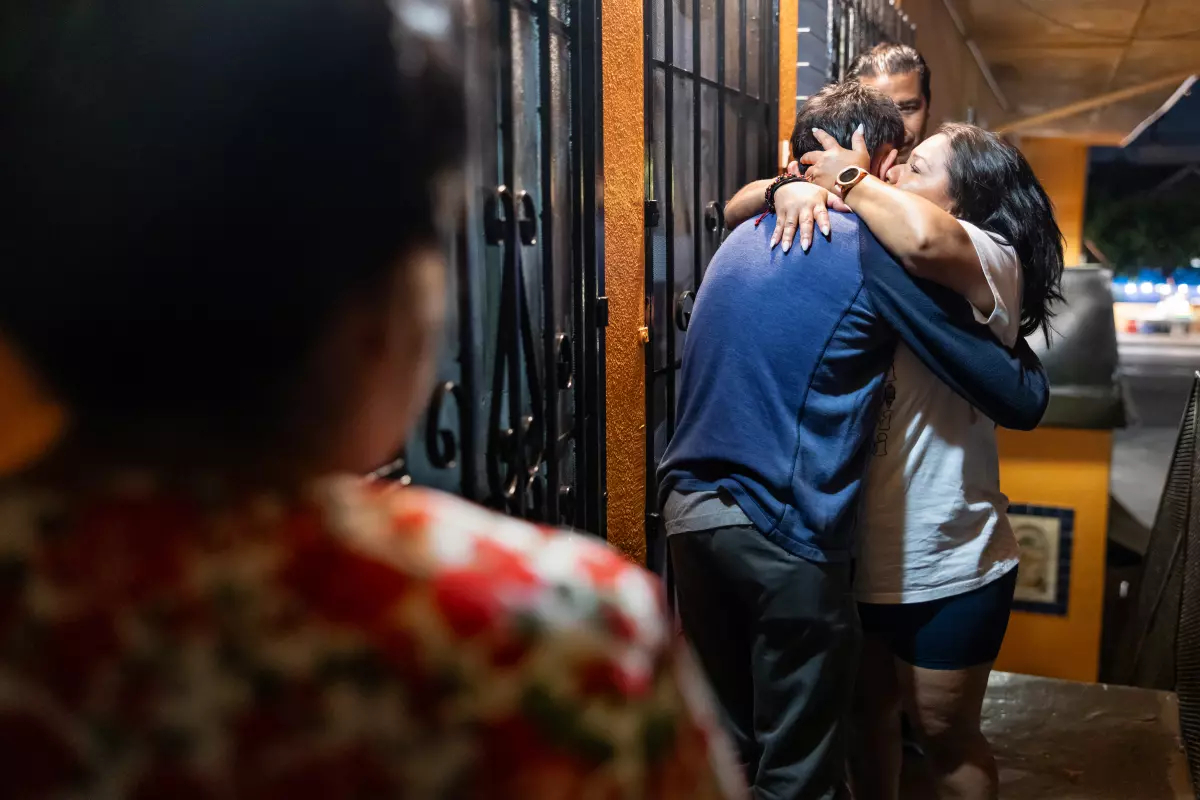
Javier Diaz Santana center, is welcomed home by neighbors after he was detained by Immigration and Customs Enforcement. (Christina House/Los Angeles Times)

Here are the morning’s top stories on Thursday, July 24, 2025…

  • A recent ICE arrest in Southern California is raising more questions about how immigration enforcement is being carried out and who gets caught in the crossfire. The man taken into custody is a DACA recipient. He’s deaf and primarily communicates through sign language. His ordeal, for the most part, left his friends and family in the dark, until he was finally able to return home.
  • California Attorney General Rob Bonta is asking a judge to bring LA County’s juvenile halls under state control.
  • The new federal budget signed into law by President Donald Trump is expected to negatively impact many people enrolled in Covered California, the state’s marketplace for subsidized health plans.

Deaf Immigrant Recounts Trauma After Being Detained By ICE

Javier Diaz Santana is deaf and primarily communicates through sign language. The 32-year-old came to the United States when he was five. His parents were worried about what services he would have access to to help with his disabilities. So they settled in South Los Angeles.

He went to a school that specializes in working with deaf and hard of hearing students. And he was able to build a life for himself. He got protection from the Deferred Action for Childhood Arrivals program, or DACA, in 2013 and has continually renewed it. He was hired at a car wash in Temple City in 2020 and has worked there ever since.

But last month, that business was one of several hit by immigration agents, as the Trump administration ratcheted up enforcement efforts across Southern California. Because of his disability, he couldn’t hear the commotion surrounding him. LA Times reporter Brittny Mejia, who spoke with Diaz Santana and his family, said he was eventually detained. “He was like, okay, they’re probably going to want to see my ID. So he takes his wallet out to show them. And he said that one of the agents took his wallet from him, with his real ID in it,” Mejia said. “And then he takes this phone out so he could tell them about his disability, because that’s how he can communicate. And they just take his phone away. They put him into one of the SUV’s. After they’ve handcuffed him, they start typing a message to him, ‘what country are you from?’ And he’s trying to gesture at them, I can’t sign, I can’t communicate, my hands are cuffed.”

He was eventually taken to a detention center in downtown Los Angeles. His family was trying to get in touch with him, but eventually, through an ICE locator, they found out he had been deported to El Paso, Texas. Immigration officials explained that being part of DACA does not give him legal status, but they didn’t explain why he was in custody, especially since he didn’t have a criminal record. Throughout this process, Diaz Santana said he was not given the accommodations for his disability. The federal government denies these claims,  saying they gave him a communication board and an American Sign Language interpreter. But Diaz Santana tells the Times the first time anyone spoke to him in sign language was at his bond hearing, which was on July 2.

Sponsored

Mejia reports that Diaz Santana is back at work, but his family says he’s much more cautious about going out. He’s saddled with an ankle monitor and is afraid of getting it wet or straying too far from home, fearing he might get picked up by ICE again. The car wash has supported his efforts to get re-acclimated, and his attorney said that since his story was published, she’s received many messages from the community from people offering to help.

CA Attorney General Wants Changes For LA County’s Juvenile Halls

California Attorney General Rob Bonta is asking a judge to put Los Angeles County juvenile halls under state control.

The move comes after a litany of scandals at county facilities, including overdoses and accusations of gladiator fights. “Let me be clear, this is the last resort,” Bonta said. “ But it’s also the one path left to protect the safety, dignity, and basic rights of the young people in these facilities.”

Bonta repeatedly laid blame on the county for failing to address the crises at its youth facilities. In 2021, the attorney general issued a judgement demanding the county come into compliance after a state investigation found that there were “unsafe and illegal” conditions at county juvenile halls. Bonta said Wednesday that the county was out of compliance with 75% of the provisions in that agreement. “ We gave the county numerous opportunities to fix this on its own,” he said.

Bonta is asking the Los Angeles County Superior Court to place the facilities into a receivership. The court-appointed receiver would be able to hire and fire county employees, create policies at the facilities and acquire equipment to bring the county into compliance, according to the court filing. The Los Angeles County Probation Department responded to the news calling Bonta’s filing misleading. In a statement, county spokesperson Vicky Waters said the department was concerned that the request seeks “expansive authority through an expedited court process.”

How GOP Budget Bill Will Affect The Cost Of California Health Insurance

Heather Altman quit her corporate job and opened an environmental consulting business in 2014 when the Affordable Care Act made it possible for her to afford independent health insurance. Her monthly premium for a platinum plan was $356.

Today, Altman has downgraded to a gold plan and pays $1,147 per month. That’s a 222% increase over the past decade for less comprehensive coverage. Medical inflation has always outpaced general inflation, but early analyses project premiums will increase even more dramatically as a result of the reconciliation budget recently signed by President Donald Trump, and Altman is worried she won’t be able to pay for health insurance any longer. “Since the Senate passed this monstrosity I’ve been trying to figure out how I can land on my feet,” Altman said.

Altman is one of nearly 2 million people in California who rely on the Affordable Care Act marketplace, commonly known as Obamacare or Covered California. The majority of enrollees are lower- to middle-income earners making $60,240 or less as individuals or $124,800 or less as a family of four. Nearly 800,000 people in California make half that amount.

President Trump’s budget bill made significant changes to Covered California that experts and insurers say will increase out-of-pocket costs for consumers. In California on average, premiums are expected to increase by 66%, or $101, per month starting next year without subsidies, according to projections from Covered California. Lower-income people will see even higher increases because they receive more subsidies. Those making less than 400% of the federal poverty level (about $60,240 per year for an individual) are projected to pay an average of $191 more monthly, according to Covered California data. More than 170,000 middle-income enrollees will lose financial assistance entirely. Some federal subsidies will still be available, but they are less comprehensive than the enhanced subsidies, and fewer people qualify.

lower waypoint
next waypoint