window.__IS_SSR__=true
window.__INITIAL_STATE__={
"attachmentsReducer": {
"audio_0": {
"type": "attachments",
"id": "audio_0",
"imgSizes": {
"kqedFullSize": {
"file": "https://ww2.kqed.org/news/wp-content/themes/KQED-unified/img/audio_bgs/background0.jpg"
}
}
},
"audio_1": {
"type": "attachments",
"id": "audio_1",
"imgSizes": {
"kqedFullSize": {
"file": "https://ww2.kqed.org/news/wp-content/themes/KQED-unified/img/audio_bgs/background1.jpg"
}
}
},
"audio_2": {
"type": "attachments",
"id": "audio_2",
"imgSizes": {
"kqedFullSize": {
"file": "https://ww2.kqed.org/news/wp-content/themes/KQED-unified/img/audio_bgs/background2.jpg"
}
}
},
"audio_3": {
"type": "attachments",
"id": "audio_3",
"imgSizes": {
"kqedFullSize": {
"file": "https://ww2.kqed.org/news/wp-content/themes/KQED-unified/img/audio_bgs/background3.jpg"
}
}
},
"audio_4": {
"type": "attachments",
"id": "audio_4",
"imgSizes": {
"kqedFullSize": {
"file": "https://ww2.kqed.org/news/wp-content/themes/KQED-unified/img/audio_bgs/background4.jpg"
}
}
},
"placeholder": {
"type": "attachments",
"id": "placeholder",
"imgSizes": {
"thumbnail": {
"file": "https://cdn.kqed.org/wp-content/uploads/2024/12/KQED-Default-Image-816638274-2000x1333-1-160x107.jpg",
"width": 160,
"height": 107,
"mimeType": "image/jpeg"
},
"medium": {
"file": "https://cdn.kqed.org/wp-content/uploads/2024/12/KQED-Default-Image-816638274-2000x1333-1-800x533.jpg",
"width": 800,
"height": 533,
"mimeType": "image/jpeg"
},
"medium_large": {
"file": "https://cdn.kqed.org/wp-content/uploads/2024/12/KQED-Default-Image-816638274-2000x1333-1-768x512.jpg",
"width": 768,
"height": 512,
"mimeType": "image/jpeg"
},
"large": {
"file": "https://cdn.kqed.org/wp-content/uploads/2024/12/KQED-Default-Image-816638274-2000x1333-1-1020x680.jpg",
"width": 1020,
"height": 680,
"mimeType": "image/jpeg"
},
"1536x1536": {
"file": "https://cdn.kqed.org/wp-content/uploads/2024/12/KQED-Default-Image-816638274-2000x1333-1-1536x1024.jpg",
"width": 1536,
"height": 1024,
"mimeType": "image/jpeg"
},
"fd-lrg": {
"file": "https://cdn.kqed.org/wp-content/uploads/2024/12/KQED-Default-Image-816638274-2000x1333-1-1536x1024.jpg",
"width": 1536,
"height": 1024,
"mimeType": "image/jpeg"
},
"fd-med": {
"file": "https://cdn.kqed.org/wp-content/uploads/2024/12/KQED-Default-Image-816638274-2000x1333-1-1020x680.jpg",
"width": 1020,
"height": 680,
"mimeType": "image/jpeg"
},
"fd-sm": {
"file": "https://cdn.kqed.org/wp-content/uploads/2024/12/KQED-Default-Image-816638274-2000x1333-1-800x533.jpg",
"width": 800,
"height": 533,
"mimeType": "image/jpeg"
},
"post-thumbnail": {
"file": "https://cdn.kqed.org/wp-content/uploads/2024/12/KQED-Default-Image-816638274-2000x1333-1-672x372.jpg",
"width": 672,
"height": 372,
"mimeType": "image/jpeg"
},
"twentyfourteen-full-width": {
"file": "https://cdn.kqed.org/wp-content/uploads/2024/12/KQED-Default-Image-816638274-2000x1333-1-1038x576.jpg",
"width": 1038,
"height": 576,
"mimeType": "image/jpeg"
},
"xxsmall": {
"file": "https://cdn.kqed.org/wp-content/uploads/2024/12/KQED-Default-Image-816638274-2000x1333-1-160x107.jpg",
"width": 160,
"height": 107,
"mimeType": "image/jpeg"
},
"xsmall": {
"file": "https://cdn.kqed.org/wp-content/uploads/2024/12/KQED-Default-Image-816638274-2000x1333-1-672x372.jpg",
"width": 672,
"height": 372,
"mimeType": "image/jpeg"
},
"small": {
"file": "https://cdn.kqed.org/wp-content/uploads/2024/12/KQED-Default-Image-816638274-2000x1333-1-672x372.jpg",
"width": 672,
"height": 372,
"mimeType": "image/jpeg"
},
"xlarge": {
"file": "https://cdn.kqed.org/wp-content/uploads/2024/12/KQED-Default-Image-816638274-2000x1333-1-1020x680.jpg",
"width": 1020,
"height": 680,
"mimeType": "image/jpeg"
},
"full-width": {
"file": "https://cdn.kqed.org/wp-content/uploads/2024/12/KQED-Default-Image-816638274-2000x1333-1-1920x1280.jpg",
"width": 1920,
"height": 1280,
"mimeType": "image/jpeg"
},
"guest-author-32": {
"file": "https://cdn.kqed.org/wp-content/uploads/2025/01/KQED-Default-Image-816638274-1333x1333-1-160x160.jpg",
"width": 32,
"height": 32,
"mimeType": "image/jpeg"
},
"guest-author-50": {
"file": "https://cdn.kqed.org/wp-content/uploads/2025/01/KQED-Default-Image-816638274-1333x1333-1-160x160.jpg",
"width": 50,
"height": 50,
"mimeType": "image/jpeg"
},
"guest-author-64": {
"file": "https://cdn.kqed.org/wp-content/uploads/2025/01/KQED-Default-Image-816638274-1333x1333-1-160x160.jpg",
"width": 64,
"height": 64,
"mimeType": "image/jpeg"
},
"guest-author-96": {
"file": "https://cdn.kqed.org/wp-content/uploads/2025/01/KQED-Default-Image-816638274-1333x1333-1-160x160.jpg",
"width": 96,
"height": 96,
"mimeType": "image/jpeg"
},
"guest-author-128": {
"file": "https://cdn.kqed.org/wp-content/uploads/2025/01/KQED-Default-Image-816638274-1333x1333-1-160x160.jpg",
"width": 128,
"height": 128,
"mimeType": "image/jpeg"
},
"detail": {
"file": "https://cdn.kqed.org/wp-content/uploads/2025/01/KQED-Default-Image-816638274-1333x1333-1-160x160.jpg",
"width": 160,
"height": 160,
"mimeType": "image/jpeg"
},
"kqedFullSize": {
"file": "https://cdn.kqed.org/wp-content/uploads/2024/12/KQED-Default-Image-816638274-2000x1333-1.jpg",
"width": 2000,
"height": 1333
}
}
},
"news_12041516": {
"type": "attachments",
"id": "news_12041516",
"meta": {
"index": "attachments_1716263798",
"site": "news",
"id": "12041516",
"found": true
},
"title": "CoreCivic Otay Mesa Detention Center",
"publishDate": 1748032296,
"status": "inherit",
"parent": 12041326,
"modified": 1748032401,
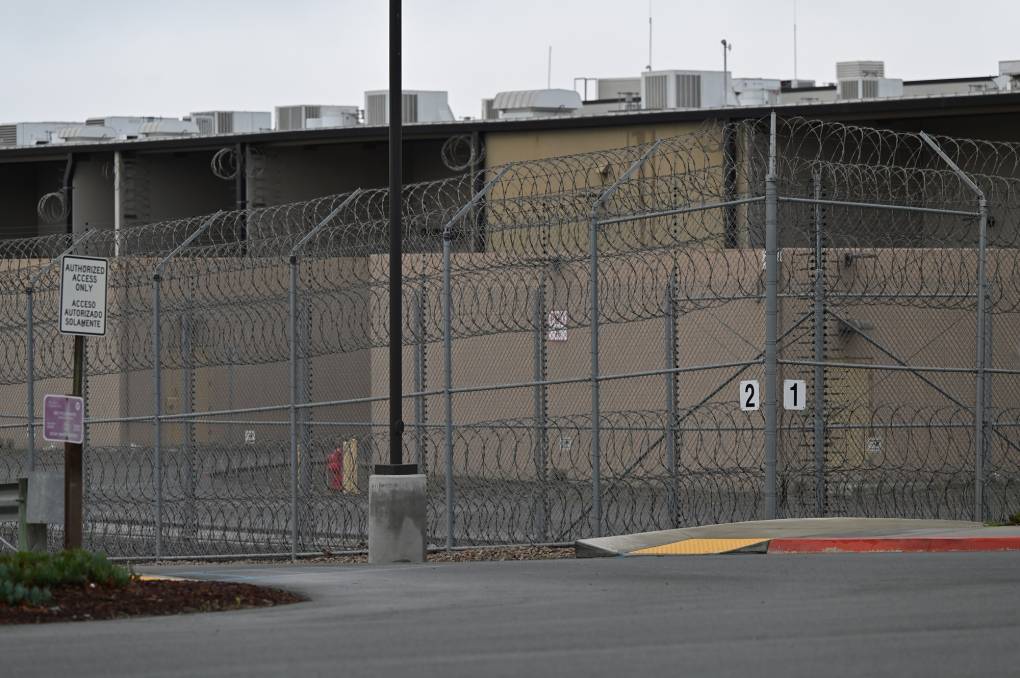
"caption": "A view of the CoreCivic Otay Mesa Detention Center in San Diego, California, on Feb. 7, 2025. The private institution has been plagued by allegations of medical negligence, abusive and retaliatory behavior against immigrants, sexual harassment, poor food and water quality and other dangerous conditions. ",
"credit": "Carlos Moreno/Anadolu via Getty Images",
"altTag": null,
"description": null,
"imgSizes": {
"medium": {
"file": "https://cdn.kqed.org/wp-content/uploads/sites/10/2025/05/CANewsroom1-800x532.jpg",
"width": 800,
"height": 532,
"mimeType": "image/jpeg"
},
"large": {
"file": "https://cdn.kqed.org/wp-content/uploads/sites/10/2025/05/CANewsroom1-1020x678.jpg",
"width": 1020,
"height": 678,
"mimeType": "image/jpeg"
},
"thumbnail": {
"file": "https://cdn.kqed.org/wp-content/uploads/sites/10/2025/05/CANewsroom1-160x106.jpg",
"width": 160,
"height": 106,
"mimeType": "image/jpeg"
},
"1536x1536": {
"file": "https://cdn.kqed.org/wp-content/uploads/sites/10/2025/05/CANewsroom1-1536x1021.jpg",
"width": 1536,
"height": 1021,
"mimeType": "image/jpeg"
},
"post-thumbnail": {
"file": "https://cdn.kqed.org/wp-content/uploads/sites/10/2025/05/CANewsroom1-672x372.jpg",
"width": 672,
"height": 372,
"mimeType": "image/jpeg"
},
"twentyfourteen-full-width": {
"file": "https://cdn.kqed.org/wp-content/uploads/sites/10/2025/05/CANewsroom1-1038x576.jpg",
"width": 1038,
"height": 576,
"mimeType": "image/jpeg"
},
"full-width": {
"file": "https://cdn.kqed.org/wp-content/uploads/sites/10/2025/05/CANewsroom1-1920x1277.jpg",
"width": 1920,
"height": 1277,
"mimeType": "image/jpeg"
},
"kqedFullSize": {
"file": "https://cdn.kqed.org/wp-content/uploads/sites/10/2025/05/CANewsroom1.jpg",
"width": 2000,
"height": 1330
}
},
"isLoading": false,
"fetchFailed": false
},
"news_12041614": {
"type": "attachments",
"id": "news_12041614",
"meta": {
"index": "attachments_1716263798",
"site": "news",
"id": "12041614",
"found": true
},
"title": "npr.brightspotcdn copy",
"publishDate": 1748117524,
"status": "inherit",
"parent": 12041613,
"modified": 1748117558,
"caption": "Mahmoud Khalil has asked an immigration judge to grant him asylum, saying he feared being targeted by Israel if he's deported to Syria or Algeria.",
"credit": "Spencer Platt/Getty Images",
"altTag": null,
"description": null,
"imgSizes": {
"medium": {
"file": "https://cdn.kqed.org/wp-content/uploads/sites/10/2025/05/npr.brightspotcdn-copy-15-800x533.jpg",
"width": 800,
"height": 533,
"mimeType": "image/jpeg"
},
"large": {
"file": "https://cdn.kqed.org/wp-content/uploads/sites/10/2025/05/npr.brightspotcdn-copy-15-1020x680.jpg",
"width": 1020,
"height": 680,
"mimeType": "image/jpeg"
},
"thumbnail": {
"file": "https://cdn.kqed.org/wp-content/uploads/sites/10/2025/05/npr.brightspotcdn-copy-15-160x107.jpg",
"width": 160,
"height": 107,
"mimeType": "image/jpeg"
},
"1536x1536": {
"file": "https://cdn.kqed.org/wp-content/uploads/sites/10/2025/05/npr.brightspotcdn-copy-15-1536x1024.jpg",
"width": 1536,
"height": 1024,
"mimeType": "image/jpeg"
},
"post-thumbnail": {
"file": "https://cdn.kqed.org/wp-content/uploads/sites/10/2025/05/npr.brightspotcdn-copy-15-672x372.jpg",
"width": 672,
"height": 372,
"mimeType": "image/jpeg"
},
"twentyfourteen-full-width": {
"file": "https://cdn.kqed.org/wp-content/uploads/sites/10/2025/05/npr.brightspotcdn-copy-15-1038x576.jpg",
"width": 1038,
"height": 576,
"mimeType": "image/jpeg"
},
"kqedFullSize": {
"file": "https://cdn.kqed.org/wp-content/uploads/sites/10/2025/05/npr.brightspotcdn-copy-15.jpg",
"width": 1800,
"height": 1200
}
},
"isLoading": false,
"fetchFailed": false
},
"news_11712245": {
"type": "attachments",
"id": "news_11712245",
"meta": {
"index": "attachments_1716263798",
"site": "news",
"id": "11712245",
"found": true
},
"title": "The Association of Legal Aid Attorneys along with dozens of unions, immigrant rights organizations, and community groups held a rally on December 7, 2017 at Brooklyn Borough Hall to call on the Office of Court Administration and Chief Judge Janet DiFiore to prohibit Immigration & Customs Enforcement agents from entering state courthouses, and to end coordination with ICE.",
"publishDate": 1544730613,
"status": "inherit",
"parent": 11712244,
"modified": 1748046862,
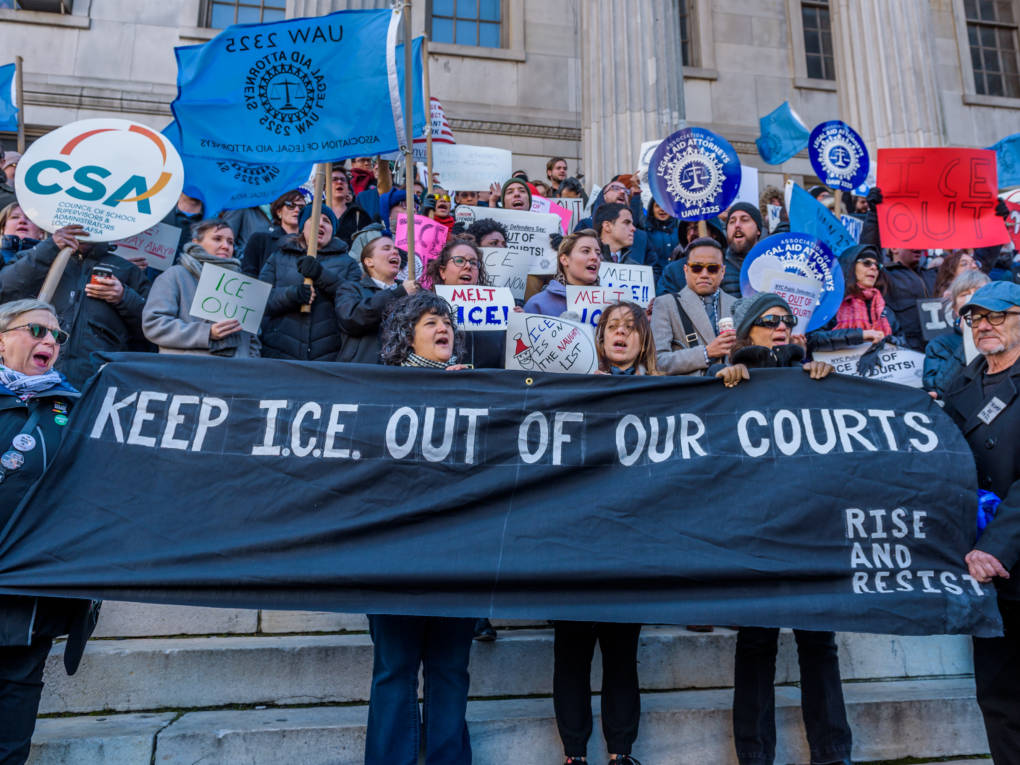
"caption": "The Association of Legal Aid Attorneys, along with dozens of unions, immigrant rights organizations and community groups, held a rally on Dec. 7, 2017, at Brooklyn Borough Hall.",
"credit": "Pacific Press/LightRocket via Getty Images",
"altTag": null,
"description": null,
"imgSizes": {
"thumbnail": {
"file": "https://cdn.kqed.org/wp-content/uploads/sites/10/2018/12/gettyimages-888870656-e9acdd0cdcb80ec5cd16b8a05023e4e5664f30fb-160x120.jpg",
"width": 160,
"height": 120,
"mimeType": "image/jpeg"
},
"medium": {
"file": "https://cdn.kqed.org/wp-content/uploads/sites/10/2018/12/gettyimages-888870656-e9acdd0cdcb80ec5cd16b8a05023e4e5664f30fb-800x600.jpg",
"width": 800,
"height": 600,
"mimeType": "image/jpeg"
},
"large": {
"file": "https://cdn.kqed.org/wp-content/uploads/sites/10/2018/12/gettyimages-888870656-e9acdd0cdcb80ec5cd16b8a05023e4e5664f30fb-1020x765.jpg",
"width": 1020,
"height": 765,
"mimeType": "image/jpeg"
},
"complete_open_graph": {
"file": "https://cdn.kqed.org/wp-content/uploads/sites/10/2018/12/gettyimages-888870656-e9acdd0cdcb80ec5cd16b8a05023e4e5664f30fb-1200x900.jpg",
"width": 1200,
"height": 900,
"mimeType": "image/jpeg"
},
"post-thumbnail": {
"file": "https://cdn.kqed.org/wp-content/uploads/sites/10/2018/12/gettyimages-888870656-e9acdd0cdcb80ec5cd16b8a05023e4e5664f30fb-672x372.jpg",
"width": 672,
"height": 372,
"mimeType": "image/jpeg"
},
"twentyfourteen-full-width": {
"file": "https://cdn.kqed.org/wp-content/uploads/sites/10/2018/12/gettyimages-888870656-e9acdd0cdcb80ec5cd16b8a05023e4e5664f30fb-1038x576.jpg",
"width": 1038,
"height": 576,
"mimeType": "image/jpeg"
},
"full-width": {
"file": "https://cdn.kqed.org/wp-content/uploads/sites/10/2018/12/gettyimages-888870656-e9acdd0cdcb80ec5cd16b8a05023e4e5664f30fb-1920x1440.jpg",
"width": 1920,
"height": 1440,
"mimeType": "image/jpeg"
},
"guest-author-32": {
"file": "https://cdn.kqed.org/wp-content/uploads/sites/10/2018/12/gettyimages-888870656-e9acdd0cdcb80ec5cd16b8a05023e4e5664f30fb-32x32.jpg",
"width": 32,
"height": 32,
"mimeType": "image/jpeg"
},
"guest-author-50": {
"file": "https://cdn.kqed.org/wp-content/uploads/sites/10/2018/12/gettyimages-888870656-e9acdd0cdcb80ec5cd16b8a05023e4e5664f30fb-50x50.jpg",
"width": 50,
"height": 50,
"mimeType": "image/jpeg"
},
"guest-author-64": {
"file": "https://cdn.kqed.org/wp-content/uploads/sites/10/2018/12/gettyimages-888870656-e9acdd0cdcb80ec5cd16b8a05023e4e5664f30fb-64x64.jpg",
"width": 64,
"height": 64,
"mimeType": "image/jpeg"
},
"guest-author-96": {
"file": "https://cdn.kqed.org/wp-content/uploads/sites/10/2018/12/gettyimages-888870656-e9acdd0cdcb80ec5cd16b8a05023e4e5664f30fb-96x96.jpg",
"width": 96,
"height": 96,
"mimeType": "image/jpeg"
},
"guest-author-128": {
"file": "https://cdn.kqed.org/wp-content/uploads/sites/10/2018/12/gettyimages-888870656-e9acdd0cdcb80ec5cd16b8a05023e4e5664f30fb-128x128.jpg",
"width": 128,
"height": 128,
"mimeType": "image/jpeg"
},
"detail": {
"file": "https://cdn.kqed.org/wp-content/uploads/sites/10/2018/12/gettyimages-888870656-e9acdd0cdcb80ec5cd16b8a05023e4e5664f30fb-150x150.jpg",
"width": 150,
"height": 150,
"mimeType": "image/jpeg"
},
"kqedFullSize": {
"file": "https://cdn.kqed.org/wp-content/uploads/sites/10/2018/12/gettyimages-888870656-e9acdd0cdcb80ec5cd16b8a05023e4e5664f30fb-e1748037342663.jpg",
"width": 2000,
"height": 1500
}
},
"isLoading": false,
"fetchFailed": false
},
"news_12040331": {
"type": "attachments",
"id": "news_12040331",
"meta": {
"index": "attachments_1716263798",
"site": "news",
"id": "12040331",
"found": true
},
"title": "Supreme Court Issues Opinions",
"publishDate": 1747332410,
"status": "inherit",
"parent": 12040330,
"modified": 1775005046,
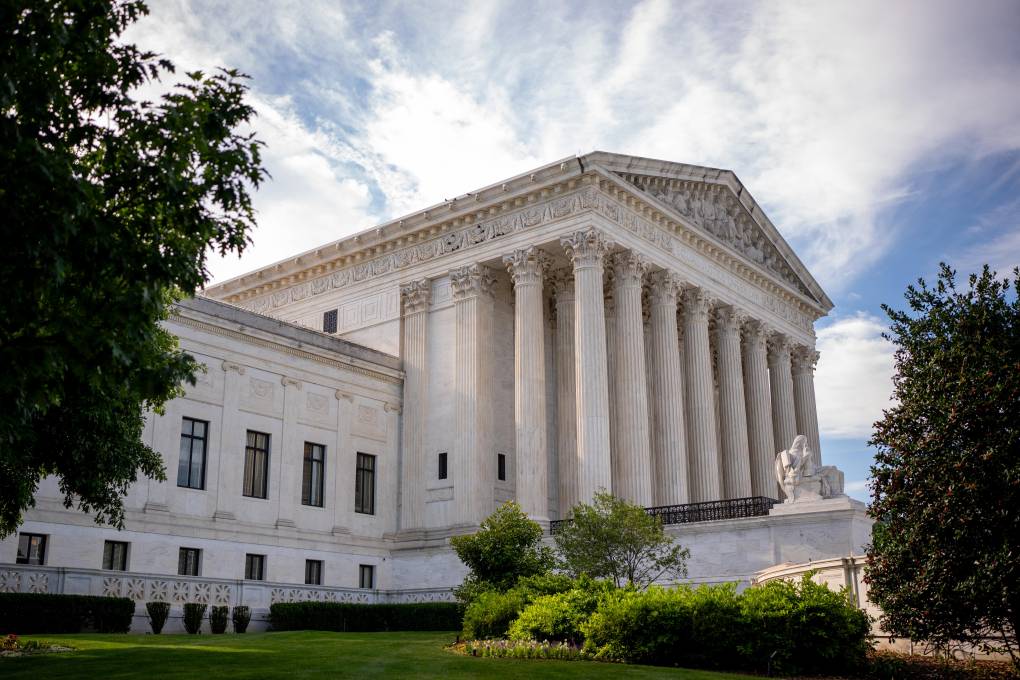
"caption": "The U.S. Supreme Court heard arguments on Thursday in a case challenging the Trump administration's effort to limit who gets birthright citizenship.",
"credit": "Andrew Harnik/Getty Images",
"altTag": null,
"description": "WASHINGTON, DC - JUNE 20: An exterior view of the Supreme Court on June 20, 2024 in Washington, DC. The Supreme Court is about to issue rulings on a variety of high profile cases dealing with abortion rights, gun rights, and former President Donald Trump's immunity claim, putting the court at the center of many hot political topics during an election year. (Photo by Andrew Harnik/Getty Images)",
"imgSizes": {
"medium": {
"file": "https://cdn.kqed.org/wp-content/uploads/sites/10/2025/05/gettyimages-2157829281-11-800x533.jpeg",
"width": 800,
"height": 533,
"mimeType": "image/jpeg"
},
"large": {
"file": "https://cdn.kqed.org/wp-content/uploads/sites/10/2025/05/gettyimages-2157829281-11-1020x680.jpeg",
"width": 1020,
"height": 680,
"mimeType": "image/jpeg"
},
"thumbnail": {
"file": "https://cdn.kqed.org/wp-content/uploads/sites/10/2025/05/gettyimages-2157829281-11-160x107.jpeg",
"width": 160,
"height": 107,
"mimeType": "image/jpeg"
},
"1536x1536": {
"file": "https://cdn.kqed.org/wp-content/uploads/sites/10/2025/05/gettyimages-2157829281-11-1536x1024.jpeg",
"width": 1536,
"height": 1024,
"mimeType": "image/jpeg"
},
"2048x2048": {
"file": "https://cdn.kqed.org/wp-content/uploads/sites/10/2025/05/gettyimages-2157829281-11-2048x1365.jpeg",
"width": 2048,
"height": 1365,
"mimeType": "image/jpeg"
},
"post-thumbnail": {
"file": "https://cdn.kqed.org/wp-content/uploads/sites/10/2025/05/gettyimages-2157829281-11-672x372.jpeg",
"width": 672,
"height": 372,
"mimeType": "image/jpeg"
},
"twentyfourteen-full-width": {
"file": "https://cdn.kqed.org/wp-content/uploads/sites/10/2025/05/gettyimages-2157829281-11-1038x576.jpeg",
"width": 1038,
"height": 576,
"mimeType": "image/jpeg"
},
"full-width": {
"file": "https://cdn.kqed.org/wp-content/uploads/sites/10/2025/05/gettyimages-2157829281-11-1920x1280.jpeg",
"width": 1920,
"height": 1280,
"mimeType": "image/jpeg"
},
"kqedFullSize": {
"file": "https://cdn.kqed.org/wp-content/uploads/sites/10/2025/05/gettyimages-2157829281-11-scaled-e1775001710822.jpeg",
"width": 2000,
"height": 1334
}
},
"isLoading": false,
"fetchFailed": false
},
"news_12035717": {
"type": "attachments",
"id": "news_12035717",
"meta": {
"index": "attachments_1716263798",
"site": "news",
"id": "12035717",
"found": true
},
"title": "npr.brightspotcdn copy",
"publishDate": 1744402668,
"status": "inherit",
"parent": 12035716,
"modified": 1744402697,
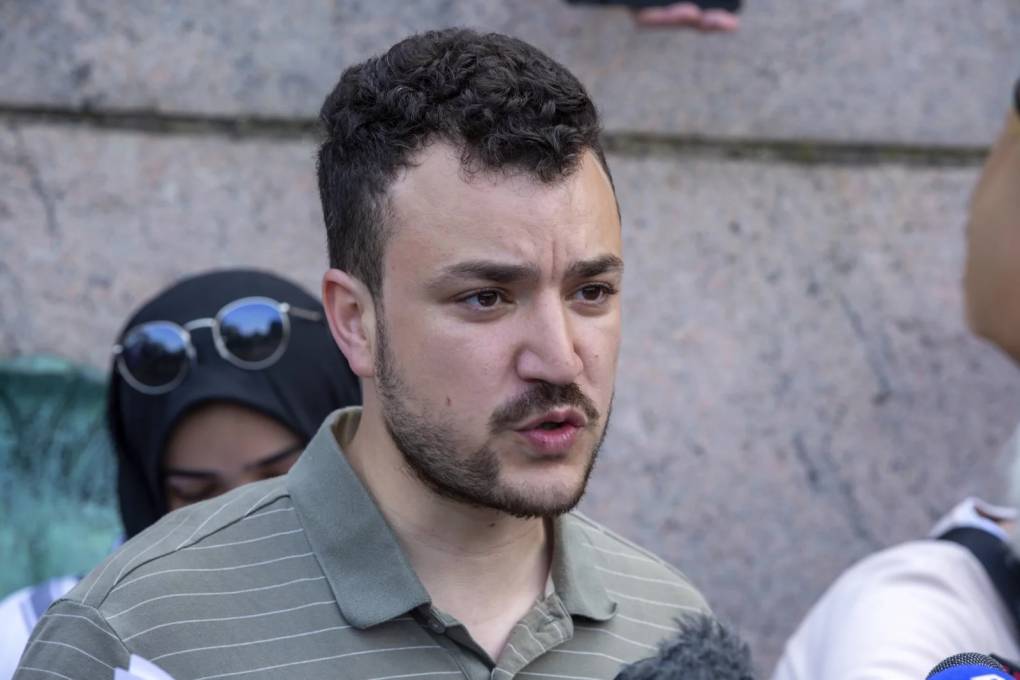
"caption": "Student negotiator Mahmoud Khalil is seen at a pro-Palestinian protest encampment on the Columbia University campus in New York, April 29, 2024. ",
"credit": "Ted Shaffrey/AP Photo",
"altTag": null,
"description": null,
"imgSizes": {
"medium": {
"file": "https://cdn.kqed.org/wp-content/uploads/sites/10/2025/04/npr.brightspotcdn-copy-15-800x534.jpg",
"width": 800,
"height": 534,
"mimeType": "image/jpeg"
},
"large": {
"file": "https://cdn.kqed.org/wp-content/uploads/sites/10/2025/04/npr.brightspotcdn-copy-15-1020x680.jpg",
"width": 1020,
"height": 680,
"mimeType": "image/jpeg"
},
"thumbnail": {
"file": "https://cdn.kqed.org/wp-content/uploads/sites/10/2025/04/npr.brightspotcdn-copy-15-160x107.jpg",
"width": 160,
"height": 107,
"mimeType": "image/jpeg"
},
"1536x1536": {
"file": "https://cdn.kqed.org/wp-content/uploads/sites/10/2025/04/npr.brightspotcdn-copy-15-1536x1024.jpg",
"width": 1536,
"height": 1024,
"mimeType": "image/jpeg"
},
"post-thumbnail": {
"file": "https://cdn.kqed.org/wp-content/uploads/sites/10/2025/04/npr.brightspotcdn-copy-15-672x372.jpg",
"width": 672,
"height": 372,
"mimeType": "image/jpeg"
},
"twentyfourteen-full-width": {
"file": "https://cdn.kqed.org/wp-content/uploads/sites/10/2025/04/npr.brightspotcdn-copy-15-1038x576.jpg",
"width": 1038,
"height": 576,
"mimeType": "image/jpeg"
},
"kqedFullSize": {
"file": "https://cdn.kqed.org/wp-content/uploads/sites/10/2025/04/npr.brightspotcdn-copy-15.jpg",
"width": 1600,
"height": 1067
}
},
"isLoading": false,
"fetchFailed": false
},
"news_12039001": {
"type": "attachments",
"id": "news_12039001",
"meta": {
"index": "attachments_1716263798",
"site": "news",
"id": "12039001",
"found": true
},
"title": "20250505_YTCOMMENTARY_GC-6-KQED-2",
"publishDate": 1746573028,
"status": "inherit",
"parent": 0,
"modified": 1746573081,
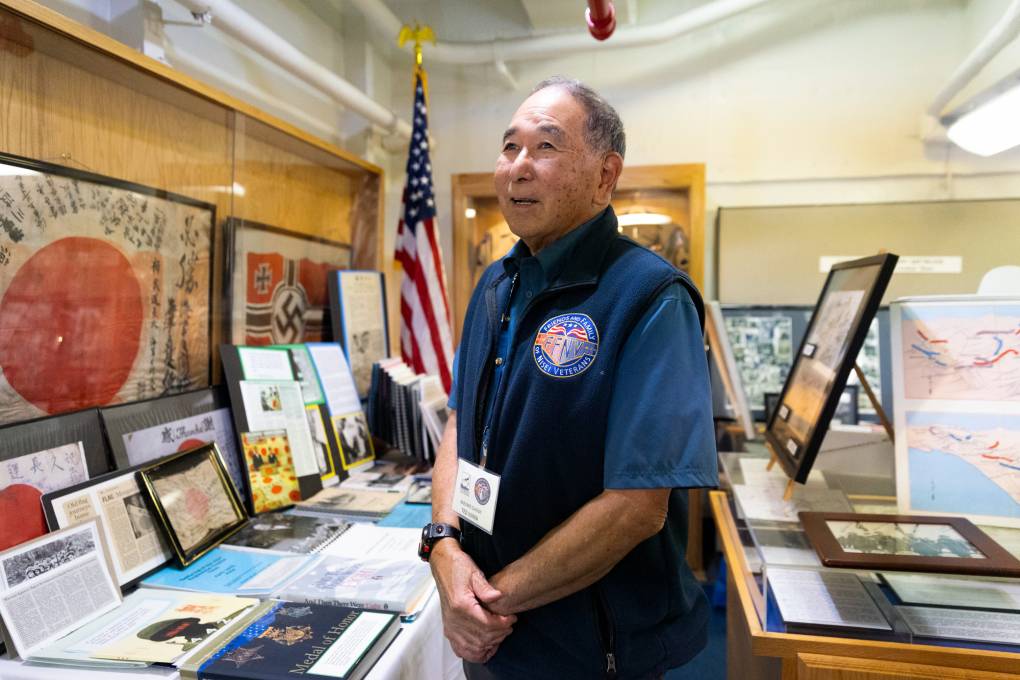
"caption": "Ted Iijima, 75, stands in the Nisei exhibit at the USS Hornet Museum in Alameda on May 5, 2025.",
"credit": "Gina Castro/KQED",
"altTag": null,
"description": null,
"imgSizes": {
"medium": {
"file": "https://cdn.kqed.org/wp-content/uploads/sites/10/2025/05/20250505_YTCOMMENTARY_GC-6-KQED-2-800x533.jpg",
"width": 800,
"height": 533,
"mimeType": "image/jpeg"
},
"large": {
"file": "https://cdn.kqed.org/wp-content/uploads/sites/10/2025/05/20250505_YTCOMMENTARY_GC-6-KQED-2-1020x680.jpg",
"width": 1020,
"height": 680,
"mimeType": "image/jpeg"
},
"thumbnail": {
"file": "https://cdn.kqed.org/wp-content/uploads/sites/10/2025/05/20250505_YTCOMMENTARY_GC-6-KQED-2-160x107.jpg",
"width": 160,
"height": 107,
"mimeType": "image/jpeg"
},
"1536x1536": {
"file": "https://cdn.kqed.org/wp-content/uploads/sites/10/2025/05/20250505_YTCOMMENTARY_GC-6-KQED-2-1536x1024.jpg",
"width": 1536,
"height": 1024,
"mimeType": "image/jpeg"
},
"post-thumbnail": {
"file": "https://cdn.kqed.org/wp-content/uploads/sites/10/2025/05/20250505_YTCOMMENTARY_GC-6-KQED-2-672x372.jpg",
"width": 672,
"height": 372,
"mimeType": "image/jpeg"
},
"twentyfourteen-full-width": {
"file": "https://cdn.kqed.org/wp-content/uploads/sites/10/2025/05/20250505_YTCOMMENTARY_GC-6-KQED-2-1038x576.jpg",
"width": 1038,
"height": 576,
"mimeType": "image/jpeg"
},
"full-width": {
"file": "https://cdn.kqed.org/wp-content/uploads/sites/10/2025/05/20250505_YTCOMMENTARY_GC-6-KQED-2-1920x1280.jpg",
"width": 1920,
"height": 1280,
"mimeType": "image/jpeg"
},
"kqedFullSize": {
"file": "https://cdn.kqed.org/wp-content/uploads/sites/10/2025/05/20250505_YTCOMMENTARY_GC-6-KQED-2.jpg",
"width": 2000,
"height": 1333
}
},
"isLoading": false,
"fetchFailed": false
},
"news_12040027": {
"type": "attachments",
"id": "news_12040027",
"meta": {
"index": "attachments_1716263798",
"site": "news",
"id": "12040027",
"found": true
},
"title": "California Budget",
"publishDate": 1747240720,
"status": "inherit",
"parent": 12040025,
"modified": 1747240749,
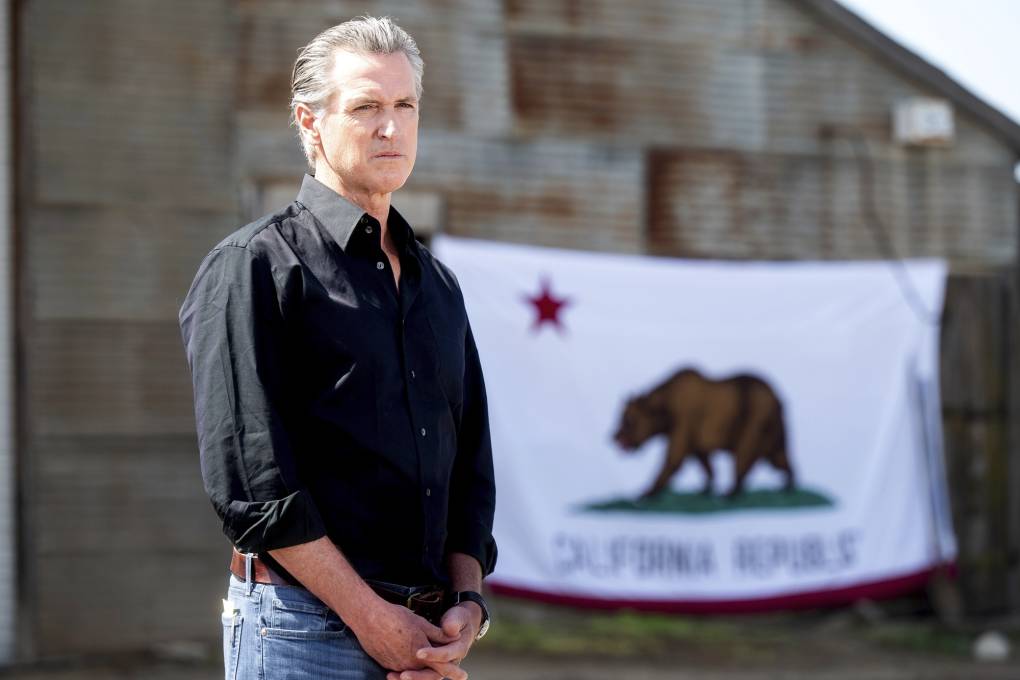
"caption": "Gov. Gavin Newsom stands in front of a state flag during a press conference about President Donald Trump's tariffs on Wednesday, April 16, 2025, at an almond farm in Ceres, California.",
"credit": "Noah Berger/AP Photo",
"altTag": null,
"description": null,
"imgSizes": {
"medium": {
"file": "https://cdn.kqed.org/wp-content/uploads/sites/10/2025/05/GavinNewsom2025AP2-800x533.jpg",
"width": 800,
"height": 533,
"mimeType": "image/jpeg"
},
"large": {
"file": "https://cdn.kqed.org/wp-content/uploads/sites/10/2025/05/GavinNewsom2025AP2-1020x680.jpg",
"width": 1020,
"height": 680,
"mimeType": "image/jpeg"
},
"thumbnail": {
"file": "https://cdn.kqed.org/wp-content/uploads/sites/10/2025/05/GavinNewsom2025AP2-160x107.jpg",
"width": 160,
"height": 107,
"mimeType": "image/jpeg"
},
"1536x1536": {
"file": "https://cdn.kqed.org/wp-content/uploads/sites/10/2025/05/GavinNewsom2025AP2-1536x1024.jpg",
"width": 1536,
"height": 1024,
"mimeType": "image/jpeg"
},
"post-thumbnail": {
"file": "https://cdn.kqed.org/wp-content/uploads/sites/10/2025/05/GavinNewsom2025AP2-672x372.jpg",
"width": 672,
"height": 372,
"mimeType": "image/jpeg"
},
"twentyfourteen-full-width": {
"file": "https://cdn.kqed.org/wp-content/uploads/sites/10/2025/05/GavinNewsom2025AP2-1038x576.jpg",
"width": 1038,
"height": 576,
"mimeType": "image/jpeg"
},
"full-width": {
"file": "https://cdn.kqed.org/wp-content/uploads/sites/10/2025/05/GavinNewsom2025AP2-1920x1280.jpg",
"width": 1920,
"height": 1280,
"mimeType": "image/jpeg"
},
"kqedFullSize": {
"file": "https://cdn.kqed.org/wp-content/uploads/sites/10/2025/05/GavinNewsom2025AP2.jpg",
"width": 2000,
"height": 1333
}
},
"isLoading": false,
"fetchFailed": false
},
"news_11959336": {
"type": "attachments",
"id": "news_11959336",
"meta": {
"index": "attachments_1716263798",
"site": "news",
"id": "11959336",
"found": true
},
"title": "California Schools-LGBTQ Policies",
"publishDate": 1693249568,
"status": "inherit",
"parent": 12032768,
"modified": 1747169937,
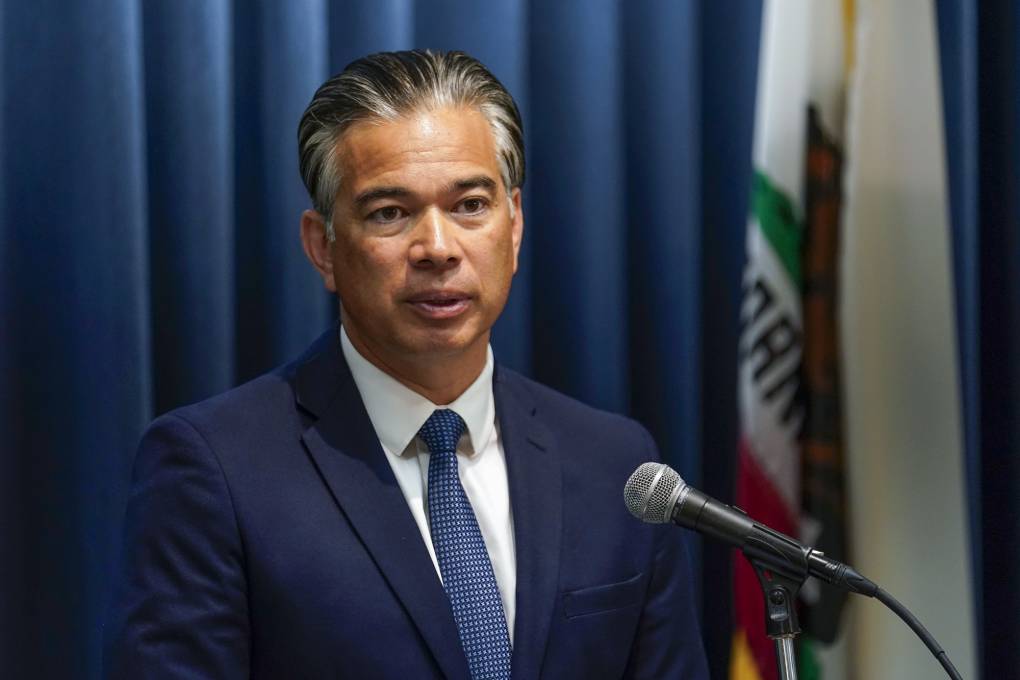
"caption": "California Attorney General Rob Bonta fields questions during a press conference on Monday, Aug. 28, 2023, in Los Angeles. ",
"credit": "Marcio Jose Sanchez/AP Photo",
"altTag": "A man wearing a navy blue suit, white shirt and blue foulard tie speaks into a microphone.",
"description": null,
"imgSizes": {
"medium": {
"file": "https://cdn.kqed.org/wp-content/uploads/sites/10/2023/08/230828-ROB-BONTA-AP-MJS-KQED-800x533.jpg",
"width": 800,
"height": 533,
"mimeType": "image/jpeg"
},
"large": {
"file": "https://cdn.kqed.org/wp-content/uploads/sites/10/2023/08/230828-ROB-BONTA-AP-MJS-KQED-1020x680.jpg",
"width": 1020,
"height": 680,
"mimeType": "image/jpeg"
},
"thumbnail": {
"file": "https://cdn.kqed.org/wp-content/uploads/sites/10/2023/08/230828-ROB-BONTA-AP-MJS-KQED-160x107.jpg",
"width": 160,
"height": 107,
"mimeType": "image/jpeg"
},
"1536x1536": {
"file": "https://cdn.kqed.org/wp-content/uploads/sites/10/2023/08/230828-ROB-BONTA-AP-MJS-KQED-1536x1024.jpg",
"width": 1536,
"height": 1024,
"mimeType": "image/jpeg"
},
"post-thumbnail": {
"file": "https://cdn.kqed.org/wp-content/uploads/sites/10/2023/08/230828-ROB-BONTA-AP-MJS-KQED-672x372.jpg",
"width": 672,
"height": 372,
"mimeType": "image/jpeg"
},
"twentyfourteen-full-width": {
"file": "https://cdn.kqed.org/wp-content/uploads/sites/10/2023/08/230828-ROB-BONTA-AP-MJS-KQED-1038x576.jpg",
"width": 1038,
"height": 576,
"mimeType": "image/jpeg"
},
"full-width": {
"file": "https://cdn.kqed.org/wp-content/uploads/sites/10/2023/08/230828-ROB-BONTA-AP-MJS-KQED-1920x1280.jpg",
"width": 1920,
"height": 1280,
"mimeType": "image/jpeg"
},
"kqedFullSize": {
"file": "https://cdn.kqed.org/wp-content/uploads/sites/10/2023/08/230828-ROB-BONTA-AP-MJS-KQED.jpg",
"width": 2000,
"height": 1333
}
},
"isLoading": false,
"fetchFailed": false
},
"news_12039425": {
"type": "attachments",
"id": "news_12039425",
"meta": {
"index": "attachments_1716263798",
"site": "news",
"id": "12039425",
"found": true
},
"title": "250508-HYPHENACION-AT-01-KQED",
"publishDate": 1746741896,
"status": "inherit",
"parent": 0,
"modified": 1746742491,
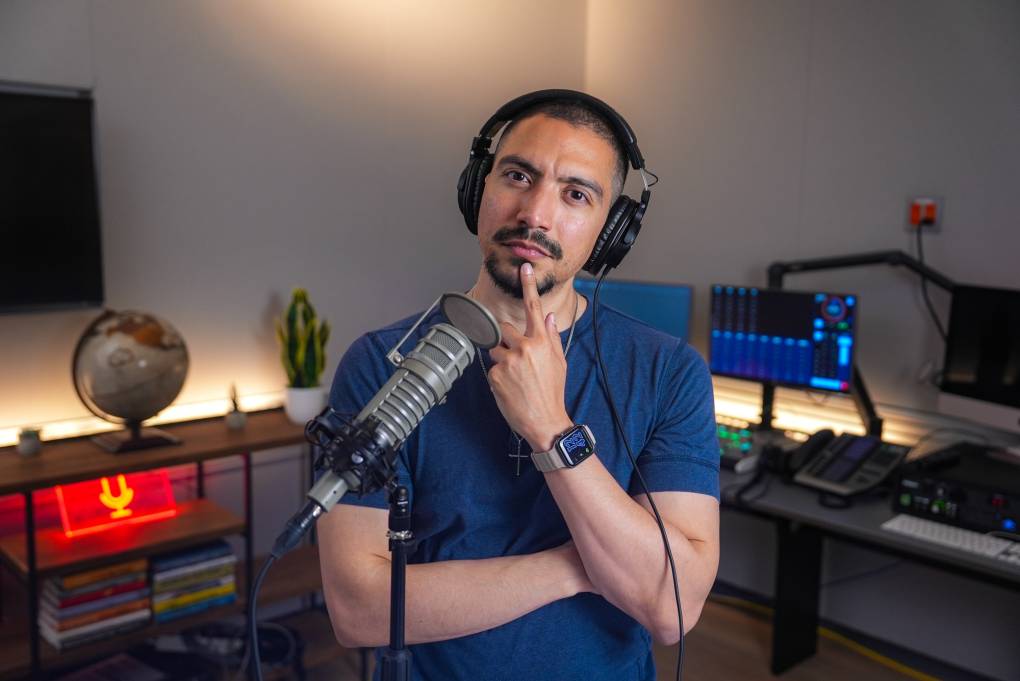
"caption": "Hyphenación host Xorje Olivares at KQED in San Francisco.",
"credit": "Alex Tran/KQED",
"altTag": null,
"description": null,
"imgSizes": {
"medium": {
"file": "https://cdn.kqed.org/wp-content/uploads/sites/10/2025/05/250508-HYPHENACION-AT-01-KQED-800x534.jpg",
"width": 800,
"height": 534,
"mimeType": "image/jpeg"
},
"large": {
"file": "https://cdn.kqed.org/wp-content/uploads/sites/10/2025/05/250508-HYPHENACION-AT-01-KQED-1020x681.jpg",
"width": 1020,
"height": 681,
"mimeType": "image/jpeg"
},
"thumbnail": {
"file": "https://cdn.kqed.org/wp-content/uploads/sites/10/2025/05/250508-HYPHENACION-AT-01-KQED-160x107.jpg",
"width": 160,
"height": 107,
"mimeType": "image/jpeg"
},
"1536x1536": {
"file": "https://cdn.kqed.org/wp-content/uploads/sites/10/2025/05/250508-HYPHENACION-AT-01-KQED-1536x1026.jpg",
"width": 1536,
"height": 1026,
"mimeType": "image/jpeg"
},
"post-thumbnail": {
"file": "https://cdn.kqed.org/wp-content/uploads/sites/10/2025/05/250508-HYPHENACION-AT-01-KQED-672x372.jpg",
"width": 672,
"height": 372,
"mimeType": "image/jpeg"
},
"twentyfourteen-full-width": {
"file": "https://cdn.kqed.org/wp-content/uploads/sites/10/2025/05/250508-HYPHENACION-AT-01-KQED-1038x576.jpg",
"width": 1038,
"height": 576,
"mimeType": "image/jpeg"
},
"full-width": {
"file": "https://cdn.kqed.org/wp-content/uploads/sites/10/2025/05/250508-HYPHENACION-AT-01-KQED-1920x1283.jpg",
"width": 1920,
"height": 1283,
"mimeType": "image/jpeg"
},
"kqedFullSize": {
"file": "https://cdn.kqed.org/wp-content/uploads/sites/10/2025/05/250508-HYPHENACION-AT-01-KQED.jpg",
"width": 2000,
"height": 1336
}
},
"isLoading": false,
"fetchFailed": false
},
"news_12039612": {
"type": "attachments",
"id": "news_12039612",
"meta": {
"index": "attachments_1716263798",
"site": "news",
"id": "12039612",
"found": true
},
"title": "IMG_1018",
"publishDate": 1746825477,
"status": "inherit",
"parent": 12039390,
"modified": 1746826660,
"caption": "President Donald Trump’s administration has disrupted long-standing government norms. Yet even in California, many of his supporters remain steadfast.",
"credit": "Anna Vignet/KQED",
"altTag": null,
"description": null,
"imgSizes": {
"medium": {
"file": "https://cdn.kqed.org/wp-content/uploads/sites/10/2025/05/IMG_1018-800x600.jpg",
"width": 800,
"height": 600,
"mimeType": "image/jpeg"
},
"large": {
"file": "https://cdn.kqed.org/wp-content/uploads/sites/10/2025/05/IMG_1018-1020x765.jpg",
"width": 1020,
"height": 765,
"mimeType": "image/jpeg"
},
"thumbnail": {
"file": "https://cdn.kqed.org/wp-content/uploads/sites/10/2025/05/IMG_1018-160x120.jpg",
"width": 160,
"height": 120,
"mimeType": "image/jpeg"
},
"1536x1536": {
"file": "https://cdn.kqed.org/wp-content/uploads/sites/10/2025/05/IMG_1018-1536x1152.jpg",
"width": 1536,
"height": 1152,
"mimeType": "image/jpeg"
},
"2048x2048": {
"file": "https://cdn.kqed.org/wp-content/uploads/sites/10/2025/05/IMG_1018-2048x1536.jpg",
"width": 2048,
"height": 1536,
"mimeType": "image/jpeg"
},
"post-thumbnail": {
"file": "https://cdn.kqed.org/wp-content/uploads/sites/10/2025/05/IMG_1018-672x372.jpg",
"width": 672,
"height": 372,
"mimeType": "image/jpeg"
},
"twentyfourteen-full-width": {
"file": "https://cdn.kqed.org/wp-content/uploads/sites/10/2025/05/IMG_1018-1038x576.jpg",
"width": 1038,
"height": 576,
"mimeType": "image/jpeg"
},
"full-width": {
"file": "https://cdn.kqed.org/wp-content/uploads/sites/10/2025/05/IMG_1018-1920x1440.jpg",
"width": 1920,
"height": 1440,
"mimeType": "image/jpeg"
},
"kqedFullSize": {
"file": "https://cdn.kqed.org/wp-content/uploads/sites/10/2025/05/IMG_1018.jpg",
"width": 2560,
"height": 1920
}
},
"isLoading": false,
"fetchFailed": false
},
"news_12039445": {
"type": "attachments",
"id": "news_12039445",
"meta": {
"index": "attachments_1716263798",
"site": "news",
"id": "12039445",
"found": true
},
"title": "US-ECONOMY-FARMS-AGRICULTURE",
"publishDate": 1746747442,
"status": "inherit",
"parent": 12039333,
"modified": 1746750539,
"caption": "A \"Vote Trump\" decorated cargo shipping container is displayed during the World Ag Expo at the International Agri-Center in Tulare, California, on Feb. 11, 2025. U.S. farmers have also been affected by the Trump administration's attempts to shut down the United States Agency for International Development (USAID), with the U.S. government previously spending billions of dollars on food aid from American farmers, while tariffs and trade wars threaten to disrupt business.",
"credit": "Patrick T. Fallon / AFP via Getty Images",
"altTag": null,
"description": null,
"imgSizes": {
"medium": {
"file": "https://cdn.kqed.org/wp-content/uploads/sites/10/2025/05/FarmersTrumpGetty-800x533.jpg",
"width": 800,
"height": 533,
"mimeType": "image/jpeg"
},
"large": {
"file": "https://cdn.kqed.org/wp-content/uploads/sites/10/2025/05/FarmersTrumpGetty-1020x680.jpg",
"width": 1020,
"height": 680,
"mimeType": "image/jpeg"
},
"thumbnail": {
"file": "https://cdn.kqed.org/wp-content/uploads/sites/10/2025/05/FarmersTrumpGetty-160x107.jpg",
"width": 160,
"height": 107,
"mimeType": "image/jpeg"
},
"1536x1536": {
"file": "https://cdn.kqed.org/wp-content/uploads/sites/10/2025/05/FarmersTrumpGetty-1536x1024.jpg",
"width": 1536,
"height": 1024,
"mimeType": "image/jpeg"
},
"post-thumbnail": {
"file": "https://cdn.kqed.org/wp-content/uploads/sites/10/2025/05/FarmersTrumpGetty-672x372.jpg",
"width": 672,
"height": 372,
"mimeType": "image/jpeg"
},
"twentyfourteen-full-width": {
"file": "https://cdn.kqed.org/wp-content/uploads/sites/10/2025/05/FarmersTrumpGetty-1038x576.jpg",
"width": 1038,
"height": 576,
"mimeType": "image/jpeg"
},
"full-width": {
"file": "https://cdn.kqed.org/wp-content/uploads/sites/10/2025/05/FarmersTrumpGetty-1920x1280.jpg",
"width": 1920,
"height": 1280,
"mimeType": "image/jpeg"
},
"kqedFullSize": {
"file": "https://cdn.kqed.org/wp-content/uploads/sites/10/2025/05/FarmersTrumpGetty.jpg",
"width": 2000,
"height": 1333
}
},
"isLoading": false,
"fetchFailed": false
},
"news_12039315": {
"type": "attachments",
"id": "news_12039315",
"meta": {
"index": "attachments_1716263798",
"site": "news",
"id": "12039315",
"found": true
},
"title": "03.21.2025-SoccerPractice-11-scaled",
"publishDate": 1746725418,
"status": "inherit",
"parent": 12039313,
"modified": 1746728550,
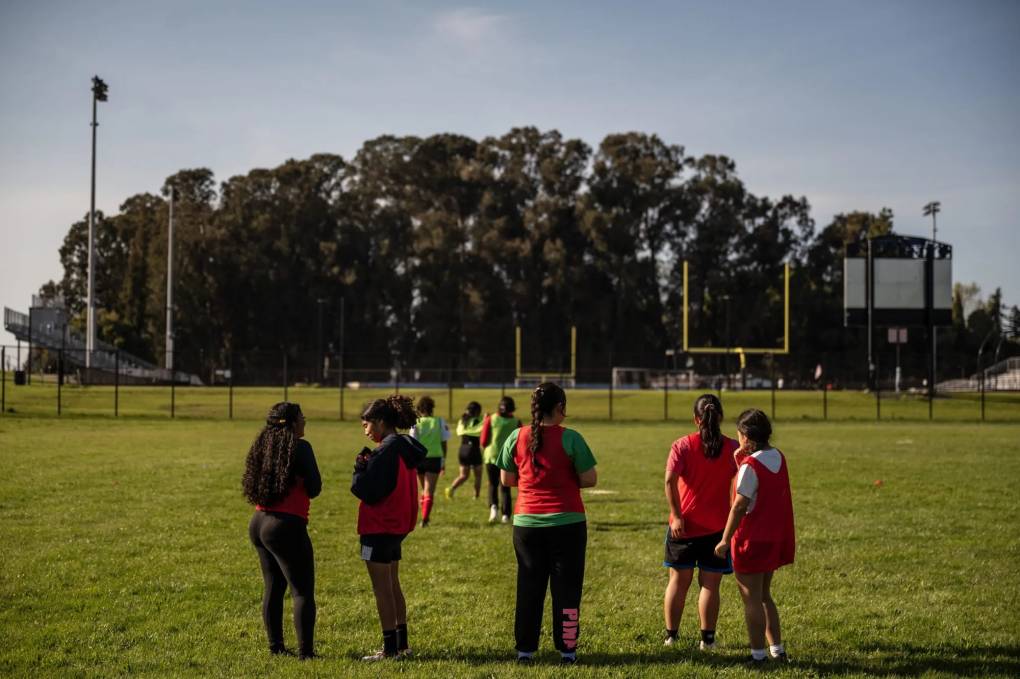
"caption": "A Soccer Without Borders Bay Area team gathered at a high school in the East Bay to practice for a weekend game against a familiar rival on Thursday, March 20, 2025.",
"credit": "Alejandro Durán for El Tímpano/CatchLight Local/ Report for America corps member",
"altTag": null,
"description": null,
"imgSizes": {
"medium": {
"file": "https://cdn.kqed.org/wp-content/uploads/sites/10/2025/05/03.21.2025-SoccerPractice-11-scaled-1-800x532.jpg",
"width": 800,
"height": 532,
"mimeType": "image/jpeg"
},
"large": {
"file": "https://cdn.kqed.org/wp-content/uploads/sites/10/2025/05/03.21.2025-SoccerPractice-11-scaled-1-1020x679.jpg",
"width": 1020,
"height": 679,
"mimeType": "image/jpeg"
},
"thumbnail": {
"file": "https://cdn.kqed.org/wp-content/uploads/sites/10/2025/05/03.21.2025-SoccerPractice-11-scaled-1-160x106.jpg",
"width": 160,
"height": 106,
"mimeType": "image/jpeg"
},
"1536x1536": {
"file": "https://cdn.kqed.org/wp-content/uploads/sites/10/2025/05/03.21.2025-SoccerPractice-11-scaled-1-1536x1022.jpg",
"width": 1536,
"height": 1022,
"mimeType": "image/jpeg"
},
"post-thumbnail": {
"file": "https://cdn.kqed.org/wp-content/uploads/sites/10/2025/05/03.21.2025-SoccerPractice-11-scaled-1-672x372.jpg",
"width": 672,
"height": 372,
"mimeType": "image/jpeg"
},
"twentyfourteen-full-width": {
"file": "https://cdn.kqed.org/wp-content/uploads/sites/10/2025/05/03.21.2025-SoccerPractice-11-scaled-1-1038x576.jpg",
"width": 1038,
"height": 576,
"mimeType": "image/jpeg"
},
"full-width": {
"file": "https://cdn.kqed.org/wp-content/uploads/sites/10/2025/05/03.21.2025-SoccerPractice-11-scaled-1-1920x1278.jpg",
"width": 1920,
"height": 1278,
"mimeType": "image/jpeg"
},
"kqedFullSize": {
"file": "https://cdn.kqed.org/wp-content/uploads/sites/10/2025/05/03.21.2025-SoccerPractice-11-scaled-1.jpg",
"width": 2000,
"height": 1331
}
},
"isLoading": false,
"fetchFailed": false
}
},
"audioPlayerReducer": {
"postId": "stream_live",
"isPaused": true,
"isPlaying": false,
"pfsActive": false,
"pledgeModalIsOpen": true,
"playerDrawerIsOpen": false,
"liveAudioPlayStartedAt": 0,
"liveAudioPlayContext": ""
},
"authorsReducer": {
"byline_news_12041326": {
"type": "authors",
"id": "byline_news_12041326",
"meta": {
"override": true
},
"slug": "byline_news_12041326",
"name": "Mark Betancourt, The California Newsroom",
"isLoading": false
},
"byline_news_12041613": {
"type": "authors",
"id": "byline_news_12041613",
"meta": {
"override": true
},
"slug": "byline_news_12041613",
"name": "\u003ca href=\"https://www.npr.org/people/427718118/adrian-florido\">Adrian Florido\u003c/a>, NPR",
"isLoading": false
},
"byline_news_12040330": {
"type": "authors",
"id": "byline_news_12040330",
"meta": {
"override": true
},
"slug": "byline_news_12040330",
"name": "Nina Totenberg, NPR",
"isLoading": false
},
"byline_news_12038879": {
"type": "authors",
"id": "byline_news_12038879",
"meta": {
"override": true
},
"slug": "byline_news_12038879",
"name": "Kayla Ling",
"isLoading": false
},
"byline_news_12039313": {
"type": "authors",
"id": "byline_news_12039313",
"meta": {
"override": true
},
"slug": "byline_news_12039313",
"name": "\u003ca href=\"https://www.eltimpano.org/author/ehellerstein/\">Erica Hellerstein\u003c/a>, El Tímpano",
"isLoading": false
},
"gmarzorati": {
"type": "authors",
"id": "227",
"meta": {
"index": "authors_1716337520",
"id": "227",
"found": true
},
"name": "Guy Marzorati",
"firstName": "Guy",
"lastName": "Marzorati",
"slug": "gmarzorati",
"email": "gmarzorati@KQED.org",
"display_author_email": true,
"staff_mastheads": [
"news"
],
"title": "Correspondent",
"bio": "Guy Marzorati is a correspondent on KQED's California Politics and Government Desk, based in San Jose. A graduate of Santa Clara University, Guy joined KQED in 2013. He reports on state and local politics and produces KQED's digital voter guide.",
"avatar": "https://secure.gravatar.com/avatar/e7038b8dbfd55b104369b76b1cd0b9de?s=600&d=blank&r=g",
"twitter": "guymarzorati",
"facebook": null,
"instagram": null,
"linkedin": null,
"sites": [
{
"site": "",
"roles": [
"editor"
]
},
{
"site": "news",
"roles": [
"editor"
]
},
{
"site": "science",
"roles": [
"editor"
]
},
{
"site": "forum",
"roles": [
"editor"
]
},
{
"site": "elections",
"roles": [
"editor"
]
},
{
"site": "liveblog",
"roles": [
"editor"
]
}
],
"headData": {
"title": "Guy Marzorati | KQED",
"description": "Correspondent",
"ogImgSrc": "https://secure.gravatar.com/avatar/e7038b8dbfd55b104369b76b1cd0b9de?s=600&d=blank&r=g",
"twImgSrc": "https://secure.gravatar.com/avatar/e7038b8dbfd55b104369b76b1cd0b9de?s=600&d=blank&r=g"
},
"isLoading": false,
"link": "/author/gmarzorati"
},
"tychehendricks": {
"type": "authors",
"id": "259",
"meta": {
"index": "authors_1716337520",
"id": "259",
"found": true
},
"name": "Tyche Hendricks",
"firstName": "Tyche",
"lastName": "Hendricks",
"slug": "tychehendricks",
"email": "thendricks@kqed.org",
"display_author_email": true,
"staff_mastheads": [
"news"
],
"title": "KQED Senior Editor, Immigration",
"bio": "\u003cspan style=\"font-weight: 400;\">Tyche Hendricks is KQED’s senior editor for immigration, leading coverage of the policy and politics that affect California’s immigrant communities. Her work for KQED’s radio and online audiences is also carried on NPR and other national outlets. She has been recognized with awards from the Radio and Television News Directors Association, the Society for Professional Journalists; the Education Writers Association; the Best of the West and the National Federation of Community Broadcasters. Before joining KQED in 2010, Tyche spent more than a dozen years as a newspaper reporter, notably at the \u003c/span>\u003ci>\u003cspan style=\"font-weight: 400;\">San Francisco Chronicle\u003c/span>\u003c/i>\u003cspan style=\"font-weight: 400;\">. At different times she has covered criminal justice, government and politics and urban planning. Tyche has taught in the MFA Creative Writing program at the University of San Francisco and at UC Berkeley’s Graduate School of Journalism, where she was co-director of a national immigration symposium for professional journalists. She is the author of \u003c/span>\u003ci>\u003cspan style=\"font-weight: 400;\">The Wind Doesn't Need a Passport: Stories from the U.S.-Mexico Borderlands\u003c/span>\u003c/i>\u003cspan style=\"font-weight: 400;\"> (University of California Press). \u003c/span>",
"avatar": "https://secure.gravatar.com/avatar/b8ee458e2731c2d43df86882ce17267e?s=600&d=blank&r=g",
"twitter": "tychehendricks",
"facebook": null,
"instagram": null,
"linkedin": null,
"sites": [
{
"site": "news",
"roles": [
"editor"
]
},
{
"site": "stateofhealth",
"roles": [
"editor"
]
}
],
"headData": {
"title": "Tyche Hendricks | KQED",
"description": "KQED Senior Editor, Immigration",
"ogImgSrc": "https://secure.gravatar.com/avatar/b8ee458e2731c2d43df86882ce17267e?s=600&d=blank&r=g",
"twImgSrc": "https://secure.gravatar.com/avatar/b8ee458e2731c2d43df86882ce17267e?s=600&d=blank&r=g"
},
"isLoading": false,
"link": "/author/tychehendricks"
},
"matthewgreen": {
"type": "authors",
"id": "1263",
"meta": {
"index": "authors_1716337520",
"id": "1263",
"found": true
},
"name": "Matthew Green",
"firstName": "Matthew",
"lastName": "Green",
"slug": "matthewgreen",
"email": "mgreen@kqed.org",
"display_author_email": false,
"staff_mastheads": [],
"title": "KQED Editor/Reporter",
"bio": "Matthew Green is a digital media producer for KQED News. He previously produced \u003ca href=\"http://www.kqed.org/lowdown\">The Lowdown\u003c/a>, KQED’s multimedia news education blog. Matthew's written for numerous Bay Area publications, including the Oakland Tribune and San Francisco Chronicle. He also taught journalism classes at Fremont High School in East Oakland.\r\n\r\nEmail: mgreen@kqed.org; Twitter: @MGreenKQED",
"avatar": "https://secure.gravatar.com/avatar/3bf498d1267ca02c8494f33d8cfc575e?s=600&d=blank&r=g",
"twitter": "MGreenKQED",
"facebook": null,
"instagram": null,
"linkedin": null,
"sites": [
{
"site": "news",
"roles": []
},
{
"site": "lowdown",
"roles": []
},
{
"site": "science",
"roles": []
},
{
"site": "education",
"roles": []
},
{
"site": "quest",
"roles": []
},
{
"site": "liveblog",
"roles": []
}
],
"headData": {
"title": "Matthew Green | KQED",
"description": "KQED Editor/Reporter",
"ogImgSrc": "https://secure.gravatar.com/avatar/3bf498d1267ca02c8494f33d8cfc575e?s=600&d=blank&r=g",
"twImgSrc": "https://secure.gravatar.com/avatar/3bf498d1267ca02c8494f33d8cfc575e?s=600&d=blank&r=g"
},
"isLoading": false,
"link": "/author/matthewgreen"
},
"btorres": {
"type": "authors",
"id": "11666",
"meta": {
"index": "authors_1716337520",
"id": "11666",
"found": true
},
"name": "Blanca Torres",
"firstName": "Blanca",
"lastName": "Torres",
"slug": "btorres",
"email": "btorres@kqed.org",
"display_author_email": true,
"staff_mastheads": [
"news"
],
"title": "Producer, Forum",
"bio": "Blanca Torres brings sharp news judgement and keen sense of lively conversation to her work as producer for Forum. She loves producing shows that leave listeners feeling like they heard distinctive voices, learned something new and gained a fresh perspective.\r\n\r\nShe joined KQED in January of 2020 after 16 years of working as a newspaper reporter most recently at the \u003cem>San Francisco Business Times,\u003c/em> where she wrote about real estate and economic development. Before that, she covered a variety of beats including crime, education, retail, workplace, the economy, consumer issues, and small business for the \u003cem>Contra Costa Times, Baltimore Sun\u003c/em> and\u003cem> The Seattle Times\u003c/em>. In addition to reporting, she worked as an editorial writer and columnist for the \u003cem>Seattle Times\u003c/em>. From 2017 to 2020, Blanca won a total of ten awards from the National Association of Real Estate Editors and won first place for land use reporting from the California News Publishers Association two years in a row. She is also a member and former board member for the National Association of Hispanic Journalists.\r\n\r\nA native of the Pacific Northwest, Blanca earned her bachelor's degree from Vanderbilt University in Nashville and a master's in fine arts in creative writing at Mills College. She lives in the East Bay with her family.",
"avatar": "https://secure.gravatar.com/avatar/f2322ff46076d337f7ba731ee6068cb1?s=600&d=blank&r=g",
"twitter": "@blancawrites",
"facebook": null,
"instagram": null,
"linkedin": null,
"sites": [
{
"site": "arts",
"roles": [
"editor"
]
},
{
"site": "news",
"roles": [
"editor"
]
},
{
"site": "forum",
"roles": [
"editor"
]
}
],
"headData": {
"title": "Blanca Torres | KQED",
"description": "Producer, Forum",
"ogImgSrc": "https://secure.gravatar.com/avatar/f2322ff46076d337f7ba731ee6068cb1?s=600&d=blank&r=g",
"twImgSrc": "https://secure.gravatar.com/avatar/f2322ff46076d337f7ba731ee6068cb1?s=600&d=blank&r=g"
},
"isLoading": false,
"link": "/author/btorres"
},
"ibloom": {
"type": "authors",
"id": "11805",
"meta": {
"index": "authors_1716337520",
"id": "11805",
"found": true
},
"name": "Izzy Bloom",
"firstName": "Izzy",
"lastName": "Bloom",
"slug": "ibloom",
"email": "ibloom@kqed.org",
"display_author_email": false,
"staff_mastheads": [],
"title": "KQED Reporter & Producer",
"bio": "Izzy is a reporter and producer on KQED's California Politics & Government Desk. She joined the desk in 2024 to produce Political Breakdown, covering local and national elections and attending the RNC and DNC in Milwaukee and Chicago. \r\n\r\nBefore that, Izzy was a producer on The California Report and reported long-form stories for The California Report Magazine. She was a finalist for the Third Coast/Richard H. Driehaus Foundation Competition and was awarded for her reporting on indigenous land back by the Society of Professional Journalists. Izzy received her master's in journalism from the University of California, Berkeley.",
"avatar": "https://secure.gravatar.com/avatar/cc4d272ca430783ee1a8efac470a6b1e0fdd082c3beb61da019801d0ff751c8c?s=600&d=blank&r=g",
"twitter": null,
"bluesky": null,
"facebook": null,
"instagram": null,
"linkedin": null,
"sites": [
{
"site": "news",
"roles": [
"editor"
]
},
{
"site": "perspectives",
"roles": [
"editor"
]
}
],
"headData": {
"title": "Izzy Bloom | KQED",
"description": "KQED Reporter & Producer",
"ogImgSrc": "https://secure.gravatar.com/avatar/cc4d272ca430783ee1a8efac470a6b1e0fdd082c3beb61da019801d0ff751c8c?s=600&d=blank&r=g",
"twImgSrc": "https://secure.gravatar.com/avatar/cc4d272ca430783ee1a8efac470a6b1e0fdd082c3beb61da019801d0ff751c8c?s=600&d=blank&r=g"
},
"isLoading": false,
"link": "/author/ibloom"
},
"kdebenedetti": {
"type": "authors",
"id": "11913",
"meta": {
"index": "authors_1716337520",
"id": "11913",
"found": true
},
"name": "Katie DeBenedetti",
"firstName": "Katie",
"lastName": "DeBenedetti",
"slug": "kdebenedetti",
"email": "kdebenedetti@kqed.org",
"display_author_email": false,
"staff_mastheads": [
"news",
"science"
],
"title": "KQED Contributor",
"bio": "Katie DeBenedetti is a digital reporter covering daily news for the Express Desk. Prior to joining KQED as a culture reporting intern in January 2024, she covered education and city government for the Napa Valley Register.",
"avatar": "https://secure.gravatar.com/avatar/6e31073cb8f7e4214ab03f42771d0f45?s=600&d=blank&r=g",
"twitter": null,
"facebook": null,
"instagram": null,
"linkedin": null,
"sites": [
{
"site": "news",
"roles": [
"author"
]
},
{
"site": "science",
"roles": [
"author"
]
},
{
"site": "liveblog",
"roles": [
"author"
]
}
],
"headData": {
"title": "Katie DeBenedetti | KQED",
"description": "KQED Contributor",
"ogImgSrc": "https://secure.gravatar.com/avatar/6e31073cb8f7e4214ab03f42771d0f45?s=600&d=blank&r=g",
"twImgSrc": "https://secure.gravatar.com/avatar/6e31073cb8f7e4214ab03f42771d0f45?s=600&d=blank&r=g"
},
"isLoading": false,
"link": "/author/kdebenedetti"
}
},
"pagesReducer": {
"news_tag_immigration": {
"type": "terms",
"id": "news_20202",
"meta": {
"index": "terms_1716263798",
"site": "news",
"id": "20202",
"score": 6.9038835
},
"featImg": null,
"name": "immigration",
"description": null,
"taxonomy": "tag",
"headData": {
"twImgId": null,
"twTitle": null,
"ogTitle": null,
"ogImgId": null,
"twDescription": null,
"description": null,
"title": "immigration Archives | KQED News",
"ogDescription": null
},
"ttid": 20219,
"slug": "immigration",
"isLoading": false,
"title": "immigration",
"pageMeta": {
"site": "news",
"WpPageTemplate": "page-topic-editorial",
"currentPage": 29
},
"blocks": [
{
"blockName": "kqed/post-list",
"attrs": {
"layout": "cardArticle2",
"query": "posts/news?tag=immigration",
"seeMore": false,
"paginated": true,
"page": 29
}
},
{
"blockName": "kqed/ad"
}
]
}
},
"pfsSessionReducer": {},
"postsReducer": {
"stream_live": {
"type": "live",
"id": "stream_live",
"audioUrl": "https://streams.kqed.org/kqedradio",
"title": "Live Stream",
"excerpt": "Live Stream information currently unavailable.",
"link": "/radio",
"featImg": "",
"label": {
"name": "KQED Live",
"link": "/"
}
},
"stream_kqedNewscast": {
"type": "posts",
"id": "stream_kqedNewscast",
"audioUrl": "https://www.kqed.org/.stream/anon/radio/RDnews/newscast.mp3?_=1",
"title": "KQED Newscast",
"featImg": "",
"label": {
"name": "88.5 FM",
"link": "/"
}
},
"news_12041326": {
"type": "posts",
"id": "news_12041326",
"meta": {
"index": "posts_1716263798",
"site": "news",
"id": "12041326",
"score": null,
"sort": [
1748347218000
]
},
"guestAuthors": [],
"slug": "this-ethiopian-woman-was-tortured-by-her-government-the-us-is-sending-her-home-anyway",
"title": "This Ethiopian Woman Was Tortured by Her Government. The US is Sending Her Home Anyway",
"publishDate": 1748347218,
"format": "standard",
"headTitle": "This Ethiopian Woman Was Tortured by Her Government. The US is Sending Her Home Anyway | KQED",
"labelTerm": {
"site": "news"
},
"content": "\u003cp>The woman’s story is summarized only briefly in the document that seals her impending deportation: After she inadvertently witnessed an extrajudicial killing by members of the Ethiopian military, she was imprisoned and beaten for more than a week.\u003c/p>\n\u003cp>But that was only the beginning. The witness — as the \u003cem>California Newsroom\u003c/em> has chosen to call her after she asked not to be named due to safety concerns for herself and her family — fled Ethiopia and made her way to Mexico. She was planning to ask for protection in the United States. But by the time she made it to the banks of the Rio Grande, her options had narrowed.\u003c/p>\n\u003cp>President \u003ca href=\"https://www.kqed.org/news/tag/donald-trump\">Donald Trump\u003c/a>, on the day he was inaugurated for the second time, had declared that anyone trying to cross the southern border without prior authorization was part of an “invasion.” The order suspended their right to apply for asylum at the border. So the witness swam across the river to Texas, where she sought out Border Patrol agents to ask for help.\u003c/p>\n\u003cp>She didn’t know it, but there was still a way to avoid being sent home — a narrow form of protection, called the United Nations Convention Against Torture, that applies to people whose governments could torture them or allow them to be tortured. CAT is harder to qualify for than asylum and doesn’t come with the same benefits, like a path to citizenship and the possibility of bringing her family to the U.S. as well. It would, however, stop her from being deported to Ethiopia.\u003c/p>\n\u003cp>[ad fullwidth]\u003c/p>\n\u003cp>But under the president’s order, nearly all of her rights as a CAT applicant — such as the right to bring a lawyer to interviews with asylum officers and to appeal denials — had been quietly and deliberately erased, and what remains of the process now takes place under a veil of secrecy.\u003c/p>\n\u003cp>That’s according to federal guidance produced in a \u003ca href=\"https://www.npr.org/2025/02/03/nx-s1-5285543/aclu-trump-lawsuit-asylum-ban-southern-border-january\">class-action lawsuit\u003c/a> filed by the American Civil Liberties Union, a new report by two prominent human rights organizations, and independent reporting by the \u003cem>California Newsroom\u003c/em>, including nearly a dozen interviews with immigration attorneys and immigrants’ rights advocates around the country, as well as a former asylum officer.\u003c/p>\n\u003cp>The Department of Homeland Security has declined to answer the\u003cem> California Newsroom’s\u003c/em> questions about the witness’s case or how the asylum system — in particular the process of applying for protection under the Convention Against Torture — is currently working.\u003c/p>\n\u003cp>But the changes in practice appear to mean that, for thousands of people fleeing or trying to avoid torture by their own governments, the process of applying for humanitarian protection in the U.S. provides little more than false hope. And its dismantling has been so well hidden that immigration attorneys are only just now starting to catch on.\u003c/p>\n\u003cp>Ginger Jacobs, a senior partner at the San Diego firm that represents the witness, worries that many people who have legitimate claims to humanitarian protection could end up casualties of the Trump administration’s zeal to effect mass deportations.\u003c/p>\n\u003cp>“The danger is that it’s another way to disappear people,” she said.\u003c/p>\n\u003ch2>‘There’s nothing you can do’\u003c/h2>\n\u003cp>Before they can go before an immigration judge to formally plead their cases, applicants for CAT protection must first convince an asylum officer with the U.S. Citizenship and Immigration Services (USCIS) that their fear of torture is credible. For her interview on April 27, the witness spoke with the officer by phone. She sat alone in a tiny booth in the Otay Mesa Detention Center, a massive U.S. Immigration and Customs Enforcement (ICE) facility outside San Diego, where she has been detained since early April.\u003c/p>\n\u003cp>Afterward, the witness was handed the two-page document containing the short summary of what she’d told the asylum officer. A box on the document had been checked to indicate that her story was credible. But further down, another checked box indicated that the witness “did not establish it is more likely than not that she will be tortured in Ethiopia.” There was no explanation of the decision.\u003c/p>\n\u003cp>\u003cimg loading=\"lazy\" decoding=\"async\" class=\"aligncenter size-full wp-image-12041513\" src=\"https://cdn.kqed.org/wp-content/uploads/sites/10/2025/05/CANewsroom3.png\" alt=\"\" width=\"1321\" height=\"171\" srcset=\"https://cdn.kqed.org/wp-content/uploads/sites/10/2025/05/CANewsroom3.png 1321w, https://cdn.kqed.org/wp-content/uploads/sites/10/2025/05/CANewsroom3-800x104.png 800w, https://cdn.kqed.org/wp-content/uploads/sites/10/2025/05/CANewsroom3-1020x132.png 1020w, https://cdn.kqed.org/wp-content/uploads/sites/10/2025/05/CANewsroom3-160x21.png 160w\" sizes=\"auto, (max-width: 1321px) 100vw, 1321px\">\u003c/p>\n\u003cfigure id=\"attachment_12041512\" class=\"wp-caption aligncenter\" style=\"max-width: 1355px\">\u003cimg loading=\"lazy\" decoding=\"async\" class=\"size-full wp-image-12041512\" src=\"https://cdn.kqed.org/wp-content/uploads/sites/10/2025/05/CANewsroom2.jpg\" alt=\"\" width=\"1355\" height=\"181\" srcset=\"https://cdn.kqed.org/wp-content/uploads/sites/10/2025/05/CANewsroom2.jpg 1355w, https://cdn.kqed.org/wp-content/uploads/sites/10/2025/05/CANewsroom2-800x107.jpg 800w, https://cdn.kqed.org/wp-content/uploads/sites/10/2025/05/CANewsroom2-1020x136.jpg 1020w, https://cdn.kqed.org/wp-content/uploads/sites/10/2025/05/CANewsroom2-160x21.jpg 160w\" sizes=\"auto, (max-width: 1355px) 100vw, 1355px\">\u003cfigcaption class=\"wp-caption-text\">U.S. Citizenship and Immigration Services said the witness’s account of torture by the Ethiopian government was credible, but still determined she could be deported back to her country. \u003ccite>(Sydney Johnson, Jacobs & Schlesinger LLP)\u003c/cite>\u003c/figcaption>\u003c/figure>\n\u003cp>Before Jan. 20, that determination could only have been made in court by an immigration judge. Now, that single checkmark, made by an official whom the witness never saw, is the final and uncontestable decision that will send her back to the government that she believes will imprison and torture her, or worse.\u003c/p>\n\u003cp>“Her deportation officer just said, there’s nothing you can do,” said Sydney Johnson, who became the witness’s attorney after the decision was made, referring to the ICE official in charge of arranging the witness’s return to Ethiopia. (Johnson requested that her client not be interviewed directly because ICE records detainee phone calls.)\u003c/p>\n\u003cp>Had the witness arrived in the U.S. before Trump signed his executive order, “\u003ca href=\"https://www.whitehouse.gov/presidential-actions/2025/01/guaranteeing-the-states-protection-against-invasion/\">Guaranteeing the States Protection Against Invasion,”\u003c/a> she would have been given time to find a lawyer before the interview, and been allowed to have the lawyer present on the call. She would have received detailed documentation of how the asylum officer made the decision, and had the right to ask an immigration judge to review and possibly overturn it.\u003c/p>\n\u003cp>However, new \u003ca href=\"https://cdn.kqed.org/wp-content/uploads/sites/10/2025/05/gov.uscourts.dcd_.277039.52.1.pdf\" target=\"_blank\" rel=\"noopener\">federal guidance\u003c/a> for asylum officers, submitted by the U.S. Department of Justice in the ACLU lawsuit, clarifies that those rights no longer exist. In addition to claiming that the president’s suspension of asylum is illegal, the ACLU complaint specifies that his order is “depriving noncitizens of a meaningful opportunity to present CAT claims.”\u003cbr>\n[aside postID=news_12038128 hero='https://cdn.kqed.org/wp-content/uploads/sites/10/2025/04/npr.brightspotcdn-copy-21-1020x680.jpg']A \u003ca href=\"https://humanrightsfirst.org/wp-content/uploads/2025/05/ThisIsAnOrderFromTrumpReport_final1.pdf\">report published in early May\u003c/a> by researchers with Human Rights First and Refugees International calls screenings for CAT applicants a “sham” that is now being used to fast-track deportations. Some who have asked for humanitarian protection at the U.S.-Mexico border are not even granted interviews like the one the witness had, according to the report.\u003c/p>\n\u003cp>Immigration attorneys say that also includes screenings for a form of protection, similar to CAT, called “withholding of removal,” which applies to people who have been threatened or persecuted but are not facing torture. (It’s why the U.S. government was not supposed to send \u003ca href=\"https://www.npr.org/2025/04/01/nx-s1-5347427/maryland-el-salvador-error\">Kilmar Abrego Garcia\u003c/a> back to El Salvador.)\u003c/p>\n\u003cp>Both withholding of removal and CAT are enshrined in international law, and are not up for interpretation by U.S. officials, said Jennifer Scarborough, an immigration attorney who focuses on detained clients at the border and around the country. “Withholding is not discretionary,” she said. “The law says that if you meet those requirements, then the government may not deport you.”\u003c/p>\n\u003cp>If the government isn’t screening people for withholding of removal, Scarborough said, it has no way of knowing whether they meet the requirements.\u003c/p>\n\u003cp>DHS has \u003ca href=\"https://www.uscis.gov/tools/reports-and-studies/semi-monthly-credible-fear-and-reasonable-fear-receipts-and-decisions\">stopped publishing semi-monthly data\u003c/a> about screenings, making it difficult to determine how many people have been denied access to protection since the new rules went into effect.\u003c/p>\n\u003cp>“It’s such a terrifying situation,” said Jennifer Babaie, director of legal services at Las Americas Immigrant Advocacy Center in El Paso, Texas. The organization is a plaintiff in the ACLU lawsuit.\u003c/p>\n\u003cp>A former USCIS asylum officer who routinely conducted screening interviews called the new system “an erosion of due process and these people’s rights.” The person asked not to be named due to fear of reprisal from the current administration.\u003c/p>\n\u003cp>By removing these checks and balances that protect the rights of immigrants, the former asylum officer said, “the Trump administration is behaving in the same way as those governments we offer protection from.”\u003c/p>\n\u003ch2>‘A farce by design’\u003c/h2>\n\u003cp>The night before her phone screening with the asylum officer, the witness had been ill. A chronic medical condition had flared up, and that morning, she was groggy and lethargic after ICE doctors increased the dosage of her medication. She had a splitting headache. According to Johnson, her attorney, the witness said the asylum officer did not ask if she felt up to the screening interview, and the witness didn’t think she had the option to reschedule.\u003c/p>\n\u003cp>The witness told Johnson the interview lasted two hours. Twice, as she told the asylum officer her story — how prison guards had touched her breasts and taunted her as they beat her, how they poured water on her when she urinated on herself — the Amharic interpreter, who had been patched into the call, suddenly dropped off.\u003c/p>\n\u003cp>After the second time, toward the end of the call, the interpreter didn’t come back. The witness said she could continue in English as long as the asylum officer spoke slowly. She told Johnson that throughout the entire screening, the officer asked only “yes” or “no” questions. When the officer finally read back a summary, details were missing, but the witness said she was not allowed to add anything.\u003c/p>\n\u003cp>According to the current guidance under Trump’s order, “at the end of the interview, the AO [Asylum Officer] must review the summary with the individual and give him or her an opportunity to correct errors.” Officers also have the option to reschedule the interview if needed, including if the applicant doesn’t feel well or is having trouble communicating. In fact, officers were previously required to ask whether an applicant felt well enough to be interviewed, and “should avoid communicating” without an interpreter, according to internal USCIS documents reviewed by the \u003cem>California Newsroom\u003c/em>.\u003c/p>\n\u003cfigure id=\"attachment_12041501\" class=\"wp-caption aligncenter\" style=\"max-width: 2000px\">\u003cimg loading=\"lazy\" decoding=\"async\" class=\"size-full wp-image-12041501\" src=\"https://cdn.kqed.org/wp-content/uploads/sites/10/2025/05/InterviewProcedures.jpg\" alt=\"\" width=\"2000\" height=\"1188\" srcset=\"https://cdn.kqed.org/wp-content/uploads/sites/10/2025/05/InterviewProcedures.jpg 2000w, https://cdn.kqed.org/wp-content/uploads/sites/10/2025/05/InterviewProcedures-800x475.jpg 800w, https://cdn.kqed.org/wp-content/uploads/sites/10/2025/05/InterviewProcedures-1020x606.jpg 1020w, https://cdn.kqed.org/wp-content/uploads/sites/10/2025/05/InterviewProcedures-160x95.jpg 160w, https://cdn.kqed.org/wp-content/uploads/sites/10/2025/05/InterviewProcedures-1536x912.jpg 1536w, https://cdn.kqed.org/wp-content/uploads/sites/10/2025/05/InterviewProcedures-1920x1140.jpg 1920w\" sizes=\"auto, (max-width: 2000px) 100vw, 2000px\">\u003cfigcaption class=\"wp-caption-text\">Guidance for asylum officers issued by the U.S. Citizenship and Immigration Services in late January, after President Donald Trump’s executive order. \u003ccite>(Public filing in RAICES v. Noem)\u003c/cite>\u003c/figcaption>\u003c/figure>\n\u003cp>Training documents also recommend that asylum officers cross-check applicants’ fear claims with contextual information about the conditions in their countries.\u003c/p>\n\u003cp>While USCIS has declined to provide documentation of the information used to make the decision in the witness’s case, local reporting shows that since 2018, Ethiopia has been embroiled in \u003ca href=\"https://apnews.com/article/ethiopia-amhara-fano-insurgency-rebels-6108686ebbffee1458f71269380346fc\">ethnically charged fighting\u003c/a> between the government and armed militias. An April 2024 \u003ca href=\"https://upr-info.org/sites/default/files/country-document/2025-04/JS23_UPR47_Ethiopia.pdf\">joint report\u003c/a> from the World Organisation Against Torture and the Ethiopian Human Rights Council says that “enforced disappearance and torture” by government forces and other militant groups are “rampant in most parts of the country.”\u003c/p>\n\u003cp>The most recent \u003ca href=\"https://www.state.gov/reports/2023-country-reports-on-human-rights-practices/ethiopia/\">U.S. State Department report\u003c/a> on humans rights practices in Ethiopia, published in 2023, cites “credible reports of: arbitrary or unlawful killings, including extrajudicial killings; enforced disappearance; torture or cruel, inhuman or degrading treatment or punishment by the government.”\u003c/p>\n\u003cp>The \u003cem>California Newsroom\u003c/em> has omitted some details of the witness’s experience and background to protect her and her family.[aside postID=news_12038327 hero='https://cdn.kqed.org/wp-content/uploads/sites/10/2021/09/GettyImages-1031228044-1020x680.jpg']Johnson said she thinks her client’s illness, along with the incomplete translation, likely muddied what should have been an open-and-shut CAT case. She asked ICE to refer the witness back to USCIS for another interview when the witness felt well enough and proper translation was available. In an email reviewed by the \u003cem>California Newsroom\u003c/em>, an ICE officer wrote that the witness is “not eligible” for a second interview, because she’d already had one.\u003c/p>\n\u003cp>In other words, the asylum officer’s decision was final, and under the new rules, there was no way to appeal it.\u003c/p>\n\u003cp>Advocates for immigrants say there are further signs that the screening process is deteriorating as applicants’ attorneys and judges have been sidelined. Natalie Cadwalader-Schultheis, a San Diego-based attorney with Human Rights First, said screenings used to take anywhere from half an hour to four hours. She now has clients who say their interviews lasted as little as five minutes.\u003c/p>\n\u003cp>According to her organization’s new report, “these torture screenings are a farce by design.”\u003c/p>\n\u003cp>The report also highlights a trend that alarms human rights watchdogs. Some asylum seekers at the border told the researchers that their requests for humanitarian protection were ignored. “In some instances, officers told [asylum seekers] they were being transported to other facilities where they would have asylum interviews, only to be taken to staging areas for their removal,” the report says.\u003c/p>\n\u003cp>The California Newsroom asked DHS about the report’s findings, including the specific anecdotes it cites, and received no response.\u003c/p>\n\u003cp>In one testimonial from the report, a Russian woman refused to board a government flight to Costa Rica, demanding to know why she was being deported. According to the report, officers “falsely stated that there had been a court decision and told her she should just go quietly so as not to traumatize her children, who were crying.”\u003c/p>\n\u003ch2>‘It’s too quiet’\u003c/h2>\n\u003cp>Both ICE and USCIS have refused to give the witness any further documents related to her interview, according to Johnson. In one email to Johnson, reviewed by the \u003cem>California Newsroom\u003c/em>, USCIS implied that either the interview did not happen or that the agency doesn’t have to share the records with detainees’ lawyers. “The whole thing is just this incredibly frustrating cycle where nobody can tell me anything,” Johnson said.\u003c/p>\n\u003cp>When the witness asked to see the detailed notes from her interview, which asylum officers are required to take, an ICE officer suggested she file a Freedom of Information Act request, or FOIA.\u003c/p>\n\u003cp>When told about this suggestion, Scarborough, a veteran immigration attorney, called it “stupid.”\u003c/p>\n\u003cp>“You know how long it takes to get a FOIA response? Two to three months,” she said. “You know what’s going to happen in two to three months? Your client’s going to be deported.”\u003c/p>\n\u003cfigure id=\"attachment_12025344\" class=\"wp-caption aligncenter\" style=\"max-width: 1020px\">\u003cimg loading=\"lazy\" decoding=\"async\" class=\"size-full wp-image-12025344\" src=\"https://cdn.kqed.org/wp-content/uploads/sites/10/2025/02/trump-with-executive-order.jpg\" alt=\"\" width=\"1020\" height=\"680\" srcset=\"https://cdn.kqed.org/wp-content/uploads/sites/10/2025/02/trump-with-executive-order.jpg 1020w, https://cdn.kqed.org/wp-content/uploads/sites/10/2025/02/trump-with-executive-order-800x533.jpg 800w, https://cdn.kqed.org/wp-content/uploads/sites/10/2025/02/trump-with-executive-order-160x107.jpg 160w\" sizes=\"auto, (max-width: 1020px) 100vw, 1020px\">\u003cfigcaption class=\"wp-caption-text\">President Donald Trump signs executive orders in the Oval Office on Jan. 20, 2025, in Washington, DC. \u003ccite>(Anna Moneymaker/Getty Images)\u003c/cite>\u003c/figcaption>\u003c/figure>\n\u003cp>The \u003cem>California Newsroom\u003c/em> spoke with several immigration attorneys around the country who say they’re being stonewalled in similar ways.\u003c/p>\n\u003cp>“The CAT application process has been disappeared from us,” Cadwalader-Schultheis said. “It’s happening absolutely in secret, and they don’t want us understanding how it works. If we did, I think it would be very apparent just how illegal and how much of a sham this whole thing is.”\u003c/p>\n\u003cp>Several of the asylum-focused attorneys the \u003cem>California Newsroom\u003c/em> spoke with convene a weekly phone call to compare cases and try to piece together the administration’s new rules amidst a gaping lack of transparency. “We’re all just trying to figure it out in real time,” said Babaie, the Texas legal services director, who participates in the call.\u003c/p>\n\u003cp>The group seems to be at the bleeding edge of an unfolding situation that even most immigration lawyers have not yet realized, just as even the savviest experts took months to catch on to \u003ca href=\"https://www.theatlantic.com/magazine/archive/2022/09/trump-administration-family-separation-policy-immigration/670604/\">Trump’s family separation policy in 2018\u003c/a>.\u003c/p>\n\u003cp>Tess Feldman, an immigration attorney who directs Southwestern Law School’s Asylum Law Clinic, said she suspects CAT applicants are being rushed through the screening process, if they get one, then being deported quickly. Because the Trump administration has done away with a “consultation period” that previously allowed applicants to contact an attorney before their screening, she thinks many applicants may not be reaching out to lawyers at all. “It’s just silent,” she said. “That doesn’t mean there’s not a problem. In fact, it’s too quiet.”\u003c/p>\n\u003cp>“In 90 days,” she said, “I think we’ll look back and say, how did we not know this was happening in May?”\u003c/p>\n\u003ch2>‘They’re going to know she’s there’\u003c/h2>\n\u003cp>It’s unclear what high-level immigration officials actually know about recent changes to humanitarian protection. In response to questions from the \u003cem>California Newsroom\u003c/em> about what is currently happening when detained migrants express fear of returning to their countries, Matthew Tragesser, the public affairs chief at USCIS, provided links to several websites that don’t reflect the new rules, including that judges no longer review screening decisions.\u003c/p>\n\u003cp>The USCIS did not answer specific questions about the discrepancy, and why public websites that contain outdated information are still online.\u003c/p>\n\u003cp>In its class-action lawsuit, filed in U.S. District Court for the District of Columbia, the ACLU argues that the president does not have the power to broadly suspend protections laid out in law by Congress.\u003c/p>\n\u003cp>If the judge hearing the case rules to suspend the president’s executive order, thousands of asylum seekers could be allowed to stay in the country until they can apply for protection in immigration court. Those like the witness, who have already failed screenings under the order, would be allowed a do-over. But this time, they could have their lawyers present, and they’d have the right to appeal negative decisions.[aside postID=news_12037889 hero='https://cdn.kqed.org/wp-content/uploads/sites/10/2025/04/TravisAirForceBaseGetty-1020x602.jpg']In the meantime, the witness has told Johnson that other detainees at Otay Mesa have also failed their CAT screenings — and that some have disappeared in the middle of the night. The witness said she doesn’t know whether they have been moved to other facilities or deported.\u003c/p>\n\u003cp>ICE officials did not respond to questions from the \u003cem>California Newsroom\u003c/em> about when the witness will be deported. Johnson said ICE told her that the witness will be sent home as soon as the Ethiopian government provides her passport and a flight can be arranged.\u003c/p>\n\u003cp>Jacobs, who has been advising Johnson on the case, said that even by requesting the witness’s travel documents, ICE is putting her in danger. Once she arrives in Ethiopia, Jacobs said, “They’re going to know she’s there. I don’t see how she escapes from just being sent straight back to detention or prison, where she will be tortured again.”\u003c/p>\n\u003cp>This week, Johnson filed a request for an administrative stay, essentially asking ICE not to deport the witness until the ACLU lawsuit is resolved, and also requested that she be released from detention so that she can get proper medical care.\u003c/p>\n\u003cp>According to Johnson, the witness believes that if she is sent back to her country, Ethiopian officials will kill her. “She told me she would rather die here than return to die in Ethiopia,” Johnson said.\u003c/p>\n\u003cp>The witness’s cousin, a U.S. citizen who lives in California, said he knows her as a smart, kind woman who is always easy to talk to. Now, when she calls him from detention, she sounds subdued, nervous and scared. The cousin asked to be referred to only as Negash, his middle name, out of fear that the Ethiopian government would harm him if he were to return.\u003c/p>\n\u003cp>Negash said he was shocked to learn that the witness was denied the opportunity to make her case before a judge.\u003c/p>\n\u003cp>“This is my country,” he said, referring to the United States. “It’s the best country in the world. How are we going to send her to die over there?”\u003c/p>\n\u003cp>\u003ca href=\"https://www.kqed.org/californianewsroom\">\u003cem>The California Newsroom\u003c/em>\u003c/a>\u003cem> is a collaboration of public media outlets throughout the state, with NPR as its national partner.\u003c/em>\u003c/p>\n\u003cp>\u003cem>Anna Sussman contributed to this story\u003c/em>.\u003c/p>\n\u003cp>[ad floatright]\u003c/p>\n",
"blocks": [],
"excerpt": "The Trump Administration has turned the remaining sliver of hope for people fleeing torture into what experts fear is a fast track to deportation. And it’s trying to keep it a secret.",
"status": "publish",
"parent": 0,
"modified": 1748552290,
"stats": {
"hasAudio": false,
"hasVideo": false,
"hasChartOrMap": false,
"iframeSrcs": [],
"hasGoogleForm": false,
"hasGallery": false,
"hasHearkenModule": false,
"hasPolis": false,
"paragraphCount": 63,
"wordCount": 3365
},
"headData": {
"title": "This Ethiopian Woman Was Tortured by Her Government. The US is Sending Her Home Anyway | KQED",
"description": "The Trump Administration has turned the remaining sliver of hope for people fleeing torture into what experts fear is a fast track to deportation. And it’s trying to keep it a secret.",
"ogTitle": "",
"ogDescription": "",
"ogImgId": "",
"twTitle": "",
"twDescription": "",
"twImgId": "",
"schema": {
"@context": "https://schema.org",
"@type": "NewsArticle",
"headline": "This Ethiopian Woman Was Tortured by Her Government. The US is Sending Her Home Anyway",
"datePublished": "2025-05-27T05:00:18-07:00",
"dateModified": "2025-05-29T13:58:10-07:00",
"image": "https://cdn.kqed.org/wp-content/uploads/2020/02/KQED-OG-Image@1x.png",
"isAccessibleForFree": "True",
"publisher": {
"@type": "NewsMediaOrganization",
"@id": "https://www.kqed.org/#organization",
"name": "KQED",
"logo": "https://cdn.kqed.org/wp-content/uploads/2020/02/KQED-OG-Image@1x.png",
"url": "https://www.kqed.org",
"sameAs": [
"https://www.facebook.com/KQED",
"https://twitter.com/KQED",
"https://www.instagram.com/kqed/",
"https://www.tiktok.com/@kqedofficial",
"https://www.linkedin.com/company/kqed",
"https://www.youtube.com/channel/UCeC0IOo7i1P_61zVUWbJ4nw"
]
}
}
},
"sticky": false,
"nprByline": "Mark Betancourt, The California Newsroom",
"nprStoryId": "kqed-12041326",
"templateType": "standard",
"featuredImageType": "standard",
"excludeFromSiteSearch": "Include",
"showOnAuthorArchivePages": "No",
"articleAge": "0",
"path": "/news/12041326/this-ethiopian-woman-was-tortured-by-her-government-the-us-is-sending-her-home-anyway",
"audioTrackLength": null,
"parsedContent": [
{
"type": "contentString",
"content": "\u003cdiv class=\"post-body\">\u003cp>\u003cp>The woman’s story is summarized only briefly in the document that seals her impending deportation: After she inadvertently witnessed an extrajudicial killing by members of the Ethiopian military, she was imprisoned and beaten for more than a week.\u003c/p>\n\u003cp>But that was only the beginning. The witness — as the \u003cem>California Newsroom\u003c/em> has chosen to call her after she asked not to be named due to safety concerns for herself and her family — fled Ethiopia and made her way to Mexico. She was planning to ask for protection in the United States. But by the time she made it to the banks of the Rio Grande, her options had narrowed.\u003c/p>\n\u003cp>President \u003ca href=\"https://www.kqed.org/news/tag/donald-trump\">Donald Trump\u003c/a>, on the day he was inaugurated for the second time, had declared that anyone trying to cross the southern border without prior authorization was part of an “invasion.” The order suspended their right to apply for asylum at the border. So the witness swam across the river to Texas, where she sought out Border Patrol agents to ask for help.\u003c/p>\n\u003cp>She didn’t know it, but there was still a way to avoid being sent home — a narrow form of protection, called the United Nations Convention Against Torture, that applies to people whose governments could torture them or allow them to be tortured. CAT is harder to qualify for than asylum and doesn’t come with the same benefits, like a path to citizenship and the possibility of bringing her family to the U.S. as well. It would, however, stop her from being deported to Ethiopia.\u003c/p>\n\u003cp>\u003c/p>\u003c/div>",
"attributes": {
"named": {},
"numeric": []
}
},
{
"type": "component",
"content": "",
"name": "ad",
"attributes": {
"named": {
"label": "fullwidth"
},
"numeric": [
"fullwidth"
]
}
},
{
"type": "contentString",
"content": "\u003cdiv class=\"post-body\">\u003cp>\u003c/p>\n\u003cp>But under the president’s order, nearly all of her rights as a CAT applicant — such as the right to bring a lawyer to interviews with asylum officers and to appeal denials — had been quietly and deliberately erased, and what remains of the process now takes place under a veil of secrecy.\u003c/p>\n\u003cp>That’s according to federal guidance produced in a \u003ca href=\"https://www.npr.org/2025/02/03/nx-s1-5285543/aclu-trump-lawsuit-asylum-ban-southern-border-january\">class-action lawsuit\u003c/a> filed by the American Civil Liberties Union, a new report by two prominent human rights organizations, and independent reporting by the \u003cem>California Newsroom\u003c/em>, including nearly a dozen interviews with immigration attorneys and immigrants’ rights advocates around the country, as well as a former asylum officer.\u003c/p>\n\u003cp>The Department of Homeland Security has declined to answer the\u003cem> California Newsroom’s\u003c/em> questions about the witness’s case or how the asylum system — in particular the process of applying for protection under the Convention Against Torture — is currently working.\u003c/p>\n\u003cp>But the changes in practice appear to mean that, for thousands of people fleeing or trying to avoid torture by their own governments, the process of applying for humanitarian protection in the U.S. provides little more than false hope. And its dismantling has been so well hidden that immigration attorneys are only just now starting to catch on.\u003c/p>\n\u003cp>Ginger Jacobs, a senior partner at the San Diego firm that represents the witness, worries that many people who have legitimate claims to humanitarian protection could end up casualties of the Trump administration’s zeal to effect mass deportations.\u003c/p>\n\u003cp>“The danger is that it’s another way to disappear people,” she said.\u003c/p>\n\u003ch2>‘There’s nothing you can do’\u003c/h2>\n\u003cp>Before they can go before an immigration judge to formally plead their cases, applicants for CAT protection must first convince an asylum officer with the U.S. Citizenship and Immigration Services (USCIS) that their fear of torture is credible. For her interview on April 27, the witness spoke with the officer by phone. She sat alone in a tiny booth in the Otay Mesa Detention Center, a massive U.S. Immigration and Customs Enforcement (ICE) facility outside San Diego, where she has been detained since early April.\u003c/p>\n\u003cp>Afterward, the witness was handed the two-page document containing the short summary of what she’d told the asylum officer. A box on the document had been checked to indicate that her story was credible. But further down, another checked box indicated that the witness “did not establish it is more likely than not that she will be tortured in Ethiopia.” There was no explanation of the decision.\u003c/p>\n\u003cp>\u003cimg loading=\"lazy\" decoding=\"async\" class=\"aligncenter size-full wp-image-12041513\" src=\"https://cdn.kqed.org/wp-content/uploads/sites/10/2025/05/CANewsroom3.png\" alt=\"\" width=\"1321\" height=\"171\" srcset=\"https://cdn.kqed.org/wp-content/uploads/sites/10/2025/05/CANewsroom3.png 1321w, https://cdn.kqed.org/wp-content/uploads/sites/10/2025/05/CANewsroom3-800x104.png 800w, https://cdn.kqed.org/wp-content/uploads/sites/10/2025/05/CANewsroom3-1020x132.png 1020w, https://cdn.kqed.org/wp-content/uploads/sites/10/2025/05/CANewsroom3-160x21.png 160w\" sizes=\"auto, (max-width: 1321px) 100vw, 1321px\">\u003c/p>\n\u003cfigure id=\"attachment_12041512\" class=\"wp-caption aligncenter\" style=\"max-width: 1355px\">\u003cimg loading=\"lazy\" decoding=\"async\" class=\"size-full wp-image-12041512\" src=\"https://cdn.kqed.org/wp-content/uploads/sites/10/2025/05/CANewsroom2.jpg\" alt=\"\" width=\"1355\" height=\"181\" srcset=\"https://cdn.kqed.org/wp-content/uploads/sites/10/2025/05/CANewsroom2.jpg 1355w, https://cdn.kqed.org/wp-content/uploads/sites/10/2025/05/CANewsroom2-800x107.jpg 800w, https://cdn.kqed.org/wp-content/uploads/sites/10/2025/05/CANewsroom2-1020x136.jpg 1020w, https://cdn.kqed.org/wp-content/uploads/sites/10/2025/05/CANewsroom2-160x21.jpg 160w\" sizes=\"auto, (max-width: 1355px) 100vw, 1355px\">\u003cfigcaption class=\"wp-caption-text\">U.S. Citizenship and Immigration Services said the witness’s account of torture by the Ethiopian government was credible, but still determined she could be deported back to her country. \u003ccite>(Sydney Johnson, Jacobs & Schlesinger LLP)\u003c/cite>\u003c/figcaption>\u003c/figure>\n\u003cp>Before Jan. 20, that determination could only have been made in court by an immigration judge. Now, that single checkmark, made by an official whom the witness never saw, is the final and uncontestable decision that will send her back to the government that she believes will imprison and torture her, or worse.\u003c/p>\n\u003cp>“Her deportation officer just said, there’s nothing you can do,” said Sydney Johnson, who became the witness’s attorney after the decision was made, referring to the ICE official in charge of arranging the witness’s return to Ethiopia. (Johnson requested that her client not be interviewed directly because ICE records detainee phone calls.)\u003c/p>\n\u003cp>Had the witness arrived in the U.S. before Trump signed his executive order, “\u003ca href=\"https://www.whitehouse.gov/presidential-actions/2025/01/guaranteeing-the-states-protection-against-invasion/\">Guaranteeing the States Protection Against Invasion,”\u003c/a> she would have been given time to find a lawyer before the interview, and been allowed to have the lawyer present on the call. She would have received detailed documentation of how the asylum officer made the decision, and had the right to ask an immigration judge to review and possibly overturn it.\u003c/p>\n\u003cp>However, new \u003ca href=\"https://cdn.kqed.org/wp-content/uploads/sites/10/2025/05/gov.uscourts.dcd_.277039.52.1.pdf\" target=\"_blank\" rel=\"noopener\">federal guidance\u003c/a> for asylum officers, submitted by the U.S. Department of Justice in the ACLU lawsuit, clarifies that those rights no longer exist. In addition to claiming that the president’s suspension of asylum is illegal, the ACLU complaint specifies that his order is “depriving noncitizens of a meaningful opportunity to present CAT claims.”\u003cbr>\n\u003c/p>\u003c/div>",
"attributes": {
"named": {},
"numeric": []
}
},
{
"type": "component",
"content": "",
"name": "aside",
"attributes": {
"named": {
"postid": "news_12038128",
"hero": "https://cdn.kqed.org/wp-content/uploads/sites/10/2025/04/npr.brightspotcdn-copy-21-1020x680.jpg",
"label": ""
},
"numeric": []
}
},
{
"type": "contentString",
"content": "\u003cdiv class=\"post-body\">\u003cp>A \u003ca href=\"https://humanrightsfirst.org/wp-content/uploads/2025/05/ThisIsAnOrderFromTrumpReport_final1.pdf\">report published in early May\u003c/a> by researchers with Human Rights First and Refugees International calls screenings for CAT applicants a “sham” that is now being used to fast-track deportations. Some who have asked for humanitarian protection at the U.S.-Mexico border are not even granted interviews like the one the witness had, according to the report.\u003c/p>\n\u003cp>Immigration attorneys say that also includes screenings for a form of protection, similar to CAT, called “withholding of removal,” which applies to people who have been threatened or persecuted but are not facing torture. (It’s why the U.S. government was not supposed to send \u003ca href=\"https://www.npr.org/2025/04/01/nx-s1-5347427/maryland-el-salvador-error\">Kilmar Abrego Garcia\u003c/a> back to El Salvador.)\u003c/p>\n\u003cp>Both withholding of removal and CAT are enshrined in international law, and are not up for interpretation by U.S. officials, said Jennifer Scarborough, an immigration attorney who focuses on detained clients at the border and around the country. “Withholding is not discretionary,” she said. “The law says that if you meet those requirements, then the government may not deport you.”\u003c/p>\n\u003cp>If the government isn’t screening people for withholding of removal, Scarborough said, it has no way of knowing whether they meet the requirements.\u003c/p>\n\u003cp>DHS has \u003ca href=\"https://www.uscis.gov/tools/reports-and-studies/semi-monthly-credible-fear-and-reasonable-fear-receipts-and-decisions\">stopped publishing semi-monthly data\u003c/a> about screenings, making it difficult to determine how many people have been denied access to protection since the new rules went into effect.\u003c/p>\n\u003cp>“It’s such a terrifying situation,” said Jennifer Babaie, director of legal services at Las Americas Immigrant Advocacy Center in El Paso, Texas. The organization is a plaintiff in the ACLU lawsuit.\u003c/p>\n\u003cp>A former USCIS asylum officer who routinely conducted screening interviews called the new system “an erosion of due process and these people’s rights.” The person asked not to be named due to fear of reprisal from the current administration.\u003c/p>\n\u003cp>By removing these checks and balances that protect the rights of immigrants, the former asylum officer said, “the Trump administration is behaving in the same way as those governments we offer protection from.”\u003c/p>\n\u003ch2>‘A farce by design’\u003c/h2>\n\u003cp>The night before her phone screening with the asylum officer, the witness had been ill. A chronic medical condition had flared up, and that morning, she was groggy and lethargic after ICE doctors increased the dosage of her medication. She had a splitting headache. According to Johnson, her attorney, the witness said the asylum officer did not ask if she felt up to the screening interview, and the witness didn’t think she had the option to reschedule.\u003c/p>\n\u003cp>The witness told Johnson the interview lasted two hours. Twice, as she told the asylum officer her story — how prison guards had touched her breasts and taunted her as they beat her, how they poured water on her when she urinated on herself — the Amharic interpreter, who had been patched into the call, suddenly dropped off.\u003c/p>\n\u003cp>After the second time, toward the end of the call, the interpreter didn’t come back. The witness said she could continue in English as long as the asylum officer spoke slowly. She told Johnson that throughout the entire screening, the officer asked only “yes” or “no” questions. When the officer finally read back a summary, details were missing, but the witness said she was not allowed to add anything.\u003c/p>\n\u003cp>According to the current guidance under Trump’s order, “at the end of the interview, the AO [Asylum Officer] must review the summary with the individual and give him or her an opportunity to correct errors.” Officers also have the option to reschedule the interview if needed, including if the applicant doesn’t feel well or is having trouble communicating. In fact, officers were previously required to ask whether an applicant felt well enough to be interviewed, and “should avoid communicating” without an interpreter, according to internal USCIS documents reviewed by the \u003cem>California Newsroom\u003c/em>.\u003c/p>\n\u003cfigure id=\"attachment_12041501\" class=\"wp-caption aligncenter\" style=\"max-width: 2000px\">\u003cimg loading=\"lazy\" decoding=\"async\" class=\"size-full wp-image-12041501\" src=\"https://cdn.kqed.org/wp-content/uploads/sites/10/2025/05/InterviewProcedures.jpg\" alt=\"\" width=\"2000\" height=\"1188\" srcset=\"https://cdn.kqed.org/wp-content/uploads/sites/10/2025/05/InterviewProcedures.jpg 2000w, https://cdn.kqed.org/wp-content/uploads/sites/10/2025/05/InterviewProcedures-800x475.jpg 800w, https://cdn.kqed.org/wp-content/uploads/sites/10/2025/05/InterviewProcedures-1020x606.jpg 1020w, https://cdn.kqed.org/wp-content/uploads/sites/10/2025/05/InterviewProcedures-160x95.jpg 160w, https://cdn.kqed.org/wp-content/uploads/sites/10/2025/05/InterviewProcedures-1536x912.jpg 1536w, https://cdn.kqed.org/wp-content/uploads/sites/10/2025/05/InterviewProcedures-1920x1140.jpg 1920w\" sizes=\"auto, (max-width: 2000px) 100vw, 2000px\">\u003cfigcaption class=\"wp-caption-text\">Guidance for asylum officers issued by the U.S. Citizenship and Immigration Services in late January, after President Donald Trump’s executive order. \u003ccite>(Public filing in RAICES v. Noem)\u003c/cite>\u003c/figcaption>\u003c/figure>\n\u003cp>Training documents also recommend that asylum officers cross-check applicants’ fear claims with contextual information about the conditions in their countries.\u003c/p>\n\u003cp>While USCIS has declined to provide documentation of the information used to make the decision in the witness’s case, local reporting shows that since 2018, Ethiopia has been embroiled in \u003ca href=\"https://apnews.com/article/ethiopia-amhara-fano-insurgency-rebels-6108686ebbffee1458f71269380346fc\">ethnically charged fighting\u003c/a> between the government and armed militias. An April 2024 \u003ca href=\"https://upr-info.org/sites/default/files/country-document/2025-04/JS23_UPR47_Ethiopia.pdf\">joint report\u003c/a> from the World Organisation Against Torture and the Ethiopian Human Rights Council says that “enforced disappearance and torture” by government forces and other militant groups are “rampant in most parts of the country.”\u003c/p>\n\u003cp>The most recent \u003ca href=\"https://www.state.gov/reports/2023-country-reports-on-human-rights-practices/ethiopia/\">U.S. State Department report\u003c/a> on humans rights practices in Ethiopia, published in 2023, cites “credible reports of: arbitrary or unlawful killings, including extrajudicial killings; enforced disappearance; torture or cruel, inhuman or degrading treatment or punishment by the government.”\u003c/p>\n\u003cp>The \u003cem>California Newsroom\u003c/em> has omitted some details of the witness’s experience and background to protect her and her family.\u003c/p>\u003c/div>",
"attributes": {
"named": {},
"numeric": []
}
},
{
"type": "component",
"content": "",
"name": "aside",
"attributes": {
"named": {
"postid": "news_12038327",
"hero": "https://cdn.kqed.org/wp-content/uploads/sites/10/2021/09/GettyImages-1031228044-1020x680.jpg",
"label": ""
},
"numeric": []
}
},
{
"type": "contentString",
"content": "\u003cdiv class=\"post-body\">\u003cp>Johnson said she thinks her client’s illness, along with the incomplete translation, likely muddied what should have been an open-and-shut CAT case. She asked ICE to refer the witness back to USCIS for another interview when the witness felt well enough and proper translation was available. In an email reviewed by the \u003cem>California Newsroom\u003c/em>, an ICE officer wrote that the witness is “not eligible” for a second interview, because she’d already had one.\u003c/p>\n\u003cp>In other words, the asylum officer’s decision was final, and under the new rules, there was no way to appeal it.\u003c/p>\n\u003cp>Advocates for immigrants say there are further signs that the screening process is deteriorating as applicants’ attorneys and judges have been sidelined. Natalie Cadwalader-Schultheis, a San Diego-based attorney with Human Rights First, said screenings used to take anywhere from half an hour to four hours. She now has clients who say their interviews lasted as little as five minutes.\u003c/p>\n\u003cp>According to her organization’s new report, “these torture screenings are a farce by design.”\u003c/p>\n\u003cp>The report also highlights a trend that alarms human rights watchdogs. Some asylum seekers at the border told the researchers that their requests for humanitarian protection were ignored. “In some instances, officers told [asylum seekers] they were being transported to other facilities where they would have asylum interviews, only to be taken to staging areas for their removal,” the report says.\u003c/p>\n\u003cp>The California Newsroom asked DHS about the report’s findings, including the specific anecdotes it cites, and received no response.\u003c/p>\n\u003cp>In one testimonial from the report, a Russian woman refused to board a government flight to Costa Rica, demanding to know why she was being deported. According to the report, officers “falsely stated that there had been a court decision and told her she should just go quietly so as not to traumatize her children, who were crying.”\u003c/p>\n\u003ch2>‘It’s too quiet’\u003c/h2>\n\u003cp>Both ICE and USCIS have refused to give the witness any further documents related to her interview, according to Johnson. In one email to Johnson, reviewed by the \u003cem>California Newsroom\u003c/em>, USCIS implied that either the interview did not happen or that the agency doesn’t have to share the records with detainees’ lawyers. “The whole thing is just this incredibly frustrating cycle where nobody can tell me anything,” Johnson said.\u003c/p>\n\u003cp>When the witness asked to see the detailed notes from her interview, which asylum officers are required to take, an ICE officer suggested she file a Freedom of Information Act request, or FOIA.\u003c/p>\n\u003cp>When told about this suggestion, Scarborough, a veteran immigration attorney, called it “stupid.”\u003c/p>\n\u003cp>“You know how long it takes to get a FOIA response? Two to three months,” she said. “You know what’s going to happen in two to three months? Your client’s going to be deported.”\u003c/p>\n\u003cfigure id=\"attachment_12025344\" class=\"wp-caption aligncenter\" style=\"max-width: 1020px\">\u003cimg loading=\"lazy\" decoding=\"async\" class=\"size-full wp-image-12025344\" src=\"https://cdn.kqed.org/wp-content/uploads/sites/10/2025/02/trump-with-executive-order.jpg\" alt=\"\" width=\"1020\" height=\"680\" srcset=\"https://cdn.kqed.org/wp-content/uploads/sites/10/2025/02/trump-with-executive-order.jpg 1020w, https://cdn.kqed.org/wp-content/uploads/sites/10/2025/02/trump-with-executive-order-800x533.jpg 800w, https://cdn.kqed.org/wp-content/uploads/sites/10/2025/02/trump-with-executive-order-160x107.jpg 160w\" sizes=\"auto, (max-width: 1020px) 100vw, 1020px\">\u003cfigcaption class=\"wp-caption-text\">President Donald Trump signs executive orders in the Oval Office on Jan. 20, 2025, in Washington, DC. \u003ccite>(Anna Moneymaker/Getty Images)\u003c/cite>\u003c/figcaption>\u003c/figure>\n\u003cp>The \u003cem>California Newsroom\u003c/em> spoke with several immigration attorneys around the country who say they’re being stonewalled in similar ways.\u003c/p>\n\u003cp>“The CAT application process has been disappeared from us,” Cadwalader-Schultheis said. “It’s happening absolutely in secret, and they don’t want us understanding how it works. If we did, I think it would be very apparent just how illegal and how much of a sham this whole thing is.”\u003c/p>\n\u003cp>Several of the asylum-focused attorneys the \u003cem>California Newsroom\u003c/em> spoke with convene a weekly phone call to compare cases and try to piece together the administration’s new rules amidst a gaping lack of transparency. “We’re all just trying to figure it out in real time,” said Babaie, the Texas legal services director, who participates in the call.\u003c/p>\n\u003cp>The group seems to be at the bleeding edge of an unfolding situation that even most immigration lawyers have not yet realized, just as even the savviest experts took months to catch on to \u003ca href=\"https://www.theatlantic.com/magazine/archive/2022/09/trump-administration-family-separation-policy-immigration/670604/\">Trump’s family separation policy in 2018\u003c/a>.\u003c/p>\n\u003cp>Tess Feldman, an immigration attorney who directs Southwestern Law School’s Asylum Law Clinic, said she suspects CAT applicants are being rushed through the screening process, if they get one, then being deported quickly. Because the Trump administration has done away with a “consultation period” that previously allowed applicants to contact an attorney before their screening, she thinks many applicants may not be reaching out to lawyers at all. “It’s just silent,” she said. “That doesn’t mean there’s not a problem. In fact, it’s too quiet.”\u003c/p>\n\u003cp>“In 90 days,” she said, “I think we’ll look back and say, how did we not know this was happening in May?”\u003c/p>\n\u003ch2>‘They’re going to know she’s there’\u003c/h2>\n\u003cp>It’s unclear what high-level immigration officials actually know about recent changes to humanitarian protection. In response to questions from the \u003cem>California Newsroom\u003c/em> about what is currently happening when detained migrants express fear of returning to their countries, Matthew Tragesser, the public affairs chief at USCIS, provided links to several websites that don’t reflect the new rules, including that judges no longer review screening decisions.\u003c/p>\n\u003cp>The USCIS did not answer specific questions about the discrepancy, and why public websites that contain outdated information are still online.\u003c/p>\n\u003cp>In its class-action lawsuit, filed in U.S. District Court for the District of Columbia, the ACLU argues that the president does not have the power to broadly suspend protections laid out in law by Congress.\u003c/p>\n\u003cp>If the judge hearing the case rules to suspend the president’s executive order, thousands of asylum seekers could be allowed to stay in the country until they can apply for protection in immigration court. Those like the witness, who have already failed screenings under the order, would be allowed a do-over. But this time, they could have their lawyers present, and they’d have the right to appeal negative decisions.\u003c/p>\u003c/div>",
"attributes": {
"named": {},
"numeric": []
}
},
{
"type": "component",
"content": "",
"name": "aside",
"attributes": {
"named": {
"postid": "news_12037889",
"hero": "https://cdn.kqed.org/wp-content/uploads/sites/10/2025/04/TravisAirForceBaseGetty-1020x602.jpg",
"label": ""
},
"numeric": []
}
},
{
"type": "contentString",
"content": "\u003cdiv class=\"post-body\">\u003cp>In the meantime, the witness has told Johnson that other detainees at Otay Mesa have also failed their CAT screenings — and that some have disappeared in the middle of the night. The witness said she doesn’t know whether they have been moved to other facilities or deported.\u003c/p>\n\u003cp>ICE officials did not respond to questions from the \u003cem>California Newsroom\u003c/em> about when the witness will be deported. Johnson said ICE told her that the witness will be sent home as soon as the Ethiopian government provides her passport and a flight can be arranged.\u003c/p>\n\u003cp>Jacobs, who has been advising Johnson on the case, said that even by requesting the witness’s travel documents, ICE is putting her in danger. Once she arrives in Ethiopia, Jacobs said, “They’re going to know she’s there. I don’t see how she escapes from just being sent straight back to detention or prison, where she will be tortured again.”\u003c/p>\n\u003cp>This week, Johnson filed a request for an administrative stay, essentially asking ICE not to deport the witness until the ACLU lawsuit is resolved, and also requested that she be released from detention so that she can get proper medical care.\u003c/p>\n\u003cp>According to Johnson, the witness believes that if she is sent back to her country, Ethiopian officials will kill her. “She told me she would rather die here than return to die in Ethiopia,” Johnson said.\u003c/p>\n\u003cp>The witness’s cousin, a U.S. citizen who lives in California, said he knows her as a smart, kind woman who is always easy to talk to. Now, when she calls him from detention, she sounds subdued, nervous and scared. The cousin asked to be referred to only as Negash, his middle name, out of fear that the Ethiopian government would harm him if he were to return.\u003c/p>\n\u003cp>Negash said he was shocked to learn that the witness was denied the opportunity to make her case before a judge.\u003c/p>\n\u003cp>“This is my country,” he said, referring to the United States. “It’s the best country in the world. How are we going to send her to die over there?”\u003c/p>\n\u003cp>\u003ca href=\"https://www.kqed.org/californianewsroom\">\u003cem>The California Newsroom\u003c/em>\u003c/a>\u003cem> is a collaboration of public media outlets throughout the state, with NPR as its national partner.\u003c/em>\u003c/p>\n\u003cp>\u003cem>Anna Sussman contributed to this story\u003c/em>.\u003c/p>\n\u003cp>\u003c/p>\u003c/div>",
"attributes": {
"named": {},
"numeric": []
}
},
{
"type": "component",
"content": "",
"name": "ad",
"attributes": {
"named": {
"label": "floatright"
},
"numeric": [
"floatright"
]
}
},
{
"type": "contentString",
"content": "\u003cdiv class=\"post-body\">\u003cp>\u003c/p>\n\u003c/div>\u003c/p>",
"attributes": {
"named": {},
"numeric": []
}
}
],
"link": "/news/12041326/this-ethiopian-woman-was-tortured-by-her-government-the-us-is-sending-her-home-anyway",
"authors": [
"byline_news_12041326"
],
"categories": [
"news_31795",
"news_1169",
"news_8",
"news_13"
],
"tags": [
"news_18538",
"news_1323",
"news_20466",
"news_27626",
"news_34377",
"news_6884",
"news_22215",
"news_20202",
"news_20857",
"news_17968",
"news_20529"
],
"featImg": "news_12041516",
"label": "news"
},
"news_12041613": {
"type": "posts",
"id": "news_12041613",
"meta": {
"index": "posts_1716263798",
"site": "news",
"id": "12041613",
"score": null,
"sort": [
1748120402000
]
},
"guestAuthors": [],
"slug": "mahmoud-khalil-told-a-judge-his-deportation-could-be-a-death-sentence-heres-why",
"title": "Mahmoud Khalil Told a Judge His Deportation Could Be a Death Sentence. Here's Why",
"publishDate": 1748120402,
"format": "standard",
"headTitle": "Mahmoud Khalil Told a Judge His Deportation Could Be a Death Sentence. Here’s Why | KQED",
"labelTerm": {
"term": 253,
"site": "news"
},
"content": "\u003cp>JENA, La. — The immigration judge was looking out over her courtroom. Mahmoud Khalil was sitting at a table next to his lawyers as they tried to convince her not to order him deported to the Middle East.\u003c/p>\n\u003cp>“His life is at stake, your honor,” one of them, Marc Van Der Hout, told the judge.\u003c/p>\n\u003cp>Khalil was focused and stern. But he kept getting distracted. His wife was sitting in the public gallery a few feet away, cradling their tiny newborn son, Deen. The baby was cooing. Everyone could hear. And each time, Khalil couldn’t resist a smile.\u003c/p>\n\u003cp>[ad fullwidth]\u003c/p>\n\u003cp>It was a touch of levity in a courtroom otherwise heavy with the gravity of what was being discussed: Khalil’s fear that if he’s deported, the state of Israel might try to kill him.\u003c/p>\n\u003cp>Last month, Judge Jamee Comans ruled that \u003ca href=\"https://www.npr.org/2025/04/11/nx-s1-5361208/mahmoud-khalil-deported-judge-rubio-antisemitism-immigration-court\">\u003cu>Khalil could be deported \u003c/u>\u003c/a>because as an immigration judge she had no authority to question Secretary of State Marco Rubio’s determination that his pro-Palestinian activism at Columbia University was antisemitic and threatened U.S. foreign policy goals. Unless his lawyers believed he qualified for special protection like asylum, the judge said, she would order him expelled either to Syria, where he was born and raised in a camp for Palestinian refugees, or to Algeria, which gave him a passport because of his mother’s ancestry.\u003c/p>\n\u003cp>[aside postID=news_12041473 hero='https://cdn.kqed.org/wp-content/uploads/sites/10/2018/12/gettyimages-888870656-e9acdd0cdcb80ec5cd16b8a05023e4e5664f30fb-1020x765.jpg']\u003c/p>\n\u003cp>On Thursday, over 10 grueling hours behind the barbed wire of the Central Louisiana ICE Processing Center, where Khalil is being held, his lawyers called on experts via videoconference to convince the judge to grant him asylum and set him free. Here’s the heart of their argument: The Trump administration’s false, they say, and public accusations that Khalil is an anti-Semite and terrorist sympathizer have turned him into a high profile critic of Israel known around the world. Because of that, he said he fears that if he is deported to the Middle East, Israel could come after him.\u003c/p>\n\u003cp>“It could range from assassination, kidnapping, torture,” Khalil said during more than three hours of testimony that recalled key moments in his life, from his earliest memory in a Palestinian refugee camp near Damascus, Syria, to missing the birth of his son last month because he was locked up at the detention center 1,400 miles from his home in New York.\u003c/p>\n\u003cp>President Trump, Secretary of State Rubio, and other government officials “mislabeled me a terrorist, a terrorist sympathizer or a Hamas supporter, which couldn’t be further from the truth. I advocate for human rights. I never engaged in antisemitic activities,” Khalil said.\u003c/p>\n\u003cp>He challenged the government lawyers sitting a few feet from him to offer any evidence to the contrary. “I became, not by choice, a celebrity – someone who has a target on his back by these mislabels. This means wherever I go in the world, I will have that target.”\u003c/p>\n\u003cp>Judge Comans said it would be several weeks before she makes a decision on Khalil’s asylum claim. But whatever she decides will not be the final word on his fate. A federal judge in the Northeast has temporarily blocked the government from deporting him while he considers whether it violated Khalil’s constitutional right to free speech. Khalil’s lawyers are pursuing every legal option to stop his deportation and restore his green card, and have said they’ll go all the way to the Supreme Court if necessary.\u003c/p>\n\u003cfigure id=\"attachment_12041615\" class=\"wp-caption aligncenter\" style=\"max-width: 1800px\">\u003cimg loading=\"lazy\" decoding=\"async\" class=\"size-full wp-image-12041615\" src=\"https://cdn.kqed.org/wp-content/uploads/sites/10/2025/05/npr.brightspotcdn-copy-16.jpg\" alt=\"\" width=\"1800\" height=\"1350\" srcset=\"https://cdn.kqed.org/wp-content/uploads/sites/10/2025/05/npr.brightspotcdn-copy-16.jpg 1800w, https://cdn.kqed.org/wp-content/uploads/sites/10/2025/05/npr.brightspotcdn-copy-16-800x600.jpg 800w, https://cdn.kqed.org/wp-content/uploads/sites/10/2025/05/npr.brightspotcdn-copy-16-1020x765.jpg 1020w, https://cdn.kqed.org/wp-content/uploads/sites/10/2025/05/npr.brightspotcdn-copy-16-160x120.jpg 160w, https://cdn.kqed.org/wp-content/uploads/sites/10/2025/05/npr.brightspotcdn-copy-16-1536x1152.jpg 1536w\" sizes=\"auto, (max-width: 1800px) 100vw, 1800px\">\u003cfigcaption class=\"wp-caption-text\">Mahmoud Khalil has been appearing in an immigration court at the Central Louisiana ICE Processing Center, where he’s been held since immigration agents arrested him in New York on March 8. \u003ccite>(Adrian Florido/NPR)\u003c/cite>\u003c/figcaption>\u003c/figure>\n\u003cp>During Thursday’s asylum hearing, his lawyers questioned several experts on the Middle East about why they thought Khalil would be at risk if he’s sent back there.\u003c/p>\n\u003cp>“The U.S. has called him a pro-Hamas agent,” said Muriam Haleh Davis, a professor of the Middle East at U.C. Santa Cruz. She said Israel has historically targeted Hamas collaborators for assassination.\u003c/p>\n\u003cp>Khaled Elgindy, an expert on Israeli-Palestinian affairs at Georgetown University, told the court that Khalil’s newly elevated profile as a critic of Israel’s bombardment of Gaza puts him at risk of harm or arrest.\u003c/p>\n\u003cp>Khalil has achieved an ability to sway Americans, Elgindy said, so “he is a direct and potent threat to Israel’s objectives. If he can be targeted by the United States government, then certainly the Israelis would perceive him in a similar light.”\u003c/p>\n\u003cp>Lisa Wedeen, a Syria expert at the University of Chicago, testified about the ease with which, if it wanted to, Israel could target Khalil there, given Syria’s political instability and Israel’s recent expansion of the territory it controls in the country.\u003c/p>\n\u003cp>“My biggest worry is that they’ll disappear him,” Wedeen said, because of “the latitude and impunity with which Israel is able to operate in Syria.”\u003c/p>\n\u003cp>During his testimony, Khalil said that in addition to fearing Israel, he’s also concerned that if he returns to Syria, he could be targeted by former operatives of Bashar al-Assad who’ve remained in the country since Assad’s government fell last December. Khalil, who is now 30, said he organized protests against Assad as a teenager in Syria and fled the country in 2013 after two cousins he often protested with were arrested.\u003c/p>\n\u003cp>The Department of Homeland Security did not call any witnesses of its own to challenge Khalil’s claim of fear. Whether it submitted written testimony is unclear.\u003c/p>\n\u003cp>But when he cross-examined Khalil, Numa Metoyer, a lawyer for the department, asked questions probing the level of danger Khalil would actually face.\u003c/p>\n\u003cp>If he feared deportation to Syria, Metoyer asked him, why had he visited the country in January?\u003c/p>\n\u003cp>“Before March 8 was different than after March 8,” Khalil said, referring to the date ICE agents arrested him, leading President Trump to \u003ca href=\"https://x.com/POTUS/status/1899178095535350258\">\u003cu>call him\u003c/u>\u003c/a> a “Radical Foreign Pro-Hamas Student.”\u003c/p>\n\u003cp>“Because attention was brought to you here in this case, now you have been targeted by the Israeli government?” Metoyer asked.\u003c/p>\n\u003cp>The Department of Homeland Security did not immediately respond to questions about Khalil’s asylum claim. After the hearing, his lawyers said they hoped the judge will consider it “with an open mind.”\u003c/p>\n\u003cp>During his testimony, Khalil did too.\u003c/p>\n\u003cp>“Although I have no faith in the immigration system,” he said, “I hope that my presence here is not merely a formality.”\u003c/p>\n\u003cp>[ad floatright]\u003c/p>\n",
"blocks": [],
"excerpt": "Mahmoud Khalil — whom a judge ruled could be deported last month — fears that if he's deported, the state of Israel might try to kill him.",
"status": "publish",
"parent": 0,
"modified": 1748118317,
"stats": {
"hasAudio": false,
"hasVideo": false,
"hasChartOrMap": false,
"iframeSrcs": [],
"hasGoogleForm": false,
"hasGallery": false,
"hasHearkenModule": false,
"hasPolis": false,
"paragraphCount": 28,
"wordCount": 1163
},
"headData": {
"title": "Mahmoud Khalil Told a Judge His Deportation Could Be a Death Sentence. Here's Why | KQED",
"description": "Mahmoud Khalil — whom a judge ruled could be deported last month — fears that if he's deported, the state of Israel might try to kill him.",
"ogTitle": "",
"ogDescription": "",
"ogImgId": "",
"twTitle": "",
"twDescription": "",
"twImgId": "",
"schema": {
"@context": "https://schema.org",
"@type": "NewsArticle",
"headline": "Mahmoud Khalil Told a Judge His Deportation Could Be a Death Sentence. Here's Why",
"datePublished": "2025-05-24T14:00:02-07:00",
"dateModified": "2025-05-24T13:25:17-07:00",
"image": "https://cdn.kqed.org/wp-content/uploads/2020/02/KQED-OG-Image@1x.png",
"isAccessibleForFree": "True",
"publisher": {
"@type": "NewsMediaOrganization",
"@id": "https://www.kqed.org/#organization",
"name": "KQED",
"logo": "https://cdn.kqed.org/wp-content/uploads/2020/02/KQED-OG-Image@1x.png",
"url": "https://www.kqed.org",
"sameAs": [
"https://www.facebook.com/KQED",
"https://twitter.com/KQED",
"https://www.instagram.com/kqed/",
"https://www.tiktok.com/@kqedofficial",
"https://www.linkedin.com/company/kqed",
"https://www.youtube.com/channel/UCeC0IOo7i1P_61zVUWbJ4nw"
]
}
}
},
"sticky": false,
"nprByline": "\u003ca href=\"https://www.npr.org/people/427718118/adrian-florido\">Adrian Florido\u003c/a>, NPR",
"templateType": "standard",
"featuredImageType": "standard",
"excludeFromSiteSearch": "Include",
"showOnAuthorArchivePages": "No",
"articleAge": "0",
"path": "/news/12041613/mahmoud-khalil-told-a-judge-his-deportation-could-be-a-death-sentence-heres-why",
"audioTrackLength": null,
"parsedContent": [
{
"type": "contentString",
"content": "\u003cdiv class=\"post-body\">\u003cp>\u003cp>JENA, La. — The immigration judge was looking out over her courtroom. Mahmoud Khalil was sitting at a table next to his lawyers as they tried to convince her not to order him deported to the Middle East.\u003c/p>\n\u003cp>“His life is at stake, your honor,” one of them, Marc Van Der Hout, told the judge.\u003c/p>\n\u003cp>Khalil was focused and stern. But he kept getting distracted. His wife was sitting in the public gallery a few feet away, cradling their tiny newborn son, Deen. The baby was cooing. Everyone could hear. And each time, Khalil couldn’t resist a smile.\u003c/p>\n\u003cp>\u003c/p>\u003c/div>",
"attributes": {
"named": {},
"numeric": []
}
},
{
"type": "component",
"content": "",
"name": "ad",
"attributes": {
"named": {
"label": "fullwidth"
},
"numeric": [
"fullwidth"
]
}
},
{
"type": "contentString",
"content": "\u003cdiv class=\"post-body\">\u003cp>\u003c/p>\n\u003cp>It was a touch of levity in a courtroom otherwise heavy with the gravity of what was being discussed: Khalil’s fear that if he’s deported, the state of Israel might try to kill him.\u003c/p>\n\u003cp>Last month, Judge Jamee Comans ruled that \u003ca href=\"https://www.npr.org/2025/04/11/nx-s1-5361208/mahmoud-khalil-deported-judge-rubio-antisemitism-immigration-court\">\u003cu>Khalil could be deported \u003c/u>\u003c/a>because as an immigration judge she had no authority to question Secretary of State Marco Rubio’s determination that his pro-Palestinian activism at Columbia University was antisemitic and threatened U.S. foreign policy goals. Unless his lawyers believed he qualified for special protection like asylum, the judge said, she would order him expelled either to Syria, where he was born and raised in a camp for Palestinian refugees, or to Algeria, which gave him a passport because of his mother’s ancestry.\u003c/p>\n\u003cp>\u003c/p>\u003c/div>",
"attributes": {
"named": {},
"numeric": []
}
},
{
"type": "component",
"content": "",
"name": "aside",
"attributes": {
"named": {
"postid": "news_12041473",
"hero": "https://cdn.kqed.org/wp-content/uploads/sites/10/2018/12/gettyimages-888870656-e9acdd0cdcb80ec5cd16b8a05023e4e5664f30fb-1020x765.jpg",
"label": ""
},
"numeric": []
}
},
{
"type": "contentString",
"content": "\u003cdiv class=\"post-body\">\u003cp>\u003c/p>\n\u003cp>On Thursday, over 10 grueling hours behind the barbed wire of the Central Louisiana ICE Processing Center, where Khalil is being held, his lawyers called on experts via videoconference to convince the judge to grant him asylum and set him free. Here’s the heart of their argument: The Trump administration’s false, they say, and public accusations that Khalil is an anti-Semite and terrorist sympathizer have turned him into a high profile critic of Israel known around the world. Because of that, he said he fears that if he is deported to the Middle East, Israel could come after him.\u003c/p>\n\u003cp>“It could range from assassination, kidnapping, torture,” Khalil said during more than three hours of testimony that recalled key moments in his life, from his earliest memory in a Palestinian refugee camp near Damascus, Syria, to missing the birth of his son last month because he was locked up at the detention center 1,400 miles from his home in New York.\u003c/p>\n\u003cp>President Trump, Secretary of State Rubio, and other government officials “mislabeled me a terrorist, a terrorist sympathizer or a Hamas supporter, which couldn’t be further from the truth. I advocate for human rights. I never engaged in antisemitic activities,” Khalil said.\u003c/p>\n\u003cp>He challenged the government lawyers sitting a few feet from him to offer any evidence to the contrary. “I became, not by choice, a celebrity – someone who has a target on his back by these mislabels. This means wherever I go in the world, I will have that target.”\u003c/p>\n\u003cp>Judge Comans said it would be several weeks before she makes a decision on Khalil’s asylum claim. But whatever she decides will not be the final word on his fate. A federal judge in the Northeast has temporarily blocked the government from deporting him while he considers whether it violated Khalil’s constitutional right to free speech. Khalil’s lawyers are pursuing every legal option to stop his deportation and restore his green card, and have said they’ll go all the way to the Supreme Court if necessary.\u003c/p>\n\u003cfigure id=\"attachment_12041615\" class=\"wp-caption aligncenter\" style=\"max-width: 1800px\">\u003cimg loading=\"lazy\" decoding=\"async\" class=\"size-full wp-image-12041615\" src=\"https://cdn.kqed.org/wp-content/uploads/sites/10/2025/05/npr.brightspotcdn-copy-16.jpg\" alt=\"\" width=\"1800\" height=\"1350\" srcset=\"https://cdn.kqed.org/wp-content/uploads/sites/10/2025/05/npr.brightspotcdn-copy-16.jpg 1800w, https://cdn.kqed.org/wp-content/uploads/sites/10/2025/05/npr.brightspotcdn-copy-16-800x600.jpg 800w, https://cdn.kqed.org/wp-content/uploads/sites/10/2025/05/npr.brightspotcdn-copy-16-1020x765.jpg 1020w, https://cdn.kqed.org/wp-content/uploads/sites/10/2025/05/npr.brightspotcdn-copy-16-160x120.jpg 160w, https://cdn.kqed.org/wp-content/uploads/sites/10/2025/05/npr.brightspotcdn-copy-16-1536x1152.jpg 1536w\" sizes=\"auto, (max-width: 1800px) 100vw, 1800px\">\u003cfigcaption class=\"wp-caption-text\">Mahmoud Khalil has been appearing in an immigration court at the Central Louisiana ICE Processing Center, where he’s been held since immigration agents arrested him in New York on March 8. \u003ccite>(Adrian Florido/NPR)\u003c/cite>\u003c/figcaption>\u003c/figure>\n\u003cp>During Thursday’s asylum hearing, his lawyers questioned several experts on the Middle East about why they thought Khalil would be at risk if he’s sent back there.\u003c/p>\n\u003cp>“The U.S. has called him a pro-Hamas agent,” said Muriam Haleh Davis, a professor of the Middle East at U.C. Santa Cruz. She said Israel has historically targeted Hamas collaborators for assassination.\u003c/p>\n\u003cp>Khaled Elgindy, an expert on Israeli-Palestinian affairs at Georgetown University, told the court that Khalil’s newly elevated profile as a critic of Israel’s bombardment of Gaza puts him at risk of harm or arrest.\u003c/p>\n\u003cp>Khalil has achieved an ability to sway Americans, Elgindy said, so “he is a direct and potent threat to Israel’s objectives. If he can be targeted by the United States government, then certainly the Israelis would perceive him in a similar light.”\u003c/p>\n\u003cp>Lisa Wedeen, a Syria expert at the University of Chicago, testified about the ease with which, if it wanted to, Israel could target Khalil there, given Syria’s political instability and Israel’s recent expansion of the territory it controls in the country.\u003c/p>\n\u003cp>“My biggest worry is that they’ll disappear him,” Wedeen said, because of “the latitude and impunity with which Israel is able to operate in Syria.”\u003c/p>\n\u003cp>During his testimony, Khalil said that in addition to fearing Israel, he’s also concerned that if he returns to Syria, he could be targeted by former operatives of Bashar al-Assad who’ve remained in the country since Assad’s government fell last December. Khalil, who is now 30, said he organized protests against Assad as a teenager in Syria and fled the country in 2013 after two cousins he often protested with were arrested.\u003c/p>\n\u003cp>The Department of Homeland Security did not call any witnesses of its own to challenge Khalil’s claim of fear. Whether it submitted written testimony is unclear.\u003c/p>\n\u003cp>But when he cross-examined Khalil, Numa Metoyer, a lawyer for the department, asked questions probing the level of danger Khalil would actually face.\u003c/p>\n\u003cp>If he feared deportation to Syria, Metoyer asked him, why had he visited the country in January?\u003c/p>\n\u003cp>“Before March 8 was different than after March 8,” Khalil said, referring to the date ICE agents arrested him, leading President Trump to \u003ca href=\"https://x.com/POTUS/status/1899178095535350258\">\u003cu>call him\u003c/u>\u003c/a> a “Radical Foreign Pro-Hamas Student.”\u003c/p>\n\u003cp>“Because attention was brought to you here in this case, now you have been targeted by the Israeli government?” Metoyer asked.\u003c/p>\n\u003cp>The Department of Homeland Security did not immediately respond to questions about Khalil’s asylum claim. After the hearing, his lawyers said they hoped the judge will consider it “with an open mind.”\u003c/p>\n\u003cp>During his testimony, Khalil did too.\u003c/p>\n\u003cp>“Although I have no faith in the immigration system,” he said, “I hope that my presence here is not merely a formality.”\u003c/p>\n\u003cp>\u003c/p>\u003c/div>",
"attributes": {
"named": {},
"numeric": []
}
},
{
"type": "component",
"content": "",
"name": "ad",
"attributes": {
"named": {
"label": "floatright"
},
"numeric": [
"floatright"
]
}
},
{
"type": "contentString",
"content": "\u003cdiv class=\"post-body\">\u003cp>\u003c/p>\n\u003c/div>\u003c/p>",
"attributes": {
"named": {},
"numeric": []
}
}
],
"link": "/news/12041613/mahmoud-khalil-told-a-judge-his-deportation-could-be-a-death-sentence-heres-why",
"authors": [
"byline_news_12041613"
],
"categories": [
"news_1169",
"news_6188",
"news_8",
"news_13"
],
"tags": [
"news_18123",
"news_34007",
"news_27924",
"news_20202",
"news_20584",
"news_33647",
"news_22646"
],
"affiliates": [
"news_253"
],
"featImg": "news_12041614",
"label": "news_253"
},
"news_12041473": {
"type": "posts",
"id": "news_12041473",
"meta": {
"index": "posts_1716263798",
"site": "news",
"id": "12041473",
"score": null,
"sort": [
1748091621000
]
},
"guestAuthors": [],
"slug": "unprecedented-ice-officers-operating-inside-bay-area-immigration-courts-lawyers-say",
"title": "‘Unprecedented’: ICE Officers Operating Inside Bay Area Immigration Courts, Lawyers Say",
"publishDate": 1748091621,
"format": "standard",
"headTitle": "‘Unprecedented’: ICE Officers Operating Inside Bay Area Immigration Courts, Lawyers Say | KQED",
"labelTerm": {
"site": "news"
},
"content": "\u003cp>In a move Bay Area immigrant advocates say is a first, federal immigration agents are conducting enforcement operations inside \u003ca href=\"https://www.kqed.org/news/11975904/new-bay-area-immigration-court-opens-aims-to-tackle-deportation-backlog\">immigration courthouses\u003c/a>.\u003c/p>\n\u003cp>U.S. Immigration and Customs Enforcement officers showed up in the halls and waiting rooms of immigration courts in San Francisco, Concord and Sacramento this week, according to attorneys and others at the courts.\u003c/p>\n\u003cp>Advocates reported just one local arrest — of a man at the Concord court. But multiple \u003ca href=\"https://www.kpbs.org/news/border-immigration/2025/05/22/ice-agents-swarm-san-diego-immigration-court-arresting-people-after-their-hearings\">arrests have occurred in San Diego\u003c/a>, Phoenix and elsewhere.\u003c/p>\n\u003cp>“It’s outrageous and unprecedented,” said Sean McMahon, a senior attorney with the California Collaborative for Immigrant Justice. “People have the right to apply for asylum. They have the right to be heard if the government’s asserting that they’re deportable. And ICE is scaring people away from doing that.”\u003c/p>\n\u003cp>[ad fullwidth]\u003c/p>\n\u003cp>If an immigrant fails to appear for a hearing, they automatically lose their case and are ordered deported in absentia.\u003c/p>\n\u003cp>McMahon said ICE officers were at the San Francisco courthouse every day this week, questioning people entering or leaving courtrooms, and appeared at the Sacramento and Concord courts on at least one day.\u003c/p>\n\u003cp>Attorneys say they’ve observed ICE prosecutors moving to dismiss charges against immigrants who could be subject to a fast-track removal process. McMahon said they believe the prosecutors are coordinating with ICE officers in the corridors to conduct arrests as people leave the courtrooms.\u003c/p>\n\u003cp>ICE officials acknowledged the courthouse operations in a statement that read, in part: “Secretary Noem is reversing Biden’s catch and release policy that allowed millions of unvetted illegal aliens to be let loose on American streets. This Administration is once again implementing the rule of law.”\u003c/p>\n\u003cp>ICE went on to say that it considers immigrants who entered the U.S. illegally within the past two years to be subject to the fast-track deportation process — called \u003ca href=\"https://www.congress.gov/crs-product/IF11357\">expedited removal\u003c/a> — that does not require an immigration court hearing. Since expedited removal was enacted by Congress in 1996, it has been primarily applied to people at the border or who recently entered the country and are encountered within 100 miles of the border. The Trump administration has \u003ca href=\"https://www.federalregister.gov/documents/2025/01/24/2025-01720/designating-aliens-for-expedited-removal\">expanded its interpretation of the law\u003c/a> to cover people anywhere in the U.S. who can’t prove they’ve been here for at least two years.[aside postID=news_12039137 hero='https://cdn.kqed.org/wp-content/uploads/sites/10/2025/04/TravisAirForceBaseGetty2-1020x680.jpg']ICE said it will screen people it arrests under the statute for a “credible fear” of persecution in their home country, which would allow them to apply for asylum here.\u003c/p>\n\u003cp>“If no valid claim is found, aliens will be subject to a swift deportation,” the statement said.\u003c/p>\n\u003cp>President Donald Trump pledged “mass deportations” of at least a million people in the first year of his term. In an effort to carry that out, the administration has stripped away a variety of due process protections, and the Republican-controlled House of\u003c/p>\n\u003cp>Representatives just approved a \u003ca href=\"https://www.wola.org/analysis/160-billion-to-detain-and-deport-congresss-reconciliation-bill-is-a-betrayal-of-priorities-and-will-harm-the-most-vulnerable/\">massive budget increase\u003c/a> for immigration enforcement.\u003c/p>\n\u003cp>In January, the Department of Homeland Security \u003ca href=\"https://www.ice.gov/about-ice/ero/protected-areas\">revoked\u003c/a> a \u003ca href=\"https://www.dhs.gov/archive/news/2021/04/27/dhs-announces-new-guidance-limit-ice-and-cbp-civil-enforcement-actions-or-near\">Biden-era policy\u003c/a> limiting ICE enforcement in or near courthouses, as well as other “sensitive areas,” such as schools, hospitals and places of worship.\u003c/p>\n\u003cp>For ICE officers to be in the courthouses, advocates say they must receive permission from the Executive Office of Immigration Review, as the immigration court system is formally known.\u003c/p>\n\u003cp>“They’re certainly allowing it,” McMahon said. “There’s not just an awareness, but basically a tolerance of ICE’s presence at the court currently.”\u003c/p>\n\u003cp>He said that when volunteers who witnessed the arrest at the Concord immigration court on Wednesday began informing people of their legal rights, the court’s private security guards asked them to leave the facility.\u003c/p>\n\u003cp>When asked about ICE enforcement inside courthouses, EOIR spokeswoman Kathryn Mattingly declined to comment.\u003c/p>\n\u003cp>Sergio Lopez, a volunteer coordinator with the Contra Costa Immigrant Rights Alliance, was at the Concord court on Wednesday and observed the arrest. He said ICE agents in plain clothes approached him and asked for identification.\u003c/p>\n\u003cp>“They were kind of aggressive,” he said. “It is a tactic to terrify people. I’ve been receiving texts and calls from a lot of people asking questions about if it’s safe to go to the court. ‘Is it OK, or I could be arrested?’”\u003c/p>\n\u003cp>Lopez said his organization plans to deploy legal observers to monitor ICE’s actions at the Concord courthouse.\u003c/p>\n\u003cp>Advocates also called on elected officials to speak up for immigrants’ due process rights and to increase funding for legal services.\u003c/p>\n\u003cp>\u003c/p>\n",
"blocks": [],
"excerpt": "Attorneys have seen US Immigration and Customs Enforcement officers in the halls and waiting rooms of several California courthouses. Advocates reported the arrest of one man at a Concord court. ",
"status": "publish",
"parent": 0,
"modified": 1748370648,
"stats": {
"hasAudio": false,
"hasVideo": false,
"hasChartOrMap": false,
"iframeSrcs": [],
"hasGoogleForm": false,
"hasGallery": false,
"hasHearkenModule": false,
"hasPolis": false,
"paragraphCount": 23,
"wordCount": 799
},
"headData": {
"title": "‘Unprecedented’: ICE Officers Operating Inside Bay Area Immigration Courts, Lawyers Say | KQED",
"description": "Attorneys have seen US Immigration and Customs Enforcement officers in the halls and waiting rooms of several California courthouses. Advocates reported the arrest of one man at a Concord court. ",
"ogTitle": "",
"ogDescription": "",
"ogImgId": "",
"twTitle": "",
"twDescription": "",
"twImgId": "",
"schema": {
"@context": "https://schema.org",
"@type": "NewsArticle",
"headline": "‘Unprecedented’: ICE Officers Operating Inside Bay Area Immigration Courts, Lawyers Say",
"datePublished": "2025-05-24T06:00:21-07:00",
"dateModified": "2025-05-27T11:30:48-07:00",
"image": "https://cdn.kqed.org/wp-content/uploads/2020/02/KQED-OG-Image@1x.png",
"isAccessibleForFree": "True",
"publisher": {
"@type": "NewsMediaOrganization",
"@id": "https://www.kqed.org/#organization",
"name": "KQED",
"logo": "https://cdn.kqed.org/wp-content/uploads/2020/02/KQED-OG-Image@1x.png",
"url": "https://www.kqed.org",
"sameAs": [
"https://www.facebook.com/KQED",
"https://twitter.com/KQED",
"https://www.instagram.com/kqed/",
"https://www.tiktok.com/@kqedofficial",
"https://www.linkedin.com/company/kqed",
"https://www.youtube.com/channel/UCeC0IOo7i1P_61zVUWbJ4nw"
]
}
}
},
"audioUrl": "https://traffic.omny.fm/d/clips/0af137ef-751e-4b19-a055-aaef00d2d578/ffca7e9f-6831-4[…]f-aaef00f5a073/9f0e7b97-3462-4af8-ab09-b2ea0127bc5a/audio.mp3",
"sticky": false,
"nprStoryId": "kqed-12041473",
"templateType": "standard",
"featuredImageType": "standard",
"excludeFromSiteSearch": "Include",
"articleAge": "0",
"path": "/news/12041473/unprecedented-ice-officers-operating-inside-bay-area-immigration-courts-lawyers-say",
"audioTrackLength": null,
"parsedContent": [
{
"type": "contentString",
"content": "\u003cdiv class=\"post-body\">\u003cp>\u003cp>In a move Bay Area immigrant advocates say is a first, federal immigration agents are conducting enforcement operations inside \u003ca href=\"https://www.kqed.org/news/11975904/new-bay-area-immigration-court-opens-aims-to-tackle-deportation-backlog\">immigration courthouses\u003c/a>.\u003c/p>\n\u003cp>U.S. Immigration and Customs Enforcement officers showed up in the halls and waiting rooms of immigration courts in San Francisco, Concord and Sacramento this week, according to attorneys and others at the courts.\u003c/p>\n\u003cp>Advocates reported just one local arrest — of a man at the Concord court. But multiple \u003ca href=\"https://www.kpbs.org/news/border-immigration/2025/05/22/ice-agents-swarm-san-diego-immigration-court-arresting-people-after-their-hearings\">arrests have occurred in San Diego\u003c/a>, Phoenix and elsewhere.\u003c/p>\n\u003cp>“It’s outrageous and unprecedented,” said Sean McMahon, a senior attorney with the California Collaborative for Immigrant Justice. “People have the right to apply for asylum. They have the right to be heard if the government’s asserting that they’re deportable. And ICE is scaring people away from doing that.”\u003c/p>\n\u003cp>\u003c/p>\u003c/div>",
"attributes": {
"named": {},
"numeric": []
}
},
{
"type": "component",
"content": "",
"name": "ad",
"attributes": {
"named": {
"label": "fullwidth"
},
"numeric": [
"fullwidth"
]
}
},
{
"type": "contentString",
"content": "\u003cdiv class=\"post-body\">\u003cp>\u003c/p>\n\u003cp>If an immigrant fails to appear for a hearing, they automatically lose their case and are ordered deported in absentia.\u003c/p>\n\u003cp>McMahon said ICE officers were at the San Francisco courthouse every day this week, questioning people entering or leaving courtrooms, and appeared at the Sacramento and Concord courts on at least one day.\u003c/p>\n\u003cp>Attorneys say they’ve observed ICE prosecutors moving to dismiss charges against immigrants who could be subject to a fast-track removal process. McMahon said they believe the prosecutors are coordinating with ICE officers in the corridors to conduct arrests as people leave the courtrooms.\u003c/p>\n\u003cp>ICE officials acknowledged the courthouse operations in a statement that read, in part: “Secretary Noem is reversing Biden’s catch and release policy that allowed millions of unvetted illegal aliens to be let loose on American streets. This Administration is once again implementing the rule of law.”\u003c/p>\n\u003cp>ICE went on to say that it considers immigrants who entered the U.S. illegally within the past two years to be subject to the fast-track deportation process — called \u003ca href=\"https://www.congress.gov/crs-product/IF11357\">expedited removal\u003c/a> — that does not require an immigration court hearing. Since expedited removal was enacted by Congress in 1996, it has been primarily applied to people at the border or who recently entered the country and are encountered within 100 miles of the border. The Trump administration has \u003ca href=\"https://www.federalregister.gov/documents/2025/01/24/2025-01720/designating-aliens-for-expedited-removal\">expanded its interpretation of the law\u003c/a> to cover people anywhere in the U.S. who can’t prove they’ve been here for at least two years.\u003c/p>\u003c/div>",
"attributes": {
"named": {},
"numeric": []
}
},
{
"type": "component",
"content": "",
"name": "aside",
"attributes": {
"named": {
"postid": "news_12039137",
"hero": "https://cdn.kqed.org/wp-content/uploads/sites/10/2025/04/TravisAirForceBaseGetty2-1020x680.jpg",
"label": ""
},
"numeric": []
}
},
{
"type": "contentString",
"content": "\u003cdiv class=\"post-body\">\u003cp>ICE said it will screen people it arrests under the statute for a “credible fear” of persecution in their home country, which would allow them to apply for asylum here.\u003c/p>\n\u003cp>“If no valid claim is found, aliens will be subject to a swift deportation,” the statement said.\u003c/p>\n\u003cp>President Donald Trump pledged “mass deportations” of at least a million people in the first year of his term. In an effort to carry that out, the administration has stripped away a variety of due process protections, and the Republican-controlled House of\u003c/p>\n\u003cp>Representatives just approved a \u003ca href=\"https://www.wola.org/analysis/160-billion-to-detain-and-deport-congresss-reconciliation-bill-is-a-betrayal-of-priorities-and-will-harm-the-most-vulnerable/\">massive budget increase\u003c/a> for immigration enforcement.\u003c/p>\n\u003cp>In January, the Department of Homeland Security \u003ca href=\"https://www.ice.gov/about-ice/ero/protected-areas\">revoked\u003c/a> a \u003ca href=\"https://www.dhs.gov/archive/news/2021/04/27/dhs-announces-new-guidance-limit-ice-and-cbp-civil-enforcement-actions-or-near\">Biden-era policy\u003c/a> limiting ICE enforcement in or near courthouses, as well as other “sensitive areas,” such as schools, hospitals and places of worship.\u003c/p>\n\u003cp>For ICE officers to be in the courthouses, advocates say they must receive permission from the Executive Office of Immigration Review, as the immigration court system is formally known.\u003c/p>\n\u003cp>“They’re certainly allowing it,” McMahon said. “There’s not just an awareness, but basically a tolerance of ICE’s presence at the court currently.”\u003c/p>\n\u003cp>He said that when volunteers who witnessed the arrest at the Concord immigration court on Wednesday began informing people of their legal rights, the court’s private security guards asked them to leave the facility.\u003c/p>\n\u003cp>When asked about ICE enforcement inside courthouses, EOIR spokeswoman Kathryn Mattingly declined to comment.\u003c/p>\n\u003cp>Sergio Lopez, a volunteer coordinator with the Contra Costa Immigrant Rights Alliance, was at the Concord court on Wednesday and observed the arrest. He said ICE agents in plain clothes approached him and asked for identification.\u003c/p>\n\u003cp>“They were kind of aggressive,” he said. “It is a tactic to terrify people. I’ve been receiving texts and calls from a lot of people asking questions about if it’s safe to go to the court. ‘Is it OK, or I could be arrested?’”\u003c/p>\n\u003cp>Lopez said his organization plans to deploy legal observers to monitor ICE’s actions at the Concord courthouse.\u003c/p>\n\u003cp>Advocates also called on elected officials to speak up for immigrants’ due process rights and to increase funding for legal services.\u003c/p>\n\u003cp>\u003c/p>\n\u003c/div>\u003c/p>",
"attributes": {
"named": {},
"numeric": []
}
}
],
"link": "/news/12041473/unprecedented-ice-officers-operating-inside-bay-area-immigration-courts-lawyers-say",
"authors": [
"259"
],
"categories": [
"news_1169",
"news_8",
"news_13"
],
"tags": [
"news_34903",
"news_1323",
"news_20466",
"news_34377",
"news_22215",
"news_20579",
"news_17708",
"news_20202",
"news_6883",
"news_17968",
"news_20529"
],
"featImg": "news_11712245",
"label": "news"
},
"news_12040330": {
"type": "posts",
"id": "news_12040330",
"meta": {
"index": "posts_1716263798",
"site": "news",
"id": "12040330",
"score": null,
"sort": [
1747334220000
]
},
"guestAuthors": [],
"slug": "supreme-court-weighs-whether-birthright-citizenship-can-remain-law-in-america",
"title": "Supreme Court Weighs Whether Birthright Citizenship Can Remain Law in America",
"publishDate": 1747334220,
"format": "standard",
"headTitle": "Supreme Court Weighs Whether Birthright Citizenship Can Remain Law in America | KQED",
"labelTerm": {
"term": 253,
"site": "news"
},
"content": "\u003cp>At the \u003ca href=\"https://www.kqed.org/news/12033789/lets-fight-back-127-years-after-momentous-supreme-court-ruling-san-francisco-honors-wong-kim-ark\">U.S. Supreme Court\u003c/a> Thursday, the justices heard a case that challenges the constitutional provision guaranteeing automatic \u003ca href=\"https://www.kqed.org/news/12023126/california-leaders-to-sue-trump-over-birthright-citizenship-border-policies\">citizenship to all babies\u003c/a> born in the United States, but the arguments focused on a separate question: Can federal district court judges rule against the administration on a nationwide basis.\u003c/p>\n\u003cp>The justices appeared divided on the issue.\u003c/p>\n\u003cp>Several seemed skeptical of the Trump administration’s argument that lower courts should not have the right to issue nationwide injunctions.\u003c/p>\n\u003cp>[ad fullwidth]\u003c/p>\n\u003cp>“What do hospitals do with a newborn? What do states do with a newborn?” Justice Brett Kavanaugh asked Solicitor General D. John Sauer, the government’s lawyer, about how the federal government would enforce Trump’s order.\u003c/p>\n\u003cp>Justice Brown Jackson was more pointed.\u003c/p>\n\u003cp>“Your argument seems to turn our justice system, in my view at least, into a catch me if you can kind of regime … where everybody has to have a lawyer and file a lawsuit in order for the government to stop violating people’s rights,” she said.\u003c/p>\n\u003cp>But Justice Clarence Thomas seemed more receptive to Sauer’s argument, noting the U.S. had “survived” without nationwide injunctions until the 1960s.[aside postID=news_12024082 hero='https://cdn.kqed.org/wp-content/uploads/sites/10/2030/01/GettyImages-1314541146-1020x690.jpg']New Jersey Solicitor General Jeremy Feigenbaum, who represented the 22 states suing the government, told the court that nationwide injunctions should be available in “narrow circumstances” — like this case involving birthright citizenship.\u003c/p>\n\u003cp>Kelsi Corkran, who represented pregnant women and immigrant rights groups in the case, suggested allowing nationwide injunctions only when the government action is deemed by plaintiffs to be violating the Constitution. She argued that an injunction limited to only the parties in the case would not be “administratively workable.”\u003c/p>\n\u003cp>President Trump has long maintained that the Constitution does \u003cem>not \u003c/em>guarantee \u003ca href=\"https://www.kqed.org/news/12015449/a-129-year-old-san-francisco-lawsuit-could-stop-trump-from-ending-birthright-citizenship\">birthright citizenship\u003c/a>. So, on Day One of his second presidential term, \u003ca href=\"https://www.whitehouse.gov/presidential-actions/2025/01/protecting-the-meaning-and-value-of-american-citizenship/\" target=\"_blank\" rel=\"noopener\">he issued an executive order\u003c/a> barring automatic citizenship for any baby born in the U.S. whose parents entered the country illegally, or who were here legally but on a temporary visa.\u003c/p>\n\u003cp>On Thursday, \u003ca href=\"https://truthsocial.com/@realDonaldTrump/114511762010659631\" target=\"_blank\" rel=\"noopener\">he posted on Truth social\u003c/a> that “it all started right after the Civil War ended, it had nothing to do with current day Immigration Policy!” — and \u003ca href=\"https://truthsocial.com/@realDonaldTrump/114511710554568353\" target=\"_blank\" rel=\"noopener\">repeated\u003c/a> incorrect \u003ca href=\"https://www.bbc.com/news/articles/c983g6zpz28o\" target=\"_blank\" rel=\"noopener\">claims\u003c/a> that the U.S. is the only country with birthright citizenship.\u003c/p>\n\u003cp>\u003ca href=\"https://www.kqed.org/news/12036845/she-grew-up-believing-she-was-a-us-citizen-then-she-applied-for-a-passport\">Immigrant rights groups\u003c/a> and 22 states promptly challenged the Trump order in court. Since then, three federal judges, conservative and liberal, have ruled that the Trump executive order is, as one put it, “blatantly unconstitutional.” And three separate appeals courts have refused to unblock those orders while appeals are ongoing. Meanwhile, Trump’s legal claim has few supporters.\u003c/p>\n\u003cp>Nonetheless, the Trump administration took its case to the Supreme Court on an emergency basis. But instead of asking the court to rule on the legality of Trump’s executive order, the administration focused its argument on the power of federal district court judges to do what they did here — rule against the administration on a nationwide basis.\u003c/p>\n\u003cp>\u003c/p>\n",
"blocks": [],
"excerpt": "The arguments focused on whether federal district court judges can rule against the administration on a nationwide basis.",
"status": "publish",
"parent": 0,
"modified": 1747334220,
"stats": {
"hasAudio": false,
"hasVideo": false,
"hasChartOrMap": false,
"iframeSrcs": [],
"hasGoogleForm": false,
"hasGallery": false,
"hasHearkenModule": false,
"hasPolis": false,
"paragraphCount": 14,
"wordCount": 529
},
"headData": {
"title": "Supreme Court Weighs Whether Birthright Citizenship Can Remain Law in America | KQED",
"description": "The arguments focused on whether federal district court judges can rule against the administration on a nationwide basis.",
"ogTitle": "",
"ogDescription": "",
"ogImgId": "",
"twTitle": "",
"twDescription": "",
"twImgId": "",
"schema": {
"@context": "https://schema.org",
"@type": "NewsArticle",
"headline": "Supreme Court Weighs Whether Birthright Citizenship Can Remain Law in America",
"datePublished": "2025-05-15T11:37:00-07:00",
"dateModified": "2025-05-15T11:37:00-07:00",
"image": "https://cdn.kqed.org/wp-content/uploads/2020/02/KQED-OG-Image@1x.png",
"isAccessibleForFree": "True",
"publisher": {
"@type": "NewsMediaOrganization",
"@id": "https://www.kqed.org/#organization",
"name": "KQED",
"logo": "https://cdn.kqed.org/wp-content/uploads/2020/02/KQED-OG-Image@1x.png",
"url": "https://www.kqed.org",
"sameAs": [
"https://www.facebook.com/KQED",
"https://twitter.com/KQED",
"https://www.instagram.com/kqed/",
"https://www.tiktok.com/@kqedofficial",
"https://www.linkedin.com/company/kqed",
"https://www.youtube.com/channel/UCeC0IOo7i1P_61zVUWbJ4nw"
]
}
}
},
"sticky": false,
"nprByline": "Nina Totenberg, NPR",
"nprStoryId": "nx-s1-5398025",
"nprHtmlLink": "https://www.npr.org/2025/05/15/nx-s1-5398025/supreme-court-birthright-citizenship",
"nprRetrievedStory": "1",
"nprPubDate": "2025-05-15T12:38:51.076-04:00",
"nprStoryDate": "2025-05-15T12:38:51.076-04:00",
"nprLastModifiedDate": "2025-05-15T14:06:31.075-04:00",
"templateType": "standard",
"featuredImageType": "standard",
"excludeFromSiteSearch": "Include",
"showOnAuthorArchivePages": "No",
"articleAge": "0",
"path": "/news/12040330/supreme-court-weighs-whether-birthright-citizenship-can-remain-law-in-america",
"audioTrackLength": null,
"parsedContent": [
{
"type": "contentString",
"content": "\u003cdiv class=\"post-body\">\u003cp>\u003cp>At the \u003ca href=\"https://www.kqed.org/news/12033789/lets-fight-back-127-years-after-momentous-supreme-court-ruling-san-francisco-honors-wong-kim-ark\">U.S. Supreme Court\u003c/a> Thursday, the justices heard a case that challenges the constitutional provision guaranteeing automatic \u003ca href=\"https://www.kqed.org/news/12023126/california-leaders-to-sue-trump-over-birthright-citizenship-border-policies\">citizenship to all babies\u003c/a> born in the United States, but the arguments focused on a separate question: Can federal district court judges rule against the administration on a nationwide basis.\u003c/p>\n\u003cp>The justices appeared divided on the issue.\u003c/p>\n\u003cp>Several seemed skeptical of the Trump administration’s argument that lower courts should not have the right to issue nationwide injunctions.\u003c/p>\n\u003cp>\u003c/p>\u003c/div>",
"attributes": {
"named": {},
"numeric": []
}
},
{
"type": "component",
"content": "",
"name": "ad",
"attributes": {
"named": {
"label": "fullwidth"
},
"numeric": [
"fullwidth"
]
}
},
{
"type": "contentString",
"content": "\u003cdiv class=\"post-body\">\u003cp>\u003c/p>\n\u003cp>“What do hospitals do with a newborn? What do states do with a newborn?” Justice Brett Kavanaugh asked Solicitor General D. John Sauer, the government’s lawyer, about how the federal government would enforce Trump’s order.\u003c/p>\n\u003cp>Justice Brown Jackson was more pointed.\u003c/p>\n\u003cp>“Your argument seems to turn our justice system, in my view at least, into a catch me if you can kind of regime … where everybody has to have a lawyer and file a lawsuit in order for the government to stop violating people’s rights,” she said.\u003c/p>\n\u003cp>But Justice Clarence Thomas seemed more receptive to Sauer’s argument, noting the U.S. had “survived” without nationwide injunctions until the 1960s.\u003c/p>\u003c/div>",
"attributes": {
"named": {},
"numeric": []
}
},
{
"type": "component",
"content": "",
"name": "aside",
"attributes": {
"named": {
"postid": "news_12024082",
"hero": "https://cdn.kqed.org/wp-content/uploads/sites/10/2030/01/GettyImages-1314541146-1020x690.jpg",
"label": ""
},
"numeric": []
}
},
{
"type": "contentString",
"content": "\u003cdiv class=\"post-body\">\u003cp>New Jersey Solicitor General Jeremy Feigenbaum, who represented the 22 states suing the government, told the court that nationwide injunctions should be available in “narrow circumstances” — like this case involving birthright citizenship.\u003c/p>\n\u003cp>Kelsi Corkran, who represented pregnant women and immigrant rights groups in the case, suggested allowing nationwide injunctions only when the government action is deemed by plaintiffs to be violating the Constitution. She argued that an injunction limited to only the parties in the case would not be “administratively workable.”\u003c/p>\n\u003cp>President Trump has long maintained that the Constitution does \u003cem>not \u003c/em>guarantee \u003ca href=\"https://www.kqed.org/news/12015449/a-129-year-old-san-francisco-lawsuit-could-stop-trump-from-ending-birthright-citizenship\">birthright citizenship\u003c/a>. So, on Day One of his second presidential term, \u003ca href=\"https://www.whitehouse.gov/presidential-actions/2025/01/protecting-the-meaning-and-value-of-american-citizenship/\" target=\"_blank\" rel=\"noopener\">he issued an executive order\u003c/a> barring automatic citizenship for any baby born in the U.S. whose parents entered the country illegally, or who were here legally but on a temporary visa.\u003c/p>\n\u003cp>On Thursday, \u003ca href=\"https://truthsocial.com/@realDonaldTrump/114511762010659631\" target=\"_blank\" rel=\"noopener\">he posted on Truth social\u003c/a> that “it all started right after the Civil War ended, it had nothing to do with current day Immigration Policy!” — and \u003ca href=\"https://truthsocial.com/@realDonaldTrump/114511710554568353\" target=\"_blank\" rel=\"noopener\">repeated\u003c/a> incorrect \u003ca href=\"https://www.bbc.com/news/articles/c983g6zpz28o\" target=\"_blank\" rel=\"noopener\">claims\u003c/a> that the U.S. is the only country with birthright citizenship.\u003c/p>\n\u003cp>\u003ca href=\"https://www.kqed.org/news/12036845/she-grew-up-believing-she-was-a-us-citizen-then-she-applied-for-a-passport\">Immigrant rights groups\u003c/a> and 22 states promptly challenged the Trump order in court. Since then, three federal judges, conservative and liberal, have ruled that the Trump executive order is, as one put it, “blatantly unconstitutional.” And three separate appeals courts have refused to unblock those orders while appeals are ongoing. Meanwhile, Trump’s legal claim has few supporters.\u003c/p>\n\u003cp>Nonetheless, the Trump administration took its case to the Supreme Court on an emergency basis. But instead of asking the court to rule on the legality of Trump’s executive order, the administration focused its argument on the power of federal district court judges to do what they did here — rule against the administration on a nationwide basis.\u003c/p>\n\u003cp>\u003c/p>\n\u003c/div>\u003c/p>",
"attributes": {
"named": {},
"numeric": []
}
}
],
"link": "/news/12040330/supreme-court-weighs-whether-birthright-citizenship-can-remain-law-in-america",
"authors": [
"byline_news_12040330"
],
"categories": [
"news_1169",
"news_8",
"news_13"
],
"tags": [
"news_34903",
"news_18538",
"news_1323",
"news_20202",
"news_17968",
"news_932",
"news_244"
],
"affiliates": [
"news_253"
],
"featImg": "news_12040331",
"label": "news_253"
},
"news_12040160": {
"type": "posts",
"id": "news_12040160",
"meta": {
"index": "posts_1716263798",
"site": "news",
"id": "12040160",
"score": null,
"sort": [
1747323048000
]
},
"guestAuthors": [],
"slug": "sf-immigration-attorney-says-first-amendment-should-protect-mahmoud-khalil-from-deportation",
"title": "SF Immigration Attorney Says First Amendment Should Protect Mahmoud Khalil From Deportation",
"publishDate": 1747323048,
"format": "standard",
"headTitle": "SF Immigration Attorney Says First Amendment Should Protect Mahmoud Khalil From Deportation | KQED",
"labelTerm": {
"site": "news"
},
"content": "\u003cp>File folders and a laptop were spread across the dining room table in Marc Van Der Hout’s home in San Francisco’s Noe Valley neighborhood. The veteran immigration lawyer was working overtime to represent Mahmoud Khalil, one of the pro-Palestinian student activists the Trump \u003ca href=\"https://www.kqed.org/news/12035483/trump-administration-lays-out-its-evidence-for-deporting-activist-mahmoud-khalil\">administration has been trying to deport\u003c/a>.\u003c/p>\n\u003cp>Khalil’s story has sparked national attention, but it’s not totally uncharted legal territory for Van Der Hout, 76. He has been fighting for the civil rights of immigrants for decades. This time, that means working on two cases at once.\u003c/p>\n\u003cp>First, Van Der Hout and a law partner are fighting Khalil’s deportation before an immigration judge at the detention facility in Jena, La., where Khalil has been held for over two months.\u003c/p>\n\u003cp>[ad fullwidth]\u003c/p>\n\u003cp>Second, Van Der Hout is part of a national team of lawyers, including the ACLU and the Center for Constitutional Rights, arguing in federal district court in New Jersey that the Trump administration’s push to deport Khalil is illegal.\u003c/p>\n\u003cp>“You cannot deport someone under the laws for their beliefs,” Van Der Hout said. “That’s against the Constitution. But that’s what the government’s trying to do in this case and in other similar cases.”\u003c/p>\n\u003cfigure id=\"attachment_12040213\" class=\"wp-caption aligncenter\" style=\"max-width: 2000px\">\u003ca href=\"https://cdn.kqed.org/wp-content/uploads/sites/10/2025/05/250514-IMMIGRATIONLAWYER-01-BL-KQED.jpg\">\u003cimg loading=\"lazy\" decoding=\"async\" class=\"size-full wp-image-12040213\" src=\"https://cdn.kqed.org/wp-content/uploads/sites/10/2025/05/250514-IMMIGRATIONLAWYER-01-BL-KQED.jpg\" alt=\"\" width=\"2000\" height=\"1333\" srcset=\"https://cdn.kqed.org/wp-content/uploads/sites/10/2025/05/250514-IMMIGRATIONLAWYER-01-BL-KQED.jpg 2000w, https://cdn.kqed.org/wp-content/uploads/sites/10/2025/05/250514-IMMIGRATIONLAWYER-01-BL-KQED-800x533.jpg 800w, https://cdn.kqed.org/wp-content/uploads/sites/10/2025/05/250514-IMMIGRATIONLAWYER-01-BL-KQED-1020x680.jpg 1020w, https://cdn.kqed.org/wp-content/uploads/sites/10/2025/05/250514-IMMIGRATIONLAWYER-01-BL-KQED-160x107.jpg 160w, https://cdn.kqed.org/wp-content/uploads/sites/10/2025/05/250514-IMMIGRATIONLAWYER-01-BL-KQED-1536x1024.jpg 1536w, https://cdn.kqed.org/wp-content/uploads/sites/10/2025/05/250514-IMMIGRATIONLAWYER-01-BL-KQED-1920x1280.jpg 1920w\" sizes=\"auto, (max-width: 2000px) 100vw, 2000px\">\u003c/a>\u003cfigcaption class=\"wp-caption-text\">Marc Van Der Hout, a veteran immigration lawyer, sits in his offices in San Francisco on May 14, 2025. He’s representing Mahmoud Khalil, a Palestinian student and legal permanent resident who’s been detained for nearly two months as the federal government moves to revoke his green card over his political activism. \u003ccite>(Beth LaBerge/KQED)\u003c/cite>\u003c/figcaption>\u003c/figure>\n\u003cp>Khalil, 30, was finishing his master’s degree at Columbia University’s School of International and Public Affairs when he was arrested March 8 in the lobby of his student apartment building by U.S. Immigration and Customs Enforcement agents. Administration officials later indicated that the \u003ca href=\"https://www.washingtonpost.com/documents/8a3cbff6-4589-43e1-8455-042fa9555e3c.pdf?itid=lk_inline_manual_4\">arrest\u003c/a> stemmed from his role in campus protests of Israel’s bombardment of Gaza, following Hamas’ attack on Israel in October 2023. Khalil, a Syrian-born Palestinian, has not been charged with a crime.\u003c/p>\n\u003cp>Khalil is among numerous immigrant students and academics who’ve been targeted by the Trump administration, especially after speaking out about the war in Gaza. But in recent days, judges have ordered ICE to release several of them from detention, including Columbia student Mohsen Mahdawi, Tufts University student Rumeysa Ozturk and Georgetown University scholar Badar Khan Suri.\u003c/p>\n\u003ch2>Echoes of the Cold War\u003c/h2>\n\u003cp>Khalil’s case centers on \u003ca href=\"https://uscode.house.gov/view.xhtml?req=granuleid:USC-prelim-title8-section1227&num=0&edition=prelim\">an obscure 1952 provision in immigration law\u003c/a> that allows the Secretary of State to personally declare someone deportable if their presence or activities could have “serious adverse foreign policy consequences” —even if, like Khalil, they’re a lawful permanent resident (or green card holder), the most durable legal status a noncitizen can have.\u003c/p>\n\u003cp>Congress modified the Cold War-era law in 1990 to protect speech and associations that were otherwise lawful, and raised the standard for deportation. At that time, lawmakers said that the foreign policy deportation power \u003ca href=\"https://static01.nyt.com/newsgraphics/documenttools/7d4e4b335fe40d9e/7f7043c8-full.pdf\">should be used “sparingly” \u003c/a>and “not merely because there is a likelihood that an alien will make critical remarks about the United States or its policies.”\u003c/p>\n\u003cp>[aside postID=forum_2010101909250 hero='https://cdn.kqed.org/wp-content/uploads/sites/43/2025/03/GettyImages-2205115524-1-1020x574.jpg']\u003c/p>\n\u003cp>“It has been rarely, rarely used,” Van Der Hout said. “It is completely \u003ca href=\"https://www.lawfaremedia.org/article/the-khalil-case-and-the-difference-lawful-permanent-resident-status-makes\">outrageous\u003c/a> that they are using this type of statute to go after Mahmoud in this case.”\u003c/p>\n\u003cp>Over the years, Van Der Hout has litigated a number of nationally significant cases — and he said Khalil’s case echoes one from nearly four decades ago. In that case, which went all the way to the U.S. Supreme Court, the attorney represented a group of pro-Palestinian activists in Los Angeles, dubbed the LA-8, who the Reagan administration was trying to deport.\u003c/p>\n\u003cp>“They basically used the same facts: ‘You’re speaking out against U.S. policy in the Middle East, speaking out in support of Palestinian groups overseas,’” he said. “We eventually won that case, but it took 20 years.”\u003c/p>\n\u003cp>Fast forward to today, and a similar argument is playing out.\u003c/p>\n\u003cp>Shortly after Khalil’s arrest, Secretary of State Marco Rubio appeared on CBS’ “Face the Nation” saying the government had the right to deport student visa holders, as well as green-card holders like Khalil, for their protest activity.\u003c/p>\n\u003cp>“We don’t need these people in our country. We never should have allowed them in in the first place,” he said. “If you are in this country to promote Hamas, to promote terrorist organizations, to participate in vandalism, to participate in acts of rebellion and riots on campus, we never would have let you in if we had known that.”\u003c/p>\n\u003cfigure id=\"attachment_12040214\" class=\"wp-caption aligncenter\" style=\"max-width: 2000px\">\u003ca href=\"https://cdn.kqed.org/wp-content/uploads/sites/10/2025/05/250514-IMMIGRATIONLAWYER-02-BL-KQED.jpg\">\u003cimg loading=\"lazy\" decoding=\"async\" class=\"size-full wp-image-12040214\" src=\"https://cdn.kqed.org/wp-content/uploads/sites/10/2025/05/250514-IMMIGRATIONLAWYER-02-BL-KQED.jpg\" alt=\"\" width=\"2000\" height=\"1333\" srcset=\"https://cdn.kqed.org/wp-content/uploads/sites/10/2025/05/250514-IMMIGRATIONLAWYER-02-BL-KQED.jpg 2000w, https://cdn.kqed.org/wp-content/uploads/sites/10/2025/05/250514-IMMIGRATIONLAWYER-02-BL-KQED-800x533.jpg 800w, https://cdn.kqed.org/wp-content/uploads/sites/10/2025/05/250514-IMMIGRATIONLAWYER-02-BL-KQED-1020x680.jpg 1020w, https://cdn.kqed.org/wp-content/uploads/sites/10/2025/05/250514-IMMIGRATIONLAWYER-02-BL-KQED-160x107.jpg 160w, https://cdn.kqed.org/wp-content/uploads/sites/10/2025/05/250514-IMMIGRATIONLAWYER-02-BL-KQED-1536x1024.jpg 1536w, https://cdn.kqed.org/wp-content/uploads/sites/10/2025/05/250514-IMMIGRATIONLAWYER-02-BL-KQED-1920x1280.jpg 1920w\" sizes=\"auto, (max-width: 2000px) 100vw, 2000px\">\u003c/a>\u003cfigcaption class=\"wp-caption-text\">A group photo of those involved in the ‘Los Angeles Eight’ case sits on the desk of veteran immigration lawyer Marc Van Der Hout at his San Francisco office on May 14, 2025. Van Der Hout led the defense in this decades-long case challenging the government’s attempt to deport Palestinian activists for their political views. This legal fight affirmed First Amendment rights for immigrants and now shapes his defense of Mahmoud Khalil. \u003ccite>(Beth LaBerge/KQED)\u003c/cite>\u003c/figcaption>\u003c/figure>\n\u003cp>In a \u003ca href=\"https://www.nyclu.org/uploads/2025/03/04122025-Exhibit-Rubio-Determination.pdf\">memo\u003c/a> to the Department of Homeland Security, Rubio cited the rarely-used 1990 immigration statute and declared that Khalil was deportable because his presence in the U.S. would “compromise a compelling foreign policy interest” as a result of his participation in “antisemitic protests and disruptive activities, which fosters a hostile environment for Jewish students in the United States.”\u003c/p>\n\u003cp>The memo was the only evidence the government submitted to the Louisiana immigration judge Jamee Comans in pressing for Khalil to be deported. And the judge did not allow Khalil’s legal team to present evidence in his defense at an April 10 hearing, Van Der Hout said. Instead, Comans swiftly ruled in the government’s favor, saying she had no authority to question Rubio’s determination. Comans’ ruling is not yet final, and she has set a second hearing in the immigration case for May 22.\u003c/p>\n\u003cp>Van Der Hout said the government’s logic is unfounded.\u003c/p>\n\u003cp>“Really, what they’re saying is, if you criticize Israel, you’re antisemitic. And that’s basically what this case is about,” he said. “I’m Jewish, and I’ve criticized Israel many times for what it’s done to the Palestinian people, and that is not antisemitic.”\u003c/p>\n\u003cp>He added that Khalil has worked with Jewish groups and spoken out against antisemitism on Columbia’s campus. As evidence, several Jewish Columbia students submitted letters to the court testifying that they consider Khalil an ally, not an antagonist.\u003c/p>\n\u003ch2>A First Amendment Battle With Trump\u003c/h2>\n\u003cp>What the case against Khalil is really about is free speech, Van Der Hout said.\u003c/p>\n\u003cp>“I think it’s very frightening, and the American public should be very, very concerned that this administration is trying to restrict free speech — no matter whose it is,” he said. “Everybody in the United States, no matter what their status… is protected by the First Amendment of the Constitution. That is absolutely clear.”\u003c/p>\n\u003cp>But President Trump’s border czar, Tom Homan, has called Khalil a “national security threat” and suggested the First Amendment does not protect his actions.\u003c/p>\n\u003cp>[aside postID=news_12039912 hero='https://cdn.kqed.org/wp-content/uploads/sites/10/2023/08/230828-ROB-BONTA-AP-MJS-KQED-1020x680.jpg']\u003c/p>\n\u003cp>“Can you stand at a movie theater and yell ‘Fire?’ Can you slander someone verbally? Free speech has limitations,” \u003ca href=\"https://spectrumlocalnews.com/nys/central-ny/news/2025/03/13/experts-weight-in-on-pushing-the-limits-on-the-first-amendment\">he said\u003c/a> in the days after Khalil’s arrest.\u003c/p>\n\u003cp>Khalil’s free speech argument is central to the case before U.S. District Judge Michael Farbiarz in New Jersey. Farbiarz, a Biden appointee, is \u003ca href=\"https://www.nyclu.org/court-cases/mahmoud-khalil-v-donald-j-trump\">considering a habeas corpus petition\u003c/a> charging that Khalil’s arrest and detention are unconstitutional violations of his rights and that the government is retaliating against him for his political views.\u003c/p>\n\u003cp>Though similar issues arose in the LA-8 case and a couple of others over the years, they were ultimately decided on other grounds, and the question of whether a green card holder can be deported for First Amendment-protected activity hasn’t been squarely settled, UCLA Law Professor Hiroshi Motomura said.\u003c/p>\n\u003cp>“In a lot of the Trump administration immigration initiatives, they’re pushing things further than other administrations, and so you have issues that haven’t been in the courts before,” he said.\u003c/p>\n\u003cp>In addition to the free speech concerns, Motomura described the case against Khalil as part of a sea change in the country’s approach to immigration. He said the Trump administration is trying to redefine \u003ca href=\"https://www.whitehouse.gov/presidential-actions/2025/01/protecting-the-american-people-against-invasion/\">immigrants as “invaders,”\u003c/a> undermining American society, in order to expel them. And it’s sowing doubt among green card holders about how permanent their legal status really is.\u003c/p>\n\u003cp>“The Trump Administration is saying to these folks, ‘Oh, you thought you were on the inside. You thought you were just about American. But guess what? You’re not.’” Motomura said. “What the administration is trying to do is a really radical intervention in all notions of who belongs and who doesn’t and how we think about this country. And that’s why it’s so fundamental.”\u003c/p>\n\u003cfigure id=\"attachment_12040215\" class=\"wp-caption aligncenter\" style=\"max-width: 2000px\">\u003ca href=\"https://cdn.kqed.org/wp-content/uploads/sites/10/2025/05/250514-IMMIGRATIONLAWYER-03-BL-KQED.jpg\">\u003cimg loading=\"lazy\" decoding=\"async\" class=\"size-full wp-image-12040215\" src=\"https://cdn.kqed.org/wp-content/uploads/sites/10/2025/05/250514-IMMIGRATIONLAWYER-03-BL-KQED.jpg\" alt=\"\" width=\"2000\" height=\"1333\" srcset=\"https://cdn.kqed.org/wp-content/uploads/sites/10/2025/05/250514-IMMIGRATIONLAWYER-03-BL-KQED.jpg 2000w, https://cdn.kqed.org/wp-content/uploads/sites/10/2025/05/250514-IMMIGRATIONLAWYER-03-BL-KQED-800x533.jpg 800w, https://cdn.kqed.org/wp-content/uploads/sites/10/2025/05/250514-IMMIGRATIONLAWYER-03-BL-KQED-1020x680.jpg 1020w, https://cdn.kqed.org/wp-content/uploads/sites/10/2025/05/250514-IMMIGRATIONLAWYER-03-BL-KQED-160x107.jpg 160w, https://cdn.kqed.org/wp-content/uploads/sites/10/2025/05/250514-IMMIGRATIONLAWYER-03-BL-KQED-1536x1024.jpg 1536w, https://cdn.kqed.org/wp-content/uploads/sites/10/2025/05/250514-IMMIGRATIONLAWYER-03-BL-KQED-1920x1280.jpg 1920w\" sizes=\"auto, (max-width: 2000px) 100vw, 2000px\">\u003c/a>\u003cfigcaption class=\"wp-caption-text\">Marc Van Der Hout, an immigration lawyer, speaks with his client, Mahmoud Khalil, on Zoom from his offices in San Francisco on May 14, 2025. \u003ccite>(Beth LaBerge/KQED)\u003c/cite>\u003c/figcaption>\u003c/figure>\n\u003cp>Fielding emails and calls from his dining room table, Van Der Hout continued assembling evidence and editing legal briefs. He believes the outcome of Khalil’s case could have broader implications for Americans, as a test run for quashing dissent among those who speak out against the Trump administration.\u003c/p>\n\u003cp>“It is very frightening because, yes, it’s right now being directed at immigrants, but it could be directed at United States citizens very soon,” he said.\u003c/p>\n\u003cp>Late last month, Judge Farbiarz \u003ca href=\"https://www.nyclu.org/uploads/2025/03/04292025-Opinion-jurisdiction-w.pdf\">ruled\u003c/a> that Khalil’s case can move forward. In it, Khalil is not only challenging his own detention and Rubio’s determination that he’s deportable, but asking the judge to find that the Trump administration’s policy of seeking to deport any noncitizen for “protected speech” is unconstitutional, Van Der Hout explained.\u003c/p>\n\u003cp>For now, they wait. Farbiarz could rule any day —on the case as a whole or simply the question of whether Khalil can go home to New York while the legal fight unfolds. Last month, while he was incarcerated, Khalil’s wife gave birth to their first child. From the detention center, Khalil published \u003ca href=\"https://www.theguardian.com/commentisfree/2025/may/10/mahmoud-kahlil-letter-to-newborn-son\">an open letter to his newborn son\u003c/a> on Mother’s Day, saying he was “not absent out of apathy, but out of conviction.”\u003c/p>\n\u003cp>“I probably speak to him every other day,” Van Der Hout said. “He is calm. He understands it’s a political fight. He understands he’s being made an example of.”\u003c/p>\n\u003cp>[ad floatright]\u003c/p>\n",
"blocks": [],
"excerpt": "Khalil’s San Francisco-based lawyer believes the outcome of the case could serve as a litmus test for dissent in the second Trump era. ",
"status": "publish",
"parent": 0,
"modified": 1747332181,
"stats": {
"hasAudio": false,
"hasVideo": false,
"hasChartOrMap": false,
"iframeSrcs": [],
"hasGoogleForm": false,
"hasGallery": false,
"hasHearkenModule": false,
"hasPolis": false,
"paragraphCount": 38,
"wordCount": 1932
},
"headData": {
"title": "SF Immigration Attorney Says First Amendment Should Protect Mahmoud Khalil From Deportation | KQED",
"description": "Khalil’s San Francisco-based lawyer believes the outcome of the case could serve as a litmus test for dissent in the second Trump era. ",
"ogTitle": "",
"ogDescription": "",
"ogImgId": "",
"twTitle": "",
"twDescription": "",
"twImgId": "",
"schema": {
"@context": "https://schema.org",
"@type": "NewsArticle",
"headline": "SF Immigration Attorney Says First Amendment Should Protect Mahmoud Khalil From Deportation",
"datePublished": "2025-05-15T08:30:48-07:00",
"dateModified": "2025-05-15T11:03:01-07:00",
"image": "https://cdn.kqed.org/wp-content/uploads/2020/02/KQED-OG-Image@1x.png",
"isAccessibleForFree": "True",
"publisher": {
"@type": "NewsMediaOrganization",
"@id": "https://www.kqed.org/#organization",
"name": "KQED",
"logo": "https://cdn.kqed.org/wp-content/uploads/2020/02/KQED-OG-Image@1x.png",
"url": "https://www.kqed.org",
"sameAs": [
"https://www.facebook.com/KQED",
"https://twitter.com/KQED",
"https://www.instagram.com/kqed/",
"https://www.tiktok.com/@kqedofficial",
"https://www.linkedin.com/company/kqed",
"https://www.youtube.com/channel/UCeC0IOo7i1P_61zVUWbJ4nw"
]
}
}
},
"audioUrl": "https://traffic.omny.fm/d/clips/0af137ef-751e-4b19-a055-aaef00d2d578/ffca7e9f-6831-4[…]f-aaef00f5a073/06200e5e-5847-4eeb-a537-b2d701021cbb/audio.mp3",
"sticky": false,
"nprStoryId": "kqed-12040160",
"templateType": "standard",
"featuredImageType": "standard",
"excludeFromSiteSearch": "Include",
"articleAge": "0",
"path": "/news/12040160/sf-immigration-attorney-says-first-amendment-should-protect-mahmoud-khalil-from-deportation",
"audioTrackLength": null,
"parsedContent": [
{
"type": "contentString",
"content": "\u003cdiv class=\"post-body\">\u003cp>\u003cp>File folders and a laptop were spread across the dining room table in Marc Van Der Hout’s home in San Francisco’s Noe Valley neighborhood. The veteran immigration lawyer was working overtime to represent Mahmoud Khalil, one of the pro-Palestinian student activists the Trump \u003ca href=\"https://www.kqed.org/news/12035483/trump-administration-lays-out-its-evidence-for-deporting-activist-mahmoud-khalil\">administration has been trying to deport\u003c/a>.\u003c/p>\n\u003cp>Khalil’s story has sparked national attention, but it’s not totally uncharted legal territory for Van Der Hout, 76. He has been fighting for the civil rights of immigrants for decades. This time, that means working on two cases at once.\u003c/p>\n\u003cp>First, Van Der Hout and a law partner are fighting Khalil’s deportation before an immigration judge at the detention facility in Jena, La., where Khalil has been held for over two months.\u003c/p>\n\u003cp>\u003c/p>\u003c/div>",
"attributes": {
"named": {},
"numeric": []
}
},
{
"type": "component",
"content": "",
"name": "ad",
"attributes": {
"named": {
"label": "fullwidth"
},
"numeric": [
"fullwidth"
]
}
},
{
"type": "contentString",
"content": "\u003cdiv class=\"post-body\">\u003cp>\u003c/p>\n\u003cp>Second, Van Der Hout is part of a national team of lawyers, including the ACLU and the Center for Constitutional Rights, arguing in federal district court in New Jersey that the Trump administration’s push to deport Khalil is illegal.\u003c/p>\n\u003cp>“You cannot deport someone under the laws for their beliefs,” Van Der Hout said. “That’s against the Constitution. But that’s what the government’s trying to do in this case and in other similar cases.”\u003c/p>\n\u003cfigure id=\"attachment_12040213\" class=\"wp-caption aligncenter\" style=\"max-width: 2000px\">\u003ca href=\"https://cdn.kqed.org/wp-content/uploads/sites/10/2025/05/250514-IMMIGRATIONLAWYER-01-BL-KQED.jpg\">\u003cimg loading=\"lazy\" decoding=\"async\" class=\"size-full wp-image-12040213\" src=\"https://cdn.kqed.org/wp-content/uploads/sites/10/2025/05/250514-IMMIGRATIONLAWYER-01-BL-KQED.jpg\" alt=\"\" width=\"2000\" height=\"1333\" srcset=\"https://cdn.kqed.org/wp-content/uploads/sites/10/2025/05/250514-IMMIGRATIONLAWYER-01-BL-KQED.jpg 2000w, https://cdn.kqed.org/wp-content/uploads/sites/10/2025/05/250514-IMMIGRATIONLAWYER-01-BL-KQED-800x533.jpg 800w, https://cdn.kqed.org/wp-content/uploads/sites/10/2025/05/250514-IMMIGRATIONLAWYER-01-BL-KQED-1020x680.jpg 1020w, https://cdn.kqed.org/wp-content/uploads/sites/10/2025/05/250514-IMMIGRATIONLAWYER-01-BL-KQED-160x107.jpg 160w, https://cdn.kqed.org/wp-content/uploads/sites/10/2025/05/250514-IMMIGRATIONLAWYER-01-BL-KQED-1536x1024.jpg 1536w, https://cdn.kqed.org/wp-content/uploads/sites/10/2025/05/250514-IMMIGRATIONLAWYER-01-BL-KQED-1920x1280.jpg 1920w\" sizes=\"auto, (max-width: 2000px) 100vw, 2000px\">\u003c/a>\u003cfigcaption class=\"wp-caption-text\">Marc Van Der Hout, a veteran immigration lawyer, sits in his offices in San Francisco on May 14, 2025. He’s representing Mahmoud Khalil, a Palestinian student and legal permanent resident who’s been detained for nearly two months as the federal government moves to revoke his green card over his political activism. \u003ccite>(Beth LaBerge/KQED)\u003c/cite>\u003c/figcaption>\u003c/figure>\n\u003cp>Khalil, 30, was finishing his master’s degree at Columbia University’s School of International and Public Affairs when he was arrested March 8 in the lobby of his student apartment building by U.S. Immigration and Customs Enforcement agents. Administration officials later indicated that the \u003ca href=\"https://www.washingtonpost.com/documents/8a3cbff6-4589-43e1-8455-042fa9555e3c.pdf?itid=lk_inline_manual_4\">arrest\u003c/a> stemmed from his role in campus protests of Israel’s bombardment of Gaza, following Hamas’ attack on Israel in October 2023. Khalil, a Syrian-born Palestinian, has not been charged with a crime.\u003c/p>\n\u003cp>Khalil is among numerous immigrant students and academics who’ve been targeted by the Trump administration, especially after speaking out about the war in Gaza. But in recent days, judges have ordered ICE to release several of them from detention, including Columbia student Mohsen Mahdawi, Tufts University student Rumeysa Ozturk and Georgetown University scholar Badar Khan Suri.\u003c/p>\n\u003ch2>Echoes of the Cold War\u003c/h2>\n\u003cp>Khalil’s case centers on \u003ca href=\"https://uscode.house.gov/view.xhtml?req=granuleid:USC-prelim-title8-section1227&num=0&edition=prelim\">an obscure 1952 provision in immigration law\u003c/a> that allows the Secretary of State to personally declare someone deportable if their presence or activities could have “serious adverse foreign policy consequences” —even if, like Khalil, they’re a lawful permanent resident (or green card holder), the most durable legal status a noncitizen can have.\u003c/p>\n\u003cp>Congress modified the Cold War-era law in 1990 to protect speech and associations that were otherwise lawful, and raised the standard for deportation. At that time, lawmakers said that the foreign policy deportation power \u003ca href=\"https://static01.nyt.com/newsgraphics/documenttools/7d4e4b335fe40d9e/7f7043c8-full.pdf\">should be used “sparingly” \u003c/a>and “not merely because there is a likelihood that an alien will make critical remarks about the United States or its policies.”\u003c/p>\n\u003cp>\u003c/p>\u003c/div>",
"attributes": {
"named": {},
"numeric": []
}
},
{
"type": "component",
"content": "",
"name": "aside",
"attributes": {
"named": {
"postid": "forum_2010101909250",
"hero": "https://cdn.kqed.org/wp-content/uploads/sites/43/2025/03/GettyImages-2205115524-1-1020x574.jpg",
"label": ""
},
"numeric": []
}
},
{
"type": "contentString",
"content": "\u003cdiv class=\"post-body\">\u003cp>\u003c/p>\n\u003cp>“It has been rarely, rarely used,” Van Der Hout said. “It is completely \u003ca href=\"https://www.lawfaremedia.org/article/the-khalil-case-and-the-difference-lawful-permanent-resident-status-makes\">outrageous\u003c/a> that they are using this type of statute to go after Mahmoud in this case.”\u003c/p>\n\u003cp>Over the years, Van Der Hout has litigated a number of nationally significant cases — and he said Khalil’s case echoes one from nearly four decades ago. In that case, which went all the way to the U.S. Supreme Court, the attorney represented a group of pro-Palestinian activists in Los Angeles, dubbed the LA-8, who the Reagan administration was trying to deport.\u003c/p>\n\u003cp>“They basically used the same facts: ‘You’re speaking out against U.S. policy in the Middle East, speaking out in support of Palestinian groups overseas,’” he said. “We eventually won that case, but it took 20 years.”\u003c/p>\n\u003cp>Fast forward to today, and a similar argument is playing out.\u003c/p>\n\u003cp>Shortly after Khalil’s arrest, Secretary of State Marco Rubio appeared on CBS’ “Face the Nation” saying the government had the right to deport student visa holders, as well as green-card holders like Khalil, for their protest activity.\u003c/p>\n\u003cp>“We don’t need these people in our country. We never should have allowed them in in the first place,” he said. “If you are in this country to promote Hamas, to promote terrorist organizations, to participate in vandalism, to participate in acts of rebellion and riots on campus, we never would have let you in if we had known that.”\u003c/p>\n\u003cfigure id=\"attachment_12040214\" class=\"wp-caption aligncenter\" style=\"max-width: 2000px\">\u003ca href=\"https://cdn.kqed.org/wp-content/uploads/sites/10/2025/05/250514-IMMIGRATIONLAWYER-02-BL-KQED.jpg\">\u003cimg loading=\"lazy\" decoding=\"async\" class=\"size-full wp-image-12040214\" src=\"https://cdn.kqed.org/wp-content/uploads/sites/10/2025/05/250514-IMMIGRATIONLAWYER-02-BL-KQED.jpg\" alt=\"\" width=\"2000\" height=\"1333\" srcset=\"https://cdn.kqed.org/wp-content/uploads/sites/10/2025/05/250514-IMMIGRATIONLAWYER-02-BL-KQED.jpg 2000w, https://cdn.kqed.org/wp-content/uploads/sites/10/2025/05/250514-IMMIGRATIONLAWYER-02-BL-KQED-800x533.jpg 800w, https://cdn.kqed.org/wp-content/uploads/sites/10/2025/05/250514-IMMIGRATIONLAWYER-02-BL-KQED-1020x680.jpg 1020w, https://cdn.kqed.org/wp-content/uploads/sites/10/2025/05/250514-IMMIGRATIONLAWYER-02-BL-KQED-160x107.jpg 160w, https://cdn.kqed.org/wp-content/uploads/sites/10/2025/05/250514-IMMIGRATIONLAWYER-02-BL-KQED-1536x1024.jpg 1536w, https://cdn.kqed.org/wp-content/uploads/sites/10/2025/05/250514-IMMIGRATIONLAWYER-02-BL-KQED-1920x1280.jpg 1920w\" sizes=\"auto, (max-width: 2000px) 100vw, 2000px\">\u003c/a>\u003cfigcaption class=\"wp-caption-text\">A group photo of those involved in the ‘Los Angeles Eight’ case sits on the desk of veteran immigration lawyer Marc Van Der Hout at his San Francisco office on May 14, 2025. Van Der Hout led the defense in this decades-long case challenging the government’s attempt to deport Palestinian activists for their political views. This legal fight affirmed First Amendment rights for immigrants and now shapes his defense of Mahmoud Khalil. \u003ccite>(Beth LaBerge/KQED)\u003c/cite>\u003c/figcaption>\u003c/figure>\n\u003cp>In a \u003ca href=\"https://www.nyclu.org/uploads/2025/03/04122025-Exhibit-Rubio-Determination.pdf\">memo\u003c/a> to the Department of Homeland Security, Rubio cited the rarely-used 1990 immigration statute and declared that Khalil was deportable because his presence in the U.S. would “compromise a compelling foreign policy interest” as a result of his participation in “antisemitic protests and disruptive activities, which fosters a hostile environment for Jewish students in the United States.”\u003c/p>\n\u003cp>The memo was the only evidence the government submitted to the Louisiana immigration judge Jamee Comans in pressing for Khalil to be deported. And the judge did not allow Khalil’s legal team to present evidence in his defense at an April 10 hearing, Van Der Hout said. Instead, Comans swiftly ruled in the government’s favor, saying she had no authority to question Rubio’s determination. Comans’ ruling is not yet final, and she has set a second hearing in the immigration case for May 22.\u003c/p>\n\u003cp>Van Der Hout said the government’s logic is unfounded.\u003c/p>\n\u003cp>“Really, what they’re saying is, if you criticize Israel, you’re antisemitic. And that’s basically what this case is about,” he said. “I’m Jewish, and I’ve criticized Israel many times for what it’s done to the Palestinian people, and that is not antisemitic.”\u003c/p>\n\u003cp>He added that Khalil has worked with Jewish groups and spoken out against antisemitism on Columbia’s campus. As evidence, several Jewish Columbia students submitted letters to the court testifying that they consider Khalil an ally, not an antagonist.\u003c/p>\n\u003ch2>A First Amendment Battle With Trump\u003c/h2>\n\u003cp>What the case against Khalil is really about is free speech, Van Der Hout said.\u003c/p>\n\u003cp>“I think it’s very frightening, and the American public should be very, very concerned that this administration is trying to restrict free speech — no matter whose it is,” he said. “Everybody in the United States, no matter what their status… is protected by the First Amendment of the Constitution. That is absolutely clear.”\u003c/p>\n\u003cp>But President Trump’s border czar, Tom Homan, has called Khalil a “national security threat” and suggested the First Amendment does not protect his actions.\u003c/p>\n\u003cp>\u003c/p>\u003c/div>",
"attributes": {
"named": {},
"numeric": []
}
},
{
"type": "component",
"content": "",
"name": "aside",
"attributes": {
"named": {
"postid": "news_12039912",
"hero": "https://cdn.kqed.org/wp-content/uploads/sites/10/2023/08/230828-ROB-BONTA-AP-MJS-KQED-1020x680.jpg",
"label": ""
},
"numeric": []
}
},
{
"type": "contentString",
"content": "\u003cdiv class=\"post-body\">\u003cp>\u003c/p>\n\u003cp>“Can you stand at a movie theater and yell ‘Fire?’ Can you slander someone verbally? Free speech has limitations,” \u003ca href=\"https://spectrumlocalnews.com/nys/central-ny/news/2025/03/13/experts-weight-in-on-pushing-the-limits-on-the-first-amendment\">he said\u003c/a> in the days after Khalil’s arrest.\u003c/p>\n\u003cp>Khalil’s free speech argument is central to the case before U.S. District Judge Michael Farbiarz in New Jersey. Farbiarz, a Biden appointee, is \u003ca href=\"https://www.nyclu.org/court-cases/mahmoud-khalil-v-donald-j-trump\">considering a habeas corpus petition\u003c/a> charging that Khalil’s arrest and detention are unconstitutional violations of his rights and that the government is retaliating against him for his political views.\u003c/p>\n\u003cp>Though similar issues arose in the LA-8 case and a couple of others over the years, they were ultimately decided on other grounds, and the question of whether a green card holder can be deported for First Amendment-protected activity hasn’t been squarely settled, UCLA Law Professor Hiroshi Motomura said.\u003c/p>\n\u003cp>“In a lot of the Trump administration immigration initiatives, they’re pushing things further than other administrations, and so you have issues that haven’t been in the courts before,” he said.\u003c/p>\n\u003cp>In addition to the free speech concerns, Motomura described the case against Khalil as part of a sea change in the country’s approach to immigration. He said the Trump administration is trying to redefine \u003ca href=\"https://www.whitehouse.gov/presidential-actions/2025/01/protecting-the-american-people-against-invasion/\">immigrants as “invaders,”\u003c/a> undermining American society, in order to expel them. And it’s sowing doubt among green card holders about how permanent their legal status really is.\u003c/p>\n\u003cp>“The Trump Administration is saying to these folks, ‘Oh, you thought you were on the inside. You thought you were just about American. But guess what? You’re not.’” Motomura said. “What the administration is trying to do is a really radical intervention in all notions of who belongs and who doesn’t and how we think about this country. And that’s why it’s so fundamental.”\u003c/p>\n\u003cfigure id=\"attachment_12040215\" class=\"wp-caption aligncenter\" style=\"max-width: 2000px\">\u003ca href=\"https://cdn.kqed.org/wp-content/uploads/sites/10/2025/05/250514-IMMIGRATIONLAWYER-03-BL-KQED.jpg\">\u003cimg loading=\"lazy\" decoding=\"async\" class=\"size-full wp-image-12040215\" src=\"https://cdn.kqed.org/wp-content/uploads/sites/10/2025/05/250514-IMMIGRATIONLAWYER-03-BL-KQED.jpg\" alt=\"\" width=\"2000\" height=\"1333\" srcset=\"https://cdn.kqed.org/wp-content/uploads/sites/10/2025/05/250514-IMMIGRATIONLAWYER-03-BL-KQED.jpg 2000w, https://cdn.kqed.org/wp-content/uploads/sites/10/2025/05/250514-IMMIGRATIONLAWYER-03-BL-KQED-800x533.jpg 800w, https://cdn.kqed.org/wp-content/uploads/sites/10/2025/05/250514-IMMIGRATIONLAWYER-03-BL-KQED-1020x680.jpg 1020w, https://cdn.kqed.org/wp-content/uploads/sites/10/2025/05/250514-IMMIGRATIONLAWYER-03-BL-KQED-160x107.jpg 160w, https://cdn.kqed.org/wp-content/uploads/sites/10/2025/05/250514-IMMIGRATIONLAWYER-03-BL-KQED-1536x1024.jpg 1536w, https://cdn.kqed.org/wp-content/uploads/sites/10/2025/05/250514-IMMIGRATIONLAWYER-03-BL-KQED-1920x1280.jpg 1920w\" sizes=\"auto, (max-width: 2000px) 100vw, 2000px\">\u003c/a>\u003cfigcaption class=\"wp-caption-text\">Marc Van Der Hout, an immigration lawyer, speaks with his client, Mahmoud Khalil, on Zoom from his offices in San Francisco on May 14, 2025. \u003ccite>(Beth LaBerge/KQED)\u003c/cite>\u003c/figcaption>\u003c/figure>\n\u003cp>Fielding emails and calls from his dining room table, Van Der Hout continued assembling evidence and editing legal briefs. He believes the outcome of Khalil’s case could have broader implications for Americans, as a test run for quashing dissent among those who speak out against the Trump administration.\u003c/p>\n\u003cp>“It is very frightening because, yes, it’s right now being directed at immigrants, but it could be directed at United States citizens very soon,” he said.\u003c/p>\n\u003cp>Late last month, Judge Farbiarz \u003ca href=\"https://www.nyclu.org/uploads/2025/03/04292025-Opinion-jurisdiction-w.pdf\">ruled\u003c/a> that Khalil’s case can move forward. In it, Khalil is not only challenging his own detention and Rubio’s determination that he’s deportable, but asking the judge to find that the Trump administration’s policy of seeking to deport any noncitizen for “protected speech” is unconstitutional, Van Der Hout explained.\u003c/p>\n\u003cp>For now, they wait. Farbiarz could rule any day —on the case as a whole or simply the question of whether Khalil can go home to New York while the legal fight unfolds. Last month, while he was incarcerated, Khalil’s wife gave birth to their first child. From the detention center, Khalil published \u003ca href=\"https://www.theguardian.com/commentisfree/2025/may/10/mahmoud-kahlil-letter-to-newborn-son\">an open letter to his newborn son\u003c/a> on Mother’s Day, saying he was “not absent out of apathy, but out of conviction.”\u003c/p>\n\u003cp>“I probably speak to him every other day,” Van Der Hout said. “He is calm. He understands it’s a political fight. He understands he’s being made an example of.”\u003c/p>\n\u003cp>\u003c/p>\u003c/div>",
"attributes": {
"named": {},
"numeric": []
}
},
{
"type": "component",
"content": "",
"name": "ad",
"attributes": {
"named": {
"label": "floatright"
},
"numeric": [
"floatright"
]
}
},
{
"type": "contentString",
"content": "\u003cdiv class=\"post-body\">\u003cp>\u003c/p>\n\u003c/div>\u003c/p>",
"attributes": {
"named": {},
"numeric": []
}
}
],
"link": "/news/12040160/sf-immigration-attorney-says-first-amendment-should-protect-mahmoud-khalil-from-deportation",
"authors": [
"259"
],
"categories": [
"news_1169",
"news_6188",
"news_8",
"news_13"
],
"tags": [
"news_23960",
"news_18797",
"news_20202"
],
"featImg": "news_12035717",
"label": "news"
},
"news_12038879": {
"type": "posts",
"id": "news_12038879",
"meta": {
"index": "posts_1716263798",
"site": "news",
"id": "12038879",
"score": null,
"sort": [
1747314043000
]
},
"guestAuthors": [],
"slug": "a-japanese-american-legacy-how-a-bay-area-residents-family-inspired-my-patriotism",
"title": "A Japanese American Legacy: How a Bay Area Resident’s Family Inspired My Patriotism",
"publishDate": 1747314043,
"format": "standard",
"headTitle": "A Japanese American Legacy: How a Bay Area Resident’s Family Inspired My Patriotism | KQED",
"labelTerm": {},
"content": "\u003cp>\u003cstrong>\u003cem>Editor’s note:\u003c/em>\u003c/strong>\u003cem> This story is part of \u003c/em>\u003ca href=\"https://www.kqed.org/youthtakeover\">\u003cem>KQED’s Youth Takeover\u003c/em>\u003c/a>\u003cem>. Throughout the month, we’re publishing content by high school students from all over the Bay Area.\u003c/em>\u003c/p>\n\u003cp>Ted Iijima presented me with two of the best gifts of my life in December.\u003c/p>\n\u003cp>First, a Ziploc bag of six \u003cem>hoshigaki,\u003c/em> which are candy-sweet, Japanese-style dried persimmons. Second, a rich history about how his Japanese American family has lived in — and served — the United States for generations.\u003c/p>\n\u003cp>Iijima is a third-generation Japanese American and son of Shori Iijima, a World War II veteran who served in the 442nd Regimental Combat Team, an infantry unit made up almost entirely of American-born sons of Japanese immigrants.\u003c/p>\n\u003cp>[ad fullwidth]\u003c/p>\n\u003cp>Four of Iijima’s uncles also served in the 442nd, and a fifth served in the top-secret \u003ca href=\"https://www.nationalww2museum.org/war/articles/military-intelligence-service-translators-interpreters\">Military Intelligence Service\u003c/a>. Iijima honors their service by volunteering as a docent at the USS Hornet’s 442nd Nisei Exhibit in Alameda.\u003c/p>\n\u003cp>Iijima, 75, guided me through the exhibit’s diverse artifacts. For example, the back room of the museum boasts six garlands of origami cranes folded from paper American flags. In Japanese culture, origami cranes came to symbolize peace, resilience and healing after a young survivor of the World War II atomic bombing developed leukemia and folded 1,300 paper birds before her death.\u003c/p>\n\u003cp>Sitting near the cranes for our interview, Iijima was decked out in an American battleship baseball cap and his Friends and Family of Nisei Veterans sweater vest. He spoke passionately about his family’s history with the 442nd Regimental Combat Team and the 100th Infantry Battalion that preceded it.\u003c/p>\n\u003cfigure id=\"attachment_12038997\" class=\"wp-caption aligncenter\" style=\"max-width: 2000px\">\u003cimg loading=\"lazy\" decoding=\"async\" class=\"size-full wp-image-12038997\" src=\"https://cdn.kqed.org/wp-content/uploads/sites/10/2025/05/20250505_YTCOMMENTARY_GC-34-KQED.jpg\" alt=\"\" width=\"2000\" height=\"1333\" srcset=\"https://cdn.kqed.org/wp-content/uploads/sites/10/2025/05/20250505_YTCOMMENTARY_GC-34-KQED.jpg 2000w, https://cdn.kqed.org/wp-content/uploads/sites/10/2025/05/20250505_YTCOMMENTARY_GC-34-KQED-800x533.jpg 800w, https://cdn.kqed.org/wp-content/uploads/sites/10/2025/05/20250505_YTCOMMENTARY_GC-34-KQED-1020x680.jpg 1020w, https://cdn.kqed.org/wp-content/uploads/sites/10/2025/05/20250505_YTCOMMENTARY_GC-34-KQED-160x107.jpg 160w, https://cdn.kqed.org/wp-content/uploads/sites/10/2025/05/20250505_YTCOMMENTARY_GC-34-KQED-1536x1024.jpg 1536w, https://cdn.kqed.org/wp-content/uploads/sites/10/2025/05/20250505_YTCOMMENTARY_GC-34-KQED-1920x1280.jpg 1920w\" sizes=\"auto, (max-width: 2000px) 100vw, 2000px\">\u003cfigcaption class=\"wp-caption-text\">The USS Hornet Museum in Alameda on May 5, 2025. \u003ccite>(Gina Castro/KQED)\u003c/cite>\u003c/figcaption>\u003c/figure>\n\u003cp>As he spoke and I listened, I was stunned to learn that 14,000 men became the most highly decorated military unit in U.S. history — according to the Army — in just four years.\u003c/p>\n\u003cp>The soldiers, who averaged 5-foot-3 and 125 pounds, were swift fighters and emerged victorious from battles once thought impossible.\u003c/p>\n\u003cp>Japanese American families like Iijima’s inspired me to create a documentary film that explored the unique past of the 100th and 442nd soldiers. I learned that the 100th was originally a segregated unit of second-generation Japanese American men, or \u003cem>Nisei\u003c/em>, from Hawaii.[aside postID=news_12021919 hero='https://cdn.kqed.org/wp-content/uploads/sites/10/2025/01/20250115_JapaneseAmericanActivism_GC-47-1020x680.jpg']After witnessing the success of the 100th, then-President Franklin Delano Roosevelt announced the formation of the 442nd, a larger unit of Nisei soldiers. As the Nisei fought, \u003ca href=\"https://www.kqed.org/news/12021919/bay-area-japanese-americans-draw-on-wwii-trauma-resist-deportation-threats\">over 120,000 people with Japanese ancestry were incarcerated\u003c/a>, mainly on the West Coast in remote camps with harsh climes.\u003c/p>\n\u003cp>Iijima’s Oakland-born father, as well as other Japanese Americans, were accused of spying for the Japanese Empire.\u003c/p>\n\u003cp>“The reality was all these places were terrible. They were miles from the closest town. It was below freezing in the winter. It was near 100 every day in the summertime, and there was dust everywhere,” Iijima said, describing what his parents had shared with him.\u003c/p>\n\u003cp>Many Japanese Americans felt blindsided and developed complex feelings about patriotism. Few Japanese American men initially volunteered for the 442nd Regimental Combat Team, so the U.S. military issued a loyalty questionnaire to second-generation Nisei.\u003c/p>\n\u003cp>“Are you willing to serve in the armed forces of the United States on combat duty, wherever ordered?” was question No. 27 on the survey. The subsequent question: “Will you swear unqualified allegiance to the United States of America and faithfully defend the United States from any and all attacks by foreign and domestic forces, and forswear any form of allegiance or disobedience to the Japanese Emperor, or any other foreign government, power, or organization?”\u003c/p>\n\u003cfigure id=\"attachment_12038994\" class=\"wp-caption aligncenter\" style=\"max-width: 2000px\">\u003cimg loading=\"lazy\" decoding=\"async\" class=\"size-full wp-image-12038994\" src=\"https://cdn.kqed.org/wp-content/uploads/sites/10/2025/05/20250505_YTCOMMENTARY_GC-16-KQED.jpg\" alt=\"\" width=\"2000\" height=\"1333\" srcset=\"https://cdn.kqed.org/wp-content/uploads/sites/10/2025/05/20250505_YTCOMMENTARY_GC-16-KQED.jpg 2000w, https://cdn.kqed.org/wp-content/uploads/sites/10/2025/05/20250505_YTCOMMENTARY_GC-16-KQED-800x533.jpg 800w, https://cdn.kqed.org/wp-content/uploads/sites/10/2025/05/20250505_YTCOMMENTARY_GC-16-KQED-1020x680.jpg 1020w, https://cdn.kqed.org/wp-content/uploads/sites/10/2025/05/20250505_YTCOMMENTARY_GC-16-KQED-160x107.jpg 160w, https://cdn.kqed.org/wp-content/uploads/sites/10/2025/05/20250505_YTCOMMENTARY_GC-16-KQED-1536x1024.jpg 1536w, https://cdn.kqed.org/wp-content/uploads/sites/10/2025/05/20250505_YTCOMMENTARY_GC-16-KQED-1920x1280.jpg 1920w\" sizes=\"auto, (max-width: 2000px) 100vw, 2000px\">\u003cfigcaption class=\"wp-caption-text\">Ted Iijima, 75, holds a photo of four out of the eight remaining soldiers of World War II’s 442nd Regimental Combat Team, a segregated Japanese American unit, in the Nisei exhibit at the USS Hornet Museum in Alameda on May 5, 2025. \u003ccite>(Gina Castro/KQED)\u003c/cite>\u003c/figcaption>\u003c/figure>\n\u003cp>According to Iijima, most Nisei were unaware of who the emperor of Japan even was.\u003c/p>\n\u003cp>Young men who answered “no” to questions No. 27 and 28 on the survey were dubbed the “\u003ca href=\"https://encyclopedia.densho.org/No-no_boys/\">no-no boys\u003c/a>” and sent to the Tule Lake Segregation Center, while those who answered “yes” were drafted into the military.\u003c/p>\n\u003cp>The 100th and 442nd fought with great intensity, demonstrating their loyalty and patriotism. Many, tragically, sacrificed their lives, earning the 100th the title of “The Purple Heart Battalion.”[aside postID=news_12037263 hero='https://cdn.kqed.org/wp-content/uploads/sites/10/2025/04/030_KQED_JFKHighSchoolRichmond_05182023_qed-1020x680.jpg']“Many of [the Japanese American soldiers] came back with either mental injuries or physical injuries that prevented them from living a full life. Today, we call it PTSD. Many of them [had] missing legs, arms, eyesight, ears, whatever the case may be,” Iijima told me.\u003c/p>\n\u003cp>“But that’s what it took to prove their loyalty.”\u003c/p>\n\u003cp>While working on my documentary, I interviewed several descendants of 100th Infantry Battalion and 442nd Regimental Combat Team soldiers. The Nisei soldiers’ service and sacrifice should be an inspirational story for all Americans.\u003c/p>\n\u003cp>But just days after finishing the first draft of my 10-minute film, President Donald Trump’s \u003ca href=\"https://www.kqed.org/news/12034699/racial-justice-advocates-stay-course-dei-faces-mounting-attacks\">anti-DEI executive order\u003c/a> resulted in the United States Army removing the Asian Americans & Pacific Islanders Heritage page from its website. The story of the 442nd seemed to have vanished from America’s official military history, including images and video clips that I had included in my film that were suddenly inaccessible online.\u003c/p>\n\u003cp>Thankfully, after advocacy work from Japanese American organizations and politicians from Hawaii, the page was restored a day later.\u003c/p>\n\u003cfigure id=\"attachment_12038999\" class=\"wp-caption aligncenter\" style=\"max-width: 2000px\">\u003cimg loading=\"lazy\" decoding=\"async\" class=\"wp-image-12038999 size-full\" src=\"https://cdn.kqed.org/wp-content/uploads/sites/10/2025/05/20250505_YTCOMMENTARY_GC-1-KQED-1.jpg\" alt=\"\" width=\"2000\" height=\"1333\" srcset=\"https://cdn.kqed.org/wp-content/uploads/sites/10/2025/05/20250505_YTCOMMENTARY_GC-1-KQED-1.jpg 2000w, https://cdn.kqed.org/wp-content/uploads/sites/10/2025/05/20250505_YTCOMMENTARY_GC-1-KQED-1-800x533.jpg 800w, https://cdn.kqed.org/wp-content/uploads/sites/10/2025/05/20250505_YTCOMMENTARY_GC-1-KQED-1-1020x680.jpg 1020w, https://cdn.kqed.org/wp-content/uploads/sites/10/2025/05/20250505_YTCOMMENTARY_GC-1-KQED-1-160x107.jpg 160w, https://cdn.kqed.org/wp-content/uploads/sites/10/2025/05/20250505_YTCOMMENTARY_GC-1-KQED-1-1536x1024.jpg 1536w, https://cdn.kqed.org/wp-content/uploads/sites/10/2025/05/20250505_YTCOMMENTARY_GC-1-KQED-1-1920x1280.jpg 1920w\" sizes=\"auto, (max-width: 2000px) 100vw, 2000px\">\u003cfigcaption class=\"wp-caption-text\">Ted Iijima, a docent with the Friends and Family of Nisei Veterans, walks onto the USS Hornet Museum in Alameda on May 5, 2025. \u003ccite>(Gina Castro/KQED)\u003c/cite>\u003c/figcaption>\u003c/figure>\n\u003cp>Deleting important history \u003cem>was\u003c/em> harmful — not just for Japanese Americans, but for all Americans. Not many know about the Nisei soldiers. As I worked on the documentary, I would tell people at my high school about my research, and just one person knew about the 100th or 442nd before I explained it to them.\u003c/p>\n\u003cp>It was my U.S. history teacher.\u003c/p>\n\u003cp>Because of how important diverse stories are for our nation, I am concerned about Trump’s attempt to criminalize and demonize DEI initiatives.\u003c/p>\n\u003cp>Though Trump has asserted that diversity, equity and inclusion efforts are discriminatory and problematic, I believe that my experience learning about the 442nd provides a counterexample.\u003c/p>\n\u003cp>Because of this story, I realized that being an American is more than waving a flag. As a young, third-generation American of Taiwanese descent, I sometimes feel disconnected from my American nationality. Yet, the 100th and 442nd have inspired me to demonstrate my deep love for my country by dedicating myself to tangible, serious actions that uplift my fellow citizens.\u003c/p>\n\u003cfigure id=\"attachment_12038990\" class=\"wp-caption aligncenter\" style=\"max-width: 2000px\">\u003cimg loading=\"lazy\" decoding=\"async\" class=\"size-full wp-image-12038990\" src=\"https://cdn.kqed.org/wp-content/uploads/sites/10/2025/05/20250505_YTCOMMENTARY_GC-5-KQED.jpg\" alt=\"\" width=\"2000\" height=\"1333\" srcset=\"https://cdn.kqed.org/wp-content/uploads/sites/10/2025/05/20250505_YTCOMMENTARY_GC-5-KQED.jpg 2000w, https://cdn.kqed.org/wp-content/uploads/sites/10/2025/05/20250505_YTCOMMENTARY_GC-5-KQED-800x533.jpg 800w, https://cdn.kqed.org/wp-content/uploads/sites/10/2025/05/20250505_YTCOMMENTARY_GC-5-KQED-1020x680.jpg 1020w, https://cdn.kqed.org/wp-content/uploads/sites/10/2025/05/20250505_YTCOMMENTARY_GC-5-KQED-160x107.jpg 160w, https://cdn.kqed.org/wp-content/uploads/sites/10/2025/05/20250505_YTCOMMENTARY_GC-5-KQED-1536x1024.jpg 1536w, https://cdn.kqed.org/wp-content/uploads/sites/10/2025/05/20250505_YTCOMMENTARY_GC-5-KQED-1920x1280.jpg 1920w\" sizes=\"auto, (max-width: 2000px) 100vw, 2000px\">\u003cfigcaption class=\"wp-caption-text\">Uniforms of soldiers with World War II’s 442nd Regimental Combat Team, a segregated Japanese American unit, are displayed at the Nisei exhibit inside the USS Hornet Museum in Alameda on May 5, 2025. \u003ccite>(Gina Castro/KQED)\u003c/cite>\u003c/figcaption>\u003c/figure>\n\u003cp>The most patriotic action, I have learned, is fighting for the American ideals of liberty and justice for all. For Iijima’s relatives, this fight meant physically putting themselves on the battlefields of Italy, France and Germany. Today, pursuing this task can take many forms — from volunteering and voting to self-education and social activism.\u003c/p>\n\u003cp>The men of the 100th and 442nd — and their families who stayed behind — remind me to love my country even when it doesn’t love me back, to serve when its leaders fail my loved ones and to trust that future generations may learn about today’s fight for social progress in a museum exhibit.\u003c/p>\n\u003cp>Iijima told me that his relatives dedicated themselves to defending America in spite of being stripped of their freedoms back home.\u003c/p>\n\u003cp>“You’re fighting for America, even if you don’t like what America has done to your people or to you personally,” he said. “You’re an American, and so you’re going to fight for America even if you don’t like [it]. It’s the only country that you have.”\u003c/p>\n\u003cp>[ad floatright]\u003c/p>\n",
"blocks": [],
"excerpt": "High school student Kayla Ling was inspired to create a documentary film by Japanese American families like that of Ted Iijima, a descendant of World War II veterans.\r\n",
"status": "publish",
"parent": 0,
"modified": 1750189929,
"stats": {
"hasAudio": false,
"hasVideo": false,
"hasChartOrMap": false,
"iframeSrcs": [],
"hasGoogleForm": false,
"hasGallery": false,
"hasHearkenModule": false,
"hasPolis": false,
"paragraphCount": 32,
"wordCount": 1425
},
"headData": {
"title": "A Japanese American Legacy: How a Bay Area Resident’s Family Inspired My Patriotism | KQED",
"description": "High school student Kayla Ling was inspired to create a documentary film by Japanese American families like that of Ted Iijima, a descendant of World War II veterans.\r\n",
"ogTitle": "",
"ogDescription": "",
"ogImgId": "",
"twTitle": "",
"twDescription": "",
"twImgId": "",
"schema": {
"@context": "https://schema.org",
"@type": "NewsArticle",
"headline": "A Japanese American Legacy: How a Bay Area Resident’s Family Inspired My Patriotism",
"datePublished": "2025-05-15T06:00:43-07:00",
"dateModified": "2025-06-17T12:52:09-07:00",
"image": "https://cdn.kqed.org/wp-content/uploads/2020/02/KQED-OG-Image@1x.png",
"isAccessibleForFree": "True",
"publisher": {
"@type": "NewsMediaOrganization",
"@id": "https://www.kqed.org/#organization",
"name": "KQED",
"logo": "https://cdn.kqed.org/wp-content/uploads/2020/02/KQED-OG-Image@1x.png",
"url": "https://www.kqed.org",
"sameAs": [
"https://www.facebook.com/KQED",
"https://twitter.com/KQED",
"https://www.instagram.com/kqed/",
"https://www.tiktok.com/@kqedofficial",
"https://www.linkedin.com/company/kqed",
"https://www.youtube.com/channel/UCeC0IOo7i1P_61zVUWbJ4nw"
]
}
}
},
"source": "Commentary",
"sticky": false,
"nprByline": "Kayla Ling",
"nprStoryId": "kqed-12038879",
"templateType": "standard",
"featuredImageType": "standard",
"excludeFromSiteSearch": "Include",
"showOnAuthorArchivePages": "No",
"articleAge": "0",
"path": "/news/12038879/a-japanese-american-legacy-how-a-bay-area-residents-family-inspired-my-patriotism",
"audioTrackLength": null,
"parsedContent": [
{
"type": "contentString",
"content": "\u003cdiv class=\"post-body\">\u003cp>\u003cp>\u003cstrong>\u003cem>Editor’s note:\u003c/em>\u003c/strong>\u003cem> This story is part of \u003c/em>\u003ca href=\"https://www.kqed.org/youthtakeover\">\u003cem>KQED’s Youth Takeover\u003c/em>\u003c/a>\u003cem>. Throughout the month, we’re publishing content by high school students from all over the Bay Area.\u003c/em>\u003c/p>\n\u003cp>Ted Iijima presented me with two of the best gifts of my life in December.\u003c/p>\n\u003cp>First, a Ziploc bag of six \u003cem>hoshigaki,\u003c/em> which are candy-sweet, Japanese-style dried persimmons. Second, a rich history about how his Japanese American family has lived in — and served — the United States for generations.\u003c/p>\n\u003cp>Iijima is a third-generation Japanese American and son of Shori Iijima, a World War II veteran who served in the 442nd Regimental Combat Team, an infantry unit made up almost entirely of American-born sons of Japanese immigrants.\u003c/p>\n\u003cp>\u003c/p>\u003c/div>",
"attributes": {
"named": {},
"numeric": []
}
},
{
"type": "component",
"content": "",
"name": "ad",
"attributes": {
"named": {
"label": "fullwidth"
},
"numeric": [
"fullwidth"
]
}
},
{
"type": "contentString",
"content": "\u003cdiv class=\"post-body\">\u003cp>\u003c/p>\n\u003cp>Four of Iijima’s uncles also served in the 442nd, and a fifth served in the top-secret \u003ca href=\"https://www.nationalww2museum.org/war/articles/military-intelligence-service-translators-interpreters\">Military Intelligence Service\u003c/a>. Iijima honors their service by volunteering as a docent at the USS Hornet’s 442nd Nisei Exhibit in Alameda.\u003c/p>\n\u003cp>Iijima, 75, guided me through the exhibit’s diverse artifacts. For example, the back room of the museum boasts six garlands of origami cranes folded from paper American flags. In Japanese culture, origami cranes came to symbolize peace, resilience and healing after a young survivor of the World War II atomic bombing developed leukemia and folded 1,300 paper birds before her death.\u003c/p>\n\u003cp>Sitting near the cranes for our interview, Iijima was decked out in an American battleship baseball cap and his Friends and Family of Nisei Veterans sweater vest. He spoke passionately about his family’s history with the 442nd Regimental Combat Team and the 100th Infantry Battalion that preceded it.\u003c/p>\n\u003cfigure id=\"attachment_12038997\" class=\"wp-caption aligncenter\" style=\"max-width: 2000px\">\u003cimg loading=\"lazy\" decoding=\"async\" class=\"size-full wp-image-12038997\" src=\"https://cdn.kqed.org/wp-content/uploads/sites/10/2025/05/20250505_YTCOMMENTARY_GC-34-KQED.jpg\" alt=\"\" width=\"2000\" height=\"1333\" srcset=\"https://cdn.kqed.org/wp-content/uploads/sites/10/2025/05/20250505_YTCOMMENTARY_GC-34-KQED.jpg 2000w, https://cdn.kqed.org/wp-content/uploads/sites/10/2025/05/20250505_YTCOMMENTARY_GC-34-KQED-800x533.jpg 800w, https://cdn.kqed.org/wp-content/uploads/sites/10/2025/05/20250505_YTCOMMENTARY_GC-34-KQED-1020x680.jpg 1020w, https://cdn.kqed.org/wp-content/uploads/sites/10/2025/05/20250505_YTCOMMENTARY_GC-34-KQED-160x107.jpg 160w, https://cdn.kqed.org/wp-content/uploads/sites/10/2025/05/20250505_YTCOMMENTARY_GC-34-KQED-1536x1024.jpg 1536w, https://cdn.kqed.org/wp-content/uploads/sites/10/2025/05/20250505_YTCOMMENTARY_GC-34-KQED-1920x1280.jpg 1920w\" sizes=\"auto, (max-width: 2000px) 100vw, 2000px\">\u003cfigcaption class=\"wp-caption-text\">The USS Hornet Museum in Alameda on May 5, 2025. \u003ccite>(Gina Castro/KQED)\u003c/cite>\u003c/figcaption>\u003c/figure>\n\u003cp>As he spoke and I listened, I was stunned to learn that 14,000 men became the most highly decorated military unit in U.S. history — according to the Army — in just four years.\u003c/p>\n\u003cp>The soldiers, who averaged 5-foot-3 and 125 pounds, were swift fighters and emerged victorious from battles once thought impossible.\u003c/p>\n\u003cp>Japanese American families like Iijima’s inspired me to create a documentary film that explored the unique past of the 100th and 442nd soldiers. I learned that the 100th was originally a segregated unit of second-generation Japanese American men, or \u003cem>Nisei\u003c/em>, from Hawaii.\u003c/p>\u003c/div>",
"attributes": {
"named": {},
"numeric": []
}
},
{
"type": "component",
"content": "",
"name": "aside",
"attributes": {
"named": {
"postid": "news_12021919",
"hero": "https://cdn.kqed.org/wp-content/uploads/sites/10/2025/01/20250115_JapaneseAmericanActivism_GC-47-1020x680.jpg",
"label": ""
},
"numeric": []
}
},
{
"type": "contentString",
"content": "\u003cdiv class=\"post-body\">\u003cp>After witnessing the success of the 100th, then-President Franklin Delano Roosevelt announced the formation of the 442nd, a larger unit of Nisei soldiers. As the Nisei fought, \u003ca href=\"https://www.kqed.org/news/12021919/bay-area-japanese-americans-draw-on-wwii-trauma-resist-deportation-threats\">over 120,000 people with Japanese ancestry were incarcerated\u003c/a>, mainly on the West Coast in remote camps with harsh climes.\u003c/p>\n\u003cp>Iijima’s Oakland-born father, as well as other Japanese Americans, were accused of spying for the Japanese Empire.\u003c/p>\n\u003cp>“The reality was all these places were terrible. They were miles from the closest town. It was below freezing in the winter. It was near 100 every day in the summertime, and there was dust everywhere,” Iijima said, describing what his parents had shared with him.\u003c/p>\n\u003cp>Many Japanese Americans felt blindsided and developed complex feelings about patriotism. Few Japanese American men initially volunteered for the 442nd Regimental Combat Team, so the U.S. military issued a loyalty questionnaire to second-generation Nisei.\u003c/p>\n\u003cp>“Are you willing to serve in the armed forces of the United States on combat duty, wherever ordered?” was question No. 27 on the survey. The subsequent question: “Will you swear unqualified allegiance to the United States of America and faithfully defend the United States from any and all attacks by foreign and domestic forces, and forswear any form of allegiance or disobedience to the Japanese Emperor, or any other foreign government, power, or organization?”\u003c/p>\n\u003cfigure id=\"attachment_12038994\" class=\"wp-caption aligncenter\" style=\"max-width: 2000px\">\u003cimg loading=\"lazy\" decoding=\"async\" class=\"size-full wp-image-12038994\" src=\"https://cdn.kqed.org/wp-content/uploads/sites/10/2025/05/20250505_YTCOMMENTARY_GC-16-KQED.jpg\" alt=\"\" width=\"2000\" height=\"1333\" srcset=\"https://cdn.kqed.org/wp-content/uploads/sites/10/2025/05/20250505_YTCOMMENTARY_GC-16-KQED.jpg 2000w, https://cdn.kqed.org/wp-content/uploads/sites/10/2025/05/20250505_YTCOMMENTARY_GC-16-KQED-800x533.jpg 800w, https://cdn.kqed.org/wp-content/uploads/sites/10/2025/05/20250505_YTCOMMENTARY_GC-16-KQED-1020x680.jpg 1020w, https://cdn.kqed.org/wp-content/uploads/sites/10/2025/05/20250505_YTCOMMENTARY_GC-16-KQED-160x107.jpg 160w, https://cdn.kqed.org/wp-content/uploads/sites/10/2025/05/20250505_YTCOMMENTARY_GC-16-KQED-1536x1024.jpg 1536w, https://cdn.kqed.org/wp-content/uploads/sites/10/2025/05/20250505_YTCOMMENTARY_GC-16-KQED-1920x1280.jpg 1920w\" sizes=\"auto, (max-width: 2000px) 100vw, 2000px\">\u003cfigcaption class=\"wp-caption-text\">Ted Iijima, 75, holds a photo of four out of the eight remaining soldiers of World War II’s 442nd Regimental Combat Team, a segregated Japanese American unit, in the Nisei exhibit at the USS Hornet Museum in Alameda on May 5, 2025. \u003ccite>(Gina Castro/KQED)\u003c/cite>\u003c/figcaption>\u003c/figure>\n\u003cp>According to Iijima, most Nisei were unaware of who the emperor of Japan even was.\u003c/p>\n\u003cp>Young men who answered “no” to questions No. 27 and 28 on the survey were dubbed the “\u003ca href=\"https://encyclopedia.densho.org/No-no_boys/\">no-no boys\u003c/a>” and sent to the Tule Lake Segregation Center, while those who answered “yes” were drafted into the military.\u003c/p>\n\u003cp>The 100th and 442nd fought with great intensity, demonstrating their loyalty and patriotism. Many, tragically, sacrificed their lives, earning the 100th the title of “The Purple Heart Battalion.”\u003c/p>\u003c/div>",
"attributes": {
"named": {},
"numeric": []
}
},
{
"type": "component",
"content": "",
"name": "aside",
"attributes": {
"named": {
"postid": "news_12037263",
"hero": "https://cdn.kqed.org/wp-content/uploads/sites/10/2025/04/030_KQED_JFKHighSchoolRichmond_05182023_qed-1020x680.jpg",
"label": ""
},
"numeric": []
}
},
{
"type": "contentString",
"content": "\u003cdiv class=\"post-body\">\u003cp>“Many of [the Japanese American soldiers] came back with either mental injuries or physical injuries that prevented them from living a full life. Today, we call it PTSD. Many of them [had] missing legs, arms, eyesight, ears, whatever the case may be,” Iijima told me.\u003c/p>\n\u003cp>“But that’s what it took to prove their loyalty.”\u003c/p>\n\u003cp>While working on my documentary, I interviewed several descendants of 100th Infantry Battalion and 442nd Regimental Combat Team soldiers. The Nisei soldiers’ service and sacrifice should be an inspirational story for all Americans.\u003c/p>\n\u003cp>But just days after finishing the first draft of my 10-minute film, President Donald Trump’s \u003ca href=\"https://www.kqed.org/news/12034699/racial-justice-advocates-stay-course-dei-faces-mounting-attacks\">anti-DEI executive order\u003c/a> resulted in the United States Army removing the Asian Americans & Pacific Islanders Heritage page from its website. The story of the 442nd seemed to have vanished from America’s official military history, including images and video clips that I had included in my film that were suddenly inaccessible online.\u003c/p>\n\u003cp>Thankfully, after advocacy work from Japanese American organizations and politicians from Hawaii, the page was restored a day later.\u003c/p>\n\u003cfigure id=\"attachment_12038999\" class=\"wp-caption aligncenter\" style=\"max-width: 2000px\">\u003cimg loading=\"lazy\" decoding=\"async\" class=\"wp-image-12038999 size-full\" src=\"https://cdn.kqed.org/wp-content/uploads/sites/10/2025/05/20250505_YTCOMMENTARY_GC-1-KQED-1.jpg\" alt=\"\" width=\"2000\" height=\"1333\" srcset=\"https://cdn.kqed.org/wp-content/uploads/sites/10/2025/05/20250505_YTCOMMENTARY_GC-1-KQED-1.jpg 2000w, https://cdn.kqed.org/wp-content/uploads/sites/10/2025/05/20250505_YTCOMMENTARY_GC-1-KQED-1-800x533.jpg 800w, https://cdn.kqed.org/wp-content/uploads/sites/10/2025/05/20250505_YTCOMMENTARY_GC-1-KQED-1-1020x680.jpg 1020w, https://cdn.kqed.org/wp-content/uploads/sites/10/2025/05/20250505_YTCOMMENTARY_GC-1-KQED-1-160x107.jpg 160w, https://cdn.kqed.org/wp-content/uploads/sites/10/2025/05/20250505_YTCOMMENTARY_GC-1-KQED-1-1536x1024.jpg 1536w, https://cdn.kqed.org/wp-content/uploads/sites/10/2025/05/20250505_YTCOMMENTARY_GC-1-KQED-1-1920x1280.jpg 1920w\" sizes=\"auto, (max-width: 2000px) 100vw, 2000px\">\u003cfigcaption class=\"wp-caption-text\">Ted Iijima, a docent with the Friends and Family of Nisei Veterans, walks onto the USS Hornet Museum in Alameda on May 5, 2025. \u003ccite>(Gina Castro/KQED)\u003c/cite>\u003c/figcaption>\u003c/figure>\n\u003cp>Deleting important history \u003cem>was\u003c/em> harmful — not just for Japanese Americans, but for all Americans. Not many know about the Nisei soldiers. As I worked on the documentary, I would tell people at my high school about my research, and just one person knew about the 100th or 442nd before I explained it to them.\u003c/p>\n\u003cp>It was my U.S. history teacher.\u003c/p>\n\u003cp>Because of how important diverse stories are for our nation, I am concerned about Trump’s attempt to criminalize and demonize DEI initiatives.\u003c/p>\n\u003cp>Though Trump has asserted that diversity, equity and inclusion efforts are discriminatory and problematic, I believe that my experience learning about the 442nd provides a counterexample.\u003c/p>\n\u003cp>Because of this story, I realized that being an American is more than waving a flag. As a young, third-generation American of Taiwanese descent, I sometimes feel disconnected from my American nationality. Yet, the 100th and 442nd have inspired me to demonstrate my deep love for my country by dedicating myself to tangible, serious actions that uplift my fellow citizens.\u003c/p>\n\u003cfigure id=\"attachment_12038990\" class=\"wp-caption aligncenter\" style=\"max-width: 2000px\">\u003cimg loading=\"lazy\" decoding=\"async\" class=\"size-full wp-image-12038990\" src=\"https://cdn.kqed.org/wp-content/uploads/sites/10/2025/05/20250505_YTCOMMENTARY_GC-5-KQED.jpg\" alt=\"\" width=\"2000\" height=\"1333\" srcset=\"https://cdn.kqed.org/wp-content/uploads/sites/10/2025/05/20250505_YTCOMMENTARY_GC-5-KQED.jpg 2000w, https://cdn.kqed.org/wp-content/uploads/sites/10/2025/05/20250505_YTCOMMENTARY_GC-5-KQED-800x533.jpg 800w, https://cdn.kqed.org/wp-content/uploads/sites/10/2025/05/20250505_YTCOMMENTARY_GC-5-KQED-1020x680.jpg 1020w, https://cdn.kqed.org/wp-content/uploads/sites/10/2025/05/20250505_YTCOMMENTARY_GC-5-KQED-160x107.jpg 160w, https://cdn.kqed.org/wp-content/uploads/sites/10/2025/05/20250505_YTCOMMENTARY_GC-5-KQED-1536x1024.jpg 1536w, https://cdn.kqed.org/wp-content/uploads/sites/10/2025/05/20250505_YTCOMMENTARY_GC-5-KQED-1920x1280.jpg 1920w\" sizes=\"auto, (max-width: 2000px) 100vw, 2000px\">\u003cfigcaption class=\"wp-caption-text\">Uniforms of soldiers with World War II’s 442nd Regimental Combat Team, a segregated Japanese American unit, are displayed at the Nisei exhibit inside the USS Hornet Museum in Alameda on May 5, 2025. \u003ccite>(Gina Castro/KQED)\u003c/cite>\u003c/figcaption>\u003c/figure>\n\u003cp>The most patriotic action, I have learned, is fighting for the American ideals of liberty and justice for all. For Iijima’s relatives, this fight meant physically putting themselves on the battlefields of Italy, France and Germany. Today, pursuing this task can take many forms — from volunteering and voting to self-education and social activism.\u003c/p>\n\u003cp>The men of the 100th and 442nd — and their families who stayed behind — remind me to love my country even when it doesn’t love me back, to serve when its leaders fail my loved ones and to trust that future generations may learn about today’s fight for social progress in a museum exhibit.\u003c/p>\n\u003cp>Iijima told me that his relatives dedicated themselves to defending America in spite of being stripped of their freedoms back home.\u003c/p>\n\u003cp>“You’re fighting for America, even if you don’t like what America has done to your people or to you personally,” he said. “You’re an American, and so you’re going to fight for America even if you don’t like [it]. It’s the only country that you have.”\u003c/p>\n\u003cp>\u003c/p>\u003c/div>",
"attributes": {
"named": {},
"numeric": []
}
},
{
"type": "component",
"content": "",
"name": "ad",
"attributes": {
"named": {
"label": "floatright"
},
"numeric": [
"floatright"
]
}
},
{
"type": "contentString",
"content": "\u003cdiv class=\"post-body\">\u003cp>\u003c/p>\n\u003c/div>\u003c/p>",
"attributes": {
"named": {},
"numeric": []
}
}
],
"link": "/news/12038879/a-japanese-american-legacy-how-a-bay-area-residents-family-inspired-my-patriotism",
"authors": [
"byline_news_12038879"
],
"categories": [
"news_34169",
"news_8",
"news_25641"
],
"tags": [
"news_18848",
"news_260",
"news_31116",
"news_17708",
"news_20202",
"news_17856",
"news_236",
"news_23013"
],
"featImg": "news_12039001",
"label": "source_news_12038879"
},
"news_12040025": {
"type": "posts",
"id": "news_12040025",
"meta": {
"index": "posts_1716263798",
"site": "news",
"id": "12040025",
"score": null,
"sort": [
1747249495000
]
},
"guestAuthors": [],
"slug": "newsom-blames-trump-california-budget-deficit-aims-cap-undocumented-health-care",
"title": "Citing ‘Trump Slump,’ Newsom Unveils Budget Gap, Aims to Cap Undocumented Health Care",
"publishDate": 1747249495,
"format": "standard",
"headTitle": "Citing ‘Trump Slump,’ Newsom Unveils Budget Gap, Aims to Cap Undocumented Health Care | KQED",
"labelTerm": {
"site": "news"
},
"content": "\u003cp>\u003cem>Updated 3:35 p.m. Wednesday\u003c/em>\u003c/p>\n\u003cp>California’s fiscal outlook has taken a turn for the worse, \u003ca href=\"https://www.kqed.org/news/tag/gavin-newsom\">Gov. Gavin Newsom\u003c/a> said as he unveiled an updated 2025–26 state budget plan on Wednesday with a projected $11.9 billion shortfall.\u003c/p>\n\u003cp>The governor said President Donald Trump’s tariffs and market volatility, combined with rising state health care costs, have derailed what appeared to be a relatively \u003ca href=\"https://www.kqed.org/news/12020389/newsom-projects-slight-budget-surplus-with-focus-on-saving-accountability\">healthy budget\u003c/a> just a few months ago. In response, he is proposing cuts that include scaling back the state’s offer of \u003ca href=\"https://www.kqed.org/news/12031544/providing-health-care-for-immigrants-is-costing-california-more-than-expected-is-coverage-at-risk\">health insurance\u003c/a> to low-income undocumented immigrants.\u003c/p>\n\u003cp>And he pledged to continue pushing back against the president’s agenda in court. California has already filed more than a dozen lawsuits against this Trump administration, \u003ca href=\"https://www.kqed.org/news/12036199/trumps-tariffs-could-wreck-californias-economy-the-state-is-suing\">including one last month targeting the tariffs.\u003c/a>\u003c/p>\n\u003cp>[ad fullwidth]\u003c/p>\n\u003cp>“California is under assault,” Newsom said, arguing that the uncertainty caused by the tariffs, in particular, has made it difficult to plan ahead. “The impacts of these tariffs … are being felt disproportionately in the fourth-largest economy in the world that has so much goods, volume and trade.”\u003c/p>\n\u003cp>Newsom’s proposal kicks off a month of high-stakes negotiations with leaders of the state Legislature, which must pass a budget plan by June 15. In a statement, Assembly Speaker Robert Rivas echoed the governor’s blame of Trump for revenue shortfalls.\u003c/p>\n\u003cp>“The Assembly will thoroughly review the Governor’s May budget revision during public hearings, and we will continue to stand up to the chaotic actions of Trump and his Republican allies,” Rivas said.\u003c/p>\n\u003cfigure id=\"attachment_11753593\" class=\"wp-caption aligncenter\" style=\"max-width: 2000px\">\u003cimg loading=\"lazy\" decoding=\"async\" class=\"size-full wp-image-11753593\" src=\"https://cdn.kqed.org/wp-content/uploads/sites/10/2019/06/RS5067_NurseChecksBloodPressure-e1747249186287.jpg\" alt=\"As part of a budget deal, low-income adults between the ages of 19 and 25 living in California illegally could become eligible for California's Medicaid program, Medi-Cal.\" width=\"2000\" height=\"1333\">\u003cfigcaption class=\"wp-caption-text\">Under the governor’s plan, Medi-Cal will stop enrolling new undocumented immigrants starting Jan. 1. Those already covered can keep their benefits, but adults over 18 will face a $100 monthly premium beginning in 2027. \u003ccite>(David McNew/Getty Images)\u003c/cite>\u003c/figcaption>\u003c/figure>\n\u003cp>Under the governor’s plan, Medi-Cal, the state’s Medicaid program for Californians with low incomes or disabilities, will stop enrolling new undocumented adults beginning on Jan. 1. Californians without legal status currently on the program will maintain coverage, but beginning in 2027, enrollees older than 18 will be charged a $100 monthly premium.\u003c/p>\n\u003cp>“We believe that people should have some skin in the game as it relates to contributions,” Newsom said.\u003c/p>\n\u003cp>The changes will save the state an estimated $5.4 billion by 2028–29, but advocates for immigrants are already warning that they will result in hundreds of thousands of Californians losing health care coverage.\u003c/p>\n\u003cp>“We are outraged,” said Joshua Stehlik, policy director for the California Immigrant Policy Center. “We feel like the governor is abandoning his legacy with this proposed rollback.”[aside postID=news_12039730 hero='https://cdn.kqed.org/wp-content/uploads/sites/10/2024/08/080924-ENCAMPMENT-SWEEP-MD-01-KQED-1020x680.jpg']“It feels like a particularly difficult moment to target vulnerable immigrants when they’re under such relentless attacks by the Trump administration,” Stehlik added.\u003c/p>\n\u003cp>Republicans in the state legislature said Newsom should have acted earlier to rein in healthcare spending on undocumented Californians.\u003c/p>\n\u003cp>“I urged the governor to immediately freeze his reckless Medi-Cal expansion for illegal immigrants a year and a half ago, before it buried our healthcare system and bankrupted the state,” said Senate Republican Leader Brian Jones in a statement. “Had he listened, we wouldn’t be in this crisis — breaking promises, scrambling for loans, and cutting services for legal Californians just to keep this broken program afloat.”\u003c/p>\n\u003cp>Newsom blamed Trump’s increased tariffs for what he dubbed a “Trump Slump” in the stock market. California’s progressive tax system leaves the state’s revenue heavily reliant on high-income earners and especially vulnerable to dips in the market.\u003c/p>\n\u003cp>The governor said Trump’s protectionist policies have led to an estimated $16 billion decline in state revenues through the next fiscal year — $10 billion of it from losses in expected capital gains tax. And he cited declines in tourism and port activity as further evidence of how the president’s trade policy is hurting the Golden State.\u003c/p>\n\u003cfigure id=\"attachment_12034427\" class=\"wp-caption aligncenter\" style=\"max-width: 1600px\">\u003cimg loading=\"lazy\" decoding=\"async\" class=\"size-full wp-image-12034427\" src=\"https://cdn.kqed.org/wp-content/uploads/sites/10/2025/04/npr.brightspotcdn-copy-4.jpg\" alt=\"\" width=\"1600\" height=\"1067\" srcset=\"https://cdn.kqed.org/wp-content/uploads/sites/10/2025/04/npr.brightspotcdn-copy-4.jpg 1600w, https://cdn.kqed.org/wp-content/uploads/sites/10/2025/04/npr.brightspotcdn-copy-4-800x534.jpg 800w, https://cdn.kqed.org/wp-content/uploads/sites/10/2025/04/npr.brightspotcdn-copy-4-1020x680.jpg 1020w, https://cdn.kqed.org/wp-content/uploads/sites/10/2025/04/npr.brightspotcdn-copy-4-160x107.jpg 160w, https://cdn.kqed.org/wp-content/uploads/sites/10/2025/04/npr.brightspotcdn-copy-4-1536x1024.jpg 1536w\" sizes=\"auto, (max-width: 1600px) 100vw, 1600px\">\u003cfigcaption class=\"wp-caption-text\">President Donald Trump holds a chart as he delivers remarks on reciprocal tariffs during an event in the Rose Garden entitled “Make America Wealthy Again” at the White House in Washington, D.C., on April 2, 2025. \u003ccite>(Brendan Smialowski/AFP via Getty Images)\u003c/cite>\u003c/figcaption>\u003c/figure>\n\u003cp>As Trump has eased the tariffs he announced in early April, major stock indexes have recovered their losses, with the S&P 500 returning to positive territory for the year this week.\u003c/p>\n\u003cp>Before the April downturn, an extended surge in the stock market had filled California’s budget coffers. Newsom’s initial January spending plan projected a modest $363 million surplus and no spending cuts — although the governor proposed using $7.1 billion from the state’s rainy day reserve fund.[aside postID=science_1996769 hero='https://cdn.kqed.org/wp-content/uploads/sites/35/2025/05/DeltaGetty-1020x574.jpg']During a two-hour press conference announcing his spending plan, Newsom pinned responsibility for revenue declines on Trump’s trade agenda, but maintained he was “not blaming the president for the deficit.”\u003c/p>\n\u003cp>“I certainly am attaching those revenue concerns directly to the activities of the administration, unquestionable,” Newsom said. “But not the totality of the deficit.”\u003c/p>\n\u003cp>Despite the downturn in revenues, Newsom labeled the current deficit “pretty mild,” as it accounts for just 5.8% of the total $226 billion general fund budget.\u003c/p>\n\u003cp>But the budget picture could get worse.\u003c/p>\n\u003cp>Republicans in Congress are considering a budget bill that cuts funding to programs such as Medicaid, which is paid for jointly by the federal government and states. Those cuts could require Newsom and legislative leaders to amend their spending plan later this year.\u003c/p>\n\u003cp>“I wouldn’t be surprised if we’re talking about significant revisions to the state budget in August,” said Chris Hoene, executive director of the California Budget & Policy Center.\u003c/p>\n\u003cfigure id=\"attachment_12030841\" class=\"wp-caption aligncenter\" style=\"max-width: 2000px\">\u003cimg loading=\"lazy\" decoding=\"async\" class=\"size-full wp-image-12030841\" src=\"https://cdn.kqed.org/wp-content/uploads/sites/10/2025/03/GettyImages-2201320740.jpg\" alt=\"\" width=\"2000\" height=\"1333\" srcset=\"https://cdn.kqed.org/wp-content/uploads/sites/10/2025/03/GettyImages-2201320740.jpg 2000w, https://cdn.kqed.org/wp-content/uploads/sites/10/2025/03/GettyImages-2201320740-800x533.jpg 800w, https://cdn.kqed.org/wp-content/uploads/sites/10/2025/03/GettyImages-2201320740-1020x680.jpg 1020w, https://cdn.kqed.org/wp-content/uploads/sites/10/2025/03/GettyImages-2201320740-160x107.jpg 160w, https://cdn.kqed.org/wp-content/uploads/sites/10/2025/03/GettyImages-2201320740-1536x1024.jpg 1536w, https://cdn.kqed.org/wp-content/uploads/sites/10/2025/03/GettyImages-2201320740-1920x1280.jpg 1920w\" sizes=\"auto, (max-width: 2000px) 100vw, 2000px\">\u003cfigcaption class=\"wp-caption-text\">A “Save Medicaid” sign is affixed to the podium for the House Democrats’ press event to oppose the Republicans’ budget on the House steps of the Capitol on Feb. 25, 2024. \u003ccite>(Bill Clark/CQ-Roll Call, Inc., via Getty Images)\u003c/cite>\u003c/figcaption>\u003c/figure>\n\u003cp>One proposal in the current House spending plan would reduce federal Medicaid funding to states, such as California, that provide health coverage to undocumented immigrants. That change could cost California $27 billion between 2028 and 2034, according to \u003ca href=\"https://www.cbpp.org/research/health/house-republican-bill-would-cut-medicaid-funding-to-states-providing-own-health\">an estimate\u003c/a> from the Center on Budget and Policy Priorities.\u003c/p>\n\u003cp>As governor, Newsom has pushed the expansion of Medi-Cal to cover California residents regardless of legal status. He has championed the initiative as a way to save the state money in the long run, but the program’s full rollout has cost $2.7 billion more than his administration expected.\u003c/p>\n\u003cp>“No state has done more than the state of California, no state will continue to do more than the state of California, by a long shot,” Newsom said about the undocumented health care program. “That’s a point of pride and it’s a point of privilege to be [a] governor that’s been part of that effort.”\u003c/p>\n\u003cp>In addition to the changes to undocumented health care, Newsom is proposing to close the shortfall by shifting more than $5 billion in from special funds, capping overtime for in-home supportive service workers and paying for $1.7 billion in state firefighting costs with revenue raised from polluters through the state’s cap-and-trade program — which he proposed extending through 2045.\u003c/p>\n\u003cp>\u003cem>KQED’s \u003ca href=\"https://www.kqed.org/author/tychehendricks\">Tyche Hendricks\u003c/a> contributed to this report. \u003c/em>\u003c/p>\n\u003cp>[ad floatright]\u003c/p>\n",
"blocks": [],
"excerpt": "Gov. Gavin Newsom said tariffs, market volatility and rising state health care costs have led to a projected $12 billion budget gap after projecting a modest surplus a few months ago. ",
"status": "publish",
"parent": 0,
"modified": 1747262777,
"stats": {
"hasAudio": false,
"hasVideo": false,
"hasChartOrMap": false,
"iframeSrcs": [],
"hasGoogleForm": false,
"hasGallery": false,
"hasHearkenModule": false,
"hasPolis": false,
"paragraphCount": 29,
"wordCount": 1316
},
"headData": {
"title": "Citing ‘Trump Slump,’ Newsom Unveils Budget Gap, Aims to Cap Undocumented Health Care | KQED",
"description": "Gov. Gavin Newsom said tariffs, market volatility and rising state health care costs have led to a projected $12 billion budget gap after projecting a modest surplus a few months ago. ",
"ogTitle": "",
"ogDescription": "",
"ogImgId": "",
"twTitle": "",
"twDescription": "",
"twImgId": "",
"schema": {
"@context": "https://schema.org",
"@type": "NewsArticle",
"headline": "Citing ‘Trump Slump,’ Newsom Unveils Budget Gap, Aims to Cap Undocumented Health Care",
"datePublished": "2025-05-14T12:04:55-07:00",
"dateModified": "2025-05-14T15:46:17-07:00",
"image": "https://cdn.kqed.org/wp-content/uploads/2020/02/KQED-OG-Image@1x.png",
"isAccessibleForFree": "True",
"publisher": {
"@type": "NewsMediaOrganization",
"@id": "https://www.kqed.org/#organization",
"name": "KQED",
"logo": "https://cdn.kqed.org/wp-content/uploads/2020/02/KQED-OG-Image@1x.png",
"url": "https://www.kqed.org",
"sameAs": [
"https://www.facebook.com/KQED",
"https://twitter.com/KQED",
"https://www.instagram.com/kqed/",
"https://www.tiktok.com/@kqedofficial",
"https://www.linkedin.com/company/kqed",
"https://www.youtube.com/channel/UCeC0IOo7i1P_61zVUWbJ4nw"
]
}
}
},
"sticky": false,
"nprStoryId": "kqed-12040025",
"templateType": "standard",
"featuredImageType": "standard",
"excludeFromSiteSearch": "Include",
"articleAge": "0",
"path": "/news/12040025/newsom-blames-trump-california-budget-deficit-aims-cap-undocumented-health-care",
"audioTrackLength": null,
"parsedContent": [
{
"type": "contentString",
"content": "\u003cdiv class=\"post-body\">\u003cp>\u003cp>\u003cem>Updated 3:35 p.m. Wednesday\u003c/em>\u003c/p>\n\u003cp>California’s fiscal outlook has taken a turn for the worse, \u003ca href=\"https://www.kqed.org/news/tag/gavin-newsom\">Gov. Gavin Newsom\u003c/a> said as he unveiled an updated 2025–26 state budget plan on Wednesday with a projected $11.9 billion shortfall.\u003c/p>\n\u003cp>The governor said President Donald Trump’s tariffs and market volatility, combined with rising state health care costs, have derailed what appeared to be a relatively \u003ca href=\"https://www.kqed.org/news/12020389/newsom-projects-slight-budget-surplus-with-focus-on-saving-accountability\">healthy budget\u003c/a> just a few months ago. In response, he is proposing cuts that include scaling back the state’s offer of \u003ca href=\"https://www.kqed.org/news/12031544/providing-health-care-for-immigrants-is-costing-california-more-than-expected-is-coverage-at-risk\">health insurance\u003c/a> to low-income undocumented immigrants.\u003c/p>\n\u003cp>And he pledged to continue pushing back against the president’s agenda in court. California has already filed more than a dozen lawsuits against this Trump administration, \u003ca href=\"https://www.kqed.org/news/12036199/trumps-tariffs-could-wreck-californias-economy-the-state-is-suing\">including one last month targeting the tariffs.\u003c/a>\u003c/p>\n\u003cp>\u003c/p>\u003c/div>",
"attributes": {
"named": {},
"numeric": []
}
},
{
"type": "component",
"content": "",
"name": "ad",
"attributes": {
"named": {
"label": "fullwidth"
},
"numeric": [
"fullwidth"
]
}
},
{
"type": "contentString",
"content": "\u003cdiv class=\"post-body\">\u003cp>\u003c/p>\n\u003cp>“California is under assault,” Newsom said, arguing that the uncertainty caused by the tariffs, in particular, has made it difficult to plan ahead. “The impacts of these tariffs … are being felt disproportionately in the fourth-largest economy in the world that has so much goods, volume and trade.”\u003c/p>\n\u003cp>Newsom’s proposal kicks off a month of high-stakes negotiations with leaders of the state Legislature, which must pass a budget plan by June 15. In a statement, Assembly Speaker Robert Rivas echoed the governor’s blame of Trump for revenue shortfalls.\u003c/p>\n\u003cp>“The Assembly will thoroughly review the Governor’s May budget revision during public hearings, and we will continue to stand up to the chaotic actions of Trump and his Republican allies,” Rivas said.\u003c/p>\n\u003cfigure id=\"attachment_11753593\" class=\"wp-caption aligncenter\" style=\"max-width: 2000px\">\u003cimg loading=\"lazy\" decoding=\"async\" class=\"size-full wp-image-11753593\" src=\"https://cdn.kqed.org/wp-content/uploads/sites/10/2019/06/RS5067_NurseChecksBloodPressure-e1747249186287.jpg\" alt=\"As part of a budget deal, low-income adults between the ages of 19 and 25 living in California illegally could become eligible for California's Medicaid program, Medi-Cal.\" width=\"2000\" height=\"1333\">\u003cfigcaption class=\"wp-caption-text\">Under the governor’s plan, Medi-Cal will stop enrolling new undocumented immigrants starting Jan. 1. Those already covered can keep their benefits, but adults over 18 will face a $100 monthly premium beginning in 2027. \u003ccite>(David McNew/Getty Images)\u003c/cite>\u003c/figcaption>\u003c/figure>\n\u003cp>Under the governor’s plan, Medi-Cal, the state’s Medicaid program for Californians with low incomes or disabilities, will stop enrolling new undocumented adults beginning on Jan. 1. Californians without legal status currently on the program will maintain coverage, but beginning in 2027, enrollees older than 18 will be charged a $100 monthly premium.\u003c/p>\n\u003cp>“We believe that people should have some skin in the game as it relates to contributions,” Newsom said.\u003c/p>\n\u003cp>The changes will save the state an estimated $5.4 billion by 2028–29, but advocates for immigrants are already warning that they will result in hundreds of thousands of Californians losing health care coverage.\u003c/p>\n\u003cp>“We are outraged,” said Joshua Stehlik, policy director for the California Immigrant Policy Center. “We feel like the governor is abandoning his legacy with this proposed rollback.”\u003c/p>\u003c/div>",
"attributes": {
"named": {},
"numeric": []
}
},
{
"type": "component",
"content": "",
"name": "aside",
"attributes": {
"named": {
"postid": "news_12039730",
"hero": "https://cdn.kqed.org/wp-content/uploads/sites/10/2024/08/080924-ENCAMPMENT-SWEEP-MD-01-KQED-1020x680.jpg",
"label": ""
},
"numeric": []
}
},
{
"type": "contentString",
"content": "\u003cdiv class=\"post-body\">\u003cp>“It feels like a particularly difficult moment to target vulnerable immigrants when they’re under such relentless attacks by the Trump administration,” Stehlik added.\u003c/p>\n\u003cp>Republicans in the state legislature said Newsom should have acted earlier to rein in healthcare spending on undocumented Californians.\u003c/p>\n\u003cp>“I urged the governor to immediately freeze his reckless Medi-Cal expansion for illegal immigrants a year and a half ago, before it buried our healthcare system and bankrupted the state,” said Senate Republican Leader Brian Jones in a statement. “Had he listened, we wouldn’t be in this crisis — breaking promises, scrambling for loans, and cutting services for legal Californians just to keep this broken program afloat.”\u003c/p>\n\u003cp>Newsom blamed Trump’s increased tariffs for what he dubbed a “Trump Slump” in the stock market. California’s progressive tax system leaves the state’s revenue heavily reliant on high-income earners and especially vulnerable to dips in the market.\u003c/p>\n\u003cp>The governor said Trump’s protectionist policies have led to an estimated $16 billion decline in state revenues through the next fiscal year — $10 billion of it from losses in expected capital gains tax. And he cited declines in tourism and port activity as further evidence of how the president’s trade policy is hurting the Golden State.\u003c/p>\n\u003cfigure id=\"attachment_12034427\" class=\"wp-caption aligncenter\" style=\"max-width: 1600px\">\u003cimg loading=\"lazy\" decoding=\"async\" class=\"size-full wp-image-12034427\" src=\"https://cdn.kqed.org/wp-content/uploads/sites/10/2025/04/npr.brightspotcdn-copy-4.jpg\" alt=\"\" width=\"1600\" height=\"1067\" srcset=\"https://cdn.kqed.org/wp-content/uploads/sites/10/2025/04/npr.brightspotcdn-copy-4.jpg 1600w, https://cdn.kqed.org/wp-content/uploads/sites/10/2025/04/npr.brightspotcdn-copy-4-800x534.jpg 800w, https://cdn.kqed.org/wp-content/uploads/sites/10/2025/04/npr.brightspotcdn-copy-4-1020x680.jpg 1020w, https://cdn.kqed.org/wp-content/uploads/sites/10/2025/04/npr.brightspotcdn-copy-4-160x107.jpg 160w, https://cdn.kqed.org/wp-content/uploads/sites/10/2025/04/npr.brightspotcdn-copy-4-1536x1024.jpg 1536w\" sizes=\"auto, (max-width: 1600px) 100vw, 1600px\">\u003cfigcaption class=\"wp-caption-text\">President Donald Trump holds a chart as he delivers remarks on reciprocal tariffs during an event in the Rose Garden entitled “Make America Wealthy Again” at the White House in Washington, D.C., on April 2, 2025. \u003ccite>(Brendan Smialowski/AFP via Getty Images)\u003c/cite>\u003c/figcaption>\u003c/figure>\n\u003cp>As Trump has eased the tariffs he announced in early April, major stock indexes have recovered their losses, with the S&P 500 returning to positive territory for the year this week.\u003c/p>\n\u003cp>Before the April downturn, an extended surge in the stock market had filled California’s budget coffers. Newsom’s initial January spending plan projected a modest $363 million surplus and no spending cuts — although the governor proposed using $7.1 billion from the state’s rainy day reserve fund.\u003c/p>\u003c/div>",
"attributes": {
"named": {},
"numeric": []
}
},
{
"type": "component",
"content": "",
"name": "aside",
"attributes": {
"named": {
"postid": "science_1996769",
"hero": "https://cdn.kqed.org/wp-content/uploads/sites/35/2025/05/DeltaGetty-1020x574.jpg",
"label": ""
},
"numeric": []
}
},
{
"type": "contentString",
"content": "\u003cdiv class=\"post-body\">\u003cp>During a two-hour press conference announcing his spending plan, Newsom pinned responsibility for revenue declines on Trump’s trade agenda, but maintained he was “not blaming the president for the deficit.”\u003c/p>\n\u003cp>“I certainly am attaching those revenue concerns directly to the activities of the administration, unquestionable,” Newsom said. “But not the totality of the deficit.”\u003c/p>\n\u003cp>Despite the downturn in revenues, Newsom labeled the current deficit “pretty mild,” as it accounts for just 5.8% of the total $226 billion general fund budget.\u003c/p>\n\u003cp>But the budget picture could get worse.\u003c/p>\n\u003cp>Republicans in Congress are considering a budget bill that cuts funding to programs such as Medicaid, which is paid for jointly by the federal government and states. Those cuts could require Newsom and legislative leaders to amend their spending plan later this year.\u003c/p>\n\u003cp>“I wouldn’t be surprised if we’re talking about significant revisions to the state budget in August,” said Chris Hoene, executive director of the California Budget & Policy Center.\u003c/p>\n\u003cfigure id=\"attachment_12030841\" class=\"wp-caption aligncenter\" style=\"max-width: 2000px\">\u003cimg loading=\"lazy\" decoding=\"async\" class=\"size-full wp-image-12030841\" src=\"https://cdn.kqed.org/wp-content/uploads/sites/10/2025/03/GettyImages-2201320740.jpg\" alt=\"\" width=\"2000\" height=\"1333\" srcset=\"https://cdn.kqed.org/wp-content/uploads/sites/10/2025/03/GettyImages-2201320740.jpg 2000w, https://cdn.kqed.org/wp-content/uploads/sites/10/2025/03/GettyImages-2201320740-800x533.jpg 800w, https://cdn.kqed.org/wp-content/uploads/sites/10/2025/03/GettyImages-2201320740-1020x680.jpg 1020w, https://cdn.kqed.org/wp-content/uploads/sites/10/2025/03/GettyImages-2201320740-160x107.jpg 160w, https://cdn.kqed.org/wp-content/uploads/sites/10/2025/03/GettyImages-2201320740-1536x1024.jpg 1536w, https://cdn.kqed.org/wp-content/uploads/sites/10/2025/03/GettyImages-2201320740-1920x1280.jpg 1920w\" sizes=\"auto, (max-width: 2000px) 100vw, 2000px\">\u003cfigcaption class=\"wp-caption-text\">A “Save Medicaid” sign is affixed to the podium for the House Democrats’ press event to oppose the Republicans’ budget on the House steps of the Capitol on Feb. 25, 2024. \u003ccite>(Bill Clark/CQ-Roll Call, Inc., via Getty Images)\u003c/cite>\u003c/figcaption>\u003c/figure>\n\u003cp>One proposal in the current House spending plan would reduce federal Medicaid funding to states, such as California, that provide health coverage to undocumented immigrants. That change could cost California $27 billion between 2028 and 2034, according to \u003ca href=\"https://www.cbpp.org/research/health/house-republican-bill-would-cut-medicaid-funding-to-states-providing-own-health\">an estimate\u003c/a> from the Center on Budget and Policy Priorities.\u003c/p>\n\u003cp>As governor, Newsom has pushed the expansion of Medi-Cal to cover California residents regardless of legal status. He has championed the initiative as a way to save the state money in the long run, but the program’s full rollout has cost $2.7 billion more than his administration expected.\u003c/p>\n\u003cp>“No state has done more than the state of California, no state will continue to do more than the state of California, by a long shot,” Newsom said about the undocumented health care program. “That’s a point of pride and it’s a point of privilege to be [a] governor that’s been part of that effort.”\u003c/p>\n\u003cp>In addition to the changes to undocumented health care, Newsom is proposing to close the shortfall by shifting more than $5 billion in from special funds, capping overtime for in-home supportive service workers and paying for $1.7 billion in state firefighting costs with revenue raised from polluters through the state’s cap-and-trade program — which he proposed extending through 2045.\u003c/p>\n\u003cp>\u003cem>KQED’s \u003ca href=\"https://www.kqed.org/author/tychehendricks\">Tyche Hendricks\u003c/a> contributed to this report. \u003c/em>\u003c/p>\n\u003cp>\u003c/p>\u003c/div>",
"attributes": {
"named": {},
"numeric": []
}
},
{
"type": "component",
"content": "",
"name": "ad",
"attributes": {
"named": {
"label": "floatright"
},
"numeric": [
"floatright"
]
}
},
{
"type": "contentString",
"content": "\u003cdiv class=\"post-body\">\u003cp>\u003c/p>\n\u003c/div>\u003c/p>",
"attributes": {
"named": {},
"numeric": []
}
}
],
"link": "/news/12040025/newsom-blames-trump-california-budget-deficit-aims-cap-undocumented-health-care",
"authors": [
"227"
],
"categories": [
"news_31795",
"news_8",
"news_13"
],
"tags": [
"news_34186",
"news_18538",
"news_22178",
"news_1323",
"news_27626",
"news_34377",
"news_16",
"news_18543",
"news_35118",
"news_20202",
"news_19904",
"news_2605",
"news_20666",
"news_17968",
"news_70",
"news_23908",
"news_244"
],
"featImg": "news_12040027",
"label": "news"
},
"news_12039912": {
"type": "posts",
"id": "news_12039912",
"meta": {
"index": "posts_1716263798",
"site": "news",
"id": "12039912",
"score": null,
"sort": [
1747169707000
]
},
"guestAuthors": [],
"slug": "california-sues-trump-over-efforts-link-federal-grants-immigration-enforcement",
"title": "California Sues Trump Over Efforts to Link Federal Grants to Immigration Enforcement",
"publishDate": 1747169707,
"format": "standard",
"headTitle": "California Sues Trump Over Efforts to Link Federal Grants to Immigration Enforcement | KQED",
"labelTerm": {
"site": "news"
},
"content": "\u003cp>Another day, another set of legal actions taken by California against \u003ca href=\"https://www.kqed.org/news/tag/donald-trump\">the Trump administration\u003c/a>.\u003c/p>\n\u003cp>State Attorney General \u003ca href=\"https://www.kqed.org/news/tag/rob-bonta\">Rob Bonta\u003c/a> filed two new lawsuits on Tuesday, along with a coalition of 19 other Democratic states, challenging the administration’s threat to withhold billions of dollars in federal transportation, counter-terrorism and emergency preparedness grants \u003ca href=\"https://www.kqed.org/news/12031821/legal-showdown-over-sanctuary-laws-tests-federal-vs-state-power-again\">if those states refuse to cooperate\u003c/a> with its immigration enforcement demands.\u003c/p>\n\u003cp>Bonta, who is leading the litigation, called the administration’s efforts a “blatantly illegal attempt to bully states” into falling in line with its hardline immigration agenda.\u003c/p>\n\u003cp>[ad fullwidth]\u003c/p>\n\u003cp>The crucial funding from the Departments of Homeland Security and Transportation has nothing to do with immigration enforcement, Bonta said.\u003c/p>\n\u003cp>“This is our money and the money of other states that he’s holding hostage for his own unlawful gain,” Bonta said during a press conference on Tuesday, held with the attorneys general of Illinois, Rhode Island and New Jersey. “President Trump can’t use these funds as his bargaining chip, as his way of ensuring states abide by his preferred policies. That’s not how a democracy works.”\u003c/p>\n\u003cfigure id=\"attachment_12024757\" class=\"wp-caption aligncenter\" style=\"max-width: 2000px\">\u003cimg loading=\"lazy\" decoding=\"async\" class=\"size-full wp-image-12024757\" src=\"https://cdn.kqed.org/wp-content/uploads/sites/10/2025/01/20250125_Immigration-Forum_DB_00985.jpg\" alt=\"\" width=\"2000\" height=\"1333\" srcset=\"https://cdn.kqed.org/wp-content/uploads/sites/10/2025/01/20250125_Immigration-Forum_DB_00985.jpg 2000w, https://cdn.kqed.org/wp-content/uploads/sites/10/2025/01/20250125_Immigration-Forum_DB_00985-800x533.jpg 800w, https://cdn.kqed.org/wp-content/uploads/sites/10/2025/01/20250125_Immigration-Forum_DB_00985-1020x680.jpg 1020w, https://cdn.kqed.org/wp-content/uploads/sites/10/2025/01/20250125_Immigration-Forum_DB_00985-160x107.jpg 160w, https://cdn.kqed.org/wp-content/uploads/sites/10/2025/01/20250125_Immigration-Forum_DB_00985-1536x1024.jpg 1536w, https://cdn.kqed.org/wp-content/uploads/sites/10/2025/01/20250125_Immigration-Forum_DB_00985-1920x1280.jpg 1920w\" sizes=\"auto, (max-width: 2000px) 100vw, 2000px\">\u003cfigcaption class=\"wp-caption-text\">People wait in line to register and enter an informational session about immigration services at Willow Cove Elementary in Pittsburg, California, Jan. 29, 2025. More than 300 people attended the event organized by Stand Together Contra Costa and the Pittsburg Unified School District, which offered free, private consultation with immigration attorneys, medical services and a resource fair. \u003ccite>(David M. Barreda/KQED)\u003c/cite>\u003c/figcaption>\u003c/figure>\n\u003cp>The two suits, filed in a Rhode Island federal court, argue that the administration’s order violates the U.S. Constitution’s Spending Clause that precludes the executive branch from overriding the authority granted by Congress, and from using spending power to coerce states.\u003c/p>\n\u003cp>The Constitution makes clear that Congress, not the president, decides how federal money is spent, Bonta said.\u003c/p>\n\u003cp>“At this point, I’d recommend the President take a course on American civics to get a refresher on how checks and balances and the separation of powers work,” he added.[aside postID=news_12039333 hero='https://cdn.kqed.org/wp-content/uploads/sites/10/2025/05/FarmersTrumpGetty-1020x680.jpg']The Departments of Homeland Security and Transportation did not respond to KQED’s requests for comment.\u003c/p>\n\u003cp>California receives over $15.7 billion in grant funding from the Department of Transportation to support and maintain its roads, railways, airports and bridges, and roughly $20 billion in funding from the Department of Homeland Security to protect against and respond to terrorist attacks and other national security threats, according to Bonta’s office.\u003c/p>\n\u003cp>None of that funding has so far been withheld from states, Bonta said, noting that the lawsuits are intended as a preemptive action.\u003c/p>\n\u003cp>Bonta has now filed \u003ca href=\"https://calmatters.org/politics/2025/01/california-trump-lawsuits/\">22 lawsuits\u003c/a> against the flurry of executive orders President Donald Trump has signed in the 16 weeks since he took office. Many of those suits — which push back against the administration’s efforts to roll back everything from offshore wind licenses, electric vehicle mandates and sanctuary cities — are still making their way through the federal court system.\u003c/p>\n\u003cp>In February, Trump issued an executive order to withhold federal funding for cities and counties across the country with sanctuary policies, a move\u003ca href=\"https://www.kqed.org/news/12037376/sf-santa-clara-counties-ask-us-court-halt-trumps-sanctuary-city-funding-freeze\"> subsequently blocked by a federal judge\u003c/a>. The administration also issued Department of Justice memos instructing federal law enforcement to investigate and prosecute local officials who don’t actively assist in immigration enforcement.\u003c/p>\n\u003cp>During the first Trump administration, San Francisco and Santa Clara sued the federal government for attempting to withhold federal funds based on their sanctuary policies; the two counties prevailed in that suit before the 9th Circuit Court of Appeals, which ruled that the policies were legal and the withholding of funds was not.\u003c/p>\n\u003cp>\u003cem>KQED’s \u003ca href=\"https://www.kqed.org/author/mlagos\">Marisa Lagos\u003c/a> contributed reporting.\u003c/em>\u003c/p>\n\u003cp>\u003c/p>\n",
"blocks": [],
"excerpt": "California and a coalition of 19 other Democratic states filed two lawsuits challenging the Trump administration’s latest threat to withhold billions in transportation and security funds.",
"status": "publish",
"parent": 0,
"modified": 1747170331,
"stats": {
"hasAudio": false,
"hasVideo": false,
"hasChartOrMap": false,
"iframeSrcs": [],
"hasGoogleForm": false,
"hasGallery": false,
"hasHearkenModule": false,
"hasPolis": false,
"paragraphCount": 16,
"wordCount": 644
},
"headData": {
"title": "California Sues Trump Over Efforts to Link Federal Grants to Immigration Enforcement | KQED",
"description": "California and a coalition of 19 other Democratic states filed two lawsuits challenging the Trump administration’s latest threat to withhold billions in transportation and security funds.",
"ogTitle": "",
"ogDescription": "",
"ogImgId": "",
"twTitle": "",
"twDescription": "",
"twImgId": "",
"schema": {
"@context": "https://schema.org",
"@type": "NewsArticle",
"headline": "California Sues Trump Over Efforts to Link Federal Grants to Immigration Enforcement",
"datePublished": "2025-05-13T13:55:07-07:00",
"dateModified": "2025-05-13T14:05:31-07:00",
"image": "https://cdn.kqed.org/wp-content/uploads/2020/02/KQED-OG-Image@1x.png",
"isAccessibleForFree": "True",
"publisher": {
"@type": "NewsMediaOrganization",
"@id": "https://www.kqed.org/#organization",
"name": "KQED",
"logo": "https://cdn.kqed.org/wp-content/uploads/2020/02/KQED-OG-Image@1x.png",
"url": "https://www.kqed.org",
"sameAs": [
"https://www.facebook.com/KQED",
"https://twitter.com/KQED",
"https://www.instagram.com/kqed/",
"https://www.tiktok.com/@kqedofficial",
"https://www.linkedin.com/company/kqed",
"https://www.youtube.com/channel/UCeC0IOo7i1P_61zVUWbJ4nw"
]
}
}
},
"sticky": false,
"nprStoryId": "kqed-12039912",
"templateType": "standard",
"featuredImageType": "standard",
"excludeFromSiteSearch": "Include",
"articleAge": "0",
"path": "/news/12039912/california-sues-trump-over-efforts-link-federal-grants-immigration-enforcement",
"audioTrackLength": null,
"parsedContent": [
{
"type": "contentString",
"content": "\u003cdiv class=\"post-body\">\u003cp>\u003cp>Another day, another set of legal actions taken by California against \u003ca href=\"https://www.kqed.org/news/tag/donald-trump\">the Trump administration\u003c/a>.\u003c/p>\n\u003cp>State Attorney General \u003ca href=\"https://www.kqed.org/news/tag/rob-bonta\">Rob Bonta\u003c/a> filed two new lawsuits on Tuesday, along with a coalition of 19 other Democratic states, challenging the administration’s threat to withhold billions of dollars in federal transportation, counter-terrorism and emergency preparedness grants \u003ca href=\"https://www.kqed.org/news/12031821/legal-showdown-over-sanctuary-laws-tests-federal-vs-state-power-again\">if those states refuse to cooperate\u003c/a> with its immigration enforcement demands.\u003c/p>\n\u003cp>Bonta, who is leading the litigation, called the administration’s efforts a “blatantly illegal attempt to bully states” into falling in line with its hardline immigration agenda.\u003c/p>\n\u003cp>\u003c/p>\u003c/div>",
"attributes": {
"named": {},
"numeric": []
}
},
{
"type": "component",
"content": "",
"name": "ad",
"attributes": {
"named": {
"label": "fullwidth"
},
"numeric": [
"fullwidth"
]
}
},
{
"type": "contentString",
"content": "\u003cdiv class=\"post-body\">\u003cp>\u003c/p>\n\u003cp>The crucial funding from the Departments of Homeland Security and Transportation has nothing to do with immigration enforcement, Bonta said.\u003c/p>\n\u003cp>“This is our money and the money of other states that he’s holding hostage for his own unlawful gain,” Bonta said during a press conference on Tuesday, held with the attorneys general of Illinois, Rhode Island and New Jersey. “President Trump can’t use these funds as his bargaining chip, as his way of ensuring states abide by his preferred policies. That’s not how a democracy works.”\u003c/p>\n\u003cfigure id=\"attachment_12024757\" class=\"wp-caption aligncenter\" style=\"max-width: 2000px\">\u003cimg loading=\"lazy\" decoding=\"async\" class=\"size-full wp-image-12024757\" src=\"https://cdn.kqed.org/wp-content/uploads/sites/10/2025/01/20250125_Immigration-Forum_DB_00985.jpg\" alt=\"\" width=\"2000\" height=\"1333\" srcset=\"https://cdn.kqed.org/wp-content/uploads/sites/10/2025/01/20250125_Immigration-Forum_DB_00985.jpg 2000w, https://cdn.kqed.org/wp-content/uploads/sites/10/2025/01/20250125_Immigration-Forum_DB_00985-800x533.jpg 800w, https://cdn.kqed.org/wp-content/uploads/sites/10/2025/01/20250125_Immigration-Forum_DB_00985-1020x680.jpg 1020w, https://cdn.kqed.org/wp-content/uploads/sites/10/2025/01/20250125_Immigration-Forum_DB_00985-160x107.jpg 160w, https://cdn.kqed.org/wp-content/uploads/sites/10/2025/01/20250125_Immigration-Forum_DB_00985-1536x1024.jpg 1536w, https://cdn.kqed.org/wp-content/uploads/sites/10/2025/01/20250125_Immigration-Forum_DB_00985-1920x1280.jpg 1920w\" sizes=\"auto, (max-width: 2000px) 100vw, 2000px\">\u003cfigcaption class=\"wp-caption-text\">People wait in line to register and enter an informational session about immigration services at Willow Cove Elementary in Pittsburg, California, Jan. 29, 2025. More than 300 people attended the event organized by Stand Together Contra Costa and the Pittsburg Unified School District, which offered free, private consultation with immigration attorneys, medical services and a resource fair. \u003ccite>(David M. Barreda/KQED)\u003c/cite>\u003c/figcaption>\u003c/figure>\n\u003cp>The two suits, filed in a Rhode Island federal court, argue that the administration’s order violates the U.S. Constitution’s Spending Clause that precludes the executive branch from overriding the authority granted by Congress, and from using spending power to coerce states.\u003c/p>\n\u003cp>The Constitution makes clear that Congress, not the president, decides how federal money is spent, Bonta said.\u003c/p>\n\u003cp>“At this point, I’d recommend the President take a course on American civics to get a refresher on how checks and balances and the separation of powers work,” he added.\u003c/p>\u003c/div>",
"attributes": {
"named": {},
"numeric": []
}
},
{
"type": "component",
"content": "",
"name": "aside",
"attributes": {
"named": {
"postid": "news_12039333",
"hero": "https://cdn.kqed.org/wp-content/uploads/sites/10/2025/05/FarmersTrumpGetty-1020x680.jpg",
"label": ""
},
"numeric": []
}
},
{
"type": "contentString",
"content": "\u003cdiv class=\"post-body\">\u003cp>The Departments of Homeland Security and Transportation did not respond to KQED’s requests for comment.\u003c/p>\n\u003cp>California receives over $15.7 billion in grant funding from the Department of Transportation to support and maintain its roads, railways, airports and bridges, and roughly $20 billion in funding from the Department of Homeland Security to protect against and respond to terrorist attacks and other national security threats, according to Bonta’s office.\u003c/p>\n\u003cp>None of that funding has so far been withheld from states, Bonta said, noting that the lawsuits are intended as a preemptive action.\u003c/p>\n\u003cp>Bonta has now filed \u003ca href=\"https://calmatters.org/politics/2025/01/california-trump-lawsuits/\">22 lawsuits\u003c/a> against the flurry of executive orders President Donald Trump has signed in the 16 weeks since he took office. Many of those suits — which push back against the administration’s efforts to roll back everything from offshore wind licenses, electric vehicle mandates and sanctuary cities — are still making their way through the federal court system.\u003c/p>\n\u003cp>In February, Trump issued an executive order to withhold federal funding for cities and counties across the country with sanctuary policies, a move\u003ca href=\"https://www.kqed.org/news/12037376/sf-santa-clara-counties-ask-us-court-halt-trumps-sanctuary-city-funding-freeze\"> subsequently blocked by a federal judge\u003c/a>. The administration also issued Department of Justice memos instructing federal law enforcement to investigate and prosecute local officials who don’t actively assist in immigration enforcement.\u003c/p>\n\u003cp>During the first Trump administration, San Francisco and Santa Clara sued the federal government for attempting to withhold federal funds based on their sanctuary policies; the two counties prevailed in that suit before the 9th Circuit Court of Appeals, which ruled that the policies were legal and the withholding of funds was not.\u003c/p>\n\u003cp>\u003cem>KQED’s \u003ca href=\"https://www.kqed.org/author/mlagos\">Marisa Lagos\u003c/a> contributed reporting.\u003c/em>\u003c/p>\n\u003cp>\u003c/p>\n\u003c/div>\u003c/p>",
"attributes": {
"named": {},
"numeric": []
}
}
],
"link": "/news/12039912/california-sues-trump-over-efforts-link-federal-grants-immigration-enforcement",
"authors": [
"1263"
],
"categories": [
"news_31795",
"news_1169",
"news_8",
"news_13"
],
"tags": [
"news_18538",
"news_1323",
"news_20466",
"news_20202",
"news_3674"
],
"featImg": "news_11959336",
"label": "news"
},
"news_12039489": {
"type": "posts",
"id": "news_12039489",
"meta": {
"index": "posts_1716263798",
"site": "news",
"id": "12039489",
"score": null,
"sort": [
1747141210000
]
},
"guestAuthors": [],
"slug": "hyphenacion-spotlights-latinx-perspectives-family-gender-roles-belonging",
"title": "Hyphenación Spotlights Latinx Perspectives on Family, Gender Roles and Belonging",
"publishDate": 1747141210,
"format": "standard",
"headTitle": "Hyphenación Spotlights Latinx Perspectives on Family, Gender Roles and Belonging | KQED",
"labelTerm": {},
"content": "\u003cp>\u003cem>\u003cstrong>This story was reported for K Onda KQED, a monthly newsletter focused on the Bay Area’s Latinx community. \u003ca href=\"https://www.kqed.org/newsletters/k-onda\">Click here to subscribe\u003c/a>.\u003c/strong>\u003c/em>\u003c/p>\n\u003cp>During a recent episode of KQED’s \u003ca href=\"https://link.chtbl.com/HyphenacionPodcast\">Hyphenación\u003c/a> podcast, San José poet Yosimar Reyes talked about his childhood nickname, Gordo, which roughly translates to “fatty.”\u003c/p>\n\u003cp>“Usually your parents are your first bully, so you get conditioned to facing the world through them,” Reyes said, referring to Latinos, laughing.\u003c/p>\n\u003cp>The cultural insight is one of many he shared in the episode titled, “Are You a Bad Person if You Don’t Take Care of Your Family?” Host Xorje Olivares interviewed Reyes and Anita Tijerina Revilla, chair of the Chicanx and Latinx Studies Department at California State University, Los Angeles, about their roles as caretakers for family members.\u003c/p>\n\u003cp>[ad fullwidth]\u003c/p>\n\u003cp>Reyes became the primary caretaker of his grandmother in her final years, while Tijerina Revilla raised her niece and nephew from the time they were small children.\u003c/p>\n\u003cp>“It takes a really powerful person to raise a little queer child and to not murder their spirit and my grandma never did that,” Reyes said. “My grandma was an alcahueta. If I wanted something, she would make it work.”\u003c/p>\n\u003cp>The conversation was funny, heartfelt and deep — exactly what \u003ca href=\"https://link.chtbl.com/HyphenacionPodcast\">Hyphenación\u003c/a> promises to deliver while centering the Latinx experience. The show, which launched April 15, is available on both audio and video platforms, leading KQED’s foray into producing video podcasts for YouTube.\u003c/p>\n\u003cp>The eight-episode first season explores a wide range of topics, such as U.S citizenship, religion and looking Latino.\u003c/p>\n\u003cp>“I want folks to have aha moments the same way I have in the course of each episode and to really have a bunch of like thinkers,” Olivares said. “In each episode, I ask a question that is really how we focus ourselves within the course of the conversation. And, we’re not asking folks to have an answer by the end of it.\u003c/p>\n\u003cp>“We’ve created this open-ended opportunity for discourse.”\u003c/p>\n\u003cp>\u003ciframe loading=\"lazy\" width=\"560\" height=\"315\" src=\"https://www.youtube.com/embed/aWnoGBdpaRo?si=FuUpll8jLuSOT2PL\" title=\"YouTube video player\" frameborder=\"0\" allow=\"accelerometer; autoplay; clipboard-write; encrypted-media; gyroscope; picture-in-picture; web-share\" referrerpolicy=\"strict-origin-when-cross-origin\" allowfullscreen>\u003c/iframe>\u003c/p>\n\u003cp>Market research suggests that younger audiences want video content. They don’t just want to hear a podcast, they also want to see it.\u003c/p>\n\u003cp>Hyphenación is a portmanteau of hyphen and nación, which means nation in Spanish. It refers to the concept that U.S. Latinos live in a hyphenated space with lots of combinations of identities, whether that involves country of origin, race, religion or relationship status.\u003c/p>\n\u003cp>“Everything I do is as a Mexican-American. I can’t just separate that from my day-to-day existence,” Olivares said. “Based on the conversations we were having with guests, it was similar in that they couldn’t separate being Puerto Rican, Dominican-American and Colombian-American from their navigation through the world.\u003c/p>\n\u003cp>“And we said, ‘OK, Hyphenación is a place where hyphenated Latinos can come talk about life’s big questions.’”\u003c/p>\n\u003cp>What I find refreshing about Hyphenación is that the podcast dives into fascinating universal topics through a lens that treats Latine guests as experts. That remains rare in mainstream media, which continues to lack diversity in both the stories it highlights and the voices it elevates as experts.\u003c/p>\n\u003cp>The podcast also represents KQED’s efforts to reach younger people and the Latinx audience in the Bay Area, which is also why K Onda exists.\u003c/p>\n\u003cp>“[KQED] is a public media institution,” Olivares said. “Part of our goals is to better reflect the community in which we’re positioned. Right now in the Bay Area, a strong proportion of the residents are Latino, so how can we create programming that works for them?”\u003c/p>\n\u003cfigure id=\"attachment_12039618\" class=\"wp-caption aligncenter\" style=\"max-width: 1920px\">\u003cimg loading=\"lazy\" decoding=\"async\" class=\"size-full wp-image-12039618\" src=\"https://cdn.kqed.org/wp-content/uploads/sites/10/2025/05/250509-HYPHENACION-SCREENCAP-1-KQED.jpg\" alt=\"\" width=\"1920\" height=\"1071\" srcset=\"https://cdn.kqed.org/wp-content/uploads/sites/10/2025/05/250509-HYPHENACION-SCREENCAP-1-KQED.jpg 1920w, https://cdn.kqed.org/wp-content/uploads/sites/10/2025/05/250509-HYPHENACION-SCREENCAP-1-KQED-800x446.jpg 800w, https://cdn.kqed.org/wp-content/uploads/sites/10/2025/05/250509-HYPHENACION-SCREENCAP-1-KQED-1020x569.jpg 1020w, https://cdn.kqed.org/wp-content/uploads/sites/10/2025/05/250509-HYPHENACION-SCREENCAP-1-KQED-160x89.jpg 160w, https://cdn.kqed.org/wp-content/uploads/sites/10/2025/05/250509-HYPHENACION-SCREENCAP-1-KQED-1536x857.jpg 1536w\" sizes=\"auto, (max-width: 1920px) 100vw, 1920px\">\u003cfigcaption class=\"wp-caption-text\">KQED’s Xorje Olivares, top left, interviewed, clockwise, San José poet Yosimar Reyes and Anita Tijerina Revilla, chair of the Chicanx and Latinx Studies Department at CSU Los Angeles, for an episode of KQED’s Hyphenación. \u003ccite>(Hyphenación/KQED)\u003c/cite>\u003c/figcaption>\u003c/figure>\n\u003cp>Before coming to KQED, Olivares held a variety of roles — reporter, producer and host — at ABC News, Sirius FM Radio and Lemonada Media, where he helped produce podcasts, including one with Julián Castro, the former Secretary of Housing and Urban Development and now head of the San Francisco-based Latino Community Foundation.\u003c/p>\n\u003cp>Olivares was raised in Texas along the U.S.-Mexico border, which helps inform his approach to storytelling and examining identity. His work is shaped by the various facets of his identity: millennial, Mexican American, Tejano, queer and his experiences across different parts of the country.\u003c/p>\n\u003cp>“My experience of Latinidad is so specific that it is my job, I feel, to show you other points of views,” he said. “My job is to present folks with maybe people they would never have thought about looking up or reading their work or hearing them wax poetic on monogamy.”[aside postID=news_12034651 hero='https://cdn.kqed.org/wp-content/uploads/sites/10/2025/04/005_KQEDARTS_ALAMEDA_LADONA_07202021-KQED.jpg']Hyphenación’s videos feature Olivares and two guests streaming from different locations. The citizenship episode features writers Karla Cornejo Villavicencio, who wrote The Undocumented Americans and Catalina and Javier Zamora, a poet and author of the memoir Solito, talking about their experiences immigrating to and living in the United States without legal authorization.\u003c/p>\n\u003cp>An upcoming episode on the meaning of the American Dream will feature journalists Paola Ramos, author of Defectors: The Rise of the Latino Far Right and What It Means for America, and Los Angeles-based Brian de los Santos.\u003c/p>\n\u003cp>In the caregiving episode, Reyes and Tijerina Revilla spoke about how they didn’t necessarily seek out to become caregivers, but embraced those roles once they were in them and how they navigated cultural expectations. Tijerina Revilla had planned on having a “child-free” lifestyle until her sister became too ill to care for her two young children.\u003c/p>\n\u003cp>“We as women and even queer men have been socialized to be the caretakers, right? Ay, you’re not married, you’re just a queer living your life so go take care of your grandma, go take care of your mom, go take care of your nieces and nephews,” she said. “Even as a young person, I already had a lot of responsibility [placed] on me. Even as a grad student, I was making much more money than anybody in my whole family.”\u003c/p>\n\u003cp>[ad floatright]\u003c/p>\n",
"blocks": [],
"excerpt": "Hyphenación explores a wide range of topics, such as U.S citizenship, religion and looking Latino. ",
"status": "publish",
"parent": 0,
"modified": 1747107035,
"stats": {
"hasAudio": false,
"hasVideo": true,
"hasChartOrMap": false,
"iframeSrcs": [],
"hasGoogleForm": false,
"hasGallery": false,
"hasHearkenModule": false,
"hasPolis": false,
"paragraphCount": 26,
"wordCount": 1114
},
"headData": {
"title": "Hyphenación Spotlights Latinx Perspectives on Family, Gender Roles and Belonging | KQED",
"description": "Hyphenación explores a wide range of topics, such as U.S citizenship, religion and looking Latino. ",
"ogTitle": "",
"ogDescription": "",
"ogImgId": "",
"twTitle": "",
"twDescription": "",
"twImgId": "",
"schema": {
"@context": "https://schema.org",
"@type": "NewsArticle",
"headline": "Hyphenación Spotlights Latinx Perspectives on Family, Gender Roles and Belonging",
"datePublished": "2025-05-13T06:00:10-07:00",
"dateModified": "2025-05-12T20:30:35-07:00",
"image": "https://cdn.kqed.org/wp-content/uploads/2020/02/KQED-OG-Image@1x.png",
"isAccessibleForFree": "True",
"publisher": {
"@type": "NewsMediaOrganization",
"@id": "https://www.kqed.org/#organization",
"name": "KQED",
"logo": "https://cdn.kqed.org/wp-content/uploads/2020/02/KQED-OG-Image@1x.png",
"url": "https://www.kqed.org",
"sameAs": [
"https://www.facebook.com/KQED",
"https://twitter.com/KQED",
"https://www.instagram.com/kqed/",
"https://www.tiktok.com/@kqedofficial",
"https://www.linkedin.com/company/kqed",
"https://www.youtube.com/channel/UCeC0IOo7i1P_61zVUWbJ4nw"
]
}
}
},
"source": "COMMENTARY",
"sticky": false,
"templateType": "standard",
"featuredImageType": "standard",
"excludeFromSiteSearch": "Include",
"articleAge": "0",
"path": "/news/12039489/hyphenacion-spotlights-latinx-perspectives-family-gender-roles-belonging",
"audioTrackLength": null,
"parsedContent": [
{
"type": "contentString",
"content": "\u003cdiv class=\"post-body\">\u003cp>\u003cp>\u003cem>\u003cstrong>This story was reported for K Onda KQED, a monthly newsletter focused on the Bay Area’s Latinx community. \u003ca href=\"https://www.kqed.org/newsletters/k-onda\">Click here to subscribe\u003c/a>.\u003c/strong>\u003c/em>\u003c/p>\n\u003cp>During a recent episode of KQED’s \u003ca href=\"https://link.chtbl.com/HyphenacionPodcast\">Hyphenación\u003c/a> podcast, San José poet Yosimar Reyes talked about his childhood nickname, Gordo, which roughly translates to “fatty.”\u003c/p>\n\u003cp>“Usually your parents are your first bully, so you get conditioned to facing the world through them,” Reyes said, referring to Latinos, laughing.\u003c/p>\n\u003cp>The cultural insight is one of many he shared in the episode titled, “Are You a Bad Person if You Don’t Take Care of Your Family?” Host Xorje Olivares interviewed Reyes and Anita Tijerina Revilla, chair of the Chicanx and Latinx Studies Department at California State University, Los Angeles, about their roles as caretakers for family members.\u003c/p>\n\u003cp>\u003c/p>\u003c/div>",
"attributes": {
"named": {},
"numeric": []
}
},
{
"type": "component",
"content": "",
"name": "ad",
"attributes": {
"named": {
"label": "fullwidth"
},
"numeric": [
"fullwidth"
]
}
},
{
"type": "contentString",
"content": "\u003cdiv class=\"post-body\">\u003cp>\u003c/p>\n\u003cp>Reyes became the primary caretaker of his grandmother in her final years, while Tijerina Revilla raised her niece and nephew from the time they were small children.\u003c/p>\n\u003cp>“It takes a really powerful person to raise a little queer child and to not murder their spirit and my grandma never did that,” Reyes said. “My grandma was an alcahueta. If I wanted something, she would make it work.”\u003c/p>\n\u003cp>The conversation was funny, heartfelt and deep — exactly what \u003ca href=\"https://link.chtbl.com/HyphenacionPodcast\">Hyphenación\u003c/a> promises to deliver while centering the Latinx experience. The show, which launched April 15, is available on both audio and video platforms, leading KQED’s foray into producing video podcasts for YouTube.\u003c/p>\n\u003cp>The eight-episode first season explores a wide range of topics, such as U.S citizenship, religion and looking Latino.\u003c/p>\n\u003cp>“I want folks to have aha moments the same way I have in the course of each episode and to really have a bunch of like thinkers,” Olivares said. “In each episode, I ask a question that is really how we focus ourselves within the course of the conversation. And, we’re not asking folks to have an answer by the end of it.\u003c/p>\n\u003cp>“We’ve created this open-ended opportunity for discourse.”\u003c/p>\n\u003cp>\u003ciframe loading=\"lazy\" width=\"560\" height=\"315\" src=\"https://www.youtube.com/embed/aWnoGBdpaRo?si=FuUpll8jLuSOT2PL\" title=\"YouTube video player\" frameborder=\"0\" allow=\"accelerometer; autoplay; clipboard-write; encrypted-media; gyroscope; picture-in-picture; web-share\" referrerpolicy=\"strict-origin-when-cross-origin\" allowfullscreen>\u003c/iframe>\u003c/p>\n\u003cp>Market research suggests that younger audiences want video content. They don’t just want to hear a podcast, they also want to see it.\u003c/p>\n\u003cp>Hyphenación is a portmanteau of hyphen and nación, which means nation in Spanish. It refers to the concept that U.S. Latinos live in a hyphenated space with lots of combinations of identities, whether that involves country of origin, race, religion or relationship status.\u003c/p>\n\u003cp>“Everything I do is as a Mexican-American. I can’t just separate that from my day-to-day existence,” Olivares said. “Based on the conversations we were having with guests, it was similar in that they couldn’t separate being Puerto Rican, Dominican-American and Colombian-American from their navigation through the world.\u003c/p>\n\u003cp>“And we said, ‘OK, Hyphenación is a place where hyphenated Latinos can come talk about life’s big questions.’”\u003c/p>\n\u003cp>What I find refreshing about Hyphenación is that the podcast dives into fascinating universal topics through a lens that treats Latine guests as experts. That remains rare in mainstream media, which continues to lack diversity in both the stories it highlights and the voices it elevates as experts.\u003c/p>\n\u003cp>The podcast also represents KQED’s efforts to reach younger people and the Latinx audience in the Bay Area, which is also why K Onda exists.\u003c/p>\n\u003cp>“[KQED] is a public media institution,” Olivares said. “Part of our goals is to better reflect the community in which we’re positioned. Right now in the Bay Area, a strong proportion of the residents are Latino, so how can we create programming that works for them?”\u003c/p>\n\u003cfigure id=\"attachment_12039618\" class=\"wp-caption aligncenter\" style=\"max-width: 1920px\">\u003cimg loading=\"lazy\" decoding=\"async\" class=\"size-full wp-image-12039618\" src=\"https://cdn.kqed.org/wp-content/uploads/sites/10/2025/05/250509-HYPHENACION-SCREENCAP-1-KQED.jpg\" alt=\"\" width=\"1920\" height=\"1071\" srcset=\"https://cdn.kqed.org/wp-content/uploads/sites/10/2025/05/250509-HYPHENACION-SCREENCAP-1-KQED.jpg 1920w, https://cdn.kqed.org/wp-content/uploads/sites/10/2025/05/250509-HYPHENACION-SCREENCAP-1-KQED-800x446.jpg 800w, https://cdn.kqed.org/wp-content/uploads/sites/10/2025/05/250509-HYPHENACION-SCREENCAP-1-KQED-1020x569.jpg 1020w, https://cdn.kqed.org/wp-content/uploads/sites/10/2025/05/250509-HYPHENACION-SCREENCAP-1-KQED-160x89.jpg 160w, https://cdn.kqed.org/wp-content/uploads/sites/10/2025/05/250509-HYPHENACION-SCREENCAP-1-KQED-1536x857.jpg 1536w\" sizes=\"auto, (max-width: 1920px) 100vw, 1920px\">\u003cfigcaption class=\"wp-caption-text\">KQED’s Xorje Olivares, top left, interviewed, clockwise, San José poet Yosimar Reyes and Anita Tijerina Revilla, chair of the Chicanx and Latinx Studies Department at CSU Los Angeles, for an episode of KQED’s Hyphenación. \u003ccite>(Hyphenación/KQED)\u003c/cite>\u003c/figcaption>\u003c/figure>\n\u003cp>Before coming to KQED, Olivares held a variety of roles — reporter, producer and host — at ABC News, Sirius FM Radio and Lemonada Media, where he helped produce podcasts, including one with Julián Castro, the former Secretary of Housing and Urban Development and now head of the San Francisco-based Latino Community Foundation.\u003c/p>\n\u003cp>Olivares was raised in Texas along the U.S.-Mexico border, which helps inform his approach to storytelling and examining identity. His work is shaped by the various facets of his identity: millennial, Mexican American, Tejano, queer and his experiences across different parts of the country.\u003c/p>\n\u003cp>“My experience of Latinidad is so specific that it is my job, I feel, to show you other points of views,” he said. “My job is to present folks with maybe people they would never have thought about looking up or reading their work or hearing them wax poetic on monogamy.”\u003c/p>\u003c/div>",
"attributes": {
"named": {},
"numeric": []
}
},
{
"type": "component",
"content": "",
"name": "aside",
"attributes": {
"named": {
"postid": "news_12034651",
"hero": "https://cdn.kqed.org/wp-content/uploads/sites/10/2025/04/005_KQEDARTS_ALAMEDA_LADONA_07202021-KQED.jpg",
"label": ""
},
"numeric": []
}
},
{
"type": "contentString",
"content": "\u003cdiv class=\"post-body\">\u003cp>Hyphenación’s videos feature Olivares and two guests streaming from different locations. The citizenship episode features writers Karla Cornejo Villavicencio, who wrote The Undocumented Americans and Catalina and Javier Zamora, a poet and author of the memoir Solito, talking about their experiences immigrating to and living in the United States without legal authorization.\u003c/p>\n\u003cp>An upcoming episode on the meaning of the American Dream will feature journalists Paola Ramos, author of Defectors: The Rise of the Latino Far Right and What It Means for America, and Los Angeles-based Brian de los Santos.\u003c/p>\n\u003cp>In the caregiving episode, Reyes and Tijerina Revilla spoke about how they didn’t necessarily seek out to become caregivers, but embraced those roles once they were in them and how they navigated cultural expectations. Tijerina Revilla had planned on having a “child-free” lifestyle until her sister became too ill to care for her two young children.\u003c/p>\n\u003cp>“We as women and even queer men have been socialized to be the caretakers, right? Ay, you’re not married, you’re just a queer living your life so go take care of your grandma, go take care of your mom, go take care of your nieces and nephews,” she said. “Even as a young person, I already had a lot of responsibility [placed] on me. Even as a grad student, I was making much more money than anybody in my whole family.”\u003c/p>\n\u003cp>\u003c/p>\u003c/div>",
"attributes": {
"named": {},
"numeric": []
}
},
{
"type": "component",
"content": "",
"name": "ad",
"attributes": {
"named": {
"label": "floatright"
},
"numeric": [
"floatright"
]
}
},
{
"type": "contentString",
"content": "\u003cdiv class=\"post-body\">\u003cp>\u003c/p>\n\u003c/div>\u003c/p>",
"attributes": {
"named": {},
"numeric": []
}
}
],
"link": "/news/12039489/hyphenacion-spotlights-latinx-perspectives-family-gender-roles-belonging",
"authors": [
"11666"
],
"categories": [
"news_31795",
"news_1169",
"news_8"
],
"tags": [
"news_18538",
"news_20202",
"news_20605",
"news_25409"
],
"featImg": "news_12039425",
"label": "source_news_12039489"
},
"news_12039390": {
"type": "posts",
"id": "news_12039390",
"meta": {
"index": "posts_1716263798",
"site": "news",
"id": "12039390",
"score": null,
"sort": [
1747051205000
]
},
"guestAuthors": [],
"slug": "do-california-trump-supporters-have-buyers-remorse-not-so-far",
"title": "Do California Trump Supporters Have Buyer's Remorse? Not So Far",
"publishDate": 1747051205,
"format": "standard",
"headTitle": "Do California Trump Supporters Have Buyer’s Remorse? Not So Far | KQED",
"labelTerm": {
"site": "news"
},
"content": "\u003cp>\u003ca href=\"https://www.kqed.org/news/tag/donald-trump\">President Donald Trump\u003c/a> has flooded the first 100 days of his second term with a flurry of executive orders. His policies have included mass federal layoffs, sweeping tariffs, an overhaul of the country’s immigration system, the elimination of DEI initiatives and efforts to curb transgender rights.\u003c/p>\n\u003cp>Today, Trump’s approval among all California registered voters is 30% — lower than his 39% approval in 2017 — according to a recent \u003ca href=\"https://escholarship.org/uc/item/128155g3\">poll from UC Berkeley’s Institute of Governmental Studies\u003c/a>.\u003c/p>\n\u003cp>Mark DiCamillo, the director of the IGS poll, said Trump’s ratings are historically low. “Usually, presidents start out with a high approval because they’re in a honeymoon period. That’s not the case with Trump in California,” he said.\u003c/p>\n\u003cp>[ad fullwidth]\u003c/p>\n\u003cp>However, many Californians remain enthusiastic about the direction of the country under Trump’s leadership. Among California Republicans, 75% approve of how the president is handling the job.\u003c/p>\n\u003cp>Asked how they feel about the president’s policies in his first three months, Trump voters across the state, from San Diego to Humboldt counties, told KQED they are “ecstatic,” “elated,” “thrilled” and “proud.”\u003c/p>\n\u003cp>Among the two dozen California Trump voters interviewed for this story, some were more cautious — even skeptical. Several expressed a desire for Trump to take more of a scalpel, rather than an ax, approach in his agenda.\u003c/p>\n\u003cp>The following six voters shared how the president’s policies have impacted their lives and communities in his first 100 days.\u003c/p>\n\u003ch2>Shannon Kessler, 56, San Luis Obispo\u003c/h2>\n\u003cp>“I’m really pleased with his policies and presidency. It’s what I was hoping for when I voted for him,” said Shannon Kessler, a mom to a now-graduated track and field athlete.\u003c/p>\n\u003cp>Kessler feels the country now has an administration that will stand up for girls. As a former student-athlete, she doesn’t think it’s fair for transgender athletes to compete in girls’ and women’s sports.\u003c/p>\n\u003cfigure id=\"attachment_12039094\" class=\"wp-caption aligncenter\" style=\"max-width: 2000px\">\u003cimg loading=\"lazy\" decoding=\"async\" class=\"size-full wp-image-12039094\" src=\"https://cdn.kqed.org/wp-content/uploads/sites/10/2025/05/TRUMPS-100-DAYS-2025-LEOPO-1-KQED.jpg\" alt=\"\" width=\"2000\" height=\"1334\" srcset=\"https://cdn.kqed.org/wp-content/uploads/sites/10/2025/05/TRUMPS-100-DAYS-2025-LEOPO-1-KQED.jpg 2000w, https://cdn.kqed.org/wp-content/uploads/sites/10/2025/05/TRUMPS-100-DAYS-2025-LEOPO-1-KQED-800x534.jpg 800w, https://cdn.kqed.org/wp-content/uploads/sites/10/2025/05/TRUMPS-100-DAYS-2025-LEOPO-1-KQED-1020x680.jpg 1020w, https://cdn.kqed.org/wp-content/uploads/sites/10/2025/05/TRUMPS-100-DAYS-2025-LEOPO-1-KQED-160x107.jpg 160w, https://cdn.kqed.org/wp-content/uploads/sites/10/2025/05/TRUMPS-100-DAYS-2025-LEOPO-1-KQED-1536x1025.jpg 1536w, https://cdn.kqed.org/wp-content/uploads/sites/10/2025/05/TRUMPS-100-DAYS-2025-LEOPO-1-KQED-1920x1281.jpg 1920w\" sizes=\"auto, (max-width: 2000px) 100vw, 2000px\">\u003cfigcaption class=\"wp-caption-text\">Shannon Kessler sits in her home in Arroyo Grande, California, on Monday, May 5, 2025. Kessler, a Trump voter in 2016 and 2024, says she’s encouraged by the president’s actions during his first 100 days in office. \u003ccite>(Julie Leopo for KQED)\u003c/cite>\u003c/figcaption>\u003c/figure>\n\u003cp>In March, Gov. Gavin Newsom, in a conversation with conservative activist Charlie Kirk, \u003ca href=\"https://www.kqed.org/news/12030376/newsom-splits-with-democrats-on-trans-athletes-in-sports\">called transgender participation in women’s sports\u003c/a> “deeply unfair.”\u003c/p>\n\u003cp>“I agree with him on that, but he has done nothing to change that,” Kessler, a real estate agent, said of Newsom’s comment. “He could set an example and take action to protect girls. He’s the father of girls.” She wants to see Newsom push Democratic legislators to support bills like one that would have \u003ca href=\"https://www.latimes.com/california/story/2025-04-01/hearing-on-trans-kids-in-school-sports\">banned transgender athletes\u003c/a> from girls’ sports, locker rooms, bathrooms and dorms.\u003c/p>\n\u003cp>As a fifth-generation Californian, Kessler said she’s seen the state burden its residents with “extreme regulations” on housing and water rights. She’s glad to see Trump \u003ca href=\"https://www.kqed.org/science/1996483/never-before-seen-documents-reveal-epa-canceled-63-grants-across-california\">dismantling the Environmental Protection Agency\u003c/a> and taking power away from “out-of-control three-letter agencies.”\u003c/p>\n\u003cp>Kessler is among the nearly 40% of Californians who voted for Trump. She said she’s resentful that Democratic leadership has vowed to fight the administration and doesn’t feel represented when she reads about Newsom and Attorney General Rob Bonta building up a war chest of taxpayer dollars to \u003ca href=\"https://www.kqed.org/news/12038732/california-sues-to-block-trump-and-rfk-jr-health-cuts-that-shuttered-sf-office\">sue the Trump administration\u003c/a> over policies like tariffs, dismantling federal agencies and withholding research grants.\u003c/p>\n\u003cp>“It offends me that they’re supposed to be my representatives,” she said. “That doesn’t represent me at all. Why do you want to fight with your government? Why don’t you just work with them?”\u003c/p>\n\u003ch2>Emma Valdez Garrison, 19, Fresno\u003c/h2>\n\u003cp>“As a woman who lives in California, we’ve created such a dangerous climate for young women,” said Emma Valdez Garrison, a 19-year-old political science major at California State University, Fresno. “Seeing a president and a man who’s standing up against the invasion of our country is something that I’m personally really excited to see.”\u003c/p>\n\u003cp>Garrison supports Trump’s push for \u003ca href=\"https://www.kqed.org/news/12031468/trumps-anti-dei-crackdown-targets-over-50-universities-nationwide\">colleges and universities to eliminate DEI\u003c/a> in their hiring and admissions processes. “It brings back merit-based hiring and performance-based hiring,” she said.\u003c/p>\n\u003cfigure id=\"attachment_12032137\" class=\"wp-caption aligncenter\" style=\"max-width: 2000px\">\u003cimg loading=\"lazy\" decoding=\"async\" class=\"size-full wp-image-12032137\" src=\"https://cdn.kqed.org/wp-content/uploads/sites/10/2025/03/DonaldTrumpTigerWoods-e1742423060297.jpg\" alt=\"\" width=\"2000\" height=\"1334\">\u003cfigcaption class=\"wp-caption-text\">U.S. President Donald Trump and golf legend Tiger Woods arrive for a reception honoring Black History Month in the East Room of the White House on Feb. 20, 2025, in Washington, D.C. The Black History Month celebration comes as Trump has signed a series of executive orders ending federal diversity, equity and inclusion (DEI) programs and cutting funding to schools and universities that do not cut DEI programs. \u003ccite>(Win McNamee/Getty Images)\u003c/cite>\u003c/figcaption>\u003c/figure>\n\u003cp>Recently, a woman in Garrison’s sorority shared a trans visibility day post on the group’s social media page.\u003c/p>\n\u003cp>“For a long time, as a sorority, they’ve promoted ideas that are really woke and against what the majority of the girls in the house believe,” Garrison said. “A lot of girls felt like they couldn’t say anything because federally it was accepted.”\u003c/p>\n\u003cp>But after Trump was inaugurated, Garrison said she and other women in their sorority felt emboldened to speak out.\u003c/p>\n\u003cfigure id=\"attachment_12039096\" class=\"wp-caption aligncenter\" style=\"max-width: 2000px\">\u003cimg loading=\"lazy\" decoding=\"async\" class=\"size-full wp-image-12039096\" src=\"https://cdn.kqed.org/wp-content/uploads/sites/10/2025/05/TRUMPS-100-DAYS-2025-LEOPO-8-KQED.jpg\" alt=\"\" width=\"2000\" height=\"1334\" srcset=\"https://cdn.kqed.org/wp-content/uploads/sites/10/2025/05/TRUMPS-100-DAYS-2025-LEOPO-8-KQED.jpg 2000w, https://cdn.kqed.org/wp-content/uploads/sites/10/2025/05/TRUMPS-100-DAYS-2025-LEOPO-8-KQED-800x534.jpg 800w, https://cdn.kqed.org/wp-content/uploads/sites/10/2025/05/TRUMPS-100-DAYS-2025-LEOPO-8-KQED-1020x680.jpg 1020w, https://cdn.kqed.org/wp-content/uploads/sites/10/2025/05/TRUMPS-100-DAYS-2025-LEOPO-8-KQED-160x107.jpg 160w, https://cdn.kqed.org/wp-content/uploads/sites/10/2025/05/TRUMPS-100-DAYS-2025-LEOPO-8-KQED-1536x1025.jpg 1536w, https://cdn.kqed.org/wp-content/uploads/sites/10/2025/05/TRUMPS-100-DAYS-2025-LEOPO-8-KQED-1920x1281.jpg 1920w\" sizes=\"auto, (max-width: 2000px) 100vw, 2000px\">\u003cfigcaption class=\"wp-caption-text\">Shannon Kessler lays out her Trump hats in her home in Arroyo Grande, California, on Monday, May 5, 2025. \u003ccite>(Julie Leopo for KQED)\u003c/cite>\u003c/figcaption>\u003c/figure>\n\u003cp>“We finally felt confident enough to say we’re against this as a sorority,” she said. “It’s no longer going to be something that we as a sorority post or celebrate.”\u003c/p>\n\u003cp>Garrison is also relieved to see Trump targeting undocumented immigrants and issuing mass deportations. Her grandmother immigrated to the United States from Mexico when she was 21.\u003c/p>\n\u003cp>“She did it the legal way. She did it the hard way. It cost her a lot of money. It cost her a lot of time,” Garrison said. “It was a big sacrifice for her to become a United States citizen.”\u003c/p>\n\u003cp>She said her grandmother feels it’s unfair when unauthorized immigrants receive certain benefits.\u003c/p>\n\u003ch2>Ben Pino, 55, Los Angeles County\u003c/h2>\n\u003cp>Ben Pino was a lifelong Democrat who voted for Hillary Clinton in 2016. However, after Trump’s first term, he noticed more money in his pocket and purchased a condo in 2019 that he said has nearly doubled in value.\u003c/p>\n\u003cp>“I was impressed because I’ve never seen someone take so much action in such a short amount of time and truly make a difference on my day-to-day living,” Pino said.\u003c/p>\n\u003cfigure id=\"attachment_12039370\" class=\"wp-caption aligncenter\" style=\"max-width: 2000px\">\u003cimg loading=\"lazy\" decoding=\"async\" class=\"size-full wp-image-12039370\" src=\"https://cdn.kqed.org/wp-content/uploads/sites/10/2025/05/CA-TRUMP-VOTERS-1-KQED.jpg\" alt=\"\" width=\"2000\" height=\"1334\" srcset=\"https://cdn.kqed.org/wp-content/uploads/sites/10/2025/05/CA-TRUMP-VOTERS-1-KQED.jpg 2000w, https://cdn.kqed.org/wp-content/uploads/sites/10/2025/05/CA-TRUMP-VOTERS-1-KQED-800x534.jpg 800w, https://cdn.kqed.org/wp-content/uploads/sites/10/2025/05/CA-TRUMP-VOTERS-1-KQED-1020x680.jpg 1020w, https://cdn.kqed.org/wp-content/uploads/sites/10/2025/05/CA-TRUMP-VOTERS-1-KQED-160x107.jpg 160w, https://cdn.kqed.org/wp-content/uploads/sites/10/2025/05/CA-TRUMP-VOTERS-1-KQED-1536x1025.jpg 1536w, https://cdn.kqed.org/wp-content/uploads/sites/10/2025/05/CA-TRUMP-VOTERS-1-KQED-1920x1281.jpg 1920w\" sizes=\"auto, (max-width: 2000px) 100vw, 2000px\">\u003cfigcaption class=\"wp-caption-text\">Ben Pino in his neighborhood in Los Angeles County on May 7, 2025. \u003ccite>(Julie Leopo for LAist)\u003c/cite>\u003c/figcaption>\u003c/figure>\n\u003cp>Pino voted for Trump in 2020 and again in 2024. He’s happy with the president’s policies so far this year, especially on immigration. Although he sympathizes with people coming to the U.S. in search of a better life, he thinks the Biden administration allowed too many people to enter the country illegally, leaving Trump no choice but to enforce mass deportations.\u003c/p>\n\u003cp>“My parents waited eight years to come here from Cuba,” Pino said. “They waited patiently until it was their turn, and they came with permission and they became naturalized citizens.”[aside postID=news_12038735 hero='https://cdn.kqed.org/wp-content/uploads/sites/10/2024/12/039_KQED_SanFrancisco_Coronavirus_03132020_7340_qed-1020x680.jpg']But Pino does have one criticism of Trump: his rhetoric on transgender issues.\u003c/p>\n\u003cp>“He takes down the entire Republican Party that way by making us look like we’re maybe not kind to other people,” Pino said. His friend recently transitioned, and he worries that Trump is “creating a climate where [the transgender community] could be disrespected or maybe even treated unfairly or unkindly.”\u003c/p>\n\u003cp>Pino endorses Trump’s executive order \u003ca href=\"https://www.kqed.org/news/12025974/federal-officials-investigate-san-jose-state-under-trumps-order-trans-athletes\">barring transgender girls and women\u003c/a> from competing in sports that align with their gender identity. However, he disagrees with his order \u003ca href=\"https://www.whitehouse.gov/presidential-actions/2025/01/defending-women-from-gender-ideology-extremism-and-restoring-biological-truth-to-the-federal-government/\">recognizing only two sexes\u003c/a>. “I don’t think that you should just throw them to the wolves and just ignore them now and pretend like they never existed,” Pino said.\u003c/p>\n\u003cp>He views Trump more as a reality show character than a polished politician. Although he agrees with the policies, he’s a bit horrified by Trump’s delivery.\u003c/p>\n\u003cp>“Even with the people that we’re deporting, I don’t want them deported because they’re different,” he said. “I want them to be deported because they came here illegally. So I just wish he’d lighten up on that stance there a little bit and not be so mean to them.”\u003c/p>\n\u003ch2>Kim Durham, 68, Sacramento\u003c/h2>\n\u003cp>“I am glad to see the corruptness exposed,” Kim Durham said, referring to the federal agencies scaled back or gutted by Elon Musk and his Department of Government Efficiency, or DOGE.\u003c/p>\n\u003cp>“I’m not saying [Musk’s] done a perfect job,” Durham said. She thinks DOGE will have to revisit some of their cuts and consider re-employing some workers. She believes the administration had to move quickly to make sufficient progress in four years. “Unfortunately, they’re going to have to let a lot of good people go, too, if we’re cutting back on the government.”\u003c/p>\n\u003cfigure id=\"attachment_12039089\" class=\"wp-caption aligncenter\" style=\"max-width: 2000px\">\u003cimg loading=\"lazy\" decoding=\"async\" class=\"size-full wp-image-12039089\" src=\"https://cdn.kqed.org/wp-content/uploads/sites/10/2025/05/250506-TRUMP100DAYS-10-BL-KQED.jpg\" alt=\"\" width=\"2000\" height=\"1333\" srcset=\"https://cdn.kqed.org/wp-content/uploads/sites/10/2025/05/250506-TRUMP100DAYS-10-BL-KQED.jpg 2000w, https://cdn.kqed.org/wp-content/uploads/sites/10/2025/05/250506-TRUMP100DAYS-10-BL-KQED-800x533.jpg 800w, https://cdn.kqed.org/wp-content/uploads/sites/10/2025/05/250506-TRUMP100DAYS-10-BL-KQED-1020x680.jpg 1020w, https://cdn.kqed.org/wp-content/uploads/sites/10/2025/05/250506-TRUMP100DAYS-10-BL-KQED-160x107.jpg 160w, https://cdn.kqed.org/wp-content/uploads/sites/10/2025/05/250506-TRUMP100DAYS-10-BL-KQED-1536x1024.jpg 1536w, https://cdn.kqed.org/wp-content/uploads/sites/10/2025/05/250506-TRUMP100DAYS-10-BL-KQED-1920x1280.jpg 1920w\" sizes=\"auto, (max-width: 2000px) 100vw, 2000px\">\u003cfigcaption class=\"wp-caption-text\">Kim Durham sits outside of an apartment she rents outside of Sacramento on May 6, 2025. \u003ccite>(Beth LaBerge/KQED)\u003c/cite>\u003c/figcaption>\u003c/figure>\n\u003cp>In response to Musk’s efforts to slash federal staffing and budgets, protestors have \u003ca href=\"https://www.kqed.org/news/12033741/protesters-swarm-tesla-showrooms-to-oppose-elon-musks-purge-of-us-government\">targeted the billionaire’s electric car company\u003c/a>, vandalizing Tesla vehicles and charging stations and \u003ca href=\"https://www.kqed.org/forum/2010101909107/anti-musk-sentiment-boils-over-to-tesla-owners\">holding “Tesla Takedown” demonstrations\u003c/a> across the country.\u003c/p>\n\u003cp>“I’m extremely disheartened to see the level of evil that’s being generated against Elon Musk [and] the Tesla dealerships,” Durham said.\u003c/p>\n\u003cp>She added that it’s one thing to boycott a company you don’t like and another thing to involve innocent people caught in the crosshairs. “I feel for every employee that works at any of those dealerships.”[aside postID=news_12038128 hero='https://cdn.kqed.org/wp-content/uploads/sites/10/2025/04/npr.brightspotcdn-copy-21-1020x680.jpg']Durham’s daughter and son-in-law are both police officers, and she’s concerned by how politicized the job has become. The “defund the police” movement, in her view, has discouraged people from entering the police academy and contributed to challenges in police recruitment and retention.\u003c/p>\n\u003cp>“Defund the police has done a lot of damage here,” she said. “A police officer ought to be able to do his or her job to protect the people, regardless. It shouldn’t be such a political thing.”\u003c/p>\n\u003cp>Having worked in the print and shipping industry for 25 years, Durham noted that her company purchases much of its paper and ink from overseas, including China.\u003c/p>\n\u003cp>As a result of Trump’s tariffs, currently \u003ca href=\"https://www.kqed.org/forum/2010101909786/trumps-tariff-strategy-risks-long-term-damage-to-us-china-relationship\">up to 145% against China\u003c/a>, Durham’s employer is looking to adapt by purchasing from different countries or offering customers digital marketing options.\u003c/p>\n\u003cp>But Durham’s not worried. In the short term, she anticipates the tariffs will harm the business and may even reduce her income. But in the long term, she hopes they will encourage timber industries and paper mills to reopen in America — providing more jobs and bolstering the economy.\u003c/p>\n\u003cp>“I think it’s gonna hurt for a bit,” Durham explained. “I’m willing to lose a little bit myself for the country that I’d like to see my little granddaughter here enjoy.”\u003c/p>\n\u003ch2>Cindy Cremona, 65, San Diego County\u003c/h2>\n\u003cp>Cindy Cremona approves of Trump’s plans to expand natural resource extraction, especially opening oil reserves to lower gas prices. However, she wants the administration to remain environmentally responsible. “You can be conservative and still care about the environment,” she said.\u003c/p>\n\u003cp>Cremona lives in Encinitas, a coastal North County beach city in San Diego, with her dogs, horse and a rescue frog in her backyard pond. She worries that overdevelopment in the region has destroyed wildlife corridors.\u003c/p>\n\u003cfigure id=\"attachment_12039413\" class=\"wp-caption aligncenter\" style=\"max-width: 2000px\">\u003cimg loading=\"lazy\" decoding=\"async\" class=\"wp-image-12039413 size-full\" src=\"https://cdn.kqed.org/wp-content/uploads/sites/10/2025/05/250508-Trump-100-Days-San-Diego-CC-03.jpg\" alt=\"\" width=\"2000\" height=\"1335\" srcset=\"https://cdn.kqed.org/wp-content/uploads/sites/10/2025/05/250508-Trump-100-Days-San-Diego-CC-03.jpg 2000w, https://cdn.kqed.org/wp-content/uploads/sites/10/2025/05/250508-Trump-100-Days-San-Diego-CC-03-800x534.jpg 800w, https://cdn.kqed.org/wp-content/uploads/sites/10/2025/05/250508-Trump-100-Days-San-Diego-CC-03-1020x681.jpg 1020w, https://cdn.kqed.org/wp-content/uploads/sites/10/2025/05/250508-Trump-100-Days-San-Diego-CC-03-160x107.jpg 160w, https://cdn.kqed.org/wp-content/uploads/sites/10/2025/05/250508-Trump-100-Days-San-Diego-CC-03-1536x1025.jpg 1536w, https://cdn.kqed.org/wp-content/uploads/sites/10/2025/05/250508-Trump-100-Days-San-Diego-CC-03-1920x1282.jpg 1920w\" sizes=\"auto, (max-width: 2000px) 100vw, 2000px\">\u003cfigcaption class=\"wp-caption-text\">Cindy Cremona and her 12-year-old Andalusian horse Durango in San Marcos, California, on May 8, 2025. \u003ccite>(Carolyne Corelis/KPBS)\u003c/cite>\u003c/figcaption>\u003c/figure>\n\u003cp>“I can’t let my dogs out in the yard alone anymore because bobcats and coyotes are jumping into yards and eating our pets,” she said. “They’re doing that because they’re being squeezed out of every last bit of open space in our residential communities. And that’s heartbreaking to me.”\u003c/p>\n\u003cp>As a recruiter for life science technology companies, Cremona is concerned about the pace of Trump’s federal overhaul, especially when it comes to \u003ca href=\"https://www.kqed.org/news/12030313/uc-berkeley-scientists-protest-trump-administrations-cuts-to-research-funding\">National Institutes of Health funding cuts\u003c/a>. She’s already noticed companies slowing down hiring as they wait to see how grant funding and layoffs play out.\u003c/p>\n\u003cp>While she supports the general idea of government audits and eliminating waste, Cremona takes issue with broad changes. “Sometimes it’s not what you do, it’s how you do it,” she said. “I would have preferred a more thoughtful scalpel approach.”[aside postID=news_12038033 hero='https://cdn.kqed.org/wp-content/uploads/sites/10/2025/04/250421-CHINATOWNTARIFFS-30-BL-KQED-1020x680.jpg']Still, Cremona expects Trump’s “shock and awe” approach will include some backpedaling. “There’s a lot of hysteria about what’s been cut and how it’s gonna hurt,” she said. “I just think it’s way too early to make a judgment.”\u003c/p>\n\u003cp>She sees Trump’s handling of government as his signature businessman approach that differs from most politicians. “As a businesswoman, I appreciate that and I relate to it,” she said. “I don’t always like his particular style, though.”\u003c/p>\n\u003cp>Cremona, who is currently shopping for a new car, is considering an American-made model because of Trump’s auto tariffs, despite typically buying foreign vehicles.\u003c/p>\n\u003cp>She believes Trump is using tariffs to reset the economy toward self-reliance. “I think this president, if anybody, can get China to bow down,” she said. “Because China is as much of a bully as [Trump is]. He’s not afraid of China.”\u003c/p>\n\u003cp>Even if the tariffs cause short-term pain, including the drop she’s noticed in her retirement savings, Cremona remains confident that they will ultimately bolster the economy.\u003c/p>\n\u003cp>“I’m cautiously optimistic,” she said. “I’m excited, I like change. I think the country needed a little shakeup.”\u003c/p>\n\u003ch2>Emerson Green, 25, El Dorado County\u003c/h2>\n\u003cp>Emerson Green feels “a little let down” by Trump’s second term so far.\u003c/p>\n\u003cp>Although he initially supported Trump and Musk’s efforts to downsize the federal workforce, he “expected that a lot of that stuff would just hit a brick wall in the court system.”\u003c/p>\n\u003cp>“The hiring freezes were a little bit shocking,” Green said. His mom had applied for a job with the Internal Revenue Service — a job she was excited to secure for its good pay and benefits — and received an offer letter. However, when Trump issued an across-the-board \u003ca href=\"https://www.kqed.org/news/12034478/federal-workers-fired-thousands-california-wants-hire-them\">government hiring freeze\u003c/a>, her offer was rescinded.\u003c/p>\n\u003cfigure id=\"attachment_12039098\" class=\"wp-caption aligncenter\" style=\"max-width: 1489px\">\u003cimg loading=\"lazy\" decoding=\"async\" class=\"size-full wp-image-12039098\" src=\"https://cdn.kqed.org/wp-content/uploads/sites/10/2025/05/250505-EMERSON-02-BL-KQED.jpg\" alt=\"\" width=\"1489\" height=\"993\" srcset=\"https://cdn.kqed.org/wp-content/uploads/sites/10/2025/05/250505-EMERSON-02-BL-KQED.jpg 1489w, https://cdn.kqed.org/wp-content/uploads/sites/10/2025/05/250505-EMERSON-02-BL-KQED-800x534.jpg 800w, https://cdn.kqed.org/wp-content/uploads/sites/10/2025/05/250505-EMERSON-02-BL-KQED-1020x680.jpg 1020w, https://cdn.kqed.org/wp-content/uploads/sites/10/2025/05/250505-EMERSON-02-BL-KQED-160x107.jpg 160w\" sizes=\"auto, (max-width: 1489px) 100vw, 1489px\">\u003cfigcaption class=\"wp-caption-text\">Emerson Green sits during a hike in Adams Canyon, Utah, on May 4, 2025. \u003ccite>(Courtesy of Emerson Green)\u003c/cite>\u003c/figcaption>\u003c/figure>\n\u003cp>“I just think that’s a really big sort of middle finger to the American working class,” he said.\u003c/p>\n\u003cp>Green agrees with Trump’s objective of eliminating fraud, waste and abuse in the federal government. He just wants a more nuanced approach, such as limited hiring freezes on certain branches of the IRS, where wasteful spending could be more clearly pinpointed. “A lot of these things did make sense at the time, but the way they’re being enforced just raises some eyebrows for me,” he said.\u003c/p>\n\u003cp>On Musk’s role in the administration, Green is ambivalent but dislikes that Musk touts the need for people to work 80-hour workweeks. “The thing that really grosses me out is how the Trump administration is sort of playing along with this dialogue of reducing people to just economic units,” he said.\u003c/p>\n\u003cp>Until a few weeks ago, Green worked at AutoZone, where he noticed that parts imported from China were already increasing in price. Before that, he ran his own headstone company and imported much of the granite from China and India. He supports Trump’s intent behind imposing tariffs to boost American manufacturing, but worries that the sweeping policies will hurt small businesses the most.\u003c/p>\n\u003cp>Ultimately, Green gives Trump credit for trying to address long-standing issues and doing what he promised on the campaign trail. “At the very least, what I can give kudos to Trump for is actually trying to do the things,” Green said.\u003c/p>\n\u003cp>Green said he “somewhat regrets” voting for Trump in November, but he still wouldn’t have voted for Kamala Harris.\u003c/p>\n\u003cp>“Knowing where things have ended up now, I probably either would’ve hesitantly voted for him or just abstained altogether,” Green said. “I think honestly, from a moral standpoint, I probably would have abstained.”\u003c/p>\n\u003cp>\u003cem>Has President Donald Trump’s second term affected your life or community? KQED is continuing our reporting on how Californians are experiencing the administration’s policies. Share your story using \u003c/em>\u003ca href=\"https://docs.google.com/forms/d/1SutmEdDAaQ3_y2onK16kD98WsM_H-JrsTYFxGzh7UXo/edit\">\u003cem>our form\u003c/em>\u003c/a>\u003cem>. You can also reach our politics team directly at \u003c/em>\u003ca href=\"mailto:politics@kqed.org\">\u003cem>politics@kqed.org\u003c/em>\u003c/a>\u003cem>.\u003c/em>\u003c/p>\n\u003cp>https://docs.google.com/forms/d/e/1FAIpQLSe-6Em0FA1xZECy5BUiL9ZpDYksuiNmoh2TaPYkoWn-fV9wlQ/viewform?usp=preview\u003c/p>\n\u003cp>[ad floatright]\u003c/p>\n",
"blocks": [],
"excerpt": "For California Trump supporters, many expressed enthusiasm for the president’s policies in his second term so far, especially his aggressive action on immigration and government spending.",
"status": "publish",
"parent": 0,
"modified": 1746903513,
"stats": {
"hasAudio": false,
"hasVideo": false,
"hasChartOrMap": false,
"iframeSrcs": [],
"hasGoogleForm": true,
"hasGallery": false,
"hasHearkenModule": false,
"hasPolis": false,
"paragraphCount": 64,
"wordCount": 3056
},
"headData": {
"title": "Do California Trump Supporters Have Buyer's Remorse? Not So Far | KQED",
"description": "For California Trump supporters, many expressed enthusiasm for the president’s policies in his second term so far, especially his aggressive action on immigration and government spending.",
"ogTitle": "",
"ogDescription": "",
"ogImgId": "",
"twTitle": "",
"twDescription": "",
"twImgId": "",
"schema": {
"@context": "https://schema.org",
"@type": "NewsArticle",
"headline": "Do California Trump Supporters Have Buyer's Remorse? Not So Far",
"datePublished": "2025-05-12T05:00:05-07:00",
"dateModified": "2025-05-10T11:58:33-07:00",
"image": "https://cdn.kqed.org/wp-content/uploads/2020/02/KQED-OG-Image@1x.png",
"isAccessibleForFree": "True",
"publisher": {
"@type": "NewsMediaOrganization",
"@id": "https://www.kqed.org/#organization",
"name": "KQED",
"logo": "https://cdn.kqed.org/wp-content/uploads/2020/02/KQED-OG-Image@1x.png",
"url": "https://www.kqed.org",
"sameAs": [
"https://www.facebook.com/KQED",
"https://twitter.com/KQED",
"https://www.instagram.com/kqed/",
"https://www.tiktok.com/@kqedofficial",
"https://www.linkedin.com/company/kqed",
"https://www.youtube.com/channel/UCeC0IOo7i1P_61zVUWbJ4nw"
]
}
}
},
"audioUrl": "https://traffic.omny.fm/d/clips/0af137ef-751e-4b19-a055-aaef00d2d578/ffca7e9f-6831-41c5-bcaf-aaef00f5a073/0130f7b0-bdf6-4f9e-87f8-b2d000fe17d6/audio.mp3",
"sticky": false,
"templateType": "standard",
"featuredImageType": "standard",
"excludeFromSiteSearch": "Include",
"showOnAuthorArchivePages": "No",
"articleAge": "0",
"path": "/news/12039390/do-california-trump-supporters-have-buyers-remorse-not-so-far",
"audioTrackLength": null,
"parsedContent": [
{
"type": "contentString",
"content": "\u003cdiv class=\"post-body\">\u003cp>\u003cp>\u003ca href=\"https://www.kqed.org/news/tag/donald-trump\">President Donald Trump\u003c/a> has flooded the first 100 days of his second term with a flurry of executive orders. His policies have included mass federal layoffs, sweeping tariffs, an overhaul of the country’s immigration system, the elimination of DEI initiatives and efforts to curb transgender rights.\u003c/p>\n\u003cp>Today, Trump’s approval among all California registered voters is 30% — lower than his 39% approval in 2017 — according to a recent \u003ca href=\"https://escholarship.org/uc/item/128155g3\">poll from UC Berkeley’s Institute of Governmental Studies\u003c/a>.\u003c/p>\n\u003cp>Mark DiCamillo, the director of the IGS poll, said Trump’s ratings are historically low. “Usually, presidents start out with a high approval because they’re in a honeymoon period. That’s not the case with Trump in California,” he said.\u003c/p>\n\u003cp>\u003c/p>\u003c/div>",
"attributes": {
"named": {},
"numeric": []
}
},
{
"type": "component",
"content": "",
"name": "ad",
"attributes": {
"named": {
"label": "fullwidth"
},
"numeric": [
"fullwidth"
]
}
},
{
"type": "contentString",
"content": "\u003cdiv class=\"post-body\">\u003cp>\u003c/p>\n\u003cp>However, many Californians remain enthusiastic about the direction of the country under Trump’s leadership. Among California Republicans, 75% approve of how the president is handling the job.\u003c/p>\n\u003cp>Asked how they feel about the president’s policies in his first three months, Trump voters across the state, from San Diego to Humboldt counties, told KQED they are “ecstatic,” “elated,” “thrilled” and “proud.”\u003c/p>\n\u003cp>Among the two dozen California Trump voters interviewed for this story, some were more cautious — even skeptical. Several expressed a desire for Trump to take more of a scalpel, rather than an ax, approach in his agenda.\u003c/p>\n\u003cp>The following six voters shared how the president’s policies have impacted their lives and communities in his first 100 days.\u003c/p>\n\u003ch2>Shannon Kessler, 56, San Luis Obispo\u003c/h2>\n\u003cp>“I’m really pleased with his policies and presidency. It’s what I was hoping for when I voted for him,” said Shannon Kessler, a mom to a now-graduated track and field athlete.\u003c/p>\n\u003cp>Kessler feels the country now has an administration that will stand up for girls. As a former student-athlete, she doesn’t think it’s fair for transgender athletes to compete in girls’ and women’s sports.\u003c/p>\n\u003cfigure id=\"attachment_12039094\" class=\"wp-caption aligncenter\" style=\"max-width: 2000px\">\u003cimg loading=\"lazy\" decoding=\"async\" class=\"size-full wp-image-12039094\" src=\"https://cdn.kqed.org/wp-content/uploads/sites/10/2025/05/TRUMPS-100-DAYS-2025-LEOPO-1-KQED.jpg\" alt=\"\" width=\"2000\" height=\"1334\" srcset=\"https://cdn.kqed.org/wp-content/uploads/sites/10/2025/05/TRUMPS-100-DAYS-2025-LEOPO-1-KQED.jpg 2000w, https://cdn.kqed.org/wp-content/uploads/sites/10/2025/05/TRUMPS-100-DAYS-2025-LEOPO-1-KQED-800x534.jpg 800w, https://cdn.kqed.org/wp-content/uploads/sites/10/2025/05/TRUMPS-100-DAYS-2025-LEOPO-1-KQED-1020x680.jpg 1020w, https://cdn.kqed.org/wp-content/uploads/sites/10/2025/05/TRUMPS-100-DAYS-2025-LEOPO-1-KQED-160x107.jpg 160w, https://cdn.kqed.org/wp-content/uploads/sites/10/2025/05/TRUMPS-100-DAYS-2025-LEOPO-1-KQED-1536x1025.jpg 1536w, https://cdn.kqed.org/wp-content/uploads/sites/10/2025/05/TRUMPS-100-DAYS-2025-LEOPO-1-KQED-1920x1281.jpg 1920w\" sizes=\"auto, (max-width: 2000px) 100vw, 2000px\">\u003cfigcaption class=\"wp-caption-text\">Shannon Kessler sits in her home in Arroyo Grande, California, on Monday, May 5, 2025. Kessler, a Trump voter in 2016 and 2024, says she’s encouraged by the president’s actions during his first 100 days in office. \u003ccite>(Julie Leopo for KQED)\u003c/cite>\u003c/figcaption>\u003c/figure>\n\u003cp>In March, Gov. Gavin Newsom, in a conversation with conservative activist Charlie Kirk, \u003ca href=\"https://www.kqed.org/news/12030376/newsom-splits-with-democrats-on-trans-athletes-in-sports\">called transgender participation in women’s sports\u003c/a> “deeply unfair.”\u003c/p>\n\u003cp>“I agree with him on that, but he has done nothing to change that,” Kessler, a real estate agent, said of Newsom’s comment. “He could set an example and take action to protect girls. He’s the father of girls.” She wants to see Newsom push Democratic legislators to support bills like one that would have \u003ca href=\"https://www.latimes.com/california/story/2025-04-01/hearing-on-trans-kids-in-school-sports\">banned transgender athletes\u003c/a> from girls’ sports, locker rooms, bathrooms and dorms.\u003c/p>\n\u003cp>As a fifth-generation Californian, Kessler said she’s seen the state burden its residents with “extreme regulations” on housing and water rights. She’s glad to see Trump \u003ca href=\"https://www.kqed.org/science/1996483/never-before-seen-documents-reveal-epa-canceled-63-grants-across-california\">dismantling the Environmental Protection Agency\u003c/a> and taking power away from “out-of-control three-letter agencies.”\u003c/p>\n\u003cp>Kessler is among the nearly 40% of Californians who voted for Trump. She said she’s resentful that Democratic leadership has vowed to fight the administration and doesn’t feel represented when she reads about Newsom and Attorney General Rob Bonta building up a war chest of taxpayer dollars to \u003ca href=\"https://www.kqed.org/news/12038732/california-sues-to-block-trump-and-rfk-jr-health-cuts-that-shuttered-sf-office\">sue the Trump administration\u003c/a> over policies like tariffs, dismantling federal agencies and withholding research grants.\u003c/p>\n\u003cp>“It offends me that they’re supposed to be my representatives,” she said. “That doesn’t represent me at all. Why do you want to fight with your government? Why don’t you just work with them?”\u003c/p>\n\u003ch2>Emma Valdez Garrison, 19, Fresno\u003c/h2>\n\u003cp>“As a woman who lives in California, we’ve created such a dangerous climate for young women,” said Emma Valdez Garrison, a 19-year-old political science major at California State University, Fresno. “Seeing a president and a man who’s standing up against the invasion of our country is something that I’m personally really excited to see.”\u003c/p>\n\u003cp>Garrison supports Trump’s push for \u003ca href=\"https://www.kqed.org/news/12031468/trumps-anti-dei-crackdown-targets-over-50-universities-nationwide\">colleges and universities to eliminate DEI\u003c/a> in their hiring and admissions processes. “It brings back merit-based hiring and performance-based hiring,” she said.\u003c/p>\n\u003cfigure id=\"attachment_12032137\" class=\"wp-caption aligncenter\" style=\"max-width: 2000px\">\u003cimg loading=\"lazy\" decoding=\"async\" class=\"size-full wp-image-12032137\" src=\"https://cdn.kqed.org/wp-content/uploads/sites/10/2025/03/DonaldTrumpTigerWoods-e1742423060297.jpg\" alt=\"\" width=\"2000\" height=\"1334\">\u003cfigcaption class=\"wp-caption-text\">U.S. President Donald Trump and golf legend Tiger Woods arrive for a reception honoring Black History Month in the East Room of the White House on Feb. 20, 2025, in Washington, D.C. The Black History Month celebration comes as Trump has signed a series of executive orders ending federal diversity, equity and inclusion (DEI) programs and cutting funding to schools and universities that do not cut DEI programs. \u003ccite>(Win McNamee/Getty Images)\u003c/cite>\u003c/figcaption>\u003c/figure>\n\u003cp>Recently, a woman in Garrison’s sorority shared a trans visibility day post on the group’s social media page.\u003c/p>\n\u003cp>“For a long time, as a sorority, they’ve promoted ideas that are really woke and against what the majority of the girls in the house believe,” Garrison said. “A lot of girls felt like they couldn’t say anything because federally it was accepted.”\u003c/p>\n\u003cp>But after Trump was inaugurated, Garrison said she and other women in their sorority felt emboldened to speak out.\u003c/p>\n\u003cfigure id=\"attachment_12039096\" class=\"wp-caption aligncenter\" style=\"max-width: 2000px\">\u003cimg loading=\"lazy\" decoding=\"async\" class=\"size-full wp-image-12039096\" src=\"https://cdn.kqed.org/wp-content/uploads/sites/10/2025/05/TRUMPS-100-DAYS-2025-LEOPO-8-KQED.jpg\" alt=\"\" width=\"2000\" height=\"1334\" srcset=\"https://cdn.kqed.org/wp-content/uploads/sites/10/2025/05/TRUMPS-100-DAYS-2025-LEOPO-8-KQED.jpg 2000w, https://cdn.kqed.org/wp-content/uploads/sites/10/2025/05/TRUMPS-100-DAYS-2025-LEOPO-8-KQED-800x534.jpg 800w, https://cdn.kqed.org/wp-content/uploads/sites/10/2025/05/TRUMPS-100-DAYS-2025-LEOPO-8-KQED-1020x680.jpg 1020w, https://cdn.kqed.org/wp-content/uploads/sites/10/2025/05/TRUMPS-100-DAYS-2025-LEOPO-8-KQED-160x107.jpg 160w, https://cdn.kqed.org/wp-content/uploads/sites/10/2025/05/TRUMPS-100-DAYS-2025-LEOPO-8-KQED-1536x1025.jpg 1536w, https://cdn.kqed.org/wp-content/uploads/sites/10/2025/05/TRUMPS-100-DAYS-2025-LEOPO-8-KQED-1920x1281.jpg 1920w\" sizes=\"auto, (max-width: 2000px) 100vw, 2000px\">\u003cfigcaption class=\"wp-caption-text\">Shannon Kessler lays out her Trump hats in her home in Arroyo Grande, California, on Monday, May 5, 2025. \u003ccite>(Julie Leopo for KQED)\u003c/cite>\u003c/figcaption>\u003c/figure>\n\u003cp>“We finally felt confident enough to say we’re against this as a sorority,” she said. “It’s no longer going to be something that we as a sorority post or celebrate.”\u003c/p>\n\u003cp>Garrison is also relieved to see Trump targeting undocumented immigrants and issuing mass deportations. Her grandmother immigrated to the United States from Mexico when she was 21.\u003c/p>\n\u003cp>“She did it the legal way. She did it the hard way. It cost her a lot of money. It cost her a lot of time,” Garrison said. “It was a big sacrifice for her to become a United States citizen.”\u003c/p>\n\u003cp>She said her grandmother feels it’s unfair when unauthorized immigrants receive certain benefits.\u003c/p>\n\u003ch2>Ben Pino, 55, Los Angeles County\u003c/h2>\n\u003cp>Ben Pino was a lifelong Democrat who voted for Hillary Clinton in 2016. However, after Trump’s first term, he noticed more money in his pocket and purchased a condo in 2019 that he said has nearly doubled in value.\u003c/p>\n\u003cp>“I was impressed because I’ve never seen someone take so much action in such a short amount of time and truly make a difference on my day-to-day living,” Pino said.\u003c/p>\n\u003cfigure id=\"attachment_12039370\" class=\"wp-caption aligncenter\" style=\"max-width: 2000px\">\u003cimg loading=\"lazy\" decoding=\"async\" class=\"size-full wp-image-12039370\" src=\"https://cdn.kqed.org/wp-content/uploads/sites/10/2025/05/CA-TRUMP-VOTERS-1-KQED.jpg\" alt=\"\" width=\"2000\" height=\"1334\" srcset=\"https://cdn.kqed.org/wp-content/uploads/sites/10/2025/05/CA-TRUMP-VOTERS-1-KQED.jpg 2000w, https://cdn.kqed.org/wp-content/uploads/sites/10/2025/05/CA-TRUMP-VOTERS-1-KQED-800x534.jpg 800w, https://cdn.kqed.org/wp-content/uploads/sites/10/2025/05/CA-TRUMP-VOTERS-1-KQED-1020x680.jpg 1020w, https://cdn.kqed.org/wp-content/uploads/sites/10/2025/05/CA-TRUMP-VOTERS-1-KQED-160x107.jpg 160w, https://cdn.kqed.org/wp-content/uploads/sites/10/2025/05/CA-TRUMP-VOTERS-1-KQED-1536x1025.jpg 1536w, https://cdn.kqed.org/wp-content/uploads/sites/10/2025/05/CA-TRUMP-VOTERS-1-KQED-1920x1281.jpg 1920w\" sizes=\"auto, (max-width: 2000px) 100vw, 2000px\">\u003cfigcaption class=\"wp-caption-text\">Ben Pino in his neighborhood in Los Angeles County on May 7, 2025. \u003ccite>(Julie Leopo for LAist)\u003c/cite>\u003c/figcaption>\u003c/figure>\n\u003cp>Pino voted for Trump in 2020 and again in 2024. He’s happy with the president’s policies so far this year, especially on immigration. Although he sympathizes with people coming to the U.S. in search of a better life, he thinks the Biden administration allowed too many people to enter the country illegally, leaving Trump no choice but to enforce mass deportations.\u003c/p>\n\u003cp>“My parents waited eight years to come here from Cuba,” Pino said. “They waited patiently until it was their turn, and they came with permission and they became naturalized citizens.”\u003c/p>\u003c/div>",
"attributes": {
"named": {},
"numeric": []
}
},
{
"type": "component",
"content": "",
"name": "aside",
"attributes": {
"named": {
"postid": "news_12038735",
"hero": "https://cdn.kqed.org/wp-content/uploads/sites/10/2024/12/039_KQED_SanFrancisco_Coronavirus_03132020_7340_qed-1020x680.jpg",
"label": ""
},
"numeric": []
}
},
{
"type": "contentString",
"content": "\u003cdiv class=\"post-body\">\u003cp>But Pino does have one criticism of Trump: his rhetoric on transgender issues.\u003c/p>\n\u003cp>“He takes down the entire Republican Party that way by making us look like we’re maybe not kind to other people,” Pino said. His friend recently transitioned, and he worries that Trump is “creating a climate where [the transgender community] could be disrespected or maybe even treated unfairly or unkindly.”\u003c/p>\n\u003cp>Pino endorses Trump’s executive order \u003ca href=\"https://www.kqed.org/news/12025974/federal-officials-investigate-san-jose-state-under-trumps-order-trans-athletes\">barring transgender girls and women\u003c/a> from competing in sports that align with their gender identity. However, he disagrees with his order \u003ca href=\"https://www.whitehouse.gov/presidential-actions/2025/01/defending-women-from-gender-ideology-extremism-and-restoring-biological-truth-to-the-federal-government/\">recognizing only two sexes\u003c/a>. “I don’t think that you should just throw them to the wolves and just ignore them now and pretend like they never existed,” Pino said.\u003c/p>\n\u003cp>He views Trump more as a reality show character than a polished politician. Although he agrees with the policies, he’s a bit horrified by Trump’s delivery.\u003c/p>\n\u003cp>“Even with the people that we’re deporting, I don’t want them deported because they’re different,” he said. “I want them to be deported because they came here illegally. So I just wish he’d lighten up on that stance there a little bit and not be so mean to them.”\u003c/p>\n\u003ch2>Kim Durham, 68, Sacramento\u003c/h2>\n\u003cp>“I am glad to see the corruptness exposed,” Kim Durham said, referring to the federal agencies scaled back or gutted by Elon Musk and his Department of Government Efficiency, or DOGE.\u003c/p>\n\u003cp>“I’m not saying [Musk’s] done a perfect job,” Durham said. She thinks DOGE will have to revisit some of their cuts and consider re-employing some workers. She believes the administration had to move quickly to make sufficient progress in four years. “Unfortunately, they’re going to have to let a lot of good people go, too, if we’re cutting back on the government.”\u003c/p>\n\u003cfigure id=\"attachment_12039089\" class=\"wp-caption aligncenter\" style=\"max-width: 2000px\">\u003cimg loading=\"lazy\" decoding=\"async\" class=\"size-full wp-image-12039089\" src=\"https://cdn.kqed.org/wp-content/uploads/sites/10/2025/05/250506-TRUMP100DAYS-10-BL-KQED.jpg\" alt=\"\" width=\"2000\" height=\"1333\" srcset=\"https://cdn.kqed.org/wp-content/uploads/sites/10/2025/05/250506-TRUMP100DAYS-10-BL-KQED.jpg 2000w, https://cdn.kqed.org/wp-content/uploads/sites/10/2025/05/250506-TRUMP100DAYS-10-BL-KQED-800x533.jpg 800w, https://cdn.kqed.org/wp-content/uploads/sites/10/2025/05/250506-TRUMP100DAYS-10-BL-KQED-1020x680.jpg 1020w, https://cdn.kqed.org/wp-content/uploads/sites/10/2025/05/250506-TRUMP100DAYS-10-BL-KQED-160x107.jpg 160w, https://cdn.kqed.org/wp-content/uploads/sites/10/2025/05/250506-TRUMP100DAYS-10-BL-KQED-1536x1024.jpg 1536w, https://cdn.kqed.org/wp-content/uploads/sites/10/2025/05/250506-TRUMP100DAYS-10-BL-KQED-1920x1280.jpg 1920w\" sizes=\"auto, (max-width: 2000px) 100vw, 2000px\">\u003cfigcaption class=\"wp-caption-text\">Kim Durham sits outside of an apartment she rents outside of Sacramento on May 6, 2025. \u003ccite>(Beth LaBerge/KQED)\u003c/cite>\u003c/figcaption>\u003c/figure>\n\u003cp>In response to Musk’s efforts to slash federal staffing and budgets, protestors have \u003ca href=\"https://www.kqed.org/news/12033741/protesters-swarm-tesla-showrooms-to-oppose-elon-musks-purge-of-us-government\">targeted the billionaire’s electric car company\u003c/a>, vandalizing Tesla vehicles and charging stations and \u003ca href=\"https://www.kqed.org/forum/2010101909107/anti-musk-sentiment-boils-over-to-tesla-owners\">holding “Tesla Takedown” demonstrations\u003c/a> across the country.\u003c/p>\n\u003cp>“I’m extremely disheartened to see the level of evil that’s being generated against Elon Musk [and] the Tesla dealerships,” Durham said.\u003c/p>\n\u003cp>She added that it’s one thing to boycott a company you don’t like and another thing to involve innocent people caught in the crosshairs. “I feel for every employee that works at any of those dealerships.”\u003c/p>\u003c/div>",
"attributes": {
"named": {},
"numeric": []
}
},
{
"type": "component",
"content": "",
"name": "aside",
"attributes": {
"named": {
"postid": "news_12038128",
"hero": "https://cdn.kqed.org/wp-content/uploads/sites/10/2025/04/npr.brightspotcdn-copy-21-1020x680.jpg",
"label": ""
},
"numeric": []
}
},
{
"type": "contentString",
"content": "\u003cdiv class=\"post-body\">\u003cp>Durham’s daughter and son-in-law are both police officers, and she’s concerned by how politicized the job has become. The “defund the police” movement, in her view, has discouraged people from entering the police academy and contributed to challenges in police recruitment and retention.\u003c/p>\n\u003cp>“Defund the police has done a lot of damage here,” she said. “A police officer ought to be able to do his or her job to protect the people, regardless. It shouldn’t be such a political thing.”\u003c/p>\n\u003cp>Having worked in the print and shipping industry for 25 years, Durham noted that her company purchases much of its paper and ink from overseas, including China.\u003c/p>\n\u003cp>As a result of Trump’s tariffs, currently \u003ca href=\"https://www.kqed.org/forum/2010101909786/trumps-tariff-strategy-risks-long-term-damage-to-us-china-relationship\">up to 145% against China\u003c/a>, Durham’s employer is looking to adapt by purchasing from different countries or offering customers digital marketing options.\u003c/p>\n\u003cp>But Durham’s not worried. In the short term, she anticipates the tariffs will harm the business and may even reduce her income. But in the long term, she hopes they will encourage timber industries and paper mills to reopen in America — providing more jobs and bolstering the economy.\u003c/p>\n\u003cp>“I think it’s gonna hurt for a bit,” Durham explained. “I’m willing to lose a little bit myself for the country that I’d like to see my little granddaughter here enjoy.”\u003c/p>\n\u003ch2>Cindy Cremona, 65, San Diego County\u003c/h2>\n\u003cp>Cindy Cremona approves of Trump’s plans to expand natural resource extraction, especially opening oil reserves to lower gas prices. However, she wants the administration to remain environmentally responsible. “You can be conservative and still care about the environment,” she said.\u003c/p>\n\u003cp>Cremona lives in Encinitas, a coastal North County beach city in San Diego, with her dogs, horse and a rescue frog in her backyard pond. She worries that overdevelopment in the region has destroyed wildlife corridors.\u003c/p>\n\u003cfigure id=\"attachment_12039413\" class=\"wp-caption aligncenter\" style=\"max-width: 2000px\">\u003cimg loading=\"lazy\" decoding=\"async\" class=\"wp-image-12039413 size-full\" src=\"https://cdn.kqed.org/wp-content/uploads/sites/10/2025/05/250508-Trump-100-Days-San-Diego-CC-03.jpg\" alt=\"\" width=\"2000\" height=\"1335\" srcset=\"https://cdn.kqed.org/wp-content/uploads/sites/10/2025/05/250508-Trump-100-Days-San-Diego-CC-03.jpg 2000w, https://cdn.kqed.org/wp-content/uploads/sites/10/2025/05/250508-Trump-100-Days-San-Diego-CC-03-800x534.jpg 800w, https://cdn.kqed.org/wp-content/uploads/sites/10/2025/05/250508-Trump-100-Days-San-Diego-CC-03-1020x681.jpg 1020w, https://cdn.kqed.org/wp-content/uploads/sites/10/2025/05/250508-Trump-100-Days-San-Diego-CC-03-160x107.jpg 160w, https://cdn.kqed.org/wp-content/uploads/sites/10/2025/05/250508-Trump-100-Days-San-Diego-CC-03-1536x1025.jpg 1536w, https://cdn.kqed.org/wp-content/uploads/sites/10/2025/05/250508-Trump-100-Days-San-Diego-CC-03-1920x1282.jpg 1920w\" sizes=\"auto, (max-width: 2000px) 100vw, 2000px\">\u003cfigcaption class=\"wp-caption-text\">Cindy Cremona and her 12-year-old Andalusian horse Durango in San Marcos, California, on May 8, 2025. \u003ccite>(Carolyne Corelis/KPBS)\u003c/cite>\u003c/figcaption>\u003c/figure>\n\u003cp>“I can’t let my dogs out in the yard alone anymore because bobcats and coyotes are jumping into yards and eating our pets,” she said. “They’re doing that because they’re being squeezed out of every last bit of open space in our residential communities. And that’s heartbreaking to me.”\u003c/p>\n\u003cp>As a recruiter for life science technology companies, Cremona is concerned about the pace of Trump’s federal overhaul, especially when it comes to \u003ca href=\"https://www.kqed.org/news/12030313/uc-berkeley-scientists-protest-trump-administrations-cuts-to-research-funding\">National Institutes of Health funding cuts\u003c/a>. She’s already noticed companies slowing down hiring as they wait to see how grant funding and layoffs play out.\u003c/p>\n\u003cp>While she supports the general idea of government audits and eliminating waste, Cremona takes issue with broad changes. “Sometimes it’s not what you do, it’s how you do it,” she said. “I would have preferred a more thoughtful scalpel approach.”\u003c/p>\u003c/div>",
"attributes": {
"named": {},
"numeric": []
}
},
{
"type": "component",
"content": "",
"name": "aside",
"attributes": {
"named": {
"postid": "news_12038033",
"hero": "https://cdn.kqed.org/wp-content/uploads/sites/10/2025/04/250421-CHINATOWNTARIFFS-30-BL-KQED-1020x680.jpg",
"label": ""
},
"numeric": []
}
},
{
"type": "contentString",
"content": "\u003cdiv class=\"post-body\">\u003cp>Still, Cremona expects Trump’s “shock and awe” approach will include some backpedaling. “There’s a lot of hysteria about what’s been cut and how it’s gonna hurt,” she said. “I just think it’s way too early to make a judgment.”\u003c/p>\n\u003cp>She sees Trump’s handling of government as his signature businessman approach that differs from most politicians. “As a businesswoman, I appreciate that and I relate to it,” she said. “I don’t always like his particular style, though.”\u003c/p>\n\u003cp>Cremona, who is currently shopping for a new car, is considering an American-made model because of Trump’s auto tariffs, despite typically buying foreign vehicles.\u003c/p>\n\u003cp>She believes Trump is using tariffs to reset the economy toward self-reliance. “I think this president, if anybody, can get China to bow down,” she said. “Because China is as much of a bully as [Trump is]. He’s not afraid of China.”\u003c/p>\n\u003cp>Even if the tariffs cause short-term pain, including the drop she’s noticed in her retirement savings, Cremona remains confident that they will ultimately bolster the economy.\u003c/p>\n\u003cp>“I’m cautiously optimistic,” she said. “I’m excited, I like change. I think the country needed a little shakeup.”\u003c/p>\n\u003ch2>Emerson Green, 25, El Dorado County\u003c/h2>\n\u003cp>Emerson Green feels “a little let down” by Trump’s second term so far.\u003c/p>\n\u003cp>Although he initially supported Trump and Musk’s efforts to downsize the federal workforce, he “expected that a lot of that stuff would just hit a brick wall in the court system.”\u003c/p>\n\u003cp>“The hiring freezes were a little bit shocking,” Green said. His mom had applied for a job with the Internal Revenue Service — a job she was excited to secure for its good pay and benefits — and received an offer letter. However, when Trump issued an across-the-board \u003ca href=\"https://www.kqed.org/news/12034478/federal-workers-fired-thousands-california-wants-hire-them\">government hiring freeze\u003c/a>, her offer was rescinded.\u003c/p>\n\u003cfigure id=\"attachment_12039098\" class=\"wp-caption aligncenter\" style=\"max-width: 1489px\">\u003cimg loading=\"lazy\" decoding=\"async\" class=\"size-full wp-image-12039098\" src=\"https://cdn.kqed.org/wp-content/uploads/sites/10/2025/05/250505-EMERSON-02-BL-KQED.jpg\" alt=\"\" width=\"1489\" height=\"993\" srcset=\"https://cdn.kqed.org/wp-content/uploads/sites/10/2025/05/250505-EMERSON-02-BL-KQED.jpg 1489w, https://cdn.kqed.org/wp-content/uploads/sites/10/2025/05/250505-EMERSON-02-BL-KQED-800x534.jpg 800w, https://cdn.kqed.org/wp-content/uploads/sites/10/2025/05/250505-EMERSON-02-BL-KQED-1020x680.jpg 1020w, https://cdn.kqed.org/wp-content/uploads/sites/10/2025/05/250505-EMERSON-02-BL-KQED-160x107.jpg 160w\" sizes=\"auto, (max-width: 1489px) 100vw, 1489px\">\u003cfigcaption class=\"wp-caption-text\">Emerson Green sits during a hike in Adams Canyon, Utah, on May 4, 2025. \u003ccite>(Courtesy of Emerson Green)\u003c/cite>\u003c/figcaption>\u003c/figure>\n\u003cp>“I just think that’s a really big sort of middle finger to the American working class,” he said.\u003c/p>\n\u003cp>Green agrees with Trump’s objective of eliminating fraud, waste and abuse in the federal government. He just wants a more nuanced approach, such as limited hiring freezes on certain branches of the IRS, where wasteful spending could be more clearly pinpointed. “A lot of these things did make sense at the time, but the way they’re being enforced just raises some eyebrows for me,” he said.\u003c/p>\n\u003cp>On Musk’s role in the administration, Green is ambivalent but dislikes that Musk touts the need for people to work 80-hour workweeks. “The thing that really grosses me out is how the Trump administration is sort of playing along with this dialogue of reducing people to just economic units,” he said.\u003c/p>\n\u003cp>Until a few weeks ago, Green worked at AutoZone, where he noticed that parts imported from China were already increasing in price. Before that, he ran his own headstone company and imported much of the granite from China and India. He supports Trump’s intent behind imposing tariffs to boost American manufacturing, but worries that the sweeping policies will hurt small businesses the most.\u003c/p>\n\u003cp>Ultimately, Green gives Trump credit for trying to address long-standing issues and doing what he promised on the campaign trail. “At the very least, what I can give kudos to Trump for is actually trying to do the things,” Green said.\u003c/p>\n\u003cp>Green said he “somewhat regrets” voting for Trump in November, but he still wouldn’t have voted for Kamala Harris.\u003c/p>\n\u003cp>“Knowing where things have ended up now, I probably either would’ve hesitantly voted for him or just abstained altogether,” Green said. “I think honestly, from a moral standpoint, I probably would have abstained.”\u003c/p>\n\u003cp>\u003cem>Has President Donald Trump’s second term affected your life or community? KQED is continuing our reporting on how Californians are experiencing the administration’s policies. Share your story using \u003c/em>\u003ca href=\"https://docs.google.com/forms/d/1SutmEdDAaQ3_y2onK16kD98WsM_H-JrsTYFxGzh7UXo/edit\">\u003cem>our form\u003c/em>\u003c/a>\u003cem>. You can also reach our politics team directly at \u003c/em>\u003ca href=\"mailto:politics@kqed.org\">\u003cem>politics@kqed.org\u003c/em>\u003c/a>\u003cem>.\u003c/em>\u003c/p>\u003c/p>\u003cp>\u003cdiv class='utils-parseShortcode-shortcodes-__shortcodes__shortcodeWrapper'>\n \u003ciframe\n src='https://docs.google.com/forms/d/e/1FAIpQLSe-6Em0FA1xZECy5BUiL9ZpDYksuiNmoh2TaPYkoWn-fV9wlQ/viewform?usp=preview?embedded=true'\n title='https://docs.google.com/forms/d/e/1FAIpQLSe-6Em0FA1xZECy5BUiL9ZpDYksuiNmoh2TaPYkoWn-fV9wlQ/viewform?usp=preview'\n width='760' height='500'\n frameborder='0'\n marginheight='0' marginwidth='0'>\u003c/iframe>\u003c/div>\u003c/p>\u003cp>\u003cp>\u003c/p>\u003c/div>",
"attributes": {
"named": {},
"numeric": []
}
},
{
"type": "component",
"content": "",
"name": "ad",
"attributes": {
"named": {
"label": "floatright"
},
"numeric": [
"floatright"
]
}
},
{
"type": "contentString",
"content": "\u003cdiv class=\"post-body\">\u003cp>\u003c/p>\n\u003c/div>\u003c/p>",
"attributes": {
"named": {},
"numeric": []
}
}
],
"link": "/news/12039390/do-california-trump-supporters-have-buyers-remorse-not-so-far",
"authors": [
"11805"
],
"categories": [
"news_31795",
"news_8",
"news_13"
],
"tags": [
"news_18538",
"news_3976",
"news_27166",
"news_32395",
"news_1323",
"news_18545",
"news_20466",
"news_27626",
"news_34377",
"news_16",
"news_35338",
"news_20202",
"news_17968",
"news_386",
"news_95",
"news_23908",
"news_22934",
"news_2486",
"news_35339"
],
"featImg": "news_12039612",
"label": "news"
},
"news_12039333": {
"type": "posts",
"id": "news_12039333",
"meta": {
"index": "posts_1716263798",
"site": "news",
"id": "12039333",
"score": null,
"sort": [
1746801020000
]
},
"guestAuthors": [],
"slug": "california-farmers-hit-hard-trumps-trade-war-havent-turned-against-him-yet",
"title": "California Farmers, Hit Hard by Trump’s Trade War, Haven’t Turned Against Him Yet",
"publishDate": 1746801020,
"format": "standard",
"headTitle": "California Farmers, Hit Hard by Trump’s Trade War, Haven’t Turned Against Him Yet | KQED",
"labelTerm": {
"site": "news"
},
"content": "\u003cp>California’s agricultural sector, a small and rare \u003ca href=\"https://www.kqed.org/news/11138262/why-these-central-valley-republicans-stand-by-donald-trump\">base of support for President Trump\u003c/a> in the liberal state, has been flipped on its head in the administration’s first 100 days, but it doesn’t appear that farmers are ready to stop backing him.\u003c/p>\n\u003cp>“He’s hurting the people who voted for him,” Colin Carter, a professor of agricultural and resource economics at UC Davis, told KQED.\u003c/p>\n\u003cp>The industry already struggled to bounce back after the first Trump administration’s trade war with China and the COVID-19 pandemic. Now it is being rocked by what Sen. Alex Padilla called a “triple whammy”: farmworkers rattled by immigration enforcement; exports at risk of dwindling due to tariffs; and risky water use that could leave farmers in short supply this summer.\u003c/p>\n\u003cp>[ad fullwidth]\u003c/p>\n\u003cp>“Their workforce is worried, scared,” Padilla said \u003ca href=\"https://www.kqed.org/news/12038943/democrats-voice-frustration-and-determination-to-win-back-the-house\">on KQED’s Political Breakdown podcast\u003c/a> this week, adding that even before Trump took office, January \u003ca href=\"https://www.kqed.org/news/12021487/an-immigration-raid-in-kern-county-foreshadows-what-awaits-farmworkers-and-the-economy\">immigration raids in Bakersfield\u003c/a> shook Kern County and the wider farmworker community.\u003c/p>\n\u003cp>Meanwhile, Trump’s ping-ponging tariffs, which have spurred a global trade war, are not only making imports more expensive but also affecting “the growers in California who export so much as part of their business,” Padilla said.\u003c/p>\n\u003cp>The levies have the potential to devastate California’s agriculture industry, according to Carter, who studied the fallout from the 2018–2019 trade war with China during Trump’s first term.\u003c/p>\n\u003cfigure id=\"attachment_12034427\" class=\"wp-caption aligncenter\" style=\"max-width: 1600px\">\u003cimg loading=\"lazy\" decoding=\"async\" class=\"size-full wp-image-12034427\" src=\"https://cdn.kqed.org/wp-content/uploads/sites/10/2025/04/npr.brightspotcdn-copy-4.jpg\" alt=\"\" width=\"1600\" height=\"1067\" srcset=\"https://cdn.kqed.org/wp-content/uploads/sites/10/2025/04/npr.brightspotcdn-copy-4.jpg 1600w, https://cdn.kqed.org/wp-content/uploads/sites/10/2025/04/npr.brightspotcdn-copy-4-800x534.jpg 800w, https://cdn.kqed.org/wp-content/uploads/sites/10/2025/04/npr.brightspotcdn-copy-4-1020x680.jpg 1020w, https://cdn.kqed.org/wp-content/uploads/sites/10/2025/04/npr.brightspotcdn-copy-4-160x107.jpg 160w, https://cdn.kqed.org/wp-content/uploads/sites/10/2025/04/npr.brightspotcdn-copy-4-1536x1024.jpg 1536w\" sizes=\"auto, (max-width: 1600px) 100vw, 1600px\">\u003cfigcaption class=\"wp-caption-text\">President Donald Trump holds a chart as he delivers remarks on reciprocal tariffs during an event in the Rose Garden entitled “Make America Wealthy Again” at the White House in Washington, D.C., on April 2, 2025. \u003ccite>(Brendan Smialowski/AFP via Getty Images)\u003c/cite>\u003c/figcaption>\u003c/figure>\n\u003cp>Its long-lasting effects show what is at risk for the industry right now, only “much worse,” Carter said.\u003c/p>\n\u003cp>“Prior to the early Trump trade war, China was the number one market for U.S. agriculture [exports],” he said. “The trade war that was initiated by Trump ruined that relationship, and China is no longer number one. And if we look at California, some California products were highly dependent on China.”\u003c/p>\n\u003cp>Prior to 2018, California’s export of tree nuts — mostly pistachios, walnuts and almonds — was lucrative and growing. Ninety-four percent of China’s tree nut imports came from the state.\u003c/p>\n\u003cp>But after China levied tariffs of up to 25% on some agricultural imports in response to U.S. tariffs, that 94% figure dropped to just 53%. California’s farmers lost about $900 million in revenue in one year as a result, according to Carter.[aside postID=news_12038128 hero='https://cdn.kqed.org/wp-content/uploads/sites/10/2025/04/npr.brightspotcdn-copy-21-1020x680.jpg']“In the case of almonds, China pivoted towards Australia. Australia can produce almonds; they increased their production and they have 0% tariffs,” Carter said. “[China] started increasing its own production of walnuts instead of buying them from California. It was a growing market, [and] California had a big market share that would have continued to grow, but that was all ruined.”\u003c/p>\n\u003cp>In 2019, Trump awarded $16 billion in relief for affected farms. There was some rebound in the years between that trade war and the current one, but California never regained the dominance it once held.\u003c/p>\n\u003cp>Now, on top of a near halt on exports to China under \u003ca href=\"https://www.npr.org/2025/04/11/nx-s1-5361056/china-us-trade-war-tariffs-escalation\">its 125% levies\u003c/a>, trade wars with California’s other primary export partner in Canada, threaten the same lasting impact.\u003c/p>\n\u003cp>“California agriculture ships fruits and vegetables, wine up to Canada, and that’s already impacted,” Carter said. Canada is the state’s number one importer.\u003c/p>\n\u003cp>Canada imposed a 25% retaliatory tariff on U.S. wine. Instead of looking to California, which \u003ca href=\"https://www.cdfa.ca.gov/Statistics/PDFs/2022-2023_california_agricultural_exports.pdf\">sent 34% of its exported wine\u003c/a> to the country in 2022, Canada is relying on Europe.\u003c/p>\n\u003cp>Even if the trade war ebbs, “they may not come back to California,” Carter told KQED. “Trading in agriculture is a relationship that develops over time. And if one trading partner breaks that relationship, it doesn’t snap back overnight. It takes a long time to regain that trust.”\u003c/p>\n\u003ch2>Farmworkers ‘refusing to come out’\u003c/h2>\n\u003cp>The industry’s workforce is also under significant threat.\u003c/p>\n\u003cp>Immigrants made up at least 50% of the state’s farmworker population between 2010 and 2018, \u003ca href=\"https://www.ppic.org/publication/health-care-access-among-californias-farmworkers/\">according to data\u003c/a> from the Public Policy Institute of California.\u003c/p>\n\u003cp>Those farmworkers are increasingly anxious and fearful, according to Belinda Hernandez-Arriaga, the executive director of Ayudando Latinos A Soñar (ALAS), an advocacy nonprofit for farmworkers in Half Moon Bay. Even though Trump’s threat of mass deportations has not yet been widely carried out, the emotional and psychological fear it’s caused is already having effects.\u003c/p>\n\u003cfigure id=\"attachment_11973461\" class=\"wp-caption aligncenter\" style=\"max-width: 1920px\">\u003cimg loading=\"lazy\" decoding=\"async\" class=\"size-full wp-image-11973461\" src=\"https://cdn.kqed.org/wp-content/uploads/sites/10/2024/01/240123-HMBShootingAnniversary-39-BL.jpg\" alt=\"A person with long hair stands in front of a group of people in a room painted bright orange.\" width=\"1920\" height=\"1280\" srcset=\"https://cdn.kqed.org/wp-content/uploads/sites/10/2024/01/240123-HMBShootingAnniversary-39-BL.jpg 1920w, https://cdn.kqed.org/wp-content/uploads/sites/10/2024/01/240123-HMBShootingAnniversary-39-BL-800x533.jpg 800w, https://cdn.kqed.org/wp-content/uploads/sites/10/2024/01/240123-HMBShootingAnniversary-39-BL-1020x680.jpg 1020w, https://cdn.kqed.org/wp-content/uploads/sites/10/2024/01/240123-HMBShootingAnniversary-39-BL-160x107.jpg 160w, https://cdn.kqed.org/wp-content/uploads/sites/10/2024/01/240123-HMBShootingAnniversary-39-BL-1536x1024.jpg 1536w\" sizes=\"auto, (max-width: 1920px) 100vw, 1920px\">\u003cfigcaption class=\"wp-caption-text\">Dr. Belinda Hernandez-Arriaga speaks during a roundtable discussion at the ALAS Sueño Center in Half Moon Bay on Jan. 23, 2024. \u003ccite>(Beth LaBerge/KQED)\u003c/cite>\u003c/figcaption>\u003c/figure>\n\u003cp>“There’s a group of farmworkers … here on the North Coast and they have told our team that they’re refusing to come out beyond just their work duties,” Hernandez-Arriaga said. “They don’t want to leave the farm. They don’t want to come out for other things in the community because they don’t want to be at risk, and they’re scared.”\u003c/p>\n\u003cp>She said that in the days immediately after actions like the raids in Kern County, people have stayed home from work, worried that their farms would be targets for Immigration and Customs Enforcement officials, or that they could be stopped at a gas station on their way home.\u003c/p>\n\u003cp>While many immigrants were already fearful of ICE enforcement under the Biden administration, Hernandez-Arriaga said those she spoke to in Half Moon Bay didn’t feel like a target.\u003c/p>\n\u003cp>The current administration, she said, is “saying that they’re focusing on criminals, but that’s not what we’re seeing happening at all. In many ways, that’s what they’re using to market this increased deportation of immigrants.”\u003c/p>\n\u003ch2>Farmers still on Trump’s side\u003c/h2>\n\u003cp>Amid the threats both to agricultural workers and the industry’s economic stability, Padilla said he has been working with farmers and speaking with Republican colleagues about the impacts of Trump’s policies.\u003c/p>\n\u003cp>Blanket tariffs risk retaliation and could harm the farmers they try to protect, warned Shannon Douglass, president of the California Farm Bureau, which advocates for the state’s farmers and ranchers.\u003c/p>\n\u003cfigure id=\"attachment_127407\" class=\"wp-caption aligncenter\" style=\"max-width: 1636px\">\u003cimg loading=\"lazy\" decoding=\"async\" class=\"wp-image-127407 size-full\" src=\"https://cdn.kqed.org/wp-content/uploads/sites/10/2014/02/4669193811.jpg\" alt=\"\" width=\"1636\" height=\"961\">\u003cfigcaption class=\"wp-caption-text\">California’s agricultural industry could be devastated by dwindling exports due to retaliatory tariffs and the effect of immigration enforcement on farmworkers. \u003ccite>(Frederic J. Brown/AFP-Getty Images)\u003c/cite>\u003c/figcaption>\u003c/figure>\n\u003cp>“A more strategic approach is targeted enforcement, not blanket tariffs,” she said in a statement. “Strengthening and enforcing provisions of trade agreements like USMCA, expanding export markets and ensuring fair competition through diplomatic discussions would likely protect California farmers without triggering unnecessary retaliation.”\u003c/p>\n\u003cp>Still, Carter noted that Trump didn’t lose very much support from California farmers after his 2018–2019 trade war, and there hasn’t been a dramatic outpouring of opposition from them in recent months either.\u003c/p>\n\u003cp>“It is a mystery,” Carter said.[aside postID=news_12038519 hero='https://cdn.kqed.org/wp-content/uploads/sites/10/2025/05/GettyImages-1389555319-1020x681.jpg']He added that it could be because farmers believe they’ll benefit from the long-term effects of the tariff policy.\u003c/p>\n\u003cp>“President Trump and [trade advisor] Peter Navarro and [Secretary of Commerce Howard] Lutnick, I’ve seen them on CNN complaining about how U.S. agriculture’s ripped off in Canada, in Australia, in the European Union,” Carter said. “Actually, that’s just not correct.”\u003c/p>\n\u003cp>He said California exports 40% of its agricultural goods and that the U.S. has done well in recent decades because of lower trade barriers.\u003c/p>\n\u003cp>Other farmers are hoping that high prices will be worth it for less restricted water resources, he said. In January, Trump \u003ca href=\"https://www.kqed.org/news/12023248/trump-again-wades-into-california-water-use-fight-drawing-skepticism-from-experts\">announced a “presidential action”\u003c/a> that directed the Secretary of Commerce and the Secretary of the Interior to develop a plan that would route more water from the Sacramento-San Joaquin Delta to dry parts of the state.\u003c/p>\n\u003cp>But he also \u003ca href=\"https://www.npr.org/2025/02/07/nx-s1-5287016/farmers-are-worried-after-trump-released-billions-of-gallons-of-water-in-california\">flushed 2 billion gallons of water\u003c/a> from dams in the Sierra Nevada foothills in February, claiming that it would help give Los Angeles and California “\u003ca href=\"https://www.npr.org/2025/02/07/nx-s1-5287016/farmers-are-worried-after-trump-released-billions-of-gallons-of-water-in-california\">virtually unlimited water\u003c/a>.” The fires had already been fully contained at the time.\u003c/p>\n\u003cp>Carter isn’t sure whether farmers will start to rethink their support for Trump if tariffs begin to make a bigger dent in their revenue, or if their workforce is decimated — as it would be should he carry out his threat of mass deportations.\u003c/p>\n\u003cp>“[Trump] had a lot of support in the Central Valley, and even though they were harmed during the first trade war,” Carter told KQED. “It does make you wonder how much pain they’re willing to take.”\u003c/p>\n\u003cp>[ad floatright]\u003c/p>\n",
"blocks": [],
"excerpt": "California’s agricultural industry could be devastated by dwindling exports due to retaliatory tariffs and the effect of immigration enforcement on farmworkers.",
"status": "publish",
"parent": 0,
"modified": 1747249889,
"stats": {
"hasAudio": false,
"hasVideo": false,
"hasChartOrMap": false,
"iframeSrcs": [],
"hasGoogleForm": false,
"hasGallery": false,
"hasHearkenModule": false,
"hasPolis": false,
"paragraphCount": 35,
"wordCount": 1564
},
"headData": {
"title": "California Farmers, Hit Hard by Trump’s Trade War, Haven’t Turned Against Him Yet | KQED",
"description": "California’s agricultural industry could be devastated by dwindling exports due to retaliatory tariffs and the effect of immigration enforcement on farmworkers.",
"ogTitle": "",
"ogDescription": "",
"ogImgId": "",
"twTitle": "",
"twDescription": "",
"twImgId": "",
"schema": {
"@context": "https://schema.org",
"@type": "NewsArticle",
"headline": "California Farmers, Hit Hard by Trump’s Trade War, Haven’t Turned Against Him Yet",
"datePublished": "2025-05-09T07:30:20-07:00",
"dateModified": "2025-05-14T12:11:29-07:00",
"image": "https://cdn.kqed.org/wp-content/uploads/2020/02/KQED-OG-Image@1x.png",
"isAccessibleForFree": "True",
"publisher": {
"@type": "NewsMediaOrganization",
"@id": "https://www.kqed.org/#organization",
"name": "KQED",
"logo": "https://cdn.kqed.org/wp-content/uploads/2020/02/KQED-OG-Image@1x.png",
"url": "https://www.kqed.org",
"sameAs": [
"https://www.facebook.com/KQED",
"https://twitter.com/KQED",
"https://www.instagram.com/kqed/",
"https://www.tiktok.com/@kqedofficial",
"https://www.linkedin.com/company/kqed",
"https://www.youtube.com/channel/UCeC0IOo7i1P_61zVUWbJ4nw"
]
}
}
},
"audioUrl": "https://traffic.omny.fm/d/clips/0af137ef-751e-4b19-a055-aaef00d2d578/ffca7e9f-6831-41c5-bcaf-aaef00f5a073/5c0988d4-419c-480f-b07e-b2dc0102d3db/audio.mp3",
"sticky": false,
"nprStoryId": "kqed-12039333",
"templateType": "standard",
"featuredImageType": "standard",
"excludeFromSiteSearch": "Include",
"articleAge": "0",
"path": "/news/12039333/california-farmers-hit-hard-trumps-trade-war-havent-turned-against-him-yet",
"audioTrackLength": null,
"parsedContent": [
{
"type": "contentString",
"content": "\u003cdiv class=\"post-body\">\u003cp>\u003cp>California’s agricultural sector, a small and rare \u003ca href=\"https://www.kqed.org/news/11138262/why-these-central-valley-republicans-stand-by-donald-trump\">base of support for President Trump\u003c/a> in the liberal state, has been flipped on its head in the administration’s first 100 days, but it doesn’t appear that farmers are ready to stop backing him.\u003c/p>\n\u003cp>“He’s hurting the people who voted for him,” Colin Carter, a professor of agricultural and resource economics at UC Davis, told KQED.\u003c/p>\n\u003cp>The industry already struggled to bounce back after the first Trump administration’s trade war with China and the COVID-19 pandemic. Now it is being rocked by what Sen. Alex Padilla called a “triple whammy”: farmworkers rattled by immigration enforcement; exports at risk of dwindling due to tariffs; and risky water use that could leave farmers in short supply this summer.\u003c/p>\n\u003cp>\u003c/p>\u003c/div>",
"attributes": {
"named": {},
"numeric": []
}
},
{
"type": "component",
"content": "",
"name": "ad",
"attributes": {
"named": {
"label": "fullwidth"
},
"numeric": [
"fullwidth"
]
}
},
{
"type": "contentString",
"content": "\u003cdiv class=\"post-body\">\u003cp>\u003c/p>\n\u003cp>“Their workforce is worried, scared,” Padilla said \u003ca href=\"https://www.kqed.org/news/12038943/democrats-voice-frustration-and-determination-to-win-back-the-house\">on KQED’s Political Breakdown podcast\u003c/a> this week, adding that even before Trump took office, January \u003ca href=\"https://www.kqed.org/news/12021487/an-immigration-raid-in-kern-county-foreshadows-what-awaits-farmworkers-and-the-economy\">immigration raids in Bakersfield\u003c/a> shook Kern County and the wider farmworker community.\u003c/p>\n\u003cp>Meanwhile, Trump’s ping-ponging tariffs, which have spurred a global trade war, are not only making imports more expensive but also affecting “the growers in California who export so much as part of their business,” Padilla said.\u003c/p>\n\u003cp>The levies have the potential to devastate California’s agriculture industry, according to Carter, who studied the fallout from the 2018–2019 trade war with China during Trump’s first term.\u003c/p>\n\u003cfigure id=\"attachment_12034427\" class=\"wp-caption aligncenter\" style=\"max-width: 1600px\">\u003cimg loading=\"lazy\" decoding=\"async\" class=\"size-full wp-image-12034427\" src=\"https://cdn.kqed.org/wp-content/uploads/sites/10/2025/04/npr.brightspotcdn-copy-4.jpg\" alt=\"\" width=\"1600\" height=\"1067\" srcset=\"https://cdn.kqed.org/wp-content/uploads/sites/10/2025/04/npr.brightspotcdn-copy-4.jpg 1600w, https://cdn.kqed.org/wp-content/uploads/sites/10/2025/04/npr.brightspotcdn-copy-4-800x534.jpg 800w, https://cdn.kqed.org/wp-content/uploads/sites/10/2025/04/npr.brightspotcdn-copy-4-1020x680.jpg 1020w, https://cdn.kqed.org/wp-content/uploads/sites/10/2025/04/npr.brightspotcdn-copy-4-160x107.jpg 160w, https://cdn.kqed.org/wp-content/uploads/sites/10/2025/04/npr.brightspotcdn-copy-4-1536x1024.jpg 1536w\" sizes=\"auto, (max-width: 1600px) 100vw, 1600px\">\u003cfigcaption class=\"wp-caption-text\">President Donald Trump holds a chart as he delivers remarks on reciprocal tariffs during an event in the Rose Garden entitled “Make America Wealthy Again” at the White House in Washington, D.C., on April 2, 2025. \u003ccite>(Brendan Smialowski/AFP via Getty Images)\u003c/cite>\u003c/figcaption>\u003c/figure>\n\u003cp>Its long-lasting effects show what is at risk for the industry right now, only “much worse,” Carter said.\u003c/p>\n\u003cp>“Prior to the early Trump trade war, China was the number one market for U.S. agriculture [exports],” he said. “The trade war that was initiated by Trump ruined that relationship, and China is no longer number one. And if we look at California, some California products were highly dependent on China.”\u003c/p>\n\u003cp>Prior to 2018, California’s export of tree nuts — mostly pistachios, walnuts and almonds — was lucrative and growing. Ninety-four percent of China’s tree nut imports came from the state.\u003c/p>\n\u003cp>But after China levied tariffs of up to 25% on some agricultural imports in response to U.S. tariffs, that 94% figure dropped to just 53%. California’s farmers lost about $900 million in revenue in one year as a result, according to Carter.\u003c/p>\u003c/div>",
"attributes": {
"named": {},
"numeric": []
}
},
{
"type": "component",
"content": "",
"name": "aside",
"attributes": {
"named": {
"postid": "news_12038128",
"hero": "https://cdn.kqed.org/wp-content/uploads/sites/10/2025/04/npr.brightspotcdn-copy-21-1020x680.jpg",
"label": ""
},
"numeric": []
}
},
{
"type": "contentString",
"content": "\u003cdiv class=\"post-body\">\u003cp>“In the case of almonds, China pivoted towards Australia. Australia can produce almonds; they increased their production and they have 0% tariffs,” Carter said. “[China] started increasing its own production of walnuts instead of buying them from California. It was a growing market, [and] California had a big market share that would have continued to grow, but that was all ruined.”\u003c/p>\n\u003cp>In 2019, Trump awarded $16 billion in relief for affected farms. There was some rebound in the years between that trade war and the current one, but California never regained the dominance it once held.\u003c/p>\n\u003cp>Now, on top of a near halt on exports to China under \u003ca href=\"https://www.npr.org/2025/04/11/nx-s1-5361056/china-us-trade-war-tariffs-escalation\">its 125% levies\u003c/a>, trade wars with California’s other primary export partner in Canada, threaten the same lasting impact.\u003c/p>\n\u003cp>“California agriculture ships fruits and vegetables, wine up to Canada, and that’s already impacted,” Carter said. Canada is the state’s number one importer.\u003c/p>\n\u003cp>Canada imposed a 25% retaliatory tariff on U.S. wine. Instead of looking to California, which \u003ca href=\"https://www.cdfa.ca.gov/Statistics/PDFs/2022-2023_california_agricultural_exports.pdf\">sent 34% of its exported wine\u003c/a> to the country in 2022, Canada is relying on Europe.\u003c/p>\n\u003cp>Even if the trade war ebbs, “they may not come back to California,” Carter told KQED. “Trading in agriculture is a relationship that develops over time. And if one trading partner breaks that relationship, it doesn’t snap back overnight. It takes a long time to regain that trust.”\u003c/p>\n\u003ch2>Farmworkers ‘refusing to come out’\u003c/h2>\n\u003cp>The industry’s workforce is also under significant threat.\u003c/p>\n\u003cp>Immigrants made up at least 50% of the state’s farmworker population between 2010 and 2018, \u003ca href=\"https://www.ppic.org/publication/health-care-access-among-californias-farmworkers/\">according to data\u003c/a> from the Public Policy Institute of California.\u003c/p>\n\u003cp>Those farmworkers are increasingly anxious and fearful, according to Belinda Hernandez-Arriaga, the executive director of Ayudando Latinos A Soñar (ALAS), an advocacy nonprofit for farmworkers in Half Moon Bay. Even though Trump’s threat of mass deportations has not yet been widely carried out, the emotional and psychological fear it’s caused is already having effects.\u003c/p>\n\u003cfigure id=\"attachment_11973461\" class=\"wp-caption aligncenter\" style=\"max-width: 1920px\">\u003cimg loading=\"lazy\" decoding=\"async\" class=\"size-full wp-image-11973461\" src=\"https://cdn.kqed.org/wp-content/uploads/sites/10/2024/01/240123-HMBShootingAnniversary-39-BL.jpg\" alt=\"A person with long hair stands in front of a group of people in a room painted bright orange.\" width=\"1920\" height=\"1280\" srcset=\"https://cdn.kqed.org/wp-content/uploads/sites/10/2024/01/240123-HMBShootingAnniversary-39-BL.jpg 1920w, https://cdn.kqed.org/wp-content/uploads/sites/10/2024/01/240123-HMBShootingAnniversary-39-BL-800x533.jpg 800w, https://cdn.kqed.org/wp-content/uploads/sites/10/2024/01/240123-HMBShootingAnniversary-39-BL-1020x680.jpg 1020w, https://cdn.kqed.org/wp-content/uploads/sites/10/2024/01/240123-HMBShootingAnniversary-39-BL-160x107.jpg 160w, https://cdn.kqed.org/wp-content/uploads/sites/10/2024/01/240123-HMBShootingAnniversary-39-BL-1536x1024.jpg 1536w\" sizes=\"auto, (max-width: 1920px) 100vw, 1920px\">\u003cfigcaption class=\"wp-caption-text\">Dr. Belinda Hernandez-Arriaga speaks during a roundtable discussion at the ALAS Sueño Center in Half Moon Bay on Jan. 23, 2024. \u003ccite>(Beth LaBerge/KQED)\u003c/cite>\u003c/figcaption>\u003c/figure>\n\u003cp>“There’s a group of farmworkers … here on the North Coast and they have told our team that they’re refusing to come out beyond just their work duties,” Hernandez-Arriaga said. “They don’t want to leave the farm. They don’t want to come out for other things in the community because they don’t want to be at risk, and they’re scared.”\u003c/p>\n\u003cp>She said that in the days immediately after actions like the raids in Kern County, people have stayed home from work, worried that their farms would be targets for Immigration and Customs Enforcement officials, or that they could be stopped at a gas station on their way home.\u003c/p>\n\u003cp>While many immigrants were already fearful of ICE enforcement under the Biden administration, Hernandez-Arriaga said those she spoke to in Half Moon Bay didn’t feel like a target.\u003c/p>\n\u003cp>The current administration, she said, is “saying that they’re focusing on criminals, but that’s not what we’re seeing happening at all. In many ways, that’s what they’re using to market this increased deportation of immigrants.”\u003c/p>\n\u003ch2>Farmers still on Trump’s side\u003c/h2>\n\u003cp>Amid the threats both to agricultural workers and the industry’s economic stability, Padilla said he has been working with farmers and speaking with Republican colleagues about the impacts of Trump’s policies.\u003c/p>\n\u003cp>Blanket tariffs risk retaliation and could harm the farmers they try to protect, warned Shannon Douglass, president of the California Farm Bureau, which advocates for the state’s farmers and ranchers.\u003c/p>\n\u003cfigure id=\"attachment_127407\" class=\"wp-caption aligncenter\" style=\"max-width: 1636px\">\u003cimg loading=\"lazy\" decoding=\"async\" class=\"wp-image-127407 size-full\" src=\"https://cdn.kqed.org/wp-content/uploads/sites/10/2014/02/4669193811.jpg\" alt=\"\" width=\"1636\" height=\"961\">\u003cfigcaption class=\"wp-caption-text\">California’s agricultural industry could be devastated by dwindling exports due to retaliatory tariffs and the effect of immigration enforcement on farmworkers. \u003ccite>(Frederic J. Brown/AFP-Getty Images)\u003c/cite>\u003c/figcaption>\u003c/figure>\n\u003cp>“A more strategic approach is targeted enforcement, not blanket tariffs,” she said in a statement. “Strengthening and enforcing provisions of trade agreements like USMCA, expanding export markets and ensuring fair competition through diplomatic discussions would likely protect California farmers without triggering unnecessary retaliation.”\u003c/p>\n\u003cp>Still, Carter noted that Trump didn’t lose very much support from California farmers after his 2018–2019 trade war, and there hasn’t been a dramatic outpouring of opposition from them in recent months either.\u003c/p>\n\u003cp>“It is a mystery,” Carter said.\u003c/p>\u003c/div>",
"attributes": {
"named": {},
"numeric": []
}
},
{
"type": "component",
"content": "",
"name": "aside",
"attributes": {
"named": {
"postid": "news_12038519",
"hero": "https://cdn.kqed.org/wp-content/uploads/sites/10/2025/05/GettyImages-1389555319-1020x681.jpg",
"label": ""
},
"numeric": []
}
},
{
"type": "contentString",
"content": "\u003cdiv class=\"post-body\">\u003cp>He added that it could be because farmers believe they’ll benefit from the long-term effects of the tariff policy.\u003c/p>\n\u003cp>“President Trump and [trade advisor] Peter Navarro and [Secretary of Commerce Howard] Lutnick, I’ve seen them on CNN complaining about how U.S. agriculture’s ripped off in Canada, in Australia, in the European Union,” Carter said. “Actually, that’s just not correct.”\u003c/p>\n\u003cp>He said California exports 40% of its agricultural goods and that the U.S. has done well in recent decades because of lower trade barriers.\u003c/p>\n\u003cp>Other farmers are hoping that high prices will be worth it for less restricted water resources, he said. In January, Trump \u003ca href=\"https://www.kqed.org/news/12023248/trump-again-wades-into-california-water-use-fight-drawing-skepticism-from-experts\">announced a “presidential action”\u003c/a> that directed the Secretary of Commerce and the Secretary of the Interior to develop a plan that would route more water from the Sacramento-San Joaquin Delta to dry parts of the state.\u003c/p>\n\u003cp>But he also \u003ca href=\"https://www.npr.org/2025/02/07/nx-s1-5287016/farmers-are-worried-after-trump-released-billions-of-gallons-of-water-in-california\">flushed 2 billion gallons of water\u003c/a> from dams in the Sierra Nevada foothills in February, claiming that it would help give Los Angeles and California “\u003ca href=\"https://www.npr.org/2025/02/07/nx-s1-5287016/farmers-are-worried-after-trump-released-billions-of-gallons-of-water-in-california\">virtually unlimited water\u003c/a>.” The fires had already been fully contained at the time.\u003c/p>\n\u003cp>Carter isn’t sure whether farmers will start to rethink their support for Trump if tariffs begin to make a bigger dent in their revenue, or if their workforce is decimated — as it would be should he carry out his threat of mass deportations.\u003c/p>\n\u003cp>“[Trump] had a lot of support in the Central Valley, and even though they were harmed during the first trade war,” Carter told KQED. “It does make you wonder how much pain they’re willing to take.”\u003c/p>\n\u003cp>\u003c/p>\u003c/div>",
"attributes": {
"named": {},
"numeric": []
}
},
{
"type": "component",
"content": "",
"name": "ad",
"attributes": {
"named": {
"label": "floatright"
},
"numeric": [
"floatright"
]
}
},
{
"type": "contentString",
"content": "\u003cdiv class=\"post-body\">\u003cp>\u003c/p>\n\u003c/div>\u003c/p>",
"attributes": {
"named": {},
"numeric": []
}
}
],
"link": "/news/12039333/california-farmers-hit-hard-trumps-trade-war-havent-turned-against-him-yet",
"authors": [
"11913"
],
"categories": [
"news_31795",
"news_1758",
"news_8"
],
"tags": [
"news_4092",
"news_19112",
"news_18538",
"news_3651",
"news_1323",
"news_18545",
"news_20466",
"news_18163",
"news_18269",
"news_34377",
"news_35338",
"news_32889",
"news_20202",
"news_17968",
"news_23908",
"news_22934",
"news_35339"
],
"featImg": "news_12039445",
"label": "news"
},
"news_12039313": {
"type": "posts",
"id": "news_12039313",
"meta": {
"index": "posts_1716263798",
"site": "news",
"id": "12039313",
"score": null,
"sort": [
1746727496000
]
},
"guestAuthors": [],
"slug": "as-safe-spaces-shrink-immigrant-youth-find-solace-in-the-beautiful-game",
"title": "As Safe Spaces Shrink, Immigrant Youth Find Solace in 'The Beautiful Game'",
"publishDate": 1746727496,
"format": "standard",
"headTitle": "As Safe Spaces Shrink, Immigrant Youth Find Solace in ‘The Beautiful Game’ | KQED",
"labelTerm": {
"site": "news"
},
"content": "\u003cp>\u003cem>This story was produced by \u003ca href=\"https://www.eltimpano.org/\">El Tímpano\u003c/a>, a bilingual nonprofit news outlet that amplifies the voices of Latino and Mayan immigrants in Oakland and the wider Bay Area. The original version of the story can be \u003ca href=\"https://www.eltimpano.org/english/immigrant-rights/as-safe-spaces-shrink-immigrant-youth-find-solace-in-the-beautiful-game/\">found here\u003c/a>.\u003c/em>\u003c/p>\n\u003cp>In the winter of 2019, Adelaida, an immigrant from Todos Santos, a rural region in the northern highlands of Guatemala, arrived in the Bay Area. The timing was not ideal. The then 12-year-old resettled in California just a few months before the pandemic shut down the kinds of communal spaces that could help a teenager adjust to a new life on the other side of the world.\u003c/p>\n\u003cp>Cooped up at home, Adelaida stumbled through her online classes. She struggled to make new friends. The lockdown made the already difficult acculturation process even slower. “I never had a chance to go out, explore what was out there,” she said in Spanish. “It was very hard to adjust.”\u003c/p>\n\u003cp>[ad fullwidth]\u003c/p>\n\u003cp>As the years passed, Adelaida’s sense of isolation persisted. She was navigating the routine stress of any teenager’s high school life—grades, homework, the social scene—all the while thousands of miles from the familiar comforts of home. Then, one afternoon last winter, while walking home from school, Adelaida caught a glimpse of a scene that filled her with longing. A group of girls, roughly her age, enjoying the simple pleasure of an outdoor soccer practice. “They were laughing, having fun, playing so freely,” she recalled. “And I thought: ‘I want that.’”\u003c/p>\n\u003cp>Soccer, or the beautiful game, as it’s affectionately called, is a singular global institution. It’s \u003ca href=\"https://guides.loc.gov/sports-industry/soccer\" target=\"_blank\" rel=\"noreferrer noopener\">estimated\u003c/a> that upwards of 240 million people worldwide play it —roughly two-thirds the population of the U.S.—with a fan base that tops three billion. For its legion of devotees, the sport is transcendent: at once magic, religion, a language unto itself. For immigrant youth, the sport’s global appeal has served as a cultural bridge to their new homes, \u003ca href=\"https://globalsportmatters.com/youth/2019/12/02/research-shows-importance-of-sport-for-refugee-children/\" target=\"_blank\" rel=\"noreferrer noopener\">helping\u003c/a> them build friendships that can ease the resettlement process.\u003c/p>\n\u003cfigure id=\"attachment_12039319\" class=\"wp-caption aligncenter\" style=\"max-width: 2000px\">\u003ca href=\"https://cdn.kqed.org/wp-content/uploads/sites/10/2025/05/1-03.21.2025-SoccerPractice-23-scaled-1.jpg\">\u003cimg loading=\"lazy\" decoding=\"async\" class=\"size-full wp-image-12039319\" src=\"https://cdn.kqed.org/wp-content/uploads/sites/10/2025/05/1-03.21.2025-SoccerPractice-23-scaled-1.jpg\" alt=\"\" width=\"2000\" height=\"1331\" srcset=\"https://cdn.kqed.org/wp-content/uploads/sites/10/2025/05/1-03.21.2025-SoccerPractice-23-scaled-1.jpg 2000w, https://cdn.kqed.org/wp-content/uploads/sites/10/2025/05/1-03.21.2025-SoccerPractice-23-scaled-1-800x532.jpg 800w, https://cdn.kqed.org/wp-content/uploads/sites/10/2025/05/1-03.21.2025-SoccerPractice-23-scaled-1-1020x679.jpg 1020w, https://cdn.kqed.org/wp-content/uploads/sites/10/2025/05/1-03.21.2025-SoccerPractice-23-scaled-1-160x106.jpg 160w, https://cdn.kqed.org/wp-content/uploads/sites/10/2025/05/1-03.21.2025-SoccerPractice-23-scaled-1-1536x1022.jpg 1536w, https://cdn.kqed.org/wp-content/uploads/sites/10/2025/05/1-03.21.2025-SoccerPractice-23-scaled-1-1920x1278.jpg 1920w\" sizes=\"auto, (max-width: 2000px) 100vw, 2000px\">\u003c/a>\u003cfigcaption class=\"wp-caption-text\">Maddy Boston, coach and program manager at Soccer Without Borders Bay Area, wraps her arms around a player who forgot to bring a jacket to practice on Thursday, March 20, 2025. \u003ccite>(Credit: Hiram Alejandro Durán for El Tímpano/CatchLight Local/ Report for America corps member)\u003c/cite>\u003c/figcaption>\u003c/figure>\n\u003cp>These days, the field is also a quiet oasis from the current anti-immigrant moment in the U.S. Since January 20, the Trump administration has launched what it calls “the largest deportation operation in American history,” \u003ca href=\"https://immpolicytracking.org/\" target=\"_blank\" rel=\"noreferrer noopener\">issuing\u003c/a> more than 250 sweeping changes targeting the nation’s immigration system, including policies \u003ca href=\"https://www.eltimpano.org/newsletter/immigrant-youth-in-the-crosshairs-of-the-trump-administrations-crackdown/\" target=\"_blank\" rel=\"noreferrer noopener\">aimed\u003c/a> squarely at migrant youth—moves that have chilled immigrant communities and made everyday life more fraught.\u003c/p>\n\u003cp>These changes have significant implications for immigrant youth in Alameda County, which has the second-largest population of unaccompanied minors in California, with more than 560 resettling in the community between October 2023 and June 2024, \u003ca href=\"https://www.hhs.gov/programs/social-services/unaccompanied-children-released-to-sponsors-by-county-june-2024.html\" target=\"_blank\" rel=\"noreferrer noopener\">according\u003c/a> to the latest data. As the administration targets young migrants, community members are reporting heightened levels of fear and uncertainty, said Katie Annand, an attorney at Immigrant Legal Defense, which provides legal representation to immigrant youth living in Oakland. That sense of fear can fracture “the sense of belonging that they are working so hard to find,” she explained. Finding community through soccer, she added, helps repair those ruptures.\u003c/p>\n\u003cp>As an example, Annand recalled recently asking a young client what activities brought him joy. When he mentioned soccer, she invited him to describe how the game made him feel. “And there was no hesitation,” Annand said. “His first words were: ‘I feel free.’”\u003c/p>\n\u003ch2 id=\"h-without-sanctuary-protections-safe-spaces-shrink\" class=\"wp-block-heading\">\u003cstrong>Without sanctuary protections, safe spaces shrink\u003c/strong>\u003c/h2>\n\u003cp>Since January 20, the administration has introduced a string of policies targeting migrant children. Officials have \u003ca href=\"https://www.npr.org/2025/03/07/g-s1-52674/trump-detention-families\" target=\"_blank\" rel=\"noreferrer noopener\">revived\u003c/a> family detention—a practice largely \u003ca href=\"https://apnews.com/article/immigration-detention-texas-border-c008c78469d85a7c1962a6b36ac29330\" target=\"_blank\" rel=\"noreferrer noopener\">ended\u003c/a> under the Biden administration and widely criticized for its psychological impact on children. They’ve announced \u003ca href=\"https://www.reuters.com/world/us/trump-administration-directs-ice-agents-find-deport-unaccompanied-migrant-2025-02-23/\" target=\"_blank\" rel=\"noreferrer noopener\">plans\u003c/a> to deport and prosecute hundreds of thousands of unaccompanied minors, \u003ca href=\"https://www.eltimpano.org/newsletter/trump-cuts-legal-aid-for-unaccompanied-minors-leaving-thousands-in-california-at-risk/\" target=\"_blank\" rel=\"noreferrer noopener\">terminated\u003c/a> federally funded legal aid for those children, leaving some as young as two to navigate immigration court alone, and created a new data-sharing \u003ca href=\"https://www.npr.org/2025/02/14/g-s1-48979/ice-unaccompanied-minors-database\" target=\"_blank\" rel=\"noreferrer noopener\">agreement\u003c/a> between Immigration and Customs Enforcement and the Office of Refugee Resettlement.\u003c/p>\n\u003cp>That arrangement grants immigration agents access to personal data of children released to sponsors, as well as information about the sponsors themselves, who are often part of or connected to immigrant communities. The move could dissuade guardians from taking in children who arrive in the U.S. alone and erode the firewall between the Office of Refugee Resettlement and the Department of Homeland Security that the federal government previously maintained, said Sergio Perez, Executive Director of the Center for Human Rights and Constitutional Law.\u003c/p>\n\u003cp>“The idea by the Trump administration is: ‘Here’s a treasure trove of information that we can use to better understand where all the immigrants are and where to send our agents,’” Perez said. “If you are going to take in an undocumented child, you probably have some connection to that child—familial or societal. And if you yourself are part of an immigrant community, you might be less likely to do that, if you know ICE is suddenly going to be breathing down your neck.”\u003c/p>\n\u003cfigure id=\"attachment_12039320\" class=\"wp-caption aligncenter\" style=\"max-width: 2000px\">\u003ca href=\"https://cdn.kqed.org/wp-content/uploads/sites/10/2025/05/2-03.22.2025-SoccerGame-15-scaled-1.jpg\">\u003cimg loading=\"lazy\" decoding=\"async\" class=\"size-full wp-image-12039320\" src=\"https://cdn.kqed.org/wp-content/uploads/sites/10/2025/05/2-03.22.2025-SoccerGame-15-scaled-1.jpg\" alt=\"\" width=\"2000\" height=\"1331\" srcset=\"https://cdn.kqed.org/wp-content/uploads/sites/10/2025/05/2-03.22.2025-SoccerGame-15-scaled-1.jpg 2000w, https://cdn.kqed.org/wp-content/uploads/sites/10/2025/05/2-03.22.2025-SoccerGame-15-scaled-1-800x532.jpg 800w, https://cdn.kqed.org/wp-content/uploads/sites/10/2025/05/2-03.22.2025-SoccerGame-15-scaled-1-1020x679.jpg 1020w, https://cdn.kqed.org/wp-content/uploads/sites/10/2025/05/2-03.22.2025-SoccerGame-15-scaled-1-160x106.jpg 160w, https://cdn.kqed.org/wp-content/uploads/sites/10/2025/05/2-03.22.2025-SoccerGame-15-scaled-1-1536x1022.jpg 1536w, https://cdn.kqed.org/wp-content/uploads/sites/10/2025/05/2-03.22.2025-SoccerGame-15-scaled-1-1920x1278.jpg 1920w\" sizes=\"auto, (max-width: 2000px) 100vw, 2000px\">\u003c/a>\u003cfigcaption class=\"wp-caption-text\">One of the team’s goalkeepers lies flat on the ground after their 3–1 victory on Saturday, March 22, 2025. \u003ccite>(Credit: Hiram Alejandro Durán for El Tímpano/CatchLight Local/ Report for America corps member)\u003c/cite>\u003c/figcaption>\u003c/figure>\n\u003cp>At the same time, the administration has \u003ca href=\"https://www.eltimpano.org/newsletter/as-the-world-mourns-pope-francis-bay-area-immigrants-grapple-with-safety-in-the-pews/\" target=\"_blank\" rel=\"noreferrer noopener\">stripped\u003c/a> sanctuary protections from institutions once considered off-limits: schools and churches. The result, advocates warn, is a new layer of fear in spaces that once offered safety. Many expect this wave of policies to add another layer of emotional distress to an already difficult resettlement process.\u003c/p>\n\u003cp>The best way to respond, Perez argued, is to mobilize community in the broadest sense possible. That includes “city and county laws that protect information and those spaces as best as they can,” Perez said, as well as “civic society stepping up and saying: ‘Not here.’” Children, he added, “should be able to enjoy the sun. It’s better than being in the shadows.”\u003c/p>\n\u003ch2 id=\"h-a-network-of-care-and-community-nbsp\" class=\"wp-block-heading\">\u003cstrong>A network of care and community\u003c/strong>\u003c/h2>\n\u003cfigure id=\"attachment_12039322\" class=\"wp-caption aligncenter\" style=\"max-width: 2000px\">\u003ca href=\"https://cdn.kqed.org/wp-content/uploads/sites/10/2025/05/3-03.22.2025-SoccerGame-01-scaled-1.jpg\">\u003cimg loading=\"lazy\" decoding=\"async\" class=\"size-full wp-image-12039322\" src=\"https://cdn.kqed.org/wp-content/uploads/sites/10/2025/05/3-03.22.2025-SoccerGame-01-scaled-1.jpg\" alt=\"\" width=\"2000\" height=\"1331\" srcset=\"https://cdn.kqed.org/wp-content/uploads/sites/10/2025/05/3-03.22.2025-SoccerGame-01-scaled-1.jpg 2000w, https://cdn.kqed.org/wp-content/uploads/sites/10/2025/05/3-03.22.2025-SoccerGame-01-scaled-1-800x532.jpg 800w, https://cdn.kqed.org/wp-content/uploads/sites/10/2025/05/3-03.22.2025-SoccerGame-01-scaled-1-1020x679.jpg 1020w, https://cdn.kqed.org/wp-content/uploads/sites/10/2025/05/3-03.22.2025-SoccerGame-01-scaled-1-160x106.jpg 160w, https://cdn.kqed.org/wp-content/uploads/sites/10/2025/05/3-03.22.2025-SoccerGame-01-scaled-1-1536x1022.jpg 1536w, https://cdn.kqed.org/wp-content/uploads/sites/10/2025/05/3-03.22.2025-SoccerGame-01-scaled-1-1920x1278.jpg 1920w\" sizes=\"auto, (max-width: 2000px) 100vw, 2000px\">\u003c/a>\u003cfigcaption class=\"wp-caption-text\">Teammates helping each other tie their cleats and open water bottles for the goalkeeper wearing gloves before the Saturday morning game, March 22, 2025.\u003c/figcaption>\u003c/figure>\n\u003cp>Adelaida eventually found her place on the team. After passing the practice that day, she approached the coach and asked if she could join the program, which is run by the nonprofit Soccer Without Borders, which uses free soccer programming to help immigrant and refugee youth build ties to their new communities. Adelaida was brought on board, joining a squad of newcomer girls. She has since found solace in the world’s most popular sport. “It has helped me feel more integrated in this country,” Adelaida explained. She made friends on the team, which helped her feel more settled in her new home. The twin shocks of relocation and lockdown have faded. Now, Adelaida said, “ I feel at home. I say that I am from Oakland.”\u003c/p>\n\u003cp>Researchers and advocates who work closely with recent immigrants say soccer is one of the most effective and accessible tools for helping young people rebuild their sense of self after migration. Kristina Lovato, director of UC Berkeley’s Center on Immigrant Child Welfare, interviewed dozens of young adults and unaccompanied minors across California for a forthcoming study, including immigrant youth who joined organized soccer leagues. She was struck by how the game helped ease their transition. “It’s such a friendly way that immigrants can connect to one another, and for an hour and a half on the field, let go of the mental stress that is burdening their day,” she said.\u003c/p>\n\u003cp>This cognitive stress load is often exacerbated by the material demands of relocation, such as finding stable housing, securing employment, and repaying debts accrued during their journey. “Children arrive with a huge list of to-dos and are stressed from the minute they get here,” Lovato said.\u003c/p>\n\u003cfigure id=\"attachment_12039325\" class=\"wp-caption aligncenter\" style=\"max-width: 2000px\">\u003ca href=\"https://cdn.kqed.org/wp-content/uploads/sites/10/2025/05/4-03.22.2025-SoccerGame-07-scaled-1.jpg\">\u003cimg loading=\"lazy\" decoding=\"async\" class=\"size-full wp-image-12039325\" src=\"https://cdn.kqed.org/wp-content/uploads/sites/10/2025/05/4-03.22.2025-SoccerGame-07-scaled-1.jpg\" alt=\"\" width=\"2000\" height=\"1331\" srcset=\"https://cdn.kqed.org/wp-content/uploads/sites/10/2025/05/4-03.22.2025-SoccerGame-07-scaled-1.jpg 2000w, https://cdn.kqed.org/wp-content/uploads/sites/10/2025/05/4-03.22.2025-SoccerGame-07-scaled-1-800x532.jpg 800w, https://cdn.kqed.org/wp-content/uploads/sites/10/2025/05/4-03.22.2025-SoccerGame-07-scaled-1-1020x679.jpg 1020w, https://cdn.kqed.org/wp-content/uploads/sites/10/2025/05/4-03.22.2025-SoccerGame-07-scaled-1-160x106.jpg 160w, https://cdn.kqed.org/wp-content/uploads/sites/10/2025/05/4-03.22.2025-SoccerGame-07-scaled-1-1536x1022.jpg 1536w, https://cdn.kqed.org/wp-content/uploads/sites/10/2025/05/4-03.22.2025-SoccerGame-07-scaled-1-1920x1278.jpg 1920w\" sizes=\"auto, (max-width: 2000px) 100vw, 2000px\">\u003c/a>\u003cfigcaption class=\"wp-caption-text\">Two players who combined for each of the team’s three goals celebrate their second before halftime on Thursday, March 22, 2025. \u003ccite>(Credit: Hiram Alejandro Durán for El Tímpano/CatchLight Local/ Report for America corps member)\u003c/cite>\u003c/figcaption>\u003c/figure>\n\u003cp>For many immigrant youth, the trauma of relocation captures just one emotional stage of migration. Ryan Matlow, a Stanford clinical psychologist who works with immigrant youth in the Bay Area, described numerous stages of psychological stress that accompany children across the arc of the migratory process: the trauma of leaving home, the trauma of the journey to the U.S., the trauma of crossing the border and the trauma of resettlement.\u003c/p>\n\u003cp>The rupture of leaving home can leave children unmoored and searching for a sense of belonging. For children who came from soccer-loving communities or households, the sport can help preserve their emotional ties to the countries and cultures they left behind, Matlow said. “Having opportunities to connect with practices and traditions that resonate with their cultural history is really valuable,” he explained. The social dynamics of team sports, Matlow added, can also provide emotional support during resettlement, helping children reestablish the sense of community they left behind.\u003c/p>\n\u003cp>Like Adelaida, Ana arrived in the U.S. just before the pandemic. In the early days, she was overcome by everyone she missed in Guatemala. She thought about her family and friends constantly as she tried to figure out her place in the East Bay. When school reopened, Ana decided to give soccer a try. Though she had never played before, she joined one of Soccer Without Borders’ girls’ leagues. The learning curve was steep but fulfilling. “I feel like I found my family here,” Ana said in Spanish. “Here, I feel safe. I keep meeting new people. I like to be here in this community. I have found the perfect place for myself.”\u003c/p>\n\u003cp>Another player in the league said the field lets her briefly tune out from the stress of daily life. “I put everything aside and have fun,” she said in Spanish. “It’s a safe space for me.”\u003c/p>\n\u003cp>Coaches and advocates emphasized the importance of maintaining emotionally safe environments as the political climate becomes more unwelcoming to immigrants. That means being attentive to how, and if, national politics are discussed on the field, explained Ye-Htet Soe, the program manager of the Bay Area chapter of Soccer Without Borders. “Some teams want to talk about it more, and others just want to play,” he said. For some players, bringing the administration or politics into team spaces risks damaging the psychological safety they offer. “The most important thing is creating a sense of belonging. And the way you do that through sports isn’t necessarily to talk about the issue at hand,” Soe continued. “Sometimes you need to let sport do its thing and create that sense of community, with an emphasis on fun and joy.”\u003c/p>\n\u003ch2 id=\"h-finding-a-voice-on-the-field\" class=\"wp-block-heading\">\u003cstrong>Finding a voice on the field\u003c/strong>\u003c/h2>\n\u003cfigure id=\"attachment_12039327\" class=\"wp-caption aligncenter\" style=\"max-width: 2000px\">\u003ca href=\"https://cdn.kqed.org/wp-content/uploads/sites/10/2025/05/5-03.22.2025-SoccerGame-13-scaled-1.jpg\">\u003cimg loading=\"lazy\" decoding=\"async\" class=\"size-full wp-image-12039327\" src=\"https://cdn.kqed.org/wp-content/uploads/sites/10/2025/05/5-03.22.2025-SoccerGame-13-scaled-1.jpg\" alt=\"\" width=\"2000\" height=\"1331\" srcset=\"https://cdn.kqed.org/wp-content/uploads/sites/10/2025/05/5-03.22.2025-SoccerGame-13-scaled-1.jpg 2000w, https://cdn.kqed.org/wp-content/uploads/sites/10/2025/05/5-03.22.2025-SoccerGame-13-scaled-1-800x532.jpg 800w, https://cdn.kqed.org/wp-content/uploads/sites/10/2025/05/5-03.22.2025-SoccerGame-13-scaled-1-1020x679.jpg 1020w, https://cdn.kqed.org/wp-content/uploads/sites/10/2025/05/5-03.22.2025-SoccerGame-13-scaled-1-160x106.jpg 160w, https://cdn.kqed.org/wp-content/uploads/sites/10/2025/05/5-03.22.2025-SoccerGame-13-scaled-1-1536x1022.jpg 1536w, https://cdn.kqed.org/wp-content/uploads/sites/10/2025/05/5-03.22.2025-SoccerGame-13-scaled-1-1920x1278.jpg 1920w\" sizes=\"auto, (max-width: 2000px) 100vw, 2000px\">\u003c/a>\u003cfigcaption class=\"wp-caption-text\">The teams exchanged compliments during the post-game positivity circle on Saturday, March 22, 2025. \u003ccite>(Credit: Hiram Alejandro Durán for El Tímpano/CatchLight Local/ Report for America corps member)\u003c/cite>\u003c/figcaption>\u003c/figure>\n\u003cp>On a bright Saturday afternoon in mid-April, Ana and her teammates stood in a straight line in front of their opponents after the referee blew the game’s final whistle. It had been a close, nail-biter of a game; while the two teams were evenly matched, one squeaked by with a victory after a late goal in the second half of the game. Friends and family cheered and groaned from the sidelines. Players were flushed.\u003c/p>\n\u003cp>Maddy Boston, one of the team’s coaches and a program manager at Soccer Without Borders Bay Area, gathered both squads at midfield for a ritual known as the positivity circle. Each player shared their name, country of origin and a compliment for someone on the opposing team.\u003c/p>\n\u003cp>Boston kicked off the circle with a peppy post-game recap, then opened up the floor. Ana stepped forward, shyly, praising two players on the opposing team for their crisp passing and stamina. “I loved the way you play,” she said.\u003c/p>\n\u003cp>Later, sitting on a bench, Adelaida reflected on what the team had given her. Being in the league had inspired a dream: she wanted to start a team of her own someday. “It all came from this team that helped me grow stronger as a person,” she said. Her ideal name for it?\u003c/p>\n\u003cp>United.\u003c/p>\n\u003cfigure id=\"attachment_12039328\" class=\"wp-caption aligncenter\" style=\"max-width: 2000px\">\u003ca href=\"https://cdn.kqed.org/wp-content/uploads/sites/10/2025/05/6-03.21.2025-SoccerPractice-24-scaled-1.jpg\">\u003cimg loading=\"lazy\" decoding=\"async\" class=\"size-full wp-image-12039328\" src=\"https://cdn.kqed.org/wp-content/uploads/sites/10/2025/05/6-03.21.2025-SoccerPractice-24-scaled-1.jpg\" alt=\"\" width=\"2000\" height=\"1331\" srcset=\"https://cdn.kqed.org/wp-content/uploads/sites/10/2025/05/6-03.21.2025-SoccerPractice-24-scaled-1.jpg 2000w, https://cdn.kqed.org/wp-content/uploads/sites/10/2025/05/6-03.21.2025-SoccerPractice-24-scaled-1-800x532.jpg 800w, https://cdn.kqed.org/wp-content/uploads/sites/10/2025/05/6-03.21.2025-SoccerPractice-24-scaled-1-1020x679.jpg 1020w, https://cdn.kqed.org/wp-content/uploads/sites/10/2025/05/6-03.21.2025-SoccerPractice-24-scaled-1-160x106.jpg 160w, https://cdn.kqed.org/wp-content/uploads/sites/10/2025/05/6-03.21.2025-SoccerPractice-24-scaled-1-1536x1022.jpg 1536w, https://cdn.kqed.org/wp-content/uploads/sites/10/2025/05/6-03.21.2025-SoccerPractice-24-scaled-1-1920x1278.jpg 1920w\" sizes=\"auto, (max-width: 2000px) 100vw, 2000px\">\u003c/a>\u003cfigcaption class=\"wp-caption-text\">The players and coach end practice with their team chant on Thursday, March 20, 2025. \u003ccite>(Credit: Hiram Alejandro Durán for El Tímpano/CatchLight Local/ Report for America corps member)\u003c/cite>\u003c/figcaption>\u003c/figure>\n\u003cp>[ad floatright]\u003c/p>\n",
"blocks": [],
"excerpt": "Amid the Trump administration's immigration crackdown, soccer provides a refuge for young newcomers. ",
"status": "publish",
"parent": 0,
"modified": 1746732897,
"stats": {
"hasAudio": false,
"hasVideo": false,
"hasChartOrMap": false,
"iframeSrcs": [],
"hasGoogleForm": false,
"hasGallery": false,
"hasHearkenModule": false,
"hasPolis": false,
"paragraphCount": 28,
"wordCount": 2236
},
"headData": {
"title": "As Safe Spaces Shrink, Immigrant Youth Find Solace in 'The Beautiful Game' | KQED",
"description": "Amid the Trump administration's immigration crackdown, soccer provides a refuge for young newcomers. ",
"ogTitle": "",
"ogDescription": "",
"ogImgId": "",
"twTitle": "",
"twDescription": "",
"twImgId": "",
"schema": {
"@context": "https://schema.org",
"@type": "NewsArticle",
"headline": "As Safe Spaces Shrink, Immigrant Youth Find Solace in 'The Beautiful Game'",
"datePublished": "2025-05-08T11:04:56-07:00",
"dateModified": "2025-05-08T12:34:57-07:00",
"image": "https://cdn.kqed.org/wp-content/uploads/2020/02/KQED-OG-Image@1x.png",
"isAccessibleForFree": "True",
"publisher": {
"@type": "NewsMediaOrganization",
"@id": "https://www.kqed.org/#organization",
"name": "KQED",
"logo": "https://cdn.kqed.org/wp-content/uploads/2020/02/KQED-OG-Image@1x.png",
"url": "https://www.kqed.org",
"sameAs": [
"https://www.facebook.com/KQED",
"https://twitter.com/KQED",
"https://www.instagram.com/kqed/",
"https://www.tiktok.com/@kqedofficial",
"https://www.linkedin.com/company/kqed",
"https://www.youtube.com/channel/UCeC0IOo7i1P_61zVUWbJ4nw"
]
}
}
},
"sticky": false,
"nprByline": "\u003ca href=\"https://www.eltimpano.org/author/ehellerstein/\">Erica Hellerstein\u003c/a>, El Tímpano",
"nprStoryId": "kqed-12039313",
"templateType": "standard",
"featuredImageType": "standard",
"excludeFromSiteSearch": "Include",
"showOnAuthorArchivePages": "No",
"articleAge": "0",
"path": "/news/12039313/as-safe-spaces-shrink-immigrant-youth-find-solace-in-the-beautiful-game",
"audioTrackLength": null,
"parsedContent": [
{
"type": "contentString",
"content": "\u003cdiv class=\"post-body\">\u003cp>\u003cp>\u003cem>This story was produced by \u003ca href=\"https://www.eltimpano.org/\">El Tímpano\u003c/a>, a bilingual nonprofit news outlet that amplifies the voices of Latino and Mayan immigrants in Oakland and the wider Bay Area. The original version of the story can be \u003ca href=\"https://www.eltimpano.org/english/immigrant-rights/as-safe-spaces-shrink-immigrant-youth-find-solace-in-the-beautiful-game/\">found here\u003c/a>.\u003c/em>\u003c/p>\n\u003cp>In the winter of 2019, Adelaida, an immigrant from Todos Santos, a rural region in the northern highlands of Guatemala, arrived in the Bay Area. The timing was not ideal. The then 12-year-old resettled in California just a few months before the pandemic shut down the kinds of communal spaces that could help a teenager adjust to a new life on the other side of the world.\u003c/p>\n\u003cp>Cooped up at home, Adelaida stumbled through her online classes. She struggled to make new friends. The lockdown made the already difficult acculturation process even slower. “I never had a chance to go out, explore what was out there,” she said in Spanish. “It was very hard to adjust.”\u003c/p>\n\u003cp>\u003c/p>\u003c/div>",
"attributes": {
"named": {},
"numeric": []
}
},
{
"type": "component",
"content": "",
"name": "ad",
"attributes": {
"named": {
"label": "fullwidth"
},
"numeric": [
"fullwidth"
]
}
},
{
"type": "contentString",
"content": "\u003cdiv class=\"post-body\">\u003cp>\u003c/p>\n\u003cp>As the years passed, Adelaida’s sense of isolation persisted. She was navigating the routine stress of any teenager’s high school life—grades, homework, the social scene—all the while thousands of miles from the familiar comforts of home. Then, one afternoon last winter, while walking home from school, Adelaida caught a glimpse of a scene that filled her with longing. A group of girls, roughly her age, enjoying the simple pleasure of an outdoor soccer practice. “They were laughing, having fun, playing so freely,” she recalled. “And I thought: ‘I want that.’”\u003c/p>\n\u003cp>Soccer, or the beautiful game, as it’s affectionately called, is a singular global institution. It’s \u003ca href=\"https://guides.loc.gov/sports-industry/soccer\" target=\"_blank\" rel=\"noreferrer noopener\">estimated\u003c/a> that upwards of 240 million people worldwide play it —roughly two-thirds the population of the U.S.—with a fan base that tops three billion. For its legion of devotees, the sport is transcendent: at once magic, religion, a language unto itself. For immigrant youth, the sport’s global appeal has served as a cultural bridge to their new homes, \u003ca href=\"https://globalsportmatters.com/youth/2019/12/02/research-shows-importance-of-sport-for-refugee-children/\" target=\"_blank\" rel=\"noreferrer noopener\">helping\u003c/a> them build friendships that can ease the resettlement process.\u003c/p>\n\u003cfigure id=\"attachment_12039319\" class=\"wp-caption aligncenter\" style=\"max-width: 2000px\">\u003ca href=\"https://cdn.kqed.org/wp-content/uploads/sites/10/2025/05/1-03.21.2025-SoccerPractice-23-scaled-1.jpg\">\u003cimg loading=\"lazy\" decoding=\"async\" class=\"size-full wp-image-12039319\" src=\"https://cdn.kqed.org/wp-content/uploads/sites/10/2025/05/1-03.21.2025-SoccerPractice-23-scaled-1.jpg\" alt=\"\" width=\"2000\" height=\"1331\" srcset=\"https://cdn.kqed.org/wp-content/uploads/sites/10/2025/05/1-03.21.2025-SoccerPractice-23-scaled-1.jpg 2000w, https://cdn.kqed.org/wp-content/uploads/sites/10/2025/05/1-03.21.2025-SoccerPractice-23-scaled-1-800x532.jpg 800w, https://cdn.kqed.org/wp-content/uploads/sites/10/2025/05/1-03.21.2025-SoccerPractice-23-scaled-1-1020x679.jpg 1020w, https://cdn.kqed.org/wp-content/uploads/sites/10/2025/05/1-03.21.2025-SoccerPractice-23-scaled-1-160x106.jpg 160w, https://cdn.kqed.org/wp-content/uploads/sites/10/2025/05/1-03.21.2025-SoccerPractice-23-scaled-1-1536x1022.jpg 1536w, https://cdn.kqed.org/wp-content/uploads/sites/10/2025/05/1-03.21.2025-SoccerPractice-23-scaled-1-1920x1278.jpg 1920w\" sizes=\"auto, (max-width: 2000px) 100vw, 2000px\">\u003c/a>\u003cfigcaption class=\"wp-caption-text\">Maddy Boston, coach and program manager at Soccer Without Borders Bay Area, wraps her arms around a player who forgot to bring a jacket to practice on Thursday, March 20, 2025. \u003ccite>(Credit: Hiram Alejandro Durán for El Tímpano/CatchLight Local/ Report for America corps member)\u003c/cite>\u003c/figcaption>\u003c/figure>\n\u003cp>These days, the field is also a quiet oasis from the current anti-immigrant moment in the U.S. Since January 20, the Trump administration has launched what it calls “the largest deportation operation in American history,” \u003ca href=\"https://immpolicytracking.org/\" target=\"_blank\" rel=\"noreferrer noopener\">issuing\u003c/a> more than 250 sweeping changes targeting the nation’s immigration system, including policies \u003ca href=\"https://www.eltimpano.org/newsletter/immigrant-youth-in-the-crosshairs-of-the-trump-administrations-crackdown/\" target=\"_blank\" rel=\"noreferrer noopener\">aimed\u003c/a> squarely at migrant youth—moves that have chilled immigrant communities and made everyday life more fraught.\u003c/p>\n\u003cp>These changes have significant implications for immigrant youth in Alameda County, which has the second-largest population of unaccompanied minors in California, with more than 560 resettling in the community between October 2023 and June 2024, \u003ca href=\"https://www.hhs.gov/programs/social-services/unaccompanied-children-released-to-sponsors-by-county-june-2024.html\" target=\"_blank\" rel=\"noreferrer noopener\">according\u003c/a> to the latest data. As the administration targets young migrants, community members are reporting heightened levels of fear and uncertainty, said Katie Annand, an attorney at Immigrant Legal Defense, which provides legal representation to immigrant youth living in Oakland. That sense of fear can fracture “the sense of belonging that they are working so hard to find,” she explained. Finding community through soccer, she added, helps repair those ruptures.\u003c/p>\n\u003cp>As an example, Annand recalled recently asking a young client what activities brought him joy. When he mentioned soccer, she invited him to describe how the game made him feel. “And there was no hesitation,” Annand said. “His first words were: ‘I feel free.’”\u003c/p>\n\u003ch2 id=\"h-without-sanctuary-protections-safe-spaces-shrink\" class=\"wp-block-heading\">\u003cstrong>Without sanctuary protections, safe spaces shrink\u003c/strong>\u003c/h2>\n\u003cp>Since January 20, the administration has introduced a string of policies targeting migrant children. Officials have \u003ca href=\"https://www.npr.org/2025/03/07/g-s1-52674/trump-detention-families\" target=\"_blank\" rel=\"noreferrer noopener\">revived\u003c/a> family detention—a practice largely \u003ca href=\"https://apnews.com/article/immigration-detention-texas-border-c008c78469d85a7c1962a6b36ac29330\" target=\"_blank\" rel=\"noreferrer noopener\">ended\u003c/a> under the Biden administration and widely criticized for its psychological impact on children. They’ve announced \u003ca href=\"https://www.reuters.com/world/us/trump-administration-directs-ice-agents-find-deport-unaccompanied-migrant-2025-02-23/\" target=\"_blank\" rel=\"noreferrer noopener\">plans\u003c/a> to deport and prosecute hundreds of thousands of unaccompanied minors, \u003ca href=\"https://www.eltimpano.org/newsletter/trump-cuts-legal-aid-for-unaccompanied-minors-leaving-thousands-in-california-at-risk/\" target=\"_blank\" rel=\"noreferrer noopener\">terminated\u003c/a> federally funded legal aid for those children, leaving some as young as two to navigate immigration court alone, and created a new data-sharing \u003ca href=\"https://www.npr.org/2025/02/14/g-s1-48979/ice-unaccompanied-minors-database\" target=\"_blank\" rel=\"noreferrer noopener\">agreement\u003c/a> between Immigration and Customs Enforcement and the Office of Refugee Resettlement.\u003c/p>\n\u003cp>That arrangement grants immigration agents access to personal data of children released to sponsors, as well as information about the sponsors themselves, who are often part of or connected to immigrant communities. The move could dissuade guardians from taking in children who arrive in the U.S. alone and erode the firewall between the Office of Refugee Resettlement and the Department of Homeland Security that the federal government previously maintained, said Sergio Perez, Executive Director of the Center for Human Rights and Constitutional Law.\u003c/p>\n\u003cp>“The idea by the Trump administration is: ‘Here’s a treasure trove of information that we can use to better understand where all the immigrants are and where to send our agents,’” Perez said. “If you are going to take in an undocumented child, you probably have some connection to that child—familial or societal. And if you yourself are part of an immigrant community, you might be less likely to do that, if you know ICE is suddenly going to be breathing down your neck.”\u003c/p>\n\u003cfigure id=\"attachment_12039320\" class=\"wp-caption aligncenter\" style=\"max-width: 2000px\">\u003ca href=\"https://cdn.kqed.org/wp-content/uploads/sites/10/2025/05/2-03.22.2025-SoccerGame-15-scaled-1.jpg\">\u003cimg loading=\"lazy\" decoding=\"async\" class=\"size-full wp-image-12039320\" src=\"https://cdn.kqed.org/wp-content/uploads/sites/10/2025/05/2-03.22.2025-SoccerGame-15-scaled-1.jpg\" alt=\"\" width=\"2000\" height=\"1331\" srcset=\"https://cdn.kqed.org/wp-content/uploads/sites/10/2025/05/2-03.22.2025-SoccerGame-15-scaled-1.jpg 2000w, https://cdn.kqed.org/wp-content/uploads/sites/10/2025/05/2-03.22.2025-SoccerGame-15-scaled-1-800x532.jpg 800w, https://cdn.kqed.org/wp-content/uploads/sites/10/2025/05/2-03.22.2025-SoccerGame-15-scaled-1-1020x679.jpg 1020w, https://cdn.kqed.org/wp-content/uploads/sites/10/2025/05/2-03.22.2025-SoccerGame-15-scaled-1-160x106.jpg 160w, https://cdn.kqed.org/wp-content/uploads/sites/10/2025/05/2-03.22.2025-SoccerGame-15-scaled-1-1536x1022.jpg 1536w, https://cdn.kqed.org/wp-content/uploads/sites/10/2025/05/2-03.22.2025-SoccerGame-15-scaled-1-1920x1278.jpg 1920w\" sizes=\"auto, (max-width: 2000px) 100vw, 2000px\">\u003c/a>\u003cfigcaption class=\"wp-caption-text\">One of the team’s goalkeepers lies flat on the ground after their 3–1 victory on Saturday, March 22, 2025. \u003ccite>(Credit: Hiram Alejandro Durán for El Tímpano/CatchLight Local/ Report for America corps member)\u003c/cite>\u003c/figcaption>\u003c/figure>\n\u003cp>At the same time, the administration has \u003ca href=\"https://www.eltimpano.org/newsletter/as-the-world-mourns-pope-francis-bay-area-immigrants-grapple-with-safety-in-the-pews/\" target=\"_blank\" rel=\"noreferrer noopener\">stripped\u003c/a> sanctuary protections from institutions once considered off-limits: schools and churches. The result, advocates warn, is a new layer of fear in spaces that once offered safety. Many expect this wave of policies to add another layer of emotional distress to an already difficult resettlement process.\u003c/p>\n\u003cp>The best way to respond, Perez argued, is to mobilize community in the broadest sense possible. That includes “city and county laws that protect information and those spaces as best as they can,” Perez said, as well as “civic society stepping up and saying: ‘Not here.’” Children, he added, “should be able to enjoy the sun. It’s better than being in the shadows.”\u003c/p>\n\u003ch2 id=\"h-a-network-of-care-and-community-nbsp\" class=\"wp-block-heading\">\u003cstrong>A network of care and community\u003c/strong>\u003c/h2>\n\u003cfigure id=\"attachment_12039322\" class=\"wp-caption aligncenter\" style=\"max-width: 2000px\">\u003ca href=\"https://cdn.kqed.org/wp-content/uploads/sites/10/2025/05/3-03.22.2025-SoccerGame-01-scaled-1.jpg\">\u003cimg loading=\"lazy\" decoding=\"async\" class=\"size-full wp-image-12039322\" src=\"https://cdn.kqed.org/wp-content/uploads/sites/10/2025/05/3-03.22.2025-SoccerGame-01-scaled-1.jpg\" alt=\"\" width=\"2000\" height=\"1331\" srcset=\"https://cdn.kqed.org/wp-content/uploads/sites/10/2025/05/3-03.22.2025-SoccerGame-01-scaled-1.jpg 2000w, https://cdn.kqed.org/wp-content/uploads/sites/10/2025/05/3-03.22.2025-SoccerGame-01-scaled-1-800x532.jpg 800w, https://cdn.kqed.org/wp-content/uploads/sites/10/2025/05/3-03.22.2025-SoccerGame-01-scaled-1-1020x679.jpg 1020w, https://cdn.kqed.org/wp-content/uploads/sites/10/2025/05/3-03.22.2025-SoccerGame-01-scaled-1-160x106.jpg 160w, https://cdn.kqed.org/wp-content/uploads/sites/10/2025/05/3-03.22.2025-SoccerGame-01-scaled-1-1536x1022.jpg 1536w, https://cdn.kqed.org/wp-content/uploads/sites/10/2025/05/3-03.22.2025-SoccerGame-01-scaled-1-1920x1278.jpg 1920w\" sizes=\"auto, (max-width: 2000px) 100vw, 2000px\">\u003c/a>\u003cfigcaption class=\"wp-caption-text\">Teammates helping each other tie their cleats and open water bottles for the goalkeeper wearing gloves before the Saturday morning game, March 22, 2025.\u003c/figcaption>\u003c/figure>\n\u003cp>Adelaida eventually found her place on the team. After passing the practice that day, she approached the coach and asked if she could join the program, which is run by the nonprofit Soccer Without Borders, which uses free soccer programming to help immigrant and refugee youth build ties to their new communities. Adelaida was brought on board, joining a squad of newcomer girls. She has since found solace in the world’s most popular sport. “It has helped me feel more integrated in this country,” Adelaida explained. She made friends on the team, which helped her feel more settled in her new home. The twin shocks of relocation and lockdown have faded. Now, Adelaida said, “ I feel at home. I say that I am from Oakland.”\u003c/p>\n\u003cp>Researchers and advocates who work closely with recent immigrants say soccer is one of the most effective and accessible tools for helping young people rebuild their sense of self after migration. Kristina Lovato, director of UC Berkeley’s Center on Immigrant Child Welfare, interviewed dozens of young adults and unaccompanied minors across California for a forthcoming study, including immigrant youth who joined organized soccer leagues. She was struck by how the game helped ease their transition. “It’s such a friendly way that immigrants can connect to one another, and for an hour and a half on the field, let go of the mental stress that is burdening their day,” she said.\u003c/p>\n\u003cp>This cognitive stress load is often exacerbated by the material demands of relocation, such as finding stable housing, securing employment, and repaying debts accrued during their journey. “Children arrive with a huge list of to-dos and are stressed from the minute they get here,” Lovato said.\u003c/p>\n\u003cfigure id=\"attachment_12039325\" class=\"wp-caption aligncenter\" style=\"max-width: 2000px\">\u003ca href=\"https://cdn.kqed.org/wp-content/uploads/sites/10/2025/05/4-03.22.2025-SoccerGame-07-scaled-1.jpg\">\u003cimg loading=\"lazy\" decoding=\"async\" class=\"size-full wp-image-12039325\" src=\"https://cdn.kqed.org/wp-content/uploads/sites/10/2025/05/4-03.22.2025-SoccerGame-07-scaled-1.jpg\" alt=\"\" width=\"2000\" height=\"1331\" srcset=\"https://cdn.kqed.org/wp-content/uploads/sites/10/2025/05/4-03.22.2025-SoccerGame-07-scaled-1.jpg 2000w, https://cdn.kqed.org/wp-content/uploads/sites/10/2025/05/4-03.22.2025-SoccerGame-07-scaled-1-800x532.jpg 800w, https://cdn.kqed.org/wp-content/uploads/sites/10/2025/05/4-03.22.2025-SoccerGame-07-scaled-1-1020x679.jpg 1020w, https://cdn.kqed.org/wp-content/uploads/sites/10/2025/05/4-03.22.2025-SoccerGame-07-scaled-1-160x106.jpg 160w, https://cdn.kqed.org/wp-content/uploads/sites/10/2025/05/4-03.22.2025-SoccerGame-07-scaled-1-1536x1022.jpg 1536w, https://cdn.kqed.org/wp-content/uploads/sites/10/2025/05/4-03.22.2025-SoccerGame-07-scaled-1-1920x1278.jpg 1920w\" sizes=\"auto, (max-width: 2000px) 100vw, 2000px\">\u003c/a>\u003cfigcaption class=\"wp-caption-text\">Two players who combined for each of the team’s three goals celebrate their second before halftime on Thursday, March 22, 2025. \u003ccite>(Credit: Hiram Alejandro Durán for El Tímpano/CatchLight Local/ Report for America corps member)\u003c/cite>\u003c/figcaption>\u003c/figure>\n\u003cp>For many immigrant youth, the trauma of relocation captures just one emotional stage of migration. Ryan Matlow, a Stanford clinical psychologist who works with immigrant youth in the Bay Area, described numerous stages of psychological stress that accompany children across the arc of the migratory process: the trauma of leaving home, the trauma of the journey to the U.S., the trauma of crossing the border and the trauma of resettlement.\u003c/p>\n\u003cp>The rupture of leaving home can leave children unmoored and searching for a sense of belonging. For children who came from soccer-loving communities or households, the sport can help preserve their emotional ties to the countries and cultures they left behind, Matlow said. “Having opportunities to connect with practices and traditions that resonate with their cultural history is really valuable,” he explained. The social dynamics of team sports, Matlow added, can also provide emotional support during resettlement, helping children reestablish the sense of community they left behind.\u003c/p>\n\u003cp>Like Adelaida, Ana arrived in the U.S. just before the pandemic. In the early days, she was overcome by everyone she missed in Guatemala. She thought about her family and friends constantly as she tried to figure out her place in the East Bay. When school reopened, Ana decided to give soccer a try. Though she had never played before, she joined one of Soccer Without Borders’ girls’ leagues. The learning curve was steep but fulfilling. “I feel like I found my family here,” Ana said in Spanish. “Here, I feel safe. I keep meeting new people. I like to be here in this community. I have found the perfect place for myself.”\u003c/p>\n\u003cp>Another player in the league said the field lets her briefly tune out from the stress of daily life. “I put everything aside and have fun,” she said in Spanish. “It’s a safe space for me.”\u003c/p>\n\u003cp>Coaches and advocates emphasized the importance of maintaining emotionally safe environments as the political climate becomes more unwelcoming to immigrants. That means being attentive to how, and if, national politics are discussed on the field, explained Ye-Htet Soe, the program manager of the Bay Area chapter of Soccer Without Borders. “Some teams want to talk about it more, and others just want to play,” he said. For some players, bringing the administration or politics into team spaces risks damaging the psychological safety they offer. “The most important thing is creating a sense of belonging. And the way you do that through sports isn’t necessarily to talk about the issue at hand,” Soe continued. “Sometimes you need to let sport do its thing and create that sense of community, with an emphasis on fun and joy.”\u003c/p>\n\u003ch2 id=\"h-finding-a-voice-on-the-field\" class=\"wp-block-heading\">\u003cstrong>Finding a voice on the field\u003c/strong>\u003c/h2>\n\u003cfigure id=\"attachment_12039327\" class=\"wp-caption aligncenter\" style=\"max-width: 2000px\">\u003ca href=\"https://cdn.kqed.org/wp-content/uploads/sites/10/2025/05/5-03.22.2025-SoccerGame-13-scaled-1.jpg\">\u003cimg loading=\"lazy\" decoding=\"async\" class=\"size-full wp-image-12039327\" src=\"https://cdn.kqed.org/wp-content/uploads/sites/10/2025/05/5-03.22.2025-SoccerGame-13-scaled-1.jpg\" alt=\"\" width=\"2000\" height=\"1331\" srcset=\"https://cdn.kqed.org/wp-content/uploads/sites/10/2025/05/5-03.22.2025-SoccerGame-13-scaled-1.jpg 2000w, https://cdn.kqed.org/wp-content/uploads/sites/10/2025/05/5-03.22.2025-SoccerGame-13-scaled-1-800x532.jpg 800w, https://cdn.kqed.org/wp-content/uploads/sites/10/2025/05/5-03.22.2025-SoccerGame-13-scaled-1-1020x679.jpg 1020w, https://cdn.kqed.org/wp-content/uploads/sites/10/2025/05/5-03.22.2025-SoccerGame-13-scaled-1-160x106.jpg 160w, https://cdn.kqed.org/wp-content/uploads/sites/10/2025/05/5-03.22.2025-SoccerGame-13-scaled-1-1536x1022.jpg 1536w, https://cdn.kqed.org/wp-content/uploads/sites/10/2025/05/5-03.22.2025-SoccerGame-13-scaled-1-1920x1278.jpg 1920w\" sizes=\"auto, (max-width: 2000px) 100vw, 2000px\">\u003c/a>\u003cfigcaption class=\"wp-caption-text\">The teams exchanged compliments during the post-game positivity circle on Saturday, March 22, 2025. \u003ccite>(Credit: Hiram Alejandro Durán for El Tímpano/CatchLight Local/ Report for America corps member)\u003c/cite>\u003c/figcaption>\u003c/figure>\n\u003cp>On a bright Saturday afternoon in mid-April, Ana and her teammates stood in a straight line in front of their opponents after the referee blew the game’s final whistle. It had been a close, nail-biter of a game; while the two teams were evenly matched, one squeaked by with a victory after a late goal in the second half of the game. Friends and family cheered and groaned from the sidelines. Players were flushed.\u003c/p>\n\u003cp>Maddy Boston, one of the team’s coaches and a program manager at Soccer Without Borders Bay Area, gathered both squads at midfield for a ritual known as the positivity circle. Each player shared their name, country of origin and a compliment for someone on the opposing team.\u003c/p>\n\u003cp>Boston kicked off the circle with a peppy post-game recap, then opened up the floor. Ana stepped forward, shyly, praising two players on the opposing team for their crisp passing and stamina. “I loved the way you play,” she said.\u003c/p>\n\u003cp>Later, sitting on a bench, Adelaida reflected on what the team had given her. Being in the league had inspired a dream: she wanted to start a team of her own someday. “It all came from this team that helped me grow stronger as a person,” she said. Her ideal name for it?\u003c/p>\n\u003cp>United.\u003c/p>\n\u003cfigure id=\"attachment_12039328\" class=\"wp-caption aligncenter\" style=\"max-width: 2000px\">\u003ca href=\"https://cdn.kqed.org/wp-content/uploads/sites/10/2025/05/6-03.21.2025-SoccerPractice-24-scaled-1.jpg\">\u003cimg loading=\"lazy\" decoding=\"async\" class=\"size-full wp-image-12039328\" src=\"https://cdn.kqed.org/wp-content/uploads/sites/10/2025/05/6-03.21.2025-SoccerPractice-24-scaled-1.jpg\" alt=\"\" width=\"2000\" height=\"1331\" srcset=\"https://cdn.kqed.org/wp-content/uploads/sites/10/2025/05/6-03.21.2025-SoccerPractice-24-scaled-1.jpg 2000w, https://cdn.kqed.org/wp-content/uploads/sites/10/2025/05/6-03.21.2025-SoccerPractice-24-scaled-1-800x532.jpg 800w, https://cdn.kqed.org/wp-content/uploads/sites/10/2025/05/6-03.21.2025-SoccerPractice-24-scaled-1-1020x679.jpg 1020w, https://cdn.kqed.org/wp-content/uploads/sites/10/2025/05/6-03.21.2025-SoccerPractice-24-scaled-1-160x106.jpg 160w, https://cdn.kqed.org/wp-content/uploads/sites/10/2025/05/6-03.21.2025-SoccerPractice-24-scaled-1-1536x1022.jpg 1536w, https://cdn.kqed.org/wp-content/uploads/sites/10/2025/05/6-03.21.2025-SoccerPractice-24-scaled-1-1920x1278.jpg 1920w\" sizes=\"auto, (max-width: 2000px) 100vw, 2000px\">\u003c/a>\u003cfigcaption class=\"wp-caption-text\">The players and coach end practice with their team chant on Thursday, March 20, 2025. \u003ccite>(Credit: Hiram Alejandro Durán for El Tímpano/CatchLight Local/ Report for America corps member)\u003c/cite>\u003c/figcaption>\u003c/figure>\n\u003cp>\u003c/p>\u003c/div>",
"attributes": {
"named": {},
"numeric": []
}
},
{
"type": "component",
"content": "",
"name": "ad",
"attributes": {
"named": {
"label": "floatright"
},
"numeric": [
"floatright"
]
}
},
{
"type": "contentString",
"content": "\u003cdiv class=\"post-body\">\u003cp>\u003c/p>\n\u003c/div>\u003c/p>",
"attributes": {
"named": {},
"numeric": []
}
}
],
"link": "/news/12039313/as-safe-spaces-shrink-immigrant-youth-find-solace-in-the-beautiful-game",
"authors": [
"byline_news_12039313"
],
"categories": [
"news_31795",
"news_1169",
"news_8"
],
"tags": [
"news_18538",
"news_18123",
"news_1323",
"news_20202",
"news_17996",
"news_2672",
"news_1489",
"news_98"
],
"featImg": "news_12039315",
"label": "news"
}
},
"podcastsReducer": {
"isFetching": false,
"fetchFailed": false,
"hasFetched": false,
"podcasts": {}
},
"radioProgramsReducer": {
"isFetching": false,
"fetchFailed": false,
"hasFetched": false,
"radioPrograms": {}
},
"programsReducer": {
"all-things-considered": {
"id": "all-things-considered",
"title": "All Things Considered",
"info": "Every weekday, \u003cem>All Things Considered\u003c/em> hosts Robert Siegel, Audie Cornish, Ari Shapiro, and Kelly McEvers present the program's trademark mix of news, interviews, commentaries, reviews, and offbeat features. Michel Martin hosts on the weekends.",
"airtime": "MON-FRI 1pm-2pm, 4:30pm-6:30pm\u003cbr />SAT-SUN 5pm-6pm",
"imageSrc": "https://cdn.kqed.org/wp-content/uploads/2024/04/All-Things-Considered-Podcast-Tile-360x360-1.jpg",
"officialWebsiteLink": "https://www.npr.org/programs/all-things-considered/",
"meta": {
"site": "news",
"source": "npr"
},
"link": "/radio/program/all-things-considered"
},
"american-suburb-podcast": {
"id": "american-suburb-podcast",
"title": "American Suburb: The Podcast",
"tagline": "The flip side of gentrification, told through one town",
"info": "Gentrification is changing cities across America, forcing people from neighborhoods they have long called home. Call them the displaced. Now those priced out of the Bay Area are looking for a better life in an unlikely place. American Suburb follows this migration to one California town along the Delta, 45 miles from San Francisco. But is this once sleepy suburb ready for them?",
"imageSrc": "https://cdn.kqed.org/wp-content/uploads/2024/04/American-Suburb-Podcast-Tile-703x703-1.jpg",
"officialWebsiteLink": "/news/series/american-suburb-podcast",
"meta": {
"site": "news",
"source": "kqed",
"order": 19
},
"link": "/news/series/american-suburb-podcast/",
"subscribe": {
"npr": "https://rpb3r.app.goo.gl/RBrW",
"apple": "https://itunes.apple.com/WebObjects/MZStore.woa/wa/viewPodcast?mt=2&id=1287748328",
"tuneIn": "https://tunein.com/radio/American-Suburb-p1086805/",
"rss": "https://ww2.kqed.org/news/series/american-suburb-podcast/feed/podcast",
"google": "https://podcasts.google.com/feed/aHR0cHM6Ly9mZWVkcy5tZWdhcGhvbmUuZm0vS1FJTkMzMDExODgxNjA5"
}
},
"baycurious": {
"id": "baycurious",
"title": "Bay Curious",
"tagline": "Exploring the Bay Area, one question at a time",
"info": "KQED’s new podcast, Bay Curious, gets to the bottom of the mysteries — both profound and peculiar — that give the Bay Area its unique identity. And we’ll do it with your help! You ask the questions. You decide what Bay Curious investigates. And you join us on the journey to find the answers.",
"imageSrc": "https://cdn.kqed.org/wp-content/uploads/2024/04/Bay-Curious-Podcast-Tile-703x703-1.jpg",
"imageAlt": "KQED Bay Curious",
"officialWebsiteLink": "/news/series/baycurious",
"meta": {
"site": "news",
"source": "kqed",
"order": 3
},
"link": "/podcasts/baycurious",
"subscribe": {
"apple": "https://podcasts.apple.com/us/podcast/bay-curious/id1172473406",
"npr": "https://www.npr.org/podcasts/500557090/bay-curious",
"rss": "https://ww2.kqed.org/news/category/bay-curious-podcast/feed/podcast",
"amazon": "https://music.amazon.com/podcasts/9a90d476-aa04-455d-9a4c-0871ed6216d4/bay-curious",
"stitcher": "https://www.stitcher.com/podcast/kqed/bay-curious",
"spotify": "https://open.spotify.com/show/6O76IdmhixfijmhTZLIJ8k"
}
},
"bbc-world-service": {
"id": "bbc-world-service",
"title": "BBC World Service",
"info": "The day's top stories from BBC News compiled twice daily in the week, once at weekends.",
"airtime": "MON-FRI 9pm-10pm, TUE-FRI 1am-2am",
"imageSrc": "https://cdn.kqed.org/wp-content/uploads/2024/04/BBC-World-Service-Podcast-Tile-360x360-1.jpg",
"officialWebsiteLink": "https://www.bbc.co.uk/sounds/play/live:bbc_world_service",
"meta": {
"site": "news",
"source": "BBC World Service"
},
"link": "/radio/program/bbc-world-service",
"subscribe": {
"apple": "https://itunes.apple.com/us/podcast/global-news-podcast/id135067274?mt=2",
"tuneIn": "https://tunein.com/radio/BBC-World-Service-p455581/",
"rss": "https://podcasts.files.bbci.co.uk/p02nq0gn.rss"
}
},
"californiareport": {
"id": "californiareport",
"title": "The California Report",
"tagline": "California, day by day",
"info": "KQED’s statewide radio news program providing daily coverage of issues, trends and public policy decisions.",
"imageSrc": "https://cdn.kqed.org/wp-content/uploads/2024/04/The-California-Report-Podcast-Tile-703x703-1.jpg",
"imageAlt": "KQED The California Report",
"officialWebsiteLink": "/californiareport",
"meta": {
"site": "news",
"source": "kqed",
"order": 8
},
"link": "/californiareport",
"subscribe": {
"apple": "https://podcasts.apple.com/us/podcast/kqeds-the-california-report/id79681292",
"amazon": "https://music.amazon.com/podcasts/26099305-72af-4542-9dde-ac1807fe36d5/kqed-s-the-california-report",
"npr": "https://www.npr.org/podcasts/432285393/the-california-report",
"stitcher": "https://www.stitcher.com/podcast/kqedfm-kqeds-the-california-report-podcast-8838",
"rss": "https://ww2.kqed.org/news/tag/tcram/feed/podcast"
}
},
"californiareportmagazine": {
"id": "californiareportmagazine",
"title": "The California Report Magazine",
"tagline": "Your state, your stories",
"info": "Every week, The California Report Magazine takes you on a road trip for the ears: to visit the places and meet the people who make California unique. The in-depth storytelling podcast from the California Report.",
"airtime": "FRI 4:30pm-5pm, 6:30pm-7pm, 11pm-11:30pm",
"imageSrc": "https://cdn.kqed.org/wp-content/uploads/2024/04/The-California-Report-Magazine-Podcast-Tile-703x703-1.jpg",
"imageAlt": "KQED The California Report Magazine",
"officialWebsiteLink": "/californiareportmagazine",
"meta": {
"site": "news",
"source": "kqed",
"order": 10
},
"link": "/californiareportmagazine",
"subscribe": {
"apple": "https://podcasts.apple.com/us/podcast/the-california-report-magazine/id1314750545",
"google": "https://podcasts.google.com/feed/aHR0cHM6Ly9mZWVkcy5tZWdhcGhvbmUuZm0vS1FJTkM3NjkwNjk1OTAz",
"npr": "https://www.npr.org/podcasts/564733126/the-california-report-magazine",
"stitcher": "https://www.stitcher.com/podcast/kqed/the-california-report-magazine",
"rss": "https://ww2.kqed.org/news/tag/tcrmag/feed/podcast"
}
},
"city-arts": {
"id": "city-arts",
"title": "City Arts & Lectures",
"info": "A one-hour radio program to hear celebrated writers, artists and thinkers address contemporary ideas and values, often discussing the creative process. Please note: tapes or transcripts are not available",
"imageSrc": "https://ww2.kqed.org/radio/wp-content/uploads/sites/50/2018/05/cityartsandlecture-300x300.jpg",
"officialWebsiteLink": "https://www.cityarts.net/",
"airtime": "SUN 1pm-2pm, TUE 10pm, WED 1am",
"meta": {
"site": "news",
"source": "City Arts & Lectures"
},
"link": "https://www.cityarts.net",
"subscribe": {
"tuneIn": "https://tunein.com/radio/City-Arts-and-Lectures-p692/",
"rss": "https://www.cityarts.net/feed/"
}
},
"closealltabs": {
"id": "closealltabs",
"title": "Close All Tabs",
"tagline": "Your irreverent guide to the trends redefining our world",
"info": "Close All Tabs breaks down how digital culture shapes our world through thoughtful insights and irreverent humor.",
"imageSrc": "https://cdn.kqed.org/wp-content/uploads/2025/02/CAT_2_Tile-scaled.jpg",
"imageAlt": "KQED Close All Tabs",
"officialWebsiteLink": "/podcasts/closealltabs",
"meta": {
"site": "news",
"source": "kqed",
"order": 1
},
"link": "/podcasts/closealltabs",
"subscribe": {
"apple": "https://podcasts.apple.com/us/podcast/close-all-tabs/id214663465",
"rss": "https://feeds.megaphone.fm/KQINC6993880386",
"amazon": "https://music.amazon.com/podcasts/92d9d4ac-67a3-4eed-b10a-fb45d45b1ef2/close-all-tabs",
"spotify": "https://open.spotify.com/show/6LAJFHnGK1pYXYzv6SIol6?si=deb0cae19813417c"
}
},
"code-switch-life-kit": {
"id": "code-switch-life-kit",
"title": "Code Switch / Life Kit",
"info": "\u003cem>Code Switch\u003c/em>, which listeners will hear in the first part of the hour, has fearless and much-needed conversations about race. Hosted by journalists of color, the show tackles the subject of race head-on, exploring how it impacts every part of society — from politics and pop culture to history, sports and more.\u003cbr />\u003cbr />\u003cem>Life Kit\u003c/em>, which will be in the second part of the hour, guides you through spaces and feelings no one prepares you for — from finances to mental health, from workplace microaggressions to imposter syndrome, from relationships to parenting. The show features experts with real world experience and shares their knowledge. Because everyone needs a little help being human.\u003cbr />\u003cbr />\u003ca href=\"https://www.npr.org/podcasts/510312/codeswitch\">\u003cem>Code Switch\u003c/em> offical site and podcast\u003c/a>\u003cbr />\u003ca href=\"https://www.npr.org/lifekit\">\u003cem>Life Kit\u003c/em> offical site and podcast\u003c/a>\u003cbr />",
"airtime": "SUN 9pm-10pm",
"imageSrc": "https://cdn.kqed.org/wp-content/uploads/2024/04/Code-Switch-Life-Kit-Podcast-Tile-360x360-1.jpg",
"meta": {
"site": "radio",
"source": "npr"
},
"link": "/radio/program/code-switch-life-kit",
"subscribe": {
"apple": "https://podcasts.apple.com/podcast/1112190608?mt=2&at=11l79Y&ct=nprdirectory",
"google": "https://podcasts.google.com/feed/aHR0cHM6Ly93d3cubnByLm9yZy9yc3MvcG9kY2FzdC5waHA_aWQ9NTEwMzEy",
"spotify": "https://open.spotify.com/show/3bExJ9JQpkwNhoHvaIIuyV",
"rss": "https://feeds.npr.org/510312/podcast.xml"
}
},
"commonwealth-club": {
"id": "commonwealth-club",
"title": "Commonwealth Club of California Podcast",
"info": "The Commonwealth Club of California is the nation's oldest and largest public affairs forum. As a non-partisan forum, The Club brings to the public airwaves diverse viewpoints on important topics. The Club's weekly radio broadcast - the oldest in the U.S., dating back to 1924 - is carried across the nation on public radio stations and is now podcasting. Our website archive features audio of our recent programs, as well as selected speeches from our long and distinguished history. This podcast feed is usually updated twice a week and is always un-edited.",
"airtime": "THU 10pm, FRI 1am",
"imageSrc": "https://cdn.kqed.org/wp-content/uploads/2024/04/Commonwealth-Club-Podcast-Tile-360x360-1.jpg",
"officialWebsiteLink": "https://www.commonwealthclub.org/podcasts",
"meta": {
"site": "news",
"source": "Commonwealth Club of California"
},
"link": "/radio/program/commonwealth-club",
"subscribe": {
"apple": "https://itunes.apple.com/us/podcast/commonwealth-club-of-california-podcast/id976334034?mt=2",
"google": "https://podcasts.google.com/feed/aHR0cDovL3d3dy5jb21tb253ZWFsdGhjbHViLm9yZy9hdWRpby9wb2RjYXN0L3dlZWtseS54bWw",
"tuneIn": "https://tunein.com/radio/Commonwealth-Club-of-California-p1060/"
}
},
"forum": {
"id": "forum",
"title": "Forum",
"tagline": "The conversation starts here",
"info": "KQED’s live call-in program discussing local, state, national and international issues, as well as in-depth interviews.",
"airtime": "MON-FRI 9am-11am, 10pm-11pm",
"imageSrc": "https://cdn.kqed.org/wp-content/uploads/2024/04/Forum-Podcast-Tile-703x703-1.jpg",
"imageAlt": "KQED Forum with Mina Kim and Alexis Madrigal",
"officialWebsiteLink": "/forum",
"meta": {
"site": "news",
"source": "kqed",
"order": 9
},
"link": "/forum",
"subscribe": {
"apple": "https://podcasts.apple.com/us/podcast/kqeds-forum/id73329719",
"google": "https://podcasts.google.com/feed/aHR0cHM6Ly9mZWVkcy5tZWdhcGhvbmUuZm0vS1FJTkM5NTU3MzgxNjMz",
"npr": "https://www.npr.org/podcasts/432307980/forum",
"stitcher": "https://www.stitcher.com/podcast/kqedfm-kqeds-forum-podcast",
"rss": "https://feeds.megaphone.fm/KQINC9557381633"
}
},
"freakonomics-radio": {
"id": "freakonomics-radio",
"title": "Freakonomics Radio",
"info": "Freakonomics Radio is a one-hour award-winning podcast and public-radio project hosted by Stephen Dubner, with co-author Steve Levitt as a regular guest. It is produced in partnership with WNYC.",
"imageSrc": "https://ww2.kqed.org/news/wp-content/uploads/sites/10/2018/05/freakonomicsRadio.png",
"officialWebsiteLink": "http://freakonomics.com/",
"airtime": "SUN 1am-2am, SAT 3pm-4pm",
"meta": {
"site": "radio",
"source": "WNYC"
},
"link": "/radio/program/freakonomics-radio",
"subscribe": {
"npr": "https://rpb3r.app.goo.gl/4s8b",
"apple": "https://itunes.apple.com/us/podcast/freakonomics-radio/id354668519",
"tuneIn": "https://tunein.com/podcasts/WNYC-Podcasts/Freakonomics-Radio-p272293/",
"rss": "https://feeds.feedburner.com/freakonomicsradio"
}
},
"fresh-air": {
"id": "fresh-air",
"title": "Fresh Air",
"info": "Hosted by Terry Gross, \u003cem>Fresh Air from WHYY\u003c/em> is the Peabody Award-winning weekday magazine of contemporary arts and issues. One of public radio's most popular programs, Fresh Air features intimate conversations with today's biggest luminaries.",
"airtime": "MON-FRI 7pm-8pm",
"imageSrc": "https://cdn.kqed.org/wp-content/uploads/2024/04/Fresh-Air-Podcast-Tile-360x360-1.jpg",
"officialWebsiteLink": "https://www.npr.org/programs/fresh-air/",
"meta": {
"site": "radio",
"source": "npr"
},
"link": "/radio/program/fresh-air",
"subscribe": {
"npr": "https://rpb3r.app.goo.gl/4s8b",
"apple": "https://itunes.apple.com/WebObjects/MZStore.woa/wa/viewPodcast?s=143441&mt=2&id=214089682&at=11l79Y&ct=nprdirectory",
"tuneIn": "https://tunein.com/radio/Fresh-Air-p17/",
"rss": "https://feeds.npr.org/381444908/podcast.xml"
}
},
"here-and-now": {
"id": "here-and-now",
"title": "Here & Now",
"info": "A live production of NPR and WBUR Boston, in collaboration with stations across the country, Here & Now reflects the fluid world of news as it's happening in the middle of the day, with timely, in-depth news, interviews and conversation. Hosted by Robin Young, Jeremy Hobson and Tonya Mosley.",
"airtime": "MON-THU 11am-12pm",
"imageSrc": "https://cdn.kqed.org/wp-content/uploads/2024/04/Here-And-Now-Podcast-Tile-360x360-1.jpg",
"officialWebsiteLink": "http://www.wbur.org/hereandnow",
"meta": {
"site": "news",
"source": "npr"
},
"link": "/radio/program/here-and-now",
"subsdcribe": {
"apple": "https://itunes.apple.com/WebObjects/MZStore.woa/wa/viewPodcast?mt=2&id=426698661",
"tuneIn": "https://tunein.com/radio/Here--Now-p211/",
"rss": "https://feeds.npr.org/510051/podcast.xml"
}
},
"hidden-brain": {
"id": "hidden-brain",
"title": "Hidden Brain",
"info": "Shankar Vedantam uses science and storytelling to reveal the unconscious patterns that drive human behavior, shape our choices and direct our relationships.",
"imageSrc": "https://ww2.kqed.org/radio/wp-content/uploads/sites/50/2018/05/hiddenbrain.jpg",
"officialWebsiteLink": "https://www.npr.org/series/423302056/hidden-brain",
"airtime": "SUN 7pm-8pm",
"meta": {
"site": "news",
"source": "NPR"
},
"link": "/radio/program/hidden-brain",
"subscribe": {
"apple": "https://itunes.apple.com/us/podcast/hidden-brain/id1028908750?mt=2",
"tuneIn": "https://tunein.com/podcasts/Science-Podcasts/Hidden-Brain-p787503/",
"rss": "https://feeds.npr.org/510308/podcast.xml"
}
},
"how-i-built-this": {
"id": "how-i-built-this",
"title": "How I Built This with Guy Raz",
"info": "Guy Raz dives into the stories behind some of the world's best known companies. How I Built This weaves a narrative journey about innovators, entrepreneurs and idealists—and the movements they built.",
"imageSrc": "https://ww2.kqed.org/news/wp-content/uploads/sites/10/2018/05/howIBuiltThis.png",
"officialWebsiteLink": "https://www.npr.org/podcasts/510313/how-i-built-this",
"airtime": "SUN 7:30pm-8pm",
"meta": {
"site": "news",
"source": "npr"
},
"link": "/radio/program/how-i-built-this",
"subscribe": {
"npr": "https://rpb3r.app.goo.gl/3zxy",
"apple": "https://itunes.apple.com/us/podcast/how-i-built-this-with-guy-raz/id1150510297?mt=2",
"tuneIn": "https://tunein.com/podcasts/Arts--Culture-Podcasts/How-I-Built-This-p910896/",
"rss": "https://feeds.npr.org/510313/podcast.xml"
}
},
"hyphenacion": {
"id": "hyphenacion",
"title": "Hyphenación",
"tagline": "Where conversation and cultura meet",
"info": "What kind of no sabo word is Hyphenación? For us, it’s about living within a hyphenation. Like being a third-gen Mexican-American from the Texas border now living that Bay Area Chicano life. Like Xorje! Each week we bring together a couple of hyphenated Latinos to talk all about personal life choices: family, careers, relationships, belonging … everything is on the table. ",
"imageSrc": "https://cdn.kqed.org/wp-content/uploads/2025/03/Hyphenacion_FinalAssets_PodcastTile.png",
"imageAlt": "KQED Hyphenación",
"officialWebsiteLink": "/podcasts/hyphenacion",
"meta": {
"site": "news",
"source": "kqed",
"order": 15
},
"link": "/podcasts/hyphenacion",
"subscribe": {
"apple": "https://podcasts.apple.com/us/podcast/hyphenaci%C3%B3n/id1191591838",
"spotify": "https://open.spotify.com/show/2p3Fifq96nw9BPcmFdIq0o?si=39209f7b25774f38",
"youtube": "https://www.youtube.com/c/kqedarts",
"amazon": "https://music.amazon.com/podcasts/6c3dd23c-93fb-4aab-97ba-1725fa6315f1/hyphenaci%C3%B3n",
"rss": "https://feeds.megaphone.fm/KQINC2275451163"
}
},
"jerrybrown": {
"id": "jerrybrown",
"title": "The Political Mind of Jerry Brown",
"tagline": "Lessons from a lifetime in politics",
"info": "The Political Mind of Jerry Brown brings listeners the wisdom of the former Governor, Mayor, and presidential candidate. Scott Shafer interviewed Brown for more than 40 hours, covering the former governor's life and half-century in the political game – and Brown has some lessons he'd like to share. ",
"imageSrc": "https://cdn.kqed.org/wp-content/uploads/2024/04/The-Political-Mind-of-Jerry-Brown-Podcast-Tile-703x703-1.jpg",
"imageAlt": "KQED The Political Mind of Jerry Brown",
"officialWebsiteLink": "/podcasts/jerrybrown",
"meta": {
"site": "news",
"source": "kqed",
"order": 18
},
"link": "/podcasts/jerrybrown",
"subscribe": {
"npr": "https://www.npr.org/podcasts/790253322/the-political-mind-of-jerry-brown",
"apple": "https://itunes.apple.com/us/podcast/id1492194549",
"rss": "https://ww2.kqed.org/news/series/jerrybrown/feed/podcast/",
"tuneIn": "http://tun.in/pjGcK",
"stitcher": "https://www.stitcher.com/podcast/kqed/the-political-mind-of-jerry-brown",
"spotify": "https://open.spotify.com/show/54C1dmuyFyKMFttY6X2j6r?si=K8SgRCoISNK6ZbjpXrX5-w",
"amazon": "https://music.amazon.com/podcasts/44420f75-3b0e-4301-ab3b-16da6b09e543/the-political-mind-of-jerry-brown"
}
},
"latino-usa": {
"id": "latino-usa",
"title": "Latino USA",
"airtime": "MON 1am-2am, SUN 6pm-7pm",
"info": "Latino USA, the radio journal of news and culture, is the only national, English-language radio program produced from a Latino perspective.",
"imageSrc": "https://ww2.kqed.org/radio/wp-content/uploads/sites/50/2018/04/latinoUsa.jpg",
"officialWebsiteLink": "http://latinousa.org/",
"meta": {
"site": "news",
"source": "npr"
},
"link": "/radio/program/latino-usa",
"subscribe": {
"npr": "https://rpb3r.app.goo.gl/xtTd",
"apple": "https://itunes.apple.com/WebObjects/MZStore.woa/wa/viewPodcast?s=143441&mt=2&id=79681317&at=11l79Y&ct=nprdirectory",
"tuneIn": "https://tunein.com/radio/Latino-USA-p621/",
"rss": "https://feeds.npr.org/510016/podcast.xml"
}
},
"marketplace": {
"id": "marketplace",
"title": "Marketplace",
"info": "Our flagship program, helmed by Kai Ryssdal, examines what the day in money delivered, through stories, conversations, newsworthy numbers and more. Updated Monday through Friday at about 3:30 p.m. PT.",
"airtime": "MON-FRI 4pm-4:30pm, MON-WED 6:30pm-7pm",
"imageSrc": "https://cdn.kqed.org/wp-content/uploads/2024/04/Marketplace-Podcast-Tile-360x360-1.jpg",
"officialWebsiteLink": "https://www.marketplace.org/",
"meta": {
"site": "news",
"source": "American Public Media"
},
"link": "/radio/program/marketplace",
"subscribe": {
"apple": "https://itunes.apple.com/WebObjects/MZStore.woa/wa/viewPodcast?s=143441&mt=2&id=201853034&at=11l79Y&ct=nprdirectory",
"tuneIn": "https://tunein.com/radio/APM-Marketplace-p88/",
"rss": "https://feeds.publicradio.org/public_feeds/marketplace-pm/rss/rss"
}
},
"masters-of-scale": {
"id": "masters-of-scale",
"title": "Masters of Scale",
"info": "Masters of Scale is an original podcast in which LinkedIn co-founder and Greylock Partner Reid Hoffman sets out to describe and prove theories that explain how great entrepreneurs take their companies from zero to a gazillion in ingenious fashion.",
"airtime": "Every other Wednesday June 12 through October 16 at 8pm (repeats Thursdays at 2am)",
"imageSrc": "https://cdn.kqed.org/wp-content/uploads/2024/04/Masters-of-Scale-Podcast-Tile-360x360-1.jpg",
"officialWebsiteLink": "https://mastersofscale.com/",
"meta": {
"site": "radio",
"source": "WaitWhat"
},
"link": "/radio/program/masters-of-scale",
"subscribe": {
"apple": "http://mastersofscale.app.link/",
"rss": "https://rss.art19.com/masters-of-scale"
}
},
"mindshift": {
"id": "mindshift",
"title": "MindShift",
"tagline": "A podcast about the future of learning and how we raise our kids",
"info": "The MindShift podcast explores the innovations in education that are shaping how kids learn. Hosts Ki Sung and Katrina Schwartz introduce listeners to educators, researchers, parents and students who are developing effective ways to improve how kids learn. We cover topics like how fed-up administrators are developing surprising tactics to deal with classroom disruptions; how listening to podcasts are helping kids develop reading skills; the consequences of overparenting; and why interdisciplinary learning can engage students on all ends of the traditional achievement spectrum. This podcast is part of the MindShift education site, a division of KQED News. KQED is an NPR/PBS member station based in San Francisco. You can also visit the MindShift website for episodes and supplemental blog posts or tweet us \u003ca href=\"https://twitter.com/MindShiftKQED\">@MindShiftKQED\u003c/a> or visit us at \u003ca href=\"/mindshift\">MindShift.KQED.org\u003c/a>",
"imageSrc": "https://cdn.kqed.org/wp-content/uploads/2024/04/Mindshift-Podcast-Tile-703x703-1.jpg",
"imageAlt": "KQED MindShift: How We Will Learn",
"officialWebsiteLink": "/mindshift/",
"meta": {
"site": "news",
"source": "kqed",
"order": 12
},
"link": "/podcasts/mindshift",
"subscribe": {
"apple": "https://podcasts.apple.com/us/podcast/mindshift-podcast/id1078765985",
"google": "https://podcasts.google.com/feed/aHR0cHM6Ly9mZWVkcy5tZWdhcGhvbmUuZm0vS1FJTkM1NzY0NjAwNDI5",
"npr": "https://www.npr.org/podcasts/464615685/mind-shift-podcast",
"stitcher": "https://www.stitcher.com/podcast/kqed/stories-teachers-share",
"spotify": "https://open.spotify.com/show/0MxSpNYZKNprFLCl7eEtyx"
}
},
"morning-edition": {
"id": "morning-edition",
"title": "Morning Edition",
"info": "\u003cem>Morning Edition\u003c/em> takes listeners around the country and the world with multi-faceted stories and commentaries every weekday. Hosts Steve Inskeep, David Greene and Rachel Martin bring you the latest breaking news and features to prepare you for the day.",
"airtime": "MON-FRI 3am-9am",
"imageSrc": "https://cdn.kqed.org/wp-content/uploads/2024/04/Morning-Edition-Podcast-Tile-360x360-1.jpg",
"officialWebsiteLink": "https://www.npr.org/programs/morning-edition/",
"meta": {
"site": "news",
"source": "npr"
},
"link": "/radio/program/morning-edition"
},
"onourwatch": {
"id": "onourwatch",
"title": "On Our Watch",
"tagline": "Deeply-reported investigative journalism",
"info": "For decades, the process for how police police themselves has been inconsistent – if not opaque. In some states, like California, these proceedings were completely hidden. After a new police transparency law unsealed scores of internal affairs files, our reporters set out to examine these cases and the shadow world of police discipline. On Our Watch brings listeners into the rooms where officers are questioned and witnesses are interrogated to find out who this system is really protecting. Is it the officers, or the public they've sworn to serve?",
"imageSrc": "https://cdn.kqed.org/wp-content/uploads/2024/04/On-Our-Watch-Podcast-Tile-703x703-1.jpg",
"imageAlt": "On Our Watch from NPR and KQED",
"officialWebsiteLink": "/podcasts/onourwatch",
"meta": {
"site": "news",
"source": "kqed",
"order": 11
},
"link": "/podcasts/onourwatch",
"subscribe": {
"apple": "https://podcasts.apple.com/podcast/id1567098962",
"google": "https://podcasts.google.com/feed/aHR0cHM6Ly9mZWVkcy5ucHIub3JnLzUxMDM2MC9wb2RjYXN0LnhtbD9zYz1nb29nbGVwb2RjYXN0cw",
"npr": "https://rpb3r.app.goo.gl/onourwatch",
"spotify": "https://open.spotify.com/show/0OLWoyizopu6tY1XiuX70x",
"tuneIn": "https://tunein.com/radio/On-Our-Watch-p1436229/",
"stitcher": "https://www.stitcher.com/show/on-our-watch",
"rss": "https://feeds.npr.org/510360/podcast.xml"
}
},
"on-the-media": {
"id": "on-the-media",
"title": "On The Media",
"info": "Our weekly podcast explores how the media 'sausage' is made, casts an incisive eye on fluctuations in the marketplace of ideas, and examines threats to the freedom of information and expression in America and abroad. For one hour a week, the show tries to lift the veil from the process of \"making media,\" especially news media, because it's through that lens that we see the world and the world sees us",
"airtime": "SUN 2pm-3pm, MON 12am-1am",
"imageSrc": "https://ww2.kqed.org/radio/wp-content/uploads/sites/50/2018/04/onTheMedia.png",
"officialWebsiteLink": "https://www.wnycstudios.org/shows/otm",
"meta": {
"site": "news",
"source": "wnyc"
},
"link": "/radio/program/on-the-media",
"subscribe": {
"apple": "https://itunes.apple.com/us/podcast/on-the-media/id73330715?mt=2",
"tuneIn": "https://tunein.com/radio/On-the-Media-p69/",
"rss": "http://feeds.wnyc.org/onthemedia"
}
},
"pbs-newshour": {
"id": "pbs-newshour",
"title": "PBS NewsHour",
"info": "Analysis, background reports and updates from the PBS NewsHour putting today's news in context.",
"airtime": "MON-FRI 3pm-4pm",
"imageSrc": "https://cdn.kqed.org/wp-content/uploads/2024/04/PBS-News-Hour-Podcast-Tile-360x360-1.jpg",
"officialWebsiteLink": "https://www.pbs.org/newshour/",
"meta": {
"site": "news",
"source": "pbs"
},
"link": "/radio/program/pbs-newshour",
"subscribe": {
"apple": "https://itunes.apple.com/us/podcast/pbs-newshour-full-show/id394432287?mt=2",
"tuneIn": "https://tunein.com/radio/PBS-NewsHour---Full-Show-p425698/",
"rss": "https://www.pbs.org/newshour/feeds/rss/podcasts/show"
}
},
"perspectives": {
"id": "perspectives",
"title": "Perspectives",
"tagline": "KQED's series of daily listener commentaries since 1991",
"info": "KQED's series of daily listener commentaries since 1991.",
"imageSrc": "https://cdn.kqed.org/wp-content/uploads/2025/01/Perspectives_Tile_Final.jpg",
"imageAlt": "KQED Perspectives",
"officialWebsiteLink": "/perspectives/",
"meta": {
"site": "radio",
"source": "kqed",
"order": 14
},
"link": "/perspectives",
"subscribe": {
"apple": "https://podcasts.apple.com/us/podcast/id73801135",
"npr": "https://www.npr.org/podcasts/432309616/perspectives",
"rss": "https://ww2.kqed.org/perspectives/category/perspectives/feed/",
"google": "https://podcasts.google.com/feed/aHR0cHM6Ly93dzIua3FlZC5vcmcvcGVyc3BlY3RpdmVzL2NhdGVnb3J5L3BlcnNwZWN0aXZlcy9mZWVkLw"
}
},
"planet-money": {
"id": "planet-money",
"title": "Planet Money",
"info": "The economy explained. Imagine you could call up a friend and say, Meet me at the bar and tell me what's going on with the economy. Now imagine that's actually a fun evening.",
"airtime": "SUN 3pm-4pm",
"imageSrc": "https://ww2.kqed.org/radio/wp-content/uploads/sites/50/2018/04/planetmoney.jpg",
"officialWebsiteLink": "https://www.npr.org/sections/money/",
"meta": {
"site": "news",
"source": "npr"
},
"link": "/radio/program/planet-money",
"subscribe": {
"npr": "https://rpb3r.app.goo.gl/M4f5",
"apple": "https://itunes.apple.com/us/podcast/planet-money/id290783428?mt=2",
"tuneIn": "https://tunein.com/podcasts/Business--Economics-Podcasts/Planet-Money-p164680/",
"rss": "https://feeds.npr.org/510289/podcast.xml"
}
},
"politicalbreakdown": {
"id": "politicalbreakdown",
"title": "Political Breakdown",
"tagline": "Politics from a personal perspective",
"info": "Political Breakdown is a new series that explores the political intersection of California and the nation. Each week hosts Scott Shafer and Marisa Lagos are joined with a new special guest to unpack politics -- with personality — and offer an insider’s glimpse at how politics happens.",
"airtime": "THU 6:30pm-7pm",
"imageSrc": "https://cdn.kqed.org/wp-content/uploads/2024/04/Political-Breakdown-2024-Podcast-Tile-703x703-1.jpg",
"imageAlt": "KQED Political Breakdown",
"officialWebsiteLink": "/podcasts/politicalbreakdown",
"meta": {
"site": "radio",
"source": "kqed",
"order": 5
},
"link": "/podcasts/politicalbreakdown",
"subscribe": {
"apple": "https://podcasts.apple.com/us/podcast/political-breakdown/id1327641087",
"amazon": "https://music.amazon.com/podcasts/e0c2d153-ad36-4c8d-901d-f1da6a724824/political-breakdown",
"npr": "https://www.npr.org/podcasts/572155894/political-breakdown",
"stitcher": "https://www.stitcher.com/podcast/kqed/political-breakdown",
"spotify": "https://open.spotify.com/show/07RVyIjIdk2WDuVehvBMoN",
"rss": "https://ww2.kqed.org/news/tag/political-breakdown/feed/podcast"
}
},
"possible": {
"id": "possible",
"title": "Possible",
"info": "Possible is hosted by entrepreneur Reid Hoffman and writer Aria Finger. Together in Possible, Hoffman and Finger lead enlightening discussions about building a brighter collective future. The show features interviews with visionary guests like Trevor Noah, Sam Altman and Janette Sadik-Khan. Possible paints an optimistic portrait of the world we can create through science, policy, business, art and our shared humanity. It asks: What if everything goes right for once? How can we get there? Each episode also includes a short fiction story generated by advanced AI GPT-4, serving as a thought-provoking springboard to speculate how humanity could leverage technology for good.",
"airtime": "SUN 2pm",
"imageSrc": "https://cdn.kqed.org/wp-content/uploads/2024/04/Possible-Podcast-Tile-360x360-1.jpg",
"officialWebsiteLink": "https://www.possible.fm/",
"meta": {
"site": "news",
"source": "Possible"
},
"link": "/radio/program/possible",
"subscribe": {
"apple": "https://podcasts.apple.com/us/podcast/possible/id1677184070",
"spotify": "https://open.spotify.com/show/730YpdUSNlMyPQwNnyjp4k"
}
},
"pri-the-world": {
"id": "pri-the-world",
"title": "PRI's The World: Latest Edition",
"info": "Each weekday, host Marco Werman and his team of producers bring you the world's most interesting stories in an hour of radio that reminds us just how small our planet really is.",
"airtime": "MON-FRI 2pm-3pm",
"imageSrc": "https://cdn.kqed.org/wp-content/uploads/2024/04/The-World-Podcast-Tile-360x360-1.jpg",
"officialWebsiteLink": "https://www.pri.org/programs/the-world",
"meta": {
"site": "news",
"source": "PRI"
},
"link": "/radio/program/pri-the-world",
"subscribe": {
"apple": "https://itunes.apple.com/us/podcast/pris-the-world-latest-edition/id278196007?mt=2",
"tuneIn": "https://tunein.com/podcasts/News--Politics-Podcasts/PRIs-The-World-p24/",
"rss": "http://feeds.feedburner.com/pri/theworld"
}
},
"radiolab": {
"id": "radiolab",
"title": "Radiolab",
"info": "A two-time Peabody Award-winner, Radiolab is an investigation told through sounds and stories, and centered around one big idea. In the Radiolab world, information sounds like music and science and culture collide. Hosted by Jad Abumrad and Robert Krulwich, the show is designed for listeners who demand skepticism, but appreciate wonder. WNYC Studios is the producer of other leading podcasts including Freakonomics Radio, Death, Sex & Money, On the Media and many more.",
"airtime": "SUN 12am-1am, SAT 2pm-3pm",
"imageSrc": "https://ww2.kqed.org/radio/wp-content/uploads/sites/50/2018/04/radiolab1400.png",
"officialWebsiteLink": "https://www.wnycstudios.org/shows/radiolab/",
"meta": {
"site": "science",
"source": "WNYC"
},
"link": "/radio/program/radiolab",
"subscribe": {
"apple": "https://itunes.apple.com/us/podcast/radiolab/id152249110?mt=2",
"tuneIn": "https://tunein.com/radio/RadioLab-p68032/",
"rss": "https://feeds.wnyc.org/radiolab"
}
},
"reveal": {
"id": "reveal",
"title": "Reveal",
"info": "Created by The Center for Investigative Reporting and PRX, Reveal is public radios first one-hour weekly radio show and podcast dedicated to investigative reporting. Credible, fact based and without a partisan agenda, Reveal combines the power and artistry of driveway moment storytelling with data-rich reporting on critically important issues. The result is stories that inform and inspire, arming our listeners with information to right injustices, hold the powerful accountable and improve lives.Reveal is hosted by Al Letson and showcases the award-winning work of CIR and newsrooms large and small across the nation. In a radio and podcast market crowded with choices, Reveal focuses on important and often surprising stories that illuminate the world for our listeners.",
"airtime": "SAT 4pm-5pm",
"imageSrc": "https://ww2.kqed.org/radio/wp-content/uploads/sites/50/2018/04/reveal300px.png",
"officialWebsiteLink": "https://www.revealnews.org/episodes/",
"meta": {
"site": "news",
"source": "npr"
},
"link": "/radio/program/reveal",
"subscribe": {
"apple": "https://itunes.apple.com/us/podcast/reveal/id886009669",
"tuneIn": "https://tunein.com/radio/Reveal-p679597/",
"rss": "http://feeds.revealradio.org/revealpodcast"
}
},
"rightnowish": {
"id": "rightnowish",
"title": "Rightnowish",
"tagline": "Art is where you find it",
"info": "Rightnowish digs into life in the Bay Area right now… ish. Journalist Pendarvis Harshaw takes us to galleries painted on the sides of liquor stores in West Oakland. We'll dance in warehouses in the Bayview, make smoothies with kids in South Berkeley, and listen to classical music in a 1984 Cutlass Supreme in Richmond. Every week, Pen talks to movers and shakers about how the Bay Area shapes what they create, and how they shape the place we call home.",
"imageSrc": "https://cdn.kqed.org/wp-content/uploads/2024/04/Rightnowish-Podcast-Tile-500x500-1.jpg",
"imageAlt": "KQED Rightnowish with Pendarvis Harshaw",
"officialWebsiteLink": "/podcasts/rightnowish",
"meta": {
"site": "arts",
"source": "kqed",
"order": 16
},
"link": "/podcasts/rightnowish",
"subscribe": {
"npr": "https://www.npr.org/podcasts/721590300/rightnowish",
"rss": "https://ww2.kqed.org/arts/programs/rightnowish/feed/podcast",
"apple": "https://podcasts.apple.com/us/podcast/rightnowish/id1482187648",
"stitcher": "https://www.stitcher.com/podcast/kqed/rightnowish",
"google": "https://podcasts.google.com/feed/aHR0cHM6Ly9mZWVkcy5tZWdhcGhvbmUuZm0vS1FJTkMxMjU5MTY3NDc4",
"spotify": "https://open.spotify.com/show/7kEJuafTzTVan7B78ttz1I"
}
},
"science-friday": {
"id": "science-friday",
"title": "Science Friday",
"info": "Science Friday is a weekly science talk show, broadcast live over public radio stations nationwide. Each week, the show focuses on science topics that are in the news and tries to bring an educated, balanced discussion to bear on the scientific issues at hand. Panels of expert guests join host Ira Flatow, a veteran science journalist, to discuss science and to take questions from listeners during the call-in portion of the program.",
"airtime": "FRI 11am-1pm",
"imageSrc": "https://cdn.kqed.org/wp-content/uploads/2024/04/Science-Friday-Podcast-Tile-360x360-1.jpg",
"officialWebsiteLink": "https://www.wnycstudios.org/shows/science-friday",
"meta": {
"site": "news",
"source": "npr"
},
"link": "/radio/program/science-friday",
"subscribe": {
"apple": "https://itunes.apple.com/WebObjects/MZStore.woa/wa/viewPodcast?s=143441&mt=2&id=73329284&at=11l79Y&ct=nprdirectory",
"tuneIn": "https://tunein.com/radio/Science-Friday-p394/",
"rss": "http://feeds.wnyc.org/science-friday"
}
},
"snap-judgment": {
"id": "snap-judgment",
"title": "Snap Judgment",
"tagline": "Real stories with killer beats",
"info": "The Snap Judgment radio show and podcast mixes real stories with killer beats to produce cinematic, dramatic radio. Snap's musical brand of storytelling dares listeners to see the world through the eyes of another. This is storytelling... with a BEAT!! Snap first aired on public radio stations nationwide in July 2010. Today, Snap Judgment airs on over 450 public radio stations and is brought to the airwaves by KQED & PRX.",
"airtime": "SAT 1pm-2pm, 9pm-10pm",
"imageSrc": "https://cdn.kqed.org/wp-content/uploads/2024/05/Snap-Judgment-Podcast-Tile-703x703-1.jpg",
"imageAlt": "KQED Snap Judgment",
"officialWebsiteLink": "https://snapjudgment.org",
"meta": {
"site": "arts",
"source": "kqed",
"order": 4
},
"link": "https://snapjudgment.org",
"subscribe": {
"apple": "https://podcasts.apple.com/us/podcast/snap-judgment/id283657561",
"npr": "https://www.npr.org/podcasts/449018144/snap-judgment",
"stitcher": "https://www.pandora.com/podcast/snap-judgment/PC:241?source=stitcher-sunset",
"spotify": "https://open.spotify.com/show/3Cct7ZWmxHNAtLgBTqjC5v",
"rss": "https://snap.feed.snapjudgment.org/"
}
},
"soldout": {
"id": "soldout",
"title": "SOLD OUT: Rethinking Housing in America",
"tagline": "A new future for housing",
"info": "Sold Out: Rethinking Housing in America",
"imageSrc": "https://cdn.kqed.org/wp-content/uploads/2024/04/Sold-Out-Podcast-Tile-703x703-1.jpg",
"imageAlt": "KQED Sold Out: Rethinking Housing in America",
"officialWebsiteLink": "/podcasts/soldout",
"meta": {
"site": "news",
"source": "kqed",
"order": 13
},
"link": "/podcasts/soldout",
"subscribe": {
"npr": "https://www.npr.org/podcasts/911586047/s-o-l-d-o-u-t-a-new-future-for-housing",
"apple": "https://podcasts.apple.com/us/podcast/introducing-sold-out-rethinking-housing-in-america/id1531354937",
"rss": "https://feeds.megaphone.fm/soldout",
"spotify": "https://open.spotify.com/show/38dTBSk2ISFoPiyYNoKn1X",
"stitcher": "https://www.stitcher.com/podcast/kqed/sold-out-rethinking-housing-in-america",
"tunein": "https://tunein.com/radio/SOLD-OUT-Rethinking-Housing-in-America-p1365871/"
}
},
"spooked": {
"id": "spooked",
"title": "Spooked",
"tagline": "True-life supernatural stories",
"info": "",
"imageSrc": "https://cdn.kqed.org/wp-content/uploads/2024/10/Spooked-Podcast-Tile-703x703-1.jpg",
"imageAlt": "KQED Spooked",
"officialWebsiteLink": "https://spookedpodcast.org/",
"meta": {
"site": "news",
"source": "kqed",
"order": 7
},
"link": "https://spookedpodcast.org/",
"subscribe": {
"apple": "https://podcasts.apple.com/us/podcast/spooked/id1279361017",
"npr": "https://www.npr.org/podcasts/549547848/snap-judgment-presents-spooked",
"spotify": "https://open.spotify.com/show/76571Rfl3m7PLJQZKQIGCT",
"rss": "https://feeds.simplecast.com/TBotaapn"
}
},
"tech-nation": {
"id": "tech-nation",
"title": "Tech Nation Radio Podcast",
"info": "Tech Nation is a weekly public radio program, hosted by Dr. Moira Gunn. Founded in 1993, it has grown from a simple interview show to a multi-faceted production, featuring conversations with noted technology and science leaders, and a weekly science and technology-related commentary.",
"airtime": "FRI 10pm",
"imageSrc": "https://cdn.kqed.org/wp-content/uploads/2024/04/Tech-Nation-Radio-Podcast-Tile-360x360-1.jpg",
"officialWebsiteLink": "http://technation.podomatic.com/",
"meta": {
"site": "science",
"source": "Tech Nation Media"
},
"link": "/radio/program/tech-nation",
"subscribe": {
"rss": "https://technation.podomatic.com/rss2.xml"
}
},
"ted-radio-hour": {
"id": "ted-radio-hour",
"title": "TED Radio Hour",
"info": "The TED Radio Hour is a journey through fascinating ideas, astonishing inventions, fresh approaches to old problems, and new ways to think and create.",
"airtime": "SUN 3pm-4pm, SAT 10pm-11pm",
"imageSrc": "https://ww2.kqed.org/radio/wp-content/uploads/sites/50/2018/04/tedRadioHour.jpg",
"officialWebsiteLink": "https://www.npr.org/programs/ted-radio-hour/?showDate=2018-06-22",
"meta": {
"site": "news",
"source": "npr"
},
"link": "/radio/program/ted-radio-hour",
"subscribe": {
"npr": "https://rpb3r.app.goo.gl/8vsS",
"apple": "https://itunes.apple.com/WebObjects/MZStore.woa/wa/viewPodcast?s=143441&mt=2&id=523121474&at=11l79Y&ct=nprdirectory",
"tuneIn": "https://tunein.com/radio/TED-Radio-Hour-p418021/",
"rss": "https://feeds.npr.org/510298/podcast.xml"
}
},
"thebay": {
"id": "thebay",
"title": "The Bay",
"tagline": "Local news to keep you rooted",
"info": "Host Devin Katayama walks you through the biggest story of the day with reporters and newsmakers.",
"imageSrc": "https://cdn.kqed.org/wp-content/uploads/2024/04/The-Bay-Podcast-Tile-703x703-1.jpg",
"imageAlt": "KQED The Bay",
"officialWebsiteLink": "/podcasts/thebay",
"meta": {
"site": "radio",
"source": "kqed",
"order": 2
},
"link": "/podcasts/thebay",
"subscribe": {
"apple": "https://podcasts.apple.com/us/podcast/the-bay/id1350043452",
"amazon": "https://music.amazon.com/podcasts/d800ea4c-7a2c-42f2-b861-edaf78a5db0b/the-bay",
"npr": "https://www.npr.org/podcasts/586725995/the-bay",
"stitcher": "https://www.stitcher.com/podcast/kqed/the-bay",
"spotify": "https://open.spotify.com/show/4BIKBKIujizLHlIlBNaAqQ",
"rss": "https://feeds.megaphone.fm/KQINC8259786327"
}
},
"thelatest": {
"id": "thelatest",
"title": "The Latest",
"tagline": "Trusted local news in real time",
"info": "",
"imageSrc": "https://cdn.kqed.org/wp-content/uploads/2025/05/The-Latest-2025-Podcast-Tile-703x703-1.jpg",
"imageAlt": "KQED The Latest",
"officialWebsiteLink": "/thelatest",
"meta": {
"site": "news",
"source": "kqed",
"order": 6
},
"link": "/thelatest",
"subscribe": {
"apple": "https://podcasts.apple.com/us/podcast/the-latest-from-kqed/id1197721799",
"npr": "https://www.npr.org/podcasts/1257949365/the-latest-from-k-q-e-d",
"spotify": "https://open.spotify.com/show/5KIIXMgM9GTi5AepwOYvIZ?si=bd3053fec7244dba",
"rss": "https://feeds.megaphone.fm/KQINC9137121918"
}
},
"theleap": {
"id": "theleap",
"title": "The Leap",
"tagline": "What if you closed your eyes, and jumped?",
"info": "Stories about people making dramatic, risky changes, told by award-winning public radio reporter Judy Campbell.",
"imageSrc": "https://cdn.kqed.org/wp-content/uploads/2024/04/The-Leap-Podcast-Tile-703x703-1.jpg",
"imageAlt": "KQED The Leap",
"officialWebsiteLink": "/podcasts/theleap",
"meta": {
"site": "news",
"source": "kqed",
"order": 17
},
"link": "/podcasts/theleap",
"subscribe": {
"apple": "https://podcasts.apple.com/us/podcast/the-leap/id1046668171",
"npr": "https://www.npr.org/podcasts/447248267/the-leap",
"stitcher": "https://www.stitcher.com/podcast/kqed/the-leap",
"spotify": "https://open.spotify.com/show/3sSlVHHzU0ytLwuGs1SD1U",
"rss": "https://ww2.kqed.org/news/programs/the-leap/feed/podcast"
}
},
"the-moth-radio-hour": {
"id": "the-moth-radio-hour",
"title": "The Moth Radio Hour",
"info": "Since its launch in 1997, The Moth has presented thousands of true stories, told live and without notes, to standing-room-only crowds worldwide. Moth storytellers stand alone, under a spotlight, with only a microphone and a roomful of strangers. The storyteller and the audience embark on a high-wire act of shared experience which is both terrifying and exhilarating. Since 2008, The Moth podcast has featured many of our favorite stories told live on Moth stages around the country. For information on all of our programs and live events, visit themoth.org.",
"airtime": "SAT 8pm-9pm and SUN 11am-12pm",
"imageSrc": "https://ww2.kqed.org/radio/wp-content/uploads/sites/50/2018/04/theMoth.jpg",
"officialWebsiteLink": "https://themoth.org/",
"meta": {
"site": "arts",
"source": "prx"
},
"link": "/radio/program/the-moth-radio-hour",
"subscribe": {
"apple": "https://itunes.apple.com/us/podcast/the-moth-podcast/id275699983?mt=2",
"tuneIn": "https://tunein.com/radio/The-Moth-p273888/",
"rss": "http://feeds.themoth.org/themothpodcast"
}
},
"the-new-yorker-radio-hour": {
"id": "the-new-yorker-radio-hour",
"title": "The New Yorker Radio Hour",
"info": "The New Yorker Radio Hour is a weekly program presented by the magazine's editor, David Remnick, and produced by WNYC Studios and The New Yorker. Each episode features a diverse mix of interviews, profiles, storytelling, and an occasional burst of humor inspired by the magazine, and shaped by its writers, artists, and editors. This isn't a radio version of a magazine, but something all its own, reflecting the rich possibilities of audio storytelling and conversation. Theme music for the show was composed and performed by Merrill Garbus of tUnE-YArDs.",
"airtime": "SAT 10am-11am",
"imageSrc": "https://cdn.kqed.org/wp-content/uploads/2024/04/The-New-Yorker-Podcast-Tile-360x360-1.jpg",
"officialWebsiteLink": "https://www.wnycstudios.org/shows/tnyradiohour",
"meta": {
"site": "arts",
"source": "WNYC"
},
"link": "/radio/program/the-new-yorker-radio-hour",
"subscribe": {
"apple": "https://itunes.apple.com/us/podcast/id1050430296",
"tuneIn": "https://tunein.com/podcasts/WNYC-Podcasts/New-Yorker-Radio-Hour-p803804/",
"rss": "https://feeds.feedburner.com/newyorkerradiohour"
}
},
"the-sam-sanders-show": {
"id": "the-sam-sanders-show",
"title": "The Sam Sanders Show",
"info": "One of public radio's most dynamic voices, Sam Sanders helped launch The NPR Politics Podcast and hosted NPR's hit show It's Been A Minute. Now, the award-winning host returns with something brand new, The Sam Sanders Show. Every week, Sam Sanders and friends dig into the culture that shapes our lives: what's driving the biggest trends, how artists really think, and even the memes you can't stop scrolling past. Sam is beloved for his way of unpacking the world and bringing you up close to fresh currents and engaging conversations. The Sam Sanders Show is smart, funny and always a good time.",
"airtime": "FRI 12-1pm AND SAT 11am-12pm",
"imageSrc": "https://cdn.kqed.org/wp-content/uploads/2025/11/The-Sam-Sanders-Show-Podcast-Tile-400x400-1.jpg",
"officialWebsiteLink": "https://www.kcrw.com/shows/the-sam-sanders-show/latest",
"meta": {
"site": "arts",
"source": "KCRW"
},
"link": "https://www.kcrw.com/shows/the-sam-sanders-show/latest",
"subscribe": {
"rss": "https://feed.cdnstream1.com/zjb/feed/download/ac/28/59/ac28594c-e1d0-4231-8728-61865cdc80e8.xml"
}
},
"the-splendid-table": {
"id": "the-splendid-table",
"title": "The Splendid Table",
"info": "\u003cem>The Splendid Table\u003c/em> hosts our nation's conversations about cooking, sustainability and food culture.",
"imageSrc": "https://cdn.kqed.org/wp-content/uploads/2024/04/The-Splendid-Table-Podcast-Tile-360x360-1.jpg",
"officialWebsiteLink": "https://www.splendidtable.org/",
"airtime": "SUN 10-11 pm",
"meta": {
"site": "radio",
"source": "npr"
},
"link": "/radio/program/the-splendid-table"
},
"this-american-life": {
"id": "this-american-life",
"title": "This American Life",
"info": "This American Life is a weekly public radio show, heard by 2.2 million people on more than 500 stations. Another 2.5 million people download the weekly podcast. It is hosted by Ira Glass, produced in collaboration with Chicago Public Media, delivered to stations by PRX The Public Radio Exchange, and has won all of the major broadcasting awards.",
"airtime": "SAT 12pm-1pm, 7pm-8pm",
"imageSrc": "https://ww2.kqed.org/radio/wp-content/uploads/sites/50/2018/04/thisAmericanLife.png",
"officialWebsiteLink": "https://www.thisamericanlife.org/",
"meta": {
"site": "news",
"source": "wbez"
},
"link": "/radio/program/this-american-life",
"subscribe": {
"apple": "https://itunes.apple.com/WebObjects/MZStore.woa/wa/viewPodcast?s=143441&mt=2&id=201671138&at=11l79Y&ct=nprdirectory",
"rss": "https://www.thisamericanlife.org/podcast/rss.xml"
}
},
"tinydeskradio": {
"id": "tinydeskradio",
"title": "Tiny Desk Radio",
"info": "We're bringing the best of Tiny Desk to the airwaves, only on public radio.",
"airtime": "SUN 8pm and SAT 9pm",
"imageSrc": "https://cdn.kqed.org/wp-content/uploads/2025/04/300x300-For-Member-Station-Logo-Tiny-Desk-Radio-@2x.png",
"officialWebsiteLink": "https://www.npr.org/series/g-s1-52030/tiny-desk-radio",
"meta": {
"site": "news",
"source": "npr"
},
"link": "/radio/program/tinydeskradio",
"subscribe": {
"rss": "https://feeds.npr.org/g-s1-52030/rss.xml"
}
},
"wait-wait-dont-tell-me": {
"id": "wait-wait-dont-tell-me",
"title": "Wait Wait... Don't Tell Me!",
"info": "Peter Sagal and Bill Kurtis host the weekly NPR News quiz show alongside some of the best and brightest news and entertainment personalities.",
"airtime": "SUN 10am-11am, SAT 11am-12pm, SAT 6pm-7pm",
"imageSrc": "https://cdn.kqed.org/wp-content/uploads/2024/04/Wait-Wait-Podcast-Tile-300x300-1.jpg",
"officialWebsiteLink": "https://www.npr.org/programs/wait-wait-dont-tell-me/",
"meta": {
"site": "news",
"source": "npr"
},
"link": "/radio/program/wait-wait-dont-tell-me",
"subscribe": {
"npr": "https://rpb3r.app.goo.gl/Xogv",
"apple": "https://itunes.apple.com/WebObjects/MZStore.woa/wa/viewPodcast?s=143441&mt=2&id=121493804&at=11l79Y&ct=nprdirectory",
"tuneIn": "https://tunein.com/radio/Wait-Wait-Dont-Tell-Me-p46/",
"rss": "https://feeds.npr.org/344098539/podcast.xml"
}
},
"weekend-edition-saturday": {
"id": "weekend-edition-saturday",
"title": "Weekend Edition Saturday",
"info": "Weekend Edition Saturday wraps up the week's news and offers a mix of analysis and features on a wide range of topics, including arts, sports, entertainment, and human interest stories. The two-hour program is hosted by NPR's Peabody Award-winning Scott Simon.",
"airtime": "SAT 5am-10am",
"imageSrc": "https://cdn.kqed.org/wp-content/uploads/2024/04/Weekend-Edition-Podcast-Tile-360x360-1.jpg",
"officialWebsiteLink": "https://www.npr.org/programs/weekend-edition-saturday/",
"meta": {
"site": "news",
"source": "npr"
},
"link": "/radio/program/weekend-edition-saturday"
},
"weekend-edition-sunday": {
"id": "weekend-edition-sunday",
"title": "Weekend Edition Sunday",
"info": "Weekend Edition Sunday features interviews with newsmakers, artists, scientists, politicians, musicians, writers, theologians and historians. The program has covered news events from Nelson Mandela's 1990 release from a South African prison to the capture of Saddam Hussein.",
"airtime": "SUN 5am-10am",
"imageSrc": "https://cdn.kqed.org/wp-content/uploads/2024/04/Weekend-Edition-Podcast-Tile-360x360-1.jpg",
"officialWebsiteLink": "https://www.npr.org/programs/weekend-edition-sunday/",
"meta": {
"site": "news",
"source": "npr"
},
"link": "/radio/program/weekend-edition-sunday"
}
},
"racesReducer": {},
"racesGenElectionReducer": {},
"racesGenElection2026Reducer": {},
"radioSchedulesReducer": {},
"listsReducer": {
"posts/news?tag=immigration": {
"isFetching": false,
"latestQuery": {
"from": 336,
"size": 12
},
"vitalsOnly": false,
"totalRequested": 12,
"isLoading": false,
"isLoadingMore": true,
"total": {
"value": 1098,
"relation": "eq"
},
"items": [
"news_12041326",
"news_12041613",
"news_12041473",
"news_12040330",
"news_12040160",
"news_12038879",
"news_12040025",
"news_12039912",
"news_12039489",
"news_12039390",
"news_12039333",
"news_12039313"
],
"complete": true
}
},
"recallGuideReducer": {
"intros": {},
"policy": {},
"candidates": {}
},
"savedArticleReducer": {
"articles": [],
"status": {}
},
"newslettersReducer": {
"isFetching": false,
"fetchFailed": false,
"hasFetched": false,
"newsletters": {},
"isSubscribing": false,
"isUnsubscribing": false,
"subscribedNewsletters": {}
},
"termsReducer": {
"about": {
"name": "About",
"type": "terms",
"id": "about",
"slug": "about",
"link": "/about",
"taxonomy": "site"
},
"arts": {
"name": "Arts & Culture",
"grouping": [
"arts",
"pop",
"trulyca"
],
"description": "KQED Arts provides daily in-depth coverage of the Bay Area's music, art, film, performing arts, literature and arts news, as well as cultural commentary and criticism.",
"type": "terms",
"id": "arts",
"slug": "arts",
"link": "/arts",
"taxonomy": "site"
},
"artschool": {
"name": "Art School",
"parent": "arts",
"type": "terms",
"id": "artschool",
"slug": "artschool",
"link": "/artschool",
"taxonomy": "site"
},
"bayareabites": {
"name": "KQED food",
"grouping": [
"food",
"bayareabites",
"checkplease"
],
"parent": "food",
"type": "terms",
"id": "bayareabites",
"slug": "bayareabites",
"link": "/food",
"taxonomy": "site"
},
"bayareahiphop": {
"name": "Bay Area Hiphop",
"type": "terms",
"id": "bayareahiphop",
"slug": "bayareahiphop",
"link": "/bayareahiphop",
"taxonomy": "site"
},
"campaign21": {
"name": "Campaign 21",
"type": "terms",
"id": "campaign21",
"slug": "campaign21",
"link": "/campaign21",
"taxonomy": "site"
},
"careers": {
"name": "Careers",
"type": "terms",
"id": "careers",
"slug": "careers",
"link": "/careers",
"taxonomy": "site"
},
"checkplease": {
"name": "KQED food",
"grouping": [
"food",
"bayareabites",
"checkplease"
],
"parent": "food",
"type": "terms",
"id": "checkplease",
"slug": "checkplease",
"link": "/food",
"taxonomy": "site"
},
"education": {
"name": "Education",
"grouping": [
"education"
],
"type": "terms",
"id": "education",
"slug": "education",
"link": "/education",
"taxonomy": "site"
},
"elections": {
"name": "Elections",
"type": "terms",
"id": "elections",
"slug": "elections",
"link": "/elections",
"taxonomy": "site"
},
"events": {
"name": "Events",
"type": "terms",
"id": "events",
"slug": "events",
"link": "/events",
"taxonomy": "site"
},
"event": {
"name": "Event",
"alias": "events",
"type": "terms",
"id": "event",
"slug": "event",
"link": "/event",
"taxonomy": "site"
},
"filmschoolshorts": {
"name": "Film School Shorts",
"type": "terms",
"id": "filmschoolshorts",
"slug": "filmschoolshorts",
"link": "/filmschoolshorts",
"taxonomy": "site"
},
"food": {
"name": "KQED food",
"grouping": [
"food",
"bayareabites",
"checkplease"
],
"type": "terms",
"id": "food",
"slug": "food",
"link": "/food",
"taxonomy": "site"
},
"forum": {
"name": "Forum",
"relatedContentQuery": "posts/forum?",
"parent": "news",
"type": "terms",
"id": "forum",
"slug": "forum",
"link": "/forum",
"taxonomy": "site"
},
"futureofyou": {
"name": "Future of You",
"grouping": [
"science",
"futureofyou"
],
"parent": "science",
"type": "terms",
"id": "futureofyou",
"slug": "futureofyou",
"link": "/futureofyou",
"taxonomy": "site"
},
"jpepinheart": {
"name": "KQED food",
"relatedContentQuery": "posts/food,bayareabites,checkplease",
"parent": "food",
"type": "terms",
"id": "jpepinheart",
"slug": "jpepinheart",
"link": "/food",
"taxonomy": "site"
},
"liveblog": {
"name": "Live Blog",
"type": "terms",
"id": "liveblog",
"slug": "liveblog",
"link": "/liveblog",
"taxonomy": "site"
},
"livetv": {
"name": "Live TV",
"parent": "tv",
"type": "terms",
"id": "livetv",
"slug": "livetv",
"link": "/livetv",
"taxonomy": "site"
},
"lowdown": {
"name": "The Lowdown",
"relatedContentQuery": "posts/lowdown?",
"parent": "news",
"type": "terms",
"id": "lowdown",
"slug": "lowdown",
"link": "/lowdown",
"taxonomy": "site"
},
"mindshift": {
"name": "Mindshift",
"parent": "news",
"description": "MindShift explores the future of education by highlighting the innovative – and sometimes counterintuitive – ways educators and parents are helping all children succeed.",
"type": "terms",
"id": "mindshift",
"slug": "mindshift",
"link": "/mindshift",
"taxonomy": "site"
},
"news": {
"name": "News",
"grouping": [
"news",
"forum"
],
"type": "terms",
"id": "news",
"slug": "news",
"link": "/news",
"taxonomy": "site"
},
"newsletters": {
"name": "newsletters",
"type": "terms",
"id": "newsletters",
"slug": "newsletters",
"link": "/newsletters",
"taxonomy": "site"
},
"perspectives": {
"name": "Perspectives",
"parent": "radio",
"type": "terms",
"id": "perspectives",
"slug": "perspectives",
"link": "/perspectives",
"taxonomy": "site"
},
"podcasts": {
"name": "Podcasts",
"type": "terms",
"id": "podcasts",
"slug": "podcasts",
"link": "/podcasts",
"taxonomy": "site"
},
"pop": {
"name": "Pop",
"parent": "arts",
"type": "terms",
"id": "pop",
"slug": "pop",
"link": "/pop",
"taxonomy": "site"
},
"pressroom": {
"name": "Pressroom",
"type": "terms",
"id": "pressroom",
"slug": "pressroom",
"link": "/pressroom",
"taxonomy": "site"
},
"quest": {
"name": "Quest",
"parent": "science",
"type": "terms",
"id": "quest",
"slug": "quest",
"link": "/quest",
"taxonomy": "site"
},
"radio": {
"name": "Radio",
"grouping": [
"forum",
"perspectives"
],
"description": "Listen to KQED Public Radio – home of Forum and The California Report – on 88.5 FM in San Francisco, 89.3 FM in Sacramento, 88.3 FM in Santa Rosa and 88.1 FM in Martinez.",
"type": "terms",
"id": "radio",
"slug": "radio",
"link": "/radio",
"taxonomy": "site"
},
"root": {
"name": "KQED",
"image": "https://ww2.kqed.org/app/uploads/2020/02/KQED-OG-Image@1x.png",
"imageWidth": 1200,
"imageHeight": 630,
"headData": {
"title": "KQED | News, Radio, Podcasts, TV | Public Media for Northern California",
"description": "KQED provides public radio, television, and independent reporting on issues that matter to the Bay Area. We’re the NPR and PBS member station for Northern California."
},
"type": "terms",
"id": "root",
"slug": "root",
"link": "/root",
"taxonomy": "site"
},
"science": {
"name": "Science",
"grouping": [
"science",
"futureofyou"
],
"description": "KQED Science brings you award-winning science and environment coverage from the Bay Area and beyond.",
"type": "terms",
"id": "science",
"slug": "science",
"link": "/science",
"taxonomy": "site"
},
"stateofhealth": {
"name": "State of Health",
"parent": "science",
"type": "terms",
"id": "stateofhealth",
"slug": "stateofhealth",
"link": "/stateofhealth",
"taxonomy": "site"
},
"support": {
"name": "Support",
"type": "terms",
"id": "support",
"slug": "support",
"link": "/support",
"taxonomy": "site"
},
"thedolist": {
"name": "The Do List",
"parent": "arts",
"type": "terms",
"id": "thedolist",
"slug": "thedolist",
"link": "/thedolist",
"taxonomy": "site"
},
"trulyca": {
"name": "Truly CA",
"grouping": [
"arts",
"pop",
"trulyca"
],
"parent": "arts",
"type": "terms",
"id": "trulyca",
"slug": "trulyca",
"link": "/trulyca",
"taxonomy": "site"
},
"tv": {
"name": "TV",
"type": "terms",
"id": "tv",
"slug": "tv",
"link": "/tv",
"taxonomy": "site"
},
"voterguide": {
"name": "Voter Guide",
"parent": "elections",
"alias": "elections",
"type": "terms",
"id": "voterguide",
"slug": "voterguide",
"link": "/voterguide",
"taxonomy": "site"
},
"guiaelectoral": {
"name": "Guia Electoral",
"parent": "elections",
"alias": "elections",
"type": "terms",
"id": "guiaelectoral",
"slug": "guiaelectoral",
"link": "/guiaelectoral",
"taxonomy": "site"
},
"news_tag_immigration": {
"isLoading": true
},
"news_20202": {
"type": "terms",
"id": "news_20202",
"meta": {
"index": "terms_1716263798",
"site": "news",
"id": "20202",
"found": true
},
"relationships": {},
"featImg": null,
"name": "immigration",
"description": null,
"taxonomy": "tag",
"headData": {
"twImgId": null,
"twTitle": null,
"ogTitle": null,
"ogImgId": null,
"twDescription": null,
"description": null,
"title": "immigration Archives | KQED News",
"ogDescription": null
},
"ttid": 20219,
"slug": "immigration",
"isLoading": false,
"link": "/news/tag/immigration"
},
"source_news_12038879": {
"type": "terms",
"id": "source_news_12038879",
"meta": {
"override": true
},
"name": "Commentary",
"isLoading": false
},
"source_news_12039489": {
"type": "terms",
"id": "source_news_12039489",
"meta": {
"override": true
},
"name": "COMMENTARY",
"isLoading": false
},
"news_31795": {
"type": "terms",
"id": "news_31795",
"meta": {
"index": "terms_1716263798",
"site": "news",
"id": "31795",
"found": true
},
"relationships": {},
"featImg": null,
"name": "California",
"description": null,
"taxonomy": "category",
"headData": {
"twImgId": null,
"twTitle": null,
"ogTitle": null,
"ogImgId": null,
"twDescription": null,
"description": null,
"title": "California Archives | KQED News",
"ogDescription": null
},
"ttid": 31812,
"slug": "california",
"isLoading": false,
"link": "/news/category/california"
},
"news_1169": {
"type": "terms",
"id": "news_1169",
"meta": {
"index": "terms_1716263798",
"site": "news",
"id": "1169",
"found": true
},
"relationships": {},
"featImg": null,
"name": "Immigration",
"description": null,
"taxonomy": "category",
"headData": {
"twImgId": null,
"twTitle": null,
"ogTitle": null,
"ogImgId": null,
"twDescription": null,
"description": null,
"title": "Immigration Archives | KQED News",
"ogDescription": null
},
"ttid": 1180,
"slug": "immigration",
"isLoading": false,
"link": "/news/category/immigration"
},
"news_8": {
"type": "terms",
"id": "news_8",
"meta": {
"index": "terms_1716263798",
"site": "news",
"id": "8",
"found": true
},
"relationships": {},
"featImg": null,
"name": "News",
"description": null,
"taxonomy": "category",
"headData": {
"twImgId": null,
"twTitle": null,
"ogTitle": null,
"ogImgId": null,
"twDescription": null,
"description": null,
"title": "News Archives | KQED News",
"ogDescription": null
},
"ttid": 8,
"slug": "news",
"isLoading": false,
"link": "/news/category/news"
},
"news_13": {
"type": "terms",
"id": "news_13",
"meta": {
"index": "terms_1716263798",
"site": "news",
"id": "13",
"found": true
},
"relationships": {},
"name": "Politics",
"slug": "politics",
"taxonomy": "category",
"description": null,
"featImg": null,
"headData": {
"title": "Politics | KQED News",
"description": null,
"ogTitle": null,
"ogDescription": null,
"ogImgId": null,
"twTitle": null,
"twDescription": null,
"twImgId": null
},
"ttid": 13,
"isLoading": false,
"link": "/news/category/politics"
},
"news_18538": {
"type": "terms",
"id": "news_18538",
"meta": {
"index": "terms_1716263798",
"site": "news",
"id": "18538",
"found": true
},
"relationships": {},
"featImg": null,
"name": "California",
"description": null,
"taxonomy": "tag",
"headData": {
"twImgId": null,
"twTitle": null,
"ogTitle": null,
"ogImgId": null,
"twDescription": null,
"description": null,
"title": "California Archives | KQED News",
"ogDescription": null
},
"ttid": 31,
"slug": "california",
"isLoading": false,
"link": "/news/tag/california"
},
"news_1323": {
"type": "terms",
"id": "news_1323",
"meta": {
"index": "terms_1716263798",
"site": "news",
"id": "1323",
"found": true
},
"relationships": {},
"featImg": null,
"name": "Donald Trump",
"description": null,
"taxonomy": "tag",
"headData": {
"twImgId": null,
"twTitle": null,
"ogTitle": null,
"ogImgId": null,
"twDescription": null,
"description": null,
"title": "Donald Trump Archives | KQED News",
"ogDescription": null
},
"ttid": 1335,
"slug": "donald-trump",
"isLoading": false,
"link": "/news/tag/donald-trump"
},
"news_20466": {
"type": "terms",
"id": "news_20466",
"meta": {
"index": "terms_1716263798",
"site": "news",
"id": "20466",
"found": true
},
"relationships": {},
"featImg": null,
"name": "Executive Order",
"description": null,
"taxonomy": "tag",
"headData": {
"twImgId": null,
"twTitle": null,
"ogTitle": null,
"ogImgId": null,
"twDescription": null,
"description": null,
"title": "Executive Order Archives | KQED News",
"ogDescription": null
},
"ttid": 20483,
"slug": "executive-order",
"isLoading": false,
"link": "/news/tag/executive-order"
},
"news_27626": {
"type": "terms",
"id": "news_27626",
"meta": {
"index": "terms_1716263798",
"site": "news",
"id": "27626",
"found": true
},
"relationships": {},
"featImg": null,
"name": "featured-news",
"description": null,
"taxonomy": "tag",
"headData": {
"twImgId": null,
"twTitle": null,
"ogTitle": null,
"ogImgId": null,
"twDescription": null,
"description": null,
"title": "featured-news Archives | KQED News",
"ogDescription": null
},
"ttid": 27643,
"slug": "featured-news",
"isLoading": false,
"link": "/news/tag/featured-news"
},
"news_34377": {
"type": "terms",
"id": "news_34377",
"meta": {
"index": "terms_1716263798",
"site": "news",
"id": "34377",
"found": true
},
"relationships": {},
"name": "featured-politics",
"slug": "featured-politics",
"taxonomy": "tag",
"description": null,
"featImg": null,
"headData": {
"title": "featured-politics Archives | KQED News",
"description": null,
"ogTitle": null,
"ogDescription": null,
"ogImgId": null,
"twTitle": null,
"twDescription": null,
"twImgId": null
},
"ttid": 34394,
"isLoading": false,
"link": "/news/tag/featured-politics"
},
"news_6884": {
"type": "terms",
"id": "news_6884",
"meta": {
"index": "terms_1716263798",
"site": "news",
"id": "6884",
"found": true
},
"relationships": {},
"featImg": null,
"name": "ICE detention",
"description": null,
"taxonomy": "tag",
"headData": {
"twImgId": null,
"twTitle": null,
"ogTitle": null,
"ogImgId": null,
"twDescription": null,
"description": null,
"title": "ICE detention Archives | KQED News",
"ogDescription": null
},
"ttid": 6908,
"slug": "ice-detention",
"isLoading": false,
"link": "/news/tag/ice-detention"
},
"news_22215": {
"type": "terms",
"id": "news_22215",
"meta": {
"index": "terms_1716263798",
"site": "news",
"id": "22215",
"found": true
},
"relationships": {},
"featImg": null,
"name": "immigrant detention centers",
"description": null,
"taxonomy": "tag",
"headData": {
"twImgId": null,
"twTitle": null,
"ogTitle": null,
"ogImgId": null,
"twDescription": null,
"description": null,
"title": "immigrant detention centers Archives | KQED News",
"ogDescription": null
},
"ttid": 22232,
"slug": "immigrant-detention-centers",
"isLoading": false,
"link": "/news/tag/immigrant-detention-centers"
},
"news_20857": {
"type": "terms",
"id": "news_20857",
"meta": {
"index": "terms_1716263798",
"site": "news",
"id": "20857",
"found": true
},
"relationships": {},
"featImg": null,
"name": "Immigration Customs and Enforcement",
"description": null,
"taxonomy": "tag",
"headData": {
"twImgId": null,
"twTitle": null,
"ogTitle": null,
"ogImgId": null,
"twDescription": null,
"description": null,
"title": "Immigration Customs and Enforcement Archives | KQED News",
"ogDescription": null
},
"ttid": 20874,
"slug": "immigration-customs-and-enforcement",
"isLoading": false,
"link": "/news/tag/immigration-customs-and-enforcement"
},
"news_17968": {
"type": "terms",
"id": "news_17968",
"meta": {
"index": "terms_1716263798",
"site": "news",
"id": "17968",
"found": true
},
"relationships": {},
"name": "Politics",
"slug": "politics",
"taxonomy": "tag",
"description": null,
"featImg": null,
"headData": {
"title": "Politics | KQED News",
"description": null,
"ogTitle": null,
"ogDescription": null,
"ogImgId": null,
"twTitle": null,
"twDescription": null,
"twImgId": null
},
"ttid": 18002,
"isLoading": false,
"link": "/news/tag/politics"
},
"news_20529": {
"type": "terms",
"id": "news_20529",
"meta": {
"index": "terms_1716263798",
"site": "news",
"id": "20529",
"found": true
},
"relationships": {},
"featImg": null,
"name": "U.S. Immigration and Customs Enforcement",
"description": null,
"taxonomy": "tag",
"headData": {
"twImgId": null,
"twTitle": null,
"ogTitle": null,
"ogImgId": null,
"twDescription": null,
"description": null,
"title": "U.S. Immigration and Customs Enforcement Archives | KQED News",
"ogDescription": null
},
"ttid": 20546,
"slug": "u-s-immigration-and-customs-enforcement",
"isLoading": false,
"link": "/news/tag/u-s-immigration-and-customs-enforcement"
},
"news_33748": {
"type": "terms",
"id": "news_33748",
"meta": {
"index": "terms_1716263798",
"site": "news",
"id": "33748",
"found": true
},
"relationships": {},
"featImg": null,
"name": "Immigration",
"description": null,
"taxonomy": "interest",
"headData": {
"twImgId": null,
"twTitle": null,
"ogTitle": null,
"ogImgId": null,
"twDescription": null,
"description": null,
"title": "Immigration Archives | KQED News",
"ogDescription": null
},
"ttid": 33765,
"slug": "immigration",
"isLoading": false,
"link": "/news/interest/immigration"
},
"news_33734": {
"type": "terms",
"id": "news_33734",
"meta": {
"index": "terms_1716263798",
"site": "news",
"id": "33734",
"found": true
},
"relationships": {},
"featImg": null,
"name": "Local Politics",
"description": null,
"taxonomy": "interest",
"headData": {
"twImgId": null,
"twTitle": null,
"ogTitle": null,
"ogImgId": null,
"twDescription": null,
"description": null,
"title": "Local Politics Archives | KQED News",
"ogDescription": null
},
"ttid": 33751,
"slug": "local-politics",
"isLoading": false,
"link": "/news/interest/local-politics"
},
"news_33733": {
"type": "terms",
"id": "news_33733",
"meta": {
"index": "terms_1716263798",
"site": "news",
"id": "33733",
"found": true
},
"relationships": {},
"featImg": null,
"name": "News",
"description": null,
"taxonomy": "interest",
"headData": {
"twImgId": null,
"twTitle": null,
"ogTitle": null,
"ogImgId": null,
"twDescription": null,
"description": null,
"title": "News Archives | KQED News",
"ogDescription": null
},
"ttid": 33750,
"slug": "news",
"isLoading": false,
"link": "/news/interest/news"
},
"news_6188": {
"type": "terms",
"id": "news_6188",
"meta": {
"index": "terms_1716263798",
"site": "news",
"id": "6188",
"found": true
},
"relationships": {},
"featImg": null,
"name": "Law and Justice",
"description": null,
"taxonomy": "category",
"headData": {
"twImgId": null,
"twTitle": null,
"ogTitle": null,
"ogImgId": null,
"twDescription": null,
"description": null,
"title": "Law and Justice Archives | KQED News",
"ogDescription": null
},
"ttid": 6212,
"slug": "law-and-justice",
"isLoading": false,
"link": "/news/category/law-and-justice"
},
"news_18123": {
"type": "terms",
"id": "news_18123",
"meta": {
"index": "terms_1716263798",
"site": "news",
"id": "18123",
"found": true
},
"relationships": {},
"featImg": null,
"name": "deportation",
"description": null,
"taxonomy": "tag",
"headData": {
"twImgId": null,
"twTitle": null,
"ogTitle": null,
"ogImgId": null,
"twDescription": null,
"description": null,
"title": "deportation Archives | KQED News",
"ogDescription": null
},
"ttid": 18157,
"slug": "deportation",
"isLoading": false,
"link": "/news/tag/deportation"
},
"news_34007": {
"type": "terms",
"id": "news_34007",
"meta": {
"index": "terms_1716263798",
"site": "news",
"id": "34007",
"found": true
},
"relationships": {},
"featImg": null,
"name": "Hamas-Israel war",
"description": null,
"taxonomy": "tag",
"headData": {
"twImgId": null,
"twTitle": null,
"ogTitle": null,
"ogImgId": null,
"twDescription": null,
"description": null,
"title": "Hamas-Israel war Archives | KQED News",
"ogDescription": null
},
"ttid": 34024,
"slug": "hamas-israel-war",
"isLoading": false,
"link": "/news/tag/hamas-israel-war"
},
"news_27924": {
"type": "terms",
"id": "news_27924",
"meta": {
"index": "terms_1716263798",
"site": "news",
"id": "27924",
"found": true
},
"relationships": {},
"featImg": null,
"name": "immigrant students",
"description": null,
"taxonomy": "tag",
"headData": {
"twImgId": null,
"twTitle": null,
"ogTitle": null,
"ogImgId": null,
"twDescription": null,
"description": null,
"title": "immigrant students Archives | KQED News",
"ogDescription": null
},
"ttid": 27941,
"slug": "immigrant-students",
"isLoading": false,
"link": "/news/tag/immigrant-students"
},
"news_20584": {
"type": "terms",
"id": "news_20584",
"meta": {
"index": "terms_1716263798",
"site": "news",
"id": "20584",
"found": true
},
"relationships": {},
"featImg": null,
"name": "immigration detention",
"description": null,
"taxonomy": "tag",
"headData": {
"twImgId": null,
"twTitle": null,
"ogTitle": null,
"ogImgId": null,
"twDescription": null,
"description": null,
"title": "immigration detention Archives | KQED News",
"ogDescription": null
},
"ttid": 20601,
"slug": "immigration-detention",
"isLoading": false,
"link": "/news/tag/immigration-detention"
},
"news_33647": {
"type": "terms",
"id": "news_33647",
"meta": {
"index": "terms_1716263798",
"site": "news",
"id": "33647",
"found": true
},
"relationships": {},
"featImg": null,
"name": "pro-palestinian protest",
"description": null,
"taxonomy": "tag",
"headData": {
"twImgId": null,
"twTitle": null,
"ogTitle": null,
"ogImgId": null,
"twDescription": null,
"description": null,
"title": "pro-palestinian protest Archives | KQED News",
"ogDescription": null
},
"ttid": 33664,
"slug": "pro-palestinian-protest",
"isLoading": false,
"link": "/news/tag/pro-palestinian-protest"
},
"news_22646": {
"type": "terms",
"id": "news_22646",
"meta": {
"index": "terms_1716263798",
"site": "news",
"id": "22646",
"found": true
},
"relationships": {},
"featImg": null,
"name": "student activism",
"description": null,
"taxonomy": "tag",
"headData": {
"twImgId": null,
"twTitle": null,
"ogTitle": null,
"ogImgId": null,
"twDescription": null,
"description": null,
"title": "student activism Archives | KQED News",
"ogDescription": null
},
"ttid": 22663,
"slug": "student-activism",
"isLoading": false,
"link": "/news/tag/student-activism"
},
"news_253": {
"type": "terms",
"id": "news_253",
"meta": {
"index": "terms_1716263798",
"site": "news",
"id": "253",
"found": true
},
"relationships": {},
"featImg": null,
"name": "NPR",
"description": null,
"taxonomy": "affiliate",
"headData": {
"twImgId": null,
"twTitle": null,
"ogTitle": null,
"ogImgId": null,
"twDescription": null,
"description": "KQED is the NPR station for the Bay Area, providing award-winning news, programming, and community engagement.",
"title": "NPR Archives - Get the Latest News and Reports from California | KQED",
"ogDescription": null
},
"ttid": 7083,
"slug": "npr",
"isLoading": false,
"link": "/news/affiliate/npr"
},
"news_33746": {
"type": "terms",
"id": "news_33746",
"meta": {
"index": "terms_1716263798",
"site": "news",
"id": "33746",
"found": true
},
"relationships": {},
"featImg": null,
"name": "Education",
"description": null,
"taxonomy": "interest",
"headData": {
"twImgId": null,
"twTitle": null,
"ogTitle": null,
"ogImgId": null,
"twDescription": null,
"description": null,
"title": "Education Archives | KQED News",
"ogDescription": null
},
"ttid": 33763,
"slug": "education",
"isLoading": false,
"link": "/news/interest/education"
},
"news_34903": {
"type": "terms",
"id": "news_34903",
"meta": {
"index": "terms_1716263798",
"site": "news",
"id": "34903",
"found": true
},
"relationships": {},
"name": "birthright citizenship",
"slug": "birthright-citizenship",
"taxonomy": "tag",
"description": null,
"featImg": null,
"headData": {
"title": "birthright citizenship | KQED News",
"description": null,
"ogTitle": null,
"ogDescription": null,
"ogImgId": null,
"twTitle": null,
"twDescription": null,
"twImgId": null
},
"ttid": 34920,
"isLoading": false,
"link": "/news/tag/birthright-citizenship"
},
"news_20579": {
"type": "terms",
"id": "news_20579",
"meta": {
"index": "terms_1716263798",
"site": "news",
"id": "20579",
"found": true
},
"relationships": {},
"featImg": null,
"name": "immigrant rights",
"description": null,
"taxonomy": "tag",
"headData": {
"twImgId": null,
"twTitle": null,
"ogTitle": null,
"ogImgId": null,
"twDescription": null,
"description": null,
"title": "immigrant rights Archives | KQED News",
"ogDescription": null
},
"ttid": 20596,
"slug": "immigrant-rights",
"isLoading": false,
"link": "/news/tag/immigrant-rights"
},
"news_17708": {
"type": "terms",
"id": "news_17708",
"meta": {
"index": "terms_1716263798",
"site": "news",
"id": "17708",
"found": true
},
"relationships": {},
"featImg": null,
"name": "immigrants",
"description": null,
"taxonomy": "tag",
"headData": {
"twImgId": null,
"twTitle": null,
"ogTitle": null,
"ogImgId": null,
"twDescription": null,
"description": null,
"title": "immigrants Archives | KQED News",
"ogDescription": null
},
"ttid": 17742,
"slug": "immigrants",
"isLoading": false,
"link": "/news/tag/immigrants"
},
"news_6883": {
"type": "terms",
"id": "news_6883",
"meta": {
"index": "terms_1716263798",
"site": "news",
"id": "6883",
"found": true
},
"relationships": {},
"featImg": null,
"name": "immigration courts",
"description": null,
"taxonomy": "tag",
"headData": {
"twImgId": null,
"twTitle": null,
"ogTitle": null,
"ogImgId": null,
"twDescription": null,
"description": null,
"title": "immigration courts Archives | KQED News",
"ogDescription": null
},
"ttid": 6907,
"slug": "immigration-courts",
"isLoading": false,
"link": "/news/tag/immigration-courts"
},
"news_932": {
"type": "terms",
"id": "news_932",
"meta": {
"index": "terms_1716263798",
"site": "news",
"id": "932",
"found": true
},
"relationships": {},
"featImg": null,
"name": "supreme court",
"description": null,
"taxonomy": "tag",
"headData": {
"twImgId": null,
"twTitle": null,
"ogTitle": null,
"ogImgId": null,
"twDescription": null,
"description": null,
"title": "supreme court Archives | KQED News",
"ogDescription": null
},
"ttid": 942,
"slug": "supreme-court",
"isLoading": false,
"link": "/news/tag/supreme-court"
},
"news_244": {
"type": "terms",
"id": "news_244",
"meta": {
"index": "terms_1716263798",
"site": "news",
"id": "244",
"found": true
},
"relationships": {},
"featImg": null,
"name": "undocumented immigrants",
"description": null,
"taxonomy": "tag",
"headData": {
"twImgId": null,
"twTitle": null,
"ogTitle": null,
"ogImgId": null,
"twDescription": null,
"description": null,
"title": "undocumented immigrants Archives | KQED News",
"ogDescription": null
},
"ttid": 252,
"slug": "undocumented-immigrants",
"isLoading": false,
"link": "/news/tag/undocumented-immigrants"
},
"news_23960": {
"type": "terms",
"id": "news_23960",
"meta": {
"index": "terms_1716263798",
"site": "news",
"id": "23960",
"found": true
},
"relationships": {},
"featImg": null,
"name": "First Amendment",
"description": null,
"taxonomy": "tag",
"headData": {
"twImgId": null,
"twTitle": null,
"ogTitle": null,
"ogImgId": null,
"twDescription": null,
"description": null,
"title": "First Amendment Archives | KQED News",
"ogDescription": null
},
"ttid": 23977,
"slug": "first-amendment",
"isLoading": false,
"link": "/news/tag/first-amendment"
},
"news_18797": {
"type": "terms",
"id": "news_18797",
"meta": {
"index": "terms_1716263798",
"site": "news",
"id": "18797",
"found": true
},
"relationships": {},
"featImg": null,
"name": "free speech",
"description": null,
"taxonomy": "tag",
"headData": {
"twImgId": null,
"twTitle": null,
"ogTitle": null,
"ogImgId": null,
"twDescription": null,
"description": null,
"title": "free speech Archives | KQED News",
"ogDescription": null
},
"ttid": 18814,
"slug": "free-speech",
"isLoading": false,
"link": "/news/tag/free-speech"
},
"news_34169": {
"type": "terms",
"id": "news_34169",
"meta": {
"index": "terms_1716263798",
"site": "news",
"id": "34169",
"found": true
},
"relationships": {},
"name": "Cultural Commentary",
"slug": "cultural-commentary",
"taxonomy": "category",
"description": null,
"featImg": null,
"headData": {
"title": "Cultural Commentary Archives | KQED News",
"description": null,
"ogTitle": null,
"ogDescription": null,
"ogImgId": null,
"twTitle": null,
"twDescription": null,
"twImgId": null
},
"ttid": 34186,
"isLoading": false,
"link": "/news/category/cultural-commentary"
},
"news_25641": {
"type": "terms",
"id": "news_25641",
"meta": {
"index": "terms_1716263798",
"site": "news",
"id": "25641",
"found": true
},
"relationships": {},
"featImg": null,
"name": "Youth Takeover",
"description": null,
"taxonomy": "category",
"headData": {
"twImgId": null,
"twTitle": null,
"ogTitle": null,
"ogImgId": null,
"twDescription": null,
"description": null,
"title": "Youth Takeover Archives | KQED News",
"ogDescription": null
},
"ttid": 25658,
"slug": "youth-takeover",
"isLoading": false,
"link": "/news/category/youth-takeover"
},
"news_18848": {
"type": "terms",
"id": "news_18848",
"meta": {
"index": "terms_1716263798",
"site": "news",
"id": "18848",
"found": true
},
"relationships": {},
"featImg": null,
"name": "Alameda",
"description": null,
"taxonomy": "tag",
"headData": {
"twImgId": null,
"twTitle": null,
"ogTitle": null,
"ogImgId": null,
"twDescription": null,
"description": null,
"title": "Alameda Archives | KQED News",
"ogDescription": null
},
"ttid": 18865,
"slug": "alameda",
"isLoading": false,
"link": "/news/tag/alameda"
},
"news_260": {
"type": "terms",
"id": "news_260",
"meta": {
"index": "terms_1716263798",
"site": "news",
"id": "260",
"found": true
},
"relationships": {},
"featImg": null,
"name": "Alameda County",
"description": null,
"taxonomy": "tag",
"headData": {
"twImgId": null,
"twTitle": null,
"ogTitle": null,
"ogImgId": null,
"twDescription": null,
"description": null,
"title": "Alameda County Archives | KQED News",
"ogDescription": null
},
"ttid": 268,
"slug": "alameda-county",
"isLoading": false,
"link": "/news/tag/alameda-county"
},
"news_31116": {
"type": "terms",
"id": "news_31116",
"meta": {
"index": "terms_1716263798",
"site": "news",
"id": "31116",
"found": true
},
"relationships": {},
"featImg": null,
"name": "commentary",
"description": null,
"taxonomy": "tag",
"headData": {
"twImgId": null,
"twTitle": null,
"ogTitle": null,
"ogImgId": null,
"twDescription": null,
"description": null,
"title": "commentary Archives | KQED News",
"ogDescription": null
},
"ttid": 31133,
"slug": "commentary",
"isLoading": false,
"link": "/news/tag/commentary"
},
"news_17856": {
"type": "terms",
"id": "news_17856",
"meta": {
"index": "terms_1716263798",
"site": "news",
"id": "17856",
"found": true
},
"relationships": {},
"featImg": null,
"name": "Japanese Americans",
"description": null,
"taxonomy": "tag",
"headData": {
"twImgId": null,
"twTitle": null,
"ogTitle": null,
"ogImgId": null,
"twDescription": null,
"description": null,
"title": "Japanese Americans Archives | KQED News",
"ogDescription": null
},
"ttid": 17890,
"slug": "japanese-americans",
"isLoading": false,
"link": "/news/tag/japanese-americans"
},
"news_236": {
"type": "terms",
"id": "news_236",
"meta": {
"index": "terms_1716263798",
"site": "news",
"id": "236",
"found": true
},
"relationships": {},
"featImg": null,
"name": "World War II",
"description": null,
"taxonomy": "tag",
"headData": {
"twImgId": null,
"twTitle": null,
"ogTitle": null,
"ogImgId": null,
"twDescription": null,
"description": null,
"title": "World War II Archives | KQED News",
"ogDescription": null
},
"ttid": 244,
"slug": "world-war-ii",
"isLoading": false,
"link": "/news/tag/world-war-ii"
},
"news_23013": {
"type": "terms",
"id": "news_23013",
"meta": {
"index": "terms_1716263798",
"site": "news",
"id": "23013",
"found": true
},
"relationships": {},
"featImg": null,
"name": "Youth Takeover",
"description": null,
"taxonomy": "tag",
"headData": {
"twImgId": null,
"twTitle": null,
"ogTitle": null,
"ogImgId": null,
"twDescription": null,
"description": null,
"title": "Youth Takeover Archives | KQED News",
"ogDescription": null
},
"ttid": 23030,
"slug": "youth-takeover",
"isLoading": false,
"link": "/news/tag/youth-takeover"
},
"news_33738": {
"type": "terms",
"id": "news_33738",
"meta": {
"index": "terms_1716263798",
"site": "news",
"id": "33738",
"found": true
},
"relationships": {},
"featImg": null,
"name": "California",
"description": null,
"taxonomy": "interest",
"headData": {
"twImgId": null,
"twTitle": null,
"ogTitle": null,
"ogImgId": null,
"twDescription": null,
"description": null,
"title": "California Archives | KQED News",
"ogDescription": null
},
"ttid": 33755,
"slug": "california",
"isLoading": false,
"link": "/news/interest/california"
},
"news_33741": {
"type": "terms",
"id": "news_33741",
"meta": {
"index": "terms_1716263798",
"site": "news",
"id": "33741",
"found": true
},
"relationships": {},
"featImg": null,
"name": "East Bay",
"description": null,
"taxonomy": "interest",
"headData": {
"twImgId": null,
"twTitle": null,
"ogTitle": null,
"ogImgId": null,
"twDescription": null,
"description": null,
"title": "East Bay Archives | KQED News",
"ogDescription": null
},
"ttid": 33758,
"slug": "east-bay",
"isLoading": false,
"link": "/news/interest/east-bay"
},
"news_34186": {
"type": "terms",
"id": "news_34186",
"meta": {
"index": "terms_1716263798",
"site": "news",
"id": "34186",
"found": true
},
"relationships": {},
"name": "budget deficit",
"slug": "budget-deficit",
"taxonomy": "tag",
"description": null,
"featImg": null,
"headData": {
"title": "budget deficit Archives | KQED News",
"description": null,
"ogTitle": null,
"ogDescription": null,
"ogImgId": null,
"twTitle": null,
"twDescription": null,
"twImgId": null
},
"ttid": 34203,
"isLoading": false,
"link": "/news/tag/budget-deficit"
},
"news_22178": {
"type": "terms",
"id": "news_22178",
"meta": {
"index": "terms_1716263798",
"site": "news",
"id": "22178",
"found": true
},
"relationships": {},
"featImg": null,
"name": "California State Budget",
"description": null,
"taxonomy": "tag",
"headData": {
"twImgId": null,
"twTitle": null,
"ogTitle": null,
"ogImgId": null,
"twDescription": null,
"description": null,
"title": "California State Budget Archives | KQED News",
"ogDescription": null
},
"ttid": 22195,
"slug": "california-state-budget",
"isLoading": false,
"link": "/news/tag/california-state-budget"
},
"news_16": {
"type": "terms",
"id": "news_16",
"meta": {
"index": "terms_1716263798",
"site": "news",
"id": "16",
"found": true
},
"relationships": {},
"featImg": null,
"name": "Gavin Newsom",
"description": null,
"taxonomy": "tag",
"headData": {
"twImgId": null,
"twTitle": null,
"ogTitle": null,
"ogImgId": null,
"twDescription": null,
"description": null,
"title": "Gavin Newsom Archives | KQED News",
"ogDescription": null
},
"ttid": 16,
"slug": "gavin-newsom",
"isLoading": false,
"link": "/news/tag/gavin-newsom"
},
"news_18543": {
"type": "terms",
"id": "news_18543",
"meta": {
"index": "terms_1716263798",
"site": "news",
"id": "18543",
"found": true
},
"relationships": {},
"featImg": null,
"name": "Health",
"description": null,
"taxonomy": "tag",
"headData": {
"twImgId": null,
"twTitle": null,
"ogTitle": null,
"ogImgId": null,
"twDescription": null,
"description": null,
"title": "Health Archives | KQED News",
"ogDescription": null
},
"ttid": 466,
"slug": "health",
"isLoading": false,
"link": "/news/tag/health"
},
"news_35118": {
"type": "terms",
"id": "news_35118",
"meta": {
"index": "terms_1716263798",
"site": "news",
"id": "35118",
"found": true
},
"relationships": {},
"name": "health care",
"slug": "health-care",
"taxonomy": "tag",
"description": null,
"featImg": null,
"headData": {
"title": "health care | KQED News",
"description": null,
"ogTitle": null,
"ogDescription": null,
"ogImgId": null,
"twTitle": null,
"twDescription": null,
"twImgId": null
},
"ttid": 35135,
"isLoading": false,
"link": "/news/tag/health-care"
},
"news_19904": {
"type": "terms",
"id": "news_19904",
"meta": {
"index": "terms_1716263798",
"site": "news",
"id": "19904",
"found": true
},
"relationships": {},
"name": "Labor",
"slug": "labor",
"taxonomy": "tag",
"description": null,
"featImg": null,
"headData": {
"title": "Labor | KQED News",
"description": null,
"ogTitle": null,
"ogDescription": null,
"ogImgId": null,
"twTitle": null,
"twDescription": null,
"twImgId": null
},
"ttid": 19921,
"isLoading": false,
"link": "/news/tag/labor"
},
"news_2605": {
"type": "terms",
"id": "news_2605",
"meta": {
"index": "terms_1716263798",
"site": "news",
"id": "2605",
"found": true
},
"relationships": {},
"featImg": null,
"name": "Medi-Cal",
"description": null,
"taxonomy": "tag",
"headData": {
"twImgId": null,
"twTitle": null,
"ogTitle": null,
"ogImgId": null,
"twDescription": null,
"description": null,
"title": "Medi-Cal Archives | KQED News",
"ogDescription": null
},
"ttid": 2621,
"slug": "medi-cal",
"isLoading": false,
"link": "/news/tag/medi-cal"
},
"news_20666": {
"type": "terms",
"id": "news_20666",
"meta": {
"index": "terms_1716263798",
"site": "news",
"id": "20666",
"found": true
},
"relationships": {},
"featImg": null,
"name": "Medicaid",
"description": null,
"taxonomy": "tag",
"headData": {
"twImgId": null,
"twTitle": null,
"ogTitle": null,
"ogImgId": null,
"twDescription": null,
"description": null,
"title": "Medicaid Archives | KQED News",
"ogDescription": null
},
"ttid": 20683,
"slug": "medicaid",
"isLoading": false,
"link": "/news/tag/medicaid"
},
"news_70": {
"type": "terms",
"id": "news_70",
"meta": {
"index": "terms_1716263798",
"site": "news",
"id": "70",
"found": true
},
"relationships": {},
"featImg": null,
"name": "state budget",
"description": null,
"taxonomy": "tag",
"headData": {
"twImgId": null,
"twTitle": null,
"ogTitle": null,
"ogImgId": null,
"twDescription": null,
"description": null,
"title": "state budget Archives | KQED News",
"ogDescription": null
},
"ttid": 71,
"slug": "state-budget",
"isLoading": false,
"link": "/news/tag/state-budget"
},
"news_23908": {
"type": "terms",
"id": "news_23908",
"meta": {
"index": "terms_1716263798",
"site": "news",
"id": "23908",
"found": true
},
"relationships": {},
"featImg": null,
"name": "tariffs",
"description": null,
"taxonomy": "tag",
"headData": {
"twImgId": null,
"twTitle": null,
"ogTitle": null,
"ogImgId": null,
"twDescription": null,
"description": null,
"title": "tariffs Archives | KQED News",
"ogDescription": null
},
"ttid": 23925,
"slug": "tariffs",
"isLoading": false,
"link": "/news/tag/tariffs"
},
"news_3674": {
"type": "terms",
"id": "news_3674",
"meta": {
"index": "terms_1716263798",
"site": "news",
"id": "3674",
"found": true
},
"relationships": {},
"featImg": null,
"name": "Rob Bonta",
"description": null,
"taxonomy": "tag",
"headData": {
"twImgId": null,
"twTitle": null,
"ogTitle": null,
"ogImgId": null,
"twDescription": null,
"description": null,
"title": "Rob Bonta Archives | KQED News",
"ogDescription": null
},
"ttid": 3692,
"slug": "rob-bonta",
"isLoading": false,
"link": "/news/tag/rob-bonta"
},
"news_20605": {
"type": "terms",
"id": "news_20605",
"meta": {
"index": "terms_1716263798",
"site": "news",
"id": "20605",
"found": true
},
"relationships": {},
"featImg": null,
"name": "Latino",
"description": null,
"taxonomy": "tag",
"headData": {
"twImgId": null,
"twTitle": null,
"ogTitle": null,
"ogImgId": null,
"twDescription": null,
"description": null,
"title": "Latino Archives | KQED News",
"ogDescription": null
},
"ttid": 20622,
"slug": "latino",
"isLoading": false,
"link": "/news/tag/latino"
},
"news_25409": {
"type": "terms",
"id": "news_25409",
"meta": {
"index": "terms_1716263798",
"site": "news",
"id": "25409",
"found": true
},
"relationships": {},
"featImg": null,
"name": "Latinx",
"description": null,
"taxonomy": "tag",
"headData": {
"twImgId": null,
"twTitle": null,
"ogTitle": null,
"ogImgId": null,
"twDescription": null,
"description": null,
"title": "Latinx Archives | KQED News",
"ogDescription": null
},
"ttid": 25426,
"slug": "latinx",
"isLoading": false,
"link": "/news/tag/latinx"
},
"news_3976": {
"type": "terms",
"id": "news_3976",
"meta": {
"index": "terms_1716263798",
"site": "news",
"id": "3976",
"found": true
},
"relationships": {},
"featImg": null,
"name": "California Republicans",
"description": null,
"taxonomy": "tag",
"headData": {
"twImgId": null,
"twTitle": null,
"ogTitle": null,
"ogImgId": null,
"twDescription": null,
"description": null,
"title": "California Republicans Archives | KQED News",
"ogDescription": null
},
"ttid": 3995,
"slug": "california-republicans",
"isLoading": false,
"link": "/news/tag/california-republicans"
},
"news_27166": {
"type": "terms",
"id": "news_27166",
"meta": {
"index": "terms_1716263798",
"site": "news",
"id": "27166",
"found": true
},
"relationships": {},
"featImg": null,
"name": "california voters",
"description": null,
"taxonomy": "tag",
"headData": {
"twImgId": null,
"twTitle": null,
"ogTitle": null,
"ogImgId": null,
"twDescription": null,
"description": null,
"title": "california voters Archives | KQED News",
"ogDescription": null
},
"ttid": 27183,
"slug": "california-voters",
"isLoading": false,
"link": "/news/tag/california-voters"
},
"news_32395": {
"type": "terms",
"id": "news_32395",
"meta": {
"index": "terms_1716263798",
"site": "news",
"id": "32395",
"found": true
},
"relationships": {},
"featImg": null,
"name": "DEI",
"description": null,
"taxonomy": "tag",
"headData": {
"twImgId": null,
"twTitle": null,
"ogTitle": null,
"ogImgId": null,
"twDescription": null,
"description": null,
"title": "DEI Archives | KQED News",
"ogDescription": null
},
"ttid": 32412,
"slug": "dei",
"isLoading": false,
"link": "/news/tag/dei"
},
"news_18545": {
"type": "terms",
"id": "news_18545",
"meta": {
"index": "terms_1716263798",
"site": "news",
"id": "18545",
"found": true
},
"relationships": {},
"featImg": null,
"name": "Economy",
"description": null,
"taxonomy": "tag",
"headData": {
"twImgId": null,
"twTitle": null,
"ogTitle": null,
"ogImgId": null,
"twDescription": null,
"description": null,
"title": "Economy Archives | KQED News",
"ogDescription": null
},
"ttid": 1771,
"slug": "economy",
"isLoading": false,
"link": "/news/tag/economy"
},
"news_35338": {
"type": "terms",
"id": "news_35338",
"meta": {
"index": "terms_1716263798",
"site": "news",
"id": "35338",
"found": true
},
"relationships": {},
"name": "global trade war",
"slug": "global-trade-war",
"taxonomy": "tag",
"description": null,
"featImg": null,
"headData": {
"title": "global trade war | KQED News",
"description": null,
"ogTitle": null,
"ogDescription": null,
"ogImgId": null,
"twTitle": null,
"twDescription": null,
"twImgId": null
},
"ttid": 35355,
"isLoading": false,
"link": "/news/tag/global-trade-war"
},
"news_386": {
"type": "terms",
"id": "news_386",
"meta": {
"index": "terms_1716263798",
"site": "news",
"id": "386",
"found": true
},
"relationships": {},
"featImg": null,
"name": "Republicans",
"description": null,
"taxonomy": "tag",
"headData": {
"twImgId": null,
"twTitle": null,
"ogTitle": null,
"ogImgId": null,
"twDescription": null,
"description": null,
"title": "Republicans Archives | KQED News",
"ogDescription": null
},
"ttid": 394,
"slug": "republicans",
"isLoading": false,
"link": "/news/tag/republicans"
},
"news_95": {
"type": "terms",
"id": "news_95",
"meta": {
"index": "terms_1716263798",
"site": "news",
"id": "95",
"found": true
},
"relationships": {},
"featImg": null,
"name": "Sacramento",
"description": null,
"taxonomy": "tag",
"headData": {
"twImgId": null,
"twTitle": null,
"ogTitle": null,
"ogImgId": null,
"twDescription": null,
"description": null,
"title": "Sacramento Archives | KQED News",
"ogDescription": null
},
"ttid": 411,
"slug": "sacramento",
"isLoading": false,
"link": "/news/tag/sacramento"
},
"news_22934": {
"type": "terms",
"id": "news_22934",
"meta": {
"index": "terms_1716263798",
"site": "news",
"id": "22934",
"found": true
},
"relationships": {},
"featImg": null,
"name": "trade war",
"description": null,
"taxonomy": "tag",
"headData": {
"twImgId": null,
"twTitle": null,
"ogTitle": null,
"ogImgId": null,
"twDescription": null,
"description": null,
"title": "trade war Archives | KQED News",
"ogDescription": null
},
"ttid": 22951,
"slug": "trade-war",
"isLoading": false,
"link": "/news/tag/trade-war"
},
"news_2486": {
"type": "terms",
"id": "news_2486",
"meta": {
"index": "terms_1716263798",
"site": "news",
"id": "2486",
"found": true
},
"relationships": {},
"featImg": null,
"name": "transgender",
"description": null,
"taxonomy": "tag",
"headData": {
"twImgId": null,
"twTitle": null,
"ogTitle": null,
"ogImgId": null,
"twDescription": null,
"description": null,
"title": "transgender Archives | KQED News",
"ogDescription": null
},
"ttid": 2501,
"slug": "transgender",
"isLoading": false,
"link": "/news/tag/transgender"
},
"news_35339": {
"type": "terms",
"id": "news_35339",
"meta": {
"index": "terms_1716263798",
"site": "news",
"id": "35339",
"found": true
},
"relationships": {},
"name": "Trump trade war",
"slug": "trump-trade-war",
"taxonomy": "tag",
"description": null,
"featImg": null,
"headData": {
"title": "Trump trade war | KQED News",
"description": null,
"ogTitle": null,
"ogDescription": null,
"ogImgId": null,
"twTitle": null,
"twDescription": null,
"twImgId": null
},
"ttid": 35356,
"isLoading": false,
"link": "/news/tag/trump-trade-war"
},
"news_1758": {
"type": "terms",
"id": "news_1758",
"meta": {
"index": "terms_1716263798",
"site": "news",
"id": "1758",
"found": true
},
"relationships": {},
"featImg": null,
"name": "Economy",
"description": null,
"taxonomy": "category",
"headData": {
"twImgId": null,
"twTitle": null,
"ogTitle": null,
"ogImgId": null,
"twDescription": null,
"description": "Full coverage of the economy",
"title": "Economy Archives | KQED News",
"ogDescription": null
},
"ttid": 2648,
"slug": "economy",
"isLoading": false,
"link": "/news/category/economy"
},
"news_4092": {
"type": "terms",
"id": "news_4092",
"meta": {
"index": "terms_1716263798",
"site": "news",
"id": "4092",
"found": true
},
"relationships": {},
"featImg": null,
"name": "agriculture",
"description": null,
"taxonomy": "tag",
"headData": {
"twImgId": null,
"twTitle": null,
"ogTitle": null,
"ogImgId": null,
"twDescription": null,
"description": null,
"title": "agriculture Archives | KQED News",
"ogDescription": null
},
"ttid": 4111,
"slug": "agriculture-2",
"isLoading": false,
"link": "/news/tag/agriculture-2"
},
"news_19112": {
"type": "terms",
"id": "news_19112",
"meta": {
"index": "terms_1716263798",
"site": "news",
"id": "19112",
"found": true
},
"relationships": {},
"featImg": null,
"name": "Alex Padilla",
"description": null,
"taxonomy": "tag",
"headData": {
"twImgId": null,
"twTitle": null,
"ogTitle": null,
"ogImgId": null,
"twDescription": null,
"description": null,
"title": "Alex Padilla Archives | KQED News",
"ogDescription": null
},
"ttid": 19129,
"slug": "alex-padilla",
"isLoading": false,
"link": "/news/tag/alex-padilla"
},
"news_3651": {
"type": "terms",
"id": "news_3651",
"meta": {
"index": "terms_1716263798",
"site": "news",
"id": "3651",
"found": true
},
"relationships": {},
"featImg": null,
"name": "California economy",
"description": null,
"taxonomy": "tag",
"headData": {
"twImgId": null,
"twTitle": null,
"ogTitle": null,
"ogImgId": null,
"twDescription": null,
"description": null,
"title": "California economy Archives | KQED News",
"ogDescription": null
},
"ttid": 3669,
"slug": "california-economy",
"isLoading": false,
"link": "/news/tag/california-economy"
},
"news_18163": {
"type": "terms",
"id": "news_18163",
"meta": {
"index": "terms_1716263798",
"site": "news",
"id": "18163",
"found": true
},
"relationships": {},
"featImg": null,
"name": "Farmers",
"description": null,
"taxonomy": "tag",
"headData": {
"twImgId": null,
"twTitle": null,
"ogTitle": null,
"ogImgId": null,
"twDescription": null,
"description": null,
"title": "Farmers Archives | KQED News",
"ogDescription": null
},
"ttid": 18197,
"slug": "farmers",
"isLoading": false,
"link": "/news/tag/farmers"
},
"news_18269": {
"type": "terms",
"id": "news_18269",
"meta": {
"index": "terms_1716263798",
"site": "news",
"id": "18269",
"found": true
},
"relationships": {},
"featImg": null,
"name": "farmworkers",
"description": null,
"taxonomy": "tag",
"headData": {
"twImgId": null,
"twTitle": null,
"ogTitle": null,
"ogImgId": null,
"twDescription": null,
"description": null,
"title": "farmworkers Archives | KQED News",
"ogDescription": null
},
"ttid": 18303,
"slug": "farmworkers",
"isLoading": false,
"link": "/news/tag/farmworkers"
},
"news_32889": {
"type": "terms",
"id": "news_32889",
"meta": {
"index": "terms_1716263798",
"site": "news",
"id": "32889",
"found": true
},
"relationships": {},
"featImg": null,
"name": "immigrant farmworkers",
"description": null,
"taxonomy": "tag",
"headData": {
"twImgId": null,
"twTitle": null,
"ogTitle": null,
"ogImgId": null,
"twDescription": null,
"description": null,
"title": "immigrant farmworkers Archives | KQED News",
"ogDescription": null
},
"ttid": 32906,
"slug": "immigrant-farmworkers",
"isLoading": false,
"link": "/news/tag/immigrant-farmworkers"
},
"news_17996": {
"type": "terms",
"id": "news_17996",
"meta": {
"index": "terms_1716263798",
"site": "news",
"id": "17996",
"found": true
},
"relationships": {},
"featImg": null,
"name": "News",
"description": null,
"taxonomy": "tag",
"headData": {
"twImgId": null,
"twTitle": null,
"ogTitle": null,
"ogImgId": null,
"twDescription": null,
"description": null,
"title": "News Archives | KQED News",
"ogDescription": null
},
"ttid": 18030,
"slug": "news",
"isLoading": false,
"link": "/news/tag/news"
},
"news_2672": {
"type": "terms",
"id": "news_2672",
"meta": {
"index": "terms_1716263798",
"site": "news",
"id": "2672",
"found": true
},
"relationships": {},
"featImg": null,
"name": "Photography",
"description": "Witness the Bay Area through captivating images and compelling narratives. Explore the latest visually-driven storytelling by KQED and immerse yourself in the heart of our community.",
"taxonomy": "tag",
"headData": {
"twImgId": null,
"twTitle": null,
"ogTitle": null,
"ogImgId": null,
"twDescription": null,
"description": "Witness the Bay Area through captivating images and compelling narratives. Explore the latest visually-driven storytelling by KQED and immerse yourself in the heart of our community.",
"title": "Photography Archives | KQED News",
"ogDescription": null
},
"ttid": 2689,
"slug": "photography",
"isLoading": false,
"link": "/news/tag/photography"
},
"news_1489": {
"type": "terms",
"id": "news_1489",
"meta": {
"index": "terms_1716263798",
"site": "news",
"id": "1489",
"found": true
},
"relationships": {},
"featImg": null,
"name": "soccer",
"description": null,
"taxonomy": "tag",
"headData": {
"twImgId": null,
"twTitle": null,
"ogTitle": null,
"ogImgId": null,
"twDescription": null,
"description": null,
"title": "soccer Archives | KQED News",
"ogDescription": null
},
"ttid": 1501,
"slug": "soccer",
"isLoading": false,
"link": "/news/tag/soccer"
},
"news_98": {
"type": "terms",
"id": "news_98",
"meta": {
"index": "terms_1716263798",
"site": "news",
"id": "98",
"found": true
},
"relationships": {},
"featImg": null,
"name": "Youth",
"description": null,
"taxonomy": "tag",
"headData": {
"twImgId": null,
"twTitle": null,
"ogTitle": null,
"ogImgId": null,
"twDescription": null,
"description": null,
"title": "Youth Archives | KQED News",
"ogDescription": null
},
"ttid": 101,
"slug": "youth",
"isLoading": false,
"link": "/news/tag/youth"
}
},
"userPermissionsReducer": {
"wpLoggedIn": false
},
"eventsReducer": {},
"fssReducer": {},
"tvDailyScheduleReducer": {},
"tvWeeklyScheduleReducer": {},
"tvPrimetimeScheduleReducer": {},
"tvMonthlyScheduleReducer": {},
"userAccountReducer": {
"user": {
"email": null,
"emailStatus": "EMAIL_UNVALIDATED",
"loggedStatus": "LOGGED_OUT",
"loggingChecked": false,
"articles": [],
"firstName": null,
"lastName": null,
"phoneNumber": null,
"fetchingMembership": false,
"membershipError": false,
"memberships": [
{
"id": null,
"startDate": null,
"firstName": null,
"lastName": null,
"familyNumber": null,
"memberNumber": null,
"memberSince": null,
"expirationDate": null,
"pfsEligible": false,
"isSustaining": false,
"membershipLevel": "Prospect",
"membershipStatus": "Non Member",
"lastGiftDate": null,
"renewalDate": null,
"lastDonationAmount": null
}
]
},
"authModal": {
"isOpen": false,
"view": "LANDING_VIEW"
},
"error": null
},
"youthMediaReducer": {},
"checkPleaseReducer": {
"filterData": {
"region": {
"key": "Restaurant Region",
"filters": [
"Any Region"
]
},
"cuisine": {
"key": "Restaurant Cuisine",
"filters": [
"Any Cuisine"
]
}
},
"restaurantDataById": {},
"restaurantIdsSorted": [],
"error": null
},
"userAgentReducer": {
"userAgent": "Mozilla/5.0 AppleWebKit/537.36 (KHTML, like Gecko; compatible; ClaudeBot/1.0; +claudebot@anthropic.com)",
"isBot": true
}
}